HOUSE_OVERSIGHT_017830 - HOUSE_OVERSIGHT_017903
FedMap
HOUSE_OVERSIGHT_017830 is a government record from the House Oversight Committee pertaining to terrorist attacks on September 11, 2001.
This 74-page document, labeled FedMap, appears to be related to legal proceedings concerning the September 11, 2001 terrorist attacks. It discusses jurisdictional discovery related to a case in the Southern District of New York. The document also mentions several organizations and individuals, including al-Qaeda, Saudi Arabia, and Arab Bank, suggesting its focus is on the financial and legal aspects of the attacks and potential international connections.
Key Highlights
- •The document references a case in the Southern District of New York related to the September 11 attacks.
- •It discusses jurisdictional discovery pertaining to Privatbank's business contacts with the United States.
- •Entities mentioned include Saudi Arabia, al-Qaeda, Arab Bank and other individuals such as Burnett, Zakat, Tasso, Princes, Ashton, Al Haramain, Kline, Pittman, Halberstam, Arnaout, Mohammad Abdullah Aljomaih, and Schenker.
Frequently Asked Questions
Books for Further Reading
Perversion of Justice: The Jeffrey Epstein Story
Julie K. Brown
Investigative journalism that broke the Epstein case open

Filthy Rich: The Jeffrey Epstein Story
James Patterson
Bestselling account of Epstein's crimes and network
Relentless Pursuit: My Fight for the Victims of Jeffrey Epstein
Bradley J. Edwards
Victims' attorney's firsthand account
Document Information
Bates Range
HOUSE_OVERSIGHT_017830 - HOUSE_OVERSIGHT_017903
Pages
74
Source
House Oversight Committee
Date
March 21, 2005
Original Filename
349_F.Supp.2d_765.pdf
File Size
400.39 KB
Document Content
Page 1 - HOUSE_OVERSIGHT_017830
IN RE TERRORIST ATTACKS ON SEPTEMBER 11, 2001 765 Cite as 349 F.Supp.2d 765 (S.D.N.Y. 2005) tain general jurisdiction over them, all claims asserted against those individual defendants are dismissed for lack of per- sonal jurisdiction. 3. Plaintiffs Are Entitled to Jurisdic- tional Discovery as to Privatbank’s Investing Activities in the United States [37] Plaintiffs point out that Privat- bank’s website and its 2001 Annual Report state that Privatbank engages in transac- tions involving securities issued in the United States. (2001 Annual Report at 3, attached to Affidavit of Frances E. Bivens at Exhibit B). There is no allegation that transactions are related to the claims as- serted here. Accordingly, they are only relevant to this Court’s determination of whether the exercise of general jurisdic- tion over Privatbank is warranted pursu- ant to Rule 4(k)(@) for having such “con- tinuous and systematic general business contacts” with the United States. See Aerogroup Intl, Inc., 956 F.Supp. at 489. Because plaintiffs have identified a gen- uine issue of jurisdictional fact, the ques- tion of general jurisdiction cannot be re- solved on the pleadings and affidavits alone. Thus, plaintiffs are entitled to ju- risdictional discovery regarding the extent of defendant Privatbank’s general business contacts with the United States in the years 1992—1998, a period that includes the relevant period in this action and five preceding years. See In re Magnetic Au- diotape Antitrust Litig., 334 F.3d at 207- 08; see also, Metropolitan Life Ins. Co., 84 F.3d at 569-70 (holding that the time peri- od relevant for determining extent of a defendant’s contacts for general jurisdic- tion purpose should include a number of years prior to the events giving rise to the claims asserted). IV. CONCLUSION For the reasons set forth above, the Sovereign defendants’ motion to dismiss is granted in part and denied in part. Plain- tiffs’ claims alleging takings in violation of international law, promissory estoppel, eq- uitable estoppel, and unjust enrichment— counts seven, nine, and ten in the com- plaint—are hereby dismissed as against the Sovereign defendants. In addition, the motion of individual defendants Horath and Buchmann to dismiss the complaint for lack of personal jurisdiction is granted and all claims asserted against those de- fendants are hereby dismissed. Because this Court finds that an issue of jurisdictional fact exists as to the existence of general jurisdiction pursuant to Rule 4(k)(2) as to corporate defendant Privat- bank, its motion to dismiss is denied with- out prejudice to its renewal pending con- clusion of jurisdictional discovery on that issue, @ & KEY NUMBER SYSTEM 40oms In re: TERRORIST ATTACKS ON SEPTEMBER 11, 2001 Burnett v. Al Baraka Inv. & Dev. Corp. Ashton v. Al Qaeda Islamic Army Tremsky v. Qsama Bin Laden Salvo v. Al Qaeda Islamic Army Burnett v. Al Baraka Inv. & Dev. Corp. Federal In- surance v. Al Qaida Barrera v. Al Qae- da Islamic Army Vigilant Insurance v. Kingdom of Saudi Arabia Nos. 03 MDL 1570(RCC), 02 CIV. 1616, 02 CIV. 6977, 02 CIV. 7300, 03 CIV. 5071, 03 CIV. 5738, 03 CIV. 6978, 03 CIV. 7036, 03 CIV. 8591. United States District Court, S.D. New York. Jan. 18, 2005. Background: Survivors, family members, and representatives of victims of Septem- HOUSE_OVERSIGHT_017830
Page 2 - HOUSE_OVERSIGHT_017831
766 ber 11, 2001 terrorist attacks, as well as insurance carriers, brought actions against al Qaeda, al Qaeda’s members and associ- ates, alleged state sponsors of terrorism, and individuals and entities who allegedly provided support to Al Qaeda, asserting causes of action under Torture Victim Pro- tection Act (TVPA), Antiterrorism Act (ATA), Alien Tort Claims Act (ATCA), and Racketeer Influenced and Corrupt Organi- zations Act (RICO), as well as claims for aiding and abetting, conspiracy, intentional infliction of emotional distress, negligence, survival, wrongful death, trespass, and as- sault and battery. Actions were consolidat- ed by Multidistrict Litigation Panel. Vari- ous defendants filed motions to dismiss. Holdings: The District Court, Casey, J., held that: (1) jurisdictional discovery was warranted on issue whether Saudi Arabian bank was immune under Foreign Sovereign Immunities Act (FSIA); claims against Saudi Arabia and two of its officials based on alleged contribu- tions to charities were not subject to commercial activities exception of FSIA; complaint alleging that Saudi Princes contributed to charities that supported al Qaeda failed to allege causal connec- tion sufficient to satisfy New York standard for concerted action liability, for purposes of torts exception of FSIA; (4) claims against Saudi Arabian Prince arising from alleged contributions to charities were barred by discretionary function exception to torts exception of FSIA; (5) claims against Saudi Arabian Prince arising from alleged decisions regard- ing treatment of Taliban and al Qaeda leader were barred by discretionary function exception to torts exception of FSIA; 2 aa G) ar 349 FEDERAL SUPPLEMENT, 2d SERIES (6) claims against Saudi Arabia arising from alleged decisions to make charita- ble contributions were barred by dis- cretionary function exception to torts exception of FSIA; 7 a, survivors failed to make prima facie showing necessary to establish person- al jurisdiction over Princes and others under New York’s long-arm statute; (8 nai modified due process standard appro- priate for mass torts would not be applied to question of personal juris- diction; (9) allegations were insufficient to estab- lish general personal jurisdiction over Princes; (10) survivors failed to establish personal jurisdiction over founder of Saudi Arabian company; (11) limited discovery would be permitted with regard to whether Saudi Arabian bank’s contacts with United States were sufficient for exercise of person- al jurisdiction; (12) survivors failed to establish personal jurisdiction over director of charity; (13) jurisdictional discovery was warrant- ed to determine if Saudi Arabian con- struction company purposefully di- rected its activities at United States; (14) jurisdictional discovery was warrant- ed to determine which of charitable network’s entities had presence in Virginia, for purposes of personal ju- risdiction; (15) survivors made prima facie showing of personal jurisdiction over bank chairman; (16) survivors failed to state cause of ac- tion under RICO; (17) attacks were extreme and outrageous, as required for intentional infliction of emotional distress; HOUSE_OVERSIGHT_017831
Page 3 - HOUSE_OVERSIGHT_017832
IN RE TERRORIST ATTACKS ON SEPTEMBER 11, 2001 167 Cite as 349 F.Supp.2d 765 (S.D.N.Y. 2005) (18) survivors failed to state cause of ac- tion under ATA against banks; and (19) survivors stated cause of action against bank chairman under ATA. Order accordingly. 1. Federal Courts 157 Although district court would review and give deference to opinion issued by judge of another district court prior to transfer of case by Multidistrict Litigation Panel, district court was required to evalu- ate motions to dismiss on merits de novo, and was bound by Second Circuit law, not District of Columbia law, which was ap- plied by the other district court. 28 U.S.C.A. § 1407; Fed.Rules Civ.Proc.Rule 12(b), 28 U.S.C.A. 2. International Law <-10.38 Under the Foreign Sovereign Immu- nities Act (FSIA), a foreign state and its instrumentalities are presumed immune from United States courts’ jurisdiction. 28 U.S.C.A. § 1602 et seq. 3. International Law ¢>10.31 The exceptions to immunity provided by the Foreign Sovereign Immunities Act (F'SIA) provide the sole basis for obtaining subject matter jurisdiction over a foreign state and its instrumentalities in federal court. 28 U.S.C.A. § 1602 et seq. 4, International Law <>7 A federal court must inquire at the threshold of every action against a foreign state whether the exercise of its jurisdic- tion is appropriate. 5. International Law <-10.38 On a motion to dismiss challenging subject matter jurisdiction under the For- eign Sovereign Immunities Act (FSIA), the defendant must first present a prima facie case that it is a foreign sovereign; in response, the plaintiff must present evi- dence that one of the statute’s exceptions nullifies the immunity. 28 U.S.C.A. § 1602 et seq.; Fed.Rules Civ.Proc.Rule 12(b)(1), 28 ULS.C.A. 6. International Law <-10.38 In challenging the District Court’s subject matter jurisdiction under the For- eign Sovereign Immunities Act (FSIA) on a motion to dismiss, the defendants retain the ultimate burden of persuasion. 28 U.S.C.A. § 1602 et seq.; Fed.Rules Civ. Proc.Rule 12(b)(1), 28 U.S.C.A. 7. International Law 10.38 The District Court must consult out- side evidence if resolution of a proffered factual issue may result in the dismissal of a complaint, pursuant to the Foreign Sov- ereion Immunities Act (FSIA), for lack of jurisdiction. 28 U.S.C.A. § 1602 et seq.; Fed.Rules Civ.Proc.Rule 12(b)(1), 28 U.S.C.A. 8. Federal Civil Procedure €—1264 A delicate balance exists between permitting discovery to substantiate ex- ceptions to statutory foreign sovereign im- munity and protecting a sovereign’s or sovereign’s agency’s legitimate claim to immunity from discovery. 28 U.S.C.A. § 1602 et seq. 9. International Law <-10.38 In deciding whether a defendant is entitled to immunity under the Foreign Sovereign Immunities Act (FSIA), the Dis- trict Court gives great weight to any ex- trinsic submissions made by the foreign defendant regarding the scope of his offi- cial responsibilities. 28 U.S.C.A. § 1602 et seq. 10. International Law <-10.33 Director of Saudi Arabia’s Depart- ment of General Intelligence (DGI) was immune from Antiterrorism Act (ATA) suit by survivors of victims of Septem- HOUSE_OVERSIGHT_017832
Sponsored
Page 4 - HOUSE_OVERSIGHT_017833
768 ber 11, 2001 attacks for his official acts, notwithstanding that he was also Saudi Arabia’s ambassador to United Kingdom, unless exception to Foreign Sovereign Immunities Act (FSIA) applied. 18 U.S.C.A. § 2881 et seq; 28 U.S.C.A. § 1608. 11. International Law 10.33 Saudi Arabia’s Minister of Defense and Aviation, as third-highest ranking member of Saudi government, was im- mune from Antiterrorism Act (ATA) suit by survivors of victims of September 11, 2001 attacks for his official acts, unless exception to Foreign Sovereign Immuni- ties Act (FSIA) applied. 18 U.S.C.A. § 2331 et seq.; 28 U.S.C.A. § 1608. 12. International Law ¢-10.34 Saudi Arabia’s ownership of bank was required to be direct for bank to enjoy immunity, pursuant to Foreign Sovereign Immunities Act (FSIA), from Antiterror- ism Act (ATA) suit by survivors of victims of September 11, 2001 attacks; that is, bank would not be immune as instrumen- tality of Saudi Arabia if its majority owner, known as Public Investment Fund (PIF), was agency, instrumentality, or organ of Saudi Arabia. 18 U.S.C.A. § 2331 et seq.; 28 U.S.C.A. § 1608(b)(2). 13. Federal Civil Procedure <>1264 Limited jurisdictional discovery was warranted, on Saudi Arabian bank’s mo- tion to dismiss Antiterrorism Act (ATA) suit filed by survivors of victims of Sep- tember 11, 2001 attacks, on issue whether bank was immune under Foreign Sover- eion Immunities Act (FSIA), where resolu- tion of status of bank’s majority owner was not determinable on current record, major- ity owner might qualify either as organ or political subdivision of Saudi Arabia, and parties’ affidavits had not been subjected to cross examination and were self-serving. 18 U.S.C.A. § 2331 et seq.; 28 U.S.C.A. 349 FEDERAL SUPPLEMENT, 2d SERIES § 1603(b)@); Fed.Rules Civ.Proc.Rule 12(b)(2), 28 U.S.C.A. 14. International Law <-10.33 In deciding whether to apply the com- mercial activities exception to the Foreign Sovereion Immunities Act (FSIA), courts must inquire whether the foreign state’s actions are the type of actions by which a private party engages in trade and traffic or commerce. 28 U.S.C.A. § 1605(a)(2). 15. International Law ¢10.33 To extent that Antiterrorism Act (ATA) claims against Saudi Arabia and two of its government officials by survivors of victims of September 11, 2001 attacks were based on defendants’ alleged contri- butions to charities, those alleged acts were not commercial and thus were not subject to commercial activities exception of Foreign Sovereign Immunities Act (FSIA), even if alleged acts constituted money laundering. 18 U.S.C.A. §§ 1956, 2331 et seq.; 28 U.S.C.A. § 1605(a)(2). 16. International Law <=10.33 For purposes of the commercial activi- ty exception to the Foreign Sovereign Im- munities Act (FSIA), a commercial activity must be one in which a private person can engage lawfully. 28 U.S.C.A. § 1605(a)(2). 17. International Law <10.33 Since money laundering is an illegal activity, it cannot be the basis for applica- bility of the commercial activities exception to the Foreign Sovereign Immunities Act (FSIA). 18 U.S.C.A. § 1956; 28 U.S.C.A. § 1605(a)(2). 18. International Law <10.33 Foreign Sovereign Immunities Act (FSIA) exception for state sponsors of ter- rorism did not apply to Antiterrorism Act (ATA) claims against Saudi Arabia and two of its government officials by survivors of victims of September 11, 2001 attacks, HOUSE_OVERSIGHT_017833
Page 5 - HOUSE_OVERSIGHT_017834
IN RE TERRORIST ATTACKS ON SEPTEMBER 11, 2001 769 Cite as 349 F.Supp.2d 765 (S.D.N.Y. 2005) where parties agreed that Saudi Arabia had not been designated state sponsor of terrorism. 18 U.S.C.A. § 2331 et seq.; 28 U.S.C.A. § 1605(a)(7)(A). 19. International Law <= 10.33 Generally, acts are “discretionary,” for purposes of the discretionary function ex- ception to the torts exception of the For- eign Sovereign Immunities Act (FSIA), if the acts are performed at the planning level of government, as opposed to the operational level. 28 U.S.C.A. § 1605(a)(5). See publication Words and Phras- es for other judicial constructions and definitions. 20. International Law <10.33 To fit within the torts exception of the Foreign Sovereign Immunities Act (FSIA), plaintiffs must come forward with evidence demonstrating that the defendants’ tor- tious acts or omissions caused the plain- tiffs’ injuries. 28 U.S.C.A. § 1605(a)(5). 21. International Law ¢=10.33 To extent that Saudi Arabian Princes’ alleged donations to charities that sup- ported terrorist organizations were made in Princes’ personal capacities, Antiterror- ism Act (ATA) claims arising from such alleged donations, asserted by survivors of victims of September 11, 2001 attacks, were not subject to protection of torts exception of Foreign Sovereign Immuni- ties Act (FSIA). 18 U.S.C.A. § 2331 et seq.; 28 U.S.C.A. § 1605(a)(6). 22. Conspiracy 1.1 Torts 21 In New York, conspiracy and aiding and abetting are varieties of concerted ac- tion liability, for which there must be: (1) an express or tacit agreement to partici- pate in a common plan or design to commit a tortious act; (2) tortious conduct by each defendant; and (8) the commission by one of the defendants, in pursuance of the agreement, of an act that constitutes a tort. 23. Conspiracy ¢=2 Under New York law, liability for con- spiracy requires an agreement to commit a tortious act. 24, Torts 21 Under New York law, aiding and abetting liability requires that the defen- dant have given substantial assistance or encouragement to the primary wrongdoer. 25. International Law <-10.43 Antiterrorism Act (ATA) complaint by survivors of victims of September 11, 2001 attacks, alleging that Saudi Princes con- tributed to charities that supported al Qaeda, and that al Qaeda repeatedly and publicly targeted United States, failed to allege causal connection sufficient to satis- fy New York standard for concerted action liability, for purposes of torts exception of Foreign Sovereign Immunities Act (FSIA), absent allegations from which it could be inferred that Princes knew chari- ties were fronts for al Qaeda. 18 U.S.C.A. § 23881 et seq.; 28 U.S.C.A. § 1605(a)(6). 26. International Law <-10.43 To allege a causal connection suffi- cient to invoke the torts exception of the Foreign Sovereign Immunities Act (FSIA), in connection with a defendant’s contribu- tions to organizations that are not them- selves designated terrorists, there must be some facts presented to support the allega- tion that the defendant knew the receiving organization to be a solicitor, collector, supporter, front or launderer for such an entity; there must be some facts to support an inference that the defendant knowingly provided assistance or encouragement. to the wrongdoer. 28 U.S.C.A. § 1605(a)(6). HOUSE_OVERSIGHT_017834
Page 6 - HOUSE_OVERSIGHT_017835
770 27. International Law <10.43 Plaintiffs may not circumvent the ju- risdictional hurdle of the Foreign Sover- eign Immunities Act (FSIA) by inserting vague and conclusory allegations of tor- tious conduct in their complaints, and then relying on the federal courts to conclude that some conceivable non-discretionary tortious act falls within the purview of these generic allegations under the appli- cable substantive law. 28 U.S.C.A. § 1605(a)(5). 28. International Law <-10.33 In determining whether functions are discretionary, for purposes of the discre- tionary function exception to the torts ex- ception of the Foreign Sovereign Immuni- ties Act (FSIA), the District Court must decide whether the actions involved an ele- ment of choice or judgment based on con- siderations of public policy. 28 U.S.C.A. § 1605(a)(5). 29. International Law 10.33 Alleged decisions to make charitable contributions to terrorist organizations, made by Saudi Arabian Prince, as chair- man of Supreme Council of Islamic Af- fairs, which was charged with making recommendations to Council of Ministers regarding requests for aid from Islamic organizations located abroad, and as head of Special Committee of Council of Minis- ters, which was charged with deciding which grants should be made to Islamic charities, were discretionary, such that Antiterrorism Act (ATA) claims against Prince by survivors of victims of Septem- ber 11, 2001 attacks arising from such alleged contributions were barred by dis- cretionary function exception to torts ex- ception of Foreign Sovereign Immunities Act (FSIA). 18 U.S.C.A. § 2331 et seq.; 28 U.S.C.A. § 1605(a)(2). 349 FEDERAL SUPPLEMENT, 2d SERIES 30. International Law ¢=10.33 Alleged decisions regarding treatment of Taliban and al Qaeda leader made by Saudi Prince, as head of Saudi Arabia’s Department of General Intelligence (DGI), were discretionary, such that Antiterror- ism Act (ATA) claims against Prince by survivors of victims of September 11, 2001 attacks arising from such alleged decisions were barred by discretionary function ex- ception to torts exception of Foreign Sov- ereion Immunities Act (FSIA). 18 U.S.C.A. § 2831 et seq.; 28 U.S.C.A. § 1605(a)(2). 31. International Law <=10.33 Saudi Arabia’s decisions to make char- itable contributions to organizations that allegedly supported terrorism were discre- tionary, such that Antiterrorism Act (ATA) claims against Saudi Arabia by survivors of victims of September 11, 2001 attacks arising from contributions were barred by discretionary function exception to torts exception of Foreign Sovereign Immuni- ties Act (FSIA). 18 U.S.C.A. § 2331 et seq.; 28 U.S.C.A. § 1605(a)(2). 32. International Law <-10.32 A waiver of Foreign Sovereign Immu- nities Act (FSIA) immunity must be ex- plicit. 28 U.S.C.A. § 1602 et seq. 33. Federal Courts <=96 Because motions to dismiss for lack of personal jurisdiction were brought before discovery and decided without evidentiary hearing, plaintiffs were required only to make prima facie showing that personal jurisdiction existed in order to survive mo- tions. Fed.Rules Civ.Proc.Rule 12(b)(2), 28 U.S.C.A. 34, Federal Courts <-96 In responding to motions to dismiss for lack of personal jurisdiction brought before discovery and decided without evi- dentiary hearing, plaintiffs could rely en- HOUSE_OVERSIGHT_017835
Sponsored
Page 7 - HOUSE_OVERSIGHT_017836
IN RE TERRORIST ATTACKS ON SEPTEMBER 11, 2001 771 Cite as 349 F.Supp.2d 765 (S.D.N.Y. 2005) tirely on factual allegations, and would prevail even if defendants made contrary arguments. Fed.Rules Civ.Proc.Rule 12(b)(2), 28 U.S.C.A. 35. Federal Courts <-96 In resolving motions to dismiss for lack of personal jurisdiction, the district court reads the complaints and affidavits in a light most favorable to the plaintiffs. Fed.Rules Civ.Proc.Rule 12(b)(2), 28 U.S.C.A. 36. Federal Courts <-96 In resolving a motion to dismiss for lack of personal jurisdiction, the district court will not accept legally conclusory assertions or draw argumentative infer- ences. Fed.Rules Civ.Proc.Rule 12(b)(2), 28 U.S.C.A. 37. Federal Courts €417 A federal court sitting in diversity ex- ercises personal jurisdiction over a foreign defendant to the same extent as courts of general jurisdiction of the state in which it sits. Fed.Rules Civ.Proc.Rule 4(k)(1)(A), 28 U.S.C.A. 38. Courts €12(2.20) For New York’s long-arm statute to provide a basis for personal jurisdiction in a civil conspiracy action, the plaintiffs are not required to establish the existence of a formal agency relationship between the de- fendants and their putative co-conspira- tors. N.Y.McKinney’s CPLR 302(a)(@). 39. Courts €12(2.20) The bland assertion of conspiracy is insufficient to establish personal jurisdic- tion under New York’s long-arm statute. N.Y.McKinney’s CPLR 302(a)(2). 40. Courts €12(2.20) To establish personal jurisdiction on a conspiracy theory under New York’s long- arm statute, the plaintiffs must make a prima facie showing of conspiracy, allege specific facts warranting the inference that the defendant was a member of the con- spiracy, and show that the defendant’s co- conspirator committed a tort in New York. N.Y.McKinney’s CPLR 302(a)(2). 41. Courts @ 12(2.20) To warrant the inference that an out- of-state defendant was a member of a con- spiracy, as required for a court to exercise personal jurisdiction under New York’s long-arm statute on the basis of the acts of co-conspirators in New York, plaintiffs must show that: (1) the defendant had an awareness of the effects in New York of its activity; (2) the activity of the co-conspira- tors in New York was to the benefit of the out-of-state conspirators; and (8) the co- conspirators acting in New York acted at the direction or under the control or at the request of or on behalf of the out-of-state defendant. N.Y.McKinney’s CPLR 302(a)(2). 42. Federal Courts 94, 96 Allegations by victims’ survivors, that various defendants, including Saudi Ara- bian Princes, conspired with al Qaeda ter- rorists to perpetrate September 11, 2001 attacks, failed to make prima facie showing necessary to establish personal jurisdiction as to Antiterrorism Act (ATA) claims un- der New York’s long-arm statute, absent specific facts from which district court could infer that defendants directed, con- trolled, or requested al Qaeda to under- take its terrorist activities, or specific alle- gations of defendants’ knowledge of or consent to those activities. 18 U.S.C.A. § 2331 et seq.; N.Y.McKinneys CPLR 302(a)(2). 43. Constitutional Law 305) Federal Courts €76.5 For jurisdiction to exist under the rule establishing personal jurisdiction in any district court for cases arising under HOUSE_OVERSIGHT_017836
Page 8 - HOUSE_OVERSIGHT_017837
772 federal law where the defendant has suffi- cient contacts with the United States as a whole but is not subject to jurisdiction in any particular state, there must be a fed- eral claim, personal jurisdiction must not exist over the defendant in any state, and the defendant must have sufficient con- tacts with the United States as a whole such that the exercise of jurisdiction does not violate Fifth Amendment due process. U.S.C.A. Const.Amend. 5; Fed.Rules Civ. Proc.Rule 4(k)(@), 28 U.S.C.A. 44, Constitutional Law ¢=305(5) To comply with the Due Process Clause, jurisdiction based on the Antiter- rorism Act (ATA), or on the rule establish- ing personal jurisdiction in any district court for cases arising under federal law where the defendant has sufficient con- tacts with the United States as a whole but is not subject to jurisdiction in any particu- lar state, requires minimum contacts with the United States, which may be estab- lished under a “personally directed” theo- ry. U.S.C.A. Const.Amend. 5; 18 U.S.C.A. § 2334(a); Fed.Rules Civ.Proc.Rule 4(k)(2), 28 U.S.C.A. 45. Constitutional Law €=305(5) Federal Courts 76.25, 86 Modified due process standard appro- priate for mass torts would not be applied to question whether district court had per- sonal jurisdiction over Saudi Arabian Princes and other defendants in Antiter- rorism Act (ATA) action by survivors of victims of September 11, 2001 attacks, giv- en questions as to defendants’ contacts with forum and attenuated nature of their alleged involvement with al Qaeda. U.S.C.A. Const.Amend. 5; 18 U.S.C.A, § 2331 et seq. 46. Constitutional Law ¢305(4.1) Any exercise of personal jurisdiction must comport with the requirements of due process. U.S.C.A. Const.Amend. 5. 349 FEDERAL SUPPLEMENT, 2d SERIES 47, Constitutional Law ¢305(4.1) Depending on the basis for personal jurisdiction, due process under either the Fifth or Fourteenth Amendment applies. U.S.C.A. Const.Amends. 5, 14. 48. Courts €712(2.5) Personal jurisdiction under the New York long-arm statute requires minimum contacts with New York pursuant to the Fourteenth Amendment. U.S.C.A. Const. Amend. 14; N.Y.McKinney’s CPLR 302(a)(2). 49, Constitutional Law ¢=305(5) Pursuant to the Fifth Amendment, personal jurisdiction, under the rule estab- lishing personal jurisdiction in any district court for cases arising under federal law where the defendant has sufficient con- tacts with the United States as a whole but is not subject to jurisdiction in any particu- lar state, requires contacts with the United States as a whole. U.S.C.A. Const.Amend. 5; Fed.Rules Civ.Proc.Rule 4(k)(2), 28 U.S.C.A. 50. Constitutional Law ¢=305(5) The due process minimum contacts requirement is known as “fair warning,” such that the defendant’s contacts with the forum should be sufficient to make it rea- sonable to be haled into court there. U.S.C.A. Const.Amends. 5, 14. 51. Constitutional Law ¢=305(5) The “fair warning” requirement of the Due Process Clause is satisfied if the de- fendant has purposefully directed his activ- ities at the residents of the forum and the litigation results from alleged injuries that arise out of or relate to those activities. U.S.C.A. Const.Amends. 5, 14. 52. Constitutional Law ¢=305(5) Federal Courts 76.5, 76.10 For purposes of the minimum contacts inquiry required by the Due Process HOUSE_OVERSIGHT_017837
Page 9 - HOUSE_OVERSIGHT_017838
IN RE TERRORIST ATTACKS ON SEPTEMBER 11, 2001 773 Cite as 349 F.Supp.2d 765 (S.D.N.Y. 2005) Clause, a distinction is made between spe- cific and general jurisdiction, such that “specific jurisdiction” exists when the fo- rum exercises jurisdiction over the defen- dant in a suit arising out of the defendant’s contacts with that forum, while “general jurisdiction” is based on the defendant’s general business contacts with the forum; because the defendant’s contacts are not related to the suit, a considerably higher level of contacts is generally required for general jurisdiction. U.S.C.A. Const. Amends. 5, 14. See publication Words and Phras- es for other judicial constructions and definitions. 53. Constitutional Law ¢=305(5) In determining whether the exercise of personal jurisdiction is reasonable under the Due Process Clause, a court is to consider: (1) the burden that the exercise of jurisdiction will impose on the defen- dant; (2) the interests in the forum state in adjudicating the case; (3) the plaintiffs interest in obtaining convenient and effec- tive relief; (4) the interstate judicial sys- tem’s interest in obtaining the most effi- cient resolution of the controversy; and (5) the shared interest of the states in further- ing substantive social policies. U.S.C.A. Const.Amends. 5, 14. 54. Federal Courts <-86 In general, great care and reserve should be exercised when extending no- tions of personal jurisdiction into the inter- national field. 55. Federal Civil Procedure €-1267.1 In evaluating jurisdictional motions, district courts enjoy broad discretion in deciding whether to order discovery. 56. Federal Civil Procedure €-1269.1 Courts are not obligated to subject a foreign defendant to discovery where the allegations of jurisdictional facts, con- strued in plaintiffs’ favor, fail to state a basis for the exercise of jurisdiction or where discovery would not uncover suffi- cient facts to sustain jurisdiction. 57. Federal Courts <=94 Allegations that Saudi Royal Family members owned substantial assets in and did substantial business in United States, and used profits therefrom to fund inter- national terrorist acts, including those leading to September 11 attacks, and that Saudi Arabian Prince was ex-officio Chair- man of Board of Saudi Arabia Airlines, which did business in United States and internationally, were insufficient to estab- lish general personal jurisdiction over Prince in Antiterrorism Act (ATA) action by survivors of victims of September 11 attacks. 18 U.S.C.A. § 2331 et seq. 58. Federal Courts <-94 Allegations that Saudi Arabian Prince aided and abetted terrorism, and that he donated to charities that he knew to be supporters of international terrorism, were insufficient to establish personal jurisdic- tion under “purposefully directed activi- ties” theory in Antiterrorism Act (ATA) action by survivors of victims of Septem- ber 11, 2001 attacks. 18 U.S.C.A. § 2331 et seq. 59. Federal Courts <=94 Allegations that Saudi Arabian Prince donated money to charities were insuffi- cient to establish personal jurisdiction in Antiterrorism Act (ATA) action by surviv- ors of victims of September 11, 2001 at- tacks, absent specific factual allegations that he knew charities were funding mon- ey to terrorists. 18 U.S.C.A. § 2331 et seq. 60. Federal Courts <86 Saudi Arabian Prince’s alleged con- tacts with United States, during ten-year period prior to September 11, 2001 at- HOUSE_OVERSIGHT_017838
Sponsored
Page 10 - HOUSE_OVERSIGHT_017839
774 tacks, consisting of one speech in United States, and handful of investments in Unit- ed States through banks with which he was affiliated, were not sufficiently sys- tematic and continuous for general person- al jurisdiction in Antiterrorism Act (ATA) action by survivors of victims of attacks. 18 U.S.C.A. § 2381 et seq. 61. Federal Courts <76.20, 86 Even assuming that district court had personal jurisdiction over Saudi Arabian financial institutions in Antiterrorism Act (ATA) action by survivors of victims of September 11, 2001 attacks, Saudi Arabian Prince’s position as officer of such institu- tions was not basis for personal jurisdic- tion over him, where there was no allega- tion he had knowledge or involvement in any al Qaeda accounts at any banks he chaired. 18 U.S.C.A. § 2331 et seq. 62. Courts €-12(2.20) The mere fact that a corporation is subject to jurisdiction in New York does not mean that individual officers may be hauled before New York courts without any showing that the individuals them- selves maintained a presence or conducted business in New York. 63. Federal Courts <-96 Even assuming that name of founder of Saudi Arabian company appeared in “Golden Chain,” which allegedly listed ear- ly direct donors to al Qaeda, such list was insufficient to establish personal jurisdic- tion in Antiterrorism Act (ATA) action by survivors of victims of September 11, 2001 attacks, absent indications of who wrote list, when it was written, or for what pur- pose it was written. 18 U.S.C.A. § 2831 et seq. 64. Federal Courts 96 Appearance of Saudi Arabian watch retailer’s name in “Golden Chain,’ which allegedly listed early direct donors to al 349 FEDERAL SUPPLEMENT, 2d SERIES Qaeda, was insufficient to establish person- al jurisdiction in Antiterrorism Act (ATA) action by survivors of victims of Septem- ber 11, 2001 attacks, inasmuch as list did not establish his involvement in terrorist conspiracy culminating in attacks and did not demonstrate that he purposefully di- rected his activities at United States. 18 U.S.C.A. § 2331 et seq. 65. Federal Courts =97 Limited discovery would be permitted, at dismissal stage of Antiterrorism Act (ATA) action by survivors of victims of September 11, 2001 attacks, with regard to whether Saudi Arabian bank’s contacts with United States were sufficient for ex- ercise of personal jurisdiction consistent with due process, inasmuch as contacts, including former presence of bank’s branch office and subsidiary in United States, bank’s instigation of lawsuit in United States, and its advertisements in United States publications, when taken to- gether, might establish personal jurisdic- tion. U.S.C.A. Const.Amend. 5; 18 U.S.C.A. § 2331 et seq.; Fed.Rules Civ. Proc.Rule 12(b)(1), 28 U.S.C.A. 66. Federal Courts ¢=94 Allegations of survivors of victims of September 11, 2001 attacks were insuffi- cient to establish personal jurisdiction over director of charity in Antiterrorism Act (ATA) action, inasmuch as complaint did not contain any specific actions by director from which district court could infer that he purposefully directed his activities at United States, his affiliations with entities that were alleged to have United States contacts would not sustain jurisdiction, and his being shareholder in United States company was not sufficient for jurisdiction. 18 U.S.C.A. § 2331 et seq. 67. Federal Courts <=94 Allegations of survivors of victims of September 11, 2001 attacks were insuffi- HOUSE_OVERSIGHT_017839
Page 11 - HOUSE_OVERSIGHT_017840
IN RE TERRORIST ATTACKS ON SEPTEMBER 11, 2001 775 Cite as 349 F.Supp.2d 765 (S.D.N.Y. 2005) cient to establish personal jurisdiction in Antiterrorism Act (ATA) action over indi- viduals allegedly affiliated with Saudi Ara- bian construction company, inasmuch as complaint did not contain any factual alle- gations from which district court could in- fer that they purposefully directed their activities at United States, that they were members of conspiracy pursuant to New York long-arm statute, or that they had any general business contacts with United States. 18 US.C.A. § 2331 et seq. N.Y.McKinney’s CPLR 302(a)(2). 68. Federal Courts 97 Jurisdictional discovery was warrant- ed, at dismissal stage of Antiterrorism Act (ATA) action by survivors of victims of September 11, 2001 attacks, to determine if Saudi Arabian construction company purposefully directed its activities at Unit- ed States for purposes of personal jurisdic- tion. Fed.Rules Civ.Proc.Rule 12(b)(2), 28 U.S.C.A. 69. Federal Courts 97 Discovery would be permitted, at dis- missal stage of Antiterrorism Act (ATA) action by survivors of victims of Septem- ber 11, 2001 attacks, to determine which of charitable network’s entities had presence in Virginia, and which entities transferred money to alleged al Qaeda operatives, for purposes of determining whether personal jurisdiction existed over network. Fed. Rules Civ.Proc.Rule 12(b)(2), 28 U.S.C.A. 70. Federal Courts <-96 Survivors of victims of September 11, 2001 attacks made prima facie showing of personal jurisdiction over bank chairman in Antiterrorism Act (ATA) action, by al- leging, inter alia, that Department of Treasury designated him as Specially Des- ignated Global Terrorist, and that he was involved in United States operations of designated terrorist organization. 18 U.S.C.A. § 2831 et seq. 71. War and National Emergency <=50 To prove that defendants provided material support to terrorists, in violation of Antiterrorism Act (ATA), plaintiffs were required to present sufficient causal con- nection between that support and injuries suffered by plaintiffs; proximate cause would support such connection. 18 U.S.C.A. §§ 2339A(b), 2339B(e). 72. Conspiracy <-1.1 Torts €=21 To be liable for conspiracy or aiding and abetting under New York law, a de- fendant must know the wrongful nature of the primary actor’s conduct, and the con- duct must be tied to a substantive cause of action. 73. International Law <10.11 Aircraft hijacking is generally recog- nized as violation of international law, for purposes of the requirement that an act be committed in violation of international law in order to be subject to the Alien Tort Claims Act (ATCA). 28 U.S.C.A. § 1350. 74. Racketeer Influenced and Corrupt Organizations <=75 Survivors of victims of September 11, 2001 attacks failed to allege injury from defendants’ alleged investment of racke- teering income, and thus failed to state cause of action in complaint for violations of Racketeer Influenced and Corrupt Or- ganizations Act (RICO) provision prohibit- ing receipt of income derived from pattern of racketeering activity. 18 U.S.C.A. § 1962(a). 75. Racketeer Influenced and Corrupt Organizations ¢—50 A defendant must have had some part in directing the operation or management of the enterprise itself to be liable under the Racketeer Influenced and Corrupt Or- ganizations Act (RICO) provision prohibit- HOUSE_OVERSIGHT_017840
Page 12 - HOUSE_OVERSIGHT_017841
776 ing participation in the conduct of an en- terprise’s affairs through a pattern of racketeering activity. 18 US.C.A. § 1962(c). 76. Racketeer Influenced and Corrupt Organizations <=50 Allegations of complaint filed by sur- vivors of victims of September 11, 2001 attacks, including that bank and charitable network may have assisted al Qaeda, failed to state cause of action under Racketeer Influenced and Corrupt Organizations Act (RICO) conspiracy provision, or provision prohibiting participation in conduct of en- terprise’s affairs through pattern of racke- teering activity, in that allegations did not include anything approaching active man- agement or operation. 18 U.S.C.A. § 1962(c, d). 77. International Law <10.11 Only individuals may be sued under the Torture Victim Protection Act (TVPA). 28 U.S.C.A. § 1350 note. 78. International Law <10.11 Survivors of victims of September 11, 2001 attacks failed to state cause of action in complaint against two individuals under Torture Victim Protection Act (TVPA), where there were no allegations individu- als acted under color of law. 28 U.S.C.A. § 1350 note. 79. War and National Emergency <=50 To adequately plead the provision of material support under the Antiterrorism Act (ATA), a plaintiff has to allege that the defendant knew about the terrorists’ illegal activities, the defendant desired to help those activities succeed, and the defendant engaged in some act of helping those activ- ities. 18 U.S.C.A. § 2333(a). 80. Conspiracy <7, 18 To state cause of action under Anti- terrorism Act (ATA) pursuant to conspir- 349 FEDERAL SUPPLEMENT, 2d SERIES acy theory, survivors of victims of Sep- tember 11, 2001 attacks were required to allege that defendants were involved in agreement to accomplish unlawful act and that attacks were reasonably foreseeable consequence of that conspiracy; survivors did not have to allege that defendants knew specifically about attacks or that they committed any specific act in fur- therance of attacks. 18 US.C.A. § 2333(a). 81. Death <31(3.1) Survivors of victims of September 11, 2002 attacks could state claims for wrong- ful death and survival under New York law if they were personal representatives of victims and sufficiently alleged that defen- dants supported, aided and abetted, or conspired with September 11 terrorists. N.Y.McKinney’s EPTL 54.1, 11-3.2(b). 82. Assault and Battery <=21 Limitation of Actions 31 The statute of limitations for assault and battery and intentional infliction of emotional distress claims under New York law is one year. N.Y.McKinney’s CPLR 2158). 83. Damages €”57.22 In actions for intentional infliction of emotional distress under New York law, courts are to determine whether the al- leged conduct is sufficiently extreme and outrageous enough to permit recovery. 84. Damages €757.25(1) Attacks of September 11, 2001 were extreme and outrageous, as required for liability for intentional infliction of emo- tional distress under New York law. 85. Trespass <=30 To extent that survivors of victims of September 11, 2001 attacks sufficiently pled that defendants acted in concert with September 11 hijackers, they stated cause HOUSE_OVERSIGHT_017841
Sponsored
Page 13 - HOUSE_OVERSIGHT_017842
IN RE TERRORIST ATTACKS ON SEPTEMBER 11, 2001 7717 Cite as 349 F.Supp.2d 765 (S.D.N.Y. 2005) of action for trespass under New York law pursuant to concerted action theory. 86. Damages €757.14, 57.27 In New York, a plaintiff may establish negligent infliction of emotional distress under the bystander or direct duty theory. 87. Damages €°57.27 Under the bystander theory for prov- ing negligent infliction of emotional dis- tress under New York law, a defendant’s conduct is negligent as creating an unrea- sonable risk of bodily harm to a plaintiff, and such conduct is a substantial factor in bringing about injuries to the plaintiff in consequence of shock or fright resulting from his or her contemporaneous observa- tion of serious physical injury or death inflicted by the defendant’s conduct on a member of the plaintiff's immediate family in his or her presence. 88. Damages €-57.14 Under the direct duty theory for proving negligent infliction of emotional distress under New York law, a plaintiff suffers emotional distress caused by defen- dant’s breach of a duty which unreason- ably endangered the plaintiff's own physi- cal safety. 89. Negligence ¢=202 To establish a claim for negligence under New York law, a plaintiff must show that the defendant owed the plaintiff a cognizable duty of care, that the defendant breached that duty, and that the plaintiff suffered damages as a proximate cause of that breach. 90. Negligence <=210 The most basic element of a negli- gence claim under New York law is the existence of a duty owed to plaintiffs by defendants. 91. Banks and Banking <-100 Under New York negligence law, banks do not owe non-customers a duty to protect them from the intentional torts of their customers. 92. Damages €757.18 Negligence <=210 Survivors of victims of September 11, 2001 attacks failed to state causes of action in complaint against alleged supporters of terrorists for negligence and negligent in- fliction of emotional distress, inasmuch as they failed to allege or identify duty owed to them by defendants. 93. War and National Emergency <=50 In light of extreme nature of charge of terrorism, fairness required extra-careful scrutiny of allegations by survivors of vic- tims of September 11, 2001 attacks as to any particular defendant, to ensure that he, or it, had fair notice of claims, includ- ing claims under Antiterrorism Act (ATA). 18 U.S.C.A. § 2331 et seq. 94. Banks and Banking ¢=226 Allegations in complaint by survivors of victims of September 11, 2001 attacks, that Saudi Arabian bank aided and abetted terrorists by donating to charities and act- ing as bank for charities, failed to state cause of action under Antiterrorism Act (ATA) against bank, in that survivors of- fered no facts to support conclusion that bank knew of charities’ alleged support for terrorism, and failed to allege relationship between Hamas, with which bank allegedly had ties, and September 11 terrorists. 18 U.S.C.A. § 2331 et seq. 95. Conspiracy 1.1 Torts 21 Under New York law, concerted ac- tion liability, pursuant to a conspiracy or aiding and abetting theory, requires gener- al knowledge of the primary actor’s con- duct. HOUSE_OVERSIGHT_017842
Page 14 - HOUSE_OVERSIGHT_017843
778 96. Banks and Banking 226 Allegations in complaint by survivors of victims of September 11, 2001 attacks, that bank based in Rihadh, Saudi Arabia provided material support to al Qaeda, failed to state cause of action under Anti- terrorism Act (ATA) against bank, absent allegations that bank knew that anything relating to terrorism was occurring through services it provided. 18 U.S.C.A. § 2331 et seq. 97. Banks and Banking €=226 Allegations in complaints by survivors of victims of September 11, 2001 attacks, that bank headquartered in Egypt provid- ed financial services and other material support to terrorist organizations including al Qaeda, failed to state cause of action under Antiterrorism Act (ATA) against bank, in that complaints did not include facts to support inference that bank knew or had to know that it was providing mate- rial support to terrorists by providing fi- nancial services to charities or by process- ing wire transfers in Spain. 18 U.S.C.A. § 2331 et seq. 98. Brokers <-106 War and National Emergency 50 Allegations in complaints by survivors of victims of September 11, 2001 attacks failed to state cause of action under Anti- terrorism Act (ATA) against investment company based in Jeddah, Saudi Arabia or against Saudi Arabian bank founder, in that majority of allegations regarding in- vestment company actually concerned an- other entity, survivors alleged that compa- ny supported charity but did not allege that company knew that charity was sup- porting terrorism, and allegation that em- ployee of other entity’s subsidiary finan- cially supported two hijackers did not translate into allegation that bank founder provided material support to terrorism or 349 FEDERAL SUPPLEMENT, 2d SERIES aided and abetted those who provided ma- terial support. 18 U.S.C.A. § 2331 et seq. 99. Federal Civil Procedure €1269.1 Limited jurisdictional discovery was warranted, on Saudi Arabian bank’s mo- tion to dismiss Antiterrorism Act (ATA) suit by survivors of victims of September 11, 2001 attacks, as to issue whether bank was immune from suit as instrumentality of Saudi Arabia, and as to whether District Court could exercise personal jurisdiction over bank. 18 U.S.C.A. § 2331 et seq.; Fed.Rules Civ.Proc.Rule 12(b)(2, 6), 28 U.S.C.A. 100. Federal Civil Procedure 1269.1 Limited jurisdictional discovery was warranted, on Saudi Arabian construction company’s motion to dismiss Antiterrorism Act (ATA) suit by survivors of victims of September 11, 2001 attacks, as to issue whether company purposefully directed its activities at United States, for purposes of personal jurisdiction. 18 U.S.C.A. § 2331 et seq.; Fed.Rules Civ.Proc.Rule 12(b)(@), 28 U.S.C.A. 101. Federal Civil Procedure 1269.1 Limited jurisdictional discovery was warranted, on charitable network’s motion to dismiss Antiterrorism Act (ATA) suit by survivors of victims of September 11, 2001 attacks, as to which entities were subject to District Court’s personal jurisdiction and whether entities transferred money to terror fronts. 18 U.S.C.A. § 2331 et seq.; Fed.Rules Civ.Proc.Rule 12(b)(2, 6), 28 U.S.C.A. 102. War and National Emergency <=50 Allegations of complaint filed by sur- vivors of victims of September 11, 2001 attacks stated cause of action against bank chairman under Antiterrorism Act (ATA), in that allegations and his designation by Department of Treasury as Specially Des- ignated Global Terrorist were sufficient to HOUSE_OVERSIGHT_017843
Page 15 - HOUSE_OVERSIGHT_017844
IN RE TERRORIST ATTACKS ON SEPTEMBER 11, 2001 779 Cite as 349 F.Supp.2d 765 (S.D.N.Y. 2005) permit inference that he provided support to al Qaeda. 18 U.S.C.A. § 2331 et seq. Andrew J. Maloney, III, Blanca I. Rod- riguez, Brian J. Alexander, David Beek- man, David C. Cook, Francis G. Fleming, James P. Kreindler, Justin Timothy Green, Lee S. Kreindler, Mare 8. Moller, Milton G. Sincoff, Noah H. Kushlefsky, Paul 8. Edelman, Robert James Spragg, Steven R. Pounian, Kreindler & Kreindler, New York City, Elliot R. Feldman, J. Scott Tarbutton, John M. Popilock, Sean P. Car- ter, Stephen A. Cozen, Cozen O’Connor (Philadelphia), Philadelphia, PA, for Plain- tiffs. David P. Gersch, Arnold & Porter, L.L.P., Donna M. Sheinbach, Michael D. McNeely, Nancy Luque, Steven A. Mad- dox, Gray Cary Ware and Friedenrich LLP (DC), Mitchell Rand Berger, Ronald Stanley Liebman, Patton Boggs LLP (DC), Martin Francis McMahon, Stephanie Wall Fell, Martin F. McMahon and Associ- ates, Thomas Peter Steindler, McDermott, Will and Emery (DC), James Ernest Gauch, Jennifer Allyson Shumaker, Jona- than Chapman Rose, Melissa Danielle Stear, Michael Peter Gurdak, Michael Rol- lin Shumaker, Stephen Joseph Brogan, Timothy John Finn, Jones Day (DC), Louis Richard Cohen, Wilmer, Cutler & Pickering (Washington), William Horace Jeffress, Jr., Christopher R. Cooper, Sara E. Kropf, Jamie S. Kilberg, Baker Botts LLP (DC), Christopher Mark Curran, White & Case LLP (DC), David Charles Frederick, John Christopher Rozendaal, Mark Charles Hansen, Michael John Guz- man, Michael K. Kellogg, Kellogg, Huber, Hansen, Todd & Evans PLLC (DC), Law- rence Saul Robbins, Robbins Russell Eng- lert Orseck & Untereiner LLP, Washing- ton, DC, Jean Engelmayer Kalicki, Arnold & Porter, LLP, John Joseph Walsh, Car- ter Ledyard & Milburn LLP, Omar T. Mohammedi, Law Office of Omar T. Mo- hammedi, Brian Howard Polovoy, Shear- man & Sterling LLP (New York), Geoffrey S. Stewart, Michael Bradley, Jones Day, Matthew Phineas Previn, Wilmer, Cutler & Pickering, L.L.P., T. Barry Kingham, Curtis, Mallet—Prevost, Colt and Mosle LLP, New York City, Wilmer Parker, III, Gillen Parker and Withers LLC, Atlanta, GA, Lynne Bernabei, Alan R. Kabat, Ber- nabei & Katz, PLLC, Washington, DC, for Defendants. Michael J. Sommi, Cozen O’Connor, New York City, for Movants. Opinion and Order CASEY, District Judge. On September 11, 2001, nineteen mem- bers of the al Qaeda terrorist network hijacked four United States passenger air- planes and flew them into the twin towers of the World Trade Center in New York City, the Pentagon in Arlington, Virginia, and—due to passengers’ efforts to foil the hijackers—an open field in Shanksville, Pennsylvania. Thousands of people on the planes, in the buildings, and on the ground were killed in those attacks, countless oth- ers were injured, and billions of dollars of property was destroyed. Pursuant to 28 U.S.C. § 1407, on De- cember 9, 2003 the Multidistrict Litigation Panel centralized six then-pending Sep- tember 11-related cases before this Court “for coordinated or consolidated pretrial proceedings.” Additional actions, that are not the subject of this opinion, have since been filed. Plaintiffs in these consolidated actions are more than three thousand sur- vivors, family members, and representa- tives of victims, and insurance carriers seeking to hold responsible for the attacks the persons and entities that supported and funded al Qaeda. The complaints al- HOUSE_OVERSIGHT_017844
Sponsored
Page 16 - HOUSE_OVERSIGHT_017845
780 lege that over two hundred defendants directly or indirectly provided material support to Osama bin Laden and the al Qaeda terrorists. Generally, these defen- dants fall into one of several categories: al Qaeda and its members and associates; state sponsors of terrorism; and individu- als and entities, including charities, banks, front organizations, terrorist organizations, and financiers who provided financial, lo- gistical, and other support to al Qaeda.! See, eg. Ashton Complaint 15; Burnett Complaint “Introduction”; Federal Com- plaint 1142-66. The complaints assert subject matter jurisdiction under the For- eign Sovereign Immunities Act (“FSIA”), 28 U.S.C. § 1602 et seg; and causes of action under the Torture Victim Protection Act (““TVPA”), 28 U.S.C. § 1850 note; the Antiterrorism Act (“ATA”), 18 U.S.C. 1. According to Plaintiffs, Osama bin Laden formed al Qaeda, which means “the Base” or “the Vanguard,” into an international terror- ist organization with the aim of violently op- posing non-Islam governments and Islamic states too beholden to the West. See, e.g., Burnett Complaint at 275. 2. Before the Multidistrict Panel transferred Burnett v. Al Baraka Inv. & Dev. Corp., 02 Civ. 1616, to this Court, Judge Robertson of the United States District Court for the District of Columbia dismissed the claims against Prince Sultan relating to acts performed in his offi- cial capacity for lack of subject matter juris- diction. Burnett v. Al Baraka Inv. & Dev. Corp. 292 FSupp.2d 9, 23 (D.D.C.2003) (hereinafter “Burnett IT’). Finding that the court lacked personal jurisdiction over Prince Sultan, Judge Robertson dismissed without prejudice the allegations concerning acts tak- en in his personal, as opposed to official, capacity. Id. Judge Robertson dismissed the complaint against Prince Turki for lack of subject matter jurisdiction as well. Id. Prince Sultan and Prince Turki both move to dismiss the complaints against them in Ashton v. Al Qaeda Islamic Army, 02 Civ. 6977 (S.D.N.Y.); Barrera v. Al Qaeda Islamic Army, 03 Civ. 7036 (S.D.N.Y.); Burnett v. Al Baraka Inv. & Dev. Corp., 02 Civ. 1616 (D.D.C.); Burnett v. Al Baraka Inv. & Dev. 349 FEDERAL SUPPLEMENT, 2d SERIES § 2331 et seq; the Alien Tort Claims Act (“ATCA”), 28 U.S.C. § 1350; the Racke- teer Influenced and Corrupt Organizations Act (“RICO”), 18 U.S.C. § 1961 et seq; theories of aiding and abetting, conspiracy, intentional infliction of emotional distress, negligence, survival, wrongful death, tres- pass, and assault and battery. [1] Several motions to dismiss are pending before the Court. At the sugges- tion of counsel, the Court scheduled oral arguments in groups organized generally by grounds for dismissal. On September 14, 2004, the Court heard oral argument on the motions to dismiss for lack of sub- ject matter jurisdiction under the FSIA by HRH Prince Sultan bin Abdulaziz Al-Saud (“Prince Sultan”), HRH Prince Turki Al- Faisal bin Abdulaziz Al-Saud (“Prince Turki”), and the National Commercial Corp., 03 Civ. 5738 (S.D.N.Y.); Salvo v. Al Qaeda Islamic Army, 03 Civ. 5071 (S.D.N.Y.); and Tremsky v. Osama bin Laden, 02 Civ. 7300 (S.D.N.Y.). Plaintiffs in these cases filed consolidated responses to Prince Sultan’s and Prince Turki’s motions. In Plaintiffs’ words, the New York Burnett action is materially identical to the D.C. Burnett action and was filed as a “prophylactic’’ measure in the event the D.C. court found that it lacked subject matter jurisdiction. Burnett Complaint at 265. Additionally, at Plaintiffs’ counsel re- quest, this Court ordered the Barrera action consolidated with the Ashton case on Decem- ber 6, 2004. Prince Sultan and Prince Turki have each also filed a separate motion to dismiss in Federal Insurance v. Al Qaida, 03 Civ. 6978 (S.D.N.Y.), both of which are fully submitted and are resolved in this opinion. The Federal Insurance Plaintiffs are forty-one insurance companies that have paid and reserved claims in excess of $4.5 billion as a result of the September 11 attacks. The Burnett Plaintiffs filed a motion for reconsideration in conjunction with Prince Sultan’s and Prince Turki’s motions to dis- miss certain consolidated complaints. While this Court reviews and gives deference to Judge Robertson’s thoughtful opinion, it must evaluate Prince Sultan’s and Prince Turki’s HOUSE_OVERSIGHT_017845
Page 17 - HOUSE_OVERSIGHT_017846
IN RE TERRORIST ATTACKS ON SEPTEMBER 11, 2001 781 Cite as 349 F.Supp.2d 765 (S.D.N.Y. 2005) Bank (““NCB”).2 On October 12, 2004 the Court heard oral argument from Defen- dants who filed motions to dismiss for lack of personal jurisdiction, including Prince Sultan, HRH Prince Mohamed Al-Faisal Al-Saud (“Prince Mohamed”),’ the estate of Mohammad Abdullah Aljomaih,> Sheikh Hamad Al-Husani,@° NCB, Abdulrahman bin Mahfouz,’ the Saudi Binladin Group, Tariq Binladin, Omar Binladin, and Bakr Binladin.’ Although their counsel did not argue on that day, motions to dismiss by the African Muslim Agency, Grove Corpo- rate, Inc., Heritage Education Trust, In- ternational Institute of Islamic Thought, Mar-—Jac Investments, Inc., Mena Corpo- ration, Reston Investments, Inc., Safa Trust, Sana—Bell Inc., Sterling Charitable motions on the merits de novo. See In re Grand Jury Proceedings (Kluger), 827 F.2d 868, 871 n. 3 (2d Cir.1987) (“A transfer under 28 U.S.C. § 1407 ‘transfers the action lock, stock, and barrel. The transferee district court has the power and the obligation to modify or rescind any orders in effect in the transferred case which it concludes are incor- rect.’’’) (internal citations omitted). The Court bears in mind that it is bound by Sec- ond Circuit precedent while Judge Robertson applied D.C. Circuit law. Menowitz v. Brown, 991 F.2d 36, 40-41 (2d Cir.1993) (explaining transferee court is to apply its interpretation of federal law, not that of the transferor cir- cuit); In re Air Crash at Belle Harbor, New York, No. 02 Civ. 8411(RWS), 2003 WL 124677, at *3 (S.D.N.Y. Jan. 15, 2003) (apply- ing Second Circuit law after 28 U.S.C. 8 1407 transfer from a district court in the Fifth Circuit). 3. NCB moves to dismiss the complaints against it in Ashton and Burnett. 4. Prince Mohamed moves to dismiss the com- plaints against him in Ashton and Federal Insurance. 5. The estate of Mohammad Abdullah Aljo- maih moves to dismiss the complaint in Bur- nett. 6. Sheikh Hamad Al-Husani moves dismiss the complaint in Burnett. Gift Fund, Sterling Management Group, Ine., and York Foundation, (hereinafter collectively referred to as the “SAAR Net- work”),@ Prince Turki, and Adel A.J. Bat- terjee,!’ also raised personal jurisdiction defenses. On October 14, 2004 the Court heard oral argument from certain Defen- dants arguing Plaintiffs had failed to state a claim, including Al Rajhi Banking & Investment Corporation (hereinafter “Al Rajhi Bank”)," the Saudi American Bank,” Arab Bank,” NCB, the SAAR Network, Prince Mohamed, Al Baraka In- vestment & Development Corporation and Saleh Abdullah Kamel," Abdulrahman bin Mahfouz, the Saudi Binladin Group, and Adel A.J. Batterjee. Finally, the last of this group of motions was entertained on 7. Abdulrahman bin Mahfouz moves to dismiss the complaint in Burnett. 8. The Saudi Binladin Group moves to dismiss the complaints against it in Burnett and Ash- ton. Tariq Binladin, Omar Binladin, and Bakr Binladin move to dismiss the Burnett complaint. 9. The SAAR Network moves to dismiss the Federal Insurance complaint. 10. Adel A.J. Batterjee moves to dismiss the complaint in Burnett. 11. Al Rajhi Bank renews its motion to dismiss the Burnett complaint. Judge Robertson de- nied its original motion and permitted it to serve a Rule 12(e) request on the Burnett Plaintiffs. Burnett v. Al Baraka Invest. & Dev. Corp., 274 F.Supp.2d 86, 110 (D.D.C.2003) (hereinafter “Burnett I’’). 12. Saudi American Bank moves to dismiss the Ashton and Burnett complaints. 13. Arab Bank moves to dismiss the Burnett and Federal Insurance complaints. 14. Al Baraka Investment & Development Cor- poration and Saleh Abdullah Kamel move to dismiss the Ashton and Burnett complaints. HOUSE_OVERSIGHT_017846
Page 18 - HOUSE_OVERSIGHT_017847
782 November 5, 2004, when the Court heard oral argument from the Kingdom of Saudi Arabia in its motion to dismiss the Federal Insurance complaint. I. Subject Matter Jurisdiction Under the FSIA [2-4] Under the FSIA, a foreign state and its instrumentalities are presumed im- mune from United States courts’ jurisdic- tion. Saudi Arabia v. Nelson, 507 US. 349, 355, 1138 S.Ct. 1471, 128 L.Ed.2d 47 (1993); 28 U.S.C. §§ 1602-1607. The FSIA’s exceptions to immunity provide the sole basis for obtaining subject matter ju- risdiction over a foreign state and its in- strumentalities in federal court. Argen- tine Republic v. Amerada Hess Shipping Corp., 488 U.S. 428, 439, 109 S.Ct. 683, 102 L.Ed.2d 818 (1989); Robinson v. Gov't of Malaysia, 269 F.3d 133, 188 (2d Cir.2001). Federal courts must inquire at the “threshold of every action” against a for- eign state whether the exercise of its juris- diction is appropriate. Verlinden B.V. v. Cent. Bank of Nigeria, 461 U.S. 480, 493, 103 S.Ct. 1962, 76 L.Ed.2d 81 (1983). A. Standard of Review [5,6] In a Rule 12(b)() motion to dis- miss challenging subject matter jurisdic- tion under the FSIA, “the defendant must first ‘present a prima facie case that it is a foreign sovereign.’” Virtual Cowntries v. Republic of South Africa, 300 F.3d 230, 241 (2d Cir.2002) (quoting Cargill Intl S.A. v. M/T Pavel Dybenko, 991 F.2d 1012, 1016 (2d Cir.1993)). In response, the plaintiff must present evidence that one of the statute’s exceptions nullifies the immunity. Virtual Countries, 300 F.3d at 241 (“Determining whether this burden is met involves a ‘review of the allegations in the complaint, the undisputed facts, if any, 15. The parties have agreed that resolution of this motion will also apply to Vigilant Insur- 349 FEDERAL SUPPLEMENT, 2d SERIES placed before the court by the parties, and—if the plaintiff comes forward with sufficient evidence to carry its burden of production on this issue—resolution of dis- puted issues of fact.’”) (citing Robinson, 269 F.3d at 141); Leutwyler v. Office of Her Majesty Queen Rania Al-Abdullah, 184 F.Supp.2d 277, 287 (S.D.N.Y.2001D (explaining plaintiff may “rebut the pre- sumption of immunity ... by proffering evidence of record that the defendant un- dertook certain activities that fall within the scope” of one of the statutory excep- tions) (citing Drexel Burnham Lambert Group Inc. v. Comm. of Receivers for A.W. Galadari, 12 F.3d 317, 325 (2d Cir. 1993)). In challenging this Court’s sub- ject matter jurisdiction, the moving Defen- dants retain the ultimate burden of per- suasion. Virtual Countries, 300 F.3d at 241 (citing Cargill, 991 F.2d at 1016); Robinson, 269 F.3d at 141 n. 8 (noting defendant’s burden must be met with a preponderance of the evidence). [7] Defendants may “challenge either the legal or factual sufficiency of the plain- tiff’s assertion of jurisdiction, or both.” Robinson, 269 F.3d at 140 (citations omit- ted). “If the defendant challenges only the legal sufficiency of the plaintiffs juris- dictional allegations, the court must take all facts alleged in the complaint as true and draw all reasonable inferences in favor of the plaintiff.’ Jd. Ginternal quotations and citations omitted); Sweet v. Sheahan, 235 F.3d 80, 83 (2d Cir.2000). “But where evidence relevant to the jurisdictional question is before the court, ‘the district court ... may refer to that evidence.’ ” Robinson, 269 F.3d at 140 (quoting Maka- rova v. United States, 201 F.3d 110, 118 (2d Cir.2000)); see also Filetech S.A. v. France Telecom S.A., 157 F.3d 922, 932 ance v. Kingdom of Saudi Arabia, 03 Civ. 8591(RCC). HOUSE_OVERSIGHT_017847
Sponsored
Page 19 - HOUSE_OVERSIGHT_017848
IN RE TERRORIST ATTACKS ON SEPTEMBER 11, 2001 783 Cite as 349 F.Supp.2d 765 (S.D.N.Y. 2005) (2d Cir.1998) (explaining, where there are factual disputes regarding the immunity question, the court may not “accept the mere allegations of the complaint as a basis for finding subject matter jurisdic- tion”). Thus, “on a ‘challenge to the dis- trict court’s subject matter jurisdiction, the court may resolve disputed jurisdictional fact issues by reference to evidence out- side the pleadings, such as affidavits. ” Filetech, 157 F.3d at 932 (explaining a court should consider all the submissions of the parties and may, if necessary, hold an evidentiary hearing to resolve the juris- dictional question) (quoting Antares Avr- craft, L.P. v. Federal Republic of Nigeria, 948 F.2d 90, 96 (2d Cir.1991)). The court must consult outside evidence if resolution of a proffered factual issue may result in the dismissal of the complaint for lack of jurisdiction. Robinson, 269 F.3d at 141 n. 6. Defendants here challenge both the le- gal and factual sufficiency of Plaintiffs’ claims. The Court will consider the affida- vits submitted by the parties as necessary. [8] Before turning to the allegations against the Defendants claiming immunity, the Court notes it is keenly aware of the “delicate balancle] ‘between permitting discovery to substantiate exceptions to statutory foreign sovereign immunity and protecting a sovereign’s or sovereign’s agency’s legitimate claim to immunity from discovery.” First City, Texas—Houston, N.A. v. Rafidain Bank, 150 F.3d 172, 176 (2d Cir.1998) (ordering full discovery against defendant over whom court al- ready had subject matter jurisdiction be- cause such discovery would provide plain- tiff an opportunity to obtain jurisdictional discovery regarding potentially sovereign alter ego co-defendant without further im- pinging that defendant’s immunity) (quot- ing Arriba Ltd. v. Petroleos Mexicanos, 962 F.2d 528, 534 (th Cir.1992) (“At the very least, discovery should be ordered circumspectly and only to verify allega- tions of specific facts crucial to an immuni- ty determination.”)). The Second Circuit has instructed “that generally a plaintiff may be allowed limited discovery with re- spect to the jurisdictional issue; but until [plaintiff] has shown a reasonable basis for assuming jurisdiction, she is not entitled to any other discovery.” First City, 150 F.3d at 176-77 (quoting Filus v. Lot Polish Airlines, 907 F.2d 1328, 138382 (2d Cir. 1990)). Still, the Plaintiffs must allege sufficient facts to warrant jurisdictional discovery. Robinson, 269 F.3d at 146 (it- ing Jazini v. Nissan Motor Co., 148 F.3d 181, 185 @d Cir.1998) @efusing jurisdic- tional discovery where plaintiffs’ allega- tions lacked factual specificity to confer jurisdiction)); see also Burnett If, 292 F.Supp.2d at 15 (denying Plaintiffs’ re- quest for discovery from Prince Turki where “suggestions of [his] individual ac- tivity are only conclusory”). B. Allegations Against Defendants Asserting Foreign Sovereign Im- munity 1. Prince Sultan Prince Sultan has been Saudi Arabia’s Minister of Defense and Aviation and In- spector General of its Armed Forces since 1962. Ashton Complaint 1265; Burnett Complaint 1352; Federal Complaint { 427; William H. Jeffress, Jr. Decl. 14 at Notice of HRH Prince Sultan Bin Abdulaziz Al- Saud’s Motion to Dismiss Consolidated Complaint (hereinafter “Consolidated Jef- fress Decl.”); Andrea Bierstein Aff. in Opp. to Prince Sultan’s Motion to Dismiss Consolidated Complaints Ex. 1, Sultan Bio, available at http://saudiembassy.net/Coun- try/Government/SultanBio.asp. In 1982, his brother King Fahd bin Abdulaziz Al- Saud named him Second Deputy President of Saudi Arabia’s Council of Ministers, the Kingdom’s governing body. Nizar Bin HOUSE_OVERSIGHT_017848
Page 20 - HOUSE_OVERSIGHT_017849
784 Obaid Nadani Decl. 12 at Notice of HRH Prince Sultan Bin Abdulaziz al-Saud’s Mo- tion to Dismiss Certain Consolidated Com- plaints Ex. 1 (hereinafter “Nadani Decl.”’); Consolidated Jeffress Decl. 14; Federal Complaint 1427; Sultan Bio. As such, he is the third-highest ranking member of the Saudi government. Especially relevant here, Prince Sultan is the Chairman of the Supreme Council of Islamic Affairs, which was established in 1995 and is responsible for the Kingdom’s Islamic policy abroad. Consolidated Jef- fress Decl. 15; Ashton Complaint { 265; Federal Complaint 1427. Prince Sultan disagrees with Plaintiffs’ claim that the Supreme Council monitors and approves domestic and foreign charitable giving on behalf of the Kingdom. Prince Sultan pre- fers the characterization that the Supreme Council “carr[ies] out the foreign policy of Saudi Arabia as determined by the Council of Ministers.” Abdulaziz H. Al-Fahad Decl. 15, at Sara E. Kropf Decl. Ex. 2. Finally, Prince Sultan, as the head of the Special Committee of the Council of Minis- ters, which is a foreign policy advisory resource for King Saud, exercises authori- ty over disbursements by the Special Com- mittee. Consolidated Jeffress Decl. 16. In the past, these disbursements, which are government funded, have included grants to Islamic charities. /d. at 16. The various complaints make substan- tially similar accusations against Prince Sultan. See Consolidated Jeffress Decl. 16. IIRO is allegedly an al Qaeda front that has been tied to the 1993 World Trade Center attack and the 1998 embassy bombings. See, e.g., Burnett Complaint 11 156, 240, 242. 17. Beginning in 2002, certain branches of Al Haramain were designated by the United States as terrorist organizations. See Exec. Order No. 13224, 31 C.F.R. 595, available at http://www.treas.gov/offices/enforce- ment/ofac/sanctions/tl lter.pdf (hereinafter “Exec. Order No. 13224’). Judge Robertson 349 FEDERAL SUPPLEMENT, 2d SERIES Ex. C (summarizing allegations against Prince Sultan in consolidated complaints). Prince Sultan is alleged to have met with Osama bin Laden after Iraq invaded Ku- wait in the summer of 1990. Ashton Com- plaint 1253; Burnett Complaint 1340. At that meeting, which Prince Turki also at- tended, bin Laden purportedly offered his family’s support to Saudi military forces. Ashton Complaint 1253. Plaintiffs allege that, at the time of the Gulf War, Prince Sultan “took radical stands against west- ern countries and publicly supported and funded several Islamic charities that were sponsoring Osama bin Laden and al Qaeda operations.” Ashton Complaint 1266; Burnett Complaint 1353. After the at- tacks of September 11, Prince Sultan alleg- edly advocated against granting the Unit- ed States use of Saudi military bases to stage attacks against Afghanistan. Ash- ton Complaint 1273; Burnett Complaint 1 356. Prince Sultan allegedly made personal contributions, totaling $6,000,000 since 1994, to various Islamic charities that Plaintiffs claim sponsor or support al Qae- da. Ashton Complaint 1269; Burnett Complaint 1359; Federal Complaint { 430. The specific charities that Prince Sultan donated to include Defendants Internation- al Islamic Relief Organization (“IIRO”),'* Al Haramain,'” Muslim World League (““MWL”)," and the World Assembly of Muslim Youth “WAMY”).! Ashton Com- denied Al Haramain’s motion to dismiss the Burnett action. Burnett I, 274 F.Supp.2d at 107. 18. MWL is the parent of IIRO. See, e.g., Bur- nett Complaint {| 236. 19. WAMY is a suspected al Qaeda front, alleg- edly “preaching good ... while plotting evil,” connected to charity Defendant Benevolence International Foundation (“BIF’). BIF is now a designated terrorist, but it previously concealed its relationship with Osama bin HOUSE_OVERSIGHT_017849
Page 21 - HOUSE_OVERSIGHT_017850
IN RE TERRORIST ATTACKS ON SEPTEMBER 11, 2001 785 Cite as 349 F.Supp.2d 765 (S.D.N.Y. 2005) plaint 9269-272; Burnett Complaint 19 354, 359; Federal Complaint 1480. Ac- cording to Plaintiffs, with respect to his alleged donations, “[alt best, Prince Sultan was erossly negligent in the oversight and administration of charitable funds, know- ing they would be used to sponsor interna- tional terrorism, but turning a blind eye. At worse, Prince Sultan directly aided and abetted and materially sponsored al Qaeda and international terrorism.” Burnett Complaint 1363; Federal Complaint 11 429-31 (alleging Prince Sultan knew and intended that the contributions he made to various charities would be used to fund al Qaeda and international terror- ism).?¢ 2. Prince Turki Prince Turki is currently the Kingdom of Saudi Arabia’s ambassador to the Unit- ed Kingdom. Ashton Complaint { 263. From 1977 until August 2001, he was the Director of Saudi Arabia’s Department of General Intelligence (‘DGI,” also known by its Arabic name, Istakhbarat). Ashton Complaint 1255; Burnett Complaint 1 343; Federal Complaint 1445. As such, Plain- tiffs allege he was or should have been aware of the terrorist threat posed by Osama bin Laden, al Qaeda, and the Tali- Laden and al Qaeda. See, e.g., Burnett Com- plaint 11160, 205, 229, 362; Exec. Order 13224. 20. Prince Sultan denies making any grants to Al Haramain and MWL and argues that con- tributions made to IIRO and WAMY were made strictly in his official capacity on behalf of the Saudi government. Further, he claims the four charities searched their records and confirmed that Prince Sultan did not make any personal contributions. These transmittal letters and government checks were included in Prince Sultan’s motion to dismiss the D.C. Burnett action. Judge Robertson found these documents had “limited probative value, [as they] lack[ed] proper foundations to establish that the affiants could have known the actual source of the moneys they received.” Burnett ban. Ashton Complaint 1256; Burnett Complaint 1348. Prince Turki allegedly met with Osama bin Laden five times in the mid-1980s and mid-1990s. Ashton Complaint 1257; Burnett Complaint { 344. At one of those meetings, which Prince Sultan also attended, bin Laden allegedly offered the Saudis the use of his family’s engineering equipment and suggested bol- stering Saudi military forces with mili- tants. Ashton Complaint 1253. Prince Turki is alleged to have close ties with an al Qaeda financier, Mr. Zouaydi, and is allegedly implicated in Mr. Zouaydi’s fi- nancial support of al Qaeda. Ashton Com- plaint 1241; Burnett Complaint 1345. Further, Plaintiffs claim Prince Turki met with members of the Taliban and, in 1995, gave the Taliban financial and material support. Ashton Complaint 1257; Feder- al Complaint 1144748 (alleging that, at the time Prince Turki provided support, the Taliban maintained a symbiotic rela- tionship with al Qaeda and thus Prince Turki knew al Qaeda would benefit from the Kingdom’s support). In July 1998, Prince Turki is alleged to have met with members of the Taliban and representa- tives of bin Laden and agreed to not extra- dite bin Laden or close terrorist camps in exchange for bin Laden’s protection of the II, 292 F.Supp.2d at 16. This Court has re- viewed these affidavits and agrees with Judge Robertson’s assessment. For example, one declarant who provided information regard- ing alleged contributions relied on his person- al knowledge of a charity’s records, yet he had only been in his position for two months. See Decl. of Saleh Abdullah Al Saykhan {i 2, at Decl. of Sara E. Kropf in Support of Prince Sultan’s Motion to Dismiss the D.C. Burnett action. As Judge Robertson pointed out, “‘the value of plaintiffs’ showing that Prince Sultan did give money to these organizations in his personal capacity, however, is no greater.” Burnett I, 292 F.Supp.2d at 16 (referring to Saudi press reports of Prince Sultan’s contri- butions). HOUSE_OVERSIGHT_017850
Sponsored
Page 22 - HOUSE_OVERSIGHT_017851
786 Saudi Royal family. Ashton Complaint 1261; Burnett Complaint 1348. Plaintiffs allege Prince Turki facilitated money transfers from wealthy Saudis to the Tali- ban and al Qaeda. Ashton Complaint 1259; Federal 1451. Additionally, the Federal Plaintiffs claim that, while Prince Turki was the head of DGI, Saudi Arabian intelligence officers allegedly trained a member of the al Qaeda Spanish cell in explosives and provided material support to two of the September 11 hijackers. Federal Complaint 1449. The Federal complaint also alleges that Prince Turki made personal contributions to Saudi- based charities that he knew were spon- sors of al Qaeda, including IIRO, MWL, WAMY, BIF, the Saudi High Commission, Saudi Joint Relief Committee for Kosovo and Chechnya (“SJRC”), and Al Hara- main. Federal Complaint 11 451-52. [9] Prince Turki denies the allegations against him in a declaration prepared in concert with his motion to dismiss the D.C. Burnett action. In reviewing this declara- tion, the Court gives “great weight to any extrinsic submissions made by the foreign defendant[ ] regarding the scope of [his] official responsibilities.” Leutwyler, 184 F.Supp.2d at 287 (internal quotation marks omitted). Prince Turki explains that the DGI “is involved in the collection and anal- ysis of foreign intelligence and in carrying out foreign operations.” Decl. of HRH Prince Turki 15, at HRH Prince Turki’s Motion to Dismiss Certain Consolidated Complaints Ex. 1 (hereinafter “Prince Turki Decl.”). He was active in Saudi Arabia’s efforts to combat terrorism gen- erally and the threat posed by Osama bin Laden and al Qaeda specifically, and served on a joint information-sharing com- mittee with the United States beginning in 1997. fd. 196, 10. He states that all of his interactions with Osama bin Laden and the Taliban were part of his official func- 349 FEDERAL SUPPLEMENT, 2d SERIES tions. Jd. 15. In June 1998, King Fahd sent Prince Turki to Kandahar to meet with the Taliban and to relay the official Saudi request that Osama bin Laden be extradited to Saudi Arabia for trial. Id. 111. The Taliban denied the Saudi re- quest and Saudi Arabia subsequently sus- pended diplomatic relations with the Tali- ban in September 1998. Jd. 113. Prince Turki denies facilitating money transfers to Osama bin Laden or al Qaeda, he denies offering material assistance to Osama bin Laden, his representatives, or al Qaeda in return for their not attacking Saudi Ara- bia, he denies promising or providing oil or financial assistance to the Taliban, and de- nies ever hearing of the Syrian financier Mr. Zouaydi, with whom he is alleged to have ties. Jd. 1914, 16, 17. 3. Kingdom of Saudi Arabia The Federal Plaintiffs claim that “[mlore than any other factor, al Qaida’s phenome- nal growth and development into a sophis- ticated global terrorist network were made possible by the massive financial, logistical and other support it received from the Kingdom of Saudi Arabia, members of the Saudi Royal family, and prominent mem- bers of Saudi society.” Federal Complaint 91398. Further, the Federal Plaintiffs al- lege September 11 was “a direct, intended and foreseeable product of the Kingdom of Saudi Arabia’s participation in al Qaida’s jihadist campaign.” Jd. 1425. Specifical- ly, the Kingdom allegedly maintained and controlled several of the charities within al Qaeda’s infrastructure. Id. 1399. The Federal Plaintiffs claim Saudi Arabia knew the threat that these charities posed par- ticularly to the United States, and did nothing to stop it. Jd. 19400-02. The Kingdom allegedly used its relationship with the Taliban to sustain al Qaeda in the mid-1990s. /d. 19408, 407. To the extent the Federal Plaintiffs rely on actions by members of the Saudi Royal family as allegations against the Kingdom, they HOUSE_OVERSIGHT_017851
Page 23 - HOUSE_OVERSIGHT_017852
IN RE TERRORIST ATTACKS ON SEPTEMBER 11, 2001 787 Cite as 349 F.Supp.2d 765 (S.D.N.Y. 2005) make no claim that these individuals were acting on behalf of or at the behest of the Kingdom. See, eg. id. 1420 (claiming that in January 1999 Princess Haifa made payments to Al-Bayoumi, a Defendant al- leged to have paid rent on behalf of two of the hijackers). Finally, Plaintiffs allege that members of the Saudi Royal family provided support to al Qaeda in their offi- cial capacities as members of the Supreme Council of Islamic Affairs. Federal Com- plaint 19 426464. 4. National Commercial Bank NCB was established in 1950 by Salim bin Mahfouz, the father of Defendant Khalid bin Mahfouz, as the first commer- cial bank of Saudi Arabia. Ashton Com- plaint 1563; Burnett Complaint 188. The Ashton Plaintiffs allege that the bin Mah- fouz family controlled NCB until 1999 when the Saudi government bought a ma- jority of its shares. Ashton Complaint 1573.21 The Ashton and Burnett Plaintiffs claim that NCB has a wholly-owned sub- sidiary in New York, SNCB Securities, Ltd., through which it operates an interna- tional banking business. Ashton Com- plaint 1563; Burnett Complaint 1 88. Plaintiffs claim Osama bin Laden and al Qaeda used NCB as “a financial arm, oper- ating as a financial conduit for [their] oper- ations.” Ashton Complaint 1564; Burnett Complaint 189. In 1986, Khalid bin Mah- fouz became NCB’s President and CEO and remained so until 1999. Ashton Com- plaint 1563; Burnett Complaint 188. Also in 1986, Khalid bin Mahfouz became the Chief Operating Officer and a major shareholder of the Bank of Credit and Commerce International ““BCCI’). Ash- ton Complaint 11564, 566; Burnett Com- 21. The Ashton Plaintiffs moved to amend this allegation to claim that the Public Investment Fund (“PIF”), not the Saudi government, pur- chased a majority of NCB shares in 1999. Ashton Docket ## 137, 138. plaint 11.89, 91. He was subsequently in- dicted in New York state in connection with his involvement in BCCI’s fraudulent practices, which also implicated NCB. Ash- ton Complaint 11564, 566; Burnett Com- plaint 1189, 91. Plaintiffs claim both NCB and BCCI supported international terrorism. Ashton Complaint 19 564-68; Burnett Complaint 1791-93. Specifically, a “1999 United States Senate Report on the BCCI scheme detailed the role of [NCB] in hiding assets, money laundering, the cover-up and ob- struction of a Senate investigation, and sponsoring international terrorism.” Bur- nett Complaint 189. Additionally, a 1998 NCB bank audit revealed irregularities in- volving direct donations to several chari- ties and that $74 million had been funneled by the bank’s Zakat Committee to IIRO.” Ashton Complaint 9569-71; Burnett 19 94, 95. NCB also allegedly made loans to charitable organizations without the knowledge of the Zakat Committee. Jd. Plaintiffs allege “direct donations were re- ceived through NCB facilities to the Red Crescent Committee, [IIRO], and the Mu- waffaq Foundation,” all Defendants in these actions. Ashton Complaint 4570; Burnett Complaint 195. Muwaffaq alleg- edly provided Osama bin Laden with $3 million in 1998. Ashton Complaint 1573. Plaintiffs claim NCB knew or should have known it was materially supporting al Qae- da, Osama bin Laden, and international terrorism. Ashton Complaint 1570; Bur- nett Complaint 1 95. C. Defendants’ Status as States for FSIA Purposes The Court must first determine if the moving Defendants are “foreign states” for Foreign 22. Zakat is required almsgiving by all Mus- lims. See, e.g., Burnett Complaint at 275; id. 140. HOUSE_OVERSIGHT_017852
Page 24 - HOUSE_OVERSIGHT_017853
788 purposes of the FSIA. A “foreign state” is statutorily defined: (a) A “foreign state” ... includes a po- litical subdivision of a foreign state or an agency or instrumentality of a foreign state as defined in subsection (b). (b) An “agency or instrumentality of a foreign state” means any entity - (1) which is a separate legal person, corporate or otherwise, and (2) which is an organ of a foreign state or political subdivision thereof, or a majority of whose shares or other ownership interest is owned by a for- eign state or political subdivision thereof, and (8) which is neither a citizen of a State of the United States ... nor created under the laws of any third country. 28 U.S.C. § 1603. There is no dispute that the Kingdom of Saudi Arabia is a foreign state. The status of each of the Princes and NCB are discussed below. 1. Prince Sultan and Prince Turki Several courts have recognized that “Cilmmunity under the FSIA extends also to agents of a foreign state acting in their official capacities [since] ‘i]t is generally recognized that a suit against an individual acting in his official capacity is the prac- tical equivalent of a suit against the sover- eign directly’”™ Bryks v. Canadian Broad. Corp. 906 F.Supp. 204, 210 (S.D.N.Y.1995) (quoting Chuidian v. Phil- ippine Natl Bank, 912 F.2d 1095, 1101 (9th Cir.1990) (“Nowhere in the text or legislative history does Congress state that individuals are not encompassed within 28 U.S.C. § 1603(b).”)); see also Velasco v. Gov't of Indonesia, 370 F.8d 392, 398-99 (4th Cir.2004) (collecting cases extending 23. The FSIA is silent on the subject. Neither the Supreme Court nor the Second Circuit 349 FEDERAL SUPPLEMENT, 2d SERIES FSIA immunity to individuals sued in their official capacities); Byrd v. Corporacion Forestal y Industrial de Olancho S.A., 182 F.3d 380, 388 (th Cir.1999) (acknowl- edging the FSIA protects individuals to the extent they act within their official duties); El-Fadl v. Cent. Bank of Jordan, 75 F.3d 668, 671 (D.C.Cir.1996) (dismissing claims against government officials since they were sued in their official capacities); Leutwyler, 184 F.Supp.2d at 286-87 [I]t has been generally recognized that individ- uals employed by a foreign state’s agencies or instrumentalities are deemed ‘foreign states’ when they are sued for actions un- dertaken within the scope of their official capacities.”) (citing Bryks, 906 F.Supp. at 210); Flatow v. Islamic Republic of Iran, 999 F.Supp. 1, 11 n. 3 (D.D.C.1998) (noting favorable practice of applying FSIA to in- dividuals). Thus, this Court finds that im- munity may be available to Prince Sultan, as the third-highest ranking member of the Saudi government, and to Prince Turki, as the Director of Saudi Arabia’s Department of General Intelligence, to the extent their alleged actions were per- formed in their official capacities. [10] The Federal Plaintiffs argue that the FSIA cannot apply to Prince Turki because, as of September 10, 2003 when the complaint was filed, Prince Turki was the Saudi ambassador to the United King- dom, a position the Federal Plaintiffs al- lege is not entitled to immunity under the FSIA. In support of this argument, the Federal Plaintiffs cite Dole Food Co. v. Patrickson, 538 U.S. 468, 480, 123 S.Ct. 1655, 155 L.Ed.2d 643 (2003), in which the Supreme Court held that instrumentality status is determined at the time of the filing of the complaint. has specifically addressed the issue. HOUSE_OVERSIGHT_017853
Sponsored
Page 25 - HOUSE_OVERSIGHT_017854
IN RE TERRORIST ATTACKS ON SEPTEMBER 11, 2001 789 Cite as 349 F.Supp.2d 765 (S.D.N.Y. 2005) [11] The Court disagrees with this reli- ance on Dole Food. The Supreme Court resolved two questions in Dole Food. “The first [was] whether a corporate subsidiary can claim instrumentality status where the foreign state does not own a majority of its shares but does own a majority of the shares of a corporate parent one or more tiers above the subsidiary. The second question [was] whether a corporation’s in- strumentality status is defined as of the time an alleged tort or other actionable wrong occurred or, on the other hand, at the time the suit is filed.” Jd. at 471, 128 S.Ct. 1655. The Supreme Court held that a foreign state’s ownership of an entity must be direct for the entity to be consid- ered an instrumentality. Jd. at 474, 123 S.Ct. 1655. The Supreme Court also ruled that ownership must be determined as of the date on which the complaint was filed. Id. at 480, 123 S.Ct. 1655. Neither of these points of law speaks, however, to the circumstances under which an individual is covered by the FSIA. Indeed, numerous other courts that have addressed this issue have held that the relevant inquiry for individuals is simply whether the acts in question were undertaken at a time when the individual was acting in an official ca- pacity. See, e.g., Velasco, 370 F.3d at 398— 99; Byrd, 182 F.3d at 388; Bryks, 906 F.Supp. at 210. This Court considers that precedent to be more consistent with the FSIA and unaltered by the decision in Dole Food. Thus, it deems Prince Turki the equivalent of the foreign state inas- 24. After the parties submitted their briefs and argued the FSIA issue, the Ashton Plaintiffs filed supplemental affidavits, without leave of the Court, to contest, for the first time, the timing of the PIF’s majority ownership. See 03 MD 1570 Docket # 455. The parties agree that the PIF bought 50% of NCB shares in May 1999. See John Fawcett Sept. 23, 2004 Supplemental Affidavit at Ex. 1 (“Fawcett Supp. Aff.”). Later in 1999, the PIF sold 10% of its shares to the General Organization for much as the complaints allege actions tak- en in his official capacity as the head of the DGI. Accordingly, both Prince Sultan and Prince Turki are immune from suit for their official acts unless an exception un- der the FSIA applies. 2. National Commercial Bank NCB submits that it is an instrumentali- ty of the Kingdom of Saudi Arabia and therefore immune from suit. See Decl. of Nizar Bin Obaid Madani, Assistant Minis- ter of Foreign Affairs of Kingdom of Saudi Arabia 12, at Berger Decl. Ex. 7 (“It is the position of the Ministry of Foreign Affairs that NCB is a government instru- mentality of the Kingdom of Saudi Ara- bia.”). To enjoy immunity from suit under the FSIA, NCB must demonstrate that it is an agency or instrumentality, or a politi- cal subdivision of the Kingdom. 28 U.S.C. § 1603(a). As explained above, the FSIA defines an “agency or instrumentality” as (1) “a separate legal person, ...(2) which is an organ of a foreign state or political subdivision thereof, or a majority of whose shares or other ownership interest is owned by a foreign state or political subdi- vision thereof,” and (@) a non-U.S. citizen. 28 U.S.C. § 160300). Accordingly, NCB claims that (1) it is a separate legal person, (2) at the time the suit was filed a majority of its shares were owned by an administra- tive unit of the Saudi Ministry of Finance, the Public Investment Fund (““PIF”),”4 and (8) it is not a citizen of the United States Social Insurance. Fawcett Supp. Aff. at Ex. 2. Late in 2002 the PIF agreed to buy 30% of the remaining shares from the bin Mahfouz family, but Plaintiffs claim the purchase was not completed until January 2003, after the lawsuit was filed on September 4, 2002. See Fawcett Supp. Aff. at Ex. 3 & 4 (mews ac- counts of sale). explained below, the Court finds it unneces- sary to resolve this dispute at this time. For the reasons that will be HOUSE_OVERSIGHT_017854
Page 26 - HOUSE_OVERSIGHT_017855
790 or created under the laws of a third coun- try. [12] In Dole Food, the Supreme Court held “that only direct ownership of a ma- jority of shares by the foreign state satis- fies the statutory requirement” outlined in § 1608(b). 538 U.S. at 474, 123 S.Ct. 1655. Accordingly, the Kingdom of Saudi Ara- bia’s ownership of NCB must be direct for NCB to enjoy immunity under the FSIA. That is, NCB will not be deemed an instru- mentality of the Kingdom if the PIF, its majority owner, is determined to be an agency, instrumentality, or organ of the Kingdom. See § 16030o)(2) Gtating agen- cy or instrumentality is entity whose ma- jority ownership interest is held by either the foreign state or a political subdivision thereof); Filler v. Hanvit Bank, 378 F.3d 213 (2d Cir.2004) (holding an organ’s own- ership of two banks did not, in turn, make the banks organs or instrumentalities of foreign state); see also In re Ski Train Fire in Kaprun, Austria, 198 F.Supp.2d 420, 426 (S.D.N.Y.2002) (holding ski resort owner, which was owned in part by instru- mentality of Austrian government, was not instrumentality because it was not owned directly by the state or a subdivision there- of); Hyatt Corp. v. Stanton, 945 F.Supp. 675, 688 (S.D.N.Y.1996) (concluding “that corporations a majority of whose shares are owned by agencies or instrumentalities of foreign states are not themselves agen- cies or instrumentalities”). Thus, NCB must demonstrate that the PIF is the equivalent of the Kingdom of Saudi Arabia or a political subdivision thereof. The PIF was established by Royal De- cree with the sole function of “financing . investments in productive projects of a commercial nature whether they belong to the Government or the industrial lend- ing institutions connected to it or to its public corporations and whether these projects are undertaken independently or 349 FEDERAL SUPPLEMENT, 2d SERIES in partnership between these administra- tive parties and private institutions.” PIF Charter 12, at Berger Aff. Ex. 4B (“PIF Charter”); Affidavit of Abdallah Bin Ha- mad Al-Wohaibi 13, the Director of the Legal Department of the Ministry of Fi- nance, at Berger Aff. Ex. 4 (“Al-Wohaibi Aff.”). Its board of directors are all Saudi officials named in its charter, its employ- ees are civil servants, and the Ministry of Finance is responsible for its costs. Jd. 114, 8, 10; see also PIF Charter 114, 7. Its board must submit an annual report to Saudi Arabia’s Council of Ministers sum- marizing its financial position and major operations. Al-Wohaibi Aff. 110. It has no separate legal status from the Ministry of Finance. /d. 14. The PIF holds shares of corporations and operational assets, “generally ... on behalf of the Ministry of Finance.” Jd. 19. It may be sued as a department of the Ministry of Finance, and as such, the Ministry of Finance would be named as the defendant. Jd. 112. It funds investments on behalf of the Kingdom and it provides financing terms for projects that commercial lenders do not. Id. 15; Supplemental Al-Wohaibi Aff. 118-10 (hereinafter “Supp. Al-Wohai- bi Aff.”). a. Status of the PIF In Filler v. Hanvit Bank, a case with facts very similar to those presented here, the Second Circuit reiterated Dole Food’s requirement of direct ownership for instru- mentality status. Two defendants were commercial banks majority-owned by the Korean Deposit Insurance Corporation (““KDIC”), a “governmental institution” run by the Korean Ministry of Finance and the Economy of the Republic of Ko- rea. Filler, 378 F.3d at 215-16. In deter- mining if KDIC was an organ of Korea, the court considered several factors: HOUSE_OVERSIGHT_017855
Page 27 - HOUSE_OVERSIGHT_017856
IN RE TERRORIST ATTACKS ON SEPTEMBER 11, 2001 791 Cite as 349 F.Supp.2d 765 (S.D.N.Y. 2005) (1) whether the foreign state created the entity for a national purpose; (2) whether the foreign state actively super- vises the entity; (3) whether the foreign state requires the hiring of public em- ployees and pays their salaries; (4) whether the entity holds exclusive rights to some right in the [foreign] country; and (5) how the entity is treated under foreign state law. Id. at 217 (citing Kelly v. Syria Shell Petroleum Dev. B.V., 213 F.3d 841, 846-47 (th Cir.2000) (alteration in original)). The Second Circuit held that the KDIC was an organ of Korea because it was formed by statute and presidential decree; it performs the governmental functions of protecting depositors and promoting finan- cial stability; its directors are appointed by the Ministry of Finance and Economy; its president is appointed by the President of the Republic of Korea; and many of its operations are overseen by the Ministry of Finance and Economy. I[d. The banks argued that once the court determined KDIC was an organ of the foreign state, the banks automatically be- came instrumentalities or agencies of the state because KDIC owned a majority of their stock. Id. The Second Circuit reject- ed this argument, finding such a holding would “permit an infinite number of sub- sidiaries to enjoy sovereign immunity, ... would be incompatible with the purpose of the FSIA, which is to grant governmental, not private corporate immunity, and ... would reflect infidelity to the Supreme Court’s reasoning in Dole Food.” Id. at 218. Accordingly, it reiterated that “‘a subsidiary of an instrumentality is not it- self entitled to instrumentality status’ ... and that ‘only direct ownership of a major- ity of shares by the foreign state satisfies the statutory requirement.” Jd. (quoting Dole Food, 5388 U.S. at 473-74, 123 S.Ct. 1655). The Second Circuit determined the KDIC was an organ of Korea by consider- ing whether it was created and supervised by a foreign state and whether public em- ployees were performing public functions. Id. at 217. Under its reasoning, it would appear the PIF is also an organ. It was created by royal decree, it is supervised by the Kingdom’s Council of Ministers and staffed with government employees. See PIF Charter. Yet, under the “legal characteristics” test, the PIF could qualify as a political subdivision. See Hyatt, 945 F.Supp. at 680. In Hyatt, a court in this district reasoned that a statutory requirement of an agency or instrumentality, as opposed to a political subdivision, is that it is a “separate legal person ... that can func- tion independent of the state.” Jd. at 684. If an entity could sue and be sued, own property, and contract in its own name, it would be considered an agency or instru- mentality and not a political subdivision. Id. at 685. NCB submits the PIF sues and is sued as, and generally holds proper- ty on behalf of, the Ministry of Finance. Al-Wohaibi Aff. 199, 12. NCB argues the Court should employ the “core functions” test outlined in Tran- saero, Inc. v. La Fuerza Aerea Boliviana, 30 F.3d 148 (D.C.Cir.1994), to find that the PIF is the equivalent of the Kingdom. Under this test, if the entity’s core func- tions are governmental, it is considered the state itself. Jd. at 153. If its functions are commercial in nature, it is considered an instrumentality. /d. This Court is gov- erned by Second Circuit precedent and finds Filler and Hyatt to be controlling. Even if it were to adopt Transaero, howev- er, the Court finds on the record before it that the PIF’s emphasis on commercial projects precludes a finding that its core functions are governmental in nature. See PIF Charter 12 (noting the PIF’s primary HOUSE_OVERSIGHT_017856
Sponsored
Page 28 - HOUSE_OVERSIGHT_017857
792 function of “financing ... investments in productive projects of a commercial na- ture”). NCB also urges that O'Connell Machin- ery Co. v. M.V. “Americana,” 734 F.2d 115 (2d Cir.1984), mandates the finding that the PIF is a political subdivision of the Kingdom. In O'Connell, the Second Cir- cuit reasoned that the legislative history of the FSIA indicated that “political subdivi- sions” were intended to include “all gov- ernmental units beneath the central gov- ernment.” Jd. (quoting H.R.Rep. No. 1487, 94th Cong., 2d Sess. 15, reprinted in, 1976 U.S.C.C.A.N. 6604, 6613). Given the PIF’s position under the Ministry of Fi- nance, O'Connell could lead to the conclu- sion that the PIF is a political subdivision of the Kingdom of Saudi Arabia. Jd.; but see In re Ski Train Fire, 198 F.Supp.2d at 425 n. 9 (distinguishing O’Connell on grounds that the court based its holding on a finding that the Italian government dou- ble-tiered its administrative agencies); Ayatt, 945 F.Supp. at 683-84 (finding defi- nition of “political subdivision” in O’Con- nell too broad and suggesting the case should be limited to its facts and not ap- plied widely). In the twenty years since O'Connell was decided, however, courts have been inclined to limit the FSIA’s grant of immunity. See, eg., Dole Food, 538 U.S. at 4738-74, 128 8.Ct. 1655; Filler, 378 F.3d at 218. Accordingly, the Court will not rely on O'Connell here. b. Limited Jurisdictional Discovery is Warranted [13] The Court finds that resolution of the PIF’s and thereby NCB’s status is not determinable on the current record and, therefore, limited jurisdictional discovery is warranted. As explained above, the PIF could qualify either as an organ or political subdivision of the Kingdom of Sa- udi Arabia. Additionally, the affidavits on 349 FEDERAL SUPPLEMENT, 2d SERIES which the parties ask the Court to rely have not been subjected to cross examina- tion and are rather self-serving. The par- ties should have the opportunity to take discovery of the jurisdictionally relevant facts. First City, 150 F.3d at 177; see also In re Magnetic Audiotape Antitrust Litig., 334 F.3d 204, 208 (2d Cir.2003) Gnstructing district court to permit discovery before granting motion to dismiss based on fact- sensitive, multi-factor test). Accordingly, NCB’s motion to dismiss for lack of sub- ject matter jurisdiction based on the FSIA is denied without prejudice. Limited ju- risdictional discovery will be permitted to explore PIF’s function, organizational structure, and place within the Kingdom of Saudi Arabia. D. Application of FSIA Exceptions to the Princes and Kingdom of Saudi Arabia Three exceptions to foreign sovereign immunity are implicated in these mo- tions—the commercial activities exception, 28 U.S.C. § 1605(a)(2), the state sponsor of terrorism exception, 28 U.S.C. § 1605(a)(7), and the torts exception, 28 U.S.C. § 1605(a)(5). 1. Commercial Activities Exception [14] Section 1605(a)(2) states: A foreign state shall not be immune ... in any case ... in which the action is based ... upon an act performed in the United States in connection with a com- mercial activity of the foreign state else- where; or upon an act outside the terri- tory of the United States in connection with a commercial activity of the foreign state elsewhere and that act causes a direct effect in the United States. 28 U.S.C. § 1605(a)@2). The statute de- fines “commercial activity” as “either a regular course of commercial conduct or a particular commercial transaction or act. HOUSE_OVERSIGHT_017857
Page 29 - HOUSE_OVERSIGHT_017858
IN RE TERRORIST ATTACKS ON SEPTEMBER 11, 2001 793 Cite as 349 F.Supp.2d 765 (S.D.N.Y. 2005) The commercial character of an activity shall be determined by reference to the nature of the course of conduct or particu- lar transaction or act, rather than by refer- ence to its purpose.” 28 U.S.C. § 1608(d). The Supreme Court has explained, “when a foreign government acts, not as a regu- lator of the market, but in the manner of a private player within it, the foreign sover- eign’s actions are ‘commercial’ within the meaning of the FSIA.” Weltover, 504 U.S. at 614, 112 S.Ct. 2160. Courts must in- quire whether the foreign state’s actions “are the type of actions by which a private party engages in trade and traffic or com- merce.” Jd. (internal citations omitted). [15] Judge Robertson determined that the commercial activity exception did not apply to the Burnett Plaintiffs’ claims against Prince Sultan and Prince Turki because “the act of contributing to a foun- dation is not within our ordinary under- standing of ‘trade and traffic or commerce’ nor, apparently was it within the contem- plation of ... Congress.” Burnett I, 292 F.Supp.2d at 18 (citing H.R.Rep. No. 94- 1487, at 16, reprinted wm 1976 U.S.C.C.A.N. at 6615). Thus, the consoli- dated Plaintiffs do not assert that the com- mercial activities exception is applicable to any of the Defendants raising FSIA de- fenses here. This Court adopts Judge Robertson’s reasoning. To the extent any Plaintiffs’ claims are based on a Defen- dant’s contributions to charities, those acts cannot be considered commercial. [16,17] The Federal Plaintiffs allege that the Kingdom of Saudi Arabia, Prince Sultan, and Prince Turki financed terror- ism by contributing to or supporting chari- ties known to support terrorist activities. In these Plaintiffs’ view, this is essentially money laundering and, therefore, a com- mercial activity. See, eg., Federal Plain- tiffs’ Opp. to Motion to Dismiss of Prince Sultan at 18 (citing U.S. v. Goodwin, 141 F.3d 394, 399 (2d Cir.1997)). The Second Circuit noted in Goodwin that “[mloney laundering is a quintessential economic ac- tivity,’ 141 F.3d at 399, but that statement has no bearing here. In Goodwin the court was not deciding whether money laundering is a commercial activity for purposes of the FSIA. /d. (analyzing con- stitutionality of criminal money laundering statute). The Second Circuit has made very clear that, for purposes of the FSIA, a commercial activity must be one in which a private person can engage lawfully. Letelier v. Republic of Chile, 748 F.2d 790, 797-98 (2d Cir.1984); see also Saudi Ara- bia v. Nelson, 507 U.S. 349, 360-62, 113 S.Ct. 1471, 123 L.Ed.2d 47 (1993) (holding detaining and torturing plaintiff is not commercial activity since it “is not the sort of action by which private parties can en- gage in commerce”). Since money laun- dering is an illegal activity, see 18 U.S.C. § 1956 (criminalizing money laundering), it cannot be the basis for applicability of the commercial activities exception. See Lete- her, 748 F.2d at 798 (holding alleged par- ticipation in an assassination is not a lawful activity and therefore not a commercial activity for purposes of the FSIA). Ac- cordingly, the Court finds that the com- mercial activities exception outlined in § 1605(a)(2) is inapplicable to the allega- tions contained in the Federal complaint against the Kingdom of Saudi Arabia, Prince Sultan, and Prince Turki. 2. State Sponsor of Terrorism [18] Subsection (a)(7) lifts immunity in cases: in which money damages are sought against a foreign state for personal inju- ry or death that was caused by an act of torture, extrajudicial killing, aircraft sabotage, hostage taking, or the provi- sion of material support or resources ... for such an act ... except that the HOUSE_OVERSIGHT_017858
Page 30 - HOUSE_OVERSIGHT_017859
794 court shall decline to hear a claim under this paragraph (A) if the foreign state was not desig- nated as a state sponsor of terrorism 28 U.S.C. § 1605(a)(7) (emphasis added). The parties agree that the Kingdom of Saudi Arabia has not been designated a state sponsor of terrorism. See 28 U.S.C. § 1605(a)(7)(A) (explaining there is no ju- risdiction if “the foreign state was not designated as a state sponsor of terrorism under ... the Export Administration Act of 1979 ... or ... the Foreign Assistance Act of 1961”). Thus, this exception does not provide an exception to immunity for any of the Defendants raising the FSIA defense here. 3. Torts Exception In relevant part, the torts exception de- prives a foreign sovereign of immunity in actions: in which money damages are sought against a foreign state for personal inju- ry or death, or damage to or loss of property, occurring in the United States and caused by the tortious act or omis- sion of that foreign state or of any offi- cial or employee of that foreign state while acting within the scope of his of- fice or employment; except this [excep- tion] shall not apply to - (A) any claim based upon the exercise or performance or the failure to exer- cise or perform a discretionary func- tion regardless of whether the discre- tion be abused. 28 U.S.C. § 1605(a)(5). Second Circuit law instructs that district courts must de- termine whether the defendant’s alleged acts were tortious under the laws of New York and, if so, whether the defendant’s acts were discretionary. Robinson, 269 F.3d at 142 (If those activities could not render the Malaysian government liable 349 FEDERAL SUPPLEMENT, 2d SERIES for a tort under New York law, then it remained immune under § 1605(a)(5).”). In the event that the act is tortious and the acts were not discretionary, the alleged tortfeasor is subject to suit under the FSIA. [19] The FSIA’s discretionary function exception replicates the discretionary func- tion exception found in the Federal Tort Claims Act. See 28 U.S.C. § 2680(a). Courts have found both exceptions are “in- tended to preserve immunity for ‘decisions grounded in social, economic, and political policy”” Marchisella v. Gov't of Japan, No. 02 Civ. 100238(DC), 2004 WL 307248, at *2 (S.D.N.Y. Feb. 17, 2004) (citing United States v. S.A. Empresa de Viacao Aerea Rio Grandense (Varig Airlines), 467 U.S. 797, 814, 104 S.Ct. 2755, 81 L.Ed.2d 660 (1984) (interpreting FTCA)). Generally, acts are discretionary if they are per- formed at the planning level of govern- ment, as opposed to the operational level. Kline v. Kaneko, 685 F.Supp. 386, 392 (S.D.N.Y.1988) (finding decision to expel plaintiff from Mexico was product of en- forcement of immigration laws and there- fore a discretionary function); Marchisel- la, 2004 WL 307248, at *2 (finding decision regarding placement of a water hose on a ship was an operational function and there- fore not discretionary and not protected by the FSIA); Napolitano v. Tishman Constr. Corp., No. 96 Civ. 4402(SJ), 1998 WL 102789, at *4 (E.D.N.Y. Feb. 26, 1998) (finding purchasing consulate buildings and hiring contractor to renovate is a plan- ning function and therefore discretionary). Defendants argue that the Court should not even consider the torts exception for two reasons. First, they claim that for this exception to apply, the entire tort must have occurred in the United States, which Defendants argue is not the case here. Second, Defendants claim that Plaintiffs impermissibly seek to contort a HOUSE_OVERSIGHT_017859
Sponsored
Page 31 - HOUSE_OVERSIGHT_017860
IN RE TERRORIST ATTACKS ON SEPTEMBER 11, 2001 795 Cite as 349 F.Supp.2d 765 (S.D.N.Y. 2005) § 1605(a)(7) state sponsor of terrorism claim into a § 1605(a)(5) tort claim. With respect to Prince Sultan’s and Prince Turki's arguments that the entire tort, meaning both the tortious conduct and the injury, must occur in the United States, Judge Robertson disagreed and stated the FSIA “preserves immunity for tort claims unless injury or death occurs in the United States.” Burnett If, 292 F .Supp.2d at 19 n. 4 (quoting Tel-Oren v. Inbyan Arab Republic, 726 F.2d 774, 775 (D.C.Cir.1984)) (Edwards, J., concurring) (some emphasis omitted). Courts in the Second Circuit seem to take the opposite approach. “Although cast in terms that may be read to require that only the injury rather than the tortious acts occur in the United States, the Supreme Court has held that this exception ‘covers only torts occurring within the territorial jurisdiction of the United States.” Cabiri v. Govt of the Republic of Ghana, 165 F.3d 198, 200 n. 3 (2d Cir.1999) (quoting Amerada Hess, 488 U.S. at 441, 109 S.Ct. 683); see also Arsh v. State of Israel, 962 F.Supp. 377, 383-84 (S.D.N.Y.1997) (citing legislative history stating both the tort and injury must occur within the United States for the exception to apply and dismissing com- plaint where plaintiffs failed to allege spe- cific tort or place tort occurred); Kline, 685 F.Supp. at 391 (finding tort exception inapplicable where victim was abducted in Mexico City and brought to the United 25. Judge Robertson recognized the same diffi- culty. Although he did consider Plaintiffs’s claims under the tort exception, he found that the language of the state sponsor of terrorism exception buttressed his ultimate conclusion that the tortious acts exception would not provide subject matter jurisdiction over Prince Sultan and Prince Turki. Unlike (a)(7), the tort exception “makes no mention of the ‘provision of material support.’”’ Bur- nett IT, 292 F.Supp.2d at 20 n. 5. After review- ing canons of statutory construction counsel- ing that Congress acts intentionally when it States because “the entire tort must be committed in the United States”). Plaintiffs allege that the Kingdom, Prince Sultan, and Prince Turki tortiously aided and abetted the September 11 ter- rorists by supporting charities that, in turn, supported al Qaeda and international terrorism. Plaintiffs also claim that, in return for protection of the Kingdom, these Defendants essentially willfully ig- nored the threat that Osama bin Laden and al Qaeda posed to the United States. Plaintiffs do not claim that the Kingdom or the Princes undertook any of their alleged acts in the United States. Yet, in the Plaintiffs’ view, the operative torts for the Court’s consideration are the attacks of September 11, which did take place in the United States. See Burnett If, 292 F.Supp.2d at 19 n. 4 (noting death and injuries occurred in United States). Fur- ther, Plaintiffs claim it would be unjust to allow foreign nations to escape liability for tortious acts performed in the United States if they could show that some act of planning the tort took place outside the United States. Additionally, Defendants submit that, since the allegations are precisely those outlined in § 1605(a)(7)—that is, “personal injury or death that was caused by an act of ... extrajudicial killing, aircraft sabo- tage ... or the provision of material sup- port or resources ... for such an act?— none of the other exceptions should be read to apply in its place.” Defendants includes particular language in one section of a statute but omits it from another, Judge Robertson concluded that Congress’s omis- sion of ‘provision of material support’ from (a)(5) should be treated as intentional. IJd.; see also HCSC-Laundry v. United States, 450 U.S. 1, 6, 101 S.Ct. 836, 67 L.Ed.2d 1 (1980) (per curiam) (“[I]t is a basic principle of statutory construction that a specific statute . controls over a general provision ..., particularly when the two are interrelated and closely positioned.’’). HOUSE_OVERSIGHT_017860
Page 32 - HOUSE_OVERSIGHT_017861
796 argue the Court’s adjudication of Plaintiffs’ claims would interfere with the executive branch’s discretion to designate state sponsors of terror. See 28 U.S.C. § 1605(a)(7)(A) (isting statutes that give Secretary of State authority to designate countries as sponsors of terrorism). Fi- nally, Defendants submit the purpose of(a)(5) was “to eliminate a foreign state’s immunity for traffic accidents and other torts committed in the United States, for which liability is imposed under domestic tort law.” Amerada Hess, 488 U.S. at 439-40, 109 S.Ct. 6838; Burnett IT, 292 F.Supp.2d at 19 (stating “the legislative history [of the FSIA] counsels that the exception should be narrowly construed so as not to encompass the farthest reaches of common law’). Plaintiffs respond that if Congress in- tended (a)(5) and (a)(7) to be mutually exclusive or intended that (a)(5) never ap- ply in the terrorism context, Congress would have said so. Indeed, Congress did so very explicitly with respect to (a)(5) and (a)(2) and between (a)(7) and (a)(2). See § 1605(a)(5) (explaining exception can only be used in situations “not otherwise en- compassed in paragraph (2)”); § 1605(a)@) Game). To further buttress their argument, Plaintiffs note the two ex- ceptions have been interpreted to encom- pass different situations. Subsection (a)(7) covers acts of terrorism committed abroad by a state sponsor of terrorism, while sub- section (a)(5) governs tortious acts, includ- ing terrorism, performed in the United States. See Flatow v. Islamic Republic of Tran, 999 F.Supp. 1, 15 (D.D.C.1998) (find- ing (a)(7) applied to conduct outside the United States and stating “28 U.S.C. § 1605(a)(5) already provides jurisdiction over state-sponsored terrorist acts in the United States, ... the state sponsored ter- rorism exception would be redundant if it were held to apply only within the United States”). Again, Plaintiffs argue that De- 349 FEDERAL SUPPLEMENT, 2d SERIES fendants’ argument of exclusivity would lead to absurd results, such that if a for- eign sovereign not designated a state spon- sor of terror was involved in a car accident stemming from negligence it would not be immune; but if it undertook a deliberate act of violence it would enjoy immunity from suit. The Court understands Plaintiffs’ desire to find a legal remedy for the horrible wrongs committed on September 11, 2001. If appropriate, however, these Defendants are entitled to immunity from litigating these gravely serious claims in this forum. Congress made a policy decision that the Executive branch, and not the courts, have the authority to label a foreign nation a terrorist. See 28 U.S.C. § 1605(a)(7)(A). But when it drafted the state sponsor of terror exception it did not include mutually exclusive language that would preclude the application of the torts exception here. It did include such language with respect to the commercial activities exception. See 28 USC. § 1605(a)(7) “A foreign state shall not be immune from jurisdiction of courts of the United States or of the States in any case—not otherwise covered by paragraph (2) above.”); see also 28 U.S.C. § 1605(a)(5) “A foreign state shall not be immune from jurisdiction of courts of the United States or of the States in any case—not otherwise encompassed in para- graph (2) above.”). Particularly in a case such as this where interests of sovereignty, comity, international relations, and separa- tion of powers are implicated, the Court must be vigilant to exercise discipline to apply the law only as it is written. While there are certainly obstacles to (a)(5)’s ap- plication—and the Court is not convinced the Plaintiffs have or can overcome them—the Court will not rule as a matter of law that subsections (a)(7) and (a)(5) are mutually exclusive. Accordingly, the Court will consider Plaintiffs’ evidence HOUSE_OVERSIGHT_017861
Page 33 - HOUSE_OVERSIGHT_017862
IN RE TERRORIST ATTACKS ON SEPTEMBER 11, 2001 197 Cite as 349 F.Supp.2d 765 (S.D.N.Y. 2005) demonstrating the torts exception outlined in (a)() provides a basis for subject matter jurisdiction here. [20] To fit within the exception out- lined in § 1605(a)(5), the Plaintiffs must come forward with evidence demonstrating the Princes’ or Kingdom’s tortious acts or omissions caused Plaintiffs’ injuries.2* 28 U.S.C. § 1605(a)(5); Virtual Countries, 300 F.3d at 241; Cargill, 991 F.2d at 1016. “Any terrorist act, including the Septem- ber 11 attacks, might have been the natu- ral and probable consequence of knowingly and intentionally providing financial sup- port to al Qaeda, given [the complaints’] allegations that, prior to September 11, al Qaeda and Osama bin Laden had _ pro- claimed their intentions to commit murder- ous terrorist activities against the United States and its citizens, ... and had accom- panied these words with actions by imple- menting, and publicly acknowledging re- sponsibility for, such terrorist schemes as the 1993 bombing of the World Trade Cen- ter, the 1998 attack of the U.S. embassies in Kenya and Tanzania, and the 2000 at- tack of the U.S.S. Cole in Yemen.” Bur- nett [, 274 F.Supp.2d at 105; see also Ashton Complaint 11 105-108 (1993 World Trade Center attack), 180-1386 (embassy bombings), 152-55 (Cole attack); Federal Complaint 177 (alleging Osama Bin Laden established al Qaeda to wage war with the United States). 26. Plaintiffs argue that Judge Robertson held them to an unnecessarily stringent theory of causation and submit that the D.C. Circuit’s subsequent decision in Kilburn v. Socialist People’s Libyan Arab Jamahiriya, 376 F.3d 1123 (D.C.Cir.2004), effectively overrules the holding in Burnett IT. See Kilburn, 376 F.3d at 1129 (evaluating a claim under § 1605(a)(7) and holding the requirement for jurisdictional causation was proximate cause). This Court does not read Burnett IJ as requiring but-for causation and Defendants agreed at oral ar- gument that the proper inquiry at this stage of a. Prince Sultan and Prince Turki [21] Both Princes are alleged to have tortiously aided and abetted terrorism through their contributions to, and support of, Islamic charities that they knew or should have known were supporting ter- rorist organizations such as al Qaeda.” Additionally, Plaintiffs allege Prince Turki aided and abetted the terrorists by at- tempting to deflect their activities away from Saudi Arabia and by serving as a “facilitator of Osama bin Laden’s network of charities.” Ashton Complaint 1261; Burnett Complaint 1350. Plaintiffs allege both Princes must have known that the United States would have been al Qaeda’s target, making the attacks on September 11 a foreseeable result of the Princes’ ac- tions. [22-24] Pursuant to the Second Cir- cuit’s instruction, the Court must first de- termine whether the Princes’ acts are tor- tious under New York law. Robinson, 269 F.3d at 142. In New York, conspiracy and aiding and abetting are varieties of con- certed action liability. Pittman v. Gray- son, 149 F.8d 111, 122 (@d Cir.1998). There must be “(1) an express or tacit agreement to ‘participate in a common plan or design to commit a tortious act,’ (2) tortious conduct by each defendant, and (8) the commission by one of the defendants, in pursuance of the agreement, of an act that constitutes a tort.” Jd. (quoting the litigation is the presence of proximate causation. See Sept. 14, 2004 Tr. at 121. 27. To the extent that the consolidated Plain- tiffs and the Federal Plaintiffs allege that Prince Sultan and Prince Turki made dona- tions in their personal capacities, see, e.g., Ashton Complaint { 269 (Prince Sultan); Fed- eral Complaint 9451-52 (Prince Turki), those claims are not subject to the FSIA’s protection. The Court will determine wheth- er it has personal jurisdiction over Prince Sultan and Prince Turki in Part II. HOUSE_OVERSIGHT_017862
Sponsored
Page 34 - HOUSE_OVERSIGHT_017863
798 Rastelli v. Goodyear Tire & Rubber Co., 79 N.Y.2d 289, 295, 582 N.Y.S.2d 378, 591 N.E.2d 222 (1992)). Conspiracy “requires an agreement to commit a tortious act.” Id. at 122-23. Aiding and abetting “re- quires that the defendant have given sub- stantial assistance or encouragement to the primary wrongdoer.” Jd. at 123. “[U]nder either theory, the defendant must know the wrongful nature of the primary actor’s conduct.” Jd. (finding no concerted action liability where airline had no knowledge mother was removing daughter from country without father’s ap- proval). i. Causation Judge Robertson found his consideration of Prince Sultan’s and Prince Turki’s FSIA defenses did not present an opportunity for a general discourse on causation since Plaintiffs’ theory would stretch causation to “terra incognita.” Burnett I, 292 F.Supp.2d at 20. This Court agrees with Judge Robertson’s conclusion, but it un- dertakes the causation analysis because a similar review will be necessary in its con- sideration of the Defendants’ motions for failure to state a claim. See Part III below. Plaintiffs place great reliance on Halber- stam v. Welch, 705 F.2d 472 (D.C.Cir.1983) and Bowm v. Quranic Literacy Institute. & Holy Land Foundation for Relief & Devel- opment, 291 F.3d 1000, 1028 (7th Cir.2002) (“Bowm IT”). Neither of these cases con- cern the tortious activity exception to the FSIA, but they do explain liability under 28. The court in Halberstam outlined the ele- ments of aiding and abetting as: “(1) the party whom the defendant aids must perform a wrongful act that causes an injury; (2) the defendant must be generally aware of his role as part of an overall illegal or tortious activity at the time that he provides the assistance; (3) the defendant must knowingly and sub- stantially assist the principal violation.’’ Hal- 349 FEDERAL SUPPLEMENT, 2d SERIES the ATA and for aiding and abetting and conspiracy.“ In Halberstam, the defen- dant was found liable as a joint venturer for a killing that occurred during a burgla- ry at which she was not present. Halber- stam, 705 F.2d at 488; see also Lumbard v. Maglia, Inc, 621 F.Supp. 1529, 1536 (S.D.N.Y.1985) (““[T]hose who aid or abet or conspire in tortious conduct are jointly and severally liable with other participants in the tortious conduct, regardless of the degree of their participation or culpability in the overall scheme.”). The court found that the defendant’s intimate relationship with the burglar and her assistance in his other illegal ventures “defie[d] credulity that [she] did not know that something illegal was afoot.” Halberstam, 705 F.2d at 486. In Boim, the district court had denied a motion to dismiss by U.S.-based charities alleged to have aided and abetted interna- tional terrorism. Bowm v. Quranic Litera- cy Inst. & Holy Land Found. 127 F.Supp.2d 1002, 1018 (N.D.IIL2001) (“Bom I”). The Seventh Circuit affirmed the decision and held that the parents of a yeshiva student killed in 1996 in Israel by members of the military wing of Hamas could prove that the defendants aided and abetted their son’s murder under the ATA if they could demonstrate that the chari- ties “knew of Hamas’ illegal activities, that they desired to help those activities suc- ceed, and they engaged in some act of helping the illegal activities.” Bowm I], 291 F.3d at 1023. The court explained that “[floreseeability is the cornerstone of berstam, 705 F.2d at 477. It described the elements of civil conspiracy as: “(1) an agree- ment between two or more persons; (2) to participate in an unlawful act, or a lawful act in an unlawful manner; (3) an injury caused by an unlawful overt act performed by one of the parties to the agreement; (4) which overt act was done pursuant to and in furtherance of the common scheme.” Jd. HOUSE_OVERSIGHT_017863
Page 35 - HOUSE_OVERSIGHT_017864
IN RE TERRORIST ATTACKS ON SEPTEMBER 11, 2001 799 Cite as 349 F.Supp.2d 765 (S.D.N.Y. 2005) proximate cause, and in tort law, a defen- dant will be held liable only for those injuries that might have reasonably been anticipated as a natural consequence of the defendant’s actions.” Jd. at 1012. Plain- tiffs submit the court’s decision in Bowm— that the ATA was designed “to extend liability to all points along the causal chain of terrorism’—supports the finding that Prince Sultan’s and Prince Turki’s conduct caused the attacks on September 11, 2001. Id. at 1011. Plaintiffs exert much effort outlining the connections between al Qaeda and the De- fendant charities that Prince Sultan and Prince Turki supported. Plaintiffs argue that the indirect nature of the Princes’ contributions to al Qaeda is not fatal to their claims since they allegedly knew that funds they donated to the Defendant chari- ties were being diverted to al Qaeda. See Bierstein Aff. in Opp. to Prince Sultan’s Motion to Dismiss, Exs. 1-24. The Court has reviewed the exhibits on which Plain- tiffs rely and finds only a handful relate to Plaintiffs’ arguments. Exhibit 11 is a report allegedly prepared for the President of the U.N. Security Council regarding a Saudi connection to terror financing. The report mentions Prince Sultan once in his role as the head of the Supreme Council of Islamic Affairs and does not conclude or suggest that he had any knowledge that charities to which he allegedly donated were funneling mon- ey to al Qaeda. Exhibit 12 is a statement by the former French Minister of the Interior in which he claims to have met with Prince Sultan, Prince Turki, and other members of the Saudi Royal family in November 1994 and to have raised the “question of financial aid furnished by Saudi charitable organiza- tions enjoying state support ... to Islam- ist movements or terrorist groups.” The only charity he names in his statement is the World Islamic League, not one of the charities to which the Princes allegedly donated. Exhibits 21-24 are excerpts from The Muslim World regarding Prince Sultan’s donations to IIRO and the Joint Saudi Committee for Relief of Kosovar Refugees (“JSCR”). There is no indication in these exhibits that IIRO or JSCR was funneling donations to al Qaeda. Even construing these allegations and exhibits in the light most favorable to Plaintiffs, and drawing all inferences in their favor, none of these exhibits amount to admissible evidence that Prince Sultan or Prince Turki knew the charities they supported were fronts for al Qaeda. Alternatively, Plaintiffs argue that, since Osama bin Laden and al Qaeda made no effort to hide their hatred for the United States, Prince Sultan and Prince Turki had to have been aware that the United States was a target, making the atrocities of Sep- tember 11, 2001 a foreseeable result of their actions. See, e.g., Bierstein Aff. in Opp. to Prince Sultan’s Motion to Dismiss, Exs. 2-10, 14, 15, 18, 20 Gincluding reports and fatwas summarizing Osama bin Lad- en’s and al Qaeda’s repeated public threats to and denouncement of the United States). There is no question that in the years leading up to the September 11 at- tacks, Osama bin Laden and al Qaeda were increasingly vocal in their hatred of the United States and its interests. The ques- tion remains, however, whether Plaintiffs have adequately alleged that Prince Sul- tan’s and Prince Turki’s specific acts aided and abetted those terrorists. Both Prince Sultan and Prince Turki claim Plaintiffs cannot demonstrate their alleged tortious activity caused Plaintiffs’ injuries. They argue that Plaintiffs ignore that Osama bin Laden also targeted the Saudi Royal family. See, e.g., Bierstein Aff. in Opp. to Prince Sultan’s Motion to HOUSE_OVERSIGHT_017864
Page 36 - HOUSE_OVERSIGHT_017865
800 Dismiss, Ex. 16 (Prince Turki, “Allied Against Terrorism,” September 17, 2002, Washington Post, editorial in which Prince Turki explains the Saudis’ practice of shar- ing information regarding Osama bin Lad- en and al Qaeda with the CIA and states that al Qaeda also targeted the Kingdom); Exs. 3, 5, 6 (fatwas issued by Osama bin Laden and Sheikh Omar Abdel Rahman targeting Americans and expressing ex- treme bitterness toward the Saudi Royal family). Prince Sultan argues that Plain- tiffs blur the distinction between charities he is on record of supporting, ITRO and WAMY, and those he is not, Al Haramain and MWL. See supra note 20. Both Princes also distinguish the instant case from Bowm and other cases cited by the Plaintiffs on the basis that groups that they are alleged to have supported were not designated as terrorist organizations by the United States government. See Bown I, 291 F.3d at 1002 (noting Hamas was designated a terrorist organization by President Clinton in 1995 and by the Sec- retary of State in 1997); see also Consoli- dated Plaintiffs’ Opp. to Prince Sultan’s Motion to Dismiss at 16-17 (citing Flatow, 999 F.Supp. at 18 (holding Iran, a state sponsor of terrorism, liable as provider of material support to terrorist organization Palestine Islamic Jihad pursuant to 18 U.S.C. § 1605(@)\()); Smith v. Islamic Emirate of Afghanistan, 262 F.Supp.2d 217, 282 (S.D.N.Y.2003) (granting default judgment against Iraq, a designated state sponsor of terror, after plaintiffs demon- strated it provided material support to Osama bin Laden and al Qaeda)); Consoli- dated Plaintiffs’ Opp. to Prince Turki’s Motion to Dismiss at 8 (same). Although they did not involve New York law, the Court agrees that Halberstam and Boim are instructive. In Halberstam, the defendant enjoyed an extravagant life- style made entirely possible by her long- term live-in boyfriend’s regular burglaries. 349 FEDERAL SUPPLEMENT, 2d SERIES The court concluded that she had to know of his criminal activities because she acted as a money launderer for her boyfriend’s stolen metals business. Halberstam, 705 F.2d at 486-88. The court found the de- fendant was so close to the illegal activity that she had to be aware of her role in it. Id. at 486. In Boim, the court denied the defendants’ motion to dismiss because the complaint contained specific factual allega- tions tying the defendants to Hamas. For example, one defendant entity allegedly employed an individual designated as a terrorist affiliated with Hamas, another entity admitted providing funds to Hamas, two individual defendants had documented and admitted ties to Hamas, and numer- ous links existed between the individual terrorist defendants and the entity defen- dants. Bown [, 127 F.Supp.2d at 1006- 1008. Unlike Hamas in Bowm, none of the organizations the Princes are alleged to have supported in an official capacity were designated a sponsor of terrorism at the time of the alleged contributions. In fact, only BIF and certain branches of Al Hara- main have since been designated. See Exec. Order No. 18224 (designating BIF (November 19, 2002) and branches of Al Haramain (Bosnia, Somalia on March 11, 2002; Indonesia, Kenya, Pakistan, Tanza- nia on January 22, 2004; Afghanistan, Al- bania, Bangladesh, Ethiopia, the Nether- lands on June 2, 2004)). Thus, pursuant to Boim, the Plaintiffs would have to al- lege specific facts showing that the Princes knew or should have known that the charities they supported were actually fronts for al Qaeda. See Burnett I, 274 F.Supp.2d at 106. [25-27] Plaintiffs have pleaded al Qae- da’s repeated, public targeting of the Unit- ed States. They have not, however, plead- ed facts to support an inference that the Princes were sufficiently close to the ter- rorists’ illegal activities to satisfy Halber- HOUSE_OVERSIGHT_017865
Sponsored
Page 37 - HOUSE_OVERSIGHT_017866
IN RE TERRORIST ATTACKS ON SEPTEMBER 11, 2001 801 Cite as 349 F.Supp.2d 765 (S.D.N.Y. 2005) stam or New York law. Similarly, Plain- tiffs have not pleaded facts to suggest the Princes knew they were making contribu- tions to terrorist fronts and provided sub- stantial assistance or encouragement to the terrorists to satisfy Boum or New York law. The Court has reviewed the com- plaints in their entirety and finds no alle- gations from which it can infer that the Princes knew the charities to which they donated were fronts for al Qaeda. The Court is not ruling as a matter of law that a defendant cannot be liable for contribu- tions to organizations that are not them- selves designated terrorists. But in such a case, there must be some facts presented to support the allegation that the defen- dant knew the receiving organization to be a solicitor, collector, supporter, front or launderer for such an entity. There must be some facts to support an inference that the defendant knowingly provided assis- tance or encouragement to the wrongdoer. Here, there are no such factual bases pre- sented, there are only conclusions. See Robinson, 269 F.3d at 146 “(We note that the conclusory nature of [plaintiffs] alleza- tions alone would give us pause before we would allow them to sustain jurisdiction.”) (citing Zappa Middle Kast Const. Co. v. Emirate of Abu Dhabi, 215 F.3d 247, 253 (2d Cir.2000) (finding, in context of FSIA 12(b)(1) motion, conclusory allegations in plaintiffs affidavit insufficient to sustain jurisdiction)). The law does not permit Plaintiffs to circumvent the jurisdictional hurdle of the FSIA by inserting vague and conclu- sory allegations of tortious conduct in their complaints—and then ... rely on the federal courts to conclude that some conceivable non-discretionary tortious act falls within the purview of these generic allegations under the applicable substantive law. This is at odds with the goal of the FSIA to enable a foreign government to obtain an early dismissal when the substance of the claim against it does not support jurisdiction. Robinson, 269 F.3d at 146. ii. Discretionary Function Plaintiffs argue that there is no discre- tion to conduct illegal activities and the so-called discretionary function exception to the tortious act exception should not apply to Prince Sultan or Prince Turki. See, eg, Liu v. Republic of China, 892 F.2d 1419, 1421, 1431 (th Cir.1989) (find- ing no discretion to violate Chinese law prohibiting murder where gunmen acting on direction of China’s Director of De- fense Intelligence Bureau killed plaintiffs husband); Birnbaum v. United States, 588 F.2d 319, 329-80 (2d Cir.1978) (find- ing in FTCA case that the CIA had no authority and therefore no discretion to open U.S. first class mail departing for and arriving from the Soviet Union); Glickman v. United States, 626 F.Supp. 171, 175 (S.D.N.Y.1985) (finding in FTCA ease that CIA agent’s secret administra- tion of LSD to plaintiff was not discretion- ary function); Letelier v. Republic of Chi- le, 488 F.Supp. 665, 673 (D.D.C.1980) (holding no discretion to order or aid as- sassination of former Chilean ambassador and foreign minister). Prince Sultan in- sists that any recommendation of govern- ment grants to Islamic charities was a discretionary function. Prince Turki makes a similar argument regarding his actions as the head of DGI and urges the Court to find that all of his alleged actions should be subsumed by the discretionary function exception. [28] The Court finds the discretionary function exception independently bars Plaintiffs’ claims against Prince Sultan and Prince Turki. Both Princes are accused of donating money or recommending govern- ment grants to charities that allegedly sup- ported al Qaeda. As the head of DGI, HOUSE_OVERSIGHT_017866
Page 38 - HOUSE_OVERSIGHT_017867
802 Prince Turki is also alleged to have at- tempted to protect Saudi Arabia from ter- rorism and to have implemented the King- dom’s foreign relations with the Taliban and Osama bin Laden. In determining whether these were discretionary func- tions, the Court must decide whether the actions involved an element of choice or judgment based on considerations of public policy. See Callahan v. United States, 329 F.Supp.2d 404, 408 (S.D.N.Y.2004) (inter- preting FTCA); Berkowitz v. United States, 486 U.S. 531, 536, 108 S.Ct. 1954, 100 L.Ed.2d 531 (1988) (construing FTCA). [29,30] There can be little doubt that, as the chairman of the Supreme Council of Islamic Affairs, charged with making rec- ommendations to the Council of Ministers regarding requests for aid from Islamic organizations located abroad, and as the head of the Special Committee of the Council of Ministers, charged with decid- ing which grants should be made to Islam- ic charities, Prince Sultan’s decisions were made at the planning level of government, Kline, 685 F.Supp. at 392, and “grounded in social, economic, and political policy,” Varig Airlines, 467 U.S. at 814, 104 S.Ct. 2755. Similarly, as the head of DGI, Prince Turki’s decisions regarding the treatment of the Taliban and Osama bin Laden were judgments based on consider- ations of public policy. See Callahan v. United States, 329 F.Supp.2d at 408; see also Burnett If, 292 F.Supp.2d at 20-21 ({TJhis conclusion would be nearly self- evident: Prince Turki, as director of intel- ligence, taking acts to protect Saudi Arabia from terrorism, and Prince Sultan, as chairman of the Supreme Council, making recommendations to the Council of Minis- ters about requests for assistance from Islamic organizations outside Saudi Arabia or, as head of the Special Committee, de- ciding what disbursements should be made 29. The consolidated complaints are Ashton, 349 FEDERAL SUPPLEMENT, 2d SERIES to Islamic charitable organizations, were clearly making ‘decisions grounded in so- cial, economic, and political policy, ”) (quoting Varig Airlines, 467 U.S. at 814, 104 S.Ct. 2755). Accordingly, to the extent that Plaintiffs allege acts Prince Sultan and Prince Turki performed in their official capacities, Prince Sultan’s and Prince Turki’s motions to dismiss the certain consolidated com- plaints and the Federal complaint are granted. The Court denies Plaintiffs’ re- quest for jurisdictional discovery because Plaintiffs have not presented any factual basis for believing that discovery might reasonably be expected to result in evi- dence that would overcome the discretion- ary function exception. See 28 U.S.C. § 1605(a)(5)(A) (exception not applicable to “any claim based upon the exercise or performance or the failure to exercise or perform a discretionary function regard- less of whether the discretion be abused.”) The Court will consider the appropriate- ness of exercising personal jurisdiction over Prince Sultan’s and Prince Turki’s personal acts in Part II below. b. Kingdom of Saudi Arabia There is no dispute that the Kingdom of Saudi Arabia is a foreign state within the meaning of the FSIA. Federal Complaint 163. The Federal Plaintiffs have the “burden of going forward with evidence that, under exceptions to the FSIA, immu- nity should not be pranted.” Virtual Countries, 300 F.3d at 241 Gnternal quota- tions omitted). As explained above, the only possible applicable exception is the torts exception under 28 U.S.C. § 1605(a)(5). [31,32] The Federal Plaintiffs’ allega- tions arise “predominantly from miscon- Barrera, Burnett, Salvo, and Tremksy. HOUSE_OVERSIGHT_017867
Page 39 - HOUSE_OVERSIGHT_017868
IN RE TERRORIST ATTACKS ON SEPTEMBER 11, 2001 803 Cite as 349 F.Supp.2d 765 (S.D.N.Y. 2005) duct of ostensible charities under the Kingdom’s control.” Federal Opp. to Mo- tion to Dismiss of the Kingdom of Saudi Arabia at 12° Thus, the Federal Plaintiffs claim the Kingdom of Saudi Arabia aided and abetted the terrorists through these charities. In attempting to overcome the presumption of the Kingdom’s sovereign immunity, the Federal Plaintiffs argue the merits of their claims against the chari- ties." Based on news accounts that the Kingdom has dissolved its international charities and terrorist financing reports that implicate certain charities, the Feder- al Plaintiffs urge the Court to find that the Kingdom had previously willfully ignored the charities’ support for terrorism. See, e.g. Federal Opp. to Kingdom of Saudi Arabia Motion to Dismiss Ex. 2 (“Terrorist Financing, Report of an Independent Task Force Sponsored by the Council on For- eion Relations”), Ex. 3 (CNN.com June 2, 2004 “Saudis reform charities as antiterror measure” (mentioning only Al Haramain Islamic Foundation)), Ex. 5 (Senate Sub- committee Testimony, July 31, 2003 by Steven Emerson with Jonathan Levin, “Terrorism Financing: Origination, Or- ganization, and Prevention: Saudi Arabia, Terrorist Financing and the War on Ter- ror”). 30. The Federal Plaintiffs allege that each of the following charities, which are all named as Defendants and represented by counsel in these actions, are agencies, instrumentalities, arms or organs of the Kingdom: MWL, IIRO, WAMY, Al Haramain Islamic Foundation, Sa- udi High Commission for Relief to Bosnia and Herzegovina, SJRC, Rabita Trust, Saudi Red Crescent, and BIF. The Kingdom disputes the instrumentality status of MWL, ITRO, WAMY, Al Haramain Islamic Foundation, Rabita Trust, and BIF. These Plaintiffs request dis- covery as to the instrumentality status of these charities. The request is denied at this time and may be more appropriate when the Court considers each of the charities’ motions to dismiss. In response, the Kingdom argues that Plaintiffs ignore Osama bin Laden’s public targeting of the Kingdom. See, e.g., Bier- stein Aff. in Opp. to Prince Sultan’s Motion to Dismiss, Ex. 3 & 4; The 9/11 Commis- ston Report: Final Report of the National Commission on Terrorist Attacks Upon the United States, 48, 373 (July 2004) (hereinafter “9/11 Report”). The King- dom also submits it has worked with the United States to share information in the fight against terrorism. 9/11 Report, at 115-22; Prince Turki Decl. 117, 8, 10. The U.S. State Department has not desig- nated the Kingdom a state sponsor of ter- rorism. Additionally, the presidentially- appointed September 11 commission found no evidence of the Kingdom’s funding or support for the September 11 terrorists. 9/11 Report, at 171 (““[Wle have found no evidence that the Saudi government as an institution or senior Saudi officials individ- ually funded the organization.”). The Court finds the Plaintiffs’ allega- tions cannot overcome the discretionary function exception to the tortious acts ex- ception. Marchisella v. Gov't of Japan, 2004 WL 307248, at *2 (explaining acts performed at the planning, as opposed to operational, level of government are pro- tected by immunity); Robinson, 269 F.3d at 146 (noting conclusory nature of allega- 31. Rather than pleading specific facts show- ing that the Kingdom caused Plaintiffs’ inju- ries, the Federal Plaintiffs focus predominant- ly on the charities’ actions. For example, these Plaintiffs argue that the Kingdom has waived the defense of sovereign immunity be- cause certain charities, which have not been designated as instrumentalities of the King- dom and which are represented by separate counsel, did not raise the FSIA defense in The Court is not convinced by this argument because the waiv- er of FSIA immunity must be explicit. See Banco de Seguros del Estado v. Mutual Marine Office, Inc., 344 F.3d 255, 261 (2d Cir.2003). their motions to dismiss. HOUSE_OVERSIGHT_017868
Sponsored
Page 40 - HOUSE_OVERSIGHT_017869
804 tions would not sustain jurisdiction). Sau- di Arabia’s treatment of and decisions to support Islamic charities are purely plan- ning level “decisions grounded in social, economic, and political policy.” Varig Atr- lines, 467 U.S. at 814, 104 S.Ct. 2755; see also Kline, 685 F.Supp. at 392. The Fed- eral Plaintiffs have not met their burden of demonstrating an exception to the FSIA applies to negate the Kingdom’s immunity. “[Slovereion immunity under the FSIA is immunity from suit, not just from liabili- ty.” Moran v. Kingdom of Saudi Arabia, 27 F.3d 169, 172 th Cir.1994). Because there were no factual disputes raised in the Court’s resolution of this motion, no jurisdictional discovery is necessary. See Filetech S.A. v. France Telecom S.A., 304 F.8d 180, 188 (2d Cir.2002). The Kingdom of Saudi Arabia’s motion to dismiss the Federal complaint for lack of subject mat- ter jurisdiction is granted. II. Personal Jurisdiction [33-36] To avoid dismissal for lack of personal jurisdiction under Rule 12(b)(2), Plaintiffs must establish personal jurisdic- tion over each Defendant. Bank Brussels Lambert v. Fiddler Gonzalez & Rodriguez, 171 F.3d 779, 784 (2d Cir.1999). Because these motions are brought before discov- ery and decided without an evidentiary hearing, Plaintiffs need only make a prima facie showing that personal jurisdiction ex- ists. PDK Labs, Inc. v. Friedlander, 103 F.8d 1105, 1108 @d Cir.1997); AZ. Trade Finance, Inc. v. Petra Bank, 989 F.2d 76, 79 (2d Cir.1993). Plaintiffs may rely en- tirely on factual allegations, Jazini v. Nis- san Motor Co. 148 F.3d 181, 184 (2d Cir. 1998), and they will prevail even if Defen- dants make contrary arguments, A.J Trade, 989 F.2d at 79. In resolving the motions, the Court will read the com- plaints and affidavits in a light most favor- able to Plaintiffs. PDK Labs, 103 F.3d at 1108. It will not, however, accept legally 349 FEDERAL SUPPLEMENT, 2d SERIES conclusory assertions or draw “argumenta- tive inferences.” Mende v. Milestone Tech, Inc, 269 F.Supp.2d 246, 251 (S.D.N.Y.2003) (citing Robinson v. Over- seas Military Sales Corp., 21 F.3d 502, 507 (2d Cir.1994)). A. Bases for Personal Jurisdiction 1. New York Long—Arm Statute [37] “In a federal question case where a defendant resides outside the forum state, a federal court applies the forum state’s personal jurisdiction rules if the federal statute does not specifically pro- vide for national service of process.” PDK Labs, 103 F.3d at 1108. Similarly, a feder- al court sitting in diversity exercises per- sonal jurisdiction over a foreign defendant to the same extent as courts of general jurisdiction of the state in which it sits pursuant to Federal Rule of Civil Proce- dure 4(kK))(A). Bank Brussels Lambert v. Fiddler Gonzalez & Rodriguez, 305 F.3d 120, 124 (@d Cir.2002). In such cases, courts must determine if New York law would confer jurisdiction through its long- arm statute, and then decide if the exer- cise of such jurisdiction comports with the requisites of due process under the Four- teenth Amendment. /d. (citing Bank Brussels, 171 F.8d at 784); Bensusan Rest. Corp. v. King, 126 F.3d 25, 27 (2d Cir.1997). a. Conspiracy Theory Plaintiffs claim that New York’s long- arm statute provides a basis for personal jurisdiction. Rule 302(a)(2) of New York’s Civil Practice Law & Rules states in part: “(a) As to a cause of action arising from any of the acts enumerated in this section, a court may exercise personal jurisdiction over any non-domiciliary, or his executor or administrator, who in person or through an agent ... (2) commits a tortious act HOUSE_OVERSIGHT_017869
Page 41 - HOUSE_OVERSIGHT_017870
IN RE TERRORIST ATTACKS ON SEPTEMBER 11, 2001 805 Cite as 349 F.Supp.2d 765 (S.D.N.Y. 2005) within the state ....” N.Y. C.P.L.R. § 302(a)(2) (McKinney 2002). Courts have defined “agent” to include a defendant’s co-conspirators “under certain circum- stances.” Chrysler Capital Corp. v. Cen- tury Power Corp., T78 F.Supp. 1260, 1266 (S.D.N.Y.1991) (citing Lehigh Valley In- dus., Inc. v. Byrenbaum, 389 F.Supp. 798, 806-07 (S.D.N.Y.1975), affd, 527 F.2d 87 (2d Cir.1975)). Thus, “acts committed in New York by the co-conspirator of an out- of-state defendant pursuant to a conspira- cy may subject the out-of-state defendant to jurisdiction under C.P.L.R. 302(a)(2).” Chrysler Capital Corp. 778 F.Supp. at 1266. [38-40] Plaintiffs are not required to establish the existence of a “formal agency relationship” between the Defendants and their putative co-conspirators. Daventree Lid. v. Republic of Azerbayan, 349 F.Supp.2d 736, at 759, 2004 WL 2997881, at *18 (S.D.N.Y.2004). Yet, “the bland assertion of conspiracy ... is insufficient to establish jurisdiction for the purposes of section 302(a)(2).” Lehigh Valley Indus. Inc., 527 F.2d at 93-94; Lamarr v. Klein, 35 A.D.2d 248, 315 N.Y.S.2d 695, 697-98 (st Dep’t 1970) (holding that conclusory statements about defendant’s role in con- spiracy were insufficient to establish juris- diction under the co-conspirator doctrine). To establish personal jurisdiction on a con- spiracy theory, Plaintiffs must make a pri- ma facie showing of conspiracy, allege spe- cific facts warranting the inference that the defendant was a member of the con- spiracy, and show that the defendant’s co- conspirator committed a tort in New York. Chrysler Capital Corp. 778 F.Supp. at 1266 (citing Singer v. Bell, 585 F.Supp. 300, 302 (S.D.N.Y.1984)). [41] “To plead a valid cause of action for conspiracy under New York law, a plaintiff must allege the primary tort and four elements: ‘(a) a corrupt agreement between two or more persons, (b) an overt act in furtherance of the agreement, (c) the parties’ intentional participation in the fur- therance of a plan or purpose, and (d) the resulting damage or injury.” Chrysler Capital Corp. T78 F.Supp. at 1267 (quoting Kashi v. Gratsos, 790 F.2d 1050, 1055 (2d Cir.1986)). To warrant the inference that a defendant was a member of the conspira- cy, Plaintiffs must show that “(a) the de- fendant had an awareness of the effects in New York of its activity; (b) the activity of the co-conspirators in New York was to the benefit of the out-of-state conspirators; and (c) the co-conspirators acting in New York acted ‘at the direction or under the control’ or ‘at the request of or on behalf of the out-of-state defendant.” Chrysler Capital Corp. 778 F.Supp. at 1268-69 (quoting Dixon v. Mack, 507 F.Supp. 345, 350 (S.D.N.Y.1980)). “Whether an alleged conspiracy ... ex- isted is ‘a mixed question of law and fact.’” Daventree, 349 F.Supp.2d 736, at 760, 2004 WL 2997881, at *19 (quoting Mario Valente Collezioni: Ltd. v. Confez- ont Semeraro Paolo, S.R.L., 264 F.3d 32, 36 (2d Cir.2001)). Accordingly, the Court cannot accept “conclusory assertions on those issues; instead it must resolve such questions based upon an independent ex- amination of the factual allegations while mindful of its duty to draw all factual inferences in plaintiffs’ favor.” Jd. (reject- ing conspiracy theory of personal jurisdic- tion without permitting jurisdictional dis- covery). [42] Plaintiffs claim that all Defen- dants in these actions conspired with the al Qaeda terrorists to perpetrate the attacks of September 11. See, eg., Ashton Com- plaint 1296; Federal Complaint 11 66, 72- 74. Without supporting factual allega- tions, such a statement is insufficient to establish an agency relationship. Lehigh Valley Indus. Inc., 527 F.2d at 93-94; Da- ventree, 349 F.Supp.2d 736 at 762-63, 2004 HOUSE_OVERSIGHT_017870
Page 42 - HOUSE_OVERSIGHT_017871
806 WL 2997881, at *22 (citing First Capital Asset Mgmt. v. Brickellbush, Inc. 218 F.Supp.2d 369, 395 (S.D.N.Y.2002)). As will be highlighted below, the complaints do not allege any specific facts from which the Court could infer that Prince Sultan, Prince Turki, Mohammed Abdullah Aljo- maih, Sheikh Hamad Al-Husani, or Abdul- rahman bin Mahfouz directed, controlled, or requested al Qaeda to undertake its terrorist activities. Nor are there any specific allegations of their knowledge of, or consent to those activities. See Daven- tree, 349 F.Supp.2d 736 at 762-63, 2004 WL 2997881, at *22 (finding no personal jurisdiction under a conspiracy theory be- cause there was no basis from which the court could impute to defendants the con- duct of their putative co-conspirators); Chrysler Capital Corp, T78 F.Supp. at 1266 (requiring specific facts warranting the inference that the defendant was a member of the conspiracy). Accordingly, for Prince Sultan, Prince Turki, Mo- hammed Abdullah Aljomaih, Sheik Hamad Al-Husani, and Abdulrahman bin Mah- fouz, personal jurisdiction cannot be based on a New York long-arm conspiracy theo- ry. The Court will examine the possibility of exercising conspiracy theory personal jurisdiction over the remaining moving De- fendants when it examines the specific claims against each of them below. 32. Although the Court does not have subject matter jurisdiction over any of the moving Defendants pursuant to the FSIA, that statute also provides for personal jurisdiction if ser- vice is proper and subject matter jurisdiction has been established. 28 U.S.C. § 1330(b) (“[P]ersonal jurisdiction over a foreign defen- dant shall exist as to every claim for relief of which the district courts have jurisdiction ... where service has been made under section 1608 of this title.’”’); Rein v. Socialist People’s Libyan Arab Jamahiriya, 995 F.Supp. 325, 329-330 (E.D.N.Y.1998). 33. The Federal Plaintiffs pursue claims under RICO, which some courts outside the Second 349 FEDERAL SUPPLEMENT, 2d SERIES 2. Federal Rule of Civil Procedure 4(k) Under Federal Rule of Civil Procedure 4(k))(D), service of process will establish personal jurisdiction over a defendant when so authorized by a federal statute.” Here, the ATA contains a nationwide ser- vice of process provision, such that proper service will confer personal jurisdiction.” 18 U.S.C. § 2334(a) (providing for nation- wide service of process and venue); Bur- nett [, 274 F.Supp.2d at 95-96. Courts asked to analyze personal jurisdiction un- der the ATA’s national service of process provision have concluded that a plaintiff “must demonstrate that the defendant has sufficient minimum contacts to satisfy a traditional due process analysis.” Estates of Ungar v. Palestinan Auth, 153 F.Supp.2d 76, 95 (D.R.1.2001); see also Biton v. Palestinian Interim Self-Gov't Auth. 310 F.Supp.2d 172, 179 (D.D.C. 2004) (dismissing complaint pursuant to 18 U.S.C. § 2333 because individual defen- dants lacked contacts with the United States). “The relevant inquiry under such circumstances is whether the defendant has minimum contacts with the United States as a whole [to satisfy Fifth Amend- ment due process requirements], rather than ... with the particular state in which the federal court sits.” Ungar, 153 F.Supp.2d at 87. Many of the moving Circuit have held also provides for nationwide service of process and jurisdiction. See 18 U.S.C. § 1965; Republic of Panama v. BCCI Holdings (Luxembourg) S.A., 119 F.3d 935, 942 (11th Cir.1997) (finding 18 U.S.C. 8 1965(d) provides for nationwide jurisdic- tion); cf. PT United Can Co. Ltd. v. Crown Cork & Seal Co., Inc., 138 F.3d 65, 71 (2d Cir.1998) (finding “ 8 1965 does not provide for nationwide personal jurisdiction over ev- ery defendant in every civil RICO case, no matter where the defendant is found’). The Federal Plaintiffs do not use their RICO claims as a basis for personal jurisdiction and the Court focuses on the ATA. HOUSE_OVERSIGHT_017871
Sponsored
Page 43 - HOUSE_OVERSIGHT_017872
IN RE TERRORIST ATTACKS ON SEPTEMBER 11, 2001 807 Cite as 349 F.Supp.2d 765 (S.D.N.Y. 2005) Defendants either dispute the manner in which they were served or were not served in the United States. Accordingly, the Court must consider an alternative basis for personal jurisdiction. [43] If the New York long-arm statute or the ATA does not establish personal jurisdiction, the Court will engage in a Rule 4(k)@) analysis. Rule 4(k)(@) states: If the exercise of jurisdiction is consis- tent with the Constitution and laws of the United States, serving a summons or filing a waiver of service is also effective, with respect to claims arising under fed- eral law, to establish personal jurisdic- tion over the person of any defendant who is not subject to the jurisdiction of the courts of general jurisdiction of any state. Fed.R.Civ.P. 4(k)(2). Rule 4(k)@) “fill[s] a gap in the enforcement of federal law” for courts to exercise personal jurisdiction over defendants with sufficient contacts with the United States generally, but in- sufficient contacts with any one state in particular. Fed.R.Civ.P. 4(k)@) advisory committee’s note; United States v. Int'l Bhd. of Teamsters, 945 F.Supp. 609, 616- 17 (S.D.N.Y.1996). For jurisdiction under Rule 4(k)(2), there must be a federal claim, personal jurisdiction must not exist over the defendant in New York or any other state, and the defendant must have suffi- cient contacts with the United States as a whole such that the exercise of jurisdiction does not violate Fifth Amendment due pro- cess. Int'l Bhd. of Teamsters, 945 F.Supp. at 617. a. Purposefully Directed Activities Theory Personal jurisdiction based on Rule 4(k) requires minimum contacts with the Unit- ed States to satisfy Fifth Amendment due process requirements. Plaintiffs claim these requirements are met because De- fendants purposefully directed their activi- ties at the United States. Burger King v. Rudzewicz, 471 U.S. 462, 472, 479, 105 8.Ct. 2174, 85 L.Ed.2d 528 (1985) (explain- ing jurisdiction is appropriate if defendant “purposefully directed his activities at resi- dents of the forum and the litigation re- sults from alleged injuries that arise out of or relate to those activities” and finding minimum contacts existed since dispute arose from a contract with substantial con- tacts with the forum) (internal quotations and citations omitted); Calder v. Jones, 465 U.S. 783, 789, 104 S.Ct. 1482, 79 L.Ed.2d 804 (1984) (finding personal juris- diction appropriate over non-resident de- fendants who “expressly aimed” intention- ally tortious conduct at residents of forum state, even where defendants were never physically present in forum); see also Da- ventree, 349 F.Supp.2d 736 at 762-63, 2004 WL 2997881, at *22 (finding exercise of personal jurisdiction under Rule 4(k)(2) is appropriate if defendants “purposefully di- rected their activities at residents of the forum, and the litigation results from al- leged injuries that arise out of or related to those activities”). Pursuant to the hold- ings in Burger King, Calder, and three recent terrorism cases—Rein v. Socialist People’s Libyan Arab Jamahiriya, 995 F.Supp. 325 (E.D.N.Y.1998), Daliberti v. Republic of Iraq, 97 F.Supp.2d 38 (D.D.C. 2000), and Pugh v. Socialist People’s Lib- yan Arab Jamahiriya, 290 F.Supp.2d 54 (D.D.C.2003)—Plaintiffs submit that the moving Defendants knew that the primary target of Osama bin Laden’s and al Qae- da’s campaign of terror was the United States and that by providing assistance to these terrorists, who Plaintiffs claim were Defendants’ co-conspirators, Defendants aimed their conduct at the United States. In Rein, the court denied defendants’ motions to dismiss for lack of subject mat- ter and personal jurisdiction in a case aris- HOUSE_OVERSIGHT_017872
Page 44 - HOUSE_OVERSIGHT_017873
808 ing from the bombing of Pan Am Flight 103 over Lockerbie, Scotland. The court found it had subject matter jurisdiction over defendant Libya, a designated state sponsor of terror, pursuant to § 1605(a)(7) of the FSIA. Rew, 995 F.Supp. at 329-30. Noting that the FSIA provides for person- al jurisdiction as long as subject matter jurisdiction exists and proper service was effected, the court turned to Libya’s con- tacts with the United States. Jd. at 330 (citing Burger King, 471 US. at 472, 105 S.Ct. 2174). It found that Libya’s contacts with the United States were sufficient be- cause its allegedly “intentional, tortious ac- tions [were] ... ‘expressly aimed at’ the United States,” and included “destruction of a United States flag aircraft ... while en route to the United States ... with 189 United States nationals on board.” Jd. (citing Calder, 465 U.S. at 789, 104 S.Ct. 1482). The court concluded that its exer- cise of personal jurisdiction was appropri- ate since “[alny foreign state would know that the United States has substantial in- terests in protecting its flag carriers and its nationals from terrorist activities and should reasonably expect that if these in- terests were harmed, it would be subject to a variety of potential responses, includ- ing civil actions in the United States.” Jd. Similarly, in Dalibertt the court found it had subject matter jurisdiction over defen- dant Iraq, a designated state sponsor of terror, in a case stemming from the al- leged torture of several United States citi- zens who were working in Kuwait. Dal- bertt, 97 F.Supp.2d at 46. Iraq argued that exercising personal jurisdiction over it would offend constitutional due process since the FSIA “abrogates the minimum contacts requirement.” Jd. at 52. The court disagreed and explained that “Con- eress expressly addressed the minimum contacts requirement in enacting the FSIA by providing that ‘[plersonal jurisdiction over a foreign state shall exist as to every 349 FEDERAL SUPPLEMENT, 2d SERIES claim for relief over which the district courts have jurisdiction”” Jd. (citing 28 U.S.C. § 183000); Shapiro v. Republic of Bolivia, 930 F.2d 1018, 1020 (2d Cir.1991)). The court acknowledged that the foreign state’s contacts with the United States might be more attenuated in the context of the state sponsor of terrorism exception than in the FSIA’s other exceptions, but concluded “in the context of this statute, the purpose for which it was enacted, and the nature of the activity toward which it is directed, ... it is reasonable that for- eign states be held accountable in the courts of the United States for terrorist actions perpetrated against U.S. citizens anywhere.” Jd. at 54. Finally, it noted that the “detention of these three plaintiffs had a direct effect in the United States and was consciously designed to affect United States policy ... Iraq cannot now claim surprise at the assertion of jurisdic- tion by this Court.” Jd. Most recently, in Pugh, representatives of passengers killed in the bombing of a French airliner in Africa survived a motion to dismiss by the individual defendants. The court found it had subject matter ju- risdiction over seven Libyan officials, in- cluding Muammar Qadhafi, pursuant to the state sponsor of terrorism exception of the FSIA outlined in § 1605(a)(7). Pugh, 290 F.Supp.2d at 58. In its personal juris- diction analysis, the court concluded that the individuals had sufficient contacts with the United States to satisfy due process since they had “conspired to sabotage” a flight, which was scheduled to “stop in several nations,” thus making it foresee- able that “passengers of many nationalities would be on board.” Jd. at 59. From their actions, the defendants could have expected to be haled into “the courts of those nations whose citizens would die.” Id. Given the number of passengers on the plane, it was also foreseeable that Ameri- HOUSE_OVERSIGHT_017873
Page 45 - HOUSE_OVERSIGHT_017874
IN RE TERRORIST ATTACKS ON SEPTEMBER 11, 2001 809 Cite as 349 F.Supp.2d 765 (S.D.N.Y. 2005) cans would be on board. /d. Finally, the court reasoned that the “interest of the United States in preventing and punishing international terrorism has been a matter of worldwide common knowledge for years.” Jd. (citing statutes criminalizing terrorist acts). “It logically follows that if federal courts may constitutionally exer- cise criminal jurisdiction over such individ- uals, the Constitution should be no bar to those same federal courts, in a civil action . exercising civil im personam jurisdic- tion over those same individuals for the same acts.” Id. [44] The courts in Rein, Daltberti, and Pugh properly exercised personal jurisdic- tion over each of the defendants in those cases pursuant to the FSIA, which specifi- cally provides that personal jurisdiction ex- ists where proper service and subject mat- ter jurisdiction have been established. 28 U.S.C. § 1830(b); Rein, 995 F.Supp. at 329-30; Daliberti, 97 F.Supp.2d at 52; Pugh, 290 F.Supp.2d at 58. While the FSIA is not the basis for personal jurisdic- tion here, jurisdiction based on the ATA or Rule 4(k)(2) also requires minimum con- tacts with the United States. Accordingly, Plaintiffs may rely on their “purposefully directed” theory to establish these mini- mum contacts. But as existed in Burger King, Calder, and the three terrorism cases, Plaintiffs must allege some personal or direct involvement by the Defendants in the conduct giving rise to their claims. See, eg. Daliberti, 97 F.Supp.2d at 41 (explaining that defendant Iraq had held and tortured plaintiffs and that three of four plaintiffs were released only after U.S. officials’ explicit negotiations with their Iraqi counterparts); Pugh, 290 F.Supp.2d at 56 (noting that seven individ- ual Libyan defendants were sued in the United States after extensive official French investigation and that these defen- dants were deemed to be responsible for the bombings in both civil and criminal proceedings); see also In re Magnetic Au- diotape, 334 F.3d at 208 (2d (stating a “court may exercise personal jurisdiction over defendant consistent with due process when defendant is primary participant in intentional wrongdoing—albeit extraterri- torially—expressly directed at forum”) (citing Calder v. Jones, 465 U.S. at 789-90, 104 S.Ct. 1482)); Time, Inc. v. Sumpson, No. 02 Civ. 49170MBM), 2003 WL 23018890, at *5 (S.D.N.Y. Dec. 22, 2003) (finding Calder turned on “personal in- volvement of the individual defendants in the particular conduct that gave rise to the plaintiffs claim” and granting motion to dismiss because plaintiff had not demon- strated that defendant had had any per- sonal involvement in the events giving rise to the lawsuit). Accordingly, regardless of whether personal jurisdiction is based on the ATA’s nationwide service of process provision or Rule 4(k)@), to satisfy the Fifth Amendment’s due process require- ments, Plaintiffs must make a prima facie showing of each Defendant’s personal or direct participation in the conduct giving rise to Plaintiffs’ injuries. 3. Mass Torts Theory [45] In addition to the arguments ar- ticulated above, the Federal Plaintiffs sub- mit that the Court should utilize a modi- fied due process standard appropriate for mass torts. See, e.g., Federal Prince Turki Opp. at 23; Federal Prince Mohammed Opp. at 12; SAAR Network Opp. at 12-13. Courts in the Eastern District of New York have outlined the modified standard in products liability cases as follows: the state’s interests in the litigation replace contacts with the forum as the constitu- tional touchstone and the “reasonableness” inquiry is replaced with a hardship analy- sis. Simon v. Philip Morris, 86 F.Supp.2d 95, 129 (E.D.N.Y.2000); In ve DES Cases, 789 F.Supp. 552, 587 (E.D.N.Y.1992). The HOUSE_OVERSIGHT_017874
Sponsored
Page 46 - HOUSE_OVERSIGHT_017875
810 Court declines to adopt this standard. There was no question that, at a minimum, the defendants in these products liability actions had substantial contacts with the forum, in these cases being New York, and were involved in the sale or production of the products at issue. In re DES Cases, 789 F.Supp. at 559; Simon, 86 F.Supp.2d at 99-100. Here, however, there are ques- tions as to the Defendants’ contacts with the forum, whether it be the United States generally or New York specifically, and the Defendants’ alleged involvement with al Qaeda is much more attenuated. B. Due Process Requirements [46-49] Any exercise of personal juris- diction must comport with the require- ments of due process. “The due process test for personal jurisdiction has two relat- ed components: the ‘minimum contacts’ inquiry and the ‘reasonableness’ inquiry.” Metro. Life Ins. Co. v. Robertson—Ceco Corp., 84 F.3d 560, 567 (2d Cir.1996). De- pending on the basis for personal jurisdic- tion, due process under either the Fifth or Fourteenth Amendment applies. “[TJhe due process analysis is basically the same under both the Fifth and Fourteenth Amendments. The principal difference is that under the Fifth Amendment the court can consider the defendant’s contacts throughout the United States, while under the Fourteenth Amendment only the con- tacts with the forum state may be consid- ered.” Chew v. Dietrich, 143 F.3d 24, 28 n. 4 (2d Cir.1998). Here, personal jurisdic- tion under the New York long-arm statute requires minimum contacts with New York pursuant to the Fourteenth Amendment. The exercise of personal jurisdiction under Rule 4(k) requires contacts with the Unit- ed States as a whole pursuant to the Fifth Amendment. 1. Minimum Contacts [50,51] Minimum contacts are re- quired so “that the maintenance of the suit 349 FEDERAL SUPPLEMENT, 2d SERIES does not offend traditional notions of fair play and substantial justice.” Intl Shoe Co. v. Washington, 326 U.S. 310, 316, 66 S.Ct. 154, 90 L.Ed. 95 (1945); see also World-Wide Volkswagen Corp. v. Wood- son, 444 U.S. 286, 292, 100 S.Ct. 559, 62 L.Ed.2d 490 (1980). The minimum con- tacts requirement is also known as “fair warning,” such that the defendant’s con- tacts with the forum should be sufficient to make it reasonable to be haled into court there. Burger King, 471 U.S. at 474, 105 S.Ct. 2174. The “ ‘fair warning’ requirement is satisfied if the defendant has ‘purposefully directed’ his activities at the residents of the forum ... and the litigation results from alleged injuries that ‘arise out of or relate to’ those activities.” Id. (internal citations omitted); see also World-Wide Volkswagen, 444 U.S. at 297- 98, 100 S.Ct. 559 (finding purposefully di- rected activities where defendant delivered products into stream of commerce with ex- pectation they would be purchased by resi- dents of forum); Calder, 465 U.S. at 789- 90, 104 S.Ct. 1482 (finding publishing ac- tivities outside of forum were calculated to cause injury to plaintiff in forum where she lived and which also had the highest subscription rate). “Although it has been argued that foreseeability of causing wu- ry in another State should be sufficient to establish such contacts there when policy considerations so require, the Court has consistently held that this kind of foresee- ability is not a ‘sufficient benchmark’ for exercising personal jurisdiction.” Burger King, 471 US. at 474, 105 S.Ct. 2174 (quoting World-Wide Volkswagen, 444 U.S. at 295, 100 S.Ct. 559). In every case, there must be “some act by which the defendant purposefully avails itself of the privilege of conducting activities within the forum State, thus invoking the benefits and protections of its laws.” Jd. (quoting HOUSE_OVERSIGHT_017875
Page 47 - HOUSE_OVERSIGHT_017876
IN RE TERRORIST ATTACKS ON SEPTEMBER 11, 2001 811 Cite as 349 F.Supp.2d 765 (S.D.N.Y. 2005) Hanson v. Denckla, 357 U.S. 235, 253, 78 §.Ct. 1228, 2 L.Ed.2d 1288 (1958)). [52] For purposes of the minimum con- tacts inquiry, a distinction is made be- tween specific and general jurisdiction. Specific jurisdiction exists when the forum exercises jurisdiction over the defendant in a suit arising out of the defendant’s con- tacts with that forum. Metro. Life Ins. 84 F.3d at 567-68. General jurisdiction is based on the defendant’s general business contacts with the forum; because the de- fendant’s contacts are not related to the suit, a considerably higher level of contacts is generally required.™ Jd. at 568. 2. Reasonableness [53] In determining whether the exer- cise of personal jurisdiction is reasonable, a court is to consider: (1) the burden that the exercise of juris- diction will impose on the defendant; (2) the interests in the forum state in adju- dicating the case; @) the plaintiffs in- terest in obtaining convenient and effec- tive relief; (4) the interstate judicial system’s interest in obtaining the most efficient resolution of the controversy; and (5) the shared interest of the states in furthering substantive social policies. Metro. Life, 84 F.3d at 568 (citing Asahi Metal Indus. Co. v. Superior Court, 480 U.S. 102, 1138-16, 107 S.Ct. 1026, 94 L.Ed.2d 92 (1987)). “These considerations sometimes serve to establish the reason- ableness of jurisdiction upon a lesser show- ing of minimum contacts than would other- wise be required.” Burger King, 471 U.S. at 477, 105 S.Ct. 2174. [54] There obviously are competing policy considerations at play here. In gen- 34. At oral argument, Plaintiffs focused on specific jurisdiction, see Oct. 12, 2004 Tran- script at 44, but Plaintiffs include general jurisdiction arguments in many of their oppo- eral, “‘great care and reserve should be exercised when extending our notions of personal jurisdiction into the international field’” Asahi Metal Indus. 480 U.S. at 115, 107 8.Ct. 1026 (quoting United States v. First Nat'l City Bank, 379 U.S. 378, 404, 85 S8.Ct. 528, 138 L.Ed.2d 365 (1965) (Har- lan, J., dissenting)). “[T]he unique bur- dens placed upon one who must defend oneself in a foreign legal system should have significant weight in assessing the reasonableness of stretching the long arm of personal jurisdiction over national bor- ders.” Jd. at 114, 107 S.Ct. 1026. On the other hand, “[t]here is some merit ... to the plaintiffs’ argument that no foreign terrorist today can fairly assert a lack of ‘fair warning’ that it could be ‘haled into court’ in [this forum.]” Beton v. Palestine- an Interrm Self-Government, 310 F.Supp.2d 172, 178 (D.D.C.2004). C. Jurisdictional Discovery [55,56] Plaintiffs urge the Court to deny Defendants’ motions and order juris- dictional discovery. In evaluating jurisdic- tional motions, district courts enjoy broad discretion in deciding whether to order discovery. See, eg., APWU v. Potter, 348 F.3d 619, 627 (2d Cir.2003) (noting a court may “devis[e] the procedures [to] ferret out the facts pertinent to jurisdiction”); Marine Midland Bank, N.A. v. Miller, 664 F.2d 899, 904 (2d Cir.1981) (noting a court has considerable procedural leeway in de- ciding whether discovery would assist res- olution of motion to dismiss for lack of personal jurisdiction); Lehigh Valley In- dus. v. Birenbaum, 527 F.2d 87, 938-94 (2d Cir.1975) (finding no abuse of discretion in denying discovery where the complaint failed to plead sufficient facts to establish sition briefs, see, e.g., Ashton Opp. to Prince Mohamed at 22-24; Burnett Opp. to Aljo- maih at 11. The Court considers all argu- ments. HOUSE_OVERSIGHT_017876
Page 48 - HOUSE_OVERSIGHT_017877
812 jurisdiction). “If a plaintiff has identified a genuine issue of jurisdictional fact, juris- dictional discovery is appropriate even in the absence of a prima facie showing as to the existence of jurisdiction.” Daventree, 349 F.Supp.2d 7386 at 761, 2004 WL 2997881, at *20 (citing Im re Magnetic Audiotape, 334 F.3d at 207-08). Courts are not obligated to subject a foreign de- fendant to discovery, however, where the allegations of jurisdictional facts, con- strued in plaintiffs’ favor, fail to state a basis for the exercise of jurisdiction or where discovery would not uncover suffi- cient facts to sustain jurisdiction. Jd. (cit- ing Jazini, 148 F.3d at 183-85 (granting motion to dismiss and denying jurisdiction- al discovery where complaint was de- scribed as “sparse” and “conclusory”)); see also Cornell v. Assicurazioni Generali S.p.A., Consolidated, Nos. 97 Civ. 2262, 98 Civ. 9186(MBM), 2000 WL 284222, at *2 (S.D.N.Y. Mar. 16, 2000) (granting motion to dismiss and denying request for juris- dictional discovery where the complaint stated, without any supporting facts, that the defendant “participates in a ‘multina- tional insurance arrangement’ present in the State of New York”); Im re Ski Train Fire in Kaprun, Austria, 230 F.Supp.2d at 410-413 (granting motion to dismiss and denying jurisdictional discovery where complaint only contained conclusory alle- gations). D. Application of Plaintiffs’ Theo- ries to Moving Defendants 1. Prince Sultan The Court outlined the allegations against Prince Sultan in Part I.B.1. With respect to Prince Sultan’s contacts with the United States, Plaintiffs allege that “Saudi Royal family members own sub- stantial assets in the United States of America, and do substantial business in the United States of America, the profits of which in part, are used to fund interna- 349 FEDERAL SUPPLEMENT, 2d SERIES tional terrorist acts, including those which led to the murderous attacks of September 11, 2001.” See Ashton Complaint 1296. There is no indication of whether these unspecified members of the Royal family include Prince Sultan. Most Plaintiffs also claim Prince Sultan is the ex-officio Chair- man of the Board of Saudi Arabia Airlines, “which does business in the United States and internationally.” Burnett Complaint 1340; Ashton Complaint 1253; Barrera Complaint 1255; Salvo Complaint 1245; Tremsky Complaint 1180. The Federal Plaintiffs do not make a similar allegation. [57] To the extent these allegations are an attempt to establish general jurisdiction over Prince Sultan, they are insufficient. See In ve Baan Co. Sec. Litig, 245 F.Supp.2d 117, 180 (D.D.C.2003) (refusing to hold that control status in foreign corpo- ration with United States office is suffi- cient for personal jurisdiction over individ- ual); Cornell, 2000 WL 284222, at *2 (granting motion to dismiss where com- plaint contained one conclusory statement regarding jurisdiction); Family Internet, Inc. v. Cybernex, Inc, No. 98 Civ. 06377RWS), 1999 WL 796177, at *4 (S.D.N.Y. Oct. 6, 1999) (holding that per- sonal jurisdiction must be individually es- tablished over corporate officers even when the court has personal jurisdiction over the corporation itself). [58] Proceeding under the purposefully directed activities theory of personal juris- diction, Plaintiffs argue that Prince Sultan knew or should have known the organiza- tions to which he donated were funneling money to al Qaeda and that al Qaeda’s primary target was the United States. Consol. Plaintiffs’ Opp. at 23. Prince Sul- tan argues that his alleged actions cannot satisfy the minimum contacts requirement since the Second Circuit’s recent descrip- tion of Calder requires “primary partici- pa[tion] in intentional wrongdoing.” See HOUSE_OVERSIGHT_017877
Sponsored
Page 49 - HOUSE_OVERSIGHT_017878
IN RE TERRORIST ATTACKS ON SEPTEMBER 11, 2001 813 Cite as 349 F.Supp.2d 765 (S.D.N.Y. 2005) In ve Magnetic Audiotape, 334 F.3d at 208. Judge Robertson dismissed without prejudice the claims against Prince Sultan in his personal capacity for lack of person- al jurisdiction. Burnett I, 292 F.Supp.2d at 21-22. He rejected Plaintiffs’ argument that Prince Sultan had purposefully direct- ed his alleged activities at the United States. Jd. at 22-23. Judge Robertson found that the complaint’s claims that Prince Sultan donated money to founda- tions that allegedly funded al Qaeda “stop[ ] well short of alleging Prince Sul- tan’s actions were ‘expressly aimed’ or ‘purposefully directed’ at the United States.” Id. at 23 (citing Burger King and Keeton v. Hustler Magazine, Inc., 465 U.S. 770, 774-75, 104 S.Ct. 1478, 79 L.Ed.2d 790 (1984)). Judge Robertson also denied Plaintiffs’ request for discovery because they did not provide an “outline of how their showing of minimum contacts might be enhanced by jurisdictional discovery.” Id. at 22. This Court's record, which Plaintiffs claim is more extensive than that before Judge Robertson, contains many examples of Osama bin Laden’s and al Qaeda’s pub- lic targeting of the United States. See Bierstein Aff. in Opp. to Prince Sultan’s Motion to Dismiss, Exs. 1-24. The com- plaints also contain conclusory allegations that Prince Sultan aided and abetted ter- rorism. See, eg., Burnett Complaint 1363; Federal Complaint 11429-3831. But Plaintiffs do not offer any facts to lend support to their allegation that Prince Sul- tan purposefully directed his activities at this forum by donating to charities that he knew at the time supported international terrorism. See Exec. Order 13244 (desig- nating certain branches of Al Haramain in 2002 and later). “[Llegal conclusions done up as factual allegations are not facts and cannot substitute for facts.” Cornell, 2000 WL 284222, at *2 (citing Papasan v. Al- lain, 478 U.S. 265, 286, 106 S.Ct. 2932, 92 L.Ed.2d 209 (1986)). Plaintiffs have note provided an “outline of how their showing of minimum contacts might be enhanced by jurisdictional discovery.” Burnett IT 292 F.Supp.2d at 22. Accordingly, Prince Sultan’s motions to dismiss the certain consolidated and Federal complaints for lack of personal jurisdiction over the claims concerning his personal acts are granted. Plaintiffs’ request for jurisdic- tional discovery with respect to Prince Sul- tan is denied. Daventree, 349 F.Supp.2d 736, at 761, 2004 WL 2997881, at *20 (find- ing jurisdictional discovery is not neces- sary where the allegation of jurisdictional facts fails to state a basis for the exercise of personal jurisdiction). 2. Prince Turki [59] The allegations against Prince Turki are outlined in Part I.B.2. Because the consolidated Plaintiffs do not allege any acts taken by Prince Turki in his personal capacity, the Court only considers the Federal Plaintiffs’ claim that Prince Turki made personal donations to certain Saudi charities. See Federal Complaint 1452. The Federal complaint does not make any specific jurisdictional allegations against Prince Turki. Rather, these Plain- tiffs rely on Calder, Rein, Daliberti, Pugh, and the modified due process standard for mass torts to argue that the September 11 attacks were a foreseeable result of Prince Turki’s alleged support of certain Saudi charities. See Federal Opp. to Prince Turki’s Motion to Dismiss at 22-23. The Federal Plaintiffs have not present- ed any specific facts from which this Court could infer Prince Turki's primary and personal involvement in, or support of, in- ternational terrorism and al Qaeda. Con- clusory allegations that he donated money to charities, without specific factual allega- HOUSE_OVERSIGHT_017878
Page 50 - HOUSE_OVERSIGHT_017879
814 tions that he knew they were funneling money to terrorists, do not suffice. See Burnett IT, 292 F.Supp.2d at 23 (citing Burger King and Keeton v. Hustler Maga- zine, Inc, 465 U.S. at 774-75, 104 S.Ct. 1473); see also Exec. Order 13244 (desig- nating certain branches of Al Haramain and BIF in 2002). Accordingly, Prince Turki’s motion to dismiss the Federal com- plaint for lack of personal jurisdiction is granted. Jurisdictional discovery is not appropriate with respect to Prince Turki because Plaintiffs have not identified any genuine issue of jurisdictional fact. Da- ventree, 349 F.Supp.2d 736, at 761, 2004 WL 2997881, at *20. 3. Prince Mohamed The Ashton and Federal Plaintiffs allege that Prince Mohamed is or was the chair- man or chief executive officer of three financial institutions in Saudi Arabia: Dar al Maal al Islami (“DMI”), Islamic Invest- ment Company of the Gulf-Bahrain EC (“IICG”), and Faisal Islamic Bank—Sudan (“FIBS”), which are all shareholders of Defendant Al Shamal Islamic Bank.@ Ash- ton Complaint 19151, 54; Federal Com- plaint 11307, 309, 473. They claim that Prince Mohamed knew or should have known that each of these financial institu- tions “acted as an aider and abettor and material sponsor of al Qaeda, Bin Laden, and international terrorism.” Ashton Com- plaint 1276; Federal Complaint {472 (al- leging Prince Mohamed “has long provided material support and resources to al Qae- da”). The Ashton Plaintiffs claim that Prince Mohamed is “heavily involved in the sponsorship of terror through Faisal Islamic Bank-Sudan,” since at some point al Qaeda allegedly had an account there. Ashton Complaint 1165, 66, 255, 274; see also Ashton Opp. to Prince Mohamed’s 35. Osama bin Laden allegedly capitalized Al Shamal Islamic Bank with $50 million. Bur- nett Complaint 170. Several al Qaeda opera- 349 FEDERAL SUPPLEMENT, 2d SERIES Motion to Dismiss at 25 (arguing that al Qaeda operative Jamal Ahmed Al Fadl used an account at Al Shamal Islamic Bank to transfer $250,000 for Osama bin Laden). These Plaintiffs also claim that Prince Mohamed has financial ties with alleged al Qaeda financier Muhammed Zouaydi. Ashton Complaint 1258. The Federal Plaintiffs claim that Prince Mo- hamed made personal contributions to Sa- udi-based charities that he knew or should have known sponsored the terrorist activi- ties of al Qaeda. These charities include IIRO, MWL, WAMY, BIF, the Saudi High Commission, SJRC, and Al Haramain. Federal Complaint 19 475-76 The Ashton complaint contains an un- specific allegation regarding the Saudi Royal family’s ownership of property in the United States. Ashton Complaint 1296. The Ashton Plaintiffs argue that general jurisdiction is appropriate because Prince Mohamed attended college and business school in the United States, gave two interviews in a New York apartment in 1978, gave a speech at Harvard in 1999, and made investments in American busi- nesses through the banks he chairs in 2001. Ashton Opp. to Prince Mohamed Motion to Dismiss at 22-23. Plaintiffs as- sert jurisdictional discovery is likely to expose further contacts between Prince Mohamed and the United States. If general jurisdiction is not established through Prince Mohamed’s contacts with the United States, the Ashton and Federal Plaintiffs claim that jurisdiction exists un- der either the New York long-arm conspir- acy theory or the purposefully directed activities theory. Ashton Opp. to Prince Mohamed Motion to Dismiss at 17-22; Federal Opp. to Prince Mohamed Motion to Dismiss at 6-12. Specifically, the Ash- tives, including Osama bin Laden, held ac- counts there. Id. 179. HOUSE_OVERSIGHT_017879
Page 51 - HOUSE_OVERSIGHT_017880
IN RE TERRORIST ATTACKS ON SEPTEMBER 11, 2001 815 Cite as 349 F.Supp.2d 765 (S.D.N.Y. 2005) ton Plaintiffs bolster their arguments for personal jurisdiction by citing to para- graphs in the complaint in support of each of the requirements for conspiracy. See Chrysler Capital Corp, T78 F.Supp. at 1268-69 (outlining cause of action for con- spiracy). Plaintiffs claim that Prince Mohamed and al Qaeda agreed to injure the United States through acts of international terror- ism. Ashton Complaint 195, 28 (all defen- dants are co-conspirators), 51, 105-08 (February 1993 World Trade Center bombing), 120 (February 1998 fatwa), 130- 36 (998 embassy bombings), 152-55 (U.S.S. Cole attack), 188, 255, 274~76, 580 (September 11, 2001 attacks); see also Federal Complaint 11 66, 72-74 (isting de- fendants who have “aided and abetted, conspired with, and provided material sup- port and resources to, defendant al Qaeda and/or affiliated FTOs, associations, organ- izations or persons.”). Next they claim the September 11 attacks were perpetrat- ed in furtherance of that common scheme. Ashton Complaint 1923, 188, 610. Ac- cording to Plaintiffs, Prince Mohamed par- ticipated in the conspiracy by providing funding, financial support, and banking services through FIBS. /d. 1948-54, 63- 66, 255, 274-276, 387, 580, 582. Specifical- ly, Plaintiffs claim: @ On October 17, 1983, Prince Mohamed became CEO of DMI. Under Prince Mohamed’s chairmanship, DMI devel- oped banking, investment and insur- ance activities in approximately twenty offices across the world. DMI was founded in 1981 to foster the spread of Islamic banking across the Muslim world and its Board of Directors in- cluded Haydar Mohamed bin Laden, a half-brother of Osama bin Laden. Jd. 1 274. @ Faisal Islamic Bank Sudan was one of the five main founders of Al Shamal Islamic Bank .... Al Shamal Islamic Bank is an instrumental bank in bin Laden’s financial support network. Bin Laden used Al Shamal Bank for the funding of his al Qaeda network leading up to the 1998 United States embassy bombings in Africa. Defen- dant Faisal Islamic Bank was implicat- ed during Al Fadl’s May 2001 United States trial testimony regarding the bombings as holding and managing bank accounts for al Qaeda operatives. Id. 19 274-75. e As the head of DMI, Prince Mohamed knew or should have known of these and other activities and acted as an aider and abettor and material sponsor of al Qaeda, bin Laden, and interna- tional terrorism. Id. 11276. @U.S. designated terrorists Wa‘el Julai- dan and Yassin Kadi had accounts in a DMI subsidiary. Ashton Opp. at 25. Finally, Plaintiffs allege the that attacks in question caused many deaths, a fact that no one disputes. Ashton Complaint 11 23, 610. In response, Prince Mohamed argues that Plaintiffs have failed to demonstrate that he is “present” in the United States for general personal jurisdiction purposes. See Helicopteros Nacionales de Colombia, S.A. v. Hall, 466 U.S. 408, 411-12, 416-18, 104 S.Ct. 1868, 80 L.Ed.2d 404 (1984); Bersch v. Drexel Firestone, Inc., 519 F.2d 974, 998 (2d Cir.1975) (buying and selling American securities is insufficient to estab- lish that defendant was “doing business” in the United States). Prince Mohamed sub- mits that some of the contacts on which Plaintiffs rely are too far removed in time from September 2001 to be considered by the Court. See Metro. Life, 84 F.3d at 569 (holding courts should examine a defen- dant’s contacts with the forum for a rea- sonable period prior to the date on which the lawsuit was filed, and finding that six HOUSE_OVERSIGHT_017880
Sponsored
Page 52 - HOUSE_OVERSIGHT_017881
816 years was reasonable). Prince Mohamed correctly submits that his position as an officer of DMI, IICG, and FIBS would not be a basis for jurisdiction over him even if the Court had personal jurisdiction over these entities. See Keeton v. Hustler Magazine, Inc., 465 U.S. 770, 781 n. 18, 104 S.Ct. 1478, 79 L.Ed.2d 790 (984) (“Each defendant’s contacts with the fo- rum State must be assessed individually.”). Finally, Prince Mohamed argues that the conclusory allegation that he participated in a terrorist conspiracy, without specific facts, is insufficient to create personal ju- risdiction over him. [60] The Court agrees that Plaintiffs have not presented a prima facie case of general jurisdiction over Prince Mohamed. In the ten years before the attacks, Prince Mohamed’s contacts with the United States consist of one speech and a handful of investments in the United States through the banks with which he is affiliat- ed. These contacts are not sufficiently “systematic and continuous” to maintain general jurisdiction over a defendant in this action.** See Helicopteros, 466 U.S. at 416, 104 S.Ct. 1868 (holding that purchas- ing in forum, sending personnel for train- ing in forum, and negotiating a contract in forum were not sufficient to establish gen- eral jurisdiction). [61,62] Plaintiffs have alleged that DMI and FIBS might have been involved in the financing of terrorism. See, ¢.g., Ashton Complaint 19 274-75; Ashton Opp. at 25. Even assuming that the Court has personal jurisdiction over these entities, “[t]he mere fact that a corporation is sub- ject to jurisdiction ... does not mean that individual officer may be hauled before New York courts without any showing that the individuals themselves maintained a 36. There is no allegation that Prince Mo- hamed’s investments in the United States are 349 FEDERAL SUPPLEMENT, 2d SERIES presence or conducted business in New York.” Family Internet, 1999 WL 796177, at *4. Plaintiffs have not alleged that Prince Mohamed had any knowledge or involvement in any al Qaeda accounts at any of the banks he chaired. FIBS’ rela- tionship with Al Shamal Islamic Bank, which purportedly knowingly opened ac- counts for al Qaeda operatives, including Osama bin Laden, is too remote in time and proximity to implicate Prince Mo- hamed. To make a prima facie case of personal jurisdiction, Plaintiffs must either allege personal acts by Prince Mohamed by which he purposefully directed his ac- tivities at the United States by supporting Osama bin Laden, al Qaeda, or their ter- rorist agenda, or demonstrate that the acts of the banks he chaired can be imputed to him. Plaintiffs have not met their burden. Thus, Prince Mohamed’s motions to dis- miss the Ashton and Federal complaints as against him for lack of personal jurisdic- tion are granted. 4, Estate of Mohammad Abdullah Aljomaih On May 2, 2003 by Second Addition and Removal of Defendants Pursuant to Case Management Order No. 1 imposed by Judge Robertson, the Burnett Plaintiffs added a defendant “Mohammed Bin Ab- dullah Al-Jomaith.” To date, no specific allegations have been added to the com- plaint with respect to Mr. Aljomaih. In anticipation of what the claims against him might be, before his death Mr. Aljomaih prepared a declaration in support of his motion to dismiss. He was born in Saudi Arabia in 1915 and lived in Riyadh for most of his life. Aljomaih Decl. 13. He and his family began a company in the 1940s that now supplies automobiles, soft drinks, construction equipment, and other related to any alleged conspiracy or to al Qaeda’s activities. HOUSE_OVERSIGHT_017881
Page 53 - HOUSE_OVERSIGHT_017882
IN RE TERRORIST ATTACKS ON SEPTEMBER 11, 2001 817 Cite as 349 F.Supp.2d 765 (S.D.N.Y. 2005) goods and services to large portions of Saudi Arabia. Jd. 4. In the past ten years he visited the United States three times for medical reasons. Jd. 15-6. Prior to these medical visits, he took a short trip to New York City in 1964. Jd. 17. He owned no property, held no bank accounts, and conducted no business in this country. Jd. 110. Mr. Aljomaih’s estate argues that there were problems with his service. He was served pursuant to Judge Robertson’s March 25, 2003 approving service by publi- cation. Under that order, Plaintiffs pub- lished a list of defendants in two publica- tions, The International Herald Tribune and Al Quds Al Arabia. The notice in The International Herald Tribune contained Mr. Aljomaih’s name in English, a lan- guage he could not read. 7d. 111. Al Quds Al Arabi is published in Arabic, but is not circulated in Saudi Arabia and the list did not include Mr. Aljomaih’s name. Even if service was proper, however, the estate of Mr. Aljomaih claims the Court does not have personal jurisdiction over it. Plaintiffs submit that Mr. Aljomaih is implicated by the “Golden Chain.” Plain- tiffs’ Opp. at 9. The “Golden Chain” is a group of documents that was discovered by Bosnian authorities searching the of- fices of charity Defendant BIF in March 2002. Plaintiffs claim the “Golden Chain” contains a list of early direct donors to al Qaeda. Plaintiffs’ Opp. at 9; see also Bi- erstein Aff. in Opp. to Al-Husani Motion to Dismiss, Ex. 2 (“Golden Chain” docu- ment). It includes the entry “Al-Jumaih. Jeddah (8.A.).” Plaintiffs do not dispute that “for more than sixty years [Mr. Aljo- maih] lived in Rihadh,” not Jeddah, Aljo- maih Decl. 13, yet they insist the docu- ment identifies him as a direct donor to al Qaeda. Additionally, Plaintiffs claim that My. Aljomaih’s company donated money to charity Defendant IIRO. Plaintiffs assert there are sufficient allegations against Mr. Aljomaih in the form of general allegations against all Defendants to put him on notice of the claims against him. They claim that jurisdiction over Mr. Aljomaih’s estate is proper because he “purposefully directed” his activities at the United States by sup- porting al Qaeda. Plaintiffs also submit that Mr. Aljomaih’s company does busi- ness with General Motors and Shell Corpo- ration and that, therefore, he must have had contacts with the United States. See Opp. at 11; Statement of Jamie L. Paye attached to Plaintiffs’ Opp. [63] The Court finds the Plaintiffs have not established a prima facie case of jurisdiction over Mr. Aljomaih to defeat his motion or warrant jurisdictional discov- ery. Their theory of jurisdiction rests al- most entirely on a document with serious foundational flaws. Even assuming, as the Court must, that the “Golden Chain” re- fers to Mr. Aljomaih, with no indication of who wrote the list, when it was written, or for what purpose, the Court cannot make the logical leap that the document is a list of early al Qaeda supporters. Mr. Aljo- maih’s motion to dismiss the Burnett com- plaint for lack of personal jurisdiction is accordingly granted. 5. Sheikh Hamad Al—Husani The posture of the Burnett Plaintiffs’ case against Sheikh Hamad Al-Husani is similar to that against Mr. Aljomaih. Mr. Al-Husani was also added to a list of defendants to be served by publication and the complaint contains no specific allega- tions against him. Al-Husani Decl. 1 10. He is a watch retailer residing in Saudi Arabia. Jd. 19134, 7. Mr. Al-Husani has never visited the United States, owns no real property here, holds no bank accounts or investments in the United States, and does not engage in transactions with any businesses in the United States. Id. 113, HOUSE_OVERSIGHT_017882
Page 54 - HOUSE_OVERSIGHT_017883
818 5-7. He has never supported any person or organization that he has known to par- ticipate in any terrorist attacks. Jd. 19. Mr. Al-Husani submits that Plaintiffs can- not cure the lack of allegations in the complaint in its motion papers. Wright v. Ernst & Young, LLP, 152 F.3d 169, 178 (2d Cir.1998) (explaining a party is not permitted to amend its complaint through allegations made in motion papers). Mr. Al-Husani also claims that he was not properly served because The Interna- tional Herald Tribune has a circulation of only 199 in Saudi Arabia and is published in English, and Al Quds Al Arabia is a London-based paper banned in the King- dom. Even if service was proper, howev- er, Mr. Al-Husani submits this Court does not have personal jurisdiction over him. The Burnett Plaintiffs claim that Mr. Al-Husani is also implicated by the “Gold- en Chain,” and thus an early supporter of al Qaeda. Plaintiffs’ Opp. to Al-Husani Motion to Dismiss at 10; Bierstein Aff. at Ex. 2 (document listing “Hamad Al Husai- ni,” without indicating when list was writ- ten, by whom, or for what purpose). The Plaintiffs place great weight on the United States’ inclusion of the “Golden Chain” in its proffer of evidence in United States v. Arnaout, the government’s case against an executive of Defendant charity BIF. See Bierstein Aff. at Ex. 1 (proffer). The court presiding over that case, however, ruled that the document was inadmissible hearsay. United States v. Arnaout, No. 02 Cr. 892, 2008 WL 255226, at *1-2 (N.D.IIL Feb. 4, 2003). Nevertheless, by supporting al Qaeda, Plaintiffs assert Mr. Al-Husani purposefully directed his activi- ties toward the United States, making the exercise of personal jurisdiction appropri- ate. See, eg. Bierstein Aff. Exs. 9-15 (detailing al Qaeda’s hatred for and actions against the United States). Additionally, Plaintiffs claim that one of Mr. Al-Husa- 349 FEDERAL SUPPLEMENT, 2d SERIES ni’s companies is a supporter of Al-Waqf al-Islami Foundation, a Dutch entity whose seminars “have drilled extremist messages into the heads of thousands of young Mus- lims.” “Radical Foundation: In ‘Law’ Seminars, A Saudi Group Spreads Ex- tremism,” Wall St. J., Apr. 15, 2003, at Bierstein Aff. Ex. 6. [64] Plaintiffs have not established a prima facie showing of jurisdiction over Mr. Al-Husani to survive his motion to dismiss or warrant jurisdictional discovery. The “Golden Chain” does not say what the Plaintiffs argue it says. It is only a list of names found in a charity’s office. It does not establish Mr. Aljomaih’s involvement in a terrorist conspiracy culminating in the September 11 attacks and it does not dem- onstrate that he purposefully directed his activities at the United States. According- ly, Mr. Al-Husani’s motion to dismiss the Burnett complaint against him is granted. 6. NCB The Court outlined the Ashton and Bur- nett Plaintiffs’ claims against NCB in Part I.B.4. For purposes of the personal juris- diction analysis, the Court will assume at this point that the FSIA does not provide for subject matter and personal jurisdic- tion over NCB. Accordingly, the Plaintiffs will have to make a prima facie showing to survive NCB’s motion to dismiss. In that vein, Plaintiffs argue that NCB purpose- fully directed its activities at the United States and participated in a conspiracy that culminated in the attacks of Septem- ber 11. Plaintiffs submit NCB has many con- tacts with the United States, including a wholly-owned subsidiary in New York City through which it operates an international banking business. See, e.g., Aff. of John Fawcett in Support of Ashton Plaintiffs’ Opp. to NCB’s Motion to Dismiss (herein- after “Fawcett Aff.”) 13, Exs. 2 & 3. NCB HOUSE_OVERSIGHT_017883
Sponsored
Page 55 - HOUSE_OVERSIGHT_017884
IN RE TERRORIST ATTACKS ON SEPTEMBER 11, 2001 819 Cite as 349 F.Supp.2d 765 (S.D.N.Y. 2005) has been a party to lawsuits in the South- ern District of New York, both as a plain- tiff and defendant. Fawcett Aff. 17. The Muslim World League Journal, a monthly publication distributed in American mos- ques, ran solicitations from 1998 to 2001 for the Islamic Solidarity Fund & Waaf for the Organization of the Islamic Conference and the Khair Funds of the Muslim World League that provided NCB account num- bers to which donors could contribute di- rectly. Jd. 18, Ex. 5. Plaintiffs request jurisdictional discovery to explore further contacts. NCB argues that none of Plaintiffs’ sub- missions satisfy the constitutionally re- quired showing of minimum contacts. NCB closed its New York City branch office in 1992. Decl. of Jorge Juco (“Juco Decl.”) 15, at Berger Aff. in Support of NCB’s Motion to Dismiss Ashton and Bur- nett, Ex. 5. NCB’s second-tier subsidiary, SNCB Securities Inc., dissolved in Febru- ary 2001. Jd. (citing Ex. A of Juco Decl. the certified copy of the Certificate of Dis- solution); see also Schenker v. Assicura- ziont Generali, S.P.A, No. 98 Civ. 9186(MBM), 2002 WL 1560788, at * 4 (S.D.N.Y. July 15, 2002) (finding no per- sonal jurisdiction over parent corporation where New York subsidiary was sold two months prior to commencement of action). NCB submits its involvement in lawsuits is equally unavailing because both were ter- minated prior to the filing of this action. See docket Logan Feed v. Nat'l Commer- cial Bank, No. 92 Civ. (S.D.N.Y.) (NCB terminated July 24, 1995); docket Nat’? Commercial Bank v. Morgan Stanley As- set Mgmt, Inc, No. 94 Civ. 3167 (S.D.N.Y.) (closed Feb. 17, 1998). It con- tends that its consent to personal jurisdic- tion in one case does not open the door to personal jurisdiction in future cases. See Klinghoffer v. S.N.C. Achille Lawro, 937 F.2d 44, 50 n. 5 @d Cir.1991); Andros Compania Manitima, S.A. v. Intertanker Ltd., 714 F.Supp. 669, 675 (S.D.N.Y.1989) (holding lawsuits in the forum do not es- tablish general personal jurisdiction). NCB argues that there is no indication it placed the advertisements in The Muslim World League Journal, or that any dona- tions were deposited into NCB accounts. In arguing its absence of contacts with the United States, NCB reiterates that it is not domiciled, organized, or maintaining an office in New York. Juco Decl. 13. It is not registered or licensed to do business in the United States and has no property in the United States. Jd. 18. Shares of NCB stock are not sold in the United States, there are no NCB employees or telephone numbers in the United States, and the company does not advertise or solicit busi- ness in the United States. 7d. 111. Its website is accessible from United States, but only NCB account holders may access the inter-active services. /d. The Saudi Arabian Monetary Agency requires that NCB’s account holders be Saudi citizens or residents, Saudi government entities, or business or charity entities with lawful sta- tus in Saudi Arabia. Juco Decl. 110. NCB claims the rare contacts it does have with the United States do not satisfy the requirements of due process. Al- though it maintains correspondent banking relationships with U.S. commercial banks, Juco Decl. 112, NCB argues such relation- ships are insufficient to establish personal jurisdiction over NCB. Semi Conductor Materials, Inc. v. Citibank Intl PLC, 969 F.Supp. 248, 244 (S.D.N-Y.1997) (holding foreign bank’s correspondent banking rela- tionship with New York bank is not suffi- cient for personal jurisdiction); Casio Computer Co. v. Sayo, No. 98 Civ. 3772(WK), 2000 WL 1877516, at *26 (S.D.N.Y. Oct. 18, 2000) (holding: defendant bank’s wire transfers to U.S. bank ac- counts does not create minimum contacts); Leema Enters. Inc. v. Will, 575 F.Supp. HOUSE_OVERSIGHT_017884
Page 56 - HOUSE_OVERSIGHT_017885
820 1533, 1537 (S.D.N.Y.1983) (holding corre- spondent banking relationships insufficient to create general personal jurisdiction). NCB offers its customers the opportunity to open accounts directly with United States-based securities broker-dealers, but NCB does not act as a broker-dealer for securities sold in the United States and is not so licensed. Juco Decl. 114; Bersch v. Drexel Firestone, Inc., 519 F.2d 974, 998 (2d Cir.1975) (finding Canadian securities broker not “doing business” in New York when it arranges for its Canadian custom- ers to buy and sell U.S. securities through U.S. broker). In 2002, less than 2% of the securities NCB traded for its own account were issued by U.S. entities. Juco Decl. 915; Schenker, 2002 WL 1560788, at *3-5 (finding that a single bank account in the United States, constituting small fraction of defendant’s total assets, is insufficient to form the basis for personal jurisdiction). [65] Taken individually, NCB’s con- tacts with the United States would not satisfy due process requirements. Howev- er, when they are examined as a whole— the presence of a branch office until 1992, a subsidiary until 2001, taking advantage of the privilege of its presence in New York by instigating a lawsuit in this forum, advertisements in U.S. publications—the Court finds that they may, with the help of limited jurisdictional discovery, comport with due process. NCB’s motion to dis- miss is therefore denied without prejudice. 7. Abdulrahman bin Mahfouz Abdulrahman bin Mahfouz is a Defen- dant in the Burnett action. He is the son of Defendant Khalid bin Mahfouz and a director of the Defendant charity Blessed Relief Society, also known as Muwaffaq. Burnett Complaint 11331; 445. Blessed 37. The Burnett Plaintiffs voluntarily dismissed their claims against Nimir LLC. See Mem. in 349 FEDERAL SUPPLEMENT, 2d SERIES Relief is a branch of the Human Concern International Society, which Osama bin Laden identified as a supporter in 1995. Id. 1333. He is a shareholder and the CEO of former Defendant Nimir, LLC, also known as Nimir Petroleum Ltd. Jd. 1443." Finally, Plaintiffs claim that Mr. bin Mahfouz was a member of the board and Vice Chairman of the Executive Man- agement Committee of Defendant National Commercial Bank. Jd. 1 445. Plaintiffs base their personal jurisdiction arguments on their claim that Mr. bin Mahfouz was a participant in the conspira- cy of terror that purposefully directed its conduct at the United States and included the September 11 hijackers. Plaintiffs also claim that he has business interests in the United States. Specifically he is a shareholder in U.S.-based companies, and his company, Al Murjan, allegedly has dealings with the American phone compa- ny Hughes Technologies, Inc. Mr. bin Mahfouz disputes the manner in which he was served. His name appeared in Plaintiffs’ notice by publication in The International Herald, which only has cir- culation of 199 in the entire Kingdom of Saudi Arabia, and Al Quds al-Arabia, which is banned in the Kingdom. He sub- mits that he has no personal contacts with the United States and there is no basis for exercising personal jurisdiction over him. [66] The Burnett complaint does not contain any specific actions by Mr. bin Mahfouz from which the Court could infer that he purposefully directed his activities at the United States. His affiliations with entities that are alleged to have U.S. con- tacts will not sustain jurisdiction. Family Internet, 1999 WL 796177, at *4. Finally, being a shareholder in a United States Supp. of Motion to Dismiss Ex. 1. HOUSE_OVERSIGHT_017885
Page 57 - HOUSE_OVERSIGHT_017886
IN RE TERRORIST ATTACKS ON SEPTEMBER 11, 2001 821 Cite as 349 F.Supp.2d 765 (S.D.N.Y. 2005) company is not sufficient to establish gen- eral personal jurisdiction over Mr. bin Mahfouz. Bersch, 519 F.2d at 998; see also Schenker, 2002 WL 1560788, at *8-5 (finding single bank account in United States constituting small fraction of defen- dant’s total assets is not a sufficient basis for personal jurisdiction). Mr. bin Mah- fouz’s motion to dismiss the Burnett com- plaint as against him for lack of personal jurisdiction is accordingly granted. 8. Saudi Binladin Group, Tariq Bin- ladin, Omar Binladin, and Bakr Binladin The Ashton and Burnett complaints name the Saudi Binladin Group (““SBG”) as a Defendant. The Burnett complaint also names Tariq Binladin, Omar Binladin, and Bakr Binladin, Osama’s half-brothers, as Defendants. In both actions, these Defen- dants move to dismiss the complaint or for a more definite statement. Based in Jeddah, Saudi Arabia, SBG is the successor to a construction company founded by Mohammed Binladin, the fa- ther of Osama bin Laden. Ashton Com- plaint 1543; Burnett Complaint 1311. It is now one of the largest engineering and construction companies in the Arab world and is managed by Osama bin Laden’s half brothers, including defendants Bakr Binladin, who runs SBG, and Tariq Binla- din, who holds a position on the board. Ashton Complaint 1545; Burnett Com- plaint 13138. Tariq Binladin allegedly had a prominent role at ITRO in 1990. Ashton Complaint 1557; Burnett Complaint 1326. Osama bin Laden purportedly used SBG to build an infrastructure in Afghani- stan. Ashton Complaint 19 546, 547; Bur- nett Complaint 11314316. After the So- viets withdrew from Afghanistan in 1989, Osama bin Laden returned to work with SBG in Jeddah. Ashton Complaint 1 548; Burnett Complaint 1317. SBG allegedly continued to support Osama bin Laden after he relocated to Sudan in 1991. Ash- ton Complaint 1548; Burnett Complaint 1317. For example, SBG, through two subsidiaries allegedly supported Osama bin Laden’s participation in the construc- tion of the Tahaddi road and Port Sudan Airport. Ashton Complaint 19550; 552, 553; Burnett Complaint 19319-3822. Plaintiffs claim Osama bin Laden’s name is still listed on SBG corporate records. Ashton Complaint 1558; Burnett Com- plaint 1329. Defendants dispute this and argue he was formally removed from SBG’s ownership documents in June 1993. SBG’s Mem. in Supp. of Motion to Dismiss Ashton Complaint at 2. Plaintiffs also claim that Osama bin Laden never “broke” with his family after he was exiled to Sudan and that SBG continued to provide him financial assistance and engineering support. Ashton Complaint 1549; Bar- nett Complaint 1318. Defendants also dispute this statement and argue that Bakr formally ostracized Osama from the family and the company in a February 1994 statement. SBG’s Mem. in Supp. of Motion to Dismiss Ashton Complaint at 2. SBG “sheltered and directly supported operatives of the al Qaeda terrorist organi- zation.” Ashton Complaint 1555; Burnett Complaint 1324. Mohammad Jamal Khal- ifa, allegedly a key al Qaeda operative, was taken in by a branch of SBG, the Mo- hammed Bin Laden Organization. Ashton Complaint 1555; Burnett Complaint 1324. The Mohammed Bin Laden Organization is allegedly a wholly-owned subsidiary of SBG and its board members include defen- dants Bakr, Tariq, and Omar Binladin. Ashton Complaint 1556; Burnett Com- plaint 91325. Khalifa listed the Mo- hammed Bin Laden Organization address on his visa application. Ashton Complaint 1555; Burnett Complaint 1324. Addition- ally, U.S.-designated terrorist Yassin Ab- dullah al-Kadi was allegedly introduced to HOUSE_OVERSIGHT_017886
Sponsored
Page 58 - HOUSE_OVERSIGHT_017887
822 the Global Diamond Resource’s Chairman by an executive of SBG. Ashton Complaint 1459; Burnett Complaint { 328. Plaintiffs claim that SBG had an address in Rockville, Maryland until very recently. Ashton Complaint 1545; Burnett Com- plaint 1318. SBG claims the Rockville address was the headquarters of a sepa- rately incorporated company, SBG USA, which was formally dissolved in December 1999. See SBG Memorandum in Support of Motion to Dismiss Ashton Complaint at 7 & Ex. 2 (articles of dissolution); see also Klinghoffer v. S.N.C. Achille Lawro, 937 F.2d 44, 52 (2d Cir.1991) (personal juris- diction contacts determined at time com- plaint is filed); but see Metro. Life, 84 F.3d at 569 (holding courts should examine a defendant’s contacts with the forum for a reasonable period prior to year of lawsuit and finding six years was reasonable). [67] The Burnett complaint does not contain any factual allegations against Tar- iq, Omar, or Bakr Binladin from which the Court could infer that they purposefully directed their activities at the United States, that they were members of a con- spiracy pursuant to the New York long- arm statute, or that they have any general business contacts with the United States. Accordingly, the Burnett complaint against these three individuals is dismissed. [68] Rather than permitting a 12(e) statement, the Court finds jurisdictional discovery is warranted to determine if SBG purposefully directed its activities at the United States. See Asp v. Nrelsen Media Research, No. 03 Civ. 5866(SAS), 2004 WL 315269, at *2 (S.D.N.Y. Feb. 18, 2004) (noting the purpose of Rule 12(e) is to “strike at unintelligibility rather than want of detail and ... allegations that are unclear due to lack of specificity are more appropriately clarified by discovery”). Specifically, although the complaints are not specific about when, at the very least, 349 FEDERAL SUPPLEMENT, 2d SERIES SBG provided construction support to Osa- ma bin Laden. Ashton Complaint 19 550, 552-53; Burnett Complaint 11319-22. A branch of SBG allegedly look in an al Qaeda operative who listed the SBG branch address on his visa application. Ashton Complaint 1555; Burnett Com- plaint 1324. It is alleged to have ties to U.S.-designated terrorist Yassin Abdullah Al-Kadi. Ashton Complaint 1459; Bur- nett Complaint 1328. At this stage, the Court must accept as true Plaintiffs’ con- tentions that SBG still contains Osama bin Laden’s name in its corporate documents. Ashton Complaint 1558; Burnett Com- plaint 1329. Additionally, although it would not satisfy the due process requi- sites on its own, SBG’s presence in Mary- land three years before the complaints were filed, also warrants some discovery. Accordingly, SBG’s motion to dismiss the Ashton and Burnett complaints are denied without prejudice. 9. SAAR Network The Federal Plaintiffs claim the SAAR Network is a network of “interrelated os- tensible charities” that was established in the 1980s “to generate and surreptitiously transfer funds to terrorist organizations, including al-Qaeda.” Federal Complaint 1222. Several organizations within the SAAR Network, including SAAR Founda- tion, SAAR International, Safa Group, Mar—Jac Poultry, Mar—Jac Holdings, Inc., Safa Trust, Inc. and Aradi, Inc., were es- tablished, funded or closely affiliated with Defendant Suleiman Abdul Aziz al Rajhi. Id. at. 1223. By September 11, 2001, there were allegedly over one hundred entities in this network, “including the U.S. branches of MWL, IIRO and WAMY, [and the SAAR Network Defendants moving to dis- miss here,] African Muslim Agency, Grove Corporate, Inc., Heritage Education Trust, International Institute of Islamic Thought, HOUSE_OVERSIGHT_017887
Page 59 - HOUSE_OVERSIGHT_017888
IN RE TERRORIST ATTACKS ON SEPTEMBER 11, 2001 823 Cite as 349 F.Supp.2d 765 (S.D.N.Y. 2005) Mar—Jac Investment, Inc., Mena Corpora- tion, Reston Investment, Inc, Sterling Charitable Gift Fund, Sterling Manage- ment Group, Inc., Success Foundation, and York Foundation.” Jd. 1224. Allegedly, many of the entities are related by com- mon management, few of them maintained a physical presence at their purported place of business, and they all “have long acted as fully integrated components of al Qaeda’s logistical and financial support in- frastructure.” Jd. 191 225, 226. Plaintiffs argue the Court has personal jurisdiction over the SAAR Network be- cause it participated in the conspiracy that resulted in catastrophic effects in this dis- trict. After an ongoing investigation in the Eastern District of Virginia, federal authorities raided the offices of several of these Defendants in Herndon, Virginia in March 2002. Jd. 1227. The investigation has allegedly revealed that SAAR Net- work funds have been transferred to des- ignated terrorists and al Qaeda operatives Youssef Nada and Ahmed Idris Nasred- din. Jd. 1228; see Exec. Order No. 13224 (designating individuals as_ terrorists). Additionally, Plaintiffs claim that the in- vestigation has revealed that SAAR Net- work entities have engaged in transactions with Bait Ul-mal, Inc. (BMD, which has transferred funds to terrorist organiza- tions including al Qaeda, and materially supported the 1998 embassy bombings in Africa. Federal Complaint 1 229-230. [69] At this stage, the Court must ac- cept as true Plaintiffs’ allegations con- cerning the relationships of the SAAR Network. Jd. 99222, 226. Defendants correctly argue, however, that Defendants have provided scant basis for linking these entities under the SAAR Network title. Certain of these groups may be subject to personal jurisdiction in light of Plaintiffs’ allegation that they purposeful- ly directing its activities at the United States by transferring money to designat- ed terrorists Youssef Nada and Ahmed Idris Nasreddin, particularly if they in- tended the money to support terrorism. Id. 1228. Additionally, general jurisdic- tion could be appropriate for the SAAR Network entities having offices in Virgi- nia. Jd. 1227. Accordingly, the SAAR Network’s motion to dismiss is denied without prejudice. The parties are to en- gage in jurisdictional discovery to deter- mine which of the Network’s entities have a presence in Virginia and which entities transferred money to Nada and Nasred- din. 10. Adel A.J. Batterjee The Burnett Plaintiffs claim that Defen- dant Adel A.J. Batterjee is an associate of Osama bin Laden. Burnett Complaint 9181. On December 21, 2004, the U.S. Department of Treasury designated Mr. Batterjee as a Specially Designated Global Terrorist. See Dec. 23, 2004 Bierstein let- ter to Court; Exec. Order No. 13224. Mr. Batterjee is the chairman of Al Shamal Islamic Bank, “an instrumental bank in Osama bin Laden’s financial support net- work.” Burnett Complaint 1365. Mr. Batterjee is also chairman of al-Bir Saudi Organization, whose United States branch, Defendant BIF, is allegedly a “front for al Qaeda sponsorship.” Burnett Complaint 11 75, 196, 199. BIF is also a designated terrorist organization. See Exec. Order No. 13224. The Saudi government closed AlL-Bir in 1993 “at the same time it was closing other organizations for ties to ter- rorism.” Burnett Complaint 1183. Mr. Batterjee then allegedly moved the chari- ty’s headquarters to Chicago in the name of BIF. fd. 11838. Mr. Batterjee is listed as one of BIF’s three founders in its arti- cles of incorporation filed in Illinois. 7d. 1183. Through an alias, Mr. Batterjee allegedly sent money to BIF’s branches. HOUSE_OVERSIGHT_017888
Page 60 - HOUSE_OVERSIGHT_017889
824 Id. 1184; see also Decl. of Jodi Westbrook Flowers in Opp. to Batterjee Motion to Dismiss (“Flowers Decl.”) Att. 5, p. 7 (BIF record showing $48,464 contribution by Abdel Abdul Jalil Batterjee). Mr. Batter- jee allegedly transferred control of BIF to Defendant Enaam M. Arnaout, on Septem- ber 15, 1997.28 Burnett Complaint 1183. In October 2001, Arnaout allegedly told Batterjee he was worried about being un- der scrutiny of the U.S. government and in January 2002, Batterjee requested that Aranout relocate his family to Saudi Ara- bia. 7d. 191217-218. Plaintiffs also claim that Mr. Batterjee’s name is on a BIF list of wealthy Saudi Arabian sponsors of al Qaeda and Osama bin Laden. Jd. 1219. Plaintiffs also claim that Defendant charity WAMY and BIF are closely con- nected and that Mr. Batterjee was the Secretary General of WAMY when he founded BIF in the United States. /d. 1229; see also Flowers Decl. Att. 4, p. 3 (December 5, 1992 New York Times article quoting Adel A. Batterjee as the chairman of WAMY). In his capacity as Secretary General of WAMY, Mr. Batterjee allegedly commissioned a biography of Osama bin Laden and the origins of al Qaeda, which was jointly published by WAMY and BIF in 1991. Burnett Complaint { 230. With respect to his contacts with the United States, Plaintiffs claim that the documents filed in 1992 in conjunction with the establishment of BIF in Chicago state that Mr. Batterjee is a founder of BIF and that BIF’s founders travel to the United States on a regular basis. See Flowers 38. Mr. Arnaout was “criminally indicted for his role in the September 11, 2001 attacks.” Burnett Complaint 1199. But in its “written plea agreement, the government agreed to dismiss sensational and highly publicized charges of providing material support to ter- rorists and terrorist organizations.” United States v. Arnaout, 282 F.Supp.2d 838, 843 (N.D.111.2003). The Burnett Plaintiffs allege 349 FEDERAL SUPPLEMENT, 2d SERIES Decl. Att. 2, pp. 2-8. In 1993 BIF filed an application to conduct business in Florida and listed Mr. Batterjee as a director with an address in Florida. See id. at Att. 3, p. 4, BIF’s authorization to do business in Florida was revoked on August 26, 1994. Id. at p. 1. Mr. Batterjee disputes the claims against him in a declaration filed in con- junction with his motion to dismiss. Bat- terjee Decl. 18. He states he was born in Saudi Arabia, attended college in the Unit- ed States in the 1960s, and returned to Saudi Arabia. fd. 113, 5. He claims he was last in the United States in June 2000 for personal reasons. Jd. 15. He denies owning any real property, bank accounts, or investments in the United States. Jd. 16. With respect to the allegations con- tained in the complaint, Mr. Batterjee claims BIF was never a branch of Al Bir or vice versa. Jd. 19. He claims he never sent money to BIF in all ofits history. Jd. He states he transferred away all control of BIF in 1998. Jd. He claims he never served as an executive of WAMY, never wrote a biography of Osama bin Laden, and denies having any knowledge of Osa- ma bin Laden’s or al Qaeda’s activities other than what is widely published in the press. Id. 119, 10. Mr. Batterjee also disputes the manner in which he was served. Plaintiffs rea- soned that Al-Quds Al-Arabia had pub- lished Osama bin Laden’s fatwas in the past and could, therefore, reach his sup- porters regardless of their location. Fur- ther, The International Herald Tribune is Mr. Arnaout and Osama bin Laden have ties. For example, law enforcement officials in Bosnia—Herzegovina raided BIF’s offices in March 2002 and allegedly recovered docu- ments establishing direct communications be- tween Mr. Arnaout and Osama bin Laden in the late 1980s and early 1990s. Burnett Com- plaint 17 188, 196, 199. HOUSE_OVERSIGHT_017889
Sponsored
Page 61 - HOUSE_OVERSIGHT_017890
IN RE TERRORIST ATTACKS ON SEPTEMBER 11, 2001 825 Cite as 349 F.Supp.2d 765 (S.D.N.Y. 2005) available to the world community. Addi- tionally, Plaintiffs submit that these cases have been widely reported in the Arabic media and the complaints have been avail- able on numerous websites for over two years. In light of these considerations and Judge Robertson’s March 23, 2003 order approving service by publication for De- fendants including Mr. Batterjee, the Court denies Mr. Batterjee’s motion to quash service. [70] The Court finds the Burnett Plaintiffs made a prima facie showing of personal jurisdiction over Mr. Batterjee. While perhaps not dispositive on its own, Mr. Batterjee’s designation as a terrorist lends substantial weight to Plaintiffs’ claims that he purposefully directed his activities at the United States and that the exercise of personal jurisdiction over him comports with due process. See Biton, 310 F.Supp.2d at 178. Mr. Batterjee pur- portedly commissioned a book about al Qaeda and Osama bin Laden. He is the chairman of Al Shamal Islamic Bank, a bank with admitted and substantial ties to Osama bin Laden. Burnett Complaint 1170, 79. Additionally, he is involved in the United States operations of designated terrorist, BIF. In the ten years leading up to the commencement of this action, Mr. Batterjee has had contacts with the United States that could be related to the terror- ist attacks inasmuch as BIF participated in those attacks. Specifically, Mr. Batterjee traveled to Chicago for BIF and had an address in Florida for BIF. Accordingly, Mr. Batterjee’s motion to dismiss the Bur- nett complaint for lack of personal jurisdic- tion is denied. IIT. In considering Defendants’ motions to dismiss for failure to state a claim under Rule 12(b)(6), the Court must “accept all of Plaintiffs’ factual allegations in the com- Failure to State a Claim plaint as true and draw inferences from those allegations in the light most favor- able to the Plaintiffs.” Desiderio v. Natl Ass’n of Sec. Dealers, Inc., 191 F.3d 198, 202 (2d Cir.1999). Dismissal is not appro- priate unless it appears beyond doubt, “even when the complaint is liberally con- strued, that the plaintiff can prove no set of facts which would entitle him to relief.” Id.; Conley v. Gibson, 355 U.S. 41, 45-46, 78 S.Ct. 99, 2 L.Ed.2d 80 (1957). Federal Rule of Civil Procedure 8(a) requires that a complaint contain “a short and plain statement of the claim showing that the pleader is entitled to relief.” Fed.R.Civ.P. 8(a)(2). The Supreme Court reinforced these liberal pleading standards in Swier- kiewicz v. Sorema N.A., 534 U.S. 506, 512, 122 S.Ct. 992, 152 L.Ed.2d 1 (2002) (ob- serving the “short and plain statement” required by Rule 8 “must simply ‘give the defendant fair notice of what the plaintiff's claim is and the grounds upon which it rests’ ”) (quoting Conley, 355 U.S. at 47, 78 8.Ct. 99). When presented with a 12(b)(6) motion, the district court may not consider matters outside of the pleadings without converting the motion into a motion for summary judgment. Courtenay Commu- nications Corp. v. Hall, 334 F.3d 210, 213 (2d Cir.2003); Friedl v. City of New York, 210 F.3d 79, 83-84 (2d Cir.2000). A. Elements of Claims [71] Plaintiffs claim that each Defen- dant provided material support to the al Qaeda terrorists who perpetrated the at- tacks on September 11, 2001. Under the ATA, material support includes money, fi- nancial services, lodging, training, safe- houses, and false documentation or identi- fication. 18 U.S.C. §§ 2339A(b), 2339B(¢). Assuming such support is alleged, Plain- tiffs will have to present a sufficient causal connection between that support and the injuries suffered by Plaintiffs. See Bur- HOUSE_OVERSIGHT_017890
Page 62 - HOUSE_OVERSIGHT_017891
826 nett I, 274 F.Supp.2d at 104. Proximate cause will support this connection. See Furst Nationurde Bank v. Gelt Funding Corp., 27 F.3d 768, 769 (2d Cir.1994) (“Central to the notion of proximate cause is the idea that a person is not liable to all those who may have been injured by his conduct, but only to those with respect to whom his acts were a substantial factor in the sequence of responsible causation, and whose injury was reasonably foreseeable or anticipated as a natural consequence.”). In light of al Qaeda’s public acknowledg- ments of its war against the United States, the September 11 attacks may be the natu- ral and probable consequence of knowingly and intentionally providing material sup- port to al Qaeda. Burnett [, 274 F.Supp.2d at 104. [72] Plaintiffs rely on theories of con- certed action liability—conspiracy and aid- ing and abetting—in support of this causal link. “Concerted action liability under New York law is based on the principle that ‘[a]ll those who, in pursuance of a common plan or design to commit a tor- tious act, actively take part in it, or further it by cooperation or request, or who lend aid or encouragement to the wrongdoer . are equally liable with him.” Putt- man, 149 F.3d at 122 (quoting Bichler v. Eli Lilly & Co. 55 N.Y.2d 571, 580, 450 N.Y.S.2d 776, 486 N.E.2d 182 (1982)). To be liable under either conspiracy or aiding and abetting, however, the defendant “must know the wrongful nature of the primary actor’s conduct,” zd. at 128, and the conduct must be tied to a substantive cause of action, Chrysler Capital Corp., 778 F.Supp. at 1267. In this regard, Plain- tiffs rely on the ATCA, RICO, the TVPA, the ATA, and various state laws, including wrongful death, survival, intentional inflic- tion of emotional distress, trespass, assault and battery, negligence, and negligent in- fliction of emotional distress. 349 FEDERAL SUPPLEMENT, 2d SERIES 1. ATCA [73] The Alien Tort Claims Act pro- vides that “[t]he district courts shall have original jurisdiction of any civil action by an alien for a tort only, committed in viola- tion of the law of nations or a treaty of the United States.” 28 U.S.C. § 1350. “This statute confers subject matter jurisdiction when the following three conditions are satisfied: (1) an alien sues (2) for a tort (3) committed in violation of the law of nations (i.e., international law).” Kadic v. Karad- zic, 70 F.8d 232, 238 (2d Cir.1995); see also Flores v. Southern Peru Corp., 348 F.3d 140, 143 n. 2 (2d Cir.2003). Certain Plaintiffs in these actions are aliens and the complaints all allege common law torts. The Court finds that “aircraft hijacking is generally recognized as a violation of inter- national law.” Burnett I, 274 F.Supp.2d at 100 (citing Kadic, 70 F.3d at 240; Bigio v. Coca-Cola Co., 239 F.3d 440, 447-49 (2d Cir.2000)). Further, “courts, including the Second Circuit, have almost unanimously permitted actions premised on a theory of aiding and abetting and conspiracy.” Presbyterian Church of Sudan v. Talrs- man Energy, Inc., 244 F.Supp.2d 289, 311 (S.D.N.Y.2003). Accordingly, the ATCA may provide a basis for a concerted action claim of material support by alien-Plain- tiffs here. See Burnett [, 274 F.Supp.2d at 100. 2. RICO “To state a claim under civil RICO, a plaintiff must plead seven elements: (1) that the defendant (2) through the commis- sion of two or more acts (8) constituting a ‘pattern’ (4) of ‘racketeering activity’ (@) directly or indirectly invests in, maintains an interest in, or participates in (6) an ‘enterprise’ (7) the activities of which affect interstate or foreign commerce.” Berk v. Tradewell, Inc., Nos. 01 Civ. 9035, 01 Civ. HOUSE_OVERSIGHT_017891
Page 63 - HOUSE_OVERSIGHT_017892
IN RE TERRORIST ATTACKS ON SEPTEMBER 11, 2001 827 Cite as 349 F.Supp.2d 765 (S.D.N.Y. 2005) 10068(@MBM), 2003 WL 21664679, at *11 (S.D.N.Y. July 16, 2003) (quoting Moss v. Morgan Stanley, Inc., 719 F.2d 5, 17 2d Cir.1983)); see also 18 U.S.C. § 1962. “Civil RICO is an unusually potent weapon . ‘courts should strive to flush out frivo- lous RICO allegations at an early stage of the litigation.’” Katzman v. Victoria’s Se- cret, 167 F.R.D. 649, 655 (S.D.N.Y.1996). [74] The Federal complaint asserts a RICO claim under § 1962(a), which states in part: “It shall be unlawful for any per- son who has received any income derived, directly or indirectly, from a pattern of racketeering activity or through collection of an unlawful debt in which such person has participated a principal within the meaning of 18 U.S.C. § 2, to use or invest, directly or indirectly, any part of such income, or the proceeds of such income, in acquisition of any interest in, or the estab- lishment or operation of, any enterprise which is engaged in, or the activities of which affect, interstate or foreign com- merce.” 18 U.S.C. § 1962(a). “Because the conduct constituting a violation of § 1962(a) is investment of racketeering in- come, a plaintiff must allege injury from the defendant’s investment of the racke- teering income to recover under § 1962(a).” Ouaknine v. MacFarlane, 897 F.2d 75, 83 (2d Cir.1990). The Federal Plaintiffs have not done that here and seem to abandon the § 1962(a) claim in their RICO statements. Accordingly, the Federal Plaintiffs have not stated a claim under 18 U.S.C. § 1962(a). The Federal Plaintiffs’ RICO statements against Arab Bank and the SAAR Net- work assert claims under § 1962(c) and § 1962(d). See 08 MDL 1570 Docket ## 307, 309. Subsection (ce) states, in part: “It shall be unlawful for any person employed by or associated with any enter- prise engaged in, or the activities of which affect, interstate or foreign commerce, to conduct or participate, directly or indirect- ly, in the conduct of such enterprise’s af- fairs through a pattern of racketeering activity.” 18 U.S.C. § 1962(c). “The four elements of Section 1962(¢) are ‘(1) conduct (2) of an enterprise (8) through a pattern (4) of racketeering activity”” U.S. Fire Ins. Co. v. United Limousine Serv., Inc., 3038 F.Supp.2d 482, 451 (8.D.N.Y.2004). “The elements of section 1962(c) must be established as to each individual defen- dant.” Jd. Paragraph (d) states that it “shall be unlawful for any person to con- spire to violate any provision of’ § 1962(a)- (ce). 18 U.S.C. § 1962(d). “The Second Circuit has held in the context of a motion to dismiss that to state a claim under [§ ] 1962(d), the ‘complaint must allege some factual basis for a finding of a conscious agreement among the defendants.’” Am. Arbitration Ass’n, Inc. v. DeFonseca, No. 98 Civ. 2424(CSH), 1996 WL 363128, at *7 (S.D.N.Y. June 28, 1996) (quoting Hecht v. Commerce Clearing House, 897 F.2d 21, 26 n. 4 (2d Cir.1990)); see also Schmidt v. Fleet Bank, 16 F.Supp.2d 340, 354 (S.D.N.Y.1998) (“Bare and conclusory alle- gations are insufficient to withstand a mo- tion to dismiss and a plaintiff must plead facts sufficient to show that each defen- dant knowingly agreed to participate in the [RICO] conspiracy.”). [75,76] Assuming for now that the Plaintiffs have pleaded an _ enterprise, “Tulnder Reves v. Ernst & Young, 507 U.S. 170, 179, 118 S.Ct. 1168, 122 L.Ed.2d 525 (1993), an alleged RICO defendant must have had ‘some part in directing’ the ‘oper- ation or management’ of the enterprise itself to be liable.” Dubai Islamic Bank v. Citibank, N.A., 256 F.Supp.2d 158, 164 (8.D.N.Y.2003). The complaints allege the moving Defendants may have assisted al Qaeda, but they do not allege “anything approaching active ‘management or opera- tion”” Jd. Accordingly, the Court finds HOUSE_OVERSIGHT_017892
Sponsored
Page 64 - HOUSE_OVERSIGHT_017893
828 Plaintiffs have failed to state a RICO claim against the moving Defendants. See id.; Redtail Leasing, Inc. v. Bellezza, 95 Civ. 5191JFK), 1997 WL 603496, at *5 (S.D.N.Y.1997) (“A defendant does not ‘di- rect? an enterprise’s affairs under § 1962(c) merely by engaging in wrongful conduct that assists the enterprise.”); Dep’t of Econ. Dev. v. Arthur Andersen & Co., 924 F.Supp. 449, 466-67 (S.D.N.Y. 1996) (providing services to racketeering enterprise is not directing the enterprise); LaSalle Natl Bank v. Duff & Phelps Cred- it Rating Co, 951 F.Supp. 1071, 1090 (S.D.N.Y.1996) (same). Plaintiffs’ RICO claim under § 1962(d) fails for the same reason. Plaintiffs have not alleged that the moving Defendants were central fig- ures in the underlying schemes or for con- spiracy liability under § 1962(d). The RICO claims against the moving Defen- dants are dismissed. 3. TVPA [77,78] “The TVPA establishes a cause of action in federal court against an indi- vidual who, under actual or apparent au- thority, or color of law, of any foreign nation subjects an individual to torture or extrajudicial killing.” Arndt v. UBS AG, 342 F.Supp.2d 182, 141 (E.D.N.Y.2004) (citing Flores, 343 F.3d at 153); 28 U.S.C. § 13850 note. Only individuals maybe sued under the TVPA. Arndt, 342 F.Supp.2d at 141 (citing Friedman v. Bayer Corp., No. 99 Civ. 3675, 1999 WL 33457825, at *2 39. The ATA defines international terrorism as: activities that—(A) involve violent acts or acts dangerous to human life that are a violation of the criminal laws of the United States or of any State, or that would be a criminal violation if committed within the jurisdiction of the United States or of any State; (B) appear to be intended—to intimi- date or coerce a civilian population; (ii) to influence the policy of a government by intimidation or coercion; or (iii) to affect the conduct of a government by assassina- 349 FEDERAL SUPPLEMENT, 2d SERIES (E.D.N.Y. Dec. 15, 1999)). Accordingly, to the extent Plaintiffs have not already with- drawn these claims, the TVPA claims are dismissed against Al Rajhi Bank, Saudi American Bank, Arab Bank, Al Baraka Investment & Development Corp., NCB, Saudi Binladin Group, and the SAAR Net- work. Similarly, there have been no alle- gations that Saleh Abdullah Kamel or Adel Batterjee acted under color of law and, therefore, the TVPA claims against these individuals are dismissed as well. 4. ATA [79,80] The ATA provides a civil rem- edy for “[a]lny national of the United States injured in his or her person, proper- ty, or business by reason of an act of international terrorism, or his or her es- tate, survivors, or heirs.” 18 U.S.C. § 2338(a).° To adequately plead the pro- vision of material support under this sec- tion, a plaintiff would have to allege that the defendant knew about the terrorists’ illegal activities, the defendant desired to help those activities succeed, and the de- fendant engaged in some act of helping those activities. Boim I, 291 F.3d at 1023; see also Boim v. Quranic Literacy Inst., 340 F.Supp.2d 885, 906-913 (N.D.III. 2004) (“Boum IIT”) (granting summary judgment against two entity defendants where record evidence demonstrated the charities’ concession that Hamas used ter- rorism in pursuit of its goals, the organiza- tions’ repeated desire to help Hamas by tion or kidnapping; and (C) occur primarily outside the territorial jurisdiction of the United States, or transcend national bound- aries in terms of the means by which they are accomplished, the persons they appear intended to intimidate or coerce, or the locale in which their perpetrators operate or seek asylum. 18 U.S.C. § 2331(1). For now, the Court assumes the attacks of September 11 were an act of international terrorism. HOUSE_OVERSIGHT_017893
Page 65 - HOUSE_OVERSIGHT_017894
IN RE TERRORIST ATTACKS ON SEPTEMBER 11, 2001 829 Cite as 349 F.Supp.2d 765 (S.D.N.Y. 2005) recruiting donations to the Holy Land Foundation, a known supporter of Hamas, distributing pro-Hamas literature, and fea- turing pro-Hamas speakers at their meet- ings); see also Burnett [, 274 F.Supp.2d at 107 (noting the complaint in Bow was quite specific in its allegation of a causal link). Under a conspiracy theory, the Plaintiffs have to allege that the Defen- dants were involved in an agreement to accomplish an unlawful act and that the attacks of September 11 were a reasonably foreseeable consequence of that conspira- cy. See Bowm IIT, 340 F.Supp.2d at 895 (framing analysis as what plaintiffs have to prove to succeed on summary judgment). Plaintiffs do not have to allege that Defen- dants knew specifically about the Septem- ber 11 attacks or that they committed any specific act in furtherance of that attack. Id. 5. Wrongful Death and Survival [81] New York Estates, Powers and Trusts Law governs Plaintiffs’ claims of wrongful death and survival. “The per- sonal representative ... of a decedent who is survived by distributees may maintain an action to recover damages for a wrong- ful act, neglect or default which caused the decedent’s death against a person who would have been liable to the decedent by reason of such wrongful conduct if death had not ensued.” N.Y. Est. Powers & Trusts § 54.1 (McKinney 2002); see also N.Y. Est. Powers & Trusts § 11-3.2(b) (McKinney 2002) (outlining survival claim: “No cause of action for injury to person or property is lost because of the death of the person in whose favor the cause of action existed. For any injury an action may be brought or continued by the personal rep- resentative of the decedent.”). According- ly, the Court finds that if Plaintiffs are personal representatives and their allega- tions sufficiently allege that Defendants supported, aided and abetted, or conspired with the September 11 terrorists, they will have also stated claims for wrongful death and survival. 6. Assault and Battery and Inten- tional Infliction of Emotional Dis- tress [82] The Federal Plaintiffs bring claims of assault and battery and inten- tional infliction of emotional distress. The Burnett and Ashton Plaintiffs also allege claims of intentional infliction of emotional distress. The statute of limitations for assault and battery and intentional inflic- tion of emotional distress is one year. Holmes v. Lorch, 329 F.Supp.2d 516, 523 (S.D.N.Y.2004); N.Y. C.P.L.R. 2150) (McKinney 2002). The Federal Plaintiffs filed their complaint on September 10, 2008, nearly two years after September 11, 2001. Accordingly, their assault and bat- tery and intentional infliction of emotional distress claims are dismissed against the SAAR Network and Arab Bank. [83, 84] “Under New York law, a claim for intentional infliction of emotional dis- tress requires a showing of () extreme and outrageous conduct; (2) intent to cause, or reckless disregard of a substan- tial probability of causing, severe emotion- al distress; (8) a causal connection be- tween the conduct and the injury; and (4) severe emotional distress.” Stuto v. Fle- ishman, 164 F.3d 820, 827 2d Cir.1999) (citing Howell v. New York Post Co. 81 N.Y.2d 115, 121, 596 N.Y.S.2d 350, 612 N.E.2d 699 (1998)). “ ‘Liability has been found only where the conduct has been so outrageous in character, and so extreme in degree, as to go beyond all possible bounds of decency, and to be regarded as atro- cious, and utterly intolerable in a civilized society.” Jd. (quoting Howell, 81 N.Y.2d at 122, 596 N.Y.S.2d 350, 612 N.E.2d 699). Courts are to determine whether the al- HOUSE_OVERSIGHT_017894
Page 66 - HOUSE_OVERSIGHT_017895
830 leged conduct is sufficiently extreme and outrageous enough to permit recovery. Stuto, at 827. The attacks on September 11, 2001 were undoubtedly extreme and outrageous. The Court finds that if the Ashton and Burnett Plaintiffs’s allegations sufficiently allege that Defendants sup- ported, aided and abetted, or conspired with the September 11 terrorists, they will have also stated a claim for intentional infliction of emotional distress. See Bur- nett I, 274 F.Supp.2d at 107-08 (analyzing claims under New York law). 7. Trespass [85] The Federal Plaintiffs bring a claim for trespass on the theory that De- fendants assisted and encouraged those who intentionally entered the World Trade Center property. New York courts de- scribe this cause of action as “the interfer- ence with a person’s right to possession of real property either by an unlawful act or a lawful act performed in an unlawful man- ner.” N.Y. State Nat'l Org. for Women v. Terry, 886 F.2d 1839, 1361 (2d Cir.1989) (citing Ivancic v. Olmstead, 66 N.Y.2d 349, 352, 497 N.Y.S.2d 326, 488 N.E.2d 72 (1985)). To the extent that the Federal Plaintiffs sufficiently plead that Defen- dants acted in concert with the September 11 hijackers, they may proceed with this claim. Wantanabe Realty Corp. v. City of New York, 01 Civ. 10187(LAK), 2003 WL 22862646, at *4 (S.D.N-Y. Dec. 3., 2003) (citing Pittman, 149 F.3d at 122-28). 8. Negligence [86-88] In New York, a plaintiff may establish negligent infliction of emotional distress under the bystander or direct duty theory. Baker v. Dorfman, 239 F.3d 415, 421 (2d Cir.2000). Under the by- stander theory, “a defendant’s conduct is negligent as creating an unreasonable risk of bodily harm to a plaintiff and such 349 FEDERAL SUPPLEMENT, 2d SERIES conduct is a substantial factor in bringing about injuries to the plaintiff in conse- quence of shock or fright resulting from his or her contemporaneous observation of serious physical injury or death inflicted by the defendant’s conduct on a member of the plaintiff's immediate family in his or her presence.” Bovsun v. Sanper, 61 N.Y.2d 219, 223-24, 473 N.Y.S.2d 357, 461 N.E.2d 848 (1984). Under the direct duty theory, a plaintiff suffers emotional dis- tress caused by “defendant’s breach of a duty which unreasonably endangered [plaintiffs] own physical safety.” Mortise v. United States, 102 F.8d 693, 696 (2d Cir.1996). [89-92] To establish a claim for negli- gence under New York law, “a plaintiff must show that the defendant owed the plaintiff a cognizable duty of care, that the defendant breached that duty, and that the plaintiff suffered damages as a proximate cause of that breach.” King v. Crossland Savings Bank, 111 F.3d 251, 259 @d Cir. 1997). The most basic element of a negli- gence claim is the existence of a duty owed to plaintiffs by defendants. Palsgraf v. Long Island R.R. Co., 248 N.Y. 339, 342, 162 N.E. 99 (1928); see also Burnett I, 274 F.Supp.2d at 108 (dismissing negligence claims against Defendant Al Haramain Is- lamic Foundation because complaint failed to allege or identify any duty owed to Plaintiffs). Banks do not owe non-custom- ers a duty to protect them from the inten- tional torts of their customers. Renner v. Chase Manhattan Bank, No. 98 Civ. 926(CSH), 1999 WL 47239, at *13 (S.D.N.Y. Feb. 3, 1999) (citing cases); Burnett [, 274 F.Supp.2d at 109 (“Plaintiffs offer no support, and we have found none, for the proposition that a bank is liable for injuries done with money that passes through its hands in the form of deposits, withdrawals, check clearing services, or any other routine banking service.”). The HOUSE_OVERSIGHT_017895
Sponsored
Page 67 - HOUSE_OVERSIGHT_017896
IN RE TERRORIST ATTACKS ON SEPTEMBER 11, 2001 831 Cite as 349 F.Supp.2d 765 (S.D.N.Y. 2005) complaints presently before the Court do not allege or identify a duty owed to Plain- tiffs by moving Defendants. See Burnett [, 274 F.Supp.2d at 108-09. Accordingly, the negligence and negligent infliction of emotional distress claims are dismissed for failure to state a claim. B. Analysis of Claims Against the Moving Defendants [93] While applying the liberal notice pleading requirements of Rule 8, the Court notes that in light of “the extreme nature of the charge of terrorism, fairness re- quires extra-careful scrutiny of Plaintiffs’ allegations as to any particular defendant, to ensure that he-or it-does indeed have fair notice of [the claims].” Jd. at 103-04. 1. Al Rajhi Bank [94] Al Rajhi Bank was founded in 1987 and now has a network of nearly 400 branch offices throughout Saudi Arabia and seventeen worldwide subsidiaries. Burnett Complaint 184. All the banking Defendants are alleged to have “provided essential support to the al Qaeda organiza- tion and operations. The banking Defen- dants in this lawsuit have acted as instru- ments of terror, in raising, facilitating and transferring money to terrorist organiza- tions.” Burnett Complaint 146. Plaintiffs claim that Al Rajhi Bank is “the primary bank for a number of charities that serve as al Qaeda front groups,” including Al Haramain, MWL, WAMY, SJRC, and IIRO. Burnett Complaint 185; Rule 12(e) Statement 131. “Al Rajhi continues to maintain Al Haramain’s accounts despite Al Haramain’s designation on March 11, 2002 as terrorist organizations by both the United States and Saudi Arabian authori- ties.” Rule 12(e) Statement 144. The Burnett Plaintiffs claim Al Rajhi Bank knew or had to know that its depositors, Defendant charities WAMY, MWL, IIRC, and SJRC were material supporters of terrorism. Rule 12(e) Statement 11 44-60. The Burnett Plaintiffs claim that Saudi Arabia has “ineffective and/or rudimentary bank supervisory, anti-money laundering laws and anti-terrorist financing in place.” Rule 12(e) Statement 1972-78. In 1999, William Weschler of the National Security Council and Richard Newcomb of the Of- fice of Foreign Assets Control traveled to Saudi Arabia to warn Al Rajhi Bank and its regulator, the Saudi Arabian Monetary Agency (“SAMA”), “that their financial systems were being manipulated or uti- lized to fund terrorist organizations such as Al Qaeda.” Jd. 175. The United States encouraged SAMA to adopt “know your customer” rules. Jd. “Despite these warnings, Al Rajhi failed to adopt even the most minimal standards, [which] resulted in the use of Al Rajhi as an instrument of terror and a material supporter, aider and abettor of al Qaeda and international ter- rorist activities.” Jd. 19 76-77. One of the hijackers on board American Airlines Flight 11, Abdulaziz al-Omari, held an account at Al Rajhi Bank. Burnett Complaint 185; Rule 12(e) Statement 1 43. Another hijacker, Mohammed Atta, made a transfer to this account at some time. Rule 12(e) Statement 143. Plaintiffs claim al Qaeda financier Zouaydi asked Abdullah bin Abdul Muhsen al Turki, a counselor to the government of Saudi Arabia, to send money through Al Rajhi. Burnett Com- plaint 19 388, 538. The Burnett Plaintiffs also claim that Al Rajhi Bank has relationships with Hamas and other terrorists. Rule 12(e) State- ment 1961-69. Al Rajhi Bank chose Tex- as-based Infocom to host its website. Jd. 1165, 66. Infocom has provided funding to Hamas and is owned and operated by Hamas leader and designated terrorist, Mousa Marzook. Jd. There have been transfers made to Marzook and Infocom HOUSE_OVERSIGHT_017896
Page 68 - HOUSE_OVERSIGHT_017897
832 from Al Rajhi accounts. Jd. In “December 1999, Al Rajhi directly funded Tulkarm Charity Committee, a known front for Ha- mas.” Jd. 971. Members of the Al Rajhi family, which owns and controls Al Rajhi Bank, are al- leged to have ties to Osama bin Laden’s personal secretary. /d. 179. The Al Ra- jhi family is purportedly a major donor to the SAAR Network, a Defendant here, being investigated by federal authorities in Virginia. Id. 1980-84. Finally, Al Rajhi family members are allegedly closely asso- ciated with wealthy donors to Osama bin Laden. Jd. 185 (alleging ties with the Golden Chain). Judge Robertson found that the only allegation in the Third Amended Burnett Complaint that stated a claim upon which relief could be granted was that Al Rajhi Bank acted as an instrument “of terror, in raising, facilitating and transferring money to terrorist organizations.” Burnett [, 274 F.Supp.2d at 109 (quoting Burnett Com- plaint 146). Judge Robertson noted that there was no support “for the proposition that a bank is liable for injuries done with money that passes through its hands in the form of deposits, withdrawals, check clear- ing services, or any other routine banking service.” Jd. In light of the liberal plead- ing standards, however, Judge Robertson denied Al Rajhi Bank’s motion to dismiss and permitted it to request a more defini- tive statement under Rule 12(e). Jd. at 110. The Burnett Plaintiffs provided an 89-paragraph response on August 27, 2003. Thereafter, Al Rajhi Bank renewed its motion to dismiss pursuant to Rule 12(b)(6). 40. Under Islamic banking laws, Hararm is forbidden income that must be given away. The disposal of Hararm cannot be considered charitable giving. Rule 12(e) Statement 19. In the 12(e) statement, the Burnett Plaintiffs explain that al Qaeda takes advantage of the under-regulated Islamic banking system to 349 FEDERAL SUPPLEMENT, 2d SERIES Al Rajhi Bank argues that Plaintiffs of- fer no factual allegations in support of their conclusion that Al Rajhi Bank had to know that the charities it supported through Zakat and Hararm“ payments were really fronts for al Qaeda. Al Rajhi Bank contends it had a legal and religious duty to make its charitable donations and any terrorist activity by the recipient char- ities was unknown to Al Rajhi Bank. See Rule 12(e) Statement 11 26, 29. Contrary to Plaintiffs’ arguments, Al Rajhi Bank submits it did not have a duty, or a right, to inspect the Defendant charities’ finan- cial transactions to ascertain the ultimate destination of its donations. But see Rule 12(e) Statement 132 (“Al Rajhi is required to determine that the ultimate recipients of these contributions fall within one of the categories prescribed in the Quran for re- cipients of Zakat.”). Al Rajhi Bank sub- mits that SAMA did not implement any duty to investigate Zakat payments after its meeting with representatives of the Na- tional Security Council and Office of For- eign Assets Control. [95] Plaintiffs do not allege that Al Rajhi Bank provided direct material sup- port to al Qaeda. Rather, Plaintiffs claim Al Rajhi Bank aided and abetted the Sep- tember 11 terrorists by donating to certain Defendant charities and acting as the bank for these Defendants. New York law and the courts interpreting the ATA in Boim make very clear that concerted action lia- bility requires general knowledge of the primary actor’s conduct. See Pittman, 149 F.3d at 123; Boim IJ, 291 F.3d at 1023; Bown ITT, 340 F.Supp.2d at 906. Even move and launder money. 12(e) Statement {1 1. Plaintiffs allege that al Qaeda has pervert- ed the Zakat and Hararm principles in Islam- ic banking to collect and distribute money to individuals and cells throughout the world. Id. 494-9; see also Burnett Complaint 1 43. HOUSE_OVERSIGHT_017897
Page 69 - HOUSE_OVERSIGHT_017898
IN RE TERRORIST ATTACKS ON SEPTEMBER 11, 2001 833 Cite as 349 F.Supp.2d 765 (S.D.N.Y. 2005) with the opportunity to clarify their claims against Al Rajhi Bank, the Burnett Plain- tiffs do not offer facts to support their conclusions that Al Rajhi Bank had to know that Defendant charities WAMY, MWL, IIRC, and SJRC were supporting terrorism. See Rule 12(e) Statement 11 44-60. “[A] complaint which consists of conclusory allegations unsupported by fac- tual assertions fails even on the liberal standard of Rule 12(b)(6).” De Jesus v. Sears, Roebuck & Co. 87 F.3d 65, 70 (2d Cir.1996). This Court, like Judge Robertson before it, has found no basis for a bank’s liability for injuries funded by money passing through it on routine banking business. See Burnett [, 274 F.Supp.2d at 109. Sim- ilarly, allegations concerning the Al Rajhi family cannot support a claim against Al Rajhi Bank because there is no allegation that the family members were acting in furtherance of Al Rajhi Bank business. Tasso v. Platinum Guild Intl, 94 Civ. 8288(LAP), 1997 WL 16066, at *6 (S.D.N.Y. Jan. 16, 1997). Plaintiffs attach to their opposition brief a September 2002 SAMA report summarizing the initiatives and actions taken by the Kingdom of Saudi Arabia to combat money laundering and terrorist financing. See Burnett Plaintiffs’ Opp. to Al Rajhi Motion to Dismiss, Ex. 2. Neither this document, nor the complaint, alleges that SAMA or Al Rajhi Bank im- plemented “know your customer” rules that Al Rajhi failed to follow with respect to accounts held by the Defendant chari- ties. Finally, Plaintiffs’ allegations that Al Rajhi Bank has connections to Hamas sup- porters fails to state a claim because Plain- tiffs have not alleged any relationship be- tween Hamas and al Qaeda or the terrorist 41. The Ashton Plaintiffs voluntarily dismissed its claims against the Saudi Cement Company and the Arabian Cement Company on June 10, 2004. See 03 MD 1570 Docket # 230. attacks of September 11. Even accepting all the allegations against Al Rajhi Bank as true, Plaintiffs have failed to state a claim that would entitle them to relief. Accord- ingly, Al Rajhi Bank’s motion to dismiss the Burnett complaint is granted in its entirety. 2. Saudi American Bank [96] Saudi American Bank is based in Rihadh, Saudi Arabia and was formed in 1980 pursuant to a royal decree to take over the then-existing branches of Citi- bank in Riyadh and Jeddah. Ashton Com- plaint 1603; Burnett Complaint 1140. It is the second largest bank in Saudi Arabia and has offices in the United States, based in New York. Ashton Complaint 1604; Burnett Complaint 19141-42. Its chair- man, Abdullahziz Bin Hamad Al Gosaibi is also the Chairman of the Saudi Cement Company in Damman, Saudi Arabia. Ash- ton Complaint 1605; Burnett Complaint 1142. Ahmed Ali Jumale, purportedly a close associate of Osama bin Laden and responsible for helping Defendant Al Bara- ka penetrate the United States banking system, allegedly worked for Saudi Ameri- can Bank as a senior employee from 1979 to 1986. Ashton Complaint 1602; Burnett Complaint 1 148.” Plaintiffs claim that Saudi American Bank is the official correspondent of the al Baraka Bank Lebanon; the Riyadh corre- spondent of Defendant Al Faisal Islamic Bank, which is managed by Defendant Prince Mohamed; and the Riyadh corre- spondent bank for a branch of Defendant Al Shamal Islamic Bank, which is involved in the financing of al Qaeda. Ashton Com- plaint 19606, 608; Burnett Complaint 11 143, 146. It is also the bank for Defen- 42. The Ashton Plaintiffs voluntarily dismissed their claims against Ahmed Nur Ali Jumale on June 10, 2004. See 03 MD 1570 Docket # 230. HOUSE_OVERSIGHT_017898
Sponsored
Page 70 - HOUSE_OVERSIGHT_017899
834 dant Dallah Al Baraka Group, which is chaired by Defendant Saleh Abdullah Ka- mel. Saudi American Bank is close to the Saudi Bin Laden family, ... appears on its financial transactions” and provides bank- ing services to its Sudanese operations. Ashton Complaint 11 607-8; Burnett Com- plaint 19 144, 146. “In the year 2000, the Saudi American Bank participated in the fundraising cam- paign in Saudi Arabia for collecting dona- tions to the ‘heroes of the Al Quds upris- ing’ (Intifada) by providing a bank account and facilities to receive donations for a committee of charity organizations includ- ing Defendants WAMY, ITRO and Al Har- amain Foundation.” Ashton Complaint 1609; Burnett Complaint 1 147. The essence of Plaintiffs’ claim is that through its relationships with other banks and support of the Saudi Binladin group’s work in Sudan, Saudi American Bank pro- vided material support to al Qaeda. It is not alleged to have done anything to di- rectly support al Qaeda, Osama bin Laden, or their terrorist agenda. As the Court has stated before, there can be no bank liability for injuries caused by money rou- tinely passing through the bank. Saudi American Bank is not alleged to have known that anything relating to terrorism was occurring through the services it pro- vided. The Ashton Plaintiffs have dis- missed their claims against Ahmed Nur Ali Jumale, allegedly an associate of Osama bin Laden. To the extent the Burnett Plaintiffs continue their claims against him, his employment at Saudi American Bank from 1979 to 1986 cannot be grounds for relief. Osama bin Laden did not orga- nize al Qaeda until the late 1980s, Saudi American Bank is not alleged to have pro- vided Jumale with a veil of legitimacy or shelter. Cf Burnett I, 274 F.Supp.2d at 104 (finding Al Haramain’s employment of al Qaeda operative during height of al 349 FEDERAL SUPPLEMENT, 2d SERIES Qaeda activity a sufficient allegation of providing material support). The com- plaints have provided Saudi American Bank with no notice of Plaintiffs’ claims or grounds for relief. Accordingly, Saudi American Bank’s motions to dismiss the Ashton and Burnett complaints are grant- ed in their entirety. 3. Arab Bank [97] The Federal Plaintiffs claim Arab Bank is a financial institution headquar- tered in Egypt with branch offices throughout the world, including New York. Federal Complaint 1357. Arab Bank claims it is actually a Jordanian bank headquartered in Amman, Jordan. Arab Bank allegedly has “long provided finan- cial services and other forms of material support to terrorist organizations, includ- ing al Qaeda.” Federal Complaint 1358. Further, these Plaintiffs allege that the September 11 attacks were a “direct, in- tended and foreseeable product of Arab Bank’s participation in al Qaeda’s jihadist campaign.” Jd. 11364, 363. These claims are based on the allegation that Arab Bank has “long known that accounts it main- tained were being used to solicit and trans- fer funds to terrorist organizations [and despite this knowledge] Arab Bank has continued to maintain those accounts.” Id. 1362. Specifically, the Federal Plaintiffs claim Arab Bank accounts have been used for al Qaeda money transfers throughout the world and that Arab Bank maintains accounts for Defendant charities including IIRO, MWL, WAMY, BIF, Blessed Relief (Muwaffaq) Foundation, and Al Haramain. Id. 9359, 360. Israeli officials allegedly have seized funds associated with several Arab Bank accounts maintained on behalf of known fronts for Hamas and identified by Arab Bank employees, “confirming the bank’s specific knowledge that accounts it maintained were being used to sponsor terrorist activity.” Id. 1361. HOUSE_OVERSIGHT_017899
Page 71 - HOUSE_OVERSIGHT_017900
IN RE TERRORIST ATTACKS ON SEPTEMBER 11, 2001 835 Cite as 349 F.Supp.2d 765 (S.D.N.Y. 2005) The Burnett Plaintiffs claim that mem- bers of the Spanish al Qaeda cell used Arab Bank to make wire transfers. Bur- nett Complaint 1138 (alleging Arab Bank is “used regularly by al Qaeda’s Spanish cell for transfers of cash to members of al Qaeda operating in Germany, Pakistan, Af- ghanistan, Lebanon, Yemen, Bosnia, and elsewhere”); id. 99139, 528 (alleging $6,400 wire transfer through Arab Bank from member of Spanish al Qaeda cell to an extremist associated with Chej Salah in Spain). These Plaintiffs conclude that “Arab Bank PLC has materially sup- ported, aided, and abetted and financed al Qaeda.” Id. 1138. The Federal and Burnett complaints do not include any facts to support the infer- ence that Arab Bank knew or had to know that it was providing material support to terrorists by providing financial services to the charity Defendants or by processing wire transfers in Spain. The paragraphs do not allege any involvement by, knowl- edge of, or participation in any wrongful conduct by Arab Bank. These Plaintiffs do not claim that Arab Bank ignored any regulations regarding their customer ac- counts. Providing routine banking ser- vices, without having knowledge of the ter- rorist activities, cannot subject Arab Bank to liability. While claiming Arab Bank has ties with known Hamas fronts, the Federal complaint does not contain any allegation of a connection between Hamas and Osa- ma bin Laden, al Qaeda, or the September 11 attacks. A complaint alleging conclu- sions without supporting facts will not sur- vive a Rule 12(b)(6) motion. In re Cross Media Mktg. Corp. Sec. Intig, 314 F.Supp.2d 256, 261 (S.D.N.Y.2004). The Federal Plaintiffs asked for leave to amend their complaint with respect to Arab Bank, but they have not offered any facts to support an amendment. Therefore, Arab Bank’s motions to dismiss the Federal and Burnett complaints are granted in their entirety. 4. Al Baraka Investment & Develop- ment Corporation and Saleh Ab- dullah Kamel [98] The Ashton and Burnett com- plaints detail nearly identical claims against Al Baraka Investment & Develop- ment Corp. (“Al Baraka”) and Saleh Ab- dullah Kamel. Ashton Complaint 11 583- 601; Burnett Complaint 1147-66. Saleh Abdullah Kamel was born in Saudi Arabia in 1941 and founded Dallah Albaraka Group LLC in 1969. Ashton Complaint 1587; Burnett Complaint 151. Dallah Al- baraka is a diversified conglomerate based in Jeddah and includes twenty-three banks in Arab and Islamic countries. Ashton Complaint 1588; Burnett Complaint 1 52. Dallah Albaraka is a shareholder of Aqsa Islamic Bank, a bank that Israel has re- fused to approve, “citing its obvious ties with known terrorists.” Ashton Complaint 191 596, 597; Burnett Complaint 1160, 61. One of Dallah Albaraka’s subsidiaries is Dallah Aveo Trans—Arabia Co., based in Jeddah. Ashton Complaint 1589; Burnett Complaint 153. Omar al Bayoumi, a sus- pect wanted by the FBI in connection with the September 11 attacks, was the Assis- tant to the Director of Finance for Dallah Aveo and paid rent in San Diego for the house occupied by two September 11 hi- jackers of American Airlines Flight 77. Ashton Complaint 191590, 592; Burnett Complaint 1155, 54. Mr. Kamel is also one of three founders of Defendant Al Shamal Islamic Bank. Ashton Complaint 1594; Burnett Complaint 158. Dallah Albaraka’s financial arm is Al Baraka Investment & Development Corp., a wholly owned subsidiary based in Jed- dah. Ashton Complaint 1598; Burnett Complaint 157. Al Baraka is a holding company with 48 subsidiaries, which are HOUSE_OVERSIGHT_017900
Page 72 - HOUSE_OVERSIGHT_017901
836 mainly banks in Arab and Islamic coun- tries. Ashton Complaint 1583; Burnett Complaint 147. It also has banks in Chi- cago, Illinois and Houston, Texas. Bur- nett Complaint 147. Al Baraka allegedly provided financial infrastructures in Sudan to Osama bin Laden through Defendant charity Al Haramain. Ashton Complaint 119 584, 585, 598; Burnett Complaint 11 48, 49, 62, Plaintiffs do not offer any factual allega- tions against Al Baraka or Mr. Kamel to withstand their motions to dismiss. The majority of the complaints’ allegations re- garding Al Baraka actually concern Dallah Albaraka. The specific allegations against Al Baraka are that through Al Haramain it provided financial infrastructures in Su- dan, it provided support to Al Haramain, and it is present in the Sudan banking business through banks it holds. The complaints do not allege that Al Baraka knew or had any reason to know that Al Haramain was supporting terrorism, nor do they allege facts from which such an inference could be drawn. The allegation that an employee of a Dallah Albaraka subsidiary financially sup- ported two of the hijackers in San Diego does not translate into an allegation that Mr. Kamel provided material support to terrorism or aided and abetted those that provided material support. An employee’s actions cannot be a basis for employer liability unless the employee was acting in furtherance of the employer’s business. Tasso, 1997 WL 16066, at *6. There is no allegation that Mr. Kamel knew Mr. al Bayoumi or directed anyone at the Della Albaraka subsidiary to support al Qaeda or the hijackers. Similarly, the allegation that Mr. Kamel was one of three founders of Al Shamal Islamic Bank in 1983, without additional allegations, does not state a claim for relief. Thus, the Ashton and 349 FEDERAL SUPPLEMENT, 2d SERIES Burnett claims against Al Baraka and Mr. Kamel are dismissed in their entirety. 5. NCB [99] The Ashton and Burnett Plain- tiffs’ allegations against NCB are outlined in Part I.B.4. The Court finds it would be premature to analyze Plaintiffs’ largely conclusory claims against NCB under Rule 12(6)(6) at this time. NCB may be im- mune from suit and further discovery if it is found to be an instrumentality of the Kingdom of Saudi Arabia and its actions do not fit within the FSIA’s exceptions to immunity. Additionally, the Court is not yet convinced that it would be proper to exercise personal jurisdiction over NCB. Accordingly, NCB’s motion to dismiss for failure to state a claim is denied without prejudice. NCB may renew its motion upon completion of the limited jurisdiction- al discovery—tirst with respect to its in- strumentality status—outlined by the Court above. 6. Saudi Binladin Group [100] The Ashton and Burnett allega- tions against the SBG are outlined in Part II.C.8. The same allegations that warrant limited jurisdictional discovery to investi- gate whether SBG purposefully directed its activities at the United States and its contacts with the United States preclude dismissal under 12(b)(6) at this time. SBG provided construction support to Osama bin Laden. Ashton Complaint 11550, 552-53; Burnett Complaint 11319-22. A branch of SBG purportedly provided shel- ter to an al Qaeda operative. Ashton Complaint 1555; Burnett Complaint 1 324. SBG has, at some point, had a close rela- tionship with Osama bin Laden, but the complaints do not specify when or whether the relationship continues. While these allegations are certainly not sufficient to reach a jury, if Plaintiffs demonstrate that HOUSE_OVERSIGHT_017901
Sponsored
Page 73 - HOUSE_OVERSIGHT_017902
IN RE TERRORIST ATTACKS ON SEPTEMBER 11, 2001 837 Cite as 349 F.Supp.2d 765 (S.D.N.Y. 2005) this Court has personal jurisdiction over SBG they are entitled the opportunity to develop these claims. SBG’s motions to dismiss the Ashton and Burnett complaints for failure to state a claim are therefore denied without prejudice. 7. SAAR Network [101] The Federal Plaintiffs’ allega- tions against the SAAR Network are out- lined in Part II.C.9. The Court’s analysis of the SAAR Network’s arguments in fa- vor of 12(b)(6) dismissal depend on a pred- icate finding of which entities are subject to this Court’s personal jurisdiction and which entities—and under what circum- stances—transferred money to terror fronts. Accordingly, the SAAR Network’s motion to dismiss is denied without preju- dice. It may be renewed upon completion of personal jurisdiction discovery. 8. Adel A.J. Batterjee [102] The Burnett Plaintiffs’ allega- tions against Mr. Batterjee are outlined in Part II.C.10. For substantially the same reasons the Court found it had personal jurisdiction over Mr. Batterjee, it denies his motion to dismiss for failure to state a claim. The allegations against him and his designation as a terrorist are sufficient to permit the inference that he provided sup- port to al Qaeda directly or through Al Shamal Islamic Bank, BIF, or WAMY. Burnett Complaint 1975-76, 183-84, 196, 199, 230; Exec. Order 13224. IV. Conclusion and Order For the reasons explained above, Prince Sultan’s motions to dismiss the Burnett, Ashton, Tremsky, Salvo, Barrera, and Federal Insurance complaints for lack of subject matter and personal jurisdiction are granted. Prince Turki’s motions to dismiss the Burnett, Ashton, Tremsky, Salvo, Barrera, and Federal Insurance complaints for lack of subject matter and personal jurisdiction are granted. The Kingdom of Saudi Arabia’s motion to dis- miss the Federal Insurance and Vigilant Insurance complaints for lack of subject matter jurisdiction are granted. Prince Mohamed’s motions to dismiss the Ashton and Federal Insurance complaints for lack of personal jurisdiction are granted. Mo- hammad Abdullah Aljomaih’s motion to dismiss the Burnett complaint for lack of personal jurisdiction is granted. Sheikh Hamad al Husani’s motion to dismiss the Burnett complaint for lack of personal ju- risdiction is granted. Abdulrahman bin Mahfouz’s motion to dismiss the Burnett complaint for lack of personal jurisdiction is granted. Tariq, Omar, and Bakr Binla- din’s motion to dismiss the Burnett com- plaint for lack of personal jurisdiction is granted. Al Rajhi Bank’s motion to dis- miss the Burnett complaint for failure to state a claim is granted. Saudi American Bank’s motions to dismiss the Burnett and Ashton complaints for failure to state a claim are granted. Arab Bank’s motions to dismiss the Burnett and Federal Insur- ance complaints for failure to state a claim are granted. Al Baraka and Saleh Abdul- lah Kamel’s motions to dismiss the Burnett and Ashton complaints for failure to state a claim are granted. NCB’s motions to dismiss the Burnett and Ashton complaints for lack of subject matter and personal jurisdiction are denied without prejudice. The Burnett and Ashton negligence claims against NCB are dismissed for failure to state a claim. The Saudi Binladin Group’s motions to dismiss the Burnett and Ashton complaints for lack of personal jurisdiction and failure to state a claim are denied without prejudice, but the TVPA and neg- ligence claims against SBG are dismissed. The SAAR Network’s motion to dismiss the Federal complaint for lack of personal jurisdiction and failure to state a claim is denied without prejudice. T he RICO, HOUSE_OVERSIGHT_017902
Page 74 - HOUSE_OVERSIGHT_017903
838 TVPA, assault and battery, intentional in- fliction of emotional distress, and negli- gence claims against the SAAR Network are dismissed. Adel Batterjee’s motion to dismiss the Burnett complaint is denied. So ordered. @ & KEY NUMBER SYSTEM aMms Lawrence AGEE Plaintiff, Vv. Richard GRUNERT, M.D., Chris Fuku- da, M.D., Fletcher Allen Health Care, Inc., and Copley Hospital Defendants. No. 2:00-CV-169. United States District Court, D. Vermont. Oct. 1, 2004. Background: Physician brought federal statutory and state contract and tort claims against former partners in medical eroup practice and others, after partners reported his alleged mental unfitness to practice medicine and placed him on dis- ability leave. Partners moved for summary judgment, and physician cross-moved for summary judgment. Holdings: The District Court, Sessions, Chief Judge, held that: (1) under Vermont law, partners did not make false and defamatory statements about physician in reporting his con- duct; (2) partners’ statements were conditional- ly privileged; (8) physician did not have claim for “re- striction of trade” against doctors who raised legitimate concerns about his fitness to practice; 349 FEDERAL SUPPLEMENT, 2d SERIES (4) partners’ behavior in reporting physi- cian’s suspected mental unfitness was not extreme and outrageous conduct that intentionally inflicted emotional distress; (5) partners did not negligently inflict emotional distress; (6) physician failed to exhaust administra- tive remedies on ADA claim; and (7) physician was not employee for pur- poses of ADA claim. Motions granted in part and denied in part. 1. Federal Civil Procedure #2554 On defendants’ motion for summary judgment, district court would not consider new claims raised for first time in plain- tiffs memorandum in opposition to motion. Fed.Rules Civ.Proc.Rule 56, 28 U.S.C.A. 2. Libel and Slander <1 Under Vermont law, the elements of defamation are: (1) a false and defamatory statement concerning another; (2) some negligence, or greater fault, in publishing the statement; (8) publication to at least one third person; (4) lack of privilege in the publication; (5) special damages, unless actionable per se; and (6) some actual harm so as to warrant compensatory dam- ages. 3. Libel and Slander ¢=30 Under Vermont law, partners in medi- cal practice did not make false and defam- atory statements in telling hospitals that physician had been determined to be dis- abled and that he was on disability leave; partners were required under ethics code to question physician’s fitness when he attempted surgery despite not having slept for weeks and while on sleep medication, and their group practice agreement pro- vided for his acquiescence in determination HOUSE_OVERSIGHT_017903
Entities Mentioned
AB
Abdel Abdul Jalil Batterjee
PERSON
Name reference in documents
Abdulaziz al-Omari
PERSON
9/11 hijacker
AA
Abdulaziz H. Al-Fahad
PERSON
Name reference in documents
AT
Abdullah Muhsen al Turki
PERSON
Name reference in documents
AG
Abdullahziz Bin Hamad Al Gosaibi
PERSON
Name reference in documents
AB
Abdulrahman bin
PERSON
Name reference in documents
AM
Abdulrahman bin Mahfouz
PERSON
Name reference in documents
AB
Adel A.J. Batterjee
PERSON
Name reference in documents

Adel Batterjee
PERSON
Name reference in documents
AN
Ahmed Idris Nasreddin
PERSON
Name reference in documents
AA
Ahmed Nur Ali
PERSON
American racing driver from Pakistan
AJ
Ahmed Nur Ali Jumale
PERSON
Name reference in documents
AF
Al Fadl
PERSON
Name reference in documents
AB
Al Qaida Barrera
PERSON
Name reference in documents

al Rajhi
PERSON
Name reference in documents

Al Rajhi Bank
PERSON
Person referenced in documents
AL
Al-Bayoumi
PERSON
Name reference in documents
Al-Husani
PERSON
Name reference in documents

al-Qa-ida
PERSON
Name reference in documents
Alan R. Kabat
PERSON
Malacologist
AL
Albaraka
PERSON
Name reference in documents
Alfredo Rodriguez
PERSON
Jeffrey Epstein's former butler and house manager (2004-2005), convicted of obstruction of justice for attempting to sell Epstein's contact book, died 2014
AD
Aljomaih Decl.
PERSON
Name reference in documents
AM
Andrew J. Maloney
PERSON
American attorney (1931–2022)
AA
Antares Avrcraft
PERSON
Name reference in documents
AR
Arnaout
PERSON • 2 mentions
Surname or name fragment in documents
AR
Arndt
PERSON
Surname reference in Epstein-related documents
AS
Ashton
PERSON • 2 mentions
First name reference to multiple individuals in the documents
Baker Botts
PERSON
Law firm
BL
Bakr bin Laden
PERSON
Saudi businessman

Barrera
PERSON
Surname reference in documents
Barry Diller
PERSON
American businessman

Batterjee
PERSON
Surname or name fragment in documents

Bayoumi
PERSON
Egyptian actor
BE
Bellezza
PERSON
Surname or name fragment in documents
BE
Berkowitz
PERSON
Surname reference in documents
Bernie Sanders
PERSON
United States Senator from Vermont since 2007

Bersch
PERSON
Name reference in documents
BE
Bert
PERSON
Name reference in documents

Beton
PERSON
Surname or name fragment in documents
BI
Bichler
PERSON
Name reference in documents
BI
Bierstein
PERSON
Name reference in documents
BI
Bigio
PERSON
Name reference in documents
Bill Clinton
PERSON • 2 mentions
President of the United States from 1993 to 2001 (born 1946)
BM
bin Mahfouz
PERSON
Name reference in documents

Binladin
PERSON
Name reference in documents
BI
Birenbaum
PERSON
Name reference in documents
BI
Biton
PERSON
Name reference in documents
Blanca I. Rodriguez
PERSON
American musician (1942–2023)
Bovsun
PERSON
Name reference in documents
Brian Howard Polovoy
PERSON
Name reference in documents
Brian J. Alexander
PERSON
Runway coach, consultant, model
BU
Burger
PERSON
Surname reference in documents
BU
Burnett
PERSON • 2 mentions
Surname reference in Epstein-related documents
BY
Byrenbaum
PERSON
Name reference in documents
CA
Cabiri
PERSON
Name reference in documents
Callahan
PERSON
Surname reference in Epstein-related documents
CA
Casey
PERSON
French rapper

Chej Salah
PERSON
Ancestor of Abraham according to Genesis in Hebrew Bible, son of Arpachshad or Cainan
CF
Chris Fukuda
PERSON
Name reference in documents

Christopher Mark Curran
PERSON
American sheriff
Christopher R. Cooper
PERSON
United States District Judge for the District of Columbia
CH
Chuidian
PERSON
Name reference in documents
CO
Conley
PERSON
Surname reference in Epstein-related documents
CO
Cozen O’Connor
PERSON • 2 mentions
Name reference in documents
DJ
D. Wa‘el Jalaidan
PERSON
Name reference in documents
DA
Daliberti
PERSON
Name reference in documents
DA
Daventree
PERSON
Name reference in documents
DC
David C. Cook
PERSON
Researcher
DC
David Charles
PERSON
British philosopher
DG
David P. Gersch
PERSON
Name reference in documents
DE
Denckla
PERSON
Name reference in documents
DE
Desiderio
PERSON
Surname reference in Epstein-related documents
Dietrich
PERSON
German and American actress and singer (1901–1992)
Dixon
PERSON
Surname reference in Epstein-related documents
DS
Donna M. Sheinbach
PERSON
Name reference in documents
DO
Dorfman
PERSON
Surname reference in documents

Elliot R. Feldman
PERSON
Name reference in documents
EA
Enaam M. Arnaout
PERSON
Name reference in documents

Eric Schmidt
PERSON
Software engineer, businessman, former Google CEO
Fahad bin Abdulaziz Al—-Saud
PERSON
Name reference in documents
FI
Filler
PERSON
Low-cost artistic work inserted to fill empty space in a larger presentation
FI
Filus
PERSON
Name reference in documents
FL
Flatow
PERSON
Surname reference in documents
Flores
PERSON
Surname reference in Epstein-related documents
FF
Francis G. Fleming
PERSON
Name reference in documents
FR
Freedman
PERSON
Surname reference in Epstein-related documents
FR
Friedl
PERSON
Name reference in documents
Geoffrey S. Berman
PERSON
Former U.S. Attorney for the Southern District of New York who oversaw the 2019 federal indictment of Jeffrey Epstein
George Mitchell
PERSON
Former U.S. Senator from Maine and special envoy, connected to Epstein through flight logs and social events

Georgina Chapman
PERSON
English fashion designer and actress
Gerald Edelman
PERSON
American biologist (1929–2014)
GI
Gibson
PERSON
American guitar manufacturer
GI
Ginternal
PERSON
Name reference in documents
GL
Glickman
PERSON
Surname or name fragment in documents
GO
Goodwin
PERSON
Surname reference in Epstein-related documents
GR
Gratsos
PERSON
American actress (1940-2018)
Gray Cary Ware
PERSON
Name reference in documents
HA
Halberstam
PERSON • 2 mentions
Surname or name fragment in documents
HR
Haley Robson
PERSON
Identified as recruiter of underage girls for Jeffrey Epstein in Palm Beach
Hamad Al
PERSON
Name reference in documents
HH
Hamad al Husani
PERSON
Name reference in documents

Hanson
PERSON
Primarily refers to Steve Hanson, CEO of BR Guest Hospitality restaurant group and associate of Epstein
Haydar Mohamed Bin Laden
PERSON
Name reference in documents
Hecht
PERSON
Surname or name fragment in documents
Homers
PERSON
Reputed author of the Iliad and the Odyssey
Horath
PERSON
Name reference in documents
Howell
PERSON
City and county seat of Livingston County, Michigan, United States of America
Husani
PERSON
Name reference in documents
Ivancic
PERSON
Name reference in documents
JS
J. Scott
PERSON
Researcher
JF
Jamal Ahmed Al Fadl
PERSON
Former Al-Qaeda member
JE
James Ernest
PERSON
American game designer
James P. Kreindler
PERSON
Name reference in documents

Jamie L. Paye
PERSON
Name reference in documents
Jamie S. Kilberg
PERSON
Name reference in documents
JA
Jazini
PERSON
Name reference in documents
JK
Jean Engelmayer Kalicki
PERSON
Name reference in documents
Jeff Sessions
PERSON
American politician and lawyer (born 1946)
JS
Jennifer Allyson Shumaker
PERSON
Name reference in documents

Jesus Christ
PERSON
Central figure of Christianity (6 or 4 BC – AD 30 or 33)
JW
Jodi Westbrook
PERSON
Name reference in documents
John Christopher Rozendaal
PERSON
Name reference in documents
John Fawcett
PERSON
Canadian film and television director
JW
John Joseph Walsh
PERSON
Particle physicist in Pisa, Italy
JP
John M. Popilock
PERSON
Name reference in documents
Jonathan Levin
PERSON
American economist
JO
Joneses
PERSON
Surname reference in documents

Jorge Juco
PERSON
Name reference in documents

Justin Timothy Green
PERSON
American comic book artist
KA
Kadic
PERSON • 2 mentions
Surname or name fragment in documents
KA
Kamel
PERSON
Canon at the Naumburg Cathedral Chapter
KA
Kaneko
PERSON
Japanese video game publisher
KA
Kashi
PERSON
Surname reference in documents
KA
Katzman
PERSON
Surname reference in documents
Keeton
PERSON
Surname reference in documents
KM
Khalid bin Mahfouiz
PERSON
Name reference in documents

Khalifa
PERSON
Lebanese-born American webcam model and former porn actress
Kilburn
PERSON
Name reference in documents
KL
Kline
PERSON • 2 mentions
Surname reference in Epstein documents

Klinghoffer
PERSON
German painter and lithographer (1900-1970)
LA
Laden
PERSON
Surname reference in documents
LA
Lamarr
PERSON
Name reference in documents

Lander
PERSON
Surname reference in Epstein-related documents
LA
Lawrence AGEE
PERSON
Name reference in documents
Lawrence Saul Robbins
PERSON
American toy manufacturer
LK
Lee S. Kreindler
PERSON
Name reference in documents
LE
Lenkiewicz
PERSON
Name reference in documents
LE
Letelier
PERSON
Name reference in documents
LE
Leutwyler
PERSON
Name reference in documents
LI
Libel
PERSON
Name reference in documents

Lorch
PERSON
Name reference in documents
LC
Louis Richard Cohen
PERSON
American journalist

Lynne Bernabei
PERSON
Name reference in documents
MA
Mahfouz
PERSON
Name reference in documents
Malka
PERSON
Name reference in documents

Marchisella
PERSON
Name reference in documents
MC
Mario Valente Collezioni
PERSON
Name reference in documents

Mark Charles Hansen
PERSON
Name reference in documents
MA
Marzook
PERSON
Name reference in documents
MP
Matthew Phineas Previn
PERSON
Biological son of Mia Farrow and André Previn
MS
Melissa Danielle Stear
PERSON
Name reference in documents
Mende
PERSON
Surname reference in documents
ME
Menowitz
PERSON
Name reference in documents

Michael Bradley
PERSON
American soccer player and coach
Michael Cohen
PERSON
American former attorney and former Republican official
Michael D.
PERSON
President of Ireland (2011–2018; 2018–2025)
Michael J. Sommi
PERSON
Name reference in documents
Michael John Guzman
PERSON
Name reference in documents
MK
Michael K. Kellogg
PERSON
Name reference in documents
Michael Peter Gurdak
PERSON
Name reference in documents
Michael Pollan
PERSON
American author, journalist, activist, and professor of journalism (b. 1955)
MS
Milton G. Sincoff
PERSON
Name reference in documents
Mitchell Rand Berger
PERSON
Name reference in documents
MO
Mohamed
PERSON
Ambiguous first name - refers to multiple individuals including contacts in Middle East and references to Prophet Mohammed
MA
Mohamed Al-Faisal Al-Saud
PERSON
Name reference in documents
MM
Mohamed Motion
PERSON
Name reference in documents
MA
Mohammad Abdullah Aljomaih
PERSON • 2 mentions
Name reference in documents
MA
Mohammed Abdullah Aljomaih
PERSON
Name reference in documents
Mohammed Atta
PERSON
Egyptian hijacker and one of the ringleaders of the September 11 attacks (1968–2001)
MA
Mohammed Bin Abdullah Al-Jomaith
PERSON
Name reference in documents
Mohammed Binladin
PERSON
Name reference in documents
Mohammed Jamal Khalife
PERSON
Name reference in documents
MO
Mora
PERSON
Name reference in documents
MO
Mortise
PERSON
Surname or name fragment in documents
Mousa Marzook
PERSON
Name reference in documents

Muammar Gaddafi
PERSON
Leader of Libya from 1969 to 2011
MU
Muhammed
PERSON
Turkish researcher
Nancy Luque
PERSON
Name reference in documents
Napolitano
PERSON
Reference to Janet Napolitano, former DHS Secretary
Nelson
PERSON
First name/surname reference to multiple individuals including Justin D. Nelson (attorney) and Nelson Peitz
Nizar Bin Obaid Madani
PERSON
Saudi state minister for foreign affairs
NK
Noah H. Kushlefsky
PERSON
Name reference in documents
O'
O'Connell
PERSON
Surname reference in Epstein-related documents
ON
Obaid Nadani
PERSON
Name reference in documents
OL
Olmstead
PERSON
Surname or name fragment in documents
Omar Abdel Rahman
PERSON
Person referenced in documents
OB
Omar al Bayoumi
PERSON
Saudi national terror suspect
Omar Binladin
PERSON
Name reference in documents

Omar T. Mohammedi
PERSON
Name reference in documents
OS
Osama
PERSON
Surname reference in documents

Osama Bin
PERSON
Name reference in documents

Osama bin Laden
PERSON
Saudi terrorist and co-founder of al-Qaeda (1957–2011)
PA
Palsgraf
PERSON
Name reference in documents
PA
Papasan
PERSON
Surname or name fragment in documents
PA
Patrickson
PERSON
Ecuadorian footballer
PO
Potter
PERSON
Surname reference in Epstein-related documents
PO
Pounian
PERSON
Name reference in documents

Prince Mohamed
PERSON
Name reference in documents
Prince Salman Mot
PERSON
Name reference in documents
PT
Prince Turki
PERSON
Name reference in documents
Princes
PERSON • 2 mentions
American musician (1958–2016)

Rajhi
PERSON
Name reference in documents

Rania Al-Abdullah
PERSON
Name reference in documents
RA
Rastelli
PERSON
Name reference in documents
Renner
PERSON
Surname reference in documents
Richard Berner
PERSON
Name reference in documents
RN
Richard Newcomb
PERSON
Recipient of the Purple Heart medal (1913–2004)
Roald
PERSON
Surname or name fragment in documents
Robert James Spragg
PERSON
Name reference in documents

Robertson
PERSON
Ambiguous surname reference in Epstein documents
Ronald Stanley Liebman
PERSON
Name reference in documents
RU
Rudzewicz
PERSON
Name reference in documents
Saleh Abdullah Kamel
PERSON
Chairman and founder of the Dallah Al-Baraka
Salman bin Abdul-Aziz Al Saud
PERSON
King of Saudi Arabia since 2015
Salvo
PERSON
Italian artist (1947-2015)
SA
Sanper
PERSON
Name reference in documents
SK
Sara E. Kropf
PERSON
Name reference in documents
Saudi Prince
PERSON
American musician (1958–2016)

Schenker
PERSON • 2 mentions
Surname reference in documents
SC
Schmoller
PERSON
Botanist
Sean P. Carter
PERSON
Name reference in documents
SH
Shapiro
PERSON
Ambiguous surname reference in Epstein documents
SH
Sheahan
PERSON
Surname or name fragment in documents
SH
Shumaker
PERSON
Surname reference in documents
SI
Simonsen
PERSON
Surname or name fragment in documents
Singer
PERSON
German mycologist (1906–1994)
Stanton
PERSON
Surname reference in Epstein documents

Stephen A. Cozen
PERSON
Person referenced in documents

Stephen Joseph
PERSON
British theatre director (1921–1967)
SB
Stephen Joseph Brogan
PERSON
Name reference in documents
Steven Emerson
PERSON
American film producer (born 1954)
SR
Steven R.
PERSON
Researcher in particle physics
ST
Stuto
PERSON
Name reference in documents
SR
Suleiman Abdul Aziz al Rajhi.
PERSON
Name reference in documents
Sultan Bio
PERSON
Name reference in documents
SU
Sumpson
PERSON
Name reference in documents
SW
Sweet
PERSON
NER artifact - legal term or document reference misclassified as person
TA
Tarbutton
PERSON
Name reference in documents
TA
Tariq
PERSON
Surname or name fragment in documents

Tariq bin Laden
PERSON
Name reference in documents
Tasso
PERSON • 2 mentions
Name reference in documents

Terry
PERSON
First name reference to multiple individuals in Epstein documents

Thomas Peter Steindler
PERSON
Name reference in documents

Timothy John Finn
PERSON
American actor
Tremsky
PERSON
Name reference in documents

Turki
PERSON
Surname reference in documents
UN
Ungar
PERSON
Surname reference in documents

Velasco
PERSON
Surname reference in documents

Victoria Beckham
PERSON
English businesswoman, fashion designer and singer
Vladimir Lenin
PERSON
Founding leader of the Soviet Union from 1922 to 1924 (1870–1924)
Welch
PERSON
Surname reference in Epstein-related documents
WJ
William H. Jeffress
PERSON
Name reference in documents
WJ
William Horace Jeffress, Jr.
PERSON
Name reference in documents
WW
William Weschler
PERSON
Name reference in documents
WI
Wilmer Parker, III
PERSON
Name reference in documents
WR
Wright
PERSON
Surname reference in Epstein documents
Yassin Kadi
PERSON
Name reference in documents
YP
Yogananda Pittman
PERSON • 2 mentions
Person referenced in documents
YN
Youssef Nada
PERSON
Egyptian businessman
Zakat
PERSON • 2 mentions
Surname or name fragment in documents
ZO
Zouaydi
PERSON
Name reference in documents
African Muslim Agency
ORGANIZATION
Organization referenced in documents
Al Baraka
ORGANIZATION
Organization referenced in documents
Al Baraka Inv.
ORGANIZATION
Organization referenced in documents
Al Baraka Inv. & Dev. Corp.
ORGANIZATION
Organization referenced in documents
Al Baraka Invest. & Dev.
ORGANIZATION
Organization referenced in documents
al Baraka Investment and Development Corp
ORGANIZATION
Organization referenced in documents
Al Bir
ORGANIZATION
Human settlement in Saudi Arabia
al Haramain
ORGANIZATION • 3 mentions
Organization
al Haramain Foundation
ORGANIZATION
Organization referenced in documents
Al Haramain Islamic Foundation
ORGANIZATION
Organization

Al Murjan
ORGANIZATION
Organization referenced in documents
Al Qaeda Islamic Army
ORGANIZATION
Organization referenced in documents
Al Qaeda Islamic Army Vigilant Insurance
ORGANIZATION
Organization referenced in documents
Al Quds Al Arabia
ORGANIZATION
Organization referenced in documents
Al Shamal
ORGANIZATION
City in Al Shamal, Qatar
Al Shamal Bank
ORGANIZATION
Organization referenced in documents
Al Shamal Islamic
ORGANIZATION
Organization referenced in documents
Al Shamal Islamic Bank
ORGANIZATION
Organization referenced in documents
al-Bir Saudi
ORGANIZATION
Organization referenced in documents
Al-Husani Motion to Dismiss
ORGANIZATION
Organization referenced in documents

al-Qaeda
ORGANIZATION • 4 mentions
Salafi jihadist organization founded in 1988
Al-Rajhi Banking & Investment Corporation
ORGANIZATION
Organization referenced in documents
Al-Waqf
ORGANIZATION
Village in Syria
Aljomaih
ORGANIZATION
Organization referenced in documents
AlL-Bir
ORGANIZATION
Organization referenced in documents

Amerada Hess
ORGANIZATION
Organization referenced in documents

American Airlines
ORGANIZATION
Major airline of the United States
American Bank
ORGANIZATION
Organization referenced in documents
and Buchmann
ORGANIZATION
Organization referenced in documents
Andrea Bierstein Aff.
ORGANIZATION
Organization referenced in documents
Andros Compania Manitima, S.A.
ORGANIZATION
Organization referenced in documents

Arab Bank
ORGANIZATION • 2 mentions
Jordanian bank
Arab Bank PLC
ORGANIZATION
Jordanian bank
Aradi, Inc.
ORGANIZATION
Organization referenced in documents
Arbitration Ass’n, Inc.
ORGANIZATION
Organization referenced in documents
Arnold & Porter, L.L.P
ORGANIZATION
Organization referenced in documents
Arriba Ltd.
ORGANIZATION
Organization referenced in documents
Arthur Andersen
ORGANIZATION
Former holding company
Arthur Andersen &
ORGANIZATION
Former holding company
Ashton Opp.
ORGANIZATION
Organization referenced in documents
Assicurazioni Generali
ORGANIZATION
Italian insurance company
Bait Ul-mal, Inc.
ORGANIZATION
Organization referenced in documents
Banco de Seguros del Estado
ORGANIZATION
Uruguayan state-owned insurance company
Bank Brussels Lambert
ORGANIZATION
Organization referenced in documents
Bank o the Federal Deposit Insurance Corporation
ORGANIZATION
Organization referenced in documents

Bayer Corp.
ORGANIZATION
German multinational pharmaceutical, chemical, and agricultural biotechnology company
Berger Aff.
ORGANIZATION
Organization referenced in documents
Berger Aff. Ex. 4B
ORGANIZATION
Organization referenced in documents
Bernabei &
ORGANIZATION
Organization referenced in documents
Bierstein Aff.
ORGANIZATION
Organization referenced in documents
Binladin Group
ORGANIZATION
Multinational construction conglomerate
Blessed Relief (Muwaffaq) Foundation
ORGANIZATION
Organization referenced in documents
Blessed Relief Society
ORGANIZATION
Organization referenced in documents
Boim IJ
ORGANIZATION
Organization referenced in documents
Brickellbush, Inc.
ORGANIZATION
Organization referenced in documents

Burger King
ORGANIZATION
Global chain of hamburger fast food restaurants headquartered in Florida, United States
Burger King and Keeton
ORGANIZATION
Global chain of hamburger fast food restaurants headquartered in Florida, United States
Burnett and Federal Insurance
ORGANIZATION
Organization referenced in documents
Burnett Opp.
ORGANIZATION
Organization referenced in documents
Calder
ORGANIZATION • 2 mentions
Alexander Calder art reference or entity
Canadian Broad. Corp.
ORGANIZATION
Organization referenced in documents
Cargill
ORGANIZATION
American-based international food conglomerate
Cargill Intl
ORGANIZATION
American-based international food conglomerate
Cent. Bank of Jordan
ORGANIZATION
Organization referenced in documents
Cent. Bank of Nigeria
ORGANIZATION
Organization referenced in documents
Century Power Corp.
ORGANIZATION
Organization referenced in documents
charity Al Haramain
ORGANIZATION
Organization referenced in documents

Chrysler
ORGANIZATION
American automotive manufacturer
Chrysler Capital Corp.
ORGANIZATION
Organization referenced in documents
Citibank
ORGANIZATION
American multinational bank
Citibank Intl PLC
ORGANIZATION
Organization referenced in documents

Coca-Cola Co.
ORGANIZATION
Organization referenced in documents
Commerce Clearing House
ORGANIZATION
Organization referenced in documents

Commercial Bank
ORGANIZATION
Financial institution
Confezont Semeraro Paolo, S.R.L.
ORGANIZATION
Organization referenced in documents
Consolidated
ORGANIZATION
Organization referenced in documents
Consolidated Jeffress Decl.
ORGANIZATION
Organization referenced in documents
Copley Hospital
ORGANIZATION
Former hospital in Aurora, Illinois
Council of *553 Ministers
ORGANIZATION
Organization referenced in documents
Councils
ORGANIZATION
Organization referenced in documents

Crescent
ORGANIZATION
Shape that resembles the moon before it reaches the first-quarter lunar phase, or after it passes the last quarter
Crossland Savings Bank
ORGANIZATION
Organization referenced in documents
Crown Cork & Seal Co., Inc.
ORGANIZATION
Organization referenced in documents
Curtis, Mallet—Prevost
ORGANIZATION
Organization referenced in documents
Cybernex, Inc
ORGANIZATION
Organization referenced in documents
D.C. Burnett
ORGANIZATION
Organization referenced in documents
Dallah
ORGANIZATION • 2 mentions
Traditional pot for cooking Arabic coffee
Dallah Al Baraka Group
ORGANIZATION
Organization referenced in documents
Dallah Albaraka
ORGANIZATION • 2 mentions
Organization referenced in documents
Dallah Aveo Trans—Arabia Co.
ORGANIZATION
Organization referenced in documents
Defendant Al Shamal Islamic Bank
ORGANIZATION
Sudanese bank
Defendant Benevolence
ORGANIZATION
Organization referenced in documents
Defendants
ORGANIZATION
Organization referenced in documents
Della
ORGANIZATION
Organization referenced in documents
Department of General Intelligence
ORGANIZATION
Organization referenced in documents
Dev. Corp.
ORGANIZATION
Organization referenced in documents
District Court for the Southern District of New York
ORGANIZATION
U.S. District Court for the Southern District of New York
Dole Food
ORGANIZATION
American company
Dole Food Co.
ORGANIZATION
American company
Drexel Burnham Lambert
ORGANIZATION
Financial services company (1935 - 1994)
Drexel Firestone, Inc.
ORGANIZATION
Organization referenced in documents

Dubai Islamic Bank
ORGANIZATION
United Arab Emirates company
Duff & Phelps Credit Rating Co
ORGANIZATION
Organization referenced in documents
Econ. Dev.
ORGANIZATION
Organization referenced in documents

Edelman
ORGANIZATION
American public relations and marketing consultancy firm
Eli Lilly & Co.
ORGANIZATION
American pharmacist, Union Army officer, businessman, philanthropist
Ernst & Young
ORGANIZATION
Multinational professional services network based in England
Ernst & Young, LLP
ORGANIZATION
Organization referenced in documents
Ex. A
ORGANIZATION
Organization referenced in documents
Faisal Islamic Bank Sudan
ORGANIZATION
Organization referenced in documents
Faisal Islamic Bank-Sudan
ORGANIZATION
Organization referenced in documents
Fawcett Supp. Aff.
ORGANIZATION
Organization referenced in documents
Federal Courts
ORGANIZATION
Government agency
Federal Prince Mohammed
ORGANIZATION
Organization referenced in documents
Federal Prince Turki
ORGANIZATION
Organization referenced in documents
Federal Reserve
ORGANIZATION
Federal Reserve System, central banking system of the United States
Fiddler Gonzalez & Rodriguez
ORGANIZATION
Organization referenced in documents
Filetech S.A.
ORGANIZATION
Organization referenced in documents
Filetech S.A. v.
ORGANIZATION
Organization referenced in documents
First Capital Asset Mgmt.
ORGANIZATION
Organization referenced in documents
First Nat'l City Bank
ORGANIZATION
Commercial bank in Canada
Fleet Bank
ORGANIZATION
Organization referenced in documents

Forum
ORGANIZATION
Radio program produced by KQED-FM
France Telecom S.A.
ORGANIZATION
Organization referenced in documents
Frances E. Bivens
ORGANIZATION
Organization referenced in documents
Friedenrich
ORGANIZATION
Organization referenced in documents
Friedlander
ORGANIZATION
American photographer (born 1934)
Furst Nationurde Bank
ORGANIZATION
Organization referenced in documents
Gelt Funding
ORGANIZATION
Act of providing resources
General Insurance
ORGANIZATION
Typically defined as any insurance that is not determined to be life insurance
General Motors
ORGANIZATION
American multinational automotive company
Gillen Parker and Withers LLC
ORGANIZATION
Organization referenced in documents
Goodyear Tire & Rubber Co.
ORGANIZATION
American multinational tire manufacturer

Gov't of Indonesia
ORGANIZATION
Island country in Southeast Asia and Oceania
Gov't of Japan
ORGANIZATION
Organization referenced in documents
Grove Corporate, Inc.
ORGANIZATION
Organization referenced in documents
Hanvit Bank
ORGANIZATION
Organization referenced in documents
Haramain
ORGANIZATION
Indonesian politician (born 1978)
Hararm
ORGANIZATION
Organization referenced in documents
Helicopteros
ORGANIZATION
Aerodyne using powered rotary wings for primary lift generation
Heritage Education Trust
ORGANIZATION
Organization referenced in documents
Holy Land Foundation for Relief and Development
ORGANIZATION
Organization referenced in documents
Huber, Hansen, Todd & Evans PLLC
ORGANIZATION
Organization referenced in documents
Hughes Technologies, Inc.
ORGANIZATION
Organization referenced in documents
Hustler Magazine, Inc.
ORGANIZATION
Organization referenced in documents
Hyatt
ORGANIZATION
American hotel chain
Hyatt Corp.
ORGANIZATION
Organization referenced in documents

Infocom
ORGANIZATION
American company
Ins. Co.
ORGANIZATION
Organization referenced in documents
Int'l Bhd.
ORGANIZATION
Organization referenced in documents
International Herald Tribune
ORGANIZATION
English-language international newspaper
International Institute of Islamic Thought
ORGANIZATION
Building in Madrid
International Islamic Relief Organization
ORGANIZATION
Saudi Arabian charity

International Spa
ORGANIZATION
Organization referenced in documents
Internet
ORGANIZATION
Global system of connected computer networks based on IP addressing and routing protocols
Intl Shoe
ORGANIZATION
Comic strip

Islamic Bank
ORGANIZATION
Commercial bank in the United Kingdom
Islamic Emirate of Afghanistan
ORGANIZATION
Organization referenced in documents
Islamic Investment Company of the Gulf
ORGANIZATION
Organization referenced in documents
Istakhbarat
ORGANIZATION
Organization referenced in documents
Jac Investment, Inc.
ORGANIZATION
Organization referenced in documents

Jones Day
ORGANIZATION
US international law firm

Juco Decl.
ORGANIZATION
Organization referenced in documents
Jumale
ORGANIZATION
Organization referenced in documents

Kellogg
ORGANIZATION
City in Shoshone County, Idaho, United States
Kluger
ORGANIZATION
Organization referenced in documents

Kreindler & Kreindler
ORGANIZATION
Law firm specialized in air disaster litigation

La Fuerza Aerea Boliviana
ORGANIZATION
Organization referenced in documents
Law Office of Omar
ORGANIZATION
Organization referenced in documents
Ledyard & Milburn LLP
ORGANIZATION
Organization referenced in documents
Leema Enters. Inc.
ORGANIZATION
Organization referenced in documents
Lehigh Valley Indus.
ORGANIZATION
Organization referenced in documents
Logan Feed
ORGANIZATION
Organization referenced in documents
Long Island R.R. Co.
ORGANIZATION
Organization referenced in documents
Lot Polish
ORGANIZATION
Flag air carrier of Poland and Star Alliance member
Mar—Jac Holdings, Inc.
ORGANIZATION
Organization referenced in documents
Mar—Jac Poultry
ORGANIZATION
Organization referenced in documents
Marine Midland Bank
ORGANIZATION
Defunct bank based in Buffalo, New York, United States
McDermott Will & Emery
ORGANIZATION
Organization referenced in documents

McKinsey
ORGANIZATION
Organization referenced in documents
Metro. Life
ORGANIZATION
Organization referenced in documents
Metro. Life Ins. Co.
ORGANIZATION
Organization referenced in documents
Metropolitan Life Ins. Co.
ORGANIZATION
Organization referenced in documents
Milestone Tech., Inc.
ORGANIZATION
Organization referenced in documents
Morgan Stanley
ORGANIZATION
Capital of the Falkland Islands
Morgan Stanley, Inc.
ORGANIZATION
U.S. investment bank

Mosle
ORGANIZATION
Organization referenced in documents
Multidistrict Litigation Panel
ORGANIZATION
Organization referenced in documents
Mutual Marine Office, Inc.
ORGANIZATION
Organization referenced in documents
Muwafaq Foundation
ORGANIZATION
Organization referenced in documents
Muwaffaq
ORGANIZATION
Organization referenced in documents
N.Y. State Nat'l Org.
ORGANIZATION
Organization referenced in documents

National Commercial Bank
ORGANIZATION
Saudi Arabian bank

National Security
ORGANIZATION
Organization referenced in documents
Networks
ORGANIZATION
Organization referenced in documents
New York Post
ORGANIZATION
Daily tabloid newspaper (1801-)
NHL Enterprises
ORGANIZATION
Is marketing affiliate of the NHL
Nimir Petroleum Ltd. Jd
ORGANIZATION
Organization referenced in documents
Nimir, LLC
ORGANIZATION
Organization referenced in documents
Nissan Motor Co.
ORGANIZATION
Organization referenced in documents
O'Connell Machinery Co.
ORGANIZATION
Organization referenced in documents
Palestinan Auth
ORGANIZATION
Organization referenced in documents
Palestine Islamic Jihad
ORGANIZATION
Organization referenced in documents
Palestinian Interim Self-Gov't
ORGANIZATION
Organization referenced in documents

Patton Boggs LLP
ORGANIZATION
Organization referenced in documents
PDK Labs
ORGANIZATION
Organization referenced in documents
PDK Labs, Inc.
ORGANIZATION
Organization referenced in documents
Petra Bank
ORGANIZATION
Former Jordanian bank
Petroleos Mexicanos
ORGANIZATION
Organization referenced in documents
Philip Morris
ORGANIZATION
American global cigarette and tobacco company
Platinum Guild Intl
ORGANIZATION
Japanese computer- and video game development company
Presbyterian Church of Sudan
ORGANIZATION
Scholarly article
Privatbank
ORGANIZATION
The largest commercial bank in Ukraine
pro-Hamas
ORGANIZATION
Organization referenced in documents
PT United Can Co. Ltd.
ORGANIZATION
Organization referenced in documents
Quranic Literacy
ORGANIZATION
Ability to read for knowledge, write coherently, and think critically about the written word; ability to read, write, and use arithmetic
Quranic Literacy Inst.
ORGANIZATION
Organization referenced in documents
Quranic Literacy Institute
ORGANIZATION
Islamic organization based outside of Chicago, Illinois, U.S.
Rabita
ORGANIZATION
Organization referenced in documents
Rabita Trust
ORGANIZATION
Organisation in Pakistan

Rafidain Bank
ORGANIZATION
Largest bank in Iraq
Redtail Leasing, Inc.
ORGANIZATION
Organization referenced in documents
Reston Investments, Inc.
ORGANIZATION
Organization referenced in documents
Robbins Russell Englert Orseck & Untereiner LLP
ORGANIZATION
Organization referenced in documents
Royal Suede
ORGANIZATION
Organization referenced in documents
S. Stewart
ORGANIZATION
Peerage person ID=371845
S.A. Empresa de Viacao Aerea
ORGANIZATION
Organization referenced in documents
S.N.C. Achille Lawro
ORGANIZATION
Organization referenced in documents
SAAR International
ORGANIZATION
Organization referenced in documents
SAAR Network Opp.
ORGANIZATION
Organization referenced in documents

Safa Group
ORGANIZATION
Organization referenced in documents
Safa Trust, Inc.
ORGANIZATION
Organization referenced in documents
Sana—Bell Inc.
ORGANIZATION
Organization referenced in documents
Sara E. Kropf Decl
ORGANIZATION
Organization referenced in documents
Saudi Arabia Airlines
ORGANIZATION
Organization referenced in documents
Saudi Joint Relief Committee for Kosovo and Chechnya
ORGANIZATION
Organization referenced in documents

Saudi Red
ORGANIZATION
Organization referenced in documents
Saudi Royal Family
ORGANIZATION
Organization referenced in documents
SBG USA
ORGANIZATION
Organization referenced in documents
Sears, Roebuck & Co.
ORGANIZATION
Organization referenced in documents
Second Circuit
ORGANIZATION • 2 mentions
U.S. Court of Appeals for the Second Circuit
Secretary of State
ORGANIZATION
Head of the United States Department of State
Semi Conductor Materials, Inc.
ORGANIZATION
Organization referenced in documents
Shearman & Sterling LLP
ORGANIZATION
Organization referenced in documents
Ski Train
ORGANIZATION
Amtrak train between Denver and Winter Park Resort, Colorado
Smart Foundation
ORGANIZATION
Organization referenced in documents
SNCB Securities Inc.
ORGANIZATION
Organization referenced in documents
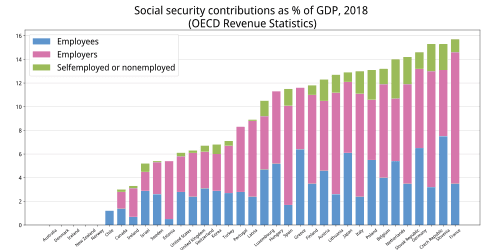
Social Insurance
ORGANIZATION
Government-sponsored social program
Socialist People’s Libyan Arab Jamahiriya
ORGANIZATION
Organization referenced in documents
Sorema N.A.
ORGANIZATION
Organization referenced in documents
Southern Peru Corp.
ORGANIZATION
Organization referenced in documents
Sovereign
ORGANIZATION
Leader of a monarchy
Special Committee of Council of Ministers
ORGANIZATION
Organization referenced in documents
States v.
ORGANIZATION
Semantic web platform created by London, England-based Equal Media Ltd.
Sterling Charitable
ORGANIZATION
Organization referenced in documents
Sterling Charitable Gift Fund
ORGANIZATION
Organization referenced in documents
Sterling Investment Group
ORGANIZATION
Organization referenced in documents
Stuck
ORGANIZATION
Organization referenced in documents
Success Foundation
ORGANIZATION
Organization referenced in documents
Superior Court
ORGANIZATION
Florida state trial court
Supreme Court
ORGANIZATION
Highest court of jurisdiction in the US
T. Barry Kingham
ORGANIZATION
Organization referenced in documents

Taliban
ORGANIZATION
Islamist organization in Afghanistan (founded 1994)
Talisman Energy, Inc.
ORGANIZATION
Former Canadian oil and gas exploration and production company
the “Golden Chain
ORGANIZATION
Organization referenced in documents
the African Muslim Agency
ORGANIZATION
Organization referenced in documents
the al Rajhi Bank
ORGANIZATION
Organization referenced in documents
the Arabian Cement Company
ORGANIZATION
Organization referenced in documents
the Armed
ORGANIZATION
Organization referenced in documents
the Bin Laden Organization
ORGANIZATION
Organization referenced in documents

the Board of Directors
ORGANIZATION
Board of directors referenced in documents
the Board of Directors’
ORGANIZATION
Organization referenced in documents
the Board of Saudi Arabia Airlines
ORGANIZATION
Organization referenced in documents
the Council of Ministers
ORGANIZATION
Organization referenced in documents
the D.C. Circuit
ORGANIZATION • 2 mentions
U.S. federal appeals court
the Executive Committee
ORGANIZATION
Government agency
the General Organization
ORGANIZATION
Organization referenced in documents
The International Herald Leader
ORGANIZATION
Organization referenced in documents
the Islamic Solidarity Fund
ORGANIZATION
Organization referenced in documents
the Khair Funds of the Muslim World
ORGANIZATION
Organization referenced in documents
the Korean Ministry of Finance
ORGANIZATION
Organization referenced in documents
the Labor Department
ORGANIZATION
U.S. Department of Labor

the Ministry of Finance
ORGANIZATION
Government ministry responsible for fiscal policy
the Ministry of Finance and Economy
ORGANIZATION
Organization referenced in documents
the Ministry of Foreign
ORGANIZATION
Organization referenced in documents
The Ministry of Labor
ORGANIZATION
Organization referenced in documents
the Multidistrict Litigation
ORGANIZATION
Organization referenced in documents
the Multidistrict Panel
ORGANIZATION
Organization referenced in documents
the Muslim World League
ORGANIZATION
Organization referenced in documents

the National Security Agency
ORGANIZATION
National Security Agency
the National Security Council
ORGANIZATION
U.S. National Security Council

the Office of Foreign Assets Control
ORGANIZATION
U.S. Treasury Office of Foreign Assets Control
the Organization of the Islamic Conference
ORGANIZATION
Organization referenced in documents
the Public Investment Fund
ORGANIZATION
Organization referenced in documents
the SAAR Network
ORGANIZATION
Organization referenced in documents

the Saudi
ORGANIZATION
Organization referenced in documents

the Saudi American
ORGANIZATION
Organization referenced in documents
the Saudi American Bank
ORGANIZATION
Organization referenced in documents
the Saudi Arabian Monetary
ORGANIZATION
Organization referenced in documents
the Saudi Arabian Monetary Agency
ORGANIZATION
Organization referenced in documents
the Saudi Binladin Group
ORGANIZATION • 2 mentions
Organization referenced in documents
the Saudi Cement
ORGANIZATION
Organization referenced in documents
the Saudi Cement Company
ORGANIZATION
Organization referenced in documents
the Saudi High
ORGANIZATION
Organization referenced in documents
the Saudi High Commission
ORGANIZATION
Organization referenced in documents
the Saudi Ministry of Finance
ORGANIZATION
Organization referenced in documents
The Second
ORGANIZATION
Organization referenced in documents
the Seventh Circuit
ORGANIZATION
U.S. Court of Appeals for the Seventh Circuit
the Sharia Committee
ORGANIZATION
Organization referenced in documents
the Supreme Council of Islamic Affairs
ORGANIZATION
Organization referenced in documents
the U.N. Security
ORGANIZATION
Organization referenced in documents
the U.S.S. Cole
ORGANIZATION
Organization referenced in documents
the UAE Supreme Council
ORGANIZATION
Organization referenced in documents
the World Association of Muslim Youth
ORGANIZATION
Organization referenced in documents
the World Islamic League
ORGANIZATION
Organization referenced in documents
the Zakat Committee
ORGANIZATION
Organization referenced in documents

Time, Inc.
ORGANIZATION
American magazine publishing company
Tishman Constr. Corp.
ORGANIZATION
Organization referenced in documents
Tradewell, Inc.
ORGANIZATION
Organization referenced in documents
Transaero
ORGANIZATION
Defunct airline based in Russia
Tulkarm Charity Committee
ORGANIZATION
Organization referenced in documents
U.S. District Court
ORGANIZATION
Organization referenced in documents
U.S. Fire
ORGANIZATION
Organization referenced in documents

U.S. State Department
ORGANIZATION
Executive department of the U.S. federal government
U.S. Treasury
ORGANIZATION
United States Department of the Treasury, executive department of the federal government
UBS AG
ORGANIZATION
Swiss multinational investment bank and financial services company
United Limousine Serv., Inc.
ORGANIZATION
Organization referenced in documents
UPS International
ORGANIZATION
Organization referenced in documents

US Government
ORGANIZATION
Government agency

Vanguard
ORGANIZATION
American investment management company
Varig Airlines
ORGANIZATION
Organization referenced in documents
Verlinden B.V.
ORGANIZATION
Organization referenced in documents

Vigilant
ORGANIZATION
1999 edition
Wall St. J.
ORGANIZATION
Organization referenced in documents
Wantanabe Realty Corp.
ORGANIZATION
Organization referenced in documents
Weltover
ORGANIZATION
Organization referenced in documents

White & Case LLP
ORGANIZATION
International law firm
Wilmer, Cutler &
ORGANIZATION
Organization referenced in documents
World-Wide Volkswagen Corp.
ORGANIZATION
1980 United States Supreme Court case
Yeshivas
ORGANIZATION
Organization referenced in documents
York Foundation
ORGANIZATION
Early 1990s professional wrestling team

Afghanistan
LOCATION
Country in Central and South Asia

Arabia
LOCATION
Country in West Asia

Arlington
LOCATION
County in Virginia, United States; part of Washington metropolitan area

Atlanta
LOCATION
Capital city of Georgia, United States

Bangladesh
LOCATION
Country in South Asia
Bosnia
LOCATION
City in Bosnia and Herzegovina

Bosnia—Herzegovina
LOCATION
Country in Southeast Europe
Chicago
LOCATION
City and county seat of Cook County, and largest city in State of Illinois, United States of America
Congo
LOCATION
Country in Central Africa
Damman
LOCATION
Location referenced in documents
District of Columbia
LOCATION
Federal district, capital of the United States

Ethiopia
LOCATION
Country in the Horn of Africa
Federal Republic of Nigeria
LOCATION
Federation of states or territories with a republican form of government
First City
LOCATION
Location referenced in documents

Frederick
LOCATION
City in Maryland
Haifa
LOCATION
Third-largest city in Israel
Herndon
LOCATION
Town in Virginia, United States

Houston
LOCATION
Seat of Harris County, and largest city in State of Texas, United States

Illinois
LOCATION
State of the United States of America
Inbyan Arab Republic
LOCATION
Location referenced in documents
Jeddah
LOCATION
City in Saudi Arabia
Kandahar
LOCATION
City in Kandahar Province, Afghanistan

Kaprun
LOCATION
Municipality in Zell am See District, Salzburg, Austria

Kenya
LOCATION
Country in Eastern Africa

Korea
LOCATION
Region in East Asia

Kuwait
LOCATION
Sovereign state in Western Asia
Lebanon
LOCATION
Country in West Asia

Lockerbie
LOCATION
Town in Dumfries and Galloway, Scotland, UK

Malaysia
LOCATION
Country in Southeast Asia

Maryland
LOCATION
State of the United States of America
Mexico City
LOCATION
Capital and largest city of Mexico

New York
LOCATION • 3 mentions
Most populous city in the United States
New York City
LOCATION
Most populous city in the United States
Philadelphia
LOCATION
1993 film by Jonathan Demme
Republic of Azerbayan
LOCATION
Location referenced in documents
Republic of Chile
LOCATION
Location referenced in documents
Rihadh
LOCATION
Location referenced in documents

Riyadh
LOCATION
Capital and largest city of Saudi Arabia
Rockville
LOCATION
City in Montgomery County, Maryland, United States, suburb of Washington, DC
S.Ct.
LOCATION
Location referenced in documents
S.D.N.Y.1996
LOCATION
Location referenced in documents
S.D.N.Y.2004
LOCATION
Location referenced in documents

San Diego
LOCATION
Seat of San Diego County, California, United States; second-largest city in California
Saudi Arabia
LOCATION • 7 mentions
Country in West Asia
Shanksville
LOCATION
Borough in Somerset County, Pennsylvania, United States

Somalia
LOCATION
Sovereign state in Africa

Soviet Union
LOCATION
Former country in Eurasia (1922–1991)

Sudan
LOCATION
Country in Northeast Africa

Tanzania
LOCATION
Country in East Africa
the City of New York
LOCATION
Town in New York
the Eastern District of New
LOCATION
Location referenced in documents
the Eastern District of Virginia
LOCATION
Location referenced in documents
the Holy Land
LOCATION
Location referenced in documents
the Kingdom
LOCATION
Location referenced in documents
the Muslim
LOCATION
Location referenced in documents
the Republic of Ghana
LOCATION
Location referenced in documents
the Republic of Singapore
LOCATION
Location referenced in documents
U.S.S.
LOCATION
Location referenced in documents

United Kingdom
LOCATION
Country in north-west Europe

United States
LOCATION • 4 mentions
Country located primarily in North America

Vermont
LOCATION
State of the United States of America
Virgi-
LOCATION
Location referenced in documents
Washington, D.C.
LOCATION
Capital city of the United States of America

Yemen
LOCATION
Country in West Asia
York City
LOCATION
Reference to New York
Statistics
Pages:74
Entities:678
Avg. OCR:93.4%
Sponsored