HOUSE_OVERSIGHT_011472 - HOUSE_OVERSIGHT_011903
EB Draft Ch1-25
The document HOUSE_OVERSIGHT_011472 is a government record from the House Oversight Committee, consisting of 432 pages, and concerns a draft of chapters 1-25, potentially of a book or report, related to "EB".
This document appears to be a draft of chapters, possibly for a book or report, given its reference to 'EB Draft Ch1-25'. The content preview features a reflective narrative, seemingly from the perspective of Benjamin Netanyahu as Prime Minister of Israel, recounting his experiences and mindset shaped by his time in the Sayeret Matkal special forces unit. The document touches upon themes of political disappointment, strategic evaluation, and the impact of special forces training on leadership.
Key Highlights
- •The document is a draft of chapters 1-25.
- •Benjamin Netanyahu reflects on his time in Sayeret Matkal and its impact on his leadership approach.
- •The narrative discusses political disappointments and the need for strategic evaluation.
Frequently Asked Questions
Books for Further Reading


Document Information
Bates Range
HOUSE_OVERSIGHT_011472 - HOUSE_OVERSIGHT_011903
Pages
432
Source
House Oversight Committee
Original Filename
EB Draft Ch1-25 PDF Sept 10 2017-Pnum.pdf
File Size
2.42 MB
Document Content
Page 1 - HOUSE_OVERSIGHT_011472
Night Flight They say that you can read a person’s feelings on his face. But if so, either I’m a very good actor — the opposite of what anyone who has worked closely with me would tell you — or the journalists clustered in front of me weren’t very good face-readers. They said that I looked defeated. Distressed. Depressed. Yet as I delivered my brief final statement outside an olive-green cabin at Camp David, the American presidential retreat in the forested Catoctin hills north of Washington, I felt none of those things. Yes, I was disappointed. I realised that what had happened over the last 14 days, or more crucially what had not happened, was bound to have serious consequences, both for me personally, as Prime Minister of Israel, and for my country. But I had been a politician, at that point, for all of five years. By far most of my life, I had spent in uniform. As a teenager, small and slight and not even shaving yet, I was one of the founding core of a unit called Sayveret Matkal, Israel’s equivalent of America’s Delta Force, or Britain’s SAS. It may be that the way I thought and acted, the way I dealt with danger or with crises, came from someplace inside me. Even as a young kid, I was always quiet, serious, contemplative. But my 13 years as a part of Israel’s main special-forces unit, especially once I became its commander, etched those qualities more deeply. And they added new ones: a sense that you could never plan a mission too carefully or prepare too assiduously; an understanding that what you thought, and certainly what you said, mattered a lot less than what you did. And above all the realisation that, when one of our nighttime commando operations was over, whether it had succeeded or failed, you had to take a step back. Evaluate things accurately, coolly, without illusions. Then, in the light of how the situation had changed, you had to decide how best to move forward. That approach, to the occasional frustration of the politicians and diplomats working alongside me during this critical stage of Israel’s history, had guided me from the moment I became Prime Minister. In my very first discussions with President Clinton a year earlier — a long weekend, beginning at the White House and moving on to Camp David — I had mapped out at great length, in great detail, every one of the steps I knew we would have to take to confront the central issue facing Israel: the need for peace. 1 HOUSE_OVERSIGHT_011472
Page 2 - HOUSE_OVERSIGHT_011473
In choosing to return, now, to Camp David for two weeks of summit talks, I knew the risks. Of all the moments of truth in my life — and in the life of my country — few, if any, would carry higher stakes. Success would mean not just one more stutter-step away from our century-long conflict with the Palestinians. It would signal a real, final peace: in treaty-speak, end of conflict. Whatever the complexities of putting an agreement into practice, given all the suffering and bloodshed endured by both sides, we would have crossed a point of no return. There would be two states, for two peoples. And if we failed? I knew, if only from months of increasingly stark intelligence reports, that an explosion of Palestinian violence — not just with stones or bottles this time, but with guns and explosives — would be only a matter of time. I knew something else as well. This would be a moment of truth not just for me. Or for Bill Clinton, a man who understood our conflict more deeply, and was more determined to help us end it, than any other president before him. It was a moment of truth for the leader of the Palestinians, Yasir Arafat. The Oslo Accords of 1993, groundbreaking though they were, had created a peace process, not peace. Over the past few years, that process had been lurching from crisis to crisis. Political support for negotiations was fraying. And yet the core issues of our conflict had not been resolved. In fact, they had hardly been talked about. The reason for this was no secret. For both sides, these questions lay at the heart of everything we’d been saying for years, to the world and to ourselves, about the roots of the conflict and the minimum terms we could accept in order to end it. At issue were rival claims on security, final borders, Israeli settlements, Palestinian refugees, and the future of ancient city of Jerusalem. None of these could be resolved without painful, and politically perilous, compromises. Entering the summit, despite the pressures ahead, I was confident that I, with my team of aides and negotiators, would do our part to make such a final peace agreement possible. Nor did I doubt that President Clinton, whom I had come to view not just as a diplomatic partner but a friend, would rise to the occasion. But as for Arafat? There was simply no way of knowing. That was why I had pressed President Clinton so hard to convene the summit. That was why, despite the misgivings of some of his closest advisers, he had taken the plunge. We both knew that the so-called “final-status issues” — 2 HOUSE_OVERSIGHT_011473
Page 3 - HOUSE_OVERSIGHT_011474
the substance of any real peace — could not simply be put off forever. Untangling them was getting harder, not easier. And we realised that only in an environment like Camp David — a “pressure cooker” was how I described it to Clinton, and to US Secretary of State Madeleine Albright — would we ever discover whether a peace deal could in fact be done. Now, we knew. Israel’s equivalent of Air Force One, perhaps in a nod to our country’s pioneering early years, was an almost prehistoric Boeing 707. It was waiting on the runway at Andrews Air Force Base outside Washington to ferry me and the rest of our negotiating team back home. It contained a low-rent equivalent of the American version’s presidential cabin, and a few 1960s-vintage first-class seats, but consisted mostly of two long lines of coach seats, three abreast, separated by an almost tightrope-narrow aisle. I dare say I was alone in finding an odd sense of comfort in boarding the plane. This museum piece of an aircraft was part of my past. It was the same model of 707 for which I, with a couple of other young soldiers and engineers, had come up with what we dubbed the “submarine door” system outside the cockpit — to protect El Al pilots from future attacks after one of its planes had been hijacked to Algiers in the summer of 1968. It was also the same kind of plane — a Sabena flight, hijacked to Tel Aviv’s Ben-Gurion Airport — which I stormed, before sunrise, four years later with a force of nearly two dozen Matkal commandos. The shooting was over within 90 seconds. One of my men —a junior officer named Bibi Netanyahu — was wounded. By one of our own bullets. But we managed to kill two of the heavily armed hijackers, capture the others, and free all 90 passengers unharmed. Still, even I had to accept, it was no fun to fly on. As we banked eastward after takeoff and headed out over the Atlantic, the mood on board was sober. Huddling with the inner core of my negotiating team — my policy co-ordinator Gilad Sher, security aide Danny Yatom and Foreign Minister Shlomo Ben-Ami — I could see that the way the summit ended had hit them hard. It was probably true, as all three often reminded me, that the greatest pressure fell on me. I was the one who ultimately decided what we could, or 3 HOUSE_OVERSIGHT_011474
Sponsored
Page 4 - HOUSE_OVERSIGHT_011475
should, offer in search of a true peace with the Palestinians. I was the one who would be blamed by the inevitable critics, whether for going too far or not far enough, or simply for the fact the deal had eluded us. I knew the drill: the same thing had happened when I had come tantalizingly close to finalizing a peace deal with Syria’s then-dying dictator, Hafez al-Assad, a few months earlier. Yet these three dedicated men — Gili, who was by training a lawyer; Shlomo, an academic; and Danny, a former Mossad chief — had just been through dozens of hours of intricately detailed talks with each of Arafat’s top negotiators at Camp David, not to mention the dozens of other meetings before we had even got there. Now they had to accept that, even with the lid of the pressure cooker bolted down tight, we had fallen short of getting the peace agreement which each of us knew had been within touching distance. I don’t think that even they could be described as depressed. On our side, after all, we knew we had given ground on every issue we possibly could, without facing full-scale political rebellion at home. We had proposed an Israeli pullout from nearly all of the West Bank and Gaza. A support mechanism for helping compensate tens of thousands of Palestinian refugees from the serial Arab-Israeli conflicts of the past half-century. And most painfully and controversially — my rivals and critics back home were already accusing me of “treachery” — we had agreed to let President Clinton present a proposal for the Palestinians to get sovereignty over the Arab neighbourhoods of Jerusalem as well as “custodial sovereignty” over the Haram al-Sharif, the mosque complex perched above the Western Wall, the holiest site in Judaism. But precisely because we had been ready to offer so much, only for Arafat to reject it all, even as a basis for talks on a final deal, I could sense how gutted my key negotiators were feeling. Still, I’m sure none of them was surprised when my own old operational instincts kicked in. In my statement to journalists, I had been careful to say that Arafat was not ready at this time to make the historic compromises needed for peace. But before parting with President Clinton and Secretary Albright, I’d been more forthright. It was clear, without my saying so, that the chances of our getting a peace agreement on Clinton’s watch were now pretty much over. He had barely five months left in office. Yet my deeper fear was that with Arafat having brushed aside an offer that went far further than any other Israeli had proposed — far further than the Americans, themselves, had expected from Israel — the prospects for peace would be set back for years. Perhaps, I said, for two decades. 4 HOUSE_OVERSIGHT_011475
Page 5 - HOUSE_OVERSIGHT_011476
The challenge now, I told my exhausted team, was to make sure we were prepared for this new reality. Part of the spadework was already in place. Much as I’d hoped that Arafat and I could turn a new page in Middle East history, I had directed our army chief-of-staff, nine months before the summit, to draw up contingency plans for the likelihood of an unprecedentedly deadly eruption of Palestinian violence if we were to fail. Now, I felt we had to go even further, and to prepare a proactive alternative to the negotiated deal we’d been unable to secure. I proposed considering a unilateral Israeli pullout from the West Bank and Gaza. The territorial terms would, necessarily, be less far-reaching than the proposal Arafat had rejected. But I felt we should still withdraw from the great majority of the land we had captured in 1967, still leaving the Palestinians an area which the outside world would recognize as wholly sufficient for them to establish a viable, successful state. And crucially, this would finally give Israel, our country, a delineated, final border with the territory captured in the Six-Day War. Gili, clearly uneasy about accepting the idea that the chances for a negotiated peace were definitively gone, left to try to get some sleep on the long flight ahead. Danny and Shlomo Ben-Ami as well. Within an hour or so, the plane was full of irregularly slumped bodies, the silence broken only by the drone of the 707’s engines and the occasional sound of snoring. I sat, wide awake, in one of the seats at the front. My sleeping habits were another inheritance from Sayveret Matkal. During those years, nearly everything of significance which I did had happened after sundown. The commando operations were, of course, set for darkness whenever possible. The element of surprise could mean the difference between success and failure, indeed life and death. But all of my planning, all my thinking, tended to happen at night as well. The quiet, and the lack of distractions, helped to discipline my mind. I found that it helped to free my mind as well, sometimes only to discover that it went off in unexpected directions. It did so now. Perhaps even I was still reluctant to accept that Camp David meant that the opportunity for a transformative deal with Arafat was finished. Yet whatever the reason, I began thinking back to the first time that my path and his had crossed. It was in the spring of 1968, nearly a year after Israel had defeated the armies of our three main Arab enemies — Egypt, Syria and Jordan. Israeli forces were advancing on a Jordanian town called Karameh, across the 5 HOUSE_OVERSIGHT_011476
Page 6 - HOUSE_OVERSIGHT_011477
Jordan River from the West Bank, from which a fledgling group called Fatah, under the command of Arafat, had been staging a series of raids. In one of their most recent attacks, they’d planted land mines, one of which destroyed an Israeli schoolbus, killing the driver and one of the teachers and injuring nearly a dozen children. The so-called Battle of Karameh was our single most significant operation since the 1967 war. In pure military terms, it succeeded. But at a price: more than two dozen Israeli soldiers dead. It also had a major political impact. It caused shock among many Israelis, still wrapped in a sense of invincibility from the Six-Day War, as well as a feeling in the Arab world, actively encouraged by Arafat and his comrades, that compared to the great armies Israel had defeated in 1967, Fatah had at least shown fight. Fatah had drawn blood. I had just turned 26 years old. I was finishing my studies in math, physics and economics at the Hebrew University in Jerusalem, and had joined my Sayeret Matkal comrades the night before the assault. It was a huge operation: ten battalions, including crack infantry units. Our own role was relatively minor. We were to seal the southern entrance to the town. But it proved a tough slog just to get there. Our vehicles got bogged down in mud. By the time we arrived, Fatah fighters, although many were in civilian clothes so we couldn’t be sure, were racing past us in the other direction. One of them, we were later told, was Yasir Arafat. On a motorcycle. It would be nearly three decades before the two of us actually met — shortly after the assassination of my longtime comrade and friend Yitzhak Rabin, when I had become Foreign Minister under Shimon Peres. But in the intervening years, Arafat was rarely off of my radar. By the early 1970s, he and his fighters had been expelled by King Hussein’s army from Jordan and were re-based in Lebanon. Arafat was becoming a significant figure on the Arab and world political stage, and an increasingly uncomfortable thorn in Israel’s side. I was head of Sayeret Matkal by then. Over a period of months, I drew up a carefully constructed plan — a raid by helicopter into a Fatah-dominated area in southeastern Lebanon, during one of Arafat’s intermittent, morale-boosting visits from Beirut — to assassinate him. My immediate superior, the army’s head of operations, was all for our doing it. But the chief of military intelligence said no. Arafat, he insisted when we met to discuss the plan, was no longer the lean, mean fighter we had encountered in Karameh. “He’s fat. He’s a politician. He is not a target.” 6 HOUSE_OVERSIGHT_011477
Sponsored
Page 7 - HOUSE_OVERSIGHT_011478
A decade later, the idea would suddenly resurface. In my first meeting, as a newly promoted Major General, with our then Defence Minister Ariel Sharon, Sharon turned to me and the army’s Chief of Staff, Rafael Eitan, and said: “Tell me. Why the hell is Arafat still alive?” He looked first at Raful, then at me, and added: “When I was 20 years younger than you are, I never waited for someone like Ben-Gurion or Dayan to ask me to plan an operation. I would plan it! Then I’d take it to them and say, you’re the politicians, you decide, but if you say yes, we'll do it.” I smiled, telling him that I’d done exactly that, a decade earlier, only to have one of his mates in the top brass say no. Sharon now said yes. But the plan was overtaken: by his ill-fated plan to launch a full-scale invasion of Lebanon in 1982, targeting not just Arafat, but with the aim of crushing the PLO militarily once and for all. I finally met Arafat face-to-face at the end of 1995. Although the Oslo peace process had dramatically changed things, it was clear that the real prize — real peace — was still far away. We were in Barcelona, for a Euro-Mediterranean meeting under the auspices of King Juan Carlos, aimed at trying to re-invigorate negotiations. The ceremonial centrepiece of the event was a dinner at one of the royal palaces, and it was arranged for me and Arafat to meet for a few minutes beforehand. | arrived first. I found myself in a breathtakingly opulent, but otherwise empty, room. Empty, that is, except for a dark-brown Steinway piano. From childhood, I have loved music. And while I am never likely to threaten the career of anyone in the New York Philharmonic, I have, over the years, developed some ability, and drawn huge enjoyment, as a classical pianist. I pulled back the red-velvet bench and began to play. With my back to the doorway, I was unaware that Arafat had arrived, and that he was soon standing only a few feet away, watching as I played one of my favourite pieces, a Chopin waltz. My old commando antennae must have been blunted. I may not have become “fat”. But, undeniably, I was now a politician. When I finally realised Arafat was behind me, I turned, embarrassed, stood up, and grasped his hand. “It’s a real pleasure to meet you,” I said. “I must say I have spent many years watching you — by other means.” He smiled. We stood talking for about 10 minutes. My hope was to establish simple, human contact; to signal respect; to begin to create the conditions not to try to kill Arafat, but to make peace with him. “We carry a great responsibility,” I said. “Both of our peoples have paid a heavy price, and the time has come to find a way to solve this.” 7 HOUSE_OVERSIGHT_011478
Page 8 - HOUSE_OVERSIGHT_011479
I sensed, at the time, at least the start of some connection. I suspected that Arafat viewed me, as he had Rabin before me, as a “fellow fighter”. But if so, I now wondered whether that might have been part of the problem in his ever truly understanding my mission at Camp David. My motivations. Or my mind. Even in Israel, my reputation as a soldier has sometimes been as much a burden as an advantage. A whole body of stories has followed me from my 36 years in uniform — a career which, after Saveret Matkal, led me up the military ladder until I was head of operations, intelligence, and eventually of the entire army as Chief of Staff. By the time I left the military, I was the single most decorated soldier in our country’s history. Some of the stories were actually true: that when we burst onto the hijacked Sabena airliner, for instance, we were dressed as a maintenance crew; or that, in leading an assassination raid in Beirut against the PLO group that had murdered Israeli athletes at the 1972 Munich Olympics, I was disguised as a woman. Not the most attractive young lady, perhaps, though I did, painfully, pluck my eyelashes, and, with the help of four pairs of standard-issue Israeli Army socks, develop quite a comely bosom. I rejected the idea of wearing a long dress, in favour of stylishly flared trousers. I was going on a commando operation, after all, not a prom date. But I did wear heels. So yes, a woman, of sorts. Yet some of the stories were just plain myth. I had given up counting the times I’d heard about my alleged prowess in recording the fastest-ever time on the most gruelling of the Israeli army’s obstacle courses. In fact, I was a lot more like Goldie Hawn in Private Benjamin. The main misunderstanding, however, went deeper. The assumption appeared to be that my military achievements, especially in Sayeret Matkal, were down to a mix of brute force and raw courage. Courage, of course, was a requirement: the willingness to take risks, if the rewards for success, or the costs of inaction, were great enough. Few of the operations I fought in or commanded were without the real danger of not coming back alive. But whatever success I'd had as a soldier, particularly in Matkal, was not only, nor even mainly, about biceps. It was about brains. The ability to make decisions. To withstand the pressure of often having to make the most crucial decisions within a matter of seconds. It was, above all, about thinking and analyzing — and always, always, looking and planning ahead. And as our plane droned onward towards Israel, I knew that I would now need all of those qualities more than ever. 8 HOUSE_OVERSIGHT_011479
Page 9 - HOUSE_OVERSIGHT_011480
This book is only in part the story of my life — a life that, from my beginnings as a kibbutz boy in pre-state Palestine, has been intimately entwined with the infancy and adolescence and, now, the increasingly troubled middle age of the State of Israel. Still less is it only a record of its, or my, achievements, although they are inevitably a part of the story. In setting out to write it, I was also determined to document, from the inside, the critical setbacks as well. Mistakes. Misjudgements. Missed opportunities. And the lessons that we can, and must, be prepared to learn from them. No less so than I when I was planning a hijack rescue or a cross-border commando operation in Saveret Matkal, | remain convinced that Israel’s security, Israel’s very identity, can be safeguarded only by evaluating dispassionately the situation in our country and the world. And by looking ahead. Even when I was a soldier, I never stopped thinking this way, especially when, first as military intelligence chief and especially as Chief of Staff, I knew, in detail, every one of the security threats that faced Israel and was part of discussions and decisions to try to confront them. I still vividly remember as Chief of Staff, every Friday before the arrival of the Jewish Sabbath, sitting with Rabin, who was then Israel’s Defence Minister. Our offices were along the same hallway of the Airya, the ministry’s headquarters in the heart of Tel Aviv. Rabin had a very low table in his office, with two chairs. We would sit across from each other, each with a ready supply of coffee and Yitzhak smoking an apparently endless supply of cigarettes, and we would just talk. Politics. Strategy. Israel. The PLO. The surrounding Arab states. And the wider world. Many years before I became Prime Minister, I gave a lecture at a memorial meeting for an Israeli academic. Not many people were there. I doubt even they remember it. But I do, because what I said has, sadly, become more prophetic than even I could have imagined. I talked about the imperative for peace as part of Israel’s security. There was a “window,” I said. We were militarily strong. In regional terms, we were a superpower. But politically, resolving the conflict with our Arab enemies would almost certainly become more difficult with time. 9 HOUSE_OVERSIGHT_011480
Sponsored
Page 10 - HOUSE_OVERSIGHT_011481
Iraq, perhaps Iran and other Middle Eastern states, might get nuclear weapons. A violent form of fundamentalist Islam could, over time, erode existing Arab and Muslim states, threatening Israel of course, but also the stability of our neighbourhood and of the world. In those circumstances, even if an Israeli government was strong enough, wise enough, forward-looking enough to pursue avenues for negotiated peace with its immediate neighbours, getting the popular support required would be all but impossible. The window 1s still there. But it is only barely open. I fear that I was right, as well, in predicting that our failure to secure a final peace agreement with the Palestinians at Camp David might set back peacemaking not just for a few months, but for many years. I have persisted in trying, very hard, to make that particular prediction prove wrong. That was why, despite intense pressure from my own political allies not to do so, I decided to return to government in 2007 as Defence Minister. I remained in that role for six years: mostly in the current, right-wing Likud government of my onetime Sayeret Matkal charge, Bibi Netanyahu. Much of what I say in this book about war and peace, security and Israel’s future challenges, will make uncomfortable reading for Bibi. But very little of it will surprise him, or his own Likud rivals further to the right, like Foreign Minister Avigdor Lieberman and the Economy Minister, Naftali Bennett. I have said almost all of it to them behind closed doors in the past few years, more than once. When I finally decided to leave the political arena last year, it was largely because I realized that they were guided by other imperatives. In the case of Bibi, the most gifted politician with whom I’ve worked except for Clinton, the priority was to stay in power. For Avigdor and Naftali, it was to supplant Bibi, when the opportunity was ripe, as Likud leader and as Prime Minister. And much too often — as with their hugely ill-advised recent proposal to amend Israel’s basic law to define it explicitly as a Jewish state, and deny “national rights” to non-Jews — the three of them have ended up competing for party political points rather than weighing the serious future implications for the country. Peacemaking, as I discovered first-hand, requires taking risks. Statesmanship requires risks. Politics, especially if defined simply as staying in power, is almost always about the avoidance of risk. 10 HOUSE_OVERSIGHT_011481
Page 11 - HOUSE_OVERSIGHT_011482
The problem for Israel, no matter who or what party is in government, is that there are risks everywhere one looks, and they show every sign of getting more, not less, serious. The “Arab Spring” has morphed into an Islamic winter. National frontiers that were put in place by British and French diplomats after the fall of the Ottoman Empire are vanishing. Centuries-old conflicts between tribes and rival religious communities have reignited. The old Cold War system of nations has given way to a world without a single geopolitical centre of gravity. Perhaps most seriously, Iran seems determined to get nuclear weapons, and, in my view, may succeed in doing so. Where Israel is concerned, relations with our indisputably most important ally, the United States, are more strained than at any time in decades. Diplomatic ties with Europe, our single largest trading partner, have been growing steadily worse. And the only real certainty is that anyone who tells you that they know absolutely where things are heading next is lying. Just ask Hosni Mubarak, who, despite having nearly half-a-million soldiers and security operatives at his disposal, was utterly blindsided, and very soon toppled and imprisoned, by an uprising that began with a sudden show of popular anger in Cairo’s Tahrir Square. Internally as well, Israel faces dangers. Chief among them is the alarming erosion of the standards of civil discourse, amid the increasingly shrill, often hateful, divisions between left and right, secular and religious, rich and poor and, most seriously of all, Jews and Arabs. While we remain economically successful, the fruits of our wealth are being ever more unevenly shared, and the prospects for continued growth constrained by the lack of any visible prospect of long-term peace. Bibi Netanyahu, of course, knows all of this. Indeed, he has repeatedly spoken of the multiple threats Israel faces, not only in somber terms, but at times almost apocalyptically. That works, politically. Politicians, not just in Israel but everywhere, know that it is a lot easier to win elections on fear than on hope. Yet my own prescription — learned, as this book recounts, from years on the battlefield, then reinforced by my years in government — is that Israel must resist being guided by either of those alternatives. Not fear, certainly. But neither by simple, untempered hope. Though the stakes have become much higher since my night flight back from Camp David nearly 15 years ago, our 11 HOUSE_OVERSIGHT_011482
Page 12 - HOUSE_OVERSIGHT_011483
need remains what I tried to impress on my negotiators then: realism. A meticulously informed, utterly unvarnished, understanding of the threats we face, of each altered situation after every success or a failure, and an ability to set aside the background noise and political pressures and chart a way forward. So what is that way? It begins with the mindset. On more than one occasion in the past few years, after Prime Minister Netanyahu had warned our country of a nuclear Iran or the spread of Al Qaeda-style hatred and violence, as if prophesying the coming of Armageddon, I would say to him: “Stop talking like that. You’re not delivering a sermon in a synagogue. You’re Prime Minister.” Having been privileged to live my own life along with the entire modern history of our country, I went further. Zionism, the founding architecture of Israel, was rooted in finding a way to supplant not just the life, but the way of thinking, which hard-pressed Jewish communities had internalised over centuries in the diaspora: in Hebrew, the galut. We would instead take control of our own destiny, building and developing and securing our own country. Now, I told Bibi, he was back in the mindset of the galut. Yes, al-Qaeda, and more recently Islamic State, were real dangers. The prospect of a nuclear Iran was even more so. “But the implication of the way you speak, not just to Barack Obama or David Cameron, but to /sraelis, is that these are existential threats. What do you imagine? That if, God forbid, we wake up and Iran is a nuclear power, we’ll pack up and go back to the shtetls of Europe?” Of course not. Israel, as my public life has taught me more than most, remains strong militarily. We are, still, fully capable of turning back any of the undeniable threats on our doorstep. Keeping that strength, developing it and modernizng it, are obviously critically important. But as Israel’s founding Prime Minister, David Ben-Gurion, used to say, the success of Zionism, and of the Israeli state, required two things: strength and “righteousness.” He didn’t mean the word in purely religious terms. He meant that Israel, if it were to retain international backing and internal cohesion, must be guided by a core of moral assumptions as well. That, in itself, would be reason enough to pursue every possible opportunity for “end of conflict” with our neighbours. And, at home, to protect and re- inforce our commitment to Israel as both a Jewish and a democratic state. But Israel’s simple self-interest — its hope for prosperity, social cohesion, and growth in future — makes this nothing short of imperative. 12 HOUSE_OVERSIGHT_011483
Sponsored
Page 13 - HOUSE_OVERSIGHT_011484
Bibi is right about one thing. The negotiating challenges have become more difficult since Arafat’s refusal of our offer at Camp David. Arafat is no longer alive. Palestinian politics have become ever more fragmented and messy, not least as a result of the Hamas takeover of Gaza. But Churchill once said that the difference between a pessimist and an optimist was that the pessimist always saw difficulties in every opportunity. The optimist saw opportunities in the difficulties. I, of all people, do not look at such opportunities without hard-headed analysis, even a dose of scepticism. But the opportunities are undeniably there, and never has Israel risked paying a higher price for failing to see and at least to try to act on them. The first port of call should still be the Palestinians. I have repeatedly asked Bibi, and the right-wing rivals that seem often to loom large in his political calculations: “If you’re so sure you don’t have a negotiating partner in the Palestinians, who not at least try? Seriously. What do you have to lose?” But beyond this, there is a whole range of relatively moderate countries — and, as Sunni states, strongly anti-Iranian countries — which share with Israel a real, practical interest in putting in place a new political arrangement in the Middle East. So does the United States, Russia, even China. Each, in their own ways, is threatened by a terror threat that will require international action, and many years, finally to defeat. A Saudi “peace plan’, for instance, has been on the table for years. Formally endorsed by the Arab League, it proposes a swap: Israeli withdrawal for full and final peace and Arab recognition. Successive Israeli governments have dismissed it out of hand, arguing that the withdrawal which the Saudi proposal demanded — every inch of territory, back to the borders before the Six-Day War — would be not only politically unacceptable, but practically impossible. In the final days of the Camp David summit, as our failure was becoming inescapably clear, a disheartened Bill Clinton said to me that he could understand, just about, why Yasir Arafat had not accepted the unprecedentedly far-reaching proposals I had presented. But what he couldn’t grasp was how the Palestinian leader could say no even to accepting them as a basis for the hard, further work which we all knew a final peace agreement would entail. Wasn’t Arafat capable of looking beyond the political risks, of understanding the greater risks of inaction. Of seeing the rewards? Of looking ahead? 13 HOUSE_OVERSIGHT_011484
Page 14 - HOUSE_OVERSIGHT_011485
My fear — not just on issues like the Saudi peace plan, but in charting our place in a dramatically changed world, and safeguarding our twin Jewish and democratic identities at home, pairing our physical strength with an equally strong moral centre — is that we Israelis are now in danger of jettisoning the example of David Ben-Gurion. For Yasir Arafat’s. 14 HOUSE_OVERSIGHT_011485
Page 15 - HOUSE_OVERSIGHT_011486
Chapter One I am an Israeli, but also a Palestinian. I was born in February 1942 in British- ruled Palestine on a fledgling kibbutz: a cluster of wood-and-tarpaper huts amid a few orange groves and vegetable fields and chicken coops. It was just across the road from an Arab village named Wadi Khawaret, which disappeared, with the establishment of the State of Israel, when I was six years old. As Prime Minister half-a-century later, during my stubborn yet ultimately fruitless drive to secure a final peace treaty with Yasir Arafat, there were media suggestions that my childhood years gave me a personal understanding of the pasts of both our peoples, Jews and Arabs, in the land which each of us saw as our own. But that is in some ways misleading. Yes, I did know first-hand that we were not alone in our ancestral homeland. At no point in my childhood was I ever taught to hate the Arabs. I never did, even when, in my years defending the security of Israel, I had to fight, and defeat, them. But my conviction that they, too, needed the opportunity to establish a state came only later, after my many years in uniform, and especially when, as deputy chief-of-staff under Yitzhak Rabin, we were faced with the explosion of violence in the West Bank and Gaza that became known as the first intifada. And while my determination as Prime Minister to find a negotiated resolution to our conflict was in part based on a recognition of the Palestinian Arabs’ national aspirations, the main impulse was my belief that such a compromise was profoundly in the interest of Israel: the Jewish state whose birth I witnessed, whose existence I had spent decades defending on the battlefield and which I was ultimately elected to lead. Zionism, the political platform for the establishment of a Jewish state, emerged in the late 1800s in response to a brutal reality. And that, too, was a part of my own family’s story. Most of the world’s Jews, who lived in the Russian empire and Poland, were trapped at the time in a vise of poverty, powerlessness and anti-Semitic violence. Even in the democracies of Western Europe, Jews were not necessarily secure. Theodor Herzl, a thoroughly assimilated Jew in Vienna, published the foundation text of Zionism in 1896. It was called Der Judenstaat. “Jews have sincerely tried everywhere to merge with the national communities in which we live, seeking only to preserve the faith of our fathers,” he wrote. “In vain are we loyal patriots, sometimes super- loyal. In vain do we make the same sacrifices of life and property as our fellow citizens... In our native lands where we have lived for centuries, we are still decried as aliens.” Zionism’s answer was the establishment of a state of our 15 HOUSE_OVERSIGHT_011486
Sponsored
Page 16 - HOUSE_OVERSIGHT_011487
own, in which we could achieve the self-determination and security denied to us elsewhere. During the 1890s and the early years of the new century, more than a million Jews fled Eastern Europe, but mostly for America. It was only in the 1920s and 1930s that significant numbers arrived in Palestine. Then, within a few years, Hitler rose to power in Germany. The Jews of Europe faced not just discrimination or pogroms. They were systematically, industrially, murdered. From 1939 until early 1942 when I was born, nearly two million Jews were killed. Six million would die by the end of the war. Almost the whole world, including the United States, rejected pleas to provide a haven for those who might have been saved. Even after Hitler was defeated, the British shut the doors of Palestine to those who had somehow survived. I was three when the Holocaust ended, and it was three years later that Israel was established in May 1948, and neighboring Arab states sent in their armies to try to snuff the state out in its infancy. It would, again, be some years before I fully realized that this first Arab-Israeli war was the start of an essential tension in my country’s life, and my own: between the Jewish ethical ideals at the core of Zionism and the reality of our having to fight, and sometimes even kill, in order to secure, establish and safeguard our state. Yet even as a small child, I was keenly aware of the historic events swirling around me. Mishmar Hasharon, the hamlet north of Tel Aviv where I spent the first 17 years of my life, was one of the early kibbutzim. These collective farming settlements had their roots in Herzl’s view that an avant-garde of “pioneers” would need to settle a homeland that was still economically undeveloped, and where even farming was difficult. Members of Jewish youth groups from Eastern Europe, among them my mother, provided most of the pioneers, drawing inspiration not just from Zionism but by the still untainted collectivist ideals represented by the triumph of Communism over the czars in Russia. It is hard for people who didn’t live through that time to understand the mindset of the kibbutzniks. They had higher aspirations than simply planting the seeds of a future state. They wanted to be part of transforming what it meant to be a Jew. The act of first taming, and then farming, the soil of Palestine was not 16 HOUSE_OVERSIGHT_011487
Page 17 - HOUSE_OVERSIGHT_011488
just an economic imperative. It was seen as deeply symbolic, signifying Jews finally taking control of their own destiny. It was a message that took on an even greater power and poignancy after the mass murder of the Jews of Europe during the Holocaust. Even for many Israelis nowadays, the all-consuming collectivism of life on an early kibbutz, and the physical challenges, are hard to imagine. Among the few dozen families in Mishmar Hasharon when I was born, there was no private property. Everything was communally owned and allocated. Every penny — or Israeli pound — earned from what we produced went into a communal kitty, from which each one of the 150-or-so families in Mishmar Hasharon when I was a child got a small weekly allowance. By “small”, I mean tiny. For my parents and others, even the idea of an ice cream cone for their children was a matter of keen financial planning. More often, they would save each weekly pittance with the aim of pooling them at birthday time, where they might stretch to the price of a picture book, or a small toy. Decisions on any issue of importance were taken at the aseifa, the weekly meeting of kibbutz members held on Saturday nights in our dining hall. The agenda would be tacked up on the wall the day before, and the session would usually focus on one issue, ranging from major items like the kibbutz’s finances to the question, for instance, of whether our small platoon of delivery drivers should be given pocket money to buy a sandwich or a coffee on their days outside the kibbutz or be limited to wrapping up bits of the modest fare on offer at breakfast time. That debate ended in a classic compromise: a bit of money, but very little, so as to avoid violating the egalitarian ethos of the kibbutz. But perhaps the aspect of life on the kibbutz most difficult for outsiders to understand, especially nowadays, is that we children were raised collectively. We lived in dormitories, organized by age-group and overseen by a caregiver: in Hebrew, a metapelet, usually a woman in her 20s or 30s. For a few hours each afternoon and on the Jewish Sabbath, we were with our parents. But otherwise, we lived and learned in a world consisting almost entirely of other children. Everything around us was geared towards making us feel like a band of brothers and sisters, and as part of the guiding spirit of the kibbutz. Until our teenage years, we weren’t even graded in school. And though we didn’t actually study how to till the land, some of my fondest early memories are of our “children’s farm” — the vegetables we grew, the cows we milked, the hens and chickens that gave us our first experience of how life was created. And the 17 HOUSE_OVERSIGHT_011488
Page 18 - HOUSE_OVERSIGHT_011489
aroma always wafting from the stone ovens in the bakery at the heart of the kibbutz, where we could see the bare-chested young men producing loaf after loaf of bread, not just for Mishmar Hasharon but villages and towns for miles around us. Until our teenage years, we lived in narrow, oblong homes, four of us to a room, unfurnished except for our beds, under which we placed our pair of shoes or sandals. At one end of the corridor was a set of shelves where we collected a clean set of underwear, pants and socks each week. At the other end were the toilets — at that point, the only indoor toilets on the kibbutz, with real toilet- seats, rather than just holes in the ground. All of us showered together until the age of twelve. I can’t think of a single one of us who went on to marry someone from our own age-group in the kibbutz. It would have seemed almost incestuous. Mishmar Hasharon and other kibbutzim have long since abandoned the practice of collective child-rearing. Some in my generation look back on the way we were raised not only with regret, but pain: a sense of parental absence, abandonment or neglect. My own memories, and those of most of the children I grew up with, are more positive. The irony is that we probably spent more waking time with our parents than town or city children whose mothers and fathers worked nine-to-five jobs. The difference came at bedtime, or during the night. If you woke up unsettled, or ill, the only immediate prospect of comfort was from the metapeled, or another of the kibbutz grown-ups who might be on overnight duty. Still, my childhood memories are overwhelmingly of feeling happy, safe, protected. I do remember waking up once, late on a stormy winter night when I was nine, in the grips of a terrible fever. I’d begun to hallucinate. I got to my feet and, without the thought of looking anywhere else for help, made my wobbly way through the rain to my parents’ room and fell into their bed. They hugged me. They dabbed my forehead with water. The next morning, my father wrapped me in a blanket and took me back to the children’s home. To the extent that I was aware my childhood was different, I was given to understand it was special, that we were the beating heart of a Jewish state about to be born. I once asked my mother why other children got to live in their own apartments in places like Tel Aviv. “They are ironim,” she said. City-dwellers. Her tone made it clear they were to be viewed as a slightly lesser species. 18 HOUSE_OVERSIGHT_011489
Sponsored
Page 19 - HOUSE_OVERSIGHT_011490
Though both my parents were part of the pioneer generation, my mother, unlike my father, actually arrived as a pioneer, part of a Jewish youth group from Poland that came directly to the kibbutz. In addition to being more naturally outgoing than my father, she came to see Mishmar Hasharon has her extended family and spent every one of her one hundred years there. Esther Godin, as the then was, grew up in Warsaw. Born in 1913, she was the oldest of the six children of Samuel and Rachel Godin. Poland at the time was home to the largest Jewish community in the world, more than 3 million by the time of the Holocaust. While the Jews of Poland had a long history, the Godins did not. Before the First World War, my mother’s parents made their way from Smolensk in Russia to Warsaw, which was also under czarist rule. When the war was over, the Bolshevik Revolution had toppled the czars. Poland became independent, under the nationalist general Josef Pilsuldski. The Godins had a decision to make: either return to now-Communist Russia or stay in the new Polish state, though without citizenship because they had not been born there. No doubt finding comfort, community and a sense of safety amid the hundreds of thousands of Jews in the Polish capital, they chose Pilsuldski over Lenin. They lived in what would become the Warsaw Ghetto, on Nalewski Street, where Samuel Godin eked out a living as a bookbinder. My mother came to Zionism as a teenager, and it was easy to understand why she, like so many of the other young Jews around her, was drawn to it. She saw how hard her parents were struggling economically, on the refugee fringes of a Jewish community itself precariously placed in a newly assertive Poland. She saw no future for herself there. Though she attended a normal state-run high school, she and her closest friends joined a Zionist youth group called Gordonia, which had been founded in Poland barely a decade earlier. She started studying Hebrew. Each summer, from the age of 13, she and her Gordonia friends would spend deep in the Carpathian Mountains. They worked for local Polish landowners, learning the rudiments of how to farm and the rigors of simple physical labor. Late into the evening, they would learn not just about agriculture but Jewish history, the land of Palestine, and how they hoped to put both their new-found skills and the Zionist ideals into practice. She had just turned 22 when she set off for Mishmar Hasharon with 60 other Gordonia pioneers in the summer of 1935. It took them nearly a week to get there. They travelled by train south through Poland, passing not far from the little town of OSwiecim which would later become infamous as the site of the Auschwitz concentration camp. Then, on through Hungary and across Romania 19 HOUSE_OVERSIGHT_011490
Page 20 - HOUSE_OVERSIGHT_011491
to the grand old Black Sea port of Constanta, and by ship through the Bosphorus, past Istanbul, and on to Haifa on the Palestinian coast, from where they were taken by truck to their bunk-bed rooms in one of a dozen prefab structures on the recently established kibbutz. Though the water came from a well, and it lacked even the basic creature comforts of the cramped Godin apartment in Warsaw, that, to my mother, was just part of the challenge, and the dream, she’d embraced and had come to define her. I know that she felt, on arriving in the kibbutz, that only now was her life truly beginning. It was a feeling that never left her. Yet it was always clouded by the memory of the family she left behind. When the Second World War began in September 1939, the Germans, and then the Soviets, invaded, overran and divided Poland. Two of my mother’s three sisters fled to Moscow. Her teenage brother Avraham went underground, joining the anti-Nazi partisans. All three would survive the war. Yet in the autumn of 1940, the rest of her family found themselves inside the Warsaw Ghetto with the city’s other 400,000 Jews. My mother’s parents died there, along with her 13-year-old brother Itzik and her little sister Henya, who was only 11. When my mother arrived in the kibbutz, her Gordonia friends assumed she would marry a young man named Ya’akov Margalit, the leader of their group back in Warsaw. But the budding romance fell victim to the Zionist cause. As she was embarking on her new life, he was frequently back in Poland training and arranging papers for further groups of pioneers. He continued to write her long, heartfelt letters. But the letters had to be brought from the central post office in Tel Aviv, and the kibbutznik who fetched the mail was a quiet, dimunitive 25-year-old named Yisrael Mendel Brog — my father. Known as Srulik, his Yiddish nickname, he had come to Palestine five years earlier. He was an ordinary kibbutz worker. He drove a tractor. My father’s initial impulse in coming to Palestine was more personal than political. He was born, in 1910, in the Jewish shtet/ of Pushelat in Lithuania, near the larger Jewish town of Ponovezh, a major seat of rabbinic learning and teaching. His own father, though the only member of the Pushelat community with rabbinical training, made his living as the village pharmacist. Many of the roughly 10,000 Jews who lived there had left for America in the great exodus from Russian and Polish lands at the end of the 19" century. By the time my father was born, the community had shrunk to only about 1,000. When he was two years old, a fire broke out, destroying dozens of homes, as well as the shtetl’s only synagogue. Donations soon arrived from the US, and my paternal 20 HOUSE_OVERSIGHT_011491
Page 21 - HOUSE_OVERSIGHT_011492
grandfather was put in charge of holding the money until rebuilding plans were worked out. The problem was that word spread quickly about the rebuilding fund. On the night of September 16, 1912, two burglars burst into my grandfather’s home and stole the money. They beat him and my grandmother to death with an axle wrenched loose from a nearby carriage. Their four-year-old son Meir — my father’s older brother — suffered a deep wound from where the attackers drove the metal shaft into his head. He carried a golf-ball-sized indentation in his forehead for the rest of his life. My father had burrowed into a corner, and the attackers didn’t see him. The two orphaned boys were raised by their paternal grandmother, Itzila. Yet any return to normalcy they may have experienced was cut short by the outbreak of the First World War, forcing her to flee with them by train ahead of the advancing German army. They ended up some 1,500 miles south, in the Crimean city of Simferopol. Initially under czarist rule, then the Bolsheviks and from late 1917 until the end of the war under the Germans, they had to deal with cold, damp and a chronic shortage of food. My Uncle Meir quickly learned how to survive. He later told me that he would run after German supply carriages and collect the odd potato that fell off the back. Realizing that the German soldiers had been wrenched from their own families by the war, he began taking my father with him on weekends to the neighborhood near their barracks, where the soldiers would sometimes give them cookies, or even a loaf of bread. Yet they were deprived of the basic ingredients of a healthy childhood: nutritious food and a warm, dry room in which to sleep. By the time Itzila brought them back to settle in Ponovezh at the end of the war, my father was diagnosed with the bone-development disease, rickets, caused by the lack of Vitamin D in their diet. In another way, however, my father was the more fortunate of the boys. The lost schooling of those wartime years came at a less formative time for him than for his brother. Meir never fully made up the lost ground in school. My father simply began his Jewish primary education, cheder, a couple of years later than usual. He thrived there. Still, when it was time for him to enter secondary education, he decided against going on with his religious education. Meir was preparing to leave for Palestine, so my father enrolled in the Hebrew-language, Zionist high school. When he graduated, one of the many Brog relatives who were by now living in the United States, his Uncle Jacob, tried to persuade him to come to Pittsburgh for university studies. But with Meir signing on as his sponsor with the British Mandate authorities, he left for Palestine shortly before 21 HOUSE_OVERSIGHT_011492
Sponsored
Page 22 - HOUSE_OVERSIGHT_011493
his twentieth birthday. Jacob did still insist on helping financially, which allowed my father to enroll at the Hebrew University in Jerusalem. He did well in his studies — literature, history and philosophy — but abandoned them after two years. His explanation for not staying on, when I asked him years later, was that with the accelerating activity of the Zionist pioneers, it felt wrong to him to spend his days going to lectures, reading books and writing essays. I am sure that he also felt isolated and alone, with Meir, the only link to his life before Palestine, working in Haifa on the coast, four or five hours by bus from Jerusalem. When he began looking for a way to become part of the changes going on around him, Mishmar Hasharon didn’t yet exist. Its founding core — a dozen Russian Jewish pioneers — was still working on argicultural settlements near Herzliya, north of Tel Aviv, until they found a place to start their kibbutz. But they had been joined by several young men and women who, though a year or two older than my father, had been with him at the Hebrew High School in Ponovezh. He decided to join them. Late in 1932, the Jewish National Fund, supported financially by leading Jewish figures in western Europe and the US, bought 2,000 acres from an Arab landowner near Wadi Khawaret. The area was set aside for three Jewish settlements: a moshav called Kfar Haim, where the land was divided into family plots, and two kibbutzim. One was called Ma’abarot. Next to it was Mishmar Hasharon. My father was among the seventy youngsters who set off in three trucks with everything they figured they would need to turn the hard, scrubby hill into a kibbutz. They built the core from pre-fab kits: wooden huts to sleep in and a slightly larger one for the dining hall. They dug a well and ordered a pump from Tel Aviv, at first for drinking and washing, but soon allowing them to begin a vegetable garden, a dairy with a dozen cows, a chicken coop with a few hundred hens, and to plant a first orange grove and a small vineyard. Still, by the time my mother arrived three years later, there were not enough citrus trees, vines, cattle and chickens to occupy a membership which now numbered more than 200. Along with some of the others, my father worked outside the kibbutz, earning a regular paycheck to help support the collective. On his way back, he would stop at the post office in Tel Aviv to pick up letters and packages for the rest of the kibbutz — including Ya’akov Margalit’s love letters to my mother. That was how my parents’ friendship began, how a friendly hello led to shared conversation at the end of my father’s working day, and how, a few years later, my mother decided to spurn her Gordonia suitor in favor of Srulik Brog, the postman. It was not until 1939 that they moved in 22 HOUSE_OVERSIGHT_011493
Page 23 - HOUSE_OVERSIGHT_011494
together. They didn’t bother getting married until the summer of 1941. Perhaps because this was less than nine months before I was born, my mother always remained vague when asked their exact wedding date. My parents were an unlikely pair. My mother — bright, lively and energetic — was a doer, who believed passionately in the grand social experiment of kibbutz life. Having helped her mother raise her siblings in Warsaw, and with a natural affinity from children, she became the main authority on issues related to childbirth and early childcare. She actively partook in the kibbutz’s planning and politics, and reveled in its social life. My father was more detached both politically and socially. He was more contemplative, less assertive, less self- confident. Though he agreed broadly with the founding principles of the kibbutz, and wanted to play his role in making it a success, I could see, as I grew older, that he was often impatient at what he saw as its intellectual insularity and its ideological rigidities. Though it didn’t strike me at the time, he was not a large man. As a result of his childhood illness, he never grew to more than five-foot-four. Still, he was a powerful presence, stocky and strong from his work on the kibbutz. He had a deep, resonant voice and wise-looking, blue-gray eyes. It was only through Uncle Meir that by the time I was born, he had moved on from driving a tractor to a more influential role on the kibbutz. Meir worked for the Palestine Electric Company and when Mishmar Hasharon installed its own electricity system, the PEC was in charge of the work. Meir trained my father and put him forward as the kibbutz contact for maintaining and repairing the equipment. He was well suited for the work. He was a natural tinkerer, a problem-solver. He was good with his hands, and his natural caution was an additional asset as the kibbutz got to grips with the potential, and the potential dangers, of electric power. Once the system was installed, he became responsible for managing any aspect of the settlement that involved electricity: water pumps, the irrigation system, the communal laundry and our bakery. My parents were courteous and polite with each other, but they never showed any physical affection in our presence. None of the adults did. This was part of an unspoken kibbutz code. Not only for kibbutzniks, but for all the early Zionists, outward displays of emotion were seen as a kind of selfishness that risked undermining communal cohesion, tenacity and strength. Because I’d known no other way, this did not strike me as odd. Besides, I was a quiet, contemplative, bookish and self-contained child. Only in later years did I come to see the lasting effect on me. It was be a long time before I became comfortable 23 HOUSE_OVERSIGHT_011494
Page 24 - HOUSE_OVERSIGHT_011495
showing my feelings, beyond my immediate family and a few close friends. When I was in the army, this wasn’t an issue. Self-control, especially in high- pressure situations, was a highly valued asset. But in politics, I think that it did for a considerable time inhibit my ability to connect with the public, or at least with the news media that played such a critical intermediary role. And it caused me to be seen not just as reserved or aloof, but sometimes as cold, or arrogant. I did get much that I value from my parents. From my mother, her boundless energy, activism, her attention to detail, and her focus on causes larger than herself — her belief that politics mattered. Also her love for art and literature. When I would come home from the children’s dormitory to my parents’ room — just nine feet by ten, with a wooden trundle bed to save space during the day — there was always a novel or a book of verse sharing the small table with my parents’ most single prized possession: their kibbutz-issue radio. As achild, however, I spent much more time with my father. He was my guide, my protector and role model. Like my mother, he never mentioned the trials which they and their families endured before arriving in Palestine. Nor did they ever speak to me in any detail about the Holocaust. No one on the kibbutz did. It was as if the memories were scabs they dared not pick at. Also, it seemed, because they were determined to avoid somehow passing on these remembered sadnesses to their sons and daughters. Still, when I was ten or eleven, my father did — once, inadvertently — open a window on his childhood. Every Saturday morning, we would listen to a classical music concert on my parents’ radio. One day, as the beautiful melodies of Tchaikovsky’s violin concerto in D came through the radio, I was struck by the almost trancelike look that came over my father’s face. He seemed to be in another, faraway, place. When the music ended, he turned and told me about the first time he’d heard it. It was on the train ride into Crimean exile with Itzila and Meir in the early days of the First World War. The train took five days to reach the Crimea and sometimes halted for hours at a time. Every evening, a man at the far end of their carriage would take out his violin and play the second movement of the Tchaikovsky concerto. I have heard the piece in concert halls many times since. When the orchestra begins the second movement — with the violin notes climbing higher, trembling ever so subtly — it sends a shiver down my spine. I can’t help thinking of the railway car in which my then four-year-old father and other Jews from Ponovezh escaped the Great War of 1914. And of other trains, in another war 25 years later, carrying Jews not to safety but to death camps. 24 HOUSE_OVERSIGHT_011495
Sponsored
Page 25 - HOUSE_OVERSIGHT_011496
Listening to the concert program in my parents’ room was something I always looked forward to. It was my father who encouraged me, when I was eight, to begin learning to play the piano. I took lessons once a week all during my childhood along with several other of the kibbutz children. When we got old enough, we took turns playing a short piece — the secular, kibbutz equivalent of an opening prayer — at the Friday-night meal in the dining hall. I have always cherished being able to play. Sitting down at the piano and immersing myself in Tchaikovsky, Beethoven, Schubert or Mozart never ceases to bring me a sense of calm, freedom and, especially nowadays, when I have finally worked to master a particularly intricate piece, a feeling of pure joy. As a young child, I spent most of my waking hours in the company of my several dozen kibbutz “siblings” in the children’s home, the dining hall, or running through the open spaces in the center of the kibbutz with our metapelet. She would often take us through the orange groves in the afternoon, and sometimes across the main road to the Arab village. Wadi Khawaret consisted of a few dozen concrete homes built back from a main street bordered by shops and storehouses. She would buy us sweets in the little grocery store. The man behind the counter had a kindly, weathered face and a dark moustache. Dressed in a gray galabiya and a keffiyeh, he smiled when we came in. There was always a group of Palestinian women, in full- length robes, seated on stoops outside breastfeeding their babies. We saw cattle, bulls, even the odd buffalo, being led to or from the fields. I sensed no hostility, and certainly no hatred, toward us in the village. The people seemed warm, and benignly indifferent to the dozen Jewish toddlers and their metapelet. My own attitude to Wadi Khawaret was of benign curiosity. I did not imagine that within a couple of years we would be on opposite sides of a war. I enjoyed these visits, as I enjoyed every part of my early childhood. Each age-group on the kibbutz was given a name. Ours was called dror. It was the Hebrew word for “freedom”. But dror was also the name of one of the Jewish youth movements in the Warsaw Ghetto, heroes in their doomed uprising against the Nazis. Little by little, from about the age of five, I became more aware of the suffering the Jews had so recently endured in the lands my parents had left behind, the growing 25 HOUSE_OVERSIGHT_011496
Page 26 - HOUSE_OVERSIGHT_011497
tension around us and the sense that something momentous was about to happen as the prospect of a state got closer. The memories remain with me to this day, like a series of snapshots. It was on a spring morning in 1947 that I got my first real sense that the Jewish state was something which would have be fought for, and that youngsters not all that much older than me would have a critical role to play. I got a close-up look at the elite of the Zionist militias, the Palmach. It numbered something like 6,000, from a pre-state force totaling around 40,000. The Palmachniks were highly motivated, young political activists. They had no fixed base. Each platoon, almost all of them teenagers, spent five or six months at a time on various kibbutzim. For the first two weeks of each month, they would earn their keep by working in the fields. They spent the other weeks training. I had just turned five when I watched three dozen Palmach boys and girls, in their T-shirts and short khaki pants, rappel confidently down the side of one of our few concrete buildings. The building was only 25 or 30 feet high, but it looked like a skyscraper from my perch on the grass in front, and the feat of the young Palmachniks seemed to me nothing short of heroic. A few months later, on a Saturday afternoon in November 1947, I crowded into my parents’ room as the Haganah radio station crackled out its account of a United Nations debate on the future of Palestine. The session was the outcome of a long train of events starting with Britain’s acknowledgement that its mandate to rule over Palestine was unsustainable. The British had proposed a series of arrangements to accommodate both Arab and Jewish aspirations. Now, the UN was meeting to consider the idea of splitting Palestine into two new states, one Arab and the other Jewish. Since the partition was based on existing areas of Arab and Jewish settlement, the proposed Jewish state looked like a boomerang, with a long, very narrow center strip along the Mediterranean, broadening slightly into the Galilee in the north and the arid coastline in the south. Jerusalem, the site of the ancient Jewish temple, was not part of it. It was to be placed under international rule. By no means all Zionist leaders were happy with partition. Many, on both the political right and the left, wanted a Jewish state in all of Palestine, with Jerusalem as its centerpiece. But Ben-Gurion and the pragmatic mainstream argued that UN endorsement of a Jewish state — no matter what its borders, even with a new Palestinian Arab state alongside it — would represent a historic achievement. The proceedings went on for hours. At sundown, we had to return to the children’s home. But we were woken before dawn. The vote for partition 26 HOUSE_OVERSIGHT_011497
Page 27 - HOUSE_OVERSIGHT_011498
— for the Jewish state Herzl had first dreamed of 50 years before — had been won. A huge bonfire blazed in front of the bakery. All around us the grown-ups were singing and dancing in celebration. On the Arab side, there was no rejoicing. Every one of the Arab delegations at the UN voted against partition, rejecting a Jewish state even if it was created along with a Palestinian Arab one. Violence erupted the next day. An attack on a bus near Lydda, near the road up to Jerusalem, left six Jews dead. Similar attacks occurred around the country. Shooting broke out in mixed Arab-and- Jewish towns and cities: Jaffa on the southern edge of Tel Aviv. Safed, Tiberias and Haifa in the north, and in Jerusalem. I followed all this with curiosity and trepidation through my halting attempts to read Davar le Yeladim, the weekly children’s edition of the Labour Zionist newspaper Davar. We children felt an additional connection with what was going on. One of our Dror housemates, a boy named Giora Ros, had left the year before when his father took a job in Jerusalem. As the battle for the city raged through the end of 1947 and into 1948, its besieged Jewish residents fought for their lives. We sent our friend packages of clothing and food, which we saved up by eating only half of an egg at breakfast and smaller portions at dinner. The mood darkened further at the end of January 1948, four months before the British departed. A cluster of settlements known as Gush Etzion, south of Jerusalem near the hills of Bethlehem, also came under siege. Around midnight on January 15, a unit of Haganah youngsters set off on foot to try to break through. They became known as “The 35”. Marching through the night from Jerusalem, they had made it only within a couple of miles of Gush Etzion when they were surrounded and attacked by local Arabs. By late afternoon, all of them were dead. When the British authorities recovered their bodies, they found that the enemy had not simply killed them. All of the bodies had been battered and broken. Rumors spread that in some cases, the dead men’s genitals had been cut off and shoved into their mouths. Since I was still a few weeks short of my sixth birthday, I was spared that particular detail. But not the sense of horror over what had happened, nor the central message: the lengths and depths to which the Arabs of Palestine seemed ready to go in their fight against us. “Hit’alelu bagufot!” was the only slightly sanitized account we children were given. “They mutilated the corpses!” Even after the partition vote, statehood was not a given. In the weeks before the British left, two senior Americans —the ambassador to the UN and Secretary 27 HOUSE_OVERSIGHT_011498
Sponsored
Page 28 - HOUSE_OVERSIGHT_011499
of State George C. Marshall — recommended abandoning or at least delaying the declaration of an Israeli state. Yet Ben-Gurion feared that any delay risked the end of any early hope of statehood. After he managed to secure a one-vote majority in his de facto cabinet, the state was declared on May 14, 1948. And hours later, the armies of five Arab states crossed into Palestine. 28 HOUSE_OVERSIGHT_011499
Page 29 - HOUSE_OVERSIGHT_011500
Chapter Two The 1948 war and the decade that followed remain vivid in my mind not just for the obvious reason: they secured the survival of the infant state of Israel and saw it into a more assured and independent young adulthood. It was also the time when I grew from a young child —introspective and contemplative, aware of how quickly my mind seemed to grasp numbers and geometric shapes and musical notes, but also small for my age and awkward at the sports we’d play on the dusty field at the far edge of the kibbutz — into a sense of my own place in the family and community and the country around me. I did, along the way, become arguably the most effective left defensive back on our kibbutz soccer team. But that was not because I suddenly discovered a buried talent for the game. Physically, I was like my father. I had natural hand coordination which made delicate tasks come easily — one reason I would soon discover a pastime that lent itself to acts of kibbutz mischief bordering on juvenile delinquency. But when it came to larger muscles, I was hapless, if not hopeless. My prowess as a soccer defenseman was because no opposing player in his right mind, once I’d inadvertently cut his knees from under him when aiming for the ball, felt it was worth coming anywhere close to me. But when the war broke out in earnest in the spring of 1948, my focus, like that of all Israelis, was on the fighting, which even the youngest of us knew would determine whether the state would survive at all. Day after day, my father helped me to chart each major advance and setback on a little map. Dozens of kibbutzim around the country were in the line of fire. Some had soon fallen, while others were barely managing to hang on. Just five miles inland from us, an Israeli settlement came under attack by an Iraqi force in the nearby Arab village of Qaqun. But inside Mishmar Hasharon, I had the almost surreal feeling that this great historical drama was something happening everywhere else but on our kibbutz. If it hadn’t been for the radio, or the newsreels which we saw in weekly movie nights in the dining hall, and the little map on which I traced its course with my father, I would barely have known a war was going on. One Arab army did get near to us: the Iraqis, in Qaqun. If they had advanced a few miles further, they could have overrun Mishmar Hasharon, reached the coast and cut the new Jewish state in half. I can still remember the rumble of what sounded like thunder one morning in June 1948, as the Alexandronis, one of the twelve brigades in the new Israeli army, launched their decisive attack on the Iraqis. 29 HOUSE_OVERSIGHT_011500
Page 30 - HOUSE_OVERSIGHT_011501
“No reason to be afraid,” our metapelet kept telling me. That only made me more scared. Yet within a few hours, everything was quiet again, and never again did the shellfire get near to us. A few weeks later, I heard the only gunfire inside the kibbutz itself. It came from the top of our water tower. The man on guard duty thought he saw movement on the road outside. But it turned out to be nothing. It wasn’t until well into 1949 that formal agreements were signed and “armistice line” borders drawn with the Arab states. By the measure that mattered most — survival — Israel had won and the Arab attackers had lost. Jordan did end up in control of the West Bank, as well as the eastern half of a divided city of Jerusalem, including the walled Old City and the site of the ancient Jewish temple. The new Israel remained, at least geographically, vulnerable. It was just 11 miles wide around Tel Aviv and even narrower, barely half that, near Mishmar Hasharon. Egyptian-held Gaza was seven miles from the southern Israeli city of Ashkelon and just 40 from the outskirts of Tel AVIV. Israel did secure control of the entire Galilee, up to the pre-war borders with Lebanon and Syria, and of the Negev Desert in the south. The territory of our new state was about a third larger than the area proposed under the UN partition plan rejected by the Arabs. Yet the victory came at a heavy price: more than 6,000 dead, one per cent of the Jewish population of Palestine at the time. It was as if America had lost two million in the Vietnam War. One-third of the Israeli dead were Holocaust survivors. The Arabs paid a heavy price too, and not just the roughly 7,000 people who lost their lives. Nearly 700,000 Palestinian Arabs had fled — or, in some cases, been forced to flee — towns and villages in what was now Israel. The full extent and circumstances of the Arabs’ flight became known to us at Mishmar Hasharon only later. But it did not take long to notice the change around us. Wadi Khawaret was physically still there, but all of the villagers were gone. As far as I could discover, none had been killed. They left with a first wave of refugees in April 1948, and eventually ended up near Tulkarem on the West Bank. After the war, the Israeli government divided up their farmland among nearby kibbutzim including Mishmar Hasharon. The absence of our former neighbors in Wadi Khawaret seemed to me at the time simply a part of the war. From the moment the violence started, I understood there would be suffering on both sides. When we sent our care packages to Giora Ros in Jerusalem, I remember trying to imagine what “living 30 HOUSE_OVERSIGHT_011501
Sponsored
Page 31 - HOUSE_OVERSIGHT_011502
under siege” would feel like, and what would happen to Giora if it succeeded. Especially after the murder and the mutilation of The 35, I assumed the war would come down to a simple calculus. If there was going to be an Israel — if there was going to be a Mishmar Hasharon — we had to win and the Arabs had to lose. At first, even the fact our kibbutz had been given a share of the land of Wadi Khawaret seemed just another product of the war. After all, Ben-Gurion had accepted the plan for two states. The Arabs had said no, deciding to attack us instead. Someone had to farm the land. Why not us? Yet events after the war did lead me to begin to ask myself questions of basic fairness, and whether we were being faithful to some of the high-sounding ideals I heard spoken about with such pride on the kibbutz. The Palestinians were not the only refugees. More than 600,000 Jews fled into Israel from Arab countries where they had lived for generations. More than 100,000 arrived from Iraq, and several hundred thousand from Morocco, Tunisia and Algeria in north Africa. Immediately after the war, about 50,000 were airlifted out of Yemen, where they had endured violent attacks ever since the UN partition vote. The reality that greeted the Yemenis in Israel was more complex. Most were initially settled in tented transit camps. I’m not sure how several dozen Yemeni families made their way to Wadi Khawaret, but it made sense for them to move into the village’s vacant homes. It was empty except for several deserted buildings which we and other kibbutzim began using for storage and, later, for our transport co-operative. Yet a few nights after the Yemenis moved in, a posse of young men, including some from Mishmar Hasharon, descended on them and, armed with clubs and wooden staves, drove them away. I was shocked. I’d seen the photos in Davar le Yeladim celebrating the airlift, with the Yemenis kissing the airport tarmac in relief, gratitude and joy at finding refuge in the new Israeli state. Now, for the “crime” of moving into a row of empty buildings in search of a decent place to live, they’d been beaten up and chased away. By us. I realized Wadi Khawaret no longer belonged to the Arabs. But, surely, our kibbutz had no more right to the buildings than Jews who had fled from Yemen and needed them a lot more than we did. For days, I tried to discover who had joined the vigilante attack. Though everyone seemed to know what had happened, no one talked about it. In the dining hall, I ran my 31 HOUSE_OVERSIGHT_011502
Page 32 - HOUSE_OVERSIGHT_011503
eyes over all the boys in their late teens and early 20s. I was sure that after something like this there had to be some sign of who had done it. But they looked the same as before, eating and talking as if nothing had happened. The Yemenis also needed jobs. This led to a challenge for Mishmar Hasharon. The core of the kibbutz ethos was that we would live from our own labor. Yet Ben-Gurion insisted we and other kibbutzim provide work for the Yemenis and other new arrivals from the Arab states. We began hiring Yemeni workers when I was about ten, the age when we kids started working for an hour or so each day in the fields. We worked alongside several dozen Yemeni women who lived a few miles north in a maabarah, a transit settlement which later evolved into a village called Elyakhin. Each morning, the Yemenis arrived in a bus, and they left at the end of their day’s work. I don’t know whether I expected to feel a Gordonian sense of joy at the redemptive value of physical labor when I began working in the fields. Our first assignment was to plant long rows of flower bulbs — gladioli — spaced at intervals of four inches or so. But as I joined the other children and the Yemeni women, what I felt was more mundane. Heat. Fatigue. Boredom. To make the time pass, I thought of it as a competition. Each of us began together, planting the bulbs in furrows stretching to the end of the field. The point was obviously to do it right. But I found it interesting to see who finished first, and how much longer it took the rest of us. The same worker always led the way. She was a Yemeni in her early thirties. Her name was Baddura. Short and stocky, with dark curly hair, she was nearly always smiling, whether we were planting bulbs, sowing seeds or picking oranges and grapefruit and lemons, potatoes or peppers and tomatoes. When I remarked to her how much better and faster she was than the rest of us, she laughed. Still years away from growing into my adult body, I looked more like a eight- or a nine-year-old. She took me under her wing. The next day, we were picking tomatoes. “Do the row next to mine,” she said. Watching the almost balletic grace with which she moved made it easier. I decided it was like mastering a new piece on the piano. The secret was to achieve a kind of unthinking fluidity, by focusing on the passage one or two ahead of the one you were playing. Physically, Baddura was far stronger than me. Before long, however, I was finishing my sowing or reaping a good ten yards ahead of the other kids, and not too far behind her. Though the Yemenis worked in our fields, they were not members of the kibbutz. They were paid a day-rate. Though they were by far the most 32 HOUSE_OVERSIGHT_011503
Page 33 - HOUSE_OVERSIGHT_011504
productive workers, they got no share of what we produced or possessed. A few years later, I raised this at one of the separate aseifa meetings held by young people on the kibbutz, only to be told we’d never wanted to employ outsiders in the first place. It was only because of Ben-Gurion that we felt unable to refuse. I’m sure that was true, but it seemed to me an incomplete answer, and an evasion. It struck me as an exercise in finding a verbal rationale for a situation that was obviously unjust. It was an accidental glance up from picking carrots which focused in my mind the sense of unfairness I felt. We were working on a tract of about seven acres of rich, dark soil where we grew carrots, tomatoes and potatoes and eggplants. I think I was 11 or 12. We had assembled in the early afternoon near the kibbutz garage. We piled on to a flatbed trailer, a dozen kids and a dozen Yemeni women. We were towed by a tractor driven by a man named Yankele. He was in his mid-40s. Like my father, he was one of the original group at Mishmar Hasharon. Before the Yemenis came, he had worked planting and harvesting. Now, he was responsible for “managing” the Yemenis, and us kids as well, during our fieldwork. He paced among us every half-hour or so to make sure the work was going smoothly. Though the area was ankle-deep in mud during in the winter, it was hot and dusty in the summer. I’d been working for an hour or so, crouching alongside Baddura, when I looked up. On the edge of the field, under the shade of a clump of banana trees, I saw Yankele. He had a set of keys on a metal chain. He was twirling them around his finger, first one way, then the other, as his eyes tracked us and our Yemeni co-workers. Like a kibbutznik-turned-plantation-owner. As a February baby, I was the youngest in our age group. In the tiny world of the kibbutz, there were not enough children to organize separate school classes for each year. When I started school, I was five-and-a-half. Most of the others were six. A few had already turned seven. Maybe it was this age pressure, or maybe something inside me, but from the outset, I had a thirst for knowledge. I was aware early on that some of the schoolwork came easily, almost automatically to me: numbers and math and reasoning most of all. I also began reading books, even if I could not fully understand them. By the time I was eight or nine, I was burying myself in volumes of the children’s encyclopedia at 33 HOUSE_OVERSIGHT_011504
Sponsored
Page 34 - HOUSE_OVERSIGHT_011505
the kibbutz library, trying to untangle the mysteries of airplanes and automobiles, or the creation of worldly wonders, from the Hanging Gardens of Babylon to the Empire State Building and the Golden Gate Bridge. At first, I got many of the answers from my father. On Saturdays, we would walk around the kibbutz as I plied him with questions. In many ways, he always lacked self-confidence. I remember decades later, after he had passed away, asking my mother how come they had spent their entire lives on the kibbutz and never moved away. She replied: “What would your father have done outside?” But he had a quick mind and, despite having left Hebrew University early, had secured enough credits to get his degree — one of a handful of men on the kibbutz to have done so. He delighted in acquiring, and sharing, knowedge. How come the moon wasn’t always round, I remember asking him in one of our first educational strolls. How did anyone know that the sabertooth tigers I'd seen in the encyclopedia actually existed? And where were they now? There was not a single question he did not try to help me answer. When I was nine or ten, he took me to see the first water pump on the kibbutz. I watched as he disassembled the casing, then the power unit, which had a big screw-like element in the middle. I wanted to know how it worked, how it was designed. How it was made. A few months later, he took me to the factory near Tel Aviv where the pumps were manufactured. I was an introverted child, not so much shy as self-contained, contemplative, at times dreamy. Our metapelet from when I was three until age eight was named Bina. She was the mother of twins a year younger than me. She was more handsome than beautiful, with wavy dark hair. But she was full of warmth. She was especially kind to me, which was no doubt one reason I felt the effects of my collective upbringing less dramatically than some other kibbutz children. When we were both much older, she used tell a story about my slightly ethereal approach to life when I was in her charge. One winter afternoon when I was four, she took our group on to the gentle rise on the northern edge of the kibbutz, which at that time of year was full of wildflowers. When she got there, she realized I had gone missing. Retracing her steps, she found me standing in front of a rock in the middle of the dirt path. “Ehud,” she said, “why didn’t you come with us?” I apparently replied: “I’m thinking: which side of the rock should I go around?” Still, important though Bina was as a presence in my life, it was the influence of another figure — another youngster — who mattered more and for longer. His name was Yigal Garber. In first grade, every child got a mentor. 34 HOUSE_OVERSIGHT_011505
Page 35 - HOUSE_OVERSIGHT_011506
Yigal was mine. Solidly built and self-confident, with a knowing smile, he would go on to become one of the most respected members of the kibbutz. Though I was the only child he mentored, he was also in charge of our class’s extracurricular educational program. It began when I was ten, and Yigal was sixteen. It was a mix of ideological training — the kibbutz equivalent of what my mother had done with her Gordonia friends in Poland — and a scouting course. One evening a week, he would spend several hours with us. He began by reading us a story or a poem. One which I remember with particular clarity involved a slave who had a nail driven into his ear in hopes of remaining in his master’s service forever. He had become enslaved not only in body, but in mind. Another night, Yigal read us an account of a Palmach unit stranded on a hill they had taken, with anti-personnel mines all around them. The readings were gripping and they were always an entry-point for a discussion: how did we understand the story? What would we do if faced with a similar choice? When that part was over, he walked us into the fields outside the kibbutz. The only sound we heard was the occasional screech of a jackal. Sometimes, he would split us into twos and have each pair set off from a far edge of the field and find our way back. Yigal stationed himself at the center. We would have to sneak up and see which of us could get closest without his seeing or hearing us approach. In his last year with us before leaving for his army service, he gave each of us a narrow wooden stick and began drilling us in the teenage introduction to martial arts. But I was less interested in that part of the training than the scouting exercises. Not only was I the youngest in our group, and the smallest, except for a couple of the girls. Notwithstanding my accidental prowess on the soccer field, I lacked the strength and coordination to hold my own in most physical contests at the time. Yet then, shortly after I turned thirteen, I overheard a conversation between a couple of older kids in the dining hall. They said there was this guy in Gan Shmuel, a kibbutz to the north of us, who had an “amazing” ability. Using a strip of steel shaped to work like a key, he could open locks — even chunky Yale padlocks, the gold standard in those days — in less than a minute. 35 HOUSE_OVERSIGHT_011506
Page 36 - HOUSE_OVERSIGHT_011507
I was intrigued by the mechanical puzzle and managed to locate two slightly rusted locks. One was a Yale, the other an Israeli-made lookalike called a Nabob. One evening after dinner, I searched the ground around the kibbutz garage for shards of metal that looked like they might fit into the key slot, and spent the next half-hour or so propped against a tree, trying and failing to coax either lock to open. I realized I would need to discover how the locks worked. But how to get inside to see? Saturday afternoons in Mishmar Hasharon were a quiet time, like the old Jewish neighborhoods and shtetls back in Europe but minus the religious trappings. The next day, I waited until mid-afternoon and walked past the bakery towards the garage. Its roll-down, corrugated door was locked. So was the structure next to it, where the blacksmith and metalwork shop were. But attached to the blacksmith’s was a hut where our scrap metal was dumped. I doubted it would be locked, and it wasn’t. Pausing to let my eyes get used to the dark, I made my way into the metalwork area. I crossed to the cabinet where the tools were kept. I took out a steel jigsaw used for cutting through metal and, hiding it under my shirt, made my way out again. Fortunately, the saw was up to the task of cutting into the softer alloy that made up the body of the locks. Once I’d cut inside them, I saw they shared the same basic construction. There was a series of springs and shafts which, in response to the indentations of a key, aligned in such a way to allow the lock to open. I sneaked back into the metalwork shop five or six times. By trial and error, I managed to shape one of jigsaw blades into a pick tool that seemed like it should do the job. For days, I manipulated it into each of the padlocks. I knew I had the principle right, but I still couldn’t get it to work. Blisters formed on my thumb and fingers. Then, finally, the Yale sprung open! With each successive try I got better at knowing how to put the blade in, when and where to rotate it and how much pressure to apply. After fashioning a half-dozen other tools, each slightly different in width and shape, I reached a point where I could get the mechanism to work on my first try. Other locks — doors, trunks, closets — were even easier after I made picks for them as well. I couldn’t resist sharing my newly acquired skill with a couple of the boys in my class, and word gradually spread. There was a handful of slightly older boys who we referred to as the “rogues”. They weren’t delinquents. They were free spirits, bridling at the uniform expectations and rules of kibbutz life. Over the next few years, as co-conspirators more than close friends, I found myself drawn to two of them. Ido and Moshe were 18 months older than me. Though 36 HOUSE_OVERSIGHT_011507
Sponsored
Page 37 - HOUSE_OVERSIGHT_011508
Ido was just a few inches over five feet, he was strong and athletic, a star even on the basketball court. Moshe was taller, if a bit overweight. He was nowhere near as strong as Ido, but still stronger than me, and had a streetwise intelligence and a sardonic sense of humor. Both had tested the patience of our teachers to breaking point. Ido had been sent off to a vocational school in Netanya. Moshe was moved to Mikveh Israel, a school which focused mostly on agriculture. On Friday evenings and Saturdays in the kibbutz, however, they filled their time with a variety of minor misdeeds. My role — the cement in our budding partnership — was as designated lock-picker. Our first caper targeted the concrete security building near the dining hall. It contained the kibbutz’s store of weapons, with a metal door secured by a padlock. Late one Friday night, with Ido and Moshe as lookouts, I crouched in front of the lock and took out my tools. In less than a minute, I had it open. We darted into the storeroom. There were about 80 rifles, along with a few machine guns, on racks along the walls. Ido took a rifle from the furthest end of the rack and wrapped it in a blanket. Moshe pocketed a box of ammunition. As the others hurried back to our dormitory, I closed the lock, making sure it was in the same position I’d found it, and joined them. The next afternoon, we stole away through the moshav of Kfar Hayim into a field on the far side. We test-fired the rifle until sunset, when we returned to the kibbutz and replaced it in the armory. It felt like the perfect crime: foolproof, since no one was likely to notice anything. Essentially harmless. And repeatable, as we confirmed by returning on Friday nights every month or two. This modest pre-adolescent rebellion never extended to doubting the national mission of Israel. Growing up on a kibbutz in a country younger even than we were, we all felt a part of its brief history, and its future. That was especially true after my kibbutz mentor, Yigal, left for his military service and joined one of the Israeli army’s elite units. The 1948 war had been won. But it had not brought peace. Palestinian irregulars, fedayeen operating from Jordan and the Gaza Strip, mounted hit-and- run raids. In armed ambushes or by planting mines, they killed dozens of Israeli civilians and injured hundreds more. The country was in no mood for another war. The newly created Israeli armed forces — known as 7zahal, a Hebrew acronym for the Israeli Defense Force — also seemed to have lost the cutting edge, or perhaps the desperate motivation, of the pre-state militias. At first, Ben- Gurion relied on young recruits in the new army’s infantry brigades to counter the fedayeen attacks. Nearly 90 reprisal operations were launched in 1952 and 37 HOUSE_OVERSIGHT_011508
Page 38 - HOUSE_OVERSIGHT_011509
early 1953. Nearly all ended with the soldiers failing to reach their target or taking casualties. Sometimes both. By mid-1953, the army decided to set up Israel’s first dedicated commando force. It was called Unit 101. It was led by a 25-year-old named Ariel Sharon, who had been a platoon commander in 1948. With Ben-Gurion and especially his army chief-of-staff, Moshe Dayan, determined to hit back hard at the fedayeen attacks, Sharon took a few dozen hand-picked soldiers and began mounting a different kind of retaliatory attacks. The largest, in October 1953, was in response to the murder of a woman and her two children in their home in central Israel. It was against the West Bank village of Qibya. Sharon and his commandos surrounded and attacked the village, destroying homes and other buildings — and killing at least 40 villagers sheltering inside them. Israel immediately came under international condemnation, accused of allowing its troops to unleash a massacre. Unit 101 was disbanded. It lasted just half a year. But that was not because of Qibya. While realizing the importance of avoiding civilian casualties, Dayan remained convinced that only units like 101 offered any realistic hope of taking the fight to the fedayeen. He made Unit 101 the core of a larger commando force merged into Battalion 890 of the paratroopers’ brigade, and he put Sharon in overall command. It was this force that Yigal Garber joined. He became part of its elite commando team, Company A and took part in a series of attacks on the West Bank and in Gaza. While avoiding a repeat of Qibya, they inflicted heavy casualties on Jordanian and Egyptian army and police units, and also suffered casualties of their own. Battalion 890 was based just a couple of miles from Mishmar Hasharon and Yigal returned to the kibbutz every few weeks. He never talked about the commando operations. But every time there was a report of Israelis killed in a fedayeen attack, I knew there would be a retaliation raid, with my Yigal almost certainly involved and, I hoped, returning unscathed. He did. And in 1956, two years into his military service, he was part of Israel’s second full-scale war. For a while, the reprisal attacks seemed to be working. The fedayeen attacks decreased. But that didn’t last, especially in the south along the border with Gaza. Egypt’s pro-Western monarchy had been toppled in a coup organized by a group of army officers led by a stridently pan- Arabist — and anti-Israeli — lieutenant colonel named Gamal Abdel Nasser. Egypt began providing not just tacit support for the fedayeen in Gaza, but arming and training them and helping organize cross-border attacks. Then, in 38 HOUSE_OVERSIGHT_011509
Page 39 - HOUSE_OVERSIGHT_011510
the summer of 1956, Nasser nationalized the Suez Canal, which had been owned by the British and French. Ben-Gurion was emboldened to go war by the fact that both Britain and France wanted to retake the canal. Under an agreement reached beforehand, Israel was to begin the hostilities, after which the British and French would enter under the guise of separating Israeli and Egyptian forces. Ben-Gurion’s hope was to end the threat of fedayeen strikes, at least in the south, by taking control both of Gaza and the enormous natural buffer afforded by the Sinai Desert. Militarily, it went to plan. On October 29, 1956, Yigal and other paratroopers from Battalion 890 were dropped deep into the Sinai. They landed near the entrance to the Mitla Pass, a sinuous route between two lines of craggy hills 25 miles from the canal. British and French air strikes began three days later. Nasser pulled most of his forces back across the canal. By early November, Israel was in control of Gaza and the whole of the Sinai. Politically, however, Ben-Gurion and his European partners had catastrophically miscalculated. Britain and France were fading imperial powers. The balance of power after the Second World War rested with America and the Soviet Union. Both were furious over the obviously pre-arranged seizure of Sinai, Gaza and the canal. It took a while for the message to sink in. In a speech to the Knesset after the conquest was complete, Ben-Gurion declared the post- 1948 armistice null and void, and said Israel would never again allow “foreign forces” to control the territory it had captured. A few days later, however, he had no choice but to deliver a different message in a radio address to the country. He had at least managed to secure a concession with the help of the Americans. The Sinai and Gaza would be placed under supervision of a UN force. He also got a US assurance of Israel’s right of passage through the Straits of Tiran to the Red Sea, and an agreement that if the Egyptians blocked Israeli shipping we would have the right to respond. But he announced that we would be leaving every inch of territory taken in the war. By early 1957, we did so. The one lasting gain came in Gaza. On their way out, Israeli troops destroyed the fedayeen’s military installations, and cross-border attacks from the south ceased. Unlike in 1948, the Sinai War touched me directly. I never felt Israel’s existence was in danger. The fighting was brief and far away. But Mishmar Hasharon had a small role in the war plan. Ben-Gurion and Dayan were concerned that the co-ordinated attack might lead to a wider war, with the possibility that Egyptian warplanes might get involved as they had in 1948. 39 HOUSE_OVERSIGHT_011510
Sponsored
Page 40 - HOUSE_OVERSIGHT_011511
Among the precautions they took was to base several hundred reservists from the Alexandroni Brigade in a defensive position near the Mediterranean: the eucalyptus grove at the top end of our kibbutz, where the cover was so dense they were all but invisible from the air. We kids seized on the chance to talk to the reservists. I can’t remember whether it was Ido or Moshe who noticed an area at the back of their encampment, on the other side of the kibbutz cemetery, where neatly stacked boxes of munitions were being kept. But we spent the next several afternoons on reconnaissance. A soldier was always on guard. But there were times the area was unwatched, either when one guard handed over to the next, or on their cigarette breaks. We struck the following Friday. Nowadays, the cemetery consists of a half- dozen rows of headstones. Walking through it, as I still do at least once each year, 1s like revisiting my past. Almost all the grown-ups I remember from my childhood now rest there, including my parents. My father died in 2002, at the age of 92. My mother passed away only a few years ago, a few weeks after her 100" birthday. But in 1956, the cemetery was tiny. The chances of anyone being there at midnight on a Friday were close to zero. Crouching in the shadow of the headstones, we could see the guard. We waited until he left for his break. Each of us took a wooden box and one of the slightly larger metal boxes. Inside, we found a treasure trove: thousands of bullets for all kinds of weapons. The metal cases held heavier firepower: grenades and mortars. We returned those. We were mischievous, but not crazy. Yet each of us now had a crate full of ammunition, even including belts for machine guns. My experience at school began to change in my early teenage years as well. Shortly before my fourteen birthday, our age group was sent to a school outside Mishmar Hasharon. The kibbutz had decided that since there were only a dozen-or-so children in each class, it wasn’t economically viable to provide a quality education. They sent us to the regional high school. It was several hundred yards down the road in the direction of Tel Aviv. It was far more rigorous. I was no longer the only kid in my class who liked to read or could do math problems in his head. It was there I first got truly 40 HOUSE_OVERSIGHT_011511
Page 41 - HOUSE_OVERSIGHT_011512
interested in science. When I came across concepts I couldn’t understand, our teachers always seemed able to answer my questions or help me find the answers myself. I liked the school enormously. I might well have gone on to finish my secondary education there. I probably should have. But the next year, the kibbutz brought us back again. One of the considerations was financial. Like many kibbutzim, Mishmar Hasharon concluded that in order to make its school more economically sustainable it would take in a number of “outside children” — yeldei chutz — from towns and settlements around Israel. Yet this latest policy change was also triggered a debate over the kind of education kibbutzim should provide. Should a kibbutz school offer a curriculum tailored to passing the bagrut, the matriculation exam, and going on to university? Or should it limit itself to a fairly basic education geared to developing the talents needed for a productive life on the kibbutz? In a series of heated debates in the dining hall, almost all of Mishmar Hasharon supported the model of a basic, kibbutz-oriented education. My father was the leading voice among the dissenters, and though it seemed obvious he was fighting an uphill battle, I remember feeling a sense of pride at watching him — and an echo in my own impulse to reach my own judgment about issues and to act on it as | was growing older. Not only was he opposed to the new policy. He was aghast. In the only time I can recall his speaking out at one of the weekly kibbutz meetings, he asked how Mishmar Hasharon could take upon itself the right to constrain an individual child’s life potential. “We are Jews!” he said. “We are people who have left our impact on history through our scholars, not our peasants. I can’t understand how we, who came here to open a new chapter in the history of our people, can choose to keep our sons and daughters from studying. We should encourage them to study!” He accepted that the interests of the kibbutz mattered. But what kind of “model society” would we be creating if we chose to “doom our own children to ignorance, and cut them off from the great forward momentum of history in Israel and the whole world?” Especially in a kibbutz, however, the majority ruled. In this case, it was nearly unanimous, my mother included. I could see she felt torn, whether because she agreed with my father or because she realized how deeply he felt. But she accepted the decision. For her, that was what was meant by being part of the larger kibbutz family. Still, my father didn’t give up. He couldn’t change the kibbutz’s ruling. But he tried to get me to stay at the regional high school. A couple of years earlier, examiners had fanned out across Israel to administer its At HOUSE_OVERSIGHT_011512
Page 42 - HOUSE_OVERSIGHT_011513
first aptitude tests. I finished among the top two dozen results in the country. “How can you throw your gifts away? For what,” he asked me. “If you leave that school, and give up on going to university, it will be like betraying yourself.” At one point, he walked me out to the patch of hard-packed soil where we parked the tractors and farm machinery. “What do you want to do with your life,” he asked. “Do you want to be a farmer?” I thought about it before answering. “I don’t know what will happen in the future,” I said. “But if you ask me now, I would say I want to drive one of the kibbutz trucks.” I could see the shock and disappointment in his eyes. But it was the truth. I did imagine that at some point I might want to make a life outside the kibbutz. But I’d never lived anywhere else. If I was going to remain a part of it, I could think of no better way than to join our little corps of drivers. Though they lived on the kibbutz, they spent most of their time delivering or picking up goods in places like Tel Aviv, Holon or Ashkelon. As the US Marines might have put it, I guess I figured I’d join the truck-drivers and see the world. The deeper reason I said no to my father, as I am sure he suspected, was that I felt a need to take control of my own life. That was simply a part of growing up, a process which probably happened more quickly for 1950s kibbutz children than for town or city kids. We loved and respected our parents. But we were living with other teenagers. We weren’t just residents of the kibbutz. We were part of the economic collective, working in the fields or orchards, the garage and the metal shop. This bred a sense of independence. I listened to my father’s arguments. But this was a decision about my future. I felt I had to make it for myself. I cared about my education. But I’d reached a stage where my life outside the classroom, and my circle of friends, mattered more. I am sure that the same impulse drove me in my continuing freelance forays into lockpicking and petty larceny with Ido and Moshe. So I returned to the kibbutz school. The level of teaching was nowhere near the regional school’s. But we did begin studying new subjects like economics and politics. There were two other welcome surprises as well. The first was the arrival of a new history teacher. Knowledgable, enthusiastic and eloquent, he had a rare gift for igniting excitement in his students. We studied the French Revolution. He brought it to life with insights into Montesquieu, Rousseau and John Locke, Louis XVI and Mary Antoinette, Robespierre and Napoleon. He traced the dynamics that led to the revolution, and the way its ideals descended into the bloodshed and terror that followed. He presented history as a human 42 HOUSE_OVERSIGHT_011513
Sponsored
Page 43 - HOUSE_OVERSIGHT_011514
process that raised as many questions as it answered, as something we could learn from. The second high-point was a couple named David and Leah Zimmerman. Though Mishmar Hasharon, like other kibbutzim, was secular, they introduced us to the Talmud, the ancient compendium of rabbinic discussion and debate on the meaning of passages from the Bible. We focused on two tractates, Baba Kama and Baba Metziah, in which the rabbis drew on verses from Exodus to argue out a system of rules for resolving civil disputes. It was the Talmud of torts. The intricacy and the depth of the rabbinical debate fascinated me. Yigal returned from the army a few months after the 1956 war, when, like other teenagers, I was about to enter a pre-military program known as Gadna. There were several options kids could choose. One was linked to the air force, another to the navy. But most of us joined the reconnaissance and scouting group, Gadna Sayerim. It involved studying topography and navigation, as well as field exercises that were a lot like the ones Yigal had put us through a few years earlier. At year’s end, we took part in a national exercise. It was called, a bit grandiosely, Mivam el Yam: from sea to sea. We had to find our way from the Mediterranean, near Haifa, across northern Israel to a lake which was a sea only in name, the Sea of Galilee. It lasted three days. We were placed in teams of four. We were each given a topographical map and a compass, with landmarks marked along the way which we had to find and draw in a notebook to prove we’d been there. A couple of hours in, we faced our first challenge. We were making our way along a shepherds’ trail, with brush and bramble on either side, when the path split in two. We had to decide which fork to take. The map didn’t help. Each inch covered the equivalent of a mile-and-a-half. The key was to be able to match it with what we were seeing around us. To use points we could identify from the map — Haifa and the sea in the receding distance, and a taller hill to our northeast — and then figure out which path was more likely to take us in the right direction. I knew this mix of calculation and imagination was something I enjoyed. But it was more than that. Each of us had had the same preparation for the exercise. As my trek-mates turned to me for this first decision, and then on 43 HOUSE_OVERSIGHT_011514
Page 44 - HOUSE_OVERSIGHT_011515
each successive stage as we crossed the Galilee, I realized that it was also something that I was naturally good at. Still, the closest thing to real military activity remained my excurions with Ido and Moshe. Our ammunition trunks were stowed under our beds. But the final piece of our arsenal fell into place in May 1958. For the tenth anniversary of Israel, there was a national exhibition celebrating the achievements of the state. I paid a first visit on my own. I was curious to see what was on show. But as I walked through, I couldn’t help noticing the lack of security. Two days later, I returned with Ido and Moshe. There was a stand devoted to the Israeli military industry. We already had a supply of ammunition for an Uzi submachine gun, courtesy of our raid on the Alexandroni Brigade. Now, when the guy in charge of the stand was chatting with other visitors, we came away with an Uzi. It was then the trouble began. Along with Ido, Moshe and the other older boys, I now lived in a larger dormitory under the cursory gaze of an older metapelet. She was doing routine cleaning when she decided to dust around the boxes under our beds. She’d never given them much thought. But when she tried to move one of them, she was amazed by its weight. She got one her sons- in-law to help. I think the box he pried open first was Moshe’s. But within a few minutes he’d opened Ido’s and mine as well. Inside each were hundreds of bullets and the machine-gun belts. Inside mine was our prized Uzi. It would not exactly have taken the KGB to work out the rest. The kibbutz leaders ordered an inquiry. Ido was summoned first, and attempted a brief show of defiance. “What’s the big deal,” he asked. “It’s just stuff we collected. Why should you care?” But separately questioning Moshe, then Ido again, the inquisitors worked out every detail. The fact that the ammunition had come from the Alexandroni Brigade, the reservists sent to defend us, was bad enough. But the Uzi had been stolen from the National Exhibition. That was even worse. It was left to the core of young men in their late 20s and 30s to figure out how to punish us. Everyone agreed we could not be reported to the police. That would risk a scandal for the kibbutz. They decided to beat some sense into the offenders, in front of all the rest of the teenagers in the dormitory. I wasn’t there. One afternoon each week, I now boarded a bus into Tel Aviv for my piano lesson. But when I returned after sundown, I sensed immediately something was wrong. Yigal was waiting at the bus stop outside the kibbutz. He told me that what I had done was terrible. Not just because it involved weapons, but because it was a breach of trust. Did you really steal ammunition from the 44 HOUSE OVERSIGHT 011515
Page 45 - HOUSE_OVERSIGHT_011516
army, he asked, his voice rising. And from the National Exhibition? | didn’t bother denying it. I suppose I felt lucky they hadn’t found out about our raids on the kibbutz armory. He did not administer my beating. That came a few weeks later from one of the kibbutz elders. He simply took me by the shoulders and shouted: “You must never do this again.” It was worse for my parents. At first, they believed I was an innocent party. They were convinced I couldn’t have got involved in something like this without being dragged in by the others. My father even asked me whether the reason I’d been “drafted” by Ido and Moshe was because I was small, and able to squeeze through tight spaces in windows and doors. As it happened, that did sometimes come in handy. But I told them, no, I was not an unlucky bystander. I was as much a part of it as the others. My father was angrier than I had ever seen him. My mother, faced with what must have seemed like a betrayal of every one of her Zionist principles, told me that if the kibbutz had decided to report us to the police, she would not have objected. Their mood lifted slightly when I began my final year of high school in September 1958. After two years back in the kibbutz school, our age-group was sent out again in another shift in policy. This one was in response to signs of growing support in Mishmar Hasharon and other kibbutzim for the argument my father had made against the quality of education we were offering. In order to go at least some way toward meeting that objection, Mishmar Hasharon was banding together with two dozen other kibbutzim and sending all 12"-graders to one of two outside high schools. The first, called Beit Berl, was a Labor Zionist institution focusing on the humanities. In addition to a few of the less academic boys, most of the girls were sent there. The rest of us went to a place called Rupin. It was a few hundred yards past the regional high school. It specialized in agriculturally related scientific research. A few of the teachers were enormously gifted, and they were in the areas that most interested me: math, physics and biology. Yet the rest of the curriculum was almost numbingly uninspiring. I did not miss a single math or science class. But otherwise, I began setting my own schedule. Some days, I would sleep late, or not go at all. When I did go, I’d often show up without having done the homework. Neither Ido nor Moshe was with me at Rupin. They were starting their military service. But I assembled a new band of mischief- makers, and it was not hard to entice them to go AWOL. I was warned several times by the school administrator. He said he could not accommodate a student who seemed oblivious to, or dismissive of, the rules. He 45 HOUSE_OVERSIGHT_011516
Sponsored
Page 46 - HOUSE_OVERSIGHT_011517
was especially upset because my attitude seemed to be infecting others. A few months into the school year, he told the leaders of Mishmar Hasharon, and then my parents, that I would have to leave. My father was especially upset. A couple of years earlier, he’d had visions of my staying on in the regional high school and going to university. Now, I’d been unable to hold my own in Rupin. Still, both he and my mother were relieved when Mishmar Hasharon and the school worked out a compromise which did not end my studies altogether. The expulsion stood, but I was allowed to continue attending math and science classes. For my mother, the blow was softened by the fact I began working almost full-time on the kibbutz, alongside Yigal, driving a tractor. I woke up early and accompanied him into the fields of wheat, barley or rye. We also made a series of trips 130 miles south into the Negev to a moshav called Patish. It had been set up by newly arrived Moroccan Jews. Since they didn’t have the equipment or know-how to cultivate all their fields, they were renting out some of the land. Mishmar Hasharon had contracted to farm a parcel of 450 acres. For ten days at a time, Yigal and I would place a tractor on the back of a pickup and head to Patish. We worked from four in the morning until sundown. After work, we ate at a tiny family-run restaurant a few miles away in Ofakim, a so-called “development town” populated by Moroccan Jews who had been moved there as soon as they arrived in Israel. Far from regretting not being in school, I drew satisfaction, and pride, from knowing that I was functioning as an independent adult. But it also gave me time to think. My whole life had been circumscribed by the struggle to create and secure the state. But I again found myself pondering issues of basic fairness in our young country, and the challenge of reconciling our words and principles with our deeds amid the difficult realities of building the state. Back on the kibbutz, it was the example of the kindly and hard-working Baddura which had caused me to question how we were treating the Jews who had arrived from Yemen. In the Negev, I met members of the even larger post- war influx from Morocco. One image struck me above all. It was from the place Yigal and I ate dinner. Ofakim was a development town that had yet to develop. It had no visible means of support, and there was no sign the government was doing much to remedy that or integrate the new immigrants economically and socially. The “restaurant” was a side business a family had set up in the dining room of their tiny home. The sixth or seventh time we went there, I was startled by sudden movement a couple of feet away from where we were sitting. 46 HOUSE_OVERSIGHT_011517
Page 47 - HOUSE_OVERSIGHT_011518
Looking more closely, I saw a wooden box, the kind we used in Mishmar Hasharon to crate oranges. It was filled with hay. At first, I thought the stirring inside was a family pet. Then, I saw it was a baby. I said nothing until we had left. “Was that really a child?” I asked Yigal. “A baby?” He replied, with a tinge of sadness but also a look that seemed to convey surprise at my naivety: “Yes. They don’t have room for him.” My evolving feelings about the Arabs, the other people with dreams of what they still saw as Palestine, would become more complex as my childhood drew to an end. As mentioned, I barely registered the fate of the absent villagers of Wadi Khawaret. And yet as I got older — in my teens — I came to understand why the Palestinians were fighting us. Before the 1956 war, Dayan gave a brief speech that had a powerful impact on me. It was a eulogy, but it was for someone Dayan didn’t know personally. His intended audience was the rest of the country. He spoke in Nahal Oz, a kibbutz on the border with Gaza often targeted by fedayeen. In April 1956, a group of Arabs crossed from Gaza and began cutting down the wheat in Nahal Oz’s fields. The kibbutz security officer, a 21-year-old named Roi Rotberg, rode out on horseback to chase them away. The intruders opened fire as soon as he got close. They beat him, shot him dead and took the body back over the armistice line. The corpse was returned, mutilated, after an Israeli protest through the UN. With Israeli newspapers full of agonized accounts of what had happened, Dayan’s message was that we should not blame the Arabs for Roi Rotberg’s death. We should look at ourselves, and the neighborhood in which we lived. “Why should we talk about their burning hatred for us?” he asked. “For eight years, they have been sitting in the refugee camps of Gaza, while before their eyes we have been transforming the lands and the villages where they and their fathers dwelt.” Of course, they hated us and the state we were building. Rotberg had allowed his “yearning for peace to deafen his ears, and he did not hear the voice of murder waiting in ambush.” Dayan said the danger was that other Israelis had become similarly naive. “How did we shut our eyes, and refuse to see, in all its brutality, the destiny of our generation?” A generation which was 47 HOUSE_OVERSIGHT_011518
Page 48 - HOUSE_OVERSIGHT_011519
settling the land but which, “without the steel helmet and the barrel of the gun, will not succeed in planting a tree or building a home.” Still, if | was part of a generation that understood the need for military preparedness, strength and a readiness to fight if we were to survive in the Middle East, the 1956 war also brought home to me the need to consider how we fought. This meant grappling with a contradiction wired into Zionism from the start: the need to take up arms to defend our state, while recognizing the Jewish moral code that was its foundation. When the Israeli armed forces were established in 1948, Tzahal’s doctrine included the principle of tohar haneshek — “purity of arms” — and an explicit requirement for our soldiers to use the minimum necessary force and do all they could to avoid civilian casualties. Putting “purity of arms” into practice was always going to be hard. All arms kill. In all wars, civilians die. But that did not make the principle, or the need to be aware of it in combat, any less important. Even if the soldier called on the make that judgment was someone who had mentored me from the time I was six, and whose military prowess I had come to respect. Even if it was Yigal Garber. His parachute jump on the first day of the 1956 war went smoothly. But the battle for control of the Mitla Pass turned out to be the most deadly of the war. It was also unnecessary. Under Israel’s pre- war choreography with the British and French, the very fact of our landing near the Mitla Pass was to be the trigger for an Anglo-French attack. In fact, Arik Sharon, the commander of Battalion 890, received orders from Tel Aviv not to take the pass. Only grudgingly, did they let him send in a reconnaissance force to establish whether it was safe to cross. The reconnaissance company walked into a trap. Machine-gun and mortar fire rained down from Egyptian troops dug into the caves and other natural defensive positions above the pass. It took hours to extricate the stranded men. Yigal’s unit fought its way in from the eastern side of the pass. A small group from the reconnaissance force managed to get a foothold on the western side. Almost 250 Egyptians were killed. But 38 Israeli paratroopers also died, the largest single toll in any battle since 1948. Battered and bitter, the surviving men from the reconnaissance force parachuted into the southernmost part of the Sinai, near Et-Tur on the Red Sea. Yigal and the others headed overground to join up with them. By the time they got there, Egyptian resistance had all but ended. Yigal’s company had a brief exchange of fire with several dozen hold- outs in the Egyptian force. The Egyptians surrendered. And then, apparently, Yigal and his fellow paratroopers shot all of them dead. 48 HOUSE_OVERSIGHT_011519
Sponsored
Page 49 - HOUSE_OVERSIGHT_011520
At least those were the rumors after the war. I asked friends what they were hearing. I asked some of the older men on the kibbutz, my father included. All of them responded with a slightly different version of events. But I knew what I wasn’t hearing. No one of them told me it was a lie. When I asked Yigal, he averted my glance, and then changed the subject. I knew it was true, at least broadly. I realized that, before it happened, Yigal and the others had seen dozens of friends gunned down in an Egyptian ambush in the Mitla Pass. But I didn’t need a lesson tohar haneshek to know that the killing of captured Egyptian soldiers should not have happened. Or that it was plainly, simply wrong. When Yigal and I made our final trip to Patish in 1959, I knew it would be pointless to ask him about it. Whatever he said wouldn’t change anything. I still respected his courage and his fighting spirit, and the part he’d played in defending Israel. I appreciated what he’d done for me as I grew up. But what mattered now wasn’t what Yigal had done. It was what I would do, and how I would live my life. Especially since I, too, was about to begin my army service. 49 HOUSE_OVERSIGHT_011520
Page 50 - HOUSE_OVERSIGHT_011521
Chapter Three I reported for induction on the second Sunday of November 1959, three months short of my eighteenth birthday. Military service was a near-universal rite of passage for Israeli teenagers. For children of the kibbutz, it held even greater significance. Now that we had a country, the kibbutzniks’ role as the avant-garde in taming and farming the land had ceased to be relevant. But the sense of mission we’d been raised with — what we were led to believe set us apart from the mere “city-dwellers” — drove us to aspire, maybe even assume, we would leave an imprint in other spheres of the new state’s life. I doubt it’s an accident that nearly every one of the boys with whom I grew up in Mishmar Hasharon went on to become an officer during his time in the military. Judging from my own first few weeks in uniform, however, there was every reason to believe I would end up as an unfortunate, undistinguished exception. This was not due to lack of ambition. In fact, I thought at first of joining the air force. But a question on the application form asked whether I ever suffered from any breathing discomfort. Like almost everyone on the kibbutz, I did get a bit clogged up when the weather turned cold and damp. So I naively answered yes, ending any chance of training as a pilot. My fallback choice was a tank unit. But when I joined the hundreds of other draftees at the processing center near Tel Aviv, about a hundred of us were shunted, by alphabetical lottery, into training for armored personnel carriers instead. Known as battle taxis, the APCs which Israel had at the time were lumbering, World War Two-vintage halftracks. Our training battalion was based, alongside the country’s main armored brigade, in a huge, hillside army camp outside Beersheva in the Negev. I knew that our fironut — basic training — would be tough. That was the whole point. But we endured a seemingly endless array of inspections, under the watchful eye of a corporal who meted out punishments for the tiniest scuff on a boot, a belt, or a rifle. The rest of the time was spent in physical training, which I found especially hard, at least at the beginning. I still weighed barely 130 pounds, and by no means all, or even most, of it was muscle. My military career, such as it was, looked very likely to involve spending my required couple of years baking inside an APC in the Negev before moving on to something more useful, and certainly more fulfilling, with the rest of my life. 50 HOUSE_OVERSIGHT_011521
Page 51 - HOUSE_OVERSIGHT_011522
But a series of accidents, in Israel’s life and in mine, would soon point me in a dramatically different direction. The first became known as the Rotem Crisis, and it delivered a jolting reminder of Israel’s vulnerability to a surprise attack from neighboring Arab states. Militarily, we were far stronger than in 1948. But we were still a young country, at an early stage in our economic development. Our defense strategy rested on a recognition we could not afford to sustain a large standing army, relying instead on a pool of trained reservists. The problem was that a full call-up of the reserves would require something like 48 hours. That meant some form of early warning was critical. Rotem erupted in February 1960, about halfway through my fironut, and began almost farcically. The Chief of Military Intelligence, Chaim Herzog, was at a diplomatic receiption in Tel Aviv when he began chatting with a guest he knew well: the head of the local CIA station. What, the American asked, did he make of the fact that Egypt had moved its two main armored divisions into the Sinai, toward the border with Israel? Herzog came up with a suitably woolly reply, about how it was obviously a situation which bore watching. But the truth was that neither he nor anyone else in Israel had any idea about the Egyptian mobilization. He left the party as soon as he could, to tell Dayan and Ben- Gurion. When a reconnaissance flight the next day confirmed that dozens of battle-ready tanks had been rolled forward toward the Suez Canal, Ben-Gurion and the generals scrambled for a response. They did not want a war. Ben-Gurion was particularly worried that in responding to Nasser’s buildup, he might inadvertently escalate things further. He vetoed the idea of a full mobilization. But he did order a more limited call- up, of about 7,000 reservists. He placed the air force on alert. He directed the four brigades responsible for the defense of southern Israel, including our armored brigade near Beersheva, to move within a few miles of the border — and gave us the additional role of sending several overnight munitions convoys to equip the hastily assembled border force. The first sign I saw that anything extraordinary was going on was the sudden movement of tanks and APCs inside our camp. At first, no one told us raw recruits anything. We were left to look on, and stay out of the way. But with our operational units preparing to move forward, the problem was that there seemed no one else with the expertise, experience and local knowledge to lead the supply columns. So our training battalion was summoned before the platoon commander. “Any volunteers,” he asked. When none of us raised a hand, he said: “Come on. One of you must have grown up around here. That means the 51 HOUSE_OVERSIGHT_011522
Sponsored
Page 52 - HOUSE_OVERSIGHT_011523
first 25 miles will be familiar territory.” He left unspoken the obvious postscript: the need to negotiate the final five to ten miles, through open desert, and to find the right area, on our side of a border that wasn’t even marked. “Can’t any of you,” he barked, “lead a convoy of a few dozen trucks?” I’m not sure what possessed me. But I thought to myself: yes, I probably can. I had been scouting and navigating in one way or another since those first evenings with Yigal in the kibbutz orchards. I’d trained with Gadna Sayerim. And while I’d never lived in the south, the farm settlement of Patish, where I’d worked along with Yigal after getting kicked out of high school, was not far from the route the conveys would have to take. So I raised my hand. “Can you lead a convoy?” he asked. “Yes, sir,” I said. “Of course, Pll need a map. And a compass.” “Why do you think you’re qualified?” he prodded. I’d been in Gadna Sayerim, I said. | was good with maps. “Okay,” he replied, and he sent me, along with two of the company’s junior officers, to the battalion commander. Someone must have phoned ahead, because he was clearly expecting us. Still, I could see the surprise in his eyes when he looked at me: only just eighteen, but looking closer to 15, my uniform sagging on my slender frame. He gazedat the officers, then back at me, then at the officers again, as if trying to figure out whether he was about to approve something utterly crazy. But he had little choice. Three convoys had to be dispatched within the next couple of hours. So far, with me, he had a sum total of one guy to lead them. “Fine,” he said, and waved us out. The column consisted of eight huge, American-made six-wheelers, each packed with ten tons of munitions and other supplies. I was in the lead truck. The driver was a reservist in his mid-30s. So were most of the men in the rest of the transport trucks, one driver and one soldier in each. A staff sergeant, in the second vehicle, was in theoretical command. But, surreal though it felt, I was actually in charge, since I was the only person who might, conceivably, get us to the right place. The platoon commander was right. The first part, on paved roads, was fairly easy. But just before sunset, we reached open desert, the beginning of more than three hours of picking and weaving, calibrating and recalibrating, our way across a wide expanse on sand and occasional scrub bushes that, every mile or 52 HOUSE_OVERSIGHT_011523
Page 53 - HOUSE_OVERSIGHT_011524
so, would suddenly give way to a windswept series of dunes and wadis. The map and compass helped. But I soon realized that it was almost impossible to get an accurate reading from inside the truck. Every few minutes, I waved the convoy to stop, got out, and walked fifty or sixty yards into the sand and clumps of acacia trees and calibrated our progress from there. My fallback was the stars. From them, I could at least make sure we were headed in broadly the right direction. But the need to navigate around the dunes meant we were never moving in a perfectly straight line. The miles ticking by on the truck’s odometer couldn’t tell me exactly how far we’d travelled. A couple of times, I realized we were wandering off line — not by a much, but enough to risk leaving us either a mile or two south of where we were supposed to go or, worse, on the Egyptian side of an unmarked desert frontier that, especially at night, would look pretty much the same on either side. Finally, a few hours before dawn, I brought the convoy to a halt. I climbed out, walked back to the staff sergeant and told him, with more confidence than I felt: “We’re here.” I had no way of knowing for sure. But I felt we were generally in the right place. Before we’d set off, I was briefed by the officer in charge of one of the operational APC battalions. He had been to the area before, on training exercises. Because of the emergency call-up, he was too senior to lead a supply convoy. But he told me that once we got there, we should stop and wait. He would follow our tracks the next morning and link up with us. An hour after sunrise, we saw his jeep bobbing over the sand towards us. He pulled to a stop, shook hands with the staff sergeant, and then he turned to me. “Unbelievable,” he said. ““We’re where we need to be.” Our role in the grand scheme of things, and certainly mine, was hardly decisive. But the rest of the border mobilization also went to plan. That, along with some frantic diplomatic activity and a healthy common sense on all sides, ensured that a new war with Egypt was averted — at least for a further half- dozen years, until 1967. By then, the lesson of Rotem would be learned: our need to find a realiable way to tap into the battle plans of the hostile Arab states around us. And through another wholly unexpected turn of events starting just a few weeks after the Rotem Crisis, I would turn out to play a personal role in making that happen. 53 HOUSE_OVERSIGHT_011524
Page 54 - HOUSE_OVERSIGHT_011525
Under army regulations, training recruits got a five-day leave every few months during fironut. My first one came a bit later than usual, due to Rotem. But in April 1960, shortly before the Passover holiday, I headed back to Mishmar Hasharon. Despite my minor triumph of desert navigation, I still had every reason to believe I’d be spending the next couple of years in an APC unit in the Negev, and can’t pretend I was looking forward to it. Still, the idea of returning home in my army uniform, at least a bit stronger and bulkier than before, did give me a sense of pride. It was on my third day back, when I was in the dining hall with a half-dozen schoolmates-turned-soldiers, that Avraham Ramon sat down and joined us. He was a yeled chutz, one of the “boys from outside” who had joined our class when we were taken out of the regional high school. He, too, was now in the army. As we were finishing lunch, he asked me: “How’s fironut?” “Tough,” I said. “Boring.” Smiling, he said: “How would you feel about joining a sayeret?” The question took me by surprise. In Hebrew, sayeret meant “reconnaissance unit”. It was the name given to special units that carried out missions behind enemy lines, or under particularly exacting conditions. In the early 1960s, there were only two of note. One was Sayeret Golani, attached to the Golani Brigade near the northern border. The truly elite one was Sayeret Tzanhanim, the paratroopers’ sayeret. It had been built from Company A of Battalion 890, where Yigal had served in the 1950s. “Which sayeret?” I asked. “It’s called Sayeret Matkal,” he replied. I’d never heard of it. When I asked what it did, he said: “I’m not allowed to say. But are you interested?” The air of mystery made it seem only more enticing. And no matter what it did, it had to be a step up from what lay ahead of me in the Negev. “Yeah. Sure,” I replied. I heard nothing further in the days after I got back to Beersheva. But at the end of the month, I was ordered to report to a small hut in an army base near Tel Aviv. It belonged to Maka Esser, the personnel department of military intelligence. I was greeted by two men in their late 20s. One of them, shorter even than me, introduced himself as Sami Nachmias. The other was tall and slim and said in a surprisingly quiet voice: “I’m Shmil Ben-Zvi.” They were two names which I, like most Israeli teenagers at the time, knew well. Ben-Zvi 04 HOUSE_OVERSIGHT_011525
Sponsored
Page 55 - HOUSE_OVERSIGHT_011526
had been an officer in Arik Sharon’s original Unit 101, and Nachmias was one of the earliest recruits to Company A. They shook my hand and motioned me into a Jeep. As we drove out of the base, they peppered me with questions about almost anything except the army: the kibbutz, school, sports. Then, Ben-Zvi pulled the Jeep to the side of the road, turned around to face me and asked: “Is it true you can pick locks?” Yes, I said. “Do you want me to show you?” He said that wouldn’t be necessary. “Ts it true you can navigate? Read maps?” Nachmias asked. I said yes. They drove me back to the base in silence. “OK,” Nachmias said. “You'll probably hear from us.” I didn’t. But as basic training was winding down, I got a further order: to report to an address in Tzahala, a neighborhood in north Tel Aviv where a lot of military officers lived. It was a small house with a metal gate outside. I was met at the door by a man about 30 in shorts and a T-shirt who introduced himself as Avraham Arnan. He led me inside. He unfurled a map of Jerusalem and the surrounding hills. He pointed to a spot on the southwest of the city. He drew a wide, curving line through the hills to a second point. “You know how to read a map?” he asked. When I nodded, he said: “I want you to describe to me — just as if you were walking on this line — exactly what you see, as you make your way to the place I marked.” I used the elevation lines on the map as a guide, and the positioning of the hills and woodland and villages on the map, and began describing how each stage would look. When I was finished, his only response was the hint of a smile. When he spoke, it wasn’t about the map. It was, again, about picking locks. “How did you learn?” he asked. I explained how I'd cut into the locks, figured out how they worked and made a set of tools to open them. “Thank you,” he said. “You can return to your unit.” Though he hadn’t said so, I got a feeling this was the Sayeret Matkal equivalent of a final job interview. When I got back to Beersheva, I dug around as discreetly as possible for details about Avraham Arnan. I learned he had served in 1948 in the hills around Jerusalem, so he would have known first-hand the terrain he asked me to describe. That, I guessed, explained the half-smile. But I was entering my last week of tironut. 1 still had no idea whether I’d be spending the next couple of years inside an APC — or in a sayeret whose function was a mystery, beyond the fact it seemed less interested in whether my boots were shined than whether I could pick a lock. 55 HOUSE_OVERSIGHT_011526
Page 56 - HOUSE_OVERSIGHT_011527
The day before the end of basic training, I was told to return to Maka Esser. A Jeep was waiting. A soldier was at the wheel. He mumbled hello and drove me to a sprawling military base about 15 minutes away, not too far from the international airport in Lod. It was built by the British in the Second World War for the RAF. After 1948, the main part had been converted into Israel’s officer- training school. But at the far end, set back from a criss-cross of runways, was a pair of domed concrete shelters which had been used by the British for munitions storage. Five tents. Two field toilets. And a single-story brick structure with a tin roof. It contained offices for Avraham Arnan, a couple of other officers and a secretary, a kitchenette and a room for storing weapons. This was the home of Sayeret Matkal, although the first thing I was told was that no one, outside a handful of senior officers in military headquarters, knew we existed. The heart and soul of Sayeret Matkal was Avraham Arnan. Even from my brief first encounter with him in his living room in Tzahala, I was struck by his physical presence, with almost movie-star looks and a face made even more intriguing by the fact he had different-colored eyes, one brown and one a piercing green. But what really set him apart, as I got to know him and come under his spell in the sayeret, was his playful, almost bohemian disregard for the normal strictures and structures, rules and regulations, of the armed forces. What mattered to him was what actually needed to get done, and how best to accomplish it despite all the bureaucratic obstacles, and he made me and his other teenage recruits feel we were equal partners with him in getting there. Years later, he confided that if his life had not led him into the military, he would have probably chosen something in the arts or culture, maybe directing films. But he had volunteered for the Haganah at age 17, a year before the 1948 war. As the losses mounted in Jerusalem, he found himself in the Palmach’s crack Harel Brigade, under the command of a future Israeli chief-of-staff, Dado Elazar. His vision for Sayeret Matkal became Israel’s answer to the dangers identified by Rotem. But it had its origins in his experiences in the years after 1948, when he joined a military intelligence group running a loose network of Arab agents across Israel’s northern border. They provided occasional bits of 56 HOUSE_OVERSIGHT_011527
Page 57 - HOUSE_OVERSIGHT_011528
information. But in talking with his wartime friends, he realized this kind of low-level intelligence could never address the real need for Israel: to ensure we had early warning if Syria or Lebanon, Jordan or Egypt, were preparing to go to war against us. He began toying with the idea of training a small force of Israeli soldiers to go on cross-border intelligence missions. The initial response from the kirya — military headquarters in Tel Aviv — was so frustrating that anyone else would have given up. None of the generals saw any reason to believe his scheme would work. But the real obstacle was their continuing trauma over what had happened the last time Israeli soldiers crossed the border on an intelligence mission. It had happened in 1954, and it ended in a failure even more serious than Rotem. The target was the Golan Heights, inside Syria. The special technology unit attached to military intelligence had developed a bugging device designed to be placed on a telephone pole on the Golan. The task of installing it was given to the most decorated, and respected, commando unit in the army: Company A in Sharon’s paratroop battalion, led by its commander, Meir Har-Zion. On a spring night in 1954, Har-Zion led his team onto the Golan. They rigged the bugging unit to the telephone pole, buried the bulky transmitter and made their way back. And it worked. Israeli intelligence could listen in to military communications on the Heights. The hitch as that the batteries had to be replaced every few weeks. Several more times, Meir and his men sneaked back into Syria to keep the bug working. But as commander of Company A, Meir was a key part of Israel’s anti-fedayeen operations. The last thing Moshe Dayan wanted to risk was seeing him captured while trying to replace a few batteries. So he shifted the task to a regular unit from the Golani Brigade. In December 1954, a handover mission was organized. Three men from Company A, including one of Meir’s sergeants, joined three from the Golani Brigade. But they didn’t even hold a joint exercise before setting off. There was also a lack of clarity about who was in charge. Though the Golani commander was nominally the senior officer, only the Company A men had any first-hand experience of this kind of mission. A half-mile onto the Heights, they were intercepted by a Syrian soldiers. If this had been a Company A operation, the response would have been automatic. They would have wheeled, opened fire and attacked. But when the Syrians ordered the Golanis to drop their weapons, one of them did, and the Company A men followed suit. They were all taken to Damascus, held in solitary confinement, beaten and tortured. o/7 HOUSE_OVERSIGHT_011528
Sponsored
Page 58 - HOUSE_OVERSIGHT_011529
One of the captured Golani soldiers was a 19-year-old named Uri Ilan, the son of a member of the Israeli Knesset whom Ben-Gurion and the whole of the government knew well. The soldiers’ captivity dragged on until they were finally returned to Israel in March 1956. By then, however, Uri Ilan had hanged himself. He managed to hide a note into his uniform. It was found when the body was being prepared for burial. It read: Lo bagadeti. Nekamah. “J did not betray anything. Revenge.” Ever since the Uri Ilan mission, there had been a de facto ban on cross- border intelligence operations by Israeli soldiers. Ben-Gurion and his military commanders knew, of course, the importance of getting early warning of an enemy attack. But they decided the price of possible failure was simply too high. Sayeret Matkal was born three years later. Avraham was still part of the unit running low-level agents in Syria and Lebanon, but his commander reluctantly agreed to allow him to set up his new intelligence group. His initial “headquarters” was a sparsely furnished Tel Aviv apartment. The first people he brought in were veterans of the Palmach’s Arab Platoon, pre-state fighters who trained themselves to pass as Arabs and gather intelligence, or stage raids, behind enemy lines. Next, he invited friends who had served in Unit 101 and Company A. Finally, he enlisted a core of them to help train recruits to his new sayeret. He hoped the involvement of these commando veterans would also give the unit credibility inside the kirva. One of them, Micha Kapusta, had been part of 101, as had Itzhak Gibli, who had been a teenage Palmachnik in 1948. A third was another Company A officer named Aharon Eshel, known as Errol, in part for his undeniably Errol Flynn-like swagger, but also an acronym of his Hebrew name. But the crowing addition to the group had the distinction of having led the last successful Israeli bugging mission on the Golan, in addition to being the most respected commando in Israel, a man who Dayan would later call the country’s greatest soldier. It was Meir Har-Zion himself. I was part of the second group of recruits to Sayeret Matkal, in the early summer of 1960. The unit had been given its own base barely a year earlier. Bu it had yet to carry out a single mission, and there was no sign of that happening. Avraham couldn’t be sure when, or if, the generals in the kirya might give him 58 HOUSE_OVERSIGHT_011529
Page 59 - HOUSE_OVERSIGHT_011530
the go-ahead. Still, he was convinced that if we could demonstrate a toughness, commitment and competence which offered an obvious addition to Israel’s intelligence capability, even they would recognize the folly of not using it. He made every one of us feel a part of making this possible. I was one of ten new recruits, bringing the size of the sayeret to twenty. We were almost all teenagers. In fact, the oldest of our officers was 21. Most of the men were Sephardi Jews. For a unit like ours, with the aim of undertaking secret missions in Arab countries, Avraham believed that a background in Arabic culture and language was an important asset. I was the sayeret’s only lock-picker. But all of us had been recruited in the much same way that I was. It was how the top Palmach units had been formed, and the way Sharon assembled Unit 101: friends recommending friends, in my case, my old yeled chutz schoolmate from the kibbutz. We trained in the whole range of commando skills. We used not only Uzis, but Soviet-made Kalashnikovs and Gurionov machine guns. We worked with detonators and explosives. We staged raids on Israeli airfields. We conducted exercises using rubber dinghies to practice attacking from the sea. But mostly we walked. For hundreds of miles, almost always at night the length and breadth of the country. We would study a map of each area, committing every town or village, hilltop or dry creek bed, to memory before we set off. I can still remember what Meir Har-Zion told us: to be truly prepared, you needed to spend “an hour for an hour” — an equal time mastering the lay of the land to the amount you’d need to carry out an operation. It was a gruelling regime — designed to push us to the very limits of endurance. On one series of exercises, we were limited to a single canteen of water as we trekked deep into the Negev Desert. It was gruelling, designed to push us to the very limits of endurance. I remember the first time Errol set eyes on me after I joined the unit. He turned to Avraham, laughed, and said: “Are we taking high school kids now?” But before long, I was a “high school kid” no longer. Meir Har-Zion rarely took a direct part in our exercises. On his final Company A mission, a month before the 1956 war, he had been shot in his throat and arm. A medic saved his life by performing a tracheotomy. But his speech was affected, and he still had almost no use of his right arm. Errol, Micha Kapusta and Yitzhak Gibli were more actively involved with us. They were there not only to help train us, but to instill a commando aftitude, a spirit of confidence bordering on bravado. 59 HOUSE_OVERSIGHT_011530
Page 60 - HOUSE_OVERSIGHT_011531
Kapusta was our guide on our punishing five-day treks through the Negev. Though Avraham would see us off at the start, he stayed back at the base. In a couple of the exercises, we relied on carrier pigeons to keep in touch with the base, until Kapusta began killing them for dinner. Once, on a searingly hot desert afternoon, hours from the nearest hospital, he spotted a poisonous snake. He used pieces of wood to pry its head up from the sand, grabbed its neck and strangled it. We also studied some Arabic, though most of the Sephardi recruits already spoke the language. My tutor was a Cairo-born Jew named Amin. In part because he enjoyed mathematics and played the violin, we hit it off immediately. He was also deaf in one ear. Languages have never been my forte. Even in Hebrew, I have a slight lisp. That made mastering Arabic even harder. Still, Amin would frequently compliment me on my accent, at which point the others in the class would point out that I was lucky he was hard of hearing. A year in, we were given a classroom briefing on what to do if we fell into enemy hands. The gist was to tell them only our name, rank and serial number. But we had a special session with Gibli, who told us about what captivity was really like. He had been shot and wounded during a retaliation operation in 1954 and was captured by the Jordanians. Until his release, he was kept in solitary confinement and tortured. The details of his imprisonment, the beatings and the cigarette burns, were lurid. Partly because we were developing a bit of commando self-confidence — but mostly to hide the discomfort of wondering how each of us would react to being in enemy hands — we heckled him over an account that seemed to get more heroic with each retelling. He wisely ignored us. He told us that survival would be down not just to physical strength. It required strength of mind, the kind of subtlety required to give your captors something to keep them at bay and to establish some form of human bond, to but withhold anything of genuine value. A few weeks later, the whole sayeret held a four-day exercise in the Galilee. On the second night, at about four in the morning, we shook off our backpacks and settled in for a few hours’ sleep. The first thing I heard was shouting in Arabic. I saw a guy hovering over me, his face covered. He handcuffed me, pulled a burlap sack over my head, yanked me to me feet and led me off. We were piled into the back of a truck. From the whispered comments around me, I assumed all twenty of us had been taken. We drove for nearly four hours. Twice, I got an slap across the face, more painful because of the burlap. I kept 60 HOUSE_OVERSIGHT_011531
Sponsored
Page 61 - HOUSE_OVERSIGHT_011532
telling myself this had to be part of our training. If it was for real, we’d have been more badly beaten, or killed. Still, I couldn’t be completely sure. The truck lurched to a stop. We were led into a building, down a hallway and into a large room. The walls were bare except for a series of iron rings. Our captors tore the sacks from our heads for a few moments, and tied our wrists to the manacles. For the first six or seven hours we were kept together, arms shackled and raised. Then they took us away one by one. I was the last to be led out. I was taken to a room so small there was not even space for a cot. It wasn’t until the last shaft of light disappeared from the slit-like window near the top of wall that the first interrogator showed up. He unlocked the door, entered and unfolded a metal chair. He wanted answers: what unit was I from, what did our unit do, who were our commanders, what were our orders, and what was our designated role in the event of war. I told him my name, rank and serial number. After each question, I repeated them, or shook my head in silence. “You wi// answer, sooner or later,” he shouted in heavily Arabic-accented Hebrew, hitting me across the face. “All of you will.” For four days and nights, other interrogators shouted out the same questions. I was slapped dozens of times. Punched in the stomach. One of the captors uncuffed me and bent my arm behind my back, wrenching it upward. Though I was determined not to cry out, I grunted in pain. Over and over, I told myself: “This is not for real. They can hurt me. But they have limits. They can twist my arm. They can hurt me. But there’s no way they can break my arm.” I was not allowed to sleep. I was never left alone for more than a half-hour. If I was crouching on the stone floor, I would be yanked to my feet and punched or slapped. Twice a day, I was taken from my cell to a primitive toilet and given a minute to relieve myself. There were only two changes to the routine. On a few occasions, five or six of us were brought back into the large room and told we wouldn’t be let go until we had given them more of what they wanted — the implication being that some of us had already talked. And once or twice, the interrogators sent in a good cop. “I can help you,” he told me. “But you have to give me something.” But when it was over, none of us had talked. We didn’t fool ourselves into thinking that meant we could hold up in genuine captivity. There, they could break your arm. They could burn your chest with cigarettes, rip out a fingernail or a tooth. They could kill you. The main value had been to give us some sense of what we might face. We might still be afraid, but at least it would no longer be fear of the unknown. 61 HOUSE_OVERSIGHT_011532
Page 62 - HOUSE_OVERSIGHT_011533
Challenging though our training was, I found every bit of it enthralling and, with each new test passed, somehow empowering and exhilirating. This was all the more remarkable because we had still yet to carry out a single operation. If anyone other than Avraham had been in charge, I think the unit might have unraveled. The fact that it didn’t was mostly due to of the ethos he created, the feeling that we were a special breed with a critically important common purpose, and that sooner or later we would be called on to do special things. When we were in uniform, it was camouflage dress. When we were on the base, we mostly wore sandals and shorts. We called each other by our first names, even the officers. In its first few years, the sayeret sometimes felt less like an army unit than a college fraternity. Every spring, we organized a feast in a cavernous hangar on the edge of our compound. It was called Chag ha Pri, the Feast of the Fruit. For days ahead of the event, we would mount night raids on kibbutzim, “liberating” crates of every kind of fruit imaginable, and chicken and lamb if we got lucky. The only rule was that none of us would steal from our own kibbutzim. Among the guests at the Feast of the Fruit was an unsuspecting selection of senior officers whom Avraham knew. A few of them got into the spirit, like Dado Elazar, his Palmach commander from 1948. The Palmach had held similar foodfests, with delicacies grabbed from nearby kibbutzim. Dado was by this time commander of Israel’s armored corps. Since our sayeret was always short of gasoline for our exercises, he would divert surplus supplies to us. But other guests were less impressed with the pyramids of oranges and avocados and mangoes and watermelons. I could almost hear a voice screaming inside them: these are Israeli soldiers. They’re stealing this stuff. It was not until the autumn of 1961, nearly eighteen months after I arrived, that it seemed we might actually be given a real mission. This was largely due to a change at the top of the military. For much of the 1950s, when Dayan was chief-of-staff, his right-hand-man was a Haganah veteran named Meir Amit. In 1961, the term of Dayan’s successor as chief of staff, Haim Laskov, was coming to an end and Amit was in the mix to get the top job. He was already Head of Operations. In practical terms, that made him the number-two man in the armed forces. But the job went to Tzvi Tzur, Laskov’s deputy. Amit decided to accept 62 HOUSE_OVERSIGHT_011533
Page 63 - HOUSE_OVERSIGHT_011534
the post of Head of Military Intelligence. He knew the importance of intelligence, and the potential cost of Israel being taken by surprise in a future war, having been part of the top military leadership during Rotem. He was energetic, bright, and exuded an infectious sense of self-confidence and authority. He also had clout at headquarters. If he decided the time had come to revive cross-border intelligence operations, there was every chance it would happen. Still, it was an agonizingly slow process. By the time my period of military service was drawing to an end, it hadn’t happened. I did not seriously think of leaving. Though my two years in Sayeret Matkal had been the most physically demanding of my life, they were also the most fulfilling. I did not want to forfeit the chance of being part of its finally becoming an operational unit. So I committed to at least a few more years in the military. I joined my closest friend among the recruits, Uri Zakay, for six months in officers’ school as we waited, or hoped, for approval to actually use the skills and qualities we had acquired in the sayeret. And in the summer of 1962, shortly after I returned to the unit from officers’ school as a second-lieutenant, the green light finally came. 63 HOUSE_OVERSIGHT_011534
Sponsored
Page 64 - HOUSE_OVERSIGHT_011535
Chapter Four At first, it was only “approval in principle”. It’s impossible to overstate the trepidation with which Israel’s military brass, and Ben-Gurion himself, approached the decision finally to send Sayeret Matkal into action. It was not just the fact that we were a unit uttterly untested in the field. The stakes in the mission we were contemplating were enormous. For the first time since Uri Ilan’s deseperate act of suicide in a Damascus jail cell, Israeli soldiers would be crossing into Arab territory on an intelligence mission. Amid continuing tensions with the increasingly militant rulers of Egypt and Syria, there seemed little doubt that at some stage we would again have to fight to defend our security, perhaps even our existence as a state. The Rotem debacle had highlighted the danger of a surprise attack, potentially leaving us in a scramble to call up reserve units as Syrian or Egyptian tanks advanced on our borders. But the memory of Uri Ilan remained a haunting reminder of the risks of failure. My role, again, came down partly to accident. The man initially chosen to lead the operation was someone I’d liked from my first days in the sayeret. Ya’akov Tal, known as Tubul, was a year older than me. He came from Tiberias in the north of Israel. As a teenager, he’d worked for extra pocket money alongside shepherds in the hills above the Sea of Galilee, picking up a near- fluent command of Arabic. He was self-confident without a trace of arrogance, with a natural talent for connecting with his soldiers. In my case, there was a further bond: a shared fascination with math and sciences. But Tubul had applied to the leading technology institute in Israel, the Technion near Haifa. As he began training his four-man team to cross onto Syria’s Golan Heights, he received word that he’d been accepted. The academic year wouldn’t begin until September, and it had been assumed at first that the operation would happen before then. But even though Meir Amit was pressing the rest of the military brass for a final go-ahead, it still hadn’t arrived by early August. Avraham decided he needed a fall-back plan. He called Tubul and me into his office. He said he wanted me to join the team’s training as Tubul’s deputy, and to be ready to step in as commander if that proved necessary. When we next heard from Amit, a week later, it became clear the mission would not happen in time for Tubul to lead it. We would be setting out from the northeast corner of Israel, a patch of parkland near a kibbutz called Dan, only a mile or so from where Uri Ilan’s group had begun its mission. This time, however, the target was more 64 HOUSE_OVERSIGHT_011535
Page 65 - HOUSE_OVERSIGHT_011536
ambitious. We intended to bug the communications line running east from Banias, the Syrians’ base in the north of the Golan, toward Quneitra, their main headquarters. That meant taking a longer route, beginning with a climb onto a plateau about 200 feet high and crossing the Banias River toward the Syrian base. We had nearly three weeks for our final preparations. After two years of sayeret training, I was confident that, physically, we would be up to the task. But even without the obvious jitters emanating from the kirva, I could not help but be aware of the possibility, and the cost, of failure. Every evening, I would stake out time to go through everything that might conceivably go wrong. Years later, when I went to do my graduate studies at Stanford, I was exposed to words of wisdom from a non-kibbutznik — Benjamin Franklin — which probably best summed up what drove my planning for the sayeret’s first operation, and the others that would follow. “Failing to prepare,” he wrote, “is to preparing for failure.” Running into Syrian soldiers was, of course, top of the list of potential pitfalls. But land mines were also a danger. I got a map of the area from military intelligence which, in theory at least, showed the location of mines all along the edge of the Golan. But it had been compiled over a period of nearly two decades on the basis of information from shepherds, smugglers and the occasional Arab agent. Whenever they reported seeing the telltale combination of fencing and yellow danger triangles, the place was marked. Once it was marked, no one in intelligence headquarters dared erase it. The result was that the map now showed an almost unbroken stretch of mines. And within the amount of time that we had to get ready, there was no way of knowing which of the minefields was still there. The timing was chosen by the cycle of the moon. We wanted to cross into Syria in as near to total darkness as possible. That meant the final days of September. Unlike Tubul, who had been commanding the team from the moment they had joined the sayeret, I’d been working with them for only a couple of months. My deputy for the operation, Avi Telem, was also a newcomer. But he was smart, steady and he had served in the Golani Brigade, so he knew the terrain along the border. Avraham could not hide his own nervousness as the operation drew nearer. A week before we were due to set off, he asked whether we were planning a further, full-scale exercise. When I said the final run-through was set for the following night, in the Negev, he told me he wanted Meir Har-Zion to attend. 65 HOUSE_OVERSIGHT_011536
Page 66 - HOUSE_OVERSIGHT_011537
During the exercise, Meir said nothing at all. I couldn’t help wondering whether, despite our nearly daily exercises, and my nightly stock-taking, I'd somehow missed an obvious detail in our planning. When we got back to the sayeret base, Avraham was waiting for us. “Well?” he asked Meir. “They don’t need me,” he said. “They know what they’re doing.” It was not just a source of reassurance for me, but a huge relief for Avraham. The team I’d inherited from Tubul included three gifted soldiers with different backgrounds, and different skills. Motti Nagar was born in Cairo. He was short but solidly built, smart, level-headed and almost always smiling. Kuti Sharabi grew up in a Yemeni family in an impoverished neighborhood in Tel Aviv. He had a self-deprecating sense of humor, a quick mind and sometimes even quicker tongue, but an extraordinary ability to focus on the task at hand. The third member was a kibbutznik. His name was Moshe Elimelech. We called him Moshiko. Utterly self-contained, a man who spoke only when absolutely necessary, he also brought two different qualities to the mission. One was going to be indispensable: an almost squirrel-like ability to climb trees. Or telephone poles. The other, of which I was a bit more leery, was a total, deeply irrational, absence of fear. Though none of us needed a further reminder of the weight being attached to our mission, the night before we headed north, Avraham got a call from the chief-of- staff's office. Tzvi Tzur wanted to see me the next morning for a personal briefing. I tried to get Avraham to say no. I pointed out that if we didn’t get going by ten o’clock at the latest, we’d risk throwing everything off schedule. But “no” was not an option. After some further back-and-forth, it was agreed that I would meet the commander of Israel’s armed forces at nine the next morning at a gas station north of Tel Aviv and join him for the 20-minute drive along the coastal road to a speaking engagement he had in Netanya. I saw Avraham again before I set off. “We are beginning an extremely critical 24 hours for our unit, the intelligence corps, in fact for the armed forces as a whole,” he told me. “I don’t know what might happen. No one does. Just remember two things. First, out there, in the field, you are the ramatkal” — the chief of staff. He told me that only I and my team could judge and respond to what we encountered once the operation started. “And second, this mission has to be accomplished.” I left see the real ramatkal. Before we began the drive to Netanya, he asked me to unfold the map I'd brought with me and talk him through, step by step, how we planned to get onto the Golan, plant the bugging device, and get back 66 HOUSE_OVERSIGHT_011537
Sponsored
Page 67 - HOUSE_OVERSIGHT_011538
again. The more I talked, however, the more I sensed that the details weren’t what General Tzur really wanted to know. I think what he actually wanted to gauge was whether / felt confident. He wanted to reassure himself he wasn’t taking any more than the obvious risks in sending us, in Uri Ilan’s footsteps, back into Syria. Fortunately, he didn’t ask whether I was sure we’d succeed. If he had, I would have said, yes, we were prepared. But there was no way we could be certain. Still, he must have got what he wanted. When we reached the edge of Netanya, he shook my hand, wished me luck and went on his way. The rest of the team was waiting at the crossroads for me to join them. Two teams, in fact: mine, with whom Id be crossing into Syria in less than 10 hours’ time, and our hillutz, or back-up. A hillutz was always a part of sayeret operations. The back-up group would stay on the Israeli side of the border. If we got into trouble, they’d come in after us. Even after my briefing for the chief of staff, we had one last stop to make on the way north. It was at the headquarters of the army’s northern command. It was in a Tegart fortress, one of dozens built by the British around the country, with watchtowers on each corner of the outer walls. The northern commander was an equally forbidding figure. Avraham Yoffe had served in the British artillery in the Second World War and the Golani Brigade in 1948. He used to joke with other officers that while they looked like a bunch of kids, he was the only one with the true bearing of a general. He must have been busy when we arrived, because we ended up hanging around in the courtyard for nearly 20 minutes. Just as I was beginning to worry that the timetable for what really mattered — our climb up onto the Golan — was being put at risk, I noticed that off to the side was a beautifully polished jeep. I assumed it belonged to General Yoffe, who was known to be an avid hunter and would later become the head of Israel’s National Parks Authority. It had a padlocked metal grill on the back which held two jerrycans of gasoline. Yori Cohen, the commander of the back-up team, and I spotted the fuel containers at the same time. We couldn’t help smiling. Yes, we were about to embark on an operation which, assuming we didn’t fail, would finally give Israel real-time intelligence from across our border for the first time since the 1950s. But we were still Sayeret Matkal, still chronically short of gasoline for our field exercises. And I still hadn’t forgotten how to pick a lock. As Yori stood guard, I broke into the grill and removed the jerrycans, one for each of us, and closed it again. Then, after briefing the general, we headed to our setting-off point. Yoffe himself left to join Avraham Arnan and Meir Amit’s intelligence deputy, 67 HOUSE_OVERSIGHT_011538
Page 68 - HOUSE_OVERSIGHT_011539
Ahraleh Yariv, in the command post for our mission, atop a hill on the Israeli side of the northern border. The sun set at around seven, but we waited for darkness. It was nearly eight when we set out. Twenty minutes later, we crossed the border. I led the way, with Motti Nagar, Moshiko, Kuti Sharabi and, finally, Avi Telem behind. We carried the bugging equipment and our tools in our backpacks. Avi and I had a pair of binoculars. Mine were bulkier, but offered a slightly better view in the darkness. Each of us had an Uzi and a pair of grenades. All our planning had been aimed at getting on to the Golan, installing the bug and getting out again. If all went well, no one would even know we’d been there. But we had practiced what to do if things went wrong. If challenged or ambushed by a Syrian patrol, we would operate by old Company A rules. We would open fire. The climb onto the plateau wasn’t too tough, not nearly as hard as our sayeret training treks. When we reached the top, there was no obvious sign of any Syrians. Still, we had to move slowly. Even with my binoculars, I could see barely 30 yards into the moonless night, and I had to scan the route ahead, back and forth, to make sure there were none of the fences or warning signs to keep the Syrians’ own soldiers, or unsuspecting shepherds, from a minefield. Soon, however, we found an obviously well-used footpath which I figured was very likely to be safe. When we had walked a few minutes, we found ourselves going through a tangle of bushes and reeds, some of them up to two feet high, still dry and crackly from the summer. Aside from the risk of tripping, I knew the noise we were making might attract attention. I told the rest of the team to hang back 20 yards behind me. I moved forward to make sure the route was clear before signaling them to follow. I had been slightly nervous on the climb up, not so much because I expected trouble but because there was no way of knowing what to expect. Much as I tried to put the concerns of the generals from my mind, I also knew that this was no ordinary mission. But almost immediately, the nerves had gone, and I was now focused only on getting us through the next minute, the next 20 or 30 yards of the Golan. But as soon as we’d made it across the plateau, we ran into trouble. We needed to cross the Banias River. On our map, I’d picked out what looked to be a Shallow ford. But the water was much higher than we expected. After spending 30 minutes scouting the bank for 150 yards in either direction, we settled on what seemed to be the shallowest part. Yet we hadn’t anticipated the need to cross a river in full flow. Worse, we’d never trained to do it. Not had we 68 HOUSE_OVERSIGHT_011539
Page 69 - HOUSE_OVERSIGHT_011540
brought any special equipment. Unless we could figure out a way to cross — and quickly — we would be putting the timetable for the whole operation at risk. The only remotely useful tool I could find was two 25-foot lengths of parachute wire. We spliced them together. I took the lead end and waded in. I sunk up to above my chest, but managed to get across. With Avi Telem on the other bank holding his end of the wire, the others used it to help them cross, so they stayed a bit drier. They also kept the intercept equipment dry. Finally, Avi followed. But both he and I were now soaking wet. We were also behind schedule. We had covered less than half of the three-mile route to the telephone pole. Even if we did manage to install the bugging device, the delay meant we might be spotted on our way back to Israel. We were under strict orders to turn back by 1:15 in the morning even if that meant not getting the intercept in place. And it was already past midnight. We began climbing into the heart of the Heights, planning to go around the southern edge of the Syrian base at Banias. The vegetation was sparser but we still ran the risk of making noise from the stones and larger shards of rock as we weaved our way up. Within 10 minutes, I could see the vague outline of the army camp: several large buildings for several hundred Syrian troops, ringed by trenches with security outposts and a barbed-wire fence on the perimeter. For a half-hour or so, we moved forward in a kind of rubber-band formation. I would advance as quietly as I could, listen for signs of Syrian troops, scan the area ahead with my binoculars and wave the others to follow. But as I prepared to move forward again, I suddenly felt a tug on my shoulder. It was Moshiko, and the very fact of his speaking was proof of his alarm. “Ehud,’we’ve got to go faster,” he said. “We won’t get there in time.” I said I understood. But I told him to wait for the others to catch up and stay behind with them as I scouted the way ahead. Still, by the time the outer fence of the base came into view, the others had picked up their pace. They were only 15 feet behind me. It was then I heard the sound of movement. I motioned the others down. At first, I thought it was a wild animal. But then I noticed, 20 feet in front of us and a bit off to our right on a slight rise, a group of three Syrian soldiers. They were lying on rocky scrubland 40 yards outside the fence. One was tossing and turning. Another was snoring. I maneuvered my Uzi into firing position just in case. We waited for a minute. Then two. But it seemed clear they really were sleeping. 69 HOUSE_OVERSIGHT_011540
Sponsored
Page 70 - HOUSE_OVERSIGHT_011541
Then, from directly behind me, came another sound: the hiss of Avi’s bulky two-way radio. I was worried we’d end up waking the Syrians. But just as I was figuring out how to make sure we got past them before that happened, Avi drew up beside me. “Ehud,” he whispered. “It’s 1:15. The command post ordered us to turn back.” “Turn off the radio,” I said, my hand on his elbow, reassuringly I hoped, as I led him and the others back a full 100 feet from the Syrians. We took a wider route around the camp. We moved much more quickly on the final mile to the road that led toward Quneitra. We were now well clear of the camp, and I felt it was unlikely we’d run into a patrol. I was also confident we’d have an easier return trip. I knew what had held us up on the way in: finding a path on the plateau clear of mines, figuring out how to cross the river, and the general unfamiliarity of the terrain. None of those applied now. I felt we could get the bugging job done and still be back before dawn. As we got nearer the road, Avi asked me a couple of more times whether he should turn the radio back on. “No,” I kept telling him. “It’s OK. Pl tell you when.” It was about two in the morning when we reached the road. We found a telephone pole set back on the edge of a field. Moshiko hoisted himself onto Kuti Sharabi’s shoulders, clambered up the pole and installed the bugging device. The entire operation took him less than 10 minutes. We moved more quickly on the way back. By around 3:30, we had crossed the river. “You can turn on the radio now,” I told Avi, who was obviously relieved. He handed it to me. Using our agreed code words, I reported our location, and added the phrase for “mission accomplished.” When we began our final descent, it was starting to get light. I assumed we were near enough to the border to make it unlikely we’d be shot at. Still, there was a danger we’d be spotted by a patrol, so I was relieved when we reached the mound of boulders, more than ten feet high, that served as a tank barrier outside Kibbutz Dan. When we stepped behind it, I saw that not only Avraham, but Meir Amit as well, were waiting. The Head of Military Intelligence said nothing. He didn’t have to. He just shook my hand, beaming. Avraham grabbed each of us, one by one, in a bear hug. Then, drawing me aside, Avraham said that I had only narrowly missed landing in deep trouble. I assumed my transgression was shutting off the radio and disobeying the order to return. That was just part of the problem, however. 70 HOUSE_OVERSIGHT_011541
Page 71 - HOUSE_OVERSIGHT_011542
Despite General Yoffe’s angry protests in the command post, Avraham had told him what he’d told me back at the base: that once an operation like this was underway, only the commander on the spot could make life-or-death decisions. I was “the ramatkal in the field.” But Yoffe had also discovered that his jerrycans of gasoline were missing. He insisted that if and when I returned safely from the Golan, I be handed over to the military police. I don’t know what I would have told the general if he’d asked me directly whether I broke into his jeep. But in the mix of celebration and relief that the Syrian operation had succeeded, I got away with what amounted to a plea- bargain. I promised both Meir Amit and Avraham — at least one of whom believed me — that it would not happen again. 71 HOUSE_OVERSIGHT_011542
Page 72 - HOUSE_OVERSIGHT_011543
Chapter Five Almost no one in Israel knew what we had done. But the next morning, a package arrived at the Sayeret Matkal base from one of the few people who did. We opened it in Avraham’s office. It was a nearly full carton of champagne: real, French champagne, since it would be years before Israel’s embryonic wine industry produced anything similar. Inside was a note from the chief of staff. “For the success of the operation,” General Tzur had written. “Minus two bottles... to teach Ehud Brog not to shut off his field radio.” I assumed that his reprimand was tongue-in-cheek, for the same reason I’d escaped being locked up on General Yoffe’s orders as a gasoline thief. Had we been captured on the Golan, the very future of the sayeret as an operational intelligence unit would have been put at risk. Tzur, and Ben-Gurion as well, would have faced a reopening of all the old wounds from the Uri Ilan mission. But not only had we managed to get in and out of Syria in one piece. We had taken at least a first step toward erasing the blind spot in our intelligence capabilities shown up so dramatically by Rotem. A few days later, I received a letter from the chief of staff informing me that I was to receive my first tzalash, or operational decoration, in recognition of “a mission which contributed to the security of the state of Israel.” My own feelings were more mixed. I was proud of what I, and my team, had accomplished. On a personal level, too, I felt I'd reached an important landmark on my unlikely journey from the winter morning when I'd arrived as physically frail, awkward kibbutz teenager at APC boot camp in the Negev; through my years of sayeret training under the strict, sometimes sardonic, but always supportive gaze of Israel’s most storied commandos; to, now, having begun to make a real contribution to Avraham’s vision of a new kind of Israeli military unit. But while Avraham, General Tzur and our other military and intelligence chiefs celebrated our mission, I felt not so much triumph as relief. I didn’t kid myself: I knew that the operation could just as easily have gone wrong. In fact, it very nearly did, through errors or omissions I had made. I made that point, in general terms, when we joined Avraham and the rest of the sayeret in a formal debriefing. But that very night, just as I had in the days before we set off, I wrote down in detail some of the oversights I knew I'd have to correct if we were to succeed in further missions. Why hadn’t I chosen a route that took us further away from the Syrian base at Banias? How had I let us arrive so unprepared, untrained and unequipped for 72 HOUSE_OVERSIGHT_011543
Sponsored
Page 73 - HOUSE_OVERSIGHT_011544
crossing the swollen river? Why hadn’t I taken the time to check the current several miles downriver inside Israel? And couldn’t we have moved more quickly on the way in, even with the delay in crossing the river? I was aware of, and grateful for, the confidence Avraham had shown in me. He had taken a chance in choosing me to lead the sayeret’s first, critical operation. He must surely have had doubts about whether I could handle the task. Years later, I asked him about it. He told me that he’d been relying on intuition. Yes, he realized I’d had no experience of a real cross-border mission. But that was true of everyone else in the unit as well. He was convinced that the tools needed for success were self-confidence, attention to detail and an ability to think and act in response to what happened on the ground — all qualities which he was confident that I possessed. Now that we had provided Israel access to communications in the north of the Golan, there was a demand for us to do the same in other parts of the Heights. I was involved in nearly all of the missions we were asked to undertake in the months that followed, either as commander of the main force or the hillutz. I was also soon training a new team of recruits for future operations. But perhaps the most important sign of Avraham’s confidence was to involve me in early efforts to broaden Sayeret Matkal’s experience and reach beyond pure intelligence missions — to create a true special forces unit that could fight as well. Early in 1963, we hosted a visit to the unit by Colonel Albert Merglen, a veteran of France’s colonial wars in Indochina and Algeria, and commander of the airborne commando force known as the 11" Demi-brigade Parchutistes de Choc. As the colonel looked on, I led a sayeret team on a live-fire raid in a training area not far from Lod Airport. We attacked a position protected by trenches and concrete barriers and stormed a two-story building. Eager to impress Mergelen, Avraham even insisted on our wearing French-style berets in place of helmets. I assume it was the attack more than the berets that did the trick. But a couple of months later, Merglen proposed a series of exchanges. The first would involve an officer from Sayeret Matkal officer spending eight weeks on a counter-guerrilla commanders’ course in the parachutistes’ training headquarters. Avraham picked me to go. The French base was in a 17th-century fortress near Mont Louis, in the Pyrenees along the Spanish border. I’d never been outside Israel, at least legally. I had no passport. I didn’t own a suit or a tie. But within days, I was kitted and fitted. I boarded an El Al flight to Paris and, on a 73 HOUSE_OVERSIGHT_011544
Page 74 - HOUSE_OVERSIGHT_011545
storm-tossed Caravelle, flew to Perpignan in southeastern France. There were eighteen “shock parachutists” on the course. I had just turned twenty-one. Not only were most of them at least a decade older. They were the epitome of toughness. The guy who taught us how to set booby-traps had parachuted behind German lines in the Second World War. All of the men had fought in Indochina and Algeria. One had operated behind Vietminh lines, surviving for a year-and-a-half on nuts, berries, tree bark and snakes. With the benefit of my sayeret training, I was at least their equal in fitness. I had also not spent years consuming prodigious amounts of alcohol and smoking Gitanes. But I’d never experienced anything nearly as demanding as some of the training we were put through. With backpacks crammed with Alpine military gear and lead weights as well, we hiked on to the peaks overlooking the fortress. They were covered with snow and ice from about 6,500 feet upward. We trudged for hours, shifting to snowshoes with cleats for the ice. We were taught how to dig caves in the snow and to use ice axes to keep from tumbling down the steeper inclines. We scaled cliff faces, without safety cables or nets. Our training inside the fortress always included a break for lunch. Since the parachutistes de choc were, after all, French, it was a Paris-restaurant-standard meal with copious quantities of wine. I didn’t drink at the time, but could hardly abstain altogether. The first exercise after lunch was pistol marksmanship. The instructors kept well clear when it was my turn. Yet however impressed, even at times awestruck, I was by the toughness of the French commandos, and the obvious closeness they had built during combat, I began to sense a darker side in them as well. They didn’t talk much. Even if they had, my few words of French would not have been much help in deciphering what made them tick. But every few nights, I would accompany them when they walked into the small village down the road for a movie, or a few drinks, and the locals would literally cross the street to avoid us. Later, I discovered that every one of my French comrades had been involved in the OAS, the far-right anti-De Gaulle opposition in the French army in the late 1950s. In Algeria, they had mounted free-lance attacks on the insurgents, and on civilians as well. Though Algeria had been granted independence the year before, these men were unreconciled to it. In fact, a few months after my time in Mont Louis, the Demi-brigade was dismantled, when several of its top officers were found to be involved in an assassination plot against President De Gaulle. 74 HOUSE_OVERSIGHT_011545
Page 75 - HOUSE_OVERSIGHT_011546
After my return in June 1963, Avraham asked me to share my experiences with the other sayeret officers. I began with the positives. I singled out the sense of self-confidence, allied with individual strength and teamwork, that the French commandos had developed from exposure to almost incredible extremes of danger. I believed that their success depended not on eliminating risk. We all knew that was impossible. It was about professionalism developed over a period of years by men who had served together in the toughest of circumstances. But I also mentioned their darker side, which seemed to me a reminder of the danger of the misapplication of the very qualities which made them a formidable military force. “The ethos of a unit like theirs, and like ours, is essential to making us strong,” I said. “But what I saw in France was an entire ecosystem that these guys had created, extremely patriotic in their own minds, reinforced by one another. But dangerous for society as a whole.” It would be nearly a decade before Sayeret Matkal became not just a military intelligence unit, but a fighting force, and I would turn out to have a central role in making that happen. But there was an almost equally daunting challenge we were called on to tackle first — a critical one, if Israel was going to be truly prepared in the case of a further war. For while our bugging missions on the Golan had reduced our vulnerability to a surprise attack in the north, the real challenge of Rotem had yet to be addressed. It was Egypt — with its hundreds of battle tanks, and hundreds of thousands of men under arms — that was by far our most powerful Arab enemy. President Nasser wasted no opportunity to flaunt his determination to fight, defeat and ultimately erase the state of Israel. But we still had no reliable, real-time intelligence on his forces. Fixing that, if such an operation was even possible, would make our bugging operations on the Golan look like mere boy-scout missions. We could not simply walk into Egypt with our backpacks, find a telephone pole on one of the few roads crossing the vast expanse of desert, and attach a bugging device. The idea was to tap into the main military communications cable in the Sinai. That meant using a vastly more powerful, and far bulkier, intercept apparatus, weighing more than half a ton. Even getting it into Egypt would be a problem. We certainly couldn’t carry it our backpacks, or tow it across the sand. Even if we figured a way to get it there, we would still have to dig up the Egyptian 15 HOUSE_OVERSIGHT_011546
Sponsored
Page 76 - HOUSE_OVERSIGHT_011547
cable, install the machinery, cover our tracks and get back into Israel again undetected. Even if we managed to avoid getting captured, without completely camouflaging what we’d done, the Egyptians would discover what we had done, almost certainly tipping off Syria as well to our bugging operations on the Golan Heights. The difficulties with a Sinai operation weren’t just theoretical. Almost a year before leading the first mission on the Golan, I’d actually been involved in preliminary planning, and fairly detailed training, for such a mission in the Sinai. We’d ended up abandoning the idea as obviously unworkable. But Meir Amit, not just our unit’s overall commander in the kirya but Chief of Operations during Rotem, recognized that getting intelligence access to Egypt was central to Israeli security. He was intent on reviving the plan to tap into Nasser’s communications in the Sinai. So was Avraham Arnan. He enlisted the backing of an old friend, Uri Yarom, who was now commander of the Israeli Air Force and was eager to put our fleet of recently acquired Sikorsky S-58 helicopters to operational use. When Avraham called me in to tell me what he had in mind, he began by saying it would be “by far the greatest challenge we ve contemplated” — typically disarming candor, but also a challenge which I’m pretty sure he knew would only increase my determination to at least try. The flight in would be difficult enough. Israel had never before tried such a heliborne mission. But he told me that wasn’t my problem. “That will be Uri’s job.” The really testing part would be to carry out an mission, at night, deep inside Egypt, cover our tracks and get out again in one piece. “Still, I’m sure that we can succeed,” he said. “And I want you and your team to do it.” Even now, more than half-a-century later, some of the details of how we planned to tap into the Egyptians’ communications remain classified. But once I’d chosen my team of sayeret soldiers for the mission, we trained for nearly nine months. We drafted in geologists to identify areas of the Negev similar to the terrain we’d find in the Sinai. We developed a series of methods to prevent Egyptian soldiers or scouts from discovering that we’d been there — assuming, of course, we managed to get in, attach the intercept, and return safely. It was a relentless process of trial... and error. One of the many reasons we’d abandoned the plan a couple of years earlier was that, in a nighttime exercise to see whether we could avoid detection by Israel’s own crack desert scouts, we'd failed utterly. Now, after many weeks of training in the Negev, we did, finally, succeed — in a test running for four 76 HOUSE_OVERSIGHT_011547
Page 77 - HOUSE_OVERSIGHT_011548
straight nights which replicated, as nearly as we could, what we intended to do across the border in the Sinai. It was as if we’d never been there at all. Yet there were the errors, setbacks and frustrations as well. Many months into our planning, we conducted a series of run-throughs in which we simulated attaching the intercept to Israel’s telephone network in the south, not far from the camp where I’d done my fironut. Though it all seemed to go as planned, the next morning in rained heavily. Within hours, the phone company was getting reports from all around southern Israel of phones malfunctioning. Even allowing for the fact it rained less in the Sinai, we had to address the risk. I went to see the people in Meir Amit’s technology unit, and they began developing a waterproofing system for the equipment. The main problem with the equipment, however, was its sheer weight. The helicopter could get us, and it, into Egypt. But we couldn’t fly directly to the cable site in the Sinai. We might just as well tell the Egyptians we were on our way. At around 1,100 pounds, it was much too heavy for us to carry. And if we were going to go ahead with the mission, time was running short. A date for the operation had been set by the kirya: February 1964. I was not alone in believing that, unless we cracked the problem of getting the equipment to the cable site, the operation was impossible. The solution came from a staff officer in military intelligence. Meir Amit visited our base once a month to hear how the preparations were going. With the date getting closer, he brought along his entire staff. When I raised my concern about the weight problem, a colonel from his personnel section said: “Why not build a lightweight rickshaw, small enough to get in the door of the helicopter, but which can carry all or most of the equipment once you’re on the ground?” Within days, they had a prototype, made of airline-standard tubing and designed to be pulled by two men. We held an exercise in the Negev. But it was almost impossible for two men to pull through the sand. It also left deep zig-zag imprints in the sand, which would surely raise the suspicions of the Egyptians. But prototype number-two was a four-wheel, chrome alloy cart. The technology experts had made the axles telescopic, so the vehicle would get through the door of the chopper but could be expanded to the width of an Egyptian army Jeep. They had borrowed nose wheels from a training jet. To complete their oeuvre, they glued on real tire tread from one of the Egyptian Jeeps we had captured in the 1956 war. a HOUSE_OVERSIGHT_011548
Page 78 - HOUSE_OVERSIGHT_011549
We were as ready as we were ever going to be. We got the final go-ahead from in mid-February. Our backpacks were crammed full with the whole array of equipment we’d designed, commandeered or purchased for the mission — including a metal detector we got from a hobby shop in Pennsylvania. All the cargo except our personal gear, our weapons and our communications equipment was loaded onto the cart. A command post was set up in a few wooden huts on Mount Keren in the Negev, complete with special antennas to receive the intercept transmissions if we succeeded. Not since the first Golan operation had the attention of the kirya been so keen, or the stakes so high. In addition to Meir Amit, and of course Avraham, also flying down to Mount Keren would be General Tzur’s successor as armed forces chief of staff —a gruff Palmach veteran whom I’d met very briefly at the end of my officer’s course but who I would come to know well, and work closely with, in the years ahead: Yitzhak Rabin. The helicopter lifted off at about six-thirty at night. Compared to special operations nowadays, the mission still had a somewhat improvised feel about it. Certainly, that was true of the equipment we were ferrying in, and the tools we'd devised to make sure we could get it installed and working. But the men in my team were soldiers I’d trained from the day they arrived in the sayeret. Achihud Madar was unfailingly surefooted, whether finding his way alone at night on unfamiliar ground or in a firefight inside a building. He also had natural dexterity. He and another of the soldiers who was also gifted with his hands, Nissim Jou’ari, would be performing the most technically delicate part of the operation on the cable. The third member was Oded Rabinovitch. Tall, thin and quiet, he was absolutely reliable in whatever part of an operation he was given to execute. And as my deputy commander, I’d chosen a sayeret officer named Kobi Meron, who’d been with me on a number of Golan missions. Over six feet tall, he was probably the strongest man in the unit, quick-thinking and utterly unflappable. When we landed, we telescoped out the axles on the cart. The roar of the departing chopper was replaced by silence. Under the soft light of hundreds of stars, I led the way deeper into the desert. It took nearly an hour to reach the road leading to the cable site. Though traffic was light, I posted Oded and 78 HOUSE_OVERSIGHT_011549
Sponsored
Page 79 - HOUSE_OVERSIGHT_011550
Nissim as lookouts. Kobi and I began digging a trench. The top layer of sand was easy to remove. But then, just a few inches down, our shovels struck something hard. Maybe it was a sheet of rock. Maybe sand packed tight over the millennia. But it resisted all our attempts to break through. We had to find a way to get far enough beneath the surface to install the equipment. I called back Oded and Nissim from lookout duty. All four of us attacked the subsoil with every tool in our backpacks that could conceivably help. It took nearly three hours in all. But we finally managed to carve out a trench that seemed as if it might just do the job. It wasn’t as deep or as wide as we'd planned. But we were approaching a point where we would have to give up. We couldn’t risk any more time digging, and still leave time to attach the intercept unit, cover our tracks and make the rendezvous with the helicopter to take us back into Israel. Achihud and Nissim cramped themselves into the hole and got to work, like surgeons in an operating theater, silent except for the faint hum of the intercept equipment. Within a little less than an hour, they’d finished the main part of the work. During our training exercises, we’d factored in a fall-back plan, a way of ensuring we got the unit installed but without additional equipment to extend its battery life. Since we were still behind schedule, I was tempted to stop while we were ahead. But having come this far, and knowing the potential risks of a further mission to refresh the power unit and replace the batteries, I told them to keep going, and also to take the extra few minutes needed to make sure the equipment was functioning. We had to be out of Egypt by first light, and we were now left with more than an hour’s less time than we had reckoned on to make it back to the rendezvous point. There was another problem, too, which IJ at first sensed more than saw. A bank of fog was closing in. It had come in patches at first, but was getting denser. We had the same radio we had taken on to the Golan. We’d worked out codewords for each part of the operation but otherwise agreed to break silence only if absolutely necessary. Now, I had no choice. If the fog continued to thicken, it would block any chance of the helicopter getting in. I radioed the command post and said as calmly as I could: “The milk is coming.” It wasn’t elegant. But “milk” was our codeword for fog. The chopper would now try to bring us out within 30 minutes. Moving more quickly now that the cart was nearly empty, we made our way eastward. As conditions worsened, I radioed again with a short series of numbers: directions for a new pickup point. Even that seemed like it might not 79 HOUSE_OVERSIGHT_011550
Page 80 - HOUSE_OVERSIGHT_011551
work. The fog now enveloped us completely. I brought the team to a stop. I stayed with the cart while the other four outlined a landing area with kerosene flares in the hope that the pilot would see us. It was another five minutes when we heard the thump of chopper blades. Though we couldn’t see more than a few feet, I suddenly saw the outline of the landing gear and then the underbelly. But the helicopter did not seem in control. It was drifting towards where I was standing with the cart. It was just seconds away from hitting me when its nose wrenched upward. It landed with a judder a dozen yards away. Later, I learned the navigator had realized the craft was drifting and, just before impact, shouted a warning to the pilot. We piled in, secured the cart and took off. Within a minute, the murky blanket of fog was below us. As we swooped back into Israel, I could see the first pink of sunrise. By the time we touched down at Tel Nof air force base, southeast of Tel Aviv, the command post in the Negev was receiving the first intercepts. A few days later, one of the sayeret soldiers gave me a first-hand insight into the mood in the command post in the final stages of the operation. Avsha Horan’s role had been to act as security guard for the top brass in Mount Keren. He occasionally took a peek inside. He described to me the atmosphere when I radioed my “milk is coming” message: solemn faces, hushed conversations between Avraham and Meir Amit. And off to the side, the recently elevated chief-of-staff, Rabin, chain-smoking and biting his nails. Finally, the audible sighs of relief when the pilot radioed in with his final message from the chopper: “Out of the fog. Heading home.” With the rest of the team, I was invited to see Yitzhak Rabin ten days later. We were being given a further tzalash. This was the first time I'd met him since leaving officers’ school two years earlier, when, with a few terse words, the then-deputy chief of staff congratulated me and several other cadets who graduated with top honors. I had felt a bit overwhelmed in his presence. Now, I was struck by how shy he seemed. He greeted each of us with a tentative handshake, and seemed uncomfortable in making eye contact. Yet once he began asking me about the Sinai operation itself, it was as if he was transformed. He was hungry for every detail, anxious to know the way we’d had 80 HOUSE_OVERSIGHT_011551
Page 81 - HOUSE_OVERSIGHT_011552
to adapt on the ground. And obviously pleased that we’d found a way to make the operation work. The Sinai mission marked a transition not just for me, but for others in Sayeret Matkal as well. Avraham Aranan finally left the unit he’d imagined, created and built. He became the head of the technology unit in military intelligence. His deputy, Dovik Tamari, succeeded him, serving the first in what would become two-year stints for each of his successors as the sayeret’s commander. I, too, was given a wider role. Though I was still just a young lieutenant, and too junior for the job, Dovik made me his de facto deputy, with responsibility for operational oversight of our missions. I returned to the Sinai a year later, not in that capacity but because of my on-the-ground experience, to accompany a sayeret team which installed an intercept on a second Egyptian communications cable. Though the tzalash was gratifying, what gave me more satisfaction, and pride, was the importance of the Sinai operations themselves. I was confident that if we did have to go to war again, the equipment we installed, along with the bugs on the Golan, would give us an essential edge. But in truth, I didn’t actually believe there would be another war. Sure, the threat was still there. Egypt, in particular, still seemed determined to find a way to hobble, and if possible eliminate, Israel. But especially since the 1956 war, the fedayeen attacks, and cross-border skirmishes, had been subsiding. Not long after the second Sinai intercept mission, I was chatting with other officers on the sayeret base and remember turning to one of them and saying I was sure that by the time I was married and had a teenage child, we’d be able to take a skiing holiday in Lebanon. We didn’t have peace yet. That might take time. But I felt that things were getting more normal. I began thinking what that would mean not just for Sayeret Matkal or Israel, but for my own future. By the autumn of 1964, Pd reached a decision: to end my active service in the unit that had been central to my life since leaving the kibbutz. Dovik did persuade me to delay, for nearly a year. But at the end of the summer of 1965, I left Sayeret Matkal. In fact, I left the army altogether. I went to study mathematics and physics at Hebrew University in Jerusalem. I would remain involved in the sayeret as a reservist. But I couldn’t see devoting my adult life to military service in a country which, fortunately, seemed on a trajectory toward peace. I had spent five years in an extraordinary unit. It had been more fascinating and fulfilling than I could have dreamed of when I’d 81 HOUSE_OVERSIGHT_011552
Sponsored
Page 82 - HOUSE_OVERSIGHT_011553
finished my tironut. Now I looked forward to pursuing a different path with equal eagerness and energy. There was also something else which colored my thinking. For the first time in my life, I had fallen in love. 82 HOUSE_OVERSIGHT_011553
Page 83 - HOUSE_OVERSIGHT_011554
Chapter Six The French have an expression for love at first sight: coup de foudre. A thunderbolt. That was how it felt when I’d set eyes on nineteen-year-old Nili Sonkin in mid-February 1963. It was my first visit to the kirya in Tel Aviv. I'd been told to report to the administrative section, to register my formal change of status from a mere draftee to a staff officer, something I’d managed to overlook amid the demands of our first sayeret operations on the Golan. Since I didn’t know which office to go to, I asked a girl sitting at a desk near the entrance. She looked up with a wide smile. When she directed me to the second floor, it wasn’t just her voice that struck me: multi-timbered, almost like a musical composition. It was her eyes. Bright, radiant, green. Full of playful, unapologetic self-confidence. In the weeks that followed, I invented a series of excuses to return to the kirya. I introduced myself to her, with as much composure as I could muster, and on each further visit chatted to her a bit more. I told her about growing up in Mishmar Hasharon, about math and music, about Israel, and how, as a soldier in the past few years, I’d walked almost every inch of the land — in short, about everything except our still-secret sayeret and our nighttime forays across the border. She, too, opened up about her home and her family and her friends. Though there was another girl I’d been going out with — the younger sister of my old kibbutz co-conspirator, Moshe — she was more a friend than a girlfriend. I’d never before felt anything like the connection I sensed with Nili, nor anything like the race in my heartbeat as I set out to see her. I also found myself gripped by an unexpected, and unfamiliar, lack of self- assurance. I was now 22, three years older than Nili. I had the inbred confidence of a kibbutznik, the quiet sense of specialness which, at least for another decade or so, would give the children of the kibbutzim a disproportionate place in Israel’s government and army, media and the arts. The same confidence which had convinced me as a raw recruit back in boot camp that I could lead a supply convoy to the edge of the Sinai. Since then, I’d begun to make a mark in Sayeret Matkal as well, leading its first clandestine operation and receiving a citation from the chief-of-staff. Yet with Nili, I couldn’t help feeling unmoored, totally out of my depth. She was part of a different Israel. She was a Tel Avivit, born and raised in the largest and brashest city in our young state, a place which was everything the kibbutz was not. She had graduated from Alliance, a high school 83 HOUSE_OVERSIGHT_011554
Page 84 - HOUSE_OVERSIGHT_011555
in north Tel Aviv set up with French backing and an accent on French language and culture. Unlike the girls on the kibbutz — proud of their plain, utilitarian clothes and sensible shoes — she wore make-up and perfume and, when she was out of uniform, bright print dresses. She never tried to make me feel out of place. Still, it was sometimes hard not to wonder whether she saw me as a country bumpkin — a nice, interesting, bright county bumpkin, perhaps, but still an interloper or a curiosity in her world. It wasn’t until April, the day before I was due to leave for the French commando fortress in Mont Louis, that I plucked up the courage to ask her out. I needn’t have worried. She smiled. In fact, she proposed that since I was about to leave the country, she should be the one doing the asking. She invited me to dinner that evening at the apartment she shared with her parents and younger sister, about a half-mile from the Airya, a few blocks back from the Mediterranean. Dinner was less awkward than I feared, but I still felt nervous, until the dishes were cleared and Nili and I went out to chat on the apartment balcony and, just before I left, to share a first kiss. We wrote each other almost every day while I was away in France. Once I got back, we met whenever I wasn’t preparing for a sayeret operation. This was the first girl ’'d known whom I could talk to, and listen to, on almost any subject with a feeling that it was natural and somehow meant to be. But in the second half of 1963, I was working almost non-stop on preparing for a sayeret operation. I still saw Nili when I could, sometimes at her apartment, but also occasionally going out to a movie, a meal or a concert in Tel Aviv. Yet what I most wanted was an acknowledgment that we were not just dating: a commitment that we intended the relationship to last. I didn’t say this to Nili. Years later, she would say this was down to pride. In fact, I was afraid she would say no. And in the periods when we were apart, I couldn’t help asking myself why she hadn’t raised the question of a deeper commitment. Even more frustrating, by the time I entered Hebrew University in September 1965, our relationship was again being conducted by mail. After her military service, she took a two-year posting at our embassy in Paris. I could understand the attraction, not just because of her taste for all things French. She was working with the Mossad to help Moroccan Jews skirt an official emigration ban and get to Israel. Still, it meant that charting our future together, if we had one, was going to have to wait. 84 HOUSE_OVERSIGHT_011555
Sponsored
Page 85 - HOUSE_OVERSIGHT_011556
The intellectual experience at university everything I hoped. The challenge was finding a way to juggle my studies with my military reserve duty. In other units, most reservists could schedule their one month per year when classes weren’t in session. To be of use to Sayeret Matkal, Pd have to report when I was most needed, and four weeks was unlikely to be enough. Near the end of my first term, from late 1965 into the new year, I was called to participate in our latest mission into the Sinai. The next winter, and through early 1967, I was called up for another mission and was away for nearly two months. That operation was prompted by the fact the Egyptians had begun laying a new communications cable, parallel to the one where we’d put our intercepts. With the diggers getting closer to where I’d led the first Sinai mission, the kirya was worried that they might unearth the apparatus we’d installed. In theory, at least, we’d planned for that. The bugging unit which we buried included a booby-trap explosive device. Still, nearly four years on, we couldn’t be absolutely sure it would work. So the decision was taken to send the sayeret back on a further night crossing into the Sinai, defuse the explosives, and bring the whole thing back to Israel. Since I was the one who’d installed it, I was given the job of removing it. The officer in overall command of the mission was Nechemia Cohen. He was a good friend, and one of the finest officers in the unit. Before I left for university, I’d mentored him so that he could take over my role as the effective number-two officer in the sayeret, in charge of all our core operational activities. He, too, was now about to leave, though not to for university. He was becoming deputy commander of a paratroop company, under another former Sayeret Matkal, named Yechiel Amsalem. I was meant to defuse the booby-trap remotely: with a 12-foot-long metal tool designed by the technology unit. I was fairly confident I’d manage. But when Chief-of-StaffRabin heard about the operation, he summoned me, along with Eliezer Gonn, the scientist working with us on the plan to defuse the booby-trap. Rabin was with a half-dozen other officers when we arrived. Gonn had brought along a mock-up of the explosive device, which he proceeded to place on Rabin’s office table. But as I took out the extension tool and started to explain how I was going to defuse the device, Rabin turned to Gonn and asked: “Could it blow up spontaneously?” 85 HOUSE_OVERSIGHT_011556
Page 86 - HOUSE_OVERSIGHT_011557
“Yes, it could,” he said. “What?” Rabin barked. Gonn replied matter-of-factly: “It is a physical device. It obeys the laws of physics. When, for instance, there’s a thunderstorm in Turkey, a flash of lightning could discharge at precisely the frequency needed, or one of its lower harmonies, with enough energy to activate the fuse in the detonator.” I was far junior to everyone else in the room. But as a physics student, I was probably the only one who could fully follow the argument he was making. Looking at Rabin’s expression, it was clear that he was about to cancel the operation on the spot. “Excuse me, sir,” I said. “Could I ask Doctor Gonn another question?” I pointed at an unopened bottle of orange soda on Rabin’s desk. “Tell me,” I asked the physicist, “is it possible that the fluid in that bottle is spontaneously leaking through the glass even as I’m speaking?” “Sure,” Gonn said. “It might take years before even a fraction of a centimeter of the soda goes missing. But glass is like a ‘frozen’ liquid, and liquid water, or the molecules, are seeping into, and through, the more viscous ‘liquid’ of the glass. It’s just physics.” Rabin looked at me, then at Gonn. But he had clearly got the message. “The operation is confirmed,” he said, in the deep, gravelly voice I would become much more familiar with in the years ahead. “Good luck.” The device didn’t explode, but I couldn’t defuse it either. I did manage to get the remote metal tool locked on the bolt on the booby trap. But it wouldn’t budge — even when I waved back Nechamia and the others and took out an ordinary wrench. Though this was the first of my sayeret missions that ended in failure, that wasn’t what worried me as we boarded our helicopter back into Israel a couple of hours before dawn. It was the real possibility that the Egyptians would inadvertently discover that we’d been intercepting their communications. Dovik Tamari, as sayeret commander, was especially upset. This was one of the last operations during his period in command of the unit. He was about to hand over to a veteran paratroop officer, Uzi Yairi. Yet our aborted Sinai mission turned out not to matter. What saved our eavesdropping network was the very thing which I was confident would not happen when I left for university: another Arab-Israeli war. 86 HOUSE_OVERSIGHT_011557
Page 87 - HOUSE_OVERSIGHT_011558
Tension began building in the north in the spring of 1967, initially set off by Syrian efforts to divert water from the upper reaches of the Jordan River, an important water source for Israel was well. In a series of exchanges, Syrian troops on the Golan fired on Israeli tractors in the demilitarized zone below, and began shelling our argicultural settlements in the Galilee, while we responded with tank fire and then air power, scrambling our jets and shooting down six Syrian MiG-21s. The first indication that we might be headed toward war came as I returned to university for the spring term, and trouble began brewing in the south. Ben- Gurion had by now retired as prime minister. His successor was the undeniably thoughtful, if far less charismatic, Levi Eshkol. During Israel’s Independence Day parade on May 15, he received word that Egypt had moved thousands of troops into the Sinai, nearer to the border with Israel. Then, with the Soviets warned Nasser of what they said were Israeli plans for a preemptive strike against Syria, he went further expelling the United Nations force put in place after the 1956 war. On May 23, he closed the Straits of Tiran, Israel’s trading gateway to the Red Sea and the source of virtually all our oil imports. I was told to report to Sayeret Matkal the following day, as part of the first group of reservists called up. When I reached the base, Uzi Yairi, who was now in charge of the unit, organized us into four teams. He put me in command of one of them. We were told to prepare ourselves to helicopter into the Sinai, attack a series of Egyptian air bases and put the runways out of commission. My team’s target was the base at Gebel Libni, not far from where I’d placed, and recently failed to defuse, our first intelligence intercept. With each passing day, war looked more likely, and there was no confidence we would win without a costly struggle. In 1948, Arab attacks had killed about 170 people in Tel Aviv. Now, word got out that a park in the center of the city had been set aside to allow for the burial of as many as 5,000. With Israel’s military commanders pressing Eshkol to take the initiative and launch a preemptive strike, he delivered a radio address at the end of May, intended to reassure the country the situation was under control. But due to last-minute, handwritten changes to his typescript, he faltered while reading it. He sounded 87 HOUSE_OVERSIGHT_011558
Sponsored
Page 88 - HOUSE_OVERSIGHT_011559
anything but under control. Within days, he bowed to political pressure and brought back Moshe Dayan, now a member of the Knesset, as Defense Minister. I still vividly remember a visitor to the sayeret the day after Eshkol’s address. Colonel Eli Zeira was head of the “collection department” of the intelligence corps, the rough equivalent of America’s National Security Agency. Formally, Sayeret Matkal was part of his department. He called together all the officers. He said that there had so far been three periods in the Zionist project. The first was from the early settlements in Palestine at the end of the 19th century until the establishment of Israel in 1948. The second, from 1948 until the 1956 War. The third from 1956 until now. Then he said: “There will soon be a war. Three Arab countries will take part. Within a week, we will defeat all of them. And a new chapter in the history of Zionism will begin.” The Six-Day War began on June 5, 1967. As Eli Zeira so confidently predicted, not just Egypt and Syria, but Jordan, too, joined forces against us. And it was indeed all over within a week. The final outcome — Israel’s victory — was sealed by noon on the first day, with wave after wave of pre-emptive bombing sorties destroying the entire air force of all three Arab countries. But the fighting which followed was brutal in places: especially around Jerusalem, but also in the south at the outset of the war, and later on the Golan Heights. The first effect back in Israel of our air force attacks was to make our sayeret helicopter missions into the Sinai suddenly superfluous. In fact, it left the entire unit at loose ends — especially veterans or reservists like me who had been part of our nearly decade-long development into Israel’s sole, dedicated cross-border infiltration force. At this point, we were still just an intelligence unit, not an elite commando force like Britain’s SAS, Avraham Aranan’s ultimate vision for the sayeret. The aim of our bugging missions into Syria and Egypt was not to fight. It was to get in and get out, unseen and undetected. But we were not only equipped to fight if necessary. From the unit’s earliest days under the sway of Meir Har-Zion, Kapusta and Gibli and Errol and the other grizzled vets from Unit 101 and Company A, we had been steeped in the spirit of commandos. Our training was the most rigorous in the Israeli armed forces, involving not just a punishing endurance régime but learning to assemble and disassemble, fire and detonate, everything from handguns to machine guns, makeshift explosives to grenades and landmines. The frustration we felt on the first morning of the war was not because we were itching to fight, for the hell of it. One hallmark of the sayeret’s ethos, especially once the unit did start to evolve into a full-fledged commando unit, 88 HOUSE_OVERSIGHT_011559
Page 89 - HOUSE_OVERSIGHT_011560
was always the principle of targeted force, the idea that we would take out targets, or defeat enemies, out of military necessity. But even on the first day of the war, it was clear that it would be by far the most consequential conflict in our country’s history. There was no mission for Sayeret Matkal, nor, it seemed, any prospect of our playing any significant part. The fact that my own role was slightly less peripheral was due to Avraham Arnan. He phoned me almost as soon as we’d got news of the Israeli air victory, and told me he had been told to take a few men from the sayeret across the southern border. Our assignment was to complete our failed attempt to defuse the booby-trap on the intercept in the Sinai. I quickly drafted in two others from the unit. One was Danny Michaelson, a friend from Hebrew University, where we had been lab partners. The other was Rafi Friedman, our paramedic, who had been with me on several of our missions on the Golan. Avraham arrived at the base around noon. I got a Jeep and we set off. We crossed into Egypt around four o’clock in the afternoon and headed for the field headquarters of Israel Tal. Known as Talik, he was the commander of Israel’s armored corps, and Avraham knew him well. His wartime division consisted of the country’s premier tank unit, the Seventh Armored Brigade, and a reserve brigade. We accompanied them the next day to an abandoned Egyptian camp not far from El Arish, in the northern Sinai. At least, we’d assumed it was abandoned. As Talik and Avraham were talking in his command post, we heard a sudden burst of gunfire, which seemed to come from just a few dozen yards outside. As everyone inside the command post looked around, Avraham turned to me and said: “Ehud, don’t you think we ought to deal with it?” Then, to Talik: “Make sure none of your guys shoots him.” I got Danny and Rafi. We made our way toward an underground bunker, which seemed the most likely source of the gunfire. Hugging the wall as I led the way down a series of concrete steps, I clicked off the safety on my Uzi just in case. But with the main Egyptian forces in obvious retreat, I figured that whoever was doing the shooting would have to be shellshocked, or insanely brave, to put up a fight. There were eight men crouched inside, soldiers and several staff officers cradling Kalashnikovs, and an Egyptian army general. In what was obviously at least serviceable Arabic, I told them all to raise their hands. I made a brief attempt to interrogate the general, but quickly reached the limits of my linguistic proficiency. So we marched them away and handed them over to Talik’s intelligence officers. 89 HOUSE_OVERSIGHT_011560
Page 90 - HOUSE_OVERSIGHT_011561
This interlude instantly conferred on us the desert equivalent of street cred. The next morning, Talik agreed we could accompany the Seventh Brigade as it moved deeper into the Sinai, and peel off when we got closer to Gebel Libni to complete our “sayeret mission.” Given the early course of the fighting, and our forces’ rapid advances in the Sinai, I couldn’t help wondering whether there was any real need to defuse, much less remove, the bugging machinery. But the very fact that the kirya, in the early hours of the war, had still wanted us to try was a reflection of the deep sense of apprehension in Israel in the weeks before the war. Even now, it appeared, there was a concern that the Egyptians might reclaim the parts of the Sinai which we had captured. When the armored column got close to Gebel Libni, I pulled our Jeep aside and headed for the stretch of communications cable where we’d planted the intercept. For several hours, I tried to accomplish in broad daylight what I’d failed to do in the desert darkness four months earlier. But it was no use. I finally told Avraham we’d be better off just blowing it up. I attached an explosive charge and set a two-minute delay. We watched from a couple of hundred yards away as the whole assembly disintegrated. Then we rejoined the Seventh Brigade. Before sunset on the third day of the war, we reached the Egyptian air base at Bir Gafgafa in the heart of the Sinai. Even had the war ended then, we would have been in control of a large chunk of the desert buffer zone which Ben- Gurion had hoped to retain after the 1956 war. But now, more quickly than even the most optimistic planners in the kirva could have anticipated, Talik was poised to move on — toward the Suez Canal, and the main towns and cities of Egypt. As the Seventh Brigade billeted down in Bir Gafgafa, Talik sent his reserve brigade westward, in the direction of the canal. We went with them. The battalion was more mobile than a pure tank force, but also more vulnerable: lightly armored French AMX-13s and a collection of the halftracks which I dimly, unfondly, remembered from my fironut. A few of the AMXs led the way, then a line of halftracks, and more tanks at the rear. I nosed our Jeep into the middle, behind the battalion commander, a lieutenant- colonel named Ze’ev Eitan. There were scattered groups of Egyptian soldiers on either side of us, and they aimed an occasional burst of fire in our direction. But there seemed little point in shooting back. We didn’t need to fight, and it was clear that the Egyptians didn’t really want to. Shortly before dark, Lieutenant-Colonel Eitan brought our column to halt. The road we were on cut through tall sandunes on either side. We knew there 90 HOUSE_OVERSIGHT_011561
Sponsored
Page 91 - HOUSE_OVERSIGHT_011562
were still Egyptian soldiers around us, though I doubt any of us expected trouble. Still, there were well-established rules for setting up a defensible position when an armored force halts for the night. As Eitan briefed his officers, I stood a few feet off to the side and listened. Suddenly, the commander of his AMX company interrupted. “Sir,” he said, ‘““why are we staying here — right on the main road? There are Egyptians still out there. Behind us, for sure. And any force ahead of us will run straight into us. Why not a few hundred yards off to the side, in a place that gives us a view of any enemy movement, or allows us to ambush an approaching force?” I could see that he was right. I expected Eitan to agree and alter the arrangements. But he didn’t. I think that, having ordered his men to encamp on the road 20 minutes earlier, he was reluctant to get his tanks and halftracks moving again. No doubt, some of the exhausted crews were already asleep. I parked our Jeep a few yards off the road. We organized a series of watches: Avraham, then Rafi and Danny, with me taking the pre-dawn stretch. A few hours later, Rafi nudged me awake. “I heard something,” he said, pointing west toward the Suez Canal. “It was faint. But I think so.” I told him to keep listening. For a while, everything seemed fine. Then, Danny woke me up. He said he was sure he heard a faint tremor, as if from tanks or APCs. I put my ear to the ground. I heard it too. I told him to go to Eitan’s command halftrack, insist he be woken up, and tell him. When he got back, Danny said: “I told him.” “And?” “Don’t know,” he replied. “He said I could go.” I tried to grab a bit more sleep before my watch. But barely 15 minutes later, Danny jostled me awake again. “I’m sure now,” he said. “Whatever it is, it’s closer.” I went off to find Eitan. But before I got there, a column of Egyptian T-55 tanks suddenly appeared on the road, 50 yards from the front of our column. I’m sure they were every bit as surprised as we were to be face-to-face with enemy armor. But they knew what to do. They opened fire. Had we been deployed a few hundred yards off the road, we’d have seen them coming. If the battalion commander had acted on Danny’s warning, we’d have had an extra 20 minutes to prepare. But the shells jolted our crews awake. Within 30 seconds, they were returning fire. But our tanks barely dented the heavily armored T- 55s. Nearly every one of theirs seemed to score a direct hit. Within minutes, a number of our halftracks, and one of our tanks, were in flames. 91 HOUSE_OVERSIGHT_011562
Page 92 - HOUSE_OVERSIGHT_011563
Now that we were in a fight —the single fiercest battle in Israel’s advance across the Sinai — Lieutenant-Colonel Eitan reacted swiftly. Standing tall amid the shellfire and the flames, he radioed for supporting fire, only to be told that none of our artillery batteries was within range. Realizing we couldn’t penetrate the front armor of the Egyptian tanks, he ordered a platoon from the rear to leave the road and fire on the Egyptians’ from their flank. When one T-55 was hit and started to burn, he ordered the rest of us to collect the dead and wounded and retreat toward Bir Gafgafa. As we pulled back, we encountered a company of Centurion tanks from the Seventh Brigade, sent in to relieve us. We pulled off the road to let them pass. The battle ended up raging for another hour. By the time it was over, the Egyptian tank unit was nearly destroyed. But almost two dozen of Eitan’s reservists had been killed. A few days later, I learned that the commander of the Centurions had also been killed. His name was Shamai Kaplan. Though I didn’t know him personally, he was married to one of my kibbutz “sisters” from Mishmar Hasharon. The pace of the war, its intensity, and the transformative capture of territory across our 1948 borders had accelerated dramatically since we’d joined the reserve battalion’s ill-fated advance toward the canal. Back at Bir Gafgafa, we learned that Israeli troops had broken through in fierce fighting with the Jordanians and taken the whole of east Jerusalem, including the Old City and the site of the remains of the ancient temple. The news sent a shiver down my spine. I was still only 25, a kibbutznik raised on the assertively secular creed of Gordinian Zionism. But I was old enough to remember the war of 1948, the bitter struggle for the ancient city in which Judaism had been born, the packages of food we had sent to try to help break the siege there, and the division of Jerusalem at the end of the war, leaving us with only its newer, western half. And while I may not have read the Torah in the same way as a religiously observant Jew, the meaning of Jerusalem was no less powerful for me. It was part of our people’s history, of who we were, where we’d come from and how we had ended up in the place where I’d been born, where I’d grown up, and which I’d spent the early part of my adult life defending. This was no less true of the biblical sites of Judaea and Samaria — the West Bank of the Jordan river. 92 HOUSE_OVERSIGHT_011563
Page 93 - HOUSE_OVERSIGHT_011564
Places like Bet El, Shiloh, or Hebron. They represented the historic wellspring not just of the state we’d created, but of Jewish civilization, our heritage, our moral and ethical foundation. As I drove back to Tel Aviv with Avraham and the others on the morning of fourth day of the war, we heard Israeli ground forces were consolidating their hold there as well. After dropping Avraham at the kirya, we drove back to the sayeret base, but it was nearly empty. The main fighting was now with Syrian armored units on the Golan Heights, and most of the men in the unit had gone north in the hope of joining what seemed likely to be the final stage of the war. Although the precise outcome was not yet clear, there was a dawning certainty, almost surreal, that Israel was gaining control of all the areas across our 1948 borders from which the Arab states around us had shelled Israeli farming settlements, or facilitated fedayeen attacks and ambushes against our citizens — the very border areas where I’d led intelligence operations in Sayeret Matkal. I, too, drove north. Not far from Kibbutz Dan, the staging point for our first Golan operation, I linked up witha group of other sayeret reservists. Israeli tanks had already broken the main resistance of the Syrians, but fighting was continuing in a few parts of the Golan. In the western corner of the Heights which bordered Lebanon, several villages still lay beyond the Israeli advance. We got an order to see if we could take them. It took barely an hour, against no more resistance than I’d met in “capturing” the Egyptians in the Sinai bunker. By the time we had made our way back across the Golan to the now-abandoned Syrian headquarters in Quneitra, it was sunset. The war was drawing to a close. I gave my Jeep to a couple of paratroopers and hot-wired a more comfortable mode of transport back home: a big, black Mercedes which had obviously belonged to a senior Syrian officer. If only because of the license plates, I avoided the main road back into Israel. I found a dirt track running between Syrian positions on the southern edge of the Golan and descended toward the fruit groves of Kibbutz Ha’on, near the Sea of Galilee. I then headed for Givataim in north Tel Aviv, to a place I knew well. It was the home of Menachem Digli. He had been Avraham Arnan’s deputy in the sayeret when I left for my stint in officers’ school. Before I returned to the unit, he had a motorcycle accident, badly damaging his leg. He’d been temporarily reassigned to a post in intelligence. I figured a Syrian Mercedes would make a nice gift. Not wanting to wake him, I left it in front of his house. Sadly, he never got to use it. The next day a couple of military policemen knocked on his door and 93 HOUSE_OVERSIGHT_011564
Sponsored
Page 94 - HOUSE_OVERSIGHT_011565
asked what he knew about the car outside. “Nothing,” he said. “It’s not mine.” They took it away. As insistently as I, and others in Sayeret Matkal, had wanted to play our part on the battlefields of the Six-Day War — in the Sinai, on the Golan, in the bitter battle to capture Jerusalem, or amid the olive-green hills and valleys of the West Bank — we had to accept that, at most, we’d been freelance support troops. Or mere spectators. But while it would be many years before this was openly acknowedlged, we did play an important part in the outcome. Because Dayan had been called back as Defense Minister only days before the war, he had wisely decided not to alter the plan for the preemptive air strikes. But he did adjust our ground advance. Just as with Eshkol’s knowledge of the initial Egyptian advance in the Sinai before the war, Dayan’s judgements were informed by detailed, real-time intelligence on where enemy tanks and troops were located, what they were doing, and what how and when they were planning to advance. As speculation mounted after the war about how Israel seemed to know so much the Arab forces, Meir Amit’s successor as Head of Military Intelligence, Ahrahle Yariv, even engaged in some misdirection. He was anxious to avoid jeopardizing future sayeret bugging operations. In a speech on how the war had been won, he included a reference to a “high-ranking spy” in the Egyptian army who, he implied, had leaked critical information. The “spy” was the series of intercepts we’d attached to the Egyptians’ main military communications network in the Sinai, and to the telephone poles on the Golan Heights. On a deeply personal level, too, the war left its mark on Sayeret Matkal. Though the fighting had been brief, people did die. Thousands of Egyptians, Syrians and Jordanians. And about 650 Israelis. Some of were not just people we knew. They included close friends. Nechemia Cohen, the officer I’d joined in our failed attempt to defuse the booby-trap in the Sinai before the war, entered Gaza on the first day in his new role as deputy commander of Amsalem’s paratroop unit. Amsalem was killed early on, so Nechemia took command. He was shot and killed fifteen minutes later. To this day, he and I share the distinction of being the most decorated soldiers in Israel’s history. Had he lived, I have no doubt that it is an honor he would have held alone. This was the first close friend from the unit we’d lost. We did not mourn him openly. For young soldiers of my generation, especially but not only those raised with the additional kibbutz ethos of stolid self-control, there was an embedded sense that such individual displays of emotion were an indulgence, and luxury 94 HOUSE_OVERSIGHT_011565
Page 95 - HOUSE_OVERSIGHT_011566
even, which the country we were building could not afford. In the early years of the state, the model Israel mother or father were those who stood silent and strong as a soldier’s coffin was lowered into the ground. Nechemia’s death hurt, of course. I was friends not just with him, but his older brother, Eliezer. Known by his army nickname, Cheetah, he was in charge of the air force’s main helicopter squadron. He had flown both me and Nechemia on sayeret missions into the Sinai. Several days after the war was over, before returning to university, I drove up to Jerusalem to see his family. Cheetah was at the door when I arrived. Neither of us spoke. But as we embraced, I could feel my eyes dampen, and there were tears in his eyes as well. “Our squadron was the one that got the call to bring out the casualties,” he said. “They ordered the pilot who brought out Nechemia not to tell me he was dead... until the war was over.” “He was a wonderful man,” I said. “There was no one better.” When I returned to Hebrew University, the country felt completely different. It was not just the sudden realization that, in military terms, Israel had eliminated any realistic threat to its existence, important though that was. The more profound change was physical. The country in which I’d grown up was a place which felt not just small, but pinched, especially in its “narrow waist” near Mishmar Hasharon. Pre-1967 Israel was about three-quarters the size of the state of New Hampshire. Now, within the space of less than a week, the territory Israel controlled had more than tripled. It included the whole Sinai Desert, up to the edge of the Suez Canal. The entire Golan. The ancient lands of Judaea and Samaria: the West Bank. And the reunited capital city of Jerusalem. Suddenly, we had a sense that we could breathe. Wander, explore. Few of my classmates were religiously observant. But none of us could help feel the sense of connection as we walked through the Old City of Jerusalem, or parts of the West Bank whose place-names resonated from the Bible. I felt especially moved when I first visited the Old City with my friends, stopping and chatting and buying things at the colorful market stalls. And, religious or not, when I stood in front of the surviving Western Wall of the ancient Jewish temple. 95 HOUSE_OVERSIGHT_011566
Page 96 - HOUSE_OVERSIGHT_011567
The personal interactions we had with Palestinians in the weeks after the war were without obvious tension, much less hostility. They were often friendly. Looking back, I’m sure that was one reason — along with simple human nature, a desire to enjoy Israel’s new sense of both security and size — that none of us was inclined to look too deeply, or too far ahead, and contemplate the implications for our country’s future. I was aware, of course, that the politeness we exchanged with the Palestinians of Jerusalem or the West Bank were superficial: a few words across a market stall or a restaurant counter. I did not pretend to myself that our Arab neighbors were now suddenly inclined to be our friends. But I did feel that, having come face-to-face with our overwhelming military supremacy, the Arab states would, over time, grant Israel simple acceptance. From there, I believed that we could begin the process of building genuine, lasting, human relationships and, eventually, peace. There was a brief period after the war when Eshkol cautioned his ministers about the implications of holding on to the vast new area we had conquered. The government formally agreed to treat most of it, with the exception of Jerusalem, as a “deposit” to be traded for the opening of peace talks. Yet within weeks, the emphasis in the Israeli political debate shifted to which parts we would keep: the Sinai and the Golan almost certainly, as well as the Jordan Valley and a number of areas of past Jewish settlement on the West Bank. The drift away from any serious talk of trading land for peace was accelerated by the Arab states’ response to the war. Perhaps that, too, was simply a matter of human nature, a reluctance on their part to accept defeat. But they appeared no more ready than before to contemplate peace. Throughout the summer, there were clashes along our new “border” with Egypt: the Suez Canal. In September, all the Arab states adopted a platform which became known as the “three no’s”. They rejected not just the idea of peace, but peace talks, or recognition of the State of Israel. And in October, Egyptian missile boats attacked and sunk Israel’s largest warship, the destroyer Eilat, killing nearly 50 people on board. Without this renewed violence, perhaps, we in Israel might have been able to consider more deeply the future implications of our victory in the Six-Day War. The gains on the battlefield, of course, were clear to everyone. We were no longer a small, constricted country beset by a sense of vulnerability. We were not only much bigger, but also stronger than the combined armies of the Arab states. Still, very few people asked themselves at the time what kind of Israel this implied. We failed to grasp the potential complications in holding on to all 96 HOUSE_OVERSIGHT_011567
Sponsored
Page 97 - HOUSE_OVERSIGHT_011568
the land, and of controlling the daily lives, however benignly, of the hundreds of thousands of Arabs who lived there. Nor, crucially, did we ponder the limitations of military strength, alone, in addressing these questions. We — and I, too, at the time — were too caught up in a sense of post-war relief, celebration and, as the months of ostensible normalcy in this new Israel, complacency as well. But within only a few years, we would face a dramatically different series of challenges. First, a campaign of Palestinian terror. Then, another full-scale war, which began with a surprise attack by Arab armies which we had assumed would not dare to fight us again. 97 HOUSE_OVERSIGHT_011568
Page 98 - HOUSE_OVERSIGHT_011569
Chapter Seven If you’d visited Tel Aviv in July 1967, you would have sensed a new spirit of confidence, not cockiness exactly, but a sort of spring in the collective step. This was not just due to the Six-Day War. It was because the city, if not yet the rest of the country, had shed the economic austerity of Israel’s first two decades and was beginning to experience at least some of the consumer comforts which Western Europe, or America, took for granted. But we were still a decade away from the first shopping malls, or the upscale cafés and restaurants which nowadays give places like Dizengoff Street, a few blocks back from the seafront, the feel of London or Paris on a summer’s day. Television had been introduced only a year before the war. Color TV was still nearly a decade away. I can’t say I was surprised to learn, when the archives were opened a few years ago, that a committee of moral arbiters in our Ministry of Education vetoed plans for the Beatles to perform in the city. “No intrinsic artistic value,” they pronounced. “And their concerts provoke mass hysteria.” Even in Tel Aviv, and certainly the rest of Israel, a kind of cultural austerity still prevailed, an emphasis on modesty and self-restraint. It was a legacy of 1948, a reflection of the years of shared sacrifice, physical labor, and the life- and-death struggles which I, like most Israelis at the time, had experienced within our own lifetimes. That may help explain why I can remember no one remarking on an aspect of my character which, once I rose to public prominence, would attract attention, frequent comment, and sometimes criticism as well: the fact that I seemed so se/f-contained, reluctant to engage emotionally with people beyond a circle of close friends or confidants. My lack of smalltalk, and the kind of gladhanding and schmoozing that are the currency of political life. At the time of the 1967 war, I was not yet a public figure. Yet to the extent those around me would have taken note — family, university classmates, sayeret comrades, or officers in the Airya — my slight emotional aloofness, my focus on simply getting things done, and the way I internalized setbacks, even tragedies like the death of Nechemia Cohen, was not exceptional. It was, in many ways, simply Israeli. Yet as Israel, Israeli society and my place in them changed, it would be suggested to me more than once — not always kindly, when it was from critics or rivals — that I had a “touch of Aspbergers” in me, a reference to those on the more benign reaches of the autism spectrum with a special facility for math, 98 HOUSE_OVERSIGHT_011569
Page 99 - HOUSE_OVERSIGHT_011570
abstract ideas, the theoretical sciences and, often, music as well. I would always smile in response, suggesting that such diagnoses were probably best left to the professionals. I couldn’t pretend, however, that emotional engagement with new acquaintances, even with people I knew and liked but were not close friends, was something that came naturally. And it is also true that from my first experience of the world of numbers as a child on the kibbutz, and as I tackled ever more elaborate pieces on the piano, I did become aware of what might be called the upside of “a touch of Aspergers” — if that, indeed, is what it is. I was conscious of the ease with which my brain translated the complexities into pictures in my mind. And the joy, at times, with which it allowed me to play around with, and develop, what I saw. By the summer of 1967, I had experienced that feeling again, in my first real encounter with theoretical physics at Hebrew University. After the Six-Day War, I began seriously contemplating a future as a research scientist, or perhaps eventually a professor of physics. Two months after the war, I enrolled in a summer program at the Weizmann Institute, Israel’s preeminent postgraduate research facility. Surrounded by some of the country’s, even the world’s, leading scientists, and by post-doctoral students determined to follow in their footsteps, was intellectually enthralling. But it turned out to have another effect on me as well. As I thought more and more about the prospect of joining their fraternity once I’d completed my undergraduate degree, I also heard them describe the way in which pure science sometimes got submerged in simple routine, or, more discouragingly, in the politics and positioning and backbiting of the academic world. I think what finally changed my mind, however, was a feeling, nurtured on the kibbutz but solidified by that many nights I’d spent leading sayeret operations across our borders, that I would find my true purpose in life trying to make some special contribution to the future course of Israel. I did not for a moment contemplate politics at that point. Instead, I thought of going back into the military. I realized that in order to make a significant mark, if indeed I could, would require me to serve in the regular army, not just an extraordinary unit like Sayeret Matkal. But I did hope that, at some stage, I’d be given the opportunity to finish my time in the sayeret as its commander, carrying on Avraham’s vision and, ideally, building and expanding on it as well. At least if that part proved possible, I felt that, by comparison, a career in academia would be somehow blinkered, and surely less fulfilling personally. My sayeret experience had also taught me something else as well: that protecting Israel’s security was not just a matter of muscle, or firepower, indispensible though they 99 HOUSE_OVERSIGHT_011570
Sponsored
Page 100 - HOUSE_OVERSIGHT_011571
sometime were. It called for mental application, an ability to assess risks, to find answers under enormous pressure when, inevitably, things went wrong. It required not just brawn, but brains. A week before I began my final year at Hebrew University, I went to see Eli Zeira, the senior intelligence officer who’d so brashly predicted the course of the Six-Day War, in hopes of sounding out my prospects of picking up my military career where I'd left off. Despite a yawning gap in rank and age — Eli was nearly fifteen years older — I felt I could be open with him. Not only did I know him from Sayeret Matkal, which came under his purview in the kirya. He was a scientist manqué and was eager, as soon as I arrived in his office, to hear about my physics studies. When I did manage to turn the conversation to the army, I told him I was thinking of returning after I graduated. Yet before finally deciding, I wanted his honest opinion about my chances, at some point, of being given command of the sayeret. He began with a series of caveats. The choice of future leaders of the sayeret was not be his to make. When the current commander, Uzi Yairi, ended his term in roughly 18 months’ time, Id still be too young to have a realistic chance. “Maybe even next time around,” he said. And in any case, I would first need to get some experience in the regular army. “But then,” he concluded, “my opinion is that you have a very good chance of becoming commander of the unit.” That was more than enough. I figured that whether it actually happened would now ultimately be down to me. My last year at university was the closest thing I would have to a normal student existence. I was called away only once. But it was for a battle which would turn out to have a lasting impact on the course of our conflict with the Arabs, and on the prospects of eventually finding a way to make peace. It was Israel’s largest military action since the war, across our new de facto border with Jordan. And it was directed at a new enemy: a fledgling army of Palestinian fedayeen, called Fatah. It was led by a man that I, like almost all Israelis, had never heard of at the time: Yasir Arafat. Born in Egypt, as a 19-year-old he had fought against the establishment of Israel in the 1948 war. Although Fatah had nominally existed for nearly a decade, it was only now emerging as a political force, in large part because of the Arab armies’ humiliating defeat in the Six- Day War. A Palestinian political leadership already existed, in the shape of the Palestine Liberation Ogranization. But it was based in Cairo. Its chairman was, for all practical purposes, an adjunct of President Nasser’s leadership role in the Arab world. Though Arafat had not yet explicitly challenged this state of affairs, his, and Fatah’s, rise after the war carried a powerful, message for the existing Arab presidents and prime ministers: their brash promises of victory before the 100 HOUSE_OVERSIGHT_011571
Page 101 - HOUSE_OVERSIGHT_011572
1967 war had turned out to be hollow words. It was time for a new generation, and a new, more direct, form of confrontation with the “Zionist enemy.” Arafat had set up camp with nearly a thousand men just across the Jordan River, in a town called Karameh. From early 1968, they had been launching hit- and-run raids, not just on the West Bank but into the Negev. Eshkol’s cabinet was initially divided on whether to attack his base in Jordan, in both an act of retaliation and a signal to King Hussein that if his army didn’t rein in Arafat’s men, Israel would take whatever action necessary. But the decisive moment came on the eighteenth of March. A school bus near Eilat, in the far south of Israel, hit a Fatah landmine, killing the driver and a teacher, and injuring 10 of the children. I was called up the night before the Israeli attack, as part of a small Sayeret Matkal contingent which was supposed to play a support role. An enormous pincer operation was mounted around the Fatah camp and Karameh itself: including a full infantry brigade, the Seventh Armored Brigade and the paratroopers’ sayeret. But the resistance they met, both from Fatah and Jordanian troops, was much fiercer than expected. One of the paratroop commandos, Mookie Betzer, who would go on to join Sayeret Matkal, told me how they landed by helicopter and immediately came under a hail of AK-47 fire. Within minutes, several of his men had been killed. Mookie was wounded. The tanks of the Seventh Brigade advanced from the south. Battling the Jordanian army, they took losses as well. Amnon Lipkin, who would also later become a friend and colleague, in both the army and Israeli politics, was in command of a unit of lightly armored French tanks called AMLs. They, too, were hopelessly outgunned. Our sayeret assignment was to block the southern entrance to Karameh as the Israeli armored force advanced. But we got bogged down in mud as we made our way from the Jordan River. By the time we arrived, hundreds of Arafat’s men had already fled the area. Arafat, too, had escaped, on the back of a motorcycle. By the time the fighting was over, some two hundred Fatah fighters had been killed. But nearly 30 Israeli soldiers lost their lives as well, and more than twice that number were wounded. Politically, the outcome was even murkier. Most of Israel was still basking in our victory in the Six-Day War. Now, we had deployed many of the same units, only to fight to what looked like a costly draw. Arafat and Fatah could claim — and soon did — that they had stood and fought, and inflicted losses on the victors of 1967. 101 HOUSE_OVERSIGHT_011572
Page 102 - HOUSE_OVERSIGHT_011573
In retrospect, given all the interruptions, I’m a little surprised that I managed to get through my university studies. My classmates helped. They were incredibly generous in going through with me what I’d missed, and sharing their notes, whenever I returned for an extended stint of reserve duty. P’ve seen interviews with university friends saying I was one of the top students in our class. But that is more generous than true. It would be fairer to say I was a good student. Working hard in the final year, I did finish in the upper quarter of the class, and several of my math and science professors strongly urged me to go on to graduate school. But my mind was made up on returning to the army. And as I balanced my studies with plans for the future during my final months, | still hadn’t given up hope that Nili would be there with me. When she returned from Paris, we had started seeing each other again. Whenever I could, I would take the bus down to Tel Aviv and spend the weekend with her. Everything I’d loved about her since that first meeting in the Airya, everything I valued in our relationship, was still there. Yet so, too, were the doubts: whether she was ready to commit herself to sharing our lives together; and whether a kibbutznik like me could ever truly fit in to her 7el Avivi world. Shortly before Karameh, she’d invited me to a Friday- night party with a group of her friends. It was the first time she was including me, as part of a couple, in her social circle. But almost from the moment we got there, I felt out of place. For her, it was just another party, one of dozens she must have been to since she was a teenager. But I immediately felt out of place. I didn’t drink. I couldn’t dance. I couldn’t help feeling like a wallflower, or an alien presence. Now, I decided there was no point in waiting and wondering. I borrowed a Jeep from an army friend, with the idea that Nili and I could spend three or four days together, driving south from Jerusalem into the Negev and the Judean desert: to be alone, to talk, to see whether we actually had a future. I wrote her a note, took the bus to Tel Aviv while she was at work, and dropped it through the letterbox. “J am going on this trip, into the desert,” it said. “Id love it if you could come with me. I think it’s important for us.” I never heard back. I felt crushed, though I tried hard to tell myself it was better to know where we stood. Years later, she told me the envelope had ended 102 HOUSE_OVERSIGHT_011573
Sponsored
Page 103 - HOUSE_OVERSIGHT_011574
up under a pile of mail. She hadn’t seen it until a week afterwards. She said that of course she would have come with me. She felt angry with herself, and with me too, for not simply having phoned. But since I didn’t contact her in the weeks that followed, she figured this was just another one of our times apart. Or “stupid pride”. A few months later, I heard she was engaged to be married, to a young man she’d known since their high school days at the Alliance. I had first met Nava Cohen, the woman I would go on to marry, the previous year. It was through another Cohen, though they were not related: Nechemia, my sayeret friend who was killed in the 1967 war. He invited me to Tel Aviv for a party in the spring, on the Jewish holiday of Purim, and introduced us. Nava was just nineteen, five years younger than me. I was struck not just by the fact she was attractive, but by her poise, warm-heartedness, and her obvious intelligence. But she had her boyfriend with her, and I still saw myself and Nili as life partners. Now, she was beginning her studies at Hebrew University as well, and, in a way, it was again Nechemia Cohen who brought us together. Since his death, those of us who knew him from the sayeret had been looking for a fitting way to remember and to honor him. We finally decided to set up a living memorial in his name: a Moadon Sayarim, a center to train young people from all over Jerusalem in scouting and navigation. We spent six months getting it up and running, and Nava pitched in with the work. It wasn’t until a few months after I heard of Nili’s engagement that I finally asked her on a date. We were in the university library, which had a space where you could listen to tapes through headphones. I would go to hear classical music. Nava was studying English literature, and I’d sometimes see her there, engrossed in recordings of Shakespeare with the text of Hamlet or Macbeth in front of her. Since I wasn’t shackled by the need to follow the alacks and alasses, I read the newspaper as the music washed over me. I turned to the movie section. I circled three films, drew a question mark in the margin and passed it to her. She looked puzzled for a second. Then she smiled and put a checkmark next to one of them. While we came from different backgrounds, the gap was narrower than it had been with Nili. Her parental home was in Tiberias. Her parents were from old Sephardi families, with a centuries-long history in Palestine, and were also solid Ben-Gurion Labor supporters. Her father had fought in the British army in the Second World War. He now ran the branch of Bank Leumi in Tiberias. Her mother ran a shop in what was then the city’s best hotel, the Ginton. 103 HOUSE_OVERSIGHT_011574
Page 104 - HOUSE_OVERSIGHT_011575
We were married there, in the spring of 1969. My parents and brothers came with two busloads of friends from the kibbutz. Avraham Arnan was there, of course. But Ahraleh Yariv and Eli Zeira, two of the military intelligence heroes of the Six-Day War, also drove up for the wedding, which touched both Nava and me, not to mention her family and our guests. Years later, as I rose higher in the ranks of the military, I would sometimes be invited to weddings by officers under my command. Remembering how much we appreciated Ahraleh’s and Eli Zeira’s gesture. I always said yes. It was only weeks after our wedding that I formally returned to Sayeret Matkal. Both Nava and I were aware of the additional pressures my military commitments might place on our family life. But she understood why I’d chosen to go back, and was supportive. As for me, I was, if anything, more certain that I’d made the right decision. Israel was clearly facing a whole new set of challenges to its security. Given the decisiveness, and speed, of our victory in 1967, there seemed no immediate danger of Egypt’s risking another full-scale war. In Israel, where Golda Meir had become Prime Minister after Eshkol’s death from a heart attack, there was also little appetite for returning to the battlefield. Yet the post-war skirmishes with the Egyptians along the Suez Canal had escalated into far more than that: what would become known as the War of Attrition. Nor could there be any doubt, after Karameh, that Fatah’s influence, militancy and determination would only grow, not least because even more radical factions within the PLO were ready to step into the breach if Arafat faltered. Israel needed to find an answer for all these threats. Uzi Yairi’s term as Sayeret Matkal commander had by now ended, but his successor was someone I knew well. Menachem Digli was the officer on whom I’d bestowed my stolen Syrian Mercedes at the end of the war. His leg was now recovered from the motorcycle accident, and I returned to the sayeret at his deputy. He delegated full responsibility to me for operational issues. I believed that the new kind of challenges we were confronting, particularly the prospect of intensified attacks from the new generation of Palestinian fedaveen, meant that the sayeret would sooner or later have to broaden its reach, moving beyond the kind of intelligence operations we’d done before the 1967 war to become the SAS-like special forces unit Avraham ultimately envisaged. But that was not 104 HOUSE_OVERSIGHT_011575
Page 105 - HOUSE_OVERSIGHT_011576
going to happen soon, if only because the intelligence missions now required were going to be a lot tougher. Israel now had control of the entire Sinai and the Golan. To tap into enemy communications, we would have to push deeper inside Egypt and Syria. Soon after my return, we began planning the sayeret’s most ambitious mission so far: targeting the main communications system between Suez City, at the southern end of the canal, and Egyptian military headquarters in Cairo. We were obviously going to have to go in by helicopter. But we faced not just the risk of being spotted on the way in. The buildup of Egyptian forces along the canal now included Soviet-made anti-aircraft missile batteries. We might easily get shot down. The mission struck the generals in the kirya as so risky as to border on the insane. But I was confident that we could make it work. I began talking to the few senior air force officers who seemed more receptive, as well as to officers in the helicopter units. Not only had I flown into the Sinai on earlier missions. I now also had a physics degree. Together, we developed a plan — using the desert terrain, and drawing on the helicopters’ maneuverability — to calculate a flight route that could avoid detection by Egyptian radar. As an extra fail-sale, I proposed using three helicopters, and three sayeret teams. Two would fly slightly higher, with the express aim of getting spotted, but still evading missile fire. They would land far away from the real target of the operation. The main team, with me in command, would also stage a pair of diversionary attacks: planting explosives on a high-voltage electricity cable, and on the main oil pipeline from Suez City to Cairo. Still, for many weeks, the answer from the Airya was no. The man who had succeeded Rabin as chief-of-staff after the war, Chaim Bar-Lev, dismissed it as “a plan built on chicken legs.” In the end, what got us the green light was a further escalation, on both sides, in the War of Attrition. In January 1970, Israeli warplanes began a series of deep-penetration bombing raids, for the first time striking targets dozens of miles, in some case hundreds of miles, back from the canal. The Israeli bombing campaign reduced the chance we’d get shot down and provided cover for our operation. Our helicopters took off after sunset, nearly skimming the water and peeling off in separate directions on the far shore. The other two aircraft headed 120 miles to the south. I led the main team of ten men. We set down a few miles south of the road from Suez City to Cairo. We unloaded a pair of Jeeps, drove off, and within an hour had placed our time-delay explosives on the electricity 105 HOUSE_OVERSIGHT_011576
Sponsored
Page 106 - HOUSE_OVERSIGHT_011577
tower and the pipeline. But when we reached the site of the underground communications cable, the mission literally ran into the ground. We dug for more than two hours, but still hadn’t found the cable, and our mail-order metal detector stubbornly refused to chirp out any sign of it. Just when I’d decided to call the helicopter back in to get us, it finally peeped a faint signal. I still wasn’t convinced, but as we manipulated it back and forth, it got louder. Still, my instinct was to abort. We’d placed the explosives on the electricity tower and the pipeline. That would at least divert attention from our real mission, which meant we could return in a few months and have another attempt. After all, the part of the operation that had been causing the most concern in the Airya — our ability to get deep inside Egypt undetected — had succeeded. We were nearly three hours behind schedule. Unless we worked a lot more quickly than planned, by the time we installed the communications intercept and covered our tracks, it would be daybreak. Digli and several other sayeret officers were following the mission from their command post in the Sinai, part of the intelligence base our military engineers had built after the war into a 2,400-feet-high mountain called Gebel Um-Hashiba, 20 miles back from the Suez Canal. When I radioed in to tell him I’d decided to abandon the operation, I could hear the surprise in his voice, and what seemed reluctance as well. “If that’s your judgement...” he said. But before I could reply that, yes, I felt withdrawal was the wisest course, I heard him speaking to someone whose voice I also recognized: Avsha Horan. He was the soldier on guard duty in the command post for our first intercept operation in the Sinai, the one who’d told me of how Rabin was chain-smoking and biting his nails when it appeared we might be in trouble. Now, he was a sayeret officer. Digli came back on the radio. “We can see more from here,” he said. Then, pausing, he added: “Avsha says he thinks you can still do it.” I had grown to respect Avsha’s judgement. And while Digli hadn’t explained what “more” they saw from the command post, I assumed that, since they were also following the other helicopter teams further south, they were concerned that the Egyptians had figured out at least that Israeli units were involved. Both he and I knew that it ultimately had to be my call. Whatever happened, I’d be responsible. Yet I realized that discussing it further would change nothing, and time was now what mattered most. “We’ll do it,” I told him, and signed off. We’d planned for the cable work to take something like five hours, which I knew we couldn’t afford. With all of us pitching in, sweat drenching our “Egyptian” uniforms, we managed to finish in slightly less than four. But we 106 HOUSE_OVERSIGHT_011577
Page 107 - HOUSE_OVERSIGHT_011578
were still behind schedule. Dawn was 25 minutes away. I radioed the helicopter pilot with a new pickup point, closer to where we’d installed the equipment though still far enough, I hoped, to avoid giving away what we’d done. Still, we barely made it. The sun was rising as the chopper began weaving among the dunes and wadis on the flight back to Israel. Looking back, we could see flames leaping up from the oil pipeline in the dim, dawn light. There could be no doubt the prize was worth it. By the time we returned, the receiving equipment at Um-Hashiba was, for the first time, picking up real-time communications at the highest level of the Egyptian military. With the War of Attrition showing every sign of getting even fiercer, it was a criticial intelligence advantage. When we landed, not only Digli, but Ahrale Yariv were there to meet us. Digli, smiling broadly, handed me a small cloth insignia. “You've earned it,” he said, adding that Bar-Lev himself had endorsed my promotion from captain to major. With the Cairo-Suez mission, and a series of other operations I helped run nearer to the canal, there now seemed every possibility that I would be chosen to succeed Digli as commander when his term expired. But that was still more than a year away, in the spring of 1971. With his agreement, I decided to use the time to do what Eli Zeira had advised me before I made my decision to return: to get experience in the regular army. The War of Attrition had created a demand for qualified officers who could command tank units, since they were playing a key role against the Egyptians along the canal. Along with about a dozen other middle-ranking officers who had volunteered to move into the armored corps, I embarked on a course covering every facet of tank warfare: how each system on an individual tank worked, how to pilot one, load in the shells, and then calibrate its main gun, aim and fire. We studied communications protocols, even tank maintenance. We were taught how to command an armored platoon — a group of three tanks — and then an armored company of eleven tanks and APCs. Finally, in July 1970, we were given command of actual companies, with the aim of deploying us against the Egyptians. My company was part of Brigade 401, in the Sinai. It was one of the several armored forces that were rotated, every three months, into action on the front 107 HOUSE_OVERSIGHT_011578
Page 108 - HOUSE_OVERSIGHT_011579
line. In a stroke of good fortune, the brigade commander was Dovik Tamari, Avraham Arnan’s first successor as commander of the sayeret. While we waited our forward deployment, due in September, he included me in his discussions with his senior officers on tactics and planning. This inevitably included the core of our existing strategy: a line of fixed fortifications which we had built on our side of the canal after the war. They were known as the Bar-Lev Line, because the chief of staff ultimately had to sign off on them. But the main impetus had come from Avraham Adan. A former Palmachnik, known as Bren, he was the overall head of the armored corps. There were strong critics of the Bar-Lev line, but few more vocal than Arik Sharon. The very qualities that had made him the perfect choice to lead Unit 101 and its successor commando units — a natural instinct to favor bold, preemptive attacks, allied with an absolute confidence in his own judgment and little time for those who challenged it — had stalled his rise up the military ladder for a few years. But now he was head of Israel’s southern command. He was convinced that in the event of another full-scale war with Egypt, the Bar- Lev line would be worse than useless. We’d find ourselves forced to defend a string of fortifications that could serve no real purpose in repelling a concerted Egyptian attempt to retake the Sinai. Arik’s preferred strategy was to let the Egyptian troops cross the canal and then confront them on terms where Israeli forces had a proven advantage: a mobile battle in the open desert. When the debate came up in our brigade strategy discussions, I said I believed Arik was right. From our recent sayeret missions, I said there was no way the Bar-Lev fortifications could protect us. I knew how easy it had been for us to operate unseen between Egyptian positions across the canal, and they were only a few hundred yards apart. On some parts of the Bar-Lev line, there were Six or seven miles between outposts. A whole Egyptian brigade could pass through. Very few in the kirya, however, seemed ready to recalibrate our strategy against the Egyptians. Only later, when the damage had already been done, would it become clear that the navy was alone in acting on lessons learned from the fighting since the 1967 war. Having lost its largest warship to a more mobile Egyptian missile boat at the outset of the War of Attrition, it began focusing on deploying mobile missile boats of its own. But the air force was showing no sign of dealing with the implications of the Egyptians’ increased anti-aircraft capability — even though we’d begun losing planes and pilots to the new surface-to-air missile batteries Nasser had received from the Soviets. And I 108 HOUSE_OVERSIGHT_011579
Sponsored
Page 109 - HOUSE_OVERSIGHT_011580
could see that a similar myopia, or denial, was affecting the armored corps. On patrol along the canal, I would sometimes see the hulk of an Israeli tank which had been destroyed by Soviet-made AT-3s. Known as Saggers, they were portable, allowing a single soldier to fire wire-guided missiles. Their range was nearly a mile-and-a-half, which was more than the main guns on our tanks. Yet no one appeared to have addressed the question of what would happen if the Egyptians used Saggers on an even greater scale in a future war. I remained in the Sinai through early 1971, but never led my tank company on combat operations. By the time we were due for our deployment, the War of Attrition was suddenly over. Neither we nor the Egyptians wanted a return to full-scale war. With Washington taking the lead, a cease-fire was agreed. Both sides claimed victory. But both were exhausted. Certainly, most Israelis had ceased to see a compelling reason for the 1,000 days of fighting. We had lost about 900 dead: more than in the Six-Day War. But in one respect, the Egyptians won. Under the terms of the truce, their anti-aircraft batteries were barred from a roughly 30-mile strip along the canal. Within days of the truce, however, Nasser began moving his SAM batteries forward. Before long, there were nearly 100 missile sites in the “prohibited” zone, giving the Egyptians control of 20 miles or more of the airspace on our side of the canal. Golda was incensed. So was Bar-Lev. But there was no way, and no will, to reopen the fighting and force Nasser to move the missiles back. The cease-fire took effect at midnight on August 7, 1970. I’ve never had trouble recalling the date, because of a phone call almost exactly 24 hours later. It was from my mother-in-law, to tell me Nava had gone into labor with our first child. Since I was due for deployment on the front line, we had agreed weeks earlier that the best thing would be for her to have the baby in Tiberias, so her parents could be with her. Now, I got a Jeep and raced north. I reached Tiberias the next morning. I opened the door to the hospital room and saw Nava, obviously tired but beaming, cradling our daughter Michal in her arms. I managed to stay with them for several days before returning to the Sinai. With Nava and Michal soon settled back into our apartment in the north Tel Aviv neighborhood of Ramat Aviv, I made weekend visits home whenever I could. Still, I saw nowhere near as much of our daughter’s first few months as most fathers. As Nava and I would discover even more jarringly over the next few years, that was an inescapable part of being an army officer. 109 HOUSE_OVERSIGHT_011580
Page 110 - HOUSE_OVERSIGHT_011581
But at least my next posting was closer to home. It was only 20 minutes from our apartment, on a former RAF base not far from Lod airport. On the First of April 1971, I was promoted from major to lieutenant-colonel, and given the assignment which, more than any other, I’d hoped for when I returned to the army. I became the commander of Sayeret Matkal. 110 HOUSE_OVERSIGHT_011581
Page 111 - HOUSE_OVERSIGHT_011582
Chapter Eight It was the same jumble of buildings in the same corner of the base where I’d reported a decade earlier, as a 19-year-old fresh from fironut, when the sayeret was still a gleam in Avraham Arman’s eye. Now, I was about to become the first of his successors to have been chosen from within the unit itself. As I called together the officers that first morning, I couldn’t be sure whether I would make a success of my two years in command. But I did know what I hoped that I, and we, would accomplish: to complete Avraham’s vision. To forge a true special- forces unit, at a time when the threats facing Israel seemed increasingly to demand one. Avraham’s initial hopes and expectations for the unit had been more than met. Sayeret Matkal had played the key role in erasing the traumas of Uri Ilan and Rotem, and restoring the morale and effectiveness of Israeli military intelligence. Time and again, operations which we said we could do — dismissed as too dangerous, or impossible, by others — proved achievable. Yet as I now told the team leaders and our other officers, this was no longer enough. Our intelligence operations still mattered. In fact, we would have to “push further” across Arab borders, deeper into enemy communications systems. Our intercepts had given Israel an important edge in the Six-Day War. I assumed — though naively, it would turn out — that they would be put to use in any future war. But if the sayeret was to retain its unique role, we had to become a fighting force as well. One reason, I didn’t even have to mention: we all remembered our frustration in 1967, when we’d been little more than bit players in the most important conflict since the establishment of the state. But for me, the main argument for change was what had happened since the 1967 war: the fact that Israel was facing a new range of security challenges which other army units, trained to engage and defeat enemy troops on the battlefield, were not equipped to meet. In the War of Attrition, we might not have lost a single inch of territory. But we had lost tanks and planes. Israeli soldiers and pilots were being held prisoner in Egypt and Syria. Arafat’s Fatah and the other armed Palestinian groups might not present a conventional threat. Yet while I’d been with my tank company in the Sinai, they were fighting a full-scale civil war against King Hussein’s army in Jordan. The catalyst: a multiple hijacking in September 1970, a sign that they were turning to non-conventional warfare, and to acts of terror. 111 HOUSE_OVERSIGHT_011582
Sponsored
Page 112 - HOUSE_OVERSIGHT_011583
“We’re not starting from scratch,” I assured the sayeret officers, and I could see some of them nodding in agreement. We had a proven record of success, under Avraham and the four other commanders before me. We would be able to rely on the qualities that had proved our doubters wrong in our first intelligence missions. “We have to stay true to the spirit of Sayeret Matkal,” I said. Every one of the officers knew what I meant: teamwork, the way we valued brains and creativity, more than formal lines of authority. The rigor we applied to training for, preparing for, and executing each mission. And, no less importantly, to criticizing, and trying to fix, everything that had gone wrong on an operation, or we'd failed to anticipate. Though I expected to be leading many of the operations myself, I knew that we'd succeed or fail on the strengths of the officers around me. I was incredibly fortunate on that score. Some, I already knew well from my time as Digli’s deputy. Smart, self-confident, se/f-starting officers like Amiram Levin, the stocky kibbutznik from the north with whom I’d worked most closely and most often as deputy. Avshalom Horan — Avsha — who’d convinced me to risk completing the mission on the road from Suez to Cairo. Giora Zorea, who, like me, had come up through the unit and was one of our most experienced team leaders. And Danny Yatom. Born not far from Mishmar Hasharon, but a city boy, from Netanya, he was smart, level-headed and a sure-handed organizer, and with whom I’d somehow clicked from time he arrived in the sayeret. I made him my deputy for my first year in command. There were two others as well, both related to Moshe Dayan, but with a self- assurance all their own: Uzi Dayan, the son of Moshe’s brother, who had been killed in the 1948 war when Uzi was only months old; and Mookie Betzer, who was married to Uzi’s cousin. I’m not sure which of the two joined the sayeret first. Mookie, I believe. But their family ties, far from extraordinary, were part of how Sayeret Matkal had developed from the start. It had been friends bringing friends. But also, not infrequently, a cousin bringing a cousin, or a brother bringing a brother. This was the case with two other officers, whom I knew less well at first but who would become key members of my team. In their case, it was the younger one who joined first. Binyamin Netanyahu — Bibi, as everyone called him — had been a member of Amiram Levin’s team when I was Digli’s deputy. He’d also been a part of one of our several — thankfully harmless — failures along the canal at the beginning of the War of Attrition. The plan was to cross in rubber boats held together by nylon cord, with the assistance of Shayetet 13, Israel’s 112 HOUSE_OVERSIGHT_011583
Page 113 - HOUSE_OVERSIGHT_011584
equivalent of the American navy SEALs. But Bibi’s dinghy got tangled up, and he found himself in the canal, being tugged down by the current. Only the SEALs, and Bibi’s mix of calm and endurance, averted disaster. When I returned as commander, Bibi had gone through officers’ school and was given a team of his own, making him one of half-a-dozen core, operational officers with whom I worked from the planning stages of every mission, through the training and the operation itself. Especially with Bibi, since he was newest to the role. He was smart, tough and, even by sayeret standards, supremely self-confident. It also was clear that he understood my determination to build the unit into a military strike force — which was one reason why he urged me to bring in his older brother. Bibi was 22 at the time. His brother — Yonatan, or Yoni — was 25. He had led a company of paratroopers in the 1967 war, before going off to university. He’d taken a bullet in the elbow while helping to rescue one of his soldiers behind Syrian lines on the Golan. “He wants to return to the army, and he’s exactly the kind of officer you want,” Bibi said. I brought Yoni in for a chat. Over the next several years, I would get to know him much better, becoming not just friends but neighbors, when he bought a flat a few floors up from ours. But even in this first meeting, I found him a contrast to his younger brother. Bibi was practical, detail-oriented. Yoni was a more complex character. He was interested in history, and philosophy. He wrote poetry. He would sometimes feel the need to get off by himself, and just think. He was a man of action, too. Taller and trimmer than Bibi, with a thick thatch of dark hair swept back from a craggy face, he was the Central Casting image of a soldier. He also had real, battlefield experience. Not only did I invite him to join Sayeret Matkal. I put him in charge of our training teams. When Danny Yatom left the following year to train as an armored officer, I made Yoni my deputy. However different in some ways, the Netanyahu brothers were close. They seemed almost driven, to excel and to succeed. As I got to know them both, I sensed that the drive did not come merely from within. It came from their upbringing, their family background, and in particular their father. Ben-Zion Miliekowsky, as he then was, studied at Hebrew University at the same time as my father, in the early 1930s, and was an impassioned supporter of Ben- Gurion’s main right-wing Zionist rival, Ze’ev Jabotinsky. My father remembered him gathering bemused groups of students during breaks from classes, standing on an upturned wooden box, and proclaiming that the Arabs would never willingly accept a Jewish state. Long before the 1948 war, and 113 HOUSE_OVERSIGHT_011584
Page 114 - HOUSE_OVERSIGHT_011585
nearly four decades before our capture of the West Bank in 1967, he insisted that we needed to create a Jewish state in all of biblical Israel: from the Mediterranean to the Jordan River. It was through Bibi and Yoni that I got to know their father. After 1948, he had led a frustrating existence. A specialist in medieval Jewish history, he could not find a place on the faculty at Hebrew University. He was convinced, perhaps with some reason, that his outspoken advocacy for Jabotinsky’s Zionism in a country defined by Ben-Gurion’s had frozen him out. He left to pursue his academic career in America, where both Yoni and Bibi spent much of their youth. He always remained bitter about what he felt were unfair, politically inspired, roadblocks to his academic advancement in Jerusalem. Though he would eventually return to Israel, he was teaching at Cornell when his sons became officers under my command in Sayeret Matkal. So there was a physical distance between father and sons. But what struck me was how large the father loomed in both of their lives. There was an almost adolescent admiration, bordering on worship. I remember once remarking to Nava that it was as if, despite all their physical self-confidence, Bibi and Yoni were tethered to their father by some mental umbilical cord. They seemed weighted down by a struggle to live up to his expectations, to right the “wrongs” done to him, and achieve the advancement and success which the young State of Israel had denied him. In a poignant postscript, decades later when Bibi first was elected Prime Minister, Ben-Zion was asked by a journalist for his reaction. “He would make a very good Minister of Hasbarah,” he replied, a Hebrew word which translates as something between public relations and propaganda. “Or Foreign Minister.” But how about Prime Minister, the reporter pressed. Ben-Zion replied: “Time will tell.” Even as we mounted intercept operations deeper into Egypt and Syria, I made sure that we trained as if we were already the broader strike force I hoped Sayeret Matkal would become. We mapped out plans for commando operations against the new kind of security challenges the country faced. We worked in detail on how we’d carry them out. We prepared rigorously to make sure we’d be ready. Yet no matter how proficient we got, there was no guarantee it would actually happen. A bit like Avraham in the unit’s infancy, I had to deal with the 114 HOUSE_OVERSIGHT_011585
Sponsored
Page 115 - HOUSE_OVERSIGHT_011586
frustration of trying to convince the generals in the kirya to give us the go- ahead. Some of them agreed Israel needed a specially trained commando force. But not everyone felt Sayeret Matkal could, or should, take on that role. Rafael “Raful” Eitan was perhaps the most strident. He had fought with the Palmach in 1948. He was an officer in Unit 101 and a commander of the parachutists’ Battalion 890. He was now kaizhar, in overall charge of all infantry and paratroop forces. He insisted that such work required a real sayeret, by which he meant the paratroopers. Yet the need for a special-forces unit was becoming increasingly hard to ignore. By the summer of 1971, a couple of months after I became sayeret commander, King Hussein’s army had defeated the insurgency of Fatah and a pair of even more militant partners, the Democratic Front and the Popular Front for the Liberation of Palestine. That meant a quieter eastern frontier. But the Palestinian groups rebased across our northern border in Lebanon. When Jordanian Prime Minister Wafsi al-Tal was assassinated, it proved to be the start of a series of killings and terror attacks by a new group within Fatah, called Black September. There was at least some potentially encouraging news from Egypt. When Nasser died in September 1970, he was succeeded by a less flamboyantly militant vice-president, Anwar Sadat. Yet in both Egypt and Syria, a number of our air force pilots were still being held prisoner. I felt an especially strong motivation to help bring the pilots home. They had risked their lives for us. It seemed to me we owed them the same. One of the men being held in Syria, Pini Nachmani, had a personal connection to many of us in the unit. He had worked with us on sayeret missions. I came up with a plan that, while undeniably risky, seemed to me to have every chance of success. It was to abduct a number of Syrians from an officers’ club on the western edge of Damascus. We would land in transport helicopters a few miles away and unload a pair of armored cars captured in 1967. But Raful’s view prevailed. I could not get the approval of the Airya. I did take heart from Avraham Arnan’s support. He was now Golda Meir’s counter-terrorism adviser. Also from the fact that Chaim Bar-Lev’s successor as chief of staff was an old friend of the sayeret: Dado Elazar, Avraham’s Palmach comrade from 1948. Yet winning over the remaining doubters in the kirva was obviously going to take time. As so often during my years in uniform, however, Sayeret Matkal’s birth as a special-forces unit came by force of circumstance: not in an officers’ club near Damascus, but a few miles away from our base, on a runway at Lod Airport. 115 HOUSE_OVERSIGHT_011586
Page 116 - HOUSE_OVERSIGHT_011587
I was sitting down to dinner with Nava a little before seven on May 8, 1972 when the phone rang. We’d just fed Michael, who was almost two, full of energy, and showed no sign of wanting to go to bed. “It’s Manno,” said the voice on the line. Brigadier General Emanuel “Manno” Shaked was Dado’s chief of operations. “A plane has been hijacked,” he said. “It’s heading for Lod. It will land in about 30 minutes. They’ve got hostages. Get to the airport. Dado and Dayan are on their way.” I called Danny Yatom and told him to get whoever was at the sayeret base to Lod as soon as possible. But most of the men were on training exercises, including one team with Yoni deep in the Negev Desert. He immediately began calling them back. When I got to the airport, I found Dayan and Dado huddling in a room below the control tower, unfurnished except for a small table in the comer. Talik was there with them. He was now head of all military operations in the kirva. Rechavam Ze’evi as well, the head of the central command area, which included Tel Aviv. So was Ahrahle Yariv, who had succeeded Meir Amit as head of military intelligence, and nodded glumly as I joined them. The plane had landed. A Sabena Boeing 707 bound from Brussels to Tel Aviv, it had been hijacked after a stopover in Vienna. All we knew at this point was that the hijackers were Palestinians and that there were about a hundred passengers on board. Dado said that, while we figured out how to respond, we had to make sure, at all costs, the plane didn’t take off again. It would presumably go to an Arab country, where we’d be powerless to act. Though only a handful of my men had arrived, I took the only officer who had, Shai Agmon, and an El Al engineer to see whether we could disable the hijacked jet. It was parked well off from the main terminal area. With the El Al man leading the way, we approached from the rear, crouching low, hoping the hijackers wouldn’t spot us. The engines were still running, but at least the deafening noise kept anyone from hearing us as we ducked under the fuselage and the engineer removed a stabilizing pin from the front wheel. It was an eerie feeling, envisaging the captive crew and passengers, and the terrorists, a few feet above our heads but knowing we were powerless to do anything more to help. Manno had called me not because I’d won my argument to expand the role of the sayeret. It was the luck of the draw. With the growing threat of terrorism, the kirva had drawn up a list of installations which might be targeted. Next to 116 HOUSE_OVERSIGHT_011587
Page 117 - HOUSE_OVERSIGHT_011588
each, they’d put the name of the military unit to be called up in an emergency. We'd been allocated Lod Airport, because our base was just 15 minutes away. Still, as I accompanied the engineer back to the control tower, I tried to work out in my mind whether we could plan, prepare and train quickly enough to mount an operation to free the plane later that night. More than a dozen members of the unit had now arrived, and more were joining us every half-hour or so. I arranged for El Al to give us a hangar and a 707 identical to the Sabena plane. Shai, Danny Yatom and I took two airline technicians with us for a closer look at the Boeing. We studied up on it as quickly as we could, beginning with the cockpit and the front door, which we saw was too high to reach without a large ladder. But making our way back, we realized the wings were low enough to climb on to. When, with the help of Danny, I clambered onto one of them, I managed to get one of the emergency doors to open by banging hard on the top end with my open fist. I asked the technicians whether we could expect the Sabena doors to give way as well. Yes, he said, but he cautioned me that on some airlines, there were passenger seats next to at least one of the two doors above each wing. Walking up into the cabin, I tried to work out how we might attack the hijackers before they were able to harm the passengers, or us. The risks were obvious. But I felt we had to be ready to act. With the rest of the sayeret still making its way to Lod, I put Danny in charge of briefing the new arrivals, familiarizing them with the 707 and preparing for the possibility of an assault operation. I also told him to get hold of a couple of dozen small, 22-caliber, Beretta pistols. I couldn’t see how we’d manage to make our way onto the plane with Uzis. We knew we’d have to get up to speed quickly on using the Berettas. None of us had trained on them. But many of the air marshals on board El Al flights were Sayeret Matkal reservists, and they did use Berettas. I told Danny to check for any sayeret marshals arriving on El Al flights and get them to join us. As | headed back to see Dado, we were nowhere close to a detailed plan on how to confront the hijackers. Nor did we have any orders. The people who would give them — Dado, Dayan and ultimately Prime Minister Meir — were still deciding how to respond. But when I reached the control tower, at about 9:30pm, the order came, if not to mount an operation, at least to make sure the sayeret was ready. “Talk to Talik,” Dado told me. “See what the options are to take over the plane if that’s the decision.” I sat down with Talik and ran through what I’d learned from my brief look at the hijacked plane and the work we’d 117 HOUSE_OVERSIGHT_011588
Sponsored
Page 118 - HOUSE_OVERSIGHT_011589
been doing on the Israeli 707. I told him I’d need another two hours to make sure my men had practiced climbing up on the wings and forcing open the doors, and another hour for preparations and briefings for the teams who would be participating in the operation. “By about half an hour after midnight, we’ll be ready to deploy,” I said, though from his stoic, nearly silent response I couldn’t be sure whether he was in favor of an assault. “By 0100, we’ll be ready to act.” Both of us went back to see Dado. He seemed encouraged, especially when I said we’d be ready to move by one in the morning. He told me the pilot of the plane had been in contact with the control tower. He was an RAF veteran and, though the terrorists seemed unaware of this, he was also Jewish. The hijackers were demanding more than 300 Arab prisoners be released and flown to Cairo. “And they seem quite nervous.” Returning to the hangar, I sent Shai Agmon with four soldiers to set up a lookout and sniper post about 70 yards to the side of the Sabena jet. I told him not to open fire unless they were sure there had been shooting inside the plane and could positively identify an armed hijacker. By now, we had three dozen soldiers and officers, including Uzi Dayan and his full team. I took all those who were already briefed and divided them into four groups, each with an officer and five soldiers and assigned to deal with one of the wing doors. I left the others to continue training. When midnight came, I was far from certain we could meet the 12:30 am deployment target I’d given Talik. Incoming flights had stopped for the night, and we still hadn’t managed to bring in any air marshals. I believed they would give us a crucial advantage. They knew Berettas. They also knew the inside of a 707. But I was worried about losing Dado’s trust in a sayeret operation if we failed to meet the timeline. From Shai’s lookout post to the side of the plane, I learned that the front cabin door of the plane was open. He said he’d seen a couple of hijackers walking by it, silhouetted by the dim cabin light. But otherwise, there was no sign of activity inside. I called Talik and told him I was taking my assault teams to the area behind the plane. About a half-hour later, I confirmed we were ready to begin the operation. Although the plane’s engines were off now, our approach had been masked by the drone of the generator brought in to supply power to the cabin. We were lying face-down on the tarmac, directly behind the tail of the plane but well back. Two rows of 12 men, plus me and a soldier in charge of the communications. We’d brought along four small ladders to help us onto the wings. “We want to exploit the darkness, and the sound of the generator, to cover us,” I said in my final briefing before 118 HOUSE_OVERSIGHT_011589
Page 119 - HOUSE_OVERSIGHT_011590
we'd left the hangar. “If they realize we’re there, we get into the cabin as quickly as possible, any way we can. The first five seconds will ne critical. Act decisively,” I told the men. “Assume that everyone else will be doing the same. Trust your instincts. You are trained for this.” But more than an hour passed as we waited for the green light to storm the plane. My main concern wasn’t that the hijackers would see us. There seemed little reason to believe one of them would suddenly decide to take a walk in the middle of the night. But sunrise was around five in the morning, and there was no way I could see mounting our assault in broad daylight. If we didn’t get the go-ahead soon, the chance would be lost. I called Talik several times, making the point that if we were going to do it, we needed to use darkness as an ally. The sayeret was a breed of night animals. Other people, even terrorists, would be less alert and effective at night. But he kept saying he needed more time. Finally, an hour before sunrise, he called back. “The big boss is on his way,” he said. I left the others and crept back to meet the Defense Minister, a good eighty yards from the plane. Dayan greeted me with a whispered hello. Ina way, his arrival reminded me of my first operation in the sayeret when, before heading north to the Golan, I'd been summoned to brief Tzvi Tzur, the chief of staff. Tzur had seemed less interested in the details than in confirming that / was confident the mission would work. Dayan, of course, had as much operational knowledge and experience as anyone in Israel. Yet it seemed to me that he, too, wanted to satisfy himself that I honestly felt we were in a position to succeed. Especially, though he never so much as hinted at this, because two of the officers I would be taking in with me, Uzi and Mookie Betzer, were members of his family. “How do you plan to do it?” he asked. I explained how we would get into the plane simultaneously, in four teams, and confront the hiyackers. I said I was confident we’d succeed, especially since darkness gave us an element of surprise, and the terrorists were bound to be tiring. “We can do it,” I said. “Better now than in daytime.” Dayan merely nodded. He stood there, silent, for another few moments. “I’Il let you know,” he said, then shook my hand and returned to the control tower. But fifteen minutes later he sent his reply, via Talik. It was brief and explicit: “Not tonight.” For the first but not the last time in uniform, I felt the frustration of finding my preparation and judgement trumped, without explanation, by a decision from above. When I got back to the control tower, I made no attempt to hide my view we should have moved against the hijackers while we had the chance. But 119 HOUSE_OVERSIGHT_011590
Page 120 - HOUSE_OVERSIGHT_011591
Dado sat me down and filled me in on what was obviously a changing situation. He said the terrorists had allowed the pilot, Reginald Levy, to come see Dayan and press their demands. He had brought with him a slab of light-yellow material to demonstrate the seriousness of the risk of saying no. When tested, it turned out to be exactly what the hijackers said it was: plastic explosive. The pilot said there were four terrorists: two men with pistols and two women with explosives and grenades. There were 95 passengers and seven crew. He’d also confirmed that none of the exits above the wings was blocked by a passenger seat. He’d returned to the plane without any clear answer from Dayan on the prisoner release. But before leaving, he revealed that his own wife was among the passengers. He asked Dayan to promise that Israel would help care for their daughter if the hijack ended tragically. By the next morning, that was looking more and more likely. Though the hijackers were still in contact with the tower, the only visible movement was the arrival of a representative of the Red Cross. The lead hijacker, who called himself Captain Rifa’at, was making increasingly forceful demands for the prisoner release. Our negotiating team did its best to buy time by giving the appearance we were considering the demand. It was Dayan who came up with the idea of going further. He told Rechavam Ze’evi, as the head of the central command area, to begin rounding up hundreds of young Israeli reserve soldiers. He wanted them dressed them in prison uniforms, and then bused to the airport, within sight of the hijacked jet. Dayan also arranged for another Boeing 707, ostensibly to take the “freed prisoners” on to Cairo. “What then?” Ze’evi asked Dayan. “We’re not really going to put them on a plane and take off!” It was after he’d had no real reply that he in effect answered his own question, inadvertently leading us to the idea of attempting a daytime attack after all. Talking to Dado and me, he said: “Since we’re going to such lengths to deceive them, why not just add another layer? Why can’t Ehud’s people take the role of the airport mechanics?” Looking at each other, Dado and I realized it was a stroke of brilliance. Dado went to share the plan with Dayan, confident that he would be no less enthusiastic, which he was. I remained with Ze’evi and his deputy to work out the details. We agreed they would take care of the pantomime with the prisoners, as well arranging for El Al to get us the ladder trucks that airline maintenance crews used, which would allow us access to the Sabena jet’s front and rear doors as well. That left me free to concentrate on preparation and training. 120 HOUSE_OVERSIGHT_011591
Sponsored
Page 121 - HOUSE_OVERSIGHT_011592
We had just a few hours to adapt the original plan. Although we’d trained in close-quarters fighting for my plan to attack the officers’ club near Damascus, we'd never had to use that skill in a live mission. Nor had we ever used the Berettas. While we’d disguised ourselves as enemy soldiers or military police on our intelligence operations, this would be the first time we were taking on the persona of civilian engineers, with the need to fool armed terrorists on the lookout for any sign of danger or betrayal. And for the first time in any of our major operations, we would be operating in daytime. Now that nearly all our soldiers and officers had arrived, I began arranging the final line-up of attack teams. We would need six rather than four, since the new plan would give us access to the front and rear doors. Danny now also told me that a couple of the El Al technicians had shown him a way of climbing up from inside the nose wheel into the cockpit. One of the toughest and strongest of our soldiers, Uri Koren, had tried it successfully on the El Al 707. I told Danny, Uri and another officer that they would be assigned to attack through the front door and the nose wheel. I put Uzi Dayan in charge of the tail door. The emergency doors above the wings, however, still gave us the quickest way in. I planned to command the operation from the left of the aircraft, because both the front and tail doors also faced that way. I entrusted Bibi Netanyahu and his team with breaking in through the main wing door on the far side of the plane. By noon, we got a further boost. With the resumption of incoming flights, we began collecting air marshals. One in particular raised my confidence. I knew Mordechai Rachamim well from the sayeret. He was a Yemeni Jew from Elyakhin, the moshav near Mishmar Hasharon where Baddura and the other Yemeni workers lived. He was tall, strong and athletic, naturally agile and quick to respond in situations of danger. He was also no ordinary air marshal. In 1969, he’d been posted on an El Al flight from Amsterdam to Tel Aviv. On a stopover in Zurich, four gunmen from Fatah’s main radical rival in the PLO, the Popular Front for the Liberation of Palestine, leapt out of a car, opened fire with AK-47s and began throwing grenades. The PFLP assault injured four of the crew and killed the co-pilot. Armed with his Beretta, Mordechai rushed to the cockpit window and returned fire. Seeing the attackers were too far away, he slid down the emergency chute. Once on the tarmac, he shot one of the terrorists in the head and kept the rest of them at bay. As additional air marshals arrived, I slotted each of them into an assault team in place of one of our sayeret soldiers. The next to arrive was Marco Ashkenazi, a Cairo-born veteran with whom I’d worked on a mission inside Egypt. I put 121 HOUSE_OVERSIGHT_011592
Page 122 - HOUSE_OVERSIGHT_011593
Mordechai on the main left-side wing door, critical for the opening moments of the assault, and added Marco to Bibi’s team on the other side of the aircraft. It was then that Yoni arrived back from Negev. He insisted on being added to one of the assault teams. In one respect, that made sense. He had more battlefield experience than almost everyone in the unit. But there was an unwritten sayeret rule never to place two brothers together in the line of fire. “It’s too late,” I told him, with an arm on his shoulder. “Bibi has already been training his team.” He went off to find Bibi. I thought there was little chance of Bibi standing down, but didn’t feel I could stop Yoni from trying. Five minutes later, they came to talk to me. Bibi said: “Yoni wants to replace me. We want you to decide.” I assumed both of them knew what Id say. “Today, it’s Bibi,” I replied. “But Yoni, this is not our last operation. I will make sure you are there the next time.” The last marshal to join us was a tall, thin redhead we always called Zur. He’d had only 15 minutes to begin training when I got word that Dado — along with Ze’evi and Ahrahle Yariv — were on their way to see a run-through. As they filed into the hangar, I quickly explained the operational plan. I showed them how we would push in the wing doors in, and then ushered them inside the 707. Two minutes later, the emergency-door teams climbed on to the wings. When I gave the agreed two-finger whistle, they stormed the plane. “OK, gentlemen,” Dado told the team leaders when it was over. “We’ve seen what we needed.” Before returning to the control tower, however, he took me aside. “You know they have explosives, right?” he said. When I said yes, his tone softened. “You don’t have much time, Ehud” he said. “Don’t waste it. BeHatzlakha.” Good luck. We still had to outfit ourselves in mechanics’ overalls, and swap the sayeret’s paratroop-style red boots for black ones. I directed all the men to conceal the Berettas on a waist-belt inside their overalls. We got acquainted with our mechanics’ toolboxes. Finally we organized our maintenance motorcade: four electronic buggies in front, towing four ladders, two short ones for the wings and taller ones for the front and rear doors. Waiting for the order to move, I said a final few words. Seeing the determination and nervous anticipation on the faces of the men around me, I began by reiterating that the first five seconds would be critical. “We all know that nothing ever happens exactly according to plan. Each and every one of us has to focus on speed, momentum and precision. No one can wait for anyone else to act. From the moment I give the signal, or if we come under fire, each team has to act as if 122 HOUSE_OVERSIGHT_011593
Page 123 - HOUSE_OVERSIGHT_011594
they have to accomplish this all on their own. A// of us must assume that. Keep cool. Stay focused. Rely on your instincts. We’re ready for this mission. And we are going to achieve it.” One minute after four in the afternoon, we got the word to go. I was in the lead buggy, consciously trying to look like a civilian, not a soldier. It was about a mile-and-a-half to the aircraft. I glanced back at the others. Like me, many of them had been awake for 30 hours or more, in some cases nearly 48 hours. The air marshals had been plucked off long-haul flights on which relaxation, much less sleep, was not an option. As before any mission, I knew everyone would be thinking about what was about to happen. They also realized that if we failed, the passengers trapped inside the plane would be at the mercy of terrorists armed with AK-47s and explosives. But I was confident that any apprehension would be overtaken by adrenalin when as the assault began. As we got closer, Shai Agmon radioed me. He said two or three people, not the terrorists, had come out of the plane. One seemed to be the Red Cross man. They were about 120 yards away from the aircraft. As soon as he’d signed off, I got word from the command post in the control tower that it was indeed the Red Cross representative, along with two of the flight crew. They’d been chosen by the terrorists to do security checks on the “maintenance” men. I brought the convoy to a halt. The Red Cross man gave each of us a fairly cursory body search before waving us on. Then, he got to Bibi. Though I had somehow failed to notice, he had left on his red sayeret boots. In Israel, that was the equivalent of a neon sign saying: “I am a paratrooper.” Although the Red Cross man noticed the boots, he at first made no comment. Then, rolling up the pants leg of Bibi’s overalls, he saw his Beretta — not inside his waistbelt, but inside the boot. The next thing I heard was an angry spurt of French as the man called the control tower. For a moment, I feared the mission was over, with potentially fatal repercussions for the hostages. But whatever explanation the Red Cross man was given — presumably by Dayan himself, who would not have held back in conveying what was at stake — it dissuaded him from taking further action. As we were returning to the buggies, the Red Cross man told me that “Captain Rifa’at” had ordered us to pull up to the generator on the side of the plane. Each of us would then have to walk forward and open the front of our overalls so he could make sure we weren’t armed. I passed back four orders to the rest of the men. First, with no exceptions, move your pistol to the back of your belt. Second: I’Il be the first to go through the inspection. Third: watch 123 HOUSE_OVERSIGHT_011594
Sponsored
Page 124 - HOUSE_OVERSIGHT_011595
what I do and do the same. Finally, if our cover is broken, or if you hear gunfire, we all storm the plane. I felt as I always did as an operation was about to begin. Along with the tension, I had a keen awareness of everything happening around me, almost as if | was watching things in slow motion, in high resolution. When our motorcade approached the generator, Rifa’at leaned out from the co-pilot’s window. He was pointing a pistol at us. He seemed to be in his late 20s or early 30s. He had dark hair and a moustache and the hint of a stubbly beard. We stopped beside the generator. I got out and walked toward the cockpit, halting about 10 feet away. Looking up the hijacker, I made a conscious effort to appear curious rather than worried. His eyes seemed a mix of intense focus and tension. I opened the front of my overalls. Because of the heat, I was wearing nothing else on top. He nodded his head to signal he was satisfied. I refastened the overalls and moved off. One by one, the other men passed inspection. Then we went back and brought the two smaller ladders to the side of each wing, and the “mechanics” set down to work. I delayed bringing in the large ladders so as to minimize any risk of arousing the terrorists’ suspicions. The fact that at least so far they seemed to suspect nothing was in large part down to Dayan’s misdirection plan. As we began working on the plane, the “Palestinian” prisoners were disembarking from buses about 300 yards away. As Rifa’at watched, several hundred men formed long rows. A few of them waved in his direction. The Boeing which was theoretically going to take them on to Cairo, to be followed by the Sabena jet minus the hostages, was being towed into position. One by one, our assault teams were moving into place. All that remained was for me to give a short, sharp whistle and the attack would begin. Yet just as I was raising my fingers to my mouth, I saw Bibi coming toward me from under the fuselage. He motioned to me to wait. Zur, the last of our air marshals, had a problem. Having spent 10 hours in the air on the way back to Israel, before being immediately plugged into an assault team, he had something to attend to. “He has to take a shit,” Bibi said. Can’t it wait, I asked. No, was the answer. So I said OK, leading to the most surreal “operational” moment I would witness during all my years in the military. The “prisoner release” was now in full flow. Dozens of military vehicles, and a small army of fire engines and ambulances, had also pulled to the far end of the runway, out of sight of the hijackers, in case our attack on the Sabena jet went wrong. Tel Aviv hospitals were on alert. And Zur was crouching and 124 HOUSE_OVERSIGHT_011595
Page 125 - HOUSE_OVERSIGHT_011596
relieving himself. He nodded in gratitude when he’d finished, and returned to Bibi’s team on the far wing. I gave him a full minute to be certain he was in place. Then I whistled. From my initial position beside the plane, I saw Danny Yatom and his team begin to move one of the tall ladders toward the front door. Shifting my eyes toward the wing doors as the “crucial first five seconds” ticked by, I saw both the ones on my side of the plane were still shut. I climbed up on the wing. When I got to the smaller, rear door I saw the main one cave inward and Mordechai Rachamim rush in. But the soldier on the other door was trembling and frozen in place. I slapped him, hard, on the back. “Move!” I shouted. Instantly, he pushed the door in and rushed inside. I then noticed Uzi and his team had still not entered from the rear. I jumped from the wing and ran toward the ladder at the back, but by the time I got there, they had made it inside, and I followed them in. Everything was over within 90 seconds. As I’d expected, the planning and training turned out to matter less than instinct and initiative. Within seconds, Uri Koren managed to get into the nose-wheel assembly. Though he couldn’t dislodge a metal-mesh panel separating it from the cockpit, he spotted the outline of a man’s foot above him, fired, and wounded Captain Rifa’at. The other members of Danny’s team in front were less lucky. With the ladder, they had no trouble getting to the passenger door, but they struggled to force it open. When they did nudge it open a crack, one of the hijackers opened fire, slightly wounding one of the men and forcing them to abandon the attempt. Mordechai went in shooting, but immediately drew fire and had to retreat. But Omer Wachman, another air marshal I’d posted on the far wing, was ina couple of seconds later. Coming face-to-face with one of the hijackers, he shot him in the head. That allowed Mordechai to get back inside. He quickly exchanged fire with the hobbled Captain Rifa’at, hitting the hijacker in the side. As Mordechai ducked down to reload his pistol, Rifa’at managed to lock himself inside one of the toilets near the cockpit. Mordechai ran after him. He fired through the bathroom door, then kicked it open and confirmed that he was dead. Rushing back toward the center of plane, he spotted the main woman hijacker, wearing a bulky explosive vest. Grabbing her hands, he reached inside the vest and yanked out the battery pack. With two of the hijackers already dead, Mordechai had now subdued the third. But knowing that there was still another woman unaccounted for, he handed her over to Bibi and Marco Ashkenazi. Bibi grabbed her by the back of her hair, but it turned out to be a 125 HOUSE_OVERSIGHT_011596
Page 126 - HOUSE_OVERSIGHT_011597
wig, which came off in his hand. As she began screaming, Marco instinctively struck her across the face, but he used the hand in which he had his Beretta. The gun went off, and the bullet grazed Bibi in his upper arm. When Uzi Dayan had finally got in through the rear door, he’d run up against a stocky, suntanned man blocking in his way, and fired — thankfully, only into his midsection. He turned out to be one of the passengers, a film- maker from Austria. Still, there was the other woman hijacker to deal with. Several of the passengers pointed to the floor just ahead of Uzi, where she lay curled up, holding a grenade with the pin out. Ordering her loudly, sternly, not to move, Uzi wrapped his hand over hers, extracted the grenade from her grasp finger by finger, replaced the pin, and had one of his men lead her out of the plane and down the stairs. All the hijackers had been either killed or captured. Tragically, in the initial crossfire, a 22-year-old passenger named Miriam Holtzberg, had been hit. Although the man whom Uzi had mistakenly shot recovered, she did not. Yet all of the remaining passengers and crew were now free and safe, alive and unharmed. I felt a mix of emotions when it was over: pride, a sense of achievement against all the odds. And huge relief at having succeeded in ending the ordeal of the captives. Without my saying so, everyone in the unit understood that my inaugural comments as commander, about our need to become a full special- forces unit, were no longer a distant wish. Still, I knew this was only one step, and I wanted to make sure we kept our feet on the ground. The day after the Sabena rescue, Israeli newspapers devoted acres of newsprint to how the operation had succeeded. Since Sayeret Matkal’s existence was still an official secret, the headline writers called us, variously, a “special” unit, a “select” unit and even in one case, because of our El Al coveralls, “angels in white.” We did, briefly, celebrate back at the sayeret base. But as with every other operation, we went through a self-critical assessment of what we could have done better. How, if we had to do another hostage-rescue operation, could we make sure none of the passengers was harmed? How could we improve co-ordination among the assault teams? And minimize the risk of shooting each other. Why had I, as commander of the operation, had to wait for someone else to suggest the idea of disguising ourselves as aircraft technicians? And why had we failed to train with Berettas and other pistols as well as Uzis? 126 HOUSE_OVERSIGHT_011597
Sponsored
Page 127 - HOUSE_OVERSIGHT_011598
They were not just academic issues. Even if we were never again called upon to free a hijacked airplane, I assumed we would face other operations which were equally urgent, without the weeks or even months of preparation we’d always insisted on in the past. After the Sabena operation, I emphasized the need for us to be proactive. It wouldn’t be up to us to decide which operations to do. But it was up to us to take the initiative in identifying and understanding specific threats and framing ways in which we could provide a response. Even before Sabena, barely two weeks had gone by when I didn’t go to Eli Zeira, who was in charge of the operations department of military intelligence, with a mission which I felt confident we were ready to carry out. Several of the most complex centered on the new threat posed by Palestinian groups in Lebanon. Before the civil war in Jordan, King Hussein had accused Fatah, the PFLP and the equally militant Democratic Front for the Liberation of Palestine of trying to create “a state within a state” and deliberately weakening his government. Now, they were doing much the same in Lebanon. Their headquarters buildings in southern Beirut were spawning hiyackings or terror attacks. From bases in southern Lebanon, the Palestinians were also firing Katyusha rockets into Israel. One of the operations I planned targeted Arafat. From our intelligence intercepts, we knew that a day or two after a particularly intense clash with Israeli artillery units on the Lebanese border, he would tour the area and meet with his commanders. If we were going to go after him, however, we needed to know exactly when he was coming. Fortunately, the Lebanese authorities tracked Arafat’s motorcade on these “review the troops” excursions, reporting how many cars were involved, which one he was in, and their progress. Thanks to previous sayeret missions, we could listen in. In order to ensure the operation would be on our terms, I proposed that a couple of days before we planned to move, Israeli artillery target a Fatah rocket site in an isolated area about ten miles from the border, where there was just a single road in from Beirut. I proposed landing several teams by helicopter the night before. We would lie in wait until the Lebanese army checkpoints reported that the Fatah convoy was on its way. Israeli helicopters and F-4 jets would then cut off the road on both sides, and we would ambush Arafat’s vehicle. 127 HOUSE_OVERSIGHT_011598
Page 128 - HOUSE_OVERSIGHT_011599
When I took the plan to Eli Zeira, he was reading an issue of the French newsmagazine /’/'xpress and snacking on salted almonds from a dish on his desk. As I ran through the reason we’d come up with the plan — the bourgeoning power of Arafat and Fatah in Lebanon — he peered at me over his reading glasses and nodded. As I set out the details of the attack plan, he listened, with no obvious sign of approval or rejection. But after I'd finished, he dismissed it out of hand. He said that Arafat was no longer the battlefield commander whose forces had fought Israel in Karameh. “He’s fat. He’s political,” he said. “He is not a target for this kind of operation.” After the Sabena hostage-rescue, Dado and the other senior officers in the kirya did seem more receptive to our trying to initiate operations, especially the plan to seize Syrian officers and trade them for the Israeli pilots. But such a mission required not just military or intelligence approval. Dayan, and possibly Golda as well, would have to sign off, and there was little immediate sign of that. But, once again, events on the ground would force the issue. Early on the morning of June 9, our intelligence intercepts gave us notice that the next day, a group of senior Syrian officers was going to make an inspection visit to the eastern part of the Lebanese border area with Israel. We would have to move quickly. Within the space of 12 hours, we’d need to plan the attack, organize, equip and brief the assault teams, make the three-and-a-half-hour drive north, and cross into Lebanon. Still, I was determined to try, which marked the start of two of my most frustrating weeks as Sayeret Matkal commander. The place where we planned to abduct the Syrians was an area I knew personally: the sparsely settled strip of land where Lebanon, Syria and Israel met, not far from where I’d helped “capture” several Syrian villages on the final day of the 1967 war. With the convoy expected to pass through the next morning, we crossed the border a little before midnight on June 9. We lay in ambush in dense vegetation a few meters off a curve in the road, further reducing the time the Syrians would have to react once they saw us. I stationed two other sayeret teams a few hundred yards away in either direction, so they could cut off the road once we attacked. But as the convoy was approaching, I was suddenly contacted by the sayeret officer we’d stationed in the command post back in Israel. He relayed a message from Motta Gur, the head of the northern command. Its intelligence unit said there was a Lebanese Army checkpoint a quarter-mile from the ambush site. Motta himself was in the south, with Dado, watching a tank exercise. So I had no way of talking to him. I replied through the officer in the command post. 128 HOUSE_OVERSIGHT_011599
Page 129 - HOUSE_OVERSIGHT_011600
“Tell Motta we know about it,” I said. “We’ve planned for it. It’s not a problem.” I figured there were at most four or five Lebanese soldiers manning the checkpoint. The last thing they’d want to do is get involved in a firefight between us and the Syrians. But Motta’s reply was unequivocal. The mission was off. When we’d climbed through a bramble-filled ravine back into Israel, I left a message for Motta. I found it hard to disguise my frustration, and my anger, at being ordered to abort the attack, especially after my assurances that the Lebanese roadblock was not a problem. Yet when we got back to the sayeret base, I realized there was more to his veto than I’d thought. He and Dado had received intelligence saying the Syrians were likely to make a series of further inspection tours of the border area, so this would not be our last chance. The next day, we received word they’d be touring the western part of the border on June 13. On the Lebanese side, it was known as Ras Naqoura, on ours as Rosh Hanirkra, where the Mediterranean coastline rose dramatically to a ridge and, once into Israel, sloped steeply down again toward Haifa. I took in two main assault teams, one led by Mookie, the other by Uzi Dayan. We hid in a tangle of bushes about halfway along the road which climbed up toward the border ridge. I stationed Bibi and his team at the bottom of the road, equipped with Uzis and rocket-propelled grenade launchers. We waited, knowing that we’d be able to see the convoy as it twisted its way up toward us. Again, I had no direct link to Motta. Yet both he and Dado were following the mission from a command post in northern Israel. We were in nearly real-time contact through a sayeret officer, named Amit Ben-Horn, right across the border. A first vehicle appeared at around 10:30 in the morning. Bibi radioed us. It was a Lebanese army armored car with a single machine-gun. It drove past and halted 150 feet on, at the point where the road began to climb. The two guys inside took out a small table and a couple of chairs and began brewing up coffee on the side of the road. “All OK,” I said when I radioed Amit to tell him. “Pre- deployment.” The convoy arrived two hours later and began to climb. “We’re taking it,” I radioed Amit. “Wait,” he replied. And as I kept pressing him for the final go-ahead, another 30 seconds passed. “Not approved,” he finally barked back at me, clearly wanting to make sure I got the message. 129 HOUSE_OVERSIGHT_011600
Sponsored
Page 130 - HOUSE_OVERSIGHT_011601
“What the hell is going on?” I replied, in a mix of a shout and a whisper, since I knew the convoy was getting closer. But within a minute, we spotted the lead Land Rover, which was soon past us on the way up to the ridge. It was followed by two large American cars, with the Syrian officers, and then a trailing security vehicle. It was too late. I was fuming. The convoy had passed within a couple of yards of us, moving slowly because of the incline. But, regaining my composure, | realized we’d get another opportunity, when the officers returned from their inspection visit. We now knew exactly how the convoy was deployed, and with any luck, the security men would be less alert by the end of the day. Even better, it would be beginning to get dark, perfect conditions for the ambush. But as we were waiting, Amit radioed me with a question from from Dado and Motta. “Where’s the armored car?” It’s still there, at the bottom of the road, I told them. “But there’s nothing it can do.” Bibi and his team had it in their sights. I considered not telling Amit what happened a few minutes later: a Lebanese shepherd, with a half-dozen sheep, stumbled on us. One of Uzi’s men, fluent in Arabic, tied the startled man’s arms behind his back, scattered the sheep, and told him: “It’s fine. Another hour or so, we’ll be gone, and we’ll let you go.” It turned out to be less than an hour. Forty-five minutes. During which, not once but twice, Amit told us that Dado and Motta were worried: about the armored car and now about the shepherd. I assured him everything was fine. We'd do the operation. The guys in the armored car would be helpless. If all went well, they might not even know we’d intercepted the convoy. The shepherd, like us, was just waiting for it to be over so we could all go home. Minutes later, Amit called again. He told us the convoy was on its way down. But barely 60 seconds later, he said: “It’s off. Don’t do it. Dado told me to repeat it twice so you’d understand: do not do the operation.” When we got back to the command post, not only were Dado and Motta there. Since Motta was within days of leaving to become Israel’s military attaché in Washington, they’d been joined by his successor as head of the northern command, Yitzhak Hofi. Three times, I suggested to Dado that we speak without my officers present. I did not feel it was nght to have Uzi, Mookie and Bibi hear me the generals how I felt. But Dado insisted there was no reason for them to leave. “This is a serious issue,” I said, trying to keep my emotions in check. “What happened out there is unacceptable. An effective special-forces unit cannot operate this way. For the second time in a week, you’ve made us stop an 130 HOUSE_OVERSIGHT_011601
Page 131 - HOUSE_OVERSIGHT_011602
operation. Both times, it was an operation that we, the ones who have to do it, knew could succeed. An operation on which the fate of three Israeli pilots depends. One of whom we know personally, and have worked with. Now, again, with no real reason, you’ve stopped us. I see this as a breach of trust.” When neither Dado nor Motta replied, I went on: “I have to tell you openly. You can’t possibly judge the situation on the ground. Only we can. And you’re behaving as if you know. You can’t know from here. There was no reason for us not to grab those officers. I don’t want to reach a point when I have to start thinking about what to report back, or not report, just to make sure we’re free to complete a mission that you ordered, after agreeing it was necessary for Israel.” No one said anything for a few moments. I could see that Uzi, Mookie and Bibi were shocked at having heard me speak in this way to three of the top commanders of the armed forces. But I meant every word. If Sayeret Matkal was to function as a special-forces unit, it needed to have the trust of those who’d authorized an operation in the first place. It was Dado who finally replied. Sort of. Trying to defuse the tension, he told us a joke from his Palmach days. “There are two bulls who come into a field full of cows. A young one and old one. The young one says to the old guy: let’s run over there to the far end of the field, where the prettiest cow is, and we can fuck her. The old bull replies: “No need to rush. Let’s go slowly, and fuck them all.” I guess we were meant to be the young bulls. I doubt Dado knew whether we’d get a third chance at the Syrian officers, though I’m sure he hoped so. A week later, we got word there would be a final inspection visit, to the central sector of the border area. Ordinarily, I would have led the operation. Now, I made an exception. To Dado’s obvious surprise, I decided to remain behind, in the command post. “A commander has to be in the best place to ensure a mission is successfully completed,” I told him. “I’ve come to the conclusion the only way I can do that is to be here with you. Because the real bottleneck isn’t out there in the field. It’s here.” I placed Yoni, who had just become my deputy, in overall command of the two main teams: Uzi Dayan’s and another led by one of our most impressive young officers, a kibbutznik named Danny Brunner. He reminded me a lot of Nechemia Cohen: he spoke little, and softly, but once an operation began was calm, clear minded and able to anticipate and avoid trouble before it materialized. Two other teams, one led by Mookie Betzer and the other by Shai Agmon, would act as blocking units, concealed half-a-mile on either side, once the main force intercepted the convoy. We chose a spot across from the Israeli 131 HOUSE_OVERSIGHT_011602
Page 132 - HOUSE_OVERSIGHT_011603
moshav of Za’arit. We equipped Yoni’s force with a pair of Land Rovers in Lebanese army colors and had them hide overnight in the moshav’s orchards, a hundred yards from the road on the Lebanese side of the frontier. The next morning, when we got confirmation the convoy was on its way, they crossed and stationed themselves on the road, lifted the hood of one of the vehicles and made as if they were trying to repair engine trouble. Both the blocking forces were in half-tracks with heavy machine-guns in case the convoy chose to stand and fight. What we didn’t count on was a Lebanese driver, ina VW Beetle as I recall, puttering along the road shortly after Yoni’s team crossed. The man waved at them. Quite rightly, Yoni let him drive on. Along with the other obvious reasons not to fire on a civilian VW, he didn’t want to alert the Syrians and their hosts there was danger ahead. But the Lebanese motorist, as well as a group of nearby farmers, were suspicious enough to deliver a warning that there were a couple of stalled Land Rovers on the side of the road. The convoy halted shortly after passing Mookie’s force, hidden in a field a few dozen yards away. Had I not been in the command post, I’m pretty sure what would have happened next. The mission would have been called off. This time, I was the one in direct contact with all three teams. Even before I gave the order, Yoni had anticipated it. He and Uzi turned west to confront the convoy. In a brief initial exchange of gunfire, one of Uzi’s men was wounded, not seriously, in the leg. But with Mookie’s team firing from behind and Yoni’s and Uzi’s men in front, the convoy was trapped, and the Syrians captured. The safest way back into Israel would have been the way the force had entered. But Yoni and Uzi realized the main imperative was to get the Syrians out as quickly as possible. At a not-inconsiderable cost to a pair of American limousines, Uzi drove each of them, with a total of five Syrian officers, through a boulder-strewn field across the border. The Syrians included three senior members of the Operations Department of the General Staff, and two from Air Force intelligence. Israel made an immediate offer to swap them for our pilots, though how enthusiastically ’m not sure. With this kind of leverage on our side, it seemed unlikely the Syrians would do further harm to our pilots. Our intelligence officers were keen to get every bit of information they could before sending the Syrians home. It would be a year later before the exchange was done. Yoni received a well-deserved tzalash for his role in the mission. 132 HOUSE_OVERSIGHT_011603
Sponsored
Page 133 - HOUSE_OVERSIGHT_011604
Barely two months after the ambush operation in south Lebanon, Black September seized and murdered members of the Israeli team at the 1972 Olympics in Munich. As soon as the news broke on the morning of September 5, I phoned Ahrahle Yariv as head of military intelligence. “You need to send us,” I said. I tried to persuade him that if it came down to an operation to free our hostages, Sayeret Matkal offered the best hope that it would not end in a bloodbath. We had the mind-set, the background, the training and now the experience. I also knew the German military had no special-forces unit. ’'d have been even more worried if I had known that German law barred the army from operating in peacetime. That meant any use of force would be left to the police. Ahrahle told me it was too early to say what involvement, if any, Israel might have. He’d get back in touch with a decision when it came. I called my officers together to begin planning. I decided to use the men who had been with me for the Sabena mission, including Mordechai Rachamim. We collated information from the stream of media reports from Munich and assembled a rough idea of the layout of the building the terrorists had attacked. As for the attackers, I said we had to assume there were at least half-a-dozen, that they had not just AK-47s but grenades or other explosives. And that like the Sabena hijackers, they would be prepared to die but hoping to live. All of that turned out to be true. None of it, however, could alter the reply I got from Ahrahle a couple of hours later. “We decided to send Zvika,” he said. Zvika Zamir was the head of Mossad, and he would be going only as an observer. Any operation against the terrorists would still be in the hands of German units. The German police’s bungled attempt to end the ordeal was especially painful because it was so predictable. I believe that if we had been there, at least some of the eleven Israelis killed might not have lost their lives. The Germans launched an ambush at a NATO airfield outside Munich, when the terrorists and hostages were ostensibly on their way to board a flight for Cairo. We know now that there was no properly co-ordinated plan. Too few police were deployed for the operation. They were insufficiently armed, and they lacked relevant training or experience. The result: a bloodbath. As a final insult to the memory of the murdered Israelis, although the three surviving terrorists were jailed, the 133 HOUSE_OVERSIGHT_011604
Page 134 - HOUSE_OVERSIGHT_011605
German government released them to meet the demands of the hijackers of a Lufthansa airliner the following month. Added to Israeli public’s shock over the massacre, there was anger at having to watch the murderers go free. In the weeks afterwards, I got occasional hints that a sustained Israeli response was underway, though I didn’t know the details. I was not aware that it was Ahrahle, at the direction of Golda herself, who was co-ordinating it. Nor that a special Mossad team was at the center of the operation. Yet from news reports of a series of attacks on suspected leaders of Black September, I, and most Israelis, assumed we were determined to convey a message which the Germans had not: that terror killings of the sort perpetrated in Munich would not go unanswered. It was not until late 1972 that I knew the full scale of the operation. We had no formal ties with the Mossad, but our intelligence work occasionally overlapped. In mid-December, the sayeret’s intelligence liaison was approached with a “theoretical question” by a couple of guys from the Mossad. Did we have the capability to attack three separate flats in a pair of apartment buildings in Beirut. I sent back my preliminary answer a few days later. I said it was possible. But there was no way I could say for sure without more information. Would the people in the apartments be armed? Were there guards outside? Was there a caretaker or concierge? Was there only one way in to the buildings, or also rear entrances? Would we be able to get a plan of the interior of the apartments? In another month, they came up with most of the answers. The buildings were fairly new, with glassed-in lobby areas and concierges. The Mossad men also gave us a fairly detailed layout of two of the three apartments. They did not know whether there were back entrances. They thought it was likely there were bodyguards, or at least some security detail posted outside. As for the people living in the apartments, all of them were likely to have at least small arms. Over the next week or so, we raised a series of other questions. Mainly, I wanted to know whether they were sure the people we’d be looking for would be at home. The Mossad officers said they were working on that, but were confident of being able to confirm this before any operation happened. Though they didn’t identify the people they were targeting, I had now learned, through Ahrahle and others, what had been pretty obvious since the Mossad’s initial approach. They were Palestinian leaders with ties to Black September. “I think it’s possible,” I finally told them. ““We’ll put a plan in place. We can finalize the arrangements if you come back and say you want us to do it.” 134 HOUSE_OVERSIGHT_011605
Page 135 - HOUSE_OVERSIGHT_011606
Nothing happened for several months. By the early spring of 1973, with my two-year term as sayeret commander winding down, I assumed the operation had been vetoed. I could understand why. As we worked on our plan, it had become clear that getting into the heart of the Lebanese capital, hitting the apartments and getting out again without starting a minor war would be by far the most difficult mission we had attempted. I did not doubt that Sayeret Matkal offered the best chance of success. But it wouldn’t be easy. I figured that whoever was making the decision had come to the same conclusion. I was on a weekend away with Nava and Michal in the Red Sea resort of Eilat when things suddenly began to move. At around noon on Saturday, I got a call from Talik’s deputy in the kirya. “Ehud,” he said, “we need you back here as soon as possible.” When I asked why, he said: “You remember how you were approached by someone with some questions, and you went back to them with a list of other questions for them to answer?” I told Nava I’d been summoned to a meeting at the chief-of-staff’s office — the kind of call of duty that both of us were now used to — and grabbed the first commercial flight north. It got the the kirya early in the evening, and joined a meeting that was already well underway. Dado was in his usual seat on the right-hand side of the table he used for staff discussions, flanked by Talik. Across from them was Manno Shaked, the officer who had phoned me to tell me about the Sabena hijacking and who had now succeeded Raful Eitan as katzhar, overall chief of the infantry and paratroopers. Beside him were the two Mossad officers with whom I’d had most of my dealings about Beirut. They were all staring at an aerial photo of the Lebanese capital, with an area marked in blue pen around a street called Rue Verdun. I entered and took one of the remaining chairs. Gesturing toward the image of Beirut, Dado turned to me. “Do you know this place?” he asked. Yes, I said. I’d seen the photo. Nodding toward the Mossad men, | said: “These two officers showed it to me.” “Do you have an idea how to do this operation?” I told him that we didn’t have a fully detailed operational plan. But I said we’d looked into the problems we'd face. “We believe we can do it.” When he asked how, I outlined the approach we’d settled on: a small force, thirteen men, plus two from Mossad to act as drivers. We would need the Mossad men to go to Beirut ahead of us, and rent a pair of nice American cars, the kind typical tourists would use. We’d land on the waterfront, well south of the most built-up parts of the city coastline, and meet up with the rental cars. When we reached the apartment blocks, three 135 HOUSE_OVERSIGHT_011606
Sponsored
Page 136 - HOUSE_OVERSIGHT_011607
groups of three men each would take care of the apartments. Four more would remain outside to deal with the concierges or security guards or any other interference, and to command and co-ordinate. We’d leave the same way we came in, by sea. Dado nodded. I found out later that he’d asked the same question of Manno, who had proposed a classic regular-army raid. They would block the road with ten armed paratroopers on each end with the aim of holding off resistance, while another two dozen went in to the apartments and attacked. I could only assume Dado concluded that this almost certainly wouldn’t work, at least not without major trouble. It would certainly forfeit any chance of surprise. “The mission is yours,” he said. “Manno will be in overall command, offshore. Because we’re also planning to hit several other targets.” The reason for the urgent summons was that the Mossad had confirmed all three Palestinians would be in their apartments in 10 days’ time. Everyone involved realized that — given its complexity, the obvious risks, and the inevitable unknowns — the operation could well go wrong. In fact, one reason for Dado’s “other targets” was to ensure that if it did, there would be successes elsewhere to provide a credible justification for having sent Israeli forces into Beirut. As we received further intelligence, new obstacles had to be factored in. The main one was the presence of a gendarmerie, a Lebanese police post, at the bottom end of the street, only 500 feet or so from the apartments. And we would be operating in a crowded, up-market residential area. We could only hope that at the hour we struck, most people would be in bed. Or out partying. This was, after all, pre-civil war Beirut, the “Paris of the Middle East’. In the years since, an extraordinary array of stories has grown up around the sayeret’s final and best-known mission during my term as commander, culminating in the dramatic version in Stephen Spielberg’s movie Munich. | remember reading in one earlier book, otherwise surprisingly accurate, about our five weeks of intensive training. Even the full 10 days which I thought we’d been given would have been a bonus. In fact, we had half that as a full team, since our Mossad drivers, European-born Israelis, had to make their way through Paris to Beirut as tourists, rent the cars and scout out our route from the seashore to Rue Verdun. There were four other operations planned alongside ours: three by paratroop units and one by the Shayetet 13 SEALs, against a series of Fatah and Democratic Front installations. Though all of them, like ours, would need help 136 HOUSE_OVERSIGHT_011607
Page 137 - HOUSE_OVERSIGHT_011608
from the SEALs in getting ashore, only one required direct co-ordination with us. This was an attack on a DFLP building a mile or so away in southern Beirut, led by Amnon Lipkin, the friend whose unit had faced one of the toughest battles at Karameh. Amnon’s paratroop force would land with us and also pile into Mossad rental cars. Our attacks would begin at the same time, with the maximum prospect of retaining the advantage of surprise. When and if we both completed the operations and got away safely, we would meet up again on the seafront. From our first meeting, the morning after Dado gave me the go-ahead, I realized I would have to make at least one change to the plan to rely on the core Sabena team. There was no way, after his exclusion from the hijack rescue mission, that I could refuse Yoni when he pressed to be included. I added him to Mookie Betzer’s force. I put the other two attack teams under a pair of young officers named Amitai Nachmani and Zvika Gilad. Both were self-confident, natural leaders. Both had other qualities I also knew we’d need: focus, and calm. I would take charge on the street outside the targeted apartments, along with Amiram Levin. With us would be Dov Bar, a Shayetet 13 officer, and our medic, Shmuel Katz. In the hangar at the sayeret base, we made mock-ups of the layout of the apartments, using bedsheets for the walls and adjusting the dimensions as further bits of intelligence came in from Mossad. But the real work involved simulating the whole operation, from the moment of our landing on jet-black rubber dinghies piloted by the SEALs. We found a new building development in north Tel Aviv with a pair of apartment blocks under construction. For two nights, we ran through the whole thing: setting off in the dinghies from a missile boat off the Israeli coast before midnight, meeting up with our Mossad drivers on shore, making our way through the center of Tel Aviv to the apartment complexes and simulating the attack. I wanted to ensure we could pull off the whole thing without anyone raising an alarm. The one problem came during the second run-through. A policeman drove by as we were “attacking” the apartments. Dado managed to convince him that reporting us to his superiors would not be an especially good idea. In our debriefing discussions after that exercise, Dado identified a major problem I’d overlooked. We would be entering Beirut dressed as civilians. Once we got to the top end of Rue Verdun, we planned to approach the apartments as if we were party-goers returning from a night on the town. “It doesn’t look right,” Dado said. “More than a dozen party people walking, all men?” Mookie 137 HOUSE_OVERSIGHT_011608
Page 138 - HOUSE_OVERSIGHT_011609
came up with the solution, one that would have the unintended effect of elevating our mission further in Israeli lore. The three least burly-looking of us would go in as women: a boyish looking guy named Lonny Rafael, Amiram Levin, and me. Still, there was another, potentially deeper concern that had yet to be addressed. In all sayeret missions, since the beginning, we knew we might end up having to fight, shoot and, if necessary, kill. Yet now we would be going in with the expectation of killing three specific men. We had black-and-white photos: Mohammed Youssef al-Najar, or Abu Youssef, an operations officer in Black September; Kamal Adwan, one of Arafat’s top military planners; and Kamal Nasser, a member of his leadership circle and his spokesman. Nominally, it was understood we would seize them and bring them back to Israel if possible. I had us exercise how we’d do that. But none of us really believed that once our teams made it into the apartments, the Palestinians would surrender. We assumed we would have no option but to kill them. The killing was not the main issue. After all, I had drawn up a plan a year earlier to target Arafat himself. Though no one in the sayeret took any pleasure in having to take a life, at the end of the day we were a part of the army. Black September, and Arafat’s Fatah more broadly, were not only at war with the existence of Israel. They were behind a campaign of terror. Certainly there was no significant public opposition, after the horror of Munich, to going after those who were deemed to be part of the operational or political direction of Black September. Our uneasiness inside the unit, however, revolved around what I’d extolled as its “spirit” when I became commander. Beyond all the specific qualities we needed to succeed in our operations, our image of ourselves was as thinking soldiers. We might sometimes find it necessary to kill, but we were not killers. As I explained to each of the men I’d be leading on the operation, the Mossad, Dado, and ultimately Golda had concluded that these three men were appropriate targets in the wake of Munich. As a battalion-level commander, I did not feel I was in a position to challenge their judgement, unless we had been ordered to carry out an attack that was clearly improper or immoral. In that case, I would have no hesitation in refusing. I said I viewed what we were being asked to do in Beirut not as an act of revenge, but a deterrent. It was a way of leaving no doubt in the minds of potential future terrorists that massacres like Munich carried a heavy price. 138 HOUSE_OVERSIGHT_011609
Sponsored
Page 139 - HOUSE_OVERSIGHT_011610
The more difficult question for some in the unit was how we were delivering that message: breaking into apartments in the middle of the night. Yes, each of the men was almost sure to be armed. But these flats were their homes. Very likely, members of their families would be there. If the operation went as planned, it was hard to imagine how any of the men would have a chance of surviving. My answer was that ideally we would face them on a battlefield. Yet given the nature of Black September, that was not going to happen. Mossad was right to conclude this was the only way to isolate and attack them. For Amitai Nachmani, who would be leading the attack on one of the apartments, my words were not enough. Twice, he came to see me. It was not that he didn’t trust or respect me as his commander, he said. But before leading his team into Beirut, he needed to satisfy himself that the people we were attacking, and the way we were attacking them, had been properly thought through by the people giving the orders. I told him I understood. I did not tell him that I was actually proud of him for asking — which, although I’m sure he sensed it, was an omission I regretted when he lost his life in the Sinai Desert a few months later. But I did go see Dado. I told him what Amitai had said. He needed no convincing when I urged him to address the entire Beirut team and answer their questions at our final planning meeting. He did so, explaining how and why the decision to target these three Palestinians had been reached, to the satisfaction of Amitai and the others. We set off by missile boat from Haifa on the afternoon of April ninth. To my relief, since I suffer from seasickness, the Mediterranean was calm as we headed west towards Cyprus, before circling back in the direction of the Lebanese coast after nightfall. I ran through the plan a final time with each member of the team and then joined Amiram and Lonny in transforming ourselves as best we could into credible dates for the evening. I’d vetoed dresses or high heels, in favor of flared slacks and flats. We used standard-issue army socks to pad out our bras. The Mossad had recruited a volunteer from a Tel Aviv beauty parlor to help us with our lipstick, blue eyeliner and eye shadow. The final touch was our wigs. Amiram and Lonny were blondes. I went as a stylish brunette. I’m reluctant to take issue with the Spielberg version of events, if only because he had my part played by someone undeniably better looking than I was, even as a 31-year-old. But in Munich, we are shown zooming into a crowded harbor area on a line of motor boats, changing into drag only once we ve sprinted ashore, opening fire on a dockside kiosk and shooting our way 139 HOUSE_OVERSIGHT_011610
Page 140 - HOUSE_OVERSIGHT_011611
into town like something out of the wild west. Had any of that happened, we would have started a small-scale war, not to mention run the very real risk of not getting out alive. In fact, we left the missile boat, Manno’s offshore command post, in motor dinghies out of earshot of Beirut and cut the engines as we got closer to the shore. All of us, including the “women”, were wrapped in ponchos to avoid showing up on Rue Verdun soaking wet. After getting out of the dinghies, we were carried ashore by the SEALs to make sure we stayed dry. All of us had loose-fitting jackets. The attack teams used them to conceal Uzis, explosive charges to blow the locks on the apartment doors if they couldn’t be forced open, a hand grenade or two and flashlights for the dash up the stairs. One member of each team had a large plastic bag, with orders to take away any easily accessible documents for Mossad analysts back home. As the mother of the brood, I also had a large purse, in which I carried our radio to communicate with the team leaders and with Manno on the missile boat if necessary. Our SEAL pilots steered us well away from the more built-up part of the seafront towards the Coral Beach, one of the private clubs on the southern end of the shoreline. Four rented station wagons were waiting, two of them for us and two for Amnon’s squad. Amnon set off toward the DFLP target. We headed north towards the center of town. In the Spielberg film, my speaking role consisted of two words, my name, as I introduced myself to my driver. In fact, we had already met: during the run-through exercises in Tel Aviv. After we got into the cars, I asked him how his scouting of the route had gone. He said basically OK, but that he’d noticed a couple of cops patrolling near the top of Verdun on one of his drive-bys. I assured him it would be fine. There would be no reason for a policeman to suspect what we were up to, or who we were. Still, I could tell he was nervous. “What’s wrong?” I asked. He hesitated before replying. “I’ve never been in a place where there’s live fire,” he said. I told him not to worry. He sti// wouldn’t be. “You’re going to be parked around the comer, until it’s over. Then, it’s just about getting home.” When we reached the top of Verdun, it was about ten minutes after one in the morning. Our cars pulled over. I took Mookie’s arm as we began walking the 150 feet or so to the first of the apartment buildings. The others followed in knots of two or three. Both Mookie and I saw a policeman approaching on the sidewalk. “Ignore him,” I whispered. We weaved a few inches to the side to let him pass. The buildings were as we’d expected, with their lobbies set back from a covered terrace in front. As the other teams made their way to the second 140 HOUSE_OVERSIGHT_011611
Page 141 - HOUSE_OVERSIGHT_011612
building, I stayed with Mookie. His job, along with Yoni in his expanded team, was to deal with Abu Youssef, the Black September operations officer. The concierge must have been on a coffee break. The lobby was empty. The door was unlocked, so they sprinted toward the interior staircase and made their way up. Adwan, the Fatah military man, and Kamal Nasser lived next door. Adwan, Amitai’s target, was on the second floor. Nasser was on the third. As the teams raced into the other building, Amiram and I posted ourselves near one of the terrace pillars, occasionally exchanging a few words of what we hoped would pass as girl talk. The SEAL officer and Dr Katz were near the top end of the street as lookouts. We seemed seconds away from what had all the makings of the operation we’d rehearsed back in Tel Aviv. The one major problem I’d expected — security guards posted outside — hadn’t materialized. We’d been told by the Mossad to look out for a grey Mercedes, but it wasn’t there. The next stage was for each team leader to press the transmit button three times on his radio. When I’d heard from all of them, I would send a signal back. Then, at the count of five, each of them was supposed to start the attack. Mookie’s signal came first. Yet before either of the other two teams checked in, the trouble began. Suddenly, the door of a red Renault flew open almost directly across the street from where Amiram and I were standing. A tall, sturdy, dark- haired man climbed out. He looked across at us. He opened his leather jacket. He pulled out a pistol and started to approach us. “in breirah,” I whispered to Amiram. “No choice.” To this day, I remember the shock on the man’s face as he watched us — a pair of 30something women — open our jackets and pull out Uzis. Fortunately for him, we’d had to make allowances for concealment in choosing our weapons. We’d left the Uzis’ stabilizing shoulder braces behind. As our first shots hit, he had half-turned to run. Though wounded, he somehow got back in the car. We kept shooting but he managed to drag himself out of the far door and roll behind a waist-high wall on the other side of the street. One of our shots obviously hit the electrical innards of the Renault, because the car horn began blaring full-blast, as if someone had set off a modern-day car alarm. So much for the element of surprise. I saw three sets of lights suddenly come on in the otherwise dark apartment buildings. They were in the flats that Mossad had identified. At least that part of the plan was intact. These were the Palestinians we were after, and it seemed they were at home. Seconds later, I heard an explosion. It was from Abu 141 HOUSE_OVERSIGHT_011612
Sponsored
Page 142 - HOUSE_OVERSIGHT_011613
Youssef’s apartment, the one Mookie and Yoni had been assigned. Then, bursts of gunfire from the other building. A Land Rover was approaching from the gendarmerie at the bottom of the road. We waited until it was about 50 feet away. Amiram and I opened fire, then Dov and Shmuel Katz as well. The driver lost control and crashed into the side of the Renault. There were at least four policemen inside. They, too, rolled behind the wall on the far side of the street. Using the terrace columns for cover, we kept shooting. Within a minute or so, only a couple of the cops fired back. Though the three Palestinians could not know the reason for the gunfire and the wailing of the car horn, they were now on their guard. When Mookie had blown open the door to Abu Youssef’s flat — and he, Yoni and the other two members of his team ran into the apartment — he saw the Black September man peering out from the bedroom. Mookie raised his Uzi but the Palestinian ducked inside and shut the door. All four of them fired through through the door. When they went in, they found not only Abu Youssef but his wife, both dead. When Zvika’s team burst in on Kamal Nasser, he, too, was ready. Crouching behind a desk, he raised an automatic pistol and fired, grazing one of the team on the leg. But in a burst of Uzi bullets, he, too, was killed. I suspect that Amitai’s face-to-face meeting with Dado may have saved his life. When he and his team cornered Kamal Adwan, he had an AK-47 raised and ready to fire. Without even a split second’s unconscious hesitation, Amitai fired first. His only regret afterwards was that Adwan’s wife and children saw it happen, and that when they’d blasted open the apartment door, the force blew open the door of a nearby flat, killing an elderly Italian woman. She had been one of the Mossad’s sources of information on the Beirut apartments. Mookie’s team came down first. They joined us, crouching behind the columns, as sporadic shots continued from one of the policemen behind the wall across the street. When a second police Land Rover approached, | at first signaled the others to let it pass. But when it suddenly accelerated toward us, we opened fire. It swerved, crashing into the rear bumper of the other one. The other teams were back down now. I shouted for Dov to have the drivers bring the station wagons from around the corner. When we began to pull away, a third police Land Rover appeared. It sped up behind us. Mookie tossed back a grenade. The last thing I saw as we made it to the end of the block and headed toward the seafront was the front end of the vehicle exploding. We dropped hollow, needle-sharp spikes out the window of the car as we left, so I knew that 142 HOUSE_OVERSIGHT_011613
Page 143 - HOUSE_OVERSIGHT_011614
any other pursuing vehicle would be in no shape to follow for very long. But we still had to avoid trouble on our way back out. I knew it would be a risk to go back to the Coral Beach, so we took the shortest route to the sea, straight out to the Corniche, the city’s main avenue along the Mediterranean. As we got closer, we could hear gunfire. Obviously, the police, and the Palestinian militias, realized something was not right. The advantage we had was that they would have no idea what had happened on Rue Verdun, who we were, or where we were going. No sooner had we joined the Corniche than I saw another police Land Rover about 200 yards ahead of us. This one had a spotlight on the roof, panning both sides of the road. I told the driver to slow down. About 100 yards or so later, reaching the place where we’d arranged for the SEALs to meet us, he and the other station wagon pulled over to the side of the road. The Land Rover kept driving. We slid down a steep embankment nearly 30 feet to the sea. Two of the three assault teams had bags full of documents as well. We swam out to the dinghies. When we had hoisted ourselves in, we headed out at first by paddle, then under engine power, to the missile boat. The whole operation had taken about a half an hour, only 10 minutes on Rue Verdun. I radioed Manno on the way to the missile boat. A half-dozen words: the agreed code phrase for “mission accomplished, targets achieved.” I could hear relief in his voice when he replied. At first, | assumed that was because they hadn’t heard from us during the operation. Our radio link to the missile boat had gone down when we entered the built-up area around the apartment blocks. Genuinely, despite Manno’s suspicion that I’d cut the connection. Yet he had other reasons to exhale when he heard we had got out safely. Amnon’s team had had a much tougher time. They met resistance from the moment they arrived at the DFLP building. Two of his men were killed, another wounded. They set off their explosive charges, but had to fight their way out. They only barely managed to escape, carrying their fallen comrades with them and linking up with another team of SEALs near the Coral Beach. It was a little before six in the morning when I got home. I was careful not to wake Nava. I’d changed out of my slacks and flats and surrendered my wig on the missile boat. But I didn’t have the energy to deal with my makeup. The next thing I remember was my wife standing by our bed as I stirred awake around noon the next day. She looked at my eye makeup and lipstick, shook her head, and smiled. She didn’t need to ask where I’d been. Israel radio had been full of news about a major operation in Beirut. 143 HOUSE_OVERSIGHT_011614
Page 144 - HOUSE_OVERSIGHT_011615
A few weeks later, my term as commander ended. The handover to my successor, Giora Zorea, turned out to be more elaborate than my arrival, though not at my instigation. With both Talik and Avraham in attendance, Dado presented me with my fifth tza/ash. It was not for Beirut. Not for the operation against the Syrian officers, or the unprecedented access our intelligence missions were providing into Egypt’s military communications. Dado said it was for all of the above. And not just for leading the unit of which I’d been a part almost from the start. It was for my part in bringing it to maturity. When I replied, I am sure everyone knew I was speaking from the heart in saying that my every moment with Sayeret Matkal had been a privilege. And that this latest commendation was an award for the achievements the whole sayeret. Dado did me another good turn. As my stint as commander drew to an end, I knew what I hoped to do next in the army: to use my tank training to work my way up the command chain in the armored corps. But like past sayeret commanders, it was assumed I would first spend time at the US Marine Corps staff college in Quantico, Virginia. I had other ideas. I wanted to exercise other parts of my mind, by doing postgraduate work at a normal American university. Dado agreed. I still had to get accepted. The first step was to take the post-graduate entry exam, the GRE. There were two parts to it. The first involved mathematics and abstract thinking, the second English language. If my fate had rested on my English grade, I’d have ended up at Quantico. I finished in the 28" percentile. But in the other part, I was in the 99.6" percentile. I applied to four universities: Harvard, Yale, MIT and Stanford. Amazingly, I got accepted by all of them. I chose Stanford, mainly because it allowed a far greater latitude in choosing my program of study. Also, the weather. In early August 1973, Nava and I joined my parents and hers on a sunny afternoon in Mishmar Hasharon to celebrate Michal’s third birthday and say goodbye. We were heading to Palo Alto, California, with every expectation of two years of intellectual stimulation, new friends, new experiences and something approximating a more normal family life. My “other” family, the Israeli army, also had reason to believe a period of new possibilities lay ahead. The threat of terror remained, of course. There had also been a brief bout of 144 HOUSE_OVERSIGHT_011615
Sponsored
Page 145 - HOUSE_OVERSIGHT_011616
nerves over military maneuvers by Anwar Sadat a few weeks earlier. But that had come to nothing. In no small part due to the success of the raid on Rue Verdun, Israel’s generals believed the balance of strength and security was on our side and that, at least for a while, Israel could breathe a bit more easily. But we were all about to be proven spectacularly wrong. 145 HOUSE_OVERSIGHT_011616
Page 146 - HOUSE_OVERSIGHT_011617
Chapter Nine The phone rang in our apartment in Palo Alto at 4:30 in the morning. We had been in the US for barely six weeks. It was the Sixth of October 1973: Yom Kippur, the holiest date on the Jewish calendar. I was still a bit groggy from the night before. We had been out at a get-to-know-you event for some of the several dozen Israelis, and several hundred American Jewish students, at Stanford. While I only vaguely recognized the voice on the other end of the line, her words instantly jolted me awake: “The boss is busy,” she said. “But he wants you to know. A war has started back home.” Her boss was Motta Gur, who was by now Israel’s military attaché in Washington and was my nominal commander for my period in the United States. “I need to talk to Motta,” I said. She passed him the phone. “I want you to know I’m going back,” I told him. Motta’s reply took my mind back 15 months, to our on-again-off-again mission to abduct the Syrian officers, with Motta and Dado in the command post, intent on reining in the “young bulls” of the sayeret. “Ehud,” he said, “from what I’m hearing, I don’t think we are missing a major war.” “What’s this we?” I said. Motta was a general, at the upper reaches of the armed forces, officially posted to Washington. I was a young officer, just starting to work my way up the chain of field command. “I can’t afford to miss even a non-major war,” I said. “Pll check in with you when I get to New York.” “Major” would turn out to be, if anything, an understatement. Yet all I knew, as I kissed Nava and Michal goodbye and got a cab to San Francisco airport, was that Israel was again at war. By the time I joined the swarm of Israelis around the El Al desk at Kennedy eight hours later, the picture was clearer, and more worrying with each new report from back home. Surprise attacks by Syria and Egypt — armies we’d not just defeated, but humiliated, six years earlier — had pinned down and pushed back our forces on the Golan Heights and in the Sinai. Without any advance call-up, many reservists were only now reaching the front lines. As hundreds of people pressed for seats on the El Al flight, I was fortunate to receive a boost up the pecking order from another man in line. Since the Sabena operation, the existence of Sayeret Matkal had become a bit less secret. Still, the identity of the sayeret commander was known to just a few people outside the unit. So skittish were the army security people that before I’d left for Stanford, 146 HOUSE_OVERSIGHT_011617
Page 147 - HOUSE_OVERSIGHT_011618
they even insisted I change my name. I was no longer Ehud Brog. I’d Hebraicized it: to Barak, which seemed near enough to the original. Among the few dozen outside the unit who did know about my role, however, were paratroopers who’d joined us on various missions. One of them now told the El Al people who I was. Not only was I given a seat on the first overnight plane back to Tel Aviv. I found myself helping the airline establish a priority for assigning seats to others: first, active officers in fighting units: armor, infantry, the air force. Then, reservists, with the emphasis on those who’d seen active service most recently. As we were waiting to board, I phoned Uzi Dayan and asked him to meet me at Lod the next morning. Then I called Motta again. “Ehud,” he said, with no trace of irony, “it is an extremely serious war. Syrian tanks are getting close to the outer fences of Nafakh” — our main command post on the Golan. “Good luck.” Uzi was waiting for me when we landed. Walking to his car, we ran into two reserve armored officers who had also just arrived home. They expected to be sent north, to help beat back the Syrian advance. When they asked me where I thought I’d be going, I said, truthfully, I had no idea. “Wherever I can help,” I said. Uzi drove us to the bor, the bunker built two floors underground in the kirya. Usually, it functioned as the day-to-day operations center. But it was where the commanders of the armed forces operated during times of war. At officers’ school, we’d heard and read about the importance of throwing the enemy “off balance”. Now, we were the ones off balance. The faces I saw around me were gray and drawn. There were dead looks in the eyes of the commanders and their staff. Some 30 hours after the surprise attack, all the self- confidence we’d felt since 1967 seemed to have evaporated. I looked into several of the rooms where, months earlier, I’d run through operational plans as sayeret commander. Inside each, a large wall map traced the course of the fighting. Israeli forces were marked in blue, the Syrians and Egyptians in red, with a timestamp for each position report scribbled at the side in black magic marker. But I saw that the latest addition was from at least twelve hours earlier. It was as if we'd lost track of what was happening, or were simply overwhelmed by the pace of events. I spoke briefly with Talik as he walked along the corridor. He looked 10 years older than when I’d last seen him. Then I spotted Ahrahle Yariv, who had been called back into military intelligence at the start of the war. Looking surprised to see me back in Israel, he pulled me close to him. “It’s important 147 HOUSE_OVERSIGHT_011618
Sponsored
Page 148 - HOUSE_OVERSIGHT_011619
that you came back,” he said. ““We’Il need each and every one of you to get the job done.” Then he hugged me again. It was as if, knowing I would soon be heading for the front line, he wondered whether we’d see each other again. I made my way to the office that the chief of staff used in the bunker and asked Dado’s secretary if I could see him. As she was deciding whether to let me in, he emerged. Though obviously aware of the seriousness of the situation, Dado radiated his usual calm and confidence. For the first time, I felt a bit more hopeful. “Ma nishmah, Ehud? he asked, in Israelis’ everyday greeting. “What’s up?” I told him I’d just come from the airport. “I can help in special forces, infantry, armor. Whichever is most needed.” “Leading a tank unit,” he said. ““They’ve suffered heavy losses. Go see Tzipori.” Motke Tzipori was in charge of organizing the armored units. He sent me to Julis, the training base between Tel Aviv and Beersheva, where tanks from maintenance units around the country were being brought. Once they were reasonably operational, and as more reservists arrived from abroad, I would lead a makeshift battalion to help reinforce our badly depleted forces in the Sinai. I was just one of dozens of officers, in command of thousands of tireless and courageous troops called on to try to turn the tide. Most were reservists. Many, like me, had rushed home in the knowledge that for the first time since 1948, there was the real risk Israel would be defeated. By the time I got my battle orders — October 14, the ninth day of the war — Israeli forces on the Golan, at enormous cost, had managed to turn back the Syrian attack. In this war, the men from Sayeret Matkal were not bystanders. Most of the unit joined the fightback in the north, where, under Yoni Netanyahu’s command, they took on and defeated a Syrian commando force in the heart of the Golan. Yoni himself risked his life to rescue a wounded officer from another unit behind enemy lines. In the Sinai, however, the situation remained dire. An initial counterattack, launched while I was on my way to Julis, ended up in tatters, with whole battalions all but destroyed, as our tanks came under fire from rocket-propelled grenades and, above all, the wire-guided Saggers. Israel’s main advantage in 1967 — our command of the skies — was all but gone. By moving their surface- 148 HOUSE_OVERSIGHT_011619
Page 149 - HOUSE_OVERSIGHT_011620
to-air missiles to the bank of the Suez Canal after the truce in the War of Attrition, the Egyptians had created an effective no-fly zone a dozen miles into the Sinai. After the failed counter-attack, with the commander of the air force warning that we were nearing our minimum “red line” number of fighter jets, Golda contacted the Americans to propose a cease-fire in the south. But having retaken the Suez Canal and pushed into the Sinai, President Sadat was in no mood to call a halt to the fighting. The only way we were going to end the war was to retake the canal and defeat the even larger Egyptian forces on the other side. To the extent that my part in war was different from other junior officers, it was because of my history in Sayeret Matkal. Other Israeli sayerets were attached to specific fighting forces. Sayeret Golan, for instance, was part of the Golani infantry brigade in the north; Sayeret 7zanhanim, was part of the paratroopers. But “matkal” is the Hebrew word for the general staff, since it was the generals in military headquarters who had allowed Avraham Arnan to create the unit. From the start, we had answered directly to the kirva, which ultimately had to approve our operations. When I rushed back from Stanford at the start of the war, I was still just a 31-year-old lieutenant-colonel. I had spent two years in command of the equivalent of an infantry battalion. But I knew, and in many cases had worked with, the men at the very top of the armed forces, including Dado, the chief of staff. So while other young reservists were reporting to their former units for assignment, my first port of call was the command bunker, where Dado himself, aware that I’d done intensive tank training before taking command of the sayeret, ensured that I would play my part in trying to turn back the Egyptian advances. I also knew, or at least had met, many of the generals plotting the counteroffensive in the command bunker in the south: Shmuel Gonen, known as “Gorodish’’, who was head of the southern command; Arik Sharon, who had left the same job for politics a few months earlier, but was now commanding a division near the canal; and Chaim Bar-Lev, the former chief-of-staff whom Golda had called back into emergency service. I even knew the bunker. It was Um-Hashiba, the command and intelligence post from which we had run Sayeret Matkal operations into Egypt after 1967. So during the last, decisive 10 days of the war, I would witness first-hand the tension among our top commanders in the Sinai, especially between Sharon and Gorodish, since Arik wasted few opportunities to suggest, rightly but not always helpfully, that his successor was woefully out of his depth. I would lead my company back across the canal with one of the other main armored brigades in the Sinai; take out Egyptian missile sites and help restore our jets’ command of 149 HOUSE_OVERSIGHT_011620
Page 150 - HOUSE_OVERSIGHT_011621
the skies; strike out alone at night, with sayeret-issue night goggles, to bring back the surviving soldiers after we realized we'd lost one of our APCs ina battle with Egyptians; and even, because I’d been there before on sayeret missions, leading a joint armored force across the Egyptian desert to complete the encirclement of Sadat’s Third Army and effectively end the war. Still, the memory which has stayed with me longest — summoning back all the miscues and misjudgements of some of Israel’s top commanders, and the terrible price paid by the men on the ground to turn things around — was the fight for an experimental agricultural facility located just a few miles back from our side of the Suez Canal. On Israeli military maps, it was called the Chinese Farm. In fact, it was Japanese experts who helped set it up in the then-Egyptian Sinai before the Six- Day War. When we captured it in 1967, deciphering the characters on the equipment had evidently proven beyond our linguistic capabilities. Thus, Chinese Farm. Now, it was back in Egyptian hands. The sprawling complex, with its web of large irrigation ditches, controlled the main transport corridor from the Sinai to the bank of the canal. Before dawn on October 16, one of the battalions in Arik Sharon’s brigade, under a veteran paratroop commander named Danny Matt, had managed to cross the canal on rubber rafts with an advance force of some 750 men and a few dozen tanks. But it was a precarious beachhead, vulnerable to Egyptian air strikes, artillery and Sagger fire. Hopes for any large-scale Israeli counterattack rested on moving forward an enormous roller bridge, and hundreds more tanks, to complete the crossing — impossible without retaking the Chinese Farm. The first I knew of the scale of Egyptian resistance there was about four in the morning on the seventeenth. I got a radio call ordering me to get my battalion ready to move, ASAP. We were attached the other main armored force, along with Arik’s, assigned to lead the crossing. It was under the command of Avraham “Bren” Adnan, the former overall commander of Israeli tank forces. “You’re going north of Tirtur 42,” Bren’s operations officer told me. Even without checking our coded map, I knew it was the road running along the upper edge of the Chinese Farm. He told me that the parachutists of 150 HOUSE_OVERSIGHT_011621
Sponsored
Page 151 - HOUSE_OVERSIGHT_011622
Battalion 890, under Yitzhik Mordechai, were in trouble. “Go. Find them. Help get them out.” I knew Yitzhik personally, from his years in the paratroopers’ elite Battalion 890. I knew the man who was now in overall command of the paratroopers even better: Uzi Yairi, who was in charge of Sayeret Matkal during my final years of reserve duty at Hebrew University. Helicoptered into the Sinai just hours earlier, the paratroopers had been sent to the Chinese Farm shortly before midnight. As I would soon learn, they had no more idea than I did about what they were about to face. They were told they were going in simply to clear out bands of “tank-hunters”. They weren ’t told of repeated attempts by some of Arik’s top tank, paratroop and reconnaissance units to take the farm over the previous 36 hours — attacks which had not only failed, but had cost dozens of tanks and hundreds of men. Without artillery, armor or air support, they immediately came under rifle, machine-gun, mortar and heavy artillery fire. Our job was to get them out. Ordering my men to get ready for our first combat mission of the war, I found myself face-to-face with a distraught and determined friend from military intelligence. Yishai Izhar had arrived at Bren’s headquarters the day before. When he saw me, he’d asked to join my battalion. He was a brilliant electronics engineer and was about to assume command of the technology unit in military intelligence. I told him we already had our complement of tank crews, and I knew he’d never had any armored training. So I found him a place in one of our APCs. But before joining military intelligence, he’d been a company commander in Battalion 890. Hearing that we were going to rescue his old unit, he insisted on joining me on the lead tank. I tried several times to refuse, but he said I had no moral authority to stash him in an APC when we were going in to rescue his friends and comrades. Aware that each wasted minute might cost more of the paratroopers’ lives, I relented. I told Yishai he’d be sitting across from me on the turret, right above Yasha Kedmi, another friend who, having served under me in my first tank company in the War of Attrition, had asked to join back at Julis. Yasha was our loader and radio-operator. He got Yishai a machine gun, extra magazines for his Uzi and a box of grenades. We moved out through wave-like dunes in total darkness. After the first few miles, the terrain leveled out a bit. Still, the sand was deep and the going slow. When we got within a couple of miles of where I assumed Yitzhik and his men would be, I radioed him. His voice was chilling. ““They’re very close to us, shooting,” he said. “I’ve got many wounded. Get here as quick as you can.” 151 HOUSE_OVERSIGHT_011622
Page 152 - HOUSE_OVERSIGHT_011623
As we got closer, I could still see no sign of them. As dawn was about break, I radioed Yitzhik to suggest he fire off a flare, but he thought that would put them at even greater mercy of the Egyptians. Instead, he tossed out a smoke grenade. We spotted it, more than a half-a-mile away, slightly below us and to our right. I ordered us forward, leaving my second tank company behind for covering fire. I led Company A, which included my most experienced tank commander, Moshe Sukenik. Immediately behind us were our APCs, including two carrying our medical team. My aim was to engage the Egyptian fire while starting to evacuate Yitzhik’s men to one of the long, dry, irrigation ditches, 600 yards behind us. We moved forward in a broad line with my command tank in the center. We held our fire until we got closer. I still couldn’t see exactly where the men of Battalion 890 were and didn’t want to risk hitting them. Only when we got within about 70 yards did I spot the first of the paratroopers. They were in groups of three or four in a thin line stretching 200 or 300 yards on either side of us. They were lying behind whatever cover they could find: a bush, a clump of debris, a small rise in the sand. Some were firing. Others were wounded. From just a few yards away, Egyptian infantrymen were raking them with rifle and machine-gun fire. They were now shooting at us as well, and we returned fire. But the Egyptians, far outnumbering Yitzhik’s men, were spread out in a network of foxholes, in some places connected by trenches. As we moved forward, I ordered my APC commander to start evacuating the paratroopers back to the irrigation ditch, with the support of a further group of courageous reservists from another nearby APC unit. A shell suddenly exploded 20 yards ahead of me. Others rained in around our tanks. The source of the fire was straight ahead, about 1,300 yards away: three SU-100s, Soviet-made World War Two “tank destroyers”. I trained the main gun of my tank on one of the SU-100s and ordered the gunner to fire. I used the battalion-wide radio frequency so the others would hear the order. But when the dust and smoke had cleared, the SU-100s were still there. I ordered a sight correction and said, again: “Fire”. Still, we missed. It was only then that I realized why. Almost none of the tanks brought brought into Julis from the maintenance units had included their “commander’s notebook” with their checklists for calibrating and firing — a major problem, since many of the reservists had last been in a tank years before. I ordered the gunners to use their telescopes, parallel to the main gun, instead. 152 HOUSE_OVERSIGHT_011623
Page 153 - HOUSE_OVERSIGHT_011624
We were being hit by small-arms and RPG fire from all sides. On the turret of our tank, Yishai and I were firing back, our Uzis on automatic, and throwing grenades. I could hear bullets pinging off the turret and the body of the tank. Then, from our far right flank, came the shoulder-mounted Saggers, honing in with their eerie blue-red glow, juddering towards us as the Egyptian soldiers corrected their trajectories. One of the missiles barely missed us, and the silky wire from its guidance mechanism was tangled over our turret. I tried using my binoculars to identify where they were coming from, but it was no use. To my right, I could see that the APCs had completed their first evacuation run and were coming back for more of Yitzhik’s men. There was a raggedness about it all: one APC, then a couple of others, then a gap, then another one or two. They were doing whatever they could, whenever they could, as the Egyptian fire continued to intensify. A few of Yitzhik’s men, whether desperate or dazed, simply stood up and starting walking west, toward the canal, only to be cut down by Egyptian gunfire. I directed Moshe Sukenik to take half the company and head toward the Saggers to try to take them out, even though we both knew that he’d have to risk heavy fire before they got close enough. He had two-inch mortars on his turret, but their range was only 500 yards, far less than the Saggers. Every 45 seconds or so, a salvo of Saggers zeroed in on our tanks and APCs. Within a couple of minutes, two of the tanks were hit. One was on fire. The SU-100 tank- destroyers were still there as well. Egyptian infantrymen were spraying us with small arms fire. The whole area was swathed in grayish smoke. Every minute or two, another tank or APC took a direct hit. There was a smell, too, which, once experienced, never leaves your memory: the scent of burnt human flesh. The fire from the foxholes was getting worse. “Run over them,” I ordered my tank driver. “Start with the foxhole in front of us.” He jerked us forward and we plowed over the first Egyptian position. “Reverse, get the one to the right,” I said. As he backed up, I was shocked to see a surviving Egyptian soldier, shrugging off a thick blanket of sand from his shoulders, raise an RPG launcher at us from just 15 feet away. We were close enough to look into each other’s eyes. I raised my Uzi and shot him before he could fire. Rifle and grenade fire continued from along the line of foxholes. A second length of the Saggers’ silk- like guidance wire tangled over our main gun. Yishai was firing at the Egyptians from the other side of the tank. We both tossed grenades in the direction of the worst of the gunfire. 153 HOUSE_OVERSIGHT_011624
Sponsored
Page 154 - HOUSE_OVERSIGHT_011625
It was then, suddenly, that I saw Yishai had taken a bullet in the side of his neck. Blood was spurting from the wound. His face was contorted in pain. He looked at me, raising his hands upward, as if to say: “I did my best. It’s over now.” I pressed hard on the wound, trying to stem the flow. But he slipped out of my grasp and collapsed into Yasha Kedmi’s arms. Yasha propped him up and kept trying to staunch the bleeding. I turned toward the Egyptian soldier who had shot Yishai, less than 20 feet to my left. Keeping myself as low as possible above the turret, I fired into his chest. He tumbled into the foxhole. As I kept shooting, Yasha told me Yishai was dead. “Are you sure?” I asked. When he said yes, I ordered the driver to back up. We drove a few dozen feet, to where a group of the paratroopers was taking cover. With their help, we lowered his body from the tank, and then returned to the battle. Barely ten minutes had passed since it began. Two SU-100s were now spewing smoke and out of action. The third had withdrawn. But the Egyptians were still firing. Five of our tanks had been hit. Two were on fire. One APC was smoldering, its commander severely wounded. I knew that if we stayed much longer, we would end up like other armored units during Israel’s first, failed counterattack in the early days of the war. We would risk being wiped out. As far as I could tell, all the surviving paratroopers had been brought out or had managed to hobble to the irrigation ditch. I ordered Sukenik to abandon his attempt to take out the Saggers, and we withdrew behind the irrigation ditch. It was only then that I realized that alongside two of our crippled tanks there was still a group of a dozen men: six crew members from my battalion and six of Yitzhik’s men. It took nearly two hours to get them out. We used our tank guns to try to reduce the intensity of the fire from the Egyptians around them. I ordered one of our APCs to go get them. I rounded up all our smoke grenades, and the APC crew used them to create a smokescreen, the only way I could think of to reduce the danger of being targeted by the Saggers. It worked, but it required incredible guts for the men in the APC to pull it off. The battle had required guts of every man in the battalion. They had found a way to conquer the first and most powerful enemy on a battlefield: fear. I felt it, too. But it’s easier for a commander. When you’re leading people into combat, you don’t have time to be afraid. You have to assess and evaluate, second by second, everything going on around you. You have to make instant decisions and ensure they’re being carried out. The people under your command are waiting to hear your voice, and watching your actions, too. If you lose control at any point, not only is your life at stake. Theirs are too. 154 HOUSE_OVERSIGHT_011625
Page 155 - HOUSE_OVERSIGHT_011626
Early that evening, we were ordered to rejoin Bren’s division to be ready for the crossing. When I reported that three of my soldiers were still missing, I was ordered to inform the commander of the battalion replacing us to find the missing men. The fight for the Chinese Farm was still not over. It would be another 12 hours before, in a co-ordinated push by a strengthened armor and infantry force, Israeli forces finally drove most of the Egyptians out. What tenuous gains we’d made until then had come at an enormous price. Of Yitzhik’s 300 men, nearly 40 were killed, and many others wounded. I’d led around 130 people into battle. More than 35 were injured. Eleven were dead, including Yishai Izhar and Motti Ben-Dror, our medical officer, killed while treating the wounded. One of our missing soldiers was found alive. The other two could only be brought home for burial. As I began to hear the details of the previous days’ fighting, I became more astonished, and angry. Israel’s tactics in the battle for the Chinese Farm had involved a series of piecemeal strikes by units obviously too small, and inadequately supported or co-ordinated, to succeed. The problem wasn’t the choice of units. No one could doubt the record of Battalion 890, or of the men Arik had sent in before Yitzhik arrived. But there was no way they were going to take the area on their own. I couldn’t understand why there wasn’t an attempt to assemble a force that might actually have been strong enough: parachutists, tanks, artillery. I felt I knew at least part of the answer from the two nights I had spent in the Um-Hashiba command post before joining Bren’s division. By dawn on October 16, the first of Arik’s men had crossed the canal. By the afternoon, although the big roller-bridge was still not ready, a smaller pontoon bridge was available. Everyone knew we needed to get control of the Chinese Farm. But all the field commanders were focused the real task, and the real prize: crossing the canal and defeating the Egyptians on the other side. Now, at least, the main crossing was underway. Bren had chanced the fact that, with Yitzhik pinned down at the Chinese Farm and the Egyptians concentrating their fire on his men and mine, he could get the pontoon bridge through. From late afternoon on October 17, his first units began to cross. On the morning of October 18, my battalion joined them. There was still fighting ahead, and we were part of it: taking out the SAM sites, engaging units of the Third Army and, with Sadat now pressing the Americans for a cease-fire and many Egyptian units clearly losing the will to fight on, racing against the clock to encircle and defeat it five days later. 155 HOUSE_OVERSIGHT_011626
Page 156 - HOUSE_OVERSIGHT_011627
When the guns finally fell silent, I had time to give full rein to my thoughts. There were obviously fundamental questions about how the war had happened, starting with why we hadn’t known ahead of time that two neighboring states were about to attack us — despite sayeret intercepts that could have given us time to call up all our reserves. Disentangling the details would take months. But we already knew the human cost of those failures. Hundreds of Israeli soldiers had been killed. The final number would be around 2,800, nearly four times our losses in 1967. Thousands were wounded, some crippled for life. Many of the dead were men whom I’d grown up with or served with, including more than 20 in my own battalion. Some of the dead in other units were close friends. I felt exhausted. I also realized that Nava, thousands of miles away in Palo Alto, and my parents on the kibbutz could still not be sure I had escaped the fate of so many others. I learned later that my parents had been making daily calls to Digli, who was working in intelligence in the kirya. Though he had no way of knowing where I was, he kept assuring them that he had checked with my commanders and that I was alive and well. Nava had been relying on American news reports and the relayed assurances from my parents, which she was seasoned enough as an army wife to treat with skepticism. I missed her badly, and little Michal. I felt the need to hear their voices. I drove to one of the brigade communications units. There was a long line in front of the radio telephone. But within a half-hour, I managed to get a crackly connection to California. Nava burst into tears when she heard my voice. I told her I was fine, and that I couldn’t wait to see her and our little girl. Then, my own eyes dampening, I reeled off the names of friends who had died. In addition to the brave men I’d lost in my own battalion, there were more than a dozen others I already knew of. A pair of brothers from Mishmar Hasharon, a couple of years younger than me, in separate units, but killed within hours of each other. Another childhood friend, from a nearby moshav, named Rafi Mitzafon. And Shaul Shalev, a gifted philosophy postgraduate and a brave tank commander whom I’d become friends with at officers’ school. He’d rescued three dozen troops from one of the Bar-Lev fortifications in the first hours of the war, only to be killed trying to get to a tank crew who had taken refuge a few miles back from the canal. I’d lost two wonderful sayeret comrades, too: Amit Ben-Horn, the soldier who’d relayed the order from Motta to abort our second attempt to abduct the Syrian officers in Lebanon, and Amitai Nachmani, the officer who had 156 HOUSE_OVERSIGHT_011627
Sponsored
Page 157 - HOUSE_OVERSIGHT_011628
demanded a meeting with Dado before our attack in Rue Verdun. Amit died in the fighting near Ismailia, at the northern end of the canal, as Arik Sharon’s units pushed on after the crossing. The day before the end of the war, both Amitai and Amiram Levin were part of an operation to take over the Fayid Air Base across the canal. When an Egyptian RPG hit their Jeep, Amiram was wounded. Amitai was killed. I thought, too, of Yishai Izhar: the friend struck down beside me, who I’d cradled in my arms on the top of my tank, trying to stop the bleeding. “Oh Ehud,” Nava said. “It’s like 1967 all over again.” “No,” I said. “Worse. Much worse.” A few weeks later, | was coming out of the kirya when I ran into another friend, whom I’d first met at Hebrew University. Like me, he had been a junior officer in 1967. His name was Ron Ben-Ishai. He would go on to become a top journalist, covering the military for Israel’s best-selling newspaper, Yediot Achronot. In the early autumn of 1967, we were still transfixed by the idea of being able to visit areas of biblical Israel, which for years had been under Jordanian rule. With a few other friends who were young officers, nine of us in all, Ron and I embarked on a trek from the southern edge of Jerusalem, weaving our way through the Judaean Desert toward Kumeran, on the Dead Sea. Now a very different war had come and gone. I’d fought in it. Ron, as what is now called an embedded journalist, had been with Danny Matt’s paratroopers when they’d crossed the canal. He was alongside another of Arik’s units fighting out of the bridgehead on the far bank of the canal. That both of us had seen terrible suffering over the past few weeks did not need saying. But Ron said he wanted to show me something. Fishing into his wallet, he took out a carefully folded photograph. He had taken it in 1967, just six years earlier, to mark our Judaean trek. There we were. All nine of us. Young. Full of optimism. And probably a bit full of ourselves as well. Ron and I were the only two left alive. We had won the war, and not just because our forces were now within 60 miles of Cairo, and only 25 from Damascus. We had been attacked by two huge 157 HOUSE_OVERSIGHT_011628
Page 158 - HOUSE_OVERSIGHT_011629
armies: one-and-a-half million soldiers. Thousands of tanks. Hundreds of fighter jets. Other, much larger nations had endured months, even years, of hell before prevailing in such circumstances: the Soviet Union, for instance, with its huge strategic depth, or France, rescued by its American-led allies, during World War Two. But any pride in having prevailed was outweighed by simple relief Israel had survived. Even that was nothing compared to the sadness felt over friends lost, and the resentment and sense of betrayal toward the generals and political leaders who had failed to prepare the country for the surprise attacks, or the initial confusion and dissension in some of our commanders’ response to the early setbacks on the ground. Dozens of meetings were held in military units after the war to talk about what had gone wrong. I was not the only young officer to notice that the higher up the command chain they went, the more unedifying they became. After we’d heard one too many senior officer fine- tuning his account with each retelling, minimizing his share for the huge losses, a new phrase entered Israeli army slang. Sipurei kravot — “battle stories” — were the words usually used to describe a normal debriefing process. That expression was now amended, to shipurei kravot. Battle improvements. I was assigned to convert my makeshift force into a regular armored training unit: Battalion 532, and that slightly delayed my reunion with Nava and Mikhal. But in their absence, I found us a larger apartment in the Tel Aviv suburb of Ramat Hasharon. Nava and I agreed that at the first opportunity, I’d return to California and we’d fly back together. I went at the end of the year. We bought a refrigerator and a washing machine for the new flat — better models, and cheaper, than those available in Israel — and came home. Those few December days in Palo Alto were a jumble of emotions. Happiness, at being back together. But also a sobering sense, now that I was outside Israel for the first time since the war, of the enormity of the threat we’d faced and the frustration and fear Nava must have felt as we’d fought to defeat it. The year-end news retrospectives we watched on American TV were full of film clips from the first hours of the war, when it looked very possible we would lose. I remember being struck by the thought that, if we had lost, if Israel had ceased to exist, ceremonies of memorial and mourning would have been held across America, probably in Stanford. But that once the shock and sadness had passed, Israel’s disappearance would not have impinged on a single NFL Sunday, or delayed a single family shopping visit to J. C. Penny. 158 HOUSE_OVERSIGHT_011629
Page 159 - HOUSE_OVERSIGHT_011630
My command of Battalion 532 lasted only a few more months. On April 1, 1974, an official commission of inquiry published its initial report on the war. It was scathing in its assessment of our intelligence failings, for which it placed the main blame the officer who had been promoted the year before as head of military intelligence: Eli Zeira, the man who had addressed us on the sayeret base before the the 1967 and so confidently predicted the outcome. It also took aim at two other commanders. Gorodish, as head of the southern command, was one. The other was Dado. As chief-of-staff, he was held ultimately responsible for the intelligence failings and for not having ordered at least a partial call-up of our reserves. In Eli’s case, I recognized the very fact of our being caught by surprise made his position untenable. In fact, as I learned more details about what had happened, I realized the commission had, if anything, understated the seriousness of his errors. In the run-up to the war, Eli had resisted multiple requests from other intelligence officers to activate what the commission called our “special sources” of intelligence: the communications intercepts we’d planted deep inside Egypt. Worse, he had indicated to the few generals who were aware of their existence that he had activated them, implying that his lack of concern about the possibility of an Egyptian was based on our intercepts. Because Dado was one of the people misled, his fall struck me as profoundly unfair. He had devoted his whole adult life to the defense of our country. After the inquiry report, he was never again the same person. He developed an obsession with fitness and exercise. Psychologists might have called it displacement activity. I wondered whether it was a kind of self-punishment. Either way, it may well have killed him. At age 50, less than three years after the war, he died of a heart attack after a day of running and swimming. Almost every level of command was thrown into flux after the inquiry report. So was the political landscape. Both Golda and Dayan bowed to growing public pressure and resigned. The premium was on finding replacements who were sufficiently experienced, but did not bear responsibility for the errors of the war. For Prime Minister, the choice fell on Yitzhak Rabin. He had strong military credentials, of course. But he had left the army and entered politics, and had been out of Israel for several years as Israel’s ambassador to Washington. He had joined Golda’s government only weeks before the war, in the relatively minor role of Minister of Labor. Much the same thing happened in the army. Only one of the generals who had been in the running to succeed Dado before 159 HOUSE_OVERSIGHT_011630
Sponsored
Page 160 - HOUSE_OVERSIGHT_011631
the war was unscathed: Motta Gur. He, too, had been in Washington. Within days of the inquiry report, he was called back to replace Dado as chief-of-staff. My role changed, too. Not everyone emerged from the war with his reputation diminished. The lion’s share of the credit for Israel’s eventual victory went to the rank and file of our citizen army. But in the officers’ corps, there were also examples of coolheadedness in crisis, and leadership. One was Moussa Peled, who was now made head of the armored corps. My overall wartime commander, Bren, replaced Gorodish as head of the southern command. And Dan Shomron, whose 401" armored brigade played a critical part in defeating the Egyptians, was another. Dan and I had first got to know each other well at Karameh, then during my period as sayeret commander. We would go on in the years ahead to work more closely together than almost any senior officers in the military. He was now promoted as well. He became katzhar, overall head of infantry and paratroop forces, and he recommended me as his successor in Brigade 401. Still, I knew that the Motta would have the final word, with input from the two senior officers most directly affected: Peled and Bren. I don’t think either of them had anything against me personally. But both were tank officers through and through. There were other candidates to succeed Dan who, unlike me, had spent their whole careers in the armored corps. I heard formally I was being considered as I was about to return to my battalion from Ramat Hasharon one Sunday morning. I was ordered to report to Motta’s office. When I got there, he gestured toward the small table at the side. He already had two other visitors: Moussa Peled and Bren. “You probably know you’ re a candidate for taking over 401,” he said. “These two gentlemen think you’re not yet ready. What do you say?” If ’'d had more time to prepare, I might have answered more subtly. But I did very much want to be given command of the 401 st, and had no doubt I would be a worthy and dedicated commander. “I don’t know exactly what the two gentlemen mean by whether I’m ready,” I replied. “So I have a proposal. Find a battle-tested officer whom you trust. Have him check who among the three of us, me or these gentlemen, is more familiar with the tank and its systems. Who of us knows better the terrain, in Syria or Egypt, day or night, where we have to fight? Who knows the operational requirements for an armored force, and the armored doctrine these gentlemen signed off on. Finally, which one of us has spent more time in a turret of a tank, on the battlefield, shooting at enemy forces and being shot at by the enemy?” 160 HOUSE_OVERSIGHT_011631
Page 161 - HOUSE_OVERSIGHT_011632
There was silence, a grave look from Peled and Bren, the hint of a smile on Motta’s face, and the meeting was over. Several days later, I was notified of his verdict. I would indeed be named the commander of the 401st Armored Brigade in the Sinai, and promoted to full colonel. Our base was a 15 miles from the canal. It was a huge expanse of sand ringed by metal fencing. We spent three months at a time in this forward deployment and three months in our rear base, 50 miles from the canal. During one of our forward deployments, Motta came on an inspection visit. He wanted to discuss how we planned defend the area near the canal in the event of a repeat of the 1973 war. I told him everything we were doing in the brigade was aimed at ensuring flexibility. I had also been thinking about some of the broader issues relating to our defenses in the south. ““No matter how good our tactics or plans,” I said, “what worries me is that we’re szil/ not looking at our overall approach to defense against Egypt. It’s as if we’ve forgotten that in 1967, when we captured Sinai, it was in order to have a buffer zone. We had /50 miles of sand between southern Israel and the canal. But when the Egyptians attacked in 1973, we defended the desert as if it was the walls of Jerusalem!” Since the 401st was one of two regular brigades on the Egyptian front, it was not easy to make the four-hour drive home to Ramat Hasharon. When I got word Nava was going into labor with our second child, I was leading a training exercise five or six miles from our base. As she was on her way to the hospital, I grabbed my car and headed north. Unlike Michal’s birth, this one was not easy. When the baby emerged, she was struggling to breathe. The immediate danger passed, but she was placed in an incubator. When I got to the hospital, Nava was asleep. I was taken to see our tiny daughter, Yael. When the nurse left, I noticed the baby’s pinkie trapped in the plastic cover of the incubator. I started banging on the window of the room. The nurse rushed back. With a look of sympathy mixed with world-weary experience of other fathers in similar panic, she raised the cover, folded Yael’s tiny hands onto her stomach, and all was well. It was another health crisis which hastened the end of my period as brigade commander. But this time, I was the one in the hospital. I nearly collapsed from high fever and exhaustion. The initial suspicion was some kind of contamination linked to the rudimentary sanitation in the Sinai. When the symptoms persisted, the doctors suggested I probably had hepatitis B. Years later, better diagnostic tools ruled all that out. I’ve never discovered what the 161 HOUSE_OVERSIGHT_011632
Page 162 - HOUSE_OVERSIGHT_011633
illness was. But for nearly six months, getting through the day, sometimes a single task, remained a struggle. I did not want to leave my command. I was still barely 18 months into the role, and anxious to get further command experience. But just as I was feeling at my weakest, there was another belated casualty from the 1973 war. This time, it was Uzi Yairi. No one could reasonably have held him responsible for the losses suffered by Battalion 890 at the Chinese Farm. I’m sure that if he’d known what happened to the Israeli forces that had already tried to take it over, he would never have allowed Yitzhik to go in without adequate armor and artillery support. Still, he blamed himself. In obvious distress after the war, he was reassigned as an operational officer in military intelligence in the kirya. He was still at his desk when Fatah terrorists landed on Tel Aviv’s seafront a little before midnight on March 4, 1975. They were spotted by a police patrol, which opened fire. The Fatah men ran from the beach, firing Kalashnikovs and tossing grenades. A block in from the sea, they burst into a modest, three-story building: the old Savoy Hotel. They shot and killed three people in the lobby and took the rest of the staff and guests hostage. Sayeret Matkal was called in. As the unit went through final preparations for their assault, Uzi showed up. He had a rifle. He was in his everyday officer’s uniform, unlike the sayeret team, which was weighted down by special-forces gear. As a former commander of the sayeret, he persuaded them he could help take out the terrorists and locate the hostages. Shortly before dawn, led by Amiram Levin, they attacked. They killed three of the Fatah men within seconds. But another terrorist set off an explosion, collapsing most of the top floor. Uzi joined a couple of the other sayeret men in search of the hostages. He was shot in the head and neck. Seven of the eight terrorists were killed, the other captured. Though five hostages were freed, five lost their lives. Uzi died on the operating table of Ichilov Hospital, a few hundred yards from the kirya. Though I doubt Uzi’s family and friends would agree, my gut feeling was always that his death was one more result, however indirect, of the shambolic way in which we’d organized our attacks on the Chinese Farm. That was part of the reason for my reluctance when Motta told me he wanted me to take Uzi’s 162 HOUSE_OVERSIGHT_011633
Sponsored
Page 163 - HOUSE_OVERSIGHT_011634
place in the Airya. | realized I was the only available replacement with a similar background, and sayeret experience. But I was still gaining brigade command experience. And I couldn’t help feeling the role was intended as a kind of rest- and-recovery cure because of my illness, not too different from the reason Uzi had been given the job. Still, I did need rest and recovery. Even if fully healthy, I’m not sure I could have convinced Motta to change his mind. In my weakened state, I had no chance. Skeptical though I was about the job, it opened up a new world to me. The kirya itself was not new territory. But now, I became exposed to how how the huge range of intelligence information we gathered was collated, evaluated, assessed and ultimately applied. Helping with this process was my new assignment. There were, in fact, two of us. We were both colonels and together we provided the intelligence background for military operations. I had the post on inside the military intelligence department. My opposite number was in the operations department — the more senior role, in a way, because he had a more direct link to the people actually doing the operations. He was a friend from officers’ school: Dovik Tamari’s younger brother, Shai. Once a week, Shai and I put together an assessment report. Then, we’d join Motta’s operations meeting with the general staff, often attended by the man who’d followed Dayan as defense minister, Shimon Peres. The analysis of military intelligence included separate teams for Egypt and Syria, Jordan and Lebanon, Iraq and other neighboring states, as well as other countries and superpower relations. It relied on all our raw intelligence material, from both military intelligence and Mossad, as well as academic and specialist literature. Each desk dealt not just with military issues, but political and economic developments. I was responsible, along with Shai and a few others, for bringing all this together. This meant frequent meetings with members of the analysis teams. For the first six months or so, I barely uttered a word in these sessions. I listened, not just absorbing the information but getting to understand the way the analysts worked and thought. Our whole intelligence department was responsible for drafting an annual strategic assessment for the army and the government. The final report was written by Shlomo Gazit, who had succeeded Eli Zeira as head of military intelligence. Before we sent it to print, he held a long meeting, inviting the views of all the military intelligence officers. The focus in 1976, just three years after the war, was on the risks of a new surprise attack. At the end of the discussion, however, he said: ““We know we run a real danger for the country if 163 HOUSE_OVERSIGHT_011634
Page 164 - HOUSE_OVERSIGHT_011635
we fail to spot the signs of a war. But has any of you asked yourselves something I find myself wondering from time to time? Is there not a similar risk if we miss the signs of an opportunity for peace?” His words stuck with me for the rest of my time in public life. They also had a strong impact on me at the time. One of the benefits of my job was that I could read the full inquiry report from the 1973 war, including the portions that had been kept classified. Some dealt with the political situation before the war. Golda had relied heavily on a “kitchen cabinet” of trusted ministers and a few close advisers. The inquiry material described how Sadat had been extending negotiating feelers before the war. And how Golda, Eli Zeira, Dado and Dayan had responded. It was like an exercise in collective reinforcement. They agreed the Arab countries would not simply go on living with the humiliation of their defeat in 1967. At some stage, they would try to regain the initiative, on the battlefield. But none appeared to think through the implications of this for our political approach. Perhaps, like Eli Zeira in 1967, they assumed a kind of historical inevitability of Israeli trtumph. Though we’d ending up prevailing in 1973, it was impossible not to wonder whether, as Shlomo suggested, we had missed the signs of a possible peace beforehand. Now, however, we were facing an escalating challenge from an enemy with no interest in peace: the armed Palestinian groups. The Democratic Front took over a school in northern Israel a half-year after the war. In March 1975, Fatah had seized the Savoy. And about a year into my posting in the Airya, the Popular Front for the Liberation of Palestine launched an even more audacious operation. It became known by the name of the airport where the ordeal ended. Entebbe. And when it began I, like Uzi Yairi, was sitting at my desk. 164 HOUSE_OVERSIGHT_011635
Page 165 - HOUSE_OVERSIGHT_011636
Chapter Ten Sunday is an ordinary working day in Israel, and the first sign that June 27, 1976 would be any different came shortly after noon. It was an urgent message from Lod Airport, now renamed in honor of David Ben-Gurion, who passed away after the 1973 war. Radio contact had been lost with Air France Flight 139 from Tel Aviv to Paris, shortly after a stopover in Athens. We couldn’t know for sure what had gone wrong. Maybe a mechanical malfunction, a glitch in the electronics, a crash. Or a hijack. But we did know there were roughly 300 passengers and a dozen crew on board. Many of the passengers were Israelis, and others were Jews from abroad. Ever since the Sabena hijacking four years earlier, whenever a civilian airliner was thought to be under attack within three hours of Israel, step-one in our response had been automatic. Sayeret Matkal was ordered to the airport. Because I’d commanded the Sabena operation — the first, and still the only, time we had attacked and freed a hijacked plane — it was probably inevitable I would take some part in figuring out how, or whether, to intervene if the Air France plane turned out to have been hijacked. But my pivotal role, as the crisis intensified, was down to a combination of factors: my broader experience as sayeret commander, the fact that I now worked in the kirya, just one floor up from the chief of staff, and, as so often, pure chance. As the sayeret assembled at the airport, its current commander —Yoni Netanyahu, my former deputy — was hundreds of miles away in the Sinai, preparing for an operation across the canal. So it was Mookie Betzer, now Yoni’s deputy, who began briefing the men for a possible hostage rescue in case the jet returned to Israel. At the kirya, we were also without our commander: Motta was in the Negev observing a major military exercise. So it was his deputy — the head of the operations branch, Kuti Adam — who buzzed me on the intercom at two in the afternoon and summoned me to his office. By now, we knew the plane had been hijacked, but that it wasn’t heading back to Israel. The terrorists had renamed it “Arafat” and it was on its way to Libya. I took the stairs down to Kuti’s office, two floors below mine, and he immediately handed me a large, black-and-white aerial photo. It showed the international airport in Benina, just outside Benghazi on the eastern edge of Libya. “Can we do anything, Ehud?” he asked me. I didn’t say no outright. But I told him that even if we had a treasure trove of intelligence about Benina — 165 HOUSE_OVERSIGHT_011636
Sponsored
Page 166 - HOUSE_OVERSIGHT_011637
which, I soon verified, we didn’t — the obstacles would be enormous. Unlike the Sabena jet, this one was a wide-bodied Airbus, and El Al had none of those in its fleet. Even we could find a way to make sure a sayeret team got briefed on the airliner, we’d be mounting an attack-and-rescue operation a thousand miles away. And even if we could take out the terrorists, we were almost certain to face opposition from the former army colonel who ruled Libya, Mummer Ghaddafy. The chance of success seemed slim, the risks enormous. Soon, however, Kuti’s question ceased to matter. Later Sunday night, Flight 139 took off again. Before leaving Libya, the hijackers freed a passenger: an Israeli dual national, with a British passport as well, who managed to convince them she was going into labor. We learned through her that there were four hijackers: two Arabs and two Europeans. It was a PFLP operation, but included members of the far-left West German Baader-Meinhof terror group. They forced the pilot to head for the east African state of Uganda. On Monday evening, it landed at Entebbe Airport, 20 miles outside the Ugandan capital of Kampala and just a couple of hundred yards from the shore of Lake Victoria. It was five times further away than Benghazi. Yet with each passing hour, increasingly alarming radio and television reports focused on the obvious agony of the hundreds of captive passengers. To this day, I’ve never been able to establish why it was a further 24 hours before we Started seriously to work out if there might be some way for us to free them. Prime Minister Rabin was clearly asking himself the same question, however, because on Tuesday afternoon, he called Motta in the Negev. It was now a full 53 hours after the hijacking, he said. What the hell we were doing to try to come up with a plan? Motta was immediately summoned back to Jerusalem for an emergency meeting of the government. As he was on his way back from there to the Airya, Kuti called me back down to his office. “Motta just told them that there is a military option,” he said, with a wry smile. Kuti had been a Haganah officer in 1948, in charge of the Golani brigade, head of both the northern and the southern command, and had known Motta for years. “That means we now have to find one.” I had just begun briefing a few of the analysts in my office when Motta returned. When I got to his office, Kuti waved both of us across the hallway to the big, rectangular conference room where general staff meetings were held. On the side of the room was a globe. Giving it a spin, he said: “Nw, Motta. Tell me, when you told the government we had a military option, did you even know where Entebbe is?” Motta didn’t so much as crack a smile. “We have to find a 166 HOUSE_OVERSIGHT_011637
Page 167 - HOUSE_OVERSIGHT_011638
response,” he said. “I’ve committed us. Ehud, I want you to check what can be done. Take whatever you need, from wherever you want. Bring me suggestions by seven tomorrow morning.” Then, he said, we would go brief the Defense Minister, Shimon Peres. I assembled a team the same way we’d prepared for special-operations missions in the sayeret: looking for information, intelligence and above all experience and insight from whoever I thought was likely to make that always- narrow difference between failure and success. My first calls went to Mookie Betzer and another of my most trusted and experienced sayeret comrades, Amiram Levin. Then I brought in Ido Ambar, the personal aide to air force commander Benny Peled, and Gadi Shefi, the commander of the Shayetet 13 SEALs. Finally, two officers from Dan Shomron’s office. Since Dan was katzhar, in overall command of paratroop and infantry forces, it was critical to keep him in the picture. I told them all that we’d be working through the night, and that I had to be able to tell Motta and Shimon by the morning whether we really could mount a rescue mission. I still thought Pd end up having to tell them no. However difficult the obstacles we’d faced with Sabena, they were almost child’s play compared to getting a sayeret assault team 5,000 miles across the continent of Africa, surprising the terrorists, freeing the hostages unharmed and getting them out. That was even assuming, as I did at that point, that we wouldn’t face armed opposition from the troops of Uganda’s increasingly tyrannical president, Idi Amin. Amin had begun to align himself politically with the Palestinians in the past few years — one reason, no doubt, the terrorists had landed there. But he had actually been on a paratroop course in Israel before taking power in 1971. We had sent officers to help train his army in the early 1970s. Now, I discovered, Mookie himself had been on one of the training missions. “Their men aren’t great fighters, at least at night,” he said, an insight of obvious relevance to planning a commando attack, if we could get that far. When Ambar, the air force aide, spoke up, I finally began to feel we might at least be able to put together the outline of a plan. He’d brought with him a copy of the standard reference book on world airports, which gave us at least a general idea of the layout of Entebbe. He also said that the air force had run a training program for the Ugandans. In Entebbe. He’d contacted one of the reserve pilots who had been on the training mission, and he was on his way to join us. Still, time was short we were nowhere near being able to recommend a specific plan of action. The hijackers had set a deadline — noon on Thursday, 167 HOUSE_OVERSIGHT_011638
Page 168 - HOUSE_OVERSIGHT_011639
July 1, now less than 36 hours away. Having moved the passengers off the plane to one of the terminal buildings, they were threatening to start killing them unless we freed a list of 53 Palestinians and PLO supporters, forty of them held in Israel and the rest in a number of European countries, and paid a ransom of five million dollars. Well past midnight, we started looking at our options. One which seemed — briefly — to hold promise drew on suggestions from Ido Ambar and Mookie. Ido’s almost rhapsodic description of the capabilities of our C-130 Hercules transport planes convinced us we could parachute in a Sayeret Matkal team, as well as vehicles for them to use on the ground. Mookie and I agreed that to ensure surprise, we would disguise the commandos as Ugandan troops, in “Ugandan” Jeeps. The final twist came with the arrival of the reserve air force officer who had been on training duty in Entebbe. He brought a reel of 8mm film from an official ceremony at the airport. At the start, a Ugandan army general could be seen arriving in a black Mercedes. “That’s it!” Mookie said. “The Mercedes. Every top Ugandan military officer has one.” We decided to swap one of our Jeeps for a jet-black limousine. Yet by daybreak on Wednesday, when I went up to brief Motto, we'd set aside the option of a parachute drop. Any initial surprise would be outweighed by the risk of exposure from the very start of the assault. We’d also gone cold on a second option, to infiltrate sayeret teams along the shore of Lake Victoria from across the nearby border in Kenya. I doubted we had enough time to navigate all the operational and diplomatic obstacles before the deadline expired. That left option three: having the SEALs, along with a core team from the sayeret, parachute onto Lake Victoria with rubber dinghies and attack the airport from on foot. We arranged to do a test parachute assault off the Israeli coast in Haifa later in the day, but if that went well, it seemed the only practical alternative. Motta and I went met Peres around 8:30am. Shimon had no first-hand military experience, having played a political role alongside Ben-Gurion from Israel’s early years. So he was not really interested in the details. But he was keen to hear our assurances that a military option did exist. He was even more intrigued when we were joined by the head of the air force, Benny Peled. Unaware of the airborne parachute drop we had been discussing overnight, Peled suggested something far more ambitious. Rather than using a single Hercules, he proposed using four of the giant transport planes to ferry in a larger force, some 200 men in all, land them on one of the runways and take over the 168 HOUSE_OVERSIGHT_011639
Sponsored
Page 169 - HOUSE_OVERSIGHT_011640
entire airport. Though I didn’t say so, I had my doubts it would work. It was a bit like the initial option for the Rue Verdun raid Dado had rejected: a classic ground assault which, in addition to eliminating any chance of surprise, obviously ran the risk of igniting a small ground war. But I did think that some combination of Peled’s idea and the surprise commando strike we’d been looking at might provide an answer. A few hours later, the hostages’ ordeal took a chilling turn, which soon also provided us with our first real detailed picture of the scale of the challenge we faced. In a haunting echo of the Nazis’ “selection” process in the Holocaust, the terrorists separated all the passengers with Israeli passports or Jewish names. They let the rest of them go, and allowed them to board a special Air France flight back to Paris. We immediately dispatched Amiram Levin to debrief the freed passengers. On a scrambled teleprinter line Wednesday night, Amiram came up with far more than we could have hoped for. One of released passengers was a French woman who had managed to hide the fact she was Jewish. She confirmed reports we had been getting that the hostages were being held in the airport’s former terminal building, about a mile from its newer terminal and the main runways. Other passengers revealed that the hijackers had placed explosives around the old terminal building. And that, despite my hope that Idi Amin would stand aside if we did decide to go in and rescue the hostages, his troops were helping to guard the area. So in addition to taking on the hijackers, we’d have to find a way to deal with Ugandan soldiers. In another round of discussions in my office through the late hours of Wednesday night, we finally settled on our plan: Peled’s major airborne operation, but with a Sayeret Matkal strike force, with its “Ugandan” motorcade, spearheading it. Minutes later, three other C-130s would fly in additional troops to secure the rest of the airport, deal with any Ugandan army resistance, and fly out the Israeli soldiers and the hostages. An operation on that scale naturally meant bringing in Dan Shomron. After I’d taken the plan to Kuti Adam, he briefed Dan on the full detail and called me down to see him again. Dan had left to start preparations for the operation. He’d made just one request, Kuti said: that I be in command of the sayeret force. 169 HOUSE_OVERSIGHT_011640
Page 170 - HOUSE_OVERSIGHT_011641
I could see why Dan had said it. Working with Mookie and the rest of my team, I’d been in charge of all the initial planning. I was in command of the Sabena assault, the only remotely similar operation Israel had attempted. Though an attempt to rescue dozens of terrified hostages in Entebbe, with both the terrorists and possibly Ugandan soldiers armed and ready, would be much harder. As Sayeret Matkal commander, I’d conceived and commanded other missions that requiring us to break new ground. But — and it was a huge but — I knew from the moment I left Kuti’s office that I would have to find a way to avoid undermining the current sayeret commander, Yoni. Dan had clearly been aware of that as well. He’d stressed to Kuti that he meant no disrespect to Yoni. “But I know Ehud,” he said. “I’ve worked with him. I want him to lead it.” Yoni was still in the Sinai. ’'d phoned him before our first overnight planning session to tell him I was bringing in Mookie and Amiram. Mookie had been giving him daily updates. But the clock was ticking. Under the initial deadline, the hijackers had threatened to begin “executions” on Thursday. Today. The deadline had now been pushed back, but only until Sunday morning —and only after Rabin felt he had no option but to drop our public refusal to consider negotiating with them. When Dan called our first operational briefing for Thursday night, Mookie sent a plane to bring Yoni back. Dan set out the plan with his customary confidence. The four Hercules would take off on Saturday evening from Sharm el-Sheikh at the southernmost tip of the Sinai, to cut the flying distance at least slightly. The first plane would land on the runway near the new terminal. Inside would be a small unit of paratroopers, the sayeret strike force, a pair of Jeeps and the Mercedes. The next Hercules wouldn’t arrive for another seven minutes: the most critical minutes of the whole operation. That was when our “Ugandan motorcade” would make its way to the old terminal, burst in and take care of the terrorists. The second Hercules would include another Sayeret Matkal team, to reinforce the attack unit and secure the perimeter of the old terminal. Hercules Number Three, a minute later, would carry a joint force of sayeret fighters, paratroopers and a Golani team. Their job would be to take over the new terminal and the rest of the airport and deal with any Ugandan army resistance. The final plane was a flying medical unit, to provide treatment for the hostages and carry them back to Israel. Yoni arrived just as Dan was finishing his presentation. He looked focused, energized, and eager to play his part. I realized it was important to explain to him the decision to place me in command. Despite our close relationship, I 170 HOUSE_OVERSIGHT_011641
Page 171 - HOUSE_OVERSIGHT_011642
knew that would be a sensitive task. We spoke only briefly before he and Mookie drove back to the sayeret base to begin more detailed preparations. Yoni was insistent that he should be in charge. I told him I understood, and I did. In his position, I would have felt exactly the same way. But for a variety of reasons, Dan wanted me in command. Still, I stressed my determination not to detract from his authority. Yoni would lead in the main assault unit. He and Mookie would choose the other officers and soldiers, decide their roles and take charge of training, briefing and logistics. I could tell he was still not satisfied. But I told him and Mookie I’d join them later that night. We could talk further, ahead of the next full briefing, which Dan had set for nine o’clock on Friday morning on the sayeret base. When they left, I joined Dan, Motta and Kuti to go see Rabin. Shimon Peres was there too. He would later say that, as Defence Minister, he was a crucial voice in pressing to go ahead with the rescue mission. He’s right, and had he been sceptical, or opposed the idea of a recuse, 1t would have made things much more difficult. But his position was far easier than the Prime Minister’s. He lacked Rabin’s hands-on command experience, his grasp of the details of what we were proposing to do and the obvious risks. All Israelis were aware of this. I the operation failed, or if we decided in the end not to attempt it, it would be Rabin who would bear the responsibility and get the blame. Even under the best of circumstances, Rabin was naturally cautious — the flipside of the meticulousness with which he ran through the fine detail of every military mission. As I remembered from when he was chief of staff, in our slightly surreal conversation about the danger of a booby-trapped communications intercept exploding as I defused it, he would focus on everything that might conceivably go wrong with an operation before approving it. Now, he was also under huge additional pressure. From the start of the hijack crisis, there had been calls from the hostages’ families to do something to end the ordeal. But as I later discovered, one of the leading scientific engineers in Israel, Yosef Tulipman, had a daughter among the passengers. Like Yitzhak, he had been a Palmachnik. He’d come to see the Prime Minister and implored him not to attempt an operation that might endager her or the others. “I demand one thing only,” he said. “Don’t go on any adventures. Do not play with the lives of these people, with the life of my daughter.” After Entebbe, there would be suggestions that Rabin’s readiness to negotiate with the terrorists had been a ploy, designed to buy time. Yet his message to us that night was that if there was a military option with a 171 HOUSE_OVERSIGHT_011642
Sponsored
Page 172 - HOUSE_OVERSIGHT_011643
reasonable chance of success, he would approve it. But otherwise, we could not let dozens of hostages be murdered if by talking, even deal-making, we could have saved them. He turned to Dan and asked whether there indeed was a military option with a reasonable prospect of getting the hostages out. Dan said yes. Rabin turned to me next. I agreed: we had a plan, and we felt we could make it work. Motta was a bit more hesitant. He suggested we couldn’t know for sure until we’d finished testing key parts of the operation. But for Rabin, it seemed to me Dan’s was the key voice. So he told us that he was approving it. In principle. He said he still needed answers to two questions. The first was whether it was physically possible to cross from the new terminal area, where we’d be landing, to the old terminal buidling. He was right to press us. If a retaining wall or a drainage trench had been added druing the modernization work on the airport, any element of surprise could be lost. Rabin’s second condition was that we find a way to make absolutely sure, by the time the first Hercules landed, that the hostages were still in the old terminal building. I knew why that troubled him, from a remark I’d heard him make a few years earlier when describing an American hostage-rescue raid behind enemy lines in North Vietnam. That operation went exactly as planned. Except that the POWs had been moved. I drove to see Yoni and Mookie at the sayeret base. We spent most of the meeting on the opening few minutes of the operation: the rolling out of the vehicles, the drive to the old terminal, and how to handle the possibility that we might meet Ugandan resistance. Mookie remained adamant about the Ugandans, from his time training them a few years earlier. Even if we did run into a group of Amin’s troops, even if they were armed, even if they were pointing their guns at us, even if they shout at us to stop, they “wouldn’t dare open fire on a Mercedes.” I trusted his experience. I kept emphasizing that we had to go in with the mindset of not engaging Ugandan troops unless there was no choice. If we did need to do so, we would use only small, silenced Berettas — since I’d made sure the unit trained on the Berettas after Sabena. I also raised another critical condition for success. “There will definitely be an armed presence in the control tower,” I said. We needed to designate a special unit whose sole job would be to train machine guns, rifles and grenade- launchers on the tower as soon as we got off the Hercules. “The moment that we lose the element of surprise, they open fire.” 172 HOUSE_OVERSIGHT_011643
Page 173 - HOUSE_OVERSIGHT_011644
Dan began the next morning’s briefing with a stage-by-stage review of how the operation would unfold. But just as he was getting to the detail of the motorcade attack, I felt a young sayeret officer tap me on the shoulder. Kuti had phoned to say I was to go see him at the kirya. “He said immediately,” the officer added, “and not to discuss it with anyone. Just to tell Dan Shomron that you’ve been taken out of the operation.” To say I was surprised would be an understatement. But I allowed myself to believe the decision to “take me out” could still be reversed. Not only was I ready to command the critical first part of the operation. I believed I was best placed to ensure it succeeded. I felt that was best for Yoni, too, due to tensions inside the sayeret of which both of us were aware. There was no officer to whom I was closer than Yoni. He had extraordinary strengths as a soldier: in the Six-Day War, in 1973, and afterwards when, with my encouragement, he’d taken command of a tank battalion in the north left almost in tatters from the Yom Kippur War. But there was more to him as well. I used to marvel how at the end of 16 hours of sayeret training, he could spend a further two or three reading history, or a novel or poetry. He always struggled between the impulse to devote his life to fighting for the State of Israel, and to studying, reading and living as a more “normal” family man. His drive to serve, and to excel, was stronger. Tuti Goodman, the young woman he’d met as a teenager and married, understood what drew him to a life in uniform. But that wasn’t what she had signed up for. At one point, Yoni asked me to speak to Tuti. She asked me to speak to him. I did my best to explain each to the other. But the gap between what each of them wanted for their lives was just too wide. Before the 1973 war, they’d separated. After the war, professionally fulfilled but personally shattered, Yoni heard that I'd found an apartment in Ramat Hasharon, and he asked me if there were other flats in the building. It turned out that the owner of the flat below ours was willing to rent it. Yoni snapped it up. Over the past year or so, with Yoni leading the sayeret and me in the kirya, we’d seen more of each another. For the first time in years, he seemed to have found a sense of peace, and fulfillment, in his personal life. That was in large 173 HOUSE_OVERSIGHT_011644
Page 174 - HOUSE_OVERSIGHT_011645
part because of Bruria Shaked, his girlfriend, whom he’d met while commanding the tank unit after 1973. While he was a thinker and a brooder and in many ways a loner, Bruria was outgoing, playful, funny and full of life. She sensed his need for a shoulder to lean on, a hand to hold at the movies or on a Saturday stroll on the beach. They made their apartment a home. The shelves creaked under the weight of Yoni’s books. Often on a Saturday, when Nava and I dropped in to see them, an old 33 rpm record would be playing on the stereo. Yoni would be sitting puffing on his pipe, reading, and smiling. But outside this domestic haven, he still struggled. He had looked forward to commanding Sayeret Matkal. But there was a growing distance between him and those he led, a kind of dissonance between these more typically Israeli youngsters and the aloof, reflective, intellectual side of their commander. There was another tension as well. Sayeret training was notoriously tough. Yoni earned the admiration of his men by participating personally in the most difficult of the exercises. But just as he pushed himself to his limits, he insisted relentlessly on seeing the same drive in them. This was a challenge all sayeret commanders faced to some extent. I had, too. But a number of the officers had gone to the kirya to urge that Yoni be replaced. He knew this. Though I tried to reassure him, telling him that every sayeret commander was different, with his own strengths and weaknesses, he became only more determined to push himself and those around him harder. No we were in the final countdown for Entebbe. It was a life-or-death mission not just for us, but the hostages, an operation in which even a second’s hesitation or tension or uncertainty could prove fatal. I was worried that the rumblings of uneasiness in the unit might prove an additional obstacle that wasn’t worth the risk. When I tried to persuade Kuti to stick with the original plan, however, he was insistent. He told me to get ready to fly not into Uganda, but to Nairobi. I'd been re-assigned to accompany a Mossad team to Kenya. Our first task would be to get the answers to the questions Rabin had asked us. Then, we would be in charge of arranging for the Kenyans to allow us to refuel the C-130s on the way out, and to set up a medical facility for any injured soldiers or hostages. During the attempted rescue, I would also be the channel of communications from the Nairobi side of the operation to Kuti, tens of thousands of feet above Entebbe in a command 707. Dan, as overall commander, would be in charge on the ground. 174 HOUSE_OVERSIGHT_011645
Sponsored
Page 175 - HOUSE_OVERSIGHT_011646
The Kenyans were not exactly allies of Israel. But relations between President Jomo Kenyatta’s security services and Mossad had been close for some years. I flew in with three leading Mossad men. While one of them called on the aging President Kenyatta, our main point of contact, was the head of Kenya’s security services. Since the secrecy of the mission had to be preserved, we couldn’t make advance preparations for refueling or the additional 707 which we intended to fly in as a field hospital. But he smoothed the way for us to do both, without anyone asking too many questions. The Mossad men took the lead in arranging to get Rabin’s questions answered. They contacted a pilot they knew. The pilot flew to Entebbe early on Saturday morning, circled, and, after he was cleared to land, claimed mechanical difficulties and flew out again. I had his telephoto pictures by mid- morning and phoned Rabin’s intelligence officer to let him know we’d confirmed there was a clear path to the old terminal. We still had to make sure the captive passengers were there, however. A nurse from Kampala who had been allowed to visit them made three further visits: late Saturday afternoon, then shortly after the first Hercules had taken off from Sharm al-Sheikh, and finally around nine at night. I was able to reassure Rabin that the question to his second question was also “yes”. Although all of the C-130s were already airborne, it was only then that he gave the mission the final go-ahead. As commander of Sayeret Matkal, Pd always found running an operation from a command post hugely frustrating. This was even worse. Once we got word the Israeli force was on the way to Uganda, we put in place the arrangements for refueling. If all went well, the first C-130, with Yont’s assault team and at least some of the hostages, was due to reach Entebbe and begin the assault at midnight Saturday. Assuming there were no major problems, it would take an hour at most. All / could do now, from 300 miles away, was wait. Shortly after midnight, Kuti radioed me with a terse message: the first of the Hercules had left Entebbe for Nairobi, and the command plane was returning to Israel. About quarter to one in the morning on July 4, the transport planes began their staggered arrival. When the first Hercules taxied to a halt, I went out to meet it. As its giant rear door lowered, Dan was the first person I saw. I could tell from the awkward silence, the lack of any greeting, something must have 175 HOUSE_OVERSIGHT_011646
Page 176 - HOUSE_OVERSIGHT_011647
gone wrong. “Ehud,” he said finally, “Yoni’s dead. We got the hostages out. But Yoni was killed.” I sought out two other friends: Mookie and Ephraim Sneh, the Battalion 890 doctor, who had been with us at the Chinese Farm. Both were obviously torn between a sense of accomplishment in having freed the hostages and the blow of losing Yoni. I asked Ephraim to take me to the front of the plane’s huge belly to see him. He was on a stretcher, covered with a blanket. I peeled it back. Yon1’s face had lost all color. But when I touched his forehead, it seemed slighty warm, almost as if there was still a spark of life inside him. I couldn’t raise Kuti by radio, so I used the landline in the airport director’s office to phone Motta. “Yoni is dead,” I told him. “Are you sure?” he asked. I said: “Yes. P’ve seen him.” Before the transport planes began leaving for Israel, I made another call. It was to Nava. She was asleep. I told her that the operation to free the hostages had succeeded. “But Yoni has been killed.” I could hear her gasp. “Listen,” I said, “you have to go downstairs. Tell Bruria. Before some army officer shows up at her door. Or worse, because they’re not married, no one may come and she’ Il hear it on the radio. Go. Tell her. Stay with her.” At first, she seemed not so much unwilling as unable to do it. “What can I say?” I said I knew how hard it would be, but that she needed to make sure Bruria heard the news from a friend. Later, Nava told me she’d waited until daybreak, not wanting to make things worse by waking her. Then, she went downstairs. She told Bruria what had happened, stayed with her, talked with her, and held her, during those first few awful hours. I found Yoni’s death even more upsetting when I learned from Mookie and others how it had happened. As the sayeret motorcade began making its way from the Hercules to the terminal, with Mookie and Yoni in the Mercedes, two Ugandan soldiers had seen them. One of the Ugandans raised his rifle. Rather than relying on Mookie’s assurances the soldier wouldn’t actually fire, Yoni and another soldier shot him with their silenced Berettas. But they’d only wounded him. In case he managed to fire back, another soldier in the Jeep behind them killed him, with his un-silenced machine gun. Now that all surprise was gone, the commandos abandoned their vehicles and began sprinting towards the old terminal. Only seconds later, still 80 yards 176 HOUSE_OVERSIGHT_011647
Page 177 - HOUSE_OVERSIGHT_011648
or so from the terminal, Yoni was hit. He’d been shot from the control tower. I realized that unexpected setbacks or slip-ups were inevitable in any operation. But the crucial first stage of the attack had not only gone wrong. It had gone wrong in exacrly the way that we had first discussed back at the sayeret base, and now Yoni was dead because of it. I had to remain in Kenya for a few more days. Though we’d rescued 102 passengers and crew, three of the hostages had been killed in the crossfire. While most of the injuries to the others were minor, we arranged to have several of the more seriously wounded taken to a Nairobi hospital. So I was unable to join the gathering of hundreds on Mount Herzl in Jerusalem for Yoni’s funeral. Or to hear Shimon Peres praise him in terms I knew must have filled his parents and Bibi, too, with enormous pride. Shimon described him as “one of Israel’s finest sons, one of its most courageous warriors, one of its most promising commanders.” The first evening I was back, however, I visited the Netanyahus at their family home in Jerusalem: Ben-Zion and Tzila, the parents; Ido, the youngest of the three children, and Bibi, who was still at MIT. It was a few nights in the shivah, the seven days of mourning, and there were dozens of other well- wishers there as well. I spoke to Bibi first, outwardly strong but I sensed still overwhelmed by their loss. Hugging him, I said the weeks ahead would be tough, not just because of Yoni’s death, but because much of the responsibility of providing emotional support for his parents, both in their sixties, would fall on his 26-year-old shoulders. This was the first time I’d met the father, Ben- Zion, face to face, but I was struck by how this balding, professorial figure seemed able to keep inside the pain and loss he must have been feeling. He did clearly know of me, both from Bibi and from the frequent letters always wrote to him at Cornell. Now, after I’d said what I could to comfort him, he asked whether we could meet again. When we did, a few days later, he was clearly conscious of the his late, lost son’s bourgeoning place in Israel’s pantheon of national heros. He asked me to be one of the speakers at Yoni’s shloshim, a commemorative event in Jerusalem which, in Jewish religious tradition, would mark the end of the first month of mourning. “You knew him well,” he said, and proceeded to stress the importance of using my remarks to explain, and elaborate on, Yoni’s powerful accomplishments and personal legacy. I thought about what he wanted, and about Yoni himself, in the days ahead. About the tragedy of his death, but also the way in which all of us now had to draw meaning, value, and ideally something of permanence from the feelings of 177 HOUSE_OVERSIGHT_011648
Sponsored
Page 178 - HOUSE_OVERSIGHT_011649
loss. As I prepared my notes, I also spent time working out how to square what I felt I needed to say, with what many in the audience, and certainly Ben-Zion and Bibi, would expect me to say. Not only was Yoni being mourned across Israel after Entebbe. He was being elevated — in the spirit of Shimon’s words at the funeral —to something approaching sainthood. I did not want to detract from his evolving status as national hero, or his importance as a symbol of a commando success which had, for the first time since the 1973 war, restored a measure of Israeli sense of self-confidence. A victory, over all logic and all odds. But I also wanted to find a way of capturing Yoni as he really was: a brave man, an extraordinary fighter and officer. But also a man sometimes feeling torn inside, and alone. I began with words of ancient rabbinic wisdom about the path which all of us travel from birth to death, and to whatever comes after. The quotation I chose — from the 2,000-year-old volume known as Pirkei Avot, the Ethics of our Fathers — seemed right to me. “Know where you came from: a putrid drop... Know where you are going: to a place of dust, maggots and worms... And know before whom you are destined to give your final account, the King of Kings.” I spoke of the loss of Yoni, and said it was impossible not to think about the meaning of what lay between the “putrid drop” where each of us begins our life and our final reckoning. “I believe that life is not just a sum of the hours and days between the beginning and the end. It is the content we pour into the space in between,” I said. ?d known people who were given the gift of a long life but who, by that definition, had hardly lived at all. There were also people like Yoni. He’d lived only briefly. But he had learned and loved. Fought and trained others to fight. Grappled with the most profound puzzles of existence, and yet remained open “to the wonders of a smile. A journey. A flower. A poem.” If there was any consolation for a life ended cut off at age 30, I said, that was it. But I wanted to give a more personal, nuanced picture of the life that he, and we, and lost. “Our Yoni... We have seen him torn between his passion for knowledge on the one hand, and the sense of mission and of personal fulfillment that he found in uniform. There was the Yoni of history and philosophy books: Plato and Marx. Who saw the history of Israel not just as a compendium of facts, but a source of inspiration, and a call for action. The Yoni who rebuilt a tank battalion reduced to ashes and dust on the Golan. And there was the Yoni at peace. Tranquil. At home. With his pipe and his phonograph records, out of uniform. We saw him in his hours of supreme achievement and satisfaction. We saw him, too, sometimes standing alone, with pain in his heart, biting his teeth, 178 HOUSE_OVERSIGHT_011649
Page 179 - HOUSE_OVERSIGHT_011650
carrying the heavy, lonely burden of commanding the very fighters who he was leading when he fell. “We have seen him on the battlefield, engaging the enemy, heading into a test of fire with courage and wisdom and his indomitable spirit — the very essence of the spirit that made possible the operation in which he would lose his life.” Because, make no mistake, I said: beyond the weapons used, the people who participated, the training and exercises before the fleet of Hercules had taken off; beyond the fine balance required in the planning, execution, and decision-making; it was “this spirit, this essence, that was tested at Entebbe.” When I saw Yoni’s family afterwards, though they thanked me for my remarks, I could see that they were still bleeding inside. I am sure that affected they way they related to Bruria. Even before Yoni met her, he had told me how hard his parents were finding his separation from Tutti. Bruria attended the funeral and the sh/oshim. But she didn’t sit with the family. I think that with the shock of his death, mixed with the pride they felt at his emergence as a national hero, they found it difficult to include her, a woman they hardly knew, in their mourning. A few weeks later, I go a call from the Netanyahu family’s lawyer, Erwin Shimron. It was an odd, rambling conversation. He seemed to insinuate that, as her and Yoni’s neighbor and friend, I was encouraging the unwelcome idea that Bruria was part of the immediate circle of the bereaved, that this mere girlfriend was somehow his widow. He wanted me to withdraw whatever mantle I might be providing, and help separate her from Yoni and his legacy. He went so far as to say that one reason he was calling me was because he didn’t want to have to take “legal steps” to make that happen. I saw no point in getting into an argument. I sensed that, while it would take time for the grief felt by those closest to Yoni to begin to heal, the issue would gradually resolve itself. But I saw even less point in leading the lawyer to believe I would do what he was suggesting. “Mr Shimron,” I told him. “I knew Yoni. I know Bruria. I do not know you. But I have a musical ear. I don’t like the undertone I hear in what you’ve been saying. I’ve seen them close up. Bruria gave Yoni, at a critical time in his life, probably more warmth than he ever received from any other human being.” 179 HOUSE_OVERSIGHT_011650
Page 180 - HOUSE_OVERSIGHT_011651
Chapter Eleven Yet despite Entebbe, the trauma of the Yom Kippur War, and the cracks it had shaken loose in Israeli society and politics, were yet to play themselves out. The hostage rescue was like a sugar rush, an intoxicating reminder that the army still had the capacity for initiative and precision, audacity and quick-fire victory — like our air strikes in the first hours of the 1967 War. But the rea/ reckoning over 1973 was about to come. It would change Israel beyond recognition, with repercussions still being felt today. It would dramatically alter the course of my life as well. I still remember the moment it hit home, on the evening of May 17, 1977. As Nava and I watched in our tiny living room in Ramat Hasharon, Chaim Yavin, the anchorman on the country’s only TV channel, was handed an exit poll from Israel’s latest national election. He began with three words: Gvirotai verabotai, Mahapakh. “Ladies and Gentlemen, a revolution.” For the first time since the state was declared, Israel’s government would not be in the hands of David Ben-Gurion or his Labor Zionist heirs. Our next prime minister would be Menachem Begin, who had inherited the mantle of Jabotinsky’s Revisionist Zionism. He’d headed its youth wing, Betar, in eastern Europe, and led the Irgun Zvai Leumi, the main right-wing militia force before 1948. Lacking the intellectual depth and subtlety of Jabotsinky —a liberal intellectual who, among other things, translated Dante into Hebrew — Begin drew his political strength from his powerful oratory, and a refusal to countenance any compromise in securing what he viewed as the ultimate goal: a Jewish state in all of biblical Palestine, from the Mediterranean to the Jordan River, with whatever military force was necessary to secure and sustain it. But perhaps Yavin should have used a different metaphor in his dramatic election-night broadcast: reidat adamah, an earthquake. Begin’s victory, after the loss of eight straight elections over three decades, was the culmination of seismic rumblings which had been building for years. The big, decisive, shock was the 1973 war. Yet this was not just because of the colossal intelligence failure, or the myriad errors of our military commanders and political leaders. It was the fundamental loss of trust in the cosy, self-perpetuating establishment that had dominated all aspects of Israeli politics, society and culture from the start: Palmachniks like Rabin and Dado; political players like Golda and Shimon Peres; Haganah veterans like Dayan and Bar-Lev; and, of course, the kibbutznik pioneers. Almost all were of East European background — 180 HOUSE_OVERSIGHT_011651
Sponsored
Page 181 - HOUSE_OVERSIGHT_011652
Ashkenazim — and their prominence and privilege had stoked increasing resentment among Israel’s disadvantaged Sephardi majority, with their roots in the Arab world and especially north Africa. Begin not only sensed this. While he’d never lost the formal bearing — or the accent — from his childhood in Poland, his long years in Israel’s political wilderness mirrored the wider exclusion felt by the Sephardim. The last election he had lost, in December 1973, proved too soon for the earth to part. But he told his supporters: “Even though Labour has won these elections, after something like the Yom Kippur War happens to a country, and to a government, they must lose power. They wi// lose power.” He was right. Only twice in the four decades that followed would a Labor leader defeat Begin’s Likud party: Rabin’s election victory in 1992, and mine over Bibi Netanyahu in 1999. During the first two years of Begin’s rule, however, I was 7,000 miles away. Ten days before the election, I’d gone to see Motta, and he’d agreed that I could return to Stanford, to finish what I’d barely begun when the 1973 war broke out. I had been in the army, with the one hiatus as a sayeret reservist at Hebrew University, since the age of seventeen. I did not regret committing myself to a life in uniform. But Stanford offered an extraordinary opportunity to broaden my horizons. Even in the few weeks I’d spent there before the war, I'd felt reinvigorated. It engaged a different kind of intelligence, a different part of who I was: the books, the professors. A chance to listen to, and at least try to play, beautiful music. And to spend more than a few stolen evenings or weekends with my family. The timing had nothing to do with the election. Like most other Labor Israelis, and many of Begin’s own supporters, I hadn’t expected the Likud to win. It was because I felt I'd reached a natural punctuation mark in my military career. I’d led Sayeret Matkal. I’d commanded a tank company, a battalion in 1973, and, more briefly than I’d hoped, the 401° Brigade after the war. I’d spent the last two years in the kirva. The next step up the command chain would be to lead a full armored division. But at age 35, I was probably too young, and I figured I’d have a far better chance in two years’ time. I also feared losing the chance to go to Stanford altogether. Motta’s term as chief of staff would end the following year. Among those in the frame to succeed him was Raful Eitan. Recalling Raful’s dismissive, almost sneering, opposition to my making the Sayeret Matkal into Israel’s SAS, I wasn’t exactly confident I could count on his support. 181 HOUSE_OVERSIGHT_011652
Page 182 - HOUSE_OVERSIGHT_011653
Reluctant though I’d been to leave the 401" for the kirya, I had particularly enjoyed the last year. I was promoted to Shai Tamari’s job, in charge of the intelligence team for our military operations, when Shai left to command a tank brigade. My office was no longer on the third floor, but in the underground bunker, the bor. I was part of nearly all high-level planning meetings, often with Motta, sometimes also including Peres. Almost everyone around the table was older than me, and outranked me by some distance. Yet with my intelligence brief, I was often the one with the most thorough command of the details. Though still just a colonel, I’d risen through Sayeret Matkal. I knew the planning process from the other side as well, having attended the same sort of meetings, from the early 1960s, to present our operations. So I was often asked, and always welcome, to weigh in on what would work, what wouldn’t, and why. My final year in the kirya also further cemented my relationship with Motta. Though as chief of staff, he tended to keep a formal distance from all but his fellow generals, he did seem to enjoy having me around. He even put me in charge of a new department of my own. Not officially. The “department” was strictly ad hoc, as was the name which Motta gave it: Mishugas. The Yiddish word for craziness. All army commanders, in all countries, receive their share of unsolicited advice. But I can’t imagine any of them gets the number, or sheer range, of wild suggestions which make their way to the Airya. Everything from levitation machines, to ideas for making tanks fly. Motta didn’t have the time to read all the letters, much less sit down with the self-styled inventors or sages who showed up in person. Still, he couldn’t be sure that a jewel of an idea wasn’t lurking inside one of them. As an insurance policy, he began sending all the letters, and every supplicant, to me. I never found the jewel. The most vivid memory I have is of a visit from a former soldier in Shaked, Israel’s Negev reconnaissance and tracking unit. He had taken up meditation, and the study of ancient civilizations. Fresh from a period of contemplation in the desert, he arrived in my office with a pamphlet he’d written. It was about special-forces strategy and training, as practiced eight centuries earlier, in the time of Genghis Khan. I listened for nearly an hour, enjoying his enthusiasm, the history lesson, and the simple weirdness of it all. I did check his facts afterwards. If nothing else, he proved an assiduous student of the Mongols. He explained to me that in their largest battles, involving tens of thousands of troops, they would designate a 182 HOUSE_OVERSIGHT_011653
Page 183 - HOUSE_OVERSIGHT_011654
commando unit of a couple of dozen men. Its sole task was to seek out and kill the enemy force’s leader. The key to their success was mind-training. Over a period of months, sometimes years, the commandos’ se/f-perception was altered. They were taught to believe that they had already died. Since their lives on earth were done, all that remained was a formal passage through the turnstile into eternal happiness, and to go out in glory. My visitor not only suggested that Israel establish exactly this kind of death-cum-suicide unit. He volunteered to train the men himself, and lead the first mission. With as straight a face as I could muster, I thanked him for taking the time to see me. But I told him his idea was probably not for us. Little did I know that a whole new kind of enemy, epitomized by Al-Qaeda and the self-styled Islamic State, would build a terrorist death cult around it. Nava and I, with three-year-old Yael, and Michal just turning seven, left for California in the late summer of 1977. The two years that followed were uplifting and reinvigorating — not just because of Stanford, but a further, utterly unexpected transformation back home soon after we’d left. It, too had its roots in the 1973 war, but on the Arab side. Before the war, Egypt’s Anwar Sadat had extended feelers about the possibility of peace negotiations, only to see them ignored. Israel won the war in the end. But the Egyptians’ surprise attack across the canal — and the panic and huge Israeli losses in the early days of the war — had shattered our aura of invincibility. Politically, Sadat had gone a long way to erasing the humiliation of 1967. That freed him to do something which — after decades of Arab-Israeli conflict — was astonishing. He travelled to Jerusalem, the capital of a country which neither Egypt nor any other Arab country even recognized. He met Begin, and he addressed the Knesset with a call for peace. It is impossible to convey to Israelis who did not live through the birth of the state, and our tumultuous early decades, the power of the emotions stirred by Sadat’s visit. It was on November 19, 1977. With my arm around Nava, I watched the live American television coverage as Sadat’s plane touched down at Ben-Gurion airport. Begin was at the center of the throng of dignitaries on hand to greet him: a who’s who of political and military leaders not just from his administration, but who had led Israel in 1967 and 1973. Golda was there. 183 HOUSE_OVERSIGHT_011654
Sponsored
Page 184 - HOUSE_OVERSIGHT_011655
Rabin, too, puffing furiously on his cigarette. When the erect figure of Sadat emerged, there was spontaneous applause, and a serenade from Israeli army trumpeters. Even before Sadat’s Knesset address the next day, I understood that his visit, his willingness to make the first, bold move toward a possible peace, marked just the beginning of a difficult negotiating road. But there was one passage in his speech that touched me especially. He ran through the history of how Egypt and other Arab states had not just fought Israel, but denied our right to exist as a state. “We used to brand you as so-called Israel,” he said. Now, the leader of our most important Arab enemy declared: “You want to live with us in this part of the world. In all sincerity, I tell you that we welcome you among us, with full security and safety.” The formula he proposed was straightforward. Egypt would agree to a full peace, accepting and formally recognizing the state of Israel. But Israel would have to withdraw from all Arab land captured in 1967, including “Arab Jerusalem.” We would also have to accept the “rights of the Palestinian people to self-determination, including their right to establish their own state.” Begin’s reply was more sensitive than I’d expected from a leader who, through my Labor kibbutnzik eyes, I'd always seen as an extremist, unwaveringly committed to a “greater Israel”. Though he did make it clear his views on the shape of an eventual peace differed from Sadat’s, he proposed further talks with the aim of finding an agreement both sides could live with. Still, like all Israelis, I knew he would never accept at least two of the Egyptian president’s demands: a retreat from our control of a united Jerusalem or the creation of a Palestinian state on the West Bank of the Jordan: for Begin, biblical Judaea and Samaria. On our territorial dispute with Egypt, I did believe a deal was possible. I didn’t expect us to return all of the Sinai, if only because I couldn’t see Begin agreeing to it. For security reasons, I also felt we should try to hold on to a pair of air force bases built after 1967, with American help, just a few miles over the Negev border. But as for the rest, I saw no reason not to give it back. As I’d told Motta after the 1973 war, I'd long believed Israel had lost sight of the original reason we’d held onto the Sinai after 1967. It was supposed to be a huge, sandy security buffer. If we did manage to make peace with Egypt, there was surely no reason to hold on to it. The moment of truth came almost exactly 10 months later, in September 1978. American President Jimmy Carter hosted a summit with Begin and Sadat at Camp David, in search of a “framework agreement” for final negotiations on 184 HOUSE_OVERSIGHT_011655
Page 185 - HOUSE_OVERSIGHT_011656
a peace treaty. Again, I was watching closely, via American TV. But as the summit was winding down, our phone suddenly rang in Palo Alto. “Ehud, how’s it going? Are you following what’s happening here? What do you think?” I recognized the voice immediately: Ezer Weizman, the former fighter pilot Begin had chosen as his defense minister. I’d known Ezer since the early 1960s, when he’d been commander of the air force and Sayeret Matkal was planning its first operations. Still, even though he had a reputation for batting ideas back and forth outside the bounds of hierarchy or chain of command, I was startled to hear from him. “What do I think about what?” I said. “The solution we’ ve arrived at here. We found there was no way but to give back everything.” The only exception was Taba, a sliver of land where the Negev met the eastern edge of the Sinai, across from the Jordanian town of Aqaba. “Was there no way to convince them, even with some kind of a land swap, to keep the two air bases?” I asked. “Believe me, we wanted to,” Ezer replied. “But no way. Not if we were going to get a peace treaty.” So I said the obvious: if that’s what was necessary for peace, there was no other choice. We were now well into our final year at Stanford. Our home was in a leafy “student village” off campus, called Escondito, for married students from abroad. Our two-storey flat was one of a row of cabin-like structures: a bit like a kibbutz, only smaller, American-style, a lot more upmarket. It had a fenced-off play area for the children and, in a common room for all the village residents, an upright piano. I found the richness of the academic environment — and the time to explore and savor it — enthralling. I’d chosen my master’s program at Stanford because it offered the chance to learn across a range of different schools and disciplines. The official home for my degree courses was the School of Engineering, in a department called ““Engineering-Economic Systems’’. Its focus was on applying mathematical modelling and analysis to decision-making in “large and complex 185 HOUSE_OVERSIGHT_011656
Page 186 - HOUSE_OVERSIGHT_011657
organizations” such as private companies or government departments. Or the armed forces of Israel. The theorists at Stanford were leaders in the field. But from the start, I was drawn to other disciplines as well: business, economics, political science, history, sociology, psychology. I studied game theory at the business school, and the evolution of political systems under the sociologist Seymour Martin Lipset. I also went to lectures by James G. March, on how psychological, social and other factors influenced decision-making. I particularly enjoyed learning from Professor Amos Tversky. Born in Haifa, he was half of an academic partnership with the psychologist Daniel Kahneman, who was also Israeli. They were investigating the effect of human bias and other subjective factors on how we perceive reality, and thus make decisions. Tversky’s work especially fascinated me, because it questioned a basic assumption in the kind of predictive formulas my own department was advancing: that we make choices rationally, calculating the outcomes of competing alternatives. Tversky had found that the human brain didn’t always work that way. For choices with a fairly obvious outcome — 90 percent of cases, say — the assumption did hold. But at the margins, the brain didn’t, or couldn’t, always gauge the implications of a decision accurately. A couple of decades later, he would also show that an individual’s choice could vary significantly depending on the way the options were presented. These behavioural and psychological approaches were at odds with what was being taught in my home faculty. Its prevailing orthodoxy was that by using specifically designed interview techniques, alongside mathematical modelling of the predicted outcomes, we could isolate the effect of human agency on how, and what, decisions were made. Yet the wider my studies had ranged, the more sceptical I became that the complexities of human decision-making could be accommodated by such models. I also saw problems in the methodology we were using. Since it was based partly on interviews with participants in the decision-making process, it seemed to me that this introduced a subjective element into our ostensibly objective conclusions. My department wasn’t enamored with my views on our modeling approach. But one of the things I most valued about my time in Stanford was that, far from discouraging my excursions into other departments, my professors combined a confidence in their own approach with a genuine open-mindedness to other ideas: the hallmark of true intellectuals, and of great universities. I got something else from my studies at Stanford, although I didn’t speak about it at the time, not even to Nava. I became aware that I had a particular 186 HOUSE_OVERSIGHT_011657
Sponsored
Page 187 - HOUSE_OVERSIGHT_011658
aptitude for focusing on the minute details of a problem, yet never losing sight of the /arger picture, the wider issues. From my experience as commander of the sayeret and during the 1973 war, and from watching other officers whom I respected, it struck me that this was an essential part of effective leadership. By “leadership”, at that stage in my life, I did not mean political leadership. I was thinking in terms of the army. But I’d now finished my masters degree, and it was impossible to be unaware of the political context in which I’d be returning to uniform. Since Camp David, our negotiators and the Egyptians had been trying to thrash out a formal deal. Sadat was being denounced as a traitor in the Arab world. Begin was seen by most in the outside world, and many Israelis, as dragging his feet on the negotiations and risking the chance for peace altogether. If we did manabge to sign a peace treaty, however, we would be withdrawing for the first time from land captured in 1967. That would mean finding a new approach to security in the south, as well as a new focus on the majority of our Arab neighbors who were railing against Sadat and seemed less interested than ever in making peace. In some ways, it was hard to leave our mini-kibbutz in Palo Alto. Michal, now nearly nine, had thrived, quickly learning English and ending up with a perfectly American accent which has never left her. Yael has less vivid memories of our time there. But we’d had the nearest thing to a normal family life since our first, war-truncated, time at Stanford. During the university holidays, we’d also travelled: to Canada. Mexico. Lake Tahoe. Even Las Vegas, where, thankfully, we lacked the money to chance our luck, but where my years in the sayeret suddenly came in handy. We spent the day at Circus Circus, a joint casino-and-theme park tailored for families with kids. At a shooting gallery in the amusement area, I had no trouble landing dead-center hits on a passing procession of metal geese, to the consternation of the guy behind the counter but the delight of my two young daughters. In probably the single greatest moment of parental accomplishment I’d experienced since their birth, I bagged a huge fluffy teddy bear for each of them. I returned to Israel not just with the hope, but a reasonable expectation, that I would get command of one of Israel’s two regular armored divisions: the 252, which was responsible for defending the south and, at least for now, was based 187 HOUSE_OVERSIGHT_011658
Page 188 - HOUSE_OVERSIGHT_011659
in the Sinai. Dan Shomron was now head of the southern command and had told me, before we headed back from California, that he’d recommended me for the post. It was an especially exciting prospect because the US-backed negotiations with Egypt did finally appear to be nearing an agreement. As commander of Division 252, I’d be coordinating and implementing Israel’s Sinai withdrawal. But I didn’t get the job, at least not on my return. Raful Eitan had indeed succeeded Motta as chief of staff, and he had the final say. I'd evidently been right to assume I would figure no higher in his estimation than I had as sayeret commander. To be fair, however, he did agree to my becoming commander of Dan’s reserve division in the south: the same 611" that Arik Sharon had led across the canal in 1973. When I took up that post in April 1979 — just days after the formal Israeli-Egyptian peace treaty was indeed signed — I was also promoted. I became a one-star general. And eighteen months later, when the regular division post came open again, I did get the nod to command the 252™". Even then, it was a close-run thing. Raful called me in to see him and said he wanted me to return to the kirya instead, in the one-star general’s post inside military intelligence. He said he had more than enough candidates for division commander, but that my previous experience meant I was the best choice for the intelligence post. I was determined to remain in the field, especially with signs that Begin, and certainly his more right-wing supports in the Likud, were already having second thoughts about the peace deal we’d struck with Egypt. In part, they feared that a withdrawal from any of the land taken in the 1967 war might create a precedent, and invite pressure, for more withdrawals. But the real buyers’ remorse centered on the fact that, as part of the initial agreement at Camp David, Begin had needed to accept a parallel framework for negotiations toward a broader peace that would include the West Bank and Gaza Palestinians. In any case, with Raful balking a second time at giving me the division command, | figured I had little to lose by fightinhg my corner, and telling him exactly what I felt. “Look, I realize that you’re chief of staff,” I said. “But don’t forget we’re both just temporarily in whatever role we hold. I’m not here as a draftee. I’m in the army by choice. It’s your decision to tell me what position you want me to take. But you can’t impose anything. I can always leave. Or I can bide my time until you leave.” Raful apparently concluded he couldn’t actually force me to take the intelligence job. With Dan having made his preference clear, he didn’t press the point. 188 HOUSE_OVERSIGHT_011659
Page 189 - HOUSE_OVERSIGHT_011660
My main responsibility as commander of the 252" was to implement the withdrawal from the Sinai. Israel had committed itself to bring all of our forces behind the 1967 border within next two years, and, along with Dan, I threw my energy into planning and implementing the terms of the treaty. But especially with Begin soon facing a reelection campaign against Labor, now led by Shimon Peres, he was keen to play to the opponents of any further negotiating concessions. He was positioning himself as the voice of military strength, and painting Peres as someone who would risk our security by going further than the separate peace with Sadat. Begin had no more experience or knowledge of military details than Shimon. But from his days in the pre-state Irgun, he’d been an unapologetic admirer of men of military action. After his victory in the 1977 election, he’d formed a government stocked with some of Israel’s best-known former generals. Not just Ezer Weizman. He’d brought back Moshe Dayan, as foreign minister. And as agriculture minister, the country’s most swashbuckingly self-confident, and controversial, battlefield commander: Arik Sharon. Begin had recently lost both Ezer and Dayan, who accused him of deliberatedly torpedoing chances of building on the peace with Egypt. But Arik was still there, four-square behind a more forceful military posture on Israel’s other fronts. As agriculture minister, he had also been the driving force in a plan for settlement “blocs” designed to encircle the main Arab towns and cities on the West Bank and foreclose any realistic prospect of a Palestinian state. After Begin’s second election victory, in June 1981, some commentators, and many in Labor, insisted that he’d won because of a dramatic surprise air strike, a few weeks before election day, against a French-built nuclear reactor outside Baghdad. I never believed that, in part because I knew from intelligence friends that the attack had been set for earlier, and was put back because of fears the plan might become public. But mostly because of what I witnessed in the heart of Tel Aviv the night before the election, when I joined one of my top officers, a Likudnik, at Begin’s final campaign rally. Shimon still had a narrow lead in the polls. I hadn’t been at his closing rally, the previous evening. But like the rest of Israel, I'd heard and read about it, in particular the warm-up act: a popular, solidly pro-Labor comedian and actor named Dudu Topaz. Greeting the crowd, he’d said what a pleasure it was that it was not full of chachachim. The word was sneering Israeli slang: for uncouth, uncultured Sephardim, not far from the equivalent of using the “n” word in America. In a single sentence, he’d managed to sum up everything the 189 HOUSE_OVERSIGHT_011660
Sponsored
Page 190 - HOUSE_OVERSIGHT_011661
Sephardim resented about the Ashkenazi, Labor Zionist establishment. Begin, at his rally, played it like a virtuoso. “Did you hear what they called you?” he cried. Chachachim. He slightly mispronounced the word, as if he’d never heard, much less used, it before, and that even having to repeat it made his blood curdle. “Is that what you are?” There was pandemonium. Maybe Begin would have won anyway. But it was close, just one Knesset seat between the two major parties. And win, he did. I became increasingly convinced in the weeks that followed that Begin’s second government, with Arik now moved to defense minister, would further put the brakes on any follow-up negotiations for a deal with the Palestinians. I did not yet know that Arik, in particular, had a far more ambitious, military plan to try to bury the possibility of a Palestinian state once and for all. But I did know he had his eyes on a possible thrust across our northern border into Lebanon, where Arafat and the PLO were based. There was no public mention of any of this. But several times in 1981, I was ordered to move a large part of my division onto the Golan Heights for weeks at a time: two brigades, 200 tanks and dozens of APCs in a massive motorcade from the bottom to the top of the country and back again. We dubbed it Cinerama, from the Hebrew words for Sinai and the Heights, Ramah. If there was an escalation of hostilities, the northern command’s regular division would cross into Lebanon. Our role would be to take their place in defending the Golan, and possibly follow them in. When I returned from my final episode of Cinerama in the late summer of 1981, the Sinai withdrawal was entering its final stage. I organized a full-scale military exercise on the roughly one-third of the Egyptian desert we still held, knowing that we’d no longer have the room to do so after the final withdrawal. It was the largest exercise I'd ever commanded. The advances and tactical retreats, the flanking maneuvers and ambushes and fighter jet attacks were like a very big war in a very small place. But a war game was not a real war. The Sinai was not like the Golan, or the cramped, hilly confines of Lebanon. And it was in Lebanon, the following year, that the war came. It was different from any in Israel’s history. Arik was in charge. And I would become involved in ways which began to change the way I saw not only Arik, but the political and military direction of our country. 190 HOUSE_OVERSIGHT_011661
Page 191 - HOUSE_OVERSIGHT_011662
Chapter Twelve My own part in the Lebanon war would change dramatically as a result of that last military exercise in the Sinai. Arik Sharon was now Minister of Defense, and he came for the final afternoon. From his experience as a frontline commander — in 1956, 1967 and 1973 — he knew the dunes and wadis and sprawling expanses of sand as well as any general in Israel. Watching our intricate mini-war draw to its close, he made no effort to hide his enthusiasm for the kind of quick, assertive battlefield maneuvers he’d long championed. But more than that, his closest aide soon began sounding me out on my views about the long-term organization, force balance and funding for the Israeli military. A few weeks later, Arik offered me a promotion: a return to the kirya, as a two- star general, to become head of planning for the armed forces. I don’t know why he chose me: the Sinai exercise perhaps, the fact he knew I'd studied “large and complex organizations” at Stanford, or maybe just the fact our paths had first crossed two decades earlier when I was in Sayeret Matkal. But even though it meant leaving my division command, especially tough since the final Sinai withdrawal was approaching, it was an offer I never contemplated turning down. Not just because of the second star on my uniform. Ever since the 1973 war, along with a few other senior officers including Dan Shomron, I had been making the case for a shift to more mobile and less vulnerable forces and weapons systems. I saw the new role as a chance to help encourage that critically important change. There was just one hitch: all senior military assignments required the formal approval of the chief-of-staff, my old friend Raful Eitan. Raful did manage to delay things for several weeks. At one point, he even brought to bear a quality I’d never suspected he had: a sense of humor. “OK, Pll agree to promote Barak,” he told Arik. The next day, he said he’d meant /itan Barak — a very good commander, by the way, who had been one of my instructors in officers’ school. Arik insisted, however. My appointment went through. And one, unanticipated result was that I didn’t just play the field command role I’d anticipated, from our Cinerama deployments, in Arik’s toweringly ambitious, ill-planned and ultimately disastrous war in Lebanon. I became part of months of planning discussions in the Airya before our tanks finally rumbled across the northern border on the morning of June 6, 1982. 191 HOUSE_OVERSIGHT_011662
Page 192 - HOUSE_OVERSIGHT_011663
My new posting came not just as momentum was building toward an invasion. It followed on the heels of a major new crisis in our peace with Egypt. Only weeks before I gave up my Sinai command, President Anwar Sadat was shot and killed by an extremist Muslim officer at the annual Cairo military parade to mark the anniversary of the 1973 war. Like many Israelis, I felt an almost familial sense of bereavement. Sadat was not just the first Arab leader to make peace with Israel. He seemed to understand us: people who were ready, willing and able to fight, but wanted above all to live unmolested and accepted by our neighbors. Yet for Begin and the Likud, I knew the assassination would cast the whole peace process into doubt. Sadat’s successor, Vice-President Hosni Mubarak, did make it clear he would abide by the peace treaty, defusing calls on the Israeli right for us to cancel our final withdrawal from the Sinai. But after Sadat’s killing, Begin and those around him seemed more determined than ever to hold the line against the wider peace negotiations agreed with President Carter and Sadat at Camp David. At Begin’s insistence, Camp David had not proposed giving the Palestinians a state, but instead “autonomy” and a locally elected “self- governing authority”. Yet that was defined as a transitional period. The elected Palestinians were to be included in negotiations for a yet-unspecified “final status” arrangement for the West Bank and Gaza. That, Begin feared, left the door ajar for something more than autonomy. Shutting that door, I would soon discover, was a big part of Arik’s ornate reasoning for invading Lebanon. Beyond the fact that my new job was a promotion, I had a personal reason for welcoming the move back to Tel Aviv. Ten days after Sadat’s assassination, I had endured a frightening few days surrounding the birth of our third daughter, Anat. The crisis was another reminder that the demands of frontline command rested not just on my shoulders, but my family’s. We had moved house again early in Nava’s pregnancy, to the suburb of Ra’anana, about 10 miles north of Tel Aviv and a few miles in from the coast. We bought one of a newly built row of small, semi-detached townhouses which, best of all, had a backyard. It was tiny by American standards, but was still a place for the girls to play. Once again, however, I wasn’t there when my daughter was born. I was rushing north as Nava went into labor. The birth itself went smoothly. By the time I got to the hospital, both baby and mother seemed happy and healthy. A few days later, however, when they were back in the townhouse and I’d returned to my division, Nava felt suddenly, desperately unwell. I shudder to think what might have happened were it not for 192 HOUSE_OVERSIGHT_011663
Sponsored
Page 193 - HOUSE_OVERSIGHT_011664
the fact that one of our new neighbors was a friend from my first military intelligence stint in the kirva. In almost paralyzing pain, Nava phoned him, and he rushed her to the hospital. It turned out that the doctor who delivered Anat had left part of the placenta inside. Once the mistake was discovered — as I was again speeding north — he went back in and rectified it. When I arrived, I was relieved, to put it mildly, to find Nava smiling bravely, and on her way back to full health. Still, doctor friends of mine told me that if the problem not been diagnosed and addressed quickly, she could have suffered shock, serious infection, even death. In my new role, I was nominally responsible to both the defense minister and the chief of staff, but Arik made it clear to both me and Raful that he was boss. And though my official brief was longer-term planning, almost from day-one the issue of Lebanon overshadowed all others. I knew, from Cinerama, that preparations for a possible military operation in Lebanon were underway. Yet from my first meeting with Arik and Raful, it became clear it was more than just a possibility. “Why the hell is Arafat still alive,” Arik snapped at us. He said that when he’d been commander of Unit 101, he’d never waited for the government to ask him to plan an operation. He’d plan it himself, and go to ministers for approval. When I told him that I’d done just that when I was commander of the sayeret, only to be told Arafat was “not a target,” Arik replied: well, he is now. The PLO leader’s current residence was on the southern edge of Beirut, and in the weeks ahead Arik left no doubt that he meant to go after him there. To anyone looking from the outside, there was no pressing reason to expect a war. It is true that the potential for conflict was always there. The PLO had nearly 20,000 fighters in Lebanon and hundreds of rockets capable of reaching our northern towns and settlements. The Syrians were there, too. As part of an Arab League agreement in 1976 to quell two years of terrible civil war between Lebanon’s traditionally dominant Maronite Christians and an alliance of PLO and Lebanese Muslim forces, some 30,000 Syrian troops had been brought in as the core of a peacekeeping force. But in the summer of 1981, new US President Ronald Reagan’s Mideast envoy, Undersecretary of State Philip Habib, had 193 HOUSE_OVERSIGHT_011664
Page 194 - HOUSE_OVERSIGHT_011665
brokered a cease-fire to halt Palestinian Katyusha rocket fire into Israel. It was generally holding. But fundamentally, Arik’s war plan was not a response to the Katyushas. It was a way of using military force to achieve Prime Minister Begin’s political aim: stopping the Camp David peace process in its tracks, and ensuring it did not go beyond the peace treaty with Egypt. And even that message was not principally intended for the Palestinians, I suspect, but for the Americans. Israel’s Labor-led governments had always calculated that we needed at least some measure of support from foreign allies, especially the US. Under Begin, we'd already bombed Saddam Hussein’s nuclear reactor without telling the Americans beforehand. Shortly after I returned to the kirya, he provoked further anger in Washington by announcing the de facto annexation of the Golan — in effect “balancing” our Sinai withdrawal with a dramatic reassertion of Israeli control over other land captured in the 1967 war. Part of Arik’s plan in Lebanon was to deliver an even more forceful riposte to any suggestion that we would give up control of the West Bank and Gaza. Yet these political aims, which I was gradually beginning to grasp in their full form through my discussions with Arik, were only part of the reason I was deeply uneasy about the plans for our Lebanon invasion. Having now spent nearly two decades in the military, I recognized that the security challenge north of the border was real. I did not believe it was inherently wrong for Begin’s government to order a pre-emptive military operation with the aim of ending it. My view, as an army officer, was that the decision on how, when and whether to go to war was for our elected government. But for that principle to work, I also believed that government ministers had to know what they were deciding. The more we geared up for an invasion, the less certain I became that Begin’s cabinet understood what we were planning to do. Arik’s original plan was codenamed Oranim: Hebrew for “pine trees”. It involved pushing deep into Lebanon, all the way up to the strategically critical road that ran between Beirut and Damascus. We would link up in Beirut with the main Maronite Christian force, the Phalangists, whom we had been supporting and training for several years. When that plan was presented to Begin’s cabinet at the end of 1981, however, most ministers opposed it. Thus was born Arik’s Plan B, so-called “Little Pines”. Its stated aim was a lot more modest. We would create a “security zone” — a 40-kilometer, or 25-mile, strip running north of the border with Lebanon. 194 HOUSE_OVERSIGHT_011665
Page 195 - HOUSE_OVERSIGHT_011666
I could see that Little Pines was a kind of fiction. All you had to do was take a map and draw in the 40-kilometer line. In the areas nearer the Mediterranean, in the western and central parts of the border area, it indeed covered territory controlled by armed PLO groups. But in the eastern sector, there were Syrian positions a mere 10 to 12 kilometers up from the border, well inside the “security zone”. Not much further north were two full Syrian divisions. That meant we’d be fighting not just the Palestinians, which was the ostensible aim of Little Pines. We would have to take on Syria. As soon as those hostilities began, we would have to destroy radar and SAM sites in the Syrian-controlled Beka’a Valley further north into Lebanon. After the first costly days of the 1973 war in the Sinai, we were not about to enter a major conflict without ensuring air superiority. Unless the Syrians retreated or surrendered, the inevitable result would be a wider conflict, not limited to dealing with Palestinian fighters in south Lebanon but paving the way for Arik to go ahead with his original plan and push all the way to Beirut. This wasn’t mere supposition on my part. In February 1982, we ran a simulation exercise in the kirya based on Plan B. The result: Little Pines became Big Pines. A clash with the Syrians proved inevitable, if only because one target even under Little Pines was the main road between Beirut and Damascus. It lay well beyond the 40-kilometer line. As the main supply route for their forces in the interior of Lebanon, it was also of critical importance for the Syrians. So any idea of a quick, limited strike to establish a security zone was fantasy. A few days later, Raful chaired a wide-ranging discussion on Lebanon. Near the end of the session, I asked him directly whether government ministers were aware that our war plan “will inevitably lead to a clash with the Syrians”. Raful hesitated for a second, but then answered briskly: “Yes.” That assurance would turn out to be untrue. But my wider concern, as the weeks passed, was Arik’s political plan, of which I was getting an ever clearer idea from him. It struck me as not just grand, but grandiose. Part of it was to obliterate Arafat as a political force, if not by killing him then by forcing him and every one of his fighters from Lebanon, a country Arik wanted to place under the unchallenged control of the most prominent of the younger generation of Christian Phalangist politicians, Bashir Gemayel. I felt all that would be challenging enough. But in Arik’s eyes, this was only part of a complete reordering of our conflict with the Arabs. He expected Gemayel’s Lebanon to openly align itself with Israel and expel all Syrian troops. As for the expelled Palestinians, they would go back to Jordan where they would resume — and, this time, win — their civil war with King Hussein. The result, with Hussein deposed, 195 HOUSE_OVERSIGHT_011666
Sponsored
Page 196 - HOUSE_OVERSIGHT_011667
would be a “Palestinian state” in Jordan, which would free Israel to retain open- ended, unchallenged, control of the West Bank. Even the Labor party, fifteen years into Israel’s occupation of the West Bank, was still speaking about a “Jordanian option” for an eventual political settlement with the Palestinians who lived there — though this meant a kind of confederation with Jordan under Hussein’s rule. Very few Israelis began seriously to engage with the Palestinians own separate identity or national aspirations until later in the 1980s — when I, too, would do so, amid the widespread Palestinian unrest known as the intifada. But even without a fully thought-out view on these issues, I was taken aback by Arik’s almost godlike supposition that he could use fire and brimstone, or the modern military equivalent, to remake the Middle East as he and Begin wished to see it. If only because of the tacit assumption that the outside world, and especially the Americans, would sit by and let the whole drama play out as scripted, it struck me as an exercise in self-delusion. There was also the matter of Arik’s vision of a “new” Lebanon under Bashir Gemayel’s Phalangists. Unlike the other generals in the kirya, I’d never actually met any of our “Lebanese Christian allies”. Yet a few weeks after taking up my new post, I was invited to a lunchtime discussion with a group of Phalangist officers on a training course in Israel. I emerged both unsettled and underwhelmed. They were obviously politically astute. They bandied around military vocabulary proficiently enough. But they were a bit like teenagers playing with guns: full of macho, and too much after-shave. Hardly the kind of “army” I could see as a lynchpin in Arik’s plan to redraw the geopolitical map of the Middle East. By June 1982, Arik’s invasion was a war simply waiting for a credible trigger. On the evening of June 3, Palestinian terrorists shot and critically wounded Israel’s ambassador in London, Shlomo Argov. Appalling though the attack was, as a catalyst for a full-scale invasion, it seemed unlikely to be enough for the Reagan Administration. Habib’s cease-fire terms did not include terror attacks like the one in London. It was meant to keep the PLO from firing across our northern border. Even to some Israelis, the attack on Ambassador Argov seemed more a rationale than a reason for war. But Begin summoned an 196 HOUSE_OVERSIGHT_011667
Page 197 - HOUSE_OVERSIGHT_011668
emergency cabinet meeting the next day. His adviser on terrorism, Gideon Machanaimi, was someone I knew well. When the cabinet convened, he pointed out to the ministers that the London terrorists were from a fringe Palestinian group led by Abu Nidal. Far from being an ally of Arafat, he had been sentenced to death by Fatah. According to Gideon, Begin wasn’t interested in the distinction. Even less so were the two leading military figures in attendance: Arik and Raful. They said all Palestinian terror was the responsibility of Arafat, and that now was the time to hit back hard. The cabinet was informed that our initial response would be limited: aerial and artillery bombardment of PLO targets throughout Lebanon. Yet Raful told the cabinet that the Palestinians would almost certainly respond with shell and rocket fire into Israel. Then, he said, we could strike more forcefully. In other words, the invasion would begin. It did. Dubbed “Operation Peace for Galilee” to convey the aim of protecting northern Israel from shell and rocket fire, it got underway at around 11 a.m. on Sunday June 6. The publicly declared aim was Little Pines: the establishment of our 40-kilometer security zone. Both Israelis and the Americans were led to believe it would be a relatively short operation aimed at destroying the PLO’s military capacity in the border area. We also said that we wouldn’t attack Syrian forces as long as they didn’t attack us. That last public pledge had particular relevance to my role on the ground. I was deputy commander of the largest of Israel’s three invasion forces, under Yanoush Ben-Gal, head of the northern command until shortly before the war. We had 30,000 troops and 600 tanks and were responsible for the “eastern sector’ — from the edge of the Golan Heights, north through the Bekaa Valley along Lebanon’s border with Syria. At first, we deliberately stopped short of Syrian forces. We deployed our main reserve division just 10 kilometers across the border, below the first Syrian positions at the bottom of the Bekaa. But despite the public assurances we were in Lebanon to establish our security zone, we had no orders to halt at the 40-kilometer line. From day one, our part of the invasion force began a pincer movement around the area of eastern Lebanon where large numbers of Syrian soldiers were based. My former Sinai division, the 252™, came down from the Golan and started making its way up alongside the Syrian border. Our other units, further inland, also began pushing northward. For the first couple of days, we did avoid a confrontation with the Syrians. Yet on June 8, day three of the war, the morphing of Little Pines into Big Pines began. 197 HOUSE_OVERSIGHT_011668
Page 198 - HOUSE_OVERSIGHT_011669
The two other Israeli invasion forces had crossed the border parallel to us, one pushing up through the steep hills and twisting valleys of central Lebanon, and the other along the Mediterranean coast. The central force was now ordered to mount an attack that would bring them within striking distance of the Beirut- Damasus road. The first skirmish came in the hilltop town of Jezzin, still barely within the 40-kilometer zone. The Syrians had a commando force and tanks in the town. An Israeli battalion was ordered in, and it took Jezzin by the evening of June 8. But it came under assault from Syrian units with grenades, RPGs and Saggers, as well as shellfire from a nearby ridge. Shortly before midnight, another unit of Israeli tanks and infantry passed through the central Lebanese village of Ayn Zhalta, to the north of Jezzin and beyond the 40-kilometer line, and began winding its way through a valley toward the Beirut-Damascus road. They waded into a Syrian ambush, and for hours found themselves in a fierce battle with Syrian units. I don’t believe Arik specifically planned to confront the Syrians in Jezzin and Ayn Zhalta. But he could not have doubted that, grven the enormous scale and range of our invasion, a clash with Syrian forces would happen at some point. Now that it had, all that remained was for him to tell the cabinet that Israeli forces had come under Syrian fire and insist, as defense minister, that the imperative for our forces on the ground was to strike back. On the afternoon of June 9, the fourth day of the war, we got the order to go on the offensive against the Syrians in the Bekaa. As our artillery pounded the southernmost SAM sites, nearly 100 Israeli jets swarmed into the Bekaa Valley and attacked Syria’s air defenses in eastern Lebanon. When a second wave screamed in an hour later, the Syrians sent up their Soviet-made MiGs to intercept them. Forty-one Syrian planes were shot down. Seventeen of the 19 SAM batteries were destroyed by the end of the day. The other two were taken out the next morning, and another 43 Syrian jets shot down. There was no longer any pretence about our war aim: to fight our way through any resistance and reach the Beirut-Damascus road. But after the Bekaa air battle, and the most serious air losses for an Arab state since 1967, Yanoush and I knew that international pressure for a cease-fire would quickly escalate. Aware we were racing against the clock, we began a co-ordinated push towards the Beirut-Damascus road. The left arm of our “pincer” was ordered to make its way toward a town called Jobb Janine. It was still some distance from the Damascus road, but an important way-station: Syrian headquarters on the western side of the Bekaa Valley. The eastern part of our pincer, the 252" 198 HOUSE_OVERSIGHT_011669
Sponsored
Page 199 - HOUSE_OVERSIGHT_011670
Division, advanced up the Bekaa, alongside the Syrian border, toward the town of Yanta, across from Jobb Jannine. But as it was making its way there, we got word a cease-fire had been agreed. It was set for noon the next day, Friday, June 11. The main focus of our advance shifted to a crossroads a few miles east of Jobb Janine. It was a flat, open area surrounded by hills, codenamed the Tovlano Triangle on our maps. We knew we would meet some Syrian resistance. On the way up the valley, we'd seen signs of reinforcements from inside Syria. But we had overwhelming superiority in tanks, artillery and infantry in the area, as well as full control of the air. In our command post, about five miles back from our frontline forces, Yanoush set in motion the plan for a pre-cease-fire advance to take the hills overlooking the Tovlano Triangle. It was still about eight miles short of the Beirut-Damascus road. But the idea was to establish a more secure defensive position by the time the truce took effect, and to put us in position to advance further if the cease-fire collapsed or was delayed. Shortly before sunset, Yanoush left by helicopter for a field commanders’ meeting with Raful in northern Israel. That left me in charge, alongside Yanoush’s de facto chief-of-staff, Amram Mitzna. A decorated veteran of 1967 and 1973 whom I knew well, Amram had the added distinction of being disliked by Raful almost as much as I was. Our main reserve division had been ordered to take control over the hills south of the Tovlano Triangle. One of its brigades, led by a former Sayeret Matkal soldier named Nachman Rifkind, was sent to take up a position immediately south of the triangle. Soon after nightfall, Rifkind radioed in that he was there, and that the area seemed clear of enemy forces. The divisional command post then ordered a second brigade to move toward the hills dominating the crossroads. The first sign of trouble came around midnight. From our overall command post, we were listening in on all radio traffic, and heard the second brigade report that it had come under fire while moving toward the crossroads. At first, we assumed it must be from the remnants of a retreating Syrian unit. But Rifkind, who had reported the area was clear, now said that he could see flashes of shellfire two or three miles to his north. Only the following morning did it become clear that he had not deployed immediately south of the triangle as planned. He had mistakenly halted at a hill about two miles short of there. By the time Yanoush returned to the command post a little after midnight, we were facing another problem. The battalion nearest to the south of the triangle had spotted a dozen large vehicles armed with missiles a few hundred 199 HOUSE_OVERSIGHT_011670
Page 200 - HOUSE_OVERSIGHT_011671
yards ahead. The missiles seemed to be pointed north, away from them. But the battalion commander was asking us for permission to open fire. “Do not open fire,” I was saying as Yanoush arrived. “I repeat: do not open fire.” When Yanoush asked me what was going on, I told him the lead unit had reported unknown vehicles with missiles and wanted to know whether it could attack. “Tell them yes,” Yanoush said. I looked first at him, then at Mitzna. “We can’t,” I said. “It’s dark. The situation is confused. We don’t know whose missiles these are. It doesn’t make sense they’d be Syrian, just sitting there, pointed north. At least give it a few minutes.” I think Yanoush would have grabbed the microphone and told the unit to fire had not Amram been there as well. Together, we convinced him to hold off. I ordered the brigade commander to get one of the battalion’s APC crews to go out on foot and get as near as possible to the missiles. It was nearly 15 minutes later when they returned. They said they’d never seen this kind of missile vehicle, but that the soldiers manning them seemed to be speaking Hebrew. It turned out to be a new ground-to- ground missile, not yet formally in service, which had been sent into Lebanon without our knowledge by the northern command. While that trouble was averted, much worse lay ahead. Yanoush asked to be brought up to date on our progress in taking control of the area around the Tovlano Triangle. We briefed him on the situation as we understood it: that Rifkind had reported the triangle was clear, but that the second brigade had still not reached it. Yanoush tried to radio the divisional commanders. When he couldn’t raise them, he ordered the brigade and battalion commanders to pick up their pace and move forward. With Yanoush back and the advance resumed, I tried to grab at least a few hours’ sleep. But around 3:45 am, a junior officer shook me awake. When I rejoined Yanoush and Amram, they told me the lead battalion was now in deep trouble. It was led by Ira Ephron, one of Dan Shomron’s best company commanders during the 1973 war. For reasons I’ve never been able to establish, Ira’s orders were not to take the hills south of the triangle as we’d planned, but to go through it to a point two miles or so north. Minutes after crossing the triangle, his tanks came under heavy fire. Hoping to escape, he kept going, only to find himself surrounded by a Syrian armored force. They were trapped near a village called Sultan Yacoub, nearly three miles north of Tovlano. Since it was early June, it would be light soon, and his predicament could only get worse. At dawn, he reported he was under heavy artillery, anti-tank missile, RPG and close-range rifle fire. The only realistic hope was to retreat. We were unable 200 HOUSE_OVERSIGHT_011671
Page 201 - HOUSE_OVERSIGHT_011672
to get air support, but the commander of our artillery force called in all available units, and they drew a kind of protective box of shellfire around Ira’s men as they moved back. We sent our other reserve division towards the crossroads to provide support, and Amram went with them to co-ordinate the operation. But Ira still had to fight his way out. It was 15 minutes of hell. By the time he reached safety at around nine in the morning, he’d lost ten tanks and nearly 20 men, four of them during the final, frantic retreat. Five more were missing. The reserve division also found itself in a fierce firefight with the Syrians, and lost eleven men. We were now just three hours from the cease-fire. We did advance nearer to the Beirut-Damascus road. An hour before noon, our dedicated anti-tank unit destroyed 20 of Assad’s top-tier tanks, Soviet-made T-72s. Under different circumstances, those successes might have been a cause for consolation. Yet it was hard to dwell on them given what had happened north of Tovlano. After the war, Sultan Yacoub created fertile ground for conspiracy theories, half-truths and finger-pointing. That there had been many oversights and errors was clear, though there was never a full and formal debriefing process to identify in detail what had gone wrong. I found it deeply frustrating that, unlike in 1973 when I'd been in a battlefield command role, I was now at several steps removed from what was happening on the ground. But everyone involved shared responsibility for the failures — including the overall commanders: Yanoush, and me as well. That weight felt even heavier because the tragedy occurred only hours before our own force’s involvement in the Lebanon War was over. It was not, however, the end of the war. The cease-fire held only intermittently in the rest of Lebanon, barely at all in some areas. Freed from fighting in our sector, Yanoush, Amram and I began spending time with units elsewhere. A couple of days after the cease-fire, I found myself alongside a pair of generals, Uri Simchoni and Yossi Ben-Hannan, south of Beirut. In front of us, troops from the Golani Brigade were completing their takeover of Beirut airport. “You were right,” I told Uri and Yossi. They had been in charge of the simulation exercise in the Airya, predicting how Arik’s ostensibly more limited invasion plan would inevitably develop into Big Pines. Even as we were talking, 201 HOUSE_OVERSIGHT_011672
Sponsored
Page 202 - HOUSE_OVERSIGHT_011673
another Israeli unit broke through to the Beirut-Damascus road. On the far side of Lebanon’s capital city, they linked up with Bashir Gemayel’s Phalangists. I remember a mix of feelings at the time. Partly, amazement that through sheer determination and political maneuvering, Arik seemed to have pulled off his grand plan — or at least the Lebanon part of it. Yes, we’d ended up fighting a kind of half-war against the Syrians which, though we’d won it, still left 30,000 of Assad’s men in Lebanon. And they showed no signs of leaving. Our main strategic threat north of the border was not, in fact, the Palestinians. Syria was in military control of Lebanon and, after the peace with Egypt, our most powerful adversary. And no matter what Big Pines might have achieved, it seemed to clear to me that the Syrians would be free simply to replace the weaponry we’d destroyed and fight another day. In Arik’s mind, Bashir Gemayel would soon be in a position to fix that. But beyond my skepticism from having met some of his boy officers in Tel Aviv, I couldn’t see how that would work. I strained to imagine Gemayel daring to form what would amount to a formal alliance with Israel and ordering the Syrian troops to leave. And given what would be at stake for Damascus, I certainly couldn’t see the Phalangists being able to drive them out by force. The more immediate, open question involved Arafat and the Palestinians. Our other two invasion forces had driven almost all the PLO fighters out of south Lebanon, though not without costs and casualties. Most of the Palestinians, however, had retreated north to their de facto capital, the southwestern neighborhoods of Beirut. The idea of a ground assault — street-to- street battles in an area packed with fighters, weapons and tens of thousands of civilians — didn’t bear thinking about. After the war, some of the officers around Beirut said Arik seemed to hoping that the Phalangist milita would go into the overwhelmingly Muslim western side of Beirut. At one point, he was even considering an Israeli attack. Fortunately, given the Phalangists’ record of violence bordering on savagery during the Lebanese civil war, Bashir Gemayel wasn’t willing to send them in. As for an Israeli assault, Begin’s ministers weren’t ready to sign off on it, and the Americans let it be know, repeatedly, that they were vehemently opposed to the idea. Arik again turned to a fallback plan. He knew that Begin did share his determination to get Arafat and the PLO out of Lebanon. Even the Americans were ready to support such an arrangement, assuming it could be negotiated and implemented in a way that would bring the fighting to an end. Whether by intent or political fortune, the mere prospect of Arik further expanding the 202 HOUSE_OVERSIGHT_011673
Page 203 - HOUSE_OVERSIGHT_011674
invasion had the effect of persuading Washington to send Philip Habib back into the diplomatic fray. With no early sign, however, of Arafat agreeing to leave, Arik now steadily tightened what amounted to a siege on west Beirut. For seven weeks in July and August, our forces pounded the PLO-controlled neighborhoods from land, air and sea; intermittently cut water and electricity supplies; and hoped that the accumulated pressure, and casualties, would force Arafat and his men to agree to Habib’s terms for a wholesale evacuation. By this point, I was spending most of my time in the Airya, with periodic visits north, sometimes with Arik or Raful, to our positions on the eastern, Phalangist-controlled, side of Beirut. On several occasions, I helicoptered back with Habib or his deputy, Morris Draper. In one instance, I accompanied Draper into a meeting with Arik. In what I imagine had become a familiar, and frustrating, part of the US mediation mission, he pressed Arik to rein in our bombardments, arguing that we were in danger of ruining the chances of getting a negotiated deal on Arafat’s leaving. Arik argued straight back. His view was that unless the PLO felt squeezed into submission, they would stay put. On that, I thought Ank was probably right. Other Israeli generals with far more experience, and weight, also seemed to agree. Notably, Yitzhak Rabin. He was no longer in government, nor even in charge of Labor. But he had always had a soft spot for Arik, as did Sharon for him. With uneasiness, questions and outright criticism of the siege building both internationally and inside Israel, Arik got Rabin to helicopter north with him to Beirut. Yitzhak spent six or seven hours there. His verdict on the siege, at least as reported in the Israeli press, was more than Arik could have hoped for. Lehadek, he said. “Tighten it.” In the end, I’m convinced the siege did have a critical effect on getting the evacuation deal. But unleashing our single most relentless series of air attacks, on August 12, when the deal was basically done, seemed both perverse and excessive, and not just to me. Habib, and President Reagan himself, fumed. So did a lot of Begin’s own ministers, with the result, unprecedented in Israeli military annals, that they formally removed Arik’s authority to decide on future air force missions. That turned out not to matter, however, because August 12 effectively marked the end of the siege. On the afternoon of Saturday, August 21, the first shipload of an eventual total of nearly 10,000 Palestinian fighters left Beirut harbor for Cyprus, and then for a variety of new host countries. On this score at least, Arik’s grand design had proven beyond him: the Palestinians were not bound for Jordan. By far most of them headed for the PLO’s new political base, the north African state of 203 HOUSE_OVERSIGHT_011674
Page 204 - HOUSE_OVERSIGHT_011675
Tunisia. Arafat himself left on August 30. Still, as the evacuation proceeded, another one of Arik’s central aims in Big Pines was also achieved. On August 23, the Lebanese parliament elected Bashir Gemayel as the country’s new president. During the several weeks that followed, there was a confident feeling among Arik and his inner circle in the Airya. To the extent that Arik and Raful saw any cloud on the horizon, it was their concern about “several thousand” Palestinian fighters who they were certain had stayed on in Beirut despite the evacuation. True, Bashir Gemayel hadn’t been formally inaugurated as president. There had been reports that he was privately assuring Lebanese Muslim leaders that he would be conciliatory once he took office, and that he was not about to consider a formal peace with Israel. He had also been resisting Israeli efforts to make an early, public show of friendship, such as an official visit to meet Prime Minister Begin. But there was an undisguised hope that this was just a brief political hiatus, for appearance’s sake, and that before too long Lebanon would become the second Arab country to make peace with Israel. Not just peace, but something more nearly like an alliance. Though I still looked through the eyes of an army officer, not a politician and certainly not an experienced diplomat, I had serious doubts this would happen. Simple logic seemed to suggest that, since Gemayel knew we had no realistic option of turning our back on him, his political interests were best served by keeping his distance and trying to build bridges at home. But on the early evening of September 14, nine days before his scheduled inauguration, not just that question but the whole new political edifice Arik had envisaged in launching the invasion, became suddenly, irretrievably, irrelevant. I was at my desk on the third floor of the kirya, getting ready to go home, when the news broke: a huge bomb had exploded at the Phalangist Party headquarters in east Beirut as Gemayel was beginning to address hundreds of supporters. For a while, the reports from Beirut suggested that Gemayel had survived the blast, but shortly before eleven at night the confirmation came: the president-elect was dead. 204 HOUSE_OVERSIGHT_011675
Sponsored
Page 205 - HOUSE_OVERSIGHT_011676
Though no one claimed responsibility, there was no shortage of suspects. During and since the civil war, Gemayel had at various times been at odds with a whole array of enemies or rivals: Muslim militias, the PLO, other Maronite factions and, of course, the Syrians. But I think for all of us, even Arik, the issue of who was behind the bombing was hardly the most urgent concern. The immediate danger was a revival of the kind of rampant bloodletting Lebanon had endured in the civil war. The day after the assassination, I joined a half- dozen other members of the general staff and helicoptered up to the Lebanese capital. Arik, ignoring weeks of US pressure not to do so, had already ordered Israeli troops into west Beirut — not to fight, but to take control of key junctions and vantage points and keep basic order. But the question obviously on everyone’s mind was how to make sure the situation remained under control. It was early afternoon when we reached an Israeli command post in the largely Palestinian southwest part of the city. It was set up by Amos Yaron, the former paratroop commander whose division had landed by sea at the start of the invasion and was part of the push north to the capital. At his side was Amir Drori, the head of the northern command. They had set up a rooftop observation post just a few hundred yards in from where I had landed with my Sayeret Matkal team a decade earlier for the Rue Verdun operation. It overlooked a pair of Palestinian refugee camps: Sabra and, a couple of hundred yards closer to us, Shatila. Raful was with us as well. So was Moshe Levy, the deputy chief-of-staff, and Uri Saguy, the head of the operations branch in the kirya. I listened rather than spoke. All I could gather from the other generals’ conversation was that they were trying to figure out how to handle the Palestinian camps. No one explicitly mentioned the idea of Israeli troops going in, presumably because they realized that, far from helping ensure order, that might well inflame things further. Even Raful, at least in my earshot, made no reference to the “several thousand” PLO fighters that he and Arik still wanted out of Beirut. The only note that struck me as odd was a general agreement that the Phalangists had not been carrying their load of the fighting during the war. One comment in particular stuck with me, though I didn’t take it as referring to the Palestinian camps in particular. I can’t remember which general said it, only that everyone seemed to agree: “Why the hell do we have to do their fighting for them?” It was not until the next morning, back in Tel Aviv, that the alarm bells rang for me, and by then it turned out to be too late. It was Friday, the eve of the Jewish New Year. Yet in the wake of Gemayel’s assassination, the kirya was 205 HOUSE_OVERSIGHT_011676
Page 206 - HOUSE_OVERSIGHT_011677
crowded. I heard the first rumors from a staff officer in military intelligence, though neither he nor anyone else I asked was sure if they were true. But it seemed that the Phalangists had been sent into Sabra and Shatila. And that they had begun killing people. I'd like to think that, in Amos Yaron’s or Amir Dori’s place, I’d have been sufficiently wise not to have allowed the Phalangists into the camps in the first place. But the truth is that I’m not sure. If the decision was to send someone in, I certainly wouldn’t have sent in Israeli troops. But unlike other Israeli generals, my first-hand knowledge of the Phalangists was limited to a single lunchtime encounter in Tel Aviv. My impression from that meeting was that they were overblown, post-adolescent thugs, not murders. I did, of course, know the milita’s reputation for untrammelled violence in the Lebanese civil war. Still, I might conceivably agreed to have the Phalangists go in — under strict orders to limit themselves to keeping order — in the knowledge that our own troops were stationed in the area immediately around the camps. Yet from the moment of the first rumors — as soon as I heard even the hint that killings were underway — I had not a second’s doubt about what had to be done next: get the Phalangists out. Immediately. I felt a particular urgency because of the rooftop gripe I’d heard the day before, about our troops having to do their fighting for them. That made me pretty certain that, at the very least, we had indeed sent the Phalangists into the camps. I tried to reach Arik, but couldn’t get through to him. I contacted Oded Shamir, the former intelligence officer who was his main liaison with the army. I told him that if the Phalangists were inside the camps, he had to urge Arik to get them out. Then I called Tsila Drori, Amir’s wife. I asked whether she’d spoken to him that morning. She said no. He’d called her the day before, however, and she was sure he’d be in touch before the New Year. “Please, swear to me, Tsila, you'll give him a message,” I said. “I was there yesterday. Tell him please do whatever he can to stop this action. It will end very, very badly.” I told her he would know what I meant. It was too late to stop it altogether. The slaughter — the round-ups and the beatings and the killings of Palestinians in the two camps — had indeed begun the night before. Amir found out about it late on Friday morning. Not from me, I believe, but from his staff officers. He ordered the Phalangists to stop. But they didn’t. No one in command acted, at least successfully, to make sure that the militiamen got out of the camps. The atrocities went on. It was another 24 hours before the militamen finally withdrew. 206 HOUSE_OVERSIGHT_011677
Page 207 - HOUSE_OVERSIGHT_011678
One night’s massacre would have been enough to produce the outcry that resulted once the first news reports, photos and TV pictures were sent around the world. That the bloodletting was allowed to continue after we knew what was going on, beyond the cost in innocent lives, made the fallout even worse. In Israel, the response was unlike anything in the past. There had been some opposition to the war: from parts of Labor, from political groups further to the left and particularly the pressure group Peace Now, formed in 1978 to protest the Begin government’s obvious desire to use the peace with Egypt as a means to limit, rather than actively explore, prospects for a wider agreement with the Palestinians. After Sabra and Shatila, Peace Now was the driving force behind demands for an inquiry into the Israeli role into what had happened. But the trauma went deeper. Israelis of all political stripes jammed shoulder-to-shoulder into the Kings of Israeli Square in the heart of Tel Aviv a week after the massacre. There were soldiers, too: 20somethings back from the fighting and reservists a decade or more older. Some estimates put the size of the crowd at as many as 400,000, almost ten percent of the population of Israel at the time. The protest was nominally aimed at forcing the government to empower a commission of inquiry, which it did a couple of days later. But the mood in the square was more like an outpouring of shock and shame. While the catalyst was the massacre in the camps, it tapped into a rumble of growing questions, and doubts, about the war itself, which had been building ever since the prolonged siege of west Beirut: what the invasion was for, how it had been planned and prosecuted, and what it said about our country, our government and our armed forces. I was at home with Nava, watching the coverage of the demonstration on television. I shared the protesters’ view that an inquiry was needed. In the days since my phone call to Tsila Drori, ’'d remained troubled not just by our failure to stop the killings once we knew what was going on, but by the response from Begin, Arik and some other ministers to the massacre. Determined to shift the blame and responsibility elsewhere, they kept driving home the point that it was Phalangists, not Israelis, who had carried out the killings. That was true. But it could not erase the failures of judgment and control on our part. We were the ones who had allowed them into the camps. Our forces were deployed around the perimeter. And the killers were our “Lebanese Christian allies”. The formal picking-apart of Israel’s share of responsibility would be the job of the inquiry commission. I did take some heart from the very fact such large 207 HOUSE_OVERSIGHT_011678
Sponsored
Page 208 - HOUSE_OVERSIGHT_011679
numbers of Israelis, and ultimately the government, had ensured a truly independent probe would now go ahead. But other ways in which the war had gone wrong were already glaringly apparent. Some were operational. It is true we ended up overcoming Palestinian and Syrian resistance. Given the numerical balance of forces, that was a foregone conclusion. But with all the attention paid to the political aims of the invasion, we’d never sufficiently planned for operating against a wholly different kind of enemy than in our previous wars, and on a wholly different kind of terrain. Huge columns of Israeli armor had found themselves stuck on the winding roads of central Lebanon, running low on gasoline, vulnerable to relatively small ambush squads. In some instances, a dozen Palestinian fighters or Syrian commandos had halted the best-armed, best-trained, tank forces in the Middle East for hours on end. Overall, the pattern of past wars had been broken. Even in 1973, once the surprise attacks had been turned back, Israeli forces had advanced, attacked and broken enemy resistance. That hadn’t happened here. There was a deeper problem as well. At the start of the conflict, Begin had declared, boastfully almost, that this was Israel’s first “war of choice.” That wasn’t true. Both 1956 and 1967 were wars of choice. Yet those preemptive attacks, especially in the Six-Day War, were in response to a sense of strategic threat that was commonly understood by almost all Israelis. There was a sense not just of consensus, but national unity. This war was different. It had been launched in pursuit of a specific political vision: a marriage of Begin’s political credo and Arik’s determination to use overwhelming force to bulldoze a new political reality in Lebanon. The findings of the inquiry commission were published in February 1983. They were all the more powerful for the forensic language used. The inquiry did concede Begin’s point: it was Gemayel’s men who had actually done the killing. But it said that the Israel1 commanders’ decision to allow the Phalangists into the refugee camps “was taken without consideration of the danger — which the makers and executors of the decision were obligated to foresee as probable — that the Phalangists would commit massacres.” The commission added that “when the reports began to arrive about the actions of the Phalangists in the camps, no proper heed was taken. The correct conclusions were not drawn. No energetic and immediate action was taken to restrain the Phalangists and put a stop to their actions.” Arik bore personal responsibility for this, the report said. So did Raful, and the head of military intelligence, Yehoshua Saguy. The commission 208 HOUSE_OVERSIGHT_011679
Page 209 - HOUSE_OVERSIGHT_011680
recommended that Begin fire Sharon and Saguy. They left Raful in place, but only because his term as chief-of-staff was due to end in a matter of weeks. Arik at first refused to go, and Begin refused to fire him. Yet in the end, popular pressure forced the issue. When another demonstration was called in protest at Sharon’s continuing as Defense Minister, a right-wing political activist tossed a grenade into the crowd, killing a young Peace Now member. Even Arik was evidently shaken by the spectre of one of his presumed political admirers murdering a fellow Israeli for peacefully protesting. Or at least shaken enough to step down as Defense Minister. He did remain in the government as a minister without portfolio. Still, Begin himself would quit as Prime Minister, retiring into virtual seclusion, about half-a-year later. Like the rest of the senior officers corps, I tried with difficulty to get on with my own job. I imagined the contribution I could best make for now would be, as Head of Planning, to ensure the mix of forces and weaponry deployed in any future conflict were better suited to the task than in the Lebanon war. But I didn’t believe that such technical failings or planning lapses, however serious a contribution to the more than 650 Israeli lives lost, were what had mainly caused the war to go wrong. The central mistake was what had bothered me all along: the invasion was not a considered response to a particular security threat. It was an overreaching exercise in geopolitics, with sleight-of-hand used to evade the need to make and win support from government ministers and, critically, the public. Even with questions still to be resolved about when and how to withdraw the thousands of Israeli troops that were still inside Lebanon, I remember wondering aloud to a few army friends, and to Nava as well, whether we would look back in a decade’s time and see the war as “our Vietnam’. In fact, Israeli troops would still be in south Lebanon nearly two decades later, when I had left the military and was about to become Israeli Prime Minister. Even as a two-star general in the kirva, | doubted I would be in a position to help fix the deeper issues raised by the war. Any real influence would be in positions like the chief-of-staff and his deputy; the head of operations; the head of military intelligence. They were the core of the armed forces’ leadership and had the most regular dealings with senior figures in government. But I’d failed to factor in the effect of the inquiry recommendations. Within days of the report, Israel had a new Defense Minister: Moshe Arens, who returned from his post as ambassador in Washington. Among his first orders of business was to act on the inquiry’s verdict on Raful and Yehoshua Saguy. As chief of staff, Arens settled on a choice I suspect most senior officers saw as the 209 HOUSE_OVERSIGHT_011680
Page 210 - HOUSE_OVERSIGHT_011681
right man for the moment: Raful’s deputy, Moshe Levy. Well over six feet tall, he was known as Moshe Vecheizi. “Moshe-and-a-Half.” He was reserved and soft-spoken, a safe pair of hands after the trauma of the war. But Arens also had to name a successor to Saguy as head of military intelligence. And for that job, he nominated me. 210 HOUSE_OVERSIGHT_011681
Sponsored
Page 211 - HOUSE_OVERSIGHT_011682
Chapter Thirteen It was a huge responsibility, and not just because I was suddenly in charge of an intelligence apparatus ranging from Unit 8200, our sophisticated signals collection and decryption unit, to the operational units like Sayeret Matkal. It was what was at stake if things went wrong: success or failure in war, and the life or death of thousands of men on the battlefield. It was a price we’d paid painfully in 1973. And now again, just nine years later, in Lebanon. If I needed any reminder, it was conveniently placed on my new office wall: the photographs of each of my nine predecessors since 1948 as Head of the Intelligence Directorate, or Rosh Aman in Hebrew. All had come to the role with talent and dedication. All but three had either left under a shadow, or been fired. Sometimes this was because of ultimately non-fatal lapses, like a botched mobilization of our reserves in 1959, or the Rotem crisis a few months later. Sometimes, it was due to lethal failures like the Yom Kippur War and Lebanon. I went to see all eight former directors who were still alive. “You know, I used to read the newspapers and listen to the BBC in the car to work,” Shlomo Gazit told me. He was the director ’'d worked for in operational intelligence, the one who’d so memorably made the point that we might endanger Israeli security not only be missing the signs of a war, but signs of an opportunity for peace. He was also one of the few to have left office without blemish. “By the time I got to the Airya, I already knew 80 percent of what I could about what was going on,” he said. “Then I’d spend six or seven hours reading intelligence material, to fill in at least part of the remaining 20 percent.” His message, echoed by my other predecessors, was that the job wasn’t mainly about the raw information. It was what you concluded from the information, what you did with it. It was about judgement. The intelligence did matter, of course. For all of Israel’s strengths in that area, I knew from my own experience at Sultan Yacoub that there was still room to get more, better, and more timely information about our enemies, and make sure it got to the commanders and field units that needed it. And while the details of many operations I approved for Sayeret Matkal and other units remain classified, we did succeed in doing that — to take just one example, by finding an entirely new way to get intelligence from inside Syrian command posts. Yet above all, I set out to apply the lessons of the 1973 and 1982 wars. In rereading the official inquiry reports, I saw that the intelligence failings had 211 HOUSE_OVERSIGHT_011682
Page 212 - HOUSE_OVERSIGHT_011683
been different in each of them. In the Yom Kippur War, the problem was not just Eli Zeira’s failure to activate the sayeret’s listening devices in Eygpt, deeply damaging though that was. It was judgement. Inside Aman, a kind of groupthink had taken hold. It was rooted in a confident, costly misconception which went unchallenged: that Egypt would never risk another war without an air force capable of breaching our defences and striking towns and cities deep inside Israel. No one pressed the alternative scenario: that Sadat might strike with more limited territorial objectives and, under cover of his SAM batteries on the other side of the Suez Canal, advance into the Sinai. In the Lebanon war, the inquiry suggested, Yehoshua Saguy did try to warn the generals, and the government, about major risks. But individual ministers testified that they hadn’t heard, hadn’t been there, or hadn’t understood, leading the inquiry to stress the responsibility of a Rosh Aman to ensure not just that his message was conveyed, but that it was received as well. I set out to address both problems. Inside the department, I insisted on making all our preconceptions open to challenge. I set up a unit whose sole function was to play devil’s advocate when a consensus was reached. It began with the opposite conclusion and, through a competing analysis of the data, and logical argument, tried to prove it. I also wanted to be challenged on my preconceptions. I assigned a bright young major as my personal intelligence- and-analysis aide. He read everything that crossed my desk and could access any material in the department. “You have no responsibility to agree with any of the analysts, or with me,” I said. “Part of your job is to disagree.” In the Lebanon war, Saguy had faced an additional problem. He was excluded from some government meetings at which crucial decisions were made. That was out of his control. I didn’t want it to be out mine. I raised the issue with Begin in our first meeting. “If you want to get the maximum value from your head of intelligence,” I said, “you should make sure he’s there not just after, but when decisions are made.” Yet he was now only months from leaving office, exhausted by the war and its aftermath. He waved his hand weakly in response, as if to say none of it mattered. His successor, in October 1983, was Foreign Minister Yitzhak Shamir. Ideologically, he was cut from the same cloth: an advocate from the 1940s of securing a Jewish state in all of Palestine, by whatever force necessary. He’d broken with Begin’s pre-state Irgun militia to set up a group called Lehi, which went further and carried out political assassinations: the 1944 killing of Lord Moyne, Britain’s Minister for 212 HOUSE_OVERSIGHT_011683
Page 213 - HOUSE_OVERSIGHT_011684
Middle East Affairs, and four years later the United Nations envoy, Count Folke Bernadotte. “Why are you so strident,” Shamir asked me, only half-jokingly, after ’'d insisted on joining a government discussion and pressing several intelligence matters. “It’s because I’ve read the Lebanon inquiry,” I replied. “I saw what happened when a message isn’t delivered assertively. I’m not going to be in the position of making the same mistakes.” He nodded, and didn’t raise it again. In fact, it was under Shamir that I began to get more involved with political and policy issues beyond the armed forces. Part of this came with the job of Rosh Aman. There was hardly a major domestic or foreign challenge that did not have some security component, and no security matter on which intelligence was not critical. But I also found myself working more closely with leading politicians: mainly Shamir and Misha Arens, who as defense minister was my main point of contact. Since I was a Labor kibbutznik, we made an odd threesome. Arens was also a lifelong Jabotinsky Zionist. He had been in the Betar youth movement in America, before going to Palestine in 1948 and joining the Irgun. In fact, it was with Misha’s personal backing that one of my former Sayeret Matkal officers — the son of a Jabotinsky acolyte — had recently taken his first steps into the political limelight. After a two-year stint as Israel’s number-two diplomat in Washington, Bibi Netanyahu had become our ambassador to the United Nations. With both Arens and Shamir, I built a solid relationship, based on mutual respect, and it would deepen further when I moved on to a wider role in the kirya a few years later. They were straight talkers. While resolute about decisions once they’d taken them, they were genuinely open to discussion and debate. I also sometimes found a surprising degree of nuance behind their tough exterior. The toughness was there, however. One of the first major security crises we faced after Shamir became Prime Minister was known as the Kav 300 affair, named for the bus route between the southern port city of Ashdod and Tel Aviv. On the evening of April 12, 1984, four Palestinians from Gaza boarded the bus and hijacked it back toward the border with Egypt. They told the passengers they were armed with knives, and that a suitcase which one of them was carrying contained unexploded anti-tank shells. After a high-speed chase, an Israeli army unit managed to shoot out the tires and disable the vehicle, when it was still about ten miles short of Gaza. One of the passengers had been severely injured at 213 HOUSE_OVERSIGHT_011684
Sponsored
Page 214 - HOUSE_OVERSIGHT_011685
the start. A number of others managed to escape when the bus was stopped. But several dozen remained inside. I was in Europe at the time, on one of my periodic trips to discuss Middle East issues with a fellow intelligence chief. Yet an aide called me with the news. I was several thousand miles away from what happening. But I knew there was every possibility Sayeret Matkal might be called in, and my instincts told me we should proceed with caution. The situation we were facing felt nothing like Sabena, much less Entebbe. Here, we had a single bus. Our troops, and in fact everyone from ministers and officials to reporters and photographers, were in a loose cordon a couple of dozen yards away. That said to me there was no sense that the hijackers posed an immediate danger. Nor did they seem to have come equipped for a major confrontation. In place of the AK-47s and grenades we’d seen in previous terror attacks, these guys had knives, and, if they were to be believed, a couple of shells with no obvious way to detonate them. I phoned a friend in the command post set up near the stranded bus. He told me that Misha and Moshe Vechetzi were there. There was a standoff with the terrorists and, for now, it was quiet. The defense minister and the chief-of-staff, of course, did not need my presence, much less my agreement, to order the sayeret into action. But I said: why not wait? Though the last flights back to Israel had already left, I could be at the command post by mid-morning. Beyond wanting to be present if the sayeret was ordered in, I believed the crisis might even be brought to an end without another shot being fired. “III tell them what you said,” my friend replied. “But I doubt it’Il be allowed to drag on much past daybreak.” He was right. With my Chinese Farm comrade Yitzhik Mordechai in overall command, Sayeret Matkal stormed the bus at about seven in the morning. They shot and killed two of the hijackers immediately, through the vehicle’s windows. Sadly one of the passengers, a young woman soldier, died in the assault, but the rest of the hostages were freed, none with serious injuries. A controversy soon erupted over what came next. The sayeret commandos had captured the other two terrorists alive and uninjured. Yet barely a week later, first in an American newspaper and then the Israeli media, reports emerged that the two surviving Palestinians had been killed after the hijacking was over. A year later, Yitzhik Mordechai was — wrongly — put on trial for his alleged part in what had amounted to a summary execution. And, rightly, exonerated. Though the full details never became public, the people responsible turned out to be from the Shin Bet, our equivalent of the FBI. 214 HOUSE_OVERSIGHT_011685
Page 215 - HOUSE_OVERSIGHT_011686
Weeks later, Misha Arens mentioned Kav 300 in one of our regular meetings. It was not so much a statement of what should or shouldn’t have happened, but a show of genuine puzzlement. “How can it be,” he asked, “when there is a real fight, an operation in which our soldiers are shooting, that terrorists come out alive?” The answer, to me, was simple: Sayeret Matkal. From our earliest days, there was an understanding that you used whatever force necessary in order to make an operation successful. Yet once the aim had been achieved — in this case, eliminating the danger to the passengers — it was over. I am convinced, by the way, that Misha didn’t actually order the sayeret, or anyone else, to kill all the terrorists. I’m equally convinced there was a tacit assumption on the ground that Misha’s view, and Shamir’s as well, was that this would be no bad thing. Yet by the summer of 1984, Shamir and Arens appeared in danger of losing their jobs. Israel’s next election, the first since the Lebanon war, was due in July. Just as the trauma of the 1973 war had helped Begin end Likud’s three decades in opposition, the polls and the pundits were now suggesting that Shimon Peres might bring Labor back to power. There was no prospect he’d win an outright majority in the 120-seat Knesset. No one had ever done that, not even Ben-Gurion in his political heyday. From 1948, Israel’s political landscape had been populated by at least a dozen-or-so parties, mostly a reflection of the various Zionist and religious groups before the state was established. The dominant party always needed to make deals with some of the smaller ones to get the required 60-vote parliamentary majority and form a government. The Likud looked vulnerable. Domestic concerns, alone, were eroding its support. Under Begin’s turbo-charged version of Milton Freedman economics, an economic boom had given way to runaway inflation and a stock market crash. Lebanon, however, was the main issue, and it remained a running political sore. The assassinated Bashir Gemayel’s brother, Amin Gemayel, had become president. But Israel still had large numbers of troops there. And while most of the PLO fighters had gone, we faced a new and potentially even more intractable enemy in the south of the country. When our invasion began, the area’s historically disadvantaged Shi’ite Muslim majority had been the one group besides the Christians with the prospect of benefiting. The PLO rocket and artillery bases had disrupted their lives and, worse, placed them in the line 215 HOUSE_OVERSIGHT_011686
Page 216 - HOUSE_OVERSIGHT_011687
of our retaliatory fire. Some of the Shi’ite villages in the south even greeted our invading units with their traditional welcome, showering them with rice. But for anew Shiite militia calling itself Hizbollah — formed after the invasion and inspired by the Ayatollah Khomeini’s revolution in Iran — our continuing military presence was anathema. In November 1983, Hizbollah signalled its intentions when a truck bomber drove into a building being used as our military headquarters in the south Lebanese city of Tyre, killing more than 60 people. Yet the election ended up as a near-tie. Peres did lead Labor back into top spot for the first time since Begin’s victory in 1977. But he got only 44 seats, to the Likud’s 41. After weeks of horse-trading with smaller parties, he could not form a government. Neither could Shamir. The result, for the first time in peacetime, was a national-unity coalition, including both main parties. Peres would be Prime Minister for the first two years, and Shamir the final two. But the stipulation of most relevance to me was that one man would be the Defence Minister throughout the four years: Yitzhak Rabin. My relationship with Rabin went back much further than with Misha. I'd first met him when I was a sayeret soldier. I’d interacted with him more as sayeret commander, and of course during Entebbe. Now, we began to work even more closely, and the main challenge in his early months as Defense Minister was what to do about our troops in Lebanon. We had gradually been pulling back. We were more or less on the 40-kilometer line which Sharon had claimed was the point of the invasion. But even this was costing us lives, with no obvious benefit from controlling a large slab of territory on which nearly half-a-million Lebanese lived. A decision was now reached to shrink our “security zone” further, pulling back to the Litani River. It meandered about 25 kilometers north of the border, and in some areas was even closer to Israel. I argued strongly in favor of getting out altogether. I accepted that the “Litani line” might help impede cross-border raids. But especially since the remaining Palestinian fighters and Hizbollah were acquiring newer Katyushas, with a range of up to 20 kilometers, they could fire rockets over the security zone. My deeper concern was that we intended to hold the area with between 1,000 and 1,500 Israeli troops in open alliance with a local Maronite Christian militia, called the South Lebanon Army. This would rule out any hope of working out security arrangements with the non-Christian majority in the south. I tried to persuade Rabin we should withdraw all the Israeli soldiers and coordinate security arrangements with the equivalent of a local civil-defense guard. I suggested four separate militias drawn from the local population — 216 HOUSE_OVERSIGHT_011687
Sponsored
Page 217 - HOUSE_OVERSIGHT_011688
Christian, Shi’ite Muslim, Druse and ethnically mixed — with the aim of reflecting the balance in each part of the south. Israeli troops might still have to cross into Lebanon, but only for brief, targeted operations to preempt preparations for a terror attack. “We need to remember what we’re there for,” I said. “We have no territorial claims. It’s to protect the north of Israel. But it will end up being about protecting our own troops inside the security zone. It will be like the Bar-Lev line in 1973, fighting for fortifications we don’t need.” I couldn’t persuade him. I’m sure he understood the argument, and he may even have agreed. But when Katyushas next fell on northern Israel, he as Minister of Defense, not I, would be the one in the political firing line. Far from straining our relations, our frank exchanges on Lebanon seemed to build further trust between us. We worked closely on a range of issues. When Sayeret Matkal or another intelligence unit planned an operation across our borders, both of us would present the action to the cabinet. During the operations, I’d be either in the kirva or a forward command post. Since nearly all of them happened after nightfall, Yitzhak would usually be back home, asleep, by the time they ended. I would phone him. The trademark voice — slow, gravelly, deep even when he was wide awake — would answer. I’d tell him the mission was over and — with only one exception during my period as head of intelligence — successful. “Todah,” he would say. “Lehitraot.” Thanks. Bye. He was never a man to waste words. For one of the very few times I can remember, He phoned me one morning in October 1985. It came a couple of days after an especially gruesome Palestinian terror attack. Even with Arafat now more than a thousand miles away in Tunis, much of Rabin’s focus was taken up in responding to, or trying to preempt, Palestinian terrorism. The issue was especially sensitive politically in the wake of a war in Lebanon that was supposed to have eliminated that threat. For Rabin, moreover, it had become personal. He’d had to sanction an unprecedented exchange of 1,150 Palestinian security prisoners earlier in the year to secure the freedom of three Israeli soldiers, including one of our men from Sultan Yacoub, who had ended up in the hands of the radical Popular Front for the Liberation of Palestine — General Command. Now a group from another of the radical factions, the Palestine Liberation Front, had hijacked an Italian cruise ship called the Achille Lauro en route from Egypt to Israel. They murdered one of the passengers, a wheelchair-bound, 69-year-old Jewish American named Leon Klinghoffer, and dumped his body overboard. 217 HOUSE_OVERSIGHT_011688
Page 218 - HOUSE_OVERSIGHT_011689
Rabin’s closest aide, whom I knew well, was aware that Unit 8200 had intercepts that laid bare the details, and left no doubt the murderers were from a PLO group. He called and asked me to appear on a weekly television interview program called Moked. It was hosted by Nissim Mishal: brash, incisive, and one of Israel’s best-known broadcast journalists. I pointed out to the Rabin aide that I’d never done anything like this before. But he insisted it would go well. He briefed me on the questions I could expect, not just about the Achille Lauro but the wider issue of Palestinian attacks, as well as Syrian President Hafez al- Assad’s efforts to re-equip his air force after his losses in Lebanon. So I came to the interview prepared. I brought audio tapes of the hijackers, and a large photograph of the MiG-25s which the Syrians were seeking to acquire. My appearance will not go down in the annals of great moments in television. But at the time, very few Israelis even knew who I was, and I felt ’'d done OK. I was surprised, however, when Rabin phoned the next day. “Ehud, I didn’t see it. I was attending some event,” he said. But his wife, Leah, had recorded the program. “I just watched it. I should tell you, I think it was exceptional. You did a great job. It was highly important for us, for the army, and, I dare say, for you.” I was not sure what he meant by saying it might be good for me as well, although a decade later, at the end of my army career, he would play the central role into my entry into Israeli politics. It is true that there was also some politics at the upper reaches of the military as well, especially around the choice of chief of staff, and that Moshe Vechetzi’s term had only a year-and-a-half to go. But I didn’t view myself as a serious candidate at this stage. Moshe’s own preference seemed to be either Amir Drori, the head of the northern command during the Lebanon War, or Amnon Lipkin, the veteran paratroop commander who’d been with me on the Rue Verdun raid in Beirut. My own hope was that the nod would go to any even closer friend of mine: Dan Shomron. I had first got to know Dan well in the late sixties after Karameh, Israel’s costly standoff with Arafat, when Fatah’s influence was in its infancy. We exchanged impressions on what had gone wrong, and why? When I became commander of Sayeret Matkal, we remained in touch, and he took a close interest in all of our operations. We also crossed paths in the Sinai in the 1973, 218 HOUSE_OVERSIGHT_011689
Page 219 - HOUSE_OVERSIGHT_011690
in which Dan’s division was key in staunching the Egyptian advance in the first days of the war, later inflicted heavy losses on one of Sadat’s armored forces and was part of the final push on the other side of the canal. And, of course, during Entebbe. Dan had sharp tactical instincts, a belief in the importance of using new technology to gain and sustain an edge, and an openness to unconventional approaches. Faced with a challenge in planning or executing an operation, he looked at it from all sides, determined to come up with the right approach, not always the expected one. In a lot of these ways, we were similar, which was no doubt one reason our relationship had grown closer as he and I — Six years younger, and a step or two behind — rose up the ranks. In fact, Dan was the reason I’d made one of my rare forays into kirya politics not long after Moshe Vechetzi took over as chief of staff, when Misha Arens was still Defense Minister. I acted to derail what seemed to me a blatant attempt by Moshe to advance Drori’s and Amnon Lipkin’s prospects for eventual succession as chief-of-staff, and to take Dan out of the contest altogether. I was sitting at my desk on the third floor when the chief of internal army security, an officer named Ben-Dor, walked into my office. “Listen,” he said, “the chief of staff has a right to give me a direct order in cases where he thinks there is a need for a special investigation. But you’re my commander, so I wanted to let you know.” “What is it?” I asked. He replied that he had been ordered to “check out rumors that Dan Shomron is a homosexual.” I was appalled. The whole thing stank, on every level, and not just because I was confident the “rumors” were nonsense. “Look,” I said, “I have no idea whether some sub-clause in army regulations allows the chief-of-staff to give you orders over my head. But even if it does, I’m ordering you to do nothing until I talk to Moshe.” He nodded in agreement. In fact, he seemed relieved. He also let me know that the source of the rumors was a number of senior officers, including a couple of generals. I went straight downstairs and into the chief-of-staff’s office. Moshe was at his desk, smoking a cigarette. One of the advantages he had in being nearly a foot taller than most of us was that I found myself looking not into his eyes, but up at them. “Moshe,” I said, “Ben-Dor told me you’ve ordered him to investigate a rumor that Dan Shomron is a homosexual.” He said nothing. So I went on. “Tve told him not to do it. And ’ve come here to convince you that it’s 219 HOUSE_OVERSIGHT_011690
Sponsored
Page 220 - HOUSE_OVERSIGHT_011691
improper.” This was more than 30 years ago, at a time when being gay, and certainly being gay in the armed forces, was a much bigger deal than now. But I still had no doubt at all that this amounted to a witch-hunt. Moshe still said nothing. “I have no idea whether Dan is or is not a homosexual. After knowing him for years, I have no reason at all to believe that he is. But let’s assume, for a moment, that he is,” I said. He’s not some junior lieutenant... This is a man who has risked his life for Israel. Repeatedly. Under fire.” Then, I got to the real issue. “I hesitate to mention this,” I said, realizing, and in a way hoping, that my tone would sound vaguely threatening. “But if you order this, the very fact of doing so might be interpreted as being a result of some other motives on your part. I’m doing my best to convince you to think again. But I want you to know that if I can’t, ’'m going from here to Misha’s office. I'll try to convince him of the damage from what you’re contemplating to the whole fabric of trust in the general staff and the army, to the image of the army.” Still, he said nothing. He nodded occasionally. He puffed on his cigarette, put it out, lit another one. It was pretty clear he had no intention of rescinding his order. Within 20 minutes, was in the Minister of Defense’s office. I spoke to him for about 10 minutes. Misha listened. At the end, he said: “I understand what you’ve told me.” I never discovered what exactly he said to Moshe Vechetzi. But the investigation never happened. I never spoke a word about any of it to Dan until years later, after both of us had left the army. The result, however, was that Dan became deputy chief-of-staff under Moshe, the latest step in what was beginning to look like a steady rise to the top. But Misha did make a few concessions to Moshe’s preferred candidates, and that now turned out to have major implications for me. It was a long-accepted practice that chiefs-of-staff had more than one deputy during their period in charge. In the homestretch of Moshe’s tenure, he was able to bring in Amir Drori for a spell as his number-two. And early in 1986, he also brought Amnon Lipkin back to the kirya. Amnon was given my job, as Director of Intelligence. But I got the post which Amnon was leaving: head of the central command area. This meant that, for the first time, I would be in charge of one of Israel’s three regional military commands, and we were based on the edge of Jerusalem, with security responsibility for the West Bank. This was my first direct exposure to the combustible mix of restive Palestinians and the growing number of Jewish settlers. Our main brief was to prevent terror attacks, violence or unrest from the roughly 850,000 West Bank 220 HOUSE_OVERSIGHT_011691
Page 221 - HOUSE_OVERSIGHT_011692
Palestinians toward the 50,000 Israelis who were then living in the settlements. At the time, by far most Palestinians were not involved in any violence. They were mainly interested in getting on with their lives. Yet there were signs of trouble. The PLO leaders’ relocation to Tunis had reduced their direct influence. But the briefings I got from Shin Bet officers made it clear that some young West Bankers had begun trying to organize attacks against police, soldiers and Israeli civilians. The settlements were also growing in number, and their residents were not above acts of violence against Palestinians. Further complicating the situation was the fact the settlers enjoyed the support of key Likud members in the cabinet: Shamir, who was about to take his turn as Prime Minister in October 1986; Misha, now a minister without portfolio; and most of all Arik Sharon. In an astonishing demonstration of resilience and determination, not only had Arik remained as a minister without portfolio when Shamir succeeded Menachem Begin. In the coalition government, he had become Minister of Trade and Labor. Most importantly, when he’d been Agriculture Minister under Begin, he was the driving force in plans to expand Jewish settlement on the West Bank, including “blocs” placed around the major Palestinian towns and cities for the first time since 1967. I had a responsibility to protect the settlers, and I did my best to fulfil it. Yet I believed it was essential they understood that they were subject to the authority of the state of Israel and, like other Israeli citizens, had to operate within the law. This was no mere theoretical problem. A Jewish underground had been established by members of Gush Emunim, the Orthodox Jewish movement set up in the 1970s to advance what they saw as a divinely mandated mission to settle the West Bank. It had carried out car-bombings and other attacks in the early 1980s, leaving two Palestinian mayors crippled for life. The terror campaign had ended only when the Shin Bet caught the cell placing explosives under Arab-owned buses in Jerusalem. Hopeful of preventing misunderstandings, and ideally building a relationship of trust, I visited many of the settlements during the early weeks in my new post and spoke with their leaders, a few of whom remain friends to this day. But in the spring of 1986, we faced our first major test on the ground. In a pre- Passover event organized by Gush Emunim, some 10,000 settlers streamed into Hebron, a city sacred not only to Jews but Muslims as well as the burial place of Hebrew patriarchs and matriarchs. Peace Now activists had planned a counter- protest, but Rabin denied them permission. Still, anti-settlement members of the Knesset and other Israeli peace activists did get clearance to march from Jerusalem to Hebron. 221 HOUSE_OVERSIGHT_011692
Page 222 - HOUSE_OVERSIGHT_011693
My job was to ensure the security not just of the Gush Emunim march but of the counter-demonstrators, and, of course, the local Palestinian population. As the rival marches by the Israelis proceeded, I personally delivered warnings against any violence, both to the settlement leaders and to a pair of the most prominent counter-protesters, the peace activist Uri Avneri and Knesset member Yossi Sarid. The event went off without major incident. But the next day, Davar, the venerable Labor newspaper I’d first read as a child in Mishmar Hasharon, let rip against me. Under a photo of me with Avneri and Sarid — my arm raised, ostensibly in some kind of threat but actually in the time-honored Jewish practice of talking with my hands — the article accused me of siding with the settlers. If blood was spilled in the weeks and months ahead, the newspaper said, “it will be on Barak’s hands.” Ordinarily, I would have ignored it. But never in my military career had I been similarly attacked on an issue of any importance. I was especially angry because not only was the insinuation unfounded. It was diametrically opposite to the stance I was determined to take in this, my first regional command. Yes, I was committed to providing security for the settlers. But especially in the wake of the crimes of the Jewish underground, I was determined to ensure they remained within the boundaries of the law. A few days later, I called Rabin’s aide and asked to see the Defense Minister, and was told to come see him after Saturday lunch at his home. When I arrived, Rabin got right down to business. “Ehud, you wanted to see me?” he said. “You’ve probably seen Davar,” I replied. “It was a pretty nasty piece. It distorted things.” Yet as he began asking for details, it seemed he had no idea what I was talking about. “Ehud, I never read it,” he said. “If you hadn’t told me, I’d never have known there was an issue.” I assumed this was a white lie, told to reassure me. But years later, when I was Minister of Defense, and then Prime Minister, I sometimes found myself on the other side of such meetings. An officer or official would come see me because of something said about them in the media, or remarks they were quoted as having made. When I told them I’d been unaware of it, I could see the disbelief in their eyes. By then, however, I realized that under the multiple demands of a senior role in government, you really could fail to notice events that others viewed as crucial to their reputations or careers. To reassure them I truly hadn’t noticed, I’d tell them the story of my meeting with Rabin. 222 HOUSE_OVERSIGHT_011693
Sponsored
Page 223 - HOUSE_OVERSIGHT_011694
There was another, slightly less noble, reason I wanted to set the record straight with Rabin. Though only gradually did I admit this even to myself, I realized that my experience in a regional command had ticked the one missing box in the CV of our top generals, meaning that I might indeed be a candidate to succeed Moshe Vechetzi as chief of staff. At first, I resisted taking the prospect too seriously. The job of ramatkal not only carried responsibility for overall command of the armed forces. Since our country still faced multiple security threats, the chief of staff was, along with Prime Minister and Defence Minister, among the most important, influential and visible positions in Israeli public life. Yet as the April 1987 date for the changeover drew nearer, it was difficult not to think about it. Not only was I apparently under consideration. To judge from media reports, and officers’ smalltalk, it appeared that Rabin had whittled down the possibilities to two. One was Dan Shomron, and I was the other. Still, it was only when Rabin phoned me early in 1987 that I knew it was true — and that I would not be getting the top job. “Ehud,” he said, “I wanted you to know I’ve decided on Dan to be the next ramatkal. I want you to be his deputy.” I can’t say I was surprised he’d chosen Dan. It wasn’t just that he was more experienced, or even that, since he was older, missing out on the top job this time would probably mean missing out for good. Yitzhak had always valued Dan’s directness and honesty, his courage and record of service. Above all, ’'d long sensed that he felt a special debt to Dan: for Entebbe. At a time when so much could have gone wrong, it was Dan who had taken a firm, confident, successful hold on the operation. Still, I was now 45. For me no less than for Dan, I knew that if I was passed over as chief of staff, there was no guarantee I’d be chosen the next time. “I respect your decision,” I told Rabin. “And I have no doubt Dan will be a good — a very good — chief-of-staff.” But I had to consider my own future. “Even though I’m grateful for the offer of deputy,” I said. “I think it’s better for me to leave. To open up a new chapter, and do something else in life.” Rabin said he couldn’t accept that. “Come see me,” he said. “Now.” When I got to Jerusalem, I emphasized again that I had no doubt Dan would lead the armed forces well. But I said my decision to leave the military wasn’t a mere whim. I had been thinking about my own future and my family’s. We had three young daughters. A few months earlier, we had moved home again, into a wide, one-story rambler with a big yard out back. It was in a new town called Kochav Yair, just inside Israel’s pre-1967 border with the West Bank, and it struck me 223 HOUSE_OVERSIGHT_011694
Page 224 - HOUSE_OVERSIGHT_011695
as a good time to settle down in a way that would be impossible if I stayed on in the upper reaches of the military. Perhaps do something more academic, in a university or a policy think-tank. For the first time, politics had some appeal, too, though I didn’t say this to him. At that point, I had no idea how, or even whether, I might get involved. But since my appearance on Moked, others seemed to assume it might happen at some stage. Out of nowhere, a leading political journalist, Hanan Kristal, had written a story in 1986 purporting to predict the successors to Israel’s political old guard: Peres and Rabin in Labor, Begin and Shamir in the Likud. It appeared in the newspaper Hadashot. The paper ran side-by-side photos of the ostensible future leaders, doctored to look older, who Hanan predicted would go head-to-head in the election of 1996, a decade away. One was Israel’s ambassador to the UN and a protégé of Misha Arens: Bibi Netanyahu. The other was me. Rabin listened with patience to my obviously settled intention to leave, but remained firm that I should stay and become Dan’s deputy. In the end, I agreed I’d think things over and that we’d talk in a week’s time. In the meantime, I went to see two veteran generals who had found themselves in a similar situation, mentioned as possible chiefs of staff but never chosen: Arik and Ezer Weizman. I saw Arik on his farm in the Negev. He was obviously enjoying his extraordinary political rehabilitation since the Lebanon war. His expanding girth was settled into a sofa in the living room. I filled him in on my conversation with Rabin. “I’m considering leaving,” I said. “It just seems like a long time to wait, even if I do get the job after Dan. There’s a lot else I want to do in life.” Arik was probably the general most experienced in being denied the chief-of- staff's office. On at least two occasions, he might reasonably have been considered. But in a career littered with tense encounters with his superiors, it never happened. “You should stay on,” he said. You’re not that old. It'll probably be good for you, and the army, to be deputy and then chief.” The only further advice he gave me was to do all I could formally to commit Yitzhak to making me Dan’s successor after his term ended. I visited Ezer at his home in the seaside town of Caesarea. We sat on the terrace, with Ezer’s gangly frame draped over one of the cane chairs. “Ehud, if you stay, do you think you have a good chance of being the next ramatkal,” he asked. I said that while nothing could be certain, I thought there was a good chance. He replied without hesitation: “Then stay.” He’d come close to the top job, he told me. On the eve of the Six-Day War, when Rabin had collapsed 224 HOUSE_OVERSIGHT_011695
Page 225 - HOUSE_OVERSIGHT_011696
physically from the weeks of tension, Yitzhak had asked him to take over. He’d said no. But he said he’d always believed he could and should have been chief- of-staff— and that if he hadn’t left to go into politics, he still might have got the job. Then, suddenly, he shouted: “Reuma!” When his wife appeared, he said: “Tell Barak the missing piece in my life, the one I’ve never stopped regretting.” She smiled, and said: “It’s the fact you did not become ramatkal.” I saw Rabin a couple of days later. Though I’d pretty much decided to take the deputy’s job, I was still bothered by the prospect of serving as deputy for the next four years only to find someone else being named chief-of-staff. I knew that no matter what assurances Yitzhak gave me, there was no way of being sure. He did say he viewed me as the natural next-in-line. But I still felt hesitant. “T want you to consider two things,” I said. The first was a formal decision that Dan would have only a single deputy during his time as chief-of-staff. He said yes to that. Yet the second request was going to be even more difficult. Heartening though it was to hear I was Dan’s “natural successor’, I asked him to put it in writing. It was not that I doubted his word. But if the surprise result of the last election was any indication, there was no way of predicting which party would be in power when Dan’s terms ended. I wanted him to keep a record of our understanding in his desk and pass it on if someone else was Defense Minister by that time. Without a moment’s hesitation, he took out a piece of paper and wrote down exactly what he’d told me about the succession. He shook my hand as I left. “You’ve made the right decision,” he said. And I had, even though Dan and I — and Rabin too — would soon face by far the most difficult challenge in Israel’s conflict with the Palestinians since our capture of the West Bank and Gaza in the 1967 war. 225 HOUSE_OVERSIGHT_011696
Sponsored
Page 226 - HOUSE_OVERSIGHT_011697
Chapter Fourteen It began with an accident. On Tuesday, December 8, 1987, an Israeli tank transporter crashed into a minibus carrying Palestinians from the Jabalya refugee camp near the main crossing from Gaza into Israel. Four passengers were killed. By the time of the funerals the next day, a rumor had spread, no less incendiary for being absurd, that the crash had been deliberate — retaliation for the fatal stabbing of an Israeli man a few days earlier. Crowds of Palestinians leaving the burials began shouting “Death to Israel!” They hurled rocks and bottles at Israeli security patrols, and blocked streets with burning tires. By the next day, the violence started spreading to the West Bank, and then to parts of east Jerusalem. The headline-writers moved from the word “disturbances” to “unrest” and finally to the Palesitnians’ own name for the most serious outbreak of violence since 1967: the “intifada”. The uprising. At least for the first week or two, we assumed its ferocity and scale would subside. Our immediate aim was to contain it, and limit the human cost on both sides. Yet when Dan and I began visiting units on the front line of this new conflict, we realized that if it kept escalating, we’d have to find new tools and strategies to bring it under control. We were in charge of an army trained to equip and fight enemy soldiers. Now, we were asking teenage recruits to operate as riot police against stone-throwing mobs. Before long, it wasn’t just stones, or even bottles. In one incident in Gaza, a young soldier was surrounded by a crowd of Palestinians and stabbed. He opened fire, wounding two of the attackers. Yitzhik Mordechai, now the head of the southern command, told reporters that his troops were under “strict orders to open fire only if their lives are under threat.” That was true. But I couldn’t help wondering how long the other part of his statement would hold: that we remained “in control of the situation.” We did fee/ in control for the first few days. Defense Minister Rabin was away in Washington on an official visit. When his office asked us whether he should fly back, we said there was no need. But on his return, we quickly agreed that, as a first priority, we needed to find an alternative to live ammunition in quelling the attacks. Otherwise, we’d be left with two equally bad options: either simply stand aside, in order to avoid killing or injuring demonstrators; or intervene with the inevitable casualties. But one of our most important early discussions was about the broader aspects of the violence. The meeting, held 226 HOUSE_OVERSIGHT_011697
Page 227 - HOUSE_OVERSIGHT_011698
outside the kirya in a facility just north of Tel Aviv, was Rabin’s idea. In addition to Dan and me, it included key members of the general staff and senior defense ministry officials. The idea was for us to hear a half-dozen academics and other specialists speak about the political aspects of the sudden eruption of Palestinian violence. Though he spoke for barely 10 minutes, it was the last speaker who left the deepest impression. Shimon Shamir, a professor at Tel Aviv University, began by emphasizing he was not an expert in riot control. Finding a response to the violence was something we were far better equipped to do. But then he paused, looked intently at Rabin, Dan and me, and said: “What I can do is draw on history.” One by one, he cited examples of more than a dozen broadly similar rebellions over the past century, in the Middle East and beyond. “If we were dealing with simple rioting, things might be different.” But he said the Palestinians were, fundamentally, acting out of a shared sense of grievance, and shared national identity. Both were in large part the result of Israel having controlled their daily lives now for more than two decades. “I’m afraid I can find no historical precedent for the successful suppression of the national will of a people,” he said. Even when those in power used unimaginably punitive tools: like expulsion, or forced starvation. “Even, as we know well as a Jewish people, extermination.” I glanced at Yitzhak and at Dan. Both of them looked like I felt: in no doubt the professor was right, yet also aware that, in the short term, we still had to find a way of putting a lid on the cauldron and keeping the situation for getting irretrievably out of control. It wasn’t as if ’'d been unaware of the sense of the anger building among many West Bank and Gaza Palestinians, or of their wish to see an end to Israel’s military administration and the growing number of Jewish settlements. From my time as head of the central command, I also knew that there was a young, activist core intensifying efforts to organize attacks on troops and settlers. But none of us had any inkling that something of the scale, longevity and political complexity of the intfada lay ahead. Partly, this was a failure of specific intelligence warnings. But it went deeper than that. Sobering though it was, I had to accept that — no less so than before the Yom Kippur War in 1973 — I and many others had for too long been comforting ourselves with a fundamental misconception about our military occupation and civilian settlement in the areas captured in 1967. The roots of the myopia went back to the immediate aftermath of the Six-Day War, to the 227 HOUSE_OVERSIGHT_011698
Page 228 - HOUSE_OVERSIGHT_011699
generally civil, and often friendly contacts, Israelis had with Palestinians at the time. The local population had, after all, been under other occupation powers before 1967: Jordan in the West Bank, and Egypt in Gaza. Assuming our administration was less onerous, most Israelis believed a way to coexist could be found. And that sooner or later, there would be a land-for-peace agreement and we would withdraw from at least most of the territory. But as the years passed, with no sign of a willingness by the PLO to consider any kind of peace talks, we made the cardinal error of assuming the occupation was sustainable. Yes, there might be periods of violence, but nothing that a combination of political resolve, arrests, detention and, where necessary, military force could not hold in check. For us, and certainly for me, the Palestinians became essentially a security issue. As one of Israel’s finest novelists, David Grossman, would lay bare in a bestselling book of reportage called The Yellow Wind, about a year into the intifada, we had ceased to see the human effects of 20 years of occupation, not only on the Palestinians but on Israeli society as well. Yet the power of Professor Shamir’s presentation lay not so much 1n its novelty as its succinctness, clarity and, above all, its timing. The rioting had already gone on for longer than any of us had expected. It seemed to be gathering strength. But until our meeting, we were still looking at it essentially as a civil disturbance. 7hat was what began to change, for all of us. What didn’t change was the need to try to bring the violence to an end. Dan immediately put me in charge of looking for alternatives to live ammunition. I began with our own research and development engineers. We also asked military attachés in our embassies to talk to law-enforcement agencies, academics, or anyone else with knowledge of non-lethal methods of crowd control overseas. Some of the more far-flung examples seemed promising, at least until further investigation. South Korea had years of experience in confronting student protests — generally, though not always, managing to avoid fatalities. But it turned out this typically involved sending in serried rows of up to 25,000 riot police against a few thousand campus protesters. Besides the fact we’d have needed an army the size of the Americans’ to field enough soldiers, it was absurd to imagine dealing with dozens of far-flung confrontations on any given day with parade-ground formations of troops. We looked at anything that seemed it might work. In the early stages, most of the attacks involved rocks and bottles. Our R&D engineers developed a Jeep- mounted “gravel gun” that fired stones at a distance of up to 250 feet. They could cause injuries, but weren’t lethal. We acquired launchers for pepper spray 228 HOUSE_OVERSIGHT_011699
Sponsored
Page 229 - HOUSE_OVERSIGHT_011700
and tear gas. We even looked at the possibility of dropping nets over crowds of attackers. Very early on, we shifted to using plastic bullets. But even that presented problems. At a distance of a hundred feet or so, they could drastically reduce deaths. But when a young recruit saw hundreds of Palestinians closing in on him, he wasn’t about to take out a tape measure. Over time, we began relying wherever possible on rubber bullets and, in extreme cases, snipers to target the legs of the organizers or ring-leaders. If all of this sounds soul-destroying, that’s because it was. Especially with daily television coverage of the clashes amplifying overseas support for the Palestinians, morale among our soldiers also took a battering. In visits to units on the West Bank and in Gaza, Dan and I, and Rabin too, heard two opposite responses. Some of the young soldiers wanted us to use maximum force. We are the army, they argued. We have the weapons. Why the hell don’t we use them? But we also heard another view, if less often: why are we here at all? We imposed closures and curfews. We made thousands of arrests. Still, hundreds of soldiers and settlers were being injured, a number of them disfigured or disabled. By the end of 1998, the Palestinian death toll was above 300. In February 1989, an Israeli officer was killed by a cement block tossed from a rooftop in Nablus. A month later, a Palestinian knifed several people in Tel Aviv, killing one of them. And in July, in the first attempt inside Israel at a suicide attack, a Palestinian passenger grabbed the wheel of a bus on its way from Tel Aviv to Jerusalem and drove it off the road, killing 16 people. By the summer of 1990, although the violence had begun to flag slightly, I was feeling more drained and exhausted than at any time since my bout of illness in the Sinai after the 1973 war. I even briefly thought of leaving the army after Dan’s term ended the following year. I’m not sure whether I would have done that if the situation had not begun to change. But it did, dramatically. The intifada gradually began to subside, and an entirely new crisis suddenly intervened. On August 2, against a background of longstanding financial and territorial disputes, Iraq’s Sadam Hussein sent in tens of thousands of his troops and occupied the neighboring state of Kuwait. Though the immediate crisis was 229 HOUSE_OVERSIGHT_011700
Page 230 - HOUSE_OVERSIGHT_011701
nearly a thousand miles away from us, he tried to divert attention from US-led international condemnation of his invasion by threatening Israel. He said “all issues of occupation” were on the table — the West Bank and Gaza, the Golan Heights, and Lebanon — and vowed to “let our fire eat half of Israel” in a future war. And we could not assume this was mere rhetoric. Iraq had an arsenal of Soviet-made ballistic missiles. Called Scuds, they were not always accurate at long range. But they could reach Israeli towns and cities, and could carry not just conventional explosives but chemical warheads. Moreover, Saddam had used chemical weapons: during the Iran-Iraq war, and to kill thousands of his own restive Kurdish population in the town of Halabja in the spring of 1988. Even the prospect of American military action seemed not to faze him. Hours into the invasion, he moved an armored force toward Kuwait’s border with Saudi Arabia, a key US regional ally, immediately prompting the President George Bush’s administration to go beyond mere verbal condemnation. With Saudi agreement, Washington dispatched a squadron of F-15s to the kingdom — the first step in what would become a huge American land, sea and air force to face down Saddam and force him out of Kuwait. Given the credible threat of Scud missile attacks on Israel, Dan immediately assigned me to coordinate our assessment and evaluation of what Saddam was likely to do in the event of a US-led attack, and what defense arrangements or Israeli military response would be necessary. We knew we’d be under strong pressure from the Americans to stay out of any war. Israeli involvement would be a political gift to Saddam, allowing him to convert a conflict over his aggression against an Arab neighbor into a “defense” against “Israeli occupation.” But we had a primary responsibility to protect our citizens. I was now working with a new Israeli government. After Shimon Peres tried and failed to topple the unity coalition in the spring of 1990, Shamir had formed a Likud-led government shorn of both Peres and Rabin. Misha Arens was again Minister of Defense. I began preparing regular, fortnightly reports for him, Dan and Prime Minister Shamir. Within days of the invasion, I produced my initial assessment. The bottom line was that we had to assume there would be a war. It was impossible to imagine the Americans would commit hundreds of thousands of troops and simply bring them home again, unless Saddam succumbed and retreated. I was equally certain Saddam would use his Scuds against us. He’d figure the benefits of trying to bring Israel into the conflict far outweighed the risk of retaliation. But I was “nearly 100 per-cent sure” he wouldn’t use chemical warheads, since that would almost guarantee an Israeli military 230 HOUSE_OVERSIGHT_011701
Page 231 - HOUSE_OVERSIGHT_011702
response, or an American one, on an incomparably greater scale. It would also totally isolate Saddam internationally and end any chance of peeling off Arab support for the Americans. It was my nearly 100-per-cent caveat that prompted a tense debate within the cabinet. Even if the probability of a chemical attack was microscopic, any risk of civilians being subjected to terror, panic and very possibly agonizing death meant that the government had to take precautions. The obvious first step would be to distribute gas masks. But in a series of meetings with Misha and Dan, I emphasized this was not a decision that could be taken in isolation. By handing out gas masks, we might actually raise the probability of a chemical attack. We also had to make sure as a matter of urgency that we had a workable military option to attack Iraq’s Scud launchers. By early November, I was dealing both with plans for distributing the gas masks and preparations for a possible military operation. So when I got a call asking me to report to Shamir’s office in Jerusalem, I assumed he wanted to talk about Iraq. “How are things?” he asked. But when I began by filling him in on the plans to distribute the gas-masks, he interrupted me. “I called you here,” he said, “because I wanted you to know that we’ve decided that when Dan leaves next April, we want you to replace him as chief-of-staff.” Briefly and unusually tongue-tied, I said: “Thank you, Prime Minister’. The news was made public the next morning. A few days later, it was ratified by the government. There was only one vote against, from a former chief of staff who was now Shamir’s Agriculture Minister: Raful Eitan. I was one of rare instances in all my years in the army when I took a step back, appreciating a moment which felt special. It was not only, or even mainly, a matter of a personal ambition fulfilled. More a sense that I was being given the opportunity to apply everything I’d experienced and learned in the army, from the day I first joined Sayeret Matkal as an 18-year-old, to improve the security and safeguard the future of Israel. I know that sounds corny. But, while the momentum toward war in Iraq almost immediately crowded out everything else again, that was truly how I felt. 231 HOUSE_OVERSIGHT_011702
Sponsored
Page 232 - HOUSE_OVERSIGHT_011703
By mid-December 1990, war was virtually certain. Misha and I had been to Washington in September and agreed with the Americans that, unless we were attacked by Saddam, we would stay out of it. To do otherwise was clearly not just against the US-led coalition’s interests. Given the importance of our alliance with Washington, it was against our inrerests as well. Yet with hostilities obviously getting closer, Misha phoned Defense Secretary Dick Cheney a few days later to remind him of the guid pro quo: we would be kept fully in the loop about the details and timing of the initial American air strikes. At around five o’clock on the afternoon on January 16, 1991, Misha got a call from Cheney. He said “h-hour” would be at seven that evening Washington time. Three a.m. in Israel. Though we hoped to stay out, I’d now spent months coordinating and overseeing preparations to ensure we could attack Saddam’s Scuds if necessary. By far most of the missiles were mounted on mobile launching vehicles, and Saddam was almost certainly going to be firing them from the vastness of Iraq’s western desert. That meant an Israeli air strike alone wouldn’t work. We decided on a joint air and ground operation, built around a newly created air- mobile division and other special units. A force of 500 to 600 soldiers would take control of key areas and road junctions in western Iraq and start hunting and destroying, or at least impeding, the Scud launchers. We also engaged in secret diplomacy in the hopes of reducing one of the obvious risks in such an attack: a conflict with Jordan, which we’d have to overfly to reach Iraq. The Mossad had a unit called 7evel, a kind of shadow foreign ministry for states with which we had no formal relations but with which, in both side’s interests, we had a channel of backdoor communications. It was headed by Ephraim Halevy, a London-born Israeli who had come to Palestine in 1948 as a teenager. He had built up a personal relationship with King Hussein, and now arranged for us to meet him at a country residence which the king had in Britain. A few weeks before the war, I boarded a private jet to London along with Halevy and Prime Minister Shamir. Shamir had never met the king before and nor, of course, had I. But we didn’t talk about the forthcoming meeting on the five-hour flight. Instead, Shamir opened up in a way I’d never seen: about his childhood as part of a relatively well-off family in Poland; his love of literature, and of the Bible. In a way, it reminded me of how my father had spoken to me when I was growing up — minus the “well-off family” part. 232 HOUSE_OVERSIGHT_011703
Page 233 - HOUSE_OVERSIGHT_011704
When we got to Hussein’s country home, we were greeted by an impressively self-assured man in his late 20s who, like Hussein, had studied at Britain’s military academy in Sandhurst and then gone on to Oxford. It was Abdullah, the king’s son and later his successor, and he explained that he would be in charge of handling security for the talks. For a few hours in the afternoon, we held preliminary discussions, and I presented our assessment of the challenges and options facing all the different players in the crisis. Then we retired to a dinner at which — despite the royal china, crystal and silverware — the atmosphere was also surprisingly informal. The main meeting came the next morning. Both sides recognized the seriousness of the issues we had to discuss. Shamir began with the one we assumed would be the least difficult. Israel was on a heightened state of military alert, prompted by Iraqi reconnaissance flights over Jordan, and the likelihood the Iraqis were also hoping to get a look at our main nuclear research and development facility in the nearby Negev. It was important to ensure this didn’t lead to an unintended conflict between us and the Jordanians. While the king was careful to steer clear of any detailed comment on the Iraqi moves, he made it clear that he understood our concern about stumbling into an Israeli-Jordanian conflict and agreed that we had to avoid doing so. Yet the issue of our overflights, if we needed to attack the Scuds, was more sensitive. We said that if we did have to cross into Jordanian air space, we would find whatever way the king suggested to make it as unobtrusive as possible. We raised the possibility of using a narrow air corridor. His response was not hostile, but it was firm. This was an issue of Jordanian sovereignty, he told us. He could not, and would not, collaborate in any way with an Israeli attack on another Arab state. It was Ephraim who tried to find a way around the apparent stalemate. He suggested Shamir and the king withdraw to speak alone, ad they met for nearly an hour. When Shamir emerged, clasping the king’s hand and thanking him for his hospitality, he turned to us and said: “OK. We’ re going home.” He didn’t tell us exactly what Hussein said. In the few sentences with which he described the talks on the flight back, he said that, as a sovereign, Hussein could not order his forces to ignore Israeli planes. But he added: “I assume there will be no war with Jordan.” I took that to mean there might well be an attempt to intercept our jets, with the risk that either we or they might end up with one of our planes shot down, but that the king would use his authority and experience to ensure this didn’t lead to a wider confrontation. 233 HOUSE_OVERSIGHT_011704
Page 234 - HOUSE_OVERSIGHT_011705
The Israeli public’s concern over a possible Iraqi attack was growing by the day, in part because of the precautionary measures we’d taken. We had handed out gas masks to the whole country. Though I’d been concerned that might raise the prospect of a chemical attack, I still thought a chemical strike was highly unlikely. The government rightly decided that nor distributing the masks would betray a fundamental responsibility to the safety of our citizens. We’d also issued instructions about how to equip a room, usually the shelter included in nearly every Israeli home, as a cheder atum, or “sealed room” to keep gas from getting in. The Israeli media was full of speculation about the likely effects of a chemical attack. Many families had begun panic buying of food and other necessities to prepare for the possibility of days and nights in their sealed shelters. In my report for Dan, Misha and Shamir a few weeks before the war, I drew on systematic analysis by a team of experts in the Israeli air force and made my most specific estimate yet of the damage conventionally armed Scuds might cause. We had gone back into historical accounts of the closest equivalent: the Nazis’ use of V-1 and V-2 rockets against London in the Second World War. Given Saddam’s primary need to fight Americans, and the likelihood either they or we would take military action against the launchers, we concluded we’d be hit by roughly 40 missiles, and that, based on Britain’s wartime experience, up to 120 Israelis might lose their lives as a result. The first air-raid sirens wailed in Israel at about 2 a.m. on January 18, 1991, almost exactly 24 hours after the Americans began their bombing raids over Baghdad. I was home in Kochav Yair. Like other Israelis, we’d set up a sealed shelter. Though I felt a bit silly doing it, having assured the government Saddam was vanishingly unlikely to use chemical warheads, we woke up the kids and Nava took them inside. I put on my own gas mask. But when I ran out to my car, I removed my mask and put it on the passenger’s seat before heading in to the kirya. I wanted to get there quickly enough so that the bor, the underground command bunker, wouldn’t have to reopened when I arrived. I took a short-cut, through the West Bank town of Qalqilya. That was, to put it mildly, stupid. Although the intifada had become steadily less intense during the build-up to the war, it wasn’t completely over. Within seconds, my black sedan was being 234 HOUSE_OVERSIGHT_011705
Sponsored
Page 235 - HOUSE_OVERSIGHT_011706
pelted with stones by a half-dozen Palestinian youths. I thought to myself: this is nuts. One of Saddam’s Scuds might well be about to hit Israel, and I’ve got myself stuck in the middle of a West Bank town. To the obvious shock of the Palestinians, I floored the accelerator and raced toward Tel Aviv. It still took half-an-hour. Misha and Dan, who lived closer to the kirva, were already in the bunker. Ten Scuds hit near Tel Aviv and Haifa that night. It was not until shortly before dawn that our tracker units got back to us with formal confirmation that there had been no chemical warheads. The rockets caused a half-dozen injuries, though thankfully none was serious. Still, the very fact Saddam had proven he could hit Israel with ballistic missiles provoked widespread alarm. Well into the next morning, the streets were almost empty. Misha phoned Cheney and strongly implied we were going to have to attack the Scud sites. I know that was Misha’s own view, and it only hardened after another four missiles hit the Tel Aviv area the next morning. Again, no one was killed, but several dozen people were injured from debris, shards of glass and blast concussion. I visited several of the areas that had been hit and was shocked by the scale of the damage. One four-story apartment building had been virtually destroyed, and there was blast damage to other buildings hundreds of yards away. The Americans were clearly determined, in both word and deed, to persuade us not to take military action. They rushed an anti-missile system called Patriot to Israel. Cheney was also giving us frequent updates on American air strikes against suspected Scud launch sites. And the Israeli public did seem to grasp the serious implications for the US-led coalition of our taking unilateral military action. Opinion polls suggested most Israelis were giving Shamir credit for the way he was handling the crisis. Still, it wasn’t easy for Shamir to hold the line. This was the first time since 1948 that enemy munitions had landed on Israeli homes, provoking not just fear, but a feeling of helplessness. That inevitably led to calls for the army and the government to do something. | saw his dilemma first-hand at an emergency cabinet meeting after the first two Scud attacks. For Arik and Raful, the political effects on the US coalition were irrelevant. The issue, for them, was simple: Israeli cities had been attacked, and we should respond with any and all force necessary. Our air force commander, Avihu Ben-Nun, favored going ahead with the joint and-and-ground attack we’d prepared, and Misha agreed with him. So did Dan Shomron. The key voices of caution were Foreign Minister David Levy; Ariye Deri, the leader of the Sephardi Orthodox party Shas; and two 235 HOUSE_OVERSIGHT_011706
Page 236 - HOUSE_OVERSIGHT_011707
young Likud politicians, Dan Meridor and Ehud Olmert, with whom I had become friendly. They, like me, were concerned about undermining the Americans’ military and diplomatic coalition. Shamir mostly listened, until very near the end. He then asked Dan Meridor, Misha and me to join him in a separate room. He asked each of us for our views. Misha, even more strongly then in front of the full cabinet, argued that we could not allow night after night of missile attacks without responding. Meridor reiterated his opposition, stressing the damage we’d risk doing to the Americans’ war effort by possibly weakening Arab support for their attack on Saddam. When Shamir turned to me, I said that if the government did decide on military action, we were ready. From a purely military and security point-of- view, I said, an attack made absolute sense. Even if we didn’t succeed in destroying, or even finding, the mobile launch sites, putting a military force on the ground would almost surely lead to a dramatic reduction in the number of Scud launches. But, echoing Meridor, I added that a military response would carry a price in our relationship with the Americans. My view was that, at least for now, we should hold off. When we rejoined the meeting, Shamir rapped his hand on the table. In the startled silence that followed, he said he shared many ministers’ urge to hit back against the Scuds. But he said: “At this stage, we’re not going to do anything. We bite our lips and wait.” Three nights later, his resolve was stretched almost to breaking point. Missiles landed in the Tel Aviv suburb of Ramat Gan, and nearly 40 homes were damaged. A three-story house was flattened. In all, nearly 100 people were injured, and three elderly residents died of heart attacks. On the night of January 25, another seven Scuds hit. Nearly 150 apartments were badly damaged, and a 51-year-old man was killed. The pressure on Shamir was all the greater because the Ramat Gan attack had come within range of one of the Americans’ Patriot batteries. The Patriots had been originally designed not as anti-missile weapons, but to attack aircraft, and they seemed to have been ineffective. Nor were American air strikes in Iraq stopping the Scuds. Though American jets had taken out a few fixed launch sites, they were having no luck with finding and destroying mobile launch vehicles. Even Shamir now felt that unless the Americans got the mobile launchers, we would have to attack military action. I was sent to Washington along with Misha and David Ivri, a former air force commander, to deliver that message to the Bush administration. From the first days after Saddam’s attack on Kuwait, 236 HOUSE_OVERSIGHT_011707
Page 237 - HOUSE_OVERSIGHT_011708
I’d been impressed by President Bush’s political acumen in assembling an international coalition including the key Arab states. Through Unit 8200 in military intelligence, we would only very occasionally get verbatim transcripts of his conversations as he brought first the Saudis and other Gulf states on board, then Morocco, and eventually even Syria. More often, I’d see the President’s deft diplomacy second-hand, through intercepts of Arab leaders’ communications with one another. But the picture which emerged was of an American president deftly able to stake out common ground, and common interests, with each of the Americans’ growing number of anti-Saddam allies. When we entered the Oval Office on the evening of February 11, Bush was flanked by Secretary of State Baker, Defense Secretary Cheney and national security adviser Brent Scowcroft. Also there was Colin Powell, a general whom I had got to know well, and to like, over the past few years and who was now head of the joint chiefs-of-staff. Given the seriousness of our mission, the start of the meeting was almost surreal. The Americans had obviously been told that I was born on February 12. Since it was just past midnight in Israel, they began by wishing me a happy 49" birthday. Yet pleasing thought that was, it became clear there was a disconnect between the tension among Israeli government ministers, and ordinary Israelis, back home and the relaxed, self-assured, at times even jovial mood of the President and his inner circle. Their primary focus was clearly not on Israel, but on the overwhelming success of their air attacks on Iraq and the approach of a ground offensive that they were confident would finish the job. That didn’t seem to change even after a truly extraordinary interruption to our meeting, when one of Misha’s aides passed on the news that a Scud had struck the Tel Aviv suburb of Savyon, where Misha himself ltved. He immediately excused himself and went to phone his wife, Muriel, to confirm she was fine. When he returned, despite their pro forma words of empathy, it seemed almost as if the Americans thought we had cooked up the entire thing for political effect. Bush did say the right things as the discussion turned to the missile attacks on Israel. He told us he understood our frustration, and the pain the Scud launches were inflicting. He appreciated our restraint. I have no doubt that all of that was true. But the message we’d been sent to deliver clearly wasn’t hitting home. As politely but as clearly as I could, I told President Bush that while we didn’t want to do anything to undermine the coalition, unless someone else took care of the Scuds, we would have no choice but to act. 237 HOUSE_OVERSIGHT_011708
Sponsored
Page 238 - HOUSE_OVERSIGHT_011709
The President responded by suggesting we go to the Pentagon and talk in greater detail about how, for both our countries’ benefit, that could be avoided. When we convened in Secretary Cheney’s office, I delivered the same message, but more forcefully. I felt it was essential not only to make it clear we serious about taking action, but that we had the military capability to do so. So I told Secretary Cheney and Colin what we were planning. I said we intended to launch a combined air and ground assault by an air-mobile force and our best paratroop units. At that point, Colin, who was clearly worried, suggested the two of us withdraw to speak “soldier to soldier.” We retreated to his office. Spreading out a map of western Iraq, I went into greater detail, explaining how we would remain in the Iraqi desert on a search-and-destroy mission against the mobile launchers. Colin stressed the efforts the Americans were making from the air, and the commitment they’d shown to Israel. Not only had they delivered the Patriots. They had allocated their best fighter jets, F-15E’s, to the task of taking out the Scuds. It helped that he and I had got to know and respect each other, so it wasn’t an all-out argument. But I reiterated that if the Scud attacks kept up, we would have to act. “We will act,” I said. For a few seconds, he said nothing. But as we headed back to join the others, he told me that only a few hours ago, he had briefed American commanders on an anti-Scud operation by “allied forces” like the one we were planning. “It will happen,” he assured me. “Within 48 hours.” That task fell to Britain’s SAS. The operation was almost exactly the same as the one we’d planned. A force of nearly 700 commandos was helicoptered in to Iraq’s western desert, equipped with Jeeps and Land Rovers, and anti-tank missiles and laser targeting capability. They were also able to call on attack helicopters and F-15 jets if necessary. The operation did not prove easy, quick, or entirely successful. The British troops blocked the main roads and patrolled them. But they did not find or destroy a single mobile launcher. They ended up in gun battles with Iraqi troops. The SAS lost something like two dozen men. Five were part of a group that got separated from the others and ended up freezing to death in the February cold. All of the men risked their lives, with incredible determination and bravery, in an operation to secure the safety of Israel’s civilian population. And I have no doubt that the outcome, like the plan, would have been almost identical if we had done it ourselves. And it did have an effect. As I’d told Prime Minister Shamir when briefing him on our attack plan, the very fact of a military presence on the ground made a dramatic difference. The number, accuracy and impact of the Scuds dropped off steeply. A few missiles kept coming, however. Since we did not yet have a 238 HOUSE_OVERSIGHT_011709
Page 239 - HOUSE_OVERSIGHT_011710
fully detailed picture of the progress of the SAS action, skeptics and hawks in the cabinet were inclined to see a glass half-empty. They continued to press for Israeli military action. In a rare public statement, I tried to reassure the country we did have a military option, but also to urge restraint. I pointed out that the number of Scuds had begun decreasing. Though the threat had not been eliminated altogether, we had “very good operational plans” that would be “carried out when and if the Israeli government instructs us to implement them.” Yet I added a caveat. “On the political level, fingers are itching to carry out operations which, in our opinion, can remove the threat. But in the complex situation created by this war, neither anger, hurt, nor itchy fingers can replace rational thinking.” The American ground invasion did turn out to be swift and decisive. In Israel, Scud attacks continued for a few more days. But the last two missiles fell in the Negev before dawn on February 25, among the very few to cause neither casualties nor damage. We turned out to have been right in our pre-war assessment about the number of missiles: around 40. Fortunately, the casualties were far fewer than we’d anticipated. Not 120 dead, but fifteen, only one of whom died directly because of a missile blast. The other deaths were the result of understandable panic: the misuse of gas masks or the gas antidote drug atropine, or from respiratory and cardiac failure. The physical damage, however, was far greater than I’d anticipated. Buildings were destroyed. Cars were crushed. Glass and debris flew everywhere. In financial terms, the cost ran to hundreds of millions of dollars. The true impact was greater: on families who saw the destruction not only their homes, but a lifetime of prized possessions. For Holocaust survivors in particular, there was the almost unimaginable terror of having to huddle in sealed rooms for fear of gas. And all Israelis had experienced a new sense of vulnerability to a faraway enemy whom they couldn’t see nor, apparently, stop. I was due to become Israel’s 14" chief-of-staff at the start of April, barely a month after the last Scud attack. As the handover drew nearer, I felt fortunate, in a way, to have missed out on the job four years earlier. Not only had Dan excelled as ramatkal. I'd benefited from his range of experience, his judgment, and his trust as well. We had worked together truly as a team. 239 HOUSE_OVERSIGHT_011710
Page 240 - HOUSE_OVERSIGHT_011711
I was grateful not only to Shamir for naming me chief-of-staff, but to Rabin and Misha. Both had honored the assurance Yitzhak had given me that I’d be Dan’s successor. I also discovered Misha had played an even greater role than I’d assumed. I knew there would be other candidates for the job. The strongest turned out to be Yossi Peled, who was the head of the northern command and possessed the undoubted credentials to be an excellent chief-of-staff. What I hadn’t been aware of was the sentiment among some in the Likud that I was the wrong choice politically. Not only had been born on a Labor kibbutz. There was the small matter of the article in Hadashot several years earlier, imagining me as a Labor leader going head-to-head in a future election against Bibi Netanyahu for the Likud. Yossi was assumed to be more of a Likudnik, and a few weeks before Dan left office, I learned how Misha had rebutted the suggestion I was politically unfit to lead the armed forces. He was visiting the north and was taken aside by a group of Likud activists who asked how he could possibly be thinking of supporting Barak — a Labor guy — for chief-of-staff. At first, Misha didn’t reply. But one woman kept pressing him. “Do you have children in the army?” he asked. “Yes. I have a son in the Golani Brigade,” she replied proudly. “So let’s assume your son is going on a raid across the border. Would you want his company to be led by the best commander in the battalion? Or by a commander who’s Likud?” “The best commander, of course,” she said. To which Misha said: “Well we do, too.” 240 HOUSE_OVERSIGHT_011711
Sponsored
Page 241 - HOUSE_OVERSIGHT_011712
Chapter Fifteen On the morning of April 1, 1991. I got up even earlier than usual, to visit the graves of the men who had lost their lives in my battalion in the Yom Kippur War. I also went to pay my respects to Uzi Yairi, killed when he’d rushed from his desk in the kiryva to join the Sayeret Matkal attack at the Savoy Hotel. Then Nava and I drove to Jerusalem. At Israel’s national military cemetery on Mount Herzl, we stood before the resting place of Nechemia Cohen, Yoni Netanyahu, Dado, and Avraham Arnan. From there, we went to the Prime Minister’s office. With Dan Shomron and his wife looking on, Shamir presented me with my third star and formally made me chief of staff. For years, I'd developed the habit of carrying around a notebook in which I’d jot down thoughts on things I thought that the Israeli military, and I as an officer, could have done better: errors, oversights, and how we might fix them. In the weeks before becoming ramatkal, I'd filled dozens of pages on issues large and small I hoped to address as the commander of the armed forces. A lot of them dealt with what I sensed was an erosion of cohesiveness in the army, and, since ours was a citizen military, a fraying of the relationship between the army and Israeli society. To some degree, this was inevitable in a country now nearly 45 years old: developed economically and free of the kind of existential threat we’d faced in the early years of the state. But the political divisions over the war in Lebanon, and morale-sapping need to quell the violence on the West Bank and in Gaza had further strained our unity of purpose. Militarily, we were now indisputably strong enough to defeat any of the Arab armies, even if they launched a joint attack as in 1973. Our most important overseas ally, the United States, was committed to helping us retain that position — what both we and they called Israel’s “qualitative edge” — in the interest of our security and their own. But we were facing a series of new, unconventional challenges. One of them, which had come on to Dan Shomron’s and my radar over the past year, was Iran. Though geographically distant, it was potentially the most serious in the longer run, as Dan himself warned Israelis in his final interview as chief of staff. Iran was likely to become even more assertive regionally now that the Gulf War had weakened its neighbor and rival, Iraq. We also knew, from our intelligence sources, that the Iranians were making preliminary efforts to develop a nuclear weapon. 241 HOUSE_OVERSIGHT_011712
Page 242 - HOUSE_OVERSIGHT_011713
Yet the most immediate security concerns were right next door. In Lebanon, Hizbollah fighters were being armed and financed by the Iranians and by Syria as well. They were mounting increasingly effective operations against the Israeli troops we’d left in the security zone. Even closer to home, Palestinian attacks on both troops and civilians, though on nowhere near the scale of the first months of the intifada, showed no sign of ending. I had my own views on both. In Lebanon, I still believed we should pull out all our troops and focus our security arrangements on what really mattered: protecting the citizens of northern Israel. As for the lessons to be learned from the intifada, my view that we needed a political dialogue had inadvertently become public, from remarks I made in Moshe Dayan’s honor at a memorial event a few months before becoming chief of staff. “We are currently in a struggle with the Palestinians — a long, bitter and continuing struggle,” I said. “A people cannot choose its neighbors. But we will have to talk to the Palestinians about matters, especially about issues that are vital to them.” Still, I was the commander of the armed forces, not a politician. Though all chiefs of staff had political influence, if only as part of the decision-making process on all major security questions, making policy was for our elected government. My main focus was on how to improve the military’s fitness to respond. I’d lived through, and more recently fought in, all of Israel’s wars. I felt that we had yet to apply some of the critical lessons from those conflicts. Leading tanks into battle against the Egyptians’ deadly Sagger missiles in 1973, and a decade later watching whole Israeli armored columns stalled and attacked by small bands of PLO fighters or Syrian commandos in Lebanon, had hardened my conviction that Israel needed a leaner, more mobile army, with more specialised strike units, as well as more easily targeted, less vulnerable weapons systems. I wanted to shift the emphasis to weaponry that relied on Israel’s strengths in new technology, invention and engineering. In a sense, this was the macroscopic equivalent of one of the guiding principles of Sayeret Matkal: brains, not just brawn. While cost-saving wasn’t the catalyst, I did realize that a change in strategy would mean a change in how we allocated our resources. When Israel bought its first Mirage jets from France in the 1960s, they cost about a million dollars apiece. The price tag of an F-16 was now closer to fiftv million dollars. The cost of a tank had increased tenfold. I wasn’t going to deprive the air force of state- of-the-art aircraft, key to our ability to fight and win a war. But while we still needed a strong armored corps, it was important to realize that units like the 242 HOUSE_OVERSIGHT_011713
Page 243 - HOUSE_OVERSIGHT_011714
new air mobile division we’d planned to use against Saddam’s Scud launchers were likely to be a lot more important than tank formations in future conflicts. Six days into the job, I called together every officer in the army, from the rank of lieutenant-colonel up. I said we needed to remind ourselves of the army’s purpose: to protect Israel’s security and, if a war came, to win it. My budgetary rule of thumb over the next four years would be simple: anything that didn’t directly contribute to that mission was expendable. In fact, I put it a bit more bluntly: “We need to cut anything that doesn’t shoot.” My first attempt failed utterly. I proposed to close, or sell off, the army’s radio station, Galei Tzahal. Running it cost serious money. If we were going to cut everything that didn’t shoot, it was an obvious candidate. But what I failed to take into account was its popularity with the listening public. Although other radio stations had opened recently, for many years it had been the only major alternative to the state-funded Kol Yisrael. It also provided a training ground and employment feeder for future journalists. Galei Tzahal’s alumni included some of the country’s top media figures, and more than a few members of the Knesset. Within weeks, a lobbying effort was underway to “save” the station. I went to see Misha. He agreed that, from a military and budgetary standpoint, closing it was the right thing to do. But in an early lesson in how different politics were from the army, he told me that politically, it simply wasn’t going to fly. “Drop it, Ehud,” he said. So I did. Still, I did end up fundamentally retooling the armed forces during my time as chief of staff. We developed agile new strike forces and high-precision, high- tech weapons systems with “stand-off” munitions designed to be fired from many miles away. In the 1973 war, and for the decade or two that followed, Saggers, and the US-made TOW missiles that Israel acquired after the war, had the capability to transform a battlefield. Now, Israeli developers came up with small, ground-launched missiles that could take out a tank from five to 10 miles away, even without a direct line of sight to the target. Of even more long-term military significance, I pushed ahead with developing pilotless drones — so- called UAVs — making us the first army in the world to produce and deploy them. Yet for a security challenge like the intifada, even the most advanced stand- off munitions or UAVs offered no practical answer. The latest stage in the violence involved knife attacks by Palestinians against Israeli civilians, both on West Bank settlers and inside Israel. Days after I took over, a 26-year-old from Gaza, wielding a butcher’s knife and shouting Alahu Akhbar, killed four people, 243 HOUSE_OVERSIGHT_011714
Sponsored
Page 244 - HOUSE_OVERSIGHT_011715
including a kindergarten teacher, in Jerusalem. On the morning of May 24, 1992, a 15-year-old Israeli schoolgirl named Helena Rapp was on her way to catch the bus to school south of Tel Aviv, when another Gazan stabbed her to death. To the extent Israelis were looking for someone to blame, there were obvious candidates. The army, the primary defense against the intifada, was one. The police even more so, since many of the attacks were now taking place inside Israel. And in ugly rioting after Helena Rapp’s murder, bands of Israelis took to the streets, some of them yelling: “Death to the Arabs’. Still, most people understood that criticizing the army or the police, or going on a rampage against “the Arabs” — hundreds of thousands of whom were Israeli citizens and had lived among us since the birth of the state — would not help. Most, in fact, placed the blame, and lodged their hopes, with the government. By the time of the next election, in June 1992, the combination of Palestinian violence and the still-traumatic memories of Saddam’s Scuds, left Israelis doubtful that Shamir could fulfil the most basic responsibility of government: ensuring their day-to-day security. Labor had once again placed its electoral fortunes in the hands of Yitzhak Rabin, following Peres’s several failed attempts to lead the party back into power. Knowing that Rabin had a record of military command unmatched in Israeli politics, Labor strategists did not so much need to convince voters as to reinforce their fears and frustrations. One of the campaign slogans, a direct appeal to the anger over the stabbing of Helena Rapp, was “Get Gaza out of Tel Aviv!” Labor ended up gaining five Knesset seats, and now had 44. The Likud lost eight and was left with only 32. That meant that my last three years as chief of staff would be with Rabin back as Prime Minister — and, like Ben-Gurion before him, as Defense Minister as well. He and I had been in touch only occasionally since his departure from the unity-coalition government two years earlier. But I had, of course, spoken with him after my appointment as ramatkal, in which he’d played an important part. Though he was 20 years older than me, our relationship had become steadily closer over the years, especially when I’d worked with him as Defense Minister. In some ways, we were alike. We’d both been forged by Labor Zionism. We were career military officers, uncomfortable with flights of political rhetoric and convinced that Israel’s security and its future depended less on words than on action. In large groups especially, both of us tended to be men of a few words. Over the next few years, we would become even closer, speaking not only in the kirya or at Yitzhak’s office in Jerusalem, but also, with Nava and Leah, around the dinner table at Rabin’s apartment in Tel Aviv. 244 HOUSE OVERSIGHT 011715
Page 245 - HOUSE_OVERSIGHT_011716
But there were times of crisis, and high tension, as well. Only five months after the election, Rabin and I faced one of the most painful periods during my entire time as chief of staff. It began with the gruesome death of five Sayeret Matkal soldiers during a training exercise in the Negev desert. I’d made preventing such accidents a top priority. By the end of the 1980s, they were claiming as many as 80 lives a year. During Dan’s tenure, we’d brought the number down to about 35. But I knew we had to do more. When I’d addressed the officers after becoming chief of staff, I told them: “Parents are giving us their children in order to allow us to protect the country. They know there is risk involved. But they expect their children not to be brought home in coffins because of our own negligence, or stupidity.” What happened at the military base of Tze’elim in the Negev on November 5, 1992 was not only a reminder of how far we still had to go, however. It occurred during a dry run for an operation unlike any that Israel had ever considered. For that and other reasons, it would erupt into a major political controversy. Though the reason for the exercise was meant to have remained a closely guarded secret, foreign newspaper reports in the weeks after the training accident made secrecy impossible. We were planning to infiltrate a Sayeret Matkal unit into Iraq, and to kill Saddam Hussein. The Gulf War had blunted any immediate threat from Iraq. But Saddam had proven he could launch missiles into the heart of Israel. We knew from our intelligence reports that, in addition to his unabated desire to acquire nuclear arms, he retained facilities to produce chemical weapons. He was trying to acquire and develop new biological weapons. In fact, the Iraqis had actually acknowledged a biological weapons program to UN inspectors, claiming it was for “defensive purposes.” The idea for an attack on Saddam had first been raised a year earlier, when my former Sayeret Matkal comrade, Amiram Levin, asked to see me. He was between military postings, but had come up with the outline of a plan he felt would allow us to isolate Saddam during a public appearance and kill him. With my approval, he and a small group of officers in the sayeret began working further on the idea, with the initial aim of seeing whether it was really workable. Since Misha was still Defense Minister, I briefed him on what we were doing. I 245 HOUSE_OVERSIGHT_011716
Page 246 - HOUSE_OVERSIGHT_011717
also briefed Rabin after the election. At that stage, there was no discussion of whether we actually would, or should, target Saddam. I asked Misha, and then Yitzhak, only whether such an operation might seriously be considered by the government. If not, I said, we’d drop it. Both replied that we should go ahead with the planning and preparation. The November 1992 exercise was intended as a final test of its viability — before deciding whether actually to do it. A few weeks earlier, Rabin and I had talked through the arguments for and against. The arguments against it were obvious. Yes, in the past we had abducted, or even killed, leaders of groups involved in terror attacks. But we’d never contemplated targeting a head of state. Crossing that line risked being seen not just as attacking a dictator with a record of ruthlessness and murder at home, and aggression towards Israel, but long-accepted norms of international relations. The arguments in favour began with the fact that Saddam was a meglomaniacally ambitious dictator. He had also fired missiles on our towns and cities. He retained the capability to arm them with chemical warheads, possibly biological agents, and conceivably a nuclear warhead in the future. Both Rabin and I agreed there were two key tests of whether an attack would be justified: was it was the only realistic way of confronting the threat from Iraq, and would killing him end, or at least exponentially reduce, that threat. Though there was no final decision at our meeting, Rabin was clearly inclined to go ahead. An Israeli TV program two decades later unearthed a summary of the discussion, written by his military aide. “The Prime Minister approves the target... This is an operation we should go for when the probability of success is very high,” it said. “Thus, we have to build the operational capability in the best possible way, and continue preparations.” In another part of the record, Rabin is quoted as having defined the elimination of Saddam as a “meaningful objective” with implications for “the very security of Israel.” He added: “I do not see anyone similar to him in the Arab world.” I, too, was on balance persuaded we should do it. In the years since, I’ve sometime reflected on what happened with Saddam still in place: the 2003 invasion of Iraq, led by the younger President Bush, the tens of thousands of lives lost, the trillions of dollars spent on a war without any clear end, and the near-disintegration of Iraq. But with the complexities of Iraq then and now, there can be no simple answer to how the situation would have changed if we’d killed Saddam. Our view, based on detailed intelligence analyses, was that the likely result would have been a fairly rapid takeover by a few top security and Baath Party figures and that, while the new Iraqi leadership might try to retaliate 246 HOUSE_OVERSIGHT_011717
Sponsored
Page 247 - HOUSE_OVERSIGHT_011718
with terror attacks, a major military response was highly unlikely. Saddam’s successors were never going to be Zionists. But we were persuaded that his uniquely central role meant the threat to Israel would be dramatically reduced. I’m much less sure whether the elder President Bush, whose election defeat to Bill Clinton came just two days before our final exercise in the Negev, would have agreed with the attack. After the victory in the Gulf War, Bush had deliberately stopped short of sending American forces on to Baghdad. He was also vice-president, under Reagan, when Israel had bombed Saddam’s nuclear reactor — an attack publicly condemned by Washington. I did ask him some years ago whether the Gulf War might have been handled differently if Israel hadn’t taken out Saddam’s nuclear program a decade earlier. “What if he’d had a couple of crude nuclear devices,” I said. President Bush smiled in response. He said he didn’t deal with “hypotheticals.” Yet any idea of an Israeli attack on Saddam became instantly irrelevant once foreign media reports had disclosed the reason for our ill-fated military exercise in the Negev. Inside Israel, the focus, and the controversy, shifted to the accident itself. The foreign media reports of the operation we were planning proved remarkably accurate. Some of the details still remain classified, but we were going to use one of our new “stand-off” weapons systems: a camera-guided missile that could be fired from a considerable distance away and, in coordination with one of the Sayeret Matkal soldiers nearer in, maneuvered in for the strike. After months of planning and intelligence work, we were confident that we’d found a way to get the sayeret unit into Iraq, target Saddam at an event we knew he would be attending, isolate and kill him with minimal danger of any other casualties, and get our unit out safely again. The Negev exercise was a run-through of the entire operation. It lasted nearly 48 hours. And it culminated in a simulation of the missile attack on Saddam. I was there as an observer along with Amnon Lipkin, my deputy chief-of- staff; as well as the head of military intelligence, the head of operations and Amiram Levin. We assembled at dawn for the simulation of the missile attack. We watched from a few hundred yards away as a group of young Israeli soldiers walked into a wide area in front of us: posing as Saddam” and his entourage. We — and they — knew that this was just the first part of the exercise. In a Land Rover more than five miles away, a member of the sayeret strike unit would be confirming coordinates and, in rapid succession, “firing” two of the precision missiles. But this was just to confirm that the targeting system had worked 247 HOUSE_OVERSIGHT_011718
Page 248 - HOUSE_OVERSIGHT_011719
perfectly. No missiles would actually be shot. This stage was for the telemetry. Once that was done, the soldier-actors would be replaced with wooden targets and the real munitions would be tested. The young soldiers stated chatting to one another, and milling about, simulating as best we could the circumstances in which we expected to target Saddam if the operation got final approval. In theory, within a minute, two minutes at most, we would get word that the preliminary mock-firing sequence had gone perfectly — at which point the artillery-range targets would be brought in for the live test. But suddenly, there was an explosion. A split second of silence. Then pandemonium. There was no need to know, and no time to wonder, what exactly had gone wrong, or how it had been allowed to happen. It was obvious to all of us that the /ive missiles had been fired. We sprinted forward. When we got to the group of soldiers, we could see that four of the young men were dead. Another was fighting for his life. Several others were also wounded. A sayeret medic and several senior officers were trying to save the most badly injured man, but I knew I needed to get military doctors and medical evacuation helicopters in immediately if we were to save the lives of the injured soldiers. I had a mobile phone, but couldn’t get a signal. I ran toward a slightly higher area a few dozen yards away and managed to get through to the kirya. I issued orders for the nearby training base in Tze’elim and an air force near Beersheva to dispatch helicopters to treat and evacuate the wounded. We heard the first chopper about 25 minutes later, but it seemed initially unable to see us, because it flew on before returning and landing two minutes later. By that time, a medical team from the base in Tze’ elim had arrived. Ten minutes later, two other medevac choppers landed. But the soldier who had been worst wounded could not be saved. After the doctors had been there about 20 minutes, I again retreated to the area where I could get a mobile signal, and phoned Rabin to tell him what had happened. We agreed I should come back to brief him in detail. It was now about 50 minutes since the missiles had hit. The wounded were all being treated. One of the helicopters had taken off for Beersheva Hospital. Another two, including a heavier Sikorsky transport helicopter, were preparing to leave. I arranged for Amnon, military intelligence chief Shmuel Arad and me to return to the kirya. I told Amiram to stay until he had confirmed all the injured had been evacuated, and talk to everyone involved to get a preliminary idea of why and how the tragedy had happened. 248 HOUSE_OVERSIGHT_011719
Page 249 - HOUSE_OVERSIGHT_011720
When I got back, we immediately met with Rabin and agreed on the need to launch a formal investigation. Rabin then asked me to brief the “editors club”, a group of about 15 media figures that operated on a gentleman’s agreement that there would be no publicity or leaks. He believed we should not make public the fact that I and other generals were there when the accident occurred. At this stage, we still hoped to hide the purpose of the exercise if possible, something Rabin knew would be harder if it was known the top military leadership had observed the exercise. When I briefed the editors’ club, I did tell them in confidence that I’d been there. Though not specifying the reason for the exercise, I told them it was for a major operation. The time-honored understanding was that this information would go no further. But it did, presumably at first because of leaks by Israeli journalists, then in a series of detailed reports in the foreign press. Even more frustrating on a personal level, some of the Israeli reports insinuated that far from giving the editors the full story of who had been at the Negev exercise, that I’d tried to hide my presence in order to protect my reputation or shirk responsibility. Two official inquiries followed: the one we’d agreed with Rabin and a standard army legal investigation. They found the cause of the tragedy to be a mix of fatigue after some of the soldiers had spent nearly 48 hours awake, pressure, confusion and negligence. Astonishingly, it turned out the codeword for the mock-firing of the missiles in the first stage of the exercise was the same as for the live missiles. Formal charges were brought against two Sayeret Matkal officers, and reprimands issued to Amiram Levin and Uri Saguy. I was also subject to criticism because, due to the unique complexity of the plan, I’d put Amiram and senior officers within Sayeret Matkal in charge of different aspects of the preparations. This was viewed as possibly reducing the clarity over who was ultimately responsible for each aspect of the planning. Neither I, nor of course Rabin, had played a direct role in what went wrong in the exercise itself. To the extent I’d been involved, it was to make sure the medical teams were helicoptered in, and that the injured soldiers were cared for and evacuated as soon as possible. But politically, the tragedy at Tze’elim would dramatically resurface for both me and Rabin several years later — after I’d left the military and was on the verge of joining his government. I was getting to know Yitzhak much better. The Defense Minister’s office in the kirva was just down the hall from mine. Almost without fail on Friday afternoons, he’d ask me in to chat before going home. We would sit around a low table in the corner of the room, each of us sipping coffee, or sometimes beer, and Rabin invariably puffing on a cigarette. He never raised questions of 249 HOUSE_OVERSIGHT_011720
Sponsored
Page 250 - HOUSE_OVERSIGHT_011721
party politics. But we talked at length about Israel’s immediate security concerns, as well as the country’s longer-term challenges in finding its place in more stable, peaceful Middle East. How, over time, we might manage to extricate ourselves from the escalating violence with Hizbollah; reach a land- for-peace deal with the enigmatic President Hafez al-Assad in Syria; and find some form of coexistence with the Palestinians. He also spoke about international politics. I remember one afternoon in the summer of 1992 when he mentioned the then US presidential candidate Bill Clinton. He’d met Clinton for the first time in Washington, after two days of talks with President Bush at his summer home in Maine. Rabin was naturally more comfortable dealing with Republicans. Almost all his experience in public life — as a military officer, ambassador to Washington, Defense Minister and Prime Minister — had coincided with Republican administrations. The irony was that he would go on to forge a much closer relationship with President Clinton than between any previous Israeli and US leader. But his first impression was more skeptical. “Clearly, Clinton is very intelligent,” he said. “He is surprisingly sharp politically for someone his age. But also, I fear, a little bit too slick.” We did not have long to focus on the lessons and implications of Tze’elim. For weeks before the training accident, a crisis had been building in south Lebanon, with a sharp escalation of the now-familiar mix of clashes inside our “security zone” and cross-border rocket attacks. Hizbollah was now armed not just with Katyushas but Saggers, American-made TOW anti-tank missiles and an increasingly sophisticated array of roadside bombs. A combination of Hizbollah attacks and “friendly fire” incidents or firearms accidents involving our troops meant that Israelis were still dying in Lebanon a decade after the formal end of the war. It was demoralizing for the Israeli public, for the soldiers who we rotated into the security zone and for the government as well. The difficulty was that it was also a situation that perfectly suited Hizbollah. In late October, a Katyusha rocket had claimed the life of a 14-year-old boy in the northern Israeli town of Kiryat Shmona. Hizbollah escalated its rocket fire in the days that followed, forcing tens of thousands of residents into their shelters. Predictably, there was pressure from Likud politicians to hit back hard. 250 HOUSE_OVERSIGHT_011721
Page 251 - HOUSE_OVERSIGHT_011722
Raful Eitan, who had founded a small right-wing party called Tsomet, went further. He called the attacks “an act of war’ and said we should “respond in kind.” We did move troops and tanks to the border. But my view, which Rabin shared, was that a major ground operation would risk miring ourselves more deeply without fundamentally improving the situation. Hizbollah was the kind of nonconventional enemy | had in mind when Id taken stock of Israel’s changing security imperatives on becoming chief of staff. It was a small force, entrenched and well armed, increasingly supported by Iran and Syria. Its tactics rested on quick-hit attacks on our soldiers in south Lebanon. Far from fearing military retaliation, Hizbollah knew that short of a 1982-scale war — and maybe even then — it would survive. It also didn’t care whether Lebanese civilians died in the crossfire. In fact, like the PLO fighters who had controlled the area before 1982, Hizbollah deliberately fired into Israel from civilian areas. Neither Rabin nor I had abandoned the idea of a large-scale military operation at some point, particularly if the cross-border rocket fire didn’t subside, which for a while it did. But we were determined that, if and when we did decide to strike, we would avoid anything on the scale of the 1982 war. It would have to be with a clear, finite and achievable goal. That point finally arrived in the summer of 1993. In addition to renewed Katyusha strikes, there was a series of deadly Hizbollah attacks in the first two weeks of July inside the security zone. Each used what was becoming the tactic of choice: a remotely detonated bomb by the side of the road on which our military vehicles were travelling, followed by an ambush of soldiers who survived the blast. Six Israelis had been killed in all, making it the largest monthly toll in three years. When I went to see Rabin with our plan for a military response, I recognized the risks. It would be the largest military operation in Lebanon since the war. But I believed we could limit civilian casualties, and that it was the only approach that might lead to a significant reduction in the missile attacks on northern Israel. I began with the assumption that, left to its own devices, Hizbollah would have no incentive to stop firing. Since the two Arab governments with the potential to rein in the attacks — Lebanon’s and above all Syria’s — were showing no interest in doing so, we had to find a way to hold them to account. The operation I proposed was intended to send a message to Beirut and Damascus. It would not be a ground invasion as in 1982. Most of the attacks would be from the air, in two stages. The first would target Hizbollah, both in southern Lebanon and in the Bekaa Valley further north, near the border with 251 HOUSE_OVERSIGHT_011722
Page 252 - HOUSE_OVERSIGHT_011723
Syria. We could halt at that stage, in the unlikely event Hizbollah showed signs of de-escalation. But if it didn’t, the air strikes would intensify. The aim was not target the nearly 250,000 Lebanese civilians who lived in the immediate border area. It was to use our attacks, along with leaflet drops and radio messages, to encourage them to flee north. My assessment was that this would bring pressure on the Lebanese government and, through the Lebanese, on the real power in Lebanon, the Syrians. I doubted Damascus would respond directly by telling Hizbollah to cease fire. I did believe they’d be ready to engage with American efforts to stop the fighting, and that Rabin and the government could then secure terms we were prepared to accept. On July 25, we began our heaviest air strikes since 1982. Far from producing a sign of a climb-down by Hizbollah, it responded with intensified rocket fire. We escalated over the following 24 hours, but still with no indication of any change from Hizbollah. So as planned, we expanded our bombing to wider areas of south Lebanon. Sadly, some Lebanese civilians were killed, which I’m sure was a much greater cause of concern to us than to Hizbollah. Thankfully, however, the majority fled north. In south Lebanon, this meant that our jets and artillery had much greater freedom of operation against Hizbollah, which had now lost its human shields. In Beirut, a government suddenly overwhelmed with the need to provide shelter for the large number of refugees from the fighting did press Syrian President Assad to help bring it to an end. Critically, the new Clinton Administration, especially Secretary of State Warren Christopher, reinforced that message. Our military operation lasted just a week. It did not end Hizbollah attacks on Israeli troops in the security zone, something I think even most Israelis were coming to realize was impossible as long as our soldiers remained in Lebanon. But the rocket attacks on northern Israel did stop, with very few exceptions, for a period that lasted nearly two years. The intifada, however, had not stopped. Nor, as I knew from my increasingly frequent meetings with Rabin, had the search for a way both to control the violence, and seek out any realistic prospect of a political path to resolving our conflict with our Arab neighbors. 252 HOUSE_OVERSIGHT_011723
Sponsored
Page 253 - HOUSE_OVERSIGHT_011724
Chapter Sixteen Rabin had inherited a peace process, put in motion by the Bush Administration after the Gulf War. But since both Prime Minister Shamir and our Arab enemies had reasons of procedure, politics or principle to resist the talks, merely getting them off the ground had required the same combination of deftness and determination President Bush had brought to assembling his wartime coalition and defeating Saddam. After a formal opening session in Madrid, the “bilateral tracks” — between Israel and negotiators from Syria, Lebanon, Jordan and the Palestinians — had quickly stalemated and stalled. Yitzhak came to office saying he was not interested in a peace process, which seemed to him a license for endless talk with no set endpoint, but in peacemaking. Since | had the good fortune to be part of the informal inner circle with which he discussed the potential opportunities, pitfalls and frustrations along the way, I know that he wasn’t assuming we could necessarily achieve a peace agreement with any of our neighbors. But after the twin shocks of the Lebanon War and the Scud missiles, he was concerned that Israel would retreat into a mix of political caution and military deterrence which he rightly believed was short-sighted. He believed we needed at least to try to seize a “window of opportunity” with those enemies who were at least open to compromise, if only because we were facing new threats from enemies for whom talk was not even an option. An increasingly assertive Iran, with nuclear ambitions, was one. But the intifada had also thrown up new Palestinian groups grounded not in nationalism, but fundamentalist Islam: Hamas in Gaza, which opposed Israel’s presence on any part of “Muslim Palestine,” and Islamic Jihad on the West Bank. And in Lebanon, we were confronting the Iranian-backed Shi’ ite militia fighters of Hizbollah. Each of us in the small group on whom Rabin relied for input on the peace talks brought something different to the mix. In addition to me, there were four other generals: Uri Saguy, the head of military intelligence; Gadi Zohar, in charge of civil administration for the West Bank and Gaza; my own former sayeret deputy, Danny Yatom, who was head of the central command; and Rabin’s military aide, Kuti Mor. Also included were longtime political and media aide Eitan Haber, and another trusted political adviser thousands of miles away: Itamar Rabinovich, our ambassador in Washington and Israel’s leading Syria expert. But I’m sure we weren’t chosen just for our insights. It was 253 HOUSE_OVERSIGHT_011724
Page 254 - HOUSE_OVERSIGHT_011725
because we were people with whom Rabin felt comfortable — a counterpoint, I suspect, to the old Labor Party rival whom he had made Foreign Minister, Shimon Peres. Though the two men had grown to respect each another over the years, Rabin neither trusted, nor much liked, Shimon. In fact, though Peres’s support inside Labor had secured him the foreign ministry, Rabin had stipulated that all peace talks would remain under his control. Yet as I'd discover nearly a decade later, when I was Prime Minister, even the most carefully planned negotiating strategies were always subject to setbacks, diversions, or simply what former British Prime Minister Harold Macmillan once called “events, dear boy, events.” Rabin’s initial plan was not to start with the Palestinians. He did feel it was essential to try to reach a political settlement with them. In one respect, the prospects looked slightly better than before. Arafat’s political position had been weakened: first by an intifada driven as much by local insurgents as by the PLO in faraway Tunis, and then by his decision to break with his longtime Gulf Arab financial supporters and support Saddam Hussein the Gulf War. In 1988, as the entry price for a formal dialogue with the Bush Administration, he had also agreed to a statement in which he renounced terrorism and accepted the principle of a two-state peace agreement with Israel. Still, there remained a yawning gap between the “self- rule” envisaged in the Camp David accords of 1978 and the Madrid conference, and the independent state the Palestinians wanted. Negotiations to bridge it were likely to be fraught and long. So he’d decided to begin with Syria. President Assad was obstinate, and publicly opposed to the idea of making peace with Israel. But he’d been in power for more than two decades and, crucially for Rabin, had lived up to the few, indirect agreements Israel had made with him. The substance in any agreement, though politically difficult, was also more straightforward. We knew what Assad wanted: the recovery of the Golan Heights, in return for the absolute minimum level of political normalization with Israel. We knew what we wanted: security guarantees and assurances regarding water resources, and a full and final peace treaty. For Rabin, there was an additional attraction in beginning with Syria: if we did reach a deal with our main Arab enemy, the pressure would intensify on the Palestinians to follow suit. The dramatic turn of events that ultimately forced him to change tack began in January 1993 in the sitting room of a villa outside Oslo, at an ostensible “academic seminar” convened by the Norwegian diplomat Terje Larsen. It included two Israeli academics with personal ties to prominent Palestinians: 254 HOUSE_OVERSIGHT_011725
Page 255 - HOUSE_OVERSIGHT_011726
Yair Hirschfeld, and the historian and former Haaretz journalist Ron Pundak. Three PLO officials were there, led by Arafat’s closest economic aide, Abu Ala’a. Though both of the Israelis were friends of Yossi Beilin, a protégé of Peres and our deputy foreign minister, even Peres didn’t know about the meeting until Yossi told him the following day. Rabin knew an hour later. I first learned of it from Uni Saguy, after Unit 8200 intercepted Arabic-language traffic concerning a briefing the Norwegians had given their Arab contacts. At first, even Peres was skeptical that the paper agreed at the “seminar” — calling for international aid to the West Bank and Gaza on the scale of the Marshall Plan, and an initial Israeli withdrawal limited to Gaza — would lead to serious negotiations. But Rabin authorized follow-up sessions in mid-February, late March and again in April. Our intelligence teams continued to provide detail, and occasional color. Uri Saguy and I even began to use the Arabic shorthand, from the intelligence reports, for the two Israeli academics. The burly, bearded Yair Hirschfeld was “the bear”. The slighter Ron Pundak was “the mouse”. Yet the main political impetus in driving the process forward came from two men who were not there: on our side, Yossi Beilin, and for the Palestinians, Arafat’s trusted diplomatic adviser, and eventual successor, Mahmoud Abbas, or Abu Mazen. Since Rabin knew I was following the ostensibly secret talks, we discussed them often. For quite a while, he remained dismissive. He believed the chances of a breakthrough were remote. He was also suspicious of the involvement of Peres and Beilin, whom he called “Shimon’s poodle’. And he deeply distrusted Arafat. The PLO had been founded with the aim of “liberating” every inch of Palestine. The fact that Arafat had agreed to the Bush Administration’s demand to accept the principle of land-for-peace struck Rabin as mere sleight-of-hand. By the third Oslo meeting, it was clear that the Palestinians were open to an agreement that would fall well short of “liberating Palestine”. Still, Rabin was leery. He tried briefly to return the focus to the stalemated Madrid-track talks with the Palestinians. Yet when, with obvious PLO encouragement, the Palestinian negotiators stood their ground there, he seemed almost resigned to supporting Oslo. When we discussed it, he used a battlefield metaphor. “When you have to break through, you don’t necessarily know where you’ll succeed. You try several places along the enemy’s lines. In the sector of the front where you do succeed, you send in your other forces.” It was a matter of “reinforcing success.” 255 HOUSE_OVERSIGHT_011726
Sponsored
Page 256 - HOUSE_OVERSIGHT_011727
“It’s the opposite in this case,” I replied. “In a battle, the enemy is doing everything it can to stop you. When you break through, it’s against their resistance. Here, the other side will choose to make it easiest for us in the place it prefers. If Arafat thinks he’ll get more from the Bear and the Mouse than from the other talks, it’s hardly a surprise we’re finding that only Oslo seems to offer a way forward.” Rabin did make one more move, not so much in a bid to end the talks in Oslo as to slow them down and create a context more favorable for the kind of agreement he wanted. He shifted his attention to his original peacemaking priority: the Syrians. In an effort to remove a roadblock to even beginning serious talks, he offered the Americans what they would later call his “pocket deposit.” He authorized Secretary of State Warren Christopher to tell Assad that Washington’s understanding of our position was that, assuming all our own negotiating concerns were addressed, we accepted that peace with Syria would include withdrawing from the Golan. The formula was agreed in a meeting in Israel between Rabin and the Clinton Administration’s Middle East negotiator, Dennis Ross. Rabin didn’t tell Peres or other ministers about it, though Itamar Rabinovich did know. I did as well. Since acceptance of the need for a withdrawal had security implications, Rabin and I talked about it in detail before Ross’s visit. We formulated the “deposit” together. We used an English acronym: IAMNAM, “if all my needs are met.” The point was to convey to the Syrian president that if he addressed our requirements for a demilitarized zone and early warning facilities; non-interference with our critically important water sources; as well as a full peace including embassies, open borders and joint economic projects, we knew the trade-off would be to return the Golan. It was by diplomatic accident that the Syrian overture went nowhere. The reason even the Americans had called our proposal a “pocket deposit” was that it was to be kept in the Christopher’s pocket, to be pulled out as an American understanding of our position if he felt it might lead to a breakthrough. Our intelligence accounts of the Christopher-Assad talks, however, suggested it had been presented as a straight message from Rabin to the Syrian president, giving it the status of Israel’s new, formal opening position in negotiations. The distinction may seem minor. But for Israel, it mattered greatly. In any agreement with Syria — or, indeed, the Palestinians — there was bound to an imbalance. Both parts of a “land-for-peace” exchange were important. But land was not just the more tangible asset. Once given up, short of resorting to all-out war, there was no going back. The “peace” part of the equation was more 256 HOUSE_OVERSIGHT_011727
Page 257 - HOUSE_OVERSIGHT_011728
difficult. Genuine peace, and trust, would inevitably take years to reach fruition. That was no mere academic problem in a conflict where, for decades, our enemies had defined Israel’s mere existence as illegitimate. The reason for Rabin’s reluctance to have his “deposit” presented as a set negotiating position was that it meant dealing away our only card — territory — before the hard questions about peace had been answered. When he phoned Christopher, I don’t think I’ve ever heard him as angry. That was not what we agreed, he insisted. He said it had spoiled any prospect of serious negotiations on the peace side of the balance. Christopher didn’t agree there had been any real damage, nor that Assad had failed to understand the context. It might not have changed things anyway, since by this stage, the Oslo talks had almost completed a draft agreement. In mid-August, Rabin gave Peres the go-ahead to initial this “Declaration of Principles.” It provided for a period of interim Palestinian self-government; the start of a phased Israeli withdrawal from Gaza and the West Bank with the creation of a Palestinian police force to deal with internal security; and a commitment to reach a full peace agreement within five years. In early September, ahead of the formal signing of the Oslo declaration, there was an exchange of “letters of recognition” between Arafat and Rabin. Arafat’s letter also renounced “terrorism and other acts of violence” and declared invalid “those articles of the Palestinian Covenant which deny Israel’s right to exist.” A few days later, the signing ceremony was hosted by President Clinton in Washington. Thus emerged the famous photo of Rabin and Arafat shaking hands, on either side of Clinton, who was beaming, arms outstretched in conciliation. They say a picture is worth a thousand words. In this case, you needed barely a dozen. Rabin’s demeanor, his posture, the look on his face, all seemed to say: “I would rather be shaking the hand of anyone on earth than Arafat.” Still, the image was on front pages worldwide. The news stories spoke of a new spirit of hope. Now that these old enemies had grasped hands, surely a full peace agreement was within reach. My feeling, as I watched it on TV in the kirya, was more guarded. I did hope for peace, of course. I also recognized that the signing on the White House lawn was just a beginning, and that my role would be to ensure that Israel’s security needs were met under whatever formal peace agreement might eventually be reached. And the security omens were hardly encouraging. Despite Oslo, Palestinian attacks were continuing. Hamas, Islamic Jihad, and other dissident factions saw Arafat’s concessions as treachery, and were setting out to drive home that point with violence. 257 HOUSE_OVERSIGHT_011728
Page 258 - HOUSE_OVERSIGHT_011729
Yet as I approached my final year as chief of staff in early 1994, we were suddenly confronted by an appalling act of /sraeli violence: mass murder, committed by a West Bank settler. Terrorism, no less than the worst Arab attacks on Israeli civilians. The settler was named Baruch Goldstein, a physician, who lived in Kiryat Arba. One of the first post-1967 Jewish settlements, it sat on a hill outside the West Bank town of Hebron. At the heart of Hebron lay the burial place of the patriarchs and matriarchs of the Jewish faith: Abraham and Sarah; Isaac and Rebecca; Jacob and Leah. Since Abraham is also revered as a prophet in Islam and a mosque had stood on the site for nearly a thousand years, our post-1967 arrangements set out separate times of worship for Muslims and Jews. Goldstein chose to attack during a holiday period for both faiths: Purim for the Jews and the Muslim holy month of Ramadan. He arrived shortly after the Muslims’ Friday prayers began on the morning on February 25. He was dressed in his reserve army uniform and was carrying an automatic rifle. He opened fire on a group of nearly 800 Palestinian worshipers. He had killed 29 and wounded 125 others by the time several of his intended victims knocked him unconscious and beat him to death. I rushed to Sde Dov airport in north Tel Aviv, a few minutes from the kirya, and boarded a helicopter for the old British fort near Hebron, used by the Jordanians until 1967 and now Israeli headquarters. After visiting the scene of the killings, I sought out local Palestinian leaders, to voice my condolences and the sense of outrage I shared over what had happened, and to urge them to do all they could to maintain calm. I then went to Kiryat Arba and conveyed the same message. Our immediate task was to prevent more deaths, on either side. It was a frustrating, and violent, week. Protests reminiscent of the first days of the intifada erupted around the West Bank, in Gaza, in east Jerusalem and in several Arab neighborhoods and towns inside Israel. While I had no trouble understanding the Palestinians’ anger, I also had a responsibility to prevent the violence spiraling out of control. We turned to the same tools we’d used at the beginning of the uprising — though with even greater emphasis on the need for soldiers to use the only the necessary force to restore order, and to avoid causing fatalities wherever possible. We closed off the West Bank. We imposed curfews 258 HOUSE_OVERSIGHT_011729
Sponsored
Page 259 - HOUSE_OVERSIGHT_011730
on the main West Bank and Gaza towns and refugee camps. We also imposed a curfew on Kiryat Arba and, for the first time, were given the authority to use administrative detention orders not just against Palestinians, but specific Jewish settlers. We arrested about a half-dozen leaders of Kach, the far-right, anti-Arab political movement founded by the American Rabbi Meir Kahane, of which Baruch Goldstein had also been a member. Still, there were repeated clashes anyway — and dozens of deaths as a result — before things finally began to subside a week or so later. The massacre had made me feel more strongly than ever that our responsibility to protect the security of the settlers could not extend to allowing them to defy the government or the law. The principle would be put to the test within a few weeks. A settlement near Hebron, called Tel Rumeida, had been set up without government approval in 1984. As part of the response to Goldstein killings, Rabin was thinking of closing it down. That prompted a number of right-wing rabbis to issue a formal religious ruling against any such action. Rabin called me in to ask whether it would be operationally possible to dismantle Tel Rumeida and remove the settlers. I said yes, by sending in a Sayeret Matkal force after midnight, as long as news of the operation did not leak ahead of time. “We'll take over the area, close it off and get control.” Given the tensions in the wake of the massacre, I did add that I couldn’t promise that our soldiers would hold fire. “There are people in there with weapons,” I said. “If someone shoots at them, they will shoot back.” “Should | do it?” he asked me. Maybe I should have given him an answer. But I didn’t feel it was my place to add to the pressures around what was clearly a finely balanced call, especially since my inclination would have been to tell him to go ahead. I said it was something only he could decide. “What I can tell you is that we can do it.” When I left, my sense was that he was sufficiently angry over what had happened in Hebron that he felt it essential to draw a line — the line of law — over what settlers were allowed to do. But the Passover holiday was now a couple of days away. I think what happened is that he realized the operation would not be possible until after the holiday period. By then, he was concerned he would have lost the clear political logic for moving against Tel Rumeida. The settlement has remained in place, a flashpoint in the conflict between settlers and Palestinians in the area around Hebron. The wider repercussions, and the controversy, from the massacre reverberated widely. Rabin and his cabinet immediately decided to establish an inquiry, under Supreme Court Chief Justice Meir Shamgar. It would look into 259 HOUSE_OVERSIGHT_011730
Page 260 - HOUSE_OVERSIGHT_011731
every aspect of the killings — including any failings by the army, the Shin Bet, the police or other authorities that might have allowed the tragedy to happen. The commission interviewed dozens of witnesses, Israeli and Palestinian, in 31 separate sessions. I knew early on that the inquiry would throw up difficult issues. I was especially upset to learn that two soldiers and three border guards scheduled for guard duty at the mosque had shown up late on the morning of the killings. By the time I testified in late March, the inquiry had heard from a range of senior and local commanders and individual soldiers. A picture had emerged of a series of security breakdowns, equipment malfunctions, oversights and confusion around the site where the murders took place. I did not try to dodge the fact that security lapses around the Cave of the Patriarchs that day had contributed to what happened. In addition to the fact that the guard unit was not at full strength until after the murders took place, several of the security cameras weren’t working. I acknowledged that if the cameras and the guards had done their job, at the very least some lives might be have saved. Yet I also made the point that this specific act of mass murder was something the army could not have anticipated. I told the commissioners to remember that they were judging things after the fact. They knew how the tragedy had ended. In the context in which we were operating, the prospect of an Israeli settler, a reserve soldier, walking into a place of worship and deliberately killing defenseless Palestinians had come as “a bolt from the blue.” The commission’s report did not apportion blame to any of the army officers or commanders. But an inescapable conclusion from the testimony of the many witnesses was that the way in which we’d become conditioned to viewing the settlers had blinded us to the kind of crime Goldstein had committed. Even before I testified, I'd been disturbed to hear soldiers saying that even if they had seen him shooting a Palestinian, their orders were not to open fire on a settler, so they wouldn’t have intervened. When asked about this by the commission, I said it was a fundamental misunderstanding of our rules of engagement. “In no case is there, nor can there be, an army order that says it is forbidden to shoot at a settler even if he is shooting at others... A massacre is a massacre. You don’t need special orders to know what to do.” Yet I also knew that the soldiers’ “misunderstanding” was all too understandable. As I acknowledged to the inquiry, the army on the West Bank and Gaza was predisposed to see Palestinians who were carrying weapons as potential terrorists, especially since the outbreak of the intifada. The settlers, by contrast, were assumed to be carrying arms in self-defense. One lesson I took 260 HOUSE_OVERSIGHT_011731
Page 261 - HOUSE_OVERSIGHT_011732
from the massacre was that the mix of Jewish settlers, some of whom felt they were on a messianic mission to resettle all of Biblical Israel, and restive Palestinians who wanted sovereignty and control over their own lives was potentially toxic, for both sides. Ideally, the process which had begun with Oslo might start to disentangle it, though I remained far from confident that anything resembling full peace would come any time soon. Rabin, and even more acutely Shimon Peres, believed it was important to press ahead with the opening phase of the handover of Israeli authority mapped out by Oslo. In May 1994, a draft of the so-called “Gaza and Jericho First” agreement was completed. Once it was ratified, the five-year interim period would begin, with further withdrawals and parallel negotiations on the “permanent status” of the territories. In this first step, Israel would transfer civil authority in Gaza Strip and the Jordan Valley town of Jericho to the Palestinians, and local security would be in the hands of a newly created Palestinian police force. My primary concern, and my responsibility, was the security provisions in the agreement, since the Israeli army retained its role in charge of overall security. When I went to see Rabin a few days before the cabinet meeting to approve the Gaza-Jericho agreement, I told him I was worried that it left room for potentially serious misunderstandings, friction and even clashes on the ground. There was no clear definition of how our soldiers would operate alongside the new local police in the event of a terror attack, violence by Hamas or Islamic Jihad, or, for that matter, a car crash involving an Israeli and a Palestinian. He agreed this needed to be addressed, although it was clear he intended to do so with Arafat, via the Americans, not by reopening and delaying the formal agreement. But I had a deeper concern about the entire Oslo Agreement, which I also now raised with Rabin. I did not doubt the importance of reaching a political agreement, and ideally a peace treaty, with the Palestinians. But I’d now read the Oslo Declaration in greater detail, and discussed it with lawyer friends of mine. I’d also re-read the 1978 Camp David framework on which the self-rule provisions were based. The endpoint was pretty clear, just as it had been at Camp David: Palestinian authority over the West Bank and Gaza, defined as a 261 HOUSE_OVERSIGHT_011732
Sponsored
Page 262 - HOUSE_OVERSIGHT_011733
“single territorial unit” under Oslo. In essence, and very probably in name, this meant a Palestinian state. | wasn’t opposed to that in principle, if it was in return for a full and final peace. But the Oslo process meant that we would be handing back land, and control over security, in an ever-larger portion of territory before we'd reached any so-called permanent-status agreement. In fact, before we even knew whether that would prove possible. It wasn’t “land for peace.” It was land for the promise, or maybe only the hope, of peace. It was the same problem Yitzhak had faced over the Americans’ misuse of our “pocket deposit” on the Golan. I realized that, having come this far with Oslo, neither he nor the government was likely to back away from approving the Gaza-Jericho accord. But he did say he thought the points I’d raised were important, which I took as meaning he was comfortable with my raising it with the cabinet. I spoke near the end of the four-hour cabinet meeting to ratify the Gaza- Jericho plan. The ministers seemed attentive as I ran through the security concerns I’d raised with Rabin, even nodding when I compared the agreement’s security provisions to “a piece of Swiss cheese, only with more holes.” But then I said that I wanted to say a few words which I recognized were beyond my responsibility as chief of staff. “I’m speaking just as an Israeli citizen,” I told the cabinet, “and as a former head of military intelligence.” Referring to specific provisions in Oslo, and in the Camp David framework agreed by Begin and Sadat 15 years earlier, I said it was important for ministers to realize that, even though permanent-status issues were yet to be resolved, “you will be taking us nearly the whole way toward creating a Palestinian state, based on the internationally accepted reading of Camp David.” The reaction to my comments was a mix of defensiveness and hostility. In the latter camp were ministers from Rabin’s left-wing coalition partners, Meretz, who seemed especially angry when I quoted from Camp David. The Prime Minister motioned them for calm. “Ehud had a responsibility to talk about security questions, and we had a responsibility to listen. As for his additional remarks, they are not a surprise to me,” he said. “He made these points to me, and I said he could repeat them here. It is right that he should raise them.” He said there was no need for ministers to agree with me, but that it was proper that the points I’d raised should be heard. Many clearly didn’t agree with me, or simply believed the Gaza-Jericho agreement still had to be ratified, which it was. But my remarks did lay the groundwork for my objection to the next, more far-reaching stage in the Oslo process barely a year later. By then, I was no longer chief of staff. I was a member of Rabin’s cabinet. 262 HOUSE_OVERSIGHT_011733
Page 263 - HOUSE_OVERSIGHT_011734
It was still my responsibility to ensure that Gaza-Jericho was implemented, and that the initial withdrawals and redeployments went ahead smoothly. And they did. But I also was soon playing a part in a renewed effort by Rabin to use the momentum of Oslo to achieve peace agreements with our other Arab neighbors: the Syrians, although he knew that would be tough, and first the Jordanians. I would always have had some role, by virtue of the need for a chief of staff to weigh in on security issues. But as Yitzhak had done from the start, he involved me and others in his inner political circle in wider discussions on the whole range of negotiating issues. Especially after Oslo, he seemed determined to keep Peres’s role to an absolute minimum. No peace talks are ever completely straightforward, but the process with Jordan was very close to that. The main issues on the Jordanian side involved ensuring a proper share of scarce water supplies; and dealing with Israel’s de facto control of a fairly large area near the southern end of our border. A number of kibbutzim and moshavim were farming the land there. But under the post-1948 armistice, it had been allocated to Jordan. Israel’s priorities were to put in place a fully open relationship of peace and cooperation, and to get assurances Jordan would not allow its territory to be used by Palestinian groups to launch terror attacks. I was struck by how much more easily compromises can be found if you truly trust the party on the other side. From my earlier meeting with Hussein in England, before the Gulf War, I’d been impressed by the king’s thoughtful and measured, yet warm and open, demeanor. That, in itself, inspired trust. But ever since 1967, even in times of high tension, Israel and Jordan had kept open secret lines of communication, and both sides had generally demonstrated a shared desire, and ability, to steer clear of conflict. The main trade-off in the search for a formal peace turned out to be not too difficult. We agreed to ensure water provision, and to accept Jordanian sovereignty over the 1949 armistice area, in return for which the king allowed the Israelis who had been working the land to stay in place as lessees. On the final Wednesday of October 1994, near our border crossing in the Arava desert, I watched as Rabin, King Hussein, and President Clinton formally seal the full “Treaty of Peace Between the State of Israel and the Hashemite Kingdom of Jordan.” 263 HOUSE_OVERSIGHT_011734
Page 264 - HOUSE_OVERSIGHT_011735
Syria was always going to be harder. But Rabin had moved past his anger over the “pocket deposit”, and we began a new effort via the Americans. Our aim was to lay out a comprehensive, staged proposal to trade nearly the entire Golan for peace. With Rabin, Itamar Rabinovich and the rest of the team, we put together a framework limiting Syria’s military presence on the Heights. We envisaged phasing out the restrictions as Syria took steps toward the kind of peace which had proved possible with Egypt and Jordan. But indirect exchanges in the autumn of 1994 produced little progress. In December, Rabin proposed to the Americans that I meet with a Syrian representative, and President Assad agreed. Later that month, I was sent to Washington for talks with Syria’s ambassador, Walid Muallem. With the Americans’ Mideast envoy, Dennis Ross, as host, we met in Blair House across the street from the White House. I began by explaining the security provisions we envisaged for the Golan, which included early-warning provisions, force limitations and other means of safeguarding Israel against any surprise attack. Muallem’s response was formulaic, almost icy, with no indication he was ready to discuss any of the specifics, much less offer ideas of his own. But then Dennis led us out into the garden, where the atmosphere, if sadly not the weather, was a bit warmer. I told Ambassador Muallem I believed Israel’s issues with Syria ought to be resolvable. Both sides understood the broad terms of an eventual peace. But we needed a context of trust in which to negotiate. President Assad, and we as well, were always going to be reluctant formally to commit ourselves to a position until each side was be satisfied that the other side understood its core needs. Politically, both sides also faced constraints. “In formal meetings, a record is taken and negotiators have to explain and justify every last word back home,” I said. “I think our negotiators can get further in conversations like the one we’re having now.” Though Muallem nodded agreement, he did not explicitly say he believed that informal exchanges were the way forward. Still, he did obviously pass back a broadly positive message to Damascus. Before the Blair House discussion, our understanding had been there would probably be a kind of mirror arrangement for a follow-up meeting: between our ambassador in Washington, Itamar Rabinovich, and a high-ranking army officer from the Syrian side. Instead, we received word that Assad wanted me to meet directly with General Himat Shihabi, who was not only my counterpart as Syrian chief- of-staff but Assad’s oldest and closest political ally and the effective number- two man in the régime. General Shihabi and I met over a period of two days at Blair House. He had greater authority, and thus a greater sense of self-assurance, than the 264 HOUSE_OVERSIGHT_011735
Sponsored
Page 265 - HOUSE_OVERSIGHT_011736
ambassador. But not for the last time in negotiations with Syria, any real progress was blocked by an apparent combination of misunderstanding and miscommunication. The discussions were lively. Shihabi had served as Syria’s liaison officer with the UN force set up along the cease-fire line after the 1948 war. “Go check with the UN,” he said at our first meeting. “You'll see almost all the exchanges of fire in the late 1950s were provoked by Israel.” I didn’t respond directly, though I did note it was the Syrians who had tried to divert water from the Jordan River in the early fifties. “You did it first,” he retorted. So it continued. Only later did we learn that while Muallem had sent back a generally encouraging impression from our garden talks, and his conclusion that Israel was ready for substantive talks, he had neglected to convey our expectation that any early progress would occur in informal exchanges. The result was probably to raise General Shihabi’s expectations, which made him reluctant to show any real engagement. After a phone call with Rabin after our first day of talks, I became equally cautious. He agreed that we wanted to avoid a repeat of our experience with the Golan “deposit”. We did not want to put concessions on the record before we got an indication that the Syrians were genuinely ready for peace talks. Still, the fact that we’d established the precedent of a “chief-of-staff channel” was a step forward. My successor as ramatkal, Amnon Lipkin, would meet again with Shihabi in early 1995. I was confident Amnon was inheriting an army stronger, better prepared and better equipped than at any time since the Six-Day War. We also had peace treaties not only with Egypt, but now Jordan, and none of the substantive issues with the Syrians seemed insurmountable. But the main security challenges were the unconventional ones. In the long term, a resurgent Iraq, and very likely Iran, might make strides towards getting nuclear weapons. There was every sign that Hizbollah in Lebanon; and Hamas, Islamic Jihad and their supporters in Gaza and the West Bank, would escalate violence and terror. As the negotiations with Jordan were entering their final phase in early October, a further Hamas attack — this one, a kidnapping — had brought home that threat. On Sunday, October 9, Hamas men dressed as Orthodox Jews abducted an off-duty soldier named Nahshon Wachsman near 265 HOUSE_OVERSIGHT_011736
Page 266 - HOUSE_OVERSIGHT_011737
Lod. Two days later, Israeli television received a videotape showing the 19- year-old, hands and feet bound, pleading for his life in return for the release of the founder of Hamas, whom we had arrested and jailed in 1989. “The group from Hamas kidnapped me,” he said. “They are demanding the release of Sheikh Ahmed Yassin and another 200 people from Israeli prison. If their demands are not met, they will execute me on Friday at 8 pm.” As soon as we got word he was missing, I spoke to Rabin. Since we assumed he was being held in Gaza, I ordered a unit from Sayeret Matkal to head south and co-ordinate efforts to locate him with the Shin Bet and the southern command. But it gradually became clear he might be much closer to where he’d been seized. The Shin Bet got a description of the kidnappers’ car, and found it was a rental that had been picked up and returned in east Jerusalem. They tracked down the man who rented it. A little before dawn the morning of October 14, barely 12 hours before the Hamas deadline, Shin Bet established that Wachsman was being held in a village on the road to Ramallah, north of Jerusalem, in a house owned by a Palestinian who was living abroad. The hostage soldier’s ordeal was made even worse by the fact his mother, Esther, was a Holocaust survivor, born in a displaced-persons camp in Germany at the end of the war. Rabin had been ready to approve a rescue attempt from the outset, assuming we could locate Wachsman and come up with a plan that might work. But as with Entebbe, he said that if we couldn’t be reasonably confident of success, we would negotiate. Now that we knew where Waschsman was being held, I ordered Shaul Mofaz, the commander with responsibility for the West Bank, to prepare for a possible rescue. Before going to brief Rabin, I arranged for another commando unit to begin visible preparations for an operation in Gaza, in an effort to reassure Hamas we still believed he was being held there. Assuming we could retain the element of surprise, there were several things working in our favor. The house was relatively isolated. It was in an area where Israel, not the incipient Palestinian authorities, still had control. And Sayeret Matkal had expertise and experience in this kind of mission. Still, no plan could be foolproof. I told Rabin that the fact Hamas was holding a single hostage meant that if our assault teams were delayed for any reason at all, the kindappers might kill him before we got in. But I said we had to weigh the risks of not acting. We were no longer trying to find a missing soldier. We knew where he was. We had a unit ready. Unless Hamas relented, he was facing death within hours. In those circumstances, the 266 HOUSE_OVERSIGHT_011737
Page 267 - HOUSE_OVERSIGHT_011738
precedent of doing nothing would, in my view, be very serious. I recommended that he approve the operation, and Rabin agreed. I attended the final briefing shortly afterwards. I was impressed by the determined faces of the men in the two sayeret teams. One of the officers was 23-year-old Nir Poraz, whom I remembered from operational briefings in the kirya on previous sayeret missions. Wachsman was being held in a room on the first floor. The commandos would simultaneously detonate explosives on three doors: at the front, on the side, and a third one leading through a kitchen to the room where the kidnappers had their hostage. The attack began fifteen minutes before the Hamas deadline. The explosive charges went off, but only the one in the front blew open the door. Poraz and his team rushed in, but one of the kidnappers opened fire, killing him and wounding six others. The other team had by now made it to the first floor. But despite firing at the metal lock, they had trouble getting the door to open. By the time they got in, Wachsman had been killed, shot in the neck and chest. I was in the command post a few hundred yards away. I called Rabin and then went to see him in the kirya. The head of personnel for the army had gone to see the Wachsman family and break the news to them. Now, we had to tell the country. Rabin and I appeared on television together. Rabin insisted — wrongly — on saying he bore full responsibility. What had gone wrong, I had tried to impress on him, was not the decision to attempt the rescue. It was the rescue itself. That was not his responsibility. It was mine. The next day, I visited Wachsman’s parents, and tried to convey how painful the failed rescue was to me, Rabin and every one else involved. I was inspired and humbled by their response. His father had told a reporter he wanted to convey his condolences to the parents of Nir Poraz. “This added loss has shaken me terribly,” he said. He told me he also believed that the Prime Minister had approved the rescue using his best judgement on the information that he had available. I spent time separately speaking to Mrs Wachsman. | tried to explain that in fighting an enemy like Hamas, people who not just threaten to kill but had proven they had no hesitation in doing so, I’d felt there was no choice but to attempt the rescue. I admitted we’d known the risks. But we’d tried to do the right thing, both for the country and her son. I think she understood, though I knew that nothing could alter the terrible sadness of her loss. The pain would take years to heal. Some part of it never would. Still, I felt it was important she and her husband know that we, too, felt their loss. For years afterwards, Nava and I continued to visit them. 267 HOUSE_OVERSIGHT_011738
Sponsored
Page 268 - HOUSE_OVERSIGHT_011739
By then, however, I was no longer chief of staff. In fact, barely ten weeks after the kidnapping, I handed over to Amnon Lipkin. I left the kirya proud of all I had sought to accomplish during my 36 years in uniform. I also realized there had also been failures and setbacks, none more painfully fresh than our inability to rescue Nahshon Wachsman. But I was about to find that the area of Israeli life which I now chose to enter — national politics — could be a battlefield as well. And that when trouble hit, even your allies sometimes ducked for cover. 268 HOUSE_OVERSIGHT_011739
Page 269 - HOUSE_OVERSIGHT_011740
Chapter Seventeen It was an ambush. It came in July 1995, six months after I'd left the army and only days before I was expected to named as Interior Minister in Yitzhak Rabin’s government. The effect, and clearly the intention, was to threaten my political career before it had even begun — by reviving, and lying about, the tragic training accident at the Negev army base of Tze’elim, during our preparations for the operation against Saddam Hussein. When the “story” broke, I was nearly five thousand miles away. I was accompanying Nava’s brother, Doron Cohen, on a business trip he was making to China — and savoring my last few days as a private citizen between my three decades of military service and my entry into politics. I'd got a hint of the storm that was about to engulf me a few days before we left for the Far East. It was a letter from a reporter at Yeidot Achronot, Israel’s largest-selling newspaper, with a list of questions about Tze’elim. The thrust of the questions made clear the case Yediot seemed intent on building: that after the live missile strike which killed the Sayeret Matkal men, I had abandoned the injured and immediately “fled” to Tel Aviv. I probably should have answered the letter. But I assumed even rudimentary checks would reveal the story to be false. I'd had similar questions from a TV journalist a few months earlier. I did phone him back. I explained the true details of what had happened. I suggested he talk to others who were there, like Amnon Lipkin, the current chief of staff and my former deputy, to confirm my account. The story was dropped. But Yediot evidently decided not to let the facts get in the way of the “exclusive” it ran in its weekend edition on July 7. Under a banner headline — an undeniably clever Hebrew pun, Ehud Barakh, “Ehud Ran Away” — it accused me of having stood by, paralyzed with shock, when the missiles struck and then, as other officers tended to the wounded, rushed away by helicopter. Doron and I were having dinner in Beijing when Nava phoned. She’d just seen the newspaper story, and read it to me. I’d never been angrier. As best I could work out, it had been concocted from a patchwork of accounts long after the fact. To the extent the notion of my “fleeing” had been raised, I could only imagine that Yediot’s “sources” had misunderstood the arrival of the first medical helicopter, when the pilot was unable to see us and flew on before returning a couple of minutes later. But in every single detail about my actions after the tragedy occurred, it was a pure and simple lie. 269 HOUSE_OVERSIGHT_011740
Page 270 - HOUSE_OVERSIGHT_011741
I was not just angry, but frustrated at my inability to rebut the story in person. Doron and I immediately made arrangements to return to Israel early, which, since there was no direct air connection, meant finding the first flight out through London. But before we left, Nava phoned again, almost sputtering in fury. She told me that she’d just received a call from Aliza Goren, Rabin’s media spokesperson. “Does Ehud know about the Yediot story?” she’d asked. When Nava said yes, Aliza told her: “It is important that Ehud knows that we are not going to get involved in getting him out of this.” Welcome to politics, 1 thought. Rabin knew that the story was untrue. I’d still been in Tze’elim when I’d phoned him about what had happened. He knew I’d remained there to order in the medical helicopters and arrange for the evacuation of the wounded before returning to brief him. Still, he did not say a single word in public — nor, for that matter, speak to me — as the controversy continued to gather force. During our stopover in London, I sat with Doron and talked through how to get my voice heard. I telephoned Yoni Koren, the officer who’d been my top aide in the kirva and whom I'd asked to work for me in the Interior Ministry, assuming I now actually got there. I told him to phone Amnon Lipkin and say that I had expected him to answer the fabrications. Not only had he and I been at the site of tragedy together. We'd /eft together, on the same helicopter. Amnon did now issue a statement saying that he knew Yediot’s allegations were wrong. But the story had been allowed to stand for too long. His rebuttal caused barely a ripple. As I read the latest Israeli newspapers before landing in Tel Aviv, I found that at least I wasn’t totally on my own. Reporters had been phoning politicians for comment. Most responded like weathervanes, going with the prevailing wind, which was gusting against me. But three Knesset members dissented. One was Ori Or, a friend even before we’d both gone into the army, and who had now joined Labor. The other two were leading members of Likud: Dan Meridor and Benny Begin, Menachem Begin’s son. All three said they were sure the allegations were false. Did they know the details about the accident, they were asked. No, they replied, they didn’t need to. They knew me. Now all I had to do was convince the rest of the country. It had been nearly a week since the Yediot’s “exposé”. It was Yoni Koren who passed on a request from Channel | television, our equivalent of the BBC. They were proposing that I appear with Nissim Mishal, the man who had interviewed me 10 years earlier, at the urging of Rabin’s political aide, on my first TV appearance. For Mishal, 270 HOUSE_OVERSIGHT_011741
Sponsored
Page 271 - HOUSE_OVERSIGHT_011742
the interview would be a journalistic coup. For me, it was a risk. He was a famously combative questioner, a bit like Sam Donaldson at White House briefings, or Jeremy Paxman and John Humphreys in Britain. On the night of July 13, I drove to the television studio in Tel Aviv. Mishal confronted me with Yedio?’s version of events. I was angry, and showed it. “This report was not some night editor’s mishap,” I said. “It was authorized by the highest levels of a mass-circulation newspaper which 1s power-drunk, corrupted by power, and manipulative. The so-called ‘story’ was an amateurish and distorted depiction of a chief-of-staff who sees wounded soldiers, turns his back, deserts them and flies away. That is an evil, vain falsehood.” As Mishal pressed me about the allegation that I had fled, I cited, by name, other officers who had been there with me and had confirmed precisely the opposite. I had left Tze’elim, along with Amnon Lipkin, a full 50 minutes after the missiles struck, I said. And only after the helicopters had arrived, the injuries had been treated and the choppers were evacuating the wounded. “A chief of staffs job is not to treat the wounded, when others are doing that already,” I added. My responsibility was “to keep my head, and ensure a safe and speedy medical evacuation.” That was what I’d done. “I’ve given years of my life to serving this country,” I said. “I have been shot at. I have shot men dead from as close as I am to you now. How did the hand that wrote these things against me not tremble?” It was certainly high drama. But it was not an act. The way that I’d gone after Yediot prompted some pundits to suggest my skin was too thin. One commentator even said I was obviously not suited to politics. Yet what mattered most to me was what the rest of Israel felt: people who were not reporters or editors, commentators or politicians. Opinion polls the day afterwards showed that something like 80 percent of Israelis believed what I’d said. I think this was only partly due to the details of the argument I made. When you’re under such close, direct scrutiny, I’m sure viewers have an innate sense of whether what they are hearing is the truth. Almost as soon as I’d got home from the interview, the phone rang. It was someone who, of course, already knew it was the truth: Yitzhak Rabin. “Ehud,” he said, “you did well. Let’s move forward.” 271 HOUSE_OVERSIGHT_011742
Page 272 - HOUSE_OVERSIGHT_011743
I later worked out why he’d wanted to steer clear of the whole thing. Yediot had been planning the story for months. It had been ready to go with it earlier, when it was assumed I would be joining the government as early as April. The editors had held it to coincide with my arrival as a minister. That, I suppose, was simply what newspapers did. But it turned out that at least two influential Labor politicians had played a part in steering Yediot toward the story, and urging the newspaper to run with it: Haim Ramon, a veteran party figure and cabinet minister, though he’d quit the government the year before over the party’s failure to follow through on health-policy reform; and Shimon Shevess, one of Rabin’s top advisers. Ramon would later say that they hadn’t wanted to “kill Barak” as a new minister. “Just fire some bullets at this legs, so he’ Il enter politics with a limp.” It was a way of cutting me down to size. I suppose that was understandable. I was by no means the only former general to enter Israeli politics. Other chiefs-of-staff had gone on to play prominent roles in government: Dayan, Motta Gur and, of course, Rabin. But the fact that I was going directly into the cabinet, and so soon after leaving the army, was seen by the Israeli media — and a number of Labor politicians — as a reflection of my close relationship with Rabin. Some commentators had even been speculating I might eventually be a candidate to succeed him as party leader and Prime Minister. It was true that Rabin had personally urged me to join the government, starting with a lighthearted remark only days after I’d ended my term as chief of staff. It was at a farewell organized by my staff. The event began with film clips from my years in the army, and a series of entertaining cameos from men I’d served with and led. Rabin spoke at the end. He said he’d recently been on an official visit to South Korea. He’d met the president, who told him he was the first Korean leader not to have been an army general. Rabin said he’d replied that he was the first Israeli Prime Minister who was a general. Then, smiling and looking straight at me, he added: “Nu, Ehud?” I did want to join his government. But I had been in the army since the age of seventeen and was now in my early fifties. For my family’s sake, as well as my own, I had figured on taking a year or two to explore other things. Two options appealed to me especially. One was business. My brother-in-law, in addition to having a successful law practice, was involved in a number of business ventures, and we’d discussed areas we might jointly explore. But I had also received offers from think tanks in the United States. 272 HOUSE_OVERSIGHT_011743
Page 273 - HOUSE_OVERSIGHT_011744
Despite Rabin’s quip about ex-generals and Prime Ministers, I was surprised when, a couple of days later, he asked me to come see him. He smiled as I entered his office. Then he said: “Ehud, now that you are out of uniform. I would be glad to see you come into politics, together with us, and be a member of the government.” He said he’d discussed it with Peres. “It’s a joint invitation.” Though I did, of course, say yes, I also told him I was planning to take some time off, probably at first with a think tank in the US. Though I wasn’t exactly sure about the legal provisions for officers leaving the army, I reminded him that there was a set period of time during which they could not enter politics. He replied, a bit enigmatically, that he would be sending an “operative” to talk to me further about the timing. The operative was Giora Einy, a uniquely important figure in Labor because he was trusted both by Rabin and Peres. I liked him immediately. Throughout my years in politics, | would come to rely on him for his experience, good humor and good judgement. He did know about the rules for former army people going into politics: there was a 100-day moratorium. “Rabin wants you immediately,” he said. “I guess we’ll tell him that ‘immediately’ will have to mean sometime in April.” In fact, I told Giora that I’d hoped it would be much longer. So we agreed that in order to give me at least a few months in the US, he’d tell Rabin he could get in touch at any time from March 1996 with his invitation to join the cabinet. As soon as he did so, I would formally cut my ties with the military, meaning I could join the government in the summer. Nava, the girls and I left for Washington in January. I joined the Center for Strategic and International Studies and was given the delightfully overwrought title of Distinguished Visiting Statesman and Senior Associate. The reason the CSIS had invited me was to write and speak on the Middle East. About two months in, I presented a paper. I began by welcoming the constellation of changes which seemed to offer at least an opportunity for stability, security and peace: the unravelling of the Soviet Union; the Oslo Agreement; the peace treaty with Jordan and the continuing talks with the Syrians. As long as we had partners committed to reaching an agreement, I believed Israel would be ready “to consider major compromise and to take upon ourselves significant calculated risks.” But with a frankness which seems surprising even to me in retrospect, I delivered much the same message as I had to ministers on the potential dangers inherent in the Oslo process as we moved forward. I pointed out that Arafat had made no move to rein in groups like Hamas, and that more Israelis had actually been killed by terror since Oslo than in the 273 HOUSE_OVERSIGHT_011744
Sponsored
Page 274 - HOUSE_OVERSIGHT_011745
year before. “We signed a three-phase contract with Arafat,” I said. “Try to imagine one of you selling me three pieces of property. If I fail to pay for the first one on time, you might not immediately cancel the contract. You might even be ready to help me collect the necessary money. But you would never proceed to deliver the second property before I paid for the first one, unless you were a fool.” I also warned of longer-term dangers: “terrorism, radical Islamic fundamentalism, the proliferation of surface-to-surface missiles and weapons of mass destruction, and threats to the long-term stability of the more pragmatic Arab regimes.” I singled out Iran, because it was determined to export its brand of fundamentalism Islam, sponsor terror and develop a nuclear weapon. I also accompanied CSIS colleagues on speaking engagements to other American cities. I was about to board a flight to Seattle in April when I got a message saying Rabin wanted to talk to me. After we took off, I used the on- board phone facility and, with a swipe of a credit card, was soon on the line to the Prime Minister. Since the exchange was in Hebrew, I’m fairly sure anyone overhearing me had no idea what we were talking about. “I need you to come back as soon as possible,” Rabin said. I already knew, from Giora, that he was anxious to find a long-term replacement as Minister of Interior. The leading light in the Sephardi religious party Shas, Arye Deri, had had to leave the post under allegations of bribe-taking. After Rabin had taken on the portfolio himself four 18 months, he had placed Labor’s Uzi Baram there, but only as a temporary arrangement. I didn’t feel I could refuse outright. But I reminded him that under army rules, “as soon as possible” still meant another 100 days. And ideally, I said I wanted to finish the best part of a year in Washington. I asked whether it would be possible to join the cabinet in the middle of November instead. “What difference will a few more months make?” Rabin said he needed me now, and that mid-November would be too late. “Ehud, in politics, you can never predict what will happen by then.” Neither of us could have known how terribly prophetic his words would turn out to be. I was not only new to cabinet politics. I wasn’t even a member of the Knesset. But in addition to naming me as head of a major ministry — in charge of everything from citizenship and immigration to planning, zoning, and the funding of local government — Rabin made me a member of his “inner cabinet” 274 HOUSE_OVERSIGHT_011745
Page 275 - HOUSE_OVERSIGHT_011746
on security and foreign affairs. Barely three weeks after I joined the government, we had to decide on the most important agreement with the Palestinians since Oslo. Dubbed Oslo II, it involved a major transfer of authority and territory. The process would begin with our pulling out from more than a quarter of the West Bank, including the major Palestinian towns and some 450 smaller towns and villages. After that, there would be three further redeployment phases, at six-month intervals, in so-called “Area C” of the West Bank — a mix of unpopulated land, settlements and a number of points we’d designated as strategically important. Under Oslo, and its parent agreement Camp David, it was all part of ensuring the Palestinians could exercise their “legitimate rights” in the “single territorial entity” of the West Bank and Gaza — in other words, a path to statehood. But only by the time the final three phases of redeployment were complete were we required to begin the “permanent- status” talks on issues like land and borders, Israeli settlements, the future of Jerusalem: the real core of a peace agreement. By the time I joined the discussions on Oslo I in August 1995, the main points had already been agreed. Rabin was in favor, as were virtually all the cabinet ministers. Whatever scant influence I might exercise would have to come at the decisive cabinet meeting, set for August 13. From the objections I’d raised to the Gaza-Jericho deal as chief of staff, Rabin knew I’d be concerned not only to ensure the security provisions avoided potential misunderstandings on the ground, but about the longer-term implications, especially since the scale of the Israeli withdrawals was much larger this time. In fact, the agreement could be interpreted as requiring us to cede Palestinian control over virtually all of Gaza and West Bank by the end of the third redeployment phase —quite possibly before talks on the permanent-status questions had even begun. I went to see Rabin a few days before the cabinet vote. I explained why I thought the agreement was flawed. I argued we should either delay some of our redeployments or bring the permanent-status negotiations forward. He listened to me. He barely spoke. He knew I'd be against Oslo II, and knew the reasons why. But we both knew something else: having been brought into government by Rabin, I would be expected, on a vote of this importance, to be in his corner. The cabinet vote wasn’t happening in a political vacuum. Likud’s defeat in 1992 had meant the end of Yitzhak Shamir’s leadership. The new Likud leader was the former Sayeret Matkal officer with whom I’d shared a newspaper cover in 1986 predicting that he and I would end up facing each other at the ballot box: Bibi Netanyahu. Positioning himself as the fresh young face of Israeli 275 HOUSE_OVERSIGHT_011746
Page 276 - HOUSE_OVERSIGHT_011747
politics and vowing to defeat Labor, Bibi had seized on Oslo I to accuse Rabin of “surrendering” to Arafat, and by extension to Hamas terrorism. I couldn’t sleep the night before the cabinet meeting. I had no desire to be disloyal to Yitzhak. I certainly didn’t want to add to the pressures on him, much less add further impetus to Bibi’s rhetorical onslaughts. But the more I thought of it, the less I could see the point of entering politics if I wasn’t going to vote with my conscience. The cabinet meeting lasted for hours. It was near the end that I spoke, calmly and in detail, about my reservations. Many of the ministers seemed barely to be listening. They’d long since made up their minds. But when I’d finished, two ministers passed me notes. Both said the same thing: Ehud, don’t do anything crazy. Don’t vote against it. So I didn’t. But I couldn’t vote for it either. I abstained. Rabin was bitterly upset. He didn’t tell me directly. But when the meeting broke up, his longtime political aide, Eitan Haber, took me aside to tell me how that what I’d done was “terrible”. Giora Einy came to see me the next day, after Rabin had phoned him in a mix of anger and disbelief. “What is this,” he’d asked Giora. “The first big vote, and Barak abstains?” It wasn’t until a few weeks later that Rabin and I spoke alone, over a beer in his office. He didn’t raise the question of the vote. So I did. “Yitzhak, I understand it’s caused you pain,” I said. “But I think you understand I was acting out of what is genuinely my belief and my position.” I asked him why, unlike the other ministers, he hadn’t passed me a note before we’d cast our votes. “Ehud,” he said, “I never write requests or orders on how to vote. Ministers must vote according to their conscience.” He didn’t mean what I’d done was right. He meant my conscience should have told me, given the importance of the issue, to vote yes. The tension between us did ease somewhat in the weeks ahead. But the tension around us escalated after the cabinet vote. Opinion polls showed the country split down the middle. Settlement leaders and extremist rabbis launched a campaign against the legitimacy of the government, and of Rabin as Prime Minister. Right-wing religious leaders issued a decree rejecting the planned redeployments on the West Bank — “the evacuation of bases and their transfer to the Gentiles” — as biblically prohibited. A new group called Zu Aritzenu organized a campaign of civil disobedience to try to bring the government down. The sheer venom hit home during a pair of events I attended with Rabin, to award of the status of “city” to towns which had crossed the required threshold in population and economic activity. By tradition, this was marked by a 276 HOUSE_OVERSIGHT_011747
Sponsored
Page 277 - HOUSE_OVERSIGHT_011748
ceremony with both the Interior Minister and the Prime Minister present. The first was in Ofakim, near where I’d worked in the fields with Yigal Garber in the 1950s. Shortly after we arrived, a group of protestors started shouting at Rabin. Manyac, they yelled, “maniac”. Boged: traitor. At the second event, near Haifa, busloads of protestors from right-wing religious schools shouted abuse at Rabin when he rose to speak. As the Knesset vote on Oslo II approached, the hatred reached new levels. The day before, thousands of protesters packed into Jerusalem’s Zion Square. Some shouted “Death to Rabin!” Others burned pictures of him, or passed out photos of him dressed in an Arab keffityeh, or even a Nazi uniform. Bibi had publicly declared that opposition to the agreement must remain within the bounds of the law. Yet as he addressed the baying mob from a hotel balcony, he uttered not a single word of reproach. In fact, he called Rabin’s government “illegitimate”, because it relied in part on the votes of Israeli Arab Knesset members. The day of the vote, the mob descended on the Knesset. Rabin had called a government meeting beforehand. When I got there, the crowd was so large that I was taken in through a special security entrance away from the front of the building. But the Housing Minister, Binyamin Ben-Eliezer, arrived late and tried to drive through the main gate. Protestors pounded furiously on his car and tried to break the windows. Our meeting had already begun when he arrived. He had spent nearly as long as I had in the army, but he was shaken. Interrupting Rabin, he banged his fist on the table. “I’ve been on battlefields,” he said. “I’ve been shot at. I know how to read a situation. I saw their faces. It’s insane! It is beyond anything rational, this kind of hatred.” Pounding the table again, he shouted: “I warn you. It will end with a murder! It will end with a murder!” Rabin motioned for calm. He, too, was concerned by the rhetorical violence, even more so now that it was becoming physical violence. But as he would tell an interviewer a few weeks later, he simply didn’t believe that “a Jew will kill a Jew.” Nor, at that point, did I. After the Knesset vote, which passed by a margin of 61 to 59, plans got underway for a rally in defense of the peace process, and against the tide of hatred on the right. It was the idea of two people: Shlomo Lahat, a Likud mayor of Tel Aviv who now backed Oslo, and a French Jewish businessman named Jean Frydman, a friend of Shimon Peres whom I had got to know and like. But in several of the early planning discussions in which I was involved, Rabin was against the rally, which was to be held in the huge Kings of Israel Square in the 2/7 HOUSE_OVERSIGHT_011748
Page 278 - HOUSE_OVERSIGHT_011749
heart of Tel Aviv. He was worried that not enough people would show up, and that those who did would be from the left: Meretz, not Labor, people who would be there mainly to criticize him for not going far, or quickly, enough in pulling out of the West Bank. In the end, he was persuaded it should go ahead. In fact, by the time the date approached — Saturday evening, November 4 — he seemed to be feeling more energized, and upbeat. I wouldn’t be there, because I was going to New York as the government’s representative at a fundraising dinner that same night for the Yad Vashem Holocaust memorial. A few hours before leaving, however, I met with Rabin. We’d found a 15-minute window in his schedule, but we ended up talking for an hour. He said he knew that, in some ways, the difficulties surrounding the peace talks were likely to get worse. Hamas would not abandon terror. The kind of intolerance we were seeing from the right wing was not going to go away. He was furious at Bibi, who in his view was hypocritically going through the motions of calling for restraint and pretending to be unaware that the mobs were full of Likud voters. “They’re his people,” he said, “and he knows it.” But he was relishing the idea of taking on Bibi in the next election, due in about a year’s time. Though Rabin was trailing in the polls, he was confident of turning that around once the campaign began. “The main thing is that the party isn’t focused. We have to get serious about preparing,” he said. He was worried about the effect of inevitable tensions between his supporters and Peres’s over how to run the campaign. “Bring back Haim Ramon,” I suggested. I knew by now that Haim had helped orchestrate the false story which Yediot had run about Tze’elim. But I also realized he was a Labor heavyweight and that, although he’d left the government, he remained personally close to Yitzhak. “Yes,” Yitzhak replied, nodding, suggesting that we talk through the idea in detail when I returned from New York. I was in my room at the Regency Hotel, on New York’s Upper East Side, when the phone rang on Saturday afternoon. I was dimly aware that the Tel Aviv rally had been going on back home, but was more focused on preparing my speech for the Yad Vashem event. “Ehud, “hud!” It was Nava, her voice barely understandable through the sobs. “Rabin has been shot!” 278 HOUSE_OVERSIGHT_011749
Page 279 - HOUSE_OVERSIGHT_011750
Danny Yatom called me a couple of minutes later. He said Rabin was still alive. But from the details he gave me, I knew it would take a miracle for him to pull through. “Three shots, from close range,” Danny said. “From an /sraeli, a Jew.” Like Rabin, like me too until this had actually happened, it was something Danny was struggling to believe. He said that he’d call me back when he knew anything more. But I had the TV on in the room. Before he did, I watched Eitan Haber announce that Yitzhak Rabin was dead. Although I hadn’t known it until I’d arrived, Yossi Beilin was also in New York, for meetings and a speech of his own. Though he was a Peres protégé, and I was seen as closer to Rabin, the two of us had become friends. We immediately made plans to get the next flight home. But before leaving for the airport, I phoned Leah Rabin. However inadequate I knew it would be in helping her even begin to cope with the loss, I told her that my, and Nava’s, thoughts were with her. That Yitzhak’s death would leave a tremendous hole, in all of us, in every single Israeli. “They shot him,” she kept murmuring. “They shot him. They shot him. They shot him.” I called Peres, too. “Shimon, you have a mountain on your shoulders,” I said. “But your task is to carry on. All of us will be with you, supporting, helping however we can.” It was the saddest flight I’d ever taken. Yossi and I barely spoke. Each of us was deep in thought. I found myself lost in memories of Rabin — from the very first time I’d met him, in the sayeret, to that last, long talk we’d had in his office a couple of days earlier. For some reason, I kept wondering whether, when the shots had been fired, he’d been turning to look behind him. It was an idiosyncrasy he had, whenever he was leaving a meeting or an event — even, as I now recalled vividly, when the two of us were leaving the municipal ceremony in Ofakim. I was behind him as we left. “Ehud,” he said, turning back, “are you there?” It was a senseless detail. It wouldn’t change anything. But I still felt torn up inside thinking about it. After we landed at Ben-Gurion, I went with Nava to the Rabins’ apartment in Ramat Aviv. There were hundreds of people outside, and nearly a hundred crowded inside the flat. Leah looked exhausted, her face ashen. “They shot him,” she said over and over as Nava and I hugged her. “Three shots. In the back. Why?” I said there was no sane answer, but that with Yitzhak’s death, Israel seemed different, the world seemed different, and emptier. Before we left, we added our candles to the forest of flickering memorial lights outside the apartment block. Then, we drove the Kings of Israel Square. Thousands of people were huddled in small groups throughout the plaza, sitting around 279 HOUSE_OVERSIGHT_011750
Sponsored
Page 280 - HOUSE_OVERSIGHT_011751
thickets of candles and chanting, almost prayerlike, anthems of mourning and of peace. For reasons I couldn’t explain, I felt the need to see the place, near the front of the square, where Rabin had been murdered, by a 25-year-old Orthodox Jew and settlement activist named Yigal Amir. Standing there with Nava, I felt even more strongly what I’d told Leah by phone from New York after hearing Yitzhak was dead: his murder would leave a huge hole — in me, in all Israelis. He was an extraordinary mix of qualities: a brave officer, first in the pre-state Palmach and then the new Israeli army; a chief of staff and defense minister at critical periods in our history. Shy, even at times uncertain or hesitant, and naturally cautious. Decisive, too, when he felt that he, and Israel, needed to be: whether on Entebbe, or the prospect, with all its risks, of launching an operation to kill Saddam Hussein. Humane, too: ready to negotiate with terrorists to save the lives of those they were planning to kill, unless he was confident our soldiers could save them first. Underpinning it all was a dedication to fighting and defeating Isael’s enemies, yet a mindfulness that the real victory, if and when it was possible, would be genuine peace with our neighbors. He and I had had differences over particular policies: leaving our troops in Lebanon, for instance, or more recently the architecture of Oslo. But I never doubted that we were lucky to have Yitzhak leading Israel on the inevitably fraught road to a negotiated peace. I never ceased to believe there was no politician more suited to the role: that he would do everything he could to achieve it, yet would step back if he saw that he was putting Israel’s security at risk. On Sunday evening, Peres called a cabinet meeting in the kirya. He said our task was to continue what Rabin had begun, and that at least for now he would fill Rabin’s shoes not just as Prime Minister but Defense Minister as well. The whole country stood still, shocked, until the state funeral two days after the assassination. It was attended by dozens of leaders from around the world. My role was to escort King Hussein and Queen Noor. On our drive into Jerusalem, we passed the Old City walls. We were barely a mile from the stone terrace, above the Western Wall of our ancient temple, where the golden Dome of the Rock and the Al-Aqsa mosque stand. I knew Hussein had been there as a boy when his grandfather, King Abdullah, was shot and killed by a Palestinian amid rumors he was contemplating peace with Israel. Now, Rabin had been murdered, by an Israeli. “To me, it’s like the closing of a circle,” Hussein said. “Those who are murdered because they are not extreme enough. Because they look for normalcy, and peace.” 280 HOUSE_OVERSIGHT_011751
Page 281 - HOUSE_OVERSIGHT_011752
Yitzhak’s murder had acted like a kind lightning strike, freezing Israelis in a mix of disgust over what had occurred and awareness of the dangers this brand of hatred and extremism posed. I was concerned the moment would be allowed to pass. My hope was that we could seize the opportunity to bring together all those Israelis — on left and right, secular and Orthodox, Ashkenazi and Sephardi — who were prepared to stand up against the fanaticism, the violent messianism, of which Yigal Amir was just a part. That was the main reason I wanted Peres to call an early election, an issue that would be discussed, off and on, over the next few months. I felt the time was right to present the country with a choice: not just between those for and against specific compromises being contemplated in pursuit of peace, but between those who wanted a tolerant, functioning democracy and those who were ready to use demagoguery and violence to get their way. Peres’s first order of business was to put in place a new cabinet. He did, briefly, consider giving up the Defense Ministry and putting me there. But instead, he made me Foreign Minister. Like Rabin before him, Shimon stipulated that he, as Prime Minister, would retain authority over the peace negotiations. Still, with his agreement, I was involved in all the discussions around the peace talks, and in meeting many of the Arab leaders we’d have to negotiate with if we were to find a lasting resolution of the Arab-Israeli conflict. Just a few weeks after the assassination, I represented Israel at a Euro- Mediterranean Partnership conference in Barcelona. Its only real diplomatic work consisted of ironing out the wording of the communique. The real value was in the corridors, and at the dinner held at one of King Juan Carlos’s palatial estates, and, for me, a first opportunity to meet not only Arab foreign ministers but Yasir Arafat. My first, brief encounter with Arafat began a bit embarrassingly. I’d arrived a few minutes early for the conference dinner and was led into an impressive hall that was almost empty except for a wonderfully cared-for royal Steinway. I sat down to play. Lost in the beauty of a Chopin sonata, I was completely unaware of PLO leader’s approach behind me. A bit awkwardly, I rose to greet him. I grasped his hand. “It’s a real pleasure to meet you,” I said. “I must say I have spent many years watching you — by other means.” He smiled. Our hosts had set aside time after dinner for the two of us to talk at greater length, with no aides present. But my hope was to begin by establishing simple, human contact; to signal respect; to begin to create the conditions not to try to kill Arafat but, if he shared the same goal, to make peace with him. “We carry a great 281 HOUSE_OVERSIGHT_011752
Page 282 - HOUSE_OVERSIGHT_011753
responsibility,” I said. “Both of our peoples have paid a heavy price. The time has come to find a way to solve this.” In the half hour we spent together later, I could see that, physically, the Fatah leader from Karameh was not just older. He had a frailty about him. His skin seemed almost translucent in places. His hands shook slightly, with the early signs of Parkinson’s. He spoke softly. But despite this ostensibly vulnerable exterior, I could see how daunting, and frustrating, he must be a negotiating partner. Henry Kissinger has described how Mao Tse-Tung, rather than engage directly in discussion or debate, tended to wrap his remarks in parables. Without stretching the parallel too far, Arafat was like that. While I tried to engage him on how each of us might help cement the Oslo process, and ensure that the interim agreement indeed led to a full peace, he responded with stories, or off- topic remarks, which I was left to unwrap and decipher. He began our discussion by saying that now that I was Foreign Minister, he was glad to meet me. He said that he’d heard “reports” from his intelligence people that when I was chief-of-staff, I had organized a kind of dissident band of generals who were working to torpedo the Oslo agreements. He compared this to the OAS, the military cabal in France that had opposed De Gaulle. I could only laugh. I told him I’d actually spent two months with OAS men years earlier, in Mont Louis, but that Israel was different. Even at times of the toughest of disagreements, we were a family. An “Israeli OAS” would never work, even if I had been crazy enough to contemplate such a thing. Which, I hastened to add, I was not. There was another idiosyncrasy I encountered in Arafat. He was constantly writing notes as we spoke. I didn’t mind that. But it did strike me as slightly diluting the kind of frankness and openness I would find in most of the one-on- one meetings I went on to have with foreign leaders as Peres’s Foreign Minister. Maybe he did it just as a kind of aide-memoire. But certainly in later meetings I had with him, it did have the effect to making me choose my words more carefully. That, I believed, reduced the prospect of exploring more creatively the boundaries of each of our official positions. It also helped Arafat to argue, as he did on more than one occasion, that Rabin, or Peres, or whatever Israeli interlocutor he chose to name had promised him such and such. He always implied this was based on his written record, though he never produced any evidence to that effect. He also never seemed to have recorded anything that he had promised Israelis. I tried, with only partial success, to engage some of the other Arab foreign 282 HOUSE_OVERSIGHT_011753
Sponsored
Page 283 - HOUSE_OVERSIGHT_011754
ministers when we’d arrived in the banqueting hall. I did have a good talk with Egypt’s Amr Moussa, and the foreign ministers of Morocco and Tunisia. When I tried to start a conversation with Syria’s Farouk al-Sharaa, however, he pointedly, though politely, said he felt that would not be appropriate. President Assad had broken off talks with us earlier in the year, insisting that we first commit explicitly to honor Rabin’s “pocket deposit” on the Golan Heights. Still, in my formal remarks at the dinner, I urged both sides to resume our effort to negotiate an Israeli-Syrian agreement. Sharaa’s response was, again, unencouraging. But I did notice, and take heart from, the fact that it was neither polemic nor overtly hostile towards Israel. When I returned to Israel, I found that Peres, too, wanted to restart the negotiating process with the Syrians. The effort took on fresh momentum after a meeting at Peres’s home in Jerusalem in early December, ahead of his visit to Washington for talks with President Clinton. Itamar Rabinovich and I had each met with him separately a few weeks earlier to brief him on how the talks with the Syrians had gone under Rabin, and why they’d reached an impasse. We emphasized Assad’s insistence on a preemptive agreement on our leaving the Golan. Peres now came forward with a plan. It was the diplomatic equivalent of what the Americans, a few years later in the second Gulf War, would call “shock and awe.” This was “dazzle and befuddle.” As Peres explained it, we would flood Assad with proposals: not just on land or security, but everything from water and electricity to tourism and industrial zones. Assad was in personal control of the Syrian side of the talks. The mere volume, range and complexity of the simultaneous engagement Peres had in mind would, he hoped, dilute his focus on the Golan. “The best results are extracted from confusion,” he said. Having watched President Assad operate for years, when I was head of intelligence and chief of staff, I said I was skeptical. I used the image of a bulldog. “It comes into your living room with one aim: to lock on to your ankle. You can throw fireworks, cookies, balloons, a tasty bone. But it’s a bulldog. It’s still going to move another step toward your ankle.” For Assad, the ankle was the Golan. I understood why Peres wanted to make a new effort to get peace with Syria. Obviously, it was something to be desired in itself. It would transform the terms of our conflict with the Arabs, and maybe even bring within reach the hope of ending it altogether. But there was a political consideration as well. For all his other accomplishments, Peres had a record of repeated electoral defeat as head of Labor. This next election would be the first held under a new set of rules. Instead of merely choosing lists of Knesset candidates, Israelis would cast two 283 HOUSE_OVERSIGHT_011754
Page 284 - HOUSE_OVERSIGHT_011755
votes: one for a party list and one for a directly elected Prime Minister. This would be a personal test, an opportunity for Shimon to build on the still-tenuous achievement of Oslo and finally secure the endorsement of the Israeli people. It seemed, for a while, I might even have a role. A few days later, Peres and I met again. In Israeli elections, the campaign manager is called head of hasbarah — media and public-information planning. He told me he still didn’t know exactly when he would call the election. But he asked me to take on that role. Both Peres and I proved to be right about the Syrians. The negotiations did resume, and two rounds of talks were held at Wye River, on Maryland’s eastern shore, in December 1995 and January 1996. They did focus on the whole range of issues in an eventual peace, just as Peres had hoped, and some progress was made in identifying areas of potential agreement. But the bulldog never took its eyes of our ankle. There was no escaping the fact that without addressing the question of our withdrawal from the Golan Heights, we weren’t going to get to the next stage. So a decision had to be made. Peres, no less than Rabin, knew what the trade-off would be. Israel needed a series of ironclad security arrangements, and a genuine peace, rather than just agreement to a cessation of hostilities. Syria would demand to get back all, or at least virtually all, of the Golan. Peres now focused on clarifying, in his own mind, whether we should be willing to agree to trade the Golan for a peace treaty. Our key meeting took place in early February, in the underground bunker in the Airya. Peres asked Amnon Lipkin, as chief of staff, and our other top generals for a presentation on their view of the security arrangements required with Syria under a peace deal. They recommended that Israel insist on keeping a sizeable part of the Golan, as well as a range of demilitarization provisions which reached pretty much to the edge of Damascus. I’d been asked for my view by Rabin when I was chief-of-staff. Obviously, from a purely military standpoint, the ideal situation would be to keep the whole of the Golan Heights. No chief of staff was going to recommend pulling out. But I'd always added a rider: to withdraw as part of a peace agreement, with all its other likely benefits, was not a military question. It was a decision for the government. The relevant question for a chief of staff was whether we could ensure the security of Israel if the government decided on a withdrawal, to which I answered yes. 284 HOUSE_OVERSIGHT_011755
Page 285 - HOUSE_OVERSIGHT_011756
I suspect Amnon would have said much the same thing. But that wasn’t the question he’d been asked. As the proceedings wound down, Peres looked glum. Maybe he was anticipating the potential leaks of army concerns about a Golan withdrawal if we did get closer to a deal, and the venomous political attacks he could expect from the right. Bibi’s stated view on a deal with Syria at the time was that we could get peace and keep the Golan. It was classic Bibi, spoken with verve and conviction as if simply saying it would make it true. When the presentation was over, Peres called us into a small room in the bunker reserved for use by the Defense Minister. As Foreign Minister, I was the only cabinet member with him — along with Uri Savir, Peres’s senior deputy for peace negotiations and several other Peres aides. If there had been a discussion, I would have told him that as long as he felt the talks were progressing, he could ignore Amnon’s presentation. If we didn’t get a deal, it would be irrelevant. If we did, the military could find ways to deal with the security issues. But he just looked at us and said” “We’re going for elections.” A few days later, the date was set for May 29, 1996. Yet that would turn out not to be the end of Peres’s doubts or difficulties. It was only the beginning. 285 HOUSE_OVERSIGHT_011756
Sponsored
Page 286 - HOUSE_OVERSIGHT_011757
Chapter Eighteen The first attack in the wave of Hamas suicide bombings destroyed a Jerusalem bus at 6:42 a.m. on February 25, 1996. It left 26 people dead, and nearly 80 injured from nails and shrapnel packed into the explosive charge. The second was near Ashkelon. The bomber, dressed in Israeli uniform, joined a group of young soldiers and blew himself up, killing one of them. A week later, a third suicide attack blasted the roof off a bus on the same Jerusalem commuter route, leaving 19 more dead. And on March 4, a 24-year-old Palestinian walked up to the entrance of Tel Aviv’s busiest shopping center, on Dizengoff Street, detonated 30 pounds of explosives, and killed 13 people. At the bomb scenes, bloodied survivors and crowds of pedestrians surveyed a hellscape of twisted metal, shards of glass and mangled body parts. While most Israelis were too shaken to worry about the immediate political repercussions — and Bibi was careful, at least in the immediate aftermath, not to try to score political points —Peres’s reelection campaign seemed to lie in tatters almost before it had begun. The attacks were not a surprise. As I’d argued to the Washington think-tank audience before joining the government, the peace promise of Oslo had been assailed from the start by a new alliance of Islamist Palestinian violence: mainly Hamas, and Islamic Jihad on the West Bank. They saw Arafat as a traitor who had sold out to Israel. For them, the issue wasn’t just Israel’s capture of the West Bank and Gaza in the 1967 war. It was 1948: they opposed any Jewish state, anywhere in Palestine. In a campaign of terror that made the first weeks of the intifada seem almost easy to deal with, they began sending self-styled holy warriors to murder Israeli civilians, and sacrifice their own lives, in the expectation of Allah’s rewards in the world to come. During the two years following Oslo, they’d mounted ten suicide attacks, leaving nearly 80 Israelis dead. The attacks had actually stopped since the summer of 1995. But when the election date was announced — with Peres holding a roughly 15-per-cent lead in the polls — political commentators both in Israel and abroad began speculating about a resumption of terror. For Hamas, the election presented not just an opportunity to kill innocent Israelis but, by helping defeat Peres and Labor, perhaps to kill Oslo as well. Even before the bombings, our campaign was struggling for focus, energy and even purpose, beyond the aim of getting more votes than Bibi Netanyahu. Despite 286 HOUSE_OVERSIGHT_011757
Page 287 - HOUSE_OVERSIGHT_011758
/ BARAK/ 1 Peres’s assurance that I’d be the campaign manager, that hadn’t happened. I wasn’t really surprised by that, however. When he offered me the job, I wondered how he’d managed to clear it with much more established Labor politicians. It turned out he hadn’t. Haim Ramon, the veteran whom I’d urged Yitzhak to bring back for the election, was put in charge. Shimon did ask me to head a small advisory team which reported directly to him, but all the key decisions were taken at weekly strategy sessions chaired jointly by him and Ramon. I still hoped to make the campaign a referendum on Yitzhak’s murder, and on the need to recommit Israel to democracy and dialogue over vitriol and violence. But Haim began with the assumption that, given Peres’s lead in the polls, we should simply play it safe, ignore the issue of the assassination, and try to ignore Bibi, too. He described it as a soccer match. We were leading by two goals, he told our first strategy meeting. The other side was never going to score unless we screwed up. “To win, we do what all good teams do. We play for time. We kick the ball around. We kick the ball into the stands. We wait for the final whistle.” I tried, without success, to argue that we were underestimating Bibi. “He may be young and inexperienced in national politics. But I know him from when he was even younger. He knows how to analyze a task, break it down, work out a plan and execute it systematically and tenaciously. If we play it safe and don’t define the campaign, he’II seize on every error we make and he will define it.” I wanted us at least to connect with Yitzhak’s legacy. I argued to both Peres and Ramon that we should promote Shimon as the candidate with the background, experience and vision to take forward what he and Rabin had begun. I also wanted us to echo a core assumption in all that Yitzhak did as a military and political leader: that peace was achievable only if Israel and its citizens felt secure. Even before the renewed terror attacks, I argued that we had to recognize that, much as Israelis yearned for peace, many were conflicted and fearful about the Oslo process. I said our central campaign message should be bitachon ve shalom. Security and peace. “In that order,” I added. “We should tell voters openly that we expect groups like Hamas to try to launch attacks. But they don’t want a secure Israel. They don’t want peace. Don’t play their game.” Yet the scale and intensity of the bombings threw everything into crisis. After the bomb in the Dizengoff shopping mall, Peres called an emergency cabinet meeting at the kirva. He knew that we had to find a way to reassure Israelis we were getting a grip on the situation. We had got a start in our regular Sunday 287 HOUSE_OVERSIGHT_011758
Page 288 - HOUSE_OVERSIGHT_011759
/ BARAK / 2 cabinet meeting the day before, by reviving an idea I’d supported under Rabin: to build a security fence all along the edge of the West Bank, with a series of controlled crossing points for people and goods. Yitzhak had said no at the time, because he was worried it would be seen as a de facto border and undermine the idea of building coexistence. My view then, and even more so now, was that we would never get to the point of negotiating a final peace with the Palestinians unless we could stop at least most of the terror attacks before they happened. Peres, too, had been worried about “undermining coexistence.” But now, he and the rest of the cabinet were so shaken by the carnage Hamas had left that they approved the idea of a security barrier. At our kirya meeting, hours after the latest bomb had exploded less than a mile away, Peres recognized we had to go further. Under Oslo, we had begun giving the Palestinians control over internal security in Gaza and parts of the West Bank. Since the new Hamas attacks, Arafat had been saying the right things. After the first bomb in Jerusalem, he’d phoned Shimon to offer condolences, telling reporters afterward that this was “a terrorist operation. I condemn it completely. It is not only against civilians, but against the whole peace process.” Yet when it came to action, we saw no sign that he was willing, ready, or perhaps able to crack down on the Islamist terror attacks. So Peres now announced that, if necessary in order to detain known terrorists, we would for the first time send Israeli troops back into areas where control had been handed back. If Arafat didn’t act, we would. On the political front, Peres did get some good news: President Clinton, anxious to preserve the progress he’d worked so closely with Yitzhak to achieve, organized an unprecedented show of international condemnation of the terror attacks. With Egypt’s Hosni Mubarak, he co-chaired a “Summit of Peacemakers” in Sharm al- Sheikh with the participation not just of an equally concerned King Hussein, and of course Arafat, but leaders of Arab states from North Africa to Saudi Arabia and the Gulf. The only significant holdout was Syria’s Hafez al-Assad. He objected because he said the conference was too focused on Israel. As Foreign Minister, I accompanied Shimon to the summit. A single day’s meeting was never going to end terror. But it was unprecedented in the breadth of Arab engagement in an initiative that, as Assad had anticipated, didn’t just condemn terror in general. It specifically denounced the attacks being launched inside Israel. 288 HOUSE_OVERSIGHT_011759
Sponsored
Page 289 - HOUSE_OVERSIGHT_011760
/ BARAK / 3 I’d met President Clinton briefly once before, when he received Syrian chief-of- staff Hikmat Shehabi and me after our Blair House talks in 1994. But the Sharm conference provided my first opportunity to spend time with him face-to-face. When Peres and our delegation were about to leave, a Clinton aide approached and said the President had asked whether I'd like to join him on the flight back to Israel. Though as surprised as I was by the invitation, Shimon nodded at me to signal it was okay, so I headed off for Air Force One. I spent most of the brief flight talking to the President in the office space carved into the middle of the plane. I would later discover that he quite often tried to engage with foreign leaders’ colleagues or advisers on overseas trips, and not limit himself to summit negotiations. It was part of his voracious appetite for information or insights which he believed were essential to get a rounded understanding of the complexities of the issues he was trying to address. Still, it was an extraordinarily fascinating 20 minutes. I got my first real look at Clinton’s natural gift for person-to-person politics, as well as his mastery of both the detail and nuance of Israel’s predicament, and of the wider conflict in the Middle East. Looking straight at me, almost never breaking eye contact, he encouraged me to feel I had something of value and importance to share with him. In fact, he created the impression that I was the first sentient, intelligent human being he’d ever met. He made no grand policy statements. Mostly, he asked me questions: what were the prospects of Arafat reining in Hamas and Islamic Jihad? How were our relations going with King Hussein? What was my view of the chances of concluding a peace with Hafez al-Assad, despite his boycott of Sharm al-Sheikh? If Shimon did go on to win the election, what new diplomatic opportunities could he as president, and we, exploit in the search for peace? And, finally, what if Bibi won? I dare say this first meeting was more memorable for me than for the president. But it would turn out to provide a foundation for our joint efforts, in a few years’ time, to resolve the very issues we’d talked about on Air Force One. Though the summit restored a small opinion poll lead for Peres, that merely reinforced Haim Ramon’s soccer-game strategy. I was more convinced than ever it was wrong. Haim still wanted to ignore Bibi, but I pointed out that for at least one 289 HOUSE_OVERSIGHT_011760
Page 290 - HOUSE_OVERSIGHT_011761
/ BARAK / 4 reason, that was absurd. Near the end of the campaign, there was going be a head- to-head television debate. In the meantime, though Bibi might be many things, he wasn’t stupid. He was already telling voters that while Peres was making deals with Arafat, ordinary Israelis were being left to wonder where the next terrorist would strike. He would surely ramp up the accusations that Peres was “weak on security,” especially if there was more violence. To assume that if we just sat back we would win seemed to me complacent and risky. Yet when I mentioned to Shimon that a couple of our internal polls still actually had Bibi slightly ahead, he just laughed. “I have good polls,” he said. ““Why should I believe the bad ones?” Then, however, violence intervened again. It was not Hamas this time. Beginning on March 30 and escalating sharply 10 days later, Katyusha rockets rained onto towns and settlements in northern Israel by Hizbollah — the first sustained attack since the cease-fire in 1994. It was pretty obvious that, like Hamas, the Iranian-backed Shiite militia in Lebanon was not just targeting Israeli civilians, but Oslo, and Peres’s chances of winning the election. The last thing Shimon wanted was for tens of thousands of people in the north of Israel to be cowering in shelters during the final stretch of the campaign. So on April 11, he ordered a major military operation in Lebanon. I wasn’t party to the discussions about the operation. But the model chosen was similar to the one I’d drawn up in 1994: a large-scale air and artillery assault designed to hit Hizbollah hard, force civilians to flee and persuade the Lebanese and Syrian governments to commit to a US-mediated end to the rocket attacks. Again, all of that happened. But not before a tragic accident which brought a storm of international criticism and hastened the end of the operation. An Israeli special- forces unit was ambushed while providing laser targeting support for an air force strike. When it called in artillery support, four of the shells fell on a UN compound near the Lebanese village of Qana, killing more than 100 civilians seeking shelter inside. Peres phoned me a few hours later, distraught not just because the wayward artillery strike had laid us open to charges of “targeting” civilians in an operation designed to try to avoid doing so. Also, because the accident seemed likely to deal a further blow to his efforts to convince Israel’s voters that he, rather than Bibi, was the man best placed to lead the country. “We’re in trouble,” he said. Yet within days, it became clear that our basic campaign strategy — ignore Bibi and “kick the ball into the stands” — was not going to change. I did make one last 290 HOUSE_OVERSIGHT_011761
Page 291 - HOUSE_OVERSIGHT_011762
/ BARAK /5 attempt to help put us on the political offensive, after I was asked to record on of Labor’s TV campaign messages. I knew what I wanted to say. I’d talked it over with the small group of campaign experts Peres had asked me to assemble alongside Ramon’s main team. Rather than ignore Bibi, I was going to use my position as his former commander in Sayeret Matkal, someone who knew him well, to explain why Peres should lead Israel. “How many of us can really understand what it means to be a Prime Minister?” I began. “As head of intelligence, and chief of staff, I have seen, close-up, what it takes to be a Prime Minister. It is not a game. We’ve had good Prime Ministers: Ben-Gurion, Peres, Rabin, Begin... Bibi, we know each other well, from the days when you were an officer under my command. A young officer, and a good one. Prime Minister is the most important and serious role in this country. Bibi, it’s not yet you. We need an experienced leader, who will know how to guide us with wisdom, strength and sensitivity. Shimon Peres is that man.” Yet we were never going to be able to avoid engaging with Bibi altogether. The face-to-face television debate between the two candidates was set for May 27, two days before the election. By American standards, the format was fairly tame. No direct exchanges were permitted, only a series of questions directed at each candidate by a leading political journalist, Dan Margalit. Still, it would place Shimon and Bibi side by side. We spent two days prepping Peres, with Avraham Burg — an early Peace Now supporter, former Peres aide and Knesset member — standing in for Bibi. Avraham played the role well, anticipating the lines of attack Shimon would face. But as I watched, I worried that even he couldn’t replicate one of Bibi’s key advantages. During his time at the embassy in Washington, and especially as UN ambassador, Bibi had become a frequent presence on American television interview shows. Always articulate, he was now also an experienced, and completely comfortable, television performer. In our debate rehearsals, Peres sounded well versed on all the issues. Yet I sensed his problem wasn’t going to be the message, but the medium. He sounded a bit distant, unengaged, almost as if the TV debate was something he knew he had to go through, but which he thought slightly sullied the proper purpose of politics. In the real debate, Shimon seemed to convey the sense that merely being in the same studio with a pretender as raw and untested as Bibi was offensive. When each of the candidates was given the opportunity at the end to ask a single question of the other, Peres didn’t even bother. He did come over as the man with much more 291 HOUSE_OVERSIGHT_011762
Sponsored
Page 292 - HOUSE_OVERSIGHT_011763
/ BARAK / 6 experience, gravitas, substance. He also had what was probably the best line in the debate, saying that if Israeli voters were choosing a male model and not a Prime Minister, Bibi might indeed be their man. Yet Bibi was much the more polished performer, and the more focused. No matter what question Margalit asked him, he almost invariably answered with the driving message of his campaign: that because of Peres, Israeli citizens were living in fear, wondering where the next suicide bomber would strike or the next Katyusha would land. And unavoidably, there was another contrast as well: Bibi, who, after all, was 26 years younger, projected greater youth, energy and confidence. When it was over, and Peres asked us how he’d done, we all hemmed and hawed. Only Avraham Burg was prepared to offer a clear verdict. He told Peres that Bibi had been the clear winner. Still, it remained possible that Ramon’s football-game strategy might work. Though Peres’s poll lead had been narrowing by the day, he was — just — ahead. With a large number of voters undecided, however, Bibi pulled one final trick out of his campaign bag. Under Israeli law, election spending is tightly regulated and nearly all campaigning is barred during the last 48 hours before polling day. Yet with the backing of wealthy overseas supporters, the Netanyahu campaign suddenly flooded Israel with blue-and-white banners under the slogan: Bibi, Tov la Yehudim. “Bibi is good for the Jews.” Would it swing tens of thousands of votes among the Orthodox voters who were the main target? It was impossible to say. But it seemed clear it was going to be a very close election. I had worried for some time we might lose. That was why Nava and I had persuaded Michal, our eldest daughter, to bring forward her wedding. She was marrying her teenage boyfriend, a wonderful young man named Ziv Lotenberg. They had originally planned it for a week later. But we did want to risk having it overshadowed by an election defeat. The wedding took place in a beautiful area of lawns and gardens called Ronit Farm, north of Herzliya. It was how weddings are meant to be, full of smiles, good food and dancing. Near the end, Shimon showed up. As he walked over to greet us, one guest after another shook his hand, patted him on the back, hugged him, wished him luck. It was as if all the pressure and tension of the campaign had suddenly flowed out of him. He smiled, returned the embraces, even joined in the dancing. When he left, I told him that he’d done all he could to secure victory, and that I hoped the voters would make the right choice. The first exit polls suggested he was going to win. But our internal polling was less clear. As more and more votes were counted, Shimon’s margin inexorably 292 HOUSE_OVERSIGHT_011763
Page 293 - HOUSE_OVERSIGHT_011764
/ BARAK /7 narrowed. It wasn’t until the next morning that the final result was clear: Bibi Netanyahu had won. By 29,000 votes. If a mere 15,000 of the three million ballots cast had gone in our column instead of his, Shimon Peres would have remained Prime Minister. I knew he’d be feeling crushed. Not just on a personal level, because this latest electoral defeat had been in was a direct, head-to-head vote for Prime Minister. He, like all of us who had campaigned for him, knew what was at stake for the country. It had been barely six months since Rabin was gunned down in Tel Aviv’s main square, by a fellow Israeli riding a tide of hatred so blinkered that it could paint Yitzhak — who had worked all his life to create, defend and help develop the Jewish state — as a traitor, even a Nazi. All because he had decided to try to make peace with the Palestinians, at the price of ceding control of part of the biblical land of Israel. Bibi had gone through the motions of urging restraint. But politically, he had ridden their wave. It was hard not to see his victory over Peres as a triumph for the ugly intolerance and the venom that had claimed Yitzhak’s life. In policy terms, it was in large part a rejection of both men’s vision of an Israel that, while still ready to fight if necessary, could explore compromise in the search for the ultimate prize of peace. The last time Yitzhak and I had talked, he’d been confident of defeating Bibi at the polls, and I do believe he would have won. But despite his differences with Peres, I’m equally certain he would have wanted Shimon to win, not just for his sake but for Israel’s. I had got to know Shimon, too, during my years in the Airya. In fact, he was the Labor leader who first spoke to me openly about one day moving into politics, something Yitzhak was always punctilious in not broaching before I’d left the army. Shimon had also taken to including me — usually along with Yossi Beilin and Shlomo Ben-Ami, a bright young historian who would become our ambassador to Spain before entering politics himself — in a coterie of “youngsters” he would bring along to meet visiting dignitaries from abroad. He occasionally invited me to chat about military and security issues in his and Sonya’s flat in Ramat Aviv. My personal ties to Rabin were stronger, of course. After I joined the government, Shimon’s and my relationship became slightly more circumspect. But since the assassination, some of the old warmth had returned. Not just as his foreign minister, but in discussions on wider questions of security as well, we worked closely together. 293 HOUSE_OVERSIGHT_011764
Page 294 - HOUSE_OVERSIGHT_011765
/ BARAK / 8 Within days of the election, however, there was a new source of potential friction between us: Shimon’s future, and possibly mine, in leading our opposition to Bibi and bringing a Labor government back to power. The question of Peres’s leadership was unavoidable. Labor’s constitution mandated a vote for party chairman within 14 months of an election defeat. But the widespread assumption was that Shimon would run again. A little before midnight on election day, with the returns beginning to show we might lose, I was invited to a morning-after breakfast by two senior Labor ministers: Fuad Ben-Eliezer, the man who had delivered the table-thumping warning that the hatred on the far-right would lead to a murder, and Avraham Shochat, Finance Minister under both Rabin and Peres. Both had been in the Knesset since the 1980s. Both were part of two of Peres’s earlier, failed, election campaigns. Both now said that they weren’t prepared to see him lead us into electoral battle the next time around. “Everyone in the party understands the meaning of this defeat. Shimon is done,” Shochat said, as Fuad nodded his agreement. “You will have to go for the leadership.” Though their endorsement was a surprise, it would be disingenuous to pretend I hadn’t been thinking, at some stage in the future, of running for the party leadership. But my election-campaign differences with Ramon and Peres were not just for the sake of intellectual argument. I badly wanted us to win: both for Peres’s sake and the country’s, and to redeem and continue all that Yitzhak had sacrificed. Despite my misgivings about some aspects of the Oslo process, I did believe there was a possibility of achieving peace with the Palestinians. I knew, from my involvement in the talks with the Syrians, that the outline of a possible peace agreement with Assad was already in place. I frankly wasn’t confident that Bibi was the man to lead it forward. Yes, he was smart. He was organizationally astute. He’d been a good sayeret officer. Yet as I'd said it my TV spot, being Prime Minister required much more than that. I was now an elected Knesset member. But I had gone into politics in the hope of making a difference to how Israel confronted its defining challenges of war and peace. The prospect of spending the next few as a mere opposition foot soldier, making speeches and sitting in committee sessions, 294 HOUSE_OVERSIGHT_011765
Sponsored
Page 295 - HOUSE_OVERSIGHT_011766
/ BARAK /9 seemed to defeat the purpose of going into politics in the first place. Still, I had no appetite for rushing into a challenge to Peres’s leadership, both because it was bound to be difficult for both of us, and frankly because it seemed rash, premature and maybe even unnecessary. Bibi was beginning the negotiations to form a government, and that process was likely to take at least a few weeks. Shimon had yet to signal whether he did intend to stay on. Still, when he invited me for a late-night chat at his apartment a week after the election, I was concerned he might raise the leadership issue and I knew that, if he did, I would have to be honest and open with him. The conversation went very differently than I’d expected. After he’d poured each of us a glass of Armagnac, and offered me a plate of Sonia’s cakes, he spoke for a while about Bibi, though he could not even bring himself to utter the name. This man, he said, knew nothing about leadership, much less about running the country. He would be outmaneuvered, overshadowed and ultimately controlled by the “real strongman” in the Likud: Arik Sharon. I said I thought we were again underestimating Bibi’s strength, as well as the effect of the country’s new electoral system. He was the first Prime Minister to enjoy a direct, personal mandate. That turned upside down the balance of power and influence in our politics. As he assembled his coalition, the other parties, if they wanted to be in government, would have to deal with him on his terms. So, to a much greater extent than before, would potential internal rivals. As we talked, I was struck that Shimon seemed resigned to the election defeat, relaxed, more at ease with himself than at any time since the start of the grueling campaign. Then, quite suddenly, he said: “Ehud, I understand the meaning of the election result. “You will have to take on the leadership, and lead the party.” He said he didn’t plan to spend the rest of his years hanging around the apartment. He would remain active — “working for peace” — but no longer in the party political arena. “I understand the meaning of what has happened,” he repeated. “I will pass the Labor leadership torch to you. We should find a way to do it quickly, and in the right way.” It was nearly three in the morning when I left. I was not just surprised, but touched, by what he’d said. Shimon was now nearly 73. He’d had a life in our country’s politics, and in Labor, stretching back to before the state, when he’d been a favored protégé of Ben-Gurion. Walking away was going to be hard. I was 295 HOUSE_OVERSIGHT_011766
Page 296 - HOUSE_OVERSIGHT_011767
/ BARAK / 10 touched as well by the fact that he had decided to “pass the torch” to me, someone more in the mold, and closer to, Rabin. But I remained cautious, too. When I got back home, Nava, knowing where I’d been, was still awake. I told her everything that Shimon had said. I told her how extraordinary it felt to have the prospect, at least, of leading Labor in opposition to Bibi, without the need to confront, or to inflict personal hurt, on Shimon. But I added: “It seems a bit too good to be true.” It was. The next morning, I joined other ministers and party officials with Peres in his office. It was as if our conversation a few hours before had never happened. Shimon set out his strategy for Labor going forward. And the first thing he said was that the party needed to push back any leadership election beyond the mandated 14 months.“It’s too early,” he said. He said we needed to focus on two other strategic imperatives: to reconstruct the party, and consider the issue of joining a possible “unity” government with Bibi. Though Bibi went on to form his government without us, in alliance with a number of smaller Orthodox parties, the idea of a Labor leadership change seemed off the agenda, at least for now. In early August, I was standing next to Giora Einy — the “political operative” Yitzhak had sent to help bring me into his government, and a friend of Peres as well — when Shimon rose to speak to the dozens of well- wishers at his 73"-birthday celebration in Tel Aviv. He was at his old, self- confident best. With just a few thousand extra votes, we would have won the election, he said. He was sure Bibi’s coalition — “a coalition against peace” — would not survive for long. Giora, smiling, turned to me and said: “It doesn’t sound like a farewell speech. It seems like he’s ready for the next round. He lost twice to Begin. He lost once to Shamir. And only once to Bibi. He’s not going to stop without giving it another go.” Another of Peres’s old friends, a few weeks later, urged me to press him on the need to step aside. I’d become closer to the French Jewish businessman Jean Frydman during the election campaign. Since he had helped organize the fateful peace rally at which Rabin was shot, he felt — wrongly, but powerfully — a sense of responsibility for what had happened. He wanted to do everything possible to ensure that Rabin’s political legacy, and Shimon’s, survived. He invited Nava and me to visit him for a few days. When he asked about the birthday celebration, I told him what Peres had said. “He’s making a huge mistake,” Jean told me. “After every election, he goes through the same process. Always, he’s convinced that next time he will win.” I said how I dreaded the prospect of being part of an effort to 296 HOUSE_OVERSIGHT_011767
Page 297 - HOUSE_OVERSIGHT_011768
/ BARAK/ 11 force Shimon out. But Jean said he’d been giving a lot of thought to everything that had happened since Rabin was killed. He felt I was the only potential Labor leader who could defeat Bibi in an election and “bring back sanity to Israel, lead it to peace.” He said he was convinced that Peres’s time had passed. “I can say that. I’m from his generation. And as a very close friend of Shimon, I will be the first in line to help you.” Early in September, having let Shimon know through Giora and then phoning him directly, I declared publicly that I would be running for the Labor leadership. Though he’d thanked me for telling him beforehand, he said he thought I was making a mistake, and was still against having a leadership election at all. That made his public response to my announcement puzzling. He went on Israeli TV and said he would not be a candidate for Prime Minister in four years’ time. “The time has come for a change,” he said. But while everyone took that to mean he was reconciled to a change of party leadership as well, it turned out that we had jumped the gun. He intended to stay on as chairman. During the early months of 1997, Shimon and I held a series of late-night meetings at his apartment to thrash out an agreed course. It was a process that was hard for both of us, and hurtful for him. He was now at least reconciled to the inevitability of an election for a new party leader, if only because his protégé Yossi Beilin had also put his name forward. But he kept proposing to push back the vote. I insisted that since the deadline under party rules was June 3, it was only right that all of us abide by that. I do remember a particularly poignant moment from one of our sessions. Peres had left the room for a minute, and Sonia came in. “Ehud,” she said to me, “keep your nerve. You’re the only one who can talk to him this way. He should have retired from politics years ago. You’re the only one around him who tells him the truth.” We ended up with a compromise. Shimon accepted that the leadership election would be held on June 3. I agreed that in the unlikely event Bibi decided to invite us into his coalition during the three months after the leadership vote, Peres would select the Labor ministers. Our last meeting ended at nearly four in the morning. He told me he’d arranged a reception for the party leadership at 10 a.m., in barely six hours’ time. He suggested we meet in his office an hour beforehand. I didn’t know what to expect. After months of discussions, I hoped he understood that I had wanted the process to go differently. I had been open and honest with him throughout. But I knew that, deep down, he still wanted to stay on, that he believed 297 HOUSE_OVERSIGHT_011768
Sponsored
Page 298 - HOUSE_OVERSIGHT_011769
/ BARAK / 12 that his long record of service should have earned him that right, and that it would be painful for him to accept that, by June, there would be a new Labor leader. He was relaxed and gracious when I arrived. We went through the details of what we’d agreed, and worked out what each of us would say to reporters. What came next, as the party faithful filed in, was simple human nature, I suppose. Seeing some of his oldest supporters, he had second thoughts. His comments to reporters afterward were more hedged than what we’d discussed. Giora told me that after all of us had left, Peres turned to him and said: “Look what Barak is doing to me. What have you been doing?” Giora, who had been a conduit between us at the very beginning of our discussions, replied: “You asked me to bring Barak to you.” At which point, Shimon said: “OK. So probably I made a mistake.” At a convention of 3,000 party activists in mid-May, a few weeks before the leadership election, he made a final attempt to mitigate that “mistake”. Nissim Zvili, the secretary-general of the party and a longtime Peres ally, introduced a motion to vote him into a new post of party president. A couple of Shimon’s friends urged me to back the idea, describing it essentially as a ceremonial role. But I feared it was a recipe for prolonging the agony. Whatever powers “President Peres” would have, the idea of two captains on a ship would almost certainly mean trouble. I was especially reluctant to go along with it because our particular ship had been in rough waters for so long. Labor needed to steer a calm, decisive course toward the next election if we were going to defeat Bibi. What followed was one of the most painful spectacles I’ve ever witnessed. When Peres rose to make his case for becoming party president, he said: “I don’t want powers. I don’t want honors. But I also don’t want insults. I announced my decision to resign from the position of party chairman. Did someone push me into it? Am I trying to hold on to my job?” “Yes!” many hundreds of the delegates shouted back at him. Stung, he reminded the meeting that it was he who had led Labor back from the battering it took in the 1977 election against Begin. In 1981, he’d helped us recover a dozen of our lost seats. Even so, because he hadn’t succeeded in forming a Labor government, people had called him a loser! “Mah? Ani loser?” he asked, using the English word. “Am I a /oser?” “Yes! Yes!” came the shouts. 298 HOUSE_OVERSIGHT_011769
Page 299 - HOUSE_OVERSIGHT_011770
/ BARAK / 13 Yet the saddest note came at the end. “I apologize for being healthy, for not getting old according to plan,” he said, adding that even without the title of president, he would keep working for peace. There were three other candidates for party chairman: Yossi Beilin; Ephraim Sneh, the friend who’d been the paratroopers’ chief medic when we’d fought at the Chinese Farm in 1973, and at Entebbe too; and Shlomo Ben-Ami, the academic and diplomat whom Shimon had taken along with Yossi and me to meet visiting foreign politicians, and who was now also a newly elected member of the Knesset. When the vote came, it was assumed by most political commentators that I was going to win. The only question was whether I’d get the 50 per cent of votes needed to avoid a run-off, where the outcome might be less predictable. But I got 57 percent against Yossi’s 28, with the remaining 15 percent split between Ephraim and Shlomo-Ben Ami. Now, we had to put ourselves in a position to defeat Bibi and the Likud. Policy priorities were ultimately what would matter most: strong and credible steps to confront terror and safeguard our security, allied with the leadership and will to try to negotiate a peace with Syria and the Palestinians; and, at home, a recommitment to the values of an open, tolerant democracy. But in at least one important way, I approached my new role as if it was one of our operations in Sayeret Matkal, or the need to reshape our armed forces when I was chief-of-staff. My first priority was to put in place the practical foundations for a successful election challenge against Bibi. Through Jean Frydman and other business supporters with the means and the desire to help, my brother-in-law, Doron Cohen, assembled sufficient funding for us to begin engaging with the strategists who had helped deliver electoral success for a trio of other centre-left political leaders overseas: Bill Clinton, Tony Blair in Britain and later Gerhard Schroeder in Germany. My main early political focus was on holding Bibi and the government to account in the Knesset, above all on the torturous process of ensuring our security while implementing the West Bank redeployments agreed in Oslo Il. We’d made a small start under Rabin and Peres, but the three major withdrawal phases due in the 299 HOUSE_OVERSIGHT_011770
Page 300 - HOUSE_OVERSIGHT_011771
/ BARAK / 14 five-year interim period had yet to begin. In one respect, I had some sympathy for Bibi’s predicament. The reason I'd tried to get Yitzhak to alter the terms of Oslo II was that it required us to hand back control before we knew what a “permanent- status” peace deal would look like. But where my sympathy ended was in how Bibi handled the situation. Despite my concerns about the way the Oslo process had been designed, I never doubted that killing it off would be by far a worse alternative. Bibi had been elected to /ead Israel. Instead, he acted as if he was playing some sort of pinball match, flipping the ball first one way, then the other, with no obvious aim beyond keeping it in play — and, where Oslo was concerned, simply stalling for time. Rather than setting out any vision of where he hoped to move the negotiating process, he seemed more concerned with keeping the right- wing of Likud and the smaller, even more extreme parties from turning against him. In late September 1996, Bibi and the Likud mayor of Jerusalem, Ehud Olmert, decided to go ahead with the festive opening of an archeological tunnel that provided access to a larger portion of the Western Wall of the ancient Jewish temple. It was a decision that, under both Rabin and Peres, we’d delayed out of concern about inflaming tensions with the Palestinians. As Shimon rightly said publicly after the three days of violence that followed, we understood that, at a minimum, it would need to be coordinated beforehand with Arafat. As the unrest spread into the West Bank and Gaza, there were media warnings of a “new intifada, ” the difference this time being that the Palestinians newly established police had entered the fray. By the time urgent US diplomacy, our efforts and Arafat’s, brought it to a close, 25 Israeli soldiers and nearly 100 Palestinians had been killed. He did not slam the brakes altogether on the American-led efforts to move ahead with the Oslo. In early 1997, in fact, he and Arafat reached a separate agreement on the critically important question, and potential flashpoint, of Hebron. It stipulated that about 80 percent of the area would be under Palestinian authority, with Israel retaining control and responsibility for nearby settlements and key security points. Despite right-wing and settler opposition, it was approved by a wide margin in the Knesset, with Labor’s backing. But a few months later, in the spring of 1997, Hamas launched a new campaign of suicide bombings in shopping areas of Jerusalem and Tel Aviv, leaving 24 people dead. While not suggesting that Bibi took the human cost of terror lightly, he did use the attacks to drag out further US-mediated talks on the details of implementing the Oslo I redeployments. 300 HOUSE_OVERSIGHT_011771
Sponsored
Page 301 - HOUSE_OVERSIGHT_011772
/ BARAK / 15 By November, even his Foreign Minister, David Levy, was making noises about quitting. He said it would be a waste of time to stay in the cabinet if it was going to bring the peace process to a halt. I warned Bibi, both in the Knesset and in a series of speeches, about the alternative on the Palestinian side if those who wanted a negotiated peace had nothing but stalemate to show for it. And lives, I insisted, were at stake. Both through closed-door sessions of the Knesset’s security and foreign affairs committee, and my own contacts in military intelligence, I was convinced that the result would be a second, much more deadly, intifada. Not with Molotov cocktails, but guns, and suicide bombs. I was not out to score political points in keeping the pressure on Bibi to move forward. In fact, I announced that if Bibi did go ahead and finalize the terms for our Oslo redeployment, Labor would once again provide the extra Knesset votes needed for him to get it approved. Early in 1998, he sent word that he wanted to talk. The message came through Yaakov Ne’eman, his Finance Minister and a prominent lawyer whom I knew and liked. He and I held an exploratory meeting at which he proposed talks with Bibi on the prospect of a unity government that would help move the peace process forward. I said I’d talk, with one proviso: the discussions would be genuinely secret, with no leaks. I was not prepared to engage in political gamesmanship. In May, Bibi sent an assurance of confidentiality through Ne’eman. The first of about a half-dozen meetings came a few days later at the Prime Minister’s residence in Jerusalem. Then, we shifted venue, meeting at a Mossad-owned villa north of Tel Aviv. I brought along Bougie Herzog, a bright young lawyer, and Labor Party member, who was working in the same law firm and Ne’eman. It was by no means clear we’d agree on a unity government. To my amusement, if not altogether to my surprise, I got word that Bibi was putting out separate political feelers to Shimon Peres. But before long, it became clear there was a specific political motivation behind his approaching me. It was indeed the peace process. But it wasn’t the Palestinian peace process, something Bibi still clearly wanted to avoid as much as humanly possible. It was an attempt to engage with Syria. He asked me about the talks under Rabin and Peres, and my views on the possibility of a deal with President Assad. He also wanted my assessment about whether the army could work out arrangements to safeguard the country’s security if we handed back most, if not all, of the Golan Heights. If so, what kind of security arrangements, with what timeline? We met through the summer, as the 301 HOUSE_OVERSIGHT_011772
Page 302 - HOUSE_OVERSIGHT_011773
/ BARAK / 16 talks with the Americans on the further West Bank redeployments meandered ahead. We also discussed in detail how a unity government would work. We agreed it would be presented, like the Shamir-Peres partnership in 1984, as a cross- party response to an important challenge for the country: in this case, security and the peace process. I would be both Defense Minister and “Vice-Prime Minister’, with the understanding that Bibi and I would jointly discuss all major issues before jointly agreeing to bring them to the full cabinet. But in August, the talks ended, after news of our talks finally leaked. I immediately phoned Ne’eman. I reminded him that at the outset, I’d said that would mean the discussions were over. He did call me back later in the day to say Bibi insisted that he’d had nothing to do with the leak. My guess was that the source was my old comrade from the Chinese Farm, Yitzhik Mordechai, who had presumably heard that Bibi was ready to make me Defense Minister as part of a unity government. There was, of course, already a defense minister: Yitzhik. Bibi’s idea to reopen efforts to get peace with Syria didn’t last either. Although I’d learn of this only a few years later, he’d approved a visit to Damascus by the American Jewish businessman Ronald Lauder to meet President Assad. The visit made it clear to Bibi what successive Israeli leaders had learned: a deal might be possible, but only if Israel was willing to commit in advance to pulling out of the Golan. Assad told Lauder to come back to him with a detailed map setting out Bibi’s view on delineating the Israeli-Syrian border under a peace agreement. Though no one in the cabinet knew the initiative was underway, Bibi realized that before sending back the map Assad wanted, he would need to tell the two senior ministers directly affected: Arik Sharon, who had replaced David Levy as Foreign Minister; and Yitzhik Mordechai. Both of them said no, with Yitzhik pointing out that a signed map would inevitably become part of the negotiating record. It was a step that, in future negotiations, could not be undone. Bibi’s coalition was now creaking. The Syrian option was off. David Levy had already jumped ship. Yitzhik, increasingly concerned about Bibi’s delay and drift on Oslo II, seemed to be thinking of leaving as well. Right wing ministers and Knesset members were no happier: they opposed even the slightest prospect of movement on Oslo. In October, Bibi did finally try to seize the initiative. He wrapping up the redeployment details in a summit with Arafat and Clinton and Arafat in Wye River. But as soon as he got back home, he started backtracking, rather than risk facing down his right-wing critics in the cabinet. Implementation of 302 HOUSE_OVERSIGHT_011773
Page 303 - HOUSE_OVERSIGHT_011774
/ BARAK / 17 the deal was due to begin in early November, but he kept putting off a vote in the cabinet. When the vote came, on November 11, Bibi squeaked through by a margin of 8 to 4, but with five abstentions. That meant less than half of his ministers had voted for it. The easy part for him was Knesset ratification, since I had committed Labor to supporting Bibi on any move towards continuing the peace process. The day after the Knesset’s vote, Bibi won the cabinet’s clearance for actual implementation to begin. But it didn’t. With hard-line ministers threatening to bring down the government if it did, Bibi again stalled. That was the turning point. I’d made it clear our parliamentary support would remain for as long as Bibi moved ahead with what had been agreed at Wye River. It was not intended as a blank check, or an offer to prop up a Prime Minister who now seemed to be looking for any way possible not to implement the agreement. My key ally in what came next was Haim Ramon. Despite our differences over the direction of the Peres election campaign, we had become effective parliamentary partners. He had a depth of political experience and knowledge I still lacked. While I found the details of how the Knesset operated arcane and often tiresome, Haim knew all of it instinctively. When it came to the need for discreet discussions or bargaining with other parties, not only could he draw on his personal relationships with Knesset members across the party divide. He had the additional advantage of being able to avoid the scrutiny that would follow a direct approach from me. Before Bibi had gone to Wye, Haim and I had discussed how we might move to force early elections. The peace process, and the country, were drifting. There seemed no point in waiting, if we could be confident of lining up the necessary votes among the growing number of others who were also convinced Bibi should go. After the Wye summit agreement, I put all that on hold. But now that Bibi had shifted into reverse, I told Haim to resume his efforts. In early December, he told me he had enough votes for a no-confidence motion, under his name, to dissolve the Knesset and pave the way for early elections. The axe fell on December 20. Bibi had lost the support of the right-wing, who wanted Oslo ended altogether. He had now lost me, too. I felt his approach to the peace process was leaving Israel rudderless. The way we were heading, we would not just forfeit any potential benefits from Oslo. We would be leaving a political and diplomatic vacuum at a time when a serious new explosion of Palestinian violence was becoming ever more likely. In the Knesset debate, Bibi made one final bid to 303 HOUSE_OVERSIGHT_011774
Sponsored
Page 304 - HOUSE_OVERSIGHT_011775
/ BARAK / 18 save himself: by suggesting a delay of 72 hours for talks on a “unity” government. I said that I was all for unity. But I reminded him that, time after time, we’d saved his government in order to continue the peace process. We could no longer help out a “government that is not interested in upholding the Wye agreement, but only in its political survival.” The vote of no-confidence went against him by the yawning margin of 81 to 30, with nine Knesset members abstaining or staying away. A few days later, the date for the election was announced: May 17, 1999. 304 HOUSE_OVERSIGHT_011775
Page 305 - HOUSE_OVERSIGHT_011776
/ BARAK / 19 Chapter Nineteen A few hours before Haim Ramon introduced his no-confidence resolution, he came to see me in my office in the Knesset. He was worried. Not about the vote, but about what would come after. “Ehud, I’m sure we can topple the government,” he told me. “But only you know whether we’re ready — whether you ’re ready — to defeat Bibi in an election.” “I’m ready,” I said. “We are going to win.” Few agreed. In fact, there had been times during my first year-and-a-half as Labor leader when I wondered if I’d be able to hang on to the job. I was in charge of a party whose grassroots were on the left. I was, by intellect and instinct, a pragmatist and a centrist. I did share Labor’s vision of a socially just and democratic Israel. Especially after seeing far-right rabbis egg on the fanaticism that ultimately killed Yitzhak Rabin, I felt strongly that we needed to separate organized religion from our day-to-day politics. But I’d been raised with a deeper respect for our Jewish traditions than many on the left. Right after Yitzhak’s murder, I’d gone to see Zevulun Hammer, the leader of the National Religious Party. It had been part of both Labor and Likud governments ever since 1948, though not Rabin’s. The NRP, too, had been drifting steadily rightward. But it still basically subscribed the idea of a strong, democratic Israel under the rule of law. I wanted to bring the NRP back into the government under Peres, as part of the widest possible political alliance against the assassination and the campaign of hatred that had fostered it. Sadly that didn’t happen, in part because of the anger against all Orthodox politicians after Rabin’s murder. Yet in my readiness to engage politically with Orthodox leaders who did not reject the very idea of peace negotiations — whether in the NRP, or the increasingly influential Sephardi religious party, Shas — I was outside Labor’s mainstream, and its comfort zone. On my approach to peace as well, I differed from many on the left. Though I was determined to pursue any realistic avenue to negotiations, I was convinced that security considerations had to be paramount in what we were prepared to give up or accept in negotiations. I was cautious about ceding too much too soon, in case the Palestinians or the Syrians proved either unequal to, or uninterested in, making the hard decisions required for peace. That was an approach with, like Yitzhak 305 HOUSE_OVERSIGHT_011776
Page 306 - HOUSE_OVERSIGHT_011777
/ BARAK / 20 before me, provoked more left-wing parties like Meretz to suggest that if I really wanted peace, I’d be ready to give away more, and more quickly. My position wasn’t helped by the way I had come over in the media during my first months as Labor leader. A number of newspaper commentators wrote that while they found talking with me stimulating, I seemed to be operating in a world of my own, either unable or unwilling to give straight answers and a single, clear message. They were right about that. If asked a question, especially one which obviously involved an issus of nuance, my instinct was not to come up with a sound bite. It was, as best I could, to answer fully and accurately. The difficulties that could sometime cause hit home in an interview with a leading Israeli journalist in the spring of 1998. He asked how my life might have turned out if I’d been born and raised not as a kibbutznik, but a Palestinian. I answered: “At some stage, I would have entered one of the terror organizations and fought from there, and later would certainly have tried to influence from within the political system.” I did hasten to add that I abhorred terrorists, describing their actions as “abominable... villainous.” But that was lost in the political storm that followed. All I’d done was answer as honestly I could. What if I had been one of the Palestinian babies in Wadi Khawaret, but with the same mind and same impulses that had defined my life as an Israeli? I assumed that instead of becoming an Israeli soldier and politician, I would have become the closest thing to a Palestinian equivalent. Still, as even my brother-in-law, Doron Cohen, told me when he phoned a couple of hours later, it was not the most astute thing to say as a potential candidate for Prime Minister. None of this might have mattered if I’d been able to show I was bringing Labor nearer to defeating Bibi. But the only measure of progress that the media paid attention to was the opinion polls. Briefly, in late 1977, I did pull ahead, during the period leading up to Bibi’s agreement to pull out of most of Hebron. But for much of 1998, I was running behind, and questions about my leadership surfaced publicly by the summer. The media commentators spoke of the need for a Labor “liftoff.” Why, after a full year as leader, had I failed to deliver it? 306 HOUSE_OVERSIGHT_011777
Sponsored
Page 307 - HOUSE_OVERSIGHT_011778
/ BARAK / 21 There was a part of politics for which I was naturally suited after my life in the army: to plan an operation, prepare and execute it. An ability to get the lie of the land, assess your own and your rivals’ strengths and vulnerabilities, and to win. And the “lie of the land” struck me as more encouraging than many Israeli commentators believed. When I became Labor leader, I didn’t expect Bibi to fall anytime soon. But I believed it was inevitable that at some point he’d have to make tough choices about the peace process, and I doubted his coalition with the more right-wing Orthodox parties would survive. I also took encouragement from the fact that the political winds in other developed democracies seemed to be blowing in our direction. Bill Clinton had won in the United States. In Britain, which had a parliamentary system much closer to Israel’s, Tony Blair, as leader of a party renamed as New Labor, had ended eighteen years of Conservative rule and swept to victory. Behind the scenes, I immediately made sure that, with financial help from Jean Frydman and other supporters, we began the practical work of learning from the experience of center-left parties in other countries. Within weeks of my election as Labor chairman, I used my acquaintance with a British Jewish businessman named Michael Levy to see what lessons our Labor party might learn from Tony Blair’s. Levy had been an early supporter of Blair and persuaded the Prime Minister to welcome me through the famous black door of Number 10 Downing Street. After chatting in the front hallway, the British Prime Minister led me into the back garden to discuss how he had refashioned his party and brought it back into government. In addition to modifying or abandoning rigidly left-wing positions that most British voters had rejected, he had created a formidable campaigning team under an ally and adviser named Peter Mandelson. When I asked Blair whether it would be possible to meet Mandelson, he said he couldn’t “give me Peter.” But he did put me in touch with Philip Gould, the polling expert and strategist who had partnered Mandelson in designing and running the election campaign. We met at Labor headquarters in Milbank Towers so Philip could show me the “war room” — modelled, in part, on Bill Clinton’s campaign operation — from which the victory had been planned and executed. It was a large, open-plan space, nothing like the warren of offices and conference rooms from which Labor in Israel operated. Pride of place went to an advanced computer system, the heart of a “rebuttal unit” which charted every statement from the Conservative Party so it could be answered, neutralized or used to adjust Labor’s own campaign. I was 307 HOUSE_OVERSIGHT_011778
Page 308 - HOUSE_OVERSIGHT_011779
/ BARAK / 22 struck by how different the approach was from our campaign for Peres. As I filled my notebook with the details, Philip added a final bit of advice. “If you want to win, have it run by the best professionals you can find. Not politicians. They always have personal agendas. Focus is everything. Distractions and arguments and infighting can be fatal.” Philip recommended one professional, in particular, to get us started: Stanley Greenberg, the pollster who had advised not only Blair’s campaign, but Clinton’s. Doron used his contacts in New York to put us in touch not only with Greenberg but the strategist behind the Clinton victory, James Carville, and another leading Democratic Party consultant and speechwriter, Bob Shrum. We began working with all of them well before the no-confidence vote in the Knesset. Philip had a wonderfully British understatement and reserve. Stanley, with his eyeglasses and demeanor too, came over as slightly professorial. With Bob, it didn’t take long to understand why he was such a gifted speechwriter. He loved words, especially the way they could be used to inspire a connection with important campaign themes: above all with the idea of hope, and new beginnings. Carville was the human equivalent of a volcano. If he hadn’t been a campaign strategist, he could have made a living as a hybrid of a cowboy and a stand-up comedian. But they all shared the easy, infectious self-confidence of people who were very good at what they did, and knew it. When I went to New York with Doron to meet Carville in Feburary 1988, my confidence as Labor leader was taking some fairly hard knocks. But from the moment he walked through our hotel-room door, it was impossible not to like him. He showed up in a T-shirt and tennis sneakers, walked straight across the room, slouched into a chair and said: “General Barak, I don’t get it. You’re a known public figure, with a great mind and a great military record. It’s already been a year-and-a-half since Israel got Netanyahu. What have you done to go after him? Why haven’t you gone on the attack?” He said it was time for me to wake up, and change tack. “Can you run through your stump speech for me,” he asked, motioning me toward the center of the room like a film director. “T don’t have one,” I said. To which he replied briskly that I should have had one months ago. When Stanley paid a preliminary visit with Philip to Israel, they, too, urged me to sharpen my message and pay more attention to my image with the public. 308 HOUSE_OVERSIGHT_011779
Page 309 - HOUSE_OVERSIGHT_011780
/ BARAK / 23 Stanley was worried by polling data that suggested most Israelis saw Bibi as “strong.” I argued that strength was one area where we wouldn’t have to worry. “No way, in a campaign, he’ Il end up coming over looking stronger than me.” Stanley seemed not entirely convinced. Both in “strength” and other ways, I think my background did prove an advantage. The 35 years I’d spent in the military had given me a singleminded determination to set goals, follow through and achieve them. After Haim Ramon came to my office before the no-confidence vote to ask whether I was sure I wanted to go ahead, and I answered with an unhesitating “yes,” Haim had told a couple of reporters: “Barak has balls of steel.” In truth, I was puzzled he’d even asked me. As when I was in uniform, it would never have occurred to me to ask him to try to line up the necessary votes if I hadn’t thought it through and intended to go ahead with it. Still, my military background was not always an asset as I found my feet as party leader and prepared to take on Bibi in the election campaign. In searching for the tools, the structure, and the people I felt would give us the best chance to win, I sometimes failed to pay due attention to the party’s existing apparatus and institutions. This alienated a number of established Labor politicians, eventually including Haim himself. So as the campaign approached I tried to shore up my ties with the party establishment. I drafted in Bougie Herzog to act as my regular liaison with leading figures in the party. I was careful to include a number of Labor politicians in our campaign team as well, though, as Philip Gould had recommended, I made sure they didn’t actually run it. The closest equivalent to the role Haim had played in Peres’s campaign went to a young businessman, PR professional and Labor supporter named Moshe Gaon. As spokeswoman, we brought in someone who, though she’d been a messenger of doom during the Tze’elim controversy that engulfed me before joining Rabin’s government, had undeniable experience and ability which I valued and respected: Yitzhak’s former media aide Aliza Goren. As campaign coordinator, I chose Tal Silberstein, who at the time was in charge of a citizens’ group called Dor Shalem Doresh Shalom: “A Whole Generation Demands Peace.” I relied on frequent, less formal input from political friends whose judgement I had learned to trust, like Eitan Haber and Giora Eini. Also playing a key role was a group of four young women, led by Orna Angel, a successful architect and a former soldier in Sayeret Matkal. She built from scratch an army of nearly 20,000 volunteers who helped 309 HOUSE_OVERSIGHT_011780
Sponsored
Page 310 - HOUSE_OVERSIGHT_011781
/ BARAK / 24 organize events and contact voters during the campaign. We outfitted our own war room in an open-plan floor of offices on the edge of Tel Aviv. Philip called it “Milbank South.” As organizational head of the campaign, I chose Chagai Shalom. An industrial engineer by training, he was a reserve army general who, when I was chief of staff, had been in charge of the logistics branch of the military. I gave him Sayeret Matkal backup as well, in the person of Danny Yatom, my longtime friend and former sayeret deputy. But all that was process. Winning or losing would come down to how our message, our ability to forge alliances, and my own personal and political appeal, measured up against Bibi. The new system of separate elections for party and Prime Minister meant that in order to win a majority, I would need the support of voters outside Labor as well. I set out to establish a broader movement, a big tent under which a majority of Israelis could coexist politically. I realized this risked provoking anger among some Labor activists. But I wanted to convey to voters that I was reaching out beyond my core party constituency: to “soft” right-wingers nearer the political center; to the Sephardim who since 1977 had overwhelmingly voted Likud; to the growing number of Russian immigrants who had helped Bibi defeat Peres; and to those among the Orthodox who still subscribed to tolerance and moderation in the mold of the old-style National Religious Party in the first few decades of the state. Though the candidates on our Knesset election list would all be from Labor, I ran the Prime Ministerial campaign under the broader banner of Yisrael Ahat — One Israel. I envisaged it as an alliance of at least several different parties with Labor at its center. I began with Bibi’s jettisoned Foreign Minister, David Levy. He was a Moroccan-born 1950s immigrant whose career had begun at the grassroots, in the northern town of Beit She’an, but who went on to become a key part of Begin’s victory in 1977. The leading Sephardi figure in the Likud, he was at one point mentioned as a future leader. Many Israelis, especially on the left, now portrayed him as a figure of ridicule. But I'd always had a higher opinion of him. During the 310 HOUSE_OVERSIGHT_011781
Page 311 - HOUSE_OVERSIGHT_011782
/ BARAK / 25 1982 Lebanon War, with two sons fighting on the ground, he’d been a rare voice of common sense, and caution, in the Begin cabinet. I’d also seen him operate in Shamir’s inner security cabinet, when I would come, as deputy chief of staff, to present military operations for approval. I remember one occasion when an air force general laid out the details of a planned helicopter-borne mission into Lebanon. I added a few remarks in summary. Raful Eitan and Arik Sharon were both ministers. Within seconds, they were peppering the general and me with questions. Why were the aircraft taking one route north instead of another? Why not closer to Mount Hermon? Shouldn’t they fly lower? Levy interrupted. “Gentlemen,” he said, “we are not in company commanders’ course. We’re in the inner cabinet of the government of Israel. We have a chief of staff and other generals and military professionals. It’s their job to decide the operational details. Our job is to balance the reasons for doing an operation against the risks as presented to us.” I met with him in the Knesset cafeteria before Bibi went off to the Wye River summit. Levy now headed a small breakaway faction from Likud called Gesher, Hebrew for “bridge.” Without explicitly suggesting we join forces, I explained my hope to run my eventual campaign for Prime Minister in alliance with a few other parties. I told him I wanted to make my candidacy a legitimate choice for voters from the center-right, the Orthodox, as well as the Russian community. I took a napkin and drew a big umbrella to illustrate what I had in mind. He said he understood — though he did tell me to make sure I tore up the napkin. There came a point, at the end of November when it looked like my overture had failed. Scampering for a way to shore up his coalition, Bibi tried to lure Levy into the fold back by offering him the Finance Ministry. But with resistance from other ministers, Bibi broke off the talks with Levy, leaving him humiliated and furious. I met with him several more times, and we brought in Gesher as our first “One Israel” partner. The second to join us, early in the new year, was a small religious party called Meimad, inspired by an openly pro-peace Orthodox rabbi named Yehuda Amital and including a former Chief Rabbi of Norway, Michael Melchior. By the end of January 1999, several months before the real campaign, I was feeling better about where we stood, in part because of a series of hits Bibi was taking from former friends and allies. The first salvo was fired by Misha Arens, who had helped engineer Bibi’s move into national politics. He announced he was going to put himself forward for the Likud leadership before the election, saying 311 HOUSE_OVERSIGHT_011782
Page 312 - HOUSE_OVERSIGHT_011783
/ BARAK / 26 that he and others were convinced Bibi couldn’t win. A couple of weeks later, Yitzhik Mordechai seemed on the verge of becoming the latest of Bibi’s ministers to resign. He was openly flirting with the idea of joining a new centrist party that had been formed by Likud’s Dan Meridor. Bibi struck back with a mixture of subtlety and venom. He fired Mordechai, accusing him of being driven by personal ambition. Then he offered the Defense Minister’s job to Misha Arens. Yitzhik did join the Center Party, as did Amnon Lipkin, who had ended his term as chief-of-staff and, with initial opinion poll numbers suggesting he’d do well, even briefly entered the race for Prime Minister. Now, he endorsed Yitzhik Mordechai instead: a man not only with strong military credentials, but of Sephardi background and religiously observant, and a proven politician and cabinet minister. It was clear that he would be going after many of the same votes I needed to win. That situation wasn’t ideal, to put it mildly. But all I could do at this stage was to put our own campaign house in order. I hoped that if we ran the campaign I expected, there wouldn’t be a run-off. At the start of April, the final list of candidates was set. There were five. In addition to Bibi, Yitzhik and me, Benny Begin had decided to run on the right. Also in the contest was Knesset member Azmi Beshara, the first Israeli Arab citizen to seek national office. When we chose “One Israel” as the name of our campaign alliance, it was not meant just as a catchy phrase. Though now a half-century old, the country had rarely seemed so diverse, and in many ways divided. It was not just the old fault line between Labor and Revisionist Zionism that defined our politics, or even the Ashkenazi-Sephardi gulf that had predominated since the late 1970s. There were new, younger, more assertive, more right-wing and more pro-settlement voices among the Orthodox. There was the contrast between the overwhelmingly secular, politically and socially liberal, and culturally Western Tel Aviv, with its lively cafés and restaurants, and the constellation of wealthy suburbs to the north; and smaller Israeli towns and cities in the interior, Jerusalem as well, not to mention 312 HOUSE_OVERSIGHT_011783
Sponsored
Page 313 - HOUSE_OVERSIGHT_011784
/ BARAK / 27 the settlements on the West Bank. Since the fall of the Soviet Union, hundreds of thousands of Russians had also flowed into Israel. Most were Jewish in culture more than religious observance, but they were instinctively inclined to support candidates — Rabin in 1992, and Bibi the last time around — who they felt were likely to take a tough line in any peace negotiations with the Arabs. I was never going to get the backing of many West Bank settlers, or of core supporters of the Likud and parties even further to the right. But I would need to make at least some dent in Bibi’s hold on the Russian voters who had supported him by a wide margin in 1996. I focused first on Yisrael Ba’Aliyah, the main Russian immigrant political party. It had been set up by the iconic Soviet-era refusenik Natan Sharansky — or, as he was then known, Anatoly Sharansky. He’d been an ally of Andrei Sakharov, an outspoken human rights advocate and, until he was finally released and allowed to leave in 1986, a political prisoner in the gulag. Though Natan’s party was not going to offer a formal endorsement for any candidate, I met with him to press the case for “security and peace,” the message I’d tried to advance with Shimon three years earlier, and to emphasize the need to bring unity and shared purpose back to the country. Though I think he would have been receptive anyway, it didn’t hurt that he, like me, was a mathematics graduate — from Moscow’s Physics and Technology Institute. He was also a chess aficionado. When I was rash enough to face him across the board, as I recall, it took him all of five minutes, and seven moves, to checkmate me. But I also made dozens of visits to Russian community groups, and met with individual families whenever I could. Often, I found myself talking to older men and women among the immigrants about the military details of the Great Patriotic War, as the Russians called World War Two. On a number of occasions, I accepted the invitation to sit down and play on a sitting-room piano. I think the first time I got a sense that any of this might be having an impact was in a quote from a Yisrael Ba’Aliyah official in an Israeli newspaper. Though still stopping short of a formal endorsement, the official was quoted as saying: “A month ago, young Russians thought Barak was a boring, left-wing socialist party leader who doesn’t look good on TV and mumbles a lot... Today, they see him as a high-ranking Israeli general who knows how to play the piano. The Russian immigrants like strong, cultured people.” Except for the bit about mumbling, I couldn’t have wished for more. 313 HOUSE_OVERSIGHT_011784
Page 314 - HOUSE_OVERSIGHT_011785
/ BARAK / 28 The next key moment in the campaign involved something I did not do. This time, the Israeli television debate came earlier in the campaign, a month before the election. Bibi, Yitzhik Mordechai and I were all invited, as the three main candidates. But I told the TV people I had a conflicting personal engagement. I figured I had nothing to gain by going. To join a three-way debate risked creating the impression this was a genuine three-man race, and I still held out hope it would come down to just me and Bibi. Besides, I thought a debate between the other two would help me. Yitzhik knew Bibi well. He had served in Bibi’s government. Though not a natural orator, he was always forthright, and often pugnacious, in making his points. And he couldn’t stand Bibi. Unlike the 1996 debate, this time there was a knock-out blow, and Bibi was the one left on the canvas. It was a bit like Senator Lloyd Bentsen’s killer riposte when Republic vice-presidential candidate Dan Quayle compared himself to John F. Kennedy in their debate, a few months earlier: “Jack Kennedy was a friend of mine. Senator, you’re no Jack Kennedy...” Bibi entered his television showdown with Yitzhik Mordechai with much the same strategy he’d used against Peres. He went on the offensive. He tried to portray himself as an indispensable bulwark against those, like Yitzhik or me, who he said would cosy up to Arafat and Assad and endanger Israel’s security. But Yitzhik was up for the fight. He also knew that only months earlier, Bibi himself had been exploring the idea of giving up the Golan Heights to the same President Assad. He didn’t actually refer to the secret mission by Ronald Lauder, or explicitly accuse Bibi of hypocrisy. But his reply — and Bibi’s visible discomfort — were just as effective. Smiling sardonically, he said: “I know your outbursts, and they won’t do you any good.” He challenged Bibi to just “look me in the eye” and admit what he really thought about the future of the Golan. The media verdict was unanimous. Mordechai had won. Which meant I had won. Though my American and British brains’ trust had little input into our day-to- day campaign, they did play a role in the thrust and strategy. I tried to drive home two things as we entered the two-week homestretch in May. My first, broad message was an echo of James Carville’s central theme in the Clinton Presidential campaign: “change, versus more of the same.” It had worked in the US not because it was clever, but because it resonated with large numbers of voters. I sensed from the start of the campaign that it was true of Israel as well. Different groups had different gripes, and different ideas of what they hoped I would provide as Prime 314 HOUSE_OVERSIGHT_011785
Page 315 - HOUSE_OVERSIGHT_011786
/ BARAK / 29 Minister. But fewer and fewer Israelis were enthusiastic about four more years of Bibi. But I also was keen to convey the substance of what my premiership would be about. Domestically, I spoke of the need to narrow gaps in education and opportunity — particularly, though not only, the continuing disadvantage of many in the Sephardi communities who had arrived in the early years of the state. | wanted to try to build bridges between the secular and religious as well. My hope was to begin to recreate the “One Israel” of my youth. In terms of policy, I believed my primary job would be deliver “security and peace” — in that order. I declared my commitment to continue, and build on, Oslo and to make a new push in negotiations with Syria. Deliberately following the model Philip Gould had used in Tony Blair’s election campaign, we also distributed nearly a million copies of a six-point policy “pledge card”. It included a promise to hold a referendum on any peace deal we reached with Syria or the Palestinians, as well as several domestic policy pledges, including an end to discrimination against Russian immigrants whose Jewish religious status had been called into question. Yet the most widely reported promise was that I would pull out all Israeli troops from Lebanon within a year. I realized that even among those who knew that made sense, voices would be raised both in the Knesset and the Aivra against withdrawing. As with the Bar-Lev Line before the 1973 War, the longer the “security zone” was in place, the more difficult that politicians had found it to say it was a mistake. Yet it had now been there for nearly two decades. The main argument for keeping it — that it protected the security of northern Israel — was undermined by the fact that thousands of Katyusha rockets had been fired over it. And in the low-grade war we were fighting against Hizbollah inside the security zone, around 20 Israeli soldiers had been dying each and every year. When Id first visited our positions in south Lebanon in the early 1980s, chatted with the troops and asked them how they were doing, the invariable response was: we’re OK. We’re just worried about our young kids back home. Now, those children were manning the same outposts, facing the same danger, in a sliver of land on which we had no claim, which we had no desire to hold, and which was, at best, of questionable security value. 315 HOUSE_OVERSIGHT_011786
Sponsored
Page 316 - HOUSE_OVERSIGHT_011787
/ BARAK / 30 I’d tried not to pay too much attention to newspaper polls during the campaign, perhaps because even the “good” ones, to use Shimon’s phrase, had me with just a narrow lead, with Yitzhik Mordechai’s 10 or 11 percent still likely to prevent outright victory in the first round. But in the second part of May, our internal polling showed things were moving in our direction. In mid-May, they had me above 40 percent. A final batch of internal polls, on the Friday before election day, had me just short of 50 percent. But I told our pollsters that under no circumstances were they to divulge the results to anyone in the campaign team. This wasn’t just because I wanted to guard against complacency. It was because, deep down, still I didn’t trust the numbers. I retreated to Kochav Yair on Friday evening. On Saturday, two days before the election, I had a surprise visitor, someone I knew from Yitzhik Mordecai’s team. He said he had a letter for me, with terms of a proposal under which Yitzhik would announce an eleventh-hour withdrawal from the race. I still could not be absolutely confident I’d win, at least in the first round. Yitzhik’s pulling out would help. But if I did win, I wanted to start the process of assembling a coalition with a blank slate and an open mind. Doing a deal was not the way to begin. I didn’t accept or open the envelope. “Go back to Yitzhik,” I said. “Tell him, as he knows, that I have a lot of respect for him. But this is a decision that he has to make on his own.” The next day, less than 24 hours before the polls opened, all of the three other candidates announced they were pulling out. Benny Begin and Azmi Beshara were never going to affect the outcome. But Yitzhik’s withdrawal very possibly would. When he spoke to reporters, he said it had been one of the most difficult decisions he’d had to make, but that he’d concluded he wouldn’t get enough votes to reach his “primary goal” of defeating Bibi. “The prime minister was given a chance and he failed,” he said. ““We must give Barak a chance.” I got up early on May 17, confident we’d done everything we could to put ourselves in a position to win, but also aware, from Shimon’s defeat, that the smallest of details, and the narrowest of margins, might determine the outcome. After the 1996 election, I’d learned of cases where Peres volunteers outside polling stations in the Negev or the north of the country had left early, in order to make sure they’d be back to Tel Aviv in time for the “moment of victory.” Now, I sent out word that all our volunteers must stay in place until the polls had closed. After 316 HOUSE_OVERSIGHT_011787
Page 317 - HOUSE_OVERSIGHT_011788
/ BARAK / 31 Nava and I voted, we attended an event for Labor supporters north of Tel Aviv, before flying to Beersheva to spend the final hours in the Negev. I’d arranged for Shlomo Ben-Ami to go to Kiryat Shmona in the north — emphasizing, as throughout the campaign, our determination to broaden our support beyond Labor’s heartland. The polls closed at 10 o’clock. I knew Bibi would be staring at the same Channel One newscast as I was, each of us ready to put the best spin on things, especially if there was no clear sign at this stage which one of us had won. But the exit poll findings came as a shock: Barak, of One Israel, 58.5 percent; Netanyahu, Likud, 41.5 percent. It was a landslide. The full impact hit me only when I got to the fifth-floor suite in the Dan Hotel in Tel Aviv, our election-night headquarters. My three brothers, and Nava and our daughters, were waiting for me. Leah Rabin, too. Our eyes teared up as we embraced. My parents were by now too frail to come. But I’d promised to phone them, whatever happened. “We did it,” I told my father, who said mazaltov with a depth of feeling which had become rare as his health began to fail. My mother had always been a bit conflicted about my going into politics, despite her lifelong belief that the isswes of politics mattered, especially after Yitzhak had been cut down and killed for following the path on which I hoped to continue. Still, I could hear the pride, and relief, in her voice when I said: “Remember, ima. I did promise you that if I ran, at least I'd make sure to win.” When we’d finished speaking, Bibi called. He had conceded publicly as soon as the exit poll was out. He had also stunned the Likud crowd by immediately resigning as party leader. “Congratulations,” he said, sounding, more than anything, tired. “I accept that the voters have spoken.” I thanked him for taking the trouble to call. I said I appreciated the contribution he’d made to the country, and that we’d meet in the next few days to discuss how best to handle the political transition. “Thanks,” Bibi said. “And again, mazaltov.” By the time I got off the phone with Bibi, the TV was showing pictures of tens of thousands of people celebrating the results in the central Tel Aviv square, now renamed in Rabin’s memory, where he had been murdered nearly four years earlier. Before leaving to join them, I fielded a stream of calls: from friends, other Israeli party leaders and leaders from abroad, including Tony Blair and Bill Clinton, both of whom not only offered warm congratulations but said they looked forward to working with me as I tried to move Israel forward and to finish the work Yitzhak had begun. 317 HOUSE_OVERSIGHT_011788
Page 318 - HOUSE_OVERSIGHT_011789
/ BARAK / 32 At the start of my brief remarks at the hotel podium before going to Rabin Square, I had to call for quiet when I mentioned the phone call from Bibi. “No,” I said, raising my voice to be heard above the boos, “we will not boo an incumbent Prime Minister of Israel... A short time ago, I spoke with Prime Minister Netanyahu and thanked him for his service to the State of Israel.” Then — with both Leah and Shimon Peres at my side — I paid tribute to “that one special person who had a unique role in our reaching this moment — somebody who was my commander and guide, and the person who led me into politics: Yitzhak Rabin. I pledged to fulfil his legacy, and complete the work he’d started. And I extended a hand to “secular and religious, the ultra-Orthodox and the residents of the settlements, to Israelis of Middle Eastern origin and Ashkenazi extraction, to immigrants from Eithopia and the former Soviet Union, to the Arabs, the Druze, the Circassians, the Bedouin. All, all of them, are part of the Israeli people.” It was not long before sunrise when I reached the square. As the crowd shouted and sang, I began with a line borrowed from Bob Shrum. It seemed particularly apt: “It is the breaking of a new dawn,” I said. But was it? As I paid tribute to Rabin — “in this place where our hearts broke” — and dedicated myself to completing the work he’d begun, I could feel the thousands in the square willing me on. Even in my more nuanced comments on the talks with the Palestinians: the need to achieve peace, but at least for now by disengaging rather than joining hands with the Palestinians, ensuring we had military and border provisions to safeguard our security, and with the stipulation that Jerusalem would remain our undivided capital, under Israeli sovereignty. But some in the crowd were carrying posters saying ““No to the charedim” — the strictly Orthodox. Others were chanting, in anticipation of the negotiations needed to put together a coalition: Rak lo Shas! Anyone but Shas! It was a reference to the Sephardi Orthodox party, which in addition to being more nuanced and flexible than other religious parties on the issue of peace talks, had been the big winner in the election. It had gained seven seats and now had only two fewer than the Likud. I did not specifically mention Shas. But I said: “I tell you here that the time has come to end divisions. The time has come to make peace among ourselves, whether we are traditionalists or secularists... We must not be enemies of each other.” Paying tribute to all those in the square who had worked for our election victory, I added: “I know it would not have been possible without your support. But I also know it would not have been possible without the support many in the 318 HOUSE_OVERSIGHT_011789
Sponsored
Page 319 - HOUSE_OVERSIGHT_011790
/ BARAK / 33 Likud. I appreciate that as well. And I undertake to be rosh hasmemshalah shel kulam: Prime Minister for all Israelis. Yet as fervently as I hoped to be able deliver on that pledge, I knew, even as I spoke, that actually fulfilling it was going to be much, much tougher. 319 HOUSE_OVERSIGHT_011790
Page 320 - HOUSE_OVERSIGHT_011791
/ BARAK / 34 Chapter Twenty As Prime Minister, I would sometimes be criticised as emotionally buttoned up, even stoic, and there was some truth in that. It was partly just a reflection of who I was: a kibbutznik who’d grown up in the early years of the state, and had then spent most of his life in the army. But while it may not have shown, I felt a churn of emotions when I formally presented my government to the Knesset in July 1999 as Nava, our three daughters, her parents and mine looked on proudly from the gallery. Even more so, when I entered the office of the Prime Minister. I’d been there before: as head of military intelligence, chief of staff and a cabinet minister. Yet to sit behind the vast wooden desk and know that the buck now truly stopped with me — to become just the tenth person in Israel’s history to have that honor — was very different. What I felt most powerfully, however, wasn’t the honor. It was the responsibility. I knew that Israel faced two deepening crises. The first was domestic. Though Yitzhak Rabin’s assassin was now in jail, the divisiveness and hatred of which he was a product and symbol had not gone away. Nor had other rifts: between the privileged and disadvantaged, Ashkenazim and Sephardim, and, perhaps most of all, secular and religious. The second, more immediate challenge was on our borders. The peace process was stalled. If we were going to revive it, we were running against the clock. President Clinton, a key player in any hope of turning the promise of Oslo into real peace, had only 18 months remaining in office. In terms of Israel’s security, the timetable was even less forgiving. From my very first intelligence briefings as Prime Minister, I was even more convinced of what I’d been warning Bibi for months: without a political breakthrough, a new, much more deadly intifada was only a matter of time. That would have been reason enough to make peace efforts my first priority. But even as I was addressing the victory rally in Rabin Square, I sensed that the simple arithmetic of the election results would leave me no other choice. I was entering office with the largest electoral mandate in our history. But that was because of Israel’s new voting system, with separate ballots cast for Prime Minister and party. That system had had precisely the opposite effect on party voting. In previous elections, most Israelis had chosen one of the two main parties, knowing that only they had a realistic chance of forming a government. Now they could directly choose the Prime Minister, giving them the luxury to vote in much greater 320 HOUSE_OVERSIGHT_011791
Page 321 - HOUSE_OVERSIGHT_011792
/ BARAK / 35 numbers for an array of smaller, issue-specific parties. The result: though I’d won by a landslide, and One Israel had the largest number of Knesset seats, even with our natural left-of-center ally, Meretz, we would have only 36 Knesset seats — well short of the 61 needed for a majority. Even if we included a few smaller parties, there was no choice but to bring in one of the two larger ones: the Sephardi Orthodox Shas, with 17 seats; or Likud, which, after Bibi’s sudden resignation, was now led by Arik Sharon, and had 19. It wasn’t just a math problem. It had a critical policy implication. If I wanted to tackle the domestic challenge — to reassert the values of secular-led democratic government over increasingly assertive religious involvement in our day-to-day politics — that would mean choosing Likud over Shas. But it would also signal the effective end of the peace process. Even though Arik assured me privately that he understood my determination to reopen peace efforts with Arafat and Hafez al- Assad, I knew Arik. The path toward peace agreements, assuming they were even possible, would be tough. Sooner or later — and certainly if we faced the need to consider painful compromises in the negotiations — I was certain that Arik would act as a kind of opposition from within. That was why, over the angry opposition of Meretz leader Yossi Sarid, I decided to go with the Sephardi Orthodox party. I realized that even Shas might walk out if the scale of any land-for-peace concessions proved too high. But it was the least extreme of the major religious parties on the question of peace with the Palestinians. In my conversations with the party’s spiritual leader and guide, the 79-year-old rabbi and Talmudic scholar Ovadia Yosef, I was struck by his intelligence, erudition and subtletly of thought — but, above all, his commitment to the core Jewish principle of sanctifying human life over the specifics of Oslo redeployments, where his inclination seemed to be to trust the judgment of those with the experience and expertise to evaluate the security implications. To Meretz’s additional consternation, I included two smaller, right-of-center Orthodox parties in the coalition. It was not just to make good on my pledge to be Prime Minister for a// Israelis. Knowing that I was going to put top priority on the peace process, I wanted to avoid an undiluted left-of-centre, secular thrust to the government. When I’d stood in front of the tens of thousands of cheering supporters in Rabin Square after the election, I thought to myself: they think that with Bibi gone, peace is around the corner. I wanted a coalition broad enough to keep Meretz, and Labor ministers as well, from forgetting a crucial fact: the 321 HOUSE_OVERSIGHT_011792
Sponsored
Page 322 - HOUSE_OVERSIGHT_011793
/ BARAK / 36 compromises that we might have to contemplate during peace negotiations were still anathema to many other Israelis. Syria was always my first negotiating priority, as it had been for Rabin and, for a brief period, Bibi as well. This was not just because the shape of a final agreement with the Syrians was clearer, to both sides, than with the Palestinians. It was because I was determined to make good on the main specific policy pledge of my campaign: to bring our troops home from Lebanon. No matter what the increasingly emboldened fighters of Hizbollah said publicly, our withdrawal would be bad news for them. It would deprive them of their “‘anti-occupation” rationale for firing Katyushas into towns and settlements in northern Israel, and free us politically to strike back hard if that proved necessary. It was clear to me that Hizbollah would try to make the withdrawal as difficult for us as possible. But the real power in Lebanon rested with the Syrians, who, along with Iran, were Hizbollah’s main backers. If we could get a peace agreement with Assad, there seemed every reason to hope he would rein in Hizbollah, and perhaps open the way to a peace treaty with Lebanon as well. Still, there was no way of hiding an additional attraction in getting a deal with Syria first: it would increase our negotiating leverage with the Palestinians. That would certainly not be lost on Yasir Arafat — one reason that I realized the importance of an early meeting with him, to convey my commitment to keeping the Oslo process alive, and, if possible, achieving a full and final Israeli-Palestinian peace. I went to see Arafat a few days after taking office. We met for well over an hour at Erez, the main crossing point into Gaza. It was swelteringly hot inside. At least I was in an ordinary business suit, but I couldn’t help wondering how Arafat 322 HOUSE_OVERSIGHT_011793
Page 323 - HOUSE_OVERSIGHT_011794
/ BARAK / 37 was coping in his trademark military uniform. Still, the mood music going into the meeting was encouraging. After the election, Arafat had tried to use his ties with the ayatollahs in Iran to get them to release 13 members of the tiny Jewish community in Shiraz who had been jailed on patently absurd accusations of spying for the “Zionist régime.” Iran had told him no. Given its support for Hizbollah, and its serial diatribes about destroying the State of Israel, this was hardly a surprise. But it was a gesture nonetheless, and I told him I appreciated it. I also arrived with a gift: a leather-bound volume with both the Hebrew Bible and Koran. I began our meeting with what I felt I most needed him to hear: that both of us were trying to achieve something hugely important, nothing less than a new relationship between Israelis and Palestinians based on trust. As I would discover in the months ahead — as Yitzhak had found as well — Arafat responded warmly to such general appeals of principle. He replied that he viewed me as a partner, and a friend. But the key issue of substance — the difference between how I envisaged taking Oslo forward and what he wanted — was impossible to avoid. I emphasized that I was committed to the further Wye River summit redeployments Bibi which had agreed, although not implemented, as well as to a release of Palestinian prisoners agreed at Wye. Yet then came the more difficult part: explaining my view of how we could best move toward a full peace agreement. I said I was convinced the prospects would be much better if we delayed the redeployments and brought forward the start of the real negotiations: on “permanent-status” issues like final borders, settlements, Jerusalem, refugees. In any case, I said, I’'d need a few months for a thorough assessment of the issues involved, and to reach a settled view with my negotiating team on how to proceed. Arafat seemed to accept the idea of a pause for reflection and planning. But he held firm in his opposition to any further delay in the Wye redeployments. More worryingly for the longer-term prospects of an agreement, he ignored altogether my suggestion that we move ahead toward the permanent-status talks. Speaking to reporters, I was careful to accentuate the positive. I said the reason I’d come to see Arafat so soon was because of the importance I attached to his role in “shaping peace in the Middle East.” I said I would not waver in continuing on the path which Rabin and he and begun. And while the security of Israel would be my paramount concern in negotiations, “I also want each Palestinian to feel secure.” Both sides, I said, had suffered enough. The open question, however, was whether / had done enough to persuade Arafat that his exclusive focus on 323 HOUSE_OVERSIGHT_011794
Page 324 - HOUSE_OVERSIGHT_011795
/ BARAK / 38 redeployments — on only the /and part of a land-for-peace deal — meant we risked ignoring the core issues that would determine whether a full peace agreement was achievable. More urgently, I knew from our diplomats in the US that the Americans would not necessarily be receptive to a further delay in moving ahead with Oslo, even if it meant focusing on trying to make peace with Syria. That made my first visit to see President Clinton as Prime Minister especially important. It was billed as a “working visit” and work we did. After a gala dinner for Nava and me in the White House, we helicoptered to the presidential retreat at Camp David. President Clinton and I spent more than 10 hours discussing shared security challenges in the Middle East, especially terrorist groups and states like Iran that were backing them, and, of course, how best to move forward our efforts to negotiate peace. These face-to-face meetings set a pattern that would last throughout the time he and I were in office. On almost all key issues, my preference was to deal directly with the President, something I know sometimes frustrated other senior US negotiators like Secretary of State Madeleine Albright and Mideast envoy Dennis Ross. This was not out of any disrespect for them. It was because the decisions on which negotiations would succeed or fail would have to be made at the top, just as President Clinton and I would ultimately carry the responsibility, or the blame, for errors, missteps or missed opportunities. Our first meeting ran until three in the morning. When the President asked me how I saw the peace process going forward, he smiled, in obviously relief, at my answer: I wanted to move quickly. He had only a limited time left in office, and I was determined that we not waste it. Much is often made about the personal “chemistry” in political relationships. Too much, I think, because the core issues, and the trade-offs of substance, are what truly matter when negotiating matters of the weight, and long-term implications, of Middle East peace. Still, chemistry does help when moments of tension or crisis arise, as they inevitably do. My first few days with President Clinton laid a foundation that allowed us to work together even when things got tough. I benefited, I’m sure, simply by not being Bibi. The 324 HOUSE_OVERSIGHT_011795
Sponsored
Page 325 - HOUSE_OVERSIGHT_011796
/ BARAK / 39 president and his negotiating team had spent the previous few, frustrating years trying alternately to urge, nudge and cajole him — and, of course, Arafat — toward implementing Oslo. Clinton did finally succeed in getting the Wye River agreement. But it, too, remained to be implemented. Nava’s presence, and Hillary Clinton’s, contributed to an informal, familial atmosphere. Before my first round of talks with the President, we joined Bill and Hillary for dinner. Though I would work more closely with Hillary in later years, when she was Secretary of State under President Obama, this was the first time I’d had the opportunity to engage in anything more than small talk with her. She was less naturally outgoing than her husband. Yet not only was she bright and articulate. She was barely less informed on the ins and outs of Middle East peace negotiations than the President. She, and Bill as well, also spoke with us about things well beyond the diplomacy of the Middle East: science, music, and our shared interest in history. What most struck Nava and me, however, was the way the Clintons interacted with each other. The scandal surrounding Monica Lewinsky was still fresh. I suppose we expected to see signs of tension. Whether they were there, we had no way of knowing. But what the two of them did palpably have was a deep respect for each other’s intelligence, insight and creativity in looking for solutions where so many others saw only problems. It was impressive. Still, there was little small talk in the long discussions I had with the President. From the outset, I wanted him to know exactly what I hoped we could accomplish and how, in my view, we were most likely to get there. I wasn’t trying to impose “ground rules” on the President of the United States, something I neither would nor could do. But I was explicit with him about my own approach the negotiations. I assured him I was prepared to be flexible. But I said I’d be relying on two critical assumptions. The first was that when we and the Americans agreed a position on a specific issue, there would be no unilateral “surprises” — by which I meant, though didn’t say, things like the unfortunate American redefinition of Yitzhak’s “pocket deposit” assurance regarding the Golan. The second assumption, I know, may seem overly legalistic. It was that, until and unless we reached a full and final agreement with either Syria or the Palestinians, any Israeli negotiating ideas or proposals would not be binding. If no agreement was reached, they would become null and void. I wanted to avoid a situation, as had happened so often in past negotiations, where an Israeli proposal was rejected by the Arab side but then treated as the opening position in the expectation of further concessions in later 325 HOUSE_OVERSIGHT_011796
Page 326 - HOUSE_OVERSIGHT_011797
/ BARAK / 40 talks. I did realize that, “null and void” or not, our proposals or suggestions would not simply disappear from memory. But I felt the point of principle was essential if Israel was going to be able to consider the kind of far-reaching concessions which final peace deals might require. In the end, I realized that we might simply discover that Assad, and certainly Arafat, were not willing or ready to make peace. We might, initially at least, have to settle for a more incremental step. “Right here in Camp David, Begin, Sadat and Carter couldn’t complete the process,” I pointed out. “They signed a “framework agreement’ and it took months of further diplomacy to reach a peace treaty. Maybe we ll end up doing the same.” But I told the President I was convinced that if we didn’t try to get agreements, we’d have no way of knowing whether the will to make peace was there on the other side. Assad, I suspected, was the more likely to reciprocate. That was a major reason I wanted to start our efforts with him. But so far, his true intentions had never been fested, beyond his obvious determination to get back the Golan. Nor had Arafat’s, beyond his focus on the detail and extent of West Bank redeployments. President Clinton did not object to an early effort to reopen our efforts with the Syrians. But he was worried about the effects of ignoring the already-creaking prospects of fulfilling the promise of Oslo. If we were going to delay focusing on that, Clinton told me, he needed to be able to assure Arafat the wait would be worth his while. What could we give the PLO leader in return for putting off the Wye redeployments further, he asked. And then, the real question on his mind: “Ehud, when we get to the final redeployment and a peace deal, how much of the West Bank are you prepared to hand back?” I simply didn’t know at this stage. Much would depend on whether we could be sure Arafat could or would deliver a final peace. But even if I had known, I would have been reluctant to name a precise percentage. Though I had full trust in President Clinton, I knew that everything he and I said would be shared with at least a few of his closest policy aides and negotiators. Sooner or later, word would get to Arafat. When we did begin negotiations, he’d take whatever number I gave as a mere starting point. Still, I knew I had to signal the President that I was serious about negotiating with Arafat when the time came. I also knew the main source of his concern. In order to get the agreement at Wye, the President had signed on to a provision that the dimension of the third and final redeployment phase would be determined by Israel alone. By that stage, when we got there, Arafat would have 326 HOUSE_OVERSIGHT_011797
Page 327 - HOUSE_OVERSIGHT_011798
/ BARAK / 41 control of something like 40 percent of the West Bank. That meant — at least in theory — that Israel could limit phase-three to a mere token pullout, leaving the Palestinians with less than half of the territory. “T don’t know what percentage, exactly,” I replied. “But one of my cabinet ministers thinks that a formula of 70-10-20 would work, meaning 70 percent for the Palestinians, ten percent to allow us to retain and secure the largest of the settlement blocs, and the rest to be worked out in further talks.”” When he nodded, I added: “Peres thinks it could end up at 80-20, and says he thinks Arafat would find it hard to walk away from getting control of four-fifths of the West Bank. But it’s not about the number. It’s about the area needed for the major settlements, and whatever else is required to safeguard our security. Beyond that, we don’t need a single inch of the West Bank, and we won’t ask for a single inch.” I replied in much the same vein when President Clinton urged me to help kick- start new talks with Assad by formally reaffirming Yitzhak’s “pocket deposit” on the Golan Heights. As with the Palestinians, I was not going to cede a major negotiating card — our only real negotiating card — before we had any indication Assad was serious about making peace. But I did feel it was necessary to reassure Clinton that / was serious. I told him that, if and when the Syrians showed real signs of readiness to address our needs in a peace agreement, I would reaffirm the “pocket deposit.” I’d come to Washington hoping that President Clinton would be with me on the main issues of substance. But what I needed most at this point was his support on the procedural decisions I’d made in order to get to real peace negotiations: engaging with Syria first, and shifting the emphasis on the Palestinian track away from the redeployments toward the core permanent-status issues we’d have to resolve in order to get a peace agreement. What emerged from my first meetings with President Clinton was essentially a trade-off. He knew I would be ready to make concessions in pursuit of genuine peace. I was confident that on the route that I was proposing to take, he would have my back. But what I couldn’t be sure of was whether my own government would have my back. On paper, we had a comfortable Knesset majority: 75 out of the 120 seats. But I knew it was inherently vulnerable, both to friction between the Orthodox parties and assertively secular MKs from Meretz and inside Labor, and to possible defections over the concessions we might have to consider in peace 327 HOUSE_OVERSIGHT_011798
Sponsored
Page 328 - HOUSE_OVERSIGHT_011799
/ BARAK / 42 negotiations. The first stirrings of discontent had begun even before I went to see Clinton. On the basis of my commitment merely to try for peace, Arik Sharon had presented a no-confidence motion in the Knesset. It was never going to pass. But only days after I’d made him Interior Minister, Natan Sharansky let it be known he was going to vote against us. He didn’t. He stayed away from the chamber, in effect abstaining. But I’d been put on notice. I did lose my first coalition partner in September: the small United Torah Judaism party, with five Knesset seats. It wasn’t over land-for-peace. In an echo of a similar crisis that brought down the government during Rabin’s first spell as Prime Minister in the 1970s, it was over a violation of the Jewish Sabbath. It turned out that Israel’s state electric company had been transporting a huge steam- condensation machine from the manufacturing site near Haifa to a power plant in Ashdod. The unit was the size of a small apartment. It weighed 100 tons. It couldn’t be driven across the country without bringing weekday traffic to a standstill. The obvious solution was to do it when road use was lightest, on Shabbat. Precisely the same procedure had been followed — 24 times — under Bibi. But when I asked a United Torah Judaism leader why he’d seemed happy when Likud had waved it through, he replied: “Past sins cannot pardon future ones.” Eli Suissa, one of the Shas ministers in the cabinet, took his side, saying: “Every hour is good for the keeping of Shabbat.” Most other ministers agreed with me that we should stand firm. So I did. But UTJ walked out of the government. Shas did remain. But I was now increasingly certain that at some stage its ministers, too, would leave. In the midst of the Sharanksy rebellion, Haim Ramon, who was the minister in charge of liaising with the Knesset, insisted I “punish” him for his political grandstanding. “You should fire Sharansky. Act like a leader!” I just laughed. ‘““The coalition doesn’t need a leader,” I replied. “It needs therapy.” In truth, I suspected that if we ever got near to a peace agreement with Assad or Arafat, even therapy might not help. But that was a main reason that I’d promised a referendum on any final peace deals. I believed that in the choice between concessions, even painful ones, and a genuine peace deal with Syria or the Palestinians, by far most Israelis would choose peace. I relied on a strong, close team around me, people I knew well and who shared my determination to stay focused on the central goal: to put Israel in a position where its citizens could be given that choice. I made Danny Yatom, my former 328 HOUSE_OVERSIGHT_011799
Page 329 - HOUSE_OVERSIGHT_011800
/ BARAK / 43 sayeret deputy, my chief of staff. The negotiating team also included Uri Saguy, former head of military intelligence; Gilad Sher, a gifted lawyer I'd known for a quarter of a century and who had been a company commander in my armored brigade in the 1970s; and Amnon Lipkin, the paratroop commander at Chinese Farm and my successor as ramatkal when I left the army. Also, Shlomo Ben-Ami, the Moroccan-born, Oxford-educated historian and diplomat who had run against me for the Labor leadership. Shlomo had a gift for systematic analysis and keen judgement, especially on security issues, which I highly valued. It did not escape the attention of Israeli commentators, or other politicians, that almost all of them were former soldiers whom I’d known from my time in uniform. But that observation missed a more important point: we were all members of the “generation of 1967 and 1973.” We had been soldiers during the Six-Day War. In the years immediately after it, like almost all Israelis, we had allowed ourselves to believe that our victory had been so comprehensive, and so quick, that any threat from the defeated Arab states was gone for good. We assumed that inevitably, inexorably, they would realize they needed to sue for peace, and that there was no particular urgency on our part to do anything more than wait. Then, on Yom Kippur 1973, all of that had been turned on its head. We had not only learned the lessons, of 1973. We had internalized them. Even had we not known of the danger of a new Palestinian campaign of terror, the option of simply watching and waiting — and assuming that our military strength, which was now even greater, could make events around us stand still — would not have made sense to us. Besides, as I remarked to Danny and others, to do so would run against the founding purpose of Zionism: to establish a state where Jews would no longer be victims of events, but would take control of their destiny and try to shape them. Yet making peace, like making war, takes two. Much as I’d wanted to begin with Syria, until well into the autumn of 1999 President Assad was holding firm on his insistence that without our “deposit,” without a prior agreement that he’d get back the Golan, there could be no substantive progress. This was particularly frustrating because I was getting reports from our intelligence services, and 329 HOUSE_OVERSIGHT_011800
Page 330 - HOUSE_OVERSIGHT_011801
/ BARAK / 44 Western envoys who had seen the Syrian president, that Assad’s many years of health problems had left him almost skeletally frail, even at times disoriented. Even my own negotiating team urged me to concentrate on the Palestinians instead. President Clinton kept stressing the importance of showing Arafat at least some movement on the Oslo front. In September 1999, I took a first, significant step in that direction. I agreed to a timetable that would deliver the Wye redeployments by the end of January 2000, while also committing us to negotiating a framework agreement, on the model of the Begin-Sadat Camp David accords, on the “permanent-status” peace issues. In early November, I joined Clinton and Arafat for talks around an event in Oslo — a deliberate echo of the optimism with which the peace process had begun, held on the fourth anniversary of Rabin’s assassination. Both Leah Rabin and Peres came with me. Its centerpiece was a memorial service, at which Leah spoke very movingly of the need for both sides to finish the work Yitzhak had begun, a responsibility I pledged that we would do everything in our power to fulfill. Only Arafat struck a discordant note. He paired a tribute to Rabin with a polemic call for an end to “occupation, exile and settlements.” After the ceremony, he, President Clinton and I met at the American ambassador’s residence. I was still struck by Arafat’s public comments: by his apparent desire, or need, to play to hardliners back home in what was supposed to be a time to remember and honor Yitzhak. I didn’t raise his remarks directly, but I told him that each of us was approaching a moment of truth for the future of our people. The decisions required wouldn’t be easy politically, for either of us. “But if we don’t have the courage to make them, we’ll be burying thousands of our people.” Worse, I said, those deaths would not advance his people’s position, or mine, by a single inch. When future Palestinian and Israeli leaders did finally prove equal to the challenge of making peace, they’d be looking at the same conflict, requiring the same compromises. “The only difference will be the size of our cemeteries.” Arafat nodded occasionally. But he said little, beyond saying that he considered Rabin to have been a friend, and repeating his now-familiar, nonspecific, pledge to “do what is necessary” for peace. “The hardest part won’t be the tough decisions in negotiations,” I continued. “It won't be facing each other. It will be facing our own people.” We would need to make the case openly, honestly, strongly that the peace agreement we reached was in the interest of both Israelis and Palestinians. And in this, each of us had a 330 HOUSE_OVERSIGHT_011801
Sponsored
Page 331 - HOUSE_OVERSIGHT_011802
/ BARAK / 45 responsibility to support the other. With President Clinton looking on, I steered Arafat toward the window of the ambassador’s fifth-floor apartment. “Look down,” I said. “Imagine that we each have parachutes, and we’re going to jump together. But I have my hand on your ripcord, and you are holding mine. To land safely we have to help each other... And if we don’t jump, many, many innocent people who are now walking the streets of Gaza and Ramallah and Hebron, Tel Aviv and Jerusalem, will die.” Arafat again just nodded, leaving me, and the President, unsure whether anything I’d said had struck home. The true test of that would come only when we got to the stage of negotiations when the “difficult decisions” could not be evaded. Yet only weeks after I returned from Oslo, the focus did finally shift to the Syrians. President Assad suddenly signalled his willingness to resume talks without any preconditions — a message he delivered first to my British Labor Party friend Michael Levy, who was visiting Damascus as Tony Blair’s roving Mideast envoy, and then to Secretary of State Madeleine Albright. Assad said he would send Syrian Foreign Minister Farouk al- Sharaa to meet me for initial talks in Washington in December, ahead of a full- scale, US-mediated attempt to negotiate peace at the start of the new year. The broad terms of a potential deal had long been clear, both to us and the Syrians. The danger was always that the process would get derailed, or never really get started, due to domestic political opposition. Syria had a tightly state-controlled media and an intelligence service concerned mainly with crushing any signs of dissidence. That meant Assad’s main concern was to ensure broad support, or at least acquiescence, from top military and party figures. In Israel, however, every sign of a concession would risk igniting charges that we were “selling out” to Syria. The Likud and the political right would obviously denounce the idea of giving up the Golan Heights, even though Bibi had been ready to do just that when he was Prime Minister. But even on the left, there was little enthusiasm for returning the Golan. There were far fewer Israeli settlers there than on the West Bank, not even 20,000. But most of them, far from being religiously motivated ideologues, were Labor supporters. And almost no Israel, of any political stripe, 331 HOUSE_OVERSIGHT_011802
Page 332 - HOUSE_OVERSIGHT_011803
/ BARAK / 46 viewed Hafez al-Assad as a natural partner for peace. For years, he’d been a constant, sneering presence on our northern border, denouncing not only Sadat but any Arab leader who’d shown willingness to engage or negotiate with Israel. Amos Oz, one of our finest writers and a cultural icon for Labor Zionists, probably put it best. He said the Syrians seemed to think that “we will give them the Golan, and theyll send us a receipt by fax.” The consensus was: forget Assad. Keep the Golan. In fact, before I left for the US, the Knesset voted on whether it supported my attempt to negotiate an agreement with Syria. We could muster only 47 votes, 14 short of a majority. An opinion poll found only 13 percent of Israelis favored a full withdrawal from the Golan. The message I drew from this was not that we should give up on the chances of a peace agreement. After all, before Begin and Sadat went to Camp David in 1978, an almost equally tiny minority of Israelos had been in favor of withdrawing from the Sinai. Yet once they had seen the other side of the equation — full, formal peace with our most powerful neighbor — the opposition all but evaporated. The problem I saw was that if we and the Syrians couldn’t find a way to insulate our negotiations from leaks, speculation and a swirl of opposition to our efforts at home, we’d never gef to the key issues of substance. I’d been making that point to the Americans for weeks. At first, I tried to persuade them to hold the talks at Camp David, ensuring the same, media-free isolation that had yielded the historic Israeli-Egypt agreement. But Dennis Ross replied that the very association of Camp David with that breakthrough meant it would be a non-starter for President Assad. I then suggested we consider sites outside of the US: NATO’s Incerlik air base in Turkey, for instance, a British base in Cyprus, an American naval ship in the Mediterranean. Even, half-jokingly, an abandoned missile silo in South Dakota. Yet the point I was making was serious, in fact critical, I believed, if the talks were going to have a chance. In the end, the Americans settled on a beautiful, and undeniably remote, town in West Virginia called Shepherdstown. But from the outset, I was worried it couldn’t provide the kind of environment we needed. As soon as our plane landed at Andrews Air Force base outside Washington, I got a call from the head of our advance team. He told me the news media were already there and that reporters — Israeli, Arab, American and European — could be seen chatting with American, Israeli and Syrian officials in the town’s coffee shops. I knew the press would have to publish something about potential concessions as the negotiations proceeded. 332 HOUSE_OVERSIGHT_011803
Page 333 - HOUSE_OVERSIGHT_011804
/ BARAK / 47 Whether the stories were true wouldn’t matter. They would still make the real bargaining necessary for peace far more difficult, perhaps even impossible. I also had doubts whether Assad was ready for real peace: embassies, open borders, personal contact between Syrians and Israelis, and ideally an internationally backed free-trade manufacturing area on the Golan to give Syria a tangible stake in ensuring the peace lasted. In earlier talks, under Shimon Peres, Syrian negotiators had at one stage brought a message from Assad. What did we mean, he wanted to know, with all this emphasis on peace, peace, peace? Syria had peace with £7 Salvador, but without any of the trappings we were insisting on. Peace, in Assad’s mind, seemed to mean merely an absence of war. Plus, of course, getting back the Golan. I did, however, come ready to negotiate. Though I was still not prepared to reconfirm Rabin’s “pocket deposit” as a mere ticket of admission, my position remained essentially the one I had worked out with Yitzhak in formulating the deposit: IAMNAM, “‘if all my needs are met.”’ Meaning that if Assad showed a readiness to deal with /srael’s requirements in a peace deal, I did, of course, recognize we would leave the Golan Heights. In addition to early-warning facilities, we envisaged an open border with a demilitarized area on either side, as well as guarantees that important sources of water for Israel would not be blocked or diverted. As Assad knew, despite his presumably feigned puzzlement about Syria’s arrangements with El Salvador, we also needed the agreement to embody a mutual commitment to real peace: through elements like an exchange of ambassadors and the establishment of the free-trade zone. As with the Begin-Sadat peace, we assumed that our Golan withdrawal would come in phases, parallel to the implementation of the other provisions of the treaty. In our initial meetings in Shepherdstown, Foreign Minister al-Sharaa showed no inclination even to talk about these other issues. So on the second afternoon we were there, I suggested to President Clinton the Americans try to break the logjam by drafting a paper of their own. It would detail all the issues in an eventual agreement, with parenthetical references to those on which we and the Syrians still differed. Then each side could respond with a view toward narrowing the gaps. The President liked the idea. So did Al-Sharaa. Three days later, the President presented the eight-page American draft. With his customary eloquence, he emphasized the need for us to use it as a springboard for peace, not to score political points, and each side agreed to take a couple of days to look through it. It 333 HOUSE_OVERSIGHT_011804
Sponsored
Page 334 - HOUSE_OVERSIGHT_011805
/ BARAK / 48 seemed to me we might finally be on a path to substantive negotiations. There was obviously not going to be a deal at this round of talks, but I agreed with President Clinton that when they ended, he could phone Assad and tell him that I had ) (24 confirmed Rabin’s “pocket deposit.” Yet by the time we left for home, the prospects suddenly looked much worse — for the reason I’d feared from the moment we arrived. There were two major leaks. The first came in an Arabic-language newspaper in London. Given the thrust of the story, it had presumably come from the Syrians. But it was more annoying than truly damaging. The second leak, however, was in the Israeli newspaper Ha ‘areiz, which published the entire US negotiating paper. This was unwelcome for us, since it confirmed we were ready to go far in return for peace. But for the Syrians, the fact the final-border section was still a work-in-progress, with the parentheses to prove it, created the impression that they’d decided to negotiate the details of a full peace without first nailing down the return of the Golan Heights. Assad’s image as a strongman, implacably tough on Israel, had been built and burnished over his three decades in power. The embarrassment of being seen as amenable to talking about a Syrian embassy in Israel without an agreement on the Golan struck me as a potentially fatal blow to the prospects for a deal, since it dramatically narrowed the scope for the flexibility needed by both sides to negotiate. I can’t say I was surprised when Clinton phoned me when we got back to Israel to say that Assad had refused to send Al-Sharaa back, as planned, for a further round of talks in 10 days’ time. I didn’t give up, however, and neither did President Clinton. In February, at the Americans’ request, I sat down with Danny Yatom and US Ambassador Martin Indyk in Jerusalem to draw up a “bottom line” proposal on a withdrawal from the Golan Heights. Since I’d already empowered Clinton to reaffirm the “pocket deposit”, I saw no reason not to do this. If only because of Assad’s failing health, I believed it was the only way we could know whether an agreement was possible. We worked on a large satellite map of the Golan and the valley below, and drew our proposed border in red. We marked out a strip of several hundred meters on the far side of the Sea of Galilee. It included, or came near to, a handful of Syrian villages that had been there before 1967. But we were careful to adjust the line to exclude any area where buildings had stood. We compensated — with slightly more territory — by bending the border westward to give the Syrians part of the slope overlooking the lake, in what was now Israel. We also included the hot springs at 334 HOUSE_OVERSIGHT_011805
Page 335 - HOUSE_OVERSIGHT_011806
/ BARAK / 49 al-Hama, which I knew Assad had said he considered rightfully Syrian during talks held under Rabin. But the details turned out not to matter. President Clinton agreed to present the map to Assad in what we both hoped would be a step to reopening the path for peace. The two of them met in Geneva in late March. Though the President also came with full details of our positions on the other negotiating issues, he began by telling Assad that I had agreed to the Syrians’ longstanding point of principle on our future border: it would be “based on the June 4, 1967 line” before the Six-Day War. Then, the President unfurled the map. It was shortly after five in the afternoon in Israel when Clinton phoned me. He sounded as if he’d been punched in the stomach. “Ehud, it’s not going to work,” he said. “The moment I started, he tuned out. He just said: ‘Do I get my land?’ I tried to get him to listen, but he just kept repeating: ‘Do I get all my land?’ According the President, Assad would countenance nothing less than being able to sit on the shore of the Sea of Galilee and “dip his feet in the water.” Clinton said he’d done his best, and that was true. “I understand the effort is over,” I replied. “Probably, he’s too frail and ill by now.” In fact, Assad would die of leukemia barely two months later. His immediate focus was on ensuring an uncontested succession to his son, Bashar. When Dennis Ross came to see me in Jerusalem, I think he expected to find me more distraught than I felt. Of course, I was disappointed. But I told him I was grateful that Clinton had stayed with a negotiating effort that had been frustrating for all of us. When I became Prime Minister, I’d assured the Americans that as long as our vital security interests were protected, I was ready to go further than any previous Israeli leader to get peace with Syria, and with Arafat too. I might fail, but it would not be for lack of trying. I believed that even a “failure” would tell us something: whether the other side was truly ready for peace. With Syria, I told Dennis, “It’s not what we hoped for. But at least now we know.” 335 HOUSE_OVERSIGHT_011806
Page 336 - HOUSE_OVERSIGHT_011807
/ BARAK / 50 My own negotiating team, not to mention the Americans, assumed I would now turn my attention to the Palestinians. Arafat was pressing for us to go ahead with phase-two of the Wye redeployments. In fact, he now wanted us to add the transfer of three Arab villages on the edge of east Jerusalem: Eizaria, El-Ram and, most importantly, Abu Dis, since from there you could see the golden dome of the mosque above the Western Wall in the Old City. I understood why the villages were politically important for him. But in practical terms, I also knew I’d have to secure the support of the cabinet and the Knesset for what the Likud, and the main religious parties too, would interpret as a first step toward “handing back Jerusalem.” For me, this underscored the problem at the heart of Oslo. We were transferring land to Arafat, yet still without any serious engagement from the Palestinians on the “permanent-status” questions, like the furture of Jerusalem, that were critical to the prospects for real peace. They were critical, in fact, even to reaching a framework agreement, or a declaration of principles, as a basis for a final treaty. I probably should have seen the crisis-ridden spring of 2000 as a harbinger of the difficulties when we finally got to that stage. I did make a first major effort to find compromise ground on the main issues. I sent Gilead Sher and Shlomo Ben-Ami to begin back-channel talks with a Palestinian team led by Abu Ala’a and Hassan Asfour, the architects of Oslo. But as I prepared to seek Knesset approval for returning the three additional villages to the Palestinians, my main Orthodox coalition partners, Shas and the National Religious Party, as well as Sharansky’s Yisrael ba’Aliyah, all threatened to walk out of the government. I did manage to keep them on board, but only by getting the Knesset vote classified as a no- confidence motion. That meant that if we lost, the government would fall and there would be new elections. That was something none of them wanted. They feared that Arik and the Likud would do better this time around, and they would end up with fewer seats. Still, even that didn’t avert a different kind of crisis. The vote was on May 15. For the Palestinians, this was also A/-Naqgba Day, the annual marking of the 1948 “catastrophe” of the founding of the State of Israel. Danny Yatom told me the night before there were intelligence reports of large protests planned for the West Bank and in Gaza. President Clinton immediately got the American consul to deliver a message to Arafat, saying that the President expected him to intervene against any sign of violence. But Arafat’s reply was that, while he’d do what he could, he 336 HOUSE_OVERSIGHT_011807
Sponsored
Page 337 - HOUSE_OVERSIGHT_011808
/ BARAK/ 51 couldn’t guarantee anything. In the months ahead I would come to understand what that meant, because it would happen again. I don’t think Arafat himself orchestrated the violence. Maybe he couldn’t have stopped it completely. But I have no doubt — nor did President Clinton — that he stood aside and let it happen. Even worse — since he did have control over them — his security forces, with arms that Israel had provided as part of Oslo, fired on our troops as they tried to keep order. All of this, while I stood in the Knesset battling to get approval to give him the villages. As news arrived in the chamber of gunfire just a couple of miles away, it was not just Likud or other right-wing MKs who were furious. I certainly was. Yet I also knew that the price of losing the vote would be the fall of the government. We did win the vote, by a margin of eight, meaning that I now had full authority to return the three villages. Fuming over what had happened, however, I called President Clinton and told him I was going to delay the handover. I was not about to return the villages under gunfire, or reward Arafat for breaking even his existing security commitments. That meant that prospects for serious negotiations with the Palestinians were again on hold. But another, immutable, priority would probably have delayed any new initiative anyway: my pledge to get our soldiers out of Lebanon within a year of the election. I was determined to go ahead with it not just because I’d promised Israelis to do so. It was because I knew from experience that without setting a deadline and sticking to it, it wouldn’t happen. I had been against keeping the security zone from the start. Over the years, many Israelis, both inside the military and beyond, had come to accept we would be better off pulling out. It wasn’t just the attritional loss of Israeli soldiers’ lives, but the fact that there was no obvious point, and no obvious end, to our mission there. Especially when major tragedies occurred — like the collision of two Israeli helicopters a couple of years earlier, leaving scores of young soldiers dead — there was talk about a withdrawal. Yet there was always a reason to reconsider, to put it off: a Hizbollah attack in the security zone, accusations of weakness from right-wing politicians, or simple caution in the kirya. The only way to get it done was to decide, and to do it. My self-imposed deadline for the pullout was now just eight weeks away. Hizbollah had already begun escalating pressure on our outposts in south Lebanon with the obvious aim of making the withdrawal as difficult as possible. They were also targeting our local surrogates, the Maronite-led South Lebanese Army militia. I’d been meeting regularly with Shaul Mofaz, the former paratroop officer who 337 HOUSE_OVERSIGHT_011808
Page 338 - HOUSE_OVERSIGHT_011809
/ BARAK / 52 was now chief of staff, to ensure we had a plan to get our troops out as quickly and safely as possible once the order was given. But complex though the operational issues were, that was not the most difficult part. The withdrawal had not just a military aim, but a critical political one: to denude Hizbollah, with full international support, of its “occupation” fig-leaf for targeting and terrorizing the towns and villages of northern Israel. Shaul and a number of other generals in the kirya tried to make the security argument for keeping several small hilltop outposts just north of the border. But I insisted not a single Israeli soldier or emplacement remain on Lebanese soil. Throughout the spring, we had been coordinating every detail of the planned pullout with UN cartographers on the ground, to ensure that they, too, recognized it would be a fu// withdrawal to the border, fulfilling the terms of the Security Council resolution adopted after the 1982 Lebanon War. Ordinarily, an operation on this scale would have been carried out over a period of weeks. But when we handed over a pair of military strongholds to the South Lebanon Army, and Hizbollah promptly moved in to take them over, it was clear that even several days might risk chaos, and casualties, as we left. The head of the northern command now supported an immediate withdrawal, and I agreed. Frustratingly, we did have to hold off for a further 36 hours, in order to ensure the UN staff on the ground could complete their verification process. But on the afternoon of May 23, alongside Shaul Mofaz at a command post on the border, I ordered the pullout of all Israeli troops, vehicles and other equipment within the space of 24 hours. I then flew back to Jerusalem for an urgent meeting to secure formal cabinet approval. The field commanders ended up getting it done in /ess than 24 hours, mostly overnight, without a single Israeli casualty. For nearly two decades, our troops had been serving and dying on a strip of land on which we had no claim, no settlements, and for which there was no rational security need. Finally, we were out. As I should have anticipated, there were accusations from Hizbollah and its allies that our UN-verified withdrawal was incomplete. At issue was a cluster of villages where Lebanon meets Syria, known as the Sheba’a Farms. But as I knew first-hand, they were not part of Lebanon. I’d met their Syrian inhabitants when I helped “capture” the villages at the very end of the 1973 war on the Golan. When Syria now publicly supported Hizbollah’s efforts to get the UN to say the area was in fact part of Lebanon, I decided to call their bluff. Through the Americans, I 338 HOUSE_OVERSIGHT_011809
Page 339 - HOUSE_OVERSIGHT_011810
/ BARAK / 53 suggested that Damascus confirm in writing that this part of the Golan was indeed Lebanese. The Syrians never responded. Equally predictable were the prophets of doom on the Israeli right, who said the Lebanon withdrawal would bury northern Israel in Katyushas and in blood. The reality was that in the half-dozen years following the pullout, the Israel-Lebanon border was quieter than at any time since the late 1960s. The main personal impact of the withdrawal, however, was to remind me of why I’d run for Prime Minister in the first place. Despite the challenges, and inevitable setbacks and frustrations, of my first year in office, I was in a position to act on what I believed to be critical issues for my country’s future. On Lebanon, I’d succeeded, mainly because the withdrawal was something we could do unilaterally. With Syria, Id tried hard to get an agreement, only to find that Assad was unwilling, unable, or perhaps too ill to join in the search for a deal. I still recognized, however, that no issue was more important to Israel’s future than our conflict with the Palestinians. I knew that resolving it would be even tougher than the talks with the Syrians. But the only way to find out whether peace was possible was to try. So on the final day of May 2000, with the Lebanon pullout complete, I flew to Portugal — the site of a US-European summit — to see President Clinton. 339 HOUSE_OVERSIGHT_011810
Sponsored
Page 340 - HOUSE_OVERSIGHT_011811
/ BARAK / 54 Chapter Twenty-One President Clinton and I met the next morning. My aim was to persuade him that the time had come for a make-or-break summit with Yasir Arafat. I suspected it would not be easy to convince him, and it wasn’t. But I made the argument that if we were to have any hope of moving Oslo forward, we now faced a Stark choice. We were three years behind the timeline for starting work on a “permanent status” agreement, and only six months from an American election that would choose President Clinton’s successor. We could, of course, pursue the Oslo process along its current, meandering path. But even though Bibi had slowed it down, that would inevitably mean Israel handing back yet more West Bank land to Arafat — in return for familiar, but still unfulfilled and untested, verbal assurances that he wanted peace. Each successive Israeli withdrawal reduced his incentive to engage of the core issues like final borders, refugees, or Jerusalem. I could not in good conscience justify that, either to myself or my country. The second option was the summit. I realized there was no guarantee it would succeed. But it would finally force Arafat to negotiate on the core issues — before the departure of an American President who had a grasp of the all issues and characters involved, and a personal commitment to converting the promise of Oslo into a genuine peace. The obvious political risk, for both Clinton and me, was that after convening a summit — with all the heightened expectations and pressures it would bring — we’d fail to get an agreement. Though I’d be more directly affected, however, it was a more straightforward choice for me. In part because I’d been in front-line politics so briefly, but mostly because of what I’d done for the three-and-a-half decades before then, I viewed the political risk as just one of many, and by no means the most important. That was an obvious weakness in me as a traditional politician. I would indeed pay a political price later on for having given too little heed, and perhaps underestimated, the reaction in Israel to the summit and what came after it. Yet as I tried to impress on President Clinton, there were risks in not holding a summit as well, along with the obvious reward of a full and final peace if it succeeded. If it failed? At least we would know a peace agreement with Arafat was impossible. In fact, amid the diplomatic drift since Oslo, it was clear there was no other way that we could know. 340 HOUSE_OVERSIGHT_011811
Page 341 - HOUSE_OVERSIGHT_011812
/ BARAK / 55 Walking with the President in Lisbon’s spring sunshine, I tried to summon up an image that would bring both of us back to the starkly different reality of our conflict with the Palestinians. Only two weeks earlier, Arafat’s own police force, with weapons we had given them, had opened fire as I was trying to get Knesset approval for returning three villages that he wanted. After I took office, I'd ordered a full-scale intelligence review of the security situation with the Palestinians. The sobering conclusion had been delivered to me six months earlier: plans were well underway by cells in the West Bank and Gaza for armed attacks against Israeli soldiers and terror strikes inside Israel. “It’s like two families living in the same house, and it’s on fire,” I said. “AIl of us are rushing to put it out. But there’s this veteran firefighter who arrives on the scene — a firefighter with a Nobel Peace Prize — and we have no way of knowing whether he’s got matches and gasoline in his pocket.” We had to find that out, I said. We had to establish whether we were all firefighters, and could put out the flames. Clinton and I had got to know each other well. In one-on-one conversations like this, we called each other by our first names, though I was careful to address him as “Mr President” when others were there. We’d been through a lot together. I had no doubt that he wanted to put out the fire every bit as much as I did. But I also realized he had emerged frustrated, and bruised, from our last joint effort at peacemaking: with Hafez al-Assad. I was the one who had been pushing the hardest for him to meet Assad in Geneva, over the objections of some of his closest aides that it was likely to go wrong. Not only were the aides right. Assad had ended up delivering an extraordinary personal rebuff to the President of the United States. Now, I was again asking President Clinton for a summit, and I knew Madeleine Albright, Dennis Ross and others would be highly sceptical. “I understand they’ Il have doubts. I understand their reading of the risks,” I told President Clinton. “But I’m convinced crucial issues are at stake, which justify the risks. Let’s move forward.” But Clinton was skeptical, too. He said that without some sign of diplomatic progress between us and the Palestinians, he could see no way of holding a summit. With Arafat due to see him in Washington in a couple of weeks, he said that I first had to give the Palestinian leader something: the three villages, a prisoner release, or perhaps unfreeze tax revenues which we’d been holding back as leverage for at least some progress on the core issues. Otherwise, Clinton said he was certain Arafat would refuse to attend a summit. And even if he said yes, 341 HOUSE_OVERSIGHT_011812
Page 342 - HOUSE_OVERSIGHT_011813
/ BARAK / 56 Clinton felt we would need a draft document with broad areas of agreement before a diplomatic ““endgame”’ could begin. I disagreed on that. I argued that 1f we tried to produce such a document, there would never be a summit. In fact, we’d never get a draft document worth anything. “Neither side is going to commit itself on issues like borders, refugees, or Jerusalem,” I said, pointing out that even in our back-channel talks, the only forum in which there had been a hint of progress, those issues had barely been touched. He did accept that “pre-negotiation” would never crack the main issues. But he still said that before he could contemplate a summit, he would need Madeleine Albright and Dennis Ross to talk in detail with us and the Palestinians. “There had to be a firm basis to work on,” he said. Even then,m he said, he was almost sure Arafat would resist the idea of a summit. And on that last point, he proved right. I spoke to the President by phone after Arafat’s trip to Washington. “He thinks you’re trying to trap him into a summit, and that when it fails, Il blame him,” he told me. The very next day, the stakes increased dramatically. For months, military intelligence had been warning of the potential for violence if we couldn’t find a long-term political resolution of the Palestinian conflict. But the report which landed on my desk on June 16, 2000 was more specific. It said Arafat had called in his security people and said: “My strategic understanding is that Israel is not interested in reaching a deal. Therefore, we are preparing ourselves for a violent and prolonged confrontation.” A few days later, we got an even more worrying report, saying the security officers had been told to begin “intensive training.” Arafat was quoted as saying: “The Palestinian Authority is confronted by a strong and dangerous Israel, headed by a Prime Minister who is not interested in real peace. The proof of that is that when he was Chief of Staff, he was the only senior officer to oppose the Oslo Agreement.” I summoned my security team: Mofaz as chief of staff; the heads of military intelligence, Mossad and the Shin Bet. I told them that Arafat was wrong. My inalterable “red line” would always be Israel’s national and security interests. But as long as those were protected, I wasn’t just interested in reaching an agreement with the Palestinians. I was determined to do everything possible to try to get one. But I also said that we had to make sure we were fully prepared for responding to “Palestinian violence and, at some stage, full-blown terror.” 342 HOUSE_OVERSIGHT_011813
Sponsored
Page 343 - HOUSE_OVERSIGHT_011814
/ BARAK / 57 A few days later, the “pre-endgame” around the summit began. Not in Washington or Jerusalem or Ramallah or Gaza, but in Kochav Yair. Nava and I still spent almost all our weekends there. We valued the quiet, or at least the slightly quieter, time away from Jerusalem or Tel Aviv. Some of my oldest army friends lived there as well: Danny Yatom, as well as Shaul Mofaz and Uzi Dayan, who was now deputy chief of staff. Newer colleagues, too, like Yossi Ginossar, a Shin Bet veteran who spoke fluent Arabic and, after working in the West Bank and Gaza in the late 1960s became one of the first Israelis to hold secret talks with Arafat, building up a personal relationship with him. Under both Rabin and Peres, he had been a valuable liaison with the Palestinian leader. Nowm under my Premiership as well. The summit seemed to me more important than ever, but I knew that only President Clinton could make it happen. Short of giving the Palestinians the whole list of short-term rewards they wanted, including the three villages, I knew Arafat was never going to be enthusiastic. But if Clinton was persuaded that a peace agreement was within reach, I had confidence he would make the effort. I had allowed Gili Sher and Shlomo Ben-Ami to go to Washington the week before for exploratory talks with Dennis Ross. Shlomo, as I knew he’d done in the back- channel talks with the Palestinians, had gone beyond anything that I would or could say at this stage in order to probe the edges of where an eventual compromise might be possible. Now Clinton had sent Dennis to Israel, with Madeleine Albright to follow at the end of the month, and I had to assume that their impressions would be critical to his decision on whether to bring me and Arafat to Camp David. We agreed to meet Dennis and his team at Danny’s house in Kochav Yair. By the time I’d made the pleasant Shabbat-afternoon stroll from our house, a few streets away, they were in the back garden sipping lemonade and munching on popcorn. I'd met often with Dennis during my year as Prime Minister, and I liked him. He was smart, knowledgeable and experienced. He’d worked under three US Presidents: Carter, Bush Senior and now Clinton. No American diplomat had been more indefatigably involved in the search for Middle East peace. And whatever his occasional frustrations, he also recognized I was ready to go further than any 343 HOUSE_OVERSIGHT_011814
Page 344 - HOUSE_OVERSIGHT_011815
/ BARAK / 58 previous Israeli leader in trying to get that peace. I knew that he would press me to tell him how far that actually was. He didn’t ask directly. But each of his ostensibly theoretical questions was aimed at establishing whether I could give him enough for a summit to bridge the gaps on key issues. Could I accept a “trade-off between sovereignty and time?” Translation: could I give the Palestinians sovereignty over a larger part of the West Bank if we signed an agreement that would phase in their control? Could I accept the principle of land swaps? This meant giving Arafat land in areas bordering the West Bank, or in the Negev near Gaza, to compensate, at least partially, for the area we would keep for the major settlement blocs. What about applying my principle of “disengagement” between Israel and the Palestinians to Jerusalem? Meaning Arafat getting control of the predominantly Arab neighborhoods in the east of the city. Dennis knew my long-standing reluctance to commit to concessions until we got to real, final negotiations with Arafat. “We’ll not reveal anything you tell us,” he assured me. “We won’t turn what you say into opening negotiating positions for Arafat. But if there is going to be a summit, the President wanted some answers.” To Dennis’s frustration, however, I could give him no specifics, beyond telling him: “You know me, Dennis. You know I’m serious about this. Of course, we will protect our vital security and national interests. But the problem in making peace won’t be us, on the Israeli side, as long as Arafat shows a capacity and a will for decision.” The translation of that, as I hoped and trusted he understood was that if and when Arafat demonstrated that he wanted a comprehensive peace between a new Palestinian state and the State of Israel — a definitive “end of conflict” as the international lawyers would describe it — I would place nothing, except our security and core national interests, in the way of getting an agreement. Madeleine Albright visited at the end of June. When she came to see me a day after meeting Arafat, she carried a request from the Palestinian leader: two weeks of “preparatory” talks before a summit. Again, I knew her mission was to bring back enough progress for the President to feel a summit was worth it. But again, I couldn’t give her what she wanted. “I know what will happen in preparatory talks,” I said. “We’ll raise new ideas, which the Palestinians will reject, and ask for more.” I don’t know what she told Clinton, or Arafat. But Dennis called me the following day. He said that Arafat had agreed to attend a summit, and would leave the date up to the President. 344 HOUSE_OVERSIGHT_011815
Page 345 - HOUSE_OVERSIGHT_011816
/ BARAK / 59 When Clinton phoned me at the beginning of July, however, he still hadn’t finally decided to hold the summit. I needed him to know that, on my side, he’d have a truly willing partner, aware of the political risk he’d be taking. Like Dennis, the President tried to probe my position on land swaps, and Palestinian sovereignty for at least some Arab neighborhoods in Jerusalem. Finally, he asked if I would rule out those possibilities if they represented the difference between success or failure at a summit. I did not give him a definitive “yes.” I said we could think through those issues together. But when he phoned again, on July 4 from Camp David, I felt I had to go further. I said that, for his ears only, I was willing to give him the assurance that, assuming that Arafat was willing to move toward us on core issues, I would consider limited, symbolic moves on both land swaps and Palestinian sovereignty in part of East Jerusalem. Clinton replied: the summit was on. It would begin at Camp David in one week’s time, on July 11. Two days before leaving for the US, I brought my ministers together. “We can’t know what will happen at a summit,” I said. “But we have a responsibility to give it a chance, and recognize the situation in which we find ourselves. If we sit idle and don’t even try, we'll face an eruption of violence, and never know whether we could have avoided it. If, God forbid, we fail to reach an agreement, there will also be violence. We will face a new reality more difficult than you can imagine. But if we do manage the strike a deal, we are going to change the map and history of the Middle East.” I reminded them it would be up to Israelis to say yes or no, ina referendum, to the terms of any agreement we negotiated. “If we achieve a breakthrough, I’m confident they will do so, by a landslide.” I said I would hold fast to a number of principles. There would be “no return to the 1967 lines,” meaning that we would draw a new border with the West Bank to accommodate the largest settlement blocs. They were mostly around Jerusalem, or just beyond the 1967 border. In practical terms, over the years they had become part of Israel. Tens of thousands of people lived there. As the Americans and even the Palestinian negotiators recognized, no Israeli government, Labor or Likud, 345 HOUSE_OVERSIGHT_011816
Sponsored
Page 346 - HOUSE_OVERSIGHT_011817
/ BARAK / 60 would agree to make them part of a Palestinian state. The second principle was that “Jerusalem will remain united.” It would not be cut into Jewish and Arab halves as had happened between 1948 and 1967. That, I knew, might prove tougher to carry through on. But even if I had to concede a degree of Palestinian control in parts of east Jerusalem, I expected to be able to retain Israeli sovereignty over the city. The third principle was that there would be “no foreign army west of the Jordan River.” In other words, if we did hand back at least the major part of the West Bank, it would be demilitarized and we would have security control over the Jordan Valley. Finally, we would not “‘accept responsibility for the birth of the refugee problem and its solution.” Though there could be a “right of return” into a new Palestinian state, we would not agree to rewrite the history of the 1948 war by sanctioning the resettlement of hundreds of thousands of Palestinians inside the State of Israel. I think it was the very fact we were talking about a comprehensive peace agreement that made it so hard for my Orthodox and right-of-center coalition partners. They didn’t see the attraction of coming to final terms of peace. They knew it would mean concessions. There would be a Palestinian state. We would give up the great majority of Biblical Judaea and Samaria. While most of the settlers would remain, since they lived in the major blocs, those in more isolated settlements around the West Bank would have to be moved. They saw the prospect of a final peace only in terms of what we were giving up. They didn’t see what we would gain: not just peace, and international recognition and endorsement for it. But normalcy: the central aim of Zionism. Jews living in a state like any other. Ever since 1967, we had been in control of the daily lives of hundreds of thousands of Palestinians on the West Bank and in Gaza. That was bad for them. But it had been bad for us too. Fifty-two years after the birth of our state, we still didn’t have a permanent, internationally recognized border. Rather than dealing with our economic and social issues like other states, we were beset by internal divisions that were in no small part a result of our unresolved conflict with the Palestinians. Shas, the National Religious Party and Sharansky’s Yisrael ba’Aliyah were all threatening to pull out of the government because of the summit. Nothing I said could change their minds. Sharansky was the first to declare he was leaving. A few hours later, Shas and the NRP followed suit. If the Likud mustered the required 61 votes for the no-confidence motion it was introducing before I got on the plane to the US, the government would fall. If the parties that had left the coalition, with a total of 28 seats, went along with Arik Sharon, it wouldn’t be close. As if that 346 HOUSE_OVERSIGHT_011817
Page 347 - HOUSE_OVERSIGHT_011818
/ BARAK / 61 wasn’t enough, David Levy, my Foreign Minister, told me he would not be joining me at Camp David. He wasn’t resigning, at least not yet. But he knew that the final decisions at the summit would be mine, he feared it would fail, and didn’t want to share in the consequences. None of this meant I wasn’t going. Even if the no-confidence vote succeeded, the new Israeli electoral system, with its separate vote for Prime Minister, meant I would remain in office, at least until the summit was over. In a nationally televised message, I reminded the country that I’d been elected with nearly two million votes. I felt I had a responsibility, and a mandate, that went beyond party politics. “T must rise above the political arguments, and seek out all possibilities on the way to a peace agreement that will end the conflict, and the blood, between us and our neighbors.” I made the same points before the Knesset. I did, of course, want parliamentary support. But I was acting on a mandate from the people of Israel. It was they, in a referendum, who would ultimately decide on anything we might agree. When the Knesset votes were counted, thanks to the fact two dozen MKs abstained, both sides lost. Arik fell seven votes short of a majority. So the government survived. But those opposed to the summit got more votes than we did: 54 to 52. There were several consolations as I prepared to fly out from Ben-Gurion airport. Shas leader Eli Yishai passed me an envelope on the tarmac. Inside was a note from Rabbi Ovadia Yossef, the Shas spiritual leader whom I’d met with privately after the election and a number of times since. He wanted to wish me good luck. Nearly 30 reserve generals also issued a public message of support. Perhaps most encouragingly, a newspaper poll found a majority of Israelis — 55 percent to 45 — believed I was right to go to Camp David and that I had a mandate to make concessions in return for peace. David Levy came over to talk before I boarded. “I doubt we’ll get an agreement,” he said. I told him what I was telling other ministers, what I’d told reporters and, in fact what I had told Nava. “The odds are fifty-fifty.” The reporters took this as coy, or deliberately deceptive. So I added that it was not because I knew something they didn’t. “It’s because there are two possible outcomes, and I don’t know which one will happen.” The gaps of substance were bridgeable. The question was whether both sides wanted peace, and whether each had made a serious, strategic decision to go for it. I’d made that choice. But I had no way of knowing whether Yasir Arafat had. 347 HOUSE_OVERSIGHT_011818
Page 348 - HOUSE_OVERSIGHT_011819
/ BARAK / 62 I was confident of finally answering that question at the summit. Camp David was different from Shepherdstown. No reporters would be there. Mobile phones were banned. Each delegation had one landline. We’d also be operating under a time constraint. President Clinton was due to leave for a G8 summit in Japan on July 19. The gave us barely a week. I did wonder whether that would be enough, even if both sides were committed to reaching a peace agreement. Yet I hoped it would at least provide the possibility, as it had for Begin and Sadat twenty-two years earlier, to reach a framework agreement that open the door to a final peace treaty. Not just the time, but the numbers were limited. We and the Palestinians could have only a dozen members in our negotiating teams. Some of my choices were automatic: Danny Yatom; Shlomo Ben-Ami, whom I’d made acting Foreign Minister in Levy’s absence; Amnon Lipkin and Attorney-General Elyakim Rubinstein; Gilead Sher and his chief negotiating aide, Gidi Grinstein. I also took along a strong security team, including Shlomo Yanai, head of strategic planning the kirya, and Israel Hason, a former deputy-head of Shin Bet. There was another important, if less obvious, inclusion: Dan Meridor. A leading member of the Likud before he’d formed the Center Party at the last election, Dan was not just a friend. He was a man of rock-solid integrity, with a strong moral and ethical compass, who put principle over party. He was also a lawyer, and had been Minister of Justice under Bibi. Along with Attorney-General Rubinstein, I knew I’d have a gifted legal team if we got to the point of considering the specifics of a peace agreement. There was another consideration as well. Both Dan and Elyakim were right-of-center politically. I felt I needed their voices as a kind of litmus for the tough decisions, and concessions, I might have to consider if an agreement did prove possible. I was not nervous as we crossed the Atlantic, though even those who knew me best assumed I would be. Nava had sent me off with a list of dietary instructions, almost like a surgeon general’s warning that Camp David might prove hazardous to my health. But I felt prepared. I’d gone to every source I could find about the Begin-Sadat summit. I knew there would be periods of crisis and that at certain points I’d have to allow leeway for my own team to explore possible compromises beyond our set negotiating limits. Yet none of this altered my belief that holding the summit was the right thing to do, nor my confidence in being able to play my part. I did feel a huge responsibility. Decades after our conflict with the 348 HOUSE_OVERSIGHT_011819
Sponsored
Page 349 - HOUSE_OVERSIGHT_011820
/ BARAK / 63 Palestinians had begun, seven years after Oslo, I was making an attempt, with the participation of the President of the United States, to shape the final terms of peace. I knew I carried the conflicting hopes and fears of Israelis with me. And the odds really were 50-50. Either we’d come home with an agreement, to be placed before the country in a referendum. Or we would know that, at least for now, it was beyond reach. 349 HOUSE_OVERSIGHT_011820
Page 350 - HOUSE_OVERSIGHT_011821
/ BARAK / 64 Chapter Twenty-Two If I believed in omens, I might have turned back as soon as we got to the summit. We reached Camp David a little before ten at night on July 10, after helicoptering from Andrews Air Force base near Washington. When we arrived, it was pouring with rain. The cabin assignments were also a surprise. I was given the one that Anwar Sadat had at the first Camp David summit in 1978. Arafat got Menachem Begin’s. Still, the cabins themselves, each named for a tree, were large and pleasant. Mine was called Dogwood. It had a bedroom, two large sitting rooms and a terrace. I took it as a good omen that it was the same one where Nava and I had stayed during our visit with the President Clinton and Hillary right after P'd become Prime Minister. With just eight days to address the core issues of decades of conflict, we got down to work the next morning. Clinton began by meeting Arafat, as I went through the Americans’ strategy for the negotiations with Madeleine Albright, Dennis Ross and Martin Indyk. Then I met the President in his cabin, which was called Aspen. He told me that while Arafat still thought I was trying to “trick him” into an agreement, and didn’t think we’d necessarily get a deal, he did accept I was serious about trying. My fear was still the opposite, that Arafat was not serious. Yet my hope was that the isolated environment of Camp David, and the wide public expectation that we would accomplish what Sadat and Begin had done there before, would deliver the breakthrough that I believed ought to be possible. For that to happen, I told the President, I believed it was essential that Arafat truly understood the importance of what was at stake. Not just the cost of failure, but what was potentially on offer: the creation of the Palestinian state he sought, with the full acceptance of Israel and the support of the world. I wish I could say I was optimistic when Clinton led the two of us into Laurel Lodge, the larger cabin a few hundreds downhill from Aspen, for the opening session of the summit. The scene at the front door — with me bustling Arafat ahead, with the intention of allowing him to enter before me — yielded the best-known image from the summit. Captured by the television crews allowed into the compound for the ceremonial opening, it spawned a cottage industry of political speculation and armchair psychoanalysis purporting to decipher what it meant. Some said it was an encouraging sign of “chemistry” between me and Arafat, a not 350 HOUSE_OVERSIGHT_011821
Page 351 - HOUSE_OVERSIGHT_011822
/ BARAK / 65 unreasonable guess, since both of us were grinning throughout. Others concluded that because each of us was trying to nudge the other to go in first, it was a sign of underlying conflict: neither of us wanted to allow the other the privilege of appearing to be polite. Still others, bizarrely, said that it was an ornate Middle Eastern power play, with the aim of demonstrating that / was ultimately in control of proceedings. In fact, it would turn out to be a singularly apt image of what happened in the days that followed: a reluctant Arafat, an engaged and expectant Prime Minister of Israel, a smiling and hopeful Clinton. We did begin on a note of optimism. In my opening statement, I said: ““Now is the time for us to make a peace of the brave, to find a way to live together side by side with mutual respect, and to create a better future for our children.” Arafat said he hoped that the peace Begin and Sadat had made at Camp David would prove an auspicious example. “With the help of President Clinton, we could reach a deal that is good for both sides.” But it was going to take more than noble words. The details of a peace treaty, or even a framework agreement, were going to require negotiation. Both Arafat and I arrived fully aware of the shape of the “hard decisions” I’d referred to months earlier when we met in Oslo. On his side, it would come down to whether he was prepared for a comprehensive, final peace. A true “end of conflict,” with no get-out clauses, no strings left untied, no further claims on either side. In concrete terms, this would mean abandoning his claim for a notional hundreds of thousands of Palestinian refugees to resettle inside the pre-1967 borders of the State of Israel. And what were Israel’s difficult decisions? In return for the end of conflict, I would have to deal away the maximum possible part of the West Bank, certainly well above the 80 percent I’d quoted Shimon Peres as suggesting when I’d first met with President Clinton. I would have to accept the idea of land swaps, if necessary, in order to bring the overall percentage as near as possible to the equivalent of the whole of the West Bank. I would have to be flexible on the arrangements to ensure Israeli security oversight over the Jordan Valley. And if a true peace was really on the table, both Arafat and I would have to consider some form of compromise on the most emotionally and symbolically difficult issue of all: the future governance of Jerusalem. On the first evening, we met as an Israeli delegation to discuss our position for the days ahead. Gili Sher and Danny Yatom helped me keep a clear overall picture of proceedings throughout the summit. Our secure landline was operated by a Shin 351 HOUSE_OVERSIGHT_011822
Sponsored
Page 352 - HOUSE_OVERSIGHT_011823
/ BARAK / 66 Bet technician. I assumed that, one way or another, the Americans could listen in, but was fairly confident we were beyond the electronic earshot of the Palestinians. I kept myself fully informed of, but at a distance from, the specific work of our five negotiating teams. Though I could not have stayed engaged with all of them at the same time, I also hoped the arrangement would give them an opportunity to explore any realistic opportunity for a breakthrough and any sign of flexibility on Arafat’s side — without committing me until there was such flexibility. Yet for the first couple of days of the summit, there was not only no sign of flexibility. There was little meaningful engagement. Dennis Ross and his team drew up a paper setting out the main issues. For those on which we differed, our positions were marked with “I” and “P”. It wasn’t until around midnight on day- two that the we got a first look at the American draft. The main, unhappy, surprise was Jerusalem. This crucial issue was not marked with “T” or “P”. It said outright that there could be two capitals, one Israeli and one Palestinian, within the city of Jerusalem. I was not opposed to the Palestinians calling Jerusalem the capital of their state. But even in follow-up talks after Oslo, when Yossi Beilin and Abu Mazen had explored avenues toward a possible resolution of the Jerusalem question, the maximum understanding was that Israel might expand the existing city limits to accommodate the “two capital” solution. The Palestinians’ capital would be in Abu Dis, one of the villages Arafat had asked me to hand back in May. The way the American document was worded suggested dividing Jerusalem as it now was: something ruled out by all Israeli politicians, of all parties, ever since 1967. When I phoned President Clinton, he asked me to come talk. We sat on the back terrace of his cabin, looking out incongruously on a beautifully tended golf hole installed by Dwight Eisenhower. I told the President that after all the hours we had spent together, I’d felt blindsided by the inclusion of a proposal on Jerusalem that went beyond anything we’d talked about. “It was my mistake,” he replied, obviously already aware through his negotiators of the error. He said that he’d put pressure on his negotiators to get the document finished, and that Dennis hadn’t had time to read it through. But it was already being fixed: the word “expanded” would be added to the Jerusalem section. I was grateful for that, but told Clinton I was concerned that even this “I and P” paper might have the unintended effect of delaying any real progress. “Since it’s an American document, it gives the Palestinians no incentive to compromise,” I said, suggesting that it might be better 352 HOUSE_OVERSIGHT_011823
Page 353 - HOUSE_OVERSIGHT_011824
/ BARAK / 67 simply to withdraw the paper. Clinton’s answer encouraged, and surprised, me. “We agree,” he said. “The paper no longer exists.” It soon turned out the Palestinians were unhappy with it too, but for another reason. On the lookout for validation of Arafat’s insistence that Camp David was an Israeli “trap”, they were convinced that the paper had Israel’s fingerprints all over it. That wasn’t true. The one change we’d insisted on was because it misrepresented our position on Jerusalem. Still, since Dennis had added the word “expanded” to the Jerusalem section in longhand, the Palestinians were convinced of Israel co-authorship. In fact, three days into the summit, the mood among the Palestinians seemed increasingly aggrieved. Not just the Americans, but some members of my own team, were urging me to show more “personal warmth” towards Arafat. I did always exchange greetings and pleasantries with him at mealtimes in Laurel Lodge, but even there, I admit, that I didn’t exactly show enthusiasm, much less ebullience. After one dinner, when I’d been placed between the Palestinian leader and Chelsea Clinton, the President’s National Security Adviser, Sandy Berger, asked me why, rather than talking to Arafat, I’d spent almost the entire time chatting with Chelsea. My response was only half-joking: “Given the choice, who wouldn’t?” It wasn’t only that I believed a charm initiative would come over as contrived. I didn’t want to risk misleading Arafat, the other Palestinians and possibly the Americans as well, by giving them the impression I was satisfied with the progress of the summit, or felt that we were heading towards any serious engagement and compromise on the core issues. I had met Arafat many times before Camp David. I had made it clear in all of those meeting that, despite differences on a range of difficult issues, I did want a final peace agreement and that I was ready to consider the tough decisions necessary to make it possible. At Camp David, I was not against meeting Arafat as a matter of principle. I simply felt the time for such a meeting, if it came, would be at the moment that we saw at least some signal of a readiness on his part to negotiate seriously. Still, given the strength of feeling among some of my own negotiators, I felt a responsibility to give it a try. I told Yossi Ginossar, the former Shin Bet officer who was closest to the Palestinian leader among the Israelis, to set up an informal meeting. I added, to Yossi’s obvious satisfaction and surprise, that I'd be willing to have the meeting in Arafat’s cabin if that’s what he preferred. The next afternoon, I went there for tea and baklava. Abu Mazen, his top political adviser and the main 353 HOUSE_OVERSIGHT_011824
Page 354 - HOUSE_OVERSIGHT_011825
/ BARAK / 68 Palestinian architect of Oslo, was with him, along with a more junior aide who served the tea and sweets. At least this time, Arafat didn’t take notes as we spoke. The mood was friendly. We talked about a whole range of issues. With ony one exception: what was really happening, or what should happen, in the summit talks. I found the exercise disappointing as a result. But Yossi Ginossar assured me it would help the atmosphere, and would eventually translate into negotiating progress. “I hope so,” I said. It wasn’t until day-four that real talks began. The Americans arranged for negotiating teams from both sides on borders, the refugee issue, and Jerusalem to meet with President Clinton. The Palestinians participated, but showed no sign at all of a readiness to compromise. Borders should have been the most straightforward. Assuming we wanted a deal, it was about sitting down with a map and working out how to address both sides’ arguments. But Arafat’s representative in the meeting — the Oslo negotiator Abu Ala’a — said he wouldn’t even discuss borders without a prior agreement to land swaps ensuring Palestinian control over an area equivalent to 100 percent of the West Bank. Shlomo Ben-Ami did try to find a way around this. He suggested the Palestinians assume that to be the case for the purposes of the meeting, so that at least there could be meaningful discussion of the border, including the provisions Israel wanted in order to retain the major settlement blocks. President Clinton agreed that made sense. He said that without talking about the substance of such issues, there wasn’t going to be a deal. Even Abu Ala’a seemed receptive, according to Shlomo. But he insisted that he would have to ask Arafat first whether it was okay. On refugees, pretty much the same thing happened. The Americans, and I assumed at that point even the Palestinians, knew that a peace deal would be impossible if we agreed to hundreds of thousands of refugees entering Israel — in effect leaving the state created in 1948 with a Jewish minority. But when President Clinton began trying to narrow down details of a compromise resettlement package — how many refugees would return, where they would go, and how to arrange international financial support for them — Abu Mazen insisted that nothing could be discussed until without a prior Israeli acceptance of the “principle of the right of return.” On Jerusalem, according to Gilead Sher, the President didn’t even try to find common ground on the core issue: sovereignty. Instead he used the formula Shlomo Ben-Ami had suggested, telling each side to proceed on the assumption sovereignty was decided in its favour, and to concentrate instead on how everyday 354 HOUSE_OVERSIGHT_011825
Sponsored
Page 355 - HOUSE_OVERSIGHT_011826
/ BARAK / 69 municipal functions and daily life would be divided between Israel and the Palestinians under a peace agreement. When I convened our negotiators in my cabin to take stock of the logjam, I was getting more and more skeptical of finding a way to get to actual negotiation on the “hard decisions” I assumed both sides knew we’d have to make. I told our team we could not play that game. Until there was at least some movement from Arafat, I didn’t want them suggesting any Israeli concessions. We’d obviously get nothing in return. The summit would fail. Despite my repeated insistence both to the Americans and Palestinians that, without an agreement, any Israeli suggestions would be null and void, that didn’t mean they would simply be forgotten. The result is that we’d actually be in a worse situation than before Camp David. Politically, I’d find myself in much the same position as President Assad, after the leak of the American draft from Shepherdstown: apparently ready to consider giving Arafat the great majority of the West Bank, without the slightest sign Arafat was ready for a full and final peace. But that wasn’t my main concern. It was that anything that we put on the table here would handcuff future Israeli governments if and when an “end of conflict” agreement became possible. Still, when Dennis Ross learned from my negotiators what I’d decided, he was frustrated and upset. He came to see me on Saturday morning — day-five of what was looking increasingly like a stillborn summit. “This summit was your idea,” he said, reminding me that the President had agreed to it over the reservations of a lot his own aides. He told me that at a minimum, I| had to help give it a chance: by giving him my true negotiating “red lines.” Either that, or give my negotiators more leeway to explore compromises. I did not want to make Dennis’s job any more difficult than it already was. And I told him I was still ready to engage fully if we ever got to the real substance of a possible deal. “But I can’t do what you’ve asked me,” I replied. “Not when Arafat is simply holding firm and not showing a willingness even to ook for compromises.” Fortunately for my relationship with the President — though not for the prospects of an agreement — Clinton had considerably more sympathy with my position after his next meeting with both sets of negotiators that afternoon. It was a return encounter with Abu Ala’a on territory and borders. Shlomo Ben-Ami now produced a map of the West Bank with our proposed breakdown into the areas that would be controlled by a Palestinian state, the part Israel would retain to accommodate the major settlements, and territory which we suggested would go to 355 HOUSE_OVERSIGHT_011826
Page 356 - HOUSE_OVERSIGHT_011827
/ BARAK / 70 the Palestinians after a transitional period. The part we had earmarked for Palestinian control was now a bit over 85 percent of the West Bank, more than I’d indicated to the President in our first meeting a year earlier. But while Abu Ala’a had told Clinton he would ask for Arafat’s permission at least to negotiate, he clearly hadn’t received it. He refused to talk about the map, or even respond to Clinton’s suggestion that the Palestinians present a map of their own, until we did two things: accept the principle of land swaps and reduce the size of the territory we were suggesting for the settlement blocs. To Shlomo’s, and I’m sure even more so to Abu Ala’a’s, astonishment, the President exploded. He told Abu Ala’a that to refuse to provide any input or ideas was the very opposite of negotiation. It was an “outrageous” approach. He stormed out. It was late that evening when the first move toward the “make-or-break” situation I had hoped for seemed to occur, though still with much more likelihood of break than make. The President decided the only way to make progress was to sequester a pair of negotiators from each side overnight. Their task would be to search honesty for the outlines of a possible peace agreement. They were to update Arafat and myself and then report to Clinton the next day. Then, we’d see where we were. I agreed to send Shlomo and Gili Sher, my former “back-channel” negotiators. I knew that whatever guidelines I gave them, they would probe beyond them, just as they’d done in the back-channel talks. They were negotiators. They were also smart, creative, badly wanted an agreement and, like me, believed it ought to be possible. Though I would retain the final word to approve or reject what they suggested, I knew that only in a legal sense could it be null and void. I also recognized, however, that we had to be willing to push further, both to find out for certain where the Palestinians stood and to convince the Americans we genuinely wanted an agreement. Shlomo and Gili left a little after midnight for Laurel Lodge. Marine guards were posted at the doors, with orders that neither negotiating team was to leave until morning without notifying the President’s staff. Mother Nature provided a further incentive to stay inside, since it was again bucketing down with rain. The negotiators talked not just through the night, but the next morning as well. It wasn’t until early afternoon that Shlomo and Gili came to my cabin to report on how they’d gone. As I'd anticipated, both of them had ventured beyond concessions that I was ready to consider, at least at a ttme when we weren’t even near to a final peace deal. Taking the President’s instructions to heart, they’d said 356 HOUSE_OVERSIGHT_011827
Page 357 - HOUSE_OVERSIGHT_011828
/ BARAK/ 71 they were willing to consider full Palestinian sovereignty over two Arab neighborhoods in East Jerusalem, and even some form of Palestinian authority and control in the Christian and Muslim quarters inside the walls of the Old City. They had dropped our insistence on Israeli control over the Jordan Valley, suggesting that we hold on to only a small segment of the border with Jordan. They had gone beyond the share of the West Bank allocated to a Palestinian state on the map that Abu Ala’a wouldn’t even look at. Now, they suggested around 90 percent. But when I asked what the Palestinian negotiators, Saeb Erekat and Mohammed Dahlan, had proposed in return, the answer was almost nothing. They had taken notes. They had asked questions. The one Palestinian proposal, from Saeb Erekat, was on Jerusalem: Palestinian sovereignty over a// the city’s predominantly Arab areas, and Israeli sovereignty over Jewish neighborhoods. In other words, a division of the city. Even though I was concerned that Gili and Shlomo had gone so far, especially on Jerusalem, I’d reached the point where I doubted that even that would matter. We were now in day-six of the summit, barely 48 hours from President Clinton’s departure for the G-8 summit, and we were negotiating only with ourselves. Knowing that the President planned to go see Arafat, I sat down and wrote him a note — emotional not just because I did it quickly, but because of how deeply let down I felt by the Palestinians’ deliberate avoidance of a peace deal which, with genuine reciprocity, should have been within reach. “I took the report of Shlomo Ben-Ami and Gilead Sher of last night’s discussion very badly...” it began. “This is not a negotiation. This is a manipulative attempt to pull us to a position we will never be able to accept, without the Palestinians moving one inch.” I reminded President Clinton that just as he was taking political risks, I was too. “Even the positions presented by our people last night, though they are not my positions, represent an additional risk,” I said. I said I doubted there would be another Israeli leader willing to engage in serious efforts for a final peace agreement with the Palestinians after what had happened here. Unless things changed dramatically, I was not prepared for us to throw out further suggestions, or consider painful concessions. “I do not intend to allow the Israeli state to fall apart, physically or morally. The State of Israel is the implementation of the dream of the Jewish people, for generation upon generation. We achieved it after enormous effort, and at the expenditure of a great deal of blood and sweat. There is no way I will preside at Camp David over the closing of 357 HOUSE_OVERSIGHT_011828
Sponsored
Page 358 - HOUSE_OVERSIGHT_011829
/ BARAK / 72 this saga.” I told the President that I still believed that we were facing a “moment of truth.” But only if he could “shake” Arafat, and get him to sense the enormity of the stakes — an independent Palestinian state, versus more, and undoubtedly deadlier, violence. And if it did come to armed conflict? “When the people of Israel will understand how far we were ready to go, we will have the power to stand together, unified, in such a struggle, however tough it will become, even if we will be forced to confront the entire world. There is no power in the world that can force on us collective national suicide. Peace will be achieved only if there is a willingness to negotiate on both sides. I am sure the people of Israel, and the American people, will understand it when the details will be revealed.” Clinton had already left for Arafat’s cabin by the time Danny Yatom went to deliver the letter. But the President, too, was in a more sober and downbeat mood by the time that meeting was over. Late that night when, having now read my note, he joined me on the balcony of Dogwood. He looked exhausted. “It was the toughest meeting I’ve ever had with Arafat,” he said. Clinton said he had told the Palestinian leader that only one side, the Israelis, had so far been negotiating in good faith. If Arafat was not prepared to make a genuine effort to reach an agreement, then there was no choice but for all of us to go home. Now, it seemed, both the President and I were left to wait and see what, if anything, Arafat came up with in reply. “T’ve been through battles, and danger, in my life,” I said. “But in terms of my responsibility, today, for me as well, was probably the toughest. Shlomo and Gili went beyond what I could live with. If this offer can’t move him, then I believe we are left to prepare for war.” I told the President he didn’t even need to phone me after hearing from Arafat if all he offered was some clever half-reply. Only if it was serious and substantive. I also reminded him that while he’d promised Arafat that he would not “blame” the Palestinians if the summit failed, that had been on the basis of negotiating in good faith. I hoped that, if the summit collapsed in these circumstances, he would keep to that standard. Finally, I touched on an immediate concern if the summit broke up. For months, the Palestinians had been talking about simply “declaring” a Palestinian state. The Americans had insisted neither side should resort to unilateral action in a conflict whose resolution depended on mutual agreement. The Europeans had been less 358 HOUSE_OVERSIGHT_011829
Page 359 - HOUSE_OVERSIGHT_011830
/ BARAK / 73 explicit. I told President Clinton I could speak only for how I would respond if a state was indeed declared without a peace deal. “We will extend Israeli sovereignty over the major settlement blocs. We will establish a security zone in the Jordan valley, and let them know that there will be a heavy price should they attack any of the outlying settlements.” In other words, Palestinian unilateral action would prompt unilateral Israeli action. “And the confrontation will begin.” Clinton seemed, if not completely revived, considerably more upbeat when he came back to see me an hour later. He told me that he had received the Palestinians’ answer. The way he described it to me, Arafat had agreed to leave President Clinton to decide the amount of West Bank land that would go to a Palestinian state, a figure he now told me that he was assuming would end up at around 90 to 92 percent. The trade-off, he said, would be a limited, “symbolic” land swap. Arafat also wanted control of the Jordan Valley, but had agreed to begin negotiating on Israeli security needs there as soon as possible. Then, came Arafat’s counter-conditions, which appeared to bother the President much less than they did me. Everything would be contingent on an unspecified, “acceptable outcome on Jerusalem.” And despite Clinton’s emphasis that any meaningful agreement had to include a formal declaration that the Israeli-Palestinian conflict was “over,” Arafat was insisting that could come only after the terms of whatever we agreed were fully implemented. Still, it was at least a step forward. Clinton seemed genuinely encouraged, and I didn’t want to risk closing off this first chink of light. I suggested, for instance, that we could address Arafat’s reluctance about an “end of conflict” statement by providing an American guarantee that the terms of the deal would be implemented. Still, it very soon became clear that any hope of real progress rested on by far the most difficult issue: Jerusalem. Across party boundaries, even across divisions between religious and secular, nearly all Israelis viewed the city as not just our capital, but the centrepiece of the state. It had been divided after 1948. The Old City, and the site of the ancient Jewish temple, had been under Jordanian rule for 19 years when our forces recaptured it in the Six-Day War. It was under a Labor 359 HOUSE_OVERSIGHT_011830
Page 360 - HOUSE_OVERSIGHT_011831
/ BARAK / 74 government that the area around the temple’s surviving Western Wall, left uncared for under the Jordanians, was cleared and a stone plaza put in place for worshipers —at the expense of parts of the old Moroccan Quarter. It was under Labor, too, that Israel unilaterally expanded Jerusalem’s city limits to take in more than two dozen adjacent Arab villages on the West Bank. No Israeli government since then, Labor or Likud, had deviated from a shared pledge that Jerusalem would remain Israel’s undivided, sovereign capital under any eventual peace agreement. Yet when I met Clinton the next morning in Laurel Lodge, he insisted we had to find some room for flexibility. He said that, of course, Israel would retain sovereignty over the Temple Mount: the site of the Western Wall and, above it, the Al-Aqsa mosque complex. “But without damaging your sovereignty,” he argued, “we have to find a way to draw a picture for Arafat that includes some measure of Palestinian control in part of the city.” “Could you agree to Arafat having an office, maybe, inside the walls of the Old City,” he asked me. What about a form of administrative control in some of the outlying Arab neighborhoods in East Jerusalem? I replied that I couldn’t possibly answer any of his questions until and unless it was clear that Arafat accepted our sovereignty over — and our national and religious connection with — the Temple Mount. Yet I said I understood that we would have to reach some compromise agreement on the city if we were ever going to have a chance of a peace agreement. “But it’s an issue that is difficult for every Israeli,” I told him. Before I could even begin to see whether there was a way forward, I would have to take it through with my entire negotiating team. Then, we could discuss it. It turned out to be the most open, serious, searching discussion I was a part of during all my years in public life. It began, on the terrace of my cabin, at two in the afternoon and went on until sundown. I introduced it by saying what each of us already knew: Jerusalem was the most emotionally charged and politically complex issue of all. Our maximum position coming into the summit had been that we would again expand the municipal boundaries of the city, as we’d done after the 1967 war, in order to accommodate two separate “city councils.”” One would be in Abu Dis, just to the southeast of the Old City, almost literally in the shadow of the Temple Mount. The understanding was the Palestinians would be free to rename the village, referring to it by the Arabic name for Jerusalem: Al Quds. I said that we should use that position as a starting point, and discuss how, or whether, we might go further. All I added was the need to be aware of what was at 360 HOUSE_OVERSIGHT_011831
Sponsored
Page 361 - HOUSE_OVERSIGHT_011832
/ BARAK / 75 stake. I didn’t know whether peace was within reach. I was still deeply skeptical. But if it was, we had to accept that Jerusalem would be key. And if the summit failed, for whatever reason, what inevitably awaited us was “confrontation.” Israel Hasson, the Shin Bet veteran, spoke first. He saw two choices. Either we could retain Isrsaeli sovereignty over a “united Jerusalem” with functional, day-to- day autonomy for the Palestinians in their neighborhoods, or we could in effect divide the city. “Divide sovereignty.” He didn’t say which he favored, only that it was essential that we made the decision now if we could, however difficult or reluctant Arafat was as a negotiating partner. If we waited, we’d end up having to deal with Islamists: Hamas and Islamic Jihad. Oded Eran, the career diplomat whom I'd put in charge of frustrating, formal talks with the Palestinians in the months preceding the summit , said he was convinced that we should give the Palestinians full sovereignty over at least the “outer” Arab neighborhoods in East Jerusalem, which had become part of the city only when we’d expanded the city boundaries after 1967. He said that was in Israel’s own interest. We had no historic connection to these Arab villages, and something like 130,000 Palestinian lived there. “Why should we want to annex them,” he asked. It would be like accepting the “right of return” through the back door. Dan Meridor’s voice, for me, was especially important. I knew he was as determined as I was to try to get a peace agreement with the Palestinians. But he was also a former Likudnik, and a native Jerusalemite. “I’m against any concessions when it comes to Israeli sovereignty,” he said. “Any attempt to divide Jerusalem would be a serious blow, and not just for Jews in Israel.” For centuries, Jewish communities all over the world, had looked to Jerusalem, prayed for Jerusalem. The yearly Seder meal, on Passover, ends with the Hebrew phrase: Shanah haba b’Yerushalaim. Next year, in Jerusalem. “What we decided here in Camp David,” Dan said, “also affects Jews in New York. In Moscow. In Johannesburg.” He urged us to focus instead on offering Arafat as attractive as possible a package of concessions on all the other issues. “Then let him decide. But even if sovereignty over Jerusalem means that the deal collapses, I’m not willing the pay that price.” No voices were raised. It was the rarest of political discussions. People offered their views, and listened to others’. Amnon Lipkin pointed out that a large area of what was now came inside the boundaries of Jerusalem was not part of the city he’d known before 1967. Echoing Oded Eran, he said: “It’s in our interest for as 361 HOUSE_OVERSIGHT_011832
Page 362 - HOUSE_OVERSIGHT_011833
/ BARAK / 76 many as possible of the Arab inhabitants to come under the authority of the Palestinians, and as few as possible under our rule.” Amnon’s bottom line was that we could not give up Israeli sovereignty over the Temple Mount, which, although he was a non-observant Jew, he called “the cradle of Jewish history.” But equally, we couldn’t and shouldn’t “run the Al-Aqsa mosque.” He was also in favor of agreeing to what Clinton had asked of me: giving Arafat a base in the Muslim Quarter of the Old City. His one caveat was that we should not do any of this unless it was part of a genuine, final, peace agreement with the Palestinians. Danny Yatom urged us to move beyond our emotions and look for a practical solution. “We all know how the boundaries of Jerusalem were drawn,” he said, referring to the post-1967 expansion of the city. “They’re not holy. It 1s important to get down to our real red lines.” Eli Rubinstein, the attorney general, agreed. Even though he was an observant, Orthodox Jew, and more sympathetic politically to Likud than Labor, he concluded that we needed to include “as few Arabs as possible” under Israeli sovereignty, and to cede the outer villages to the Palestinians, adding: “This is a moment of truth.” It was nearly five hours before I brought the discussion to a close. “This is as grave a decision as when Ben-Gurion accepted the partition plan in 1947; the declaration of the state; or the most tense moments of the Yom Kippur War,” I said. “Or the decisions which Begin took in this same place.” Of course, Begin hadn’t even been willing to enter into discussion on Jerusalem. But we were in a different situation. If we were going to get a true end to our conflict, the question of Jerusalem had to be addressed. “We can’t delay the decision. We can’t avoid it. We will have to decide.” My own red line was the same as Amnon Lipkin’s: “sovereignty over the site of our First and Second Temples.” Even shared sovereignty elsewhere within the Old City seemed to me a step too far at this stage, but I didn’t rule it out as part of a full peace. “Without disengagement from the Palestinians, without an end of conflict,” I reminded our negotiating team, “we’re heading toward further tragedy. We can’t pretend we don’t see the iceberg.” I asked several members of the team, under Shlomo Ben-Ami, to draft a paper based on our discussion. Since I knew that Clinton, and Arafat too, could do nothing of substance until I'd resolved how far to go on Jerusalem, I went to see the President. I told him about our session. I said that we were now crystallizing what had been said into a formal position, and I hoped to be able to return in a few hours with “the furthest point we can go.” Clinton said that would be a critical 362 HOUSE_OVERSIGHT_011833
Page 363 - HOUSE_OVERSIGHT_011834
/ BARAK / 77 moment in the summit. If we cou/d find common ground, he said, Israel would have achieved what had eluded it under Rabin, and even Ben-Gurion: “end of conflict, and Jerusalem recognized internationally as your capital.” I told him that the discussion with my negotiators had been moving and illuminating. “I could see how much it weighed on everyone.” But I added that I still did not feel anything of a similar nature, or remotely as serious, was happening on the Palestinian side. I also said that in deciding how to proceed, I couldn’t ignore political realities back home. I would have to get any major change in our position concerning Jerusalem through the Knesset, even before putting a peace agreement to a referendum. “When will you get back to me with your paper?” he asked. I said I’d try by midnight. I also asked him whether he could delay going to the G8 summit in Japan, for which he was due to leave Camp David on the morning of the 19". That meant we had just one full day left. I said even if the plan was to resume our talks afterward, I couldn’t move on Jerusalem right before we recessed. It would mean “putting my last and best offer on the table” and running the risk of leaks in Israel while Clinton was gone. He said that he had to go to the G8, but would try to put off leaving for a further day. Then, he asked me to draw up a list of questions for him to present to Arafat so that we could solidify our understanding of how far he was ready to go for peace. I had Shlomo get busy on the list of questions. But it took time. We reconvened around eleven at night, to discuss both the questions and the Jerusalem package. Though it retained Israeli sovereignty over the entirety of the Old City, it did give the Palestinians a greater measure of control over other areas of East Jerusalem than any Israeli government had been willing to consider in the past. Still, almost everyone in the negotiating team could live with it, assuming it became the critical element in a final peace. Dan Meridor, alone, remained firmly opposed, though Elyakim Rubinstein also had some reservations. Even Dan said he understood the importance of getting a peace agreement, if indeed it was possible, and our readiness to discuss new proposals on Jerusalem. When I left for Clinton’s cabin at about 1:00 am on Wednesday, I had no idea I was about to enter the most difficult meeting — and the only real fight — I had with him during our long effort to achieve a Middle East peace. I brought Shlomo and Danny with me, which meant that Madeleine Albright, Dennis and Sandy Berger stayed as well. I sensed tension in all of them, in large part, I soon discovered, because they took exception to the more than twelve hours we had spent discussing 363 HOUSE_OVERSIGHT_011834
Sponsored
Page 364 - HOUSE_OVERSIGHT_011835
/ BARAK / 78 and refining our position on Jerusalem. I think Clinton expected a formal offer from us. Since I’d been guided by his request for a list of questions for Arafat, however, that is what we came to him with. As we’d discussed, I wanted finally to elicit some sign of whether Arafat, too, was ready to make difficult decisions. The questions were specific. “Will you accept an agreement that stipulates the following...” it began, and proceeded to outline the kind of peace we could accept and still hoped for. The points included not just Jerusalem, but areas I knew would also be sensitive for Arafat, such as the “right of return” and formal agreement to an end of conflict. We went further than before in some areas. One of the outer East Jerusalem neighborhoods would be under Palestinian sovereignty. The rest of the city would remain under Israeli sovereignty, but most of the other Arab villages would be subject to a system of Palestinian administration. The Haram al-Sharif, the mosque complex above the wall of the Jewish temple, would be under Palestinian “administrative and religious management.” We also suggested “special arrangements” implying a Palestinian presence in the Old City, but again under Israeli sovereignty. The questions envisaged eventual Palestinian control in the Jordan Valley, with an Israeli security zone for 12 years, rather than our proposal in pre-summit talks for 30 years. Then, explicitly, we proposed a question to Arafat to confirm my understanding with Clinton that the “right of return” would apply not to Israel proper, but to a Palestinian state on the West Bank and Gaza. Finally, the document said: “I understand that such an agreement constitutes an end of conflict.” After he read it, the President blew up. Far from the “bottom lines” he’d apparently hoped for, but which I’d never thought were expected at this stage, I seemed to be retreating from ideas Shlomo and Gili had presented in their all-night session with the Palestinians. Given the ground rules of that exercise, they’d felt able to go beyond anything we’d actually agreed, and in some areas beyond what they knew I could support. As a result, the list of questions assumed Israel would keep a little more than 11 percent of the West Bank, nearly one percent more than Shlomo had mentioned. Shlomo and Gili had also raised the possibility of up to three of the outer Jerusalem villages coming under full Palestinian sovereignty. “You keep us, and Arafat, waiting for 13 hours,” Clinton fumed, his face nearly scarlet. “And you want me to present something /ess than you’ve already offered.” He said he wouldn’t do it. “This is not real. It’s not serious.” He said that he’d gone to Shepherdstown in search of what was supposed to be an endgame with the 364 HOUSE_OVERSIGHT_011835
Page 365 - HOUSE_OVERSIGHT_011836
/ BARAK / 79 Syrians. Then to Geneva to see Assad, “where I felt like a wooden Indian, doing your bidding. I will not let it happen here. I will simply not do it.” I tried to keep my voice steady when I replied. I explained that the issues we were addressing went to the heart of Israel’s interests, its future security, its identity and definition as a nation. I had a responsibility to tread carefully. Then, my voice rising too, I came back to what I felt was the real problem. Arafat and his negotiators had been sitting and waiting for me and my team, and probably Clinton as well, to deliver more and more concessions with no sign that they were willing to move on anything. “I find that outrageous,” I said. I did not expect Arafat to respond with equal concessions. After all, Israel had most of the tangible assets. “But I did expect him at least to take a small step once we had taken ten. We have not seen even this. This is the kind of behavior parents would not tolerate in their own children! We don’t expect Arafat to accept this, but I do expect him to present a counter-position.” Clinton remained adamant he couldn’t go to Arafat with a retreat from our earlier ideas. “My negotiating team moved beyond my red lines,” I told him. The overnight talks were supposed to be non-binding and assumed that both sides would make a genuine attempt to get an agreement. “I can’t see any change in Arafat’s pattern. We take all the risks.” I said I doubted that Arafat expected to hear that we had decided to “give him Jerusalem.” In any case, the Israeli public hadn’t given me a mandate to do that. But I would still move in Arafat’s direction, if and when I got any sign he was willing to do the same. The President’s anger eased. He suggested he caucus with his negotiators and figure out what to do next. I felt bad about what had happened: not about the list of questions, or my insistence that we could not offer major concessions with no sign of reciprocity. But I did regret that it had left the Americans so frustrated, and Clinton so angry. He had invested not just huge amounts of time and brainpower, but political capital, in the search for peace. He phoned me at about 3:30 in the morning and asked me to come back. This time, I went alone. We sat on the terrace of Aspen. He said again he couldn’t go to Arafat with the list we’d drawn up. But having met with his negotiators, he suggested they draft a more forthcoming list of their own — consistent with what Shlomo and Gili had proposed. I agreed, as long as they kept in mind that it had to be something I could ultimately live with, and that it be presented to Arafat as an 365 HOUSE_OVERSIGHT_011836
Page 366 - HOUSE_OVERSIGHT_011837
/ BARAK / 80 American proposal. I suggested the President could tell Arafat that he’d try to get me to agree to it, providing Arafat first showed a readiness to move. The American questions did go further than ours. They asked Arafat whether he would negotiate on the basis of getting Palestinian sovereignty over all the outer Jerusalem neighborhoods, as well as the Muslim Quarter of the Old City and a “custodial role” over the holy sites. But Arafat said no. He insisted on Palestinian sovereignty over all of East Jerusalem, including the Old City and the holy sites. For a few hours after Clinton’s fruitless meeting with Arafat, Dennis and the American team engaged in a rescue effort, adding another carrot. They included the Christian Quarter as well, meaning Palestinian sovereignty over nearly half of the Old City, including the areas where almost all Arab residents lived. Dennis gave the proposal to Shlomo and Amnon Lipkin to bring to me, and asked two of the Palestinian negotiators to take it to Arafat. Even offering sovereignty over the Muslim Quarter went beyond anything I’d proposed. So did a lot of the other American questions. Still, I said we’d be ready to consider them in discussions with the US negotiating team — with the exception of the Christian Quarter. But that, too, turned out not to matter. Arafat did not even respond. Clinton called me to say we’d reached the end of the road. There were only two options: end the summit and announce we’d tried and failed, or defer Jerusalem and try to get agreement on the rest of the issues. I asked for time to think it over, and he said he’d come see me when I was ready. I was tempted to put off Jerusalem. In the admittedly unlikely event we could get a deal on the other issues, that would undeniably be an achievement. But I couldn’t help thinking that Arafat’s lack of engagement on Jerusalem was yet another sign that he was not ready for the almost equally tough compromises required to resolve the other core issues. And there was no escaping the reality that without a deal on Jerusalem, no agreement we reached would truly represent an “end of conflict.” Moreover, Jerusalem wasn’t just a Palestinian issue. It was of fundamental interest to the whole Muslim world. If we left it unaddressed, we would be putting future Israeli governments in the position of having to negotiate on Jerusalem after we’d given back our key negotiating assets and all our leverage. I accepted now that the search of a full peace treaty, or even a framework agreement, looked all but impossible. Even Shlomo’s and Gili’s freelancing had produced only a series of no’s from Arafat. But I felt I couldn’t give up. Much as I’d been resisting it, I believed I needed to give Clinton my true bottom lines, even 366 HOUSE_OVERSIGHT_011837
Sponsored
Page 367 - HOUSE_OVERSIGHT_011838
/ BARAK / 81 with Arafat still mute and unresponsive. That was the only way we could know with certainty whether peace was possible. If it wasn’t, it would also demonstrate powerfully to the Americans that we were not the party who had prevented an agreement. The President came to see me in Dogwood a little before 11 at night on the 18", less than 12 hours before he was due to take his delayed flight to the G8. I told him I’d decided to do what Rabin had done with Syria. I was going to give him a “deposit” to keep in his pocket, which he would be free to use as the basis for a further, American proposal to Arafat, assuming it was part of an agreement with a “satisfactory resolution” of the refugee issue and an explicit end-of-conflict. He could present it as something which he could tell Arafat he was confident of persuading Israel to accept. It went well beyond what I’d offered before, on all the major issues. I proposed Palestinian rule over 91 percent of the West Bank. I was ready for a Palestinian state to have sovereignty over 85 percent of the border in the Jordan Valley as well, and our security zone there would stay in place for “less than 12 years.” Seven out of the nine outer Arab neighborhoods of Jerusalem would come under Palestinian sovereignty. The inner neighborhoods would be under Palestinian civil authority: including planning and zoning, and law- enforcement. For the mosques on the Temple Mount, I proposed a shared custodianship to include the new state of Palestine, Morocco and the chair of the Higher Islamic Commission in Jerusalem. I also agreed to consider Palestinian sovereignty over both the Muslim and Christian quarters of the Old City. Clinton, arching his eyebrows and smiling, said what I'd offered was a package of genuine concessions. It was more than he had expected and, he assumed, more than the Palestinians could have hoped for. It had the makings of a potential breakthrough toward a fair and final peace. I told him I hoped so. But given Arafat’s behavior so far, I had my doubts. Now, it was our turn to wait. The President invited Arafat to Aspen and, from what we heard soon afterwards, got no hint of any readiness to reciprocate. He agreed only to talk to his negotiators and get back with an answer. Overnight, the Palestinians sent messages to the Americans asking questions on each of the concessions, though still with no indication from Arafat of a response. Finally, he sent a suggestion that since Clinton was about to fly off to the G8, we take a two- week break to allow Arafat to consult with Arab leaders. To his credit, Clinton knew an escape act when he saw it. He recognized that only by confronting the 367 HOUSE_OVERSIGHT_011838
Page 368 - HOUSE_OVERSIGHT_011839
/ BARAK / 82 issues raised by our proposals and showing a willingness to find common ground would we have any hope of success. No recess, Clinton said. He needed a straight answer. Again, not full acceptance necessarily, but agreement to treat the proposals as a basis for negotiating an Israeli-Palestinian peace. Arafat’s answer came shortly before dawn. It was “no”. Clinton couldn’t quite believe it. He went back to see Arafat, telling him he was making an error on the scale of 1948, when the Palestinians had rejected the partition of Palestine and the creation of an Arab state; or in 1978, when by negotiating on the basis of Sadat’s Palestinian-rights framework, they would have ended up with a mere 5,000 Israeli settlers on the West Bank instead of nearly 200,000. What most astonished Clinton was that Arafat was saying no even to using the package as a basis for negotiations. Still, Arafat would not budge. As Palestinian negotiators tried to salvage things by suggesting another trip by Madeleine and Dennis to the Middle East, it was clear that even the Americans were fed up. They knew that one side, at least, had been trying to get an agreement. They couldn’t understand why Arafat was unwilling even to accept the “pocket” proposals as a basis for further talks. When Yossi Ginossar, our most reliable conduit, went to see Arafat, he found him sitting alone and, in Yossi’s description, “paralyzed.” Clinton finally decided to have one last go. When he did, Arafat not only remained unwilling. To the President’s astonishment, he insisted that the ancient Jewish temple hadn’t been in Jerusalem at all, but in the West Bank city of Nablus. I was getting a bite to eat in the dining room in Laurel Lodge when Madeleine showed up. She didn’t bother defending Arafat. She was as frustrated as I was. Her message was that after the summit, it was important not to make things worse. A negotiating process had to be kept alive. Then, Clinton sat down with me. He delivered a similar message, but with even greater feeling. “You’re smarter than I am,” he joked. “You’re certainly experienced in war, and I’m not. But I’m more experienced in politics, and there are a few things I’ve learned along the way. The most important is not to corner your adversaries, and not to corner yourself. Always leave yourself a way out. Don’t lock yourself into a losing option.” I could see that he was right. I also believed, as strongly now as before the summit, that Israel’s own interests and its security were not served by an unresolved conflict with the Palestinians. The problem was that, in the absence of an equal commitment on Arafat’s side, any continued negotiating process seemed futile. 368 HOUSE_OVERSIGHT_011839
Page 369 - HOUSE_OVERSIGHT_011840
/ BARAK / 83 I packed my bags. I told Danny Yatom to inform the Americans we were leaving and to get our plane ready to take us back to Israel. I let the others in our team know that we were going. A number of them, and several of the Americans as well, urged me to reconsider. But I said I saw no point in staying. What I didn’t know, however, was that one of the Palestinians’ original Oslo negotiators, Hassan Asfour, had approached Dennis Ross with a new proposal: that we ask Arafat to accept everything except the proposal on the holy sites as a basis for negotiation. Sovereignty over the Temple Mount would be addressed in later, international negotiations. When Dennis brought this to me, my instinct was to say no. Like so much else at the summit, it was an inherently skewed formula: it would involve major Israeli concessions on all the other main issues, without securing our absolute minimum need in Jerusalem: sovereignty over the Temple Mount. I didn’t say yes. Still, with Clinton’s words of advice still on my mind, I said that I’d think it over. When I met the rest of the Israeli team, almost all of them felt we should stay. The consensus was that especially if violence broke out after the summit’s collapse, we didn’t want to feel we’d left any stone unturned. At about 11 pm, I phoned the President and told him that we would stay until he returned from Okinawa. He was clearly pleased, and asked us to keep working in his absence. When I resisted that, saying that any substantive talks needed his involvement, we finally agreed that talks could continue in search of a formula for the holy sites. On all the other issues, only informal discussions would be held until and unless a way ahead on the Temple Mount was found. If that happened, and if Arafat finally accepted the “pocket” proposals as an agreed starting point, formal negotiations could resume. Clinton accepted this formula. He went to see Arafat and secured — or thought he had secured — his agreement as well. One of the President’s great strengths was his genius for blurring the edges of potential differences in search of common ground. But when edges had to be sharpened, this could lead to confusion. Before leaving for the G8, the President neglected to mention to Arafat our explicit understanding that, with the exception of the talks on the holy sites, nothing would happen until he accepted the concessions that President Clinton and I had delivered as at least a basis for further negotiations. As a result, Arafat’s team now set about happily asking questions and probing my negotiators — pushing us to go further — but with no more inclination than before to produce any concessions of their own. 369 HOUSE_OVERSIGHT_011840
Sponsored
Page 370 - HOUSE_OVERSIGHT_011841
/ BARAK / 84 When I learned what was happening, I told my negotiators they were not to hold any further formal meetings during the four days Clinton would be away. Dennis’s initial response was frustration. Madeleine Albrights’s was fury. They both made no secret of their view that I was needlessly stonewalling. It wasn’t until a few hours later that Madeleine apparently saw the stenographer’s record of my conversation with the President before he’d left, confirming the condition that Arafat accept the “pocket” at least as a basis on which to proceed. That evening, she apologized to me for the misunderstanding, and explained the mix-up to the full Palestinian and Israeli negotiating teams. I spent most of the remaining three days in my cabin or, when the rain relented, walking through the woods. The Americans appeared to think I was sulking. I wasn’t. I was trying to find the least diplomatically damaging way to navigate the period until the President’s return. I couldn’t see showing up at Laurel at every mealtime, mingling and joking with the Americans and Palestinians, but refusing to enter into any form of negotiations. That would compound the awkwardness of the situation, and also be a direct affront to Madeleine. I liked and respected her. But I could not in good conscience help her out in her efforts to find at least some, informal, way of moving the summit along in Clinton’s absence. If Arafat had failed to show even a scintilla of movement with the President in the room, I knew there was no way that he was going to do so with the Secretary of State. For the Palestinian negotiators, who were predictably in favour of her efforts, the definition of “new ideas” was whatever further movement they might cajole out of our negotiators. Still, on day-three of Clinton’s absence, I got a note saying that Secretary Albright was on her way to my cabin. I didn’t want the needless diplomatic difficulty involved in again telling her I could not sanction free- wheeling, and decidedly one-sided, negotiations while Arafat hadn’t moved a single inch. So I made myself scarce. Fortunately, I was wearing sneakers. I told Danny to inform the Americans I was out jogging around the perimeter of the large Camp David estate, and went off to do just that. I told my own delegation I was taking time out to assess where we stood. I did continue meeting with Gili Sher and Danny Yatom. Yet for much of time, I read. I also did a lot of thinking. I considered the “pocket” concessions I’d agreed to, the uncertainties and risks I’d been prepared to run, and the need to decide how to deal with the fact that Arafat, when he had engaged at all, had said “no”. 370 HOUSE_OVERSIGHT_011841
Page 371 - HOUSE_OVERSIGHT_011842
/ BARAK / 85 Once it was clear to the Americans there would be no talks until the President returned, however, Madeline began urging me to go see Arafat personally. The two members of our team who were the least pessimistic about Camp David’s outcome, Shlomo Ben-Ami and Yossi Ginossar, also said they thought it was a good idea. It was they who’d pressed me to go see Arafat for tea and sweets earlier in the summit. But that meeting had produced not even a glimmer of negotiating flexibility from the Palestinian leader. Yossi had said at the time that it would help the atmosphere, and pay dividends later on. But that hadn’t happened either. “Madam Secretary,” I told Madeleine, “eating more baklava with Arafat isn’t going to help. The situation is simple: he needs to answer whether he views the President’s proposal as a basis for going forward.” When Clinton returned, he promptly got back down to business: making one last push to see whether a peace deal was possible. He phoned me around midnight on the 24" of July, a few hours after he’d arrived. He told me he had sent an even more far-reaching package to Arafat, expanding on my proposals. Now, all of the outer Arab neighborhoods in East Jerusalem would come under Palestinian sovereignty, in addition to the Muslim and Christian quarters in the Old City. And Arafat would be given “custodial sovereignty” over the Muslim holy sites on the Temple Mount. I didn’t object. Though it was further than I felt I could go, it was within the spirit of my “pocket deposit”. The same ground rules still applied: these were American proposals, which the President was telling Arafat he would try to deliver if he accepted them as a basis for serious negotiations. But when Clinton phoned me back, around 3:15 in the morning, it was to tell me that Arafat had again said no. The curtain had finally come down. What remained now was to clear up the set. I did meet Arafat once more, in a joint session with President Clinton, but only for closing statements. The President and I spoke as much in sorrow and frustration as anger. Both of us said we thought an historic agreement had been within our grasp, and that far-reaching proposals had been tabled to make it possible. Arafat responded with words both of us had heard before: effusive toward Clinton, rhapsodic about his “old partner” Rabin and fulsome in his ostensible commitment to keep trying for peace. But it was just words. We knew he was not willing even to talk about the kind of compromises a real, final peace would require. The President’s remarks to the media were, by the standards of post-summit diplomacy, unmistakably clear in making that point. He praised me and the Israeli 371 HOUSE_OVERSIGHT_011842
Page 372 - HOUSE_OVERSIGHT_011843
/ BARAK / 86 negotiating team for courage and vision. Essentially, he thanked Arafat for showing up. That was some consolation. But it didn’t alter the weight of the message we were carrying home. Arafat either would not or could not make peace, at least on terms any Israel leader could accept or the people of Israel would endorse. There were only two potential deal-breakers on our side, as Arafat had known from the beginning. The first involved the “right of return.” We were never going to sign a peace agreement accepting the return of hundreds of thousands of Palestinians within our pre-1967 borders. Demographically, that was a recipe for the inexorable end of Israel as a majority-Jewish state. It would also imply a rewriting of the history of how Israel was born: in a war, with an almost equal number of refugees either fleeing or forced to leave on both sides, after the Arab world had unanimously, and violently, rejected a UN partition that would have created a Palestinian Arab state as well. I did accept a “right of return” to the Palestinian state we had hoped to create, as part of a final peace deal, on the West Bank and in Gaza. I also supported the idea of a multi-billion-dollar international fund to compensate or resettle Palestinian refugees, and was ready to commit Israel as a party to that effort. The other critical issue was Jerusalem. I had stretched our negotiating position almost to breaking point. The “pocket” ideas Arafat ended up rejecting challenged a longstanding Israeli political taboo. In practical terms, they amounted to a breach of the assurances which I and every other Israeli Prime Minister since 1967 had given: never to re-divide Israel’s capital. Had we actually got an end-of-conflict deal, I would have had to justify it to Israelis in a referendum. I think I could have done so. But one thing I could not give up was our sovereignty over the Temple Mount, the centerpiece of our history as a people and Israel’s as a state. It was our connection with our past, a focus of what we had gone through, what we had achieved, and what we had left to accomplish. It was essential to who we were. Arafat never even engaged in a discussion on the “right of return”. On the Temple Mount, however, he was explicit. Any peace, any basis for negotiation toward peace, had to begin by confirming Palestinian sovereignty. Besides, as he’d told the President of the United States, he had persuaded himself there never was a Jewish temple in Jerusalem. When I heard about that remark, I was less shocked than Clinton. It struck me as just another way Arafat had of conveying his bottom lines. It was a bit like stories he liked to tell about visiting his aunt in Jerusalem as 372 HOUSE_OVERSIGHT_011843
Sponsored
Page 373 - HOUSE_OVERSIGHT_011844
/ BARAK / 87 a young boy and seeing religious Jews walking through the streets of the Old City. I don’t know whether those stories were true. But the point was that while he had no problem with Jews in their long coats and black hats praying in the holy city, Jews exercising authority or sovereignty, or a Jewish state, was something else entirely. Camp David had made it clear it was something he was not prepared to accept. The question which I now had to confront was what to do next. 373 HOUSE_OVERSIGHT_011844
Page 374 - HOUSE_OVERSIGHT_011845
/ BARAK / 88 Chapter Twenty-Three It didn’t fully hit me how draining our efforts had been until the morning that the summit collapsed, when President Clinton called me to come talk to him in the living room at Laurel Lodge. When I arrived, Madeleine was already there, sitting on the edge of the sofa. She greeted me with a resigned shrug and a valiant but not altogether successful effort at a smile. “We tried,” Clinton said quietly as I took a seat in a wooden chair opposite his. “We gave it everything.” The nominal reason for the meeting was to brief me on the communiqué the Americans were going to issue: mostly boilerplate assurances that both sides remained committed to seeking peace, but with an additional “understanding” that neither would take unilateral actions in the meantime. But mostly, Clinton wanted to reinforce his message of a few days earlier: don’t “lock yourself into a losing option.” Don’t close the door. Don’t give up. “I won’t,” I told him, an assurance I echoed in remarks to reporters a few hours later, when I said that while the peace process had “suffered a major blow, we should not lose hope. With goodwill on all sides, we can recuperate.” But I told the President that we couldn’t just ignore what had happened at Camp David. Yes, in the event Arafat suddenly had second thoughts about the potentially historic achievement he’d passed up, he would know where to find me. But until and unless that happened, I told Clinton that I assumed my “pocket” concessions would now be firmly back in his pocket. And while we couldn’t erase them from memory, I said it was important both of us make it clear that, in legal and diplomatic terms, they were not going to provide Arafat a new starting point from which he could make his customary demand for more. “And I have to tell you that, given what has happened, there’s no way I can justify handing him control of more land. I am not going to go ahead with the Wye redeployments in these circumstances.” “You don’t have to,” Clinton replied. “Ill back you.” Though I never discussed internal Israeli politics with any foreign leader, even the closest of allies, I didn’t doubt that the President’s support was partly a recognition of what awaited me once I got home. The compromises I’d been willing to consider had gone further — much further, on the politically combustible 374 HOUSE_OVERSIGHT_011845
Page 375 - HOUSE_OVERSIGHT_011846
/ BARAK / 89 question of Jerusalem — than any Israeli leader in the search for peace. Even before I'd left for Camp David, the defections from our coalition meant we’d been left with only 42 seats in the Knesset, nineteen short of a majority. Amid the first, sketchy media reports that we were even talking about sharing control of parts of Jerusalem with the Palestinians, there was a chorus of denunciation from right- wing politicians back home. Bibi Netanyahu had largely kept out of the public eye since his resignation after the election. Now, he issued a statement accusing me of having “broken all the red lines held by all Israeli governments.” During the President’s final push to save the prospects for a summit agreement, Bibi called a news conference. He said he was determined to prevent what he called an impending disintegration of Israeli society. “What we hear from most of the reports out of Camp David does not answer our hopes,” he said. It hadn’t answered my hopes either. But I had gone into the summit with my eyes open. Frustrated though I was by the way the summit had ended, I had no regrets about going as far as I had in trying to reach, at the minimum, a framework agreement. In that sense, it is true the summit had failed. But when I’d urged President Clinton to convene it, I made the argument that if genuine peace was ever going to be possible, we at least had to know whether Arafat was interested in, or capable of, playing his part. That question had, for now, been answered. At least as importantly for Israel, the President of the United States and almost the entire international community recognized we’d done everything realistically possible to reach an accommodation. Diplomatically, the ball was in the Palestinians’ court. There was a final achievement as well — little noticed or remarked upon in the days immediately after Camp David, but hugely significant. A taboo had been broken. For the first time, all Israelis recognized what their political leaders, both Labor and Likud, had long known: a formal, final peace with the Palestinians, if and when it came, would require us not just to withdraw from the great majority of the West Bank, but to find a formula for sharing power in Jerusalem. Many Israelis still believed that was a price too high, and not just Likudniks. A couple of weeks after the summit, Leah Rabin told an Israeli newspaper that her late husband would be “turning in his grave” if he’d known the concessions I’d been ready to consider on Jerusalem. I found the remarks hurtful, but I understood them. In a way, they drove home the point I’d made to Clinton during the summit: a@// Israelis had a deep, emotional attachment to our historic capital. “Yitzhak would never have agreed to compromise on the Old City and the Temple Mount,” Leah said, 375 HOUSE_OVERSIGHT_011846
Sponsored
Page 376 - HOUSE_OVERSIGHT_011847
/ BARAK / 90 “because for him, Jerusalem was sacred from a strictly national and historic point of view.” It was for me as well. In fact, I think its religious significance probably resonated more strongly. Still, the major change from the summit was that even those Israelis who found a compromise on Jerusalem unacceptable recognized that, if they did want to negotiate a definitive end to the conflict, talking about it was unavoidable. At least for now, however, there wasn’t going to be a peace deal. As our El Al 707 descended over the Mediterranean for our approach back to Ben-Gurion Airport, I faced the more immediate issue of ensuring my government survived. This was partly in case, against all odds, Arafat showed a readiness to revive the search for peace — but also because of the real prospect he would choose violence instead. Since the Knesset was about to go into recess until late October, I would have a three-month window to reshape and stabilize my coalition — but only if we could weather a no-confidence motion introduced by Arik Sharon after Camp David. We did weather it, barely. Arik needed a majority of the Knesset’s 120 seats to bring down the government. The vote ended in a 50-50 tie. The other 20 MKs abstained, or didn’t show up. This was not because of any enthusiasm for my efforts to get an agreement at Camp David, but because of a /ack of enthusiasm for an early election in which they feared losing seats. Still, that did allow me to focus on the challenge of the inevitably altered situation with Arafat after the summit’s collapse. My main concern was the possibility of violence. Even before returning home, I’d phoned Shaul Mofaz and Avi Dichter, the former Sayeret Matkal officer who was now head of the Shin Bet. “Let’s hope the violence doesn’t come,” I told them. “But if it does, make sure we are ready.” Though there was no sign of violence in the weeks immediately after the summit, there was equally little sign of diplomatic engagement by Arafat. Obviously relieved at the way Camp David had ended, he returned to Gaza to a hero’s welcome, proudly proclaiming that he had refused to “give up” Jerusalem. It was vintage Arafat: the “general” in his starched uniform and kefiyeh, fresh from 376 HOUSE_OVERSIGHT_011847
Page 377 - HOUSE_OVERSIGHT_011848
/ BARAK / 91 the diplomatic equivalent of the battlefield, triumphant against the odds. It was the role he liked and played best. His next move was to take the show on the road: to Arab, European and world capitals, pleading that he had been the “victim” of summit chicanery in which President Clinton and I had presented him with a deal no self-respecting Palestinian could accept. He was also campaigning for international support for a move, in contravention of the final Camp David communiqué, to “declare” a Palestinian state unilaterally in mid-September. I spoke personally to Tony Blair and French President Jacques Chirac, and also dispatched Shlomo-Ben Ami, Amnon Lipkin, Yossi Beilin and Shimon Peres, who was Minister of Regional Cooperation in the coalition, on a series of diplomatic visits to make sure the true story of what had happened at the summit was understood. As a result, the globetrotting Arafat received an almost unanimous rebuff for the idea of a unilateral declaration of stateheood. He was told that if he really wanted a state, he should return to the negotiating table with Israel. By the time I went to New York in early September — joining the largest collection of world leaders ever assembled, for the UN’s Millennium Summit — there seemed little chance of that happening. I met privately with a number of world leaders before delivering a brief address to the more than 150 presidents and prime ministers. I was at pains to take the high road. None of the foreign leaders I met had expressed any doubt that we’d gone much further than they had expected at Camp David, and that the onus for putting diplomacy back on track rested firmly with the Palestinians. Looking straight at Arafat from the UN podium, I said: “We are at the Rubicon, and neither of us can cross it alone.” Jerusalem, “the eternal capital of Israel,” was calling out for a “peace of honor, of courage and of brotherhood” — a peace recognizing that the city was also sacred to Muslims and Christians the world over. When Arafat spoke, it was almost as if the summit had never happened. “We remain committed to our national rights over East Jerusalem, capital of our state and shelter of our sacred sites, as well as our rights on the Christian and Islamic holy sites,” he declared. He didn’t mention Jews, beyond a bizarre reference to the 2,000" anniversary of the birth of Christ “in Bethlehem, Palestine.” I couldn’t resist remarking to one of the American negotiators that I’d always thought Jesus grew up as a Jewish boy, making thrice-yearly visits at festival time to the temple in Jerusalem, at a time when there was not a church, much less a mosque, in sight. 377 HOUSE_OVERSIGHT_011848
Page 378 - HOUSE_OVERSIGHT_011849
/ BARAK / 92 Still, in my meetings with Clinton, I assured him I was not giving up altogether on the prospects for peace. Not only did I feel that would be wrong, as long as there was a scintilla of hope. I believed that our continued diplomatic engagement might provide a counterweight to any moves by Arafat to revert to violence. It was also critical for Israel to retain the diplomatic, political and moral high ground we had earned in the eyes of the international community from the concessions we had been willing to consider. When the President suggested drafting a final American paper, based on Camp David though presumably with an even more generous proposal for the Palestinians, I agreed. I figured even Arafat might realize at some point that if he did want a negotiated peace, the time for dithering was over. Clinton would no longer be president in five months’ time. Unless I could find an alternative way to refortify my coalition over the coming weeks, it was entirely possible I’d have to form a “unity” coalition with Ank and the Likud. Still, I told President Clinton I doubted the ticking clock would make a difference to the Palestinian leader. If it didn’t, I believed at some point all our talk about an “end of conflict” would give way to conflict. The only question was when. Tragically, I got the answer only weeks after my return from the UN. At the urging of the Americans, I invited Arafat and his negotiating team to a private dinner in Kochav Yair on the 25th of September. The atmosphere was surprisingly warm, for which a lot of the credit, as well as culinary praise, has to go to Nava. “Very cordial, even congenial,” Nabil Shaath told reporters after the dinner, nearly 45 minutes of which I spent talking alone with Arafat on the stone terrace out back. Each of us spoke to Clinton for about 10 minutes near the end, and the President was obviously pleased to hear us sounding upbeat about trying to narrow any differences on the forthcoming American negotiating paper. On the substance of our differences, by mutual agreement, Arafat and I didn’t say much to each other. I did try to impress on him that time was getting short. His monosyllabic reply — yes — was at least better than the alternative. I chose to believe we could both now focus on trying again. 378 HOUSE_OVERSIGHT_011849
Sponsored
Page 379 - HOUSE_OVERSIGHT_011850
/ BARAK / 93 The request that had come across my desk a few days earlier need not have changed that. Even though Arik had failed, for now, to bring down the government, he was keen to make political capital from the collapse of Camp David. He now declared his intention to pay a visit to the Temple Mount. The Mount - or as it was called in Arabic, Haram al-Sharif — was part of Israel. The unsubtle point of Arik’s visit was to dramatize his determination to keep it that way. The target of this political theatre was not Arafat or the Palestinians. It was the Israeli public, me, and my government. In an all-perfect world, I would have liked to find a way to block the visit. In a democracy, it wasn’t that easy. The only way I could do so was on the grounds it was a threat to public order or security, a judgement in the hands of our police and security services. I duly asked for the views of Avi Dichter of the Shin Bet, and Shlomo Ben-Ami, who in addition to being interim Foreign Minister was Minister of Internal Security, in charge of the police. Both came back with the same answer: though we’d all be happier if Arik stayed down on his farm in the Negev, there was no reason to expect his visit would pose a major public-order issue, and no basis for blocking it. When Shlomo contacted Jibril Rajoub, Arafat’s West Bank security commander, Rajoub asked only that two conditions be imposed, and Shlomo agreed. The first was that the visit not occur on a Friday, when the mosques would be full of worshipers; the second, that Sharon not set foot in either of the mosques on the Haram. Our chief of police informed Sharon that if he didn’t accept the conditions, we’d deny him permission to go. But he agreed. When he went, for about half an hour under police escort on Thursday morning the 28", he complied. At first, we thought it would prove a one-off media stunt. But that evening, Danny Yatom brought me an intelligence report with evidence that Arafat’s Palestinian Authority was planning for wide-scale violence after Friday prayers, in protest over Sharon’s visit. Danny called Dennis Ross. Madeleine Albright called Arafat, to urge him to ensure this didn’t happen. But as Dennis would remark later, “Arafat didn’t lift finger to stop it.” The trouble began the next day, shortly after Friday prayers. It was also the eve of the Jewish New Year, and the Western Wall area was crowded. As people poured out of the mosques, a number began hurling stones, some of them the size of small boulders, onto the Jewish worshippers and police below. One knocked out the highly experienced, steady-handed commander of the Jerusalem police, which I’m sure contributed to making the confrontation that followed even worse. By the 379 HOUSE_OVERSIGHT_011850
Page 380 - HOUSE_OVERSIGHT_011851
/ BARAK / 94 end of the day, dozens of Israelis and Palestinians were injured. Five Palestinians lay dead. Though the media almost instantly labelled it a new “intifada”, this one was very different. It was not a burst of anger, however misdirected, by stone- throwing youths convinced that a road accident in Gaza had been something more sinister. There had been no serious unrest on the day of Arik’s visit. We would later learn this was a deliberate campaign, waged with guns and grenades, by Hamas and Islamic Jihad, the Fatah offshoot Tanzim, and Arafat’s own police force. The media had changed, too, in the 13 years since the first intifada, with the rise of twenty-four-seven news broadcasters, including the Arabic-language Al Jazeera. Images of pain and suffering and fear stoked anger on both sides. None, in the first days of the violence, was more powerful, or heart-rending, than the picture of a terrified 12-year-old Palestinian boy named Mohammed al-Durrah, sheltered by his father as they took cover from the crossfire in Gaza. The facts of the incident, as best we could establish immediately afterwards, were that the Palestinian security forces had opened fire on Israeli troops near the settlement of Netzarim. Ten Palestinians, including the little boy, lost their lives when the soldiers returned fire. We later established with near certainty that the boy had in fact been killed by Palestinian gunfire. But even if we’d been able to prove that at the time, I’m sure that in the increasingly poisonous atmosphere, it would have made little difference. Nor would it have changed the next, deeply disturbing escalation: the spread of the violence into Israel itself, with unprecedentedly serious clashes between our own Arab citizens and the police in the Galilee, in Wadi Ara, in the main mixed Arab-Jewish cities, and the Negev. Beyond the political implications, the demonstrations of solidarity with the Palestinian violence presented a security challenge of a different order: to the ability of the Israeli police, and by extension the government, to ensure basic law and order inside our borders. The worst of the clashes lasted barely a week. But they left thirteen Arab Israeli protestors dead, sparking demonstrations as far afield as Jaffa, as well as ugly incidents of mob violence by Israeli Jews against Arabs in some areas. President Clinton tried his best to help us halt the violence on the West Bank and in Gaza. I doubted the Americans would succeed, but was fully ready to join in their efforts to try. About ten days into the new intifada, I attended a crisis meeting with Arafat, mediated by Madeleine Albright and Dennis Ross, at the US ambassador’s residence Paris. It was nominally under the aegis of President 380 HOUSE_OVERSIGHT_011851
Page 381 - HOUSE_OVERSIGHT_011852
/ BARAK / 95 Chirac, but the understanding was that Madeleine would be in charge. Far from showing any willingness to end the violence, Arafat at first simply lied. He said the Palestinian violence was in response to an unprovoked assault by Israeli troops, and demanded an international “protection” force. There was a particularly bizarre moment when I read out the names of individual Tanzim leaders whom we had intercepted organizing the attacks. Arafat pretended he’d never heard of any of them, almost as if I was reading from a zoology textbook about species of polar bears. This was a man who had been awarded the Nobel Peace Prize. What he really deserved was an Oscar. But people were dying. Needlessly. We ended up agreeing to a US-led fact- finding commission, as well as a number of steps to separate the Palestinian attackers and Israeli units. I reaffirmed our policy of insisting that Israeli soldiers use live fire only if they felt their lives were under threat. Arafat undertook to order his security forces and Tanzim not to launch further attacks. He even phoned Gaza with what we were given to understand were explicit orders. But it was all for show, as we discovered when we were invited to the Elysée Palace to meet Chirac. The French President had clearly received advance word from Arafat about his demand for an international “protection” force, presumably with a role for the French. To my surprise and frustration, and Secretary Albright’s as well, Chirac insisted that no agreement was acceptable without that happening. Then, he turned to me, demanding to know why the violence had left nearly 400 Palestinians dead, but barely two dozen Israelis, if the Palestinians were the aggressors. “Mr President,” I said, “just several weeks ago we were prepared to go very far in order to put this entire conflict behind us. It is Mr Arafat who rejected the proposal, even as a basis for negotiations. Just a basis to seek peace. He then deliberately turned to terror. We are protecting ourselves, and our soldiers. Are you really saying that you'll be happy for us to sign an agreement to end it only when another 350 Israelis are killed? I’m not playing that game. Arafat started this. He has to stop it. We know he can, and we hold him responsible if that does not happen.” It did not happen. We tried all we could to prevent a further deterioration. I approved moves, in co-ordination with the Palestinian police, to lower our security profile where possible. We made sure Israeli police were not visible from the mosques on the Haram al-Sharif. But after the next Friday prayers, a crowd made its way to a police post at the edge of the Old City and attacked it. In Nablus, the burial site of Joseph had long been a source of tension. Shlomo Ben-Ami reached 381 HOUSE_OVERSIGHT_011852
Sponsored
Page 382 - HOUSE_OVERSIGHT_011853
/ BARAK / 96 an agreement with the Palestinians to replace an Israeli troop cordon there with Palestinian police. But on the morning of Saturday October 7th, hours after the Palestinian police took over, a mob attacked, burned and ransacked the site. They destroyed the Torah scrolls. A few hours later, our soldiers found the body of a rabbi from a nearby settlement. He had gone to survey the damage to the synagogue. That evening, I delivered an ultimatum: “If we don’t see a change in the patterns of violence in the next two days, we will regard this as a cessation by Arafat of the peace process.” That did, briefly, have an effect. When Clinton reinforced my message later in the day, Dennis told me that for the first time, he sensed that Arafat realized he had to act. But again, it was not enough, nor in anything like a sustained manner. And with an appalling act of murder three days afterwards, it was too late. That outrage came in Ramallah. Two Israeli reservists took a wrong turn and ended up driving into the town. They were taken to the Palestinian police station. Hundreds of people broke in and stabbed them, gouged their eyes out and disembowled them. In a chilling image broadcast around the world, one of the murderers brandished the bloodstained palms of his hands in a gesture of triumph. Since I was Defense Minister as well, I spent the hours that followed in the kirya. We ordered attack helicopters into action for the first time, though with advance warning to local Palestinians in the areas we targeted. We destroyed the Ramallah police station, as well as a militia base near Arafat’s headquarters in Gaza. But Arafat emerged to tell a cheering crowd: “Our people don’t care. They don’t hesitate to continue their march to Jerusalem, the capital of the Palestinian independent state.” Israelis did care. It is hard to say which emotion was more powerful: disgust or fury. But if the opinion polls were to be believed, a large majority wanted us to hit back with the full force of the Israeli army. Still, my overriding aim remained to end the violence if possible, not make it worse. When Clinton asked me to join him, Arafat, King Abdullah of Jordan and UN Secretary General Kofi Annan for a summit in Sharm al-Sheikh, I agreed. We worked out a series of steps to disengage. Arafat was finally supposed to order the Palestinian Authority security forces and Tanzim to cease fire, and establish no-go perimeters around our army positions. We would reopen Gaza airport and, over a period of two weeks, pull back our forces to where they had been before the violence began. But again, it didn’t happen. The Palestinian attacks intensified and, as I’d made clear at the 382 HOUSE_OVERSIGHT_011853
Page 383 - HOUSE_OVERSIGHT_011854
/ BARAK / 97 summit, we responded. The only, brief, lull came when Arafat feared the Americans would cancel his scheduled visit to Washington to see Clinton on November 9. I was due to follow him three days later. I met Clinton and Dennis Ross over dinner in a little kitchen area attached to the Oval Office, and both seemed surprisingly upbeat. The President said he’d told Arafat the broad points that would be in the new American negotiating paper. It was Camp David-plus. Assuming all issues in a final peace were agreed, the Palestinians would now end up, after a land swap near Gaza, with a “mid-90- percent” share of the West Bank. On Jerusalem, the guiding principle would be “what is Arab will be Palestinian, and what is Jewish, Israeli.” On the Temple Mount, the Haram al-Sharif, each side would have control of its own holy sites. Finally, though Palestinian refugees would be free to return in unlimited numbers to a new Palestinian state, there would be no “right of return” to pre-1967 Israel. The President told me that after he’d run all this by Arafat, he and Dennis had asked whether “in principle” these were parameters he could accept. Arafat had said yes. I assume they expected me to say the same. But I told them I couldn’t give them an answer. What concerned me now was the violence. Until it was reined in, I would not be party to rewarding Arafat diplomatically. I urged the Americans to make ending the violence their focus as well, because if they didn’t get tougher on Arafat’s noncompliance with anything resembling a de-escalation, Israel would do SO. Since the Knesset had returned before my trip to Washington, I’d needed first to make sure my government would survive. The obvious, or at least the most mathematically secure, choice would have been a deal with Sharon. Especially since the lynching in Ramallah, there were calls from politicians on all sides for a unity coalition between Labor and Likud. Arik definitely wanted in. The main issue reamined the peace process. I didn’t find Arik’s specific objections to Camp David hard to deal with. As I’d said from the start, the fact that we’d failed to reach an agreement at the summit meant that any concessions I’d considered were now, 383 HOUSE_OVERSIGHT_011854
Page 384 - HOUSE_OVERSIGHT_011855
/ BARAK / 98 in legal and diplomatic terms, null and void. The package Arafat had ultimately rejected had not even been presented by me. It was an American proposal. Besides, it was obvious no serious negotiations were going to happen anyway for the foreseeable future. Arik, however, said he wanted not just a “full divorce” from Camp David. He insisted we formally declare an end to the entire Oslo process. I told him that was a price I was not prepared to pay for his support. Despite the failure of the summit, and the terrible human cost from Arafat’s choice of violence over diplomacy, there was a wide international recognition that it was the Palestinians, not Israel, who were responsible. For us to end the Oslo process meant inviting accusations we’d never intended to reach a peace agreement in the first place, and that it was /srae/ that was closing the door. We would also risk forfeiting the American support we’d secured by our efforts to reach a peace deal, an asset all Israeli governments would benefit from in other circumstances and contexts in the future. Fortunately, I had an alternative to a coalition with the Likud. Alarmed at the prospect of a having Sharon in the government, the Oslo-era doves in Labor, led by Yossi Beilin, worked out a new deal with Shas. The Sephardi Orthodox party was still not prepared to rejoin the cabinet, but it did promise a “safety net” in the Knesset to ensure we would not have to worry about no-confidence votes while confronting the Palestinian violence. I knew Shas’s support would waver if there was a resumption of serious peace negotiations. Still, as Clinton continued to insist we make one final attempt to get a deal, I felt we had a responsibility to play our part. I wasn’t prepared to put us in the position of appearing to stoneweall his efforts, and encourage the false narrative that Israeli “intransigence” was somehow frustrating Arafat’s readiness to make peace. The Palestinian campaign of violence was getting worse. An Islamic Jihad car bomb near Mahaneh Yehudah market in Jerusalem injured nearly a dozen people and left two dead. Hamas blew up a school bus in one of the Gaza settlements, killing two more people. In Hadera, halfway up the coast from Tel Aviv to Haifa, a car bomb on a main street left two people dead and more than 60 injured. Palestinian snipers from near Bethlehem began opening fire on Gilo, one of the post-1967 Jewish suburbs of Jerusalem, and home to more than 30,000 people. Yet despite all this, | authorized Shlomo Ben-Ami, Gili Sher, Amnon Lipkin and Yossi Ginossar to continue talks with Palestinian negotiators on the terms of the President’s last-ditch peace proposal. 384 HOUSE_OVERSIGHT_011855
Sponsored
Page 385 - HOUSE_OVERSIGHT_011856
/ BARAK / 99 By the end of November, I believed that the chances of a peace agreement with Arafat were so microscopic as to border on non-existent, and that my own prospects for retaining sufficient support to be an effective Prime Minister much beyond Clinton’s departure were not much better. It was not just Arik and the Likud, but other parties on the right that were actively attempting to bring down the government. I was being squeezed politically: by opposition to the concessions, especially on Jerusalem, I’d been willing to consider in pursuit of a peace agreement, and by the ever-worsening Palestinian violence. Shlomo Ben-Ami put it best, saying that in the view of most Israelis, “Arafat’s response to Camp David was not peace, it was an intifada.” By the second part of November, there were five separate motions of no- confidence working their way through the Knesset. I could have quashed them all at a single stroke, since Arik, both publicly and privately, was conveying to me his continuing interest in joining a unity coalition. But I again decided against it, at this stage not so much because I expected a peace deal, but because I believed continued Israeli engagement in the peace process was essential to preventing Arafat from evading his responsibility for making a deal impossible. I could also have wrongfooted my opponents by insisting that any early election be not just for a new Prime Minister but for a new Knesset, something very few existing Knesset members were anxious to see happen. I did, in fact, do precisely that at the end of November, delaying an immediate move to try to topple the government. But I immediately regretted doing it. The game-playing side of politics was the part I least understood, and most disliked. I recognized that to bring down the Knesset along with me would be unfair to the country, not to mention my own Labor Party, which still had the largest number of parliamentary seats. In pursuing my peace efforts with Hafez al-Assad, and at Camp David, I'd insisted I was acting on the mandate I’d received in the Prime Ministerial election. If the peace efforts had failed, or if a significant part of the country felt I was wrong to have tried in the way I did, surely the responsibility for that, too, should fall on me. I remained confident I had been right to make the efforts with Arafat, with Assad, and, of course, to have followed through on my pledge to withdraw our troops from Lebanon. But believing that you are night, even if later events might bear you out, was not all that mattered in politics. You had to be able to bring the public with you. It was clear my support was ebbing away. Looking ahead to the 385 HOUSE_OVERSIGHT_011856
Page 386 - HOUSE_OVERSIGHT_011857
/ BARAK / 100 challenges Israel would face during Clinton’s final period in office and afterwards, I knew I could not go further without seeking a fresh mandate from the country, however unlikely the prospects now seemed. Deciding to do so was a decision that was probably easier for me than for other politicians. Privileged though I felt as Prime Minister to be able to pursue what I felt deeply were Israel’s national interests, the trappings of office were not that important to me. I’d gone into politics to do things, not for the photo opportunities. I did still believe it was important to see the final diplomatic push by Clinton through to its end. But I knew an early election for Prime Minister wouldn’t happen overnight. It would involve a couple of months’ preparation. When I called a news conference on December 9, the media, and the country, assumed that it was about the Palestinian violence and the ups and downs of the Clinton initiative, and I did talk about both. But at the end, I said: “There are those who doubt the mandate I recetved from the citizens of Israel. I have decided to seek a new mandate — to lead the state of Israel on the road to peace, security and a proper civic and social agenda.” I said I would go see the Israeli President the following morning. “I will formally resign, and run for a special election, at the head of the Labor Party, for the Prime Ministership of Israel.” The election was set for February 2001. The last act in President Clinton’s attempt at a breakthrough actually came after the American election, and just a month before George W. Bush would succeed him. Since, in practical terms, any final agreement would almost certainly come under President Bush, Clinton’s final negotiating paper was framed as a set of paramaters which, if agreed to by both sides, were intended to set the stage for a final deal. On December 23, Clinton presented the draft to both sides’ representatives at the White House. I wasn’t there. But the accounts I got from Shlomo, Gili and Dennis Ross afterwards made me feel as if I was. The president said he would read through the document and then leave the Israeli and Palestinian teams with Dennis to make sure they’d recorded each detail. He said this was no longer the starting point for further argument on the basic shape of a peace deal. This was his considered judgement of 386 HOUSE_OVERSIGHT_011857
Page 387 - HOUSE_OVERSIGHT_011858
/ BARAK / 101 what would constitute a fair agreement. He was presenting it on a take-it-or-leave- it basis. If either side said no, he would withdraw it, and it would not be binding on President Bush. He proceeded to lay out his proposal. It now envisaged the Palestinians ending up with between 95 and 97 percent of the West Bank. Israel’s military presence in the Jordan Valley would be for a maximum of six years, after which our soldiers would be replaced by an international force. On refugees, the solution Clinton proposed would “make it clear there is no specific right of return to Israeli itself” but recognize “the aspiration of the Palestinian people to return to the area.” He proposed a joint endorsement by Israel and the Palestinians of the right of refugees to return to a new Palestinian state. In Jerusalem, Arafat would have sovereignty over the entirety of the Old City except for the Jewish Quarter and, of course, the Western Wall and the “holy space of which it is a part.” Finally, the President said, this would be a final peace: an end of conflict and, once implemented, an end to any further claims. He wanted replies from Israel and the Palestinians within five days. Dennis added that, while both sides could come back with reservations, if any of these fell outside the substantive limits of President Clinton’s parameters, the response would be interpreted as a “no” and our search for an agreement would be over. Clinton’s latest proposals went beyond even what I was willing to have him keep in his pocket at Camp David. Opposition politicians in Israel, and even a few of our cabinet ministers, promptly objected to the formula for Jerusalem. I told the critics — as I knew I’d have to argue to the country in a referendum, in the vanishingly unlikely event we actually reached an agreeement — that making peace was not like making love. It was something you did with enemies. I, too, would have preferred to say no to Clinton’s ideas on Jerusalem. But to reject them would have placed Israel in the position of rejecting the entire Clinton paper, something I was not prepared to do. I sent word to the President that we accepted his ideas. We did raise reservations — twenty-eight in all, about how various parts of the agreement would work on the ground. But none fell outside his parameters for a peace agreement. At first Arafat asked the Americans for more time. Then he went to Washington to see Clinton. There, he presented his “reservations”. They were not just outside the Clinton parameters. They rejected two key elements. Arafat said there could be no 387 HOUSE_OVERSIGHT_011858
Sponsored
Page 388 - HOUSE_OVERSIGHT_011859
/ BARAK / 102 Israeli sovereignty over the Western Wall of the ancient temple. Nor would he agree to any compromise on the “right of return.” For me, that was the final answer. As one Palestinian leader remarked to me amid the still-escalating terror attacks a couple of years later, the Palestinians had “needed a Ben-Gurion, but we got an Arafat.” He didn’t mean Ben-Gurion the Zionist, but the statesman who at crucial moments like the partition vote in 1947, could give up his maximalist hopes and dreams in order to secure a better future for his people. Arafat felt much more comfortable, more secure, when the suicide bombers were calling the tune. Then he could whip up the crowds with promises of “marching on Jerusalem” or jet around the world telling everyone that Israel was denying his right to a state. Though I now knew an agreement was impossible, for many on the Israeli left, my ostensible allies in the forthcoming election campaign against Arik, that was hard to accept. Particularly for Yossi Sarid of Meretz, and to a certain extent Yossi Beilin too, the only explanation for our failure to get a deal had to be that we hadn’t negotiated well or creatively enough. The idea that Arafat simply didn’t want a two-state peace was anathema to them. So was the political platform I said that I hoped to implement if I was re-elected as Prime Minister. Maybe, at some point in the future, a negotiated peace might be possible. We had accomplished something of importance at Camp David. We’d made clear our red lines. We knew where Arafat stood. But for now, I believed we had to move on, both in order to keep the situation on the ground from getting worse and to act in Israel’s own long- term political and security interests. I said we should unilaterally disengage from the West Bank and Gaza. The idea was straightforward. The Palestinians’ unwillingness to accept even the final Clinton parameters, driven home with murderous ferocity by the explosion of violence since Camp David, should not be allowed to paralyze Israel politically. I proposed that we map out the area we required to retain and secure the major settlement blocs, as well as the outer East Jerusalem suburbs; a further security strip along the Jordan River; and several other strategically important 388 HOUSE_OVERSIGHT_011859
Page 389 - HOUSE_OVERSIGHT_011860
/ BARAK / 103 points. It would amount to retaining control over around 20 percent of the West Bank, but none of the major Arab towns or cities. Though deliberately stopping well short of share of the West Bank Arafat could have secured through a negotiated peace, it would remove Israeli troops and settlers from most of the territory. It would give the Palestinians ample room to set up a state if they so chose, and conceivably to expand its area if some future leader had more of the “Ben-Gurion” in him than Arafat. Until then, it would allow both of our peoples to get on with their lives and focus on their own political and social and economic challenges. There was a second, critically important part to what I was proposing: the construction of a physical security fence along the new “disengagement line” with the West Bank. It was the suggestion rejected under Rabin, accepted under Peres amid the Hamas bombings in the 1996 election campaign, but never followed through on. Even under the new arrangement I envisaged, Israeli troops would retain the freedom of action to respond to, or pre-empt, terror attacks with targeted operations inside the West Bank. But the physical barrier would hugely increase our ability to halt the attackers before they could strike. Yet even if I’d been able to bring those on the left of Labor behind the plan, this election campaign was going to be a lot tougher than in 1999. Since Knesset members weren’t running for their seats, the Labor machine lacked its usual incentive put up posters, knock on doors, or get out the vote. Arik, however, benefited from the enthusiasm of Likudniks and other right-wing activists who saw an opportunity to retake control of Israel’s political agenda. Long before election day, I realized my time as Prime Minister was up. Before the campaign began, an old friend of mine, a leading Israeli journalist, tried to talk me into withdrawing. “You’re going to lose, Ehud,” he said. “Why, after making all this effort for peace, after doing your best, do you want the last act to be losing to Arik?” I'd never seen the objective as just staying in office. If that had been the case, I wouldn’t have put the chances of a peace deal with Syria to their final test. I wouldn’t have gone to Camp David. I also would have accepted Arik’s serial offers to join a unity coalition. But never in my life had I walked away from a challenge. I certainly wasn’t going to retreat in the midst of Palestinian violence, and when Israel still faced key decisions on how to move on from Arafat’s unreadiness to negotiate an end to our decades-old conflict. 389 HOUSE_OVERSIGHT_011860
Page 390 - HOUSE_OVERSIGHT_011861
/ BARAK / 104 I did regret being unable to rely on the support of two key constituencies that had helped deliver my landslide victory barely 18 months earlier: my own Labor Party and the Arab citizens of Israel. I had no trouble understanding the reasons many Israeli Arabs were abandoning me. The clashes in the Galilee at the start of the new intifada had left more than a dozen of their community dead. As an official inquiry would later conclude, there was blame on all sides. A number of Arab members of the Knesset had played a part in inciting the violence. Yet the police had been unprepared, and they had used excessive force. As I said publicly before the election, I, as Prime Minister, was ultimately responsible, and I formally apologized for what had happened. Yet the roots went deeper, to the economic and social disadvantages still faced by many Arab citizens, and the difficulty in resolving those problems calmly and collectively as long as Israel remained in a state of war with its Arab neighbors. For Labor and the political left, it was as if, despite Arafat’s repeated rejections of ever more forthcoming terms of peace, they still couldn’t bring themselves to believe he really meant it. By default, they were inclined to blame me for not delivering peace. I was accused of relying too much on a close circle of aides and negotiators I’d known from my time in the army, of not giving a negotiating role to Labor veterans of the Oslo negotiations like Yossi Beilin, and of being insufficiently sensitive to Arafat’s needs in the negotiating process. Typical of the argument was a broadside by the journalist and historian Tom Segev, in Haaretz, which accused me of an “incredible arrogance” which had “led to an historic mistake. Rather than continue on the Oslo road, Barak put it into his head that he could reach a final settlement and try and impose it on the Palestinian Authority President.” I did not try to “impose” anything on Arafat. I did, quite consciously, abandon the “Oslo road” because it was inexorably leading to a situation where, after the final Wye redeployments, Arafat would have control over the great majority of the West Bank without having to commit to any of the assurances that even most on the Israeli left would define as the minimum required for peace. Now, of course, we knew that was something the Palestinian leader was not prepared to do. When election day came, not that many of my critics on the left actually voted against me. Nor did the Israeli Arabs. Yet in very large numbers, they simply didn’t vote. In percentage terms, Arik’s victory was even more decisive than mine over Bibi. He got more than 62 percent of the vote. I received barely 37 percent. 390 HOUSE_OVERSIGHT_011861
Sponsored
Page 391 - HOUSE_OVERSIGHT_011862
/ BARAK / 105 Yet the turnout was the lowest in Israeli history. Arik received fewer votes than I had in 1999. Around half of the 1.8 million people who had supported me stayed at home. I conceded defeat after the first exit polls and said I would be stepping down as head of the Labor Party. Still, since the election had been only for Prime Minister, Labor remained the largest party in the Knesset. Mathematically, Arik might be able to cobble together the required 61-seat majority with an assortment of smaller parties. But without Labor as ballast, his government would be even more precarious than mine. When I triggered the election, he’d let it be known that if he won, he hoped to include Labor in his government, with me as his Defense Minister. Even though I’d announced I was stepping aside, he phoned me the morning after the election to make that argument again. He said Israel needed a strong government, especially to confront the escalating violence. Having a person with my background, whom he knew well and trusted, in the defense portfolio was important. I didn’t say yes. Unfortunately, I failed to do what I should have done: I didn’t immediately say no. When the public learned about Sharon’s interest in a unity government, Labor descended into bickering. Some of my former ministers, like Yossi Beilin and Shlomo Ben-Ami, were against the idea of joining any Likud-led government. They were especially disgusted by the prospect of doing so under Arik, the architect of the 1982 Lebanon War. Most of the Labor’s central committee did seem in favor of joining. But given the scale of my election defeat, many wanted do so without me. For a few days, Arik kept phoning me. I did feel that the substance of the arrangement he suggested made sense. But over that first week, I realized that, understandably, he had little interest in addressing my policy concerns. I decided to focus instead on ensuring a properly organized transition to a new Labor party leader, and publicly confirmed that I would indeed be resigning. Several weeks after Arik formed his government — including Labor, with Simon Peres as one of four deputy prime ministers — he invited me to his office. He wanted to ask my views on a specific security question. That took barely 15 minutes. But I raised another issue that I argued would have more far-reaching implications. It was the idea of building the security fence along the West Bank. I’d tried to make the case for doing so during the election campaign, and I’d lost the election. “Now I’m turning to you. When I left office, 39 Israelis had been killed in the terror attacks. Now, there are 70. When the number reaches 700, 391 HOUSE_OVERSIGHT_011862
Page 392 - HOUSE_OVERSIGHT_011863
/ BARAK / 106 there’s no doubt you’ ll decide to build this fence. But to your dying day, you won’t be able to look yourself in the mirror and explain why you waited for another 630 Israelis to die first.” He did eventually start building it, but only in the wake of an act of terrorism which, even by the standards of this new and still-escalating intifada, was truly obscene. In March 2002, suicide bombers murdered 30 people, mostly elderly, as they were celebrating the annual Passover Seder in a hotel dining room in Netanya. Arik hit back two days later with Israel’s largest military operation on the West Bank since 1967. Israeli forces retook major Palestinian towns, placed Arafat under de facto siege in his headquarters in Ramallah and imposed curfews and closures. In June, the government formally approved the security fence. Still, another year would pass before the major part of the barrier was in place, by which time some 500 Israelis had been murdered in the terror attacks. Only then did the number of casualties begin to fall. I tried to steer clear of public criticism of Arik’s government. One of the lessons I’d learned as Prime Minister was how easy it was to second-guess from the outside. No Prime Minister can act exactly as he might plan or want to. The most you can do is make sure you understand and analyze the issues and follow your instincts, experience and conscience to come as near as possible to doing what you believe is right. You will inevitably make mistakes and misjudgements. I certainly did. At least some of the criticism I received was deserved. I was at times too inflexible. I tended to limit my focus to a small group of trusted aides and advisors. I was less good at schmoozing with — or, perhaps more importantly, delegating to — others in the government or the party. I suspect it’s no coincidence that the man who brought me into government in the first place was often criticized for the same things. By character, instinct and experience, Rabin, too, remained less a politician than a military man. Yet towards the end of his second period as Prime Minister, he did get better at delegating to people around him, and creating an atmosphere that encouraged teamwork, even when he knew he could not accept or act on everything they might suggest. During my term as Prime Minister, I was much less good at that. But another thing Yitzhak and I shared was a determination to set ourselves specific goals and do everything we could to achieve them. I promised to get the army out of Lebanon. With the Palestinians, I arrived in office convinced that the process begun in Oslo was both a huge opportunity and a potential dead-end. I was 392 HOUSE_OVERSIGHT_011863
Page 393 - HOUSE_OVERSIGHT_011864
/ BARAK / 107 determined to focus on the end goal: initially, at least, a framework agreement, and over time a final political resolution of our conflict. Ever since the outbreak of the Palestinians’ first intifada, I believed this was as much in Israel’s own interest as theirs. Yet when I entered office, we had no way of knowing whether Arafat wanted two states living side-by-side in peace. I felt it was my duty to find out, and, if the answer was yes, to put a peace agreement in place. I felt the same about way about Syria and Hafez al-Assad. When I left office, I believed I had achieved the most important goals of my premiership. We were out of Lebanon. Though we couldn’t achieve the peace agreements I had hoped for, it was not for lack of trying. Along the way, Israel had demonstrated to the world that it was able and willing to consider painful compromises, and that it was the Arab leaders who, at least for now, were unequal to the challenge of making peace. If I'd been able to retain the backing of the voters who made me Prime Minister in 1999, we might even have moved ahead on unilateral disengagement from the Palestinians, dramatically altering the trajectory of our relationship. Yet even without that, Camp David did delineate the terms of any future peace arrangement. When and if conditions allowed a resumption of serious negotiating efforts, the shape, and indeed most of the details, of a final peace between our peoples were now clear. I was on holiday in the summer of 2001 when Clinton phoned me. 7he New Times had run a piece on how and why the summit, and the subsequent negotiations through the end of the year, ended in failure. When I later read the article, by the Pulitzer Prize-winning reporter Deborah Sontag, I found it a meandering mix of opinions garnered from an assortment of Americans, Europeans, Israelis and Palestinians, including Arafat himself, with the overall conclusion that Clinton and I had not offered as generous a deal as was assumed and that it was somehow unfair to suggest the Palestinians deserved blame for rejecting it. There had been several other articles in various publications along the same lines. I didn’t see much point at this stage in setting the record straight. To the extent the content of the Times piece bothered me, it was a simple, but important, error of fact. Quoting Arafat himself, Sontag wrote that during the back- patio discussion I had with him at the dinner in Kochav Yair shortly before the new intifada, he’d “implored me to block Mr Sharon’s plans” to visit the Temple Mount. Arafat didn’t raise the issue at all, and presumably knew that we had consulted his West Bank security chief to ensure it happened quickly, avoided the 393 HOUSE_OVERSIGHT_011864
Sponsored
Page 394 - HOUSE_OVERSIGHT_011865
/ BARAK / 108 mosques on the Haram, and would not become a catalyst, or in this case a pretext, for violence. Yet the revisionist history about our peace efforts left Clinton not just frustrated, but genuinely puzzled. What the hell were these people talking about, he asked me. Why were they missing the forest for the trees. “The true story of Camp David,” he said, “was that for the first time in the history of the conflict, you and I, the Prime Minister of Israel and the President of the United States, placed on the table a proposal, based on Resolutions 242 and 338, very close to the Palestinian demands. And Arafat refused to accept it as a basis of negotiations, walked out of the room, and deliberately turned to terrorism.” All the rest, President Clinton said, was gossip. All of it was now irrelevant, too. His parameters were off the table. Palestinian violence against Israelis was getting ever deadlier. And I was out of politics. When I delivered my final remarks to a Labor Party meeting, I was asked whether I was leaving politics for good. I replied that I would always remain a member of Labor. But I saw my role as a bit like when I'd left the army. “I’m a reserve officer,” I said, adding that I hoped I would not be called back to duty any time soon. I had been Prime Minister for only 21 months. But I'd been in politics for six years, and in uniform for nearly thirty-six: in public service for more than four decades. Now, suddenly, I was a private citizen. And for a few years, I actually stayed that way. 394 HOUSE_OVERSIGHT_011865
Page 395 - HOUSE_OVERSIGHT_011866
/ BARAK / 109 Chapter Twenty-Four I had only a general idea of what I would do next. “Something in business” describes it best. But I sought the advice of a friend who, rather than leaving politics, had just entered it. Colin Powell was now the second President Bush’s Secretary of State. “Why don’t you go on the lecture circuit?” he said. The short answer was that it hadn’t occurred to me that I’d be any good at it. But it proved energizing and interesting both for me and, it seemed, the audiences I spoke to. It was also lucrative. I would deliver four lectures over the span of a week and end up making twice what, until that point in my life, I had earned during a full year. I was also invited onto a number of company boards. I turned down some, in order to avoid even the appearance of a conflict of interest. But I did get involved in an area where I believed my range of experiences might be relevant: investment decisions, and venture capital. The result was a dramatic change in lifestyle. Nava and I got to spend more time with our daughters. We vacationed overseas for the first time. We also decided to build a new home, and the place that we chose gave me my first experience of how far I was from being a “private citizen” in the eyes of the Israeli public. When it became known we were planning to move to Kfar Shmaryahu near Tel Aviv, one of the wealthiest places in Israel, all hell broke loose. How could you, I was asked. I couldn’t resist joking that I just wanted to be close to our voters. Likud supporters were about as rare in Kfar Shmaryahu as panhandlers. Along with Mishmar Hasharon, it was the only place where I'd polled over 80 percent even in my loss to Sharon. Israel had changed dramatically from the kibbutz-centered pioneer society of my youth. Greater Tel Aviv, in particular, was thriving economically, and the rising crop of millionaires, whether from traditional business or in the bourgeoning technology sector, included its fair share of former kibbutznikim. Still, socially and culturally, a puritanical streak remained, a sense that there was something not quite right about people raised on a socialist ideal becoming personally well off. I accepted this. I recognized that I was not just a former kibbutznik. I had been head of the Labor Party. And Prime Minister. Still, I did feel much of the personal criticism was unfair. I had devoted more than four decades of my life to serving my country. I’d behaved with scrupulous honesty while in office, and was avoiding 395 HOUSE_OVERSIGHT_011866
Page 396 - HOUSE_OVERSIGHT_011867
/ BARAK / 110 any business involvement that could present a conflict of interest now that I had left. Frankly, I saw nothing wrong with earning money through honest endeavor, and using the proceeds to provide economic security for myself and my family, and to give our grandchildren a better start in life than Nava’s or my own parents had been able to do. In the end, we didn’t move to Kfar Shmaryahu. But that was because of an even more profound change in my life: I separated from Nava, after more than 30 years together. When we had begun plans to move, I laughed off a warning from a psychologist friend of mine that decisions like building a new house could lead to a deeper reassessment of your life. But that is at least in part what happened. There were also other changes that caused me to stop and take stock. I was no longer Prime Minister. My father had passed away soon after I left office. Professionally, I was exploring new areas and developing new interests. Nava and I had been happily married since our twenties. We had three wonderful daughters, and a first grandchild. Yet the more I thought about where we were in our lives, the more I felt our future paths were pulling us in different directions. For both of us, the separation was difficult, though it was made a bit less painful because Nava knew that it had nothing to do with another woman, or another relationship. I did imagine that I might one day meet someone else. But I was equally prepared for it not happening. I certainly didn’t expect it any time soon. When it did, it began by accident. A few weeks after our separation, I was visiting the Knesset for a discussion about fixing Israel’s broken electoral system. In the audience was a member of one of the civic associations pressing for reform: Nili Priell, my first, and only, serious girlfriend before I met Nava. We spoke for a few minutes afterwards. We agreed to meet again, and catch up with each other’s lives, a week or so later. Both of us now had grown children. We were both on our own. There is, I assume for everyone, something impossible to replicate about a first love. Nili and I were given an unlikely second chance. That seemed to me an extraordinary gift. It still does. Yet if my personal life seemed full of new promise, the same could not be said of the country I’d served for my whole adult life, or of the political party I'd led into government. The continuing construction of the security fence along the West Bank finally did begin to reduce the sheer number of Palestinian attacks: from nearly 50 in 2002, to about half that number in 2003. But the suicide bombers who did get through — from Hamas, Islamic Jihad and Fatah’s “Al-Aqsa Martyrs’ 396 HOUSE_OVERSIGHT_011867
Sponsored
Page 397 - HOUSE_OVERSIGHT_011868
/ BARAK / 111 Brigade” — struck wherever they could inflict the most terror, and death: at bus stations, on buses, in shopping centers, restaurants and cafés. Over a 12-month period, beginning with a bombing of Tel Aviv’s main bus station at the beginning of January 2003, they murdered 145 men, women and children. It would not be until two years’ later, with the West Bank fence in place and a range of other security measures, that the attacks, and the deaths, were finally brought down dramatically. The Labor Party had finally left Arik Sharon’s coalition in late 2002. But in Israel’s 2003 election — reverting to the old rules again, with a single vote for party and Prime Minister — Arik and the Likud won resoundingly. They doubled their Knesset seats, to 38. Labor, now with only 19 seats, against turned to Shimon Peres, as interim party leader. I didn’t miss the political limelight. But by mid-2004, with the first sign of a major change in policy toward the Palestinians, I felt I had a contribution to make. What first prompted me to dip my toes back into politics were the ever more obvious signs throughout 2004 that Arik’s coalition, and his hold on the Likud, were unraveling. Part of his problem was a steady drumbeat of corruption allegations around what had become a kind of family political operation: Arik and his two sons, Omri and Gilad. But Arik also seemed to be undergoing a welcome political conversion, to the need for the more profound political “disengagement” with the Palestinians which I’d long been advocating. He had endorsed the Bush Administration’s “road map” for resuming the peace process. Yet with Yasir Arafat ageing, ailing and even less inclined to consider the difficult decisions he had shirked at Camp David, Arik went one, dramatic step further. He raised the idea of unilaterally withdrawing Israeli forces and settlements from Gaza — ensuring a showdown with the rank and file of the Likud, and other parties on the right. His main Likud rival, very much back in front-line Israeli politics, was his Finance Minister: Bibi Netanyahu. Though Bibi remained on board until the last moment, he dramatically resigned for the cabinet in August 2005, a week before the Gaza withdrawal, declaring: “I am not prepared to be a partner to a move which ignores reality, and proceeds blindly toward turning the Gaza Strip into a base for Islamic terrorism which will threaten the state.” To this day, Bibi, along with many Israelis across the political spectrum, draws a direct line between our pullout from Gaza, Hamas’s takeover and its violent purging of Fatah’s old guard there, and the periodic wars we’ve had to fight since 397 HOUSE_OVERSIGHT_011868
Page 398 - HOUSE_OVERSIGHT_011869
/ BARAK / 112 then in response to Hamas rocket fire into Israel. The moral: Arik was wrong to withdraw. But the Islamists’ ascendancy was happening anyway. After all, it was Hamas attacks that provided the spearhead of the intifada of terror launched in the wake of Camp David. Arafat’s own influence was also inexorably on the wane by the time he passed away, in Paris, at the end of 2004, to be succeeded by Abu Mazen. I do not know of a single senior figure in Israel with any military experience who believes that we would be more secure today if we still had thousands of soldiers and settlers inside Gaza. Surprised though I was by Arik’s decision to leave, I had no doubt that the fundamental security judgment he was making — that a disengagement was in Israel’s own interest — was the right one. I was encouraged, too, by his parallel announcement of a small, token withdrawal from a few small West Bank settlements. My regret at the time was that he did not go further toward the kind of major West Bank disengagement I’d been arguing for, and that even in Gaza the pullout seemed insufficiently prepared or thought out. The model, I believed, should have been our withdrawal from Lebanon — involving detailed prior consultation with, and political support from, the UN and key international allies. I also felt it was critically important to ensure that, while we would obviously need offshore patrols to prevent arms and munitions from getting in, we allowed and encouraged an environment in which the Gazan economy could function and grow after we left. None of that happened. Though we left Gaza, we effectively sealed off and blockaded one of the most densely populated, economically strapped and politically febrile strips of land on the face of the earth. Still, I did see it as an important first step toward the kind of wider disengagement that would prioritize Israel’s own security interests, and political and social cohesiveness, until and unless conditions allowed a for a serious new effort for a final peace deal. I was heartened when Shimon led Labor back into Arik’s coalition at the start of 2005 to ensure he’d have the support necessary to go through with the Gaza withdrawal. And while I did make a brief attempt to return as party leader later in the year, when it was clear I wasn’t going to win, I threw my support behind Shimon and against the other challenger, the longtime labor- union leader Amir Peretz, who was running on a platform to take Labor out of Sharon’s government. But Peretz won the leadership election. He did leave the cabinet, forcing Arik to call an early election for March 2006. And that, along with the most ambitious and 398 HOUSE_OVERSIGHT_011869
Page 399 - HOUSE_OVERSIGHT_011870
/ BARAK / 113 ill-fated Israeli war in Lebanon since 1982, was the reason I ultimately found myself back in the Israeli government. It began on July 12, 2006, when Hizbollah fired rockets from southern Lebanon as cover for an ambush of two Israeli Humvees on our side of the border. Two soldiers were killed, and two others abducted. A few hours later, when an Israeli armored unit crossed to look for the kidnapped soldiers, an explosive charge blew up one of our tanks, killing four of its crew members. Arik was no longer Prime Minister by then. With Bibi marshalling opposition inside the Likud to the Gaza disenagegment, he had formed a new centrist party called Kadima, along with prominent Likud moderates and buttressed by a Labor heavyweight: Shimon Peres. But before the election, Arik suffered a pair of strokes, lapsing into a coma from which he would never emerge. His notional deputy, the veteran Likud politician and former Jerusalem mayor Ehud Olmert, found himself as Prime Minister. Kadima did comfortably win the May election. It ended up with 29 seats, followed by Labor with 19 and leaving the Netanyahu-led Likud with only 12. Olmert formed a coalition, including Labor, which had undeniable political ballast: Shimon was one of his deputy Prime Ministers, along with Haim Ramon. The gifted lawyer, longtime Likudnik and strong backer of the Gaza plan, Tzipi Livni, was Foreign Minister. Amir Peretz, as head of Labor, was given the Defense Ministry. But without Sharon himself at the helm, the government was now about to face a military crisis with virtually no military experience around the cabinet table. Olmert called an emergency cabinet meeting on the evening of the Hizbollah attack, and just before it was due to convene, my phone rang. It was Shimon, who, though with no first-hand army experience, did at least have the political experience in war that none of Olmert’s other ministers could offer. He’d been by Ben-Gurion’s side during the 1956 war, had been in Golda’s government in 1967, and was Defense Minister after the 1973 war, through Entebbe, until Begin’s defeated Labor in the 1977 election. Despite our own battles inside Labor, Shimon and I had become closer again of late, especially after I’d supported him in his last 399 HOUSE_OVERSIGHT_011870
Sponsored
Page 400 - HOUSE_OVERSIGHT_011871
/ BARAK / 114 Labor leadership contest. “Shalom, Ehud,” he said when I answered the phone and, without small talk or preliminaries, asked me: “What do you think we should do?” I said I couldn’t offer specific suggestions. “It’s a detail-related question, and I don’t know the details.” But I advised him on the process I felt would be needed to come up with the right answer when the chief-of-staff, the former air force chief Dan Halutz, briefed the cabinet. “Halutz will propose what to do. Push him,” I said. “When he presents his recommended action, ask him for his assessment of what Hizbollah will do in response. When he, or the head of military intelligence, has given you the range of possibilities and told you which is the most likely, say, OK, let’s assume that happens. What’s our next step? How is that going to lead us to our main objectives? And what are the objectives?” Newspaper reports the next morning said that Shimon, and only Shimon, did indeed press the chief-of-staff about each further stage of the operation and about the aims that we wanted to accomplish. But Halutz finally fobbed him off by saying that once they gof to the later phases, they could discuss it. From the first reports I received through my army contacts, I feared the operation would go badly. There was no doubt we could inflict damage on Hizbollah. But there were no clear answers to the questions Shimon had raised. The initial Israeli air force response had been put in place more than five years earlier, when I was Prime Minister. Codenamed “Operation Cinnamon Sticks,” it was designed to take out all of the fixed Hizbollah missile sites we had been able to identify. We knew its limitations. A lot of the rockets were fired from mobile launchers. But in one exercise, the known “Hizbollah” sites were replicated in the Galilee. They were destroyed in 43 minutes. I had no doubt that part of the plan would succeed. In the early hours of July 13, it took only 34 minutes to destroy the nearly 60 launchers we had pinpointed over the previous five years. But Operation Cinnamon Sticks had been intended as a first step in a far wider assault on Hizbollah and other targets, including a number of infrastructure installations, deeper inside Lebanon. It was part of a plan for a full-scale war, if the government decided that was necessary. As the early public statements by Olmert and other ministers made clear, they did not intend to start a war, at least at the outset. They certainly didn’t have a coherent plan for one. But they would soon find themselves in Israel’s longest single armed conflict since 1948. When Hizbollah fired hundreds of missiles at Israeli towns and cities, our operation intensified not by plan or military logic, but improvisation. As a former Prime 400 HOUSE_OVERSIGHT_011871
Page 401 - HOUSE_OVERSIGHT_011872
/ BARAK / 115 Minister, I felt it was not my place to criticize Olmert publicly when Israeli troops were in action. Two days in, in fact, I told a television interviewer that the government had every right to respond and was doing so effectively. Olmert phoned to thank me. When he, like Shimon, asked what I thought the government should do next, I was straightforward: “Do your best to bring things to an end as soon as you can.” I said that Halutz and the other generals would be caught up in the operational details, which made his role and that of the cabinet even more critical. “In any operation, you’ll have an idea about what represents a satisfactory exit point. But there will be a temptation, when you get close to that point, to take just one more step, to keep going until you’re absolutely sure you’ve reached it.” Resist that temptation, I told him. I said there was a danger that, before they knew it, he and the other minister would be in way over their heads. In pure military terms, there were just two realistic choices in responding the Hibzollah attack: a deliberately limited and fairly brief operation, or a full-scale war. We ended up doing neither. The result was an operation that lasted 34 days, nearly twice the length of the Yom Kippur War. Our air force flew 12,000 missions, more than in 1973 and nearly twice as many as in the 1982 Lebanon War. Hizbollah fired about 4,000 rockets into Israel — from a stockpile we estimated to number nearly 20,000 — and not just at the border settlements but as far south as Hadera and Haifa, keeping hundreds of thousands of Israelis under effective siege. More than 120 Israeli soldiers and 44 civilians were killed. So were hundreds of Hizbollah fighters and, inevitably, many Lebanese civilians as well, with a predictable surge of criticism from much of the outside world. Only President Bush and Britain’s Tony Blair steadfastly reminded the critics of how the war had actually begun. The one putative victory for Israel was the UN cease-fire resolution that Tzipi Livni helped to negotiate in August. At least on paper, it contained a commitment to a “long-term solution” including the disarmament of Hizbollah and the “unconditional release of the abducted Israeli soldiers, which has given rise to the current crisis.” But as Israeli newspapers began speaking to the returning soldiers and officers, a picture emerged not just of a long and difficult war, but a lack of clearly communicated military objectives, and an often-chaotic chain of command, which ended up costing Israeli lives. Our final advance, alone, shortly before the cease-fire, claimed the lives of some 30 soldiers. And for what, many Israelis were soon asking themselves. One of the newspapers most supportive of the operation at A401 HOUSE_OVERSIGHT_011872
Page 402 - HOUSE_OVERSIGHT_011873
/ BARAK / 116 the beginning summed up the feeling of most of the country at the end: “If you don’t win, you lose... Hizbollah survived. It won the war.” Without the botched handling of the war, I might well have remained a mere member of the Labor Party and a private citizen. But when the commission of inquiry released its report in April 2007, three people were singled out: Olmert, Amir Peretz and Halutz. Olmert was portrayed as a military novice who’d gone into battle without understanding the wartime role and responsibilities of a Prime Minister. Halutz’s “excess of charisma” was held responsible for keeping ministers, and military officers as well, from questioning his judgement or pressing him for alternatives. Amir Peretz was found to be the wrong man in the wrong cabinet post at the wrong time. Of the three, only Halutz seemed ready to take personal responsibility. Even before the report came out, he resigned. Olmert and Peretz were determined to stay put, despite calls to quit not just from the opposition but from Tzipi Livni. Inside Labor as well, the war produced a clamor for change. When a vote for party chairman was held in June 2007, I was chosen to return in Peretz’s place. Within days, I replaced him as Defense Minister as well. Yet the main item in my in-box would no longer be Lebanon. I had been briefed a few weeks earlier by Olmert on a threat hundreds of miles further away: a construction site in northeast Syria, along the Euphrates River, where Mossad had uncovered evidence that the Syrians, with technical help from North Korea and funding from Iran, were building a nuclear reactor. I had got to know Olmert fairly well over the years, initially when I was in the kirya and both he and another rising Likud politician to whom I became closer, Dan Meridor, were members of the Knesset’s defense committee. But from the day I returned to the Israeli government in June 2007, there was growing tension between us over dealing with the Syrian nuclear threat. It was not about whether we should take military action to destroy the reactor, before the fuel rods arrived on site and it could begin producing bomb-ready material. Just as under Menachem Begin in 1981, when we’d launched our preemptive strike on Saddam Hussein’s 402 HOUSE_OVERSIGHT_011873
Sponsored
Page 403 - HOUSE_OVERSIGHT_011874
/ BARAK / 117 reactor near Baghdad, there was never any question that we would take any and all possible measures to prevent Syria from getting a nuclear weapon. An immutable, core assumption in Israel’s security strategy was the need to retain our ability to deter, and if necessary defeat, our enemies. A nuclear Syria — or Iraq, or Iran — would dramatically alter the balance of power in the region, at obvious risk to Israel. Syria posed a particular threat, as part of an increasingly close alliance with Iran, and with Hizbollah in Lebanon. The question, however, was how and when to strike the reactor. Olmert wanted to attack within days. He seemed to assume that, as a former chief of staff, ’'d nod enthusiastically and go along with him. I did understand the reasons for his sense of urgency. Not only did we have to make sure we attacked before the fuel was on site. There was always the risk the Syrians would find out that we were aware of their nuclear facility, putting them on even higher alert. But the operational challenge was complex. We need a fail-safe plan to destroy the reactor. We had to do it in such a way as to avoid a full-scale military confrontation with Syria if possible. And we had to ensure we were ready for that, if it did happen. It took very little time for me to realize that none of those prerequisites was yet in place. Not unlike the recent Lebanon war, we were choosing between two off-the-shelf plans from the kirya. One involved using a large military force, and would almost certainly draw us into a major conflict with Syria. The other was a smaller, targeted operation. But it remained untested, and there was no certainty it would actually destroy the reactor. Over the next few months, Olmert got more and more frustrated with the fact we hadn’t yet attacked, and frustrated with me as well. We held dozens of meetings, sometimes two or three a day, chaired by the Prime Minister, sometimes by me as Defense Minister, or by the chief of staff or service commanders. Invariably, I began my remarks by saying: “We have to destroy the reactor.” This was not because I felt that any of us seriously doubted that. It was because Olmert was beginning to suggest to the few ministers and senior officers aware of our planning that I was against attacking the reactor. In fact, I was working with the military and Mossad to ensure we had a plan that would succeed, with the minimum possible risk of drawing us into a major clash with the Syrians after the facility was destroyed. I was also working — with the help of the Americans — to make sure we could get the forces and munitions in place in the north of Israel to 403 HOUSE_OVERSIGHT_011874
Page 404 - HOUSE_OVERSIGHT_011875
/ BARAK / 118 deal with a major conflict with the Syrians. All of this, under a tight seal of secrecy. Finally, in early September 2007, everything was in place. Olmert briefed the cabinet, and secured the ministers’ approval to destroy the reactor, with the understanding that the precise timing of the operation would now be left to the Prime Minister, the Defense Minister and the Foreign Minister: Olmert, me and Tzipi Livni. The three of us met immediately after the cabinet discussion. Olmert argued that the risk of leaks justified attacking that night, and I agreed with him. Tzipi was reluctant, but Olmert turned to her and said: “Are you sure you’re comfortable with an attack being ordered by me and Barak, while you chose to abstain?” She thought it over, and added her approval. We struck just after midnight, in an intricately coordinated air attack that evaded not only a Syrian response, but Syrian notice. The reactor was destroyed. Although even today the exact details remain subject to Israel’s military secrecy regulations, accounts published abroad in the weeks and months that followed painted a surprisingly accurate picture, including the pioneering use of electronic warfare capabilities to deal with risk of radar detection. But in the immediate aftermath of the attack, Israel deliberately made no public comment. We refused to say whether we’d had anything to do with an attack. As we he had hoped, this allowed the Syrian President, Bashar al-Assad, both the space and a good reason to deny that it had ever happened, deny that he’d been trying to make a nuclear weapon, and thus feel no compelling reason to retaliate. The reactor operation, however, marked the start of an increasingly tough period in both my and Tzipi’s relationship with Olmert. Policy was not the problem. There were no major security crises in the months ahead. But in the spring of 2008, it became known that the Israeli police were investigating Olmert’s relationship with an American businessman named Moshe Talansky. The suggestion, initially in a New York paper and then the Israeli press, was that Olmert was guilty of taking bribes. In his first public response, he didn’t deny 404 HOUSE_OVERSIGHT_011875
Page 405 - HOUSE_OVERSIGHT_011876
/ BARAK / 119 receiving money from Talansky. But he insisted it was all a part of election campaign contributions. Publicly, I reserved judgement. “I hope, for everyone’s sake, and for Prime Minister Olmert’s sake, that the suspicions now circulating turn out to be baseless,” I told a reporter. “Let’s be patient.” Privately, I urged him to take a leave of absence and clear his name. Yet with other ministers convinced that would make things worse, I held off doing anything else until there seemed to me no choice, after Talansky gave evidence in Jerusalem’s District Court. Though he genuinely seemed not to have expected anything specific in return, he said he had given Olmert something like $150,000 in cash. I called a news conference the next day. I didn’t say whether or not I thought Olmert was guilty. I did say that I believed he couldn’t continue leading the country while resolving his “personal matters”. Things finally came to ahead in September 2008. When Kadima held fresh leadership elections, Tzipi Livni won. Olmert confirmed he would step aside for his successor. But under Israeli law, he would remain Prime Minister until she either succeeded in forming a new government or called early elections. She opted in the end for Option B, and the election was set for February 2009. That meant Olmert would still be Prime Minister for another three months. We’d long been discussing the increasingly worrying situation in Gaza. After Arik pulled out, an election had placed Hamas in power, after which the Islamists embarked on a violent purge of Fatah loyalists. Arms smuggling through tunnels from the Sinai had become rife. Rockets from Gaza were now landing on southern Israel. Hundreds of thousands of Israelis were living with the reality of a warning siren and a rapid dash into their shelters. For a while, amid negotiations through Egypt to end the rocket fire, we limited ourselves to sending small ground units into Gaza to target the source of specific rocket attacks. But that was always going to have only a limited effect. It also ran the risk of our soldiers being abducted, or killed. Pressure was building for a major military operation. With the election drawing nearer, Bibi Netanyahu was reminding voters that he’d been against the pullout from Gaza, and saying that we should now hit Hamas hard. Both Olmert and Tzipi, along with most of the cabinet, were also in favor of doing so. But my long-held view, reinforced by the recent war against Hizbollah in Lebanon, was that we had to begin by deciding what we wanted to accomplish, and what was possible. Only then could we take action. I told the cabinet that, operationally, we were perfectly 405 HOUSE_OVERSIGHT_011876
Sponsored
Page 406 - HOUSE_OVERSIGHT_011877
/ BARAK / 120 capable to taking over Gaza. But what then, I asked. Unless we were prepared to resume open-ended Israeli control, we’d be left with no one to run Gaza afterwards. The obvious candidate, Egypt, was even less interested than we were in assuming responsibility for the more than one-and-a-half million Palestinians who lived there. I doubted that even Arafat would have been ready to do so. But relations had only worsened, since his death in 2004, between the Fatah old guard in the Palestinian Authority on the West Bank and the Hamas overlords in Gaza. I doubted very much that Abu Mazen would want to get involved. I did send an aide to see him to ask whether, in principle, he was open to reassuming control of Gaza following an Israeli takeover. His answer was unsurprising and unequivocal: no. I secured cabinet support for the more limited aim of restoring a period of calm for Israeli citizens in the south. I said the military operation had to be as sharp and short as possible, and end with some kind of political understanding that the rockets would stop for a significant period of time. The final plan was presented to ministers a few days before the operation. It would begin with surprise air strikes and a naval bombardment, followed by a limited ground incursion to hit remaining Hamas targets outside of the major refugee camps, which I was determined to avoid. The whole operation was intended to last for two weeks at the most. Hopefully, closer to a week, with diplomatic efforts through Egypt to secure a lasting cease-fire and, ideally, prevent Hamas from resupplying its rocket stockpiles through its smuggling tunnels from the Sinai. When we launched Operation Cast Lead on the morning of December 27, nearly all the Hamas forces were where we’d expected them to be. Two waves of air strikes, with over a hundred jets and attack helicopters, killed 350 Hamas fighters. We destroyed Hamas’s headquarters and dozens of its government and police installations. The attacks continued in the days that followed. We took a range of actions designed to minimize civilian casualties. We dropped leaflets before bombing sorties, phoned residents, and fired light missiles before heavier ordnance was used. Still, I realized that civilian casualties were unavoidable — if only because Hamas, like Hizbollah in Lebanon, was deliberately firing its rockets from civilian areas, sometimes even near schools or hospitals. Civilian casualties were obviously tragic in themselves. They also made it inevitable that the longer the operation went on, the more likely we were to face international criticism, and diplomatic pressure to bring it to an end. That was an additional reason I had insisted that the operation be well defined and time-limited. 406 HOUSE_OVERSIGHT_011877
Page 407 - HOUSE_OVERSIGHT_011878
/ BARAK / 121 But both Olmert and Tzipi soon fell prey to the same self-defeating temptation that had worried me during the meandering war against Hizbollah. Our ground incursion began a few days into the operation. The intention was to stay for a few more days and then, responding to inevitable international appeals, call a halt to a campaign that had already achieved nearly all of its targets. Perhaps wanting to balance the failures in Lebanon there with “success” in Gaza, Olmert wanted us to continue, and expand our attacks deeper into Gaza. I reminded him that we’d agreed the aims beforehand. The longer we stayed, the less clear any gains would be. Yes, our ground forces had so far faced virtually no resistance or casualties. “But that’s because we’re outside the main populated areas,” I said. “The deeper we get in, the better it will be for Hamas. They gain simply by surviving, like Hizbollah.” Yet Olmert kept insisting that we’d succeeded so far, so let’s not stop. It wasn’t until January 17, three weeks after the operation began, that we announced a cease-fire. Militarily, the operation was a success. While Hamas launched nearly 3,000 rockets into Israel in the year before our attack, there were only 300 in the year that followed. But politically and diplomatically, the extra week reduced, rather than helped, the chances of reaching an understanding for a longer-term reduction of the attacks. To the extent there was any political gain, it was to burnish Tzipi Livni’s credentials as a tough potential Prime Minister ahead of the election. That was not her intent. Of all the politicians I’ve known, she is among the least interested in such games, especially with lives at stake. But it was one of the effects. She won the election, in a photo finish, with opinion polls suggesting she’d been effective in shaping the campaign as a choice “between Tzipi and Bibi.” Kadima got 28 Knesset seats, to 27 for Bibi and the Likud, which gave her the first crack at forming a government. There’s no way of disguising the fact that Labor’s result in my first election back in charge was a disappointment. We went down six seats, to 13. The big gainer was a far-right, stridently anti-Arab party called Yisrael Beitenu, led by a former Likudnik named Avigdor Lieberman. Tzipi’s attempt to form a coalition became less a political process than a contest between rival stalls in a Middle Eastern bazaar. Bibi was holding parallel talks with the Orthodox parties critical to assembling a parliamentary majority. He was matching and raising every assurance of a ministerial seat or budgetary concession that Tzipi was prepared to offer. In the end, she threw up her hands, saying she refused to draw out a process which was not so much a negotiation as organized extortion. I am 407 HOUSE_OVERSIGHT_011878
Page 408 - HOUSE_OVERSIGHT_011879
/ BARAK / 122 sure she won the respect of many Israelis for taking an all-to-rare stand of principle. She certainly won mine. But I was not alone in wondering whether it was worth the price that she, Kadima, and the country would pay as a result: Bibi’s return as Prime Minister in a Likud-led coalition. Though I was not surprised when he asked me to remain as Defense Minister, and to keep Labor inside the coalition, that was not an easy argument to make to my reduced Knesset contingent. They saw joining Bibi, especially in a government with the right-wing Lieberman as Foreign Minister, as a betrayal of all the efforts that they and I had made to achieve peace with the Palestinians. Still, the decision on whether to join the coalition ultimately rested with the party central committee, almost every one of whose members was on a local government council. For them, the choice was between a share of power, however limited, and the wilderness of opposition. So we joined Bibi’s government. I was personally in favor of our doing so, but for more complicated reasons. I knew that Bibi’s background, his instincts and his undeniably powerful political rhetoric were all firmly rooted on the political right. I recognized that he was often more interested in politics than policy, and perhaps above both of those, in the tactical maneuvering required to consolidate his political position. But I had known him long enough to dismiss the suggestions of many of my colleagues that he was intellectually shallow. I felt he was capable of doing what was best for Israel, and that he had a basic pragmatism that would guide how he got there. All that, however, was just a reason for not saying “no” when he asked me and Labor to stay on. The reason I felt it was right to say yes had to two with specific policy challenges. The first was to ensure there at least some peace process with the Palestinians. But that, in turn, was in large part because I believed it would win us the diplomatic support, especially from the Americans, needed to tackle a more urgent threat. It again involved an enemy state trying to get nuclear weapons. But not Syria. The Islamic theocracy of Iran. We’d been aware for a number of years about Iranian efforts to go nuclear. The Mossad had notched up a series of successes in delaying the Iranians from getting there. But they were getting inexorably closer. In fact, when I’d taken over as Defense Minister under Olmert, I formally directed the new chief-of-staff, Gaby Ashknazi, to get to work on a plan to attack the most important facilities in the Iranians’ nuclear network, with the aim of pushing back the point at which they might develop a bomb by five to six years. But it became clear we didn’t have the 408 HOUSE_OVERSIGHT_011879
Sponsored
Page 409 - HOUSE_OVERSIGHT_011880
/ BARAK / 123 operational capacity to mount such an attack, in part because we lacked the necessary bunker-busting bombs and the tanker aircraft to get us to Iran and back. I did seek help from the Americans. I met Defense Secretary Bob Gates, CIA director Mike Hayden, National Security Adviser Steve Hadley and even President Bush himself. While not explicitly mentioning that we were planning military action against Iran, I sounded them out on the prospects of getting more heavy munitions, and possibly leasing several US tanker aircraft. Yet in our final meeting with President Bush, during a visit to Israel in June 2008, he made it clear to Olmert and me that he knew what we were up to. Olmert hosted a private dinner for the President. Afterwards, Bush asked to talk privately. Olmert poured us each a glass of whiskey and lit a cigar, and we sank into brown leather armchairs. Smiling, the president looked straight at me, and said to Olmert: “This guy scares the living shit out of me when he tells me what you want.” He told Olmert how I’d asked for heavy munitions, tankers and a variety of other military equipment. “Remember. I’m a former F-16 pilot,” he said. “I know how to connect the dots.” Then, turning more serious, he added: “I want to tell both of you now, as President, the formal position of the US government. We are totally against any action by you to mount an attack on the nuclear plants.” The effect was all the more dramatic because of his Administration’s support for our attack on the reactor in Syria the year before. “I repeat,” Bush said, “in order to avoid any misunderstanding. We expect you not to do it. And we’re not going to do it, either, as long as I am President. I wanted it to be clear.” Olmert said nothing, so I replied. “Mr President, we’re in no position to tell you what the position of the United States should be. But I can tell you what I believe history will have to say. I’m reminded by what we call, in field artillery, ‘bracketing and halving.’” I said that in the wake of the Al-Qaeda attack on the Twin Towers, he had fired one shell long, in Afghanistan, and another one short, in Iraq. “But when the time came to hit the real target — Iran — it ended up you’d already spent two terms, and all your political capital.” He seemed neither insulted nor unsettled by my remark. He simply nodded. Perhaps, in part, because he was pretty sure that we lacked the ability to attack the Iranian facilities anyway. We still lacked that capacity when I became Defense Minister in Bibi’s government in May 2009. But the main reason I’d stayed in the job, and my main 409 HOUSE_OVERSIGHT_011880
Page 410 - HOUSE_OVERSIGHT_011881
/ BARAK / 124 focus from the day Bibi’s government took office, was to do all I could to change that. 410 HOUSE_OVERSIGHT_011881
Page 411 - HOUSE_OVERSIGHT_011882
/ BARAK / 125 Chapter Twenty-Five I had hoped that in facing down the nuclear threat from Iran, I could nudge Bibi towards a reengagement with the Palestinians — not with great enthusiasm, but as an act of pure political pragmatism. There were only two ways we could stop the Iranians from getting a nuclear weapon: for the Americans to make sure that happened, or not to hinder Israel from doing so. Either was going to be a lot harder if there was tension with the new American president, Barack Obama, over moves to revive the peace process with the Palestinians. I didn’t expect it to be put to the test so soon. Yet within weeks of our taking office, President Obama launched an effort to restart negotiations, declaring it “intolerable” that there was still not a Palestinian state. He was explicit about what Israel needed to do. In an Oval Office meeting with Bibi in May 2009, and in a speech in Cairo the next month, he called for a total halt to settlement construction on the West Bank. US opposition to settlements wasn’t new. For years, Washington’s position had been that they represented “an obstacle to peace.” The main issue wasn’t even the creation of new settlements, since there had been almost none in recent years. It was the expansion of existing ones. The Jewish population on the West Bank had been about 190,000 when I became Prime Minister. In the decade since then, it had grown to 315,000 — more than half-a- million if you counted the Jewish neighborhoods built inside the expanded, post- 1967 boundaries of Jerusalem. The expansion — “natural growth” as we euphemistically described it to the Americans — was what President Obama now wanted Bibi to end. I had no illusions about how hard it would be to get him to agree. With each passing year since Camp David, the pro-settlement right wing in Israel had become more confident and influential. In a way, the settlers and their supporters — passionately devoted to a “Greater Israel” and opposed to any Palestinian state — had become the 21*-century equivalent of the kibbutz avant-garde of a half-century earlier. The rise of Avigdor Lieberman’s Yisrael Beiteinu party was the latest sign, alongside a move rightward within the Likud itself. For Bibi to say yes to a settlement freeze would mean putting aside his own short-term political interests in recognition of the importance of our alliance with the Americans. He’d actually done this, twice, during his first term as Prime Minister. He had agreed to give the 411 HOUSE_OVERSIGHT_011882
Sponsored
Page 412 - HOUSE_OVERSIGHT_011883
/ BARAK / 126 Palestinians control of most of Hebron, and accepted further withdrawals under the Wye River agreement. But amid predictable protests from the right, he had promptly retreated from his Wye commitments. I knew that his default response to Obama’s call for a settlement freeze would be “no.” And it was, delivered first to the cabinet and then to the public, as soon as he got back from his talks with the President. In my repeated meetings with Bibi in the weeks that followed — both one-on- one, and within the informal group of close ministers and aides known as the Group of Eight — I tried to persuade him that, if only because of America’s key role on Iran, we needed to show some sign of engagement with Obama’s efforts. I was not entirely alone. One ally was an old friend: Dan Meridor, who had rejoined the Likud before the election. Another was more unexpected: Avigdor Lieberman. He was never going to accept a settlement freeze. Not only did his heart, and political interests, lie on the West Bank. He lived there. But like many in the party he led, he had come to Israel from the former Soviet Union, shaping a worldview that in many ways remained European, and pro-Western. He was worried about creating the impression of blanket Israeli intransigence toward a popular new American President, and isolating ourselves internationally, if we didn’t go some way towards helping to restart talks with the Palestinians. Though Bibi showed no signs of retreat on the settlement freeze, he did accept that broader point. Ten days after Obama’s Cairo speech, he publicly accepted the idea of a Palestinian state for the first time, having ruled it out as recently as the month before in his White House talks with the President. The shift was dismissed as trivial not just by the Palestinians, but by many in my own Labor party and almost everyone else on the left. I disagreed. I knew how deep, genuine and longstanding Bibi’s resistance to Palestinian statehood was. But I had another, serious concern about the “peace plan” he announced: an entirely new precondition he insisted the Palestinians must meet if peace was ever going to be possible. He said they must “clearly and unambiguously recognize Israel as the state of the Jewish people.” On a whole series of levels, that made no sense to me. We hadn’t asked Egypt or Jordan to grant us explicit recognition as a Jewish state when we made peace with them. Even when Bibi himself had briefly tried to open negotiations with Damascus in his first period as Prime Minister, we’d never felt the need to ask it of the Syrians either. To the extent there was any logic in demanding it of the Palestinians, Bibi’s reasoning seemed to be that this would 412 HOUSE_OVERSIGHT_011883
Page 413 - HOUSE_OVERSIGHT_011884
/ BARAK / 127 neutralize any recidivist claims to all of Palestine, especially since we had around 1.5 million Arab citizens living inside our pre-1967 borders. But as I told Bibi, that was ared herring. There was a more straightforward, legally binding answer: a peace treaty which, as with Egypt and Jordan, declared an end to our conflict and to any further claims on either side. My main concern was more fundamental. Bibi’s new approach contradicted the central thrust of Zionism: that after centuries of powerlessness and persecution, Jews would finally take control of their own destiny. We now had our state. It was more than six decades old. “Why do we need the Palestinians, or anyone, to validate us as a Jewish state? Why propose something that implies the Palestinians somehow have a say in what kind of state we choose to be?” Yet the more I pressed him, the clearer it became that the substance didn’t much matter to Bibi. His move was political, and tactical, aimed at staking out a position of power in the diplomatic process. Besides, he didn’t expect any new negotiations to make real progress anyway. As Defense Minister, I had scope for taking steps with the Palestinians on my own. With Bibi’s knowledge and tacit acceptance, I established a particularly strong relationship with Abu Mazen’s Prime Minister, Salaam Fayyad. A respected economist, he operated on the assumption that neither violence nor negotiations seemed likely to lead the Palestinians to statehood as things now stood. He saw his role as doing an end-run. He would put in place the institutions, the infrastructure, the economy, the internal security and the stability needed for an eventual state to succeed. He was trying to do for the Palestinians what Ben-Gurion had done before 1948. He and I met and talked often but discreetly — sometimes in his office in Ramallah, sometimes in mine, sometimes over dinner in the 31*-floor flat I was renting in central Tel Aviv. I remember one dinner in particular. I led him onto the terrace after we’d eaten. It was a startlingly clear night. You could see as far north as Lebanon and, since the West Bank was barely a dozen miles away, the twinkling lights of Ramallah as well. He gazed in that direction, then at the bright lights of the avenues and restaurants and cafés far below us. Smiling, he said: “Ehud, why do you need Ramallah when you’ve got Tel Aviv?” I smiled back. There was no need to reply. He knew my views. Not only didn’t Israel need Ramallah. I was more convinced than ever that it was in our own interest, by treaty if possible and unilateral disengagement if not, to remove Israel from all of the major towns and cities of the West Bank. 413 HOUSE_OVERSIGHT_011884
Page 414 - HOUSE_OVERSIGHT_011885
/ BARAK / 128 I issued a standing directive in the kirya that we should agree to anything Fayyad asked for, as long as there no security reason to say no. We ended up arranging a direct source of fuel supply to Jenin, on the northern edge of the West Bank, and built new terminals to handle it. We facilitated construction permits for a new industrial zone. For a conference of international economists and business people, we set up VIP treatment at Ben-Gurion Airport, and limousine transport to the conference venue. I believed that if Fayyad succeeded in what he was trying to accomplish, it would be a benefit not just for the Palestinians, but for Israel too. Bibi was agnostic on Fayyad’s efforts. Yet he recognized they did no harm. And in a way, my support for them was politically convenient. To the extent the international community, especially the Americans, appreciated our efforts to help the Palestinians, Bibi and others in the government could, and did, claim credit. When there were complaints from the right, Bibi could and did say: “It wasn’t me. It was Barak.” My part in our relations with the Americans was more politically delicate. As I continued to prod Bibi toward accepting a settlement freeze during the summer and autumn of 2009, my de facto role became to help smooth over the increasingly rough edges in our ties with the Obama administration. I knew key figures from earlier incarnations in their public lives and mine: Secretary of Defense Bob Gates, who had been President George H. W. Bush’s deputy security adviser 1n the first Iraq war and then head of the CIA; and Hillary Clinton, now Secretary of State. During a series of early trips to the US as Defense Minister, I met Gates, Hillary and other senior figures in the administration both formally and informally. In part because they were aware I favored agreeing to a settlement freeze, they clearly found it a lot easier to talk to me than to Bibi. On one visit, to my regret and Bibi’s evident frustration once I’d got home, the press highlighted this dramatic difference in mood. Emerging from talks with me at the State Department, Hillary told reporters that our talks had gone “wonderfully.” She added: “As longtime friends do, much was said. And much didn’t need to be said.” Still, I was careful to avoid any explicit criticism of Bibi in my meetings in the US. I would point out the domestic political pressures on him in deciding how to proceed. And in any case, the Americans knew that no matter what I might say to them, it was Bibi’s actions that ultimately mattered. He, not I, was Prime Minister. I was as surprised as they were when he finally announced a settlement freeze in November 2009. As with nearly everything else he did regarding the peace A14 HOUSE_OVERSIGHT_011885
Sponsored
Page 415 - HOUSE_OVERSIGHT_011886
/ BARAK / 129 process, it was hedged with several conditions. The freeze would not be open- ended, but last for 10 months, as a way of boosting the effort to restart negotiations. It would apply to new construction, not work already underway. And it would exclude the post-1967 neighborhoods inside the expanded city limits of Jerusalem. Like his other moves, it was also dismissed as insignificant by the Palestinians. Though there was a formal restarting of the talks, they went almost nowhere during the period of the freeze, which Bibi cited as a reason for not extending it further. From then on, the negotiations produced even less. I didn’t buy the narrative that this was entirely Bibi’s fault. Abu Mazen remained steadfastly, deliberately passive. Obviously not inclined to take the risk of further widening his rift with Hamas in Gaza, he was content to echo the Obama administration’s argument that nothing could happen until there was a settlement freeze. Once the freeze was announced, he went through the motions, avoiding all the difficult issues, in the expectation Washington would ensure the freeze was renewed. President Obama’s initial Mideast moves had made it much easier for Abu Mazen to avoid any serious engagement. In contrast to past presidents, Obama had placed almost all of the onus for progress on Israel. But the end result also suited Bibi. Though I never entirely gave up hope of persuading him it was in Israel’s interest to seek a resolution of our conflict with the Palestinians, it became more evident as the months went on that his aim was simply to keep things ticking over, and avoid any major new crisis. He appointed an old personal friend — a corporate lawyer named Yitzhak Molcho — as our negotiator. I finally realized how pointless the exercise was when, during a visit to the United States, I found myself in New York at the same time as Molcho. We met at the Israeli consulate. We spoke in detail about the state of the negotiations. With Molcho still in the room, I phoned Bibi in Jerusalem on the secure phone line. I said I’d just been updated on the talks, and it seemed clear there were a number of suggestions Israel could make, with no domestic political risk but with every prospect of improving the atmosphere and accelerating progress. “Yitzhak is one of Israel’s top lawyers,” I said. “He’s struck dozens of deals in his life. But he strikes a deal when that’s what his client wants. You are the client. If you tell him: bring me back the best deal you can — not a peace treaty, just a deal on a specific issue — he’ Il do it. But if his brief is simply to negotiate, he can go on negotiating forever. And it’s pretty clear me that’s his brief.” Bibi insisted I was wrong. He said that what I saw as time-wasting was simple prudence, to make sure the negotiations bore fruit. But his approach never changed. Whenever it came 415 HOUSE_OVERSIGHT_011886
Page 416 - HOUSE_OVERSIGHT_011887
/ BARAK / 130 up in our inner Group of Eight discussions, I could usually count only on Dan Meridor, and occasionally a handful of others, to argue in favor of any form of initiative on our side. In private meetings, Bibi did sometimes engage in discussion about what Israel might do. But he invariably steered the conversation elsewhere, insisting that the real issue was the Palestinians’ lack of any interest in making peace. My main worry wasn’t the immediate future of the negotiations. For now, the chances of an agreement seemed close to zero. It was the longer-term damage Bibi’s approach would do in further delaying any serious move by Israel to put our relations with the Palestinians on a more stable and sustainable footing. The dithering, delay and deadlock suited him politically. Ironically, my own efforts on the security front had also made it easier for us to do next to nothing. Intermittent outbreaks of violence always remained a threat. Yet the West Bank security fence, along with our military, police and intelligence measures, meant it was very unlikely we’d see a return to the full-blown terror war of the second intifada. I was also working to secure US support for our development of increasingly effective anti-missile weapons to reduce the threat from Hamas in Gaza. The overall result was that for many, if not most, Israelis, the conflict with the Palestinians didn’t impact on their day-to-day lives. It was unseen and largely unfelt. Still, the effect of the stalemate on our relationship with Washington did matter: both for our security cooperation on things like the anti-missile weapons and, crucially, the challenge which had led me into Bibi’s government in the first place: keeping Iran from getting a nuclear weapon. It was a race against time. The Iranians were producing more and more yellowcake, building more advanced centrifuges, accumulating more low-enriched uranium. They were getting better at hiding and protecting the network of facilities being used to try to produce a nuclear weapon. And in the early months of Bibi’s Prime Ministership, the question we faced wasn’t even whether to take military action against Iran — something I knew, from Bob Gates and others, that the Obama administration viewed no more favourably than George W. Bush. It was 416 HOUSE_OVERSIGHT_011887
Page 417 - HOUSE_OVERSIGHT_011888
/ BARAK / 131 whether that would even be possible to strike before the Iranians entered their “zone of immunity” — the point at which the amount of damage we could do to their nuclear program would be too negligible to be worth the operational, political and diplomatic risks from such an attack. In the early months, my priority was to ensure we at least had a military option. A full year before joining Bibi’s government, as Defense Minister under Olmert, I’d first tried to put an operational plan in place, only to find that the lack of heavy munitions and refuelling aircraft made it impossible. That was especially frustrating because at that point, our experts calculated that a successful strike could have set back the Iranian nuclear effort by about six years. Given the Iranians’ knowledge we could attack again, and their need to restart clandestine efforts to secure key components abroad, that meant a very real prospect of ending the nuclear program altogether. On joining Bibi’s government, I began working, both with the kirya and the engineers and technological experts in our military industries, to make sure we had the weaponry and equipment, and an operational plan for a surgical strike. It was not until mid- 2010, a year into Bibi’s government, that I was confident we’d reached that point, in part thanks to Israeli-produced heavy bombs and tanker aircraft. Our experts estimated we would still be able to set back the Iranian nuclear efforts by up to four years, almost certainly enough to end them indefinitely. Yet making military action possible proved to be the easy part. The question now became whether we should be prepared to launch a strike against Iran’s nuclear facilities. Answering it was like a contest of three-dimensional chess, involving both an internal debate among Israel’s political and military leadership and discussions with an Obama administration whose priority remained to negotiate an end to Iran’s nuclear program. On major security decisions in Israel, two ministers always mattered the most: the Prime Minister and Defense Minister. Neither Bibi nor I doubted we had to ready to strike if that proved necessary. Nor did Foreign Minister Lieberman. Even for us, it was an option to be considered only when all other ways to rein in the Iranians were failing. We also agreed on two other preconditions. We would have to secure international legitimacy, most of all from the Americans, for what would be a clear act of self-defense. And we’d need to demonstrate an imperative urgency to act, with the approach of the “zone of immunity” that would take any military option off the table for good. Ideally, we hoped the US-led campaign of economic and diplomatic pressure would get Iran to abandon its nuclear ambitions, as Libya had done in the wake of 417 HOUSE_OVERSIGHT_011888
Sponsored
Page 418 - HOUSE_OVERSIGHT_011889
/ BARAK / 132 its terror attack on a Pan American airliner in the late 1980s. Or, as in South Africa, that a change in nuclear policy might come from a change in régime in Tehran. Yet realistically, we couldn’t count on either. And there was no doubt in our minds that a nuclear Iran represented a hugely serious threat. If the Shi’ite Muslim regime in Iran did get a nuclear weapon, Sunni Arab states like Egypt and Saudi Arabia, and Turkey as well, would try to go nuclear. Neither they nor we could assume that Iran was developing a bomb as a mere act of deterrence. We couldn’t exclude the possibility that, especially in a crisis threatening the survival of the ayatollahs’ rule, Iran would use the weapons it was developing. It could even send a nuclear device in a container smuggled on board a commercial vessel docking in one of Israel’s ports. While few in Israel disputed the seriousness of the threat, a number of top political and military figures had deep misgivings about military action. Given the need for secrecy, most of our discussions took place within the so-called Group of Eight, often also including the chief of staff and other top generals from the kirva. Both Dan Meridor and Benny Begin, Menachem Begin’s son and a minister without portfolio, were opposed to an Israeli attack from the start. They were convinced that the implications for the region, and for our relations with the wider world, were difficult to predict and potentially dire. Dan raised a further concern. He feared an Israeli attack might actually intensify Iran’s effort to get a nuclear bomb, only now with political cover, because it would argue it was acting in self- defense. The view of those opposed to an Israeli strike was that we should rely on American economic and political pressure to deal with the threat. And, if that failed, on American military action. In November 2010, the internal debate came to a head, at a meeting involving the Group of Eight as well as the chief of staff, the head of military intelligence and the commander of the air force. We convened in a villa that the Mossad kept for clandestine foreign visitors, near the coastal road north of Tel Aviv. The meeting began with a presentation by the generals of our attack plan. There was still a core of ministers opposed: chiefly Dan Meridor and Benny Begin, but also Boogie Ya’alon, a former Sayeret Matkal commander and chief of staff who Minister of Strategic Affairs. But the confidence and detail with which the plan was laid out, and the fact that Bibi, Lieberman and I were in favor of being prepared to act, gave me the sense that a majority would back military action if it became necessary. The proviso would be the need for the chief-of-staff, and ideally 418 HOUSE_OVERSIGHT_011889
Page 419 - HOUSE_OVERSIGHT_011890
/ BARAK / 133 the heads of military intelligence and Mossad, to sign off on the operational viability of the plan. That was what now ended any prospect of military action, at least for a few months. Bibi, Lieberman and I withdrew into a side room to talk with the chief of staff, Gaby Ashkenazi, as well as the heads of military intelligence, the Mossad and and Shin Bet. We emphasized that no final decision on whether to attack had been taken. That would require a further meeting with the Group of Eight, and then the full cabinet. But we asked each of them for their views on the operation. We knew they had political reservations, along the lines of those voiced by Dan Meridor. On an issue of this magnitude, it was accepted practice that military and intelligence commanders could weigh in on the political implications as well. But their formal role was operational and professional. Ashkenazi and the other generals did concede that in every area — planning, materiel, training and intelligence — our attack plan was far ahead of where it had been a year earlier. Yet Ashkenazi, in particular, concluded that the preparations had not yet “crossed the threshold of operational capability”. I was furious. I respected the considered opposition of ministers like Dan or Benny Begin. I had no problem with the chief-of-staff or other generals expressing similar views on the political or geo-strategic implications of an Israeli attack, even though our intelligence assessments suggested the concerns were almost certainly unfounded. Yet what I found astonishing was Ashkenazi’s suggestion that the “operational threshold” had not been crossed. Yes, this would be a demanding mission. It was not without risks. No operation was. But having followed every stage and detail of the preparations — and as a former chief of staff and intelligence chief myself — I believed it was simply wrong on a professional level to say that we lacked the capacity, and a workable plan, for a military strike if the order was given. Ashkenazi’s objection did mean there was no way we were going to attack at least until well into the new year. Our discussions would continue, as would our refinement and strengthening of the attack plan. So would Iran’s progress toward its “zone of immunity,” which we now believed would begin late in 2012, a couple of years away. As that point drew closer, we’d face an ever-more-pressing need to decide finally whether military action was necessary. 419 HOUSE_OVERSIGHT_011890
Page 420 - HOUSE_OVERSIGHT_011891
/ BARAK / 134 Yet the delay in getting to that point had serious implications for my role as Labor Party leader. Since the negotiations with the Palestinians were stuck in neutral, I was under increasing pressure from within Labor to pull out of Bibi’s government. What on earth was the point of staying, they asked. All I was doing, from their perspective, was giving Bibi political cover for abandoning any serious effort to get a peace agreement. Their argument was entirely reasonable. My frustration was that, due to the need for military secrecy, the counter-argument was impossible for me to make: that I felt I had a responsibility to stay at a time when there remained a real possibility Israel might need to take military action against Iran. To a mix of consternation and anger among many Labor colleagues, I ended up taking what seemed to me the only realistic option. In January 2011, I left the Labor Party. With three other of our ministers in the government — who were, of course, aware of the ongoing Iran discussions — I set up a new “centrist, Zionist” party called Ha’Atzmaut, or Independence. We remained in Bibi’s government. My main focus was now on the Americans. In order to secure the “international legitimacy” any Israeli attack required, we had to win at least their understanding that we might feel it necessary to act. Fortunately, I had built up a good relationship with the key figures in the Obama administration. That had not always been easy, given the tension between the Americans and Bibi. That wasn’t just because of the deadlock in the peace process, still a priority for President Obama. There were other complications. Ever since the initial pressure for a settlement freeze, right-wing politicians and commentators, and Bibi himself, had taken to portraying President Obama as fundamentally unsympathetic to Israel. After the Republicans’ victory in the mid-term Congressional elections in November 2010, Bibi went a step further. He began cozying up to congressmen and senators on the other side of the aisle. This overt meddling in the internal politics of our closest ally was not just a breach of longstanding tradition, but of common sense. Members of the Administration began privately calling Bibi “the Republican senator from Rechavia” — a reference to the Jerusalem neighborhood where the Prime Minister’s residence was located. 420 HOUSE_OVERSIGHT_011891
Sponsored
Page 421 - HOUSE_OVERSIGHT_011892
/ BARAK / 135 Yet especially with my main points of contact in the administration — first Bob Gates and then his successor, Leon Panetta, as Secretary of Defense —our broadly shared views, mutual respect, and the strength of the US-Israeli alliance outweighed any of that. Neither they, nor indeed President Obama, wavered from their commitment to the principle that Israel needed to retain our “qualitative military advantage” over any combination of threats we might face, nor to the $3 billion package of annual US aid that underpinned it. We were even able to agree on additional US backing for our increasingly effective range of anti-missile systems: the Arrow, against long-range ballistic missiles, developed in coordination with the US defense contractor Raytheon; “David’s Sling,” to target enemy forces’ mid-range missiles, cruise missiles and aircraft; and our new Iron Dome system, integrating sophisticated Israeli radar and guidance technology and designed to deal with the missile threat from Hizbollah on our northern border and Hamas in Gaza. It had not yet been used in battle. But from test firings, we were confident it could destroy incoming rockets with nearly 90-per-cent success. By late 2011, the issue of Iran had taken on much greater urgency. There was still no sign the American-led diplomatic efforts were succeeding in removing the nuclear threat. As for an American military strike, though the President intermittently declared that “all options” remained on the table, I knew from senior administration members that it was extremely unlikely to happen. Iran, meanwhile, had been acquiring thousands more centrifuges, more uranium, and heavier protection around its key sites. And the “window of vulnerability” was now only about a year away. Operationally and politically, at least now a majority of the key players in Israel agreed that we had to be prepared to take military action if there was no alternative way to rein in the Iranians. Ashkenazi’s successor as chief-of-staff, Benny Gantz, had signed off on the attack plan. While the Iranians were getting ever closer to nuclear-weapons capability, the strike force that we were assembling was also better equipped, trained and prepared to mount a complex, yet almost certainly successful, operation. The damage to Iran’s nuclear ambitions would be considerably less than if we had acted earlier. But our intelligence analysts still estimated we could set back the Iranians’ program by about two years. The immediate problem turned out to be timing. A major joint military exercise with the Americans, agreed on two years earlier, was due to take place in Israel in April 2012. It would include Patriot missile batteries, naval vessels, and thousands 421 HOUSE_OVERSIGHT_011892
Page 422 - HOUSE_OVERSIGHT_011893
/ BARAK / 136 of uniformed US personnel. The focus was, of all things, on defense against a missile attack from Iran. I contacted Leon Panetta to see whether we could delay it. The official reason cited by the Americans, when they agreed to do it, did have the merit of being true: that Bibi was coming under pressure to shift our budgetary priorities away from defense toward social and economic issues. But Panetta understood that my request for a delay meant we were at least considering military action. He also realized that if we did launch an attack, it was in the Americans’ own interest for their troops be as far away from Israel as possible. We agreed to reschedule the exercise for October 2012. That meant that if we did decide to attack, we’d have until well into September, when significant numbers of US troops would begin arriving. As we weighed our final decision, I held a series of high-level meetings in Washington: with Panetta, national security adviser Tom Donilon, Hillary Clinton, and President Obama himself. Though not explicitly saying we were ready to attack, I left no doubt that we were seriously considering it, and explained the reasons we believed our country’s fundamental security interests might make it necessary. The message from all of the Americans I met was that the administration shared our basic goal: to prevent, or at least seriously impair, Iran’s drive to get a nuclear bomb. But they continued to believe that non-military pressure was the best way to do it. The Americans knew we were skeptical that the non-military route would work, and that we were deeply worried about the implications of not taking military action if it failed. I discussed our thinking — and, in general terms, our plans — in my meetings with Panetta. He already had a pretty good idea of the broad contours of what we were contemplating, since US radar systems and electronic intercepts had been recording the volume and nature of air force exercises we’d been conducting over recent months. Leon and I had by now got to know each other well, having first met when he was in charge of the CIA at the start of the Obama administration. In one of our early meetings at CIA headquarters in Langley, there had been a small bunch of grapes on his desk and I plucked a few in my mouth with obvious enjoyment. Now, at the Pentagon, he had a big bowlful ready whenever we met. The fact that he opposed an Israeli military operation made him no less of a pleasure to deal with. He was unfailingly calm and even tempered. He had an encyclopedic grasp of issues of defense, intelligence, budgets and policy. He was always rock-solid in America’s commitments to Israel. It’s worth 422 HOUSE_OVERSIGHT_011893
Page 423 - HOUSE_OVERSIGHT_011894
/ BARAK / 137 remembering that, in spite of Israel’s insistence from 1948 onward that we would never ask others to do our fighting for us, even as Leon and I were meeting, US radar operators were working around the clock to provide us with early warning against any incoming Iranian missiles. Patriot batteries were ready to deploy in Israel within 72 hours of any attack. AEGIS naval vessels were within 96 hours of our shores, to reinforce Israel’s Arrow missile defense system with sea-launched weapons. Panetta made no secret of the fact he didn’t want us to launch a military strike, effectively killing off the many months of intensive work the Americans had devoted to building international political and economic pressure on the Iranians. He urged me to “think twice, three times,” before going down that road. But he recognized that Israel would be affected far more dramatically by a nuclear Iran. “It’s your conflict. It’s your neighborhood,” he said. At one point, he asked me outright: “If you do decide to attack the Iranian facilities, when will we know?” I told him we couldn’t give him more than a few hours’ notice. Otherwise, the Americans would have to alert their bases in the Gulf, and worldwide. That might well put Iran on guard before our operation was launched. But I did recognize our responsibility not to leave the Americans in the dark, not only because they were a key ally but because their own military and naval personnel might be at risk from any Iranian retaliation. “We know your command-post deployment and the communications protocols with your forces,” I told him. “We’ll make sure you have enough time to tell your people,” I said. “We won’t endanger a single American life, any of your positions or your personnel.” My most important meeting was with the President. Though I knew him less well than I did Panetta, we had met on a number of occasions. The first time was when he was still Senator Obama, on a visit to Israel during the 2008 presidential campaign. As Defense Minister, I escorted him to Sderot, the town in southern Israel bearing the brunt of Hamas rocket attacks from Gaza. Back in Jerusalem, we spent a half-hour talking in my office: about Iran. I argued that a nuclear Iran was a challenge not only for Israel and the Middle East, but for America, too. I urged him, if elected, to commission an early study of what the Iranians were seeking to do and what could be done to stop them either by diplomatic means or, if necessary, by force. Also, what the Iranians could, or more relevantly could not, do in response to an American or indeed an Israel attack, since our intelligence assessments suggested their options for retaliation would be fairly limited. Obama 423 HOUSE_OVERSIGHT_011894
Sponsored
Page 424 - HOUSE_OVERSIGHT_011895
/ BARAK / 138 struck me from that first meeting as strong, cool-headed, highly intelligent and intensely cerebral. Though we didn’t go into the details of the Iranian nuclear threat, he did talk at some length about the implications for the region, and about broader Middle Eastern security challenges. He displayed a grasp of the cultural and political nuances of an increasingly diverse and complex world that was more impressive than many of the other American political or military leaders whom I’d met. When he and I now returned to the issue of Iran, in the White House, he had an undeniable command of the details of Iran’s nuclear program, and of the American military options, should he choose to use them. He opened by summarizing the US position. He emphasized that his and our objective was the same: the keep Iran from developing a nuclear weapon. We were already cooperating to achieve that, for instance through cyber-attacks to slow down the nuclear program. The difference, he said, was that Israeli leaders seemed to feel an urgent need to reach a decision on military action. In Obama’s view, such a move would be both premature and potentially harmful to the coalition he’d helped assemble to exert diplomatic and economic pressure on Iran. Maybe you had to be an Israeli truly to understand our urgency about Iran. In the early years of the state, the explanation we gave for our preoccupation with security — our near-obsession, as some non-Israelis saw it — was that we were surrounded by Arab countries pledged not just to defeat us, but erase us from the map. Egypt or Syria, Jordan or Iraq, could afford to lose an Arab-Israeli war. Israel’s first defeat, however, would be its last. That picture had changed dramatically over the decades. We no longer had to worry about the prospect of losing a war. The “qualitative edge” we possessed over all enemy armies in the region ensured that. As Israel’s chief of staff, Prime Minister, and now Defense Minister, I had made it a major priority to safeguard that advantage, not just through our alliance with the US but with the remarkable domestic resources we possessed in military engineering, manufacturing, design, invention and high-tech. But the new-order challenge represented by Iran was not just theoretical or academic. Though we had a policy of not commenting on on our own nuclear status, it was widely assumed in the Arab world and internationally that Israel had, at the very least, the capacity to manufacture nuclear weapons. But whatever nuclear capability we might possess was for deterrence. Even when threatened with conventional defeat, however briefly, in the Yom Kippur War of 1973, it is 424 HOUSE_OVERSIGHT_011895
Page 425 - HOUSE_OVERSIGHT_011896
/ BARAK / 139 worth noting that the conflict remained conventional. Iran was different. Only the most naive observer would exclude the possibility that if the Iranians did get a nuclear weapon, they might use it. And even if they didn’t, the entire strategic picture would change, with the need to find a response not just to a nuclear Iran, but potentially a nuclear Egypt, Saudi Arabia and Turkey. I was not about to lecture President Obama on this. While Bibi liked to portray him variously as weak, naive or tone-deaf to interests and security of Israel, I knew from our previous meetings that he was none of these things. Yet I did, ina deliberately non-didactic way, raise the issue of our different perspectives on the Iranians’ getting nuclear arms. “You see it in the context of the whole world,” I told the President. “If Iran, in spite of all our efforts, gets a nuclear weapon, yes, it will be bad. But for you, it’s just one more nuclear state. It won’t dramatically change the situation for America. For us, it can turn into a real, existential threat.” He agreed that we inevitably looked at the situation differently. But after pausing a few seconds, he said: “Ehud, think of it this way. You get to school in the morning and there’s this big, nasty bully. You can take him on, maybe give him a black eye. But you have this bigger, stronger friend, who can knock him out cold. The only problem is that your friend won’t be there until the afternoon.” I would have liked nothing more than to wait for our “bigger, stronger” friend, especially since I knew through my contacts in the American military and intelligence establishment how much bigger and stronger an American attack would be. During the first couple of years that Israel was working on acquiring the capability for a military strike, the Americans had been no more ready than we were. They did have the tanker aircraft and the heavy bombs. But their plan —a kind of Iraq-style shock and awe — was so obviously prone to lead to a wider conflict that it would never have received the go-ahead from President Obama, or probably any president. I used to joke with colleagues in the Pentagon that while Israel’s idea of a “surgical operation” was the equivalent of a scalpel, they seemed to favor a chisel and a ten-pound hammer. By the time I met the President in 2012, that had changed. Under Gates and then Panetta, an intensive research-and- development effort and enormously improved planning and training had yielded results. The Americans now had high-precision heavy munitions we couldn’t dream of, and stealth air-attack capabilities we also lacked. They had an operational plan which, within a period of hours, could push the Iranian nuclear 425 HOUSE_OVERSIGHT_011896
Page 426 - HOUSE_OVERSIGHT_011897
/ BARAK / 140 program back by years. And even if the Iranians knew it was coming, they’d be able to do nothing to stop it. “Our problem, Mr, President,” I said, “is that we can’t be sure our friend will show up. Since Iran is already very nearly in a zone of immunity against an Israeli attack, we can’t afford to wait until the afternoon. By then, with our capabilities, we won’t even be able to give the bully a black eye.” I said I trusted what he’d just told me. “I’m sure it genuinely reflects your intentions now. But there are no futures contracts in statesmanship. There’s no way that you, or any leader, can commit yourself to what will happen in a year or two. When the moment of decision arrives, nothing will be able to free you from the responsibility to look at the situation as it is then, with American interests in mind.” He accepted the point. But he reiterated his view that “kinetic action” — US security-speak for a military strike — would not only remove his ability to exhaust the non-military alternatives. He said it wouldn’t be in Israel’s interests, either. “We hear that even people high up in your military, in military intelligence and the Mossad, are against it.” That, I couldn’t deny. “We highly respect our top people in the military, and in intelligence. We make a point of listening to them before taking action,” I said. “But here’s the difference. When they look up, they see Netanyahu, or me. When Bibi and I look up, we see heaven. Whoever is up there, we clearly can’t go to them for advice. We are responsible for Israel’s security.” The president smiled, but brought the discussion back down to earth. When he again urged us to consider the American position in any decision, I replied: “Mr President, I feel compelled to tell you frankly how I see the situation. We highly appreciate, and are grateful, that America supports Israel in so many ways. I believe we’re doing our best to support American interests in the Middle East as well. But when it comes to issues critical for the security and future of Israel, and in a way for the future of the Jewish people, we can’t afford to delegate responsibility even to our best friend and ally. When we face such situations, we have to decide on our own, and act on our decisions. I would expect the United States, and you as its president, to respect that position.” He did not seem especially happy with what I’d said. But he showed no anger. Though we differed, it was clear that he understood and respected our position. In any case, I believed it 426 HOUSE_OVERSIGHT_011897
Sponsored
Page 427 - HOUSE_OVERSIGHT_011898
/ BARAK / 141 was important to convey to him honestly, face-to-face, where Israel stood on Iran. Or at least where I stood. With our joint exercises pushed back until the fall, the logical time for us to attack was the summer of 2012, when the atmospheric and weather conditions were optimal. Operationally, everything was ready. Politically, those ministers who were against military action had not changed their minds. If anything, they seemed more strongly opposed. Ironically, they now argued that because we’d waited so long, the Iranians were too close to their “window of immunity.” Even some senior members of the military and security establishment, though in agreement over the technical aspects of the attack plan, retained political reservations. But as I'd told President Obama, now that we had the operational support of the military and intelligence professionals, the decision in effect rested with Bibi and me. The fact we were ready to go ahead in those circumstances was not unprecedented. When Menachem Begin ordered the bombing of Saddam Hussein’s nuclear reactor in 1981, he had acted against the advice of the then-heads of both the Mossad and military intelligence, the chairman of our nuclear energy commission, and of Shimon Peres, who was head of the Labor opposition. But as we neared our final, formal decision, we were forced into another delay. In the summer of 2012, an unrelated flare-up of tensions in the Gulf caused Iran and several of its neighbors to place their forces on heightened alert. Though the peak-alert phase passed quickly, Iran’s military was still not back on a fully normal footing by the start of September, and when small American advance teams began arriving for the joint exercises, Iran’s alert level went up again. Technically, we could still have gone ahead with the attack. In all probability, it would still have succeeded, setting back the Iranians’ program by at least a year and, depending on how quickly they could rebuild and resupply clandestinely abroad, perhaps for significantly longer. But as more and more American soldiers and sailors arrived, I finally decided against an Israeli strike — not because I doubted the damage it would do to Iran’s nuclear efforts, but because of the damage it would surely do to our ties with the 427 HOUSE_OVERSIGHT_011898
Page 428 - HOUSE_OVERSIGHT_011899
/ BARAK / 142 US. No matter how we might explain our attack, with the joint exercises soon to begin, it would come over as a deliberate attempt to implicate our most important ally in a potential conflict with Iran, against the explicit wishes of President Obama. I felt this even more strongly when, a few weeks later, I was contacted by one of Bibi’s close political allies. He sounded me out on the possibility of launching our strike against Iran after the joint exercise: barely two weeks before the 2012 US election. Politically, he argued, Obama would then feel compelled to support Israel’s action, or at the very least to refrain from criticizing it. In other words, we would be setting a political trap for the President of the United States. I couldn’t quite believe he was suggesting it. But my reply to this last-gasp suggestion of a way for us to attack the Iranian sites required no hesitation, and only two words: “No way.” Bibi would have known I would oppose such a ploy. But as with so much else in the years I spent in his government, I think it was the politics of the scheme, more than the substance, that enticed him. Almost everything he did seemed increasingly about creating a kind of grand narrative to secure his position on the right, solidifying a base which he figured would sustain him in office. At its core, the narrative presented a picture of vulnerability and victimhood: a kind of “fortress Israel” threatened by terror, missiles on its northern and southern borders, and now potential nuclear annihilation from Iran, while our main ally, the United States, was under the sway of a President who neither understood nor fundamentally supported us. In day-to-day policy terms, this allowed Bibi to insist we couldn’t risk serious engagement with the Palestinians. On domestic issues as well, like the widening gap between those at the top of our high-tech economy and a painfully squeezed middle class, the sense of crisis he encouraged gave him license to hunker down, warn of impending doom, and do virtually nothing. Effective though the narrative was for him politically, it bore no resemblance to reality. Yes, President Obama disagreed with us on issues of policy, both the peace process and on how to deal with Iran. But he was unquestionably committed to America’s alliance with Israel. I had dealt face-to-face with four US presidents: both of the Bushes, President Clinton and now President Obama. In terms of Israeli security, none had proved as consistently supportive and helpful as Obama. And yes, Israel did face an array of security challenges. A nuclear-armed Iran would undeniably make things worse. But far from being under existential threat, we 428 HOUSE_OVERSIGHT_011899
Page 429 - HOUSE_OVERSIGHT_011900
/ BARAK / 143 were a regional superpower, with a military as effective as any in the world, and a high-tech economic sector justifiably compared to Silicon Valley. Every few weeks, Bibi, Lieberman and I would meet for a wide-ranging discussion on the patio of the Prime Minister’s residence. Shortly after we’d abandoned the idea of a military strike, I raised head-on my objections to the skewed image Bibi was promoting of our country. It wasn’t just inaccurate, I said. Especially when his rhetoric was in full flight, and he compared the prospect of a nuclear Iran to a new “Holocaust,” it struck me as a betrayal of the core tenet of Zionism: an state in which Jews were in control of their own destiny. “We are in that position now,” I said. It was nonsensical to argue we were so threatened by everything around us, for instance, that we couldn’t “risk” taking the initiative required to disentangle ourselves from the Palestinians on the West Bank. “I don’t get you,” I said, turning to Lieberman as well. “Your rhetoric suggests you have spines of steel. But your behavior is living proof of the old saying that it’s easier to take Jews out of the ga/ut, than take the galut out of the Jews.” Galut is Hebrew for the diaspora. “The whole Zionist project was based on the idea of taking our fate into our own hands, and actively trying to change the reality around us. But you behave as if we never left the ga/ut. You’re mired in a mindset of pessimism, passivity and anxiety, which in terms of policy or action, leads to paralysis. Of course, there are risks in any action, or any policy initiative. But in the situation where Israel finds itself, the biggest risk of all is being unable or unwilling to take risks, as 1f we somehow on the brink of destruction.” I was especially upset by Bibi’s increasingly use of Holocaust imagery. “Just think of what you’re saying,” I told him. ““You’re Prime Minister of the State of Israel, not a rabbi in a shfet/, or a speaker trying to raise funds for Israel abroad. Think of the implications. We’re not in Europe in 1937. Or 1947. If it is a ‘Holocaust,’ what’s our response: to fold up and go back to the diaspora? If Iran gets a bomb, it’ll be bad. Very bad. But we’ll still be here. And we’ ll find a way of dealing with the new reality.” Yet “fortress Israel” was irresistibly comfortable for Bibi politically. I now had to accept that, while he and I had known each other for more than half-a-century, nothing I could do or say was going to change that. With the next Israeli election months away, in January 2013, I confided to Nili, and then to my closest aides, that I was not going to run for a seat in the Knesset. Israeli military action against Iran 429 HOUSE_OVERSIGHT_011900
Sponsored
Page 430 - HOUSE_OVERSIGHT_011901
/ BARAK / 144 was off the agenda. The diplomatic process with the Palestinians was stalemated. I could see no point in remaining in the government. Like my last period in Olmert’s government, my final few months were dominated by finding a way to end Hamas attacks from Gaza. During one 24-hour period in November, Hamas launched more than 100 rockets at towns in the south, while also attacking two military units across the border. Especially since our military response would be the last during my time as Defense Minister, I was determined that, this time, it would have a strictly defined objective and a finite time frame. The overall objective hadn’t changed since Olmert’s premiership: to hit Hamas hard, bring down the number of rocket attacks to as near zero as possible, and reach an agreement, through the Egyptians, which established a period of calm on our border for as long as we could. Bibi’s “victimhood” narrative notwithstanding, one aspect of the military balance in the south was now dramatically different. With my backing as Defense Minister, we now had Iron Dome, which I was confident would help deal with the inevitable shower of Hamas rockets that would follow our initial attack. Again, I felt it was essential to start with a quick, unexpected, damaging first strike. Then, through sustained air bombardment, to keep up enough pressure to secure the political arrangement we wanted. And, unlike under Olmert, to end the operation as soon as we’d achieved its aim. On the afternoon of November 14, we launched a targeted air strike on Hamas’s de facto chief of staff, Ahmed Jabari. We’d gone after Jabari in the past but, for one reason or another, had failed. We also hit nearly two dozen other Hamas targets, including all of the main missile sites we had identified. The whole operation lasted a week. Hamas fired nearly 1,500 rockets into Israel, not just locally manufactured Qassems but longer-range Iranian Fajr-5s and Russian Grads. For the first time since the 1991 Gulf war, several were targeted at Tel Aviv and Jerusalem. Fortunately, they were not significantly more accurate than in the past. More than half landed in fields or orchards. And with Iron Dome deployed around our major towns and cities, more than 80 per cent were intercepted. We hit nearly 1,500 targets over the seven-day period, mostly launch-pads, Hamas government installations and weapons stores, but also a number of apartment complexes being used by Hamas as bases or firing points. Bibi rightly pointed out that we were forced to fight a fundamentally asymmetric battle. While Israel began with the principle of directing our fire away from civilian areas, 430 HOUSE_OVERSIGHT_011901
Page 431 - HOUSE_OVERSIGHT_011902
/ BARAK / 145 Hamas based its launchers in precisely those places. So it was not easy. At one point, we announced a call-up of reserves. We hinted at a possible ground incursion. But both Bibi and I knew we were going to avoid that if at all possible, and we did. Though there were inevitable civilian casualties, most of the Palestinians killed were Hamas fighters and leaders, including not just Jabari but the head of Hamas’s rocket program. By limiting ourselves to air strikes and naval fire, the Palestinian death toll was around 150, about one-tenth of what it had been in 2008. Six Israelis, including four civilians, lost their lives. On the 21* of November, the cease-fire was announced. Yet with the election approaching, and my time in public life drawing to a close, I had no illusion that this latest military operation, or future ones, would bring us closer to the negotiating peace with the Palestinians that had eluded us since Oslo. Nor was I confident that, having been unable to mount a military strike of our own on Iran, Obama’s “bigger, stronger kid” in the schoolyard would take military action. I did trust him to do all he could to use diplomacy to constrain Iran’s efforts to get a bomb. I feared he might fail. Even if he succeeded, I figured the best case would be an agreement that, at least on paper, delayed the Iranians’ development of a weapon. My hope remained that Israel’s relationship with the Americans would be sufficiently strong for us to reach a formal understanding of what form of surgical military strike each of our countries might take if Iran didn’t honor the terms of a negotiated deal. When I first left political life after my election defeat in 2001, I'd described my status as the equivalent of a reserve officer. I said, and believed, it was unlikely P’'d return for the foreseeable future. But I knew it wasn’t impossible. This time was different. When I announced publicly that I was leaving politics, five days after the Gaza cease-fire, I pointed that I had spent the greater part of my life as a soldier. I’d never had a burning desire to be a politician. Though I believed that what I'd attempted, and achieved, in government would prove to have safeguarded and strengthened Israel, I knew that important challenges and decisions still lay ahead. So did our unfulfilled dream of being a country that was not just strong, secure and prosperous, but socially just and at peace. Yet I believed it was right to draw my time on the front line of politics to an end. Though I didn’t say so, I thought to myself: this time doesn’t feel like a step back into the reserves, but genuinely like the end of something. Though my dedication to a secure, strong, just, democratic and ultimately peaceful Israel would not change, whatever contribution I might 431 HOUSE_OVERSIGHT_011902
Page 432 - HOUSE_OVERSIGHT_011903
/ BARAK / 146 make to our getting there would no longer be on the battlefield, in the kirya or around the cabinet table. As a number of reporters pointed out, when I made the announcement I was relaxed. I looked content, and I was smiling. 432 HOUSE_OVERSIGHT_011903
Entities Mentioned
/itan Barak
PERSON
AA
a Rosh Aman
PERSON
AB
Abdullahi
PERSON
AB
Abrahams
PERSON
AA
Abu Ala’a
PERSON

Abu Mazen
PERSON
AN
Abu Nidal
PERSON
Palestinian militant, founder of Fatah (1937–2002)
AY
Abu Youssef
PERSON
Lebanese politician
AG
Ace Greenberg
PERSON
Achihud
PERSON
AM
Achihud Madar
PERSON
Adolf Hitler
PERSON • 2 mentions
Dictator of Germany from 1933 to 1945, main instigator of World War II and leader of the Holocaust (1889–1945)
AD
Adwan
PERSON
AG
Agmon
PERSON
AE
Aharon Eshel
PERSON
AH
Ahraleh
PERSON
AY
Ahraleh Yariv
PERSON
al-Sharaa
PERSON
AA
Alahu Akhbar
PERSON

Albert Merglen
PERSON
French author (1915–2012)
Albright
PERSON
AL
Aliza
PERSON
Aliza Goren
PERSON
AM
Ambar
PERSON

Amin Gemayel
PERSON
Former Lebanese president
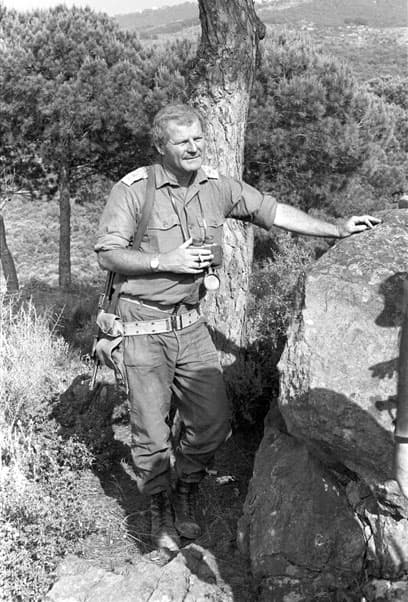
Amir Dori
PERSON
AM
Amiram
PERSON
Ph.D. The University of Chicago 1977
Amiram Levin
PERSON
Israeli general

Amit Ben-Horn
PERSON
Amitai
PERSON
New Zealand opera singer of Samoan descent
AN
Amitai Nachmani
PERSON
Amnon
PERSON
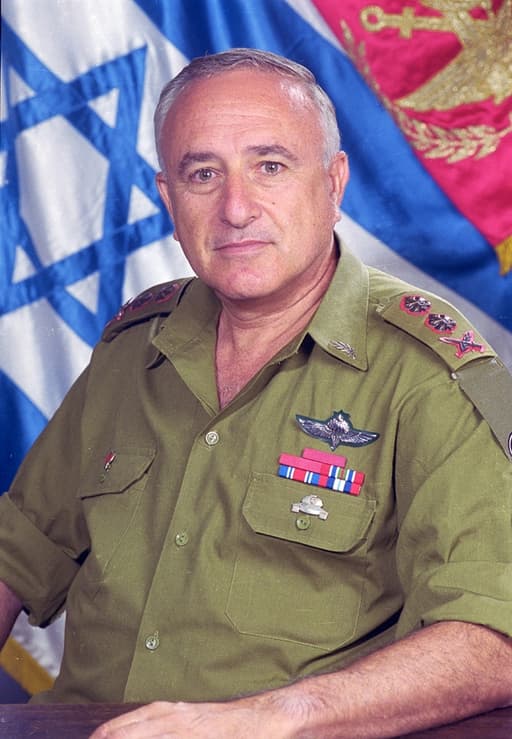
Amnon Lipkin
PERSON
15th Chief of General Staff of the Israel Defense Forces (1944–2012)
AT
Amos Tversky
PERSON
Israeli psychologist (1937–1996)
Amos Yaron
PERSON
Israel Defence Forces Major General (born 1940)
Amr Moussa
PERSON
Politician from Egypt
Amram Mitzna
PERSON
Israeli politician
Amsalem
PERSON
Anatoly Sharansky
PERSON
Israeli politician (born 1948)
AI
and I
PERSON
and Peres
PERSON
Israeli politician (1923–2016) –Former President of Israel (2007–2014) and Prime Minister of Israel (1977, 1984–1986, 1995–1996)
Andrei Sakharov
PERSON
Soviet nuclear physicist and human rights activist (1921–1989)
AG
anti-De Gaulle
PERSON
AN
anti-Saddam
PERSON
AN
anti-Scud
PERSON
Anwar Sadat
PERSON
President of Egypt from 1970 to 1981

Arens
PERSON
AR
Argov
PERSON
Ariel Sharon
PERSON
Prime Minister of Israel from 2001 to 2006
Arik Sharon
PERSON
Prime Minister of Israel from 2001 to 2006
Ariye Deri
PERSON
AR
Arnan
PERSON
AS
Asfour
PERSON
AS
Ashkenazi
PERSON

at Camp David
PERSON
Avi Dichter
PERSON
Israeli politician
AT
Avi Telem
PERSON
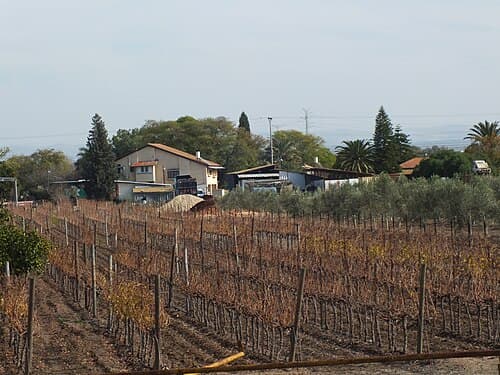
Avigdor
PERSON
Avigdor Lieberman
PERSON
Israeli politician, member of the Knesset
Avihu Ben-Nun
PERSON
Israeli general
Avneri
PERSON
Avraham
PERSON
AA
Avraham “Bren” Adnan
PERSON
AA
Avraham Aranan
PERSON
Avraham Burg
PERSON
Israeli politician
AR
Avraham Ramon
PERSON
Avraham Shochat
PERSON
Israeli politician
Avraham Yoffe
PERSON
Israeli politician and general (1913–1983)
AV
Avsha
PERSON
AH
Avshalom Horan
PERSON
Ph.D. Stanford University 1982
Azmi Beshara
PERSON
BM
Baba Metziah
PERSON
BA
Baddura
PERSON • 2 mentions
BA
Bar-Lev
PERSON
Barack Obama
PERSON • 2 mentions
President of the United States from 2009 to 2017
BG
Baruch Goldstein
PERSON
American-Israeli doctor, perpetrator of the Cave of the Patriarchs massacre (1956-1994)
BA
Bashar
PERSON
Bashar al-Assad
PERSON • 2 mentions
President of Syria from 2000 to 2024
BA
Bashir
PERSON
BG
Bashir Gemayel
PERSON
Beethoven
PERSON
BE
Begin
PERSON
Family name
BE
Beilin
PERSON
BE
Ben-Dor
PERSON

Ben-Gurion
PERSON • 2 mentions
Israeli politician, Zionist leader, prime minister of Israel (1948–1953, 1955–1963) - (born1886–1973)
BE
Ben-Zion
PERSON
BB
Ben-Zion and Bibi
PERSON
Ben-Zvi
PERSON
Benjamin Franklin
PERSON
American polymath and statesman (1706–1790)
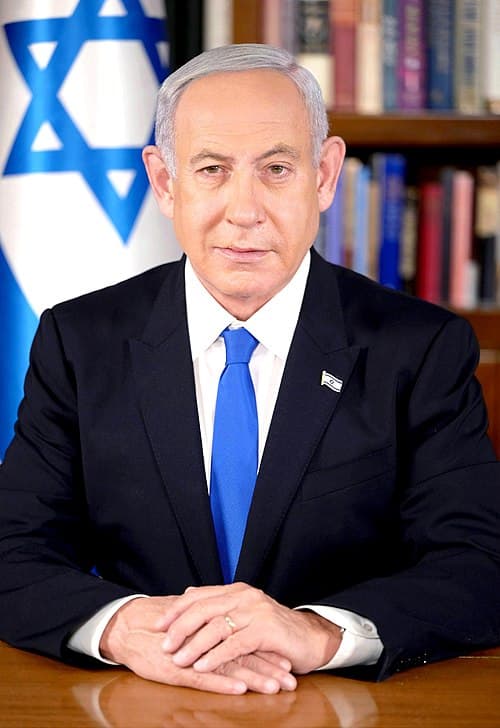
Benjamin Netanyahu
PERSON • 4 mentions
Prime Minister of Israel (1996–1999; 2009–2021; since 2022)
Benny Begin
PERSON
Israeli politician
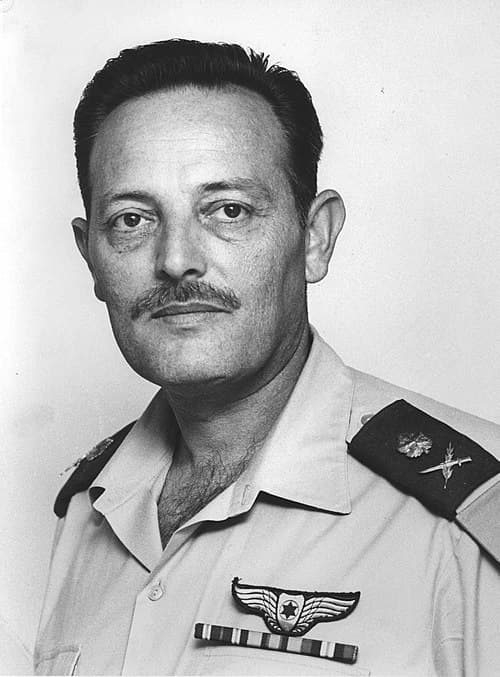
Benny Peled
PERSON
Israeli general (1928-2002)
BE
Bernadotte
PERSON
BE
Betzer
PERSON
Bibi Netanyahu
PERSON
Prime Minister of Israel (1996–1999; 2009–2021; since 2022)
Bill Burns
PERSON
Major League Baseball pitcher (1880-1953)
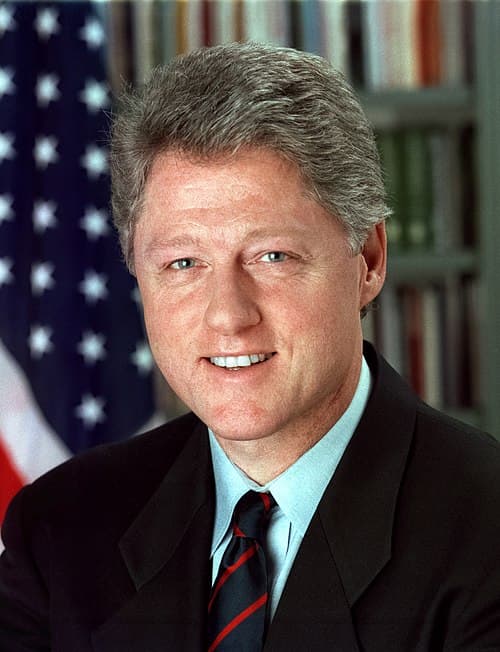
Bill Clinton
PERSON • 3 mentions
President of the United States from 1993 to 2001 (born 1946)
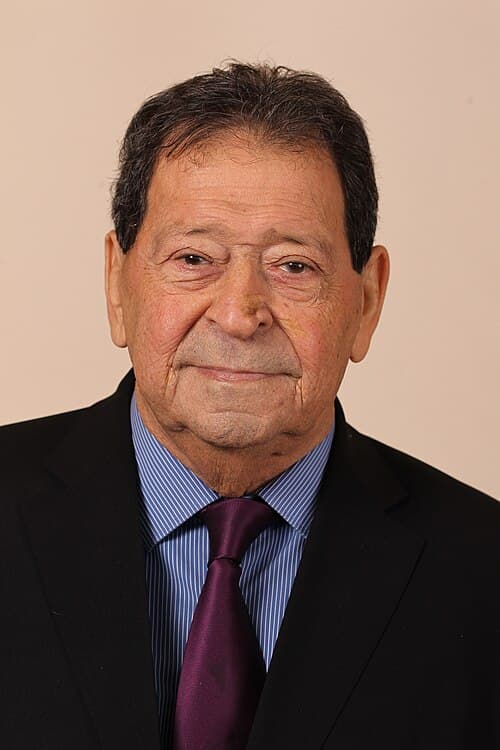
Binyamin Ben-Eliezer
PERSON

Bob Shrum
PERSON
American journalist
BO
Boged
PERSON
BH
Bougie Herzog
PERSON
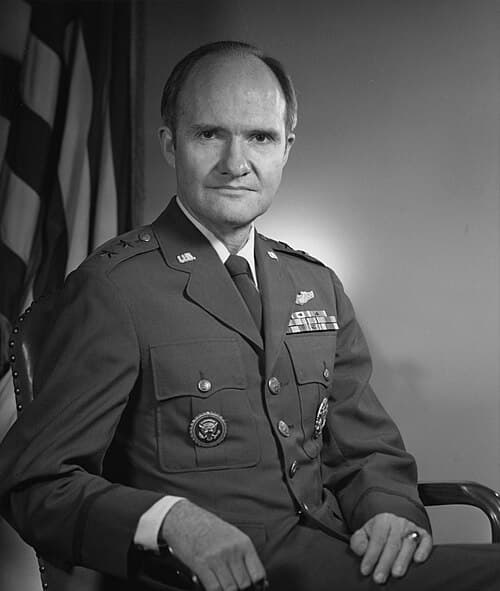
Brent Scowcroft
PERSON
9th & 17th United States National Security Advisor (1925-2020)
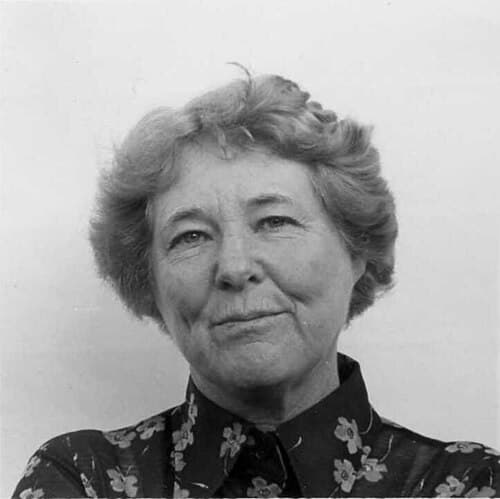
Bruria
PERSON
Researcher
Bruria Shaked
PERSON
BS
Bush Senior
PERSON

Captain Rifa’at
PERSON

Carville
PERSON
CH
Chachachim
PERSON

Chagai Shalom
PERSON
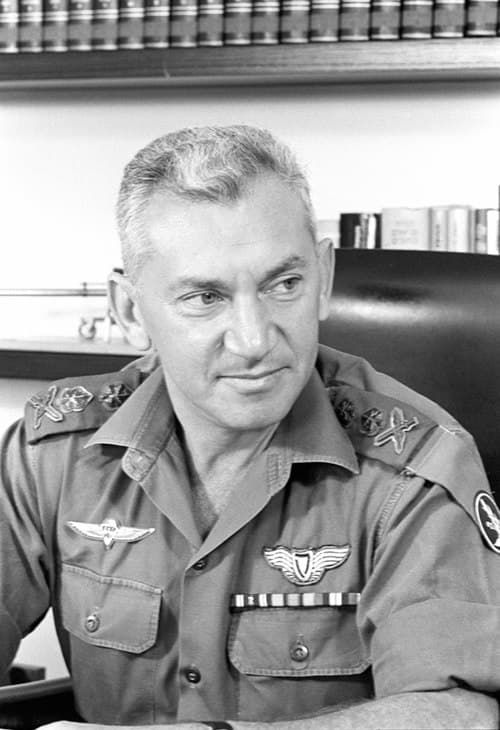
Chaim Bar-Lev
PERSON
Israeli military officer and politician (1924-1994)
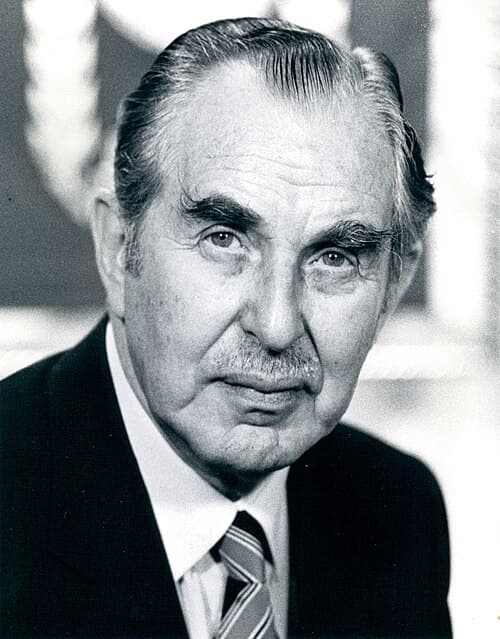
Chaim Herzog
PERSON
6th President of Israel (1983–1993) – (born1918–1997)
Chaim Yavin
PERSON
CH
Cheers
PERSON
Chelsea Clinton
PERSON
American author and global health advocate
Chirac
PERSON
President of France from 1995 to 2007
CH
Chopin
PERSON

Chris Christie
PERSON
55th Governor of New Jersey and former U.S. Attorney for the District of New Jersey
CH
Christopher
PERSON
CO
Colin
PERSON
Male given name
Colin Powell
PERSON
American general and diplomat (1937–2021)
Condoleezza Rice
PERSON
American diplomat and political scientist (born 1954)
CW
Courtney Wild
PERSON
1997 British biographical film directed by Brian Gilbert
DM
Dado and Motta
PERSON

Dado Elazar
PERSON
DA
Dahlan
PERSON
Indonesian politician (born 1960 in Marabahan)
Dan Margalit
PERSON
Israeli journalist, author and television host
Dan Meridor
PERSON
Israeli politician
Dan Quayle
PERSON
Vice president of the United States from 1989 to 1993
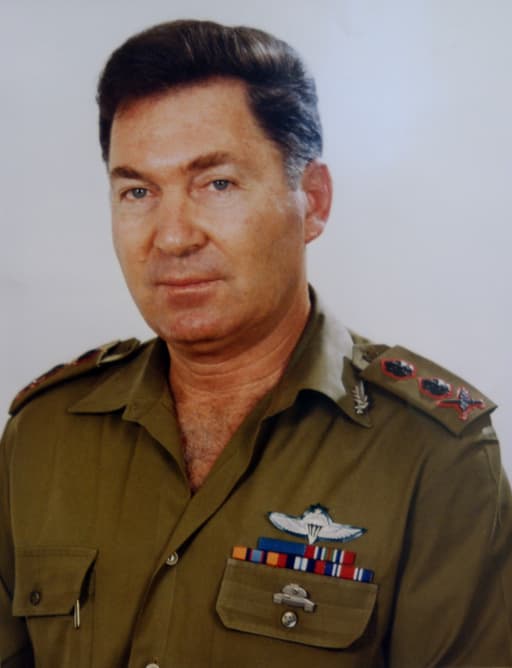
Dan Shomron
PERSON
13th Chief of General Staff of the Israeli Defense Forces (1937–2008)
DW
Dan was
PERSON
American screenwriter
Daniel Kahneman
PERSON
Israeli-American psychologist and economist (1934–2024)
DA
Danin
PERSON

Danny Brunner
PERSON
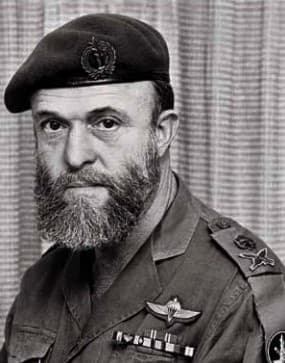
Danny Matt
PERSON
Israeli Air Force general
Danny Michaelson
PERSON
Danny Yatom
PERSON
Israeli politician
Dante
PERSON
DI
Darren Indyke
PERSON
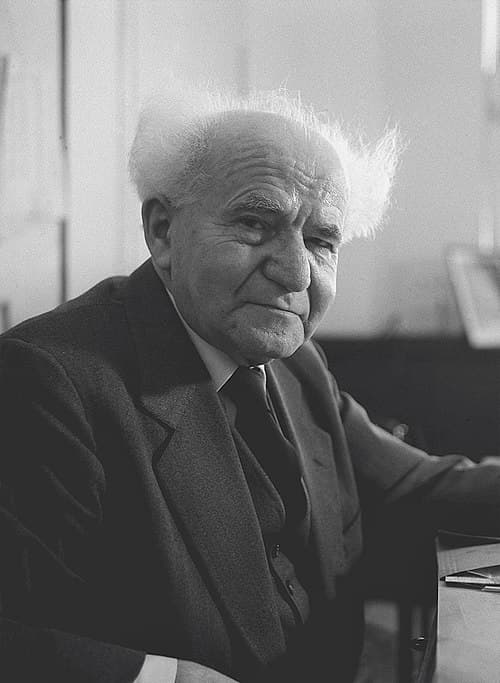
David Ben-Gurion
PERSON
Israeli politician, Zionist leader, prime minister of Israel (1948–1953, 1955–1963) - (born1886–1973)
David Cameron
PERSON • 2 mentions
British politician (born 1966)
David Grossman
PERSON
Israeli author (born 1954)

David Ivri
PERSON
King of Israel and Judah
David Levy
PERSON
British chess player
DA
Dayan
PERSON
Family name
De Gaulle
PERSON

Dennis
PERSON
Italian singer-songwriter
Dennis Ross
PERSON
American diplomat
Dick Cheney
PERSON
Vice President of the United States from 2001 to 2009
Digli
PERSON • 2 mentions
DO
Doron
PERSON
City mentioned only by Pliny and located in Cilicia Tracheia
Doron Cohen
PERSON
DB
Doug Band
PERSON
American presidential advisor
Dov Bar
PERSON
The legal profession as an institution
DO
Dovik
PERSON
Dovik Tamari
PERSON

Draper
PERSON
DR
Drori
PERSON
Dudu Topaz
PERSON
Israeli comedian (1946-2009)
Dwight Eisenhower
PERSON
Ehud Barak
PERSON
10th Prime Minister of Israel
Ehud Brog
PERSON
10th Prime Minister of Israel
Ehud Olmert
PERSON
Prime Minister of Israel from 2006 to 2009
Eitan Haber
PERSON
Israeli businessman (1940-2020)
Elazar
PERSON
Eli Yishai
PERSON
Israeli politician
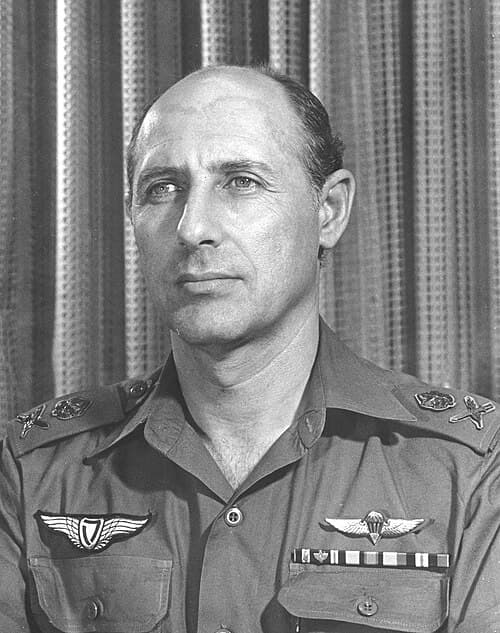
Eli Zeira
PERSON
Israeli military intelligence officer (1928–2025)
EL
Eliezer
PERSON
Biologist
EG
Eliezer Gonn
PERSON
Biologist
EL
Elyakim
PERSON
Elyakim Rubinstein
PERSON
Justice of the Supreme Court of Israel and Attorney General of Israel
ES
Emanuel “Manno” Shaked
PERSON
Ephraim
PERSON
Ephraim Halevy
PERSON
Ephraim Sneh
PERSON
Son of Joseph
ER
Errol
PERSON
Errol Flynn
PERSON
Australian actor (1909–1959)

Erwin
PERSON
Town in Tennessee, United States of America
Eshkol
PERSON
Israeli psychologist
Esther
PERSON
Biblical Jewish queen of Persia and Medes (Book of Esther)
Esther Godin
PERSON
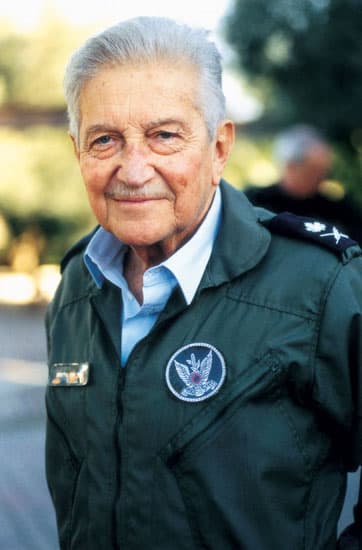
Ezer Weizman
PERSON
Israeli politiciann, 7th president of Israel (1993–2000)
Folke
PERSON
Frydman
PERSON
Fuad Ben-Eliezer
PERSON
Israeli military officer and politician (1936-2016)
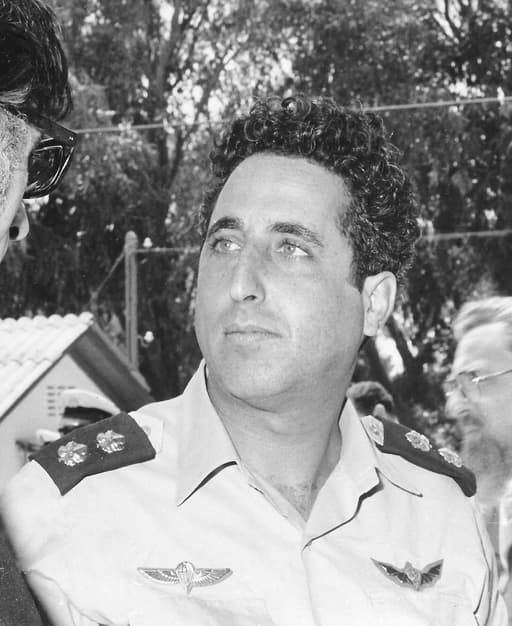
Gadi Shefi
PERSON
Israeli military personnel (1940-2017)
Gadi Zohar
PERSON
Gamal Abdel Nasser
PERSON
President of Egypt from 1956 to 1970
Gazit
PERSON
Genghis Khan
PERSON
Founder and first khan of the Mongol Empire (1162–1227)
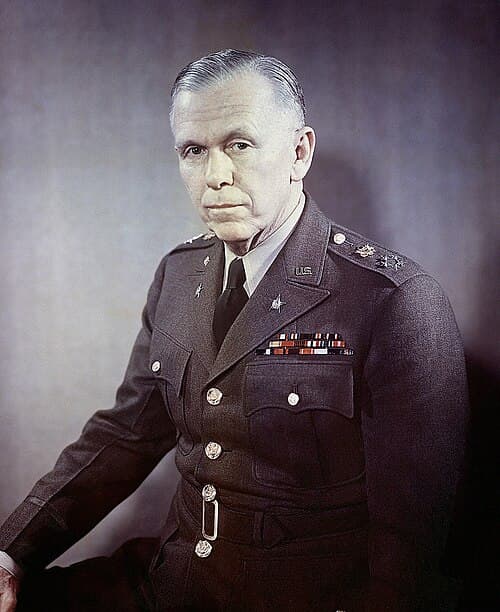
George C. Marshall
PERSON
George H.W. Bush
PERSON
President of the United States from 1989 to 1993 (1924–2018)

George W. Bush
PERSON • 3 mentions
President of the United States from 2001 to 2009
Gerhard Schroeder
PERSON
GE
Gesher
PERSON
GH
Ghaddafy
PERSON

Gibli
PERSON

Gideon
PERSON
Judge in the Biblical Book of Judges
Gidi Grinstein
PERSON
Israeli activist
Gilead Sher
PERSON
Israeli lawyer
Gili Sher
PERSON
GI
Ginossar
PERSON
GI
Giora
PERSON
Researcher
GE
Giora Einy
PERSON
GR
Giora Ros
PERSON
Giora Zorea
PERSON
Israeli military officer
GO
Godins
PERSON
Golda
PERSON
Golda Meir
PERSON • 2 mentions
Goldie Hawn
PERSON
American actress
GO
Goldstein
PERSON
Family name

Gorodish
PERSON
Gurion
PERSON
Canadian academic (1925–2017)
GV
Gvirotai verabotai
PERSON
HA
Haber
PERSON
Habib
PERSON
Hafez al-Assad
PERSON
President of Syria from 1971 to 2000
Haim Laskov
PERSON
5th Chief of General Staff of Israel Defence Forces (1919–1982)
Haim Ramon
PERSON
Israeli politician
HA
Halevy
PERSON
HA
Hanan
PERSON
Hanan Kristal
PERSON
Israeli journalist
HA
Har-Zion
PERSON
HA
Harold
PERSON
Male given name
Hassan
PERSON
Male given name (حسن)

Helena
PERSON
State capital of Montana, United States and seat of Lewis and Clark County
HR
Helena Rapp
PERSON
Henry Kissinger
PERSON • 2 mentions
American politician and diplomat (1923–2023)
HE
Henya
PERSON
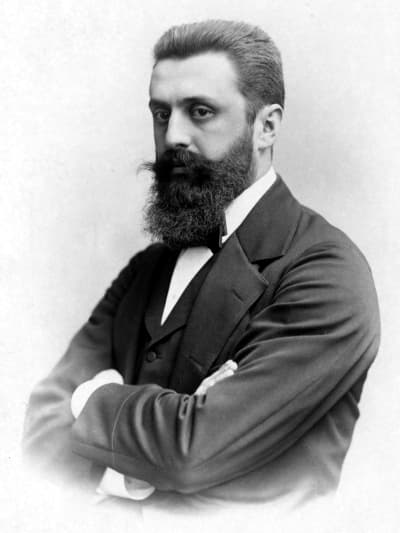
Herzl
PERSON • 2 mentions
HE
Herzog
PERSON
HS
Hikmat Shehabi
PERSON

Hillary Clinton
PERSON
American politician and diplomat (born 1947)
HO
Holtzberg
PERSON

Horan
PERSON
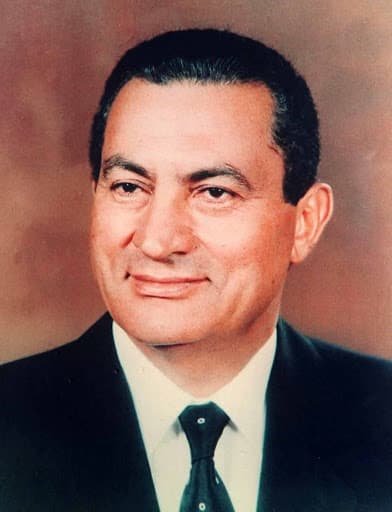
Hosni
PERSON
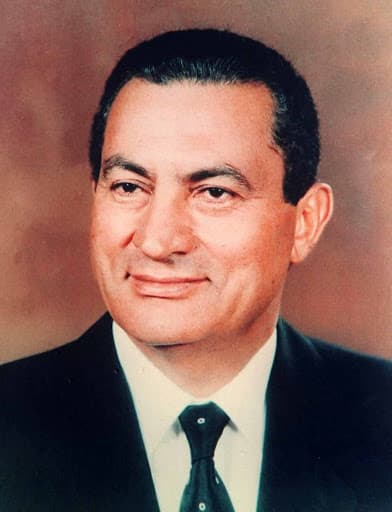
Hosni Mubarak
PERSON • 2 mentions
President of Egypt from 1981 to 2011
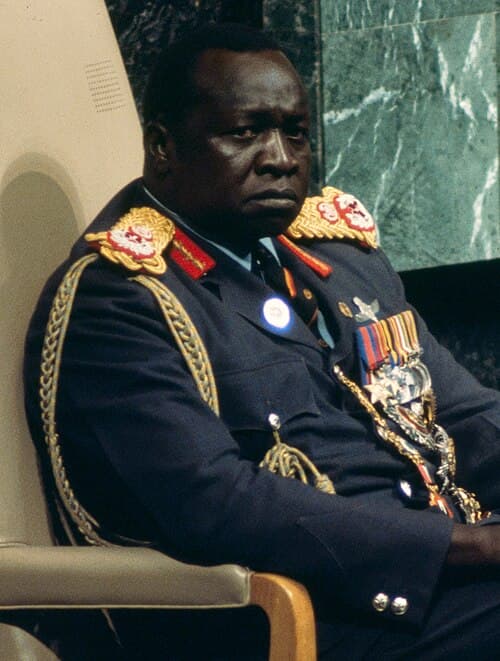
Idi Amin
PERSON
President of Uganda from 1971 to 1979
IA
Ido Ambar
PERSON
Isabel
PERSON
Spanish television series

Israel Hasson
PERSON
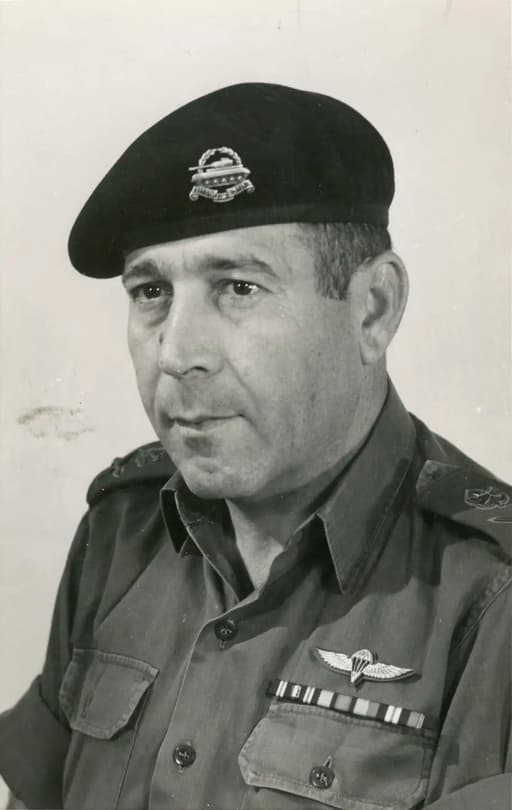
Israel Tal
PERSON
Israeli military officer (1924–2010)
Itamar
PERSON
Israeli settlement in the West Bank
Itamar Rabinovich
PERSON
Israeli diplomat and academic (born 1942)
Itzik
PERSON
IT
Itzila
PERSON

J. C. Penny
PERSON
Jabotinsky
PERSON
Jack Kennedy
PERSON
President of the United States from 1961 to 1963 (1917–1963)
JA
Jacob
PERSON
In Genesis, a son of Isaac, also known as Israel; the patriarch of the Israelites
Jacques Chirac
PERSON
President of France from 1995 to 2007
James Carville
PERSON
American political consultant
James G. March
PERSON
American sociologist (1928–2018)
JF
Jean Frydman
PERSON
French politician and businessman (1925–2021)

Jeff Sessions
PERSON
American politician and lawyer (born 1946)
Jes Staley
PERSON
American banker, chief executive officer of Barclays
Jesus Christ
PERSON
Central figure of Christianity (6 or 4 BC – AD 30 or 33)
Jibril Rajoub
PERSON
Palestinian politician (born 1953)
Jimmy Carter
PERSON • 2 mentions
President of the United States from 1977 to 1981 (1924–2024)
John F.
PERSON
President of the United States from 1961 to 1963 (1917–1963)
John F. Kennedy
PERSON
President of the United States from 1961 to 1963 (1917–1963)
JH
John Humphreys
PERSON
Australian fencer
John Locke
PERSON
English philosopher and physician (1632–1704)
Jomo Kenyatta
PERSON
JP
Josef Pilsuldski
PERSON
Juan Carlos
PERSON
King of Spain from 1975 to 2014
KA
Kamal Adwan
PERSON
Palestinian politician
Kamal Nasser
PERSON
Palestinian writer and political leader (1924-1973)
KA
Kapusta
PERSON
Kenyatta
PERSON

Klinghoffer
PERSON
German painter and lithographer (1900-1970)
Kobi Meron
PERSON
Half-instanton solution of Yang–Mills theory
Kofi Annan
PERSON • 2 mentions
7th Secretary-General of the United Nations (1938-2018)
KO
Koren
PERSON
Kuti Adam
PERSON
Kuti Mor
PERSON
KS
Kuti Sharabi
PERSON
Laskov
PERSON

Lauder
PERSON
Leah Rabin
PERSON
Wife of Prime Minister of Israel (1928-2000)
LZ
Leah Zimmerman
PERSON
LE
Lehadek
PERSON
LE
Lehitraot
PERSON
Levi Eshkol
PERSON
LE
Levin
PERSON
Lloyd Bentsen
PERSON
American politician (1921–2006)
LB
Lo bagadeti
PERSON
LO
Lonny
PERSON
LR
Lonny Rafael
PERSON
Louis XVI
PERSON
LS
Lsaac
PERSON
MA
Machanaimi
PERSON
MA
Madeleine
PERSON
Female given name
Madeleine Albrights
PERSON

Mahapakh
PERSON
Mahmoud Abbas
PERSON
President of the Palestinian Authority since 2005

Maka Esser
PERSON
English singer, songwriter, and producer
MA
Manno
PERSON • 2 mentions

Manno Shaked
PERSON
MA
Manyac
PERSON
Mao Zedong
PERSON • 2 mentions
1st chairman of the Chinese Communist Party and founder of the People's Republic of China (1893–1976)
MR
Marc Rich
PERSON
American commodities trader (1934–2013)
MA
Marco
PERSON
Episode of Better Call Saul (S1 E10)
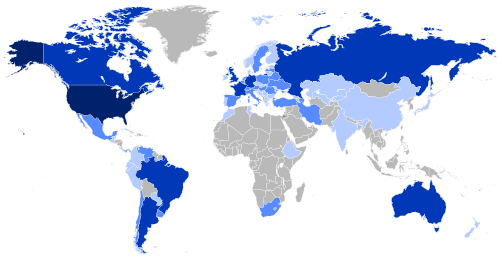
Marco Ashkenazi
PERSON
MA
Margalit
PERSON
Public relations and communications lecturer in New Zealand
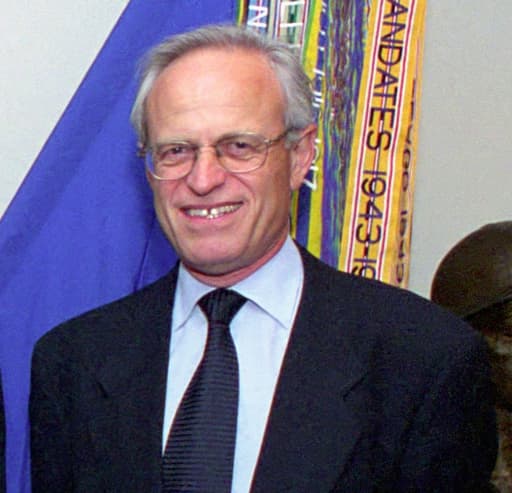
Martin Indyk
PERSON
American diplomat
Mary Antoinette
PERSON
MA
Mazen
PERSON
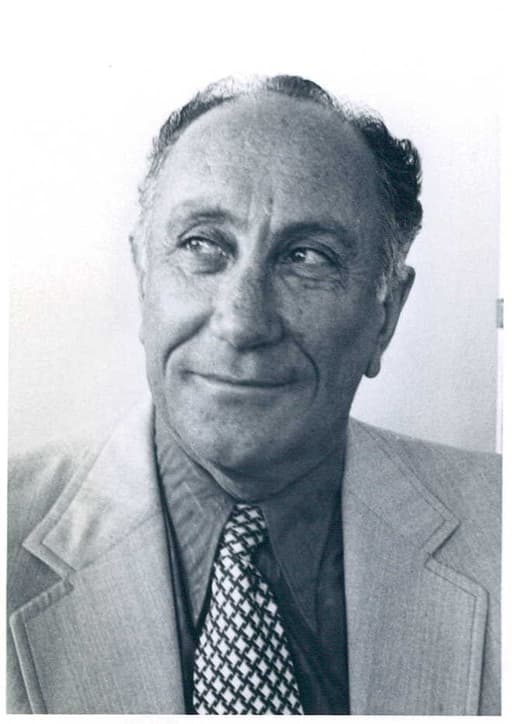
Meir Amit
PERSON
Israeli politician (1921-2009)
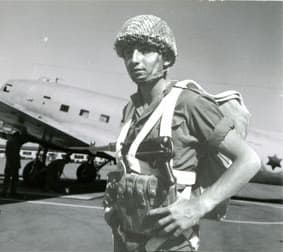
Meir Har-Zion
PERSON
Israeli paratrooper
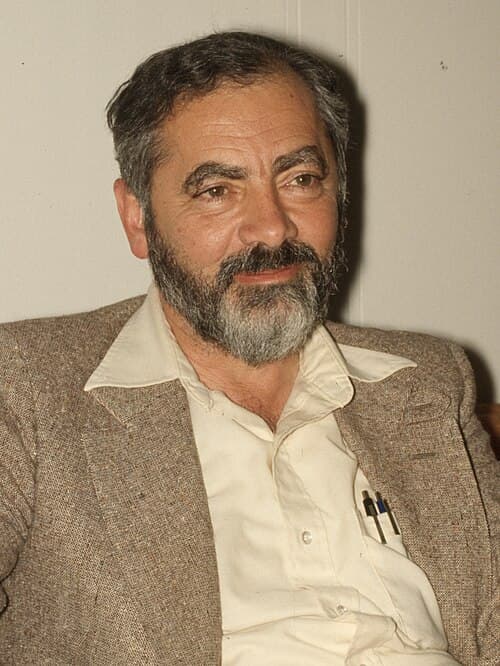
Meir Kahane
PERSON
Rabbi, writer and far right American-Israeli politician (1932–1990)
Meir Shamgar
PERSON
Israeli judge and former attorney general of Israel (1925–2019)
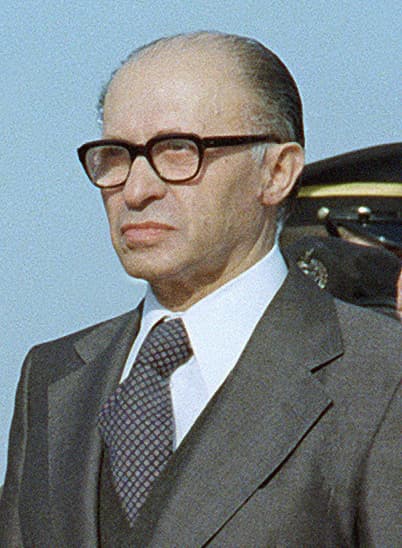
Menachem Begin
PERSON
Israeli politician and former Prime Minister (1913-1992)
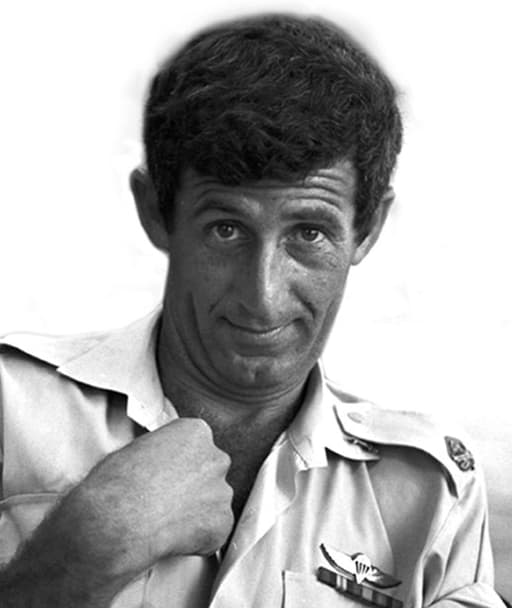
Menachem Digli
PERSON
Israeli military officer

Meretz
PERSON • 2 mentions

Mergelen
PERSON
Meridor
PERSON
MK
Micha Kapusta
PERSON
Michael Cohen
PERSON
American former attorney and former Republican official
Michael Flynn
PERSON
U.S. Army general and former U.S. National Security Advisor (born 1958)
ML
Michael Levy
PERSON
Ph.D. Rensselaer Polytechnic Institute 2014
Michael Melchior
PERSON
Israeli politician

Mikhal
PERSON
Ph.D. Bar-Ilan University 2005
MI
Miliekowsky
PERSON
Milton Friedman
PERSON
American economist and statistician (1912–2006)
Miriam
PERSON
Sister of Moses and Aaron

Misha
PERSON

Misha Arens
PERSON
Mishal
PERSON
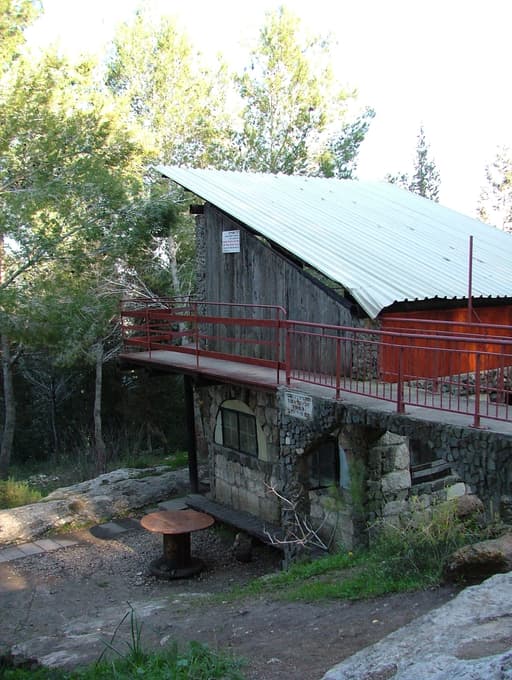
Mishmar
PERSON • 3 mentions
MI
Mitzafon
PERSON
Mitzna
PERSON
Israeli politician
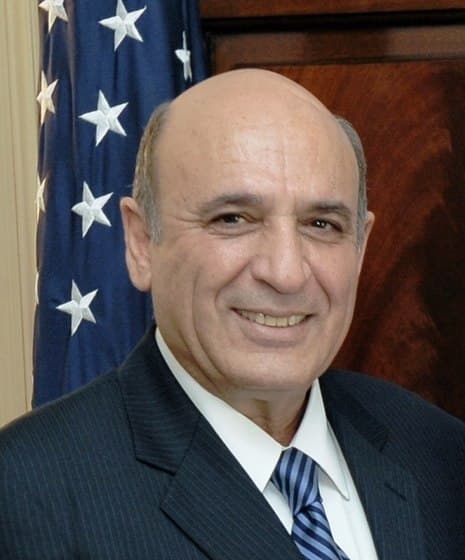
Mofaz
PERSON
MO
Mohamed
PERSON
MA
Mohammed al-Durrah
PERSON
Palestinian casualty of the intifada
MA
Mohammed Youssef al-Najar
PERSON

Monica Lewinsky
PERSON • 2 mentions
American activist and writer (born 1973)
Montesquieu
PERSON
Mookie
PERSON
American reality television participant
MB
Mookie Betzer
PERSON
Mordechai
PERSON

Mordechai Rachamim
PERSON
MD
Morris Draper
PERSON
American diplomat
MO
Moshe
PERSON
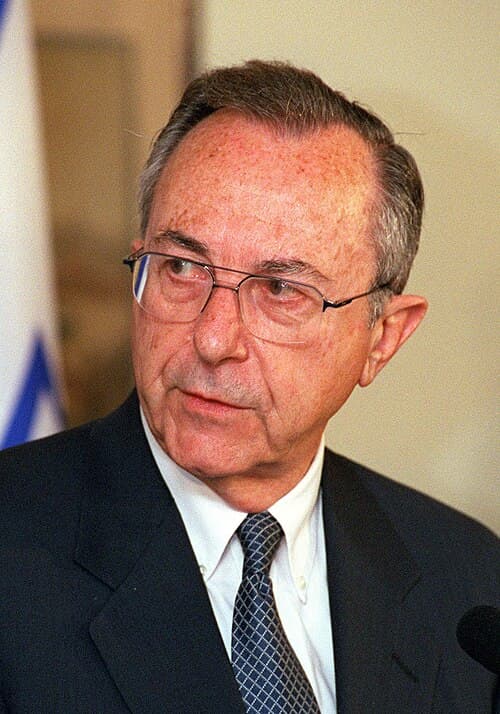
Moshe Arens
PERSON
Israeli diplomat, member of Knesset, and professor of aeronautics (1925-2019)
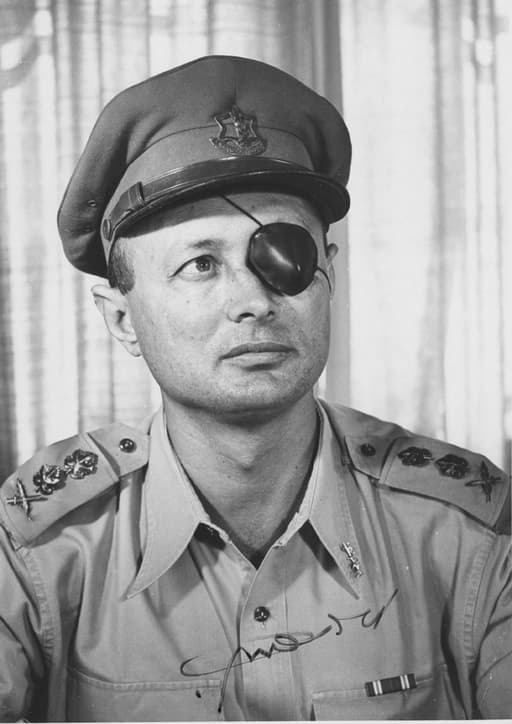
Moshe Dayan
PERSON
Israeli military leader and politician (1915–1981)
Moshe Elimelech
PERSON
Israeli journalist, poet, and Betar activist
Moshe Gaon
PERSON
Israeli businessperson
Moshe Levy
PERSON
Israeli chemist
Moshe Sukenik
PERSON
MV
Moshe Vechetzi
PERSON

Moshiko
PERSON
MT
Motke Tzipori
PERSON
MO
Motta
PERSON
Motta Gur
PERSON
MB
Motti Ben-Dror
PERSON
MN
Motti Nagar
PERSON

Motto
PERSON

Mouse
PERSON
Moussa Peled
PERSON
MO
Moyne
PERSON

Mozart
PERSON
Muallem
PERSON
Israeli manager, Deputy Chief Executive Officer of the Families and Commemoration Department at the Ministry of Defense
MU
Mummer
PERSON
MU
Muriel
PERSON
Female given name
Nabil Shaath
PERSON
Palestinian politician
NR
Nachman Rifkind
PERSON
Nachmias
PERSON
Naftali
PERSON
Naftali Bennett
PERSON
Prime Minister of Israel from 2021 to 2022
Nahshon Wachsman
PERSON
Napoleon
PERSON
Nasser
PERSON
NA
Natan
PERSON
Family name
Natan Sharansky
PERSON
Israeli politician (born 1948)
Nava Cohen
PERSON
NE
Ne’eman
PERSON
NE
Nechamia
PERSON
Nechemia Cohen
PERSON
NE
Nekamah
PERSON
NF
Night Flight
PERSON
US television program
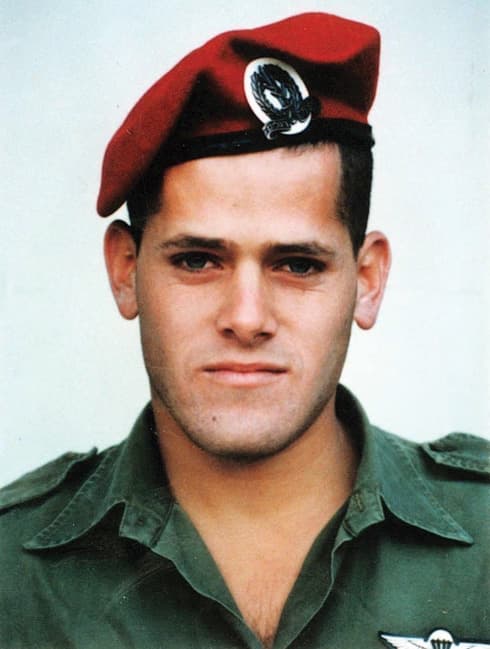
Nir Poraz
PERSON
Israeli soldier (1971-1994)
Nissim
PERSON
American rapper
Nissim Jou’ari
PERSON
American rapper
Nissim Mishal
PERSON
American rapper
Nora Ephron
PERSON
American film director and writer (1941–2012)
Oded Eran
PERSON
OR
Oded Rabinovitch
PERSON
Israeli historian

Omer Wachman
PERSON
Oranim
PERSON
Ori Or
PERSON
Israeli politician
OA
Orna Angel
PERSON
Israeli politician
Ovadia Yosef
PERSON
Israeli rabbi (Born 1976)
Ovadia Yossef
PERSON

Palmach
PERSON • 2 mentions
Elite strike force of the Haganah in Mandatory Palestine
PA
Palmachniks
PERSON
PE
Peled
PERSON • 2 mentions
Peter Mandelson
PERSON • 2 mentions
British politician and life peer (born 1953)
Philip
PERSON
PG
Philip Gould
PERSON
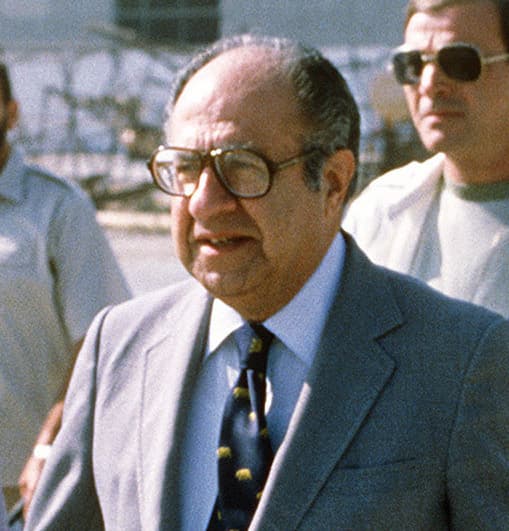
Philip Habib
PERSON
American diplomat (1920-1992)
PI
Pilsuldski
PERSON
PN
Pini Nachmani
PERSON
Plato
PERSON
4th-century BCE Greek philosopher

Poraz
PERSON
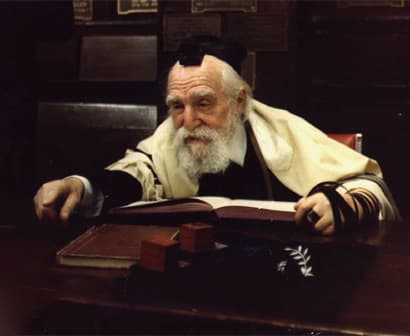
Rabbi
PERSON
RA
Rabinovich
PERSON
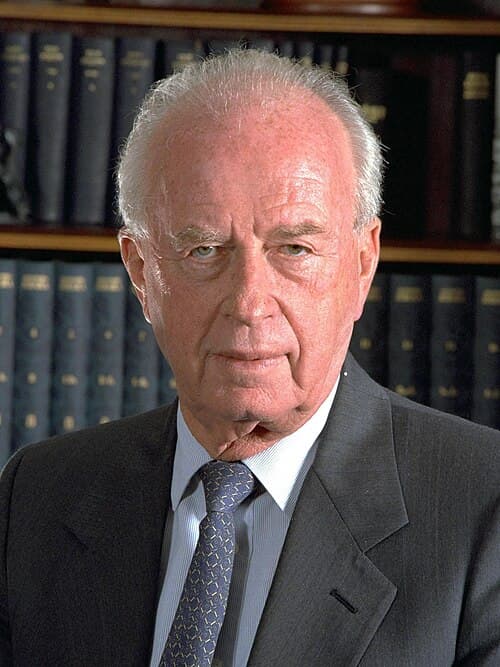
Rabins
PERSON

Rachel Godin
PERSON
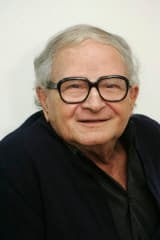
Rafael Eitan
PERSON
Israeli politician (1926-2019)
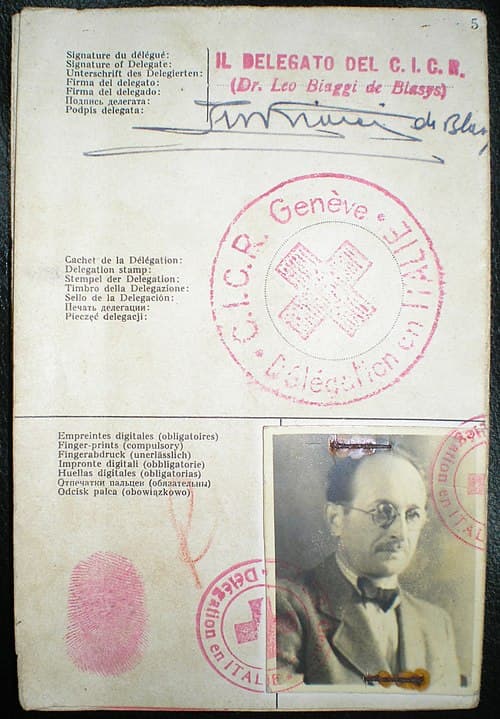
Rafi Friedman
PERSON
RA
Raful
PERSON
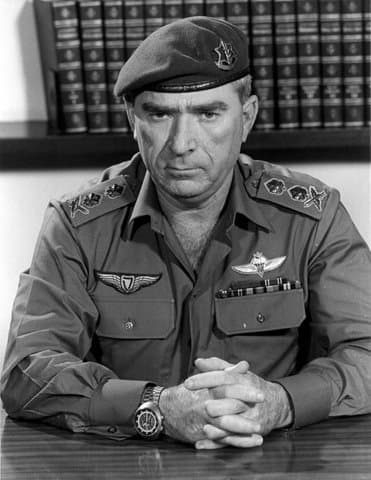
Raful Eitan as
PERSON
Israeli military and politician (1929-2004)
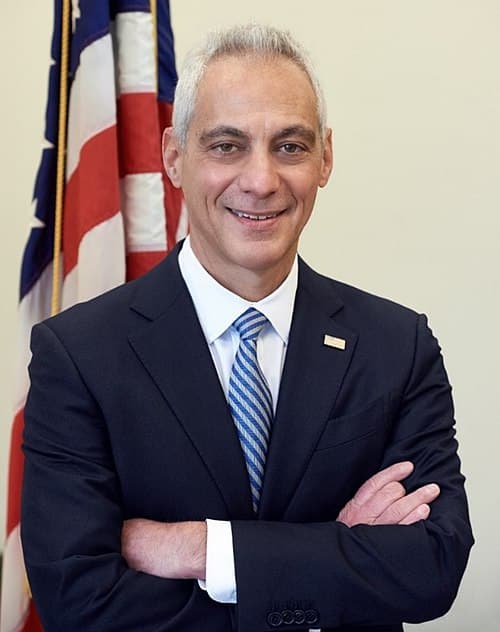
Rahm Emanuel
PERSON
American politician (born 1959)
Rajoub
PERSON
Family name (الرجوب)

Ramon
PERSON

Rebecca pa
PERSON
Badminton player
Rechavam Ze’evi
PERSON
Israeli politician, Minister of Tourism, and Israel Defense Forces senior officer (1926-2001)
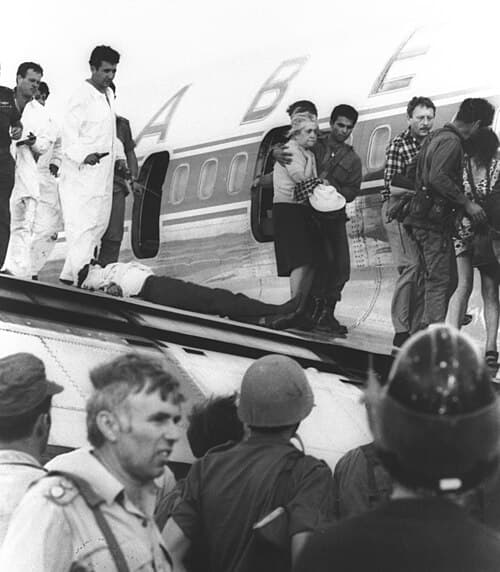
Reginald Levy
PERSON
RE
Reuma
PERSON
RI
Rifkind
PERSON
Robespierre
PERSON
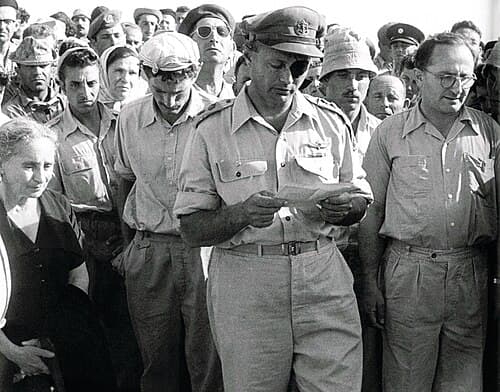
Roi Rotberg
PERSON
RB
Ron Ben-Ishai
PERSON
Ron Pundak
PERSON
Israeli journalist and academic
Ronald Lauder
PERSON
American businessman, art collector, philanthropist, political activist
Ronald Reagan
PERSON • 3 mentions
President of the United States from 1981 to 1989 and actor (1911–2004)
RO
Rotberg
PERSON
Rousseau
PERSON
RU
Rubinstein
PERSON
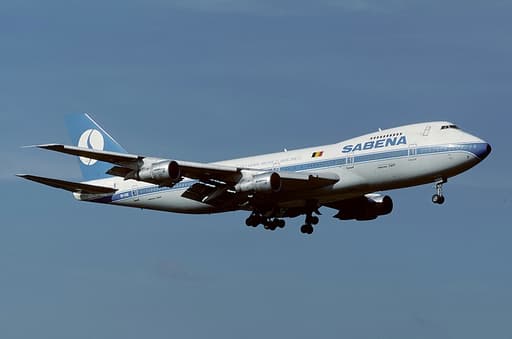
Sabena
PERSON • 2 mentions
Sadat
PERSON
Arabic name
Saddam Hussein
PERSON • 3 mentions
Iraqi president, army officer and Baathist politician (1937–2006)
Saeb Erekat
PERSON
Palestinian diplomat (1955–2020)
SA
Saggers
PERSON • 2 mentions
Saguy
PERSON
Sam Donaldson
PERSON
American journalist
SN
Sami Nachmias
PERSON
SA
Samuel
PERSON
36e6biblical character
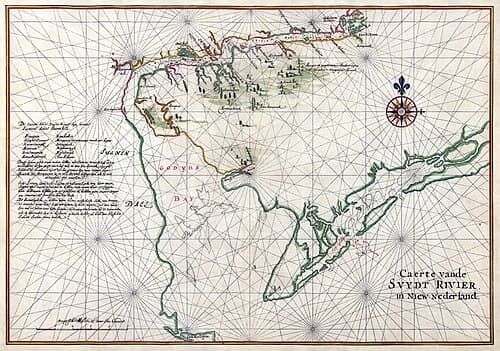
Samuel Godin
PERSON
Sandy Berger
PERSON
US National Security Advisor (1945–2015)
SK
Sarah Kellen
PERSON
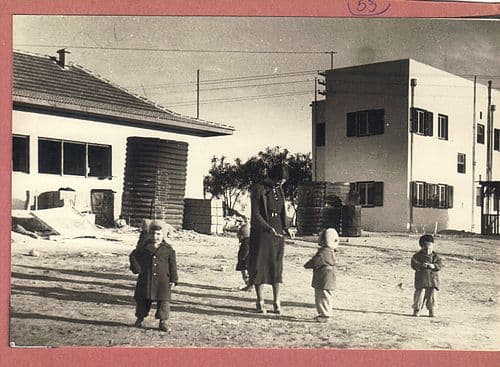
Sarid
PERSON
SM
Saveret Matkal
PERSON
S7
Sayeret 7zanhanim
PERSON
SG
Sayeret Golan
PERSON
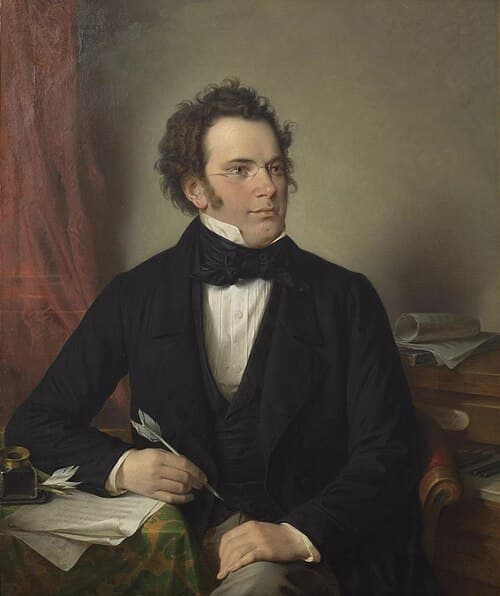
Schubert
PERSON
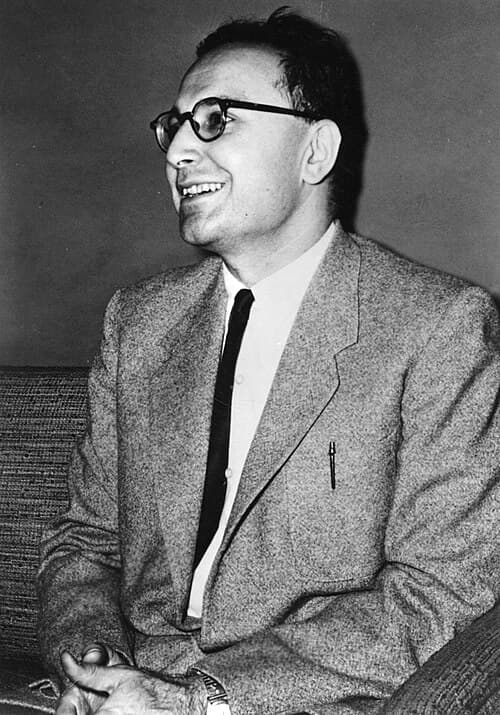
Seymour Martin Lipset
PERSON
American sociologist (1922–2006)

Shabbat
PERSON

Shai Agmon
PERSON
ST
Shai Tamari
PERSON
Shamai Kaplan
PERSON

Shamir
PERSON
American singer and songwriter (born 1994)
Sharaa
PERSON
SH
Sharabi
PERSON
Sharanksy
PERSON
Sharansky
PERSON
Israeli politician (born 1948)
SH
Sharon
PERSON
Unisex given name
SH
Shatila
PERSON • 2 mentions
Researcher
Shaul
PERSON
Shaul Mofaz
PERSON
Israeli military officer and politician
Shaul Shalev
PERSON
Sheikh Ahmed Yassin
PERSON
Palestinian political and religious leader (1937–2004)
Shepherd
PERSON
SH
Shihabi
PERSON
SH
Shimon
PERSON
Shimon Peres
PERSON • 2 mentions
Israeli politician (1923–2016) –Former President of Israel (2007–2014) and Prime Minister of Israel (1977, 1984–1986, 1995–1996)
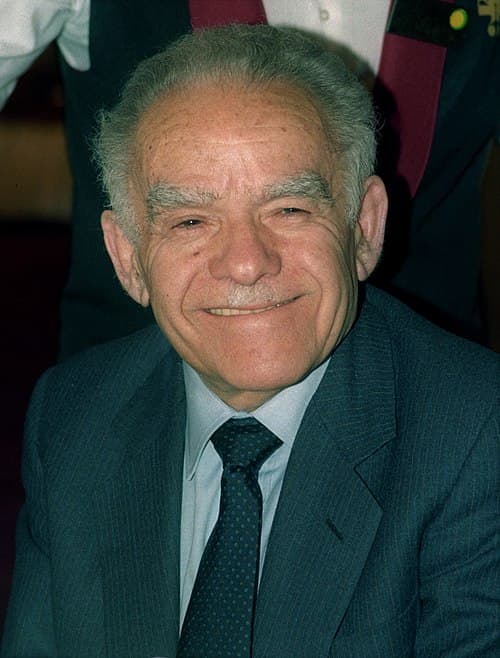
Shimon Shamir
PERSON
SS
Shimon Shevess
PERSON
Shimron
PERSON
SH
Shlomo
PERSON
SA
Shlomo Argov
PERSON
Israeli diplomat (1929–2003)
SB
Shlomo Ben
PERSON
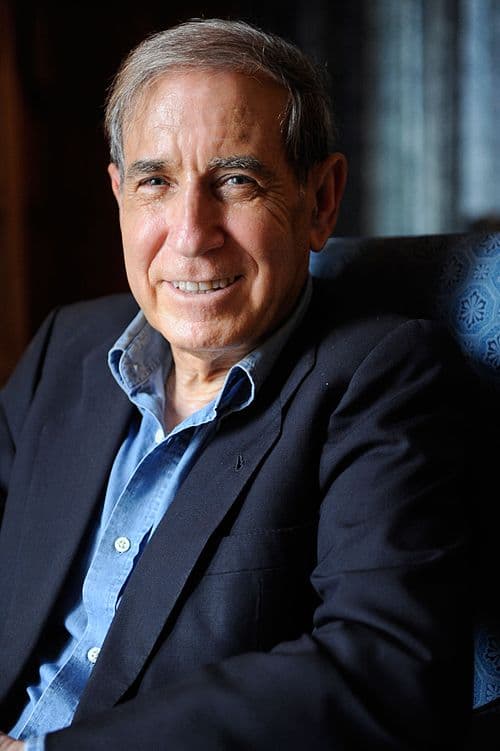
Shlomo Ben-Ami
PERSON
Israeli diplomat
Shlomo Gazit
PERSON
Israeli general (1926–2020)
Shlomo Lahat
PERSON
Israeli general and politician (1927–2014)

Shlomo Yanai
PERSON
Male given name
Shmil Ben-Zvi
PERSON
Shmuel Arad
PERSON
Israeli general
Shmuel Gonen
PERSON
Israeli general
Shmuel Katz
PERSON
Israeli writer, journalist and historian (1914–2008)
Shochat
PERSON
SH
Shomron
PERSON
SI
Silberstein
PERSON
S—
Sipurei kravot —
PERSON
SO
Sonia
PERSON
Indian actress
SO
Sonkin
PERSON
Politician in Cameroon
SO
Sonya
PERSON
Spielberg
PERSON
American filmmaker (born 1946)
Srulik
PERSON
Srulik Brog
PERSON
ST
Stark
PERSON
Steven Spielberg
PERSON • 2 mentions
American filmmaker (born 1946)
SU
Suissa
PERSON
SU
Sukenik
PERSON

Talik
PERSON
Tchaikovsky
PERSON
Patter song written by Ira Gershwin and Kurt Weill
Terje Larsen
PERSON
Swedish tennis player
the Achille Lauro
PERSON
the King of Kings
PERSON
TD
the Minister of Defense
PERSON
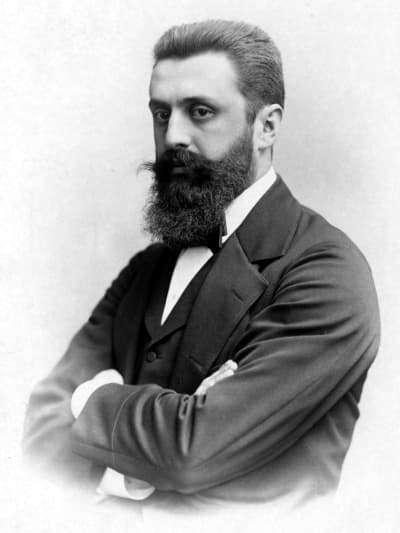
Theodor Herzl
PERSON
TO
Todah
PERSON
Tony Blair
PERSON • 2 mentions
Prime Minister of the United Kingdom from 1997 to 2007
TL
Tov la
PERSON
TS
Tsila
PERSON
TD
Tsila Drori
PERSON
Tubul
PERSON
TG
Tuti Goodman
PERSON
Tutti
PERSON
TV
Tversky
PERSON
Israeli psychologist (1937–1996)
Tzahal
PERSON
Herpetologist

Tze’elim
PERSON
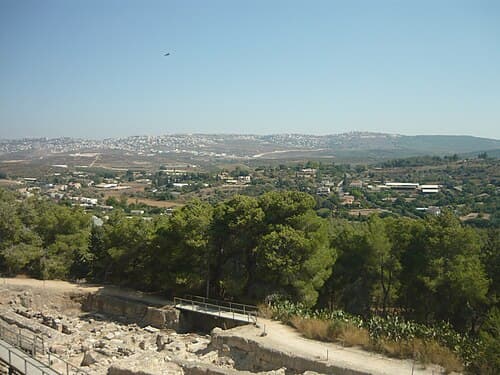
Tzipori
PERSON
Tzvi Tzur
PERSON
Israeli politician (1923-2004)
Uri Avneri
PERSON
Israeli politician, journalist and author (1923-2018)
Uri Ilan
PERSON
Israeli soldier
Uri Ilan and Rotem
PERSON
Israeli soldier
Uri Koren
PERSON
Uri Saguy
PERSON
Uri Savir
PERSON
Israeli diplomat and politician (1953-2022)

Uri Simchoni
PERSON

Uri Yarom
PERSON

Uri Zakay
PERSON
Uzi Baram
PERSON
Israeli politician
Uzi Dayan
PERSON
Israeli politician
Uzi Yairi
PERSON
Israeli soldier
Vladimir Lenin
PERSON
Founding leader of the Soviet Union from 1922 to 1924 (1870–1924)
WK
Wadi Khawaret
PERSON • 2 mentions
WA
Wafsi al-Tal
PERSON
Walid Muallem
PERSON
Syrian politician, foreign minister (1941-2020)
Warren Christopher
PERSON
U.S. Secretary of State (1925-2011)
WA
Waschsman
PERSON
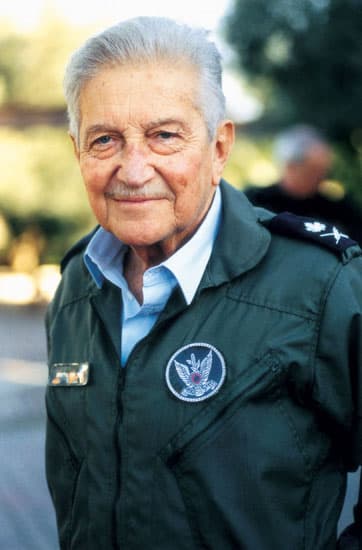
Weizman
PERSON
Family name
William Shakespeare
PERSON
English playwright and poet (1564–1616)
Winston Churchill
PERSON
British statesman, soldier and writer (1874–1965)
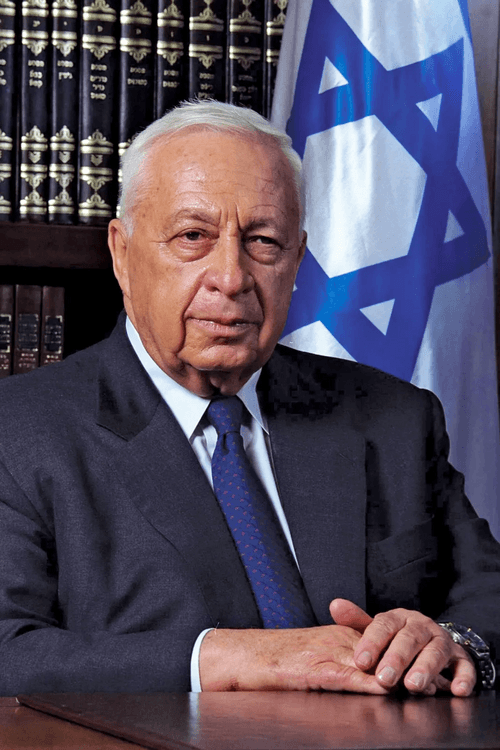
Ya’akov Margalit
PERSON
Ya’akov Tal
PERSON
Yaakov Ne’eman
PERSON
Yacoub
PERSON
French rugby union player
Yair Hirschfeld
PERSON
Israeli academic
YA
Yankele
PERSON
YA
Yanoush
PERSON
YB
Yanoush Ben-Gal
PERSON
YA
Yariv
PERSON
YA
Yasha
PERSON
Yasha Kedmi
PERSON
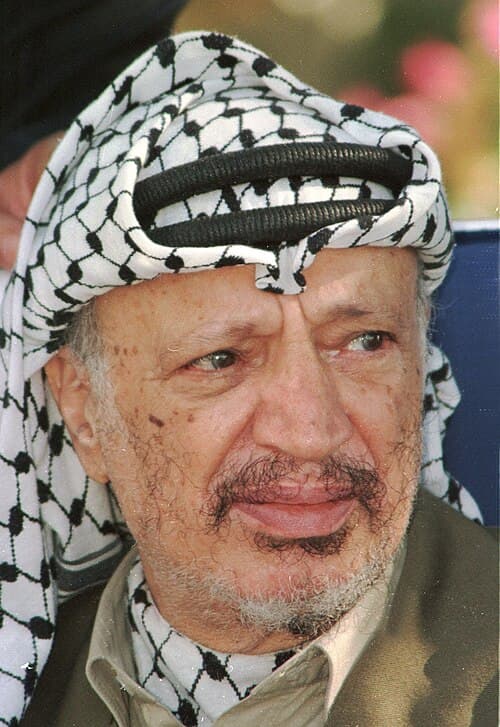
Yasir Arafat
PERSON
Palestinian political leader (1929–2004) and Former President of the Palestinian National Authority (1994-2004)
Yasser Arafat
PERSON
Palestinian political leader (1929–2004) and Former President of the Palestinian National Authority (1994-2004)

Yatom
PERSON
YA
Yavin
PERSON
YA
Yechiel Amsalem
PERSON
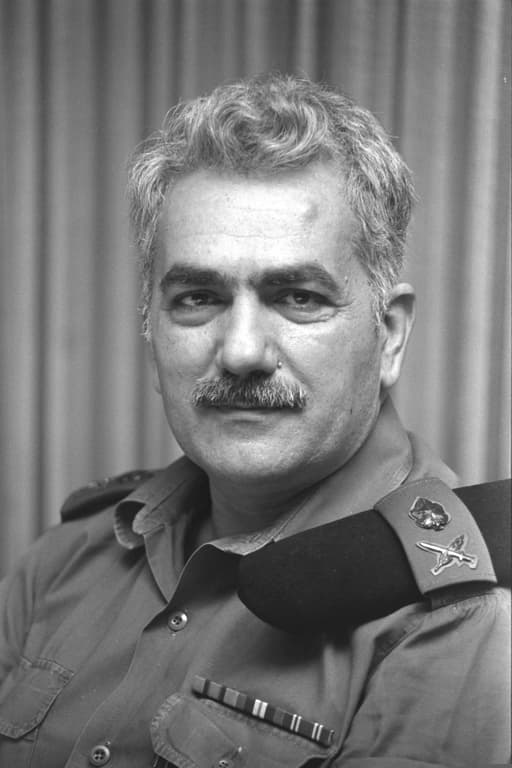
Yehoshua Saguy
PERSON
Israeli general, politician and diplomat (1933–2021)
Yehuda Amital
PERSON
Israeli rabbi and politician (1924–2010)
Yigal
PERSON • 2 mentions
Israeli politician, general, acting prime minister of Israel (1918–1980)
Yigal Amir
PERSON
Israeli extremist and murder convict
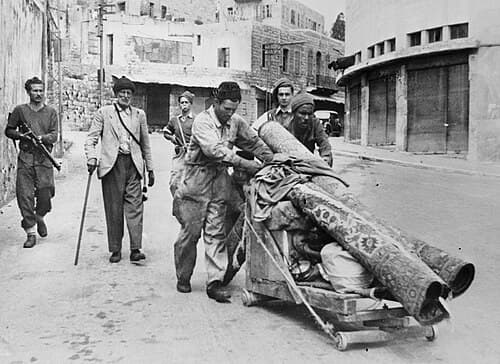
Yigal Garber
PERSON

Yishai
PERSON
Israeli hematologist and researcher
YI
Yishai Izhar
PERSON
Yisrael Mendel Brog
PERSON
Yitzhak
PERSON
Israeli politician, statesman and general (1922–1995)
Yitzhak Gibli
PERSON
Israeli illustrator
Yitzhak Hofi
PERSON
Israeli military officer (1927-2014)
Yitzhak Rabin
PERSON
Israeli politician, statesman and general (1922–1995)
Yitzhak Shamir
PERSON
7th Prime Minister of Israel (1915-2012)
YM
Yitzhik Mordechai
PERSON
Yoffe
PERSON
YO
Yon1
PERSON
Yonatan
PERSON
Researcher
YK
Yoni Koren
PERSON
YN
Yoni Netanyahu
PERSON
Military officer and national hero of the State of Israel (1946–1976)
YT
Yosef Tulipman
PERSON
YO
Yossi
PERSON
Yossi Beilin
PERSON
Israeli politician
YB
Yossi Ben-Hannan
PERSON
YG
Yossi Ginossar
PERSON
Yossi Peled
PERSON
Israeli politician
Yossi Sarid
PERSON
Israeli politician (1940-2015)
YO
Youssef
PERSON
Bishop of Aleppo (1931–2000)
ZA
Zamir
PERSON
Name: given name and surname
Ze’ev Eitan
PERSON
Ze’ev Jabotinsky
PERSON
ZE
Ze’evi
PERSON

Zeira
PERSON
Zevulun Hammer
PERSON
Israeli politician (1936-1998)
ZL
Ziv Lotenberg
PERSON
ZV
Zvika
PERSON
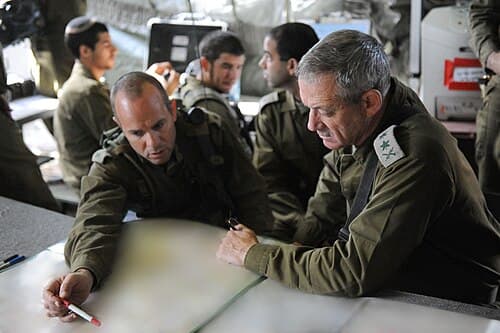
Zvika Gilad
PERSON
ZV
Zvili
PERSON
401st
ORGANIZATION
7zahal
ORGANIZATION
a Moadon
ORGANIZATION
A Whole Generation Demands Peace
ORGANIZATION
Achronot
ORGANIZATION
Administrations
ORGANIZATION
Agriculture
ORGANIZATION
Academic field about agriculture and farming
Ahrahle
ORGANIZATION
Air Force
ORGANIZATION
Military branch of service primarily concerned with aerial warfare

Air France
ORGANIZATION
Flag-carrier and largest airline in France
Airbus
ORGANIZATION
European aircraft manufacturer, subsidiary of Airbus SE
Airya
ORGANIZATION • 2 mentions
Al Jazeera
ORGANIZATION
Qatari international television channel

al-Qaeda
ORGANIZATION
Salafi jihadist organization founded in 1988
Alexandroni
ORGANIZATION
Alliance
ORGANIZATION
Syntaxonomic rank in phytosociology
Arab Platoon
ORGANIZATION
Baader-Meinhof
ORGANIZATION
Baath Party
ORGANIZATION
Bank Leumi
ORGANIZATION
Israeli commercial bank

Battalion
ORGANIZATION
Beersheva Hospital
ORGANIZATION

Beit Berl
ORGANIZATION
Village in Israel

Betar
ORGANIZATION
Revisionist Zionist youth movement founded in 1923 in Riga, Latvia, by Vladimir (Ze'ev) Jabotinsky
Black September
ORGANIZATION
Civil war (1970–1971) in Jordan between King Hussein’s forces and the Palestine Liberation Organisation
Blair House
ORGANIZATION
U.S. presidential guest house in Washington, D.C.
Brigade
ORGANIZATION

Central Casting
ORGANIZATION
American casting company
Centurion
ORGANIZATION
Centurions
ORGANIZATION
Channel
ORGANIZATION

Channel One
ORGANIZATION
Japanese manga series

Cheetah
ORGANIZATION
Attack aircraft family by Atlas

Cinerama
ORGANIZATION
Widescreen motion picture format
Circus Circus
ORGANIZATION

Communism
ORGANIZATION
Political and socioeconomic ideology

Company A.
ORGANIZATION
1970 musical comedy by Stephen Sondheim

crack Harel Brigade
ORGANIZATION
Unit of the Israel Defense Forces

Davar
ORGANIZATION • 2 mentions
Israeli newspaper
Defence
ORGANIZATION
1779 American Revolutionary War privateer brigantine ship

Delta Force
ORGANIZATION
United States Army special operations unit
Democratic Front for the Liberation of Palestine
ORGANIZATION
Palestinian Marxist–Leninist organization
Democratic Party
ORGANIZATION • 2 mentions

Eitan
ORGANIZATION • 2 mentions
Human settlement in Israel
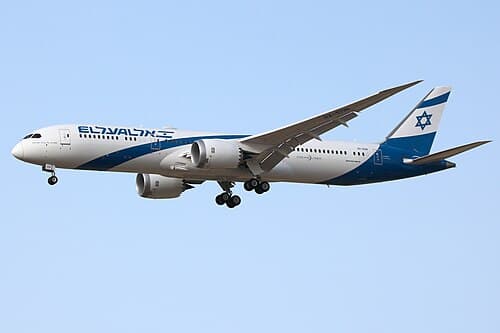
El Al
ORGANIZATION • 2 mentions
Flag-carrier airline of Israel
Fatah
ORGANIZATION • 2 mentions
Palestinian nationalist political party

Foreign
ORGANIZATION
2019 video game
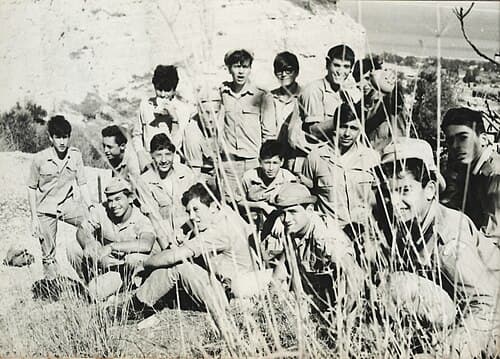
Gadna
ORGANIZATION • 2 mentions
Israeli military program
Gadna Sayerim
ORGANIZATION • 2 mentions
Galei Tzahal
ORGANIZATION
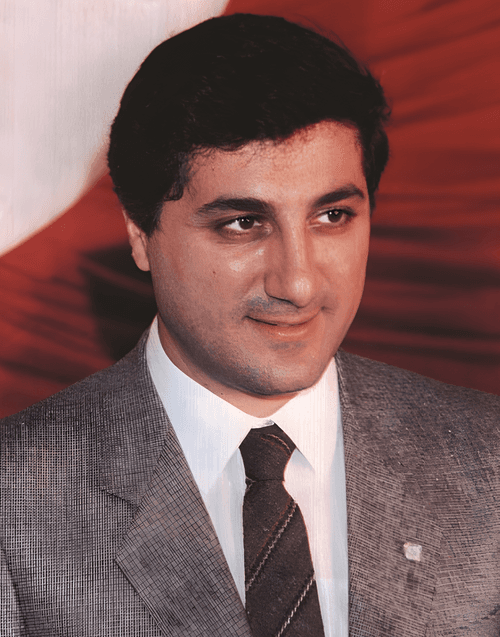
Gemayel
ORGANIZATION • 2 mentions
General Command
ORGANIZATION

Golani
ORGANIZATION
Israeli military infantry brigade

Gush Emunim
ORGANIZATION • 2 mentions
Israeli ultranationalist movement
Ha ‘areiz
ORGANIZATION
Haaretz
ORGANIZATION
Israeli daily newspaper
Hadashot
ORGANIZATION • 2 mentions
Israeli newspaper

Hebrew
ORGANIZATION

Intelligence
ORGANIZATION

Interior
ORGANIZATION
Inside part of a three-dimensional object

Irgun
ORGANIZATION • 2 mentions
Zionist paramilitary organization (1931–48)
Islamic Jihad
ORGANIZATION
Wikimedia list article
Islamic State
ORGANIZATION
Salafi jihadist militant Sunni Islamist group
Israeli Air Force
ORGANIZATION
Israeli Army
ORGANIZATION
Knesset
ORGANIZATION
Unicameral national legislature of Israel
Kol Yisrael
ORGANIZATION
National organisation for radio in Israel
Labor Party
ORGANIZATION • 2 mentions
Former political party in the United States founded 1996
Labor Zionist
ORGANIZATION

Labour
ORGANIZATION
Centrist social democratic political party in the United Kingdom
Lebanese Army
ORGANIZATION
Combined military forces of Lebanon

Likud
ORGANIZATION
Israeli centre-right to right-wing political party

Lodge
ORGANIZATION

Lufthansa
ORGANIZATION
Flag-carrier and largest airline of Germany

Macmillan
ORGANIZATION
Lunar crater
Marine
ORGANIZATION
Form of figurative art that portrays or draws its main inspiration from the sea
Meimad
ORGANIZATION
Political party
Mikveh Israel
ORGANIZATION
Agriculture school near Tel Aviv, Israel

Military Intelligence
ORGANIZATION
Military intelligence service of the Czech Republic
Mishmar Hasharon
ORGANIZATION • 2 mentions
Kibbutz in Israel

Mossad
ORGANIZATION • 2 mentions
National intelligence agency of Israel
National Parks Authority
ORGANIZATION

Nazis
ORGANIZATION
Adherents of Nazism, or members of the Nazi Party
New Labor
ORGANIZATION
Journal

Operations
ORGANIZATION
Battery-operated game of physical skill
or Likud
ORGANIZATION
Israeli centre-right to right-wing political party

Oslo II
ORGANIZATION
our Ministry of Education
ORGANIZATION
Palestinian Front for the Liberation of Palestine
ORGANIZATION
Peace &
ORGANIZATION

Peace Now
ORGANIZATION
Phalangists
ORGANIZATION
Physics and Technology Institute
ORGANIZATION
Facility in Kyiv, Ukraine
Rak lo Shas
ORGANIZATION

Red Cross
ORGANIZATION
Regional Cooperation
ORGANIZATION
Renault
ORGANIZATION
Automotive conglomerate

Revisionist
ORGANIZATION
Podcast by Malcolm Gladwell

Rotem
ORGANIZATION • 2 mentions
Given name
Rupin
ORGANIZATION • 2 mentions

Savoy
ORGANIZATION
Historical region of Europe

Savoy Hotel
ORGANIZATION
Historic luxury hotel in London, England, UK
Sayeret Golani
ORGANIZATION
Units of the Israel Defense Forces
SEALs
ORGANIZATION

Security Council
ORGANIZATION
Ministry of Japan
Shaked
ORGANIZATION
Shayetet
ORGANIZATION

Sikorsky
ORGANIZATION
Submit
ORGANIZATION
Tanzim
ORGANIZATION
Militant faction of the Palestinian Fatah movement

Tel Aviv University
ORGANIZATION
University in Tel Aviv, Israel
the 401st Armored Brigade
ORGANIZATION
the Alexandroni Brigade
ORGANIZATION
the Arab League
ORGANIZATION • 2 mentions
the Bush Administration
ORGANIZATION • 2 mentions
the Center for Strategic and International Studies
ORGANIZATION
the Center Party
ORGANIZATION
the Chinese Farm
ORGANIZATION
the Clinton Administration
ORGANIZATION

the Conservative Party
ORGANIZATION
the Defense Ministry
ORGANIZATION
the Democratic Front
ORGANIZATION

the Finance Ministry
ORGANIZATION

the French
ORGANIZATION
the Golani Brigade
ORGANIZATION
the Hebrew High School
ORGANIZATION

the Hebrew University
ORGANIZATION
the Interior Ministry
ORGANIZATION
the Israeli Defense Force
ORGANIZATION
the Jewish National Fund
ORGANIZATION
the Labour Party
ORGANIZATION
the National Exhibition
ORGANIZATION
the National Religious Party
ORGANIZATION • 2 mentions

the National Security Agency
ORGANIZATION
the New York Philharmonic
ORGANIZATION
the Palestine Electric
ORGANIZATION
the Palestine Liberation Front
ORGANIZATION
the Palestine Liberation Organization
ORGANIZATION
the Palestinian Authority
ORGANIZATION • 2 mentions
the Reagan Administration
ORGANIZATION
the Red Army
ORGANIZATION

the Red Cross
ORGANIZATION • 2 mentions

the Regency Hotel
ORGANIZATION

the School of Engineering
ORGANIZATION
the Sephardi Orthodox party
ORGANIZATION
the Seventh Armored Brigade
ORGANIZATION
the Seventh Brigade
ORGANIZATION
the Shayetet 13 SEALs
ORGANIZATION
the Shin Bet
ORGANIZATION • 2 mentions

the South
ORGANIZATION
the South Lebanon Army
ORGANIZATION

the US Marine Corps
ORGANIZATION

the Weizmann Institute
ORGANIZATION
Third Army
ORGANIZATION
Tsomet
ORGANIZATION
Political party in Israel
Uni Saguy
ORGANIZATION
United Torah
ORGANIZATION
Alliance of Degel HaTorah and Agudat Israel, two Israeli Haredi political parties, formed in 1992
United Torah Judaism
ORGANIZATION
Alliance of Degel HaTorah and Agudat Israel, two Israeli Haredi political parties, formed in 1992
US Intelligence
ORGANIZATION

Yad Vashem
ORGANIZATION
Israel's official memorial to the Jewish victims of the Holocaust
Yediot
ORGANIZATION • 2 mentions
Yeidot Achronot
ORGANIZATION
Yisrael Ahat
ORGANIZATION
Yisrael ba’Aliyah were
ORGANIZATION
Zionism
ORGANIZATION
A movement to create and develop a Jewish state in the Levant
Zu Aritzenu
ORGANIZATION
/srael
LOCATION
7el Avivi
LOCATION
a Mishmar Hasharon
LOCATION
a Shallow ford
LOCATION
Abu Dis
LOCATION
Palestinian village in the West Bank
Al Quds
LOCATION

Algeria
LOCATION
Country in North Africa

Algiers
LOCATION
Capital city of Algeria
Alpine
LOCATION
French car manufacturer

Americas
LOCATION
North America and South America taken together as a single continent or landmass
Amsterdam
LOCATION
Capital and most populous city of the Netherlands
and Ayn Zhalta
LOCATION
Aqaba
LOCATION
Jordanian coastal city

Ashdod
LOCATION
City in Israel
Ashkelon
LOCATION
City in Israel

Aspen
LOCATION
City in and county seat of Pitkin County, Colorado, United States
Athens
LOCATION
Capital and largest city of Greece
Atlanta
LOCATION
Capital city of Georgia, United States
Ayn Zhalta
LOCATION
Babylon
LOCATION
Capital city of Babylonia and an archaeological site in modern-day Iraq
Baghdad
LOCATION
Capital city of Iraq
Banias
LOCATION
Archaeological site in the Golan Heights

Barcelona
LOCATION
Multisports club in Barcelona, Spain
Beersheva
LOCATION
City in Israel
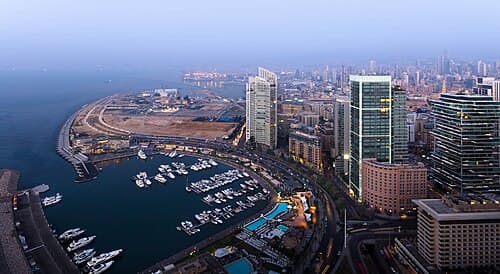
Beirut
LOCATION
Capital and largest city of Lebanon
Beit She’an
LOCATION
Ancient settlement and town in Israel
Beka’a Valley
LOCATION
2016 video game
Bekaa
LOCATION
Benina
LOCATION
Basic People's Congress division in Cyrenaica, Libya
Bet El
LOCATION
Israeli settlement in the West Bank
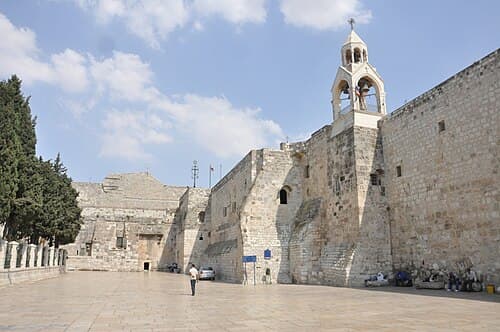
Bethlehem
LOCATION
City in the State of Palestine
Big Pines
LOCATION
Unincorporated community in California
Bir Gafgafa
LOCATION
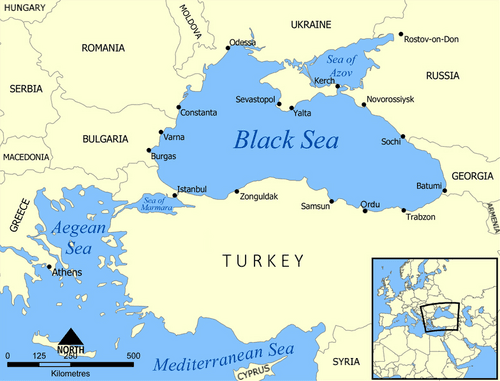
Black Sea
LOCATION
Sea between Europe and Asia
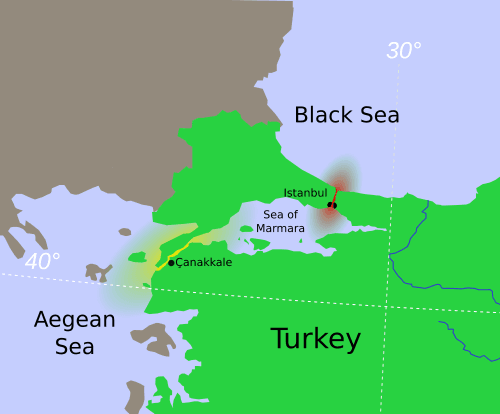
Bosphorus
LOCATION
Narrow strait in northwestern Turkey
Caesarea
LOCATION
Modern day town in Israel
Cairo
LOCATION
Capital city of Egypt
Canal
LOCATION
Catoctin
LOCATION
Tributary of the Potomac River in Virginia, United States

China
LOCATION
Country in East Asia
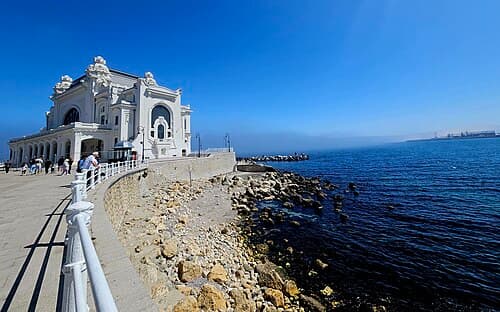
Constanta
LOCATION
City in Constanța County, Romania
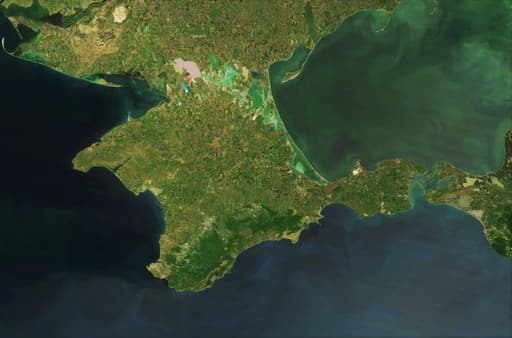
Crimea
LOCATION
Eastern European peninsula, in the Black Sea and Sea of Azov, disputed between Ukraine (de jure) and Russia (de facto)

Cyprus
LOCATION
Mediterranean island country in West Asia
Damascus
LOCATION
Capital and largest city of Syria
Davar le Yeladim
LOCATION
Desert
LOCATION
Dogwood
LOCATION
American punk band
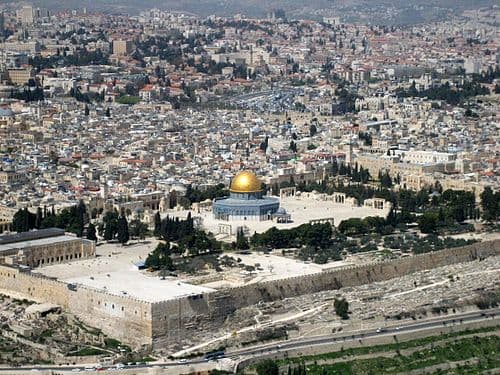
East Jerusalem
LOCATION
Eastern part of Jerusalem, in dispute between Israel and the Palestinian Arabs since 1967

Eastern Europe
LOCATION
Eastern part of Europe

Eilat
LOCATION
City in Israel
Eithopia
LOCATION
Eizaria
LOCATION
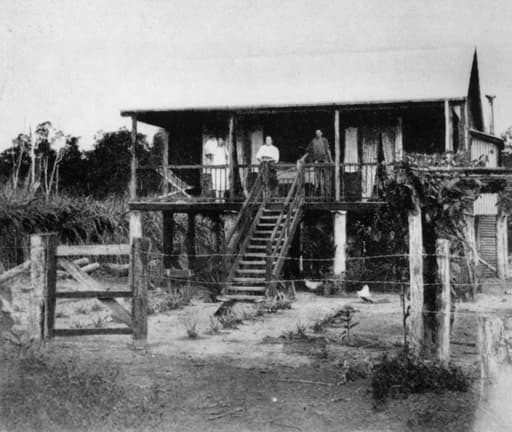
El Arish
LOCATION
Town in Queensland, Australia

El Salvador
LOCATION
Sovereign state in Central America

El-Ram
LOCATION
The greatest and seventh incarnation of God, hero of the Ramayana, protector of Dharma
Elyakhin
LOCATION
Human settlement in Israel
Entebbe
LOCATION • 3 mentions

Escondito
LOCATION
Et-Tur
LOCATION
Town in Egypt

Galilee
LOCATION
Italian polymath (1564–1642)
Gaza-Jericho
LOCATION
Treaty (Israel – Palestine Liberation Organization; 4 May 1994)
Gebel
LOCATION
Gebel Libni
LOCATION
Givataim
LOCATION
City in the Tel Aviv District of Israel
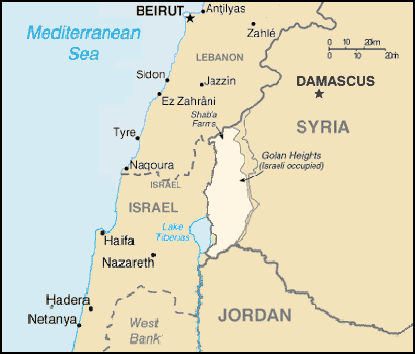
Golan
LOCATION • 2 mentions
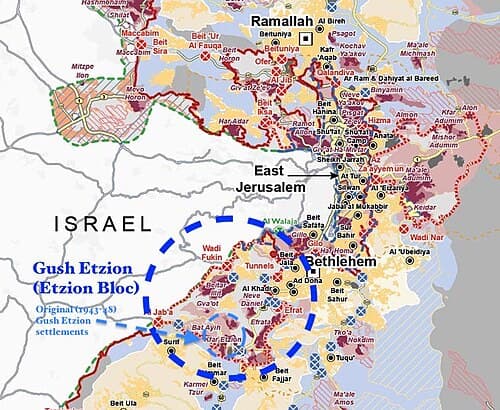
Gush Etzion
LOCATION
Cluster of Israeli settlements located in the Judaean Mountains
Hadera
LOCATION
City in northern Israel
Haganah
LOCATION • 2 mentions
Jewish paramilitary organization in what was then the British Mandate of Palestine from 1920 to 1948.
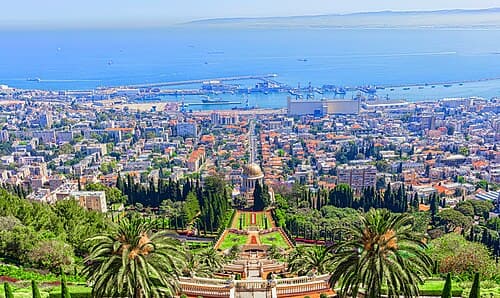
Haifa
LOCATION
Third-largest city in Israel
Halabja
LOCATION
City in Iraqi Kurdistan
Hanirkra
LOCATION
Hasbarah
LOCATION
Hasharon
LOCATION • 2 mentions
Hebron
LOCATION
Palestian city in the occupied West Bank
Heights
LOCATION
Herzliya
LOCATION
City in the Tel Aviv District of Israel
Holon
LOCATION
Something that is simultaneously a whole and a part

Hungary
LOCATION
Country in Central Europe
Indochina
LOCATION
Region in Southeast Asia
Ismailia
LOCATION
Genus of single-celled organisms
Israel
LOCATION • 2 mentions
Country in West Asia
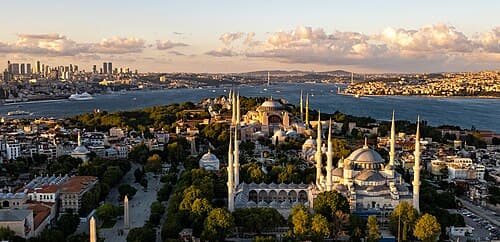
Istanbul
LOCATION
Largest city in Turkey
Jabalya
LOCATION
Palestinian city in Gaza Strip
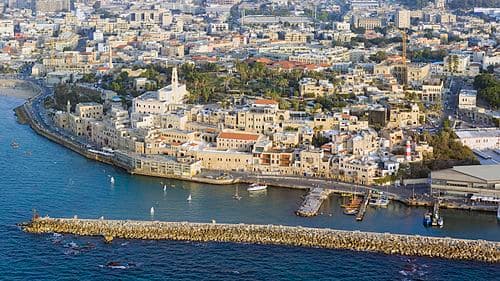
Jaffa
LOCATION
Southern and oldest part of Tel Aviv
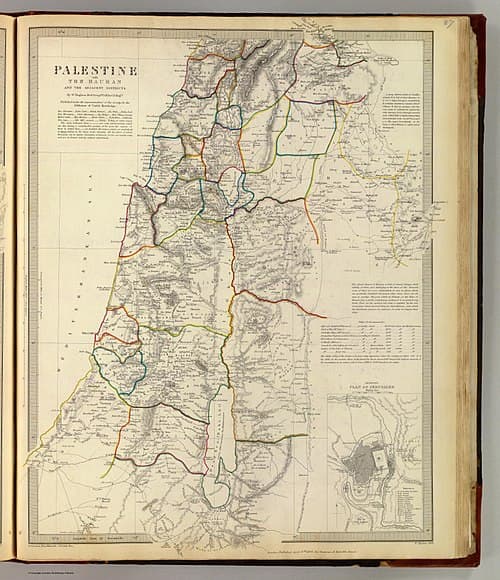
Jericho
LOCATION
City in West Bank, Palestine
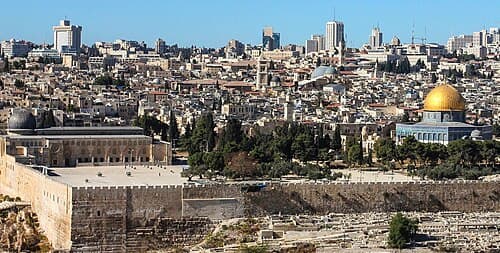
Jerusalem
LOCATION
City in the Middle East, holy to the three Abrahamic religions
Jezzin
LOCATION
Town in Lebanon
Jobb Jannine
LOCATION

Johannesburg
LOCATION
Largest city in South Africa
Judaea
LOCATION
Province of the Roman Empire (6–135 CE)
Judean
LOCATION

Julis
LOCATION
German band

Kampala
LOCATION
Capital and the largest city of Uganda
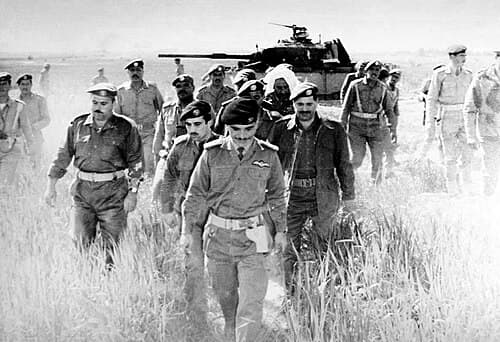
Karameh
LOCATION • 2 mentions
Human settlement in Jordan
Katyushas
LOCATION • 3 mentions

Kenya
LOCATION
Country in Eastern Africa
Keren
LOCATION
Stage tricks used in kabuki
Kfar Hayim
LOCATION
Kibbutz Dan
LOCATION
Kibbutz Ha’on
LOCATION
Kiryat Arba
LOCATION
Community and local council in near Hebron
Kiryat Shmona
LOCATION
City in Israel
Kochav
LOCATION
Part of Nora and Naomi
Kochav Yair
LOCATION
Kumeran
LOCATION

Kuwait
LOCATION
Sovereign state in Western Asia

Lake Tahoe
LOCATION
Lake in California and Nevada, United States
Lake Victoria
LOCATION
Lake in east-central Africa

Las Vegas
LOCATION
City of Clark County, and largest city in state of Nevada, United States

Laurel
LOCATION
City in and county seat of Jones County, Mississippi, United States
Lebanon
LOCATION
Country in West Asia
Lisbon
LOCATION
Municipality and capital city of Portugal
Litani
LOCATION
River in France

Lithuania
LOCATION
Country in northeastern Europe
Little Pines
LOCATION
Lydda
LOCATION
Roman Catholic titular see

Madrid
LOCATION
Capital of Spain
Mahaneh Yehudah
LOCATION
(Petah Tikva)

Maine
LOCATION
State of the United States of America

Maryland
LOCATION
State of the United States of America
Matkal
LOCATION • 3 mentions
Mediterranean
LOCATION
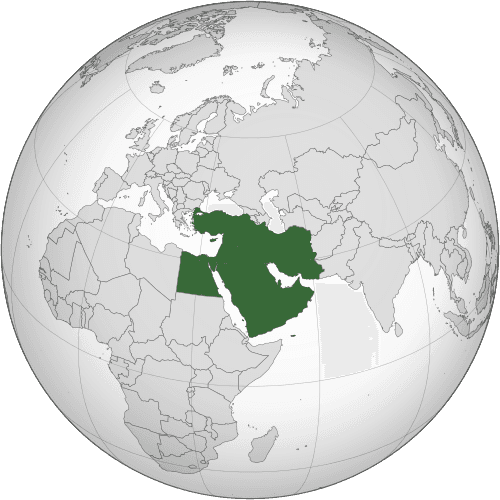
Middle East
LOCATION
Geopolitical region encompassing Egypt and most of Western Asia, including Iran
Milbank South
LOCATION
Mont Louis
LOCATION
Moroccan Quarter
LOCATION
A neighborhood in East Jerusalem, which was demolished in 1967 as part of the expansion of the Western Wall.

Morocco
LOCATION
Sovereign state in North Africa

Mount
LOCATION
Large natural elevation of the Earth's surface
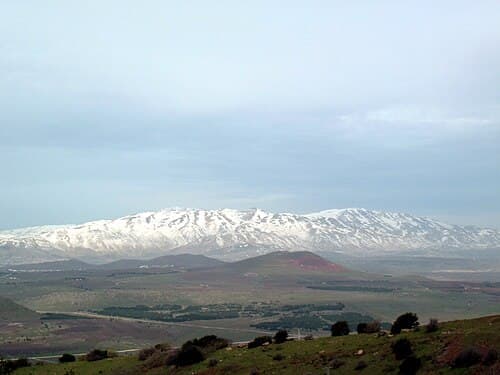
Mount Hermon
LOCATION
Mountain range in Syria and Lebanon
Mount Herzl
LOCATION
Site of Israel's national cemetery in Jerusalem
Mount Keren
LOCATION
Munich
LOCATION
Capital and most populous city of Bavaria, Germany
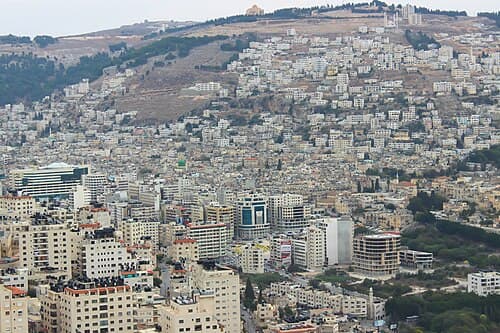
Nablus
LOCATION
City in the West Bank, State of Palestine
Nahal Oz
LOCATION
Kibbutz in Israel

Nairobi
LOCATION
Capital city of Kenya
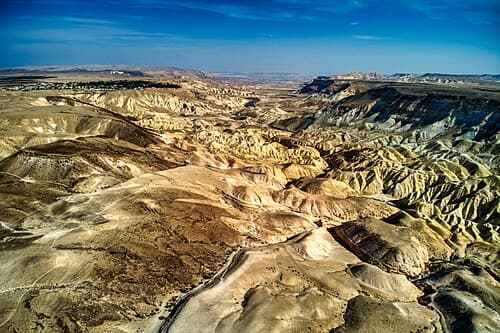
Negev
LOCATION • 3 mentions
Desert and semidesert region of southern Israel
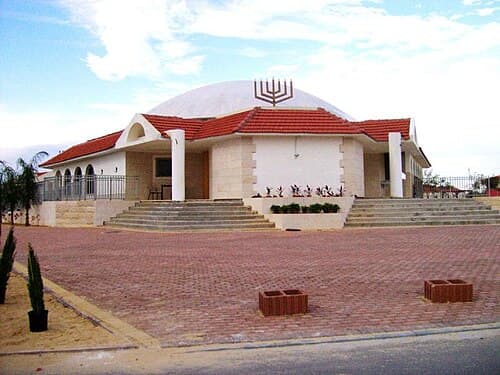
Netzarim
LOCATION
Former Israeli settlement in the Gaza Strip

New Hampshire
LOCATION
State of the United States of America

New York
LOCATION
Most populous city in the United States
New York City
LOCATION
Most populous city in the United States

North
LOCATION
1994 comedy film by Rob Reiner
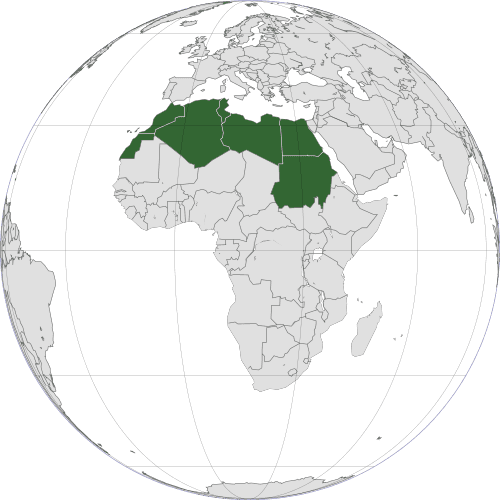
North Africa
LOCATION
Northernmost region of the African continent
Norther
LOCATION
Finnish melodic death metal band

Norway
LOCATION
Country in Northern Europe
Ofakim
LOCATION
City in Israel
Okinawa
LOCATION
OSwiecim
LOCATION
Owl City
LOCATION
American electronic musical project by Adam Young
Palo Alto
LOCATION
City in Santa Clara County, California, United States
Patish
LOCATION
Human settlement
Perpignan
LOCATION
French commune in Pyrénées-Orientales, Occitania
Pines
LOCATION • 2 mentions
Email and newsgroups client

Pittsburgh
LOCATION
City and county seat in Allegheny County, Pennsylvania, United States
Ponovezh
LOCATION
Pushelat
LOCATION
Pyrenees
LOCATION
Range of mountains in southwest Europe
Qalqilya
LOCATION
City in West Bank, Palestine
Qaqun
LOCATION
Palestinian Arab village in Tulkarm subdistrict
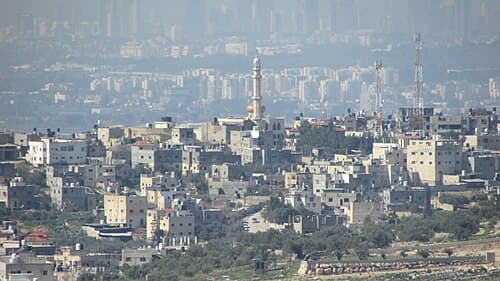
Qibya
LOCATION • 2 mentions
Town in Ramallah and al-Bireh Governorate, Palestine

Quantico
LOCATION • 2 mentions
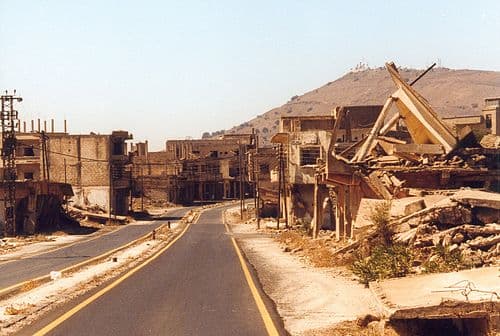
Quneitra
LOCATION
Quineitra is the largely destroyed and abandoned capital of the Quneitra Governorate in south-western Syria
Ra’anana
LOCATION
City in Israel
Ramah
LOCATION
Human settlement in McKinley County, New Mexico, United States of America
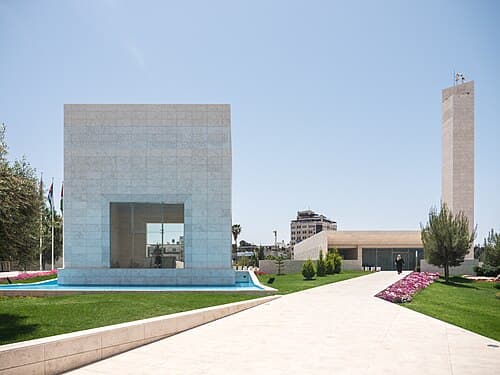
Ramallah
LOCATION
City in the State of Palestine
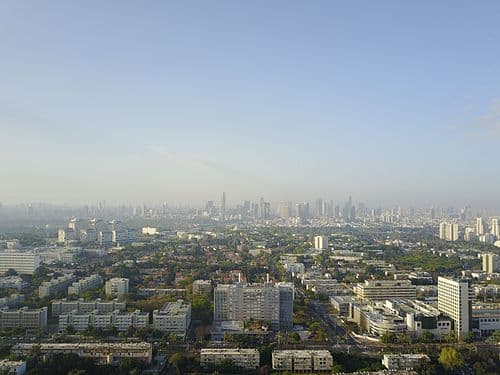
Ramat Aviv
LOCATION
Neighborhood in Tel Aviv
Ramat Gan
LOCATION
City in the Tel Aviv District of Israel
Ramat Hasharon
LOCATION
City in the Tel Aviv District of Israel
Ras Naqoura
LOCATION
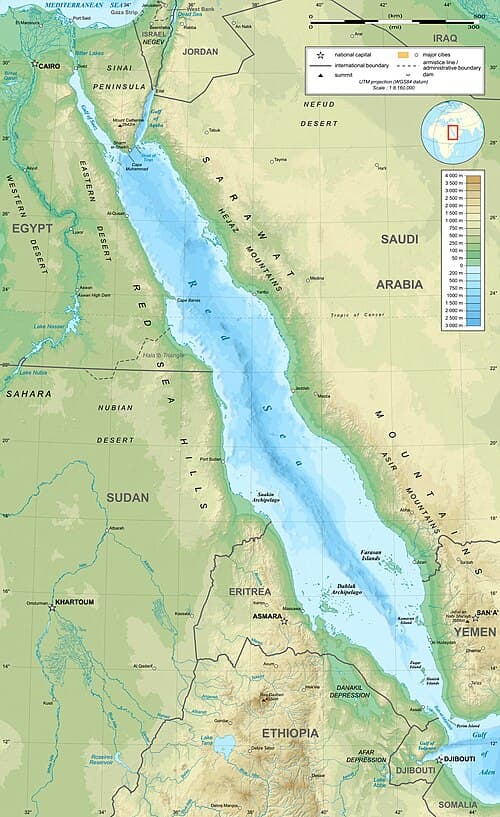
Red Sea
LOCATION
Republic
LOCATION

Romania
LOCATION
Country in Southeast Europe
Ronit Farm
LOCATION
Sabra
LOCATION • 2 mentions
Safed
LOCATION
City in northern Israel
Salvador
LOCATION
Municipality of Bahia state, Brazil
Samaria
LOCATION
Historical region in the Levant
Sandhurst
LOCATION
Savyon
LOCATION
Affluent town in Israel
Sayeret
LOCATION • 2 mentions
Units of the Israel Defense Forces
Sayeret Matkal
LOCATION • 3 mentions
Special forces unit of the Israel Defense Forces
Sayerim
LOCATION
Seattle
LOCATION
City in and county seat of King County, State of Washington, United States
Sharm el-Sheikh
LOCATION
City in South Sinai, Egypt
Shepherdstown
LOCATION
Town in Jefferson County, West Virginia, United States
Shiloh
LOCATION
Canadian singer and songwriter

Shiraz
LOCATION
City in Fars Province, Iran
Shmuel
LOCATION
36e6biblical character
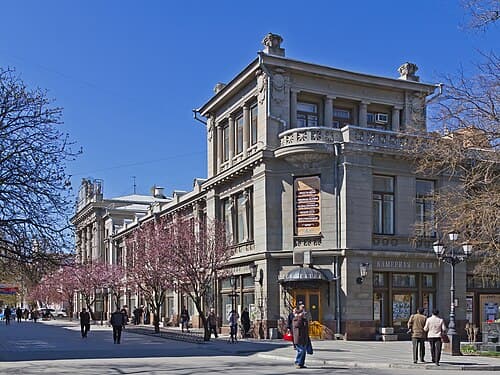
Simferopol
LOCATION
City in Crimea, Ukraine
Sinai
LOCATION

Smolensk
LOCATION
City and administrative center of Smolensk Oblast in central Russia

Soviet Union
LOCATION
Former country in Eurasia (1922–1991)
Suez City
LOCATION
Sultan Yacoub
LOCATION
Village in Lebanon
Tegart
LOCATION
Tel Aviv
LOCATION
City in Israel
Tel Rumeida
LOCATION
Agricultural and residential area in Hebron
the [
LOCATION
the Arava desert
LOCATION
the Banias River
LOCATION
the Bekaa Valley
LOCATION
the Carpathian Mountains
LOCATION
the Christian Quarter
LOCATION
the Coral Beach
LOCATION
the Dead Sea
LOCATION
the Far East
LOCATION
the Gaza Strip
LOCATION • 2 mentions
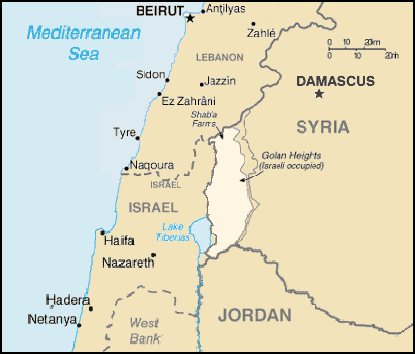
the Golan Heights
LOCATION
the Hanging Gardens of
LOCATION
the Haram al-Sharif
LOCATION
the Hashemite Kingdom of Jordan
LOCATION
the Jewish Quarter
LOCATION
the Jordan River
LOCATION
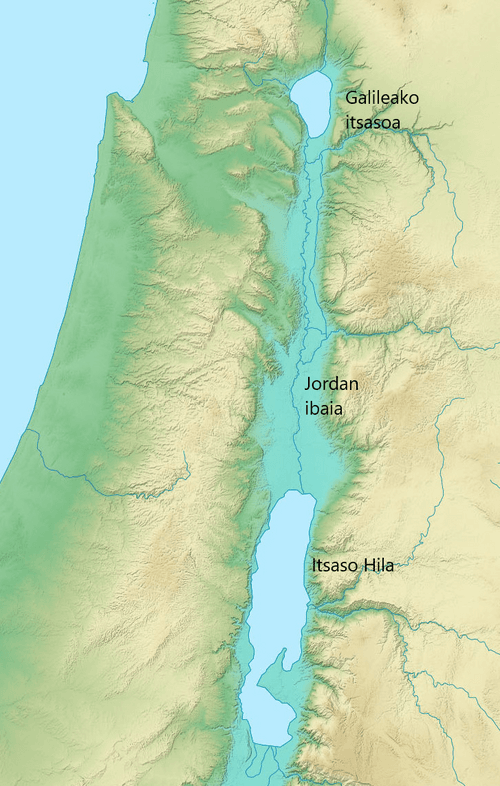
the Jordan Valley
LOCATION
the Judaean Desert
LOCATION
the Litani River
LOCATION
the Mitla Pass
LOCATION
the Muslim
LOCATION
the Muslim Quarter
LOCATION
the Negev Desert
LOCATION
the Old City
LOCATION • 2 mentions

the Ottoman Empire
LOCATION
the Sea of Galilee
LOCATION
the Sheba’a Farms
LOCATION
the Sinai Desert
LOCATION
the State of Israel
LOCATION • 2 mentions
the Straits of Tiran
LOCATION
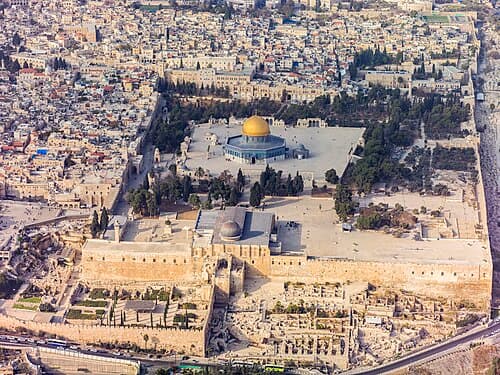
the Temple Mount
LOCATION
the Tovlano Triangle
LOCATION
the Wye River
LOCATION • 2 mentions

Tiberias
LOCATION
City in Galilee, Israel
Tovlano
LOCATION
Tulkarem
LOCATION
City in the State of Palestine
Tunis
LOCATION
Capital of Tunisia

Tunisia
LOCATION
Country in North Africa
Tzahala
LOCATION
Tze’ elim
LOCATION
Biblical place-name

Uganda
LOCATION
Country in east Africa
Um-Hashiba
LOCATION • 3 mentions

United States
LOCATION • 3 mentions
Country located primarily in North America
Upper East Side
LOCATION
Neighborhood in Manhattan
US States
LOCATION
Valley
LOCATION
2016 video game
Verdun
LOCATION
Commune in Meuse, France
Vienna
LOCATION
Capital of and state in Austria
Vietminh
LOCATION

Vietnam
LOCATION
Country in Southeast Asia
Wadi Ara
LOCATION
Wadi in Israel

Warsaw
LOCATION
Capital and largest city of Poland
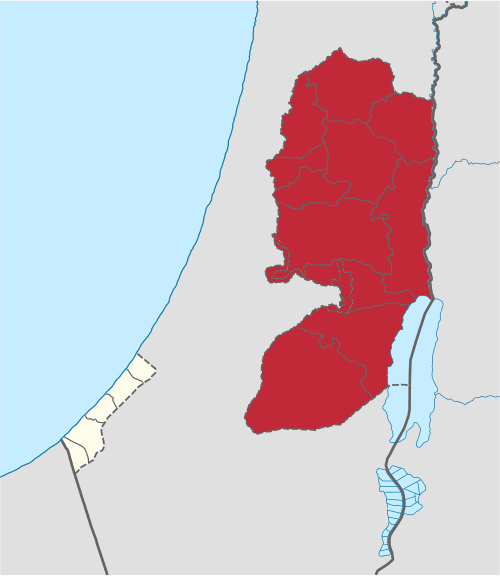
West Bank
LOCATION • 2 mentions

West Virginia
LOCATION
State of the United States of America
Western Europe
LOCATION
Western part of the European continent
Western Wall
LOCATION
Holy site of Islam and Judaism in Jerusalem
Yanta
LOCATION

Yemen
LOCATION
Country in West Asia
Zurich
LOCATION
Capital of the canton of Zurich, Switzerland
Statistics
Pages:432
Entities:1009
Avg. OCR:95.2%
Sponsored