Back to People & Entities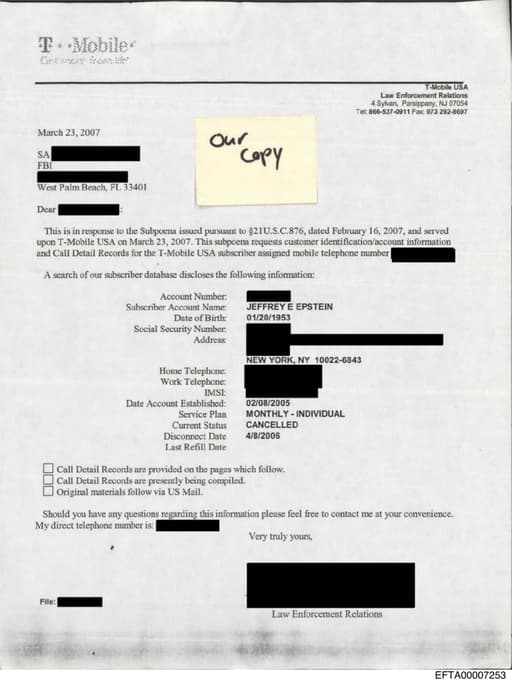





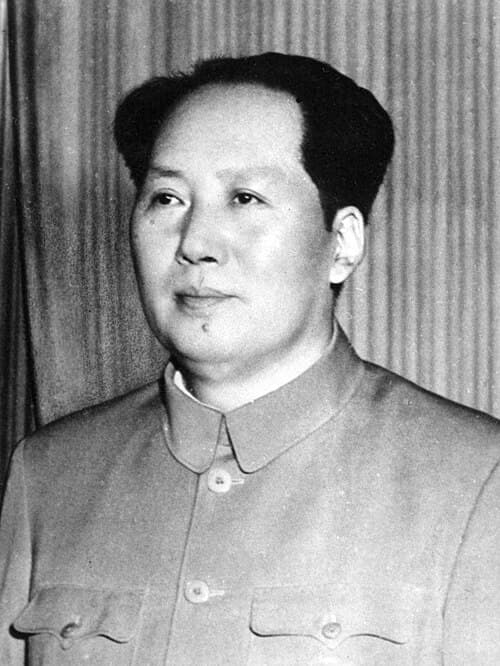
Mao Zedong appears in 25 documents within the Epstein files, but these references are entirely historical and political in nature, found in books, reports, and policy documents about Chinese history and governance—not in any documents directly related to Jeffrey Epstein's activities.
The mentions of Mao Zedong occur exclusively in academic and political context within government records and published works. These include books discussing 20th-century dictators and political evil, congressional reports on US-China relations, Freedom House reports on authoritarianism, and policy analyses of Chinese political systems. The references discuss historical events like the Cultural Revolution, the Great Leap Forward, and comparisons between Mao's legacy and contemporary Chinese leadership. None of these documents are emails, flight logs, or personal correspondence—they are educational materials and policy briefings that happened to be included in the broader Epstein document collection.
Key Highlights
- •All 25 mentions appear in government oversight documents, academic books, and policy reports discussing Chinese political history—not in any documents related to Epstein's personal activities
- •References span discussions of Mao's death in 1976, the Cultural Revolution, comparisons to other dictators (Hitler, Stalin, Pol Pot), and analysis of modern Chinese governance under Xi Jinping
- •Documents include Freedom House reports on authoritarianism, congressional briefings on US-China relations, and books examining political evil and totalitarianism
- •The mentions reflect Mao's role as a major 20th-century historical figure studied in political science contexts, with death tolls estimated at 50+ million people during the Great Leap Forward and Cultural Revolution
Frequently Asked Questions
Related Links
Document Mentions (20 of 895)
EFTA00007253 - EFTA00007300
5 mentionsSource: DOJ EFTA Records
bile to T-Mobile Txt Msg Read Txt Msg Sent Txt Mao Sent Type WHENEVER Megabytes Unlimited Minute
Page: EFTA00007271 →bile to T-Mobile Txt Msg Read Txt Msg Sent Txt Mao Sent Type WHENEVER Megabytes Unlimited Minute
Page: EFTA00007271 →bile to T-Mobile Txt Msg Read Txt Msg Sent Txt Mao Sent Type WHENEVER Megabytes Unlimited Minute
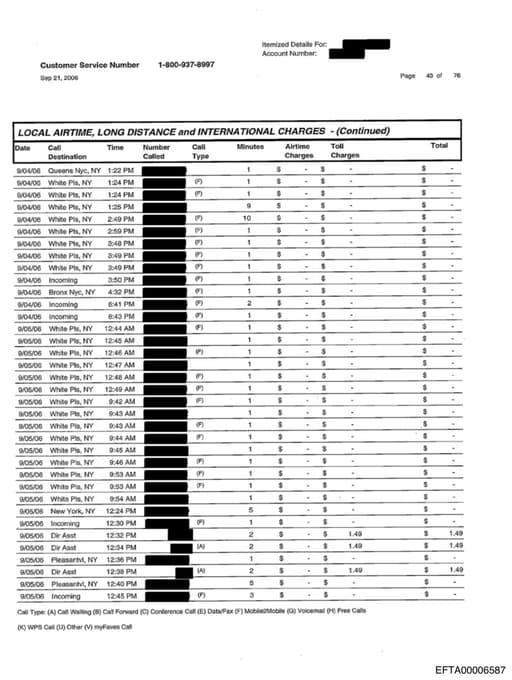
Page: EFTA00007271 →EFTA00006587 - EFTA00006686
5 mentionsSource: DOJ EFTA Records
hly Service Charges S 4.99 Enhanced Voicemail Mao Value Bundle 403 IUsage Charges LOCAL AIRTIME,
Page: EFTA00006673 →hly Service Charges S 4.99 Enhanced Voicemail Mao Value Bundle 403 IUsage Charges LOCAL AIRTIME,
Page: EFTA00006673 →hly Service Charges S 4.99 Enhanced Voicemail Mao Value Bundle 403 IUsage Charges LOCAL AIRTIME,
Page: EFTA00006673 →Chinese influence_american interests - Hoover - 11.29.18.pdf
3 mentionsHOUSE_OVERSIGHT_020447_sub_002 - HOUSE_OVERSIGHT_020646
Source: House Oversight Committee
under a title lifted creatively from a saying by Chairman Mao, “La diplomatie n’est pas un diner de gala” or “D
tienne Manach (a historical Gaullist) and Claude Martin (who recently published his memoirs under a title lifted creatively from a saying by Chairman Mao, “La diplomatie n’est pas un diner de gala” or “Diplomacy is not a dinner party”). Still, the shift in public opinion has been equally notable. Simo
s revolution. For example, in the 1930s, foreign journalist Edgar Snow sang the praises of the Chinese Communist Party and specifically its chairman, Mao Zedong. The Party conducted a campaign in the United States in the 1940s to turn the American public against the regime of Chiang Kai-shek and to soften cri
Sponsored
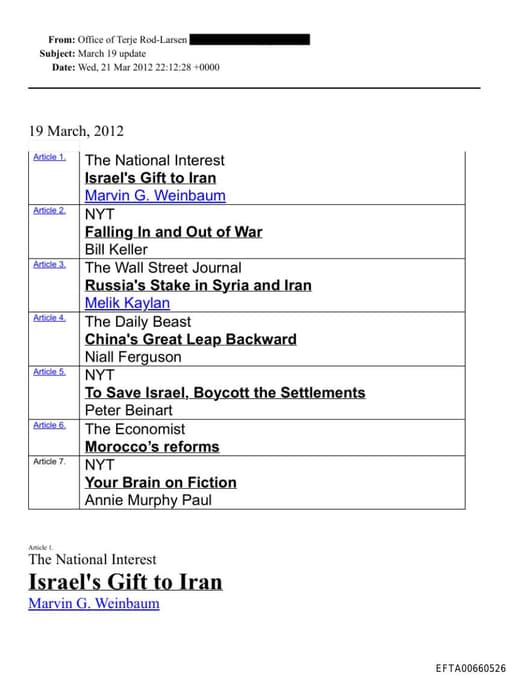
EFTA00660526.pdf
3 mentionsEFTA00660526
nsider its effects on the two men poised to inherit the top two positions of president and premier. Xia.iping was a "princeling," the son of one of Mao Zedong's loyal lieutenants. He was just 15 when his father was arrested on Mao's order. Xi spent the next six years toiling in the countryside of Yanchuan
esident and premier. Xia.iping was a "princeling," the son of one of Mao Zedong's loyal lieutenants. He was just 15 when his father was arrested on Mao's order. Xi spent the next six years toiling in the countryside of Yanchuan county in central China. Li Kegiang had a similar experience. No sooner
ed women singing some of these songs, including "Chairman Mao Is the Sun That Never Sets." Until last week, su
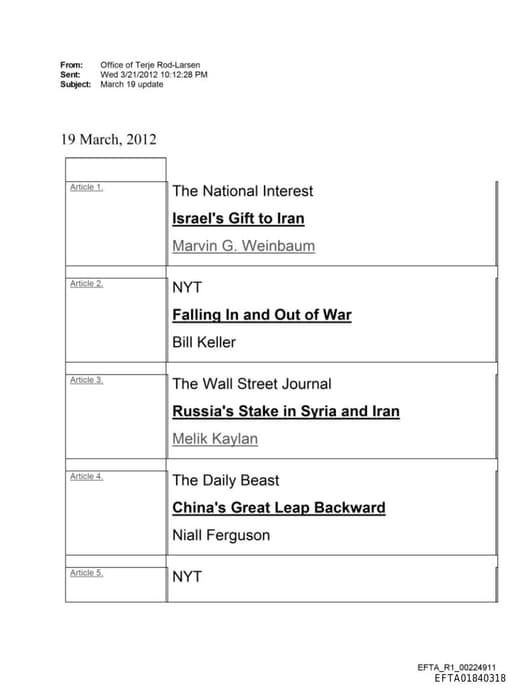
EFTA01840318.pdf
3 mentionsEFTA01840318
ed women singing some of these songs, including "Chairman Mao Is the Sun That Never Sets." Until last week, su
ider its effects on the two men poised to inherit the top two positions of president and premier. Xi Jinping was a "princeling," the son of one of Mao Zedong's loyal lieutenants. He was just 15 when his father was arrested on Mao's order. Xi spent the next six years toiling in the countryside of Yanchuan c
sident and premier. Xi Jinping was a "princeling," the son of one of Mao Zedong's loyal lieutenants. He was just 15 when his father was arrested on Mao's order. Xi spent the next six years toiling in the countryside of Yanchuan county in central China. Li Keqiang had a similar experience. No sooner
FH_Authoritarians_Report_2017.indd
3 mentionsHOUSE_OVERSIGHT_019233 - HOUSE_OVERSIGHT_019296
May 20, 2017Source: House Oversight Committee
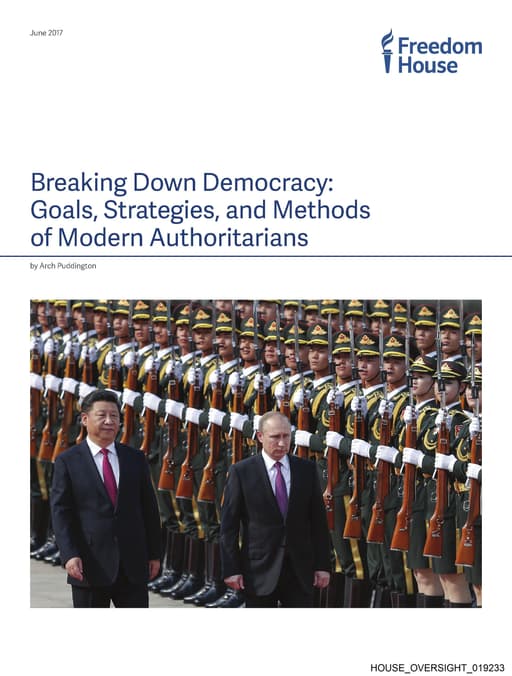
In China, the state has prevented the publication of full, accurate, or critical accounts of the Great Leap Forward, the Cultural Revolution, or the Mao Ze- dong era in general. In Russia, Joseph Stalin has been rehabilitated. He is now officially portrayed as a strong if mildly flawed leader rather than as th
Page: HOUSE_OVERSIGHT_019242 →ficials have refused to acknowledge anything approaching the full dimen- sions of the tragedy. Nor have they admitted that the party, and especially Mao, were responsible. Often they blame the weather. There are no official monu- ments to the victims, no days of commemoration, no serious histories ava
Page: HOUSE_OVERSIGHT_019266 →ing outright censorship, brought to bear on Russian historians during Soviet times and more recently during the Putin era. China: Evading the past Mao Zedong’s Great Leap Forward ranks among the most deadly politically inspired catastrophes in human history. From 1958 to 1962, Communist Party authorities, u
Page: HOUSE_OVERSIGHT_019266 →Sponsored
EFTA00162609.pdf
3 mentionsEFTA00162609
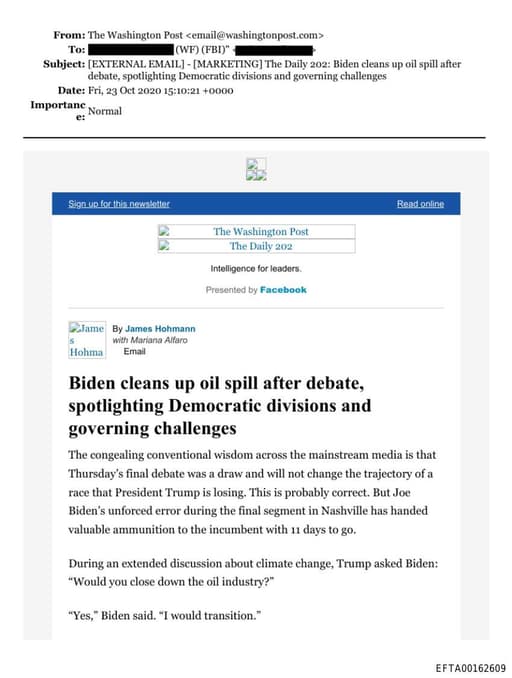
ate newspaper and dominated the airwaves as the Communist Party rolled out a week of celebratory events and coverage to mark m years since Chairman Mao Zedong sent Chinese forces across the Yalu River to counter American forces. (Gerry Shih) Social media speed read After Biden challenged him during the
vents and coverage to mark m years since Chairman Mao Zedong sent Chinese forces across the Yalu River
ratory events and coverage to mark m years since Chairman Mao Zedong sent Chinese forces across the Yalu River
EFTA00850125.pdf
2 mentionsEFTA00850125
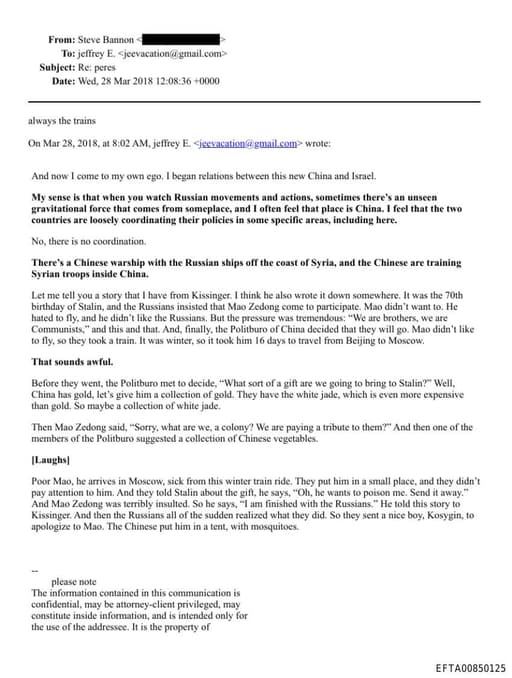
you a story that I have from Kissinger. I think he also wrote it down somewhere. It was the 70th birthday of Stalin, and the Russians insisted that Mao Zedong come to participate. Mao didn't want to. He hated to fly, and he didn't like the Russians. But the pressure was tremendous: "We are brothers, we are
ssinger. I think he also wrote it down somewhere. It was the 70th birthday of Stalin, and the Russians insisted that Mao Zedong come to participate. Mao didn't want to. He hated to fly, and he didn't like the Russians. But the pressure was tremendous: "We are brothers, we are Communists," and this a
EFTA00804723.pdf
2 mentionsEFTA00804723
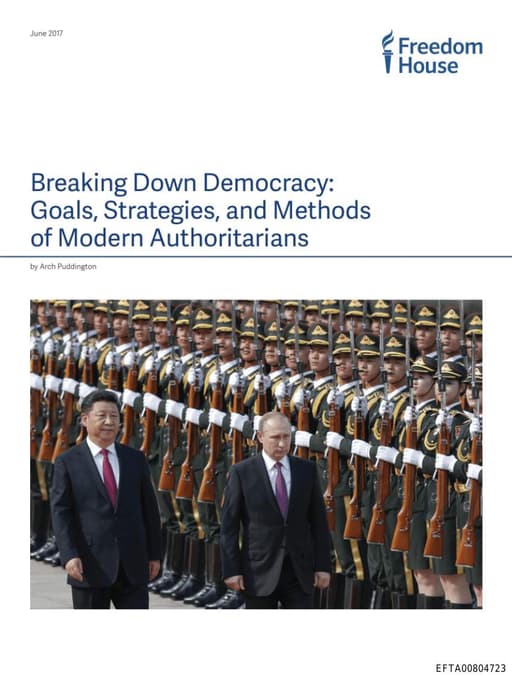
China, the state has prevented the publication of full, accurate, or critical accounts of the Great Leap Forward, the Cultural Revolution, or the Mao Ze- dong era in general. In Russia, Joseph Stalin has been rehabilitated. He is now officially portrayed as a strong if mildly flawed leader rather
d to prison.5 • Public confessions: Humiliating public con- fessions of ideological crimes were a staple of Soviet leader Joseph Stalin's purges and Mao Zedong's Cultural Revolution in China They were also employed by Eastern European sat- ellite regimes during the show trials of the late 1940s. A peculiarly
Sponsored
EFTA00315128.pdf
2 mentionsEFTA00315128
MAO YUSHI Chinese economist, wiz Milton Friedman Liberty Award. (He wrote an online column criticizing the communist and totalitarian policies of Mao Zedong (Chairman Mao) in China, attacked by Maoists in China.) http://www.cato.org/special/friedman/yushi/index.html YA0 MING Retired Chinese basketball
onomist, wiz Milton Friedman Liberty Award. (He wrote an online column criticizing the communist and totalitarian policies of Mao Zedong (Chairman Mao) in China, attacked by Maoists in China.) http://www.cato.org/special/friedman/yushi/index.html YA0 MING Retired Chinese basketball player who las
WWW Conf Program.pdf
2 mentionsHOUSE_OVERSIGHT_017526 - HOUSE_OVERSIGHT_017573
Sep 5, 2012Source: House Oversight Committee
MAO YUSHI Chinese economist, 2012 Milton Friedman Liberty Award. (He wrote an online column criticizing the communist and totalitarian policies of Mao Zedong (Chairman Mao) in China, attacked by Maoists in China.) http://www.cato.org /special/friedman/yushi/index.html YAO MING Retired Chinese basketball
Page: HOUSE_OVERSIGHT_017569 →onomist, 2012 Milton Friedman Liberty Award. (He wrote an online column criticizing the communist and totalitarian policies of Mao Zedong (Chairman Mao) in China, attacked by Maoists in China.) http://www.cato.org /special/friedman/yushi/index.html YAO MING Retired Chinese basketball player who las
Page: HOUSE_OVERSIGHT_017569 →2 mentions
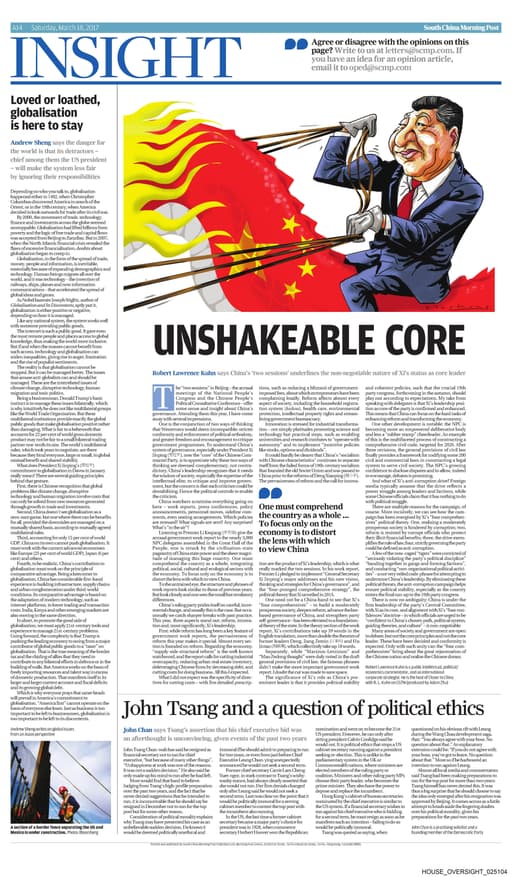
heories of former leaders Deng, Jiang Zemin (2) and Hu Jintao (4833), which collectively take up 18 words. Separately, while “Marxism-Leninism” and “Mao Zedong thought” were duly noted in the draft general provisions of civil law, the famous phrases didn’t make the more important government work report. I do
Page: HOUSE_OVERSIGHT_025104 →words. Separately, while “Marxism-Leninism” and “Mao Zedong thought” were duly noted in the draft gene
Page: HOUSE_OVERSIGHT_025104 →Sponsored
HOUSE_OVERSIGHT_026840 - HOUSE_OVERSIGHT_026848
2 mentionsSource: House Oversight Committee
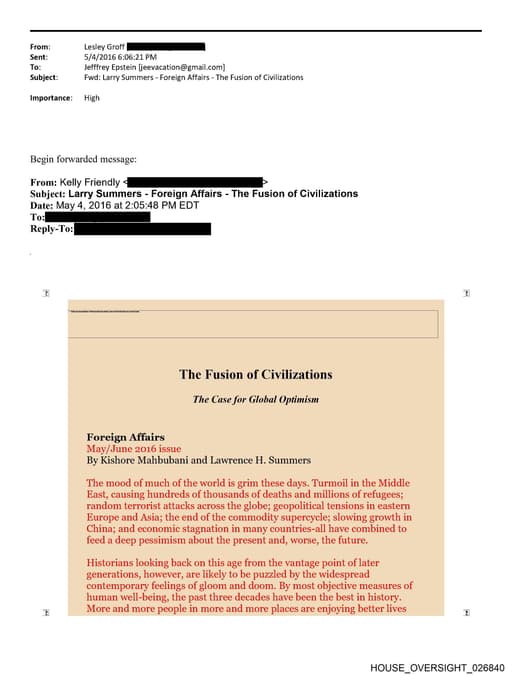
the Chinese story is reflected in the West's schizophrenic response to it. The Nixon administration eagerly sought better relations with China under Mao, and when Deng Xiaoping doubled down by opening up the country, the West applauded the change. The United States generously accepted Chinese products
Page: HOUSE_OVERSIGHT_026844 →ere, but today such a view would be laughed at. The market economy has made Chinese and Indian workers today far more productive than they were under Mao Zedong or Jawaharlal Nehru, India's first prime minister. Societies now accept the simple fact that workers need material incentives to be productive, which
Page: HOUSE_OVERSIGHT_026841 →EFTA00831970.pdf
2 mentionsEFTA00831970
shments were their Survival Programs. Inspired by Mao Zedong's advice to revolutionaries in The Little
-September 1971: Newton visits and stays in China for to days. The Black Panthers greatest accomplishments were their Survival Programs. Inspired by Mao Zedong's advice to revolutionaries in The Little Red Book, Newton called on the Panthers to "serve the people" and to make "survival programs" a priority wit
Rock all NoFT.pdf
2 mentionsHOUSE_OVERSIGHT_012048 - HOUSE_OVERSIGHT_012101
Nov 14, 2017Source: House Oversight Committee
ntennial, China reached a historic turning point. Chairman Mao passed away in September 1976, and a month later,
Page: HOUSE_OVERSIGHT_012084 →on ever. Do Not Bet Against the House At around the time that America celebrated its Bicentennial, China reached a historic turning point. Chairman Mao passed away in September 1976, and a month later, the arrest of the Gang of Four marked the end of the decade-long Cultural Revolution. Deng Xiaoping
Page: HOUSE_OVERSIGHT_012084 →Sponsored
EFTA00325882.pdf
2 mentionsEFTA00325882
he Chinese story is reflected in the West's schizophrenic response to it. The Nixon administration eagerly sought better relations with China under Mao, and when Deng Xiaoping doubled down by opening up the country, the West applauded the change. The United States generously accepted Chinese produc
e, but today such a view would be laughed at. The market economy has made Chinese and Indian workers today far more productive than they were under Mao Zedong or Jawaharlal Nehru, India's first prime minister. Societies now accept the simple fact that workers need material incentives to be productive, whi
Mongolia Sovereignty Summary_Final.pdf
2 mentionsHOUSE_OVERSIGHT_029427 - HOUSE_OVERSIGHT_029428
Jun 18, 2017Source: House Oversight Committee
ve.wilsoncenter.org/document/116507.pdf?v=9e009d7beac46b3b33fcaafd3bcd08f5. HOUSE_OVERSIGHT_029427 --- PAGE BREAK --- ¡i On 2 September 1964 during Mao's talk with the Japanese group of socialists, Mao announced that much of Siberia and Far East once belonged to China: "About a hundred years ago the
Page: HOUSE_OVERSIGHT_029428 →tion, but to integrate it with the PRC through a "voluntary" referendum, just as the Russians engineered the assimilation of Crimea in 2014. This was Mao Tse-tung's prophecy and intent once China could establish parity or surpass Soviet military and economic might.iii As the world's attention is focused on China'
Page: HOUSE_OVERSIGHT_029427 →HOUSE_OVERSIGHT_028529 - HOUSE_OVERSIGHT_028530
2 mentionsSource: House Oversight Committee
d to choose Nelson Mandela anyway, and had we conducted the survey a month earlier he would have come top. In China there was significant support for Mao Zedong, Zhou Enlai and Deng Xiaoping, with 14 per cent between them, and had those respondents considered only the living, Xi Jinping would have scored even
Page: HOUSE_OVERSIGHT_028530 →e top. In China there was significant support for Mao Zedong, Zhou Enlai and Deng Xiaoping, with 14 per
Page: HOUSE_OVERSIGHT_028530 →Sponsored
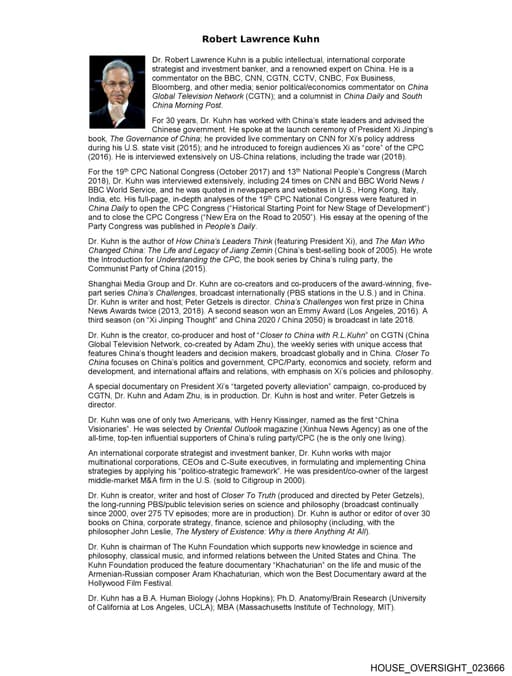
Dr. Robert Lawrence Kuhn - bio, media, press - September 2018.pdf
2 mentionsHOUSE_OVERSIGHT_023666 - HOUSE_OVERSIGHT_023706
Jun 1, 2012Source: House Oversight Committee
nd comprehensive and strict Party governance. The term “thought” in Chinese has special meaning because before this it had been associated only with Mao Zedong — “Mao Zedong Thought”. “Socialism” is a set of political ideas with a complex history, unified by public or com- mon ownership of the means of prod
Page: HOUSE_OVERSIGHT_023685 →e, focus on the constitutional amendment ending term limits, assuming President XiJinping will now serve in a for-life dictator- ship, reminiscent of Mao's China, the Soviet Union, the Kim family in North Korea and some African countries. It is no challenge to explain why abolishing term limits is bad
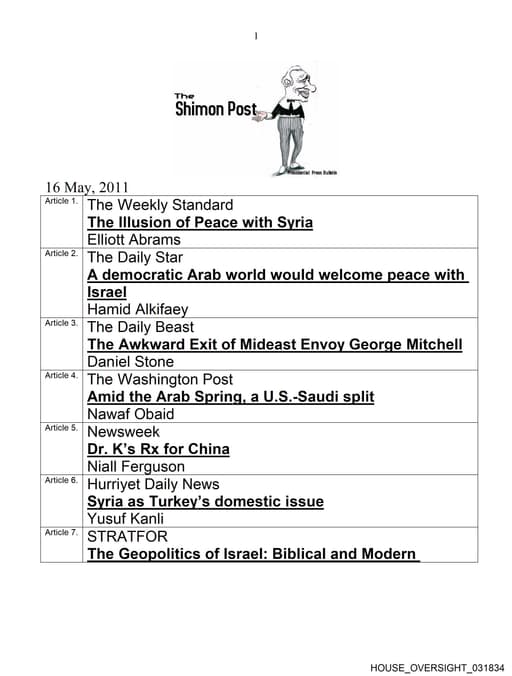
Page: HOUSE_OVERSIGHT_023683 →16 May.doc
2 mentionsHOUSE_OVERSIGHT_031834 - HOUSE_OVERSIGHT_031875
May 16, 2011Source: House Oversight Committee
t research that illuminates the Chinese side of the story. The American opening to China was also a Chinese opening to America, actuated above all by Mao Zedong's fear of encirclement. "Think about this," Mao told his doctor in 1969. "We have the Soviet Union to the north and the west, India to the south, and J
Page: HOUSE_OVERSIGHT_031850 →ry. The American opening to China was also a Chinese opening to America, actuated above all by Mao Zedong's fear of encirclement. "Think about this," Mao told his doctor in 1969. "We have the Soviet Union to the north and the west, India to the south, and Japan to the east. If all our enemies were to u
Page: HOUSE_OVERSIGHT_031850 →Sponsored
Connected Entities(20 of 21,569)
George W. Bush
PersonPresident of the United States from 2001 to 2009
393 docs393 co-mentions
Ghislaine Maxwell
PersonBritish socialite and sex trafficker, daughter of Robert Maxwell, accomplice of Jeffrey Epstein
339 docs339 co-mentions
Jeffrey Epstein
PersonAmerican sex offender and financier (1953–2019)
289 docs289 co-mentions
Joi Ito
PersonJapanese-American activist, entrepreneur, and venture capitalist
279 docs279 co-mentions
Condoleezza Rice
PersonAmerican diplomat and political scientist (born 1954)
150 docs150 co-mentions
United States
LocationCountry located primarily in North America
148 docs148 co-mentions
Alan Dershowitz
PersonAmerican lawyer, author, and art collector (born 1938)
147 docs147 co-mentions
Vicky Ward
PersonBritish investigative journalist
135 docs135 co-mentions
DB
Doug Band
PersonAmerican presidential advisor
127 docs127 co-mentions
NEW YORK NY
LocationState of the United States of America
127 docs127 co-mentions
Xi Jinping
PersonGeneral Secretary of the Chinese Communist Party since 2012
123 docs123 co-mentions
New York City
LocationMost populous city in the United States
113 docs113 co-mentions
Joe Biden
Person46th President of the United States (2021–2025)
109 docs109 co-mentions
MF
Maria Farmer
PersonAmerican visual artist
101 docs101 co-mentions
Marc Rich
PersonAmerican commodities trader (1934–2013)
100 docs100 co-mentions
CW
Courtney Wild
PersonAmerican victim/survivor of Jeffrey Epstein who led legal battle for victims' rights
99 docs99 co-mentions
JPMorgan Chase
OrganizationAmerican multinational banking and financial services holding company
98 docs98 co-mentions
LB
Leon Black
PersonAmerican billionaire businessman (born 1951)
91 docs91 co-mentions
Bill Clinton
PersonPresident of the United States from 1993 to 2001 (born 1946)
84 docs84 co-mentions
Prince Andrew
PersonThird child of Queen Elizabeth II and Prince Philip, Duke of Edinburgh (born 1960)
79 docs79 co-mentions