HOUSE_OVERSIGHT_025104
px
Document HOUSE_OVERSIGHT_025104 is a record from the House Oversight Committee, consisting of a single page focusing on the subject of 'px'.
The document is a news article from March 18, 2017, discussing globalization and its impacts. It features insights from Andrew Sheng, who argues that globalization is inevitable due to expanding demographics and technology, but its management determines whether it has positive or negative consequences. The article touches on the history of globalization, its benefits, and the challenges arising from its unequal distribution, ultimately advocating for better management of globalization to address anti-globalist sentiments.
Key Highlights
- •Globalization is presented as an inevitable force driven by demographics and technology.
- •Andrew Sheng is a key figure whose insights on managing globalization are featured.
- •The article suggests that proper management of globalization is crucial to mitigate negative impacts and address concerns of anti-globalists.
Frequently Asked Questions
Related Links
Document Information
Bates Range
HOUSE_OVERSIGHT_025104
Pages
1
Source
House Oversight Committee
Date
March 17, 2017
Original Filename
Kuhn - Unshakeable Core (Two Sessions) - SCMP - 3.18.17 A14.pdf
File Size
938.71 KB
Document Content
Page 1 - HOUSE_OVERSIGHT_025104
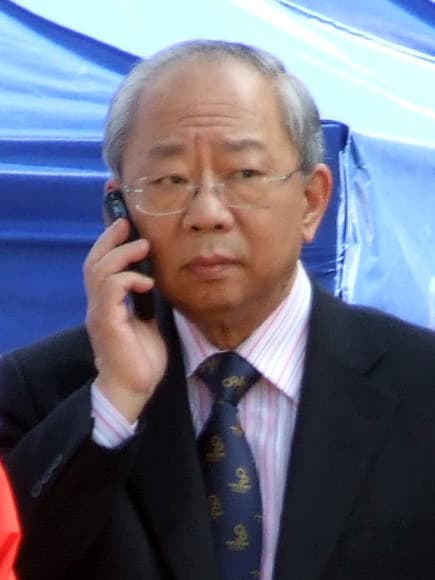
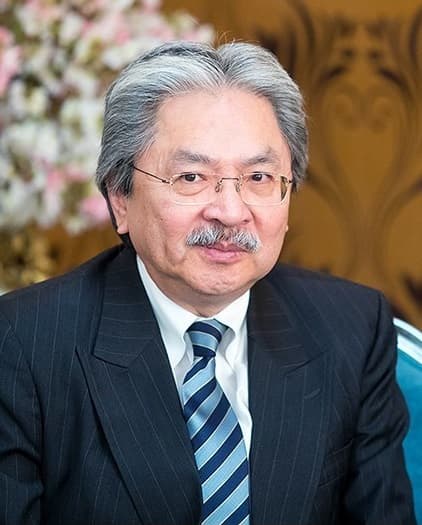
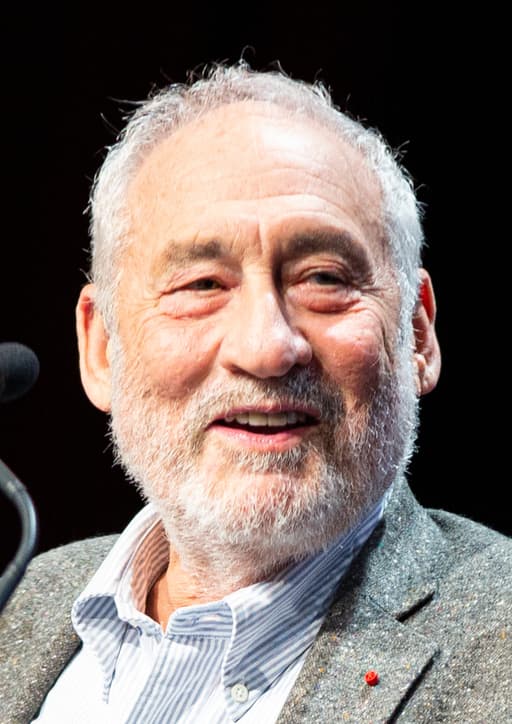
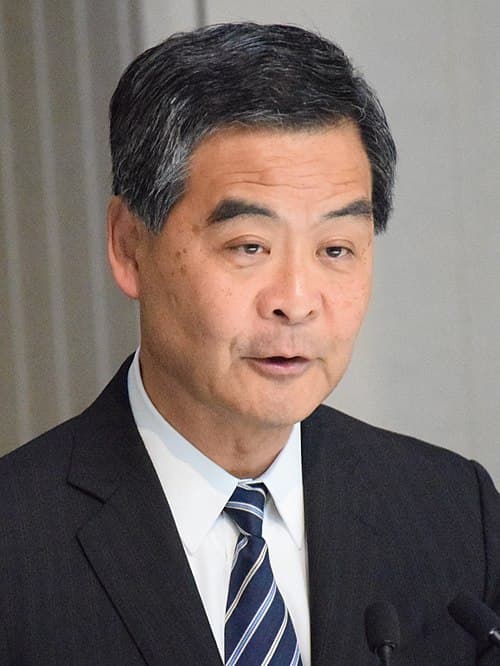
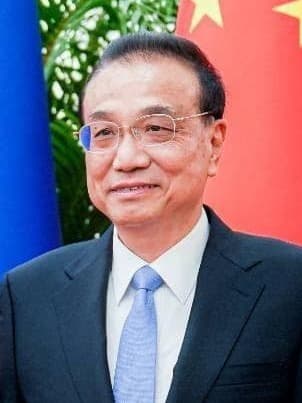
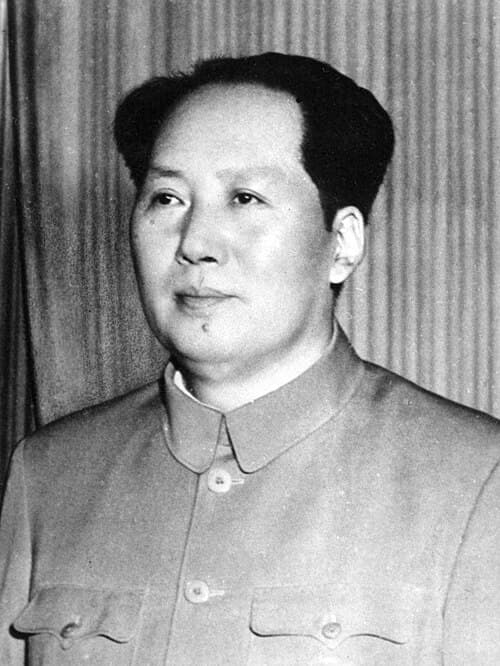
Al4 Saturday, March 18, 2017 INSIGHT Loved or loathed, slobalisation is here to stay Andrew Sheng says the danger for the world is that its detractors - chief among them the US president - will make the system less fair by ignoring their responsibilities Depending on who you talk to, globalisation happened either in 1492, when Christopher Columbus discovered America in search of the Orient, or in the 19th century, when America decided to look outwards for trade after its civil war. By 2000, the movement of trade, technology, finance and investments across the globe seemed unstoppable. Globalisation had lifted billions from poverty and the logic of free trade and capital flows was accepted from Beijing to Zanzibar. But in 2007, when the North Atlantic financial crisis revealed the flaws of excessive financialisation, doubts about globalisation began to creep in. Globalisation, in the form of the spread oftrade, money, people and information, is inevitable, essentially because of expanding demographics and technology. Human beings migrate all over the world, and it was technology -—the invention of railways, ships, planes and nowinformation communications -— that accelerated the spread of global ideas and genes. As Nobel laureate Joseph Stiglitz, author of Globalisation and Its Discontents, aptly put it, globalisation is either positive or negative, depending on howitis managed. Like any national system, the system works well with someone providing public goods. The internet is such a public good. It gave even the most remote people and places access to global knowledge, thus making the world more inclusive. Butifand when the masses cannot benefit from such access, technology and globalisation can widen inequalities, giving rise to anger, frustration and the rise of populist sentiments. The reality is that globalisation cannot be stopped. But it can be managed better. The issues that arouse anti-globalists can and should be managed. These are the interrelated issues of climate change, disruptive technology, human migration and toxic politics. Being a businessman, Donald Trump’s basic instinct is to manage these issues bilaterally, which is why intuitively he does not like multilateral groups like the World Trade Organisation. But these multilateral institutions provide exactly the global public goods that make globalisation positive rather than damaging. What is fair to a behemoth that accounts for 22 per cent of world gross domestic product may not be fair to a small bilateral trading partner one-tenth its size. The world’s multilateral rules, which took years to negotiate, are there because they bind everyone, large or small, to global mutual benefit and shared stability. What does President Xi Jinping’s (231-7) commitment to globalisation in Davos in January really mean? There are several guiding principles behind that gesture. First, there is Chinese recognition that global problems like climate change, disruptive technology and human migration involve costs that can only be solved from new resources generated through growth in trade and investments. Second, China doesn’t see globalisation as a zero-sum game, but one where there can be benefits for all, provided the downsides are managed ona mutually shared basis, according to mutually agreed multilateral rules. Third, accounting for only 15 per cent of world GDP, China onits own cannot push globalisation. It must work with the current advanced economies like Europe (25 per cent of world GDP), Japan (6 per cent) and others. Fourth, to be realistic, China’s contribution to globalisation must work on the principle of comparative advantage. Being alatecomer to globalisation, China has considerable first-hand experience in building infrastructure, supply chains and urban conglomeration under third-world conditions. Its comparative advantage is based on the adaptation of modern technology, such as internet platforms, to lower trading and transaction costs. India, Kenya and other emerging markets are also moving in the same direction. Inshort, to promote the good side of globalisation, we must apply 21st-century tools and experience to manage 21st-century problems. Going forward, the complexity is that Trump is pushing the leading economy to swing froma major contributor of global public goods to a “taxer” on globalisation. That is the true meaning of the border tax and the chiding of allies that they need to contribute to any bilateral efforts in defence or in the building of walls. But America works on the basis of freely importing resources and talent way in excess of domestic production. That manifests itself in its larger and larger current account and fiscal deficits and its growing global debt. Which is why everyone prays that saner heads will prevail in America’s commitment to globalisation. “America first” cannot operate on the basis of everyone else loses. Just as business is too important to be leftto businessmen, globalisation is too important to be left to its discontents. Andrew Sheng writes on global issues from an Asian perspective Asection of a border fence separating the US and Mexico is under construction. Photo: Bloomberg UNSHAKEABLE CORE South China Morning Post O (>) Agree or disagree with the opinions on this page? Write to us at [email protected]. If you have an idea for an opinion article, email it to [email protected] Robert Lawrence Kuhn says China’s ‘two sessions’ underlines the non-negotiable nature of Xi’s status as core leader he “two sessions” in Beijing the annual meetings of the National People’s Congress and the Chinese People’s Political Consultative Conference -— offer some sense and insight about China’s governance. Attending them this year, I have come away with several impressions. One is the conjunction of two ways of thinking that Westerners would deem incompatible: stricter conformity and enforcement of political orthodoxy, and greater freedom and encouragement to critique government programmes. To understand China’s system of governance, especially under President Xi Jinping (2217), now the “core” of the Chinese Com- munist Party, is to appreciate why these two ways of thinking are deemed complementary, not contra- dictory. China’s leadership recognises that it needs the wisdom of society, especially the expertise of the intellectual elite, to critique and improve govern- ment, but the concern is that such criticism could be destabilising. Hence the political controls to enable the criticism. China watchers scrutinise everything going on here — work reports, press conferences, policy announcements, personnel moves, sideline com- ments, even seating arrangements. Which policies are stressed? What signals are sent? Any surprises? What's “in the air”? Listening to Premier Li Keqiang (45238) give the annual government work report to the nearly 3,000 NPC delegates assembled in the Great Hall of the People, one is struck by the civilisation-state pageantry of China state power and the sheer magni- tude of managing this huge country. One must comprehend the country as a whole, integrating political, social, cultural and ecological sectors with the economy. To focus only on the economy is to distort thelens with which to view China. Tothe untrained eye, the structure and phrases of work reports look similar to those of previous years. Butlook closely and one sees the small butrevelatory differences. China’s ruling party prides itself on careful, incre- mental change, and usually this is the case. But occa- sionally we catch sharper breaks with past practice. This year, three aspects stand out: reform, innova- tion and, most significantly, Xi’s leadership. First, while reform has long been a key feature of government work reports, the pervasiveness of reform this year makes it special. Almost every sec- tion is founded on reform. Regarding the economy, “supply-side structural reform” is the well-known watchword, and the report calls for cutting industrial overcapacity, reducing urban real estate inventory, deleveraging Chinese firms by decreasing debt, and cutting costs for doing business. All this I expected. What! did not expect was the specificity of direc- tives for cutting costs — with five detailed prescrip- tions, such as reducing a blizzard of government- imposed fees, about which entrepreneurs have been complaining loudly. Reform affects almost every aspect of society, including the household registra- tion system (hukou), health care, environmental protection, intellectual property rights and stream- lining government bureaucracy. Innovation is stressed for industrial transforma- tion — not simply platitudes promoting science and technology but practical steps, such as enabling universities and research institutes to “operate with autonomy” and to implement “incentive policies like stocks, options and dividends”. It could hardly be clearer that China’s “socialism with Chinese characteristics” continues to separate itself from the failed forms of 19th-century socialism that founded the old Soviet Union and was passed to China prior to the reforms of Deng Xiaoping (S/F). The pervasiveness of reform and the call for innova- One must comprehend the country as a whole... To focus only on the economy is to distort the lens with which to view China tion are the product of Xi’s leadership, which is what really marked the two sessions. In his work report, Premier Li pledged to implement “General Secretary Xi Jinping’s major addresses and his new vision, thinking and strategies for China’s governance”, and the “four-pronged comprehensive strategy”, the political theory that Xi unveiled in 2015. One need not be a China hand to see that Xi’s “four comprehensives” — to build a moderately prosperous society, deepenreform, advance thelaw- based governance of China, and strengthen party self-governance—has been elevated to a foundation- altheory of the state. In the theory section ofthe work report, Xi’s contributions take up 39 words in the English translation, more than double the theories of former leaders Deng, Jiang Zemin (2) and Hu Jintao (4833), which collectively take up 18 words. Separately, while “Marxism-Leninism” and “Mao Zedong thought” were duly noted in the draft general provisions of civil law, the famous phrases didn’t make the more important government work report. I doubt the cut was made to save space. The significance of Xi’s role as China’s pre- eminent leader is that it provides political stability and coherent policies, such that the crucial 19th party congress, forthcoming in the autumn, should play out according to expectations. My take from speaking with delegates is that Xi’s leadership posi- tion as core of the party is confirmed and enhanced. This means that China can focus on the hard tasks of enhancing reform and transforming the economy. One other development is notable: the NPC is becoming more an empowered deliberative body and less a “rubber stamp” cheerleader. An example of this is the multifaceted process of constructing a comprehensive civil code, targeted for 2020. After three revisions, the general provisions of civil law finally provides a framework for codifying some 200 civil and commercial laws in constructing a legal system to serve civil society. The NPC’s growing confidence to disclose disputes and to allow, indeed to encourage, debates is promising. And what of Xi’s anti-corruption drive? Foreign media typically assume that the drive reflects a power struggle among leaders and factions, while some Chinese officials claim that it has nothing to do with political struggle. There are multiple reasons for the campaign, of course. More incisively, we can see how the cam- paign has been energised by Xi’s “four comprehen- sives” political theory. One, realising a moderately prosperous society is hindered by corruption; two, reform is resisted by corrupt officials who protect their illicit financial benefits; three, the drive exem- plifies therule oflaw; four, strictly governing the party could be defined as anti-corruption. A few of the now-caged “tigers” were convicted of “seriously violating the party's political discipline” “banding together in gangs and forming factions”, and conducting “non-organisational political activi- ties” —anotvery veiled code-phrase for attempting to undermine China’s leadership. By eliminating these political threats, the anti-corruption campaign helps ensure political stability, especially as the country enters the final run-up to the 19th party congress. There is now no ambiguity: China is under the firm leadership of the party’s Central Committee, with Xias its core, and alignment with Xi’s “four con- fidences” doctrine - in which officials are urged to be “confident in China’s chosen path, political system, guiding theories, and culture” —is non-negotiable. Many areas of society and government are open to debate, butnotthe core principles and notthe core leader. These have been decided and conformity is expected. Only with such unity can the “four com- prehensives” bring about the great rejuvenation of the Chinese nation and realise the Chinese dream. Robert Lawrence Kuhn is a public intellectual, political/ economics commentator, and an international corporate strategist. He is the host of Closer to China with R. L. Kuhn on CGTN (produced by Adam Zhu) John Tsang and a question of political ethics John Chan says Tsang’s assertion that his chief executive bid was an afterthought is unconvincing, given events of the past two years John Tsang Chun-wah has saidheresignedas — immoralifhe should admit to preparing to run financial secretary notto run for chief for two years, or even from just before Chief executive, “but because of many otherthings”. | Executive Leung Chun-ying unexpectedly “Unhappiness at work was one ofthereasons. | announcedhe would not seeka second term. Itwas nota sudden decision.” He also said he Former chief secretary Carrie Lam Cheng only made up his mind to runafter hehadleft. | Yuet-ngor, in stark contrast to Tsang’s wishy- Most would find that hard to believe. washy stance, had always clearly asserted that Judging from Tsang’s high-profile preparation she would notrun. Her firm denials changed over the past two years, and the fact thathe only after Leung said he would not seek a never denied suggestions that he intended to second term. Lam was clear on the point that it run, itis inconceivable that he should say he would be politically immoral fora serving resigned in December not to run for the top cabinet member to contest the top post with post but for some other reason. the incumbent also running. Consideration of political morality explains In the US, the last time a former cabinet why Tsang may have presented his case as an secretary became a major party’s choice for unbelievable sudden decision. He knows it president was in 1928, when commerce would be deemed politically unethical and secretary Herbert Hoover won the Republican nomination and went on to become the 31st US president. However, he ran only after sitting president Calvin Coolidge said he would not. Itis political ethics that stops a US cabinet secretary running against a president seeking re-election. This is unlike in the parliamentary system in the UK or Commonwealth nations, where ministers are intention torun against Leung. elected members of the ruling party or Almost alllocal media and commentators coalition. Ministers and other ruling party MPs said Tsanghad been making preparations to choose their partyleader, who becomes the run for the top post for more than two years: prime minister. They also have the power to Tsang himselfhas never denied this. It was depose and replace the incumbent. thus a big surprise that he should choose to say Hong Kong’s cabinet ofbureau secretaries the idea only emerged after his resignation was nominated by the chief executive is similar to approved by Beijing. It comes across as a futile the US system. Ifa financial secretary wishesto attempt to brush aside the lingering doubts run against his chief executive who is bidding over his political morality, given his forasecond term, he mustresignassoonashe _ preparations for the past two years. manifests such an intention — failing to do so would be politically immoral. Tsang was quoted as saying, when questioned on his obvious rift with Leung during the Wang Chau development saga, that: “You always agree with your boss. No question about that.” An explanatory extension could be: “Ifyou do not agree with your boss, you've got to leave. No question about that.” More so ifhe harboured an John Chan is a practising solicitor and a founding member of the Democratic Party Printed and published by South China Morning Post Publishers Ltd, Morning Post Centre, 22 Dai Fat Street, Tai Po Industrial Estate, Tai Po, Hong Kong. Tel:2680 8888. HOUSE_OVERSIGHT_025104
Entities Mentioned
Adam Zhu
PERSON
American investment banker (born 1965)
AS
Andrew Sheng
PERSON
Malaysian banker
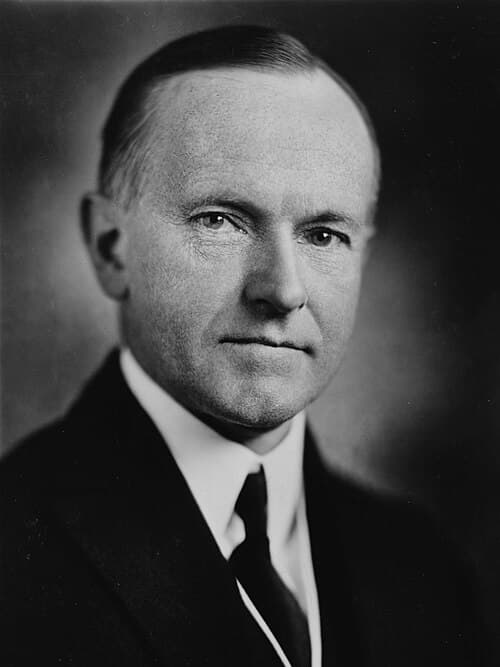
Calvin Coolidge
PERSON
President of the United States from 1923 to 1929
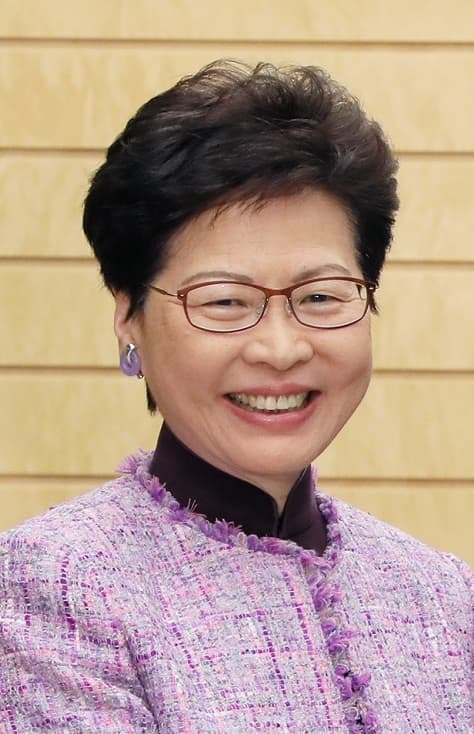
Carrie Lam Cheng
PERSON
Former Chief Executive of Hong Kong
CH
Christopher
PERSON
First name reference to multiple individuals in Epstein documents
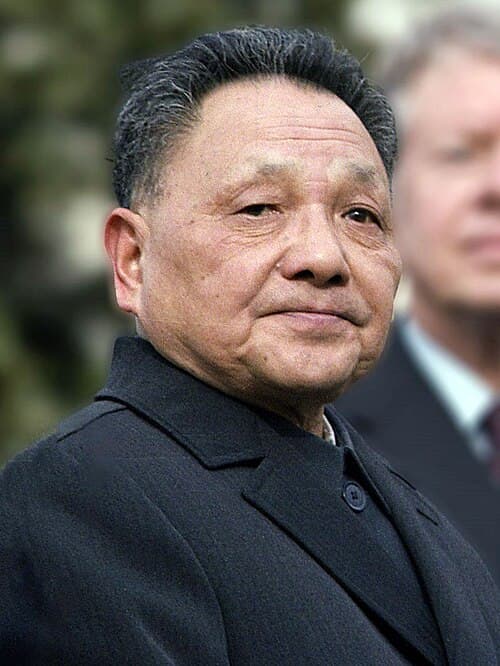
Deng Xiaoping
PERSON • 2 mentions
Chinese politician and paramount leader from 1978 to 1989
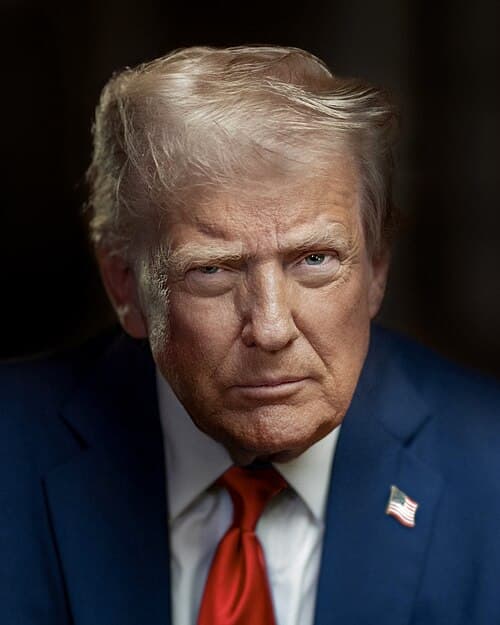
Donald Trump
PERSON • 2 mentions
President of the United States (2017–2021, 2025–present)
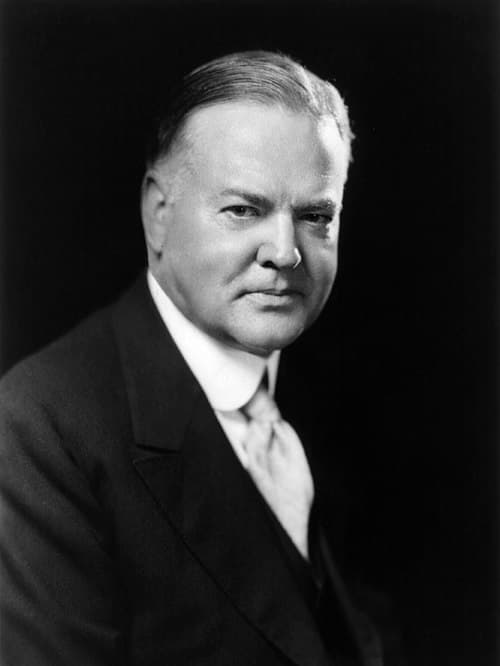
Herbert Hoover
PERSON
Person referenced in documents
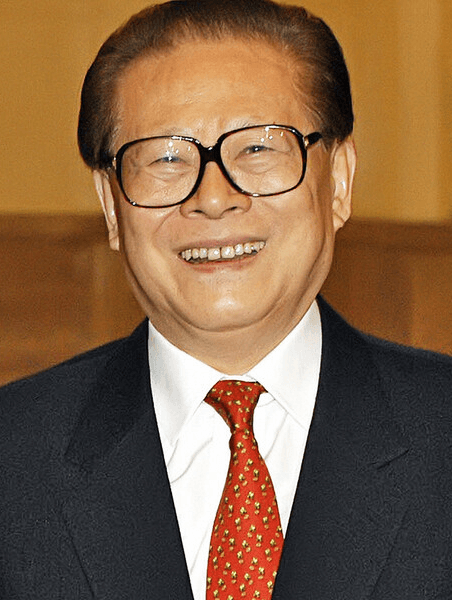
Jiang Zemin
PERSON
Person referenced in documents
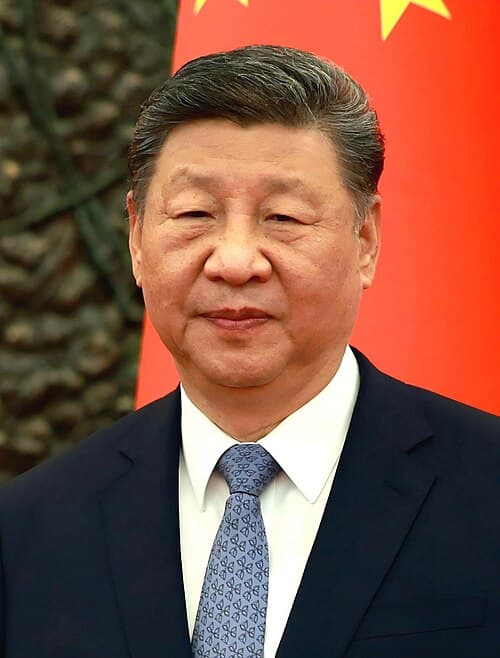
Jinping
PERSON
General Secretary of the Chinese Communist Party since 2012
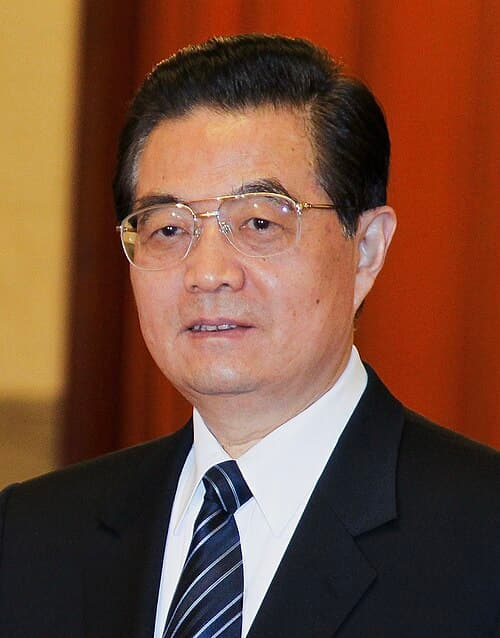
Jintao
PERSON
Former General Secretary of the Chinese Communist Party
John Chan
PERSON
Hong Kong businessperson
John Tsang
PERSON
Hong Kong Government offical
John Tsang Chun-wah
PERSON
Hong Kong Government offical
Joseph Stiglitz
PERSON
American economist, professor, and recipient of the Nobel Memorial Prize in Economics
Leung
PERSON
Surname or name fragment in documents
Leung Chun-ying
PERSON
Name reference in documents
Li Keqiang
PERSON
Premier of the People's Republic of China from 2013 to 2023
Mao Zedong
PERSON • 2 mentions
1st chairman of the Chinese Communist Party and founder of the People's Republic of China (1893–1976)

R. L. Kuhn
PERSON
Name reference in documents

Robert Lawrence Kuhn
PERSON
American banker
TS
Tsang
PERSON
Surname or name fragment in documents
TS
Tsanghad
PERSON
Name reference in documents

Wang Chau
PERSON
Name reference in documents
Xi Jinping
PERSON • 3 mentions
General Secretary of the Chinese Communist Party since 2012

Yuet-ngor
PERSON
Name reference in documents

Commonwealth
ORGANIZATION
Political association of mostly former British Empire territories
Democratic Party
ORGANIZATION
Organization referenced in documents
South China Morning Post Publishers Ltd
ORGANIZATION
Organization referenced in documents
the Central Committee
ORGANIZATION
Organization referenced in documents
the World Trade Organisation
ORGANIZATION
Organization referenced in documents

Columbus
LOCATION
Capital city of Ohio, United States of America

Davos
LOCATION
Municipality in the canton of Graubünden, Switzerland
Hong Kong
LOCATION
City and special administrative region of China

Kenya
LOCATION
Country in Eastern Africa

Soviet Union
LOCATION
Former country in Eurasia (1922–1991)
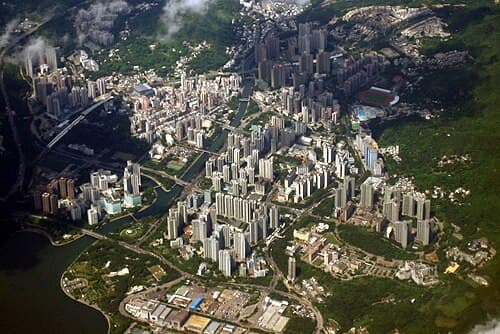
Tai Po
LOCATION
Area in Hong Kong
Tai Po Industrial Estate
LOCATION
Industrial estate in Hong Kong
Zanzibar
LOCATION
Semi-autonomous part of Tanzania
Statistics
Pages:1
Entities:39
Avg. OCR:91.7%
Sponsored