Back to People & Entities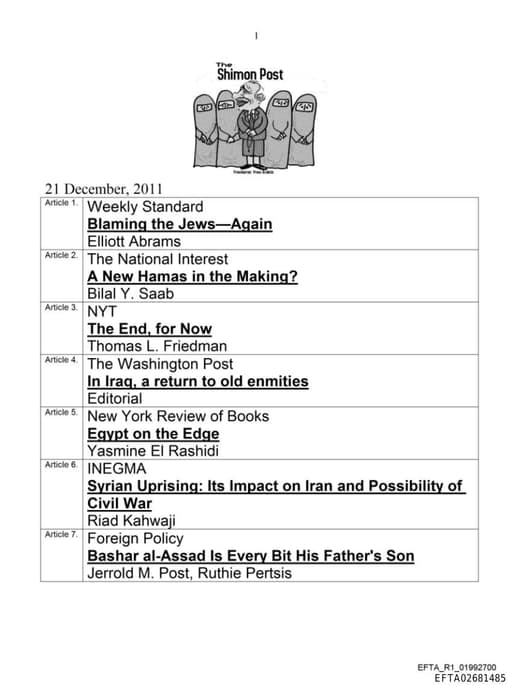





Document Mentions (20 of 34)
EFTA02681485.pdf
2 mentionsEFTA02681485
understand him in the context EFTA_R1_01992731 EFTA02681516 33 of the Assad family's dominance of the Syrian political scene. Bashar's father, Hafez al-Assad, ruled Syria with an iron fist for three decades, including enforcing draconian emergency laws in 1963 that helped him eliminate political opponent
ct. Emblematic of his brutal rule was the crushing of the uprising in the city of Hama in 1982, in which tens of thousands of Syrians were killed. Hafez had originally designated his eldest and favorite son, Bassel, as his successor, and Bassel, the chief of presidential security, was perfect for th
EB Draft Ch1-25 PDF Sept 10 2017-Pnum.pdf
2 mentionsHOUSE_OVERSIGHT_011472_sub_003 - HOUSE_OVERSIGHT_011771
Source: House Oversight Committee
r time, we might manage to extricate ourselves from the escalating violence with Hizbollah; reach a land- for-peace deal with the enigmatic President Hafez al-Assad in Syria; and find some form of coexistence with the Palestinians. He also spoke about international politics. I remember one afternoon in the summe
briefed me on the questions I could expect, not just about the Achille Lauro but the wider issue of Palestinian attacks, as well as Syrian President Hafez al- Assad’s efforts to re-equip his air force after his losses in Lebanon. So I came to the interview prepared. I brought audio tapes of the hijacker
EB Draft Ch1-25 PDF Sept 10 2017-Pnum.pdf
2 mentionsHOUSE_OVERSIGHT_011472_sub_004 - HOUSE_OVERSIGHT_011871
Source: House Oversight Committee
effective end of the peace process. Even though Arik assured me privately that he understood my determination to reopen peace efforts with Arafat and Hafez al- Assad, I knew Arik. The path toward peace agreements, assuming they were even possible, would be tough. Sooner or later — and certainly if we fac
giously motivated ideologues, were Labor supporters. And almost no Israel, of any political stripe, 331 HOUSE_OVERSIGHT_011802 / BARAK / 46 viewed Hafez al-Assad as a natural partner for peace. For years, he’d been a constant, sneering presence on our northern border, denouncing not only Sadat but any Arab lea
Sponsored
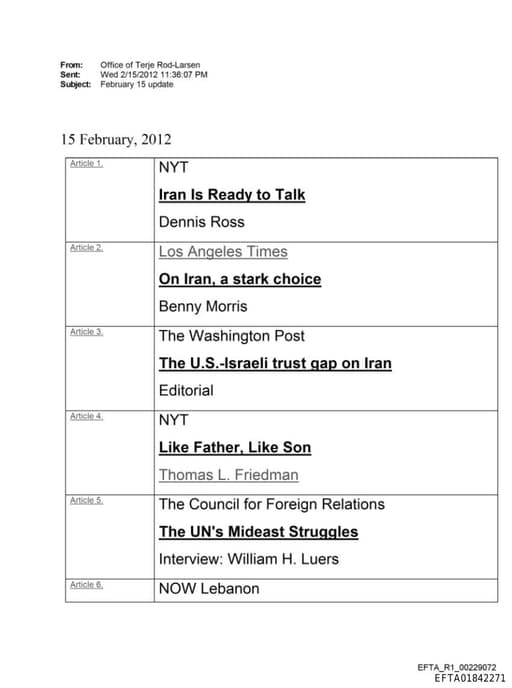
EFTA01842271.pdf
2 mentionsEFTA01842271
February in the Syrian town of Hama, led by the Syrian Muslim Brotherhood. Word had it (there were no Internet or cellphones) that then-President Hafez al-Assad had quashed the rebellion by shelling whole Hama neighborhoods, then dynamiting buildings, some with residents still inside. That May, I got a visa
s to put down the rebellion there against the regime of President Bashar al-Assad is the remake of a really bad movie that starred Bashar's father, Hafez, exactly 30 years ago this month. I know. I saw the original. It was April 1982 and I had just arrived in Beirut as a reporter for The New York Ti
EB Draft Ch1-25 PDF Sept 10 2017-Pnum.pdf
2 mentionsHOUSE_OVERSIGHT_027849_sub_003 - HOUSE_OVERSIGHT_028148
Source: House Oversight Committee
r time, we might manage to extricate ourselves from the escalating violence with Hizbollah; reach a land- for-peace deal with the enigmatic President Hafez al-Assad in Syria; and find some form of coexistence with the Palestinians. He also spoke about international politics. I remember one afternoon in the summer
briefed me on the questions I could expect, not just about the Achille Lauro but the wider issue of Palestinian attacks, as well as Syrian President Hafez al- Assad's efforts to re-equip his air force after his losses in Lebanon. So I came to the interview prepared. I brought audio tapes of the hijacker
EB Draft Ch1-25 PDF Sept 10 2017-Pnum.pdf
2 mentionsHOUSE_OVERSIGHT_027849_sub_004 - HOUSE_OVERSIGHT_028248
Source: House Oversight Committee
igiously motivated ideologues, were Labor supporters. And almost no Israel, of any political stripe, 331 HOUSE _OVERSIGHT_028179 / BARAK / 46 viewed Hafez al-Assad as a natural partner for peace. For years, he'd been a constant, sneering presence on our northern border, denouncing not only Sadat but any Arab lea
effective end of the peace process. Even though Arik assured me privately that he understood my determination to reopen peace efforts with Arafat and Hafez al- Assad, I knew Arik. The path toward peace agreements, assuming they were even possible, would be tough. Sooner or later - and certainly if we fac
Sponsored
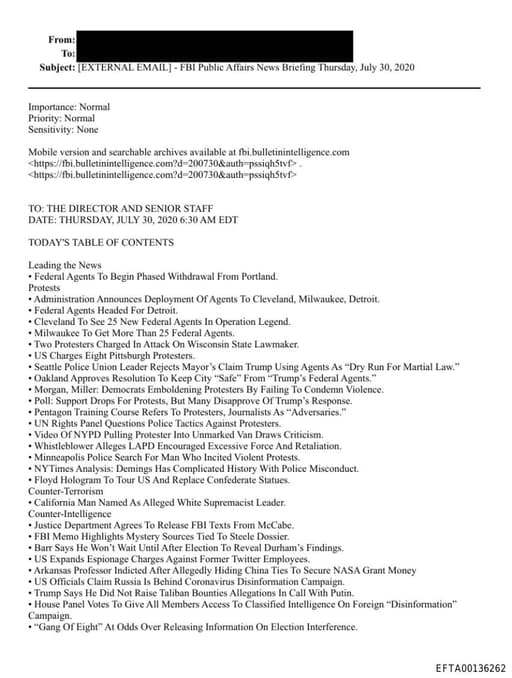
EFTA00136262.pdf
1 mentionEFTA00136262
rian President Bashar al-Assad's government and warned that anyone doing business with Damascus was also at risk of being blacklisted." Assad's son, Hafez, was "among four people and 10 entities, including a Syrian army unit, targeted by Washington over accusations they either aided government funding
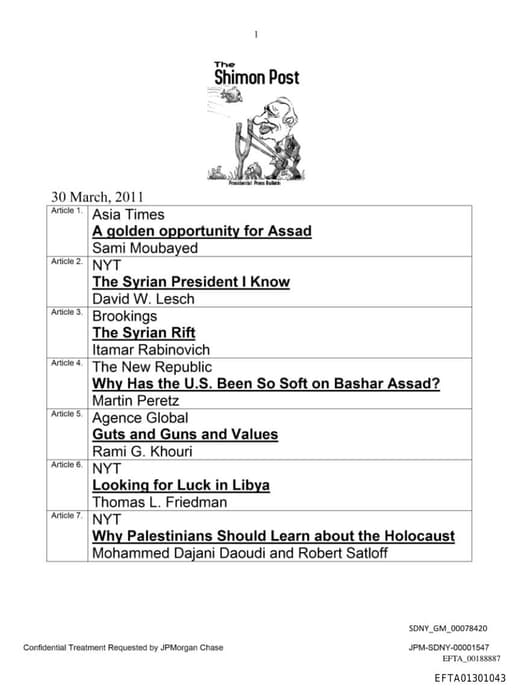
EFTA01301043.pdf
1 mentionEFTA01301043
U.S. Been So Soft on Bashar Assad? Martin Peretz March 29, 2011 - I don't know where to begin. So let me start with Bashar Al Assad—whose father, Hafez, Jimmy Carter wrote he had higher regard for than any other leader in the Middle East. Barack Obama never said anything quite that hagiographic abo
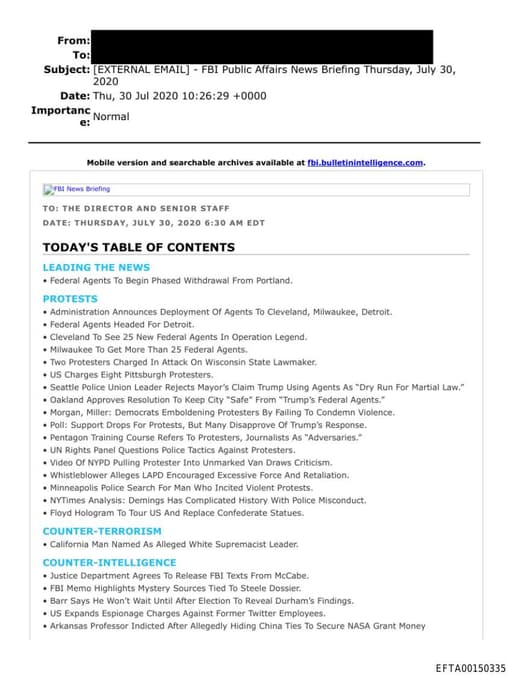
EFTA00150335.pdf
1 mentionEFTA00150335
rian President Bashar al-Assad's government and warned that anyone doing business with Damascus was also at risk of being blacklisted." Assad's son, Hafez, was "among four people and 10 entities, including a Syrian army unit, targeted by Washington over accusations they either aided government funding
Sponsored
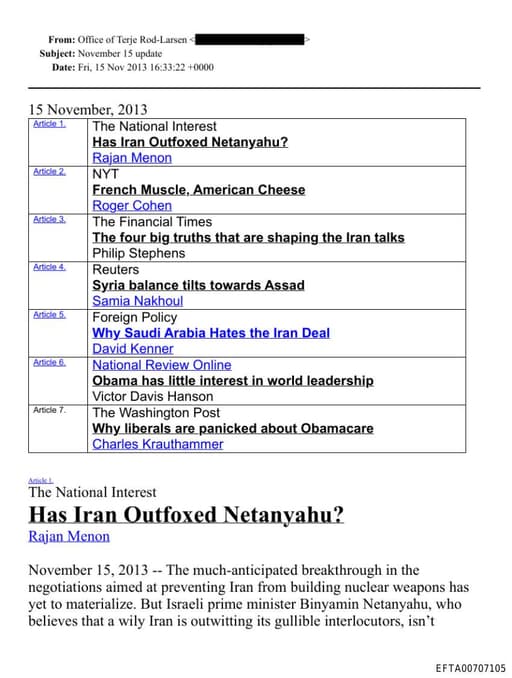
EFTA00707105.pdf
1 mentionEFTA00707105
nt in a way that many assumed precluded any role for the Assad family, which has ruled Syria with an iron fist since President Assad's late father, Hafez, seized absolute power in 1970. There has been barely a flicker of agreement within Syria about its future since the country erupted in initially
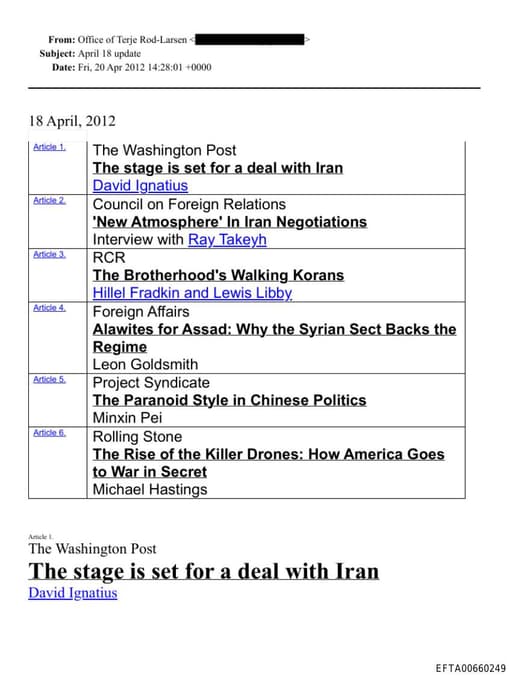
EFTA00660249.pdf
1 mentionEFTA00660249
s Alawites and Sunnis under one banner. Although Sunnis initially tolerated the growing clout of the Alawite community, resentment resurfaced when Hafez al-Assad, an Alawite and the father of the current president, seized power in 1970. When he proposed a new constitution three years later that mandated a se
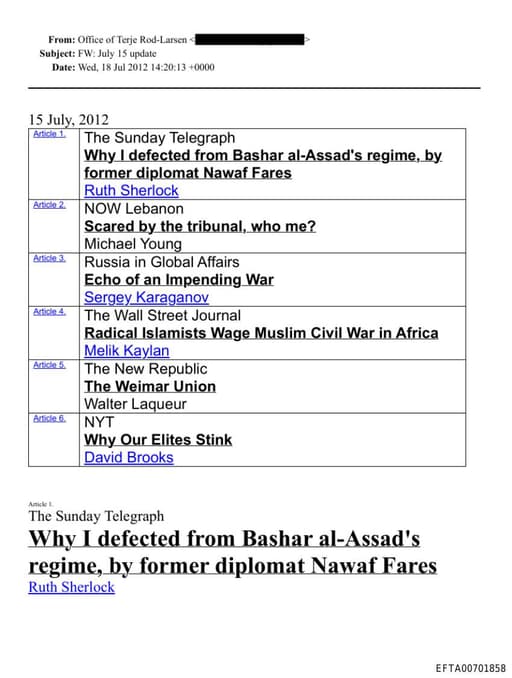
EFTA00701858.pdf
1 mentionEFTA00701858
ing "led" by powerful members within his own family, and also his Russian backers. On the other, he pointed out that President Assad's late father, Hafez, had been equally ruthless during his rule, which EFTA00701861 included the massacre of more than 10,000 people during a Muslim Brotherhood upris
Sponsored
EFTA00706371.pdf
1 mentionEFTA00706371
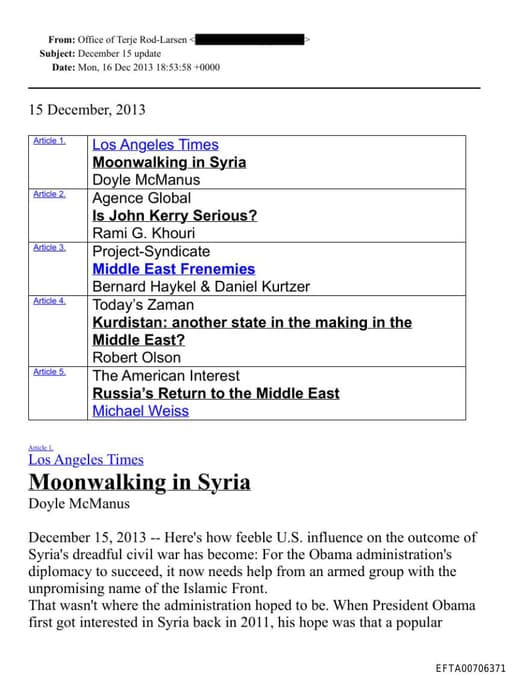
ians do." The Syrian-Russian relationship was always rather complicated, full of mutual suspicion and attempts by Moscow to impose an ideology that Hafez al-Assad didn't much care for, in exchange for military and intelligence assistance that Syria couldn't do without. But Damascus isn't just a resurrected st
EFTA00630287.pdf
1 mentionEFTA00630287
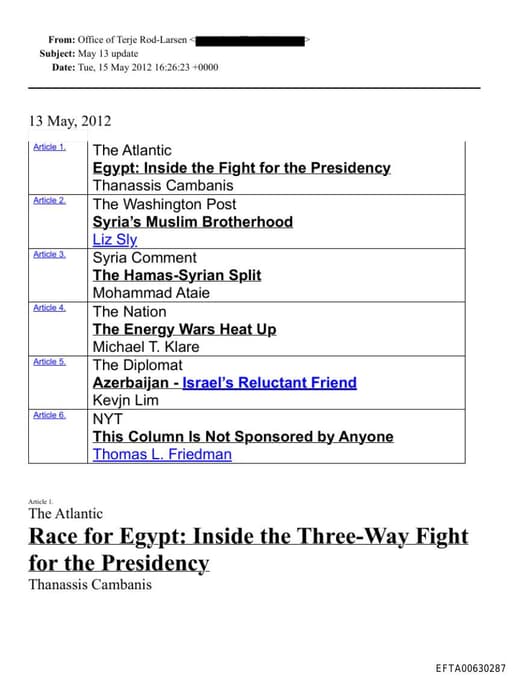
d Islamic flag". But as developments began to unravel in Iran and Middle East, things changed between Tehran and the PLO. From the very beginning, Hafez al-Assad carefully watched the PLO courting of Khomaini's Iran. The B'ath regime kept a wide open eye on the extent of Iranian relations with Yasser Arafat,
EFTA00660802.pdf
1 mentionEFTA00660802
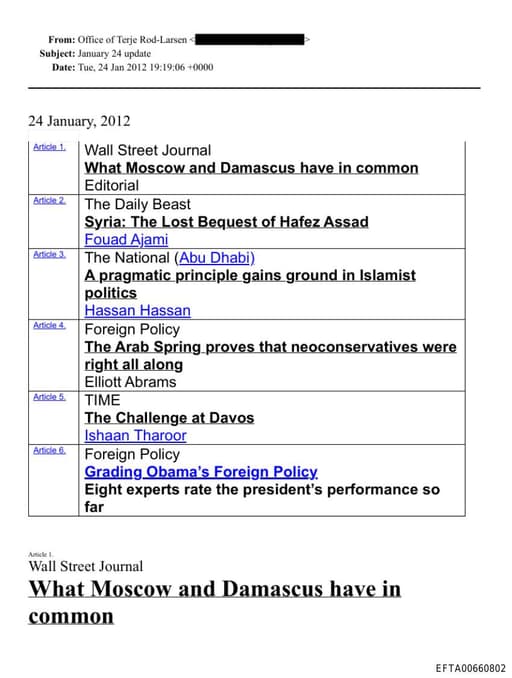
ck 2. The Daily Beast Syria: The Lost Bequest of Hafez Assad Fouad Ajami January 23, 2012 -- Bashar, son of Hafez Assad, has a son by the name of Hafez. But as the defiance and bloodletting in £yria would seem to suggest, Bashar needn't worry about training his son for future rulership. The house t
Sponsored
EFTA00686997.pdf
1 mentionEFTA00686997
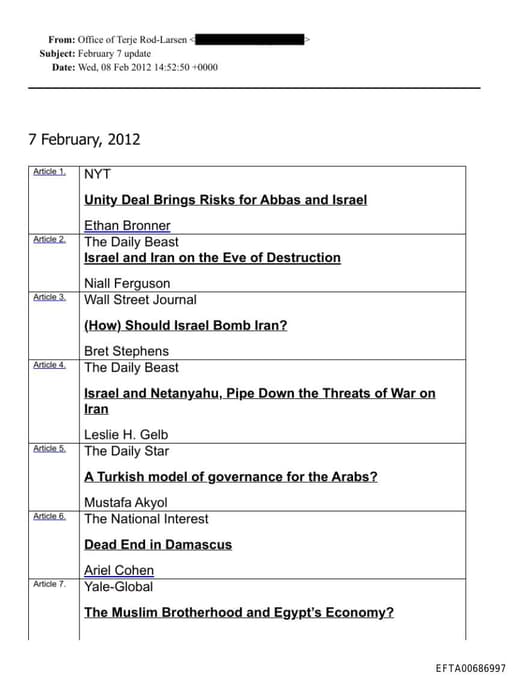
ly wrong: Assad's is an oppressive, minority-Alawi regime. It came to power via a 1970 coup. In 1982, the current dictator's father, then president Hafez al- Assad, brought artillery and killed over twenty thousand Islamist rebels in the town of Hama. The son is less efficient and likely to lose powe
EFTA00914488.pdf
1 mentionEFTA00914488
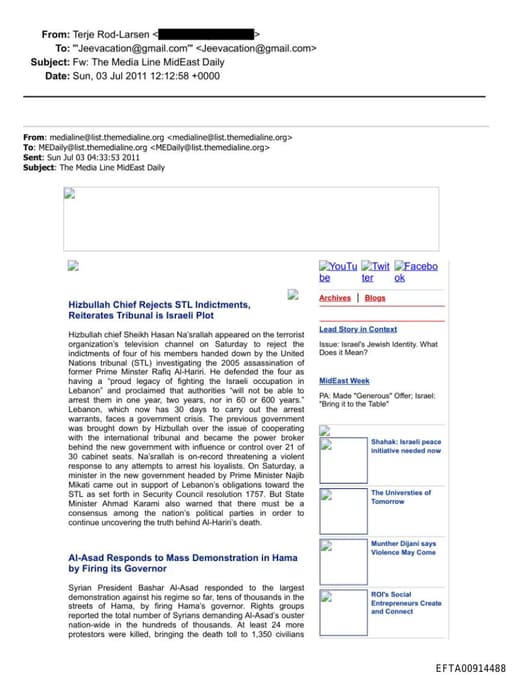
e May Come ROI's Social Entrepreneurs Create and Connect EFTA00914488 since March. Hama is where AI-Asad's father and predecessor, More Video Hafez, killed tens of thousands of citizens in 1982. Protests this weekend continued in Damascus, Aleppo, Latakia and Horns. A statement on Friday by U.S
Untitled attachment 248655.pdf
1 mentionHOUSE_OVERSIGHT_023133 - HOUSE_OVERSIGHT_023197
Sep 17, 2014Source: House Oversight Committee
The PLO is expelled from Jordan. President Gamal Abdel Nasser dies and is replaced by Vice President Anwar al-Sadat. Syria’s Minister of Defense, Hafez al-Assad, leads the “Correctionist Movement’ military coup. Hafez al-Assad is elected President of Syria in a referendum. October or Yom Kippur War. Egypt
Page: HOUSE_OVERSIGHT_023152 →Sponsored
EFTA00712371.pdf
1 mentionEFTA00712371
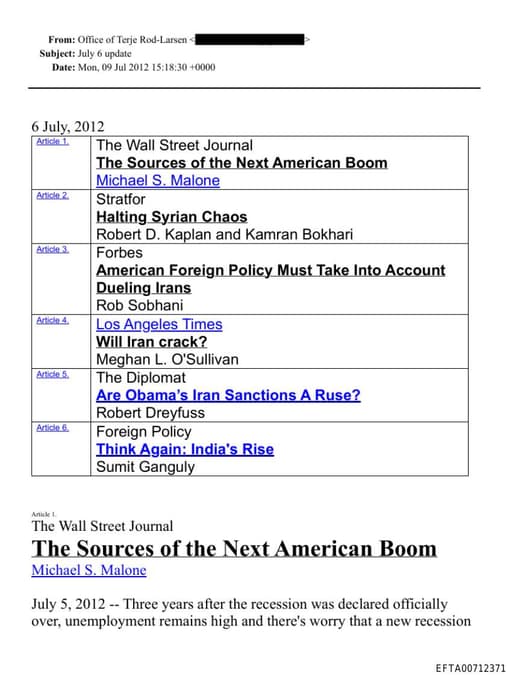
the new Syrian state held free and fair elections in 1947, 1949 and 1954 that all broke down according to tribal, regional and sectarian interests. Hafez finally ended the chaos by becoming the Leonid Brezhnev of the Arab world: He staved off the future by institutionalizing fear, even as he did noth
EFTA00586525.pdf
1 mentionEFTA00586525
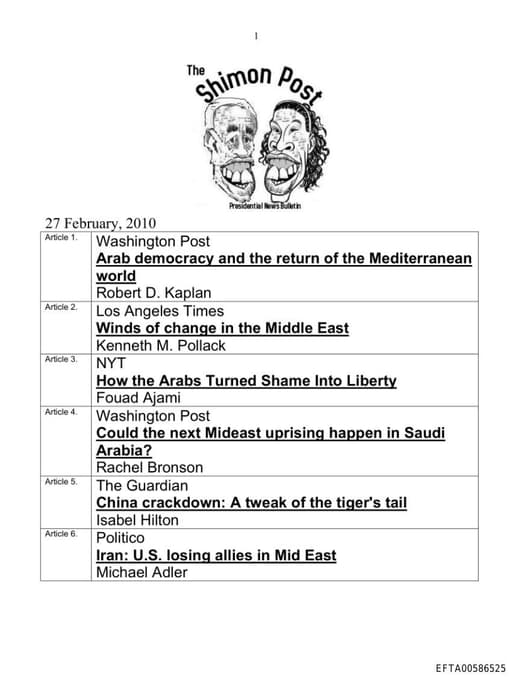
privacy of their homes. In the public space, there was now the cult of the rulers, the unbounded power of Saddam Hussein and Muammar el-Qaddafi and Hafez al-Assad in Syria and Zine el-Abidine Ben Ali in Tunisia. The traditional restraints on power had been swept away, and no new social contract between ruler
Sponsored
Connected Entities(20 of 1,863)
Bashar al-Assad
PersonPresident of Syria from 2000 to 2024
33 docs33 co-mentions
Lebanon
LocationCountry in West Asia
32 docs32 co-mentions
Barack Obama
PersonPresident of the United States from 2009 to 2017
29 docs29 co-mentions
Damascus
LocationCapital and largest city of Syria
29 docs29 co-mentions
George W. Bush
PersonPresident of the United States from 2001 to 2009
27 docs27 co-mentions
Bill Clinton
PersonPresident of the United States from 1993 to 2001 (born 1946)
25 docs25 co-mentions
Tunisia
LocationCountry in North Africa
23 docs23 co-mentions
Hosni Mubarak
PersonPresident of Egypt from 1981 to 2011
22 docs22 co-mentions
Saddam Hussein
PersonIraqi president, army officer and Baathist politician (1937–2006)
21 docs21 co-mentions
Benjamin Netanyahu
PersonPrime Minister of Israel (1996–1999; 2009–2021; since 2022)
21 docs21 co-mentions
Tehran
LocationCapital city of Iran
19 docs19 co-mentions
United States
LocationCountry located primarily in North America
18 docs18 co-mentions
Hillary Clinton
PersonAmerican politician and diplomat (born 1947)
16 docs16 co-mentions
Yemen
LocationCountry in West Asia
16 docs16 co-mentions
Beirut
LocationCapital and largest city of Lebanon
15 docs15 co-mentions
Jerusalem
LocationCity in the Middle East, holy to the three Abrahamic religions
15 docs15 co-mentions
Terje Rod-Larsen
PersonNorwegian diplomat
14 docs14 co-mentions
Cairo
LocationCapital city of Egypt
14 docs14 co-mentions
Bahrain
LocationCountry in the Persian Gulf
13 docs13 co-mentions
Marc Rich
PersonAmerican commodities trader (1934–2013)
13 docs13 co-mentions