HOUSE_OVERSIGHT_027849_sub_003 - HOUSE_OVERSIGHT_028148
Document Information
Bates Range
HOUSE_OVERSIGHT_027849_sub_003 - HOUSE_OVERSIGHT_028148
Pages
100
Source
House Oversight Committee
Original Filename
EB Draft Ch1-25 PDF Sept 10 2017-Pnum.pdf
Document Content
Page 201 - HOUSE_OVERSIGHT_028049
to get air support, but the commander of our artillery force called in all available units, and they drew a kind of protective box of shellfire around Ira's men as they moved back. We sent our other reserve division towards the crossroads to provide support, and Amram went with them to co-ordinate the operation. But Ira still had to fight his way out. It was 15 minutes of hell. By the time he reached safety at around nine in the morning, " he'd lost ten tanks and nearly 20 men, four of them during the final, frantic retreat. Five more were missing. The reserve division also found itself in a fierce firefight with the Syrians, and lost eleven men. We were now just three hours from the cease-fire. We did advance nearer to the Beirut-Damascus road. An hour before noon, our dedicated anti-tank unit destroyed 20 of Assad's top-tier tanks, Soviet-made T-72s. Under different circumstances, those successes might have been a cause for consolation. Yet it was hard to dwell on them given what had happened north of Tovlano. After the war, Sultan Yacoub created fertile ground for conspiracy theories, half-truths and finger-pointing. That there had been many oversights and errors was clear, though there was never a full and formal debriefing process to identify in detail what had gone wrong. I found it deeply frustrating that, unlike in 1973 when I'd been in a battlefield command role, I was now at several steps removed from what was happening on the ground. But everyone involved shared responsibility for the failures - including the overall commanders: Yanoush, and me as well. That weight felt even heavier because the tragedy occurred only hours before our own force's involvement in the Lebanon War was over. It was not, however, the end of the war. The cease-fire held only intermittently in the rest of Lebanon, barely at all in some areas. Freed from fighting in our sector, Yanoush, Amram and I began spending time with units elsewhere. A couple of days after the cease-fire, I found myself alongside a pair of generals, Uri Simchoni and Yossi Ben-Hannan, south of Beirut. In front of us, troops from the Golani Brigade were completing their takeover of Beirut airport. "You were right," I told Uri and Yossi. They had been in charge of the simulation exercise in the kirya, predicting how Arik's ostensibly more limited invasion plan would inevitably develop into Big Pines. Even as we were talking, 201 HOUSE _OVERSIGHT_028049
Page 202 - HOUSE_OVERSIGHT_028050
another Israeli unit broke through to the Beirut-Damascus road. On the far side of Lebanon's capital city, they linked up with Bashir Gemayel's Phalangists. I remember a mix of feelings at the time. Partly, amazement that through sheer determination and political maneuvering, Arik seemed to have pulled off his grand plan - or at least the Lebanon part of it. Yes, we'd ended up fighting a kind of half-war against the Syrians which, though we'd won it, still left 30,000 of Assad's men in Lebanon. And they showed no signs of leaving. Our main strategic threat north of the border was not, in fact, the Palestinians. Syria was in military control of Lebanon and, after the peace with Egypt, our most powerful adversary. And no matter what Big Pines might have achieved, it seemed to clear to me that the Syrians would be free simply to replace the weaponry we'd destroyed and fight another day. In Arik's mind, Bashir Gemayel would soon be in a position to fix that. But beyond my skepticism from having met some of his boy officers in Tel Aviv, I couldn't see how that would work. I strained to imagine Gemayel daring to form what would amount to a formal alliance with Israel and ordering the Syrian troops to leave. And given what would be at stake for Damascus, I certainly couldn't see the Phalangists being able to drive them out by force. The more immediate, open question involved Arafat and the Palestinians. Our other two invasion forces had driven almost all the PLO fighters out of south Lebanon, though not without costs and casualties. Most of the Palestinians, however, had retreated north to their de facto capital, the southwestern neighborhoods of Beirut. The idea of a ground assault - street-to- street battles in an area packed with fighters, weapons and tens of thousands of civilians - didn't bear thinking about. After the war, some of the officers around Beirut said Arik seemed to hoping that the Phalangist milita would go into the overwhelmingly Muslim western side of Beirut. At one point, he was even considering an Israeli attack. Fortunately, given the Phalangists' record of violence bordering on savagery during the Lebanese civil war, Bashir Gemayel wasn't willing to send them in. As for an Israeli assault, Begin's ministers weren't ready to sign off on it, and the Americans let it be know, repeatedly, that they were vehemently opposed to the idea. Arik again turned to a fallback plan. He knew that Begin did share his determination to get Arafat and the PLO out of Lebanon. Even the Americans were ready to support such an arrangement, assuming it could be negotiated and implemented in a way that would bring the fighting to an end. Whether by intent or political fortune, the mere prospect of Arik further expanding the 202 HOUSE _OVERSIGHT_028050
Page 203 - HOUSE_OVERSIGHT_028051
invasion had the effect of persuading Washington to send Philip Habib back into the diplomatic fray. With no early sign, however, of Arafat agreeing to leave, Arik now steadily tightened what amounted to a siege on west Beirut. For seven weeks in July and August, our forces pounded the PLO-controlled neighborhoods from land, air and sea; intermittently cut water and electricity supplies; and hoped that the accumulated pressure, and casualties, would force Arafat and his men to agree to Habib's terms for a wholesale evacuation. By this point, I was spending most of my time in the kirya, with periodic visits north, sometimes with Arik or Raful, to our positions on the eastern, Phalangist-controlled, side of Beirut. On several occasions, I helicoptered back with Habib or his deputy, Morris Draper. In one instance, I accompanied Draper into a meeting with Arik. In what I imagine had become a familiar, and frustrating, part of the US mediation mission, he pressed Arik to rein in our bombardments, arguing that we were in danger of ruining the chances of getting a negotiated deal on Arafat's leaving. Arik argued straight back. His view was that unless the PLO felt squeezed into submission, they would stay put. On that, I thought Arik was probably right. Other Israeli generals with far more experience, and weight, also seemed to agree. Notably, Yitzhak Rabin. He was no longer in government, nor even in charge of Labor. But he had always had a soft spot for Arik, as did Sharon for him. With uneasiness, questions and outright criticism of the siege building both internationally and inside Israel, Arik got Rabin to helicopter north with him to Beirut. Yitzhak spent six or seven hours there. His verdict on the siege, at least as reported in the Israeli press, was more than Arik could have hoped for. Lehadek, he said. "Tighten it." In the end, I'm convinced the siege did have a critical effect on getting the evacuation deal. But unleashing our single most relentless series of air attacks, on August 12, when the deal was basically done, seemed both perverse and excessive, and not just to me. Habib, and President Reagan himself, fumed. So did a lot of Begin's own ministers, with the result, unprecedented in Israeli military annals, that they formally removed Arik's authority to decide on future air force missions. That turned out not to matter, however, because August 12 effectively marked the end of the siege. On the afternoon of Saturday, August 21, the first shipload of an eventual total of nearly 10,000 Palestinian fighters left Beirut harbor for Cyprus, and then for a variety of new host countries. On this score at least, Arik's grand design had proven beyond him: the Palestinians were not bound for Jordan. By far most of them headed for the PLO's new political base, the north African state of 203 HOUSE _OVERSIGHT_028051
Sponsored
Page 204 - HOUSE_OVERSIGHT_028052
Tunisia. Arafat himself left on August 30. Still, as the evacuation proceeded, another one of Arik's central aims in Big Pines was also achieved. On August 23, the Lebanese parliament elected Bashir Gemayel as the country's new president. *** During the several weeks that followed, there was a confident feeling among Arik and his inner circle in the kirya. To the extent that Arik and Raful saw any cloud on the horizon, it was their concern about "several thousand" Palestinian fighters who they were certain had stayed on in Beirut despite the evacuation. True, Bashir Gemayel hadn't been formally inaugurated as president. There had been reports that he was privately assuring Lebanese Muslim leaders that he would be conciliatory once he took office, and that he was not about to consider a formal peace with Israel. He had also been resisting Israeli efforts to make an early, public show of friendship, such as an official visit to meet Prime Minister Begin. But there was an undisguised hope that this was just a brief political hiatus, for appearance's sake, and that before too long Lebanon would become the second Arab country to make peace with Israel. Not just peace, but something more nearly like an alliance. Though I still looked through the eyes of an army officer, not a politician and certainly not an experienced diplomat, I had serious doubts this would happen. Simple logic seemed to suggest that, since Gemayel knew we had no realistic option of turning our back on him, his political interests were best served by keeping his distance and trying to build bridges at home. But on the early evening of September 14, nine days before his scheduled inauguration, not just that question but the whole new political edifice Arik had envisaged in launching the invasion, became suddenly, irretrievably, irrelevant. I was at my desk on the third floor of the kirya, getting ready to go home, when the news broke: a huge bomb had exploded at the Phalangist Party headquarters in east Beirut as Gemayel was beginning to address hundreds of supporters. For a while, the reports from Beirut suggested that Gemayel had survived the blast, but shortly before eleven at night the confirmation came: the president-elect was dead 204 HOUSE _OVERSIGHT_028052
Page 205 - HOUSE_OVERSIGHT_028053
Though no one claimed responsibility, there was no shortage of suspects. During and since the civil war, Gemayel had at various times been at odds with a whole array of enemies or rivals: Muslim militias, the PLO, other Maronite factions and, of course, the Syrians. But I think for all of us, even Arik, the issue of who was behind the bombing was hardly the most urgent concern. The immediate danger was a revival of the kind of rampant bloodletting Lebanon had endured in the civil war. The day after the assassination, I joined a half- dozen other members of the general staff and helicoptered up to the Lebanese capital. Arik, ignoring weeks of US pressure not to do so, had already ordered Israeli troops into west Beirut - not to fight, but to take control of key junctions and vantage points and keep basic order. But the question obviously on everyone's mind was how to make sure the situation remained under control. It was early afternoon when we reached an Israeli command post in the largely Palestinian southwest part of the city. It was set up by Amos Yaron, the former paratroop commander whose division had landed by sea at the start of the invasion and was part of the push north to the capital. At his side was Amir Drori, the head of the northern command. They had set up a rooftop observation post just a few hundred yards in from where I had landed with my Sayeret Matkal team a decade earlier for the Rue Verdun operation. It overlooked a pair of Palestinian refugee camps: Sabra and, a couple of hundred yards closer to us, Shatila. Raful was with us as well. So was Moshe Levy, the deputy chief-of-staff, and Uri Saguy, the head of the operations branch in the kirya. I listened rather than spoke. All I could gather from the other generals' conversation was that they were trying to figure out how to handle the Palestinian camps. No one explicitly mentioned the idea of Israeli troops going in, presumably because they realized that, far from helping ensure order, that might well inflame things further. Even Raful, at least in my earshot, made no reference to the "several thousand" PLO fighters that he and Arik still wanted out of Beirut. The only note that struck me as odd was a general agreement that the Phalangists had not been carrying their load of the fighting during the war. One comment in particular stuck with me, though I didn't take it as referring to the Palestinian camps in particular. I can't remember which general said it, only that everyone seemed to agree: "Why the hell do we have to do their fighting for them?" It was not until the next morning, back in Tel Aviv, that the alarm bells rang for me, and by then it turned out to be too late. It was Friday, the eve of the Jewish New Year. Yet in the wake of Gemayel's assassination, the kirya was 205 HOUSE _OVERSIGHT_028053
Page 206 - HOUSE_OVERSIGHT_028054
crowded. I heard the first rumors from a staff officer in military intelligence, though neither he nor anyone else I asked was sure if they were true. But it seemed that the Phalangists had been sent into Sabra and Shatila. And that they had begun killing people. I'd like to think that, in Amos Yaron's or Amir Dori's place, I'd have been sufficiently wise not to have allowed the Phalangists into the camps in the first place. But the truth is that I'm not sure. If the decision was to send someone in, I certainly wouldn't have sent in Israeli troops. But unlike other Israeli generals, my first-hand knowledge of the Phalangists was limited to a single lunchtime encounter in Tel Aviv. My impression from that meeting was that they were overblown, post-adolescent thugs, not murders. I did, of course, know the milita's reputation for untrammelled violence in the Lebanese civil war. Still, I might conceivably agreed to have the Phalangists go in - under strict orders to limit themselves to keeping order - in the knowledge that our own troops were stationed in the area immediately around the camps. Yet from the moment of the first rumors - as soon as I heard even the hint that killings were underway - I had not a second's doubt about what had to be done next: get the Phalangists out. Immediately. I felt a particular urgency because of the rooftop gripe I'd heard the day before, about our troops having to do their fighting for them. That made me pretty certain that, at the very least, we had indeed sent the Phalangists into the camps. I tried to reach Arik, but couldn't get through to him. I contacted Oded Shamir, the former intelligence officer who was his main liaison with the army. I told him that if the Phalangists were inside the camps, he had to urge Arik to get them out. Then I called Tsila Drori, Amir's wife. I asked whether she'd spoken to him that morning. She said no. He'd called her the day before, however, and she was sure he'd be in touch before the New Year. "Please, swear to me, Tsila, you'll give him a message," I said. "I was there yesterday. Tell him please do whatever he can to stop this action. It will end very, very badly." I told her he would know what I meant. It was too late to stop it altogether. The slaughter - the round-ups and the beatings and the killings of Palestinians in the two camps - had indeed begun the night before. Amir found out about it late on Friday morning. Not from me, I believe, but from his staff officers. He ordered the Phalangists to stop. But they didn't. No one in command acted, at least successfully, to make sure that the militiamen got out of the camps. The atrocities went on. It was another 24 hours before the militamen finally withdrew. 206 HOUSE _OVERSIGHT_028054
Sponsored
Page 207 - HOUSE_OVERSIGHT_028055
One night's massacre would have been enough to produce the outcry that resulted once the first news reports, photos and TV pictures were sent around the world. That the bloodletting was allowed to continue after we knew what was going on, beyond the cost in innocent lives, made the fallout even worse. In Israel, the response was unlike anything in the past. There had been some opposition to the war: from parts of Labor, from political groups further to the left and particularly the pressure group Peace Now, formed in 1978 to protest the Begin government's obvious desire to use the peace with Egypt as a means to limit, rather than actively explore, prospects for a wider agreement with the Palestinians. After Sabra and Shatila, Peace Now was the driving force behind demands for an inquiry into the Israeli role into what had happened. But the trauma went deeper. Israelis of all political stripes jammed shoulder-to-shoulder into the Kings of Israeli Square in the heart of Tel Aviv a week after the massacre. There were soldiers, too: 20somethings back from the fighting and reservists a decade or more older. Some estimates put the size of the crowd at as many as 400,000, almost ten percent of the population of Israel at the time. The protest was nominally aimed at forcing the government to empower a commission of inquiry, which it did a couple of days later. But the mood in the square was more like an outpouring of shock and shame. While the catalyst was the massacre in the camps, it tapped into a rumble of growing questions, and doubts, about the war itself, which had been building ever since the prolonged siege of west Beirut: what the invasion was for, how it had been planned and prosecuted, and what it said about our country, our government and our armed forces. I was at home with Nava, watching the coverage of the demonstration on television. I shared the protesters' view that an inquiry was needed. In the days since my phone call to Tsila Drori, I'd remained troubled not just by our failure to stop the killings once we knew what was going on, but by the response from Begin, Arik and some other ministers to the massacre. Determined to shift the blame and responsibility elsewhere, they kept driving home the point that it was Phalangists, not Israelis, who had carried out the killings. That was true. But it could not erase the failures of judgment and control on our part. We were the ones who had allowed them into the camps. Our forces were deployed around the perimeter. And the killers were our "Lebanese Christian allies" The formal picking-apart of Israel's share of responsibility would be the job of the inquiry commission. I did take some heart from the very fact such large 207 HOUSE_OVERSIGHT_028055
Page 208 - HOUSE_OVERSIGHT_028056
numbers of Israelis, and ultimately the government, had ensured a truly independent probe would now go ahead. But other ways in which the war had gone wrong were already glaringly apparent. Some were operational. It is true we ended up overcoming Palestinian and Syrian resistance. Given the numerical balance of forces, that was a foregone conclusion. But with all the attention paid to the political aims of the invasion, we'd never sufficiently planned for operating against a wholly different kind of enemy than in our previous wars, and on a wholly different kind of terrain. Huge columns of Israeli armor had found themselves stuck on the winding roads of central Lebanon, running low on gasoline, vulnerable to relatively small ambush squads. In some instances, a dozen Palestinian fighters or Syrian commandos had halted the best-armed, best-trained, tank forces in the Middle East for hours on end. Overall, the pattern of past wars had been broken. Even in 1973, once the surprise attacks had been turned back, Israeli forces had advanced, attacked and broken enemy resistance. That hadn't happened here. There was a deeper problem as well. At the start of the conflict, Begin had declared, boastfully almost, that this was Israel's first "war of choice." That wasn't true. Both 1956 and 1967 were wars of choice. Yet those preemptive attacks, especially in the Six-Day War, were in response to a sense of strategic threat that was commonly understood by almost all Israelis. There was a sense not just of consensus, but national unity. This war was different. It had been launched in pursuit of a specific political vision: a marriage of Begin's political credo and Arik's determination to use overwhelming force to bulldoze a new political reality in Lebanon. The findings of the inquiry commission were published in February 1983. They were all the more powerful for the forensic language used. The inquiry did concede Begin's point: it was Gemayel's men who had actually done the killing. But it said that the Israeli commanders' decision to allow the Phalangists into the refugee camps "was taken without consideration of the danger - which the makers and executors of the decision were obligated to foresee as probable - that the Phalangists would commit massacres." The commission added that "when the reports began to arrive about the actions of the Phalangists in the camps, no proper heed was taken. The correct conclusions were not drawn. No energetic and immediate action was taken to restrain the Phalangists and put a stop to their actions." Arik bore personal responsibility for this, the report said. So did Raful, and the head of military intelligence, Yehoshua Saguy. The commission 208 HOUSE _OVERSIGHT_028056
Page 209 - HOUSE_OVERSIGHT_028057
recommended that Begin fire Sharon and Saguy. They left Raful in place, but only because his term as chief-of-staff was due to end in a matter of weeks. Arik at first refused to go, and Begin refused to fire him. Yet in the end, popular pressure forced the issue. When another demonstration was called in protest at Sharon's continuing as Defense Minister, a right-wing political activist tossed a grenade into the crowd, killing a young Peace Now member. Even Arik was evidently shaken by the spectre of one of his presumed political admirers murdering a fellow Israeli for peacefully protesting. Or at least shaken enough to step down as Defense Minister. He did remain in the government as a minister without portfolio. Still, Begin himself would quit as Prime Minister, retiring into virtual seclusion, about half-a-year later. Like the rest of the senior officers corps, I tried with difficulty to get on with my own job. I imagined the contribution I could best make for now would be, as Head of Planning, to ensure the mix of forces and weaponry deployed in any future conflict were better suited to the task than in the Lebanon war. But I didn't believe that such technical failings or planning lapses, however serious a contribution to the more than 650 Israeli lives lost, were what had mainly caused the war to go wrong. The central mistake was what had bothered me all along: the invasion was not a considered response to a particular security threat. It was an overreaching exercise in geopolitics, with sleight-of-hand used to evade the need to make and win support from government ministers and, critically, the public. Even with questions still to be resolved about when and how to withdraw the thousands of Israeli troops that were still inside Lebanon, I remember wondering aloud to a few army friends, and to Nava as well, whether we would look back in a decade's time and see the war as "our Vietnam". In fact, Israeli troops would still be in south Lebanon nearly two decades later, when I had left the military and was about to become Israeli Prime Minister. Even as a two-star general in the kirya, I doubted I would be in a position to help fix the deeper issues raised by the war. Any real influence would be in positions like the chief-of-staff and his deputy; the head of operations; the head of military intelligence. They were the core of the armed forces' leadership and had the most regular dealings with senior figures in government. But I'd failed to factor in the effect of the inquiry recommendations. Within days of the report, Israel had a new Defense Minister: Moshe Arens, who returned from his post as ambassador in Washington. Among his first orders of business was to act on the inquiry's verdict on Raful and Yehoshua Saguy. As chief of staff, Arens settled on a choice I suspect most senior officers saw as the 209 HOUSE _OVERSIGHT_028057
Sponsored
Page 210 - HOUSE_OVERSIGHT_028058
right man for the moment: Raful's deputy, Moshe Levy. Well over six feet tall, he was known as Moshe Vechetzi. "Moshe-and-a-Half." He was reserved and soft-spoken, a safe pair of hands after the trauma of the war. But Arens also had to name a successor to Saguy as head of military intelligence. And for that job, he nominated me. 210 HOUSE_OVERSIGHT_028058
Page 211 - HOUSE_OVERSIGHT_028059
Chapter Thirteen It was a huge responsibility, and not just because I was suddenly in charge of an intelligence apparatus ranging from Unit 8200, our sophisticated signals collection and decryption unit, to the operational units like Sayeret Matkal. It was what was at stake if things went wrong: success or failure in war, and the life or death of thousands of men on the battlefield. It was a price we'd paid painfully in 1973. And now again, just nine years later, in Lebanon. If I needed any reminder, it was conveniently placed on my new office wall: the photographs of each of my nine predecessors since 1948 as Head of the Intelligence Directorate, or Rosh Aman in Hebrew. All had come to the role with talent and dedication. All but three had either left under a shadow, or been fired. Sometimes this was because of ultimately non-fatal lapses, like a botched mobilization of our reserves in 1959, or the Rotem crisis a few months later. Sometimes, it was due to lethal failures like the Yom Kippur War and Lebanon. I went to see all eight former directors who were still alive. "You know, I used to read the newspapers and listen to the BBC in the car to work," Shlomo Gazit told me. He was the director I'd worked for in operational intelligence, the one who'd so memorably made the point that we might endanger Israeli security not only be missing the signs of a war, but signs of an opportunity for peace. He was also one of the few to have left office without blemish. "By the time I got to the kirya, I already knew 80 percent of what I could about what was going on," he said. "Then I'd spend six or seven hours reading intelligence material, to fill in at least part of the remaining 20 percent." His message, echoed by my other predecessors, was that the job wasn't mainly about the raw information. It was what you concluded from the information, what you did with it. It was about judgement. The intelligence did matter, of course. For all of Israel's strengths in that area, I knew from my own experience at Sultan Yacoub that there was still room to get more, better, and more timely information about our enemies, and make sure it got to the commanders and field units that needed it. And while the details of many operations I approved for Sayeret Matkal and other units remain classified, we did succeed in doing that - to take just one example, by finding an entirely new way to get intelligence from inside Syrian command posts. Yet above all, I set out to apply the lessons of the 1973 and 1982 wars. In rereading the official inquiry reports, I saw that the intelligence failings had 211 HOUSE _OVERSIGHT_028059
Page 212 - HOUSE_OVERSIGHT_028060
been different in each of them. In the Yom Kippur War, the problem was not just Eli Zeira's failure to activate the sayeret's listening devices in Eygpt, deeply damaging though that was. It was judgement. Inside Aman, a kind of groupthink had taken hold. It was rooted in a confident, costly misconception which went unchallenged: that Egypt would never risk another war without an air force capable of breaching our defences and striking towns and cities deep inside Israel. No one pressed the alternative scenario: that Sadat might strike with more limited territorial objectives and, under cover of his SAM batteries on the other side of the Suez Canal, advance into the Sinai. In the Lebanon war, the inquiry suggested, Yehoshua Saguy did try to warn the generals, and the government, about major risks. But individual ministers testified that they hadn't heard, hadn't been there, or hadn't understood, leading the inquiry to stress the responsibility of a Rosh Aman to ensure not just that his message was conveyed, but that it was received as well. I set out to address both problems. Inside the department, I insisted on making all our preconceptions open to challenge. I set up a unit whose sole function was to play devil's advocate when a consensus was reached. It began with the opposite conclusion and, through a competing analysis of the data, and logical argument, tried to prove it. I also wanted to be challenged on my preconceptions. I assigned a bright young major as my personal intelligence- and-analysis aide. He read everything that crossed my desk and could access any material in the department. "You have no responsibility to agree with any of the analysts, or with me," I said. "Part of your job is to disagree." In the Lebanon war, Saguy had faced an additional problem. He was excluded from some government meetings at which crucial decisions were made. That was out of his control. I didn't want it to be out mine. I raised the issue with Begin in our first meeting. "If you want to get the maximum value from your head of intelligence," I said, "you should make sure he's there not just after, but when decisions are made." Yet he was now only months from leaving office, exhausted by the war and its aftermath. He waved his hand weakly in response, as if to say none of it mattered. His successor, in October 1983, was Foreign Minister Yitzhak Shamir. Ideologically, he was cut from the same cloth: an advocate from the 1940s of securing a Jewish state in all of Palestine, by whatever force necessary. He'd broken with Begin's pre-state Irgun militia to set up a group called Lehi, which went further and carried out political assassinations: the 1944 killing of Lord Moyne, Britain's Minister for 212 HOUSE _OVERSIGHT_028060
Sponsored
Page 213 - HOUSE_OVERSIGHT_028061
Middle East Affairs, and four years later the United Nations envoy, Count Folke Bernadotte. "Why are you so strident," Shamir asked me, only half-jokingly, after I'd insisted on joining a government discussion and pressing several intelligence matters. "It's because I've read the Lebanon inquiry," I replied. "I saw what happened when a message isn't delivered assertively. I'm not going to be in the position of making the same mistakes." He nodded, and didn't raise it again. In fact, it was under Shamir that I began to get more involved with political and policy issues beyond the armed forces. Part of this came with the job of Rosh Aman. There was hardly a major domestic or foreign challenge that did not have some security component, and no security matter on which intelligence was not critical. But I also found myself working more closely with leading politicians: mainly Shamir and Misha Arens, who as defense minister was my main point of contact. Since I was a Labor kibbutznik, we made an odd threesome. Arens was also a lifelong Jabotinsky Zionist. He had been in the Betar youth movement in America, before going to Palestine in 1948 and joining the Irgun. In fact, it was with Misha's personal backing that one of my former Sayeret Matkal officers - the son of a Jabotinsky acolyte - had recently taken his first steps into the political limelight. After a two-year stint as Israel's number-two diplomat in Washington, Bibi Netanyahu had become our ambassador to the United Nations. With both Arens and Shamir, I built a solid relationship, based on mutual respect, and it would deepen further when I moved on to a wider role in the kirya a few years later. They were straight talkers. While resolute about decisions once they'd taken them, they were genuinely open to discussion and debate. I also sometimes found a surprising degree of nuance behind their tough exterior. The toughness was there, however. One of the first major security crises we faced after Shamir became Prime Minister was known as the Kav 300 affair, named for the bus route between the southern port city of Ashdod and Tel Aviv. On the evening of April 12, 1984, four Palestinians from Gaza boarded the bus and hijacked it back toward the border with Egypt. They told the passengers they were armed with knives, and that a suitcase which one of them was carrying contained unexploded anti-tank shells. After a high-speed chase, an Israeli army unit managed to shoot out the tires and disable the vehicle, when it was still about ten miles short of Gaza. One of the passengers had been severely injured at 213 HOUSE _OVERSIGHT_028061
Page 214 - HOUSE_OVERSIGHT_028062
the start. A number of others managed to escape when the bus was stopped. But several dozen remained inside. I was in Europe at the time, on one of my periodic trips to discuss Middle East issues with a fellow intelligence chief. Yet an aide called me with the news. I was several thousand miles away from what happening. But I knew there was every possibility Sayeret Matkal might be called in, and my instincts told me we should proceed with caution. The situation we were facing felt nothing like Sabena, much less Entebbe. Here, we had a single bus. Our troops, and in fact everyone from ministers and officials to reporters and photographers, were in a loose cordon a couple of dozen yards away. That said to me there was no sense that the hijackers posed an immediate danger. Nor did they seem to have come equipped for a major confrontation. In place of the AK-47s and grenades we'd seen in previous terror attacks, these guys had knives, and, if they were to be believed, a couple of shells with no obvious way to detonate them. I phoned a friend in the command post set up near the stranded bus. He told me that Misha and Moshe Vechetzi were there. There was a standoff with the terrorists and, for now, it was quiet. The defense minister and the chief-of-staff, of course, did not need my presence, much less my agreement, to order the sayeret into action. But I said: why not wait? Though the last flights back to Israel had already left, I could be at the command post by mid-morning. Beyond wanting to be present if the sayeret was ordered in, I believed the crisis might even be brought to an end without another shot being fired. "I'll tell them what you said," my friend replied. "But I doubt it'll be allowed to drag on much past daybreak." He was right. With my Chinese Farm comrade Yitzhik Mordechai in overall command, Sayeret Matkal stormed the bus at about seven in the morning. They shot and killed two of the hijackers immediately, through the vehicle's windows. Sadly one of the passengers, a young woman soldier, died in the assault, but the rest of the hostages were freed, none with serious injuries. A controversy soon erupted over what came next. The sayeret commandos had captured the other two terrorists alive and uninjured. Yet barely a week later, first in an American newspaper and then the Israeli media, reports emerged that the two surviving Palestinians had been killed after the hijacking was over. A year later, Yitzhik Mordechai was - wrongly - put on trial for his alleged part in what had amounted to a summary execution. And, rightly, exonerated. Though the full details never became public, the people responsible turned out to be from the Shin Bet, our equivalent of the FBI. 214 HOUSE _OVERSIGHT_028062
Page 215 - HOUSE_OVERSIGHT_028063
Weeks later, Misha Arens mentioned Kav 300 in one of our regular meetings. It was not so much a statement of what should or shouldn't have happened, but a show of genuine puzzlement. "How can it be," he asked, "when there is a real fight, an operation in which our soldiers are shooting, that terrorists come out alive?" The answer, to me, was simple: Sayeret Matkal. From our earliest days, there was an understanding that you used whatever force necessary in order to make an operation successful. Yet once the aim had been achieved - in this case, eliminating the danger to the passengers - it was over. I am convinced, by the way, that Misha didn't actually order the sayeret, or anyone else, to kill all the terrorists. I'm equally convinced there was a tacit assumption on the ground that Misha's view, and Shamir's as well, was that this would be no bad thing. Yet by the summer of 1984, Shamir and Arens appeared in danger of losing their jobs. Israel's next election, the first since the Lebanon war, was due in July. Just as the trauma of the 1973 war had helped Begin end Likud's three decades in opposition, the polls and the pundits were now suggesting that Shimon Peres might bring Labor back to power. There was no prospect he'd win an outright majority in the 120-seat Knesset. No one had ever done that, not even Ben-Gurion in his political heyday. From 1948, Israel's political landscape had been populated by at least a dozen-or-so parties, mostly a reflection of the various Zionist and religious groups before the state was established. The dominant party always needed to make deals with some of the smaller ones to get the required 60-vote parliamentary majority and form a government. The Likud looked vulnerable. Domestic concerns, alone, were eroding its support. Under Begin's turbo-charged version of Milton Freedman economics, an economic boom had given way to runaway inflation and a stock market crash. Lebanon, however, was the main issue, and it remained a running political sore. The assassinated Bashir Gemayel's brother, Amin Gemayel, had become president. But Israel still had large numbers of troops there. And while most of the PLO fighters had gone, we faced a new and potentially even more intractable enemy in the south of the country. When our invasion began, the area's historically disadvantaged Shi'ite Muslim majority had been the one group besides the Christians with the prospect of benefiting. The PLO rocket and artillery bases had disrupted their lives and, worse, placed them in the line 215 HOUSE _OVERSIGHT_028063
Sponsored
Page 216 - HOUSE_OVERSIGHT_028064
of our retaliatory fire. Some of the Shi'ite villages in the south even greeted our invading units with their traditional welcome, showering them with rice. But for a new Shi'ite militia calling itself Hizbollah - formed after the invasion and inspired by the Ayatollah Khomeini's revolution in Iran - our continuing military presence was anathema. In November 1983, Hizbollah signalled its intentions when a truck bomber drove into a building being used as our military headquarters in the south Lebanese city of Tyre, killing more than 60 people. Yet the election ended up as a near-tie. Peres did lead Labor back into top spot for the first time since Begin's victory in 1977. But he got only 44 seats, to the Likud's 41. After weeks of horse-trading with smaller parties, he could not form a government. Neither could Shamir. The result, for the first time in peacetime, was a national-unity coalition, including both main parties. Peres would be Prime Minister for the first two years, and Shamir the final two. But the stipulation of most relevance to me was that one man would be the Defence Minister throughout the four years: Yitzhak Rabin. My relationship with Rabin went back much further than with Misha. I'd first met him when I was a sayeret soldier. I'd interacted with him more as sayeret commander, and of course during Entebbe. Now, we began to work even more closely, and the main challenge in his early months as Defense Minister was what to do about our troops in Lebanon. We had gradually been pulling back. We were more or less on the 40-kilometer line which Sharon had claimed was the point of the invasion. But even this was costing us lives, with no obvious benefit from controlling a large slab of territory on which nearly half-a-million Lebanese lived. A decision was now reached to shrink our "security zone" further, pulling back to the Litani River. It meandered about 25 kilometers north of the border, and in some areas was even closer to Israel. I argued strongly in favor of getting out altogether. I accepted that the "Litani line" might help impede cross-border raids. But especially since the remaining Palestinian fighters and Hizbollah were acquiring newer Katyushas, with a range of up to 20 kilometers, they could fire rockets over the security zone. My deeper concern was that we intended to hold the area with between 1,000 and 1,500 Israeli troops in open alliance with a local Maronite Christian militia, called the South Lebanon Army. This would rule out any hope of working out security arrangements with the non-Christian majority in the south. I tried to persuade Rabin we should withdraw all the Israeli soldiers and coordinate security arrangements with the equivalent of a local civil-defense guard. I suggested four separate militias drawn from the local population - 216 HOUSE _OVERSIGHT_028064
Page 217 - HOUSE_OVERSIGHT_028065
Christian, Shi'ite Muslim, Druse and ethnically mixed - with the aim of reflecting the balance in each part of the south. Israeli troops might still have to cross into Lebanon, but only for brief, targeted operations to preempt preparations for a terror attack. "We need to remember what we're there for," I said. "We have no territorial claims. It's to protect the north of Israel. But it will end up being about protecting our own troops inside the security zone. It will be like the Bar-Lev line in 1973, fighting for fortifications we don't need." I couldn't persuade him. I'm sure he understood the argument, and he may even have agreed. But when Katyushas next fell on northern Israel, he as Minister of Defense, not I, would be the one in the political firing line. Far from straining our relations, our frank exchanges on Lebanon seemed to build further trust between us. We worked closely on a range of issues. When Sayeret Matkal or another intelligence unit planned an operation across our borders, both of us would present the action to the cabinet. During the operations, I'd be either in the kirya or a forward command post. Since nearly all of them happened after nightfall, Yitzhak would usually be back home, asleep, by the time they ended. I would phone him. The trademark voice - slow, gravelly, deep even when he was wide awake - would answer. I'd tell him the mission was over and - with only one exception during my period as head of intelligence - successful. "Todah," he would say. "Lehitraot." Thanks. Bye. He was never a man to waste words. For one of the very few times I can remember, he phoned me one morning in October 1985. It came a couple of days after an especially gruesome Palestinian terror attack. Even with Arafat now more than a thousand miles away in Tunis, much of Rabin's focus was taken up in responding to, or trying to preempt, Palestinian terrorism. The issue was especially sensitive politically in the wake of a war in Lebanon that was supposed to have eliminated that threat. For Rabin, moreover, it had become personal. He'd had to sanction an unprecedented exchange of 1,150 Palestinian security prisoners earlier in the year to secure the freedom of three Israeli soldiers, including one of our men from Sultan Yacoub, who had ended up in the hands of the radical Popular Front for the Liberation of Palestine - General Command. Now a group from another of the radical factions, the Palestine Liberation Front, had hijacked an Italian cruise ship called the Achille Lauro en route from Egypt to Israel. They murdered one of the passengers, a wheelchair-bound, 69-year-old Jewish American named Leon Klinghoffer, and dumped his body overboard 217 HOUSE _OVERSIGHT_028065
Page 218 - HOUSE_OVERSIGHT_028066
Rabin's closest aide, whom I knew well, was aware that Unit 8200 had intercepts that laid bare the details, and left no doubt the murderers were from a PLO group. He called and asked me to appear on a weekly television interview program called Moked. It was hosted by Nissim Mishal: brash, incisive, and one of Israel's best-known broadcast journalists. I pointed out to the Rabin aide that I'd never done anything like this before. But he insisted it would go well. He briefed me on the questions I could expect, not just about the Achille Lauro but the wider issue of Palestinian attacks, as well as Syrian President Hafez al- Assad's efforts to re-equip his air force after his losses in Lebanon. So I came to the interview prepared. I brought audio tapes of the hijackers, and a large photograph of the MiG-25s which the Syrians were seeking to acquire. My appearance will not go down in the annals of great moments in television. But at the time, very few Israelis even knew who I was, and I felt I'd done OK. I was surprised, however, when Rabin phoned the next day. "Ehud, I didn't see it. I was attending some event," he said. But his wife, Leah, had recorded the program. "I just watched it. I should tell you, I think it was exceptional. You did a great job. It was highly important for us, for the army, and, I dare say, for you." I was not sure what he meant by saying it might be good for me as well, although a decade later, at the end of my army career, he would play the central role into my entry into Israeli politics. It is true that there was also some politics at the upper reaches of the military as well, especially around the choice of chief of staff, and that Moshe Vechetzi's term had only a year-and-a-half to go. But I didn't view myself as a serious candidate at this stage. Moshe's own preference seemed to be either Amir Drori, the head of the northern command during the Lebanon War, or Amnon Lipkin, the veteran paratroop commander who'd been with me on the Rue Verdun raid in Beirut. My own hope was that the nod would go to any even closer friend of mine: Dan Shomron. I had first got to know Dan well in the late sixties after Karameh, Israel's costly standoff with Arafat, when Fatah's influence was in its infancy. We exchanged impressions on what had gone wrong, and why? When I became commander of Sayeret Matkal, we remained in touch, and he took a close interest in all of our operations. We also crossed paths in the Sinai in the 1973, 218 HOUSE_OVERSIGHT_028066
Sponsored
Page 219 - HOUSE_OVERSIGHT_028067
in which Dan's division was key in staunching the Egyptian advance in the first days of the war, later inflicted heavy losses on one of Sadat's armored forces and was part of the final push on the other side of the canal. And, of course, during Entebbe. Dan had sharp tactical instincts, a belief in the importance of using new technology to gain and sustain an edge, and an openness to unconventional approaches. Faced with a challenge in planning or executing an operation, he looked at it from all sides, determined to come up with the right approach, not always the expected one. In a lot of these ways, we were similar, which was no doubt one reason our relationship had grown closer as he and I - six years younger, and a step or two behind - rose up the ranks. In fact, Dan was the reason I'd made one of my rare forays into kirya politics not long after Moshe Vechetzi took over as chief of staff, when Misha Arens was still Defense Minister. I acted to derail what seemed to me a blatant attempt by Moshe to advance Drori's and Amnon Lipkin's prospects for eventual succession as chief-of-staff, and to take Dan out of the contest altogether. I was sitting at my desk on the third floor when the chief of internal army security, an officer named Ben-Dor, walked into my office. "Listen," he said, "the chief of staff has a right to give me a direct order in cases where he thinks there is a need for a special investigation. But you're my commander, so I wanted to let you know." "What is it?" I asked He replied that he had been ordered to "check out rumors that Dan Shomron is a homosexual." I was appalled. The whole thing stank, on every level, and not just because I was confident the "rumors" were nonsense. "Look," I said, "I have no idea whether some sub-clause in army regulations allows the chief-of-staff to give you orders over my head. But even if it does, I'm ordering you to do nothing until I talk to Moshe." He nodded in agreement. In fact, he seemed relieved. He also let me know that the source of the rumors was a number of senior officers, including a couple of generals. I went straight downstairs and into the chief-of-staff's office. Moshe was at his desk, smoking a cigarette. One of the advantages he had in being nearly a foot taller than most of us was that I found myself looking not into his eyes, but up at them. "Moshe," I said, "Ben-Dor told me you've ordered him to investigate a rumor that Dan Shomron is a homosexual." He said nothing. So I went on. "I've told him not to do it. And I've come here to convince you that it's 219 HOUSE _OVERSIGHT_028067
Page 220 - HOUSE_OVERSIGHT_028068
improper." This was more than 30 years ago, at a time when being gay, and certainly being gay in the armed forces, was a much bigger deal than now. But I still had no doubt at all that this amounted to a witch-hunt. Moshe still said nothing. "I have no idea whether Dan is or is not a homosexual. After knowing him for years, I have no reason at all to believe that he is. But let's assume, for a moment, that he is," I said. He's not some junior lieutenant... This is a man who has risked his life for Israel. Repeatedly. Under fire." Then, I got to the real issue. "I hesitate to mention this," I said, realizing, and in a way hoping, that my tone would sound vaguely threatening. "But if you order this, the very fact of doing so might be interpreted as being a result of some other motives on your part. I'm doing my best to convince you to think again. But I want you to know that if I can't, I'm going from here to Misha's office. I'll try to convince him of the damage from what you're contemplating to the whole fabric of trust in the general staff and the army, to the image of the army." Still, he said nothing. He nodded occasionally. He puffed on his cigarette, put it out, lit another one. It was pretty clear he had no intention of rescinding his order. Within 20 minutes, was in the Minister of Defense's office. I spoke to him for about 10 minutes. Misha listened. At the end, he said: "I understand what you've told me." I never discovered what exactly he said to Moshe Vechetzi. But the investigation never happened. I never spoke a word about any of it to Dan until years later, after both of us had left the army. The result, however, was that Dan became deputy chief-of-staff under Moshe, the latest step in what was beginning to look like a steady rise to the top. But Misha did make a few concessions to Moshe's preferred candidates, and that now turned out to have major implications for me. It was a long-accepted practice that chiefs-of-staff had more than one deputy during their period in charge. In the homestretch of Moshe's tenure, he was able to bring in Amir Drori for a spell as his number-two. And early in 1986, he also brought Amnon Lipkin back to the kirya. Amnon was given my job, as Director of Intelligence. But I got the post which Amnon was leaving: head of the central command area. This meant that, for the first time, I would be in charge of one of Israel's three regional military commands, and we were based on the edge of Jerusalem, with security responsibility for the West Bank. This was my first direct exposure to the combustible mix of restive Palestinians and the growing number of Jewish settlers. Our main brief was to prevent terror attacks, violence or unrest from the roughly 850,000 West Bank 220 HOUSE _OVERSIGHT_028068
Page 221 - HOUSE_OVERSIGHT_028069
Palestinians toward the 50,000 Israelis who were then living in the settlements. At the time, by far most Palestinians were not involved in any violence. They were mainly interested in getting on with their lives. Yet there were signs of trouble. The PLO leaders' relocation to Tunis had reduced their direct influence. But the briefings I got from Shin Bet officers made it clear that some young West Bankers had begun trying to organize attacks against police, soldiers and Israeli civilians. The settlements were also growing in number, and their residents were not above acts of violence against Palestinians. Further complicating the situation was the fact the settlers enjoyed the support of key Likud members in the cabinet: Shamir, who was about to take his turn as Prime Minister in October 1986; Misha, now a minister without portfolio; and most of all Arik Sharon. In an astonishing demonstration of resilience and determination, not only had Arik remained as a minister without portfolio when Shamir succeeded Menachem Begin. In the coalition government, he had become Minister of Trade and Labor. Most importantly, when he'd been Agriculture Minister under Begin, he was the driving force in plans to expand Jewish settlement on the West Bank, including "blocs" placed around the major Palestinian towns and cities for the first time since 1967. I had a responsibility to protect the settlers, and I did my best to fulfil it. Yet I believed it was essential they understood that they were subject to the authority of the state of Israel and, like other Israeli citizens, had to operate within the law. This was no mere theoretical problem. A Jewish underground had been established by members of Gush Emunim, the Orthodox Jewish movement set up in the 1970s to advance what they saw as a divinely mandated mission to settle the West Bank. It had carried out car-bombings and other attacks in the early 1980s, leaving two Palestinian mayors crippled for life. The terror campaign had ended only when the Shin Bet caught the cell placing explosives under Arab-owned buses in Jerusalem. Hopeful of preventing misunderstandings, and ideally building a relationship of trust, I visited many of the settlements during the early weeks in my new post and spoke with their leaders, a few of whom remain friends to this day. But in the spring of 1986, we faced our first major test on the ground. In a pre- Passover event organized by Gush Emunim, some 10,000 settlers streamed into Hebron, a city sacred not only to Jews but Muslims as well as the burial place of Hebrew patriarchs and matriarchs. Peace Now activists had planned a counter- protest, but Rabin denied them permission. Still, anti-settlement members of the Knesset and other Israeli peace activists did get clearance to march from Jerusalem to Hebron. 221 HOUSE _OVERSIGHT_028069
Sponsored
Page 222 - HOUSE_OVERSIGHT_028070
My job was to ensure the security not just of the Gush Emunim march but of the counter-demonstrators, and, of course, the local Palestinian population. As the rival marches by the Israelis proceeded, I personally delivered warnings against any violence, both to the settlement leaders and to a pair of the most prominent counter-protesters, the peace activist Uri Avneri and Knesset member Yossi Sarid. The event went off without major incident. But the next day, Davar, the venerable Labor newspaper I'd first read as a child in Mishmar Hasharon, let rip against me. Under a photo of me with Avneri and Sarid - my arm raised, ostensibly in some kind of threat but actually in the time-honored Jewish practice of talking with my hands - the article accused me of siding with the settlers. If blood was spilled in the weeks and months ahead, the newspaper said, "it will be on Barak's hands." Ordinarily, I would have ignored it. But never in my military career had I been similarly attacked on an issue of any importance. I was especially angry because not only was the insinuation unfounded. It was diametrically opposite to the stance I was determined to take in this, my first regional command. Yes, I was committed to providing security for the settlers. But especially in the wake of the crimes of the Jewish underground, I was determined to ensure they remained within the boundaries of the law. A few days later, I called Rabin's aide and asked to see the Defense Minister, and was told to come see him after Saturday lunch at his home. When I arrived, Rabin got right down to business. "Ehud, you wanted to see me?" he said. "You've probably seen Davar," I replied. "It was a pretty nasty piece. It distorted things." Yet as he began asking for details, it seemed he had no idea what I was talking about. "Ehud, I never read it," he said. "If you hadn't told me, I'd never have known there was an issue." I assumed this was a white lie, told to reassure me. But years later, when I was Minister of Defense, and then Prime Minister, I sometimes found myself on the other side of such meetings. An officer or official would come see me because of something said about them in the media, or remarks they were quoted as having made. When I told them I'd been unaware of it, I could see the disbelief in their eyes. By then, however, I realized that under the multiple demands of a senior role in government, you really could fail to notice events that others viewed as crucial to their reputations or careers. To reassure them I truly hadn't noticed, I'd tell them the story of my meeting with Rabin. 222 HOUSE _OVERSIGHT_028070
Page 223 - HOUSE_OVERSIGHT_028071
There was another, slightly less noble, reason I wanted to set the record straight with Rabin. Though only gradually did I admit this even to myself, I realized that my experience in a regional command had ticked the one missing box in the CV of our top generals, meaning that I might indeed be a candidate to succeed Moshe Vechetzi as chief of staff. At first, I resisted taking the prospect too seriously. The job of ramatkal not only carried responsibility for overall command of the armed forces. Since our country still faced multiple security threats, the chief of staff was, along with Prime Minister and Defence Minister, among the most important, influential and visible positions in Israeli public life. Yet as the April 1987 date for the changeover drew nearer, it was difficult not to think about it. Not only was I apparently under consideration. To judge from media reports, and officers' smalltalk, it appeared that Rabin had whittled down the possibilities to two. One was Dan Shomron, and I was the other. Still, it was only when Rabin phoned me early in 1987 that I knew it was true - and that I would not be getting the top job. "Ehud," he said, "I wanted you to know I've decided on Dan to be the next ramatkal. I want you to be his deputy." I can't say I was surprised he'd chosen Dan. It wasn't just that he was more experienced, or even that, since he was older, missing out on the top job this time would probably mean missing out for good. Yitzhak had always valued Dan's directness and honesty, his courage and record of service. Above all, I'd long sensed that he felt a special debt to Dan: for Entebbe. At a time when so much could have gone wrong, it was Dan who had taken a firm, confident, successful hold on the operation. Still, I was now 45. For me no less than for Dan, I knew that if I was passed over as chief of staff, there was no guarantee I'd be chosen the next time. "I respect your decision," I told Rabin. "And I have no doubt Dan will be a good - a very good - chief-of-staff." But I had to consider my own future. "Even though I'm grateful for the offer of deputy," I said. "I think it's better for me to leave. To open up a new chapter, and do something else in life." Rabin said he couldn't accept that. "Come see me," he said. "Now." When I got to Jerusalem, I emphasized again that I had no doubt Dan would lead the armed forces well. But I said my decision to leave the military wasn't a mere whim. I had been thinking about my own future and my family's. We had three young daughters. A few months earlier, we had moved home again, into a wide, one-story rambler with a big yard out back. It was in a new town called Kochav Yair, just inside Israel's pre-1967 border with the West Bank, and it struck me 223 HOUSE _OVERSIGHT_028071
Page 224 - HOUSE_OVERSIGHT_028072
as a good time to settle down in a way that would be impossible if I stayed on in the upper reaches of the military. Perhaps do something more academic, in a university or a policy think-tank. For the first time, politics had some appeal, too, though I didn't say this to him. At that point, I had no idea how, or even whether, I might get involved. But since my appearance on Moked, others seemed to assume it might happen at some stage. Out of nowhere, a leading political journalist, Hanan Kristal, had written a story in 1986 purporting to predict the successors to Israel's political old guard: Peres and Rabin in Labor, Begin and Shamir in the Likud. It appeared in the newspaper Hadashot. The paper ran side-by-side photos of the ostensible future leaders, doctored to look older, who Hanan predicted would go head-to-head in the election of 1996, a decade away. One was Israel's ambassador to the UN and a protégé of Misha Arens: Bibi Netanyahu. The other was me. Rabin listened with patience to my obviously settled intention to leave, but remained firm that I should stay and become Dan's deputy. In the end, I agreed I'd think things over and that we'd talk in a week's time. In the meantime, I went to see two veteran generals who had found themselves in a similar situation, mentioned as possible chiefs of staff but never chosen: Arik and Ezer Weizman. I saw Arik on his farm in the Negev. He was obviously enjoying his extraordinary political rehabilitation since the Lebanon war. His expanding girth was settled into a sofa in the living room. I filled him in on my conversation with Rabin. "I'm considering leaving," I said. "It just seems like a long time to wait, even if I do get the job after Dan. There's a lot else I want to do in life." Arik was probably the general most experienced in being denied the chief-of- staff's office. On at least two occasions, he might reasonably have been considered. But in a career littered with tense encounters with his superiors, it never happened. "You should stay on," he said. You're not that old. It'll probably be good for you, and the army, to be deputy and then chief." The only further advice he gave me was to do all I could formally to commit Yitzhak to making me Dan's successor after his term ended. I visited Ezer at his home in the seaside town of Caesarea. We sat on the terrace, with Ezer's gangly frame draped over one of the cane chairs. "Ehud, if you stay, do you think you have a good chance of being the next ramatkal," he asked. I said that while nothing could be certain, I thought there was a good chance. He replied without hesitation: "Then stay." He'd come close to the top job, he told me. On the eve of the Six-Day War, when Rabin had collapsed 224 HOUSE _OVERSIGHT_028072
Sponsored
Page 225 - HOUSE_OVERSIGHT_028073
physically from the weeks of tension, Yitzhak had asked him to take over. He'd said no. But he said he'd always believed he could and should have been chief- of-staff - and that if he hadn't left to go into politics, he still might have got the job. Then, suddenly, he shouted: "Reuma!" When his wife appeared, he said: "Tell Barak the missing piece in my life, the one I've never stopped regretting." She smiled, and said: "It's the fact you did not become ramatkal." I saw Rabin a couple of days later. Though I'd pretty much decided to take the deputy's job, I was still bothered by the prospect of serving as deputy for the next four years only to find someone else being named chief-of-staff. I knew that no matter what assurances Yitzhak gave me, there was no way of being sure. He did say he viewed me as the natural next-in-line. But I still felt hesitant. "I want you to consider two things," I said. The first was a formal decision that Dan would have only a single deputy during his time as chief-of-staff. He said yes to that. Yet the second request was going to be even more difficult. Heartening though it was to hear I was Dan's "natural successor" ', I asked him to put it in writing. It was not that I doubted his word. But if the surprise result of the last election was any indication, there was no way of predicting which party would be in power when Dan's terms ended. I wanted him to keep a record of our understanding in his desk and pass it on if someone else was Defense Minister by that time. Without a moment's hesitation, he took out a piece of paper and wrote down exactly what he'd told me about the succession. He shook my hand as I left. "You've made the right decision," he said. And I had, even though Dan and I - and Rabin too - would soon face by far the most difficult challenge in Israel's conflict with the Palestinians since our capture of the West Bank and Gaza in the 1967 war. 225 HOUSE_OVERSIGHT_028073
Page 226 - HOUSE_OVERSIGHT_028074
Chapter Fourteen It began with an accident. On Tuesday, December 8, 1987, an Israeli tank transporter crashed into a minibus carrying Palestinians from the Jabalya refugee camp near the main crossing from Gaza into Israel. Four passengers were killed By the time of the funerals the next day, a rumor had spread, no less incendiary for being absurd, that the crash had been deliberate - retaliation for the fatal stabbing of an Israeli man a few days earlier. Crowds of Palestinians leaving the burials began shouting "Death to Israel!" They hurled rocks and bottles at Israeli security patrols, and blocked streets with burning tires. By the next day, the violence started spreading to the West Bank, and then to parts of east Jerusalem. The headline-writers moved from the word "disturbances" to "unrest" and finally to the Palesitnians' own name for the most serious outbreak of violence since 1967: the "intifada". The uprising. At least for the first week or two, we assumed its ferocity and scale would subside. Our immediate aim was to contain it, and limit the human cost on both sides. Yet when Dan and I began visiting units on the front line of this new conflict, we realized that if it kept escalating, we'd have to find new tools and strategies to bring it under control. We were in charge of an army trained to equip and fight enemy soldiers. Now, we were asking teenage recruits to operate as riot police against stone-throwing mobs. Before long, it wasn't just stones, or even bottles. In one incident in Gaza, a young soldier was surrounded by a crowd of Palestinians and stabbed. He opened fire, wounding two of the attackers. Yitzhik Mordechai, now the head of the southern command, told reporters that his troops were under "strict orders to open fire only if their lives are under threat." That was true. But I couldn't help wondering how long the other part of his statement would hold: that we remained "in control of the situation." We did feel in control for the first few days. Defense Minister Rabin was away in Washington on an official visit. When his office asked us whether he should fly back, we said there was no need. But on his return, we quickly agreed that, as a first priority, we needed to find an alternative to live ammunition in quelling the attacks. Otherwise, we'd be left with two equally bad options: either simply stand aside, in order to avoid killing or injuring demonstrators; or intervene with the inevitable casualties. But one of our most important early discussions was about the broader aspects of the violence. The meeting, held 226 HOUSE _OVERSIGHT_028074
Page 227 - HOUSE_OVERSIGHT_028075
outside the kirya in a facility just north of Tel Aviv, was Rabin's idea. In addition to Dan and me, it included key members of the general staff and senior defense ministry officials. The idea was for us to hear a half-dozen academics and other specialists speak about the political aspects of the sudden eruption of Palestinian violence. Though he spoke for barely 10 minutes, it was the last speaker who left the deepest impression. Shimon Shamir, a professor at Tel Aviv University, began by emphasizing he was not an expert in riot control. Finding a response to the violence was something we were far better equipped to do. But then he paused, looked intently at Rabin, Dan and me, and said: "What I can do is draw on history." One by one, he cited examples of more than a dozen broadly similar rebellions over the past century, in the Middle East and beyond. "If we were dealing with simple rioting, things might be different." But he said the Palestinians were, fundamentally, acting out of a shared sense of grievance, and shared national identity. Both were in large part the result of Israel having controlled their daily lives now for more than two decades. "I'm afraid I can find no historical precedent for the successful suppression of the national will of a people," he said. Even when those in power used unimaginably punitive tools: like expulsion, or forced starvation. "Even, as we know well as a Jewish people, extermination." I glanced at Yitzhak and at Dan. Both of them looked like I felt: in no doubt the professor was right, yet also aware that, in the short term, we still had to find a way of putting a lid on the cauldron and keeping the situation for getting irretrievably out of control It wasn't as if I'd been unaware of the sense of the anger building among many West Bank and Gaza Palestinians, or of their wish to see an end to Israel's military administration and the growing number of Jewish settlements. From my time as head of the central command, I also knew that there was a young, activist core intensifying efforts to organize attacks on troops and settlers. But none of us had any inkling that something of the scale, longevity and political complexity of the intfada lay ahead. Partly, this was a failure of specific intelligence warnings. But it went deeper than that. Sobering though it was, I had to accept that - no less so than before the Yom Kippur War in 1973 - I and many others had for too long been comforting ourselves with a fundamental misconception about our military occupation and civilian settlement in the areas captured in 1967. The roots of the myopia went back to the immediate aftermath of the Six-Day War, to the 227 HOUSE _OVERSIGHT_028075
Sponsored
Page 228 - HOUSE_OVERSIGHT_028076
generally civil, and often friendly contacts, Israelis had with Palestinians at the time. The local population had, after all, been under other occupation powers before 1967: Jordan in the West Bank, and Egypt in Gaza. Assuming our administration was less onerous, most Israelis believed a way to coexist could be found. And that sooner or later, there would be a land-for-peace agreement and we would withdraw from at least most of the territory. But as the years passed, with no sign of a willingness by the PLO to consider any kind of peace talks, we made the cardinal error of assuming the occupation was sustainable. Yes, there might be periods of violence, but nothing that a combination of political resolve, arrests, detention and, where necessary, military force could not hold in check. For us, and certainly for me, the Palestinians became essentially a security issue. As one of Israel's finest novelists, David Grossman, would lay bare in a bestselling book of reportage called The Yellow Wind, about a year into the intifada, we had ceased to see the human effects of 20 years of occupation, not only on the Palestinians but on Israeli society as well. Yet the power of Professor Shamir's presentation lay not so much in its novelty as its succinctness, clarity and, above all, its timing. The rioting had already gone on for longer than any of us had expected. It seemed to be gathering strength. But until our meeting, we were still looking at it essentially as a civil disturbance. That was what began to change, for all of us. What didn't change was the need to try to bring the violence to an end. Dan immediately put me in charge of looking for alternatives to live ammunition. I began with our own research and development engineers. We also asked military attachés in our embassies to talk to law-enforcement agencies, academics, or anyone else with knowledge of non-lethal methods of crowd control overseas. Some of the more far-flung examples seemed promising, at least until further investigation. South Korea had years of experience in confronting student protests - generally, though not always, managing to avoid fatalities. But it turned out this typically involved sending in serried rows of up to 25,000 riot police against a few thousand campus protesters. Besides the fact we'd have needed an army the size of the Americans' to field enough soldiers, it was absurd to imagine dealing with dozens of far-flung confrontations on any given day with parade-ground formations of troops. We looked at anything that seemed it might work. In the early stages, most of the attacks involved rocks and bottles. Our R&D engineers developed a Jeep- mounted "gravel gun" that fired stones at a distance of up to 250 feet. They could cause injuries, but weren't lethal. We acquired launchers for pepper spray 228 HOUSE_OVERSIGHT_028076
Page 229 - HOUSE_OVERSIGHT_028077
and tear gas. We even looked at the possibility of dropping nets over crowds of attackers. Very early on, we shifted to using plastic bullets. But even that presented problems. At a distance of a hundred feet or so, they could drastically reduce deaths. But when a young recruit saw hundreds of Palestinians closing in on him, he wasn't about to take out a tape measure. Over time, we began relying wherever possible on rubber bullets and, in extreme cases, snipers to target the legs of the organizers or ring-leaders. If all of this sounds soul-destroying, that's because it was. Especially with daily television coverage of the clashes amplifying overseas support for the Palestinians, morale among our soldiers also took a battering. In visits to units on the West Bank and in Gaza, Dan and I, and Rabin too, heard two opposite responses. Some of the young soldiers wanted us to use maximum force. We are the army, they argued. We have the weapons. Why the hell don't we use them? But we also heard another view, if less often: why are we here at all? We imposed closures and curfews. We made thousands of arrests. Still, hundreds of soldiers and settlers were being injured, a number of them disfigured or disabled. By the end of 1998, the Palestinian death toll was above 300. In February 1989, an Israeli officer was killed by a cement block tossed from a rooftop in Nablus. A month later, a Palestinian knifed several people in Tel Aviv, killing one of them. And in July, in the first attempt inside Israel at a suicide attack, a Palestinian passenger grabbed the wheel of a bus on its way from Tel Aviv to Jerusalem and drove it off the road, killing 16 people. *** By the summer of 1990, although the violence had begun to flag slightly, I was feeling more drained and exhausted than at any time since my bout of illness in the Sinai after the 1973 war. I even briefly thought of leaving the army after Dan's term ended the following year. I'm not sure whether I would have done that if the situation had not begun to change. But it did, dramatically. The intifada gradually began to subside, and an entirely new crisis suddenly intervened On August 2, against a background of longstanding financial and territorial disputes, Iraq's Sadam Hussein sent in tens of thousands of his troops and occupied the neighboring state of Kuwait. Though the immediate crisis was 229 HOUSE _OVERSIGHT_028077
Page 230 - HOUSE_OVERSIGHT_028078
nearly a thousand miles away from us, he tried to divert attention from US-led international condemnation of his invasion by threatening Israel. He said "all issues of occupation" were on the table - the West Bank and Gaza, the Golan Heights, and Lebanon - and vowed to "let our fire eat half of Israel" in a future war. And we could not assume this was mere rhetoric. Iraq had an arsenal of Soviet-made ballistic missiles. Called Scuds, they were not always accurate at long range. But they could reach Israeli towns and cities, and could carry not just conventional explosives but chemical warheads. Moreover, Saddam had used chemical weapons: during the Iran-Iraq war, and to kill thousands of his own restive Kurdish population in the town of Halabja in the spring of 1988. Even the prospect of American military action seemed not to faze him. Hours into the invasion, he moved an armored force toward Kuwait's border with Saudi Arabia, a key US regional ally, immediately prompting the President George Bush's administration to go beyond mere verbal condemnation. With Saudi agreement, Washington dispatched a squadron of F-15s to the kingdom - the first step in what would become a huge American land, sea and air force to face down Saddam and force him out of Kuwait. Given the credible threat of Scud missile attacks on Israel, Dan immediately assigned me to coordinate our assessment and evaluation of what Saddam was likely to do in the event of a US-led attack, and what defense arrangements or Israeli military response would be necessary. We knew we'd be under strong pressure from the Americans to stay out of any war. Israeli involvement would be a political gift to Saddam, allowing him to convert a conflict over his aggression against an Arab neighbor into a "defense" against "Israeli occupation." But we had a primary responsibility to protect our citizens. I was now working with a new Israeli government. After Shimon Peres tried and failed to topple the unity coalition in the spring of 1990, Shamir had formed a Likud-led government shorn of both Peres and Rabin. Misha Arens was again Minister of Defense. I began preparing regular, fortnightly reports for him, Dan and Prime Minister Shamir. Within days of the invasion, I produced my initial assessment. The bottom line was that we had to assume there would be a war. It was impossible to imagine the Americans would commit hundreds of thousands of troops and simply bring them home again, unless Saddam succumbed and retreated. I was equally certain Saddam would use his Scuds against us. He'd figure the benefits of trying to bring Israel into the conflict far outweighed the risk of retaliation. But I was "nearly 100 per-cent sure" he wouldn't use chemical warheads, since that would almost guarantee an Israeli military 230 HOUSE_OVERSIGHT_028078
Sponsored
Page 231 - HOUSE_OVERSIGHT_028079
response, or an American one, on an incomparably greater scale. It would also totally isolate Saddam internationally and end any chance of peeling off Arab support for the Americans. It was my nearly 100-per-cent caveat that prompted a tense debate within the cabinet. Even if the probability of a chemical attack was microscopic, any risk of civilians being subjected to terror, panic and very possibly agonizing death meant that the government had to take precautions. The obvious first step would be to distribute gas masks. But in a series of meetings with Misha and Dan, I emphasized this was not a decision that could be taken in isolation. By handing out gas masks, we might actually raise the probability of a chemical attack. We also had to make sure as a matter of urgency that we had a workable military option to attack Iraq's Scud launchers. By early November, I was dealing both with plans for distributing the gas masks and preparations for a possible military operation. So when I got a call asking me to report to Shamir's office in Jerusalem, I assumed he wanted to talk about Iraq. "How are things?" he asked. But when I began by filling him in on the plans to distribute the gas-masks, he interrupted me. "I called you here," he said, "because I wanted you to know that we've decided that when Dan leaves next April, we want you to replace him as chief-of-staff." Briefly and unusually tongue-tied, I said: "Thank you, Prime Minister". The news was made public the next morning. A few days later, it was ratified by the government. There was only one vote against, from a former chief of staff who was now Shamir's Agriculture Minister: Raful Eitan. I was one of rare instances in all my years in the army when I took a step back, appreciating a moment which felt special. It was not only, or even mainly, a matter of a personal ambition fulfilled. More a sense that I was being given the opportunity to apply everything I'd experienced and learned in the army, from the day I first joined Sayeret Matkal as an 18-year-old, to improve the security and safeguard the future of Israel. I know that sounds corny. But, while the momentum toward war in Iraq almost immediately crowded out everything else again, that was truly how I felt. 231 HOUSE _OVERSIGHT_028079
Page 232 - HOUSE_OVERSIGHT_028080
By mid-December 1990, war was virtually certain. Misha and I had been to Washington in September and agreed with the Americans that, unless we were attacked by Saddam, we would stay out of it. To do otherwise was clearly not just against the US-led coalition's interests. Given the importance of our alliance with Washington, it was against our inrerests as well. Yet with hostilities obviously getting closer, Misha phoned Defense Secretary Dick Cheney a few days later to remind him of the quid pro quo: we would be kept fully in the loop about the details and timing of the initial American air strikes. At around five o'clock on the afternoon on January 16, 1991, Misha got a call from Cheney. He said "h-hour" would be at seven that evening Washington time. Three a.m. in Israel. Though we hoped to stay out, I'd now spent months coordinating and overseeing preparations to ensure we could attack Saddam's Scuds if necessary. By far most of the missiles were mounted on mobile launching vehicles, and Saddam was almost certainly going to be firing them from the vastness of Iraq's western desert. That meant an Israeli air strike alone wouldn't work. We decided on a joint air and ground operation, built around a newly created air- mobile division and other special units. A force of 500 to 600 soldiers would take control of key areas and road junctions in western Iraq and start hunting and destroying, or at least impeding, the Scud launchers. We also engaged in secret diplomacy in the hopes of reducing one of the obvious risks in such an attack: a conflict with Jordan, which we'd have to overfly to reach Iraq. The Mossad had a unit called Tevel, a kind of shadow foreign ministry for states with which we had no formal relations but with which, in both side's interests, we had a channel of backdoor communications. It was headed by Ephraim Halevy, a London-born Israeli who had come to Palestine in 1948 as a teenager. He had built up a personal relationship with King Hussein, and now arranged for us to meet him at a country residence which the king had in Britain. A few weeks before the war, I boarded a private jet to London along with Halevy and Prime Minister Shamir. Shamir had never met the king before and nor, of course, had I. But we didn't talk about the forthcoming meeting on the five-hour flight. Instead, Shamir opened up in a way I'd never seen: about his childhood as part of a relatively well-off family in Poland; his love of literature, and of the Bible. In a way, it reminded me of how my father had spoken to me when I was growing up - minus the "well-off family" part. 232 HOUSE _OVERSIGHT_028080
Page 233 - HOUSE_OVERSIGHT_028081
When we got to Hussein's country home, we were greeted by an impressively self-assured man in his late 20s who, like Hussein, had studied at Britain's military academy in Sandhurst and then gone on to Oxford. It was Abdullah, the king's son and later his successor, and he explained that he would be in charge of handling security for the talks. For a few hours in the afternoon, we held preliminary discussions, and I presented our assessment of the challenges and options facing all the different players in the crisis. Then we retired to a dinner at which - despite the royal china, crystal and silverware - the atmosphere was also surprisingly informal. The main meeting came the next morning. Both sides recognized the seriousness of the issues we had to discuss. Shamir began with the one we assumed would be the least difficult. Israel was on a heightened state of military alert, prompted by Iraqi reconnaissance flights over Jordan, and the likelihood the Iraqis were also hoping to get a look at our main nuclear research and development facility in the nearby Negev. It was important to ensure this didn't lead to an unintended conflict between us and the Jordanians. While the king was careful to steer clear of any detailed comment on the Iraqi moves, he made it clear that he understood our concern about stumbling into an Israeli-Jordanian conflict and agreed that we had to avoid doing so. Yet the issue of our overflights, if we needed to attack the Scuds, was more sensitive. We said that if we did have to cross into Jordanian air space, we would find whatever way the king suggested to make it as unobtrusive as possible. We raised the possibility of using a narrow air corridor. His response was not hostile, but it was firm. This was an issue of Jordanian sovereignty, he told us. He could not, and would not, collaborate in any way with an Israeli attack on another Arab state. It was Ephraim who tried to find a way around the apparent stalemate. He suggested Shamir and the king withdraw to speak alone, ad they met for nearly an hour. When Shamir emerged, clasping the king's hand and thanking him for his hospitality, he turned to us and said: "OK. We're going home." He didn't tell us exactly what Hussein said. In the few sentences with which he described the talks on the flight back, he said that, as a sovereign, Hussein could not order his forces to ignore Israeli planes. But he added: "I assume there will be no war with Jordan." I took that to mean there might well be an attempt to intercept our jets, with the risk that either we or they might end up with one of our planes shot down, but that the king would use his authority and experience to ensure this didn't lead to a wider confrontation. 233 HOUSE_OVERSIGHT_028081
Sponsored
Page 234 - HOUSE_OVERSIGHT_028082
The Israeli public's concern over a possible Iraqi attack was growing by the day, in part because of the precautionary measures we'd taken. We had handed out gas masks to the whole country. Though I'd been concerned that might raise the prospect of a chemical attack, I still thought a chemical strike was highly unlikely. The government rightly decided that not distributing the masks would betray a fundamental responsibility to the safety of our citizens. We'd also issued instructions about how to equip a room, usually the shelter included in nearly every Israeli home, as a cheder atum, or "sealed room" to keep gas from getting in. The Israeli media was full of speculation about the likely effects of a chemical attack. Many families had begun panic buying of food and other necessities to prepare for the possibility of days and nights in their sealed shelters. In my report for Dan, Misha and Shamir a few weeks before the war, I drew on systematic analysis by a team of experts in the Israeli air force and made my most specific estimate yet of the damage conventionally armed Scuds might cause. We had gone back into historical accounts of the closest equivalent: the Nazis' use of V-1 and V-2 rockets against London in the Second World War. Given Saddam's primary need to fight Americans, and the likelihood either they or we would take military action against the launchers, we concluded we'd be hit by roughly 40 missiles, and that, based on Britain's wartime experience, up to 120 Israelis might lose their lives as a result. The first air-raid sirens wailed in Israel at about 2 a.m. on January 18, 1991, almost exactly 24 hours after the Americans began their bombing raids over Baghdad. I was home in Kochav Yair. Like other Israelis, we'd set up a sealed shelter. Though I felt a bit silly doing it, having assured the government Saddam was vanishingly unlikely to use chemical warheads, we woke up the kids and Nava took them inside. I put on my own gas mask. But when I ran out to my car, I removed my mask and put it on the passenger's seat before heading in to the kirya. I wanted to get there quickly enough so that the bor, the underground command bunker, wouldn't have to reopened when I arrived. I took a short-cut, through the West Bank town of Qalqilya. That was, to put it mildly, stupid. Although the intifada had become steadily less intense during the build-up to the war, it wasn't completely over. Within seconds, my black sedan was being 234 HOUSE_OVERSIGHT_028082
Page 235 - HOUSE_OVERSIGHT_028083
pelted with stones by a half-dozen Palestinian youths. I thought to myself: this is nuts. One of Saddam's Scuds might well be about to hit Israel, and I've got myself stuck in the middle of a West Bank town. To the obvious shock of the Palestinians, I floored the accelerator and raced toward Tel Aviv. It still took half-an-hour. Misha and Dan, who lived closer to the kirya, were already in the bunker. Ten Scuds hit near Tel Aviv and Haifa that night. It was not until shortly before dawn that our tracker units got back to us with formal confirmation that there had been no chemical warheads. The rockets caused a half-dozen injuries, though thankfully none was serious. Still, the very fact Saddam had proven he could hit Israel with ballistic missiles provoked widespread alarm. Well into the next morning, the streets were almost empty. Misha phoned Cheney and strongly implied we were going to have to attack the Scud sites. I know that was Misha's own view, and it only hardened after another four missiles hit the Tel Aviv area the next morning. Again, no one was killed, but several dozen people were injured from debris, shards of glass and blast concussion. I visited several of the areas that had been hit and was shocked by the scale of the damage. One four-story apartment building had been virtually destroyed, and there was blast damage to other buildings hundreds of yards away. The Americans were clearly determined, in both word and deed, to persuade us not to take military action. They rushed an anti-missile system called Patriot to Israel. Cheney was also giving us frequent updates on American air strikes against suspected Scud launch sites. And the Israeli public did seem to grasp the serious implications for the US-led coalition of our taking unilateral military action. Opinion polls suggested most Israelis were giving Shamir credit for the way he was handling the crisis. Still, it wasn't easy for Shamir to hold the line. This was the first time since 1948 that enemy munitions had landed on Israeli homes, provoking not just fear, but a feeling of helplessness. That inevitably led to calls for the army and the government to do something. I saw his dilemma first-hand at an emergency cabinet meeting after the first two Scud attacks. For Arik and Raful, the political effects on the US coalition were irrelevant. The issue, for them, was simple: Israeli cities had been attacked, and we should respond with any and all force necessary. Our air force commander, Avihu Ben-Nun, favored going ahead with the joint and-and-ground attack we'd prepared, and Misha agreed with him. So did Dan Shomron. The key voices of caution were Foreign Minister David Levy; Ariye Deri, the leader of the Sephardi Orthodox party Shas; and two 235 HOUSE _OVERSIGHT_028083
Page 236 - HOUSE_OVERSIGHT_028084
young Likud politicians, Dan Meridor and Ehud Olmert, with whom I had become friendly. They, like me, were concerned about undermining the Americans' military and diplomatic coalition. Shamir mostly listened, until very near the end. He then asked Dan Meridor, Misha and me to join him in a separate room. He asked each of us for our views. Misha, even more strongly then in front of the full cabinet, argued that we could not allow night after night of missile attacks without responding. Meridor reiterated his opposition, stressing the damage we'd risk doing to the Americans' war effort by possibly weakening Arab support for their attack on Saddam. When Shamir turned to me, I said that if the government did decide on military action, we were ready. From a purely military and security point-of- view, I said, an attack made absolute sense. Even if we didn't succeed in destroying, or even finding, the mobile launch sites, putting a military force on the ground would almost surely lead to a dramatic reduction in the number of Scud launches. But, echoing Meridor, I added that a military response would carry a price in our relationship with the Americans. My view was that, at least for now, we should hold off When we rejoined the meeting, Shamir rapped his hand on the table. In the startled silence that followed, he said he shared many ministers' urge to hit back against the Scuds. But he said: "At this stage, we're not going to do anything. We bite our lips and wait." Three nights later, his resolve was stretched almost to breaking point. Missiles landed in the Tel Aviv suburb of Ramat Gan, and nearly 40 homes were damaged. A three-story house was flattened. In all, nearly 100 people were injured, and three elderly residents died of heart attacks. On the night of January 25, another seven Scuds hit. Nearly 150 apartments were badly damaged, and a 51-year-old man was killed. The pressure on Shamir was all the greater because the Ramat Gan attack had come within range of one of the Americans' Patriot batteries. The Patriots had been originally designed not as anti-missile weapons, but to attack aircraft, and they seemed to have been ineffective. Nor were American air strikes in Iraq stopping the Scuds. Though American jets had taken out a few fixed launch sites, they were having no luck with finding and destroying mobile launch vehicles. Even Shamir now felt that unless the Americans got the mobile launchers, we would have to attack military action. I was sent to Washington along with Misha and David Ivri, a former air force commander, to deliver that message to the Bush administration. From the first days after Saddam's attack on Kuwait, 236 HOUSE _OVERSIGHT_028084
Sponsored
Page 237 - HOUSE_OVERSIGHT_028085
I'd been impressed by President Bush's political acumen in assembling an international coalition including the key Arab states. Through Unit 8200 in military intelligence, we would only very occasionally get verbatim transcripts of his conversations as he brought first the Saudis and other Gulf states on board, then Morocco, and eventually even Syria. More often, I'd see the President's deft diplomacy second-hand, through intercepts of Arab leaders' communications with one another. But the picture which emerged was of an American president deftly able to stake out common ground, and common interests, with each of the Americans' growing number of anti-Saddam allies. When we entered the Oval Office on the evening of February 11, Bush was flanked by Secretary of State Baker, Defense Secretary Cheney and national security adviser Brent Scoweroft. Also there was Colin Powell, a general whom I had got to know well, and to like, over the past few years and who was now head of the joint chiefs-of-staff. Given the seriousness of our mission, the start of the meeting was almost surreal. The Americans had obviously been told that I was born on February 12. Since it was just past midnight in Israel, they began by wishing me a happy 49" birthday. Yet pleasing thought that was, it became clear there was a disconnect between the tension among Israeli government ministers, and ordinary Israelis, back home and the relaxed, self-assured, at times even jovial mood of the President and his inner circle. Their primary focus was clearly not on Israel, but on the overwhelming success of their air attacks on Iraq and the approach of a ground offensive that they were confident would finish the job. That didn't seem to change even after a truly extraordinary interruption to our meeting, when one of Misha's aides passed on the news that a Scud had struck the Tel Aviv suburb of Savyon, where Misha himself lived. He immediately excused himself and went to phone his wife, Muriel, to confirm she was fine. When he returned, despite their pro forma words of empathy, it seemed almost as if the Americans thought we had cooked up the entire thing for political effect. Bush did say the right things as the discussion turned to the missile attacks on Israel. He told us he understood our frustration, and the pain the Scud launches were inflicting. He appreciated our restraint. I have no doubt that all of that was true. But the message we'd been sent to deliver clearly wasn't hitting home. As politely but as clearly as I could, I told President Bush that while we didn't want to do anything to undermine the coalition, unless someone else took care of the Scuds, we would have no choice but to act. 237 HOUSE. _OVERSIGHT_028085
Page 238 - HOUSE_OVERSIGHT_028086
The President responded by suggesting we go to the Pentagon and talk in greater detail about how, for both our countries' benefit, that could be avoided When we convened in Secretary Cheney's office, I delivered the same message, but more forcefully. I felt it was essential not only to make it clear we serious about taking action, but that we had the military capability to do so. So I told Secretary Cheney and Colin what we were planning. I said we intended to launch a combined air and ground assault by an air-mobile force and our best paratroop units. At that point, Colin, who was clearly worried, suggested the two of us withdraw to speak "soldier to soldier." We retreated to his office. Spreading out a map of western Iraq, I went into greater detail, explaining how we would remain in the Iraqi desert on a search-and-destroy mission against the mobile launchers. Colin stressed the efforts the Americans were making from the air, and the commitment they'd shown to Israel. Not only had they delivered the Patriots. They had allocated their best fighter jets, F-15E's, to the task of taking out the Scuds. It helped that he and I had got to know and respect each other, so it wasn't an all-out argument. But I reiterated that if the Scud attacks kept up, we would have to act. "We will act," I said. For a few seconds, he said nothing. But as we headed back to join the others, he told me that only a few hours ago, he had briefed American commanders on an anti-Scud operation by "allied forces" like the one we were planning. "It will happen," he assured me. "Within 48 hours." That task fell to Britain's SAS. The operation was almost exactly the same as the one we'd planned. A force of nearly 700 commandos was helicoptered in to Iraq's western desert, equipped with Jeeps and Land Rovers, and anti-tank missiles and laser targeting capability. They were also able to call on attack helicopters and F-15 jets if necessary. The operation did not prove easy, quick, or entirely successful. The British troops blocked the main roads and patrolled them. But they did not find or destroy a single mobile launcher. They ended up in gun battles with Iraqi troops. The SAS lost something like two dozen men. Five were part of a group that got separated from the others and ended up freezing to death in the February cold. All of the men risked their lives, with incredible determination and bravery, in an operation to secure the safety of Israel's civilian population. And I have no doubt that the outcome, like the plan, would have been almost identical if we had done it ourselves. And it did have an effect. As I'd told Prime Minister Shamir when briefing him on our attack plan, the very fact of a military presence on the ground made a dramatic difference. The number, accuracy and impact of the Scuds dropped off steeply. A few missiles kept coming, however. Since we did not yet have a 238 HOUSE_OVERSIGHT_028086
Page 239 - HOUSE_OVERSIGHT_028087
fully detailed picture of the progress of the SAS action, skeptics and hawks in the cabinet were inclined to see a glass half-empty. They continued to press for Israeli military action. In a rare public statement, I tried to reassure the country we did have a military option, but also to urge restraint. I pointed out that the number of Scuds had begun decreasing. Though the threat had not been eliminated altogether, we had "very good operational plans" that would be "carried out when and if the Israeli government instructs us to implement them." Yet I added a caveat. "On the political level, fingers are itching to carry out operations which, in our opinion, can remove the threat. But in the complex situation created by this war, neither anger, hurt, nor itchy fingers can replace rational thinking." The American ground invasion did turn out to be swift and decisive. In Israel, Scud attacks continued for a few more days. But the last two missiles fell in the Negev before dawn on February 25, among the very few to cause neither casualties nor damage. We turned out to have been right in our pre-war assessment about the number of missiles: around 40. Fortunately, the casualties were far fewer than we'd anticipated. Not 120 dead, but fifteen, only one of whom died directly because of a missile blast. The other deaths were the result of understandable panic: the misuse of gas masks or the gas antidote drug atropine, or from respiratory and cardiac failure. The physical damage, however, was far greater than I'd anticipated. Buildings were destroyed. Cars were crushed. Glass and debris flew everywhere. In financial terms, the cost ran to hundreds of millions of dollars. The true impact was greater: on families who saw the destruction not only their homes, but a lifetime of prized possessions. For Holocaust survivors in particular, there was the almost unimaginable terror of having to huddle in sealed rooms for tear of gas. And all Israels had experienced a new sense of vulnerability to a faraway enemy whom they couldn't see nor, apparently, stop. * I was due to become Israel's 14* chief-of-staff at the start of April, barely a month after the last Scud attack. As the handover drew nearer, I felt fortunate, in a way, to have missed out on the job four years earlier. Not only had Dan excelled as ramatkal. I'd benefited from his range of experience, his judgment, and his trust as well. We had worked together truly as a team. 239 HOUSE_OVERSIGHT_028087
Sponsored
Page 240 - HOUSE_OVERSIGHT_028088
I was grateful not only to Shamir for naming me chief-of-staff, but to Rabin and Misha. Both had honored the assurance Yitzhak had given me that I'd be Dan's successor. I also discovered Misha had played an even greater role than I'd assumed. I knew there would be other candidates for the job. The strongest turned out to be Yossi Peled, who was the head of the northern command and possessed the undoubted credentials to be an excellent chief-of-staff. What I hadn't been aware of was the sentiment among some in the Likud that I was the wrong choice politically. Not only had been born on a Labor kibbutz. There was the small matter of the article in Hadashot several years earlier, imagining me as a Labor leader going head-to-head in a future election against Bibi Netanyahu for the Likud Yossi was assumed to be more of a Likudnik, and a few weeks before Dan left office, I learned how Misha had rebutted the suggestion I was politically unfit to lead the armed forces. He was visiting the north and was taken aside by a group of Likud activists who asked how he could possibly be thinking of supporting Barak - a Labor guy - for chief-of-staff. At first, Misha didn't reply. But one woman kept pressing him. "Do you have children in the army?" he asked "Yes. I have a son in the Golani Brigade," she replied proudly. "So let's assume your son is going on a raid across the border. Would you want his company to be led by the best commander in the battalion? Or by a commander who's Likud?" "The best commander, of course," she said. To which Misha said: "Well we do, too." 240 HOUSE_OVERSIGHT_028088
Page 241 - HOUSE_OVERSIGHT_028089
Chapter Fifteen On the morning of April 1, 1991. I got up even earlier than usual, to visit the graves of the men who had lost their lives in my battalion in the Yom Kippur War. I also went to pay my respects to Uzi Yairi, killed when he'd rushed from his desk in the kirya to join the Sayeret Matkal attack at the Savoy Hotel. Then Nava and I drove to Jerusalem. At Israel's national military cemetery on Mount Herzl, we stood before the resting place of Nechemia Cohen, Yoni Netanyahu, Dado, and Avraham Arnan. From there, we went to the Prime Minister's office. With Dan Shomron and his wife looking on, Shamir presented me with my third star and formally made me chief of staff. For years, I'd developed the habit of carrying around a notebook in which I'd jot down thoughts on things I thought that the Israeli military, and I as an officer, could have done better: errors, oversights, and how we might fix them. In the weeks before becoming ramatkal, I'd filled dozens of pages on issues large and small I hoped to address as the commander of the armed forces. A lot of them dealt with what I sensed was an erosion of cohesiveness in the army, and, since ours was a citizen military, a fraying of the relationship between the army and Israeli society. To some degree, this was inevitable in a country now nearly 45 years old: developed economically and free of the kind of existential threat we'd faced in the early years of the state. But the political divisions over the war in Lebanon, and morale-sapping need to quell the violence on the West Bank and in Gaza had further strained our unity of purpose. Militarily, we were now indisputably strong enough to defeat any of the Arab armies, even if they launched a joint attack as in 1973. Our most important overseas ally, the United States, was committed to helping us retain that position - what both we and they called Israel's "qualitative edge" - in the interest of our security and their own. But we were facing a series of new, unconventional challenges. One of them, which had come on to Dan Shomron's and my radar over the past year, was Iran. Though geographically distant, it was potentially the most serious in the longer run, as Dan himself warned Israelis in his final interview as chief of staff. Iran was likely to become even more assertive regionally now that the Gulf War had weakened its neighbor and rival, Iraq. We also knew, from our intelligence sources, that the Iranians were making preliminary efforts to develop a nuclear weapon. 241 HOUSE _OVERSIGHT_028089
Page 242 - HOUSE_OVERSIGHT_028090
Yet the most immediate security concerns were right next door. In Lebanon, Hizbollah fighters were being armed and financed by the Iranians and by Syria as well. They were mounting increasingly effective operations against the Israeli troops we'd left in the security zone. Even closer to home, Palestinian attacks on both troops and civilians, though on nowhere near the scale of the first months of the intifada, showed no sign of ending. I had my own views on both. In Lebanon, I still believed we should pull out all our troops and focus our security arrangements on what really mattered: protecting the citizens of northern Israel. As for the lessons to be learned from the intifada, my view that we needed a political dialogue had inadvertently become public, from remarks I made in Moshe Dayan's honor at a memorial event a few months before becoming chief of staff. "We are currently in a struggle with the Palestinians - a long, bitter and continuing struggle," I said. "A people cannot choose its neighbors. But we will have to talk to the Palestinians about matters, especially about issues that are vital to them." Still, I was the commander of the armed forces, not a politician. Though all chiefs of staff had political influence, if only as part of the decision-making process on all major security questions, making policy was for our elected government. My main focus was on how to improve the military's fitness to respond. I'd lived through, and more recently fought in, all of Israel's wars. I felt that we had yet to apply some of the critical lessons from those conflicts. Leading tanks into battle against the Egyptians' deadly Sagger missiles in 1973, and a decade later watching whole Israeli armored columns stalled and attacked by small bands of PLO fighters or Syrian commandos in Lebanon, had hardened my conviction that Israel needed a leaner, more mobile army, with more specialised strike units, as well as more easily targeted, less vulnerable weapons systems. I wanted to shift the emphasis to weaponry that relied on Israel's strengths in new technology, invention and engineering. In a sense, this was the macroscopic equivalent of one of the guiding principles of Sayeret Matkal: brains, not just brawn. While cost-saving wasn't the catalyst, I did realize that a change in strategy would mean a change in how we allocated our resources. When Israel bought its first Mirage jets from France in the 1960s, they cost about a million dollars apiece. The price tag of an F-16 was now closer to fifty million dollars. The cost of a tank had increased tenfold. I wasn't going to deprive the air force of state- of-the-art aircraft, key to our ability to fight and win a war. But while we still needed a strong armored corps, it was important to realize that units like the 242 HOUSE_OVERSIGHT_028090
Sponsored
Page 243 - HOUSE_OVERSIGHT_028091
new air mobile division we'd planned to use against Saddam's Scud launchers were likely to be a lot more important than tank formations in future conflicts. Six days into the job, I called together every officer in the army, from the rank of lieutenant-colonel up. I said we needed to remind ourselves of the army's purpose: to protect Israel's security and, if a war came, to win it. My budgetary rule of thumb over the next four years would be simple: anything that didn't directly contribute to that mission was expendable. In fact, I put it a bit more bluntly: "We need to cut anything that doesn't shoot." My first attempt failed utterly. I proposed to close, or sell off, the army's radio station, Galei Tzahal. Running it cost serious money. If we were going to cut everything that didn't shoot, it was an obvious candidate. But what I failed to take into account was its popularity with the listening public. Although other radio stations had opened recently, for many years it had been the only major alternative to the state-funded Kol Yisrael. It also provided a training ground and employment feeder for future journalists. Galei Tzahal's alumni included some of the country's top media figures, and more than a few members of the Knesset. Within weeks, a lobbying effort was underway to "save" the station. I went to see Misha. He agreed that, from a military and budgetary standpoint, closing it was the right thing to do. But in an early lesson in how different politics were from the army, he told me that politically, it simply wasn't going to fly. "Drop it, Ehud," he said. So I did. Still, I did end up fundamentally retooling the armed forces during my time as chief of staff. We developed agile new strike forces and high-precision, high- tech weapons systems with "stand-off munitions designed to be fired from many miles away. In the 1973 war, and for the decade or two that followed, Saggers, and the US-made TOW missiles that Israel acquired after the war, had the capability to transform a battlefield. Now, Israeli developers came up with small, ground-launched missiles that could take out a tank from five to 10 miles away, even without a direct line of sight to the target. Of even more long-term military significance, I pushed ahead with developing pilotless drones - so- called UAVs - making us the first army in the world to produce and deploy them. Yet for a security challenge like the intifada, even the most advanced stand- off munitions or UAVs offered no practical answer. The latest stage in the violence involved knife attacks by Palestinians against Israeli civilians, both on West Bank settlers and inside Israel. Days after I took over, a 26-year-old from Gaza, wielding a butcher's knife and shouting Alahu Akhbar, killed four people, 243 HOUSE _OVERSIGHT_028091
Page 244 - HOUSE_OVERSIGHT_028092
including a kindergarten teacher, in Jerusalem. On the morning of May 24, 1992, a 15-year-old Israeli schoolgirl named Helena Rapp was on her way to catch the bus to school south of Tel Aviv, when another Gazan stabbed her to death. To the extent Israelis were looking for someone to blame, there were obvious candidates. The army, the primary defense against the intifada, was one. The police even more so, since many of the attacks were now taking place inside Israel. And in ugly rioting after Helena Rapp's murder, bands of Israelis took to the streets, some of them yelling: "Death to the Arabs". Still, most people understood that criticizing the army or the police, or going on a rampage against "the Arabs" - hundreds of thousands of whom were Israeli citizens and had lived among us since the birth of the state - would not help. Most, in fact, placed the blame, and lodged their hopes, with the government. By the time of the next election, in June 1992, the combination of Palestinian violence and the still-traumatic memories of Saddam's Scuds, left Israelis doubtful that Shamir could fulfil the most basic responsibility of government: ensuring their day-to-day security. Labor had once again placed its electoral fortunes in the hands of Yitzhak Rabin, following Peres's several failed attempts to lead the party back into power. Knowing that Rabin had a record of military command unmatched in Israeli politics, Labor strategists did not so much need to convince voters as to reinforce their fears and frustrations. One of the campaign slogans, a direct appeal to the anger over the stabbing of Helena Rapp, was "Get Gaza out of Tel Aviv!" Labor ended up gaining five Knesset seats, and now had 44. The Likud lost eight and was left with only 32. That meant that my last three years as chief of staff would be with Rabin back as Prime Minister - and, like Ben-Gurion before him, as Defense Minister as well. He and I had been in touch only occasionally since his departure from the unity-coalition government two years earlier. But I had, of course, spoken with him after my appointment as ramatkal, in which he'd played an important part. Though he was 20 years older than me, our relationship had become steadily closer over the years, especially when I'd worked with him as Defense Minister. In some ways, we were alike. We'd both been forged by Labor Zionism. We were career military officers, uncomfortable with flights of political rhetoric and convinced that Israel's security and its future depended less on words than on action. In large groups especially, both of us tended to be men of a few words. Over the next few years, we would become even closer, speaking not only in the kirya or at Yitzhak's office in Jerusalem, but also, with Nava and Leah, around the dinner table at Rabin's apartment in Tel Aviv. 244 HOUSE _OVERSIGHT_028092
Page 245 - HOUSE_OVERSIGHT_028093
But there were times of crisis, and high tension, as well. Only five months after the election, Rabin and I faced one of the most painful periods during my entire time as chief of staff. It began with the gruesome death of five Sayeret Matkal soldiers during a training exercise in the Negev desert. I'd made preventing such accidents a top priority. By the end of the 1980s, they were claiming as many as 80 lives a year. During Dan's tenure, we'd brought the number down to about 35. But I knew we had to do more. When I'd addressed the officers after becoming chief of staff, I told them: "Parents are giving us their children in order to allow us to protect the country. They know there is risk involved. But they expect their children not to be brought home in coffins because of our own negligence, or stupidity." What happened at the military base of Tze'elim in the Negev on November 5, 1992 was not only a reminder of how far we still had to go, however. It occurred during a dry run for an operation unlike any that Israel had ever considered. For that and other reasons, it would erupt into a major political controversy. Though the reason for the exercise was meant to have remained a closely guarded secret, foreign newspaper reports in the weeks after the training accident made secrecy impossible. We were planning to infiltrate a Sayeret Matkal unit into Iraq, and to kill Saddam Hussein. The Gulf War had blunted any immediate threat from Iraq. But Saddam had proven he could launch missiles into the heart of Israel. We knew from our intelligence reports that, in addition to his unabated desire to acquire nuclear arms, he retained facilities to produce chemical weapons. He was trying to acquire and develop new biological weapons. In fact, the Iraqis had actually acknowledged a biological weapons program to UN inspectors, claiming it was for "defensive purposes." The idea for an attack on Saddam had first been raised a year earlier, when my former Sayeret Matkal comrade, Amiram Levin, asked to see me. He was between military postings, but had come up with the outline of a plan he felt would allow us to isolate Saddam during a public appearance and kill him. With my approval, he and a small group of officers in the sayeret began working further on the idea, with the initial aim of seeing whether it was really workable. Since Misha was still Defense Minister, I briefed him on what we were doing. I 245 HOUSE_OVERSIGHT_028093
Sponsored
Page 246 - HOUSE_OVERSIGHT_028094
also briefed Rabin after the election. At that stage, there was no discussion of whether we actually would, or should, target Saddam. I asked Misha, and then Yitzhak, only whether such an operation might seriously be considered by the government. If not, I said, we'd drop it. Both replied that we should go ahead with the planning and preparation. The November 1992 exercise was intended as a final test of its viability - before deciding whether actually to do it. A few weeks earlier, Rabin and I had talked through the arguments for and against. The arguments against it were obvious. Yes, in the past we had abducted, or even killed, leaders of groups involved in terror attacks. But we'd never contemplated targeting a head of state. Crossing that line risked being seen not just as attacking a dictator with a record of ruthlessness and murder at home, and aggression towards Israel, but long-accepted norms of international relations. The arguments in favour began with the fact that Saddam was a meglomaniacally ambitious dictator. He had also fired missiles on our towns and cities. He retained the capability to arm them with chemical warheads, possibly biological agents, and conceivably a nuclear warhead in the future. Both Rabin and I agreed there were two key tests of whether an attack would be justified: was it was the only realistic way of confronting the threat from Iraq, and would killing him end, or at least exponentially reduce, that threat. Though there was no final decision at our meeting, Rabin was clearly inclined to go ahead. An Israeli TV program two decades later unearthed a summary of the discussion, written by his military aide. "The Prime Minister approves the target... This is an operation we should go for when the probability of success is very high," it said. "Thus, we have to build the operational capability in the best possible way, and continue preparations." In another part of the record, Rabin is quoted as having defined the elimination of Saddam as a "meaningful objective" with implications for "the very security of Israel." He added: "I do not see anyone similar to him in the Arab world." I, too, was on balance persuaded we should do it. In the years since, I've sometime reflected on what happened with Saddam still in place: the 2003 invasion of Iraq, led by the younger President Bush, the tens of thousands of lives lost, the trillions of dollars spent on a war without any clear end, and the near-disintegration of Iraq. But with the complexities of Iraq then and now, there can be no simple answer to how the situation would have changed if we'd killed Saddam. Our view, based on detailed intelligence analyses, was that the likely result would have been a fairly rapid takeover by a few top security and Baath Party figures and that, while the new Iraqi leadership might try to retaliate 246 HOUSE_OVERSIGHT_028094
Page 247 - HOUSE_OVERSIGHT_028095
with terror attacks, a major military response was highly unlikely. Saddam's successors were never going to be Zionists. But we were persuaded that his uniquely central role meant the threat to Israel would be dramatically reduced. I'm much less sure whether the elder President Bush, whose election defeat to Bill Clinton came just two days before our final exercise in the Negev, would have agreed with the attack. After the victory in the Gulf War, Bush had deliberately stopped short of sending American forces on to Baghdad. He was also vice-president, under Reagan, when Israel had bombed Saddam's nuclear reactor - an attack publicly condemned by Washington. I did ask him some years ago whether the Gulf War might have been handled differently if Israel hadn't taken out Saddam's nuclear program a decade earlier. "What if he'd had a couple of crude nuclear devices," I said. President Bush smiled in response. He said he didn't deal with "hypotheticals." Yet any idea of an Israeli attack on Saddam became instantly irrelevant once foreign media reports had disclosed the reason for our ill-fated military exercise in the Negev. Inside Israel, the focus, and the controversy, shifted to the accident itself. The foreign media reports of the operation we were planning proved remarkably accurate. Some of the details still remain classified, but we were going to use one of our new "stand-off" weapons systems: a camera-guided missile that could be fired from a considerable distance away and, in coordination with one of the Sayeret Matkal soldiers nearer in, maneuvered in for the strike. After months of planning and intelligence work, we were confident that we'd found a way to get the sayeret unit into Iraq, target Saddam at an event we knew he would be attending, isolate and kill him with minimal danger of any other casualties, and get our unit out safely again. The Negev exercise was a run-through of the entire operation. It lasted nearly 48 hours. And it culminated in a simulation of the missile attack on Saddam. I was there as an observer along with Amnon Lipkin, my deputy chief-of- staff; as well as the head of military intelligence, the head of operations and Amiram Levin. We assembled at dawn for the simulation of the missile attack. We watched from a few hundred yards away as a group of young Israeli soldiers walked into a wide area in front of us: posing as Saddam" and his entourage. We - and they - knew that this was just the first part of the exercise. In a Land Rover more than five miles away, a member of the sayeret strike unit would be confirming coordinates and, in rapid succession, "firing" two of the precision missiles. But this was just to confirm that the targeting system had worked 247 HOUSE_OVERSIGHT_028095
Page 248 - HOUSE_OVERSIGHT_028096
perfectly. No missiles would actually be shot. This stage was for the telemetry. Once that was done, the soldier-actors would be replaced with wooden targets and the real munitions would be tested. The young soldiers stated chatting to one another, and milling about, simulating as best we could the circumstances in which we expected to target Saddam if the operation got final approval. In theory, within a minute, two minutes at most, we would get word that the preliminary mock-firing sequence had gone perfectly - at which point the artillery-range targets would be brought in for the live test. But suddenly, there was an explosion. A split second of silence. Then pandemonium. There was no need to know, and no time to wonder, what exactly had gone wrong, or how it had been allowed to happen. It was obvious to all of us that the live missiles had been fired. We sprinted forward. When we got to the group of soldiers, we could see that four of the young men were dead. Another was fighting for his life. Several others were also wounded. A sayeret medic and several senior officers were trying to save the most badly injured man, but I knew I needed to get military doctors and medical evacuation helicopters in immediately if we were to save the lives of the injured soldiers. I had a mobile phone, but couldn't get a signal. I ran toward a slightly higher area a few dozen yards away and managed to get through to the kirya. I issued orders for the nearby training base in Tze'elim and an air force near Beersheva to dispatch helicopters to treat and evacuate the wounded We heard the first chopper about 25 minutes later, but it seemed initially unable to see us, because it flew on before returning and landing two minutes later. By that time, a medical team from the base in Tze' elim had arrived. Ten minutes later, two other medevac choppers landed. But the soldier who had been worst wounded could not be saved. After the doctors had been there about 20 minutes, I again retreated to the area where I could get a mobile signal, and phoned Rabin to tell him what had happened. We agreed I should come back to brief him in detail. It was now about 50 minutes since the missiles had hit. The wounded were all being treated. One of the helicopters had taken off for Beersheva Hospital. Another two, including a heavier Sikorsky transport helicopter, were preparing to leave. I arranged for Amnon, military intelligence chief Shmuel Arad and me to return to the kirya. I told Amiram to stay until he had confirmed all the injured had been evacuated, and talk to everyone involved to get a preliminary idea of why and how the tragedy had happened. 248 HOUSE _OVERSIGHT_028096
Sponsored
Page 249 - HOUSE_OVERSIGHT_028097
When I got back, we immediately met with Rabin and agreed on the need to launch a formal investigation. Rabin then asked me to brief the "editors club", a group of about 15 media figures that operated on a gentleman's agreement that there would be no publicity or leaks. He believed we should not make public the fact that I and other generals were there when the accident occurred. At this stage, we still hoped to hide the purpose of the exercise if possible, something Rabin knew would be harder if it was known the top military leadership had observed the exercise. When I briefed the editors' club, I did tell them in confidence that I'd been there. Though not specifying the reason for the exercise, I told them it was for a major operation. The time-honored understanding was that this information would go no further. But it did, presumably at first because of leaks by Israeli journalists, then in a series of detailed reports in the foreign press. Even more frustrating on a personal level, some of the Israeli reports insinuated that far from giving the editors the full story of who had been at the Negev exercise, that I'd tried to hide my presence in order to protect my reputation or shirk responsibility. Two official inquiries followed: the one we'd agreed with Rabin and a standard army legal investigation. They found the cause of the tragedy to be a mix of fatigue after some of the soldiers had spent nearly 48 hours awake, pressure, confusion and negligence. Astonishingly, it turned out the codeword for the mock-firing of the missiles in the first stage of the exercise was the same as for the live missiles. Formal charges were brought against two Sayeret Matkal officers, and reprimands issued to Amiram Levin and Uri Saguy. I was also subject to criticism because, due to the unique complexity of the plan, I'd put Amiram and senior officers within Sayeret Matkal in charge of different aspects of the preparations. This was viewed as possibly reducing the clarity over who was ultimately responsible for each aspect of the planning. Neither I, nor of course Rabin, had played a direct role in what went wrong in the exercise itself. To the extent I'd been involved, it was to make sure the medical teams were helicoptered in, and that the injured soldiers were cared for and evacuated as soon as possible. But politically, the tragedy at Tze'elim would dramatically resurface for both me and Rabin several years later - after I'd left the military and was on the verge of joining his government. I was getting to know Yitzhak much better. The Defense Minister's office in the kirya was just down the hall from mine. Almost without fail on Friday afternoons, he'd ask me in to chat before going home. We would sit around a low table in the corner of the room, each of us sipping coffee, or sometimes beer, and Rabin invariably puffing on a cigarette. He never raised questions of 249 HOUSE_OVERSIGHT_028097
Page 250 - HOUSE_OVERSIGHT_028098
party politics. But we talked at length about Israel's immediate security concerns, as well as the country's longer-term challenges in finding its place in more stable, peaceful Middle East. How, over time, we might manage to extricate ourselves from the escalating violence with Hizbollah; reach a land- for-peace deal with the enigmatic President Hafez al-Assad in Syria; and find some form of coexistence with the Palestinians. He also spoke about international politics. I remember one afternoon in the summer of 1992 when he mentioned the then US presidential candidate Bill Clinton. He'd met Clinton for the first time in Washington, after two days of talks with President Bush at his summer home in Maine. Rabin was naturally more comfortable dealing with Republicans. Almost all his experience in public life - as a military officer, ambassador to Washington, Defense Minister and Prime Minister - had coincided with Republican administrations. The irony was that he would go on to forge a much closer relationship with President Clinton than between any previous Israeli and US leader. But his first impression was more skeptical. "Clearly, Clinton is very intelligent," he said. "He is surprisingly sharp politically for someone his age. But also, I fear, a little bit too slick." We did not have long to focus on the lessons and implications of Tze'elim. For weeks before the training accident, a crisis had been building in south Lebanon, with a sharp escalation of the now-familiar mix of clashes inside our "security zone" and cross-border rocket attacks. Hizbollah was now armed not just with Katyushas but Saggers, American-made TOW anti-tank missiles and an increasingly sophisticated array of roadside bombs. A combination of Hizbollah attacks and "friendly fire" incidents or firearms accidents involving our troops meant that Israelis were still dying in Lebanon a decade after the formal end of the war. It was demoralizing for the Israeli public, for the soldiers who we rotated into the security zone and for the government as well. The difficulty was that it was also a situation that perfectly suited Hizbollah. In late October, a Katyusha rocket had claimed the life of a 14-year-old boy in the northern Israeli town of Kiryat Shmona. Hizbollah escalated its rocket fire in the days that followed, forcing tens of thousands of residents into their shelters. Predictably, there was pressure from Likud politicians to hit back hard 250 HOUSE _OVERSIGHT_028098
Page 251 - HOUSE_OVERSIGHT_028099
Raful Eitan, who had founded a small right-wing party called Tsomet, went further. He called the attacks "an act of war" and said we should "respond in kind." We did move troops and tanks to the border. But my view, which Rabin shared, was that a major ground operation would risk miring ourselves more deeply without fundamentally improving the situation. Hizbollah was the kind of nonconventional enemy I had in mind when I'd taken stock of Israel's changing security imperatives on becoming chief of staff. It was a small force, entrenched and well armed, increasingly supported by Iran and Syria. Its tactics rested on quick-hit attacks on our soldiers in south Lebanon. Far from fearing military retaliation, Hizbollah knew that short of a 1982-scale war - and maybe even then - it would survive. It also didn't care whether Lebanese civilians died in the crossfire. In fact, like the PLO fighters who had controlled the area before 1982, Hizbollah deliberately fired into Israel from civilian areas. Neither Rabin nor I had abandoned the idea of a large-scale military operation at some point, particularly if the cross-border rocket fire didn't subside, which for a while it did. But we were determined that, if and when we did decide to strike, we would avoid anything on the scale of the 1982 war. It would have to be with a clear, finite and achievable goal. That point finally arrived in the summer of 1993. In addition to renewed Katyusha strikes, there was a series of deadly Hizbollah attacks in the first two weeks of July inside the security zone. Each used what was becoming the tactic of choice: a remotely detonated bomb by the side of the road on which our military vehicles were travelling, followed by an ambush of soldiers who survived the blast. Six Israelis had been killed in all, making it the largest monthly toll in three years. When I went to see Rabin with our plan for a military response, I recognized the risks. It would be the largest military operation in Lebanon since the war. But I believed we could limit civilian casualties, and that it was the only approach that might lead to a significant reduction in the missile attacks on northern Israel. I began with the assumption that, left to its own devices, Hizbollah would have no incentive to stop firing. Since the two Arab governments with the potential to rein in the attacks - Lebanon's and above all Syria's - were showing no interest in doing so, we had to find a way to hold them to account. The operation I proposed was intended to send a message to Beirut and Damascus. It would not be a ground invasion as in 1982. Most of the attacks would be from the air, in two stages. The first would target Hizbollah, both in southern Lebanon and in the Bekaa Valley further north, near the border with 251 HOUSE_OVERSIGHT_028099
Sponsored
Page 252 - HOUSE_OVERSIGHT_028100
Syria. We could halt at that stage, in the unlikely event Hizbollah showed signs of de-escalation. But if it didn't, the air strikes would intensify. The aim was not target the nearly 250,000 Lebanese civilians who lived in the immediate border area. It was to use our attacks, along with leaflet drops and radio messages, to encourage them to flee north. My assessment was that this would bring pressure on the Lebanese government and, through the Lebanese, on the real power in Lebanon, the Syrians. I doubted Damascus would respond directly by telling Hizbollah to cease fire. I did believe they'd be ready to engage with American efforts to stop the fighting, and that Rabin and the government could then secure terms we were prepared to accept. On July 25, we began our heaviest air strikes since 1982. Far from producing a sign of a climb-down by Hizbollah, it responded with intensified rocket fire. We escalated over the following 24 hours, but still with no indication of any change from Hizbollah. So as planned, we expanded our bombing to wider areas of south Lebanon. Sadly, some Lebanese civilians were killed, which I'm sure was a much greater cause of concern to us than to Hizbollah. Thankfully, however, the majority fled north. In south Lebanon, this meant that our jets and artillery had much greater freedom of operation against Hizbollah, which had now lost its human shields. In Beirut, a government suddenly overwhelmed with the need to provide shelter for the large number of refugees from the fighting did press Syrian President Assad to help bring it to an end. Critically, the new Clinton Administration, especially Secretary of State Warren Christopher, reinforced that message. Our military operation lasted just a week. It did not end Hizbollah attacks on Israeli troops in the security zone, something I think even most Israelis were coming to realize was impossible as long as our soldiers remained in Lebanon. But the rocket attacks on northern Israel did stop, with very few exceptions, for a period that lasted nearly two years. The intifada, however, had not stopped. Nor, as I knew from my increasingly frequent meetings with Rabin, had the search for a way both to control the violence, and seek out any realistic prospect of a political path to resolving our conflict with our Arab neighbors. 252 HOUSE_OVERSIGHT_028100
Page 253 - HOUSE_OVERSIGHT_028101
Chapter Sixteen Rabin had inherited a peace process, put in motion by the Bush Administration after the Gulf War. But since both Prime Minister Shamir and our Arab enemies had reasons of procedure, politics or principle to resist the talks, merely getting them off the ground had required the same combination of deftness and determination President Bush had brought to assembling his wartime coalition and defeating Saddam. After a formal opening session in Madrid, the "bilateral tracks" - between Israel and negotiators from Syria, Lebanon, Jordan and the Palestinians - had quickly stalemated and stalled. Yitzhak came to office saying he was not interested in a peace process, which seemed to him a license for endless talk with no set endpoint, but in peacemaking. Since I had the good fortune to be part of the informal inner circle with which he discussed the potential opportunities, pitfalls and frustrations along the way, I know that he wasn't assuming we could necessarily achieve a peace agreement with any of our neighbors. But after the twin shocks of the Lebanon War and the Scud missiles, he was concerned that Israel would retreat into a mix of political caution and military deterrence which he rightly believed was short-sighted. He believed we needed at least to try to seize a "window of opportunity" with those enemies who were at least open to compromise, if only because we were facing new threats from enemies for whom talk was not even an option. An increasingly assertive Iran, with nuclear ambitions, was one. But the intifada had also thrown up new Palestinian groups grounded not in nationalism, but fundamentalist Islam: Hamas in Gaza, which opposed Israel's presence on any part of "Muslim Palestine," and Islamic Jihad on the West Bank. And in Lebanon, we were confronting the Iranian-backed Shi'ite militia fighters of Hizbollah. Each of us in the small group on whom Rabin relied for input on the peace talks brought something different to the mix. In addition to me, there were four other generals: Uri Saguy, the head of military intelligence; Gadi Zohar, in charge of civil administration for the West Bank and Gaza; my own former sayeret deputy, Danny Yatom, who was head of the central command; and Rabin's military aide, Kuti Mor. Also included were longtime political and media aide Eitan Haber, and another trusted political adviser thousands of miles away: Itamar Rabinovich, our ambassador in Washington and Israel's leading Syria expert. But I'm sure we weren't chosen just for our insights. It was 253 HOUSE_OVERSIGHT_028101
Page 254 - HOUSE_OVERSIGHT_028102
because we were people with whom Rabin felt comfortable - a counterpoint, I suspect, to the old Labor Party rival whom he had made Foreign Minister, Shimon Peres. Though the two men had grown to respect each another over the years, Rabin neither trusted, nor much liked, Shimon. In fact, though Peres's support inside Labor had secured him the foreign ministry, Rabin had stipulated that all peace talks would remain under his control. Yet as I'd discover nearly a decade later, when I was Prime Minister, even the most carefully planned negotiating strategies were always subject to setbacks, diversions, or simply what former British Prime Minister Harold Macmillan once called "events, dear boy, events." Rabin's initial plan was not to start with the Palestinians. He did feel it was essential to try to reach a political settlement with them. In one respect, the prospects looked slightly better than before. Arafat's political position had been weakened: first by an intifada driven as much by local insurgents as by the PLO in faraway Tunis, and then by his decision to break with his longtime Gulf Arab financial supporters and support Saddam Hussein the Gulf War. In 1988, as the entry price for a formal dialogue with the Bush Administration, he had also agreed to a statement in which he renounced terrorism and accepted the principle of a two-state peace agreement with Israel. Still, there remained a yawning gap between the "self- rule" envisaged in the Camp David accords of 1978 and the Madrid conference, and the independent state the Palestinians wanted. Negotiations to bridge it were likely to be fraught and long. So he'd decided to begin with Syria. President Assad was obstinate, and publicly opposed to the idea of making peace with Israel. But he'd been in power for more than two decades and, crucially for Rabin, had lived up to the few, indirect agreements Israel had made with him. The substance in any agreement, though politically difficult, was also more straightforward. We knew what Assad wanted: the recovery of the Golan Heights, in return for the absolute minimum level of political normalization with Israel. We knew what we wanted: security guarantees and assurances regarding water resources, and a full and final peace treaty. For Rabin, there was an additional attraction in beginning with Syria: if we did reach a deal with our main Arab enemy, the pressure would intensify on the Palestinians to follow suit. The dramatic turn of events that ultimately forced him to change tack began in January 1993 in the sitting room of a villa outside Oslo, at an ostensible "academic seminar" convened by the Norwegian diplomat Terje Larsen. It included two Israeli academics with personal ties to prominent Palestinians: 254 HOUSE _OVERSIGHT_028102
Sponsored
Page 255 - HOUSE_OVERSIGHT_028103
Yair Hirschfeld, and the historian and former Haaretz journalist Ron Pundak. Three PLO officials were there, led by Arafat's closest economic aide, Abu Ala'a. Though both of the Israelis were friends of Yossi Beilin, a protégé of Peres and our deputy foreign minister, even Peres didn't know about the meeting until Yossi told him the following day. Rabin knew an hour later. I first learned of it from Uri Saguy, after Unit 8200 intercepted Arabic-language traffic concerning a briefing the Norwegians had given their Arab contacts. At first, even Peres was skeptical that the paper agreed at the "seminar" - calling for international aid to the West Bank and Gaza on the scale of the Marshall Plan, and an initial Israeli withdrawal limited to Gaza - would lead to serious negotiations. But Rabin authorized follow-up sessions in mid-February, late March and again in April. Our intelligence teams continued to provide detail, and occasional color. Uri Saguy and I even began to use the Arabic shorthand, from the intelligence reports, for the two Israeli academics. The burly, bearded Yair Hirschfeld was "the bear". The slighter Ron Pundak was "the mouse". Yet the main political impetus in driving the process forward came from two men who were not there: on our side, Yossi Beilin, and for the Palestinians, Arafat's trusted diplomatic adviser, and eventual successor, Mahmoud Abbas, or Abu Mazen. Since Rabin knew I was following the ostensibly secret talks, we discussed them often. For quite a while, he remained dismissive. He believed the chances of a breakthrough were remote. He was also suspicious of the involvement of Peres and Beilin, whom he called "Shimon's poodle". And he deeply distrusted Arafat. The PLO had been founded with the aim of "liberating" every inch of Palestine. The fact that Arafat had agreed to the Bush Administration's demand to accept the principle of land-for-peace struck Rabin as mere sleight-of-hand. By the third Oslo meeting, it was clear that the Palestinians were open to an agreement that would fall well short of "liberating Palestine". Still, Rabin was leery. He tried briefly to return the focus to the stalemated Madrid-track talks with the Palestinians. Yet when, with obvious PLO encouragement, the Palestinian negotiators stood their ground there, he seemed almost resigned to supporting Oslo. When we discussed it, he used a battlefield metaphor. "When you have to break through, you don't necessarily know where you'll succeed You try several places along the enemy's lines. In the sector of the front where you do succeed, you send in your other forces." It was a matter of "reinforcing success." 255 HOUSE_OVERSIGHT_028103
Page 256 - HOUSE_OVERSIGHT_028104
"It's the opposite in this case," I replied. "In a battle, the enemy is doing everything it can to stop you. When you break through, it's against their resistance. Here, the other side will choose to make it easiest for us in the place it prefers. If Arafat thinks he'll get more from the Bear and the Mouse than from the other talks, it's hardly a surprise we're finding that only Oslo seems to offer a way forward." Rabin did make one more move, not so much in a bid to end the talks in Oslo as to slow them down and create a context more favorable for the kind of agreement he wanted. He shifted his attention to his original peacemaking priority: the Syrians. In an effort to remove a roadblock to even beginning serious talks, he offered the Americans what they would later call his "pocket deposit." He authorized Secretary of State Warren Christopher to tell Assad that Washington's understanding of our position was that, assuming all our own negotiating concerns were addressed, we accepted that peace with Syria would include withdrawing from the Golan. The formula was agreed in a meeting in Israel between Rabin and the Clinton Administration's Middle East negotiator, Dennis Ross. Rabin didn't tell Peres or other ministers about it, though Itamar Rabinovich did know. I did as well. Since acceptance of the need for a withdrawal had security implications, Rabin and I talked about it in detail before Ross's visit. We formulated the "deposit" together. We used an English acronym: IAMNAM, "if all my needs are met." The point was to convey to the Syrian president that if he addressed our requirements for a demilitarized zone and early warning facilities; non-interference with our critically important water sources; as well as a full peace including embassies, open borders and joint economic projects, we knew the trade-off would be to return the Golan. It was by diplomatic accident that the Syrian overture went nowhere. The reason even the Americans had called our proposal a "pocket deposit" was that it was to be kept in the Christopher's pocket, to be pulled out as an American understanding of our position if he felt it might lead to a breakthrough. Our intelligence accounts of the Christopher-Assad talks, however, suggested it had been presented as a straight message from Rabin to the Syrian president, giving it the status of Israel's new, formal opening position in negotiations. The distinction may seem minor. But for Israel, it mattered greatly. In any agreement with Syria - or, indeed, the Palestinians - there was bound to an imbalance. Both parts of a "land-for-peace" exchange were important. But land was not just the more tangible asset. Once given up, short of resorting to all-out war, there was no going back. The "peace" part of the equation was more 256 HOUSE _OVERSIGHT_028104
Page 257 - HOUSE_OVERSIGHT_028105
difficult. Genuine peace, and trust, would inevitably take years to reach fruition. That was no mere academic problem in a conflict where, for decades, our enemies had defined Israel's mere existence as illegitimate. The reason for Rabin's reluctance to have his "deposit" presented as a set negotiating position was that it meant dealing away our only card - territory - before the hard questions about peace had been answered. When he phoned Christopher, I don't think I've ever heard him as angry. That was not what we agreed, he insisted. He said it had spoiled any prospect of serious negotiations on the peace side of the balance. Christopher didn't agree there had been any real damage, nor that Assad had failed to understand the context. It might not have changed things anyway, since by this stage, the Oslo talks had almost completed a draft agreement. In mid-August, Rabin gave Peres the go-ahead to initial this "Declaration of Principles." It provided for a period of interim Palestinian self-government; the start of a phased Israeli withdrawal from Gaza and the West Bank with the creation of a Palestinian police force to deal with internal security; and a commitment to reach a full peace agreement within five years. In early September, ahead of the formal signing of the Oslo declaration, there was an exchange of "letters of recognition" between Arafat and Rabin. Arafat's letter also renounced "terrorism and other acts of violence" and declared invalid "those articles of the Palestinian Covenant which deny Israel's right to exist." A few days later, the signing ceremony was hosted by President Clinton in Washington. Thus emerged the famous photo of Rabin and Arafat shaking hands, on either side of Clinton, who was beaming, arms outstretched in conciliation. They say a picture is worth a thousand words. In this case, you needed barely a dozen. Rabin's demeanor, his posture, the look on his face, all seemed to say: "I would rather be shaking the hand of anyone on earth than Arafat." Still, the image was on front pages worldwide. The news stories spoke of a new spirit of hope. Now that these old enemies had grasped hands, surely a full peace agreement was within reach. My feeling, as I watched it on TV in the kirya, was more guarded. I did hope for peace, of course. I also recognized that the signing on the White House lawn was just a beginning, and that my role would be to ensure that Israel's security needs were met under whatever formal peace agreement might eventually be reached. And the security omens were hardly encouraging. Despite Oslo, Palestinian attacks were continuing. Hamas, Islamic Jihad, and other dissident factions saw Arafat's concessions as treachery, and were setting out to drive home that point with violence. 257 HOUSE _OVERSIGHT_028105
Sponsored
Page 258 - HOUSE_OVERSIGHT_028106
Yet as I approached my final year as chief of staff in early 1994, we were suddenly confronted by an appalling act of Israeli violence: mass murder, committed by a West Bank settler. Terrorism, no less than the worst Arab attacks on Israeli civilians. The settler was named Baruch Goldstein, a physician, who lived in Kiryat Arba. One of the first post-1967 Jewish settlements, it sat on a hill outside the West Bank town of Hebron. At the heart of Hebron lay the burial place of the patriarchs and matriarchs of the Jewish faith: Abraham and Sarah; Isaac and Rebecca; Jacob and Leah. Since Abraham is also revered as a prophet in Islam and a mosque had stood on the site for nearly a thousand years, our post-1967 arrangements set out separate times of worship for Muslims and Jews. Goldstein chose to attack during a holiday period for both faiths: Purim for the Jews and the Muslim holy month of Ramadan. He arrived shortly after the Muslims' Friday prayers began on the morning on February 25. He was dressed in his reserve army uniform and was carrying an automatic rifle. He opened fire on a group of nearly 800 Palestinian worshipers. He had killed 29 and wounded 125 others by the time several of his intended victims knocked him unconscious and beat him to death. I rushed to Sde Dov airport in north Tel Aviv, a few minutes from the kirya, and boarded a helicopter for the old British fort near Hebron, used by the Jordanians until 1967 and now Israeli headquarters. After visiting the scene of the killings, I sought out local Palestinian leaders, to voice my condolences and the sense of outrage I shared over what had happened, and to urge them to do all they could to maintain calm. I then went to Kiryat Arba and conveyed the same message. Our immediate task was to prevent more deaths, on either side. It was a frustrating, and violent, week. Protests reminiscent of the first days of the intifada erupted around the West Bank, in Gaza, in east Jerusalem and in several Arab neighborhoods and towns inside Israel. While I had no trouble understanding the Palestinians' anger, I also had a responsibility to prevent the violence spiraling out of control. We turned to the same tools we'd used at the beginning of the uprising - though with even greater emphasis on the need for soldiers to use the only the necessary force to restore order, and to avoid causing fatalities wherever possible. We closed off the West Bank. We imposed curfews 258 HOUSE_OVERSIGHT_028106
Page 259 - HOUSE_OVERSIGHT_028107
on the main West Bank and Gaza towns and refugee camps. We also imposed a curfew on Kiryat Arba and, for the first time, were given the authority to use administrative detention orders not just against Palestinians, but specific Jewish settlers. We arrested about a half-dozen leaders of Kach, the far-right, anti-Arab political movement founded by the American Rabbi Meir Kahane, of which Baruch Goldstein had also been a member. Still, there were repeated clashes anyway - and dozens of deaths as a result - before things finally began to subside a week or so later. The massacre had made me feel more strongly than ever that our responsibility to protect the security of the settlers could not extend to allowing them to defy the government or the law. The principle would be put to the test within a few weeks. A settlement near Hebron, called Tel Rumeida, had been set up without government approval in 1984. As part of the response to Goldstein killings, Rabin was thinking of closing it down. That prompted a number of right-wing rabbis to issue a formal religious ruling against any such action. Rabin called me in to ask whether it would be operationally possible to dismantle Tel Rumeida and remove the settlers. I said yes, by sending in a Sayeret Matkal force after midnight, as long as news of the operation did not leak ahead of time. "We'll take over the area, close it off and get control." Given the tensions in the wake of the massacre, I did add that I couldn't promise that our soldiers would hold fire. "There are people in there with weapons," I said. "If someone shoots at them, they will shoot back." "Should I do it?" he asked me. Maybe I should have given him an answer. But I didn't feel it was my place to add to the pressures around what was clearly a finely balanced call, especially since my inclination would have been to tell him to go ahead. I said it was something only he could decide. "What I can tell you is that we can do it." When I left, my sense was that he was sufficiently angry over what had happened in Hebron that he felt it essential to draw a line - the line of law - over what settlers were allowed to do. But the Passover holiday was now a couple of days away. I think what happened is that he realized the operation would not be possible until after the holiday period. By then, he was concerned he would have lost the clear political logic for moving against Tel Rumeida. The settlement has remained in place, a flashpoint in the conflict between settlers and Palestinians in the area around Hebron. The wider repercussions, and the controversy, from the massacre reverberated widely. Rabin and his cabinet immediately decided to establish an inquiry, under Supreme Court Chief Justice Meir Shamgar. It would look into 259 HOUSE_OVERSIGHT_028107
Page 260 - HOUSE_OVERSIGHT_028108
every aspect of the killings - including any failings by the army, the Shin Bet, the police or other authorities that might have allowed the tragedy to happen. The commission interviewed dozens of witnesses, Israeli and Palestinian, in 31 separate sessions. I knew early on that the inquiry would throw up difficult issues. I was especially upset to learn that two soldiers and three border guards scheduled for guard duty at the mosque had shown up late on the morning of the killings. By the time I testified in late March, the inquiry had heard from a range of senior and local commanders and individual soldiers. A picture had emerged of a series of security breakdowns, equipment malfunctions, oversights and confusion around the site where the murders took place. I did not try to dodge the fact that security lapses around the Cave of the Patriarchs that day had contributed to what happened. In addition to the fact that the guard unit was not at full strength until after the murders took place, several of the security cameras weren't working. I acknowledged that if the cameras and the guards had done their job, at the very least some lives might be have saved. Yet I also made the point that this specific act of mass murder was something the army could not have anticipated. I told the commissioners to remember that they were judging things after the fact. They knew how the tragedy had ended. In the context in which we were operating, the prospect of an Israeli settler, a reserve soldier, walking into a place of worship and deliberately killing defenseless Palestinians had come as "a bolt from the blue." The commission's report did not apportion blame to any of the army officers or commanders. But an inescapable conclusion from the testimony of the many witnesses was that the way in which we'd become conditioned to viewing the settlers had blinded us to the kind of crime Goldstein had committed. Even before I testified, I'd been disturbed to hear soldiers saying that even if they had seen him shooting a Palestinian, their orders were not to open fire on a settler, so they wouldn't have intervened. When asked about this by the commission, I said it was a fundamental misunderstanding of our rules of engagement. "In no case is there, nor can there be, an army order that says it is forbidden to shoot at a settler even if he is shooting at others... A massacre is a massacre. You don't need special orders to know what to do." Yet I also knew that the soldiers' "misunderstanding" was all too understandable. As I acknowledged to the inquiry, the army on the West Bank and Gaza was predisposed to see Palestinians who were carrying weapons as potential terrorists, especially since the outbreak of the intifada. The settlers, by contrast, were assumed to be carrying arms in self-defense. One lesson I took 260 HOUSE _OVERSIGHT_028108
Sponsored
Page 261 - HOUSE_OVERSIGHT_028109
from the massacre was that the mix of Jewish settlers, some of whom felt they were on a messianic mission to resettle all of Biblical Israel, and restive Palestinians who wanted sovereignty and control over their own lives was potentially toxic, for both sides. Ideally, the process which had begun with Oslo might start to disentangle it, though I remained far from confident that anything resembling full peace would come any time soon. Rabin, and even more acutely Shimon Peres, believed it was important to press ahead with the opening phase of the handover of Israeli authority mapped out by Oslo. In May 1994, a draft of the so-called "Gaza and Jericho First" agreement was completed. Once it was ratified, the five-year interim period would begin, with further withdrawals and parallel negotiations on the "permanent status" of the territories. In this first step, Israel would transfer civil authority in Gaza Strip and the Jordan Valley town of Jericho to the Palestinians, and local security would be in the hands of a newly created Palestinian police force. My primary concern, and my responsibility, was the security provisions in the agreement, since the Israeli army retained its role in charge of overall security. When I went to see Rabin a few days before the cabinet meeting to approve the Gaza-Jericho agreement, I told him I was worried that it left room for potentially serious misunderstandings, friction and even clashes on the ground. There was no clear definition of how our soldiers would operate alongside the new local police in the event of a terror attack, violence by Hamas or Islamic Jihad, or, for that matter, a car crash involving an Israeli and a Palestinian. He agreed this needed to be addressed, although it was clear he intended to do so with Arafat, via the Americans, not by reopening and delaying the formal agreement. But I had a deeper concern about the entire Oslo Agreement, which I also now raised with Rabin. I did not doubt the importance of reaching a political agreement, and ideally a peace treaty, with the Palestinians. But I'd now read the Oslo Declaration in greater detail, and discussed it with lawyer friends of mine. I'd also re-read the 1978 Camp David framework on which the self-rule provisions were based. The endpoint was pretty clear, just as it had been at Camp David: Palestinian authority over the West Bank and Gaza, defined as a 261 HOUSE _OVERSIGHT_028109
Page 262 - HOUSE_OVERSIGHT_028110
"single territorial unit" under Oslo. In essence, and very probably in name, this meant a Palestinian state. I wasn't opposed to that in principle, if it was in return for a full and final peace. But the Oslo process meant that we would be handing back land, and control over security, in an ever-larger portion of territory before we'd reached any so-called permanent-status agreement. In fact, before we even knew whether that would prove possible. It wasn't "land for peace." It was land for the promise, or maybe only the hope, of peace. It was the same problem Yitzhak had faced over the Americans' misuse of our "pocket deposit" on the Golan. I realized that, having come this far with Oslo, neither he nor the government was likely to back away from approving the Gaza-Jericho accord But he did say he thought the points I'd raised were important, which I took as meaning he was comfortable with my raising it with the cabinet. I spoke near the end of the four-hour cabinet meeting to ratify the Gaza- Jericho plan. The ministers seemed attentive as I ran through the security concerns I'd raised with Rabin, even nodding when I compared the agreement's security provisions to "a piece of Swiss cheese, only with more holes." But then I said that I wanted to say a few words which I recognized were beyond my responsibility as chief of staff. "I'm speaking just as an Israeli citizen," I told the cabinet, "and as a former head of military intelligence." Referring to specific provisions in Oslo, and in the Camp David framework agreed by Begin and Sadat 15 years earlier, I said it was important for ministers to realize that, even though permanent-status issues were yet to be resolved, "you will be taking us nearly the whole way toward creating a Palestinian state, based on the internationally accepted reading of Camp David." The reaction to my comments was a mix of defensiveness and hostility. In the latter camp were ministers from Rabin's left-wing coalition partners, Meretz, who seemed especially angry when I quoted from Camp David. The Prime Minister motioned them for calm. "Ehud had a responsibility to talk about security questions, and we had a responsibility to listen. As for his additional remarks, they are not a surprise to me," he said. "He made these points to me, and I said he could repeat them here. It is right that he should raise them." He said there was no need for ministers to agree with me, but that it was proper that the points I'd raised should be heard Many clearly didn't agree with me, or simply believed the Gaza-Jericho agreement still had to be ratified, which it was. But my remarks did lay the groundwork for my objection to the next, more far-reaching stage in the Oslo process barely a year later. By then, I was no longer chief of staff. I was a member of Rabin's cabinet. 262 HOUSE _OVERSIGHT_028110
Page 263 - HOUSE_OVERSIGHT_028111
It was still my responsibility to ensure that Gaza-Jericho was implemented, and that the initial withdrawals and redeployments went ahead smoothly. And they did. But I also was soon playing a part in a renewed effort by Rabin to use the momentum of Oslo to achieve peace agreements with our other Arab neighbors: the Syrians, although he knew that would be tough, and first the Jordanians. I would always have had some role, by virtue of the need for a chief of staff to weigh in on security issues. But as Yitzhak had done from the start, he involved me and others in his inner political circle in wider discussions on the whole range of negotiating issues. Especially after Oslo, he seemed determined to keep Peres's role to an absolute minimum. No peace talks are ever completely straightforward, but the process with Jordan was very close to that. The main issues on the Jordanian side involved ensuring a proper share of scarce water supplies; and dealing with Israel's de facto control of a fairly large area near the southern end of our border. A number of kibbutzim and moshavim were farming the land there. But under the post-1948 armistice, it had been allocated to Jordan. Israel's priorities were to put in place a fully open relationship of peace and cooperation, and to get assurances Jordan would not allow its territory to be used by Palestinian groups to launch terror attacks. I was struck by how much more easily compromises can be found if you truly trust the party on the other side. From my earlier meeting with Hussein in England, before the Gulf War, I'd been impressed by the king's thoughtful and measured, yet warm and open, demeanor. That, in itself, inspired trust. But ever since 1967, even in times of high tension, Israel and Jordan had kept open secret lines of communication, and both sides had generally demonstrated a shared desire, and ability, to steer clear of conflict. The main trade-off in the search for a formal peace turned out to be not too difficult. We agreed to ensure water provision, and to accept Jordanian sovereignty over the 1949 armistice area, in return for which the king allowed the Israelis who had been working the land to stay in place as lessees. On the final Wednesday of October 1994, near our border crossing in the Arava desert, I watched as Rabin, King Hussein, and President Clinton formally seal the full "Treaty of Peace Between the State of Israel and the Hashemite Kingdom of Jordan." 263 HOUSE _OVERSIGHT_028111
Sponsored
Page 264 - HOUSE_OVERSIGHT_028112
Syria was always going to be harder. But Rabin had moved past his anger over the "pocket deposit" ', and we began a new effort via the Americans. Our aim was to lay out a comprehensive, staged proposal to trade nearly the entire Golan for peace. With Rabin, Itamar Rabinovich and the rest of the team, we put together a framework limiting Syria's military presence on the Heights. We envisaged phasing out the restrictions as Syria took steps toward the kind of peace which had proved possible with Egypt and Jordan. But indirect exchanges in the autumn of 1994 produced little progress. In December, Rabin proposed to the Americans that I meet with a Syrian representative, and President Assad agreed. Later that month, I was sent to Washington for talks with Syria's ambassador, Walid Muallem. With the Americans' Mideast envoy, Dennis Ross, as host, we met in Blair House across the street from the White House. I began by explaining the security provisions we envisaged for the Golan, which included early-warning provisions, force limitations and other means of safeguarding Israel against any surprise attack. Muallem's response was formulaic, almost icy, with no indication he was ready to discuss any of the specifics, much less offer ideas of his own. But then Dennis led us out into the garden, where the atmosphere, if sadly not the weather, was a bit warmer. I told Ambassador Muallem I believed Israel's issues with Syria ought to be resolvable. Both sides understood the broad terms of an eventual peace. But we needed a context of trust in which to negotiate. President Assad, and we as well, were always going to be reluctant formally to commit ourselves to a position until each side was be satisfied that the other side understood its core needs. Politically, both sides also faced constraints. "In formal meetings, a record is taken and negotiators have to explain and justify every last word back home," I said. "I think our negotiators can get further in conversations like the one we're having now." Though Muallem nodded agreement, he did not explicitly say he believed that informal exchanges were the way forward. Still, he did obviously pass back a broadly positive message to Damascus. Before the Blair House discussion, our understanding had been there would probably be a kind of mirror arrangement for a follow-up meeting: between our ambassador in Washington, Itamar Rabinovich, and a high-ranking army officer from the Syrian side. Instead, we received word that Assad wanted me to meet directly with General Himat Shihabi, who was not only my counterpart as Syrian chief- of-staff but Assad's oldest and closest political ally and the effective number- two man in the régime. General Shihabi and I met over a period of two days at Blair House. He had greater authority, and thus a greater sense of self-assurance, than the 264 HOUSE_OVERSIGHT_028112
Page 265 - HOUSE_OVERSIGHT_028113
ambassador. But not for the last time in negotiations with Syria, any real progress was blocked by an apparent combination of misunderstanding and miscommunication. The discussions were lively. Shihabi had served as Syria's liaison officer with the UN force set up along the cease-fire line after the 1948 war. "Go check with the UN," he said at our first meeting. "You'll see almost all the exchanges of fire in the late 1950s were provoked by Israel." I didn't respond directly, though I did note it was the Syrians who had tried to divert water from the Jordan River in the early fifties. "You did it first," he retorted. So it continued. Only later did we learn that while Muallem had sent back a generally encouraging impression from our garden talks, and his conclusion that Israel was ready for substantive talks, he had neglected to convey our expectation that any early progress would occur in informal exchanges. The result was probably to raise General Shihabi's expectations, which made him reluctant to show any real engagement. After a phone call with Rabin after our first day of talks, I became equally cautious. He agreed that we wanted to avoid a repeat of our experience with the Golan "deposit". We did not want to put concessions on the record before we got an indication that the Syrians were genuinely ready for peace talks. Still, the fact that we'd established the precedent of a "chief-of-staff channel" was a step forward. My successor as ramatkal, Amnon Lipkin, would meet again with Shihabi in early 1995. * * I was confident Amnon was inheriting an army stronger, better prepared and better equipped than at any time since the Six-Day War. We also had peace treaties not only with Egypt, but now Jordan, and none of the substantive issues with the Syrians seemed insurmountable. But the main security challenges were the unconventional ones. In the long term, a resurgent Iraq, and very likely Iran, might make strides towards getting nuclear weapons. There was every sign that Hizbollah in Lebanon; and Hamas, Islamic Jihad and their supporters in Gaza and the West Bank, would escalate violence and terror. As the negotiations with Jordan were entering their final phase in early October, a further Hamas attack - this one, a kidnapping - had brought home that threat. On Sunday, October 9, Hamas men dressed as Orthodox Jews abducted an off-duty soldier named Nahshon Wachsman near 265 HOUSE_OVERSIGHT_028113
Page 266 - HOUSE_OVERSIGHT_028114
Lod. Two days later, Israeli television received a videotape showing the 19- year-old, hands and feet bound, pleading for his life in return for the release of the founder of Hamas, whom we had arrested and jailed in 1989. "The group from Hamas kidnapped me," he said. "They are demanding the release of Sheikh Ahmed Yassin and another 200 people from Israeli prison. If their demands are not met, they will execute me on Friday at 8 pm." As soon as we got word he was missing, I spoke to Rabin. Since we assumed he was being held in Gaza, I ordered a unit from Sayeret Matkal to head south and co-ordinate efforts to locate him with the Shin Bet and the southern command. But it gradually became clear he might be much closer to where he'd been seized. The Shin Bet got a description of the kidnappers' car, and found it was a rental that had been picked up and returned in east Jerusalem. They tracked down the man who rented it. A little before dawn the morning of October 14, barely 12 hours before the Hamas deadline, Shin Bet established that Wachsman was being held in a village on the road to Ramallah, north of Jerusalem, in a house owned by a Palestinian who was living abroad. The hostage soldier's ordeal was made even worse by the fact his mother, Esther, was a Holocaust survivor, born in a displaced-persons camp in Germany at the end of the war. Rabin had been ready to approve a rescue attempt from the outset, assuming we could locate Wachsman and come up with a plan that might work. But as with Entebbe, he said that if we couldn't be reasonably confident of success, we would negotiate. Now that we knew where Waschsman was being held, I ordered Shaul Mofaz, the commander with responsibility for the West Bank, to prepare for a possible rescue. Before going to brief Rabin, I arranged for another commando unit to begin visible preparations for an operation in Gaza, in an effort to reassure Hamas we still believed he was being held there. Assuming we could retain the element of surprise, there were several things working in our favor. The house was relatively isolated. It was in an area where Israel, not the incipient Palestinian authorities, still had control. And Sayeret Matkal had expertise and experience in this kind of mission. Still, no plan could be foolproof. I told Rabin that the fact Hamas was holding a single hostage meant that if our assault teams were delayed for any reason at all, the kindappers might kill him before we got in. But I said we had to weigh the risks of not acting. We were no longer trying to find a missing soldier. We knew where he was. We had a unit ready. Unless Hamas relented, he was facing death within hours. In those circumstances, the 266 HOUSE _OVERSIGHT_028114
Sponsored
Page 267 - HOUSE_OVERSIGHT_028115
precedent of doing nothing would, in my view, be very serious. I recommended that he approve the operation, and Rabin agreed. I attended the final briefing shortly afterwards. I was impressed by the determined faces of the men in the two sayeret teams. One of the officers was 23-year-old Nir Poraz, whom I remembered from operational briefings in the kirya on previous sayeret missions. Wachsman was being held in a room on the first floor. The commandos would simultaneously detonate explosives on three doors: at the front, on the side, and a third one leading through a kitchen to the room where the kidnappers had their hostage. The attack began fifteen minutes before the Hamas deadline. The explosive charges went off, but only the one in the front blew open the door. Poraz and his team rushed in, but one of the kidnappers opened fire, killing him and wounding six others. The other team had by now made it to the first floor. But despite firing at the metal lock, they had trouble getting the door to open. By the time they got in, Wachsman had been killed, shot in the neck and chest. I was in the command post a few hundred yards away. I called Rabin and then went to see him in the kirya. The head of personnel for the army had gone to see the Wachsman family and break the news to them. Now, we had to tell the country. Rabin and I appeared on television together. Rabin insisted - wrongly - on saying he bore full responsibility. What had gone wrong, I had tried to impress on him, was not the decision to attempt the rescue. It was the rescue itself. That was not his responsibility. It was mine. The next day, I visited Wachsman's parents, and tried to convey how painful the failed rescue was to me, Rabin and every one else involved. I was inspired and humbled by their response. His father had told a reporter he wanted to convey his condolences to the parents of Nir Poraz. "This added loss has shaken me terribly," he said. He told me he also believed that the Prime Minister had approved the rescue using his best judgement on the information that he had available. I spent time separately speaking to Mrs Wachsman. I tried to explain that in fighting an enemy like Hamas, people who not just threaten to kill but had proven they had no hesitation in doing so, I'd felt there was no choice but to attempt the rescue. I admitted we'd known the risks. But we'd tried to do the right thing, both for the country and her son. I think she understood, though I knew that nothing could alter the terrible sadness of her loss. The pain would take years to heal. Some part of it never would. Still, I felt it was important she and her husband know that we, too, felt their loss. For years afterwards, Nava and I continued to visit them. 267 HOUSE_OVERSIGHT_028115
Page 268 - HOUSE_OVERSIGHT_028116
By then, however, I was no longer chief of staff. In fact, barely ten weeks after the kidnapping, I handed over to Amnon Lipkin. I left the kirya proud of all I had sought to accomplish during my 36 years in uniform. I also realized there had also been failures and setbacks, none more painfully fresh than our inability to rescue Nahshon Wachsman. But I was about to find that the area of Israeli life which I now chose to enter - national politics - could be a battlefield as well. And that when trouble hit, even your allies sometimes ducked for cover. 268 HOUSE_OVERSIGHT_028116
Page 269 - HOUSE_OVERSIGHT_028117
Chapter Seventeen It was an ambush. It came in July 1995, six months after I'd left the army and only days before I was expected to named as Interior Minister in Yitzhak Rabin's government. The effect, and clearly the intention, was to threaten my political career before it had even begun - by reviving, and lying about, the tragic training accident at the Negev army base of Tze'elim, during our preparations for the operation against Saddam Hussein. When the "story" broke, I was nearly five thousand miles away. I was accompanying Nava's brother, Doron Cohen, on a business trip he was making to China - and savoring my last few days as a private citizen between my three decades of military service and my entry into politics. I'd got a hint of the storm that was about to engulf me a few days before we left for the Far East. It was a letter from a reporter at Yeidot Achronot, Israel's largest-selling newspaper, with a list of questions about Tze' elim. The thrust of the questions made clear the case Yediot seemed intent on building: that after the live missile strike which killed the Sayeret Matkal men, I had abandoned the injured and immediately "fled" to Tel Aviv. I probably should have answered the letter. But I assumed even rudimentary checks would reveal the story to be false. I'd had similar questions from a TV journalist a few months earlier. I did phone him back. I explained the true details of what had happened. I suggested he talk to others who were there, like Amnon Lipkin, the current chief of staff and my former deputy, to confirm my account. The story was dropped But Yediot evidently decided not to let the facts get in the way of the "exclusive" it ran in its weekend edition on July 7. Under a banner headline - an undeniably clever Hebrew pun, Ehud Barakh, "Ehud Ran Away" - it accused me of having stood by, paralyzed with shock, when the missiles struck and then, as other officers tended to the wounded, rushed away by helicopter. Doron and I were having dinner in Beijing when Nava phoned. She'd just seen the newspaper story, and read it to me. I'd never been angrier. As best I could work out, it had been concocted from a patchwork of accounts long after the fact. To the extent the notion of my "fleeing" had been raised, I could only imagine that Yediot's "sources" had misunderstood the arrival of the first medical helicopter, when the pilot was unable to see us and flew on before returning a couple of minutes later. But in every single detail about my actions after the tragedy occurred, it was a pure and simple lie. 269 HOUSE _OVERSIGHT_028117
Sponsored
Page 270 - HOUSE_OVERSIGHT_028118
I was not just angry, but frustrated at my inability to rebut the story in person. Doron and I immediately made arrangements to return to Israel early, which, since there was no direct air connection, meant finding the first flight out through London. But before we left, Nava phoned again, almost sputtering in fury. She told me that she'd just received a call from Aliza Goren, Rabin's media spokesperson. "Does Ehud know about the Yediot story?" she'd asked. When Nava said yes, Aliza told her: "It is important that Ehud knows that we are not going to get involved in getting him out of this." Welcome to politics, I thought. Rabin knew that the story was untrue. I'd still been in Tze'elim when I'd phoned him about what had happened. He knew I'd remained there to order in the medical helicopters and arrange for the evacuation of the wounded before returning to brief him. Still, he did not say a single word in public - nor, for that matter, speak to me - as the controversy continued to gather force. During our stopover in London, I sat with Doron and talked through how to get my voice heard. I telephoned Yoni Koren, the officer who'd been my top aide in the kirya and whom I'd asked to work for me in the Interior Ministry, assuming I now actually got there. I told him to phone Amnon Lipkin and say that I had expected him to answer the fabrications. Not only had he and I been at the site of tragedy together. We'd left together, on the same helicopter. Amnon did now issue a statement saying that he knew Yediot's allegations were wrong. But the story had been allowed to stand for too long. His rebuttal caused barely a ripple. As I read the latest Israeli newspapers before landing in Tel Aviv, I found that at least I wasn't totally on my own. Reporters had been phoning politicians for comment. Most responded like weathervanes, going with the prevailing wind, which was gusting against me. But three Knesset members dissented. One was Ori Or, a friend even before we'd both gone into the army, and who had now joined Labor. The other two were leading members of Likud: Dan Meridor and Benny Begin, Menachem Begin's son. All three said they were sure the allegations were false. Did they know the details about the accident, they were asked. No, they replied, they didn't need to. They knew me. Now all I had to do was convince the rest of the country. It had been nearly a week since the Yediot's "exposé". It was Yoni Koren who passed on a request from Channel 1 television, our equivalent of the BBC. They were proposing that I appear with Nissim Mishal, the man who had interviewed me 10 years earlier, at the urging of Rabin's political aide, on my first TV appearance. For Mishal, 270 HOUSE_OVERSIGHT_028118
Page 271 - HOUSE_OVERSIGHT_028119
the interview would be a journalistic coup. For me, it was a risk. He was a famously combative questioner, a bit like Sam Donaldson at White House briefings, or Jeremy Paxman and John Humphreys in Britain. On the night of July 13, I drove to the television studio in Tel Aviv. Mishal confronted me with Yediot's version of events. I was angry, and showed it. "This report was not some night editor's mishap," I said. "It was authorized by the highest levels of a mass-circulation newspaper which is power-drunk, corrupted by power, and manipulative. The so-called 'story' was an amateurish and distorted depiction of a chief-of-staff who sees wounded soldiers, turns his back, deserts them and flies away. That is an evil, vain falsehood." As Mishal pressed me about the allegation that I had fled, I cited, by name, other officers who had been there with me and had confirmed precisely the opposite. I had left Tze elim, along with Amnon Lipkin, a full 50 minutes after the missiles struck, I said. And only after the helicopters had arrived, the injuries had been treated and the choppers were evacuating the wounded. "A chief of staff's job is not to treat the wounded, when others are doing that already," I added. My responsibility was "to keep my head, and ensure a safe and speedy medical evacuation." That was what I'd done. "I've given years of my life to serving this country," I said. • "I have been shot at. I have shot men dead from as close as I am to you now. How did the hand that wrote these things against me not tremble?" It was certainly high drama. But it was not an act. The way that I'd gone after Yediot prompted some pundits to suggest my skin was too thin. One commentator even said I was obviously not suited to politics. Yet what mattered most to me was what the rest of Israel felt: people who were not reporters or editors, commentators or politicians. Opinion polls the day afterwards showed that something like 80 percent of Israelis believed what I'd said. I think this was only partly due to the details of the argument I made. When you're under such close, direct scrutiny, I'm sure viewers have an innate sense of whether what they are hearing is the truth. Almost as soon as I'd got home from the interview, the phone rang. It was someone who, of course, already knew it was the truth: Yitzhak Rabin. . "Ehud," he said, • "you did well. Let's move forward." 271 HOUSE _OVERSIGHT_028119
Page 272 - HOUSE_OVERSIGHT_028120
I later worked out why he'd wanted to steer clear of the whole thing. Yediot had been planning the story for months. It had been ready to go with it earlier, when it was assumed I would be joining the government as early as April. The editors had held it to coincide with my arrival as a minister. That, I suppose, was simply what newspapers did. But it turned out that at least two influential Labor politicians had played a part in steering Yediot toward the story, and urging the newspaper to run with it: Haim Ramon, a veteran party figure and cabinet minister, though he'd quit the government the year before over the party's failure to follow through on health-policy reform; and Shimon Shevess, one of Rabin's top advisers. Ramon would later say that they hadn't wanted to "kill Barak" as a new minister. "Just fire some bullets at this legs, so he'll enter politics with a limp." It was a way of cutting me down to size. I suppose that was understandable. I was by no means the only former general to enter Israeli politics. Other chiefs-of-staff had gone on to play prominent roles in government: Dayan, Motta Gur and, of course, Rabin. But the fact that I was going directly into the cabinet, and so soon after leaving the army, was seen by the Israeli media - and a number of Labor politicians — as a reflection of my close relationship with Rabin. Some commentators had even been speculating I might eventually be a candidate to succeed him as party leader and Prime Minister. It was true that Rabin had personally urged me to join the government, starting with a lighthearted remark only days after I'd ended my term as chief of staff. It was at a farewell organized by my staff. The event began with film clips from my years in the army, and a series of entertaining cameos from men I'd served with and led. Rabin spoke at the end. He said he'd recently been on an official visit to South Korea. He'd met the president, who told him he was the first Korean leader not to have been an army general. Rabin said he'd replied that he was the first Israeli Prime Minister who was a general. Then, smiling and looking straight at me, he added: "Nu, Ehud?" I did want to join his government. But I had been in the army since the age of seventeen and was now in my early fifties. For my family's sake, as well as my own, I had figured on taking a year or two to explore other things. Two options appealed to me especially. One was business. My brother-in-law, in addition to having a successful law practice, was involved in a number of business ventures, and we'd discussed areas we might jointly explore. But I had also received offers from think tanks in the United States. 272 HOUSE _OVERSIGHT_028120
Sponsored
Page 273 - HOUSE_OVERSIGHT_028121
Despite Rabin's quip about ex-generals and Prime Ministers, I was surprised when, a couple of days later, he asked me to come see him. He smiled as I entered his office. Then he said: "Ehud, now that you are out of uniform. I would be glad to see you come into politics, together with us, and be a member of the government." He said he'd discussed it with Peres. "It's a joint invitation." Though I did, of course, say yes, I also told him I was planning to take some time off, probably at first with a think tank in the US. Though I wasn't exactly sure about the legal provisions for officers leaving the army, I reminded him that there was a set period of time during which they could not enter politics. He replied, a bit enigmatically, that he would be sending an "operative" to talk to me further about the timing. The operative was Giora Einy, a uniquely important figure in Labor because he was trusted both by Rabin and Peres. I liked him immediately. Throughout my years in politics, I would come to rely on him for his experience, good humor and good judgement. He did know about the rules for former army people going into politics: there was a 100-day moratorium. "Rabin wants you immediately," he said. "I guess we'll tell him that 'immediately' will have to mean sometime in April." In fact, I told Giora that I'd hoped it would be much longer. So we agreed that in order to give me at least a few months in the US, he'd tell Rabin he could get in touch at any time from March 1996 with his invitation to join the cabinet. As soon as he did so, I would formally cut my ties with the military, meaning I could join the government in the summer. Nava, the girls and I left for Washington in January. I joined the Center for Strategic and International Studies and was given the delightfully overwrought title of Distinguished Visiting Statesman and Senior Associate. The reason the CSIS had invited me was to write and speak on the Middle East. About two months in, I presented a paper. I began by welcoming the constellation of changes which seemed to offer at least an opportunity for stability, security and peace: the unravelling of the Soviet Union; the Oslo Agreement; the peace treaty with Jordan and the continuing talks with the Syrians. As long as we had partners committed to reaching an agreement, I believed Israel would be ready "to consider major compromise and to take upon ourselves significant calculated risks." But with a frankness which seems surprising even to me in retrospect, I delivered much the same message as I had to ministers on the potential dangers inherent in the Oslo process as we moved forward. I pointed out that Arafat had made no move to rein in groups like Hamas, and that more Israelis had actually been killed by terror since Oslo than in the 273 HOUSE _OVERSIGHT_028121
Page 274 - HOUSE_OVERSIGHT_028122
year before. "We signed a three-phase contract with Arafat," I said. "Try to imagine one of you selling me three pieces of property. If I fail to pay for the first one on time, you might not immediately cancel the contract. You might even be ready to help me collect the necessary money. But you would never proceed to deliver the second property before I paid for the first one, unless you were a fool." I also warned of longer-term dangers: "terrorism, radical Islamic fundamentalism, the proliferation of surface-to-surface missiles and weapons of mass destruction, and threats to the long-term stability of the more pragmatic Arab regimes." I singled out Iran, because it was determined to export its brand of fundamentalism Islam, sponsor terror and develop a nuclear weapon. I also accompanied CSIS colleagues on speaking engagements to other American cities. I was about to board a flight to Seattle in April when I got a message saying Rabin wanted to talk to me. After we took off, I used the on- board phone facility and, with a swipe of a credit card, was soon on the line to the Prime Minister. Since the exchange was in Hebrew, I'm fairly sure anyone overhearing me had no idea what we were talking about. "I need you to come back as soon as possible," Rabin said. I already knew, from Giora, that he was anxious to find a long-term replacement as Minister of Interior. The leading light in the Sephardi religious party Shas, Arye Deri, had had to leave the post under allegations of bribe-taking. After Rabin had taken on the portfolio himself four 18 months, he had placed Labor's Uzi Baram there, but only as a temporary arrangement. I didn't feel I could refuse outright. But I reminded him that under army rules, "as soon as possible" still meant another 100 days. And ideally, I said I wanted to finish the best part of a year in Washington. I asked whether it would be possible to join the cabinet in the middle of November instead. "What difference will a few more months make?" Rabin said he needed me now, and that mid-November would be too late. "Ehud, in politics, you can never predict what will happen by then." Neither of us could have known how terribly prophetic his words would turn out to be. I was not only new to cabinet politics. I wasn't even a member of the Knesset. But in addition to naming me as head of a major ministry - in charge of everything from citizenship and immigration to planning, zoning, and the funding of local government - Rabin made me a member of his "inner cabinet" 274 HOUSE_OVERSIGHT_028122
Page 275 - HOUSE_OVERSIGHT_028123
on security and foreign affairs. Barely three weeks after I joined the government, we had to decide on the most important agreement with the Palestinians since Oslo. Dubbed Oslo II, it involved a major transfer of authority and territory. The process would begin with our pulling out from more than a quarter of the West Bank, including the major Palestinian towns and some 450 smaller towns and villages. After that, there would be three further redeployment phases, at six-month intervals, in so-called "Area C" of the West Bank - a mix of unpopulated land, settlements and a number of points we'd designated as strategically important. Under Oslo, and its parent agreement Camp David, it was all part of ensuring the Palestinians could exercise their "legitimate rights" in the "single territorial entity" of the West Bank and Gaza - in other words, a path to statehood. But only by the time the final three phases of redeployment were complete were we required to begin the "permanent- status" talks on issues like land and borders, Israeli settlements, the future of Jerusalem: the real core of a peace agreement. By the time I joined the discussions on Oslo Il in August 1995, the main points had already been agreed. Rabin was in favor, as were virtually all the cabinet ministers. Whatever scant influence I might exercise would have to come at the decisive cabinet meeting, set for August 13. From the objections I'd raised to the Gaza-Jericho deal as chief of staff, Rabin knew I'd be concerned not only to ensure the security provisions avoided potential misunderstandings on the ground, but about the longer-term implications, especially since the scale of the Israeli withdrawals was much larger this time. In fact, the agreement could be interpreted as requiring us to cede Palestinian control over virtually all of Gaza and West Bank by the end of the third redeployment phase -quite possibly before talks on the permanent-status questions had even begun. I went to see Rabin a few days before the cabinet vote. I explained why I thought the agreement was flawed. I argued we should either delay some of our redeployments or bring the permanent-status negotiations forward. He listened to me. He barely spoke. He knew I'd be against Oslo II, and knew the reasons why. But we both knew something else: having been brought into government by Rabin, I would be expected, on a vote of this importance, to be in his corner. The cabinet vote wasn't happening in a political vacuum. Likud's defeat in 1992 had meant the end of Yitzhak Shamir's leadership. The new Likud leader was the former Sayeret Matkal officer with whom I'd shared a newspaper cover in 1986 predicting that he and I would end up facing each other at the ballot box: Bibi Netanyahu. Positioning himself as the fresh young face of Israeli 275 HOUSE _OVERSIGHT_028123
Sponsored
Page 276 - HOUSE_OVERSIGHT_028124
politics and vowing to defeat Labor, Bibi had seized on Oslo II to accuse Rabin of "surrendering" to Arafat, and by extension to Hamas terrorism. I couldn't sleep the night before the cabinet meeting. I had no desire to be disloyal to Yitzhak. I certainly didn't want to add to the pressures on him, much less add further impetus to Bibi's rhetorical onslaughts. But the more I thought of it, the less I could see the point of entering politics if I wasn't going to vote with my conscience. The cabinet meeting lasted for hours. It was near the end that I spoke, calmly and in detail, about my reservations. Many of the ministers seemed barely to be listening. They'd long since made up their minds. But when I'd finished, two ministers passed me notes. Both said the same thing: Ehud, don't do anything crazy. Don't vote against it. So I didn't. But I couldn't vote for it either. I abstained Rabin was bitterly upset. He didn't tell me directly. But when the meeting broke up, his longtime political aide, Eitan Haber, took me aside to tell me how that what I'd done was "terrible". Giora Einy came to see me the next day, after Rabin had phoned him in a mix of anger and disbelief. "What is this," he'd asked Giora. "The first big vote, and Barak abstains?" It wasn't until a few weeks later that Rabin and I spoke alone, over a beer in his office. He didn't raise the question of the vote. So I did. "Yitzhak, I understand it's caused you pain," I said. "But I think you understand I was acting out of what is genuinely my belief and my position." I asked him why, unlike the other ministers, he hadn't passed me a note before we'd cast our votes. "Ehud," he said, "I never write requests or orders on how to vote. Ministers must vote according to their conscience." He didn't mean what I'd done was right. He meant my conscience should have told me, given the importance of the issue, to vote yes. The tension between us did ease somewhat in the weeks ahead. But the tension around us escalated after the cabinet vote. Opinion polls showed the country split down the middle. Settlement leaders and extremist rabbis launched a campaign against the legitimacy of the government, and of Rabin as Prime Minister. Right-wing religious leaders issued a decree rejecting the planned redeployments on the West Bank - "the evacuation of bases and their transfer to the Gentiles" - as biblically prohibited. A new group called Zu Arizenu organized a campaign of civil disobedience to try to bring the government down. The sheer venom hit home during a pair of events I attended with Rabin, to award of the status of "city" to towns which had crossed the required threshold in population and economic activity. By tradition, this was marked by a 276 HOUSE. _OVERSIGHT_028124
Page 277 - HOUSE_OVERSIGHT_028125
ceremony with both the Interior Minister and the Prime Minister present. The first was in Ofakim, near where I'd worked in the fields with Yigal Garber in the 1950s. Shortly after we arrived, a group of protestors started shouting at Rabin. Manyac, they yelled, "maniac" '. Boged: traitor. At the second event, near Haifa, busloads of protestors from right-wing religious schools shouted abuse at Rabin when he rose to speak. As the Knesset vote on Oslo Il approached, the hatred reached new levels. The day before, thousands of protesters packed into Jerusalem's Zion Square. Some shouted "Death to Rabin!" Others burned pictures of him, or passed out photos of him dressed in an Arab keffiyeh, or even a Nazi uniform. Bibi had publicly declared that opposition to the agreement must remain within the bounds of the law. Yet as he addressed the baying mob from a hotel balcony, he uttered not a single word of reproach. In fact, he called Rabin's government "illegitimate", because it relied in part on the votes of Israeli Arab Knesset members. The day of the vote, the mob descended on the Knesset. Rabin had called a government meeting beforehand. When I got there, the crowd was so large that I was taken in through a special security entrance away from the front of the building. But the Housing Minister, Binyamin Ben-Eliezer, arrived late and tried to drive through the main gate. Protestors pounded furiously on his car and tried to break the windows. Our meeting had already begun when he arrived. He had spent nearly as long as I had in the army, but he was shaken. Interrupting Rabin, he banged his fist on the table. "I've been on battlefields," he said. "I've been shot at. I know how to read a situation. I saw their faces. It's insane! It is beyond anything rational, this kind of hatred." Pounding the table again, he shouted: "I warn you. It will end with a murder! It will end with a murder!" Rabin motioned for calm. He, too, was concerned by the rhetorical violence, even more so now that it was becoming physical violence. But as he would tell an interviewer a few weeks later, he simply didn't believe that "a Jew will kill a Jew." Nor, at that point, did I. After the Knesset vote, which passed by a margin of 61 to 59, plans got underway for a rally in defense of the peace process, and against the tide of hatred on the right. It was the idea of two people: Shlomo Lahat, a Likud mayor of Tel Aviv who now backed Oslo, and a French Jewish businessman named Jean Frydman, a friend of Shimon Peres whom I had got to know and like. But in several of the early planning discussions in which I was involved, Rabin was against the rally, which was to be held in the huge Kings of Israel Square in the 277 HOUSE_OVERSIGHT_028125
Page 278 - HOUSE_OVERSIGHT_028126
heart of Tel Aviv. He was worried that not enough people would show up, and that those who did would be from the left: Meretz, not Labor, people who would be there mainly to criticize him for not going far, or quickly, enough in pulling out of the West Bank. In the end, he was persuaded it should go ahead. In fact, by the time the date approached - Saturday evening, November 4 - he seemed to be feeling more energized, and upbeat. I wouldn't be there, because I was going to New York as the government's representative at a fundraising dinner that same night for the Yad Vashem Holocaust memorial. A few hours before leaving, however, I met with Rabin. We'd found a 15-minute window in his schedule, but we ended up talking for an hour. He said he knew that, in some ways, the difficulties surrounding the peace talks were likely to get worse. Hamas would not abandon terror. The kind of intolerance we were seeing from the right wing was not going to go away. He was furious at Bibi, who in his view was hypocritically going through the motions of calling for restraint and pretending to be unaware that the mobs were full of Likud voters. "They're his people," he said, "and he knows it." But he was relishing the idea of taking on Bibi in the next election, due in about a year's time. Though Rabin was trailing in the polls, he was confident of turning that around once the campaign began. "The main thing is that the party isn't focused. We have to get serious about preparing," he said. He was worried about the effect of inevitable tensions between his supporters and Peres's over how to run the campaign. "Bring back Haim Ramon," I suggested. I knew by now that Haim had helped orchestrate the false story which Yediot had run about Tze'elim. But I also realized he was a Labor heavyweight and that, although he'd left the government, he remained personally close to Yitzhak. "Yes," Yitzhak replied, nodding, suggesting that we talk through the idea in detail when I returned from New York. I was in my room at the Regency Hotel, on New York's Upper East Side, when the phone rang on Saturday afternoon. I was dimly aware that the Tel Aviv rally had been going on back home, but was more focused on preparing my speech for the Yad Vashem event. "Ehud, Ehud!" It was Nava, her voice barely understandable through the sobs. "Rabin has been shot!" 278 HOUSE_OVERSIGHT_028126
Sponsored
Page 279 - HOUSE_OVERSIGHT_028127
Danny Yatom called me a couple of minutes later. He said Rabin was stilll alive. But from the details he gave me, I knew it would take a miracle for him to pull through. "Three shots, from close range," Danny said. "From an Israeli, a Jew." Like Rabin, like me too until this had actually happened, it was something Danny was struggling to believe. He said that he'd call me back when he knew anything more. But I had the TV on in the room. Before he did, I watched Eitan Haber announce that Yitzhak Rabin was dead. Although I hadn't known it until I'd arrived, Yossi Beilin was also in New York, for meetings and a speech of his own. Though he was a Peres protégé, and I was seen as closer to Rabin, the two of us had become friends. We immediately made plans to get the next flight home. But before leaving for the airport, I phoned Leah Rabin. However inadequate I knew it would be in helping her even begin to cope with the loss, I told her that my, and Nava's, thoughts were with her. That Yitzhak's death would leave a tremendous hole, in all of us, in every single Israeli. "They shot him," she kept murmuring. "They shot him. They shot him. They shot him." I called Peres, too. "Shimon, you have a mountain on your shoulders," I said. "But your task is to carry on. All of us will be with you, supporting, helping however we can." It was the saddest flight I'd ever taken. Yossi and I barely spoke. Each of us was deep in thought. I found myself lost in memories of Rabin - from the very first time I'd met him, in the sayeret, to that last, long talk we'd had in his office a couple of days earlier. For some reason, I kept wondering whether, when the shots had been fired, he'd been turning to look behind him. It was an idiosyncrasy he had, whenever he was leaving a meeting or an event - even, as I now recalled vividly, when the two of us were leaving the municipal ceremony in Ofakim. I was behind him as we left. "Ehud," he said, turning back, "are you there?" It was a senseless detail. It wouldn't change anything. But I still felt torn up inside thinking about it. After we landed at Ben-Gurion, I went with Nava to the Rabins' apartment in Ramat Aviv. There were hundreds of people outside, and nearly a hundred crowded inside the flat. Leah looked exhausted, her face ashen. "They shot him," she said over and over as Nava and I hugged her. "Three shots. In the back. Why?" I said there was no sane answer, but that with Yitzhak's death, Israel seemed different, the world seemed different, and emptier. Before we left, we added our candles to the forest of flickering memorial lights outside the apartment block. Then, we drove the Kings of Israel Square. Thousands of people were huddled in small groups throughout the plaza, sitting around 279 HOUSE_OVERSIGHT_028127
Page 280 - HOUSE_OVERSIGHT_028128
thickets of candles and chanting, almost prayerlike, anthems of mourning and of peace. For reasons I couldn't explain, I felt the need to see the place, near the front of the square, where Rabin had been murdered, by a 25-year-old Orthodox Jew and settlement activist named Yigal Amir. Standing there with Nava, I felt even more strongly what I'd told Leah by phone from New York after hearing Yitzhak was dead: his murder would leave a huge hole - in me, in all Israelis. He was an extraordinary mix of qualities: a brave officer, first in the pre-state Palmach and then the new Israeli army; a chief of staff and defense minister at critical periods in our history. Shy, even at times uncertain or hesitant, and naturally cautious. Decisive, too, when he felt that he, and Israel, needed to be: whether on Entebbe, or the prospect, with all its risks, of launching an operation to kill Saddam Hussein. Humane, too: ready to negotiate with terrorists to save the lives of those they were planning to kill, unless he was confident our soldiers could save them first. Underpinning it all was a dedication to fighting and defeating Isael's enemies, yet a mindfulness that the real victory, if and when it was possible, would be genuine peace with our neighbors. He and I had had differences over particular policies: leaving our troops in Lebanon, for instance, or more recently the architecture of Oslo. But I never doubted that we were lucky to have Yitzhak leading Israel on the inevitably fraught road to a negotiated peace. I never ceased to believe there was no politician more suited to the role: that he would do everything he could to achieve it, yet would step back if he saw that he was putting Israel's security at risk. On Sunday evening, Peres called a cabinet meeting in the kirya. He said our task was to continue what Rabin had begun, and that at least for now he would fill Rabin's shoes not just as Prime Minister but Defense Minister as well. The whole country stood still, shocked, until the state funeral two days after the assassination. It was attended by dozens of leaders from around the world. My role was to escort King Hussein and Queen Noor. On our drive into Jerusalem, we passed the Old City walls. We were barely a mile from the stone terrace, above the Western Wall of our ancient temple, where the golden Dome of the Rock and the Al-Aqsa mosque stand. I knew Hussein had been there as a boy when his grandfather, King Abdullah, was shot and killed by a Palestinian amid rumors he was contemplating peace with Israel. Now, Rabin had been murdered, by an Israeli. "To me, it's like the closing of a circle," Hussein said. "Those who are murdered because they are not extreme enough. Because they look for normalcy, and peace." 280 HOUSE_OVERSIGHT_028128
Page 281 - HOUSE_OVERSIGHT_028129
Yitzhak's murder had acted like a kind lightning strike, freezing Israelis in a mix of disgust over what had occurred and awareness of the dangers this brand of hatred and extremism posed. I was concerned the moment would be allowed to pass. My hope was that we could seize the opportunity to bring together all those Israelis - on left and right, secular and Orthodox, Ashkenazi and Sephardi - who were prepared to stand up against the fanaticism, the violent messianism, of which Yigal Amir was just a part. That was the main reason I wanted Peres to call an early election, an issue that would be discussed, off and on, over the next few months. I felt the time was right to present the country with a choice: not just between those for and against specific compromises being contemplated in pursuit of peace, but between those who wanted a tolerant, functioning democracy and those who were ready to use demagoguery and violence to get their way. Peres's first order of business was to put in place a new cabinet. He did, briefly, consider giving up the Defense Ministry and putting me there. But instead, he made me Foreign Minister. Like Rabin before him, Shimon stipulated that he, as Prime Minister, would retain authority over the peace negotiations. Still, with his agreement, I was involved in all the discussions around the peace talks, and in meeting many of the Arab leaders we'd have to negotiate with if we were to find a lasting resolution of the Arab-Israeli conflict. Just a few weeks after the assassination, I represented Israel at a Euro- Mediterranean Partnership conference in Barcelona. Its only real diplomatic work consisted of ironing out the wording of the communique. The real value was in the corridors, and at the dinner held at one of King Juan Carlos's palatial estates, and, for me, a first opportunity to meet not only Arab foreign ministers but Yasir Arafat. My first, brief encounter with Arafat began a bit embarrassingly. I'd arrived a few minutes early for the conference dinner and was led into an impressive hall that was almost empty except for a wonderfully cared-for royal Steinway. I sat down to play. Lost in the beauty of a Chopin sonata, I was completely unaware of PLO leader's approach behind me. A bit awkwardly, I rose to greet him. I grasped his hand. "It's a real pleasure to meet you," I said. "I must say I have spent many years watching you - by other means." He smiled. Our hosts had set aside time after dinner for the two of us to talk at greater length, with no aides present. But my hope was to begin by establishing simple, human contact; to signal respect; to begin to create the conditions not to try to kill Arafat but, if he shared the same goal, to make peace with him. "We carry a great 281 HOUSE _OVERSIGHT_028129
Sponsored
Page 282 - HOUSE_OVERSIGHT_028130
responsibility," I said. "Both of our peoples have paid a heavy price. The time has come to find a way to solve this." In the half hour we spent together later, I could see that, physically, the Fatah leader from Karameh was not just older. He had a frailty about him. His skin seemed almost translucent in places. His hands shook slightly, with the early signs of Parkinson's. He spoke softly. But despite this ostensibly vulnerable exterior, I could see how daunting, and frustrating, he must be a negotiating partner. Henry Kissinger has described how Mao Tse-Tung, rather than engage directly in discussion or debate, tended to wrap his remarks in parables. Without stretching the parallel too far, Arafat was like that. While I tried to engage him on how each of us might help cement the Oslo process, and ensure that the interim agreement indeed led to a full peace, he responded with stories, or off- topic remarks, which I was left to unwrap and decipher. He began our discussion by saying that now that I was Foreign Minister, he was glad to meet me. He said that he'd heard "reports" from his intelligence people that when I was chief-of-staff, I had organized a kind of dissident band of generals who were working to torpedo the Oslo agreements. He compared this to the OAS, the military cabal in France that had opposed De Gaulle. I could only laugh. I told him I'd actually spent two months with OAS men years earlier, in Mont Louis, but that Israel was different. Even at times of the toughest of disagreements, we were a family. An "Israeli OAS" would never work, even if I had been crazy enough to contemplate such a thing. Which, I hastened to add, I was not. There was another idiosyncrasy I encountered in Arafat. He was constantly writing notes as we spoke. I didn't mind that. But it did strike me as slightly diluting the kind of frankness and openness I would find in most of the one-on- one meetings I went on to have with foreign leaders as Peres's Foreign Minister. Maybe he did it just as a kind of aide-memoire. But certainly in later meetings I had with him, it did have the effect to making me choose my words more carefully. That, I believed, reduced the prospect of exploring more creatively the boundaries of each of our official positions. It also helped Arafat to argue, as he did on more than one occasion, that Rabin, or Peres, or whatever Israeli interlocutor he chose to name had promised him such and such. He always implied this was based on his written record, though he never produced any evidence to that effect. He also never seemed to have recorded anything that he had promised Israelis. I tried, with only partial success, to engage some of the other Arab foreign 282 HOUSE _OVERSIGHT_028130
Page 283 - HOUSE_OVERSIGHT_028131
ministers when we'd arrived in the banqueting hall. I did have a good talk with Egypt's Amr Moussa, and the foreign ministers of Morocco and Tunisia. When I tried to start a conversation with Syria's Farouk al-Sharaa, however, he pointedly, though politely, said he felt that would not be appropriate. President Assad had broken off talks with us earlier in the year, insisting that we first commit explicitly to honor Rabin's "pocket deposit" on the Golan Heights. Still, in my formal remarks at the dinner, I urged both sides to resume our effort to negotiate an Israeli-Syrian agreement. Sharaa's response was, again, unencouraging. But I did notice, and take heart from, the fact that it was neither polemic nor overtly hostile towards Israel. When I returned to Israel, I found that Peres, too, wanted to restart the negotiating process with the Syrians. The effort took on fresh momentum after a meeting at Peres's home in Jerusalem in early December, ahead of his visit to Washington for talks with President Clinton. Itamar Rabinovich and I had each met with him separately a few weeks earlier to brief him on how the talks with the Syrians had gone under Rabin, and why they'd reached an impasse. We emphasized Assad's insistence on a preemptive agreement on our leaving the Golan. Peres now came forward with a plan. It was the diplomatic equivalent of what the Americans, a few years later in the second Gulf War, would call "shock and awe." This was "dazzle and befuddle." As Peres explained it, we would flood Assad with proposals: not just on land or security, but everything from water and electricity to tourism and industrial zones. Assad was in personal control of the Syrian side of the talks. The mere volume, range and complexity of the simultaneous engagement Peres had in mind would, he hoped, dilute his focus on the Golan. "The best results are extracted from confusion," he said. Having watched President Assad operate for years, when I was head of intelligence and chief of staff, I said I was skeptical. I used the image of a bulldog. "It comes into your living room with one aim: to lock on to your ankle. You can throw fireworks, cookies, balloons, a tasty bone. But it's a bulldog. It's still going to move another step toward your ankle." For Assad, the ankle was the Golan. I understood why Peres wanted to make a new effort to get peace with Syria. Obviously, it was something to be desired in itself. It would transform the terms of our conflict with the Arabs, and maybe even bring within reach the hope of ending it altogether. But there was a political consideration as well. For all his other accomplishments, Peres had a record of repeated electoral defeat as head of Labor. This next election would be the first held under a new set of rules. Instead of merely choosing lists of Knesset candidates, Israelis would cast two 283 HOUSE_OVERSIGHT_028131
Page 284 - HOUSE_OVERSIGHT_028132
votes: one for a party list and one for a directly elected Prime Minister. This would be a personal test, an opportunity for Shimon to build on the still-tenuous achievement of Oslo and finally secure the endorsement of the Israeli people. It seemed, for a while, I might even have a role. A few days later, Peres and I met again. In Israeli elections, the campaign manager is called head of hasbarah - media and public-information planning. He told me he still didn't know exactly when he would call the election. But he asked me to take on that role. Both Peres and I proved to be right about the Syrians. The negotiations did resume, and two rounds of talks were held at Wye River, on Maryland's eastern shore, in December 1995 and January 1996. They did focus on the whole range of issues in an eventual peace, just as Peres had hoped, and some progress was made in identifying areas of potential agreement. But the bulldog never took its eyes of our ankle. There was no escaping the fact that without addressing the question of our withdrawal from the Golan Heights, we weren't going to get to the next stage. So a decision had to be made. Peres, no less than Rabin, knew what the trade-off would be. Israel needed a series of ironclad security arrangements, and a genuine peace, rather than just agreement to a cessation of hostilities. Syria would demand to get back all, or at least virtually all, of the Golan. Peres now focused on clarifying, in his own mind, whether we should be willing to agree to trade the Golan for a peace treaty. Our key meeting took place in early February, in the underground bunker in the kirya. Peres asked Amnon Lipkin, as chief of staff, and our other top generals for a presentation on their view of the security arrangements required with Syria under a peace deal. They recommended that Israel insist on keeping a sizeable part of the Golan, as well as a range of demilitarization provisions which reached pretty much to the edge of Damascus. I'd been asked for my view by Rabin when I was chief-of-staff. Obviously, from a purely military standpoint, the ideal situation would be to keep the whole of the Golan Heights. No chief of staff was going to recommend pulling out. But I'd always added a rider: to withdraw as part of a peace agreement, with all its other likely benefits, was not a military question. It was a decision for the government. The relevant question for a chief of staff was whether we could ensure the security of Israel if the government decided on a withdrawal, to which I answered yes. 284 HOUSE _OVERSIGHT_028132
Sponsored
Page 285 - HOUSE_OVERSIGHT_028133
I suspect Amnon would have said much the same thing. But that wasn't the question he'd been asked. As the proceedings wound down, Peres looked glum. Maybe he was anticipating the potential leaks of army concerns about a Golan withdrawal if we did get closer to a deal, and the venomous political attacks he could expect from the right. Bibi's stated view on a deal with Syria at the time was that we could get peace and keep the Golan. It was classic Bibi, spoken with verve and conviction as if simply saying it would make it true. When the presentation was over, Peres called us into a small room in the bunker reserved for use by the Defense Minister. As Foreign Minister, I was the only cabinet member with him - along with Uri Savir, Peres's senior deputy for peace negotiations and several other Peres aides. If there had been a discussion, I would have told him that as long as he felt the talks were progressing, he could ignore Amnon's presentation. If we didn't get a deal, it would be irrelevant. If we did, the military could find ways to deal with the security issues. But he just looked at us and said" "We're going for elections." A few days later, the date was set for May 29, 1996. Yet that would turn out not to be the end of Peres's doubts or difficulties. It was only the beginning. 285 HOUSE_OVERSIGHT_028133
Page 286 - HOUSE_OVERSIGHT_028134
Chapter Eighteen The first attack in the wave of Hamas suicide bombings destroyed a Jerusalem bus at 6:42 a.m. on February 25, 1996. It left 26 people dead, and nearly 80 injured from nails and shrapnel packed into the explosive charge. The second was near Ashkelon. The bomber, dressed in Israeli uniform, joined a group of young soldiers and blew himself up, killing one of them. A week later, a third suicide attack blasted the roof off a bus on the same Jerusalem commuter route, leaving 19 more dead. And on March 4, a 24-year-old Palestinian walked up to the entrance of Tel Aviv's busiest shopping center, on Dizengoff Street, detonated 30 pounds of explosives, and killed 13 people. At the bomb scenes, bloodied survivors and crowds of pedestrians surveyed a hellscape of twisted metal, shards of glass and mangled body parts. While most Israelis were too shaken to worry about the immediate political repercussions - and Bibi was careful, at least in the immediate aftermath, not to try to score political points -Peres's reelection campaign seemed to lie in tatters almost before it had begun. The attacks were not a surprise. As I'd argued to the Washington think-tank audience before joining the government, the peace promise of Oslo had been assailed from the start by a new alliance of Islamist Palestinian violence: mainly Hamas, and Islamic Jihad on the West Bank. They saw Arafat as a traitor who had sold out to Israel. For them, the issue wasn't just Israel's capture of the West Bank and Gaza in the 1967 war. It was 1948: they opposed any Jewish state, anywhere in Palestine. In a campaign of terror that made the first weeks of the intifada seem almost easy to deal with, they began sending self-styled holy warriors to murder Israeli civilians, and sacrifice their own lives, in the expectation of Allah's rewards in the world to come. During the two years following Oslo, they'd mounted ten suicide attacks, leaving nearly 80 Israelis dead. The attacks had actually stopped since the summer of 1995. But when the election date was announced - with Peres holding a roughly 15-per-cent lead in the polls - political commentators both in Israel and abroad began speculating about a resumption of terror. For Hamas, the election presented not just an opportunity to kill innocent Israelis but, by helping defeat Peres and Labor, perhaps to kill Oslo as well. Even before the bombings, our campaign was struggling for focus, energy and even purpose, beyond the aim of getting more votes than Bibi Netanyahu. Despite 286 HOUSE _OVERSIGHT_028134
Page 287 - HOUSE_OVERSIGHT_028135
/ BARAK / 1 Peres's assurance that I'd be the campaign manager, that hadn't happened. I wasn't really surprised by that, however. When he offered me the job, I wondered how he'd managed to clear it with much more established Labor politicians. It turned out he hadn't. Haim Ramon, the veteran whom I'd urged Yitzhak to bring back for the election, was put in charge. Shimon did ask me to head a small advisory team which reported directly to him, but all the key decisions were taken at weekly strategy sessions chaired jointly by him and Ramon. I still hoped to make the campaign a referendum on Yitzhak's murder, and on the need to recommit Israel to democracy and dialogue over vitriol and violence. But Haim began with the assumption that, given Peres's lead in the polls, we should simply play it safe, ignore the issue of the assassination, and try to ignore Bibi, too. He described it as a soccer match. We were leading by two goals, he told our first strategy meeting. The other side was never going to score unless we screwed up. "To win, we do what all good teams do. We play for time. We kick the ball around. We kick the ball into the stands. We wait for the final whistle." I tried, without success, to argue that we were underestimating Bibi. "He may be young and inexperienced in national politics. But I know him from when he was even younger. He knows how to analyze a task, break it down, work out a plan and execute it systematically and tenaciously. If we play it safe and don't define the campaign, he'll seize on every error we make and he will define it." I wanted us at least to connect with Yitzhak's legacy. I argued to both Peres and Ramon that we should promote Shimon as the candidate with the background, experience and vision to take forward what he and Rabin had begun. I also wanted us to echo a core assumption in all that Yitzhak did as a military and political leader: that peace was achievable only if Israel and its citizens felt secure. Even before the renewed terror attacks, I argued that we had to recognize that, much as Israelis yearned for peace, many were conflicted and fearful about the Oslo process. I said our central campaign message should be bitachon ve shalom. Security and peace. "In that order," I added. "We should tell voters openly that we expect groups like Hamas to try to launch attacks. But they don't want a secure Israel. They don't want peace. Don't play their game." Yet the scale and intensity of the bombings threw everything into crisis. After the bomb in the Dizengoff shopping mall, Peres called an emergency cabinet meeting at the kirya. He knew that we had to find a way to reassure Israelis we were getting a grip on the situation. We had got a start in our regular Sunday 287 HOUSE _OVERSIGHT_028135
Sponsored
Page 288 - HOUSE_OVERSIGHT_028136
/ BARAK / 2 cabinet meeting the day before, by reviving an idea I'd supported under Rabin: to build a security fence all along the edge of the West Bank, with a series of controlled crossing points for people and goods. Yitzhak had said no at the time, because he was worried it would be seen as a de facto border and undermine the idea of building coexistence. My view then, and even more so now, was that we would never get to the point of negotiating a final peace with the Palestinians unless we could stop at least most of the terror attacks before they happened. Peres, too, had been worried about "undermining coexistence." But now, he and the rest of the cabinet were so shaken by the carnage Hamas had left that they approved the idea of a security barrier. At our kirya meeting, hours after the latest bomb had exploded less than a mile away, Peres recognized we had to go further. Under Oslo, we had begun giving the Palestinians control over internal security in Gaza and parts of the West Bank. Since the new Hamas attacks, Arafat had been saying the right things. After the first bomb in Jerusalem, he'd phoned Shimon to offer condolences, telling reporters afterward that this was "a terrorist operation. I condemn it completely. It is not only against civilians, but against the whole peace process." Yet when it came to action, we saw no sign that he was willing, ready, or perhaps able to crack down on the Islamist terror attacks. So Peres now announced that, if necessary in order to detain known terrorists, we would for the first time send Israeli troops back into areas where control had been handed back. If Arafat didn't act, we would. On the political front, Peres did get some good news: President Clinton, anxious to preserve the progress he'd worked so closely with Yitzhak to achieve, organized an unprecedented show of international condemnation of the terror attacks. With Egypt's Hosni Mubarak, he co-chaired a "Summit of Peacemakers" in Sharm al- Sheikh with the participation not just of an equally concerned King Hussein, and of course Arafat, but leaders of Arab states from North Africa to Saudi Arabia and the Gulf. The only significant holdout was Syria's Hafez al-Assad. He objected because he said the conference was too focused on Israel. As Foreign Minister, I accompanied Shimon to the summit. A single day's meeting was never going to end terror. But it was unprecedented in the breadth of Arab engagement in an initiative that, as Assad had anticipated, didn't just condemn terror in general. It specifically denounced the attacks being launched inside Israel. 288 HOUSE_OVERSIGHT_028136
Page 289 - HOUSE_OVERSIGHT_028137
/ BARAK / 3 I'd met President Clinton briefly once before, when he received Syrian chief-of- staff Hikmat Shehabi and me after our Blair House talks in 1994. But the Sharm conference provided my first opportunity to spend time with him face-to-face. When Peres and our delegation were about to leave, a Clinton aide approached and said the President had asked whether I'd like to join him on the flight back to Israel. Though as surprised as I was by the invitation, Shimon nodded at me to signal it was okay, so I headed off for Air Force One. I spent most of the brief flight talking to the President in the office space carved into the middle of the plane. I would later discover that he quite often tried to engage with foreign leaders' colleagues or advisers on overseas trips, and not limit himself to summit negotiations. It was part of his voracious appetite for information or insights which he believed were essential to get a rounded understanding of the complexities of the issues he was trying to address. Still, it was an extraordinarily fascinating 20 minutes. I got my first real look at Clinton's natural gift for person-to-person politics, as well as his mastery of both the detail and nuance of Israel's predicament, and of the wider conflict in the Middle East. Looking straight at me, almost never breaking eye contact, he encouraged me to feel I had something of value and importance to share with him. In fact, he created the impression that I was the first sentient, intelligent human being he'd ever met. He made no grand policy statements. Mostly, he asked me questions: what were the prospects of Arafat reining in Hamas and Islamic Jihad? How were our relations going with King Hussein? What was my view of the chances of concluding a peace with Hafez al-Assad, despite his boycott of Sharm al-Sheikh? If Shimon did go on to win the election, what new diplomatic opportunities could he as president, and we, exploit in the search for peace? And, finally, what if Bibi won? I dare say this first meeting was more memorable for me than for the president. But it would turn out to provide a foundation for our joint efforts, in a few years' time, to resolve the very issues we'd talked about on Air Force One. Though the summit restored a small opinion poll lead for Peres, that merely reinforced Haim Ramon's soccer-game strategy. I was more convinced than ever it was wrong. Haim still wanted to ignore Bibi, but I pointed out that for at least one 289 HOUSE_OVERSIGHT_028137
Page 290 - HOUSE_OVERSIGHT_028138
/ BARAK / 4 reason, that was absurd. Near the end of the campaign, there was going be a head- to-head television debate. In the meantime, though Bibi might be many things, he wasn't stupid. He was already telling voters that while Peres was making deals with Arafat, ordinary Israelis were being left to wonder where the next terrorist would strike. He would surely ramp up the accusations that Peres was "weak on security," especially if there was more violence. To assume that if we just sat back we would win seemed to me complacent and risky. Yet when I mentioned to Shimon that a couple of our internal polls still actually had Bibi slightly ahead, he just laughed. "I have good polls," he said. "Why should I believe the bad ones?" Then, however, violence intervened again. It was not Hamas this time. Beginning on March 30 and escalating sharply 10 days later, Katyusha rockets rained onto towns and settlements in northern Israel by Hizbollah - the first sustained attack since the cease-fire in 1994. It was pretty obvious that, like Hamas, the Iranian-backed Shi'ite militia in Lebanon was not just targeting Israeli civilians, but Oslo, and Peres's chances of winning the election. The last thing Shimon wanted was for tens of thousands of people in the north of Israel to be cowering in shelters during the final stretch of the campaign. So on April 11, he ordered a major military operation in Lebanon. I wasn't party to the discussions about the operation. But the model chosen was similar to the one I'd drawn up in 1994: a large-scale air and artillery assault designed to hit Hizbollah hard, force civilians to flee and persuade the Lebanese and Syrian governments to commit to a US-mediated end to the rocket attacks. Again, all of that happened. But not before a tragic accident which brought a storm of international criticism and hastened the end of the operation. An Israeli special- forces unit was ambushed while providing laser targeting support for an air force strike. When it called in artillery support, four of the shells fell on a UN compound near the Lebanese village of Qana, killing more than 100 civilians seeking shelter inside. Peres phoned me a few hours later, distraught not just because the wayward artillery strike had laid us open to charges of "targeting" civilians in an operation designed to try to avoid doing so. Also, because the accident seemed likely to deal a further blow to his efforts to convince Israel's voters that he, rather than Bibi, was the man best placed to lead the country. "We're in trouble," he said. Yet within days, it became clear that our basic campaign strategy - ignore Bibi and "kick the ball into the stands" - was not going to change. I did make one last 290 HOUSE_OVERSIGHT_028138
Sponsored
Page 291 - HOUSE_OVERSIGHT_028139
/ BARAK / 5 attempt to help put us on the political offensive, after I was asked to record on of Labor's TV campaign messages. I knew what I wanted to say. I'd talked it over with the small group of campaign experts Peres had asked me to assemble alongside Ramon's main team. Rather than ignore Bibi, I was going to use my position as his former commander in Sayeret Matkal, someone who knew him well, to explain why Peres should lead Israel "How many of us can really understand what it means to be a Prime Minister?" I began. "As head of intelligence, and chief of staff, I have seen, close-up, what it takes to be a Prime Minister. It is not a game. We've had good Prime Ministers: Ben-Gurion, Peres, Rabin, Begin... Bibi, we know each other well, from the days when you were an officer under my command. A young officer, and a good one. Prime Minister is the most important and serious role in this country. Bibi, it's not yet you. We need an experienced leader, who will know how to guide us with wisdom, strength and sensitivity. Shimon Peres is that man." Yet we were never going to be able to avoid engaging with Bibi altogether. The face-to-face television debate between the two candidates was set for May 27, two days before the election. By American standards, the format was fairly tame. No direct exchanges were permitted, only a series of questions directed at each candidate by a leading political journalist, Dan Margalit. Still, it would place Shimon and Bibi side by side. We spent two days prepping Peres, with Avraham Burg - an early Peace Now supporter, former Peres aide and Knesset member - standing in for Bibi. Avraham played the role well, anticipating the lines of attack Shimon would face. But as I watched, I worried that even he couldn't replicate one of Bibi's key advantages. During his time at the embassy in Washington, and especially as UN ambassador, Bibi had become a frequent presence on American television interview shows. Always articulate, he was now also an experienced, and completely comfortable, television performer. In our debate rehearsals, Peres sounded well versed on all the issues. Yet I sensed his problem wasn't going to be the message, but the medium. He sounded a bit distant, unengaged, almost as if the TV debate was something he knew he had to go through, but which he thought slightly sullied the proper purpose of politics. In the real debate, Shimon seemed to convey the sense that merely being in the same studio with a pretender as raw and untested as Bibi was offensive. When each of the candidates was given the opportunity at the end to ask a single question of the other, Peres didn't even bother. He did come over as the man with much more 291 HOUSE_OVERSIGHT_028139
Page 292 - HOUSE_OVERSIGHT_028140
/ BARAK / 6 experience, gravitas, substance. He also had what was probably the best line in the debate, saying that if Israeli voters were choosing a male model and not a Prime Minister, Bibi might indeed be their man. Yet Bibi was much the more polished performer, and the more focused. No matter what question Margalit asked him, he almost invariably answered with the driving message of his campaign: that because of Peres, Israeli citizens were living in fear, wondering where the next suicide bomber would strike or the next Katyusha would land. And unavoidably, there was another contrast as well: Bibi, who, after all, was 26 years younger, projected greater youth, energy and confidence. When it was over, and Peres asked us how he'd done, we all hemmed and hawed. Only Avraham Burg was prepared to offer a clear verdict. He told Peres that Bibi had been the clear winner. Still, it remained possible that Ramon's football-game strategy might work. Though Peres's poll lead had been narrowing by the day, he was - just - ahead With a large number of voters undecided, however, Bibi pulled one final trick out of his campaign bag. Under Israeli law, election spending is tightly regulated and nearly all campaigning is barred during the last 48 hours before polling day. Yet with the backing of wealthy overseas supporters, the Netanyahu campaign suddenly flooded Israel with blue-and-white banners under the slogan: Bibi, Tov la Yehudim. "Bibi is good for the Jews." Would it swing tens of thousands of votes among the Orthodox voters who were the main target? It was impossible to say. But it seemed clear it was going to be a very close election. I had worried for some time we might lose. That was why Nava and I had persuaded Michal, our eldest daughter, to bring forward her wedding. She was marrying her teenage boyfriend, a wonderful young man named Ziv Lotenberg. They had originally planned it for a week later. But we did want to risk having it overshadowed by an election defeat. The wedding took place in a beautiful area of lawns and gardens called Ronit Farm, north of Herzliya. It was how weddings are meant to be, full of smiles, good food and dancing. Near the end, Shimon showed up. As he walked over to greet us, one guest after another shook his hand, patted him on the back, hugged him, wished him luck. It was as if all the pressure and tension of the campaign had suddenly flowed out of him. He smiled, returned the embraces, even joined in the dancing. When he left, I told him that he'd done all he could to secure victory, and that I hoped the voters would make the right choice. The first exit polls suggested he was going to win. But our internal polling was less clear. As more and more votes were counted, Shimon's margin inexorably 292 HOUSE_OVERSIGHT_028140
Page 293 - HOUSE_OVERSIGHT_028141
/ BARAK / 7 narrowed. It wasn't until the next morning that the final result was clear: Bibi Netanyahu had won. By 29,000 votes. If a mere 15,000 of the three million ballots cast had gone in our column instead of his, Shimon Peres would have remained Prime Minister. I knew he'd be feeling crushed. Not just on a personal level, because this latest electoral defeat had been in was a direct, head-to-head vote for Prime Minister. He, like all of us who had campaigned for him, knew what was at stake for the country. It had been barely six months since Rabin was gunned down in Tel Aviv's main square, by a fellow Israeli riding a tide of hatred so blinkered that it could paint Yitzhak - who had worked all his life to create, defend and help develop the Jewish state - as a traitor, even a Nazi. All because he had decided to try to make peace with the Palestinians, at the price of ceding control of part of the biblical land of Israel. Bibi had gone through the motions of urging restraint. But politically, he had ridden their wave. It was hard not to see his victory over Peres as a triumph for the ugly intolerance and the venom that had claimed Yitzhak's life. In policy terms, it was in large part a rejection of both men's vision of an Israel that, while still ready to fight if necessary, could explore compromise in the search for the ultimate prize of peace. The last time Yitzhak and I had talked, he'd been confident of defeating Bibi at the polls, and I do believe he would have won. But despite his differences with Peres, I'm equally certain he would have wanted Shimon to win, not just for his sake but for Israel's. I had got to know Shimon, too, during my years in the kirya. In fact, he was the Labor leader who first spoke to me openly about one day moving into politics, something Yitzhak was always punctilious in not broaching before I'd left the army. Shimon had also taken to including me - usually along with Yossi Beilin and Shlomo Ben-Ami, a bright young historian who would become our ambassador to Spain before entering politics himself - in a coterie of "youngsters" he would bring along to meet visiting dignitaries from abroad. He occasionally invited me to chat about military and security issues in his and Sonya's flat in Ramat Aviv. My personal ties to Rabin were stronger, of course. After I joined the government, Shimon's and my relationship became slightly more circumspect. But since the assassination, some of the old warmth had returned. Not just as his foreign minister, but in discussions on wider questions of security as well, we worked closely together. 293 HOUSE_OVERSIGHT_028141
Sponsored
Page 294 - HOUSE_OVERSIGHT_028142
/ BARAK / 8 Within days of the election, however, there was a new source of potential friction between us: Shimon's future, and possibly mine, in leading our opposition to Bibi and bringing a Labor government back to power. *** The question of Peres's leadership was unavoidable. Labor's constitution mandated a vote for party chairman within 14 months of an election defeat. But the widespread assumption was that Shimon would run again. A little before midnight on election day, with the returns beginning to show we might lose, I was invited to a morning-after breakfast by two senior Labor ministers: Fuad Ben-Eliezer, the man who had delivered the table-thumping warning that the hatred on the far-right would lead to a murder, and Avraham Shochat, Finance Minister under both Rabin and Peres. Both had been in the Knesset since the 1980s. Both were part of two of Peres's earlier, failed, election campaigns. Both now said that they weren't prepared to see him lead us into electoral battle the next time around. "Everyone in the party understands the meaning of this defeat. Shimon is done," Shochat said, as Fuad nodded his agreement. "You will have to go for the leadership." Though their endorsement was a surprise, it would be disingenuous to pretend I hadn't been thinking, at some stage in the future, of running for the party leadership. But my election-campaign differences with Ramon and Peres were not just for the sake of intellectual argument. I badly wanted us to win: both for Peres's sake and the country's, and to redeem and continue all that Yitzhak had sacrificed. Despite my misgivings about some aspects of the Oslo process, I did believe there was a possibility of achieving peace with the Palestinians. I knew, from my involvement in the talks with the Syrians, that the outline of a possible peace agreement with Assad was already in place. I frankly wasn't confident that Bibi was the man to lead it forward. Yes, he was smart. He was organizationally astute. He'd been a good sayeret officer. Yet as I'd said it my TV spot, being Prime Minister required much more than that. I was now an elected Knesset member. But I had gone into politics in the hope of making a difference to how Israel confronted its defining challenges of war and peace. The prospect of spending the next few as a mere opposition foot soldier, making speeches and sitting in committee sessions, 294 HOUSE _OVERSIGHT_028142
Page 295 - HOUSE_OVERSIGHT_028143
/ BARAK / 9 seemed to defeat the purpose of going into politics in the first place. Still, I had no appetite for rushing into a challenge to Peres's leadership, both because it was bound to be difficult for both of us, and frankly because it seemed rash, premature and maybe even unnecessary. Bibi was beginning the negotiations to form a government, and that process was likely to take at least a few weeks. Shimon had yet to signal whether he did intend to stay on. Still, when he invited me for a late-night chat at his apartment a week after the election, I was concerned he might raise the leadership issue and I knew that, if he did, I would have to be honest and open with him. The conversation went very differently than I'd expected. After he'd poured each of us a glass of Armagnac, and offered me a plate of Sonia's cakes, he spoke for a while about Bibi, though he could not even bring himself to utter the name. This man, he said, knew nothing about leadership, much less about running the country. He would be outmaneuvered, overshadowed and ultimately controlled by the "real strongman" in the Likud: Arik Sharon. I said I thought we were again underestimating Bibi's strength, as well as the effect of the country's new electoral system. He was the first Prime Minister to enjoy a direct, personal mandate. That turned upside down the balance of power and influence in our politics. As he assembled his coalition, the other parties, if they wanted to be in government, would have to deal with him on his terms. So, to a much greater extent than before, would potential internal rivals. As we talked, I was struck that Shimon seemed resigned to the election defeat, relaxed, more at ease with himself than at any time since the start of the grueling campaign. Then, quite suddenly, he said: "Ehud, I understand the meaning of the election result. "You will have to take on the leadership, and lead the party." He said he didn't plan to spend the rest of his years hanging around the apartment. He would remain active - "working for peace" - but no longer in the party political arena. "I understand the meaning of what has happened," he repeated. "I will pass the Labor leadership torch to you. We should find a way to do it quickly, and in the right way." It was nearly three in the morning when I left. I was not just surprised, but touched, by what he'd said. Shimon was now nearly 73. He'd had a life in our country's politics, and in Labor, stretching back to before the state, when he'd been a favored protégé of Ben-Gurion. Walking away was going to be hard. I was 295 HOUSE _OVERSIGHT_028143
Page 296 - HOUSE_OVERSIGHT_028144
/ BARAK / 10 touched as well by the fact that he had decided to "pass the torch" to me, someone more in the mold, and closer to, Rabin. But I remained cautious, too. When I got back home, Nava, knowing where I'd been, was still awake. I told her everything that Shimon had said. I told her how extraordinary it felt to have the prospect, at least, of leading Labor in opposition to Bibi, without the need to confront, or to inflict personal hurt, on Shimon. But I added: "It seems a bit too good to be true." It was. The next morning, I joined other ministers and party officials with Peres in his office. It was as if our conversation a few hours before had never happened. Shimon set out his strategy for Labor going forward. And the first thing he said was that the party needed to push back any leadership election beyond the mandated 14 months. "It's too early," he said. He said we needed to focus on two other strategic imperatives: to reconstruct the party, and consider the issue of joining a possible "unity" government with Bibi. Though Bibi went on to form his government without us, in alliance with a number of smaller Orthodox parties, the idea of a Labor leadership change seemed off the agenda, at least for now. In early August, I was standing next to Giora Einy - the "political operative" Yitzhak had sent to help bring me into his government, and a friend of Peres as well - when Shimon rose to speak to the dozens of well- wishers at his 73"'-birthday celebration in Tel Aviv. He was at his old, self- confident best. With just a few thousand extra votes, we would have won the election, he said. He was sure Bibi's coalition - "a coalition against peace" - would not survive for long. Giora, smiling, turned to me and said: "It doesn't sound like a farewell speech. It seems like he's ready for the next round. He lost twice to Begin. He lost once to Shamir. And only once to Bibi. He's not going to stop without giving it another go." Another of Peres's old friends, a few weeks later, urged me to press him on the need to step aside. I'd become closer to the French Jewish businessman Jean Frydman during the election campaign. Since he had helped organize the fateful peace rally at which Rabin was shot, he felt - wrongly, but powerfully - a sense of responsibility for what had happened. He wanted to do everything possible to ensure that Rabin's political legacy, and Shimon's, survived. He invited Nava and me to visit him for a few days. When he asked about the birthday celebration, I told him what Peres had said. "He's making a huge mistake," Jean told me. "After every election, he goes through the same process. Always, he's convinced that next time he will win." I said how I dreaded the prospect of being part of an effort to 296 HOUSE _OVERSIGHT_028144
Sponsored
Page 297 - HOUSE_OVERSIGHT_028145
/ BARAK / 11 force Shimon out. But Jean said he'd been giving a lot of thought to everything that had happened since Rabin was killed. He felt I was the only potential Labor leader who could defeat Bibi in an election and "bring back sanity to Israel, lead it to peace." He said he was convinced that Peres's time had passed. "I can say that. I'm from his generation. And as a very close friend of Shimon, I will be the first in line to help you." Early in September, having let Shimon know through Giora and then phoning him directly, I declared publicly that I would be running for the Labor leadership. Though he'd thanked me for telling him beforehand, he said he thought I was making a mistake, and was still against having a leadership election at all. That made his public response to my announcement puzzling. He went on Israeli TV and said he would not be a candidate for Prime Minister in four years' time. "The time has come for a change," he said. But while everyone took that to mean he was reconciled to a change of party leadership as well, it turned out that we had jumped the gun. He intended to stay on as chairman. During the early months of 1997, Shimon and I held a series of late-night meetings at his apartment to thrash out an agreed course. It was a process that was hard for both of us, and hurtful for him. He was now at least reconciled to the inevitability of an election for a new party leader, if only because his protégé Yossi Beilin had also put his name forward. But he kept proposing to push back the vote. I insisted that since the deadline under party rules was June 3, it was only right that all of us abide by that. I do remember a particularly poignant moment from one of our sessions. Peres had left the room for a minute, and Sonia came in. "Ehud," she said to me, "keep your nerve. You're the only one who can talk to him this way. He should have retired from politics years ago. You're the only one around him who tells him the truth." We ended up with a compromise. Shimon accepted that the leadership election would be held on June 3. I agreed that in the unlikely event Bibi decided to invite us into his coalition during the three months after the leadership vote, Peres would select the Labor ministers. Our last meeting ended at nearly four in the morning. He told me he'd arranged a reception for the party leadership at 10 a.m., in barely six hours' time. He suggested we meet in his office an hour beforehand. I didn't know what to expect. After months of discussions, I hoped he understood that I had wanted the process to go differently. I had been open and honest with him throughout. But I knew that, deep down, he still wanted to stay on, that he believed 297 HOUSE _OVERSIGHT_028145
Page 298 - HOUSE_OVERSIGHT_028146
/ BARAK / 12 that his long record of service should have earned him that right, and that it would be painful for him to accept that, by June, there would be a new Labor leader. He was relaxed and gracious when I arrived. We went through the details of what we'd agreed, and worked out what each of us would say to reporters. What came next, as the party faithful filed in, was simple human nature, I suppose. Seeing some of his oldest supporters, he had second thoughts. His comments to reporters afterward were more hedged than what we'd discussed. Giora told me that after all of us had left, Peres turned to him and said: "Look what Barak is doing to me. What have you been doing?" Giora, who had been a conduit between us at the very beginning of our discussions, replied: "You asked me to bring Barak to you." At which point, Shimon said: "OK. So probably I made a mistake." At a convention of 3,000 party activists in mid-May, a few weeks before the leadership election, he made a final attempt to mitigate that "mistake". Nissim Zvili, the secretary-general of the party and a longtime Peres ally, introduced a motion to vote him into a new post of party president. A couple of Shimon's friends urged me to back the idea, describing it essentially as a ceremonial role. But I feared it was a recipe for prolonging the agony. Whatever powers "President Peres" would have, the idea of two captains on a ship would almost certainly mean trouble. I was especially reluctant to go along with it because our particular ship had been in rough waters for so long. Labor needed to steer a calm, decisive course toward the next election if we were going to defeat Bibi. What followed was one of the most painful spectacles I've ever witnessed When Peres rose to make his case for becoming party president, he said: "I don't want powers. I don't want honors. But I also don't want insults. I announced my decision to resign from the position of party chairman. Did someone push me into it? Am I trying to hold on to my job?" "Yes!" many hundreds of the delegates shouted back at him. Stung, he reminded the meeting that it was he who had led Labor back from the battering it took in the 1977 election against Begin. In 1981, he'd helped us recover a dozen of our lost seats. Even so, because he hadn't succeeded in forming a Labor government, people had called him a loser! "Mah? Ani loser?" he asked, using the English word. "Am I a loser?" "Yes! Yes!" came the shouts. 298 HOUSE _OVERSIGHT_028146
Page 299 - HOUSE_OVERSIGHT_028147
/ BARAK / 13 Yet the saddest note came at the end. "I apologize for being healthy, for not getting old according to plan," he said, adding that even without the title of president, he would keep working for peace. There were three other candidates for party chairman: Yossi Beilin; Ephraim Sneh, the friend who'd been the paratroopers' chief medic when we'd fought at the Chinese Farm in 1973, and at Entebbe too; and Shlomo Ben-Ami, the academic and diplomat whom Shimon had taken along with Yossi and me to meet visiting foreign politicians, and who was now also a newly elected member of the Knesset. When the vote came, it was assumed by most political commentators that I was going to win. The only question was whether I'd get the 50 per cent of votes needed to avoid a run-off, where the outcome might be less predictable. But I got 57 percent against Yossi's 28, with the remaining 15 percent split between Ephraim and Shlomo-Ben Ami. * ** Now, we had to put ourselves in a position to defeat Bibi and the Likud. Policy priorities were ultimately what would matter most: strong and credible steps to confront terror and safeguard our security, allied with the leadership and will to try to negotiate a peace with Syria and the Palestinians; and, at home, a recommitment to the values of an open, tolerant democracy. But in at least one important way, I approached my new role as if it was one of our operations in Sayeret Matkal, or the need to reshape our armed forces when I was chief-of-staff. My first priority was to put in place the practical foundations for a successful election challenge against Bibi. Through Jean Frydman and other business supporters with the means and the desire to help, my brother-in-law, Doron Cohen, assembled sufficient funding for us to begin engaging with the strategists who had helped deliver electoral success for a trio of other centre-left political leaders overseas: Bill Clinton, Tony Blair in Britain and later Gerhard Schroeder in Germany. My main early political focus was on holding Bibi and the government to account in the Knesset, above all on the torturous process of ensuring our security while implementing the West Bank redeployments agreed in Oslo II. We'd made a small start under Rabin and Peres, but the three major withdrawal phases due in the 299 HOUSE _OVERSIGHT_028147
Sponsored
Page 300 - HOUSE_OVERSIGHT_028148
/ BARAK / 14 five-year interim period had yet to begin. In one respect, I had some sympathy for Bibi's predicament. The reason I'd tried to get Yitzhak to alter the terms of Oslo II was that it required us to hand back control before we knew what a "permanent- status" peace deal would look like. But where my sympathy ended was in how Bibi handled the situation. Despite my concerns about the way the Oslo process had been designed, I never doubted that killing it off would be by far a worse alternative. Bibi had been elected to lead Israel. Instead, he acted as if he was playing some sort of pinball match, flipping the ball first one way, then the other, with no obvious aim beyond keeping it in play - and, where Oslo was concerned simply stalling for time. Rather than setting out any vision of where he hoped to move the negotiating process, he seemed more concerned with keeping the right- wing of Likud and the smaller, even more extreme parties from turning against him. In late September 1996, Bibi and the Likud mayor of Jerusalem, Ehud Olmert, decided to go ahead with the festive opening of an archeological tunnel that provided access to a larger portion of the Western Wall of the ancient Jewish temple. It was a decision that, under both Rabin and Peres, we'd delayed out of concern about inflaming tensions with the Palestinians. As Shimon rightly said publicly after the three days of violence that followed, we understood that, at a minimum, it would need to be coordinated beforehand with Arafat. As the unrest spread into the West Bank and Gaza, there were media warnings of a "new intifada," the difference this time being that the Palestinians newly established police had entered the fray. By the time urgent US diplomacy, our efforts and Arafat's, brought it to a close, 25 Israeli soldiers and nearly 100 Palestinians had been killed. He did not slam the brakes altogether on the American-led efforts to move ahead with the Oslo. In early 1997, in fact, he and Arafat reached a separate agreement on the critically important question, and potential flashpoint, of Hebron. It stipulated that about 80 percent of the area would be under Palestinian authority, with Israel retaining control and responsibility for nearby settlements and key security points. Despite right-wing and settler opposition, it was approved by a wide margin in the Knesset, with Labor's backing. But a few months later, in the spring of 1997, Hamas launched a new campaign of suicide bombings in shopping areas of Jerusalem and Tel Aviv, leaving 24 people dead. While not suggesting that Bibi took the human cost of terror lightly, he did use the attacks to drag out further US-mediated talks on the details of implementing the Oslo II redeployments. 300 HOUSE _OVERSIGHT_028148
Entities Mentioned
Abraham
PERSON
Hebrew patriarch according to the Hebrew Bible
Ahmed Yassin
PERSON
Person referenced in documents
AA
Alahu Akhbar
PERSON
Name reference in documents
AL
Aliza
PERSON
Surname reference in documents
Aliza Goren
PERSON
Name reference in documents
Amin Gemayel
PERSON
Former Lebanese president
AD
Amir Dori's
PERSON
Name reference in documents
AM
Amiram
PERSON
Ph.D. The University of Chicago 1977
Amiram Levin
PERSON • 2 mentions
Israeli general
Amnon
PERSON
First name reference to multiple individuals in Epstein-related documents
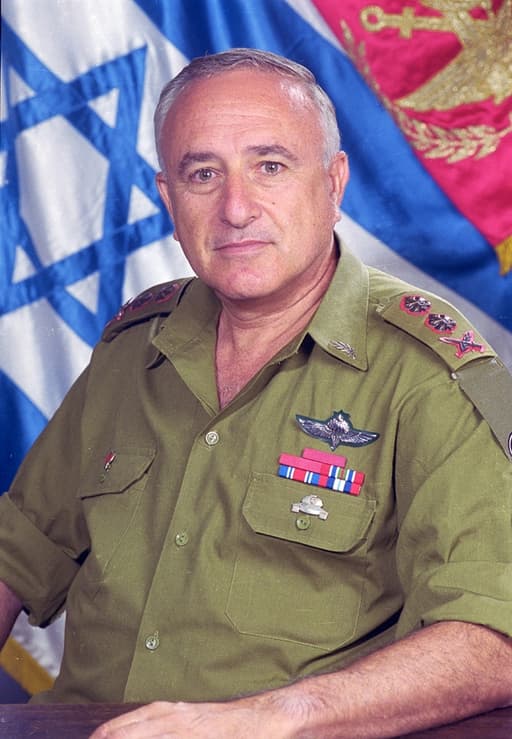
Amnon Lipkin's
PERSON
Name reference in documents
Amos Yaron's
PERSON
Name reference in documents
Amr Moussa
PERSON
Politician from Egypt

Arens
PERSON
Surname reference in documents
Ariel Sharon
PERSON
Prime Minister of Israel from 2001 to 2006
Arye Deri
PERSON
Name reference in documents
Avihu Ben-Nun
PERSON
Israeli general
Avneri
PERSON
Name reference in documents
AA
Avraham Arnan
PERSON
Name reference in documents
Avraham Burg
PERSON
Israeli politician
Avraham Shochat
PERSON
Israeli politician
BG
Baruch Goldstein
PERSON
American-Israeli doctor, perpetrator of the Cave of the Patriarchs massacre (1956-1994)
Bashar al-Assad
PERSON
President of Syria from 2000 to 2024
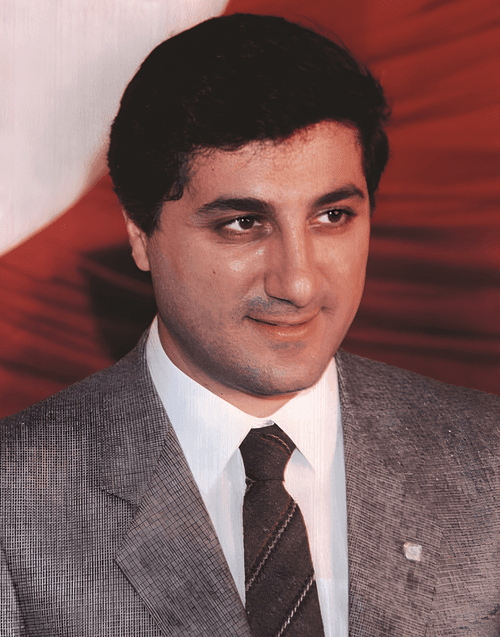
Bashir Gemayel's
PERSON
Name reference in documents
BE
Beilin
PERSON
Name reference in documents
BE
Ben-Dor
PERSON
Name reference in documents

Ben-Gurion
PERSON
Israeli politician, Zionist leader, prime minister of Israel (1948–1953, 1955–1963) - (born1886–1973)
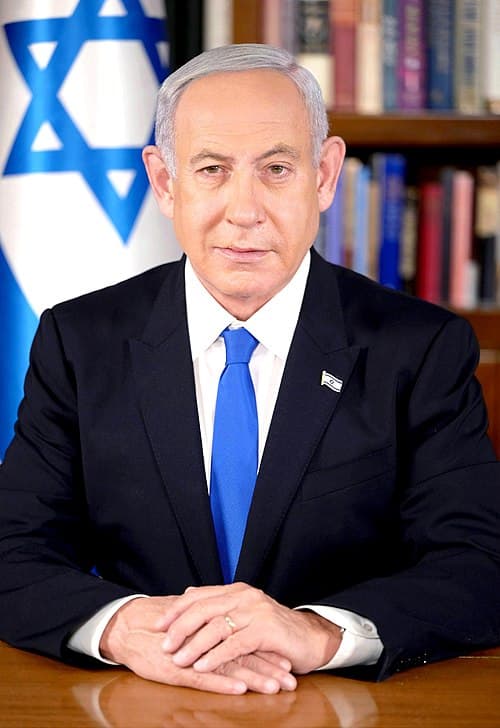
Benjamin Netanyahu
PERSON • 2 mentions
Prime Minister of Israel (1996–1999; 2009–2021; since 2022)
Benny Begin
PERSON
Israeli politician
Bibi Netanyahu
PERSON
Prime Minister of Israel (1996–1999; 2009–2021; since 2022)
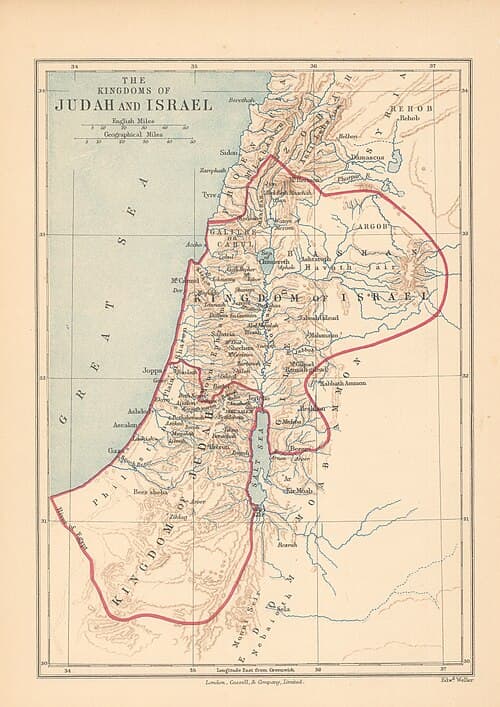
Biblical Israel
PERSON
Name reference in documents
Bill Clinton
PERSON • 3 mentions
President of the United States from 1993 to 2001 (born 1946)
Binyamin Ben-Eliezer
PERSON
Name reference in documents
Brent Scowcroft
PERSON
9th & 17th United States National Security Advisor (1925-2020)
Chopin sonata
PERSON
Name reference in documents
CS
Christopher Steele
PERSON
Former British intelligence officer
CO
Colin
PERSON
Ambiguous first name reference to multiple individuals in Epstein documents
Colin Powell
PERSON
American general and diplomat (1937–2021)
Condoleezza Rice
PERSON
American diplomat and political scientist (born 1954)
Dan Margalit
PERSON
Israeli journalist, author and television host
Dan Meridor
PERSON
Israeli politician
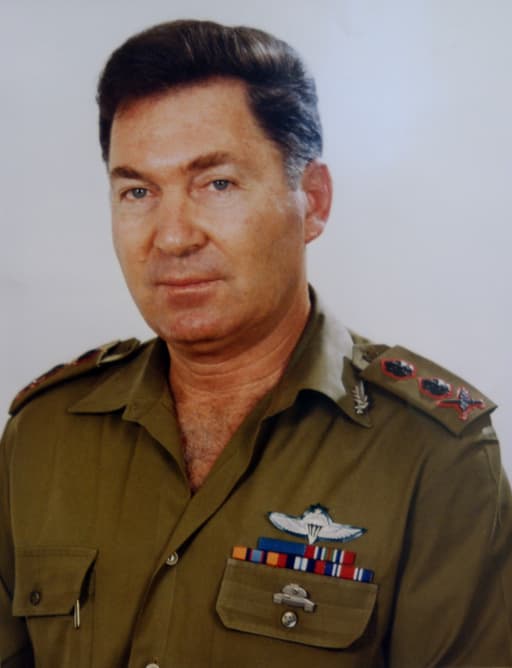
Dan Shomron's
PERSON
Name reference in documents

Dan, Misha
PERSON
Name reference in documents
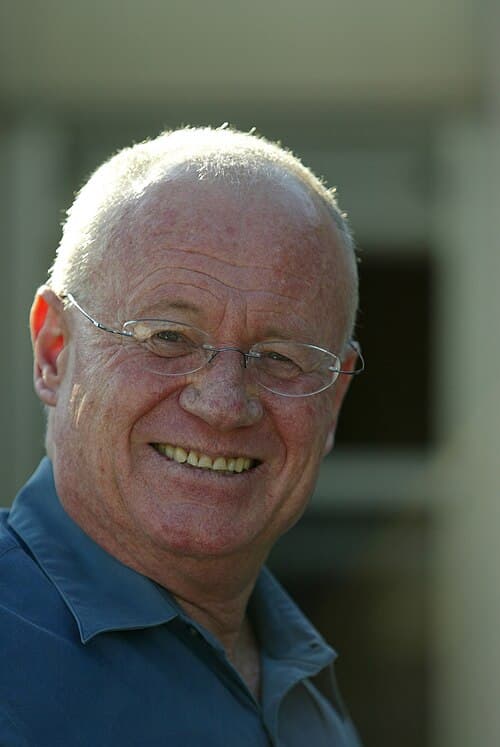
Danny Yatom
PERSON
Israeli politician
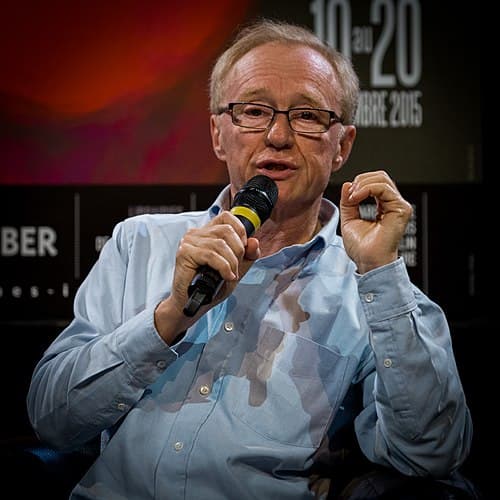
David Grossman
PERSON
Israeli author (born 1954)

David Ivri
PERSON
King of Israel and Judah
DA
Dayan
PERSON
Surname reference in documents

Dennis
PERSON
First name reference to multiple individuals in Epstein documents
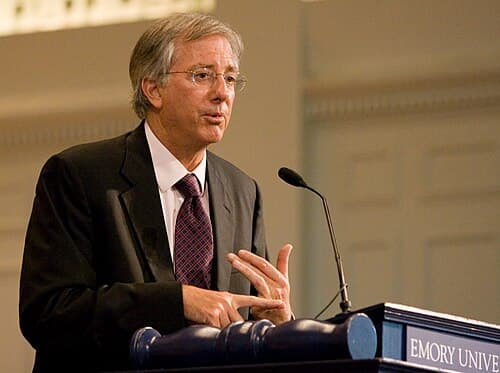
Dennis Ross
PERSON
American diplomat
Dick Cheney
PERSON
Vice President of the United States from 2001 to 2009
DO
Doron
PERSON
City mentioned only by Pliny and located in Cilicia Tracheia
Doron Cohen
PERSON
Name reference in documents
DB
Doug Band
PERSON
American presidential advisor
DR
Drori
PERSON
Name reference in documents
DR
Druse
PERSON
Name reference in documents
Ehud Barak
PERSON • 3 mentions
10th Prime Minister of Israel
Ehud Olmert
PERSON
Prime Minister of Israel from 2006 to 2009
Ehud Ran
PERSON
Name reference in documents
Eitan Haber
PERSON
Israeli businessman (1940-2020)
Ephraim
PERSON
Surname or name fragment in documents
Ephraim Halevy
PERSON
Name reference in documents
Esther
PERSON
Biblical Jewish queen of Persia and Medes (Book of Esther)
Farouk al-Sharaa
PERSON
Name reference in documents
Fuad Ben-Eliezer
PERSON
Israeli military officer and politician (1936-2016)
Gadi Zohar
PERSON
Name reference in documents
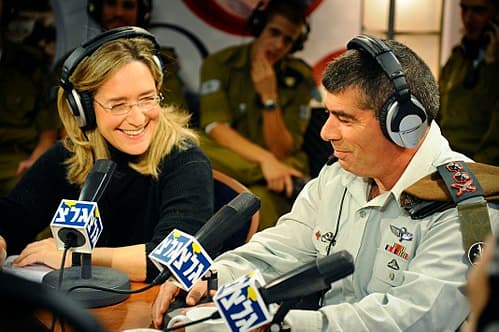
Galei Tzahal's
PERSON
Name reference in documents
George W. Bush
PERSON • 3 mentions
President of the United States from 2001 to 2009
Gerhard Schroeder
PERSON
Name reference in documents
GI
Giora
PERSON
Researcher
GE
Giora Einy
PERSON
Name reference in documents

Glass
PERSON
Surname reference in Epstein documents
GO
Goldstein
PERSON
Surname reference in Epstein-related documents
Habib
PERSON
Surname reference in documents
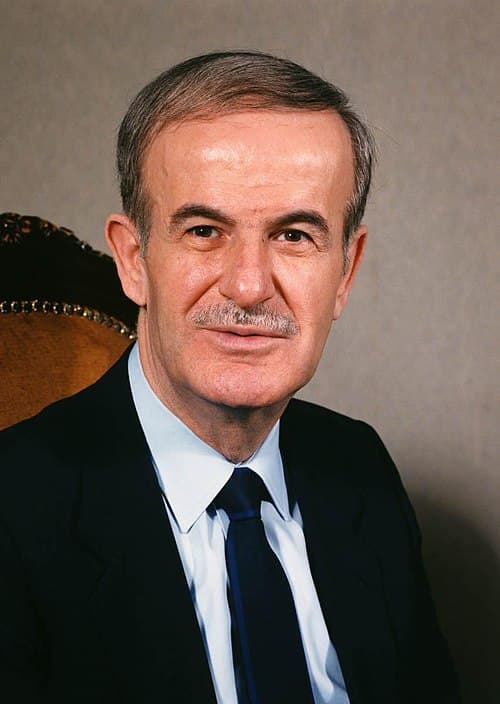
Hafez al-Assad
PERSON • 2 mentions
President of Syria from 1971 to 2000
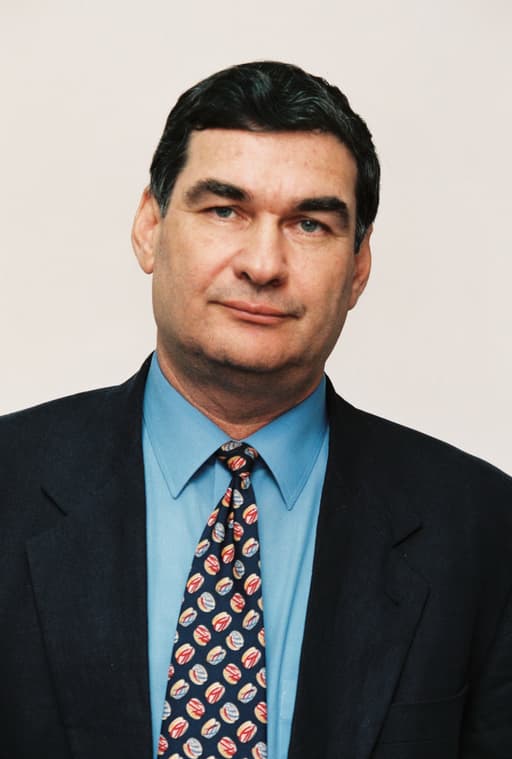
Haim Ramon's
PERSON
Name reference in documents
HA
Halevy
PERSON
Name reference in documents
HA
Hanan
PERSON
Name reference in documents
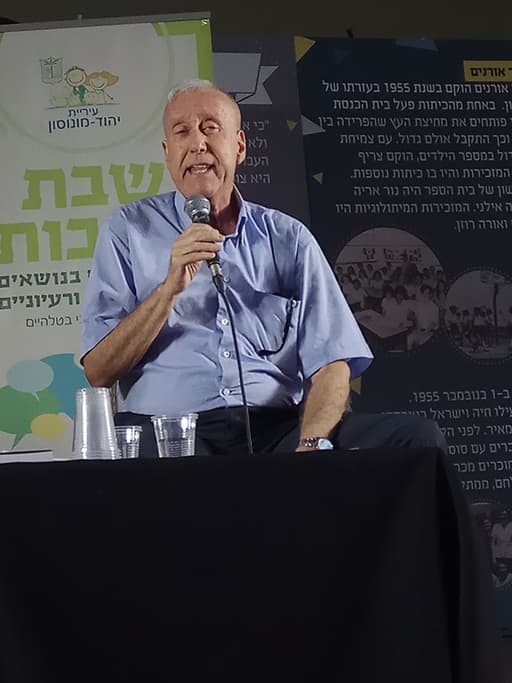
Hanan Kristal
PERSON
Israeli journalist

Helena Rapp's
PERSON
Name reference in documents
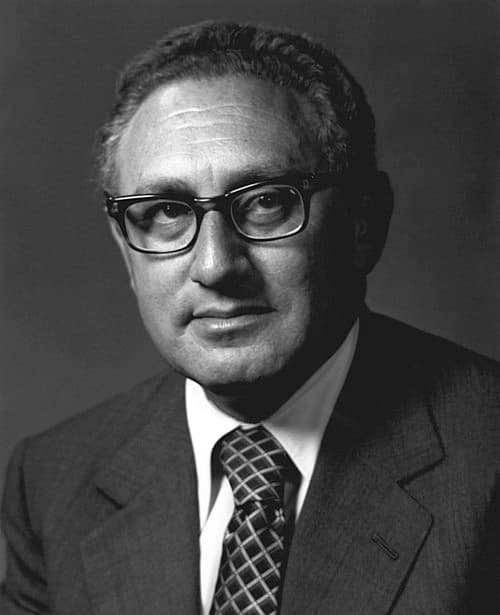
Henry Kissinger
PERSON • 2 mentions
American politician and diplomat (1923–2023)
HS
Hikmat Shehabi
PERSON
Name reference in documents
HS
Himat Shihabi
PERSON
Name reference in documents
Hosni Mubarak
PERSON • 2 mentions
President of Egypt from 1981 to 2011
IA
Inside Aman
PERSON
Name reference in documents
Itamar Rabinovich
PERSON
Israeli diplomat and academic (born 1942)
Jabotinsky
PERSON
Surname or name fragment in documents
JA
Jacob
PERSON
First name reference to multiple individuals in Epstein documents
James Baker
PERSON
American lawyer and statesman (born 1930)
JF
Jean Frydman
PERSON
French politician and businessman (1925–2021)
Jeremy Paxman
PERSON
Name reference in documents
JH
John Humphreys
PERSON
Australian fencer
Juan Carlos's
PERSON
Name reference in documents
KH
King Hussein
PERSON
Name reference in documents
Kuti Mor
PERSON
Name reference in documents
Leah Rabin
PERSON
Wife of Prime Minister of Israel (1928-2000)
LE
Lehadek
PERSON
Name reference in documents
LE
Lehitraot
PERSON
Name reference in documents

Likudnik
PERSON
Surname reference in documents
Mahmoud Abbas
PERSON
President of the Palestinian Authority since 2005
MA
Manyac
PERSON
Name reference in documents
Mao Zedong
PERSON • 2 mentions
1st chairman of the Chinese Communist Party and founder of the People's Republic of China (1893–1976)
MA
Margalit
PERSON
Public relations and communications lecturer in New Zealand
Meir Kahane
PERSON
Rabbi, writer and far right American-Israeli politician (1932–1990)
Meir Shamgar
PERSON
Israeli judge and former attorney general of Israel (1925–2019)

Meretz
PERSON
Surname or name fragment in documents
Meridor
PERSON
Name reference in documents
Michael Cohen
PERSON
American former attorney and former Republican official
MI
Michal
PERSON
Surname or name fragment in documents
Milton Friedman
PERSON
American economist and statistician (1912–2006)

Misha Arens
PERSON
Name reference in documents
Mishal
PERSON
Surname or name fragment in documents
MD
Morris Draper
PERSON
American diplomat
MO
Moshe
PERSON • 2 mentions
Ambiguous first name - refers to multiple people in Epstein documents
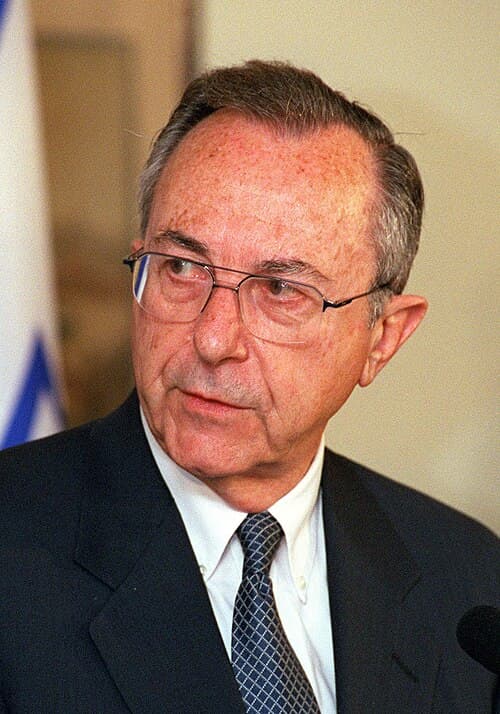
Moshe Arens
PERSON
Israeli diplomat, member of Knesset, and professor of aeronautics (1925-2019)
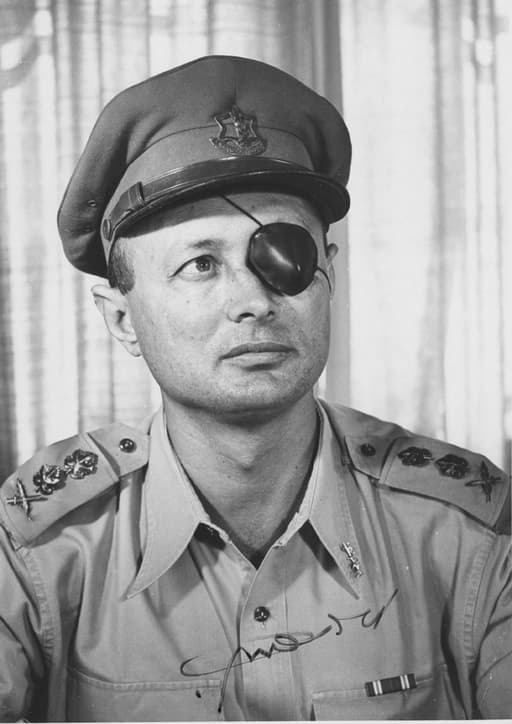
Moshe Dayan's
PERSON
Name reference in documents
Moshe Levy
PERSON
Israeli chemist
MV
Moshe Vechetzi's
PERSON
Name reference in documents
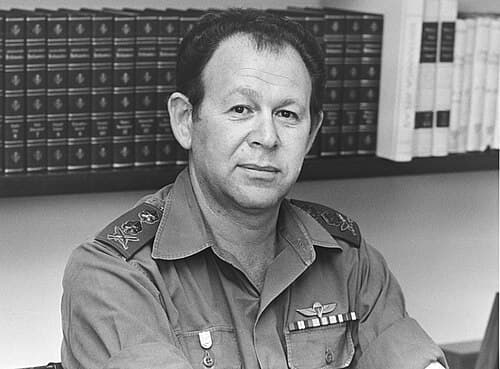
Motta Gur
PERSON
Name reference in documents

Mouse
PERSON
Surname or name fragment in documents
MO
Moyne
PERSON
First name reference to multiple individuals in Epstein-related documents
MW
Mrs Wachsman
PERSON
Name reference in documents
Muallem
PERSON
Israeli manager, Deputy Chief Executive Officer of the Families and Commemoration Department at the Ministry of Defense
MU
Muriel
PERSON
Surname reference in documents
Nahshon Wachsman
PERSON
Name reference in documents
Nechemia Cohen
PERSON
Person referenced in documents
NR
Neither Rabin
PERSON
Name reference in documents
Nir Poraz
PERSON • 2 mentions
Israeli soldier (1971-1994)
Nissim Mishal
PERSON
American rapper

Palmach
PERSON
Elite strike force of the Haganah in Mandatory Palestine
Philip Habib
PERSON
American diplomat (1920-1992)

Poraz
PERSON
Name reference in documents

Queen Noor
PERSON
Person referenced in documents
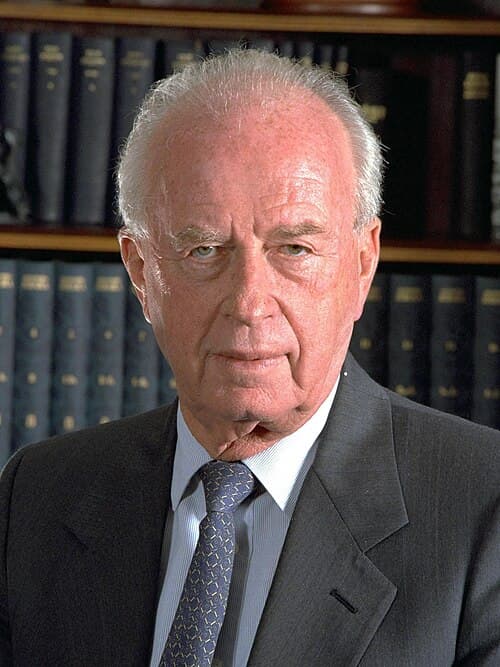
Rabins
PERSON
Surname or name fragment in documents
RA
Raful
PERSON
Surname or name fragment in documents
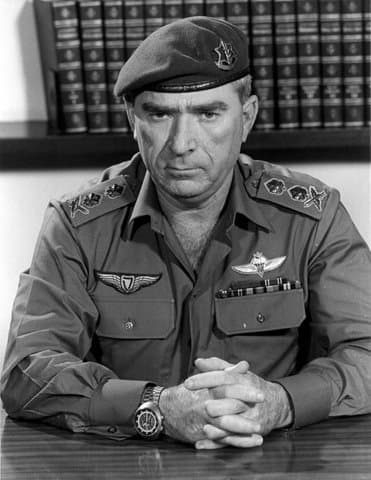
Raful Eitan
PERSON
Person referenced in documents
RO
Ramon Alonso Ocejo
PERSON • 2 mentions
Individual referenced in Epstein documents
RE
Reuma
PERSON
Name reference in documents
Ron Pundak
PERSON
Israeli journalist and academic
Ronald Reagan
PERSON • 2 mentions
President of the United States from 1981 to 1989 and actor (1911–2004)
RA
Rosh Aman
PERSON
Name reference in documents
Sadat
PERSON
Arabic name
Saddam Hussein
PERSON • 3 mentions
Iraqi president, army officer and Baathist politician (1937–2006)
Saguy
PERSON • 2 mentions
Surname or name fragment in documents
Sam Donaldson
PERSON
American journalist
Sarid
PERSON
Name reference in documents
Sde Dov
PERSON
Name reference in documents

Shamir
PERSON
American singer and songwriter (born 1994)
Sharaa
PERSON
Surname or name fragment in documents
SH
Sharon
PERSON
Ambiguous first name - refers to multiple Sharons including Ariel Sharon, Sharon Churcher, and Mishmar Hasharon location
SH
Shatila
PERSON
Researcher
Shaul Mofaz
PERSON
Israeli military officer and politician
SH
Shihabi
PERSON
Name reference in documents
SH
Shimon
PERSON • 2 mentions
First name reference to multiple individuals in the documents
Shimon Peres
PERSON • 2 mentions
Israeli politician (1923–2016) –Former President of Israel (2007–2014) and Prime Minister of Israel (1977, 1984–1986, 1995–1996)
Shimon Shamir
PERSON
Name reference in documents
SS
Shimon Shevess
PERSON
Name reference in documents
SB
Shin Bet
PERSON
Person referenced in documents
Shlomo Ben-Ami
PERSON
Israeli diplomat
Shlomo Lahat
PERSON
Israeli general and politician (1927–2014)
Shmuel Arad
PERSON
Israeli general
Shochat
PERSON
Name reference in documents
SO
Sonia
PERSON
Indian actress
SO
Sonya
PERSON
First name reference to multiple individuals in Epstein-related documents
ST
Stung
PERSON
Name reference in documents
Terje Larsen
PERSON
Swedish tennis player
the Ayatollah Khomeini's
PERSON
Name reference in documents
Tony Blair
PERSON • 2 mentions
Prime Minister of the United Kingdom from 1997 to 2007
TS
Tsila
PERSON
Name reference in documents
TD
Tsila Drori
PERSON
Name reference in documents
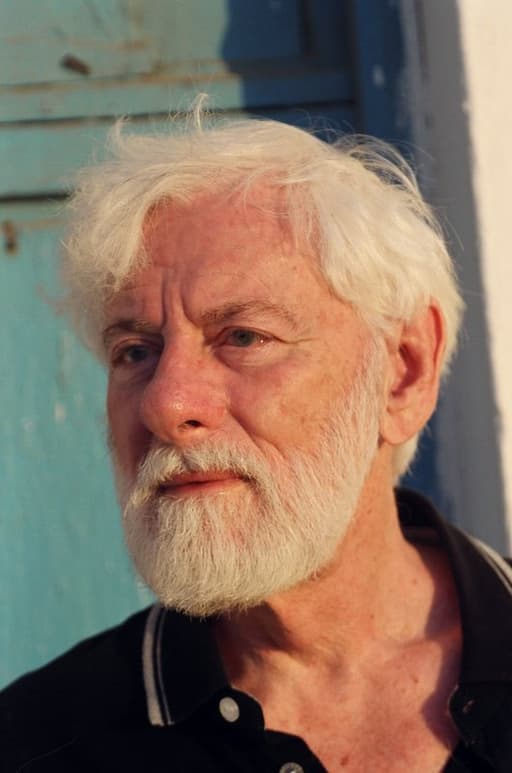
Uri Avneri
PERSON
Israeli politician, journalist and author (1923-2018)
Uri Saguy
PERSON
Name reference in documents
Uri Savir
PERSON
Israeli diplomat and politician (1953-2022)

Uri Simchoni
PERSON
Name reference in documents
Uzi Baram
PERSON
Israeli politician
Uzi Yairi
PERSON
Israeli soldier
WA
Wachsman
PERSON
Name reference in documents
Walid Muallem
PERSON
Syrian politician, foreign minister (1941-2020)
Warren Christopher
PERSON
U.S. Secretary of State (1925-2011)
WA
Waschsman
PERSON
Name reference in documents
Wilbur Ross
PERSON
United States 39th Secretary of Commerce
Yair Hirschfeld
PERSON
Israeli academic
YA
Yanoush
PERSON
Surname reference in documents
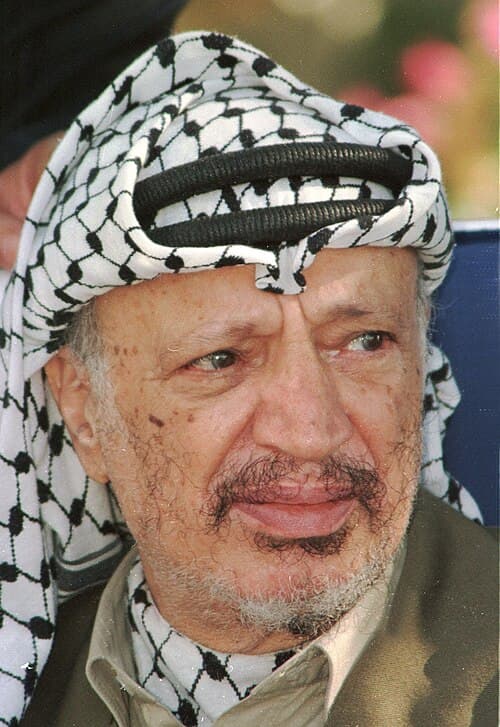
Yasser Arafat
PERSON • 2 mentions
Palestinian political leader (1929–2004) and Former President of the Palestinian National Authority (1994-2004)
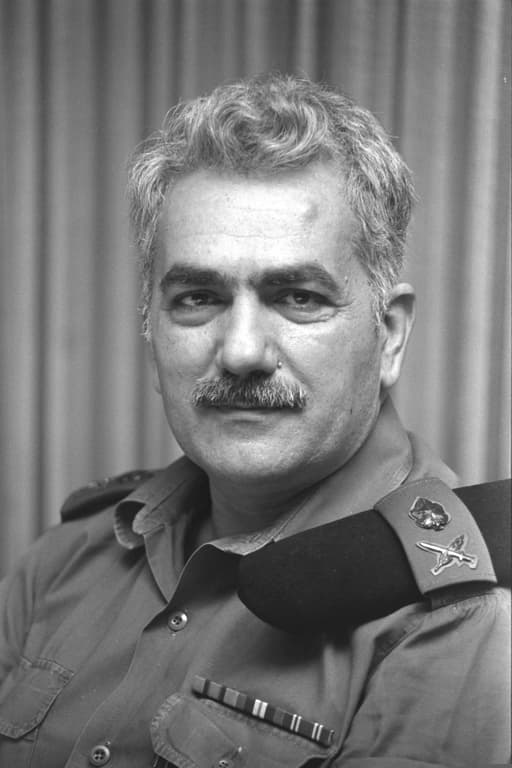
Yehoshua Saguy
PERSON
Israeli general, politician and diplomat (1933–2021)

Yehudim
PERSON
Name reference in documents
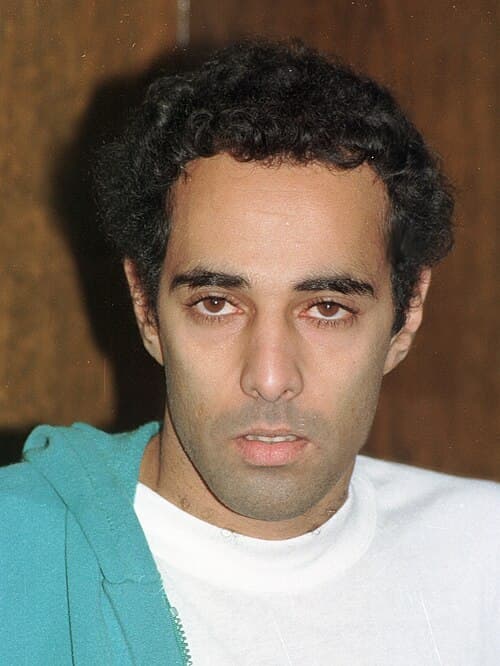
Yigal Amir
PERSON
Israeli extremist and murder convict
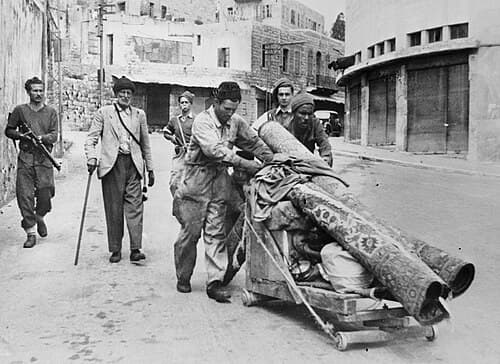
Yigal Garber
PERSON
Name reference in documents
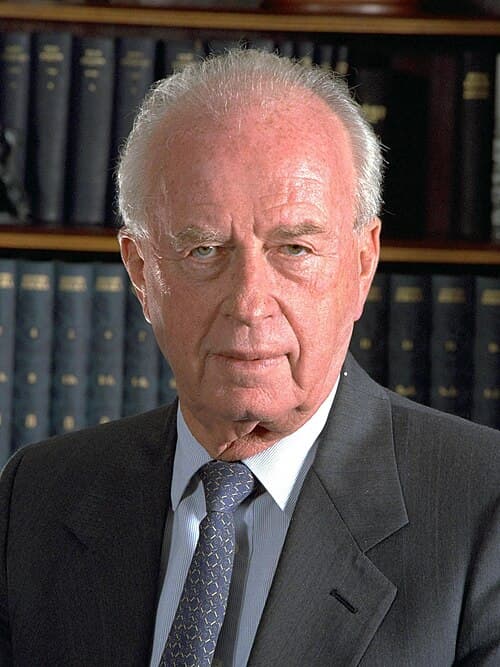
Yitzhak
PERSON
Israeli politician, statesman and general (1922–1995)
Yitzhak Rabin
PERSON
Israeli politician, statesman and general (1922–1995)
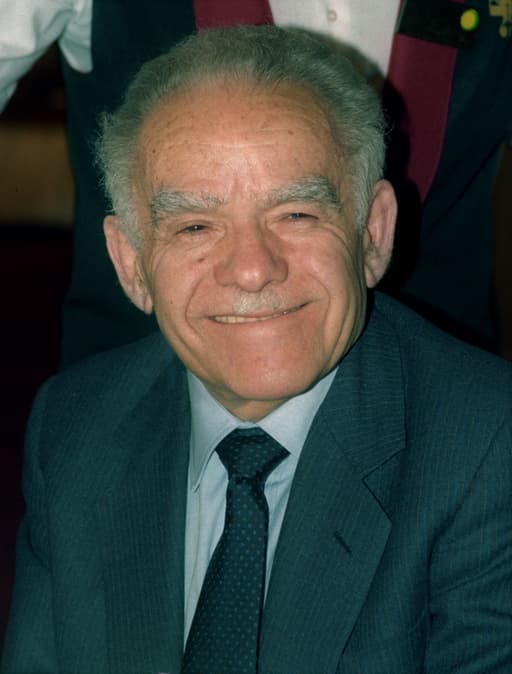
Yitzhak Shamir's
PERSON
Name reference in documents
YM
Yitzhik Mordechai
PERSON
Name reference in documents
YK
Yoni Koren
PERSON
Person referenced in documents
YN
Yoni Netanyahu
PERSON
Military officer and national hero of the State of Israel (1946–1976)
YO
Yossi
PERSON
Surname or name fragment in documents
Yossi Beilin
PERSON
Israeli politician
YB
Yossi Ben-Hannan
PERSON
Name reference in documents

Yossi Peled
PERSON
Israeli politician
Yossi Sarid
PERSON
Israeli politician (1940-2015)
ZL
Ziv Lotenberg
PERSON
Name reference in documents
Armagnac
ORGANIZATION
Organization referenced in documents
Baath Party
ORGANIZATION
Organization referenced in documents
Beersheva Hospital
ORGANIZATION
Organization referenced in documents

Betar
ORGANIZATION
Revisionist Zionist youth movement founded in 1923 in Riga, Latvia, by Vladimir (Ze'ev) Jabotinsky
Blair House
ORGANIZATION
U.S. presidential guest house in Washington, D.C.
Channel 1
ORGANIZATION
Organization referenced in documents
Chinese Farm
ORGANIZATION
Organization referenced in documents

Davar
ORGANIZATION
Israeli newspaper
Eli Zeira's
ORGANIZATION
Organization referenced in documents

Fatah
ORGANIZATION
Palestinian nationalist political party
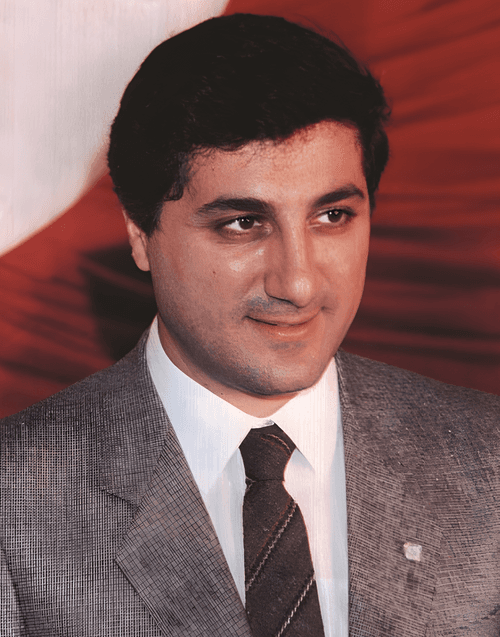
Gemayel
ORGANIZATION
Organization referenced in documents

Gush Emunim
ORGANIZATION • 2 mentions
Israeli ultranationalist movement
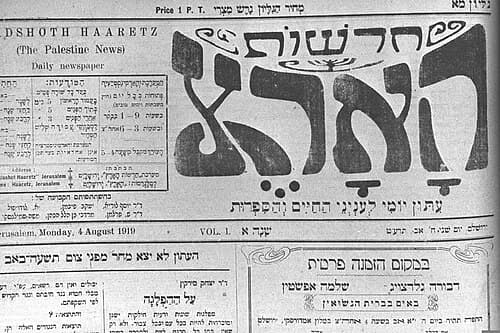
Haaretz
ORGANIZATION
Israeli daily newspaper
Hadashot
ORGANIZATION • 2 mentions
Israeli newspaper
IAMNAM
ORGANIZATION
Organization referenced in documents
Intelligence Directorate
ORGANIZATION
Organization referenced in documents

Irgun
ORGANIZATION
Zionist paramilitary organization (1931–48)
Islamic Jihad
ORGANIZATION
Palestinian militant organization
Katyusha
ORGANIZATION
Organization referenced in documents
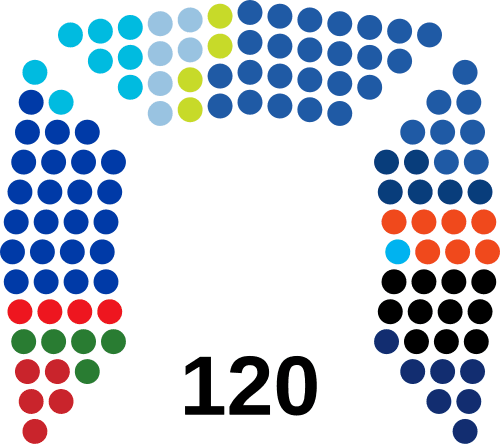
Knesset
ORGANIZATION
Unicameral national legislature of Israel
Kol Yisrael
ORGANIZATION
National organisation for radio in Israel
Labor Party
ORGANIZATION
Former political party in the United States founded 1996
Land Rovers
ORGANIZATION
Organization referenced in documents

Likud
ORGANIZATION
Israeli centre-right to right-wing political party
Moked
ORGANIZATION
Organization referenced in documents

Mossad
ORGANIZATION
National intelligence agency of Israel
Palesitnians
ORGANIZATION
Organization referenced in documents
Palestine - General Command
ORGANIZATION
Organization referenced in documents
Patriots
ORGANIZATION
2000 film directed by Roland Emmerich

Peace Now
ORGANIZATION
Organization referenced in documents
Phalangist Party
ORGANIZATION
Organization referenced in documents
Popular Front for the Liberation
ORGANIZATION
Organization referenced in documents

Rotem
ORGANIZATION
Organization referenced in documents
Scuds
ORGANIZATION
Organization referenced in documents

Sikorsky
ORGANIZATION
American helicopter manufacturer
Steinway
ORGANIZATION
Piano and musical instrument manufacturer

Tel Aviv University
ORGANIZATION
University in Tel Aviv, Israel
Tevel
ORGANIZATION
Organization referenced in documents
the Bush Administration's
ORGANIZATION
Organization referenced in documents
the Clinton Administration's
ORGANIZATION
Organization referenced in documents
the Defense Ministry
ORGANIZATION
Organization referenced in documents
the Golani Brigade
ORGANIZATION
Organization referenced in documents
the Gush Emunim
ORGANIZATION
Organization referenced in documents
the Interior Ministry
ORGANIZATION
Organization referenced in documents
the Palestine Liberation Front
ORGANIZATION
Organization referenced in documents
the Palestinian Covenant
ORGANIZATION
Organization referenced in documents
the Sephardi Orthodox
ORGANIZATION
Organization referenced in documents
the Shin Bet
ORGANIZATION
Organization referenced in documents
the South Lebanon Army
ORGANIZATION
Organization referenced in documents
Tsomet
ORGANIZATION
Political party in Israel

Yad Vashem
ORGANIZATION
Israel's official memorial to the Jewish victims of the Holocaust
Yediot
ORGANIZATION
Organization referenced in documents
Yeidot Achronot
ORGANIZATION
Organization referenced in documents
Yossi's 28
ORGANIZATION
Organization referenced in documents
Arava
LOCATION
Location referenced in documents

Ashdod
LOCATION
City in Israel
Ashkelon
LOCATION
City in Israel
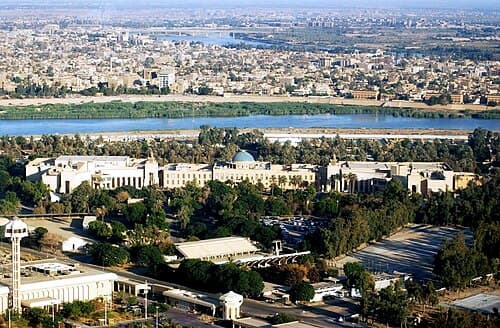
Baghdad
LOCATION
Capital city of Iraq

Barcelona
LOCATION
Multisports club in Barcelona, Spain
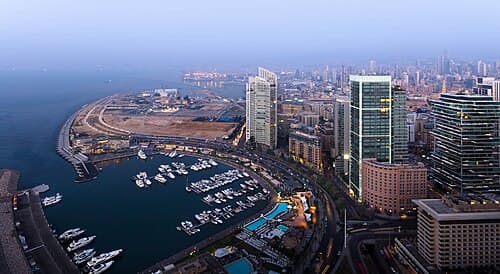
Beirut
LOCATION
Capital and largest city of Lebanon
Big Pines
LOCATION
Unincorporated community in California
Caesarea
LOCATION
Modern day town in Israel

Cyprus
LOCATION
Mediterranean island country in West Asia
Damascus
LOCATION
Capital and largest city of Syria
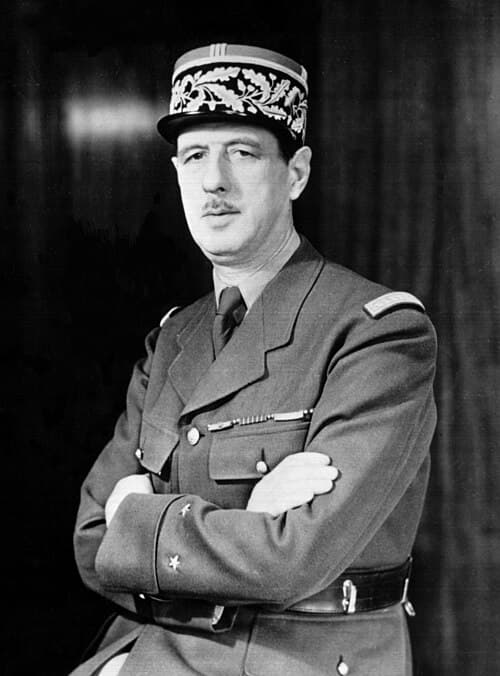
De Gaulle
LOCATION
Airport in Paris, France
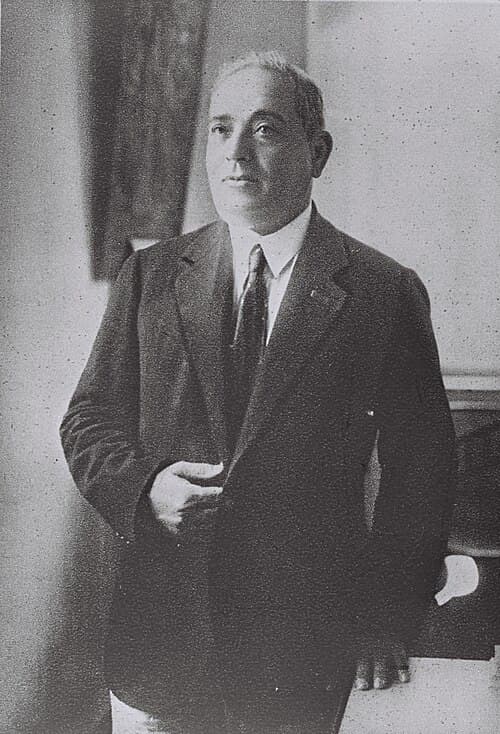
Dizengoff
LOCATION
Location referenced in documents

Entebbe
LOCATION
Location referenced in documents
Eygpt
LOCATION
Location referenced in documents
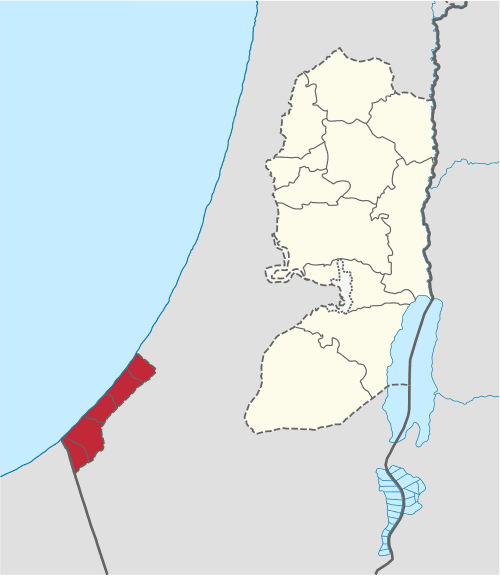
Gaza Strip
LOCATION
Gaza Strip, Palestinian territory
Get Gaza
LOCATION
Location referenced in documents
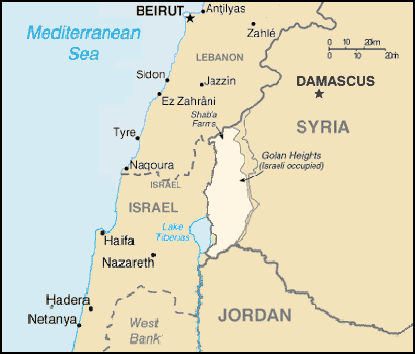
Golan
LOCATION • 2 mentions
Territory on the Golan Heights
Haifa
LOCATION
Third-largest city in Israel
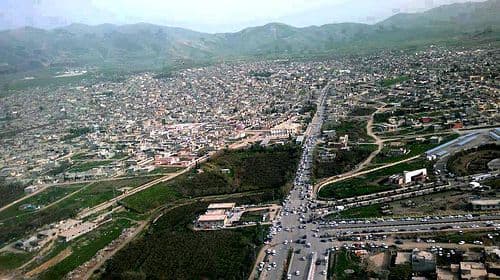
Halabja
LOCATION
City in Iraqi Kurdistan
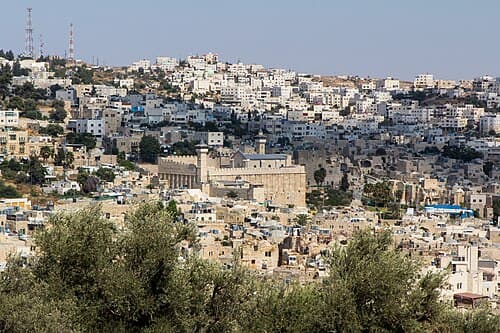
Hebron
LOCATION
Palestian city in the occupied West Bank
Heights
LOCATION
Location referenced in documents
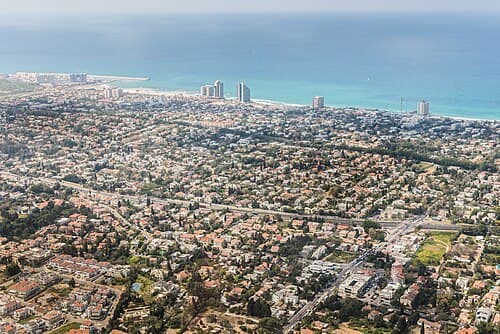
Herzliya
LOCATION
City in the Tel Aviv District of Israel

Israel
LOCATION
Country in West Asia
Israeli Square
LOCATION
Location referenced in documents
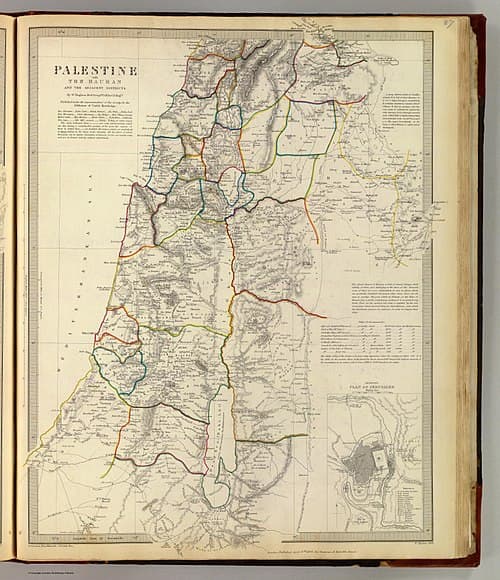
Jericho
LOCATION
City in West Bank, Palestine
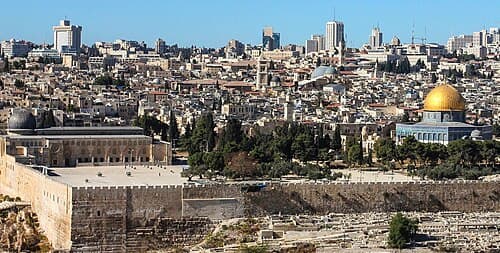
Jerusalem
LOCATION
City in the Middle East, holy to the three Abrahamic religions
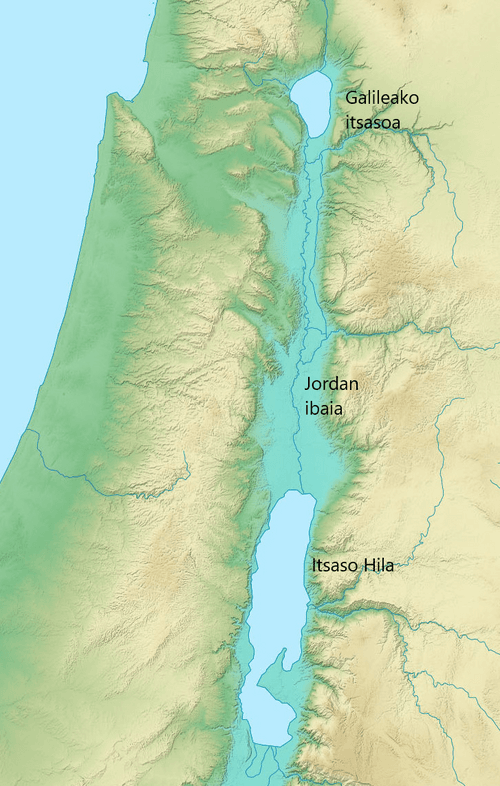
Jordan Valley
LOCATION
Location referenced in documents
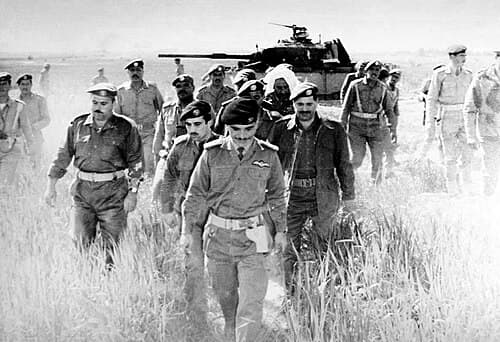
Karameh
LOCATION
Human settlement in Jordan
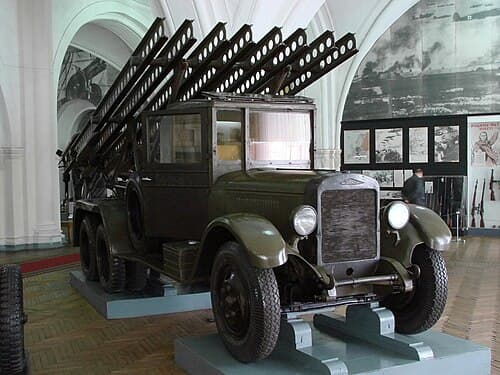
Katyushas
LOCATION
Location referenced in documents
Kiryat
LOCATION
Location referenced in documents
Kiryat Arba
LOCATION
Community and local council in near Hebron
Kiryat Shmona
LOCATION
City in Israel
Kochav Yair
LOCATION
Location referenced in documents

Kuwait
LOCATION
Sovereign state in Western Asia
Lebanon
LOCATION
Country in West Asia

Madrid
LOCATION
Capital of Spain

Maine
LOCATION
State of the United States of America
Mont Louis
LOCATION
Location referenced in documents

Morocco
LOCATION
Sovereign state in North Africa
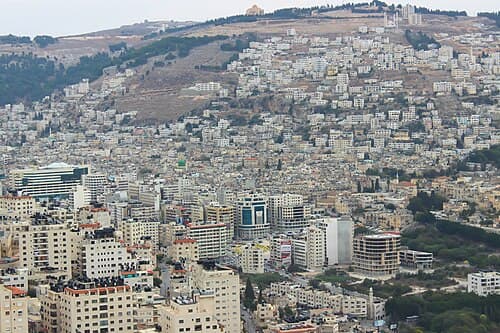
Nablus
LOCATION
City in the West Bank, State of Palestine
Negev
LOCATION
Desert and semidesert region of southern Israel

New York
LOCATION
Most populous city in the United States
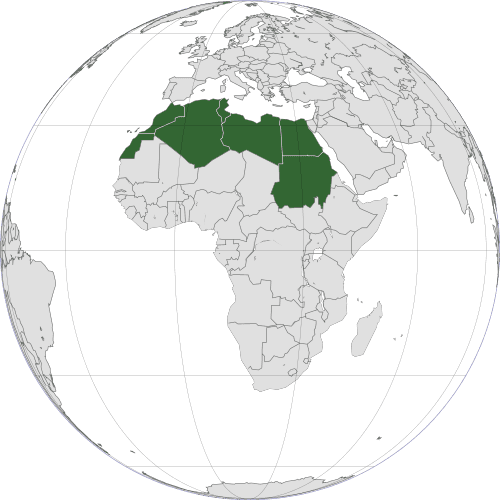
North Africa
LOCATION
Northernmost region of the African continent
Ofakim
LOCATION
City in Israel
Old City
LOCATION
Location referenced in documents
Oslo Il
LOCATION
Location referenced in documents

Qalqilya
LOCATION
City in West Bank, Palestine
Ramallah
LOCATION
City in the State of Palestine
Ramat Aviv
LOCATION
Neighborhood in Tel Aviv
Ramat Gan
LOCATION
City in the Tel Aviv District of Israel
Ronit Farm
LOCATION
Location referenced in documents
Sabra
LOCATION
Location referenced in documents
Sandhurst
LOCATION
Location referenced in documents
Savyon
LOCATION
Affluent town in Israel
Sayeret Matkal
LOCATION • 3 mentions
Special forces unit of the Israel Defense Forces
Seattle
LOCATION
City in and county seat of King County, State of Washington, United States
Sharm
LOCATION
Location referenced in documents
Sharm al-Sheikh
LOCATION
Location referenced in documents
Sinai
LOCATION
Peninsula in the Middle East
Sultan Yacoub
LOCATION
Village in Lebanon
Tel Aviv's
LOCATION
Location referenced in documents
Tel Rumeida
LOCATION
Agricultural and residential area in Hebron
the Bekaa Valley
LOCATION
Location referenced in documents
the Far East
LOCATION
Region in the Far East
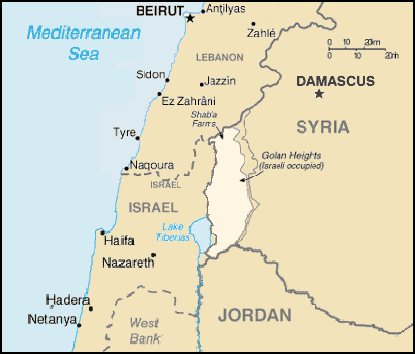
the Golan Heights
LOCATION
Territory on the Golan Heights
the Hashemite Kingdom
LOCATION
Location referenced in documents
the Jordan River
LOCATION
Location referenced in documents
the Litani River
LOCATION
Location referenced in documents
the Soviet Union
LOCATION
Former country, now part of Russia and other nations
the Suez Canal
LOCATION
Location referenced in documents
the West Bank
LOCATION
Territory in the Middle East
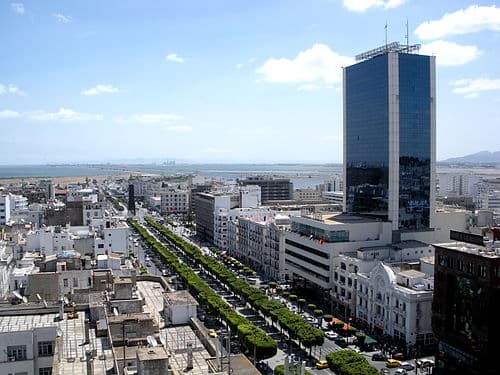
Tunis
LOCATION
Capital of Tunisia

Tunisia
LOCATION
Country in North Africa

Tze' elim
LOCATION
Biblical place-name

Upper East Side
LOCATION
Neighborhood in Manhattan

Vietnam
LOCATION
Country in Southeast Asia
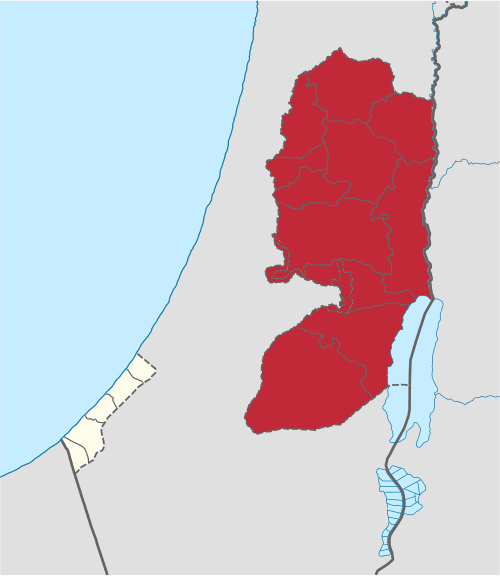
West Bank
LOCATION
Territory in the Middle East
west Beirut
LOCATION
Location referenced in documents
Wye River
LOCATION
Location referenced in documents
Statistics
Pages:100
Entities:332
Avg. OCR:99.2%
Sponsored