EFTA01295633_sub_002 - EFTA01295633_135
Document Information
Bates Range
EFTA01295633_sub_002 - EFTA01295633_135
Pages
35
Original Filename
EFTA01295633.pdf
Document Content
Page 101 - EFTA01295633_101
Page 100 2015 U.S. Dist. LEXIS 86119, * (Id., 1146.) The Plaintiff alleges that, despite the foregoing, the Defendants failed to disclose Specialty's precarious financial condition and misrepresented that Specialty was financially sound. (Id., ¶¶ 64, 74.) F. Claims asserted in the TAC. The Plaintiff asserts thirteen counts in the TAC. (Doc. 64.) In Counts I and II, the Plaintiff asserts breach of contract claims against BTU, only. (Id. at 30-31.) In Count III, the Plaintiff asserts fraudulent misrepresentation claims against all the Defendants pursuant to sections 6-5-101 and 6-5-103 of the Code of Alabama. (Id. at 31-43.) In N 3] Count IV, the Plaintiff asserts fraudulent suppression claims against all the Defendants pursuant to section 6-5-102. (Id. at 43-49.) In Count V, the Plaintiff asserts fraudulent deceit claims against all the Defendants pursuant to section 6-5-104. (Id. at 49-55.) In Count VI, the Plaintiff asserts fraud in the inducement claims against all the Defendants. (Id. at 55-58.) In Count VII, the Plaintiff asserts fraud in insolvency claims against BTU and Brito pursuant to section 13A-9-48 of the Code of Alabama. (Id. at 58-65.) In Counts VIII-IX, the Plaintiff asserts negligence and wantonness claims against BIC. (Id. at 65-73.) In Counts X-XI, the Plaintiff asserts breach of fiduciary duty claims against BIC. (Id. at 73-81.) In Count XII, the Plaintiff asserts that the corporate veil should be pierced as to Bunkering and BTU so that the Plaintiff may recover against Brito personally. (Id. at 82-84.) In Count XIII, mislabeled as Count XI, the Plaintiff asserts a claim for injunctive relief against BTU and Brito. (Id. at 84-87.) BTU and Brito moved to dismiss Counts IV and VII for failure to state a claim, and moved to strike Count VI as redundant.' (Doc. 67.) BIC moved to dismiss all Counts asserted against BIC (Counts VIII-XI) for failure to state a claim. (Doc. 65.) Counts I, II, XII and XIII are not addressed in the ['14] motions to dismiss and, thus, they are not discussed herein. 5 BTU and Brito indicate in one sentence on the first page of their motion to dismiss that Cotrit V1 should be dismissed for failure to state a claim. (Doc. 67,1 1.) However, in their bnef they provide no argument regarding the dismissal of Court VI for failure to state a claim and failed to even reassert the statement made on the face of their motion. (Doc. 67-1.) The only discussion of Court VI relates to their argument that it should be stricken as redundant of other claims. (1d. at 5.) Accordingly, with respect to Count VI, the undersigned construes BTU and Bates motion as asserting the redundancy argument, only. II. Motion to Dismiss Standard Pursuant to Rule 12(b)(6) of the Federal Rules of Civil Procedure, a defendant may move to dismiss a complaint on the basis that the plaintiff has failed to state a claim upon which relief may be granted. See Fed. R. Civ. P. 12(b)(6). A Rule 12(b)(6) motion questions the legal sufficiency of a complaint (or portions of a complaint); therefore, in assessing the merits of a Rule 12(b)(6) motion, the court must assume that all the factual allegations set forth in the complaint are true. See, e.g., United States v. Gaubert, 499 U.S. 315, 327, 111 S. Ct. 1267, 1276, 113 L. Ed. 2d 335 (1991); Powell v. Lennon, 914 F.2d 1459, 1463 (11th Cir. 1990). Moreover, all factual allegations are to be construed in the light most favorable For internal use only SDNY_GM_00056896 CONFIDENTIAL - PURSUANT TO FED. R.QQN(F IDENTIAL DB-SONY-0019720 EFTA_00 167466 EFTA01295733
Page 102 - EFTA01295633_102
Page 101 2015 U.S. Dist. LEXIS 86119, * to the plaintiff. r15] See, e.g., Brower v. County of Inyo, 489 U.S. 593, 598, 109 S. Ct. 1378, 1382, 103 L. Ed. 2d 628 (1989). Rule 8(a)(2) generally sets the benchmark for determining whether a complaint's allegations are sufficient to survive a Rule 12(b)(6) motion. See lqbal v. Ashcroft, 556 U.S. 662, 677-678, 129 S. Ct. 1937, 1949, 173 L. Ed. 2d 868 (2009) ("Under Federal Rule of Civil Procedure 8(a)(2), a pleading must contain a 'short and plain statement of the claim showing that the pleader is entitled to relief.' As the Court held in Twombly, . . . the pleading standard Rule 8 announces does not require 'detailed factual allegations,' but it demands more than an unadorned, the defendant-unlawfully-harmed-me accusation."). Indeed, "[a] pleading that offers 'labels and conclusions' or 'a formulaic recitation of the elements of a cause of action will not do."' Id. at 678, 129 S. Ct. at 1949 (quoting Bell Atlantic Corp. v. Twombly, 550 U.S. 544, 555, 127 S. Ct. 1955, 1964-1965, 167 L. Ed. 2d 929 (2007)). "Nor does a complaint suffice if it tenders 'naked assertion[s]' devoid of 'further factual enhancement."' Id. (quoting Twombly, 550 U.S. at 557, 127 S. Ct. at 1955). To survive a motion to dismiss, a complaint must contain sufficient factual matter, accepted as true. to state a claim to relief that is plausible on its face. A claim has facial plausibility when the plaintiff pleads factual content that allows the court to draw the reasonable inference that the defendant is liable for the misconduct alleged. The plausibility standard is not akin to a probability requirement, but it asks for more than a sheer possibility that a defendant r103] has acted unlawfully. Where a complaint pleads fads that are merely consistent with a defendant's liability, it stops short of the lire between possibility and plausibility of entitlement to relief. Two working principles underlie our decision in Twombly. First, the tenet that a court must accept as true all of the allegations contained in a complaint is inapplicable to legal conclusions. Threadbare recitals of the elements of a cause of action, supported by mere conclusory statements, do not suffice. Rule 8 marks a notable and generous deputise from the hyper-technical. code-pleading regime of a prior era. but it does not unlock the doors of discovery for a plaintiff armed with nothing more than conclusions. Second, only a complaint that states a plausible claim for relief survives a motion to dismiss. Determining whether a complaint states a plausible claim for relief will . . . be a context-specific task that requires the reviewing court to draw on its judicial experience and common sense. But where the well-pleaded facts do not permit the court to infer more than the mere possibility of miscondud, the complaint has alleged--but it has not showfil-that the pleader is entitled to relief. Id. at 678-679, 129 S. Ct. at 1949-1950 (internal r17] citations and quotation marks omitted); see also id. at 680, 129 S. Ct. at 1950-1951 (a plaintiff must nudge his claims "across the line from conceivable to plausible."'); see Speaker v. United States Dept of Health & Human Services Centers for Disease Control & Prevention, 623 F.3d 1371, 1381 (11th Cir. 2010) ("[G]iven the pleading standards announced in Twombly and lqbal, [plaintiff] must do more than recite [] statutory elements in conclusory fashion. Rather, his allegations must proffer enough factual content to 'raise a right to relief above the speculative level."'). Ill. Discussion A. The TAC meets basic pleading requirements. BIC first argues that, as a general matter, the TAC does not contain enough factual allegations to meet the facial plausibility pleading standard explained in lqbal and Twombly. (Doc. 65 at 2-3.) The undersigned disagrees. With respect to BIC, the Plaintiff asserts fraud, breach of fiduciary duty, negligence and wantonness claims. The 87-page and 164-paragraph TAC, with 20 pages of attached exhibits, contains more than enough facts to show that those claims are plausible on their face. (See doc. 64.) The Plaintiff alleges numerous facts to explain (1) the transactions at issue in this case through which For internal use only SDNY_GM_00056897 CONFIDENTIAL - PURSUANT TO FED. R.QC;IN(F IDENTIAL DB-SDNY-0019721 EFTA_00 167467 EFTA01295734
Page 103 - EFTA01295633_103
Page 102 2015 U.S. Dist. LEXIS 86119, * the Plaintiff lost millions of dollars; (2) BIC's involvement in those transactions as the Plaintiff's broker and agent; (3) the rvi duties BIC owed to the Plaintiff arising from their working relationship and course of dealings; and (4) BIC's breach of those duties through its alleged misrepresentations and suppression of material facts, among other things. (See id.) The Plaintiffs claims are discussed in more detail below, but the TAC clearly contains plausible claims with much more than conclusory statements or threadbare recitals of the elements of a cause of action. BIC next argues that the TAC violates Rule 8(a)(2) and Rule 8(d)(1). (Doc. 65 at 3-5.) Rule 8(a)(2) provides that a complaint must contain "a short and plain statement of the claim showing that the pleader is entitled to relief." Fed. R. Civ. P. 8(a)(2). Rule 8(d)(1) provides that "[e]ach allegation must be simple, concise, and direct." Fed. R. Civ. P. 8(d)(1). While the TAC is somewhat sprawling, with some paragraphs appearing repetitive and unnecessary, the undersigned acknowledges that the length and repetition is due, in part, to the fact that the Plaintiff has restated certain allegations to cure shotgun pleading deficiencies in the Second Amended Complaint. (Compare doc. 64, with doc. 31.) In the Court's Order granting the Plaintiff leave to file its Proposed Second Amended Complaint ("PSAC"), United States District Judge Kristi K. DuBose risj noted that the PSAC is a "shotgun pleading." as it "incorporate(s) every antecedent allegation by reference into each subsequent claim for relief ' Wagner v. First Horizon Pharrn. Corp.. 464 F.3d 1273. 1279 (11th Cir. 2006). The Eleventh Circuit greatly disfavors such pleadings. see. e.g.. id. . . However, having reviewed the PSAC. the Court does not find it confusing on its face and will not sue sponte deny amendment on this basis. (Doc. 30 at 7-8.) After the Plaintiff filed the Second Amended Complaint (doc. 31), the Defendants filed motions for a more definite statement (dots. 46 and 49), and the Plaintiff, subsequently, filed the TAC to clarify its claims. The undersigned agrees with the Plaintiff that, at this point, its claims are sufficiently clear. The TAC gives BIC fair notice of the Plaintiff's claims "and the grounds upon which [they] rest," such that it allows BIC to frame a responsive pleading. Accordingly, the undersigned finds that the TAC complies with the pleading requirements of Rule 8. 6 See Twombly. 550 U.S. at 556. 127 S. Ct. at 1964-65 (observing that Rule l3(a)(2) requires that the pleading "'give the defendant fair notice of what the . . . claim is and the grounds upon which it rests" (quoting Conley v. Gibson. 355 U.S. 41. 47. 78 S. Ct. 99.2 L. Ed. 2d 80 (1957))). B. The Plaintiffs claims against BIC are properly asserted in tort. BIC argues that all claims Plaintiff asserts against r20] it--fraud, breach of fiduciary duty, negligence and wantonness--arose from their contract and, thus, those claims "must be dismissed insofar as the allegations therein assert a cause of action sounding in tort but based on a contract." (Doc. 65 at 6.) The undersigned disagrees. It is well settled in Alabama that "a mere failure to perform a contractual obligation is not a tort." Barber v. Business Products Center, inc., 677 So. 2d 223.228 (Na. 1996)1. overruled on other grounds by White Sands Group, L.L.0 v. PRS Il, LLC. 32 So. 3d 5. 14 (Na. 2009)]. It is also true, however, that Alabama courts have recognized exceptions to this rule. See. e.g.. Powers v. CSX Transp.. Inc.. 190 F. Supp. 2d 1284. 1295 (S.D. Na. 2002) (collecting cases). The Eleventh Circuit has construed Alabama law on this point as providing that, while ordinary breach of contract does not constitute a tort. lilt is possible for a tort to arise in Alabama out of a breach of a duty implied by or arising out of a contract." Brown-Marx Associates. Ltd. v. Emigrant Say. Bank, 703 F.2d 1361. 1371 (11th Cir. 1983); see also Hamner For internal use only SDNY_GM_00056898 CONFIDENTIAL - PURSUANT TO FED. R.CON(F IDENTIAL DB-SDNY-00 19722 EFTA_00 167468 EFTA01295735
Sponsored
Page 104 - EFTA01295633_104
Page 103 2015 U.S. Dist. LEXIS 86119, * v. Mutual of Omaha Ins. Co., 49 Ala. App. 214.270 So. 2d 87.90 (Ala. Civ. App. 1972) (similar). The Brown-Marx panel distinguished between claims for breach of an obligation expressly set forth in the contract (which are not actionable in tort under Alabama law) and claims for breach of a duty implied by or arising out of the contract (which may be actionable in tort). See Brown-Marx. 703 F.2d at 1371. Hardy v. Jim Walter Homes, Inc., Civil Action No. 06-0687-WS-B, 2008 U.S. Dist. LEXIS 26842, 2008 WL 906455, at *14 (S.D. Ala. April 1, 2008) (footnote omitted). See Eastern Shore Marine, Inc. v. M/V Mistress, 717 F. Supp. 790, 792 (S.D. Ala. 1989) ("If a cause of action arises p21] from a breach of a promise, the action is ex contractu; if it arises from a breach of a duty which grows out of the relationship of the parties because of the contract, the action is in the form ex delicto. . . . Therefore, a contract for the performance of an act which contains no contractual provision that the act will be done in a proper manner or free from negligence, by law, creates a duty but does not imply a contract, that the act will be done in a proper manner when its performance is undertaken, and a breach of this legally created duty will give rise to an action ex delicto."(citing C & C Products, Inc. v. Premier Indus. Corp., 290 Ala. 179, 275 So. 2d 124, 129-30 (Ala. 1972)); Brooks v. Hill, 717 So. 2d 759, 763 (Ala. 1998) ("[W]here the parties have entered into a contract, if the cause of action arises from a breach of duty arising out of the contract, rather than from a breath of a promise of the contract itself, the claim is ex delicto."(citations omitted)); Sanford v. W. Life Ins. Co., 368 So. 2d 260, 263 (Ala. 1979) (concluding that the plaintiff's fraud claim sounded in tort even though it arose from a contract because "the contract merely establishes the relationship from which such a legally imposed duty could spring." (citations omitted)); Great N. Land & Cattle Inc. v. Firestone Tire & Rubber Co., 337 So. 2d 1323, 1327-28 (Ala. Civ. App. 1976) ("When the contract does not in terms require reasonable care in doing the act stipulated to be done, the law imposes a duty--But [• 22] does not imply a contract—to exercise due care in doing the act; and, therefore, when negligence exists in doing that act an action in tort only is available because there is No express or implied contract which is breached." (citations and internal quotation marks omitted)); see also Mechler v. John Hancock Life Ins. Co., Civil Action No. 07-0724-CB-M, 2008 U.S. Dist. LEXIS 75955, 2008 WL 4493230, at •4 (S.D. Ala. Sept. 30, 2008) (concluding that, under Alabama law, the plaintiff could pursue tort actions for fraud and fraudulent suppression against insurer, where the defendant argued that said tort claims were foreclosed because they arose from a breach of the terms of the insurance policy). In Hardy this Court, applying Alabama law, considered whether plaintiffs could bring tort claims arising from a Purchase and Sale Agreement for the construction of a house. Hardy. 2008 U.S. Dist. LEXIS 26842, 2008 WL 906455, at *1-2. The plaintiffs, the purchasers of the home, asserted negligence actions against the builder for its failure to apply for construction permits, failure to communicate with the plaintiffs regarding the construction status, and failure to begin construction in a timely manner. 2008 U.S. Dist. LEXIS 26842, [WL] at *13. The builder moved for summary judgment on the negligence claims arguing that the plaintiffs improperly transformed breach of contract [•23] claims into tort claims. 2008 U.S. Dist. LEXIS 26842, [WL] at *14. This Court rejected the builder's argument, noting that the builder had not identified any provision in the contract requiring the builder to perform the acts at issue. Id. This Court concluded that, "[bjecause [the plaintiffs'] negligence claims concern duties arising from the Purchase and Sale Agreement rather than breach of express contractual obligations in that agreement, . . . [those] claims are cognizable in tort under Alabama law." Id. For internal use only SDNY_GM_00056899 CONFIDENTIAL - PURSUANT TO FED. R.CON(F IDENTIAL DB-SDNY-00 19723 EFTA_00 167469 EFTA01295736
Page 105 - EFTA01295633_105
Page 104 2015 U.S. Dist. LEXIS 86119, * In this case, the Plaintiff asserts fraud, breach of fiduciary duty, negligence and wantonness claims against BIC. (Doc. 64 at 31-81.) The Plaintiff alleges, among other things, that BIC misrepresented and failed to disclose Specialty's financial condition and that BIC acted negligently and recklessly when it vouched for Specialty and failed to advise the Plaintiff as to Specialty's financial troubles. (Id.) The Plaintiffs claims are firmly grounded in tort, even more so than in Hardy, because the claims here involve duties arising primarily from the circumstances of the working relationship between the parties. See infra § III.C.4.a. While the relationship between the Plaintiff and BIC arose, in part, from the oral agreement r24] whereby BIC agreed to serve as the Plaintiffs broker, it is clear from the TAC that the Plaintiffs claims did not arise from a breach of a specific promise in a contract with BIC. The only reference in the TAC to the agreement between the Plaintiff and BIC is the allegation that "[Pappaceno] and [Plaintiff]'s management orally agreed that [BIC] would act as [Plaintiff]'s broker for all Bunkering and BTU transactions." (Doc. 64, ¶ 10.) Like the defendant in Hardy, BIC has pointed to no provisions of the agreement with the Plaintiff imposing the duties alleged by the Plaintiff in the TAC. (Doc. 65 at 5-6.) Furthermore, in Ex parte Certain Underwriters at Lloyd's of London, the Alabama Supreme Court analyzed this issue by considering the distinction between nonfeasance and misfeasance and looking to the gravamen of the complaint. See Ex parte Certain Underwriters at Lloyd's of London, 815 So. 2d 558, 562-63 (Ala. 2001) ('The theory on which the cases have been decided is often difficult to discern, but basically [it] may be stated that if there is [a] failure or refusal to perform a promise the action is in contract; if there is a negligent performance of a contractual duty or the negligent breach of a duty implied by law, such duty being not expressed in the contract, r25] but arising by implication of law from the relation of the parties created by the contract, the action may be either in contract or [in) tort. In the latter instance, whether the action declared is in tort or [in] contract must be determined from the gist or gravamen of the complaint. Basically, the line of division between (an action in contract and an action in] tort in such instances is (the line between] nonfeasance and misfeasance." (quoting Hamner, 270 So. 2d at 90-91)). Applying that analysis to this case, the undersigned has confirmed that the Plaintiff's claims against BIC are properly asserted in tort. First, the allegations in the TAC present a case of misfeasance, as opposed to nonfeasance, because the Plaintiff alleges that, while BIC brokered numerous transactions with Specialty, as agreed by the parties, BIC handled those transactions in a wrongful manner. Second, the gravamen of the Plaintiffs claims against BIC sounds in tort. As discussed above, the Plaintiff alleges that BIC violated duties imposed by law based on the relationship between the parties. (Doc. 64 at 31-81.) The only reference to an agreement between the parties is found in a single paragraph of the 164-paragraph TAC. (Id., ¶ r26] 10.) C. Misrepresentation, suppression, deceit and fraud in inducement claims (Counts III-VI). 1. With respect to Counts III-VI the Plaintiff has satisfied the heightened pleading requirements of Rule 9(b). For internal use only SDNY_GM_00056900 CONFIDENTIAL - PURSUANT TO FED. R.CON(F IDENTIAL DB-SONY-00 19724 EFTA_00 167470 EFTA01295737
Page 106 - EFTA01295633_106
Page 105 2015 U.S. Dist. LEXIS 86119, * BIC argues that the fraud claims asserted against BIC do not meet the heightened pleading standard of Rule 9(b), which provides that "[i]n alleging fraud or mistake, a party must state with particularity the circumstances constituting fraud or mistake. Malice, intent, knowledge, and other conditions of a person's mind may be alleged generally." Fed. R. Civ. P. 9(b).' Rule 9(b) is satisfied if the complaint sets forth '(1) precisely what statements were made in what documents or oral representations or what omissions were made, and (2) the time and place of each such statement and the person responsible for making (or. in the case of omissions, not making) same, and (3) the content of such statements arid the manner in which they misled the plaintiff. and (4) what the defendants obtained as a consequence of the fraud.' Brooks v. Blue Cross and Blue Shield of Florida. Inc.. 116 F.3d 1364. 1371 (11th Cir. 1997) (internal quotation omitted). Ziemba v. Cascade Intl, Inc., 256 F.3d 1194, 1202 (11th Cir. 2001). However, the application of this rule "must not abrogate the concept of notice pleading." Id. (citation and internal quotation marks omitted). Furthermore, "[t]here is no 'one size fits all' checklist p271 for satisfying [the Rule 9 pleading] requirement. Claybar v. Huffman, 54 F. Supp. 3d 1284, 1288 (S.D. Ala. 2014) (citing Tello v. Dean Witter Reynolds, Inc., 494 F. 3d 956, 972-73 (11th Cir. 2007) ('While allegations of date, time or place satisfy the Rule 9(b) requirement that the circumstances of the alleged fraud must be pleaded with particularity, we have acknowledged that alternative means are also available to satisfy the rule in substantiating fraud allegations."); Mechler, 2008 U.S. Dist. LEXIS 75955, 2008 WL 4493230, at *3 ("Plaintiffs' fraud/fraudulent suppression claim could be better pled; however, the complaint, taken as a whole, sufficiently alerts the defendant to the misconduct with which it is charged.")). 7 BIC also argues that the Plaintiff's fraud claims fail to meet the pleading requirements of Rule 9(f); however. BIC fails to clearly articulate this argument or distinguish it from BIC's argument under Rule 9(b). (Doc. 65 at 6-7.) Rule 9(0 provides that "[ski allegation of time or place is material when testing the sufficiency of a pleading." Fed. R. Civ. P. 9(f). The oNy case cited by BIC with regard to Rule 9(I) is MiCOl Indus_ Inc. v. C2JS Holdngs. Inc.. in which the Northern District of Alabama briefly summarized the allegations in the complaint before it and found that it satisfied the requirements of Rules 9(b) and 9(t). Miser Indus., Civil Action No. 12-S42654-NE, 2012 U.S. Dist. LEAS 167300, 2012 WL 5931707, at '7 (N.D. Ala. Nov. 26. 2012). The court in Mica Indus. did not conduct any discussion of Rule 9(f) or otherwise r28) provide support for BIC's assertion that the TAC does not comply with that Rule. In any event, "pleadings that are specific enough to satisfy Rule 9(b) are also specific enough to satisfy Rule 9(f)." Orix Real Estate Capital Markets. LLC v. Superior Bank FSB, 127 F. Supp. 2d 961, 986 (N. D. M. 2000). Thus, because the undersigned finds below that the TAC complies with Rule 9(b), the undersigned also finds that the TAC does not rim afoul of Rule 9(1). After reviewing Counts the undersigned concludes that the Plaintiff has met the Rule 9 pleading requirements. With respect to the misrepresentation claim, the Plaintiff alleges, in paragraph 57 of the TAC, that BIC misrepresented Specialty as being financially sound. (Doc. 64, 1157.) Paragraph 57 contains numerous subparagraphs setting forth multiple representations with varying degrees of particularity. Although certain subparagraphs do not contain clear statements described with particularity, some statements are alleged with sufficient detail. For example, the Plaintiff alleges that, on February 6, 2013, Pappaceno sent the Plaintiff an instant message stating, with respect to Specialty, that "Business is good," and that "[Specialty] should have [the Plaintiffs] invoice paid within 10 business days." (Id., ¶ 57(i) (emphasis omitted).)° Additionally, the Plaintiff alleges ['29] that BIC misrepresented the status of fuel oil securing the Plaintiffs transactions with Specialty when, on April 11, 2013, Pappaceno sent the Plaintiff an instant message proposing that the Plaintiff enter into another purchase agreement with Specialty and stating that the For internal use only SDNY_GM_00056901 CONFIDENTIAL - PURSUANT TO FED. R.CCANI(E IDENTIAL DB-SDNY-00 19725 EFTA_00167471 EFTA01295738
Sponsored
Page 107 - EFTA01295633_107
Page 106 2015 U.S. Dist. LEXIS 86119, * purchase "gives [the Plaintiff] title to fuel." (Id., 1157(k) (emphasis omitted).) The Plaintiff alleges that it relied on those statements when it continued to transact business with Specialty, including rolling over Specialty's debts, and that, as a result of those transactions, the Plaintiff lost millions of dollars. (Id., ¶ 65-66.) Furthermore, the Plaintiff alleges that, as a consequence of BIC's fraud, "[BIC] was able to secure millions of dollars worth of extended credit from [the Plaintiff] for Bunkering and BTU and secure brokerage commissions for itself." (Id., 1163.) The Plaintiff alleges that "[BIC] may have also lessened direct financial risk to itself for any credit which it may have extended to Bunkering and BTU during the same time period by securing for Bunkering and BTU the ability to perform debt service to [BIC] through the receipt of funds provided by [the Plaintiff]." (Id.) Based on these r30] allegations, and considering the TAC as a whole, the undersigned finds that the Plaintiff has satisfied the Rule 9 pleading standard. See Claybar, 54 F. Supp. 3d at 1288 ("Examining the Second Amended Complaint in toto, the Court readily concludes that it adequately pleads the circumstances constituting the alleged fraud for Rule 9(b) purposes. . . . In light of those particularized factual allegations, no viable argument can be made that defendants have not been alerted to the 'precise misconduct with which they are charged,' . . which is, after all, the purpose of the particularity rule."). Although the Plaintiff failed to identify Pappaceno's location when he made the aforementioned statements, (see doc. 64, ¶ 57), that detail is unnecessary given that Pappaceno's statements were transmitted electronically and the Plaintiff alleged numerous other details that alert BIC to the misconduct charged. See Claybar, 54 F. Supp. 3d at 1288 n.4 ("That the pleading does not enumerate 'where it was made' is not fatal to the sufficiency of Count IV. Again, the Rule 9(b) requirement that fraud be pleaded with particularity is not a rigid, inflexible checklist."). 8 SIC also argues that these statements do not constitute misrepresentations of material facts. That issue is discussed r311 below. See infra § III C.2 The undersigned likewise finds that the Plaintiff has met the Rule 9 pleading standard with respect to its suppression, deceit, and fraudulent inducement claims found in Counts IV, V and VI. Those fraud claims are essentially variations of the misrepresentation claim arising from the same events. (See doc. 64, 1174 (alleging that BIC "suppress[ed] material facts . . . as to (a) the true state of the financial condition of Bunkering and BTU and (b) the status of fuel based product serving as security or collateral"); id., ¶ 85 (alleging that BIC deceived the Plaintiff when it "intentionally misrepresented . (a) the true state of the financial condition of Bunkering and BTU and (b) the status of fuel based product serving as security or collateral"); id., ¶¶ 90-92 (alleging that BIC fraudulently induced the Plaintiff to continue to transact business with Specialty and roll over debts when BIC misrepresented (a) the true state of the financial condition of Bunkering and BTU and (b) the status of fuel based product serving as security or collateral").) BIC has failed to demonstrate how the TAC provides inadequate notice of those claims. 2. Misrepresentation and deceit claims p32] against BIC (Counts III and V). The Plaintiffs misrepresentation and deceit claims are brought pursuant to sections 6-5- 101, 6-5-103, and 6-5-104 of the Code of Alabama. (Doc. 64 at 31-43, 49-55.) Section 6-5- For internal use only SDNY_GM_00056902 CONFIDENTIAL - PURSUANT TO FED. R.CON(F IDENTIAL DB-SDNY-00 19726 EFTA_00 167472 EFTA01295739
Page 108 - EFTA01295633_108
Page 107 2015 U.S. Dist. LEXIS 86119, * 101 provides that "[m]isrepresentations of a material fact made willfully to deceive, or recklessly without knowledge, and acted on by the opposite party, or if made by mistake and innocently and acted on by the opposite party, constitute legal fraud." Ala. Code § 6-5- 101 (1975). Sections 6-5-103 and 6-5-104 address actions for deceit. Pursuant to section 6-5-103, (wlillful misrepresentation of a material fact made to induce another to act, and upon which he does act to his injury, will give a right of action. Mere concealment of such a fact. unless done in such a manner as to deceive and mislead, will not support an action. In all cases of deceit, knowledge of a falsehood constitutes an essential element. A fraudulent or reckless representation of facts as true. which the party may not know to be false, if intended to deceive, is equivalent to a knowledge of the falsehood. § 6-5-103.° Furthermore, section 6-5-104 provides as follows: (a) One who wilfully deceives another with intent to induce him to atter his position to his spry or risk is fable for any damage which he thereby suffers. (b) A deceit within the meaning of this section r33] is either: (1) The suggestion as a fact of that which is not true by one who does not believe it to be true; (2) The assertion as a fact of that which is not true by one who has no reasonable ground for believing it to be true: (3) The suppression of a fact by one who is bound to disclose it or who gives information of other facts which are likely to mislead for want of communication of that fact: or (4) A promise made without any intention of performing it. § 6-5-104. 9 The uidersigned notes that, although section 6-5-103 provides for an action for deceit, the Plaintiff refers to that section within Count Ill in which the Plaintiff asserts a claim for misrepresentation. (Doc. 64, 1 66.) As stated below, actions for misrepresentation and deceit are very similar. "The elements of a misrepresentation claim are 1) a misrepresentation of material fact, 2) made willfully to deceive, recklessly, without knowledge, or mistakenly, 3) which was reasonably relied on by the plaintiff under the circumstances, and 4) which caused damage as a proximate consequence." Bryant Bank v. Talmage Kirkland & Company, Inc., 155 So. 3d 231, 238 (Ala. 2014) (citations omitted). A claim for deceit is extremely similar to (a misrepresentation claim], except that "aln] action for deceit. under . . . § 6.5103 and § 6-5- 104. results from either ['34] a willful or reckless misrepresentation or a suppression of material facts with an intent to mislead: Whitlow v. Bruno's Inc.. 567 So. 2d 1235. 1241 (Ala. 1990). while an action for misrepresentation of material fact can be based on an uninterdional misrepresentation. (§ 6-5-101]. Montgomery Rubber & Gasket Co. v. Belmont Machinery Co., 308 F. Supp. 2d 1293, 1299 (M.D. Ala. 2004). With respect to the Plaintiffs misrepresentation and deceit claims, BIC asserts the same argument--that the Plaintiff failed to allege a misrepresentation of a material fact. (See doc. 65 at 10, 15.) (A] misrepresentation requires an affirmative statement or misrepresentation. Mann v. Adams Realty Co.. 556 F.2d 268.296 (5th Cir. 1977). . . The representation normally must be of a present fact not a future fact. Sty v. First National Bank. 387 So. 2d 198 (Ala. 1980)1] nor an opinion, promise, or prophesy. Fidelity & Casualty Co. v. J. D. For internal use only SDNY_GM_00056903 CONFIDENTIAL - PURSUANT TO FED. R.QCIANI(E IDENTIAL DB-SDNY-00 19727 EFTA_00 167473 EFTA01295740
Page 109 - EFTA01295633_109
Page 108 2015 U.S. Dist. LEXIS 86119, * Pittman Tractor Co.. 244 Ala. 354, 358. 13 So. 2d 669 (1943), unless the statement was expressed such that the other person may reasonably treat it as a fact. id at 368, 13 So. 2d at 672, or if 'There are circumstances tending to show fraudulent intent at the time of the promise or representation." Ringer v. First National Bank. 291 Ala. 364. 368. 281 So.2d 261.265 (1973). Whether a given representation rs an opinion or a fact "depends upon all the circumstances of the particular case, such as the form and subject matter of the representation and the knowledge. intelligence and relation of the respective parties." Fidelity B Casualty Co. 244 Ala. (at] 358. 13 So. 2d (at] 672 a. When parties deal at arm's length and the recipient ('35] of a statement is not fraudulently induced to forbear inquiries that a competent person would make for his own protection. "expressions of opinion as to matters which lie in opinion merely—opinions as to current market values furnishing the most common example—" will not be grounds for a misrepresentation claim because the recipient. knowing the nature of such expressions. has no right to rely on them. Id. Even an opinion on value is actionable. however, if the recipient states his ignorance and invites the opinion, and the speaker understands the recipient relies on the speaker's opinion as a fact so that the onus of a confidential relation results: if the recipient forbears independent inquiry because of an opinion elicited under these circumstances of confidence, Alabama courts will treat the statement as a fact reasonably relied upon. Id. Kaye v. Pawnee Const. Co., Inc., 680 F.2d 1360, 1367-68 (11th Cir. 1982) (footnote omitted); see Bryant Bank, 155 So. 3d at 239-40 (citing Kaye, 680 F.2d at 1368). As discussed above, the Plaintiff alleges that BIC misrepresented that Specialty was financially sound and able to pay the Plaintiff when it stated that Iblusiness is good" and that "[Specialty] should have [the Plaintiff's] invoice paid within 10 business days." (Id., ¶ 57(i) (emphasis omitted).)rn The Plaintiff also alleges p36] that BIC misrepresented that fuel oil served as collateral securing the Plaintiffs accounts with Specialty when BIC stated that entering into the STEM agreements with Specialty "gives [the Plaintiff] title to fuel." (Id., ¶ 57(k) (emphasis omitted).) Standing alone, these statements appear that they could be mere opinions rather than representations of fact. However, when viewed in conjunction with all the circumstances of this case, the Court could ultimately determine that these statements should be treated as facts. See Ringer, 281 So. 2d at 265 ("[A] representation of an opinion or a prediction of a future event can be an actionable fraud, but such opinions or predictions are not actionable unless 'there are circumstances tending to show an actual fraudulent intent at the time of the promise or representation' is made." (quoting Scholz Homes, Inc. v. Hooper, 287 Ala. 628, 254 So. 2d 328, 332-33 (Ala. 1971)); Scholz Homes, 254 So. 2d at 332 ("[I]t is often fallaciously assumed that a statement of opinion cannot involve the statement of a fact. . . If the facts are not equally known to both sides, then a statement of opinion by the one who knows the facts best involves very often a statement of a material fact, for he impliedly states that he knows facts which justify his opinion." (quoting Shepherd v. Kendrick, 236 Ala. 289, 181 So. 782, 784 (Ala. 1938)); Fidelity & Casualty Co., 13 So. 2d at 672 ("Whenever a person [`37] states a matter which might otherwise be only an opinion, not as a mere expression of his own opinion but as an existing fact material to the transaction, so that the other party may reasonably treat it as a fact, the statement clearly becomes a statement of fact."). 10 "Under Alabama law a misrepresentation of financial condition can be actionable." Ringer. 281 So. 2d at 264. "An unbending rule can not be laid down for all cases, where. upon the representations of an uninterested person, one trusts another, and suffers loss. Much must depend on the circumstances of the particular case. But when, as in this case, the person recommending knows that the object of the party procuring the recommendation is to obtain credit at a distance: knows that the proposed seller is unacquained with the financial condition and credit of the proposed buyer, the law, in harmony with good morals and good neighborhood. requires that the same shall be faithfully and truthfully given. A representation, as fact. of that which the party knows to be false: or, of that. of the truth of which he has no knowledge or well-founded belief. For internal use only SDNY_GM_00056904 CONFIDENTIAL - PURSUANT TO FED. R.CON(F IDENTIAL DB-SDNY-00 19728 EFTA_00 167474 EFTA01295741
Sponsored
Page 110 - EFTA01295633_110
Page 109 2015 U.S. Dist. LEXIS 86119, * falls below the standard of legal requirement. And if it turn out in fact that the representation is false. ['38] and the seller is deceived and suffers loss in consequence of the sale he made on the strength of it. the party recommending must make good the loss. . . ." Id. (quoting Einstein. Hirsch & Co. v. Marshal) 8 Conley. 58 Ala. 153 (1877)). Here, the Plaintiff alleges that BIC was in a position of superior knowledge regarding Specialty's business operations and that BIC knew that the Plaintiff relied on its statements when making determinations as to whether to transact business with Specialty. (Doc. 64, §§ 14-16, 57-59, 80-84.)" Furthermore, the Plaintiff alleges that BIC knew the statements were untrue when it made them and that BIC made them with a fraudulent intent to induce the Plaintiff to continue transacting business with Specialty. (Doc. 64, §§ 23-25, 60-64, 85.) Therefore, when viewed within the context of the entire TAC, the undersigned cannot find that the Plaintiff has not sufficiently alleged misrepresentations of material" facts. See Ringer, 281 So. 2d at 263-64 (finding that, within the context of all the circumstances alleged, the representation that a potential buyer is "better and more dependable" could be sufficient to be given to the jury, provided that the allegations were supported by the evidence); Mason & Dixon Lines, Inc. v. Byrd, 601 So. 2d 68, 72-73 (Ala. 1992) (concluding that the representations that one party would give "100 percent support" and that [` 39] equipment would be available were properly considered by the jury within the context of the other facts of the case). 11 For example. the Plaintiff alleges that BIC had a close relationship with Specialty amounting to an "apparent. it not actual. insider position"; that BIC insisted that the Plaintiff trust and rely on BIC's representations regarding Specialty; and that the Plaintiff not contact Specialty directly. (Doc. 64. §§ 14-16.) 12 As aleged. the facts at issue were clearly material. "A material fact is one which would induce the plaintiff to take action." Lawson v. Cagle. 504 So. 2d 226, 227 (Ala. 1987) (citing Bank of Red Bay v. King. 482 So. 2d 274. 282 (Ala. 1985)). and the Plaintiff alleges that BIC's misrepresentations "induced [the Plaintiff) to provide credit terms exceeding several millions of dollars and to roll over that indebtedness." (Doc. 54. ¶ SO) The Plaintiff also alleges that BIC's misrepresentations were willful, intentional and reckless," that the Plaintiff reasonably relied on BIC's representations when it continued to transact business with Specialty and rolled over its agreements, and that it sustained significant financial losses as a result. (Doc. 64, ¶¶ 64-66, 85-87.) Therefore, the undersigned finds that the Plaintiff has stated a plausible claim for misrepresentation. NO] See Bryant Bank, 155 So. 3d at 238." Because the Plaintiff also alleges that BIC made the aforesaid misrepresentations with the intent to mislead and induce the Plaintiff to continue to transact business with Specialty, (doc. 64, §§ 80-81, 85), the Plaintiff has stated a plausible claim for deceit.'t See § 6-5-104(a); Whitlow, 567 So. 2d at 1241. Accordingly, the undersigned RECOMMENDS that BIC's motion to dismiss be denied with respect to Plaintiff's misrepresentation and deceit claims. 13 BIC argues that the Plaintiff has not alleged any facts showing that BIC's alleged misrepresentations were made willfully or recklessly. (Doc. 65 at 11.) The Plaintiff, however, need not allege additional facts to democvstrate knowledge. willfulness or recklessness on the part of BIC. Such allegations may be made generally. Fed. R. Civ. P. 9(b). 14 BIC, relying on Dewitt Apparel. Inc. v. F.D.1.C.. Civil Action No. 94-1009-AH.M. 1996 U.S. Dist. LEYJS 8593. at '21 (S.D. Ala. June 7, 1996). argues that the Plaintiff has failed to make a sufficient showing of fraud. (Doc. 65 at 11.) However, in Dewitt For internal use only SDNY_GM_00056905 CONFIDENTIAL - PURSUANT TO FED. R.CON(F IDENTIAL DB-SDNY-00 19729 EFTA_00 167475 EFTA01295742
Page 111 - EFTA01295633_111
Page 110 2015 U.S. Dist. LEXIS 86119, * Apparel the Court considered a motion for strnmary judgment and determined whether the plaintiff had produced substantial evidence swooning the elements of its fraud claim. Dewitt Apparel, 1996 U.S. Dist. LEXIS 8593. at '21. Thus: the Court's analysis in Dewitl Apparel is not applicable to the determination of whether the r41] Plaintiff in this case has failed to state a claim. 15 The undersigned also notes that, even if the Plaintiff failed to sufficiently allege a material misrepresentation of fact. the Plaintiffs deceit claim would still survive based on the allegations that BIC suppressed information regarding Specialty's financial condition with the intent to mislead the Plaintiff. (doc. 64. Q¶ 79-88). See § 6-5-103 (Were concealment of such a fact. unless done in such a mamer as to deceive and mislead, will not support an action!): § 6-5-104 ("A deceit within the meaning of this section (includes) . . . [tlhe suppression of a fact by one who is bound to disclose it"); Whitlow. 567 So. 2d at 1241 ("An action for deceit . . . results from . .. a suppression of material facts with an intent to mislead."). 3. Fraud in the inducement claim against BIC, BTU and Brito (Count VI). The Defendants all argue that the Plaintiffs fraud in the inducement claim should be stricken or dismissed for being redundant of the Plaintiffs misrepresentation and deceit claims. (Doc. 65 at 16; doc. 67-1 at 5.) First, the undersigned notes that the Defendants improperly seek the dismissal of Count VI on redundancy grounds. "[M]otions to dismiss made under Rule 12(b)(6) only test the validity of ["42] a claim, not its redundancy; a redundant claim should not be dismissed as long as it is valid." tMchael v. Wal-Mart Stores East, LP, No. 6:14-cv-579-Orl-40DAB, 2014 U.S. Dist. LEXIS 153908, 2014 WL 5502442, at *2 (M.D. Fla. Oct. 30, 2014) (citing Bangkok Crafts Corp. v. Capitolo Di San Pietro in Vaticano, No. 03 Civ. 15(RWS), 2007 U.S. Dist. LEXIS 42639, 2007 WL 1687044, at '10 (S.D.N.Y. June 11, 2007)); see id. (finding that a duplicative negligence claim cannot be dismissed for being redundant). Thus, the Defendants' motions with respect to Count VI are properly understood as motions to strike pursuant to Fed. R. Civ. P. 12(f). Rule 12(f) provides that "Mlle court may° strike from a pleading . . . any redundant, immaterial, impertinent, or scandalous matter." Fed. R. Civ. P. 12(f) (emphasis added). The purpose of a motion to strike is to clean up the pleadings. streamline litigation, and avoid unnecessary forays into immaterial matter. A court wit not exercise its discretion under the rule to strike a pleading unless the matter sought to be omitted has no possible relationship to the controversy. may confuse the issues. or otherwise prejudice a party. Because striking a portion of a pleading is a drastic remedy and because it often is sought by the movant simply as a dilatory tactic, motions under Rule 12(f) are viewed with disfavor and are inlrequenth, granted. Principal Bank v. First American Mortgage, Inc., No. 2:10-cv-190-FtM-29DNF, 2014 U.S. Dist. LEXIS 41001, 2014 WL 1268546, at *1 (M.D. Fla. Mar. 27, 2014) ['43] (intemal citations, quotation marks, and brackets omitted)); see also TracFone Wireless, Inc. v. Zip Wireless Products, Inc., 716 F. Supp. 2d 1275, 1290 (N.D. Ga. 2010) ("Rule 12(f) reflects the inherent power of the Court to prune down pleadings so as to expedite the administration of justice and to prevent abuse of its process. Motions to strike are generally viewed with disfavor and are often considered time wasters. A motion to strike is a drastic remedy to be resorted to only when required for the purposes of justice . . . and should be granted only when the pleading to be stricken has no possible relation to the controversy." (internal citations, quotation marks, and brackets omitted)). Indeed, stated more succinctly, "(i]n addressing a Motion to Strike, 'a court will not exercise its discretion . . unless the matter sought to be omitted has no possible relationship to the controversy, may confuse the issues, or otherwise prejudice a party."' Hepp v. Paul Revere Life Ins. Co., No. 8:13-CV-02836-EAK-TBM, 2014 U.S. Dist. LEXIS 107393, 2014 WL 3865389, at '7 (M.D. Fla. Aug. 5, 2014) (emphasis supplied); see also Tracfone Wireless, Inc. v. Access Telecom, Inc., supra, 642 F. Supp. 2d at 1361 ("'A motion to strike will usually be denied For internal use only SDNY_GM_00056906 CONFIDENTIAL - PURSUANT TO FED. R.cON(F IDENTIAL DB-SONY-0019730 EFTA_00 167476 EFTA01295743
Page 112 - EFTA01295633_112
Page 111 2015 U.S. Dist. LEXIS 86119, * unless the allegations have no possible relation to the controversy and may cause prejudice to one of the parties."' (citations omitted)). 16 "The Court has broad discretion in considering a ("44] motion to strike under Federal Rule of Civil Procedure 1210.- Trecfone Wireless. Inc. v. Access Telecom. Inc.. 642 F. Supp. 2d 1354, 1360 (St. Fla. 2009) (citations omitted). In support of their motion to strike the Plaintiff's fraud in the inducement claim, asserted in Count VI, the Defendants solely argue that the elements of that claim mirror the elements of the Plaintiffs misrepresentation and deceit claims. (Doc. 65 at 16; doc. 67-1 at 5.) The Defendants assert no argument that Count VI somehow prejudices the Defendants, that it confuses the issues, or that it has no relation to this controversy, (doc. 65 at 16; doc. 67-1 at 5), and the undersigned's review of Count VI reveals that it does not suffer from those flaws. While the undersigned acknowledges that the fraud in the inducement claim is very similar to the Plaintiffs misrepresentation and deceit claims," the similarity of claims in the TAC does not warrant the drastic remedy sought. Accordingly, the undersigned RECOMMENDS that the Defendants' motions to dismiss or strike Plaintiffs fraud in the inducement claim be denied.'' 17 Indeed. la] claim of fraudulent inducement under Alabama law is similar to one of misrepresentation." Whitney Bank v. Murphy. Civil Action No. 11-00614-KI340, 2013 U.S. Dist. LEXIS 40046. 2013 WL 1191235. at '11 (S. D. Ala. Mar. 22 2013). 18 The undersigned notes that BIC also argues in a single sentence that Plaintiffs t•45) fraud in the inducement claim fails for the same reasons that Plaintiffs misrepresentation. suppression and deceit claims are due to be dismissed. (Doc. 65 at 16.) However, as discussed herein, the undersigned finds that Plaintiffs misrepresentation, suppression and deceit claims are sufficiently stated and are not due to be dismissed. Therefore, the indersigned rejects this undeveloped argument from BIC. 4. Suppression claims against BIC, BTU and Brito (Count IV). The Plaintiff alleges that BIC, BTU and Brito concealed and suppressed material facts in violation of section 6-5-102 when they failed to disclose facts "as to (a) the true state of the financial condition of Bunkering and BTU and (b) the status of fuel based product serving as security or collateral." (Doc. 64, ¶ 74.) Section 6-5-102 provides as follows: "Suppression of a material fact which the party is under an obligation to communicate constitutes fraud. The obligation to communicate may arise from the confidential relations of the parties or from the particular circumstances of the case." § 6-5-102. 'The elements of a suppression claim are '(1) a duty on the part of the defendant to disclose facts; (2) concealment or nondisclosure of material facts by the p46] defendant; (3) inducement of the plaintiff to act; (and] (4) action by the plaintiff to his or her injury."' Freightliner, L.L.C. v. Whatley Contract Carriers, L.L.C., 932 So. 2d 883, 891 (Ala. 2005) (quoting Lambert v. Mall Handlers Benefit Plan, 682 So. 2d 61, 63 (Ala. 1996)). BIC, BTU and Brito have all moved to dismiss the Plaintiffs suppression claim on the grounds that there are no allegations supporting a duty to disclose. (Doc. 65 at 12-14; doc. 67-1 at 1-3.) The undersigned first considers this argument with respect to BIC. a. Suppression claim against BIC. For internal use only SDNY_GM_00056907 CONFIDENTIAL - PURSUANT TO FED. R.WANI(E IDENTIAL DB-SDNY-0019731 EFTA_00 167477 EFTA01295744
Sponsored
Page 113 - EFTA01295633_113
Page 112 2015 U.S. Dist. LEXIS 86119, * To adequately allege a duty to disclose, the Plaintiff must allege facts upon which that duty may arise. See Fowler v. Goodman Mfg. Co. LP, No. 2:14-CV-968-RDP, 2014 U.S. Dist. LEXIS 172114, 2014 WL 7048581, at *9-10 (N.D. Ala. Dec. 12, 2014); Shedd v. Wells Fargo Home Mortgage, Inc., Civil Action No. 14-00275-CB-M, 2014 U.S. Dist. LEXIS 160997, 2014 WL 6451245, at *5 (S.D. Ala. Nov. 17, 2014). A duty to disclose often arises when there is a confidential or fiduciary relationship between the parties. [Ellis v. tuck, 409 F. Supp. 1151, 1157 (RD. Ala. 1976), WM, 546 F.2d 643 (5th Cir. 1977).] The Alabama courts do not seem to lotus on the "designation of the relationship, such as vendor-vendee, etc., but instead look to the relative bargaining positions of the parties." Id. (citing (Hall Motor Co. v.] Furman. 285 Ata. 499.234 So. 2d [37.] 41 [(Ala. 1970)]. Metropolitan Life Mt Co. v. James. 238 Ala. 337. 191 So. 352 (1939)) (cited with approval in Jim Walter Homes. Inc. v. Waldrop. 448 So. 2d 301, 305 (Ala. 1983) (per curiam)): Jim Short Ford Sales(. Inc.. v. Washington]. 384 So. 2d [83.] 87 [(Ala. 1960)].” Even when a confidential relationship between the parties does not exist, the particular circumstances of a situation can give nse to an obligation to disclose. Nn Mann (v. Adams Realty Co.). 556 F.2d [2881 297 [(5th Cir. 1977)). lg 6-5-102]. When the accused has supenw knowledge or expertise not shared by the plaintiff, the obligation to disclose is compelling. Mann, 556 F.2d at 297 (citing Chapman v. Rivers Constr. Co., 284 Ala. 633.227 So. 2d 403.410-13 (1969)). Ellis. 409 F. Supp. at 1167-58. In order to determine whether a duty to disclose exists, we must examine the facts of each individual case: "a rigid approach is impossible. and. indeed. the words of the statute itself counsel flexibility.' Jim Short Ford Sales. 384 So. 20 at 87. Finally, even if one is not under a duty to speak. if he decides to do so. "he must make a full and fair disclosure." without concealing any facts within his knowledge. Ellis. 409 F. Supp. at 1158 (citing Jackson Co. v. Faulkner. 55 Ala. App. 354. 315 So. 2d 591 (1975)). First Ala. Bank of Montgomery, N.A. v. First State Ins. Co., 899 F.2d 1045, 1059 (11th Cir. 1990). 19 Jim Walter Homes and Jim Short Ford Sales were overruled on other grounds by State Farm Fire and Casualty Co. v. Owen, 729 So. al 634, 838-42 (Ala. 1998). where the Alabama Supreme Court held that the duty to disclose is a question of law to be determined by the Court. Id. ("[W]e hereby overrule that line of cases that gives to the jury the responsibility of determining the existence of a duty on the defendant's part."). After reviewing the TAC, the undersigned has concluded that the Plaintiff has alleged facts giving rise to a confidential and fiduciary relationship between the Plaintiff and BIC. triggering a duty to disclose. The Alabama Supreme Court has defined a confidential or fiduciary relationship as follows: p48] A confidential relationship is one in which one person occupies toward another such a position of adviser or counselor as reasonably to inspire confidence that he will act in good faith for the other's interests. or when one person has gained the confidence of another and purports to act or advise with the other's interest in mind; where trust and confidence are reposed by one person in another who, as a result. gains an influence or superiority over the other: and it appears when the circumstances make it certain the parties do not deal on equal terms, but, on the one side, there is an overmastering influence. or. on the other, weakness. dependence. or trust, justifiably reposed: in both an unfair advantage is possible. It arises in cases in which confidence is reposed and accepted, or influence acquired, and in all the variety of relations in which dominion may be exercised by one person over another. DGB, LLC v. Hinds, 55 So. 3d 218, 231-32 (Ala. 2010) (quoting Bank of Red Bay, 482 So. 2d at 284) (internal quotation marks omitted). The Plaintiff alleges that BIC was the Plaintiffs exclusive broker and agent with respect to its dealings with Specialty, (doc. 64, §§ 15(c), 18, 71); that BIC "insisted that [the Plaintiff] not contact 'Specialty' directly and required [the Plaintiff] ["149] to use [BIC] as the sole intermediary between the parties," (id., P72(g)); that, consequently, the Plaintiff bec[a]me dependent and reliant on [BIC] for all current and accurate information" as to whether Specialty was financially able to perform the transactions at issue, (id.): that BIC informed the Plaintiff of BIC's independent dealings with Specialty, including transactions involving For internal use only SDNY_GM_00056908 CONFIDENTIAL - PURSUANT TO FED. R.CON(F IDENTIAL DB-SDNY-00 19732 EFTA_00 167478 EFTA01295745
Page 114 - EFTA01295633_114
Page 113 2015 U.S. Dist. LEXIS 86119, * extended credit arrangements, which suggested to Plaintiff that Specialty was financially reliable, (id., ¶¶ 72(c)-(d)); that BIC communicated directly with Brito regarding Specialty's transactions, further demonstrating BIC's superior position of knowledge and leading the Plaintiff to place more confidence and trust in BIC, (id., ¶ 16); and that when the Plaintiff directed inquiries to BIC regarding Specialty's ability to make payments, BIC advised the Plaintiff not to worry and reminded the Plaintiff that it could trust BIC, (id., ¶ 72(a)-(b)). Based upon this alleged course of dealings, the Plaintiff has sufficiently alleged a fiduciary or confidential relationship between the Plaintiff and BIC. See Express Oil Change, LLC v. ANB Ins. Services, Inc., 933 F. Supp. 2d 1313, 1351-52 (N.D. Ala. 2013) (finding that a confidential relationship existed between the plaintiff and its insurance broker when the broker NO] "inspired confidence in [the plaintiff] that [it] would act in good faith for its interests"). Furthermore, the Plaintiff has adequately alleged that BIC owed a duty to disclose arising from their fiduciary or confidential relationship. See Hinds, 55 So. 3d at 231-34 (concluding that the plaintiffs sufficiently alleged that the defendants owed a duty to disclose arising from their confidential and fiduciary relationship with the defendants when they alleged, among other things, that they "entrusted [the defendants] with the negotiation of [the transaction] based on [the defendants'] superior experience and knowledge"); State Farm Mut. Auto. Ins. Co. v. Ling, 348 So. 2d 472, 474-76 (Ala. 1977) (holding that an insurer owed a duty to disclose arising from its confidential relationship with the plaintiff where the plaintiff developed trust and confidence in his insurer through their course of dealings in which the insurer made assurances that it would take care of the plaintiff's interests). Moreover, even if a confidential relationship did not arise from the alleged facts, the undersigned finds that a duty to disclose on the part of BIC could arise from the particular circumstances of this case. When determining whether a duty arises under the particular circumstances of a case, the [-51] court shall consider the following factors: "(1) the relationship of the parties; (2) the relative knowledge of the parties; (3) the value of the particular fact; (4) the plaintiffs' opportunity to ascertain the fact; (5) the customs of the trade; and (6) other relevant circumstances." Freightliner, 932 So. 2d at 891 (quoting Armstrong Bus. Services, Inc. v. AmSouth Bank, 817 So. 2d 665, 677 (Ala. 2001)) (internal quotation marks omitted). The first four factors identified in Freightliner all weigh in favor of finding a duty, should the proof ultimately support the Plaintiffs allegations?' The relationship of the parties weighs in favor of finding a duty because the Plaintiff alleges that BIC is the Plaintiffs exclusive broker and agent, that Pappaceno had handled the Plaintiff's transactions with Specialty for several years and that Pappaceno and BIC fostered a relationship whereby the Plaintiff trusted and relied on Pappaceno and BIC's representations regarding Specialty. The knowledge of the parties supports the finding of a duty because the Plaintiff has alleged that BIC had far superior knowledge based on its direct access to Specialty's business operations and BIC's insistence that the Plaintiff not contact Specialty. Similarly, the Plaintiff was less likely to ascertain the facts at ['52] issue because BIC had established that the Plaintiffs inquiries regarding Specialty should be directed to BIC. The value of the facts at issue--Specialty's financial instability and the lack of collateral securing transactions with Specialty—supports the finding of a duty because the Plaintiff alleges that, had it known those facts, it would have ceased doing business with Specialty and For internal use only SDNY_GM_00056909 CONFIDENTIAL - PURSUANT TO FED. R.WN(F IDENTIAL DB-SONY-00 19733 EFTA_00 167479 EFTA01295746
Page 115 - EFTA01295633_115
Page 114 2015 U.S. Dist. LEXIS 86119, * immediately sought to collect the funds owed. Thus, the circumstances of this case could give rise to a duty to disclose the information at issue. See First Ala. Bank of Montgomery, 899 F.2d at 1059 (concluding that, despite the fact that the plaintiff was a sophisticated financial institution, its insurer owed a duty to disclose under the particular circumstances of the case, including the insurer's superior knowledge regarding the dealings at issue); Independent life & Accident Ins. Co. v. Harrington, 658 So. 2d 892, 896-97 (Ala. 1995) (concluding that, under the circumstances of the case, including the plaintiffs reliance on the defendant's superior knowledge, the defendant owed a duty to disclose). 20 The parties have not provided the Court with any information regarding the customs of the trade with respect to this issue. Therefore, the urdersigned cannot make a determination as to whether the fifth factor supports a duty in this ['SS] case. Because the Plaintiff has alleged that BIC had a duty to disclose Specialty's poor financial condition and the lack of fuel oil securing plaintiff's transactions with Specialty, that BIC failed to disclose those facts, that BIC solicited the Plaintiff to enter into purchase agreements with Specialty, and that the Plaintiff sustained serious financial losses as a result of those transactions, the Plaintiff has stated a claim against BIC for suppression. Therefore, the undersigned RECOMMENDS that BIC's motion to dismiss should be denied with respect to Plaintiffs suppression claim. b. Suppression claim against BTU and Brito. With respect to BTU and Brito, the Plaintiff did not allege a confidential relationship or special circumstances giving rise to a duty on the part of BTU and Brito to disclose its poor financial condition or the status of fuel oil securing the purchase agreements with the Plaintiff. (Compare doc. 64, ¶ 72, with id., ¶¶ 68-77.) Furthermore, the Plaintiff asserts no argument in that regard." (See doc. 73 at 22-23.) Instead, the Plaintiff argues that BTU's and Brito's duty to disclose arose from a criminal statute--section 13A-9-48 of the Code of Alabama. (Doc. 73 at 23.) As discussed p54] below, the Plaintiffs reliance on a criminal statute is unconvincing. While the Plaintiff concedes that section 13A-9-48 does not give rise to a private right of action, it argues that the statute, nevertheless, imposes a duty satisfying a critical element in the Plaintiffs fraudulent suppression claim brought pursuant to section 6-5-102. (Doc. 73 at 23.) The Plaintiff provides no authority supporting this argument, and the undersigned does not find it persuasive. See infra § 21 The undersigned notes that. lvdhen the parties to a transaction deal with each other at arm's length, with no confidential relationship, no obligation to disclose information arises when the information is not requested.- Freightliner. 932 So. 2d at 892 (citing Meson v. Chrysler Corp.. 653 So. 2d 951, 954-56 (Na. 1995)). Nevertheless, the undersigned finds that a duty for BTU and Brito to disclose the facts at issue could arise from BTU and Brito's alleged misleading representations. See CNH Am., LLC v. Ligon Capital, LLC, 160 So. 3d 1195, 1111204, 2013 WL 5966782, at *5 (Ala. 2013) (1Oince a party elects to speak, he or she assumes a duty not to suppress or conceal those facts that materially qualify the facts already stated."' (quoting Freightliner, 932 So. 2d at 895)). The Plaintiff alleges that, by May 2012, Specialty's financial condition For internal use only SDNY_GM_00056910 CONFIDENTIAL - PURSUANT TO FED. R.ctON(F IDENTIAL DB-SDNY-00 19734 EFTA_00 167480 EFTA01295747
Sponsored
Page 116 - EFTA01295633_116
Page 115 2015 U.S. Dist. LEXIS 86119, was deteriorating, (doc. 64, ¶¶ 23-24); that, in ["55] July 2012, while the Plaintiff was touring Specialty's facilities in Mobile, Alabama, BTU and Brito represented to the Plaintiff that their business was growing, (id., ¶ 22); that, on May 10. 2013, during a meeting at BTU's office in Mobile, BTU and Brito represented to the Plaintiff that they were financially sound and that business was proceeding as usual, (id., ¶¶ 41-42); and that, at that time, Specialty was in financial distress, (id., 111132, 46)." Thus, based on the allegations in the TAC, the Court could determine that, by making the aforesaid representations, BTU and Brito assumed a duty to disclose facts regarding Specialty's alleged deteriorating financial condition." Similarly, the Court could determine that BTU and Brito assumed a duty to inform the Plaintiff as to the lack of fuel oil securing their transactions when they sent the Plaintiff the April 8, 2013 Warehouse Receipt, which, allegedly, was false and misled the Plaintiff into believing that fuel oil served as collateral for their repurchase agreements, (id., ¶¶ 49, 57(I)). Accordingly, the allegations in the TAC support the duty to disclose element of the Plaintiffs suppression claim with respect to BTU and Brito. ['56] BTU and Brito make no other argument with respect to Plaintiffs suppression claim, (doc. 67-1 at 1-3), and the undersigned finds that said claim is sufficiently stated in the TAC. Thus, the undersigned RECOMMENDS that BTU and Brito's motion to dismiss be denied with respect to Plaintiffs suppression claim. 22 Specifically, the Plaintiff alleges that. loin April 29. 2013. Brito filed a Motion for Judicial Dissolution as to Bizikering . based on allegations of financial misconduct' and. on July 18 2013. St filed an affidavit in support of that motion in which he stated that "Specialty [i.e.. Bunkering] (was) operating at a negative equity position . . . its liabdities exceedfedi its assets. . Specialty hald) no cash reserves. no available credit on terms that are viable to the continued operation of the business and this ha(d) no way to operate as it held( operated in the past." (Doc. 64. ¶11 32 46.) On November 14 2013 Bunkering filed for bankivptcy protection. (Id.. ¶ 2.) 23 The undersigned notes that "(the Alabama Supreme Court) has recognized() (that) the law generally allows a business to keep confidential its internal operating procedures and data unless that information is specifically requested' r57] Freightliner. 932 So 2d at 892 (citing Ex parte Ford Motor Crock Co., 717 So. 2d 781. 787 (Ala. 1997)). However, as stated above. the moment a party speaks it "assumes a duty not to suppress or conceal those facts that materially qualify the facts already stated." Id at 895. D. Plaintiffs "Fraud in Insolvency" Claim (Count VII) against BTU and Brito should be dismissed because there is no private right of action under the criminal statute that BTU and Brito allegedly violated. In Count VII, the Plaintiff alleges that, by concealing their insolvency, BTU and Brito violated section 13A-9-48 of the Alabama Criminal Code. (Doc. 64 at 58-65.) Specifically, the Plaintiff states that it "claims a private right of action against BTU and/or Brito for violation of [that section)." (Id., ¶ 113.) However, loine claiming a private right of action within a statutory scheme must show clear and convincing evidence of legislative intent to impose civil liability for a violation of the statute." Liberty Nat'l Life Ins. Co. v. Univ. of Ala. Health Set-vs. Found., P.C., 881 So. 2d 1013, 1025 (Ala. 2003) (quoting Blockbuster, Inc. v. White, 819 So. 2d 43, 44 (Ala. 2001)) (internal quotation marks and other citations omitted); accord Woods Knoll, LLC v. City of Lincoln, Ala., 548 F. App'x 577, 581 (11th Cir. 2013). For internal use only SDNY_GM_00056911 CONFIDENTIAL - PURSUANT TO FED. R.ctON(F IDENTIAL DB-SDNY-00 19735 EFTA_00 167481 EFTA01295748
Page 117 - EFTA01295633_117
Page 116 2015 U.S. Dist. LEXIS 86119, * Section 13A-9-48 is a criminal statute that provides as follows: § 13A-9-48. Fraud in Insolvency. (a) A person commits the crime of fraud in insavency if. with the intent to defraud a creditor and with knowledge or reason to believe either that proceedings have been or are about rS81 to be instituted for the appointment of a receiver or that a composition agreement or other arrangement for the benefit of creditors has been or is about to be made, he: (1) Conveys. transfers. removes. conceals, destroys. encumbers or otherwise disposes of any part of or any interest in the debtor's estate: or (2) Presents to any creditor or to the receiver any writing or record relating to the debtor's estate, riot otherwise within the coverage of Sections 13A-10-101, 13A-10-102 or 13A-10-109, knowing or having reason to believe that it contains a false material statement; or (3) Misrepresents or refuses to disclose to the receiver, under circumstances not amounting to a violation of Section 13A-10-4. the existence. amount or location of any part of or an interest in debtor's estate. or any other irdormation that he is legally required to furnish to the administrator. (b) Receiver" means an assignee or trustee for the benefit of creditors, a conservator, a liquidator or any other person legally entitled to administer property for the benefit of creditors. (c) Fraud in insolvency is a Class B misdemeanor. Ala. Code § 13A-9-48 (1975). The language of the statute provides no indication that the Legislature intended to create a private right of action, or otherwise [" 59] impose civil liability, id., and the Plaintiff has made no showing regarding the Legislature's intent, (see doc. 64 at 58-65; doc. 73 at 23). In Dysart v. Trustmark Nat'l Bank, the Northern District of Alabama considered a motion to dismiss a claim for "deed forgery" asserted pursuant to a criminal forgery statute, section 13A-9-3, found within the same chapter of the Criminal Code—Chapter 9 (Forgery and Fraudulent Practices)--that contains the fraud in insolvency statute. Dysart v. Trustmark Nat'l Bank, No. CV-13-BE-2092-S, 2014 U.S. Dist. LEXIS 59877, 2014 WL 1765120, at *11-12 (N.D. Ala. Apr. 30, 2014). After reviewing the plaintiffs deed forgery claim, the Northern District found that (the plaintiff) is attempting to assert a violation of a criminal statute. § 13A-9-3(a)(1) in [a] civil case. . . . However, the Alabama statute upon which she relies appears to be designed for the protection of the public. and no language in it indicates that it creates a private right of action, [The plaintiff's] reliance on the criminal statute to create a private right of action is misplaced. See Linda R.S. v. Richard JOT 410 U.S. 614, 619, 93S. Ct. 1146, 35 L. Ed. 2d 536 (1973) ("(Al private ctizen lacks a judicially cognizable interest in the prosecuion or nonprosecution of another."); see also Love v. Delta Air Lines. 310 F.3d 1347. 1352-53 (11th Cir. 2002) ((concluding that ][c]riminal statutes generally do NO] not provide a private cause of action()); Gibson v. Gains. [No. 05-159973 2006 U.S. App. LEXIS 8111. 2006 WL 858336j. at '3) (11th Cir. [April 4.) 2006) (finding that lo the extent that [the plaintif§ raises criminal allegations against the defendants. (he) lacks standing to raise such claims and the district court properly dismissed them."). Accordingly. the motions to dismiss are due to be GRANTED WITH PREJUDICE as to [the deed forgery) claim against all Defendants. Id. at 12. Like the forgery statute in Dysart, the fraud in insolvency statute "appears to be designed for the protection of the public" without any imposition of civil liability through a private right of action. Compare § 13A-9-3, with § 13A-9-48. Furthermore, the Plaintiff has not provided the Court with any authority demonstrating that a fraud in insolvency claim is actionable in Alabama, (see doc. 73 at 23),'4 and the undersigned has not found any support for such a claim. Accordingly, the undersigned finds that the Plaintiff has not stated a plausible claim for fraud in insolvency. See Liberty Nat'l, 881 So. 2d at 1025 (concluding that the plaintiff could not bring a private action for an alleged breach of a statutory provision where the For internal use only SDNY_GM_00056912 CONFIDENTIAL - PURSUANT TO FED. R.CON(F IDENTIAL DB-SDNY-00 19736 EFTA (1016748? EFTA01295749
Page 118 - EFTA01295633_118
Page 117 2015 U.S. Dist. LEXIS 86119, * plaintiff failed to show that the statutory provision implied or created a private right of action); see ['61] also Chen ex. rel. V.D. v. Lester, 364 F. App'x 531, 536 (11th Cir. 2010) ("Criminal statutes generally do not provide a private cause of action. . . . Because these are all criminal statutes, the district court did not err in dismissing those claims." (citation omitted)); Muhammad v. Bethel-Muhammad, Civil Action No. 11-0690-WS-B, 2012 U.S. Dist. LEXIS 70330, 2012 WL 1854315, at *7 (S.D. Ala. May 21, 2012) ("'We have been quite reluctant to infer a private right of action from a criminal prohibition alone. . . ."' (quoting Central Bank v. First interstate Bank, N.A., 511 U.S. 164, 190, 114 S. Ct. 1439, 128 L. Ed. 2d 119 (1994)). As such, the undersigned RECOMMENDS that BTU and Brito's motion to dismiss be granted with respect to Plaintiffs fraud in insolvency claim (Count VII) and that said claim be dismissed with prejudice. 24 The Plaintiff cites Rawlings v. Dovenmuehie Mon., Inc.. 64 F. Supp. 2d 1156 (M.D. Ala. 1999). and Gowens v. Tys. S. ex rel. Davis, 948 So. 2d 513.527-28 (Ala. 2006). for the general proposition that "a legal duty may arise from statute." (Doc. 73 at 23.) However, the Plaintiff fails to discuss meaningfully the statute at issue or provide any authority relating to the claim Plaintiff seeks to assert. (W.) E. Negligence, wantonness and breach of fiduciary duty claims against BIC (Counts VIII-XI). BIC argues that the Plaintiffs negligence, wantonness and breach of fiduciary duty claims fail because they arise in contract, rather than tort. (Doc. 65 at 16-18.) This argument has already been rejected above. See supra § III.B. As previously discussed, [e62] the Plaintiff claims that BIC breached duties arising from its relationship with the Plaintiff and course of dealings over multiple years. (See doc. 64, ¶¶ 14-20.) The Plaintiff does not allege that BIC violated a promise contained within a contract with the Plaintiff. (See doc. 64 at 65- 81.) Accordingly, the Plaintiffs negligence, wantonness and breach of fiduciary duty claims do not fail for being brought as tort claims. See, e.g., Hardy, 2008 U.S. Dist. LEXIS 26842, 2008 WL 906455, at *14. BIC also argues that the Plaintiff has not alleged sufficient facts to support a fiduciary relationship between BIC and the Plaintiff. (Doc. 65 at 17-18.) That argument was rejected above as well. See supra § III.C.4.a. (citing Express Oil Change, 933 F. Supp. 2d at 1351- 52; DGB, 55 So. 3d at 233-34; Hinds, 55 So. 3d at 231-34). Therefore, the undersigned RECOMMENDS that BIC's motion to dismiss be denied with respect to Counts VIII-XI. IV. Conclusion For the reasons stated above, it is hereby RECOMMENDED that BIC's motion to dismiss (doc. 65) be DENIED and that BTU and Brito's motion to dismiss (doc. 67) be GRANTED IN PART and DENIED IN PART. BTU and Brito's motion should be granted with respect to Plaintiffs fraud in insolvency claim (Count VII), which should be DISMISSED WITH PREJUDICE for failure to state a claim. Their motion should be DENIED [`63] in all other respects. NOTICE OF RIGHT TO FILE OBJECTIONS For internal use only CONFIDENTIAL - PURSUANT TO FED. R.ctON(F IDENTIAL SDNY_GM_00056913 DB-SDNY-00 19737 EFTA_00 167483 EFTA01295750
Sponsored
Page 119 - EFTA01295633_119
Page 118 2015 U.S. Dist. LEXIS 86119, * A copy of this report and recommendation shall be served on all parties in the manner provided by law. Any party who objects to this recommendation or anything in it must, within fourteen (14) days of the date of service of this document, file specific written objections with the Clerk of this Court. See 28 U.S.C. § 636(b)(1); Fed. R. Civ. P. 72(b); S.D. Ala. L.R. 72.4. The parties should note that under Eleventh Circuit Rule 3-1, "[a] party failing to object to a magistrate judge's findings or recommendations contained in a report and recommendation in accordance with the provisions of 28 U.S.C. § 636(b)(1) waives the right to challenge on appeal the district court's order based on unobjected-to factual and legal conclusions if the party was informed of the time period for objecting and the consequences on appeal for failing to object. In the absence of a proper objection, however, the court may review on appeal for plain error if necessary in the interests of justice." 11th Cir. R. 3-1. In order to be specific, an objection must identify the specific finding or recommendation to which objection is made, state the basis for the objection, and specify the place in the Magistrate Judge's report and recommendation where the disputed determination ['64] is found. An objection that merely incorporates by reference or refers to the briefing before the Magistrate Judge is not specific. DONE this the 4th day of June 2015. /s/ WILLIAM E. CASSADY UNITED STATES MAGISTRATE JUDGE ADRIAN STEADMAN, Plaintiff, v. GREEN TREE SERVICING, LLC, Defendant. CASE NO. C14-0854JLR UNITED STATES DISTRICT COURT FOR THE WESTERN DISTRICT OF WASHINGTON 2015 U.S. Dist. LEXIS 58928 May 5, 2015, Decided May 5, 2015, Filed CORE TERMS: modification, modification agreement, statute of frauds, assignee, modified, summary judgment, deceptive, unfair, part performance, servicing, assignor, reply, independent duty, foreclosure, monthly payments, hearsay, duty of good faith, negligence claim, apparent authority, contractual, assigned, notice, real property, out-of- court, mortgage, consumer, default, duty of care, economic loss, nonmoving For internal use only SDNY_GM_00056914 CONFIDENTIAL - PURSUANT TO FED. R.CON(FIDENTIAL DB-SONY-00 19738 EFTA_00 167484 EFTA01295751
Page 120 - EFTA01295633_120
Page 119 2015 U.S. Dist. LEXIS 58928, * COUNSEL: ri] For Adrian Steadman, Plaintiff: Kathleen Sophia Box. LEEN & O'SULLIVAN, SEATTLE, WA. For Greentree Servicing, LLC, Defendant: William G Fig, LEAD ATTORNEY, SUSSMAN SHANK, PORTLAND, OR; Susan S Ford, SUSSMAN SHANK WAPNICK CAPLAN & STILES, PORTLAND, OR. JUDGES: JAMES L. ROBART, United States District Judge. OPINION BY: JAMES L. ROBART OPINION ORDER GRANTING IN PART AND DENYING IN PART SUMMARY JUDGMENT I. INTRODUCTION This matter comes before the court on Defendant Green Tree Servicing, LLC's ("Green Tree") motion for summary judgment. (See Mot. (Dkt. # 24).) This action arises out of Green Tree's servicing of Plaintiff Adrian Steadman's loan. Having considered the submissions of the parties, the balance of the record, and the relevant law, and deeming oral argument unnecessary, the court grants in part and denies in part the motion. II. BACKGROUND In March 2003, Mr. Steadman obtained a loan for $190,000.00, which was secured by the property at 9015 171st Ave NE, Redmond, WA, 98052, and evidenced by a Note and Deed of Trust. (See Hamm Decl. (Dkt. # 25) Ex. 1 ("Note"), Ex. 2 ("Deed of Trust").) This loan required Mr. Steadman to pay the noteholder monthly payments of $1109.79 for 30 years. (Id.) The servicing rights for the r4 loan were eventually transferred to Bank of America, N.A. ("BoA"). (See generally Ford Decl. (Dkt. # 26) Ex. 2 at 67-82 ("Mod. Agreement").) In 2010 and 2011, Mr. Steadman struggled to make payments on the loan. (See Ford Decl. Ex. 2 at 45-49.) Beginning early 2012, Mr. Steadman worked with BoA representative Eric Ngo to apply for a loan modification under the federal Home Affordable Modification Program ("HAMP"). (Ford Decl. Ex. 3 ("2d Steadman Dep.") at 13:1-14:21, Ex. 4 at 180-87 (1/17/12 email from Mr. Ngo requesting that Mr. Steadman provide documents necessary to apply for a loan modification), Ex. 2 at 50-53 (final HAMP application signed by Mr. Ngo and Mr. Steadman).) At the time, Mr. Ngo's title was Assistant Vice President, Mortgage Service Specialist II, at BoA's downtown Seattle branch office. (See id. at Ex. 4 at 180-87.) In April 2012, BoA offered Mr. Steadman the opportunity to participate in a Trial Period Plan ("Trial Period") to determine whether Mr. Steadman was eligible under HAMP. (Id. at 55-65 ("Trial Offer").) The Trial Period consisted of three monthly modified payments of $732.86. (Id.) If Mr. Steadman successfully completed the payments, BoA would send him For internal use only SDNY_GM_00056915 CONFIDENTIAL - PURSUANT TO FED. R.QC;IN(F IDENTIAL DB-SDNY-00 19739 EFTA_00 167485 EFTA01295752
Page 121 - EFTA01295633_121
Page 120 2015 U.S. Dist. LEXIS 58928, * a modification ['3] agreement offering new terms for his loan. (Id.) BoA wrote to Mr. Steadman: Once you have successfully made each of the payments above by their due dates, you have submitted two signed copies of your modification agreement. and we have signed the modification agreements your mortgage will be permanently modified in accordance with the terms of your modification agreement. (Id.) Mr. Steadman accepted the offer for a Trial Period and successfully completed the Trial Period payments. (Steadman Dep. at 92:10-14; Mod. Agreement.) On August 18, 2012, BoA approved Mr. Steadman's application for a loan modification and sent him a modification agreement. (Id. ("Thank you for applying for a loan modification. We are pleased to inform you that you have been approved and your mortgage will soon be permanently modified to provide you with an affordable monthly payment.").) Among other things, the modification agreement reduced Mr. Steadman's monthly payments to $724.00. (Id.) BoA's offer letter stated: 'The enclosed Modification Agreement reflects the new terms of your modified mortgage that will go into effect once you complete and return the enclosed documentation." (Id.) BoA's offer letter included raj the following instructions on how to accept the offer of modification: How to Accept This Offer: To accept this modification offer. you must sign two copies of the Modification Agreement and retum both copies to use by 08/28/2012. Please sign and return both copies to us. using the enclosed pre-paid envelope to mail the documents to: Baric of America. N.A 11802 Ridge Parkway, Ste 100 HRM HOME RETENTION Broomfield. CO 80021 (Id.) Mr. Steadman did not comply with the acceptance instructions: he did not sign and mail two copies of the modification agreement to the specified address by August 28, 2012. (Ford Decl. Ex. 1 ("Steadman Dep.") at 104:2-106:20.) Instead, he signed the modification agreement and delivered it to Mr. Ngo at the BoA Seattle office on August 27, 2012.' (Id. at 105:2-7.) Mr. Steadman claims that Mr. Ngo "told [him that he] could submit the final loan modification documents by bringing them to his office in downtown Seattle." (Steadman Decl. (Dkt. # 32) at 2.) He claims that Mr. Ngo "informed [him] that [his] actions were sufficient to accept the loan modification offer." (Id.) It was his understanding that Mr. Ngo faxed the documents to the appropriate location. (Steadman r5] Dep. at 105:17-22.) It was also his understanding that Mr. Ngo would sign the final modification paperwork on behalf of BoA. (Steadman Decl. at 2.) 1 The parties dispute when Mr. Steadman signed and delivered the modification agreement. Mr. Steadman testifies that he delivered the modification on August 27. 2012. (Steadman Dep. at 105:2-21.) On reply. Green Tree provides a copy of the modification agreement apparently signed by Mr. Steadman on August 29. 2012. (See Dkt. *34 Ex. 2.) New issues and For internal use only SDNY_GM_00056916 CONFIDENTIAL - PURSUANT TO FED. R.CON(F IDENTIAL DB-SDNY-00 19740 EFTA_00 167486 EFTA01295753
Sponsored
Page 122 - EFTA01295633_122
Page 121 2015 U.S. Dist. LEXIS 58928, * evidence may not be raised in reply briefs. See 8azuaye v. 79 F.3d 118. 120(9th Cu. 1996); Proven v. Miller, 102 F.3d 1478. 1483 (9th Cir. 1996). Accordingly, the court STRIKES the new evidence filed in support of Green Tree's reply brief. See Toyer v. U.S. Postal SON.. 3 F.3d 1271. 1273 (9th Cir. 1993) (striking portions of a reply brief that presented new information); Nautilus Grp.. Inc. v. Icon Health S Fitness. Inc.. 306 F. Supp. 2d 1208. 1214 (VV.D. Wash. 2003) (striking a declaration with new evidence submitted in reply). Even it the count did consider Green Tree's new evidence the court is required to resolve all disputed facts in favor of the non•movirg party on summary judgment. Reeves v. Sanderson Plumbing Prods.. Inc.. 530 U.S. 133. 150, 120 S. Ct. 2097. 147 L. Ed. 2d 105 (2000). Therefore, for purposes of this motion only. the court relies on Mr. Steadman's testimony that he delivered the modification agreement on August 27, 2012. After delivering the signed modification agreement, Mr. Steadman began paying the modified monthly r6] loan payments to BoA. (Steadman Decl. at 1-2.) He submitted timely payments in the amount of $724.00 from September 2012 through May 2012 by calling BoA and paying over the phone. (Id. at 2; Steadman Dep. at 116:11-16.) On October 18, 2012, Mr. Steadman received a letter from BoA stating that it was "no longer considering your request for a modification because . . you notified us on October 3, 2012, that you did not wish to accept the offer." (Steadman Dep. at 113:19-25; Ford Decl. Ex. 2 at 84-85.) Mr. Steadman denies declining the offer. (Steadman Dep. at 113:25.) On October 23, 2013, Mr. Steadman received another letter from BoA stating that the payment it had recently received "was less than the total amount needed to bring your loan up to date," and if BoA did not receive the total amount by the specified acceleration date, "foreclosure proceedings may begin." (Steadman Dep. at 116:18-117:8; Ford Decl. Ex. 2 at 87-88.) Mr. Steadman states that after he received these letters, he called and visited Mr. Ngo and other BoA representatives multiple times to inquire as to the status of his modification. (Steadman Dep. at 113:13-117:11; Steadman Decl. at 2-3.) Mr. Steadman claims that the BoA ri representatives reassured him that his modification had been approved, and he was only receiving the letters because their system was behind in formally processing the approval. (Steadman Dep. at 113:13-117:11; Steadman Decl. at 2-3.) Mr. Steadman claims that the representatives advised him to keep making payments on the loan, which he did. (Steadman Dep. at 116:11-16.) Nonetheless, on May 15, 2013, BoA sent Mr. Steadman a letter informing him of his homeowner's rights and stating, "If you do not respond within 30 days, a notice of default may be issued and you may lose your home in foreclosure." (Ford Decl. Ex. 2 at 95-96; Steadman Dep. at 135:16-25.) On June 1, 2013, BoA transferred the servicing of Mr. Steadman's loan to Green Tree. (Ford Decl. Ex. 2 at 90-93 ("1st Transfer Letter"), 100-01 ("2d Transfer Letter").) Green Tree's notice of the transfer stated that, according to its records, Mr. Steadman's monthly payment was $1,165.08. (2d Transfer Letter.) Mr. Steadman attempted to make a payment to Green Tree in June 2012, but was informed that Green Tree was unable to locate his loan and "could not accept payments" on his account at that time. (Steadman Decl. at 3.) It was September r8] before Mr. Steadman was able to submit payments to Green Tree. (Steadman Decl. at 3.) Mr. Steadman made payments in the modified amount to Green Tree from September 2013 to December 2013. (Id.) In December 2013, Green Tree initiated foreclosure action against Mr. Steadman's property. (Ford Decl. Ex. 2 at 129, 134-36.) Mr. Steadman received a notice of foreclosure and a notice of a trustee's sale, which indicated that the amount outstanding on his loan was over $20,000.00. (Ford Decl. Ex. 2 at 138-39, 141-144.) When Mr. Steadman For internal use only SDNY_GM_00056917 CONFIDENTIAL - PURSUANT TO FED. R.CON(F IDENTIAL DB-SDNY-0019741 EFTA_00 167487 EFTA01295754
Page 123 - EFTA01295633_123
Page 122 2015 U.S. Dist. LEXIS 58928, * contacted Green Tree, he was informed that Green Tree did not have a copy of the loan modification agreement. (Steadman Decl. at 3.) Mr. Steadman submitted his copy of the modification agreement, but Green Tree would not accept it because it was not signed by BoA. (Id.; Steadman Dep. at 30:1-34:25.) Mr. Steadman contacted Mr. Ngo and other BoA representatives by phone and email and requested that they provide him or Green Tree with a signed copy of the modification agreement. (Steadman Decl. at 3.; Steadman Dep. at 30:1-34:25;Ford Decl. Ex. 4 at 191-197 (emails).) BoA never provided a signed modification agreement; the copies it did provide were missing the last 9] page that contained the place for a signature by a BoA representative. (Steadman Decl. at 3; Ford Decl. Ex. 4 at 191-197; Steadman Dep. at 35:1-17.) BoA also did not provide a signed copy in response to Mr. Steadman's discovery requests. (Steadman Dep. at 35:1-17.) Because Green Tree would not acknowledge his alleged loan modification, Mr. Steadman filed this action. (See Compl. (Dkt. # 1).) Mr. Steadman brings claims against Green Tree for breach of contract, breach of the implied duty of good faith and fair dealing, negligence, violation of the Washington Consumer Protection Act ("CPA"), RCW 19.86 et seq., and violation of the Washington Mortgage Loan Servicing Act ("MLSA"), RCW 19.148.030. (See Am. Compl. (DKt. # 29).) Green Tree moves for summary judgment on all claims. Green Tree's motion is now before the court. III. ANALYSIS A. Summary Judgment Standard Federal Rule of Civil Procedure 56 permits a court to grant summary judgment where the moving party demonstrates (1) the absence of a genuine issue of material fact and (2) entitlement to judgment as a matter of law. Celotex Corp. v. Catrett, 477 U.S. 317, 322, 106 S. Ct. 2548, 91 L. Ed. 2d 265 (1986); see also Galen v. Cnty. of L.A., 477 F.3d 652, 658 (9th Cir. 2007). The moving party bears the initial burden of showing the absence of a genuine issue of material fact. Celotex, 477 U.S. at 323. If the moving party does not bear the ultimate burden of no] persuasion at trial, it can show the absence of an issue of material fact in two ways: (1) by producing evidence negating an essential element of the nonmoving party's case, or (2) by showing that the nonmoving party lacks evidence of an essential element of its claim or defense. Nissan Fire & Marine Ins. Co. v. Fritz Cos., 210 F.3d 1099, 1106 (9th Cir. 2000). If the moving party meets its burden of production, the burden then shifts to the nonmoving party to identify specific facts from which a factfinder could reasonably find in the nonmoving party's favor. Celotex, 477 U.S. at 324; Anderson v. Liberty Lobby, Inc., 477 U.S. 242, 252, 106 S. Ct. 2505, 91 L. Ed. 2d 202 (1986). In determining whether the factfinder could reasonably find in the nonmoving party's favor, "the court must draw all reasonable inferences in favor of the nonmoving party, and it may not make credibility determinations or weigh the evidence." Reeves v. Sanderson Plumbing Prods., Inc., 530 U.S. 133, 150, 120 S. Ct. 2097, 147 L. Ed. 2d 105 (2000). B. Proper Defendant For internal use only SDNY_GM_00056918 CONFIDENTIAL - PURSUANT TO FED. R.QQN(F IDENTIAL DB-SDNY-00 19742 EFTA_00167488 EFTA01295755
Page 124 - EFTA01295633_124
Page 123 2015 U.S. Dist. LEXIS 58928, * Before turning to the merits of Mr. Steadman's claims, the court addresses the parties' dispute over whether Green Tree is a proper defendant to Mr. Steadman's claims. First, Mr. Steadman's assertion that Green Tree assumed BoA's liability in tort or under consumer protection laws is meritless. Ordinarily, an assignee does not become vicariously liable for its predecessors torts or breaches without an explicit contractual agreement to assume ['11] such liability. See Lewis v. Boehm, 89 Wash. App. 103, 107, 947 P.2d 1265, 1268 (1997) ("[T]he assignee of an executory contract is not liable on the contract in the absence of an express assumption of the obligations contained therein."); see also Kucheynik v. Mort. Elec. Registration Sys., Inc., No. C10-451Z, 2010 U.S. Dist. LEXIS 132547, 2010 WL 5174540, at *4 (W.D. Wash. Dec. 15, 2010) (disagreeing that "the mere assignment of contract, without more, automatically exposes the assignee to liability . . . for allegedly fraudulent conduct of the assignor" because "[u]nder Washington contract law, an assignment of contract does not impose on the assignee the liabilities of the assignor unless the assignee assumes those liabilities.").' Mr. Steadman identifies no such contractual agreement by Green Tree. And Mr. Steadman advances no other viable theory of successor liability. See Hall v. Armstrong Cork, Inc., 103 Wn.2d 258, 692 P.2d 787, 789-90 (Wash. 1984). As such, Mr. Steadman may not hold Green Tree liable for prior improper acts by BoA. To the extent Mr. Steadman's claims are predicated on such acts, rather than on Green Tree's acts, they are not viable. 2 See also Johnson v. Fed Home Loan Mort. Corp.. No. C12-1712 TSZ. 2013 U.S. Dist. LEXIS 10485. 2013 WL 308957. at '4 (W.D. Wash. Jan. 25. 2013) ("IAN assignee is liable for past breaches of the assignor only if he has expressly assumed any duties correlative with the right assigned, there [12] being no implication of assumption by the mere assignment") (internal quotation and alterations omitted); Chavets v GMAC Mod.. LW. No. 2:11-CV-01097-00W SS. 2012 U.S. Dist. LEXIS 85505. 2012 WI. 2343202. at '4 (C.D. Cal. June 20. 2012) ("Plaintiff has offered no authonty, however, to support her position that a loan servicer, trustee, assignee, nominee beneficiary. or even a successor in interest can be liable vicariously for the actions of an originator."); Au v. Republic State Mod. Co., No. CIV. 11.00251 JMS, 2012 U.S. Dist. LEAS 106439. 2012 WL 3113147. at '11 (D. Haw. July 31. 2012) ('lAIn assignee cannot be liable for unfair or deceptive acts that may have occurred when loan was consummated. and . . . liability for damages does not attach merely because one is an assignee") (internal alterations and quotations omitted): Uy v. Wells Fargo Bank N.A.. No. CIV. 10-00204 ACK. 2011 U.S. Dist. LEAS 33629. 2011 WL 1236590. at •10 (D. Haw. Mar. 28. 2011) (1Cpaims of fraud and violations of consumer protection laws are inappropriate to assert against an assignee where there are no allegations that the assignee had any contact with the mortgagor or made any representations to the mortgagor and the tactual basis for the clams occurred prior to assignment of the mortgage loan?), U.S. v Thompson and Georgeson. Inc.. 346 F.2d 865. 889 (9th Cir. 1965) ("Merely as assignee ore does not become affirmatively sable for a deficit in the accounts between his assignor and the other party to the assigned contract. Any such (93] liability would have to be based upon an affirmative assumption. by the assignee, of the obligations of his assignor on the contract. Of won some independent contractual arrangement?). Second, Green Tree's assertion that it is not the proper party to Mr. Steadman's claims for breach of contract and breach of the implied duty of good faith is mistaken. Contrary to Green Tree's assertions, it is irrelevant that Green Tree was "not a party to the alleged" loan modification agreement between Mr. Steadman and BoA. (Reply (DKt. # 33) at 8.) BoA assigned to Green Tree "all beneficial interest under [Plaintiff's] Deed of Trust . . . together with the note(s) and obligations therein described and the money due and to become due thereon with interest and all rights accrued under said Deed of Trust." (Box Decl. (Ex. 1) ("Assignment").) To the extent BoA and Mr. Steadman had previously contracted to modify the note's terms, those modified terms were what Green Tree was assigned. (See Mod. Agreement); Morse Elec. Prod. Corp. v. Beneficial Indus. Loan Co., 90 Wn.2d 195, 579 P.2d 1341, 1342 (Wash.1978) (holding that an assignee cannot acquire any rights in excess of what the assignor has the ability to transfer); Fed. Fin. Co. For internal use only SDNY_GM_00056919 CONFIDENTIAL - PURSUANT TO FED. R.CON(F IDENTIAL DB-SDNY-00 19743 EFTA_00 167489 EFTA01295756
Sponsored
Page 125 - EFTA01295633_125
Page 124 2015 U.S. Dist. LEXIS 58928, * v. Gerard, 90 Wn. App. 169, 949 P.2d 412, 417 (1998) ("Our courts have consistently held that an assignee's rights are coextensive with r14] those of the assignor at the time of assignment."). And to the extent Green Tree's actions subsequent to the assignment violate those modified terms, Green Tree is a proper defendant to a claim for breach of contract. Additionally, contrary to Green Tree's assertion, the fact that Freddie Mac owns the underlying loan does not mean "there is no contract of any kind between Green Tree and [Mr. Steadman]." (See Reply at 8.) Certain rights and obligations under that loan--most pertinently, the rights to collect Mr. Steadman's monthly payments and, in the event of default, to accelerate the loan and initiate foreclosure on Mr. Steadman's property, as— have been assigned to Green Tree. (See Assignment; Box Decl. Ex. 2 (declaration by Green Tree under penalty of perjury that it holds the promissory note evidencing Mr. Steadman's loan).) As such, Mr. Steadman is contractually obligated to make monthly payments to Green Tree--and Green Tree is contractually obligated to collect those payments--in accordance with the terms of the Note and Deed of Trust. (See Note 116 (requiring Mr. Steadman to remit monthly payments to the note holder and authorizing the note holder to accelerate the amount due if r15] a payment is missed), ¶ 8 (obligating Mr. Steadman to "keep all of the promises made in this Note"), ¶ 10; Deed of Trust 1122 (permitting the lender to foreclose in the event of a default); (Ford Decl. Ex. 2 at 104-05 (notice of default identifying Green Tree as the "creditor' and stating that, if Mr. Steadman failed to cure his default, the "creditor' could exercise remedies due under the loan agreement, including foreclosure).) Green Tree--not BoA or Freddie Mac--is the entity that allegedly foreclosed on Mr. Steadman's property in violation of the modified loan terms. Green Tree--not BoA or Freddie Mac--has allegedly violated the servicing obligations as set forth in the Note and Deed of Trust. Because Mr. Steadman is suing Green Tree for violations of Green Tree's servicing obligations as set forth under the Note and Deed of Trust, Green Tree is a proper defendant to Mr. Steadman's breach of contract and duty of good faith claims. C. Breach of Contract Mr. Steadman contends that he entered into a loan modification agreement with BoA before his loan was assigned to Green Tree, and that Green Tree's subsequent initiation of foreclosure proceedings violated the modified terms of his loan. ris] Green Tree raises two arguments in response: (1) no valid modification agreement exists because Mr. Steadman cannot prove that he accepted BoA's offer, and (2) the alleged modification agreement is barred by the Statute of Frauds. 1. Acceptance A valid contract requires an offer, acceptance and consideration. See Yakima Cnty. Fire Protection Dist. No. 12 (West Valley) v. Yakima, 122 Wn.2d 371, 858 P.2d 245 (Wash. 1993). Acceptance of an offer must be identical to the offer or no contract is formed. Sea- Van lnvs. Assocs. v. Hamilton, 125 Wn.2d 120, 881 P.2d 1035 (Wash. 1994). Therefore, where the offeror specifies the manner of acceptance, no contract is formed if the specification is not followed. See Nw Props. Agency, Inc., v. McGhee, 1 Wn. App. 305, 462 P.2d 249, 253 (1969); Corbit v. J. I. Case Co., 70 Wn.2d 522, 424 P.2d 290, 299 (Wash. For internal use only SDNY_GM_00056920 CONFIDENTIAL - PURSUANT TO FED. R.cON(F IDENTIAL DB-SDNY-00 19744 EFTA_00 167490 EFTA01295757
Page 126 - EFTA01295633_126
Page 125 2015 U.S. Dist. LEXIS 58928, * 1967) (finding no contract formation because the "offer clearly specifie[d] the time and manner in which acceptance . . . was to be consummated" and the offeree had not complied with the specifications); Johnson v. Safeco Ins. Co. of Am., 178 Wn. App. 828, 316 P.3d 1054, 1060 (2013) (finding no contract formation because the plaintiffs putative acceptance did not meet the plain language of the offers requirements). Ordinarily, whether there was mutual assent to the terms of an offer is a question of fact for the jury. Keystone Land & Dev. Co. v. Xerox Corp., 152 Wn.2d 171, 94 P.3d 945, 949 (Wash. 2004). Here, there is no dispute that Mr. Steadman did not comply with BoA's specified manner of acceptance. (Steadman Dep. at 104:2-106:20.) Ordinarily, this failure would prevent formation of a contract. ['17]See Corbit, 424 P.2d at 299. Mr. Steadman, however, claims that Mr. Ngo waived the specified requirements when he told Mr. Steadman he "could submit the final loan modification documents by bringing them to [Mr. Ngo's] office in downtown Seattle" and "informed [Mr. Steadman] that [his] actions were sufficient to accept the loan modification offer.'" (Steadman Decl. at 2.) 3 Green Tree moves to strike Mr. Steadman's testimony about Mr. Ngo's statements as hearsay. (See Reply at 2.) However, in general, "oUr-of-court statements that are offered as evidence of legally operative verbal conduct are not hearsay.' United States v. Pang. 362 F.3d 1187. 1192 (9th Cir. 2004). Because such statements have independent legal significance. they are considered "verbal acts," and are exempted from the definition of hearsay. Id: see also Viall v. Scott. 943 F.2d 56 (9th Cr. 1991). Specifically. 'proof of oral utterances by the parties in a contract suit constituting the offer and acceptance which brought the contract into being, are not evidence of assertions offered testimorially but rather of utterances verbal conduct to which the law attaches duties and liabilities.' N.L.R.8. v. H. Koch 8 Sons. 578 F.2d 1287. 1290-91 (9th Cir. 1978): see also United States v. Rubier. 651 F.2d 628. 630 (9th Cr. 1981) (-Facts of independent legal significance constituting a contract which is at issue are not hearsay.") Accordingly, the Ninth Circuit held that ('18) testimony that a third party accepted a contract during an out- of-court telephone conversation was not hearsay because it was not introduced to prove the truth of the third party's assertion, but rather "only to show that [the third party] uttered words of assent. regardless of their truth.' H. Koch 8 Sons. 578 F.2d at 1290-91. The Ninth Circuit reasoned that "the truth of (the third party's] words was completely irrelevant, for to lead a person reasonably to suppose that you assert to an oral agreement is to assent to it. contrary intentions notwithstanding." Id. internal quotations and alterations omitted): see also Calif. Trucking Ass n v. Bhd of Teamsters 8 Auto Truck Drivers. Local 70. 679 F.2d 1275. 1291 (9th Cir. 1981) ('The out-of-court statement of the (company) representative was not offered for the truth of the matter asserted; rather, the statement had an operative effect n the nature of a contract rejection wholly apart from the truth of the assertion"). Similarly. here, Mr. Ngo's out-of-court statements are not introduced for their 'truth,' but rather to show that Mr. Ngo uttered legally operative words that brought a contract into being. See H. Koch 8 Sons. 578 F.2d at 1290-91. Because Mr. Ngo's representation that Mr. Steadman could tender acceptance in a different manner effectively modified or re-stated BoA's offer to RN. Steadman. they r19] are utterances of verbal conduct. See id. The truth of the words is irrelevant, for to lead Mr. Steadman to supposed that BoA assented to his different form of acceptance was to assent to it, contrary intentions (or mistaken impressions) notwithstanding. See id. As such, Mr. Ngo's statements are rot hearsay. Therefore. the court denies Green Tree's motion to strike. See Adair v. Safeco Ins. Co.. No. CV-O9-31-BUSEH-RKS. 2010 U.S. Dist. LEXIS 51185, 2010 WL 2079542. at '4 (D. Mont. May 24. 2010) ("Evidence of the alleged statement is evidence of a verbal act, an utterance that is itself an operative fact giving rise to legal consequences. The statement is admitted to show that it actually occurred, not for the truth of the statement's contents."). In so ruling, the court does not pass on Mr. Ngo's actual or apparent authority to make such representations, or the extent to which the statements bind BoA See id. An agent can bind his or her principal to a contract when the agent has either actual or apparent authority. King v. Riveland, 125 Wn.2d 500, 886 P.2d 160, 165 (Wash. 1994). "Both actual and apparent authority depend upon objective manifestations made by the principal." Id. 'With actual authority, the principal's objective manifestations are made to the agent; with apparent authority, they are made to a third person." Id. "Such rail manifestations will support a finding of apparent authority only if they have two effects." Id. "First, they must cause the one claiming apparent authority to actually, or subjectively, For internal use only SDNY_GM_00056921 CONFIDENTIAL - PURSUANT TO FED. R.CON(F IDENTIAL DB-SDNY-00 19745 EFTA_00 167491 EFTA01295758
Page 127 - EFTA01295633_127
Page 126 2015 U.S. Dist. LEXIS 58928, * believe that the agent has authority to act for the principal." Id. "Second, they must be such that the claimant's actual, subjective belief is objectively reasonable.Nd. 4 "Actual authority may be express or implied." King. 886 P.2d at 165. "Implied authority is actual authority. cXcumstantialty proved, which the principal is deemed to have actually intended the agent to possess." Id For example. lalUlhority to perform particutar services for a principal carries with it the implied authority to perform the usual and necessary acts essential to carry out the authorized services." Id. Because, at this stage. Mr. Steadman does not advance any facts or argument supporting a finding of actual authority, the court does not address that theory in this order. The court finds that a genuine issue of material fact exists as to whether BoA made objective manifestations that caused Mr. Steadman to subjectively and reasonably believe that Mr. Ngo had authority to either modify BoA's specified terms of acceptance or to accept the modification ['21] agreement on BoA's behalf. One of the ways in which a principal can cloak a person in apparent authority is "by appointing a person to a position, such as that of manager or treasurer, which carries with it generally recognized duties; to those who know of the appointment there is apparent authority to do the things ordinarily entrusted to one occupying such a position." King, 886 P.2d at 165. BoA appointed Mr. Ngo to the position of Assistant Vice President, Mortgage Specialist II. (See Ford Decl. Ex. 4 at 180-87.) When Mr. Steadman requested to participate in a loan modification program, Wells Fargo assigned Mr. Ngo to assist him. (2d Steadman Dep. at 13:8-16.) Mr. Ngo was Mr. Steadman's "main contact person" with respect to his loan modification. (2d Steadman Dep. at 31:14-16.) "One dealing in good faith with an agent who appears to be acting within the scope of his authority is not bound by undisclosed limitations on the agent's power." King, 886 P.2d at 165. Mr. Ngo met with Mr. Steadman and helped Mr. Steadman submit a HAMP application with proper documentation. (Steadman Decl. at 2; Steadman Dep. at 82:4-83:4; 2d Steadman Dep. at 13:1-14:21; Ford Decl. Ex. 4 at 180-87 (email from Mr. Ngo arranging a meeting with Mr. ('22] Steadman and instructing him which documents to bring), Ex. 2 at 50-53 (final HAMP application signed by Mr. Ngo and Mr. Steadman).) When Mr. Steadman contacted Mr. Ngo regarding how to deliver his acceptance and Mr. Ngo told him to bring the documents to his office, it could have reasonably appeared to Mr. Steadman that Mr. Ngo was acting within the scope of his authority. Mr. Steadman testifies that he subjectively believed Mr. Ngo had the authority to act on behalf of BoA. (Steadman Decl. at 2-3; Steadman Dep. at 105:1-25.) And a jury viewing these facts in the light most favorable to Mr. Steadman, Reeves, 530 U.S. at 150, could reasonably find that Mr. Steadman's belief was objectively reasonable. See King, 886 P.2d at 165. As such, summary judgment on the questions of acceptance and contract formation is inappropriate. See Keystone Land, 94 P.3d at 949. 2. Statute of Frauds Agreements that "by their terms are not to be performed in one year" fall within the statute of frauds. RCW 19.36.010. So do contracts creating or evidencing any encumbrance on real estate. RCW 64.04.010; RCW 64.04.020. Under the statute of frauds, such contracts are unenforceable unless they are set forth in writing and signed by the party to be bound. Family Med. Bldg., Inc. v. State, Dept of Soc. & Health Servs., 104 Wn.2d 105, 702 P.2d For internal use only SDNY_GM_00056922 CONFIDENTIAL - PURSUANT TO FED. R.ctON(F IDENTIAL DB-SONY-00 19746 EFTA_00 167492 EFTA01295759
Sponsored
Page 128 - EFTA01295633_128
Page 127 2015 U.S. Dist. LEXIS 58928, * 459, 461 (Wash. 1985); RCW 19.36.010; RCW 64.04.010; RCW 64.04.020. Full performance by one party removes the case from the operation p23] of the statute. Becker v. Lagerquist Bros., 55 Wn.2d 425, 348 P.2d 423, 430 (Wash. 1960). With respect to contracts regarding real property, sufficient part performance can remove the agreement from the statute of frauds. Berg v. Ting, 125 Wn.2d 544, 886 P.2d 564, 571 (Wash. 1995). However, the doctrine of part performance does not apply to contracts that by their terms are not to be performed in one year. Trethewey v. Bancroft-Whitney Co., 13 Wn. App. 353, 534 P.2d 1382, 1386 (Wash. 1975) ("[W]here the statute is directed solely to the time of performance and not to the character or subject-matter of the contract, part performance could not remove the ban of the statute without in effect repealing the statute.") In the same vein, modifications of contracts falling within the statute of frauds must also be made in writing and signed by the party against whom enforcement is sought. Anderson v. Anderson, 128 Wash. 504, 223 P. 323, 324 (Wash. 1924). However, contract modifications that have been executed, as well as executory modifications that have been sufficiently partially performed, are exempt. Id.; see also Canso!. Elec. Distribs., Inc. v. Gier, 24 Wn. App. 671, 602 P.2d 1206, 1210 (Wash. 1979); Oregon & W. R. Co. v. Elliott Bay Mill & Lumber Co., 70 Wash. 148, 126 P. 406, 407 (Wash. 1912) (finding that an oral agreement between a lessee and a sublessee to modify the terms of the lease was valid because it was partially performed). Here, it is undisputed that Mr. Steadman is unable to supply a copy of the modification agreement signed by BoA.5 (See Steadman Dep. at 35:1-17.) As a result, the statute of frauds would ordinarily render the alleged [" 24] modification of Mr. Steadman's loan unenforceable. However, after examining the controlling law, the court concludes that, in this situation, there is a question of fact as to whether Green Tree is estopped from asserting the statute of frauds as a defense. 5 The cart notes that the absence of a Modification Agreement signed by BoA does not rule out a finding of a valid contract See Jacob's Meadow Owners Ass'n v. Plateau 44 !LC, 139 Wn. App. 743. 162 P.3d 1153, 1165-66 (Wash. Ct. App. 2007) (finding that signatures of the parties were not essential to a finding of mutual assert to enter into a contract): Carvallo v. Wells Fargo Bank, NA 728 F.3d 878, 883 (9th Cir. 2013), as amended on rehg in part (Sept. 23. 2013) (disagreeing with a bank's argument that, even upon successful completion of a Trial Period, there could be no loan modification contract unless and unit the bank sect the borrower a signed copy of the Modification Agreement because the barks position "made the existence of any obligation conditional solely on action of the bard and "allowed banks to avoid their obligations to borrowers merely by choosing not to send a signed Modification Agreement. even though the borrowers made both accurate representations and the required payments"). The statute of frauds applies for two reasons. To begin, it appears at first glance that Mr. Steadman's loan, p25] by its terms, is not to be performed within one year. See RCW 19.36.010; Turning Point Cmty. Church of God in Christ v. Lee, 152 Wash. App. 1014, at *3-4 [published in full-text format at 2009 Wash. App. LEXIS 2336] (2009).° After all, the loan binds Mr. Steadman to make monthly payments to the lender over the course of 30 years. (See Note); Lectus, Inc. v. Rainier Nat. Bank, 97 Wn.2d 584, 647 P.2d 1001, 1003 (Wash. 1982) (finding that a contract calling for monthly payments over a period of five years was within the statute of frauds). Because the doctrine of part performance is inapplicable to contracts of this type, Trethewey, 534 P.2d at 1386, and Mr. Steadman does not provide an agreement signed by BoA, the alleged oral modification would ordinarily be unenforceable. For internal use only SDNY_GM_00056923 CONFIDENTIAL - PURSUANT TO FED. R.CON(F IDENTIAL DB-SDNY-00 19747 EFTA_00 167493 EFTA01295760
Page 129 - EFTA01295633_129
Page 128 2015 U.S. Dist. LEXIS 58928, * 6 See Emps. Ins. of Wausau v. Granite State ins. Co.. 330 F.3d 1214. 1220 (9th Cir. 2003) (stating that federal courts "may consider unpublished state decisions. even though such opinions have no precedential value"). Upon further examination, however, the outcome is less clear-cut. In Washington, the test for applying the statute of frauds is whether a contract "cannot be performed within one year from its making." Winslow v. MeII, 48 Wn.2d 581, 295 P.2d 319, 322 (Wash. 1956) (emphasis added). Courts "will examine the surrounding circumstances to ascertain the terms of the contract and to determine whether, by those terms, the contract must of necessity require more than one year to perform." Id.; see also Gronvold v. Whaley, 39 Wn.2d 710, 237 P.2d 1026, 1030 (Wash. 1951) ("We merely look[] to the circumstances to ascertain whether the events required by the terms of the contract could not ['26] possibly take place within a year."). 'That the contract was not performed within a year is of no significance; nor does it matter that it was highly improbable that the contract could be performed within one year." Gronvold, 237 P.2d at 1030. Here, Mr. Steadman's loan permits him to prepay the amount due. (See Note ¶ 4.) As such, it may be possible, albeit improbable, that the contract could be performed within one year. See Wells Fargo Bank v. Main, 160 Wash. App. 1005, at *3 [published in full-text format at 2011 Wash. App. LEXIS 369] (2011) (finding that a loan for $103,000.00 was exempt from the statute of frauds because it was possible, no matter how improbable, that it could be paid back within one year); Gronvold, 237 P.2d at 1031-32 ("Although it appears highly improbable that the contract could be performed within one year, we cannot say that the terms of the contract made performance impossible within that period; therefore it is our opinion that this contract is not void.") Therefore, the court turns to the second basis for applying the statute of frauds.' 7 Because, at the end of the day, the statute of frauds is applicable to the loan modification under both theories, the court does not address the interplay between the theories. The second reason Mr. Steadman's loan falls within the statute of frauds is that it is an encumbrance on real property. p27] RCW 64.04.010; RCW 64.04.020; Algaier v. CMG Mon., Inc., No. 13-CV-0380-TOR, 2014 U.S. Dist. LEXIS 112363, 2014 WL 3965180, at *7 (E. D. Wash. Aug. 13, 2014) (finding that a loan secured by real property falls within the statute of frauds under Washington law because it is an encumbrance on real property); Turning Point Cmty. Church of God in Christ, 152 Wash. App. 1014, at *34 [published in full-text format at 2009 Wash. App. LEXIS 2336] (same). Although the doctrine of part performance is applicable, Mr. Steadman's evidence of part performance is insufficient to remove the alleged modification from the operation of the statute. "Where specific performance of [an] agreement is sought, the contract must be proven by evidence that is clear and unequivocal and which leaves no doubt as to the terms, character, and existence of the contract." Berg, 886 P.2d at 571. Courts consider three elements to determine if there has been part performance of the agreement so as to remove it from the statute of frauds: "(1) delivery and assumption of actual and exclusive possession; (2) payment or tender of consideration; and (3) the making of permanent, For internal use only SDNY_GM_00056924 CONFIDENTIAL - PURSUANT TO FED. R.ctON(F IDENTIAL DB-SDNY-00 19748 EFTA_00 167494 EFTA01295761
Page 130 - EFTA01295633_130
Page 129 2015 U.S. Dist. LEXIS 58928, * substantial and valuable improvements, referable to the contract." Id. The burden is on the party asserting the part performance to show acts "unequivocally referring to, and resulting from, [an alleged) agreement." Fried! v. Benson, 25 Wn. App. 381, 609 P.2d 449, 455 (Wash. Ct. App. 1980). Mr. Steadman's only evidence of part performance is that he made payments in the modified amount r28] to BoA for eight months after the contract modification allegedly occurred, and BoA accepted those payments. (Steadman Decl. at 3; Steadman Dep. at 116:11-16.) However, the Washington Supreme court has held that, of the three factors, "consideration alone is insufficient evidence of part performance to take [a contract] out of the statute of frauds." Berg, 886 P.2d at 571. More important, the court cannot say that BoA's performance does not "leave no doubt as to the . . . existence of the contract." See id. BoA notified Mr. Steadman twice after he began making modified payments that the payments were insufficient, and he was in danger of defaulting. (Ford Decl. Ex. 2 at 78-88, 95-96; Steadman Dep. at 116:18-117:8,135:16-25.) BoA also specified that, by accepting lower payments, BoA did not waive its right to full payment." (Ford Decl. Ex. 2 at 87-88.) Because the acts allegedly constituting part performance do not "point unmistakably and exclusively to the existence of the claimed agreement," the statute of frauds applies. See Miller v. McCamish, 78 Wn.2d 821, 479 P.2d 919, 922 (Wash. 1971). 8 Mr. Steadman claims that BoA representatives told him to disregard the notices of default because his modification had been approved, and he was only receiving the notices because p29) their system was behind in formally processing the approval. (Steadman Dep. at 113:13-117:11; Steadman Decl. at 2-3.) However, these out•ofcotrt statements are not admissible to prove the truth of the matter asserted. Fed. ft Evid. 801(c), 802. Mr. Steadman has not established that any hearsay exception applies. Therefore, Mr. Steadman cannot rely on these statements to show that his modification had in tact been approved. The final question, then, is whether Green Tree may assert the statute of frauds defense in this action. It is well-established that an "assignee steps into the shoes of the assignor, and has all of the rights of the assignor." Mut. of Enumclaw Ins. Co. v. USF Ins. Co., 164 Wn.2d 411, 191 P.3d 866, 874-75 (Wash. 2008); Fed. Fin. Co., 949 P.2d at 417 ("[A]n assignee's rights are coextensive with those of the assignor at the time of assignment."). By corollary, "an assignee takes subject to defenses assertible against the assignor." Mut. of Enumclaw Ins. Co., 191 P.3d at 875, n.10 (quoting Lonsdale v. Chesterfield, 99 Wn.2d 353, 662 P.2d 385, 389 (Wash. 1983)). As such, Green Tree can only enforce the loan terms to the same extent as BoA was able to at the time of the assignment. The Washington Supreme Court has held that "[a] party who promises, implicitly or explicitly, to make a memorandum of a contract in order to satisfy the statute of frauds, and then breaks that promise, is estopped to interpose the statute as a defense r3O] to the enforcement of the contract by another who relied on it to his detriment." Klinke v. Famous Recipe Fried Chicken, Inc., 94 Wn.2d 255, 616 P.2d 644, 647 (Wash. 1980); see also Lige Dickson Co. v. Union Oil Co. of Calif, 96 Wn.2d 291, 635 P.2d 103, 105 (Wash. 1981) ([D]efendant's failure to reduce the agreement with plaintiff to a writing, and plaintiff's reliance on such promise, estopped defendant from asserting the statute of frauds as a defense.") The court concludes that a genuine question of material fact exists as to whether BoA implicitly promised Mr. Steadman that it would sign the loan modification For internal use only SDNY_GM_00056925 CONFIDENTIAL - PURSUANT TO FED. R.CON(F IDENTIAL DB-SDNY-00 19749 EFTA_00 167495 EFTA01295762
Sponsored
Page 131 - EFTA01295633_131
Page 130 2015 U.S. Dist. LEXIS 58928, * delivered by Mr. Steadman, such that BoA would be estopped from asserting the statute of frauds as a defense. See Klinke, 616 P.2d at 647. Specifically, for the same reasons as discussed in the previous section regarding acceptance, a jury could reasonably find that Mr. Ngo's representations to Mr. Steadman constitute an express or implied promise on behalf of BoA make a written memorandum of the loan modification. See supra § III.C.1; (Steadman Dep. at 105:1-106:20; 2d Steadman Dep. 22:13-27:17; 28:7-29:8 (stating that he expected Mr. Ngo to sign the loan modification agreement when he delivered it to him, and thought that he did sign it); Steadman Decl. at 2 ("It was my understanding that Mr. Ngo signed the final modification paperwork after he accepted it from me.").) The subsequent p31] continued assurances by BoA representatives to Mr. Steadman that BoA was in the process of finalizing his loan approval also support such a finding.° (See Steadman Dep. at 113:13-117:11; Steadman Decl. at 2-3).) Moreover, a jury could reasonably find that Mr. Steadman detrimentally relied on BoA's promise to sign the contract in that he continued making modified payments to BoA and Green Tree for over a year, and also apparently installed a new roof and painted his house. (See Steadman Decl. at 3; Steadman Dep. at 116:11-16; Ford Ex. 4 at 192 (3/27/14 email from Mr. Steadman).) Because there is a genuine issue of material fact as to whether BoA—and by extension, Green Tree--can assert the statute of frauds defense, summary judgment on Mr. Steadman's breach of contract claim is inappropriate. See Celotex, 477 U.S. at 323. 9 These out-of-court statements are admissible in this context because they are not offered to show the truth of the matter asserted (namely, that Mr. Steadman's modification had been approved). Rather, they are offered to show (1) that the statements occurred and (2) the effect the statements had on the listener, specifically. that Mr. Steadman could have detrimentally relied cc the statements. r32] regardless of their truth. As such, they are admissible. See H. Koch 6 Sons. 578 F.2d at 1290-91: L.A. News Sew v. CBS Broad, Inc.. 305 F.3d 924. 935 (9th Cir.) opinion emended end superseded. 313 F.3d 1093 (9th Cir. 2002) ("Out-of -court declarations introduced to show the effect on the listener are not hearsay.") Accordingly, the court DENIES Green Tree's motion to strike Mr. Steadman's account of those statements (see Reply at 2). For the same reasons. Mr. Ngo's alleged statements to Mr. Steadman concerning the finalization of the contract are admissible. D. Duty of Good Faith "A duty of good faith and fair dealing is implied in every contract." Badgett v. Sec. State Bank, 116 Wn.2d 563, 807 P.2d 356, 360 (Wash. 1991); see also Rekhter v. State, Dep't of Soc. & Health Servs., 180 Wn.2d 102. 323 P.3d 1036. 1041 (Wash. 2014). This duty obligates the parties to cooperate with each other so that each may obtain the full benefit of performance. Badgett, 807 P.2d at 360. As discussed previously, Green Tree's assertion that Mr. Steadman's claim for breach of the implied duty of good faith must fail because there is no "direct" contractual relationship between Green Tree and Mr. Steadman is incorrect. See supra § III.B; (Reply at 7.) The contractual rights and obligations to collect payments from Mr. Steadman and to service the loan have been assigned to Green Tree. (See Assignment.) As Mr. Steadman points out, Green Tree has an implied duty to exercise those rights and perform those obligations fairly ['33] and in good faith. See Rekhter, 323 P.3d at 1041. Therefore, the court denies Green Tree's motion for summary judgment on Mr. Steadman's claim for breach of the duty of good faith. For internal use only SDNY_GM_00056926 CONFIDENTIAL - PURSUANT TO FED. R.QQN(F IDENTIAL DB-SDNY-00 19750 EFTA_00 167496 EFTA01295763
Page 132 - EFTA01295633_132
Page 131 2015 U.S. Dist. LEXIS 58928, * In doing so, the court reiterates that Green Tree is not liable under this claim for alleged breaches by BoA. In addition, the court notes that there is no "free-floating" duty of good faith. Id. Instead, "the duty to cooperate exists only in relation to performance of a specific contract term." Id. In other words, the duty of good faith "requires only that the parties perform in good faith the obligations imposed by their agreement." Id. Therefore, in order to ultimately prevail on this claim, Mr. Steadman must point to a specific contract term that Green Tree did not perform in good faith. E. Negligence Green Tree argues that the economic loss rule bars Mr. Steadman's negligence claim. (Mot. at 13.) "Historically, Washington applied the economic loss rule to bar a plaintiff from recovering tort damages when the defendant's duty to the plaintiff was governed by contract and the plaintiff suffered only economic damages. Donatelli v. D.R. Strong Consulting Engineers, Inc., 179 Wn.2d 84, 312 P.3d 620, 623 (Wash. 2013). That rule "attempted to describe the dividing line between the law of torts and the law of contracts." Id. In 2010, ['34] however, Washington Supreme Court, "concluded that the term 'economic loss rule' was a misnomer and renamed the rule the 'independent duty doctrine' to more accurately describe how [the] court determines whether one contracting party can seek tort remedies against another party to the contract." Id. (citing Eastwood v. Horse Harbor Found., Inc., 170 Wn.2d 380, 241 P.3d 1256, 1262 (Wash. 2010). Today, the "independent duty doctrine continues to 'maintain the boundary between torts and contract' in the place of the economic loss rule." Id. (quoting Elcon Constr., Inc. v. E. Wash. Univ., 174 Wn.2d 157, 273 P.3d 965, 969 (Wash. 2012)). Accordingly, the court applies the independent duty rule, rather than the economic loss rule, to Mr. Steadman's claims. Under the independent duty doctrine, "an injury is remediable in tort if it traces back to the breach of a tort duty arising independently of the terms of the contract." Eastwood, 241 P.3d at 1262. "When no independent tort duty exists, tort does not provide a remedy." Id. The Washington Supreme Court has limited the application of the independent duty doctrine to a "narrow class of cases" limited to "claims arising out of construction on real property and real property sales." Donatelli, 312 P.3d at 623-24. Additionally, the Washington Supreme Court has prohibited lower state courts from applying the independent duty doctrine to bar tort claims "unless and until" p351 the Washington Supreme Court decided that the doctrine applies to the particular tort claim at issue. Elcon, 273 P.3d at 969. Here, Mr. Steadman's negligence claim is predicated on allegations that Green Tree inappropriately serviced his loan. Mr. Steadman obtained the loan to purchase his residence, and the loan is secured by his residence. (See Not. Deed of Trust.) Therefore, this claim "arises out of the purchase of real property. See Donatelli, 312 P.3d at 623-24. The elements of a negligence claim are: (1) the existence of a duty, (2) breach of that duty, (3) resulting injury, and (4) proximate cause. Degel v. Majestic Mobile Manor, Inc., 129 Wn.2d 43, 914 P.2d 728, 731 (Wash. 1996). Whether the independent duty doctrine applies to negligence claims depends on whether the plaintiff identifies an alleged duty of care separate and distinct from the parties' contractual duties. See Donatelli, 312 P.3d at 623-24. For internal use only SDNY_GM_00056927 CONFIDENTIAL - PURSUANT TO FED. R.CON(F IDENTIAL DB-SDNY-0019751 EFTA_00 167497 EFTA01295764
Page 133 - EFTA01295633_133
Page 132 2015 U.S. Dist. LEXIS 58928, * With respect to claims for negligence, the "existence of a duty is a question of law and depends on mixed considerations of logic, common sense, justice, policy, and precedent." Snyder v. Med. Sent Corp. of E. Wash., 145 Wn.2d 233, 35 P.3d 1158, 1162 (Wash. 2001). The "existence of a duty may be predicated upon statutory provisions or on common law principles." Degel, 914 P.2d at 731. Here, Mr. Steadman advances two bases for finding that Green Tree owed him a duty of care. First, Mr. Steadman claims that Green Tree owed a duty to "properly r36] service [Mr. Steadman's] loans in congruence with any contracts that exist related to [his] loan." (Resp. at 15.) Because this duty, by definition, is identical to Green Tree's contractual duties, the independent duty doctrine bars a negligence claim predicated on this duty. See Eastwood, 241 P.3d at 1262 Second, Mr. Steadman claims that Green Tree owed a duty to "conduct a reasonable and fair investigation in to [sic] the servicing history before taking over servicing of [Mr. Steadman's] loan and whenever any disputes arise involving the loan's servicing." (Resp. at 15.) Mr. Steadman does not identify any statutory provisions or common law principles, let alone any precedent, supporting his position. (See id.); see also Degel, 914 P.2d at 731. Neither does he identify how the considerations of logic, common sense, justice, and policy militate in favor of his position. See Snyder, 35 P.3d at 1162. Mr. Steadman's only argument is that it would be "unreasonable" if Green Tree was not required to honor contracts formed between Mr. Steadman and prior services. (Resp. at 15.) That argument, however, does not address whether Green Tree owes a duty independent of those contracts. Faced with a vacuum of authority, the court is unprepared and unwilling to rule ["37] that such a duty existed as a matter of law.'° Therefore, because Mr. Steadman is unable to establish the existence of a duty of care, let alone a duty of care that is independent from Green Tree's contractual duties, summary judgment on Mr. Steadman's negligence claim is appropriate. 10 The determination of the existence of an alleged duty of care for the purposes of a negligence claim is similar. if not identical. to the determination of the source of an alleged duty of care for the purposes of the independent duty doctrine. See Eastwood. 241 P.3d at 1262 ('Where this court has stated that the economic loss rule applies, what we have meant is that considerations of common sense. justice, policy, and precedent in a particular set of circumstances led us to the legal conclusion that the defendant did not owe a duty."). Therefore, in the akernative, and regardless of whether the independent duty doctrine applies to Mr. Steadman's negligence claim. the court finds that Mr. Steadman's claim fails for an inability to establish a duty of care owed by Green Tree to Mr. Steadman. F. CPA To a establish a CPA claim, a plaintiff must show: (1) an unfair or deceptive trade practice; (2) that occurs in trade or commerce; (3) p38] an impact on the public interest; (4) injury to the plaintiff in his or her business or property; and (5) a causal link between the unfair or deceptive act and the injury suffered. Hangman Ridge Training Stables, Inc. v. Safeco Title Ins. Co., 105 Wn.2d 778, 719 P.2d 531, 535 (Wash. 1986). Green Tree argues first that Mr. Steadman cannot show an unfair or deceptive trade practice, and second that Mr. Steadman cannot show damages caused by Green Tree's actions. To begin, either unfair or deceptive conduct can form the basis for a CPA action. Klem v. Wash. Mut. Bank, 176 Wn.2d 771, 295 P.3d 1179, 1187 (Wash. 2013). To base a claim on For internal use only SDNY_GM_00056928 CONFIDENTIAL - PURSUANT TO FED. R.QCIANI(E IDENTIAL DB-SDNY-00 19752 EFTA_00 167498 EFTA01295765
Sponsored
Page 134 - EFTA01295633_134
Page 133 2015 U.S. Dist. LEXIS 58928, * deceptive action, a "plaintiff need not show the act in question was intended to deceive, only that it had the capacity to deceive a substantial portion of the public." Panag v. Farmers Ins. Co. of Wash., 166 Wn.2d 27, 204 P.3d 885, 899 (Wash. 2009). Although the Washington Supreme Court has not provided an explicit definition for "unfair acts," Klem, 295 P.3d at 1187, it has held that "an act is unfair if it . . . is unethical, oppressive, or unscrupulous," id. at 1186. One federal interpretation, to which Washington courts interpreting the CPA may look for guidance, states that a "practice is unfair if it causes or is likely to cause substantial injury to consumers which is not reasonably avoidable by consumers themselves and is not outweighed by countervailing benefits." Id. Mr. Steadman contends that Green Tree's initiation of foreclosure r39] proceedings was deceptive because it misrepresented that Mr. Steadman had defaulted on his loan payments. (Resp. at 18.) Mr. Steadman also contends that Green Tree's failure to help him finalize and process a loan modification to which Mr. Steadman's previous servicer had agreed was unscrupulous. (Resp. at 19.) Because the CPA is to "be liberally construed that its beneficial purposes may be served," RCW 19.86.920, the court concludes that Mr. Steadman's allegations adequately support a finding of a deceptive or unfair trade practice." 11 Ordinarily. whether undisputed conduct is unfair or deceptive is a question of law, not a question of fact. Lyons v. U.S. Bank Net. Ass'n. 181 Wn.2d 775. 336 P.3d 1142. 1148 (Wash. 2014). However. where the allegedly deceptive conduct is disputed. the material questions of fact must be resolved by a factfinder. Id Here. Green Tree disputes Mr. Steadman's allegations. Therefore, whether GreenTree's conduct was unfair or deceptive is a question for the trier of fact. See id.: see also 6A Wash. Prac.. Wash. Pattern Jury Instr. Civ. WPI 310.08 (6th ed.) (setting forth the definition of an unfair or deceptive act or practice for the jury's determiretion). Next, the court finds that Mr. Steadman has adequately raised a material issue of fact regarding r40] damages. Under the CPA, "the injury requirement is met upon proof the plaintiffs property interest or money is diminished because of the unlawful conduct. Panag, 204 P.3d at 899. Additionally, "plaintiff must establish that, but for the defendant's unfair or deceptive practice, the plaintiff would not have suffered an injury." Indoor BillboarcWVash., Inc. v. Integra Telecom of Wash., Inc., 162 Wn.2d 59, 170 P.3d 10, 22 (Wash. 2007). Personal injuries such as "mental distress, embarrassment, and inconvenience are not recoverable under the CPA." Panag, 204 P.3d at 899. Here, Mr. Steadman testifies that he has been charged default fees and foreclosure fees as a result of Green Tree's allegedly invalid foreclosure on his property that he would not have been charged otherwise. (See Steadman Decl. at 3.) "The injury element will be met if the consumers property interest or money is diminished because of the unlawful conduct even if the expenses caused by the statutory violation are minimal." Mason v. Mort. Am., Inc., 114 Wn.2d 842, 792 P.2d 142, 148 (Wash. 1990). Because Mr. Steadman provides evidence that his money has been diminished because of Green Tree's allegedly unlawful conduct, there is a question of fact regarding this element. Therefore, summary judgment on Mr. Steadman's CPA claim is inappropriate.'2 12 In support of his CPA claim. Mr. Steadman attaches as evidence six consumer complaints filed with Ng the Washington State Attorney General against Green Tree for failing to credit loan modifications entered into prior to assignment. (See Box Decl. Ex. 3.) Green Tree moves to strike this evidence as unauthenticatecl, hearsay, and impermissible character evidence. For internal use only SDNY_GM_00056929 CONFIDENTIAL - PURSUANT TO FED. R.CON(F IDENTIAL DB-SDNY-00 19753 EFTA_00 167499 EFTA01295766
Page 135 - EFTA01295633_135
Page 134 2015 U.S. Dist. LEXIS 58928, * (See Reply at 2 ) Because the court does not rely on that evxlence is deciding this motion, the court DENIES Green Tree's motion to strike as moot. G. MLSA Plaintiff concedes that his claim under the MLSA is preempted by the federal Real Estate Settlement Procedures Act ("RESPA"), 12 U.S.C. § 2601 et seq., because Green Tree issued a timely, RESPA-compliant notice to Plaintiff when Green Tree began servicing Plaintiff's loan. (See Resp. at 19); see also 12 U.S.C. § 2605(c)(2)(A); 12 C.F.R. 1024.33(d). Therefore, the court grants summary judgment on Plaintiffs MLSA claim. IV. CONCLUSION For the foregoing reasons, the court GRANTS in part and DENIES in part Defendant's motion for summary judgment (Dkt. # 24). Dated this 5th day of May, 2015. /s/ James L. Robert JAMES L. ROBART United States District Judge For internal use only SDNY_GM_00056930 CONFIDENTIAL - PURSUANT TO FED. R.CON(F IDENTIAL DB-SDNY-00 19754 EFTA_00 167500 EFTA01295767
Entities Mentioned
Abraham Lincoln
PERSON
President of the United States from 1861 to 1865 (1809–1865)
AS
ADRIAN STEADMAN
PERSON
Name reference in documents
AL
Algaier
PERSON
Name reference in documents

Anderson
PERSON
Surname reference in Epstein documents
Ashcroft
PERSON
Refers to John Ashcroft, former US Attorney General, referenced in legal proceedings and policy discussions

Barber
PERSON
Surname reference in Epstein-related documents
BA
Bates
PERSON
Refers to Bates document numbering system, not a person
BE
Becker
PERSON
Surname reference in Epstein-related documents
BE
Bethel-Muhammad
PERSON
Name reference in documents
BI
Bizikering
PERSON
Name reference in documents
BD
Box Decl
PERSON
Name reference in documents

Brooks
PERSON
Ambiguous surname - refers to David Brooks, Alonzo Brooks, Rodney Brooks in various contexts
BR
Brown-Marx
PERSON
Name reference in documents
BU
Bunkering
PERSON
Name reference in documents
CA
Cagle
PERSON
Surname reference in documents
CP
Capitolo Di San Pietro
PERSON
Name reference in documents
CH
Catherine Hooper
PERSON
Person referenced in documents
CC
Chapman v. Rivers Constr
PERSON
Name reference in documents
Chris Christie
PERSON
55th Governor of New Jersey and former U.S. Attorney for the District of New Jersey
CH
Claybar v. Huffman
PERSON
Name reference in documents
CA
CNH Am
PERSON
Name reference in documents
CO
Conley
PERSON
Surname reference in Epstein-related documents
CG
Conley v. Gibson
PERSON
Person referenced in documents
CI
Counts III-VI
PERSON
Name reference in documents
CX
Counts X-XI
PERSON
Name reference in documents
DF
D. Duty of Good Faith
PERSON
Name reference in documents

D. Haw
PERSON
Person referenced in documents
DE
Degel
PERSON
Name reference in documents
DE
Dewitt
PERSON
Surname reference in documents
DA
Dewitt Apparel
PERSON
Name reference in documents
DO
Donatelli
PERSON
Name reference in documents
DY
Dysart
PERSON
Name reference in documents
EW
E. D. Wash.
PERSON
Name reference in documents
Eastwood
PERSON • 2 mentions
Surname reference in documents
EC
Elcon Constr
PERSON
Name reference in documents
EL
Ellis
PERSON
Ambiguous surname - refers to Fraser Ellis MP and also to Kirkland & Ellis law firm in Epstein documents

Elon Musk
PERSON
Businessman and entrepreneur (born 1971)
EN
Eric Ngo
PERSON
Name reference in documents

Eric Trump
PERSON
American businessman and reality television personality (born 1984)
FM
Farm Mut
PERSON
Person referenced in documents
Faulkner
PERSON
Surname or name fragment in documents
FD
Ford Decl
PERSON
Name reference in documents

Fowler
PERSON
NER artifact - company or organization name misclassified as person
FC
Fritz Cos.
PERSON
Name reference in documents
GC
Galen v. Cnty
PERSON
Name reference in documents
GA
Gaubert
PERSON
Name reference in documents

George W. Bush
PERSON
President of the United States from 2001 to 2009
GE
Georgeson
PERSON
Name reference in documents

Georgina Chapman
PERSON
English fashion designer and actress
GE
Gerard
PERSON
Surname reference in Epstein-related documents
GI
Gibson
PERSON
American guitar manufacturer
GO
Gowens
PERSON
Name reference in documents
HD
Hamm Decl
PERSON
Name reference in documents
HA
Hamner
PERSON
Name reference in documents
HA
Hardy
PERSON
Surname reference in documents
HA
Harrington
PERSON
Surname reference in documents

Harvey Weinstein
PERSON
American film producer and sex offender (born 1952)
HI
Hinds
PERSON
Name reference in documents
J. D.
PERSON
Person referenced in documents
JR
JAMES L. ROBART
PERSON
Name reference in documents
JS
Jim Short
PERSON
Name reference in documents
JF
Jim Short Ford
PERSON
Name reference in documents

John Lennon
PERSON
British musician (1940–1980)

Julie K. Brown
PERSON
American journalist
KB
Kathleen Sophia Box
PERSON
Name reference in documents
KE
Kendrick
PERSON
Surname or name fragment in documents
KL
Klinke
PERSON
Name reference in documents
KD
Kristi K. DuBose
PERSON
Name reference in documents
LA
Lambert
PERSON
Surname reference in Epstein-related documents
Lawson
PERSON
Surname reference in documents
LB
Lewis v. Boehm
PERSON
Name reference in documents
LR
Linda R.S.
PERSON
Person referenced in documents
LC
Lonsdale v. Chesterfield
PERSON
Name reference in documents

Lyons
PERSON
City of France
MC
McCamish
PERSON
Name reference in documents
MC
McGhee
PERSON
Name reference in documents
ME
Mechler
PERSON
Name reference in documents
Michael Jackson
PERSON
American singer, songwriter, record producer, and dancer (1958–2009)

Muhammad
PERSON
First name reference to multiple individuals in Epstein-related documents

Murphy
PERSON
Ambiguous surname - refers to multiple people in Epstein documents
NM
Nn Mann
PERSON
Name reference in documents
RN
Rainier Nat
PERSON
Name reference in documents
RA
Rawlings
PERSON
Surname reference in documents
Redmond
PERSON
Surname reference in Epstein-related documents
RE
Reeves
PERSON
Surname reference in Epstein-related documents
RP
Reeves v. Sanderson Plumbing Prods..
PERSON
Name reference in documents
RJ
Richard JOT
PERSON
Name reference in documents

Scarlett Johansson
PERSON
American actress (born 1984)
SH
Shedd
PERSON
Surname or name fragment in documents

Shepherd
PERSON
Surname reference in Epstein-related documents
SN
Snyder
PERSON
Ambiguous surname - includes Dick Snyder (Simon and Schuster CEO) and others in Epstein documents
ST
Steadman
PERSON
Surname or name fragment in documents
SD
Steadman Decl
PERSON
Name reference in documents
SF
Susan S Ford
PERSON
Name reference in documents
TE
Tello
PERSON
Surname reference in documents
TH
Thompson
PERSON
Surname reference in Epstein documents
TW
Twombly
PERSON • 2 mentions
Ambiguous - references to Cy Twombly artwork and legal citation Bell Atlantic v. Twombly in Epstein documents
V.
V.D.
PERSON
Name reference in documents
VI
Viall
PERSON
Name reference in documents
Wagner
PERSON
Ambiguous surname - refers to multiple people in Epstein documents
WH
Whitlow
PERSON
Name reference in documents
WI
Whitlow v. Bruno's Inc
PERSON
Name reference in documents
WC
WILLIAM E. CASSADY
PERSON
Name reference in documents
WF
William G Fig
PERSON
Name reference in documents
WM
Winslow v. MeII
PERSON
Name reference in documents
WK
Woods Knoll
PERSON
Name reference in documents
11 Ordinarily
ORGANIZATION
Organization referenced in documents
285 Ata
ORGANIZATION
Organization referenced in documents
Access Telecom
ORGANIZATION
Organization referenced in documents
Adams Realty Co.
ORGANIZATION
Organization referenced in documents
Ala. 289
ORGANIZATION
Organization referenced in documents
Ala. App
ORGANIZATION
Organization referenced in documents
Ala. Civ
ORGANIZATION
Organization referenced in documents
AmSouth Bank
ORGANIZATION
Organization referenced in documents
ANB Ins.
ORGANIZATION
Organization referenced in documents
Armstrong Bus.
ORGANIZATION
Organization referenced in documents
Assocs
ORGANIZATION
Organization referenced in documents
Bancroft-Whitney Co.
ORGANIZATION
Organization referenced in documents
Bangkok Crafts Corp.
ORGANIZATION
Organization referenced in documents
Bank of America
ORGANIZATION
American multinational banking and financial services corporation
Bank of Red Bay
ORGANIZATION
Organization referenced in documents
Bank of Red Bay v. King
ORGANIZATION
Organization referenced in documents
Belmont Machinery Co.
ORGANIZATION
Organization referenced in documents
Beneficial Indus
ORGANIZATION
Organization referenced in documents
Blockbuster, Inc.
ORGANIZATION
Organization referenced in documents
Blue Cross
ORGANIZATION
Organization referenced in documents
Blue Shield
ORGANIZATION
Organization referenced in documents
BoA ri
ORGANIZATION
Organization referenced in documents
Brooks v. Hill
ORGANIZATION
Organization referenced in documents
Brower v. County
ORGANIZATION
Organization referenced in documents
Brown-Marx Associates. Ltd.
ORGANIZATION
Organization referenced in documents
Bryant Bank
ORGANIZATION
Organization referenced in documents
C & C Products, Inc.
ORGANIZATION
Organization referenced in documents
Carvallo
ORGANIZATION
Organization referenced in documents
CBS Broad
ORGANIZATION
Organization referenced in documents
Celotex
ORGANIZATION
Organization referenced in documents
Celotex Corp.
ORGANIZATION
Organization referenced in documents

Central Bank
ORGANIZATION
Public institution that manages a state's currency, money supply, and interest rates
Chrysler Corp
ORGANIZATION
Organization referenced in documents
Church of God
ORGANIZATION
Organization referenced in documents
Claybar
ORGANIZATION • 2 mentions
Organization referenced in documents
Co., Inc.
ORGANIZATION
Organization referenced in documents
Cotrit V1
ORGANIZATION
Organization referenced in documents
Court VI
ORGANIZATION
Organization referenced in documents
Dean Witter Reynolds, Inc.
ORGANIZATION
Organization referenced in documents
Deed of Trust
ORGANIZATION
Organization referenced in documents

Delta Air Lines
ORGANIZATION
Airline in the United States (1929–present)
Dep't
ORGANIZATION
Organization referenced in documents
Dept of Soc. & Health Servs
ORGANIZATION
Organization referenced in documents
Dewitl Apparel
ORGANIZATION
Organization referenced in documents
Dewitt Apparel. Inc.
ORGANIZATION
Organization referenced in documents
Dovenmuehie Mon.
ORGANIZATION
Organization referenced in documents
Dysart v. Trustmark Nat'l Bank
ORGANIZATION
Organization referenced in documents
E. Wash. Univ.
ORGANIZATION
Organization referenced in documents
Elliott Bay Mill &
ORGANIZATION
Organization referenced in documents
Emigrant Say
ORGANIZATION
Organization referenced in documents
Enumclaw Ins. Co.
ORGANIZATION
Organization referenced in documents
F.D.1.C..
ORGANIZATION
Organization referenced in documents
Family Med
ORGANIZATION
Organization referenced in documents
Farmers Ins. Co.
ORGANIZATION
Organization referenced in documents
Fidelity & Casualty Co.
ORGANIZATION
Organization referenced in documents
Fin. Co.
ORGANIZATION
Organization referenced in documents
Firestone Tire & Rubber Co.
ORGANIZATION
Organization referenced in documents
First Ala.
ORGANIZATION
Organization referenced in documents
First American Mortgage, Inc.
ORGANIZATION
Organization referenced in documents
First interstate Bank
ORGANIZATION
Organization referenced in documents
First State Ins. Co.
ORGANIZATION
Organization referenced in documents
Ford Ex
ORGANIZATION
Organization referenced in documents
Ford Motor Crock Co.
ORGANIZATION
Organization referenced in documents
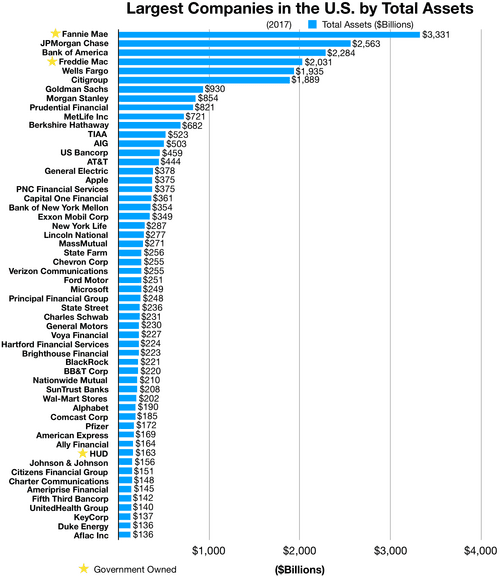
Freddie Mac
ORGANIZATION
American government-sponsored enterprise
Goodman Mfg. Co.
ORGANIZATION
Organization referenced in documents
Great N. Land & Cattle Inc.
ORGANIZATION
Organization referenced in documents
Green Tree Servicing
ORGANIZATION
Organization referenced in documents
Gronvold
ORGANIZATION • 2 mentions
Organization referenced in documents
Hall Motor Co.
ORGANIZATION
Organization referenced in documents
Hardy this Court
ORGANIZATION
Organization referenced in documents
Hardy, BIC
ORGANIZATION
Organization referenced in documents
Health & Human Services Centers for Disease Control & Prevention
ORGANIZATION
Organization referenced in documents
Health S Fitness
ORGANIZATION
Organization referenced in documents
Hirsch & Co.
ORGANIZATION
Organization referenced in documents
Iblusiness
ORGANIZATION
Organization referenced in documents
Independent life & Accident Ins
ORGANIZATION
Organization referenced in documents
Indus_ Inc.
ORGANIZATION
Organization referenced in documents
Intl, Inc.
ORGANIZATION
Organization referenced in documents
Jackson Co.
ORGANIZATION
Organization referenced in documents
Jim Walter Homes.
ORGANIZATION
Organization referenced in documents
John Hancock Life Ins. Co.
ORGANIZATION
Organization referenced in documents
Keystone Land & Dev. Co.
ORGANIZATION
Organization referenced in documents
L.A. News Sew
ORGANIZATION
Organization referenced in documents
Lagerquist Bros.
ORGANIZATION
Organization referenced in documents
LEAS 33629.
ORGANIZATION
Organization referenced in documents
Lectus, Inc.
ORGANIZATION
Organization referenced in documents

Legislature
ORGANIZATION
State legislature
LEXIS 8111
ORGANIZATION
Organization referenced in documents
Liberty Nat'l Life Ins. Co.
ORGANIZATION
Organization referenced in documents
Ligon Capital
ORGANIZATION
Organization referenced in documents
Lloyd's of London
ORGANIZATION
Organization referenced in documents
Loan Co.
ORGANIZATION
Organization referenced in documents
Lobby, Inc.
ORGANIZATION
Organization referenced in documents
Lumber Co.
ORGANIZATION
Organization referenced in documents
M.D. Ala. 1999
ORGANIZATION
Organization referenced in documents
M.D. Ala. 2004
ORGANIZATION
Organization referenced in documents
Mason
ORGANIZATION
Entity referenced in documents
Mason & Dixon Lines
ORGANIZATION
Organization referenced in documents
Metropolitan Life Mt Co.
ORGANIZATION
Organization referenced in documents
Mon., Inc.
ORGANIZATION
Organization referenced in documents
Montgomery Rubber & Gasket Co.
ORGANIZATION
Organization referenced in documents
Morse Elec
ORGANIZATION
Organization referenced in documents
Mortgage Service Specialist II
ORGANIZATION
Organization referenced in documents
Mortgage Specialist II
ORGANIZATION
Organization referenced in documents
Motion for Judicial Dissolution
ORGANIZATION
Organization referenced in documents
National Bank
ORGANIZATION
Organization referenced in documents
Nautilus Grp.. Inc.
ORGANIZATION
Organization referenced in documents
Omaha Ins. Co.
ORGANIZATION
Organization referenced in documents
Oregon & W. R. Co.
ORGANIZATION
Organization referenced in documents
Orix Real Estate Capital Markets
ORGANIZATION
Organization referenced in documents
Pappaceno
ORGANIZATION • 2 mentions
Organization referenced in documents
Pawnee Const.
ORGANIZATION
Organization referenced in documents
Pittman Tractor Co
ORGANIZATION
Organization referenced in documents
Principal Bank
ORGANIZATION
Organization referenced in documents
PRS Il
ORGANIZATION
Organization referenced in documents
Recipe Fried Chicken, Inc.
ORGANIZATION
Organization referenced in documents
Registration Sys.
ORGANIZATION
Organization referenced in documents
Rekhter
ORGANIZATION
Organization referenced in documents
Rekhter v. State
ORGANIZATION
Organization referenced in documents
RESPA
ORGANIZATION
Organization referenced in documents
Revere Life Ins. Co.
ORGANIZATION
Organization referenced in documents
Ridge Training Stables, Inc.
ORGANIZATION
Organization referenced in documents
S. D. Ala. Mar.
ORGANIZATION
Organization referenced in documents
S.D. Ala. L.R.
ORGANIZATION
Organization referenced in documents
S.D. Na
ORGANIZATION
Organization referenced in documents
Safeco Ins. Co.
ORGANIZATION
Organization referenced in documents
Scholz Homes, Inc.
ORGANIZATION
Organization referenced in documents
See Bryant Bank
ORGANIZATION
Organization referenced in documents
See Express Oil Change
ORGANIZATION
Organization referenced in documents
See First Ala.
ORGANIZATION
Organization referenced in documents
See Jacob's Meadow Owners
ORGANIZATION
Organization referenced in documents
See Liberty Nat'l
ORGANIZATION
Organization referenced in documents
Sent Corp. of E. Wash.
ORGANIZATION
Organization referenced in documents
Services, Inc.
ORGANIZATION
Organization referenced in documents
Snyder v. Med
ORGANIZATION
Organization referenced in documents
Soc. & Health Servs
ORGANIZATION
Organization referenced in documents
Specialty
ORGANIZATION
Organization referenced in documents
State Farm Fire and Casualty Co.
ORGANIZATION
Organization referenced in documents
Superior Bank FSB
ORGANIZATION
Organization referenced in documents
Talmage Kirkland & Company, Inc.
ORGANIZATION
Organization referenced in documents
the Alabama Criminal Code
ORGANIZATION
Organization referenced in documents
the Ninth Circuit
ORGANIZATION
U.S. federal appeals court
the Statute of Frauds
ORGANIZATION
Organization referenced in documents
the Washington Consumer Protection Act
ORGANIZATION
Organization referenced in documents
the Washington Mortgage Loan Servicing Act
ORGANIZATION
Organization referenced in documents
The Washington Supreme Court
ORGANIZATION
Organization referenced in documents
TracFone Wireless, Inc.
ORGANIZATION
Organization referenced in documents
Trecfone Wireless.
ORGANIZATION
Organization referenced in documents
Trethewey
ORGANIZATION • 2 mentions
Organization referenced in documents
Union Oil Co.
ORGANIZATION
Organization referenced in documents
USF Ins. Co.
ORGANIZATION
Organization referenced in documents
Wal-Mart Stores
ORGANIZATION
Retailer
Waldrop
ORGANIZATION
Organization referenced in documents
Wash. 2003
ORGANIZATION
Organization referenced in documents
Wash. App
ORGANIZATION
Organization referenced in documents
Wash. Ct
ORGANIZATION
Organization referenced in documents

Wells Fargo
ORGANIZATION
American multinational banking and financial services company
Whatley Contract Carriers
ORGANIZATION
Organization referenced in documents
White Sands Group
ORGANIZATION
Organization referenced in documents
Whitney Bank
ORGANIZATION
Organization referenced in documents
Xerox Corp.
ORGANIZATION
Organization referenced in documents
Adair
LOCATION
Location referenced in documents
Au v. Republic State Mod
LOCATION
Location referenced in documents
Baric of America
LOCATION
Location referenced in documents
Broomfield
LOCATION
Location referenced in documents

California
LOCATION
State of the United States of America
Insolvency
LOCATION
Location referenced in documents
Keystone Land
LOCATION
Location referenced in documents
Majestic Mobile Manor
LOCATION
Location referenced in documents
Mica Indus
LOCATION
Location referenced in documents
Mobile
LOCATION
County seat of Mobile County, Alabama, United States
plaintif§
LOCATION
Location referenced in documents

Plateau
LOCATION
Location referenced in documents

Poland
LOCATION
Country in Central Europe
S.D. Ala.
LOCATION
Location referenced in documents
Seattle
LOCATION
City in and county seat of King County, State of Washington, United States
the Northern District
LOCATION
Federal judicial district

United States
LOCATION
Country located primarily in North America
Vaticano
LOCATION
Location referenced in documents
Wausau
LOCATION
Location referenced in documents
West Valley
LOCATION
Location referenced in documents
Yakima
LOCATION
Location referenced in documents
Yakima Cnty
LOCATION
Location referenced in documents
Statistics
Pages:35
Entities:289
Sponsored