HOUSE_OVERSIGHT_017088 - HOUSE_OVERSIGHT_017487
This 400-page government document from the House Oversight Committee appears to be a comprehensive manuscript examining legal and social issues across American history.
This document appears to be a manuscript or a draft of a book, possibly an autobiography or a detailed analysis of legal and social issues, divided into four parts: the author's early life and education, freedom of speech, criminal justice, and the quest for equality and justice. It includes a table of contents outlining various chapters discussing topics ranging from the First Amendment and pornography to capital punishment, race, and the impact of media on the law. The document mentions a wide array of notable figures and legal cases, suggesting a comprehensive exploration of legal and societal changes.
Key Highlights
- •At nearly 192,000 words across 400 pages, this represents one of the lengthier documents in the collection
- •References range from presidents like John F. Kennedy and Bill Clinton to legal scholars like Alan Dershowitz and Noam Chomsky, as well as historical figures including Adolf Hitler
- •Covers a broad intellectual terrain including First Amendment rights, criminal justice system reforms, and changing perspectives on race in America
Frequently Asked Questions
Document Information
Bates Range
HOUSE_OVERSIGHT_017088 - HOUSE_OVERSIGHT_017487
Pages
400
Source
House Oversight Committee
Date
April 2, 2012
Original Filename
CURREN DRAFT 04.02.12.docx
File Size
671.55 KB
Document Content
Page 1 - HOUSE_OVERSIGHT_017088
4.2.12 WC: 191694 TOTAL WORD COUNT 191,694 TOTAL PAGES 401 TABLE OF CONTENTS Preface: Ideology as Biography—A life of continuous change We 4391 Pages 9 Part I: From Brooklyn to Cambridge (with stops in New Haven and Washington Chapter 1: Born and religiously educated in Brooklyn We 15,669 Pages 27 Chapter 2: My Secular Education—Brooklyn and Yale We 3811 Pages 6 Chapter 3: My Clerkships: Judge Bazelon and Justice Goldberg We 13969 Pages 24 Chapter 4: Beginning my life as an academic—and its changes over time We 7530 Pages 12 Part Il; The changing sound and look of freedom of speech: from the Pentagon Papers to Wikileaks and from Harry Reems’ Deep Throat to Woodward and Bernstein’s “Deep Throat.” Chapter 5: The Changing First Amendment—New Meanings For Old Words We 5259 Pages 9 Chapter 6 Offensiveness- Pornography: I Am Curious Yellow and Deep Throat We 12,338 Pages 24 Chapter 7 Disclosure of Secrets: From Pentagon Papers to Wikileaks We 6905 Pages 13 Chapter 8: Expressions that incite violence and disrupt speakers We 3545 Pages 6 HOUSE_OVERSIGHT_017088
Page 2 - HOUSE_OVERSIGHT_017089
4.2.12 WC: 191694 Chapter 9: The Right to Falsify History: Holocaust Denial and Academic Freedom Wc 5031 Pages 10 Chapter 10: Speech that Conflicts with Reputational and Privacy Rights We 4685 Pages 9 Part II: Criminal Justice: From Sherlock Holmes to Barry Scheck and CSI Chapter 11: “Death is different’': Challenging Capital Punishment We 3157 Pages 6 Chapter 12: The death penalty for those who don’t kill: Ricky and Raymond Tison We 6392 Pages 20 Chapter 13: Using Science, Law, Logic and Experience to Disprove Murder We 23825 Pages 51 Chapter 14: The changing politics of rape: From “no” means “maybe,” to “maybe” means “no.” We 15644 Pages 29 Chapter 15: The changing impact of the media on the law We 14877 Pages 29 PART IV: THE NEVERENDING QUEST FOR EQUALITY AND JUSTICE Chapter 16: The Changing Face of Race: From Color Blindness to Race-Specific Remedies We 14130 Pages 26 Chapter 17 The crumbling wall between church and state: from separation to christianization We 8883 Pages 16 Chapter 18: From Human Right to Human Wrongs: How the hard left hijacked the Human Rights Agenda Wc 14667 Pages 27 ' Justice John Paul Stevens HOUSE_OVERSIGHT_017089
Page 3 - HOUSE_OVERSIGHT_017090
4.2.12 WC: 191694 Conclusion—Closing Argument: Looking back at my 50 year career and forward to the laws next 50 years. Wc 7047 Pages 13 APPENDIX— VIGNETTES We 8817 Pages 42 (each on separate page) HOUSE_OVERSIGHT_017090
Sponsored
Page 4 - HOUSE_OVERSIGHT_017091
4.2.12 WC: 191694 Alan Dershowitz Takes The Stand: An Autobiography Or Taking the Stand—an Autobiography by Alan Dershowitz Preface: Ideology as Biography—A life of continuous change My legal practice has been described as “the most fascinating on the planet.” Though perhaps hyperbolic, the fact is that during my long career as a lawyer, I have: * represented and counseled presidents, prime ministers, United Nations high officials, judges, senators, actors, musicians, athletes as well as ordinary people who have had the most extraordinary cases; * played a role, sometimes large, sometimes small, in some of the most cataclysmic events of the last half century—from the assassination of JFK, to the forced resignation of Richard Nixon, to the Chappaquiddick investigation of Ted Kennedy, to the impeachment of President Clinton, to the war crimes trials of accused war criminals, to the defense of Israel in international fora. * represented some of the most despised and despicable people on the face of the earth and sat across the table from defendants accused of mass murder, terrorism, war crimes, torture, rape and hate crimes; * — served as a lawyer in some of the most transforming legal cases of the age, including the Pentagon Papers Case, the WikiLeaks investigation, the anti-war prosecutions of Dr. Spock, the Chicago 7, the Weather Underground and Patricia Hearst; * represented some of the most controversial defendants in recent history: OJ Simpson; Claus Von Bulow; Mike Tyson; Leona Helmsley and Michael Milken. This autobiography delves beneath the surface of these cases and causes. It presents an inside account of legal events that have altered history and that continue to have a major impact on the lives of millions of people. What Tocqueville observed two centuries ago—that in our country nearly every great issue finds its way into the courts—is even truer today than it was then. Accordingly, my autobiography will, in some sense, be a history of the last half century as seen through the eyes of a lawyer who > [quote] HOUSE_OVERSIGHT_017091
Page 5 - HOUSE_OVERSIGHT_017092
4.2.12 WC: 191694 was privileged to have participated in many of the most intriguing and important cases and controversies of our era. The law has changed considerably over the past half century. I have not only observed and written about these changes, I have helped to bring some of them about through my litigation, my writing and my teaching. This book presents an account of these changes and of my participation in the cases that precipitated them. It is also an account of one man’s intellectual and ideological development during a dramatic century of world, American, and Jewish history, enriched with anecdotes and behind-the-scenes stories from my life and the lives of those I have encountered. An autobiographer is like a defendant who takes the stand at his own trial. We all have the right to remain silent, both in life and in law. But if one elects to bear witness about his own life, then he or she must tell the truth, the whole truth and nothing but the truth. This commitment to complete candor is subject only to limited privileges such as those between a lawyer and a client, or a husband and a wife. A witness may be questioned not only about his actions, but also about his motivations, his feelings, his biases, and his regrets. In this autobiography, I intend to comply with these rules to the best of my ability. Why then have I waived my privilege of silence and decided to write this autobiography: because I have lived the passion of my times and participated in some of the most transforming, legal and political events of the past half century. In this autobiography, I will describe and explain my role in litigating cases and advocating causes that have changed the political and legal landscape—for better or worse. I will also explain how I litigate difficult cases—the tactics and strategies I have successfully developed over the years. My oath of honesty makes it impossible to hide behind the false modesty that often denies the readers of autobiographies an accurate picture of the impact an author has had on events. Since you’re reading these words, you’ve probably encountered the public Alan Dershowitz—confrontational, unapologetic, brash, tough, argumentative, and uncompromising. Those who know me well—family, friends, and colleagues—hardly recognize the “character” I play on TV [alternative: my TV persona]. They tell me in my personal life, I shy away from confrontation and am something of a pushover. My son Elon says that when people bring me up in conversation, he can instantly tell whether they know me from TV or from personal interactions—whether they know what he calls “The Dersh Character” or “the real Alan.” This sharp dichotomy between my public and private personas was brought home to me quite dramatically, when a major motion picture, Reversal of Fortune, was made about my role in the Claus Von Bulow case, and a character, based on me, was played by Tony Award actor Ron Silver. The New York Times asked me to write an article for the arts and entertainment section on how it feels to watch someone play you on the big screen. The opening scene of the film had my character playing an energetic basketball game with himself—true enough. But when he’s interrupted by a phone call giving him the news that he had lost a case involving two brothers on death row (the Tison brothers, see Chapter 12), he smashes the phone on the pavement. HOUSE_OVERSIGHT_017092
Page 6 - HOUSE_OVERSIGHT_017093
4.2.12 WC: 191694 When I complained to my son, who had co-produced the film, that I don’t throw phones when I lose cases—even capital cases—my son responded: “Dad, you’ve got to get it through your head that the person on the screen isn’t you; it’s your character—‘the Dersh Character.’” He continued to assure me, in his best professional manner, that characters have to “establish themselves” early in the film, and that this “establishing scene” was intended to convey my energy and my passion for the rights of criminal defendants. “If we had several hours, we could have demonstrated your passion by recounting your involvement in many other cases, but we had about a minute; hence the smashed phone.” I wasn’t satisfied. “That scene doesn’t show passion,” I said. “It shows a temper tantrum.” My son tried to explain that a character in a film has to be shown with some faults early on in the film, so that he can “overcome” them. “I know you don’t lose your temper,” Elon assured me smilingly, “but the viewing audience has to see you grow.” Still, I didn’t like being portrayed as a person whose passions—manifested by occasional curses in addition to the smashed phone—are reserved exclusively for his professional life. My “girlfriend” in the film—a mostly fictional character played by Annabella Sciorra—complains loudly that my character has nothing left for the people around him, and my character seems to agree: “My clients are the people I care about.” Poor guy! I hope that’s not me, although I do have to acknowledge that people who know me only professionally assume that I have nothing left for those I love. But the fact is that I reserve a lot of love, loyalty and friendship for family and people close to me. I asked Ron Silver—who knows how important my family and friends are to me—how he felt playing me in way that he knew was something of a stereotype of the passionate lawyer for whom, Oliver Wendell Holmes’ said, “the law is a jealous mistress.” He responded: “I’m playing the public Alan Dershowitz—the one people see on TV and in the newspapers. I can’t get to know the private Alan well enough to play him, and frankly the public isn’t interested in that side of you.” In this book, I will try to interest my readers in both sides of my life, and how each impacts the other, and how both are very much the products of my early upbringing and my lifelong experiences. I think of myself as an integrated whole, though the very different roles I play—as lawyer, teacher, writer, father, husband, friend, colleague—require somewhat different balances among the various elements of my persona. Although this autobiography is my first attempt to explore my life in full, I have written several earlier books that touch on aspects of my public life. The Best Defense dealt with my earliest cases during the first decade of my professional life. Chutzpah covered my Jewish causes and cases. Reversal of Fortune and Reasonable Doubts each dealt with one specific case (Von Bulow and O.J. Simpson). I will try not to repeat what I wrote in those books, though some overlap is inevitable. This more ambitious effort seeks to place my entire professional life into the broader context of how the law has changed over the past half century and how my private life prepared me to play a role in these changes. HOUSE_OVERSIGHT_017093
Sponsored
Page 7 - HOUSE_OVERSIGHT_017094
4.2.12 WC: 191694 I bring to this task a strong and dynamic world view that has been shaped by my life experiences and which has, in turn, shaped my life experiences. In looking back on my life, I am inevitably peering through the prism of the powerful ideology that has provided a compass for my actions. Ideology is biography. Where we stand is the result of where we sat, who we sat next to, what we observed, what happened to us, and how we reacted to our experiences. Ideology is complex. Its causes are multifaceted and rarely subject to quantification. The philosopher, Descartes, who famously said, “I think therefore I am” got it backwards. I am—I was, I will be—therefore I think what I think. The ability to think is inborn—a biological and genetic endowment. The content of one’s thinking—the nature and quality of our ideas—is more nurture than nature. Without human experiences there could be no well-formed ideology, merely simple inborn reflexes based on instinct and genetics.* There is no gene, or combination of genes, that ordains the content of our views regarding politics, law, morality or religion.* Biology gives us the mechanisms with which to organize our experiences into coherent theories of life, but without these experiences—which begin in the womb and may actually alter the physical structures of our brain over time—all we would have are the mechanics of thought and the potential for formulating complex ideas and ideologies. It is our interactions—with other human beings, with nature, with nurture, with luck, with love, with hate, with pleasure, with pain, with our own limitations, with our mortality-—that shape our world views. Among the most enduring and influential human encounters are those experienced at an early age. These include the accidents of birth: to which family, in which place, at which time we happen to come into the world. It is true that most people die with the religion and political affiliation into which they were born (or adopted). Identical twins, separated at birth, may share a common disposition, IQ and susceptibility to disease, but they are likely to share the religious and political affiliations of their adoptive parents. There is little genetic about the factors that directly influence religious, political or other ideological choices. They are largely a function of exposure to external factors.° Many of these external factors are totally beyond the control of the person. They may involve decisions made by others, often before they were even born. Probably the most significant decisions affecting my own life were made by my great grandparents on my father’s side and my grandparents on my mother’s side: the decision to leave the shtetls of Poland and move to New York. Had they remained in Poland, as some of my relatives did, I would probably not have survived the Holocaust, since I was three years old when the systematic genocide began.’ That 3 Quote Steve Pinker “EN on Mark Hauser “Moral Minds.” Drew Weston, George Lakoff. > Kafka once quipped that “the meaning of life is that we die,” and when God told Adam and Eve that if they eat from the tree of knowledge, they will die, he meant they will obtain the knowledge of mortality—which elevated humans above other species. ° This is not to deny the likely influence genetics and biology may have on a predisposition toward homosexuality or other orientations. Nor is it to deny that biological predisposition may influence ideology through the prism of experience. See [cite] [expand] ’ Perhaps, of course, had my forbearers remained in Poland, my father might not have met my mother (although their families lived in neighboring shtetls). Accident, timing and luck determine virtually everything relating to birth. HOUSE_OVERSIGHT_017094
Page 8 - HOUSE_OVERSIGHT_017095
4.2.12 WC: 191694 may be why Jews of my generation are so influenced in their attitudes and ideology by the Holocaust. There but for the grace of God, and the forethought of our grandparents, go we. (In 1999, I wrote a novel Just Revenge, which reflected my dear feelings about the unavenged murders of so many of my relatives.) Once a person is born in a certain place, at a certain time, attitudes and ideology are shaped (in part, because luck always intrudes’) directly by family, religion, culture, neighborhood, childhood friends, teachers and other mentors and role models. Sometimes they are a reaction to these influences. Often they are a combination of both. If ideology is biography, then autobiography must honestly attempt to explore the sources of the author subject’s ideology in his or her life experiences. This requires not only deep introspection, but a willingness to expose—to the reader but also to the writer—aspects of one’s life that are generally kept private or submerged. Everyone has the right, within limits, to maintain a zone of privacy. I have devoted a considerable portion of my professional life seeking to preserve, indeed expand, that zone. But a decision to write an autobiography requires a commitment to candor and openness—a “waiver” (to use a legal term) of much of the right to privacy. I keep fairly complete records of my cases and controversies. My archives are in the Brooklyn College Library where, subject to a few limited exceptions, they are available for all to read. I have published dozens of books, hundreds of articles and thousands of blogs. My professional life has been an open book and the accessibility of my architves—containing letters, drafts and other unpublished material— opens the book even further. But beyond the written record lies a trove of memories, ideas, dreams, conversations, actions, inactions, passions, joys, and feelings not easily subject to characterization or categorization. Fortunately, I have a very good memory (more about that later) and I am prepared to open much of my memory bank in this autobiography, because I believe that the biography that informs my ideology and life choices cannot be limited to the externalities of my career. It must dig deeper into the thought processes that motivate actions, inactions and choices. In the process of self- exploration, I must also be willing to examine feelings and motivations that I have kept submerged, willfully or unconsciously, from my own conscious thought process. I don’t know that I will be able to retrieve them all, but I will try. Nor can I be absolutely certain that all of my memories are photographically precise, since my children chide me that my stories get “better” with each retelling. I believe that my actions, inactions, and choices have been significantly influenced by my upbringing. That might not seem obvious to those who know me and are familiar with my family background. Superficially, I am very different from my parents and grandparents, who lived insular lives in the Jewish shteles of Galicia, Poland, the Lower East side of Manhattan, and the Williamberg, Crown Heights and Boro Park Orthodox Jewish neighborhoods (also “shtetles”) of Brooklyn. My parents and grandparents had little formal education. They rarely traveled beyond their routes to and from work (except for my grandparents’ one-way journeys from Poland to Ellis Island). They almost never attended concerts, the Broadway Theater or dance recitals. They owned no art, few books, and no classical records. They rarely visited museums or 5 An old Yiddish expression says: “Man plans, God laughs.” 8 HOUSE_OVERSIGHT_017095
Page 9 - HOUSE_OVERSIGHT_017096
4.2.12 WC: 191694 galleries. Their exposure to culture was limited to things Jewish—cantorial recitations, Yiddish theater, lectures by Orthodox rabbis, Jewish museums, Catskill Mountain and Miami Beach entertainment. My adult life has been dramatically different. I travel the globe, meet with world leaders, own a nice art collection, am deeply involved in the world of music, theater and other forms of culture, and lead a largely secular life (though I too enjoy cantorial music “borsht belt” humor, and a good pastrami sandwich). Yet I am their son and grandson. Although my life has taken a very different course—both personally and professionally—I could not begin to explain who I am, how I got to be who I am, and where I am heading, without exploring my family background and heritage. It is this history that helped to form me, that caused me to react against parts of it, and—most important—that gave me the tools necessary to choose which aspects of my traditions to accept and which to reject.” I had a very powerful upbringing, having been born to a family with strong views on religion, morality, politics and community service. My neighborhood was tight knit. Everyone had a place and knew their place. Status was important, especially for our parents and grandparents, as was “yichus” (the Yiddish term for ancestry). But I grew up at a time of change, growth, excitement and opportunity. Despite the reality of pervasive anti-Jewish discrimination—in college admission, employment, residency and social clubs—my generation believed there were no limits to what we could accomplish. If Jackie Robinson could play second base for the Brooklyn Dodgers, we could do anything. Maybe that was the reason so many successful people grew up in Brooklyn in the immediate post-war period. (In 1971, I was selected among 40 young scholars from around the country for a distinguished fellowship. When we met in Palo Alto, California, we discovered close to half the group had Brooklyn roots!) We were the breakout generation, standing on the broad shoulders and backbreaking work of our immigrant grandparents and our working class parents. I cannot explain, indeed understand, my own world views, without describing those on whose shoulders I stand, that from which I have broken out, and the experiences that have shaped my life. So I will begin at the beginning, with my earliest memories and the stories I have been told about my upbringing. But formative experiences do not end at childhood or adolescence. They continue throughout a lifetime. Learning never ends, at least for those with open minds and hearts, and, though ideologies may remain relatively fixed over time, they adapt to changing realities and perceptions. Winston Churchill famously quipped, “Show me a young conservative and I’ll show you someone with no heart. Show me an old liberal and I’ll show you someone with no brain.” It is surely true that some people become less idealistic with age, with economic security and family responsibilities. But it is equally true that some young conservatives become more liberal as they ° My dear friend and teaching colleague Steven Pinker believes that parental influence may be overvalued [CITE]. I’m certain that it varies among individuals and families. 9 HOUSE_OVERSIGHT_017096
Sponsored
Page 10 - HOUSE_OVERSIGHT_017097
4.2.12 WC: 191694 seek common ground with their children, while other people remain true to their earlier world views. It depends on the life one has lived. I have been fortunate to live an ever changing life, both personally and professionally, and although my views on particular issues have been modified over time, my basic commitment to liberal values has remained relatively constant, in part because of my strong upbringing and in part because my career has been based on advocating these values. An ancient Chinese curse goes this way: “May you live in interesting times.” One of the worst things a doctor can say after examining you is: “Hmm... that’s interesting.” I have been blessed with living an interesting, if often controversial, life. As an adolescent, I was involved in causes such as justice for the Rosenbergs, abolition of the death penalty, and the end of McCarthyism. As a law clerk, during one of the most dramatic periods of our judicial history, I worked on important civil rights and liberties cases, heard the “I have a dream” speech of Martin Luther King, was close to the Cuban Missile Crisis, and partook of events following the assassination of John F. Kennedy. As a young lawyer, I played a role in the Pentagon Papers case, the forced resignation of Richard Nixon, and the anti-war prosecutions of Dr. Spock, the Chicago Seven, the Weather Underground and Patricia Hearst. I consulted on the Chappaquiddick investigation of Ted Kennedy, on the attempted deportation of John Lennon and the draft case against Mohammad Ali. I was an observer at the trial of accused Nazi war criminal John Demjanjuk and subsequently consulted with the Israeli government about that case. Later in my career, I was a lawyer in the Bill Clinton impeachment, the Bush v. Gore election case, the efforts to free Nelson Mandela, Natan Sharansky and other political prisoners. I participated in the Senate censure of California Senator Alan Cranston, the Frank Snepp CIA censorship case, prosecutions involving the former Yugoslavia in the Hague, the defense of Israel against international war crime prosecution, and the investigation of Wiki-Leaks and Julian Assange. I worked on the appeals of the Jewish Defense League murder case and the Jonathan Pollard spy prosecution. I consulted on the defense of director John Landis, the OJ Simpson double murder case and the Bakke “affirmative action” litigation. I challenged the Bruce Franklin tenure denial at Stanford and appealed the Claus Von Bulow attempted murder conviction, the Leona Helmsley tax case, the Mike Tyson rape prosecution, the conviction of Conrad Black, the Tison Brothers murder case, the “I Am Curious Yellow” censorship prosecution, the Deep Throat case, the nude beach case on Cape Cod and the HAIR censorship case. I participated in the Woody Allen-Mia Farrow litigation, the Michael Milken case, the litigation against the cigarette industry and the wrongful death suit on behalf of Steven J. Gould. I have won more than 100 cases and have been called—perhaps also with a bit of hyperbole—“the winningest appellate criminal defense lawyer in history.” Of the more than three dozen murder and attempted murder cases in which I have participated, I lost fewer than a handful. None of my capital punishment clients has been executed. 10 HOUSE_OVERSIGHT_017097
Page 11 - HOUSE_OVERSIGHT_017098
4.2.12 WC: 191694 Among the people I have advised are President Bill Clinton, Prime Minister Benjamin Netanayu and President Moshe Katsav of Israel, Canadian Prime Minister Pierre Trudeau, Senator Alan Cranston, the Deputy Secretary General of the United Nations, Marlon Brando, Frank Sinatra, Woody Harrelson, Michael Jackson, John Lennon, Natalie Portman, Broadway producer David Merrick, New England Patriot Head Coach Bill Belichick, the actress Isabella Rossellini, the international arms dealer Adnan Khashoggi, singers Carly Simon and David Crosby, basketball player Hakeem Olajuwon, baseball star Kevin Youkilis, football quarterback Tom Brady, saxophonist Stan Goetz, artist Peter Max, cellist Yo Yo Ma, comedian Steven Wright, actor Robert Downey, Jr., several billionaires such as Sheldon Adelson and Mark Rich, authors such as Saul Bellow, David Mamet and Elie Wiesel, and judges, senators, congressmen, governors and other public officials. In addition I have had some of the most interesting cases involving people who are not well known but the cases raised intriguing and fascinating issues. Among these issues are whether a man can be prosecuted for attempted murder for shooting a dead body that he thought was alive, whether a husband can be prosecuted on charges of slavery for not doing anything about his wife’s alleged abuse of domestic employees, whether a husband can be forced to adopt a child and whether a law firm can discriminate in its partnership decision. I have engaged in public debates and controversies with some of the most contentious and influential figures of the age including William F. Buckley, Noam Chomsky, Rabbi Meyer Kahana, Rabbi Adan Steinzaltz, Justice Antonin Scalia, Ken Starr, Elie Wiesel, Vaclav Havel, Golda Meir, Red Auerbach, William Kunstler, Roy Cohn, Norman Mailer, Patrick Buchanan, Norman Podhoretz, Bill O’Reilley, Skip Gates, Alan Keyes, Dennis Prager, Jeremy Ben Ami, Mike Hukabee, Shawn Mann, William Bulger, James Zogby, Jimmy Carter, Richard Goldstone, Norman Finkelstein and many others. I was part of an American team of debaters selected to confront Soviet debaters on a nationally televised debate, during the height of Soviet oppression of Refusenicks, for which William Buckley suggested that the US team be given medals of freedom. I was a regular “advocate” on the nationally-televised Peabody award winning show “The Advocates” on PBS for several years. I have been interviewed by nearly every television and radio talk and news show and have written for most major newspapers, magazines and blogs. This is my 30" book. In recent years, I have devoted considerable energy to the defense of Israel, while remaining critical of some of its policies. The Forward has called me, “America’s most public Jewish defender,” and “Israel’s single most visible defender — the Jewish state’s lead attorney in the court of public opinion.” In 2010, The Prime Minister of Israel asked me to become Israel’s Ambassador to the United Nations—an offer I respectfully declined because I am an American, not an Israeli citizen. I have agreed instead to be available to serve as an American lawyer for Israel before international tribunals. I have also taught thousands of students, many of whom have become world and national leaders. I have learned from each of these experiences, and they too have helped to shape my evolving world views. I have seen the law change, in some respects quite dramatically, in the half century I 11 HOUSE_OVERSIGHT_017098
Page 12 - HOUSE_OVERSIGHT_017099
4.2.12 WC: 191694 have been practicing it. If the past is the best predictor of the future, then I also have some ideas about what changes we might anticipate in the law over the next half century. Oliver Wendell Holmes urged his young colleagues to “live the passion of your times.” I have followed that advice and now wish to share this passion with my readers. 12 HOUSE_OVERSIGHT_017099
Sponsored
Page 13 - HOUSE_OVERSIGHT_017100
4.2.12 WC: 191694 Part I: From Brooklyn to Cambridge (with stops in New Haven and Washington) Chapter 1: Born and religiously educated in Brooklyn The doctor told my pregnant and anxious mother that she would give birth “first in September.” So when I was born on September 1, 1938, my mother thought the doctor was a genius. I was the first person in the history of my family to be born in a hospital. My maternal grandfather, an immigrant from Poland, wanted me to be born at home, because in Poland, there were rumors that Jewish babies were switched with Polish babies. To prevent this from happening to his grandchild, he stood guard over me at the baby room. Nevertheless, when I started to misbehave early in my life, he was convinced that the switch had taken place, despite me being—in my paternal grandmother’s words—“the spittin’ image” of my father. (I was well into my adult life before I realized that I was much more like my mother in ways other than physical resemblance.) I was born in the Williamsberg neighborhood of Brooklyn, where both of my parents had lived most of their lives, having moved as youngsters from the lower East Side of Manhattan where they were born to Orthodox Jewish parents who had emigrated from Poland at the end of the 19" and beginning of the 20" Century. When my mother was pregnant with my brother Nathan, who is three and a half years younger than me, we moved to the Boro Park neighborhood of Brooklyn where I grew up and where my parents remained until their deaths. Boro Park is unique among American Jewish neighborhoods in that it has always been Jewish. Unlike the neighborhoods of Manhattan—such as the Lower East side and Harlem, which have had changing ethnic populations—Boro Park has always been, and remains, dominantly Jewish. The first occupants of the small tract houses built near the beginning of the twentieth century of the site of rural farms were Jewish immigrants seeking to escape from the crowded ghettos of Manhattan and later Williamsberg. The current occupants of the modern multi-dwelling units are Chasidic Jews who have moved from Crown Heights and Williamsberg seeking to recreate the shtetles of Eastern Europe. When I lived in Boro Park during the 1940s and 1950s, it was a modern Orthodox community of second generation Jews whose grandparents had emigrated mostly from Poland and Russia during the late 19" and early 20" centuries. Following the end of World War II, some displaced persons who had survived the Holocaust moved into the neighborhood. My parents reached adulthood in Williamsberg during the peek of the Great Depression. My mother Claire had been a very good student at Eastern District High School and at the age of 16 enrolled at City College in the fall of 1929—the first in the history of her family to attend college. She was forced to leave before the end of the first semester by her father’s deteriorating economic situation. She went to work as a bookkeeper, earning $12 a week. My father, who was not a good student, attended a Yeshiva high school in Williamsberg. It was called Torah V’Daas—ttranslated as Bible and Knowledge. He began to work during high school and never attended college. 13 HOUSE_OVERSIGHT_017100
Page 14 - HOUSE_OVERSIGHT_017101
4.2.12 WC: 191694 My grandparents knew each other from the neighborhood even before my parents met. My grandfathers were both amateur “chazanim,” cantors, who sang the Jewish liturgy in small synagogues, called “shteebles.” They were slightly competitive, but were both involved in the founding of several Jewish institutions in Williamsberg, including a free loan society, a burial society, the Young Israel synagogue and the Torah V’Daas Yeshiva. Their day jobs were typical for their generation of Jewish immigrants. Louis Dershowitz, my paternal grandfather, sold corrugated boxes. Naphtali Ringel, my maternal grandfather, was a jeweler. My grandmothers, Ida and Blima, took care of their many children. Each had eight, but two of Blima’s children died of diphtheria during an epidemic. My mother nearly died during the influenza outbreak of 1917, but according to family lore, she was saved by being “bleeded.” I was born toward the end of the depression and exactly a year to the day before the outbreak of the Second World War. I was the first grandchild on both sides of my family. Many were to follow. Among my earliest memories were vignittes from the Second World War, which ended when I was nearly seven. I can see my father pasting on the Frigidaire door newspaper maps depicting the progress of allied troops toward Berlin. I can hear radio accounts, in deep Stentorian voices, from WOR (which I thought spelled “war’’) announcing military victories and defeats. I can still sing ditties I learned from friends (the first sung to the tune of the Disney song from Snow White). “Whistle while you work Hitler is a jerk Mussolini is a meanie And the Japs are worse” And another (sung to the melody of “My Country Tis of Thee, Sweet Land of Liberty”): “My country tis of thee Sweet land of Germany My name is Fritz My father was a spy Caught by the FBI Tomorrow he must die My name is Fritz.” The comic books we read during the war always pitted the superheroes against the “Nazis” and “Japs” and I wanted to help in the effort. I decided that if Billy Batson could turn into Captain Marvel by simply shouting Shazam, so could I. And so, after making a cape out of a red towel and tying it around my neck, I jumped out of the window yelling Shazam. Fortunately, I lived on the first floor and only sustained a scraped knee and a bad case of disillusionment. (For my 70" birthday, my brother found a card that commemorated the superhero phase of my life; it showed an elderly Superman standing on a ledge, ready to fly, but wondering “now where is it ’m supposed to be flying?”’) 14 HOUSE_OVERSIGHT_017101
Page 15 - HOUSE_OVERSIGHT_017102
4.2.12 WC: 191694 If I could help our war effort by turning myself into a superhero, at least I could look out for German spies on our beaches. When I was four years old, German spies landed on Long Island in a submarine. Although they were quickly captured, there were rumors of other planned landings. And so over the next few summers, which my family spent in a rented room near Rockaway Beach, a local police officer paid us kids a penny a day to be on the lookout for “Kraud Subs.” We took our job very seriously. I recall my grandmother Ringel (my mother’s mother), who was recovering from a heart attack, taking me to a rehabilitation home in Lakewood, New Jersey, where several wounded or shell- shocked soldiers were also being rehabilitated and listening to their scary combat stories. Then I remember, quite vividly, both VE (Victory in Europe) and VJ (Victory over Japan) days. There was dancing in the streets, block parties and prayerful celebrations. Our soldiers, including several of my uncles, were coming home. (My father received a medical deferment because he had an ulcer, which my mother said was caused by my bad behavior.) We weren’t told of any Holocaust or Shoah—those words were not even in our vocabulary—just that we had lost many relatives in Europe to the brutal Nazis and Hitler (“Yemach Sh’mo—may his name be erased from memory). We cheered Hitler’s death, which according to a Jewish joke of the time, we knew would occur on a Jewish holiday—because whatever day he died would be a Jewish holiday! A few weeks earlier, we cried over Roosevelt’s passing, which I heard of while listening to the radio and broke the news to my grandmother Ringel, who was taking care of me. She refused to believe it, until she herself heard it on the radio. Then she cried. Roosevelt (which she pronounced like “Rosenfeld”) was the hero of our neighborhood (and other Jewish neighborhoods). A magazine photo of him hung in our home. The “greenies” (recent immigrants, “greenhorns”) who moved to Boro Park from the displaced person camps never talked out what had happened “over there.” The tattooed numbers on their arms remained unexplained, though we knew they were the dark reminders of terrible events. Among my other early memories was Israel’s struggle for independence and statehood, just a few years after the war. My family members were religious Zionists (“Misrachi Zionists”). We had a blue and white Jewish National Fund “pushka” (charity box) in our homes, and every time we made a phone call, we were supposed to deposit a penny. We sang the “Jewish National Anthem” (Hatikvah) in school assemblies. I still remember its original words, before Israel became a state: “Lashuv L’Eretz Avosainv” (“to return to the land of our ancestors’). One particular incident remains a powerful and painful memory. My mother had a friend from the neighborhood named Mrs. Perlestein, whose son Moshe went off to fight in Israel’s War of Independence. There was a big party to celebrate his leaving. Several months later, I saw my mother crying hysterically. Moshe had been killed, along with 34 other Jewish soldiers and civilians, trying to bring supplies to a Jewish outpost near Jerusalem. My mother kept sobbing, “She was in the movies, when her son was killed. She was in the movies.” Israel’s war had come home to Boro Park. It had been brought into our own home. Everyone in the neighborhood knew Moshe and his parents. He had attended my elementary school, played stickball on my be) HOUSE_OVERSIGHT_017102
Sponsored
Page 16 - HOUSE_OVERSIGHT_017103
4.2.12 WC: 191694 block and was a local hero. It was a shared tragedy and Moshe’s death—combined with my mother’s reaction to it—had a profound and lasting effect on my 9 year old psyche. My friends and I formed a “club’”—teally just a group of kids who played ball together. We named it “The Palmach”—after the Israeli strike force that was helping to win the war. We memorized the Palmach Anthem “Rishonin, Tamid Anachnu Tamid, Anu, Anu Hapalmach.” ( “We are always the first, we are the Palmach”). Recently, I spoke to a Jewish group in Los Angeles and among the guests were Vidal Sassoon (the style master) and David Steinberg (the comedian). Steinberg mentioned to me that when Sassoon was a young man, he had volunteered to fight for the Palmach (If you think that seems unlikely, consider that “Dr. Ruth” Westheimer served as a sniper in the same war). I challenged Sassoon to sing the Palmach Anthem and before you knew it, Sassoon and I were loudly belting out the Hebrew words to the amusement of the other surprised guests. Israel declared statehood in May of 1948, when I was nine and a half years old. Following its bold declaration that after 2,000 years of exile, there arose a Jewish state in the Land of Israel, (supported by the United Nations, the United States, the Soviet Union and most western nations), the nascent state was attacked by the armies of the surrounding Arab countries. That summer I went to a Hebrew speaking Zionist summer camp called “Massad.” During my summer at Camp Massad (where the counselor of an adjoining bunk was a young Noam Chomsky, then a fervent left-wing Zionist) we heard daily announcements over the loudspeaker regarding the War of Independence. We sang Israeli songs, danced the hora and played sports using Hebrew words (a “strike” was a “Shkeya,” a “ball” a “kadur”.) The announcement I remember most vividly was “Hatinok Rut met hayom’”—the “babe” Ruth died today. But I also remember several announcements regarding the death or wounding of Israelis who were related to the people in the camp. One out of every hundred Israeli men, women and children were killed—some in cold blood, after surrendering—while defending their new state. Many of those killed had managed to survive the Holocaust. We also learned of Stalin’s campaign against Jewish writers, politicians and Zionists. After the end of the war, Stalin became the new Hitler as we read about show trials, pogroms and executions of Jews. We hated communism almost as much as we hated fascism. These early memories—relating to the America’s war against Nazism, Israel’s War of Independence, and Stalin’s war against the Jews—contributed significantly to my emerging ideology and world views. I grew up in a home with few books, little music, no art, no secular culture and no intellectualism. My parents were smart but had no time or patience for these "luxuries." Our home was modest--the ground floor of a two and half family house. (The finished basement was rented to my cousin and her new husband). Our apartment had two small bedrooms, the smaller of which I shared with my brother. We ate in the kitchen. The living room, which had the mandatory couch covered with a plastic protector, was reserved for special guests (who were rare). The tiny bathroom was shared by the four of us. The foyer doubled as a dining area for Friday night and Shabbat meals. The total area was certainly under __ square feet. But we had an outside—and what an outside it was! In the front there was a small garden and a stoop. In the 16 HOUSE_OVERSIGHT_017103
Page 17 - HOUSE_OVERSIGHT_017104
4.2.12 WC: 191694 rear there was a tiny back porch, a yard and a garage. Since we had no car, we rented the garage to another cousin who used it to store the toys he sold wholesale. We were not poor. We always had food. But we couldn’t afford any luxuries, such as restaurants. We passed down clothing from generation to generation and ate a lot of “leftovers”. (Remember the comedian who said “we always ate leftovers—nobody has ever found the “original” meal.) My mother has always said we were “comfortable.” (The same comedian told about the Jewish man who was hit by a car, and was laying on the ground; when the ambulance attendant asked him “are you comfortable,” he replied, “I make a living.’’) The center of our home was the stoop in front of the house. We sat on it, played stoop ball on it, jumped from it and slid down the smooth slides on each side of it. It was like a personal playground. On nice days, everyone was outside, especially before the advent of television. We even listened to the radio--Brooklyn Dodger baseball games, the Lone Ranger, "Can You Top This?," "The Shadow," "Captain Midnight," and "The Arthur Godfrey Show"--while sitting on the stoop, with the radio connected to an inside socket by a long, frayed extension cord. We ate lunch on the stoop on days off from school, had our milk and cookies on the stoop when we got back from school, traded jokes, and even did our homework on the stoop. Mostly, we just sat on the stoop and talked among ourselves and to passing neighbors, who knew where to find us. In those days, nobody called ahead—phone calls were expensive. They just dropped by. In front of the stoop was what we called "the gutter." (Today it is referred to as "the street.") The gutter was part of our playground since cars rarely drove down our street. We played punch ball in the gutter, stickball in the driveway and basketball in front of the garage--shooting at a rim screwed to an old ping pong table that was secured to the roof of the garage by a couple of two by fours. We had no room to play indoors, so we had to use the areas around the house as our play area. Our house became the magnet for my friends because we had a stoop, a hoop and an area in front of our stoop with few trees to hinder the punched ball. (A ball that hit a tree was called a “hindoo”—probably a corruption of “hinder.’’) The stereotype of the Brooklyn Jewish home during the immediate post WWII era was one filled with great books, classical music, beautiful art prints and intellectual parents forcing knowledge into their upwardly mobile male children aspiring to become doctors, teachers, lawyers and businessmen. (The daughters were also taught to be upwardly mobile by marrying the doctors, etc.) My home could not have been more different--at least externally. The living room book shelves were filled with inexpensive knickknacks (chachkas). The only books were a faux leather yellow dictionary that my parents got for free by subscribing to "Coronet Magazine." When I was in college, they briefly subscribed to the Reader's Digest Condensed Books. There was, of course, a "Chumash" (Hebrew bible) and half dozen prayer books (siddurs and machsers). I do not recall 17 HOUSE_OVERSIGHT_017104
Page 18 - HOUSE_OVERSIGHT_017105
4.2.12 WC: 191694 seeing my parents read anything but newspapers (The New York Post), until I went to college. They were just too busy making a living--both parents worked--and keeping house. There were no book stores in Boro Park, expect for a small used book shop that smelled old and seemed to specialize in subversive books. The owner, who smelled like his mildewed books, looked like Trotsky, who he was said to admire. We were warned to stay away, lest we be put on some "list" of young subversives. My parents, especially my mother, were terrified about “lists” and “records.” This was, after all, the age of “blacklists,” “redchanels,” and other colored compilations that kept anyone on them from getting ajob. “They will put you on a list,” my mother would warn. Or “it will go on your permanent record.” When I was 13 or 14, I actually did something that may have gotten me on a list. It was during the height of the McCarthy period, shortly after Julius and Ethel Rosenberg had been sentenced to death. A Rosenberg relative was accosting people getting off the train, asking them to sign a petition to save the Rosenbergs’ lives. I read the petition and it made sense to me, so I signed it. A nosy neighbor observed the transaction and duly reported it to my mother. She was convinced that my life was over, my career was ruined and that my willingness to sign a communist-inspired petition would become part of my permanent record. (Was there ever really a permanent record? It was certainly drummed into me for years that such a paper existed. I'd love to find mine and see what’s in it.)'? My mother decided that I had to be taught a lesson. She told my father the story. I could see that my father was proud of what I had done, but my mother told him to slap me. Ever obedient, he did, causing him more pain than me. In addition to the “subversive” book store, we had a library that was also tiny and somewhat decrepit, but when I was nearing the end of high school, a new, spacious library opened about half a mile away. We went there every Friday afternoon--for two reasons. First, that's where the girls were on Friday afternoon. And second, we could take out up to four books and keep them for a month. The two reasons merged when Artie Edelman realized that we could impress the girls by taking out serious books. Up until that time my reading of serious literature had been limited to Classic Comics. Don't laugh! Classic Comics were marvelous. Not only could we read about the adventures of Ivanhoe, we could see what he looked like! My first erotic desires were aroused by the illustration of the dark- haired "Jewess" Rebecca. (I can still picture her and have searched for a copy of the Classic Comic at flea markets from coast to coast to relive my unrequited adolescent lust). I recently came across the Classic Comic of Crime and Punishment. Having read three translations of the great work of Dostoyevsky, I was amazed at how faithful the comic was to the tone, atmosphere and even words of the original. I tried to give it to my granddaughter who was reading the book for class, but she politely turned down the offer, with a slight air of condescension that one gratefully accepts only from a grandchild. '° Now there really are “permanent records.” They’re called Facebook, Twitter and the Internet. 18 HOUSE_OVERSIGHT_017105
Sponsored
Page 19 - HOUSE_OVERSIGHT_017106
4.2.12 WC: 191694 The first real books I actually read were several to which I had been introduced by the Classic Comics: The Count of Monte Christo, The Red Badge of Courage; Moby Dick; and a Connecticut Yankee in King Arthur's Court. During my senior year in high school, I became a voracious reader, to the disdain of some family members. My Uncle Hedgie (a nickname for Harry) would berate me for sitting around the house reading, when I could be working or playing sports. "Be a man," he would demand. "Get off your ass." But I would stay in my tiny room, with my Webcote tape recorder playing classical music I had recorded off WQXR, the New York Times classical music station, or off a record I borrowed from the library and recorded from my friend Artie's turntable. I also bought a used copy of the Encyclopedia Americana, whose twenty plus volumes filled the hitherto empty shelves in our living room. My friend Norman Sohn had found an old book store in Manhattan that sold used Encyclopedias, and the Americana cost only $75, as contrasted with the Britannica, which was $200. During my early years, all we had was a small plastic radio that lived in the kitchen, unless it was moved near the stoop. When I was 10 years old, we bought a ten inch TV "console" that included a 78 phonograph player that opened at the top. But my mother had situated her "good" lamp on the top of the console, so I couldn't get access to the turntable. I saved up, and with my Bar Mitzvah money, I bought a humongous webcore reel to reel tape recorder, which must have been a foot cubed. I could barely lift it, and the tape often tangled or split, but it was better than the wire recorder technology that it replaced. I loved classical music, especially opera and choral music. As an adolescent I had sung alto in the local synagogue choir and had a fairly good voice. I was "fairly" good--but not very good-- at lots of things in addition to singing: athletics, acting, joke telling and getting dates with girls. I was very good at only one thing: debating. And I was equally bad at one thing: school. My passion for music took me to the Metropolitan Opera House, where for 50 cents, a student could get a seat with a table and a lamp if he came with a score of the opera. We would borrow the score from the library, take a train to Times Square and listen to Richard Tucker, Robert Merrill, Jan Pierce and Roberta Peters sing Carman, La Boheme and La Traviata. (We were forbidden to listen to Wagner, because he was an anti-Semite, who admired). I also became passionate about art. All kinds of art from Egyptian and Roman Sculpture to Picasso's Guernica and Rodan's Thinker. There were no art poster or reproductions in our home. The walls had mirrors (to make the apartment seem bigger) and some family photos. But there were free museums all around us, and the library had art books--with pictures of naked women! I loved Goya's nude, especially when contrasted with the clothed version of La Gioconda who I could imagine undressing just for me! The girls loved to be asked on a museum date, and we loved to ask because it was free and it showed them that we had "culture" (pronounced "culchah"). 19 HOUSE_OVERSIGHT_017106
Page 20 - HOUSE_OVERSIGHT_017107
4.2.12 WC: 191694 To this day I have no idea how I fell in love with literature, music and art. They are my passions, as they have been since I was old enough to appreciate these "Iuxuries"--inexpensive as they were to us--that my parents couldn't afford. I was never exposed to classical music or art, even in school where the music teacher taught us "exotic" songs like “finicula, funicula,” American songs by Stephen Foster, and an assortment of religious and Zionist Hebrew songs. (Zum Gali, Gali, Gali; Tsena, Tsena; Hayveynu Shalom Alechem.) Our art teachers tried to teach us to draw “useful” objects, like cars, trains and horses. My friends’ homes were as barren of culture as mine with the exception of Artie Edelman and Bernie Beck, whose parents were better educated and more cultured than mine. I must have picked up some appreciation of music and art from them. When I went to sleep away camp, especially as a junior counselor, I also came in contact with music and art through the “rich” Manhattan kids who had attended the expensive camp as paying campers and were now junior counselors. Several of them, who became my friends, had been exposed to culture through their more sophisticated Jewish parents. None of these peripheral contacts with culture fully explains my transition from a home barren of books, records and posters, to my home as an adult that is filled with books, music, paintings, sculpture and historical objects." Nor does it explain why none of my three children, who were brought up in my home, have any real passion for the classical arts. They are by no means uncultured. They love popular music, films, current fiction, theater and gourmet food. But they don’t have the same passion for classical music or fine art that I have. By mentioning this difference, I don’t mean to be a snob, but for someone who strongly believes in the power of nurture, exposure and experience, this generational skip poses a dilemma. Reaction is, of course, one sort of experience, and my passion may well have been a reaction to my parents, as my childrens’ lack of passion for what moves me so deeply may be a reaction to their parents. So be it. The family values that shape my upbringing focused on modern Orthodox Judaism, religious Zionism, political liberalism of the sort represented by FDR, Anti-Nazism, Anti-Communism, opposition to all kinds of discrimination, support for freedom of speech, a hatred of McCarthyism, opposition to the death penalty, a commitment to self defense and defense of family and community, a strong sense of patriotism, and a desire to be as truly American as was consistent with not assimilating and losing our traditions and heritage. My father, who was a physically strong but rather meek man, wanted me to be “a tough Jew” who always “fought back.” He urged me to never let “them” get away with “it.” By them he meant anti-Semites, and by it, he meant pushing Jews around. He taught me to box and wrestle and insisted that I never “tattle” on my friends, regardless of the consequences to me. One of my father’s brother’s was a man named Yitzchak, who we called Itchie. It had nothing to do with any skin condition. One day my Uncle Itchie took me to a Brooklyn Dodger baseball " Finding Jefferson 20 HOUSE_OVERSIGHT_017107
Page 21 - HOUSE_OVERSIGHT_017108
4.2.12 WC: 191694 game that got rained out half way through. We ran to the train station only to find no one tending the token booth. My uncle had one token and so the two of us squeezed through the turnstile on his one token. As soon as we got home he took a dime, put it in an envelope and sent it to the transit authority, apologizing profusely for temporarily cheating them of their dime. A year later he did the same thing, but on a much larger scale. My Uncle Itchie stowed away on a ship headed for Palestine in order to participate in Israel’s struggle for statehood. He did not have enough money for passage, so he hid in a closet during the nearly month long trip, getting food from a friend who was paying his own way over. My Uncle then swam from the ship to shore, evading British authorities. After working for several months he then sent the full fare for the lowest class of service to the shipping company. Those were the values with which I was brought up. You do what you have to do, but then you pay your debts. Religion in my home was not a matter of faith or an accepted theology. To this day, I have no idea what my parents believed about the nature of God, the literal truth of the Bible, heaven and hell, or other issues so central to most religions. Ours was a religion of practice and rules—of required acts and omissions. A cartoon I once saw perfectly represented my parents approach to religion. It showed a father dragging his reluctant young son in the direction of the synagogue and saying: “Atheist, Shmathiest, I don’t care—as long as you come to shul.” Our Judaism was entirely rule bound. Before every activity, there was a required “brucha”—a formulistic blessing appropriate to the activity. “Baruch ata Adonoy”—“blessed be you our God”—followed by a reference to His creation: “who brings forth bread from the earth” or “wine from the grapes” or “fruit from the trees” or “produce from the ground.” Then there was a generic brucha that covered everything not included among the specific blessing: “Sheh-hakol Nihiye B’Dvaroh.” My grandmother Ringel, who was the religious enforcer in the family, would ask demandingly, if she saw me drinking a glass of water, “Did you make a “shakel,” referring to the previously mentioned generic blessing. My grandmother, who spoke no Hebrew, probably had no idea of the literal meaning of the blessing, but she knew—and insisted that I knew—you had to recite it (even just mumble it) before you drank the water. There were rules for everything. If you accidentally used a “milichdika” (dairy) fork on a “flayshidika” (meat) item, the offending (or offended) item had to be buried in the earth for exactly seven days. That restored its kosher quality by “kashering” it. After eating meat, we had to wait precisely 6 hours before eating dairy—after eating dairy, however, you had to wait only half an hour to eat meat, but a full hour if the “dairy” meal contained fish. Not a minute less. When my parents told me the rules of swimming after eating—wait two hours after a heavy meal, one hour after a light meal, half an hour after a piece of fruit and 15 minutes after a Hershey bar—lI thought these were religious rules, because they paralleled the rules about how long you had to wait between meat and dairy. (I later learned that the swimming rules were based neither on religion, nor upon science, but rather on questionable “folk wisdom.”) From my earlier days, I accepted the highly technical, rule-oriented religious obligations imposed on me by my parents and grandparents. It was a lot easier for me to obey rules—even if I didn’t understand the reasons, if any, behind them—than to accept a theology that was always somewhat Al HOUSE_OVERSIGHT_017108
Sponsored
Page 22 - HOUSE_OVERSIGHT_017109
4.2.12 WC: 191694 alien to my rational mindset. (And I suspect, to my parents, if they even bothered to think about it.) Everyone in the almost entire Jewish neighborhood (at least everyone who was part of the modern Orthodox community) followed the rules. Few, I suspect, accepted the entire theological framework that included the literal truth of the bible, the resurrection of the dead, heaven and hell (which were not in the Jewish Bible) and the incorporeal nature of a single God. What we cared about was the precise ingredients in a candy bar (no lard or gelatin), the number of steps you could take if your yarmulkah fell off (more on this later), whether you could wear your house key as a tiepin to avoid the prohibition against carrying on the Sabbath, whether it was permissible to use an automatic timer—a “shabos clock”—to turn on the TV for a Saturday afternoon World Series game, or whether you could ride on an elevator on Shabos if it automatically stopped on every floor and required no pressing of buttons. The rabbis answered these questions for us, but they didn’t always agree. My mother had little patience with most of the local rabbis because her late father, who was not a rabbi, “knew so much more than they did,” and always resolved religious disputes by accepting the approach that was “easiest” and most adaptive to the modern lifestyle. Even my grandmother knew more than these “phony rabbis,” my mother would insist contemptuously. My mother always said, “Respect people, not titles.” Then she was appalled when I showed disrespect for my frequently incompetent teachers! Most of the rules we were required to obey were negative ones: “Donts.” Don’t—eat unkosher, drive or work on Shabas, eat anything on fast days, marry a non-Jew, eat ice cream after a hot dog, wear leather on Yom Kippur, talk after washing your hands but before making a “motzie” and eating the challah. My grandmother—the enforcer—had a favorite Yiddish word: “meturnished’”—tt is forbidden to do! She would shout it out in anticipation of any potential violation. If she saw you about to eat a Nabisco cookie, she would intone the M word. If she saw you putting a handkerchief in your pocket on Shabas, the word would ring in your ear. If you even thought about putting your yalmulkah in your pocket, you would hear the word. Once I began to whistle a tune. My musical effort was grated with a loud “meturnished.” “Why?” I implored. There’s nothing in the Torah about whistling. “It is unJewish,” my grandmother insisted, “The Goyim whistle, we don’t.” It’s now more than 30 years, since Grandma Ringel died, but the M word still rings in my ears every time I indulge in a prohibited food or contemplate an un-Jewish activity (such as enjoying a Wagnerian opera). Freud called it the “superego.” He must have had a Jewish grandmother too. Of course we tried to figure out ways around these prohibitions—half of Jewish law seems to be creating technical prohibitions, while the other half seems to be creating ways around them. Much like the Internal Revenue Code. No wonder so many Jews become lawyers and accountants. It’s not in our DNA; it’s in our religious training. A story from my earliest childhood illustrates the extraordinary hold that religion—really observance of religious obligations—held over all of us. A few months before my brother was born, my father was holding my hand on a busy street, while my mother was shopping. She had just bought me a new pair of high leather shoes—they went above my ankles. For some reason, I bolted away from my father and ran into the “gutter.” My foot was run over by an 18 wheeler truck. It would have been much worse had my father not 22 HOUSE_OVERSIGHT_017109
Page 23 - HOUSE_OVERSIGHT_017110
4.2.12 WC: 191694 pulled me out from under the humongous vehicle. Fortunately, the new shoes saved my foot from being crushed, but several bones were broken and I was rushed to the nearest hospital, which was Catholic. My parents left me there overnight. At about 8:00PM one of the nurses called my mother and said that I was refusing to eat and demanding to go to Florida. My mother said, “He’s never even heard of Florida.” She was told to come to the hospital immediately. She saw me sitting in front of my tray of food refusing to eat and screaming, “Miami, Miami!” To the nurses, that referred to a city in southern Florida. My mother immediately understood that I was referring not to Miami, but to my “yami’”—which was short for yamulka, the religious skullcap that every Jewish male must wear while eating. I refused to eat without my yami, even though I was only 3 years old. My response was automatic—programmed. As soon as my mother made a yamulka for me out of a handkerchief and placed it on my head, I ate all the food and asked for doubles (the Catholic hospital provided kosher food for Jewish patients.) I’m sure I mumbled the appropriate Bruchas for each item of food I imbibed. We learned these rules first at home and then in the Yeshiva—Jewish day school—that nearly everyone in the neighborhood attended. As is typical in Orthodox Jewish neighborhoods, there were two competing Yeshivas: One taught Yiddish, the other Hebrew. I started out in the Yiddish-speaking more traditional, school-named “Torahs Emes” (the Truthful Bible), where my grandma Ringel wanted me to go to learn the “Mamma Loshen’”—the mother tongue. But after two years, my parents switched me to the Hebrew-speaking, more modern Yeshiva, named “Etz Chaim” (the Tree of Life), which I attended through 8" grade, when I shifted to a Yeshiva high school until I finished 12 grade. My Yeshiva education was a decidedly mixed blessing (both in the literal and figurative senses of that overworked phrase.) The hours were long: elementary school went from 8:30AM to 4:30PM; high school from 9:00AM to 6:10PM. We had only one full day off, Saturday, but it really wasn't a day off, since we spent much of it in the synagogue--9:00AM to noon and then afternoon and evening services, which varied in time depending on when it got dark (two stars had to be visible to the naked eye, or in the event there were clouds, "would have been" visible. ) Friday was an early day, with school ending at about 1PM to allow us to prepare for the Sabbath. And Sunday was also a half day, though this compromise with secularism engendered grumbling from some of the old fashioned rabbis, who wanted us to spend the entire Christian day of rest in class. Mornings were generally devoted to religious subjects—Bible (Tanach) Talmud, (Gemarah), ritual rules (Shulchan Aruch,) and ethics (Pirkay Avos.) Afternoons were devoted to the usual secular subjects--math, science, history, English, French (for the smart kids who wanted to become doctors) or Spanish (for the rest of us), (no German or Latin), civics, gym, art, music appreciation--as well as "Jewish secular" subjects, such as Hebrew, Jewish history, Zionism and Jewish literature. Then there was debate, student government, basketball and other "extracurricular" activities. Lunch "hour", which was 35 minutes, separated the religious from the secular classes and was the only time we ever discussed the conflict between what we were taught 23 HOUSE_OVERSIGHT_017110
Page 24 - HOUSE_OVERSIGHT_017111
4.2.12 WC: 191694 in the morning, such as the creation story, and what we were taught in the afternoon, such as evolution and genetics. No attempt was made to reconcile Torah (scripture) and Madah (secular knowledge). They were simply distinct and entirely separate world views (or as my late colleague Steven Jay Gould put it in his always elegant choice of words, "separate magisteria"). We lived by the rule of separation between church and state, and for most of the students it raised no issue of cognitive dissonance. In the morning, they thought like rabbis; in the afternoon like scientists; and there was no need to reconcile. It was like being immersed in a good science fiction novel or film: one simply accepted the premises and everything else followed quite logically. For a few of us, that wasn't good enough. I recall vividly our efforts to find--or contrive-- common ground. For some, this quest took them to wonder whether the God of Genesis could have created evolution. For them there was an abiding faith that both religion and science could both be right. For me, the common ground was an abiding conviction that both could be wrong-- or at least incomplete as an explanation of how we came to be. I was skeptical of both religion and science. Genesis, though elegant and poetic, seemed too simple. But so did evolution--at least the way we were taught it. The apparent conflict between religion and science did not move me to search for reconciliation. It moved me to search for doubts, for holes (not black ones, but grey ones), for inconsistencies not between religion and science--that was too easy--but rather within religious doctrine and within scientific "truth." I loved hard questions. I hated the easy answers often given, with a smirk of self-satisfaction by my religious and secular teachers. The mission of our modern Orthodox Yeshiva was to integrate us into the mainstream of American life while preserving our commitment to modern Orthodox Judaism. “Torah” and “Madah” were the two themes. Torah, which literally means bible, represented the religious component. Madah, which literally means knowledge, represented the secular component. They were thought to be reconcilable, though little explicit effort was directed at reconciling the very different world views implicit in the relatively closed system of Orthodox Judaism and the openness that is required to obtain real secular knowledge. When it came to culture, however, there was actually very little conflict, because becoming good Americans—including immersing ourselves in mainstream American culture—was part of the mission of our schools. Of course I hated anything the teachers tried to imbue in us, because with a few exceptions, they taught by rote and memorization. Although I was good at memorization, I rebelled against the authoritarianism implicit in religious teaching. As much as I hated my teachers, they hated me even more. I loved conflict, doubt, questions, debates and uncertainty. I expressed these attitudes openly, often without being called on. I was repeatedly disciplined for my “poor attitude.” My 6" grade report card, which I still have, graded me “unsatisfactory” in “deportment” and “getting along with others.” I received grades of D in “effort,” D in “conduct,” D in “achievement,” C in spelling, D in “respects the rights of others,” D in “comprehension,” C+ in geography and A in “speaks clearly.” One teacher even gave me an “unsatisfactory” in “personal hygiene.” My mother, who was meticulous about cleanliness and scrubbed me clean every day before school, complained. The teacher replied, “his body is clean, but his mind is dirty; he refuses to show respect to his rabbis.” 24 HOUSE_OVERSIGHT_017111
Sponsored
Page 25 - HOUSE_OVERSIGHT_017112
4.2.12 WC: 191694 To be sure, I was a mediocre Yeshiva student--actually I exaggerate: I was slightly worse than mediocre, once having actually received a grade of "Bayn Ani Minus," which literally means "mediocre minus." I couldn't even quite make it to mediocrity. At least I had something to which to aspire! When I was in sixth grade, the school decided to administer IQ tests to all the students. The school called my mother and said that I had gotten one of the highest scores. At first the rabbi thought I had cheated, but when he was persuaded that in fact I had a high IQ he decided to put me in the A class. We had a track system and the grades were divided into the A, B and C classes. I had always been in the C class. My mother was worried about me having to compete with all those smart kids, so she persuaded the principal to compromise and put me in the B class, where I remained, getting C’s until I graduated. I spent my four high school years in what was called "the garbage class," which focused more on discipline than learning. I had a well deserved reputation in both elementary and high school as a “bad kid”. My grades were low (except on state-wide standardized tests called the “regents,” which I always aced). My conduct, called “deportment,” was terrible. I was always getting into trouble because of my pranks, because I “talked back” and was “fresh” to teachers, because I questioned everything, because I didn’t show “respect,” and because I was a “wise guy.” This was the greatest gift—ok, I will even say "blessing"—of my Yeshiva education: To question everything and everyone. It was merely an unintended consequence of the Yeshiva method, and I was certainly not its only beneficiary or (according to the rabbis) its only failure. The Jewish characteristic of questioning is not a complete coincidence. It is a product of experiences, and surely the Yeshiva education--which juxtaposes religion and science with little explicit effort to reconcile these distinct approaches to the search for truth--is an element of these experiences, for at least some young Jews. It certainly was for me, and for that I will be eternally grateful. I also need to thank my local synagogue for helping me discover sex. To this day I am convinced that some higher authority built the benches at precisely the right height to introduce sexual feelings at precisely the right time. When Orthodox Jews pray, they shake back and forth while standing up. At a certain point in my life, the top of the bench in front of me, which had a curve on the top, was exactly parallel to my genitals while I stood in prayer. It was while shuckling back and forth in the synagogue that I experienced my first arousal. What then was my "take away" from Yeshiva? For me it has been a lifelong "belief" in the "certainty" of "doubt." For most of my classmates, the take away has been a lifelong belief in the certainty of certainty. Why the difference? Surely minor genetic disparities do not explain such a profound difference in world views. Nor does mere intelligence, since many of my “certain” classmates were brilliant. I think it was the environment underneath the roof of our homes. I came to Yeshiva ready to doubt. Although my parents were both strictly observant, relatively modern Orthodox Jews, they too were skeptics, especially my mother. Despite her lack of formal education and high culture, she was a cynic, always doubting, always questioning, though this became less apparent as she grew older and observed--to her chagrin--what she had actually transmitted to her children. She doubted while continuing to observe all the rituals. That was the 25 HOUSE_OVERSIGHT_017112
Page 26 - HOUSE_OVERSIGHT_017113
4.2.12 WC: 191694 traditional Jewish approach to learning and ritual—doubt all you want, but do! My brother and I started that way, but ultimately our doubts carried over into action--or more precisely inaction. We stopped observing in our mid 20s. My mother couldn't understand or accept that. "I don't care what you believe or don't believe," she would insist, "as long as you go to Shul, keep kosher and don't work (broadly defined to include driving, watching television or going to a ballgame) on Shabbas." That's all she asked of us. "Is that so much to ask!" When we started to break the rules, my mother began to doubt her doubting. Doubting was good as long as it didn't lead to breaking with the rituals--as it didn't in her case. Or so she believed, until she saw, with her own eyes, the wages of doubt, in her own children. This led her to doubt doubt and to embrace certainty. She would never completely abandon her doubting nature, but she no longer believed that doubt was cost-free. It had cost her to lose her own children to "excessive doubt" and the real sin of acting on one's doubt. I certainly don't mean to suggest that our mother "lost" us in any sense other than the observance of ritual, but that was critically important to her. Although my brother and I maintained an extremely close relationship until her death at age 95--we spoke to her almost every day--it was never quite the same once we left the "club" and followed our own rules as it pertained to Jewish practices. My mother even questioned her decision to “let me go to Brooklyn College.” She insisted that I would have “turned out better” if I had gone to Yeshiva University, but I didn’t have that option, because Yeshiva turned me down. (More on that later). My mother may not have been happy with the way I used the doubt she instilled in me, but I have been ecstatic. It has become the most important quality in my life--and the most significant ingredient in whatever success I may have achieved. It certainly played an important role in my decision to become a lawyer defending freedom of speech, accused criminals, and other unpopular causes. (More on that later.) So thank you Mom! And even thank you Yeshiva Etz Chaim and Yeshiva University High School for provoking me to be a skeptic, a doubter and an agnostic about life. (And thank you Yeshiva University for turning me down!) My mother influenced me in many ways with her skepticism, not the least of which was when she repeatedly had to defend me for my conduct at school. I remember one incident in particular. I was playing “Ring A Levio” in the schoolyard on any icy winter day and chasing a classmate named Victor Botnick. He slipped and his leg got stuck under the gate and he broke it while trying to stand up. I was accused of deliberately breaking his leg and called into the principal’s office. My mother immediately came to school and spoke to me privately. I told her the story and assured her that I would never break my friend Victor’s leg purposely. My mother went to the principal’s office with me and served as my defense attorney, making charts and diagrams that proved that I could not have possibly broken his leg deliberately and that he caused it to break while trying to stand up with his foot still stuck under the gate. I was acquitted, though the Principal still had his suspicions. This was my first experience with the adversarial process and with a defense attorney. My mother, of course, was not a lawyer, having attended college for only part of one semester. But she was my Perry Mason, and an important inspiration for why I decided to become a defense lawyer. For me the presumption of innocence was not a theory. I knew I was innocent, yet the principal presumed me guilty. Only my mother’s effective advocacy kept me from being suspended—at least this time. 26 HOUSE_OVERSIGHT_017113
Page 27 - HOUSE_OVERSIGHT_017114
4.2.12 WC: 191694 My decision to become a criminal lawyer was certainly not influenced by any exposure to real crime. I lived in a neighborhood where we never locked our doors and where violent crime was unheard of. There were of course street fights, in which I frequently participated - - more often as victim than victor - - but the Borough Park section of Brooklyn was a safe neighborhood. (L [possible omission] Several years after I moved out of the house, my parents’ apartment was burglarized. All the burglars took were Jewish ritual items, such as the Hanukah Menorah, the Sabbath candles, etc. When my mother called to tell me about the burglary, I responded, “See, Jews can be burglars too.” Without a moment’s hesitation my mother rebuked me, “They weren’t Jews, they were Israelis.” For my mother, real Jews, who in her world were all orthodox, and Israelis, who tended to be secular, were completely different breeds. My father, though rarely at home, influenced me as well. He had a small store on the lower east side, where he sold wholesale during the week and retail on Sunday (he was of course closed on Saturday). I would sometimes help him on Sunday after my school finished at 1:00 pm. One Sunday he got a ticket for violating the Sunday closing law. I went to court with him a few days later and the presiding judge was man named Hyman Barshay. It was my first experience in a real court. He asked my father why he was open on Sunday and my father responded that he had to stay closed on Saturday because he was an Orthodox Jew and he couldn’t afford to be closed for two days. “Did you go to Schul on Saturday?” the judge asked. My father replied, “Of course.” The judge challenged him, asking, “Then what was the Torah portion of the week?” When my father responded correctly, the judge tore up the ticket. If he had gotten the answer wrong, the judge would’ve doubled the fine. So much for separation between church and state. This was not my only experience with the First Amendment. Shortly thereafter, my friends and I decided to form a social athletic club - - a euphemism for a Jewish gang, but without the rough stuff. We named our club The Shields and we designed our own jackets, which we got wholesale, since the father of one of our members owned an athletic store. His name was “Snot” Chaitman. I leave the source of that nickname to your imagination. Whitey, the leader of our club, decided that we should have something sexy and not at all Jewish looking (whatever that meant). Accordingly, the colors we selected were chartreuse and black. We really wanted to look like hoods, despite our generally wimpy nature. Our yeshiva immediately banned the jackets as too tough looking and not consistent with the Jewish values of the school. Fortunately one of our 27 HOUSE_OVERSIGHT_017114
Sponsored
Page 28 - HOUSE_OVERSIGHT_017115
4.2.12 WC: 191694 club members lived across the street from the school, and so we would go to school wearing normal approved clothes, then immediately upon leaving school go to our friend’s house and change into our costumes. We felt like super heroes, but I was no longer jumping out of windows. Boro Park in the 1940s and 50s was not only a religious neighborhood; it was a funny neighborhood. Two houses away from me lived Jackie Mason. Around the corner was Eliot Gould (ne Goldstein). A few blocks away, in my uncle’s building, lived Buddy Hackett. Woody Allen grew up in a nearby neighborhood, as did Larry David. Joke telling among my friends was a competitive sport. (In those days there were new jokes because our parents and grandparents didn’t tell jokes—at least not to us kids, but older brothers were a good source.) We didn’t know anybody who actually made up a joke. Every rendition would begin with, “I heard a good joke,” or “have you heard the one about—the rabbi and the farmer’s daughter, or the rabbi, the priest and the minister?” (The rabbi always came out on top!) The first joke I remember hearing (and telling) involved a put-down of communist Russia. It was about the time the Russians wanted to one-up the Americans by ordering a large number of condoms 14 inches long. The Americans sent them the 14 inch condoms—marked “medium.” The jokes improved as we got older! Our favorite radio show was “Can you top this,” which involved professional comics who would try to top each other and listeners who submitted jokes. A “laugh meter” determined whose joke was funniest. There were cash prizes for listeners who topped the pros. The jokes told by panelists, such as Harry Hershfield and Joe Laurie, Jr., had to be spontaneous and related to the subject of the original joke. The panelists boasted that they knew 15,000 jokes among them. We would sit around the radio and try to top the pros. We would also send in our own jokes, which were never chosen. But we often thought our jokes were as good or better than theirs. Living in a funny neighborhood at a funny time and listening to funny shows served me well. (My wife thinks too well, since I often use humor to avoid discussing serious issues.) I use humor in the courtroom, in the classroom and in every other aspect of my life. A highlight of my current summers is sitting on the porch of the Chilmark store on Martha’s Vineyard and playing a contemporary version of “Can you top this?” with my friend Harold Ramis, who knows more than 15,000 Jewish jokes! Sometimes Larry David, Ted Danson, Seth Myers or Tony Shalub drop by. I never “top” Harold, but I hold my own. I learned many of my jokes in the Catskill Mountains where I worked as a busboy over the Jewish holidays. The only hotel that would hire me was the King David. It was a run-down place that conveniently burned to the ground right after the Jewish holidays. It was across the road from The Posh Brown’s, made famous by Jerry Lewis, who frequently performed there. Nearby were Grossingers, Concord, Kutchers, President, Nevelle, Tamarak, Pine View and Pioneer. I played and watched basketball, played “Simon Says” with Lou Goldstein, who claimed to have invented the game, and snuck into the shows that featured Alan King, Freddie Roman, Sheky Green and Red Burrons. It was “Can you top this?” on steroids. Plus, there were girls. 28 HOUSE_OVERSIGHT_017115
Page 29 - HOUSE_OVERSIGHT_017116
4.2.12 WC: 191694 Although we were orthodox Jews, none of us abided by the orthodox rules regulating sexuality. We were as anxious to make out as anyone; the problem was we had no one to make out with because the girls all had to be beyond reproach. The closest we ever came to a good squeeze was when we went to the Cyclone at Coney Island. We were all scared, but figured the girls would be more frightened and would cuddle up to us during the dangerous ride. Sometimes we tried to pick up non-Jewish girls at Coney Island, because we heard they had wild reputations (meaning we could get to “first base”). We wore our basketball jackets, which said “Talmudical” - - our school was Brooklyn Talmudical Academy. (The full name was Rabbi Isaac Elchanan Theological Seminary and Talmudical Academy, Yeshiva University High School, Brooklyn Branch, Boys Division. Imagine the locomotive cheer!) The colors for these jackets were selected by the school. Not surprisingly there were blue and white - -very Jewish. “Talmudical” was not a particularly good visual for pick-ups, so we turned our jackets inside out. The raincoat side was gray and read “B.T.A.”, which we told the girls stood for “Brooklyn Technical Aviation.” It still didn’t work. In our senior year we discovered that a train ride to Manhattan and a bus ride to Union City would get us to the burlesque house where at least we could see what we could not touch. One day a group of us went, and we took along one particularly orthodox classmate who insisted on wearing his yamulka during the show. The rest of us had tucked ours into our pockets. Of course we sat in the front row, to get the best view. When a drunken guy in the back started screaming “Take it off, Take it off,’ Irving was sure he was referring to his yarmulke. He stood and confronted the guy shouting: "I will not take it off. I am proud of my yarmulke.” To this day, whenever I see Irving, I always yell, “Take it off! Take it off!” He’ll never live it down. The yeshiva I went to was strongly Zionist, supporting Israel’s struggle for independence, but the rabbis hated David Ben Gurion, Israel’s first leader. Ben Gurion was an atheist who believed that Israel should be a secular socialist democracy. My rabbis wanted it to be an orthodox Jewish theocracy. Thank God Ben Gurion won, though he ultimately reached an uncomfortable compromise with the rabbis. (Recently, I acquired a letter Ben Gurion wrote in 1963, stating that the religious and secular elements of Israeli society must be sensitive to each other’s beliefs: “There is no doubt that the feelings of a religious man are to be respected, but religious people must respect the freedom of choice of a fellow man, and no coercion is to be exercised for or against religious conduct.” These words could have been spoken by Jefferson or Madison.) One day, David Ben Gurion was giving a speech in Central Park to a vast audience of supporters. My friend Tsvi Groner, who subsequently made “Aliya” to Israel, and I decided to cut school to listen to Ben Gurion. When we were caught being out of school we had to make up a lie. We told the rabbis that we’d gone to a Brooklyn Dodgers baseball game. For that we received far less of a punishment than we would have had we admitted going to hear the atheist Ben Gurion. 29 HOUSE_OVERSIGHT_017116
Page 30 - HOUSE_OVERSIGHT_017117
4.2.12 WC: 191694 My mother was summoned to my high school so often that some of the students thought she worked in the principal’s office. One day, after I had done something especially egregious—I threw a “dummy” dressed like me off the roof of the building, after threatening to “jump off the roof’ when my teacher threw me out of the class'*—the principal demanded of my mother “what are we going to do with your son?” Without any hesitation my mother responded, “I don’t know what you’re going to do, but as for me, I’m going to keep him.” The principal threatened to send me to another school called “R.J.J.,” which we always said, stood for “Reformatory for Jewish Juveniles,” because some of the tougher kids—the disciplinary “problems”—went there. (The initials really stood for “Rabbi Jacob Joseph’). Ultimately I was suspended for a few weeks on the ground of “lack of respect” and spent them at the local library and museum, where I learned considerably more than I was learning in my classes. It was not my first suspension, nor would it be my last. Nor would it be my first encounter with my principal, Rabbi Zuroff, who in my senior year, when he was finally resigned to my remaining in the school until graduation, called me to his office for some career advice. This is what he told me: “You have a good mouth, but not much of a ‘Yiddisher Kup,’” which means ‘Jewish head’ or brain, as distinguished from a Goyisher (non-Jewish) Kup”—a slightly bigoted concept suggesting that Jews are endowed with special mental qualities or capacities.’* He continued: “You should do something where you use your mouth, not your brains.” I asked him what he would suggest. He replied: “You should become either a lawyer, or a Conservative Rabbi.” (He was an Orthodox Rabbi who held his Conservative colleagues in utter contempt.) To make sure the latter part of his advice was followed, he urged Yeshiva University, which trained Orthodox Rabbis, to reject me, which it did. My classmates as well valued my verbal over my intellectual skills. The first draft of my high school yearbook description said that I have “a mouth of Webster, but a head of clay.” (My mother made them change it!) Rabbi Zuroff’s career advice was actually better than the choices given to me by the New York City Department of Employment, to which my mother turned in desperation. After reviewing my high school record, and administering an aptitude test, the counselor told my mother that I could aspire to work in an advertising firm or a “funeral parlor.” My mother asked whether I could be a lawyer, to which the counselor replied, “Mrs. Dershowitz, I’m afraid you have to go to college to be a lawyer, and your boy just isn’t college material.” Many years later, following a talk I gave at a temple in Los Angeles, a man about my age came up to me and asked whether I was “related to a guy I went to high school with named Avi Dershowitz.” “Avi” was the Hebrew nick-name by which I was known all through high school. I began to use my “real” name, Alan, when I started Brooklyn College, though my old friends and family still call me Avi. I decided to put the questioner on, so I said, “yeah, yeah, we are related.” ” For a fuller account of this episode, see The Best Defense at ff__ 8 The classic Jewish joke reflecting this xenophelia is about Moishe who says to his wife, “It’s too hard to be a Jew. I’m converting to Christianity.” He goes to church, converts and goes home to sleep. Next morning his wife wakes up and sees Moishe wearing his Talit (Jewish prayer shawl) while davening (praying in Hebrew). “What are you doing Moishe,” she asks, “You’re a Christian.” Moishe replies, “I forgot! Goyisher Kup.” 30 HOUSE_OVERSIGHT_017117
Sponsored
Page 31 - HOUSE_OVERSIGHT_017118
4.2.12 WC: 191694 “What ever happened to Avi?” he asked. I continued the put on: “We don’t talk about him in our family. He came to no good.” Showing no surprise, my questioner replied: “I knew he would come to no good. He was such a bad kid in high school.” I’m sure some of my critics would agree that I came to “no good,” but at least by objective standards I’ve exceeded the expectations my high school teachers and principal had for me. None of them thought I was “college material.” This assessment was recently confirmed by a classmate who I encountered in Florida. We had been friends during our first two years in high school and then, quite suddenly, his parents moved to a different city and I had no contact with him for nearly 60 years. When we first spoke on the phone, I asked him what he had done after leaving Talmudical Academy in Brooklyn. He told me had had moved away and then come back to New York City for college. When I told him that I had attended Brooklyn College and then law school, he seemed surprised. I suspect that he too, along with others of my classmates, didn’t think I was “college material.” The only successful part of my high school career, other than my debating, was making the varsity basketball team. Though I was never a starter (except when one or two of the starters were sick), I did manage to accompany my team to Madison Square Garden for the inter-Yeshiva finals. I shared a locker with Dolph Schayes, (who, you know was born before 1933, since after that no Jewish boy was ever again named Adolph) whose team, the Syracuse Nationals, was playing against the N.Y. Knicks in the main event to which our game was a preliminary. One of the people on the opposing team was a kid even shorter than me named Ralph Lipschitz. He eventually decided that to make it in the fashion business he would have to change his name. So Lipschitz became Lauren. All of the teams we played against in our league were Jewish high schools, but some were much more orthodox than we were. We did not wear yarmulkes when we played, but some of our opponents did. They believed that it was improper to walk more than four steps without wearing a yarmulke. In one game, one of my opponents stole a ball from me and had a open lane to the basket. He was very fast and so I had no hope of catching him. Instead I grabbed the yarmulke off the top of his head and threw it on the floor and yelled, “You can’t go more than four steps.” He stopped, shot the ball and missed. I got a technical foul, which was well deserved. Ifthe Anti- Defamation League had heard about my actions it might well have qualified as an anti-Semitic incident, but all’s fair in love and basketball. Basketball was not our only passion. We all loved baseball, especially since Ebbets Field was located four blocks from our high school. The morning recess generally coincided with the time when several of the players walked past our school to the stadium. Remember that these players were working stiffs being paid low salaries and generally taking public transportation to and from the games. We would wait for them to pass school and walk with them to Ebbets Field. I got to know several of the players, including Carl Furillo, Pee Wee Reese, Gene Hermansky, Gil Hodges a1 HOUSE_OVERSIGHT_017118
Page 32 - HOUSE_OVERSIGHT_017119
4.2.12 WC: 191694 and Ralph Branca (whose mother, it now turns out, was Jewish!). Jackie Robinson, who was our real hero, generally was driven to the stadium for safety reasons. I will never forget Jackie Robinson’s first game with the Dodgers. We persuaded our European-born rabbi to make a special blessing for him, without his knowing whom he was blessing, since he never would have approved blessing a baseball player. We made up a Hebrew name for Jackie Robinson, calling him Yakov (Jacob) Gnov (Rob) buh (in) Ben (son). When he got his first hit, we were convinced the blessing had worked. I had a spiral notebook in which I had collected autographs of every single Brooklyn Dodger who played during my high school years. As soon as I moved out of the house my mother tossed it in the garbage pail, along with my signed baseball cards and comic book collection. I could’ve been a millionaire.... When the Dodgers were not at home, we would play softball in the parking lot adjacent to Ebbets Field. One day we made headlines when one of my classmates hit a homerun from the parking lot over the Ebbets Field wall. The Brooklyn Eagle reported that it was the first time anyone had hit a home run into rather than out of the ballpark. It’s not surprising that my high school memories are long on sports and short on academics, because my academic performance was abysmal. In my senior semester my first half grades were as follows (I still have the report card): English 80; Math 60 (F); Hebrew 65; History 65; Physics 60 (F). With two failing grades, I couldn’t graduate, and so by the end of the last semester, I raised my physics grade to the minimum passing number of 65; my math grade to 75; and my history grade to 70 (the others remained the same). Yet despite my poor grades, I still remember much of what the teachers taught, often quite poorly. Other, more useful, information from Yeshiva has also stayed with me, especially from the Torah, the Talmud and Jewish history. Half a century after finishing my religious education, I wrote a book entitled “The Genesis of Justice,” in which I analyzed the first book of the Bible from a secular lawyer’s perspective. I never could have done this without my Jewish education. When I showed the galley proofs to my Uncle Zacky, an Orthodox rabbi, he said he admired its intellectual content but not its heretical views. He pleaded with me to “change just one word.” I asked him, “which word?” He responded “the word ‘Dershowitz’ on the cover. In my family, directness was more of a virtue than politeness, and interrupting someone was a sign of respect. It meant, "I get it, so you don't have to finish your thought. Now let me tell you why you're wrong." The interrupter fully expected to be interrupted in turn, and so on. Nobody ever got to finish what they were saying. Now that's a good conversation. I'm reminded of the joke about the pollster who approaches four random people in Times Square and says, "Excuse me, I'd like your opinion on the meat shortage." The first one, an Ethiopian replies, "There's a word I don't understand, what ‘meat?’ is?" The second, an American, also says there's a word he doesn’t understand: "What's "shortage?" The third, from China, also doesn't understand something: "What's opinion?" Finally, the Israeli too says there's something he doesn't understand: "What's 'excuse me?" We never said "excuse me." Conventional politeness was not part of our language. Nor was rudeness. We simply didn't regard interrupting someone as rude, as long as everyone eventually got to say what they wanted. My mother regarded people who were “too polite” with suspicion: “You never know what Muriel is really thinking,” she would say about my extremely polite Aunt (by marriage, of course) Muriel, who lived upstairs from us and was married to my somewhat rude (in the best sense of 32 HOUSE_OVERSIGHT_017119
Page 33 - HOUSE_OVERSIGHT_017120
4.2.12 WC: 191694 that word, at least to my family) Uncle Hedgie, who you always knew exactly what he was thinking. When I began teaching at age 25, some of my more "proper" students objected to my constant interruptions, until I persuaded them that being interrupted was a compliment, signifying that their point had been made and understood. ("We get it.") Some televisions viewers have also written to me about my penchant for interrupting opposing "talking heads." It's simply a matter of style, not rudeness, though some mistake the former for the latter. Another blessing of my early religious training relates to memory and my use of it in my professional life. My mother was blessed (cursed?) with a near perfect memory. (Probably more nature than nurture.) She could recall virtually everything from her youth. When she was in her 80s, she would spot someone on the train and go over to her and ask her “Aren’t you Mildred Cohen and weren’t you in my sixth grade class?” She was invariably right. She remembered, word for word, what she had been taught in the third or fourth grade. She remembered every melody she had ever learned, even though she never went to concerts and didn’t listen to recordings as an adult. She could recite from memory long poems she learned in elementary school. Most surprising of all, she had committed to memory an entire Latin mass, which a Catholic elementary schoolteacher, in an effort to Americanize the children of immigrants, had made her learn by heart. She had no idea what it meant, but it was one of her favorite parlor tricks to repeat its Latin words, accompanied by the church melody she had learned. She never forgot anything she had heard, read or smelled. Growing up with a mother who never forgot was a curse for me, because I did a good many things I wish she could forget. Although I always knew I had a good memory, I discovered that I had inherited my mother’s extraordinary gift while participating in intercollegiate debates. The debate tournaments always took place on Saturday. I pleaded with my parents to let me go, promising that I would travel before the Sabbath and after the Sabbath, and that I would say my prayers wherever I happened to be. My parents agreed on the condition that I not write during the Sabbath. (“Meturnished”) My mother told me it wasn’t necessary to write because I could remember things that others had to write down. (“Our family has good memories.”) I was doubtful but it proved to be true. I became a champion debater and my teammates marveled at the fact that I didn’t bring a pencil or pad but could recite word for word what my opponent had said before responding to it. I then realized what a blessing this memory was. I went through the rest of college and law school without ever taking a note. This enabled me to listen very carefully to what was being taught and to have a far better understanding of it than the student “stenographers” who were busy taking down every word the teacher said, as if putting it in writing was a substitute for understanding it. To this day, I rarely take notes, even in court, though my memory for new information is not nearly as good as it used to be. Recently, after watching the film "Invictus," my wife asked me if I had any idea who wrote the poem by that name. She thought it must be a well known poet, such as Byron or Shelly. Without thinking, I blurted out "Henley." She replied "who the hell is Henley?" I said, "I don't have the slightest idea, but I think Invictus was written by some English poet named "Henley." She checked Google and sure enough the poem was written by a relatively obscure Victorian poet named William Ernst Henley (1849-1903), who wrote little else of note. His name popped into 33 HOUSE_OVERSIGHT_017120
Sponsored
Page 34 - HOUSE_OVERSIGHT_017121
4.2.12 WC: 191694 my head as a 55 year old memory association from a high school English class in which we had to memorize the author's various works that we read but probably didn't understand. (To show how little has changed in more than half a century of poor education, my daughter in her sophomore year at Yale had to memorize and spout back on the final exam, the name of British landscape portraits, the year they were painted and the museum in which they hang. It's as if God hadn't invented Google precisely to eliminate such absurd memorization tasks.) A few years earlier, I impressed my children at Steve’s ice cream shop in Cambridge, which offered free ice cream to anyone who could answer really obscure trivial pursuit questions. The question of the month that no one had answered was: “What was the Lone Ranger’s family name? (Most people said “Ranger.”) I immediately blurted out “Reed.” I added that Reed was also the Green Hornet’s family name because according to the “origin story” in a comic book that I had read half a century earlier, they were cousins. During my junior year in high school, my memory for obscure facts and the “parlor tricks” I played with it got me an interview with the producers of a television game show called “The $64,000 question,” but I failed the personality part of the test and was rejected. That was fortunate, since the show was rigged. (I still have the letter from “Production Services Company” at 667 Madison Avenue informing me that the results of my written examination “are gratifying” and inviting me for the personal interview I failed). But my “mother’s memory” has served me well as a lawyer, teacher—and joke teller. (The downside of remembering every joke I ever heard is that I rarely get to hear a “new” joke, because I’ve heard—and told—a good many jokes over my lifetime). I not only remember the jokes I’ve heard (and told and retold) over the years, but more importantly, I remember nearly every case I ever read, nearly every fact in the records of cases and nearly every principle of law I ever learned. I try to teach my students to develop and rely on their memories rather than on their stereotypical skills. During the first two weeks of law school, I forbid my first year students to take any notes (“meturnished”). I assure them that nothing discussed during this “listening” period will be on the exam and I urge them to learn how to listen and remember, because this will be very important in court and other professional settings. Many of the students react nervously because they have never been denied the ability to take notes, but after a few days they acclimate, and some even appreciate, the different regime. My good memory went mostly to waste in my early years, because there was so little worth remembering. We would be given a quarter to memorize passages from holy texts and a dollar if we could recite “by heart” (what does that mean?) an entire chapter from the Bible. Only once did my memory serve me well during my adolescence, and that was at my Bar Mitzvah. Prior to “becoming a man,” I had never really excelled at anything. I was good, but not great, at athletics; good, but not great, with my social life, and God-awful in academics and behavior. But my Bar Mitzvah performance was perfect. I had read the Torah portion—“Judges and Magistrates”—flawlessly, because I was able to memorize the entire reading, melody and all. My performance was the talk of the neighborhood. But a month later, my friend Jerry (now a prominent rabbi) read his Torah portion in the same synagogue. He was awful, making mistake after mistake, and singing off tune. It was embarrassing. The rabbi then got up to give the sermon. He recognized that Jerry had not done well and in order to console him, he referred to 34 HOUSE_OVERSIGHT_017121
Page 35 - HOUSE_OVERSIGHT_017122
4.2.12 WC: 191694 “another Bar Mitzvah boy” who had done a better job reading from the Torah, but who wasn’t nearly as good a student or person as Jerry. “We judge boys not by the quality of their voices or their ability to memorize, but by their understanding of what they were reciting and by the lives they lead based on their understanding.” It was a direct put down of me, and so understood by the congregation. It stung me and led me to conclude that I could do nothing right in the eyes of the religious authority figures. Even when I did something perfectly, they would find some way to turn my success against me. It discouraged me from trying. A few years later, I had a similar experience in high school. The one subject that interested me was history, and the teacher was young and dynamic. I studied hard—a rarity—for a state-wide exam and got an 88. When the teacher, who knew my reputation as a mediocre student, told me my score, he said: “Don’t let it go to your head. You’re a 75 student. You’ve always been a 75 student and you’ll always be a 75 student.” (He gave me a 70 despite my 88 grade on the Regents exam.) It became a self-fulfilling prophecy for two reasons. First, all my teachers believed it. Second, I believed it and stopped studying because I could get 70’s or 75’s without much work, and if that’s who I am, why take time away from activities I enjoyed, such as sports, jokes, girls and messing around. It was in the summer of my junior year in high school, when an authority figure—the camp dramatics counselor, Yitz Greenberg (also now a prominent rabbi)—finally told me that I wasn’t a “75 student.” He had cast me in the difficult rule of Cyrano d’Berjurac in the camp play. I memorized the lines and did a good job (my long nose helped). After the performance, Yitz put his arm around me and said, “You know you’re very smart.” I replied, “No, I just have a good memory.” He insisted that my smarts went beyond memorization. He told me I could be a good lawyer. I respected and believed him. It was an important moment in my life, for which I will be forever grateful. My parents loved me but never told me I was smart, because they believed my teachers and saw my report cards. I needed to hear it from an authority figure outside of my home, and Yitz was that figure. Despite my inglorious high school career, Yitz’s faith in me led to consider college. My father thought I should go to work and take some classes at night, but my mother wanted me to graduate from college—as she couldn’t do. My mother filled out my application to Brooklyn College. I wanted to go to City College in Manhattan, because my best friend Norman Sohn was going there, but my parents wouldn’t let me go to an “out-of-town college.” Brooklyn College was part of the New York City College system, which had an excellent academic program, but little by way of any social or athletic life. It was free to any New York City resident, and anyone who had a sufficiently high grade average in high school was automatically admitted. Remarkably, the required grade score was different for boys and girls. Boys needed an 82 or 83 average (depending on the year) while girls needed an 86 or 87. Imagine the lawsuit today! The reason for this differential was that the school wanted “gender balance,” and if the same score were required, the college would be dominantly female. (Similar differentials are still at work today, but they operate beneath the radar screen under the rubric of “diversity” and “discretion.” An admissions officer at an elite college told me that he turns down many students with perfect SAT scores. When I asked him who these rejected students were, he acknowledged that they were almost exclusively of Asian and Jewish background: “if we took everybody with perfect 35 HOUSE_OVERSIGHT_017122
Page 36 - HOUSE_OVERSIGHT_017123
4.2.12 WC: 191694 SAT scores, there would be little diversity,” he explained. He too apparently believed in the “Yiddisher (and Asian) Kup” theory.) I did not come close to having an 82 average, but fortunately there was also a test that an applicant with non-qualifying grades could take. Unfortunately, a high score alone on the test did not get you in: you needed a combined score—test plus grade average—to make the cut. With my low average, I needed a near perfect score to make it. Otherwise I would have to go to night school and work during the day. I did very well on the test and was admitted. I also won a New York State Regents Scholarship which paid me $1,400 to go to college. (I put the money in an interest bearing account that paid for my first year at law school.) The state scholarship was based entirely on a single, highly competitive exam. High schools took great pride in how many state scholarships their students won. The relevant statistic that helped rank the schools was the percentage of those who won, based on the number of students who took the exam. My high school was obsessed with doing well in the state scholarship competition, so it limited those who could take the exam to students with grade points over 80, in order to inflate the percentage of winners. I did not qualify, but I knew I could do well on a state-wide competitive exam that was graded by outsiders, not by my teachers who were predisposed against me. So I pleaded with Rabbi Zuroff to take the exam. He refused, telling me I would never win and my taking it would just bring down the percentage. Not satisfied with his answer, I filed a petition with the New York Regents—my first of many petitions. To everyone’s surprise, the Regents ruled in my favor and the school was ordered to let me, and everyone else, take the exam. Two of us, who had averages below 80, along with 4 or 5 others, won the scholarship. My principal’s first reaction was that I must have cheated, but a check of the seating chart showed that I was not sitting near anyone else who won. So off I went to Brooklyn College, with money in my bank account. It was a turning point for me academically, professionally, religiously and existentially. Before I turn to my college and law school years, which were quite successful, I want to speculate for a moment as to why, despite the unsuccessful nature of my early teen years, I am so focused on them as so formative to my later life. Several years ago, Zhe New York Times Magazine asked me to reflect back on my teen years for a column entitled About Men. The assignment got me to wonder why I am so obsessed with nostalgia from that particular period in my life. This is part of what I wrote: I'M ENTERING THAT AGE WHEN songs from the hit parades of my adolescence bring tears of nostalgia. I'm a sucker for memorabilia of the 1950's. My house is cluttered with toys I've recently bought - chintzy replicas of vintage Chevys and Thunderbirds, overpriced miniature jukeboxes that play "Rock Around the Clock," anything reminiscent of the 1955 world champion Brooklyn Dodgers (a redundancy to any aficionado, because there are no other world champion Brooklyn Dodgers). I rush to see any Woody Allen film that has even a remote connection to the time and place we both grew up in (another redundancy - everything Woody Allen does has a strong connection to Brooklyn in the 50's). I drag my family to Neil Simon plays through 36 HOUSE_OVERSIGHT_017123
Sponsored
Page 37 - HOUSE_OVERSIGHT_017124
4.2.12 WC: 191694 which I laugh and cry while they observe me in puzzlement. I crave reruns of television sit- coms and revivals of shows I hated in their original incarnations. Those must have been wonderful times to evoke such strong - and expensive - reactions. I then described a nostalgia weekend that I and six guys I grew up spent at the Concord Hotel in the Catskill Mountains, where we once had gone to summer camp or worked as waiters. The guys played one-on-one basketball and horse (even those who hated hoop as kids). We told jokes so old you could give them numbers (itself one of the oldest jokes). And we wondered about why our lost adolescence exerted such magnetic attraction. "Those were the worst days of my life," one of the guys - who used to talk with a high voice - confided. Suddenly, we were all contemplative. Our adolescence was miserable, we acknowledged. As the Musak played "Love Is a Many-Splendored Thing," another related how he dreaded the slow dances because he would always become palpably tumescent (certainly not a phrase from our youth) while doing the fox trot. Another shocked us all by soberly confessing that he had become tumescent only once during his adolescence, but then he reassured us by bragging that "it started when I was 12 and it didn't stop until I was 21." I then recalled one of the most humiliating moments from my adolescence: It was prom time, and the girls had established a committee of three to which the boys had to apply for dates. I had my eye on a pretty blonde from an adjoining neighborhood (her distance, I hoped, might have kept her from learning of my questionable reputation among the local parents). As I approached the committee and shyly uttered "Karen," all three arbiters laughed. "Don't you know," the cruelest admonished me, "that Karen is on the A list and you're on the C list? You can only pick from the C or D lists." It was a relief to learn there was a list lower than mine, but a shock to be confronted with my official ranking. I went to the prom alone and danced with my cousin, who was also on the C list. Those were miserable years, all right. They were years of self-doubt, sexual guilt without sexual pleasure, fears and transitions. Before you were comfortably into one stage you were already entering another, more precarious, one. They popped up as if on schedule, like the beginning of the yo-yo, marbles or mumble typeg seasons. So I asked myself why I insisted on recapturing the most miserable period of my life. This was my answer: [W]hen a man reaches the age of counting backward, maudlin nostalgia sets in and he begins to run, not walk, to every restored toy emporium he hears about from other retrievers of lost youth." a7 HOUSE_OVERSIGHT_017124
Page 38 - HOUSE_OVERSIGHT_017125
4.2.12 WC: 191694 Our wives—most of whom had known us as adolescents—agreed that we had been pretty nerdy back then, but they prided themselves on having seen through the external faults that had relegated us to C lists. "You don't need to buy the 50's in a store," one spouse quipped, "you guys are walking memorabilia." Another turned an old phrase: "I was able to take my husband out of the 50's, but I can't take the 50's out of him." The early 1950s—my high school years from September 1951 to June 1955—were not my finest hours. Yet they were as formative as any other period, though the formative dynamic was mostly reactive. I think about them often. My wife says I am obsessed with nostalgia for my troubled adolescent past. Perhaps that is because I would like to relive them—both to regain my vigorous youth and to use it in a more productive manner. I’m not sure. But I am sure that my early teens laid a firm foundation for my very successful late teens—my college years at Brooklyn between the ages of 16 and 20. I had something to prove, and I went about proving it with a vengeance. My parents were hoping I would make a B average in college, which was very respectable in those days before grade inflation. They didn’t want me to get A’s because A students became teachers, and they certainly didn’t want me to get C’s, as I had in high school. I could never satisfy them. I went straight from C’s to A’s, almost never getting a B in anything. I really blossomed in college, though I didn’t do anything very different from what I had done in high school. I was a “smart aleck” and a “wise guy,” but these qualities were appreciated and rewarded at Brooklyn College, while at Yeshiva High School they were punished. Whenever I came up with anything original in my high school religious classes, my rabbis would say: “If your idea is so good, then the ancient rabbis, who were so much smarter than you, would have came up with it first. If those rabbis, who were so much smarter than you, didn’t come up with the idea first, then it can’t be any good.” End of discussion. It was all different at college. ‘4 Salesmen at the nostalgia shops tell me that men in their 40's and 50's experience the need to "collect" their adolescence more than women do. "When I see a guy with a goofy looking grin dragging a couple of teen-age kids through my door on a weekend, I know my summer vacation will be paid for," one shop owner told me. "But if he's got his wife with him, he'll probably buy just one sensible memento for his office." 38 HOUSE_OVERSIGHT_017125
Page 39 - HOUSE_OVERSIGHT_017126
4.2.12 WC: 191694 Chapter 2: My Secular Education—Brooklyn and Yale I loved everything about Brooklyn College. The inner city campus was green and lush. The professors were phenomenal teachers—many of them en route to more elite universities. The students, though mostly Jewish, seemed diverse to me because so few were Orthodox. Intellectual and political debate filled the classrooms, the lunchrooms and the quad. No one said “Meturneshed.” Every idea was acceptable (except, perhaps Communism, since the stench of McCarthyism still hung in the air.) I felt free to experiment with my thoughts and words, but not yet with my actions. I remained an Orthodox Jew in practice and I did not try drugs or even alcohol. (I tried to try sex, but couldn’t find any willing partners.) My friends and I founded a “house plan” — an urban fraternity for students who lived at home with our parents, as we all did. We called it “Knight House” and our boastful Latin slogan was “semil equis satis’—“once a knight is enough.” Since we were all orthodox Jews, we could not attend the usual Friday night parties, so our orthodox Jewish house plan had its parties on Saturday or Sunday night. We were desperate to defy the stereotype of orthodox Jewish wimps, so we worked hard on our athletic skills, ultimately winning the house-plan championship in several sports. I still have newsclippings attesting to my athletic accomplishments: “Knight soccer champs”—“AlI Dershowitz led the knighters to victory, scoring two large goals.” In my senior year in college, a group of friends decided it was time to lose our collective virginities. We heard that there was a special deal over Christmas vacation to travel to Havana, then a wild city. We all went down to Florida in another friend’s old car and bought round trip tickets to Havana for $59. We had the name of a house, which specialized in transitioning young boys into men. We were scheduled to make the hour-long flight the day before the 1959 New Year. We couldn’t wait to get to Havana, but a bearded guy named Fidel got there first and we couldn’t make it. For years, I had been telling people that the flights were cancelled, but a couple of summers ago I was at a party with a man (now married to a prominent public figure) who was at Brooklyn College with me. He and several of his friends were also going to Havana for the same reason. I had forgotten that the trip to Florida was actually sponsored by the Brooklyn College Student Government. When I told him my story, he said, “I made it to Havana,” and I said, “but the flights were cancelled.” He said, “No they weren’t. The State Department just issued a warning that it was a little bit dangerous.” I guess he was more determined to lose it than I was. His wife, who was then his college girlfriend, said that she didn’t “touch him for a year after that.” I took another trip with my college friends. It was to Washington D.C. On the day we arrived, the king of Saudi Arabia was a state visitor. In his honor, green Saudi flags draped all of the important federal buildings and monuments. When I saw the flag of that slave-owning dictator on the Lincoln Monument, I got angry and tore it down. I was immediately taken into custody by a park policeman. His superior was sympathetic, however, and let me go with a warning: “Next time, make sure no one sees you when you tear down the rest of those damn flags.” 39 HOUSE_OVERSIGHT_017126
Sponsored
Page 40 - HOUSE_OVERSIGHT_017127
4.2.12 WC: 191694 Mostly, I worked very hard, achieving an A average and Phi Beta Kappa Honors, winning debate tournaments and being elected president of the student council and captain of the debate team. Reading became my passion: literature (Dostoyevski, Shakespeare, Bellow); philosophy (Kant, Aristotle, Plato, Neitsche; history ( ) and politics ( ). Lloved arguing with my professors. One of my favorites was John Hope Franklin, the first African American appointed to the chairmanship of a department (history) in a college that was not historically black. We remained friends and colleagues until his death in his mid-90s. My presidency of the student council brought me into repeated conflict with Professor Harry Gideonese, the President of the College, a Midwestern conservative who was brought to Brooklyn to “clean out” what had become “the little red schoolhouse.” Several professors had been fired, or not hired, because of the “red” or “pink” affiliations and I fought against this post- McCarthy purge, on freedom of speech grounds. Leading the other side was a professor of romance languages named Eugene Scalia, an elegant and brilliant reactionary, whose son Antonin has followed in his ideological footsteps. Despite my conflict with President Gideonese, the school nominated me for a Rhodes Scholarship. In my application, I wrote the following: I believe that my college career has been a period of moral and intellectual growth throughout which time I have felt an increasing responsibility to my conscience in matters of self improvement. I felt this personal responsibility so strongly in college because I had almost completely neglected it throughout high school. A firm determination to show myself, as well as my high school contemporaries, that I could become an outstanding student in college has been a most potent motivating force. I also listed my academic, political and athletic achievements, and promised that if admitted to Oxford: I would read for the Oxford B.A. in the Honor School of Jurisprudence and then enter Law School in the United States. In those days Jewish boys (only males were eligible for Rhodes) from Brooklyn were not selected by the Rhodes Committee, and despite my academic, political and athletic accomplishments, I did not even get an interview. It took several decades before Brooklyn College received its first Rhodes Scholarship. By my senior year at Brooklyn, I had decided to go to law school. That path seemed natural in light of my success in debate and school politics. I had no idea what the practice of law was, except what I had read about the careers of such legal luminaries as Clarence Darrow, Thurgood Marshall, and Louis Brandeis. My uncle Morris was a lawyer, but he spent most of my formative years in the Army and when he returned he specialized in contract cases, which held little interest for me. I asked Grandma Ringel to introduce me to an old friend of hers, whom she always referred to as “Judge Berenkoff.” I had no idea what kind of judge he was, but he was the only judge I knew. My grandmother wondered why I wanted to meet Judge Berenkoff. I told her that since he was a judge, he might have some good career advice for an aspiring lawyer. My 40 HOUSE_OVERSIGHT_017127
Page 41 - HOUSE_OVERSIGHT_017128
4.2.12 WC: 191694 grandmother laughed and said: “Berenkoff’s no judge, he’s a butcher.” She explained that “his first name is Judge,” and then she spelled it out: “G-E-O-R-G-E,” which she, with her Yiddish accent, pronounced “Judge.” Shortly after New Year I got my letters of acceptance from the various law schools to which I had applied. Since I had done very well in college and was president of the student government, I got into all the law schools to which I applied. I chose Yale, much to my mother’s regret. She wanted me to go to Harvard. Until the day she died at age 95, when people ask her where I went to law school, she replied, “He got into Harvard, but he went to Yale.” I also got into Columbia Law School, and the dean of Columbia, William Warren, wrote a letter to my parents, congratulating them on my admission and on the fancy scholarship I had won. (I still have the letter addressed “Dear Mr. and Mrs. Dershowitz”). I interpreted his letter as an attempt to have my parents try to persuade me to go to Columbia. So I wrote back—not to Dean Warren, but to “Dean Warren’s parents, care of Dean Warren, Columbia Law School.” I told his parents that their son was writing to my parents, and suggested that they tell him that if he wanted students to go to his law school, he should write to the students themselves rather than to their parents. I thought it was pretty funny, but I stopped laughing several years later, when I was on the law school teaching market and I went to Columbia for an interview. After meeting several members of the faculty, I was taken in to meet Dean Warren. He was waiting for me, with my letter in his hand. I was sure I would never get a job offer, but he looked at me and said, “That was a really good letter. I stopped writing to parents after getting it.” He offered me a job. Immediately after graduating from Brooklyn College, I got married to a woman I had met in a Jewish summer camp that boasted of the many “shidachs” (meetings that resulted in marriages) for which it was responsible. I was not yet 21. Sue was 19. My mother wouldn’t let me go to an out of town law school unless I was married, for fear that I would meet “the wrong kind of girl.” A year after we were married, Sue became pregnant with our first child, Elon. I loved Yale Law School. During my first year, I had Professor Guido Calabresi as a teacher. It was his first year of teaching. When I came home for the Jewish holidays, my mother asked me how I found my professors. I told her that they were all brilliant mentioning Professor Pollak and Professor Goldstein, but I told her my most brilliant teacher was Professor Guido Calabresi. Without missing a beat she said, “Is he an Italian Jew?” I replied, “Ma, you really are a bigot. Non-Jews can be smart too.” She looked at me as if to say, “Wait, you'll see.” Sure enough, several weeks later, my wife and I invited Calabresi, who was a bachelor at the time, to our apartment for dinner. We served him lamb chops and a baked potato with margarine on it. Calabresi looked at the margarine and the lamb chops and said, “Isn’t this fleishicks mixed with milichicks,” using the Yiddish words for meat and milk. I explained that the margarine did not contain dairy, although it looked like butter. I then asked him how he knew these words. He explained that he was an Italian Jew. I refuse to give my mother the satisfaction by telling her that she was right, at least about Calabresi. One of my teachers was Abe Goldstein who had grown up in Williamsburg, near where my family had lived. My class contained lots of students with famous names—William Brennan, Jr. (son of the Justice), a grandson of Chief Justice Warren, a descendent of President and Chief Justice Taft, 4l HOUSE_OVERSIGHT_017128
Page 42 - HOUSE_OVERSIGHT_017129
4.2.12 WC: 191694 John Marshall and others. When Abe Goldstein called on each of these men, he did it nonchalantly without mentioning their heritage. But when he came to my name, he paused and said, “Dershowitz, from the famous Dershowitz family?” The class burst out laughing. For a moment I thought he was mocking me, but he explained that in Williamsburg, the Dershowitz name was quite well known. Yale Law School was an institution of meritocracy, where one could rise to the top, regardless of name or lack of heritage. I was first in my class, and became editor-in-chief of the law journal. That wasn’t enough for the fancy white shoe Wall Street firms. During my second year, I applied to about thirty such firms, and was turned down by every one of them. The hiring partner of Sullivan and Cromwell, looked at my transcript and saw all A’s, except for one C in Contracts. (I was so angry with my Contracts professor that I immediately enrolled in Advanced Contracts with the same teacher, and got an A). The hiring partner looked at my transcript and brushed me away and said, “We don’t take C students at Sullivan and Cromwell.” Years later he approached me at a Yale reunion function and told me that he had saved me from a bad experience. He disclosed that he was a closet Jew and realized that I would never fit into the culture of that firm. Within several years however, that firm along with most other Wall Street firms, had significant numbers of Jewish associates and partners. (In the late 1960s, I sued one of the firms that didn’t hire me for refusing to promote an Italian-American to partnership and won a ruling that discrimination in promotion was prohibited by the law). I got two job offers, both with Jewish firms, but even one of them discriminated against me on account of my religion. Paul, Weiss, Rifkin, Wharton, and Garrison offered me a summer job at $100 a week. (I still have the letter!) I immediately accepted and wrote to them that I could not work on Saturday. I did not give the reason, namely that I was an observant orthodox Jew. I was told to come and meet some of the partners when I was next in New York. I was introduced to Adlai Stevenson and several other partners and finally taken in to see the firm’s major “rammaker,” Simon Rifkin, a prominent Jew who was active in numerous Jewish organizations. He told me how pleased he was that I would be working with the firm, but asked me why I would not be available on Saturdays. When I told him it was because I was Sabbath observant, he replied, “Oh no, we can’t have that here. I thought it was just a restriction on your availability this summer. I need associates who are available seven days a week.” I took a job with the other Jewish firm, Kaye, Scholer, Feirman, Hays, and Handler. They were perfectly comfortable with my being Sabbath-observant. The big “rainmaker” at that firm was Milton Handler, who was so busy seeing clients, that he would make time for associates only when he could not fit in a client. He would ask associates to drive home with him, or to go with him to Columbia when he was going to teach. One day his secretary called and said Mr. Handler wants you to meet him at a particular address. She gave me the address; I proceeded to walk up Park Avenue not knowing where I would find him or in what setting. When I got there, his private barber was cutting his hair. I was seated next to him while he got his haircut, and he dictated notes to me. It wasn’t as bad as what Lyndon Johnson would do, requiring aides to join him in the bathroom. While working at Kay, Scholer, I had the first fancy restaurant meal of my life. I was asked to join two of the partners at an elegant Park Avenue establishment. Though I was twenty-two years old, I had never eaten out except at delis. When the waiter put a napkin on my lap, I didn’t 42 HOUSE_OVERSIGHT_017129
Sponsored
Page 43 - HOUSE_OVERSIGHT_017130
4.2.12 WC: 191694 know what to do with it so I tucked it under my neck to protect my new tie. One of the partners pulled it off and said “Young man, this is a restaurant, not a barbershop.” All first year law students at Yale are required to participate in a moot court competition. My opponent was a classmate named Taft, one of whose ancestors was the President of the United States and the Chief Justice; another a senator from Ohio and the third the mayor of Cincinnati. It is fair to say at that time that Taft was one of the most prominent names in America. My mother was convinced that I couldn’t possibly compete with a Taft and that I would be demolished in moot court. To provide support, she and my father came up to New Haven to watch me argue. I did fine. When my mother told my grandmother that I had beaten a Taft, she replied, “Taft? That’s a funny name. I wonder what he changed it from?” In my neighborhood, many short names, like many short noses, had once been longer. In my third year, I served as editor-in-chief of the Yale Law Journal. I was the first orthodox Jew to serve in that capacity, and there were some who doubted that this seven day a week job could be done by a six-day a week worker. But I managed to get the job done, and at the end of the year a few of my associate editors presented me with a mock copy of the law journal in which every seventh page was blank. The speaker at my law school graduation was President John F. Kennedy. He used the occasion to make the statement about having the best of both worlds, a Harvard education and a Yale degree. (I now have what I think is the best of both worlds, a Yale education and a Harvard teaching job). My son Elon was a year old at graduation, and I brought him along. During Kennedy’s speech, he started crying. A local New Haven television station caught him in the act, and the voiceover said that Yale was always a Republican school. (I don’t think Elon has ever voted for a Republican in his life.) During my years at law school, I developed an interest in writing academic articles. At Brooklyn College, I wrote a paper about the 5" Amendment. In it, I explored the history, policies and applications of the privilege, especially in the context of legislative investigations, where many of the battles over the scope of the 5 Amendment were then being fought. I pointed out that the privilege had “traversed many cycles” over the years and had been “adapted to changing times and needs,” and concluded that though we “are considering the very same constitutional phrase, we are dealing with a completely new and hitherto unknown privilege.” I would repeat the theme of a changing Constitution in much of my writings over the years and would eventually write a book about the 5" Amendment. At Yale, I wrote two articles for the law journal—one about attempted murder, the other about corporate crime—that brought me to the attention of the faculty not only at Yale but at Harvard as well. Both schools had their eyes out for me as a potential faculty recruit. I worked with several professors at Yale, serving as a research assistant to Professor Guido Calabresi, Joseph Goldstein, Jay Katz, Alexander Bickel and Telford Taylor. They each became mentors to me and I tried to follow in their very large footsteps. The professor who most influenced my legal thinking were Joseph Goldstein, who taught me criminal law, but he really didn’t teach me much about the actual law; his job was to get the students to question everything, to accept nothing and to rethink every principle of law. Some 43 HOUSE_OVERSIGHT_017130
Page 44 - HOUSE_OVERSIGHT_017131
4.2.12 WC: 191694 students hated his course, because they learned no law. Goldstein had failed the bar and had never practiced a day in his life. I loved his course and seminars and was deeply influenced by his approach to law. Another professor who influenced my approach to law, but in a rather different way was Alex Bickel, who taught me advanced constitutional law. He looked at our constitution politically and structurally and had a coherent, if imperfect, theory of how the constitution should be interpreted. Both of these mentors defied conventional labels, such as liberal or conservative. The professor who had the most influence on my career choice was Telford Taylor, who combined an active constitutional law practice with teaching and writing. Although we could not have been more different in background and bearing—he was a tall, elegant WASP, had served as a general in the Army, was the Chief Prosecutor at the Nuremburg Trials, always wore a suit and tie, and was polite to a fault—we had much in common and became close friends and colleagues. (So much for needing mentors of the same ethnicity, religion, race, gender, etc!) I consciously tried to model my career (except for the Army part) after his. Shortly after John Kennedy was elected president, rumors began to circulate that Taylor was being considered to head the C.I.A. He took me aside one day after class and asked me, in confidence, whether I would consider coming with him to Washington, if he were to get the appointment, and serving as his executive assistant. I told him I would certainly consider such an offer. Eventually President Kennedy appointed someone else, deeming Taylor too liberal for the job. Years later, Telford and I discussed how different our lives would have been if we had both joined the CIA. “One thing I know would have been different,” Telford quipped. “There would have been no Bay of Pigs.” Telford Taylor made me another offer, during my second year in law school, which I also could not accept. He had been hired to go to Jerusalem to broadcast the trial of Adolf Eichmann, a job for which he was eminently suited, having been the Chief Prosecutor of Nazi war criminals at Nuremberg and also Chairman of the Federal Communications Commission. He asked me to come with him to serve as his research assistant and translator. But I had just been elected Editor- in-Chief of the Yale Law Journal and didn’t feel comfortable being away for so long. I declined the offer, and have always regretted missing that important historical event. (Years later, I observe and write about the trial of accused Nazi war criminal John Demjanjuk in Jerusalem.) During law school I also developed a keen interest in the relationship between law and other disciplines, such as economics and science—both physical and social. I worked as a research assistant on Professor Calabresi’s groundbreaking article on law and economics, and a research assistant to Professors Goldstein and Katz on their teaching and writing on law and psychiatry. I eventually collaborated with Goldstein and Katz on a book entitled Psychoanalysis, Psychiatry and the Law. Later I collaborated with Telford Taylor n several human rights projects. During law school I also developed interests in civil rights, especially with regard to desegregation. In college I had joined the NAACP and had participated in a bus protest to Washington. In my second summer at law school I went to Howard University in Washington 44 HOUSE_OVERSIGHT_017131
Page 45 - HOUSE_OVERSIGHT_017132
4.2.12 WC: 191694 and trained to become a civil rights observer in the South. My family was frightened when I traveled to Georgia and Alabama, but I returned unscathed but forever sensitized to the evils of segregation. My law school career was a resounding success and I was ready for the next stage in my life—a clerkship in the nation’s capital. 45 HOUSE_OVERSIGHT_017132
Sponsored
Page 46 - HOUSE_OVERSIGHT_017133
4.2.12 WC: 191694 Chapter 3: My Clerkships: Judge Bazelon and Justice Goldberg Appellate court clerkships, most especially with a Supreme Court Justice, are the most coveted positions following graduation from law school. Today, many law firms pay huge signing bonuses--some as high as $250,000--to attract Supreme Court clerks. In my day, the value of such clerkships were not measured in dollars, but rather in status and prestige. In 1962, there were approximately 18 clerks serving the 9 justices; the chief justice had 3, the associate justices were entitled to 2, but Justice Douglas--who rarely used his clerk--opted for only one. Today, each justice has __ law clerks and the chiefjustice has _. The competition for these coveted positions has always been fierce. Although, theoretically, any law school graduate can apply, most of the clerkships go to a handful of elite schools, with Harvard, Yale, Chicago and Stanford generally garnering the most. (Probably because so many of the Justices attended elite schools: The current Supreme Court has 5 justices who graduated Harvard, 3 Yale and | who attended Harvard but graduated Columbia.) Some clerkships were reserved for those who met certain criteria. Justices Brennan, Frankfurter and Harlan picked only from Harvard. Justice Douglas generally picked from the West Coast, often from Washington State. Justice Black favored southerners, tennis players, and “kissin’ cousins”, but was open to accepting recommendations from certain Yale Law School professors. Chief Justice Warren favored "hail fellows well met" and athletes! Justice Clark preferred Texans. Justice Goldberg (who replaced Justice Frankfurter shortly after I graduated) liked to have one clerk with Chicago connections. I fit none of the pigeonholes, except that I was male and white--as were all the law clerks. This meant that, effectively, I was competing for 3 or 4 slots. My best shot was with Justice Black, because one of my mentors at law school was his recent clerk, Guido Calabresi, and he strongly recommended me to the Justice. But there was a problem. I had alienated another Yale law professor, who was also very close to Justice Black. Professor Fred Rodel was something of an iconoclast. He insisted on teaching his seminar on the Supreme Court at "Morrie’s," a private club near the law school (whose "tables" had been made famous by the Wiffenpoof song: "From the tables down at Morries to the place where Louie dwells....") Morrie’s was a men's club that did not serve women, so Rodel, who fancied himself a left-wing radical, simply excluded women from the seminar. When I learned of this policy of exclusion, I quit the seminar, earning the everlasting hatred of Rodel. To add insult to injury, I substituted a seminar by Professor Alex Bickel, who Rodel despised, because Bickel took a "Frankfurtiarian" approach to constitutional law, rather than a "Blackian" approach. Though I myself favored Justice Black’s “absolutist” view of the Bill of Rights, I admired Professor Bickel’s writings and loved his class. This was enough to make me unkosher for Rodel. Professor Bickel gave me an important, if difficult, piece of advice when I asked him to recommend me for a clerkship. “Alan, I’m going to recommend you for clerkships, but you have to promise me you’re going to turn off at least one of your barrels when you go and clerk for these judges. They’re not used to being confronted directly, and you have to really be very respectful and polite and if you want to say anything critical put it in writing and read it very carefully, but don’t do it in front of them.” So he taught me the etiquette of being a law clerk, because in Law School, I was doing to my law professors what I had done to my Rabbis. At 46 HOUSE_OVERSIGHT_017133
Page 47 - HOUSE_OVERSIGHT_017134
4.2.12 WC: 191694 Yale, this confrontational approach was generally admired. It had not been acceptable to the Rabbis, nor would it be to justices and judges. Even at Yale, my chutzpah was not welcome by all the professors. Professor Fritz Kessler, was an older European trained academic who taught jurisprudence. One day, he was lecturing on Freud’s influence on German jurisprudence and he misunderstood one of Freud’s most important theories. I raised my hand and corrected him. After class, an older student, who had been a Marine and was married to another student in our class, grabbed me and said, “You embarrassed someone I love. If you ever do that again, I’ll deck you.” I was startled and replied, “How did I embarrass your wife?” He said, “Not my wife, stupid. Professor Kessler, you embarrassed him. Don’t ever correct him again publicly.” So much for academic freedom. But Professor Bickel was wise to caution me about toning down my aggressiveness if I wanted to succeed as a law clerk. Guido Calabresi offered similar cautionary advice, but it was more about style than substance. He really pushed hard to get Justice Black to select me. Professor Rodel was so concerned that I might contaminate the elderly Justice Black that he took the train to Washington to try to persuade him to reject the recommendation of his recent law clerk. In the end, Justice Black told Professor Calabresi that he had to defer to his friend's veto for that year but that he would consider me for the following year. This was the best possible news because it allowed me to accept a clerkship with Judge David Bazelon on the United States Court of Appeals for the District of Columbia. Judge Bazelon was actually my first choice, but I also wanted--indeed I felt I needed--the status that came along with a Supreme Court clerkship in order to obtain the kind of job offers I would be seeking after finishing my clerkships. Two of my other mentors at law school, Professor Joseph Goldstein and Professor Abraham Goldstein (not related) had both clerked for Judge Bazelon. One of my primary interests in law school was the relationship between law and psychiatry. Another was criminal law. Those were also Judge Bazelon's specialties. Making the Bazelon clerkship even more appealing was the likely upcoming vacancy that would be left when Justice Frankfurter, who had suffered a stroke, retired. Bazelon was on the short list to fill the so- called "Jewish seat" on the Supreme Court. So if Judge Bazelon were to be promoted to the Supreme Court, he might take his law clerk with him. In the end, Judge Bazelon was regarded as too liberal for the Kennedy Administration and was passed over for labor secretary Arthur Goldberg, who had no judicial experience, but boasted a distinguished career as a labor lawyer before he joined the Cabinet as Secretary of Labor. Bazelon and Goldberg were close friends, both having grown up in the Jewish neighborhoods of Chicago and being the same age. I ended up clerking for both Judge Bazelon and for Justice Goldberg, which was a dream come true. I spent two years in Washington from the summer of 1962 to the summer of 1964. These were extremely eventful years, not only for me, but for the country and the world. The Cuban Missile Crisis took place several months into my clerkship with Judge Bazelon. Martin Luther King's "I have a dream" speech was delivered in the summer of 1963. And in the fall of 1963, early in my Supreme Court clerkship, President Kennedy was 47 HOUSE_OVERSIGHT_017134
Page 48 - HOUSE_OVERSIGHT_017135
4.2.12 WC: 191694 assassinated and Lee Harvey Oswald was murdered. I had personal connections to each of these momentous events. Those years were also eventful in terms of judicial decisions. Many of the most important civil rights, criminal law and freedom of speech cases were decided during my tenure as a law clerk. It was a period of liberal judicial activism—the Zenith (or for those more admiring of judicial restraint, the Nadir) of The Warren Court. It was a heady time for a young liberal lawyer to be in the nation’s capital. My year of clerking for Judge Bazelon Even more important than my substantive experiences in working with these two important judges, was the personal impact they both had on my life. Each was to serve as a mentor, though in very different ways, throughout their entire lives. Indeed, I continue to be influenced by them even years after their deaths. I arrived in Washington during the summer of 1962, in the midst of the Kennedy Administration. Although Judge David Bazelon was a court of appeals judge—early in my clerkship he became Chief Judge—he was at the center of Washington life, both socially and politically. He knew everyone. He socialized regularly with Senators, Congressmen, cabinet members, White House staffers, Supreme Court justices, diplomats and other movers and shakers. He had two clerks, but I was very much his senior clerk, and he didn’t much like or respect his junior clerk. He saw me as a protégé and he took me with him everywhere that it was appropriate for me to go. At the center of his social life were the weekly lunches at the office restaurant of a local liquor distributor named Milton Kronheim, whose personal chef would prepare simple but superb lunches for “Milton’s boys.” Kronheim himself was in his mid-seventies when I met him. (He would live to 97, pitching in his weekly company softball game until his late 80s). His frequent guests, in addition to Judge Bazelon, included Chief Justice Earl Warren, Justices Thurgood Marshall, William Brennan and William Douglas, Judges J. Skelly Wright, Senators Abe Ribacoff and Jacob Javits and many other judicial and political notables. The small lunchroom where Milton’s entertained had photographs of Kronheim with every president since Harding. Hundreds of other wall-to-wall photographs showed him with just about every important political, business and sports figure of the Twentieth Century. Judge Bazelon once told me a joke about Kronheim, which, with a change of name, from Kronheim to “Katz,” became a standard part of the Jewish joke cannon. “There was a guy named Kronehiem who bragged he was so famous he could be photographed with “anyone in the world.” A skeptical friend challenged him. “You can’t be photographed with the President!” Within days, Kronheim was standing on the White House balcony with JFK, as photographers snapped pictures. “Ok,” the friend conceded “maybe in the United States, but not in other parts of the world!” He then issued another challenge: “You could never be photographed with Israel’s Prime Minister 48 HOUSE_OVERSIGHT_017135
Sponsored
Page 49 - HOUSE_OVERSIGHT_017136
4.2.12 WC: 191694 David Ben Gurion.” The next day they were on a plane to Israel, and that afternoon Kronheim was standing on the balcony of the Prime Minister’s house being photographed. “Ok, here’s the final challenge: maybe among Jews and Americans, you’re famous, but you'll never get a picture with the Pope.” Next day, they’re off to Rome, and by afternoon, Kronheim is standing on the balcony of St. Peters next to the Holy Father. A nun standing in the crowd turns to the skeptical friend and asks, “Who’s that guy standing next to Kronheim?” Presidents and Prime Ministers come and go. So do Popes. But not Milton Kronheim, who was a fixture of Washington life for more than 60 years. I was privileged to participate in many of their lunches—mostly as a quiet observer—during my clerkship. (When I became a professor, Judge Bazelon invited me whenever I visited—then as a full participant). The first time I went to Kronheim’s for lunch, we picked up two justices at the Supreme Court building: William O. Douglas and William Brennan. I had previously met Justice Brennan through his son Bill, who was my law school classmate and moot court partner. Justice Brennan was just about the nicest, sweetest, most modest, important person I had ever met. I continued a friendship with him until his death in 1997. Justice Douglas was entirely different. Nobody ever accused him of being nice or friendly. He was surly, arrogant, dismissive and—I later learned—a blatant hypocrite. I learned this several weeks after the Kronheim lunch, when Judge Bazelon buzzed me into his office and pointed to the extension phone, signaling me to pick it up. The voice on the other end of the phone was familiar. He was berating Judge Bazelon for canceling a speaking engagement that he had previously accepted. Bazelon turned to me and silently mouthed the words “Bill Douglas,” pointing to the phone. I listened as the Justice lectured my judge. Bazelon kept trying to reply, saying “TI just can’t do it, Bill. It’s a matter of principle.” Douglas responded, “We’re not asking you to join, just to speak.” Bazelon replied, “That’s the point, Bill. They wouldn’t let me join. They don’t accept Jews or Blacks.” It soon became evident that the two great liberal judges were arguing about a private club that excluded Jews and Blacks. Douglas was a member of that club and had invited Bazelon to give a luncheon talk to its members. Bazelon had originally agreed, but when he learned of the clubs “restricted” nature, he withdrew his acceptance. Douglas was furious, Bazelon adamant. Neither relented. I couldn’t believe that the great liberal justice not only belonged to a restricted club that discriminated on the basis of race and religion, but that he was utterly insensitive to Bazelon’s principled refusal to speak at such a club. This was the height of the civil rights movement, and Justice Douglas was writing decision after decision decrying public segregation and supporting efforts to demantle it. Yet he himself was participating in private segregation and condemning Bazelon’s principled refusal to become complicit in it. This phone call had a profound effect on my own subsequent actions and my refusal to speak, or remain silent about, private clubs that discriminate, whether it be the Harvard Club of New York, 49 HOUSE_OVERSIGHT_017136
Page 50 - HOUSE_OVERSIGHT_017137
4.2.12 WC: 191694 which refused accept women for many years, or Jewish clubs, which limit their memberships to my own co-religionists. (More on this later.) Judge Bazelon played hard and worked even harder. For his law clerks it was all work, no play. We had to be in the office before he arrived, and his arrival time was never predictable, though his secretary would sometimes tip us off about an unusually late or early arrival. We had to stay until after he left, and he often worked late. He did not believe in vacation for the clerks—“It’s only a one year job, and that means 365 days”—no personal time off. When I first came to work over the summer, I asked him for a few days off to take a preparation course for the DC bar exam. He assured me that I didn’t need time off to prepare! “I hired you because you were first in your law school class. You don’t have to study for this test.” I told him I had been first because I always prepared, but he was dismissive of my request. I tried to prepare myself late at night, but the material was so dry and boring—the criteria to qualify for the “bulk sales act” and other information I would never use—that I always fell asleep. “I’m going to fail the bar,” I told him wortriedly, “and it may embarrass you.” He told me that one of his earlier star law clerks who was my professor at Yale Law School had failed the bar and it didn’t embarrass him. Finally, he relented when I told him that I was really having trouble focusing on the ridiculous bar exam questions and he allowed me to leave a bit early for a week to take a crash course that met from six to nine in the evening. A few weeks after I took the exam, Judge Bazelon came storming out of his office holding a paper and not smiling. I knew that he got advance notice of the bar results and I thought that he was coming to tell me I had flunked. Instead he shouted, “You didn’t need time off. You got the goddamn highest grade in the city. You’re a faker,” he complained, not bothering even to congratulate me on passing. Several months later when my second son, Jamin, was about to be born, I asked the judge for the day off to accompany my wife to the hospital. He asked, “Isn’t Sue’s mother here?” She was. “You did your part of the job already. You can visit after the baby is born. It isn’t your first child. You don’t have to be there for the birth.” Fortunately, he was traveling on the day of the birth and I made it to the hospital in time. In light of these actions and attitudes, one can only imagine how shocked I was when Judge Bazelon came back to the office from a lunch at the White House in mid-October and told his entire staff, including his clerks, to “go home and be with your families.” He was grim-faced and pale. “Why?” we asked. “There may be a nuclear attack,” he said solemnly. “I’ve just been briefed on the presence of Soviet nuclear rockets in Cuba. Neither side is backing down. Nobody wants war, but each side is calling the other’s bluff. No one knows how this will turn out. Go home. Be with your families.” We all left in a panic. Bazelon called me later that evening at home. “I have no faith in those Kennedy brothers and their friends. They’re a bunch of spoiled brats—their fathers’ children, he said contemptuously of Joseph Kennedy. I don’t like them and I don’t trust them. Look at the way they screwed up the Bay of Pigs. A bunch of arrogant amateurs.” 50 HOUSE_OVERSIGHT_017137
Page 51 - HOUSE_OVERSIGHT_017138
4.2.12 WC: 191694 Early the next morning, he called me back. “I’ve spoken to Abe Chayes,” he said referring to a Harvard Law professor who was then serving as legal counsel in the State Department. “He’s a bit more optimistic that cooler heads will prevail. Come into work.” So off I went to the courthouse, where Bazelon gave us hourly updates on the Cuban Missile Crisis until it was resolved by a deal. “I misjudged those Kennedy boys,” he told me when the crisis was over. “Abe tells me they did good. Much better than Bay of Pigs. They were actually quite mature. They’re quick learners. They did good.” Just a few weeks into my clerkship, Justice Felix Frankfurter resigned from the Supreme Court, leaving the so-called “Jewish seat” vacant. Judge Bazelon was on the short list, along with Senator Abraham Ribicoff and Labor Secretary Arthur Goldberg. Ribicoff and Goldberg were close friends of Bazelon. All three wanted the job, but Bazelon was regarded as too liberal, especially on criminal justice matters, and was strongly opposed by Justice Department officials. I vividly remember the day Goldberg was nominated. “Arthur will be a great justice, if he has the sitzfleish to stay on the bench,” Bazelon told me. “He’s used to the active life of the labor lawyer. Always in the middle of the action. He’s going to have to get used to the isolation, but he’s smart as hell, and he’s always wanted to be on the Supreme Court.” Clearly Bazelon was disappointed but he knew it would have taken a miracle to overcome the objections of the Justice Department, and he didn’t have close connections to the Kennedys. “Good for you. Not so good for me. And good for the country,” is how he summarized the appointment to me a few days later. Good for me, because the new justice would certainly consider a recommendation from his old Chicago friend, when picking his next year’s law clerks. I immediately began to dream of clerking for the new justice when I completed my year with Bazelon. Judge Bazelon became Chief Judge soon after I began working for him and dominated that important court of appeals—second only to the Supreme Court—during his long tenure. His rival—both professionally and personally—was Judge (later Chief Justice) Warren Burger. Bazelon was deeply committed to equality in the criminal justice system—between rich and poor, white and black, and mentally sound and mentally ill. These passions brought him into constant conflict with the executive and legislative branches of government, and especially with prosecutors. He knew he could never win his battles by relying on current public opinion, which showed little compassion for those who came into conflict with the criminal justice system. His weapons were education and elite academic opinion. His goal was to change minds through his opinion writing, speeches and articles. He chose his law clerks based on their ability to assist him in these tasks. “Every case presents an opportunity to change minds, to teach, to influence,” he would say. “The court is a bully pulpit and we must make the most of it.” His favorite story was about the New York judge who complained, “Why does Cardozo always get the interesting cases,” referring to the great New York Court of Appeals Chief Judge (later Justice) who transformed tort law and other parts of the legal landscape with his elegant and influential opinions. The point, of course, is that the cases weren’t at all interesting until Benjamin Cardozo got his hand—or pen—on them. He turned mundane legal 5] HOUSE_OVERSIGHT_017138
Sponsored
Page 52 - HOUSE_OVERSIGHT_017139
4.2.12 WC: 191694 controversies, such as a railroad accident or a conventional contract dispute, into monumental legal decisions. Judge Bazelon did the same with regard to criminal cases, especially those involving defendants who could not afford an adequate defense and those with serious mental illnesses. He would ask his clerks to scour the records of cases—even those not assigned to him—for evidence of injustice. He told me that most indigent defendants—and most defendants in DC were indeed indigent—did not have adequate lawyers: “You're their lawyer of last resort,” he would tell me. “Search the record for errors. Tell me if you find any injustices.” “But the case isn’t even before you,” I would protest, or “there were no objections and so the issues aren’t properly preserved for appeal.” “No matter. We will find a way to secure justice. Your job is to find injustices. My job is to figure out a way to bring about justice.” He told me about a conversation between the great Justice Oliver Wendall Holmes and one of the justice’s law clerks (who were called “secretaries”). After the justice rendered an opinion denying relief to a morally deserving litigant, the clerk complained, “But Mr. Justice, the result in this case is unjust.” To which Holmes reportedly responded: “We’re in the law business, young man, not the justice business.” David Bazelon was in the justice business, though he used the law—sometimes stretching it beyond existing precedent—to bring about what he regarded as a just result. He was a “judicial activist”, at least when it came to doing justice to the poor, the disadvantaged and the sick, and proud of it. That catch phrase had not yet become a term of opprobrium, as it has to so many today. I was proud to assist my activist judge and eagerly pursued my assigned task of searching for injustices. I recall telling Bazelon, who was Jewish but not well educated in Jewish religion tradition, that the Torah commands not merely that we be just, or even that we do justice, but rather that we actively pursue justice, as if injustice never rests. The exact words of Deuteronomy—which I recalled because I recited them in my Bar Mitzvah portion—were “Justice, justice, you must actively chase after.” The traditional translation “pursue” doesn’t quite capture the essence of the Hebrew words, “Tzedek, Tzedek, Tirdof,” since “Tirdof,” comes from the root that means to run or chase after. Bazelon asked me to make a sign for his office with these words, in Hebrew and English. He quoted them frequently in defense of his activism. They became his mantra, as they have become mine. The sign now hangs in my office. Another example of the good that has come from my not- so-good Jewish education! The other good lesson—this one taught by Bazelon to me by example—was that justice requires some degree of compassion. 52 HOUSE_OVERSIGHT_017139
Page 53 - HOUSE_OVERSIGHT_017140
4.2.12 WC: 191694 When I told Bazelon about the justice quote from the Torah, he asked me why the word justice was repeated. Wouldn’t it have been enough to say “justice you must actively chase after.” “Why ‘justice, justice.”” No word, or even syllable of the Torah is supposed to be redundant. Every one has a meaning. I told Judge Bazelon that the rabbis had a field day providing interpretation to the repeat of justice. My favorite, the one I had proposed in my Bar Mitzvah speech, was that the first “tzedek” meant legal justice, while the second meant compassionate justice. Judge Bazelon corrected me: “Compassion must come before the law. The first means compassionate justice, the second legal justice.” Whichever came first in Judge Bazelon’s court, every decision that he wrote or joined combined elements of both. His compassion wasn’t always appreciated, even by its objects. Judge Bazelon once showed me a letter he received from his most famous defendant, a man named Monte Durham. Durham was the defendant in the case in which Bazelon announced his innovative approach to the insanity defense in the form of a new tule called “The Durham Rule” that declared a person to be legally insane, and thus not guilty, if his crime was “the product” of a mental disease or defect. This controversial rule revolutionized the relationship between law and psychiatry. The letter from Monte Durham complained about the rule bearing his name. “Now everyone calls me “Durham the Nutcase.’” He noted that when doctors discover a new disease, they name it after themselves and not after the patient. He wondered why the new rule wasn’t called “The Bazelon Rule” instead of the “Durham Rule!” Bazelon apologized to Durham and noted that if judges could name new rules after themselves there would be too many new rules. Judge Bazelon and I were a match made, if not in heaven, at least in legal nirvana. I learned a lot from him and even taught him a little. We remained lifelong friends, though the year of clerking was more like hell than heaven, at least as regards to working conditions. Bazelon was never satisfied. He never told me that a draft opinion or article was good. It always needed to be “made better.” “It’s getting there” or “it’s close,” was the highest compliment he ever paid. But when it was done and published, and colleagues complimented him on the finished product, he would always give me credit. But never to my face. I always had to hear it from others. He was beyond a perfectionist. He knew his opinions would be read by generations of law students, professors, lower court judges and assorted critics. He was on a never-ending mission, and nothing was ever good enough. Even if it was good enough to publish or deliver because of artificial deadlines, it was never quite good enough for David Bazelon. But the long hours, demanding boss and difficult working conditions were well worth it. Law clerks who endured this trial by fire went on to great careers. Former Bazelon clerks include the deans of Harvard and Yale Law Schools, the President of New York University, the former Chancellor of the New York City school system, a prominent reform rabbi, numerous law professors, lawyers and business and political leaders. He influenced us all, and his influence continues in the work that many still do. As Peter Strauss, a law professor at Columbia once aptly characterized the relationship between Judge Bazelon and his clerks: “He the pebble, we the ripples.” The primary job of the law clerk related to the appellate cases that came before the United States Court of Appeals for the District of Columbia. In the years I was a clerk, that court served not only as a federal appellate court, but also as the Supreme Court of the District of Columbia, a reasonably sized city with a racially mixed population and a relatively high violent crime rate. Many of our cases involved very high level appeals relating to federal administrative 53 HOUSE_OVERSIGHT_017140
Page 54 - HOUSE_OVERSIGHT_017141
4.2.12 WC: 191694 agencies—the so called “alphabet agencies”—such as the FCC, FPC, SEC and FDA. The rest were run of the mill criminal cases—murder, robbery, rape, assault and other street crimes. It was a perfect combination for a budding law professor who was interested in constitutional and criminal law. Our task began with a case record, which consisted of the appellate briefs filed by the lawyers and an “appendix,” which included relevant excerpts from the trial transcript and motions filed before the trial court. Some records were relatively short, perhaps 300 pages in total. Others were humongous, as many as 5,000 pages. Then there was the complete trial transcript—a verbatim account of every word spoken during the trial, as well as during the pretrial and post-trial proceedings. Judge Bazelon would often ask me to read the entire transcript in search of errors or particular issues that were of interest to him. When we completed the review, we would discuss the case with the judge, who had read the briefs and perused the appendix in preparation for the oral argument in court. Occasionally, we were permitted to listen to the oral argument, especially when leading lawyers were arguing (which was rare), or when issues close to the judge’s heart were being considered. But generally, we were required to remain in the chambers working while the judge presided over the oral argument. Since Bazelon was the Chief Judge, he always presided and got to assign the opinion to one of the three judges on a panel (or nine when on rare occasions the entire court heard the case “en banc”). Following the oral argument, there was a conference among the judges during which a tentative result was reached and the case assigned. Bazelon always assigned the most interesting cases to himself, or to a judge whose decisions he wanted to influence. When the conference was over and the case assigned, we would meet with the judge and he would tell us which clerk was to work on the opinion. I always got the interesting cases (at least the ones that interested the judge). My co-clerk, who the judge didn’t much like, got the dregs. This was fine with him, since he didn’t much like working closely with the judge. Then the real work would begin. Draft after draft was submitted, marked up by the judge and rejected with the admonition, “You can do better,” or sometimes “start over, this draft isn’t right.” After many drafts, and some pressure from the other judges on the panel, the opinion was released to the public. Generally, they were majority opinions, often unanimous, but frequently they were dissenting or concurring opinions. This was a deeply divided court and the dissenting opinions pulled no punches in criticizing the majority, and vice versa. At the end of the year, the clerks would prepare bound volumes of all the opinions we worked on during our clerkship. One was given to the judge and the others to us, as mementoes of our year. As I write these words, I have in front of me the maroon volume engraved with the following words: “Chief Judge David L. Bazelon 54 HOUSE_OVERSIGHT_017141
Sponsored
Page 55 - HOUSE_OVERSIGHT_017142
4.2.12 WC: 191694 Opinions 1962-1963 Alan M. Dershowitz, Law Clerk” It is a treasured possession. A year in the life of! And what a year it was. My first case involved a man named “Daniel Jackson Oliver Wendell Holmes Morgan”—Quite a name! Any lawyer would be proud to have been named after. “Daniel Webster,” “Andrew Jackson” and “Oliver Wendell Holmes.” That’s what Mr. Morgan thought too. The only problem was he wasn’t a lawyer and that wasn’t his name! He was an uneducated, but slick, African American man whose parents were sharecroppers and who made his way to the District of Columbia, where he apparently bought a dead lawyer’s bar certificate in a junk shop. He started to practice law, and he did extremely well, beating real prosecutors in several cases involving street crimes. For more than a year, he went to court and argued to juries and judges. His reputation spread in the downtown area, as he kept winning difficult cases. Ultimately the feds checked him out, discovered that despite his name, he wasn’t a lawyer, and charged him with multiple counts of fraud, forgery, impersonating an officer of the court and false pretenses. He represented himself at trial, was convicted and sentenced to 3 to 10 years in prison. The court appointed a lawyer named Monroe Freedman to argue his appeal. Judge Bazelon invited me to watch the oral argument. I was blown away by Freedman’s eloquence, erudition, command of the record and ability to further his argument while responding to hard questions. I had participated in moot court appeals as a law student, and I had done very well—even earning a job offer from one of the judges who was a partner at a Jewish law firm. But this was a different league. I remember thinking “I want to be like this guy,” and wondering whether I could ever be that good. The lawyer for the prosecution was also quite good, though not up to Freedman’s high standards. He was an African American named Charles Duncan, who, I later was told, was the son of the singer Todd Duncan, who had played “Porgy” in the original Broadway run of the Gershwin opera. Following the argument, the judges conferred and unanimously decided to affirm the conviction. I was upset, because Freedman had clearly “won” the argument and had certainly convinced me that his client deserved a new trial, or at least a reduction in the sentence. I pleaded with Bazelon to let me try to draft an opinion reversing the conviction. He said, “go ahead,” because he too was somewhat sympathetic to the defendant. “But you must find a valid legal basis for reversal. It’s not enough that the defendant’s lawyer was better than the government’s lawyer. Nor is it enough that we think the defendant should get relief. There has to be a solid legal basis. Go ahead and look for one.” I searched and searched, but Freedman had mined every possible nugget from the sparse record and to no avail. There was no plausible legal basis for reversal. I learned several important lessons from this exercise in futility: there’s an enormous difference between winning an appellate argument and reversing a conviction; there’s an equally significant difference between wanting to see a conviction reversed and finding a valid basis for reversal; all the hard work in the world cannot bring about a result if the facts and the law don’t justify it. (At least that’s what I believed until such cases as Bush v. Gore, of which more later.) 55 HOUSE_OVERSIGHT_017142
Page 56 - HOUSE_OVERSIGHT_017143
4.2.12 WC: 191694 Subsequently, I later learned a series of related lessons that parallel the above: even when there is a firm basis for reversal, a bad job of lawyering will not bring it about in most cases; a court that is determined to affirm a conviction—because they don’t like the defendant or for some ideological reason—will not be convinced even by the most compelling arguments and the most egregious record; without hard work, many of the most persuasive reasons for reversal are never uncovered. I learned these lessons later, because in Judge Bazelon’s court, the judge and the law clerks often did the jobs that the lawyers were supposed to do. Not in the case of Daniel Jackson Oliver Wendell Holmes Morgan, because his lawyer, Monroe Freedman, had done all the hard work and made all the plausible arguments. Eventually Freedman and I became friends and colleagues, and he went on to become Dean of Hofstra Law School and one of the nation’s leading experts in legal ethics. I tried to follow in his large footsteps but I’m not sure I ever made as good an oral argument as he did in the Morgan case. It was quite a way to begin my career as a law clerk. The remaining cases during my year were in many ways representative of the Supreme Court’s future docket during the haydays of the Warren Court. Many dealt with the rights of indigent defendants—an issue that came to the fore in the Supreme Court’s decision in Gideon versus Weinright, decided toward the end of the year of my Bazelon clerkship. That decision ruled that every indigent criminal defendant in a serious case had the right to appointed counsel. The opinions of Judge Bazelon over the years had the laid the foundation for this decision and several of them were cited in the briefs filed by his friends Abe Fortas and Abe Krash, who had been appointed to Represent Gideon. (My friend John Hart Ely was working for the Fortas firm during the summer the briefs were being prepared and I reviewed and edited several drafts with John.) Bazelon’s opinions—more often dissents than majority—had established the conceptual framework for a broad-based claim of equality in the criminal justice system. He had gone considerably further than the Supreme Court would ever go in seeking to assure that indigent defendants were treated no differently from wealthy ones. Many of the cases my year dealt with this issue. Other cases dealt with the pervasive problem of police perjury—today it’s called “testilying”!°—especially in the context of searches and interrogations. Ifa search or interrogation is found to be unconstitutional, its fruits are generally excluded, even if they would conclusively prove the defendant’s guilt. Not surprisingly, many police officers (as well as prosecutors) hate these “exclusionary rules” and do whatever they can to circumvent them. Some policemen even resort to perjury, occasionally assisted by prosecutors in making their “testilies” fit the law. I was shocked when Judge Bazelon first told me about this phenomenon. We didn’t learn about this dark side of the law at Yale, and at first I was skeptical. But then when I read case after case in which police officer—often the same ones from the same drug unit—would give essentially the same scripted testimony, I began to believe it. Bazelon had no patience for testilyers, for the prosecutors who coached them, or for trial judges who pretended to believe their obvious lies. He would call them on it, much to the chagrin of See Reasonable Doubts, Best Defense 56 HOUSE_OVERSIGHT_017143
Page 57 - HOUSE_OVERSIGHT_017144
4.2.12 WC: 191694 some of his fellow judges, especially Warren Burger. Sparks would fly and Bazelon generally ended up in dissent, but he had made his point. Years later, in my first popular book, The Best Defense, I summarized what I had first seen in Judge Bazelon’s chambers and had then experienced in several cases I had litigated as a practicing lawyer. I called my summary “The Rules of the Justice Game:” Rule I: Almost all criminal defendants are, in fact, guilty. Rule II: All criminal defense lawyers, prosecutors and judges understand and believe Rule ke Rule III: It is easier to convict guilty defendants by violating the Constitution than by complying with it, and in some cases it is impossible to convict guilty defendants without violating the Constitution. Rule IV: Almost all police lie about whether they violated the Constitution in order to convict guilty defendants. Rule V: All prosecutors, judges and defense attorneys are aware of Rule IV. Rule VI: Many prosecutors implicitly encourage police to lie about whether they violated the Constitution in order to convict guilty defendants. Rule VII: All judges are aware of Rule VI. Rule VIII: Most trial judges pretend to believe police officers who they know are lying. Rule IX: All appellate judges are aware of Rule VII, yet many pretend to believe the trial judges who pretend to believe the lying police officers. Rule X: Most judges disbelieve defendants about whether their constitutional rights have been violated, even if they are telling the truth. Rule XI: Most judges and prosecutors would not knowingly convict a defendant who they believe to be innocent of the crime charged (or a closely related crime). Rule XII: Rule XI does not apply to members of organized crime, drug dealers, career criminals, or potential informers. Rule XIII: [Almost] Nobody really wants justice. The seeds of my career as a criminal lawyer were planted deeply into fertile soil during my clerkship. So were the seeds of my career as an academic who focused, early in my years at Harvard, on the relationship between law and the social sciences, especially psychiatry and psychology. 57 HOUSE_OVERSIGHT_017144
Sponsored
Page 58 - HOUSE_OVERSIGHT_017145
4.2.12 WC: 191694 One of the most intriguing cases during my year with Judge Bazelon began as an ordinary pick pocketing of a wallet containing $14. Based on the sparse evidence, “the jury could have inferred either that the wallet was picked from [the alleged victim’s] pocket, or that it was accidentally dropped from his pocket and was picked up by someone who ran off with it.”’® The judge instructed the jury that there is a legal presumption that a defendant’s “flight may be considered by jurors as evidence of guilt.” There was no dispute that the defendant did flee when confronted by the alleged victim shouting , “Hey, that’s my wallet. Give it back to me.” But of course the defendant might well flee even if he simply picked up a dropped wallet and didn’t want to return it. Such an action would be immoral and perhaps even minimally criminal—the misdemeanor of failing to return a found wallet, for which he had not been charged. But the defendant here was charged with the felony of robbery. The jury convicted him of robbery and the judge sentenced him to prison for two to six years. When the case came across my desk, I saw it as an opportunity to use my law school background in psychiatry and law—I was working on a casebook with two of my law school professors on “Psychoanalysis, Psychiatry and the Law”—to reverse what appeared to be a possibly unjust conviction. The great legal commentator Wigmore had written the following about evidence of guilty feelings: “The commission of a crime leaves usually upon the consciousness a moral impression which is characteristic. The innocent man is without it; the guilty man usually has it. Its evidential value has never been doubted. The inference from consciousness of guilt to “guilty” is always available in evidence. It is a most powerful one, because the only other hypothesis conceivable is the rare one that the person’s consciousness is caused by a delusion, and not by the action doing of the act.’”'” This view had become the accepted wisdom by lawyers, judges and professors and was the basis for the judge’s instructions to the jury in the pick pocketing case. I found it highly questionable, especially in the context of the facts of the case. In an effort to support my conclusion that the defendant’s flight in this case was equally consistent with the legally innocent explanation that he was fleeing to avoid returning a dropped wallet, or the guilty explanation that he was fleeing from a pick pocketing crime, I introduced a quote from Sigmund Freud: “You may be lead astray...by a neurotic who reacts as though he were guilty even though he is innocent—because a lurking sense of guilt already in him assimilates the accusation made against him on this particular occasion. You must not regard this possibility as an idle one; you have only to think of the nursery where you can often observe it. It sometimes happens that a child who has been accused of a misdeed denied the accusation, but at the same time weeps like a sinner who has been caught. You might think that the child lies, even while it asserts its innocence; but this need not be so. The child is really '© Miller v. US (June 14, 1963) Centuries early, the Jewish scholar Maimonides had provided a more nuanced psychological insight. [quote] 58 HOUSE_OVERSIGHT_017145
Page 59 - HOUSE_OVERSIGHT_017146
4.2.12 WC: 191694 not guilty of the specific misdeed of which he is being accused, but he is guilty of a similar misdemeanor of which you know nothing and of which you do not accuse him. He therefore quite truly denies his guilt in the one case, but in doing so betrays his sense of guilt with regard to the other. The adult neurotic behaves in this and in many other ways just as the child does. People of this kind are often to be met, and it is indeed a question whether your technique will succeed in distinguishing such self-accused persons from those who are really guilty. In addition to citing Freud and dozens of other psychological sources, I also invoked my favorite novelist, Dostoevski, noting that in the Brothers Karamazov: “the author describes how Ivan—the brother who had desired death of the father but had not perpetrated the act—manifests all the traditional symptoms of guilt described by Wigmore, whereas the actual murderer reacts in a cool dispassionate way, consistent—according to Wigmore—with innocence.” Judge Bazelon approved of my somewhat sophomoric display of erudition, so long as at least one other judge agreed to reverse the conviction and order a new trial with a proper instruction on flight and guilt.'*® Judge Fahey did agree, while writing a short concurrence. Judge Burger wrote a scathing dissent—arguing that our proposed instruction “may be appropriate to a philosophical interchange between judges, lawyers and experts in psychology...but was unnecessary to a jury.” Judge Bazelon assured me that Burger’s dissent “proves we’re right.” All in all the Bazelon clerkship proved to be a turning point in my life. He helped shape me into the person I have become. He influenced me as a lawyer, teacher, writer, public intellectual and as a liberal Jew. His highest praise for any person was that he or she “is a mensch.” I have aspired to that accolade. When Judge Bazelon retired in 1985, I wrote the following about his contributions to our nation: David Bazelon is certainly not a household name to most Americans. Yet Judge Bazelon—who just retired after thirty six years of distinguished service on the US Court of Appeals for the District of Columbia—has been your conscience in Washington since 1949. No single judge—whether on the Supreme Court, the lower federal courts or the state courts—has had a more profound impact on the law’s sensitivity to human needs. '8 The new instructions were to follow these principles: “When evidence of flight has been introduced into a case, in my opinion the trial court should, if requested, explain to the jury, in appropriate language, that flight does not necessarily reflect feelings of guilt, and that feelings of guilt, which are present in many innocent people, do not necessarily reflect actual guilt. This explanation may help the jury to understand and follow the instruction which should then be given, that they are not to presume guilt from flight; that they may, but need not, consider flight as one circumstance tending to show feelings of guilt; and that they may, but need not, consider feelings of guilt as evidence tending to show actual guilt.” 59 HOUSE_OVERSIGHT_017146
Page 60 - HOUSE_OVERSIGHT_017147
4.2.12 WC: 191694 As a judge, he saw the enormous disparities between how the wealthy are treated in court and how the poor are mistreated. Although he provided few final answers, he pricked the conscience of a nation, and he goaded the US Supreme Court into action in several cases... I pointed out that no student can go through a three-year course at any major law school without studying the life work of David Bazelon—and I predict that this will be true well into the next century. The reason for Bazelon’s continuing impact is that his primary role—as he saw it—was to raise enduring questions, not to provide transient, trendy solutions. He saw the role of the courts—especially the intermediate appellate courts, such as the one he served on—as uniquely capable of raising questions and directing them at the Supreme Court, the lower District courts, the legislatures and the executives. Bazelon was at his finest when he threw the ball back at government officials, making them think hard, reconsider and question their own programs and political solutions. Over my own career, I have certainly not been known for effusively praising the judiciary. Indeed, part of the reason I have been so critical of so many judges is that I learned at the feet of one who set a tone and provided a model that few can meet. Perhaps in that respect Bazelon has made me too tough a critic of others. I know he would be proud of having provoked hard questions, even about the judiciary that he loves. Several years after retiring, David Bazelon called to inform me that he had early stage Alzheimer’s, a disease that also afflicted my father. I visited with David all through his illness, often with his closest friend Bill Brennan. We would take David on walks, reminisce with him and tell him stories. I remained his law clerk until he died at age 93. My clerkship with Justice Arthur Goldberg was, in many ways, more exciting than my clerkship with Judge Bazelon. It was, after all, on the Supreme Court, where nearly every case made headlines. During my Goldberg clerkship, President Kennedy was assassinated, Lee Harvey Oswald was killed, and Lyndon Johnson ascended to the oval office. Many transforming decisions were rendered in areas as wide-ranging and important as desegregation, freedom of the press, the rights of criminal defendants, the law of obscenity, the death penalty and trial by jury. Yet, in a more personal way, my second clerkship was somewhat anticlimactic. I learned far more during my year on the court of appeals than during my year on the High Court, in part because Judge Bazelon was such a remarkable teacher and in part because it was my first exposure to the judiciary in action. This is not to diminish the impact Justice Goldberg had on my life. It too was profound and enduring. The major difference was that Justice Goldberg, who saw me as a protégé, had a specific life plan for me: he wanted me to follow in his footsteps. He saw my professional life unfolding in parallel to his. He wanted me to work in the Kennedy 60 HOUSE_OVERSIGHT_017147
Sponsored
Page 61 - HOUSE_OVERSIGHT_017148
4.2.12 WC: 191694 administration. Indeed he arranged for me to become an assistant to then Attorney General Robert Kennedy—without even asking me! It was well intentioned, and it might even have been the right choices of jobs following the clerkships, but it was his choice, not mine. He wanted me to aspire to a judgeship, perhaps even as a Justice of the Supreme Court, but I never wanted to be a judge. (Neither, it turned out, did he, since he resigned from the Supreme Court after only 3 years.) Judge Bazelon, on the other hand, encouraged me to create my own unique career path and avoid the “cookie cutter” paths for which most elite young lawyers opt. “Don’t follow in anyone’s footsteps,” he urged me. “Your feet are too big to fit anyone else’s print. Create your own life. You are unique. Live a unique life. Take risks. Live boldly.” It was scary, but it fit my personality to a T. Half way through my year with David Bazelon I was offered a clerkship with Justice Arthur Goldberg. I had also been offered a clerkship with Justice Hugo Black, but I strongly preferred to clerk for a new Justice whose views were not as firmly formed. I asked to see Justice Goldberg before I formally accepted his offer. I told him that I wanted him to know that I would not be able to work on Saturday or Friday night and asked him if he still wanted to extend the offer. He angrily replied, “I should withdraw the offer just because you asked me that ridiculous question. What do you think Iam? How could I possibly turn down somebody because he is an orthodox Jew?” I apologized for asking the question, but told him that I had been previously been turned down by the firm of Paul Weiss, Rifkin, Wharton and Garrison. He said, “Paul Weiss turned you down because you were orthodox? I’m going to call my friend Si Rifkin. He won’t let them get away with that.” I sheepishly replied that it was Simon Rifkin who turned me down. (Years later, Arthur Goldberg was offered a partnership at Paul, Weiss and before accepting he insisted on being assured that what happened to his law clerk would never happen to another Orthodox Jew. Paul, Weiss now has many Orthodox Jews). Goldberg told me that my co-clerk was Christian and didn’t work on Sunday, so he had assistance available to him seven days a week. Me on Sunday and my co-clerk Lee McTurnan on Saturday. It worked very well, except that on one Saturday an emergency death penalty petition came to Justice Goldberg, and I was the death penalty specialist. So Justice Goldberg had his driver take him to my house in Hyattsville, MD, where he knew I would be, and we conferred on the case and he made his decision. A few months before I started my Supreme Court clerkship, my grandmother came to town and I took her and my son Elon, who was then 2 years old, to see the Supreme Court. We got permission to go to Justice Goldberg’s chambers, but he was not there. His secretary, Fran Gilbert, invited me to take my grandmother and my son in to the Justice’s private office to look at the paintings, which were all done by his very artistic wife, Dorothy. The new decorations in his office had just been finished and his secretary told me that Goldberg was proud of how nice they looked. My son, however, had no appreciation for the new rug and proceeded to leave a large yellow stain right in front of Justice Goldberg’s desk. When the Justice finally came in I was on my hands and knees scrubbing the rug with soap, only making it worse. This time, he almost did fire me, but with my grandmother there he would have had a hard time. My grandmother did have an argument with him. She told him that she noticed that morning that I had davened (prayed) for only twenty minutes. “It takes at least a half hour,” she said. “He’s skipping. Tell him to take the full half hour.” Justice Goldberg shook his finger at me and said, “Listen to your 61 HOUSE_OVERSIGHT_017148
Page 62 - HOUSE_OVERSIGHT_017149
4.2.12 WC: 191694 Grandmother.” (Justice Steven Breyer, who succeeded me as Goldberg’s law clerk, now sits in Goldberg’s old office.) Before I knew I was to be selected by Justice Goldberg, I interviewed with several of the other Justices, including John Harlan, an elegant aristocrat whose grandfather had also served on the Supreme Court. He was impressed with my grades and my law review experience, but he gently asked me why I hadn’t worked during the summer for one of the “Great Wall Street firms.” I couldn’t believe that he didn’t know that the “Great Wall Street Firms” were not hiring Jewish kids from Brooklyn whose ancestors came over from Poland and who hadn’t attended an Ivy League college. Harlan had himself been the senior partner in one of those firms, and I assumed that he was familiar with their bigoted hiring policies. I later learned from one of his Jewish law clerks — he hired many Jews to work for him when he was a judge — that Justice Harlan was probably oblivious to his firms hiring practices, or at least never really thought about them. Maybe! An interesting event marked a transition between my two clerkships. I began working for Justice Goldberg on August 1, 1963, just __ days before Martin Luther King delivered his “I have a dream” speech from the steps of the Lincoln Monument. A large rally was planned and I wanted to attend. But Justice Goldberg told me that Chief Justice Earl Warren did not want members of the judiciary—which included clerks—to be on the mall that day, because there might be violence and cases growing out of the violence might come before the courts. I really wanted to hear Martin Luther King speak and so I asked Judge Bazelon what I should do. “Come with me,” he proposed. He and another judge were planning to go to the mall and listen from the rear, and off to the side, in relative anonymity. I went with them and heard—and barely saw—that remarkable speech (following several long winded speakers representing the groups that had organized the event.) I never told Justice Goldberg that I had disobeyed the Chief Justice order. 62 HOUSE_OVERSIGHT_017149
Page 63 - HOUSE_OVERSIGHT_017150
4.2.12 WC: 191694 My Year of Clerking For Justice Goldberg Justice Arthur Goldberg was a man of action. Before being nominated at age 54 to the Supreme Court by President John F. Kennedy, Goldberg had accomplished an enormous amount. Unlike most of the current justices, he would have been in the history books even had he never served on the High Court. Arthur Goldberg helped establish the profession of labor law. He represented the most important labor unions in the country. He helped merge the American Federation of Labor (AFL) with the Congress of Industrial Organizations (CIO). He helped rid unions of communist influence. He argued some of the most significant cases before the Supreme Court and other courts, including the Steel Seizure Case of 1951. He was, perhaps the most successful Secretary of Labor in history, settling one strike after another and being recognized as a legendary mediator. The Supreme Court is not a place of action, it is an institution of reaction—to cases and controversies generated by others. It is a place of thoughtful, often solitary, meditation and research. Justice Goldberg was used to working with many people. He was accustomed to crisis. His phone had always rung. When he arrived at the Supreme Court, as he once summarized the situation, “my phone never rings.” The High Court is the loneliest of institutions. As Justice Brandeis once put it, “here we do our own work.” The Justices only occassionally interact: on the bench, in the weekly, somewhat formal, conference; and in informal one-on-one meetings, which were rare then and even rarer today. It is fair to say that Justice Goldberg was somewhat lonely, often restless and craved the active life he had left behind. This is not to say that Justice Goldberg was not a serious intellectual. He was. He was also one of the smartest justices in history. He loved the Supreme Court. He loved the law. He loved having intense discussions with his law clerks about jurisprudence and the role of the Supreme Court. But he needed more than contemplation, deliberation and discussion. The “passive virtues,” as Professor Alexander Bickel once characterized the Supreme Court’s role in not making decisions, was a vice to Arthur Goldberg. He wanted to get things done. He too was an unapologetic judicial activist. He came to the High Court with an agenda—a list of changes he wanted to help engender. I will never forget my first meeting with my new boss when I came to work in the Supreme Court during the summer of 1963. He tossed a certiorari petition at me from across his desk and asked me to read it in his presence. It was only a few pages long and I did. He then asked me, “What do you see in it?” I said, “It’s just another pro se cert petition in a capital case.” He said, “No, what you’re holding in your hand is the vehicle by which we can end capital punishment in the United States.” Abolishing the death penalty was the first item on his “to do” list as a justice. My major responsibility during the first part of my clerkship was to draft a memorandum supporting Justice Goldberg’s views that the death penalty was cruel and unusual punishment in violation of the Constitution. He knew we had no chance of getting the majority to support that view—at least not yet—but he wanted to start a dialogue that would ultimately lead to the judicial abolition of the death penalty. He decided to focus first on an interracial rape case involving an African American defendant and a white victim, since almost no whites had been executed for 63 HOUSE_OVERSIGHT_017150
Sponsored
Page 64 - HOUSE_OVERSIGHT_017151
4.2.12 WC: 191694 raping Blacks, but many Blacks had been executed for raping, or even assaulting, white women. I recount this story in greater detail in the chapter on the death penalty. For now, suffice it to say that he knew that the key Justice would be William Brennan, since if liberal Brennan would not go along with him he had no chance of beginning any meaningful dialogue. Since I had done all the research, he assigned me the delicate task of trying to get Justice Brennan to join our opinion. It was a daunting task for a 24-year-old law clerk to persuade a Justice of anything, but I went in to see Justice Brennan and he listened to me politely without committing himself. Eventually he did join Justice Goldberg’s dissenting opinion and the dialogue was begun. Within less than a decade, it resulted in the judicial abolition of capital punishment, but soon thereafter in its resurrection of the “game” of two steps forward, one step backward is still ongoing. My conversation with Justice Brennan marked the beginning of what developed into a lifelong friendship and mutual admiration society. One of my great treasures is a handwritten letter from the justice in 1982 that includes the following: “There are winds swirling these days that too few resist---it’s a comfort to know that outside there are steadfast champions who are putting up a gilliant fight. You are first among them and that’s a matter of special pride for those of us who have followed your career with increasing satisfaction.” [check quote] As I write these words, the death penalty is now deemed constitutionally permissible, at least for certain crimes, though I am convinced that Justice Goldberg’s “pet project” marked the beginning of what will be its ultimate demise in the United States. Justice Goldberg’s “pet project” and the way he sought try to implement it, tells us much about the man and his relationship to his law clerks, but it doesn’t tell us everything. He regarded his “one year clerks” as “law clerks for life.” After I completed my clerkship, Justice Goldberg continued to give me assignments, ranging from helping him pick future clerks and assistants, to editing his speeches and articles, to helping him draft resolutions at the United Nations (most notably Security Council Resolution 242, following Israel’s victory in the Six Day War of 1967), to assisting in his campaign for Governor of New York. He called me for help, advice and just to “schmooze” about the state of the world until his death at the age of 81. Even while he served on the Supreme Court he took an interest in his law clerks and their intellectual development. He included us in his weekly Friday afternoon lunches or teas with noteworthy people. When such people came to visit the justice, he always introduced us and encouraged us to sit on part of the discussion. Knowing that I was interested in Israel, he invited me to meet the Israeli Ambassador to the United States, Avraham Harmon as well as visiting Israeli public officials. When I went to Israel in 1970 he asked me to smuggle a carton of Lucky Strike cigarettes to Israel’s Prime Minister Golda Meir, who he had known from their earliest Zionist days together in the Midwest. Since Justice Goldberg had very few clerks—he served only three terms—he was able to remain close to all of us. He invited us to his famous Passover Seders, where he and his wife Dorothy sang labor and Zionist songs from their youth. When he moved to New York, he attended High 64 HOUSE_OVERSIGHT_017151
Page 65 - HOUSE_OVERSIGHT_017152
4.2.12 WC: 191694 Holiday services with my family in Brooklyn. The Lyon’s Den, a popular New York gossip column, carried the following vignette: [C] He was close to each clerk in a different way, following our careers, advising us on life choices and encouraging us to “do great things.” Three months after I started working for Justice Goldberg I was in his secretary’s office while she was talking on the phone to her husband who was an officer in the U.S. armed forces. I think he had something to do with communications, because he told her that shots had been fired in Dallas. We turned on a small television set that had been in my cubicle ever since the World Series a couple of months earlier. Nothing was yet on the news. A few minutes later everyone in the world knew that President Kennedy had been shot. It was a Friday morning and the nine Justices of the Supreme Court were in their weekly private conference, which no one, except for the Justices, was allowed to attend. There were no secretary, clerks or messengers. I had been given strict instructions never to interrupt Justice Goldberg during one of these conferences, but I knew this was an exception. And so I went to the door of the private conference room and knocked. Justice Goldberg, being the junior Justice, answered the door and gave me a dirty look, saying, “I told you not to interrupt me.” I said, “Mr. Justice, you are going to want to know that the President has been shot.” Several of the Justices immediately gathered around my little television set which, it turned out, was the only one in the entire Supreme Court building. We watched, as the news got progressively worse, finally leading to the announcement that the President was dead. The Chief Justice asked all of the Justices to disperse for fear that there might be a conspiracy involving attacks on other institutions. The clerks stayed behind to finish the court’s business. The following night, right after the Sabbath was over, Justice Goldberg asked me to pick him up and drive him to the White House. He was closely connected both to the Kennedy family and to Lyndon Johnson, and the new President wanted his advice. I picked up the Justice in my old Peugeot, which was filled with children’s toys. I drove him to the White House gate. Goldberg asked me to wait for him, since the meeting would be relatively brief, and drive him home. When the White House guard looked into the car, he immediately flung the back door open and grabbed a toy plastic gun. Nerves were pretty tense. He wouldn’t let me wait inside the White House gate, so I had to wait outside until the Justice returned. I also drove him to the funeral and was with him when the news came over the radio that Lee Harvey Oswald had been shot. Goldberg exclaimed angrily, “What kind of a country are we living in!” Shortly thereafter, Chief Justice Earl Warren told the Supreme Court staff and employees that he was becoming Chairman of the newly formed Warren Commission. I asked Goldberg why he would do that. Goldberg told me something, which only in retrospect became clear. He said that the President had asked him to perform a patriotic duty and to convince the American public that the act was that of a lone gunman, and not a conspiracy by the communists. Warren agreed because he did not want to allow any excuses either for a return of McCarthyism or for military hostilities between the Soviet Union and the United States. I later learned that Lyndon Johnson personally believed that there was a conspiracy behind the Kennedy assassination, but handpicked the Warren Commission to assure that even if the evidence pointed in that direction, it would be covered up in the interest of national security. 65 HOUSE_OVERSIGHT_017152
Page 66 - HOUSE_OVERSIGHT_017153
4.2.12 WC: 191694 Another controversial issue during my year on the Supreme Court was obscenity. I recall Justice Goldberg coming back from a screening of an allegedly obscene movie called “The Lovers” and saying “That damn movie ought to be banned, not for obscenity, but for fraud. There were no good dirty parts.” There was another case involving a dirty book called Fanny Hill. The book was not included in the record, but Justice Goldberg wanted to read it. He was embarrassed about going to a bookstore and buying it himself, so he asked me to go and buy a copy of the book, but not to read it. Hah! Some people think that Goldberg was bored on the Supreme Court. He was used to his phone ringing all the time. The truth is that his phone rang all the time he was on the Supreme Court. He always had visitors and guests. He lived a very hectic life. Sometimes the guests were unwelcome. I remember one situation where a man knocked at the door of Justice Goldberg’s chambers (in those days, anybody could walk into the chambers; today, that is impossible). He told me that he had met Justice Goldberg and that he knew that the Justice was making a great financial sacrifice to serve on the Supreme Court. He was starting a foundation, he told me, to help people make the transition from lucrative private life to low paying government jobs, and he would like to offer the Justice the opportunity to have his salary supplemented. When I told the Justice the story, he told me to “Throw the bum out.” The “bum” turned out to be Louis Wolfson, a man facing stock fraud charges, who later made a similar offer to Justice Fortas. Justice Fortas accepted the offer and lost his seat on the Supreme Court as a result. Justice Goldberg was far more scrupulous. One day he received a basket of fruit. I don’t remember if it was for Hanukah, Christmas or a birthday. But he immediately looked at the card and saw that it was from Katherine Graham, the publisher of the Washington Post. The important case of New York Times v. Sullivan was then pending before the Supreme Court. Goldberg insisted that we immediately send the basket back. I told him that I had eaten a banana from it. He insisted that I go to the fruit store and buy one to replace it before having the basket returned. Justice Goldberg was a deeply ethical, but only marginally religious, man. He did not attend synagogue regularly, though he was very active in numerous aspects of Jewish public life. Every year he had a Passover Seder, to which he invited all the Washington luminaries. When I was his law clerk, he invited me and I gladly accepted. Knowing that I was strictly kosher, he arranged to have the entire Seder dinner catered by an expensive kosher caterer. At the last minute, my mother forbade me from attending a Seder other than hers, and I had to decide whose views trumped, a Justice of the Supreme Court or a Jewish mother. I don’t have to tell you who won, and Justice Goldberg remained angry with me for months, saying, “All those people had to eat catered kosher food because of you, while you ate your mother’s home-cooked food.” Shortly after I received the offer to clerk with Justice Goldberg, my second son Jamin was born. Since we did not know many people in Washington, we asked for a recommendation for a mohel - - the man who performs the ritual circumcision. His name was Goldberg. We duly entered his name in our address book. One night I called him to discuss the upcoming bris. A man answered the phone and I inquired, “Mr. Goldberg?” He replied, “Who is this?” I said, “Is this Mr. Goldberg the mohel?” He replied, “No, this is Mr. Goldberg the Justice.” I quickly apologized and addressed him as Mr. Justice Goldberg. I still don’t know the appropriate way to address a mohel. 66 HOUSE_OVERSIGHT_017153
Sponsored
Page 67 - HOUSE_OVERSIGHT_017154
4.2.12 WC: 191694 One day while he was hearing arguments, and I was working in the office, I received a note from the Justice asking me whether it was required under Jewish law that an orthodox woman always wears a hat, even while arguing a case in the Supreme Court. The Supreme Court had a rule prohibiting wearing any head covering. But Goldberg was willing to insist that there be an exception if there was a religious obligation. I wrote back saying that there was such a rule for strictly orthodox women. He wrote back asking me to come into the courtroom, which I did. When I got there I looked at the offending hat. Just as I did so, I got another note from Justice Goldberg saying is there anything in Jewish law that requires a woman to wear such a big ugly hat. I assured him that there was not. Nonetheless they made an exception, but Justice Goldberg told me to discreetly inform the woman that next time she argues, she should wear a smaller hat. Justice Goldberg also asked my advice about whether he should sit on the opening day of Court, which fell on Yom Kippur, the holiest day of the Jewish calendar, during which all work is prohibited. I looked at the calendar of cases to be argued that day and noted that there was a capital case. I told him that Jewish law permitted violation of nearly all religious precepts if human life was at stake and recommended that he call the rabbi of his congregation. The rabbi confirmed my view and told him to sit only on that case. He did and helped save the life of the condemned man. The Supreme Court had a small basketball court on the fifth floor. The clerks called it “The Highest Court in the Land,” since it was directly above the Supreme Courtroom itself. Rumor had it that in previous years the clerks used to play basketball while the Justices were hearing arguments, and the sound of the bouncing ball could be heard through the ceiling of the Court. A rule was established therefore prohibiting the playing of basketball during Court sessions. By the time I got there the games were in early evening, and occasionally Justice White, who had been a former professional football player, participated. As a basketball player, White was a great football player - - not much finesse, but lots of elbows. I played only occasionally, but was there once when Justice White was in a game. He boxed me out for a rebound and, in the process of grabbing the ball, hit me in the face with his elbow. I instinctively yelled, “That’s a foul, damn it!” to which I quickly added, “Mr. Justice.” I was overruled by His Honor. According to historians of the Supreme Court, the 1963-64 term was among the most significant and innovative in the history of the American judiciary, and Justice Goldberg was at the center of the action. He assigned me to draft the famous Escobedo opinion, which changed the law of confessions and led to the even more famous Miranda decision. Escobedo was suspected of killing a relative and he was interrogated without his lawyer being present, even though his lawyer was in the police station, trying to advise him on his right to remain silent. I penned the following words that became an important part of my legal philosophy throughout my career: We have...learned the...lesson of history that no system of criminal justice can, or should, survive if it comes to depend for its continued effectiveness on the citizens' abdication through unawareness of their constitutional rights. No system worth preserving should have to fear that if an accused is permitted to consult with a lawyer, he will become aware of, and exercise, these rights. If the exercise of constitutional rights will thwart the 67 HOUSE_OVERSIGHT_017154
Page 68 - HOUSE_OVERSIGHT_017155
4.2.12 WC: 191694 effectiveness of a system of law enforcement, then there is something very wrong with that system. The theme of this paragraph — the right to know of one’s rights — has pervaded my thinking and teaching. During that term, I also drafted opinions—some majority, some concurring, some dissenting—on trial by jury, freedom of speech, desegregation, reapportionment, immunity and other important and changing areas of the law. There could be no better foundation for the next phase of my career—teaching law students at the nation’s largest and most prestigious law school, Harvard. Before I leave the Supreme Court, I must recount one vignette regarding Justice Goldberg that caused me considerable disappointment. One of the great villains of the day to all liberals was J. Edgar Hoover, the head of the FBI. On several occasions, I let my negative views about Hoover be known to Goldberg, but he never said a word. I didn’t understand why. A few years later, I asked Bazelon, who smiled, and said “I probably shouldn’t tell you, but it’s important for you to know that there are no perfect heroes.” He continued, “Hoover and Goldberg got along well, because when Goldberg was the lawyer for the labor movement, he worked hard to rid the C.I.O. of Communist influence.” I asked whether that meant he informed on Communist with the Union. Bazelon replied, “I wouldn’t use the word informed, but he worked closely with Hoover on a common goal: to rid the C.I.O. of Communist influence.” Bazelon then told me that Thurgood Marshall had played a similar role with regard to the NAACP-—trying to cleanse it of Communist influences.” “That’s how Thurgood and Arthur made it to the Court. If Hoover had opposed them, they might not have been appointed.” I was shocked. “But there have been other liberals appointed as well,” I insisted. “Yes, Douglas, but he was Joe Kennedy’s boy, and Hoover liked Joe Kennedy, at least back in the day when Douglas was appointed. With Hoover, it wasn’t so much what you believed as were you with Hoover or against him.” “What about Justice Brennan?,” I asked. “Bill was an accident, an Eisenhower mistake. They didn’t know he would be so liberal. Eisenhower regarded Warren and Brennan as his worst mistakes.” Bazelon then paused and said he would tell me something else, if I promised to keep it a secret until Goldberg and Marshall were both dead. I promised. “Hoover had something on both of them.” “What?” I asked. “Goldberg apparently had a brief ‘friendship’ with some European woman who may have been a Russian spy. Hoover covered it up.” 68 HOUSE_OVERSIGHT_017155
Page 69 - HOUSE_OVERSIGHT_017156
4.2.12 WC: 191694 “What about Marshall?” “Thurgood had a drinking problem that got him into some sexual trouble. He went into therapy and Hoover gave him a pass.” I asked Bazelon how he knew, and he told me that Marshall had sought his advice about a therapist and that the Goldberg story was well known among his close circle of friends. I was deeply disappointed, but the new information didn’t diminish my respect for the two giants of the law. It did confirm my belief that there are no heroes without clay feet. It also confirmed my belief that J. Edgar Hoover was among the most powerful and dangerous forces in Washington. About a year after I finished my clerkship with Justice Goldberg the phone rang one night. It was Dorothy Goldberg, she was sobbing, “Alan, make him change his mind.” Justice Goldberg had decided to leave the Supreme Court in order to become the U.S. Representative to the U.N. Mrs. Goldberg was very upset with her husband’s decision, but there was nothing I could say that would make him change his mind. He talked about patriotism and the need to end the war in Vietnam and insisted that he was doing the right thing. Five years after he retired from the Supreme Court, Justice Goldberg decided to run for governor. He asked his former law clerks, including current Supreme Court Justice Stephen Breyer and me, to help him in his campaign. Goldberg was a stiff campaigner, and not particularly knowledgeable about New York. Once while eating a knish at Yona Shimmel’s on Houston in the Lower East Side, he told the assembled press how pleased he was to be in Brooklyn. A few days later a friend of mine who was a reporter with the Daily News called to have me comment on a story he was writing concerning how stiff and formal Justice Goldberg was. He said he had heard reports that he required his former law clerks still to call him “Mr. Justice.” It was absolutely true. I told my friend that I would get back to him with a comment. I then went in to see the Justice and told him about the upcoming story. He replied, “Well it’s true so why don’t you just confirm it.” I said, “Mr. Justice can’t we just change it.” He said, “No, I want you to continue to call me Mr. Justice.” I replied with a compromise, “How about if we continue to call you Mr. Justice in private but we call you Arthur or Art or Artie in public?” He reluctantly agreed to be called “Arthur” in public, so long as we still continued to call him “Mr. Justice” in private. I called him “Mr. Justice” till the day he died. Needless to say, he lost the election to Nelson Rockefeller. Justice Goldberg always wanted me to become a judge, perhaps even a Justice. I never had any interest in wearing a robe since judging requires the kind of passivity that is not suitable to my temperament. I was surprised that Justice Goldberg was so insistent since he himself had left the bench after only 3 years. I don’t think I would have lasted 3 months. In any event, I never lived my life so as to make it possible to be nominated for anything that required confirmation. I was once flattered by a magazine article that listed some of the most talented but unconfirmable people in America. I was included on that honor roll. My friend Steve Breyer on the other hand, was always the perfect judge and I worked hard behind the scenes to do everything I could to help his chances of serving on the bench. I helped him get confirmed for the Court of Appeals and lobbied President Clinton to appoint him to the Supreme Court. On the night of his nomination, he had his wife came to our home for an intimate celebration of his assuming the 69 HOUSE_OVERSIGHT_017156
Sponsored
Page 70 - HOUSE_OVERSIGHT_017157
4.2.12 WC: 191694 Goldberg seat on the Supreme Court. He has proved to be an extraordinary judge and is one of the fairest people I know.” Some lawyers describe their clerkships as interesting or career-enhancing “jobs.” My clerkships were life-changing experiences, which continue to influence me to this day. There could be no better preparation for my life as a professor at Harvard Law School. '? When he was finally appointed to the Supreme Court, he invited me to come to his swearing in at the White House, after which there was a little party, where wonderful White House cookies were being served. My daughter was then in elementary school and I thought it would be nice to bring to her class a bunch of White House cookies for their next snack period. I took a paper napkin with White House markings and I started to put as many cookies as I could in it and then into my pocket. Suddenly there was a tap on my shoulder, “Stealing cookies from the White House, huh?” It was Hillary. She told me I didn’t have to do that. She would be happy to give me a large box to take home. The kids in my daughter’s class loved the cookies and the story. But the truth is they weren’t quite as good as my mother’s. 70 HOUSE_OVERSIGHT_017157
Page 71 - HOUSE_OVERSIGHT_017158
4.2.12 WC: 191694 Chapter 4: Beginning my life as an academic—and its changes over time I moved to Cambridge with my wife and two sons during the late summer of 1964. We rented an apartment, first in Brookline and a year later in Cambridge. I began my teaching career at Harvard at the age of 25. Some of my students were older than I was, and a lot more experienced. I was called the “Boy Professor.” It was intimidating and scary. Preparing for classes that I had never before taught was a full time job. When I began teaching in 1964, the two “best” teachers were reputed to be Clark Byse and Ben Kaplan. I wanted to learn from the best, so I asked them if I could sit in on some of their classes to observe their teaching techniques and styles. They both refused. Professor Kaplan asked me, rhetorically, whether I “allowed people to watch while you make love with your wife?” I replied, “of course not.” He smiled and said “well, I make love with my students and don’t want anyone watching.” I was tempted to respond that if I had 160 wives and made love to them all at once, I wouldn’t even notice if people watched, but I accepted his rebuke and had to figure out how to teach based on trial and error. There were no classes at Yale Law School on how to teach law—and no instruction books. For the first several years I did nothing but teach and write. It was a full time job, and I had no time for cases or other outside activities. That was soon to change, but not until after I learned how to be a professor. My first assignment was to teach the required first year course in criminal law. On my first day of teaching, I encountered 160 eager faces. The men were dressed in shirts and ties; the handful of women wore skirts. The teaching style of the day was Socratic, with the teacher posing difficult hypothetical questions based on cases the students were assigned from a case book. The “Socratic Method” came naturally to me because of my Talmudic background and argumentative nature. Right from the beginning I sensed that the traditional case books did not give the students an appropriate balance between the theory of law and its real world practice. I decided to write my own case book, along with my criminal law mentor at Yale, Joseph Goldstein. I also decided to supplement my case book on a weekly basis with materials about contemporaneous developments in the law. My goal was to keep the students current while also preparing them to practice, teach, judge or legislate about criminal issues until the end of their careers a half century hence. I also wanted to introduce my students to other disciplines—psychology, sociology, economics, biology, literature—that would enrich their lives as lawyers. It was a daunting task, but one that I approached with enthusiasm and eagerness. I rejected any sharp distinction between “theoretical” and “practical” approaches to teaching, believing that theory must be tested by practice, and that practice should be informed by theory. To this day, I bring my practice into the classroom and my theory into the courtroom. I immediately loved teaching, particularly the Socratic exchange with my students. But I noticed that even though several of my students were older than me (William Bennett was among them), many of them were intimidated by the fact that I was the Professor. The “Paper Chase” professors were still the rule at Harvard and students were terrified of making a mistake. I wanted very much to loosen up the students and so I decided on a ploy. About a month into the 0 Harvard Law Record, October 22, 1964, p. 3 71 HOUSE_OVERSIGHT_017158
Page 72 - HOUSE_OVERSIGHT_017159
4.2.12 WC: 191694 class I deliberately made a mistake in asking about a case. I asked what the jury instruction had been. A student sheepishly raised his hand and said, “Professor, there was no jury instruction - - the case was tried before a judge.” I said, “Woops - - I made a mistake. You’re right,” and I moved on. I noticed that after that “mistake” the students loosened up and were prepared to take many more risks. I have repeated this ploy many times to loosen up a class. Sometimes my mistakes in class were completely unintentional and darn embarrassing. Once I was teaching about a criminal concept that required the prosecution to build a wall separating information obtained under grant of immunity from information independently secured through investigation. The courts described this as a “Chinese Wall” because it had to be impenetrable. I was raising the possibility that one prosecutor may have improperly leaked information to another prosecutor, and I described it as follows: “There may have been a chink in the Chinese Wall.” A Chinese American student in the class immediately took offense, erroneously believing that I was referring to Chinese people with that racial epithet. The thought had never occurred to me, but I never used that particular phraseology again. I also offended some of my Jewish students once when I was comparing Canada’s approach to affirmative action to our own. In Canada, only “visible minorities” are eligible for affirmative action. A student asked me whether Jews were a visible minority. I responded, “No, we’re an audible minority.” Even though I was joking about my own group, I got flack from a number of Jewish students who thought I was reaffirming an old stereotype. I quickly learned that humor was important to my teaching but that humor based on racial, gender or religious stereotyping could raise sensitivities. I was sympathetic, therefore, when I asked a first year student how we would have responded to a particular plea bargain offer by a prosecutor. His response: “I would have tried to Jew him down a bit.” The class was appalled at his ethnic slur and so was I, but I understood that he was probably just regurgitating what he had heard at his dinner table. I spoke to him privately after class. He was genuinely mortified at his lack of sensitivity. I’m sure he never repeated that particular slur. Because I was a rookie, I tended to spend an enormous number of hours preparing for each class. I stayed up the night before planning my questions and strategies and got to the law school at 7:00 am before each class. Naturally I parked in the first available slot in the parking lot. Several days into the semester Professor Clark Byse mentioned at lunch that Dean Griswold was sizzling mad because someone was taking his parking spot every day. Nobody had told me that the first spot was traditionally reserved for the Dean. Erwin Griswold was quite concerned about my lack of sophistication. I had never been outside the United States when I first started teaching at Harvard. I had barely been out of the Northeast. I still spoke with a pretty thick Brooklyn accent and, occasionally, allowed Yiddishisms to creep into my conversation. Griswold decided to take me on as a project. In the spring of my first year, he told me that he wanted me to go to England and France to look into criminology institutes in those two countries. The school would pay for the entire trip and various alumni would meet me in Paris and London and show me around. I was thrilled, but a bit surprised, when I got to Paris and discovered that there was no criminology institute to speak of. I still had a wonderful time. 72 HOUSE_OVERSIGHT_017159
Sponsored
Page 73 - HOUSE_OVERSIGHT_017160
4.2.12 WC: 191694 In London, I was invited to represent the Harvard Law School at the 750" anniversary of the Magna Carta at Westminster Abby, where I sat several rows behind the Queen. It was only years later that Griswold acknowledged to me that the criminology institutes were just an excuse to have me travel abroad and get a little culture. It worked. I bought my first piece of art in Paris on that trip — a Kandinsky lithograph for which I paid $25. While in Paris, I was offered the opportunity one night either to attend a Paris opera or to hear a new group of British pop singers. Because I was trying to gain some culture, I chose the opera, and missed an opportunity to hear the Beatles in person. My children still kid me about that one. My mother loved to write me letters at Harvard and she would always address me as “Ass Prof,” the abbreviation for assistant professor. Naturally, a student came upon one of the envelopes, and the word got around that my mother was calling me “The Ass Professor.” My grandmother couldn’t get the pronunciation rate, calling me the “Profresser” (in Yiddish, fresser means overeater). One day in criminal law I had a particularly obnoxious student who kept trying to one up other students by referring to his extensive background in philosophy, a subject in which he had a PhD. He would always begin his statements by saying, “Kant would say” or “Hegel would say.” One day we were going to be studying an essay by one of the great contemporary philosophers, Robert Nozick. I knew that this particular student had studied with Nozick and would invoke him during the next class. Unbeknownst to the student, Bob Nozick was one of my closest friends. This was shortly after the release of Woody Allen’s film “Annie Hall,” in which Woody is standing in line for a movie and overhears a pretentious man regaling his date with information about Marshall McCluen. Woody Allen then pulls Marshall McCluen from behind a sign and has McCluen confront the pompous man, saying, “You know nothing of my philosophy.” It was a wonderful putdown scene. I told Bob Nozick about the student. He knew him and agreed with my assessment. On the day in question, Bob sat in the back of the room with a hat over his head. As soon as the student began, “As Professor Nozick would say,” Bob took his hat off, strutted to the front of the room and declared, “You know nothing of my philosophy.” He then turned to me and said, “And neither do you.” We all had a good laugh and Bob co-taught the rest of the class with me. Shortly after I began teaching, the Harvard Law Record wrote an article, headlined “The Psyche and the Law,” describing my somewhat unusual approach to teaching criminal law. “His course in criminal law seems to some not to be a law course at all. For in place of abstracted appellate decisions, the would-be lawyers read pages by Margaret Mead. Where one would expect a capsule treatment of criminal procedure, he is apt to find a papal lecture on medical research and morality. Instead of listing categories of offences, the students skim Alfred Kinsey’s report on the sex life of American males.” It described me as “probably the youngest man ever named to the Harvard Law School faculty, [who] got his appointment at age 24.” It quotes me as making the heretical statement that: “there’s no such thing as The Law....Law is one of our many processes for ordering society. You can’t view this process as a neatly compartmentalized entity. It must be viewed in its full perspective as an ongoing system.” fe) HOUSE_OVERSIGHT_017160
Page 74 - HOUSE_OVERSIGHT_017161
4.2.12 WC: 191694 Professor Dershowitz sees his job not as teaching “the specifics of law in any jurisdiction; anyone can find that on his own,” but to teach his students how “to ask the right questions and bring to bear the right information for the right purpose.” In short, her purports to teach his students how to think critically and teach themselves. “T can only present the problems,” he explains. “In many instances there are no answers, and I don’t particularly care what answers the students find. As long as they see the process in perspective and are equipped to ask the right questions, that’s all that counts.” We deal with common day-to-day documents of the law—indictments, probation reports, transcripts—not merely sterile abstracts of appellate cases...Every major problem faced by the practicing lawyer will come up eventually. But the student will have to find them; they won’t pop out at him...We don’t play the logical, cute little game that often typifies criminal law courses. There are rarely pat answers and clear distinctions in this course; the student will have to make his own chapter titles.” Some traditionalists were appalled at my interdisciplinary approach. One distinguished alumnus spoke for many when he wrote: “Professor Dershowitz seems to epitomize some of the lack of reality at the law school....Until such time as our whole penalogical system is changed, the law student is going to have to know his ‘law’ as his preliminary basis for the experience to cope with existing institutions and do a lawyer’s job. One cannot deny the credentials of Professor Dershowitz’s genius, but I question whether the application of his genius as apparently applied, is of any help making good lawyers out of Harvard law students.” My approach was defended by Justice Arthur Goldberg, for whom I had just finished clerking, who assured my critics that: “Mr. Dershowitz’s students will be the beneficiaries of his engaging personality and extraordinary insight into the subjects he will teach, just as I was.” The Harvard Law Record also editorialized that: It is good to know that many of these subjects are being injected into the Harvard Law curriculum by young Professor Alan M. Dershowitz; no doubt, even with our liberal arts backgrounds, we could stand and benefit from more such learning. Shortly thereafter, a lead article in the New York Times Magazine, comparing Harvard and Yale law schools, described me as “a fresh wind blowing through Harvard” and as an extremely popular teacher.*’ That article afforded me legitimacy, even among some of the faculty and alumni who remained skeptical about my non-traditional approach to teaching law. At the end of my first year, I was given the highest teaching rating among the faculty. A subsequent article said that, “his students have praised him as ‘the master of the hypothetical—answer one correctly, and he’s got one in his arsenal that’s guaranteed to tie your tongue in knots.’” Soon, younger teachers were asking to sit in on my classes. I always said yes. ?1 New York Times Magazine, September 11, 1966, Victor S. Nevasky, The Yales vs. The Harvards 74 HOUSE_OVERSIGHT_017161
Page 75 - HOUSE_OVERSIGHT_017162
4.2.12 WC: 191694 I had a goal for every class, and when I think back on it, it was far too ambitious. I had to, with every single class, say something original, teach something original that had never been written or said before by anybody. That was my aspiration, and I worked hard to achieve it. Law, of course, was based on precedent: you got points for showing that someone, particularly a judge, had said earlier what you are saying now. I hated that approach. It reminded me of my Yeshiva education. I wanted to be original. Every single class had to have something new. I knew the students wouldn’t appreciate it because they didn’t know it had never been said by anybody, but that was my way of satisfying myself. And I would rip up the notes at the end of the year and I'd say, we have to start from scratch all over again. I was a very energetic teacher and I really tried to put everything I had into each class. I introduced a lot philosophy and psychology into the classroom, and because I was teaching criminal law. I had a lot of freedom since no one really cared about criminal law at Harvard. Our students were unlikely to become criminal lawyers in those days. In fact, I started out one of my classes by saying, “statistically, more of you are going to be criminal defendants than criminal lawyers, so pay attention.” My first year of “crim” class was kind of a course designed to stretch the mind and teach analytic skills because it was not regarded as a “bread and butter” course like corporations or tax. So I had a lot of flexibility in what I could teach. A few years after I became a full professor, Derek Bok became the Dean of the Law School. We never got along all that well. One day he called me into his office with a smile on his face and told me that I was a very expensive professor. Since salaries are fairly standard at Harvard, I didn’t know what he was talking about. He pulled out a letter from a Harvard alum saying that he would make a very considerable donation to Harvard Law School on one condition, namely, that I was fired. Many of the old-fashioned alumni were upset by my liberalism and the fact that I was teaching subjects like Psychiatry and Law, in addition to traditional subjects such as Criminal Law, but this particular alum had a more personal grievance. I had represented, on a pro bono basis, a young man I had grown up with in Brooklyn, who had been accused of making a bomb for the Jewish Defense League that had caused the death of a young woman employee of Sol Hurok. The young woman, as it turned out, was the sister-in-law of this wealthy alumnus. He would not contribute a single penny to Harvard Law as long as I remained on the faculty, but if I were fired he would donate a large building worth millions of dollars. In jest, I suggested to Derek Bok that maybe we could make a deal for a significant severance package. We both laughed. He knew that a great university like Harvard could never be intimidated, by the threat of withholding any amount of money, into firing a tenured professor. In my second semester of teaching, I was assigned the class in family law, which was an advanced elective popular with women students, because women lawyers were thought suitable to practice in such “soft” areas of law as divorce and child custody. My class included some of the most prominent women graduates of that era, including Lydy Dole, who became a United States Senator, Elizabeth Holtzman, who became a member of Congress and the District Attorney of Brooklyn, Elizabeth Bartholet, who is a professor at Harvard Law School and several other prominent figures. 7S HOUSE_OVERSIGHT_017162
Sponsored
Page 76 - HOUSE_OVERSIGHT_017163
4.2.12 WC: 191694 When I began teaching, Harvard Law School had been admitting women for only about a decade, and some of the professors still didn’t believe that women could make really good lawyers. I encountered this prejudice at the end of my first year of teaching. The star student in my first year class was a woman from New York who eventually became a distinguished judge. She received an A grade on the final exam. Three of her other first year teachers also gave her A grades, but her contracts teacher gave her a D. She came to me upset about her D grade and asked me to read her exam. I read it and it was clearly of A quality. I was sure that her contracts professor had simply made a transcription error and so I went to his office to discuss it. He glanced at the exam and said, “Oh yes, I remember her. She doesn’t think like a lawyer. That’s why I gave her a D.” I later learned that this professor has been opposed to admitting women to Harvard Law School because he believed that women don’t think like lawyers. This episode persuaded me that something had to be done about the lingering prejudices of some of the faculty. Accordingly, I proposed “blind grading” of all exams, so that professors could not find out the gender of the student until after the grades were submitted. Several years later, my wife and I, and my son Elon, had dinner with then President Clinton and the First Lady. We had invited them to our synagogue on Martha’s Vineyard for Rosh Hashanah services and they asked us to join them for dinner after the services. (More on this later) During dinner, I asked Hillary why she had chosen Yale Law School over Harvard. She laughed and said, “Harvard didn’t want me.” I said I was sorry that Harvard had turned her down, but she replied “no, I received letters of acceptance from both schools.” She explained that a then boyfriend had invited her to The Harvard Law School Christmas dance, at which several Harvard Law School professors were in attendance. She was introduced to one of them and asked him for advice about which law school to attend. The professor looked at her and said, “We have about as many women as we need here. You should go to Yale. The teaching there is more suited to women.” I asked her who the professor was and she told me she couldn’t remember his name but that she thought it started with a “B.” A few days later, we met the Clintons at a party. I came prepared with yearbook photos of all the professors from that year whose name began with “B.” She immediately identified the culprit. He was the same professor who had give my A student a D, became she didn’t think like a lawyer. It turned out, of course, that it was this professor—and not the two brilliant women he was prejudiced against—who didn’t think like a lawyer. Lawyers are supposed to act on the evidence, rather than on their prejudgments. The sexist professor ultimately became a judge on the Internal Court of Justice—a perfect fit! (More on this later.) Nor was Professor “B” alone in his negative views of women as lawyers. One teacher refused to call on women, except on one day of the year, which he called “ladies day.” On that day, he picked on them and verbally abused them to the point that some deliberately stayed away. The dean of the law school, Erwin Griswold, a great defender of civil liberties and civil rights, was a blatant misogynistic. Near the beginning of my teaching career, he invited the new assistant professor—me—and all the women students—a small number—to his home for dinner. He warned the women that if they came to law school to find husbands, they would be disappointed: “Harvard Law School men don’t date Harvard Law School girls. They date girls from Lesley” (a neighboring women’s college). He then went around the table asking all the women students why 76 HOUSE_OVERSIGHT_017163
Page 77 - HOUSE_OVERSIGHT_017164
4.2.12 WC: 191694 they were taking up the place of a man who would actually practice law, while they got married and raised children. Dean Griswold wasn’t particularly comfortable with Jews either. At the same dinner, he noticed that I didn’t eat the meat, and he asked me why. I told him I was kosher, to which he responded: “Even the Catholics have eliminated the prohibition against eating meat on Friday. Don’t you think it’s time for your people to eat what everyone else eats.” I thought he was kidding, so I said: “Ill check with my people.” He wasn’t kidding. The next time I saw him I said: “I’ve checked with my people and they said that they’ve been keeping kosher for thousands of years, so a few more centuries couldn’t hurt.” He didn’t laugh. I think this exchange kept me kosher for an extra few years! For more than a year, Griswold called me “Shapiro,” which was the name of another assistant professor, with whom I had nothing in common, except a Jewish sounding name. Griswold demanded that I teach classes on Saturday. I refused. He said he couldn’t make a special exception for me because I was a practicing Jew. I still refused. So he abolished all Saturday classes. Shortly after I was appointed to the Harvard Law School faculty, I received a call from Judge Aldrich inviting me to present a talk to the members of his private club, called the “Club of Odd Volumes.” He assured me that its members included some of the best and most important lawyers in Boston, including several Justices of the Supreme Court and other judges. “We invite all the new dons to tell us about their work,” he advised me. Remembering Judge Bazelon’s refusal to speak to the members of Justice Douglas’ restricted club, I politely told Judge Aldrich that I would get back to him. I then called the head of the local Anti-Defamation League and inquired about the Club of Odd Volumes. “They don’t accept Jews, Catholics, Blacks or women as members,” he quickly responded. I called Judge Aldrich, and told him that I had a strict policy against speaking at any “restricted” club and so I would respectfully have to decline his kind invitation. (I adopted that “policy” that day, having never before been invited to speak at a restricted club.) He thanked me for considering it and hung up the phone. Within an hour, I was abruptly summoned into the Dean’s Office. Dean Erwin Griswold informed me that I had offended one of the Law School’s most important and influential alumni, that I was the only assistant professor ever to turn down an invitation to speak at that club and that it was important for untenured faculty to present their work there because several of the members served on the Harvard Board of Overseers that had to approve all tenure decisions. “You’ve hurt your chances,” he chided me. “Why did you decline their invitation? Will you reconsider it if I can get them to invite you again?” I explained my reasons. Griswold, who despite his Midwest origins considered himself an honorary Brahman, was a cautious advocate of civil rights and civil liberties, so I thought he would understand. What I did not know was that he himself was a member of a restricted club. Nevertheless, he paused, looked directly at me and said, “While I don’t agree with you, considering your background I can understand why you would feel uncomfortable at that club. Pll call Bailey and try to explain. I hope he understands, and I hope you haven’t hurt your 77 HOUSE_OVERSIGHT_017164
Page 78 - HOUSE_OVERSIGHT_017165
4.2.12 WC: 191694 chances.” That was the last I heard, until a few years later when Dean Griswold informed me that the chairman of the overseers subcommittee being asked to review and approve the faculty decision recommending me for tenure, was an active member of “the Club.” I was ready for a fight. But there was no fight. I was approved, the dean later told me, by a unanimous vote. Several years after I began teaching, I was invited to deliver a distinguished named lectureship at a major university. Following my talk, there was a dinner in my honor at the local university club. When I got to the club, there were several women standing outside picketing because it was a men’s only club. I refused to cross the picket line and the dinner had to be moved to a different venue, over the strong objections of the Chief Justice of the State, who was one of the sponsors to the dinner. I had a similar experience in Columbus, Ohio, after I argued an important case on behalf of a local law firm. They invited my female associate and me to have dinner with them at the local university club. When we got there, they asked my associate if she wouldn’t mind walking in through the side door since the main entrance was for men only. Since she was a young associate, she reluctantly agreed, but I refused to let her demean herself. We had lunch at the local McDonald’s. Several years later, I was invited to Australia to give a series of lectures, and the Harvard Club of Sydney asked me to give a luncheon talk to Harvard alumni. I agreed. When I mentioned to a friend that I was going to be speaking at the Australia Club, he advised me that it was closed to Jews, women, and Blacks. I gave the Harvard Club two options: I would keep my commitment and make my speech, but I would speak about why it was wrong for Harvard to hold events at segregated clubs; or they could move the speech and I would give a talk about life at Harvard. They chose the second alternative. When I returned to Harvard, I wrote to the dean and a memo was circulated mandating that henceforth no Harvard professors, speaking on behalf of Harvard, should appear in a segregated venue. When a Jewish country club in Boston asked me to talk, I told them about my policy and declined the invitation. They explained that the club had been established in reaction to the unwillingness of other country clubs in the area to accept Jewish members. I told them that I did not think this justified further discrimination. A few days later, the membership chairman called and told me that, in fact, the club had six non-Jewish members and that it was open to accepting more. I made the speech. A young member approached me following my speech and told me I had been conned, “Sure, we have six non-Jewish members, but they’re all sons-in-law of Jewish members.” I have never spoken at that club again. When I joined the faculty, it was quite small—perhaps two dozen full time professors. (Today there are more than 100, with a student body that hasn’t increased in size.) The entire faculty would meet for lunch every day in a small dining room around a large table presided over by the dean, and in his absence by a senior faculty member. The discussions would revolve around legal issues. The criteria for judging an argument and its maker was its “soundness.” That word still rings in my ear, like my grandmother’s “meturnished.” All faculty nominees had to have “sound” judgment. Their writing had to be “sound,” rather than creative, speculative, quirky or provocative. I was concerned because my views were anything but “sound”—as least as judged by some of the more traditional faculty members. Recently, I told one of my long-time colleagues that when I was choosing between teaching at Harvard and Yale Law Schools, my Yale Law School teacher, mentor and friend, Professor Alex Bickel, who had been turned down for a professorship at Harvard because his views of 78 HOUSE_OVERSIGHT_017165
Sponsored
Page 79 - HOUSE_OVERSIGHT_017166
4.2.12 WC: 191694 constitutional law weren’t sound enough, and subsequently became one of the most distinguished law professors at Yale, advised me against going to Harvard: “You won’t fit in there,” he warned me. When I recounted this story to my Harvard colleague of 50 years, he replied: “Alex was right. You don’t fit in here.” I never tried to. In order to obtain tenure, each assistant professor had to publish a “tenure piece.” I wrote an article on the relationship between law and psychiatry that was critical of the law’s overreliance on psychiatry in judging whether mentally ill criminals could be held responsible for their crimes, and whether people thought to be dangerously mentally ill should be preventively detained in asylums. Because the article insisted that these decisions should be based on legal rather than medical criteria, and because it was somewhat critical of certain views espoused by my mentor Judge Bazelon—who was regarded at the epitome of unsoundness by the Harvard Law School establishment—it was deemed sound and I was voted tenure. While I was being considered for tenure, I began to get offers from the other elite law schools—Columbia, Chicago, Stanford, Yale, NYU. I was earning $12,000 a year at Harvard and would be offered a raise to $14,000 when I received tenure. Stanford offered me $20,000, which was the highest offer any assistant professor had ever received in the history of law teaching. It was well above what many full professors at Harvard were then making. I went to Dean Griswold and told him I couldn’t afford to turn down an additional $6,000 since I had two kids in private school and no money in the bank. He told me sternly that he could not pay me more than older professors so he raised everyone’s salary starting with mine to $21,000. I became the most popular professor among my young colleagues who all benefited from what became known as “the Dershowitz bump.” Over my long career at Harvard, I’ve published a great deal. I’ve never counted but one of my secretaries estimated that she typed a million words a year for me (including legal briefs). This would amount to 500 books! I love writing. I write every day, on hundreds of subjects, and I write everything by hand on yellow pads. I venture to guess that I’ve probably published more words (not necessarily wiser or better, but more) than any professor in the law school’s history—imore than 30 books, hundreds of chapters in other books, dozens of law review articles and thousands of newspaper and magazine articles. I’ve probably also taught more different courses than most other professors. These include: Criminal Law; Constitutional Litigation; Family Law; Psychiatry and the Law; the Prediction and Prevention of Harmful Conduct; Race and Violence; the Scriptural Sources of Justice; the Law of Sports; the Legal, Moral and Psychological Implications of Shakespeare’s Tragedies; Ethics and Tactics in the Trial of Criminal Cases; Human Rights; Terrorism and the Law; Probabilities and the Law; a Comparative Analysis of Talmud and Common Law; Wikileaks and the First Amendment; the Arab Israeli Conflict through Literature; Black Power and its Legal Implications; The Writings of Thomas Jefferson; and Constraining Prosecutorial Misconduct. In addition to my classes at the law school, I have also taught numerous classes at Harvard College, including a very large course that I created and taught jointly with Professor Robert Nozick and Stephen J. Gould, entitled Thinking about Thinking; a seminar with Professor Steven 79 HOUSE_OVERSIGHT_017166
Page 80 - HOUSE_OVERSIGHT_017167
4.2.12 WC: 191694 Kosslyn on Neurobiology and the Law; a large class with Professor Steven Pinker on the subject of Taboos; and a series of freshman seminars entitled Where Does Your Morality Come From? My teaching and academic writing have centered on several overarching themes. Between my earliest articles on the preventive detention of the dangerously mentally ill and my recent series of books on the prevention of terrorism, my major academic focus has been on prediction and prevention of harmful conduct. I’ve taught numerous classes about that and related issues. The writings ranged from the preemption and prevention of harmful conduct by the mentally ill, to the effort to predict which kinds of speeches and writings might lead to violence.” They included articles and books on preventive detention of suspected terrorists, preventive interrogation and surveillance methods designed to secure real-time intelligence information necessary to prevent terrorism, preemptive military actions, pre-trial detention of ordinary criminals, preventive genetic testing and inoculation, preventive character testing,~ and preventive profiling. As to all of these issues, I have sought to balance the imperatives of due process, liberty and decency, against the legitimate needs of national security and crime prevention. I coined the term “The Preventive State” and have been thinking, teaching and writing about its increasing dangers for half a century. I believe I was the first academic to focus on this problem in a systematic way. The overt text of many of my books, articles and classes dealt in large part with the substantive and procedural issues growing out of prediction and prevention of harmful conduct—the movement we are experiencing toward “the preventive state’”—and the jurisprudential problems associated with this movement. There is, however, a more subtle swbrext that runs through not only the writings about prevention, but virtually all my other writings as well. This subtext is the need in a democracy for openly articulated criteria and standards, whenever states (or state-like institutions) take actions that affect the rights of individuals whether these actions are preventive or reactive in nature. This need may seem obvious, since democracy cannot operate in the absence of visibility and accountability. Yet in virtually all of the areas about which I have chosen to write and teach, the criteria and standards for government action have been unarticulated or hidden from public view. Moreover, there have been some who have argued that it is wiser, even in a democracy, sometimes to hide from public view (and hence public scrutiny) what the government is doing.** Some governmental decisions and actions must, of course, be kept secret, at least for a time. Espionage activities, weapon development, military planning and the like must, by their very nature, be kept under wraps if they are to succeed. But broad policy decisions should, in a democracy, be subjected to the checks and balances not only by the other branches of 2 See Alan Dershowitz, Finding Jefferson (Hoboken, NJ: John Wiley & Sons, 2008). 3 See Alan Dershowitz, “Preventive Disbarment: The Numbers Are Against It,” American Bar Association Journal 58 (Aug. 1972): 815. 4! AsT wrote in Why Terrorism Works: In my debates with two prominent civil libertarians, Floyd Abrams and Harvey Silverglate, both have acknowledged that they would want nonlethal torture to be used if it could prevent thousands of deaths, but they did not want torture to be officially recognized by our legal system. As Abrams put it: “In a democracy sometimes it is necessary to do things off the books and below the radar screen.” Alan Dershowitz, Why Terrorism Works (New Haven: Yale University Press, 2002): 151. See also Richard Posner, Quoted pp infra. 80 HOUSE_OVERSIGHT_017167
Page 81 - HOUSE_OVERSIGHT_017168
4.2.12 WC: 191694 government, but of non-governmental organizations such as the media, the academy and, most important, the citizenry. As I wrote in Rights from Wrongs: This balance is part of our dynamic system of governing, which eschews too much concentration of power. American sovereignty, unlike that of most other Western democracies, does not reside in one branch of government or even in the majority of the people. Our sovereignty is a process, reflected in governmental concepts such as checks and balances, separation of powers, and judicial review. More broadly it is reflected in freedom of the press, separation of church from state, academic freedom, the free-market economy, antitrust laws, and other structural and judicial mechanisms that make concentration of power difficult. These checks on abuse cannot operate effectively in the absence of visibility, accountability and public discourse. What is needed, and what is sorely lacking, is a theory of when governmental actions may appropriately be kept secret (and for how long) and when they must be subject to open debate and accountability. I have been seeking to contribute to the development and articulation of that theory by writing and teaching about areas of law in which the criteria and standards for state action are either hidden from public view or so vague that they invite the exercise of untrammeled discretion not subject to the rule of law. Perhaps it is my interest in this issue of standards and accountability that is one of the reasons why I chose to focus my academic career around areas such as the prediction and prevention of harmful conduct, where there are few articulated standards and little public accountability. Or perhaps it was my focus on prediction and prevention that sensitized me to the more subtle issue of lack of visible standards and criteria. Whichever was the chicken and whichever the egg, these two paramount areas of my interest have worked symbiotically to generate my body of scholarship. My insistence on articulate standards and accountability has not been without controversy. When I espoused the need for “torture warrants” to cabin the widespread use of extreme methods of interrogation, such as waterboarding, by the Bush Administration, I was accused of being an apologist for torture. When I have sought to learn the actual criteria by which students are admitted pursuant to affirmative action programs, I have been accused of insensitivity to racial issues. When I have demanded clearly articulated rules for limiting “offensive” speech on campus, I have been accused of favoring censorship. (More on these issues later.) When I have insisted on neutral standards of human rights, articulated with clarity. I have been accused of being a special pleader for Israel. The reality is that neutral standards and public accountability are essential to democratic governance. That is why I have devoted so much of my writing and teaching to these issues over the years. I will continue to work on these issues as long as I can think, write and speak—even after my active teaching career at Harvard comes to an end. I am a teacher first and foremost. All of my work—classroom pedagogy, academic and popular writing, lecturing, media appearances, even litigation—is teaching. Only the audience is different. 81 HOUSE_OVERSIGHT_017168
Sponsored
Page 82 - HOUSE_OVERSIGHT_017169
4.2.12 WC: 191694 The question I’m most often asked about my classroom teaching is how the students have changed and how the teaching of law has changed during the 50 years I have been at Harvard. The change in the student body has been dramatic. The vast majority of our students are no longer the white American males that dominated the classroom in the early 1960s. Nearly half the class is comprised of women, about a quarter of the class of racial and ethnic minorities, and approximately 10% from foreign countries. This increased diversity brings with it a wide range of viewpoints and experiences that enrich the class discussion. Today’s students are also older, with more work experience. They come to the classroom with firm, if not always clear, views of who they are and what they want to be. They are not the naive, sycophantic, uncritical consumers that characterized my generation of students right out of college. This is all good, because it makes teaching them more challenging. Equally important has been the globalization of law over the past quarter decade. When I began teaching, all law, like all politics, was local. Today, virtually all law is global. A typical case that comes across my desk and that I now teach about is as follows: A man born in Israel becomes a British citizen and moves to Houston where he works for a multinational firm which allegedly paid a bribe to an African prince from one country to build a gas facility in another African country using French funds transmitted from a Swiss bank. The person is now in Canada and the United States and Great Britain are both seeking his extradition. The laws of each of the countries differ considerably as to what constitutes a bribe, as distinguished from a proper or merely unethical payment. The laws of each country also differ as to the propriety of preparing witnesses and gathering evidence. A lawyer confronting this kind of case must know how to deal with these transnational problems. Law schools have traditionally offered courses in international law, teaching the students about international tribunals and treaties. The source of problems confronted today are not decided by international law or international courts. They are transnational, rather than international, in nature and require an ability to navigate the very different terrains of many nations’ legal systems. Among the areas of law in which political and legal boundaries are frequently crossed, are: internet law, environmental law, antitrust law, corporate law, criminal law and many newly emerging fields of law. We are just beginning to teach our students how to practice in this global environment. We must do more if we are to stay ahead of major changes and prepare our students to be great lawyers through the middle of the 21* Century. I have been privileged to teach nearly 10,000 students over my half century career as a law professor. Among the students I have taught, mentored, advised and encountered have been Presidents, Supreme Court justices, judges, senators, congressmen, corporate CEO, deans, professors, university presidents, journalists and other movers and shakers. With the privileges of teaching tomorrow’s world leaders comes enormous responsibilities. Among these responsibilities is not to use the classroom to propagandize one’s captive audience. My goal is not to turn conservatives into liberals, but to make conservatives more thoughtful conservatives, 82 HOUSE_OVERSIGHT_017169
Page 83 - HOUSE_OVERSIGHT_017170
4.2.12 WC: 191694 better able to articulate and defend nuanced positions. The same is true of liberals and everyone else. I always play the devil’s advocate, challenging every view, questioning every idea, pushing every opinion. In doing so, I learn a great deal from my students. My classroom is truly a marketplace of ideas. This should not be surprising, considering my life-long commitment to freedom of expression and the widest exchange of views, as I describe in the next chapter. When I was offered the job at Harvard at age 24, I knew that I was qualified to teach theoretical subjects, but I worried about my lack of real world legal experience, since I had never practiced law. (One summer at a law firm between my second and third year at Yale does not a practitioner make.) Unlike some academics, my Brooklyn upbringing gave me a practical bent of mind— “street smarts”—but I craved some real world experience. I looked for opportunities to become involved in cases that would provide a smooth transition from theory to practice. Within a few years of beginning my teaching career, I found a natural transition in the form of First Amendment cases challenging governmental censorship. 83 HOUSE_OVERSIGHT_017170
Page 84 - HOUSE_OVERSIGHT_017171
4.2.12 WC: 191694 Part II: The changing sound and look of freedom of speech: from the Pentagon Papers to Wikileaks and from Harry Reems’ Deep Throat to Woodward and Bernstein’s “Deep Throat.” Chapter 5: The Changing First Amendment—New Meanings For Old Words I always wanted to be a First Amendment lawyer. Everything in my upbringing and education led me to the defense of freedom of speech. I was always a dissident—though they used the less polite term “trouble-maker.” I argued with everyone, all the time. I defended other trouble- makers. I questioned everything and everybody. I may have had a Fifth Amendment right to “remain silent,” but I rarely exercised it. I spoke up. For me, the freedom to speak, to write, to dissent, to seek a redress of grievances, to assemble, to doubt, to challenge, has always been central not only to democratic governance but to life itself. The First Amendment has always been my favorite part of the Constitution, not because it is first among the Amendments—in its original, proposed form, it was the Third Amendment*>—but because without its protection, all other rights are in danger. Not everyone agrees. Listen to Charlton Heston: “I say that the Second Amendment is, in order of importance, the first amendment. It is America's First Freedom, the one right that protects all the others. Among freedom of speech, of the press, of religion, of assembly, of redress of grievances, it is the first among equals. It alone offers the absolute capacity to live without fear. The right to keep and bear arms is the one right that allows 'rights' to exist at all.” Both history and geography have proved Heston wrong: Nearly every other freedom loving country in the world has severe restrictions on gun ownership; while none has severe restrictions on expression. 4 The stirring words of the First Amendment—“Congress shall make no law...abridging the freedom of speech or of the press...”—haven’t been amended between my first case defending freedom of expression in the 1960s and my most recent one, but the meaning of these words has undergone dramatic transformation over the past half century. The major reason has been the rapid change in the manner by which speech is transmitted. Technology has altered the sound and look of freedom of expression. Over the past 50 years I have defended every means, manner and mode of expression from films to plays, books, magazines, newspapers, photographs, leaflets, pamphlets, megaphones, websites, internet postings, speeches, heckling, cartoons, faxes, composites, noises, threats, incitements, videos, ads, prayers, classes, live and filmed nudity (frontal, sideal, backal), defamation, blasphemy, and digital communication (by which I mean a raised middle finger). I have defended right wing Neo Nazi and racist speech, hard left Stalinist rhetoric, soft core erotica, hard core pornography, nude photographs of children and disgusting videos of bestiality. I have defended the right of major newspapers and book publishers, as well as anonymous and not- °> Congress originally voted to submit 12 Amendments to be ratified by the States. The First and Second—which dealt with the size of Congress and the compensation of Senators and Congressmen—were not ratified and the Third Amendment became the First. 84 HOUSE_OVERSIGHT_017171
Sponsored
Page 85 - HOUSE_OVERSIGHT_017172
4.2.12 WC: 191694 so-anonymous bloggers, tweeters, website operators and whistleblowers to disclose classified information, state secrets and other material the government would prefer to keep under wraps. I have represented people I love, people I hate and people I don’t give a damn about—good guys, bad guys, and everything in between. H.L. Mencken used to bemoan the reality that: “The trouble about fighting for human freedom is that you have to spend much of your life defending sons of bitches: for oppressive laws are always aimed at them originally, and opression must be stopped in the beginning if it is to be stopped at all.” In each instance, I’ve stood up for an important principle: the right of the individual, rather than the government, to decide what to say, what to show, what to hear, what to see, what to teach, what to learn. I have opposed the power of the state (and other state-like institutions) to censor, punish, chill, or impose costs on the exercise of the freedom of expression—even, perhaps especially, expression with which I disagree and despise or believe may be hateful, hurtful or even dangerous. I have myself been the victim of outrageous defamations (including that I beat and killed my wife! And that I plagiarized my book “The Case for Israel’). I have been accused (falsely, I believe) of defaming others. I have been informally charged with inciting war crimes, and formally charged with criminally defaming a judge—to which I plead not guilty! I have defended the right of my enemies to lie about me, to boo and heckle me and even to try to get me fired. While defending the right of my political, ideological and personal opponents to say nearly anything they want, I have insisted on my own right to criticize, condemn and vilify them for the wrongness of what they have chosen to say. Freedom of expression includes the right to be wrong, but it does not include the right to be immune from verbal counterattack. I am not a free speech absolutist when it comes to the First Amendment—at least not in theory. But in practice I nearly always side with the freedom to speak, rather than the power to censor. It’s not that I trust the citizenry; it’s that I distrust the government. It’s not that I believe the exercise of the freedom of speech will always bring about good results; it’s that I believe that the exercise of the power to censor will almost always bring about bad results. It’s not that I believe the free marketplace of ideas will always produce truth; it’s that I believe that the shutting down of that marketplace by government will prevent the possibility of truth. My family and educational background—especially my constant arguments with rabbis, teachers, neighbors and friends—made me into a skeptic about everything, even skepticism. I am certain that certainty is the enemy of truth, freedom and progress. Hobbs has been proved wrong by the verdict of history in his inclusion among the “rights of sovereigns” the power to censor “all books before they are published” that are “averse” to “the truth,” or not conducive to peace. I know that I will never know “the truth.” But neither will anyone else. All I can do is doubt, challenge, question and keep open the channels of knowledge, the flow of information and the right to change my mind. To me, truth is not a noun; it is an active verb, as in “truthing” (or knowing, learning or experiencing). 85 HOUSE_OVERSIGHT_017172
Page 86 - HOUSE_OVERSIGHT_017173
4.2.12 WC: 191694 My favorite characters in the Bible and in literature are those who challenge authority: Adam and Eve defying God and eating the forbidden fruit of knowledge; Abraham chastising God for threatening to sweep away the innocent along with the guilty; Moses imploring God to change his mind about destroying the “stiff-necked” Jewish people. My favorite Justices of the Supreme Court are the dissenters. My favorite historical figures are political and religious dissidents. My closest friends are iconoclasts. Some of my best teachers were fired. The First Amendment would have been nothing more than a parchment promise had it not been given life by brave political dissidents and bold judicial dissenters. Because of these provocateurs, the First Amendment has not become ossified with age. It has changed with the times, sometimes for the better, sometimes for the worse. Although the literal words have remained the same for more than two centuries, two of the most important ones have been changed beyond recognition. These words are “Congress” and “no.” (“Congress shall make no law....”) The controversial role of these two words can best be illustrated by a story; perhaps aprocrophyl but reflecting reality, about two great and contentious justices, Hugo Black, who claimed to be an absolutist and literalist when it came to the words of the First Amendment, and Felix Frankfurter, who advocated a more functional balancing approach despite the seemingly clear words of that Amendment. In a case involving censorship by a state, Black pulled out his ragged old copy of the Constitution, turned to the First Amendment and read it out loud to the lawyer representing the state. “Read the words,” he shouted at the intimidated lawyer. “It says Congress shall make NO law abridging the freedom of speech.” He banged the table as he shouted and repeated the word “no.” “What don’t you understand about the word ‘no,’” he asked rhetorically. Justice Frankfurter interrupted and said, “You’re reading the words wrong.” The lawyer looked startled as the Justice explained. “It doesn’t say ‘Congress shall make NO law.’ It says, “CONGRESS shall make no law,’” banging the table as he shouted and repeated the word “Congress.” He then continued, “This law wasn’t passed by Congress, it was passed by the state. What don’t you understand about the word ‘Congress,’” he asked, mocking his fellow justice. By emphasizing different words, the two justices were giving radically different meanings to the very same language of the First Amendment. The reality is that both of these words—“Congress” and “no”—have been excised over time. The first—“Congress”—was central to the history of the Bill of Rights, which was seen by its framers largely as a bill of restrictions on the power of the national legislature—namely “Congress.” There was considerable concern that the Constitution, which replaced the Articles of Confederacy, bestowed too much power on the national legislature, thus reducing the rights (really the powers) of the states to legislate for their citizens.*° The First Amendment was not intended by its framers to impose restrictions on the states. In fact when the Bill of Rights was enacted, and for many years thereafter, many states had laws severely abridging the freedom of speech and of the press. (Several states also had officially established churches and officially discriminated against Catholics, Jews, Turks and “other” Pathens.) Ifthe framers had wanted to impose restriction on the states, it would have been simple to have written a more general °6 The rarely invoked 10 Amendment makes this clear: “The powers not delegated to the United States by the Constitution, nor prohibited by it to the States, are reserved to the States respectively, or to the people.” 86 HOUSE_OVERSIGHT_017173
Page 87 - HOUSE_OVERSIGHT_017174
4.2.12 WC: 191694 declaration protecting the right of free speech from abridgment by any government. For example: “the freedom of speech shall not be abridged by Congress or by the states.” Indeed, many scholars and judges believe that this was accomplished three quarters of a century later when the 14" Amendment was ratified. It provides in relevant part: “nor shall any State deprive any person of life, liberty, or property, without due process of law; nor deny to any person within its jurisdiction the equal protection of the laws.” The current judicial view is that the words in the 14 Amendment “incorporated” the First Amendment (along with most but not all of the others) and applied it to the states. According to this view, the First Amendment now reads, in effect, as follows: “Congress and the state legislatures shall make no law abridging the freedom of speech.” Actually, it now reads even more broadly, since the courts have not limited the prohibitions of the First Amendment to the legislative branches, but have extended them to the executive and judicial branches—to any governmental action—as well. So the First Amendment now reads, in effect, as follows: “Congress and the state legislatures, as well as the executive and judicial branches of the federal and state governments, shall make no law and shall take no executive or judicial action abridging the freedom of speech.” Thus the first major change—from “Congress” to “government’”—has considerably expanded the meaning of the First Amendment and broadened the right to free speech. The second change has narrowed the right, at least as literally written, by excising the word “no” as in “no law.” The words “no law’”—an absolute prohibition on all legislation abridging any speech—are somewhat understandable if limited to Congress. A democracy can survive if the national legislature has absolutely no power to abridge speech of any kind, no matter how dangerous or harmful, so long as the state legislatures can pick up the slack and enact what all reasonable people would agree are essential limitations on some forms of expression, such as disclosing the names of spies, the locations or warships, the plans for battle, the nature of secret weapons and other matters that must be kept from enemies.*’ But the words “no law” make little sense when applied both to the federal and state legislatures, indeed to all governmental bodies, because there really is no rational case to be made for a total and absolute prohibition by any and all governmental institutions on any and all abridgment of any and all possible utterances. Even those, such as Justice Hugo Black, who purport to be absolutist for the protection of all speech, have figured out ways to finesse the problem. Consider the case of Cohen v. the United States in which an opponent of the Viet Nam War wore to court a jacket displaying the words “Fuck the draft.” Justice Black joined a dissenting opinion that would have affirmed Cohen’s °7 Interestingly, it is the National Congress, rather than the states, that should have the power to protect the national security interests of our nation, but many of the exceptions to an absolute right of speech, that were recognized at the time the First Amendment was ratified, were matters of state concern, such as defamation laws, obscenity laws and blasphemy laws. 87 HOUSE_OVERSIGHT_017174
Sponsored
Page 88 - HOUSE_OVERSIGHT_017175
4.2.12 WC: 191694 conviction on the ground that “Cohen’s absurd and immature antic” was “mainly conduct and little speech.” Under this approach, “all” speech remains constitutionally protected, but if you don’t like the content of a particular speech—“Fuck the draft” worn on a jacket—simply call it “conduct” and by slight of hand (or abuse of language), the constitutional protection vanishes. In other words, First Amendment absolutists—those who claim to read literally and apply absolutely the words “no law abridging the freedom of speech”—simple declare a genre of expression that they do not wish to protect to be “not speech.” It reminds me of the story of the Theodore White’s famous visit to Communist China in the days when only a select few were invited. He was hosted by Chou en Lie at a banquet at which the main dish was roasted pork. White, a moderately observant Jew, told the Communist leader that he could not eat pig. Without missing a beat the leader told his guest that in China only he has the power to declare what a food item actually is. “I hereby declare this to be duck,” he said. So White ate the “duck.” According to the absolutist view, obscenity—including dirty words used in the context of a political protest—is not speech. (Perhaps it’s “duck.”) The same is true for other categories of expression that do not—in the view of at least some absolutists—warrant the protection of the First Amendment. I know of no absolutist who would argue that all expression—including words of extortion, falsely shouting fire in a crowded theater, or disclosure of all secrets—are protected by the First Amendment. Non-absolutists recognize that these forms of verbal expression are indeed “speech,” but they argue that the words of the First Amendment should not be read literally. Some argue that they must be understood in the context of the times when they were written, and they point to restrictions on speech that were widely recognized in 1793. Under this approach, much of what we take for granted today as protected speech—such as blasphemy, truthful criticism of judges and serious art and literature of a sexual nature—would not fall within the First Amendment. Other non-absolutists reject this “originalist” approach, preferring instead to argue for a “living,” “evolving” and “adapting” view of the First Amendment (and the Constitution in general), which explicitly acknowledges that courts must have the power to redefine old words to meet the new needs of changing times. Whichever approach is taken, it is clear that not all verbal and other form of expression are protected by the First Amendment. There is widespread disagreement over what are appropriate exceptions, as reflected by the divided votes of the Justices in many cases and the lack of consensus among scholars. All seem to agree with Justice Oliver Wendell Holmes that even “the most strident protections of free speech would not protect a man in falsely shouting fire in a theater....” (More on this soon.) Several general categories of speech that may result in harms purport to flow from the “shouting fire” paradigm. They include the following: 1. Offensiveness: Expressions that offend others, such as sexist, scatological, racist, anti- Semitic, anti-Muslim, anti-Christian, homophobic and other demeaning or repulsive speech. 88 HOUSE_OVERSIGHT_017175
Page 89 - HOUSE_OVERSIGHT_017176
4.2.12 WC: 191694 2. Fighting Words: Speech that is so offensive to some that it may cause those who hear it to react violently. This includes racial or religious epithets hurled at minorities. 3. Criminogenic speech: Violent sexualized images that may cause, directly or indirectly, such harms as rape or sexual harassment. 4. Disclosure of information that may harm the nation or individuals. This includes military and diplomatic secrets, and other information that the government or individuals may have a right to keep from the public. It may also include disclosure of personal information that may embarrass individuals. 5. Defamatory speech: Expressions that libel, slander or harass others, by conveying false or ridiculing information about them. 6. Incitements: Expressions that are calculated to incite others to commit violent or other illegal actions. 7. Disruptions: Expressions that are designed to disrupt speakers or otherwise prevent opposing views from being expressed or heard.”® These alleged harms sometimes overlap, as with obscenity which may offend and also cause violence against women, or racist speech which may both offend and provoke violence. In the pages to follow, I will recount my experiences—both professional and personal—with each of those purported exceptions to the First Amendment. I will describe how the First Amendment has changed over the half century I have been litigating freedom of expression cases. In some instances, these exceptions have been narrowed, while in others they have been expanded. I will begin by exploring the roots and rationality of the “mother” of all exceptions to the First Amendment: “Falsely shouting fire in a theater.” This metaphor has been invoked to justify censorship in nearly all of my cases: pornography, revealing state secrets, defamation, ridicule, incitement and fighting words. Those advocating censorship generally argue that these exceptions “are just like shouting fire in a theater.” It is important, therefore, to consider whether this paradigm has a strong enough foundation to support the many exceptions to freedom of expression that purport to rest on it. Shouting Fire: The mother of all exceptions to the First Amendment Justice Oliver Wendell Holmes’ statement that freedom of speech does not protect someone who falsely shouts “fire” in a theater has been invoked so often, by so many people, in such diverse contexts, that it has become part of our national folk language. It has even appeared —most appropriately — in the theater: In Tom Stoppard’s play Rosencrantz and Guildenstern Are Dead, a character shouts at the audience, “Fire!” He then quickly explains: “It’s all right — ’'m demonstrating the misuse of free speech.” Shouting “Fire!” in the theater may well be the only jurisprudential analogy that has assumed the status of a folk argument. A prominent historian has characterized it as “the most brilliantly persuasive expression that ever came from Holmes’ pen.” But in spite of its hallowed position in both the jurisprudence of the First Amendment and the arsenal of political discourse, it is and always was an inapt analogy, even in the context in which it was originally offered. It has °8 An additional, quite controversial, mechanism involves the financing of political campaigns. See Citizen’s United Case [cite]. I have not yet litigated cases in this area. 89 HOUSE_OVERSIGHT_017176
Page 90 - HOUSE_OVERSIGHT_017177
4.2.12 WC: 191694 lately become —despite, perhaps even because of, the frequency and promiscuousness of its invocation — little more than a caricature of logical argumentation. From the beginning of my career as a First Amendment lawyer, I have taken aim at this analogy, both in my writings and in my cases. In my view, it is one of the least persuasive, though most influential, arguments for censorship that ever came from anyone’s pen! The case that gave rise to the “Fire!’”’-in-a-crowded-theater analogy— Schenck v. United States— involved the prosecution of Charles Schenck, who was the general secretary of the Socialist Party in Philadelphia. In 1917 a jury found Schenck guilty of attempting to cause insubordination among soldiers who had been drafted to fight in the First World War. He had circulated leaflets urging draftees not to “submit to intimidation” by fighting in a war being conducted on behalf of “Wall Street’s chosen few.” Schenck admitted that the intent of the pamphlet’s “impassioned language” was to “influence” draftees to resist the draft. Nothing in the pamphlet suggested that the draftees should use unlawful or violent means to oppose conscription. As Justice Holmes found: “In form at least [the pamphlet] confined itself to peaceful measures, such as a petition for the repeal of the act” and an exhortation to exercise “your right to assert your opposition to the draft.” Many of the pamphlet’s words were quoted directly from the Constitution. It would hard to . Aclear case of petitioning one’s government for a redress of grievances, which is explicitly protected by the worlds of the First Amendment. Holmes also acknowledged that “in many places and in ordinary times the defendants, in saying all that was said in the circular, would have been within their constitutional rights.” “But,” he added, “the character of every act depends upon the circumstances in which it is done.” And to illustrate that truism he went on to say, “The most stringent protection of free speech would not protect a man in falsely shouting fire in a theater, and causing a panic.” Justice Holmes upheld the convictions, finding that the pamphlet created “a clear and present danger” of hindering the war effort while our soldiers were fighting for their lives and our liberty. The example of shouting “Fire!” obviously bore little relationship to the facts of the Schenck case. The Schenck pamphlet contained a political message—a series of ideas and arguments. It urged its draftee readers to think about the message and then — if they so chose — to act on it ina lawful and nonviolent way. The man who shouts “Fire!” in a theater is neither sending a political message nor inviting his listener to think about what he has said and decide what to do in a rational, calculated manner. On the contrary, the message is designed to force action without contemplation. The shout of “Fire!” is directed not to the mind and the conscience of the listener but, rather, to his adrenaline and his feet. It is a stimulus to immediate action, not thoughtful reflection. > The core analogy is the nonverbal alarm, and the derivative example is the verbal shout. By cleverly substituting the derivative shout for the core alarm, Holmes made it possible to analogize one set of words to another—as he 90 HOUSE_OVERSIGHT_017177
Sponsored
Page 91 - HOUSE_OVERSIGHT_017178
4.2.12 WC: 191694 Indeed, in that respect the shout of “Fire!” is not even speech, in any meaningful sense of that term.*’ It is a clang sound — the equivalent of setting off a nonverbal alarm. Had Justice Holmes been more honest about his example, he would have said that freedom of speech does not protect a kid who pulls a fire alarm in the absence of a fire, in a theater when there is no fire, and thereby causes a panic. But that obviously would have been irrelevant to the case at hand. The proposition that pulling an alarm is not protected speech certainly leads to the conclusion that shouting the word fire is also not protected, but it certainly does not support the very different conclusion that circulating a thoughtful pamphlet is also not protected. The analogy is thus not only inapt but also insulting. Most Americans do not respond to written political advocacy with the same kind of automatic acceptance expected of schoolchildren responding to a fire drill. Not a single recipient of the Schenck pamphlet is known to have changed his mind after reading it. Indeed, one draftee, who appeared as a prosecution witness, was asked whether reading a pamphlet asserting that the draft law was unjust would make him “immediately decide that you must erase that law.” Not surprisingly, he replied, “I do my own thinking.” A theatergoer would probably not respond similarly if asked how he would react to a shout of “Fire!” Another important reason the analogy is inapt is that Holmes emphasizes the factual falsity of the shout “Fire!” The Schenck pamphlet, however, was not factually false. It contained political opinions and ideas about the causes of war and about appropriate and lawful responses to the draft. As the Supreme Court has repeatedly stated, “the First Amendment recognizes no such thing as a ‘false’ idea.” Nor does it recognize false opinions about the causes of war. A closer analogy to the facts of the Schenck case might have been provided by a person’s standing outside a theater, offering the patrons a leaflet advising them that in his opinion the theater was a fire hazard, and urging them not to enter but to complain to the building inspectors. That analogy, however, would not have served Holmes’s argument for punishing Schenck. Holmes needed an analogy that would appear relevant to Schenck’s political speech but that would invite the conclusion that censorship was appropriate. Ironically, the “Fire!” analogy is all that survives from the Schenck case; the ruling itself is no longer good law. Pamphlets of the kind that resulted in Schenck’s imprisonment have been circulated with impunity during subsequent wars. Over the years I have assembled a collection of instances— including my own cases, speeches I have heard, articles I have read — in which proponents of censorship have maintained that the expression at issue is “just like” or “equivalent to” falsely shouting “Fire!” in a crowded theater and ought to be banned, “just as” shouting “Fire!” ought to be banned. The analogy is generally invoked, often with self-satisfaction, as an absolute argument stopper. It does, after all, claim the could not have done if he had begun with the self-evidence proposition that setting off an alarm bell is not free speech. Oo] HOUSE_OVERSIGHT_017178
Page 92 - HOUSE_OVERSIGHT_017179
4.2.12 WC: 191694 high authority of the great Justice Oliver Wendell Holmes. I have rarely heard it invoked in a convincing, or even particularly relevant, way. But that, too, can claim lineage from the great Holmes. In the coming pages I will describe a series of pornography cases I have litigated. In several of them, those advocating censorship have cited a state supreme court that held that “Holmes’ aphorism . . . applies with equal force to pornography.” Another court analogized “picketing . . . in support of a secondary boycott” to shouting “Fire!” because in both instances “speech and conduct are brigaded.” A civil rights lawyer, in a New York Times op-ed piece, analogized a baseball player’s bigoted statements about blacks, gays, and foreigners to shouting fire in a crowded theater. I responded with my own op-ed, disputing the analogy. The Reverend Jerry Falwell, in arguing that the First Amendment doesn’t protect a parody of him having drunken sex with his mother, invoked the Holmes example: “Just as no person may scream ‘Fire!’ in a crowded theater when there is no fire and find cover under the First Amendment, likewise, no sleazy merchant like Larry Flynt should be able to use the First Amendment as an excuse for maliciously and dishonestly attacking public figures, as he has so often done.” In the famous Skokie case, in which I supported the right of neo-Nazis to march through a heavily Jewish Chicago suburb, one of the judges argued that allowing Nazis to march through a city where a large number of Holocaust survivors live ‘just might fall into the same category as one’s ‘right’ to cry fire in a crowded theater.”*° Some close analogies to shouting “Fire!” or setting off an alarm are, of course, available: calling in a false bomb threat; dialing 911 and falsely describing an emergency; making a loud, gunlike sound in the presence of the president; setting off a voice-activated sprinkler system by falsely shouting “Fire!” (or any other word or sound). In one case in which the “Fire!” analogy was directly to the point, a creative defendant tried to get around it. The case involved a man who calmly advised an airline clerk that he was “only here to hijack the plane.” He was charged, in effect, with shouting “Fire!” in a crowded theater, and his rejected defense — as quoted by the court — was as follows: “If we built fire-proof theaters and let people know about this, then the shouting of ‘Fire!’ would not cause panic.” 3° Outside court the analogies become even more absurdly stretched. A spokesperson for the New Jersey Sports and Exposition Authority complained that newspaper reports to the effect that a large number of football players had contracted cancer after playing in the Meadowlands— a stadium atop a landfill — were the “journalistic equivalent of shouting fire in a crowded theater.” An insect researcher acknowledged that his prediction that a certain amusement park might become roach infested “may be tantamount to shouting fire in a crowded theater.” The philosopher Sidney Hook, in a letter to the New York Times bemoaning a Supreme Court decision that required a plaintiff in a defamation action to prove that the offending statement was actually false, argued that the First Amendment does not give the press carte blanche to accuse innocent persons “any more than the First Amendment protects the right of someone falsely to shout fire in a crowded theater.” 92 HOUSE_OVERSIGHT_017179
Page 93 - HOUSE_OVERSIGHT_017180
4.2.12 WC: 191694 Analogies are, by their nature, matters of degree. Some are closer to the core example than others. But any attempt to analogize political ideas in a pamphlet, ugly parody in a magazine, offensive movies in a theater, controversial newspaper articles, or any of the other expressions and actions cataloged above to the very different act of shouting “Fire!” in a crowded theater is either self-deceptive or self-serving. Abbie Hoffman, on whose Chicago conspiracy case I worked, once described an occasion when he was standing near a fire with a crowd of people and got in trouble for yelling “Theater, theater!” That, I think, is about as clever and productive a use as anyone has ever made of Holmes’s flawed analogy. And it is about the right level of logical response Holmes’s silly argument deserves. In a 1989 article I wrote criticizing the Holmes Analogy, I concluded with the following plea: “Let us hear no more nonsensical analogies to shouting fire in a crowded theater. Those who seek to censor speech will just have to come up with a somewhat more cogent illustration — one that bears at least some relationship to real speech.” And so, with that in mind, I will turn to the other commonly offered exceptions to the First Amendment, some of which are quite compelling, others less so. In each instance, I will focus on cases I have litigated challenging the exception. 93 HOUSE_OVERSIGHT_017180
Sponsored
Page 94 - HOUSE_OVERSIGHT_017181
4.2.12 WC: 191694 Chapter 6 Offensiveness- Pornography: I Am Curious Yellow and Deep Throat Freedom of speech is not free. The right to say, show or publish often carries a heavy price tag. As kids, we recited the following ditty: “Sticks and stones may break my bones, but names will never harm me.” Before too long we learned, often from painful experiences, how wrong it was. Names—such as “kike,” “fag,” “wop,” “nigger,” “retard,” “sissy,” “fatso”—could harm far more than sticks and stones. Lies, rumors, gossip, slurs, insults, caricatures could all be painful. Even the truth can hurt.*' That’s why we learn to be “polite’”—1to self-censor. That’s why families, schools, groups and other institutions have rules, sometimes explicit, more often implicit, regulating speech. “We just don’t say that kind of thing around here,” is a common, if informal, limitation on freedom of expression. 99 ¢¢ It is a far cry, however, from an informal family understanding to formal government legislation and enforcement of formal restrictions on expression. I would never use —or allow anyone I love to use—the kind of epithets listed in the prior paragraph, but nor would I want the government to prohibit, under threat of criminal punishment or prior restraint, the use of those or other hurtful or offensive words. You may remember that in the 1970s, the comedian George Carlin listed the seven words that could never be uttered on radio or television. The list included such innocent words as “piss” and “tits.” (Use your imagination for the other 5!) Although the list was never officially promulgated by the Federal Communications Commission, the uttering of the prohibited words on a Pacifica radio station that broadcast Carlin’s routine led to a Supreme Court decision setting out standards for what could and could not be said during certain hours of the day and night. Carlin’s routine also became fodder for other comedians and led to the widespread mocking of any attempts to create lists of approved and unapproved words. Nonetheless, governments have understandably sought to protect some adult citizens*’ from being “offended” by the words or expressions of other citizens. Nudists are not free to bare their privates in public, since most people are offended by the sight of other people’s naked bodies, thought they may be free to do so in special areas set aside for those who are not so offended.** I 31 At common law, truth was not a defense to defamation because a “truthful defamation was deemed more harmful than a false one.” See Alan Dershowitz, Finding Jefferson (Wiley 2008 pages 104-05). >». The exposure of such material raises separate issues but the Supreme Court has ruled that the potential exposure of children does not by itself justify censoring adults. See 33 See Dershowitz, The Best Defense, Chapter 5. In any event, the issue of pornography illustrates at least two distinct types of harm that have the alleged basis for prohibiting expression. A related harm grows out of the expectation that certain people who are offended by certain kind of speech will react violently to the offending person. Thus, if a white person confronts a black person and calls him by the “N word,” the black person may well respond by striking the offender. Similarly if a Jewish, Muslim, Italian, Irish, Polish or gay person is confronted with a word or name deeply offensive to him or his 94 HOUSE_OVERSIGHT_017181
Page 95 - HOUSE_OVERSIGHT_017182
4.2.12 WC: 191694 defended the right of skinny dippers to an isolated section of the Cape Cod National Seashore. (In 197_, a federal district court recognized a limited right to nude sunbathing in areas that present no conflicts with the rights of others. The decision, despite its limited scope was characterized as a “Magna Carta for nudism.’’) Pornography, like nudity, offends many Americans, but there are those who would ban not only public displays of pornography, but private use as well. They argue that three distinct types of harm are caused by pornography. The first, as with nudity, is that it is offensive to many people who are involuntarily exposed to it. No empirical evidence is required to prove this kind of harm: if people say they are offended, that is the end of the matter. The second is that some people are offended by the mere knowledge that other people, who are not offending by watching it, are watching it in private. Whether this type of what I call “vicarious offensiveness” warrants an except to the First Amendment raises profound legal issues. The third, very different, kind of harm is that pornography is alleged to cause rape and other physical violence against women. This allegation, which if true would warrant legal protection, is hotly disputed and unproven, if not improvable.** group, he might respond by striking back. Hence, such provocatively offensive expressions have been called “fighting words” and have been denied First Amendment protection by some courts over the years. This concept has assumed center stage recently, as some Muslim groups, individuals and even nations have threatened violence in response to the publication of “offensive” books, cartoons and other media critiques of Islam and its prophet. The stakes have also risen. Instead of merely fighting words, some radical Muslims regard insults to the prophet as killing and bombing words. * The issue is somewhat complicated, because it may be true that certain kinds of violent pornography (as well as violent non-pornography) may be contributing factors in certain people’s decision or propensity to rape, just as alcohol or other drugs may be contributing factors. What is undeniably clear is that only a miniscule fraction of men who view pornography go on to rape or commit violence, and that a great many rapists do not view pornography. See Alan Dershowitz, Why Pornography? in Shouting Fire (Little Brown, 2002) pp. 1630-1675. 95 HOUSE_OVERSIGHT_017182
Page 96 - HOUSE_OVERSIGHT_017183
4.2.12 WC: 191694 I am Curious Yellow My initial professional encounter with the First Amendment involved a direct challenge to the concept of offensiveness in the context of a Swedish anti-war film called I Am Curious Yellow. The story involved a young girl coming-of-age both politically and sexually during the Vietnam War. It included several scenes in which she was nude and engaged in sexual activities. By today’s standards, it could be shown on cable television and in art theater with an R rating, but in the late 1960s, it was scandalous. (The young girl who played the lead role, and also starred in an Ingmar Bergmann film, recently died at the age of 66, thus bringing home to me how much time had passed). The film was seized by US Customs and banned throughout the country. Grove Press, a radical publishing house in New York, owned the film and retained me to argue for its protection under the First Amendment. I don’t recall whether I charged a small fee or whether I took the case pro bono, but I put everything I had into my new found role as part time litigator on behalf of my beloved First Amendment. I decided on a bold challenge to the traditional power of the government to censor obscene material—indeed to censor any “offensive” material shown only to people who aren’t offended by it. Instead of arguing that the film itself was not obscene, I decided to argue that it was none of the government’s constitutional business to act as a board of censors—to tell its adult citizens what they could and could not watch in the privacy of a movie theater that was off limits to children and that did not advertise in a pandering manner that would reasonably offend people outside the theater. There was no legal binding precedent for such a challenge. Indeed the Supreme Court had just recently reaffirmed the power of the government to ban and prosecute obscenity, as an exception to the freedom of speech. In this respect, my bold and unprecedented challenge was much like the one I helped Justice Goldberg devise against the death penalty, with the difference being he was a Justice of the Supreme Court, while I was a novice lawyer litigating my first case. What both challenges shared was a large dose of chutzpah. The leading case affirming the power of government to censor porn was Roth v. United States. But in a more recent case, Stanley v. Georgia, the court carved out an exception to the exception. A divided court ruled, in an opinion by Justice Thurgood Marshall, that the state had no power to prosecute an adult for merely possessing obscene material—in this case some old stag films—in the privacy of his home. The ruling was a combination of 4 Amendment (the right of privacy in one’s home) and 1 Amendment principles and was somewhat unclear about its reach, because it went out of its way to reaffirm the holding in Roth that obscenity was not protected by the First Amendment. I decided to try to use the Szan/ey case as a battering ram against the very idea that government has the power to tell adults what films they could watch in a theater. The mechanism I chose for this attack was to challenge the constitutionality of the Massachusetts obscenity statute under which the owner of an art theater located across the street from the famous Boston Symphony Hall was being prosecuted for showing J Am Curious Yellow. In those days, a challenge to the constitutionality of a state statute could be brought in front of a three judge district court with the right to appeal its ruling directly to the Supreme Court. The 96 HOUSE_OVERSIGHT_017183
Sponsored
Page 97 - HOUSE_OVERSIGHT_017184
4.2.12 WC: 191694 criteria for bringing such a challenge, particularly if one were seeking an injunction against a state prosecution, were quite narrow. Nevertheless, we decided to try it. We asked the three judges to enjoin the Boston prosecutor, a man named Garrett Byrne, from prosecuting the theater owner. The three judges we drew were not a promising crew. When I learned that Judge Aldrich would preside over the panel selected to hear the I Am Curious Yellow case, I was concerned that he would remember the incident we had when I turned down his invitation to speak at his restricted club, and hold it against me. I didn’t know the other two judges, both of whom were Italian American and Catholic. One of them, Judge Julian, had anglicanized his original Italian name, but his strict Catholic upbringing and world views became evident throughout the hearing. The third judge, Raymond Pettine, was from Providence, Rhode Island and he surprised me with his apparent liberalism. I argued the case for several hours over three separate days. I began by presenting my broad challenge to the power of the state to regulate the content of films shown in adult-only theaters: If the First Amendment means anything, it means that a state has no business telling a man, sitting alone in his own house, what books he may read or what films he may watch. Our constitutional heritage rebels at the thought of giving government the power to control mens’ minds. I argued that the ruling in the Stanley case was analogous to what was occurring in our case: There is no distinction in law, in logic, in common sense between the individual [watching a film at home or] deciding to go to a movie theater [and] pay his $2.50 or $3. I could see skepticism in the faces of the judges—they did not seem to see any connection between the Stanley case and this one—as I continued with my argument: I submit that it’s indistinguishable whether a person makes a private, individual decision to go to a movie theater and there to satisfy his intellectual and emotional needs in the company exclusively of voluntary people, people who have sought out and decided to see this film (with the possible exception of a few policemen and officials who see this film because of business reasons and who may indeed be offended by what they see, but with respect, it’s part of their job.) I acknowledged that “the Supreme Court ruled only on [home] possession in the Stanley case,” but I argued that there was no real difference between possession and exhibition: Surely Stanley could not have been prosecuted under Justice Marshall’s decision if he were caught putting the film in the 8mm projector and showing the film to himself or his friends in the privacy of his basement. o7 HOUSE_OVERSIGHT_017184
Page 98 - HOUSE_OVERSIGHT_017185
4.2.12 WC: 191694 Judge Aldrich immediately expressed skepticism about the reach of my argument, suggesting that the Stanley decision wasn’t relevant to a movie theater. He told me about his grandmother who “once went to a movie entitled Sur Les Troits de Paris. She thought it was a travelogue. She didn’t after she got there of course...I heard about it.” I assured him that we had dealt with that problem by providing a “prologue” that advises the audience who are admitted only before the film begins what they are about to see: “the story of a young girl who is trying to work out her relationships. There are a number of scenes which show the young girl and her lover nude. Several scenes depict sexual intercourse under various circumstances, some of them quite unusual. If you believe that you would be offended or embarrassed by the showing of such scenes, you are invited at this time to obtain a refund of your admission at the box office.” As Judge Aldrich continued to press me about his grandmother’s sensibilities, I was reminded of the old Jewish joke about the man with the broken watch who goes into a storefront window and asks the man behind the counter to fix his watch. “I don’t fix watches. I perform circumcisions,” the man replied. “Then why do you have clocks and watches in your window,” the customer wondered. “What do you think I should put in my window?” the store owner responded. I had that joke in my head when I offered the following argument to Judge Aldrich: If a store were to open in Boston which was simply marked “Pornography Shop,” it had nothing in the window, it had no advertising, it was a place where people like Stanley could come and quietly and discreetly purchase their 8mm films, [I submit] that Stanley vs. Georgia would proscribe prosecution of that seller. I submit that necessarily if there is this right to exercise one’s freedom to read and see a film, there is necessarily the concomitant right to purchase it. But the state has a great interest in making sure that the purchasing is not done in a way that intrudes on sensibilities or intrudes on other legitimate interests. The judges pressed me on whether obscene films, even when viewed in a restricted theater, could cause viewers to go out and commit crimes such as rape. I responded that if that were true, it would be just as likely—perhaps even more so—that a person watching such films alone in his basement would be influenced in that manner. I argued that Stanley had implicitly rejected that theory. The questioning persisted, with Judge Julian wondering whether Judge Aldrich’s aunt was typical: As a matter of common sense though, unless we are to be so gullible as to be incredibly gullible, don’t the great vast majority of the people who go to a theater to see a film like this know what they’re going to see? MR. DERSHOWITZ: Precisely. JUDGE JULIAN: So this prologue is a lot of nonsense, just a gesture to try to wipe out----- 98 HOUSE_OVERSIGHT_017185
Page 99 - HOUSE_OVERSIGHT_017186
4.2.12 WC: 191694 JUDGE ALDRICH: He’s looking after my grandmother who went to see Sur Les Toits De Paris. MR. DERSHOWITZ: The only valid basis for punishing obscenity ...is to protect people [like Judge Aldrich’s grandmother] from being offended, from having something thrust on them in an unwilling manner and also to protect youngsters. When I then advised the court that under my theory, the judges would not have to view the film. Judge Aldrich immediately interjected: “Are you trying to bribe us to decide the case so we don’t have to see the film?...I will admit that’s the best bribe I have ever been offered.” Judge Julian did not seem to understand my argument. He kept asking me whether I wanted the court to assume that I Am Curious Yellow was not “pornographic.” I tried to explain: “Tt’s exactly the opposite. We do not ask you to decide whether or not the film is pornographic. We are asking you to decide that the film shown in a nonobtrusive way, advertised in the way that it’s been advertised right from the beginning, with no hint, no suggestion of obscenity or prurience, played, if you wish, with the warning being given, although there have been no complaints by a single viewer of the film that he’s been offended—because your Honor is of course right: everybody knows what they’re going to see—exhibited in that manner, the film is protected by the First Amendment without regard to its contents.” Judge Julian then questioned me about whether this case was really about money, rather than freedom of speech, because Grove Press was a commercial distributor of films for profit: JUDGE JULIAN. These people are exhibiting this film for the box office receipts, are they not as a fact? Mr. DERSHOWITZ. The New York Times is selling its papers for the box office receipts as well. JUDGE JULIAN. Let’s talk about this film not the New York Times. Isn’t this film being exhibited for the primary purpose and perhaps...for the only purpose of getting money at the box office? Isn’t that the actual fact? Mr. DERSHOWITZ. Your Honors, that fact is utterly irrelevant, I would submit. JUDGE JULIAN. But is it the fact though? Mr. DERSHOWITZ. I don’t know. I can’t probe Mr. Rosset’s mind, who is the president of Grove Press...I think he probably has very mixed motives. JUDGE JULIAN. That’s what troubled me immensely, to see the First Amendment used for the sole and obvious purpose of making a profit and for no other purpose. 99 HOUSE_OVERSIGHT_017186
Sponsored
Page 100 - HOUSE_OVERSIGHT_017187
4.2.12 WC: 191694 Mr. DERSHOWITZ. Well, I would submit that most politicians that get up and make political speeches are doing it for a motive which is not unrelated to that. Yet we don’t probe the motives of Presidents and Vice-presidents and Senators in speaking. Nor should we probe the motives of newspaper publishers and film producers. JUDGE JULIAN. Perhaps they should be probed. Mr. DERSHOWITZ. I think the First Amendment would be virtually a dead letter; [if] we would only permit people to speak who spoke simply for art for art’s sake or politics for politics’ sake... Here we’re talking about something where money is being paid in order to show the film and nobody can suggest that the film should be shown in this country for free or at cost. There would simply be no films being manufactured in this country and that aspect of the First Amendment will have substantially suffered. I then returned to my distinction between an enclosed theater and an open display. If Grove Press were to put up a billboard...above a large area where people congregate and there were to be an alleged obscene picture on the billboard, and the state were to try to enjoin that, I would have to [concede that there might be some harm to people who didn’t want to be exposed to obscenity. ] JUDGE JULIAN. That’s a very generous concession. Mr. DERSHOWIZ. But in this case I do submit nobody is being exposed to anything that he doesn’t want to be exposed to at all. The only thing that people are being exposed to is the fact that they know that a film is being played in Boston or in Springfield, and that fact, if it offends people, is not entitled to constitutional protection so long as they can avoid being exposed directly to the contents of the film. Judge Aldrich was intrigued by this last point and said that he wished to pursue it further. I knew I was in for some tough questioning: JUDGE ALDRICH. I wish to pursue that point. I happen to be very straight laced. Every time I walk down through Harvard Square and I see there is a movie going on there that I know is obscene, of course, I don’t have to go in. I can protect myself. But I’m offended by the fact that I see all these students who are age 21 and a half going in and that we are maintaining in my home town, in which I have such great pride, we are maintaining this house—I use the word “house” advisedly—filthy pictures are being shown. Do I have any interests or rights? Judge Aldrich had put his finger directly on the vicarious offensiveness rationale for censorship. I needed to come up with an answer that didn’t devalue his concerns (and his grandmother’s). 100 HOUSE_OVERSIGHT_017187
Page 101 - HOUSE_OVERSIGHT_017188
4.2.12 WC: 191694 Mr. DERSHOWITZ. It seems to me you have an interest but no right...I can understand how you would be offended by that. But one of the prices of living in a complex society, with freedom, is for you to have to simply tolerate the fact that you know that certain people are engaging in conduct that you don’t approve of. That was precisely the argument made by the State of Connecticut in the birth control [clinic] case.*° They said that people of the State of Connecticut are offended by knowing that this kind of immoral conduct is being engaged in by people, married people, all over the State. And the Supreme Court did say that this is something that members of the society must tolerate in a pluralistic society. There are a great many things which offend me, to know that they’re going on in peoples’ homes—I have an interest in that, but I don’t think I have a protected constitutional right [to be] disturbed about what’s going on. Judge Julian asked whether “that interest [should] be legally protected?” Mr. DERSHOWITZ. Now, there may be ways of protecting it, perhaps through zoning regulations... But if the issue is total banning on the one hand as against your interests being protected against knowing people are doing this kind of thing, I would submit that the Constitution has a clear answer to that. It must permit the film to be shown in a way to minimize your exposure to it and to permit you both fully to see and to avoid being exposed to the contents of the film. So I do submit that your Honor does have an interest and I can understand it. But I think you will realize that on balance this interest could be used to upset almost every kind of freedom that Americans ought to be at liberty to engage in.” Judge Aldrich seemed intrigued by our argument, while continuing to press me hard on its implications. At one point Judge Aldrich asked me what I would do if the Supreme Court ruled against my theory. “Will that be the end of the road...?” I responded: “Well, I, as an attorney, will continue to urge the Court to accept this principle because I think it’s the correct approach to the regulation of obscenity.” Following three days of intensive argument and questioning, the three judges issued a decision written by Judge Aldrich. He bought my argument totally. He began by accepting my assumption about the nature of the film: For purposes of this case we assume that the film is obscene by standards currently applied by the Massachusetts courts. He then went on to discuss the implications of the Stanley decision, which the prosecutor had argued was “irrelevant” to this case and which, at the beginning of my argument, thought was not relevant to movie theaters: 35 Griswold v. Conn 101 HOUSE_OVERSIGHT_017188
Page 102 - HOUSE_OVERSIGHT_017189
4.2.12 WC: 191694 In Stanley [the] Court held that in certain circumstances possession of a moving picture film is constitutionally protected even though by contemporary standards the film is obscene. We do not consider this irrelevant. The Court then went on to consider the state’s argument that an obscene film, even viewed in a restricted theater, can induce the viewer to commit rape. The question is, how far does Stanley go. Is the decision to be limited to the precise problem of “mere private possession of obscene material,” is it the high water mark of a past flood, or is it the precursor of a new one? Defendant points to the fact that the court in Stanley stated that Roth v. United States, was “not impaired by today’s holding, and in the course of its opinion recognized the state’s interest there upheld in prohibiting public distribution of obscenity. Yet, with due respect, Roth cannot remain intact, for the Court there had announced that “obscenity is not within the area of constitutionally protected speech or press,” whereas it held that Stanley’s interest was protected by the First Amendment, and that the fact that the film was “devoid of any ideological content” was irrelevant. Of necessity the Stanley court held that obscenity presented no clear and present danger to the adult viewer, or to the public as a result of his exposure. Obscenity may be offensive; it is not per se harmful. Had the Court considered obscenity harmful as such, the fact that the defendant possessed it privately in his home would have been of no consequence. The Court then rendered its conclusion: We confess that no oracle speaks to Karalexis unambiguously. Nonetheless, we think it probable that Roth remains intact only with respect to public distribution in the full sense, and that restricted distribution, adequately controlled, is no longer to be condemned. If a rich Stanley can view a film, or read a book, in his home, a poorer Stanley should be free to visit a protected theater or library. We see no reason for saying he must go alone. It was the first time in history that a court—any court—had ruled that the government had no power to ban or prosecute an “obscene” film that was shown to the public in a theater. I had achieved a total victory not only for my client, but for my novel approach to offensiveness under the First Amendment. It was a heck of a way to begin my career as a lawyer. The victory would, however, be short lived, at least in theory, if not in practice. Not surprisingly, the District Attorney appealed our victory to the Supreme Court, which accepted the case. I was asked to argue for Grove Press. And so, at the age of 31, I argued my first case before the High Court. 102 HOUSE_OVERSIGHT_017189
Sponsored
Page 103 - HOUSE_OVERSIGHT_017190
4.2.12 WC: 191694 I had prepared extensively for my oral argument. I expected to be questioned aggressively by the recently appointed Chief Justice Warren Burger, who I had known when I clerked for Judge Bazelon. Burger and Bazelon were arch enemies, both ideologically and personally. Burger knew I was close to Bazelon, and so I expected some tension, but I could not anticipate what awaited me. I had hardly reached the lectern to begin my argument, when Chief Justice Warren Burger asked if he could “interrupt” to inquire whether I thought a state had the power to prohibit a “bear-baiting contest.” I didn’t know exactly what a bear-baiting contest was, but I guessed that it must involve considerable cruelty to bears. I responded that the act of bear-baiting was not protected by the Constitution, since the states have the power to protect animals from suffering. I tried to get the argument back on the film in question: “I think the example would be better if it were a film of bear-baiting.” But the Chief Justice interrupted me once again: “Let’s stay on the live.” I drew a distinction between an act that harmed another creature and a film of consensual lovemaking that did not intrude upon the sensibilities of those who chose to view it. The Chief Justice shot back: [Y]our are saying that it’s all right to kill one bear and five dogs in the filming process, but it isn’t right to kill many more of them in live showings, is that a distinction.... I had no idea what he was getting at with his scripted questions, so I tried again: No I would say a state would have the right to prohibit the actual killing of dogs and bears whether for film or other purposes. The Chief Justice persisted in his obsession with bears! Let’s say 14 states didn’t have any statutes against bear-baiting, and 4.5 million had watched bear baiting or the filming of bear baiting. Would that have the slightest relevance in your judgment on whether the showing of bear baiting in Boston, Massachusetts, could or could not be stopped. ..? I tried to direct my answer away from bear-baiting and to the issue of whether the Constitution permitted a consenting adult to view an obscene film in the privacy of a restricted movie theater: No, the First Amendment protects the individual’s right to receive information necessary to satisfy his emotional and intellectual needs. The thrust of our [position would take prosecutors] from [inside] the theater—that is only attended by people who want to go—and would put them outside the theater to protect you and me from the intrusion on our sensibilities that would occur if movies...thrust advertisements or pictures on unwilling viewers. But the Chief Justice would still not be diverted from his bears. Though I had never mentioned a bear in my answer, he challenged me: Are you suggesting that it is a universal rule that everybody is offended by bear-baiting, for example? 103 HOUSE_OVERSIGHT_017190
Page 104 - HOUSE_OVERSIGHT_017191
4.2.12 WC: 191694 That, of course, was precisely my point: those who were not offended should be free to watch a film in which no one was hurt. Finally, the Chief Justice asked me about theaters: [H]ow about moving the bear-baiting into a theater and charging $5 admission for it? I don’t want to overwork you on the bear-baiting, but in order to have a film of bear- baiting, you’ve got to go through unlawful process in the first instance. With less than a minute before my time had expired, the Chief Justice asked whether I thought the analogy to the bear-baiting contest was “valid.” I politely told him what I thought: I think the analogy of bear-baiting is not valid [because it] is an illegal act which hurts animals. It is different from [lovemaking] presented on a screen to a public which has chosen to view it. By this point my time was nearly up. I quickly summarized my argument that under a functional definition of privacy A theater with its curtains drawn deserves [at least as much constitutional protection as] a home with its shades drawn up. The Chief Justice had monopolized the entire argument with his bear-baiting analogy. He 9or his law clerksO had apparently prepared a series of questions for me about bear baiting and Burger had simply gone down the list ignoring my answers. The other eight justices were unable to ask questions, though several of them seemed anxious to probe certain points. Some of them seemed embarrassed by their Chief’s performance. By the end of the argument, I finally understood what a bear-baiting contest must feel like—at least to the bear. It was not only the dumbest series of questions I have ever been asked during an oral argument—with at the possible exception of those put to me by a senile judge about the facts of the next case scheduled for argument. It was probably the stupidest conversation I’ve ever had with anyone about the First Amendment. But no one ever said that intelligence was a criterion for being a judge, or even a Chief Justice. What mattered to Warren Burger was that he looked like what a Chief Justice is supposed to look like! A few months later the Supreme Court rendered a 5 to 3 decision in the J Am Curious Yellow case that did not reach the broad issue decided by the district court (nor did it mention bear-baiting); instead, it decided the case on a narrow procedural ground. We eventually settled the case to the advantage of the defendants. The film was shown throughout the country and no one went to prison. Judge Aldrich’s opinion, suggesting that all censorship of the content of movies exhibited to adults in discreet settings was unconstitutional, remained the only court decision on that issue until June of 1973, when the Supreme Court changed the definition of obscenity in a case called Miller v. California and a series of companion decisions. In these cases Chief Justice Burger, writing for the majority, expressly and emphatically rejected the approach I had argued in the J Am Curious Yellow case. 104 HOUSE_OVERSIGHT_017191
Page 105 - HOUSE_OVERSIGHT_017192
4.2.12 WC: 191694 We categorically disapprove the theory...that obscene, pornographic films acquire constitutional immunity from state regulation simply because they are exhibited for consenting adults only... The States have a long-recognized legitimate interest in the quality of life and the total community environment, the tone of commerce in the great city centers, and, possibly, the public safety itself. But as I promised Judge Aldrich, I continued to press my principle in the court of public opinion and in a series of other obscenity cases over the next several decades. Ultimately my view would prevail, if not in law then certainly in practice, as we shall see. Chief Justice Burger may have won in the courthouse, but we won in theaters and on television sets throughout the nation, as sexually explicit films—far more explicit than J Am Curious Yellow—became pervasive and “legal” in fact if not in law. This disparity between the law, as set down in theory by the Supreme Court, and the law, as implemented in practice throughout the country, is an interesting story in itself. 105 HOUSE_OVERSIGHT_017192
Sponsored
Page 106 - HOUSE_OVERSIGHT_017193
4.2.12 WC: 191694 Deep Throat: Why I Chose Not to Watch It My initial victory in the Am Curious Yellow case—getting a three judge court to declare unconstitutional all obscenity laws that applied to adults-only theaters—made me something of a hero in the “adult film” industry—and something of a pariah in the radical feminist community. (More about the latter soon.) Many “obscenity” clients came my way, including the musical play Hair which was “banned in Boston” and several “soft core” films such as the very forgettable “Belinda’”** and the unforgettable hard core film, Deep Throat.*’ I’m told that Deep Throat is a very hard core and very bad movie. I can’t personally attest to these claims because, to this day, I have not seen it.** I avoided seeing the film not because I’m a prude—I enjoy a good erotic movie as much as the next guy—but rather because I wanted to make a point about the law of obscenity: the decision to watch or not to watch a particular film should be a matter of choice for every adult citizen. Just as I told the judges in the / Am Curious Yellow case that they didn’t have to view the film in order to rule that an adult had the constitutional right to view it in an adults-only theater, so too I had the right to argue that position without myself viewing Deep Throat. To paraphrase my earlier case, I was “curious” about Deep Throat, but cared more about the principle of choice. I also believed that my not viewing the film was a good tactic that helped to dramatize my point. I decided to use that tactic in two separate cases involving the Deep Throat case. The first was the prosecution of porno-actor Harry Reems for his role as an actor in the film. Reems was the first actor in history ever to be prosecuted for the crime of obscenity. He was charged with participating in a nation-wide conspiracy to transport an obscene film in interstate commerce. The United States government charged him with conspiracy because Reems himself had nothing to do with distributing the film in interstate commerce. As the prosecutor acknowledged: “[Reems] made the film, got his money and got out back in 1972, that is, he didn’t do anything else as a part of the conspiracy, he didn’t do any more overt acts, he didn’t participate any further, and the question arises why in the thunder does he wind up being charged [with acts that took place] four years later?” His answer was that “once a person joins a conspiracy, he is liable for everything that happens in that conspiracy until it is ended.” (Reems once asked me whether he could have been charged with murder under the prosecutor’s theory, if some strong-arm methods used by the distributors had resulted in a death years after the film had been completed. I told him that—under the prosecution theory—he could charged with that crime.) © See The Best Defense pages 174-78. 37 T was also involved—either as a defense lawyer, consultant or commentator—in the defense of several magazines and books. See e.g. Dershowitz, Shouting Fire, pages : 38 During a preview of a film off Broadway about the Deep Throat controversy I saw some soft core excerpts. They were God awful. 106 HOUSE_OVERSIGHT_017193
Page 107 - HOUSE_OVERSIGHT_017194
4.2.12 WC: 191694 In order to get out of the conspiracy, according to the government, Reems was obliged “to take up affirmative actions to defeat and destroy the conspiracy.” But what could Reems have done? He could not have “exposed” the crime, as one might expose a secret conspiracy, since everyone knew that Deep Throat was being distributed throughout the world. He could not have prevented the distribution and exhibition of the film, since he retained no legal rights to it. The prosecutor apparently expected him to physically destroy the thousands of prints of Deep Throat that were then in theaters and on video. The jury, selected from residents of Memphis, a city proud of being called “the buckle of the Bible Belt,” convicted Reems and his co-conspirators and Harry went off in search of an appellate lawyer. Because of my involvement in the I Am Curious Yellow case, he called me. When we first met, Reems described himself to me as “a nice Jewish boy earning his livelihood by doing what lots of people would pay to do.” He was born in Scarsdale, New York, with the name Herbert Streicker, attended the University of Pittsburgh, dropped out, joined the Marines, and later set out to become a stage actor. He had performed with the La Mama troupe, the New York Theater Ensemble, and the National Shakespeare Company in New York City. He had even done a Wheaties commercial. During Christmas of 1969, “when things got rough and there was no work around...,a fellow said he knew where I could make $75 doing a stag film.” He nervously accepted and reported for work. His two female costars, both doctoral students in sociology at NYU, put him at ease, and he completed several “loops.” Streicher was successful, not so much because of his looks or size, but rather because of his extraordinary ability to perform repeatedly on cue. In a business where time is money and the major cause of delay is male incapacity, a porno actor capable of filming several sequences in one day’s shooting is in demand. Streicker told me how he ended up as the male star of Deep Throat. He had been hired—at $150 per day—as a sound and lighting technician for a sex film being shot near Miami, Florida, in January 1972. When the original male lead failed to appear, the director, Gerard Damiano, asked Streicker to fill in—at a $50 cut in salary. Since it took only one day to shoot the film’s sex shots, he earned only $100 for his performance. His contract did not call for royalties. When the filming was completed, Streicker’s role in the enterprise was over: he did not participate in the editing or distribution of the film—not to mention its enormous profits. Even his stage name “Harry Reems’—with some vague sexual allusion in mind—was picked by the director, without even consulting Streicker. He was pleased, of course, that the film was well-received and widely shown. He retained “Harry Reems” as his professional name, and performed in several other sex films. But his role in Deep Throat was over, or so he thought, until he was arrested two years later in his Greenwich Village apartment. An FBI agent handed him a warrant requiring his presence in Memphis, Tennessee, a city that Streicker had never even visited. The prosecuting attorney was a young Bible Belt fundamentalist named Larry Parrish. (The names of all the participants sounded like puns: Reems, Streicker, Lovelace, Parrish.) Parrish was dubbed by the press as “Mr. Clean,” “The Memphis Heat,” and “the Memphis Smut Raker.” A born-again Christian, and an elder in the First Evangelical Church, Parrish believed that pornography was the bane of modern America. He once told a reporter, “I’d rather see dope on the streets than these movies,” explaining that drugs could be cleansed from the body, but pornography’s damage was “permanent.” When asked why be became a prosecutor, Parrish cited 107 HOUSE_OVERSIGHT_017194
Page 108 - HOUSE_OVERSIGHT_017195
4.2.12 WC: 191694 the warning to evildoers in Romans 13:4, that God had appointed ministers on earth to carry out his wrath against them. He believed it was his mission to conduct “search and destroy” operations against the porno industry. As a prosecutor of pornography, he had already secured more than forty convictions. Many observers saw the decision to bring Reems to trial as evidence of Parrish’s creativity. Asa Memphis lawyer, familiar with Parrish, put it: “Parrish figured that putting an actor on trial was the way to get publicity [and] a man is less likely to pick up public sympathy than a woman.” Parrish acknowledged that his purpose in prosecuting Reems was to made it clear that no one involved with a porno film was immune from criminal liability. Reems came to see me after he had been convicted and was facing years in prison. He wanted me to argue his appeal. He told me he had no money and asked me to take his case on a pro bono basis. I agreed. I told him I preferred not to watch the film and explained to him my theory of “choice” and “externalities,” but assured him that I would make every argument that had any chance of freeing him. There’s an old saying that goes this way: “If you have the law on your side, bang on the law. If you have the facts on your side, bang on the facts. If you have neither the law nor the facts on your side, bang on the table.” I have never believed that, but I do believe in a variation on that theme: If you don’t have the law or legal facts on your side, argue your case in the court of public opinion. In the Reems case, the Memphis jury had rejected Reems’ factual defense, and the judge had rejected his legal defense. The Supreme Court had rejected my “choice” and “externality” approach. I continued to believe, however, that the broader general public, or at least the most influential segment of the public, would be sympathetic to my libertarian approach to obscenity and free speech, especially in the context of an actor who was being prosecuted. Reems, to be sure, was not Helen Hayes or Marlin Brando, but to make the point that the principle was the same, we adopted the following slogan: “Harry Reems today, Helen Hayes tomorrow.” We made a determined effort to elicit support from the mainstream entertainment industry and from the media. We succeeded in getting The New York Times to cover the case. Its initial story told how the Reems prosecution was first seen “as a joke,” but is now being understood “as a very serious issue”: With Mr. Dershowitz as the lead lawyer and the American Civil Liberties Union and other prominent groups and individual prepared to help, Mr. Reems has some of the country’s most impressive legal talent working on his appeal. He also has the support of some of the country’s best known entertainers: Colleen Dewhurst, Ben Gazzaza, Mike Nichols, Stephen Soundheim...Warren Beatty, Jack Nicholson and Gregory Peck. As Mr. Dershowitz interprets the Deep Throat case, “Any person who participates in any way in the creation, production, editing or distribution of a sexually explicit film, 108 HOUSE_OVERSIGHT_017195
Sponsored
Page 109 - HOUSE_OVERSIGHT_017196
4.2.12 WC: 191694 newspaper, book, painting or magazine can be hauled into a Federal court anywhere in the United States and charged with participating in a national conspiracy.” Shortly thereafter, Nat Hentoff wrote a long front-page analysis of the Village Voice. Hentoff warned his readers of the consequences of a government victory in the Reems case. Alan Dershowitz, a Harvard Law School professor and one of the nation’s preeminent constitutional lawyers, has never been known as an apocalyptic civil libertarian. Accordingly, when Professor Dershowitz speaks of the recent criminal convictions in a porno-film case as being so chilling as to ultimately also freeze the printed word, the warning is a weightier than if it had come from those who habitually clamor that the constitutional sky is falling... Should the verdict against Harry Reems be sustained, obscenity indictments throughout the country will pyramid. Hentoff explained that the implications of the Reems prosecution go well beyond obscenity. Ifa conspiracy charge like this one was to be upheld on appeal, the government could make dangerous use of that precedent in political cases involving, for example, antiwar activists. Hentoff then quoted my legal argument: “[H]ere was an actor who, on the one day he worked on Deep Throat, had no idea what the ultimate film was going to look like. He knew it was a sex film, but he had not seen any script in advance. There was no way he could know whether it was going to be soft core or hard core. And, in fact, Harry never even saw the film before it was released. Yet he’s convicted of a conspiracy to move the film, in the form it finally took, across state lines.” Following the publication of the Hentoff article had, hundreds of readers came forward and volunteered their assistance. It also generated numerous other stories—presenting our side of the case. KING OF THE PORNO ACTORS FINDS HIMSELF IN DEEP THROES IN TROUBLE UP TO HIS THROAT HOW HARRY GOT REAMED DEEP THREAT PORN’S DEEP GOAT REEMS SHAFTED IN BIBLE BELT Reems and I crisscrossed the country, speaking at universities, town halls and other venues. Our appearances were widely covered by the media. The New York Times described a joint appearance at the Harvard Law Forum: Harry stood with a portrait of Supreme Court Justice Felix Frankfurter beaming down on him. Besides him sat Alan Dershowitz, looking like a tweedy Marx Brother with his wild nimbus of ash-blond hair, saying that he felt Harry Reems’ trial was the most significant First Amendment conspiracy case since Dr. Spock. 109 HOUSE_OVERSIGHT_017196
Page 110 - HOUSE_OVERSIGHT_017197
4.2.12 WC: 191694 Dershowitz acted as a sort of kibitzer for Harry. He noted that the crew of the Glomar Explorer, [which] had been shown a videotape of Deep Throat, had more to do with transporting obscene material in interstate commerce than Harry Reems did. Would Larry Parrish prosecute them? When I asked Parrish, he said: “They’re not insulated against prosecution.” Not all the stories were flattering. Mike Royko complained in a syndicated article how depressing it was that after two hundred years of men like Jefferson, Paine, Debs, and Darrow, “we are now asked to fight for the right of Harry Reems to be a public creep... Anybody who contributes to his defense fund,” Royko concluded, “is a mental moonbeam.” But people contributed and Reems and I persisted in making our case in the court of public opinion. In time, the publicity had its intended effect on the public, on the Justice Department, and on the courts. We began to get the message that the Reems conviction was an embarrassment. This was exactly what we had hoped would happen. In the end, the Justice Department decided to drop the case. Reems’ conviction was vacated and his indictment was dismissed, over the strong objections of the Memphis prosecutor and judge. We did not have the law on our side, but we did have public opinion. We might have lost our case in the court of law (or won it on grounds other than my “choice”, “externality approach,”) but we had clearly won in the court of public opinion.*”? Harry Reems went free, retired from the porn business, became a born-again Christian and moved to Utah, where he sold real estate. As my legal “fee” for winning his freedom, he sent me a photograph of him with the following inscription: “To Alan Dershowitz who me everything I know.” The First Amendment was safe from the likes of Larry Parrish—at least for a time. My second encounter with Deep Throat presented a more daunting challenge to my theory. It took place on my home turf of Harvard, and the people urging criminal prosecution were Harvard students. The people who these students wanted to see prosecuted were other students, one of whom eventually became a founder of Microsoft. It all began with some drunken Harvard College students viewing the film Animal House and throwing beer cans at the screen and damaging it. The Quincy House Film Society was responsible for the screen. In order to raise the several hundred dollars needed for repair, they decided to show Deep Throat. Some women students who lived in Quincy House protested. “This is our home,” one complained. “We shouldn’t have to be subjected to abuse and degradation right in our own living room.” The uproar had caught the film society by surprise. The showing of Deep Throat had become a pre exam tradition at many colleges. My own nephew sponsored a showing at MIT. It was seen as a lark, an escape from the tensions of the tests. But feminists were beginning to take pornographic movies, especially Deep Throat, quite seriously. * T relate the other legal theories on which we might have won the case in The Best Defense pages 155-174. 110 HOUSE_OVERSIGHT_017197
Page 111 - HOUSE_OVERSIGHT_017198
4.2.12 WC: 191694 Several weeks prior to the scheduled showing, Gloria Steinem had written an article in Ms. magazine about Deep Throat and the exploitation of its female lead, Linda Lovelace. Pointing to the $60 million allegedly made on the film, Steinem characterized Deep Throat as “a national and international profit center and dirty joke.” At the heart of the joke was Linda Lovelace “whose innocent face offered movie-goers the titillating thought that even the girl-next-door might be the object of porn-style sex.” But, according to Steinem, it was a joke with widely felt consequences: “Literally millions seem to have been taken to Deep Throat by their boyfriends or husbands (not to mention prostitutes by pimps) so that each one might learn what a woman could do to please a man if she really wanted to.” Moreover, Linda Lovelace was now claiming that her innocent face had been a mask covering up a battered wife who had been imprisoned by her husband-pimp. Several years after the completion of Deep Throat was completed, Lovelace wrote an autobiography entitled Ordeal, in which she told a sordid story of how she had been compelled to perform her “sexual sword- swallower trick” at gunpoint. After reading Ordeal I called Reems and asked him whether his recollections of the filming of Deep Throat corroborated her claim that she had been forced into performing. Harry, who was then working off-Broadway in a stage play, laughed and said, “Are you kidding? Sure her husband, Chuck, was an asshole, but he was hardly around during the filming. Damiano sent him away because he would get jealous of how much she was enjoying the sex. She was really into it. We had a good relationship before and during the filming.” I told Harry that Lovelace had written that when “she saw how upset Chuck was, [she] decided [she] would pretend to enjoy it with Harry.” I asked whether it was possible that she was only acting. “Linda Lovelace acting?” Harry exclaimed. “Have you seen her in a film? She couldn’t even pretend to be acting.” Whether true or false, Lovelace’s account struck a responsive chord among many feminists. Gloria Steinem’s article presented a sympathetic portrait of Lovelace as the victim of everything the “sleazy pornocrats” had come to represent. Using Lovelace’s Ordeal as a symbol of sexist repression, many feminists declared all-out war against pornography. The movie Deep Throat came to symbolize the anti-women evils of the sex industry. And I became the symbol of the “pornocrat lawyer,” getting rich off the suffering of exploited women (even though I charged nothing for these cases). The organization through which Gloria Steinem spoke—Women Against Pornography—advocated boycotts as its primary weapons in the war on porn. The boycotts were directed not only against theaters and bookstores, but against lawyers who represented them on First Amendment grounds. When I and several friends opened a Kosher deli in Harvard Square, it was picketed with signs of saying “How can a porn pig serve Kosher food?” Although boycotts are themselves protected by the constitutional right of free expression, civil libertarians are appropriately concerned about the effect of overly broad boycotts, such as those 111 HOUSE_OVERSIGHT_017198
Sponsored
Page 112 - HOUSE_OVERSIGHT_017199
4.2.12 WC: 191694 directed against general bookstores. We remember that boycotts had been employed widely during the McCarthy period. The threat to boycott motion-picture studios and television stations that employed “red,” “pink,” or “suspect” actors, directors, or technicians, led to the notorious “black lists” and “red channels.” In an interview with Playboy magazine, I had expressed some of those concerns: “Take what [some of these] women are now doing and ask yourself the question. Would you favor it if their objection were to books about atheism or communism instead of pornography? If you would say no, then it seems to me that you can’t be in favor of a boycott against stores that sell Playboy and Penthouse, because they’re equally protected. The dispute between civil libertarians and feminists had split the ranks of some liberals, and the issue was achieving some notoriety in the media. I had, perhaps, added some fuel to the fire by my criticism of the “new feminist censors” in several articles and speeches. I did not deny that some pornography could be degrading to women, but I argued that it is precisely the function of the First Amendment to protect those whose speech offends and degrades. I pointed out that some of the most vocal opponents of pornography inadvertently provided the most compelling arguments for its constitutional protection by characterizing it as “Fascist propaganda.” (The Fascists, not surprisingly, used to call it “Communist propaganda.”) All propaganda is within the central core of the First Amendment. Nor did I dispute the claim that some pornography may contribute to an atmosphere of violence against women. But speech often causes undesirable consequences—political violence, riots, even revolutions. That should not, I argued, be a reason for suppressing speech itself. Some radical feminists went beyond boycotts, shooting bullets through a bookstore window in Harvard Square to protest its sale of Playboy Magazine. Some theaters showing Deep Throat received threats of violence, and at least one was firebombed after the patrons left. Some of the women of Quincy House who were opposed to Deep Throat were not content to protest. First they tried to cancel the showing by calling for a vote of the students who lived in the dormitory. They lost by a margin of three to one. Forty-nine percent of the women who voted opposed the showing; and forty-eight percent favored showing Deep Throat. Next they tried to get the Harvard University administration to forbid the scheduled showing. The Dean of Students wrote a letter to the Quincy House Film Society urging it not to show Deep Throat, but he would not ban it. The members of the film society, caught up in the adversary challenge by the feminists, voted to go forward with the event. The Quincy House women, with the assistance of other feminists, decided to picket the performances and to use the occasion to sensitize students to the evils of pornography. I supported their protest. Pamphlets were prepared presenting the feminist perspective on pornography. A slide show, graphically depicting the exploitive and sexist nature of pornography, was scheduled for presentation in an adjoining room an hour before the first showing of Deep Throat. Several prominent local feminist speakers had been asked to address the hundreds of protesters expected in front of Quincy House on the evening of the first scheduled performance. [12 HOUSE_OVERSIGHT_017199
Page 113 - HOUSE_OVERSIGHT_017200
4.2.12 WC: 191694 The First Amendment seemed to be in full bloom at Harvard. No one was being prevented from expressing his or her views. The Quincy House Film Society was going to show Deep Throat; the Harvard administration was expressing but not imposing its views; the feminists were preparing pamphlets, slide shows, and speakers to present theirs; and everyone was free to see and listen to all or none of these expressions. The feminists seemed to be making their point quite effectively: more students were expected on the picket lines and at the slide show than at the movie itself. Many in the Harvard community, while supporting the right of the Quincy House Film Society to show Deep Throat, now believed that the society had been insensitive to the feelings of their feminist housemates by exhibiting an offensive film in the dormitory that was home to them all. I shared that view. Then everything changed. Days before the scheduled showing, two women residents of Quincy House, not satisfied to protest and picket, called the local District Attorney’s office and asked the police to prevent the showing of Deep Throat and to arrest the students who were planning to show it. The local District Attorney was an elderly political hack named John Droney, who had repeatedly won reelection on an uncompromising law-and-order platform. When he learned that the twin evils of obscenity and Harvard might merge on that fateful night, he dispatched an assistant to court in an effort to secure an injunction against the scheduled showing. If there is anything more obnoxious to a civil libertarian than the punishment of speech after it has taken place, it is the issuance of a prior injunction to prevent speech in the first place. Prior restraint—as an injunction against speech has come to be known—s the purest form of censorship. It seeks to prevent the speech from ever reaching the public. Now, almost ten years after the Supreme Court had rebuffed efforts to enjoin publication of the Pentagon Papers, the District Attorney of Middlesex County was seeking to enjoin the showing of a dirty movie to a small group of students in a college dormitory at Harvard. Only hours before the scheduled performance, Carl Stork and Nathan J. Hagen—the co- presidents of the Quincy House Film Society—received telephone calls from the D.A.’s office directing them to be in Judge Charles R. Alberti’s courtroom at two o’clock for a hearing. Stork and Hagen tried to call me in my office. But I was at lunch, and my secretary couldn’t locate me. Stork and Hagen told her the story and requested that I come to the court to assist them as soon as possible. I returned from lunch at two-fifteen, to learn that I was expected in court—fifteen minutes earlier! I quickly borrowed a colleague’s ill-fitting jacket, dug an old brown tie out of my desk drawer, and drove to the courthouse in downtown Cambridge. Within minutes, I found myself before Judge Alberti, arguing against the injunction. With no books, cases, or statutes in my possession, I had to wing it. The judge was most understanding, asking the Assistant District Attorney to let me look over his shoulder at the relevant statute and cases. 113 HOUSE_OVERSIGHT_017200
Page 114 - HOUSE_OVERSIGHT_017201
4.2.12 WC: 191694 After some legal argument, Judge Alberti declared that he was ready to see Deep Throat to decide whether it was obscene. I argued that the judge need not view the film: no matter what its content, I said, it would be unconstitutional for him to enjoin the showing of any film. If the D.A. thought the film was obscene, he could wait until it was exhibited and then arrest those responsible for its being shown. Judge Alberti insisted, however, on having Deep Throat screened for him. As the equipment was being wheeled in the courtroom, I informed the judge that I had no intention of watching the film. I was preserving an important point for any jury trial that the students might have in the future. I would tell the jurors that I had never seen Deep Throat because I had chosen not to, and that they had never seen Deep Throat because they had chosen not to. I would argue that the right to choose not to see a film is just as important as the right to choose to see a film. Indeed, most countries that prevent their citizens from seeing certain films also require their citizens to see other films. I would remind the jurors that it was the District Attorney who was making them see a film they had chosen not to see, in order to have them decide whether other people, who have also chosen not to see would be offended if they were to see it. I hoped, by this argument, to point out the absurd nature of the jurors’ task in an obscenity prosecution, and to get them to focus on the important issue —namely, whether the outside of the movie theater, the only thing that the unwilling public may have to endure, is offensive to those who cannot avoid it. Judge Alberti excused me from watching Deep Throat, and Stork, Hagen and I left the courtroom while the judge, half a dozen assistant D.A.’s, and a few court house personnel watched Linda Lovelace and Harry Reems on a small video machine. After about forty minutes Judge Alberti abruptly stopped the videotape and summoned us back into court. “I’ve seen enough,” he declared with a disgusted look on his face. Then, turning to me, he said, “You’re the lucky one. I had to sit through that trash.” The judge then declined to issue an injunction against the scheduled showing of Deep Throat, because although he regarded it as degrading both to men and women, he found that it was not obscene under the relevant Massachusetts standards. The film would be shown that night. When IJ arrived at Quincy House shortly before eight o’clock, a circus atmosphere prevailed. Hundreds of pickets marched outside urging potential viewers to stay away. There was some pushing and shoving. Slogans were shouted: “Freedom of the Press is not Freedom to Molest.” “Pornography is an incitement to violence.” I walked past the pickets and spoke to the assembled viewers and protesters: Whether you folks like it or not, you are part of a rather important political event...I am not here to either encourage or discourage the students who decided to see this film...Were I not involved in this lawsuit, I would be out there defending the rights of those picketers to...persuade you not to see this film. 114 HOUSE_OVERSIGHT_017201
Sponsored
Page 115 - HOUSE_OVERSIGHT_017202
4.2.12 WC: 191694 Notwithstanding the judge’s ruling that the film was not obscene, the District Attorney decided to arrest Stork and Hagen. The Deep Throat case was so important to Droney that he pulled one state detective off a murder investigation to watch the film and make the arrest. I tried to secure a federal injunction against the arrest of my clients, by telephoning the emergency judge. But in the midst of our conference the first show ended and the officers arrested Stork and Hagen, confiscated the film, and seized the money the society had collected for the tickets. Amidst shouts of “Free the Quincy House Two,” Stork and Hagen were taken to Cambridge Police Headquarters and booked on charges of disseminating matter they knew to be obscene, despite the reality that they knew it not to be obscene, because the judge had so ruled. A band of students marched behind them and protested the arrest on the steps of the police station. Among the protesting students were some of the same women who earlier had organized the feminist demonstration. They were furious at the feminist students who were trying to put two of their fellow students in prison for exercising their freedom of expression. As I later described this irony: ...the minute the kids were arrested, the minute the law was invoked, everything changed—the women [who called the cops] became the goats, the kids [who were arrested] became the heroes. One lesson that we all learned was that the least effective way of delegitimizing this kind of speech is to invoke the law; it has the opposite effect. You get all the good people on the side of the bad acts. Several days after the arrest, we filed a civil rights action in Boston Federal Court charging District Attorney Droney with violating the rights of Stork and Hagen, as well as those of the audience members who were denied the right to attend the three scheduled showings that had to be canceled after the film was seized. Eventually all the charges against Stork and Hagen were dismissed, after the lawsuit forced the District Attorney to admit, under oath, that he had willfully defied the judicial determination that Deep Throat was not obscene under Massachusetts Law and that his goal was to serve as a “censor,” regardless of the law. The “Quincy House Two” were free and life returned to normal at Harvard. My encounters with fundamentalists, feminists and pornographers made clear to me the important, and often underestimated, relationship between the court of law and the court of public opinion. Ifa visitor from Mars, our even from Europe, were to read only the Supreme Court decisions on obscenity, he would come away with a totally false picture of the law of obscenity in action—or inaction. I once had a European student who wanted to study why there is so much censorship of erotic material in the United States. He had come to his erroneous conclusion from reading United States Supreme Court decisions. I told him that before he undertook his study, he should visit some video stores (this was several years ago) and adult-only movie theaters. He did and came 115 HOUSE_OVERSIGHT_017202
Page 116 - HOUSE_OVERSIGHT_017203
4.2.12 WC: 191694 back to me in shock. “They don’t follow the Supreme Court in the United States,” he exclaimed. “Now that’s a subject worthy of study,” I replied. It is important to remember that in a democracy, even a democracy in which the Supreme Court plays so central a role, that in the end the people decide. This is especially true in an area, like obscenity, where “community values” help define the law. Such values are ever-shifting and subject to influence. While the Supreme Court has insisted that the government has the power to punish (and otherwise regulate) the showing and viewing of “obscene” films in adult-only theaters (and on cable and “on demand” television), the people have voted the other way with their feet (and their remotes). The law in action today bears little resemblance to Chief Justice Berger’s “categorical...disapprov[al] of [my] theory that obscene, pornographic films acquire constitutional immunity from state regulation simply because they are exhibited for consenting adults only...” The law in action more closely resembles the approach I advocated in my first encounter with the law of obscenity back in 1969. I promised Judge Aldrich that if we lost in the Supreme Court, I would continue, as a lawyer, to continue to urge acceptance of the argument that the government has no business telling a consenting adult what he may or may not watch in a theater (or video or TV) from which children are excluded, so long as the “externalities” —that which appears in public view outside the theater—is not obscene. I have kept my promise, and despite the Supreme Court’s continued insistence—most recently in the violent video games case—that “obscenity” is not protected by the First Amendment, porn is widely available to consenting adults who choose to watch it without thrusting it upon unwilling viewers. That’s the law in action. Inevitably, the law, as articulated by the courts, will follow the law in action, lest it become irrelevantly anachronistic or patently hypocritical. Hypocrisy, it has been said, is the homage paid by vice to virtue. In the area of obscenity, hypocrisy functions to allow the courts to maintain a pretense of Puritanism in a world of prurience. A puritan, H.L. Menkin once remarked, is a person who spends his days worrying that somewhere, somehow, someone is having fun. T. B. Macaulay once observed that “The Puritan hated bear-baiting, not because it gave pain to the bear, but because it gave pleasure to the spectators.” Perhaps that’s why our “Puritan” former Chief Justice insisted on comparing adult films to bear-baiting. Some adults enjoy watching obscene films. Although some puritans and feminists hate this, there is no evidence that this activity causes the type of harm that government should be empowered to prevent by censorship.*° Most Americans seem to understand that pornography, while offensive to some, is not provably harmful to others. That’s why obscenity prosecutions have a relatively low rate of success. I have been involved in dozens of obscenity cases over the years and do not recall ever losing one. In addition to litigating many obscenity cases, I have written extensively on the subject. My article “Why Pornography?” set out to determine whether there is any actual relationship between “hard-core pornography” and violence against women. It began by disputing Justice Potter Stewart’s famous line that although he could never “define” hard core pornography, “I know it when I see it.” That may have been true before radical feminists targeted pornography as a major cause of rape and other violence against women. Now the radical feminist definition of hard-core pornography would be unrecognizable to Justice Stewart, as well as to social scientist who seek ‘0 Even if there were evidence that it harmed the viewer, that would not be a good enough reason for banning it, so long as there is no evidence it harms others. See Dershowitz, Shouting Fire, Why Pornography? pages 116 HOUSE_OVERSIGHT_017203
Page 117 - HOUSE_OVERSIGHT_017204
4.2.12 WC: 191694 to establish a causal connection between porn and rape. Here is the definition as set out in a model statute introduced in several state legislatures by radical feminists: Pornography is the graphic sexually explicit subordination of women, whether in pictures or in words, that also include one or more of the following: (1) women are presented dehumanized as sexual objects, things or commodities; or (11) women are presented as sexual objects who enjoy pain or humiliation; or (ili) women are presented as sexual objects who experience sexual pleasure in being raped; or (iv) women are presented as sexual objects tied up or cut up or mutilated or bruised or physically hurt; or (v) women are presented in postures of sexual submission, servility or display; or (vi) women’s body parts—including but not limited to vaginas, breast and buttocks—are exhibited, such that women are reduced to those parts; or (vii) women are presented as whores by nature; or (vili) women are presented as, or penetrated by, objects or animals; or (ix) women are presented in scenarios of degradation, injury, torture, shown as filthy or inferior, bleeding, bruised or hurt in a context that makes these conditions sexual. (emphasis added). 99 ce The italicized words—“subordination,” “dehumanized,” “objects,” “scenarios of degradation”—are so vague and subjective that they could apply to the writings of Shakespeare, Checkov, Roth, Hemingway, Mailer, DeSade, Miller and many others. The only element this new definition of pornography has in common with what Justice Stewart “knew” when he “saw” it is the requirement that the material be “sexually explicit.” Without this element, the government would have no historical basis for banning speech. I then went on to show that there was no correlation (to say nothing of causation) between the sexual explicitness of a film and the likelihood that it will induce violence by its viewer. Indeed the available evidence suggests that there may well be a negative correlation, since rape has gone down considerably in those societies in which sexually explicit films are pervasive, while rape has certainly not gone down in those societies that persist in censoring films with explicit sex. I argued therefore that “pornography is a red herring” and that in the absence of compelling evidence—of which there is none—that it causes actual harm beyond offending those who can choose not to see it, the government should get out of the business of censoring films and other media. There are, however, other types of speech that pose far greater potential dangers. These communications include the divulgence of state secrets, the dissemination of classified information and the publication of news stories that compromise the national interest and endanger citizens. The problem is that the censorship of such expression may also pose far greater risks to democracy and liberty than the censorship of obscenity. Put another way, democracy could survive the censorship of hard-core pornography, despite the “slippery slope” from “porn” to politics (or from Harry Reems to Helen Hayes.) A society that banned pornography would, perhaps, be less vibrant, less tolerant, less pluralistic, less committed to choice, than one that did not. It might also be more subject to sliding down the slope toward other forms of artistic censorship at the margins. But so long as core political discourse remained free and open—as long as political dissent continued to thrive—democracy could survive. The same could not confidently be said about the widespread censorship of expression regarded by the government as state secrets, classified information and “dangerous” news stories. These go to the very heart of L17 HOUSE_OVERSIGHT_017204
Sponsored
Page 118 - HOUSE_OVERSIGHT_017205
4.2.12 WC: 191694 our democratic system of checks and balances in which the ultimate check is an informed public. As James Madison cautioned nearly two centuries ago: “A popular government, without popular information, or the means of acquiring it, is but a prologue to a farce or a tragedy; or, perhaps both.” 118 HOUSE_OVERSIGHT_017205
Page 119 - HOUSE_OVERSIGHT_017206
4.2.12 WC: 191694 Chapter 7 Disclosure of Secrets: From Pentagon Papers to Wikileaks The conflict between national security and free expression is a real one. It must be confronted and resolved by every society committed to civil liberties yet concerned for its safety. In this respect, the situation is different from the alleged conflicts that motivate the censorship of supposedly obscene material: in most obscenity cases, the “conflict” is contrived and need not exist at all. There is ample room in a diverse and free society for accommodating the desires of those who get pleasure from porn and those who feel the need to be protected from the intrusion of offensive material. The guiding principle that “your right to swing your fist ends at the tip of my nose” suggests a workable approach to the regulation of merely offensive material. But there is no simple rule for the accommodation of free expression and national security, where the expression may expose our security to real danger. No reasonable person can dispute the reality that there are “necessary secrets,” like the names of spies, the movement of troops, the contents of codes and ciphers, the location of satellites and the nature of secret weapons. Nor can any student of history doubt that there are unnecessary secrets, like old and useless information that remains classified by bureaucratic inertia. There is also information kept secret under the pretext of national security but really in order to protect the reputation or electability of government officials. And then there is the most interesting category of secrets — those that are genuinely designed to protect national security in the short run, but whose disclosure may well serve the national interest in the long run. (An example of this last category, at least with the benefit of hindsight, was the decision by The New York Times to withhold publication of the Kennedy administration’s imminent intention to invade the Bay of Pigs in Cuba. Had it disclosed this information, the fiasco might have been called off, many lives saved and America’s reputation less tarnished.) The most controversial genre are secrets whose disclosure would, in the reasonable views of the government, endanger national security, but whose disclosure, in the equally reasonable view of the press, might ultimately serve the national interest. The real issue is not whether such secrets should be published, since that question will often be a close one about which well-intentioned people will disagree. The real issue, as it often is in a democracy, is who should be entrusted to make this real-time decision. The other difficult issue is not whether, but when to publish. In a democracy, there should be no permanent secrets, since history and accountability are paramount. The public must ultimately know everything its government has done in its name, but sometimes it is necessary to postpone publication until an immediate danger has passed, since in the modern world, there is no way of disclosing secrets to friends without also disclosing them to enemies. There is no “one size fits all” solution to this daunting conflict, but there are some useful guidelines in striking the proper balance. In the first place, the vast majority of c/aims that national security will be endangered by free expression are simply not true; most such claims are probably not even believed by the government officials who assert them. The talismanic phrase “national security” is often invoked as a transparent cover for convenience, for political advantage, and for protection from personal or political embarrassment. Every claim of national 119 HOUSE_OVERSIGHT_017206
Page 120 - HOUSE_OVERSIGHT_017207
4.2.12 WC: 191694 “security —or “corporate security” or “university security” or the security of any institution—should be subject to rigorous challenge, in an effort to separate the contrived from the authentic. But this will not eliminate all conflict. There will be some cases of real and intractable conflict between security and freedom. Our Constitution purports to resolve doubts in favor of freedom, but there are cases where even that presumption will not resolve the problem: where the authentic claims of national security will seem to outweigh the powerful presumption in favor of free expression. In those cases we need to develop adequate mechanisms for resolving the dispute. Resolution cannot be left entirely in the hands of those responsible for security, such as the executive or the military. Our experience in delegating decision-making authority to these institutions in times of crisis 1s discouraging. It has been indeed fortunate for the survival of our liberties that there have always been some Americans—often only a small group and sometimes not those directly affected—willing to challenge governmental high-handedness, even during periods of crisis. Under our constitutional system, it takes only a single person challenging the government to create a case or controversy suitable for judicial resolution. This is not to suggest that justice should remain blind to the existence of a real emergency endangering the survival of the nation. As Justice Arthur Goldberg once wrote: “While the Constitution protects against the invasion of individual rights, it is not a suicide pact.” But it is precisely during times of crisis—when the balance between momentary expediency and enduring safeguards often goes askew—that courts can perform their most critical function: to preserve or restore a sense of perspective. In the eternal struggle between liberty and security we have come to expect the executive and legislative branches to champion the latter. The judiciary—with its lifetime tenure, its tradition of independence, and its unique stewardship over our irrepealable rights—is the institution most able to resist the passing fears and passions of a dangerous moment. But liberty is not a commodity that can be obtained once and for all, and then passively held on to. The battle for civil liberties, as Roger Baldwin, the late founder of the ACLU, liked to say, “never stays won.” (A variation on the Biblical admonition that justice must be actively pursued, because it too “never stays won.”) The struggle must be endured by every new generation and in each new crisis. What Thomas Paine taught us on the eve of our own Revolution remains true today: “Those who expect to reap the blessings of freedom must. . . undergo the fatigue of supporting it.” The stakes on both sides are much higher when the government seeks to censor dangerous “leaks” than when it seeks to censor obscenity or other merely offensive or disturbing speech. The danger of publication is greater and the danger of repression is also greater. There are serious risks in not censoring, and there are serious risks in censoring. Striking the proper constitutional balance between these risks is a daunting challenge that every democracy must confront. Unfortunately it is a challenge that too few democracies—including our own—have confronted wisely and correctly.*! 120 HOUSE_OVERSIGHT_017207
Sponsored
Page 121 - HOUSE_OVERSIGHT_017208
4.2.12 WC: 191694 I was asked to help confront this challenge early in my career in several important cases pitting national security against the First Amendment. These early cases grew out of our disastrous experience in Vietnam, and I observed at close range the ravages of war on our freedoms at home. The first major Vietnam case was the conspiracy prosecution against Dr. Benjamin Spock, the Reverend William Sloan Coffin, and several other antiwar leaders. I played a consulting role in the defense of Dr. Spock and eventually wrote an article for the New York Times about the case after the convictions were reversed on appeal. The most publicized and notorious of the Vietnam protest cases was the conspiracy prosecution against the “Chicago 7” growing out of demonstrations during the 1968 Democratic Convention. After the trial of that case, the lead defense lawyer—William Kunstler—was held in contempt of court and sentenced to four years imprisonment. I was part of the legal team assembled to prepare the appeal of that contempt order. We won. Another major prosecution was against the Berrigan brothers and other radical leaders of the draft resistance movement. I was asked to work on the defense of that case, but was “fired” by one of the more militant defendants when he learned that I was a Zionist. The bitterness of the Vietnam War spread rapidly over college and university campuses. What began as peaceful teach-ins and protests soon turned to confrontations and violence. In 1969, there was an anti-war protest at Harvard that led to violence and several years of continuous turmoil on that venerable campus. These events led the university to attempt to suspend or dismiss numerous students. I represented several of these students against the university. One was accused of “giving the finger” to a speaker. Another was accused of shouting “no silence in the face of death,” when the speaker requested a moment of silence for soldiers killed in combat. We won both cases. At Stanford University the leader of the antiwar group was a professor of English literature named Bruce Franklin. He was a Maoist, a Stalinist, and an advocate and practitioner of direct action, including violence. As a result of several speeches he gave and activities in which he participated, the Stanford administration decided to strip him of tenure and fire him. It was the first political firmg of a tenured professor by a major university since the terrible days of McCarthyism. I took his case on behalf of the American Civil Liberties Union. As the war was winding down and the United States was deciding to withdraw from Vietnam, the CIA was given a major role in overseeing the American evacuation. One of the highest ranking CIA agents in charge of the operation was Frank Snepp. Snepp wrote an uncensored account of his experiences—taking care, however, not to disclose any classified material. He refused to submit his manuscript for prior “approval” by the CIA, as required in his employment contract. When his book entitled Decent Interval was published the CIA sued him, and the case eventually “! See Dershowitz, Stretch Points of Liberty 121 HOUSE_OVERSIGHT_017208
Page 122 - HOUSE_OVERSIGHT_017209
4.2.12 WC: 191694 was decided against him by the Supreme Court. I was one of his lawyers throughout the litigation. The release and publication of the Pentagon Papers in 1971 was perhaps the single most important event in turning American public opinion against the Vietnam War. While the New York Times and the Washington Post were fighting in court to continue publishing portions of the Papers, Senator Mike Gravel of Alaska was taking more direct action: he convened an emergency night-time meeting of his subcommittee on Buildings and Grounds—hard to imagine a committee less relevant to the Pentagon Papers—and placed the Papers in the public record. The “Gravel Edition” of the Pentagon Papers was then published by Beacon Press of Boston. I represented Beacon Press and, subsequently, Senator Gravel in litigation that eventually went to the United States Supreme Court. I also conferred with my teacher and dear friend Alexander Bickel, who was lead counsel for the Times in the Pentagon Papers case. Our cases shared a common constitutional approach and so we exchanged ideas and drafts. The difficulty of defending an absolutist view was well illustrated by an exchange between Justice Potter Stewart and Professor Bickel. Stewart asked Bickel about “a hypothetical case:” “Let us assume that when the members of the Court go back and open up this sealed record we find something there that absolutely convinces us that its disclosure would result in the sentencing to death of a hundred young men whose only offense had been that they were nineteen years old and had low draft numbers. What should we do?” Bickel fumbled: “T wish there were a statute that covered it.” (p. 46) Justice Stewart persisted: “You would say the Constitution requires that it be published, and that these men die, is that it? Finally, Bickel answered his hypothetical directly. “No, I’m afraid that my inclinations to humanity overcome the somewhat more abstract devotion to the First Amendment in a case of that sort.” The lawyer for the government, Solicitor General Erwin Griswold (former Dean of the Harvard Law School) did not regard Justice Stewart’s case as hypothetical. “T haven’t the slightest doubt myself that the material which has already been published and the publication of the other materials affects American lives and is a thoroughly serious matter.” [22 HOUSE_OVERSIGHT_017209
Page 123 - HOUSE_OVERSIGHT_017210
4.2.12 WC: 191694 Several years after the argument, Griswold expressed a rather different view: “T have never seen any trace of a threat to national security from the publication. Indeed, I have never seen it even suggested that there was such an actual threat. [He, of course, had suggested just that in his oral argument]...It quickly becomes apparent to any person who has considerable experience with classified material that there is massive overclassification and that the principal concern of the classifiers is not with national security, but rather with governmental embarrassment of one sort or another. There may be some basis for short-term classification while plans are being made, or negotiations are going on, but apart from details of weapons systems, there is very rarely any real risk to current national security from the publication of facts relating to transactions in the past, even the fairly recent past. This is the lesson of the Pentagon Papers experience, and it may be relevant now.””” The First Amendment emerged victorious in the Pentagon Papers case, as it did in most of the anti- war cases of the 1970s. But this was before the age of the internet. Everything would soon be different as technology changed the sounds and sights of expression—as well as the stakes involved in the debate over disseminating massive amounts of classified material throughout the world in the blink of an eye. Julian Assange and Wikileaks Important as it was as a First Amendment precedent, the Pentagon Papers case was First Amendment “child play” compared with the Wikileaks case and other current threats to national security posed by modern computer technology. The Pentagon Papers, after all, were to be published by “mainstream,” “responsible”*’ and “patriotic” media, such as The New York Times, The Washington Post and the Beacon Press, which would be “sensible” in what they exposed to public view. They would never publish the names of spies, informers or other people whose lives might be endangered by disclosure. (After all, they don’t even publish the names of alleged rape victims, though there are good arguments for doing so, at least in some cases.)“* 99 6¢ Moreover, these “established” media have permanent “addresses.” They can be found and held legally accountable if they violate the law. Moreover, they are “businesses” that need public support, and are therefore unlikely to take any actions that would alienate their paying readership and advertisers. These constraints provide some assurance that such established members of “the Fourth Estate” will not pose the worst kind of dangers to our national security. They serve as an informal “check and balance” on the excesses of journalistic freedom.” None of these assurances or checks are in place when it comes to the “hackers,” “cyber-thieves,” “anarchist” and other “outsiders”—many of whom are “anonymous”—who currently threaten to expose our deepest, most dangerous and most valuable “secrets.” ” Washington Post, February 15, 1989. Page A.25 “3 See Gabriel Shoenfeld, Necessary Secrets ( 2010) “4 See Dershowitz [column] S The checks don’t always work, as evidenced by the Murdock scandals. 123 HOUSE_OVERSIGHT_017210
Sponsored
Page 124 - HOUSE_OVERSIGHT_017211
4.2.12 WC: 191694 There are, of course, some historical low tech antecedents to the current high-tech dangers. During our pre-revolutionary, revolutionary and immediate post-revolutionary era, there were many “radical,” “irresponsible,” “anarchistic and “anonymous” “rabble-rousers” and even “whistle blowers,” “eavesdroppers” and “leakers” who were believed to be endangering the “security” of the government.** “Secret presses” published “anonymous” or pseudononymous screeds, some of which disclosed “secrets” or other “dangerous” information. 99 6¢ The language of the First Amendment would seem to protect these dissidents against any abridgement of their freedom of expression—at least from the United States Government. But our history in this regard has been checkered at best, especially in the context of fear of war. Less than a decade after the ratification of the First Amendment, Congress (the very Congress that was directed to “make no law abridging the freedom of speech) “made” the Alien and Sedition law, which expressly abridged the freedom of speech of dissidents and critics of the Adams Administration. The justification for this repressive legislation was the fear of war with France. During every war or threatened war since, there have been efforts, many quite successful, to abridge the speech of “disloyal,” “unpatriotic,” and “irresponsible” dissenters. The “retail” dangers posed by individual trouble-makers (or even by groups) was, of course, rather meager compared to the “wholesale” dangers currently posed by cyber-“trouble-makers,” such as Julian Assange and Wikileaks. Indeed, even Assange and Wikileaks are somewhat closer to established media than are some others who we know little or nothing about. After all, Wikileaks worked closely with established media, such as the New York Times, The Guardian and other mainstream media. There are generally several levels of vetting before anything is published. It can be argued that Wikileaks has served as a “filter” for material that might otherwise have been published directly on the internet, without any names or other such material having been removed. There are hackers out there who regard Assange as a “sell out” for “tampering with the truth” by excising anything. They would—and do if they can—publish everything they manage to hack. That is why the first line of defense against the disclosure of secrets is to protect the most important secrets from hacking or other means of accessing them by preventive steps. As Assange once told me, “the best way to keep a secret is not to know it.” The United States does a terrible job of protecting its secrets, often giving access to some of the most unstable and irresponsible individuals, while denying security clearance to perfectly loyal and cautious people. Inevitably some secrets will become known to those who have no stake in keeping them secret and an important stake in making them public. That’s why the rule of law, rather than the whim of government officials, is needed to strike the appropriate balance. I may have an opportunity to help strike that balance, because Julian Assange has asked me to consult with him and his British legal team regarding a possible indictment by the United States against him and others. I went to London in March of 2011 to meet with Assange and the lawyers who were then representing him. He was facing the immediate prospect of extradition to Sweden on sexual “6 See Finding Jefferson at pp. _. 124 HOUSE_OVERSIGHT_017211
Page 125 - HOUSE_OVERSIGHT_017212
4.2.12 WC: 191694 assault charges, but he also faced the possibility of being extradited to the United States to face charges that carried far more serious consequences than those in Sweden. It was the possible American prosecution that he wished to discuss with me. I first spent several hours with Assange and his legal team over the phone and by email. We worried about the security of our lawyer/client communications, which some might think ironic in light of Assange’s penchant for disclosure of secret communications, but he had little choice but to communicate about the legal issues. We decided that a face-to-face meeting was required and we met in his lawyer’s office. I found Assange to be an earnest person, deeply devoted to the principle of maximal transparency of governmental actions. He was, however, sensitive to the need to keep some secrets—if not from him, at least from the general public, which inevitably includes some very bad people determined to do some very bad things to innocent and perhaps not so innocent people. Assange insisted to me*’ that he was a journalist, in every relevant sense of that term. He published, and turned over to others to publish important and relevant material that others had provided to him anonymously. He and his colleagues had devised a technology for allowing “whistle blowers” to “drop” material to Wikileaks anonymously and with no possibility of it being traced to its source. This “dropbox” technology was the cyber manifestation that the best way to keep a secret is not to know it in the first place. He and his colleagues had devised a foolproof system, he believed, to keep them from learning who had “dropped” the material into “the box.” His job as a journalist was to authenticate the raw material, vet it for names and other life- threatening information which in his journalistic judgment should not be published (for example, the location of safe houses and the names of vulnerable people), and arrange for it to receive maximal reach by having it published by mainstream media outlets around the world, which would do further vetting to meet their own journalistic standards. When he finished explaining his journalistic modus operendi, two names immediately popped into my head: Seymour Hirsh of the New Yorker, and Bob Woodward of the Washington Post. Both are solid pillars of the journalistic establishment and both have made their reputations by publishing secrets the government—or at least some in the government—did not want to see in print. Hirsh specializes in publishing classified information about national security that has been provided to him by whistle blowers inside the government who disagree with particular governmental policies and want to see them exposed by someone who is believed to be sympathetic to their dissenting views. Some, if not most, of these whistleblowers are breaking the law by disclosing classified material to Hirsh. Hirsh and his publishers knew that they were publishing classified information before they published it. Yet neither he nor his publishers have been prosecuted. It is likely, moreover, that Hirsh has encouraged at least some of his more reluctant sources to become whistle blowers or, if they came to him without any prior encouragement, to continue to ‘7 T can only disclose material that is in the public record that he has given me permission to disclose. 125 HOUSE_OVERSIGHT_017212
Page 126 - HOUSE_OVERSIGHT_017213
4.2.12 WC: 191694 provide him with classified material. I do not know this to be a fact, but I have been told by several experienced investigative reporters that this is how it is done—that without some encouragement and promises of confidentiality and positive portrayal of the source, the leaks “dry up.” When I read books by these authors, I can often surmise who at least some of the sources are: they’re usually the ones who are portrayed positively in other parts of the book—dquid pro quo! In other words, authors like Seymour Hirsh not only report the classified information given to them by sources, they develop, encourage, and in other ways facilitate the continuing flow of information—information which they know is classified and hence being illegally turned over to them—from their “criminal” sources. An important difference is that Hirsh has a political agenda: he publishes only information that serves that agenda. Assange, on the other hand, seems willing to publish material equally critical of all governments. For engaging in such journalism, Hirsh wins Pulitzer Prizes, gets invited to White House dinners and to lecture at schools of journalism which teach these methods. Woodward is different in some respects and similar in others. Whereas Hirsh’s sources tend to be beauracratic dissidents, Woodward relies on high ranking members of the administration who want their “spin” on the story he is publishing to a very wide audience. Some of those politicians may be authorized to disclose the material, but certainly some are not, and much of the material is classified (though it probably shouldn’t be). Both authors recognize the reality that many, if not most “state” secrets are designed not to protect the security of the nation, but rather to protect (and enhance) the reputations of the incumbent officials. In this regard, I recall a joke that made the rounds of the Soviet dissident community when I represented several of them in the 1970s. It is set during the period of the Stalin Show trials, when a dissident is arrested for calling Stalin a “fool.” He wanted to defend himself by showing that Stalin was indeed a fool, but he was cut off by the judge who said: “If you were being charged with defamation, truth might be a defense. But it is not a defense to what you are being charged with.” The dissident was taken aback and asked the judge, “If I am not being charged with defaming Stalin for calling him a fool, what am I being charged with?” The judge responded solemnly: “You are being charged with revealing a state secret!” Many current state secrets are really secrets whose disclosure would embarrass—properly embarrass—office holders. Even the Solicitor General who argued for the Nixon Administration to prevent publication of the Pentagon Papers later acknowledged this reality. That’s why selective leaking and selective withholding of classified material is so damaging to truth, accountability and historical accuracy. And that’s also why it is so prevalent in every administration. Wikileaks is different precisely because Assange is not publishing selectively in order to tell a story favorable to one group or another. He has no political agenda. His goal is transparency for the sake of accountability. With the exception of some names and addresses, Wikileaks has let 126 HOUSE_OVERSIGHT_017213
Sponsored
Page 127 - HOUSE_OVERSIGHT_017214
4.2.12 WC: 191694 the leaked documents speak for themselves. He allowed the chips to fall where they may and they often fall on the head of the current office holders around the world. Prosecuting Wikileaks or its founder for “the crime” of publishing classified information, while at the same time rewarding -- with prizes, access, interviews, and status — “reputable” journalists and newspapers for doing essentially the same thing, would constitute selective prosecution. American law, as distinguished for example from German law, generally permits selective prosecution of criminals, on the ground that resources are limited and prosecutors must have some discretion in deciding how to expend their limited resources. In order to “get the most bang for the buck”, prosecutors are generally free to pick and choose among the many who violate broad, open-ended and often vague criminal statutes, such as tax, regulatory and criminal negligence laws. They are not free to exercise this discretion in a partisan manner: going after members of the opposing political party. Nor can they properly do so on the basis of race, religion or other protected categories. But they may select for prosecution the most visible or notorious offenders, since such prosecutions are likely to have the greatest deterrent effect on other potential law violators. For example, Leona Helmsley, one of the most famous women in America, was indicted for tax evasion on April 15™! One area in which it is dangerous and wrong to permit selective prosecution is the publication of classified information by the media. If the government can pick and choose the few it decides to prosecute among the many who publish classified information, it will have far too much power over the content of what the media reports.** The First Amendment recognizes no distinction between the patriotic and unpatriotic, the responsible and irresponsible, the favorable or unfavorable, media. It was precisely these improper distinctions that were employed by the John Adams administration when it selectively enforced the Alien and Sedition laws against “Jeffersonians”’, “Jacobins”, and other perceived enemies of the Federalists. It took more than a century and a half for the Supreme Court to declare that although “.. the Sedition Act was never tested in this court, the attack upon its validity has carried the day in the ‘court of history’, citing “a broad consensus that the act was inconsistent with the First Amendment”. (I was a law clerk when that opinion was issued in 1964.) ‘48 The Supreme Court has recognized, in the context of the First Amendment, that a law purporting to regulate speech or press, in order to survive the “strict scrutiny” standard of review required by the First Amendment, must not be overinclusive or underinclusive. See Brown v. Entertainment Merchants Assn.: “Underinclusiveness raises serious doubts about whether the government is in fact pursuing the interest it invokes, rather than disfavoring a particular speaker or viewpoint... And finally, the Act’s purported aid to parental authority is vastly overinclusive. Not all of the children who are forbidden to purchase violent video games on their own have parents who care whether they purchase violent video games. While some of the legislation’s effect may indeed be in support of what some parents of the restricted children actually want, its entire effect is only in support of what the State thinks parents ought to want. This is not the narrow tailoring to “assistant parents” that restriction of First Amendment rights requires...California’s legislation straddles the fence between (1) addressing a serious social problem and (2) helping concerned parents control their children. Both ends are legitimate, but when they affect First Amendment rights they must be pursued by means that are neither seriously underinclusive nor seriously overinclusive. See Church of Lukumi Babalu Aye, Inc. v. Hialeah, 508 U.S. 520, 546 (1993) As a means of protecting children from portrayals of violence, the legislation is seriously underinclusive, not only because it excludes portrayals other than video games, but also because it permits a parental or avuncular veto. And as a means of assisting concerned parents it is seriously overinclusive because it abridges the First Amendment rights of young people whose parents (and aunts and uncles) think violent video games are a harmless pastime. And the overbreadth in achieving one goal is not cured by the underbreadth in achieving the other. Legislation such as this, which is neither fish nor fowl, cannot survive strict scrutiny.” 127 HOUSE_OVERSIGHT_017214
Page 128 - HOUSE_OVERSIGHT_017215
4.2.12 WC: 191694 Not only has the verdict of history condemned the words of the Sedition Act, it has also condemned the selective manner in which it was enforced against certain journalists and newspapers but not others. If there are to be any restrictions of freedom in the press, they should be applied uniformly. Ifthe publication of classified material is to be prosecuted, then all who publish it should be prosecuted, not only the marginal, the powerless, the “irresponsible” and the unpatriotic --- in the eyes of the government . If all are prosecuted, there is the possibility of the self-correcting mechanism of democracy operating to change the law, by narrowing it to criminalize only those categories of currently classified information that truly endanger national security. If untrammeled prosecutorial discretion is permitted, then the law can be kept as broad and overinclusive as it currently is, without fear that the New York Times will be caught in its web. But if only the weak and the unpopular are selected for prosecution, the pressures for change will diminish. Moreover, selective prosecution of only certain journalists who violate broad statutes will encourage some in the media to curry favor with the government, and the government to curry favor with certain media. This is an unhealthy and dangerous relationship in a democracy in which the press is supposed to check the government and be independent of its control. The exercise of some discretion is necessary under the statutory scheme that currently criminalizes the publication of classified material. If all journalists who publish any classified material were to be prosecuted, there would be few left. The New York Times and its publishers, editors, and national security reporters would be convicted felons, since the current statutes are written in the broadest of terms that invite the exercise of discretion, which has always been employed to immunize the mainstream media. In a definitive history of this problem, the author, Gabriel Schoenfeld, argues that an appropriate balance must be struck and that neither the press nor Congress can be relied on to strike that balance. Surprisingly, and wrongly in my view, he places his greatest reliance on the exercise of prosecutorial discretion and in the common sense of juries. History has not vindicated this trust, especially in times of national turmoil and fear. For me, a better democratic answer is for the courts to demand that legislatures enact clear, precise and extremely limited prohibitions on the real-time disclosure of only the most necessary of secrets. These statutes must neither be overinclusive or underinclusive (as are current laws). They should be capable of uniform and universal application that constrain the power of the government to pick and choose. Precise codification is not a perfect solution to an intractable dilemma, but it would be a significant improvement over the unacceptable current situation. In vibrant democracies there will always be tensions between the government’s need to keep secrets and the news media’s need to reveal them. There will never be a perfect solution or an agreed-upon balance. This is as it should be. Constant tension between the government and the press is an essential requisite of our system of checks and balances. 128 HOUSE_OVERSIGHT_017215
Page 129 - HOUSE_OVERSIGHT_017216
4.2.12 WC: 191694 Speech Codes It is the great danger of top-down discretion in the area of regulating speech that led me to express one of the most controversial views a free speech advocate can hold: I favor precise and narrow “speech codes” on university campuses, for much the same reason I favor precise and narrow national security codification. As I will now explain, I favor such codes not because I want to see campus speech curtailed, but rather because I want to see it freer than it is today. My general views on free speech are well-known: I am as close to an absolutist against censorship as anyone can reasonably be. In my book Finding Jefferson I describe my position as “a presumptive absolutist”. “All speech should be presumed to be protected by the Constitution, and a heavy burden should be placed on those who would censor to demonstrate with relative certainty that the speech at issue, if not censored, would lead to irremediable and immediate serious harm. No one should be allowed — in the famous but often misused words of Justice Oliver Wendell Holmes Jr. — falsely to shout fire in a crowded theater, but anyone should be allowed to hand out leaflets in front of the theater urging people not to enter because of potential fire hazards.” I am particularly critical of the censorship of speech on university campuses in the name of “political correctness”. As I wrote in Shouting Fire: Though [students who seek to censor “offensive” speech] insist on being governed by the laws of the outside world when it comes to their personal lives, railing against visitor rules and curfews, they want their universities to adopt rules that restrict their First Amendment rights of free speech in order to shield them from the ugly realities of prejudice. Yet despite my strong opposition to censorship, I have surprised both my supporters and detractors by calling for precise and narrow “speech codes” on campuses. My reasoning is simple: censorship is inevitable on all university campuses in extreme situations; if a professor used the “N” word to call on an African-American student in class — or comparable taboo words to call on a woman, a Jew, a gay or lesbian, a Latino, or an Asian-American — that teacher would be fired (or at the very least disciplined). There are other forms of expression as well that would simply not be tolerated in a university, public or private. Precisely what those are we don’t know (recall Carlin’s 7 dirty words) but we will probably know it when we see it. (Recall Justice Stewart on hard core pornography.) Accordingly, there already exists a speech common-law (or more precisely a censorship common-law) at every university. The issue, therefore, is not whether there is or should be any censorship of expression by universities. We already know the answer to that question: there is and there should be in those kinds of extreme cases. I know of no responsible person or organization that would defend the right of a teacher to use the “N” word in calling on or routinely discussing African-American students. The remaining question is 129 HOUSE_OVERSIGHT_017216
Sponsored
Page 130 - HOUSE_OVERSIGHT_017217
4.2.12 WC: 191694 whether it is better to leave the decision as to which words in which contexts are prohibited to the after-the-fact discretion of an administrator, or to decide in advance on a list or category of prohibited expressions. In other words, is it more protective of freedom of expression to have a “censorship common-law” to be applied on an ad-hoc basis by a dean, or to have a “censorship code”’ debated and agreed upon in advance by the equivalent of the legislative branch of the university — a student or faculty senate or some other representative body. I strongly favor a narrow code to a potentially broad common-law, because it provides advanced fair warning and an opportunity to challenge the provisions of the code before they are enforced. (That’s why I also favor a narrow code criminalizing the publication of only the most dangerous state secrets). In 2002, there was an ugly racial incident at Harvard Law School that led to a campaign by some student groups for censorship of offensive speech. The dean appointed a committee to recommend an approach to this delicate problem. He put me on the committee because of my vocal opposition to censorship and my support for a maximalist position on freedom of speech. My fellow committee members were surprised when I proposed that we try to draft a speech code. “T thought you favored freedom of speech”, one of the libertarian student members said in frustration. “T do,” I replied. “That’s why I want a code. I don’t trust the dean — or anyone else — to decide which speech should be prohibited.” “No speech should be prohibited,” the student replied. I then gave my examples of the professor and the “N” word. “That’s different,” the student insisted. “Then let’s try to codify exactly what else may be ‘different’”, I responded. The committee spent more than a year trying to come up with a code of prohibited expressions, but it could not come to any agreement. The “N” word itself could not be prohibited because a black professor had written a brilliant book entitled “Nigger: The Strange Career of a Troublesome Word”. We tried to define the circumstances under which the “N” word could and could not be used, but we could not come to any agreement. (One person suggested that the “N” word could be used by Blacks but not Whites. Another suggested it could be used in a book but not in oral discussion.) Nor could we agree on other disputed forms of expression, such as opinions regarding negative characteristics associated with particular groups. At the end, we reported back that we could not come up with a code. It was a useful experiment in democracy and accountability. I would have preferred us to adopt a code limited to those instances of expression — such as a teacher calling a minority student by a negative racial or other term — which everyone agrees is unacceptable in a classroom setting. This would have sent a powerful message that no other type of speech, regardless of how offensive it might be to some, can be 130 HOUSE_OVERSIGHT_017217
Page 131 - HOUSE_OVERSIGHT_017218
4.2.12 WC: 191694 prohibited. Ifa particularly inappropriate expression that had not been included in the codification were then to be used, the committee could consider including it for future discipline, but it could not be the basis for imposing discipline for speech that took place prior to its inclusion in the codification. The virtue of a code is that it completely occupies the area of sanctions. It leaves no room for “common law crimes” or broad decanal discretion. The vice of a code is that it is often underinclusive—it excludes conduct (or, in this case, speech) that is novel, or that was not considered by the codifiers. In the area of freedom of expression, the virtue of such a limitation trumps its vice, at least in my view. It is far better to have rules regulating speech that are underinclusive than overinclusive. In 2007, I taught a university-wide course with Professor Steven Pinker on the issue of Taboo. The question posed by the course was whether there are any issues that are so delicate, sensitive, controversial, or disgusting that they should be treated as “taboos,” even on a university campus dedicated to open dialogue and the free exchange of views. Most Americans are brought up to believe in freedom of expression, but almost everyone has at least one type of speech that he/she would suppress. In our course, we searched for a theory of taboo — a description or prescription of genres of expression that lay outside the presumption of discussability and are, or should be, subject to suppression, censorship or tabooization. Professor Pinker presented some evolutionary and psychological arguments for the existence and utility of some taboos, while questioning many of the taboos that currently seem to exist on university campuses. I discussed the legal and moral arguments for and against any exceptions to the general presumption of free expression. In the end, there was little agreement, except that there is and should be a difference between societal taboos, enforceable only by social sanction, and official governmental censorship, enforceable by the power of the state through the law. We also agreed that notwithstanding the clear words of the First Amendment, Congress must have the power to make some laws banning the disclosure of some secrets for some time. Finally, we agreed that there will never be a perfect balance struck between the public’s need to know and the government’s need to keep our enemies from knowing certain information. The struggle to strike this delicate balance never stays won. What history seems to teach us is generally to err on the side of more disclosure rather than more censorship, even when it comes to national security. 131 HOUSE_OVERSIGHT_017218
Page 132 - HOUSE_OVERSIGHT_017219
4.2.12 WC: 191694 Chapter 8: Expressions that incite violence and disrupt speakers Pornography consumed in private does not require a balancing of rights—as explained in Chapter 6—because no one should have the right to tell an adult what to read, view or hear in his home or in an enclosed area, like a theater, where no one is forced to go. Disclosure by the media of national security secrets requires an exquisite, if not impossible, balancing of rights and interests, as explained in Chapter 7. Expressions that incite violence or disrupt speakers—the subject of this chapter—also require a difficult balance between the rights of the speaker, and the rights of the potential victims of the incited violence and those of the disrupted speaker. There are two basic types of expression that incite. The first is reacttve—that is, the speaker so deeply upsets or offends the person (or persons) to whom he is speaking that he reacts to the speech by attacking the speaker. This comes under the legal rubric of “fighting words”—words that cause the listener to fight back. The second is pro-active—that is, the speaker urges his listener (or listeners) to commit violence and the listener complies by committing violence against a third person (or persons or institutions). This comes under the legal rubric of “clear and present danger.” Early in my career I was involved in both of those types of cases. In the famous neo-Nazi march through Skokie, Illinois, the Nazi thugs deliberately decided to march—with anti-Semitic chants, signs and uniforms—through a Jewish community with a large number of Holocaust survivors. Their goal was to provoke a negative reaction from those they were trying to offend. The city banned the march on the ground that it would provoke a violent reaction from some survivors and others. The Nazis sued. To the surprise of many, and to the dismay of my mother, I urged the ACLU, on whose board I sat, to defend the right of the Nazis to march through Skokie and I urged the Jews to ignore them, in order not to give the Nazis the publicity they craved. I don’t believe in the “fighting words” exception to the First Amendment. I believe that the answer to deeply offensive speech is not violence, and that the law should not legitimate or justify violence by recognizing this exception. Experience demonstrates that when victims respond to such offensive provocations by violence or censorship, the provocateurs win in the court of public opinion. That’s what happened in Skokie. A small rag-tag band of Nazi thugs became the focus of worldwide attention as a result of being censored by Skokie. They were interviewed by the media, their numbers and influence grew and they received a degree of legitimacy they had never previously had. I fully understood why the Holocaust survivors would be deeply offended, even possibly traumatized, by being forced to re-experience the spectacle of brown shirted Nazi wearing Swastikas invading their neighborhood, but I worried about the implications of a judicial decision authorizing censorship. It could be used to justify the censorship of a march by the likes of Martin Luther King through a segregated community in the south; whose residents would be deeply offended by an integrated group marching through their community. It’s no answer to point out that King was good or right and the Nazis are bad and wrong, because the First Amendment must always be content-neutral and not prefer good and right speech over bad and wrong speech. That’s for the public to decide only after being presented with both sides without [32 HOUSE_OVERSIGHT_017219
Sponsored
Page 133 - HOUSE_OVERSIGHT_017220
4.2.12 WC: 191694 government interference. That’s how the marketplace of ideas is supposed to operate in a democracy. The government must protect bad, wrong and offensive speakers from those who would react violently. Speech, not violence, is protected by the First Amendment. Moreover, if a violent reaction to speech is deemed to justify the censoring of that speech, then the threat to commit violence empowers “the victims” of provocative speech to serve as censors. This “violence veto” should not be encouraged by the law. Hard as it may be to arrest these “victims” rather than the provokers, the First Amendment requires that the government side with the “bad” speakers, rather than the “good” violence-threateners. In the end, the Nazis “won” the encounter in Skokie because good and decent people in that community decided to try to censor, rather than ridicule or respond to them. My experience with “clear and present danger” incitement also took place in a small community—the beautiful campus of Stanford University. Shortly after arriving at Stanford in the fall of 1970 for what I expected would be a year of scholarly research as a fellow of the Center for Advanced Studies in the Behavioral Sciences, I was asked to represent a tenured English professor named Bruce Franklin, who was being fired for inciting students. He had spoken at an anti-war rally directed against the Stanford Computation Center, which was involved in war- related research. His speech including the following: “[W]hat we’re asking is for people to make that little tiny gesture to show that we’re willing to inconvenience ourselves a little bit and to begin to shut down the most obvious machinery of war, such as—and I think it is a good target—that Computation Center.” Following shouts of “Right on,” a group of listeners marched on the Computation Center and physically shut it down, causing some damage. Franklin did not join the demonstrators himself; he watched from a safe and discreet distance. The police eventually cleared the building and ordered the demonstrators to disperse. At this point, Franklin joined the crowd and protested the order. He walked up to the police, argued with them that the dispersal order was illegal, and urged the crowd to remain. Many did, and the police used force to affect their order. Minor injuries were sustained by some demonstrators. Later that night a rally was held on the campus at which Franklin gave the closing speech. In it he advocated “the methods of people’s war.” There was some dispute about whether he explained what he meant by this term. He claimed that he told the demonstrators that “people’s war meant that they should go back to the dormitories, organize people into small groups, and talk with them, or play football, or whatever, as late into the night as possible.” Within a few hours of Franklin’s speech there was more violence and this time several people were seriously hurt. The next day President Lyman announced that Professor Franklin would be fired from his tenured position on grounds of “substantial and manifest neglect of duty and a substantial impairment of his appropriate functions within the University community.” Franklin demanded a formal hearing, and a faculty advisory committee of seven full professors was convened to consider the charges and recommend an appropriate sanction. It was difficult to find seven professors who did not despise Franklin—and with good cause. 133 HOUSE_OVERSIGHT_017220
Page 134 - HOUSE_OVERSIGHT_017221
4.2.12 WC: 191694 I persuaded the local ACLU chapter to become involved but I, and my research assistant Joel Klein, took the lead in defending Franklin. Word quickly spread around the Stanford campus that I had gotten the ACLU into the case. I was criticized for my intrusion into the affairs of my host university. President Lyman went on the radio to attack me: It is a myth that all speech is constitutionally protected. No constitutional lawyer in the land—no, not even Mr. Dershowitz, the Harvard law professor come to Stanford to save us all from sin—not even Mr. Dershowitz could make such a sweeping claim. I responded with my own statement in the Stanford Daily: There are important civil liberties issues at stake in the Franklin firing. If Dr. Lyman wants to challenge my view of the Constitution or civil liberties—and those of the ACLU—I invite that challenge, on its merits. Lyman rejected my invitation to debate and continued to attack me—both personally and through his surrogates—in highly personal terms. The hostility toward me and toward the ACLU spread quickly among the established faculty. Not surprisingly, it soon reached the Faculty Committee that was considering the Franklin case. We filed a brief on behalf of the ACLU urging Stanford, which is a private university, to apply the spirit of the First Amendment to Franklin’s case. The committee agreed and said they were applying First Amendment standards, but it ruled, in a divided vote, that Franklin’s speeches violated those standards. They found that he “did intentionally write and urge” students and other to “occupy the computation center illegally,” to “disobey the order to disperse” and to “engage in conduct which would disrupt activities of the university and threaten injury to individuals and property.” Following the Franklin firing I gave a lecture on the implications of the case. I predicted that Franklin himself would soon be forgotten because his message would be rejected in the free marketplace of ideas. But the Committee’s decision would be long remembered as a leading precedent in the jurisprudence of universities. I concluded my lecture by pointing an accusing finger at some of the faculty who pretended that the Franklin case raised no important civil liberties issues: How often have I heard the absurd remark that Franklin is being fired for what he “did,” not for what he “said,” without a recognition that this quibble doesn’t’ hide the fact what he “did” was to make speeches. How often I have heard the statement that this case does not involve “academic freedom,” it is simply an employer firing an employee for disloyalty—as if a requirement of loyalty and academic freedom were compatible. [T]he true test of a genuine civil libertarian is how he responds to a crisis close at hand. 134 HOUSE_OVERSIGHT_017221
Page 135 - HOUSE_OVERSIGHT_017222
4.2.12 WC: 191694 Expressions that deliberately disrupt a speaker with whom one disagrees The Bruce Franklin case also included this alleged exception to the First Amendment—namely, that although there is a constitutional right to heckle speakers (at least in some context), there is no such right to silence a speaker by shouting him down. When Henry Cabot Lodge came to speak at Stanford in January 1971, he was shouted down with cries of “pig” and “war criminal,” and then drowned out by continuous chanting and clapping. Eventually, the program had to be canceled (just as a similar program had been canceled several years earlier at Harvard.) Franklin participated in the shouting but denied complicity in the chanting and clapping that brought the program to an untimely end. The ACLU brief that I filed vigorously disagreed with Franklin’s contention that there is a “right” to silence a speaker who is deemed to be a “war criminal”: “(If the Board concludes that Professor Franklin intentionally engaged in concerted activity designed to silence Ambassador Lodge—that is, to prevent him from speaking at all—then it is the Civil Liberties Union’s position that some discipline would be appropriate.” It defended, however, Franklin’s right to heckle, boo, and express displeasure at the speaker of disagreement with his views. If members of the audience may cheer and applaud approval, they must also have a coextensive right to demonstrate disapproval: “The rule of thumb [is] that the speaker’s entire address must be allowed to be heard, but it may be frequently interrupted, so long as he is permitted to continue a short time after each interruption. This rule does not make for the most comfortable or effective oratory, but the American Civil Liberties Union believes it to be the constitutionally required balance...” The Stanford Committee followed the ACLU guidelines and concluded that Franklin had not tried to prevent Lodge from speaking. Forty years later, I tried to get the Southern California branch of the ACLU to apply these same guidelines to another case involving the disruption of a speaker who had been invited by a university—this time the University of California at Irvine, a public university. But its leaders refused to do so, because they disapproved of the speaker and favored the politics of those who were trying to silence him. First, some background. There is a growing international campaign to prevent pro-Israel advocates, who have been invited to speak at universities, from delivering their speeches. The method used to silence these speakers and preclude their audiences from hearing their message is exemplified by what occurred at the University of California at Irvine. Michael Oren -- a distinguished scholar and writer, a moderate supporter of the two-state solution, and now Israel's Ambassador to the United States -- was invited to speak. The Muslim Student Union set out to prevent him from delivering his talk. Here is the way Erwin Chemerinksy, Dean of the law school, described what the students did: 135 HOUSE_OVERSIGHT_017222
Sponsored
Page 136 - HOUSE_OVERSIGHT_017223
4.2.12 WC: 191694 “The Muslim Student Union orchestrated a concerted effort to disrupt the speech. One student after another stood and shouted so that the ambassador could not be heard. Each student was taken away only to be replaced by another doing the same thing.” Chemerinsky understates what happened, as anyone can see by watching a video of the event, available online (http://www.youtube.com/watch?v=7w96UR79TBw). This was more than a "concerted effort to disrupt the speech." It was a concerted effort to stop it completely -- to censor Oren's right to speak and his audience's right to hear him. The efforts to disrupt succeeded; the effort to stop ultimately failed. Moreover, there is undisputed evidence that there was a well- planned conspiracy to censor Oren's talk. The students were disciplined by the university for their actions, though the nature and degree of the discipline has been kept confidential. Campus sources have characterized it as a "slap on the wrist." Since the students had to be arrested to prevent the speech from being drowned out, the District Attorney, quite understandably, commenced a criminal investigation. After learning of the careful planning that went into the concerted effort to prevent Oren from speaking, the DA filed misdemeanor charges against those who were involved. This decision resulted in an outcry by radicals, many of whom favor censorship of pro-Israel speakers. In a letter to the DA signed by many well-known anti-Israel zealots, as well as by the two leaders of the local ACLU, the incident was described as merely a protest: “the students non-violently and verbally protested a university-invited speaker. The students left the event peacefully ....”*° Then, in an effort to blame the victims, the letter pointed the finger at pro-Israel students who wanted to listen to Oren speak claiming -- quite falsely -- that the Muslim Student Union censors "conducted themselves in less of a disruptive manner than some of the counter-protestors..." Sounds as if the Muslim Student Union deserved a civil liberties award, while the students who came to listen to the invited speaker—“the counter-protestors”—deserve to be condemned. Ina more recent letter the ACLU leaders claim that “the students’ intent was not to censor the speaker...” The students themselves have been more honest about their intentions than the ACLU leaders. . For instance, one student leader refused to acknowledge that Mr. Oren had First Amendment rights of his own by interrupting him and shouting, “Propagating murder is not an expression of free speech!” (Shades of Bruce Franklin!) Another student was caught on video telling a crowd assembled outside the event that “we pretty much shut them down”. The fact that radical anti-Israel zealots would support censorship of a pro-Israel speaker comes as no surprise. But the fact that the letter of support was signed by two ACLU leaders should shock all civil libertarians and supporters of the ACLU. I have been a supporter of the ACLU for half a century and was a national board member. In addition to supporting the right of Nazis to march through Skokie, I have defended the right of the most virulent anti-Israel speakers to participate ” http://www. baitcal.com/UCIMuslimStudentUnion.html 136 HOUSE_OVERSIGHT_017223
Page 137 - HOUSE_OVERSIGHT_017224
4.2.12 WC: 191694 in the marketplace of ideas. The ACLU policy has always been to oppose concerted efforts to prevent speakers from delivering their remarks, as evidenced by the brief filed in its name in the Franklin case. While supporting sporadic heckling and jeering that merely demonstrates opposition to the content of the remarks, the ACLU has always condemned type set of concerted efforts to silence invited speakers that occurred at Irvine. Yet signatories of the letter -- which never once criticizes the censoring Muslim Union students while condemning those who wanted to hear the speaker -- include "Chuck Anderson," who identified himself as President ACLU Chapter, Orange County and Chair, The Peace and Freedom Party, Orange County;" (a hard left anti-Israel group), and "Hector Villagro," who identified himself as "Incoming Executive Director, ACLU of Southern California." Dean Chemerinsky, while opposing criminal prosecution, made a point to condemn the censoring students: “The students’ behavior was wrong and deserves punishment. There is no basis for the claim that the disruptive students were just exercising their First Amendment rights. There is no constitutional right to disrupt an event and keep a speaker from being heard. Otherwise, any speaker could be silenced by a heckler's veto. The Muslim students could have expressed their message in many other ways: picketing or handing out leaflets outside the auditortum where Ambassador Oren was speaking, making statements during the question and answer period, holding their own events on campus.” The ACLU leaders, on the other hand, seemed to justify the actions of the censoring students while limiting their condemnation to the pro-Israel students who wanted to hear the speaker. After being criticized for supporting censorship, Villagro sought to justify his signing the letter by the following "logic:" “The district attorney's action will undoubtedly intimidate students in Orange County and across the state and discourage them from engaging in any controversial speech or protest for fear of criminal charges.” The opposite is true. If these students had been let off with a slap on the wrist from the University, that would encourage other students around the nation and the world to continue with the efforts to prevent pro-Israel speakers from delivering their speeches. Indeed, even after these students were disciplined, other students tried to shut down several Israeli students, who had served in the Israeli Army, from recounting their experiences. Had the school administered appropriate discipline, I could understand an argument against piling on with a misdemeanor prosecution, but the red badge of courage given to them by the college only served to encourage repetition of their censorial conduct. [37 HOUSE_OVERSIGHT_017224
Page 138 - HOUSE_OVERSIGHT_017225
4.2.12 WC: 191694 The ACLU should be supporting a clear line between occasional heckling and outright censorship. The ACLU leaders who signed the letter are on the wrong side of that line and should not be speaking for the ACLU. The prosecution of those who tried to censor Ambassador Oren proceeded. The prosecutors asked me to testify on their behalf as an expert witness on the issues relating to freedom of expression in the campus context. I was tempted but ultimately decided it would be better for them to use a witness with less personal involvement in the matter: I too had been shouted down by anti-Israel groups—on that very campus and on others. The jury convicted the students and they were sentenced to probation and a fine. There were some who criticized the prosecutor for bringing these charges, but I defended him on the ground that prosecuting these student censors was his duty in protecting the First Amendment: It was imperative...that a public prosecutor apply the law to these students, because to do otherwise would be to tolerate, if not encourage, conduct that would undercut the constitutional rights of an invited speaker. This is especially true because the University of California is a state-run institution to which the First Amendment applies in full force. A prosecutor has the obligation to protect the First Amendment, especially if the university has imposed discipline that is inadequate to assure that censorial conduct will be deterred. Moreover, these students must be made to understand that their conduct is not only morally indefensible; it is criminal. The same would be true if Jewish students were to try to prevent an anti-Israel speaker from presenting the case against Israel. No student, no matter how strongly they feel that their view is the only correct one, has the right to prevent the open marketplace of ideas from operating on a university campus, as these ten students tried to do. The successful prosecution of the Irvine Ten will not “chill” free speech rights of hecklers. No one should or would be prosecuted for simply booing the content of a speech, leafleting a speaker, holding up signs in the back of the auditorium, conducting a counter event or demonstration. It was these young criminals who were trying to chill, indeed freeze, the constitutional rights of the speaker and those who came to hear him. They should not be treated as heroes by anyone who loves freedom and supports the First Amendment. It was a good day for the First Amendment when the prosecutor decided to apply the law to their censorial conduct. It was another good day for the First Amendment when the jury appropriately convicted them. Sometimes it takes tough measures to enforce the First Amendment against extremists who believe they own the only “truth” and who seek to silence other views. 138 HOUSE_OVERSIGHT_017225
Sponsored
Page 139 - HOUSE_OVERSIGHT_017226
4.2.12 WC: 191694 Chapter 9: The Right to Falsify History: Holocaust Denial and Academic Freedom In some European countries, (particularly Germany, Austria and France), it is a crime to deny the Holocaust. In other countries, such as Turkey, it is a crime to claim that the Turks engaged in genocide against the Armenians, even though it is an historical fact recognized by scholars around the world. Under our First Amendment, no one can be punished either for denying or proclaiming that an historical event occurred. Several years ago I became embroiled in a heated controversy with Professor Noam Chomsky over the issue of Holocaust denial and the proper role of a civil libertarian in defending the right of Holocaust deniers, without defending the substance of their claims. In the 1970s a Frenchman named Robert Faurisson, who was an obscure lecturer on French literature at the University of Lyon, began to dabble in Holocaust denial. He wrote a book—and gave talks—in which he mocked Holocaust victims and survivors as perpetrators of a hoax. The Holocaust, according to Faurisson, “never took place.” The “Hitler gas chambers” never existed. “The Jews” bear “responsibility” for World War II. Hitler acted reasonably and in self-defense when he rounded up the Jews and put them in “labor camps,” not death camps. The “massive lie” about genocide was a deliberate concoction begun by “American Zionists”—in context he obviously means Jews. The principal beneficiary of this hoax is “Israel,” which has encouraged this “enormous political and financial fraud.” The principal victims of this “fraud” have been “the German people” and the “Palestinian people.” Faurisson also called the diary of Anne Frank a “forgery.” Following the publication of Faurisson’s book, the lecturer received threats from irate survivors. The University of Lyon, claiming that it could not guarantee his safety, suspended him for a semester. Chomsky sprang to Faurisson’s defense, not only on the issue of free speech, but on the merits of his “scholarship” and of his “character.” Chomsky signed a petition that characterized Faurisson’s falsifications of history as “findings” and said that they were based on “extensive historical research.” I too defended Faurisson’s right to express his views, but I also checked his “historical research” and found it to be entirely faked. He made up phony diary entries, omitted others that disproved °° For example, Faurisson relies on an entry, dated October 18, 1942, from the diary of SS doctor Johann-Paul Kremer written during the three months he spent at Auschwitz in 1942. An eminent scholar checked Faurisson’s use of the entry, and demonstrated that Faurisson’s “research” was fraudulent. The diary entry read: “This Sunday morning in cold and humid weather I was present at the 11™ special action (Dutch). Atrocious scenes with three women who begged us to let them live.” 139 HOUSE_OVERSIGHT_017226
Page 140 - HOUSE_OVERSIGHT_017227
4.2.12 WC: 191694 his “research,” and distorted the historical record. *° I exposed Faurisson’s deceptions in my own writings, while continuing to defend his right to rewrite history. Chomsky wrote an essay that he allowed to be used as a foreword to Faurisson’s next book, about his career as a Holocaust denier! In this book, Faurisson again calls the gas chambers a lie and repeats his claims about the “hoax” of the Holocaust. Faurisson concludes that this passage proves (I) that a “special action” was nothing more than the sorting out by doctors of the sick from the healthy during a typhus epidemic; (2) that the “atrocious scenes” were “executions of persons who had been condemned to death, executions for which the doctor was obliged to be present”; (3) that “among the condemned were three women who had come in a convoy since the women were shot and not gassed (emphasis added). Faurisson, who said he had researched the trial, knew that his own source, Dr. Kremer, had testified that the gas chambers did exist. Yet he deliberately omitted that crucial item from his book, while including the fact that the women were shot. Faurisson also knew that the three women were “in good health.” Yet he led his readers to believe that Dr. Kremer had said they were selected on medical grounds during an epidemic. Finally, Faurisson states that those who were shot had been “condemned to death.” Yet he knew they were shot by the SS for refusing to enter the gas chambers. A French scholar named George Wellers analyzed this diary entry and the surrounding documentation for Le Monde. He did actual historical research, checking the Auschwitz record for October 18, 1942. His research disclosed that 1,710 Dutch Jews arrived that day. Of these, 1,594 were sent immediately to the gas chambers. The remaining 116 people, all women, were brought into the camp; the three women who were the subject of the Kremer diary must have been among them. The three women were, in fact, shot—as Faurisson concludes. But that fact appears nowhere in Kremer’s diary. How then did Faurisson learn it? Professor Wellers was able to find the answer with some simple research. He checked Dr. Kremer’s testimony at a Polish war crimes trial. This is what Kremer said at the trial: “Three Dutch women did not want to go into the gas chamber and begged to have their lives spared. They were young women, in good health, but in spite of that their prayer was not granted and the SS who were participating in the action shot them on the spot.” (emphasis added). That is not “extensive historical research.” It is not research at all. It is the fraudulent manufacturing of false antihistory. It is the kind of deception for which professors are rightly fired: not because their views are controversial, but because they are violating the most basic canons of historical scholarship. It is typical of Faurisson in particular, and of Holocaust denial “research” in general. Yet Chomsky was prepared to lend his academic legitimacy to Faurisson’s “extensive historical research.” 140 HOUSE_OVERSIGHT_017227
Page 141 - HOUSE_OVERSIGHT_017228
4.2.12 WC: 191694 A few years later, after it became unmistakably clear that Faurisson was consciously lending his name to all sorts of anti-Semitic and neo-Nazi groups, Chomsky repeated his character reference: “T see no anti-Semitic implications in denial of the existence of gas chambers, or even denial of the Holocaust. Nor would there be anti-Semitic implications, per se, in the claim that the Holocaust (whether one believes it took place or not) is being exploited, viciously so, by apologists for Israeli repression and violence. I see no hint of anti-Semitic implications in Faurisson’s work...” (emphasis added) [Add Mearsheimer] When this statement was quoted in the Boston Globe, I wrote the following letter to the editor: “While some may regard Chomsky as an eminent linguist, he does not understand the most obvious meaning of words in context. To fail to see any “hint of anti-Semitic implications” in Faurisson’s collective condemnation of the Jewish people as liars, is to be either a fool or a knave. Chomsky’s actions in defending the substance of Faurisson’s bigoted remarks against valid charges of anti-Semitism—as distinguished from defending Fuarisson’s right to publish such pernicious drivel—disqualify Chomsky from being considered an honorable defender of the “underdog.” The victims of the Holocaust, not its defenders or deniers, are the underdogs.” Chomsky responded by arguing that Faurisson was an anti-Zionist rather than an anti-Semite, because he denounced “Zionist lies.” Following this exchange, I challenged Chomsky to a public debate on the issue of whether it is anti-Semitic or anti-Jewish to deny the Holocaust. This was his answer: “It is so obvious that there is no point in debating it because nobody believes there in an anti-Semitic connotation to the denial of the Holocaust” (emphasis added). One is left to speculate about Chomsky’s motives—political and psychological—for becoming so embroiled in the substantive defense of the writings of a neo-Nazi Holocaust denier. The civil liberties-free speech rationale does not work for Chomsky: civil libertarians who defend the free speech of neo-Nazis do not get into bed with them by legitimating their false “findings” as having been based on “extensive historical research,” and by defending them—on the merits—against well-documented charges of anti-Semitism. Moreover, providing a forward for a book is joining with the author and publisher in an effort to sell the book. It is intended not merely to leave the marketplace of ideas open. It is intended to influence the marketplace substantively in favor of the author’s ideas. This is not the defense of free speech. It is the promotion of Holocaust denial. Several years after my encounter with Chomsky, I was asked to defend a neo-Nazi Holocaust denier named Matthew Hale, who was the head of an anti-Semitic group that called itself “The 141 HOUSE_OVERSIGHT_017228
Sponsored
Page 142 - HOUSE_OVERSIGHT_017229
4.2.12 WC: 191694 Church of the Creation”. He had been denied admission to the Illinois Bar because of his neo- Nazi views. Hale was invited to appear on the Today Show to be interviewed by Katie Couric. I was asked to explain why I would even consider representing such a horrible racist and anti-Semite. Couric began by asking Hale to describe his views “in a nutshell.” He went on about how non- Europeans—by which he means Blacks and Jews—were destroying the “white race” and how he was going to change that if he were admitted to the bar. Couric then asked me why I believed a man with Hale’s views should be allowed to become a lawyer. KC: Mr. Hale should be allowed to practice law...why? AD: Well first of all I am not a supporter of Mr. Hale. You asked about his views in a nutshell. That’s where his views belong, in a nutshell. They are despicable, revolting views. But what I’m concerned about is the precedential effect of giving character committees the right to determine who shall and who shall not have the right to practice law on the basis of ideology and belief. Remember character committees were invented to originally keep out Blacks, Jews, gays, women, leftists...I just don’t want to see a resurrection of character committees probing into the ideology of people like Mr. Hale. If I take his case, and he’s asked me to represent him, I told him this and he knows this. All the fees will be contributed to anti-racist organizations which will fight the ideology of bigots like him. I hope the American public listening to him would reject his ideas in the marketplace but not through censorship of the kind that the character committee is trying to practice. KC: But simply espousing these views, couldn’t that lead to violence, by other individuals? AD: Well there is no question how our Constitution strikes that balance. Reading the work of Marx can lead to incitement. Reading the Bible can lead to incitement. But we don’t draw the line at the espousal of views. We draw it at incitement or violence itself and we don’t want to have a different standard for racists than we do for other people. Couric then turned back to Hale: KC: Ok, you talk about your enemies, Mr. Hale, and among them are Jews. Do you see the irony that you hate Jews and yet you are calling on Mr. Dershowitz to help you? MH: Well the fact of the matter if having a “Dershowitz” in this equation has brought our church an incredible amount of publicity and as a minister in my church, it is my obligation to bring about as much publicity as possible. 142 HOUSE_OVERSIGHT_017229
Page 143 - HOUSE_OVERSIGHT_017230
4.2.12 WC: 191694 KC: But you are using a Jewish lawyer when it’s convenient and serves your purpose? MH: Well certainly its serving his purposes too and the ends justify the means. AD: My purposes are the purposes of the First Amendment. Mr. Hale, you will rue the day that you ever thought that I would give you publicity because I will not stop condemning your organization and you know that the only condition that I will accept your case is because you have given me the freedom to argue with you, to condemn you and to defeat you in the marketplace of ideas. MH: That’s fine. AD: The only publicity you will get from me is the most negative kind of publicity because I say, your ideas belong in a nutshell because they are nutty ideas, they are reprehensible ideas... MH: So are those of the Jews. AD: And I have faith in the American people that they will reject your ideas in the marketplace of ideas and you should not have the benefit of censorship so that you can stand up and proclaim your views. You know, if the character committee hadn’t kept him out, nobody would have heard of this despicable person. It is the character committee who has given him publicity just like the march in Skokie...you know the Nazis would have been able to march through Skokie, it would have been a one-day story, but for the censorship. Censorship creates publicity. What we are doing is hoping to give you the worst and most negative kind of publicity so people will reject your ideas. KC: So do you still want Mr. Dershowitz to represent you? MH: The fact of the matter is that we are confident that if people would consider our views, they will agree with them. AD: Nobody is afraid of your views. As long as you don’t violate the law your views will be defeated in the marketplace of ideas Ultimately, I did not represent Hale because he refused to allow me to donate his legal fee to the ADL, NAACP and other organizations that seek to combat his racist views in the marketplace of ideas. He lost his case and is now in prison for trying to arrange a “hit” on the judge who ruled against him. Following Hale’s imprisonment, I received a call from the FBI advising me that Hale may have put out a hit on me as well. For several weeks, FBI agents monitored and protected me. So much for Matthew Hale merely believing in freedom of speech! This was neither the first nor the 143 HOUSE_OVERSIGHT_017230
Page 144 - HOUSE_OVERSIGHT_017231
4.2.12 WC: 191694 last time I was physically threatened for what I believe. Free speech is anything but free in the real world of high passions and violent tempers. It is imperative that those of us who defend the rights of bigots and others to express horrible views go out of our way to challenge these bad views in the marketplace of ideas. It is a commonplace among civil Libertarians that the appropriate answer to bad speech is good speech, not censorship. We must provide that good speech as we defend the bad speech. I had the opportunity to do just that when the actress Vanessa Redgrave had a scheduled performance with the Boston Symphony Orchestra cancelled because of her controversial political views and activities. I defended her right to perform but challenged her to a debate about her outrageous political views. She declined because she was on the Central Committee of the Revolutionary Workers Party — a British Stalinist group — and the Party had to approve in advance everything she said in public. I then explained the hypocrisy of her complaints about being “blacklisted” for her political views and activities, while she herself, and her Party, advocated the blacklisting of others. In 1978, Redgrave had offered a resolution demanding that the British Actors Union blacklist Israeli artists and boycott Israeli audiences. The resolution included a “demand” that “all members working in Israel terminate their contacts and refuse all work in Israel.” Several years later, she justified as “entirely correct” the blacklisting of Zionist speakers at British universities. And she has praised the ultimate form of censorship: the political assassination of Israeli artists, because they “may well have been enlisted ... to do the work” of the Zionists. Redgrave herself has used her art “to do the work” of terrorists. In 1977, she made a film calling for the destruction of the Jewish state by armed struggle. She has personally received training in terrorism at camps from which terrorist raids were staged. She advocated the assassination of Nobel Peace Prize winner Anwar Sadat. After playing her controversial role as concentration camp survivor in Arthur Miller’s 1980 teledrama “Playing for Time” she traveled around the world arguing that her selection for the role constituted a propaganda victory against Israel. In 1982, the Boston Symphony Orchestra hired Redgrave to narrate several performances of Stravinsky’s opera-oratorio “Oedipus Rex”. There is some dispute over whether she was hired entirely because of her unquestionable acting ability or also because of her political “courage.” As soon as the decision was announced, there was outrage among some of the orchestra’s musicians, subscribers and board members. Some musicians suggested that they would exercise their own freedom of association by refusing to perform with a terrorist collaborator who justified assassination of artists. At the end, the orchestra decided — wrongly, in my view — to cancel the performances of “Oedipus Rex”. They offered to pay Redgrave the money she would have received if the show had gone on. Redgrave declined the offer and sued the orchestra for breach of contract, seeking $5 million in damages. She claimed that the effect of the cancellation was that she was “blacklisted” by the Boston Symphony Orchestra and could no longer find appropriate work. The orchestra board responded that Redgrave has earned more money since the cancellation than before it, and that if anyone has refused to hire her, it is because she has used her art to serve the 144 HOUSE_OVERSIGHT_017231
Sponsored
Page 145 - HOUSE_OVERSIGHT_017232
4.2.12 WC: 191694 political ends of terrorism. The board has also proved that Redgrave has turned down roles such as that of Andrei Sakharov’s wife in an HBO production because she believed the film might be seen as “anti-Communist propaganda”. Redgrave’s supporters threw a fundraiser for her. I prepared and distributed a leaflet that provided the facts to those attending and urged them to ask Redgrave “to explain her hypocrisy”. Several members of the audience were surprised to learn of her views on blacklisting Israeli artists. Others said they knew of Redgrave’s selective condemnation of blacklisting but didn’t care, because — as one woman put it — “anything is fair in the war against Zionism.””’ In the end, the case was settled and Redgrave persisted in her hypocrisy. I was comfortable in my role defending her rights while exposing her wrongs. Not everyone understands this distinction. My own mother insisted that I was “helping” Nazis and terrorists when I supported their right to speak, even while condemning what they were saying. Far better educated people than my mother also claimed not to understand. In a debate in Canada on laws criminalizing Holocaust denial, I took my usual position in favor of freedom of speech: I regret to say this, but I think that Holocaust denial speech is not even a close question. There is no persuasive argument that I can think of in logic, in law, in constitutionality, in policy, or in education, which should deny [anyone] who chooses to the right to take whatever position he wants on the Holocaust. The existence of the Holocaust, its extent, its fault, its ramifications, its political use are fair subjects for debate. I think it is despicable for anybody to deny the existence of the Holocaust. But I cannot sit in judgment over the level of despicability of anybody’s exercise of freedom of speech. Of course I agree that sticks and stones can break your bones, and words can harm you and maim you. That’s the price we pay for living in a democracy. It’s not that speech doesn’t matter. If speech didn’t matter, I wouldn’t devote my life to defending it. Speech matters. Speech can hurt. That’s not why those of us who defend free speech, particularly free speech of this kind, do it. We do it because we don’t trust government. In response, Judge Maxwell Cohen said that anyone who holds such views “ought not to be a law teacher.” I disagree. Professors must defend the right of those they disagree with to express wrongheaded views, while insisting on their own right—indeed obligation—to express disagreement with such views. When Yasser Arafat died in 2004, I was asked by Palestinian students at Harvard to represent them in the failed efforts to fly the Palestinian flag from a flagpole in the Harvard Yard. They knew my negative views of their hero—I had called Arafat’s death “untimely,” because if he had only died five years earlier, the Palestinian Authority might well have accepted the Clinton-Barak peace offer—but they also knew my views on freedom of speech. I agreed to represent them, as long as they understood that I would continue to criticize both Arafat and those who considered him a martyr. They agreed and we got Harvard to allow them to fly their flag. 5! Kevin P. Convey, Actress Redgrave defends her views, but lawyer Dershowitz steals the show. Boston Herald. Dershowitz: Redgrave Views on Censorship Hypocritical. 145 HOUSE_OVERSIGHT_017232
Page 146 - HOUSE_OVERSIGHT_017233
4.2.12 WC: 191694 Not everyone—even university professors—seem to understand this important distinction. I encountered this intellectual muddle-headedness in 2010 when I received an honorary doctorate from Tel Aviv University and was asked to deliver a talk on behalf of the honorees. In my talk, I defended the right of professors at the University of Tel Aviv to call for boycotts against Israeli universities. This is part of what I said: Israeli academics are free to challenge not only the legitimacy of the Jewish state but even, as one professor at this university has done, the authenticity of the Jewish people. Israeli academics are free to distort the truth, construct false analogies and teach their students theories akin to the earth being flat—and they do so with relish and with the shield of academic freedom. So long as these professors do not violate the rules of the academy, they have the precious right to be wrong, because we have learned the lesson of history that no one has a monopoly on truth and that the never-ending search for truth requires, to quote the title of one of Israel's founders' autobiographies, "trial and error." The answer to falsehood is not censorship; it is truth. The answer to bad ideas is not firing the teacher, but articulating better ideas which prevail in the marketplace. The academic freedom of the faculty is central to the mission of the university. After defending their right to freedom of expression, I exercised my own right to express my own views about the merits and demerits of their ideas: But academic freedom is not the province of the hard left alone. Academic freedom includes the right to agree with the government, to defend the government and to work for the government. Some of the same hard leftists who demand academic freedom for themselves and their ideological colleagues were among the leaders of those seeking to deny academic freedom to a distinguished law professor who had worked for the military advocate general and whose views they disagreed with. To its credit, Tel Aviv University rejected this attempt to limit academic freedom to those who criticized the government. Rules of academic freedom for professors must be neutral, applicable equally to right and left. Free speech for me but not for thee is the beginning of the road to tyranny. Following my talk a group of Tel Aviv professors accused me of McCarthyism and of advocating censorship. The Chronicle of Higher Education “reported” that I was pressuring the University to take action against professors who support boycotts against Israeli Universities. I responded: I continue to oppose any efforts by any university to punish academics for expressing anti- government views. But I insist on my right to criticize those with whom I disagree. Surely that is the true meaning of academic freedom. I urge your readers to read the full text of my controversial talk at Tel Aviv University.* Another example of the confusion between defending someone’s right to speak and reporting that person’s views on the merits of his speech arose in the context of efforts by Norman Finkelstein, a » http://www.haaretz.com/full-text-of-alan-dershowitz-s-tel-aviv-speech-1.289841 146 HOUSE_OVERSIGHT_017233
Page 147 - HOUSE_OVERSIGHT_017234
4.2.12 WC: 191694 failed academic who had been fired from several universities, to obtain tenure at De Paul University. Finkelstein had never published any scholarship. Moreover, he had been dismissed by Brooklyn College for abusing students who disagreed with his extremist views and had engaged in sexist behavior at DePaul. Not exactly a strong record for tenure. But he had something going for him. He was so vitriolically anti-Israel, that he had many radical supporters who cared more about his politics than his scholarship. He also argued that most people who claim to be victims of the Holocaust—including Elie Wiesel—were “frauds” and “liars” and that the Holocaust itself was being exaggerated for political and financial reasons. By falsely claiming that those opposed to his tenure were motivated by his political views on Israel and the Holocaust, rather than his lack of scholarship, he hoped to bestow on himself the mantle of victimhood to a conspiracy of Zionist-McCarthyites. I exposed his tactic in the Wall Street Journal by comparing it to the ploy used by Mary McCarthy’ fictionalized failed academic who, realizing he wouldn’t get tenure, became a communist so that he could claim that he was being denied tenure because he was a Red rather than a lousy scholar: “Facing tenure denial, Mr. Finkelstein opted for a tactic that fit the times. He expressed views so ad hominem, unscholarly and extreme that he could claim the decision was being made not on the basis of his scholarship, but rather on his politics.”** °> Mr. Finkelstein is supported by hard-leftists like Noam Chomsky and Alexander Cockburn. They regard him as a scholar in a class with Ward Churchill. He’s the Colorado professor who called the 9/11 victims “little Eichmanns” comparing Finkelstein to Churchill is a characterization with which I would not quarrel. Mr. Finkelstein does not do “scholarship” in any meaningful sense. Although his writings center on Israel (which he compares to Nazi Germany) and the Holocaust, he has never visited Israel and cannot read or speak German — precluding the possibility of original scholarship. Prof. Bartov characterized his work as an irrational Jewish “conspiracy theory.” The conspirators include Steven Spielberg, NBC and Leon Uris. The film “Schindler’s List,” Mr. Finkelstein argues, was designed to divert attention from our Mideast policy. “Give me a better reason! .. . Who profits? Basically, there are two beneficiaries from the dogmas [of Schindler's List]: American Jews and American administration.” NBC, he says, broadcast “Holocaust” to strengthen Israel’s position: “In 1978, NBC produced the series Holocaust. Do you believe, it was a coincidence, 1978? Just at this time, when peace negotiations between Israel and Egypt took place in Camp David?” He argues that Leon Uris, the author of “Exodus,” named his character “Ari” in order to promote Israel’s “Nazi” ideology: “[B]ecause Ari is the diminutive for Aryan. It is the whole admiration for this blond haired, blue eyed type.” (Ari is a traditional Hebrew name dating back to the Bible.) He has blamed Sept. 11 on the U.S., claiming that we “deserve the problem on our hands because some things Bin Laden says are true.”) He says that most alleged Holocaust survivors — including Elie Wiesel — have fabricated their past. Like other anti-Semites, Mr. Finkelstein generalizes about “the Jews”; for example: “Just as Israelis . . . courageously put unruly Palestinians in their place, so American Jews 147 HOUSE_OVERSIGHT_017234
Sponsored
Page 148 - HOUSE_OVERSIGHT_017235
4.2.12 WC: 191694 The final part of Mr. Finkelstein’s quest for tenure is to blame his tenure problems on “outsiders.” He claims that I intruded myself into the DePaul review process, neglecting to mention that I was specifically asked by the former chairman of DePaul’s political science department to “point [him] to the clearest and most egregious instances of dishonesty on Finkelstein’s part.” I responded by providing hard evidence of made-up quotes and facts — a pattern that should alone disqualify him from tenure... Like the character in the “Groves of Academe,” Mr. Finkelstein generated protests by students and outsiders. He has encouraged radical goons to email threatening messages; “Look forward to a visit from me,” reads one. “Nazis like [you] need to be confronted directly.” He has threatened to sue if he loses — while complaining about outside interference. No university should be afraid of truth — regardless of its source — especially when truth consists of Mr. Finkelstein’s own words. He did not receive tenure. I’m proud of the small role I played in helping to maintain academic standards at DePaul University by exposing Finkelstein’s lack of scholarship and the sordid tactic he tried to use to capitalize on that failing. My actions in exposing Finkelstein were completely consistent with my commitment to free speech and academic freedom. Finkelstein continues to lecture at universities around the world—including some that have refused to invite me—but he no longer has the academically undeserved imprimatur of DePaul University. Academic freedom is not limited to faculty. It extends to students as well, and no professor has the right to propagandize his captive classroom audience or to grade them down if they disagree with his political opinions. But it is sometimes difficult to distinguish between acceptable teaching and unacceptable prostheletizing. This too is an area where rights may be in conflict and a delicate balance, always skewed in favor of speech, is required. courageously put unruly Blacks in their place.” He says “the main fomenters of anti- Semitism “are ‘American Jewish elites’ who need to be stopped.” Normally, no one would take such claims seriously, but he boasts that he “can get away with things which nobody else can” because his parents were Holocaust survivors. And then, of course, there is me. In a recent article, “Should Alan Dershowitz Target Himself for Assassination?” Mr. Finkelstein commissioned a cartoon by a man who placed second in the Iranian Holocaust-denial cartoon contest. The Hustler-type cartoon portrayed me as masturbating in joy while viewing images of dead Lebanese on a TV set labeled “Israel peep show,” with a Star of David prominently featured. Mr. Finkelstein has accused me of not having written “The Case For Israel” but when I sent his publisher my handwritten draft, they made him remove that claim. He has accused virtually every pro-Israel writer, including me, of “plagiarism.” I asked Harvard to conduct an investigation of this absurd charge. Harvard rejected it, yet he persists. 148 HOUSE_OVERSIGHT_017235
Page 149 - HOUSE_OVERSIGHT_017236
4.2.12 WC: 191694 Chapter 10: Speech that Conflicts with Reputational and Privacy Rights Defamation: “He that filches from me my good name:” Whenever a Holocaust denier or defamer of the Jews spews out his poison, I get calls and emails demanding that I sue them for defaming the Jewish people or committing a “blood libel.” But under our First Amendment only an individual can be defamed. There is no such thing as group libel. In other words you can say all you want about “the Jews,” “the Democratic Party,” “the Blacks,” “the Gays,” and “the women’”—obnoxious as these generalizations might be. An anti- Semite is constitutionally free to spread the blood libel against the Jewish people or the Jewish religion, so long as he is careful not to accuse a specific individual of killing Christian children for their blood. This is not true in other countries that do have group libel laws and other rules prohibiting racist statements. Not so under our First Amendment. In addition to the defamatory statement being directed against a specific individual, it must also cast him in a negative light. That used to be easier to define than it is today. For example, when a newspaper in the segregated Deep South made a typographical error and described a white man as a “colored gentleman,” instead of a “cultured gentleman,” that error was defamatory, since describing a white person as colored clearly could damage his career and hurt his position. Today, no court would consider it defamatory to mistakenly report on someone’s race. It’s a little more complicated when it comes to sexual preference. Ifa newspaper were to characterize a heterosexual politician as gay, that might well hurt his electoral chances, but courts would be reluctant today to rule that being called “gay” is an insult. The same is true of other former words of opprobrium that have lost or decreased their negative connotations over the years. In addition to being damaging, a defamation must also be untrue. This wasn’t always the case, and Thomas Jefferson successfully fought to limit defamations to untruthful statements about an individual.** If the individual defamed is a public figure, such as a politician, celebrity or anyone else who has sought the limelight, yet another hurdle must now be overcome. Since the Supreme Court’s 1964 decision in New York Times v. Sullivan, a defamation action can be brought by a public figure only if the false statement was made with “actual malice—that is knowledge that it was false or with reckless disregard of whether it was false or not.” I was Justice Goldberg’s law clerk when the Supreme Court rendered that precedent-shattering decision. Goldberg told me that he was concerned that the daunting requirements of the case would make it open season on public figures and would lower the standards of journalistic ethics. He himself, as a public figure, had been defamed on several occasions and it had stung him. Nonetheless, he concurred in the decision and wrote the following stirring words about the freedom to criticize: “The theory of our Constitution is that every citizen may speak his mind and every newspaper express its view on matters of public concern, and may not be barred from speaking or publishing because those in control of government think that what is said or ™ See Finding Jefferson 149 HOUSE_OVERSIGHT_017236
Page 150 - HOUSE_OVERSIGHT_017237
4.2.12 WC: 191694 written is unwise, unfair, false, or malicious. In a democratic society, one who assumes to act for the citizens in an executive, legislative, or judicial capacity must expect that his official acts will be commented upon and criticized. Such criticism cannot, in my opinion, be muzzled or deterred by the courts at the instance of public officials under the label of libel.” Since I am a public figure under the law, I have been defamed on numerous occasions, especially on the internet. The libels and slanders have been both personal and political. Although these defamations were published with actual malice, I have not sued, though I have often been tempted. (I once threatened to sue when a journalist made up a false racist and sexist quotation and attributed it to me; the newspaper investigated, agreed with me and made a contribution to my favorite charity). Many years after New York Times v. Sullivan, I myself was charged with defamation—indeed criminal defamation—for exercising my own freedom of speech to criticize a judge for an opinion she wrote. This certainly made me appreciate our First Amendment. Here is the story: One day in my office I opened an envelope and saw a notice that an Italian prosecutor in the city of Turin had initiated a criminal investigation against me. I had no idea what she could be referring to. The letter stated that I had committed the alleged act in the city of Turin on January 27%, 2005. I checked my calendar and discovered that I was teaching students at Harvard Law School on that day and then attending a lecture by a prominent federal judge. I could not possibly have been in Turin or engaged in any criminal act there. Yet I soon discovered that I was being charged with criminal libel for statements I had made in an interview with an Italian journalist over the telephone. The journalist was in New York. I was sitting at my desk in Cambridge. But the interview was published by the newspaper La Stampa in Turin on January 25", 2005. Accordingly, the alleged criminal act had taken place in Turin, even though I had never set foot in that city. Nor had I engaged in any act other than responding to questions and expressing my heartfelt views about a judge who had written a foolish and dangerous judicial opinion that ruled that three men suspected of recruiting suicide bombers were “guerrillas” and therefore not terrorists, and not guilty. I characterized her opinion as a “Magna Carta for terrorism,” and instead of answering (or ignoring) me, she filed criminal charges with the prosecutor who decided to open an investigation. As far as I know, the charges against me are still pending in Italy. I have every intention to fight them if it comes to that. A variation on the theme of defamation is ridicule. Cartoons and drawings have long been used to ridicule the high and mighty. More recently photo-shopped pictures have superimposed the heads of public figures on the bodies of others to demean or insult them. In 1988, the Supreme Court ruled that the Reverend Jerry Falwell could not sue Hustler Magazine for publishing a parody of the well known Campari Liqueur ads in which a celebrity described “his first time.” The ad relies on the obvious double-entendre on the first sexual and drinking experience. In the parody, Falwell is shown drinking and having sex with his mother—pretty disgusting! But as the Supreme Court rightly observed: 150 HOUSE_OVERSIGHT_017237
Sponsored
Page 151 - HOUSE_OVERSIGHT_017238
4.2.12 WC: 191694 “Despite their sometimes caustic nature, from the early cartoon portraying George Washington as an ass down to the present day, graphic depictions and satirical cartoons have played a prominent role in public and political debate. Nast's castigation of the Tweed Ring, Walt McDougall's characterization of presidential candidate James G. Blaine's banquet with the millionaires at Delmonico's as "The Royal Feast of Belshazzar," and numerous other efforts have undoubtedly had an effect on the course and outcome of contemporaneous debate. Lincoln's tall, gangling posture, Teddy Roosevelt's glasses and teeth, and Franklin D. Roosevelt's jutting jaw and cigarette holder have been memorialized by political cartoons with an effect that could not have been obtained by the photographer or the portrait artist. From the viewpoint of history it is clear that our political discourse would have been considerably poorer without them.” It ruled that parodies and caricatures, even revolting ones, were protected by the First Amendment. Several years after this decision, a young man named David Heller called me. He had been sued by a 60 year old fellow employee, Sylvia Smith Bowman, who was running for the presidency of their local union. Here is how the court described what Heller did: “[W Jhile the plaintiff was on an approved leave to campaign in the union election, the defendant, David Heller, an employee in the plaintiff's office who supported the incumbent president, created two distinct photocopied representations of the plaintiff by superimposing a photograph of her face and name on two different photographs of women striking lewd or masturbatory poses. The photograph of the plaintiff's face was taken from a campaign card she had distributed to union members. The photographs on which the defendant superimposed the plaintiff's face were taken by the defendant from pornographic magazines. In one of the photographs, the model is nude from the waist down, except for garters, and is posed toward the camera with her legs wide apart as she holds a banana next to her exposed breast. In the other photograph, the model is entirely naked, and appears to be engaged in masturbation. The representations were crafted by the defendant during regular office hours and reproduced on photocopiers owned by the department. The defendant then distributed his handiwork to five coworkers in the Worcester office. Subsequently, the representations were reproduced by employees other than the defendant and distributed to a wider office audience.” Heller said that he had decided to create these parodies after Bowman had made what he regarded as crude and sexist statements against men, including calling them “dickheads.” The Supreme Judicial Court of Massachusetts eventually ruled, over a strong dissent, that Bowman was not a “public figure” because the union election was not “a public controversy.” The dissenting judges disagreed, arguing that “an election is the absolute paradigm of a public controversy.” My own view is that the majority, especially the woman who wrote the decision, 151 HOUSE_OVERSIGHT_017238
Page 152 - HOUSE_OVERSIGHT_017239
4.2.12 WC: 191694 was so deeply offended by the image at issue that it blinded them to the obvious public nature of a union election. It was a hard case that made bad law. Fortunately the bad law it made has not been followed in other cases involving less disturbing images. I understand how Bowman must have felt when several years later I was victimized by a cartoon that was similar to the one at issue in her case. It was commissioned by Norman Finkelstein and used to illustrate an article he wrote calling for my assassination. It was a full-color cartoon by a South American neo-Nazi portraying me as watching the Israeli Army kill Lebanese civilians. It had me sitting in front of the television and masturbating in ecstasy over the civilian bodies strewn on the ground. Since I am clearly a public figure, and since this was plainly a parody, it was protected speech under the First Amendment. To be a First Amendment lawyer requires developing thick skin. Privacy- The right to be left alone The right of the media to publish purely private though truthful information was the subject, more than 100 years ago, of a classic law review article co-authored by Louis Brandeis, who eventually became one of the “founding fathers” of the 20" Century rebirth of the First Amendment. As a young lawyer, Brandeis was concerned about how local tabloids were publishing gossip about prominent people, including members of his own partner’s family. He and his partner wrote “The Right to Privacy” in the Harvard Law Review (1890) in which they set out this new right to “be let alone,” which they analogized , at least superficially, to the law of defamation. Remarkably, especially in light of subsequent developments, Brandeis did not seem particularly sensitive to how his new right of privacy might conflict with the old right of the press to publish scandalous material. The conflict between privacy and publication becomes particularly sensitive when they privacy at issue relates to minors. I have been involved in several such cases. One of them pitted the right of Brook Shields to prevent the publication of nude photographs taken of her when she was 10 years old against the right of the man who “owned” the photos to publish them. When Brooke Shields was 10, her ambitious mother Teri signed a contract with an equally ambitious photographer to photograph Brooke naked, taking a bath. Brooke was paid $450 for the photo sessions by Playboy Press, and her mother signed a release giving the photographer the unlimited right to publish the photographs anywhere and at any time. Seven years later, as Brooke was about the enter Princeton as a freshman, the photographer decided to exploit her fame by producing a calendar featuring naked pictures of the 10 year old. Brooke was upset that any such calendar would circulate among her fellow students at Princeton and would cause her great embarrassment. She hired a former student of mine to try to negotiate with the photographer to buy back the rights, and if that failed, to try to prevent publication of the photographs. My former student sought my advice on the matter. I told him it would be an uphill fight to try to enjoin the publication of the pictures, because they were not obscene and because prior restraint is always disfavored by the law. 152 HOUSE_OVERSIGHT_017239
Page 153 - HOUSE_OVERSIGHT_017240
4.2.12 WC: 191694 The only theory on which I thought she could possibly succeed was that Brooke’s mother had no right to surrender her daughter’s privacy and that Brooke, now approaching adulthood, should have control over her own image. Ultimately the court ruled, in a bizarre opinion, that Brooke had essentially waived her right to privacy by allowing the photographs to be published earlier, and by pursuing a career in which she has relied on her sexuality for her success. The court put it this way: “Much of plaintiff's recent commercial activity upon which her fame is based has been far more sexually suggestive than the photographs which have been shown to the court. These photographs are not sexually suggestive, provocative or pornographic; they do not suggest promiscuity. They are photos of a prepubescent girl in innocent poses at her bath. In contrast, defense counsel have submitted numerous samples of sex-oriented publicity concerning plaintiff. Particularly notable is her widely televised sexually suggestive advertisement for blue jeans. Recent film appearances have been sexually provocative (e.g., “The Blue Lagoon”, “Endless Love”’.). Plaintiff's claim of harm is thus undermined to a substantial extent by the development of her career projecting a sexually provocative image. This reasoning fails to distinguish between a 17 year old and a 10 year old. The earlier photographs were taken of a 10 year old kid, whose mother controlled what she would do. Her later appearances were made by a near-adult and were far more within her own control. The court simply ignored the argument by the 10 year old should not be bound by foolish decisions made by an ambitious mother when Brooke was too young to say no. I believe that if this case were to come before a court today, in light of the new sensitivity toward child exploitation, the case would have been cited in favor of Brooke Shields. I had mixed feelings about the result because it was a victory for the First Amendment, but at a heavy cost to a young woman about to enter college. Eventually the case was settled and the calendar wasn’t distributed to Brooke’s Princeton classmates. Brooke Shields went on to a successful career as a multi-dimensional performer. Another conflict arose when a blogger posted a naked photograph of a famous athlete’s two year old son, and in the caption focused the viewer’s attention on the size of the boy’s penis. The issue I was asked to address was whether the blog met the criteria for child pornography, which is not protected by the First Amendment. This was an unusual request, since in most of my prior cases invoking charges of child pornography, I defended the person charged. In one such case, a medical student who had worked as a camp counselor had taken thousands of photographs of his campers, including several of them “skinny dipping.” The focus of the photographs was not on the genitals and we argued that they were no different, as a matter of law, from nude photographs taken by recognized artists such as Robert Mapplethorpe, Sally Mann and David Hamilton that were exhibited in museums. I won that case and several others like it. 133 HOUSE_OVERSIGHT_017240
Sponsored
Page 154 - HOUSE_OVERSIGHT_017241
4.2.12 WC: 191694 This situation was different; because the only purpose of publishing the child’s photograph was to call attention to his penis. Moreover, his parents had not consented their child to being photographed by a paparazzi on an isolated beach, and so the family’s privacy rights had been violated. Eventually, the matter was resolved by “the court of public opinion” and the “marketplace of ideas.” Viewers of the blog were so outraged and the person who posted it so roundly condemned, that the post was removed. Another area of conflict between the First Amendment and other provisions of the Bill of Rights arises in the context of criminal trials, when the media seeks to publish information—such as an excluded confession—that may prejudice a defendant’s right to a fair trial. A variation on this theme is the media’s refusal to publish the names of alleged rape victims, while publishing the names and mug shots of the defendant. This practice does not directly impinge on the First Amendment because the decision not to publish is made by the media, rather than the government. Indeed, the Supreme Court has struck down a statute that precluded the media from publishing the names of alleged crime victims. I have been involved in several cases that pitted the rights of the media under the free speech rights of the First Amendment, against the fair trial rights of criminal defendants under the Sixth Amendment. I have generally been on the side of the First Amendment, while sympathizing with the situation faced by defendants who would prefer to see the press muzzled when it came to their cases. One case in which I sided with the privacy rights of a public figure over the publication rights of the media was Chappaquiddick. I was part of the defense team organized by Senator Kennedy’s staff. Part of my job was to assure the confidentiality of the testimony given at the inquest concerning the death of Mary Jo Kopenche. The witnesses who were subpoenaed to testify at this secret inquest—especially the young women who shared the house for the weekend—were not offered the right to counsel or other rights available at an open proceeding. We argued with some success, that because the inquest was secret and lacked the usual legal safeguards of public hearings, the right of the witnesses to confidentiality trumped the right of the media to immediate disclosure. The First Amendment requires that the media and dissenters need breathing room and presumption should always be in favor of a maximalist view of free speech. But this presumption is not without significant risks to deservedly good reputations which can be damaged by defamatory or ridiculing speech. As with other potentially harmful types of expression, defamation and ridicule come with a heavy price—one we must be prepared to pay to keep the First Amendment vibrant. Not everyone is prepared to pay that price. 154 HOUSE_OVERSIGHT_017241
Page 155 - HOUSE_OVERSIGHT_017242
4.2.12 WC: 191694 Conclusion: The Future of Freedom of Speech Although most Americans support freedom of speech in the abstract, far fewer support speech that hurts them. Free speech for me but not for thee is a common limitation. Let me propose a test for my own readers to see whether you qualify to join “the First Amendment Club.” Do you really believe in the freedom of speech guaranteed by our First Amendment? Or do you just support the speech of those with whom you agree? Nearly two hundred years ago, the French philosopher Voltaire articulated the fundamental premise underlying true support for freedom of speech: “I disapprove of what you say, but I will defend to the death your right to say i, Defending “to the death” may be a bit strong and “disapprove” a bit weak, but the core of Voltaire’s point is crucial. It is easy, and rather self-serving, to rally ‘round the flag of the First Amendment on behalf of those whose speech you admire or enjoy. But unless you are prepared to defend the freedom to speak of those whom you despise—those who make your blood boil—you cannot count yourself as a member of that rather select club of true believers in freedom of expression. I call it a select club because most people, even most who claim adherence to the First Amendment, favor some censorship. Deep down, clearly everyone wants to censor something. I have Jewish friends who support freedom of expression for everyone—except for Nazis who want to march through Jewish neighborhoods like Skokie, Illinois. I have African-American friends who support freedom of speech for everyone—except those who would try to justify racism. I have women friends who support freedom of speech for everyone—except those who are in the business of selling sexist pornography. And the list goes on. When I spoke at a rally of artists, museum curators, and gallery owners protesting the prosecution of the Cincinnati museum curator who had exhibited the Mappelthorpe photographs of naked children and homosexual adults, it was a very self-serving rally. Of course, artists, museum curators, and gallery owners would protest the censorship of art! Art is their business, after all. When I represented the musical Hair, which had been “banned in Boston” back in the sixties, of course we got the support of the theater crowd. No one should be surprised that the leader of the rock band 2 Live Crew has become a First Amendment maven, since his rap lyrics have been censored. When the Palestine Liberation Organization (PLO) was prevented from opening an information office in Washington, it was predictable that Arab-American supporters of the PLO would cry “First Amendment foul.” It was not as predictable that many Jewish supporters of Israel followed my lead in opposing such censorship. And what about the classic of self-serving promotion of the Bill of Rights: The Philip Morris sponsorship of TV ads praising the First Amendment at a time when Congress was considering further limitations on cigarette advertising, or corporate support for the First Amendment right to make unlimited contributions to political campaigns. You do not have to be a supporter of freedom of speech to protest when the government tries to censor the speech of those who are goring your ox. 155 HOUSE_OVERSIGHT_017242
Page 156 - HOUSE_OVERSIGHT_017243
4.2.12 WC: 191694 Some examples from my personal Hall of Fame of true First Amendment believers: - Women against Pornography and Censorship is an organization that tries to educate the public about what they perceive to be the sexist evils of pornography. But at the same time, they try to educate about the evils of censorship, reminding their listeners that if the government is given the power to censor pornography today, then tomorrow it may demand the power to prohibit the publication of information about birth control and abortion. - Action for Children’s Television strongly opposed much of the daily fare to which our children are exposed on the boob tube, but they also oppose censorship of television by the Federal Communications Commission. - Those Jews, including some Holocaust survivors, who defended the rights of the Nazis to march through Skokie and who now defend the rights of hateful Holocaust deniers to publish their garbage. - Those pro-choice activists who refuse to call the cops when right-to-lifers picket in front of abortion clinics. One group that is in danger of being drummed out of the First Amendment Hall of Fame is the American Civil Liberties Union (ACLU). Until recently, it was a charter member. But in recent years some of its branches have gotten soft on the First Amendment when it comes to racist, sexist and homophobic speech on college campuses. The ACLU has refused to defend the rights of the CIA to recruit on campus. It was nowhere to be seen when Dartmouth University disciplined members of the right-wing Dartmouth Review for engaging in “vexatious,” “aggressive,” and “confrontational” speech against an African-American professor and as mentioned earlier, some of its leaders defended the right of pro-Palestinian students to shut down a pro-Israel speaker. As of now, the ACLU is still a member, but it is getting close to being placed on probation. If you want to join the First Amendment Club, you must attend at least one free speech rally in support of views that you thoroughly despise. I mean really hate! It is not enough to say, as some do about the Mappelthorpe photographs, “Well, that’s really not my taste, but I don’t see why others who enjoy that kind of thing shouldn’t be free to see it.” That’s cheating. You must find something that really disgusts, angers, or offends you to the core. Condemn the content, but go out and defend its right to be expressed. Then come and claim your First Amendment membership card. Too few Americans qualify for the card. Until more do, the First Amendment will always be at risk, because it is always being confronted with new and unanticipated challenges. 156 HOUSE_OVERSIGHT_017243
Sponsored
Page 157 - HOUSE_OVERSIGHT_017244
4.2.12 WC: 191694 The First Amendment has undergone more change in the past fifty years than it had in the first 170 years of its existence. Most of the changes have been for the better, such as the virtual elimination of offensiveness as a justification for censorship, and the severe limitations placed on defamation actions against public figures. I’m proud of the role I have played in helping bring about these positive changes. There are several areas, however, where the First Amendment remains in grave danger. One of them is the use of threatened violence to impose self-censorship, if not governmental censorship. Although the “fighting words” doctrine has always imposed a limitation on freedom of speech, it had been considerably weakened both in theory and in practice until the recent advent of radical Islam, with its threats to kill anyone who insults their religion or their prophet. These threats have been accompanied by murders in several parts of the world. As a result, publishing houses have been reluctant to include material that might give rise to threatened violence. Following the publication by several Scandinavian newspapers of cartoons that depicted Mohammad, there were threats of death and acts of violence. This led the Yale University Press to decide not to include these cartoons in an academic book about the controversy. This act of censorship was not brought about by any governmental pressure, since the First Amendment would clearly protect the publication of the cartoons. It was brought about by the self-censorship of the publishing house growing out of fear that publication would result in violence. This phenomenon gives those who threaten violence an effective veto over what can be published in the United States. The opposite side of the private self-censorship coin is the private circumvention of governmental censorship. Private hacking groups such as “Anonymous” will do everything in their power to thwart governmental censorship of any kind, including the use of unlawful means, even violence, to subvert or retaliate for legitimate restrictions on publication. This means that the future battles for freedom of speech are likely to be fought on private as well as governmental battlefields and may well involve violent actions on all sides. The future battlefields will also be international, since the internet respects no national boundaries. This new phenomenon has resulted in efforts to internationalize the censorship of material deemed offensive to Islam and other religions. Various agencies of the United Nations have proposed, in the name of “multiculturalism,” severe restrictions on the right to criticize controversial cultural and religious practices deemed sacred by some and offensive by others. Eternal vigilance is essential to the preservation of rights that many Americans take for granted. The struggle for freedom of speech—like the struggle for other liberties—never stays won. On balance, the First Amendment remains relatively healthy and vibrant in America and continues to serve as a model for many emerging democracies. The same cannot be said about our criminal justice system, to which I now turn. 157 HOUSE_OVERSIGHT_017244
Page 158 - HOUSE_OVERSIGHT_017245
4.2.12 WC: 191694 Part III: Criminal Justice: From Sherlock Holmes to Barry Scheck and CSI Chapter 11: “Death is different’°*: Challenging Capital Punishment From the beginning of my academic career, I taught classes involving the criminal justice system, but I had little practical experience as a criminal lawyer. My primary exposure to the criminal justice system had come during my clerkships, which focused on the death penalty and cases involving the interface of law and science. Not surprisingly, when I decided to obtain some practical experience, I was most comfortable beginning with such cases and causes. Cases involving death are different. I have litigated or consulted on more than three dozen cases involving the deaths or intended deaths of human beings. These cases fall into three categories: 1) Cases in which the defendant faced the death penalty; 2) cases in which the defendant was charged with killing someone; 3) cases in which the defendant was accused of attempting, intending or conspiring to kill. Whenever a defendant is at risk of losing his liberty, the stakes are high, but when he or she is at risk of losing life—when the death penalty is on the table—the stakes are the highest. Even in murder or attempted murder cases in which the death penalty is off the table, the life and death nature of the case makes it different both in kind and degree. I take the hardest cases, often with low prospects for success. Usually, though not always, I am called after the defendant has been convicted and is seeking an appeal or habeus corpus, where the prospects are even lower. Yet, I have won nearly all of the death cases in which I played a significant role. In no case has one of my clients been executed or died in prison. The reason I have won so many death cases has more to do with science than with law. Most of my death cases were centered on forensics and applied science. Even before the popularity of such television shows as CSI, Bones and Dexter, I had developed an expertise in the scientific aspects of homicide cases. My academic focus has been on the interface of law and science, and so it was natural for me to employ my expertise in the courtroom. Many of my death cases, particularly those involving science, have become the basis for film, television and books.*° Death is not only different. It is the stuff of drama. In addition to the individual cases involving death that I have litigated, I have also played a significant role in the campaign to abolish or limit the death penalty. This began more than a half century ago when I was a law clerk responsible for drafting the first judicial opinion challenging the constitutionality of the death penalty as “cruel and unusual punishment.” My role in challenging the constitutionality of capital punishment > Justice John Paul Stevens 6 Tison brothers, Miller, Borokova, Sybers, Murphy, Claus Von Bulow, O.J. Simpson, Seigel, Connolly, Davis, MacDonald, Kennedy, Rosier. [name films of books] 158 HOUSE_OVERSIGHT_017245
Page 159 - HOUSE_OVERSIGHT_017246
4.2.12 WC: 191694 As I previously mentioned, my initial assignment as Justice Goldberg’s law clerk was to write a memorandum on the possible unconstitutionality of the death penalty. Here is how [ find author] , in his book , describes the origins of this lifelong collaborative effort. [Justice Goldberg] called his law clerk Alan Dershowitz into his office and advanced the decidedly immodest idea of using the Constitution to end the death penalty in America. “The Eighth Amendment prohibits cruel and unusual punishment,” Goldberg told Dershowitz. “What could be more cruel than the deliberate decision by the state to take a human life?” Alan Dershowitz immediately understood the impudence of Goldberg’s proposal. It was Dershowitz’s very first day on the job and the young clerk, already brimming with energy and enthusiasm, was elated by the Justice’s proposed agenda. When Goldberg sat down with Dershowitz in the summer of 1963, not even the American Civil Liberties Union believed that capital punishment posed a potential violation of constitutional rights. Dershowitz made this point to Goldberg. “At the time the Eighth Amendment was enacted, the colonists were executing people all over the place. Certainly the framers of the Constitution did not regard the death penalty as unconstitutional.” “Therein lies the beauty of our Bill of Rights,” Goldberg said. “It’s an evolving document. It means something different today than it meant in 1792.” In Alan Dershowitz, Goldberg found a kindred spirit and a life story that was in many ways the New York parallel of his own Chicago childhood...Dershowitz had an aversion to capital punishment, which traced back to his childhood. Dershowitz argued against capital punishment as a member of his high school debating team. [I still have a handwritten card from my first high school debate in which I advocate the “abolision of C.P.” because “most murderers are products of invironment.”] In law school, he wrote a letter to the Prime Minister of Israel...arguing that the death penalty was inappropriate even for Adolf Eichmann. Goldberg’s choice of Dershowitz to write his capital punishment opinion was no coincidence. Goldberg passed on the issue during his first year on the bench in part because he did not feel that he had the right clerks. He inherited his first set of clerks from Felix Frankfurter. Though he had high regard for the retiring justice’s selections, he didn’t feel they were right for the job. They worked together through scholarship and advocacy against the death penalty for the remainder of Goldberg’s life. It is difficult to imagine that Goldberg could have found a more willing and able confederate than Alan Dershowitz. 159 HOUSE_OVERSIGHT_017246
Sponsored
Page 160 - HOUSE_OVERSIGHT_017247
4.2.12 WC: 191694 I set to work on the capital punishment project but found no suggestion in the case law that any court had ever considered the death penalty to be of questionable constitutionality. Just five years earlier, Chief Justice Earl Warren had written in Trop v. Dulles (1958) that “whatever the arguments may be against capital punishment, both on moral grounds and in terms of accomplishing the purposes of punishment—and they are forceful—the death penalty has been employed throughout our history, and, in a day when it is still widely accepted it cannot be said to violate the constitutional concept of cruelty.” I duly reported this to Justice Goldberg, suggesting that if even the liberal chief justice believed that the death penalty was constitutional, what chance did he have of getting a serious hearing for his view that the cruel and unusual punishment clause should now be construed to prohibit the imposition of capital punishment? Justice Goldberg asked me to talk to Justice Brennan and see what his views were. Unless Justice Brennan agreed to join, the entire project would be scuttled, since Justice Goldberg, the Court’s rookie, did not want to “be out there alone,” against the chief justice and the rest of the Court. I had previously met Justice Brennan several times over the preceding few years, since his son, Bill, was my classmate and moot-court partner at Yale Law School. I had also had lunch several times with the justice and his friend Judge David Bazelon. But none of our discussions had been substantive, and I nervously anticipated the task of discussing an important issue with one of my judicial heroes. I brought a rough draft of the memorandum I was working on to the meeting, but Justice Brennan did not want to look at it then. He asked me to describe the results of my research to him, promising to read the memorandum later. I stated the nascent constitutional case against the death penalty as best I could. I told him that Weems v. United States could be read as recognizing the following tests for whether punishment was “cruel and unusual”: (I) giving full weight to reasonable legislative findings, a punishment is cruel and unusual if a less severe one can as effectively achieve the permissible ends of punishment (that is, deterrence, isolation, rehabilitation, or whatever the contemporary society considers the permissible objectives of punishment); (2) regardless of its effectiveness in achieving the permissible ends of punishment, a punishment is cruel and unusual if it offends the contemporary sense of decency (for example, torture); (3) regardless of its effectiveness in achieving the permissible ends of punishment, a punishment is cruel and unusual if the evil it produces is disproportionally higher than the harm it seeks to prevent (for example, the death penalty for economic crimes). In addition to these abstract formulations, I also told Justice Brennan that my research had disclosed a widespread pattern of unequal application of the death penalty on racial grounds. I cited national prison statistics showing that between 1937 and 1951, 233 Blacks were executed for rape in the United States, while only 26 whites were executed for that crime, though Whites committed many more rapes than Blacks. Justice Brennan encouraged me to continue my research, without making any promise that he would join any action by Justice Goldberg. Several weeks later, Justice Goldberg told me that 160 HOUSE_OVERSIGHT_017247
Page 161 - HOUSE_OVERSIGHT_017248
4.2.12 WC: 191694 Justice Brennan had agreed to join a short dissent from the denial of certiorari in Rudolph v. Alabama (1963)—a case involving imposition of the death penalty on a black man who was convicted of raping a white woman. Justice William O. Douglas signed on as well. The dissenters invited the bar to address the following questions, which they deemed “relevant and worthy of argument and consideration”: 1. In light of the trend both in the country and throughout the world against punishing rape by death, does the imposition of the death penalty by those States which retain it for rape violate “evolving standards of decency that mark the progress of [our] maturing society,” or “standards of decency more or less universally accepted’? 2. Is the taking of human life to protect a value other than human life consistent with the constitutional proscription against “punishments which by their excessive...severity are greatly disproportional to the offenses charged’? 3. Can the permissible aims of punishment (e.g., deterrence, isolation, rehabilitation) be achieved as effectively by punishing rape less severely than by death (e.g., by life imprisonment); if so, does the imposition of the death penalty for rape constitute “unnecessary cruelty’? As soon as the dissent was published, there was an immediate reaction. Conservative journalists had a field day lambasting the very notion that a court could strike down as unconstitutional a long-standing punishment that is explicitly referred to in the Constitution. One extreme criticism appeared in the New Hampshire Union Leader under the banner headline “U.S. Supreme Court Trio Encourages Rape”: In a decision handed down last week three U.S. Supreme Court justices, Goldberg, Brennan, Douglas, raised the question of whether it was proper to condemn a man to death for the crime of rape if there has been no endangering of the life of the victim. This incredible opinion, of course, can serve only to encourage would-be rapists. These fiends, freed from the fear of the death penalty for their foul deed, . . .will be inclined to take a chance. Thus, not content with forbidding our schoolchildren to pray in school, not content with banishing Bible reading from our schools, and not content letting every type of filthy book be published, at least three members of the Supreme Court are now out to encourage rape. The editorial did not mention that New Hampshire had abolished the death penalty for rape generations ago and had one of the lowest rates of rape in the country—far lower than states that still executed convicted rapists. 161 HOUSE_OVERSIGHT_017248
Page 162 - HOUSE_OVERSIGHT_017249
4.2.12 WC: 191694 Several state courts, where rape by black men against white women were routinely punished by death, went out of their way to announce their rejection of the principal inherent in the dissenting opinion. This is what the Georgia Supreme Court said: With all due respect to the dissenting Justices we would question the judicial right of any American judge to construe the American Constitution contrary to its apparent meaning, the American history of the clause, and its construction by American courts, simply because the numerous nations and States have abandoned capital punishment for rape. First we believe the history of no nation will show the high values of woman’s virtue and purity that America has shown. We would regret to see the day when this freedom loving country would lower our respect for womanhood or lessen her legal protection for no better reason than that many or even all other countries have done so. She is entitled to every legal protection of her body, her decency, her purity and good name. The decision did not mention that Georgia, at that time, had one of the worst records in the nation with regard to women’s rights. There was scholarly criticism as well. In the Harvard Law Review, Professor Herbert Packer of Stanford wrote: If one may venture a guess, what Justice Goldberg may really be troubled about is not the death penalty for rape but the death penalty. The problem may not be one of proportionality but of mode of punishment, the problem that concerned the framers of the eighth amendment and to which its provisions still seem most relevant. The Supreme Court is obviously not about to declare that the death penalty simpliciter is so cruel and unusual as to be constitutionally intolerable. Other social forces will have to work us closer than we are now to the point at which a judicial coup de grace becomes more than mere fiat. Meanwhile, there may well be legitimate devices for judicial control of the administration of the death penalty... .[but] the device proposed by Justice Goldberg is not one of them. These were the short-term reactions. Far more important, however, was the long-term reaction of the bar, especially the American Civil Liberties Union and the NAACP, which combined forces to establish a death-penalty litigation project designed to take up the challenge of the dissenting opinion in Rudolph. The history of this project has been recounted brilliantly by Professor Michael Meltsner in his book Cruel and Unusual, and I could not possibly improve upon it here. But the results achieved were dramatic. Meltsner and the other members of the Legal Defense Fund, a group that included a number of talented and committed lawyers, litigated hundreds of cases on behalf of defendants sentenced to death and, in many of these cases, succeeded in holding the executioner at bay until the Supreme Court was ready to consider the constitutionality of the death penalty. I consulted on a number of these case, lending insights from my experience as the law clerk who had drafted the Rudolph opinion. 162 HOUSE_OVERSIGHT_017249
Sponsored
Page 163 - HOUSE_OVERSIGHT_017250
4.2.12 WC: 191694 The strategy was simple in outline: The Supreme Court should not be allowed the luxury of deciding the issue of capital punishment as an abstraction; instead, it must be confronted with the concrete responsibility of determining the immediate fates of many hundreds of condemned persons at the same time. In this way, the Court could not evade the issue, or lightly refuse to decide it if the Court’s refusal would result in the specter of mass executions of hundreds of convicts. However, the Court could decline to decide the ultimate issue — the constitutionality of capital punishment — if in doing so it could find some other way of keeping alive those on death row. And the legal team always provided the Court with this other way — a narrower issue, usually in the form of an irregularity in the procedure by which the death penalty was imposed or administered. Pursuant to this strategy, the Supreme Court decided a number of cases involving the administration of the death penalty; in each of these cases the Court declined to consider the ultimate issue, but it always ruled in favor of the doomed, thereby sparing their lives — at least for the moment. With the passage of each year, the number of those on death row increased and the stakes grew higher and higher. Then in 1971 the Court took its first turn toward the noose: In Mc-Gautha v. California, it held that a condemned person’s constitutional rights were not violated “by permitting the jury to impose the death penalty without any governing standards” or by permitting the imposition of the death penalty in “the same proceeding and verdict as determined the issue of guilt.” At that point it looked like the string might have been played out: there were no more “narrow” procedural grounds. The Court would have to confront the ultimate issue. But it was not the same Court that had been sitting when the strategy was originally devised; there were four new Nixon appointees, and it was clear that at least some of them believed the death penalty to be constitutional. The umpires — if not the rules — had been changed after the strategy of the game had been worked out and irretrievably put into action. Now there was no pulling back. The drama intensified. The Court let it be known that finally it was ready to decide the ultimate issue. Knowledgeable lawyers—counting noses on the Court—were predicting that the death penalty would be sustained by a narrow majority. Some thought that it might be struck down for rape but sustained for murder. Some predicted that the Court would once again find—or contrive—a reason for avoiding the ultimate issue. A few, of optimistic bent, kept the faith and expressed the belief that the Court—even this Court—would simply not send hundreds to their death. And then a major and unanticipated break. The California Supreme Court — perhaps the most influential state court in the nation —ruled that its constitution (which had substantially similar wordings as the federal Constitution) forbade the death penalty. Then, on the last day of the United States Supreme Court’s 1971 term, the decision was rendered in a case called Furman v. Georgia. The death penalty, as administered in this country, was unconstitutional. The argument proposed by Justice Goldberg on my first day as his law clerk had now been accepted by a majority of the Justices. Goldberg called me in joy, offering mutual congratulations and crediting me with implementing his idea. I was thrilled. 163 HOUSE_OVERSIGHT_017250
Page 164 - HOUSE_OVERSIGHT_017251
4.2.12 WC: 191694 This would not, unfortunately, be the High Court’s last word on the subject. Chief Justice Berger, in his dissenting opinion, provided the states with a roadmap as to how to draft death penalty statutes that might pass constitutional muster with a majority of the justices. What ensued was a constitutional ping pong match between proponents of capital punishment and abolitionists; the proponents would draft new statutes, and the abolitionist lawyers would challenge them in court. Justice Goldberg, now in private practice, and I continued to play a role in this back-and- forth life and death conflict by writing joint articles for newspapers and law reviews. Then I was given and opportunity to participate directly in the court battle, in a dramatic and controversial case called Tison v. Arizona, whose story I will now tell. 164 HOUSE_OVERSIGHT_017251
Page 165 - HOUSE_OVERSIGHT_017252
4.2.12 WC: 191694 Chapter 12: The death penalty for those who don’t kill: Ricky and Raymond Tison The story of the Tison case was the stuff of films and television dramas. It involved two families. The family of the killer consisted of the father, mother and three sons. The family of the victims consisted of a father, mother, baby and niece. They would meet, with horrendous consequences, on a dark, isolated road in Arizona. Beyond the tragic facts of the case was the important legal issue they presented, since neither Ricky nor his brother Raymond Tison actually killed anyone. Nor did they intend anyone to die when they helped their father Gary and his cellmate Randy Greenawalt escape from prison. But at least four innocent people—including a baby and a 15 year old girl—were brutally murdered by the prisoners whom the Tison brothers helped escape.*’ And for playing that role Ricky and Raymond Tison, who were teenagers, were sentenced to die in the Arizona gas chamber. As part of the overall challenge to the death penalty, abolitionists were focusing on the significant number of death row inmates who had neither killed nor intended to kill. Most of these non- triggermen had been convicted of murder on the basis of two legal fictions. The first was the law of conspiracy under which each member of a conspiracy is deemed to have committed every crime actually committed by any co-conspirator*’ (Remember Harry Reems.) The second legal fiction was the law of felony-murder under which anyone who intentionally commits a serious felony, such as breaking someone out of prison, is deemed to have “intended” any death that results from the felony, even if he actually intended that no one should die. The combined effect of these fictions was to deem Ricky and Raymond as guilty of intentional murder as Gary Tison and Randy Greenawalt who actually pulled the trigger and intended to kill the victims. The Tison case thus starkly presented an issue that had not clearly been resolved by the Supreme Court since the Furman case: Can conspirators who helped murderers escape from prison be sentenced to death for intentional murders committed by their co-conspirators, if the conspirators themselves neither killed nor intended to kill. I was first approached to help the Tison brothers by a journalist who was working on a book and film project about the case (eventually a film, called A Killer In the Family, was made starring Robert Mitchum as the father and James Spader—in his first cinemographic role—as one of the brothers.) I was asked to appeal their death sentence. Since they had no money, I agreed to prepare and argue the appeal without a fee. I know the appeal would be tough because the facts of the murders were horrible and the personnel on the Supreme Court was changing in a rightward direction. The strongest point in our favor were the facts of the case as they related directly to the brothers Tison. Their story was compelling. 57 Maybe also a honeymoon couple. 58 Pinkerton 165 HOUSE_OVERSIGHT_017252
Sponsored
Page 166 - HOUSE_OVERSIGHT_017253
4.2.12 WC: 191694 The brothers had never had a “home father.” They referred to Gary as their “prison father,” since he had spent most of his adult life behind bars, having been convicted of armed robbery and other predatory crimes. On the way back to prison from a court appearance, Gary had overpowered the guard, killed him, took his gun and escaped. He was soon recaptured, sentenced to life imprisonment and soon began to plan his next escape—this time across the border to Mexico, which was only a two hour drive from the prison. Before he could escape, Gary had to get himself removed from the “escape risk” list and maximum security—to establish a sense of trust in him by the prison officials. When some young prisoners acted up, Gary worked with the prison officials and helped to control them. He worked on the newspaper, television, and entertainment committee, earning him the right to have visits with his family in the outdoor recreation area. Gary used his time with his family to persuade them to help him escape. After much prodding, the boys agreed. On a summer visiting day in July of 1978, the three Tison brothers arrived at the Florence State Prison with their perennial picnic basket. Beneath the fried chicken were pistols and shotguns. The boys had arranged for a car to be parked in the lot of the local hospital. They knew there could be shooting. But Gary promised them that nobody would get hurt. “The more firepower you have,” he instructed them, “the less likely you’ll have to use it.” “We told Dad,” Raymond later said, “we’ll do this on one condition—that no one gets hurt.” Gary assured the boys, “We'll make it out without firing a shot or being fired at. And once outside, it will be clear sailing. I know how it works. I’ve been there before.” He had been there before, but it hadn’t worked. He had killed a guard and been recaptured. To the three boys, their father wasn’t a killer. A guard had been accidentally shot in a scuffle. It was not in cold blood. Their father was incapable of that. Gary told them that his criminal conduct had been a result of secret training he had received in the “Service.” It was “top secret.” They believed this fantasy like they believed everything else their father told them. “Nobody was going to get shot,” their father assured them. Gary’s prediction proved to be correct about the escape. Raymond went to meet his father in the picnic area. His brothers Ricky and Donny went into the waiting room with their picnic basket. A friend of Gary’s, Randy Greenawalt—also a convicted murderer—was in an adjoining control room. When the other visitors had left, the boys pulled out their shotguns and held the guards at bay. Raymond and Gary joined them. When additional guards appeared they were first ordered to lie down and then herded into a storage room. The door was locked and the power turned off. Then the five simply walked out the front door. Not a shot had been fired. 166 HOUSE_OVERSIGHT_017253
Page 167 - HOUSE_OVERSIGHT_017254
4.2.12 WC: 191694 Within minutes, the alarm was sounded and the manhunt was on. But the escapees were keeping to back roads in the old white Lincoln supplied by their Uncle Joe, a marijuana dealer. A tire went flat the next day and was replaced with a spare. Later that night, another went flat. There was no spare. At about the same time, a young marine named John Lyons was driving his family on a vacation. About an hour into their road trip, John saw a young man standing on the side of the road next to a white Lincoln waving his arms for assistance. At first John passed; then he stopped, backed up, and pulled next to the Lincoln. Four more men appeared out of the shadows with their guns drawn. One of them ordered the Lyonses out of the car and motioned them into the back seat of the Lincoln. Two of the men got in the car with them, and the others got into the Mazda. The Lincoln bumped along for several miles down the rocky dirt road, with the Mazda following behind. Gary stopped and the Lyonses were ordered out of the Lincoln while the men cleaned out the Mazda, put their guns in it, and loaded the Lyones’ suitcases into the Lincoln. Then Gary and Randy got into the Lincoln and drove it seventy yards farther into the desert. They shot some holes into the engine to disable it and told the boys to put the Lyones into the Lincoln. After the Lyoneses were transferred, Gary turned to Ricky and said, “You boys go back into the Mazda and get the water jug.” Raymond and Ricky were relieved that the Lyoneses would be left with enough water to survive until help arrived. Donny, Ricky and Ray retrieved the water jug from the Lyones’ Mazda and were on their way back when they heard the shotguns fire. They could see flashes of fire through the darkness. They stood transfixed. It seemed to last forever. Then it was quiet. As the boys came closer they could see the carnage their father and Randy had left behind. Their father had murdered an entire family—father, mother, baby and niece—for no apparent reason. They sat immobilized by horror as Randy Greenawalt drove them away in the orange Mazda. Soon thereafter the Arizona police found the Lyons family. Mother, baby and John were in or near the white Lincoln, shot to death. The niece was missing, raising the fear that she had been kidnapped by the Tisons. Several days later she was found: she had been shot once in the hip and had managed to drag herself toward the main road before bleeding to death. The family dog lay dead from dehydration a few feet away from her. The disclosure of this mass murder shocked the public, which had followed the news of the manhunt with a mixture of fear and admiration for the daring prison escape. Now revulsion replaced admiration. The crimes were characterized by the media as a “mad-dog murder spree,” and a “death orgy,” and a “ritualistic execution.” The killers were described as “crazed” and “desperate.” Some people refused to drive at night until the Tisons and Greenawalt were caught. Among the mothers who feared for their families was Sandra Day O’Connor, who was then serving as a Maricopa County Trial Judge. 167 HOUSE_OVERSIGHT_017254
Page 168 - HOUSE_OVERSIGHT_017255
4.2.12 WC: 191694 The largest manhunt in Arizona history was under way, involving patrol cars, helicopters, search dogs, roadblocks, and a sophisticated communications system. The Tisons were exhausted, and low on money. Gary decided that they had to make a run for the Mexican border, risky as that was. At 2:58 in the morning of August 11, a van approached a police roadblock. Suddenly shots rang out, putting two holes in one of the police cars. The van crashed through the roadblock. The police chased the van, traveling at close to a hundred miles an hour. They called in helicopters. They knew, but the Tison’s didn’t, that there was a second roadblock on the other side of the pass. For a moment, Gary, who was manning the gun out the rear window, thought they had made it. But Donny, the oldest brother who was driving, saw the second roadblock. He crashed through it, but not before several shots from the waiting police cars struck him in the head. The van swerved off the road and came to rest in the desert sand. Gary yelled, “Every man for himself,” and ran. Ricky, Ray and Randy threw themselves to the ground. Gary kept going. The police found Donny, slumped in the driver’s seat, unconscious from his head wounds. They handcuffed him, called an ambulance, and left him there after removing the guns from the back of the van. At 3:40, the ambulance arrived at the scene of the roadblock with lights flashing and sirens blaring. But the driver and medics were made to wait at the roadblock for over five hours. When they were finally allowed to go to Donny at 9:10, he was dead. The police then shoved a shotgun against the back of Ricky’s head and pistol barrel into his mouth. They cut his clothes off his body. He was pulled by his hair into a police car surrounded by three officers and interrogated—naked and shivering—for five hours. When he expressed reluctance to talk, he was asked, “Do you want to see your dying brother?” He believed he would be shot and left to die if he did not confess. “T don’t want to make a statement,” he said. The police continued the interrogation. Donny, bleeding and unconscious, would receive no medical attention until his brothers confessed. Finally, the two brothers confessed to their roles in the events following the breakout. For over a week no trace was found of Gary. Armed vigilantes combed every inch of desert near the scene of the shootout. A SWAT team was lowered into abandoned mines and caves. Police dogs were used. Rumors circulated about Gary’s whereabouts. He was reported in dozens of locations ranging from the Grand Canyon to southern Mexico. Several days later, a Papago Indian smelled something foul in the underbrush. It was a decomposing body. The remains were identified as Gary Tison. He had been hiding out in the desert, just a mile north of the roadblock. The August heat proved too much for him. His end came in the Papago Indian Reservation, lying amongst the brush with a sock full of cactus berries squeezed dry near his head. Underneath him, half buried in the sand, was John Lyons’ gun. 168 HOUSE_OVERSIGHT_017255
Sponsored
Page 169 - HOUSE_OVERSIGHT_017256
4.2.12 WC: 191694 Now that two of the culprits were dead, public outrage was focused on those who were still alive. The media presented the recurrent vision of the murdered toddler and expressed the view that “if they hadn’t gotten Gary Tison and Greenawalt out, none of this would have happened.” The press demanded the gas chamber. One editorial expressed chagrin that anyone had been captured alive. The two surviving brothers were tried and convicted of the murders, based on the account they had given the authorities. Under the laws of felony murder and conspiracy, they were as guilty of murdering the Lyons’ family as were the men who pulled the triggers. The judge employed the same legal fictions in sentencing them both to die in Arizona’s gas chamber. My job was to try to save their lives, since the evidence of their guilt—under the long established felony murder and conspiracy theories—could not reasonably be contested. After several unsuccessful appeals in the Arizona state courts, we decided to seek review in the Supreme Court. This decision was itself controversial within the anti-capital punishment legal community. The legal landscape had changed since the Supreme Court decided Furman and several other cases imposing restrictions on the use of the death penalty. In 1982, the justices had decided the case of Enmund v. Florida, reversing the death penalty of a defendant who drove the “getaway car in an armed robbery of a home in which Enmund’s accomplices killed the elderly couple they had robbed. The vote was 5 to 4. The majority reasoned that: “We are quite unconvinced, however, that the threat that the death penalty will be imposed for murder will measurably deter one who does not kill and has no intention or purpose that life will be taken. Instead, it seems likely that "capital punishment can serve as a deterrent only when murder is the result of premeditation and deliberation," for if a person does not intend that life be taken or contemplate that lethal force will be employed by others, the possibility that the death penalty will be imposed for vicarious felony murder will not "enter into the cold calculus that precedes the decision to act." It then went on to say that: “Tt would be very different if the likelihood of a killing in the course of a robbery were so substantial that one should share the blame for the killing if he somehow participated in the felony. But competent observers have concluded that there is no basis in experience for the notion that death so frequently occurs in the course of a felony for which killing is not an essential ingredient that the death penalty should be considered as a justifiable deterrent to the felony itself.” The Enmund decision seemed to apply to the facts of the Tison case. The problem was that there had been an important change of personnel in the High Court between the time Enmund was decided and the filing of our petition for review. Justice Antonin Scalia had joined the court and soon became its most outspoken critic of the campaign to abolish the death penalty. William Rehnquist, also a strong supporter of capital punishment and an Arizona resident who was aware of the Tison rampage was now the court’s Chief Justice. Finally, Justice Byron White, who had written the majority opinion in Enmund, seemed to be backtracking a bit in subsequent cases. 169 HOUSE_OVERSIGHT_017256
Page 170 - HOUSE_OVERSIGHT_017257
4.2.12 WC: 191694 Before we filed our petition, I had received several phone calls from anti-capital punishment lawyers imploring me not to file a petition for certiorari in the Tison case. “Count the noses,” one of them warned. “You may not have five any more.” He urged me to leave well enough alone: “We have Enmund. Most courts will follow Enmund and reverse felony-murder death sentences. But if the Supremes take your case and reverse or limit Enmund, people will die because of you. You have to go by the numbers.” I understood his reference to “the numbers” as meaning two different things: First the numbers on the Supreme Court, which now might be 5-4 against us. And the large number of condemned inmates who faced execution on a theory similar to that which had lead the sentencing judge in Arizona to sentence the Tison brothers to die even though they had not killed the Lyons family or intended their death. I respected the insights and judgments of the callers, but I had two clients on death row. I was their lawyer, not the lawyer for the many other death row inmates whose fates could be adversely determined by a negative ruling in our case. I cared deeply about the other inmates. I cared deeply about every inmate facing the death penalty. I cared deeply about the issue itself. But I could not allow these strong feelings to influence my decision regarding my clients. I was the only person between them and the canisters of death that stood ready to end their young lives. At that moment in time, I was not a “capital punishment lawyer” or a “cause” lawyer of any kind. I was Ricky and Raymond Tison’s lawyer. I had to put case before cause, client before campaign, the Tison brothers before the others on death row. It was an excruciating conflict, but not a difficult legal or ethical decision. I decided to file a petition for certiorari to the Supreme Court. Our hope was that the justices would not want to hear full argument on an issue they had so recently considered: namely the constitutionality of the death penalty for defendants—like Enmund—who had not been the actual triggerman in a crime that had resulted in the death of the victim. We hoped the justices would simply “remand the case for reconsideration in light of Enmund.” In other words, that they would send the case back to the Arizona courts so that those judges could apply the Enmund precedent to the facts of the Tison case. That would have been the best of all possible worlds. The Court would have reaffirmed Enmund as the binding precedent and sent a strong message to the state courts to be sure to follow that precedent. And it would have saved the lives of Ricky and Raymond. But it was not to be. To our disappointment and worry, the justices granted review and set the case down for full briefing and argument. Generally, lawyers are ecstatic when the High Court grants review of one of their cases. It means that they will have the privilege of arguing before the Supreme Court—a rare honor that few lawyers ever experience. It also means they will have an opportunity to influence the development of constitutional law—a knife that cuts both ways, since the influence may be positive or negative. In this case, I was far from ecstatic, since the granting of review so soon after the divided decision in Enmund signaled a desire on the part of at least some of the justices to reconsider and perhaps reverse or limit Enmund. The last thing I wanted to be was the vehicle by which the justices 170 HOUSE_OVERSIGHT_017257
Page 171 - HOUSE_OVERSIGHT_017258
4.2.12 WC: 191694 would shift the existing trend in favor of contracting the death penalty to a trend in favor of expanding it. I know that the stakes were enormous, both for the Tison brothers and for the many other death row inmates who had not been triggermen—as well as for the campaign against capital punishment, as I prepared my brief and argument for the case that was scheduled to be heard on November 3, 1986. I began my argument with a simple statement that I thought would be beyond any dispute: “The State of Arizona seeks to execute two young men who it acknowledges lacked the specific intent to kill, and did not, in fact, kill.” I was immediately interrupted by Justice White, the author of the Enmund majority opinion on which I was relying: “Did you say the state concedes what?” I repeated my point: “The state concedes that there was no specific intent to kill, and that there was no killing.” Justice White pressed me: “What do you mean by that?” I explained that no one has ever suggested that the brother specifically intended to kill the Lyons’ family. Indeed, it was clear from the record that they specifically intended not to kill and that Gary and Randy had to trick the brothers into going for water before opening fire. I also pointed to a finding by the Arizona Supreme Court that the murder of the Lyons’ family was not part of the original plan and was utterly “unnecessary” to the escape. I told the court that, “There is no evidence to support a finding for specific intent.” The justices immediately shot back, “Well, if that’s true, of course, that’s the end of the case.” I agreed with that assessment and was pleased by it: “That’s the end of the case. Your Honor, we think that’s the end of the case.” But it was far from the end of the case, at least in the minds of some of the justices. The recently appointed Antonin Scalia came after me with a hypothetical case, an exercise I was thoroughly 171 HOUSE_OVERSIGHT_017258
Sponsored
Page 172 - HOUSE_OVERSIGHT_017259
4.2.12 WC: 191694 familiar with, since it is the weapon of choice for law professors, of which Scalia had been one before ascending the bench. Scalia asked me what my position would be if one bank robber had a gun and the other one doesn’t and the one with the gun “throw[s] the gun to the trigger man, as the policeman’s approaching him, he says, ‘I need a gun,’ and I throw the gun to him...I don’t care whether he kills the policeman or not.” I had prepared for every likely question I might be asked by the justices, but the idea of a gun being throw by one robber to another had never occurred to me. I had to think quickly. In the classroom, a poor answer to a professor’s bizarre “hypo” might reduce a grade, but in the courtroom it could be a matter of life or death. I quickly recalled the facts of the Enmund case and reminded the justices that Enmund too had provided a gun to his co-conspirators who then killed the couple, and that there was no difference between “throwing” a gun, as in Scalia’s hypothetical, and “providing” the gun, as in the real facts of Enmund: “There is no difference between this case and Enmund, except that this case is far more compelling.” Scalia repeated his hypothetical: “Please, please. I don't understand your response to the second hypothetical I put to you. Never mind the trigger man. The person who tosses the gun to the trigger man. There is no way in which he has an intent to kill within the Constitutional rule; is that right?...he doesn’t care whether the policeman lives or dies. Scalia persisted: But the triggerman asks for a gun. “Toss me a gun.” He tosses him the gun. He says: “There is a policeman coming.” “Throw me a gun quick.” That wouldn’t be enough? 172 HOUSE_OVERSIGHT_017259
Page 173 - HOUSE_OVERSIGHT_017260
4.2.12 WC: 191694 I was reminded of Chief Justice Berger’s bear baiting hypothetical in the I Am Curious Yellow case, but this time the stakes were much higher. I answered the Justice’s question: No. That wouldn't be enough. And that is not this case in any event. This case is handing guns over, under an agreement that no shooting would take place. In Enmund the guns were provided. What Your Honor, Justice Scalia, is asking for, in a sense, is a return to the felony murder rule where guns are provided. Justice Scalia didn’t seem satisfied with my answer, so I threw a hypothetical back to him—law professor to law professor: And to throw a hypothetical back, which I'm not entitled to do, but I'll throw it back to myself...what if there were a statute saying, anyone who provides guns to an armed robber in the course of an armed robbery, whereby death results, is guilty of first-degree capital murder? That would be clearly within Enmund. That's what Enmund decided. Because the facts of Enmund were exactly that. The dialogue continued: Justice: In Enmund, had he provided the gun? Mr. Dershowitz: The state certainly argued that he had provided the gun in Enmund. The gun had belonged to his common law wife. He then disposed of the gun. Certainly, a reasonable judge and jury could conclude that he had provided the gun. It was an armed robbery. L73 HOUSE_OVERSIGHT_017260
Page 174 - HOUSE_OVERSIGHT_017261
4.2.12 WC: 191694 He was the one who planned the robbery. In this case, these young boys were brought into the robbery at the last minute. One of the codefendants, Greenawalt, directed what went on in the penitentiary. Their father directed what went on thereafter. There was never a time when they could have left their father's side, when the father left any of them alone, the three of them, so that they could leave. These are young kids under the control of their father. I concluded my opening argument by acknowledging the responsibility of the brothers for the prison escape, but insisting that they could not be executed for the unanticipated murders: Nobody is denying their responsibility for these serious crimes of kidnapping, breakout of prison. But then after the crime was completed, after the car was taken, the father then, without any necessity... as the courts found; no necessity at all; could have easily have left them there... the father and the other defendant, on their own, after sending the boys away, made a shocking and surprising decision to kill this family in cold blood. There are findings by the Arizona Supreme Court that it was not necessary, that it was spontaneous, it was not part of the original plan. This is just like Enmund. In Enmund there was spontaneity. It was not part of the original plan. After Enmund left the person to go into the house, something unexpected happened. In this case it was the father who did something unexpected. In the other case it was the gunman. A family was tragically killed in both cases. This Arizona case is an attempt to relitigate Enmund. And we will hear relitigation after relitigation in every state if this Court allows every state to redefine intent the way it chooses to redefine it. 174 HOUSE_OVERSIGHT_017261
Sponsored
Page 175 - HOUSE_OVERSIGHT_017262
4.2.12 WC: 191694 I sat down, satisfied that I had made the best possible argument for my clients. Now it was the State of Arizona’s time to argue. The Attorney General was hardly interrupted as he delivered his argument. After a while, he too was asked a hypothetical, but one much closer to the facts of this case: ... supposing right after they stopped the car with the family in it, the two boys instead of following along as they did, had just gone on a hike, walked away half a mile, and then the father... .killed the family? The Attorney General acknowledged that this “would be different,” and that the brothers “presence at the scene” is “essential,” but he insisted that they were “present,” even if not right next to the car in which the shootings occurred. He also conceded that “I can’t stand here today and tell you that [the brothers] knew. ..that at that time that the trigger would be pulled.” I had just a few minutes for my rebuttal. In light of the Attorney General’s concessions, I decided to point the Court to the record evidence that the brothers were not at the scene of the crime and did not foresee that their father and Randy would kill the Lyons’ family: First, there is a specific finding on page 336 that it was not essential to the defendants’ continued evasion of arrest that these persons be murdered. Second, ...there is not a single statement in this record by Ricky in which he does not consistently say that the boys, all three of them, were sent away to get water. The state concedes that it is essential to this case that they be present at the scene of the crime. Why is presence essential? Generally, presence is essential because it is evidentially relevant to the intent of the defendants. I then pointed out that the evidence in this case led overwhelmingly to the conclusion that they were not present and that they had deliberately been sent away to get water—been tricked into believing they would be kept alive—precisely because their father knew that they did not want anyone to die. I was satisfied that I had done the best I could with the facts and the law. If the court were to reaffirm the principles of Enmund, we would win. The justices seemed to acknowledge that if there was no evidence that Ricky and Raymond had the “specific intent” to kill the Lyons’ family “that’s the end of the case.” I was confident that when the justices reviewed the entire record of the case, they would find that there was no such evidence. And I was right—at least about that! 173 HOUSE_OVERSIGHT_017262
Page 176 - HOUSE_OVERSIGHT_017263
4.2.12 WC: 191694 The majority opinion began its analysis with the following acknowledgment: Petitioners argue strenuously that they did not "intend to kill" as that concept has been generally understood in the common law. We accept this as true. Traditionally, "one intends certain consequences when he desires that his acts cause those consequences or knows that those consequences are substantially certain to result from his acts."... As petitioners point out, there is no evidence that either Ricky or Raymond Tison took any act which he desired to, or was substantially certain would, cause death.*° When I read these words, I thought that we had surely won. That was precisely what I had argued. The Court had accepted my argument in full. It should have followed from this acceptance that, in the words of one of the justices, “that’s the end of the case.” But it was only the beginning. Justice Sandra Day O’Connor, who had dissented in Enmund but was now writing the majority opinion in the Tison case, then expressed dissatisfaction with the rule that had been established in Enmund: A narrow focus on the question of whether or not a given defendant "intended to kill," however, is a highly unsatisfactory means of definitively distinguishing the most culpable and dangerous of murderers. Many who intend to, and do, kill are not criminally liable at all — those who act in self defense or with other justification or excuse. Other intentional homicides, though criminal, are often felt undeserving of the death penalty — those that are the result of provocation. On the other hand, some nonintentional murderers may be among the most dangerous and inhumane of all — the person who tortures another not caring whether the victim lives or dies, or the robber who shoots someone in the course of the robbery, utterly indifferent to the fact that the desire to rob may have the unintended consequence of killing the victim as well as taking the victim's property. This reckless indifference to the value of human life may be every bit as shocking to the moral sense as an "intent to kill." °° The court then elaborated on its reasoning: The Arizona Supreme Court did not attempt to argue that the facts of this case supported an inference of "intent" in the traditional sense. Instead, the Arizona Supreme Court attempted to reformulate "intent to kill" as a species of foreseeability. The Arizona Supreme Court wrote: "Intend [sic] to kill includes the situation in which the defendant intended, contemplated, or anticipated that lethal force would or might be used or that life would or might be taken in accomplishing the underlying felony." This definition of intent is broader than that described by the Enmund Court. Participants in violent felonies like armed robberies can frequently "anticipat[e] that lethal force... might be used... in accomplishing the underlying felony." Enmund himself may well have so anticipated. Indeed, the possibility of bloodshed is inherent in the commission of any violent felony and this possibility is generally foreseeable and foreseen; it is one principal reason that felons arm themselves. The Arizona Supreme Court's attempted reformulation of intent to kill amounts to little more than a restatement of the felony-murder rule itself. Petitioners do not fall within the "intent to kill" category of felony murderers for which Enmund explicitly finds the death penalty permissible under the Eighth Amendment. 176 HOUSE_OVERSIGHT_017263
Page 177 - HOUSE_OVERSIGHT_017264
4.2.12 WC: 191694 She then went on to create a new category of crime that warranted execution even in the absence of a specific intent to kill: We hold that the reckless disregard for human life implicit in knowingly engaging in criminal activities known to carry a grave risk of death represents a highly culpable mental state, a mental state that may be taken into account in making a capital sentencing judgment when that conduct causes its natural, though also not inevitable, lethal result. This new category—killings by a triggerman that reflected a “reckless disregard” for life by the non triggerman—had not been the basis for the Arizona Courts’ decision. Nor had it been argued by the Arizona Attorney General. Neither had we been given an opportunity to argue against it, because the justices seemed to agree that if there was no intent to kill—which they now ruled there was not—that would be “the end of the case.” The majority had simply concocted a new tule out of whole cloth. They seemed determined to overrule Enmund, without appearing to be doing so. It was “judicial activism” to the extreme. But the court could not simply apply this new rule to the old facts of the Tison case, since the Arizona courts had not found that the condemned brothers had shown a “reckless disregard for human life.”® The majority therefore, “vacated” the death penalty against my clients and remanded the case back to the Arizona courts “for determination” whether the Tison brothers met this new criteria. Had they “affirmed” the judgment—the death sentence—the case would have been over. But by “vacating” it, the justices gave us a new beginning. We were still alive, as so were Ricky and Raymond. Their fates would now be in the hands of the Arizona courts, which would have to make a finding that these boys had shown “reckless indifference” or “disregard” for human life. It was a bad day for the campaign against capital punishment, but a hopeful one for my clients Ricky and Raymond, who were no longer under sentence of death—at least for the moment. The state of Arizona continued to seek the death penalty and asked the trial court to find that the Tison brothers possessed a “reckless indifference to human life.” Without even conducting an evidentiary hearing, the trial court retmposed death sentences, concluding that the trial record itself demonstrated reckless indifference. He refused to allow us to introduce any evidence that might contradict this finding. We immediately appealed to the Arizona Supreme Court, which had affirmed the original death sentence. This time the court unanimously reversed the trial judge, vacated the death sentences and remanded it back to the trial judge, ordering him to give us an opportunity to introduce “additional evidence” relating to whether the boys were recklessly indifferent to human life. We relished the opportunity, confident that a full exploration of the facts would lead to the inescapable conclusion that Ricky and Raymond were anything but indifferent to the fate of the Lyons’ family. They wanted them to live. ® The majority sloppily used two different formulations: “reckless disregard” and “reckless indifference.” L¥7 HOUSE_OVERSIGHT_017264
Sponsored
Page 178 - HOUSE_OVERSIGHT_017265
4.2.12 WC: 191694 Eventually, after a long and torturous road through the Arizona courts, the death penalties against Ricky, and Raymond Tison were reversed. They would not be executed, despite the Supreme Courts green light. Once again, as with the issue of obscenity, the Highest Court did not get the last word. We refused to give up, and in the end we prevailed. Ricky and Raymond are now eligible for parole and may soon be free. Greenwalt, who was represented by other lawyers, was executed. Following the reversal of their death penalties, one of the brothers wrote me a letter saying that his minister had told him that Jews can’t go to heaven. My client pleaded with me to convert to Christianity so that we could spend eternity in the same place. I wrote him a nice letter back saying that Jews believe that they can go to heaven. He wrote back telling me that he had decided to become a Jew, because he wanted to be sure he would be in the same heaven that I was in. I replied assuring him that I had checked, and that Jews and Christians go to the same heaven, so that he didn’t have to convert.’ °! Another one of my clients, a far more sophisticated one, did convert to Judaism — on a weekly basis. He discovered that all the Jews in a particular federal prison were taken out every Friday night to have Shabbat dinner in the homes of local Jews where they were treated to wonderful home-cooked meals. He told me that since he had become a Jew, he had gotten to love “those balls made out of fish and the other balls that they put in the chicken soup.” I reminded him that he had always been a very religious Catholic, and he said, “Oh I’m still a religious catholic. My priest has given me permission to be a Jew on Friday night as long as I go back to being a Catholic for Sunday morning.” 178 HOUSE_OVERSIGHT_017265
Page 179 - HOUSE_OVERSIGHT_017266
4.2.12 WC: 191694 Chapter 13: Using Science, Law, Logic and Experience to Disprove Murder Introduction In 18__, Oliver Wendell Holmes, Jr. taught us that the life of the law has not been logic—it has been experience.” Recent experience has dramatically changed the way murders are prosecuted and defended. I have been part of that change, having been involved in some of the most significant homicide cases over the past half-century. The crime of murder is as old as human nature. Virtually every important work of fiction and non- fiction includes accounts of murder, or murder trials and of unsolved homicides. The Bible recounts the murder of Abel by Cain. That crime was solved by God questioning Cain: “Where is your brother Abel?” Cain’s evasive answer—“Am I my brother’s keeper?”—convinced God, and the reader, of Cain’s guilt. Shakespeare’s “perfect” murder is committed by Hamlet’s uncle pouring poison into the ear of the king. That crime too is solved by provoking the killer into demonstrating his guilty conscience. Both the Bible and Shakespeare also recount cases in which innocent people are framed by planted evidence: Potaphor’s wife frames Joseph; and Iago frames Desdemona. Dostoevsky creates an interrogator so subtle that Raskolnikov needs to confess. Sherlock Holmes solves murders through observation, deduction and primitive science. In 19" Century America, sheriffs would tell uneducated suspects that if the corpse bled in their presence, it proved their guilt. Then came the lie detector, ballistics testing, fingerprint matching, and other techniques that purported to be based on science. Throughout history, there has been extensive reliance on eyewitnesses, informers and accessories. Now we have DNA. DNA and other recent scientific developments have cast doubt upon all the previous techniques of solving homicide cases. Defendants who had been convicted on the basis of confessions, eye witness testimony, ballistics, fiber, hair, fingerprint, voice analysis, accomplice testimony and other “reliable” indicia of guilt have been exonerated by DNA and other recent scientific breakthroughs. Some who were not even suspected have now been convicted on the basis of this new science. The pervasive presence of surveillance cameras and other means of recording events has also contributed to the increasing accuracy of detecting homicides and other serious crimes, as has more sophisticated forensic testing and better crime laboratories, though problems with the latter persist. Every technique for solving homicides can also be used to defend against false charges of homicide. Every prosecutorial sword can become a shield in the hands of an astute criminal defense lawyer. ° Whether he knew it or not, Holmes was echoing the views of the 15" Century Jewish sage Isaac Abravanal who observed that “experience is more forceful than logic.” ° Porgy and Bess 179 HOUSE_OVERSIGHT_017266
Page 180 - HOUSE_OVERSIGHT_017267
4.2.12 WC: 191694 This chapter tells the story of some of the many murder and attempted murder cases I have litigated over the past 50 years. In many of them, I use science not only as a shield to protect my client, but also as a sword to prove misconduct on the part of the prosecution, police or laboratory technicians. Some of the cases are well known. Many are not. All of them are intriguing. Most of my cases have been appeals from convictions. I’ve done a few trials and I wish I could have done more, since I love developing evidence and arguing to juries, but my teaching commitments are far more conducive to arguing hour-long appeals than month-long trials. My emphasis on evidence, particularly scientific evidence, led me, early in my career to realize the traditional way of arguing appeals did not maximize the chances of success. The rules for an appeal provide that only errors made at trial and preserved as part of the trial record may be raised and argued on appeal. All other issues, such as newly discovered evidence, ineffective assistance of counsel, prosecutorial misconduct discovered after trial, must be raised on what is called “collateral attack” —by a writ of habeus corpus or other such procedures. I quickly came to realize that appellate judges, like all human beings, care more about whether a defendant is guilty or innocent than whether there was a technical mistake at the trial. This perception was solidified by the approach many judges, such as the well respected Henry Friendly, espoused: namely that innocence or guilt should play a greater role in reviewing convictions than what they called “technicalities.” Accordingly, I developed a technique, which has now been adopted by some other lawyers, under which I tried to combine the appeal and habeus corpus aspects of the case into one challenge to the conviction. As soon as I was retained to do an appeal, I gathered together a legal team that included investigators, law students and experts in other disciplines, such as medicine and forensics. I asked them to investigate the case from scratch. If the investigation then turned up new information suggestive of innocence, I would quickly file a habeus corpus petition and not wait for the outcome of the appeal. If the petition were denied, as they often were by the trial judge, I would then try to combine them into the appeal so that the appellate court would have a fuller view of the actual situation. I did this quite successfully in the Claus Von Bulow case. The court reversed that conviction not only because of errors made at trial, but because of new evidence of innocence that we had discovered after the trial. I have used this approach, often quite successfully, in many of my appeals, especially those involving homicides, where new evidence frequently emerges. I suspect that some of my clients, including some whose cases I have won, have been guilty. I believe that some have been innocent. As to the majority, I am not certain. There is a myth that criminal defense lawyers always know whether their clients are guilty or not guilty, because guilty clients confess their guilt in confidence. This has certainly not been my experience. Of all the homicide cases in which I have been involved, only one client has confessed his guilt to me. I won that case on the basis of constitutional issues. I have never had a case in which I have helped to free a guilty client who then killed again. I tell my clients that under no circumstances will I ever represent them a second time. 180 HOUSE_OVERSIGHT_017267
Sponsored
Page 181 - HOUSE_OVERSIGHT_017268
4.2.12 WC: 191694 5 Tn one case a client who was acquitted of murder was subsequently convicted of an entirely different type of crime. I did not represent him the second time. He was convicted. 181 HOUSE_OVERSIGHT_017268
Page 182 - HOUSE_OVERSIGHT_017269
4.2.12 WC: 191694 OJ Simpson and Claus Von Bulow My two most famous—infamous?—cases involved homicide: the OJ Simpson double murder prosecution; and the Claus Von Bulow assault with intent to kill (or attempted murder) prosecution. I have written books about both the Von Bulow and Simpson case, detailing how science was used to challenge the prosecution’s case.® I will not repeat what I wrote in those books, except to highlight how important it is for lawyers, especially those involved in complex homicide cases, to master the science, to be able to question the other side’s scientific conclusions, and to accept nothing on face value. I agreed to join the OJ Simpson defense team, despite my earlier public statements that the evidence pointed to him as the killer. Among the reasons I took the case was that Simpson was facing the death penalty, and I have a policy of generally accepting capital cases. Eventually the District Attorney decided not to seek the death penalty. This was surprising, because if Simpson did, in fact, murder his wife and the man she was with, the death penalty would seem appropriate under the usual criteria for imposing it. The killings seemed to be in cold blood, especially brutal and there were two victims. The fact that the District Attorney opted against it, demonstrated, once again, the entirely arbitrary nature of decision-making as it relates to who is and who is not subjected to capital punishment. In any event, having agreed to join the team, I couldn’t abandon my client even though the death penalty was now off the table. Simpson still faced two sentences of life imprisonment without the possibility of parole—for some a fate worse than death. My special role in the case would be to prepare and argue complex legal motions and to help formulate the scientific, or forensic, defense. I would also argue the appeal in the event of a conviction. I recommended that Barry Scheck and Peter Neufeld, who were experts in the relatively new science of DNA, be added to the team. After extensive investigation, we were able to demonstrate, by means of sophisticated scientific evidence, that the police had planted O.J. Simpson’s blood, along with the blood of his alleged victims, on a sock found in Simpson’s bedroom after the crime. The blood on the sock had high levels of a chemical that are not found in human blood, but that are added to vials of blood to prevent it from coagulating. The bloodstains on the sock also proved that the blood had been dripped on it while it was lying flat, rather than splattered on it while it was being worn. There ® Reversal of Fortune and Reasonable Doubts. °° Sometimes the prosecutor seeks the death penalty simply to gain a tactical advantage at the guilt or innocence phase of the trial. This advantage derives from the fact that in death penalty cases, the prosecutor is entitled to a “death qualified” jury consisting of 12 people who have no conscientious objection to capital punishment and would be willing to sentence someone to death. Such jurors, according to jury experts, tend to be pro-prosecution in general and more likely to vote guilty at the trial. Prosecutors know this and ask for the death penalty even in cases not warranting it, simply to improve the chances of securing a conviction. Once they get their pro- prosecution jury, they sometimes decline to seek the death penalty. Early in my career, I was retained by F. Lee Bailey to prepare a petition for certiorari to the Supreme Court challenging this practice in the case of Miller v. California. The Supreme Court granted my petition for review, but then after oral argument by Bailey, the justices denied the review over a strong dissent. 182 HOUSE_OVERSIGHT_017269
Page 183 - HOUSE_OVERSIGHT_017270
4.2.12 WC: 191694 were mitror image round stains on all four surfaces, which means that the blood flowed through the flattened sock while it was not being worn. Had it been splattered while being worn, there would have been mirror image stains only on two surfaces—the outside and the inside of the part that was splattered, but not on the two other surfaces which would have been blocked by the wearer’s leg. The jurors were convinced by this and other evidence that the police had dripped the blood from vials onto the sock to make it appear that the sock Simpson was wearing during the murders had been splattered with blood at the crime scene. This led the jurors to believe that the police were trying to frame Simpson for a murder they honestly believed he had committed, and that the veracity of their testimony and other evidence could not be trusted. They acquitted Simpson of killings for which a subsequent civil jury (with different lawyers) found him financially liable. My expertise in the science of disproving murder had been at the center of my earlier famous case involving Claus Von Bulow. Von Bulow’s original trial lawyers were not able effectively to challenge the prosecution’s evidence that Sonny Von Bulow’s coma was caused by an injection of insulin, that high levels of insulin were found in Sonny’s blood, that traces of insulin were found on a needle in a bag that belonged to her husband Claus, and that a vial of injectable insulin had been found in Claus’ bag by Sonny’s maid. On appeal, and in a motion for new trial based on newly discovered evidence, we disproved each of these pillars of the prosecution case. We demonstrated through our own experts that Sonny’s coma was caused by the oral ingestion of barbiturates, rather than by an injection of insulin; that there were no high levels of insulin in Sonny’s blood; that the alleged traces of insulin on the needle was the result of a false positive reading; and that the maid could not have seen a vial of insulin in Claus’ bag. The Rhode Island Supreme Court reversed the conviction and ordered a new trial at which the jury, after hearing the new scientific evidence, quickly acquitted Claus Von Bulow. The book and film Reversal of Fortune had brought the issue of scientific defenses to a wide public audience, and I had become the “go to” lawyer in such cases. This reputation brought me several new cases, one of which bore an eerie resemblance to the Von Bulow case. 183 HOUSE_OVERSIGHT_017270
Sponsored
Page 184 - HOUSE_OVERSIGHT_017271
4.2.12 WC: 191694 “My father didn’t kill my mother”: the case of Dr. William Sybers The call came from a young woman pleading with me to take her father’s appeal. Her father had been convicted of killing her mother by injecting her with a drug that stops the heart from working. He was sentenced to life imprisonment. “It’s just like the Von Bulow case,” the daughter insisted. “My father didn’t kill my mother. He didn’t inject anything into her. She died of natural causes.” (No one seeking my help ever tells me their case is “just like” O.J. Simpson’s! ) When the daughter of an alleged murder victim is so certain the defendant is innocent, even when the defendant is her father, the case is certainly worthy of a hard second look. I agreed to provide that look and to argue the appeal—and a possible new trial motion—if I concluded there had been a possible injustice. My initial review of the evidence was not encouraging. There were needle marks on the victim’s arm that were consistent with an injection. Moreover, a subsequent lab test had revealed traces of the metabolite of a drug called succinylcholine—a paralytic agent capable of stopping the heart. Finally, the defendant was having an affair, and he was a medical doctor—indeed the medical examiner of his Florida county—and thus had the motive and knowledge necessary to stop his wife’s heart. All the classic components for homicide—motive, opportunity, means and scientific evidence—were present, and they pointed in the direction of guilt. I could easily understand why a jury could convict. In these respects, it was like the Von Bulow and Simpson cases, but in the Von Bulow case, the evidence, upon reexamination, pointed to innocence, and in the Simpson case, a major item of evidence—the bloody sock—had been planted by the police. There seemed to be no such elements of doubt here. At least not yet. The Sybers case had begun more than a decade before I was called. Kay Sybers had died suddenly in her sleep—or so it appeared—on May 30, 1991. She was 52 years old and in generally good health, though she had suffered from allergies for which she took medication. An autopsy was performed but no cause of death could be determined. One of the investigators did, however, think she saw a needle mark. The original death certificate read: “sudden unexpected death due to undetermined natural causes.” Rumors immediately began to circulate that Dr. Sybers was having an affair with a lab technician, and an investigation was begun. An investigator was dispatched to the Sybers home and the grieving husband was asked to describe his wife’s last night. Dr. Sybers told the investigator that at about 4AM his wife awoke with chest pains. She had taken some medication, so Dr. Sybers decided to draw some blood to give to her doctor the next day. He did not succeed in drawing the blood and he threw the syringe into the garbage. The syringe could not be found because the trash had already been collected. This all seemed very suspicious and so the investigation continued. After more than a year-long investigation, the State Attorney reported that he had found “no prosecutable case,” and that there was no physical evidence that Dr. Sybers had killed his wife. The case was closed—or so it seemed. But nearly two years after Kay’s death, and a year after the case against Bill was closed, their 27 year old son Tim killed himself on his mother’s birthday. Shortly before he shot himself, Tim was 184 HOUSE_OVERSIGHT_017271
Page 185 - HOUSE_OVERSIGHT_017272
4.2.12 WC: 191694 apparently talking on the phone with a friend about his mother’s death and the suspicions that his father may have killed her. Tim’s suicide resulted in a reopening of the investigation. The case was now on “the front burner.” It was also on the front pages of local newspapers. Investigators began to focus on the drug potassium, which in large enough doses can kill and which is difficult to detect in the dead body. It was a perfect murder weapon, especially for a sophisticated medical examiner with extensive experience in causes of death. Boning to pressure from the media, the Governor of Florida appointed a lawyer named Harry Shorstern—who was then the State Attorney in Jacksonville—to be a special prosecutor. He had only one job: to prove that Dr. William Sybers had murdered his wife. With the single-minded determination of an inspector Javert, Shorstein set out to get Dr. Sybers. On February 18, 1997, Shorstein had Sybers indicted for capital murder. The indictment alleged that he had murdered her with an “unknown substance.” There was no hard evidence of any such substance, but Shorstein was confident he could find it. It was an example of “indict first—and then search for the evidence.” Shorstein was convinced that Dr. Sybers had injected his wife with potassium and that a thorough analysis of her tissues, preserved from the autopsy, would prove that theory. The problem was Shorstein’s theory was based on “junk” science, not real evidence. A “test” that purported to show high concentrations of potassium in the tissues preserved from Kay’s autopsy was not scientifically valid. It could not be replicated by other scientists and the methodology had never been peer-approved. Accordingly, one court denied Shorstein’s petition for exhumation of Kay’s body, and another court ruled that the potassium evidence could not be presented to the jury. The theory that Dr. Sybers had used potassium as the murder weapon was now dead. Shorstein was left with a capital indictment, but no theory, no evidence and no weapon. So he set out to find a new murder weapon. He turned his attention to the drug “succinylcholine.” The paralytic drug itself quickly disappears from the human body, but a scientist assured him that a by- product of the drug—succinylmonocholine; or “SMC,” could be detected in tissues even years later by a sophisticated test. That test purportedly found traces of SMC. This time the test results could be replicated by the famous FBI lab, although with slight variations. Shorstein had his smoking gun—his murder weapon. And it had been certified by no less an authority than the Federal Bureau of Investigation. The same judge who had excluded the potassium theory as “junk science,” now concluded, after an extensive hearing, that the succinylcholine theory was based on real science and could be presented to the jury. Shorstein not only now had science on his side, he also had a sex motive that would surely grab the jury’s attention, even if it were to become bored by the highly technical scientific evidence. The state’s scientific case gave rise to the usual clash of experts. The two primary witnesses for the prosecution were Dr. Kevin Ballard, the scientist who had conducted the test, and Dr. Marc LeBeau, the FBI chemist who had replicated the test. The defense introduced experts who 185 HOUSE_OVERSIGHT_017272
Page 186 - HOUSE_OVERSIGHT_017273
4.2.12 WC: 191694 opined that since the body had been embalmed before autopsy, any chemical analysis could be contaminated by the embalming fluid. They also criticized Dr. Ballard for “sloppy” practices in his lab that could add to the contamination. The jury, after only a few minutes of deliberation, unanimously convicted Dr. Sybers of first degree murder. He could have been condemned to die, but instead he was sentenced to life imprisonment. His only hope of ever experiencing freedom was an appeal, or a new trial motion, which my brother and I were retained to prepare and argue. My brother Nathan, three and half years my junior, has long been my secret weapon. After graduating from NYU law school, he served as an appeals lawyer in the New York Legal Aid Society where he argued hundreds of criminal appeals. Then he worked in a large law firm and at the American Jewish Congress before starting his own boutique appellate law firm. His firm includes two other excellent appellate lawyers who are his partners, as well as several associates. I work on many of my most difficult cases with the firm—Dershowitz, Eiger and Adelson. Their work proved invaluable in the Sybers case, as it did in many others. We began by reviewing the scientific evidence, as we had in the Von Bulow and Simpson cases. Although appellate lawyers are supposed to focus only on the trial record, I have never followed that practice. I start over from scratch and revisit all the scientific and other evidence. The result is not only an appellate brief focusing on errors committed at the trial, but a motion for a new trial based on newly discovered evidence, which we almost always find. In this case we discovered massive incompetence and sloppiness on the part of the private lab that had “found” traces of SMC, and serious problems in the FBI lab as well. We were fortunate that among the three judges assigned to hear our appeal, one had had a degree in chemistry. He understood the principle, articulated by the courts over the years, that “novel scientific evidence” can be admitted at a criminal trial only if it is “sufficiently established to have gained general acceptance” by the scientific community. As he later put it: “a courtroom is not a laboratory, and as such is not the place to conduct scientific experiments,” and that “doubts as to admissibility” of such evidence should be resolved “in a manner that reduces the chance of a wrongful conviction.” With these salutary principles in mind, we set out to convince the appellate court that the “science” on which Sybers was convicted was not science at all, but was the result of an unscientific effort by an overzealous prosecutor to discover, or if necessary manufacture, “evidence” that would confirm his vendetta against Dr. Sybers. We were convinced, based on our research, that the “finding” of SMC in Kay’s tissues was the result of a classic false positive, based on contamination. We produced our new evidence of massive contamination in Dr. Ballard’s lab and of problems in the FBI lab. We presented this new evidence, along with the old evidence from the trial, to the appellate court. I argued the appeal. It turned into a seminar on the scientific method. I began as the “teacher” but soon became the “student” when I realized that the presiding judge knew at least as much about the science as I did. A few months later, the court published the decision reversing Sybers 186 HOUSE_OVERSIGHT_017273
Sponsored
Page 187 - HOUSE_OVERSIGHT_017274
4.2.12 WC: 191694 conviction, on the ground that the prosecution had failed to prove the scientific validity of its theory. We later learned that Harry Shorstein—who argued that appeal—had information that should have led him to know or at least suspect that the test results he had presented to the jury were at best highly questionable and at worst flat out false. Yet he never disclosed this information to the court or to the defense. We filed a complaint with the appropriate authorities, since such conduct on the part of the prosecutor raises grave ethical issues. Shorstein then filed a counter-complaint alleging—quite absurdly—that the very act of filing a complaint against him constituted misconduct. Shorstein’s tactic is only one of the ways overly aggressive prosecutors discourage lawyers from complaining about their ethical violations.°’ Nothing came of either complaint, but when President Obama was considering appointing Shorstein to become a United States Attorney in Florida, we notified the White House and the Senate Judiciary Committee of Shorstein’s ethical lapses and he was passed over for the job. Dr. Sybers and his wife of __ years now live in . 57 Other tactics that I have experienced include: 187 HOUSE_OVERSIGHT_017274
Page 188 - HOUSE_OVERSIGHT_017275
4.2.12 WC: 191694 The Binion case: murder or drug overdose? The classic “thriller” case is a “whodunit.” The fact of a murder is clear, as it was in the OJ Simpson case. The only question is who committed it. (Remember the “one armed killer” in The Fugitive!) Many of my homicide cases have not been who-dunits, but rather, was anything criminal done at all. Was the dead (or comatose) body the result of a criminal act, or the result of natural causes, self-induced harm, or accident? That was the issue in the Von Bulow and Sybers cases. It was also the question presented when Ted Binion, the owner of the famous Binion Casino in Las Vegas—the home of the World Series of Poker—was found dead in his home on September 17, 1998. Binion’s live-in fiancé, Sandra Murphy—a young, sometimes exotic dancer—and her equally young lover, Richard Tabish, were accused of murdering him, by an unusual means harking back to the days of Sherlock Holmes. Dr. Michael Baden, one of the world’s leading forensic pathologists (and a friend of mine) had concluded that Binion had been “burked” to death. The term “burke” derives from two notorious 19" Century Scottish murderers, who killed their victims in order to provide fresh cadavers to doctors and medical students for research. The case was so notorious that it became the subject of a short story, “The Body Snatchers” by Robert Louis Stevenson, and of several films including one by the same name that starred Borris Karloff and Bela Lugosi. Burke and colleague Hare, compressed the chest of their victims, thereby smothering them to death, without leaving any bruises on the body. Dr. Baden surmised that Sandra Murphy and her lover had done the same thing to Binion, so as to leave no trace of murder. And her diabolical plan—if there was such a plan—worked—at least for a while. Since it was well known that the high-living Ted Binion was a heroin addict, and since there was evidence that his regular drug supplier had delivered a large quantity of black tar heroin just before his body was found, the police concluded that this was just another Las Vegas drug overdose, albeit by one of the city’s most famous celebrities. Since no crime (other than those relating to the drugs) was suspected, the home was not declared a “crime scene,” but an autopsy the next day noted various marks on the body and the examiner photographed them. It was these marks that led Dr. Baden to conclude that Binion had been murdered—burked to death—and had not died of an overdose. Other medical experts also concluded that Binion had been murdered, but not by “burking.” Their theory was that he had been forced to swallow a deadly mixture of heroin, xanax and valium—a cocktail of death. In addition to the scientific evidence, there was testimony by Binion’s estate lawyer that on the day before his death, Binion had said to him: “Take Sandy [Sandra Murphy] out of the will if she doesn’t kill me tonight. If I’m dead, you’ll know what happened.” The prosecution thus had evidence of motive, means and opportunity and they charged Murphy and her lover with “murder by suffocation and/or poisoning.” At trial, they presented what I later characterized as a “multiple choice” prosecution: the jury could choose either suffocation or 188 HOUSE_OVERSIGHT_017275
Page 189 - HOUSE_OVERSIGHT_017276
4.2.12 WC: 191694 poisoning; they did not have to agree on the means used to murder Binion, as long as they all agreed that “his death was caused by a criminal agency,” that is by a murderous act attributable to the defendants. The jury deliberated for 8 days and found the defendants guilty. My brother and I were retained to prepare and argue the appeal and to file a motion for a new trial based on newly discovered evidence. We began our investigation by focusing on the burking theory. Since the jury could have convicted based on that theory alone, if we could undercut it, Murphy would have to be given a new trial.“ We would turn the prosecution’s “multiple choice” offense into an appellate defense. One important pillar of the burking theory was a “bruise” on Binion’s chest that had been photographed. Since Dr. Baden hadn’t examined Binion’s body, he had to rely on the photograph alone. He concluded that the bruise—which appeared consistent with the shape and size of Binion’s shirt button—had been caused by Binion being burked. We had the photograph enlarged and enhanced by the most sophisticated technology. We then showed it to one of the world’s most distinguished dermatologists who examined it, using every more sophisticated technology. His conclusion dealt a powerful blow to the burking theory: the mark on Binion’s body was not a bruise he could have gotten from being burked; instead, the structure of the blood vessels in the “bruise” proved that it was a benign skin tumor he had for years before his death. Additional field research further discredited both the burking and cocktail theories. We were now confident that if Murphy were to receive a new trial, a jury would acquit her. The prosecution’s “multiple choice” theory had become a “no choice” near certainty. Now all we needed was an opportunity to obtain a new trial. Our best chance of securing a second trial was to win the appeal, and the best issue on appeal—the safest and neatest—was the judge’s decision to allow Binion’s lawyer to testify that Binion had told him the day before his death that if he were found dead, Murphy would be his killer. This was a smoking gun that must have influenced the jury, since it was, in effect, testimony from the grave. The ghost of the dead man, as in Shakespeare’s Hamlet, was pointing to his killer. We did not believe that the conversation had ever occurred. Murphy told us that the lawyer, who hated her, had simply made it up after the fact to assure her conviction. But the jury had believed the lawyer, and we could not challenge his credibility on appeal, since credibility issues—who is telling the truth and who is lying—are for the jury to decide. But we could try to raise doubts about the credibility of the dead man—the man whose words were quoted by the lawyer. How could the jurors assess Binion’s credibility, since he was not in court to be cross-examined. His “testimony” from the grave was classic hearsay, and his unavailability denied Murphy the constitutional right to confront her accuser. °° The same was true with regard to the “cocktail of death” theory, since no one could know which theory formed the basis for the conviction, or if some jurors found the first, while others found the second. If either theory failed, there would have to be a new trial. 189 HOUSE_OVERSIGHT_017276
Sponsored
Page 190 - HOUSE_OVERSIGHT_017277
4.2.12 WC: 191694 The prosecution responded that the only reason he wasn’t in court was because my client had murdered him. Our argument, they claimed, paralleled the classic definition of “Chutzpah”: the young man who murders his parents and then demands mercy from the court on the ground that he is an orphan. But the conclusions that Murphy had, in fact, murdered Binion, of course, begged the question to be decided by the jury: did Murphy, in fact, murder him? Although hearsay statements—that is, in-court testimony by one person as to out-of-court statements made by another person—are generally not admitted at trial, there are numerous exceptions to this rule of exclusion. One of them is the “chutzpah” exception: a defendant can’t kill a witness and then seek to exclude testimony about what he would have said if he were alive. This exception has been created by the courts to discourage defendants from murdering witnesses. But to invoke that exception, it has to be clear that the defendant did, in fact, kill the witness. The prosecution could not meet that burden in this case without a full trial in which it relied on the very statement at issue. Another exception relates to “deathbed” confessions—statements made by a man who knows he’s dying and speaks in anticipation of his imminent death. The “science” behind this exception is the empirical assumption that no person will lie if he knows he is about to meet his maker. But this too is junk science, since there is no real evidence to support the assumption. Moreover, there was no evidence (aside from the challenged statement itself) that Binion actually anticipated death or that he was a religious man who feared meeting his maker with a recent lie on his lips. The final relevant exception is that an otherwise hearsay statement is admissible if it is relevant to the “then existing state of mind” of the dead person. For example, if Binion had told his lawyer that he was feeling depressed and was considering suicide, that statement could be heard by the jurors to help then decide whether his subsequent death was caused by suicide or some other means, such as murder. The prosecution argued that Binion’s “fear” of being murdered was evidence of his state of mind. It was also evidence that his death was not caused by suicide. The problem with this argument is that Binion’s statement was also evidence of Murphy’s allegedly murderous state of mind, and the jurors would not be able to limit its consideration of this explosive statement only to Binion’s state of mind. This was especially true since the judge had failed to give the jury what is called “limiting instruction,” namely that “you can consider the statement only to prove what Binion was thinking and not what Murphy was thinking.” Because of this serious and prejudicial error (as well as others), the Nevada Supreme Court reversed the murder convictions and ordered a new trial.” ® This is what the court ruled: “Assuming that the statement was relevant to rebut the defense theories, we conclude that the district court abused its discretion under Shults in admitting the statement without an appropriate limiting instruction. The prejudicial impact was great: the statement strongly implied Murphy killed Binion. Moreover, the relevance of the statement was equivocal, 190 HOUSE_OVERSIGHT_017277
Page 191 - HOUSE_OVERSIGHT_017278
4.2.12 WC: 191694 The jury at the second trial, having heard our new scientific evidence, acquitted Murphy of murder. They believed neither the burking nor the cocktail theory. The more like cause of death, they concluded, was a self-administered overdose of heroin. Murphy now lives in California, where she runs an art gallery. even though there was little other evidence of Binion's state of mind before his death. But if the statement was relevant to show Binion's state of mind at the time he made the statement, the exception still does not allow the statement to be used as evidence of the intent or conduct of anyone else-in this case, Murphy. The district court did not give a limiting instruction advising the jury that the statement was only admissible for the limited purpose of showing Binion's state of mind.” 19] HOUSE_OVERSIGHT_017278
Page 192 - HOUSE_OVERSIGHT_017279
4.2.12 WC: 191694 Assisting Mercy Suicide Another highly emotional case in which science was used to establish the immediate cause of death involved the mercy killing by a doctor of his cancer-ridden wife. Although the media characterized Patricia Rosier’s death as a “mercy killing,” it is more aptly described as a “mercy suicide,” because she alone made the decision to end her life. A mercy suicide, when committed by an adult of sound mind, is not a crime. Mercy killing—the taking of the life of another person who is suffering and usually no longer sentient—is different from mercy suicide in the eyes of the law. The letter of the law simply does not recognize mercy as a defense to murder: it regards all deliberate killings as murder, whether done in the name of love or hate. But suicide is not a crime, though in some religions, it is regarded as a sin. The line between mercy suicide and mercy killing is not always clear. Sometimes it is simply a function of timing or happenstance. When what was originally intended as an unassisted mercy suicide cannot be completed without the help of others, it becomes, in the eyes of a prosecutor, a criminal mercy killing.” What began as a clear case of mercy suicide by Patricia Rosier ended up with the trial of her husband, Peter, for first-degree murder, conspiracy to murder, and attempted murder. The prosecutor sought the death penalty, analogizing the crime to “a serialized gang murder.” The basic facts were not in dispute, but the legal consequences of those facts gave rise to one of the most contentious and emotional cases in Florida legal history. After being told she had incurable cancer and had only weeks to live in excruciating pain, Patricia made the fateful decision to pick the time and circumstances of her death, not wanting to leave it to the unpredictable clock of the cancer. When she told her husband of her decision, Peter said 7° There is a third category that combines mercy killings with mercy suicides. In another one of my cases, a mother engaged in the combined act of trying to kill her autistic and sexually abused son and trying to kill herself. She succeeded in the former and failed in the latter. She reasonably believed that the child’s biological father was repeatedly abusing the 8 year old autistic boy and that her former husband was planning to kill her, which would leave the child in the hands of his father. This phenomenon too has a name: altruistic filicide-suicide. At bottom it is a genre of mercy killing, although one with possible legal defenses of necessity (choice of evils) and justification (killing to protect her son). That case is pending as I write these words. 192 HOUSE_OVERSIGHT_017279
Sponsored
Page 193 - HOUSE_OVERSIGHT_017280
4.2.12 WC: 191694 that he would end his life with her. When the children learned of this, they pleaded with their father not to take his life. Peter relented. No one tried to talk Patricia out of her decision to commit suicide, for two reasons: first, she had made up her mind; second, it wasn’t really suicide, since her act would only hasten her imminent and painful demise by a few weeks. Patricia selected the day and time of her death and planned a formal farewell dinner for her family. Among those in attendance, in addition to her husband and children, were her stepfather and her two half brothers. There was wine and toasts. Patricia wore an elegant dress and had her nails polished. After dinner they watched the movie Harold and Maude, about an elderly woman who commits suicide to prevent herself from “growing old.” When it was over, Peter Rosier and his wife retired to the bedroom and made love. After bidding farewell to family members, Patricia Rosier took twenty pills that she had selected for her suicide. She quickly fell into a coma, from which she expected never to wake. Had her suicide succeeded, there would have been no case. But soon the coma began to lighten. Peter didn’t know what to do or what to think. Would she awaken or remain comatose? Would there be brain damage? Pain? Emotional turmoil? All Peter knew was that his wife did not want to awaken. What was his obligation to his comatose wife? Would he be breaking his final promise to her if he did not assist her in achieving her goal: a painless and dignified death? He could not ask her advice. The decision was his to make, but it was her decision—she had already made it and acted on it, albeit incompletely. Peter administered morphine, but it was not enough. While Peter was outside the house, pacing and crying, Patricia’s stepfather decided to end her life by suffocating her. He placed his hands over her nose and mouth. She died in her sleep. The stepfather and brothers simply informed Peter that Patricia had died, without providing any further details. For nearly a year, the circumstances surrounding Patricia’s death remained a family secret. Then Peter decided to do something foolhardy: he wrote a book about his late wife’s courage and gave an interview to a local television reporter in which he related what he believed were the circumstances of his wife’s death, still unaware that her stepfather had administered the coup de grace. As soon as the interview was aired, the local prosecutor began a murder investigation. They wanted to interview Patricia’s stepfather, but he demanded total immunity from prosecution for himself and his sons as a condition of being interviewed. That should have tipped off the authorities that he might have something to hide. But instead of asking for a “proffer” —a truthful outline of the facts—before deciding whether to grant immunity, the prosecutor simple agreed to his condition. The stepfather then disclosed for the first time that it was he who had caused Patricia’s death. The prosecutors had committed a blunder feared by every law-enforcement official: they gave the wrong person immunity. But they could not back out of their deal. Now the only possible target was Peter Rosier. Despite the certainty that Peter had not actually killed his wife, and that she wanted to take her own life, the prosecutor treated the loving husband as if he were indeed the triggerman in a 193 HOUSE_OVERSIGHT_017280
Page 194 - HOUSE_OVERSIGHT_017281
4.2.12 WC: 191694 serialized gang murder. Peter Rosier was indicted on charges of first-degree murder and conspiracy to murder. The prosecution’s theory was that the stepfather’s ultimate act was merely the final stage in a family conspiracy of which Peter was the architect and participant. Suddenly Peter Rosier found himself in jail, facing a possible death sentence in a state that has one of the highest execution rates in the country. Right wing commentators, such as Patrick Buchanan, compared what Peter did to what the Nazis had done under Hitler.’”’ Rosier called me from prison on the day of his arrest and asked me to help him. I worked with his local lawyer to get him out on bail and to formulate a trial strategy. In the event of his conviction, I was to be his appellate lawyer. First we had to establish through scientific evidence that suffocation, rather than morphine, was the immediate cause of death, since Rosier did not suffocate Patricia. (Cancer was, of course, the “but for” cause of death.) Second, we had to make the jurors wonder what they would have done under such excruciating circumstances and to conclude that the criminal law should not sit in judgment over loving family members who had to make a tragic choice between keeping a promise to a comatose loved one or abandoning her in a moment of crisis. Peter’s trial lawyer, Stanley Rosenblatt of Miami, did an excellent job persuading the jury that the murder statutes were put on the books not for loving husbands like Peter Rosier but for brutal killers like Charles Manson and Ted Bundy. He tried the case with emotion and empathy, inviting the jurors to put themselves in the unenviable situation Peter faced on that terrible night. The prosecutor, on the defensive for having given Patricia’s stepfather immunity before he knew the facts, played the avenging angel. He demanded that the jurors simply apply the law to the facts and not distinguish among murders on the basis of motive. The jury understood—even if the prosecutors and Pat Buchanan did not—the differences between love and hate, between a self-willed voluntary death and a death involuntarily imposed by others. After weeks of trial, it took the jury only a few hours to acquit Peter Rosier of all criminal liability. The prosecution had lost all credibility by asking the jury to treat Dr. Rosier as if he were the functional equivalent of a gangland killer. Had the prosecution charged Dr. Rosier with assisting the suicide of another—which is a crime under Florida law—it might have had a better shot at a conviction. But by overcharging him with first-degree murder, it made it difficult for the jury to take its case as anything but a vendetta. One important role the jury plays in our system of justice is to serve as the moral conscience of the community and as the common sense moderator of harsh general statutes. This Florida jury, which included several older people who themselves had living wills, decided that what Peter Rosier did, was not murder, even if the strict letter of the law did not authorize him to help his wife choose the time and manner of her imminent death. ” A strange analogy for Buchanan who has expressed admiration for Hitler and doubt that the Nazis gassed Jews during the Holocaust. 194 HOUSE_OVERSIGHT_017281
Page 195 - HOUSE_OVERSIGHT_017282
4.2.12 WC: 191694 The Suppression of Science: The Case of Jeffrey MacDonald A case in which science has not yet produced a victory—or, in my view, justice—is the 40 year old “whodunit” involving the murder of the family of Jeffrey MacDonald. Science could perhaps provide a definitive answer to this highly publicized case, but so far the doors of the courtroom have been shut to newly discovered scientific and other evidence that was suppressed by the prosecution. The courts in this case have placed the alleged need for “finality” above the search for truth. But history and science knows no finality. Nor should finality trump the desire for closure in a court of law, as long as a possibly innocent defendant remains convicted of a crime that science can prove he may not have committed. I had followed the Jeffrey MacDonald case in the media from its grisly inception on February 17, 1970, when the wounded Green Beret doctor told authorities that his pregnant wife, Colette, and his daughters, Kimberly, five, and Kristen, two, had been murdered by drug-crazed intruders. Like most Americans, I had my doubts about his story. It seemed so conveniently modeled on the notorious Manson murders that had occurred just __ years earlier. I knew that the statistics showed that wives are more likely to be killed by husbands than by strangers. I wondered why there was no hard evidence—no fibers, hairs, or fingerprints—left by the alleged intruders. My doubts were confirmed by reading Joe McGinniss's best-seller Fatal Vision, which concluded that MacDonald was indeed guilty, or by seeing the TV movie, which was even more persuasive of his guilt. Several times during the course of the lengthy legal proceedings, Jeffrey MacDonald had written and called me, pleading with me to help him. Each time I declined. But then, in 19 __, I went to Terminal Island Federal Prison in California to visit another inmate, and as I left the room in which lawyers confer with prisoners, a graying man quietly introduced himself. He was Jeffrey MacDonald, and he asked if he could have five minutes of my time to show me some documents. I agreed. What I learned that day—and afterward—convinced me that I had to try to help him. In one of the most dramatic scenes in the TV movie Fatal Vision, investigators dig up the graves of Colette, Kimberly, and Kristen MacDonald. The government's chief lawyer (played by Andy Griffith) explains to the grieving Freddie Kassab (played by Karl Maiden) why the bodies of his stepdaughter and grandchildren must be exhumed: We've got to know if the hair found in Colette's hand was her own, Jeff's, the kids’... [Freddie Kassab interjects] . . . or someone with a floppy hat. In the actual trial conducted in 1979, the prosecution's case against Jeffrey MacDonald relied heavily on this evidence: blonde hair found in the murdered Colette MacDonald's hand. It had already been found not to match Jeffrey MacDonald's hair. Thus, if it did not match Colette's own hair or the hair of the children, that finding would lend support to MacDonald's claim that there had been intruders - - including a woman with long, blonde hair who was wearing a floppy hat and boots - - in his home on the night of the attack. It would also indicate that at least one of these intruders had come in contact with Colette. 195 HOUSE_OVERSIGHT_017282
Sponsored
Page 196 - HOUSE_OVERSIGHT_017283
4.2.12 WC: 191694 By the time the victims' bodies were exhumed, a woman named Helena Stoeckley had told police and others that she and three friends had been in the MacDonald house on the night of the murders and that her friends had committed the crimes. Though Stoeckley's word alone may not have been worth very much—she was known to be a drug addict—she provided some details, which tended to corroborate her story and the story Jeffrey MacDonald had told the police. For example, she described a broken rocking horse like one found in Kristen's bedroom. At the time of the crime, she had owned a floppy hat, black clothing, boots, and a long blonde wig, all of which corresponded with MacDonald's description. And a woman fitting that description had been seen by a military policeman near the MacDonald home shortly after the crime. But the single hair in Colette's hand turned out to have come from her own head. The government investigators reported that they had found no other physical evidence—no hairs, no fibers, no skin, no blood—that could not be traced to the inhabitants of the MacDonald house. The prosecution could therefore argue to the jury that Jeffrey MacDonald was lying - - because if there had been intruders, they surely would have left some evidence behind: The absence of such evidence was evidence of the absence of intruders. Moreover, at the trial Helena Stoeckley claimed to have amnesia as to her whereabouts on the night of the murders. The defense was surprised by Stoeckley’s sudden inability to remember what she had previously described in such detail, but they could not effectively challenge her claim of amnesia, because they had no basis for suggesting that she had been pressured to forget what she actually remembered having done—namely participating in the murder of the MacDonald family. Now, however, in a shocking turn of events, Jeffrey MacDonald's legal team has discovered that, before the trial, the government had in its possession handwritten lab notes indicating that investigators had discovered long, blonde wig hairs at the scene of the crime that did not match anything in the MacDonald household. This evidence was already in the government's secret files before the graves of the victims were disturbed. Nor was this all the prosecution had in its secret files. The handwritten lab notes confirmed the presence of black wool fibers on the murder weapon used against Colette, and around her mouth. These fibers did not match any clothing belonging to Jeffrey MacDonald or to anyone else in the MacDonald household. (Helena Stoeckley, however, had said she often wore black clothing.) In addition, in the bedclothes of each victim—Colette, Kimberly, and Kristen—the government experts found other unmatched human hairs, which did not belong to any of the victims, or to Jeffrey MacDonald. But these hairs were never tested against Stoeckley or any members of her group. These lab notes were powerful evidence that an intruder wearing a long, blonde wig and black wool clothing was at the murder scene on the night of February 17, 1970. But Jeffrey MacDonald's lawyers were not aware of the notes' contents. Had they been, the entire trial would undoubtedly have unfolded differently. 196 HOUSE_OVERSIGHT_017283
Page 197 - HOUSE_OVERSIGHT_017284
4.2.12 WC: 191694 For example, Helena Stoeckley testified to the jury that she could not remember where she had been on the night of the murders. MacDonald's attorneys tried to introduce the testimony of six witnesses - - including a police officer - - to whom she had previously admitted that she was in the MacDonald house with her friends that night. Since testimony about Stoeckley's prior ad-missions would technically constitute "hearsay" - - that is, testimony by one witness about what another witness had said outside the courtroom - - the judge ruled that the jury could hear about Stoeckley's hearsay admissions only if [corroborating evidence showed] that they [were] ‘trustworthy.’ " The judge—who was also unaware of the handwritten lab notes—ruled that there was no "physical evidence" that corroborated Stoeckley's admissions; therefore, her admissions were not trustworthy. Had he been aware of this corroborating evidence, he would have been obligated to allow the hearsay admissions into evidence. Thus, the jury never learned that there was hard, scientific evidence of intruders in the house-or that a woman matching MacDonald's description of one of the intruders had actually admitted to six different people that she and her friends, not Jeffrey MacDonald, were the killers. Moreover, in 2005, the former Deputy Marshall, Jim Britt, who was in charge of escorting Helena Stoeckley to the courtroom came forward and told MacDonald’s lawyer the following: Jim Britt avers that he personally witnessed Helena Stoeckley state to James Blackburn [the prosecutor] that she and others were present in the MacDonald home on the night of the MacDonald murders and that they had gone there to acquire drugs; Jim Britt further avers that he witnessed and heard James Blackburn, upon hearing this, directly threaten Helena Stoeckley, telling her that if she so testified in court he would indict her for first degree murder. This threat caused her to change her testimony, as the next day, when called to the witness stand by the defense, Stoeckley claimed to have amnesia as to her whereabouts from midnight until 5 a.m. the night of the MacDonald murders -- the precise time-frame during which the crimes occurred. James Blackburn never disclosed to the court or defense counsel what Helena Stoeckley admitted to him in Jim Britt's presence. On the contrary, Blackburn, at a critical juncture in the trial, advised the court that Stoeckley, when he interviewed her, denied having any knowledge of the MacDonald family, the MacDonald home, or involvement in the MacDonald murders. Blackburn even went so far as to elicit from Stoeckley, through leading questions before the jury, testimony that was contrary to what she had told him during his interview of her the day before in the presence of Jim Britt. Finally new DNA and forensic testing has revealed three specimens that did not match any of the people in the house, as well as unidentified hairs under the fingernails of the victims. This new and suppressed evidence corroborates Stoeckley’s original account that she remembers being in the house and participating in the murders. Had the trial judge known about this corroboration, he would surely have allowed Stoeckley’s earlier statements to be heard by the jury. 197 HOUSE_OVERSIGHT_017284
Page 198 - HOUSE_OVERSIGHT_017285
4.2.12 WC: 191694 These dramatic revelations finally came to light because of Dr. Jeffrey MacDonald's search for evidence of his own innocence, which he has protested since the beginning of his case. Over many years, he and his lawyers filed requests under the Freedom of Information Act, seeking access to the government documents on the case—the documents that contained the facts that were not revealed during the trial. Slowly, they pieced together the amazing scientific and evidentiary story that the jury never heard. It is a story that raises the following disturbing questions; Why would the government suppress such critical evidence? It is impossible to know the mind- set of the chief government lawyer in the case: Brian Murtagh, whose responsibility it was to see that the defense received any evidence in the government's file, which could help the defense. We do, however, know that he was aware of the contents of the lab notes. Since he wrote a memo to a legal assistant asking him whether "the detailed data of a lab report; as distinguished from the conclusions of the report, (must) be disclosed (to the defense)." This question is significant, because the "detailed data" refers to the blonde wig hair, the black wool, and the human hairs, which were described in the handwritten lab notes but somehow not mentioned in the lab's final typed report. Murtagh has refused comment, except for a cryptic statement that "if there were fibers useful to the defense, MacDonald's original trial lawyers should have found them" among the crates of raw evidence to which they had access. Talk about needles in haystacks! How much more exculpatory evidence may be hidden in some government file—or may have been destroyed or lost—we will probably never know. For example, a fragment of human skin was found under one of Colette MacDonald's fingernails. Yet, unbelievable as it sounds, the government claims that it lost this singularly important item of evidence. Prosecutors in several other cases in which I’ve been involved have mysteriously “lost” evidence that could prove innocence. If that skin fragment were now available, it could prove conclusively—through DNA matching—whether or not Jeffrey MacDonald was the killer. Even without DNA testing (which was not available at the time of the original investigation) it could have cleared MacDonald. Will the new evidence finally get Jeffrey MacDonald the new trial he has been seeking since he was convicted in 1979? Ifthe government suppressed the lab notes and other evidence--and if this evidence was material to the issue of MacDonald's guilt or innocence—a new trial should certainly be granted. But several problems remain: First, most Americans who have read the book or seen the TV movie of Fatal Vision already "know" that Jeffrey MacDonald is guilty. They know it because the Jeffrey MacDonald portrayed in those one-sided presentations was guilty. On TV, the actor, Gary Cole, played him guilty. The evidence shown to the audience—like the evidence presented to the real-life jury—did not include the physical evidence that corroborates the Stoeckley confessions. Nor did it include the evidence that the prosecutor pressured Stoeckly to lie about her memory. 198 HOUSE_OVERSIGHT_017285
Sponsored
Page 199 - HOUSE_OVERSIGHT_017286
4.2.12 WC: 191694 The second problem is that current law makes it nearly impossible to reopen a closed case on a second or third writ of habeus corpus. The “great writ” has been severely restricted by Congress, and even compelling evidence of innocence does not guarantee a new trial. In fact, when I argued an appeal from the denial of a second petition for habeus corpus—my only courtroom involvement to date in this long case—one of the judges warned me not to bring any further petitions. I told him I would be obliged to bring a further petition, if the evidence warranted it. Such new evidence has now been found, and the Court of Appeals recently ordered the district court to consider all the new “evidence as a whole.” So the case is far from over. I continue to confer on the case with Harvey Silverglate, who was MacDonald’s classmate at Princeton and who was my co-counsel in the earlier Habeus Corpus appeal. Whatever happens, I believe that Jeffrey MacDonald has not yet received a fair trial. I believe he deserves one - - and the American people deserve to know the full story, not the abbreviated one presented at the trial or the biased on presented in the book and TV movie. [update] 199 HOUSE_OVERSIGHT_017286
Page 200 - HOUSE_OVERSIGHT_017287
4.2.12 WC: 191694 The science of eliciting false confessions: the case of Jonathan Doody Another murder case that never seems to end involves a man named Jonathan Doody, the son of a Thai mother and an American soldier, who was accused of the mass murder of nine Buddhist Monks and nuns in Arizona back in 1991. They were placed on the floor in a circle and systematically shot in the head, apparently by a group of armed robbers. Originally, a motorcycle gang was suspected of the crime. After a lengthy interrogation, four of them confessed, but it soon became clear to the police that they had been pressured into making false confessions and they were freed. Doody, who was 1_ at the time, was then arrested and subjected to a similarly pressured 12 hour interrogation. The police began by giving him his Miranda warnings: you have the right to counsel; you have the right to remain silent; and anything you say can and will be used against you in the court. They then proceeded, gradually, to “demirandize” him, by taking back everything they had originally said! You have a right to an attorney “if you were involved in [the murders]”; anything you “tell us” is “gonna stay right here” and not be used “in court;” and “you just have to open up” —that is confess—and we will keep you here until you do. Finally, the exhausted _ year old confessed to being involved with the motorcycle gang—which the police knew was untrue—and to participating in the killings. Based largely on this questionable confession, he was convicted and sentenced to life imprisonment. When I first became involved in the case, I decided to do my own investigation. The murder scene was near a United States Airbase and I learned that Russia was selling some of the Soviet Union’s old satellite photographs of the United States. I bought the photographs for the day and location of the murder in the hope that perhaps they might show evidence that people other than Doody were responsible for the crime. Unfortunately, the sky was overcast that day and the photographs were useless. We would have to limit ourselves to making arguments based on the record of the trial, with an emphasis on how the police had elicited the confession from Doody. I did extensive research on the “science”—or “art”—of eliciting confessions from reluctant suspects. I learned how the interrogators place objects from the crime scene in view of the suspect, how they suggest answers, how they create an atmosphere of intimidation and omniscience, and how they contrive to turn the Miranda warnings to their own advantage. I argued the initial appeal, along my brother Nathan’s office in 19__. The Arizona Supreme Court affirmed the conviction. My brother’s partner, Victoria Eiger, then took prime responsibility for preparing a federal writ of habeus corpus. My brother and I worked closely with her. The matter simply sat before the federal judge for ___ years, before she rendereda___ page decision denying relief. We then appealed the denial to a panel of the United States Court of Appeals for the 9" Circuit, which reversed Doody’s conviction in a 2-1 decision that ruled his confession involuntary and ordered him to be freed, unless the state granted him a new trial. The state then appealed the reversal to the entire 9" Circuit, which set the case down for argument before 11 judges. They also ruled in Doody’s favor by a vote of 9-3. Still the case was not over. The state sought a writ of certiorari from the Supreme Court which remanded the case back to the 9" Circuit for reconsideration in light of a recent Supreme Court decision. The 9" Circuit reconsidered and once again threw out Doody’s conviction on the ground that the confession was 200 HOUSE_OVERSIGHT_017287
Page 201 - HOUSE_OVERSIGHT_017288
4.2.12 WC: 191694 involuntary. Again the state sought review by the Supreme Court. This time their petition was denied, and Doody’s conviction was finally and definitively reversed. The state of Arizona is now planning to retry him without using his false confession. Bail has been set at $5million, which his, of course, impossible for the Doody family, which has no money, to raise. If justice delayed is justice denied, then Jonathan Doody has surely been denied justice. The thorough decisions of the United States Court of Appeals have all been in his favor, but he remains in jail for a crime of which he is now presumed innocent and which he may not have committed. 201 HOUSE_OVERSIGHT_017288
Sponsored
Page 202 - HOUSE_OVERSIGHT_017289
4.2.12 WC: 191694 Make believe murder: the case of the falling helicopter Another case that we won on the basis of science grew out of the making a major motion picture directed by Steven Spielberg and John Landis. The film was The Twilight Zone, based on the television series by that name. There were three segments to the film, each directed by a different person. John Landis, already famous for directing Animal House, and other mega-hits, was directing a segment involving the Vietnam War. The star of that segment was the veteran actor Vic Morrow. The scene at issue called for Morrow’s character to be running through a rice patty, in pitch darkness, carrying two children as helicopters fired at them. Landis wanted to make the scene as realistic as possible, so he filmed it at night, with extensive pyrotechnics and a real helicopter flying low to the ground. Tragically, the helicopter crashed into Morrow and the children, killing them instantly. Landis was charged with involuntary manslaughter, and he retained me to consult with his trial lawyer and to prepare an appeal, if necessary. He was the first film director in history to be criminally charged with causing the death of an actor. The major issue at the trial was whether the accident should have been foreseeable. If it was foreseeable to a reasonably prudent director that a helicopter, placed in the circumstances in which this one had been placed, might crash, then the directorial decision to have the helicopter fly close to the pyrotechnics could satisfy the legal criteria for involuntary manslaughter. But if the crash could not reasonably have been anticipated, then it would have to be regarded as an accident, giving rise, perhaps, to civil liability, but not to a criminal charge carrying the prospect of imprisonment. The prosecutor called 71 witnesses, many of whom offered scientific testimony about the cause of the crash and why it should have been anticipated. The defense summoned scientific witnesses who testified that an accident of this kind—the heat from pyrotechnics causing the tail rotor of the helicopter to become delaminated—had never before occurred and could not therefore have been anticipated. In fact, when the helicopter crashed it came very close to killing Landis. The jury deliberated for nine days before finding Landis (and his co-defendants) not guilty. Several years later, it appeared as if another director might be in trouble for the death of an actor while filming a motion picture called “The Crow”. The actor was Brandon Lee, the son of Bruce Lee, the famous Kung Fu actor, who himself died while filming “The Game of Death.” Brandon Lee was killed by a metal projectile that was accidentally shot from a gun firing blanks during the filming. A criminal investigation was opened and I was asked to consult with the lawyers for the production team. Eventually, the lawyers persuaded the authorities not to indict anyone for the tragic accident. The end result in both the Landis and Lee cases was that greater care is now being exercised during filming of sequences that pose significant risks to participants. Sometimes it takes tragedies to improve safety. 202 HOUSE_OVERSIGHT_017289
Page 203 - HOUSE_OVERSIGHT_017290
4.2.12 WC: 191694 Attempted Murders: Killing a Corpse and the “Abraham Defense” A case that involved both science and logic arose in the context of the attempted murder prosecution of a young man who had shot a corpse, believing that it was still alive. The case presented a series of perplexing scientific and logical riddles: When is a person who has been mortally wounded actually dead? Can you kill a man who is already dead? If not, can you attempt to kill a man who is already dead if you believe he is still alive. My client had watched one acquaintance, who was having a disagreement with another acquaintance, shoot him in the heart. The shooter then asked my client to shoot the victim in the head, which he did. On the first appeal, which I argued in Brooklyn, the court reversed the murder conviction on the basis of scientific evidence that it was impossible to know whether the victim was alive or dead at the moment my client shot him in the head, since someone else had shot him in the heart just moments earlier. It ruled that the prosecution had not satisfied its burden of proving he was still alive when my client’s bullet shattered his brain. The court also ruled that my client could not be convicted of attempted murder, on the ground that since it is factually impossible to murder a corpse; it is also legally impossible to attempt to do that which it is factually impossible to do. On the second appeal, which I argued in Albany, the court agreed that my client could not be convicted of murder because “man dies but once,” but it concluded that he should be convicted of attempted murder. I then brought a federal Habeus Corpus petition, and the federal court threw out the attempted murder conviction as well. My client went free. This intriguing case, which I wrote about in more detail Zhe Best Defense, is taught today in many law schools as part of the standard course on criminal law. The issue of whether it is legally possible to attempt to do what is factually impossible—namely to kill a dead person—continues to confound new generations of law students. Another attempted murder case presented a problem right out of the Bible. My client was accused of attempting to kill his sister’s former boyfriend. The boyfriend was suspected of burning down the sister’s house and burning her severely. She ultimately died of her painful burns, but while she was still alive, my client went to her former boyfriend’s home, held a knife over his chest and said he would kill him unless he admitted his role in the fire. The police burst into the apartment and disarmed my client before he could stab the former boyfriend. My client was convicted of attempting to kill the former boyfriend, and I was retained to argue the appeal. I analogized the situation to the one described in the Book of Genesis when God told Abraham to sacrifice Isaac, and Abraham stood, knife in hand, ready to inflict the fatal wound when God’s angel came down and stopped him. I argued that we can never really know whether my client would actually have killed the boyfriend had the police not intervened, just as we can never know for sure whether Abraham would actually have complied with God’s command. There were other issues in the case as well and we won the appeal. The state declined to re-prosecute and this client too went free. 203 HOUSE_OVERSIGHT_017290
Page 204 - HOUSE_OVERSIGHT_017291
4.2.12 WC: 191694 Anatoly Sharansky: Death For Spying For the United States Other potential death cases raised issues not of science, but of politics, diplomacy and economics. The case that combined these elements also involved the client with whom I most closely identified personally. He was a Soviet Jew who I never even met during the years I was fighting to save his life. His name (at the time) was Anatoly Sharansky (now Natan Sharansky). Sharansky was a prominent and vocal defender of human rights, not only of his fellow Soviet Jews but of all victims of Soviet oppression. He worked closely with Andrei Saklarov, the father of the Soviet nuclear weapons program who had become the leading voice for human rights in the Soviet Union. Sharansky was arrested by the Soviet KGB in 2003 [check] on charges of spying for the United States—a charge that carried the death penalty. I had previously represented two Jewish Refusenicks who had tried to steal a small airplane in which to escape to Israel, via Sweden. They had been sentenced to death, so I knew that the threat of capital punishment against Sharansky was real. Their death sentences against were later reversed and they were eventually allowed to emigrate to Israel. But there was no assurance that similar efforts would help Sharansky, who faced the more serious charge of spying for an enemy. I had been asked, along with Canadian law professor Irwin Cotler, to represent Sharanksy. The request came from his wife, who was in Israel, and his mother, who lived in Moscow. They had no money to pay for a lawyer. We agreed to do what we could to save his life and, hopefully, secure his freedom. Our first job was to try to get the espionage charge dropped, since that was the one that carried the death sentence. Because Sharanksy was accused of spying for the United States, I decided to go directly to the White House to try to persuade President Carter to issue a statement expressly denying the Soviet charge that Sharansky had been a CIA operative. We faced great pressure from the CIA to continue the longstanding American policy of never affirming or denying anyone’s alleged association with the agency. But after several requests, President Carter did issue the following statement: I have inquired deeply within the State Department and within the CIA, as to whether or not Mr. Sharanksy has ever had any known relationship in a subversive way, or otherwise, with the CIA. The answer is “no.” We have double-checked this, and I have been hesitant to make that public announcement, but now I am completely convinced. Shortly after President Carter made his unprecedented statement, the Soviet prosecutors dropped the espionage charge and took the death penalty off the table. But they were still determined to see Sharansky die in prison. The Soviets called it “special regime” imprisonment, consisting of a diet that no one could long survive. The prisoners called it “death on the installment plan.” Sharansky’s wife pleaded with me to get him out of prison before he starved to death and before she was too old to have children. We had saved him from execution; now we had to save him from starvation. We had our work cut out for us. 204 HOUSE_OVERSIGHT_017291
Sponsored
Page 205 - HOUSE_OVERSIGHT_017292
4.2.12 WC: 191694 We decided that the best way to keep him alive was to personalize him to the world. If the world got to know Anatoly as a human being, rather than merely as another prisoner of conscience, it would become more costly, in terms of international reactions, to the Soviet Union if he were to die in the Gulag. With this in mind, we set out to plaster his smiling face on every possible magazine cover, newspaper front page and television show. We enlisted his very beautiful, very photogenic, but very shy wife (Natasha, now Avital) in our campaign. Before long, his name became a household word and his image became familiar around the world. His wife’s pleas to release him in time to father their children fell on receptive ears—at least outside of the Soviet Union. At the same time, we filed legal briefs, lobbied for legislative action and convened academic conferences. Ultimately, after 9 years of unremitting efforts, we were able to arrange a prisoner exchange that resulted in the release of an East German spy, who I had been asked to represent in Boston, and Sharansky. Because Sharansky was not a spy, but a human rights activist, he refused to participate in a “spy swap.” The compromise we reached resulted in Sharanksy walking alone, and not as part of any exchange, across the Glienicke Bridge in Berlin, his book of Psalms in his hand. Sharanksy did get out in time to father two beautiful daughters, who I enjoy meeting every time I visit Natan and his wife in their home in Jerusalem. There, but for Grace of God and the luck of having grandparents and great grandparents with the foresight to leave Eastern Europe, go I. If Sharanksy’s grandparents had come to America and mine had remained in Europe, our roles could easily have been reversed. That’s why helping to save Sharansky’s life was the case with which I had the closest personal identification. It was also the case that required the widest array of weapons—law, politics, diplomacy, media, economics, persistence and luck—to win. Several years later, I was asked by a television talk show host, “In which case did you earn your biggest fee?” Without a moment’s hesitation, I replied, “Sharanksy.” The host was surprised. “I didn’t know Sharansky had any money,” he exclaimed. “He didn’t,” I replied. “I worked on his case without any fee or expenses for 9 years, but when I saw him walk across the Glienicke Bridge, my eyes filled with tears of joy, and when he whispered in my ear the Hebrew words “Baruch matir assumrim” (“Blessed are those who free the imprisoned”’), that was the biggest fee I will ever earn.” 205 HOUSE_OVERSIGHT_017292
Page 206 - HOUSE_OVERSIGHT_017293
4.2.12 WC: 191694 My most ungrateful homicide client: Angela Davis Clients whose cases I have helped to win generally respond in one of two ways: some express great, sometimes excessive, gratitude. They offer to do anything in exchange for you having saved their lives. Others behave as if the case had never happened and you don’t exist. I have seen former clients purposely cross the street to avoid even “seeing” me. They don’t want to be reminded of the dark period in their lives during which they required a criminal lawyer. In only one case did a former client show absolute ungratefulness for my role in helping her avoid a murder conviction. During the year that I was a visiting scholar at the Center For Advanced Studies and Behavioral Science at Stanford, I was asked to consult on several aspects of the Angela Davis murder case. Davis, who was one of the leaders of the American Communist Party, was accused of murder in connection with a shootout that had occurred at the Marran County Courthouse as part of an attempted escape of radical prisoners. Davis was accused of purchasing and providing the shotgun that was used in the crime. She was also suspected of having engineered the attempt to take hostages is order to barter them for the release of a prisoner she loved. I worked on jury selection as well as on some constitutional issues. Davis was claiming that she could not get a fair trial in any American court because she was black, female and a Communist. Part of the reason I took the case was to help assure that she did get a fair trial. After several grueling months, she was acquitted and set free. I don’t know whether she now believes she received a fair trial. I do know that shortly thereafter I read that she was hired to become a professor at the University of California in Santa Cruz. Shortly thereafter, I read that she was going to Moscow to receive the Lenin human rights prize from the Soviet Union. She said that she was pleased to receive the prize and that she would spend the rest of her life helping to free political prisoners around the world. I called her office and gave them a list of prisoners of conscience in the Soviet Union—mostly Jews who had been imprisoned because they wanted to emigrate to Israel or to learn about their heritage. (Sharansky was not yet among these prisoners, but he would soon join them.) I asked if she would be willing to speak up on behalf of these political prisoners. Several days later, I received a call back from Ms. Davis’s secretary informing me that Davis had looked into the people on my list and none of them were political prisoners. “They are all Zionist fascists opponents of socialism.” Davis refused to speak up on behalf of the Soviet dissidents. Recently, I ran into an older and somewhat more reserved Angela Davis on the porch of the Chilmark Store on Martha’s Vineyard. She was wearing a bicycle outfit and was cycling around the island with some mutual friends, including her trial lawyer in the murder case. It was a strange scene in this bastion of bourgeois affluence to see these former radicals enjoying the comforts of capitalism in so relaxed a way. I reminded Davis of my participation in her case and she expressed appreciation. I also reminded her of her refusal to speak up on behalf of Soviet dissidents. In her mellow response, she said, “well so many other people were speaking up for them, that I didn’t think it was necessary for me to add my voice.” It’s interesting how time changes people’s memories. I did not press her as to whether she would today speak up on behalf 206 HOUSE_OVERSIGHT_017293
Page 207 - HOUSE_OVERSIGHT_017294
4.2.12 WC: 191694 of Cuban dissidents, Chinese dissidents or other heroic people who stand up against what remains of Communist oppression. Angela Davis remains the best proof that in America, as distinguished from the countries she so admires, it is possible for a Black, Communist woman to receive a fair trial. The key, of course, is for the trial to have the kind of high visibility and media attention hers received. There are still far too many obscure defendants, of all races, who do not receive fair trials or fair sentences. The struggle to achieve universal fairness and equal treatment is an ongoing one. 207 HOUSE_OVERSIGHT_017294
Sponsored
Page 208 - HOUSE_OVERSIGHT_017295
4.2.12 WC: 191694 Hare Krishna Murder The most bizarre murder case I ever litigated involved a Hare Krishna leader in West Virginia, who was charged with a wide assortment of crimes, ranging from murder—to copyright infringement! My clients real name was Keith Gordon Ham, but he called himself Kirtanananda Swami, or just Swami, when he founded a Hare Krishna community in West Virginia, which he called New Vrindaban. He became the absolute ruler of this cultish community, whose members testified that he exercised total control over all aspects of community life. Vrindaban became a magnet for people who wanted to lose their identity beneath the saffron robes and changed names, including several members with criminal records and violent backgrounds. The community expanded to 3,000 acres with 500 “devotees” and profits from solicitations that reached $10-12 million. Much of this money was allegedly obtained by selling counterfeit copywrited images of sports teams and popular cartoon characters. Hence the copyright charge. The events that precipitated the murder prosecution were described by the court as follows: The. ..incident involved the murder of devotee and community member Charles St. Denis on June 10, 1983. When community member Daniel Reid learned that St. Denis had raped Reid's wife, Reid decided to kill St. Denis. Before attempting to murder St. Denis, Reid consulted Swami. Swami instructed Reid that the killing was acceptable under Krishna scriptures, but that such action violated secular laws and that Reid might be caught and punished. Swami then directed Reid to talk to Thomas A. Drescher, a fellow devotee. When Reid approached Drescher and told him what Swami had said, Drescher testified he felt duty bound to help Reid kill St. Denis. The two then enticed St. Denis to Reid's house one night, shot and stabbed him several times, and then buried him in a pre-dug grave before he was dead. [Another] incident likewise involved the murder of a devotee. In 1985, Steven Bryant, a former New Vrindaban devotee, began publishing statements accusing Swami of engaging in homosexual activity and permitting sexual molestation of children in the community. Around April of 1986, members of the Krishna community in Los Angeles notified Drescher that Bryant was in Los Angeles. Drescher received $2,500 from the New Vrindaban community, authorized by Swami, and flew to Los Angeles. He located Bryant and shot him twice in the head. Swami and several of his lieutenants were convicted and sentenced to long terms of imprisonment. I was asked to appeal Swami’s conviction. I read the transcript of the trial and found it to be filled with prejudicial evidence that was irrelevant to whether Swami was responsible for the crimes of his followers. I took this case not because I approved of anything about Swami, but because I believe that if the most reviled defendants are not afforded a fair trial, there is grave risk to all defendants. Greta Van Susteren, then a lawyer now a TV commentator, was retained by one of the lutenants. 208 HOUSE_OVERSIGHT_017295
Page 209 - HOUSE_OVERSIGHT_017296
4.2.12 WC: 191694 I argued that the prosecutors had deliberately “thrown a skunk into the jury box” when they introduced irrelevant evidence that Swami had engaged in a homosexual relationship with a follower. To a West Virginia jury back then, this could be massively prejudicial. In addition, the prosecution introduced evidence that teachers at the community school had molested children and that Swami was aware of this but did nothing. Finally, they introduced: “a videotape segment from the television program West 57th Street (a "news" exposé program). The videotape showed a child of the New Vrindaban community stating that he prayed "to" Swami, a statement generally offensive to the religious sensitivities of typical jurors. More inflammatory was a statement by Swami comparing women to dogs and condoning lightly slapping one's wife for disciplinary reasons.” I argued the appeal before a panel of the U.S. Court of Appeals for the Fourth Circuit consisting of three elderly conservative judges in Charleston, South Carolina. I could not imagine a group that would be less sympathetic to a Hare Krishna guru accused of the horrendous crimes of which my client stood convicted. But my wife’s older cousin, Morris Rosen, an experienced lawyer from Charleston, cautioned me not to give up. “These old-line Southerners care about justice, and they don’t have ambitions beyond their current job. They’ll give your client a fair shake as long as you don’t overstate your case. Be straight with them and they’ll be straight with you.” My cousin, who was himself “a good ol’ boy,” was absolutely on target. I argued in a low key manner, focusing on precedents from the court, and especially from the three judges. In their decision, they followed the law, concluding as follows: “We accept without need of extensive argument that implications of child molestation, homosexuality, and abuse of women unfairly prejudice a defendant. Indeed, no evidence could be more inflammatory or more prejudicial than allegations of child molestation. When evidence of a defendant's involvement in several of these activities is presented to the jury, the risk of unfair prejudice is compounded. In such a case, we fear that jurors will convict a defendant based on the jurors' disdain or their belief that the defendant's prior bad acts make guilt more likely. Furthermore, we are especially sensitive to prejudice in a trial where defendants are members of an unpopular religion.” The court in a 2-1 decision reversed the convictions. The rule of law prevailed over the prejudices of men and women. 209 HOUSE_OVERSIGHT_017296
Page 210 - HOUSE_OVERSIGHT_017297
4.2.12 WC: 191694 The Case I still can’t talk about: Chappaquiddick There is one homicide case that I still can’t say very much about, even though all the principles are dead and the case is more than 40 years old. I was one of the lawyers involved in the Chappaquiddick case—the investigation of Senator Edward Kennedy for driving his car off a bridge on the Island (or peninsula of) Chappaquiddick, resulting in the drowning death of Mary Jo Kopechne. 1969 was an eventful summer. My family and I were on Fire Island anticipating watching a man walk on the moon. I had no idea how much more exciting the summer would become. I received a call from one of Senator Kennedy’s aides, telling me that the Senator had been involved in a fatal automobile accident and asking me to make my way to Martha’s Vineyard—a place I had never visited. I was asked to become part of the legal team being assembled in anticipation of the upcoming criminal investigation. My job was to prepare a brief concerning the rights of the young women (they were referred to as the “boiler room girls”, because they had worked on Kennedy campaigns from an office that had once served as a boiler room) who had been vacationing on Chappaquiddick along with Senator Kennedy and several of his friends. The women who had shared a house with Mary Jo Kopeche were being subpoenaed to testify at an “inquest” regarding the tragedy. There was very little law on the rights of witnesses or potential defendants at this sort of hybrid hearing which is neither a trial nor a grand jury proceeding. One important issue was whether or when their testimony, which might require them to divulge personal matters, would be made available to the media, which was seeking every possible tidbit of information—or gossip—about the events surrounding the tragedy. I worked with my colleague, Professor Charles Fried, and we produced a brief that succeeded in keeping the testimony of the women confidential during the course of the criminal investigation. I also consulted with the lawyers responsible for trying to prevent Senator Kennedy from being charged with vehicular homicide or some other serious crime. We succeeded, and the Senator ultimately pleaded guilty to a relatively minor offense. I remained close to Senator Kennedy until his death, consulting with him on numerous projects involving criminal law, constitutional law, judicial appointments, and human rights. Ken Feinberg, who served as his chief-of-staff and in many other capacities, recently told me that before anything involving these issues left his office, Senator Kennedy would tell his staff members, “check it with Alan.” It was high honor and privilege to assist so great a senator on so many occasions. The last time I was him was just months before his death when he invited me to sit next to him for several innings during the opening game of the Red Sox season at Fenway Park on April _, 2010. 210 HOUSE_OVERSIGHT_017297
Sponsored
Page 211 - HOUSE_OVERSIGHT_017298
4.2.12 WC: 191694 Defending Soldiers I have a policy of representing, without fee, soldiers who risk their lives for our liberties and are charged with killings growing out of their military service. I have helped to defend several soldiers, most prominently Colonel Michael Steele, the real life hero of the tragic events in Mogadishu that gave rise to the film “Blackhawk Down.” I have also helped to defend ordinary enlisted men accused of unlawful killings of non-combatants. Several of Colonel Steele’s enlisted men had killed Iraqi civilians following a deadly attack by Iraqi militants against U.S. soldiers. Colonel Steele was being investigated for instructions regarding the rules of engagement that he had given to his men prior to the killings. Some higher- ups believed that his speech had incited the killings, or at the very least had created an atmosphere in which such killings would be seen as acceptable. Colonel Steele adamantly denied any such responsibility and asked me to help his military lawyers prepare a defense to any such charge. The rules of engagement for terrorist groups are confusing at best. The directive Colonel Steele had received granted him the authority to target “groups, cells and facilities belonging to terrorist groups.” How to distinguish such groups from non-combatants in the fog of asymmetric warfare, in which terrorists blend into the civilian population, is one of the most daunting challenges of modern combat. After conducting extensive research on the applicable law and on what Colonel Steele had actually told his men, I was convinced that he had complied both with the letter and spirit of the laws of war, and that the soldiers who had killed civilians were not following his lawful directives. We prepared a brief arguing against any charges been brought against the Colonel. In the end Colonel Steele was not charged with any crime but his career was harmed by the allegation. In appreciation for my work on his case, the Colonel sent me an American flag that had been “flown for 9 minutes and 11 seconds over the 3 Brigade Combat Team Head Quarters, Tikrit, Iraq” near a flag that was “hanging inside of Building #7 on the morning of 11 September 2011.” In his letter accompanying the flag, Colonel Steel explained that a policeman, ran into Building Seven right after the attack to help get everyone out. On his way out, he saw the flag in the atrium and took it down. “The building came down about ten minutes later.” The policeman gave the Colonel the flag to take with him into combat. Colonel Steel ended his letter with the following words: “My sincerest thanks, Alan, for all you have done for me and for the men of the Rakkasans.” The flag stands in a place of honor in my home office, as a reminder of those who have given their lives to defend our liberties. The complex issues surrounding the war against terrorists plays out not only on the battlefields of Iraq and Afghanistan, but in Israel and Gaza as well. I stand ready to defend Israeli soldiers and commanders who have been falsely accused of killing Palestinian civilians in their efforts to protect Israeli civilians from terrorist rocket attacks. In 2011, I traveled to the Hague in an effort to persuade the prosecutor of the International Criminal Court not to bring charges based on the deeply flawed “Goldstone Report,” whose conclusions Richard Goldstone himself subsequently repudiated. I have represented the Mossad in its efforts to prevent prosecution of its agents by 211 HOUSE_OVERSIGHT_017298
Page 212 - HOUSE_OVERSIGHT_017299
4.2.12 WC: 191694 foreign governments. In 1999, I received a letter of thanks from the head of that shadowy organization, which included the following: “T remember the energy you showed when we came to you seeking both advice and action. You threw yourself into the fray and showed every possible willingness to give us both your time and renowned counsel. > As you know, there is no greater “Mitzva” in Judaism than “Pidyon Shevuyim”—prisoner release. And nevertheless, not every person would be prepared to be associated with “one of us.” So be it you, for your part, acted in the best and nobles of our traditions. We wish you well; we thank you for what you did and what you were willing to do. May we all live to see the day when a profession such as mine gives way to more pleasant occupations. There is still some way to go before this comes about.” Tragically, the world is still far from a time when those brave men and women who serve in the United States and Israeli armed forces and intelligence services can pursue “more pleasant occupations.” Until that day arrives, I will always remain available to lend my time and counsel in support of their noble efforts to combat evil. 212 HOUSE_OVERSIGHT_017299
Page 213 - HOUSE_OVERSIGHT_017300
4.2.12 WC: 191694 Helping the prosecution keep an FBI murderer in prison I’m a defense lawyer. Unlike many current defense lawyers, I never served as a prosecutor (though I advise my students who want to become defense attorneys to work in a good prosecutor’s office for a few years.) Also unlike some defense attorneys, I admire good prosecutors, who do their jobs ethically and professionally. The adversarial system of justice requires zealous prosecution as well as zealous defense. Good prosecutors are the “gatekeepers” of justice: they decide which of the many cases that come before them to prosecute, which not to prosecute, what charges to seek, when to plea bargain and how high a sentence to recommend. Bad prosecutors—those who base such critical decisions on political, personal, financial or other corrupt considerations—can do enormous harm to our system of justice. I’ve been privileged over my career to know some extraordinary prosecutors. I’ve also been privileged to help expose some corrupt prosecutors, policemen and FBI agents. The case of John Connolly was an example of both. In that highly-charged case, which was the subject of the semi-functional, but mostly fact-based, film “The Departed,” I helped an excellent prosecutor keep a corrupt FBI agent in prison. The prosecutor who asked for my help is the State Attorney of Dade County Florida, which covers the City of Miami and several smaller cities. Katherine Fernandez Rundle replaced Janet Reno in 19 _, when President Clinton appointed Reno to serve as Attorney General of the United States. She has been repeatedly reelected and served with distinction since. John Connolly was a high ranking FBI agent in Boston, who had grown up in the “Southie” neighborhood of Boston along with the notorious “Whitey” Bulger, who was responsible for dozens, perhaps hundreds, of cold-blooded murders, and his corrupt younger brother William “Billy” Bulger who served as President of the Massachusetts Senate and then President of the University of Massachusetts, before he was forced out of office by Governor Mitt Romney. During the reign of the Bulger brothers, Billy served as the Godfather and Whitey as the enforcer of a systematically corrupt political, economic and legal system. Nothing got done—no large buildings were constructed, no important jobs secured, no political appointments made—without “tribute” being paid to the Godfather. If anyone crossed Billy, he had to worry about being literally killed by Whitey. If anyone crossed Whitey, he had to worry about suffering political or economic death at the hands of Billy. For example, when a state trooper stopped and searched Whitey at Logan Airport, finding a large bag filled with cash, the trooper found himself demoted, disgraced and ultimately driven to suicide. And when Whitey was about to be indicted, Billy’s protégé, John Connolly, tipped the gangster off, allowing him to escape and become a fugitive for __ years. Connolly also tipped off Billy to the details of an investigation that targeted him for extorting a half-million dollar bribe from a Boston builder. But these were not the only tip-offs John Connolly provided the Bulgers. He also gave Whitey the names of “stool pigeons” who were about to inform or testify against htm—in other words who had to be “silenced” to protect Whitey and his colleagues. Several murders were plainly attributable to this leaking of information from the FBI to gangland killers and hit men. One such murder was committed in the Miami area and John Connolly was 213 HOUSE_OVERSIGHT_017300
Sponsored
Page 214 - HOUSE_OVERSIGHT_017301
4.2.12 WC: 191694 successfully prosecuted for it by the State Attorney’s Office. The problem was that several years had passed between the murder and the prosecution and Connolly had a plausible statute of limitations argument on appeal. I was asked by State Attorney Rundle to consult with her appellate lawyers and to prepare them for what they expected would be a grueling oral argument. I agreed and worked with them, and with federal prosecutors in Boston, on the appellate brief. I also conducted a “moot court” in which I played judge and asked the hardest questions I could come up with. The “moot court,” as it turned out, was more grueling than the actual argument, and the prosecution won the appeal. It was the first time I recall cheering when I heard that the prosecution had won an appeal. There is nothing more corrosive to the administration of justice than corrupt law enforcement officials (except, perhaps, corrupt judges, several of whom Billy Bulger had appointed to “his” bench). The Bulger gang is now history. Whitey and Connolly are in prison, probably for the rest of their lives. Billy is “retired” from politics, but still widely admired by some in Boston, who ought to know better. 214 HOUSE_OVERSIGHT_017301
Page 215 - HOUSE_OVERSIGHT_017302
4.2.12 WC: 191694 Defending a man who admitted his guilt The myth that guilty clients, even those who have committed murder will confide their guilt to their trusted lawyer, is widespread in literature and reflected in legal rules that encourage a relationship of trust between lawyer and client. The reality is that guilty (as well as some innocent clients) don’t trust their lawyers with their deep, dark secrets. Most believe that their lawyer will work harder for innocent defendants than for guilty ones, so they lie through their teeth. They claim, especially at the beginning of their relationship with their lawyer, that they are the totally innocent victims of a horrible injustice. They admit nothing. In order to get some sense of what actually happened, I ask them the following question: “If your worst enemy, the person behind this horrible injustice, were to testify against you, what lies would he testify to? What would he say you did?” The answer they give often comes close to what really happened. In this way, I obtain a working knowledge—always subject to reevaluation based on new evidence—of what may have occurred, without directly accusing my new client of being a liar. Only one client who was accused of a killing has admitted to me that he was guilty. He really had no choice, since the very fact of his guilt was an essential element of his defense. The case was a strange one from beginning to end. Not only was my client guilty of having participated in a crime that resulted in the death of a young woman, he also—it turned out—was a government informant who was providing information to the police as to what he and his group were doing. I have related this story in detail in Zhe Best Defense and will not repeat it here, except to describe how it feels to win a case on behalf of an admittedly guilty defendant. Not only did he go free as the result of our legal arguments, but all of his co-conspirators—the ones who actually planted the smoke bomb that suffocated the woman—went free as well. (My client, who was an engineer, had constructed the smoke bomb, knowing that it was going to be placed in a crowded area.) When I first undertook the pro bono representation of Sheldon Siegel, he faced a possible death sentence. I had no idea that he was informing against his colleagues in the Jewish Defense League at the same time that he was making bombs for them. Informers are a peculiar lot, often undecided about which side they are on—other than their own side. Siegel was committed to the ideology of the JDL, including their sometime use of violence to make their point. But he was also desirous of protecting his own head and he knew he was vulnerable to prosecution for the bombs he had constructed that had been used against Soviet targets in the United States. He hoped to avoid prosecution by providing the government with selective information about his JDL colleagues and their plans. He also hoped the JDL would never find out that he was playing both sides against the middle. One of their plans—to plant a smoke bomb in the office of Sol Hurok, a Jewish impresario who brought musicians to the United States from the Soviet Union—went awry and a young Jewish woman named Iris Kones died from inhaling smoke from a bomb that was intended to disrupt but 215 HOUSE_OVERSIGHT_017302
Page 216 - HOUSE_OVERSIGHT_017303
4.2.12 WC: 191694 not to kill. Because the bomb was inherently dangerous and caused death, the perpetrators were indicted for capital murder. In the end, I was able to capitalize on Siegel’s status as an informer, the fact that he was first discovered by the use of an unlawful wiretap, and the promises that were made to him in order to secure his cooperation. We obtained a legal ruling from the United States Court of Appeals that ordered the trial judge to set all the defendants free. As the trial judge implemented that decision, my client and his co-defendants started to leave the courtroom, congratulating each other and laughing. The judge turned to them in anger and said, “Do you know who isn’t in court today? Iris Kones.” As my thoughts turned to the innocent victim of the Hurok bombing, I heard the judge’s voice grow louder and angrier: “Someone has committed a dastardly, vicious, unforgettable crime; someone is frustrating the administration of justice in a case that, in my mind, involves murder. People who deliberately do so will learn the power of the law even if there are those who have literally gotten away with murder.” While enunciating these final words, the judge averted his eyes from the young defendants and focused them directly at me, almost as if to say, “And you are responsible.” His words went through me like a knife. Never had I been so uncomfortable as I was then, with the case over and my client entirely victorious. He was right. In one sense I was responsible: I had devised the novel legal strategy that resulted in the release of guilty defendants whose crime had caused the death of an innocent young woman. I sat in court for a full hour after everyone else had left. I wanted no part of the victory celebration. I could not forget Iris Kones. I’ve thought of her often and of other victims of my clients who have gone free because of my legal arguments and my investigative work. I think especially of Iris Kones because she is the only homicide victim who I know was killed by defendants who I know were guilty and went free. I suspect there were others as well, but I can’t be absolutely sure of any but Iris Kones, because my client in that case told me, and the world, that he was guilty. I also think of Iris Kones because her family—who are active in both Jewish causes and Harvard University—constantly remind me, and all of our mutual friends and associates, of my role in freeing the murderers of their relative. Although I don’t believe in divine justice, it is true that Sheldon Seigel died at a very young age after an unsuccessful heart transplant. His premature death didn’t make me feel any less responsible for the unjust, but legally proper, result I helped produce on his case. 216 HOUSE_OVERSIGHT_017303
Sponsored
Page 217 - HOUSE_OVERSIGHT_017304
4.2.12 WC: 191694 The killing of John Lennon Another death for which I have long felt some responsibility was the murder of John Lennon by Mark Chapman in 1980. Lennon was in the United States on that fateful day because I helped him avoid deportation back to England in 197 _. Had our legal team not been successful in stopping the Nixon Admuinistration’s efforts to deport Lennon on trumped up allegations relating to his use of marijuana in England, Lennon would have been deported and banned from the United States. It is highly unlikely (though not impossible) that Chapman would have stalked and shot him on the streets of London or Liverpool, as he did on Central Park West in New York. I was retained by an excellent deportation lawyer named Len Wildes to write a legal memorandum on the impropriety of the deportation request. (My fee was to be a record album signed by John Lennon: Lennon signed it; Wildes lost it; and my children nearly killed me!) We won the case and Lennon continued to live in Dakoda for the ____ years before he was killed. His killer, Mark Chapman, had no money to hire a lawyer and so the court appointed a former student of mine and friend Jonathan Marks, to represent him. Marks 1s a brilliant and innovative lawyer who wanted to raise a defense based on Chapman’s mental state. He asked me to consult with him on the case, but I didn’t feel comfortable helping a defendant who had killed my former client. So I declined. Several years after Chapman was convicted, I happened to run into Yoko Ono at an art auction. I told her how sad I was that we had won the deportation case, because if we had lost, John would still be alive. She became angry at what I had said: “Don’t ever think that,” she admonished. “Those __ years were the happiest in his life and mine. He gave me John Ono. You did a good thing.” She reached over, kissed me and thanked me. I still feel somewhat responsible for what happened on that awful day in front of the Dakoda. 217 HOUSE_OVERSIGHT_017304
Page 218 - HOUSE_OVERSIGHT_017305
4.2.12 WC: 191694 Dealing with the family of homicide victims—then experiencing it Whenever I defend an accused killer, I’m asked how it feels to be up against the family of the victim. It’s a hard question, even when asked in the abstract. In one case I was confronted directly by the mother of the victim, who thrust a photograph of her murdered son in my face. My client was a woman who had admittedly shot and killed her husband. She claimed that she had killed him in self defense after he tried to kill her. The problem was that the evidence showed that after she emptied her gun into his head, she reloaded and emptied it again into his body. She was found guilty of premeditated murder and asked me to try to get the conviction reversed or reduced to manslaughter. I argued the appeal in the Maryland Court of Appeals. I was satisfied that I had done the best I could with a difficult fact pattern. As I was leaving the courtroom feeling pretty good about myself, an elderly woman approached me. “You did a fine job, sir,” she began. I thanked her and started to walk away. “The man she murdered was my son,” she politely continued, “and I want you to know that my son never tried to kill her.” She looked me straight in the eye and persisted: “He would never do such a thing. He was a fine young man. She was just trying to get rid of him. I want you to know the truth regardless of how the court decides the case.” She showed me his picture: “Look at him. Look at his eyes and tell me whether you think he could try to kill her.” I looked at the picture and simply said “I’m sorry for your loss.” The woman began to cry as she walked away. I couldn’t sleep for several days as the picture of the sobbing mother holding her dead son’s photograph kept popping into my head. Maybe he hadn’t tried to kill her. Maybe my client made up the story to justify a cold-blooded murder. Maybe not. Nice looking people often do unnice things. You can’t tell a killer by his eyes—or by his mother. I could never know. All I could go on was the evidence that had been presented at the trial. I will never forget this encounter with the victim’s mother. It still haunts me, as do all the other possible victims of what my clients may have done. Nobody ever said it would be easy to be a criminal defense lawyer, and it hasn’t been. Any defense lawyer who says he doesn’t lose sleep over the moral ambiguity and complexity of his role is either lying or is unworthy of the responsibility of representing the possibly guilty in order to prevent the conviction of the possibly imnocent. The Rubin case itself was convoluted in the extreme. It actually involved several cases. Rubin claimed to have evidence that her estranged husband, who she admittedly shot, had tried to poison her previous lover who had tried to beat her up. She then developed a personal relationship with one of her investigators and an unusual relationship with several of her lawyers. Eventually, after years and years of litigation, her conviction was reversed on the ground that several of her trial lawyers were guilty of a conflict of interest that denied her the effective 218 HOUSE_OVERSIGHT_017305
Page 219 - HOUSE_OVERSIGHT_017306
4.2.12 WC: 191694 assistance of counsel under the Sixth Amendment. I still have no idea whether the victim’s mother was correct in her assessment of her dead son. The situation seems a bit more complex, but that’s often the case when you drill down to the real story behind the killing. In July of 2011, my own family learned what it felt like to become the victim of a possible homicide. My brother’s beloved wife, Marilyn, was killed while riding her bicycle on a New York City street. Marilyn was a brilliant lawyer who had just retired from being a judicial referee in the New York Matrimonial Court. Her sudden death was devastating to my brother, their children and our entire family. She had been run down by a United States postal truck and rushed to the hospital where a team of doctors worked feverishly to cut off her bike helmet and try to save her life. They couldn’t help her and she died. Because New York City, like many large urban areas, has security cameras on nearly every block, my nephew (who is an engineer) and I were able to view video footage of the event from several different angles. What we saw was a mail truck and an unidentified van barreling down a narrow street in what appeared to be a game of “chicken.” Neither would give the right of way to the other, so they both decided to drive down the narrow street in tandem. The mail truck struck my sister-in-law. It then stopped, appeared to look back, and proceeded to drive away. It stopped again and then made a sharp left turn into the basement of the mail building. Upon viewing the video and talking to witnesses, we came to believe that Marilyn had been the victim of two crimes: negligent vehicular homicide and leaving the scene of an accident. Suddenly our family became the victims seeking justice from a reluctant prosecutor. It was a painful shifting of roles, as my brother demanded a thorough investigation and prosecution of the offending driver or drivers (the driver of the van was never identified or caught). We were now using technology and engineering science to try to prove criminal guilt on the part of the mail truck driver. In the end, the prosecutor charged the mail truck driver with leaving the scene of an accident, but not with causing Marilyn’s death. This horrible tragedy made me better understand what it feels like to be the family of a homicide victim. 219 HOUSE_OVERSIGHT_017306
Sponsored
Page 220 - HOUSE_OVERSIGHT_017307
4.2.12 WC: 191694 Defending the Former President of the Ukraine Against Murder Charges In T.S. Eliot’s famous play Murder In The Cathedral—which is loosely based on historical events—King Henry II is anxious to be rid of Thomas Becket, the Archbishop of Canterbury. Unwilling to bloody his own hands, the King hints of his wishes to several loyal knights by issuing a rhetorical challenge: “Will no one rid me of this turbulent priest?” The knights, believing they are following the King’s command, then murder the Archbishop in the Cathedral. Lawyers and historians have long debated whether the King was legally, morally or historically guilty of Becket’s murder. In 2011, I was asked to become involved in what prosecutors believed was a modern-day, real-life variation on murder in the Cathedral. My client was the former President of the Ukraine, Leonid Kuchma. Ukrainian prosecutors were investigating him for ordering the murder of a journalist who was critical of the government. The journalist was murdered during President Kuchma’s term in office, and the resulting scandal contributed to the ending of Kuchma’s political career. Over the next several years, there were investigations but they all exculpated the former president. But now, a decade later, the prosecutors claimed they had a smoking gun: a surreptitiously recorded conversation involving President Kuchma in his “oval office” making statements about the murdered journalist akin to those made by King Henry II about the Archbishop. The conversations were allegedly recorded on a small Toshiba digital recorder that had been secreted beneath a couch in the president’s office. The voice on the recording was unmistakably that of President Kuchma and the words—f he had indeed uttered them—were damning and incriminating. My brother and I were retained by a former student of mine, Doug Schoen, a brilliant political strategist who was counseling the President’s family. Our job was to advise the Ukrainian lawyers with regard to the recording and other legal and factual issues. I flew to Kiev to meet my client. It was an emotionally wrenching trip for me, since my family—including many who were murdered during the Holocaust—came from areas not too far from Kiev. I wanted to visit Babi Yar, the site of one of the worst mass slaughters of Jewish residents of the area. I had been told that some members of my mother’s family were almost certainly among the tens of thousands of victims of the Babi Yar massacres. I asked to visit the memorial as soon as I got to Kiev. I was shocked to see that there was hardly any memorial to the murdered Jews. A current resident of Kiev who visited the area, which is just outside the center of town, wouldn’t even know that the Jewish residents of Kiev were gathered in the area and systematically shot and thrown into pits. The tiny memorial has a faded plaque that is extremely vague about what had happened. I knew that under the Soviet regime, there had been denial and silence. I knew that from the famous poem by the Soviet dissent poet Yevgeny Yevtushenko, 220 HOUSE_OVERSIGHT_017307
Page 221 - HOUSE_OVERSIGHT_017308
4.2.12 WC: 191694 which begins: “No monument stands over Babi Yar A steep cliff only, like the rudist headstone lam afraid.” Now there is a monument, but it is unworthy of that term, and it is not as if the city of Kiev doesn’t know how to build giant monuments, if it chooses to. In the center of Kiev stands a monumental statue to Bohdan Khmelnitsky, who had conducted pogroms in the 17" Century that had slaughtered tens of thousands of Ukrainian Jews. To this day, Khmelnitsky’s picture adorns Ukrainian currency. It was not an easy visit either for me, for my wife or for my brother (who made a separate visit with his wife). It was especially difficult for his late wife Marilyn, whose father’s entire family had lived in the Ukraine, where almost all of them were murdered during the Holocaust. The difficulty was exacerbated when one of the Ukrainian lawyers with whom I was working was found dead in his bed just hours after we completed an evening work session and hours before we were to resume our work in the morning. The official cause of death was ruled a heart attack, but the KGB—whose role in the case we were investigating—is an expert on giving enemies “heart attacks.” We were there to save the life and liberty of a Ukrainian political leader and we got down to work. President Kuchma immediately told me that although it was his voice on the smoking gun recording, it was not his words, as least not in the sequence that appeared in the transcript. I listened to the recording but could not tell very much because the words were Russian and they were difficult to hear. I told my client that I too had been the victim of a doctored recording in which my voice and words had been edited and re-sequenced to make it sound as if I had said the exact opposite of what I had actually said.” This fake recording had been made by a man named David Marriot, who had offered to be a witness in the Claus Von Bulow case. He had asked me for money and I told him it would be improper to pay him for his testimony and we wouldn’t do it. He surreptitiously recorded our conversation on a tape and then simply cut and spliced the tape to make my refusal to pay him sound like a willingness to pay him. His splicing job was so amateur—he used scotch tape—that our expert was able to demonstrate it without any question. But times had changed, and the recording at issue in the Kuchma case had been digital. Changes on a digital recording are much more difficult to detect than on a tape recording. It was our job to demonstrate that the Kuchma recording, like mine, had been tampered with to change the meaning of his words. It would be a challenging scientific task in this new age of recording technology, but my team was up for it. We retained the most sophisticated audio-scientists in the world, who were able to demonstrate that words could be digitally re-sequenced to alter the meaning of a conversation without the change being detectable. ” Tn another situation, a television ad by the organization J Street showed a video of my lips moving and a voice—not mine—saying words that I didn’t say. 221 HOUSE_OVERSIGHT_017308
Page 222 - HOUSE_OVERSIGHT_017309
4.2.12 WC: 191694 We also established that the recording device and the recording had been repeatedly removed from the chain of custody, thereby enabling the tampering to be accomplished. Finally, we proved that under Ukrainian law, the recordings had been made and handled unlawfully. The end result was that the court ruled that the recordings could not be used against President Kuchma in any criminal case and the prosecution was dropped. Zod HOUSE_OVERSIGHT_017309
Sponsored
Page 223 - HOUSE_OVERSIGHT_017310
4.2.12 WC: 191694 Murder Cases I Didn’t Take For every client whose case I agree to take, I must, regretfully, turn down many. Every week, I receive dozens, sometimes hundreds, of calls, emails and letters asking me to review cases. Many of them involve homicides, because some of my most highly publicized cases have involved clients accused of murder. Because I am a full time professor, my time for litigation is limited. So I must choose only a handful each year among the many worthy cases. I have several criteria for choosing which cases I will accept. I rarely turn down cases in which defendants face the prospect of the death penalty by an American court, and when I do, I try to get another lawyer, often a former student, to take the case. (The same is true for cases involving freedom of speech or other First Amendment protections.) I never turn down a homicide case because it is too hard or because I am too unlikely to win. When I took the Von Bulow case, nearly everyone thought we had no chance of winning. New York Magazine, in an article about my involvement in the case, quoted “one of the country’s leading criminal lawyers” predicting that I would lose the appeal: “He’ll add something useful and do a brilliant analysis of the record. He isn’t going to make it. Of some guys you can say “That’s a patient he isn’t going to save. He can only make him more comfortable.” Esquire magazine had commented that the Von Bulow appeal “looked like another ritualistic exercise in civil libertarian dogma” that “would churn through the courts simply because there was money available and a set of arguments that could be made, rather than because [I] had any real sense that justice in some way had gone astray.” And one commentator snidely observed that Von Bulow’s “recruitment of Harvard Law Professor Alan Dershowitz shortly after his conviction would tend to reinforce” the view that Claus Von Bulow “was no longer protecting his innocence, merely the methods used to catch him...Dershowitz enjoys a wide reputation as a last resort for convicted criminals, being especially keep at finding legal loopholes that render his clients’ convictions unconstitutional.” Similar predictions were made about the O.J. Simpson case and others that I subsequently won. I actually prefer difficult and challenging cases which the pundits claim are unwinnable. I also never decline clients because they are too unpopular, too controversial or too guilty. Why do I defend people who I know are guilty? Because that’s the job of a criminal defense lawyer and I have chosen that noble profession. But why did I choose a profession in which my job would be to defend guilty, as well as innocent, defendants? Because unless the guilty are vigorously defended, the innocent will be at greater risk of being prosecuted, convicted and executed. The reality is that the vast majority of people who are charged with serious crimes are factually guilty—that is, they did it! Thank goodness for that. Would anyone want to live in a country where the majority of people charged with crime were innocent? That may be true in Iran, China and Belarus, but it is not true of the United States, England, Israel and other countries with a zealous defense bar. And in order to keep it that way, everyone accused of crime, whether innocent or guilty, must be vigorously defended within the rules of law and ethics. I’m proud to 223 HOUSE_OVERSIGHT_017310
Page 224 - HOUSE_OVERSIGHT_017311
4.2.12 WC: 191694 be a leader of the criminal defense bar and to have successfully defended many accused criminals, some innocent, some guilty. There are, however, certain categories of clients I will almost never accept. These include professional criminals who are in the business of doing illegal things and will almost certainly go back to that business if I get them off: drug dealers, Mafioso, terrorists, gang leaders. These professional criminals are entitled to counsel, but I do not want to become a “consiglieri” to a crime family (remember Tom Hagen in the Godfather) or an advisor to those who are in the business of committing crimes. I also do not generally represent fugitives from justice while they are still “on the lam.” A lawyer’s job does not include helping a client illegally evade or escape from justice. I try to take interesting cases that will have an impact on law, cases in which an injustice has been done or seems likely to be done, and cases involving my personal areas of expertise (science, constitutional law, psychology). I take about half of my cases on a pro bono basis and the other half on a fee basis. I use the fees to support the expenses of my pro bono cases. Among the most interesting cases I declined have been accusations of murder committed outside the United States and involving foreign leaders. As an American lawyer, I have less of an obligation to take foreign cases than I do to take American ones. Perhaps the most difficult case for me to have turned down involved the Israeli student, Igal Amir, who was accused of assassinating the late Yitchaz Rabin, the then Prime Minister of Israel. Several days after the crime that rocked the world, the family of the man accused of committing it asked me to become his lawyer. I met with them and they told me that he had in fact pulled the trigger, but that he was legally innocent, because the killing was justified under the Jewish law of “rodef’—a concept akin to preventive or anticipatory self-defense, or defense of others. This concept, which derives from a Biblical passage, as interpreted by Jewish sages including Maimondes, authorizes the killing of a person who is about to do great harm to an individual or to the community as a whole. The man who killed Rabin apparently believed that Rabin was about to make a peace with the Palestinians that involved giving back “sacred” land that had been captured by Israel during the Six Day War. He also believed that such a peace would endanger the lives of Israelis, and so he set out to stop it by killing the “rodef’ who had endangered it.” The trial of Rabin’s killer promised to be among the most interesting of my career and among the most important in the history of the Jewish state. Although the crime did not carry the death penalty (Israel has abolished the death penalty except for the Nazi genocide against the Jewish people, under which Adolph Eichman was hanged), the case fit many of the criteria I generally consider in taking a case. But I decided not to take it. The reason was that it involved the kind of political defense that I abhorred. If every citizen had the right to decide who was a “rodef” deserving of death, there would be anarchy. The “rule of personal politics” would replace the rule of law. The defense of “rodef” was not, in my view, a legitimate legal defense, and I, as a lawyer, was not obligated to present it. 3 T am comfortable describing this “defense,” since it was made public by him and his family. 224 HOUSE_OVERSIGHT_017311
Page 225 - HOUSE_OVERSIGHT_017312
4.2.12 WC: 191694 I had a more personal reason as well. I deeply admired Rabin and I supported his efforts to make peace. We knew each other, though not well, and he had consulted with me regarding several issues, including the one that may have led to his death. Eight days before Rabin was killed, Israel’s Ambassador to the United States had asked me to meet with Prime Minister Rabin, when he was scheduled to speak in Boston later that month. I asked the Ambassador what the subject of the meeting would be, and he told me that the Prime Minister was deeply concerned about the increasingly virulent level of rhetoric in Israel and the fact that certain fringe religious and political figures were advocating violence against government officials. He wanted to discuss whether there were ways of constraining the level of vitriol without infringing on the right of free speech. I agreed to meet with Rabin and wrote the appointment in my calendar. The meeting was not to be. Rabin was murdered a week before his scheduled trip to Boston. I could never erase the scheduled meeting from my appointment book. I declined the offer to represent Amir, and watched with interest as his lawyers tried to present the “rodef’ defense to an appropriately unsympathetic judge. Amir was convicted and sentenced to life in prison. He was married while in prison and allowed conjugal visits, during which he fathered a child. Other murder clients I rejected included Radovin Karadic, the head of Bosnian Serbs during the terrible ethnic wars in the former Yugoslavia. Karadic first called me while he was still a fugitive and while the killings were still ongoing and asked me to represent him. I told him of my policy of not representing fugitives or people involved in ongoing crimes. He asked if he could call me again if the circumstances changed. I did not say no. Shortly after receiving this call, I had occasion to be at a dinner with then President Clinton and First Lady Hillary Clinton. My decision to turn down Karadic had been reported in the press (he or someone close to him disclosed it) and it became the subject of discussion. Mrs. Clinton was adamantly against my representation of this “butcher,” but President Clinton said that if I could persuade him to turn himself into the international tribunal in the Hague as a condition of my representing him, it would be a worthwhile tradeoff. Karadic did not turn himself in, and when he was finally caught many years later, he asked me to meet with him in his prison cell in the Hague. I met with him just days after his capture and we discussed his case, as well as the cases of several of his former colleagues (one of which I was involved in). In the end, I did not represent him. He is still on trial in the Hague. During the “Arab Spring” of 2011, I received calls from individuals representing both deposed President Hosni Mubarak of Egypt and then fugitive leader of Lybia, Muammar Gaddafi, both of whom were being accused of killing innocent civilians. A Norweigan human rights activist who was close to Mubarak asked me if I would be willing to go to Cairo as part of the Mubarak legal team. I raised the question of whether it would be wise for Mubarek to be represented by a Zionist Jew. He said that I would be part of a team of three 229 HOUSE_OVERSIGHT_017312
Sponsored
Page 226 - HOUSE_OVERSIGHT_017313
4.2.12 WC: 191694 lawyers, the other two to be selected by the Arab League. I doubted that the Arab League would agree to have me participate in such a team, but he assured me that he would try to obtain their consent. That was the last I heard. I don’t know whether, in the end, I would have been willing to go to Cairo as part of such a defense team, but I certainly was tempted. I was less tempted by the offer made by Gaddafi’s Lybian lawyer. The Gaddafi offer was firm, accompanied by a signed formal retainer letter and contract. I have the contract in front of me as I write these words. It begins “In the Name of G-d, the most gracious, the most merciful. In G-d we trust.” In the end, I couldn’t agree to what they wanted me to do, and the issue became moot with the fall of the Gaddafi government and the assassination of Gaddafi. I was later asked whether I would consider representing his son in the International Criminal Court, but that issue too became moot when the rebels decided to try him in Libya. My final offer came from a deposed African head of state, accused of mass murder, who offered to pay me with gold bricks he had stolen from his country. Needless to say, I declined his offer, since the gold was not his to give. One American case I turned down grew out of a request from the author Norman Mailer that I represent Jack Henry Abbot. Mailer told me that he had urged the authorities to release Abbot, who was serving time for murder, because he had become a great writer while in prison. Abbot had written a memoir called “In The Belly of the Beast” that had become a best seller and had elicited excellent reviews. Mailer told me that he had succeeded in his efforts to have Abbot released, but that shortly after being set free, Abbot stabbed a waiter to death. Now he was facing a murder charge, and if convicted he would never again experience freedom, regardless of his writing skills. I agreed to visit Abbot on Rikers Island, where he was being held pending trial. I was allowed to meet with him in a private lawyer’s conference room, with guards standing outside. We began to talk and I became increasingly skeptical of the media story that Mailer had secured his release. I had his prison record in front of me and as I perused it, the thought occurred to me that perhaps Abbot had earned his freedom by informing on other prisoners. I made the mistake of asking Abbot whether he was a “snitch.” Upon hearing that word, he leaped over the table and grabbed me around the neck. The guards quickly rescued me from his clutches. The last words he heard me say as I left the room were “No way I’m becoming your lawyer.” 226 HOUSE_OVERSIGHT_017313
Page 227 - HOUSE_OVERSIGHT_017314
4.2.12 WC: 191694 Conclusion: How homicide cases have changed over the past half century There are two clearly discernable trends in regard to homicide cases—and they point in totally opposite directions. Science is helping to solve homicide cases that previously remained unsolved (cold cases) or that produced erroneous results. Many innocent people who were wrongly convicted of murder have been exonerated by the new science, and some guilty murderers who had never even been suspected have been successfully prosecuted. There have even been some cases in which the DNA of the killer has been found and analyzed but could not be matched—at least not yet—with a specific person. In at least one case, an indictment has been issued against the unnamed person who may someday be matched with the “guilty” DNA. Such is the progress of science, and it will get even better (and scarier!) in the future. At the same time that science is progressing, the law is regressing. It is becoming increasingly difficult to reopen “closed cases,” even homicide cases that carry long prison sentences or the possibility of execution. Over the past several decades, an increasingly conservative Supreme Court, and a Congress that couldn’t care less about wrongly accused defendants, have shut the courtroom door to new evidence, including new scientific evidence. It may seem hard to believe but many judges and justices believe that it is not unconstitutional for an innocent person to be executed or to remain in prison if his conviction was “otherwise” constitutional. The idea that a process resulting in the conviction of an innocent defendant could be “otherwise” constitutional reminds me of the apocryphal question put to Abraham Lincoln’s widow after the assassination in Ford Theater: “Other than that, Mrs. Lincoln, did you enjoy the play?” Ifa defendant is factually innocent, there is no “other than that.” Listen to Justice Scalia on this subject: “This court has never held that the Constitution forbids the execution of a convicted defendant who has had a full and fair trial but is later able to convince a habeas court that he is ‘actually’ innocent. Quite to the contrary, we have repeatedly left that question unresolved, while expressing considerable doubt that any claim based on alleged ‘actual innocence’ is constitutionally cognizable.” Let us be clear precisely what this means. If a defendant were convicted, after a constitutionally unflawed trial, of murdering his wife whose body was never found, and then came to the Supreme Court with his very much alive wife at his side, and sought a new trial based on newly discovered evidence (namely that his wife was alive), Justice Scalia along with several other justices, would tell him, in effect: “Look, your wife may be alive as a matter of science, but as a matter of constitutional law, she’s dead, and as for you, Mr. Innocent Defendant, you’re dead, too, since there is no constitutional right not to be executed merely because you’re innocent.” The same would be true if DNA evidence proved another person guilty of a murder for which an innocent person was about to be executed. According to the Scalia view of the Constitution, there would be nothing unconstitutional about executing the innocent man—and then trying, convicting and executing the guilty man. Such is the regress of law, and it may get worse if more justices with 227 HOUSE_OVERSIGHT_017314
Page 228 - HOUSE_OVERSIGHT_017315
4.2.12 WC: 191694 Scalia’s anachronistic views are appointed to the court.” This is not to suggest that plainly innocent people are being routinely executed in the United States. There are other checks and balances, such as gubernatorial commutation. (Though in some states they are rarely, if ever, granted.) Moreover, the courts, even the Supreme Court, sometimes find other ways to free the obviously innocent in most cases. The real problem is how to prove one’s innocence when the courts deny possibly innocent defendants the tools necessary to prove the certainty of their innocence. The Jeffrey MacDonald case discussed previously, is a prime example of this problem.” The courts have repeatedly shut the door on his serious claims that he can establish his innocence if he were to be given an opportunity to subpoena evidence and witnesses. In his case several crucial witnesses have died. These include Helena Stoeckley and her boyfriend, who may have been the actual killers, and Jim Britt, the Deputy Marshall who would have testified that the prosecutor improperly pressured Stoeckley to “forget” what she had seen—that is, to lie about her memory. ™ Tn 2009, I challenged Justice Scalia, who has written that he would have to leave the Supreme Court if his constitutional views conflicted with his obligation to the Catholic Church, to debate this issue: I hereby challenge Justice Scalia to a debate on whether Catholic doctrine permits the execution of a factually innocent person who has been tried, without constitutional flaw, but whose innocence is clearly established by new and indisputable evidence. Justice Scalia is always willing to debate issues involving religious teachings. He has done so, for example, with the great Rabbi Adin Steinsaltz, and with others as well. He also has debated me at the Harvard Law School. Although I am neither a rabbi nor a priest, I am confident that I am right and he is wrong under Catholic Doctrine. Perhaps it takes chutzpah to challenge a practicing Catholic on the teachings of his own faith, but that is a quality we share. I invite him to participate in the debate at Harvard Law School, at Georgetown Law School, or anywhere else of his choosing. The stakes are high, because if he loses—if it is clear that his constitutional views permitting the execution of factually innocent defendants are inconsistent with the teachings of the Catholic Church—then, pursuant to his own published writings, he would have no choice but to conform his constitutional views to the teachings of the Catholic Church or to resign from the Supreme Court. Scalia did not take up my challenge. ® This is what the Court of Appeals had said in the Jeffrey MacDonald case: [W]e acknowledge that MacDonald has a daunting burden ahead in seeking to establish that he is eligible for habeas corpus relief solely because of his "actual innocence." The Supreme Court has only "assume[d], for the sake of argument . . ., that in a capital case a truly persuasive demonstration of ‘actual innocence' made after trial would render the execution of a defendant unconstitutional." Herrera v. Collins, 506 U.S. 390, 417, 113 S. Ct. 853, 122 L. Ed. 2d 203 (1993). The Court has yet to come across any prisoner who could make the "extraordinarily high" threshold showing for such an assumed right. /d.; see Dist. Attorney's Office v. Osborne, 129 S. Ct. 2308, 2321, 174 L. Ed. 2d 38 (2009) ("Whether [a federal constitutional right to be released upon proof of ‘actual innocence'] exists is an open question. We have struggled with it over the years, in some cases assuming, arguendo, that it exists while also noting the difficult questions such a right would pose and the high standard any claimant would have to meet."). 228 HOUSE_OVERSIGHT_017315
Sponsored
Page 229 - HOUSE_OVERSIGHT_017316
4.2.12 WC: 191694 In the MacDonald case, justice delayed by the courts may actually result in justice being denied to an innocent man. Nor is MacDonald alone in having the courthouse door shut on new scientific evidence that could acquit the innocent and convict the guilty. It is even possible that several innocent people may have been executed because the courts have refused to consider the scientific evidence that could have proved that others committed the murders. One such case came to my attention too late for me to try to do anything to prevent a possible miscarriage of justice. A letter arrived at my office on a Monday. I opened it and read a poignant request from a condemned man to review his case. I recetve many such requests but this one was different. It began by informing me that by the time I read this letter, the writer may already have been executed. I checked and sure enough, he had been executed a few days earlier. Nevertheless, he asked me to help clear his name posthumously, so that his family would know he was innocent. He had asked to have the blood on a towel tested for DNA, but his request had been denied. He believed that the DNA test would show that the killer was someone else. I immediately sought to have the blood tested at my own expense, but the authorities told me that the evidence has been destroyed when the defendant was executed. It is entirely possible therefore that an innocent man was executed while the guilty man remains at liberty, because the courtroom doors were shut to new scientific evidence that could prove both innocence and guilt. The prime lesson of the important scientific developments over the past half century is that the courthouse must always remain open to new evidence, even if such openness denies legal finality in criminal cases in which there is no scientific finality. 229 HOUSE_OVERSIGHT_017316
Page 230 - HOUSE_OVERSIGHT_017317
4.2.12 WC: 191694 Chapter 14: The changing politics of rape: From “no” means “maybe,” to “maybe” means “no.” No legal concept has undergone a more dramatic change over the course of my legal career than the crime of rape. When I started to practice, there were enormous barriers to the successful prosecution of rapists. The testimony of the alleged victim had to be corroborated by external evidence, unlike other crimes where the testimony of the victim is sufficient. The alleged victim could be cross-examined about her entire sexual history, thus discouraging rape victims from coming forward. A husband could not be convicted of raping his wife, no matter how much force he used, because by law, “the husband and wife are one,” and “he is the one.” Under this bizarre sexist metaphysic, a husband was deemed “incapable of raping himself.” Juries were reluctant to convict “upstanding” young men who were accused of raping "loose" women (often defined as unmarried non virgins). Moreover, being “dressed for sex” was considered a form of consent by some courts, and prostitutes could not be raped since they were in the “business” of consenting. In some states, lack of consent alone wasn’t enough to establish rape; the victim had to "resist" to the “utmost” even in the face of deadly threats.” Some commentators even suggested that it was physically impossible for a non-consenting woman to be raped. Most importantly, date rape wasn't even considered a crime. Instead it was deemed a manifestation of macho entitlement among certain groups, such as some college fraternities, soldiers, gangs and athletic teams. Within some such groups if one “brother” was accused of raping a woman, all the other brothers would say that they too had sex with the complainant. The upshot was that many predatory males got away with rape either because victims were unlikely to complain, prosecutors were reluctant to bring charges, jurors were eager to acquit or appellate courts were quick to throw out convictions. This male-centered attitude toward rape, and the special rules reflected by that attitude, go back millennia in time. The Bible, which includes a prohibition against coveting one’s neighbor’s wife in the Ten Commandments, does not explicitly prohibit rape. In the Bible, there are permissible and impermissible sexual encounters, depending on the status of the man and woman. A married woman is prohibited from having sex with anyone but her husband, while a married man is permitted to have sex with any unmarried or unspoken for woman. If sex is permitted, it may be accomplished by force. If it is prohibited, it may not be engaged in even if both parties consent. If a man rapes an unmarried girl who is still in her father’s care, his “punishment” is to pay the father a specified amount for damaging his “property,” and he must marry her and may not ever divorce her. Who is punished more under this regime, the perpetrator or the victim? And who is the “victim,” the girl or her father? Similar rules prevailed in other religions and other cultures during Biblical times and for centuries thereafter. The common law attitude, which governed American courts from the beginning of our history, was summarized by British Lord Chief Justice Matthew Hale, who cautioned that rape was a charge “easily to be made and hard to be proved, and harder to be defended by the party accused, tho’ never so innocent.” 7° One court put it this way: “if the carnal knowledge was with the consent of the woman, no matter how tardily given, or how much force had therefore been employed, it is no rape.” Reynolds v. Nebraska, 27 Neb. 90 (1889). 230 HOUSE_OVERSIGHT_017317
Page 231 - HOUSE_OVERSIGHT_017318
4.2.12 WC: 191694 Even as recently as the early 20" Century, the influential legal commentator, John Wigmore, proposed that women who accuse men of rape should be subjected to a psychiatric examination because: “Modern psychiatrists have amply studied the behavior of errant young girls and women coming before the court in all sorts of cases. Their psychic complexes are multifarious, distorted partly by inherent defects, partly by diseased derangements, partly by bad social environment, partly by temporary psychological or emotional conditions. One form taken by these complexes is that of contriving false charges of sexual offenses by men. The unchaste (let us call it) mentality finds incidental but direct expression in the narration of imaginary sex incidents of which the narrator is the heroine or the victim. On the surface the narration is straightforward and convincing. The real victims, however, too often in such cases is the innocent man...” Even as late as the 1960s, the Supreme Court of Georgia, in rejecting Justice Goldberg’s view that the death penalty might be unconstitutional for rape, provided the following male-centered justification for why rapists must be executed: “We reject this [attempt to reduce the protection of] mothers of mankind, the cornerstone of civilized society, and the zenith of God’s creation, against a crime more horrible than death, which is the forcible sexual invasion of her body, the temple of her soul, thereby soiling for life her purity, the most precious attribute of all mankind [sic!].” During the last quarter of the 20" Century, political and academic feminism began to focus attention on the gender inequalities implicit, and often explicit, in rape laws. Within a short period of time, thousands of years of anachronistic rules governing the prosecution of rape cases were changed. The testimony of rape victims no longer had to be corroborated. Rape shield laws prohibited defense attorneys from questioning alleged rape victims about their prior sexual history. Husbands could be prosecuted for forcing their wives to have sex. The force and resistance elements of rape were amended in most jurisdictions to require only a lack of consent. Date rape was punished as seriously as stranger rape. Most importantly, attitudes changed, at least among some groups which no longer treated predatory males as macho heroes and women who dressed provocatively as automatically consenting sex partners. Nearly all of the rules that had made it difficult to prosecute rapists were amended within the course of little more than a decade, as the pendulum swung quite dramatically from a male- centered view of rape to a female-centered view. As with many wide swings of a pendulum, there was little effort to strike a carefully calibrated balance that represented our general approach to all crimes: namely that there must be a heavy burden of proof on the prosecution and that it is better for 10 guilty rapists to go free than for even one innocent accused rapist to be wrongly convicted. Indeed even that salutary rule was challenged by some feminists in the context of rape.” One influential scholar went so far as to suggest that all sexual intercourse is essentially rape” and that 7 [get sources] 8 [Andrew Dworkin] 231 HOUSE_OVERSIGHT_017318
Sponsored
Page 232 - HOUSE_OVERSIGHT_017319
4.2.12 WC: 191694 all men should be presumed of being guilty of this crime. This led one of my colleagues to quip that “some feminists regard rape as so heinous a crime that even innocence should not be recognized as a defense.” Mostly the changes in the laws governing rape prosecutions were for the better: Many more guilty rapists were successfully prosecuted and the number of rapes went down perceptibly.” But these radical changes were not cost free: more innocent defendants, or those against whom the evidence was doubtful, were also convicted. When it comes to changing the rules of governing prosecution of serious crimes, there is no free lunch. Virtually every change that makes it easier to convict the guilty also makes it somewhat more likely that some innocents will be convicted as well. The difficult question is whether, as to any particular crime or rule, the trade off is worth it. I have experienced and participated in the changing approaches to the prosecution and defense of rape cases. At the beginning of my career, when the rules were heavily skewed against women, I was reluctant to defend accused rapists because I didn’t want to cross examine alleged victims about their sexual history. I regarded it as an unfair tactic designed not to probe their credibility as witnesses, but rather to discourage rape victims from bringing charges. Were I to have defended an accused rapist in those days, I would have no choice other than to use every legally permissible tactic. As the rules changed, I began to defend accused rapists—and to teach and write about rape—in order to help assure that an appropriate balance was maintained in the inevitable trade-off between the rights of the alleged victim and those of the accused defendant. A revealing example of how this trade off works in practice is provided by the controversial rape prosecution of Mike Tyson, in which I served as his appellate lawyer. Tyson was convicted of raping Desiree Washington, a young woman who he met when she was a contestant in the Miss Black America pageant in Indianapolis, and he was an invited celebrity. He called her at 1:45 in the morning and invited her to his hotel room, where they engaged in sexual intercourse. She subsequently claimed that he had forced her. He said it was entirely consensual. The jury believed her and convicted him. Following his conviction, Don King asked if I would represent the former heavyweight champ on his appeal. ” The dramatic reduction in rapes coincided with an equally dramatic increase in the easy availability of pornography, thus disproving the causation claim made by some radical feminists: that pornography causes rape. 2a2 HOUSE_OVERSIGHT_017319
Page 233 - HOUSE_OVERSIGHT_017320
4.2.12 WC: 191694 Was Mike Tyson the victim of the changing politics of rape? The first time I met Mike Tyson was the night before he was to be sentenced and sent to prison. Mike was deciding whether to accept Don King’s recommendation that he hire me as his appellate lawyer. He was in a hotel room in Indianapolis, Indiana, with his large entourage. After briefly discussing the case and the appeal, he turned to me and asked point blank, “So professor, I have two questions. Do you believe I’m innocent and what do you think of me as a person?” I replied to the first question that I had no basis at that time to form a judgment about his guilt or innocence since I had not yet read the transcripts. He replied, “ok that’s the lawyers’ talk. I understand. Now, man to man, what do you think of me?” I looked him straight in the eye and said: “If you’re innocent, you’re a real schmuck.” He looked back at me and said, “You calling me a schmuck?” I said, “Yes, if you’re innocent then you’re a schmuck for going up to a hotel room at three o’clock in the morning with a woman who you didn’t know, without any witnesses, thereby putting yourself in a position where she could accuse you of so serious a crime.” He turned to several members of his entourage and said, “This man’s calling me a schmuck. He’s right. I want to know why you guys didn’t call me a schmuck. He’s hired. I need somebody who’s willing to call me a schmuck when I am a schmuck.” That was Mike Tyson - - direct and to the point. While preparing his appeal I went to visit him in prison several times. The prison rules required that we sit side-by-side facing a camera. Whenever I would say something he agreed with, he would give me a gentle love tap on my arm or on my thigh. A love tap to him! When I got back to my hotel I was black and blue. One day I saw a guard taunt him mercilessly and watched him strain to control himself. He did hard time in prison. I sent him books to read—about subjects that interested him such as ancient Egypt, the “roaring 20s” in the United States, and the history of boxing. When I would come to visit him, he asked me to test him about what he had read. He passed with flying colors. Mostly we talked by phone about his appeal. Mike would have to wait in the phone line for hours to call me. Once, as I picked up the phone, he heard my baby daughter crying in the background. He told me to “take care of your kid” and he would call back later. He was always considerate. Some people find it hard to believe, but Mike was a wonderful client, always polite, always honest, always honorable, and always thinking of others. He ran out of money during the appeal and I continued to represent him without pay. I never thought I would see a penny of what he owed me, but several days after he fought his first fight upon being released, he sent checks to every one of his lawyers for the full amount that he owed. Tyson’s trial had been a disaster. His prominent white collar trial lawyer had little experience in rape cases and didn’t seem to like Tyson. He made mistake after mistake, both tactical and legal. The legal expert who reported on the trial for USA Today described the trial as “filled with mistakes, omissions and elementary errors” by Tyson’s trial lawyers. I had followed the trial in the media, but I didn’t realize what a terrible job his chief trial counsel had done until I reviewed 233 HOUSE_OVERSIGHT_017320
Page 234 - HOUSE_OVERSIGHT_017321
4.2.12 WC: 191694 the transcript. After agreeing to do the appeal, I decided to start from scratch with a new investigation. My goal was to secure a new trial for the ex heavyweight champ. I assembled a superb team, which included my brother Nathan, my son Jamin, who had just completed a two year stint with the New York Legal Aid Society following his graduation from Yale Law School and a clerkship with the Chief Judge of the Federal District Court in Massachusetts. It also included my co-clerk for Justice Goldberg, who was a leading Indiana lawyer. On the basis of our investigation and the new evidence we uncovered, I was convinced that Mike Tyson did not intend to rape Desiree Washington, and that he got a bum rap. Several of the jurors agreed with me after learning of some of the new evidence. One of them said: "We [the jurors] felt that a man raped a woman... In hindsight, it [now] looks like a woman raped a man." Another juror told the media that Desiree Washington, the pageant contestant who accused Tyson of raping her, "has committed a crime." In order to understand why these jurors had such dramatic second thoughts about their verdict, we must go back to the trial itself and see how Desiree Washington, the alleged victim, was portrayed to the jury. During the trial she did not even allow her name or face to be revealed. She was presented as a shy, young, inexperienced, religious schoolgirl, who wanted nothing more than to put this whole unpleasant tragedy behind her. Her family said they had hired a lawyer for the express purpose of helping to "ward off the media," because she did not want any publicity. She said she had no plans to sue Tyson and she had certainly not hired a lawyer for that purpose. When she and her family were asked whether they had a "contingency" fee agreement with any lawyer -- the kind of agreement traditionally made with lawyers who are contemplating a money suit for damages -- they all claimed not even to know what that term meant. When Desiree's mother was asked whether there had ever been any "discussions" with lawyers about fees, she said no, and she swore under oath that there were no "written documents relating to the relationship between you and [the lawyer who was supposed to ward off the media]." Thus, as one of the jurors later put it: "When she [Washington] said she wasn't looking to get any money," I believed her and "thought then that we made the right decision." Another juror agreed, saying that at the trial, "she was very, very credible," because she had no motive to lie, since she was not intending to collect any money, or to benefit in any way from Tyson's conviction. Desiree Washington also pretended -- with the complicity of the prosecutor -- that she was an inexperienced virgin before she met Tyson. She testified that she was "a good Christian girl," and the prosecutor told the jury that she expected to go home after her date with Tyson "the same girl" that she was before her date, namely a virgin. She was an "innocent, almost naive" girl, according to the prosecutor. She knew 234 HOUSE_OVERSIGHT_017321
Sponsored
Page 235 - HOUSE_OVERSIGHT_017322
4.2.12 WC: 191694 how to "handle the hometown boys" if they even dared to try to cop a "quick feel," thus suggesting that she did not even neck or pet. As a waitress in Washington's hometown put it: "America thought this girl was a blushing, virginal type." (Under the rape shield law, Tyson’s lawyer could not counter this portrayal. The prosecution thus used the rape shield law as a sword to present a one-sidedly false picture of the alleged victim.) The prosecutor also argued to the jurors a variation on the "dressed-for-sex" theory, telling them that Washington went to meet Tyson wearing "little pink polka dot panties," rather than "Fredericks of Hollywood underwear," thus showing that she did not put on the kind of sexy underwear that women wear when they are out to have sex. (He neglected to tell the jury that Desiree's sexy underwear was all still wet from having been washed, and that her only dry pair—when she went to meet Tyson at 2 o'clock in the morning—was the one with polka dots.) Finally, Desiree Washington solidified her image as a totally non-sexual platonic date who only wanted to go sightseeing with Tyson at two o'clock in the morning, by describing to the jury how she responded when Mike tried to kiss her as she entered his limousine for the ride to his hotel: "he went to kiss me and I just kind of jumped back." Thus, the jurors were presented with the picture of a zealously religious, young, naive "virginal type" girl, who does not kiss, neck or wear sexy underwear, and for whom a lawsuit or media attention were the furthest thing from her mind. No wonder the jurors believed her testimony, in what was a classic "she said" -- "he said" credibility contest. We discovered during our investigation that virtually everything “she said,” and her family corroborated, was highly questionable if not outright false. The Washington family did not hire a lawyer to "ward off the media" as they claimed, but rather to do precisely the opposite—namely to sell Desiree's story for huge sums of money. After the trial, Donald Washington, Desiree's father, publicly acknowledged that he discussed movie rights with the very lawyer whom he falsely told the jury he had hired solely to "ward off the media." In an interview he gave after the trial he admitted that he: "I expected to get money from movie rights, that's where the money is." It also now turns out that the trial testimony denying any "contingency" fee agreement and any "written document" between the Washingtons and the lawyer concerning a planned money damage suit against Tyson was categorically false. Immediately after Desiree Washington's sexual encounter with Mike Tyson, the Washington family went to see a high-powered lawyer in their home state of Rhode Island. The discussion turned instantly to how the Washington family could parlay Desiree's date with Tyson into big bucks. They talked about movie rights, book deals and multimillion-dollar lawsuits. The lawyer carefully explained what a contingency fee agreement was and the family agreed with this arrangement. Desiree signed a contingency fee agreement, which her father and mother officially witnessed. The family was given a copy of this document. The prosecutor was fully aware of the contingency fee arrangement. Indeed, during the Pp y dake Eeney g g prosecutors' "rehearsal" cross examination of Desiree Washington, in preparation for her actual in 239 HOUSE_OVERSIGHT_017322
Page 236 - HOUSE_OVERSIGHT_017323
4.2.12 WC: 191694 court cross examination by Tyson's trial lawyer, the issue of the contingency fee agreement was explicitly raised. Yet, the prosecutor did everything in his power to keep the truth from coming out. He arranged for the Washington family to take the courtroom pass away from their lawyer, so that he could not attend the trial and feel ethically compelled to stand up and correct the Washingtons' testimony when they falsely denied any contingency fee or written agreement with him. (The prosecutor also had an ethical obligation to correct the false testimony given by his witness. Indeed he had an even greater obligation because he was the one who put on the testimony that he knew was false.) The ploy worked—at least for a while. But the Rhode Island lawyer soon learned that his clients were not being straight with the jury. He began to worry that he might have an ethical obligation to blow the whistle on his clients, as lawyers do when their clients or witnesses are committing perjury. So the lawyer went to the Rhode Island Disciplinary Counsel—the attorney in charge of enforcing the ethical rules that govern lawyers—to obtain guidance. She referred the matter to the Rhode Island Supreme Court which issued an unprecedented opinion concluding that “the attorney had an obligation to disclose the existence of his contingent fee agreement to the [Indiana] criminal trial court.” The state’s highest court found that the agreement’s “existence might well have had a bearing upon the jury’s determination.” The Rhode Island court then directed the attorney to disclose to the Indiana court the information that the Washingtons had withheld. He did so but the Indiana courts ignored this new information, despite the conclusion of the Rhode Island Supreme Court that it might well have affected the jury’s verdict. Indeed, what could be more important than the fact—unbeknownst to the jury—that Desiree Washington had millions of dollars riding on whether Mike Tyson was convicted or acquitted, since without a conviction, it would have been difficult for her to collect monetary damages or sell her story to the media. The only thing that might have been more important is that she had been untruthful about her financial motive for accusing Tyson of rape. It also turns out that Desiree was hardly the naive virgin she pretended to be. Once her name was disclosed following the trial, numerous witnesses confirmed that Desiree Washington was a sexually active young woman who hung out in nightclubs. Indeed, her lawyer implied to the media that Washington had been examined for venereal disease a month before she had sex with Tyson and that she was "not sexually active" during that brief period. Not only was the jury misinformed about Desiree Washington's general sexual proclivities, they were also denied the most crucial eyewitness testimony of what she was doing just minutes before she went to Tyson's hotel room. She denied necking with Tyson in the limo on the way to the hotel. Indeed, she testified that she rebuffed his attempt to kiss her and "jumped back." Tyson's testimony was precisely the opposite. He swore that when he kissed her, "she kissed me," and that on the drive to his hotel, he and Washington were "kissing, touching." The jury obviously believed Desiree's testimony because Tyson's was uncorroborated and self-serving. But it turns out that there were three eyewitnesses -- disinterested outsiders who happened to be in front of the hotel when the limo pulled up -- who saw what was going on inside and outside the limo just before Tyson and Washington left it to go to his hotel room. They saw them necking -- "they were all over each other" -- and holding hands on the way to the hotel (Desiree denied both necking and holding hands). 236 HOUSE_OVERSIGHT_017323
Page 237 - HOUSE_OVERSIGHT_017324
4.2.12 WC: 191694 Of course, the fact that they were necking and holding hands doesn't preclude the possibility that Desiree may have said no when it came to intercourse. Nor does it mean that a woman who engages in sexual foreplay may not refuse further sex at any point. Of course she may, and if the man then forces her to have sex without her consent, it is rape. But the testimony of these eyewitnesses shows three important facts: the first is that Washington was lying when she denied necking with Tyson; the second is that Tyson was telling the truth when he testified that they were necking; and third, that just moments before the hotel door closed behind them, Washington was involved in sexual foreplay with Tyson. Despite the importance of this eyewitness testimony by three disinterested witnesses in an otherwise uncorroborated "she-said, he said" credibility contest, the trial judge adamantly refused to allow the jury to hear the evidence of the three eyewitnesses. She ruled that the prosecution—which admitted that the testimony was "pivotal" --would have been “prejudiced” by its late disclosure. This was absurd because the three witnesses had come forward before the close of the prosecutor's case—after learning that Desiree Washington had denied necking with Tyson—and well before the defense case even began. There was plenty of time for the large team of prosecutors to prepare to cross examine them, and if they needed more time, the judge could have briefly recessed the trial. In any event, surprise defense witnesses are common in criminal trials, and the Bill of Rights explicitly guarantees a criminal defendant the right to call “witnesses in his favor.” Despite this the judge denied Tyson the right to call these three pivotal witnesses. So much for the “search for truth.” In all my years of practice and teaching criminal law, I had never heard of a case in which a judge had refused to allow a criminal defendant the right to call eye witnesses who could help establish his innocence. The law, including the law of Indiana, clearly supported Tyson’s right to do so. It should come as no surprise, however, that this particular trial judge made such a bizarre and unprecedented ruling to exclude such relevant and exculpatory evidence. The trial judge, Patricia Gifford, who used to be a full time professional rape prosecutor, had prosecuted more than 50 rape cases. She expressed extremely strong feeling about rape, especially what has come to be called “date rape.” Indeed, she lectured the lawyers against even using the term date rape in her courtroom and refused to give the traditional date rape instruction, which requires acquittal if the jury concludes that the defendant reasonably believed the woman consented, even if she did not intend to consent. After reading the transcript, it became clear to me that Patricia Gifford did not see her role in rape cases as being a neutral judge, but rather as another prosecutor, with a stake in the outcome. She wanted to see the most famous “rapist” in Indiana history convicted and put away. Judge Gifford made virtually every important ruling in the prosecutor’s favor, including the exclusion of those three “pivotal” witnesses who would have won the case for Tyson. She also excluded evidence—under the rape shield law—that, would have proved that Desiree Washington had a strong motive to frame Mike Tyson for rape. (More on this soon.) 237 HOUSE_OVERSIGHT_017324
Sponsored
Page 238 - HOUSE_OVERSIGHT_017325
4.2.12 WC: 191694 In light of Judge Gifford’s attitudes and professional background in regard to rape, it might be wondered how the prosecution got so lucky as to have her as the judge in the Tyson case. Luck, however, played no part in the selection. Using Indianapolis law and practice, the prosecutor was able to pick the judge who will try a criminal case. I am aware of no other place in the free world where a prosecutor has this ability, other than in Indiana. And the prosecutor picked wisely, if not fairly. Several distinguished commentators—including Indiana’s leading authority on criminal procedure—concluded that the trial judge committed a serious legal error by excluding the three crucial witnesses. Articles in Zhe American Lawyer and the New York Law Journal—teached the same conclusion, as did most of the lawyers and law professors with whom I conferred. Despite the strong issues that she knew could be presented on appeal, Judge Gifford denied Tyson bail pending appeal, apparently accepting the prosecutor’s silly argument that this celebrity defendant would somehow sneak away and flee to a country with no extradition treaty with the United States. She also ruled that all the appellate issues would be “frivolous.” Finally, as if to prove she was an advocate rather than a judge, she actively lobbied in the media against any reversal of the conviction, convening a press conference and, according to news accounts, “express[ing| some worries about having her ruling overturned, especially in an internationally publicized case in which prosecution costs alone reached $150,000.” She commented on “the enormousness of the reversal of the a case that would have to be tried again like this.” We were advised by several local lawyers that she also personally lobbied the appellate judges against reversing the conviction. These actions were completely unethical, and in direct violation of the Code of Judicial Conduct, but apparently acceptable in Indiana. The case was a close one at trial. Judge Gifford’s one-sided rulings shifted the balance against Tyson in what was otherwise a difficult prosecution. Even without all this exculpatory evidence, the initial jury vote was six to six. Eventually, the six who voted for conviction were able to persuade the six who voted for acquittal that there was no reason to disbelieve Desiree Washington’s account. But that account, especially when reviewed against the background of the information that is now known, is extremely unconvincing. What then was Desiree Washington’s account of what happened that night? Although Desiree Washington insisted she had no interest in having sex with Tyson, she acknowledged that she led him on and that she acted like a groupie would behave. The director of the Miss Black America Pageant, in which Desiree was a contestant, even criticized her for behaving like a “groupie.” She sat in his lap and hugged him during the pageant rehearsal when they first met. She showed him a picture of herself in a bathing suit, gave him her hotel room number and agreed to go out with him. She took his call at 1:45 in the morning and agreed to come down to meet him in his limo. She then went into her bathroom and put on a panty liner to keep her expensive borrowed dress from becoming stained by the beginning of her menstrual flow during the partying and sightseeing she said she expected to do over the next several hours. She willingly accompanied Tyson to his hotel room at 2:30 in the morning, sat with him on his bed, and she then went into his bathroom and removed her panty liner without replacing it. How did she expect to prevent her borrowed $300 outfit from becoming stained over the next several 238 HOUSE_OVERSIGHT_017325
Page 239 - HOUSE_OVERSIGHT_017326
4.2.12 WC: 191694 hours of anticipated partying and sightseeing? The most plausible explanation for the removal and non-replacement of the panty liner was that it was done in anticipation of consensual sex. Moreover, if she did not want to have sex, she could easily have locked herself in the bathroom and called for help from the bathroom phone. The bathroom had a working lock and a phone. Instead, she willingly came out of the bathroom, passed a door leading to the outside corridor and went back to Tyson's bedroom, where they had sex on the bed. According to Washington's own testimony, Tyson asked her, during their sexual encounter, whether she wanted to "get on top" and she responded "yeah,” and proceeded to get on top—not the usual position for a rape victim! Mike Tyson had every reason to believe that Desiree was just another groupie looking for sex with a celebrity athlete. The "rules" of groupie sex are well known to both groupies and athletes. The groupies want sex with superstars in exchange for bragging rights that they slept with the "high-scorer," the "champ" or the "star." Some, like Washington, hope that the star will fall for her and make her rich and famous. Indeed, several other contestants - - friends of Desiree - - testified that after meeting Mike Tyson, Desiree bragged to her friend that she was going out with him because "this is Mike Tyson. He's got a lot of money. He's dumb. You see what Robin Givens got out of him." She told another friend that "Robin Givens had him. I can have him too ... He's dumb anyway." To her roommate, she said: "Mike doesn't have to know how to speak well. He'll make all the money and I'll do the talking." Tyson testified that he was blunt, direct and unambiguous about what he wanted from Washington. When he asked her out—in front of a witness—she suggested a movie or dinner. But he said no: "That's not what I [have] in mind... I want you. I want to fuck you." The witness—Johnny Gill, a singer—testified that Tyson said, "I want to fuck." Gill later asked Tyson how he could be so straightforward with women, and Tyson explained that he is used to saying what is on his mind. Desiree Washington knew full well that Mike wanted to have sex with her when she went to his hotel room after two o'clock in the morning. Yet she testified that she had no idea that Tyson had any interest in having sex. How any rational person could believe that, especially in light of what is now known about Washington, is mind-boggling. She may have been disappointed and hurt when he treated her like a groupie—a one-night stand—rather than as a continuing romantic interest. She realized that she could not exploit his sexual interest in her the way Robin Givens had done, and she was afraid of the reaction of her friends and family when it became known that she had indulged in a one-night stand with Tyson. A friend of hers told the press that Desiree "only cried rape" after her furious father found out she'd had sex with Tyson. Our investigation revealed that she had had previously engaged in consensual sex with an athlete—the high school football hero—and when her father found out about it and threatened to beat her, she lied to her father and told him she had been raped, thus falsely accusing the football player. 239 HOUSE_OVERSIGHT_017326
Page 240 - HOUSE_OVERSIGHT_017327
4.2.12 WC: 191694 Our investigation also uncovered that Desiree’s father had a history of violence toward her. According to a news report, Desiree’s mother had her father arrested and charged with assault and battery against Desiree. “In her account,” reported in the media, “Desiree alleged to the police that her father ‘hit me and pushed my head under the sink...He continued slamming my head into the wall and the floor. I freed myself and reached for a knife to protect myself.’” A sworn statement by the mother reportedly said that her husband “flew off the handle” when Desiree told him “she had lost her virginity.” In order to avoid his fury once again, this time for having consensual sex with Tyson, she apparently decided to cry rape once again. At first, she said that he had "tried" to rape her. She initially denied having sex with Tyson. Then she said they had sex "on the floor." She told the female chaplain at the hospital that there had been some "participation" and consensual physical involvement on her part, before he forced her. Finally, she settled on the account she gave at trial: that he had raped her on the bed with no prior consensual involvement on her part. No one except Tyson and Washington knows exactly what went on behind the closed doors of his hotel room. There was no videotape. Nor was there any physical evidence to corroborate Washington’s unlikely story. Indeed, the available physical evidence completely undercuts her story. She was wearing a sequin-studded outfit, which she claims Tyson “yanked” off her as he “slammed [her] down on the bed.” If that had happened, there would have been sequins all over the hotel room. Indeed, at the trial, when the dress was gingerly introduced into evidence, sequins fell off in the courtroom. But only one sequin was found in Tyson’s hotel room after the allegedly forcible rape. Nor were there any bruises—external or internal—found on Ms. Washington that were consistent with her account of how Tyson had “forced” her to have sex. She testified that Tyson “slammed [her] down on the bed,” got on top of her, held her down with his forearm across the chest, and forced himself inside her. Had the 230-pound, muscular Tyson done that to the 105-pound, slight Washington, there would have been bruises, welts, contusions, and even broken ribs. Yet there was not even the slightest bruise on Washington’s body when she went to the hospital just hours after the sexual encounter. The doctors found only two tiny microscopic abrasions, which, according to leading experts, are perfectly consistent with consensual sex—especially if the man has a larger-than-average penis or the woman a smaller-than-average vagina. Such tiny abrasions are also more likely when two people have consensual sex with each other for the first time and are not used to one another’s sexual movements and desires. Mike Tyson’s account of what occurred, on the other hand, was entirely consistent with the physical evidence. And it would have been corroborated had the judge not excluded the three objective eye witnesses who saw them necking and kissing just moments before they went to his hotel room. Despite the absence of physical evidence to corroborate Desiree Washington's story, the jury eventually believed her because there was no compelling reason to disbelieve the testimony of a young, religious, sexually inexperienced "girl" who had no possible motive to put herself through the agony of a rape trial. But it turns out that there were very good reasons for not believing her. 240 HOUSE_OVERSIGHT_017327
Sponsored
Page 241 - HOUSE_OVERSIGHT_017328
4.2.12 WC: 191694 As one juror subsequently put it: "She was very, very credible [at the trial], but now she's not credible at all. Right now, I wouldn't believe anything she said. I would sign an affidavit that if we had known about the money, I couldn't have voted to convict him. Mike Tyson deserves a new trial." In light of the numerous errors made by Judge Gifford at the trial, this should have been the easiest appeal I ever argued. The law, the new evidence and the judicial and prosecutorial errors made at trial, clearly required a reversal of the conviction and a new trial. Legal experts who read our brief and heard the oral argument concluded that we should win the appeal. The law was on our side. The facts were on our side. And our briefs and arguments were much stronger than those of our opponents. As the legal expert who reported on the trial and appeal for USA Today put it after watching the appellate argument: “Ex-heavyweight boxing champion Mike Tyson had his best day in court Monday. As Tyson completed day 328 of his six-year prison term for rape, famed appellate lawyer Alan Dershowitz vigorously attacked: Tyson’s accuser, Desiree Washington; trial judge Patricia Gifford; and the Marion County (Ind.) prosecutor’s office. In spite of a trial record filled with mistakes, omissions and elementary errors by the fighter’s ex-defense team, Dershowitz and colleagues argued that Tyson’s conviction must be set aside... The major arguments cited by Mike Tyson’s attorneys Monday in appeal of his rape conviction [were the following]: -Trial judge Patricia J. Gifford erred by blocking testimony from witnesses who might’ve challenged the credibility of accuser Desiree Washington -Gifford’s refusal to allow the jury to hear an instruction regarding “mistake of fact, or “reasonable belief’ concerning whether Tyson believed Washington wanted to have sex with him. -Gifford should have prevented jurors from listening to Washington’s call to 911 reporting the alleged attack. Defense claims Washington invited the attack to sue Tyson, and that the call might have been part of the scheme. -The prosecution committed misconduct by concealing from the defense an attorney-fee agreement for book and film rights to Washington’s story. -Prosecutors manipulated court selection procedure to pick a supposedly sympathetic judge. -The judge should have stopped prosecutors from arguing before the jury that the defense is not obligated to tell the truth. “Tyson got his money’s worth Monday...Reversal of a criminal conviction by a jury is rare, but Tyson’s attorneys might have successfully pinpointed the crucial issues that will free him.” 241 HOUSE_OVERSIGHT_017328
Page 242 - HOUSE_OVERSIGHT_017329
4.2.12 WC: 191694 I am convinced—and I think most observers were convinced—that if Tyson had gotten a second trial with all the new evidence before the jury, he would have quickly been acquitted. But this was Indiana. They had a trophy in Tyson. And they had a trial judge determined to prevent a new trial that would have embarrassed her and freed Tyson. The conviction was eventually affirmed on a two to two tie vote by the Indiana Supreme Court, with the chief justice disqualifying himself from participation in the decision on a phony pretext. He sent his wife to speak to me during a Yale Law School event. She said, “your New York style won’t work in Indiana.” I asked who she was, and when she identified herself as the wife of the chief justice, I quickly moved away saying, “We can’t talk.” He used this contrived encounter as an excuse to disqualify himself. I believe that the real reason he got out of the case was because his own previous decisions would have required him to vote for reversal, and if he did, the public would be reminded that he himself had been accused of sexual impropriety with a law clerk by a fellow judge. In my half century of practicing law throughout the world, I have never encountered a more thoroughly corrupt legal system than I did in 1992 in Indiana and a less fair trial and appeal than those accorded Mike Tyson. If hard cases make bad law, then the Tyson case proves that unpopular celebrity defendants often receive bad justice. If Mike Tyson had not been a celebrity, with a reputation for toughness, and if he had a zealous lawyer experienced in rape cases and a fair judge, he never would have been convicted of a rape he didn’t commit. If he had been convicted in a different state, or at a different time, his conviction would have been reversed. The deck was stacked against Tyson and he paid a heavy price—loss of his career, and several years of hard prison time—for a consensual one night stand with a young woman who apparently regretted her decision and then decided to exploit it for money. Different perceptions on Rape My decision to represent Mike Tyson on appeal generated considerable controversy and some outright animosity. Rape is a highly emotional issue, like abortion. Extremists on both sides of such issue tend to see things in black and white terms. It used to be thought that there were some lines that were crystal clear. Remember the old quip about not being a “little bit pregnant” or a “little bit dead”? But today it may matter greatly whether a woman is a little bit pregnant or a lot pregnant. The right to have an abortion may turn on the trimester of the pregnancy. Even the issue of what constitutes “death,” that absolute of absolutes, may now be hotly disputed in close cases. Polemicists and absolutist on all sides of these and other gray-area issues refuse to recognize matters of degree. To an absolute right-to-lifer, life begins at the moment of conception and is as sacred then as it is at the moment before birth. To an absolute pro-choicer, a woman’s right to terminate pregnancy is as compelling in the last trimester as in the first. Some radical feminists, such as Judge Gifford, regard acquaintance rape in which the man honestly but mistakenly believes his friend has consented as indistinguishable from a stranger rape at knife point. A letter to the editor critical of columns I wrote on date rape made the point as follows: Dershowitz further endears himself by explaining that date rape and acquaintance rape is an area in which differing perceptions may produce inadvertently false testimony about 242 HOUSE_OVERSIGHT_017329
Page 243 - HOUSE_OVERSIGHT_017330
4.2.12 WC: 191694 actions that fall into a gray area. Let me explain something: No means no. There is no gray area. But in many date rape situations, the alleged victim didn’t say no. Nor did she say yes. There are grey areas. I received countless letters, phone calls, and personal attacks denouncing me for agreeing to represent Tyson on his appeal. Here are some excerpts from the letters: It’s too bad that a punk like Tyson can afford to pay for the top legal representation... but since you had the right to refuse to represent him, I fault you! It saddens me that you yourself continue to worship at the altar of the great god of violence and fear of women. Mr. Tyson is a convicted rapist with obvious psychological problems who needs a psychiatrist not an attorney who will argue excuses for his behavior! If, through your efforts, Mike Tyson is not held accountable for his behavior, then you do a disservice to all women and we become victims of a pandemic legal system gone awry! Mike Tyson? He doesn’t deserve the best—it’s a shanda!! (“Shanda” is the Yiddish for “shame.”) When you choose to represent someone like Mike Tyson, you attach the Jewish community to your action...I now find it hard to understand how you can mount a passionate defense for a convicted rapist. Shame on you, Alan Dershowitz, if you handle this appeal. The most surprising response came from some Harvard Law School students, who should understand that our adversary system of justice requires that all convicted defendants be accorded a zealous appeal. I don’t know what actually took place in Mike Tyson’s hotel room on that fateful night, but it may well have fallen into the category of gray area. He believed that she wanted to sleep with him. She may have been ambivalent or sending mixed signals (though I doubt it). It was a close case and Tyson was entitled to have his defense presented vigorously, both at trial and on appeal. Yet several of my students strongly objected to their teacher representing “a convicted rapist.” A couple of them even threatened to file “sexual harassment” charged against me because my representation of Tyson created a “hostile environment” for students who believed he was guilty. The protest then broadened to the way I discussed the crime of rape in class. In my criminal law class, I teach the law of rape as an example of a cutting-edge subject that poses a sharp conflict between the rights of defendants and their accusers. As usual, I take a “devil’s advocate” position on politically correct issues. For example, although I personally oppose capital punishment, I 243 HOUSE_OVERSIGHT_017330
Sponsored
Page 244 - HOUSE_OVERSIGHT_017331
4.2.12 WC: 191694 argue in favor of the death penalty and ask the students to come up with better arguments. Unless they can, they will never be able to persuade the majority of Americans, including judges, who favor the death penalty. Similarly, in the area of rape I present positions that students are reluctant to defend but which many Americans believe. I point out that according to FBI statistics, rape is both the most underreported and the most overreported crime of violence: For every reported rape there are an estimated ten than are not reported; but at the same time, a significant percentage of all reported rapes turn out to be unfounded, and this rate of false reports is higher than for other violent crimes. All in all, my classes on rape tend to be controversial and emotionally charged. The majority of students seem to love the exchanges. Some even change the opinions they brought to class. But my “devil’s advocate” views on rape are “politically incorrect.” Indeed that is precisely why I insist that they be expressed. The education of my students would be incomplete if they heard only the comfortably “correct” views. I tell my students that my job is not to make them feel good about their opinions but rather to challenge every view. That is what the “Socratic method” of law teaching is all about. That is also what the real-life practice of law demands. A small group of students complained about my teaching rape “from a civil liberties perspective.” I responded that it was important for the students to hear a variety of perspectives about rape, just as they hear, without objection, about other crimes. I also reminded them that the majority of students who speak in class present the “politically correct” views. I told them that the answer to an offensive argument is not to censor but rather to come up with a better argument. One of the students then told me that several radical feminist students had met and decided on a course of action: they would use the student evaluations at the end of the semester to send a message to professors who don’t follow the “party line” in teaching rape. She warned that I should expect to be “savaged” in this semester’s evaluations. When the evaluations arrived, I realized how dangerous it would be for an untenured professor to incur the wrath of the political-correctness patrol. Most of the students appreciated the diversity of viewpoints (“willingness to broach sensitive subjects and take unpopular viewpoints,” “very good at presenting alternative views, “helped me get a less dogmatic view of the law,” “open to criticism,” “the most engaging class on campus,” “the most intellectually honest professor I’ve had,” “eagerness to present views with which he disagrees is a tremendous asset,” “as far left as you can get [but] he’ll be assailed by the politically correct for challenging their knee jerk reactions,” “fair in presenting sides that usually aren’t raised.”) But this time, a small group of students used the power of their evaluations in an attempt to exact their political revenge for my politically incorrect teaching. One student said that I do “not deserve to teach at Harvard” because of my “convoluted rape examples.” Another argued that women be allowed an “option” not to take my class because I “spent two days talking about false reports of rape.” Another demanded that my “teaching privileges” be suspended. One woman purported to speak for others: “Every woman I know in the class including myself found his treatment of rape offensive and disturbing.” 99 ¢. 244 HOUSE_OVERSIGHT_017331
Page 245 - HOUSE_OVERSIGHT_017332
4.2.12 WC: 191694 Although I always try to learn from my evaluations, I refused to be bullied into abandoning a teaching style that I believe is best designed to stimulate thinking. It takes no courage for me to exercise my academic freedom, since I have tenure. But if I were an untenured assistant professor, would I have the courage to risk the wrath of the P.C. cops? Are other, less established, teachers being coerced into changing their teaching by the fear of negative evaluations, which can be fatal to tenure? You bet they are, and it poses a real danger to academic freedom and good education. One criminal law professor told me that he searches for casebooks that don’t cover rape: “If it’s covered in the book and I skip it, I get criticized. And if I discuss it, I get criticized. This way I can blame it on the book.” Talk about lack of courage! I told the students who threatened to charge me with sexual harassment to go ahead and make my day. I would love to defend against such a charge, by demonstrating their misuse of the serious moral crime of real sexual harassment. I have represented women who have experienced real sexual harassment—including a graduate student who was explicitly told by her faculty advisor that the quality of her recommendation would depend on whether she slept with him—and I understand the enormous pain it can cause. In that case of quid pro quo sexual harassment, there was no grey area. The professor was as clear as could be. The student told me that she had really thought the professor liked her because of the excellent work she had done for him. Now she wasn’t sure. She was devastated. Her self confidence was shattered. She wanted justice. She also wanted to make sure that her career as an academic would not be hurt by her refusal to “go along” with the offer of a good recommendation. That was real sexual harassment! Listening to views about rape that are different from your own isn’t sexual harassment. It’s called education. I advised the sexually harassed student to file a complaint and bring a lawsuit. She agreed. I explained to her what a complaint would entail. She said she understood and was prepared to endure depositions, cross examinations, and other attacks on her. The next day she came to my office and told me she couldn’t go through with it. She was terrified that it would destroy her prospects for an academic appointment to take on so influential and powerful an academic. She was also afraid that if she did nothing, he would carry out his threat to write her a bad recommendation. I suggested that she talk to the professor and tell him that she had consulted me but had decided not to fill a complaint or lawsuit and that she hoped that he would give her the recommendation she deserved. She did that and eventually received a superb recommendation. She is now teaching at a fine university. So is he. The students in my class never followed through on their threat. Some women do lie I continue to challenge the students by teaching both about cases in which guilty rapist are wrongly acquitted, and cases in which innocent people have been falsely accused of rape. I teach that when it comes to the serious crime of rape, it appears that both men and women lie, exaggerate, or misremember more often than with other, less emotionally charged, crimes. Here are some examples: 245 HOUSE_OVERSIGHT_017332
Page 246 - HOUSE_OVERSIGHT_017333
4.2.12 WC: 191694 A Dedham, Massachusetts, woman accused four men of rape. Several days later the charges were dropped because the accuser recanted when approached by the district attorney with inconsistent forensic evidence along with information that she had falsely accused other men. The names of the falsely accused men were published in the press, but the false accuser’s name was withheld. St. Paul, Minnesota, police determined that within one week, two reported rapes were false. In the first case, a woman reported being abducted and raped by a man who hid in her car as she gave a talk to a chemical dependency treatment group at a local high school. When police checked the story, they found that the treatment group had never heard of her and that she didn’t own acar. In the second case, a sixteen-year-old girl claimed to have been abducted at a downtown bus stop, imprisoned in a closet, and sexually assaulted by a man and his son over a thirty-three-hour period. In reality, the woman had been seen with her boyfriend several times over that thirty-three-hour period and had apparently been bruised by him. In both cases the women gave police detailed descriptions of their attackers and in both case the alleged assailants were black. A seventeen-year-old girl from Washington State accused three twenty-year-old men of holding her down and raping her. Several days after the men were arrested, the woman recanted saying she had the whole thing up out of spite. In a statement to police, the woman admitted, “When I was leaving [he] called me a whore and a slut...and I became very angry and decided over the weekend that I would get back.” In Rhode Island, a college student reported that her former boyfriend raped her at gun point. She admitted that she made up the entire story after learning that the man she accused was 1,500 miles away at the time. In New York, a woman who claimed she was raped at gun point in Central Park was arrested after it was discovered that she had filed eleven false reports of rape. In Nebraska, a woman was required to broadcast an apology to a man she had falsely accused of raping her in order to “get the attention of her husband.” In Great Britain, a number of highly publicized rape accusations turned out to be false. A nineteen-year-old girl woman from Lincolnshire accused her former boyfriend of raping her after she spent the night with a different man. A jilted nurse falsely accused her former lover of beating her and also falsely accused his best friend of raping her. After analyzing several such cases, Angela Lambert, a British journalist, concluded that there are “plenty of reasons why a woman might falsely accuse a man of rape.” She went on to argue that “the belief that all women are truthful and all men are rapists does not prove us good feminists; quite the contrary. It reveals us as prejudiced, narrow-minded, and as bigoted as any racist.”*° %° In recent years numerous inmates serving time for rape based on eye witness identification have been exonerated by DNA. In these cases, the rapes occurred but the victim misidentified the rapist. Many of these cases involved black defendants misidentified by white victims. 246 HOUSE_OVERSIGHT_017333
Sponsored
Page 247 - HOUSE_OVERSIGHT_017334
4.2.12 WC: 191694 The reality that rape is the most falsely reported of crimes must not blind us to the equally important reality that rape is also the most underreported of crimes. Many rapists still go free and repeat their predatory crimes. Moreover, “acquaintance” or “date” rape is an area which differing perceptions may produce inadvertently false testimony about actions that may well fall into the gray area between aggressive seduction and criminal sexual assault. When it comes to sexual encounters, both men and women often “remember” differently from what a videotape would show. The truth-testing mechanisms of our criminal justice system must not be compromised in the service of some “politically correct” notion that when it comes to rape only women always tell the truth. This bias is an wrongheaded as the anachronistic bias, reflected in the writings of Wigmore and others, that men are more likely to tell the truth than women. A highly publicized case in 2011 may well illustrate the reality that both men and women may lie, even when a rape has occurred. A cleaning woman in a fancy New York hotel accused Dominic Strauss-Kahn—then the head of the World Bank—of forcing her to have oral sex with him. His lawyers first denied that there had been any encounter, claiming that he had an alibi. He was having lunch with his daughter at the time. When his DNA evidence was found on her underwear and in the area of the room where she said he ejaculated, his lawyers changed their tune, admitting the oral sex but insisting it was entirely consensual. DSK, as he was known throughout the world, was indicted for sexual assault. Within days, the credibility of the alleged victim began to fall apart. She had made false statements on her application for asylum, including a claim that she had been gang-raped back in Guinea, where she grew up. A recorded phone conversation between her and a friend in prison also suggested, though her words (translated from a local African jargon) were ambiguous, that she may have had a financial interest in suing the wealthy man who she said assaulted her. Eventually, the Manhattan District Attorney decided to drop the charges. I thought that this was a perfect teaching vehicle and I invited the alleged victim’s lawyer to join in the class in which I assigned the D.A.’s memorandum seeking dismissal. It was a spirited class, after which several students told me they had changed their minds—both ways. One student described it as “Rashamon—first, I thought he was guilty, then not guilty, then guilty and finally ‘I’m not sure.’” I pressed the students on what the appropriate standard should be for a D.A. to drop a rape prosecution when he had doubts about the alleged victim’s credibility. Some argued that as long as he believed the crime had occurred, he should let the jury decide, based on all the evidence, including the DNA and other circumstantial proof. Others argued that he should never bring a prosecution unless he has complete faith that the alleged victim is being truthful. In order to put some flesh on the bones of these abstract arguments, I decided to role-play the prosecutor’s closing argument. Here is what I said: 247 HOUSE_OVERSIGHT_017334
Page 248 - HOUSE_OVERSIGHT_017335
4.2.12 WC: 191694 “The alleged victim in this case says she was forced by DSK to give him oral sex. His defense counsel have argued in the press, and in their briefs and in their opining statements that the oral sex was entirely consensual. In deciding which version is true and which false, I want you to accept the fact that the alleged victim has told many lies in the past and can’t be completely trusted. In other words, if there were no other evidence or arguments beyond the uncorroborated word of the victim, there would be a reasonable doubt of DSK’s guilt. But the totality of the evidence and arguments in this case establish that it is far more likely that the oral sex in this case was forced rather than consensual. First, I want you to look at the participants. She is an attractive young woman who was wearing two pair of pantyhose and an additional undergarment. The defendant’s DNA was found on the elastic of her undergarments, strongly suggesting that he was trying to pull them off. You have seen the naked photograph taken of the defendant following his arrest, when he was examined by doctors for bruises. Look at that photograph and imagine what the alleged victim in this case saw, when DSK walked out of the shower and into the bedroom naked, as his lawyers acknowledge he did. In order to accept the defense theory of consensual oral sex, this is what you have to believe. The alleged victim looked at this overweight, out of shape, 6 __ year old man and decided, without any words spoken, that she was so sexually attracted to him, that she simply had to give him seven minutes of oral gratification in the corner of the bedroom. What was in it for her? According to the defense theory, only the sexual pleasure of giving a short, fat, old man oral sex. That, in essence, is the defense lawyers’ version of what took place. Now, we all know that the burden of proof is on the prosecution to prove our case beyond a reasonable doubt, and that the defendant need not take the witness stand nor offer any proof of innocence. But in this case, the defendant, because he is a public figure, has put forward a defense—actually two defenses—though his lawyers in the courtroom and in the court of public opinion. The first—that he wasn’t even there at the time because he was lunching with his daughter—has been withdrawn. His current defense—his theory of innocence—is that she wanted to give him oral sex, that it was entirely consensual. If you believe that—or even if you have a reasonable believe that she might have offered him oral sex because she was so attracted to him—you should acquit. But if you believe, beyond a reasonable doubt, that the defense theory of consensual oral sex is utterly implausible, then you should look at the totality of the evidence corroborating the alleged victim’s account—that he forced her to give him oral sex—and decide whether it establishes beyond a reasonable doubt that her account is true. 248 HOUSE_OVERSIGHT_017335
Page 249 - HOUSE_OVERSIGHT_017336
4.2.12 WC: 191694 This corroborative evidence includes the location of the DNA in the room and on her undergarments; the shoulder pain she reported to the doctors; the time sequence; the absence of evidence that she knew who DSK was at the time of the encounter; and a comparison between the two participants, in terms of their ages, appearances, status and what each had to gain or lose by a consensual sexual encounter in that room. When you consider the totality of the evidence and arguments offered in this case, I am confident that you will have no reasonable doubt that the oral sex in this case was not consensual. After hearing this “mock” argument, many of the students concluded that the D.A. acted harshly in dismissing the case. Most believed that this was a case in which both the woman and the man had lied, but that the man’s lies were far more relevant than the woman’s on the issue of consent. By any objective standard, the case against DSK was far stronger than the case against Mike Tyson, since there was far more corroborative evidence in the former than in the latter. Moreover, Tyson’s alleged victim was caught in a series of lies that directly related to her account of the alleged rape and her motive for bringing the charge. Yet Tyson was convicted and the case against DSK was dropped. Such are the vagaries of rape prosecutions in which objective truth can rarely be established because when it comes to sex both men and women often distort reality. Male “Victims” Lie Too Early in my career, I learned that men also lie, both as defendants and as alleged victims in rape cases. One such case took place in Provincetown, Massachusetts. A young woman who was related to an associate of one of my legal colleagues was engaged to a man and they were vacationing together in Provincetown. The man went out for a stroll and came back several hours later upset and disheveled. His fiancé asked him what happened and he told her that he was invited to go on a boat ride with a group of guys and one of them proceeded to rape him while the others did nothing to stop him. He described the rapist as a black man wearing a shark tooth around his neck. He reported the alleged rape to the police who immediately issued an all points bulletin describing the alleged rapist. The police interrogated the alleged victim, who persisted in his description of the sexual encounter as rape. His fiancé called my colleague and asked her to advise him. She sought my assistance. We went to the police station where we observed the police interrogation of the young man. As experienced defense attorneys, we soon became suspicious of his story, but we couldn’t be sure. My colleague asked to be alone with her client and questioned him about the circumstances of the encounter. Eventually the young man broke down and admitted that he had consented to the sexual encounter. He confided in her that he was uncertain about his sexuality, that he was about to be married, and that he wanted to test his attraction to men. He was ashamed of what he had done and didn’t want his fiancé to find out, because he was afraid it would end their engagement. 249 HOUSE_OVERSIGHT_017336
Sponsored
Page 250 - HOUSE_OVERSIGHT_017337
4.2.12 WC: 191694 My colleague insisted that the young man had a moral obligation to his fiancé and a legal obligation to the police to be truthful. At first, the young man refused, but my colleague, after conferring with me, told him he really had no choice, because she would be obligated to report his continuing crime of making a false report—a crime that endangered the life and liberty of anyone fitting the made-up description of the black man with the shark’s tooth. (The young man didn’t want to get the man with whom he had consensual sex in trouble, so he invoked the stereotype of the “black man” rapist.) My colleague told him that she would try to make a deal with the police under which he wouldn’t be charged with a crime in exchange for telling the truth. The young man then told the police and his fiancé the truth. The police called off the all points bulletin, and my colleague persuaded the police not to press charges against the young man. I do not know how the engagement worked out, but I do know that I learned a great deal from this experience about the complexities of sexual encounters and the need to subject claims of rape to the usual probing of the adversarial process. 250 HOUSE_OVERSIGHT_017337
Page 251 - HOUSE_OVERSIGHT_017338
4.2.12 WC: 191694 Rape by cocaine? Is it possible for a man to rape a woman even if he uses no force, she offers no resistance and appears to consent? The answer is yes. Under the law, her consent must be freely given and not the product of drugs, alcohol or other factors that may negate voluntary consent. This is especially so, if the drug was administered to her by the alleged rapist without her knowledge. This is a serious problem not only when “date rape drugs” are slipped into an unsuspecting woman’s drink, but when men deliberately get their dates drunk in order to lower their resistance. In the former situation the law is clear: It is not only rape; it is also a separate crime to drug a person against their will. In the later case, the law is less clear: A woman is generally deemed responsible for her own decisions—to drink, to get drunk, to agree to sex—but if a man takes unfair advantage of a woman’s drunkenness, he may cross the line into rape. It’s very much a matter of degree. Several years ago, I worked on a case raising these difficult issues. My client was an accountant in a Western state, who had a reputation for seducing female secretaries who worked for him. Seduction, of course, is not a crime, although it may constitute sexual harassment if the seduce works for the seducer. In this case, the accountant’s office was set more for up for seduction than for work. It was light on books and heavy on thick, plush rugs, couches, pillows and a fully stocked bar. On the evening at issue, a young secretary stayed late after work and had dinner and several drinks with her boss and a few of his friends. When the other guests left, they remained behind. He walked her into his office. She laid down on the rug. He undressed her, performed oral sex on her and then engaged in sexual intercourse. She did not object, and she appeared to be consenting—as others had apparently done in that office. During the sexual encounter he asked her if she was using birth control. She said no, and as a result, he did not ejaculate in her. Afterwards, she dressed herself, he walked her to the parking lot, kissed her, and she then drove home. The problem was that she was engaged to another man and when she got home, he sensed that something was amiss. After pressing her, she acknowledged having sex with her boss and said she must have been “drugged.” They went to the police, claiming that her boss had given her a “mickey” which had denied her the ability to object or protest. She told the police that she couldn’t say “no” even though she didn’t want to have sex. She did, however, say “no” when her alleged rapist asked her if she was on birth control. She also told the police, and subsequently testified before the Grand Jury, that she had ingested no cocaine prior to the night at issue. So, when a test of her urine turned up positive for cocaine (though a test of her blood was negative), the police believed that the drug she had been given on the night at issue was cocaine. The police decided to wire the woman and have her try to get her boss to admit that he had used cocaine to seduce her—that is, to rape her. The wired conversation consists mostly of the accountant bantering and joking with the secretary while trying to persuade her to continue to have a relationship with him. She repeatedly asked him whether he had given her cocaine, and he said no. At one point he jokingly said yes, but then immediately said he was “bullshitting her.” When she asked him directly were you telling the truth or were you bullshitting, he responded, “I was bullshitting.” 251 HOUSE_OVERSIGHT_017338
Page 252 - HOUSE_OVERSIGHT_017339
4.2.12 WC: 191694 The accountant was prosecuted for rape. The case was essentially was essentially a “he said’”—she “suspected” contest, and there was some forensic evidence—the cocaine in her urine—to corroborate her suspicions. But the value of the forensic evidence depended entirely on whether she was telling truth about not having used cocaine prior to the alleged rape. If she had recently used cocaine, then the urine test would not establish that he had given her the drug, but would be equally consistent with her having ingested the drug on her own in the days or weeks prior to the sexual encounter. We came up with the idea of testing her hair for traces of cocaine residue. In my research and teaching, I had come across scientific information that established that the past use of cocaine could be determined by a test of the hair. Indeed, the location of the cocaine residue in the hair could even establish the approximate timeframe of the cocaine use, if the hair was long enough, since hair grows at a fairly consistent rate. She had long hair. Accordingly, we subpoenaed hair samples from the alleged victim. We learned that immediately upon receiving the subpoena, she rushed to the nearest barber shop—an establishment that cuts men’s hair—and had a very short haircut, leaving an insufficient amount of hair to be tested. We tried unsuccessfully to find the barbershop and collect her hair. But her efforts to destroy the evidence upon receiving the subpoena certainly suggested that she had not been truthful about her cocaine use. In the end, the jury, after hearing all of the evidence, concluded that there was a reasonable doubt about whether the accountant had placed cocaine in her drink, or whether she alone was responsible for her decision to drink alcohol and then engage in relatively consensual sex with her boss. The acquittal certainly did not signify approval of the accountant’s behavior. It was a correct application of the principle that proof of rape, like proof of every other serious crime, must be beyond a reasonable doubt, and that all doubts must be resolved even in favor of all defendants, regardless of what the jurors might think of their sexual morality. 252 HOUSE_OVERSIGHT_017339
Sponsored
Page 253 - HOUSE_OVERSIGHT_017340
4.2.12 WC: 191694 Too Young To Consent? Under the law, can a rape occur even when both parties consent and even when the alleged victim is eager to engage in the sexual activity? The answer to this question is also yes. This is so because every state has a statutory age of consent, and anyone below that age (girl or boy) is irrefutably deemed incapable of consenting even if she initiated the encounter and was sexually experienced. The age of consent varies from state to state and from country to country. In some places, it is as low as fourteen; in other places, it is as high as eighteen. In some states, the age of the alleged rapist is also relevant. Under these “Romeo and Juliet” statutes, consensual sex between people of approximately the same age is not rape even if one of them is below the age of consent. May contemporary commentators believe that the age of consent statutes in states that place it as high as 17 or 18 are unrealistic, since a large percentage of teenagers become sexually active at lower ages. Setting the age of consent higher than the norm accords prosecutors enormous discretion to pick and choose whom to prosecute among the many violators. I worked on such a case recently My client in this case lived in a state in which the age of consent was seventeen, had a home in a country where the age of consent was fourteen, and also had a home in a state where the age of consent was eighteen. Unfortunately for him the sexual encounter for which he was charged took place in the state where the age of consent was 18. It was also a state in which the age when most teenagers became sexually active was far lower than 18. My client was a wealthy businessman and philanthropist, who was single, middle-aged, and had many young girlfriends. He loved receiving massages, and his preference was to be massaged by young women in their late teen years. (He was not a pedophile, and had absolutely no interest in prepubescent girls). My client had a large home with a swimming pool at which he liked to entertain willing young women who often sunbathed and swam topless. No crime there. His assistant arranged for the young women who would come and give him massages, which sometimes ended happily. The young women were paid for the services they rendered, which sometimes included some touching, but nothing beyond that. The assistant was instructed to ask for ID for each of the masseuses and to be certain they were all over eighteen. Because he paid handsomely for services — $200 for half an hour — young women were eager to provide them, and a few of them presented false IDs to conceal the fact that they were not quite 18. Some of them already worked as masseuses in what were euphemistically called “jack shacks,” where they were paid to provide happy endings to massage customers. Others worked as strippers. And several were prostitutes who paid for their drug habits by selling their bodies for sex. None was sexually inexperienced. One day, the wife of a policeman overheard their seventeen-year-old daughter talking on the phone about giving a massage to a middle-aged man. The policeman reported the incident to his chief, who then began a full-scale investigation. 253 HOUSE_OVERSIGHT_017340
Page 254 - HOUSE_OVERSIGHT_017341
4.2.12 WC: 191694 I was called by the man, whom I had known for several years, to help represent him in the matter. I conducted extensive research on the policy of the local prosecutor with regard to such cases, and learned that no one had ever gone to prison under similar circumstances. I then met with the prosecutor on several occasions and we worked out a plea bargain, in which my client would plead guilty to contributing to the delinquency of a minor but would get no jail time. We thought the case was over, until we learned that the local police were not satisfied with this resolution and were bringing the matter to the attention of the United States Attorney’s Office, thus turning it into a federal case. The federal statutes governing sexual contact with underage girls are draconian. Had my client been convicted under them, he could have received a sentence of 25 years for each separate massage. This could have resulted in life imprisonment. We probably could have won the case had we decided to litigate, because there was no interstate aspect to the alleged crimes: all the girls were local and everything happened within that state. Moreover, the alleged “victims” were anything but victims—they sought out my client and repeatedly called his house asking for more business. But the risks were simply too high, in light of the possible sentence if he were to be convicted. For that reason, we entered into an unusual plea bargain, under which the federal government would not prosecute him if he agreed to plead guilty to a state crime that resulted in 18 months imprisonment and the need to register as a sex offender (which he really isn’t). He served only a few months in jail and the rest under house arrest. A group that brings lawsuits on behalf of the victims of sex crimes then sued the federal government for being “too lenient” and tried to get the plea bargain rescinded. I doubt they will succeed. 254 HOUSE_OVERSIGHT_017341
Page 255 - HOUSE_OVERSIGHT_017342
4.2.12 WC: 191694 Rashomon Rape Cases In the great Japanese film, Rashomon, a horrible crime is presented through the very different perspectives of several participants. In some rape cases, a similar Rashomon perspective is sometimes at work. In the Mike Tyson case, for example, it is possible (though unlikely in my view) that Desiree Washington did not intend to consent to sex but that Mike Tyson reasonably believed—based on her “groupie-like” actions and statements—that she did. What should the law be in such situations? Under American law, if a person makes a reasonable mistake of fact which leads to the commission of a crime, he is generally not guilty. For example, if a person walking down the street sees another person coming at him with a gun about to pull the trigger, and he shoots first and kills his assailant, he is not guilty, even if the “assailant” turns out to be an actor in a movie holding a gun that shot blanks. Since the defendant reasonably, though mistakenly believed, that his life was in danger, his reasonable mistake of fact constituted a complete defense to a murder charge. A crime requires both a criminal act and a criminal intent, and if the defendant reasonably believes that facts, as he saw them, made what he was doing permissible under the law, then he does not have a guilty mind. A mistake about law, on the other hand, is not a defense, since everybody is presumed to know the law. (This latter point led an English wag to comment that “all Englishmen are presumed to know the law, except Her Majesty’s judges, who have a court of appeals above them to set them right.”’) In recent years, however, there has been a movement to deny defendants in rape cases the right to raise the defense of reasonable mistake of fact, especially when it comes to whether the woman consented. No means no, and no man should be allowed to believe that no might mean yes or even maybe. (There is the anachronistic joke about the difference between a diplomat and a lady: When the diplomat means maybe, he says yes. When he means no, he says maybe. A diplomat never says no, for to say no would mean he was not a diplomat. When a lady says no, she means maybe. When she says maybe, she means yes. A lady never says yes, for to say yes would mean she was not a lady.) The law is correct in demanding that a man understand no to mean no. He may subjectively believe that no means maybe when it comes to him, but such a belief is unreasonable as a matter of law. In some situations, however, the woman does not say no. Nor does she say yes. Nor does she even say maybe. (There was a song made famous by Ella Fitzgerald entitled “She didn’t say yes. She didn’t say no.” The lyrics continued: “She didn’t say stay, she didn’t say go...clearly she took one sly little look and something awoke and smiled inside. Her heart began beating wild inside. So what did she do? I leave it to you. She did what you’d do too...she didn’t say yes. She didn’t say no. She wanted to stay but knew she should go. She wasn’t so sure that he’d be good. She wasn’t even sure that she’d be good...above her, sweet love was beckoning and yet she knew there’d be a reckoning....”) In real life, women often convey their intentions via ambiguous verbal and physical cues. In such situations, it is morally wrong, in my view, for a man to assume consent, but it may also be legally wrong for the law to punish such immoral behavior 255 HOUSE_OVERSIGHT_017342
Sponsored
Page 256 - HOUSE_OVERSIGHT_017343
4.2.12 WC: 191694 as rape. There are clearly gray areas in which the man ought to resolve doubts in favor of not acting and where the law ought to resolve doubts in favor of not convicting. I have represented several clients who fit this situation. One such case was a highly publicized prosecution of three prominent doctors and a nurse at one of Boston’s leading hospitals. One of the doctors had a party at his house for some of the hospital staff. During the party, the nurse danced with several of the doctors and two of them “fooled around” with her in the bathroom. As the party was ending, the three doctors invited the nurse to join them for a drive to Rockport where one of the doctors had a vacation home. She went along with them because in her words, she thought they were just “horsing around.” When they arrived at the Rockport home, two of the doctors smoked marijuana and all of three of them began to disrobe. She said she protested and told them to stop when the three of them began to undress her. Each of the defendants then had sex with the nurse in the bedroom. She testified that she felt physically numbed and could not resist. Sometime later, they drove back to Boston and stopped to view the beach, to have breakfast and fill the car up with gasoline. One of the doctors gave her his card and said he would be interested in hooking up with her again. The defendants each testified that the sexual intercourse was entirely consensual, that it was she who took her dress off and that she appeared at all times to be a willing participant. The issue in the case was what the jury should do if they believe both the nurse and the doctors—that is, if they thought that the nurse did not want to have sex with the three doctors, but if the doctors believed that she was a willing participant. The jury convicted the defendants and the judge sentenced them to six months imprisonment obviously suggesting that he had some doubts about the sufficiency of the case. I was asked to consult on the appeal. I accepted the assignment because I wanted to preserve the mistake of fact defense in the face of efforts to abolish it in rape cases. Unfortunately for these defendants their trial lawyers had not appropriately raised the issue of reasonable mistake of fact. They asked for an instruction that might have invited the jury to acquit even if the mistake had been unreasonable—that is, even if the doctors believed that “no” meant “yes.” The appellate court ruled, therefore, “We need not reach the issue whether a reasonable and honest mistake to the fact of consent would be a defense, for even if we assume it to be so, the defendants did not request a jury instruction based on a reasonable mistake of fact. We are aware of no American court of last resort that recognizes mistake of fact, without consideration of its reasonableness.” In a subsequent case, in which I was not involved, a Massachusetts Appellate Court ruled that even a reasonable mistake of fact is not a defense when it comes to consent or lack of consent in the context of a rape prosecution. 256 HOUSE_OVERSIGHT_017343
Page 257 - HOUSE_OVERSIGHT_017344
4.2.12 WC: 191694 This decision, disallowing even the most reasonable mistakes of fact in rape cases, opens up the possibility of some very unjust results. To illustrate this, let’s go back to the filming of the movie, Deep Throat, discussed in an earlier chapter. Harry Reems had sex on camera with Linda Lovelace. Anyone watching the film*' can see that she is consenting, both verbally and by her unambiguous actions. But it now turns out, at least according to a book she wrote, that her apparent consent wasn’t real, that she was compelled to pretend she was consenting by her husband’s threats to kill her unless she went forward with her starring role in the movie Deep Throat. Under the extreme view expressed by some radical feminists and accepted by the Massachusetts Appellate Court, Reems could be guilty of rape even though his mistake of fact about her consent was entirely reasonable. Or consider the following case I discuss in class. Among the group of American citizens in California who come from the Hmong tribes in the mountains of Cambodia, there is a traditional wedding ceremony for arranged marriages. The groom is supposed to go to the home of the bride, where the father of the bride greets him at the door. The groom pushes the father aside, finds the bride, and carries her, screaming and yelling, from her parents’ abode. He is supposed to act like a young warrior, and she like a young virgin who wants to retain her status. It’s all playacting, and part of the traditional wedding ceremony. In the case I teach, the young woman didn’t actually want to go through with the marriage, and her resistance was not playacting; it was real. But there is no reason that the groom would know this, so he took the bride home to his house, and over her “resistance”, which he believed was feigned, he consummated the arranged marriage. She then ran away and reported the rape to the police, who arrested the young man. I asked my students how a case like this should be decided. The class is generally divided, some argue that no always means no, even in the context ofa traditional marriage ritual in which no is supposed to mean yes. Others argue that it would be unfair to impose our values on a minority that has its own culture and traditions. Another case that raised similar issues arose in the context of a college friendship that turned ugly. 5! T have never seen the entire film (see pages __ supra), but during the preview of a documentary about the film, I saw excerpts from it. 257 HOUSE_OVERSIGHT_017344
Page 258 - HOUSE_OVERSIGHT_017345
4.2.12 WC: 191694 The 99-pound rapist The great violinist Itzhak Perlman called me one day and asked if I would look into a disturbing case involving a young violinist he knew who attended college in the Boston area. The young violinist—who was 5 feet tall and weighed 99 pounds, and whose only exercise was lifting a bow—had been accused by a 5 foot 4, 140-pound lacrosse player of raping her. Itzhak did not believe that the allegation could be true. The circumstances of the case certainly didn’t lend credence to the charge. The young man and woman had been close platonic friends. She had a steady boyfriend back home, with whom she regularly had sex. One night she invited the violinist to her dorm room where they had sexual relations. Several weeks later, she invited him to spend the weekend with her family, where he said they again had sexual relations. But soon thereafter she began to experience psychological problems and someone at the college left an anonymous message with her parents that she may have been the victim of an unwelcome sexual encounter. After being confronted by her father, who was adamantly opposed to any premarital sex, she told him that the violinist had raped her in the her dorm room. She then filed a complaint with the police. The young man was immediately suspended from college and subsequently indicted for rape. I referred the case to a small law firm in town that specialized in criminal matters, and the case was assigned by the senior partner to a well-known woman lawyer active in feminist causes. She found the story implausible — so much so that the lawyers decided to waive a jury trial and have the case decided by a judge, whom they believed would be less susceptible to political correctness. They were wrong and they were right. The judge found the young man guilty, but gave him a prison sentence of only 95 days thus suggesting that he didn’t find him shar guilty. I followed the appeal closely, reviewing the briefs and offering suggestions. The argument was made by the feminist lawyer. The opposing lawyer was also a feminist. Although the court found that there was sufficient evidence to sustain the conviction, it considered the evidence quite weak. This is what it said: “Tn this case the defense was consent. The evidence is many ways was contradictory, and, even looking only at the complainant’s testimony, in some respects was inconsistent with allegation of rape.” The court then ruled that the defense should have had access to certain treatment records that the defendant generated when she was hospitalized following the alleged rape. Accordingly it reversed the conviction and remanded the case for a new trial. In the end the prosecution dropped the case and the defendant went free, but not before his college career was seriously disrupted. The court’s decision was roundly criticized by many feminists, on the ground that allowing the defense to have access to the complainant’s psychiatric records would discourage complainants from coming forward. The court was sensitive to this concern and said the following: 258 HOUSE_OVERSIGHT_017345
Sponsored
Page 259 - HOUSE_OVERSIGHT_017346
4.2.12 WC: 191694 “Because victims of sexual crimes are likely to suffer a ‘depth and range of emotion and psychological disturbance. ..not felt by the victims felt by most other crimes’ we remind lawyers and judges that the mere fact that such victims sought counseling may not be used for impeachment purposes.” Notwithstanding this warning, it seems quite likely that at least some rape victims would decline to press charges if they knew that their treatment records could be rummaged through by defense lawyers eager to discredit them. The feminist lawyer, who successfully argued the appeal, had mixed feelings about the results, acknowledging that she “had hurt the cause,” and that her victory for her client was “a step back for women.” But she understood that her responsibility in this case was to this defendant, rather than to future rape victims who she cared deeply about but who were not her clients. She did her job, and she did it well. This is another example of the “no free lunch” doctrine, in which doubts were resolved in favor of defendants and against the victims of rape. 259 HOUSE_OVERSIGHT_017346
Page 260 - HOUSE_OVERSIGHT_017347
4.2.12 WC: 191694 Chapter 15: The changing impact of the media on the law Criminal trials involving life and death, such as the O.J. Simpson case, or rape, such as the Mike Tyson cases, always generate massive media coverage, especially when famous people are in the dock. Some civil trials, especially those with allegations of sexual misconduct, are also widely covered. In this chapter, I focus on two such cases—both quasi-criminal in nature, both involving allegations of improper sexual relations—that reflect the changing impact of the media on our legal process. I also relate my involvement in other high profile cases in which celebrities and public figures have become the focus of media attention. Based on these and other cases, I draw conclusions about the nature of celebrity justice and the impact of the media on high visibility cases. In the days before radio and television, trials were covered primarily by the print media. Newspapers wrote articles about notorious cases. Pamphlets were issued containing excerpts from the transcripts. Some lawyers became famous even without the benefit of the electronic media. Daniel Webster, Abraham Lincoln, William Jennings Bryant, Clarence Darrow were all household names. So were some of their famous and infamous clients. The advent of gavel to gavel television coverage has changed the way in which the public views the law and the way in which the law operates. It has turned lawyers into celebrities and clients into household names. Today, everyone has an opinion on the high profile cases of the day, and these opinions have impact not only in the court of public opinion but in the courthouse as well. No lawyer, especially those who practice criminal or constitutional law, can afford to ignore the impact of this phenomenon on tactics and strategy. Cases can be won or lost as easily on the courthouse steps as in the courtroom itself. I have played a role in the ongoing debate regarding the manner by which trials are covered, most particularly whether they should be televised. (I think they should and have strongly advocated that view in debates, on television and in articles.) Several of my cases were among the first and most widely televised trials, in our history. In others, I have served as a real-time commentator for trials covered by network television and Court TV. Throughout my career, I have tried to use the media to the advantage of my clients, and the media has tried to use me and my clients in an effort to sell soap and other commercial products. Sometimes the relationship is symbiotic. More often it is antagonistic. It is rarely neutral. This is especially the case involving the many celebrities I have represented. Although the vast majority of my clients over the years have been obscure and often penurious—about half of my cases have been without any fee—the media often portrays me as a “celebrity” or “high profile” lawyer. I don’t like those characterizations of my life-work, but there is some truth in it, because many of my cases have been extensively covered by the media. That is in the nature of criminal or constitutional lawyer, since cases involving my specialties tend to raise issues of public interest. It is also true that because I have become relatively well known as a result of these cases, I receive calls from famous people seeking my advice or my representation. I don’t like the term “celebrity lawyer” because it suggests that I select my cases on the basis of the status of the client, rather than the nature of the case or cause. Nothing could be further from 260 HOUSE_OVERSIGHT_017347
Page 261 - HOUSE_OVERSIGHT_017348
4.2.12 WC: 191694 the truth. I turn down most celebrity requests, and cases involving celebrity clients form a tiny fraction of my practice over the years, but the few that I do take garner far more publicity than do the many cases involving unknown clients. Is there anything special about famous clients—celebrities? Should “high profile” cases be handled differently from less visible controversies? These are questions I have pondered during my career as a lawyer. Most people see celebrities at a distance — on the screen, stage, television, athletic field, or auditorium. They see them at their best — acting, posing, playing, speaking, being interviewed or participating in charitable causes. I see celebrities close up and at their worst. They come to me when they are in trouble, often deep trouble. Their celebrity is no longer a shield protecting them from the ordinary tribulations that befall most people on a daily basis. When they come to me, their celebrity has been turned into a sword being wielded against them. Celebrities generally live by publicity. When they come to me, they are dying from the publicity and want privacy and anonymity. But they can’t have it, because the very celebrity that brought them fame and fortune now threatens to magnify their problems. I have represented, advised and consulted with dozens of celebrities, ranging from Presidents and Prime Ministers to world famous athletes, actors, writers and financiers. Most have gotten into trouble for one overarching reason: because they were willing to risk what they have limited amounts of in order to obtain more of what they have unlimited amounts of. This may sound self-defeating, if not bizarre—so let me explain. Celebrities share several common characteristics. They have more of something than ordinary people have: great athletes have extraordinary physical skills; good actors have unusual thespian skills; successful politicians have a special charisma; financiers have money and the ability to make more. These special characteristics generally give celebrities access to certain desiderata of life: lots of money and the things money and fame buy, and the benefits that come with these commodities, such as access to numerous sexual partners — if they choose to use their celebrity to obtain such access (and excess!) Many of my celebrity clients, who have unlimited amounts of money or access to sex, have sacrificed what they have limited amounts of — freedom, career, time with loved ones, health — in order to obtain even more money or sex. Let me provide a few examples of such bizarre risk- taking in cases that are a matter of public record. (I could provide many more examples if I were free — which I am not — to disclose confidential information given to me by celebrity clients)*’. Leona Hemsley, the celebrity hotel “queen”, had more than a billion dollars in the bank when, according to the government, she whited out the words “stereo system” on a bill for services and changed them to “security system” in order to have her accountant deduct its cost from her taxes. ® See Larry David’s “Buckner” episode on Curb Your Enthusiasm, where a psychiatrist tells Larry about his celebrity patients, without disclosing the names, while identifying them by unique characteristics: e.g., a well known film director who directed Star Wars. 261 HOUSE_OVERSIGHT_017348
Sponsored
Page 262 - HOUSE_OVERSIGHT_017349
4.2.12 WC: 191694 She also, according to the government, evaded sales taxes on expensive jewelry in New York (which has a sales tax) by having the jeweler send empty boxes to Florida (which has no sales tax). Asa result, she may have saved several thousand dollars, but she spent more than a year in prison, when she had only a few years left to live and even less time to spend with her dying husband. By any rational calculus, this is crazy behavior. Mike Tyson, as the world’s greatest boxer, had a limited career ahead of him but virtually unlimited access to sex. As with many famous athletes, women were falling all over him, sending him “audition” tapes, waiting for him wherever he appeared and begging him to have sex with him. Yet, he agreed to be alone in a hotel room with a young woman he had just met and to risk being falsely accused of rape — which, in my view, he was — in order to get even more sex. The result was that he was sentenced to several years in prison near the end of his short career, and lost almost everything he had worked so hard to acquire. Even he later acknowledged to me that he was a “schmuck” for risking so much for so little. In both of these cases, celebrities risked what they had limited amounts of — in Helmsley’s situation the few remaining years of her life and her time with her husband; in Tyson’s situation the few remaining years of his career — in order to obtain more of what they had unlimited amounts of: money and sex. Of course, neither one expected to be convicted for what they did, but they both engaged in behavior that carried the risk of being deprived of what they had only limited amounts of. No rationally calculating person, weighing the costs and benefits of taking such risky actions, would do so. But these celebrities — and many others who have consulted me — have done just that. Some of my celebrity clients have also gotten into trouble because they need, or feel entitled to, immediate gratification without sufficiently considering the longer term implications of their conduct, not only to themselves and their careers but to their loved ones, friend and associates. They believe that when the future finally arrives, there will be new quick fixes. And often they are right. Someone generally manages to clean up the mess they left behind. It requires a combination of unlikely factors and some bad luck to produce disaster, since most successful people are good at making problems go away. But even celebrities are subject to the law of probabilities and eventually — if they persist in their reckless behavior — the statistics will likely catch up with them. Why do so many celebrities act so recklessly? Is there something special about being a celebrity that makes one feel invulnerable to ordinary risks? Are they so accustomed to “getting away with it” that they weigh costs and benefits differently from ordinary people? Is there a sense of entitlement? Are there expectations that the rules don’t apply to them? Do they feel guilty about their “undeserved” success and want to be caught? Do they surround themselves with groupies who encourage bad behavior and refuse to be truthful with them about the risks? Are temptations placed so readily before them that they become difficult to resist? One answer may well be that some of them have been doing it all their lives, starting well before they were rich and famous. People often have a hard time changing old habits. I know that no matter how much money I now have, I cannot throw away a tea bag after using it only once. It drives my family crazy to see soggy tea bags in a cup waiting to be reused, but I simply can’t 262 HOUSE_OVERSIGHT_017349
Page 263 - HOUSE_OVERSIGHT_017350
4.2.12 WC: 191694 “waste” a good tea bag that has at least one more good cup init. I’m not suggesting that reusing tea bags is in any way analogous cheating on one’s taxes or committing other financial or sexual crimes, but I am suggesting that people who have earned their money or fame by illegally cutting corners will sometimes continue to do so, even though there is no longer a financial or other rational need to do so. Old habits die hard, but they can also kill or at least wound those who can’t break the illegal ones. This is not in any way to justify such continuing misconduct. Indeed, quite the opposite, it is to condemn it—because celebrities have few excuses for their misconduct—while at the same time trying to explain why it persists among some celebrities. I have thought a great deal about what motivates famous and powerful people to act so self- destructively. The celebrities who I represented and advised have faced a wide array of problems, ranging from criminal charges, to loss of careers, to public humiliation, to custody fights, to defamations and to physical threats. Some of the most fascinating stories I can never tell because I learned them in confidence and helped resolve them without their ever becoming public. Most have become matters of public record, and I am free to write about those and to offer my insights about the famous people I have advised over the years and the problems they faced. The question I am asked most frequently is: does being famous help a celebrity who gets in trouble with the law? Or does it hurt? My answer is “yes.” Sometimes it helps. Sometimes it hurts. Always it matters. One of the most important jobs a lawyer who represents famous people has is to figure out how to turn his or her celebrity into an advantage rather than a disadvantage, or at the very least to neutralize it (which is a near impossibility in our celebrity-driven world.) I recall Claus Von Bulow once telling me that in England it’s all about “class and breeding,” while in America it’s all about “fame and celebrity.” Before he became famous for being accused of trying to kill his wife, Von Bulow couldn’t get a good table at certain posh restaurants despite his wealth and social status, but when his name and face began to appear in every newspaper, he got the best table in every restaurant.*? 8 This conversation suggests an important distinction between different types of celebrities and their relationship to the legal process. The first type consists of individuals who were already very famous before they got into trouble or before they needed my legal advice. Among my clients who fit this category are OJ Simpson, who was among the most famous football players in the country before he was accused of murdering his wife and her friend; Mike Tyson, who was even more famous around the world, because boxing is an international sport; Mia Farrow, the actress who had been married to Frank Sinatra and Andre Previn, and was involved in a bitter custody dispute with her long time lover Woody Allen; Marlon Brando, Robert Downey, Jr.; Ben and Casey Affleck, Brook Shields; Martha Sterwart; David Merrick, Frank Sinatra, David Crosby, John Lennon and several other actors, athletes and entertainers. Also included in this category would be President Bill Clinton, Israeli Prime Minister Benjamin Netanyahu, Israeli President Katzav, Senator Mike Gravell of Alaska, and Senator Alan Cranston of California. A second category of celebrities that I have represented are those who were not well known to the public but whose alleged crimes made them famous. Claus Von Bulow is a prime example of this phenomenon, as he made clear in his conversation with me. Also included in that category, at least to some degree, are Michael Milken, the financier; Conrad Black, the newspaper mogul; and Julian Assange of Wikileaks. A third category would include people who were somewhat well known, but whose trial brought them considerably more fame and/or infamy. Included in this category are Leona Helmsley, Abby Hoffman, Doctor Benjamin Spock, William Kuntsler and F. Lee Bailey. 263 HOUSE_OVERSIGHT_017350
Page 264 - HOUSE_OVERSIGHT_017351
4.2.12 WC: 191694 The most frequent misconception about celebrities is that they must be “so fascinating.” The opposite is often the case. Most of my famous clients, with some important exceptions, have been uninteresting. Some have been outright boring. We tend to confuse their public persona and surroundings, which fascinate us, with their private personalities, which are often banal, mundane and self-centered. Many of them have no ideas, no insights and little to say about matters outside the narrow spheres of their professional lives. Yet we listen to their often uninformed opinion on important issues of the day affecting the world, just because they have a handsome face, strong muscles or other talents or attributes that are irrelevant to their presumed credibility on matters about which they are opining. Celebrities may seem fascinating from a distance, but reality, viewed close up, it is often very different. Their cases and controversies may be fascinating, in part because of who they are, in part because of what they are accused of doing, and in part because the public obsesses over celebrity. The two cases on which I will now discuss received enormous media coverage. Both, not surprisingly, involve sex. Both involve world famous people who are accused of having inappropriate sexual contact with inappropriate young women. Unlike most celebrities, both of these were fascinating people. The paradigm of a famous person being tried under the Klieg lights of worldwide media coverage was, of course, the impeachment of President William Jefferson Clinton, in which I played several roles: witness, advocate, television commentator, book author and friend. A final category includes very famous celebrities who have hired me to keep their name and alleged wrongs out of the media. I have had several such cases, and for obvious reasons, I cannot disclose the names of these celebrity clients. Nor can I disclose the names of clients who have successfully used their celebrity to avoid the consequences of their actions. 264 HOUSE_OVERSIGHT_017351
Sponsored
Page 265 - HOUSE_OVERSIGHT_017352
4.2.12 WC: 191694 President Bill Clinton I first met President and Mrs. Clinton, both of whom who are indeed fascinating, on Rosh Hashanah in 1993. We shared many mutual friends and teachers from Yale Law School, but we had never actually met before I invited the President and First Lady, who were vacationing on Martha’s Vineyard, to join my family at the M.V. synagogue for Rosh Hashanah services. When I learned that the Clintons were living near us on the Vineyard, I had the following letter hand delivered to the President by a mutual friend: Dear Mr. President: It is my great honor to invite you on behalf of the Martha’s Vineyard Hebrew Center (the only Jewish house of prayer on the Island) to attend one of our Rosh Hashanah (Jewish New Year) services. It is a part of the Jewish tradition for the congregation to bless the President of the United States and the great nation that has given us the freedom to practice our religion without prejudice or discrimination. Our congregation would love to extend that blessing personally to you and to invite you to respond with your own New Year’s greeting or to accept our good wishes silently. In years gone by, Jews in different countries lived in fear that government officials would enter their religious sanctuaries. Such visits were often prelude to crusades, inquisitions, pogrom, and—eventually—the Holocaust. The lyrics of the Broadway hit “Fiddler on the Roof” include the following mock prayer for the Russian Czar. “May the good Lord bless and keep the Czar—far away from us.” In contemporary America, the attitude of the Jewish community is quite different: We welcome our president with open arms. The services will be held in the Whaling Church in Edgartown—a wonderful building used for year as a place of Christian prayer for whaling captains and their crews. The use of this church for Jewish services symbolizes the ecumenical nature of our wonderful Island...We hope you and your family and staff members (Jewish or non-Jewish) can join us as we pray for a year of peace, health and productivity. The president immediately accepted, thus becoming, we are told by the eminent Jewish historian Jacob Marcus, the first sitting American president ever to attend a Jewish High Holiday service. I sat next to him during the service and shared a mahzor (Holiday prayer book) with him for most of the davening, pointing out the prayers and whispering explanations of such concepts as the “talit” (prayer shawl) and “mitzvot” (good deeds). We used a prayer book in which the Hebrew was transliterated for the parts that are chanted, and the president and Mrs. Clinton sang along in Hebrew. Then the president spoke briefly from the lectern, declaring his role in the Mideast peace process “one of the most rewarding things I’ve done,” and wishing the Jewish people a “Shana Tova.” He wore a white Kipah my wife and I gave him from our wedding. He and Hillary signed it and gave it back after the service. We have kept it as a treasured reminder of that historic night. 265 HOUSE_OVERSIGHT_017352
Page 266 - HOUSE_OVERSIGHT_017353
4.2.12 WC: 191694 As I watched the president, “davening” in his yamulka, I thought of Jules Farber’s quip: “The time is at hand when the wearing of prayer shawl and skullcap will not bar a man from the White House—unless, of course, the man is Jewish!” Following the service, the Clintons invited us to join them for dinner at the Savoir Faire Restaurant in Edgartown. We had already eaten before the service, but we readily accepted. My wife, Carolyn, my son Elon and I dined with the Clintons. We were later joined for dessert by Vernon Jordan and his wife, Anne. The dinner was relaxed. The President discussed movies with my producer son, while my wife and I discussed health care policy with Hillary. The President told a joke that wasn’t particularly funny. My family has very high standards of humor, so we didn’t laugh. The president, apparently thinking we didn’t hear or get the punch line, repeated it. This time, we laughed—a bit. When the dessert was brought, the waiter put a large chocolate bombe in front of the president. My son thought it was large enough to be shared by the table and so he raised his spoon to take a piece. The president stared him down, saying with his eyes, “that’s all mine!” Elon dropped the spoon and the president consumed the entire bombe. (Today, Bill Clinton is a vegan—no more bombes for him!) At the end of the evening, over dinner, the president lifted a glass of champagne to toast the Jewish New Year. As I touched my glass to his, I gave the traditional Jewish toast, “L’Chaim’—to life. President Clinton responded, “This has been a really great evening.” A few days later, I wrote the following about President Clinton’s historic visit to the Martha’s Vineyard synagogue: Skeptical as most American Jews are about any lowering of the wall of separation between Church and State, we still want the President of the United States to be the President of all the people. We are the most diverse, heterogeneous, multiethnic-nation in history, in which more than 150 religious groups practice a wide array of rituals and express an even wider array of beliefs. Our president, unlike the Queen of England, is not the Defender of the Faith. He is the defender of the Constitution, which prohibits the establishment of religion, guarantees its free exercise and forbids any religious test for office. President Clinton frequently attends church services of his own Baptist denomination, as well as of other Christian denominations. He lights the national Christmas tree and this year also lit Hanukkah candles in the White House. I then contrasted President Clinton’s warm actions with the response I received from former President Gorbachev several years earlier. I had been invited to speak at an international conference in the Kremlin, during the week of the Jewish New Year. I invited the then-president to join the Jewish invitees at the conference to services in Moscow. He refused, suggesting to me that an appearance at a synagogue would not help his prospects for holding on to the office he would soon be losing. 266 HOUSE_OVERSIGHT_017353
Page 267 - HOUSE_OVERSIGHT_017354
4.2.12 WC: 191694 I concluded my article with the following words: President Clinton’s visit was entirely in keeping with President George Washington’s letter to the Jews of Newport, Rhode Island, in which he wrote that mere “toleration” is not good enough in America. Here, Jews as well as others, must be treated as equals. The attendance of our president and first lady at a Jewish service made many Jews feel like first-class citizens, rather than tolerated guests. I sent the President a copy of my article. He sent back a handwritten note expressing his appreciation for being invited to the services and for the article, and included a signed photograph of the dinner. During the subsequent summers, the Clintons vacationed in Martha’s Vineyard and lived right near us. We frequently dined, partied and even square danced with them and became their friends. We were invited to the White House on several occasions and the President sought my advice from time to time. Sometimes, I offered unsolicited advice, such as when I repeatedly urged him to commute the life sentence of Jonathan Pollard to time served. I pestered him so much about Pollard that he finally told me he didn’t want to hear anything more about it. I replied, “You can choose not to listen, but I’m not going to stay quiet.” In the end, he wanted to commute the sentence, but he got push- back not only from the intelligence community but also from several Jewish senators. He told me that if I can’t even get the Jewish senators to support commutation, how could he justify it to the intelligence community, which was adamantly opposed to it. Another issue on which I initially offered my unsolicited advice involved the Monica Lewinsky matter. As I watched the Lewinsky drama unfold, I saw a familiar pattern that had had gotten many other celebrities into trouble: opting for short term gratification without considering the longer term consequences. At every decision point, the President and his advisors opted for a political tactic that helped them get good headlines and poll results in the short term, rather than focusing on the longer term strategy that might have prevented an entirely lawful sexual indiscretion from turning into a possible crime. The first — and most important — point was the President’s foolhardy decision to engage in a surreptitious sexual relationship with a White House intern at a time when he knew he was under intense investigation by Kenneth Starr, a somewhat puritanical prosecutor and was subject to a lawsuit for sexual harassment by a vindictive woman who was represented by politically motivated lawyers. If there was indeed a “right wing conspiracy” out there waiting to “get” the President, as Hillary Clinton had alleged in a television interview, it is difficult to imagine any action more reckless than oval office sex with a young blabbermouth whose goal was probably as much to brag about 267 HOUSE_OVERSIGHT_017354
Sponsored
Page 268 - HOUSE_OVERSIGHT_017355
4.2.12 WC: 191694 her conquest of the President as to engage in an intimate relationship. She really did want oral sex: she wanted to talk about it. And she did —to more than a dozen people. The President achieved immediate gratification while risking long term consequences to his marriage, his daughter, his presidency and above all the nation’s stability. At the time he began his sexual encounter with Lewinsky, Clinton knew that he might possibly have to testify under oath about his sex life. He knew that two sets of enemies had the powerful legal weapon of subpoena power aimed directly at his presidency. That is probably why he was reluctant to engage in sexual intercourse. He wanted sex with deniability. What he got was unsatisfying sex with unconvincing deniability. Or, as Maureen Dowd put it: “Mr. Clinton’s habit, with language and behavior, has been to try to incorporate his alibi into his sin. The result is more twisted than titillating.”*™ This was surely not the first time Bill Clinton put his future at risk for immediate sexual gratification. But in every other instance he was able to avoid the long term consequences. I am certain that he believed that this pattern of short term risk-taking and subsequent avoidance of long term consequences would be repeated. I doubt he believed, at the moment that he first allowed Lewinsky to touch him in a sexual manner, that this action would eventually lead to possible removal from office and damage to his family life. He surely would not have consciously taken such a knowing risk. But when people have succeeded so often in the past in achieving both immediate gratification and long term avoidance of consequences, they miscalculate the odds and act as if they can have their cake and eat it too. The history of many of my own celebrity clients is largely a history of defendants who for years — sometimes decades — have risked their careers, family lives, fortunes and freedom for some form of immediate gratification. Finally when they were caught, everyone asked the same question: “How could they have risked so much for so little?” What that question fails to understand is that the “little” thing for which they were eventually caught was usually only the tip of a very large iceberg of sin or crime which they had gotten away with for years. In their minds therefore, they were risking very little (the extreme unlikelihood that this time they would get caught) for a great deal (a lifetime of small, short term gratifications, which add up to something for which it is worth taking small risks.) In retrospect, we consider such actions reckless because we are running the video backwards: we know he was caught. But at the time Clinton made the decision, he probably did not regard it as any more reckless than the many similar decisions he had previously made, without destroying his career and his family. He had probably played the same sexual-verbal game before: limiting his sexual contact so that he could plausibly deny that he engaged in “sexual relationships” outside of his marriage,*° but he never before had to testify under oath about these relationships. What he failed to comprehend was how much the risks had increased as the result of the legal proceedings ** See Maureen Dowd, Maladroit Du Siegneur, N.Y.Times, 9/30/98, p.A23. (“He would be laughed out of any locker room in the country.”) 85 Prior to the Lewinsky matter becoming public, there were widespread reports that the President limited his extra- marital sex to oral gratification since he believed that it did not constitute Biblical adultery and it gave him verbal deniability regarding sexual relations. This history actually strengthens his legal claim that he did not commit perjury when he denied having what he regarded as sexual relations with Lewinsky. A 28 year old waitress was 268 HOUSE_OVERSIGHT_017355
Page 269 - HOUSE_OVERSIGHT_017356
4.2.12 WC: 191694 then in place — the Jones lawsuit and the Kenneth Starr investigation. These legal proceedings escalated the stakes by turning a private sexual encounter into the subject of sworn testimony and investigation by an independent counsel. It is unlikely that Bill Clinton confided the truth of his relationship with Monica Lewinsky to any of his lawyers. He couldn’t, because his principle lawyer was representing both him and his wife. Thus if he didn’t want his wife to find out about Lewinsky, he could not tell his lawyer about her. It is likely that his lawyers suspected the possibility that there was some truth to the rumors that something untoward had occurred between Bill Clinton and Monica Lewinsky. After all, Clinton did tell his lawyers — and did testify -- that he engaged in adulterous sex with Gennifer Flowers, despite his previous public denial. Moreover his reputation was well known. Any lawyer worth his salt should have based decisions regarding the president’s testimony on the assumption that he may well have engaged in a sexual relationship with Monica Lewinsky. A good lawyer should also have assumed that a twenty two year old intern who had engaged in a sexual relationship with the President would talk about it. His lawyer in the Paula Jones case, Robert Bennett, was on notice that the president was going to be asked about Lewinsky. If he had conducted any kind of investigation to determine the nature of their relationship he would surely have uncovered the widespread concern around the White House over Monica Lewinsky’s unusual access to the President. He would also have learned of the dozens of logged meetings between the President and a young government employee. This should have put Bennett on notice to probe more deeply. At the very least he should have interviewed Lewinsky, confronted her with the concerns, and asked her direct questions. He should also have interviewed those White House officials who had expressed concern. Yet on the basis of little more than an assurance from the President, he allowed an affidavit to be submitted by Lewinsky denying any sexual relationship. Putting aside the ethical issues arising from relying on an affidavit that he was on notice might well be false, and having his client testify to facts that he had to suspect might be false, it is difficult to understand the tactical considerations that led the president’s lawyers to allow him to testify about his sex life. It is not as if Bennett had not been cautioned about the risks of having the President testify about his sex life at the Jones deposition. On May 27, 1997, six months before President Clinton testified at a deposition in the Paula Jones lawsuit, I was a guest expert on “The Geraldo Rivera Show.” I made the following observation and offered the following advice: This case never should have gotten this far. It should have been settled early when he could have settled it easily. He must settle the case. . . Remember, depositions are very broad in latitude. He could be asked questions about adultery. He could be asked questions about his prior sexual life. There are no relevancy objections that are generally sustained to depositions. . . . quoted by Newsweek as saying that as Clinton continuing to define sex more and more narrowly, she begins to think of herself as a virgin! 269 HOUSE_OVERSIGHT_017356
Page 270 - HOUSE_OVERSIGHT_017357
4.2.12 WC: 191694 I think the President could win if it actually went to trial, but it won’t go to trial. What I would do if I were his lawyer is to say, “Look, the dignity of the office precludes the [President from answering any of these questions. We realize that as a result of not answering these questions, we will reluctantly, without admitting anything, have to be sanctioned by having the verdict directed against us on the merits. We accept that because we can’t answer the questions and preserve the dignity. And now let’s move on to the damages, where the focus is not on the [P]resident but on Paula Jones.” And in that way, he can, in effect, settle the case, even if the other side doesn’t settle because the damages will be very low, there won’t be an apology. There’ll be a judgment against him, but the judgment will be explained on the basis of the dignity of the presidency. So if the settlement talks fail, that’s what I would recommend that his lawyers think about. . . . And the [P]resident has to start asking himself: Is he well advised here? The President had three options, but he was aware of only two of them. He knew that he could litigate and try to win — as he ended up doing. He also knew that he could try to settle the case, which would have avoided the necessity of testifying at the deposition or trial. A settlement requires both sides to agree. In the Jones case, the president reportedly offered to pay Jones $700,000, in order to settle the case. Jones insisted on an apology® and the settlement talks eventually broke down. The third option, of which the president was unaware, was to default the Jones case. Every litigant in a civil case has the right to default — which means, essentially, to settle the case unilaterally by simply refusing to contest the allegations in the complaint. Consider, for example, the following hypothetical case: a fired employee of a high tech business sues for $10,000 in back pay. The business realizes that in order to defend its actions, it would have to reveal commercial secrets valued at $1,000,000 and take the time of executives which it estimates at being worth $200,000. It offers to settle the case for the $10,000 that the employee is demanding, but the angry employee prefers a trial at which he will be publicly vindicated. The company has the right simply to default, have the judgment entered against it, and have the court order it to the pay the damages sought by the employee. No stigma is attached to defaulting a case. It does not even necessarily entail an admission of liability. It represents a practical assessment of the costs and benefits of litigating and not litigating — just as a settlement does. Robert Bennett never told President Clinton that he could have defaulted and paid Jones without making any apology. Perhaps the Lewinsky story would have leaked, but the President would not have had to dignify a rumor with a response. It was the entirely avoidable decision to have him %° Paula Jones’ lawyer have subsequently revealed that the Jones lawsuit could have been settled at one point for no money with just a simple apology from President Clinton which made it clear that Paula Jones did not do anything wrong in the hotel room. 270 HOUSE_OVERSIGHT_017357
Sponsored
Page 271 - HOUSE_OVERSIGHT_017358
4.2.12 WC: 191694 testify under oath — not once, but twice — that turned a sex rumor into a possibly impeachable offense. How do I know that Robert Bennett never told President Clinton of the default option? Because both men personally told me. Here is the story. On January 17, 1997, President Clinton was deposed in the Paula Jones lawsuit and was asked questions about his relationship with Monica Lewinsky. Among the questions were the following: “Did you have an extramarital sexual affair with Monica Lewinsky?” “Tf she told someone that she had a sexual affair with you beginning in November of 1995, would that be a lie?” “T think I used the term “sexual affair.” And so the record is completely clear, have you ever had sexual relations with Monica Lewinsky, as that term is defined in Deposition Exhibit 1, as modified by the Court?” Clinton answered as follows: “T have never had sexual relations with Monica Lewinsky. I’ve never had an affair with her.” His answer was based on the following definition of sexual relations accepted by the judge: For the purpose of this deposition, a person engages in “sexual relations” when the person knowingly engages in or causes 1. contact with the genitalia, anus, groin, breast, inner thigh, or buttocks of any person with an intent to arouse or gratify the sexual desire of any person; “Contact means intentional touching, either directly or through clothing. Under that definition, oral sex does constitute sexual relations. After the Jones lawyers completed their questioning, the President’s own lawyer, Robert Bennett, asked the following question: “Tn paragraph eight of her affidavit, [Monica Lewinsky] says this, ‘I have never had a sexual relationship with the president, he did not propose that we have a sexual relationship, he did not offer employment or other benefits in exchange for a sexual relationship, he did not deny me employment or other benefits for reflecting a sexual relationship.’ 271 HOUSE_OVERSIGHT_017358
Page 272 - HOUSE_OVERSIGHT_017359
4.2.12 WC: 191694 Is that a true and accurate statement” The president responded: “That is absolutely true.” Shortly thereafter, reports began to appear of tape recorded conversations between Linda Tripp and Monica Lewinsky suggesting that there had been a sexual relationship of some kind between the President and Monica Lewinsky. On January 23, 1998 I appeared on the MSNBC program “Internight” and criticized Bennett for allowing the President to walk into a perjury trap and a swearing contest. I recommended that the President “get out in front of this story. He has to tell the truth, and if the truth is inculpatory he has to tell it.” I recommended that the president “get a new lawyer, tell him the truth, sit down with your new lawyer ... and [have him give you] the straight poop.” The lawyer has to be someone “who doesn’t care what the president thinks of him. His obligation is to tell the president what he doesn’t want to hear.” On January 27, 1998, Robert Bennett called me to complain about what I said on television. Bennett kept me on the phone for nearly half an hour telling me that I did not understand his “strategy” in the case and accusing me of “Monday morning quarterbacking” his decisions. I asked Bennett a direct question: “Did you ever advise the President that in addition to the option of settling the Jones case, he could simply default on the liability phase of the case?” Bennett replied that defaulting would have been “ridiculous” and “a stupid idea” and that he would never recommend it. I asked Bennett what kind of an investigation he had conducted of the Lewinsky matter before he allowed the President to be deposed, and he acknowledged that he simply accepted the President’s word, since it was supported by Lewinsky’s affidavit. I asked him whether he had ever questioned Lewinsky and gave a vague response. He did say that he was surprised about the questions asked concerning Lewinsky at the deposition. I told Bennett that I strongly believed he had made a mistake by walking his client into a perjury trap and allowing him to get into a swearing contest about his sex life. He assured me that he knew what he was doing and that it would all work to the advantage of his client. I told him I hoped he was right, but that I still thought he had made a mistake. A lawyer owes his client the duty to explain all available legal options, even if he believes that the client will probably reject a given option. Bennett failed in this duty. He now argues, in his own defense, that if Clinton had defaulted the Jones case, many more litigants would “come out of the woodwork” and sued Clinton in the hope that he would default. This is a fallacious argument for several reasons. First, the statute of limitations would have passed on virtually all allegations arising — as the Jones case did — before Clinton became President. Even more importantly, the moment it became public — which it quickly did — that the President previously had offered a $700,000 settlement to Jones, there was more than enough incentive for gold-diggers to come 212 HOUSE_OVERSIGHT_017359
Page 273 - HOUSE_OVERSIGHT_017360
4.2.12 WC: 191694 forward and sue. If Clinton was prepared to pay $700,000 to settle a suit he regarded as utterly frivolous and untrue, no greater incentive would have been added if he defaulted and paid. The sad reality is that Robert Bennett, perhaps in his zeal to chalk up a high visibility win, failed or neglected to tell the president that this was one case that was better for the client to lose and avoid testifying rather than to win and risk testifying falsely. Defaulting the Jones case would have resulted in bad headlines the next day—and perhaps for an additional week. But testifying about his sex life resulted in a dangerous threat to the Clinton presidency — a threat which would not materialize for several months. Thus we see another instance of the President making a decision which helped him in the short run — by avoiding the negative headlines of a settlement or default — but hurt him greatly in the long run. It was a pattern that would persist. On January 26, 1998, President Clinton, with the assistance of Hollywood producer Harry Thomason , decided to make a public statement denying a sexual relationship with Monica Lewinsky. Pointing his finger at the TV camera for emphasis, he said: “T want you to listen to me. I’m going to say this again. I did not have sexual relations with that woman, Miss Lewinsky. I never told anybody to lie, not a single time — never. These allegations are false. And I need to go back to work for the American People.” This statement, made directly to the American public and not under oath, has come back to haunt Clinton. Why did he make it? He was under no legal obligation to make any statement. He could easily have said, as so many others have said, “Since the matter is now the subject of a legal proceeding, my lawyers have advised me to make no public comment about it. I’m sure you understand.” But instead, he issued a firm denial of what he would later have to admit was essentially true: namely that he did, in fact, have some kind of a sexual encounter with “that woman.” Once again, the President and his advisors opted for the quick fix. They felt that it was necessary to put out the political brushfire that was burning around them. By issuing a firm denial, the President could postpone — perhaps forever — the longer term consequences of his improper sex and his misleading testimony. At the time he made the statement, the President may not have been aware that Lewinsky had saved the semen-stained dress that would eventually force him to change his story. Without the dress, it would always be a “she-said, he-said” conflict between the President of the United States and a woman who acknowledges on the Tripp tapes that she frequently lies, and whose own lawyer said is an impressionable woman who sometimes fantasizes. On July 28, 1998, Monica Lewinsky’s lawyers struck a deal with Starr under which she was given total immunity in exchange for her cooperation and testimony. On July 29, 1998, the President’s lawyer announced that an agreement had been reached with the Independent Counsel regarding the President’s subpoenaed grand jury testimony. The subpoena would be withdrawn, the President would submit voluntarily to four hours of questioning in the White House, in the 213 HOUSE_OVERSIGHT_017360
Sponsored
Page 274 - HOUSE_OVERSIGHT_017361
4.2.12 WC: 191694 presence of his own lawyers. In reaching this agreement, the President withdrew his constitutional challenge to the power of a grand jury to compel his testimony. This was a serious constitutional issue, especially since Starr had given Lewinsky total immunity from prosecution. This left Clinton as the primary target of the grand jury. But there is grave doubt whether a sitting President can be indicted or prosecuted. If he cannot, then there is even graver doubt whether it is proper to use a grand jury to gather information for an impeachment. In my view, the President could have leveled a serious challenge, on this and other grounds, against the grand jury subpoena. Such a challenge would have taken at least a year to resolve. In the meantime, he would not have had to testify. But the President decided to waive this challenge and to testify “voluntarily.” What I don’t know is whether at the time the President made the decision to testify he knew of the existence of the semen-stained dress. There had, of course, been rumors of such a dress over the prior months, but they had been denied by Lewinsky’s lawyer. The news of the uncleaned dress with a telltale stain became public only after the President made his decision to testify. It is fair to ask whether the President’s decision would have been different if he knew about the existence of the dress. It is also fair to ask whether the President’s testimony in front of the grand jury would have been different had there been no dress. We don’t know. What we do know is that the President’s decision to testify before the Starr grand jury gave the prosecutor an opportunity to trap the President once again into committing perjury — this time not in a live deposition in a dismissed case where the testimony was only marginally relevant, but in a grand jury proceeding where the testimony was central. It also gave the prosecutor an unprecedented opportunity to videotape the interrogation so that it could be seen by Congress and the public. Again short term considerations prevailed. First, the President’s political advisors urged him to avoid that day’s image of the President walking into the courthouse — the so-called “perp walk.” The White House agreed therefore, to the making of a videotape which would later show the President being evasive and perhaps even dishonest. Although the President’s videotaped testimony was not as bad as many thought it would be — at least in the short run -- it was more damaging in the long run than a walk to the courtroom might have been. Ultimately, after the disclosure of the semen-stained dress made it undeniable that there had been sexual activity between them, President Clinton had to appear on television and acknowledge that he had behaved “inappropriately” with Monica Lewinsky. It was a low point both in his presidency and in his personal life. The day after President Clinton publicly acknowledged that he had behaved “inappropriately”, he flew to the Vineyard. The next day, we were both at a party. The President gathered a small group—including several lawyers—around him and began to discuss the case. He said that following the unanimous Supreme Court decision refusing to postpone the lawsuit brought against him by Paula Jones, he had no choice but to submit to a deposition about his sex life, because Jones refused to settle the case. I told him he did have an alternative: he could have ended the law suit by simply defaulting and paying Paula Jones’ damages. If he paid the damages 274 HOUSE_OVERSIGHT_017361
Page 275 - HOUSE_OVERSIGHT_017362
4.2.12 WC: 191694 she sought to the court, the case would be dismissed, regardless of whether or not Paula Jones agreed. Ifthe lawsuit were dismissed, there would be no depositions. I told the president that he could have justified his decision to pay off the suit by explaining that the American presidency is more than a full time job and that he had no time for depositions—the preparation for which are extremely time consuming—even if the Supreme Court justices (who work relatively short hours) thought he did. The President looked surprised: “Nobody ever told me I could have had the case dismissed if I had paid the money. [My lawyer] told me I had to be deposed.” Shortly thereafter, Bob Bennett was no longer representing President Clinton, and Clinton was seeking my legal advice, as his problems—all of which derived from the deposition he didn’t have to give—multiplied. He came close to being indicted. He was impeached (and eventually acquitted by an evenly divided Senate vote), and disbarred. During the course of these proceedings I conferred with the President, provided legal memoranda to him and his lawyers, and discussed his case in the court of public opinion. I also testified on the President’s behalf as an expert witness on the law of perjury before the congressional committee that was considering whether to impeach Clinton for the “high crime” of perjury. The chairman of the committee was Republican Congressman Henry Hyde, with whom I repeatedly clashed. The front page of the Washington Post featured a large photograph the next morning of the two of us angrily pointing accusatory fingers at each other. [get this photo] The source of our conflict was over the selective outrage directed by Congressman Hyde and other Republican lawmakers at President Clinton’s alleged perjury. I began my testimony by putting President Clinton’s false statements into a broader historian context: For nearly a quarter of a century I have been teaching, lecturing and writing about the corrosive influences of perjury on our legal system -- especially when committed by those whose job it is to enforce the law, and ignored or even legitimated by those whose responsibility it is to check those who enforce the law. On the basis of my academic and professional experience, I believe that no felony is committed more frequently in this country than perjury and false statement crimes. Perjury during civil depositions and trials is so endemic that a respected appellate judge once observed that, quote, "experienced lawyers say that in large cities scarcely a trial occurs in which some witness does not lie." Police perjury in criminal cases, particularly in the context of searches and other Exclusionary Rule issues, is so pervasive that the former police chief of San Jose and Kansas City has estimated that hundreds of thousands of law enforcement officials commit felony perjury every year testifying about drug arrests alone. But in comparison with their frequency, perjury crimes are among the most underprosecuted in this country. I then distinguished among various types of perjury. 215 HOUSE_OVERSIGHT_017362
Page 276 - HOUSE_OVERSIGHT_017363
4.2.12 WC: 191694 Historically I think we can all agree that false statements have considerable variation and degree. The core concept of perjury grows out of the Ten Commandments, "bearing false witness," a term that consisted in accusing another falsely of a crime. Clearly the most heinous brand of lying is the giving of false testimony that results in the imprisonment of somebody who is innocent. Less egregious, but still quite serious, is false testimony that results in the conviction of a person who may be guilty, but whose rights were violated in a manner that would preclude conviction if the police testified truthfully. ...The least culpable genre of false testimony are those that deny embarrassing personal conduct of marginal relevance to the matter at issue in the legal proceeding. I then tried to place Clinton’s false statements in their proper place along this continuum. I think it is clear that the false statements of which President Clinton is accused fall at the most marginal end of the least culpable genre of this continuum of offenses, and would never even be considered for prosecution in the routine cases involving an ordinary defendant. I then blasted the Committee for having never conducted hearings on the corrosive problems never conducted hearings on the corrosive problem of police perjury—‘testilying.” If we really want to reduce the corrosive effect of perjury on our legal system, the place to begin is at or near the top of the perjury hierarchy. If instead we continue deliberately to blind ourselves to pervasive police perjury and other equally dangerous forms of lying under oath, and focus on a politically charged tangential lie in the lowest category of possible perjury, hiding embarrassing facts by evasive answers to poorly framed question, which were marginally relevant to a dismissible case, we will be reaffirming the dangerous and hypocritical message that perjury will continue to be selectively prosecuted, as a crime reserved for political or other agenda-driven purposes. I then warned that: [H]istory will not be kind to this committee. History will not be kind to this Congress. I think this committee and this Congress will go down in history along with the Congress that improperly impeached Andrew Johnson for political reasons. Following my testimony, Chief Judge Gerald B. Tjoflat, of the United States Court of Appeals for the 11" Circuit, was asked to comment about the different types of perjury I had discussed. He replied that “perjury is the same, regardless of the circumstances.” I then responded to Judge Tjoflat’s view: I think this committee is doing a terrible disservice to the rule of law and to the sanctity of the oath by trivializing the differences, as Judge Tjoflat said in one of the most 276 HOUSE_OVERSIGHT_017363
Sponsored
Page 277 - HOUSE_OVERSIGHT_017364
4.2.12 WC: 191694 unbelievably wrong-headed statements I have ever heard from a judge, that there is no difference between types of perjury. I challenge anybody to say that there is no difference between a police officer who deliberately frames an innocent man or woman who he knows is [innocent] and subjects that person to false imprisonment or the electric chair, and someone who lies to cover up a private, embarrassing sex act. Congressmen Hyde and Conyers replied: REP. HYDE: I thank you, Professor Dershowitz. I don't thank you for criticizing the motives, saying that we're out to get the president. You haven't the slightest idea of the agony that many of us go through over this question. [W]e are concerned about the double standard. That may mean nothing to you -- MR. DERSHOWITZ: It means a great deal to me. REP. HYDE: -- but it means something to us. REP. CONYERS: Mr. Chairman? MR. DERSHOWITZ: It means a great deal to me. (Applause.) [W]hen is the last time this committee has expressed concern about the rights of criminal defendants -- (a chorus of "regular order" from committee members)... It's a sham. REP. CONYERS: Mr. Chairman? REP. HYDE: Yes, Mr. Conyers. REP. CONYERS: And I thank you for this interchange. [W]e are split totally down the middle in the most partisan fashion that has ever happened. The result is fairly obvious of what's going to happen to anybody with the least understanding of this matter. So for you to be offended by the Dershowitz evaluation strikes me as a little disingenuous. You know what we're going to do here because it's been said repeatedly by every Republican member of the committee! So let's not get offended by the truth at this point in our proceedings. Congressman Hyde then angrily began to lecture me about the rule of law: Does the rule of law -- have you been to Auschwitz? Do you see what happens when the tule of law doesn't prevail? ZIT HOUSE_OVERSIGHT_017364
Page 278 - HOUSE_OVERSIGHT_017365
4.2.12 WC: 191694 Now, I don't leap from the Oval Office on a Saturday afternoon to Auschwitz, but there are similarities when the rule of law doesn't obtain, or where you have one law for the powerful and one for the nonaristocratic. He did not give me an opportunity to respond to his absurd invocation of Auschwitz. But I did insist on responding when Congressman Barr contrasted me with the “real America” and how “the real America views these matters.” The following heated exchange then took place: MR. DERSHOWITZ: Can I respond, 30 seconds, to what I perceive to have been a personal attack? First of all, whenever I hear the word "real Americans," that sounds to me like a codeword for racism -- a code word for bigotry, a codeword -- REP. BARR: That's absurd, professor, you ought to be ashamed. That is the silliest thing I have ever heard -- MR. DERSHOWITZ: When I hear you describe me as something other than a real American -- shame on you. We may have a disagreement about the merits of these issues, but I would no more impugn your Americanism than you should impugn mine, sir. REP. BARR: You're being silly, professor. You are being absolutely silly. MR. HIGGINBOTHAM: May I respond, Mr. Chairman? REP. HYDE: Yes, indeed -- far be it from me to not have anyone respond. Go right ahead. MR. HIGGINBOTHAM: I take profound disagreement with Congressman Barr's categorization of the "real America," which he apparently understands with such fine discernment, and those of us who teach at universities are oblivious. You know we have students, and they teach us something. And my father was a laborer. My mother was a domestic. And I climbed up the ladder, and I did not come to where I am through some magical wand. So t hat I am willing to match you any hour any day in terms of the perception of the "real American." Not all the Congressmen were angered by my aggressive testimony. This is how Congressman Rogan summarized his views: I guess, in fairness, Professor Dershowitz, I have to single you out just for one moment, because I want to assure you that you and I have no hard feelings between ourselves. I know that you raised a few hackles here with some of my colleagues with controversial comments, but I want you to know I personally found them to be very therapeutic, because up till now the only excuse I had for not having attended Harvard Law School was my grade-point average. (Laughter.) So you've given me a little different perspective. Following my testimony, I worked closely with the president’s legal team both on the impeachment and on the Starr investigation. One summer day, during the impeachment crisis, the 278 HOUSE_OVERSIGHT_017365
Page 279 - HOUSE_OVERSIGHT_017366
4.2.12 WC: 191694 White House switchboard tried unsuccessfully to reach me. (The White House has an unparalleled capacity to reach people. Once when flying on a commercial flight, the pilot came out and whispered in my ear, “the President is on the radio-phone. I took the call in the cockpit.) I was on a beach, which had no cell phone service. When I got back to my house, there were seven frantic messages that the President needed to see me right away. He was staying a couple of miles away from our house, at the home of Dick Friedman in Edgartown. I jumped into my old Volvo and drove straight to Friedman’s house. The Secret Service man at the end of the road waved me through, telling me that the President was expecting me. But I was then stopped by another Secret Service man, telling me that the rules required that they search under the hood, so I would have to lift it up. I started looking for the mechanism to open the hood. After a few minutes, the Secret Service man smiled and said, “Professor you don’t know how to open up the hood on your own car, do you?” I responded sheepishly, “I’m not sure.” I then asked him if he had heard of the comedian Jackie Mason? He said yes. I said, “Jackie Mason tells a joke about how when a non-Jew hears knocking under the hood of his car, it makes his day. He gets in there and he fixes and fixes. But when a Jew hears knocking under the hood of his car, he immediately trades it in for a new one.” He laughed, and showed me where the lever was. I then drove down the road a short distance where the President was waiting for me in his jogging shorts. He had already heard that I didn’t know how to open up the hood of my own car and laughingly wondered whether he should be seeking advice from such a klutz. During the height of the Lewinsky affair, I found myself sitting right next to the President at a large dinner party. He asked me what I was working on and I told him I was finishing a book called the Genesis of Justice about the first book of the Bible. Clinton is incredibly knowledgeable about the Bible and we spent much of the dinner in intense conversation about the various Biblical stories in the Book of Genesis. The next day I received a call from Gail Sheehy [check this] of Vanity Fair saying that she had heard from somebody at another table at this party that the President spent the entire dinner grilling me about whether oral sex constituted adultery within the Biblical meaning of that term. I told her, truthfully, that the subject of adultery and oral sex had simply never come up during our discussion. We had talked about Abraham and Jacob and Joseph. I gave her the names of other people at our table—including Anthony Lewis of The New York Times—and suggested she check with them if she didn’t believe me. She said, “Damn, that was such a good story but I guess I can’t use it.” I said, “Of course you can’t use it, it didn’t happen.” When the article appeared in Vanity Fair, she included the story, knowing that it was false. I wrote a letter to the editor telling what happened and she replied that although I had denied the truth of the story, somebody at another table confirmed that it was true. Of course the person at the other table couldn’t possibly hear our conversation but he probably heard some words suggesting that we were talking about the Bible, and simply assumed that it must have been about adultery. So much for journalistic integrity. Shortly after the Clinton case was resolved, John Kennedy, Jr.—the late son of the former President—called and asked me if I would contribute an article to his magazine, George. He asked me if I would describe the ten greatest legal blunders of the 20" Century. Here is what I described as the number | and 2 greatest blunders: 279 HOUSE_OVERSIGHT_017366
Sponsored
Page 280 - HOUSE_OVERSIGHT_017367
4.2.12 WC: 191694 By far the greatest legal blunder of the 20" Century was committed by President Clinton’s lawyer in the Paula Jones case, Robert Bennett. Bennett allowed his client to be questioned under oath in a deposition about the details of his sex life and to deny that he had sexual relations with Monica Lewinsky. This sworn denial became the basis for an impeachment investigation and opened the way for the President to have to testify in front of a grand jury. The Paula Jones case should have been settled immediately after the President’s reelection in 1996. If Paula Jones’ lawyers refused to settle the case, Bennett could have advised the President simply to default — that is to pay the money and refuse to contest the charges. Bennett never even told Clinton about this option. The second greatest blunder, believe it or not, was also committed by Bennett. After walking his client into the perjury trap, Bennett himself helped to spring it. Not content to let the President answer the opposing lawyers’ questions, Bennett did the unthinkable: he asked the President to affirm, under oath, the truth of Monica Lewinsky’s affidavit without having asked Lewinsky what she meant when she said she had not engaged in sexual relations with Clinton. Then, Bennett mischaracterized the affidavit by saying that the affidavit indicated that “there is absolutely no sex of any kind in any manner, shape or form.” Finally, in a “cover your ass” letter to the court, Bennett implicitly blamed his client for misleading the court, instead of forthrightly acknowledging his own failure to find out what Lewinsky meant by sexual relations. These blunders give Bennett almost unique bragging rights as the only lawyer in American history who has helped his client get impeached. At the very beginning of the Lewinsky matter, I had received a call from someone close to the White House giving me the phone number where Monica was staying and urging me to call her. I 280 HOUSE_OVERSIGHT_017367
Page 281 - HOUSE_OVERSIGHT_017368
4.2.12 WC: 191694 perceived a possible conflict of interest, and didn’t make the call. Several years later, I was approached by Monica’s mother at a Jewish event. She said, “I wish you had called Monica.” I have often wondered whether the case would have turned out differently if I had called and agreed to represent her. Although I helped defend Clinton before Congress and in the court of public opinion, I was critical of his sexual misconduct while in office. In my book Sexual McCarthyism, I argue: “At bottom this is a story of how two men who are obsessed about forbidden sex—Clinton about engaging in it and Starr about exposing it—managed to turn a tawdry series of Oval Office sexual encounters into a constitutional crisis. Clinton and his advisers made mistake after mistake in a futile effort to keep his embarrassing little secret from becoming public. Starr and his staff overreached, overreacted, exaggerated and pressed every issue to the limits of its logic to expose the secret and embarrass the President. The result was a highly unlikely combination of factors that led the nation to where almost no one wanted to go—to the brink of a constitutional crisis with international implications. Some critics believe that Bill Clinton and Kenneth Starr deserve each other. But we the people do not deserve to see our delicate system of checks and balances endangered by the reckless actions of two obsessed men.” Remarkably, I have remained on friendly terms with both Clinton and Starr after writing these harsh words. Most celebrities I have encountered have extremely thin skins. They never forgive even small slights because they are accustomed to being universally adored. Both Clinton and Starr have thick skin. They accept criticism, especially when they know it is well intentioned. The same cannot be said about the next celebrity (and his lawyers) in whose case I played a major role. 281 HOUSE_OVERSIGHT_017368
Page 282 - HOUSE_OVERSIGHT_017369
4.2.12 WC: 191694 Woody Allen vs. Mia Farrow In my article on the 10 greatest legal blunders of the 20" Century, I included on my list, the decision by Woody Allen’s lawyers to sue Mia Farrow for custody of several of her adopted children as well as the one child they conceived together. I played an unusual role in that lawsuit, in which both sides were focused heavily on the media: Woody was concerned that negative coverage, particularly of allegations involving sexual improprieties with a young girl, might ruin his career; and Mia’s concern that any coverage might hurt her children. Every legal maneuver in the case was made with an eye (sometimes two) on the media. I first met Woody Allen when he was filming Manhattan. He was given to me as a birthday present by a group of friends, one of whom knew Woody from his earlier film “The Front.” [check dates] He agreed to meet me for lunch. He didn’t know he was my birthday present. When I told him, he immediately began to speculate as to who he would want as a present: “Louis Armstrong,” he said would be his first choice. “He’s dead,” I reminded him. “Exactly,” he replied. “Jimmy Hoffa would be my second choice.” “He’s missing,” I said. “Exactly,” he repeated. He then asked me which dead person I would have wanted to represent as a criminal lawyer. I immediately replied “Jesus.” “Do you think you could have won?” he asked. “In front of a Jewish jury, maybe.” “Those biblical Jews were tough. They didn’t tolerate troublemakers like Jesus. They probably wouldn’t have liked Jews like us from Brooklyn,” Woody mused. “Yeah, but imagine how different history would be if a Jewish lawyer saved Jesus. They couldn’t accuse us of killing their Lord.” “But he wouldn’t have been their Lord, if you had won. He wouldn’t have been crucified. And without crucifixion, there’s no Christianity, so if you had won they’d be blaming the Jews for destroying Christianity.” Woody reminded me of the riff that got Lenny Bruce into so much trouble. Bruce quipped that if the Roman’s electrocuted rather than crucified their enemies, millions of Christians would be walking around wearing tiny electric chairs around their necks. 282 HOUSE_OVERSIGHT_017369
Sponsored
Page 283 - HOUSE_OVERSIGHT_017370
4.2.12 WC: 191694 We then discussed “The Front” and I told him that my father knew Zero Mosel—the star of the film—whose relative had a store on the lower east side near my father’s. We discussed “blacklisting,” “McCarthyism” and other subjects in which we shared a common interest. It was a great birthday present. Several years later Woody and his then girlfriend, Mia Farrow, came to hear me speak in New York about the Rosenberg trial. I had written a positive book review for The New York Times about a book which had concluded that Julius Rosenberg had indeed been a Soviet spy. This is how I began my review: WERE Julius and Ethel Rosenberg guilty of transmitting American atomic secrets to the Soviet Union in the 1940's, or were they scapegoats of the cold war whose execution was a grave miscarriage of justice? That both are true is the intriguing argument of [the new book.] Woody and Mia both insisted that the Rosenberg’s were innocent and I promised to send them the evidence that Julius was a spy and Ethel a collaborator if not a conspirator. Over the next several years I saw Woody and Mia on a few occasions. Mia called me a few times to discuss political issues and Woody and I wrote to each other. Then everything changed. Early one morning, Mia called. We exchanged pleasantries and I asked her how Woody was. “He’s abusing my children,” she said. I replied, “Don’t even joke about that, it’s not funny.” She said, “no, really. He’s been sleeping with one of my daughters and acting inappropriately with another one.” I again asked her if she was serious, since the allegations seemed so out of character. She told me she was dead serious and asked if I could drive down to her house in Connecticut and meet with her. I told her I would, and that I would bring my wife, who is a PhD psychologist with extensive experience in such matters. We drove to Connecticut and Mia greeted us. She was fixing a leaky roof while trying to take care of her numerous children, including a blind girl and a crack baby, who she had adopted. She told me that Woody had started an affair with her adopted Korean daughter, Soon-Yi. I asked her how old Soon-Yi was and she told me nobody knew for sure because she was adopted when she was a baby and she could be anywhere from 17 to 19. She then told me that Woody had been seen by one of the nannies touching her year old daughter, Dylan, in an inappropriate way. She also told me that Dylan had told her that Woody had taken her up to an attic crawl space where he had also touched her inappropriately. She showed me the crawl space. She also showed me naked Polaroids that Woody had taken of Soon Yi, that she had found in Woody’s apartment, along I with a naked photo of Dylan. My wife Carolyn then had a conversation with Dylan about her relationship with Woody. I was shocked beyond belief and asked how I could help. Here was yet another example of a celebrity putting his own desire for immediate gratification above the needs of his long time lover and her family. Even if only the allegations regarding Mia’s adopted daughter, Soon Yi, were 283 HOUSE_OVERSIGHT_017370
Page 284 - HOUSE_OVERSIGHT_017371
4.2.12 WC: 191694 true, Woody’s actions would demonstrate extreme insensitivity to Mia Farrow’s family. Here is how the appellate court ultimately characterized Woody’s behavior. “In January of 1992, Mr. Allen took the photographs of Ms. Previn [Soon Yi] which were discovered on the mantelpiece in his apartment by Ms. Farrow and were introduced into evidence...Mr. Allen in his trial testimony stated that he took the photos at Ms. Previn's suggestion and that he considered them erotic and not pornographic. We have viewed the photographs and do not share Mr. Allen's characterization of them. We find the fact that Mr. Allen took them at a time when he was formally assuming a legal responsibility for two of Ms. Previn's siblings to be totally unacceptable. The distinction Mr. Allen makes between Ms. Farrow's other children and Dylan, Satchel and Moses is lost on this Court. The children themselves do not draw the same distinction that Mr. Allen does. This is sadly demonstrated by the profound effect his relationship with Ms. Previn has had on the entire family. Allen's testimony that the photographs of Ms. Previn “... were taken, as I said before, between two consenting adults wanting to do this ...” demonstrates a chosen ignorance of his and Ms. Previn's relationships to Ms. Farrow, his three children and Ms. Previn's other siblings. His continuation of the relationship, viewed in the best possible light, shows a distinct absence of judgment. It demonstrates to this Court Mr. Allen's tendency to place inappropriate emphasis on his own wants and needs and to minimize and even ignore those of his children. At the very minimum, it demonstrates an absence of any parenting skills.” Mia asked me to call Woody and tell him to stop doing what he was doing. She told me that Woody admired me and that he kept a copy of my book Chutzpah on his bed table. I asked Mia to have Woody call me but he apparently refused so I decided to write him a letter, which I asked his lawyer to give him. In the letter, I urged Woody to try to resolve the matter privately: “T still believe that matter can be resolved without even more escalation and damage to all parties. As you and Mia both know, I am a great admirer of your work, and I do not want to see your career and your life destroyed. Right now you are on that road and something must be done to head it off, not only for your sake, but for the sake of the children and for Mia.” I don’t know whether he ever got the letter. I received no reply. Mia then asked me to contact his lawyers and see if the matter could be resolved without any public disclosure. I said I would try. I called his lawyers and they agreed to a meeting in New York. I brought with me to the meeting a law school classmate, David Levett, who was a leading lawyer in Connecticut and was knowledgeable about the Connecticut law relating to such issues. Our goal, and Mia’s, was to bring about some resolution of this troubling matter without any publicity, which she felt would be harmful to her children. 284 HOUSE_OVERSIGHT_017371
Page 285 - HOUSE_OVERSIGHT_017372
4.2.12 WC: 191694 In the middle of the meeting, we received notice that Woody’s lawyers, the very ones we were discreetly negotiating with, had publicly filed a lawsuit against Mia, and that Woody was about to hold a press conference in which he was going to accuse Mia of making up stories about him. I was shocked at this duplicity. I’m not used to dealing with lawyers who mislead their opponents in this way. Woody Allen’s suit was seeking custody of several of the children Mia had originally adopted, as well as the one biological child they had conceived together. IT was an extraordinarily stupid move on the part of Allen’s lawyers, because at the time he filed the custody suit, Woody Allen barely knew the children and their siblings, had no idea who their friends were, did not know the names of their pediatricians and had virtually nothing to do with their upbringing. Mia Farrow, on the other hand, was a hands-on mother who was deeply involved in every aspect of her children’s lives. At the trial, Woody’s lawyers pulled off an even more bone-headed maneuver. They claimed that Levett and I, by seeking to resolve the matter quietly, were “blackmailing” Woody into settling the case favorably to Mia. This was a ridiculous claim, as the judge found. Courtroom observers could not believe that Woody’s lawyers would force me to appear as a witness, knowing that I would surely side with Mia in her efforts to maintain custody over her children. But having been falsely accused of trying to blackmail Woody, I had no choice but to testify as to precisely what had transpired. No one could understand why Woody’s lawyers had decided on a tactic that would make me a witness. But I knew something they didn’t know, which led me to conclude that they put me in this position not out of a desire to help Woody, since there was no way my testimony could in any way support his claim. They accused me of blackmail in an effort to hurt me. That, at least, was my assessment, based on what I knew. Why would they want to hurt me rather than help their own client? Because the senior partner of the law firm representing Woody, a former prosecutor named Robert Morvillo, was seeking revenge against me for my having prevented him from becoming the United States Attorney for the Eastern District of New York. That was his dream job and he was about to get it when I exposed his prosecutorial misconduct in a case I was litigating. He had essentially bribed a key government witness with money that was owed to the creditors of a bankrupt corporation. He had arranged for the witness to obtain the bankrupt funds which he knew had been secreted in a Caribbean account. In doing so, Morvillo had committed two serious crimes: bribing a witness and facilitating the stealing bankrupt funds. The federal district judge who presided over the case wrote a scathing opinion condemning Morvillo’s actions. That opinion appeared as a front page story in the Village Voice, thus scuttling any chance Morvillo had of receiving a federal appointment. Morvillo was so angry that he told the Village Voice that if he ever saw me again, he would “deck” me. He never had a chance to throw a punch at me, and so he decided, in my opinion, to use this lawsuit as a way to deck me. I'll bet that he never told Woody Allen of his hidden agenda. As any decent lawyer would expect, the ploy backfired. My letter to Woody, coupled with the testimony of other lawyers who were involved in the negotiations, proved that my interest was in protecting the children not in blackmailing Woody. I testified that I was seeking: 285 HOUSE_OVERSIGHT_017372
Sponsored
Page 286 - HOUSE_OVERSIGHT_017373
4.2.12 WC: 191694 “to have a preliminary discussion which might eventuate in saving the children from the kind of atmosphere that they have tragically been placed in as a result of Woody Allen’s lawyers. Q: A: Q: A: And not as a result of Miss Farrow’s lawyers. Absolutely not. In any respect? If Mr. Allen had listened to Miss Farrow’s lawyers, we would not be in court today and the children’s best interest would have been served. I was then asked about my efforts to have Woody call me or respond to my letter: Q: Now lastly, Mr. Dershowitz, did you ever instruct—prior to August 13, did you ever instruct Miss Farrow to tell Mr. Allen that he should talk to you because this is a criminal act and I needed a criminal lawyer’... A: Was I trying to get hired by Woody Allen to be his criminal lawyer? No...My recollection is that Miss Farrow called me and asked me if I would speak to Woody Allen. I said I felt uncomfortable calling Woody Allen. I have to tell you I wish I had. I wish I had a chance to talk to him directly. I wish I had had a chance to do something to stop this steamroller that occurred, and I wanted very much to talk to him. I thought he was getting terrible advice from his lawyers. I tried to write him a letter. I don’t know if he ever read the letter. I think that bad advice has contributed to this and now the lawyers are trying to figure out a scapegoat for this and they are pointing a finger in the wrong direction. You think you are the scapegoat for this? I think the reason you’ve had me on the witness stand for as long as you’ve had me on the witness stand as a result of 15 or 20 minutes direct testimony for a meeting that I played a facilitative role shows that there is an agenda here a little bit different than the agenda that you’re presenting in the court, yes, I do. The court would not permit me to expand on the nature of this hidden agenda, but the damage to Woody’s case had been done. My testimony, in sum, was very supportive of Mia’s efforts to 286 HOUSE_OVERSIGHT_017373
Page 287 - HOUSE_OVERSIGHT_017374
4.2.12 WC: 191694 retain custody of her children and highly critical of Woody’s attempt to portray her in a negative light. The judge credited my testimony and ruled against Woody Allen in every respect, denying him not only the custody of the children, but even the right to see his own biological son without severe restrictions. As far as I know, Woody Allen never did see his biological son, who has grown into quite an adult, having won a Rhodes Scholarship for his extraordinary work on human rights. To this day, I doubt that Woody Allen knows how Robert Morvillo tried to use his case to settle a score with me. Shortly after it was publicly announced that I would be helping to defend Mia Farro against the lawsuit brought by Woody Allen, my phone rang. The voice on the other end said, “Hey Alan, this is Frank.” I asked, “Frank who?” The voice on the other end sounded surprised by the question and immediately responded, “Frank Sinatra.” Sinatra had previously called me when Kitty Kelly’s notorious biography was about to be published. He asked if I was interested in representing him in a lawsuit against Kelly for defamation. I described to him what effect the lawsuit would have on the quality of his life and told him that I thought it would be a bad idea to bring one and that I would not be willing to represent him in such a matter. He apparently agreed and didn’t bring the suit. [check] “Nice to talk to you Mr. Sinatra,” I responded to his latest call. He immediately got down to business. “I love Mia. We were married, you know. She’s a great girl. Woody’s trying to bully her. He can’t be allowed to get away with that. What can I do to help?” I told Mr. Sinatra that I appreciated the call but that the legal case was under control. He quickly responded, “Well beyond the legal case, what can I do to call Woody off?” Aware of Sinatra’s reputation as a tough guy, I nervously told him to leave it to the lawyers and that any approach to Woody Allen would be used against Mia and would backfire. Several months later, during the summer, Andre Previn—another of Mia’s former husbands—was performing in the Whaling Church on Martha’s Vineyard. My wife and I attended his concert and then went to a reception that followed. Previn, like Sinatra, told me how much he loved Mia and that she was a great person. He continued, “I feel like marching up to his apartment, knocking on the door, and punching him in the face, telling him to leave Mia alone.” Recalling the Sinatra call, I let out an uncontrollable laugh. Previn asked, “what’s so funny?” 287 HOUSE_OVERSIGHT_017374
Page 288 - HOUSE_OVERSIGHT_017375
4.2.12 WC: 191694 I responded, “If I wanted any of Mia’s former husbands to put the fear of God in Woody Allen, I'd pick Sinatra over you Mr. Previn.” He laughed in agreement. I have maintained a good relationship with Mia. Woody Allen eventually married Soon-Yi, and they have adopted children. Their marriage seems to be working. Both the Clinton-Lewinsky impeachment and Woody Allen-Mia Farrow cases involved sordid accusation of improper sexual conduct by famous and powerful men. These kinds of accusation directed against these kinds of men are grist for the media mill. Every legal and political move is covered in detail. Everyone has an opinion. Litigating in such an environment is perilous. Every mistake is magnified. You don’t learn how to manage such cases in law school. There are no tule books. Experience is the only teacher. After years of experience in dozens of high profile cases, I now try to teach my students how to avoid, really minimize, inevitable mistakes. Here are some of my everchanging rules: 1. Never take a case just because the client is a celebrity or because the case is “high profile.” Make sure the issues in the case are within your area of expertise. 2. Ifyou do take the case, don’t “hang out,” “chill” or socialize with the celebrity. (It is ok to get an autograph for your kid, but that’s all.) Never assume the celebrity, or high profile client, is your friend. You have an entirely professional relationship. Charge your usual fee. No discount, no gauging. 3. Never say anything about the client or the case to anyone unless you are prepared to see it in The New York Times or The National Enquirer. 4. Every time you meet the client, be prepared to be fired for telling him or her what they don’t want to hear. Famous people often get bad medical treatment and bad legal service for the same reason: the doctor and lawyer don’t want to offend or upset them and care more about keeping the patient or client than telling them the painful truth. 5. Don’t pretend your celebrity or high profile case is just like an ordinary case. The media is watching your every move, and every move should take into account the anticipated media coverage. This doesn’t mean you should make or refrain from making the right move because of the anticipated coverage, but rather you should consider (and perhaps reject, but at least consider) what is the right move. 6. Remember that judges, jurors and prosecutors, their family members, their friends and colleagues all watch television and read the papers. The media environment may have an impact on their decisions. 7. Remember that high profile and celebrity cases tend to distort the legal system, because the law treats famous people differently. Sometimes better. Sometimes worse. Never the same. It has been said that hard cases make bad law. So, often, do high profile cases. 288 HOUSE_OVERSIGHT_017375
Sponsored
Page 289 - HOUSE_OVERSIGHT_017376
4.2.12 WC: 191694 8. Celebrities will almost always disappoint you. Most are boring, banal and self-centered. High profile cases are a decidedly mixed bag. If you never have a celebrity case during your career, you haven’t missed anything. 9. Clients whether civil or criminal, are increasingly brought to trial not only before a judge in robes and a jury of peers, but also in the “court of public opinion,” where every citizen gets to “cast a vote” on the legal and moral aspects of the case. For some clients in the public eye—political figures, entertainers, business moguls, even ordinary citizens—the “verdict” rendered by the court of public opinion may be as important as the verdict of the jury or court. But being aware of the importance of winning in the media is not enough. A good lawyer must be prepared to face the media, where the usual rules of evidence do not prevail. A good “all purpose” lawyer must learn the very different “rules” of the court of public opinion and must develop the skills with which to win in that important forum as well. 10. Despite the often distorting effect of the media on the administration of justice, the press serves as an important check and balance on judges, prosecutors, and defense lawyers. The First Amendment, which guarantees freedom of the press, may sometimes be in conflict with other amendments designed to guarantee a fair trial. An appropriate balance, difficult as it is to achieve, is essential to democratic governance. 289 HOUSE_OVERSIGHT_017376
Page 290 - HOUSE_OVERSIGHT_017377
4.2.12 WC: 191694 PART IV: THE NEVERENDING QUEST FOR EQUALITY AND JUSTICE Chapter 16: The Changing Face of Race: From Color Blindness to Race-Specific Remedies When I was growing in the pre-Brown versus Board of Education era of legally mandated segregation, the goal of all decent people is the same: color blindness. As Martin Luther King was to put it so eloquently several years later: “T have a dream that my four little children will one day live in a nation where they will not be judged by the color of their skin but by the content of their character.” We all shared that dream of a color blind America, where success would be based on merit, not race, religion, gender, national origin, ethnicity, class, sexual orientation (this came a bit later) or any other irrelevant or invidious characteristic. Our idol was Jackie Robinson, who by his skill, speed, grace and character broke down the color barrier and became the best player on our beloved Brooklyn Dodgers, leading his team to several pennants and its sole World Series championship (only to be unceremoniously traded to the hated Giants at the end of his career, a trade Robinson rejected by retiring with dignity). At college my hero was Professor John Hope Franklin, the first African American to chair an academic department at a college that had not been historically Black. At law school, two of my classmates were African-American twins, one of whom went on to become a judge on New York’s highest court, the other of whom became a professor. All that these heroes needed in order to achieve great success was the elimination of racial barriers — color-blindness. That had also been the case for Jews: as soon as religious barriers were dropped, Jews raced to the top of the legal, medical and academic professions. I believed that the same would be true of all victims of racial and other forms of discrimination. I really believed that all men and women were created equal. All they needed was equal opportunity and equal access to achieve equal outcomes. I believed it because I saw it with my own eyes—at least with regard to my heroes. I participated in the civil rights movement in order to help to bring about racial equality — to make Martin Luther King’s dream a reality. During the 1950s and 1960s, there was little talk of race-specific affirmative action — of having positive, rather than negative, decisions based on the race of the person. It was enough, we believed, to eliminate race from decision making. The result, we believed, would be equal opportunity and success, as it had been for Jackie Robinson, John Hope Franklin, and my law school classmates. 290 HOUSE_OVERSIGHT_017377
Page 291 - HOUSE_OVERSIGHT_017378
4.2.12 WC: 191694 We were unaware of the pervasive poverty and deprivations — educational, economic, medical, nutritional — that would make real equality impossible, at least in the near term, for so many black people, even if legal inequalities were eliminated. I should have known better even back then, especially after I twice travelled to the Deep South occasions during the turbulent years of the civil rights movement. My first trip was in the early 1960s as part of a student group that was trained at the Howard Law School to be “observers.” During that short visit I had little direct contact with local Black residents of the South. I did meet several Black lawyers and civil rights workers, but they were generally from similar backgrounds to my own. My second trip was by myself in the early summer of 1965, when the Harvard Law School sent me to several historically black colleges in an effort to recruit students for a special program we had instituted to help prepare minority students for law school. I traveled to several Southern states and lived on the campuses of predominantly Black colleges for several days. There too I met college students and professors, many of whom came from middle class homes. I almost certainly met some students from deprived backgrounds, but they appeared, in the context of a campus setting, no different from students with middle class upbringings. I also spent time at several southwestern colleges with Native American and Hispanic students. I had insisted that our recruitment efforts not be limited to African American students and that they should include other minorities and disadvantaged groups that sent few if any students to elite law schools. Even back then, I felt uncomfortable having any decisions, even affirmative ones, based on race alone. I believed then, and I believe now, that the ideal goal of affirmative action is to level the playing field by providing a current advantage to individuals who were subject to past disadvantages, in order to assure future equal opportunities to compete on the merits with advantaged individuals. That is the theoretical ideal — individual justice to assure that each person is judged by the quality of their character and other meritocratic criteria — but I soon learned that in practice group factors inevitably come into play. The real issue is how to strike the appropriate balance between the theoretical ideal and the practical necessities. This issue came to the fore in a series of controversial Supreme Court decisions, in which I played different roles. The first was the case of DeFunis in 1974.*’ The second was the case of Bakke in 1997, The DeFunis case was brought by a white applicant to the law school of the University of Washington, a state school, who had been rejected. He claimed that if he had been Black, he would have been admitted under the school’s affirmative action program. The school did not dispute this claim, but argued that it had the right to try to achieve “a reasonably representation” of minority students. The lower court ruled in favor of Marco DeFunis and ordered his admission. By the time the case reached the Supreme Court, he had nearly graduated and the school told the justices that he would be allowed to graduate even if the Supreme Court ruled against him. For that reason, the High Court dismissed the case as moot, thus postponing the decision as to whether it would uphold race-specific affirmative action programs. But Justice William O. Douglas, probably the 57 DeFunis v. Odegaard, 416 U.S. 312 (1974). 291 HOUSE_OVERSIGHT_017378
Sponsored
Page 292 - HOUSE_OVERSIGHT_017379
4.2.12 WC: 191694 court’s most liberal member at the time, and a man who had grown up in Washington State, wanted to decide the issue. He wrote a dissenting opinion that represented the conventional liberal view with which I, and many in my generation, had been brought up. He argued that the equal protection clause does not: prohibit law schools from evaluating an applicant's prior achievements in light of the barriers that he had to overcome. A black applicant who pulled himself out of the ghetto into a junior college may thereby demonstrate a level of motivation, perseverance, and ability that would lead a fairminded admissions committee to conclude that he shows more promise for law study than the son of a rich alumnus who achieved better grades at Harvard. That applicant would be offered admission not because he is black, but because as an individual he has shown he has the potential, while the Harvard man may have taken less advantage of the vastly superior opportunities offered him. Because of the weight of the prior handicaps, that black applicant may not realize his full potential in the first year of law school, or even in the full three years, but in the long pull of a legal career his achievements may far outstrip those of his classmates whose earlier records appeared superior by conventional criteria. Such a policy would not be limited to blacks, or Chicanos or Filipinos, or American Indians, although undoubtedly groups such as these may in practice be the principal beneficiaries of it. But a poor Appalachian white, or a second generation Chinese in San Francisco, or some other American whose lineage is so diverse as to defy ethnic labels, may demonstrate similar potential and thus be accorded favorable consideration by the Committee. Justice Douglas was, in fact, describing his own background in Washington State. His autobiography was informing his constitutional ideology, as is often the case. He then went on to distinguish the approach he described from the one employed by the University of Washington law school: The difference between such a policy and the one presented by this case is that the Committee would be making decisions on the basis of individual attributes, rather than according a preference solely on the basis of race. He concluded therefore that since the “clear and central purpose” of the equal protection clause was to “eliminate all official sources of racial discrimination in the states,” it follows that each applicant must be evaluated in “a racially neutral way:” There is no superior person by constitutional standards. A DeFunis who is white is entitled to no advantage by reason of that fact; nor is he subject to any disability, no matter what his race or color. Whatever his race, he had a constitutional right to have his application considered on its individual merits in a racially neutral manner. Douglas thus rejected the schools efforts to achieve “representation” of minorities: 292 HOUSE_OVERSIGHT_017379
Page 293 - HOUSE_OVERSIGHT_017380
4.2.12 WC: 191694 The State...may not proceed by racial classification to force strict population equivalencies for every group in every occupation, overriding individual preferences. The Equal Protection Clause commands the elimination of racial barriers, not their creation in order to satisfy our theory as to how society ought to be organized. The purpose of the University of Washington cannot be to produce black lawyers for blacks, Polish lawyers for Poles, Jewish lawyers for Jews, Irish lawyers for Irish. It should be to produce good lawyers for Americans... Justice Douglas’ dissenting views quickly became the standard approach of old fashioned liberals committed to Martin Luther King’s dream of a color blind America where every student was judged “not by the color of their skin” but rather by their individual achievements in light of the barriers they have had to overcome. I became an active advocate for an aggressive affirmative action program at Harvard based on non-racial criteria. I participated in numerous campus and faculty meeting debates, and believed that I was on the side of the angels, favoring a system that would produce real diversity without violating the racial equality mandate of the constitution. And I had Justice Douglas on my side! But not every liberal accepted Justice Douglas’ race-neutral approach. Many Black leaders saw the issue not as one of individual rights, but rather as one of group aspirations. Blacks had a collective right, under thus view, to “reasonable representation” in the student bodies of universities and other institutions, both public and private. Some went so far as to argue for “proportional representation.” This raised the spectre of “quotas,” which might limit the number of those accepted or hired to their proportion of the population. The fear of quotas or proportional representation increased as schools throughout the country adopted affirmative action programs with many different elements. Some contained “targets” for the number of admitted Blacks. Other had “floors.” Non black students who were denied admissions to schools with such programs began to file lawsuits. As these cases made their ways through the courts, a conflict arose between some leaders of the African American and Jewish communities. Most African American leaders were deeply committed to race-specific affirmative action programs that gave advantages to all Black applicants, regardless of their individual backgrounds. Most colleges preferred this group approach as well, since I was simpler and they preferred to admit wealthy, well educated, and privileged Black candidates over poorer, less well educated and more “difficult” inner-city Blacks. Derek Bok, first the Dean of Harvard Law School and then the president of Harvard University, candidly acknowledged that it was far easier to integrate African American graduates of Groten, Fieldston, and St. Paul’s into Harvard than it would be to integrate inner city public school graduates. (GET BOK QUOTE) Many Jewish leaders were worried that the hard-earned access of Jews to elite schools would be endangered by what they regarded as “racial quotas”. They recalled, with bitterness, the “quotas” that had limited Jewish applicants to single digit “Jewish places” in college and university admissions. There is, of course, a difference between “floor quotas” and “ceiling quotas”. Blacks were seeking a floor on the number of affirmative action admittees: no less than 10 or 15 percent. 293 HOUSE_OVERSIGHT_017380
Page 294 - HOUSE_OVERSIGHT_017381
4.2.12 WC: 191694 Jews had been subjected to “ceilings: no more than 7 to 8 percent. (When I started Yale Law School in 1959, I noticed that the university’s motto was written in Hebrew—the biblical words “Urim V’Tomim.” When I asked a friend who has graduated Yale College why Yale’s motto was in Hebrew, he replied: “It’s a test—if you can read it, you can’t go here!”) But in a zero sum game — which admissions surely are — floors can impose ceilings, especially if the Black percentage is taken from the Jewish percentage, as Jewish leaders feared was happening. This reality led to the famous “bagel” exchange: Dr. Chase N. Peterson, dean of admissions at Harvard, recently addressed a group of Jewish faculty members suspicious that Harvard had decided to reduce the number of Jews it would admit. Peterson averred that there is no particular “docket” or area of the country whose quota of admissions has been reduced. Rather, he said, it is “the doughnuts around the big cities,” which are not as successful with the Harvard Admissions Committee as they used to be...” But now we have to be terribly hard on people with good grades from the good suburban high schools, good, sold clean-nosed kids who really don’t have enough else going for them.” The doughnuts, said Peterson, included such areas as Westchester County and Long Island, New York, suburban New Jersey, and Shaker Heights, Ohio. When he described these areas to the Jewish faculty members, the Crimson reports, one stood up and said, “Dr. Peterson, those aren’t doughnuts, they’re bagels.” After the account of this exchange appeared, I received dozens of letters and calls from indignant alumni and parents of applicants concerned that Harvard was returning to a quota system. These concerns increased when the Bakke case came to the Supreme Court and Harvard took the lead in defending race-specific affirmative action programs, such as the one it has adopted. My brother, Nathan, was then working as the top lawyer for the American Jewish Congress, a generally progressive social action organization. He asked me to help draft an Amicus in the Bakke brief that presented the views of Jews who supported civil rights but who were concerned about the impact of race-specific affirmative action programs on Jewish applicants. It was a daunting task, requiring an exquisite balance. The Bakke case involved a white applicant to the medical school at the University of California at Davis (also a state school). Allan Bakke had been denied admission, he claimed, based on his race. The California Supreme Court agreed with Bakke, ruling that the medical school’s admission policy violated equal protection. The medical school sought and obtained review by the Supreme Court. This time there could be no claim of mootness, since Bakke was not completing his medical school education. The court would have to confront directly the divisive issue of race-specific affirmative action. Our brief strongly supported affirmative action as a mechanism for remedying past “educational handicaps” and for assuring diversity among the student body, but we opposed the concept that every racial, religious or other group was entitled to proportional representation—or quotas: A society permeated by racial, ethnic, religious and sexual proportional representation 294 HOUSE_OVERSIGHT_017381
Sponsored
Page 295 - HOUSE_OVERSIGHT_017382
4.2.12 WC: 191694 would be something quite different from the America we have known. Far from being abhorrent, invidious and irrelevant, racial and ethnic classifications would be officially sanctioned and recognized in all walks of life; each professional or office holder would be regarded, and would regard himself, as a representative of the group from whose quota he comes; and individual aspiration would be limited by the proportionate size of the group to which the individual belongs. We argued in favor of individualized preferences based on actual experiences: If individual blacks applying to Davis Medical School have suffered economic hardship because they encountered discrimination, attended segregated schools or lived in segregated neighborhoods, these facts could be brought to the attention of the Admission Committee and their records evaluated accordingly. Any other system of preferences based on mere membership in a group which, because of its color or physiognomy, has suffered discrimination can only result in a society in which race consciousness and partisanship become the significant operative forces and race prejudice, rather than being minimized, is legitimated. We quoted several Black leaders, such as Roy Wilkins, who opposed proportional representation: ... It is ridiculous for Negroes to claim that because they are 40 percent of the population, they should have 40 percent of the jobs, 40 percent of the elected offices, etc. This is self-defeating nonsense, for no person of ability wants to be limited in his horizons by an arbitrary quota or wants to endure unqualified people in positions that they fill only because of a numerical racial quota. ... Such practices and, in fact, the whole black-tilted system are doing no favors to Negro applicants. God knows it is true that the cards have been deliberately stacked against blacks. Every feasible step, even those costing extra money, should be taken to correct this racialism. But there must not be a lowering of standards. Negroes need to insist on being among the best, not on being the best of the second- or third-raters. . . . We urged the Court to require the medical school to develop an affirmative action program that was compatible with the dream of a color blind America: Schools may and, we think, should evaluate both grades and test scores in the light of a candidate's background; whether he came from a culturally impoverished home; the nature and quality of the schools he attended; whether family circumstances required him to work while attending school; whether he chose to participate in athletics, the orchestra, school newspaper, literary magazine, campus government; whether he had demonstrated a 295 HOUSE_OVERSIGHT_017382
Page 296 - HOUSE_OVERSIGHT_017383
4.2.12 WC: 191694 concern and interest in the broader community by political activity or volunteer work among the sick or underprivileged; and whether he had manifested leadership, industry, perseverance, self-discipline and intense motivation. Moreover, if petitioner were to conclude that the medical profession as presently composed fails to serve the disadvantaged elements in society, then it could also consider whether applicants for admission, irrespective of race or ethnicity, manifest a genuine commitment to serve those groups currently lacking adequate service. Indeed, it could expressly offer special consideration in the admissions process to those who enter into a binding commitment to serve for a specified period in an urban ghetto, barrio or Indian reservation. All of these procedures would result in greater educational opportunities for members of our society's historically deprived minorities, as well as other applicants who are economically and culturally deprived; none of them would offend the Constitution. But what the school may not do, we submit, is to classify applicants for admission on the basis of race or ethnicity and so structure its selection process as to admit an essentially predetermined proportion of members of certain groups. The Supreme Court’s decision in Bakke accepted our argument against the sort of racial quotas employed by the medical school at issue, but it approved affirmative action programs, such as the one used by Harvard College, that vested enormous discretion in the Admissions Committee. A five person majority ruled that the type of admissions program used by Davis Medical School did not pass constitutional muster, while the type used by Harvard College does. Justice Powell, whose opinion contained the judgment of the Court, expressly singled out Harvard College for approval. He quoted extensively from the description of the Harvard program contained in the amicus curiae brief submitted by Harvard, Columbia, Stanford and Pennsylvania universities. Powell apparently found it easier to point to an existing system than to define the factors that would satisfy the constitutional and statutory standard (This reminded me of Justice Steward’s “I know it when I see it” quip about hard core pornography.) Powell’s selection of Harvard College as a model for Davis Medical School was inapt, both because medical school admission is vastly different from college admission and because Harvard, with its vast applicant pool, is vastly different from Davis. But Powell had a good reason for pointing to the Harvard undergraduate admissions program: it is so vague and discretionary as to defy description. It reposes all decision making with a group of Platonic guardians whose task is to shape an entering class so as to maximize its diversity in certain unspecified ways. A Harvard admissions officer may be unable to define the factors that make a good candidate for admission, but is supposed to know a Harvard man or woman when he sees one. The Bakke decision was thus a triumph of ambiguity and discretion over clarity and candor. Powell condemned Davis Medical School for reserving a discrete number of places in each class for disadvantaged members of specified minority groups, but he applauded Harvard College for employing a process that eschews “target-quotas for the number of blacks” but allows “the race 296 HOUSE_OVERSIGHT_017383
Page 297 - HOUSE_OVERSIGHT_017384
4.2.12 WC: 191694 of an applicant [to] tip the balance in his favor just as geographic origin or a life spent on a farm tip the balance in other candidates’ cases.” At bottom, Powell’s opinion really said little about affirmative action as such. It simply delegated to universities the discretionary power to decide on the degree and definition of the diversity—including or excluding racial factors—that they feel enhance the educational experiences of their students. The Harvard College description, as quoted in the Powell opinion, tells far from the whole story of Harvard’s quest for diversity. It fails to disclose the enormous efforts that Harvard Colleges undertakes simultaneously to assure a certain kind of uniformity in its student body over time. Harvard (like many other Ivy League colleges) always has given great weight to genealogy—whether the applicant’s parents or other family members attended or taught at Harvard. Since Harvard’s past student and faculty bodies were anything but diverse, this “grandfather policy” guarantees a good deal of homogeneity over the generations of Harvard College classes, as well as homogeneity in a large part of any given class. Mr. Justice Blackmun doubted whether there was much difference between the Davis and Harvard programs, commenting that the “cynical” may say that “under a program such as Harvard’s one may accomplish covertly what Davis concedes it does openly.” Justice Powell nowhere disputed this. His answer seems to be that even if both programs produce the same result, the Davis program—because of its explicit acknowledgment of racial quotas—“will be viewed as inherently unfair by the public generally as well as by applicants for admission. ..,” whereas the Harvard program—with its vague consideration of many unquantified factors—will not be as grating to the public or to its unsuccessful applicants. But there is one way in which the Harvard system is ultimately less fair than the Davis one. In order to receive special consideration under the discredited Davis program, an applicant had to be both individually disadvantaged and a member of a specified racial minority. Under the approved Harvard program, the applicant’s race alone “may tip the balance” in his favor even if he is the scion of a wealthy and powerful family who attended the best schools and personally experienced almost none of the trauma of racial discrimination. (Indeed, today some applicants seek a double preference: as a disadvantaged black and as an advantaged offspring of a Harvard alumnus.) Harvard’s program has the effect of preferring the wealthy and black applicant, for example, over the poor and disadvantaged black or white applicant. In practice, Harvard probably makes more turn on race alone than did Davis. But it does it with typical Harvard class: low-keyed, muted, and without displaying too much exposed skin. Moreover, the history of Harvard’s use of “geographic distribution” as a subterfuge for religious quotas leaves lingering doubts about the bona fides of its alleged quest for diversity.*® It will be interesting to see whether the courts, in looking to the Harvard model for constitutional and statutory guidance, will limit themselves to the Harvard College admissions program as described by Justice Powell, or whether they will go beneath the placid surface and probe the 88 The current dean of admissions at Harvard College genuinely seeks diversity and has worked hard to recruit inner city Blacks. But at the time of the Bakke decision this was not nearly as true. 297 HOUSE_OVERSIGHT_017384
Sponsored
Page 298 - HOUSE_OVERSIGHT_017385
4.2.12 WC: 191694 more complex and troubling realities of the Harvard College program as it surely must operate in practice. (I have no inside knowledge of how the Harvard College admissions process actually works; my speculations derive from reading the newspapers and from having publicly debated several Harvard officials on the Bakke issue.) For example, Justice Powell was anything but clear about the degree to which an applicant’s race may be considered in university admissions decisions. At different points in his opinion, he articulates different formulations of the limits on explicit consideration of race in attempts to produce a diverse student body. He says that race must be “simply one element—to be weighed fairly against other elements—in the selection process”; that a school must place “all pertinent elements of diversity...on the same footing, for consideration, although not necessarily according them the same weight”; and that a school must “adhere to a policy of individual comparisons.” Let us assume that Blank University seeks diversity by trying to include musicians, farm boys, Oklahomans among its entering class, but that it does not instruct its admissions officers to aim for a specified minimum number of musicians, farm boys and Oklahomans in each entering class. May Blank University direct its admissions officers—either explicitly or implicitly—to make certain that the number of blacks or Chicanos should not go beneath a certain approximate percentage in the class? Would that put race on a different “footing” than the other elements of diversity? The answer to that question may well turn on whether one looks for legal guidance to the description of the Harvard program as quoted in Mr. Justice Powell’s opinion, or to the real world operation of the Harvard program as it probably works in practice. The following description certainly implies that race is not treated differently from other elements of diversity: “In Harvard College admissions the Committee has not set target-quotas for the number of blacks, or of musicians, football players, physicists or Californians to be admitted in a given year. At the same time the Committee is aware that if Harvard College is to provide a truly heterogeneous environment that reflects the rich diversity of the United States, it cannot be provided without some attention to numbers. It would not make sense, for example, to have 10 or 20 students out of 1,100 whose homes are west of the Mississippi. Comparably, 10 or 20 black students could not begin to bring to their classmates and to each other the variety of points of view, backgrounds and experiences of blacks in the United States. Their small numbers might also create a sense of isolation among the black students themselves and thus make it more difficult for them to develop and achieve their potential. Consequently, when making its decisions, the Committee on Admissions is aware that there is some relationship between numbers and achieving the benefits to be derived from a diverse student body, and between numbers and providing a reasonable environment for those students admitted. A closer look at the admissions program in practice might well reveal that the Harvard admissions officers, though interested in assuring geographic, occupational and musical diversity, really pay little or no attention to numbers: it would be no great crisis if one particular entering class at Harvard College had few or even no violinists, Oklahomans, or farm boys. (Football quarterbacks or basketball centers might be another thing altogether.) But these very same admissions officers may well be under instructions—explicit or implicit—to pay close attention to the number of blacks so as to assure that the proportion does not fall below a certain approximate floor. 298 HOUSE_OVERSIGHT_017385
Page 299 - HOUSE_OVERSIGHT_017386
4.2.12 WC: 191694 The issues raised by the Delphic decision in Bakke continue to challenge the courts and the constitution. As I write these words, the Supreme Court has agreed to review yet another affirmative action program. The issues may be similar to that raised in Bakke and subsequent cases, but the personnel on the court has changed. Stay tuned. My principled opposition to race-based decision making has been softened somewhat by experience. I have seen it work in practice. First and foremost, it has helped produce a new generation of remarkable Black leaders, many of whom were my students and remain my friends and colleagues. This has changed the face of America — and the world. Second, it did not have the feared negative impact on the admission of Jewish students. Jewish leaders were appropriately concerned that the “Black places” would be taken from the hard-earned “Jewish places,” because colleges like Harvard and Yale would never reduce the number of White Anglo Saxon Protestants, who were the “backbone” and the “heritage” of these schools. Well, that turned out to be wrong. There has been a significant decrease in the number of “WASPs” admitted to elite schools. The “donuts”, it turns out, have not only been “bagels;” they have included white bread. Put another way, Jews have become WASPs, when it comes to admissions. Many Jewish applicants are now “legacies” who are given an advantage in admission. It may still be a bit more difficult, all things being equal, for a Jewish non-legacy applicant to be admitted, because all colleges seek “diversity”, but the number of Jewish admittees remains high. So it has been a win-win, rather than a zero sum game, at least as far as Blacks and Jews are concerned. There may still be implicit ceilings for some Asian applicants to some schools, but that may be because there are so many qualified Asian-American applicants as well as applicants from many Asian countries. The donuts therefore include “nan” and dim sum. My philosophy of life has always been that experience is the primary source of our morality — that rights come from wrongs. Rights also come from a recognition that they may not produce the wrongs that are feared. It should not be surprising therefore that based on experience I have changed my views somewhat on the propriety of race-based decisions. It would also not be surprising if, in the future, I changed my views again, as many African-Americans secure greater power, influence, and privilege in America. It may become necessary at that point — a point we may not have reached— to base affirmative action programs more on class and other relevant factors than on race alone. In sum, therefore, my views regarding equality have not changed over the years, since equality is a principle and in my view an enduring and never changing goal. The means by which we seek to achieve the goal of equality will vary over time and place with experience. The ongoing experiment with various types of affirmative action programs will never provide a perfect solution to an extraordinary complex problem, but I believe we are moving in the right direction. 299 HOUSE_OVERSIGHT_017386
Page 300 - HOUSE_OVERSIGHT_017387
4.2.12 WC: 191694 Chapter 17 The crumbling wall between church and state: from separation to christianization The “equal protection clause” of our Constitution is not the sole mechanism for security equality. The clauses that require separation of church and state were designed, at least in part, to assure religious equality. My first memory of being aware of the separation of church and state goes back to the 1950s, when the words “under God” were being added to the pledge of allegiance. The Yeshivas I went to as a kid were very patriotic. We recited the pledge at assemblies, and some teachers made us say it every day in class. Most kids hate change, so when the two words were added, there was some grumbling, not because of the content of the words, but just because it was different from the way we always had done it. I remember thinking about the meaning of the two new words. Under which God? Under whose God? Is there only one God that all American can pledge allegiance to or are there different gods that different religions worship? What about the Trinity? Is Jesus God? And what is that thing the Catholic kids call “the Holy Ghost?” Scary! But is it God too? Are Jews even supposed to say the word God (we were always taught to spell it, G-d)? Is Allah the same god as Elohim? What about Jehovah—the name we were absolutely prohibited from pronouncing? These were precisely the sort of theological questions we were not supposed to be thinking about. We were supposed to do and not do—go to shul, don’t eat shrimp—and to ask our Rabbi what to think about such esoteric issues. They know the religiously correct answer. Yet the addition of the two words to the pledge forced me not only to think about them but to try to place them in the context of my own role as a young Orthodox Jewish skeptic in a largely Christian America. Our school taught us that even though America was a majority Christian country, George Washington, in his famous letter to the congregants of the Truro Synagogue in Newport, had assured Jewish Americans that in this New Republic “It is now no more that toleration is spoken of, as if it was by the indulgence of one class of people that another enjoyed the exercise of their inherent natural rights.” Here, all Americans “possess alike liberty of conscience and immunity of citizenship” because our government “gives to bigotry no sanction [and] to persecution no assistance.” These powerful words written by the father of our country were displayed on the bulletin board of our Yeshiva as if they constituted the Magna Carta for American Jews.* Yet we saw bigotry all around us. We knew that no Jew had ever been elected president. No Jew had ever been the head of a major corporation or university. We knew that there were quotas limiting the number of Jews at most Ivy League colleges. Still, we believed that this was a land of opportunity and that we could do anything, within certain limits, and that even these limits were narrowing, though not yet disappearing. °° Most of the words were borrowed by Washington from the letter written to him by the Rabbi of the Truro Synagogue. 300 HOUSE_OVERSIGHT_017387
Sponsored
Page 301 - HOUSE_OVERSIGHT_017388
4.2.12 WC: 191694 I also knew that our Constitution said some things about religion. In our Yeshiva we learned mostly about the First Amendment’s protection of freedom of religion. But I started to read a little more about the Constitution and quickly learned that there were three references to religion in that great document of liberty. The first, in the body of the original Constitution, declared that “no religious test shall ever be required” for holding office under the United States. Wow, is this really true? I wondered, then why hasn’t there been a Jewish president? And why is there only one “Jewish seat” on the Supreme Court? It sure sounded to me like religious tests were being applied in fact, although it was unconstitutional to do so. This got me to thinking about the difference between the law as written and practiced. I also discovered that the First Amendment, in addition to guaranteeing freedom of religion, had an awkwardly phrased guarantee which I did not understand: “Congress shall make no law respecting an establishment of religion.” There were two words I didn’t understand. What does “respecting” mean? I had always used it to suggest a positive attitude—respect—toward others. Clearly it had a different meaning in the First Amendment, something like “regarding.” Second, what did the word “establishment” mean? I simply had no idea and so I began to do some research. The answer was anything but simple and the meaning of the term is still not completely clear to me after 60 years of thinking, writing and teaching about it. So there was some upside for me in the words “under God” being added to our pledge. It not only got me thinking, it got me arguing with my friends and even with some of my teachers. It’s an ongoing argument... The downside, which was evident to me even back then, was that whatever the words prohibiting an establishment of religion meant, they seemed incomparable with compelling every school boy to declare his belief in a God inserted into the pledge by Congress. So, although I believed in God (or more likely never thought about any alternative), I decided never to say the words. I continued to recite the old pledge, confident that it was I, and not those who amended the pledge, who were being patriotic and faithful to the meaning of our Constitution. I guess I was an early Originalist in that regard, since my reading suggested to me that Jefferson and Madison would not have approved of making young kids declare a belief in God.” Flashing forward a generation, my oldest son Elon, had a similar epiphany in 1970, when my family moved to California for a year so that I could take up residency in The Center For Advanced Study of Behavioral Sciences at Stanford. We enrolled our kids in a Palo Alto Public School and my 8 year old son Elon got into trouble for refusing to recite the words “under God” in the pledge. When he came home from school, I asked him how come he had just noticed the words under God, since his elementary school in Cambridge also required periodic recitations of the pledge. He told me that we were at war in Vietnam and he thought the words—pronounced with a Boston accent—were “under guard.” It was only a California teacher writing the words on the blackboard that revealed to him that he was being required to take a pledge that included God. By this time I knew that the Supreme Court had ruled that a religious objector could not be required to recite the pledge, because, as the justices put it: °° Nor would the composer of the original pledge who was an early socialist. 301 HOUSE_OVERSIGHT_017388
Page 302 - HOUSE_OVERSIGHT_017389
4.2.12 WC: 191694 “Tf there is any fixed star in our constitutional constellation, it is that no official, high or petty, can...force citizens to confess by word or act their faith...” Elon was excused from saying the words for the remainder of the year. Elon suffered no adverse consequences from his religious dissent, but the same cannot be said for Susan Shapiro, a 17 year old high school senior in the Boston area. When she exercised her right not to participate in the pledge, her teacher said it was as if someone had spit on the Star of David. She was called names by fellow students and told to “go back to Israel.” (She was born in America). I agreed to represent her and, after we threatened to bring a lawsuit; we got the school to permit her not to participate in the pledge and to inform the students that she was within her rights. A few years later I was to become involved in a highly publicized case involving the right of a criminal defendant not to be discriminated against on account of his religion, even though he himself was accused of using his religion to defraud co-religionists. The case involved television evangelist Jim Bakker, who was married to the equally famous Tammy Faye Bakker. I was retained to argue his sentencing appeal, following his conviction for defrauding PTL (“Praise the Lord” and “People that Love”) Club Lifetime Partners who had paid for homes in Heritage U.S.A.—a Christian family retreat—but were never able live in them. This is how the appellate court summarized the case: Bakker planned to finance these projects by selling lifetime partnerships [that promised] annual lodging in one of the Heritage Village facilities... Many of these partners drew on meager incomes to purchase Heritage Village lodging benefits. Appellant raised at least $158 million through the sale of approximately 153,000 partnerships with lodging benefits. Bakker promised television viewers that he would limit the sale of partnerships to ensure that each partner would be able to use the facilities annually. Appellant, however, oversold the partnerships. ..Bakker used relatively few of the funds solicited from the partners to construct promised facilities...Instead, Bakker used partnership funds to pay operating expenses of the PTL and to support a lavish lifestyle. This extravagant living included gold- plated fixtures and a $570 shower curtain in his bathroom, transportation in private jets and limousines, an air-conditioned tree house for his children and an air-conditioned doghouse for his pets. This combination of overselling partnerships and diverting partnership proceeds meant that the overwhelming majority of the partners never received the lodging benefits Bakker promised them. After a lengthy and emotional trial, Bakker was convicted by a jury. The judge sentenced him to 45 years in prison. In imposing that lengthy sentence, the judge—the Honorable Robert Potter, known around the courthouse as “maximum Bob’—said the following: "He had no thought whatever about his victims, and those of us who do have a religion are ridiculed as being saps from money-grubbing preachers or priests." 302 HOUSE_OVERSIGHT_017389
Page 303 - HOUSE_OVERSIGHT_017390
4.2.12 WC: 191694 Bakker wrote me a long handwritten letter from prison imploring me to join his appellate team and save him from a lifetime of imprisonment. There was not enough time before the appellate brief had to be filed for me to take over the entire appeal, but I was particularly appalled by the length of the sentence and the religiously discriminatory reason the judge gave for imposing it. I agreed therefore to brief and argue the sentencing issue on the appeal (a team of Texas lawyer had been retained long before to argue against the conviction). This is how a New York Times journalist characterized the oral argument: Last June, barely a week before their brief was due, the Houston lawyers handling Mr. Bakker's appeal, Don Ervin and Brian Wice, learned that Mr. Dershowitz was joining their legal team. He was to handle only a small part of Mr. Bakker's appeal, concerning the 45- year sentence meted out by Judge Robert D. Potter. Mr. Dershowitz insisted he would remain in the background. But that, it turned out, was a bit like George Steinbrenner's saying "Yogi Berra is my manager for the rest of the year." In October, when the Bakker appeal was argued, it was around Mr. Dershowitz that everyone clustered... Even his co-counsel, two Texans schooled in a tradition of great oratory, were dazzled by what they saw in court. "It was kind of like watching a terrific maestro in front of an orchestra," Mr. Ervin said. Mr. Wice called the performance "mesmerizing" and added: "He looks like a schlep, wearing suits he could have bought in Filene's Basement, woolen socks, and shoes -- I don't know if they still call them Earth shoes. But the judges hung on every word he had to say and bought what he was selling." Nonetheless, Mr. Wice couldn’t resist noting what he called Mr. Dershowitz’s predilection for publicity. “I’ve discovered that the most dangerous place to be in the criminal justice system is not the Federal Penitentiary at Marion or the holding cell at the Tombs, but between Alan Dershowitz and a television camera.” Mr. Dershowitz relished the chance to take on Judge Potter (nicknamed "Maximum Bob" for his harsh sentencing), with whom he'd tangled in a previous case. "This is a judge who doesn't understand the difference between a year and a decade, who always adds a zero to the sentence other judges would impose," Mr. Dershowitz said. Jim Bakker did not have such nice things to say about his other lawyers: Alan Dershowitz did an outstanding job highlighting the errors in my case and in my sentencing. That same could not be said, however, of my Texas attorneys’ attempt to contest the merits of the case. Their arguments were confusing and unconvincing. At one point they implied to the judges that I had not intended to defraud the PTL Partners, merely deceive them. “You can intend to deceive but not intend to defraud,” my lawyer said. “It is not against the law in this context to deceive. Of course, I had intended to do 303 HOUSE_OVERSIGHT_017390
Sponsored
Page 304 - HOUSE_OVERSIGHT_017391
4.2.12 WC: 191694 not such thing—defraud or deceive the PTL Partners! That was the last day the Texas firm worked as part of our legal team. We waited several months for the decision. Finally, it was released. The Court of Appeals ruled that the conviction was valid but the 45 year sentence was not. In vacating the sentence, the court established a powerful precedent against a judge using his own religious beliefs as a factor in determining the degree of punishment. This is what they said about the role of religion in sentencing: Courts have held that sentences imposed on the basis of impermissible considerations, such as a defendant's race or national origin, violate due process. [W]e believe that similar principles apply when a judge impermissibly takes his own religious characteristics into account in sentencing. Courts... cannot sanction sentencing procedures that create the perception of the bench as a pulpit from which judges announce their personal sense of religiosity and simultaneously punish defendants for offending it. Whether or not the trial judge has a religion is irrelevant for purposes of sentencing. Regrettably, we are left with the apprehension that the imposition of a lengthy prison term here may have reflected the fact that the court's own sense of religious propriety had somehow been betrayed. The court vacated the sentence “with genuine reluctance” because they believed Bakker was indeed guilty: Yet, the fact remains that this case involves the explicit intrusion of personal religious principles as the basis of a sentencing decision. [O]ur review of the sentencing transcript reveals comments that are, in the end, too intemperate to be ignored. Because an impermissible consideration was injected into the sentencing process, we must remand the case [to a] different district judge to ensure that the ends of due process are achieved. This was precisely the result we asked for: resentencing by a judge other that Maximum Bob, who surely would have imposed the same sentence without referring to his religion. The new judge eventually reduced the sentence to 8 years and Bakker was released after serving 4.5 years—quite a reduction from the 45 years originally imposed by Maximum Bob. Following our victory in the Jim Bakker sentencing appeal, Tammy Faye Bakker declared the judicial ruling “a great victory for Christianity.” I responded that “the fact that a Jewish lawyer helped bring that about must show that it was a great victory for all Americans.” The New York Times reported further on her reaction to our victory. Tammy Faye Bakker says Mr. Dershowitz has singlehandedly restored her faith in lawyers. "Jim and J are really sold on him and think he's the greatest," she said. "He certainly is worthy of every penny he makes." (In fact, his bill was $20,000, contributed largely by the Bakkers' backers.) 304 HOUSE_OVERSIGHT_017391
Page 305 - HOUSE_OVERSIGHT_017392
4.2.12 WC: 191694 Mrs. Bakker has yet to make Mr. Dershowitz's acquaintance. But she said she went right out to watch "Reversal of Fortune" and added, "Every time he's on, I run to the television." "One of my biggest desires now is to meet him," she went on. "He's our kind of people, a real down-to-earth, nice man." Eventually, I did meet her. She kissed and hugged me and repeatedly blessed me in the name of Jesus. When she kissed me, so much of her makeup came off on my face that it took me several minutes and some hard scrubbing to remove it. Several weeks later, I received a gift in the mail from Tammy Faye. It was a Passover Haggadah—the prayer book that is read at the Seder. We have a large collection of Haggadahs, some dating back hundreds of hears, many with beautiful illustrations of the Passover story. At our ecumenical Seder, which usually includes several dozen guests of all religions—we once invited Anwar Sadat’s daughter—we distribute the different Haggadahs among the participants, and each one reads a passage in the English translation. I try to make the passage selected for each guest relevant to their background. I purposely gave the Bakker Haggadah to a friend who reads very expressively and who focuses more on his delivery than on the content. He began to read about the reasons we eat matzo on Passover. “This is the bread of affection that the people of Israel had to eat when they fled from Egypt.” So far so good. But then, it went on to describe why matzo had small holes: “The holes in the matzo represent the wounds on the body of our Savior, Jesus Christ, who in his body was punctured during his crucifixion.” Not in the traditional Jewish Haggadah! Tammy Faye had sent me a Christian Evangelical rip-off of the Haggadah designed for use at Seders conducted by Jews for Jesus. I had perused it before distributing it to my friend to recite, so I knew what it contained. We all had a great chuckle at what Tammy Faye regarded as an appropriate gift for liberating her husband from bondage. These stories and cases vindicating both freedom of, and freedom from religion, highlight one of the great ironies of the American experiment with separation of church and state. And it was surely an experiment. Ours was the first nation in the history of the world to separate religion and government, at least in theory. Our constitutional provisions remain among the strongest in the world. Yet we are the most religious democracy on the face of the earth. More Americans believe in God and go to houses of worship than in any other democracy. No Atheist and Agnostic can be elected to high office (though that was probably not always the case.) Indeed, in order to get elected, a candidate must loudly and repeatedly proclaim a deep belief in God and a strong commitment to “faith” (which has become the new political buzz word). 305 HOUSE_OVERSIGHT_017392
Page 306 - HOUSE_OVERSIGHT_017393
4.2.12 WC: 191694 Is this an irony, or is there a causal connection between our constitutional separation of church and state and the high level of religiosity among our people? I believe the latter is the case. The original theory behind the metaphor of “the wall of separation” was to protect the holiness of the church from the corrupting influences of the secular state. Roger Williams, who is credited with coining the metaphor, was a 17" Century Baptist minister in Providence, Rhode Island. He insisted that a “hedge or wall of separation between the garden of the church and the wilderness of the world” was necessary to protect religion, as well as to assure freedom of conscience. And this wall has worked wonderfully to do both.” Churches are thriving in America, unlike in most European countries that have long traditions of established churches. When the state supports churches, resentment against government, which is inevitable, spills over to religion. Consider Israel, whose citizens are far more secular on average than Americans. Many Israeli Jews resent religion because the Rabbis have too much influence over marriage, divorce and other aspects of daily life. This turns people against religion. Israel does not have an established religion, despite its being a “Jewish state.” Muslim and Christian Israelis, who comprise nearly a quarter of the population, have equal status and equal rights, or at least as a matter of law, but Conservative and Reform Jews do not. Within the Jewish religion, Orthodoxy is the established branch. This has caused enormous resentment—against both the state and the synagogue—by reform, conservative and secular Jews and have driven many of them away from religion. In the U.S., on the other hand, resentment against the government (Congress’ approval rating is always quite low) does not translate into resentment against the churches. To the contrary, cynicism about politics, may well drive some people toward greater commitment to their churches. I believe, therefore, that perhaps the single most important guarantee in our Constitution is one that is not explicitly enumerated: the separation of church and state. Although those words do not appear in either the body of the Constitution or in the First Amendment, there can be no doubt that the founding fathers constructed a system of checks and balances that required such separation. Without it, the church (representing organized religion) could not serve as an effective check on the secular excesses of the state; nor could the state serve as an effective check on the excessive involvement of the church in the business of governance and on the rights of religious and non-religious dissenters. The marvel of our unique system of checks and balances, is that is does not simply involve each branch of government—executive, legislative and judicial—checking on the others; it also encourages—through the freedoms guaranteed by the First Amendment—other institutions to serve as checks on the government. In addition to the churches (broadly defined to include all religious institutions), these include the media, the academy, the business community, and especially the “people” who have the right to vote, to assemble and to petition for a redress of grievances. Just before the 50" Anniversary of the Declaration of Independence—the day on which two of its primary authors, Jefferson and Adams, both died—Jefferson wrote the following about the purpose of Declaration: *! The irony is that the wall was essentially a contribution made by Baptists to America, is now being attacked by many Baptists. 306 HOUSE_OVERSIGHT_017393
Sponsored
Page 307 - HOUSE_OVERSIGHT_017394
4.2.12 WC: 191694 “May it [the Declaration of Independence] be to the world, what I believe it will be (to some parts sooner, to other later, but finally to all), the signal of arousing men to burst the chains under which monkish ignorance and superstition had persuaded them to bind themselves, and to assume the blessing and security of self-government. That form which we have substituted, restores the free right to the unbound exercise of reason and freedom of opinion. All eyes are opened, or opening, to the rights of man. The general spread of the light of science has already laid open to every view the palpable truth, that the mass of mankind has not been born with saddles on their backs, nor a favored few booted and spurred, ready to ride them legitimacy, by the grace of God. Jefferson, who himself believed in the God of Deism—that is a non-Biblical, not Judeo Christian diety—saw the Declaration as freeing Americans (and hopefully the rest of the world) from the stifling influence of the church (“monkish ignorance and superstition”) and encouraging “the free right to the unbound exercise of reason and freedom of opinion.” Even earlier, Jefferson, while President, had written to the Danbury Baptist Association, describing that the “act of the whole American people which declared their legislature should ‘make no law respecting an establishment of religion, or prohibiting the free exercise thereof, [as] thus building a wall of separation between church and state.” Even earlier, while Adams was president and Jefferson Secretary of State, they jointly signed a treaty, ratified by the Senate, with the Barbary regime in Tripoli, that stated unequivocally that “the government of the United States is not in any sense founded on the Christian religion.” (emphasis added). It is difficult, therefore, for any reasonable person, especially anyone who gives weight to the original understanding, to dispute Jefferson’s conclusion that the First Amendment built a wall of separation between church and state and that our state is not based on the Christian religion. Despite this wall of separation guaranteed by our Constitution and despite the unambiguous statement in the early American treaty, approved by two of our most influential founding fathers, there are those who continue to insist that the United States is a Christian nation, as a matter of law. I became personally involved in this divisive controversy in 1988, when the Republican Party of Arizona proposed the enactment of a resolution declaring the United States to be “a Christian nation...based on the absolutes of the Bible.” The leader of the group (characterized by the late Arizona Senator Barry Goldwater as a “bunch of kooks”) wrote to Justice Sandra Day O’Connor on the United States Supreme Court asking her to support their efforts. “Republicans are making some interesting advances in this heavily controlled Democratic area. Some of us are proposing a resolution which acknowledges that the Supreme Court ruled in 1892 that this is a Christian nation. It would be beneficial and interesting to have a letter from you.” 307 HOUSE_OVERSIGHT_017394
Page 308 - HOUSE_OVERSIGHT_017395
4.2.12 WC: 191694 Despite the crass partisan political objective of the undertaking and its utter incompatibility with the Constitution O’Connor had sworn to uphold, she agreed to help, writing the following letter for publication: “You wrote me recently to inquire about any holdings of this Court to the effect that this is a Christian nation. There are statements to such effect in the following opinions: Church of the Holy Trinity vs. United States; Zorach vs. Clauson; McGowan vs. Maryland.” Not only was O’Connor wrong to write any letter in support of this unconstitutional, partisan, kooky proposal, she was wrong on the law, wrong on the facts and wrong on her history. First of all, if this were a “Christian” nation, its form of Christianity would be decidedly Protestant. Catholics would be second class citizens. Indeed our Constitution, and the earlier Declaration of Independence, were designed, at least in part, to protect Americans from the influence of the Catholic Church, which was reviled by many of our founding fathers, including Adams and Jefferson. (“Monkish ignorance” was a clear reference to the Catholic Church.)” Second, there are no such “holdings.” Third, the first case she cited (which had long ago been discarded, if not overruled) contained—in dictum—some of the most bigoted language in Supreme Court history by one of the most bigoted Justice in its history, David Brewer. Brewer’s dictum, in an obscure immigration case, declared “Mohomet” and “the Grand Lama” to be “imposters.” In his other writings and speeches, he decried the evil of Mormonism and other non-Christian faiths. He was an anti-Catholic bigot and an anti-Semite, as well as a racist and segregationist. He believed that we were a white Protestant nation and he smuggled the concept of a “Christian nation” into dictum not even in a case that did not even raise the issue. When, in 1892, Brewer wrote the disgraceful and bigoted opinion cited by O’Connor, the U.S. was, demographically, a white Protestant Christian nation. The nation’s demography changed dramatically in the nearly a century between that decision and O’Connor’s letter. And the law reflected that change. Since 1892, the court has not referred to this nation as “Christian” or “Protestant.” Indeed, the justices have gone out of their way to be inclusive. For example, when Justice William O. Douglas sustained a New York program permitting public school students to be released for an hour each week for religious instruction, he specifically gave as an example of religious accommodations “a Jewish student [asking] his teacher for permission to be excused for Yom Kippur.” Yet this was one of the decisions miscited by Justice O’Connor as containing statements to the effect that this is a Christian nation.” When her letter was disclosed, Justice O’Connor issued a statement regretting that it has been “used in a political debate,” and the Supreme Court media office said that O’Connor “had no » Cite Jefferson 3 Tn at least one, a justice said—in passing—that “we are a Christian people.” But he then quickly added in the same sentence that we are a people who accord “to one another the equal right of religious freedom” (emphasis added). United States v. MacIntosh, 283 U.S. 605, 625. Justice Holmes, Brandeis Stone, and Hughes dissented. Justice O’Connor failed to mention this case. 308 HOUSE_OVERSIGHT_017395
Page 309 - HOUSE_OVERSIGHT_017396
4.2.12 WC: 191694 idea” that the letter would be used politically. But that simply isn’t true, since the request to Justice O’ Connor—stating that it would be “beneficial” to have a letter from her as part of a Republican proposal to enact a Christian Nation resolution—made it clear that she was being asked to write her letter specifically for use in a political campaign. When I got wind of Justice O’Connor’s letter, I wrote a scathing op ed for the New York Times criticizing her judicial ethics as well as her miscitation of the law. Justice Sandra Day O'Connor has again deplorably allowed her name and judicial office to be used for partisan political purposes. In 1987, she agreed to conduct a "private briefing" in the Supreme Court for Republicans who contributed at least $10,000 to a political-action group. She canceled it after leading ethics experts publicly criticized her actions as violating the Code of Judicial Conduct - but not until after her name had been used in the fund-raising solicitation. Justice O'Connor recently complied with a request from an arch-conservative Arizona Republican friend who had asked her to write a letter in support of a proposed party resolution declaring the United States to be "a Christian Nation . . . based on the absolute law of the Bible." I then described what she had done and the phony excuse she had offered in defense: that she “had no idea” her letter would be used politically. My op ed concluded: Not only was Justice O'Connor's letter used in that [political] campaign, its miscitation of cases was relied on in the resolution enacted by the Arizona Republican Party. That resolution begins, "Whereas the Supreme Court of the United States has three holdings to the effect that this is a Christian nation . . . ." It then cites the decisions provided by Justice O'Connor and declares that we are "a Christian Nation," and that the Constitution created "a republic based upon the absolute laws of the Bible, not a democracy." Justice O'Connor has twice given aid and comfort to partisan Republican causes. Both times her regrets came too late and only after public criticism. She has twice allowed her name and judicial office to be used improperly. She has twice violated the Code of Judicial Conduct, which unambiguously directs sitting judges to refrain from political activity, including "making speeches for a political organization" and participating in political fund raising. A seat on the Supreme Court does not exempt a Justice from complying with the rules of the profession. Justice O'Connor must remember that her allegiances are no longer to a particular wing of the Arizona Republican Party but to all Americans, regardless of party affiliation, region or religion. I was told by several law clerks that after my op ed appeared, she was deeply embarrassed by what she had done and has not repeated the errors of her way during her subsequent years of service on the Court. 309 HOUSE_OVERSIGHT_017396
Sponsored
Page 310 - HOUSE_OVERSIGHT_017397
4.2.12 WC: 191694 Justice O’Connor was not, of course, the first (or the last) public office to use Christianity in the of partisan politics. The issue got so bad during the 1984 presidential race that Walter Mondale found it necessary to remind Ronald Reagan that in the United States the president, unlike the queen of England, is “not the defender of the faith” but rather the “defender of the Constitution.” In 2012, A Republican candidate for President, Rick Santorum, said that the concept of an absolute separation of church and state, as articulated by John Kennedy when he was running for president, “makes me want to throw up.” Other candidates, though expressly themselves less graphically, have also railed against the separation of church and state. “Faith” has become synonymous with “values” in the minds of many although there is absolutely no correlation. Indeed, the “values” espoused by people who would impose their faith on others are highly questionable. They include denying gays the equal protection of the law, denying women (and young girls) the right to choose abortion, and sometimes contraception, even in compelling cases; and, often, other conservative political “values” that have nothing to do with religion, such as low taxes, the right to bear arms, the death penalty and widespread censorship. The debates over these issues, especially gay rights and the right to choose abortion, have become wedge controversies that are unduly influenced by the churches in violation of the spirit, if not the letter, of our Constitution. The rights of gays to absolute equality When I was growing up, it was impermissible to use any words that were demeaning to African Americans (who we called Negroes or colored), to other religions or ethnic minorities (except for the Germans and Japanese during World War IJ) or to women. But insulting gay boys (we had no idea there even were lesbians) was perfectly acceptable. Indeed, we commonly used “the F word” to insult non-athletic classmates or effeminate-looking boys. We never actually met a real live homosexual (at least to our knowledge) but we knew there was “something wrong” with anybody who was sexually attracted to people of the same gender. Our bigotry was not religiously based, though we knew that the Bible prohibited sex between men (perhaps the Bible’s authors, like us, had no idea there were lesbians). We just didn’t like “homos.” It was as simple as that. You really do have to be taught to hate (as said the words of a song from a show popular back in the day.) And we were taught to treat all people, except gays, equally. It’s very different among today’s youth, at least in parts of the world that I frequent. Most young people I encounter can’t even understand why anyone would discriminate against someone based on his or her sexual orientation or preference. Today, the discrimination does seem religiously based, at least to a significant degree. The Bible is frequently cited as the authoritative source for condemning homosexuality, and the sanctity (a religious term) of marriage between a man and a woman serves as the primary basis for opposition to gay marriage. 310 HOUSE_OVERSIGHT_017397
Page 311 - HOUSE_OVERSIGHT_017398
4.2.12 WC: 191694 Since my youth, the movement toward full equality for gays has made great strides, despite continuing religious objection from some church groups and some Orthodox Jews. The fact that many churches, as well as conservative and reform Judaism, support equality has muted the impact of the religious right somewhat on this issue. Before long, I predict, it will not be an issue for most Americans. In 2003, during the beginning of the presidential election season, the Supreme Judicial Court of Massachusetts rendered the first-in-the-nation decision declaring it unconstitutional to limit marriage to heterosexual couples. This decision was truly a knife that cut both ways: it was a Magna Carta for gay and lesbian couples, but it was also a boon to social conservative candidates who could use it as an important part of their appeal to the majority of Americans who then believed that marriage should be reserved for heterosexual couples. I decided to write an op ed that would seek to eliminate gay marriage as “a wedge issue” in the upcoming political campaign. In it, I argued that if marriage is indeed sacreda divine, a blessed sacrament between man and woman as ordained in the Bible, it would follow that the entire concept of marriage has no place in our civil society, which recognizes the separation between the sacred and the secular, between church and state. Just as the state has no role in baptisms, circumcisions or other religious rituals, it should play no role in sacred marriages. The state is, of course, concerned with the secular rights and responsibilities that are currently associated with the sacrament of marriage (as it is with the safety of baptisms and circumcisions): the financial consequences of divorce, the custody of children, Social Security and hospital benefits, etc. The solution I proposed is to unlink the religious institution of marriage -- as distinguished from the secular institution of civil union -- from the state. Under this proposal, any couple, regardless of gender, could register for civil union, recognized by the state, with all its rights and responsibilities. Religious couples could then go to the church, synagogue, mosque or other sacred institution of their choice in order to be married. These religious institutions would have total decision-making authority over which marriages to recognize. Catholic churches would not have to perform or recognize gay marriages. Orthodox Jewish synagogues would not perform or recognize a marriage between a Jew and a non-Jew who did not wish to convert to Judaism. And those religious institutions that chose to perform or recognize gay marriages could do so. It would be entirely a religious decision beyond the scope of the state. Under this new arrangement, marriage would remain a sacrament, as ordained by the Bible and as interpreted by each individual church. No secular consequences would flow from marriage, only from civil union. In this way, gay couples would win exactly the same civil rights as heterosexual couples in relationship to the state. They would still have to persuade individual churches of their point of view, but that is not the concern of the secular state. Not only would this solution be good for gays and for those who oppose gay marriage on religious grounds, it would also strengthen the wall of separation between church and state by 311 HOUSE_OVERSIGHT_017398
Page 312 - HOUSE_OVERSIGHT_017399
4.2.12 WC: 191694 placing a sacred institution entirely in the hands of the church while placing a secular institution under state control. Roger Williams and Thomas Jefferson would surely have approved. Although this proposal may sound radical, it does not differ fundamentally -- except for labels -- from the situation that exists in many states today. Throughout the United States, couples have the option of being married civilly by going to town halls or to a justice of the peace and simply signing a marriage certificate. They also have the option of going to a church, synagogue or mosque and being married in a religious ceremony. So most Americans already have the choice between a sacrament and a secular agreement ratified by the state. All that would be different would be the name we give the secular agreement. The word "marriage" would be reserved for those who chose the religious sacrament. Though some traditionalists would be certain to balk at an explicit division between marriage and civil union, a majority of Americans already agree that gay couples should be allowed to join in secular unions with the rights and responsibilities that generally accompany marriage. I concluded my op ed as follows: So let each couple decide whether they want to receive the sacrament of marriage or the secular status of civil union. And let the state get out of the business of determining who should receive holy sacraments. My column was widely circulated and generated an enormous debate. I was invited to appear on television and radio shows, where extremists on both sides pilloried me: gay activists for not going far enough; religious anti-gay activists for going too far. Shortly after my column appeared, I received a phone call from the then Governor of Massachusetts, Mitt Romney, who told me that he found my idea interesting and asked me to draft legislation that he might consider proposing in order to break the deadlock. I drafted the legislation, but never heard back from the governor, who by the time I submitted it, had announced his candidacy for President of the United States. He was almost certainly fearful of the pushback he would get from the religious right—whose votes he needed to be nominated—if he were seen as favoring anything that even resembled gay marriage. Since that time, several states have adopted gay marriage or civil unions and the trend is clearly in the direction of full equality for gay men and women. I predict, based on the reaction of my current students to this issue, that the next generation will not even understand why earlier generations took so long to recognize equality for gays. A woman’s right to choose abortion As easy as the resolution of the gay marriage issue would be under our Constitution—full equality either in marriage or civil unions for all—that’s how difficult it is to resolve the abortion issue as a 312 HOUSE_OVERSIGHT_017399
Sponsored
Page 313 - HOUSE_OVERSIGHT_017400
4.2.12 WC: 191694 matter of Constitutional law. Politically I have always supported a women’s right to choose abortion, since I do not regard an early term fetus as a human being for purposes of the abortion debate. For me the decision to abort is very much a matter of degree and the women carrying the child should have primary responsibility to make that decision. But as a matter of constitutional law, I find little basis in either the right of privacy or the right to equal protection that would grant a women the right to terminate her pregnancy, particularly as the fetus comes closer to viability. The law must always make arbitrary judgments—an 18 year old may vote but a 17 year old may not, a 34 year old may not run for president, but a 35 year old can—and the judgment as to when a fetus becomes a human being in highly arbitrary. Most legal systems establish exit from the birth canal as the moment of humanity but a 9 month old fetus in the womb is biologically indistinguishable from a fetus that has just exited the womb. (Indeed when kangaroos exit from the womb, it is only a temporary condition and the joey returns periodically to the mother’s external womb for nourishment.) The fetuses is as viable at 9 months as at 9 and a half, but distinctions must be made by the law. The question of when life begins is somewhat more arbitrary than the related question of when life ends. But even the latter question is subject to disagreement as the cases involving “pulling the plug” demonstrate. The religious component in the abortion debate is quite pronounced. For a believing Catholic, and for some Protestants, life begins at conception. If I believed, as some do, that abortion is the killing of a human being with a soul, I would probably be marching in front of abortion clinics to stop the murder of innocent babies. The fact that I don’t believe this is largely a matter of my upbringing, most particularly my religious training. It is not a matter of absolute “truth.” Some scholars, believe that they can demonstrate, as a matter of philosophical truth, that the Catholic position is wrong. I think that is the height of arrogance. Nor am I convinced by the faulty argument, offered by some, that if Catholics really believed that fetuses were human beings, they would punish abortion by the death penalty and the fact that they don’t proves, under this view, that they don’t really believe that fetuses are human beings. This argument is preposterous on its face, for several reasons. First, some religious extremists do believe that abortion should be punished by death. Indeed, they have killed abortion doctors. Second, some Catholics are opposed to the death penalty even for murder. Indeed, that is the official position of the Vatican. Third, one can believe that abortion is murder and yet understand that there may be mitigating factors. Following the Supreme Court infamous decision in Bush v. Gore, essentially handing the 2000 Presidential election to George W. Bush, I wrote a book (Supreme Injustice) in which I argued that “the seeds” of Bush v. Gore “were planted by the campaign to constitutionalize a woman’s right to choose abortion.” I argued that the abortion issue is quintessentially political. It involves a clash of ideologies, even world views. Unlike the issue of equality for gays or state-enforced racial segregation, the controversy over abortion has no absolute right and wrong, either morally or constitutionally. Virtually everyone today acknowledges that segregation was both immoral and unconstitutional. All it took was a strong push by a unanimous Supreme Court to set in motion a process that was ongoing in most other democracies throughout the world, but that had gotten stuck in the United 313 HOUSE_OVERSIGHT_017400
Page 314 - HOUSE_OVERSIGHT_017401
4.2.12 WC: 191694 States because the channels of democracy had been blocked by malapportioned legislatures and other perversions of the democratic process. Over a period of years, the Supreme Court placed its moral imprimatur on desegregation and eventually unblocked these channels of democracy. It worked — not perfectly, but perfection is rarely possible in a heterogeneous and divided democracy. A similar process is today underway with regard to equality for gays. Abortion is different. The Supreme Court’s decision, now more half a century old, changed few minds on this issue, because those who believe that abortion — or certain kinds of abortion — is tantamount to murder are not like those who believed that segregation was right. The former believe that they occupy the moral high ground. And they do, if their underlying premise — that a fetus is a human being — is correct. No rational argument, whether made by philosophers or Supreme Court justices, will ever disprove the truth of that a priori premise. Nor will experience alter it, unlike views concerning segregation or gay rights which have been markedly changed by experience. Moreover, the nation was — and remains — closely divided about the morality of abortion, both in the abstract and under various circumstances. Advocates of a woman’s right to choose abortion could have organized politically to win that right (at least for most women under most circumstances) in the elected branches of government. According to the ACLU: Between 1967 and 1971, under mounting pressure from the women’s rights movement, 17 states decriminalized abortion. Public opinion also shifted during this period. In 1968, only 15 percent of Americans favored legal abortions; by 1972, 64 percent did. When the Court announced its landmark 1973 ruling legalizing abortion in Roe v. Wade, it was marching in step with public opinion. But it is not the proper role of the Supreme Court to march “in step” with public opinion. That is the role of the elected branches of government. Instead of devoting all their resources to continuing the legislative and public opinion battle, the pro-choice movement devoted much of its resources to the litigation option, whose goal it was to get the Supreme Court to constitutionalize a woman’s right to choose abortion. It worked as planned, thus sparing the pro-choice movement the difficult political task of organizing and fundraising on a state-by-state basis. The justices did the work for them, by simply striking down most abortion laws in one fell swoop. The short-term consequences of constitutionalizing the abortion issue were powerful and positive for the choice movement. The long-term consequences were disastrous. Roe v. Wade provided the Religious Right and the conservative wing of the Republican Party one of the best organizing tools and rallying cries imaginable. The right-to-life movement was energized by this decision and became one of the most potent political forces both nationally and in a large number of states. At the same time, the pro-choice movement became lethargic, celebrating its great judicial victory and neglecting the hard work of organizing and fundraising — at least in the beginning. As the ACLU has put it: ... the backlash was swift and fierce. Anti-choice forces quickly mobilized, dedicating themselves to reversing Roe. In 1974, the ACLU established its 314 HOUSE_OVERSIGHT_017401
Page 315 - HOUSE_OVERSIGHT_017402
4.2.12 WC: 191694 Reproductive Freedom Project to advance a broad spectrum of reproductive rights. Litigation continued to be the weapon of choice in this battle. Roe v. Wade helped secure the Presidency for Ronald Reagan, by giving him a “free” issue. It was free because he — and other “pro-life” Republicans — could strongly oppose all abortion without alienating moderate Republican women and men who favored a woman’s right to choose but felt secure in the knowledge that the Supreme Court = would continue to protect that right, regardless of what Reagan and others said or did. Abortion thus became the most important issue for right-wing religious zealots and a marginal issue for moderate Republicans who favored a woman’s right to choose but who also supported the Republican economic and other programs. This helped to destroy the moderate wing of the Republican Party (the so-called Rockefeller Republicans) and drove former moderates such as the elder George Bush to the right. (He started as a pro-choice Republican and ended up as a pro-life Republican whose hands were tied by the Supreme Court.) At bottom Roe v. Wade and Bush v. Gore represent opposite sides of the same currency of judicial activism in areas more appropriately left to the political processes. Courts ought not to jump into controversies that are political in nature and are capable of being resolved — even if not smoothly or expeditiously — by the popular branches of government. Judges have no special competence, qualifications or mandate to decide between equally compelling moral claims (as in the abortion controversy) or equally compelling political claims (counting ballots by hand or stopping the recount because the standard is ambiguous). Absent clear governing constitutional principles (which are not present in either case), these are precisely the sorts of issues that should be left to the rough-and-tumble of politics rather than the ipse dixit of five justices.”* There are, of course, considerable differences between Roe v. Wade and Bush v. Gore. No matter how critical one may be of Roe, no one can accuse the justices who voted for it of being politically partisan, as were the 5 Republican justices were voted to step the recount and hand the election over the candidate and party for whom they had voted. Though equality for gays and the right of a woman to choose abortion are the prime wedge issues that today divide the religious right from the rest of the country, there are other issues that also divide the country along religious lines. Some involve religion directly, such as prayer in the public schools, the right of religious groups and persons to be exempted from laws of general application, and religious discrimination—in law or in fact—against atheists, agnostics or members of unpopular religions or “cults.” The difficult question of how to balance freedom of religion with the equally important freedom from religion—the two sides of the First Amendment coin—is never going to be neatly resolved in a pluralistic democracy; it is an ongoing tight rope walk that requires sensitivity from all sides. It also requires a Supreme Court willing to buck popular pressures in this highly sensitive area that the framers of our Constitution deliberately removed from majoritarian politics. Most 4 Whether the same is true of the debate over capital punishment is a more complex issue, because of the unfairness and inequality in administering the death penalty. 315 HOUSE_OVERSIGHT_017402
Sponsored
Page 316 - HOUSE_OVERSIGHT_017403
4.2.12 WC: 191694 importantly, it requires a collective decision by public officials of all political stripes to agree to stop running as defenders of the faith and to end the contest over who is more religious or committed to “faith.” Religion and faith, as Jefferson recognized, are private matters and no one should be judged based on their “religious opinions, any more than [their] opinions in physics or geometry.” With this in mind, let me end this chapter with my own “Ten Commendments” (a commandment is a cross between a “commandment” and an “amendment” that I would “commend” candidates for following: 1. Do not claim God as a member of your party or that God is on your side of an issue. 2. Do not publicly proclaim your religious devotion, affiliation, and practices, or attack those of your opponents. 3. Do not denounce those who differ with you about the proper role of religion in public life as antireligious or intolerant of religion. 4. Do not surround your political campaign with religious trappings or symbols. 5. Honor and respect the diversity of this country, recalling that many Americans came to these shores to escape the tyranny of enforced religious uniformity and, more recently, enforced antireligious uniformity. 6. Do not seek the support of religious leaders who impose religious obligations on members of their faith to support or oppose particular candidates. 7. Do not accuse those who reject formal religion of immorality. Recall that some of our nation’s greatest leaders did not accept formal or even informal religion. 8. Do not equate morality and religion. Although some great moral teachers were religious, some great moral sinners also acted in the name of religion. 9. When there are political as well as religious dimensions to an issue, focus on the political ones during the campaign. 10. Remember that every belief is in a minority somewhere, and act as if your belief were the least popular. 316 HOUSE_OVERSIGHT_017403
Page 317 - HOUSE_OVERSIGHT_017404
4.2.12 WC: 191694 Chapter 18: From Human Right to Human Wrongs: How the hard left hijacked the Human Rights Agenda The United States Constitution guarantees equality under American law, but the vast majority of the world’s population has no such legal protection. Human rights are not limited by geographic or political borders. They apply, at least in theory, to all human beings, regardless of nationality, race or religion. I have devoted much of my life to trying to turn theory into reality on an international scale. I was brought up in the golden age of human rights. Our heroes were Eleanor Roosevelt, Rene Casin and Albert Schweitzer. Our great hope was the United Nations with its Universal Declaration of Human Rights. Our mantra was FDR’s “Four Freedoms:” freedom of speech and expression; freedom of worship; freedom from want; freedom from fear. The enemies of human rights were also clear: fascism, communism, racism, religious discrimination, McCarthyism, authoritanism, slavery, apartheid and other forms of oppression emanating from both the extreme right and left. All good liberals—and my friends, neighbors and co-religionists were almost all good liberals—were kneejerk supporters of the human rights agenda? And why not? How could any decent person be opposed to the Four Freedoms and other universal human rights such as racial and religious equality, the ability to travel freely, the right to a fair trial and the ability of workers to join unions and collectively bargain for fair wages and working conditions. We all admired the United Nations and looked to it as a guarantor of peace and a protector of human rights. And again, why not? It had been founded in the wake of the allied victory over Nazism by nations—mostly democracies—that had been on the right side of the war against Germany, Japan and other members of the Fascist Axis. One of the U.N.’s first actions was to divide the British mandate over Palestine into a Jewish and Arab state, thereby creating the conditions that led to the establishment of Israel. I vividly recall watching the U.N. vote with my father on a small black and while television and cheering when cast the deciding vote in favor of the two state solution (that Israel accepted and the Arab states and Palestinian Arabs rejected.) In those golden years, there was no conflict between supporting the U.N. and supporting Israel, the only democracy in the Middle East. My first confrontation with the United Nations My earliest experiences in human rights (other than signing the petition to save the Rosenbergs, which earned me both the respect and the concern of my frightened parents, and my act of civil disobedience against the slave-owning King of Saudi Arabia, which nearly got me arrested) involved the United Nations. When I was a junior in Yeshiva University High School, the United Nations came up with the idea of a universal calendar that would introduce a “bland day at the end of each year [that] would 317 HOUSE_OVERSIGHT_017404
Page 318 - HOUSE_OVERSIGHT_017405
4.2.12 WC: 191694 2995 disrupt the 7 day Sabbatical cycle. The Orthodox Jewish community was in an uproar about this well intentioned proposal, because it would change the natural order of when the Jewish Sabbath fell. Under the conventional calendar, the Sabbath corresponded with Saturday. Under the brave new world proposal, the Jewish Sabbath could fall on any day of the week. Jews (and Seventh Day Adventists) had fought hard to recognize Saturday as a day off from most jobs and school activities. The UN proposal would require Sabbath-observers to be absent from such activities when the Sabbath fell on a weekday. At the time I was president of the “Inter- Yeshiva High School Council”—a group I had formed after the principle of my high school banned me from running for the presidency of the school’s student body. I used the newly formed organization as the nerve-center for the campaign to stop the universal calendar. We did not consider the proposal to be anti-Semitic; it was motivated by benign universalistic aspirations. We regarded it as insensitive to the religious concerns of certain groups. In an effort to broaden the opposition, I reached out to Seventh-Day Adventists (who joined our efforts), Muslims (who seemed less concerned about whether their day of rest corresponded with the UN’s “Friday”) and other religious groups. The result was a postcard campaign (I still have the postcard) in which we sent thousands of the following message—where I drafted—to the UN: Ambassador Henry Cabot Lodge United States Delegation United Nations, N.Y. Dear Sir: As a student of a Hebrew parochial high school in New York, I wish to express my opposition to the World Calendar Reform proposal soon to come before the United Nations. This proposal, which would move the Jewish Sabbath to other days of the week, would have disastrous effects on Jewish religious life, thus impairing the freedom of religion which we so cherish. Respectfully yours, Under Auspices of the Inter- Yeshiva High School Student Council It was a modest effort by later standards: no marches, sit-ins or lawsuits. But it succeeded. The UN dropped the proposal and our small group got credit in the media. Here is how the New York Post—my community’s “newspaper of record” in those days—reported our success beneath the headline, “Calendar Reform Tops Formosa Issue in Letters to U.N.:” “World Calendar reform, not Formosa, is the topic provoking most of the letters being received by Ambassador Lodge, chief U.S. representative at the U.N. °° Joseph P. Lash, Calendar Reform Tops Formosa Issue in Letter to U.N., N.Y. Post, April 21, 1955, p. 34, quoting a U.S. note to Secretary General Dag Hammarskjold. 318 HOUSE_OVERSIGHT_017405
Sponsored
Page 319 - HOUSE_OVERSIGHT_017406
4.2.12 WC: 191694 Of the 328 pieces of mail addressed to Lodge during the first week in April, 209 expressed opposition to world calendar reform on religious grounds. These were the result of a postcard campaign instituted by the Inter-Yeshiva HS Council. The article went on to point out that Lodge had also received letters from the Oklahoma students who favored the proposal, as did some legislators. However, the opposition of religious groups to calendar reform—and it came from all faiths—prevailed. The U.S. informed Secretary General Hammarskjold that it did not favor any action by the UN to revise the present calendar. ‘Large numbers of the US citizens oppose the plan,’ the U.S. note said. “Their opposition is based on religious grounds...”” We were thrilled that our campaign—involving hundreds not quite the “large numbers” reported—had succeeded. We regarded it as a victory for religious freedom. It persuaded me that even small efforts could have an impact on large organizations—a lesson that has stayed with me over my career. And it enhanced my admiration for the U.N., which had shown sensitivity to religious minorities. During my high school years, my class made several visits to the U.N., where we watched the General Assembly in action. We debated whether “Red China should be admitted to the U.N.” I took the affirmative side. Several of us joined “the United Nations Association,” and we participated in “model U.N.” sessions, playing the role of representatives from particular countries. No one could have predicted, in those days, how the UN would soon become an organization dominated by human rights violators and a bystander to, if not a facilitator of, genocide, terrorism and other human wrongs by so many of its own members. What are human rights? During my college and law school years, most of my focus was on domestic civil rights. I marched, attended rallies, trained for civil rights work in the South, and briefly traveled to points of confrontation in several southern cities, while carefully remaining out of harm’s way. After becoming a teacher and a lawyer, my involvement in the human rights movement broadened, both academically and politically. In my academic work, I began to explore the meaning of the term “human rights,” as contrasted with “civil rights,” “civil liberties,” and “political rights.” To be an advocate of “human” rights meant to me going beyond one’s particular group. A Jew who fights only against anti-Semitism is an advocate for particular rights, as is an African-American who struggles only against racism, a woman who only opposes sexism, or a gay person who limits his advocacy to gay rights. These are commendable activities, but they do not qualify as advocacy of human rights. Just as joining “The First Amendment Club” requires the active defense of expression one deplores, so too, joining “the Human Rights Club,” requires an active commitment to the universal rights of all 319 HOUSE_OVERSIGHT_017406
Page 320 - HOUSE_OVERSIGHT_017407
4.2.12 WC: 191694 people, even those you disagree with or despise. The membership roles of both “clubs” are, tragically, quite small under this criteria, though many claim their honorific mantles. Being a member of the “Human Rights Club” does not require abstaining from advocacy for one’s own group (however defined). But it does require more universal advocacy as well. The “motto” for the club might well be the famous dictum of Hillel: “If I am not for myself, who will be for me, but if I am for myself alone, what am I? And if not now, when?” I have tried hard to live by these words—which hang on the wall in my office—and to maintain my membership in the Human Rights Club, although my priorities have changed with shifting threats to particular groups over time. As a young lawyer, I witnessed little threat to the Jewish community in America, despite lingering anti-Semitism in law firms, social clubs, and some universities and neighborhoods. I fought against these remnants of bigotry, but it was clear that the trend was in the right direction: top- down anti-Semitism and elite discrimination against Jews were on the way out. Jews did not need my help. By this time, I had stopped being a strictly observant Orthodox Jew. My synagogue attendees had become episodic and my involvement in the Jewish community peripheral. The reason was my children. Many people became more religiously committed “because of the children.” For me, it was the opposite. As my children got old enough to ask questions, I realized that I had remained observant only to please my parents. I did not want to impose that obligation on my children. I remained deeply Jewish in a secular sense—whatever that may mean—and my children were Bat and Bar Mitzvahed and attended Jewish Sunday School, but my life no longer centered around my identity as a Jew. Nor did my legal career. Early in my legal career, my first wife, who was also an Orthodox Jew, and I were divorced. I assumed primary responsibility for the raising of our two sons. A decade after the divorce I met and soon married Carolyn, who was raised as a sometime Reform and sometime Conservative Jew in Charleston, South Carolina. Together we live a life dedicated to more secular Jewish values. I dedicated my first book about my brand of Judaism—Chutzpah—to Carolyn. Carolyn’s family participated in the struggle for civil rights in Charleston, and we are both deeply committed to universal human rights. In the early phase of my career, I didn’t focus on Jewish rights or on Israel. There were bigger and more serious problems facing America, particularly with regard to race. There were also more serious problems around the world: Apartheid in South Africa; repression in the Soviet Union, China, South America and Saudi Arabia; an unjust war being fought by my own country in Vietnam. I threw myself into these causes (as well as into the worldwide campaign to abolish the death penalty). 320 HOUSE_OVERSIGHT_017407
Page 321 - HOUSE_OVERSIGHT_017408
4.2.12 WC: 191694 The Vietnam War During the height of the conflict over the Vietnam War, I represented numerous defendants, protestors and civil disobedients. I also advised lawyers who were suing the government in an effort to stop what they believe was an illegal war. The faculty of Harvard Law School was divided over the morality, legality and effectiveness of the war, and there were interesting discussions in the faculty lunch room involving such luminaries as Archibald Cox, Erwin Griswold, Abram Chayes and Paul Freund. I decided that these discussions should be shared with our students, and so I organized the first law school class on the Vietnam War. The debate over the war was a teaching moment and we had to take advantage of it. I prepared a set of legal materials and invited professors with different views to share their perspectives with the students. The course was a remarkable success. Students attended in droves, and the media covered the lectures. The New York Times story was headlined “400 Enroll in a Harvard Course on ‘Law and the Lawyer’ in the Vietnam War.” It reported that: According to Prof. Alan M. Dershowitz, who conceived the course, more than a dozen professors have volunteered as teachers, including Prof. Derek C. Bok, the dean-designate of the law school. Professor Dershowitz said that the participating professors “reflect every view.” However, he said that he “majority,” including himself, were signers of a statement released last week in which 500 of the nation’s law teachers called upon the legal profession to oppose the Johnson Administration’s Vietnam war policy. Professor Dershowitz said he understood that the course would be the first of its kind offered in any law school in the United States. “It is our hope,” he said, “that this will be a pilot and a model for other law schools throughout the country.” Dr. Dershowitz said that the idea for the course grew out of the fact that “much student and faculty energy was being devoted to thinking about and writing about Vietnam, and the legal issues growing out of it.” He said the course would not be “biased or political,” but would “look at these issues in a detached, lawyer-like, scholarly way.”... Mr. Dershowitz, whose specialty is criminal law, said he became involved in planning the course because “I’m very interested in legal education, and terribly concerned about law schools being at the center of contemporary issues.” “Can you imagine a law school which is supposed to be dealing with the major issues of the day not teaching a course relating in some manner to the Vietnam War, which is the critical social issue of our time?” As evidence of the courses appeal, Professor Dershowitz said that the 400 registrations represented the largest enrollment for any course at the school, which has about 1,500 students. 321 HOUSE_OVERSIGHT_017408
Sponsored
Page 322 - HOUSE_OVERSIGHT_017409
4.2.12 WC: 191694 “Tt was all done with little publicity and little fanfare, and we gave only two days for registering,” he said. The objective of the course, Professor Dershowitz said, would be “to assess the role of the lawyer, as professional and citizen, in both the domestic and foreign aspects of the conflict.” He said the course would explore “the relevance of law to this country’s involvement in Vietnam.””° Time Magazine began its story this way: “Viet Nam is the most significant social, political and legal issue of the day,” said Harvard Law Professor Alan Dershowitz last week. “And a law school should be concerned with the issues of the day,” Dershowitz had just finished giving the first class in a brand-new, ten-week Harvard course entitled “The Role of the Law and the Lawyer in the Viet Nam Conflict.” It has no exam or grades, offers no credit, and involves a good deal of reading over and above the students’ already heavy regular work load. But it has a record enrollment of more than 400—one-quarter of the student body—and is one of the most popular courses in the 150-year history of the school. The course will cover such questions as the international-law aspects of the war, the division of war-making responsibility between the President and Congress, free speech and dissent, the draft and the rights of an inductee, and the status of a conscientious objector to a specific war. Lawyers who were contemplating legal action against the war sat in on the class and several faculty members, who were not involved in the teaching, attended as well. I received dozens of requests for copies of the materials from professors at other schools who wanted to offer the course to their students. For me, it was the beginning of a practice that I have followed throughout my teaching career: offering courses about highly relevant contemporaneous issues that respond to interesting teaching moments. Over the half-century of my teaching at Harvard Law School, I have offered a new course just about every year. Many of them have dealt with pressing issues of human rights generated by the conflicts of the day. In addition to teaching courses I wrote article on human rights and brought lawsuits challenging human rights abuses. And I participated in political campaigns to end apartheid, the War in Vietnam and other human wrongs. My early work on human rights won me a coveted Guggenheim fellowship and other honors. It also earned me the media title “Global Watchdog.” In an article by that name, the reporter interviewed me about my definition of human rights: “T’m less concerned with causes than I am with concepts of equality, fairness, due process, civil liberties, and free speech...” °° Sunday New York Times, February 18, 1968. °7 Harvard Law School Bulletin, Summer 1978 a22 HOUSE_OVERSIGHT_017409
Page 323 - HOUSE_OVERSIGHT_017410
4.2.12 WC: 191694 “T’m certainly a civil libertarian, although I don’t like that term. I prefer to think of myself as an advocate for human rights...” Dershowitz’s definition of human rights is uncomplicated. He applies to the world at large a “core concept of human rights”—everyone should be free to express opinions and views, to read what one chooses, to have some influence in the process of government, to leave one’s country. One should be free from arbitrary arrest and trial, torture and execution. Wherever human rights are trampled, Dershowitz feels compelled to lend a hand, if possible. “I try hard to balance my attack, right and left—for every attack on the Soviet Union, there’s one on Chile. For every attack on a right-wing repressive government, there should be an attack on a left-wing repressive government.” Dershowitz’s strong personal identification with human rights goes back to his roots. “There but for the grace of my great grandparents go I,” he paraphrases. “If I were a 39 year old citizen of Kiev or wherever, I sure as hell hope I'd be a dissident and I suspect that there would be someone here trying to get me out.” “Tf there is discrimination against anybody, there is discrimination against everybody,” he says flatly, which explains his decision to defend John Lucido, a Catholic Italian lawyer, who filed suit against Cravath, Swaine and Moore, charging that the firm had failed to promote him to a partnership because of his nationality, his religion or both.” Dershowitz loves to teach and has integrated some of his human rights experiences into a seminar which he taught this spring with Visiting Professor Telford Taylor ’32, pioneer in the international protecting of human rights. The seminar taught future lawyers how to defend foreign dissident clients and how to promote human rights in other nations. “T think there are always between 30 and 100 students at the School who are really interested in these issues. That’s not to say that all of them, or even half of them, will ultimately involve themselves in the human rights struggle but at least they will be in a position to make substantial contributions in the area during their career.” This is one of the basic reasons for his remaining in teaching. As Dershowitz puts it, “In practice you can do a lot to implement human rights in this generation but in teaching you can both help this generation and help plant the seeds for progress later on.” Despite my deep involvement in human rights work, I wondered whether I was really having a discernable impact on the problems of the world. Unlike litigation in American courts, where the results are immediately evident, the impact of petitions, op ed articles, Congressional resolutions, and other conventional human rights activities on foreign countries tends to be less visible or immediate. I will never forget one encounter that made it all seem worth the apparently unrewarded efforts. I attended a concern by the great Russian cellist Mstislav Rostropovich, several years after he left the Soviet Union. Since he had been a sometimes threatened advocate of human rights in 323 HOUSE_OVERSIGHT_017410
Page 324 - HOUSE_OVERSIGHT_017411
4.2.12 WC: 191694 Moscow, I wanted to meet him, so I stood in line waiting to shake his hand after the performance. When I introduced myself, he grabbed me in a long bear-hug. “You gave us hope,” he told me. “We knew you were out there fighting for our rights, even thought we couldn’t contact you. You made us feel safer.” I had no idea that Rostropovich or any of the other artists or dissidents whose rights we advocated, had ever heard of us, or had any idea of what we were doing on their behalf. Rostropovich’s hug, and what he said, was more than enough compensation for all the pro-bono work we had done on behalf of dissidents and artists around the world. I had become involved in the defense of Soviet dissidents after reading Elie Wiesel’s eye-opening book “The Jews of Silence,” which first alerted me to the plight of Soviet Jewish and non-Jewish dissidents. I traveled to the Soviet Union and other parts of Eastern Europe on several occasions during the 1970s and 1980s and filed briefs on behalf of dissidents Refusenicks and others. I have written extensively about this aspect of my human rights work elsewhere” and will not repeat it here. Suffice it to say that my unwillingness to limit my advocacy only to Jewish Refusenicks in the Soviet block caused a rift with some Jewish and Israeli organizations, but I insisted that human rights must extend to all who are oppressed or discrimination against. One of my Soviet clients was Silva Zalmunsen, who after several years of confinement was finally released from the Soviet Gulag. When she finally came to America, I along with her other American lawyers arranged to meet her over lunch at Lou Siegel’s, a kosher restaurant in Manhattan. It would be our first “reunion” — hopefully the first of many — with the clients we had never met. Our encounter was emotional and tearful. Knowing of Silva’s love for all things Jewish, we decided to order a real old-fashioned Jewish meal for our Friday lunch. The first dish was cholent, a delicious concoction of beans, potatoes, barley, and a small amount of beef, cooked for hours in a savory sauce. When the cholent came, I turned to Silva and explained what it was — that it was a traditional dish served in Jewish homes on the Sabbath. She took one taste of it, and her face turned sad — and then she burst out laughing as she exclaimed, “Traditional Jewish food? This is Russian prison food! I’ve just been through eating food like this for four years!” Only then did we realize that the old-fashioned food, which was such a treat for us, was peasant food, designed to use the least amount of meat possible. The same economics that dictated the diets of our peasant forebears now determined the menus prepared by the prison authorities. We all had a good laugh, and I ordered a slice of rare roast beef for our guest. I made several trips to the Soviet Union during that time. On one of them I met a young man who had been a dissident and refusenick but who had been drafted into the army because of his activities. He wanted to smuggle a message out in is own voice, using his broken English, to seek support from human rights organizations throughout the world. Tape recorders were not permitted in the Soviet Union at that time and it was illegal to smuggle out tapes. But he had managed to get his hand on a primitive cassette recorder and he brought me a copy of a Tchaikovsky tape that was being sold in the Soviet Union. In order to prevent re-recording over the tape, certain changes had been made in the cassette. My Soviet client knew how to override those changes and he managed to record his statement in lieu of the third movement of Tchaikovsky’s Fifth. He told me that its always good to have the recorded statement in the °8 [cite Best Defense, Chutzpah, articles] 324 HOUSE_OVERSIGHT_017411
Sponsored
Page 325 - HOUSE_OVERSIGHT_017412
4.2.12 WC: 191694 middle of the music, because Soviet authorities tend to listen to the beginning and end of any music tape to assure that it does not contain forbidden material. I managed to get his statement back to the United States. Shortly thereafter he was released and came to live in my home while he was trying to get into school here. My interest in Soviet Jewry was stimulated by Elie Wiesel’s wonderful book Zhe Jews of Silence. But it became a passion only after a more personal encounter. In 1971, I was invited to become a fellow at the Center for Advanced Study in the Behavioral Sciences on the Stanford campus in Palo Alto, California. Forty fellows were invited from all over the world, to spend the year writing and thinking. This year for the first time, a fellow had been invited from Communist Romania, Michael Cernea. He was Chairman of the Department of Sociology and Anthropology at the University of Bucharest and an active member of the Romanian Communist Party. On the day before Rosh Hashanah, he invited me to take a walk with him through the woods. When we were away from any possibility of surveillance he told me that his real name was Moishe Katz, that he was a committed Jew, and that he desperately wanted to defect along with his family from Communist Romania and move either to the United States or Israel. He swore me to secrecy and asked if I would become his pro-bono lawyer in what would surely be a long-term activity, since his family was being held hostage back in Romania. I immediately agreed and invited him to my home for dinner that night, where we stayed up until dawn, listening to Jewish cantorial music, which he had not heard since his youth some thirty years earlier. Tears flowed freely from his eyes. Several years later, we were able to arrange for him and his wife to be out of the country at the same time, and they both defected, leaving his two children and his elderly mother behind. But within a year or so, with the help of Senator Kennedy and others, we managed to get the whole family out. We have remained close friends since that time. Another close friend who started out as a client is Natan Sharansky, now a cabinet member of the Israeli government. When I represented him his name was Anatoly Sharansky and he was an imprisoned Soviet refusenick. His mother and wife asked me, along with my friend and colleague Irwin Cotler, now the Minister of Justice in Canada, to represent Anatoly on a pro-bono basis. We continued to be his lawyer for nearly nine years. We were not allowed to meet our client or even to communicate with him. For all we knew, he had no idea we were his lawyers. But we represented him vigorously in the court of public opinion as well as in the courts of the Soviet Union. We were also involved in proposed prisoner exchanges which included Sharansky, Nelson Mandela and several Eastern European spies being held by the United States. Neither Sharansky nor Mandela wanted to be part of any exchange for real spies, since they were political dissidents. It is interesting to note, a especially in light of Sharansky’s high position in the Israeli government, that when Sharansky was first arrested, the Israeli government wanted to have nothing to do with his case, since they regarded him as a human rights dissident rather than as a prisoner of Zion. He was, of course, both. When he was finally released some of the very same people who fought hardest against Israel doing anything on his behalf were among the first to claim credit for his release. I will never forget how I watched my client walk - - really bounce - - across the Glinicke Bridge and into the safety of the West. I knew he was well even while watching him on television. Shortly thereafter I met him in person for the first time. He threw his arms around me and whispered in my ear, “Baruch matir asurim,” which means, “Blessed be those who help free the 325 HOUSE_OVERSIGHT_017412
Page 326 - HOUSE_OVERSIGHT_017413
4.2.12 WC: 191694 imprisoned.” Several years later I was being interviewed on a television show and the host asked me what my biggest fee had been. He thought I would mention the Michael Milken or Leona Helmsley cases, but instead I said it was in the Sharansky case. He expressed surprise saying that he didn’t know Sharansky had any money. I said he did not but that when he put his arms around me and gave me that hug and whispered those words, that was the biggest fee I ever earned. Another “fee” for my work was the opportunity to speak in Carnegie Hall on behalf of Vaclav Havel and other dissident artists in 1991. Several Americans who had fought for the human rights of censored artists were invited to read from and discuss works banned by repressive regimes. I had been part of a team of lawyers assembled to help Havel and other Czeck dissidents get out of prison in the 1970s. The American readers included Garrison Keillor, Marvin Hamlisch, Peter Ustinov, William Warfield, Martin Garbus, and Maurice Sendak. I was honored to be included among them. My mother loved showing her friends the Carnegie Hall program, with my name listed as a “performer.” She would tell them a variation of the old joke: A man asks a musician carrying a violin case, “How do you get to Carnegie Hall? My mother’s answer: “Practice, practice, practice law, like my son.” My next encounter with Havel took place in Jerusalem during the celebration of Israel’s 60 birthday. Havel, Sharansky and I were on a panel together discussing human rights. When it was over we got onto the same elevator. Remarkably, Mickael Gorbachev was also on the elevator. (I knew it sounds like the beginning of a bad joke: “Havel, Sharansky, Gorbachev and Dershowitz get into an elevator.”) Gorbachev turned to me and said, “You’re the big shot lawyer who tried to get these people out of prison. You did a good job, but I did a better job. I’m the one who got them out.” We all laughed and Havel turned to Gorbachev and asked, “Why didn’t you get us out sooner?” Gorbachev replied, “I’m not that good.” The struggle against real Apartheid My interest in South Africa Apartheid began while I was editor-in-chief of the Yale Law Journal in 1961. An article was submitted on the legal structure of the apartheid system in the country. At that time very little was known about the legal aspects of this highly regulated practice, and this lengthy draft laid it all out. It was my job to edit it so as to make it comprehensible to an American audience. It was shocking to me that only a few decades after the Nuremburg Laws in Nazi Germany, a “civilized” country, with a British and Dutch heritage, could construct a system of laws based on overt racism and discrimination, under which racial classifications determined who could vote, hold certain jobs, live in certain areas, be treated in good hospitals, attend public events, enroll in schools and hold office. I was determined to help dismantle the system of apartheid and actively joined in the campaign against it. But there were limits to what I was prepared to do, and these limits brought me into conflict with some of the most ardent anti- apartheid activists. Most particularly, I was not willing to support the “blacklisting” or artists 326 HOUSE_OVERSIGHT_017413
Page 327 - HOUSE_OVERSIGHT_017414
4.2.12 WC: 191694 who had performed in South Africa. To me, this blacklisting constituted reverse McCarthyism, even if it is in the interest of a just cause. I wrote an article in 1985 exposing and condemning this new liberal McCarthyism. It included the following: This time, blacklisting is being practiced in the name of a progressive cause—the antiapartheid movement. It turns out that the Register of Entertainers to be shunned is officially published by the United Nations Special Committee Against Apartheid “as a means to promote the cultural boycott of South Africa.” It included the names of entertainers and actors who have performed in South Africa since 1981. Anyone whose name appears on the list is prohibited from performing at any function sponsored by the United Nations. Other organizations also use the U.N. blacklist to screen politically unacceptable artists. The introduction to the U.N. blacklist boasts that “a number of city counsels and other local authorities have decided to deny use of their facilities for entertainers” whose names appear on the blacklist. No advance notice is given to persons who are to be blacklisted, and the list includes some performers who “were not aware of the cultural boycott.” Among those currently on the blacklist are Ray Charles, Linda Ronstadt, Frank Sinatra, the Beach Boys, Cher, Goldie Hawn, Sha Na Na, Ermest Borgnine, and the British rock group Queen. The recent flap that publicized the existence of the U.N. blacklist involved a proposed concert to raise money for African famine relief. Among those volunteering to perform was the rock group Chicago. But Chicago was on the blacklist. And because of the absolute prohibition against using blacklisted artists at U.N.-sponsored events, plans for the concert had to be postponed. It is ironic that some black African children may die of hunger because of the U.N. blacklist. The American Civil Liberties Union recently complained loudly when the Boston Symphony Orchestra canceled a concert with Vanessa Redgrave because of her support for and complicity with...terrorists. Though no blacklist was published, the ACLU decried the “blacklisting” of Ms. Redgrave because of her politics as a violation of her civil liberties. I am waiting to hear from the ACLU on the U.N. blacklist. I never heard from the ACLU, but I did hear from Woody Allen, to whom I sent my article because his film The Front had exposed the evils of blacklisting and he was also a strong opponent of apartheid. He wrote me that: a27 HOUSE_OVERSIGHT_017414
Sponsored
Page 328 - HOUSE_OVERSIGHT_017415
4.2.12 WC: 191694 “On the face of it the issue certainly seems to me like blacklisting. I’m sure they make good arguments for it on the basis that a legitimate tactic of the United Nations is boycotting, but still I’m sure that if I examined it as closely as you have, I would find there would be no excuse for it. Thanks for keeping me informed. Best, Woody.” During the Apartheid regime, I was invited to speak at the Witwatersrand University in Johannesburg. Many in that university had been on the forefront of opposing Apartheid and I was anxious to lend support to these efforts by delivering a strong human rights message. When I appeared at the South African consulate in Boston to receive my Visa, the Counsel General was well prepared: he had on his desk the Yale Law Journal article I had edited. He told me that before he could consider my application, he wanted to see a copy of my proposed speech. I declined his request, citing freedom of expression. I did not receive the Visa and had to postpone my first visit to South Africa until after the end of apartheid. I had hoped not only to speak against apartheid during my aborted visit to South Africa, but also to try to get to Robin’s Island to meet with the imprisoned Nelson Mandela. I was working with Professor Irwin Cotler, with whom I had taught human rights at Harvard Law School, on a complicated legal plan to free Mandela. Our plan began following the arrest of an East German professor in Boston on charges of spying for his country. I received a call from an East German lawyer asking if I could represent him or recommend a good lawyer who could. The East German lawyer—who was a well known and trusted “spy-swapper’—told me that his client was innocent, but that the East German might be willing to arrange a “spy swap” for my client Anatoly Sharanksy. I told him that my client wasn’t a spy so a “spy swap” was off the table. He responded “neither is my client.” He then proposed a possible “prisoner exchange, including prisoners who were accused of spying but were innocent.” It was an interesting idea. I then called my friend and colleague Irwin Cotler in Canada and told him of the call. He was, at the time, working on both the Sharansky and Mandela case, and he had previously sought my advice on the Mandela matter. He suggested that we inquire whether there were any South African spies in Soviet Block prisons, and whether South Africa might be willing to release Mandela as part of a prisoner exchange among several countries. In the end, Sharansky was exchanged for the East German man (who was represented by other lawyers), but we learned from the African National Congress lawyers with whom we were conferring that Mandela refused to participate in any prisoner exchange, particularly one that involved anyone accused of spying. He wanted to be released on his own terms, even though his decision would require him to remain imprisoned until his own terms were accepted by the South Africa government, as they finally were in 1990. My negotiations with the East German lawyer were shrouded in secrecy and had elements right out of a John Le Carre novel. We used code words over the phone and met in out of the way places at unusal times. He was a man of his word and could always be counted on to honor his commitments. After the fall of the Berlin Wall, he was indicted on an assortment of concocted 328 HOUSE_OVERSIGHT_017415
Page 329 - HOUSE_OVERSIGHT_017416
4.2.12 WC: 191694 charges and he sought my help, which I was pleased to give. Eventually, he was cleared of all charges and continued to practice law in the newly united Germany. Human rights in Israel A human rights case that surely tested my commitment to universal rights involved an Arab-Israeli who was accused by Israel of assisting terrorism. He was being held in administrative detention, instead of being formally charged with a crime. I was in Israel at the time writing a long article on the practice of administrative detention (or as Americans call it “preventive detention”). I was critical of the practice though I understood why some Israelis believed it was necessary to combat terrorism. After meeting the Israeli-Arab in the detention center and reviewing his case, I concluded that his detention was unjustified. I met with Israeli officials and urged them to reconsider his case. They did, and they released him. He moved to Lebanon where he became an active member of the more moderate wing of the Palestine Liberation Organization. To my knowledge, he has never engaged in any acts of terrorism. I helped several other Palestinian prisoners and detainees as well. I also wrote critically of and litigated against several Israeli policies, including the use of unacceptable interrogation methods, the overuse of wiretaps, religious discrimination against women, and de facto discrimination against Israeli Arabs. Since the early 1970s, I have been a vocal and persistent opponent of Israeli settlements in the West Bank and Gaza. And after the war in Lebanon, I protested the use of cluster bombs that, though lawful, unduly endanger the lives of civilians. I have never believed that my strong, general support of Israel is in any way inconsistent with my opposition to, and criticism of, specific Israeli policies which violate neutral principles of human rights. Human rights and wrongs in China In 1979, Senator Edward Kennedy asked me to travel to China and report back to him on the condition of human rights. The cultural revolution was just ending, and the first sparks of freedom were being ignited at a place in Beijing called “Democracy Wall,” where dissidents gathered and posted anonymous notes. I was to be one of the first human rights advocates allowed into what had long been a closed society. Senator Kennedy, with whom I worked closely on numerous human rights issues, was the key to why I was invited not only to visit prisoners and courtrooms, but also to lecture on criminal law in several of China’s most important universities. Although I was invited to lecture exclusively on technical aspects of criminal law, in order to help China develop a modern penal code, I managed to smuggle some discussion of human rights into my lectures. During my visit to several prisons, I learned about a legal provision that seemed unique to China. When the sentence of death was imposed for certain types of crimes, the condemned prisoner was sent to a particular institution to await execution. After about a year, half of the condemned would actually be executed, while the other half would be spared. All the condemned were competing against each other in a zero sum game, in which the stakes were life and death. The “winners” were selected not only on the basis of good behavior—needless to say, everyone in this high stakes game was on their best behavior—but also on their commitment to Maoism and their “worthiness” to live. 329 HOUSE_OVERSIGHT_017416
Page 330 - HOUSE_OVERSIGHT_017417
4.2.12 WC: 191694 v i u u ws, but I’ve never experi i I’ve been to many prisons and on numerous death rows, but I’ve never experienced so grim a cae ww? wi ic mn ; Le lace as this “life or death row,” where every inmate saw every other inmate as a competitor in the quest to remain alive. The warden invited me to play basketball with the inmates and I agreed. No one fouled me, trash- talked me or in any way misbehaved, as the warden watched, notepad in hand. I was conscious throughout the 30 minute game that anything a player did or didn’t do could become part of their score of death—or life. I tried hard to make everyone look good in the eyes of the warden. The changing consensus regarding human rights By the mid-1970s, the consensus regarding human rights was beginning to change. Although the Soviet Union had long used the language of “human rights” (as well as the language of “civil rights”) as a club against western democracies, few serious people gave this hypocritical ploy any credence. “There they go again” was the general response when Soviet diplomats at the United Nations postured against the imperfections of the United States, while their Communist masters locked up dissidents, made a mockery of justice,” and kept entire nations in subjugation behind an iron curtain. By the early 1970s, however, the Soviet ploy was beginning to be expropriated by the hard left in the United States and Europe. Hard left intellectuals such as Professors Noam Chomsky of MIT and Richard Falk of Princeton were claiming that the United States was the worst human rights violator in the world.'°° Some hard left lawyers, such as William Kunstler, refused to say anything critical of the human rights records of the Soviet Union, China, Cuba or other “socialist” countries, while railing against the human rights violations of the United States and its allies. As I previously mentioned, Angela Davis, who I had helped to represent in the early 1970s, refused to speak up for Soviet dissidents and in fact supported Soviet repression of “fascist opponents of socialist democracy,” i.e., dissidents and Refusenicks. Another client, Abby Hoffman, also turned against me. I was part of the legal team in the Chicago Seven case that grew out of demonstrations during the Democratic National Convention of 1968. Abby Hoffman, who was one of the defendants, had allegedly made some crude remarks about how his “Jew lawyers” cared more about Israel than America. I called him out on his comments in a brief note, to which he responded with an angry handwritten two page letter which included the following: “T never made a remark about my ‘Jewish Lawyers.’ I might have spoken more positively about the PLO but I would never make an anti-Semitic juxtaposition such as you think you heard. If you read my current autobiography you will see I flaunt my ‘Jewishness’ at every turn of the road.” At the time Hoffman penned these words, the PLO was a terrorist gang that was hijacking airplanes, murdering civilians and blowing up synagogues, and Israel had not yet established any settlements in occupied areas. » An old Soviet dissident joke went this way: The leader of Czechoslovakia asked his Soviet masters for money for a Department of the Navy. The Soviet replied, “But you’re a landlocked country and don’t need a department of the Navy.” The Czech leader replied: “Well you have a Department of Justice.” 10 Tget cite] 330 HOUSE_OVERSIGHT_017417
Sponsored
Page 331 - HOUSE_OVERSIGHT_017418
4.2.12 WC: 191694 At about the same time, another radical client fired me because he heard that I was a “Zionist” and he could have nothing to do with anyone associated with such a “fascist” cause. Father Daniel Berrigan, a lapsed Catholic priest who had become the darling of the hard left as the result of his anti- Vietnam War activities, began to call both the United States and Israel “criminal” entities.'°' Chomsky notoriously defended the ruthless Cambodian dictator Pol Pot against charges of genocide, insisting that western media reports of millions of murders were typical exaggerations of horrors regularly but falsely attributed to Communist regimes. The National Lawyers’ Guild, which had become the legal arm of the hard left, dismissed all accusations against Communist regimes as “red baiting.” They also became the legal arm of anti-Israel extremists, including terrorists. They did not support these clients on grounds of human rights or civil liberties principles, but rather because they agreed with their politics. In 197 __, I broke with the National Lawyers Guild, with which I had worked closely when it had been a neutral human rights organizations. In a widely read article in The American Lawyer, I told the sad story of the transformation of the NLG from a genuine human rights organization into an advocate for some of the worst human wrongs on the planet. This transformation presents in a microcosm the larger account of the hyacking of the human rights label and agenda by the hard left. The National Lawyers Guild was established in 1937 as an antidote to the American Bar Association, which was then fighting the New Deal, excluding black lawyers from membership, and opposing the labor movement. The original guild was an amalgam of Roosevelt liberals, CIO labor leaders, black civil rights lawyers, and radicals of assorted affiliations and persuasions. It strongly supported Israel’s struggle for independence and opposed the arms embargo against the Jewish state. Its membership over the years has included such distinguished lawyers as Thurgood Marshall, Arthur Goldberg, Ferdinand Pecora, Paul O’Dwyer, Louis Boudin, and William Hastie. During its early years, splits developed between the anti-Communist liberals and the radicals. But the guild survived and accomplished much good on the domestic front, including an excellent record of providing legal assistance to the civil-rights, labor and anti-war movements. In the late 1960s and early 1970s, at the height of the antiwar movement, the guild began to be taken over by younger, more militant lawyers from the New Left. As George Conk, an admiring guild historian and a former editor of the monthly Guild Notes, describes it: “At the Boulder [Colorado] convention in 1971, the young veterans of the antiwar movement found they had the guild in their own hands, and many older members withdrew from active membership.” Law students and other “legal workers” were also admitted, thus strengthening the hold of the young radicals but reducing the percentage of actual lawyers in the guild to less than half. The guild no longer considered itself an alternative bar association but rather the prime organizer of “radical legal people” and the legal arm of the American radical Left. While all this was happening at home, the radical Left was beginning its campaign against Israel. In a highly publicized speech delivered on October 19, 1973—a speech that many people see as the original declaration of war by the radical American Left against Israel—the Reverend Daniel Berrigan described Israel as “a criminal Jewish community” that has committed “crimes against humanity,” has “created slaves” and has espoused a “racist ideology” reminiscent of the Nazis, aimed at proving its “racial superiority to the people it has crushed.” Berrigan also chastised the “Jewish people,” whom he described 101 Toet quotes] 331 HOUSE_OVERSIGHT_017418
Page 332 - HOUSE_OVERSIGHT_017419
4.2.12 WC: 191694 as “so proud” and so “endowed with intelligence,” but who “have in the main given their acquiescence or their support to the Nixon ethos” which has led to the death, maiming, and displacement of “some six million Southeast Asians.” Berrigan referred to the ironic figure of 6 million as “one of those peculiar facts which must be called free-floating” and concluded with a veiled threat to both American Jews and to Israel: “To put the matter brutally, many American Jewish leaders were capable of ignoring the Asian holocaust in favor of economic and military aid to Israel ... It is not merely we nor the Vietnamese who must live with that fact. So must Israel. So must the American Jews.” Reaction to Berrigan’s polemic was swift and sharp, especially among lawyers who had represented left-wing causes and individuals. Battle lines were quickly drawn. Some, like William Kunstler, supported Berrigan. Others — among them lawyers who had represented Berrigan and Kunstler — were appalled at Berrigan’s diatribe. In 1970, the guild sent a delegation to the Congress of the International Association of Democratic Lawyers — an organization consisting largely of Communist lawyers from Eastern Europe and “progressive” lawyers from Western Europe. The International Association of Democratic Lawyers passed a resolution supporting Palestinian terrorism, characterizing it as “heroic” and “legitimate resistance and ... the expression of a national liberation movement constituting an integral part of the world struggle for liberation against imperialism.” The guild delegates were subjected to considerable pressure from the PLO to conform their organization’s policy to the consensus of “democratic” and “progressive” lawyers. It agreed, therefore to commit “the resources of the organization to continuing and expanding our internal political education on the Palestinian question.” As part of this educational process, the guild subsequently decided to send what it called an objective delegation to the Middle East. The organizer of this “objective” group was Abdeen Jabara, the founder of the Association of Arab-American University Graduates and the editor of Free Palestine, a paper that justified the planting of terrorist bombs in universities and marketplaces. Jabara arranged for the funding of the three-week, ten- person trip and for its itinerary. The major funding for and sponsorship of this objective educational adventure came from none other than the “objective” Palestine Liberation Organization. The grateful delegation showed its appreciation for the PLO grant by beginning its education in PLO camps and, according to one member of the delegation, limiting its interviews almost exclusively to PLO-approved Palestinians and Israeli anti-Zionists. The resulting report contained few surprises: it presents a sordid caricature of Israel as a repressive totalitarian society which tortures, imprisons, and expels its Arab population without even a semblance of reason or justification. Nowhere in the report’s 127 pages is there any discussion of the PLO terrorism that plagued the civilian population of Israel and the West Bank. Indeed, the single mention of terrorism that I was able to find in the report is a quoted reference to “acts of terrorism” by Israeli authorities against the peaceful Arab occupants of the West Bank. 332 HOUSE_OVERSIGHT_017419
Page 333 - HOUSE_OVERSIGHT_017420
4.2.12 WC: 191694 The resulting one-sided report, which violated all the rules of an organization that had long claimed to be a neutral advocate for universal human rights in the spirit of Eleanor Roosevelt, was according to Guild old-timers, designed as a litmus test for its Jewish members: “Basically ... you had a situation where a bunch of Third World types wanted to ensure that the Jews in the guild — and the Jews were almost certainly a majority — would be forced to eat crow, to choose sides. The guild changed dramatically in the late 1960s and early 1970s, when the veterans of the early days were displaced by the veterans of campus unrest who had gone from SDS to law schools around the country. They’re angry, and rigid, and there’s no better test of their control of the guild than forcing the old-timers to grovel, and there’s no better evidence of their own militance — if they’re Jews — than toadying up to the PLO. Endorsing the PLO has become a litmus test for Jewish radicals.” I decided to devise a litmus test of my own to challenge the bona fides of the Guild’s claim that it was still a neutral human rights organization. I called Professor John Quigley, the national vice- president of the guild. After learning that the guild had decided to send an observer to a trial of an alleged terrorist in Israel, I requested that the guild also send an observer to the Soviet trial of Anatoly Shcharansky. It was the belief of several experts on Soviet law that a request by the guild to send an observer to the Shcharansky trial could have had a unique impact on Soviet actions, since the Soviet Union has a close relationship with the International Association of Democratic Layers and its constituent members. Professor Quigley was extremely candid in his response to my request. He told me that he doubted the guild would be willing to send an observer to a Soviet trial, since the “reality” of the situation is that a considerable number of the guild members approve of the Soviet Union and would not want to criticize a Soviet judicial proceeding. In his written response, claiming that the guild could not act on my request in time for the Shcharansky trial, he put it somewhat differently: “The problem is that we do not approach matters such as this purely from a human-rights perspective. We regard it as well from the standpoint of the importance of focusing attention on human-rights violations in a particular country. With respect to the U.S.S.R., we have not had discussion or come to any decision about the appropriateness of focusing on human-rights issues there.” The only conclusion one can reasonably draw from the guild’s reluctance to send observers to the Soviet Union, coupled with its willingness to send observers to Israel, is that the guild is as unwilling to criticize Communist countries as it is eager to criticize Israel and other Western democracies. In my article I put the choice to the Guild: “Tf the guild decides to continue its foray into international politics, it will have to make a choice: either to perpetuate its double standard on human rights, which will surely alienate much of its support here at home for its domestic programs; or to report honestly on human rights throughout the world, which will surely alienate the PLO and the Soviet Union.” 333 HOUSE_OVERSIGHT_017420
Sponsored
Page 334 - HOUSE_OVERSIGHT_017421
4.2.12 WC: 191694 The Guild decided to abandon any pretense of reporting neutrally on human rights and has continued to serve only as the legal and political arm of the hard left. It has now lost all of its credibility as a human rights organization. Nor was the Guild alone in shifting from “a purely human rights perspective” to a largely political perspective that used the label of human rights selectively against its ideological enemies. Other organizations which were founded on the principles of neutral human rights, such as Human Rights Watch,'” the Carter Center and Amnesty International, '® As an early supporter of Human Rights Watch and an admirer of its founder, I have taken upon myself the responsibility of monitoring its actions very carefully—of guarding the guardians. I was particularly critical of its reporting on Israel’s war against Hezbollah in 20___, after Hezbollah fired thousands of rockets at civilian targets in the north of Israel. I focused on the highly publicized “conclusion” reached by Human Rights Watch allegedly after extensive “imvestigations” on the ground: “Human Rights Watch found no cases in which Hezbollah deliberately used civilians as shields to protect them from retaliatory IDF attack.” (emphasis added) After investigating a handful of cases, Human Rights Watch found that in “none of the cases of civilian deaths documented in this report [Qana, Srifa, Tyre, and southern Beirut] is there evidence to suggest that Hezbollah forces or weapons were in or near the area that the IDF targeted during or just prior to the attack.” No cases! None! Not one! That’s what Human Rights watch reported to the world. But anyone who watched even a smattering of TV during the war saw with their own eyes direct evidence of rockets being launched from civilian areas. Not Human Rights Watch. “Who are you going to believe, me or your lying eyes?” That’s not Chico Marx. It’s Human Rights Watch. Their lying eyes belonged to the pro-Hezbollah witnesses its investigators chose to interview—and claimed to believe. But their mendacious pens belonged to Kenneth Roth, HRW’s Executive Director, and his minions in New York, who know how to be skeptical when it serves their interests not to believe certain witnesses. How could an organization, which claims to be objective, have been so demonstrably wrong about so central a point in so important a war? Could it have been an honest mistake? I don’t think so. Despite its boast that “Human Rights Watch has interviewed victims and witness of attacks in on-on-one settings, conducted on- site inspections ... and collected information for hospitals, humanitarian groups, and government agencies,” it didn’t find one instance in which Hezbollah failed to segregate its fighters from civilians. In arriving at this counter-factual conclusion, Human Rights Watch willfully ignored credible news sources, such as The New York Times, The New Yorker and other sources. After I exposed the double standard practiced by Human Rights Watch, its founder, Robert Bernstein, wrote the following in the New York Times. As the founder of Human Rights Watch, its active chairman for 20 years and now founding chairman emeritus, I must do something that I never anticipated: I must publicly join the group’s critics. Human Rights Watch had as its original mission to pry open closed societies, advocate basic freedoms and support dissenters. But recently it has been issuing reports on the Israeli-Arab conflict that are helping those who wish to turn Israel into a pariah state. Israel, with a population of 7.4 million, is home to at least 80 human rights organizations, a vibrant free press, a democratically elected government, a judiciary that frequently rules against the government, a 334 HOUSE_OVERSIGHT_017421
Page 335 - HOUSE_OVERSIGHT_017422
4.2.12 WC: 191694 politically active academia, multiple political parties and, judging by the amount of news coverage, probably more journalists per capita than any other country in the world — many of whom are there expressly to cover the Israeli-Palestinian conflict. Meanwhile, the Arab and Iranian regimes rule over some 350 million people, and most remain brutal, closed and autocratic, permitting little or no internal dissent. The plight of their citizens who would most benefit from the kind of attention a large and well-financed international human rights organization can provide is being ignored as Human Rights Watch’s Middle East division prepares report after report on Israel. Human Rights Watch has lost critical perspective on a conflict in which Israel has been repeatedly attacked by Hamas and Hezbollah, organizations that go after Israeli citizens and use their own people as human shields. These groups are supported by the government of Iran, which has openly declared its intention not just to destroy Israel but to murder Jews everywhere. This incitement to genocide is a violation of the Convention on the Prevention and Punishment of the Crime of Genocide.” Only by returning to its founding mission and the spirit of humility that animated it can Human Rights Watch resurrect itself as a moral force in the Middle East and throughout the world. If it fails to do that, its credibility will be seriously undermined and its important role in the world significantly diminished. = Amnesty International, which began as an organization dedicated to the freeing of political prisoners from repressive regimes and won the Nobel Peace Prize for its noble efforts, has now turned into a hard-left political lobby that elevates its ideology above its commitment to neutral advocacy for the victims of repression. Consider its 2005 report on rapes and honor killings perpetrated against Palestinian women by Palestinian men in the West Bank and Gaza. Such violence is a serious problem, especially in the Arab and Muslim world, because so few leaders within these groups are prepared to condemn it and so many even justify it as a necessary means of maintaining family honor and male dominance. The AI report documented honor killings of women who had been raped. In one such case a 17 year old girl was murdered by her own mother after she was “repeatedly raped by two of her brothers.” In another case, a 21 year old “was forced to drink poison by her father” when she was found to be pregnant. The AI report places substantial blame for these and other killings on Israel! Here is AI’s conclusion, listing the causes of the violence directed against Palestinian women, presumably in the order of their importance: “Palestinian women in the West Bank and Gaza Strip are victims of multiple violations as a result of the escalation of the conflict, Israel’s policies, and a system of norms, traditions and laws which treat women as unequal members of society.” The “escalation of the conflict” (which AI blames primarily on Israel) and “Israel’s policies” rank higher than the “norms, traditions and laws which treat women as unequal.” The report asserts that violence against women has “increased” dramatically during the Israeli occupation and has reached “an unprecedented level” as a result of the “increased militarization of the Israeli-Palestinian confrontation.” This is a deliberately false conclusion. In fact the number of such killings has gone down dramatically since the Israeli occupation. But if one were to believe the Amnesty International Report, it would be as if the West Bank and Gaza Strip had been violence free for Palestinian women until the Israeli Occupation. Following the publications of the Amnesty International report, I spoke with Donatella Rovera, who is AI’s researcher on Israel and the Occupied Territories and asked her to provide the data on which she had based her conclusion that violence against women had escalated to an “unprecedented level” during the occupation, and especially during its most militarized phase. I also asked her whether AI had compared violence against women in the occupied West Bank and Gaza with violence against women in unoccupied Arab-Muslim areas that have comparable populations, such as Jordan. Rovera acknowledged that AI could provide no such comparative data and confirmed that the report was based on anecdotal information, primarily from Palestinian NGOs. “We talk to anyone who would talk to us,” she said. When I asked her for a list of the NGO’s that were the sources of the information, she refused to provide them because “there are things we can simply not provide to outsiders.” I assured her that I was not interested in names or identifying features, but only in statistical data regarding the 335 HOUSE_OVERSIGHT_017422
Page 336 - HOUSE_OVERSIGHT_017423
4.2.12 WC: 191694 ‘3 have been hijacked by hard left ideologues who focus disproportionate attention on imperfect democracies at the expense of victims of far more serious human rights abuses by tyrannical regimes. The worst offender in this inversion of human “rights” and “human wrongs” has been the U.N. When my mentor Arthur Goldberg was appointed as United States Ambassador to the U.N. in 1965, [check year] he asked me to help him in an informal capacity as an advisor on human rights and matters of international law. I worked closely with him on a number of such issues, meeting with him regularly in New York. In 1967, following Israel’s victory in the Six Day War, Goldberg asked me to consult with him on the drafting of Security Council Resolution 242 which sought to provide a framework for peace in that troubled part of the world. The Resolution, which was carefully crafted in diplomatic language—“U.N. speak’”—called for Israel to return “territories” (not all territories or even the territories captured in the defensive war) in exchange for recognition by the Arab stated and secure borders. Israel accepted 242, but the Arab nations held a conference in Khartoum, where they issued their 3 infamous “no’s.” “No peace. No negotiation. No recognition.” This led Israel’s U.N. representative Abba Eban to quip that “this was the first time in history that the winners of a war sued for peace, while the losers demanded unconditional surrender.” [get exact quote] From that point on, the U.N. (most particularly the General Assembly, the Human Rights Council, Unesco, and several other agencies) began its downhill spiral away from neutrality and toward becoming an organization focused almost exclusively on the imperfections of democracies such as the United States and Israel, while virtually ignoring genocides and repressions by non-democratic nations. The year 1975 was perhaps the Apex (or Nadir) of the inversion of human rights, especially at the United Nations. While Pol Pot was murdering millions, how did the world community react? Surely the murder of so many innocent people would prompt the United Nations to swift preventive action. And yet, just as it did during the Holocaust, the world community did absolutely nothing to prevent the atrocities. Indeed, not only did the United Nations take no alleged trends cited in the report, but she still refused to provide anything more than a recommendation that we Google “pretty much all the NGOs” in the region. It is impossible under these circumstances for any outside researcher to replicate AI’s study and to confirm or disconfirm its conclusions. The NGO Monitor, an organization based in Jerusalem which analyzes reports made by other NGOs, blasted the Al report on the ground that “Palestinian men are condescendingly excused from taking responsibility for their actions.” This is true, as a careful reading of the AI report shows. Listen to the excuses AI provides: "Restrictions on movement and curfews which confine people to their homes for prolonged periods, and increased unemployment, poverty and insecurity, which have forced men to spend more time at home, as well as the increase in crowded conditions in the home, have contributed to the increase in violence against women, including sexual abuse, within the family.". By providing these “abuse excuses,” AI places its own political biases ahead of the interests of the female victims. The NGO Monitor correctly characterized the amnesty report as based on “biased sources” and lacking in “credibility.” It is also categorically false, as a simple matter of fact. But that doesn’t matter to Amnesty International, because the counter-factual “increase” in honor killings after the Israeli occupation fits its ideological and political agenda better than the truth. 336 HOUSE_OVERSIGHT_017423
Sponsored
Page 337 - HOUSE_OVERSIGHT_017424
4.2.12 WC: 191694 action, but its major bodies refused even to condemn the genocide until after the killing was completed and at least 1.8 million people lay dead. The General Assembly, for instance, did not mention Cambodia in a single resolution until November 1979—nearly a year after the genocide’s end. Even then the resolution was framed in terms of sovereignty and did not mention specific human rights violations, let alone genocide.’ Only in 1980, nearly five years after the atrocities began, did the UNCHR finally pass a resolution condemning the genocide. The hard left was similarly uninterested in the Cambodian genocide. While millions were being murdered, many leftists dismissed the atrocities as western propaganda. Activists Gareth Porter and George Hilderbrnd wrote, “Cambodia is only the latest victim of the enforcement of an ideology that demands that social revolutions be portrayed as negatively as possible, rather than as a response to real human needs....” According to the pair, what “was portrayed as [the Khmer Rouge’s]| destructive backward-looking policy motivated by doctrinaire hatred was actually a rationally conceived strategy for dealing with the problems that faced postwar Cambodia.” Noam Chomsky also dismissed the genocide, writing that “if Cambodian terror did not exist, the Western propaganda systems would have had to invent it, and in certain respects they did.” He unabashedly wrote that blaming solely the Khmer Rouge for deaths from malnutrition and disease was as “if some Nazi apologists were to condemn the allies for postwar deaths from starvation and disease in DP camps.” Instead of focusing on the savage mass murder of more than a million civilians in Southeast Asia, the global community chose instead to use its limited time and resources to try to delegitimize Israel. Just a few months after the Cambodian atrocities began, the General Assembly adopted the most infamous resolution in its history, resolution 3379, declaring that “Zionism is a form of racism and racial discrimination.” 72 countries voted in favor, including, ironically, Cambodia. 35 voted against and 32 abstained. This and other similar actions by the General Assembly led Abba Eban to proclaim that if Algeria offered a resolution than the earth was flat and Israel flattened it, it would pass 72 to 35, with 32 abstentions. The United States representative to the United Nations, Daniel Patrick Moynihan, fumed that “the United States rises to declare before the General Assembly of the United Nations and before the world that it does not acknowledge, it will not abide by, it will never acquiesce in this infamous act.” The result of this resolution was that “Zionists” were blacklisted and banned from speaking at several colleges and universities that had “anti-racist” speaking policies. Not a great victory for “human rights” or for freedom. In a world, where genocide, slavery, disappearances, torture, systematic rape, murder of dissidents and other grave violations of human rights were being routinely perpetrated by its member nations, Zionism and Israel became the number one enemy of the U.N., with more resolutions condemning Israel than all the other member nations combined. The record of the UN Commission on Human Rights (UNCHR) on the matter is much the same. In March 1978 the United Kingdom petitioned the UNCHR to appoint a special rappourteur for human rights in Cambodia. Syria, the Soviet Union, and Yugoslavia blocked the move. Instead of appointing a rappourteur, the commission invited comment by the Khmer Rouge, referred the matter to a sub-committee, and (despite the ongoing genocide) delayed consideration of the matter until 1979. By the 1979 meeting of the commission, Vietnam had already invaded Cambodia and effectively ended the killings. Yet again, however, the commission delayed consideration of the Cambodia matter. 337 HOUSE_OVERSIGHT_017424
Page 338 - HOUSE_OVERSIGHT_017425
4.2.12 WC: 191694 The Zionism-Racism resolution was followed by a deluge of anti-Israel sentiment in the General Assembly, the Security Council, and the UN Council on Human Rights. At the 1978 session, “several speakers drew a parallel between Zionism and apartheid,” insisting that “those selective and racist regimes should be outlawed by the international community.” In 1979, after the Cambodian genocide was already completed but before any major UN body condemned the genocide, there were more comparisons between Zionism and apartheid, with some delegates drawing a parallel “between Nazi policies against the Jews and Israeli brutalities against the people of Palestine.” When the General Assembly itself finally addressed the Cambodian genocide in a resolution, it did so in tepid terms compared to its treatment of Israel. The General Assembly simply noted “with great concern that the armed conflict in Kampuchea [Cambodia] and is seriously threatening the peace and stability of South-East Asia.” In contrast, a resolution passed that same year “deplores the continued and persistent violation by Israel of the Geneva Convention relative to the Protection of Civilian Persons in Time of War, of 12 August 1949, and other applicable international instruments, and condemns in particular those violations which that Convention designates as ‘grave breaches’ thereof.” True to form, Chomsky related Cambodia to Israel, inverting the actual seriousness of the human rights violations and asserting that “condemnation of Cambodian atrocities, covering the full spectrum with the exception of some Maoist groups, had reached a level and scale that has rarely been matched, whereas the situation of the Arabs under Israeli occupation (or indeed, in Israel itself) is virtually a taboo topic in the United States.” The Zionism-racism resolution was ultimately rescinded in 1991 by a vote of the General Assembly, but it continued to animate U.N. actions, especially by the “Human Rights Council” of the U.N. (previously known as the UN Commission on Human Rights), which in 2001 convened the first of several “Durban Conferences” against “racism, racial discrimination, xenophobia and related intolerance.” Its primary, if not exclusive, focus was on Israel. It virtually ignored racial genocides, slavery and other obvious manifestations of racism and discrimination. The final preparatory session was held in Tehran. All Israelis and all Jewish NGO’s were excluded. According to Irwin Cotler, the former Attorney General of Canada, who attended the conference, the air was filled with hate speech such as “too bad the Holocaust was not completed.” The conference became a “festival of hate such that we had not experienced anywhere at any time before.” It was “a state sanctioned culture of hate” which, to Cotler, “is the most dangerous form of anti-Semitism that we are witnessing in the 21* Century.” And all of this was done under the Aegis of the U.N.! Even the U.N. High Commissioner for human rights—Mary Robinson, no friend of Israel—was appalled at what she was witnessing. The Arab Lawyers’ Union distributed a booklet of anti-Semitic cartoons that could have been published by Der Sturmer. The Jerusalem Post reported Robinson’s reaction: “Waving a book of anti-Semitic cartoons distributed at the anti-racism conference in Durban, UN High Commissioner Mary Robinson - in a dramatic act of identification with 338 HOUSE_OVERSIGHT_017425
Page 339 - HOUSE_OVERSIGHT_017426
4.2.12 WC: 191694 the Jews vilified in the pamphlet - declared "I am a Jew" at an NGO dinner there Wednesday night.” The late Congressman Tom Lantos from California observed: “whenever the word ‘Holocaust’ was read during the plenary review of the combined text, one of the Islamic delegates—usually Egypt—intervened to change ‘Holocaust’ to ‘holocausts.’ Adding insult to injury, the same delegates requested that the phrase ‘and the ethnic cleansing of the Arab population in historic Palestine’ be inserted after the appearance of ‘holocausts.’ Each time...language on anti-Semitism and the need to combat it was raised in the plenary, the OIC states intervened to couple anti-Semitism with the phrase ‘racist practices of Zionism,’ or even more outlandish ‘Zionist practices against Semitism’”—a deliberate move to confuse the real meaning of anti-Semitism. A second “Durban Conference” was held in Geneva in 2009. Although the U.S., Canada, Italy and several other countries boycotted what had by this time become clear would be another hate conference, I decided to travel to Geneva in an effort to restore the human rights agenda to its proper priorities, or if that wasn’t possible, to expose the UN Human Rights Council for what it has become—an enemy of neutral and universal human rights. It would be an uphill fight because the primary speaker invited to address the second Durban Conference was Mahmoud Ahmadinejad, the Holocaust-denying President of Iran. I worked with several genuine human rights organizations in an effort to shame the Human Rights Council into broadening its agenda to include the genocides in Africa and other serious human rights abuses around the globe. We brought real victims of human rights abuses from Rwanda, Darfur and other locations where genocides had been ignored, or even facilitated, by the U.N. We conducted a parallel human rights conference in which we took testimony from these ignored victims and witnesses, to whom the U.N. had refused to listen. I also delivered an address on the inversion of “human rights” and “human wrongs.” As it turned out, I was staying in the same hotel as Ahmadinejad. My wife and I were having a pleasant drink in the lobby bar, when Ahmadinejad and his entourage paraded through the lobby. He looked at us and smiled. I approached one of his handlers and introduced myself. I told him that I would like to challenge the President to a debate about the Holocaust. He asked, “where, at Harvard?” Ahmadinejad had previously spoken at Columbia University and I suspected that he might welcome an invitation from Harvard and the platform such as an event would accord him. I replied, “No, the debate should be at Auschwitz; that’s where the evidence is.” He said he would communicate my offer to the president, who, he told me, was on the way to a press conference on the Mezzanine floor of the hotel. I went to the press conference and tried to ask Ahmadinejad whether he would debate me at Auschwitz. I was immediately hauled off by the Swiss police, removed from the hotel and told I would not be allowed to return “for security reasons.” I insisted that “security reasons” did not justify protecting the President from a hostile question, but they told me that my belongings would be removed from my room and my key changed. I 339 HOUSE_OVERSIGHT_017426
Sponsored
Page 340 - HOUSE_OVERSIGHT_017427
4.2.12 WC: 191694 immediately called someone I knew in the Obama administration, who phoned the US Embassy in Geneva and I was allowed back in the hotel with an apology. The photograph of me being forcibly removed from the hotel was flashed around the world, with the following caption: “Harvard law professor Alan Dershowitz, is led away after declaring he planned to challenge Iranian President Mahmoud Ahmadinejad about his views on the Holocaust and Israel minutes before the meeting between Swiss President Hans-Rudolf Merz and the Iranian president in Geneva, Switzerland, on April 19, 2009.” The next day Ahmadinejad was scheduled to give his address to the Durban Conference. We were not allowed into the Chamber in which he was speaking, but were told to go to a special room where we could watch and listen to his talk. We assembled in that room and watched as Ahmadinejad was greeted with applause by many of the delegates. When he began to speak, we discovered that his words, delivered in Farsi, were not being translated to those of us in the separate room, but only to those in Assembly Chamber. This was not acceptable and so I marched to the Assembly Chamber and simply walked in. Several delegations were absent and so we simply took their seats. But not for long. As soon as Ahmadinejad denied the Holocaust, which he did near the beginning of his speech, I stood up and shouted “Shame” and walked out, passing directly in front of his lectern. Many others walked out as well, including several European delegations. Ahmadinejad’s talk was a fiasco, and was so reported by the media. He had made a fool of himself, with little help from us. The following year, the Durban Conference on human rights was once against convened, this time in New York. Once again, we convened parallel conferences. In my address, I made the following point: One important reason why there is no peace in the Middle East can be summarized tragically in two letters, UN. That building dedicated in theory to peace has facilitated terrorism, stood idly by genocide, given a platform to holocaust deniers, and disincentivized the Palestinians from negotiating a reasonable two-state solution. How dare states such as Saudi Arabia, Cuba, Venezuela, Zimbabwe, Iran, Bahrain, Syria, Belarus and other tyrannies too numerous to mention -- but if you want to see the list, just go over to the next building -- read the list of nation states and you'll see more than half of them fit this definition of undemocratic tyrannies. How dare those tyrannies lecture Israel about human rights? How dare states such as Turkey, that have attacked their own Kurdish minorities and Armenian minorities, and Russia, which has attacked its own Chechnyan minority, how dare these warmongering countries lecture Israel about peace? How dare Norway with its long and sordid history of anti-Semitism and collaboration with evil, a history which tragically persists to this day, how dare Norway lecture Israel on equality? How dare South Africa, which continues to practice de facto, though not de jure apartheid, call Israel, which is far more integrated than South Africa, an apartheid state? 340 HOUSE_OVERSIGHT_017427
Page 341 - HOUSE_OVERSIGHT_017428
4.2.12 WC: 191694 Is there no sense of shame in that building? Has the word hypocrisy lost all meaning across the street? Does no one recognize the need for a single, neutral standard of human rights? Have human rights now become the permanent weapon of choice for those who practice human wrongs? For shame. For shame. As I spoke these harsh words in the shadow on the U.N. building, I wondered what my mentor Arthur Goldberg, who left a lifetime job on the Supreme Court, to go to the U.N., would think of what I was saying. He always defended and supported me, but he loved and admired the U.N. I think he would have approved of the thrust of my talk, if not of every word, as he did when another one of his mentees, Daniel Patrick Moynihan, used powerful words to condemn the actions of the U.N. If an organization—governmental or non-governmental—is to remain true to a genuine commitment to universal and neutral human rights, it must prioritize the use of its resources. “The worst first” must be its governing criteria. The “worst” has two major components. First and foremost is the nature and scope of the human wrongs: genocide, mass murder, widespread torture and mutilation of dissidents, rape as a policy, slavery, genuine apartheid and other comparable abuses. Second is the inability of victims to secure relief from the judiciary, from human rights groups, from the media and from other domestic sources. Failure to prioritize is a sure sign of bias and lack of neutrality. Today’s U.N. and most “human rights” NGOs fail this test. My defense of Western democracies, and most particularly Israel, against deliberately exaggerated charges regarding human rights, led to an offer that presented me with an existential challenge to my dual identity as an American and a Jew. In 2010, the Prime Minister of Israel, Benjamin Netanyahu, urged me to accept the position of Israel’s Ambassador to the U.N. He told me that in order to serve in that capacity, I would have to become an Israeli citizen, though I could also retain my American citizenship. I realized immediately that I could never accept the offer, despite the reality that I would have enjoyed the job immensely. The idea of standing up against the hypocrisy and double standard of the UN appealed to me. But it was clear to me that I am an American, not an Israeli. For me to switch sides—even to a nation that is so close an ally to my own nation—would raise the spectre of dual loyalty that has been directed at Jews since Biblical times, when they lived as minorities in the lands of Egypt and Persia.'° After much discussion and arm twisting, I finally persuaded Netanyahu that if I accepted the position, it might be good for me, but it would not be good for American Jews or for Israel. So I declined, after promising the Prime Minister that I would be available, as an international lawyer and an American, to help defend Israel against unjust charges brought by international bodies such as the International Criminal Court, the International Court of Justice and various UN agencies. I will also continue to criticize Israel’s human rights record when criticism based on a single universal standard is warranted by its actions. 15 Quote Exodus and Esther 341 HOUSE_OVERSIGHT_017428
Page 342 - HOUSE_OVERSIGHT_017429
4.2.12 WC: 191694 Conclusion: The Second Six Million The sad reality is that the inversion of the human rights agenda, especially at the U.N., has needlessly cost many innocent lives. Since the time the world promised “never again” at the end of World War II and built a structure and jurisprudence designed to fulfill that important promise, another six million innocent victims of preventable genocides have been slaughtered while the world once again stood silent. Since the Holocaust, the international community has turned a blind eye as genocides across the globe claimed millions of innocent lives. Cambodia, Rwanda, and Darfur are just the beginning of the story. The UN has also failed to help desperate civilians in Burundi, the former Yugoslavia, Syria, and other countries. While ignoring the gruesome killings by the member states in its midst, the United Nations has focused its time and attention on a single country—Israel. The numbers are staggering. In the last eight years, Israel has garnered more than six times as many UN condemnatory resolutions than any other country in the world.’ The General Assembly has called only ten special emergency sessions in its history, but six of them have been devoted to the Middle East’s only liberal democracy.'°’ Of course Israel has its shortcomings, but it deserves to be subjected to the same scrutiny as every other state, no more and no less. The UN’s obsession with Israel is not necessarily the only cause of its inaction on genocide, but it is certainly a contributing factor. Like all institutions, the United Nations has limited resources. When it dedicates so many of those resources to criticizing Israel it decreases its ability to respond effectively to genocide. It is important to realize that the sheer amount of time the UN spends chastising Israel in one-sided and repetitive resolutions is also time vor spent on genocide. As the NGO UN Watch notes, “Diplomats at foreign ministries or UN missions have a limited amount of time to devote to any particular UN session. Because every proposed UN resolution is subjected to intensive review by various levels and branches of government, a direct result of the anti-Israel texts is a crippling of the UN’s ability to tackle the world’s ills.”!°* What could have been if, during the Cambodian genocide, the General Assembly passed a single resolution on the atrocities instead wasting time debating whether Zionism was racism? How would the situation in Darfur have changed if, during its 2006-2007 sessions, the General Assembly once condemned the genocide in Sudan instead of passing 22 resolutions condemning Israel? One might easily dismiss the UN’s obsession with Israel, if the body’s failure to stop suffering was not so serious and not so real. The UN could have intervened more quickly and vigorously and saved millions of lives in Cambodia, Darfur, Rwanda, the former Yugoslavia, Syria and numerous other places. It is a broken institution. Until it ends its obsession with Israel, the UN cannot be fixed. It will remain the key perpetrator—through its actions and inactions—of the tragic inversion of human rights over the past 40 years. 16 Bye on the UN, http://www.eyeontheun.org/browse-un.asp?ya=1 &sa=1 &ua=1 &s=0&tp=1 &tpn=Resolution. 107 American Jewish Committee, A Diminished Body: An Overview of the UN and Israel 5, http://www.ajc.org/atf/cf/%7B42D75369-D582-4380-8395- D25925B85EAF%7D/DIMINISHEWORLDBODYOVERVIEWUNISRAEL 2006.PDF. 108 UN Watch, UN, Israel & Anti-Semitism, http://www.unwatch.org/site/c.bdKKISNqEmG/b. 1359197/k.6748/UN_Israel__AntiSemitism.htm. 342 HOUSE_OVERSIGHT_017429
Sponsored
Page 343 - HOUSE_OVERSIGHT_017430
4.2.12 WC: 191694 While these premeditated and carefully organized killing sprees were taking place, the United Nations fiddled on about the imperfections of the United States, Israel and other western democracies. The real victims of this inversion have not been the western democracies that have been the focus of the U.N. condemnations. The real victims have been those willfully ignored by the U.N., which has used its focus on Israel and other democracies as an excuse—a cover—for its malignant inaction against horrible human wrongs committed by the tyrannical regimes that control much of the UN agenda and give themselves exculpatory immunity from any UN condemnations or intervention. “Never again” has been turned into “again and again and again.” The label of “human rights” has been used to promote human wrongs. Our heroes—Eleanor Roosevelt, Rene Cassin, Albert Schweitzer—should be turning over in their graves, as the shields they constructed to protect the helpless from oppression and genocide have been beaten into swords to be used by the oppressors and genocidal killers. I refuse to allow these human rights pretenders to hijack and invert the honorable agenda of neutral and universal human rights. I will keep struggling until my dying day to return human rights to its proper place in the international community. 343 HOUSE_OVERSIGHT_017430
Page 344 - HOUSE_OVERSIGHT_017431
4.2.12 WC: 191694 Conclusion—Closing Argument: Looking back at my 50 year career and forward to the laws next 50 years. As I begin my second half century of law practice and teaching, I look back with fondness, nostalgia and a heavy dose of surprise on my interesting life and career, as I look forward to my remaining years. Since I try to prepare my students to be lawyers over their entire careers, and since the career of a lawyer now extends to a full half century, I must always think ahead to what our legal system will look like when my current students end their careers. I could not have asked more or better from my first half century. I have accomplished far more than I could ever have anticipated, especially in light of my undistinguished elementary and high school performance, and I have lived a more interesting life than I could ever have dreamed. I have surely lived the passion of my times and I’ve been very lucky, at least so far. (I don’t want to give myself a “kneina hura.”!’) Like the fictional Zelig in Woody Allen’s great film of that name, I was privileged to have been present—literally or virtually—at many of the most important legal and political events that transpired during my adult life. For some I volunteered, for others I was solicited. Sometimes I was a direct participant, other times an active observer and reporter. In this “closing argument” I will try to summarize my role in the important legal and political developments in which I participated. I will also speculate about what the future may hold for our system of laws and justice. Oliver Wendell Holmes, Jr. viewed the role of the lawyer as a predictor of future legal decisions and trends.’’” But the Talmud cautioned that prophecy ended with the destruction of the second temple and that he/she who tries to prophecy the future is either a fool or a naive. Or asa contemporary sage—Y ogi Berra—put it: “Prediction is very hard, especially about the future.” I certainly agree that prognosticating the future is a daunting challenge, but lawyers and law professors must confront that challenge, because one of the most important jobs we have is to identify trends and to anticipate significant developments, I will try, therefore, with these cautions in mind, to extrapolate about what a lawyer writing an autobiography 50 years from now might look back at and write about. Before I summarize my past and speculate about the future, let me say a word about my present life. I remain extremely active in every phase of my career. Here is a summary of the week during which I wrote these words. The week of November 13 through November 20, 2011 was fairly typical of my life during my 74" year.!"! On Sunday morning I was picked up by limo and taken to Bedford airport where I boarded a private 747 jet owned by Sheldon Adelson, reputed to be the richest Jew in history and among the handful of wealthiest Americans. The son of a Boston cab driver, Adelson has accumulated billions of dollars by building and running casinos in Las Vegas, Micow and Singapore. His jet, ' Yiddish corruption of the Hebrew for “evil eye.” 110 [CITE] "! More typical of spring than fall, when I teach. 344 HOUSE_OVERSIGHT_017431
Page 345 - HOUSE_OVERSIGHT_017432
4.2.12 WC: 191694 which was once owned by the Sultan of Brunei, is a flying mansion, equipped with a bedroom, several sitting rooms, a chef and other appertences of wealth and glamour. I spent much of the trip conferring with Sheldon and his wife, Dr. Miriam Adelson, who is an expert in addiction and the psychological problems associated with drug dependency. As we were about to land, I was invited into the cockpit where I saw the Hoover Dam and other interesting sights on the approach to Las Vegas. Upon arriving in Las Vegas I was taken to the Dr. Miriam and Sheldon Adelson Educational Campus and shown around the school that they built in a suburb of Las Vegas. Then I was picked up by Larry Ruvo, who wanted me to see the brain institute that architect Frank Grary had built in Ruvo’s father’s memory. Ruvo credits me with helping to get this project done, after the local university ran out of money and broke its agreement with him. I wrote a strong letter on his behalf, and the result was an arrangement with the Cleveland Clinic, one of the great medical institutions in the world. After touring the facility, I went to the Venetian Hotel where I spoke on behalf of the Adelson Day School and was honored with a beautiful plaque made from Jerusalem stone. The students of the school presented me with a book of drawings that the students had done in my honor representing their views of justice. (Later that week, I passed the book around to the college students in my seminar on morality.) At 10PM, I was taken to the airport where the Adelsons smaller jet—a gulfstream—was waiting to fly me back to New York where I arrived at 5:30AM. Following a few hours of sleep in my New York apartment, I was picked up by a paralegal and driven to Rikers Island where I spent the morning conferring with my client Gigi Jordan, who is accused of murder. She had killed her autistic son and tried to kill herself after learning that her child had been repeatedly abused, both sexually and physically by his biological father, and after unsuccessfully seeking help from numerous government and social service agencies. After returning from Rikers Island, I was driven to Brooklyn College, where my legal and personal papers—more than a million of them in 1600 boxes—were being opened for public viewing. I am contributing all of my papers to my alma matter. I made a talk about the papers and my experiences at Brooklyn College to a crowd that included my wife and sons, old friends, classmates, current and former faculty members, and current students. It was a thrilling experience for me to go back more than half a century to the college that meant so much to me and to express my appreciation to people who so influenced my life. On Tuesday I appeared in New York State Supreme Court on behalf of my client Gigi Jordan and made arguments in preparation for her trial. Following that court appearance, I boarded the Acela train and went home for a good long night’s sleep. On Wednesday morning I met with the Chief Prosecutor of the International Criminal Court, Luis Moreno Ocampo, for breakfast. He had invited me to discuss with him a pending application of the Palestinian Authority to be recognized as a state by the International Criminal Court in order to bring charges against Israel for the war in Gaza and for building settlements in the West Bank. We had a long and fruitful discussion. I then went back to the law school where I prepared for my first class of the day—a legal ethics course from | to 3PM. Before class I had a short lunch in the faculty dining room where I sat with an old friend, Michael Boudin, who is a judge on the US Court of Appeals for the First 345 HOUSE_OVERSIGHT_017432
Sponsored
Page 346 - HOUSE_OVERSIGHT_017433
4.2.12 WC: 191694 Circuit and an adjunct member of our faculty. The first half of the legal ethics class was devoted to discussing the difficult problem of what a lawyer should do when a client gives him physical evidence, the possession of which itself might be a crime. Such evidence might include videos of child pornography, stolen goods and other contraband. We considered a case where a legal aid lawyer had been told where his client buried the body of a college student he had murdered, but his murder was not known to her parents or to the police. We also discussed the Joe Paterno case that was then in the news and that raised questions regarding obligations to report serious misconduct. The second hour, prosecutor Ocampo made a brief appearance in the classroom, to discuss ethical problems faced by international prosecutors. The class ended with a discussion about the scope of confidentiality and what a lawyer should do if his client claims innocence and would like to testify as to his innocence, but the lawyer firmly believes that he is guilty. Following that class I sent an hour preparing for my next seminar which is a class of freshman at Harvard College. The subject is “Where Does Your Morality Come From?”, and we discussed the moral limits on spying and other forms of subterfuge directed against enemy countries. Straight from class I went to the Huntington Theater where I had been asked to comment on a play that was opening there. The play was about the capture of Adolph Eichmann, and I spent about an hour on the stage speaking and responding to questions from the director and the audience about the legal issues growing out of the highly publicized capture and trial by Israel. Thursday was essentially my day of rest. I spent the day writing several short articles and doing research and writing on several pending projects, including my autobiography. Thursday night was my only night of the week at home with my wife, and we spent it watching a dumb but entertaining movie called Crazy Stupid Love. Friday began with my annual checkup at my doctor’s office followed by lunch with Peter Norton, director of the Norton Antivirus Software. I met him and his wife Gwen for lunch at the Harvest, where we discussed, among other things, the use of computer viruses against the Iranian nuclear threat. After lunch, I received an email from a lawyer representing Saif Ghadafi, who had just been apprehended by the Lybians. He wanted me to represent Ghadafi in the International Criminal Court and to negotiate for him to be tried in the Hague rather than in Tripoli. I asked for more information before making a decision. I spent the rest of the afternoon working on writing projects, and then went back to the law school at 6:30PM for a Shabbat dinner sponsored by Chabad and the Jewish Law Students Association. I am faculty advisor to both of those organizations and I gave a brief talk at the beginning of the dinner. My wife and I then attended a concert at Sanders Theater. At 5:30 on Saturday morning, I flew to fly to Washington DC to be a keynote speaker at an event sponsored by Iranian dissidents. The other speakers included former Secretary of Homeland Security, Tom Ridge, Former Chairman of the Democratic National Committee Howard Dean, former Congressman Patrick Kennedy and several other former and current government officials. I then took the train back to New York, where I was hoping to attend the Metropolitan Opera, but I was too tired and I went back to my apartment and ended the week by falling asleep at about 10PM. My wife was proud of me for acknowledging my limitations, saying that 5 years earlier, I never would have been willing to miss anything because of being tired. A friend, who is a 346 HOUSE_OVERSIGHT_017433
Page 347 - HOUSE_OVERSIGHT_017434
4.2.12 WC: 191694 psychoanalyst, has labeled my affliction “FOMS”—“fear of missing something.” I plead guilty to that diagnosis. Nor was this event-filled week unusual. Two weeks later, my wife and I were off to Israel, where I received the Begin Prize” for my “contributions to the Jewish people,” and gave several lectures in Jerusalem and Tel Aviv. During my visit to Israel, I flew to Paris for a talk and to the Hague on a human rights matter. Then back to Israel for a conference and meetings with the Prime Minister and other government officials. My granddaughter joined us in Vienna for a few days of opera and strudel, followed by a visit to Prague as guests of the U.S. Ambassador, a speech at a Czech university and the lighting of Chanukah candles at the U.S. Embassy. I don’t know how long I will be able to keep up this pace. I am now teaching only in the fall semester at Harvard Law School, though I generally squeeze 4 or 5 separate courses into that one semester—one large class, two seminars and one or two reading groups. We move to South Beach for the winter, where I write, lecture and consult on cases. I am trying to accept fewer commitments, but I find it hard to say no to interesting offers (FOMS?). I also cannot remain passive in the face of injustice and bigotry, which appear to be on the increase. I still love a tough challenge and welcome a good fight. I hate to lose and I never give up. If past is prologue, my approach to life—living the passion of the times—will not change, but nature has its claim and physical energy inevitably abates and requires choices and priorities. My priorities will continue to be determined by the seriousness of the wrongs that need to be challenged by rights. 347 HOUSE_OVERSIGHT_017434
Page 348 - HOUSE_OVERSIGHT_017435
4.2.12 WC: 191694 Since the theme of this book is change—change in the freedom of expression, change in the way homicides are prosecuted and defended, change in the nature of media coverage of high profile cases, change in the uses and misuses of “human rights,” change in attitudes toward race, change in the relationship between religion and government, and change in the way law is taught and learned—it is appropriate to end with changes I have experienced in my own personal and professional life over the years. During each of my seven decades of adult life, I have undergone significant change, beginning in my second decade, when I was a teenager about to enter college, through my eighth decade as I approach retirement from Harvard. It is to these changes that I now turn. 348 HOUSE_OVERSIGHT_017435
Sponsored
Page 349 - HOUSE_OVERSIGHT_017436
4.2.12 WC: 191694 Summarizing my past: The major changes in my life The questions I am most often asked by others—and sometimes by myself—are about significant changes in my life and why they occurred. Going back to my teen years, the question is why I changed, within a few short months, from a C and D student in high school to an A+ student in college and law school. The change was dramatic and sudden—literally over the summer of 1955, between high school and college. What happened in those two months to change me from being last, or close to last in a class of 50, to being first among the men (15 women were ahead of me)!” in a highly competitive class of 2,000, and then first in a class of 170 even more competitive men and women (only a handful) at Yale Law School? Was it me who changed, or was it the schools? It was both. I think I had begun to change during my last year in high school, but my reputation among the faculty was so firmly established and so negative, that teachers simply couldn’t see past it. Even when I got A grades on the statewide Regents exams, the teachers gave me Cs and Ds as semester grades. My occasionally intelligent classroom comments were taken as ‘wise ass” remarks. And some of my teachers even thought I must have cheated whenever I got a good grade on a test. So I doubt it was possible for me ever to shine in a high school where my favorite teacher insisted that I was “a 75 student” and would always be “a 75 student.” (I didn’t quite live up to his expectations, graduating with an average below 75). Moreover, my high school was a Yeshiva—a “parochial school” and I am not a parochial person. I did not respect most of my teachers, and the feeling was obviously mutual. Creativity was frowned upon. Rote memorization was rewarded. And “respect” for “authority” was not only demanded, it was actually graded. I got a “U” for unsatisfactory. When I got to Brooklyn College, creativity was rewarded, rote memorization frowned upon, and respect was something to be earned, not merely accorded by the title of Rabbi. The same kind of creative and challenging answers that got me Cs and Ds in Yeshiva earned me A’s in college and law school. But there was more at work than a change of schools. I changed over that summer as well. I went to a new summer camp as an assistant counselor, where I excelled and received praise for my creativity as a song writer for “color war” and for my leadership skills. I had always been a leader, even during my darkest days in high school, but the school rejected my leadership, fearful that other students would follow me in my heretical ways. I always had an abundance of energy, but it was—in the views of my high school teachers—misdirected. That summer in Camp Maple Lake, I received confirmation of my talents, and the result was heightened self confidence. I also met a young woman and began my first serious romantic relationship, which culminated four years later in my first marriage. Suddenly, I was “talented,” “attractive,” and “accepted.” It was a great send off to college. '? Because of the draft, men and women were ranked separately. 349 HOUSE_OVERSIGHT_017436
Page 350 - HOUSE_OVERSIGHT_017437
4.2.12 WC: 191694 I also had a bit of a chip on my shoulder and an “Ill show them” attitude toward my high school teachers, who told me I’d never amount to anything, and my principle, who persuaded Yeshiva College not to admit me. I was motivated and roaring to go. In college, although I succeeded beyond my wildest imaginations, I also had deep-seated doubts about whether I was really as good as my grades. I had recurrent nightmares about failing exams and being exposed as a “phony.” I also wondered whether Brooklyn College was easier than Yeshiva, because half the day was not devoted to religious studies. But I didn’t let these doubts get in the way of my success. I loved Brooklyn College; and Brooklyn College loved—and still loves—ime. (Yeshiva now loves me as well, bestowing on me an “Alumni of the Year” award and an honorary doctorate, reflecting some selective amnesia about our past unhappy relationship.) Moving from my teen to my twenties, another question about change arises: why did I change—again dramatically and precipitously—from a strictly observant Jew, into a mostly non- observant secular Jew. Within a brief period of time, I transformed myself from an Orthodox Jew who put on Tfilin and davened every day and never ate anything—even a Nabisco cookie—that didn’t have the magical U, into a secular Jew who went to synagogue only a few times a year and who did not keep Kosher (except in my home, so my parents could eat there). These changes occurred in my middle to late 20s, and did not reflect any theological epiphany, but rather a rational decision to become my own person, rather than a follower of my parents’ life style. It would have been easy for me to remain observant. By the time I was making the decision, my career was well established. I had been hired by Harvard as an observant Jew, and I could have remained observant with no adverse consequences (other than some silly questions from the Dean). Indeed, from a career perspective, there would have been a distinct advantage in remaining part of the Orthodox community. I would have been among the most successful Orthodox lawyers and professors in the world. Having given up Orthodoxy, I was just one among the thousands of highly successful Jewish lawyers and professors. I often think about what my life, and that of my family, would have been like had I remained a member of “the club” of Modern Orthodox Jews. The “road not taken” often appears less bumpy than the road one actually traveled. But I have no regrets. Many of my friends, who have remained Orthodox, do not understand my decision. They, like me, are skeptics and agnostics, but that has not stopped them from remaining observant. As one old friend put it: “the older I get, the less I believe, but the more I observe.” They love the community of Orthodox observers and want to remain part of it. That requires complying with a set of rules—not believing a set of beliefs. Since I am very rule abiding in my secular and professional life, following the religious rules would have been easy for me, but I chose the road less traveled, at least for my Orthodox friends. And that has made all the difference, both for me and for my children—for better or worse. I simply did not want to impose my parents’ rules on my children. My parents imposed their rules on me and my brother, and I wanted my children to be free to choose a lifestyle for themselves. Of course no one is entirely free from parental influences, and choice is always a matter of degree. 350 HOUSE_OVERSIGHT_017437
Page 351 - HOUSE_OVERSIGHT_017438
4.2.12 WC: 191694 In my thirties, I made another significant choice. Having spent my first 5 or 6 years at Harvard as a pure scholar, writing dozens of law review articles, two case books and hundreds of lectures, I was becoming restless. I wanted more action. I “think therefore I am” (even if Des Carte got the order right) was not enough. I wanted to do. “I do, therefore I am,” is more consistent with my personality and energy level. But I also loved teaching. I didn’t want to stop being a professor. I also have always hated to choose among good things. My choice has always been to do everything—not to miss anything. (““FOMS” again! I am terminal!) I never want to miss anything. My wife always reminds me of the great Yiddish expression: “With one Tuchis (rear end) you cannot dance at two weddings.” Maybe not, but there’s no harm in trying. And why only two, if there are three. (My son Elon, a filmmaker, recently made a clever, short cartoon video, showing me breaking the Martha’s Vineyard record by attending five parties in one night!) And so, consistent with my lifelong aversion to choosing, I chose not to choose. I decided to remain a professor while also arguing cases and becoming deeply involved in causes. The immediate precipitator of this change did not come from within me. It came from a tragedy that struck my 10 year old son Elon, who was diagnosed with brain cancer. I dropped everything I was doing and focused all my energy on getting him the best surgical and oncological care in the world. Following successful surgery at Boston’s Children’s Hospital, he had radiation therapy at Stanford Medical Center in California. Then it was time to wait. Waiting—not doing—is difficult for me. I simply couldn’t concentrate on long term scholarly projects that had no deadlines. My mind wandered to my son and I could get no work done. I had to put on hold a major scholarly book project on the preventive state. I decided that what I needed was short term projects with deadlines that required me to complete the work on schedule. Appellate cases fit the bill perfectly, and I began to take on criminal appeals. When Elon was diagnosed, I had no money. My salary was meager and I had no outside income. I had to borrow money from Judge Bazelon to assure Elon the best care. I vowed that I would never again put my family in that position and I decided to try to earn additional income from cases. I took half my cases on a pro bono basis, but the other half earned me a nice outside income, which I invested cautiously. I remember vividly charging my first legal fee: $35 an hour. I couldn’t believe anyone would be willing to pay me so much—almost 50 times as much as the 75 cents an hour I had earned as a babysitter and Bar Mitzvah tutor! Within a few years it was $75 an hour, then a hundred. My goal was to be certain that if Elon experienced a recurrence, I would have enough money to assure the best treatment without having to borrow. Fortunately, Elon has been fine, but the years go by awfully slowly when you have a child at risk for recurrence. Once having dipped my toe in the water of practice, I wouldn’t stop. I loved the challenge of the courtroom and took to it quite naturally. I’ve never looked back. Practice has made me a better teacher, and teaching has made me a better practitioner. 351 HOUSE_OVERSIGHT_017438
Sponsored
Page 352 - HOUSE_OVERSIGHT_017439
4.2.12 WC: 191694 In my 40s, I made another career change. I stopped writing law review articles and started to write books about law for a general audience. My first book, written in my early 40s, was The Best Defense, which became a national best seller and is still in print. It has been followed by 28 additional books, six of which became best sellers. My books have been translated into a dozen languages, and well over a million of them have been sold throughout the world. One of them, Chutzpah, was the number one best seller on The New York Times and other lists. My career as a popular writer of non-fiction and fiction has been gratifying, especially when readers tell me that my books have influenced their thinking and their lives. I think of my book writing as part of my job as a teacher, both to my Harvard law students and to my readers. In my 40s, I also became a regular presence on national television, explaining the law and advocating civil liberties positions. I appeared frequently with Ted Koppel, Larry King, Katie Couric and other widely watched shows. As a result, I became something of a public figure (for better or worse.) I also met my second wife, Carolyn Cohen, and began to live a more stable and rewarding home life. In my 50s, my life changed again. Because of my success as a lawyer, my media visibility and my books, I began to attract world famous people as clients. The nature of my practice changed considerably, and although I still took half of my cases without fee, the fees for my paying cases went up dramatically, and for the first time in my life I was relatively wealthy. My wife and I—who by this time had a daughter named Ella—bought a beautiful home in Cambridge and a vacation home on Martha’s Vineyard. We began to collect art and to open our home to students and charity events. Shortly thereafter, my son Jamin married Barbara and had two children, Lori and Lyle, making me a relatively young grandfather. Clients, including several billionaires, were flocking to me and I had my choice of cases. I tried to strike a balance among the cases I took, but the media focused only on my rich and famous clients. Suddenly I was a celebrity lawyer. I hated that designation, and it didn’t accurately reflect my day-to-day work, but it stuck and my obituary will probably use the term, no matter when it is published. My next career change took place in my 60s, when I began to devote considerable time and energy to the defense of Israel against efforts to demonize and delegitimize the Jewish state. As I entered my seventh decade and looked back on my life’s work, I saw most trends moving in a positive direction: freedom of expression, though never secure, was expanding; science was playing more of a role in solving homicides that ever before, though the courts were not keeping pace with technological developments; racial, gender, religious and even sexual orientation, equality, though far from complete, was much closer to reality than when I was growing up. There was, however, one important issue that was moving in the wrong direction: the campaign to demonize and delegitimize Israel—being conducted by the strangest of bedfellows, the hard ideological left and the hard Islamic right—was crossing dangerous lines. Israel’s imperfections (and what nation is anything but imperfect) was becoming the newest excuse for legitimizing the oldest of bigotries. The line from anti-Zionism to anti-Semitism—a line Martin Luther King warned about in a speech at Harvard shortly before his death—was being crossed. For the first time in my adult life, I was seeing an increase in the hatred of Jews. 352 HOUSE_OVERSIGHT_017439
Page 353 - HOUSE_OVERSIGHT_017440
4.2.12 WC: 191694 Moreover, the fervor in the hatred of Israel could not be explained in rational, policy terms. Israel, the “Jew Among Nations,” was being treated by many on the hard left and on the Islamic right, in the way the Jewish people had been treated for millennia. This change took me by surprise. In the conclusion to my 1991 book, Chutzpah, I predicted the end of mainstream, top-down anti- Semitism in America, and its replacement by anti-Zionism. I also predicted “a sharp decline in support for Israel among college and university students,” who will be “tomorrow’s leaders.” I should have, but did not anticipate that the new anti-Zionism would morph into anti-Semitism, at least for some. I should have because the hatred of Israel by the hard left and the Islamic right was So irrational, so off the charts, so extreme, that it could be explained only by a hatred for Israel’s Jewishness. A confrontation I experienced in 2004 was all too typical: It took place in front of Faneuil Hall, the birthplace of American independence and liberty. I was receiving a justice award and delivering a talk from the podium of that historic hall on civil liberties in the age of terrorism. When I left, award in hand, I was accosted by a group of screaming, angry young men and women carrying virulently anti-Israel signs. The sign carriers were shouting epithets at me that crossed the line from civility to bigotry. “Dershowitz and Hitler, just the same, the only difference is the name.” The sin that, in the opinion of the screamers, watranted this comparison between me and the man who murdered dozens of my family members was my support for Israel. It was irrelevant to these chanters that I also support a Palestinian state, the end of the Israeli occupation, and the dismantling of most of the settlements. The protestors also shouted, “Dershowitz and Gibbels [sic], just the same, the only difference is the name”—not even knowing how to pronounce the name of the anti-Semitic Nazi butcher. One sign carrier shouted that Jews who support Israel are worse than Nazis. Another demanded that I be tortured and killed. It was not only their words; it was the hatred in their eyes. If a dozen Boston police had not been protecting me, I have little doubt I would have been physically attacked. The protestors’ eyes were ablaze with fanatical zeal. The feminist writer Phyllis Chesler aptly describes the hatred some young people often direct against Israel and supporters of the Jewish state as “eroticized.” That is what I saw: passionate hatred, ecstatic hatred, orgasmic hatred. It was beyond mere differences of opinion. When I looked into their faces, I could imagine young Nazis in the 1930s in Hitler’s Germany. They had no doubt that they were right and that I was pure evil for my support of the Jewish state, despite my public disagreement with some of Israel’s policies and despite my support for Palestinian statehood. There was no place for nuance here. It was black and white, good versus evil, and any Jew who supported Israel was pure evil, deserving of torture, violence, and whatever fate Hitler and Goebbels deserved. To be sure, these protestors’ verbal attack on me was constitutionally protected speech, just as the Nazi march through Skokie was constitutionally protected speech. But the shouting was plainly calculated to intimidate. An aura of violence was in the air, and had the police not been there, I would not have been able to express any views counter to theirs. 353 HOUSE_OVERSIGHT_017440
Page 354 - HOUSE_OVERSIGHT_017441
4.2.12 WC: 191694 As it turned out, I was not able to express my opinions anyway, even in response to their outrageous mischaracterization of my viewpoint or their comparisons of me to the most evil men in the world. When I turned to answer one of the bigoted chants, as I always do in these situations, the police officer in charge gently but firmly insisted that I walk directly to my car and not engage them. It was an order, reasonably calculated to assure my safety, and it was right. The officer climbed into my car with me and only got out a few blocks away, when we were beyond the range of violence. The intimidation had succeeded. I had been silenced, and the false and horrible message had gone unanswered in the plaza near Faneuil Hall. I have experienced similar hatred around the world: in California, Toronto, Trondheim, Cape town, London and Paris. I needed police protection—sometimes with shields and bulletproof vests—when I spoke about Israel. I never saw anything like this hatred directed at the South African Apartheid regime in the 1970s and 1980s. Even during the worst days of McCarthyism, there was nothing like this even directed at Stalin’s Soviet Union or Mao’s China. And there was nothing like this directed at the German Nazi regime or the Italian Fascist regime in the 1930s. The hatred directed at Israel—calling it worse than Nazi Germany and Apartheid South Africa—is sui genesis. It is unprecedented on campuses around the world, and it was inevitable that it would cross the line into old fashioned and crude anti-Semitism, as it has done on many campuses and in many lecture halls. I could not remain silent in the face of this dangerous phenomenon. I decided therefore to prioritize my legal and human rights work in defense of Israel and the Jewish community as long as this threat persisted. I had wanted to write a book called 7he Case For Peace, in which I criticized both sides of the Arab-Israeli conflict for not doing enough to bring about a compromise peace. Instead, I decided to write Zhe Case For Israel, in order to provide students with a factual basis for responding to the untruths that are rampant on campuses. The book became an instant best seller, both on campuses and around the world, where it was published in many languages. It helped change the terms of the debate on many campuses and it changed the minds of many people. One example is particularly gratifying. An Arab man named Kassim Hafeez wrote an article in October of 2011 entitled From Anti-Semite to Zionist. In it, he described his journey as follows: “Growing up in a Muslim community in the UK I was exposed to materials condemning Israel, painting Jews as usurpers and murderers. My views were reinforced when I attended Nakba Day rallies where speakers predicted Israel's demise. My hate for Israel and for the Jews was fuelled by images of death and destruction, set to the backdrop of Arabic melodies about Jihad and speeches of Hizbollah leader Hasan Nasrallah or Osama Bin Laden. There was also constant, casual antisemitism around me. My father would boast of how Adolf Hitler was a hero, his only failing being that he didn't kill enough Jews. 354 HOUSE_OVERSIGHT_017441
Sponsored
Page 355 - HOUSE_OVERSIGHT_017442
4.2.12 WC: 191694 What changed? In Waterstones one day I found myself in the Israel and Palestine section. To this day I don't know why I actually pulled it off the shelf, but I picked up a copy of Alan Dershowitz's The Case for Israel. In my world view the Jews and the Americans controlled the media, so after a brief look at the back, I scoffed thinking "vile Zionist propaganda". But I decided to buy it, eagerly awaiting the chance to deconstruct it so I could show why Israel had no case and claim my findings as a personal victory for the Palestinian cause. As I read Dershowitz's systematic deconstruction of the lies I had been told, I felt a real crisis of conscience. I couldn't disprove his arguments or find facts to respond to them with. I didn't know what to believe. I'd blindly followed for so long, yet here I was questioning whether I had been wrong? I decided to visit Israel to find the truth. I was confronted by synagogues, mosques and churches, by Jews and Arabs living together, by minorities playing huge parts in all areas of Israeli life, from the military to the judiciary. It was shocking and eye-opening. This wasn't the evil Zionist Israel that I had been told about. After much soul searching, I knew what I had once believed was wrong. I had to stand with Israel, with this tiny nation, free, democratic, making huge strides in medicine, research and development, yet the victim of the same lies and hatred that nearly consumed me. Not all people were so positively influenced, a woman in England asked the manager of a large book store for a copy of Zhe Case For Israel. He responded, “there is no case for Israel.” I have devoted much of my 7" decade to the defense of Israel (while continuing to criticize many of its policies, especially regarding settlements.) This has earned me the title of “the Jewish State’s lead attorney in the court of public opinion” and “America’s most public Jewish defender.” It has also earned me the title of “Ziofascist,” “Jewish Nazi,” “tool of the Likud,” and “Israel Firster.” It is these latter titles that have brought about the most recent change in my life during my 8" decade. Until recently, I was always known as a liberal Democrat aligned politically with the likes of Senator Ted Kennedy, President Bill Clinton, Secretary of State Hillary Clinton, Senator Hubert Humphrey, Justices Arthur Goldberg and William Brennan, the Reverend Martin Luther King, and Judge David Bazelon. The organization with which I have been most closely associated has been the American Civil Liberties Union, on whose national and local boards I have served. The causes with which I have been most often associated were freedom of speech; opposition to the death penalty; due process for criminal suspects and defendants; the separation of church and state; racial, gender, religious, wealth and sexual orientation equality; and political accountability . Indeed, when I have been considered for judgeships and other government positions requiring Senate confirmation, I was generally regarded as “too liberal” to be confirmed. 355 HOUSE_OVERSIGHT_017442
Page 356 - HOUSE_OVERSIGHT_017443
4.2.12 WC: 191694 Today, my views on all of the above subjects have remained essentially the same, but because of my support, critical as it may be, for Israel, I am now widely regarded as a “conservative,” a “right winger,” a “sell out,” even a fascist. Many college and university students have no idea of my views on the core issues that separate liberals from conservatives (inexact as those categories are). All they know is that is that I defend Israel, and that is enough for them to brand me as “politically incorrect” and worse. This is the way MJ Rosenberg, an anti-Israel blogger active in Media Matters, a Democratic think tank, absurdly put it: “Dershowitz is not a Democrat. The only issue he cares about—and the only issue he ever spouts off about—is Israel. Unlike most Americans, [say 99%], Dershowitz has no particular opinion on any issue that does not relate to Israel.” His obsession over Israel’s imperfections has blinded him, and other of his ilk, to the fact that the vast majority of my books, op eds, cases and causes relate to civil liberties, criminal and constitutional law. This last change is not one that I have brought about by changing my views or actions, as were the earlier changes. I have done nothing different. It is the world around me that has changed with regard to Israel, and attitudes toward me have changed because of this. I will continue to live by my principles. I’m probably too old and too set in my ways to change even if I wanted to, which I don’t. I will not adapt my principles to changing times and attitudes, when I believe that these changing attitudes are wrong and bigoted. But I must recognize that the perception of me by many others is changing. After I helped win the O.J. Simpson case, I thought that it would be that aspect of my career that would be the focus of my obituary. Now I think it will also be Israel. Since I’m never satisfied unless I get the last word, I penned the following letter to the editor to be sent following my death: Dear editor: I don’t want you to think that I don’t appreciate some of the kind words written about me in your obituary, but I had a policy throughout my life of setting the record straight with regard to things written about me, and I see no reason to allow my untimely death to change that. Your understandable emphasis on my high profile cases distorts my record by downplaying the numerous pro bono cases I handled on behalf of obscure and indigent clients. I made it a policy throughout my life to devote at least half of my professional time to nonpaying cases and causes. One such cause was the defense of Israel from unfair attacks, but I was not an uncritical advocate for the Jewish state. To the contrary, I was critical when criticism was warranted, as with regard to Israel’s settlement policy. I supported Israel not despite my liberalism, but because of it—and because I have always defended just causes against unjust attacks. 356 HOUSE_OVERSIGHT_017443
Page 357 - HOUSE_OVERSIGHT_017444
4.2.12 WC: 191694 I tried to live my life based on principles and consistency. There were not always understood by those who disagreed with where my principles sometimes took me and who they led me to represent. That is why I have made it a policy to correct the record. I admit that I have always tried to get the last word. Hence this posthumous letter to the editor which I promise is my last word. Alan Dershowitz From I don’t know where I hope this posthumous letter to the editor isn’t published for a while, but I suspect it will be relevant whenever my obituary appears. That’s ok—as long as I get the last word! 357 HOUSE_OVERSIGHT_017444
Sponsored
Page 358 - HOUSE_OVERSIGHT_017445
4.2.12 WC: 191694 APPENDIX — VIGNETTES Justice Harlen 358 HOUSE_OVERSIGHT_017445
Page 359 - HOUSE_OVERSIGHT_017446
4.2.12 WC: 191694 Henry Kissinger 359 HOUSE_OVERSIGHT_017446
Page 360 - HOUSE_OVERSIGHT_017447
4.2.12 WC: 191694 Opera Tickets 360 HOUSE_OVERSIGHT_017447
Sponsored
Page 361 - HOUSE_OVERSIGHT_017448
4.2.12 WC: 191694 Cardinal Glemp 361 HOUSE_OVERSIGHT_017448
Page 362 - HOUSE_OVERSIGHT_017449
4.2.12 WC: 191694 Israel Philharmonic 362 HOUSE_OVERSIGHT_017449
Page 363 - HOUSE_OVERSIGHT_017450
4.2.12 WC: 191694 Nevins 363 HOUSE_OVERSIGHT_017450
Sponsored
Page 364 - HOUSE_OVERSIGHT_017451
4.2.12 WC: 191694 Prime Minister Benjamin Netanyahu Among the public figures I have counseled is Israel’s Prime Minister Benjamin Netanyahu. I had met Bibi when he was a student in Cambridge in the early 1970’s. We got to know each other when he served in New York as Israel’s representative to the United Nations. He has been to our home for dinner and we have been at his. Over the years, he has sought my advice on legal and governmental matters, but not on Israeli domestic politics, which he knows I stay out of. Shortly after he first became Prime Minister, he invited me to his office on a Friday afternoon. My wife, our daughter and I stood outside of the King David Hotel trying to hail a cab, but all the cab drivers were heading home for the weekend. It looked like we might be late for our appointment with the Prime Minister. Suddenly a car pulled up. It was the mayor of Jerusalem, Ehud Olmert, whom I knew. He rolled down his window and shouted, “Alan, you’ll never get a cab on a Friday afternoon. Where do you need to go?” I told him and he willingly agreed to drive us there. As I began to get into his car, a cab driver pulled over and said, “I'll take them.” Olmert replied, “No, no, it’Il be my pleasure.” The cab driver pulled his car in front of Olmert’s, blocking it and shouting, “I don’t try to run Jerusalem, why are you trying to be a cab driver? Stop taking business from me.” Only in Jerusalem! I paid the cab driver what his fare would’ve been and took the ride with the mayor. When I got to the Prime Minister’s office, Bibi spent a few minutes with us and then invited me to his private office for a confidential meeting. He explained that this was one of the most secure locations in the world and that anything I told him would never leave the room. He then said, “There’s been something I have been waiting to ask you.” I expected him to ask my advice on some critical security or political issue, as he had in the past. I said, “Sure, ask me anything.” He put his arm around me and whispered in my ear, “So, did O.J. do it?” I was taken aback but I quickly responded, “So, Mr. Prime Minister, does Israel have nuclear weapons?” Bibi looked at me sternly and said, “You know I can’t answer that question.” I looked back at him and said, “Aha!” Bibi understood and we both laughed. Over the years I have advised Netanyahu on a variety of issues during his tenure as Prime Minister and between his terms. I do not share all of his political and diplomatic views, and he knows that, but he seems to value my judgment, as do several other Israeli political leaders to the left of him. They know I care deeply about Israel and will always give them my unbiased views. Recently, Netanyahu made the following statement during a nationally-televised conference in Israel: “First off, I would like to congratulate the Globes Conference for its foresight in inviting Alan Dershowitz and I would like to say to Alan. Israel has no greater champion and the truth has no greater defender than Alan Dershowitz.” I was obviously flattered by his comment. Several hours later, I received a call from President Obama, who had apparently learned of Netanyahu’s words. He said he valued my views because “you've always been straight with me over the years that we’ve known each other.” He asked me 364 HOUSE_OVERSIGHT_017451
Page 365 - HOUSE_OVERSIGHT_017452
4.2.12 WC: 191694 about the situation in Israel and eventually about Iran, and invited me to the White House for lunch to continue our discussion. 365 HOUSE_OVERSIGHT_017452
Page 366 - HOUSE_OVERSIGHT_017453
4.2.12 WC: 191694 Getting back to my invitation to President Clinton to attend Rosh Hashanah services, this was not the first such invitation I had extended to a head of state. In 1990, I had invited Soviet President Mikhail Gorbachev to join me at Rosh Hashanah services in Moscow, where I had been invited to the Kremlin to speak at a conference on law and bilateral economic relations in September of 1990. It was a time of transition, but the Soviet Union was still in existence and Gorbachev was still running it. Gorbachev attended the closing dinner, having just come from an emotional meeting of the Supreme Soviet at which he had sought emergency powers to confront the ongoing crisis. I introduced myself to him as he was eating dinner and we had a lengthy conversation in which I asked him to come with me to the synagogue and denounce anti-Semitism as Pope Paul had done when he appeared at the Rome Synagogue and deplored “the hatred, persecutions, and displays of anti-Semitism directed against the Jews at any time and by anyone.” Gorbachev smiled and asked me rhetorically, “Are you here to help bring down my government ?” He said he could not go to the synagogue but he promised me that he would condemn anti- Semitism. Shortly thereafter, he announced that “the Democratic Russian public denounces anti- Semitism and will do everything in its power to uproot the phenomenon from our society.” In 2008, I met Gorbachev again. This time, under the most unusual of circumstances. He was in Israel at the invitation of President Shimon Peres to help celebrate Israel’s 60" birthday. I was there for the same reason. I had just appeared on a panel with Vaclav Havel and with Natan Sharansky, both of whom who had been imprisoned by Communist regimes, and both of whose cases I had worked on as a defense attorney. After the completion of the panel, in a remarkable turn of fate, the four of us ended up in the same elevator. (Sounds like the beginning of a bad joke: Gorbachev, Havel, Sharansky and Dershowitz meet in an elevator in Jerusalem...) Gorbachev recognized the three of us and turning to me said, “You’re the big shot lawyer for all the dissidents.” I extended my hand to him and reminded him of our meeting in Moscow. He then turned to Havel and Sharansky and said, “He may be a good lawyer but it was I who got you out of prison.” I smiled and replied, “It’s always more important to have a good judge than a good lawyer.” Sharanky turned to Gorbachev and said, “Why didn’t you let us out sooner?” to which Gorbachev responded, “You overrate my power.” We all had a good laugh. 366 HOUSE_OVERSIGHT_017453
Sponsored
Page 367 - HOUSE_OVERSIGHT_017454
4.2.12 WC: 191694 Brooke Shields and her mother Teri When Brooke Shields was 10 years old, her ambitious mother Teri signed a contract with an equally ambitious photographer to photograph Brooke naked, taking a bath. Brooke was paid $450 for the photo sessions by Playboy Press, and her mother signed a release giving the photographer the unlimited right to publish the photographs anywhere and at any time. Seven years later, as Brooke was about the enter Princeton as a freshman, the photographer decided to exploit her fame by producing a calendar featuring naked pictures of the 10 year old. Brooke was upset that any such calendar would circulate among her fellow students at Princeton and would cause her great embarrassment. She hired a former student of mine to try to negotiate with the photographer to buy back the rights, and if that failed, to try to prevent publication of the photographs. My former student sought my advice on the matter. I told him it would be an uphill fight to try to enjoin the publication of the pictures, because they were not obscene and because prior restraint is always disfavored by the law. This was another example, this time of a celebrity mother, making a short term judgment to allow her young daughter to pose naked, without considering the longer term implications on her welfare. The only theory on which I thought she could possibly succeed was that Brooke’s mother had no right to surrender her daughter’s privacy and that Brooke, now approaching adulthood, should have control over her own image. Ultimately the court ruled, in a bizarre opinion, that Brooke had essentially waived her right to privacy by allowing the photographs to be published earlier, and by pursuing a career in which she has relied on her sexuality for her success. The court put it this way: “Much of plaintiff's recent commercial activity upon which her fame is based has been far more sexually suggestive than the photographs which have been shown to the court. These photographs are not sexually suggestive, provocative or pornographic; they do not suggest promiscuity. They are photos of a prepubescent girl in innocent poses at her bath. In contrast, defense counsel have submitted numerous samples of sex-oriented publicity concerning plaintiff. Particularly notable is her widely televised sexually suggestive advertisement for blue jeans. Recent film appearances have been sexually provocative (e.g., “The Blue Lagoon”, “Endless Love”.). Plaintiffs claim of harm is thus undermined to a substantial extent by the development of her career projecting a sexually provocative image. This reasoning fails to distinguish between a 17 year old and a 10 year old. The earlier photographs were taken of a 10 year old kid, whose mother controlled what she would do. Her recent appearances were made by a near-adult and were far more within her own control. The court simply ignored the argument by the 10 year old should not be bound by foolish decisions made by an ambitious mother when Brooke was too young to say no. 367 HOUSE_OVERSIGHT_017454
Page 368 - HOUSE_OVERSIGHT_017455
4.2.12 WC: 191694 I believe that if this case were to come before a court today, in light of the new sensitivity toward child exploitation, the case would have been cited in favor of Brooke Shields. Eventually the case was settled and the calendar wasn’t distributed to Brooke’s Princeton classmates. Brooke Shields went on to a successful career as a multi-dimensional performer. 368 HOUSE_OVERSIGHT_017455
Page 369 - HOUSE_OVERSIGHT_017456
4.2.12 WC: 191694 Marlon Brando I have a small apartment in New York, which my wife and I use for weekend trips to the Opera and other Manhattan events. On this particular weekend, I lent it out to my cousin and doctor, Harold Solomon. He called me from the apartment and said that while he was out, a message was left on the machine from a guy who did a pretty good imitation of Marlon Brando. He told me that the caller, spoofing the great actor, had criticized my diction on the outgoing message. I called my machine and immediately realized that it was Marlon Brando. I called him back and he asked me if I would help get his son Christian, who was charged with having shot and killed his half sister’s lover, out of jail. Christian Brando was originally charged with murder, after he shot his half sister Cheyenne’s boyfriend. He claimed that Cheyenne had told him that the boyfriend, Dag Drollet, had physically abused her. Christian apparently confronted Drollet. Christian claimed that they struggled over his gun and that he never intended to kill htm. The prosecution claimed that it was a cold- blooded, premeditated murder fueled by Christian’s drunken state. Marlon Brando asked me to work with Robert Shapiro to get his son out of prison as soon as possible. Brando blamed himself for his family problems and wanted to help as much as he could. He said he heard that I “could perform miracles” and he wanted my input. I tried to disabuse him of the notion that I could free his son immediately but promised to work as hard as I could with Shapiro. Eventually a plea bargain was struck and Christian pleaded guilty to manslaughter. He was released from prison after serving only five years, much to the chagrin of many in the public and the media. The story did not, however, have a happy ending. Cheyenne committed suicide in 1995 at age 25 and Christian died of pneumonia in 2008 at age 49. Marlon Brando, who stage and screen presence was electric, was kind of boring and predictable when I met him. He had stereotypically “Hollywood” political views, conventional ideas and no sense of humor. He was accustomed to “yes men” agreeing with his every idea and didn’t take criticism or disagreement easily. He loved his children but didn’t seem to have any notion of how to relate to them. All in all he struck me as a rather pathetic figure, totally at odds with his public persona. 369 HOUSE_OVERSIGHT_017456
Sponsored
Page 370 - HOUSE_OVERSIGHT_017457
4.2.12 WC: 191694 Turning down Bobby Fisher One celebrity whose case I turned down was the world champion of chess, Bobby Fisher. He was training for his world championship match at the Catskill Mountain Resort at Ground.., where my family and I were spending Passover. I received a note from Fisher asking me to meet with him. At the time he hadn’t yet turned the corner into the anti-Americanism and anti-Semitism that characterized his later years. He was known then as a somewhat eccentric and brilliant chess player. Since he grew up in Brooklyn and went to high school right next to the Yeshiva I attended, I was anxious to meet him. He asked me to come to the bowling alley where he was strengthening his arms and hands. When I got there he told me that he had heard that I was a good lawyer and that I was in the hotel and he wanted to ask my legal advice about an issue relating to whether he could copyright or trademark his chess moves. It was an intriguing question, and one that I would have been happy to research. I told him that I would be willing to provide a legal memorandum to him on the subject, and immediately asked me whether I would be willing to do it without charge to him. I was certainly prepared to do that, but since my 10 year old son Elon was then learning how to play chess, I thought I would ask him for something in return. With a smile I said, “sure, I will provide you legal advice for free, if you would do me the favor of playing one quick chess match with my son Elon, and a second favor or not beating him in four moves (the minimum necessary for checkmate) but would extend it to six or seven moves.” He looked at me sternly and said, “I’m not a circus performer. I don’t perform for children. How dare you ask me.” I was shocked by his disproportionately response to my somewhat flippant request for a favor for my son. I looked him straight in the eye and said, “I’m not a circus performer either. I don’t perform free legal services for ingrates who refuse to do a small favor for a young child whose learning how to play chess. Find another lawyer and pay him the going rate.” He walked away. I walked away and I never saw him again. I don’t know whether the issue he wanted to raise has ever been definitively resolved, but I do know that I saw an early manifestation of what ultimately became Bobby Fisher’s downfall. 370 HOUSE_OVERSIGHT_017457
Page 371 - HOUSE_OVERSIGHT_017458
4.2.12 WC: 191694 Malcolm X at Harvard Just weeks after I began teaching at Harvard, students from the Harvard Law Forum asked me if I would introduce the controversial Malcolm X. He had been invited to speak at the forum but no senior faculty member would agree to introduce him, and the rules of the university required that a faculty member perform this function. I readily agreed, despite my disagreement with many of Malcolm X’s views, particularly with regard to the Middle East. He had just returned from a trip to Mecca and Medina, where he embraced Islam and began to say some pretty awful things about Israel, Zionists and Jews. But believing as I do in free speech, I agreed to facilitate his appearance, as long as the law forum did not limit what I could say in my introduction. They agreed. I was polite in my introduction but somewhat critical. [find my introduction in the book Malcolm X Speaks at Harvard edited by Archie Epps] As I introduced him I noticed that he was wearing what appeared to be a large camera case slung over his shoulder and covering his chest. I later learned that it contained a gun, and that the reason no other faculty member would agree to introduce him, and share the stage with him, was as much because his life was under constant threat, as because of his controversial views. The event went smoothly. First Archie Epps—a distinguished African American Harvard Dean—made some introductory comments in which he sharply distanced himself from the views of Malcolm X. Then I made my somewhat more critical introduction. Malcolm X then proceeded to regal the crowd with his extreme views on black liberation. Following the speech, we all went to dinner at a local restaurant. I was seated next to Malcolm X and we spent most of the dinner arguing about the Middle East. During the course of the dinner I asked him if he would be willing to travel to Israel. He said he was not, since he regarded it as occupied Muslim land, but he added, “I would be much safer in Israel than in any of the Arab countries I visited, and safer than I am here in the United States.” Within several months of making that comment, Malcolm X was gunned down in Harlem. Several years after Malcolm X was murdered, Dean Archie Epps edited a book entitled “Malcolm X speaks at Harvard.” He included the speech that I introduced as well my critical introduction. But he excluded his own critical introduction. By this time, Malcolm X had become somewhat a martyr within the black community, and my critical views seemed somewhat out of place in the book so I called Dean Epps and asked him why he decided to include my critical comments but not his own. He responded, “That’s the advantage of being the editor. You decide what stays in and what goes out.” 371 HOUSE_OVERSIGHT_017458
Page 372 - HOUSE_OVERSIGHT_017459
4.2.12 WC: 191694 Martha Stewart I knew Martha Stewart in law school. Her then husband was my classmate. When she got in trouble, she called me and we discussed her situation. She had been indicted for acts she was accused of committing after she retained top flight lawyers. She then hired another top flight lawyer, Robert Murcalo, to represent her. He did a terrible job and she was convicted. She went to jail largely as the result of the lawyers she had picked. By the time she called me, it was too late to do very much. She picked excellent lawyers for her appeal and I consulted with them, but the court affirmed her conviction and she went off to serve her relatively short prison sentence. She has now rebounded and her conviction will be a small footnote in her otherwise successful and productive life. a72 HOUSE_OVERSIGHT_017459
Sponsored
Page 373 - HOUSE_OVERSIGHT_017460
4.2.12 WC: 191694 Ronald Reagan slept on my shoulder I was flying back from Washington, DC on Eastern Airlines. I was seated in first class and the aisle seat next to me was empty. A minute before the door closed, Ronald Regan was escorted onto the plane and seated next to me. He had just completed his terms as governor of CA and had not yet announced his candidacy for President of the US. His security people seated him and then left him to fly alone to Boston where he was to be met by other security people. As soon as he sat down, he introduced himself and asked me if I lived in Boston. I introduced myself and told him yes. He then asked me if I was a friend of Senator Ted Kennedy. I told him I was. He said, “great American. Nice man.” We spent the next 15 minutes or so chatting about Boston politics. I told him I knew Jerry Brown from law school and he said, “Great American.” We continued the talk until the plane reached its flying altitude. At that point, practically in mid sentence, Regan simply dozed off and his head landed on my shoulder, where it remained for the rest of the trip. When the pilot announced that we were approaching Boston, Regan immediately woke up and continued the conversation as if there had been no interruption. He offered me a ride downtown, to the hotel where he was speaking, but I told him I had my car at the airport. He was absolutely charming, but I had absolutely no thought that he might someday become the President of the United States. 373 HOUSE_OVERSIGHT_017460
Page 374 - HOUSE_OVERSIGHT_017461
4.2.12 WC: 191694 Kevin Costner 374 HOUSE_OVERSIGHT_017461
Page 375 - HOUSE_OVERSIGHT_017462
4.2.12 WC: 191694 Marsha Clark without underwear Marsha Clark may not have been the most sophisticated prosecutor I ever encountered, but she certainly was among the most resourceful, employing everything she had to her advantage. In the OJ Simpson case, Johnny Cochran was about to make his closing argument. As we walked to the lecturn, Marsha Clark went over to him and whispered, “when you’re up there, I want you think of only one thing: I’m not wearing any underwear.” When Johnny Cochran told me this story, I was skeptical. So I called Marsha Clark and asked her. She told me, “Absolutely true.” I asked, “which part of it was true: the fact that you told him you weren’t wearing any underwear or that you weren’t, in fact, wearing any underwear?” She replied, “That’s one thing you’ll never know.” 375 HOUSE_OVERSIGHT_017462
Sponsored
Page 376 - HOUSE_OVERSIGHT_017463
4.2.12 WC: 191694 The case of the Vibrating Beeper A guy I knew from Yeshiva called me one day to tell me that his son, a medical school graduate who was interning at a New York hospital, had just been suspended for masturbating in front of a nurse. His residency and medical career were in danger. The young man was engaged to a wonderful woman and my friend knew he could not have been guilty of this offense. When I met with him he explained that his fiancé would pick him up from work with her car after she completed work. She was to signal him when she was outside by calling his beeper. Because the hospital forbade use of the beeper for private calls, the young doctor always put it in his pocket on vibrate. One day when he was talking to a nurse, the beeper went off in his pocket. Fearful that she would see it, he fumbled around in his pocket to find the off switch. She misunderstood his actions and that of the vibrating beeper for masturbation. I told him that he had to tell the truth, because the offense of using his beeper improperly was trivial compared to the offense with which he was charged. He agreed. He asked me to speak to his supervisor. I borrowed his beeper, put it in my pocket and went in to speak to the supervisor. At a prearranged moment, he phoned the beeper and it began to vibrate in my pocket. The supervisor saw my vibrating pocket. I quickly retrieve d the beeper and the case was over. Demonstrative evidence always works better than oral testimony. 376 HOUSE_OVERSIGHT_017463
Page 377 - HOUSE_OVERSIGHT_017464
4.2.12 WC: 191694 Robert Downey, Jr. aTT HOUSE_OVERSIGHT_017464
Page 378 - HOUSE_OVERSIGHT_017465
4.2.12 WC: 191694 Pierre Trudeau When the Canadian government was confronted with terrorism from some people seeking independence for Quebec, Prime Minister Trudeau invoked an emergency law called “The War Measures Act” that authorized arrests without trial of dangerous people. The Prime Minister then convened a conference of Canadian experts to advise him about the implementation of this extraordinary law. We met at an isolated resort on a frozen lake. Among those in attendance were the Attorney General and Minister of Justice of Canada, Professors Irwin Cotler, and I (as the one non-Canadian) 378 HOUSE_OVERSIGHT_017465
Sponsored
Page 379 - HOUSE_OVERSIGHT_017466
4.2.12 WC: 191694 Moshe Katsav President Moshe Katsav of Israel asked me to come to see him during the last year of his presidency. He asked me for advice—political and media advice rather than legal, since I am not an expert on Israeli law—about the sexual harassment charges he was then facing. He told me that he had been offered a deal by the prosecutor under which he would plead guilty to an harassment charge, and the prosecutor would not bring rape charges. I do not feel comfortable disclosing precisely the advice I gave him, even though it wasn’t legal advice and even though I was never part of his legal team. All I can say is that if he had followed my advice, I don’t think he would be in prison today. 379 HOUSE_OVERSIGHT_017466
Page 380 - HOUSE_OVERSIGHT_017467
4.2.12 WC: 191694 Dinner with President and Mrs. Ford Several years before Gerald Ford died, he and his wife invited me to deliver a lecture in Palm Springs where they were living. They invited my son and me to join them for dinner before the lecture. We schmoozed about our common experiences at Yale Law School, our different party affiliations, and our mutual love for football and other sports. Then he asked me a question: “What do you think of Justice John Paul Stevens?” I responded that I thought he was one of the greatest justices in modern history, that he brought real common sense to the job of judging, that he was non-ideological and that he was a really nice man. He deemed and said, “appointing him was the second most important decision of my presidency.” I asked him what the first most important decision was. He said, “The one that cost me reelection—the pardon of President Nixon.” 380 HOUSE_OVERSIGHT_017467
Page 381 - HOUSE_OVERSIGHT_017468
4.2.12 WC: 191694 Rabin 381 HOUSE_OVERSIGHT_017468
Sponsored
Page 382 - HOUSE_OVERSIGHT_017469
4.2.12 WC: 191694 My only “crime” I can think of only one crime that I may have committed in my life, and I know that if I had been tried for it, I would not only have been acquitted, but the jurors would have cheered me. It occurred after my son, Elon, had serious brain surgery for a life threatening illness. He was 10 years old and the bravest person I ever met. Shortly after the surgery, he went back to work selling newspapers in the subway station at Harvard Square. One day two young hoodlums from Somerville beat him up, broke his tooth and stole the few dollars he had earned. A local policeman, Frank Burns, who knew Harvard Square like the back of his hand, immediately recognized the MO of the thugs and arrested the two youths (“youts”—remember My Cousin Vinny!) Several days later, the two thugs came back to Harvard Square, robbed my son again and told him that unless he withdrew his complaint, they would throw him in front of a moving train. He called me and I ran to the square, where I saw the two thugs taking a victory lap. I approached them and I said I have only two words to say to you. I then mentioned the name of a man on whose case I was then consulting. Although the charge against him involved marijuana trafficking, the man himself was known to be a notorious hit man for one of Boston’s most violent gangs. I told the two youths that if they ever came near my son again, I would tell my client and that my client would do anything for me. The two thugs got down on their hands and knees and pleaded with me not to tell my client what they had done. They never came back. I never told my client, indeed I had never met my client, and still haven’t. I was just consulting with another lawyer on a constitutional issue related to the case. But simply mentioning his name terrorized the thugs. I’m not sure whether what I did was a crime. But I would do it again if anyone ever threatened any of my children. 382 HOUSE_OVERSIGHT_017469
Page 383 - HOUSE_OVERSIGHT_017470
4.2.12 WC: 191694 Jumping a mugger When I was a young lawyer, I frequently took my kids to Boston Bruin hockey games, which were rough and tumble affairs, both on the ice and in the stands. At one game, a great lawyer with whom I have sometimes worked, Joe Oteri was sitting a row in front of me with his teenage daughter. During a break between period, Joe went out for a beer. An older teenage guy began to aggressively flirt with Joe’s daughter. When Joe saw him touching his daughter in an unwelcome way, he grabbed him. Unbeknownst to Joe, the guy’s friend was standing in back of him and raised his hand above his head about to hit Joe from behind. As soon as I saw this, I leaped over the seats and grabbed the guy from behind, preventing him from hitting Joe. The security came and quickly separated us. When Joe began to tell this story to anyone who would listen, it kept getting better and better. The final version had me beating up the two maulers and saving his daughter’s life. Although the reality is that my heroism was quite limited and totally instinctive, Joe has never forgotten what I did and has always shown his appreciation. 383 HOUSE_OVERSIGHT_017470
Page 384 - HOUSE_OVERSIGHT_017471
4.2.12 WC: 191694 How a frozen tongue saved me There used to be a deli in New York that named sandwiches after famous people. My sandwich was “tongue on rye,” which I took as flattering, especially since some of my friends had turkey or ham in their named sandwiches. Tongue was not only appropriate because I talk a lot but also because a tongue once helped me beat off a would-be mugger. I was coming from my parent’s house in Brooklyn and heading back to school in New Haven on the New York subway. My mother, as usual, gave me some food to take back to school. It was a solidly frozen, homungous tongue. I didn’t really want to take it, in part because it was so cumbersome to carry in the plastic bag in which my mother had placed it. As I got off the subway and approached the railroad station, a guy grabbed my briefcase and started to kick me. I swung my tongue at his knee, knocked him to the ground, grabbed my briefcase and escaped into the railroad terminal. Had the tongue not been frozen solid, who knows what would have happened? Several years later, I was reminded of this event while watching an episode of , in which a wife kills her husband by hitting him over the head with a frozen leg of lamb. When a policeman comes looking for the weapon, the murderer serves him the leg of lamb, well done, and he eats the evidence. I too ate my weapon. It was delicious. 384 HOUSE_OVERSIGHT_017471
Sponsored
Page 385 - HOUSE_OVERSIGHT_017472
4.2.12 WC: 191694 The case of the questionable antiques My brother Nathan and I were retained to appeal the conviction of a Persian antiquities seller, who was charged with arranging the theft of his own antiquities. The story, which became a lead article in The New Yorker magazine, involved a man whose father had been the director of antiquities for the Shaw of Iran. When the Shaw fell, the son took the family’s antiquities and opened a shop in London. The Metropolitan Museum in New York wanted to exhibit the antiquities, since the owner said they were pre-Mohammaden and therefore very valuable. The owner had an expert examine and certify them as pre-Mohammaden and they were then shipped to the museum. When they arrived in New York, they were stolen. The District Attorney charged our client with arranging for their theft, because, as the DA alleged, they were not really pre- Mohammaden and therefore considerably less valuable. The motive was to collect insurance based on the artificially-high British evaluation. When the client asked us to do his appeal, he offered to pay us in pre-Mohammaden antiquities. I responded, “Would you really want a lawyer who was foolish enough to accept pre-Mohammaden antiquities from a man charged with falsely dating them?” We agreed on a retainer and we won the case. Not only was the client totally reprieved but he even got his antiquities back. Shortly thereafter, he sent me a bonus for winning. Sure enough, it was an antiquity. I hope it’s real. 385 HOUSE_OVERSIGHT_017472
Page 386 - HOUSE_OVERSIGHT_017473
4.2.12 WC: 191694 OJ’s glove I happen to be on the way to Australia to deliver a talk. There was a stopover in Los Angeles and I decided to pay a visit to the OJ trial. My usual role was to provide legal briefs and memoranda from my office in Cambridge on two or three occasions I appeared in court to argue motions, but these appearances were rare and episodic. On this day, I had no real business to conduct in the courtroom, but when my son picked me up at the airport, I suggested that we drop by and simply say hello to the legal team and OJ, and join the legal team for lunch. My son turned on the radio, which was carrying the trial live. The man on the witness stand was an expert in gloves, He was testifying in the most boring and tedious matter ever, about the stitching in gloves. We practically fell asleep in the car listening to the tedium. Elon begged me not to go to the courthouse and continue to listen to this boring testimony, but I insisted. Upon entering the courthouse I sat down next to the lawyers and my son sat in ....within 5 minutes of our appearance in court, Prosecutor Dardin got up and asked to have OJ try on the glove. It was about the dumbest ploy any prosecutor could have tried, especially since under CA law, he could have insisted that OJ try on the glove outside the presence of the jury, before he decided to conduct this experiment in front of the jury. But Dardin was not one for legal subtlety. OJ walked right in front of me, tried on the glove, and in the most dramatic moment of the most month trial, walked in front of the jury and showed them that it didn’t fit. He even “testified ‘it’s too small.’” [get exact quote] Shortly after this dramatic moment, the lunch recess was called and I went to OJ’s holding cell behind the courtroom. I told him that it was likely that they would ask him to try on the glove without the latex underglove he wore during the courtroom experiment. He assured me that it still wouldn’t fit. My grandmother would have said, “it was bashert’”—that is ordained—that I would be in the courtroom just at the moment that led to the famous closing argument “If it doesn’t fit, you must acquit.” 386 HOUSE_OVERSIGHT_017473
Page 387 - HOUSE_OVERSIGHT_017474
4.2.12 WC: 191694 Singing with Vidal Sassoon I was the guest speaker at a Hebrew University dinner honoring Frank Gary. Among the guests was the hair stylist Vidal Sassoon. The topic of my speech was the Middle East conflict. I was introduced to Sassoon by David Steinberg, the comedian. Steinberg said, “Did you know that Vidal Sassoon had fought for Israel during its War of Independence?” Sassoon added, “I was in the Palmach,” which was the elite strike force. Sassoon simply didn’t look like he was old enough to have participated in the 1948 war so I issued him a challenge, “Sing the Palmach song for me.” Without a moment’s hesitation, Vidal Sassoon started to belt out the anthem of the Palmach. Since I too knew the song, from my time at Zionist camp in 1948, I sang along with him. So here were these two old men singing “Mi mitula ad hanegev, rishonim tamud anachau tamid anu anu hapalmach.” A crowd quickly gathered around us and the few people our own age joined in the singing. It was a wonderfully nostalgic moment for us all. 387 HOUSE_OVERSIGHT_017474
Sponsored
Page 388 - HOUSE_OVERSIGHT_017475
4.2.12 WC: 191694 David Merrick Adoption 388 HOUSE_OVERSIGHT_017475
Page 389 - HOUSE_OVERSIGHT_017476
4.2.12 WC: 191694 Shooting Foul Shots in the Boston Garden 389 HOUSE_OVERSIGHT_017476
Page 390 - HOUSE_OVERSIGHT_017477
4.2.12 WC: 191694 Throwing out first pitch at Fenway for my birthday and having sandwich named after you at Bleacher Bar 390 HOUSE_OVERSIGHT_017477
Sponsored
Page 391 - HOUSE_OVERSIGHT_017478
4.2.12 WC: 191694 Years later, after Anatoly, now Natan, became a leading political figure in Israel, we were both invited to speak at the celebration of Israel’s 60" birthday. Many world leaders were also invited. One of the events was held in the Inbal Hotel in Jerusalem. I got into the elevator and by coincidence both Mikael Gorbachov and Sharansky got into the same elevator. Gorbachov recognized us (I had met him in Moscow during one of my human rights trips while he was the Chairman of the Communist Party and the head of state). He pointed at me and said to Sharanksy: “He’s a good lawyer, but I’m an even better lawyer.” Sharansky replied, “But he got me out of the Soviet prison.” Gorbachov smiled and said “I got you out. He helped, but without me you would have sat longer.” We all got a good laugh and shook hands. 391 HOUSE_OVERSIGHT_017478
Page 392 - HOUSE_OVERSIGHT_017479
4.2.12 WC: 191694 Claus Von Bulow After we won the case, Claus and his then girlfriend decided to host a dinner party. I told them I would not come if it was a victory party, since I have a policy of not going to victory parties of criminal defendants. He assured me that it was merely a dinner for several interesting people. He told me among his other guests would be the novelist Norman Mailer and his wife. When the dinner began, Claus regaled everybody with stories from the trial and I explained why the evidence seemed to point to his innocence. About halfway through the dinner, Mailer grabbed his wife’s arm and said, “Let’s get out of here. I think this guy is innocent. I thought we were going to be having dinner with a man who actually tried to kill his wife. This is boring.” In fact, many of my most exciting cases involved very boring people, though Claus was not one of them. When the movie came out, Claus refused to go to see it insisting that he would never watch Jeremy Irons play him. Several months later I was having lunch with Claus and his most recent girlfriend who I had never previously met. After about an hour of conversation with me, she turned to Claus and said, “Now that I’ve met Alan I believe that Ron Silver really didn’t do him justice. He overplayed him.” Claus immediately shook his head in agreement saying, “You’re right my dear, I too think he overplayed him.” This from a man who claimed he didn’t see the film. 392 HOUSE_OVERSIGHT_017479
Page 393 - HOUSE_OVERSIGHT_017480
4.2.12 WC: 191694 The killing of John Lennon Another death for which I have long felt some responsibility was the murder of John Lennon by Mark Chapman in 1980. Lennon was in the United States on that fateful day because I helped him avoid deportation back to England in 197 _. Had our legal team not been successful in stopping the Nixon Admuinistration’s efforts to deport Lennon on trumped up allegations relating to his use of marijuana in England, Lennon would have been deported and banned from the United States. It is highly unlikely (though not impossible) that Chapman would have stalked and shot him on the streets of London or Liverpool, as he did on Central Park West in New York. I was retained by an excellent deportation lawyer named Len Wildes to write a legal memorandum on the impropriety of the deportation request. (My fee was to be a record album signed by John Lennon: Lennon signed it; Wildes lost it; and my children nearly killed me!) We won the case and Lennon continued to live in Dakoda for the ____ years before he was killed. His killer, Mark Chapman, had no money to hire a lawyer and so the court appointed a former student of mine and friend Jonathan Marks, to represent him. Marks 1s a brilliant and innovative lawyer who wanted to raise a defense based on Chapman’s mental state. He asked me to consult with him on the case, but I didn’t feel comfortable helping a defendant who had killed my former client. So I declined. Several years later, I happened to run into Yoko Ono at an art auction. I told her how sad I was that we had won the deportation case, because if we had lost, John would still be alive. She became angry at what I had said: “Don’t ever think that,” she admonished. “Those years were the happiest in his life and mine. He gave me John Ono. You did a good thing.” She reached over, kissed me and thanked me. I still feel somewhat responsible for what happened on that awful day in front of the Dakoda. 393 HOUSE_OVERSIGHT_017480
Sponsored
Page 394 - HOUSE_OVERSIGHT_017481
4.2.12 WC: 191694 Mazoltuv Borukhova In February 2011, I argued the appeal of Mazoltuv Borukhova, whose murder conviction became the basis of Janet Malcolm’s best seller, Iphigenia in Forest Hills: Anatomy of a Murder Trial. Borukhova, a young doctor who recently immigrated from Bukhara in the former Soviet Union, was involved in a hotly contested divorce and custody suit with her dentist husband, who had also immigrated from Bukhara. Mazoltuv was accused of hiring a cousin from the State of Georgia to come up to Queens and murder her husband. She was convicted and sentenced to life imprisonment. The major issue on appeal was similar to the one that resulted in the reversal of Sandra Murphy’s conviction, namely a hearsay statement, testified to by the murder victim’s father, describing a statement allegedly made by the murder victim that suggested he feared being killed by his estranged wife. The court ruled that this statement should not have been admitted into evidence, but that the other evidence presented to the jury was so overwhelming, that the error of admitting the hearsay was “harmless’”—that means that the jury would have convicted Borukhova even if they had never heard this inadmissible evidence. Appellate courts are not really in a good position to evaluate what a jury would have concluded if certain evidence had been excluded. The case is now on habeus corpus. 394 HOUSE_OVERSIGHT_017481
Page 395 - HOUSE_OVERSIGHT_017482
4.2.12 WC: 191694 Gigi Jordan I am currently representing a woman named Gigi Jordan, who admittedly killed her 8 year old severely autistic child and tried to take her own life at the same time. There is considerable evidence that her child was being sexually abused by his biological father and Gigi was in great fear that her former husband was trying to kill her. If he succeeded, she believed that her autistic child would be left at the mercy of his sexually abusive father. Gigi decided that this horrible choice of evils required her to protect her child in the only way she knew how: by ending his life along with hers. We are in the process of preparing for her trial. 395 HOUSE_OVERSIGHT_017482
Page 396 - HOUSE_OVERSIGHT_017483
4.2.12 WC: 191694 Leona Helmsley Leona Helmsley was not a good client. She too was boring and rather stupid. She was called the queen of mean, and I can only disclose incidents that occurred in public. Here’s one that shows how she earned her title. We were having breakfast in the dining room of her hotel, when a waiter brought me a cup of tea. She noticed, but I didn’t, that a little bit of the tea had dripped onto the saucer. It was certainly no big deal. When she saw it she grabbed the tea and the saucer and threw it on the floor in the direction of the waiter, shattering it into many pieces. She then screamed at the waiter, “Now clean it up and beg me for your job.” I simply walked away, not wanting to be associated with that kind of public rudeness. When my daughter was born, Leona had her private jet fly a large stuffed bear to Boston, where it was placed in a limo and brought to our home. My daughter loved the bear and several years later had an opportunity to thank Leona for sending it. Leona replied: “It’s stolen merchandise. I stole it from Donald Trump.” She then explained how she had sold a hotel to Trump that included a pastry restaurant called Rumplemyers, which was decorated with large stuffed animals. The sale included the stuffed animals, but Leona took the bear, which belonged to Trump, and sent it to my daughter. I told Leona that I would either have to return the stolen bear or get Trump’s permission to keep it. She said, “tell the Donald I stole it from him. See what he says.” I told Trump. He laughed and said “I’m not surprised. Let your daughter enjoy the bear.” One day my brother, who was another of her lawyers, was invited to a birthday party at her house. He brought my mother along. Leona knew that my mother did not want to be confronted with the reality that my brother is not kosher outside of his house. My brother, sensitive to this, always eats only kosher food in her presence. He was on line with my mother at the buffet choosing among the smoked salmon and vegetables when Leona came over to my mother and brother and in her booming voice yelled, “In front of your mother you eat salmon. In front of me you eat lobster. Ha ha ha.” It was entirely gratuitous, hurtful and all too typical. Although my brother and I—who were her appellate lawyers—saved Helmsley several years imprisonment by winning the state appeal—Helmsley refused to pay our final legal bill. We should have demanded up front payment for all our services because she had a reputation for “negotiating” all of her bills. (“I'll give you 25 cents on the dollar. If you don’t like it, sue me!”’) My brother eventually sued her but dropped the suit after she said she would spend “a large fortune beating him into the ground.” Once when we were waiting to go to court, Leona told me a joke about two competitive Russian neighbors who hated each other. One day, the first one tripped over a lamp and a genie popped out. “You get the usual three wishes, but here’s the catch: everything you ask for and receive, your neighbor gets double.” He asked for a thousand rubies, and the next day the neighbor boasted, “I got 2,000 rubies.” He asked for a beautiful woman, and the neighbor bragged he got two women. Finally, in frustrations he asked the genie, “Would it be too painful to cut off one of my testicles?” 396 HOUSE_OVERSIGHT_017483
Sponsored
Page 397 - HOUSE_OVERSIGHT_017484
4.2.12 WC: 191694 That, in a nutshell, was Leona Helmsley. She cared more about hurting others than helping herself. 307 HOUSE_OVERSIGHT_017484
Page 398 - HOUSE_OVERSIGHT_017485
4.2.12 WC: 191694 Being mentored by Elie Wiesel Since the beginning of my career, Elie Wiesel—the world’s most famous and influential Holocaust survivor—has served as a guide, mentor and friend. I have sought his advice on many issues, and he has sought mine. As a professor of public law, I get to nominate candidates for the Nobel Peace Prize. In 1986, I nominated him. In my letter of nomination, I wrote the following: No one in the world today deserves the Nobel Peace Prize more than Elie Wiesel. Professor Wiesel represents the survivors of the most massive genocide ever perpetrated on a segment of humankind—with the implicit approval of so many bystanders. It is particularly disappointing that the Nobel Peace Prize Committee—which, because of its North European heritage, in some sense represents a portion of these bystanders—has never seen fit to recognize Professor Wiesel’s contribution to peace. To understand Professor Wiesel’s unique and immeasurable contribution to peace, one must only imagine how it might have been without a Wiesel. It is impossible to imagine the rage that must be continually experienced by direct and indirect survivors of the Holocaust. Other victims have responded by non-peaceful means—for example, the continuing violence of some Armenians against Turks. Jewish survivors have not. There has been no terrorism against innocent Germans—or even guilty Germans who live in luxury and sometimes in honor. For this alone, the Jewish survivors as a group deserve recognition for their contribution to peace. Professor Wiesel’s role in helping to shape the attitude of the first and second generations of survivors is, of course, widely acknowledged. There are many excellent reasons for recognizing Professor Wiesel. But none is more important than for his role in teaching survivors and their children how to respond in constructive peace and justice to a worldwide conspiracy of genocide, whose complicitous components included mass killing, mass silence, and mass indifference. Professor Wiesel has devoted his life to teaching the survivors of a conspiracy which excluded so few, to reenter and adjust in peace to an alien world that deserved little forgiveness. He has also taught the rest of the world the injustice of silence in the face of genocide. Wiesel’s life work merits the highest degree of recognition—especially from representatives of the world that stood silently by. In an article several years later, I urged the Nobel committee to use Elie Wiesel as its model for selecting future Nobel Prize winners. This is part of what I wrote: Many of the Nobel Peace Prize winners were recognized by the Nobel Committee for their work on behalf of their own people: Most recent winners - Rigoberto Menchu of Guatemala, Aung San Suu Kyi of Burma, the Dalai Lama of Tibet, Bishop Desmond Tutu of South Africa, Lech Walesa of Poland - were honored primarily for 398 HOUSE_OVERSIGHT_017485
Page 399 - HOUSE_OVERSIGHT_017486
4.2.12 WC: 191694 helping their own people, and they have continued to try to help their people. Elie Wiesel's work is far more universal. For example, those who have suffered most in the former Yugoslavia have been the Croats and the Muslims. It was they who Elie Wiesel risked his life to protect. Yet during the Holocaust, which took the lives of 6 million of Wiesel's people, the Croats were among the most barbarous hands-on perpetrators of genocide against Jewish babies, women and men. The Islamic world has been in conflict with Elie Wiesel's people over Israel, and many innocent Jews have been murdered by Islamic co-religionists of Muslims who have been terrorized in Sarajevo. Yet, Wiesel makes no distinctions based on religion, race, creed or even enmity against his own people. He will bear witness, even at the risk of his life, to the suffering of any human beings, so long as they are not the aggressors. To be sure, Elie Wiesel speaks up on behalf of his people as well, with a voice of unparalleled eloquence. A great Jewish sage once wrote, "If I am not for myself, who will be for me? But if I am for myself alone what am I? And if not now, when?" Elie Wiesel lives by that tripartite philosophy. He is the voice of the Jewish people - their international moral spokesman. But he speaks not for Jews alone; instead, he can be counted to combat hatred and bigotry regardless of who the victims may be. And for Elie Wiesel, tomorrow is never an excuse for not acting today. Over the years, we have worked closely together on issues relating to Soviet dissidents, the Armenian genocide, the massacres in Rwanda and Darfur, efforts to delegitimate Israel and other human rights concerns. I have sought his advice on many occasions, and it has always been wise and useful. In 1982, Elie was asked to present me with the William O. Douglas Award by the Anti- Defamation League. In presenting the award, he paid me the highest compliment: “If there had been a few people like Alan Dershowitz during the 1930's and 1940's, the history of European Jewry might have been different.” Although I have always believed that these words were highly exaggerated—no one could have stopped Hitler’s maniacal determination to kill the Jews of Europe—I have tried to hold myself up to his expectations of me. I recall his words every time I think of slowing down or doing less to protect the victims of human rights abuses. In 19 __, Elie and his wife, Marianne, invited me to their home in New York for an intimate dinner with French President, Frangois Mitterrand. Elie and his wife speak fluent French but I do not and neither did the two other couples at the dinner. Mitterrand spoke passable English but he insisted on conducting the entire conversation in French, with a British translator at his side. At one point, Mitterrand told a joke in French. None of the French speaking people at the table laughed. His translator then repeated it in English and everyone laughed hysterically. I asked Elie 399 HOUSE_OVERSIGHT_017486
Sponsored
Page 400 - HOUSE_OVERSIGHT_017487
4.2.12 WC: 191694 whether the joke was funnier in English than in French, and he replied, “No, but Mitterrand doesn’t know how to tell a joke, his translator does.” Recently, Elie had quintuple bypass surgery. I had lunch with him shortly thereafter, and all he could talk about was the future and how important it was to keep up the struggle for human rights. Elie Wiesel is truly one of the great men of the 21* Century. When I think of how close he came to not surviving, and when I think of how many other Elie Wiesels were lost in the flames of Auschwitz, I begin to understand the full horrors of the Holocaust. 400 HOUSE_OVERSIGHT_017487
Entities Mentioned

a Star of David
PERSON

Abbie Hoffman
PERSON
American activist (1936–1989)

Abbot
PERSON
Abe Chayes
PERSON
Abe Fortas
PERSON
United States Supreme Court Justice (1910-1982)
AG
Abe Goldstein
PERSON
AK
Abe Krash
PERSON
AR
Abe Ribacoff
PERSON
Abraham
PERSON
Hebrew patriarch according to the Hebrew Bible

Abraham Goldstein
PERSON
Israeli actress, singer and activist
Abraham Lincoln
PERSON • 2 mentions
President of the United States from 1861 to 1865 (1809–1865)
Abraham Ribicoff
PERSON
Abram Chayes
PERSON
Recipient of the Purple Heart medal (1922-2000)
AB
Abrams
PERSON
AG
Ace Greenberg
PERSON
Adam Sandler
PERSON
American actor and comedian
Adams
PERSON
Adin Steinsaltz
PERSON
Israeli rabbi and educator (1937–2020)
Adlai Stevenson
PERSON
American politician and diplomat (1900–1965); 31st governor of Illinois from 1949 to 1953 (1900–1965)
Adnan Khashoggi
PERSON
Saudi Arabian businessman (1935-2017)
Adolf Eichmann
PERSON
German-Austrian SS officer and one of the major organizers of the Holocaust (1906–1962)
Adolf Hitler
PERSON • 2 mentions
Dictator of Germany from 1933 to 1945, main instigator of World War II and leader of the Holocaust (1889–1945)
Adolph
PERSON
Al Gore
PERSON
Vice President of the United States from 1993 to 2001 (born 1948)
Alan Cranston
PERSON
American politician
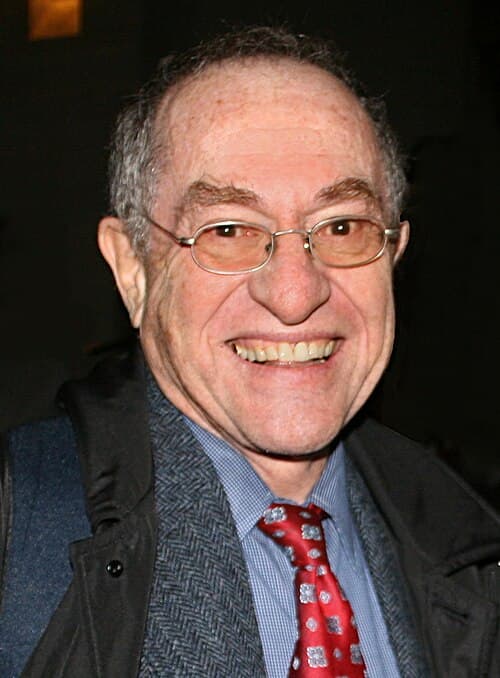
Alan Dershowitz
PERSON • 4 mentions
American lawyer, author, and art collector (born 1938)
Alan Keyes
PERSON
American politician (born 1950)
Alan King
PERSON
American comedian and actor (1927–2004)
Albert Schweitzer
PERSON
Alberti
PERSON
Spanish poet (1902–1999)
AL
Aldrich
PERSON

Alec Baldwin
PERSON
American actor
AB
Alexander Bickel
PERSON
American legal scholar (1924–1974)
AK
Alfred Kinsey
PERSON
Alison J. Nathan
PERSON
AL
Aliya
PERSON
Chinese-Mongolian actress

Allan Bakke
PERSON
Brazilian association football player
AN
Anatoly
PERSON
Anatoly Sharansky
PERSON
Israeli politician (born 1948)
Andre Previn
PERSON
German-American conductor, pianist, and composer (1929–2019)
Andrei Sakharov
PERSON
Soviet nuclear physicist and human rights activist (1921–1989)
Andrew Dworkin
PERSON
Andrew Johnson
PERSON

Angela Davis
PERSON
American political activist, scholar, and author
AL
Angela Lambert
PERSON
Author, journalist (1940-2007)

Annabella Sciorra
PERSON
American actress
Anne Frank
PERSON
German-born Dutch Jewish diarist and Holocaust victim (1929–1945)
Anthony Lewis
PERSON
American journalist (1927–2013)
AN
Antonin
PERSON
Antonin Scalia
PERSON • 2 mentions
Associate Justice of the Supreme Court of the United States from 1986 to 2016
Anwar Sadat
PERSON
President of Egypt from 1970 to 1981
Archibald Cox
PERSON
American prosecutor (1912–2004)
Aristotle
PERSON
4th-century BCE Classical Greek philosopher and polymath
Arthur Goldberg
PERSON
American lawyer, politician and civil servant (1908-1990)
Arthur Miller
PERSON
AR
Artie
PERSON
Artie Edelman
PERSON
Artur
PERSON

Aung San Suu Kyi
PERSON
Former State Counsellor of Myanmar and Leader of the National League for Democracy

Avital
PERSON
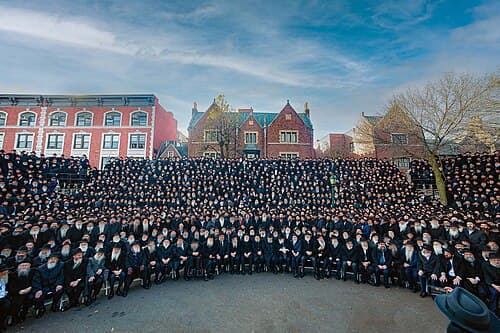
Avraham Harmon
PERSON

Baden
PERSON

Bailey
PERSON
Unincorporated community in Park County, Colorado, United States
BA
Bakkers
PERSON

Ballard
PERSON
BM
Bar Mitzvahed
PERSON
Barack Obama
PERSON • 2 mentions
President of the United States from 2009 to 2017
Barry Diller
PERSON
American businessman
Barry Goldwater
PERSON
American politician and military officer (1909–1998)
Barry Scheck
PERSON
American lawyer and legal scholar
Bartov
PERSON
BA
Bazelon
PERSON
Becket
PERSON
Bela Lugosi
PERSON
BE
Belichick
PERSON
Bellow
PERSON
BA
Ben and Casey Affleck
PERSON
BG
Ben Gazzaza
PERSON
Ben Gurion
PERSON
BK
Ben Kaplan
PERSON
American economist and author
Benjamin Cardozo
PERSON

Benjamin Netanyahu
PERSON • 2 mentions
Prime Minister of Israel (1996–1999; 2009–2021; since 2022)
Benjamin Spock
PERSON
American pediatrician and author of Baby and Child Care (1903-1998)

Bennett
PERSON
Historically black liberal arts college for women in North Carolina, USA
BE
Berenkoff
PERSON
BE
Berger
PERSON
German badminton player
Bernie Beck
PERSON
United States Senator from Vermont since 2007
Bernstein
PERSON
BE
Berrigan
PERSON
BI
Bickel
PERSON
Bill Brennan
PERSON
College basketball player (1984–1987) Vermont
Bill Burns
PERSON
Major League Baseball pitcher (1880-1953)
Bill Clinton
PERSON • 4 mentions
President of the United States from 1993 to 2001 (born 1946)
BD
Bill Douglas
PERSON
Director (1934-1991)
BO
Bill O’Reilley
PERSON
BI
Billy
PERSON
BB
Billy Batson
PERSON
Billy Bulger
PERSON
Politician in Massachusetts, US
BI
Binion
PERSON

Blackburn
PERSON
Association football club in Blackburn, England
Blackmun
PERSON
US Supreme Court justice from 1970 to 1994 (1908–1999)

Blaine
PERSON
BL
Blima
PERSON
Bob Bennett
PERSON
American politician (1933–2016)
Bob Dylan
PERSON
American singer-songwriter (born 1941)
Bob Nozick
PERSON
Bob Woodward
PERSON
American investigative journalist (born 1943)
Bohdan Khmelnitsky
PERSON
BO
Borokova
PERSON

Borris Karloff
PERSON
BO
Bowman
PERSON
BR
Brandeis
PERSON
Brandeis Stone
PERSON
Brandon Lee
PERSON
American actor (1965–1993)
Brewer
PERSON
BM
Brian Murtagh
PERSON
BW
Brian Wice
PERSON

Britt
PERSON
BR
Brooke
PERSON

Brooke Shields
PERSON
American actress

Bruce Franklin
PERSON
American musician
Bryant
PERSON
City in Arkansas, USA
Buchanan
PERSON
American professional wrestler

Buckley
PERSON
Buddy Hackett
PERSON
American actor and comedian (1924–2003)
Bulger
PERSON
BU
Bulow
PERSON
BU
Burger
PERSON

Burke
PERSON
Census-designated place (CDP) in Fairfax County, Virginia, United States
Byron
PERSON
American actor (1913–1978)
Byron White
PERSON
Associate Justice of the Supreme Court of the United States and American football player (1917–2002)
CA
Calabresi
PERSON

Cape Cod
PERSON
Peninsula in Massachusetts, United States
CA
Cardozo
PERSON
Carl Furillo
PERSON
American baseball player

Carl Stork
PERSON
Carlin
PERSON
Carly Simon
PERSON
American musician
Carman
PERSON
American Contemporary Christian music singer
CA
Carolyn
PERSON
Female given name
CA
Casin
PERSON

Chandler
PERSON
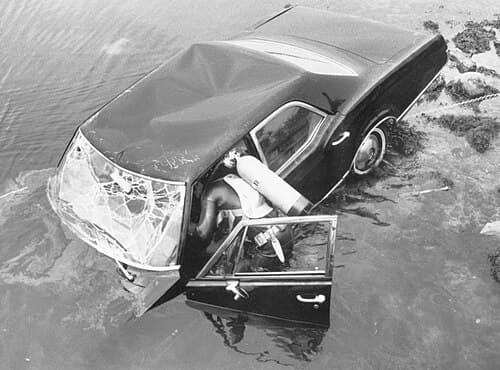
Chappaquiddick
PERSON • 2 mentions
CD
Charles Duncan
PERSON
Charles Fried
PERSON
American judge (1935–2024)
Charles Manson
PERSON
American criminal and cult leader (1934–2017)
Charles R. Alberti
PERSON
Spanish poet (1902–1999)
CS
Charles Schenck
PERSON

Charles St. Denis
PERSON
Charlton Heston
PERSON
American actor (1923–2008)
CP
Chase N. Peterson
PERSON
President of the University of Utah
Checkov
PERSON
Chemerinksy
PERSON
CH
Chuck
PERSON
CL
Claire
PERSON
Clarence Darrow
PERSON

Clark
PERSON
English electronic musician
CB
Clark Byse
PERSON
Claus
PERSON
Swiss painter (-1422)
Claus von Bulow
PERSON
British socialite (1926–2019)
CL
Clauson
PERSON
CO
Cockburn
PERSON
CO
Coleman
PERSON
Brand of outdoor recreation products, especially camping gear
Colette
PERSON
CO
Colleen
PERSON
CO
Collins
PERSON
Sapper in Indian Engineers, British Indian Army

Condoleezza Rice
PERSON
American diplomat and political scientist (born 1954)
Conrad Black
PERSON
Canadian and British newspaper publisher (born 1944)

Conyers
PERSON
CW
Courtney Wild
PERSON
1997 British biographical film directed by Brian Gilbert
CY
Curious Yellow
PERSON

Cynthia Nixon
PERSON
American actress and politician
CD
Cyrano d’Berjurac
PERSON
Dag Hammarskjold
PERSON
Swedish diplomat, economist, and author (1905-1961)
DA
Damiano
PERSON
DM
Daniel Jackson Oliver Wendell Holmes Morgan”—Quite
PERSON
Daniel Reid
PERSON
Politician from Trinidad and Tobago
Daniel Webster
PERSON
DA
Darrow
PERSON
David Ben-Gurion
PERSON
Israeli politician, Zionist leader, prime minister of Israel (1948–1953, 1955–1963) - (born1886–1973)

David Brewer
PERSON
English broker and politician (1940–2023)
David Crosby
PERSON
American singer, guitarist and songwriter (1941–2023)
David Hamilton
PERSON
British photographer and film director (1933–2016)
DH
David Heller
PERSON
Born:1922-08-10|died:1968-05-28|; Heller, David 1922-1968; Heller, David
David L. Bazelon
PERSON
American judge (1909–1993)

David Levett
PERSON
David Mamet
PERSON
American playwright, filmmaker and author (born 1947)
DM
David Marriot
PERSON
American philosopher
David Merrick
PERSON
American theatre producer (1911-2000)
David Rodgers
PERSON
City in Benton County, Arkansas, United States
David Steinberg
PERSON
Comedian, actor, director, and writer
Dean Chemerinsky
PERSON
Dean Griswold
PERSON
DW
Dean Warren
PERSON
Ice hockey official
Deep Throat
PERSON
Alias of Mark Felt, the whistleblower who exposed the Watergate scandal
Delson
PERSON
Dennis Prager
PERSON
American writer, speaker, radio and TV commentator
DB
Derek C. Bok
PERSON
American lawyer and college administrator
Descartes
PERSON
Desdemona
PERSON
DE
Desiree
PERSON
American pornographic actress

Deuteronomy
PERSON
DE
Dewhurst
PERSON
DF
Dick Friedman
PERSON
Dolph Schayes
PERSON
American basketball player and coach (1928–2015)
Dominique Strauss- Kahn
PERSON
French economist
Don Ervin
PERSON
Don King
PERSON
Donald Trump
PERSON
President of the United States (2017–2021, 2025–present)
Donald Washington
PERSON
American football player
Donny
PERSON

Doody
PERSON
DO
Dorothy
PERSON
- 1640
Dorothy Goldberg
PERSON
American professional wrestler, kickboxer, actor, and football player (born 1966)
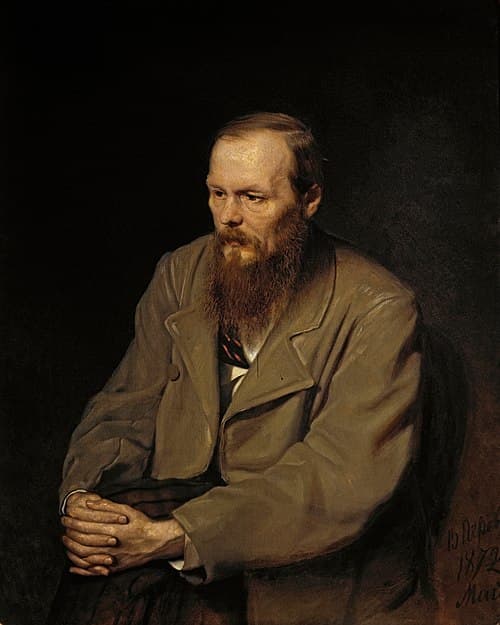
Dostoevsky
PERSON
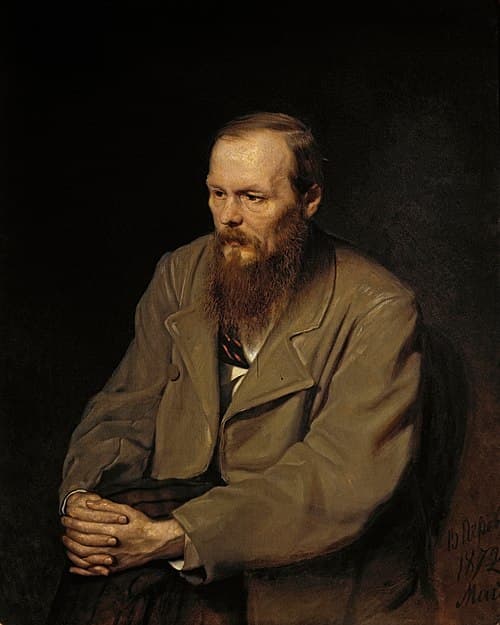
Dostoyevsky
PERSON
DB
Doug Band
PERSON
American presidential advisor

Drescher
PERSON
DW
Drew Weston
PERSON
DR
Droney
PERSON
Dustin Hoffman
PERSON
American actor (born 1937)
Earl Warren
PERSON

Edward Kennedy
PERSON
American lawyer
Ehud Barak
PERSON
10th Prime Minister of Israel

Ehud Olmert
PERSON
Prime Minister of Israel from 2006 to 2009
EI
Eichmanns
PERSON

Eiger
PERSON
Eleanor Roosevelt
PERSON • 2 mentions
First Lady of the United States from 1933 to 1945 (1884–1962)
Elie Wiesel
PERSON
Romanian-born American writer, professor, political activist, Nobel laureate, and Holocaust survivor (1928-2016)
Eliot
PERSON
EB
Elizabeth Bartholet
PERSON
American academic
Elizabeth Holtzman
PERSON
U.S. Representative from New York
Ella Fitzgerald
PERSON
American jazz singer (1917–1996)

Elohim
PERSON

Elon Musk
PERSON • 2 mentions
Businessman and entrepreneur (born 1971)
EN
Enmund
PERSON
Eric Holder
PERSON
United States Attorney General from 2009 to 2015
ER
Ervin
PERSON

Erwin
PERSON
Town in Tennessee, United States of America
Erwin Griswold
PERSON
American lawyer (1904-1994)
ES
Escobedo
PERSON
Ethel
PERSON
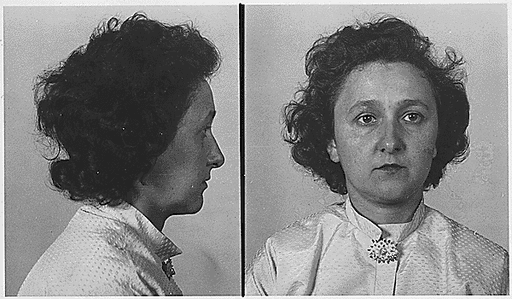
Ethel Rosenberg
PERSON
American woman executed for spying for the Soviet Union (1915-1953)
Eugene Scalia
PERSON
American lawyer
F. Lee Bailey
PERSON
American criminal defense attorney (1933–2021)
FA
Fahey
PERSON
Falwell
PERSON
Faurisson
PERSON
FE
Feirman
PERSON
Felix Frankfurter
PERSON
Former Associate Justice of the United States Supreme Court (1882–1965)
FI
Fidel
PERSON
2002 television film directed by David Attwood
Finkelstein
PERSON
American economist
Floyd Abrams
PERSON
American attorney
Fortas
PERSON
Frank Sinatra
PERSON
American singer and actor (1915–1998)
Frank Snepp
PERSON
American journalist
FR
Frankfurter
PERSON
Franklin D. Roosevelt
PERSON
FR
Fred Rodel
PERSON
American legal scholar
FK
Freddie Kassab
PERSON
FR
Freddie Roman
PERSON
American comedian
FR
Freedman
PERSON
American physicist
Freud
PERSON
FR
Fritz
PERSON
Chess software
FK
Fritz Kessler
PERSON
FU
Furman
PERSON
GS
Gabriel Schoenfeld
PERSON
American writer

Gail Sheehy
PERSON
American journalist and writer
GB
Garrett Byrne
PERSON
GT
Gary Tison
PERSON
GA
Gautha
PERSON

Gene Hermansky
PERSON
GF
Gennifer Flowers
PERSON
American actress and model
George Carlin
PERSON
American stand-up comedian (1937–2008)
George Lakoff
PERSON
American linguist
George W. Bush
PERSON • 2 mentions
President of the United States from 2001 to 2009
George Washington
PERSON
George Wellers
PERSON

Georgina Chapman
PERSON
English fashion designer and actress
Gerald B. Tjoflat
PERSON
American judge
Gerald Edelman
PERSON
American biologist (1929–2014)
Gerald Ford
PERSON
President of the United States from 1974 to 1977 (1913–2006)
GD
Gerard Damiano
PERSON
American pornographic film director (1928-2008)
Gershwin
PERSON
American-Australian marine biologist

Ghislaine Maxwell
PERSON
British socialite and sex trafficker, daughter of Robert Maxwell, accomplice of Jeffrey Epstein

Gideon
PERSON
Judge in the Biblical Book of Judges
Gideonese
PERSON

Gifford
PERSON
Gil Hodges
PERSON
United States Marine; American Hall of Fame baseball player (1924–1972)

Gilbert
PERSON
City in Maricopa County, Arizona, United States

Gloria Steinem
PERSON
American activist and journalist (born 1934)
GO
Godfather
PERSON
Golda Meir
PERSON
GO
Goldberg
PERSON
American professional wrestler, kickboxer, actor, and football player (born 1966)
GO
Goldstein
PERSON
Family name
Gorbachev
PERSON
Leader of the Soviet Union from 1985 to 1991 (1931–2022)
GO
Gould
PERSON
GK
Goyisher Kup.
PERSON

Grandma Ringel
PERSON

Gravel
PERSON
GR
Greenawalt
PERSON
Gregory Peck
PERSON
American actor (1916–2003)

Greta van Susteren
PERSON
American commentator, television personality, and lawyer

Griffith
PERSON
GR
Grossingers
PERSON

Guernica
PERSON
GC
Guido Calabresi
PERSON
United States federal judge
H.
H.L.
PERSON
H.L. Mencken
PERSON

Hagen
PERSON
Hakeem Olajuwon
PERSON
Nigerian-American basketball player
HR
Haley Robson
PERSON
Hamlet
PERSON
Tragedy by William Shakespeare
HA
Harding
PERSON
HK
Hare Krishna
PERSON
Ph.D. Harcourt Butler Technological Institute, Kanpur 2002

Harlan
PERSON
HA
Harold
PERSON
Male given name
Harold Ramis
PERSON
American actor, comedian, and filmmaker (1944–2014)
Harry Hershfield
PERSON
Harry Reems’
PERSON
American pornographic actor (1947–2013)
HR
Harry Reems’—with
PERSON

Harry Reid
PERSON
American politician (1939–2021)
HS
Harry Shorstein
PERSON
American lawyer
HS
Harvey Silverglate
PERSON
Attorney, co-founder, Foundation for Individual Rights in Education
Harvey Weinstein
PERSON
American film producer and sex offender (born 1952)

Havel
PERSON
HA
Hayveynu Shalom Alechem
PERSON
HV
Hector Villagro
PERSON
HE
Hedgie
PERSON
Hegel
PERSON
Helen Hayes
PERSON
American actress (1900–1993)
HS
Helena Stoeckley
PERSON
HE
Heller
PERSON

Helmsley
PERSON
Hemingway
PERSON
HE
Henley
PERSON
Henry Cabot Lodge
PERSON
American politician (1902–1985)
Henry Hyde
PERSON
American member of the United States House of Representatives (1924–2007)
Henry II
PERSON
Henry Kissinger
PERSON
American politician and diplomat (1923–2023)
HE
Hentoff
PERSON
American music critic, born 1925 (1925–2017)
HP
Herbert Packer
PERSON
HS
Herbert Streicker
PERSON

Heston
PERSON

Hillary Clinton
PERSON • 2 mentions
American politician and diplomat (born 1947)
HI
Hillel
PERSON
HI
Hirsh
PERSON
Homers
PERSON
Reputed author of the Iliad and the Odyssey
Hoover
PERSON
Hosni Mubarak
PERSON • 2 mentions
President of Egypt from 1981 to 2011

Howell
PERSON
City and county seat of Livingston County, Michigan, United States of America
Hugo Black
PERSON
HU
Hukabee
PERSON
HB
Hyman Barshay
PERSON
IY
I am Curious Yellow
PERSON
Ike Eisenhower
PERSON
IB
Ingmar Bergmann
PERSON
ID
Innocent Defendant
PERSON

Iris Kones
PERSON

Irving
PERSON
Irwin Cotler
PERSON
Canadian politician
IA
Isaac Abravanal
PERSON

Isabella Rossellini
PERSON
Italian-American actress (born 1952)
IT
Itchie
PERSON
Itzhak Perlman
PERSON
Israeli-American violinist and conductor (born 1945)
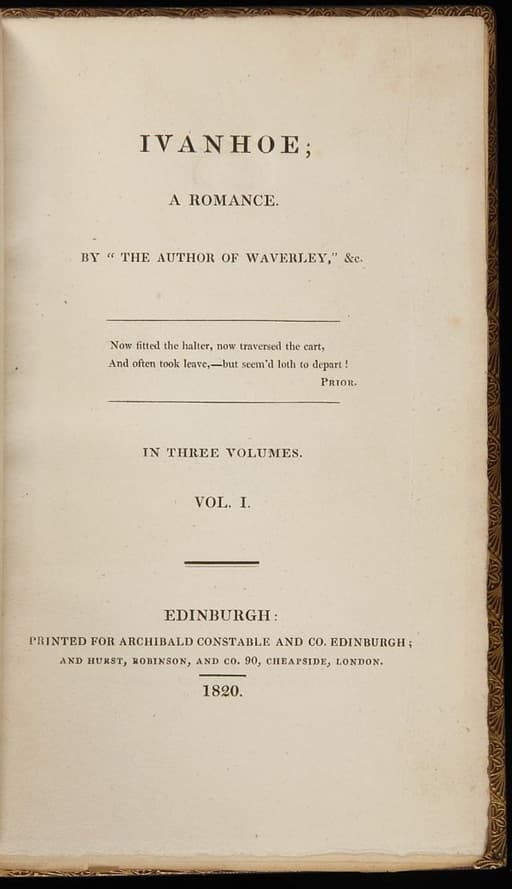
Ivanhoe
PERSON
J. Edgar Hoover
PERSON
American law enforcement administrator (1895–1972)
J. Skelly Wright
PERSON
American Judge (1911-1988)
JG
Jack Goldberger
PERSON
Family name
JA
Jack Henry Abbot
PERSON
American author and criminal (1944–2002)

Jackie Mason
PERSON
American comedian (1928-2021)
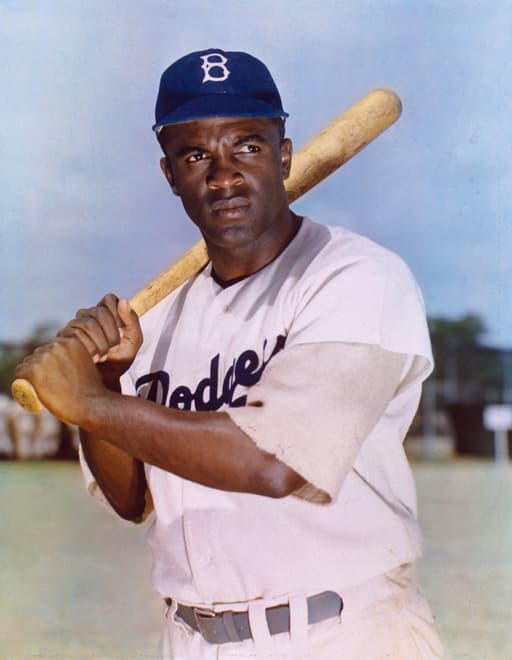
Jackie Robinson’
PERSON
American baseball player (1919–1972)
JA
Jacob
PERSON
In Genesis, a son of Isaac, also known as Israel; the patriarch of the Israelites
Jacob Javits
PERSON
American politician (1904-1986)
Jacob Marcus
PERSON
Holocaust victim (born 1934)
James Baker
PERSON • 2 mentions
American lawyer and statesman (born 1930)

James G.
PERSON
Colombian association football player
James Madison
PERSON
President of the United States from 1809 to 1817

James Spader
PERSON
American actor
James Zogby
PERSON
Founder of the Arab American Institute
JA
Jamin
PERSON
Jan Pierce
PERSON
Janet Reno
PERSON
Former Attorney General of the United States (1938-2016)
Javert
PERSON
JK
Jay Katz
PERSON
American physician (1922-2008)

Jean-Luc Brunel
PERSON
French model scout (1946–2022)

Jeff Sessions
PERSON
American politician and lawyer (born 1946)

Jeremy Ben Ami
PERSON

Jerry
PERSON
Fictional mouse from the Tom and Jerry animated series
Jerry Falwell
PERSON
American evangelical pastor, televangelist, and conservative political commentator
Jerry Lewis
PERSON
American comedian, actor and film director (1926–2017)
Jes Staley
PERSON • 2 mentions
American banker, chief executive officer of Barclays
Jesus Christ
PERSON • 2 mentions
Central figure of Christianity (6 or 4 BC – AD 30 or 33)
Jim Bakker
PERSON
American televangelist (born 1940)
Jimmy Carter
PERSON • 2 mentions
President of the United States from 1977 to 1981 (1924–2024)
Jimmy Hoffa
PERSON
American labor union leader (1913 – disappeared 1975)

Joe Kennedy
PERSON • 2 mentions
Professional baseball player (1979–2007)
JJ
Joe Laurie, Jr.
PERSON
Johann-Paul Kremer
PERSON
American painter
John Brennan
PERSON
Director of the Central Intelligence Agency from 2013 to 2017
John Connolly
PERSON
American FBI agent and convicted criminal
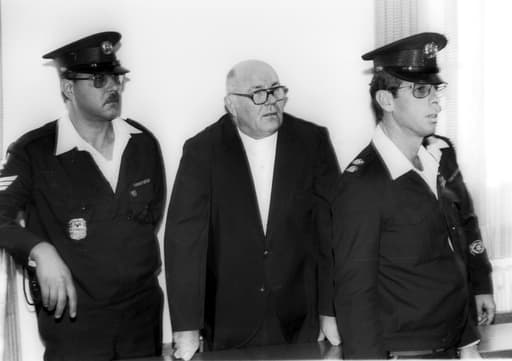
John Demjanjuk
PERSON
Ukrainian guard at Nazi death camps (1920–2012)
JD
John Droney
PERSON
American politician
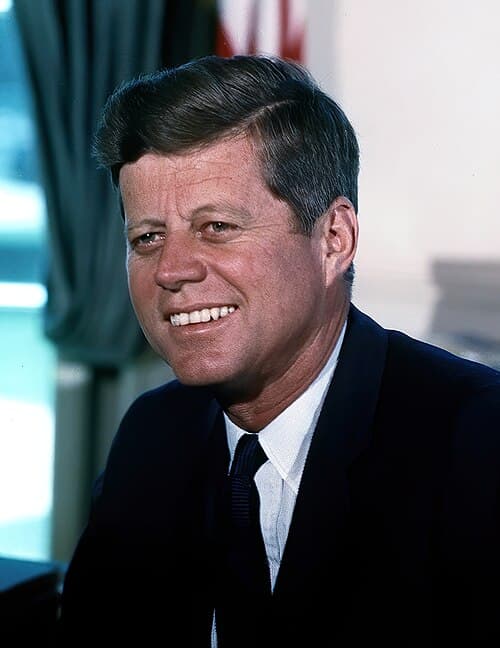
John F. Kennedy
PERSON • 4 mentions
President of the United States from 1961 to 1963 (1917–1963)
John Harlan
PERSON
American television announcer (1925–2017)
JE
John Hart Ely
PERSON
American legal scholar (1938-2003)
John Hope Franklin
PERSON
African-American historian
John Kennedy, Jr.—the
PERSON
President of the United States from 1961 to 1963 (1917–1963)
John Landis
PERSON
American film director, screenwriter and producer
John Lennon
PERSON
British musician (1940–1980)
John Lucido
PERSON
John Lyons’
PERSON
English stage and screen actor
John Marshall
PERSON
John Ono
PERSON
British musician (1940–1980)
John Paul Stevens
PERSON
United States Supreme Court justice (1920–2019)
John Wigmore
PERSON
Johnny Gill
PERSON
American R&B singer-songwriter and actor (born 1966)
JD
Jonathan Doody
PERSON
Jonathan Pollard
PERSON
U.S. civilian intelligence analyst turned Israeli spy
JO
Joneses
PERSON
Joseph CG
PERSON

Joseph Goldstein
PERSON
American biochemist
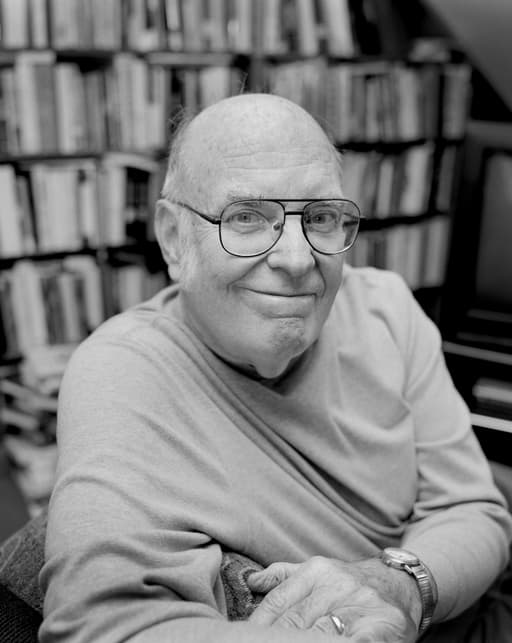
Joseph Kennedy
PERSON
American writer (born 1929)
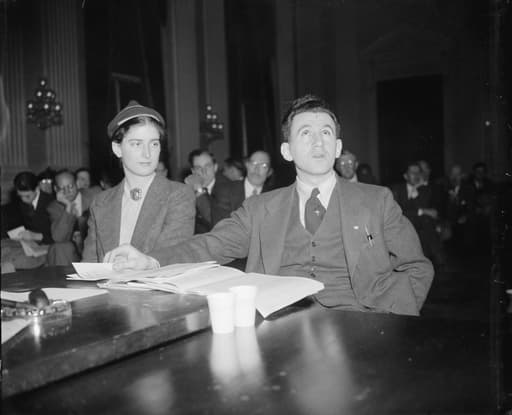
Joseph P. Lash
PERSON
American political activist (1909-1987)
JF
Jules Farber
PERSON
JU
Julian
PERSON • 2 mentions

Julian Assange
PERSON
Australian editor, publisher, and activist (born 1971)
Julius
PERSON
Head of the Catholic Church from 337 to 352
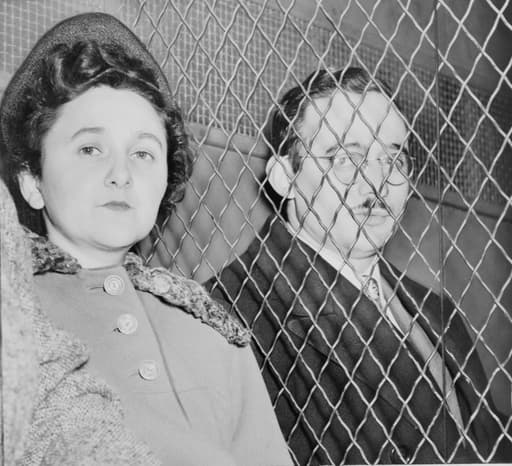
Julius Rosenberg
PERSON
Kafka
PERSON
KA
Kandinsky
PERSON
Kaplan
PERSON
Karadic
PERSON
KA
Karalexis
PERSON
KA
Karen
PERSON
KM
Karl Maiden
PERSON

Katherine Fernandez Rundle
PERSON
American politician
KG
Katherine Graham
PERSON
American golfer (1923-2019)

Katie Couric
PERSON • 2 mentions
American journalist, presenter, producer, and author
Katzav
PERSON
KS
Kay Sybers
PERSON
Keith Gordon Ham
PERSON
Ken Feinberg
PERSON
American lawyer
Ken Starr
PERSON • 3 mentions
American judge and educational administrator (1946–2022)
KE
Kessler
PERSON
KB
Kevin Ballard
PERSON
Researcher ORCID ID = 0000-0001-7587-1220

Kevin P. Convey
PERSON
Kevin Youkilis
PERSON
American baseball player

Khmelnitsky
PERSON
KI
Kimberly
PERSON
Kirtanananda Swami
PERSON
American religious leader (1937-2011)
Kitty Kelly
PERSON
KL
Klieg
PERSON
Kremer
PERSON
American development economist
Krishna
PERSON
Major deity in Hinduism, worshipped as the eighth avatar of Vishnu and also as the Supreme god in his own right
KR
Kristen
PERSON
KR
Kronehiem
PERSON
Kronheim
PERSON • 2 mentions

Kuchma
PERSON
Researcher
Kung Fu
PERSON
Kutchers
PERSON
La Boheme
PERSON

La Gioconda
PERSON

Landis
PERSON
Larry David
PERSON • 2 mentions
American comedian, writer and actor (born 1947)
Larry Flynt
PERSON
American publisher

Larry Parrish
PERSON
American baseball player and coach
Larry Summers
PERSON
American economist and government official (born 1954)
Lee Harvey Oswald
PERSON
American former marine who assassinated John F. Kennedy (1939–1963)
Len Wildes
PERSON
Lennon
PERSON
Lenny Bruce
PERSON
American comedian and social critic (1925–1966)
LB
Leon Black
PERSON
American billionaire businessman (born 1951)
Leon Uris
PERSON
American author (1924–2003)
LE
Leona
PERSON
Leona Helmsley
PERSON
American hotel owner (1920–2007)

Leonid Kuchma
PERSON
The second president of Ukraine

Levett
PERSON
LI
Linda
PERSON
Linda Lovelace
PERSON
American pornographic actress, later anti-porn activist (1949–2002)
Linda Tripp
PERSON
American civil servant (1949-2020)

Lipschitz
PERSON
LG
Lou Goldstein
PERSON
LO
Louie
PERSON
American comedy-drama television series
Louis Armstrong
PERSON
American jazz musician, trumpeter and singer (1901–1971)
Louis Brandeis
PERSON
Holocaust victim (born 1902)
Louis Wolfson
PERSON
American financier
Lovelace
PERSON
LS
Lsaac
PERSON
LD
Lydy Dole
PERSON
LY
Lyman
PERSON
Lyndon Johnson
PERSON
President of the United States from 1963 to 1969 (1908–1973)
Lyoneses
PERSON

Lyons
PERSON
City of France
MA
MacDonald
PERSON

Maclean
PERSON

Mahmoud Ahmadinejad
PERSON
6th President of the Islamic Republic of Iran from 2005 to 2013
MA
Mailer
PERSON
Individual employed to handle newspapers from the press to the truck
Maimonides
PERSON
Mandela
PERSON
First President of South Africa and anti-apartheid activist (1918–2013)
Manson
PERSON
1973 film by Laurence Merrick, Robert Hendrickson
Mao Zedong
PERSON
1st chairman of the Chinese Communist Party and founder of the People's Republic of China (1893–1976)
MA
Mappelthorpe
PERSON
MR
Marc Rich
PERSON • 2 mentions
American commodities trader (1934–2013)
Margaret Mead
PERSON
American anthropologist (1901-1978)
Marilyn
PERSON
British singer

Mark Chapman
PERSON
British television presenter

Mark Hauser
PERSON
South Korean-Canadian rapper

Marks
PERSON
South Korean-Canadian rapper
Marlon Brando
PERSON
American actor (1924–2004)

Marsala
PERSON
MA
Marsha
PERSON

Martha Stewart
PERSON
American businesswoman, writer, TV personality (born 1941)
MV
Martha’s Vineyard
PERSON
City in Utah County, Utah, United States
Martin Luther
PERSON
German priest and theologian (1483–1546)
Martin Luther King
PERSON
American Baptist minister and civil rights leader (1929–1968)

Mary Jo
PERSON
American actress
MK
Mary Jo Kopenche
PERSON
MH
Matthew Hale
PERSON
White separatist religious leader; (born 1971)
Maureen Dowd
PERSON
American journalist
MC
Maxwell Cohen
PERSON
Canadian lawyer (1910-1998)
MC
McCartney
PERSON
Mearsheimer
PERSON
American political scientist
ME
Meltsner
PERSON
ME
Menkin
PERSON

Merrick
PERSON
Meyer Kahana
PERSON

Mia Farrow
PERSON • 2 mentions
American actress
MB
Michael Baden
PERSON
American pathologist
MC
Michael Cernea
PERSON
Michael Cohen
PERSON • 2 mentions
American former attorney and former Republican official
Michael Jackson
PERSON
American singer, songwriter, record producer, and dancer (1958–2009)
Michael Milken
PERSON • 2 mentions
American investor

Michael Moore
PERSON
American filmmaker and author (born 1954)

Michael Steele
PERSON
American rock musician
Mike Gravell
PERSON
Mike Nichols
PERSON
American director and comedian (1931–2014)
MR
Mike Royko
PERSON
American writer and newspaper columnist (1932-1997)
Mike Tyson
PERSON
American boxer and media personality
MI
Mildred
PERSON
MI
Milton
PERSON
Preparatory school in Milton, Massachusetts
MH
Milton Handler
PERSON
American lawyer
Milton Kronheim
PERSON
MI
Miranda
PERSON
Mitt Romney
PERSON • 2 mentions
American politician and businessman (born 1947)

Mohammad
PERSON
MO
Mohomet
PERSON
MO
Moishe
PERSON
MK
Moishe Katz
PERSON

Monica
PERSON
American singer and rapper (born 1980)

Monica Lewinsky
PERSON • 2 mentions
American activist and writer (born 1973)
MF
Monroe Freedman
PERSON

Monte Durham
PERSON
MO
Morrie
PERSON
Japanese musician
Morris Rosen
PERSON
Jewish survivor, Death March to Buchenwald Concentration Camp, liberated from the Theresienstadt ghetto by Soviet troops
MO
Morrison
PERSON
Town in Jefferson County, Colorado, United States
MO
Morrow
PERSON
American surgeon
MO
Morvillo
PERSON
Moses
PERSON
Abrahamic prophet said to have led the Israelites out of Egypt
MO
Moshe
PERSON
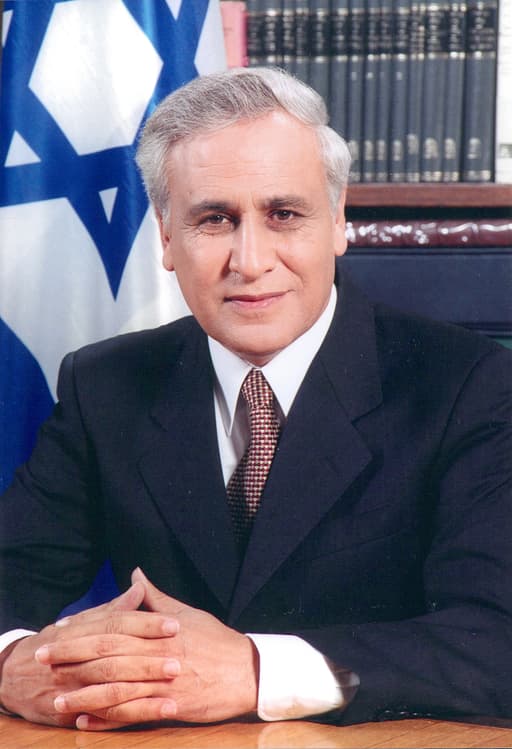
Moshe Katsav
PERSON
8th President of Israel (2000–2007)
Mourdock
PERSON
Mstislav Rostropovich
PERSON
Soviet and Russian cellist and conductor (1927-2007)
Muammar Gaddafi
PERSON • 2 mentions
Leader of Libya from 1969 to 2011
MU
Muriel
PERSON
Female given name

Murphy
PERSON
MU
Murtagh
PERSON
Mussolini
PERSON
my Perry Mason
PERSON

Nadir
PERSON
Naphtali Ringel
PERSON
NH
Nat Hentoff
PERSON
American music critic, born 1925 (1925–2017)

Natalie Portman
PERSON • 2 mentions
Israeli-American actress (born 1981)
NA
Natan
PERSON
Family name

Natan Sharansky
PERSON
Israeli politician (born 1948)
NA
Natasha
PERSON
Person identified in the Museu da Pessoa collection

Nathan J. Hagen
PERSON
Neil Simon
PERSON
American playwright, writer, academic (1927-2018)
NE
Neitsche
PERSON
Nelson
PERSON
First President of South Africa and anti-apartheid activist (1918–2013)
Nelson Mandela
PERSON
First President of South Africa and anti-apartheid activist (1918–2013)
Nelson Rockefeller
PERSON
Vice President of the United States from 1974 to 1977
NE
Nevelle
PERSON
American football player (born 1996)
NI
Nicholson
PERSON
Noam Chomsky
PERSON • 2 mentions
American linguist and activist (born 1928)
Norman Finkelstein
PERSON
American political scientist (born 1953)
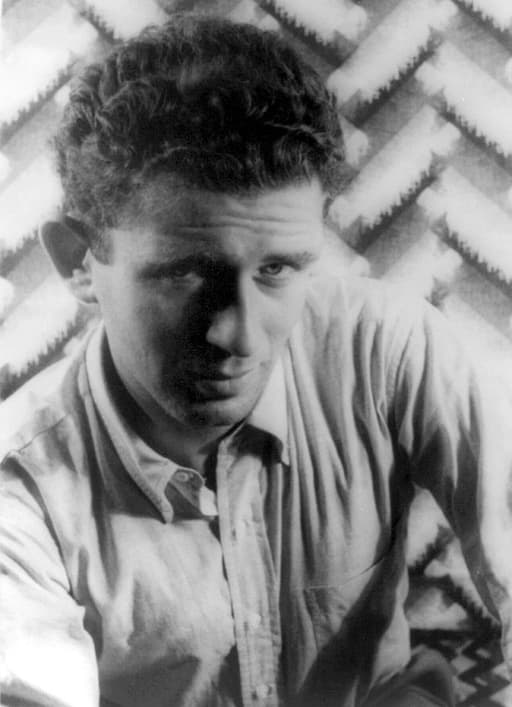
Norman Mailer
PERSON
American writer (1923–2007)
Norman Sohn
PERSON
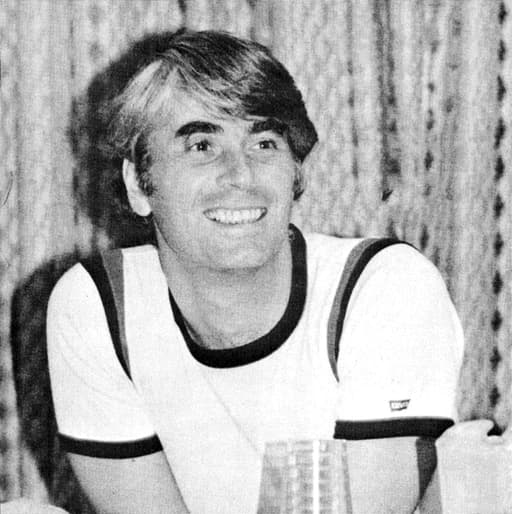
Nozick
PERSON
American political philosopher (1938–2002)

O.J.
PERSON
OC
O’ Connor
PERSON
OD
Odegaard
PERSON
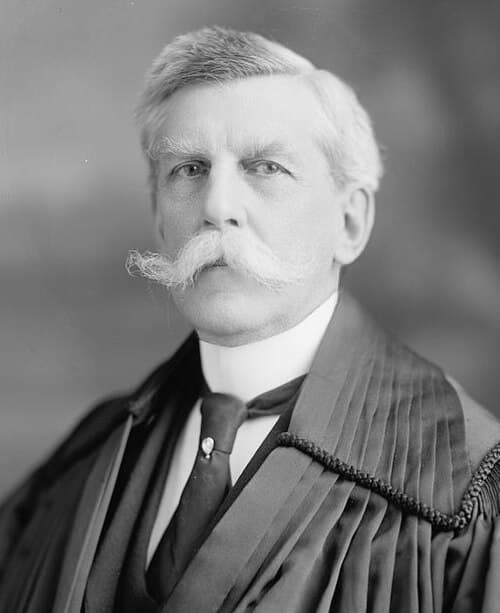
Oliver Wendell Holmes, Jr.
PERSON
Osama bin Laden
PERSON
Saudi terrorist and co-founder of al-Qaeda (1957–2011)
OS
Osborne
PERSON
Pablo Picasso
PERSON
Spanish painter and sculptor (1881–1973)
PA
Paine
PERSON

Palmach
PERSON
Elite strike force of the Haganah in Mandatory Palestine
PA
Parrish
PERSON

Patricia
PERSON

Patricia Hearst
PERSON
American kidnapping victim

Patricia J. Gifford
PERSON
PR
Patricia Rosier
PERSON
Patrick Buchanan
PERSON
PA
Patrickson
PERSON
Ecuadorian footballer
PF
Paul Freund
PERSON
PA
Paula
PERSON

Paula Jones’
PERSON
American Civil Servant
Pee Wee Reese
PERSON
American baseball player and coach
PE
Perlestein
PERSON

Peter Mandelson
PERSON
British politician and life peer (born 1953)
Peter Max
PERSON
German-born American artist (born 1937)
Peter Neufeld
PERSON
American lawyer
PR
Peter Rosier
PERSON
Researcher
Peter Strauss
PERSON
American actor
PE
Peterson
PERSON
Family name
Pierre Trudeau
PERSON
Prime Minister of Canada from 1968 to 1979 and 1980 to 1984 (1919–2000)
PI
Pinkerton
PERSON

Plato
PERSON
4th-century BCE Greek philosopher
PO
Podhoretz
PERSON
PO
Pollard
PERSON

Pope Francis
PERSON
266th pope of the Catholic Church (2013–2025)

Popes
PERSON

Porgy
PERSON
PO
Potaphor
PERSON
PO
Potter
PERSON
Potter Stewart
PERSON
US Supreme Court justice from 1958 to 1981 (1915-1985)
Quincy
PERSON
American record producer and composer (1933–2024)
RS
Rabbi Adan Steinzaltz
PERSON
RZ
Rabbi Zuroff
PERSON
Rabbis
PERSON
Rabin
PERSON
Family name

Radovin Karadic
PERSON
Ralph Branca
PERSON
American baseball player (1926–2016)
Ralph Lauren
PERSON
American fashion designer (born 1939)
Ralph Lipschitz
PERSON
Randy
PERSON
Puerto Rican musician
RG
Randy Greenawalt
PERSON
American serial killer

Ranger
PERSON

Rankin
PERSON
British portrait and fashion photographer and director (1966- )
Rashamon
PERSON
Rashomon
PERSON
Raskolnikov
PERSON
Raymond
PERSON
Name: given and family name
Raymond Pettine
PERSON
RT
Raymond Tison
PERSON

Rebecca pa
PERSON
Badminton player
Red Auerbach
PERSON
American basketball coach (1917–2006)
RB
Red Burrons
PERSON

Redgrave
PERSON
Reems
PERSON

Refusenicks
PERSON
RE
Rehnquist
PERSON
RH
Reinaldo Herrera
PERSON
Venezuelan journalist (1930s–2025)
RE
Reynolds
PERSON

Rhodes
PERSON
Ribicoff
PERSON
American politician (1910–1998)

Richard Branson
PERSON
British business magnate
Richard Goldstone
PERSON
South African former judge
RK
Richard Kahn
PERSON
Radio station in Roy, Utah
Richard Nixon
PERSON
President of the United States from 1969 to 1974 (1913–1994)
Richard Posner
PERSON
United States federal judge

Richard Tabish
PERSON
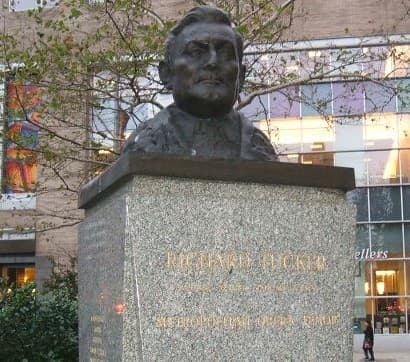
Richard Tucker
PERSON
American opera singer (1913-1975)
Rick Santorum
PERSON
American politician and commentator (born 1958)
RI
Ricky
PERSON
RI
Rifkin
PERSON
RI
Ringel
PERSON
RB
Robert Barnett
PERSON
American lawyer
RP
Robert D. Potter
PERSON

Robert Downey, Jr.
PERSON
American actor (born 1965)
Robert F. Kennedy Jr.
PERSON
American politician, environmental lawyer, anti-vaccine activist, and conspiracy theorist (born 1954)
Robert Faurisson
PERSON
French academic and Holocaust denier (1929–2018)

Robert Louis Stevenson
PERSON
RM
Robert Mapplethorpe
PERSON
American photographer (1946–1989)
Robert Mitchum
PERSON
American actor (1917–1997)
Robert Morvillo
PERSON
Prominent New York trial lawyer who pioneered the practice of white-collar criminal defense and whose client list included colorful celebrities, powerful politicians, and billionaire businessmen
Robert Nozick
PERSON
Indian choreographer
Roberta Peters
PERSON
American operatic soprano (1930-2017)
RG
Robin Givhan
PERSON
American fashion editor
RO
Rodan
PERSON

Rodel
PERSON
Rogan
PERSON
Roger Baldwin
PERSON
Badminton player
Roger Williams
PERSON
Romeo
PERSON
Ron Silver
PERSON
American actor and activist (1946-2009)
Ronald Reagan
PERSON • 2 mentions
President of the United States from 1981 to 1989 and actor (1911–2004)
Ronan Farrow
PERSON
American journalist

Rosenberg
PERSON

Rosenbergs
PERSON

Rosenfeld
PERSON
RO
Rosier
PERSON

Rosset
PERSON
Rostropovich
PERSON
Soviet and Russian cellist and conductor (1927-2007)
Roy Cohn
PERSON
American lawyer (1927–1985)
Roy Wilkins
PERSON
African-American NAACP leader
RO
Royko
PERSON
RU
Rubin
PERSON
RU
Rudolph
PERSON
RU
Rundle
PERSON
Rupert Murdoch
PERSON
Australian-American business magnate (born 1931)

Sally Mann
PERSON
American photographer (born 1951)
Sandra Day O’Connor
PERSON
American lawyer and jurist (1930–2023)
SM
Sandra Murphy
PERSON

Sandy
PERSON
Brazilian singer and actress
Sassoon
PERSON
SA
Satchel
PERSON
Saul Bellow
PERSON
Canadian-American writer
SC
Schenck
PERSON
SC
Schoen
PERSON
SC
Scholer
PERSON
SE
Seigel
PERSON
Montserratian footballer

Seth Myers
PERSON

Seymour Hirsh
PERSON
Shaker
PERSON
Device used to stir liquids in chemistry and biology
SH
Shanda
PERSON
SH
Shapiro
PERSON
Family name
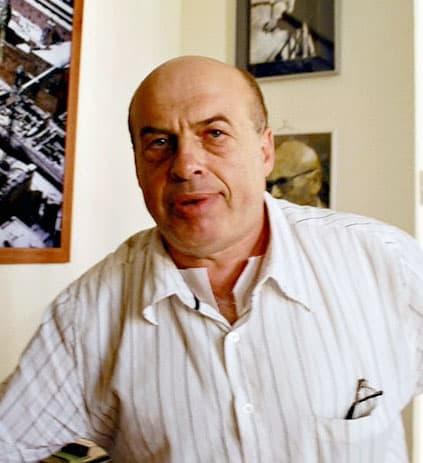
Sharansky
PERSON
Israeli politician (born 1948)
SM
Shawn Mann
PERSON
American musician

Shazam
PERSON
Music application

Sheky Green
PERSON
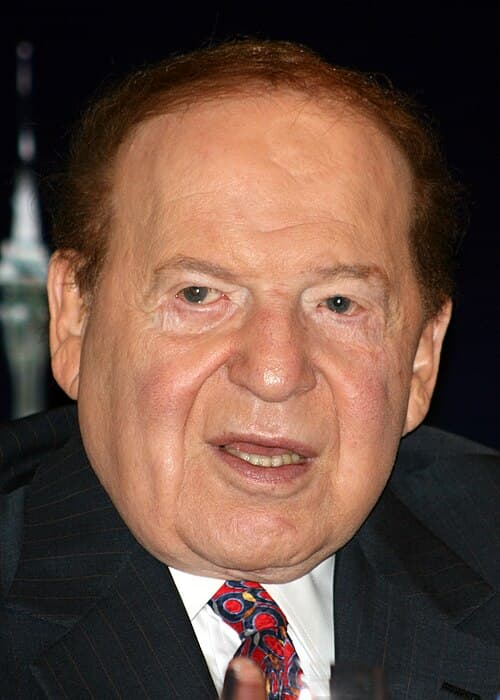
Sheldon Adelson
PERSON
American businessman (1933–2021)
SS
Sheldon Siegel
PERSON

Shelly
PERSON
Indian actress
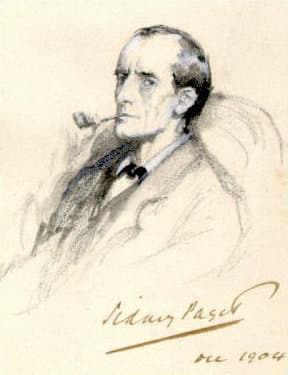
Sherlock Holmes
PERSON
Fictional character (consulting detective) created by Sir Arthur Conan Doyle
Shimon Peres
PERSON
Israeli politician (1923–2016) –Former President of Israel (2007–2014) and Prime Minister of Israel (1977, 1984–1986, 1995–1996)
SH
Shmathiest
PERSON
Shorstern
PERSON
SH
Shults
PERSON
Sidney Hook
PERSON
American philosopher (1902–1989)
Sigmund Freud
PERSON
Austrian neurologist and founder of psychoanalysis (1856–1939)
SI
Silva
PERSON
SZ
Silva Zalmunsen
PERSON
Simon Rifkin
PERSON
SI
Simpson
PERSON
Family name
Sinatra
PERSON
Skip Gates
PERSON
SN
Snepp
PERSON
SC
Snot” Chaitman
PERSON
Sol Hurok
PERSON
SO
Sonny
PERSON
SB
Sonny Von Bulow
PERSON
Soon-Yi Previn
PERSON • 2 mentions
Wife of Woody Allen
Spock
PERSON
St. Denis
PERSON
Stalin
PERSON
SG
Stan Goetz
PERSON
SR
Stanley Rosenblatt
PERSON
ST
Steinberg
PERSON
Musical software and hardware company

Steinem
PERSON
Stephen Breyer
PERSON
US Supreme Court justice from 1994 to 2022
Stephen Foster
PERSON
Stephen Kosslyn
PERSON
American psychologist
SS
Stephen Soundheim
PERSON
SB
Steven Bryant
PERSON
American conductor
Steven Jay Gould
PERSON
American biologist and historian of science (1941–2002)

Steven Pinker
PERSON • 2 mentions
Canadian-American cognitive psychologist, linguist, and author, an advocate of evolutionary psychology and the computational theory of the mind
Steven Spielberg
PERSON
American filmmaker (born 1946)
Steven Wright
PERSON
American comedian
ST
Stinson
PERSON
ST
Stoeckley
PERSON

Stork
PERSON
Brand of margarine
Stravinsky
PERSON
Streicher
PERSON
SU
Sullivan
PERSON
Irish Gaelic clan
Superman
PERSON

Susan Shapiro
PERSON
American writer
Swami
PERSON

Sybers
PERSON

Sylvia Smith Bowman
PERSON
T. B. Macaulay
PERSON
TE
T.S. Eliot
PERSON
TA
Tamarak
PERSON

Tammy Faye
PERSON

Tammy Faye Bakker
PERSON
American evangelist (1942-2007)
Tchaikovsky
PERSON
Patter song written by Ira Gershwin and Kurt Weill
TB
Ted Binion
PERSON
American poker player (1943-1998)
Ted Bundy
PERSON
American serial killer (1946–1989)
Ted Danson
PERSON
American actor (born 1947)
Ted Kennedy
PERSON
United States Senator from Massachusetts from 1962 to 2009
TR
Teddy Roosevelt
PERSON

Telford
PERSON
Telford Taylor ’
PERSON
American attorney and law professor (1908–1998)
TP
The Ass Professor
PERSON

The Dalai Lama
PERSON
TR
the Lone Ranger
PERSON
Theodore
PERSON
Pope

Thomas A. Drescher
PERSON
Thomas Becket
PERSON
Thomas Jefferson
PERSON • 2 mentions
President of the United States from 1801 to 1809
Thomas Paine
PERSON
TH
Thomason
PERSON
Thurgood
PERSON
Thurgood Marshall
PERSON
Associate Justice of the Supreme Court of the United States from 1967 to 1991 (1908–1993)
Tirdof
PERSON
Tjoflat
PERSON
Tocqueville
PERSON
Tom Brady
PERSON
American football player (born 1977)
TH
Tom Hagen
PERSON
Tom Stoppard
PERSON
Tony Shalub
PERSON
American actor (born 1953)
TR
Tripp
PERSON
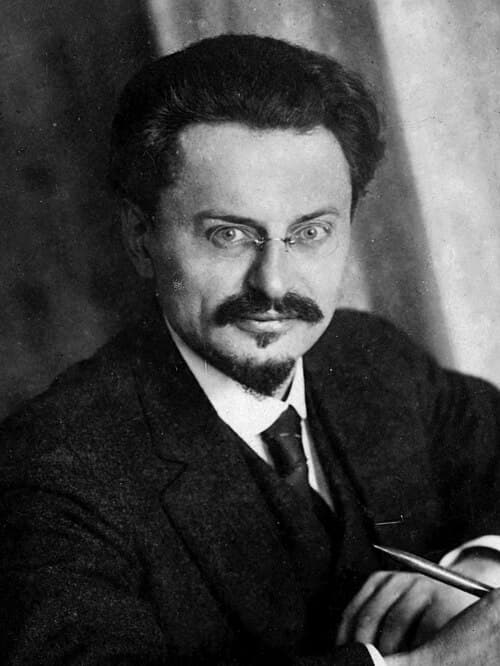
Trotsky
PERSON
TS
Tsena
PERSON
Tsvi Groner
PERSON
Israeli scholar of the Geonic literature
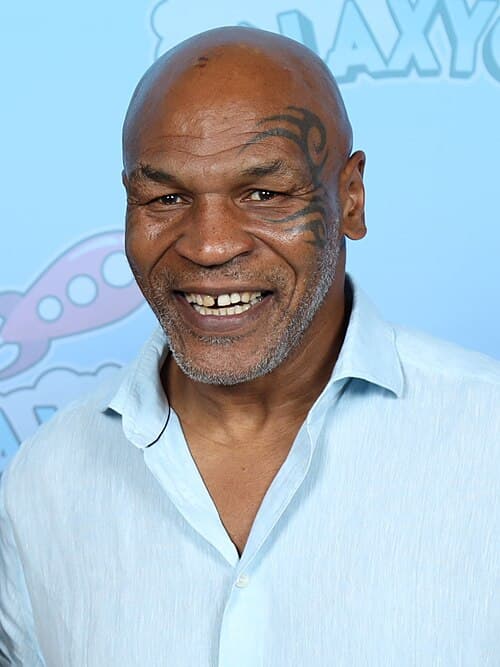
Tyson
PERSON
TZ
Tzedek
PERSON
VA
Vaclav
PERSON
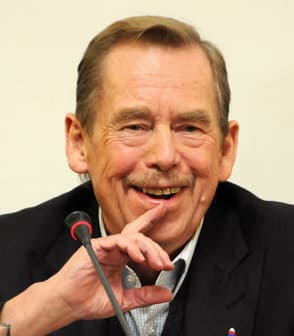
Vaclav Havel
PERSON
Czech statesman, playwright, and former dissident, the last president of Czechoslovakia and the first president of the Czech Republic (1936–2011)

Vanessa Redgrave
PERSON
British actress and activist (born 1937)
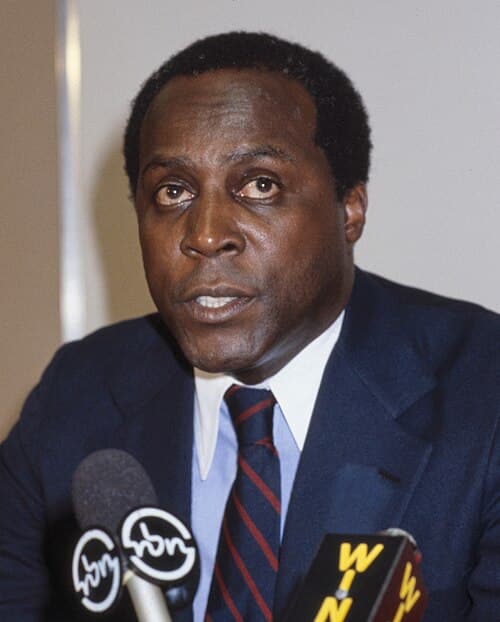
Vernon Jordan
PERSON
American lawyer and civil rights activist (1935–2021)
VE
Verrilli
PERSON
Vic Morrow
PERSON
American actor (1929–1982)

Victor
PERSON
Bomber aircraft family by Handley Page

Victor Botnick
PERSON
Victor S. Nevasky
PERSON
VE
Victoria Eiger
PERSON
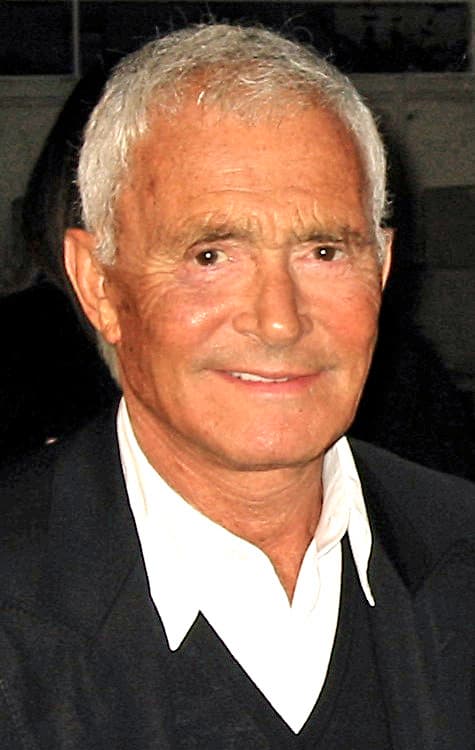
Vidal Sassoon
PERSON
British hairstylist (1928–2012)
VI
Villagro
PERSON
Vladimir Lenin
PERSON
Founding leader of the Soviet Union from 1922 to 1924 (1870–1924)
Voltaire
PERSON
Von Bulow
PERSON
Wagner
PERSON
Walter Mondale
PERSON
Vice President of the United States from 1977 to 1981
Ward Churchill
PERSON
Political activist
Warren Beatty
PERSON
American actor and filmmaker
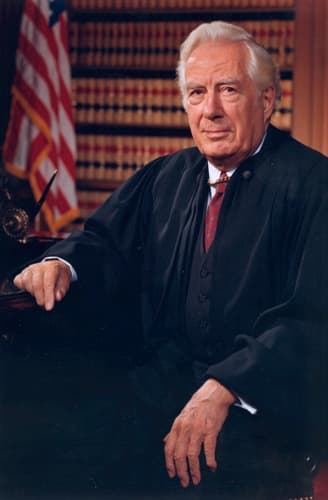
Warren Burger
PERSON
Chief justice of the United States from 1969 to 1986 (1907–1995)
Washingtons
PERSON
WE
Weather
PERSON
WE
Webster
PERSON
WE
Weems
PERSON
WE
Weinright
PERSON

Wellers
PERSON
WH
Whitey
PERSON
WB
Whitey” Bulger
PERSON
WI
Wiffenpoof
PERSON

Wigmore
PERSON
WI
Wildes
PERSON
William Barr
PERSON
77th & 85th United States Attorney General (born 1950)
William Bennett
PERSON
American pundit (1943-)
William Bulger
PERSON
Politician in Massachusetts, US
WH
William Ernst Henley
PERSON
William F. Buckley
PERSON
American public intellectual, conservative author and political commentator (1925–2008)
William J. Brennan
PERSON
U.S. Supreme Court justice from 1956 to 1990
William Jennings Bryant
PERSON
American academic (1944-2020)
William Kunstler
PERSON
American lawyer and civil rights activist (1919-1995)
WO
William O.
PERSON
Researcher
William O. Douglas
PERSON
William Shakespeare
PERSON
English playwright and poet (1564–1616)
WC
William Sloan Coffin
PERSON

William Sybers
PERSON
WW
William Warren
PERSON
Winston Churchill
PERSON • 2 mentions
British statesman, soldier and writer (1874–1965)
WO
Woodward
PERSON

Woody Allen
PERSON
American filmmaker, actor and comedian (born 1935)
Woody Harrelson
PERSON
American actor
Y(
Yakov (Jacob) Gnov (Rob) buh (in) Ben (son
PERSON
Yasser Arafat
PERSON • 2 mentions
Palestinian political leader (1929–2004) and Former President of the Palestinian National Authority (1994-2004)

Yates
PERSON
YS
Yemach Sh’mo
PERSON
Yevgeny
PERSON

Yevtushenko
PERSON
Soviet and Russian poet (1933–2017)
YI
Yiddisher
PERSON
Yigal Amir
PERSON
Israeli extremist and murder convict
YR
Yitchaz Rabin
PERSON
Yitz Greenberg
PERSON
American rabbi
YI
Yitzchak
PERSON

Yo-Yo Ma
PERSON
American cellist (born 1955)
Yogi Berra
PERSON
American baseball player, manager, and coach (1925–2015)

Yoko Ono
PERSON
Japanese artist and activist based in the United States (born 1933)
ZA
Zacky
PERSON
ZM
Zero Mosel
PERSON
ZB
Zhe Best
PERSON
Zorach
PERSON
ZG
Zum Gali
PERSON
Zuroff
PERSON
American historian
“Production Services Company
ORGANIZATION
2 Live Crew
ORGANIZATION
American hip hop group
5" Circuit
ORGANIZATION
ACLU Chapter
ORGANIZATION
ACLU of Southern California
ORGANIZATION
Organization in United States of America
Action for Children’s Television
ORGANIZATION
Organization
Anonymous
ORGANIZATION
Unknown creator of a work (do not use as value of P50; use "unknown value" instead)

Assange
ORGANIZATION • 2 mentions
Australian editor, publisher, and activist (born 1971)

Binion Casino
ORGANIZATION
Blank University
ORGANIZATION
Boston Federal Court
ORGANIZATION
Current federal Canadian trial court
Boston Globe
ORGANIZATION
American daily newspaper
Boston Herald
ORGANIZATION
US newspaper

Broadway
ORGANIZATION
Principal theater district of New York City, New York, USA
Brooklyn College
ORGANIZATION
Senior college of the City University of New York, located in Brooklyn
Brooklyn Talmudical Academy
ORGANIZATION
Brooklyn Technical Aviation
ORGANIZATION
Buildings and Grounds
ORGANIZATION
C.I.O.
ORGANIZATION
Campari Liqueur
ORGANIZATION
Alcoholic liqueur originating in Italy
Catholic Doctrine
ORGANIZATION
Object-relational mapping for PHP
Chevys
ORGANIZATION
Chilmark
ORGANIZATION
Town in Dukes County, Massachusetts, United States
Church of Lukumi Babalu Aye, Inc.
ORGANIZATION
Church of the Holy Trinity
ORGANIZATION
Church in Toronto, Canada
Chutzpah
ORGANIZATION
Quality of audacity, of Yiddish origin into English
City College
ORGANIZATION
Senior college of the City University of New York
Classic Comics
ORGANIZATION
American publisher of comic strip reprints
Club Lifetime Partners
ORGANIZATION

College
ORGANIZATION
Episode of The Sopranos (S1 E5)

Columbia Law School
ORGANIZATION
Law school of Columbia University
Communist
ORGANIZATION
Congressional
ORGANIZATION
Coronet Magazine
ORGANIZATION
English post-punk band

Court TV
ORGANIZATION
Cravath, Swaine
ORGANIZATION
One of the premier U.S. law firms for nearly two centuries
Crimson
ORGANIZATION
Strong, bright, deep reddish purple color

Customs
ORGANIZATION
Australian bus body manufacturer
D.A.
ORGANIZATION
Dakoda
ORGANIZATION • 2 mentions
American pornographic actress
Dartmouth Review
ORGANIZATION
Private university in Hanover, New Hampshire, US
Dartmouth University
ORGANIZATION
Defunct institution in New Hampshire which existed from 1817 to 1819
Davis Medical School
ORGANIZATION
Tertiary educational institution, or part of such an institution, that teaches medicine and awards a professional degree for physicians and surgeons
De Paul
ORGANIZATION
Early Christian apostle and missionary (c. AD 5 – c. 64/65)
Democratic Party
ORGANIZATION
Department of Justice
ORGANIZATION
Division
ORGANIZATION

Dodge
ORGANIZATION
US automotive company
Eastern District High School
ORGANIZATION
High school in Brooklyn, New York City
Eeney g
ORGANIZATION
Entertainment Merchants Assn.
ORGANIZATION
Esquire
ORGANIZATION
Honorific title

Express
ORGANIZATION
JavaScript server-side/backend web framework for node.js
F. Lee
ORGANIZATION
American writer and fan
Fascist
ORGANIZATION
Member of any fascist party
FBI
ORGANIZATION
Fieldston
ORGANIZATION
Neighborhood of The Bronx in New York City
Forwaro
ORGANIZATION
Genesis
ORGANIZATION
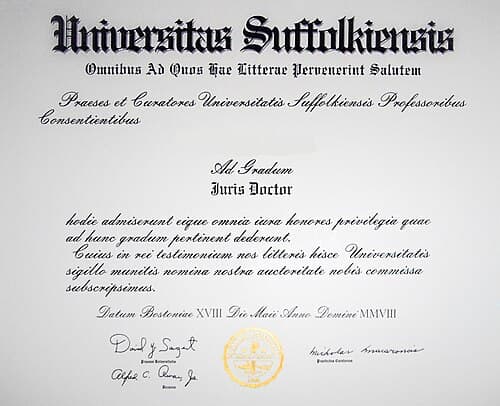
Georgetown Law School
ORGANIZATION
Institution specializing in legal education

Giants
ORGANIZATION
Grand Jury
ORGANIZATION
Green Beret
ORGANIZATION
Military headdress
Grove Press
ORGANIZATION
American publishing house

Guggenheim
ORGANIZATION
Hall of Fame
ORGANIZATION
Original song written and composed by Danny O'Donoghue, James Barry, Mark Sheehan, and will.i.am; recorded by The Script feat. will.i.am
Harvard and Yale
ORGANIZATION

Harvard College
ORGANIZATION
Undergraduate college of Harvard University in Cambridge, Massachusetts
Harvard Colleges
ORGANIZATION
Harvard Law School
ORGANIZATION
Law school of Harvard University in Cambridge, Massachusetts

Harvard University
ORGANIZATION
American university publishing house

Heritage
ORGANIZATION
Hofstra Law School
ORGANIZATION

Hustler
ORGANIZATION
Hustler Magazine
ORGANIZATION
American pornographic magazine
Israeli Army
ORGANIZATION
J Am
ORGANIZATION
J Am Curious Yellow
ORGANIZATION

J Street
ORGANIZATION
Nonprofit liberal advocacy group
John Wiley & Sons
ORGANIZATION
American baseball player (1857-1926)

Judaism
ORGANIZATION • 2 mentions
Abrahamic monotheistic ethnic religion of the Jews
Kay, Scholer
ORGANIZATION
Kosher
ORGANIZATION
American punk rock band
La Mama
ORGANIZATION
Band
La Stampa
ORGANIZATION
Italian daily newspaper (founded 1867)

Labour
ORGANIZATION
Centrist social democratic political party in the United Kingdom
Lacks
ORGANIZATION
Law School
ORGANIZATION • 2 mentions
Institution specializing in legal education
Le Monde
ORGANIZATION
French daily newspaper founded in 1944
Legal Aid
ORGANIZATION
Type of legal service
Lesley”
ORGANIZATION
Little Brown
ORGANIZATION

Lodge
ORGANIZATION • 2 mentions
Lou Siegel
ORGANIZATION
Lucky
ORGANIZATION
Lyon’s Den
ORGANIZATION
Magazine
ORGANIZATION
English post-punk band
Maladroit Du Siegneur
ORGANIZATION
Marines
ORGANIZATION
Commune in Val-d'Oise, France

Marvel
ORGANIZATION
Company that publishes comic books and related media
Massad
ORGANIZATION
Place in northern Israel

Mazda
ORGANIZATION
Japanese multinational automaker
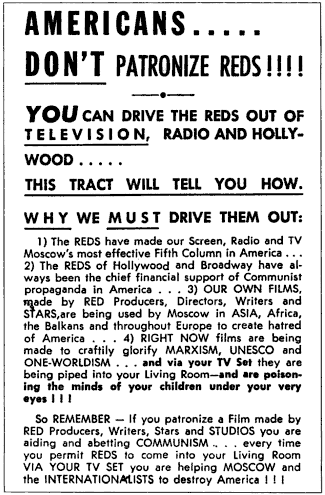
McCarthyism
ORGANIZATION • 2 mentions
Phenomenon in the United States of making accusations of subversion or treason without proper regard for evidence, named after Senator Joseph McCarthy

McDonald
ORGANIZATION
Borough of Pennsylvania, United States
Military.com
ORGANIZATION
News website and division of Monster Worldwide

Mormonism
ORGANIZATION
Religious tradition and theology founded by Joseph Smith and centered on the Book of Mormon

Mossad
ORGANIZATION
National intelligence agency of Israel
Muslim Students
ORGANIZATION
Student organizations in Indonesia
Nabisco
ORGANIZATION
American snack company

New York Magazine
ORGANIZATION
American magazine on life, culture, politics, and style, focusing on New York City

New York Post
ORGANIZATION
Daily tabloid newspaper (1801-)
New Yorker
ORGANIZATION
American weekly magazine since 1925
Orthodox Yeshiva
ORGANIZATION
Orthodoxy
ORGANIZATION
Christian apologetics book by G. K. Chesterton

Oval Office
ORGANIZATION
Office of the President of the United States in the White House
Ovations
ORGANIZATION
American cable television channel
Pacifica
ORGANIZATION
City in San Mateo County, California, USA

Paul, Weiss
ORGANIZATION • 3 mentions
Paul, Weiss, Rifkin, Wharton, and Garrison
ORGANIZATION

Penthouse
ORGANIZATION
Americanvideos erotic magazine
Phi Beta Kappa Honors
ORGANIZATION

Philip Morris
ORGANIZATION
American global cigarette and tobacco company
Pine View
ORGANIZATION
Email and newsgroups client
Playboy Press
ORGANIZATION
American men's lifestyle and entertainment magazine
Pollak
ORGANIZATION
Pornography Shop
ORGANIZATION
Pp y dake
ORGANIZATION
Preschool
ORGANIZATION

Princeton University
ORGANIZATION
Independent publisher with close connections to Princeton University

Publicis
ORGANIZATION
French multinational advertising and public relations company
R.J.J.
ORGANIZATION
Reformatory for Jewish
ORGANIZATION

Regents
ORGANIZATION
Punk rock band formed in 2007

Services
ORGANIZATION

Silver
ORGANIZATION

Socialist Party
ORGANIZATION
French political party (1969–present)

State Department
ORGANIZATION
Executive department of the U.S. federal government

Strike
ORGANIZATION
Sullivan and Cromwell
ORGANIZATION
Supreme Court
ORGANIZATION • 3 mentions
Highest court of jurisdiction in the US
Talmudical
ORGANIZATION
One of the tractates of the Mishna, Tosephta or of the Babylonian or Jerusalem Talmud
Talmudical Academy
ORGANIZATION
Jewish school in Maryland, United States

Tel Aviv University
ORGANIZATION
University in Tel Aviv, Israel
that Computation Center
ORGANIZATION
the “Club of Odd
ORGANIZATION
the “Human Rights Club”
ORGANIZATION
The “Quincy House Two
ORGANIZATION
the 9" Circuit
ORGANIZATION • 2 mentions
the Admission
ORGANIZATION
the Admissions Committee
ORGANIZATION
the American Bar Association
ORGANIZATION

the American Civil Liberties Union
ORGANIZATION
the American Communist Party
ORGANIZATION
the American Federation of Labor
ORGANIZATION
the American Jewish Congress
ORGANIZATION
the Anti-Defamation League
ORGANIZATION
the Arab League
ORGANIZATION
the Arizona Courts’
ORGANIZATION
the Arizona Republican Party
ORGANIZATION
The Arizona Supreme
ORGANIZATION
the Australia Club
ORGANIZATION
the Beacon Press
ORGANIZATION
the Boston Symphony Orchestra
ORGANIZATION
the British Actors Union
ORGANIZATION
the Broadway Theater
ORGANIZATION
the Brooklyn
ORGANIZATION
the Brooklyn Dodgers
ORGANIZATION
The Brooklyn Eagle
ORGANIZATION
the Bush Administration
ORGANIZATION
The California Supreme Court
ORGANIZATION
the Catholic Church
ORGANIZATION
the Center For Advanced Studies and Behavioral
ORGANIZATION
the Central Committee
ORGANIZATION
the Chicago 7
ORGANIZATION
the Chicago Seven
ORGANIZATION
The Chronicle of Higher Education
ORGANIZATION
the Civil Liberties Union
ORGANIZATION
the Classic
ORGANIZATION
the Club of Odd Volumes
ORGANIZATION
the Committee on Admissions
ORGANIZATION
the Concord Hotel
ORGANIZATION
the Court of Appeals
ORGANIZATION

the Daily News
ORGANIZATION
the Danbury Baptist Association
ORGANIZATION
the Dean’s Office
ORGANIZATION
the Department of Sociology and Anthropology
ORGANIZATION
the Enmund Court
ORGANIZATION
the Faculty Committee
ORGANIZATION
the Fascist Axis
ORGANIZATION
the Federal Bureau of Investigation
ORGANIZATION
the Federal Communications Commission
ORGANIZATION
the First Amendment Club
ORGANIZATION
the First Amendment Hall of Fame
ORGANIZATION
the First Evangelical Church
ORGANIZATION
the Fourth Circuit
ORGANIZATION
the Georgia Supreme Court
ORGANIZATION
the Harvard Admissions
ORGANIZATION
the Harvard Board of Overseers
ORGANIZATION
the Harvard Club
ORGANIZATION
the Harvard Club of New York
ORGANIZATION
the Harvard Law Forum
ORGANIZATION
the Harvard Law Record
ORGANIZATION
the Harvard Law Review
ORGANIZATION
the High Court
ORGANIZATION
the Highest Court
ORGANIZATION
the Honor School of Jurisprudence
ORGANIZATION
the Illinois Bar
ORGANIZATION
the Independent Counsel
ORGANIZATION
the Indiana Supreme Court
ORGANIZATION
the Inter-Yeshiva HS Council
ORGANIZATION
the Internal Court of Justice
ORGANIZATION
the International Criminal Court
ORGANIZATION
the Irvine Ten
ORGANIZATION
the Jewish Defense
ORGANIZATION
the Jewish Defense League
ORGANIZATION
the Jewish National Fund
ORGANIZATION
the Johnson Administration
ORGANIZATION
the Kennedy Administration
ORGANIZATION
the King David
ORGANIZATION
the Legal Defense Fund
ORGANIZATION
the Martha’s Vineyard Hebrew Center
ORGANIZATION
the Maryland Court of Appeals
ORGANIZATION
the Massachusetts Appellate Court
ORGANIZATION
the Massachusetts Senate
ORGANIZATION
the Metropolitan Opera House
ORGANIZATION
the N.Y. Knicks
ORGANIZATION
the National Congress
ORGANIZATION
the National Enquirer
ORGANIZATION
the National Shakespeare Company
ORGANIZATION

The New
ORGANIZATION
the New Hampshire Union Leader
ORGANIZATION
the New York Law Journal
ORGANIZATION
the New York Legal Aid Society
ORGANIZATION
the New York Regents
ORGANIZATION
the New York State
ORGANIZATION
The New York Times
ORGANIZATION • 2 mentions
American daily newspaper (founded 1851)
the Nixon Admuinistration
ORGANIZATION
the Obama Administration
ORGANIZATION
the Palestine Liberation Organization
ORGANIZATION
the Palestinian Authority
ORGANIZATION
The Palmach”—after
ORGANIZATION
the PTL Partners
ORGANIZATION
The Quincy House Film Society
ORGANIZATION
the Reader's Digest Condensed Books
ORGANIZATION
the Religious Right
ORGANIZATION

the Republican Party
ORGANIZATION
the Rhode Island Disciplinary Counsel
ORGANIZATION
the Rhodes Committee
ORGANIZATION
the Savoir Faire
ORGANIZATION
The Senate Judiciary Committee
ORGANIZATION
the Sharia Committee
ORGANIZATION
The Shields
ORGANIZATION
the Soviet
ORGANIZATION
The Stanford Committee
ORGANIZATION
the Stanford Computation Center
ORGANIZATION
the Stanford Daily
ORGANIZATION

the State Attorney’s Office
ORGANIZATION
the Supreme Court of Georgia
ORGANIZATION
the Supreme Court of the District of Columbia
ORGANIZATION
the Supreme Court of the United States
ORGANIZATION
the Supreme Judicial Court
ORGANIZATION
The Supreme Judicial Court of Massachusetts
ORGANIZATION
the Syracuse Nationals
ORGANIZATION
the Torah V’Daas Yeshiva
ORGANIZATION
the U.S. Court of Appeals
ORGANIZATION
the U.S. Court of Appeals for the Fifth Circuit
ORGANIZATION
the UN General Assembly
ORGANIZATION
The Uninvited
ORGANIZATION
the United Nations Association
ORGANIZATION
the United States Attorney’s Office
ORGANIZATION
the United States Court of Appeals
ORGANIZATION

the United States Government
ORGANIZATION

the United States Supreme Court
ORGANIZATION
the University of Bucharest
ORGANIZATION

the University of California at Irvine
ORGANIZATION
the University of Lyon
ORGANIZATION

the University of Massachusetts
ORGANIZATION
the University of Pittsburgh
ORGANIZATION

the University of Southern California
ORGANIZATION
the University of Tel Aviv
ORGANIZATION

the University of Washington
ORGANIZATION
the US Court of Appeals
ORGANIZATION
the Village Voice
ORGANIZATION
the Warren Commission
ORGANIZATION
The Warren Court
ORGANIZATION
the Yale Law Journal
ORGANIZATION
Theological Seminary and Talmudical Academy
ORGANIZATION
this New Republic
ORGANIZATION
Fictional state in the "Star Wars" universe
Times Magazine
ORGANIZATION
Tisons
ORGANIZATION • 2 mentions
Torah V’Daas—
ORGANIZATION

Toshiba
ORGANIZATION
Japanese multinational conglomerate corporation

Unicorn
ORGANIZATION
1941 light aircraft carrier

USA Today
ORGANIZATION
American national daily newspaper

Vrindaban
ORGANIZATION
City in Mathura district, Uttar Pradesh, India
Wharton
ORGANIZATION
Wheaties
ORGANIZATION
Brand of cereal by General Mills

White House
ORGANIZATION
Official residence and office of the President of the United States

WikiLeaks
ORGANIZATION
Organization that publishes leaks provided by anonymous sources

Wiley
ORGANIZATION
American multinational publishing company
Women Against
ORGANIZATION
How to put an end to pornography
Women against Pornography and Censorship
ORGANIZATION
Yale College
ORGANIZATION
Yale Law
ORGANIZATION
Law school of Yale University

Yale Law Schools
ORGANIZATION

Yale University
ORGANIZATION
Private university in New Haven, Connecticut
Yale University Press
ORGANIZATION
University press associated with Yale University
Yeshiva Etz Chaim
ORGANIZATION
Tree of Life in Hebrew
Yeshiva High School
ORGANIZATION
Educational institute combining a Yeshiva and high school
Yeshiva University
ORGANIZATION
Private university in New York City
Yeshiva University High School
ORGANIZATION
Yeshiva high school in Los Angeles, California, United States

Yeshivas
ORGANIZATION
Yona Shimmel
ORGANIZATION

Young Israel
ORGANIZATION
Country in West Asia

Zenith
ORGANIZATION
Zhe American Lawyer
ORGANIZATION
Zhe New York Times Magazine
ORGANIZATION
Zionism
ORGANIZATION
A movement to create and develop a Jewish state in the Levant

Alabama
LOCATION
State of the United States of America

Alaska
LOCATION
State of the United States of America
Albany
LOCATION
Capital city of the State of New York, United States, and seat of Albany County
Babi Yar
LOCATION
Ravine in the Ukrainian capital Kyiv and site of Nazi massacres

Belarus
LOCATION
Country in Eastern Europe
Bible
LOCATION
Collection of sacred books in Judaism and Christianity
Borough Park
LOCATION
Neighborhood in New York City
Brookline
LOCATION
Town in Massachusetts, United States

Brooklyn Branch
LOCATION
Borough of New York City, New York, United States

Cairo
LOCATION
Capital city of Egypt

Cambodia
LOCATION
Country in Southeast Asia

Central Park
LOCATION
Public park at the center of Manhattan in New York City, New York, United States

Charleston
LOCATION
Largest city in the U.S. state of South Carolina

Chile
LOCATION
Country in South America

Cincinnati
LOCATION
City in Ohio, United States; county seat of Hamilton County

Colorado
LOCATION
State of the United States of America

Columbus
LOCATION
Capital city of Ohio, United States of America

Concord
LOCATION
Capital city of state of New Hampshire, United States; county seat of Merrimack County, New Hampshire

Cranston
LOCATION
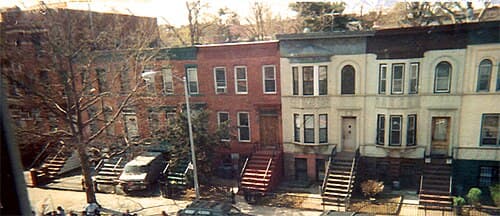
Crown Heights
LOCATION
Neighborhood of Brooklyn in New York City, USA
Dade County
LOCATION
County in Florida, United States
Dedham
LOCATION
Town in Massachusetts, United States
Durham
LOCATION • 2 mentions
Ceremonial county in North East England, United Kingdom

Earth
LOCATION
Third planet from the Sun in the Solar System
East Side
LOCATION
Area of Manhattan Island

Eastern Europe
LOCATION
Eastern part of Europe
Edgartown
LOCATION
Town in Dukes County, Massachusetts, United States
Ellis Island
LOCATION
Island in New York Harbor in the United States of America
Fire Island
LOCATION
Island in Suffolk County, New York, United States

Francisco
LOCATION
266th pope of the Catholic Church (2013–2025)

Galicia
LOCATION
Autonomous community of Spain

Greenwich Village
LOCATION
Neighborhood in Manhattan, New York City, New York, United States

Griswold
LOCATION
Town in Connecticut, United States

Guinea
LOCATION
Sovereign state in West Africa
Hague
LOCATION • 2 mentions
Town in Warren County, New York, United States

Harlem
LOCATION
Neighborhood in Manhattan, New York City, New York, United States

Havana
LOCATION
Capital and largest city of Cuba
Hialeah
LOCATION
City in Miami-Dade County, Florida, United States

Hobbs
LOCATION

Hoboken
LOCATION
City in Hudson County, New Jersey, United States

Houston
LOCATION
Seat of Harris County, and largest city in State of Texas, United States
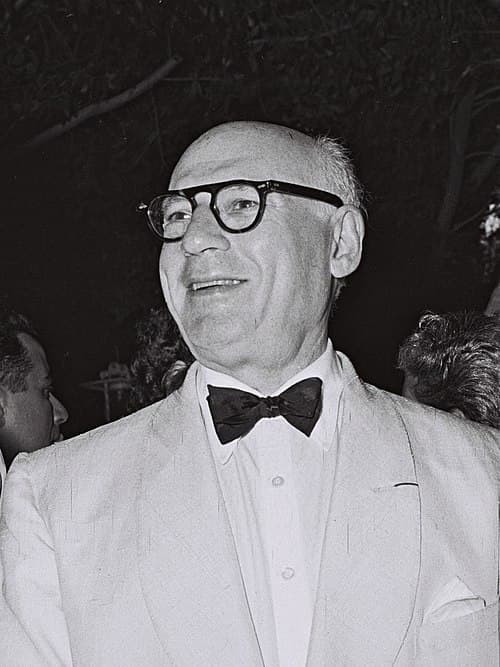
Hurok
LOCATION • 2 mentions
Hyattsville
LOCATION
City in Prince George’s County, Maryland, United States

Illinois
LOCATION
State of the United States of America

India
LOCATION
State of the United States of America
Indiana
LOCATION
State of the United States of America

Indianapolis
LOCATION
Capital city of the U.S. state of Indiana and the seat of Marion County

Jacksonville
LOCATION
City in Duval County, and largest city in State of Florida, United States

Jerusalem
LOCATION
City in the Middle East, holy to the three Abrahamic religions

Kansas City
LOCATION
City in Missouri, United States, that is one of two county seats of Jackson County and the largest city in Missouri
Lakewood
LOCATION
City in Jefferson County, Colorado, United States

Las Vegas
LOCATION
City of Clark County, and largest city in state of Nevada, United States

Lincolnshire
LOCATION
Ceremonial county in the east of England
Liverpool
LOCATION
Association football club in Liverpool, England

Long Island
LOCATION
Island in New York, United States of America

Lybia
LOCATION
Genus of small crabs
M.V.
LOCATION

Madison
LOCATION
Capital city of Wisconsin, United States
Maricopa County
LOCATION
County in Arizona, United States

Maryland
LOCATION
State of the United States of America

Memphis
LOCATION
City in and county seat of Shelby County, Tennessee, United States

Middle East
LOCATION
Geopolitical region encompassing Egypt and most of Western Asia, including Iran
Middlesex County
LOCATION
County in Massachusetts, United States
Midwest
LOCATION

Minnesota
LOCATION
State of the United States of America

Mississippi
LOCATION
State of the United States of America
Mogadishu
LOCATION
Capital and the largest city of Somalia
N.Y.Times
LOCATION

Nebraska
LOCATION
State of the United States of America

New England
LOCATION
Region of the northeasternmost United States

New Hampshire
LOCATION
State of the United States of America

New Haven
LOCATION
City in Connecticut, United States

New York
LOCATION • 2 mentions
Most populous city in the United States
New York City
LOCATION
Most populous city in the United States
New York City College
LOCATION
Technical college in Brooklyn, NY

Newport
LOCATION
City in south east Wales, United Kingdom

Northeast
LOCATION
Intercardinal direction
Nuremberg
LOCATION
City in the German state of Bavaria

Oklahoma
LOCATION
State of the United States of America

Orange County
LOCATION
County in California, United States

Palo Alto
LOCATION
City in Santa Clara County, California, United States
Philadelphia
LOCATION
1993 film by Jonathan Demme
Pioneer
LOCATION
Community in Amador County, California, United States

Providence
LOCATION
Capital city of Rhode Island, United States
Province
LOCATION

Rhode Island
LOCATION
State of the United States of America
Rockaway
LOCATION
Neighborhoods of Queens in New York City
Rockport
LOCATION
Manufacturer of shoes

Romania
LOCATION
Country in Southeast Europe

San Jose
LOCATION
City and county seat of Santa Clara County, California, United States

Santa Cruz
LOCATION
City in eastern Bolivia
Scarsdale
LOCATION
Town and village in Westchester County, New York, United States, suburb of NYC
Schul
LOCATION
Shabas
LOCATION
Shabos
LOCATION
Human settlement in Koverninsky District, Nizhny Novgorod Oblast, Russia

Skokie
LOCATION • 2 mentions
Village in Cook County, Illinois, United States

South Africa
LOCATION
Country in southern Africa

South America
LOCATION
Continent

South Carolina
LOCATION
State of the United States of America

Southern California
LOCATION
Geographic and cultural region
Southie
LOCATION
Soviet
LOCATION
Former country in Eurasia (1922–1991)

Soviet Union
LOCATION
Former country in Eurasia (1922–1991)

Springfield
LOCATION
County seat of Hampden County, Massachusetts, United States
St. Paul
LOCATION • 2 mentions

Tel Aviv
LOCATION
City in Israel

Tennessee
LOCATION
State of the United States of America
the Bay of Pigs
LOCATION
the Bible Belt
LOCATION
the Cape Cod National Seashore
LOCATION
the Catskill Mountains
LOCATION
the City of Miami
LOCATION
the Deep South
LOCATION • 2 mentions
the Eastern District
LOCATION

the Grand Canyon
LOCATION
the Land of Israel
LOCATION
the Lower East
LOCATION • 2 mentions
the Papago Indian Reservation
LOCATION
The State of Arizona
LOCATION
the State of Connecticut
LOCATION
the West Coast
LOCATION
Tikrit
LOCATION
City in Saladin, Iraq

Tripoli
LOCATION
Capital city of Libya

Turin
LOCATION
City and commune in Italy
Union City
LOCATION
City in the northern part of Hudson County, New Jersey, United States

United States
LOCATION • 4 mentions
Country located primarily in North America
US States
LOCATION

Viet Nam
LOCATION
Vietnam
LOCATION
Country in Southeast Asia

Vineyard
LOCATION
City in Utah County, Utah, United States

Washington State
LOCATION
State of the United States of America

Washington, D.C.
LOCATION
Capital city of the United States of America

West Coast
LOCATION
Region of New Zealand's South Island

West Virginia
LOCATION
State of the United States of America

Westchester County
LOCATION
County in New York, United States

Williamsberg
LOCATION
Worcester
LOCATION
County seat city in Worcester County, Massachusetts, United States

Yugoslavia
LOCATION
1918–1992 country in Southeastern Europe
Statistics
Pages:400
Entities:1333
Avg. OCR:95.3%
Sponsored