Back to People & Entities


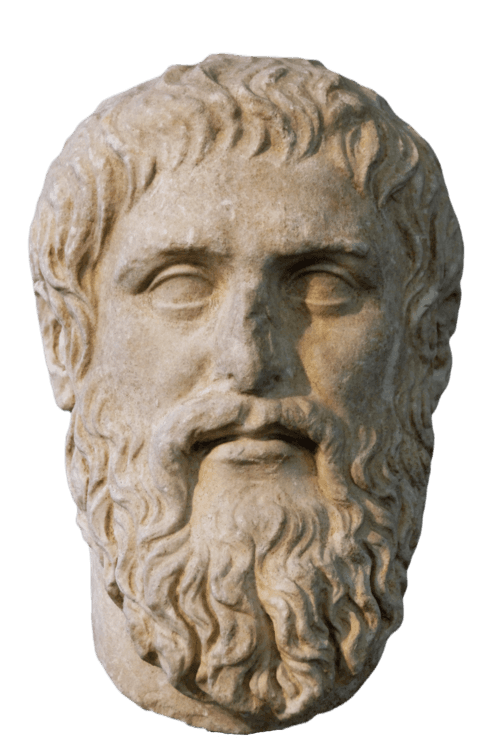


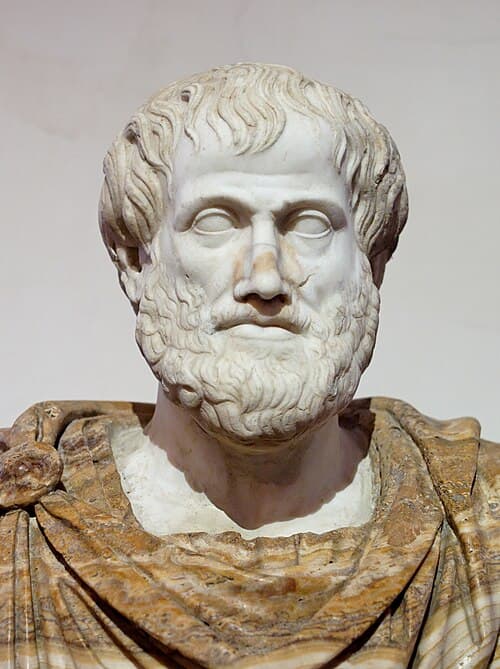
Aristotle appears in 9 government oversight documents, primarily as a philosophical and historical reference point in discussions about logic, ethics, and causality rather than as a direct participant in events.
All nine mentions are academic or philosophical citations within government records, referencing Aristotle's contributions to logic (Organon), causality theory, and ethical philosophy. The references appear in analytical contexts discussing historical thought, with no evidence of personal correspondence, flight logs, or direct involvement in any proceedings. These are substantive intellectual references rather than incidental mentions.
Key Highlights
- •Cited in House Oversight documents regarding causality theory and Aristotelian logic
- •Referenced alongside Plato, Socrates, and other classical philosophers in analytical contexts
- •Appears in discussions of ethical philosophy and the historical development of logical reasoning
- •No evidence of personal connection to Epstein or related individuals
Frequently Asked Questions
Related Links
Books for Further Reading
Document Mentions (20 of 28)
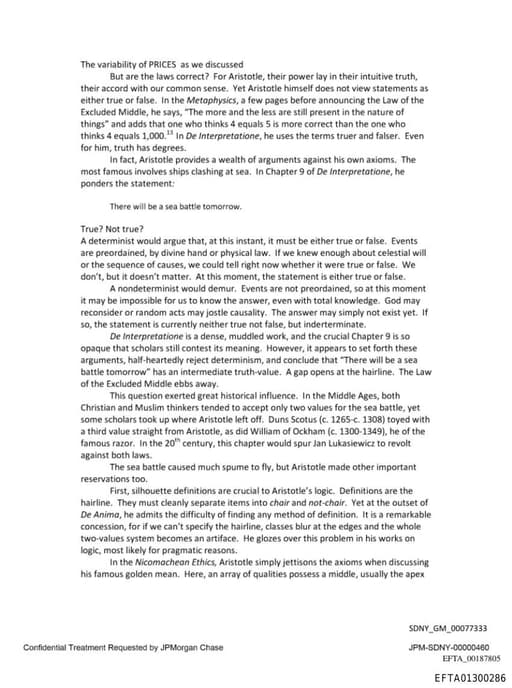
EFTA02444849.pdf
2 mentionsEFTA02444849_sub_001 - EFTA02444849_100
cy (Cambridge: Cambridge University Press, 1995). Troels Engbert- Perdersen, Paul and the Stoics (Louisville, KY,: Westminster John Knox, 2000). °Aristotle, Nicomachean Ethics (New York: Random House, 1941), Bk. VIII, ch. 10. 3 The Interpreter's Bible: Luke and John, Vol. 8 (Nashville, TN.: Abingdon
etween Greek philosophical psychology and Christianity can be found in the use of Stoic theories of desire by the apostle Paul, 3 the presence of Aristotle's family ethic — with its implicit psycho-biology - in the household codes of Ephesians and I Colossians, 4 and the gospel of John's identificati
EFTA01300286.pdf
1 mentionEFTA01300286
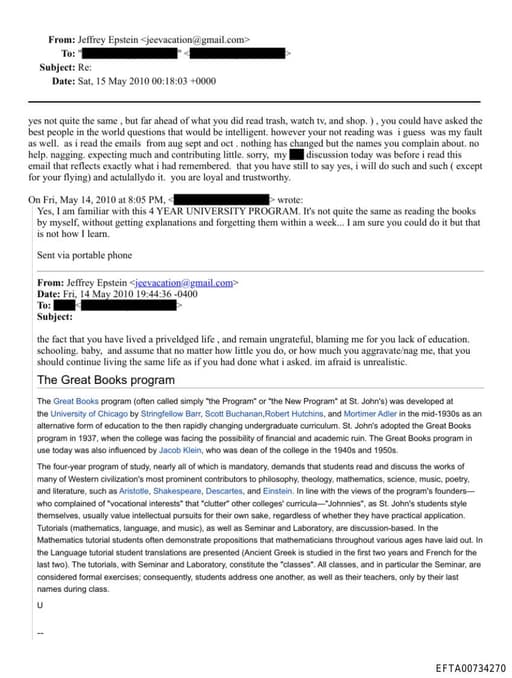
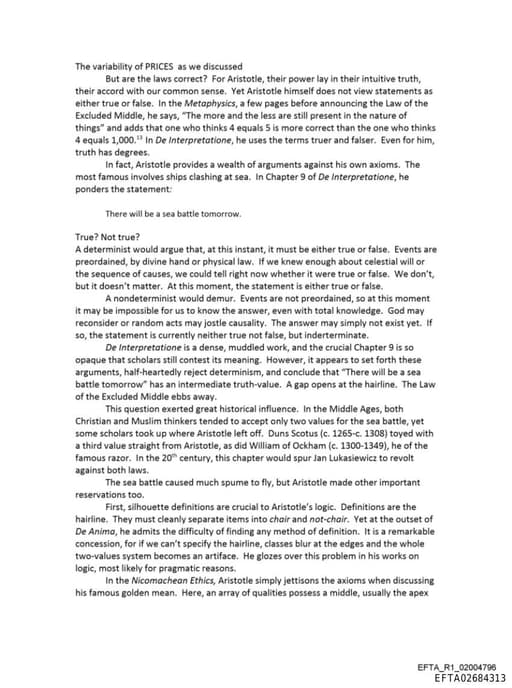
The variability of PRICES as we discussed But are the laws correct? For Aristotle, their power lay in their intuitive truth, their accord with our common sense. Yet Aristotle himself does not view statements as either true or fal
EFTA00734270.pdf
1 mentionEFTA00734270
of many of Western civilization's most prominent contributors to philosophy, theology, mathematics, science, music, poetry, and literature, such as Aristotle, Shakespeare, Descartes, and Einstein. In line with the views of the program's founders— who complained of "vocational interests" that "clutter" othe
Sponsored
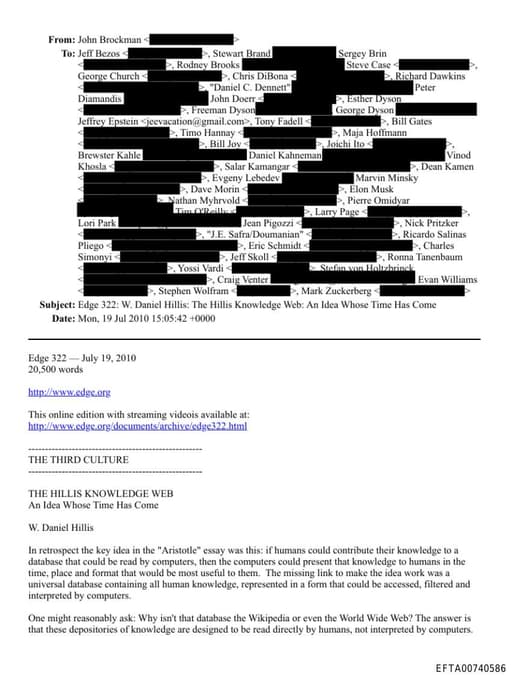
EFTA00740586.pdf
1 mentionEFTA00740586
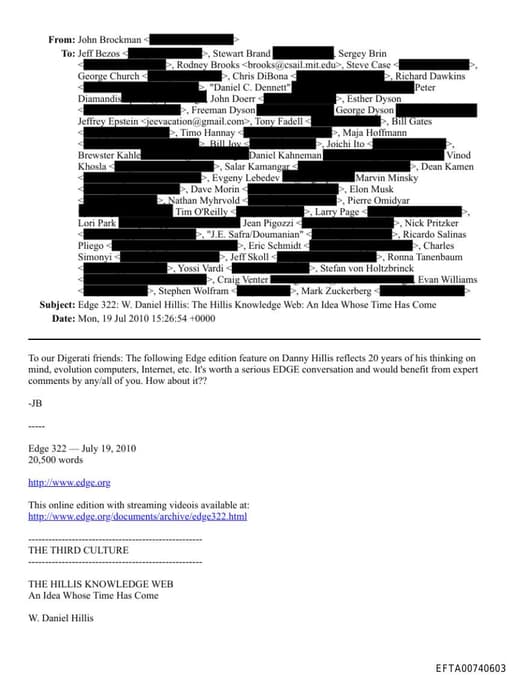
&archive/edge322.html THE THIRD CULTURE THE HILLIS KNOWLEDGE WEB An Idea Whose Time Has Come W. Daniel Hillis In retrospect the key idea in the "Aristotle" essay was this: if humans could contribute their knowledge to a database that could be read by computers, then the computers could present that kno
EFTA00740603.pdf
1 mentionEFTA00740603
2.html THE THIRD CULTURE THE HILLIS KNOWLEDGE WEB An Idea Whose Time Has Come W. Daniel Hillis EFTA00740603 In retrospect the key idea in the "Aristotle" essay was this: if humans could contribute their knowledge to a database that could be read by computers, then the computers could present that kno
EFTA00843868.pdf
1 mentionEFTA00843868
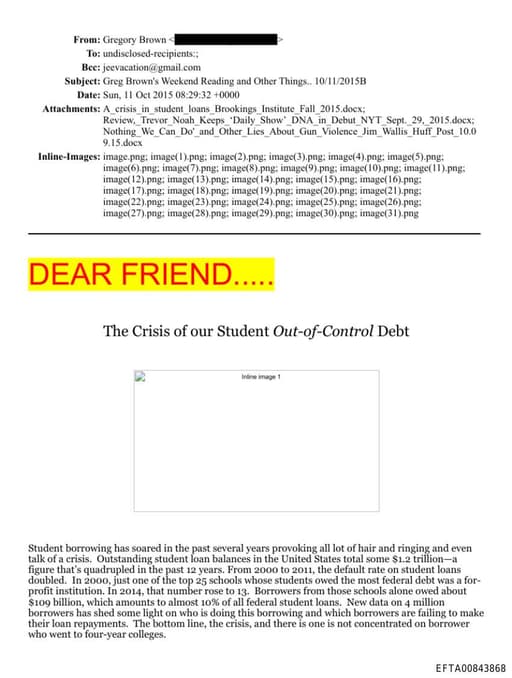
content. Looks pretty good, right? THIS WEEK's QUOTE "Democracy is when the indigent, and not the men of property, are the rulers." EFTA00843899 Aristotle THIS IS BRILLIANT What A Wonderful World with David Attenborough -- BBC One Inline image 9 Web Link: https://youtu.beJauSolMyWf8g This really is
Sponsored
EFTA00577431.pdf
1 mentionEFTA00577431
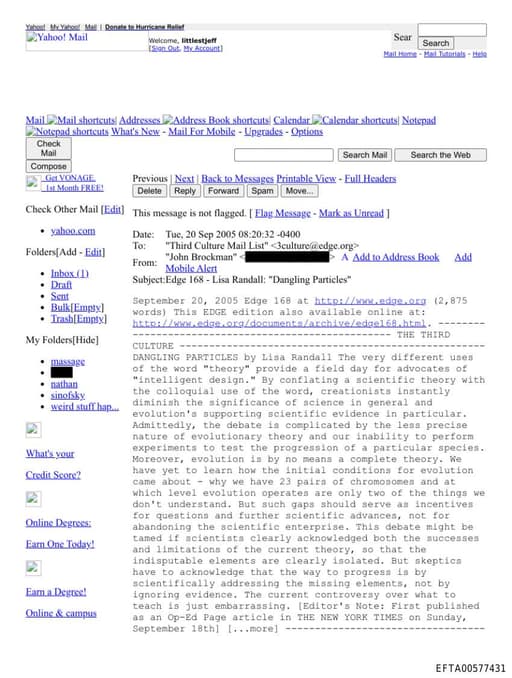
ntelligent design" suffers from one problem on the scientific side. I have learned in school, that we have to distinguish between different causes. Aristotle distinguishes 4 such modes, namely causa materialis, causa formalis, causa efficiens and causa finalis. The last mode is in biology of greatest im
EFTA00669736.pdf
1 mentionEFTA00669736
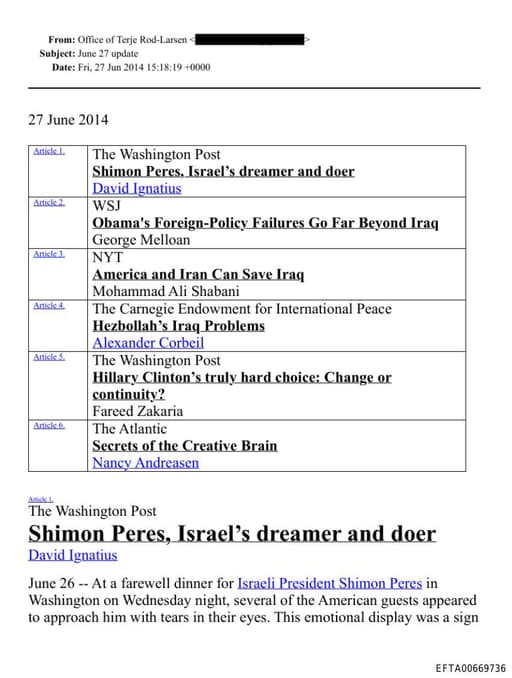
illness and creativity went hand in hand. This link is not surprising. The archetype of the mad genius dates back to at least classical times, when Aristotle noted, "Those who have been eminent in philosophy, politics, poetry, and the arts have all had tendencies toward melancholia." This pattern is a re
EFTA00701609.pdf
1 mentionEFTA00701609
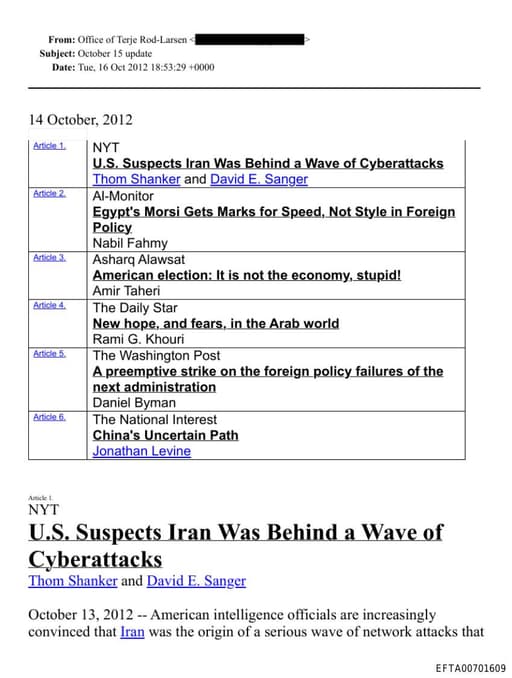
tably African-Americans, Latinos, Jews, Arabs, Muslims, and native Americans along with social minorities such as gays and lesbians and feminists. Aristotle taught that, in a democracy, leaders should resemble the people they represent. Thus the real question in this American election is whether Barack
Sponsored
EFTA01785152.pdf
1 mentionEFTA01785152
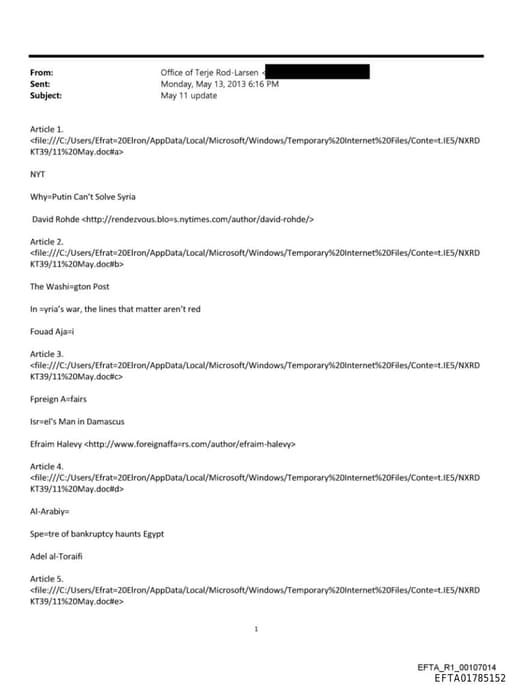
ics as an unde=graduate. So I was first enticed, almost forced, to study Kant by Alan Mon=efiore. Then after I had done that, with Charles I studied Aristotle and Hegel, and then with Stuart Hampshire, Spi=oza. All of these thinkers were in a way counter-cultural, at odds w=th the mainstream. I found it a
EFTA01970955.pdf
1 mentionEFTA01970955
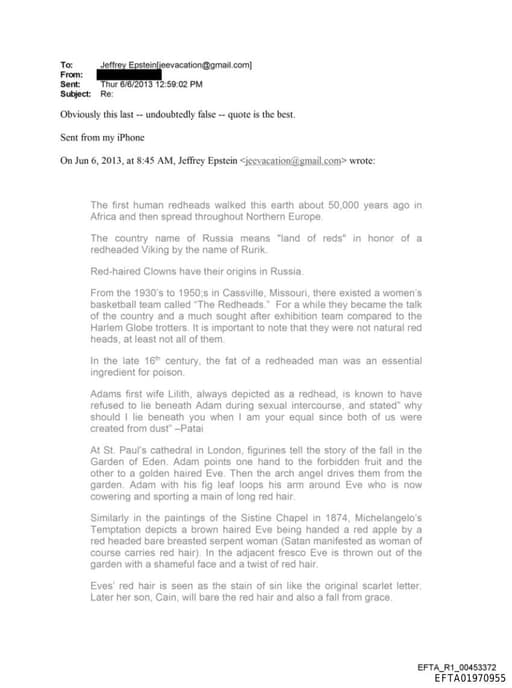
luck. A redhead brings the worst luck. This "first footing" custom was so strongly practiced at one time that some homes would hire first callers. Aristotle was known to believe that redheads were emotionally unhousebroken. The information contained in this communication is confidential, may be attorney
EFTA02684313.pdf
1 mentionEFTA02684313
The variability of PRICES as we discussed But are the laws correct? For Aristotle, their power lay in their intuitive truth, their accord with our common sense. Yet Aristotle himself does not view statements as either true or fal
Sponsored
EFTA02411383.pdf
1 mentionEFTA02411383
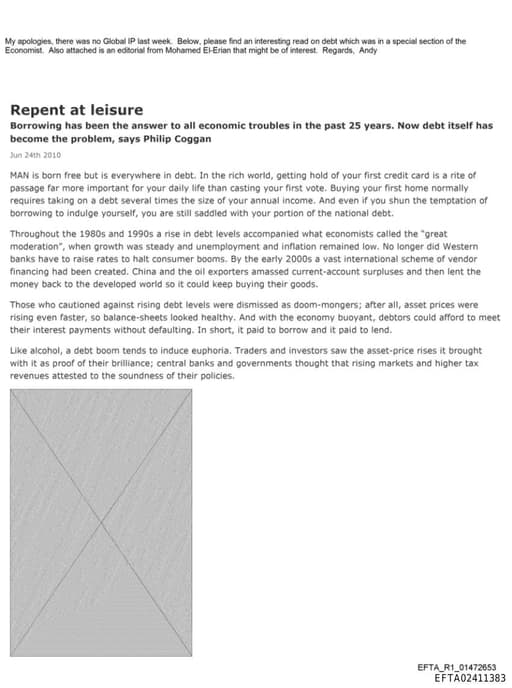
debt are often regarded as an onerous burden placed on the poor; interest is seen as an unjustified reward for capital, a concept that goes back to Aristotle and is implicit in the Christian idea of usury. Islam forbids it altogether. The book of Deuteronomy suggested a debt amnesty every seven years, whi
EFTA02622603.pdf
1 mentionEFTA02622603
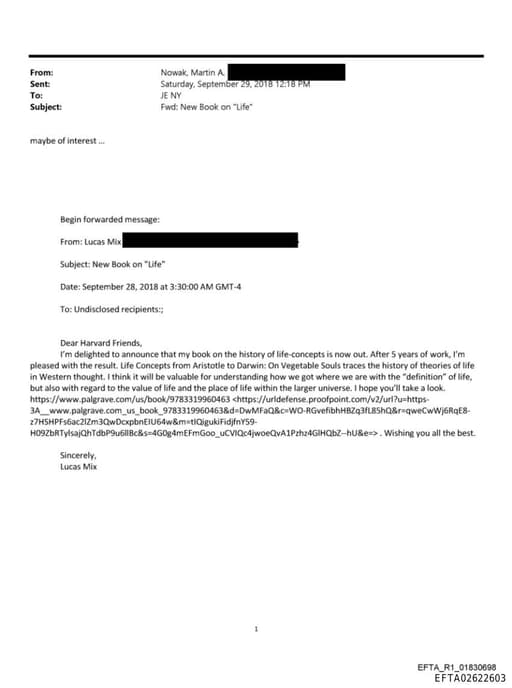
elighted to announce that my book on the history of life-concepts is now out. After 5 years of work, I'm pleased with the result. Life Concepts from Aristotle to Darwin: On Vegetable Souls traces the history of theories of life in Western thought. I think it will be valuable for understanding how we got wh
EFTA02361639.pdf
1 mentionEFTA02361639
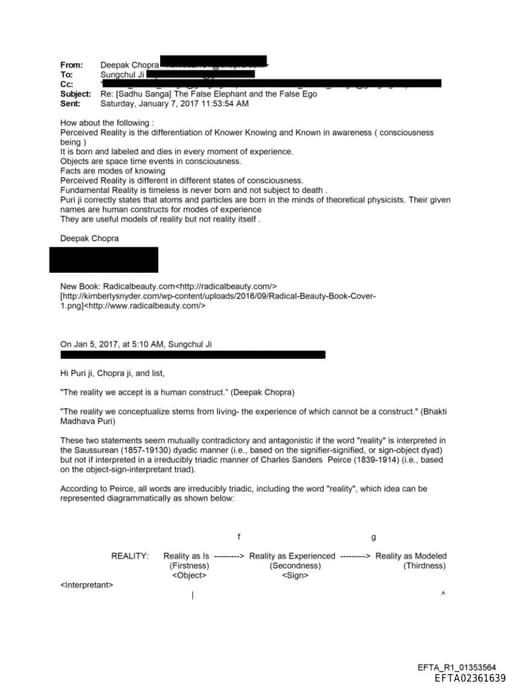
could not reveal the relation of the functions to each other what to speak of their relation to the unity of the whole of which they had no clue. Aristotle said there are four factors that had to be comprehended in explaining things: material, efficient, formal, and final (end or purpose). These four re
Sponsored
EFTA02529752.pdf
1 mentionEFTA02529752
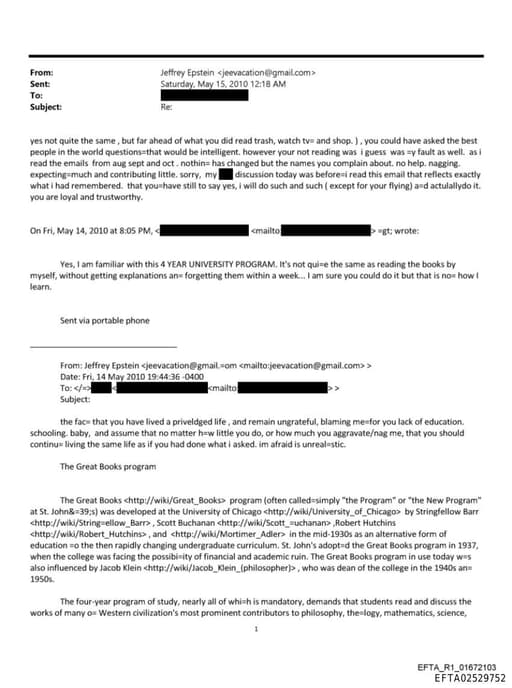
s most prominent contributors to philosophy, the=logy, mathematics, science, EFTA_R1_01672103 EFTA02529752 music, poetry, and literature, such as Aristotle, Shakespeare <http://wiki/Willia=_Shakespeare> , Descartes <http://wiki/Ren96C396A=_Descartes> , and Einstein <http://wiki/Albert_Eins=ein> . In lin
AreTheAndroids_James Tagg_small_p2.pdf
1 mentionHOUSE_OVERSIGHT_015675_sub_002 - HOUSE_OVERSIGHT_015874
Source: House Oversight Committee
friends. Logical Beginnings The formal study of logic began in 3848c with the publication ofa treatise called the Organon by the Greek philosopher Aristotle. A student of Plato, Aristotle taught many of the famous leaders of his time, including Alexander The Great. Ancient Greece was not some idyllic thin
AreTheAndroids_James Tagg_small_p2.pdf
1 mentionHOUSE_OVERSIGHT_015675_sub_005 - HOUSE_OVERSIGHT_016110
Source: House Oversight Committee
pic principle 322 Anti-Ballistic Missile Treaty 79 Antikythera 15 Apple 56, 68, 224, 306 Arab world democracy 82 Arafat, Yasser 81, 82 Archimedes 343 Aristotle 149 ARM 224 ARNN 280 art being appreciated 142 creativity and 304 Artamene 129 Art of Fugue 259 ASCII 203 Asimov, Isaac 4 Association of Computer M
Sponsored
CURREN DRAFT 04.02.12.docx
1 mentionHOUSE_OVERSIGHT_017088_sub_001 - HOUSE_OVERSIGHT_017187
Source: House Oversight Committee
nt of the student council and captain of the debate team. Reading became my passion: literature (Dostoyevski, Shakespeare, Bellow); philosophy (Kant, Aristotle, Plato, Neitsche; history ( ) and politics ( ). Lloved arguing with my professors. One of my favorites was John Hope Franklin, the first African Amer
EFTA00285909.pdf
1 mentionEFTA00285909_sub_001 - EFTA00285909_100
in the same sense as Galileo, if by this term one describes those who tear down the dictates of the authorities who came before, as Galileo had for Aristotle. Einstein did just the opposite. He knew that rules that had been established on the basis of experiment could not easily be tossed aside, and it w
Sponsored
Connected Entities(20 of 1,134)
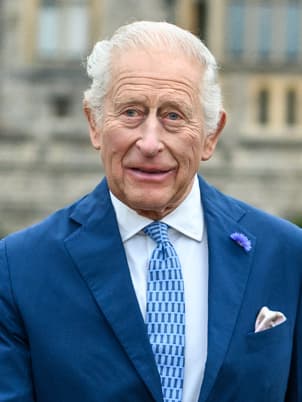
Prince Charles
PersonKing of the United Kingdom and other Commonwealth realms since 2022 (born 1948)
14 docs14 co-mentions
George W. Bush
PersonPresident of the United States from 2001 to 2009
13 docs13 co-mentions
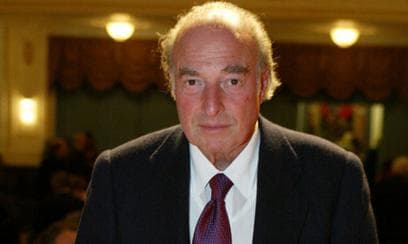
Marc Rich
PersonAmerican commodities trader (1934–2013)
13 docs13 co-mentions
Stephen Hawking
PersonBritish theoretical physicist, cosmologist and author (1942–2018)
13 docs13 co-mentions
Alan Dershowitz
PersonAmerican lawyer, author, and art collector (born 1938)
12 docs12 co-mentions
Earth
LocationThird planet from the Sun in the Solar System
11 docs11 co-mentions
Harvey Weinstein
PersonAmerican film producer and sex offender (born 1952)
11 docs11 co-mentions
Prince Andrew
PersonThird child of Queen Elizabeth II and Prince Philip, Duke of Edinburgh (born 1960)
11 docs11 co-mentions
Plato
Person4th-century BCE Greek philosopher
11 docs11 co-mentions
Barack Obama
PersonPresident of the United States from 2009 to 2017
10 docs10 co-mentions
LB
Leon Black
PersonAmerican billionaire businessman (born 1951)
10 docs10 co-mentions
Jeffrey Epstein
PersonAmerican sex offender and financier (1953–2019)
10 docs10 co-mentions
William Shakespeare
PersonEnglish playwright and poet (1564–1616)
10 docs10 co-mentions
Richard Dawkins
PersonEnglish ethologist, evolutionary biologist and author (born 1941)
10 docs10 co-mentions
Julie K. Brown
PersonAmerican journalist
10 docs10 co-mentions
Samantha Power
PersonIrish-American academic, author and diplomat
9 docs9 co-mentions
DB
Doug Band
PersonAmerican presidential advisor
9 docs9 co-mentions
Daniel Dennett
PersonAmerican philosopher (1942–2024)
8 docs8 co-mentions
Robert Gates
PersonCIA director, U.S. Secretary of Defense, and university president
8 docs8 co-mentions
John Brockman
PersonAmerican literary agent
7 docs7 co-mentions