EFTA00178967_sub_002 - EFTA00178967_200
Document Information
Bates Range
EFTA00178967_sub_002 - EFTA00178967_200
Pages
100
Original Filename
EFTA00178967.pdf
Document Content
Page 101 - EFTA00178967_101
UNITED STATES DISTRICT COURT SOUTHERN DISTRICT OF FLORIDA CASE NO. FGJ 07-103(WPB)/No. OLY-64 IN RE: Grand Jury Subpoena. NOTICE OF APPEARANCE William L. Richey, P.A., hereby enters its appearance on behalf of William Riley and Riley Kiraly, in the above-captioned matter and requests that it be notified of all hearing dates herein and that any and all motions, petitions, applications, requests, demands, memoranda, briefs, notices, orders, opinions, and all such similar papers of any nature or description, made or filed by anyone pertaining to any party herein or pertaining in any way to the case, be served upon it at the address set forth below. Respectfully submitted, WILLIAM L. RICHEY, P.A. 201 South Biscayne Boulevard 34th Floor, Miami Center Miami, Flori Telephon Facsim. E-Mail: ILL AM L. RICH Fla. Bar No. EFTA00179067
Page 102 - EFTA00178967_102
CERTIFICATE OF SERVICE I hereby certify that a true and correct copy of the foregoing was served by U.S. mail and facsimile this da of July, 2007 to 4 Assistant US Attorney, 500 South Australian Avenue, Suite 400, West Palm Beach, Florida 33401. , liam'L. Richey EFTA00179068
Page 103 - EFTA00178967_103
UNITED STATES DISTRICT COURT SOUTHERN DISTRICT OF FLORIDA FILED UNDER SEAL - GRAND JURY IN RE GRAND JURY SUBPOENA ) DUCES TECUM ISSUED TO WILLIAM RILEY AND RILEY KIRALY ) ) ) ) ) ) ) FGJ 07-103 (WPB)/No. OLY -64 NOTICE OF APPEARANCE PLEASE TAKE NOTICE that ROY BLACK of the law firm of BLACK, SREBNICK, KORNSPAN & STUMPF, P.A., hereby appears as counsel for Jeffrey Epstein in the above-entitled cause. DATED at Miami, Florida, this /7 day of July, 2007. Respectfully submitted, BLACK, SREBNICK, KORNSPAN' & STUMPF, P.A. 201 South Biscayne Boulevard, Suite 1300 Miami, Florida 33131 Ph. (305) 3 -1421 - Fa E-mail By: ROY BLA Florida Bar o. Counsel for Jeffrey Epstein Black. SrebnIck. Kornspan & Slum 201 S. Biscayne Boulevard. Suite 1300 • Miami. Florida 33131. Phone: • Fax • www.RoyBlack.com EFTA00179069
Sponsored
Page 104 - EFTA00178967_104
CERTIFICATE OF SERVICE I HEREBY CERTIFY that on July 17 , 2007, a true and correct copy of the foregoing was furnished by facsimile MI Esq., Assistant U.S. Attorney, 500 South Australian Avenue, Suite 400, West Palm Beach, Florida 33401. By: - 2 - and U.S. mail to: ROY BLACK/ESQ. Counsel for Jeffrey Epstein Black, Srebnick. Kornspan & Stumpf 2015. Biscayne Boulevard. Suite 1300 • Miami, Florida 33131. Phone: -• Fax: • www.RoyBlack.com EFTA00179070
Page 105 - EFTA00178967_105
•••gC •• • 4 (Re.. 06"2005)Scaled Document nuking Fonn UNITED STATES DISTRICT COURT Southern District of Florida Case Number: FGJ 07-103 (WPB) OLY•63 & OLY-64 IN RE GRAND JURY SUBPOENA DUCES TECUM ISSUED TO WILLIAM RILEY Plaintiff Defendant Parry Filing Matter Under Seal Address: 201 S BISCAYNE BLVD. STE 1300. MIAMI. FL 33131 Telephone: SIM On behalf of (select one): 7eCCrey erste ;71 K Plaintiff K Defendant SEALED DOCUMENT TRACKING FORM Name: ROY BLACK, ESQ. Date sealed document filed: 8/7/2007 If sealed pursuant to statute, cite statute: GRAND JURY PROCEEDING If sealed pursuant to previously entered protective order, date of order and docket entry number: The matter should remain sealed until: 0 Conclusion of Trial K Arrest of First Defendant K Case Closing K Conclusion of Direct Appeal P3 Other: GRAND JURY MATTER IS CONCLUDED K Permanently. Specify the authorizing law, rule, court order: The moving party requests that when the sealing period expires, the filed matter should be (select one): K Unsealed and placed in the public portion of the court file K Destroyed Returned to the party or counsel for the party, as identified above aliketa Kir) t- '&41 33 Attorney for: Teirciey Erste C'n Black. SrebnIck. Kornspan & Stumpf EFTA00179071
Page 106 - EFTA00178967_106
• • €211•••1 •.••••••CS rage .I I .Z UNITED STATES DISTRICT COURT SOUTHERN DISTRICT OF FLORIDA FILED UNDER SEAL IN RE GRAND JURY SUBPOENA ) ) FGJ 07-103 (WPB) DUCES TECUM ISSUED TO ) OLY-63 & OLY-64 ) WILLIAM RILEY ) • M.B.D. No. ) REPLY OF JEFFREY EPSTEIN TO UNITED STATES' RESPONSE TO HIS MOTION TO INTERVENE AND TO QUASH GRAND JURY SUBPOENAS AND CROSS- MOTION TO COMPEL A substantial portion of the government's response consists of rambling generalizations about various areas of the law which have little or nothing to do with the issues actually raised by Epstein, and those sections of the response require no reply. In other portions, however, the government has ignored critical facts, mischaracterized or misunderstood the arguments advanced by Epstein, and relied upon case law so markedly distinguishable from the circumstances of this case as to he wholly inapplicable. It is to these portions of the response to which this reply is directed. I. The first area which requires reply is the government's assertions that Riley simply failed, without notice and without excuse, to appear at the time scheduled for his grand jury appearance. See Response at 1, 5, 6 n.6. This is simply untrue. Riley's appearance date had previously been continued from July 10, 2007, until July 17, 2007, by agreement of the parties. On July 16, 2007, counsel for Epstein were informed by Deputy Chief that Riley did not have to appear physically before the grand jury if a motion to quash the subpoena was filed by Epstein before the end of the day on July 17, 2007, and the motion was so filed. Based 7N c tfler. 117"/I Black. Srebnick. Kornspan & Stumpf _ . EFTA00179072
Sponsored
Page 107 - EFTA00178967_107
,9e JP - upon this understanding, Riley. did not appear. Thus, Riley did not flout the subpoena, as the government wishes the Court to believe. In agreeing to excuse Riley's appearance, the government knew that Epstein, and not Riley, was the real party in interest and that the important legal issues at stake were those surrounding Epstein's privacy rights in the contents of the computers. See Sections II, III, infra. Next, it is important to point out an erroneous locus which appears throughout the government's response. The government refers again and again to the subpoena's command for the production of computers, as if all it wanted was possession of the physical items themselves. For example, the government wishes the "Court to proceed on the manifestly erroneous assumption that the subpoenas are "narrowly tailored" to seek only the "physical computers removed from Epstein's residence." Response at S. See also Response at 38 (government contends that the subpoenas are sufficiently particularized because they specifically describe the three computers). They are not. Those assertions may reflect the literal wording of the subpoenas, but simple possession of the physical containers is not the government's real object here. What the government actually wants is unfettered access to the entire contents of Epstein's computers — every personal and business document, every email, every item of correspondence. in sum. every item on the hard drives, regardless of their relevance to the matters under investigation, a request little different than had it commanded that Epstein produce every document in his house, regardless of subject matter. Critically, nowhere in the government's response does it disavow this intention (or argue that the subpoenas contain any limitation on its ability to rummage through the contents of the computers at will). - n - Black. Srcbnick. Kornspan & Stumpf 20i S. Biscayne Boulevard. Suite lino • Miami 7ne »I A, . r EFTA00179073
Page 108 - EFTA00178967_108
r aye re i In his motion, Epstein argued at length, supported by considerable contemporary case law (and by the discussion in the United States Attorneys Manual regarding the need to particularize computer files to be seized), that the government cannot, consistently with the Fourth Amendment, whether by subpoena or warrant, be permitted to search at will and without limitation through the contents of the computers. See Motion at 19-26. The govenunent has not responded to Epstein's Fourth Amendment particularity contentions. ft has neither sought to provide legal justification for its obvious intention, if the subpoenas are enforced as written, to conduct a fishing expedition through the contents of the computers nor has it proposed suitable limitations on the scope of its search — such as targeted search terms — to ensure that the search of the contents of the computers does not extend beYand • items relevant to the grand jury's investigation.' Rather than respond to the unassailable merit of Epstein's arguments, the government has chosen to take refuge in an utterly unsupported — and erroneous — argument that an intervenor may not challenge a subpoena as unreasonable and oppressive. See Section Ill, infra. Contrary to the government's argument, challenges to grand jury subpoenas are not limited to claims of privilege. See Response at 6, 36-37. "It is well-established that a litigant may have sufficiently important, legally-cognizable interests in the materials or testimony sought by a grand jury subpoena issued to another person to give the litigant standing to challenge the validity of that subpoena." In re Grand Jury, Ill F.3d 1066, 1073 (3d Cir. 1997)(collecting On page 38 of its Response, the government finally admits what it is looking for: evidence of sexual exploitation of minors, including surveillance camera footage, "computer printouts showing electronic messages for `appointments' with the minors; and printouts showing payments made to girls." This description readily illustrates the ease with which the subpoenas could have been appropriately particularized. The subpoenas, however, make not the slightest nod to limiting the government's search of the computers to such materials. Nor for that matter, has the covernment presented the slightest evidence that what it seeks is to be found on these computers at all. - 3 - alack.Srcbnick. Kornspan & Stumpf 120I S. BiSCavne Boulevard cute WWI .114i2mi Clnriel, 77171 . ,nr -D-r. en. EFTA00179074
Page 109 - EFTA00178967_109
cases). In that case, the Court concluded that intervenors had standing to challenge a subpoena issued to an individual who had privately wiretapped conversations with the intervenors in violation of Title III to prevent her from turning over the tapes of the conversations to the grand jury. Importantly, the Court reasoned that lbjecause it is Doe 1 and Doe 2 whose privacy has been violated and would again be violated by compliance with the subpoena, and since Doe 3 is the perpetrator of the unlawful recordings, it is the intervenors and not the witness herself who are best suited to assert the Title III claims." Id. at 1072 (emphasis added). See also United States v. Comprehensive Drug Testing, Inc., 473 F.3d 915, 954 (9th Cir. 2006)(Thomas, J., concurring in part and dissenting in part)(noting that district court permitted major league baseball players' association to intervene to challenge grand—jury subpoena directed to laboratories based on its interest in protecting the privacy rights of its members whose samples and test results were sought); In re Grand Jury, 286 F.3d 153, 157 (3d Cir. 2002)(considering merits of intervenor's claim that grand jury subpoena to his counsel in a civil case was unreasonable or oppressive under Fed. R. Crim. P. 17(c) because the subpoenaed documents were subject to a protective order in the civil case); el: Warshak v. United States, 2007 WL 1730094 (6th Cir. June 18, 2007)(plaintiff had standing to raise Fourth Amendment challenges to I8 U.S.C. §2703 orders issued to third-party internet service providers). Here, in addition to the attorney-client/work product and Fifth Amendment privileges asserted by Epstein, which the government concedes that he has standing to raise, Epstein also asserts important Fourth Amendment and privacy rights in opposition to enforcement of the subpoena.' These are rights personal to Epstein, and the government would no doubt be the first 2 Lanebrd v. Chrysler Motors Corp., 513 F.3d 1121 (2d Cir. 1975), on which the government relies. Response at 37, concerned a motion to quash a trial subpoena duces tecum issued by the defendant for records of the plaintiffs expert witness. At issue in United Stales v. Wells, 2006 WL 3203905 (E.D. Mich. November 3. 2006). -4 Black. Srebnick. tCornspan & Stumpf 2015. Biscayne Boulevard. Suite 1300 • Miami Flruirla iWL . Pknna. crn . ,ne +re. -onne EFTA00179075
Sponsored
Page 110 - EFTA00178967_110
rage W12 to argue that Riley and Riley Kiraly could not raise these issues because they assert Epstein's rights, not their own.3 The fact of' the matter is that Riley/Riley Kiraly are nothing more than bailees of the computers' and the real party in interest is Epstein. It is his Fourth Amendment and privacy rights which will he irrevocably trampled by the government's obtaining unfettered access to the contents of his computers, an object which the government does not even now deny. TV. Leaving aside for the moment Epstein's argument based on Boyd v. United States, 116 U.S. 616 (1986), see Motion at 28, the Fifth Amendment right asserted by Epstein relates not to the content of the materials contained in the computers but to the testimonial ccimmunications inherent in the act of producing the computers and, concomitantly and inseparably, their contents. See Motion at 9-16. Thus, the government's discussion at pages 13-15 is wholly beside the point.5 was a narrowly targeted subpoena to a bank for records pertaining to a single mortgage application, sought by the United States as an aid in collecting a default judgment. In neither of these cases did the movants assert interests remotely comparable to the important Fourth Amendment and privacy interests asserted by Epstein. If the Court were to sustain the government's standing objection as to Epstein. Riley and Riley Kirsh would file a-motion to quash the subpoenas As stated in his original motion, at 3 n.1, Epstein does not concede the existence of any such computers — and cannot without waiving his Fifth Amendment act of production privilege — but, for purposes of this Reply, refers herein to "computers" as if one or more of the computers referenced in the subpoenas do exist. United States v. Davis. 636 F.2d 1028, 1039 (5th Cir. 1981), on which the government relies, Response at 14, presented the opposite scenario to this case — attorneys seeking to assert the Fifth Amendment rights of their client. In Couch v. United States, 409 U.S. 322 (1973), also relied on by the government, the taxpayer asserted a Fifth Amendment privilege as to the subpoenaed materials themselves; there was no act-of-production privilege claimed. The same was wue in SEC v. Jerry T. O'Brien. Inc.. 467 U.S. 735 (1984). In United Stares v. Ghidoni, 732 F.2d 814, 818.19 (11th Cir. 1984), quite unlike this case, the authorization which the target was required to sign did not admit the existence of the bank accounts or that he controlled them, nor did it in any way serve to authenticate any bank records which might be produced. Black. Srebnick. Kornspan & Stumpf •-• EFTA00179076
Page 111 - EFTA00178967_111
vvatma k.ornez rage Fits Epstein does not contend that the computers or their contents (leaving aside his Boyd argument) are themselves protected from compelled disclosure by the Fifth Amendment.° Instead, as addressed in his Motion at 9-12, the Fifth Amendment protection which Epstein asserts is the act of production privilege, as production of the computers in response to the subpoena would be both testimonial and potentially incriminating. The government's assertion that the act of authenticating documents is incriminating only if the documents themselves are incriminating, Response at 28, is incorrect. What the act of production privilege protects against is the government's ability to use against the individual the compelled testimonial communication that the item produced is the item called for in the subpoena which is inherent in the act of production of the item in response to subpoena: There is no requirement that theternoWl „ asserting the privilege demonstrate that the documents sought are incriminating, and the. government has cited no authority for such a requirement-The government's assertion that Epstein has failed to show that the contents of the computers are incriminating, Response at 28, is more than a little curious, as the government would have no basis for subpoenaing the computers (or seizing them pursuant to a search warrant) if it did not think that it had reason to believe that the computers contained evidence of the alleged offenses. under investigation).? 6 As a review of his motion will quickly demonstrate, Epstein has not asserted a blanket Fifth Amendment privilege as to every document on every computer and all of the records requested from Riley/Riley Kiraly. See Response at 12. With respect to the Riley Kiraly records, Epstein has not asserted a Fifth Amendment privilege at all. The government also argues that the computers are not testimonial for purpoies of the Fifth Amendment. see Response at 22.24, but Epstein has never suggested that they are. But, as previously stressed, it is not the computers in which the government is interested — it wants access to the contents of the hard drive. This argument is but another iteration of the government's repeated references to "computers" as if the physical equipment were all it was concerned with and all that was at issue here. See, e.g., Response at 5, 7, 14, 16,18, 20, 22, 23,26, 27, 38. The government's insistent focus on "the computers" rather than their contents serves only to obfuscate the real issues before the Court. - 6 - Black, Srebnick. Kornspan & Stumpf 201 S. Biscayne Boulevard, Suite 1300. Miami. Florida 33131 • Phone- 30S-17I-647i. re.. EFTA00179077
Page 112 - EFTA00178967_112
r 39e *II The government argues that the act of production privilege is inapplicable because the existence and location of the computers are a "foregone conclusion," Response at 27, but that is plainly not the case - if the government knows, as it contends it does, that Riley has the computers, why then did it issue a subpoena to a prior investigator for the production of the computers? Nothing in affidavits which were filed with the response establishes that the computers exist, that they are in Riley's custody or control, or that there is an independent basis to authenticate them. This information is precisely what the act of production would communicate: that three computers were once in Epstein's house and that the three computers produced in response to the subpoena were those specific computers — facts that are not, in the absence of the testimonial communications inherent in the act of production, "foregone conclusions." These are the testimonial communications inherent in the act of production, and it is to these communications which Epstein's Fifth Amendment privilege claim is directed. Moreover, once again, the government's argument is directed only to the computers themselves. The act of production privilege applies not just to the computers themselves, but also to the documents contained within the computers, which would be identified as having been in Epstein's home and implicitly authenticated by the act of production. These are also grotccted testimonial communications. The government certainly has not shown that particular documents or other items are known to exist within the specific computers at issue or that there is an independent basis for the authentication of the documents within the computers. Finally, it bears repeating that for purposes of invoking the act of production privilege (and for purposes of the attorney-client privilege), Riley stands in the same relationship to Epstein as counsel himself and, in turn, stands in the shoes of his client. Epstein, therefore. - 7 - Black. Srebnick. Kornspan & Stum 201 S. Biscayne Boulevard. Suite 1300 • Miami. Florida 33131 • Phone: • Fax: • vasmcgovalack.com EFTA00179078
Sponsored
Page 113 - EFTA00178967_113
JDO.VIJI.L Wanda G00102 Per 9/12 retains the same right to assert the act of production privilege he would have if the subpoenas had been served on him. See Motion at 11-12, and cases cited therein. V. The government's argument at pages 18-22 of its Response completely confuses Epstein's arguments. Epstein did not and does not contend that the removal of the computers from Epstein's house constituted the "selection and compilation of documents" that would disclose counsel's "thought processes." Response at 20. Instead, the work product argument to which the government appears to be responding was made with respect to paragraph 3 of' the subpoenas, which demands production of an array of information that impermissibly intrudes into the defense function by seeking information which would reveal the defense investigation, strategy, and tactics. See Motion at' 13-16. In an effort to undercut this argument that Epstein has not made, the government relies on cases in which an attorney or an investigator knowingly removed inculpatory evidence from its original location. See Response at 21-22 & n.14. Such cases could not be more divorced from the circumstances of this case \UnlikeTa murder ikenatkon:Olbini robbery s, it% not themsehaaideiteektallkistif The cases on which the government relies are wholly inapposite. At issue in In re Grand Jury Subpoena, 204 F.3d 516 (4th Cir. 2000), see Response at 21-22, was simply a claim of privilege with respect to the client's identity. United States v. Hunter, 1995 WI, 12513 (N.D.111. January 6, 1995), does not, as the government would have it. "contain[] facts similar to the ones, at bar." Response at 21 n.14. In Hunter, attorneys removed a The government relies on an affidavit from Dec. and on affidavit in support of an application for a warrant to search Epstein's house, but neither of those documents demonstrates reason to believe M. that evidence of the alleged offenses would be found on the computers at issue. affidavit indicates only that two years before the search of Epstein's house the security cameras automanca y ownloaded images on to a personal computer identified only as being in s office. scald, warrant affidavit does not so • much as mention computers outside the list o items to c seized. 8 Nil S Kitt-glair firwileir;e1 Black. Srebnick. Komspan & Stumpf cu lt. non . rinriei•a 77111 . IThesna. 711: fl l In; -innt EFTA00179079
Page 114 - EFTA00178967_114
vvanaa ta01110Z Page 10112 hank robbery proceeds from the defendant's home and later told the government about them during the defendant's proffer session. Defendant argued that the government was precluded by the attorney-client privilege from introducing at trial either the money or evidence regarding its removal from his residence. Hunter stands for no more than the proposition that "[w]hen defense - counsel or a member of the defense team removes incriminating evidence, the government may introduce testimony establishing the original location and condition of the evidence." Id. at *3. The theory underlying Hunter and the cases on which it relied9 was, in essence, that the attorney- client privilege will not be applied to deprive the government of trial evidence regarding an incriminating physical item and its original location, where counsel acted wrongfully in removing obviously incriminatine evidence from its original location. Nothing in Hunter speaks to the issues actual])' raised by Epstein or supports the enforcement of the government's subpoenas, either the paragraphs demanding the production of the computers or the paragraph seeking Riley Kiraly documents relatin to Epstein. Contrary to the government's repeated assertions, Epstein has not contended that the computers themselves are protected by the attorney-client privilege or that the attorney-client privilege precludes production of the computers in response to the subpoenas, but only that they contain information and materials protected by the attorney-client privilege. Motion at 26-28. 1 h:ere:tore, even were the computers "incriminating evidence" — which they manifestly are not t- Hunter in no way Undermines Epstein's challenges to—theiNip E Nor has Epstein contended 9 Hunter relied on Clucheue v. Rushen, 770 F.2d 1469 (9th Or. 1985), and People p. Meredith, 631 P.2d 46 (Cal. 1981), on which thegovemment also relies. In Cuchette, the investigator the defendant's wife — obtained and carried away highly inculpatory receipts from an automobile upholstery shop which showed that defendant had had his car reupholstered in close proximity to a murder which an eyewitness said had been committed in the car. Like the defendant in Hunter, the defendant argued that the anomey-client privilege precluded admission of the receipts against him at trial. Similarly, in Meredith, the defense investigator found the murder victim's wallet based on information obtained from the defendant and turned it over to defendant's attorney, who in turn, gave it to the police. - 9 - Black. Srebnick. Komspan & Stumpf Rms. Biscayne st. R Ievard Cwt.- iinO • Miami rInriria 44111 . ()knee. WIC )71 (.411 . r-... arle lco -inn, EFTA00179080
Page 115 - EFTA00178967_115
Page 1 12 that any removal of computers from his home was protected by the work product privilege: he has not, therefore, made arguments "identical" to those raised in Hunter. Response at 22 n.14. The government's Hunter-based arguments are, therefore, a complete non sequitur. VI. The government critiques Epstein's failure to supply a privilege log. Response at Epstein's overarching contention is that the subpoenas should be quashed in their entiretfriffit -A has, however, through his. mullet 0ffericid' t0 'supply a Privilege log if ihe tOirddeieirnAirsivar \ the subpoenas should. be thforeedlo preyed Privileged ftourfallingintotuthen*Mit the government, and he smutty tit:Stiffer:The C6tut should not entforostkie.6*petecOr**, affording.cOunsel an opportunity to exallidePriviletechiliititbiltlittehnhetprOOPPO6nt With respect to the Riley Kiraly records, the government has not responded to Epstein's contention that paragraph 3 of the subpoenas directly requests information regarding the work which Riley was performing for Attorney Black on behalf of Epstein's defense. The government's response goes on at length regarding types of items which case law has held not to be privileged, Response at 29-34, but completely ignores the fact that its subpoena is not so limited. Quite the contrary: it broadly demands "fain documents and information related to the nature of the relationship between Mr. William Riley and/or Riley/Kiraly and Mr. Jeffiey Epstein, including hut nor limited to" (emphasis added) a list of documents, many of which themselves contain information protected by the attorney-client or work product privileges, such as billing statements which describe activities undertaken on behalf of Epstein's defense and telephone logs and appointment calendars which would reveal the identities of persons contacted as part of the defense investigation. The government has made no effort to particularize the Contrary to the government's assertions, Response at 7.8, Epstein has not made a blanket assertion of the attorney-client and work product privileges as to the entirety of the computers' contents. See Motion at 26-28. - 10 - Black. Srebnick. Kornspan & Slump( 2015. Biscayne Boulevard. Suite 1300 • Miami. Florida 33111• Phone- int171_447i 7C11 ••I EFTA00179081
Sponsored
Page 116 - EFTA00178967_116
vvaiicia avORMIZ rage 1411i t subpoena so as to avoid calling for the production of.plainly privileged information, and. if paragraph 3 of the subpoena is to be enforced at all, it must be narrowed to eliminate any and all information encompassed within the attorney-client or work product privileges. Respectfully submitted, BLACK, SREBNICK, KORNSPAN & STUMPF, PA. 201 South Biscayne Boulevard, Suite 1300 Miami Florida 33131 Ph.: -- Fax: E-Mail: • itOY BLACK, Ea u Florida Bar No.: Counsel for Jeffrey Epstein CERTIFICATE OF SERVICE I HEREBY CERTIFY that on August 7, 2007, a true and correct copy of the forging motion was furnished by facsimile and U.S. mail to: Esq., U.S. Attorney's Office, 500 South Australian Avenue, Suite 400, West-Palm Beach, FL 33401. gC: 44 OS ROY BLACK, ESQ. Counsel for Jeffrey Epstein ?tit Ile...LeneA nein Black srcbmck. Kornsparl & Stumpf EFTA00179082
Page 117 - EFTA00178967_117
U.S. Department Justice United States Attorney Southern District of Florida R. ALEXANDER ACOSTA UNITED STATES ATTORNEY VIA FACSIMILE Lilly Ann Sanchez, Esq. Fowler White Burnett 1395 Brickell Ave Fl 14 Miami Florida 33131-3300 Re: Jeffrey Epstein 99 N.E. 4 Simi Ma lt Tdepbone - Facsimile August 3, 2007 Dear Lilly: Thank you for your letter of August 2nd regarding your proposal on how to resolve the Epstein matter. As we explained at our meeting on July 31, 2007, the Office believes that the federal interest will not be vindicated in the absence of a two-year term of state imprisonment for Mr. Epstein. That offer was not meant as a starting point for negotiations, it is the minimum term of imprisonment that will obviate the need for federal prosecution. The Office has never agreed that a state prison sentence is not appropriate for Mr. Epstein. Rather we simply stated that if Mr. Epstein preferred to serve his sentence in a federal penetentiary, we would be willing to explore a federal conviction that may allow that in lieu of any state resolution. Further, as I made clear in our follow up telephone conversation after the meeting, a plea to two federal misdemeanors was never extended or meant as an offer. We also would reiterate that the agreement to Section 2255 liability applies to all of the minor girls identified during the federal investigation, not just the 12 that form the basis of an initial planned charging instrument. As you know, the ability to engage in flexible plea negotiations is dramatically changed upon the return of an indictment. Once an indictment is returned, the Office does not intend to file a Superseding Information containing a lesser charge or to dismiss the case in favor of state prosecution. EFTA00179083
Page 118 - EFTA00178967_118
LILLY ANN SANCHEZ, ESQ. AUGUST 3, 2007 PAGE 2 Please let us know your client's decision by no later than August 17. I have conferred with U.S. Attorney Acosta who has asked me to communicate that the two-year term of incarceration is a non-negotiable minimum to vindicate a federal interest, and, at this time, he is not inclined to meet with counsel for Mr. Epstein. Sincerely, R. Alexander Acosta United States Attorney ...••••••• By: Chief, Criminal Division cc: Roy Black Gerald B. Lefcourt R. Alexander Acosta EFTA00179084
Sponsored
Page 119 - EFTA00178967_119
UNITED STATES DISTRICT COURT SOUTHERN DISTRICT OF FLORIDA IN RE GRAND JURY SUBPOENAS DUCES TECUM NUMBERS OLY-63 and OLY-64 FGJ 07-103(WPB) UNITED STATES' SURREPLY TO REPLIES FILED BY WITNESS WILLIAM RILEY AND INTERVENOR JEFFREY EPSTEIN RE: MOTION TO OUASH GRAND JURY SUBPOENAS UNDER SEAL EFTA00179085
Page 120 - EFTA00178967_120
UNITED STATES DISTRICT COURT SOUTHERN DISTRICT OF FLORIDA IN RE GRAND JURY SUBPOENAS FGJ 07-103(WPB) DUCES TECUM NUMBERS OLY-63 and OLY-64 UNDER SEAL UNITED STATES' SURREPLY TO REPLIES FILED BY WITNESS WILLIAM RILEY AND INTERVENOR JEFFREY EPSTEIN RE: MOTION TO OUASII GRAND JURY SUBPOENAS The United States, by and through the undersigned Assistant United States Attorney, hereby files this Surreply to the Replies filed by Witness William Riley and Intervenor Jeffrey Epstein,' and notes the following: 1. Both the witness and the intervenor assert that Mr. Riley was excused from appearing before the grand jury and that Mr. Riley did not flout the subpoena by failing to appear. AUSA agreed with Attorney Mr. Black that Mr. Riley would not have to appear and produce the disputed items if a motion to quash all aspects of the subpoenas was filed. Neither party's pleading has asserted that the subpoenas should be quashed as to Mr. Riley's testimony. Thus, the United States does not contend that Mr. Riley intentionally disobeyed the subpoena, but notes that the Motion to Quash does not address all aspects of the subpoenas and, therefore, the subpoena for testimony is enforceable. The undersigned has conferred with the office of Mr. Riley's counsel, and it has been agreed that Mr. Riley will appear before the grand jury on September 18, 2007. However, 'Witness William Riley did not file an initial motion to quash the grand jury subpoenas, but did file a Reply to the United States' Response to the Intervenor's Motion to Quash. Accordingly, the United States has not previously had the opportunity to respond to the issue raised by Mr. Riley. EFTA00179086
Page 121 - EFTA00178967_121
in footnote 3 of Intervenor Epstein's Reply, counsel asserts that, if "the Court were to sustain the government's standing objection as to Epstein, Riley and Riley Kiraly would file a motion to quash the subpoenas." (Epstein Reply at 5 n.3.) The United States would oppose such a motion on timeliness grounds. 2. In the Reply filed by Intervenor Epstein, counsel asserts that "simple possession of the physical containers [the computers] is not the government's real object here. What the government actually wants is unfettered access to the entire contents of Epstein's computers . . ." (Epstein Reply at 2.) Epstein is mistaken. The grand jury has subpoenaed the computersthe items as they were removed from Mr. Epstein's home. The grand jury probably has the authority to subpoena the contents of those computers, but, in an abundance of caution, the undersigned's general policy is to seek a search warrant for the contents of a computer once it is securely in custody, and that is the United States' intended approach in this case, as well. This procedure will allow the Court to decide whether adequate probable cause exists for the search of the computers' contents without prematurely exposing to the target matters occurring before the grand jury, and will allow the target to challenge the probable cause for the search on a Motion to Suppress. 3. Epstein argues that he has no obligation to show that the computers (or the production of those computers) arc incriminating before he can assert the act of production privilege. (Epstein Reply at 6.) This is not the case; if it were, every person could assert the act of production privilege to refuse to produce anything in response to a subpoena.2 Instead, a target must address the act of production privilege on a document by document basis explaining how the production of that 2Fol lowing Epstein's logic, if a person were subpoenaed to produce her mother's coffee cake recipe, she could assert the act of production privilege because the production would be a "compelled communication that the item produced is the item called for in the subpoena." (Epstein Reply at 6.) -2- EFTA00179087
Sponsored
Page 122 - EFTA00178967_122
document would tend to incriminate the target. See, e.g., United States v. Grable, 98 F.3d 251, 255, 257 (6 11' Cir. 1996) ("The existence of `substantial and real hazards of self-incrimination' is a prerequisite to the proper assertion of the 'act of production' privilege.") (citations omitted); In re Three Grand Jury Subpoenas Duces Tecum Dated January 29, 1999, 191 F.3d 173, 178 (2d Cir. 1999) (The act of production privilege applies only where the act is "(1) compelled, (2) testimonial, and (3) incriminating.") (citing United States v. Doe, 465 U.S. 605, 612-14 (1984)); In re Three Grand Jury Subpoenas Dated January 5, 1988, 847 F.2d 1024, 1028 (2d Cir. 1988) (subpoenaed party must produce subpoenaed audiotape to Court to allow Court to conduct in camera inspection to determine whether act of production privilege applied); United States v. Bell; 217 F.R.D. 335, 339 (M.D. Pa. 2003) (Although voluntarily created documents are not protected by the Fifth Amendment, an act of production privilege can.be asserted, but only when "it meets two conditions: the evidence must be both (I) testimonial and (2) incriminating."). Later in his Reply, in order to avoid the clear similarity between this case and United States v. Hunter, Epstein goes out of his way to assert that the computers are not incriminating. Epstein argues: "Unlike a murder weapon or bank robbery proceeds, the computers are not themselves evidence of a crime;" and "Therefore, even were the computers 'incriminating evidence' — which they manifestly are not — Hunter in no way undermines Epstein's challenges to the subpoena." (Epstein Reply at 8, 9 (emphasis in original).) Epstein simply cannot have it both ways. Either he is able to show that the production of the 'Bell also discusses the "foregone conclusion" rationale, that is, that an act of production privilege exists only where the subpoenaed party's "production of the documents will exclusively establish their existence, authenticity, as well as [the party's] possession of them." Id. at 340 (emphasis in original). The United States relies upon the arguments in its Response to Intervenor Epstein's Motion to Quash and the information contained in the Ex Parte Affidavits to show the other methods of establishing the existence, authenticity, and Epstein's possession of the computers. -3- EFTA00179088
Page 123 - EFTA00178967_123
computers would incriminate him, or he cannot assert the act of production privilege. 4. Lastly, Epstein has still failed to provide a privilege log, saying that he not done so because he hopes that the subpoenas will be quashed in their entirety and, if not, a privilege log will then be produced. (Epstein Reply at 10.) This effort to put the onus on the Court, ("The Court should not enforce the subpoenas without affording counsel an opportunity to exclude privileged materials from the production." (id.)), turns the law of attorney-client privilege on its head and disregards binding precedent requiring a subpoenaed party to produce such a log at the time of filing its motion. The objections related to billing records are demonstrative of the untenability of this position. In civil cases, issues related to attorney's fees are regularly litigated and billing records must be produced to the opposing party. If a party objects to that production, it must produced a redacted version of the documents with an accompanying privilege/wOrk product log. After that, the issues are defined for the Court. Counsel complains that the United States has wrongly characterized their motion as a blanket assertion of privilege, but there is no other basis for a failure to produce anything. Epstein has not asserted that the production of the billing records is overly burdensome. Furthermore, Riley Kiraly is the owner of those documents and is best suited to make such a claim, if warranted. Riley Kiraly's failure to do so before the time for production waives such a claim. -4- EFTA00179089
Page 124 - EFTA00178967_124
CONCLUSION For the foregoing reasons, as well as the reasons set forth in the United States' Response to the Motion to Quash, the United States respectfully requests that the Court deny the Motion to Quash and order the prompt compliance with the subpoenas. Respectfully submitted, R. ALEXANDER ACOSTA UNITED STATES ATTORNEY By: Assistant Unit Attorney Florida Bar Nair 500 South Australian Avenue, Suite 400 West Palm Beach. 401 Telephone: Facsimile: E-mail: CERTIFICATE OF SERVICE I HEREBY CERTIFY that on August ? a 2007, the foregoing document was served via Federal Express on Attorney Roy Black and Attorney William Richey. This document was not filed using CIvI/ECF because it is being filed under seal. Assistant U.S. Attorney -5- EFTA00179090
Sponsored
Page 125 - EFTA00178967_125
SERVICE LIST In re Federal Grand Jury Subpoenas No. OIL-63 and OLY-64 United States District Court, Southern District of Florida Assistant U.S. Attorney U.S. Attorney's Office 500 S. Australian Ave, Suite 400 West Palm Beach, FL 33401 Telephone: Facsimile: Attorney for United States -6- William L. Richey, Esq. William L. Richey P.A. 201 S. Biscayne Boulevard, 34th Floor Miami, Florida 33131 Telephone: Facsimile: Attorney for Subpoenaed Parties Riley Kiraly and William Riley Service via U.S. Mail Roy Black, Esq. Black, Srebnick, Komspan & Stumpf, P.A. 201 S. Biscayne Boulevard, Suite 1300 Miami, FL 33131 Telephone: Facsimile: Attorney for Intervenor Jeffrey Epstein Service via U.S. Mail EFTA00179091
Page 126 - EFTA00178967_126
(Rev. 06/2035)Sealed Document Tracking Form UNITED STATES DISTRICT COURT Southern District of Florida Number: FGJ 07-103 (WPB) In Re Grand Jury Subpoenas Duces Tecum Numbers OLY-63 and OLY-64 UNITED STATES' MOTION TO FILE SUPPLEMENTAL EX PARTE AFFIDAVIT IN SUPPORT OF RESPONSE TO MOTION TO QUASH SEALED DOCUMENT TRACKING FORM Party Filing Matter Under Seal On behalf of (select one): Name: JIM= u.S. Attorneys Office Address: 500 S. Australian Ave: Suite 400, Wesl Palm Beach, FL 33401 Telephone: 0 Plaintiff O Defendant Date sealed document filed: 8/31/2007 If sealed pursuant to statute, cite statute: Fed. R. Grim. P. 6(e) (Grand Jury Material) If sealed pursuant to previously entered protective order, date of order and docket entry number: The matter should remain sealed until: O Conclusion of Trial O Arrest of First Defendant Case Closing O Conclusion of Direct Appeal O Other: O Permanently. Specify the authorizing law, rule, court order: The moving party requests that when the sealing period expires, the filed matter should be (select one): O Unsealed and placed in the public portion of the court file O Destroyed 0 Returned to the party or counsel for the party, as identified above A`tancy for: United Stales of Vifierica EFTA00179092
Page 127 - EFTA00178967_127
UNITED STATES DISTRICT COURT SOUTHERN DISTRICT OF FLORIDA IN RE: GRAND JURY SUBPOENAS DUCES TECUM NUMBERS OLY-64 AND OLY-64 FGJ 07-103 (WPB) MOTION FOR LEAVE TO FILE SUPPLEMENTAL EX PARTE DECLARATION IN SUPPORT OF UNITED STATES' RESPONSE TO MOTION TO QUASH UNDER SEAL EFTA00179093
Sponsored
Page 128 - EFTA00178967_128
UNITED STATES DISTRICT COURT SOUTHERN DISTRICT OF FLORIDA IN RE: GRAND JURY SUBPOENAS DUCES TECUM NUMBERS OLY-64 AND OLY-64 FGJ 07-103 (WPB) UNDER SEAL MOTION FOR LEAVE TO FILE SUPPLEMENTAL EX PARTE DECLARATION IN SUPPORT OF UNITED STATES' RESPONSE TO MOTION TO OUASH The United States of America, by and through the undersigned Assistant United States Attorney, hereby asks for permission to file a Supplemental ex parte Declaration in support of its Response to Jeffrey Epstein's Motion to Intervene and to Quash Subpoenas and Cross- Motion to Compel. In support thereof, the United States states the following: 1. The Declaration contains additional information relating to an ongoing grand jury investigation; thus, pursuant to Fed. R. Crim. P. 6(e)(6), all records and orders related to the grand-jury proceedings must be kept under seal to the extent and as long as necessary to prevent the unauthorized disclosure of a matter occurring before the grand jury. 2. The Declaration is being filed ex parte because disclosing them to the target would jeopardize the criminal investigation, and undermine the function of the grand jury. 3. As the Supreme Court has held, "[r]equiring the Government to explain in too much detail the particular reasons underlying a subpoena threatens to compromise `the indispensable secrecy of the grand jury proceedings." United States v. R. Enterprises, Inc., 498 U.S. 292, 299 (1991) (quoting United States v. Johnson, 319 U.S. 503, 513 (1943)). "The need to preserve the secrecy of an ongoing grand jury investigation is of paramount EFTA00179094
Page 129 - EFTA00178967_129
importance." In re Grand Jury Proceedings in Matter of Freeman, 708 F.2d 1571, 1576 (1 1 th Cir. 1983) (extensive citations omitted). 4. The issues raised by Intervenor Epstein's Motion to Quash require the United States to provide information obtained through the Grand Jury's investigation. Due to the pendency of the investigation, and the requirements of Grand Jury secrecy, the United States asks that the Court allow the United States to file a Supplemental Ex Parte declaration, which further addresses the factual issues raised by Intervenor Epstein, without being forced to disclose the status of the grand jury investigation and the matters occurring before the grand jury to Epstein. Prior to its initial Motion to File Ex Parte Affidavits, Rules, the undersigned conferred with counsel for Intervenor Epstein, who advised that he opposes the granting of this motion. WHEREFORE, the United States respectfully requests that it be allowed to file its Supplemental Declaration Ex Parte in support of its Response to the Motion to Quash. Respectfully submitted, R. ALEXANDER ACOSTA UNITED STATES ATTORNEY By: 111111t_ Florida Bar No. 500 South Australian Avenue, Suite 400 West Palm 1 Telephone; Facsimile: EFTA00179095
Page 130 - EFTA00178967_130
CERTIFICATE OF SERVICE I HEREBY CERTIFY that on August30, 2007, the foregoing document was served via Federal Express on Attorney William Richey and Attorney Roy Black. This document was not filed using CM/ECF because it is being filed under seal. ssistant U.a. Attorney SERVICE LIST In re Federal Grand Jury Subpoenas No. OLY-63 and OLY-64 United States District Court, Southern District of Florida . Attorney's Office 500 S. Australian Ave, Suite 400 West Palm Beach. 33401 33401 Telephone: Facsimile: Attorney William L. Richey, Esq. William L. Richey Y.A. 201 S. Biscayne Boulevard, 34th Floor Miami, Florida 33131 Telephone: Facsimile: Attorney or Parties and Roy Black, Esq. brebmck, Kornspan & Stumpf, P.A. 201 S. Biscayne Boulevard, Suite 1300 Miami, FL 33131 Telephone: Facsimile: Attorney or n eryenor effrey Epstein EFTA00179096
Sponsored
Page 131 - EFTA00178967_131
UNITED STATES DISTRICT COURT SOUTHERN DISTRICT OF FLORIDA IN RE GRAND JURY SUBPOENAS DUCES TECUM NUMBERS OLY-63 and OLY-64 FGJ 07-103(WPB) UNDER SEAL ORDER THIS CAUSE came before the Court on the United States of America's Motion for Permission to File a supplemental Ex Parte Affidavit in support of its Response to the Motion to Quash. Upon review of the motion, it is hereby ORDERED AND ADJUDGED that good cause has been shown and the United States of America's motion is GRANTED. DONE AND ORDERED in chambers this day of , 2007, at West Palm Beach, Florida. cc: AUSA Roy Black, Esq. William Richey, Esq. KENNETH A. MARRA UNITED STATES DISTRICT JUDGE West Palm Beach EFTA00179097
Page 132 - EFTA00178967_132
(Rev. 06/2005)Seakd Document Tracking Form UNITED STATES DISTRICT COURT Southern District of Florida Number: FGJ 07-103 (WPB) In Re Grand Jury Subpoenas Duces Tecum Numbers OLY-63 and OLY-64 UNITED STATES RESPONSE TO MOTION TO QUASH Party Filing Matter Under Seal On behalf of (select one): SEALED DOCUMENT TRACKING FORM Name: U.S. Attorneys Office " - AG 031ii Address: 500 S. Australian Ave, Suite 400, West Palm Beach, FL 33401 Telephone: 0 Plaintiff K Defendant Date sealed document filed: 7/31/2007 If sealed pursuant to statute, cite statute: Fed. R. Cram. P. 6(e) (Grand Jury Material) If sealed pursuant to previously entered protective order, date of order and docket entry number: The matter should remain sealed until: K ❑+ K Conclusion of Trial Case Closing Other: K K Arrest of First Defendant Conclusion of Direct Appeal K Permanently. Specify the authorizing law, rule, court order: The moving party requests that when the sealing period expires, the filed matter should be (select one): K Unsealed and placed in the public portion of the court file K Destroyed 0 Returned to the party or counsel for the party, as identified above %..••••••- Attorney for: Movant Uni tales of America EFTA00179098
Page 133 - EFTA00178967_133
UNITED STATES DISTRICT COURT SOUTHERN DISTRICT OF FLORIDA IN RE GRAND JURY SUBPOENAS DUCES TECUM NUMBERS OLY-63 and OLY-64 FGJ 07-103(WPB) UNITED STATES' RESPONSE TO MOTION OF JEFFREY EPSTEIN TO INTERVENE AND TO OUASH GRAND JURY SUBPOENAS AND CROSS-MOTION TO COMPEL UNDER SEAL EFTA00179099
Sponsored
Page 134 - EFTA00178967_134
UNITED STATES DISTRICT COURT SOUTHERN DISTRICT OF FLORIDA IN RE GRAND JURY SUBPOENAS DUCES TECUM NUMBERS OLY-63 and OLY-64 UNDER SEAL FGJ 07-103(WPB) UNITED STATES' RESPONSE TO MOTION OF JEFFREY EPSTEIN TO INTERVENE AND TO OUASH GRAND JURY SUBPOENAS AND CROSS-MOTION TO COMPEL The United States of America, by and through the undersigned Assistant United States Attorney, hereby files its response to Jeffrey Epstein's motion to intervene and to quash two grand jury subpoenas issued to William Riley (Subpoena No. OLY-63) and to the Custodian of Records for Riley Kiraly (Subpoena No. OLY-64).' The subpoenas originally called for the witnesses to appear on July 10, 2007, but pursuant to an agreement between the parties, the appearance was moved to July 17, 2007. Neither Mr. Riley nor the records custodian appeared, and counsel for Jeffrey Epstein filed the instant motion on July 17, 2007, shortly before the 4:00 p.m. appearance time. The United States did not excuse the witnesses' appearances and an assertion of the attorney- client or Fifth Amendment privilege does not excuse a witness' appearance from a judicial proceeding, it only excuses the witness from having to answer questions that call for responses covered by the privilege. See Roe v. Slotnick, 781 F.2d 238 (2d Cir. 1986); McKay v. C.I.R., 886 F.2d 1237 (9th Cir. 1989). Accordingly, the United States asks the Court to compel the witnesses to appear before the grand jury on the next available date. 'Riley Kiraly is the firm that employs William Riley. For purposes of this Response, they will be referred to jointly as "Riley." Riley Kiraly and William Riley are represented by William Richey, Esq. Mr. Richey has not filed any motions on behalf of his clients. EFTA00179100
Page 135 - EFTA00178967_135
Epstein's counsel argues first that his client should be allowed to intervene as a matter of right pursuant to Fed. R. Civ. P. 24(a)(2). Assuming that the Court grants that request, Epstein raises six arguments against the enforceability of the two grand jury subpoenas: first, that Epstein's Fifth Amendment privilege bars the subpoenas to Riley and Riley Kiraly; second, that the subpoenas violate Epstein's Fourth, Fifth, and Sixth Amendment rights; third, that the subpoenas are unreasonable because they seek items "unconnected to any crime under investigation," fourth, that the subpoenas are unreasonable because they are "oppressive, overbroad, and unparticularized;" fifth, that the subpoenaed items contain information and documents protected by the attorney-client and work product privileges; and sixth, that the subpoena of "purely private papers violates the Fifth Amendment under Boyd." In response, as an initial matter, the United States does not object to the motion to intervene to allow Epstein to assert his claim that enforcement of the subpoenas would violate the attorney- client and/or work product privileges. However, Epstein does not have standing to assert the remaining challenges to the subpoenas. As to the motion to quash, Epstein has no Fifth Amendment privilege to keep Riley from responding to the subpoenas and he has failed to carry his burden to establish that the subpoenas seek information covered by the attorney-client or work product privileges. Even if Epstein had standing to assert these challenges, the subpoenas are not unreasonable and do not violate any act of production privilege. For these reasons, the United States asks the Court to deny the Motion to Quash and to order the prompt production of the requested items and the witnesses' appearances before the Grand Jury. -2- EFTA00179101
Page 136 - EFTA00178967_136
BACKGROUND Contrary to the assertions of Epstein's counsel, he is not fully apprised of the scope of the federal grand jury investigation, which is broader than the state investigation. The federal investigation, as conducted by the Federal Bureau of Investigation ("FBI"), is broader both in terms of the crimes being investigated and the number of victims identified' Epstein's counsel is correct, however, in asserting that Epstein's criminal conduct first came to the attention of the FBI when the City of Palm Beach Police Department became concerned about the manner in which the Palm Beach County State Attorney's Office was handling the state prosecution. The investigation of the Palm Beach Police Department ("PBPD") revealed multiple instances of minor females traveling to Epstein's home to engage in lewd and lascivious conduce in exchange for money. PBPD's investigation was presented to the State Attorney's Office for further investigation. Soon thereafter, Epstein's team of attomeys began approaching the State Attorney's Office, applying 'Due to the rules governing Grand Jury secrecy, the full details of the Grand Jury's investigation cannot be disclosed except in camera. The facts contained herein relate to public information regarding the State's investigation and information disclosed as part of that investigation or information related to the FBI's investigation. A motion to file ex parte affidavits that contain information regarding the Grand Jury investigation is filed simultaneously with this motion. 'Epstein's counsel refers to these as "massages." The conduct involved asking girls to partially or fully disrobe and to "massage" Epstein, including straddling him and pinching his nipples, while he masturbated. Epstein would fondle the girls, becoming more sexually aggressive with each visit, graduating to digital penetration of the girls' vaginas, using a massager/vibrator on the outside of their vaginas, having the girl engage in a sexual performance with Epstein's adult girlfriend, and engaging in vaginal intercourse. With the possible exception of one girl, none of the minors had any training in massage therapy, and, as shown by Attachment E to the Black Affidavit, Epstein was receiving professional chiropractic services from a licensed chiropractor, Dr. Thomas Rofrano. Epstein's counsel misstates the state charges pending against his client. The state grand jury returned a three-count indictment. Each count charges solicitation of a prostitute. Under Florida law, the first two counts are classified as misdemeanors. A third solicitation offense is a felony. -3- EFTA00179102
Sponsored
Page 137 - EFTA00178967_137
pressure against prosecuting the case. The team of attorneys included Mr. Black and his firm, Jack Goldberger, Gerald Lefcourt, and Professor Alan Dershowitz.' As explained in the Declaration of Epstein knew of the state investigation by the first week of October, 2005. On October 18, 2005, a search warrant was applied for and executed. The search warrant called for the seizure of: (1) Computers, including any electronic magnetic, optical, electrochemical, or other high speed data processing device performing logical, arithmetic, or storage functions; data storage facilities such as magnetic tape, hard disk, floppy disk or drum, or cd rom; communications facilities directly relating to or operating in conjunction with such device; devices for printing records of data; and such records or data produced in various forms; manuals, documents, or instructional material relating to such devices. (2) Computer, personal computers, computer peripherals, modems, computer printers, floppy disk drives, hard disk drives, diskettes, tapes, computer printouts, software, computer programs and applications, computer manuals, system documentation. At the time of the execution, several items were conspicuously missing, including three computers.$ One of the officers who executed the search warrant had previously visited Epstein's 'Since the start of the federal investigation the team has grown to include former Southern District of Florida U.S. Attorney Guy Lewis and former Southern District of Florida Assistant U.S. Attorneys Lilly Ann Sanchez and Michael Tien. SThe wires and peripheral devices were present but the central processing units ("CPUs") were gone. -4- EFTA00179103
Page 138 - EFTA00178967_138
home (at Epstein's invitation) and had observed the three computers, one in the pool cabana, one in an area he refers to as Epstein's office, and one in an area he refers to as =Moffice. 6 The removed computers are believed to be in the custody of William Riley and/or Riley Kiraly, the subpoenaed parties. The United States has sought the whereabouts of those computers since the start of the investigation. When Guy Lewis stated that Mr. Epstein was willing to assist in the federal investigation and to turn over any requested items, the United States prepared the letter that appears as Exhibit D to Mr. Black's affidavit. To date, none of the items mentioned in requests 1, 2, 4, 5; 6 (the computer equipment), 7, 8, 9, 10, 11, or 13 have been provided. The items in request 12 were provided in response to subpoenas directed to the corporations that own the aircrafts. Since Epstein was not, in fact, willing to cooperate with the federal investigation, grand jury subpoenas have been issued to obtain the necessary information. The subpoenas at issue here are narrowly tailored and seek only two things: first, the physical computers removed from Epstein's residence in advance of the execution of the search warrant; second, the unprivileged material related to Epstein's hiring of William Riley's firm. Neither William Riley nor his firm has filed any motions to quash or modify, but the witnesses also have failed to appear as commanded. Accordingly, the United States hereby opposes Epstein's motion and moves for an order to compel the appearance of witnesses and production of the requested items. 'Sarah is one of Epstein's personal assistants. -5- EFTA00179104
Page 139 - EFTA00178967_139
ARGUMENT I. THE UNITED STATES DOES NOT OPPOSE THE MOTION TO INTERVENE, IN PART. The Eleventh Circuit has ruled that a target of a grand jury investigation should be allowed to intervene once the claim of attorney-client privilege between the subpoenaed witness and target surfaces. In re Grand Jury Proceedings in Matter of Freeman, 708 F.2d 1571, 1574-75 (1 1 th Cir. 1983) (citing In re Grand Jury Proceedings (Jeffrey Fine), 641 F.2d 199, 201-03 (5th Cir. 1981)). See also In re Grand Jury Subpoena, 274 F.3d 563, 570 (1st Cir. 2001) ("Colorable claims of attorney-client and work product privilege qualify as sufficient interests to ground intervention as of right.") (citation omitted). As explained below, Mr. Riley is not an attorney; Riley Kiraly is not a law firm; and the information sought does not fall within the attorney-client privilege. However, the United States recognizes that Epstein has asserted claims that he has an attorney-client privilege in the subpoenaed items, and that is the issue presented for the Court's determination. Accordingly, the United States does not oppose the motion to intervene in so far as Epstein wishes to assert the attorney-client and work product privileges. However, Epstein has not cited any authority and the United States has found none that allows a non-subpoenaed party to assert challenges to the reasonableness or oppressiveness of a subpoena. Accordingly, the United States opposes Epstein's motion to intervene to assert those claims.' 'As stated above, neither of the subpoenaed parties has raised any objection to the subpoenas and the time for production has passed. Thus, these objections have been waived. -6- EFTA00179105
Sponsored
Page 140 - EFTA00178967_140
H. BLANKET ASSERTIONS OF THE FIFTH AMENDMENT, ATTORNEY-CLIENT, AND WORK PRODUCT PRIVILEGES ARE UNENFORCEABLE; THE COURT MUST BE ALLOWED TO JUDGE EACH ASSERTION ON ITS FACTS. Although Epstcin's motion is painted in broad strokes, most of his arguments relate only to the demand for the production of the computer equipment removed from his home prior to the execution of the search warrant. Accordingly, the United States first discusses the claims of privilege regarding the computers, and then addresses the demand for general billing records. As to both categories, however, Epstein's motion should be denied for failure to provide detailed and specific assertions as to which privilege he claims applies to which documents. In his motion, Epstein asserts that all of the items called for by the subpoenas will violate his Fifth Amendment privilege, the attorney-client privilege, and the work product doctrine. He also implicitly asserts that every question addressed to the witnesses would violate these privileges and, therefore, the witnesses cannot be compelled to appear before the grand jury.° These blanket assertions are not authorized and undermine the Court's ability to make an independent evaluation of the applicability of the privileges. With respect to the Fifth Amendment privilege against self-incrimination, the protection does not cover every instance where the target of an investigation is called to testify or produce documents. Instead, the protection of the Fifth Amendment is confined to instances where the witness "has reasonable cause to apprehend danger" of criminal prosecution. Hoffinan v. United States, 341 U.S. 479, 486 (1951). "The central standard for the . . . application of the Fifth °The government uses the word "implicitly" because Epstein's motion to quash does not mention witness testimony and the witnesses themselves have not filed a motion to quash; they simply failed to appear before the grand jury. -7- EFTA00179106
Page 141 - EFTA00178967_141
Amendment is whether the claimant is confronted by substantial and 'real,' not merely trifling or imaginary, hazards of incrimination." Marchetti v. United States, 390 U.S. 39, 53 (1968). Furthermore, a witness is not exonerated from answering questions merely because he declares that in so doing he would incriminate himself— his say-so does not itself establish the hazard of incrimination. It is the role of the court, not the witness, to evaluate the witness's claim of incrimination and determine whether it is reasonable. In evaluating the validity of a witness's invocation of Fifth Amendment privilege against self-incrimination, the court must make a particularized inquiry, in connection with each specific area that the questioning party wishes to explore, whether or not the privilege is well-founded. Thus, the court must review the witness's assertion of the privilege on a question-by-question basis and decide whether a witness's silence is justified. United States v. Koubriti, 297 F. Supp. 2d 955, 962 (E.D. Mich. 2004) (citing Hoffinan, 341 U.S. at 53; United States v. Melchor Moreno, 536 F.2d 1042, 1049 (5th Cir. 1976); United States v. Rue, 819 F.2d 1488 (8th Cir. 1987); In re Morganroth, 718 F.2d 161, 167 (6th Cir. 1983)). See also United States v. Argomaniz, 925 F.2d 1349, 1355 (11th Cir. 1991) (court must review assertions of Fifth Amendment privilege on question-by-question basis to provide presiding judge specific information needed to determine applicability of privilege). Similarly, blanket assertions of the attorney-client privilege are unacceptable. Instead, claims of privilege must be made on a document-by-document basis. United States v. Davis, 636 F.2d 1028, 1038 (5th Cir. 1981);9 In re Grand Juty Subpoena, 831 F.2d 225, 227 (11th Cir. 1987). A blanket assertion cannot be used to avoid testifying; instead, a witness' claims of attorney-client privilege are tested by refusing to answer specific questions. Davis, 636 F.2d at 1039. See also Nguyen v. Excel Corp., 197 F.3d 200 (5th Cir. 1999); Clarke v. American Commerce Nat. Bank, 974 'In Bonner v. City of Prichard, 661 F.2d 1206 (11th Cir. 1981) (en bane), the Eleventh Circuit adopted as precedent all decisions of the prior Fifth Circuit court of Appeals decided prior to October 1, 1981. -8- EFTA00179107
Page 142 - EFTA00178967_142
F.2d 127 (9th Cir. 1992); United States v. White, 950 F.2d 426, 430 (7th Cir. 1991). In his motion, Epstein has proceeded like the litigants in the case of In re Grand Jury Subpoena, 274 F.3d 563 (1st Cir. 2001), generally asserting a blanket attorney-client and work product privilege to all documents called for by a subpoena without providing a privilege log or any other specific information. Judge Selya strenuously criticized this practice, commenting: they do not identify any particular documents as privileged, nor do they specify the reasons why certain communications should be considered privileged. Thus, like soothsayers scrutinizing the entrails of a goat, we are left to scour the record for indications of what these documents might be and what they might contain. Id. at 569. The First Circuit affirmed the district court's denial of the litigants' motion to quash because of their failure "to present sufficient information with respect to the items to which their claim of privilege attaches." Id. at 575. A party that fails to submit a privilege log is deemed to waive the underlying privilege claim. . . . Although most of the reported cases arise in the context of a claim of attorney-client privilege, the "specify or waive" rule applies equally in the context of claims of work product privilege. . . . Despite this knowledge, the intervenors made no effort to prepare a privilege log. That omission is fatal. Id. at 576 (internal citations omitted; emphasis added). See also United States v. Construction Prods. Research, Inc., 73 F.3d 464, 473 (2d Cir. 1996) ("if the party invoking the privilege does not provide sufficient detail to demonstrate fulfillment of the legal requirements for application of the privilege, his claim will be rejected") (citations omitted); Dorf & Stanton Communications, Inc. v. Molson Breweries, 100 F.3d 919 (Fed. Cir. 1996) (a party who fails to submit a privilege log is deemed to have waived the underlying privilege claim). Epstein's failure to provide a privilege log dooms his motion to quash, as well. As shown by his motion, Epstein is represented by extremely competent counsel. In addition to Mr. Black and his partners, Epstein has retained at least six other attorneys with extensive experience in federal -9- EFTA00179108
Sponsored
Page 143 - EFTA00178967_143
court. Epstein and his counsel have had access to the subpoenaed computers since at least October 2005, when they were removed from Epstein's home, and they have known about the United States' attempts to locate those computers for at least two months, when a subpoena for the same items was served upon Paul Lavery, another private investigator who worked with Riley. This is not a situation where failure to abide by the Court's rules should be tolerated. III. IN LIGHT OF THE GRAND JURY'S INVESTIGATORY ROLE, THE FIFTH AMENDMENT AND ATTORNEY-CLIENT PRIVILEGES MUST BE NARROWLY CONSTRUED. Assuming that the Court finds that Epstein has adequately asserted his Fifth Amendment, attorney-client, and work product privileges, the Court must construe the privileges narrowly in deciding their applicability in light of the important role of the Grand Jury in the investigation of these crimes involving the sexual exploitation of minors. The Supreme Court has routinely recognized the grand jury's unique role in the United States' criminal justice system. The grand jury "belongs to no branch of the institutional Government, serving as a kind of buffer or referee between the Government and the people." United States v. Williams, 504 U.S. 36, 47 (1992). Thus, the Court's authority over the grand jury's subpoena and indictment power is limited. See, e.g., Williams, 504 U.S. at 54-55 (Court cannot require prosecutors to present exculpatory evidence to the grand jury); Costello v. United States, 350 U.S. 359, 363-64 (1956) (Court cannot create rule permitting defendants to challenge grand jury indictments because of inadequate or incompetent evidence). Instead, to fulfill its investigatory role, the grand jury may "compel the production of evidence or the testimony of witnesses as it considers appropriate, and its operation generally is unrestrained by the technical procedural and evidentiary rules governing the conduct of criminal trials." United States v. Calandra, 414 U.S. 338, 343 -10- EFTA00179109
Page 144 - EFTA00178967_144
(1974). Courts are "mindful of the policy that `nowhere is the public's claim to each person's evidence stronger than in the context of a valid grand jury subpoena.' In re Grand Jury Proceedings, 219 F.3d 175, 186 (2d Cir. 2000) (quoting In re Sealed Case, 676 F.2d 793, 806 (D.C. Cir. 1982)). See also In re Grand Jury Subpoena, 223 F.3d 213, 218 (3d Cir. 2000) ("One of the most significant, if not the most significant, differences stemming from the investigative role of the grand jury is the importance of secrecy, particularly when an investigation is on-going.") (citations omitted). The grand jury is "a grand inquest, a body with powers of investigation and inquisition, the scope of whose inquiries is not to be limited narrowly by questions or propriety or forecasts of the probable result of the investigation . ." Blair v. United States, 250 U.S. 273, 282 (1919). A grand jury may "inquire into all information that might possibly bear on its investigation until it has identified an offense or has satisfied itself that none has occurred. United States v. R. Enterprises, Inc., 498 U.S. 292, 297 (1991). "As a necessary consequence of its investigatory function, the grand jury paints with a broad brush." Id. Accordingly, it is a well-recognized principle that courts should not intervene in the grand jury process absent compelling reason. United States v. Dionisio, 410 U.S. 1, 16-18 (1973). A district court also should be mindful of a target's attempts to "saddle a grand jury with mini-trials and preliminary showings [that] would assuredly impede its investigation and frustrate the public's interest in the fair and expeditious administration of the criminal laws." Id. at 17. The Court must be wary of a motion made by a target that seeks to gather information about the scope of the investigation. As the Supreme Court has held, "[r]equiring the Government to explain in too much detail the particular reasons underlying a subpoena threatens to compromise 'the indispensable -11- EFTA00179110
Page 145 - EFTA00178967_145
secrecy of the grand jury proceedings.' R. Enterprises, 498 U.S. at 299 (quoting United States v. Johnson, 319 U.S. 503, 513 (1943)). "The need to preserve the secrecy of an ongoing grand jury investigation is of paramount importance." In re Grand Jury Proceedings in Matter of Freeman, 708 F.2d 1571, 1576 (11th Cir. 1983) (extensive citations omitted). A. The Fifth Amendment Privilege Thus, in Hale v. Henkel, 201 U.S. 43 (1906), the Supreme Court refused a grand jury witness' demand that he be advised of the charges that the grand jury was investigating prior to giving testimony.10 The Court also limited the assertion of the Fifth Amendment privilege in response to questions before the grand jury: the Amendment does "not declare[] that [the witness] may not be compelled to testify to facts which may impair his reputation for probity, or even tend to disgrace him; but the line is drawn at testimony that may expose him to prosecution." Id. at 66- 67. As explained above, Epstein has attempted to assert a blanket Fifth Amendment privilege covering every document contained on the three computers removed from his home and all of the billing records requested from Riley. The Supreme Court has rejected this attempt to restrict the grand jury's access to information relevant to its investigation. B. The Attorney-Client Privilege In the context of the grand jury, courts have acknowledged that the attorney-client privilege "impedes the full and free discovery of the truth." In re Grand Jury Proceedings, 727 F.2d 1352, '°The Supreme Court called this "a novelty in criminal procedure with which we are wholly unacquainted, and one which might involve a betrayal of the secrets of the grand jury room." Id. at 59. Epstein counsel's assertion that he is well acquainted with the subject of the grand jury investigation and that, therefore, he purports to inform the Court of the relevance (or irrelevance) of the subpoenaed items treads upon the grand jury's investigatory powers as described in Hale. See id. at 59-64. -12- EFTA00179111
Sponsored
Page 146 - EFTA00178967_146
1355 (4th Cir. 1984) (citation omitted). Thus, the attorney-client privilege should be narrowly construed, id., and should be recognized "only to the very limited extent that ... excluding relevant evidence has a public good transcending the normally predominant principle of utilizing all rational means for ascertaining truth." Trammel v. United States, 445 U.S. 40, 50 (1980) (internal quotation omitted). See also In re Grand Jury Subpoena, 274 F.3d 563, 571 (1st Cir. 2001) ("Because [the attorney-client privilege] stands in the way of a grand jury's right to every man's evidence, the privilege applies only to the extent necessary to achieve its underlying goal of ensuring effective representation through open communication between lawyer and client.") (citation omitted). In the context of a grand jury subpoena, the Eleventh Circuit explains: the [attorney-client] privilege is not all-inclusive and is, as a matter of law, construed narrowly so as not to exceed the means necessary to support the policy which it promotes. Thus, the argument that any communication between an attorney and client is protected by the privilege is overbroad. Merely because a matter which a lawyer is asked to reveal might incriminate a client does not make that matter privileged. The privilege is not designed to protect revelation of incriminating matters, only confidential communications between the attorney and client regarding the matter of representation. In re Grand Jury Matter No. 91-01386, 969 F.2d 995, 997 (11th Cir. 1992) (citation omitted). Mindful of this case law, Epstein's attempt to completely bar the grand jury's access to pre- existing, voluntarily-created documents cannot stand. IV. THE COMPUTERS AND THEIR CONTENTS WERE PROPERLY SUBPOENAED AND MUST BE PRODUCED. A. Epstein Has No Fifth Amendment Privilege in the Computers. While denying the existence of the subpoenaed computer equipment, Epstein spends several pages telling the Court that requiring William Riley and Riley Kiraly to produce items in their custody implicates and violates Epstein's Fifth Amendment privilege. Epstein's motion incorrectly -13- EFTA00179112
Page 147 - EFTA00178967_147
conflates several concepts involving different privileges that, when dissected, do not apply to the subpoenaed items. The first issue is whether Epstein's Fifth Amendment privilege applies to Riley's production of the computers removed from Epstein's home. The Fifth Amendment privilege "protects a person ... against being incriminated by his own compelled testimonial communication." Fisher v. United States, 425 U.S. 391, 409 (1976). Thus, to receive Fifth Amendment protection, a person's statement or act must be: (1) compelled; (2) testimonial; and (3) incriminate that person in a criminal proceeding. The Fifth Amendment privilege is a personal one which may not be asserted vicariously. United States v. Davis, 636 F.2d 1028, 1034 (5th Cir. 1981). Thus, "compelled production of documents from an attorney does not implicate whatever Fifth Amendment privilege the taxpayer might have enjoyed from being compelled to produce them himself." Fisher v. United States, 425 U.S. 391, 397 (1976). The right of a person under the 5th Amendment to refuse to incriminate himself is purely a personal privilege of the witness. It was never intended to permit him to plead the fact that some third person might be incriminated by his testimony, even though he were the agent of such person. Hale v. Henkel, 201 U.S 43, 69-70 (1906). In Couch v. United States, 409 U.S. 322 (1973), the Supreme Court rejected a taxpayer's assertion of her Fifth Amendment privilege to keep her attorney from turning over documents that had been in the custody of her accountant." "In the case before us the ingredient of personal compulsion against an accused is lacking. The summons and the order of the District Court "The summons had been directed to the accountant but, at the direction of the taxpayer, the accountant had turned the documents over to the attorney. -14- EFTA00179113
Page 148 - EFTA00178967_148
enforcing it are directed against the accountant. He, not the taxpayer, is the only one compelled to do anything. And the accountant makes no claim that he may tend to be incriminated by the production." Id. at 329. The Court then explained: the Fifth Amendment privilege is a personal privilege; it adheres basically to the person, not to information that may incriminate him. As Mr. Justice Holmes put it: "A party is privileged from producing the evidence, but not from its production." The Constitution explicitly prohibits compelling an accused to bear witness "against himself;" it necessarily does not proscribe incriminating statements elicited from another. . . . It is extortion of information from the accused himself that offends our sense of justice. Id. at 328 (quoting Johnson v. United States, 228 U.S. 457, 458 (1913)) (emphasis in original). Thus, the Court found that the accountant did not have a Fifth Amendment privilege and could be compelled to produce the documents. See also SEC v. Jerry T. O'Brien, Inc., 467 U.S. 735, 742 (1984) (There is no Fifth Amendment violation against the target of an investigation when a subpoena is issued to third party because the target was not compelled to produce materials.) The Eleventh Circuit has even authorized the government to demand that a target sign a written authorization allowing unidentified third-party banks to produce records within the banks' custody that relate to the target. United States v. Ghidoni, 732 F.2d 814 (11th Cir. 1984). In this case, the subpoenas are addressed to William Riley and to the Custodian of Records of Riley Kiraly. Neither Riley nor his firm has asserted a legitimate fear of incrimination (and of course they have none), only Epstein has done so. As such, the Fifth Amendment claim must fail. Furthermore, Riley Kiraly is an artificial entity, not a natural person, and therefore has no Fifth Amendment privilege at all. See, e.g., Doe v. United States, 487 U.S. 201, 206 (1988); Bellis v. United States, 417 U.S. 85, 90 (1974). -15- EFTA00179114
Sponsored
Page 149 - EFTA00178967_149
B. The Attorney-Client Privilege and the Work Product Doctrine Also Do Not Bar the Production of the Computers. Despite the fact that Epstein cannot assert his own Fifth Amendment privilege to bar the production of documents by Riley, in certain circumstances, an attorney (or his agent) can use the attorney-client privilege to assert an act of production immunity on behalf of his client. See, e.g., Fisher, 425 U.S. at 402-04. Those circumstances do not apply here. In Fisher, the Supreme Court determined that a defendant does not suffer a Fifth Amendment violation when his attorney is compelled to produce documents he had received from the defendant because the defendant was not compelled to testify against himself. However, the Supreme Court went on to decide that the protections of the attorney-client privilege would be eroded if documents that a defendant could not be forced to produce due to the defendant's Fifth Amendment privilege lost their protection if given to the attorney as part of a confidential communication. The Court thus concluded that where a defendant confidentially communicates preexisting documents to an attorney for purposes of obtaining legal advice, the attorney-client privilege prevents the government from compelling the attorney to produce those items unless the government could have compelled the defendant to produce them himself. Id. at 404-05. Thus, to succeed in using the attorney-client privilege to vicariously assert the Fifth Amendment privilege, Epstein must show that the removal of the computers from his home constituted a "confidential communication" where legal advice was sought — i.e., that the attorney- client privilege applied; and, second, that the government could not have obtained the computers directly from Epstein if they had remained in his custody." Epstein has failed to show either. 1"The Fifth Circuit described Fisher's holding as follows: "preexisting documents transferred to an attorney are protected by the attorney-client privilege only if two conditions are -16- EFTA00179115
Page 150 - EFTA00178967_150
1. Epstein has not shown that the transfer of the computers to Riley was done in confidence. "The burden of proving that a communication falls under the attorney-client privilege rests on the proponent of the privilege." Hawkins v. Stables, 148 F.3d 379, 383 (4th Cir. 1998) (citation omitted). The party invoking the attorney-client privilege has the burden of proving that an attorney-client relationship existed and that the particular communications were confidential. In order to show that communications made to an attorney are within the privilege, it must be shown that "the communication was made to him confidentially, in his professional capacity, for the purpose of securing legal advice or assistance. United States v. Sehaltenbrand, 930 F.2d 1554, 1562 (11th Cir. 1991) (citations omitted). See also XYZ Corp. v. United States, 348 F.3d 16, 22 (1st Cir. 2003) ("The privilege protects only those communications that are confidential and are made for the purpose of seeking or receiving legal advice.") (citations omitted). The attorney-client privilege protects only communications between attorney" and client for the purpose of seeking legal advice. The "mere fact that an attorney [or in this case, his alleged agent] is present at a meeting or is copied on a document does not in and of itself afford privilege protection to such a meeting or document. [And,] the mere fact that one is an attorney does not render everything he does for or with the client privileged." Gutter v. El. DuPont de Nernours and met. First, the usual common-law prerequisites for the privilege must be satisfied: the information in the documents must be confidential and the transfer must have been made to obtain legal advice. Second, the documents must have been privileged from production in the client's hands, either at common law or under the fifth amendment." Davis, 636 F.2d at 1040. "For purposes of this discussion, the United States assumes that Riley, a private investigator, and his firm were working as agents of Attorney Black. The billing documents subpoenaed by the United States would assist the United States in evaluating that claim, but Epstein has objected to the production of those documents. -17- EFTA00179116
Page 151 - EFTA00178967_151
Co., 1998 WL 2017926, *1 (S.D. Fl. May 18, 1998) (citations omitted). If an attorney (or his agent) was doing something other than rendering legal advice, neither the attorney-client nor work product privilege applies. Id. In this case, Epstein has not carried his burden of proving the application of the privilege to the computers. In particular, Epstein has not showed that the "communication" was confidential. Even if Riley could stand in the shoes of Attorney Black, Epstein has not shown that the removal of the computers from Epstein's home was done in confidence. If others wer present, there was an implied waiver of the privilege. See, e.g., XYZ Corp., 348 F.3d at 23 ("The privilege evaporates the moment that confidentiality ceases to exist. With isthmian exceptions not pertinent here, the presence of third parties is sufficient to undermine the needed confidentiality.") (citation omitted); Liggett Group Inc., v. Brown & Williamson Tobacco Corp., 116 F.R.D. 205, 210 (M.D.N.C. 1986) (citations omitted) ("For communications between an attorney and client . . . to be privileged, they must be confidential. Ordinarily, the presence of a third party destroys the element of confidentiality and, therefore, any claim of privilege."). 2. Epstein has failed to establish that the pre-existing documents were a privileged "communication" for purposes of seeking legal advice. In asserting that the contents of the computers are covered by the attorney-client privilege or the work product doctrine, Epstein attempts to stretch the privileges beyond their limits. There has been no assertion that the computers themselves were communications or that the computers contain attorney-client communications, nor were the computers or their contents produced in anticipation of litigation. In Upjohn v. United States, 449 U.S. 383 (1981), the Supreme Court made clear that an -18- EFTA00179117
Sponsored
Page 152 - EFTA00178967_152
attorney cannot create a "zone of silence" over factual matters. The Court wrote: the attorney-client "privilege only protects disclosure of communications; it does not protect disclosure of the underlying facts by those who communicated with the attorney." Id. at 395. The client cannot be compelled to answer the question, "What did you say or write to the attorney?" but may not refuse to disclose any relevant fact within his knowledge merely because he incorporated a statement of such fact into his communication to his attorney. . . . [T]he courts have noted that a party cannot conceal a fact merely be revealing it to his lawyer. Id. at 396 (internal citations and quotations omitted). Likewise, despite a claim of attorney work product, "[w]here relevant and nonprivileged facts remain hidden in an attorney's file and where production of those facts is essential to that preparation of one's case, discovery may properly be had." Hickman v. Taylor, 329 U.S. 495, 511 (1947). Furthermore, the "work product rule protects work done by an attorney in anticipation of, or during, litigation," In re Grand Jury Subpoena, 274 F.3d at 574, not physical objects, like the computers, or the pre-existing records contained therein, which were created by Epstein or third parties, not attorneys. Cf In re Grand Jury Matter No. 91-01386, 969 F.2d 995 (11th Cir. 1992) (holding that the attorney-client privilege did not bar the disclosure of the names of clients who paid their attorneys with counterfeit bills because "[d]isclosure of the clients' identities will link them with only the payment of a counterfeit one hundred dollar bill, which is not a communication at all. . . . To apply the privilege under these facts would be an affront to that very system, as it would effectively insulate discoverable acts merely because they were enacted in the presence of an attorney.") (emphasis added). Just a month ago, the Second Circuit addressed this issue when a defendant tried to disqualify prosecutors who had seen four documents that the defense alleged were privileged. -19- EFTA00179118
Page 153 - EFTA00178967_153
United States v. Walker, 2007 WL 1743273 (2d Cir. Jun. 18, 2007). The court wrote: Even assuming the documents (or the handful of corrections and clarifications handwritten thereon) were work product or were privileged, they contain solely factual information about [a] business, and shed no light on [defendant's] confidential communications with counsel or defense strategy. Moreover, we agree with the district court that these documents were neither work product nor attorney- client communications. The attorney-client privilege protects from disclosure the contents of confidential attorney-client communications, but does not prevent disclosure from the client's records the underlying factual information included in attorney-client communications. See Upjohn Co. v. United States, 449 U.S. 383, 395 (1981). For this reason, putting otherwise non-privileged business records ... in the hands of an attorney—or printing out such records for an attorney to review—does not render the documents privileged or work product. See Ratliff v. Davis Polk & Wardwell, 354 F.3d 165, 170-71 (2d Cir. 2003) ("Documents obtain no special protection because they are housed in a law firm; any other rule would permit a person to prevent disclosure of any of his papers by the simple expedient of keeping them in the possession of his attorney.") In re Grand Jury Subpoenas, 318 F.3d 379, 384 (2d Cir. 2003) (stating that the work product doctrine generally does not shield from discovery materials in an attorney's possession that were prepared neither by the attorney nor his agents). Moreover, the "selection and compilation of . . . documents by counsel transforms that material into attorney work product" only if there is "a real, rather than speculative, concern that counsel's thought processes in relation to pending or anticipated litigation will be exposed through disclosure of the compiled documents." In re Grand Jury Subpoenas, 318 F.3d at 386. Id. at *2 (some internal citations and quotations omitted). Here, like in Walker, Epstein's counsel contends that the computers-which contain only pre- existing documents-are privileged and that counsel's decision to have his investigator remove those computers from Epstein's home is the "selection and compilation of documents" that would disclose his "thought processes." These arguments fail for the same reasons. First, the computers and their contents are not "communications," they are pre-existing documents and, as in Ratlifir, putting them into the hands of an attorney (or his investigator) does not convert them into "privileged" communications. Second, the removal of the three computers from Epstein's home is not the "selection and compilation of documents by counsel." As Epstein himself argues, each computer -20- EFTA00179119
Page 154 - EFTA00178967_154
can hold literally thousands of documents. Removing all of the file cabinets in an entire home is not the strategic "selection and compilation" of documents, it is simply the wholesale removal of potentially incriminating evidence. Taking Epstein's argument to its logical conclusion, sending an investigator to a client's home to remove a murder weapon would make that physical item privileged or "work product" because its removal shows the attorney's "thought process" that the murder weapon would incriminate his client!' CI In re Grand Jury Subpoena, 204 F.3d 516, 523 (4th Cir. "Although unpublished, the case of United States v. Hunter, 1995 WL 12513 (N.D. III. Jan. 6, 1995), contains facts similar to the ones at bar and gives a detailed analysis of the applicability of the attorney-client privilege to physical items. In Hunter, a defendant, subsequent to his arrest, informed his attorney of the existence of currency and ammunition in his home. The attorney went to his client's home; opened two boxes that contained $30,000 to $50,000; and removed them from the home. The boxes were thereafter kept in the attorney's custody or control. The attorney later revealed the existence of and whereabouts of the boxes and a search warrant was obtained and executed. The defendant moved to bar the introduction of the boxes of cash against him at trial, asserting the attorney-client and work product privileges. The district court began its analysis by noting that "the boxes themselves do not fall within the protection of the attorney-client privilege, since their existence is a fact and not a 'communication.'" Id. at *2 (citing Upjohn, 449 U.S. at 391). The District Court noted that if the boxes had never been removed from the home and the government had learned of their existence only through the use of a protected communication, then the defendant may have had an argument against their admission. Id. However, "these are not the facts of this case. Here, defendants' attorneys removed the evidence from [the defendant's] house, thereby preventing police from recovering the boxes at a later date. At this point, [the attorneys] may have violated their ethical obligation not to 'unlawfully obstruct another party's access to evidence.' Indeed, it is this alteration of criminal evidence that forecloses [the defendant's] attorney-client privilege argument . . ." Id. The district court addressed the cases of Clutchette v. Rushen, 770 F.2d 1469 (9th Cir. 1985), and People v. Meredith, 631 P.2d 46 (Cal. 1981). In Clutchette, the defendant's attorney had sent an investigator to collect incriminating evidence from a shopkeeper, and the trial court had allowed that evidence to be admitted at trial over the defendant's assertion of the attorney-client privilege. The Ninth Circuit wrote that once the attorney made the strategic choice to take possession of the evidence—a step which was not necessary to evaluate the significance of the [evidence] for the defendant's case—he was legally and ethically obligated to turn it over to the prosecution. Therefore, introduction of the evidence did not implicate the privilege. Hunter at *2 (citing Clutchette at 1472). In Meredith, a murder suspect informed his attorney that the murder victim's wallet was in the garbage can behind the suspect's house and the attorney sent a private investigator to retrieve -21- EFTA00179120
Sponsored
Page 155 - EFTA00178967_155
2000) ("The attorney-client privilege is not intended to permit an attorney to conduct his client's business affairs in secret. . . . A client may not `buy' a privilege by retaining an attorney to do something that a non-lawyer could do just as well.") (internal quotations omitted)). 3. Even if the transfer fo the computers was a privileged communication, Epstein cannot show that the computers were privileged in his hands. Even if the Court finds that the transfer of the computers to Riley was covered by the attorney-client privilege, "documents created outside the attorney-client relationship should not be held privileged in the hands of the attorney unless otherwise privileged in the hands of the client, it. After reviewing the wallet, the attorney gave it to law enforcement. The prosecution then introduced the wallet at trial, as well as testimony from the investigator that he recovered the wallet from behind the defendant's home over the defendant's assertion of the attorney-client privilege. The California Supreme Court held that the introduction of the wallet and the investigator's testimony was proper because "whenever defense counsel removes or alters evidence, the [attorney- client] privilege does not bar revelation of the original location or conduction of the evidence in question." Hunter at *3 (quoting Meredith at 54). While the investigator could not testify about the substance of any communications with the attorney, he had to tell the jury where the wallet was found. The California Supreme Court stated that, to hold otherwise, "permits the defense in effect to 'destroy' critical information; it is as if . . . the wallet in this case bore a tag bearing the words 'located in the trash can by [defendant's] residence,' and the defense, by taking the wallet, destroyed this tag." Hunter at n.5 (quoting Meredith at 53). It should be noted that removal of the computers was not necessary to the ability of Epstein's counsel to evaluate their significance; copies of the hard drives could have been made. Of course, unlike counsel in Clutchette and Meredith, Epstein's counsel never provided the evidence to law enforcement and, instead, tries to aver that the items may not exist. If that is so, then not only did the investigator working for Epstein's counsel remove the evidence, he also destroyed it. Lastly, the defendant asserted that defense counsel's search of the defendant's home "was part of the preparation of the defense case, and therefore 'the basis for conducting such an investigation is attorney-work product because it reflects the thought processes and strategies, if not actual privileged communications.'" Hunter at *4. The district court rejected this argument: "[t]aking possession of the boxes did not somehow transform them into 'materials prepared in anticipation of litigation,' which would subsequently be undiscoverable." Id. Epstein makes the identical arguments and those arguments should be rejected for the same reasons. -22- EFTA00179121
Page 156 - EFTA00178967_156
lest the client immunize incriminating evidence merely by depositing it with his attorney." Davis, 636 F.2d at 1041. Thus, the Court must determine whether Epstein has shown that he would have had a Fifth Amendment privilege against producing the computers if they had remained in his custody. The computers are not testimonial communications, so Epstein would not. The computers themselves are not protected by the Fifth Amendment because they are physical evidence—they are not testimonial. "[T]he distinction to be drawn under the Fifth Amendment privilege against self-incrimination is one between an accused's 'communications,' in whatever form, vocal or physical, [which violates the privilege], and 'compulsion which makes a suspect or accused the source of 'real or physical evidence' [which does not].'" United States v. Wade, 388 U.S. 218, 223 (1967) (quoting Schmerber v. State of California, 384 U.S. 757, 764 (1966)). And the contents of the computers are not protected because the creation of the contents was not compelled, instead, the contents were voluntarily created by the persons who used them.15 See, e.g., United States v. Doe, 465 U.S. 605, 612 (1984); In re Grand Jury Proceedings, 393 F.3d 905, 909 (9th Cir. 2004); In re Foster, 188 F.3d 1259, 1269 (10th Cir. 1999). This reasoning applies even when the documents or information are classified as "personal papers" rather than business documents. See United States v. Feldman, 83 F.3d 9, 14 (1st Cir. 1996) (defendant's letters of apology not protected because voluntarily prepared); In re Grand Jury Subpoena Duces Tecutn, 1 F.3d 87, 90 (2d Cir. 1993) (defendant's personal calendar not protected because voluntarily prepared); Barrett v. Acevedo, 169 F.3d 1155, 1168 (8th Cir. 1999) (defendant's journal not protected because voluntarily written); United States v. Wuykowski, 929 F.2d 981, 983 (4th Cir. "It should be noted that Epstein has failed to allege that he is the person who prepared the contents of the computers. As stated above, one of the computers was removed from an area used by not Epstein. -23- EFTA00179122
Page 157 - EFTA00178967_157
1991) (Fifth Amendment does not protect the contents of voluntarily prepared documents, whether business or personal); United States v. Hubbell, 167 F.3d 552, 567 (D.C. Cir. 1999) (same), aff'd on other grounds, 530 U.S. 27 (2000); In re Grand Jury Proceedings, 759 F.2d 1418, 1419 (9th Cir. 1985) (same). At the very end of his motion, Epstein urges the Court to resurrect United States v. Boyd, arguing that the subpoena seeks "purely private papers," and that a subpoena demanding those papers violates Epstein's Fifth Amendment rights, pursuant to Boyd,116 U.S. 616 (1886). Epstein's counsel correctly notes that Boyd's analysis has been severely limited, but asserts that the "purely private paper" doctrine is still alive and applies to the contents of Epstein's computers. Boyd's statement that "purely private papers" cannot be obtained through compulsory process from a target/defendant has been eroded to the point where it no longer has any force or effect. The Supreme Court has written, as early as 1976, that "the continued validity of the broad statements contained in some of the Court's earlier cases [referring to Boyd], have been discredited by later opinions." Andresen v. Maryland, 427 U.S. 463, 472 (1976). In 1984, Justice O'Connor wrote a concurring opinion in United States v. Doe, 465 U.S. 605 (1984), just to make explicit what is implicit in the analysis of that opinion; that the Fifth Amendment provides absolutely no protection for the contents of private papers of any kind. The notion that the Fifth Amendment protects the privacy of papers originated in Boyd v. United States, . . . but our decision in Fisher v. United States, . . . sounded the death knell for Boyd. Several of Boyd's express or implicit declarations [had] not stood the test of time, ... and its privacy of papers concept had long been a rule searching for a rationale . . . Today's decision puts a long overdue end to that fruitless search. Id. at 618 (internal citations and quotations omitted). The full Court wrote that it is well-settled that "if the party asserting the Fifth Amendment privilege has voluntarily compiled [a] document, no compulsion in present and the contents of the document are not privileged." Id. at 612 n.10. See -24- EFTA00179123
Sponsored
Page 158 - EFTA00178967_158
also United States v. Hubbell, 530 U.S. 27, 35-36 (2000) (It is a "settled proposition that a person may be required to produce specific documents even though they contain incriminating assertions of fact or belief because the creation of those documents was not `compelled' within the meaning of the privilege. . . [Where] papers had been voluntarily prepared prior to the issuance of the summonses, they could not be 'said to contain compelled testimonial evidence, either of the [target] or of anyone else.' Accordingly, the [target] could not 'avoid compliance with the subpoena merely by asserting that the item of evidence which he is required to produce contains incriminating writing, whether his own or that of someone else. It is clear, therefore, that respondent Hubbell could not avoid compliance with the subpoena served on him merely because the demanded documents contained incriminating evidence, whether written by others or voluntarily prepared by himself.") (quoting Fisher v. United States, 425 U.S. 391, 409-10 (1976); and citing United States v. Doe, 465 U.S. 605 (1984)); In re Grand Jury Subpoena Duces Teem, 1 F.3d 87, 90 (2d Cir. 1993) ("While we have previously left undecided the question of whether the Fifth Amendment protects the contents of private papers that are not business documents, we now rule that it does not." (internal citation and quotations omitted)); United States v. Wujkowski, 929 F.2d 981 (4th Cir. 1991); In re Sealed Case, 877 F.2d 83, 84 (D.C. Cir. 1989) (Fifth Amendment privilege "does not cover the contents of any voluntarily prepared records, including personal ones"); In re Grand Jury Proceedings, 759 F.2d 1418, 1419 (9th Cir. 1985); United States v. Bedell & Co., 2006 WL 3813792, *1 (E.D.N.Y Oct. 30, 2006) ("It is well settled that the Fifth Amendment 'does not protect the contents of voluntarily prepared documents, whether business or personal."' (quoting In re Hyde, -25- EFTA00179124
Page 159 - EFTA00178967_159
235 B.R. 539, 543 (S.D.N.Y. 1999) (emphasis in Bede11)).16 Even if the Boyd analysis was still good law, it would only apply to Epstein's private papers. There has been no showing by Epstein that all of the documents contained on the three computers were his private papers. As set forth in the Declaration, one of the computers was in an area that appears to be the office of and another was in the pool cabana. 4. The act of production doctrine would not have protected Epstein from producing the computers if they had remained in his custody. Even if Epstein could successfully show that the transfer of the computers to Riley were covered by the attorney-client privilege, such that Riley could assert the act of production privilege on behalf of Epstein, the production of the computers would not tend to incriminate Epstein. Under the act of production doctrine, even if documents responsive to a subpoena are not themselves covered by the Fifth Amendment, "the act of production itself may implicitly communicate statements of fact. By producing documents in compliance with a subpoena, the witness would admit that the papers existed, were in his possession or control, and were authentic." United States v. Hubbell, 530 U.S. 27, 36 (2000) (internal quotations and extensive citations 'Epstein's Fourth Amendment claim also fails under the post-Boyd case law. Andresen v. Maryland, supra, addressed a claim of a Fourth Amendment violation when a search warrant authorized the seizure of papers that the defendant asserted were "personal." The Andresen Court rejected the claim, announcing the "general rule: `There is no special sanctity in papers, as distinguished from other forms of property, to render them immune from search and seizure, if only they fall within the scope of the principles of the cases in which other property may be seized, and if they be adequately described in the affidavit and warrant."' Andresen, 427 U.S. at 474 (quoting Graded v. United States, 255 U.S. 298, 309 (1921)). it should be noted that a search warrant for Epstein's house was obtained, which included the authority to seize the computers that are the this motion, but Epstein had already removed the computers from the home. (See Declaration.) -26- EFTA00179125
Page 160 - EFTA00178967_160
omitted). However, the act of production privilege applies only if the production would be "testimonial" and "incriminating." Butcher v. Bailey, 753 F.2d 465, 469 (6th Cir 1985) (citing United States v. Doe, 465 U.S. 605, 612-13 (1984)). Production of documents may be testimonial in any of three ways: by acknowledging that the documents exist; by acknowledging that they are in control of the person producing them; or by acknowledging that the person producing them believes they are the documents requested and thereby authenticating them for purposes of Fed. R. Evid. 901. . . . Production of documents is not considered testimonial if each of these consideration is a "foregone conclusion." Id. (citing Doe, 465 U.S. at 613, n.11, n.13). Accordingly, where the government already knows about the existence of the documents, their whereabouts, and has an independent basis for authentication, a party can be compelled to produce the documents. See, e.g., Hubbell at 44-45; see also In re Grand Jury Subpoena Duces Tecum, I F.3d 87, 93 (2d Cir. 1993) ("Production may not be refused if the government can demonstrate with reasonable particularity that it knows of the existence and location of subpoenaed documents.") (citation omitted). In this case, as set forth in the Affidavit and the two Ex Parte Affidavits, the government already knows that: (1) the computers exist; (2) they are in the custody or control of Riley; and (3) there is an independent basis to authenticate them. Thus, Riley's "compliance with the subpoena would require mere 'surrender' of the [computers]," not a "testimonial communication" for purposes of Doe, and, thus, the subpoenas are enforceable (regardless of the computers' contents). Id. at 93-94 (citation omitted)." "As explained in the Ex Parte Affidavits, the United States has established that it can authenticate the computers without Riley's testimony. Even if it could not, however, that is not a basis for refusing to produce the items. In United States v. Koubriti, 297 F. Supp. 2d 955, 969-70 (E.D. Mich. 2004), the court ordered the production of the defendant's handwritten notes that were in the possession of defense counsel where the United States knew of the existence and location of the notes. -27- EFTA00179126
Sponsored
Page 161 - EFTA00178967_161
Even if the act of production were testimonial for purposes ofDoe, production can be refused only if the act of production also is incriminating. Butcher, 753 F.2d at 469-70. In other words, the act of authentication is incriminating only if the documents are incriminating. As explained above, Epstein has failed to make the slightest showing that the computers' contents are incriminating. Where a party fails to provide "sufficient facts to state with reasonable certainty that the privilege applies, the burden is not met." United States v. Blackburn, 538 F. Supp. 1376, 1382 (M.D. Fl. 1982) (citing Federal Trade Commission v. TRW, Inc., 628 F.2d 207, 213 (D.C. Cir. 1980); In re Katz, 623 F.2d 122, 125 (2d Cir. 1980); United States v. Landof, 591 F.2d 36, 38 (9th Cir. 1978); In re Grand Jury Proceedings, 73 F.R.D. 647, 651 (M.D. Fl. 1977)). In Blackburn, the Middle District of Florida applied the act of production privilege under the premise that Boyd was still binding precedent. Even applying Boyd, the court found that the vicarious assertion of act of production immunity via the attorney-client privilege required a showing that the subpoenaed documents were transferred by the target for purposes of obtaining legal advice and that the documents were exclusively prepared by the target or under the target's immediate supervision and that they were confidential. When the target failed to provide adequate evidence of any one of these elements, the court held that the documents were not privileged. Epstein has made none of these showings. Thus, because Riley's compliance with the subpoenas' demand for the production of the computers would not be testimonial and neither Riley nor Epstein has shown that the computers' contents incriminate either of them, the Court should enforce the subpoenas. -28- EFTA00179127
Page 162 - EFTA00178967_162
V. THE ITEMS SOUGHT IN REQUEST NUMBER THREE ARE NOT COVERED BY THE ATTORNEY-CLIENT PRIVILEGE OR THE WORK PRODUCT DOCTRINE. The third request contained in the subpoenas to Riley and Riley Kiraly seeks: 3. All documents and information related to the nature of the relationship between Mr. William Riley and/or Riley Kiraly and Mr. Jeffrey Epstein, including, but not limited to, retainer agreements; employment agreements; billing statements (whether submitted directly to Mr. Epstein or to a third party for reimbursement); records of the dates when services were performed and the hours worked; telephone logs or records of dates of communications with Mr. Epstein (or with a third party on Mr. Epstein's behalf); appointment calendars/datebooks and the like (whether in hard copy or electronic form) for any period when work was performed on behalf of Mr. Epstein or when any communication was had with Mr. Epstein (or with a third party on Mr. Epstein's behalf); and records of fee arrangements and payments received for work performed on Mr. Epstein's behalf." Although not clear from Epstein's motion, he does not appear to assert the act-of-production privilege as to the billing records, nor could he, since: (I ) he did not create or possess the documents and, therefore, could not authenticate them; and (2) since the Affidavit filed by Epstein's counsel admits that William Riley and Riley Kiraly were hired to assist Epstein's defense, the existence of the documents is not contested. Instead, Epstein makes a blanket assertion that all of the billing records are either work product or attorney-client communications that need not be produced. This assertion fails both procedurally and legally. A. Epstein's Claim of Privilege Is Waived by His Failure to Carry His Burden of Proving Its Applicability. Procedurally, the person asserting the privilege bears the burden of establishing its applicability. See, e.g., United States v. Schaltenbrand, 930 F.2d 1554 (11th Cir. 1991); United '8For purposes of this discussion, the requested documents will be jointly referred to as "billing records." -29- EFTA00179128
Page 163 - EFTA00178967_163
States v. Mutioz, 233 F.3d 1117 (9th Cir. 2000); Hawkins v. Stables, 148 F.3d 379 (4th Cir. 1998); Motley v. Marathon Oil Co., 71 F.3d 1547 (10th Cir. 1995); Christman v. Brauvin Realty AdvisorS, Inc., 185 F.R.D. 251 (N.D. III. 1999). In making that showing, blanket assertions of the privilege are not proper—the assertion must be made on a question-by-question and document-by-document basis. See, e.g., Nguyen v. Excel Corp., 197 F.3d 200 (5th Cir. 1999); Clarke v. American Commerce Nat. Bank, 974 F.2d 127 (9th Cir. 1992); United States v. White, 950 F.2d 426, 430 (7th Cir. 1991). As explained above, a party's failure to provide a privilege log or to otherwise substantiate its claims of privilege can act as a waiver of the privilege. That standard should apply here and all of the items in Request Number Three should be ordered produced. B. The Categories of Documents Sought All Fall Outside the Privilege. Legally, each of the categories of documents contained in the third request has been discussed by courts and determined to be outside the privilege. The Eleventh Circuit holds that the "identity of a client and the receipt of attorney's fees normally are not privileged matters." In re Grand Jury Matter No. 91-01386, 969 F.2d 995, 997 (11th Cir. 1992) (citation omitted). In United States v. Legal Servs. for New York City, 249 F.3d 1077 (D.C. Cir. 2001), the D.C. Circuit stated that "[c]ourts have consistently held that the general subject matters of clients' representations are not privileged. Nor does the general purpose of a client's representation necessarily divulge a confidential professional communication, and therefore that data is not generally privileged." Id. at 1081 (citation omitted). See also Nguyen v. Excel Corp., 197 F.3d 200, 206 (5th Cir. 1999) ("the general nature of [an attorney's] services is not protected by the privilege."); In re Horn, 976 F.2d 1314, 1317 (9th Cir. 1992) ("the attorney-client privilege ordinarily protects neither a client's -30- EFTA00179129
Sponsored
Page 164 - EFTA00178967_164
identity nor information regarding the fee arrangements reached with that client," including the amount paid for legal services and the form of payment) (citation omitted); Clarke v. American Commerce Nat'! Bank, 974 F.2d 127, 129 (9th Cir. 1992) ("the identity of the client, the amount of the fee, the identification of payment by case file name, and the general purpose of the work performed are usually not protected from disclosure by the attorney-client privilege") (citations omitted); In re Grand Jury Proceedings in Matter ofFine, 641 F.2d 199, 204 (5th Cir. 1981) (same); O'Neal v. United States, 258 F.3d 1265 (11th Cir. 2001) (information regarding the receipt of attorney's fees is not protected). In Matter of Grand Jury Proceeding, 68 F.3d 193 (7th Cir. 1995), the Seventh Circuit discussed specific questions asked of an attorney during his testimony before the grand jury. There, unlike here, the attorney properly appeared to testify and then asserted a claim of privilege in response to particular questions. The Seventh Circuit found that the following questions did not call for privileged communications: (1) Whom did you direct [in the search of documents responsive to the subpoena)? (2) From whom did you get [the documents you produced in response to the subpoena)? (3) Did [the person who supplied the documents to you] understand they were given in response to a subpoena? (Brackets in original.) (4) Did that person understand you were to forward them to the Grand Jury in response to a subpoena? (5) Did you tell your client . . . you were going to convey them to the government pursuant to Grand Jury subpoena? -31- EFTA00179130
Page 165 - EFTA00178967_165
Id. at 194-95, 196. In reaching its decision, the Seventh Circuit relied on In re Feldberg, 862 F.2d 622 (7th Cir. 1988). In Feldberg, an attorney was subpoenaed to appear before the grand jury after the grand jury suspected obstruction of justice based upon the delayed disclosure of certain documents. The attorney appeared but asserted the attorney-client privilege in response to several questions. The Feldberg court determined that the following questions did not call for privileged information: (1) Did you direct someone else to [conduct a search of the files for purposes of gathering the information responsive to this subpoena]? (4) Did you have a conversation with anyone affiliated with World Sports Entertainment in which you told them that you were going to [contact the U.S. Attorney's Office and say you represented World Sports and would handle compliance with the subpoena]? (6) Did you tell [the president of World Sports and an associate] that you were going to convey these contracts to the Government, with the representation that they were all contracts called for by the subpoena? (7) [D] id you direct anyone to produce such a list [of contracts] for disclosure to the Government? (8) Did you have a conversation in which you asked someone to give those [51 contracts] to you for disclosure to the Government? Fine, 68 F.3d at 196 (quoting Feldberg, 862 F.2d at 624) (brackets in original). In both instances, the Seventh Circuit held that questions that "deal with whether the attorney 'directed someone to search the files; if so, who and how' were not privileged. Fine at 196 (quoting Feldman at 628). -32- EFTA00179131
Page 166 - EFTA00178967_166
Questions that "involve whether the client or the person collecting the documents knew they were acting pursuant to a subpoena" likewise did not violate the privilege. Id. While these cases address testimonial questions, the information that they seek to elicit is similar to the information contained in some of the documents subpoenaed from Riley, including, for example, billing statements, records of dates of services performed and dates of communications with Epstein. Other cases have held that the scope or objective of an attorney's employment is not protected, In re Grand Jury Proceedings-Gordon, 722 F.2d 303 (6th Cir. 1983), nor are telephone records and appointment calendars of the attorney. McArthur v. Robinson, 98 F.R.D. 672 (E.D. Ark. 1983). Thus, the dates on which the client first contacted his attorney, the dates on which services were rendered, and the dates that the client communicated with his attorney are not privileged. Condon v. Petaque, 90 F.R.D. 53 (N.D. III. 1981). See also Matter of Walsh, 623 F.2d 489 (7th Cir. 1980) (ledgers, bills, time records, and retainer agreements in the possession of the attorney not privileged); Coalition to Save Our Children v. State Bd. of Educ., 143 F.R.D. 61 (D. Del. 1992) (time sheets and billing records not privileged). One of Epstein's other attorneys, Gerald Lefcourt, is certainly aware that a client's identity, his payment of fees, and the method and amount of payment are not privileged, even when the information would incriminate the client "in the very case in which the Firm was engaged to provide criminal defense representation." Gerald B. Lefcourt, P.C. v. United States, 125 F.3d 79, 87 (2d Cir. 1997). In that case, Attorney Lefcourt refused to identify in an IRS reporting form a client who paid him more than $10,000 cash, and Lefcourt was fined $25,000. Lefcourt sought to avoid the fine, claiming that he had an objectively reasonable belief that the information was privileged. The Second Circuit determined that he did not, noting its series of cases holding that the attorney-client -33- EFTA00179132
Sponsored
Page 167 - EFTA00178967_167
privilege did not bar the disclosure of fee information, even where that information could incriminate the client. Id. Epstein's attempt to assert similar arguments here should also fail. VI. EPSTEIN DOES NOT HAVE ANY SIXTH AMENDMENT RIGHTS IN CONNECTION WITH THE GRAND JURY'S INVESTIGATION. Epstein spends several pages arguing that the grand jury subpoenas violate his Sixth Amendment right to counsel and to the effective assistance of counsel. Yet Epstein has no rights under the Sixth Amendment in connection with this investigation. The right to effective assistance of counsel does not attach until adversary judicial proceedings have been initiated against a defendant. Kirby v. Illinois, 406 U.S. 682 (1972). For this reason, the Sixth Amendment does not apply to a grand jury investigation, and a demand for information related to the attorney-client relationship prior to that time does not violate the client's right to counsel or interfere with his future right to counsel. In re Special September 1978 Grand Jury (IV, 640 F.2d 49, 64 (7th Cir. 1980); Tornay v. United States, 840 F.2d 1424 (9th Cir. 1988). Adversary judicial proceedings have yet to begin in the federal system and also had not begun in the state system at the time the computers were removed; thus, the Sixth Amendment is not implicated. Epstein tries to avoid this conclusion by dropping a footnote asserting that, pursuant to Texas v. Cobb, 532 U.S. 162 (2001), his Sixth Amendment rights attached at the time he was charged in the state system. This misstates Cobb and its progeny which hold that a defendant's Sixth Amendment right to counsel is charge-specific, and that Sixth Amendment rights in connection with prosecution by one sovereign do not carry over to prosecution by another sovereign. In Cobb, the Supreme Court clarified its holding in McNeil v. Wisconsin, 501 U.S. 171 (1991) that the "Sixth Amendment right to counsel is offense specific. It cannot be invoked once for all future prosecutions." Id. at 167 (quoting McNeil at 175). The Cobb Court noted that some -34- EFTA00179133
Page 168 - EFTA00178967_168
other courts: have read into McNeil's offense-specific definition an exception for crimes that are 'factually related' to a charged offense. Several of these courts have interpreted Brewer v. Williams, 430 U.S. 387 (1977) and Maine v. Moulton, 474 U.S. 159 —both of which were decided well before McNeil — to support this view, which respondent now invites us to approve. We decline to do so. Cobb at 168 (emphasis added). Instead, the Cobb Court made clear that the Sixth Amendment right is truly offense-specific, meaning limited to the same offense for purposes of the Double Jeopardy Clause. Id. at 172-173 ("We see no constitutional difference between the meaning of the term 'offense' in the contexts of double jeopardy and of the right to counsel. Accordingly, we hold that when the Sixth Amendment right to counsel attaches, it does encompass offenses that, even if not formally charged, would be considered the same offense under the Blockburger test.") The Supreme Court also noted that "offense-specific" is synonymous with "prosecution specific." Id. at n.3.1' The Supreme Court chose to clearly delineate the scope of those interrogations subject to suppression because: it is critical to recognize that the Constitution does not negate society's interest in the ability of police to talk to witnesses and suspects, even those who have been charged with other offenses. "Since the ready ability to obtain uncoerced confessions is not an evil but an unmitigated good, society would be the loser. Admissions of guilt resulting from valid Miranda waivers are more than merely desirable" they are essential to society's compelling interest in finding, convicting, and punishing those who violate the law. Id. at 172-73 (quoting McNeil, 501 U.S. at 181). Two Courts of Appeals have addressed Cobb in the context of persons charged by state "In Cobb, the Court went on to decide that Texas police officers did not violate Cobb's Sixth Amendment rights when they questioned him regarding murders that occurred during a burglary even though the defendant was already represented in connection with the pending burglary charge. -35- EFTA00179134
Page 169 - EFTA00178967_169
prosecutors who are later interrogated by federal agents. In those cases, the courts have found that, so long as the state charge and the federal charge contain different elements under the Blockburger test, there is no Sixth Amendment violation, even if the charges arise from the same act. See United States v. Avants, 278 F.3d 510, 512-13 (5th Cir. 2002) ("[T]he federal and state murder prosecutions in this case, although identical in their respective elements, are separate offenses for purposes of the Sixth Amendment because they were violations of the laws of two separate sovereigns—specifically the State of Mississippi and the United States. Therefore, because the Sixth Amendment is offense- specific, Avants's statements during the 1967 interview, when he was represented by counsel only in the state proceeding, are not barred in this federal proceeding."); United States v. Coker, 433 F.3d 39 (1st Cir. 2005) (same). See alio United States v. Lall, F. Supp. 2d , 2007 WL 1521487, *7 (M.D. Fl. May 23, 2007) ("Lall's state and her federal charges, although pertaining to the same criminal episode, are separate offenses for Sixth Amendment purposes. The reason is that each prosecution involves separate sovereigns."); United States v. McCloud, F. Supp. 2d , 2007 WL 1706353 (S.D. Ga. June 11, 2007) (same). Even if Epstein could assert a Sixth Amendment violation based upon the issuance of the subpoenas, his assertion that the subpoenas should be quashed because "his entire attorney-client relationship would be endangered [fails,) for it is confidential communications that are protected, not the relationship as a whole. McKay v. C.I.R., 886 F.2d 1237 (9th Cir. 1989). VII. THE SUBPOENAS ARE NOT OPPRESSIVE, OVERBROAD, AND UNPARTICULARIZED. Epstein also asserts that the subpoenas seeking the computer equipment are unreasonable because they are oppressive, overbroad, and unparticularized. Epstein has failed to cite any legal authority that allows him to intervene to assert these challenges. "In the absence of a claim of -36- EFTA00179135
Sponsored
Page 170 - EFTA00178967_170
privilege, a party usually does not have standing to a subpoena directed to a non-party witness." Langford v. Chyrsler Motors Corp., 513 F.2d 1121, 1126 (2d Cir. 1975). For example, in United States v. Wells, 2006 WL 3203905 (E.D. Mich. Nov. 3, 2006), a party sought to quash a subpoena issued to his bank, objecting that he was "unsure of what information the United States [sought] to gain from [the bank's] records." Id. at *2. The district court denied the motion, noting the party's lack of standing in the absence of the assertion of a privilege. As set forth above, the United States does not object to Epstein's intervention to assert his Fifth Amendment, attorney-client, and work product privileges, but there is no basis for him to intervene to assert that the subpoenas are burdensome when he is not the person who will bear that burden, and the subpoenaed parties have not raised a complaint. If the Court finds that Epstein has standing to assert these challenges, he also bears the burden of establishing his allegation that the subpoenas are oppressive or overbroad. A "grand jury subpoena is presumed reasonable unless its recipient demonstrates otherwise. Fed. R. Crim. P. 17(c) permits judicial oversight only when 'compliance would be unreasonable or oppressive.' Thus the Court held trial courts can not place an initial burden on the government to prove a grand jury subpoena is necessary and relevant." In re Impounded, 241 F.3d 308, 314 (3d Cir. 2001) (quoting R. Enter., supra, 498 U.S. at 298-99). See also Blair v. United States, 250 U.S. 273, 282 (1919) (a grand jury witness cannot refuse to respond to a subpoena on the grounds that the information sought by the grand jury is not relevant to its investigation). The burden of showing unreasonableness rests with the person seeking to avoid compliance. R. Enterprises, 498 U.S. at 301. The Supreme Court has noted the grand jury's broad powers to issue subpoenas: "the grand -37- EFTA00179136
Page 171 - EFTA00178967_171
jury's authority to subpoena witnesses is not only historic . . . but essential to its task. . . . The "longstanding principle that 'the public . . has a right to every man's evidence,' except for those persons protected by a constitutional, common-law or statutory privilege, . . . is particularly applicable to grand jury proceedings." Branzburg v. Hayes, 408 U.S. 665, 688 (1972) (citations omitted). In R. Enterprises, the Supreme Court held that subpoenas cannot be quashed on the basis of irrelevance if there is a reasonable possibility that the materials sought by the government will produce information relevant to the grand jury investigation. R. Enter., 498 U.S. at 300. Despite these broad powers, Epstein objects to the subpoenas that specifically call for and describe three computers, arguing that they are "unparticularized" and "oppressive." A grand July subpoena must be reasonable, and, in making that determination, "what is reasonable depends on the context." New Jersey v. T.L.O., 469 U.S. 325, 337 (1985). Likewise, whether a subpoena is oppressive depends on the context. In re August, 1993 Regular Grand Jury, 854 F. Supp. 1392, 1401 (S.D. Ind. 1993). The context here is the wholesale removal of these computers just days before a court authorized a warrant for their seizure. The context of this investigation is Epstein's sexual exploitation of numerous girls from local high schools; the known existence of surveillance video equipment in the home; computer printouts showing electronic messages for "appointments" with the minors; and printouts showing payments made to girls. In determining the reasonableness of a subpoena, the most important facts are whether the subpoena commands the production of items relevant to the grand July's investigation, the particularity with which the items sought are described, and the burden involved in compliance. See R. Enterprises, 498 U.S. at 300. Since the investigation's subject is secret, Epstein must persuade the Court that the subpoena could serve no legitimate purpose that the grand jury could possibly -38- EFTA00179137
Page 172 - EFTA00178967_172
investigate. Id. Epstein has failed to do so. A claim of oppressiveness requires a showing that compliance is excessively difficult. See In re Grand Jury Proceedings, 115 F.3d 1240, 1244 (5th Cir. 1997). Oppression is difficult to establish, even if the cost of compliance is "crippling." In re August, 1993 Regular Grand Jury, 854 F. Supp. at 1402. With respect to the particularity and oppressiveness, the Riley subpoenas specifically describe the items to be produced, and, as written, impose a minimal burden, they simply call for Riley to return the equipment that was removed.2° CONCLUSION For the foregoing reasons, the United States respectfully requests that the Court deny the Motion to Quash filed by Jeffrey Epstein and order the subpoenaed parties, William Riley and Riley Kiraly, to appear and provide testimony and evidence in accordance with the issued subpoenas at the next meeting of the Grand Jury. Respectfully submitted, R. ALEXANDER ACOSTA By: Assistant United States Attorney Florida Bar No. 500 South Australian Avenue, Suite 400 West Palm Beach, FL 33401 Telephone: Facsimile: "It would be more burdensome to attempt to craft a list of computer files for Riley to produce, which would require Riley to conduct a manual search of the computer equipment himself. -39- EFTA00179138
Sponsored
Page 173 - EFTA00178967_173
CERTIFICATE OF SERVICE I HEREBY CERTIFY that on July3/ , 2007, the foregoing document and the Declaration of will be served via hand delivery on Attorney Roy Black, counsel for Jeffrey Epstein. The same documents will be sewed on William Richey, counsel for William Riley and Riley Kiraly, via Federal Express. This doc filed under seal. Assistant U.S. Attorney SERVICE LIST In re Federal Grand Jury Subpoenas No. OLY-63 and OLY-64 United States District Court, Southern District of Florida Assistant U.S. Attorney U.S. Attorney's Office 500 S. Australian Ave, Suite 400 West Palm Beach, FL 33401 Telephone: Facsimile: Attorney for United States -40- William L. Richey, Esq. William L. Richey P.A. 201 S. Biscayne Boulevard, 34th Floor Miami, Florida 33131 Telephone: Facsimile: Attorney for Sub enaed Parties and Service via Federal Express Roy Black, Esq. Black, Srebnick, Komspan & Stumpf, P.A. 201 S. Biscayne Boulevard, Suite 1300 Miami, FL 33131 Telephone: Facsimile: Attorney for Intervenor Jeffrey Epstein Service via Hand Delivery EFTA00179139
Page 174 - EFTA00178967_174
(Rev. 06/2005)Seated Document Trackit, UNITED STATES DISTRICT COURT Southern District of Florida Number: FGJ 07-103(WPB) In Re Grand Jury Subpoenas Duces Tecum Numbers OLY-63 and OLY-64 UNITED STATES' MOTION TO FILE OVERSIZED RESPONSE TO MOTION TO QUASH Party Filing Matter Under Seal On behalf of (select one): SEALED DOCUMENT TRACKING FORM Name: U.S. Attorney's OlSee C.71 -r1 rn O w Address: 500 S. Australian Ave. Suite 400, West Palm Beach, FL 33401 Telephone: 0 Plaintiff El Defendant Date sealed document filed: 7/31 /2007 If sealed pursuant to statute, cite statute: Fed. R Grin. P. 6(e) (Grand Jury Material) If sealed pursuant to previously entered protective order, date of order and docket entry number: The matter should remain sealed until: K Conclusion of Trial 0 Arrest of First Defendant O Case Closing 0 Conclusion of Direct Appeal ID Other: El Permanently. Specify the authorizing law, rule, court order: The moving party requests that when the sealing period expires, the filed matter should be (select one): O Unsealed and placed in the public portion of the court file 0 Destroyed Returned to the party or counsel for the party, as identified above Attorney for: Movant UnitUStates of America EFTA00179140
Page 175 - EFTA00178967_175
UNITED STATES DISTRICT COURT SOUTHERN DISTRICT OF FLORIDA IN RE GRAND JURY SUBPOENAS DUCES TECUM NUMBERS OLY-63 and OLY-64 / FGJ 07-103(WPB) UNITED STATES' UNOPPOSED MOTION FOR PERMISSION TO FILE OVERSIZED RESPONSE TO MOTION OF JEFFREY EPSTEIN TO INTERVENE AND TO OUASH GRAND JURY SUBPOENAS AND CROSS-MOTION TO COMPEL UNDER SEAL EFTA00179141
Sponsored
Page 176 - EFTA00178967_176
UNITED STATES DISTRICT COURT SOUTHERN DISTRICT OF FLORIDA IN RE GRAND JURY SUBPOENAS DUCES TECUM NUMBERS OLY-63 and OLY-64 FGJ 07-103(WPB) UNDER SEAL UNITED STATES' UNOPPOSED MOTION FOR PERMISSION TO FILE OVERSIZED RESPONSE TO MOTION OF JEFFREY EPSTEIN TO INTERVENE AND TO QUASH GRAND JURY SUBPOENAS AND CROSS-MOTION TO COMPEL The United States, by and through the undersigned Assistant United States Attorney, hereby files this Motion for Permission to File an Oversized Response, and, in support thereof, states: 1. Movant Jeffrey Epstein, by and through counsel, filed a Motion to Intervene and to Quash two grand jury subpoenas duces tecum on July 17, 2007. 2. The Motion is thirty-nine (39) pages long and raises significant legal issues related to the enforceability of two grand jury subpoenas. 3. The Response to the Motion is forty (40) pages long, which exceeds the page limit set forth in Local Rule 7.1(C)(2). 4. For the foregoing reasons, the United States respectfully requests that the Court grant permission for the United States to file an oversized Response. 5. Certification: Pursuant to Local Rule 88.9, the United States has conferred with EFTA00179142
Page 177 - EFTA00178967_177
counsel for Movant, who states that he has no objection to the granting of this motion. Respectfully submitted, R. ALEXANDER ACOSTA UNITED STATES ATTORNEY By Assistant Unitedlittorney Florida Bar No. 500 South Australian Avenue, Suite 400 West Palm Beach. FL 33401 Telephone: Facsimile: E-mail: CERTIFICATE OF SERVICE I HEREBY CERTIFY that on July9/ , 2007, the foregoing document will be served via hand delivery on Attorney Roy Black, counsel for Jeffrey Epstein. The same document will be served on William Richey, counsel for William Riley and Riley Kiraly, via Federal Express. This document was not filed using CM/ECF because it is.beine filed under seal. 3 Assistant U.S. Attorney EFTA00179143
Page 178 - EFTA00178967_178
SERVICE LIST In re Federal Grand Jury Subpoenas No. OLY-63 and OLY-64 United States District Court, Southern District of Florida Assistant U.S. Attorney U.S. Attorney's Office 500 S. Australian Ave, Suite 400 West Palm Beach, FL 33401 Telephone; Facsimile: Attorney for United States 4 William L. Richey, Esq. William L. Richey P.A. 201 S. Biscayne Boulevard, 34th Floor Miami, Florida 33131 Telephone: Facsimile: Attorney for Subpoenaed Parties Riley Kiraly and William Riley Service via Federal Express Roy Black, Esq. Black, Srebnick, Komspan & Stumpf, P.A. 201 S. Biscayne Boulevard, Suite 1300 Miami, FL 33131 Telephone: Facsimile: Attorney for Intervenor Jeffrey Epstein Service via Hand Delivery EFTA00179144
Sponsored
Page 179 - EFTA00178967_179
UNITED STATES DISTRICT COURT SOUTHERN DISTRICT OF FLORIDA IN RE GRAND JURY SUBPOENAS FGJ 07-103(WPB) DUCES TECUM NUMBERS OLY-63 and OLY-64 UNDER SEAL ORDER THIS CAUSE came before the Court on the United States of America's Motion for Permission to File Oversized Response. Upon review of the motion, it is hereby ORDERED AND ADJUDGED that good cause has been shown and the United States of America's motion is GRANTED. DONE AND ORDERED in chambers this day of , 2007, at West Palm Beach, Florida. KENNETH A. MARRA UNITED STATES DISTRICT JUDGE cc: AUSA Roy Black, Esq. William Richey, Esq. , West Palm Beach EFTA00179145
Page 180 - EFTA00178967_180
UNITED STATES DISTRICT COURT SOUTHERN DISTRICT OF FLORIDA IN RE GRAND JURY SUBPOENAS DUCES TECUM NUMBERS OLY-63 and OLY-64 FGJ 07-103(WPB) UNDER SEAL ORDER THIS CAUSE came before the Court on the United States of America's Motion for Permission to File Ex Pane Affidavits in support of its Response to the Motion to Quash. Upon review of the motion, it is hereby ORDERED AND ADJUDGED that good cause has been shown and the United States of America's motion is GRANTED. DONE AND ORDERED in chambers this day of , 2007, at West Palm Beach, Florida. cc: AUSA Roy Black, Esq. William Richey, Esq. KENNETH A. MARRA UNITED STATES DISTRICT JUDGE West Palm Beach EFTA00179146
Page 181 - EFTA00178967_181
(Rev. 06/2005)Sealcd Document Tracking Forth UNITED STATES DISTRICT COURT Southern District of Florida Number: FGJ 07-103 (WPB) In Re Grand Jury Subpoenas Duces Tecum Numbers OLY-63 and OLY-64 0 UNITED STATES MOTION TO FILE EX PARTE AFFIDAVITS IN SUPPORT OF RESPONSE TO MOTION TO QUAISH Party Filing Matter Under Seal On behalf of (select one): SEALED DOCUMENT TRACKING FORM Name: u.S. Attorneys Office Address: 500 S. Australian Ave, Suite 400, West Palm Beach, FL 33401 Telephone: 0 Plaintiff 0 Defendant Date sealed document filed: 7/31/2007 If sealed pursuant to statute, cite statute: Fed. R. Gam. P. 6(e) (Grand Jury Material) If scaled pursuant to previously entered protective order, date of order and docket entry number: The matter should remain sealed until: O Conclusion of Trial 0 Arrest of First Defendant CI Case Closing 0 Other: O Permanently. Specify the authorizing law, rule, court order: 0 Conclusion of Direct Appeal The moving party requests that when the sealing period expires, the filed matter should be (select one): 0 Unsealed and placed in the public portion of the court file Cl Destroyed Returned to the party or counsel for the party, as identified above Attorney for: Movant Unit"' Stales of America EFTA00179147
Sponsored
Page 182 - EFTA00178967_182
UNITED STATES DISTRICT COURT SOUTHERN DISTRICT OF FLORIDA IN RE: GRAND JURY SUBPOENAS DUCES TECUM NUMBERS OLY-64 AND OLY-64 FGJ 07-103 (WPB) MOTION FOR LEAVE TO FILE EX PARTE DECLARATIONS IN SUPPORT OF UNITED STATES' RESPONSE TO MOTION TO OUASH UNDER SEAL EFTA00179148
Page 183 - EFTA00178967_183
UNITED STATES DISTRICT COURT SOUTHERN DISTRICT OF FLORIDA IN RE: GRAND JURY SUBPOENAS DUCES TECUM NUMBERS OLY-64 AND OLY-64 FGJ 07-103 (WPB) UNDER SEAL MOTION FOR LEAVE TO FILE EX PARTE DECLARATIONS IN SUPPORT OF UNITED STATES' RESPONSE TO MOTION TO QUASH The United States of America, by and through the undersigned Assistant United States Attorney, hereby asks for permission to file two ex parte Declarations in support of its Response to Jeffrey Epstein's Motion to Intervene and to Quash Subpoenas and Cross- Motion to Compel. In support thereof, the United States states the following: 1. The Declarations contain information relating to an ongoing grand jury investigation; thus, pursuant to Fed. R. Crim. P. 6(e)(6), all records and orders related to the grand-jury proceedings must be kept under seal to the extent and as long as necessary to prevent the unauthorized disclosure of a matter occurring before the grand jury. 2. The Declarations are being filed ex parte because disclosing them to the target would jeopardize the criminal investigation, and undermine the function of the grand jury. 3. As the Supreme Court has held, "[r]equiring the Government to explain in too much detail the particular reasons underlying a subpoena threatens to compromise `the indispensable secrecy of the grand jury proceedings.' United States v. R. Enterprises, Inc., 498 U.S. 292, 299 (1991) (quoting United States v. Johnson, 319 U.S. 503, 513 (1943)). "The need to preserve the secrecy of an ongoing grand jury investigation is of paramount EFTA00179149
Page 184 - EFTA00178967_184
importance." In re Grand Jury Proceedings in Matter of Freeman, 708 F.2d 1571, 1576 (11th Cir. 1983) (extensive citations omitted). 4. The issues raised by Intervenor Epstein's Motion to Quash require the United States to provide information obtained through the Grand Jury's investigation. Due to the pendency of the investigation, and the requirements of Grand Jury secrecy, the United States asks that the Court allow the United States to file two Ex Parte declarations, which address the factual issues raised by Intervenor Epstein, without being forced to disclose the status of the grand jury investigation and the matters occurring before the grand jury to Epstein. Pursuant to the Local Rules, the undersigned has conferred with counsel for Intervenor Epstein, who has advised that he opposes the granting of this motion. WHEREFORE, the United States respectfully requests that it be allowed to file two Declarations Ex Parte in support of its Response to the Motion to Quash. Respectfully submitted, R. ALEXANDER ACOSTA B 500 South Austra ian venue, Suite 400 West Palm Beach. FL 33401 Telephone; Facsimile: EFTA00179150
Sponsored
Page 185 - EFTA00178967_185
CERTIFICATE OF SERVICE I HEREBY CERTIFY that on July 31 , 2007, the foregoing document will be served via Federal Express on Attorney William Richey and will be served by hand delivery on Attorney Roy Black. This document was not filed using CM/ECF because it is being filed under seal. ssistant U.S. Attorney SERVICE LIST In re Federal Grand Jury Subpoenas No. OLY-63 and OLY-64 United States District Court, Southern District of Florida ssistant U S Attorney U.S. Attorney's Office 500 S. Australian Ave, Suite 400 West Palm Beach. FL 33401 Telephone; Facsimile: Attorney for United States William I, Richey Fsq. William L. Richey P.A. 201 S. Biscayne Boulevard, 34th Floor Miami, Flo ' Telephone; Facsimile: Attorney or u poenaed Parties Riley Kiraly and William Riley ov Black. Esa. Black, Srebnick, Kornspan & Stumpf, P.A. 201 S. Biscayne Boulevard, Suite 1300 Miami, FL 1 Telephone; Facsimile: Attorney or ntervenor Jeffrey Epstein EFTA00179151
Page 186 - EFTA00178967_186
UNITED STATES DISTRICT COURT SOUTHERN DISTRICT OF FLORIDA IN RE: GRAND JURY SUBPOENAS DUCES TECUM NUMBERS OLY-64 AND OLY-64 UNDER SEAL ORDER GRANTING UNITED STATES' MOTION TO FILE Ex PARTE DECLARATIONS This matter comes before the Court upon the United States' Motion to File two Ex Parte Declarations in support of its Response to the pending Motion to Quash. The Court being fully apprised in the premises, orders that the motion is hereby GRANTED. DONE AND ORDERED in chambers, in West Palm Beach, Florida, this day of July, 2007. cc: , AUSA Roy Black, Esq. William Richey, Esq. FGJ 07-103 (WPB) KENNETH A. MARRA UNITED STATES DISTRICT JUDGE EFTA00179152
Page 187 - EFTA00178967_187
UNITED STATES DISTRICT COURT SOUTHERN DISTRICT OF FLORIDA IN RE GRAND JURY SUBPOENAS DUCES TECUM NUMBERS OLY-63 and OLY-64 I FGJ 07-103(WPB) MOTION TO FILE DOCUMENTS UNDER SEAL FILED UNDER SEAL EFTA00179153
Sponsored
Page 188 - EFTA00178967_188
UNITED STATES DISTRICT COURT SOUTHERN DISTRICT OF FLORIDA IN RE: GRAND JURY SUBPOENAS DUCES TECUM NUMBERS OLY-64 AND OLY-64 FGJ 07-103 (WPB) MOTION TO FILE DOCUMENTS UNDER SEAL The United States of America, by and through the undersigned Assistant United States Attorney, hereby moves to seal this Motion, the United States' Motion ofJeffity Epstein to Intervene and to Quash Grand Jury Subpoenas and Cross-Motion to Compel, the United States' Motion for Permission to File Ex Parte Affidavits, the Order on the United States' Motion for Permission to File Ex Pante Affidavits, the United States' Unopposed Motion for Permission to File Oversized Response to Motion of Jeffrey Epstein to Intervene and to Quash Grand Jury Subpoenas and Cross- Motion to Compel, Ex Parte Declaration Number One in Support of United States' Response to Motion to Quash Subpoenas, the Declaration of , and the Ex Parte Declaration Number Two in Support of United States' Response to Motion to Quash Subpoenas for the following reasons: 1. The attached documents contain information relating to an ongoing grand jury investigation; thus, pursuant to Fed. R. Crim. P. 6(e)(6), all records and orders related to the grand- jury proceedings must be kept under seal to the extent and as long as necessary to prevent the unauthorized disclosure of a matter occurring before the grand jury. 2. Public disclosure of this matter would jeopardize the criminal investigation, notify potential subjects and/or targets and undermine the public interest and the function of the grand jury. 3. EFTA00179154
Page 189 - EFTA00178967_189
WHEREFORE, the United States respectfully requests that the aforementioned documents be sealed. Respectfully submitted, R. ALEXANDER ACOSTA UNITED STATES ATTORNEY By: A. MA VILLAFANA on ea Bar o. 500 South Austra ian Avenue, Suite 400 West Palm Beach. FL 33401 Telephone; Facsimile: U CERTIFICATE OF SERVICE I HEREBY CERTIFY that on July.4 , 2007, the foregoing document will be served via Federal Express on Attorney William Richey and will be served by hand delivery on Attorney Roy Black. This document was not filed using CM/ECF because it is being filed under seal. . Mari illafafia Assistant U.S. Attorney 2 EFTA00179155
Page 190 - EFTA00178967_190
SERVICE LIST In re Federal Grand Jury Subpoenas No. OLY-63 and OLY-64 United States District Court, Southern District of Florida sistant U.S. Attorney U.S. Attorney's Office 500 S. Australian Ave, Suite 400 West Palm 33401 Telephone: Facsimile: Attorney for United States 3 William 1.. Richey. Fsq. William L. Richey P.A. 201 S. Biscayne Boulevard, 34th Floor Miami, Flo Telephone; Facsimile: Attorney for Subpoenaed Parties Riley Kiraly and William Riley ov Black. Rca. Black, Srebnick, Komspan & Stumpf, P.A. 201 S. Biscayne Boulevard, Suite 1300 Miami, FL Telephone; Facsimile: Attorney for Intervenor Jeffrey Epstein EFTA00179156
Sponsored
Page 191 - EFTA00178967_191
(Rev. 06/2005)Sealml Document Inciting Fonn UNITED STATES DISTRICT COURT Southern District of Florida Number: FGJ 07-103 (WPB) In Re Grand Jury Subpocnas Duces Tccum Numbers OLY-63 and OLY-64 UNITED STATES MOTION TO FILE DOCUMENTS UNDER SEAL SEALED DOCUMENT TRACKING FORM Party Filing Matter Under Seal On behalf of (select one): Name: U.S. Attorneys Office Address: NO S. Australian Ave, Suite 400. West Palm Beach. FL 33401 Telephone: K Plaintiff K Defendant Date sealed document filed: 6131/2007 If scaled pursuant to statute, cite statute: Fed. R. Cam. P. 6(e) (Grand Jury Material) If sealed pursuant to previously entered protective order, date of order and docket entry number: The matter should remain sealed until: 0 Conclusion of Trial O Arrest of First Defendant Case Closing O Conclusion of Direct Appeal K Other: O Permanently. Specify the authorizing law, rule, court order: The moving party requests that when the sealing period expires, the filed matter should be (select one): O Unsealed and placed in the public portion of the court file D Destroyed El Returned to the party or counsel for the party, as identified above Attorney for: Unita...Slat+ America EFTA00179157
Page 192 - EFTA00178967_192
UNITED STATES DISTRICT COURT SOUTHERN DISTRICT OF FLORIDA IN RE GRAND JURY SUBPOENAS DUCES TECUM NUMBERS OLY-63 and OLY-64 / FGJ 07-103(WPB) MOTION TO FILE DOCUMENTS UNDER SEAL FILED UNDER SEAL EFTA00179158
Page 193 - EFTA00178967_193
UNITED STATES DISTRICT COURT SOUTHERN DISTRICT OF FLORIDA IN RE: GRAND JURY SUBPOENAS DUCES TECUM NUMBERS OLY-63 AND OLY-64 FGJ 07-103 (WPB) MOTION TO FILE DOCUMENTS UNDER SEAL The United States of America, by and through the undersigned Assistant United States Attorney, hereby moves to seal this Motion, the United States' Surreply to the Replies of . William Riley and Intervenor Jeffrey Epstein on Motion to Quash Grand Jury Subpoenas, and Supplement to Ex Parte Declaration Number One in Support of United States' Response to Motion to Quash Subpoenas, for the following reasons: 1. The attached documents contain information relating to an ongoing grand jury investigation; thus, pursuant to Fed. R. Crim. P. 6(e)(6), all records and orders related to the grand-jury proceedings must be kept under seal to the extent and as long as necessary to prevent the unauthorized disclosure of a matter occurring before the grand jury. 2. Public disclosure of this matter would jeopardize the criminal investigation, notify potential subjects and/or targets and undermine the public interest and the function of the grand jury. 1 EFTA00179159
Sponsored
Page 194 - EFTA00178967_194
WHEREFORE, the United States respectfully requests that the aforementioned documents be sealed. Respectfully submitted, R. ALEXANDER ACOSTA UNITED STATES ATTORNEY By: Assistant United States Attorne Florida Bar No. 500 South Australian Avenue, Suite 400 West Palm Beach, FL 33401 Telephone: Facsimile: CERTIFICATE OF SERVICE I HEREBY CERTIFY that on August 30, 2007, the foregoing document was served via Federal Express on Attorneys William Richey and Roy Black. This document was not filed using CM/ECF because it is being filed under seal. Assistant U.S. Attorney 2 EFTA00179160
Page 195 - EFTA00178967_195
SERVICE LIST In re Federal Grand Jury Subpoenas No. OLY-63 and OLY-64 United States District Court, Southern District of Florida Assistant U.S. Attorney U.S. Attorney's Office 500 S. Australian Ave, Suite 400 West Palm Beach, FL 33401 Telephone: Facsimile: Attorney for United States 3 William L. Richey, Esq. William L. Richey P.A. 201 S. Biscayne Boulevard, 34th Floor Miami, Florida 33131 Telephone: Facsimile: Attorney for Subpoenaed Parties Riley Kiraly and William Riley Roy Black, Esq. Black, Srebnick, Komspan & Stumpf, P.A. 201 S. Biscayne Boulevard, Suite 1300 Miami, FL 33131 Telephone: Facsimile: Attorney for Intervenor Jeffrey Epstein EFTA00179161
Page 196 - EFTA00178967_196
UNITED STATES DISTRICT COURT SOUTHERN DISTRICT OF FLORIDA IN RE: GRAND JURY SUBPOENAS DUCES TECUM NUMBERS OLY-64 AND OLY-64 FGJ 07-103 (WPB) UNDER SEAL ORDER GRANTING UNITED STATES' MOTION TO SEAL This matter comes before the Court upon the United States' Motion to Seal the documents related to its Surreply regarding the pending Motion to Quash Grand Jury Subpoenas. The Court being fully apprised in the premises, orders that the motion is hereby GRANTED. DONE AND ORDERED in chambers, in West Palm Beach, Florida, this day of , 2007. cc: AUSA Roy Black, Esq. William Richey, Esq. KENNETH A. MARRA UNITED STATES DISTRICT JUDGE EFTA00179162
Sponsored
Page 197 - EFTA00178967_197
(Rev. 06/2005)Seakd Document 'nuking Fonn UNITED STATES DISTRICT COURT Southern District of Florida Number: FG.i 07-103 (WPB) In Re Grand Jury Subpoenas Duces Tecum Numbers OLY-63 and OLY-M UNITED STATES' SURREPLY TO REPLIES FILED BY WITNESS AND INTERVENOR JEFFREY EPSTEIN RE MOTION TO QUASH GRAND JURY SUBPOENAS SEALED DOCUMENT TRACKING FORM Party Filing Matter Under Seal Name: U.S. Attorney's Office Address: 500 S. Austranan Ave, Stile 400, West Palm Beach, FL 33401 On behalf of (select one): Telephone: K Plaintiff K Defendant Date sealed document filed: 8/3112007 If sealed pursuant to statute, cite statute: Fed. R. Crim. P. 6(e) (Grand Jury Material) If sealed pursuant to previously entered protective order, date of order and docket entry number: The matter should remain sealed until: K Conclusion of Trial K Arrest of First Defendant Case Closing K Conclusion of Direct Appeal K Other: K Permanently. Specify the authorizing law, rule, court order: The moving party requests that when the sealing period expires, the filed matter should be (select one): K Unsealed and placed in the public portion of the court file K Destroyed Returned to the party or counsel for the party, as identified above ‘....ev Attorney for: United Si8414ATegial EFTA00179163
Page 198 - EFTA00178967_198
FEeth William L. Richey, P William L. Richly, P.A. TO: PAGE: 001 OM 007 William L. Richey, Y.A. Facsimile transmittal 201 South Biscayne Boulevard 34th Floor, Miami Center Miami, Florida 33131-4325 Phone: Fax: MIS To: Esq. From: Danise Townsend Fax: 1- Date: 8/17/2007 3:38:50 PM Re: Grand Jury Subpoena - Jeffrey Pages: 7 .. . Attached is a Sealed Document Tracking Form, Motion to File Documents Under Seal and an Order Granting Same. This transmittal is intended only for the use of the addressee and may contain information that is privileged, confidential and exempt from disclosure by law. If the reader of this transmittal is not the intended recipient, you are hereby notified that any dissemination, distribution or copying of this communication is strictly prohibited. If you have received this communication in error, please notify us immediately by telephone and return the original transmittal to us by mail. Thank you for your cooperation. If you have not received a dear and legible transmission or if there are any problems with this transmission, please telephone us immediately at EFTA00179164
Page 199 - EFTA00178967_199
m/17/2007 ):34 P11 PAM: William L. fachey, P William L. kicky, P.A. TO: 1 PAGE: 002 CF 007 UNITED STATES DISTRICT COURT SOUTHERN DISTRICT OF FLORIDA FGJ 07-103 (WPB) IN RE GRAND JURY SUBPOENAS DUCES TECUM NUMBERS OLY-63 & OLY-64 I SEALED DOCUMENT TRACKING FORM Pally fling Maner Under Seal Name: William L. Richey Address: 201 South Biscayne Boulevard. 346 Floor sat 33131 Telephone: On behalf of (select one): o Plaintiff a Defendant N Subpoenaed Parties Date sealed document filed: August 17, 2007 If sealed pursuant to statute, cite statute: The matter should remain sealed until: o Conclusion of Trial o Arrest of First Defendant o Case Closing a Conclusion of Direct Appeal Other: Until further Order of the Court o Permanently. Specify the authorizing law. rule. court order: The moving party requests that when the sealing period expires. the filed matter should be (select one): o Unsealed and placed in the public portion of the court file Destroyed o Returned to the party or counsel for the party, as identified above Respectfully submitted. WILLIAM L. RICHEY, P.A. 201 South Biscayne Boulevard, 34th Floor 1 William L. Ha. Bar No. EFTA00179165
Sponsored
Page 200 - EFTA00178967_200
MP:: Walls. L. Ple1.*y, P V1111 am L. Fuch..y, P.A. TO: 1-S.G1-.02-17.7 PAGE: 00', OF 0' UNITED STATES DISTRICT COURT SOUTHERN DISTRICT OF FLORIDA FGJ 07-103 (WPB) IN RE GRAND JURY SUBPOENAS DUCES TECUM NUMBERS OLY-63 & OLY-64 MOTION OF WILLIAM RILEY AND RILEY KIRALY TO FILE DOCUMENTS UNDER SEAL FILED UNDER SEAL leilliam L. Richey, P.A. 201 South Ois,,,yne Boulevard. 34th Floor, Miami Center, Miami, Florida 33131—B25 •— —• Fac»nrile EFTA00179166
Entities Mentioned
A. Marie Villafana
PERSON • 2 mentions
Former Assistant U.S. Attorney, lead federal prosecutor in the 2008 Epstein case
AC
Acevedo
PERSON
Surname reference in documents
Alan Dershowitz
PERSON • 3 mentions
American lawyer, author, and art collector (born 1938)
Alexander Acosta
PERSON • 2 mentions
American attorney and politician, 27th U.S. Secretary of Labor (born 1969)

Andresen
PERSON
Surname reference in documents
AS
Ann Sanchez
PERSON
Person referenced in documents
Bailey
PERSON
Name reference in Epstein documents
BA
Barrett
PERSON
Refers to the Barrett family in Epstein financial trust documents - Paul Barrett, Anthony Barrett and others
BE
Bellis
PERSON
Surname or name fragment in documents
BE
Black, Epstein
PERSON
Name reference in documents

Blackburn
PERSON
Surname reference in Epstein-related documents
BH
Branzburg v. Hayes
PERSON
Person referenced in documents
Brewer
PERSON
Surname reference in Epstein-related documents
BU
Butcher
PERSON
Surname reference in documents
CA
Calandra
PERSON
Surname reference in documents
CH
Christman
PERSON
Surname reference in documents
CL
Clutchette
PERSON • 2 mentions
Surname or name fragment in documents
CO
Condon
PERSON
Surname reference in documents
CO
Costello
PERSON
Surname reference in Epstein-related documents
DI
Dionisio
PERSON
Surname reference in documents
ET
Emmy Taylor
PERSON
Former assistant to Ghislaine Maxwell, appeared in Epstein flight logs and court documents
FE
Feldman
PERSON
Ambiguous surname reference in Epstein documents
FI
Fisher
PERSON • 2 mentions
Surname reference in Epstein documents
GL
Gerald Lefcourt
PERSON • 2 mentions
American lawyer
GH
Ghidoni
PERSON
Surname or name fragment in documents
GR
Grable
PERSON
Name reference in documents
Guy Lewis
PERSON
American basketball player and coach (1922-2015)
HS
Hawkins v. Stables
PERSON
Name reference in documents
HT
Hickman v. Taylor
PERSON
Person referenced in documents
HU
Hubbell
PERSON
Surname reference in Epstein-related documents
Hunter Biden
PERSON
American businessman and lobbyist (born 1970)
JG
Jack Goldberger
PERSON • 2 mentions
American criminal defense attorney who represented Jeffrey Epstein, partner at Goldberger Weiss P.A. in West Palm Beach, Florida
JD
JDO.VIJI.L
PERSON
Name reference in documents

Jeffrey Epstein
PERSON • 5 mentions
American sex offender and financier (1953–2019)
JO
Jerry T. O'Brien
PERSON
Name reference in documents

Julie K. Brown
PERSON
American journalist
Kenneth Marra
PERSON • 2 mentions
American judge
KI
Kiraly
PERSON
Surname or name fragment in documents
KI
Kirby v. Illinois
PERSON
Person referenced in documents
LF
L. Fuch
PERSON
Name reference in documents
LA
Langford
PERSON
Surname reference in documents
LB
Leon Black
PERSON
American billionaire businessman (born 1951)
MF
M.D. Fl
PERSON
Person referenced in documents
MA
Maner
PERSON
Surname or name fragment in documents
Marc Rich
PERSON
American commodities trader (1934–2013)
MR
McArthur v. Robinson
PERSON
Name reference in documents
MC
McCloud
PERSON
Surname or name fragment in documents

McKay
PERSON
Surname reference in Epstein-related documents
MC
McNeil
PERSON
Surname reference in Epstein-related documents
MM
Melchor Moreno
PERSON
Person referenced in documents
Meredith
PERSON • 2 mentions
Liberal arts women's college in Raleigh, North Carolina, United States
MT
Michael Tien
PERSON
Person referenced in documents
MO
Morganroth
PERSON
Surname reference in documents
MO
Moulton
PERSON
Surname reference in documents
ME
Movant Jeffrey Epstein
PERSON
Name reference in documents
NR
Neither Riley
PERSON
Name reference in documents
O'
O'Connor
PERSON
Ambiguous surname in legal citations within Epstein prosecution documents
OL
OlSee
PERSON
Name reference in documents
PL
Paul Lavery
PERSON
Person referenced in documents
PK
Pknna
PERSON
Name reference in documents
PO
post-Boyd
PERSON
Name reference in documents
RC
R. Cam
PERSON
Name reference in documents
RE
R. Enter
PERSON
Name reference in documents
RE
R. Enterprises
PERSON
Person referenced in documents
RG
R. Gam
PERSON
Name reference in documents
RA
Ratliff
PERSON
Surname reference in documents
RE
Replies
PERSON
Surname reference in documents
RF
Richey Fsq
PERSON
Name reference in documents
RI
Riley
PERSON • 2 mentions
Refers to Riley Private (entity name) in Epstein financial documents
RK
Riley Kiraly's
PERSON
Name reference in documents
RK
Riley Kirsh
PERSON
Name reference in documents
RB
Roy Black
PERSON
American lawyer (1945–2025)

Sarah Kellen
PERSON
American assistant to Jeffrey Epstein, named as unindicted co-conspirator in 2008 non-prosecution agreement

Scarlett Johansson
PERSON
American actress (born 1984)
SC
Schaltenbrand
PERSON
Surname reference in documents
SC
Schmerber
PERSON
Surname or name fragment in documents
SC
Sealed Case
PERSON
Person referenced in documents
SE
Sehaltenbrand
PERSON
Name reference in documents
SM
Shelly Marchetti
PERSON
Person referenced in documents
SR
Srebnick
PERSON
Refers to Howard M. Srebnick of Black Srebnick law firm, defense attorney in Epstein case
ST
Subpocnas Duces Tccum
PERSON
Name reference in documents
ST
Subpoena Duces Tecutn
PERSON
Name reference in documents
SU
Surreply
PERSON
Surname reference in documents

Tony Blair
PERSON
Prime Minister of the United Kingdom from 1997 to 2007
UE
Undermines Epstein's
PERSON
Name reference in documents
UN
Unitedlittorney
PERSON
Name reference in documents
Vince Foster
PERSON
American lawyer (1945-1993)
WA
Walker
PERSON
Surname reference in Epstein documents
WK
William L. kicky
PERSON
Name reference in documents
WR
William Riley's
PERSON
Name reference in documents
WU
Wuykowski
PERSON
Name reference in documents
Andresen Court
ORGANIZATION
Organization referenced in documents
arle lco -inn
ORGANIZATION
Organization referenced in documents
Attachment E
ORGANIZATION
Organization referenced in documents
Avants
ORGANIZATION
Organization referenced in documents
Bedell & Co.
ORGANIZATION
Organization referenced in documents
Brauvin Realty AdvisorS
ORGANIZATION
Organization referenced in documents
Brown & Williamson Tobacco Corp.
ORGANIZATION
Organization referenced in documents
Chrysler Motors Corp.
ORGANIZATION
Organization referenced in documents
Clucheue
ORGANIZATION
Organization referenced in documents
Coalition to Save Our Children
ORGANIZATION
Organization referenced in documents
Criminal Division
ORGANIZATION
Division of the U.S. Department of Justice
Cross-Motion to Compel
ORGANIZATION
Organization referenced in documents
D.C. Cir
ORGANIZATION
Organization referenced in documents
Dorf & Stanton Communications
ORGANIZATION
Organization referenced in documents
DuPont de Nernours
ORGANIZATION
Organization referenced in documents
E.D. Mich.
ORGANIZATION
Organization referenced in documents
E.D. Mich. 2004
ORGANIZATION
Organization referenced in documents
E.D. Mich. Nov. 3, 2006
ORGANIZATION
Organization referenced in documents
Ex Parte
ORGANIZATION
Organization referenced in documents
F.R.D. 251
ORGANIZATION
Organization referenced in documents
F.R.D. 647
ORGANIZATION
Organization referenced in documents
FBI
ORGANIZATION
Federal Bureau of Investigation, domestic intelligence and security service of the United States

Federal Trade Commission
ORGANIZATION
Organization referenced in documents

FedEx
ORGANIZATION
American multinational delivery services company
Fifth Circuit
ORGANIZATION
Federal appeals court
Florida Bar Nair
ORGANIZATION
Organization referenced in documents

Fowler White Burnett
ORGANIZATION
Law firm based in Miami, Florida
Grand Jury Proceedings
ORGANIZATION
Organization referenced in documents
Grand Juty Subpoena
ORGANIZATION
Organization referenced in documents
Hale v. Henkel
ORGANIZATION
Organization referenced in documents
Intervenor Epstein's Motion to Quash
ORGANIZATION
Organization referenced in documents
IThesna
ORGANIZATION
Organization referenced in documents
K Conclusion of Direct
ORGANIZATION
Organization referenced in documents
K Conclusion of Trial
ORGANIZATION
Organization referenced in documents
K Destroyed
ORGANIZATION
Organization referenced in documents
Landof
ORGANIZATION
Organization referenced in documents
Liggett Group Inc.
ORGANIZATION
Organization referenced in documents
M.D. Pa. 2003
ORGANIZATION
Organization referenced in documents
Marathon Oil Co.
ORGANIZATION
Organization referenced in documents
MI Esq
ORGANIZATION
Organization referenced in documents
Moffice
ORGANIZATION
Organization referenced in documents
Molson Breweries
ORGANIZATION
Organization referenced in documents
Motion for Permission
ORGANIZATION
Organization referenced in documents
Motion to File Ex Parte
ORGANIZATION
Organization referenced in documents
Motion to Quash Grand
ORGANIZATION
Organization referenced in documents
Movant Uni
ORGANIZATION
Organization referenced in documents
N.E. 4
ORGANIZATION
Organization referenced in documents
Nguyen v. Excel Corp.
ORGANIZATION
Organization referenced in documents
Nil S Kitt-
ORGANIZATION
Organization referenced in documents
Ninth Circuit
ORGANIZATION
U.S. federal appeals court
O'Neal v. United States
ORGANIZATION
Organization referenced in documents
OLY-M
ORGANIZATION
Organization referenced in documents
OLY•63 &
ORGANIZATION
Organization referenced in documents
Research, Inc.
ORGANIZATION
Organization referenced in documents
Response
ORGANIZATION
Organization referenced in documents
Response to Motion to Quash
ORGANIZATION
Organization referenced in documents
Riley/Kiraly
ORGANIZATION
Organization referenced in documents
Riley/Riley Kiraly
ORGANIZATION
Organization referenced in documents
ROY BLACK/ESQ
ORGANIZATION
Organization referenced in documents
Second Circuit
ORGANIZATION
U.S. Court of Appeals for the Second Circuit
Selya
ORGANIZATION
Organization referenced in documents
Seventh Circuit
ORGANIZATION
Organization referenced in documents
Stales of America
ORGANIZATION
Organization referenced in documents
STE 1300
ORGANIZATION
Organization referenced in documents
Subpoena No
ORGANIZATION
Organization referenced in documents
Superseding Information
ORGANIZATION
Organization referenced in documents
Supplement to Ex Parte Declaration Number One in Support of United States'
ORGANIZATION
Organization referenced in documents
T.L.O.
ORGANIZATION
Organization referenced in documents
tCornspan & Stumpf
ORGANIZATION
Organization referenced in documents
the "Court
ORGANIZATION
Organization referenced in documents
The California Supreme Court
ORGANIZATION
Organization referenced in documents
The Cobb Court
ORGANIZATION
Organization referenced in documents
the D.C. Circuit
ORGANIZATION
U.S. federal appeals court
The District Court
ORGANIZATION
U.S. federal appeals court
the Ex Parte
ORGANIZATION
Organization referenced in documents
the Ex Parte Affidavits
ORGANIZATION
Organization referenced in documents
The First Circuit
ORGANIZATION
U.S. federal appeals court
the Local Rules
ORGANIZATION
Organization referenced in documents
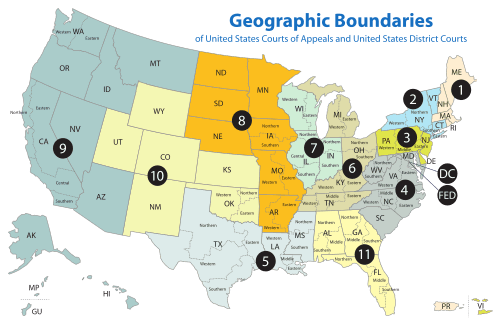
the United States District Court
ORGANIZATION
U.S. federal trial court with jurisdiction over federal cases
this Motion for Permission to File an Oversized Response
ORGANIZATION
Organization referenced in documents
Tornay v. United States
ORGANIZATION
Organization referenced in documents
Trammel v. United States
ORGANIZATION
Organization referenced in documents
TRW, Inc.
ORGANIZATION
Organization referenced in documents
Two Courts of Appeals
ORGANIZATION
Organization referenced in documents
U S Attorney
ORGANIZATION
Organization referenced in documents
U.S. Department
ORGANIZATION
U.S. Department (incomplete reference to a federal department)
Unita
ORGANIZATION
Organization referenced in documents
United States District Court
ORGANIZATION
U.S. federal trial court
UNPARTICULARIZED
ORGANIZATION
Organization referenced in documents
Upjohn
ORGANIZATION
Organization referenced in documents
Upjohn Co.
ORGANIZATION
Organization referenced in documents

Wanda
ORGANIZATION
Entity referenced in documents
William L. Richey P.A.
ORGANIZATION
Organization referenced in documents
World Sports
ORGANIZATION
Organization referenced in documents
XYZ Corp.
ORGANIZATION
Organization referenced in documents
7eCCrey erste
LOCATION
Location referenced in documents
Biscayne st
LOCATION
Location referenced in documents
Bonner v. City of
LOCATION
Location referenced in documents
Feldberg
LOCATION • 2 mentions
Location referenced in documents
Hoffinan
LOCATION
Location referenced in documents
Lanebrd
LOCATION
Location referenced in documents

Maine
LOCATION
State of the United States of America
McNeil v. Wisconsin
LOCATION
Location referenced in documents
Miami Center
LOCATION
Location referenced in documents

Palm Beach County
LOCATION
County in Florida, United States of America
Ratlifir
LOCATION
Location referenced in documents
S.D. Fl
LOCATION
Federal judicial district in Florida
S.D. Ind.
LOCATION
Location referenced in documents
South Ois,,,yne Boulevard
LOCATION
Location referenced in documents
Southern District
LOCATION
Federal judicial district in New York City
Support of United States'
LOCATION
Location referenced in documents
Teirciey Erste C'n
LOCATION
Location referenced in documents
the Middle District
LOCATION
Federal judicial district
the State of Mississippi
LOCATION
Location referenced in documents

United States
LOCATION • 5 mentions
Country located primarily in North America
Vifierica
LOCATION
Location referenced in documents
West Palm
LOCATION
City in Palm Beach County, Florida
West Palm Beach
LOCATION • 2 mentions
County seat of Palm Beach County, Florida, United States
Statistics
Pages:100
Entities:209
Sponsored