Back to People & Entities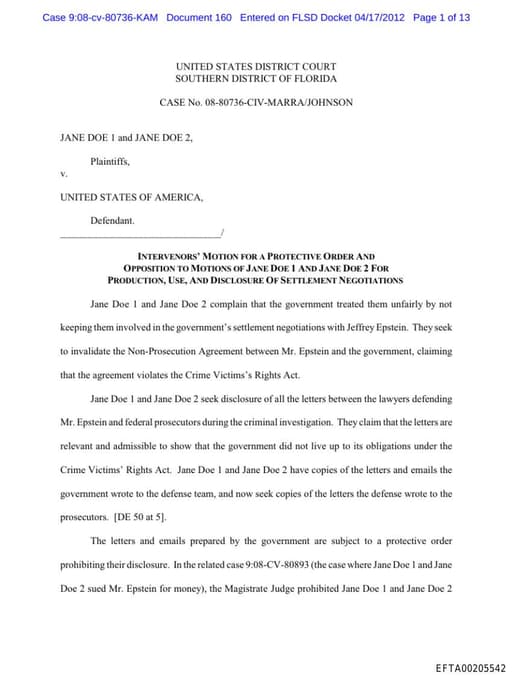




HT
Hickman v. Taylor
Person
12
Total Mentions
12
Documents
188
Connected Entities
Person referenced in documents
Document Mentions (12)
EFTA00205542.pdf
1 mentionEFTA00205542
litigation.' United States v. Nobles, 422 U.S. 225, 238 (1975). The work-product doctrine applies in civil and criminal litigation. Id. at 236. In Hickman v. Taylor, the Supreme Court described the policy behind the doctrine protecting the opinion work-product of lawyers. The Court explained that a lawyer is bou
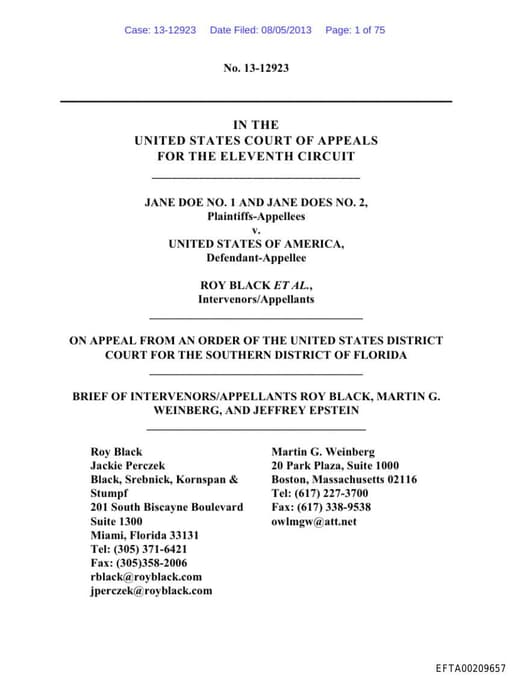
EFTA00209657.pdf
1 mentionEFTA00209657
rials prepared by an attorney `acting for his client in anticipation of litigation,"' United States v. Nobles, 422 U.S. 225, 237-38 (1975), quoting Hickman v. Taylor, 329 U.S. 495, 508 (1947), which applies in both civil and criminal litigation: Although the work-product doctrine most frequently is asserted as a
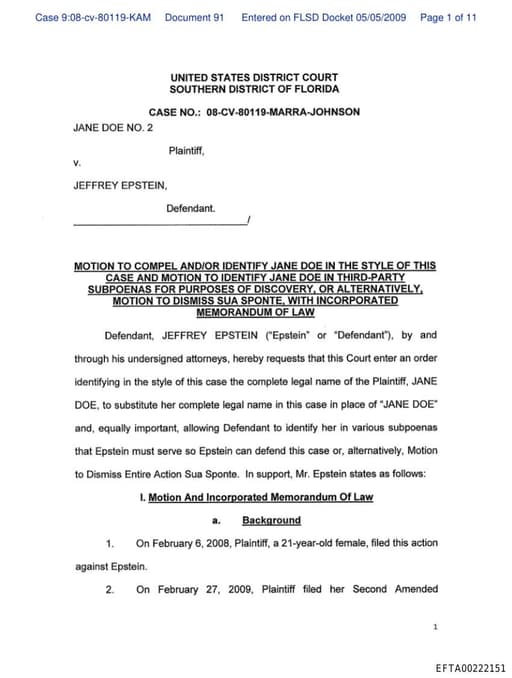
EFTA00222151.pdf
1 mentionEFTA00222151
So.2d 108, 111 (Fla. 1970)(stating that the rules of discovery should be afforded broad and liberal treatment to effectuate their purpose), citing, Hickman v. Taylor, 329 U.S. 495, 501, 507 (1947). 14. Next, the right to go to court to resolve disputes is a fundamental right. D.R. Lakes, Inc. v. Brandsmart U.S
Sponsored
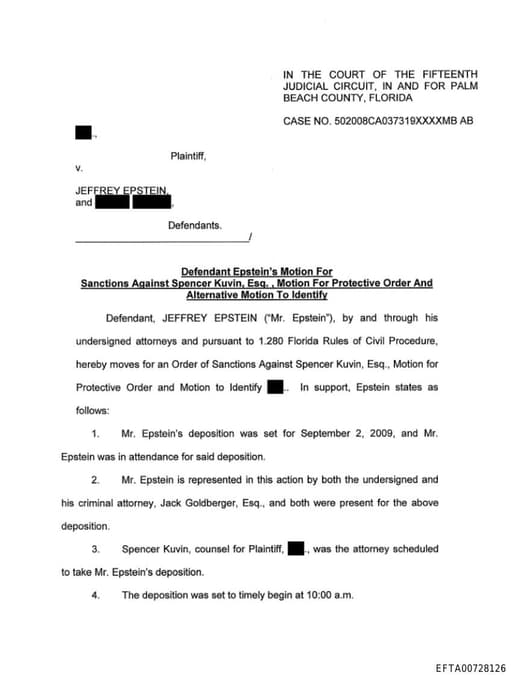
EFTA00728126.pdf
1 mentionEFTA00728126
So.2d 108, 111 (Fla. 1970)(stating that the rules of discovery should be afforded broad and liberal treatment to effectuate their purpose), citing, Hickman v. Taylor, 329 U.S. 495, 501, 507 (1947). 21. Next, the right to go to court to resolve disputes is a fundamental right. D.R. Lakes. Inc. v. Brandsmart U.S
EFTA00805367.pdf
1 mentionEFTA00805367
Court is governed by the basic mantra that the work-product doctrine is not absolute. Even the seminal case establishing the work-product doctrine, Hickman v. Taylor, recognized the doctrine's limits: We do not mean to say that all written materials obtained or prepared by an adversary's counsel with an eye tow
EFTA01657752.pdf
1 mentionEFTA01657752
that "it is essential that a lawyer work with a certain degree of privacy, free from unnecessary intrusion by opposing parties and their counsel." Hickman v. Taylor, 329 U.S. 495, 510 (1947). The privilege is codified at Federal Rule of Civil Procedure 26(b)(3): Ordinarily, a party may not discover documents an
Sponsored
EFTA01713166.pdf
1 mentionEFTA01713166
oenas violate the work-product doctrine, as well as Mr. Epstein's Fifth Amendment right to due process and his Sixth Amendment right to counsel. In Hickman v. Taylor,. 329 U.S. 495, 510-11 (1947), the Supreme Court recognized the modem work- product doctrine, holding that: (flu performing his various duties, how
EFTA02335898.pdf
1 mentionEFTA02335898
that "it is essential that a lawyer work with a certain degree of privacy, free from unnecessary intrusion by opposing parties and their counsel." Hickman v. Taylor, 329 U.S. 495, 510 (1947). The privilege is codified at Federal Rule of Civil Procedure 26(b)(3): Ordinarily, a party may not discover documents an
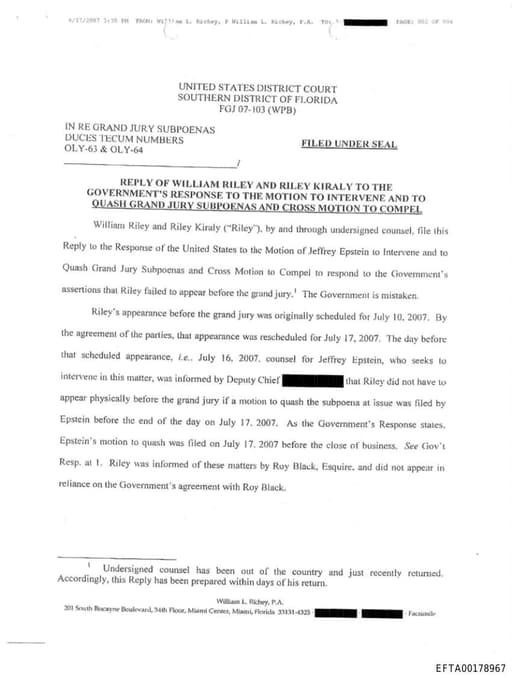
EFTA00178967.pdf
1 mentionEFTA00178967_sub_001 - EFTA00178967_100
oenas violate the work-product doctrine, as well as Mr. Epstein's Fifth Amendment right to due process and his Sixth Amendment right to counsel. In Hickman v. Taylor, 329 U.S. 495, 510-11 (1947), the Supreme Court recognized the modern work- product doctrine, holding that: [lin performing his various duties, how
Sponsored
EFTA00178967.pdf
1 mentionEFTA00178967_sub_002 - EFTA00178967_200
ain hidden in an attorney's file and where production of those facts is essential to that preparation of one's case, discovery may properly be had." Hickman v. Taylor, 329 U.S. 495, 511 (1947). Furthermore, the "work product rule protects work done by an attorney in anticipation of, or during, litigation," In re
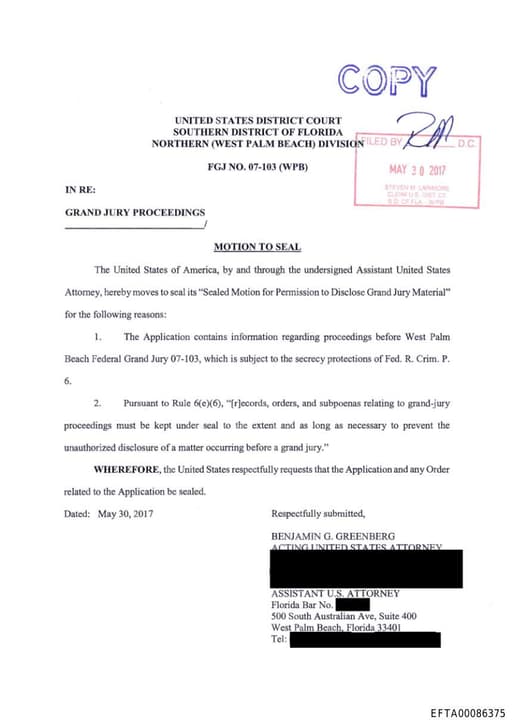
EFTA00086375.pdf
1 mentionEFTA00086375_sub_001 - EFTA00086375_100
that "it is essential that a lawyer work with a certain degree of privacy, free from unnecessary intrusion by opposing parties and their counsel." Hickman v. Taylor, 329 U.S. 495, 510 (1947). The privilege is codified at Federal Rule of Civil Procedure 26(b)(3): Ordinarily, a party may not discover documents an
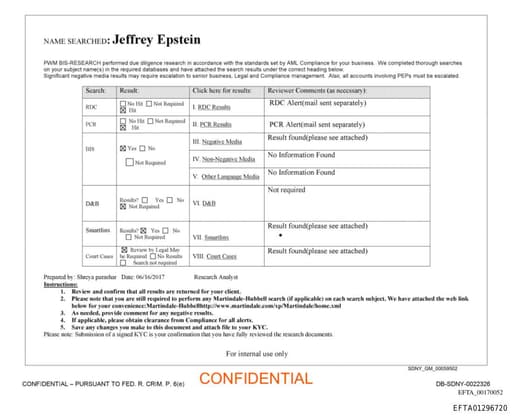
EFTA01296720.pdf
1 mentionEFTA01296720_sub_001 - EFTA01296720_100
"it is essential that a lawyer work with a certain r 161 degree of privacy, free from unnecessary intrusion by opposing parties and their counsel." Hickman v. Taylor, 329 U.S. 495, 510, 67 S. Ct. 385, 91 L. Ed. 451 (1947). The privilege is codified at Federal Rule of Civil Procedure 26(b)(3): Ordinarily, a part
Sponsored
Connected Entities(20 of 188)
Jeffrey Epstein
PersonAmerican sex offender and financier (1953–2019)
12 docs12 co-mentions
ET
Emmy Taylor
PersonFormer assistant to Ghislaine Maxwell, appeared in Epstein flight logs and court documents
12 docs12 co-mentions
United States
LocationCountry located primarily in North America
10 docs10 co-mentions
Kenneth Marra
PersonAmerican judge
9 docs9 co-mentions
George W. Bush
PersonPresident of the United States from 2001 to 2009
8 docs8 co-mentions
JD
Jane Doe
PersonPseudonym for anonymous victims/witnesses in Epstein legal proceedings
7 docs7 co-mentions
LB
Leon Black
PersonAmerican billionaire businessman (born 1951)
7 docs7 co-mentions
RB
Roy Black
PersonAmerican lawyer (1945–2025)
7 docs7 co-mentions
Supreme Court
OrganizationHighest court of jurisdiction in the US
7 docs7 co-mentions
HI
Hickman
PersonSurname reference in Epstein-related documents
6 docs6 co-mentions
the Southern District
LocationFederal judicial district in New York City
6 docs6 co-mentions
D.C. Cir
OrganizationOrganization referenced in documents
6 docs6 co-mentions
ST
Subpoena Duces Tecum
PersonCourt summons ordering the recipient to appear before the court and produce documents or other tangible evidence for use at a hearing or trial
5 docs5 co-mentions
WA
Wayte
PersonProgamer
5 docs5 co-mentions
Armstrong
PersonSurname reference in Epstein-related documents
5 docs5 co-mentions
U.S. Steel & Carnegie
OrganizationOrganization referenced in documents
5 docs5 co-mentions
JG
Jack Goldberger
PersonAmerican criminal defense attorney who represented Jeffrey Epstein, partner at Goldberger Weiss P.A. in West Palm Beach, Florida
5 docs5 co-mentions
Intervenor Epstein's Motion for the Court to Protect From Disclosure Grand
OrganizationOrganization referenced in documents
4 docs4 co-mentions
State Farm Ins
OrganizationOrganization referenced in documents
4 docs4 co-mentions
Kent Corp.
OrganizationOrganization referenced in documents
4 docs4 co-mentions