Back to People & Entities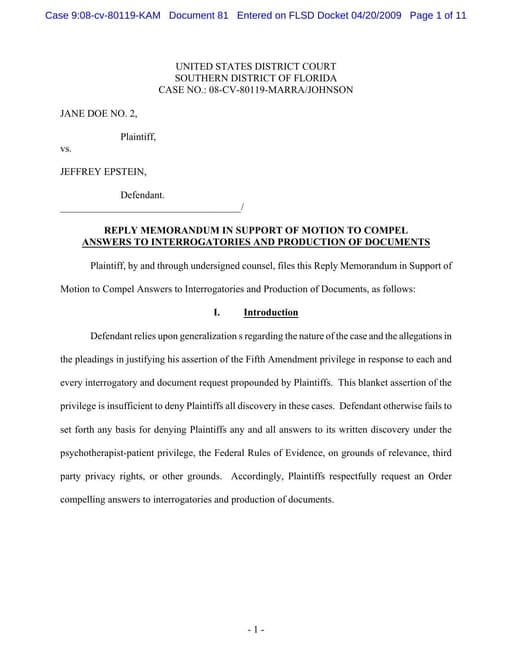



HU
Hubbell
Person
72
Total Mentions
67
Documents
571
Connected Entities
Surname reference in Epstein-related documents
The mentions of 'Hubbell' in the Epstein documents are not references to a person connected to Jeffrey Epstein, but rather legal citations of the Supreme Court case United States v. Hubbell, 530 U.S. 27 (2000), which established important Fifth Amendment protections regarding compelled document production.
All 22 mentions of 'Hubbell' appear exclusively in legal court filings related to Epstein's civil cases, specifically in arguments about Fifth Amendment protections and the act of production doctrine. The case United States v. Hubbell is cited repeatedly by Epstein's legal team and opposing counsel when discussing whether producing documents in response to subpoenas would constitute self-incriminating testimony. One outlier mention references Webster Hubbell (President Clinton's Associate Attorney General) in a completely unrelated document about the book 'Fire and Fury.' There is no evidence of any person named Hubbell having a direct connection to Jeffrey Epstein or appearing in emails, flight logs, or witness testimony.
Key Highlights
- •All mentions except one are legal citations of the landmark Supreme Court case United States v. Hubbell (2000) about Fifth Amendment protections
- •The Hubbell case is cited in multiple court filings (DOJ-COURT series) where Epstein and other parties invoke Fifth Amendment privilege against self-incrimination
- •Lawyers use Hubbell precedent to argue that compelled document production has 'testimonial aspects' that could incriminate defendants
- •One mention of 'Webster Hubbell' appears in a page from 'Fire and Fury' book index (HOUSE_OVERSIGHT_019874), completely unrelated to the Epstein case
Frequently Asked Questions
Document Mentions (20 of 67)
3 mentions
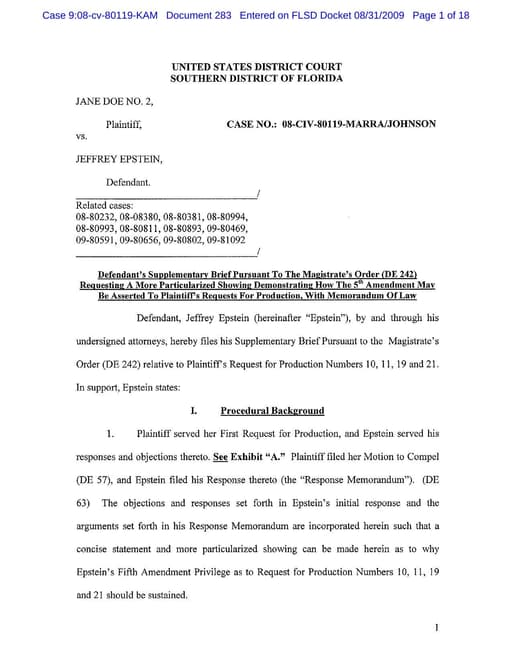
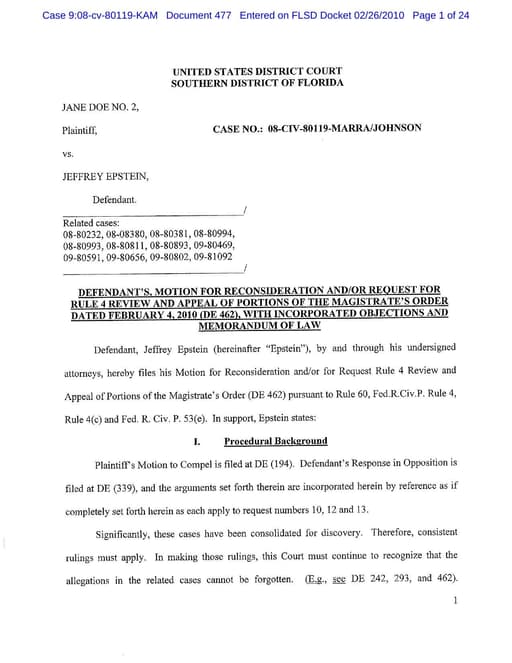
mission that he failed to comply with the plea agreement. Accordingly, it was the testimonial aspect of the production that concerned the Court in Hubbell, 530 U.S. at 36-44 120 S.Ct. at 2043-48. At the appellate court level, the court specifically found that respondent’s acknowledgment of the existe
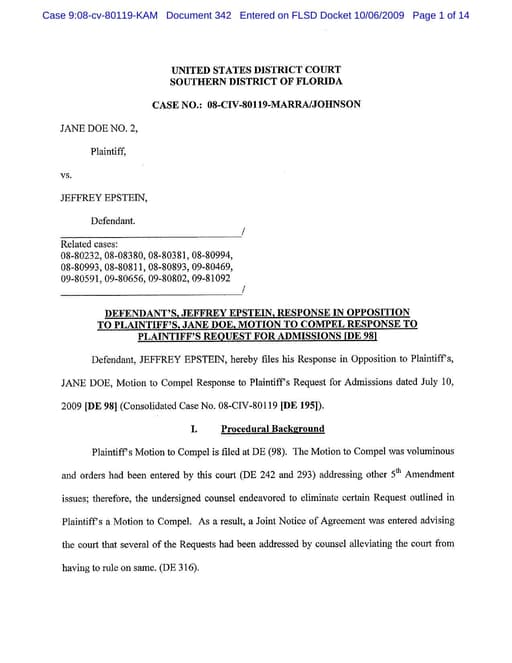
Co. v. Wyler, 182 F.Supp. 2d 679, 681 (N.D. Ill. 2002). Defendant’s reliance on United States v. Hubbell, 530 U.S. 27 (2000), is inadequate. In Hubbell, it was apparent from the breadth of the description of documents demanded in the government’s subpoena that “the prosecutor needed respondent’s ass
a real danger of incrimination.” Bear Sterns & Co. v. Wyler, 182 F.Supp. 2d 679, 681 (N.D. Ill. 2002). Defendant’s reliance on United States v. Hubbell, 530 U.S. 27 (2000), is inadequate. In Hubbell, it was apparent from the breadth of the description of documents demanded in the government’s subp
2 mentions
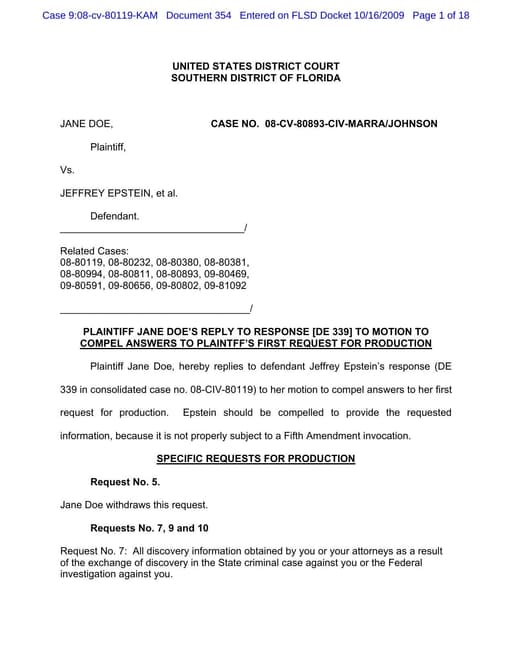
ents contained incriminatory evidence, whether written by others or voluntarily prepared by [the party asserting the privilege].” United States v. Hubbell, 530 U.S. 27, 36, 120 S.Ct. 2037, 2043 (2000). “The act of producing evidence in response to a subpoena nevertheless has communicative aspects of i
the government subpoena were not a forgone conclusion, and therefore the act of production had a testimonial aspect. 530 U.S. at 45. The facts in Hubbell are distinguishable from those here. “[I]n Hubbell, the incriminatory nature of the production of the documents sought was obvious.” Bear Stearns
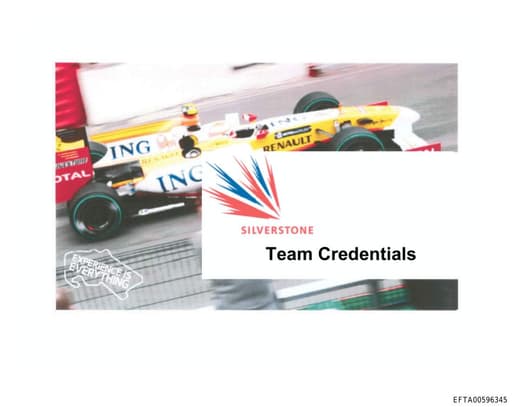
EFTA00596345.pdf
2 mentionsEFTA00596345
ponsible for arranging, structuring and marketing the firm's credit-backed CDO and CLO transactions in excess of $5 billion. Before joining UBS, Ms. Hubbell spent 17 years at Credit Suisse where she ran the CDO Group which developed many of the first CDOs for a variety of asset classes including high yiel
r holds the Chartered Alternative Investment Analyst (CAIA) designation. Gina Hubbell — Managing Director, Structuring and Product Development Ms. Hubbell joined Guggenheim in August 2010 with a focus on developing structured transactions and investment products for the firm and its clients. Previously,
Sponsored
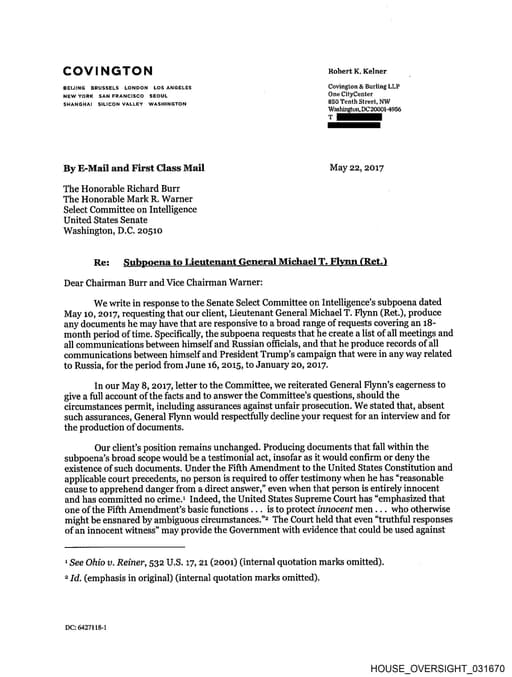
HOUSE_OVERSIGHT_031670 - HOUSE_OVERSIGHT_031675
2 mentionsSource: House Oversight Committee
d. In contrast to Fisher, a case in which investigators already knew that documents existed and exactly where they were located, the investigators in Hubbell lacked "any prior knowledge of either the existence or the whereabouts" of the subpoenaed materials. Hubbell, 530 U.S. 27, 44- 45. Hubbell arose out
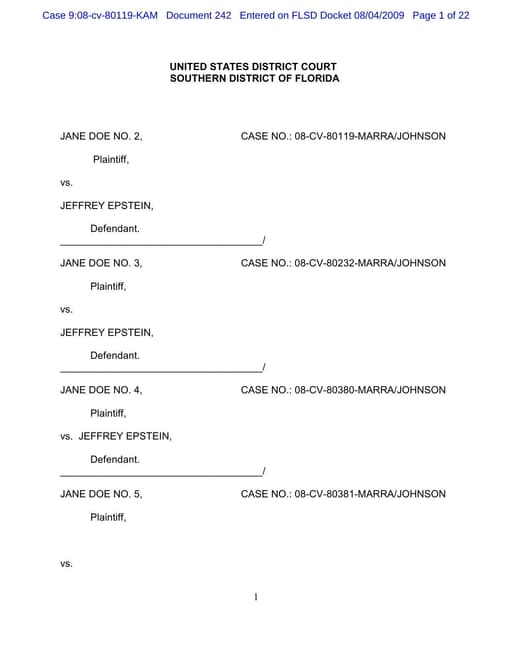
Page: HOUSE_OVERSIGHT_031672 →... Witnesses cannot be compelled to give evidence against themselves." 354 U.S. 178, 187-88 (1957). The Supreme Court later held in United States v. Hubbell, 530 U.S. 27, 34 (2000), that the right not to be compelled to give testimony against oneself applies as well to the compelled production of document
Page: HOUSE_OVERSIGHT_031671 →1 mention
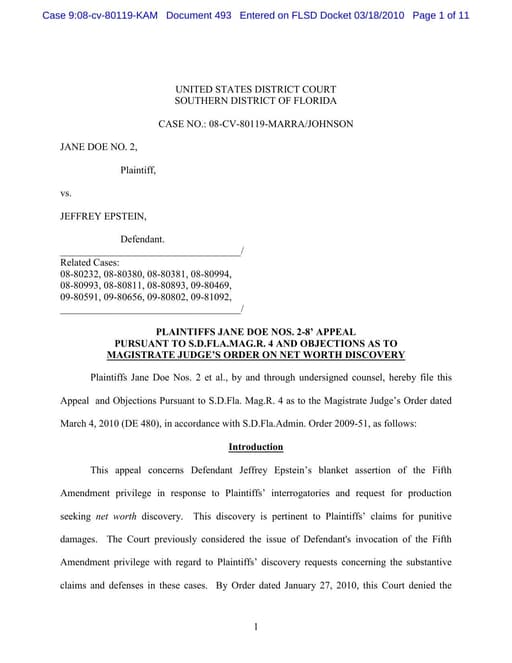
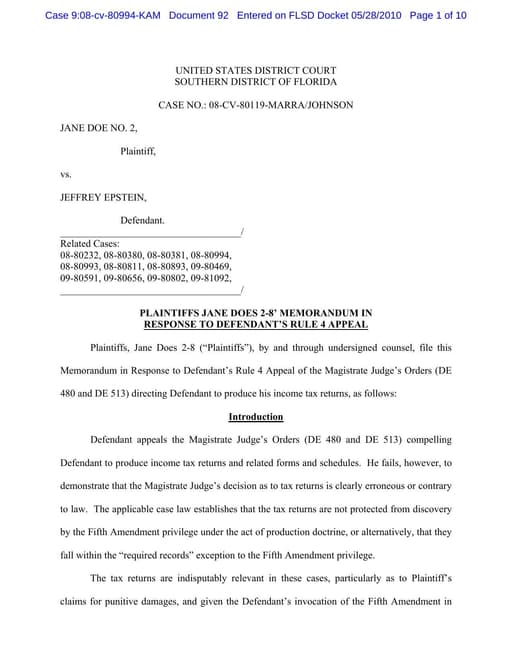
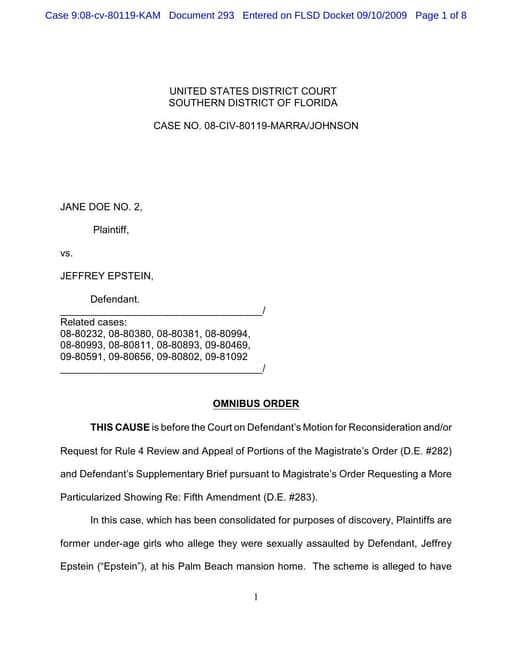
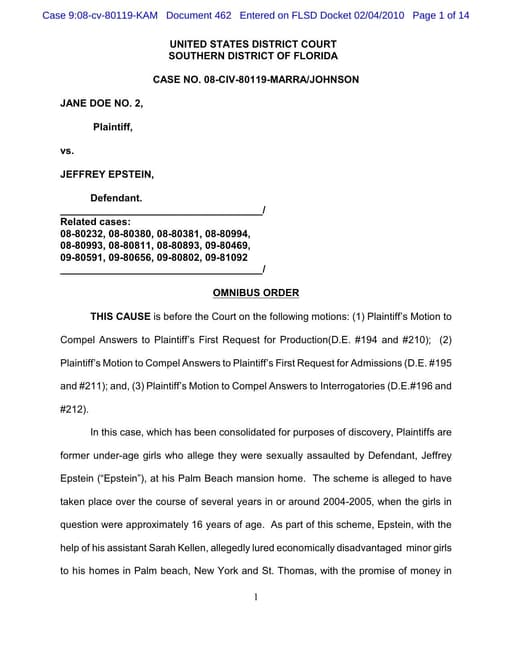
94-KAM Document 92 Entered on FLSD Docket 05/28/2010 Page 2 of 10 3 Fisher v. United States, 425 U.S. 391, 410 (1976) and United States v. Hubbell, 530 U.S. 27, 35- 36 (2000). As noted by the Magistrate Judge, “Defendant cannot reasonably and in good faith argue that in producing these documen
1 mention
e act of production where, as here, it involves a self-incriminating testimonial communication or "a compelled testimonial aspect." United States v. Hubbell, 530 U.S. 27, 120 S.Ct. 2037 (2000); Fisher v. United States, 425 U.S. 391 (1976); McCormick on Evidence, Title 6, Chap. 13. The Privilege Against
Sponsored
1 mention
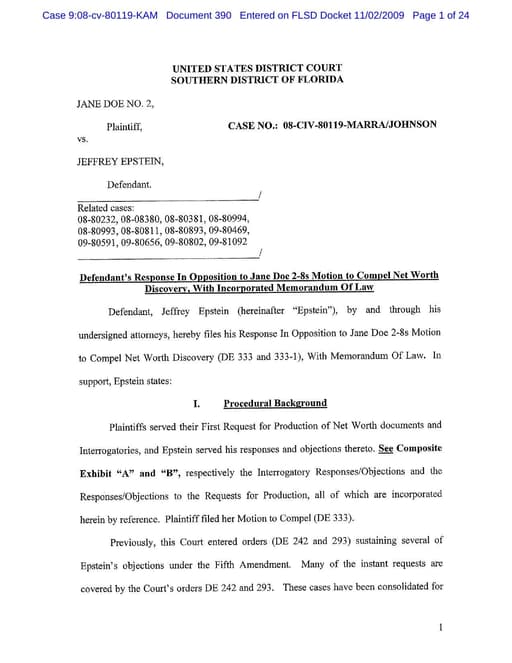
tance where "the act of producing documents in response to a subpoena (or production request) has a compelled testimonial aspect." United States v. Hubbell, 530 U.S. 27, 36, 120 S.Ct. 2037, 2043 (2000); see also Fisher v. United States, 425 U.S. 391 (1976); McCormick on Evidence, Case 9:08-cv-80119-K
1 mention
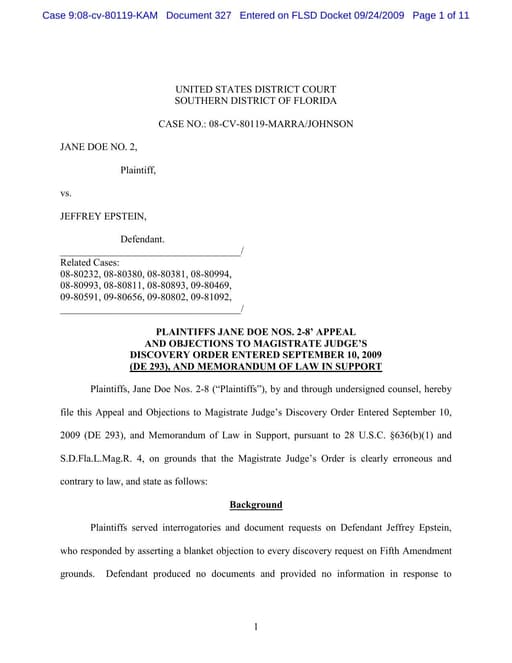
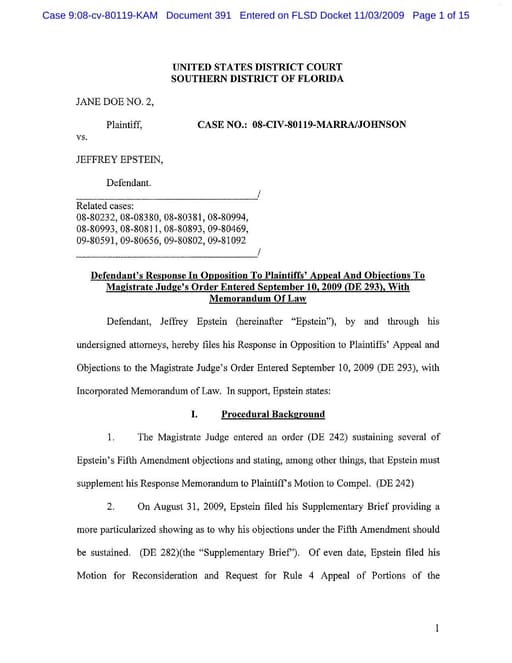
ting assertions of fact or belief, because the creation of those documents was not ‘compelled’ within the meaning of the privilege.” United States v. Hubbell, 530 U.S. 27, 35-36 (2000). However, in certain instances, “‘the act of production’ itself may implicitly communicate ‘statements of fact.’” Id. For
1 mention
a compelled testimonial aspect." United States v. Hubbell, 530 U.S. at 36; see also Fisher v. United State
Sponsored
1 mention
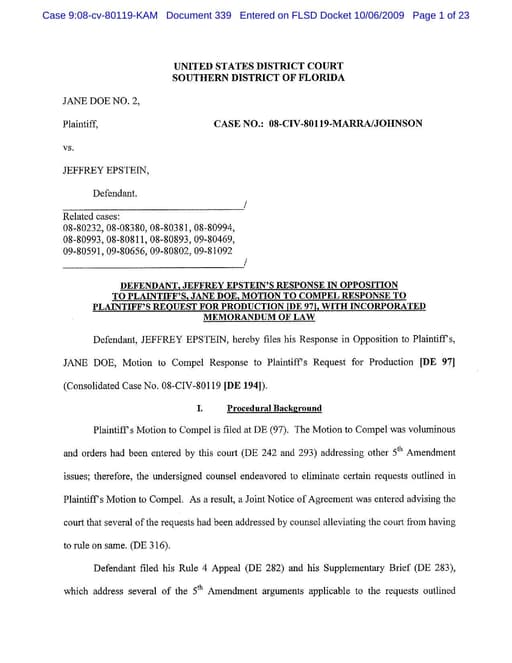
n the meaning of the privilege.” United States v. Hubbell, 530 U.S. 27, 35- 36 (2000). However, in certain
1 mention
the meaning of the privilege.” United States v. Hubbell, 530 U.S. 27, 35-36 (2000). Accordingly, a party
1 mention
mpelled testimonial aspect. See United States v. Hubbell, 530 U.S. 27, 35-36 (2000). Thus, where the exis
Sponsored
1 mention
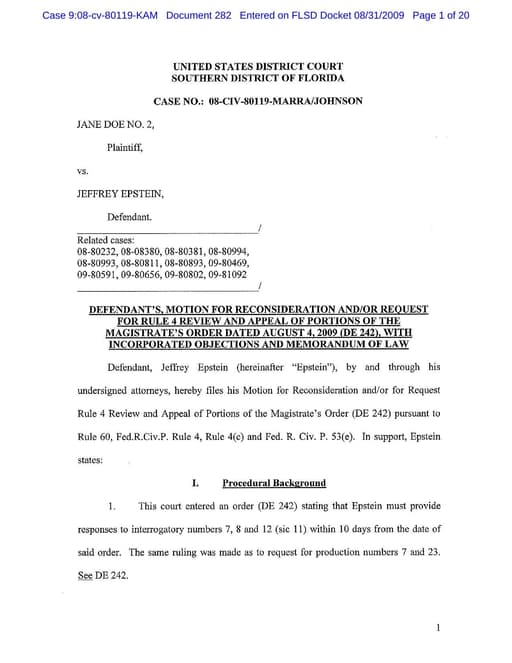
nd as well in areas that could result in criminal prosecution. See generally Hoffman v United States, 341 U.S. 479, 486 (1951) and United States v. Hubbell, 530 U.S. 27, 36, 120 S.Ct. 2037, 2043 (2000). Again, the information sought also relates to potential federal claims of violations. See DE 282 and
1 mention
actions of the defendant. Thus, United States v. Hubbell, 530 U.S. 27 (2000), rejected the Government’s a
1 mention
n the meaning of the privilege.” United States v. Hubbell, 530 U.S. 27, 35-36 (2000). However, in certain i
Sponsored
1 mention
predictably used to bolster the criminal-related allegations against Epstein. See generally Hoffman v United States 341 US 479, 486 (1951), U.S. v Hubbell, 530 U.S. 27, 36 (2000). 11 Case 9:08-cv-80119-KAM Document 282 Entered on FLSD Docket 08/31/2009 Page 12 of 20 12 Case 9:08-cv-80119-KA
1 mention
nd as well in areas that could result in criminal prosecution. See generally Hoffman v United States, 341 U.S. 479, 486 (1951) and United States v. Hubbell, 530 U.S. 27, 36, 120 S.Ct. 2037, 2043 (2000). 11. Therefore, Epstein is not required to produce any documents or responses to interrogatories. I
1 mention
ances where the act of producing documents in response to a subpoena or production request has a compelled testimonial aspect. See United States v. Hubbell, 530 U.S. 27, 35-36 (2000). Thus, where the existence or location of the requested documents are unknown, or where production would 2 Case 9:08-
Sponsored
1 mention
areas that could result in criminal prosecution. Hubbell, 530 U.S. at 35-36. Accordingly, any compelled te
1 mention
n the meaning of the privilege.” United States v. Hubbell, 530 U.S. 27, 35-36 (2000). However, in certain i
Sponsored
Connected Entities(20 of 571)
Jeffrey Epstein
PersonAmerican sex offender and financier (1953–2019)
61 docs61 co-mentions
JD
Jane Doe
PersonPseudonym for anonymous victims/witnesses in Epstein legal proceedings
41 docs41 co-mentions
JG
Jack Goldberger
PersonAmerican criminal defense attorney who represented Jeffrey Epstein, partner at Goldberger Weiss P.A. in West Palm Beach, Florida
40 docs40 co-mentions
United States
LocationCountry located primarily in North America
32 docs32 co-mentions
Adam D. Horowitz
PersonAmerican attorney specializing in sexual abuse cases, represented multiple Epstein victims
30 docs30 co-mentions
Jay Lefkowitz
PersonAmerican lawyer
28 docs28 co-mentions
AP
Apfelbaum
PersonSurname reference in Epstein-related documents
27 docs27 co-mentions
Bradley Edwards
PersonAmerican attorney who represented Epstein victims, author of Relentless Pursuit
25 docs25 co-mentions
Edwin
PersonSurname reference in Epstein-related documents
24 docs24 co-mentions
MP
Michael J. Pike
PersonPerson referenced in Epstein-related documents
24 docs24 co-mentions
Paul Cassell
PersonUnited States federal judge
23 docs23 co-mentions
TU
Turley
PersonSurname reference in Epstein-related documents
23 docs23 co-mentions
Sarah Kellen
PersonAmerican assistant to Jeffrey Epstein, named as unindicted co-conspirator in 2008 non-prosecution agreement
22 docs22 co-mentions
KE
Katherine W. Ezell
PersonPerson referenced in documents
21 docs21 co-mentions
RJ
Robert C. Josefsberg
PersonFlorida criminal defense attorney, appeared in Epstein legal proceedings
21 docs21 co-mentions
FI
Fisher
PersonSurname reference in Epstein documents
21 docs21 co-mentions
Kenneth Marra
PersonAmerican judge
20 docs20 co-mentions
SM
Stuart S. Mermelstein
PersonAttorney involved in Jeffrey Epstein legal matters.
20 docs20 co-mentions
IG
Isidro Manuel Garcia
PersonPerson referenced in documents
20 docs20 co-mentions
Second Circuit
OrganizationU.S. Court of Appeals for the Second Circuit
18 docs18 co-mentions