DOJ-COURT-354
Document DOJ-COURT-354 is Plaintiff Jane Doe’s reply to Jeffrey Epstein's response to a motion to compel answers to her first request for production in a case against Epstein.
This document from the Southern District of Florida pertains to the case Jane Doe v. Jeffrey Epstein. It involves Jane Doe's attempt to compel Jeffrey Epstein to provide information related to discovery requests. Epstein is asserting his Fifth, Sixth, and Fourteenth Amendment rights, claiming that producing documents could compromise his constitutional rights.
Key Highlights
- •Jane Doe is attempting to compel Jeffrey Epstein to provide requested information.
- •Jeffrey Epstein is asserting his Fifth, Sixth, and Fourteenth Amendment rights.
- •The document references related cases with case numbers.
Frequently Asked Questions
Books for Further Reading
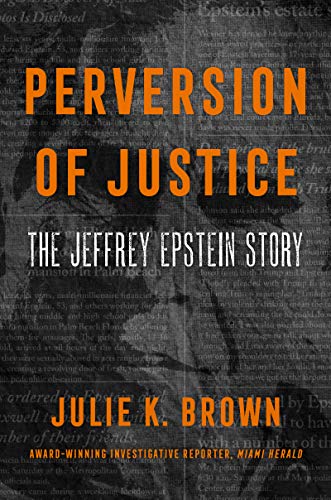
Perversion of Justice
Julie K. Brown
Investigative journalism that broke the case open

Filthy Rich
James Patterson
Bestselling account of Epstein's crimes
Glenn M. Anderson, Lyle Cook, Jack Goldberger, et al., Appellants, v. Frank M. Jordan, as Secretary of State of the State of California. U.S. Supreme ... of Record with Supporting Pleadings
Document Information
Bates Range
DOJ-COURT-354
Pages
18
Source
DOJ First Production
Original Filename
354.pdf
Document Content
Page 1 - DOJ-COURT-354_p1
UNITED STATES DISTRICT COURT SOUTHERN DISTRICT OF FLORIDA JANE DOE, CASE NO. 08-CV-80893-CIV-MARRA/JOHNSON Plaintiff, Vs. JEFFREY EPSTEIN, et al. Defendant. _________________________________/ Related Cases: 08-80119, 08-80232, 08-80380, 08-80381, 08-80994, 08-80811, 08-80893, 09-80469, 09-80591, 09-80656, 09-80802, 09-81092 __________________________________/ PLAINTIFF JANE DOE’S REPLY TO RESPONSE [DE 339] TO MOTION TO COMPEL ANSWERS TO PLAINTFF’S FIRST REQUEST FOR PRODUCTION Plaintiff Jane Doe, hereby replies to defendant Jeffrey Epstein’s response (DE 339 in consolidated case no. 08-CIV-80119) to her motion to compel answers to her first request for production. Epstein should be compelled to provide the requested information, because it is not properly subject to a Fifth Amendment invocation. SPECIFIC REQUESTS FOR PRODUCTION Request No. 5. Jane Doe withdraws this request. Requests No. 7, 9 and 10 Request No. 7: All discovery information obtained by you or your attorneys as a result of the exchange of discovery in the State criminal case against you or the Federal investigation against you. Case 9:08-cv-80119-KAM Document 354 Entered on FLSD Docket 10/16/2009
Page 2 - DOJ-COURT-354_p2
Page 1 of 18 CASE NO: 08-CV-80119-MARRA/JOHNSON 2 Defendant is asserting his U.S. constitutional privileges. I intend to respond to all relevant questions regarding this lawsuit, however, my attorneys have counseled me that at the present time I cannot select authenticate, and produce documents relevant to this lawsuit and I must accept this advice or risk losing my Sixth Amendment right to effective representation. Accordingly, I assert my federal constitutional rights under the Fifth, Sixth, and Fourteenth Amendments as guaranteed by the United States Constitution. Drawing an adverse inference under these circumstances would unconstitutionally burden my exercise of my constitutional rights, would be unreasonable, and would therefore violate the Constitution. In addition to and without waiving his constitutional privileges, the information sought is privileged and confidential, and inadmissible to the terms of the deferred prosecution agreement, Federal Rule of Evidence 410 and 408, and § 90.410, Fla. Stat. Further, the request may include information subject to work product or an attorney- client privilege. Request No. 9: Any documents or other evidentiary materials provided to local, state, or federal law enforcement investigators or local, state or federal prosecutors investigating your sexual activities with minors. Defendant is asserting his U.S. constitutional privileges. I intend to respond to all relevant questions regarding this lawsuit, however, my attorneys have counseled me that at the present time I cannot select authenticate, and produce documents relevant to this lawsuit and I must accept this advice or risk losing my Sixth Amendment right to effective representation. Accordingly, I assert my federal constitutional rights under the Fifth, Sixth, and Fourteenth Amendments as guaranteed by the United States Constitution. Drawing an adverse inference under these circumstances would unconstitutionally burden my exercise of my constitutional rights, would be unreasonable, and would therefore violate the Constitution. In addition to and without waiving his constitutional privileges, the information sought is privileged and confidential, and inadmissible pursuant to the terms of the deferred prosecution agreement, Fed. Rule of Evidence 410 and 408, and § 90.410, Fla. Stat. 1 Further, the request may include information subject to work product or an attorney-client privilege. Request No. 10: All correspondence between you and your attorneys and state or federal law enforcement or prosecutors (includes, but not limited to, letters to and from the States Attorney’s office or any agents thereof). Case 9:08-cv-80119-KAM Document 354 Entered on FLSD Docket 10/16/2009
Page 3 - DOJ-COURT-354_p3
Page 2 of 18 CASE NO: 08-CV-80119-MARRA/JOHNSON 3 Defendant is asserting his U.S. constitutional privileges. I intend to respond to all relevant questions regarding this lawsuit, however, my attorneys have counseled me that at the present time I cannot select authenticate, and produce documents relevant to this lawsuit and I must accept this advice or risk losing my Sixth Amendment right to effective representation. Accordingly, I assert my federal constitutional rights under the Fifth, Sixth, and Fourteenth Amendments as guaranteed by the United States Constitution. Drawing an adverse inference under these circumstances would unconstitutionally burden my exercise of my constitutional rights, would be unreasonable, and would therefore violate the Constitution. In addition to and without waiving his constitutional privileges, the information sought is privileged and confidential, and inadmissible pursuant to the terms of the deferred prosecution agreement, Fed. Rule of Evidence 410 and 408, and § 90.410, Fla. Stat. Further, the request may include information subject to work product or an attorney- client privilege. Reply to Epstein’s Response: These requests simply seek information that the federal government gave to Epstein in the course of its plea discussions with him. Remarkably, Epstein claims that these materials – which started in the government’s possession -- are now somehow transformed and given Fifth Amendment protection by his mere receipt of them. The Fifth Amendment does not work such alchemy. It is true, of course, that the Fifth Amendment covers situations where the act of producing documents has “communicative aspects of its own, wholly aside from the contents of the papers produced.” Fisher v. United States, 425 U.S. 391, 410 (1976). But this “act of production” doctrine has stringent limits. It does not extend, for example, to a claim by a taxpayer that he would incriminate himself by producing his accountant’s work papers. As the Supreme Court has explained, the government’s awareness of these documents was “a foregone conclusion” and therefore their production could be required: Case 9:08-cv-80119-KAM Document 354 Entered on FLSD Docket 10/16/2009
Sponsored
Page 4 - DOJ-COURT-354_p4
Page 3 of 18 CASE NO: 08-CV-80119-MARRA/JOHNSON 4 It is doubtful that implicitly admitting the existence and possession of the papers rises to level of testimony within the protection of the Fifth Amendment. The papers belong to the accountant, were prepared by him, and are the kind usually prepared by an accountant working on the tax returns of his client. Surely the Government is in no way relying on the “truthtelling” of the taxpayer to prove the existence of . . . the documents. The existence and location of the papers are a foregone conclusion. Fisher, 425 U.S. at 410 (emphasis added). Courts applying this “foregone conclusion” standard to various fact patterns have asked whether the government was aware of the documents’ existence apart from any actions of the defendant. Thus, United States v. Hubbell, 530 U.S. 27 (2000), rejected the Government’s argument that it was a foregone conclusion that the defendant possessed “ordinary business records.” The Court noted that the government had no “prior knowledge” of these records: Whatever the scope of this “foregone conclusion” rationale, the facts of this case plainly fall outside of it. While in Fisher the Government already knew that the documents were in the attorney’s possession and could independently confirm their existence and authenticity through the accountants who created them, here the Government has not shown that it had any prior knowledge of either the existence or the whereabouts of the 13,120 pages of documents ultimately produced by respondent. Id. at 44 (emphasis added). In this case, of course, the government’s “prior knowledge” of the documents that Jane Doe seeks is obviously and undeniably a foregone conclusion. The government itself gave Epstein the documents! Therefore, there is no plausible argument that, in producing these documents to Jane Doe, Epstein will somehow be incriminating himself by disclosing to the government something that it does not already know. The government clearly has prior knowledge of documents that it gave to Epstein. Here, Case 9:08-cv-80119-KAM Document 354 Entered on FLSD Docket 10/16/2009
Page 5 - DOJ-COURT-354_p5
Page 4 of 18 CASE NO: 08-CV-80119-MARRA/JOHNSON 5 then, the “existence and location of the documents . . . are a ‘foregone conclusion’ and [Epstein] . . . adds little or nothing to the sum total of the Government’s information by conceding that he in fact has the documents.” In re Grand Jury Subpoena, Dated April 18, 2003, 383 F.3d 905, 910 (9th Cir. 2004). The D.C. Circuit has recently refused to extend the act of production doctrine to facts very similar to those here. In United States v. Ponds, 454 F.3d 313 (D.C. Cir. 2006), federal prosecutors sought information about possible crimes committed by a defense attorney in the course of representing a defendant in a federal case. The prosecutors subpoenaed the attorney to produce all correspondence between him and courts and prosecutors in that case. In summarily rejecting an argument that producing the documents would somehow fall within the act of production doctrine of the Fifth Amendment, the D.C. Circuit explained that “the government must have known of the existence of documents . . . because it was a party to that correspondence.” Id. at 325. The Circuit further explained that the government’s subpoena need not “name every scrap of paper that is produced. Because the government already had sufficient knowledge about the . . . [case-related] documents, . . . [the defense attorney] was simply surrendering them, not testifying, by complying with those demands in the subpoena.” Id. Other cases similarly reject attempts to use an act of production shield to turning over documents whose existence is known to the government or is a foregone conclusion. See, e.g. In re Grand Jury Subpoena Duces Tecum Dated Oct. 29, 1992, 1 F.3d 87, 93 (2d Cir. 1993) (rejecting act of production argument because compliance with subpoena requiring production of a personal calendar “would require mere Case 9:08-cv-80119-KAM Document 354 Entered on FLSD Docket 10/16/2009
Page 6 - DOJ-COURT-354_p6
Page 5 of 18 CASE NO: 08-CV-80119-MARRA/JOHNSON 6 surrender of the calendar, and not testimony” (internal quotation omitted)); United States v. Clark, 847 F.2d 1467, 1473 (10th Cir. 1988) (accounting records not subject to act of production protection; in producing records the defendant would not “authenticate the documents as being his own or being accurate”); Securities and Exchange Commission v. First Jersey Securities, Inc., 843 F.2d 74, 76 (2d Cir. 1988) (rejecting act of production argument regarding bank records because “everybody knew that they existed”); ]”); United States v. Lang, 792 F.2d 1235, 1242 (4th Cir. 1986) (rejecting act of production argument regarding bank records because an IRS agent “had been given access to and has examined some or all of the records” and thus the defendants “act of producing those records would add little or nothing to the sum total of the Government’s knowledge of the existence and location of the summoned records”). Rather than discuss specific case law about the act of production doctrine, Epstein retreats into mere generalities. Thus, he asserts that giving to Jane Doe the discovery produced by the government might disclose witnesses helpful to Jane Doe. Epstein’s Resp. at 7. But this assertion badly confuses how the Fifth Amendment works. Of course, the government’s documents have information that might be harmful to Epstein’s claims of innocence; presumably that is why the government was showing him the documents in the first place to convince him to plead guilty to a crime. But it is a “settled proposition that a person may be required to produce specific documents even though they contain incriminating assertions of fact or belief . . . .” United States v. Hubbell, 530 U.S. 27, 35 (2000). The only question here is whether turning over the government’s own documents to Jane Doe somehow forces Epstein to provide Case 9:08-cv-80119-KAM Document 354 Entered on FLSD Docket 10/16/2009
Sponsored
Page 7 - DOJ-COURT-354_p7
Page 6 of 18 CASE NO: 08-CV-80119-MARRA/JOHNSON 7 “testimony” to the government – something forbidden by the Fifth Amendment. Epstein has no such viable claim here. Epstein also argues that the magistrate judge’s earlier omnibus order (doc. # 339 in case no. 9:08-CV-80119) requires that request for production be denied. This is untrue for several reasons. First, the earlier requests that were apparently denied2 were broader than the narrow requests made by Jane Doe. The earlier requests included, for example, a request for all documents “relating to” the federal non-prosecution agreement (Production Request No. 2), all documents “relating to” Epstein’s Florida guilty plea (Production Request No. 3), and all documents obtained in “investigation relating to” either the federal or state criminal investigations. See Epstein’s Resp. at 8 (quoting those requests). Such overbroad requests might require Epstein to effectively make “use of the content of his mind” in identifying which documents were responsive. See Hubbell, 530 U.S. at 43. But here Jane Doe has propounded far narrower requests that do not require any mind to pick and choose. Indeed, Jane Doe’s request is significantly narrower that other requests that the United States Supreme Court and other courts have upheld. See, e.g., Fisher v. United States, 425 U.S. 391, 394 (1976) (rejecting Fifth Amendment challenge to subpoena requesting “accountant’s workpapers pertaining to Dr. E.J. Mason’s books and records of 1969, 1970, and 1971); United States v. Ponds, 454 F.3d 313, 325 (D.C. Cir. 2006) (rejecting Fifth Amendment challenge to subpoena requesting “[a]ny and all correspondence between the Law 2 The magistrate judge’s order on this point actually states that it was Epstein’s motion to quash that was “denied.” See Order at 17 (“Defendant’s Motion as it relates to Production Requests 1, 2, 3, 4, 6, 8, 14, 15, 16, 17, and 20 is denied.” (emphasis added)). Read in context, it appears that the magistrate judge intended to state that the defendant’s motion was granted. Case 9:08-cv-80119-KAM Document 354 Entered on FLSD Docket 10/16/2009
Page 8 - DOJ-COURT-354_p8
Page 7 of 18 CASE NO: 08-CV-80119-MARRA/JOHNSON 8 Offices of Navron Ponds [the defendant] and courts and prosecutors in the matter of U.S. v. Jerome Harris” (internal bracketing omitted)); United States v. Clark, 847 F.2d 1467, 1473 (10th Cir. 1988) (rejecting Fifth Amendment challenge to subpoena requesting “all records pertaining to the performance of any accounting service by [one named person to another named person. The magistrate judge’s earlier order is also not controlling here for a second reason. That order was entered in a case that has been consolidated with Jane Doe’s case for discovery purposes. But Jane Doe was not a party to the earlier ruling and did not have the opportunity to provide briefing and argument before the magistrate judge ruled. In this case, of course, Jane Doe has had that opportunity and has now provided recent precedents clearly dictating that her specific motion should be granted. See, e.g., United States v. Ponds, 454 F.3d 313, 325 (D.C. Cir. 2006) (Fifth Amendment privilege does not extend to correspondence to which the government was a party). Epstein also argues some sort of attorney-client or work-product privilege bars production of the documents. This argument is frivolous. The attorney-client privilege, for example, extends only to a “confidential communication” made in the course of “rendition of legal services to the client.” Fla. Stat. Ann. § 90.502(2). Documents given by the government to Epstein are obviously not confidential communications within the sense of the attorney client privilege. Similarly, the documents are not work product, because they do not involve any creation by Epstein’s attorneys. See, e.g., Balboa v. State, 446 So.2d 1134, 1135 (Fla. App. 1984) (“opinions, theories, or conclusions of attorneys are privileged, but statements of witnesses to attorneys are not”). Case 9:08-cv-80119-KAM Document 354 Entered on FLSD Docket 10/16/2009
Page 9 - DOJ-COURT-354_p9
Page 8 of 18 CASE NO: 08-CV-80119-MARRA/JOHNSON 9 Epstein finally claims that the information is protected by Federal Rules of Evidence 408 and 410, regarding settlement discussions and plea negotiations. Those federal rules3 have no bearing Jane Doe’s requests for production number 7 and 9, which seek respectively discovery provided by the government and “evidentiary materials” provided by the government. These are simply not “offers to compromise,” Fed. R. Evid. 408, or “plea discussions,” Fed. R. Evid. 410, to which the rules apply. While Rules 408 and 410 do not covers requests number 7 and 9, they potentially cover Jane Doe’s request number 10, seeking correspondence regarding the plea discussions in this case. These rules, however, provide no valid basis for resisting Jane Doe’s discovery requests. Discovery is, of course, permitted “regarding any nonprivileged matter that is relevant” to Jane Doe’s claims. Fed. R. Civ. P. 26(b)(1) (emphasis added). The Rules of Evidence regarding settlement discussions do not create any privileges. It is possible that Epstein may argue that these rules ultimately bar the use of certain evidence at trial. If these arguments are made, Jane Doe will respond in due course.4 But under the discovery rules “[r]elevant information need not be admissible at the trial if the discovery appears reasonably calculated to lead to the discovery of admissible evidence.” Fed. R. Civ. P. 26(b). Thus, discovery is “construed broadly to encompass any matter that bears on, or that reasonably could lead to 3 Epstein also cites several analogous state rules of evidence, which are likewise inapplicable for the reasons explained regarding the federal rule. 4 Both rules contains exemptions, allowing such evidence to be used to prove such things as “state of mind,” “bias and prejudice,” or other things apart from mere liability for the matter under discussion. See, e.g., United States v. Peed, 714 F.2d 7, 9-10 (4th Cir. 1983) (admitting defendant’s offer to return missing property because it appeared motivated by purpose of persuading victim to drop criminal charges rather than to compromise civil claim). The Florida rules that Epstein cites, even though not applicable in this federal case, are also subject to similar exemptions. Case 9:08-cv-80119-KAM Document 354 Entered on FLSD Docket 10/16/2009
Sponsored
Page 10 - DOJ-COURT-354_p10
Page 9 of 18 CASE NO: 08-CV-80119-MARRA/JOHNSON 10 another matter that could bear on any issue that is or may be in the case.” Oppenheimer Fund, Inc. v. Sanders, 437 U.S. 340, 352 (1978). The correspondence with the government agencies may well point Jane Doe in the direction of admissible evidence, and therefore Epstein should be compelled to provide the correspondence sought in request number 10. In a last desperate attempt to thwart production, Epstein appeals to “third-party privacy rights.” Epstein’s Resp. at 11. Given the extent to which Epstein’s hired investigators have concluded interrogations of anyone even remotely connected with this case, this appeal to privacy interests rings rather hollow. In any event, it is odd to think that the privacy rights of these third persons do not interfere with Epstein himself (a convicted sex offender) reviewing these materials but forbid equal viewing by attorneys for a victim who was victimized by him. In any event, none of the authorities cited by Epstein are remotely similar to the case at hand. Epstein’s argument should therefore be rejected summarily. Requests No. 8, 11, 14, and 15 Request No. 8: All financial documents evidencing asset transfers from 2005 to present for you personally or any company or corporation owned by you. Defendant is asserting his U.S. constitutional privileges. I intend to respond to all relevant questions regarding this lawsuit, however, my attorneys have counseled me that at the present time I cannot select authenticate, and produce documents relevant to this lawsuit and I must accept this advice or risk losing my Sixth Amendment right to effective representation. Accordingly, I assert my federal constitutional rights under the Fifth, Sixth, and Fourteenth Amendments as guaranteed by the United States Constitution. Drawing an adverse inference under these circumstances would unconstitutionally burden my exercise of my constitutional rights, would be unreasonable, and would therefore violate the Constitution. Case 9:08-cv-80119-KAM Document 354 Entered on FLSD Docket 10/16/2009
Page 11 - DOJ-COURT-354_p11
Page 10 of 18 CASE NO: 08-CV-80119-MARRA/JOHNSON 11 Request No. 11: Any and all documents reflecting your current net worth. Defendant is asserting his U.S. constitutional privileges. I intend to respond to all relevant questions regarding this lawsuit, however, my attorneys have counseled me that at the present time I cannot select authenticate, and produce documents relevant to this lawsuit and I must accept this advice or risk losing my Sixth Amendment right to effective representation. Accordingly, I assert my federal constitutional rights under the Fifth, Sixth, and Fourteenth Amendments as guaranteed by the United States Constitution. Drawing an adverse inference under these circumstances would unconstitutionally burden my exercise of my constitutional rights, would be unreasonable, and would therefore violate the Constitution. Request No. 14: A sworn statement of your net worth (including a detailed financial statement depicting all current assets and liabilities). Defendant is asserting his U.S. constitutional privileges. I intend to respond to all relevant questions regarding this lawsuit, however, my attorneys have counseled me that at the present time I cannot select authenticate, and produce documents relevant to this lawsuit and I must accept this advice or risk losing my Sixth Amendment right to effective representation. Accordingly, I assert my federal constitutional rights under the Fifth, Sixth, and Fourteenth Amendments as guaranteed by the United States Constitution. Drawing an adverse inference under these circumstances would unconstitutionally burden my exercise of my constitutional rights, would be unreasonable, and would therefore violate the Constitution. Request No. 15: All financial statements or affidavits produced by you for any reason, to any person, company, entity or corporation since 2005. Defendant is asserting his U.S. constitutional privileges. I intend to respond to all relevant questions regarding this lawsuit, however, my attorneys have counseled me that at the present time I cannot select authenticate, and produce documents relevant to this lawsuit and I must accept this advice or risk losing my Sixth Amendment right to effective representation. Accordingly, I assert my federal constitutional rights under the Fifth, Sixth, and Fourteenth Amendments as guaranteed by the United States Constitution. Drawing an adverse inference under these circumstances would unconstitutionally burden my exercise of my Case 9:08-cv-80119-KAM Document 354 Entered on FLSD Docket 10/16/2009
Page 12 - DOJ-COURT-354_p12
Page 11 of 18 CASE NO: 08-CV-80119-MARRA/JOHNSON 12 constitutional rights, would be unreasonable, and would therefore violate the Constitution; overly broad. Reply to Epstein’s Response: Epstein’s main argument to turning over financial records is that he has explained in two sealed documents (doc. #282 and doc. #283) why producing financial records would incriminate him. Of course, because these documents are sealed, Jane Doe has no way of determining one way or other whether Epstein’s assertions are true. Jane Doe therefore respectfully asks the Court to make its determination of the issue, mindful of the fact that it is proceeding without the benefit of an adversarial presentation from Jane Doe. If the Court concludes that the materials in DE 282 and DE 283 do demonstrate that Epstein would incriminate himself by discussing his assets – and, in particular, his recent transfers of assets to overseas locations and elsewhere – then the Court should consider the information in deciding whether to grant Jane Doe’s motion for Preliminary Injunction Restraining Fraudulent Transfer of Assets [DE165], for reasons that Jane Doe explains in her concurrently-filed Notice that Additional Evidence of Epstein’s Fraudulent Asset Transfers Will Be Filed shortly and Motion for Consideration by the Court of Materials in DE 282 and DE 283 in Determining Motion for Appointment of a Receiver. Epstein’s other generic objections are makeweight and should be rejected. The financial records are relevant to a variety of issues in the case, including Jane Doe’s efforts to show a conspiracy and to obtain punitive damages. Case 9:08-cv-80119-KAM Document 354 Entered on FLSD Docket 10/16/2009
Sponsored
Page 13 - DOJ-COURT-354_p13
Page 12 of 18 CASE NO: 08-CV-80119-MARRA/JOHNSON 13 Request No. 12: Request No. 12: Personal tax returns for all years from 2002 through the present. Defendant is asserting his U.S. constitutional privileges. I intend to respond to all relevant questions regarding this lawsuit, however, my attorneys have counseled me that at the present time I cannot select authenticate, and produce documents relevant to this lawsuit and I must accept this advice or risk losing my Sixth Amendment right to effective representation. Accordingly, I assert my federal constitutional rights under the Fifth, Sixth, and Fourteenth Amendments as guaranteed by the United States Constitution. Drawing an adverse inference under these circumstances would unconstitutionally burden my exercise of my constitutional rights, would be unreasonable, and would therefore violate the Constitution; overly broad. Reply to Epstein’s Response: Epstein’s refusal to turn over his filed tax returns is absurd. For all the reasons explained earlier in connection with Requests 7, 9 and 10, the government (i.e., the IRS) already has a copy of these returns. Therefore, it can hardly be incriminating for Epstein to produce them. There is an additional, independent reason for rejecting Epstein’s refusal to produce his tax returns. Tax records, including in particular filed tax returns, are “required records” that are not covered by the Fifth Amendment. See, e.g., Rajah v. Mukasey, 544 F.3d 427, 442 (2nd Cir. 2008) (“. . . a taxpayer’s W-2 forms are required records not subject to the Fifth Amendment because they are a mandatory part of a civil regulatory regime . . . . “); In re Doe, 711 F.2d 1187, 1191 (2d Cir. 1983) (“we have little difficulty applying the required records exception to the W-2 . . . forms” and ordering production of W-2 forms over Fifth Amendment objection); In re Doe, 97 F.R.D. 640, 644-45 (S.D.N.Y. 1982) (ordering production of physician’s W-2 forms as required Case 9:08-cv-80119-KAM Document 354 Entered on FLSD Docket 10/16/2009
Page 14 - DOJ-COURT-354_p14
Page 13 of 18 CASE NO: 08-CV-80119-MARRA/JOHNSON 14 records); In re Grand Jury Empanelled March 19, 1989, 541 F.Supp. 1, 3 (D.N.J. 1981). (ordering the production of tax returns and W-2 statements to a grand jury), aff'd, 680 F.2d 327, 336 n. 15 (3rd Cir. 1982) (“[W]e affirm that those subpoenaed documents in the appellee's possession which are required either to be kept by law or to be disclosed to a public agency should be produced for the grand jury's inspection.”), aff'd in part, rev'd in part on other grounds sub nom. United States v. Doe, 465 U.S. 605, 608 n.3 (1984). Of course, in all these cases, tax returns were ordered produced even though a federal statute (cited by Epstein) makes tax returns “confidential.” See 26 U.S.C. § 6103. In all these cases, the confidentiality of provided by the IRS statute was obviously and properly overridden by the discovery procedures found in Fed. R. Civ. P. 26. Request No. 13: A photocopy of your passport, including any supplemental pages reflecting travel to locations outside the 50 United States between 2002 and 2008, including any documents or records regarding plane tickets, hotel receipts, or transportation arrangements. Defendant is asserting his U.S. constitutional privileges. I intend to respond to all relevant questions regarding this lawsuit, however, my attorneys have counseled me that at the present time I cannot select authenticate, and produce documents relevant to this lawsuit and I must accept this advice or risk losing my Sixth Amendment right to effective representation. Accordingly, I assert my federal constitutional rights under the Fifth, Sixth, and Fourteenth Amendments as guaranteed by the United States Constitution. Drawing an adverse inference under these circumstances would unconstitutionally burden my exercise of my constitutional rights, would be unreasonable, and would therefore violate the Constitution. In addition to and without waiving his constitutional protections and privileges, the scope of information is so overbroad that it seeks information that is neither relevant nor reasonably calculated to lead Case 9:08-cv-80119-KAM Document 354 Entered on FLSD Docket 10/16/2009
Page 15 - DOJ-COURT-354_p15
Page 14 of 18 CASE NO: 08-CV-80119-MARRA/JOHNSON 15 to the discovery of admissible evidence; compiling such information over a six year period would be unduly burdensome and time consuming.5 Reply to Epstein’s Response: Here again, Epstein has no good basis for refusing to turn over something that the government is aware of and has inspected. Epstein has had to produce his passport to government immigration agents whenever he leaves or enters the United States. There is no valid Fifth Amendment basis for refusing the same opportunity to Jane Doe. In addition, like income tax records, a passport is a “required record” for which no Fifth Amendment privilege is available. See Rajah v. Mukasey, 544 F.3d 427, 442 (2nd Cir. 2008) (“Just as a taxpayer’s W-2 forms are required records not subject to the Fifth Amendment because they are a mandatory part of a civil regulatory regime, so too are the passports . . . at issue in the current case”). Request No. 16. Request No. 16: All medical records of Defendant Epstein from Dr. Stephan Alexander. Defendant is asserting his U.S. constitutional privileges. I intend to respond to all relevant questions regarding this lawsuit, however, my attorneys have counseled me that at the present time I cannot select authenticate, and produce documents relevant to this lawsuit and I must accept this advice or risk losing my Sixth Amendment right to effective representation. Accordingly, I assert my federal constitutional rights under the Fifth, Sixth, and Fourteenth Amendments as guaranteed by the United States Constitution. Drawing an adverse inference under these circumstances would unconstitutionally burden my exercise of my 5 Jane Doe believes that Epstein used overseas travel as a means of obtaining underage girls for sexual purposes and for avoiding criminal prosecution for such activities. Also, providing a copy of a passport is hardly “burdensome.” Also, given the fact that Epstein is likely to have used the services of a travel agent or another intermediary, it should not be difficult for him to provide evidence of his overseas travels from such intermediaries. Case 9:08-cv-80119-KAM Document 354 Entered on FLSD Docket 10/16/2009
Sponsored
Page 16 - DOJ-COURT-354_p16
Page 15 of 18 CASE NO: 08-CV-80119-MARRA/JOHNSON 16 constitutional rights, would be unreasonable, and would therefore violate the Constitution. Reply to Epstein’s Response: Epstein claims, but does not prove, that he has hired Dr. Stephen Alexander as an expert witness in this case. He contends that he is therefore no obligated to turn over Dr. Alexander’s records. Jane Doe understands that Dr. Alexander was Epstein’s physician before this litigation ever started. Therefore, as to all records before such hiring, there is no protection. Even after such hiring, it would be Epstein’s burden to show that certain medical examinations were done for purposes of litigation to prove work-product protection – a burden Epstein has not attempted to meet. Epstein also notes that the Health Insurance Portability and Accountability Act (“HIPAA”) requires that records be disclosed in civil discovery only under an order insuring confidentiality. Jane Doe has no objection to such a confidentiality order. Finally, Epstein argues that some of the records may be protected by the Florida doctor- patient privilege. Fla. Stat. § 90.503(2). Epstein, however, is required to demonstrate that the elements of the privilege are satisfied on a document-by-document basis. Epstein has failed to do this and the documents should therefore be produced (or, in the alternative, Epstein should make an in camera submission showing how each document is privileged). CONCLUSION For all these reasons, the Court should compel Epstein to answer the requests for production discussed above. Case 9:08-cv-80119-KAM Document 354 Entered on FLSD Docket 10/16/2009
Page 17 - DOJ-COURT-354_p17
Page 16 of 18 CASE NO: 08-CV-80119-MARRA/JOHNSON 17 DATED October 16, 2009 Respectfully Submitted, s/ Bradley J. Edwards Bradley J. Edwards ROTHSTEIN ROSENFELDT ADLER Las Olas City Centre 401 East Las Olas Blvd., Suite 1650 Fort Lauderdale, Florida 33301 Telephone (954) 522-3456 Facsimile (954) 527-8663 Florida Bar No.: 542075 E-mail: [email protected] and Paul G. Cassell Pro Hac Vice 332 S. 1400 E. Salt Lake City, UT 84112 Telephone: 801-585-5202 Facsimile: 801-585-6833 E-Mail: [email protected] CERTIFICATE OF SERVICE I HEREBY CERTIFY that on October 16, 2009 I electronically filed the foregoing document with the Clerk of the Court using CM/ECF. I also certify that the foregoing document is being served this day on all parties on the attached Service List in the manner specified, either via transmission of Notices of Electronic Filing generated by CM/ECF or in some other authorized manner for those parties who are not authorized to receive electronically filed Notices of Electronic Filing. s/ Bradley J. Edwards Bradley J. Edwards Case 9:08-cv-80119-KAM Document 354 Entered on FLSD Docket 10/16/2009
Page 18 - DOJ-COURT-354_p18
Page 17 of 18 CASE NO: 08-CV-80119-MARRA/JOHNSON 18 SERVICE LIST Jane Doe v. Jeffrey Epstein United States District Court, Southern District of Florida Jack Alan Goldberger, Esq. [email protected] Robert D. Critton, Esq. [email protected] Isidro Manual Garcia [email protected] Jack Patrick Hill [email protected] Katherine Warthen Ezell [email protected] Michael James Pike [email protected] Paul G. Cassell [email protected] Richard Horace Willits [email protected] Robert C. Josefsberg [email protected] Adam D. Horowitz [email protected] Stuart S. Mermelstein [email protected] William J. Berger [email protected] Case 9:08-cv-80119-KAM Document 354 Entered on FLSD Docket 10/16/2009
Entities Mentioned

Adam D. Horowitz
PERSON
American attorney specializing in sexual abuse cases, represented multiple Epstein victims

Bernie Sanders
PERSON
United States Senator from Vermont since 2007
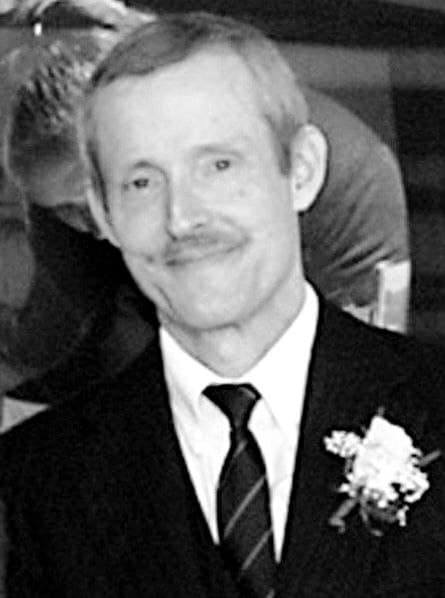
Bradley Edwards
PERSON
American attorney who represented Epstein victims, author of Relentless Pursuit

Clark
PERSON
Surname reference in Epstein documents
EM
E.J. Mason
PERSON
Name reference in documents
HU
Hubbell
PERSON
Surname reference in Epstein-related documents
IG
Isidro Manual Garcia
PERSON
Person referenced in documents

J. Robert Oppenheimer
PERSON
American theoretical physicist, scientific director of the Manhattan Project (1904-1967)
JG
Jack Goldberger
PERSON • 2 mentions
American criminal defense attorney who represented Jeffrey Epstein, partner at Goldberger Weiss P.A. in West Palm Beach, Florida
JH
Jack Patrick Hill
PERSON
Attorney at Searcy Denney law firm, appeared in Epstein-related legal proceedings
JD
Jane Doe
PERSON
Pseudonym for anonymous victims/witnesses in Epstein legal proceedings
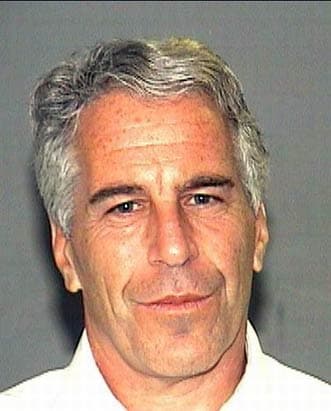
Jeffrey Epstein
PERSON • 4 mentions
American sex offender and financier (1953–2019)
JH
Jerome Harris
PERSON
Name reference in documents
KE
Katherine W. Ezell
PERSON
Person referenced in documents
KW
Katherine Warthen
PERSON
Person referenced in documents
MP
Michael J. Pike
PERSON
Person referenced in Epstein-related documents
Mukasey
PERSON
81st United States Attorney General

Paul Cassell
PERSON • 2 mentions
United States federal judge
Ponds
PERSON
Surname reference in documents

Rajah
PERSON
Name reference in documents
RW
Richard Horace Willits
PERSON
Lawyer and former federal prosecutor, represented Epstein in NPA negotiations
RJ
Robert C. Josefsberg
PERSON
Florida criminal defense attorney, appeared in Epstein legal proceedings
RC
Robert D. Critton
PERSON
Individual referenced in Epstein legal documents
SA
Stephen Alexander
PERSON
American football player

Stephen Hawking
PERSON
British theoretical physicist, cosmologist and author (1942–2018)
SM
Stuart S. Mermelstein
PERSON
Attorney involved in Jeffrey Epstein legal matters.
WB
William J. Berger
PERSON
Person referenced in documents
First Jersey Securities, Inc.
ORGANIZATION
Organization referenced in documents
Fla. App.
ORGANIZATION
Organization referenced in documents
Fla. Stat.
ORGANIZATION
Organization referenced in documents
Grand Jury
ORGANIZATION
Grand jury, legal body for criminal proceedings
Offices of Navron Ponds
ORGANIZATION
Organization referenced in documents
Oppenheimer Fund, Inc.
ORGANIZATION
Organization referenced in documents
Rothstein Rosenfeldt Adler
ORGANIZATION
Law firm involved in Scott Rothstein Ponzi scheme
Securities and Exchange
ORGANIZATION
U.S. Securities and Exchange Commission
the D.C. Circuit
ORGANIZATION
U.S. federal appeals court
the States Attorney’s office
ORGANIZATION
Organization referenced in documents

the United States Supreme Court
ORGANIZATION
U.S. Supreme Court

Salt Lake City
LOCATION
City in and county seat of Salt Lake County, Utah, United States and the capital of Utah
Statistics
Pages:18
Entities:39
Sponsored