DOJ-COURT-485
Document DOJ-COURT-485 is a legal document filed in the United States District Court for the Southern District of Florida, pertaining to the case of Jane Doe versus Jeffrey Epstein, et al. It is Jane Doe's response to Epstein's motion for reconsideration and/or request for Rule 4 review and appeal.
This document outlines the plaintiff's response to Jeffrey Epstein's motion regarding the production of materials. Jane Doe opposes Epstein's motion, asserting that his Fifth Amendment objections are invalid, as the requested materials are already in the government's possession. The document also details the procedural background of the motion, including the timeline of filings and objections related to the production of documents like Epstein's tax returns and passport.
Key Highlights
- •The document is a response to Jeffrey Epstein's motion for reconsideration regarding the production of documents.
- •Jane Doe argues that Epstein's Fifth Amendment objections are invalid.
- •The case involves requests for materials including documents provided to Epstein as part of discovery, his tax returns, and his passport.
- •Paul Cassell and Jack Goldberger are mentioned in the document.
- •The document references multiple related cases.
Frequently Asked Questions

Document Information
Bates Range
DOJ-COURT-485
Pages
27
Source
DOJ First Production
Original Filename
485.pdf
Document Content
Page 1 - DOJ-COURT-485_p1
UNITED STATES DISTRICT COURT SOUTHERN DISTRICT OF FLORIDA JANE DOE, CASE NO. 08-CV-80893-CIV-MARRA/JOHNSON Plaintiff, Vs. JEFFREY EPSTEIN, et al. Defendant. _________________________________/ Related Cases: 08-80119, 08-80232, 08-80380, 08-80381, 08-80994, 08-80811, 08-80893, 09-80469, 09-80591, 09-80656, 09-80802, 09-81092 __________________________________/ PLAINTIFF JANE DOE’S RESPONSE TO DEFENDANT’S MOTION FOR RECONSIDERATION AND/OR REQUEST FOR RULE 4 REVIEW AND APPEAL Plaintiff, Jane Doe, hereby files this response to defendant Jeffrey Epstein’s Motion for Reconsideration and/or Request for Rule 4 Review and Appeal of Portions of Magistrate’s Order (dkt. #477). The motion should be denied in its entirety. As the magistrate judge correctly found, defendant Epstein has no valid Fifth Amendment objection to refusing to turn over materials and information already in the Government’s possession. Moreover, the other objections that he raises were never presented to the magistrate judge and, in any event, are without merit. PROCEDURAL BACKGROUND On July 20, 2009, Jane Doe filed a straightforward motion for production of various materials, including documents provided to Epstein as part of discovery from state and federal prosecutors in the criminal cases against him, his recent tax returns, and his passport (dkt. #210). Epstein obtained an extension of time in which to respond Case 9:08-cv-80119-KAM Document 485 Entered on FLSD Docket 03/10/2010
Page 2 - DOJ-COURT-485_p2
Page 1 of 27 CASE NO: 08-CV-80119-MARRA/JOHNSON and, two-and-a-half months later, on October 6, 2009, Epstein filed an objection to producing these items primarily on Fifth Amendment grounds (dkt. #339). On October 16, 2009, Jane Doe filed a reply in support of her motion (dkt. #354). On January 22, 2010, Jane Doe filed a notice that more than 90 days had elapsed since the filing of her motion (dkt. #453). On February 4, 2010, the magistrate judge granted in part Jane Doe’s motion to compel, specifically ruling that Epstein had to produce the discovery provided to him by state and federal prosecutors, his recent tax returns, and his passport (dkt. #462). The magistrate judge explained that the requests “seek production of documents the government itself gave to Epstein, making the government’s prior knowledge of the documents sought an obvious and undeniable ‘foregone conclusion.’ As such, Epstein cannot reasonably and in good faith argue that in producing these documents to Plaintiff he will somehow be incriminating himself.” Id. at 8. Epstein then obtained extension of time in which to file an appeal, ultimately filing an appeal of the magistrate decision on February 26, 2010 – some seven months after Jane Doe’s initial request had been made (dkt. #477). EPSTEIN POSSESSES MATERIALS RESPONSIVE TO JANE DOE’S REQUESTS At the outset, it is worth briefly addressing what appears to be an effort by Epstein to obfuscate the fact that he possesses documents and other materials relevant to the discovery requests for production. Jane Doe made request for materials relating to the criminal charges against Epstein, his recent tax returns, and his passports. The three discovery requests regarding Epstein’s criminal charges are: Case 9:08-cv-80119-KAM Document 485 Entered on FLSD Docket 03/10/2010
Page 3 - DOJ-COURT-485_p3
Page 2 of 27 CASE NO: 08-CV-80119-MARRA/JOHNSON Request No. 7: All discovery information obtained by you or your attorneys as a result of the exchange of discovery in the State criminal case against you or the Federal investigation against you. Request No. 9: Any documents or other evidentiary materials provided to local, state, or federal law enforcement investigators or local, state or federal prosecutors investigating your sexual activities with minors. Request No. 10: All correspondence between you and your attorneys and state or federal law enforcement or prosecutors (includes, but not limited to, letters to and from the States Attorney’s office or any agents thereof). In his appeal pleading to this Court, Epstein has now made the following representations: As to Request No. 7, Epstein and his attorneys do not have any ‘discovery information’ provided to them by the federal government. As to Request No. 9, Epstein has not been given any evidentiary materials or evidentiary documents by the federal government. Defendant’s Motion for Reconsideration and/or Request for Rule 4 Review and Appeal, dkt. #477, at 4 (hereinafter “Epstein’s Appeal”). Jane Doe does not take these representations to mean that Epstein possesses no information responsive to these requests. If this were the case, Epstein could have avoided seven months of litigation by simply explaining that to the Court (and Jane Doe) at the outset. Rather, Epstein seems to be playing semantic games. With regard to discovery request no. 7, Epstein represents only that he has no discovery information from the federal government – not contesting the obvious fact (as Jane Doe has been reliably informed) that he received significant discovery in connection with the state criminal charges to which he pled guilty. With regard to discovery request no. 9, Epstein represents only that he has not been given evidentiary documents by the federal government – again not contesting the obvious fact (as Jane Doe has been reliably informed) that he received documents and Case 9:08-cv-80119-KAM Document 485 Entered on FLSD Docket 03/10/2010
Sponsored
Page 4 - DOJ-COURT-485_p4
Page 3 of 27 CASE NO: 08-CV-80119-MARRA/JOHNSON other materials, including correspondence, from both the state and federal authorities working on his case. If Epstein is going to continue to mince words in this fashion, Jane Doe asks that he clearly explain to the Court in any reply pleading what materials responsive to the requests for production he possesses so that the Court may make an informed ruling.1 ARGUMENT I. THE MAGISTRATE JUDGE PROPERLY ORDERED EPSTEIN TO PRODUCE DISCOVERY AND OTHER MATERIALS FROM THE CRIMINAL CASE. The magistrate judge ordered Epstein to produce materials responsive to requests no. 7, no. 9, and no. 10 – all materials relating to the criminal cases against Epstein. This order should be affirmed. A. The “Purpose” of the Federal Rules of Evidence Regarding Settlement Discussions Does Not Provide any Basis for Resisting Discovery The main argument that Epstein makes before the Court now against this request for production is that it would supposedly violate the purpose underlying the Rules of Evidence that limit the use at trial of certain evidence regarding settlement discussions. This argument should be rejected for numerous reasons. First, it is important to understand that argument is being raised against the backdrop of a sustained (and thus far successful) effort by Epstein to prevent Jane Doe from obtaining any documentary discovery from him regarding this case. As the Court is well aware from the pleadings in this and related cases, through a battery of attorneys 1 It is also important to note that Jane Doe’s discovery requests date back to last July. Jane Doe assumes that Epstein has not destroyed or otherwise dispossessed himself of any materials responsive to the requests since that time. Jane Doe also assumes that Epstein will give the discovery requests their reasonable and ordinary understanding, rather than some strained interpretation. Case 9:08-cv-80119-KAM Document 485 Entered on FLSD Docket 03/10/2010
Page 5 - DOJ-COURT-485_p5
Page 4 of 27 CASE NO: 08-CV-80119-MARRA/JOHNSON Epstein has raised numerous objections to providing discovery to Jane Doe and other plaintiffs. Epstein has also “taken the Fifth” with regard to all substantive questions propounded to him about his sexual abuse of young girls. Jane Doe’s efforts to obtain the materials involved in this motion are hardly gilding the lily – if she receives them, they would be the first substantive materials that she has obtained from Epstein in this case. Second, Epstein’s argument about the confidentiality of settlement discussions only pertains to Jane Doe’s discovery Request No. 10, which seeks correspondence with the Government.2 It has no application to her discovery Requests Nos. 7 and 8 regarding documents and other materials provided by state and federal prosecutors during the criminal cases against Epstein. Accordingly, those two requests should be summarily granted. Third, Epstein’s argument before this Court regarding settlement discussion confidentiality is an entirely new argument from the one that he presented to the magistrate judge. Before the magistrate judge, Epstein’s argument was that producing the correspondence with the Government would violate his Fifth Amendment privilege against Self-Incrimination. See Defendant Jeffrey Epstein’s Response in Opposition to Plaintiff’s, Jane Doe’s, Motion to Compel Response to Plaintiff’s Request for Production (dkt. # 339), at 6-8 (hereinafter cited as “Epstein’s Response in Opposition”) (raising Fifth Amendment “act of production” argument). It was only at the tail-end of his memorandum that Epstein even mentioned issues regarding the settlement 2 The request covers correspondence with “state or federal law enforcement or prosecutors.” For convenience, the request will be described as being for correspondence with “the Government.” Case 9:08-cv-80119-KAM Document 485 Entered on FLSD Docket 03/10/2010
Page 6 - DOJ-COURT-485_p6
Page 5 of 27 CASE NO: 08-CV-80119-MARRA/JOHNSON discussions. His argument tersely asserted that “a reading of the particular discovery requests reveals that they encompass attorney-client and work-product privileged material.” Epstein’s Response in Opposition at 8. Id. The argument then concluded with the claim that the federal rules of evidence “prevent the production of such material.” Id. at 9. The magistrate judge had no difficulty in dispatching not only the Fifth Amendment claims (discussed below) but also the arguments that Epstein presented regarding the alleged attorney-client and work-product privilege. The magistrate judge rejected “out of hand” any claim by Epstein regarding attorney-client privilege because issues discussed with the Government could hardly be viewed as “’confidential communications’ between a lawyer and his client for the purpose of obtaining legal advice.” Omnibus Order, dkt. #462, at 9. And with regard to the Federal Rules of Evidence relating to settlement discussions, the magistrate judge noted that the rules apply only to the trial – not the earlier discovery phase of a civil case. Id. at 10. Rather than contest these uncontrovertable propositions before this Court, Epstein advances a new set of attacks on producing the correspondence. He now contends that production would “contravene the critical public policy” that allows plea bargaining of criminal charges. Epstein’s Appeal at 4. He then dives into what he alleges is the “purpose of the rules” and claims that this purpose will be violated if he is required to produce his correspondence with the Government. Id. at 5. In support of his argument, he cites a series of cases that discuss confidentiality generally (but not discovery issues). Case 9:08-cv-80119-KAM Document 485 Entered on FLSD Docket 03/10/2010
Sponsored
Page 7 - DOJ-COURT-485_p7
Page 6 of 27 CASE NO: 08-CV-80119-MARRA/JOHNSON Epstein never presented this argument to the magistrate judge. Nor did Epstein cite any of the supporting cases that he now cites to this Court to the magistrate judge. Accordingly, this Court should not consider this new argument being presented to it for the first time. As the Eleventh Circuit has explained, “Systemic efficiencies would be frustrated and the magistrate judge's role reduced to that of a mere dress rehearser if a party were allowed to feint and weave at the initial hearing, and save its knockout punch for the second round.” Williams v. McNeil, 557 F.3d 1287, 1292 (11th Cir. 2009). Four, in any event, far from being a knockout punch, Epstein’s argument is meritless. As is readily apparent, Epstein is making an argument based on what he alleges to be good “public policy.” Epstein’s Appeal at 4. But in approving the Rules of Civil Procedure, Congress has already made a different determination about the appropriate policy to follow during discovery. The Rules of Civil Procedure permit discovery, of course, “regarding any nonprivileged matter that is relevant” to Jane Doe’s claims. Fed. R. Civ. P. 26(b)(1) (emphasis added). The Rules of Evidence regarding settlement discussions (rules 410 and 408) do not create any privileges. It is possible that Epstein may ultimately argue that these rules exclude certain evidence at trial. If he makes these arguments, Jane Doe will respond in due course.3 But under the discovery rules “[r]elevant information need not be admissible at the trial if the discovery 3 Both rules contains exemptions, allowing such evidence to be used to prove such things as “state of mind,” “bias and prejudice,” or other things apart from mere liability for the matter under discussion. See, e.g., United States v. Peed, 714 F.2d 7, 9-10 (4th Cir. 1983) (admitting defendant’s offer to return missing property because it appeared motivated by purpose of persuading victim to drop criminal charges rather than to compromise civil claim). The Florida rule that Epstein cites, even though not applicable in this federal case, are also subject to similar exemptions. Once Jane Doe has an opportunity to review the materials that Epstein provides, she believes that she will be able to provide multiple permissible grounds for believing that the correspondence falls comfortably within the exemptions. Case 9:08-cv-80119-KAM Document 485 Entered on FLSD Docket 03/10/2010
Page 8 - DOJ-COURT-485_p8
Page 7 of 27 CASE NO: 08-CV-80119-MARRA/JOHNSON appears reasonably calculated to lead to the discovery of admissible evidence.” Fed. R. Civ. P. 26(b). Thus, discovery is “construed broadly to encompass any matter that bears on, or that reasonably could lead to another matter that could bear on any issue that is or may be in the case.” Oppenheimer Fund, Inc. v. Sanders, 437 U.S. 340, 352 (1978). The correspondence with the government agencies may well point Jane Doe in the direction of admissible evidence, and therefore Epstein should be compelled to provide the correspondence sought in request number 10. Fifth, even if Rule 410 and 408 could be viewed restricting discovery in civil cases, they are entirely inapplicable to this particular case. Rule 410 is the specific rule covering plea bargaining in criminal cases. It makes inadmissible against a defendant “any statement made in the course of plea discussions with an attorney for the prosecuting authority which do not result in a plea of guilty . . . .” Fed. R. Evid. 410(4) (emphasis added). Of course, in this case the discussions that Epstein had with prosecutors did “result in a plea of guilty” -- therefore Rule 410 is by its own terms completely irrelevant to correspondence by Epstein involving a ultimate guilty plea. Rule 408 does not cover criminal plea bargaining, but is a general rule that covers settlement discussions in civil cases. See CHRISTOPHER B. MUELLER & LAIRD C. KIRKPATRICK, EVIDENCE 246 (3d ed. 2003) (Federal Rule of Evidence “408 is intended to apply to settlement negotiations in civil cases as indicated by the reference to compromising a ‘claim’ rather than a ‘charge.’ Plea bargaining in criminal cases is addressed by [Federal Rule of Evidence] 410.”). Therefore, Epstein simply cannot rely on Rule 408 as basis for refusing to produce materials connected with plea bargaining. Case 9:08-cv-80119-KAM Document 485 Entered on FLSD Docket 03/10/2010
Page 9 - DOJ-COURT-485_p9
Page 8 of 27 CASE NO: 08-CV-80119-MARRA/JOHNSON For all these reasons Epstein’s argument that it would contravene public policy to order him to produce his correspondence with the Government should be rejected. B. The Fifth Amendment Privilege Against Self-Incrimination Does Not Provide any Basis for Resisting Discovery of Materials Already Seen By the Government. Epstein also half-heartedly continues to press the argument that the magistrate judge emphatically rejected: that producing materials that the Government has disclosed during the plea discussions would violate the Fifth Amendment. Epstein’s Appeal at 9-11. His argument to this Court is little more than a “cut-and-paste” of the pleading he filed with the magistrate judge, not even bothering with any revision to discuss the analysis of or cases cited by the magistrate judge. The magistrate judge rejected Epstein’s Fifth Amendment argument because “requests 7, 9, and 10 seek production of documents the government itself gave Epstein, making the government’s prior knowledge of the documents sought an obvious and undeniable ‘foregone conclusion.’ As such, Epstein cannot reasonably and in good faith argue that in producing these documents to Plaintiff he will somehow be incriminating himself.” Omnibus Order at 8. The magistrate judge cited as supporting authority In re Grand Jury Subpoena, 383 F.3d 905, 910 (9th Cir. 2004) (noting there can be no self-incrimination by production where the ‘existence and location of the documents . .. are a ‘foregone conclusion’ and [the claimant] . . .adds little or nothing to the sum total of the Government’s information by conceding that he in fact has the documents.”). Rather than address this analysis, Epstein maintains that producing the items “could furnish a link in the chain of evidence needed to prosecute him for a crime.” Case 9:08-cv-80119-KAM Document 485 Entered on FLSD Docket 03/10/2010
Sponsored
Page 10 - DOJ-COURT-485_p10
Page 9 of 27 CASE NO: 08-CV-80119-MARRA/JOHNSON Epstein’s Appeal at 9. This claim is remarkable, because Epstein is arguing that the materials at issue – which started in the government’s possession -- are now somehow transformed and given Fifth Amendment protection by his mere receipt of them. The Fifth Amendment does not work such alchemy. It is true, of course, that the Fifth Amendment covers situations where the act of producing documents has “communicative aspects of its own, wholly aside from the contents of the papers produced.” Fisher v. United States, 425 U.S. 391, 410 (1976). But this “act of production” doctrine has stringent limits. It does not extend, for example, to a claim by a taxpayer that he would incriminate himself by producing his accountant’s work papers. As the Supreme Court has explained – and the magistrate judge properly recognized -- the government’s awareness of these documents was “a foregone conclusion” and therefore their production could be required: It is doubtful that implicitly admitting the existence and possession of the papers rises to level of testimony within the protection of the Fifth Amendment. The papers belong to the accountant, were prepared by him, and are the kind usually prepared by an accountant working on the tax returns of his client. Surely the Government is in no way relying on the “truthtelling” of the taxpayer to prove the existence of . . . the documents. The existence and location of the papers are a foregone conclusion. Fisher, 425 U.S. at 410 (emphasis added). Courts applying this “foregone conclusion” standard to various fact patterns have asked whether the government was aware of the documents’ existence apart from any actions of the defendant. Thus, United States v. Hubbell, 530 U.S. 27 (2000), rejected the Government’s argument that it was a foregone conclusion that the defendant possessed “ordinary business records.” The Court noted that the government had no “prior knowledge” of these records: Case 9:08-cv-80119-KAM Document 485 Entered on FLSD Docket 03/10/2010
Page 11 - DOJ-COURT-485_p11
Page 10 of 27 CASE NO: 08-CV-80119-MARRA/JOHNSON Whatever the scope of this “foregone conclusion” rationale, the facts of this case plainly fall outside of it. While in Fisher the Government already knew that the documents were in the attorney’s possession and could independently confirm their existence and authenticity through the accountants who created them, here the Government has not shown that it had any prior knowledge of either the existence or the whereabouts of the 13,120 pages of documents ultimately produced by respondent. Id. at 44 (emphasis added). In this case, of course, the government’s “prior knowledge” of the documents that Jane Doe seeks is obviously and undeniably a foregone conclusion. The government itself gave Epstein the documents! Therefore, there is no plausible argument that, in producing these documents to Jane Doe, Epstein will somehow be incriminating himself by disclosing to the government something that it does not already know. The government clearly has prior knowledge of documents that it gave to Epstein. Here, then – as the magistrate judge properly held relying on an instructive Ninth Circuit opinion (not discussed by Epstein) -- the “existence and location of the documents . . . are a ‘foregone conclusion’ and [Epstein] . . . adds little or nothing to the sum total of the Government’s information by conceding that he in fact has the documents.” In re Grand Jury Subpoena, Dated April 18, 2003, 383 F.3d 905, 910 (9th Cir. 2004). The D.C. Circuit has recently refused to extend the act of production doctrine on facts very similar to those here. In United States v. Ponds, 454 F.3d 313 (D.C. Cir. 2006), federal prosecutors sought information about possible crimes committed by a defense attorney in the course of representing a defendant in a federal case. The prosecutors subpoenaed the attorney to produce all correspondence between him and courts and prosecutors in that case. In summarily rejecting an argument that producing the documents would somehow fall within the act of production doctrine of the Fifth Case 9:08-cv-80119-KAM Document 485 Entered on FLSD Docket 03/10/2010
Page 12 - DOJ-COURT-485_p12
Page 11 of 27 CASE NO: 08-CV-80119-MARRA/JOHNSON Amendment, the D.C. Circuit explained that “the government must have known of the existence of documents . . . because it was a party to that correspondence.” Id. at 325. The Circuit further explained that the government’s subpoena need not “name every scrap of paper that is produced. Because the government already had sufficient knowledge about the . . . [case-related] documents, . . . [the defense attorney] was simply surrendering them, not testifying, by complying with those demands in the subpoena.” Id. Other cases similarly reject attempts to use an act of production shield to turning over documents whose existence are known to the government or is a foregone conclusion. See, e.g. In re Grand Jury Subpoena Duces Tecum Dated Oct. 29, 1992, 1 F.3d 87, 93 (2d Cir. 1993) (rejecting act of production argument because compliance with subpoena requiring production of a personal calendar “would require mere surrender of the calendar, and not testimony” (internal quotation omitted)); United States v. Clark, 847 F.2d 1467, 1473 (10th Cir. 1988) (accounting records not subject to act of production protection; in producing records the defendant would not “authenticate the documents as being his own or being accurate”); Securities and Exchange Commission v. First Jersey Securities, Inc., 843 F.2d 74, 76 (2d Cir. 1988) (rejecting act of production argument regarding bank records because “everybody knew that they existed”). C. The Attorney-Client Privilege and Work-Product Doctrines Are Not Applicable to the Discovery Requests. Although his appeal memorandum is not entirely clear, Epstein also seems to be arguing some sort of attorney-client or work-product privilege bars production of the documents. As the magistrate judge found in rejecting this claim “out of hand,” Case 9:08-cv-80119-KAM Document 485 Entered on FLSD Docket 03/10/2010
Sponsored
Page 13 - DOJ-COURT-485_p13
Page 12 of 27 CASE NO: 08-CV-80119-MARRA/JOHNSON Omnibus Order at 9, any such argument is frivolous. As the magistrate judge explained, “The attorney-client privilege protects ‘confidential communications’ between a lawyer and his client for the purpose of obtaining legal advice.” Id. There is nothing confidential about materials being exchanged between Epstein and government prosecutors – regardless of whether the materials or correspondence were being sent from the prosecutors to Epstein or from Epstein to the prosecutors.4 Epstein does not even acknowledge – much less attempt to refute – the magistrate judge’s reasoning for ordering Epstein to produce these materials D. The Privacy Rights of Third Parties are Not Implicated By The Magistrate Judge’s Order. In a last attempt to thwart production, Epstein appeals to “third-party privacy rights.” Epstein’s Appeal at 11. Given the extent to which Epstein’s hired investigators have interrogated anyone even remotely connected with this case, this appeal to privacy interests rings rather hollow. In any event, it is odd to think that the privacy rights of these third persons do not interfere with Epstein himself (a convicted sex offender) reviewing these materials but forbid equal viewing by attorneys for a victim who was victimized by him. None of the authorities cited by Epstein are remotely 4 Jane Doe’s request No. 10 sought “[a]ll correspondence between you and your attorneys and state or federal law enforcement or prosecutors (includes, but not limited to, letters to and from the State Attorney’s office or any agents thereof)” (emphasis added). In a cryptic sentence in his appeal, Epstein states “to the extent that the request is now limited to communications from the Government to Epstein, see DE 54, pgs 3 and 8, the narrowed request implicate[s] the same concerns for the opinions, the work product, and the expectation of privacy of the United States Attorney . . . .” Epstein’s Appeal at 8. It’s hard to understand what Epstein means by this sentence. The cited docket entry – DE 54 – has nothing to do with the discovery request at hand. Perhaps this sentence is simply a mistaken remnant of a botched “cut and paste” from another pleading in another case where docket entry 54 would be relevant. In any event, to be clear, Jane Doe has not “narrowed” her request to only one-half of the relevant correspondence and thus the magistrate judge’s order is not limited to one-half of the correspondence. Case 9:08-cv-80119-KAM Document 485 Entered on FLSD Docket 03/10/2010
Page 14 - DOJ-COURT-485_p14
Page 13 of 27 CASE NO: 08-CV-80119-MARRA/JOHNSON similar to the case at hand. They all involved third parties asserting their own rights. Epstein simply lacks “standing” to raise the interests of third parties. And, of course, Jane Doe’s counsel are aware of the limits restricting use of information provided in discovery to matters pertaining to the litigation. Jane Doe’s counsel understands very well that the names of minor sexual assault victioms should remain confidential, and there is no intent to compromise that the confidentiality of these girls. Therefore, Epstein’s argument should be rejected summarily. II. THE MAGISTRATE JUDGE PROPERLY ORDERED EPSTEIN TO PRODUCE HIS RECENT TAX RETURNS. The magistrate judge also ordered Epstein to produce his recent tax returns. Before the magistrate judge, Epstein raised a Fifth Amendment objection to this production. The magistrate judge rejected Epstein’s argument for three reasons. First, “the Government, namely the IRS, already has Epstein’s tax returns, so it can hardly be incriminating for Epstein to produce them.” Omnibus Order at 12. Second, the magistrate judge found “[e]ven more persuasive . . . the fact that tax records and passports, considered by the courts to be ‘required records,’ are as a matter of law not subject to Fifth Amendment protection.” Omnibus Order at 12 (citing Rajah v. Mukasey, 544 F.3d 427, 442 (2d Cir. 2008)); In re Doe, 711 F.2d 1187, 1191 (2d Cir. 1983); In re Doe, 97 F.R.D. 640, 644-45 (S.D.N.Y. 1982)). Third, the magistrate judge concluded that any confidentiality of tax records “was properly overridden by the broad federal discovery rules.” Omnibus Order at 12. Before this Court, Epstein continues to push his Fifth Amendment argument, citing general Fifth Amendment cases. He does not dispute, however, that numerous Case 9:08-cv-80119-KAM Document 485 Entered on FLSD Docket 03/10/2010
Page 15 - DOJ-COURT-485_p15
Page 14 of 27 CASE NO: 08-CV-80119-MARRA/JOHNSON cases have found no Fifth Amendment protection for tax returns – as the magistrate judge specifically noted in rejecting Epstein’s argument. See, e.g., Rajah v. Mukasey, 544 F.3d 427, 442 (2nd Cir. 2008) (“. . . a taxpayer’s W-2 forms are required records not subject to the Fifth Amendment because they are a mandatory part of a civil regulatory regime . . . . “); In re Doe, 711 F.2d 1187, 1191 (2d Cir. 1983) (“we have little difficulty applying the required records exception to the W-2 . . . forms” and ordering production of W-2 forms over Fifth Amendment objection); In re Doe, 97 F.R.D. 640, 644-45 (S.D.N.Y. 1982) (ordering production of physician’s W-2 forms as required records); In re Grand Jury Empanelled March 19, 1989, 541 F.Supp. 1, 3 (D.N.J. 1981). (ordering the production of tax returns and W-2 statements to a grand jury), aff'd, 680 F.2d 327, 336 n. 15 (3rd Cir. 1982) (“[W]e affirm that those subpoenaed documents in the appellee's possession which are required either to be kept by law or to be disclosed to a public agency should be produced for the grand jury's inspection.”), aff'd in part, rev'd in part on other grounds sub nom. United States v. Doe, 465 U.S. 605, 608 n.3 (1984). Nor does Epstein contest the magistrate judge’s observation that, given the Government already possesses the tax returns, “it can hardly be incriminating for Epstein to produce them.” Omnibus Order at 12. Epstein does not tarry long on these fundamental problems, moving quickly to the claim that even if the Fifth Amendment does not bar production of the tax returns, he is entitled to claim the benefits of some “more stringent” standard for production than would otherwise apply to discovery. Epstein’s Appeal at 15. The authority for this claim is said to be Trudeau v. New York State Consumer Protection Bd., 237 F.R.D. 325 (N.D.N.Y. 2006), which reviews some decisions from within the Second Circuit and Case 9:08-cv-80119-KAM Document 485 Entered on FLSD Docket 03/10/2010
Sponsored
Page 16 - DOJ-COURT-485_p16
Page 15 of 27 CASE NO: 08-CV-80119-MARRA/JOHNSON discusses a “compelling need” standard that apparently applies in the Northern District of New York. Epstein’s Appeal at 15-16. Epstein’s claim suffers from two fundamental problems. First, Epstein simply never argued to the magistrate judge that he was entitled to a more stringent standard of review. Rather, his argument to the magistrate judge was exclusively a Fifth Amendment argument. Epstein’s Response in Opposition at 13-15. Here again, in the interests of judicial efficiency, this Court should not consider new arguments advanced for the first time on appeal from a magistrate judge. Williams v. McNeil, 557 F.3d 1287, 1292 (11th Cir. 2009) (“a district court has discretion to decline to consider a party's argument when that argument was not first presented to the magistrate judge”). Second, whatever may be the law in the Northern District of New York about discovery of tax returns there, the law in the Eleventh Circuit is that tax returns are subject to ordinary discovery principles. Although Epstein’s failure to raise the issue below prevented Magistrate Judge Johnson from reviewing the issue in this case, the state of the law in the Eleventh Circuit was recently and carefully reviewed by Magistrate Judge Hopkins in another case. In United States v. Certain Real Property known as and Located at 6469 Polo Pointe Way, Delray Beach, Fla., 444 F.Supp.2d 1258, 1263 -1264 (S.D.Fla.,2006), he explained that this claim of a higher standard had been rejected by Maddow v. Procter & Gamble Co., Inc., 107 F.3d 846, 853 (11th Cir.1997): Despite the fact that some Courts within the Southern District of Florida have required a compelling need prior to ordering disclosure of tax records, the Eleventh Circuit declined to adopt such a position. In Maddow, 107 F.3d at 853, the defendants requested plaintiffs' tax returns and sent an interrogatory seeking detailed attorney fee arrangement Case 9:08-cv-80119-KAM Document 485 Entered on FLSD Docket 03/10/2010
Page 17 - DOJ-COURT-485_p17
Page 16 of 27 CASE NO: 08-CV-80119-MARRA/JOHNSON information. Although the plaintiffs objected to the tax return request on privilege and relevance grounds, they provided W-2 and 1099 forms to document their earnings. The district court found that the tax records would contain relevant information not contained within the supplied forms, and ordered the plaintiffs to pay three thousand dollars ($3,000.00) in attorney's fees for not complying with the discovery request. See Id. On appeal, in affirming the district court's order compelling production of the tax records, the Court stated, “[t]he court's decision to compel discovery was not an abuse of discretion: both items of information are arguably relevant to the case.” Id. However, the Court reversed the district court's imposition of sanctions, finding that the plaintiffs were substantially justified in relying on out-of-circuit district court caselaw in support of their contention that a compelling need had to be shown prior to ordering disclosure, where there was no in-circuit caselaw regarding the disclosure of tax records. See Id. It should be noted that while the Court recognized that cases requiring a compelling need to be shown prior to ordering disclosure of tax records [existed], the Eleventh Circuit did not adopt such approach. See Id. U.S. v. Certain Real Property known as and Located at 6469 Polo Pointe Way, Delray Beach, Fla., 444 F.Supp.2d 1258, 1263 -1264 (S.D.Fla. 2006). This Court should likewise follow the Eleventh Circuit’s ruling in Maddow and treat the tax return information as discoverable under ordinary standards. See also Shearson Lehman Hutton v. Lambros, 135 F.R.D. 195, 198 (M.D.Fla.1990) (ordering disclosure of tax returns because such information was relevant to the parties claims and defenses, reasoning that the quasi-privilege for tax returns had not been expressly recognized within the Circuit); Weiner v. Bache Halsey Stuart, Inc., 76 F.R.D. 624, 627 (S.D.Fla.1977) (holding that no privilege attaches to tax returns and that their discoverability turns on relevance); MCI Worldcom Network Servs., Inc. v. Von Behren Elec., Inc., No. 1:00CV3311JTC, 2002 WL 32166535, at *4 (N.D.Ga. May 21, 2002) (same) (citing Shearson Lehman Hutton, Inc., 135 F.R.D. at 198). Case 9:08-cv-80119-KAM Document 485 Entered on FLSD Docket 03/10/2010
Page 18 - DOJ-COURT-485_p18
Page 17 of 27 CASE NO: 08-CV-80119-MARRA/JOHNSON Finally, for the sake of completeness, Jane Doe could easily satisfy even a more stringent standard for obtaining Epstein’s tax returns. Even courts in New York would order production of tax returns in discovery where “(1) it clearly appears that they are relevant to the subject matter of the action, and (2) a compelling need is shown because the information contained therein is not otherwise available.” Dunkin' Donuts, Inc. v. Mary's Donuts, Inc., 2001 WL 34079319 at *2 (S.D.Fla.) (S.D.Fla.,2001) (citing Cooper v. Hallgarten & Co., 34 F.R.D. 482; 483-84 (S.D.N.Y.1964)). Epstein’s tax returns are clearly relevant to Jane Doe’s case for numerous reasons. First, a theory of Jane Doe’s case is that Epstein used his wealth and power to lure economically disadvantaged minor girls to his homes in Palm Beach, New York and St. Thomas where they were sexually assaulted. Epstein’s tax returns will help establish the imbalance of economic power that was at the heart of his ability to pressure them into being sexually assaulted. Second, Jane Doe is seeking not only compensatory damages but also punitive damages. Epstein’s income in recent years is plainly relevant to the size of the punitive damage award that the jury will need to impose to sufficiently punish him and insure that he does not continue the same crimes in the future. Indeed, Epstein appears to concede that his tax returns are relevant to this issue, offering to stipulate that “he has a net worth of over $50,000,000.” Epstein’s Appeal at 17. Of course, this stipulation should have been presented in the first instance to the magistrate judge rather than to this Court on appeal. In any event, Jane Doe is entitled to argue for punitive damages based on Epstein’s full net worth, not some conservative calculation of a figure that is lower by some undetermined amount. Jane Doe believes in good faith that Epstein’s Case 9:08-cv-80119-KAM Document 485 Entered on FLSD Docket 03/10/2010
Sponsored
Page 19 - DOJ-COURT-485_p19
Page 18 of 27 CASE NO: 08-CV-80119-MARRA/JOHNSON net worth is substantially more than $50 million (he has been routinely described in the media as a “billionaire”) and is entitled to pursue discovery to confirm her belief. Third, Jane Doe’s counsel continue to receive disturbing reports that Epstein is moving all of his assets overseas in an effort to defeat collection of any judgment that Jane Doe and other plaintiffs may obtain. As the Court is aware, Jane Doe even filed a motion for (among other things) a restraining order forbidding Epstein from making fraudulent transfers of his assets (dkt. #165). The Court ultimately denied that motion, primarily on grounds that while Epstein had taken the Fifth when asked about his fraudulent transfers, Jane Doe lacked affirmative evidence that such transfers were taking place. Order, dkt. #400, at 3.5 Epstein’s tax returns may help to provide the affirmative evidence (or lead to affirmative evidence) that such fraudulent transfers are taking place. Cf. Epstein’s Appeal at 17 (conceding that his tax returns will reveal “complicated business transactions”). Fourth, Jane Doe has alleged and found some limited evidence suggesting that Epstein is using “modeling agencies” as a means of luring young, under-aged girls to him for sexual purposes. Epstein’s tax returns may reveal the existence and location of such modeling agencies. Fifth, Jane Doe is currently facing Epstein’s motion for summary judgment on her count that alleges a violation of 18 U.S.C. § 2255, which in turn incorporates sexual 5 Jane Doe was able to produce evidence that Epstein had fraudulent transferred the title to several of his vehicle to third parties in an effort to conceal his ownership of these assets. The Court concluded that these frauds were “de minimis” given Jane Doe’s allegation that Epstein was a “billionaire.” Order at 3. Epstein’s tax returns are also relevant to these issues, since they may show additional assets that have been fraudulently titled and may shed light on the true status of his finances. Moreover, if Epstein’s net worth is “only” $50 million, than it would appear that Epstein had an obligation to call this fact to the attention of the Court at the time that it ruled in his favor based on the fact that he was an alleged billionaire. Case 9:08-cv-80119-KAM Document 485 Entered on FLSD Docket 03/10/2010
Page 20 - DOJ-COURT-485_p20
Page 19 of 27 CASE NO: 08-CV-80119-MARRA/JOHNSON assault and child abuse statutes that require a federal nexus (i.e., use of a means of interstate communication). Yet Epstein has filed two in camera pleadings with this Court that appear to detail how his financial information may be relevant to such federal nexus issues. See dkt. #282 and #283 (in camera pleadings). The tax returns may help Jane Doe establish the interstate nexus to Epstein’s offenses.6 The second prong of the heightened test would require Jane Doe to establish that “the information contained therein [in the tax returns] is not otherwise available.” Dunkin' Donuts, Inc. v. Mary's Donuts, Inc., 2001 WL 34079319, at *2 (S.D. Fla. 2001). Here again, this prong is easily satisfied. Epstein has taken the Fifth on answering (among other things) all financial questions propounded to him and has otherwise thus far thwarted discovery by Jane Doe and other plaintiffs on financial issues as well as all other issues in this case. See, e.g., dkt. #462. While it is clear that Jane Doe will be entitled to an adverse inference as to all issues where Epstein has elected to obstruct discovery through his blanket 5th amendment invocation, Jane Doe anticipates that Epstein will attempt to dilute the impact of such an inference at trial. Therefore, Jane Doe should not be left only with evidence deduced from adverse inferences, and she is deserving of all corroborating documentation that is not blocked by assertions of the 5th amendment. Clearly the tax returns are a way in which Jane Doe can get supporting evidence as to Epstein’s finances. Epstein does not argue otherwise. For all these reasons, the magistrate judge properly ordered Epstein to produce his recent tax returns. 6 Of course, there are no Fifth Amendment concerns raised by production of tax records already in the Government’s possession, for the reasons explained earlier. Case 9:08-cv-80119-KAM Document 485 Entered on FLSD Docket 03/10/2010
Page 21 - DOJ-COURT-485_p21
Page 20 of 27 CASE NO: 08-CV-80119-MARRA/JOHNSON III. THE MAGISTRATE JUDGE PROPERLY ORDERED EPSTEIN TO PRODUCE HIS GOVERNMENT-ISSUED PASSPORT. The magistrate judge also required Epstein to produce to Jane Doe his passport (a document obviously issued by the Government). Epstein argued to the magistrate judge that producing the passport might constitute “a link in the chain of evidence” that could tie him to various federal crimes. Epstein’s Opposition at 16. The magistrate judge rejected this argument for two reasons. First, the magistrate judge reasoned that “Epstein is required to show his Passport to Government officials every time he travels outside the United States, [so] the Government undeniably has ‘prior knowledge’ of the Passport’s existence, and its whereabouts is a ‘foregone’ conclusion.” Omnibus Order at 12 (citing Hubbell, 530 U.S. at 44). Second, the magistrate judge concluded that the passport was a “required record” to which the Fifth Amendment privilege cannot be properly invoked. Omnibus Order at 12 (citing and quoting Rajah v. Mukasey, 544 F.3d 427, 442 (2d Cir. 2008) (“Just as a taxpayer’s W-2 forms are required records not subject to the Fifth Amendment because they are a mandatory part of a civil regulatory regime, so too are the passports . . . at issue in the current case.”). Rather than respond to the magistrate judge’s analysis and to the cited cases, Epstein (once again) raises a new set of arguments. Epstein initially claims that he is entitled to invoke a Fifth Amendment privilege for his passport unless Jane Doe can show “that the government has an exact copy of same.” Omnibus Order at 19 (emphasis in original). Epstein further contends that “the Order presupposes that the [Customs and Border Patrol] has records of all of Epstein’s destinations and that other countries have shared the information with the CPB.” Epstein’s Appeal at 19. Case 9:08-cv-80119-KAM Document 485 Entered on FLSD Docket 03/10/2010
Sponsored
Page 22 - DOJ-COURT-485_p22
Page 21 of 27 CASE NO: 08-CV-80119-MARRA/JOHNSON Here again, this Court should reject Epstein’s argument because he failed to present it to the magistrate judge. The Court should be particularly reluctant to venture into the argument that he raises, because it involves certain evidentiary issues about the nature of the Customs and Border Patrol records -- evidentiary issues that were not litigated below. See Williams v. McNeil, 557 F.3d 1287, 1292 (11th Cir. 2009) (“[t]o require a district court to consider evidence not previously presented to the magistrate judge would effectively nullify the magistrate judge's consideration of the matter and would not help to relieve the workload of the district court”) (internal quotation omitted). Even if the Court decides to review Epstein’s claim, the claim is without merit. The controlling case law does not require that the Government have “an exact copy” of the records (as Epstein now argues), but only that the “existence” of the records be a “foregone conclusion” (as the magistrate judge found). For example, in the Hubbard case cited by the magistrate judge, the Supreme Court explained that in an earlier case (Fisher v. United States) it had rejected a taxpayer’s efforts to invoke a Fifth Amendment privilege against producing “working papers prepared by the taxpayers' accountants that the IRS knew were in the possession of the taxpayers' attorneys.” Hubbell, 530 U.S. at 44-45 (citing Fisher v. United States, 425 U.S. 391, 394 (1976)). While the Government did not have an exact copy of these records (or even any copy for that matter), the Supreme Court rejected a Fifth Amendment invocation because: It is doubtful that implicitly admitting the existence and possession of the papers rises to the level of testimony within the protection of the Fifth Amendment. . . . The existence and location of the papers are a foregone conclusion and the taxpayer adds little or nothing to the sum total of the Government's information by conceding that he in fact has the papers. Case 9:08-cv-80119-KAM Document 485 Entered on FLSD Docket 03/10/2010
Page 23 - DOJ-COURT-485_p23
Page 22 of 27 CASE NO: 08-CV-80119-MARRA/JOHNSON Hubbell, 530 U.S. at 44 (quoting Fisher v. United States, 425 U.S. at 411). In line with Fisher, dozens of cases implicitly hold that the Government need not have a copy of records in order to defeat a Fifth Amendment privilege. See, e.g., Rajah v. Mukasey, 544 F.3d 427, 442 (2d Cir. 2008) (ordering production of passports without requiring showing that Government had exact copy of those passports). As the magistrate judge held, a second reason for rejecting Epstein’s attempt to invoke the Fifth Amendment before producing his passport is that the passport is a “required record” for which the Fifth Amendment is simply inapplicable. The magistrate judge cited Rajah v. Mukasey, 544 F.3d 427, 442 (2d Cir. 2008), which specifically held that “[j]ust as a taxpayer’s W-2 forms are required records not subject to the Fifth Amendment because they are a mandatory part of a civil regulatory regime, so too are the passports . . . at issue in the current case.” Epstein does not respond to this doctrine – or offer any case law in response. In addition to Rajah v. Mukasey, the magistrate judge could also have cited authority from this Court which specifically adopted that case. In United States v. Garcia-Cordero, 595 F.Supp.2d 1312, 1318 (S.D.Fla. 2009), this Court quoted from and adopted Rajah’s conclusion that passports are not protected by the Fifth Amendment. Id. at 1318 (“’the Fifth Amendment does not protect [persons] either from being forced to turn over their passports’”) (quoting with approval Rajah). This Court went on to explain that, notwithstanding the Fifth Amendment, the Government “may require disclosure of information where the area of inquiry is regulatory rather than criminal, where the field subject to the disclosure obligation is not permeated with criminal statutes, and where there is a substantial non-prosecutorial interest served by the Case 9:08-cv-80119-KAM Document 485 Entered on FLSD Docket 03/10/2010
Page 24 - DOJ-COURT-485_p24
Page 23 of 27 CASE NO: 08-CV-80119-MARRA/JOHNSON reporting regime." Garcia-Cordero, 595 F.Supp.2d at 138 (citing Rajah v. Mukasey, 544 F.3d 427, 442 (2d Cir.2008)). See also United States v. McDowell, 250 F.3d 1354, 1362 (11th Cir.2001) (Fifth Amendment rights are generally diminished in the context of border crossings). All these rationales apply here. Epstein’s passport is simply a government-issued record that he must present whenever he enters this country. The only information disclosed on the passport is stamps placed on it by the United States government or other governments. And, of course, all of this information is reviewed by government agents whenever Epstein crosses a border. In these circumstances, there is plainly no Fifth Amendment privilege for Epstein to invoke. Finally, Epstein contends that Jane Doe needs to show some kind of “substantial need” for his passport. Epstein’s Appeal at 22. This argument was not presented to the magistrate judge and is also frivolous. The discovery rules do not require a request be predicated on a “substantial need” but only that it be “reasonably calculated to lead to the discovery of admissible evidence.” Fed. R. Civ. P. 26(b)(1). As Epstein concedes, Jane Doe has been pursuing discovery in this case regarding flight manifests and other international travel by Epstein. Id. at 20. Clearly the passport is relevant to this line of inquiry. It is also relevant to supporting Jane Doe’s theory that Epstein has brought minor girls into this country to satisfy his sexual appetite for underage girls. CONCLUSION The magistrate judge carefully considered Epstein’s arguments against producing certain materials and, for three particular categories – criminal discovery, tax returns, and a passport – required that Epstein producing them. The magistrate judge Case 9:08-cv-80119-KAM Document 485 Entered on FLSD Docket 03/10/2010
Sponsored
Page 25 - DOJ-COURT-485_p25
Page 24 of 27 CASE NO: 08-CV-80119-MARRA/JOHNSON properly analyzed the issues and the ruling requiring Epstein to produce the materials should be affirmed. Epstein should also be directed to produce the materials within three days, as this Court has indicated would be the requirement upon affirmance of the magistrate judge’s order. Dkt. #468 at 1-2 (“In the event that Magistrate Judge Johnson’s February 4, 2010 Order is affirmed on appeal, Defendant will have three (3) business days from the date of this Court’s order to produce the documents at issue.”) DATED: March 10, 2010 Respectfully Submitted, s/ Bradley J. Edwards Bradley J. Edwards FARMER, JAFFE, WEISSING, EDWARDS, FISTOS & LEHRMAN, P.L. 425 North Andrews Avenue, Suite 2 Fort Lauderdale, Florida 33301 Telephone (954) 524-2820 Facsimile (954) 524-2822 Florida Bar No.: 542075 E-mail: [email protected] and Paul G. Cassell Pro Hac Vice 332 S. 1400 E. Salt Lake City, UT 84112 Telephone: 801-585-5202 Facsimile: 801-585-6833 E-Mail: [email protected] Case 9:08-cv-80119-KAM Document 485 Entered on FLSD Docket 03/10/2010
Page 26 - DOJ-COURT-485_p26
Page 25 of 27 CASE NO: 08-CV-80119-MARRA/JOHNSON CERTIFICATE OF SERVICE I HEREBY CERTIFY that on March 10, 2010 I electronically filed the foregoing document with the Clerk of the Court using CM/ECF. I also certify that the foregoing document is being served this day on all parties on the attached Service List in the manner specified, either via transmission of Notices of Electronic Filing generated by CM/ECF or in some other authorized manner for those parties who are not authorized to receive electronically filed Notices of Electronic Filing. s/ Bradley J. Edwards Bradley J. Edwards SERVICE LIST Jane Doe v. Jeffrey Epstein United States District Court, Southern District of Florida Jack Alan Goldberger, Esq. [email protected] Robert D. Critton, Esq. [email protected] Isidro Manual Garcia [email protected] Jack Patrick Hill [email protected] Katherine Warthen Ezell [email protected] Michael James Pike [email protected] Paul G. Cassell [email protected] Richard Horace Willits [email protected] Robert C. Josefsberg [email protected] Case 9:08-cv-80119-KAM Document 485 Entered on FLSD Docket 03/10/2010
Page 27 - DOJ-COURT-485_p27
Page 26 of 27 CASE NO: 08-CV-80119-MARRA/JOHNSON Adam D. Horowitz [email protected] Stuart S. Mermelstein [email protected] Case 9:08-cv-80119-KAM Document 485 Entered on FLSD Docket 03/10/2010
Entities Mentioned

Adam D. Horowitz
PERSON
American attorney specializing in sexual abuse cases, represented multiple Epstein victims

Bernie Sanders
PERSON
United States Senator from Vermont since 2007

Bradley Edwards
PERSON
American attorney who represented Epstein victims, author of Relentless Pursuit

Clark
PERSON
Surname reference in Epstein documents
GA
Garcia
PERSON
Surname reference to multiple individuals including Rolando Garcia (USAFLS) and Camille Garcia (JP Morgan)
HU
Hubbell
PERSON
Surname reference in Epstein-related documents

Hutton
PERSON
Suburb in Brentwood, Essex, England, UK
IG
Isidro Manual Garcia
PERSON
Person referenced in documents

J. Robert Oppenheimer
PERSON
American theoretical physicist, scientific director of the Manhattan Project (1904-1967)
JG
Jack Goldberger
PERSON • 2 mentions
American criminal defense attorney who represented Jeffrey Epstein, partner at Goldberger Weiss P.A. in West Palm Beach, Florida
JH
Jack Patrick Hill
PERSON
Attorney at Searcy Denney law firm, appeared in Epstein-related legal proceedings
JD
Jane Doe
PERSON
Pseudonym for anonymous victims/witnesses in Epstein legal proceedings

Jeffrey Epstein
PERSON • 4 mentions
American sex offender and financier (1953–2019)

Justin Trudeau
PERSON
23rd prime minister of Canada from 2015 to 2025
KE
Katherine W. Ezell
PERSON
Person referenced in documents
KW
Katherine Warthen
PERSON
Person referenced in documents
LA
Lambros
PERSON
Surname reference in documents
MA
Maddow
PERSON
Surname reference in documents
MW
Martin Weinberg
PERSON
American attorney (born 1946)

McDowell
PERSON
Surname or name fragment in documents
MC
McNeil
PERSON
Surname reference in Epstein-related documents
MP
Michael J. Pike
PERSON
Person referenced in Epstein-related documents
Mukasey
PERSON
81st United States Attorney General

Paul Cassell
PERSON • 2 mentions
United States federal judge

Ponds
PERSON
Surname reference in documents

Rajah
PERSON
Name reference in documents
RW
Richard Horace Willits
PERSON
Lawyer and former federal prosecutor, represented Epstein in NPA negotiations
RJ
Robert C. Josefsberg
PERSON
Florida criminal defense attorney, appeared in Epstein legal proceedings
RC
Robert D. Critton
PERSON
Individual referenced in Epstein legal documents
SM
Stuart S. Mermelstein
PERSON
Attorney involved in Jeffrey Epstein legal matters.
Bache Halsey Stuart, Inc.
ORGANIZATION
Organization referenced in documents
Certain Real Property
ORGANIZATION
Organization referenced in documents
Customs and Border Patrol
ORGANIZATION
U.S. Customs and Border Protection
Dunkin' Donuts, Inc.
ORGANIZATION
Organization referenced in documents
Epstein’s Response
ORGANIZATION
Organization referenced in documents
First Jersey Securities, Inc.
ORGANIZATION
Organization referenced in documents
Grand Jury
ORGANIZATION
Grand jury, legal body for criminal proceedings

Hopkins
ORGANIZATION
Johns Hopkins University or entity
Mary's Donuts, Inc.
ORGANIZATION
Organization referenced in documents
Ninth Circuit
ORGANIZATION
U.S. federal appeals court
Oppenheimer Fund, Inc.
ORGANIZATION
Organization referenced in documents
Procter & Gamble Co., Inc.
ORGANIZATION
Organization referenced in documents
Second Circuit
ORGANIZATION • 2 mentions
U.S. Court of Appeals for the Second Circuit
Securities and Exchange
ORGANIZATION
U.S. Securities and Exchange Commission
Shearson Lehman
ORGANIZATION
Organization referenced in documents
Shearson Lehman Hutton, Inc.
ORGANIZATION
Organization referenced in documents
the D.C. Circuit
ORGANIZATION
U.S. federal appeals court
the Eleventh Circuit
ORGANIZATION
U.S. Court of Appeals for the Eleventh Circuit
Delray
LOCATION
Human settlement in Detroit, Michigan, United States of America
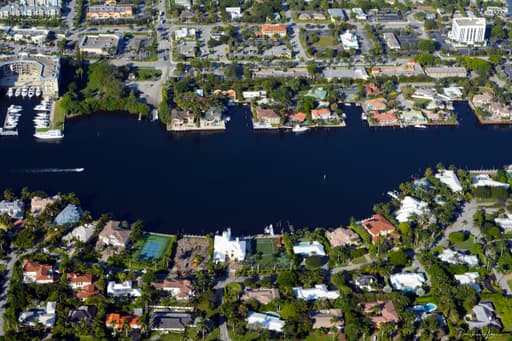
Delray Beach
LOCATION
City in Palm Beach County, Florida, United States
N.D.Ga
LOCATION
Location referenced in documents
New York State
LOCATION
State in the northeastern United States

Salt Lake City
LOCATION
City in and county seat of Salt Lake County, Utah, United States and the capital of Utah
Statistics
Pages:27
Entities:53
Sponsored