DOJ-COURT-339
DOJ-COURT-339 is a legal document filed in the United States District Court for the Southern District of Florida, pertaining to the case of Jane Doe No. 2 versus Jeffrey Epstein.
This document is Jeffrey Epstein's response in opposition to Jane Doe's motion to compel a response to a request for production. Filed on October 6, 2009, it references several related cases and addresses Fifth Amendment issues. The document incorporates arguments and case law previously submitted to the court.
Key Highlights
- •The document is a response to a motion to compel filed by the plaintiff, Jane Doe No. 2.
- •Jeffrey Epstein is the defendant in the case.
- •The case involves Fifth Amendment issues.
Frequently Asked Questions


Document Information
Bates Range
DOJ-COURT-339
Pages
23
Source
DOJ First Production
Original Filename
339.pdf
Document Content
Page 1 - DOJ-COURT-339_p1
Case 9:08-cv-80119-KAM Document 339 Entered on FLSD Docket 10/06/2009
Page 2 - DOJ-COURT-339_p2
Page 1 of 23 JANE DOE NO. 2, Plaintiff, vs. JEFFREY EPSTEIN, Defendant. UNITED STATES DISTRICT COURT SOUTHERN DISTRICT OF FLORIDA CASE NO.: 08-CIV-80119-MARRA/JOHNSON --------------~/ Related cases: 08-80232, 08-08380, 08-80381, 08-80994, 08-80993, 08-80811, 08-80893, 09-80469, 09-80591, 09-80656, 09-80802, 09-81092 --------------~/ DEFENDANT, JEFFREY EPSTEIN'S RESPONSE IN OPPOSITION TO PLAINTIFF'S, JANE DOE, MOTION TO COMPEL RESPONSE TO PLAINTIFF'S REQUEST FOR PRODUCTION [DE 97), WITH INCORPORATED MEMORANDUM OF LAW Defendant, JEFFREY EPSTEIN, hereby files his Response in Opposition to Plaintiffs, JANE DOE, Motion to Compel Response to Plaintiffs Request for Production [DE 97) (Consolidated Case No. 08-CIV-80119 [DE 194]). I. Procedural Background Plaintiffs Motion to Compel is filed at DE (97). The Motion to Compel was voluminous and orders had been entered by this court (DE 242 and 293) addressing other 5th Amendment issues; therefore, the undersigned counsel endeavored to eliminate certain requests outlined in Plaintiffs Motion to Compel. As a result, a Joint Notice of Agreement was entered advising the court that several of the requests had been addressed by counsel alleviating the court from having to rule on same. (DE 316). Defendant filed his Rule 4 Appeal (DE 282) and his Supplementary Brief (DE 283), which address several of the 5th Amendment arguments applicable to the requests outlined Case 9:08-cv-80119-KAM Document 339 Entered on FLSD Docket 10/06/2009
Page 3 - DOJ-COURT-339_p3
Page 2 of 23 Doe v. Epstein 08-CV80119 Page No. 2 herein. Portions of DE 282 and 283 were provided to the court in camera pursuant to the court's order (DE 242). Therefore, for the Court's ease of reference and in an attempt to maintain brevity, Defendant hereby incorporates those arguments and case law as if fully set forth herein. Significantly, these cases have been consolidated for discovery. Therefore, consistent rulings should apply. In making those rulings, this Court must continue to recognize that the allegations in the related cases cannot be forgotten. (.E:,_g., see DE 242 and 293, p.5-6). Production of information in one case could provide a link in the chain of evidence used to prosecute Epstein for a crime or provide an indirect link to incriminating evidence in another case. Id. and infra. "A". The Request for Production and the responses thereto are attached as Composite Exhibit I. The Requests For Production, Argument And Memorandum Of Law a. Request Number 5 Request No. 5: Photos of the inside of your home located at 358 El Brillo Way, Palm Beach, Florida, that depict the room( s) where the massages took place (including massage table). Response: Defendant asserts his U.S. constitutional privileges. I intend to produce all relevant documents regarding this lawsuit, however, my attorneys have counseled me that at the present time I cannot select, authenticate, and produce documents relevant to this lawsuit without waiving my Fifth Amendment rights and I must accept this advice or risk losing my Sixth Amendment right to effective representation. Accordingly, I assert my federal constitutional rights under the Fifth, Sixth, and Fourteenth Amendments as guaranteed by the United States Constitution. Drawing an adverse inference under these circumstances would unconstitutionally burden my exercise of my constitutional rights, would be umeasonable, and would therefore violate the Constitution. In Jane Doe No. 2 v. Epstein, Case No. 80119, the Magistrate Judge found, "[i]n 2008, Epstein entered into a Non-Prosecution Agreement ("NPA") with the United States Attorney General's Office for the Federal Southern District of Florida ("USAO") and the State Attorney's Case 9:08-cv-80119-KAM Document 339 Entered on FLSD Docket 10/06/2009
Sponsored
Page 4 - DOJ-COURT-339_p4
Page 3 of 23 Doe v. Epstein 08-CV80119 Page No. 3 Office for Palm Beach County. Under the terms of the NPA, any criminal prosecution against Epstein is deferred as long as he abides by the certain terms and conditions contained therein. If at any time the USAO's Office has reason to believe Epstein is in breach of the Agreement, it need only provide Epstein's counsel with notice of the breach and then move forward with Epstein's prosecution. Accordingly, the undersigned would agree with Epstein ... that the fact there exists a NP A does not mean that Epstein is free from future criminal prosecution, and that in fact, 'the threat of prosecution is real, substantial and present."' See August 4, 2009 Order (DE 242) and September 9, 2009 Omnibus Order (DE 293); and Manson v. United States, 244 U.S. 362,365 (1917). Moreover, as this court knows, the NPA only defers prosecution in the Southern District of Florida, not other districts. Therefore, Epstein is "confronted by a substantial and 'real,' and not merely trifling or imaginary, hazard[] of incrimination" when it comes to Plaintiffs discovery requests. United States v. Apfelbaum, 445 U.S. 115, 128 (1980). The Fifth Amendment serves as a guarantee against testimonial compulsion and provides, in relevant part, that "[n]o person ... shall be compelled in any Criminal Case to be a witness against himself." (DE 242, p.5); see also Edwin v. Price, 778 F.2d 668, 669 (11th Cir. 1985) (citing Lefkowitz v. Turley, 414 U.S. 70, 77 (1973)). The privilege is accorded liberal construction in favor of the right and extends not only to answers that would support a criminal conviction, but extends also to those answers which would furnish a link in the chain of evidence needed to prosecute the claimant for a crime. See Hoffman v. United States, 341 U.S. 479, 486 (1951 ). Information is protected by the privilege not only if it would support a criminal conviction, but also in those instances where "the responses would merely 'provide a lead or clue' to evidence having a tendency to incriminate." See United States v. Neff, 315 F.2d 1235, Case 9:08-cv-80119-KAM Document 339 Entered on FLSD Docket 10/06/2009
Page 5 - DOJ-COURT-339_p5
Page 4 of 23 Doe v. Epstein 08-CV80119 Page No. 4 1239 (9th Cir.), cert denied, 447 U.S. 925 (1980); Blau v. United States, 340 U.S. 159 (1950); SEC v Leach, 156 F.Supp.2d 491,494 (E.D. PA. 2001). Moreover, the act of production itself may implicitly communicate statements and, for this reason, the Fifth Amendment privilege also encompasses the circumstances where the act of producing documents in response to a subpoena or production request has a compelled testimonial aspect. See United States v. Hubbell, 530 U.S. 27, 35-36 (2000). Thus, where the existence or location of the requested documents are unknown, or where production would "implicitly authenticate" the requested documents (as requested by Plaintiff here), the act of producing responsive documents is considered testimonial and is protected by the Fifth Amendment. See In re Grand Jury Subpoenfh 1 F.3d 87, 93 (2nd Cir. 1993). Here, Plaintiffs overly broad request seeks photos of the inside of Epstein's home. Moreover, it seeks to compel Epstein into implicitly admitting that there were rooms within his house where "the massages took place" and into selecting such rooms and even the alleged massage table. Any compelled "production" by Epstein would violate his Fifth Amendment rights in that he is implicitly being asked to authenticate same i.e., given the nature of the request, Epstein's selection and production of photos would constitute compelled testimonial admissions that "the massages" took place in a given room on a given table etc. . . . The requested information could potentially provide a 'lead or clue' or a link in the chain of evidence having a tendency to incriminate Epstein and would threaten to invade his privilege against being required to produce and/or testify. Rudy-Glanzer v. Glanzer, 232 F.3d 1258, 1263 (9th Cir. 2000)(the "privilege" against self-incrimination does not depend upon the likelihood, but upon the possibility of prosecution and also covers those circumstances where the disclosures Case 9:08-cv-80119-KAM Document 339 Entered on FLSD Docket 10/06/2009
Page 6 - DOJ-COURT-339_p6
Page 5 of 23 Doe v. Epstein 08-CVS0 119 Page No. 5 would not be directly incriminating, but could provide an indirect link to incriminating evidence). In Jane Doe No. 2 v. Epstein, the Court sustained Epstein's Fifth Amendment objections to interrogatories: asking Epstein to identify all employees who performed work inside his Palm Beach residence and all other employees who came to the residence, asking Epstein to identify any who gave or were asked to give him massages, requesting information regarding the identity of persons who provided transportation services, seeking a list of Epstein's employees' telephone numbers, asking Epstein to identify any persons or witnesses who have knowledge or are in possession of physical evidence pertaining to the events in question, seeking information related to alleged sexual abuse or misconduct on a minor, and seeking the facts on upon which Epstein relies to support pleading denials and affirmative defenses. See (DE 242). If the Fifth Amendment protects Epstein from disclosing the identity of any person who has knowledge or are in possession of physical evidence (i.e. photographs, videos, written statements, etc.) pertaining the alleged events in question, it follows that Epstein's production himself of photographs of the same or related subjects would also violate his Fifth Amendment rights. Stated differently, if Epstein can properly invoke his Fifth Amendment right to not identify a person who may have a photograph or physical evidence pertaining to the alleged events, how can Epstein be required to produce the requested photographs? He cannot. For these reasons, Epstein's justified concern with regard to answering the above request and the resulting waiver of his Fifth Amendment Privilege in this regard and/or providing self- incriminating information is substantial, real and not merely imaginative. Accordingly, based on the facts and circumstances of this case, and under applicable law, Defendant's assertion of the Case 9:08-cv-80119-KAM Document 339 Entered on FLSD Docket 10/06/2009
Sponsored
Page 7 - DOJ-COURT-339_p7
Page 6 of 23 Doe v. Epstein 08-CV80119 Page No. 6 protections afforded under the 51\ 61\ and 14th Amendments of the United States Constitution are required to be upheld. b. Requests Numbers 7, 9 and 10 Request No. 7: All discovery information obtained by you or your attorneys as a result of the exchange of discovery in the State criminal case against you or the Federal investigation against you. Request No. 9: Any documents or other evidentiary materials provided to local, state, or federal law enforcement investigators or local, state or federal prosecutors investigating your sexual activities with minors. Request No. 10: All correspondence between you and your attorneys and state or federal law enforcement or prosecutors (includes, but not limited to, letters to and from the State Attorney's office or any agents thereof). Response to Request Numbers 7, 9 and 10: Defendant is asserting specific legal objections to the production request as well as his U.S. constitutional privileges. I intend to produce all relevant documents regarding this lawsuit, however, my attorneys have counseled me that at the present time I cannot select, authenticate, and produce documents relevant to this lawsuit and I must accept this advice or risk losing my Sixth Amendment right to effective representation. Accordingly, I assert my federal constitutional rights under the Fifth, Sixth, and Fourteenth Amendments as guaranteed by the United States Constitution. Drawing an adverse inference under these circumstances would unconstitutionally burden my exercise of my constitutional rights, would be unreasonable, and would therefore violate the Constitution. In addition to and without waiving his constitutional privileges, the information sought is privileged and confidential, and inadmissible pursuant to the terms of the deferred prosecution agreement, Fed. Rule of Evidence 410 and 408, and §90.410, Fla. Stat. Further, the request may include information subject to work product or an attorney-client privilege. As discussed in the supporting memorandum herein, it is well settled that the Fifth Amendment privilege against self-incrimination also encompasses situations as here where the act of production itself involves a testimonial compulsion. Hubbell, supra. In responding to each request, Epstein would be compelled admit that such documents existed, admit that the documents were in his possession or control, and were authentic. In other words, the very act of production of the category of documents requested would implicitly communicate "statements of fact." Hubbell, supra; Hoffman, supra. The act of production might not only provide evidence Case 9:08-cv-80119-KAM Document 339 Entered on FLSD Docket 10/06/2009
Page 8 - DOJ-COURT-339_p8
Page 7 of 23 Doe v. Epstein 08-CV80119 Page No. 7 to support a conviction, but also a link in the chain of evidence for prosecution. See supra. Such compulsion to produce is the same as being compelled to testify. The acts of Epstein in being required to produce the requested documents imply assertions of fact - admitting the documents exist, admitting the documents are in his possession or control, and admitting the documents are authentic. Again, in reading each of the production requests, it is clear that the very act of production of such documents could implicate Epstein of a crime. See supra, same argument on 5th Amendment applies. Moreover, the production of such discovery information may lead to the identity of witnesses that could testify against Epstein and those that may have knowledge or are in possession of evidence that could be used against Epstein. This comt has already ruled that Epstein can properly invoke his Fifth Amendment right to not identify a person who may have a photograph or physical evidence pertaining to the alleged events. (DE 242). Moroever, the requested information could encompass documents identifying Epstein's whereabouts, schedules, calendars etc . . Requiring Epstein to provide responses would in essence be compelling him to provide assertions of fact that could incriminate him under 18 U.S.C. §2422(b) and 18 U.S.C. §2423(b) and other federal violations discussed, in camera, at DE 282 and 283. As stated infra, the court has already ruled on this issue. See DE 242 and 293. Epstein should not be required to produce information in any State or Federal Agencies' possession, especially when doing so would violate his constitutional rights. Notably, this court has already ruled on a similar request in 80119 whereby the Plaintiffs, Jane Doe 2-7, asked the following: Request No. 1. The list provided to you by the U.S. Attorney of individuals whom the U.S. Attorney was prepared to name in an Indictment as victims of an offense by Mr. Epstein enumerated in 18 U.S.C. §2255. Case 9:08-cv-80119-KAM Document 339 Entered on FLSD Docket 10/06/2009
Page 9 - DOJ-COURT-339_p9
Page 8 of 23 Doe v. Epstein 08-CV80119 Page No. 8 Request No. 2. All documents referring or relating to the United States' agreement with Defendant to defer federal prosecution subject to certain conditions, including without limitation, the operative agreement between Defendant and the United States and all amendments, revisions and supplements thereto. Request No. 3. All documents referring or relating to Defendant's agreement with the State of Florida on his plea of guilly to violations of Florida Criminal Statutes, including without limitation, the operative plea agreement and any amendments, revisions and supplements thereto. Request No.4. All documents obtained in discovery or investigation relating to either the Florida Criminal Case or the Federal Criminal Case, including without limitation, documents obtained from any federal, state, or local law enforcement agency, the State Attorney's office and the United States Attorney's office. The court specifically held at p.17 of its Order at DE 242 that"[ d]efendant's Motion as it relates to Production request number(s) 1, 2, 3, 4 .... is [granted]. The very act of producing documents in response to these requests is testimonial in nature, in that by production, Epstein would be implicitly communicating 'statements of fact,' to which the fifth Amendment privilege may be validly asserted . Hubbell, 530 U.S. at 35-36. Not only do the subject requests involve 'statements of fact,' given the nature of the allegations against Epstein, they could also serve as links in the chain of evidence needed for prosecution. As such, Epstein's fifth Amendment Privilege assertion as it relates to these requests is sustained." That same ruling should apply to the above requests. The Requests Seek Attorney-Client And Work-Product Privileged Material And Rules 408 Aud 410. Fed. Evid. And §90.410, Fla. Stat., Preclude Production of the Material Next, a reading of the particular discovery requests reveals that they encompass attorney- client and work-product privileged material. As this court has already ruled (DE 242), Epstein cannot be compelled to create a privilege log because that would be tantamount to compelled testimony to which Defendant's constitutional protections apply. Any exchange of information with federal authorities was done in the context of discussions that are in essence immunized under the provisions of FRE 410 in order to encourage the resolution of pending investigations Case 9:08-cv-80119-KAM Document 339 Entered on FLSD Docket 10/06/2009
Sponsored
Page 10 - DOJ-COURT-339_p10
Page 9 of 23 Doe v. Epstein 08-CV80119 Page No. 9 without trials. FRE 410(4) is particularly directed to communications in matters which, like Epstein's, did not result in a plea of guilty to any federal charge. Fla. Stat. §90.410 provides parallel protections in state criminal matters. To the extent Epstein's counsel provided the authorities with any information it cannot, by the terms of that rule, be used in subsequent litigation as same is work-product. Likewise, the information received from the federal authorities, if any, as part of a give and take, is also subject to FRE 410. Finally, the purposes of FRE 408 provide further protection for both state and federal interchanges of information. If Epstein is compelled to produce this information, not only will it violate his Fifth Amendment privilege, but it will also result in an open-ended waiver of his attorney-client and work-product privileges. Additionally, Request Numbers 7, 9 and 10 all pertain to the State Criminal Proceeding and the Federal Investigation by the USAO. Therefore, the requests concern the negotiation(s) and eventual entering into of a Plea and the negotiation(s) and eventual entering into the NPA Request Numbers 9 and 10 are so broad that production would encompass any information, assuming it exists, provided by Epstein's attorneys to local, state or federal prosecutors in the Southern District and/or outside of the Southern District in connection with Epstein's alleged sexual activities. Likewise, all the requests, as worded, seek production of information in connection with "compromise negotiations." Federal Evidence Rules 408 and 410 and Florida Statute §90.410 prevent the production of such material. The full text of Federal Evidence Rules 408 and 410, and Florida Statute §90.410 is found at footnote 1 and is incorporated herein1. 1 Relevancy and Its Limits Rule 408. Compromise and Offers to Compromise Case 9:08-cv-80119-KAM Document 339 Entered on FLSD Docket 10/06/2009
Page 11 - DOJ-COURT-339_p11
Page 10 of 23 Doe v. Epstein 08-CV80119 Page No. 10 Clearly, discovery in criminal cases is not congruent with discovery in civil cases. Here, the information requested involves negotiations with the State and the USAO and their investigation. If the USAO cannot be compelled to release its investigation(s) and related work-product, how (a) Prohibited uses.--Evidence of the following is not admissible on behalf of any party, when offered to prove liability for, invalidity of, or amount of a claim that was disputed as to validity or amount, or to impeach through a prior inconsistent statement or contradiction: (1) furnishing or offering or promising to furnish--or accepting or offering or promising to accept--a valuable consideration in compromising or attempting to compromise the claim; and (2) conduct or statements made in compromise negotiations regarding the claim, except when offered in a criminal case and the negotiations related to a claim by a public office or agency in the exercise of regulatory, investigative, or enforcement authority. (b) Permitted uscs.--This rule does not require exclusion if the evidence is offered for purposes not prohibited by subdivision (a). Examples of permissible purposes include proving a witness's bias or prejudice; negating a contention of undue delay; and proving an effort to obstruct a criminal investigation or prosecution. CREDIT(S) (Pub.L. 93-595, § l, Jan. 2, 1975, 88 Stat. 1933; Apr. 12, 2006, eff. Dec. I, 2006). Rule 410. Inadmissibility of Picas, Plea Discussions, and Related Statements Except as otherwise provided in this rule, evidence of the following is not, in any civil or criminal proceeding, admissible against the defendant who made the plea or was a participant in the plea discussions: (1) a plea of guilty which was later withdrawn; (2) a plea ofnolo contendere; (3) any statement made in the course of any proceedings under Rule 11 of the Federal Rules of Criminal Procedure or comparable state procedure regarding either of the foregoing pleas; or ( 4) any statement made in the course of plea discussions with an attorney for the prosecuting authority which do not result in a plea of guilty or which result in a plea of guilty later withdrawn. However, such a statement is admissible (i) in any proceeding wherein another statement made in the course of the same plea or plea discussions has been introduced and the statement ought in fairness be considered contemporaneously with it, or (ii) in a criminal proceeding for perjury or false statement if the statement was made by the defendant under oath, on the record and in the presence of counsel. Florida Evidence Code 90.410. Offer to plead guilty; nolo contendere; withdrawn picas of guilty Evidence of a plea of guilty, later withdrawn; a plea of nolo contendere; or an offer to plead guilty or nolo contendere to the crime charged or any other crime is inadmissible in any civil or criminal proceeding. Evidence of statements made in connection with any of the pleas or offers is inadmissible, except when such statements are offered in a prosecution under chapter 83 7. Case 9:08-cv-80119-KAM Document 339 Entered on FLSD Docket 10/06/2009
Page 12 - DOJ-COURT-339_p12
Page 11 of 23 Doe v. Epstein 08-CV80119 Page No. 11 can Epstein be compelled to disclose same in violation of his constitutional rights and his attorney-client and work-product privileges? He cannot. The protections afforded by these evidentiary rules provide that such documents are not subject to discovery. Moreover, any information exchanged by Epstein's attorneys and the State was exchanged pursuant to Fla.R.Crim.P. §3.220 and is therefore protected under that Rule. Further, the information is "work-product" information. See id. and 14B Fla. Jur.2d Criminal Law §1412. Third Party Privacy Rights Here, the requests also seek information that may violate others third-party privacy rights. As noted by the United States Supreme Court in Eisenstadt v. Baird, 405 U.S. 438, 454, 92 S.Ct. 1029, 1038, at fn. 10 (1972): In Stanley, 394 U.S., at 564, 89 S.Ct., at 1247, the Court stated:'(A)lso fundamental is the right to be free, except in very limited circumstances, from unwanted governmental intrusions into one's privacy." The makers of our Constitution undertook to secure conditions favorable to the pursuit of happiness. They recognized the significance of man's spiritual nature, of his feelings and of his intellect. They knew that only a part of the pain, pleasure and satisfactions of life are to be found in material things. They sought to protect Americans in their beliefs, their thoughts, their emotions, and their sensations. They conferred, as against the Government, the right to be let alone-the most comprehensive ofrights and the right most valued by civilized man.' [Citations omitted]. The fundamental right of privacy is not only guaranteed under by the Fourteenth Amendment of the United States Constitution, but also under the Constitution of the State of Florida, Art. I, Sect. 23. As summarized by the Florida Supreme Court in Shaktman v. State, 553 So.2d 148, 150-51 (Fla. 1989): The right of privacy, assured to Florida's citizens, demands that individuals be free from uninvited observation of or interference in those aspects of their lives which fall within the ambit of this zone of privacy unless the intrusion is warranted by the necessity of a compelling state interest. In an opinion which predated the adoption of section 23, the First District aptly characterized the nature of this right. Case 9:08-cv-80119-KAM Document 339 Entered on FLSD Docket 10/06/2009
Sponsored
Page 13 - DOJ-COURT-339_p13
Page 12 of 23 Doe v. Epstein 08-CV80119 Page No. 12 A fundamental aspect of personhood's integrity is the power to control what we shall reveal about our intimate selves, to whom, and for what purpose. Bryon, Harless, Schaffer, Reid & Assocs., Inc. v. State ex rel, Schellenberg, 360 So.2d 83, 92 (Fla. 1st DCA 1978), quashed and remanded on other grounds, 379 So.2d 633 (Fla.1980). Because this power is exercised in varying degrees by differing individuals, the parameters of an individual's privacy can be dictated only by that individual. The central concern is the inviolability of one's own thought, person, and personal action. The inviolability of that right assures its preeminence over "majoritarian sentiment" and thus carmot be universally defined by consensus. (Emphasis added). Clearly, the nature of the questions and production requests identified would require Epstein to produce information that may identify third parties (that could also testify against him) and necessarily thwart such individuals' rights to assert their constitutional right of privacy as guaranteed under the United States and Florida Constitutions. See generally Eisenstadt v. Baird, supra at 454-455 (the right encompasses privacy in one's sexual matters and is not limited to the marital relationship). Accordingly, based on the facts and circumstances of this case, and under applicable law, Defendant's assertion of the protections afforded under the 5th, 61\ and 14th Amendments of the United States Constitution are required to be upheld. c. Requests Numbers 8, 11, 12, 14 and 15 Request No. 8: All financial documents evidencing asset transfers from 2005 to the present for you personally or any company or corporation owned by you. Request No. 11: Request No. 12: present. Any and all documents reflecting your current net worth. Personal tax returns for all years from 2002 through the Request No. 14: A sworn statement of your net worth (including a detailed financial statement depicting all current assets and liabilities). Case 9:08-cv-80119-KAM Document 339 Entered on FLSD Docket 10/06/2009
Page 14 - DOJ-COURT-339_p14
Page 13 of 23 Doe v. Epstein 08-CV80119 Page No. 13 Request No. 15: All financial statements or affidavits produced by you for any reason, to any person, company, entity or corporation since 2005. Response to Request Numbers : Defendant is asserting specific legal objections to the production request as well as his U.S. constitutional privileges. I intend to produce all relevant documents regarding this lawsuit, however, my attorneys have counseled me that at the present time I cannot select, authenticate, and produce documents relevant to this lawsuit without waiving my Fifth Amendment constitutional rightsand I must accept this advice or risk losing my Sixth Amendment right to effective representation. Accordingly, I assert my federal constitutional rights under the Fifth, Sixth, and Fourteenth Amendments as guaranteed by the United States Constitution. Drawing an adverse inference under these circumstances would unconstitutionally burden my exercise of my constitutional rights, would be unreasonable, and would therefore violate the Constitution; overly broad. As set forth in more detail in DE 282 and 283, which were provided to the court in camera, Epstein cannot provide answers/responses to questions relating to his financial history and condition without waiving his Fifth, Sixth, and Fourteenth Amendments as guaranteed by the United States Constitution. The requests are unreasonable, overbroad, confidential, proprietary in nature and seek information that is neither relevant to the subject matter of the pending action nor does it appear to be reasonably calculated to lead to the discovery of admissible evidence. The information sought is privileged and confidential, and inadmissible pursuant to the terms of the NPA and, Fed. Rule of Evidence 410 and 408, and Fla. Stat. 90.410. See supra for argument. Responding to the above financial requests would require Epstein to identify information regarding matters as set forth in more detail in DE 282 and 283, which were provided to the Court in camera. Producing the specified information would result in testimonial disclosures that would communicate statements of fact. Again, the information sought relates to potential federal claims of violations. See DE 282 and 283, in camera. Production would therefore constitute a testimonial admission of the genuineness, the existence, and Epstein's control of such records, Case 9:08-cv-80119-KAM Document 339 Entered on FLSD Docket 10/06/2009
Page 15 - DOJ-COURT-339_p15
Page 14 of 23 Doe v. Epstein 08-CV80119 Page No. 14 and thus presents a real and substantial danger of self-incrimination in this case, in other related cases and as well in areas that could result in criminal prosecution. See generally Hoffman v United States, 341 U.S. 479,486 (1951) and United States v. Hubbell, 530 U.S. 27, 36, 120 S.Ct. 2037, 2043 (2000). The Fifth Amendment is a safe harbor for all citizens, including those who are innocent of any underlying offense. This request, if answered, may result in compelled production and/or testimonial communications from Epstein regarding his financial status and history and would require him to waive his right to decline to respond to other inquiries related to the same subject matter. Responding to this and other related inquiries would have the potential to provide a link in a chain of information and/or leads to other evidence or witnesses that would have the specific risk of furthering an investigation against him and therefore are protected from compulsion by Epstein's constitutional privilege. Accordingly, any compelled testimony that provides a "lead or clue to a source of evidence of such [a] crime" is protected by Fifth Amendment. SEC v Leach, 156 F.Supp.2d 491, 494 (E.D. PA. 2001 ). See supra. Questions seeking "testimony" regarding names of witnesses, leads to phone or travel records, or financial records that would provide leads to tax or money laundering or unlicensed money transmittal investigations are protected. See also Hoffman v United States, 341 U.S. 479, 486 (195l)("the right against self-incrimination may be invoked if the answer would furnish a link in the chain of evidence needed to prosecute for a crime"). In addition to the above argument, the specific information requested in request number 12 as to personal tax returns also seeks information that is confidential and protected by federal law, 26 U.S.C. §6103. Case 9:08-cv-80119-KAM Document 339 Entered on FLSD Docket 10/06/2009
Sponsored
Page 16 - DOJ-COURT-339_p16
Page 15 of 23 Doe v. Epstein 08-CV80119 Page No. 15 To the extent Plaintiff claims she needs the requested information concermng asset transfers based on her unsupported presumption that Epstein is fraudulently transferring assets, same is premature and unsupported by the law for the reasons set forth in Epstein's Memorandum of Law in Opposition to Plaintiffs Motion for Injunction Restraining Fraudulent Transfer of Assets (DE 198). d. Requests Numbers 13 and 16 Request No. 13: A photocopy of your passport, including any supplemental pages reflecting travel to locations outside the 50 United States between 2002 and 2008, including any documents or records regarding plane tickets, hotel receipts, or transportation arrangements. Response: Defendant asserts his U.S. constitutional privileges. I intend to produce all relevant documents regarding this lawsuit, however, my attorneys have counseled me that at the present time I cannot select, authenticate, and produce documents relevant to this lawsuit without risking waiver of my Fifth Amendment rights and I must accept this advice or risk losing my Sixth Amendment right to effective representation. Accordingly, I assert my federal constitutional rights under the Fifth, Sixth, and Fourteenth Amendments as guaranteed by the United States Constitution. Drawing an adverse inference under these circumstances would unconstitutionally burden my exercise of my constitutional rights, would be umeasonable, and would therefore violate the Constitution. In addition to and without waiving his constitutional protections and privileges, the scope of information is so overbroad that it seeks information that is neither relevant nor reasonably calculated to lead to the discovery of admissible evidence; compiling such information over a six year period would be unduly burdensome and time consuming. Request No. 16: All medical records of Defendant Epstein from Dr. Stephan Alexander. Response: Defendant is asserting specific legal objections to the production request as well as his U.S. constitutional privileges. I intend to produce all relevant documents regarding this lawsuit, however, my attorneys have counseled me that at the present time I cannot select, authenticate, and produce documents relevant to this lawsuit and I must accept this advice or risk losing my Sixth Amendment right to effective representation. Accordingly, I assert my federal constitutional rights under the Fifth, Sixth, and Fourteenth Amendments as guaranteed by the United States Constitution. Drawing an adverse inference under these circumstances would unconstitutionally burden my exercise of my Case 9:08-cv-80119-KAM Document 339 Entered on FLSD Docket 10/06/2009
Page 17 - DOJ-COURT-339_p17
Page 16 of 23 Doe v. Epstein 08-CV80119 Page No. 16 constitutional rights, would be unreasonable, and would therefore violate the Constitution. As to Request Number 13, Defendant has already provided this court with sufficient argument at DE 282 and DE 283 detailing why the production of information showing Epstein's whereabouts could provide a link in the chain of evidence regarding: (a) Epstein's air travel within the United States and Foreign Territories; (b) Epstein's communications with others relating to or referring to females coming into the United States from other countries; and ( c) Epstein's personal calendars and schedules. Given that the essential proof of an allegation of 18 U.S.C. 2423(b) would include travel records, schedules regarding trips and locations, flight records, calendars, and transportation arrangements, the court found that Epstein had made a more particularized showing because producing such information "could reveal the availability to him and/or use by him of interstate facilities and thus would constitute a link in the chain of evidence that could potentially expose [Epstein] to the dangers of self incrimination." (DE 293, p.6) Here, Plaintiffs request for Epstein's passport "reflecting travel to locations outside the 50 United States between 2002 and 2008, including any documents or records regarding plane tickets, hotel receipts, or transportation arrangements" is no different from the requests this Court has already ruled upon and sustained Epstein's Fifth Amendment privilege in response thereto. (DE 292). In summary, this court reasoned that: "[i]n this and the other civil actions, Plaintiffs allege that Epstein violated certain federal and state criminal statutes in an attempt to make claims against Epstein ranging from sexual battery to intentional infliction of emotional distress. The lynchpin for the exercise of federal criminal jurisdiction under 18 U.S.C. §2422(b ), which figures in some of the complaints filed, is 'the use of any facility or means of interstate or foreign commerce' and the analogous essential element of 18 U.S.C. §2423(b), which also figures in some of the Complaints, is 'travel[s] in interstate commerce or travels into the United States or ... travels in foreign commerce.' Accordingly, requiring Epstein to provide responses ... would in Case 9:08-cv-80119-KAM Document 339 Entered on FLSD Docket 10/06/2009
Page 18 - DOJ-COURT-339_p18
Page 17 of 23 Doe v. Epstein 08-CV80 I I 9 Page No. 17 essence be compelling him to provide assertions of fact, thereby admitting that such documents existed aud further admitting that the documents in his possession or control were authentic. Based upon the arguments set forth in DE 283 (which is incorporated herein), this Court sustained Epstein's Fifth Amendment Privilege. That same ruling should apply here as Jane Doe's request is identical to the requests already ruled on by this court. (DE 293). As to Plaintiffs request for Epstein's medical records, Dr. Stephen Alexander was hired as au expert consultant by Epstein's attorneys in the underlying criminal matter. Therefore, auy information provided to Dr. Stephen Alexander or auy information provided by the experts to Epstein's attorneys is protected by the attorney-work product and attorney-client privileges, Fla.R.Civ.P.1.280, 19 Fla. Jur.2d, Discovery and Depositions, §89, and Fed.R.Civ.P. 26(b)(3). 19A Fla. Jur.2d, Discovery and Depositions, §89, provides: [a] party may discover facts known or opinions held by an expert who has been retained or specially employed by another party in anticipation of litigation or preparation for trial aud who is not expected to be called as a witness at trial, only as provided in ... Rule of Civil Procedure [J.360 (b)(l)j, governing the report of an examining physician" {which is not applicable in the instant matter], "or upon a showing of exceptional circumstances under which it is impracticable for the party seeking discovery to obtain facts or opinions on the same subject by other means. The statutory protection has been extended both to the facts known or opinions held by non-witness experts retained or specially employed by a party in anticipation of litigation aud to their identities. Thus, absent a showing of exceptional circtunstances, a litigant is not required to disclose the names and specialties of experts retained but not expected to testify at trial. Accordingly, a discovery order ordering a defendant to disclose the names of any persons who have examined, evaluated, or reviewed the defendant's records improperly compels the defendant to divulge the names of experts consulted for trial but not intended to be called to testify at trial where such information is protected by the work-product privilege aud where the state makes no showing of exceptional circumstances. Id.; see also Carrero v. Engle Homes, Inc., 667 So. 2d 1011 (Fla. 4th DCA 1996); Myron By and Through Brock v. Doctors General, Ltd., 573 So. 2d 34 (Fla. 4th DCA1990); see also 14B Fla.Jur.2d, Criminal Law, §1412. Case 9:08-cv-80119-KAM Document 339 Entered on FLSD Docket 10/06/2009
Sponsored
Page 19 - DOJ-COURT-339_p19
Page 18 of 23 Doe v. Epstein 08-CV80119 Page No. 18 In addition to the foregoing privileges, in the Court's prior order (DE 242), it found that Epstein's Health Insurance Portability and Accountability Act ("HIPAA") objections were "unfounded as the requests [i.e., the interrogatory] seek only the identification of Epstein's healthcare providers." Here, however, a request for production is at issue, not an interrogatory. Therefore, Epstein's HIPAA rights should be upheld. Allen v. Woodford, 2007 WL 309485 (E.D. Cal. 2007), (p. 9)(HIPP A institutes procedural safeguards to protect the privacy of an individual's medical information and history). In the context of HIP AA, Courts have recognized three methods of health care discovery (assuming it's relevant) in civil litigation: (1) Obtaining a patient authorization that complies with the requirements and criteria, tailored to the specific case, of HIP AA as set forth in 45 C.F.R. §164.508; (2) Court Order, which also complies with the requirements of HIP AA ensuring that the privacy and confidentiality of the information is protected; and (3) Subpoena or discovery request, which again comply with the strictures of HIP AA, including that the person whose records are being sought has been given proper notice. See Handbook of Federal Civil Discovery And Disclosure (2d Edition), Chap. 18, Sect. A - Health Insurance Portability and Accountability Act (HIP AA), § 18.3 - Discovery of health care information in civil litigation; and Graham v. Dacheikh, 991 So.2d 932, at fn. 3 (2d DCA Fla. 2008)("Even nnder HIP AA, ... , if the records are produced during normal discovery they are typically produced in a manner that restricts the persons who may access the documents and requires their return at the end of the litigation. See 45 C.F.R. §164.512(e)."). Federal Rule of Evidence 401 provides that - "'Relevant evidence"' means evidence having any tendency to make the existence of any fact that is of consequence to the determination of the action more probable or less probable than it would be without the evidence." Pursuant to Rule 26(b )(I), the scope of discovery is as follows - Case 9:08-cv-80119-KAM Document 339 Entered on FLSD Docket 10/06/2009
Page 20 - DOJ-COURT-339_p20
Page 19 of 23 Doe v. Epstein 08-CV80119 Page No. 19 Unless otherwise limited by court order, the scope of discovery is as follows: Parties may obtain discovery regarding any nonprivileged matter that is relevant to any party's claim or defense--including the existence, description, nature, custody, condition, and location of any documents or other tangible things and the identity and location of persons who know of any discoverable matter. For good cause, the court may order discovery of any matter relevant to the subject matter involved in the action. Relevant information need not be admissible at the trial if the discovery appears reasonably calculated to lead to the discovery of admissible evidence. All discovery is subject to the limitations imposed by Rule 26(b )(2)(C). Plaintiffs requests is further barred by under Fed. Evid. Rule 501 and §90.503, Fla.R.Evid. Rule 501 provides - Except as otherwise required by the Constitution of the United States or provided by Act of Congress or in rules prescribed by the Supreme Court pursuant to statutory authority, the privilege of a witness, person, government, State, or political subdivision thereof shall be governed by the principles of the common law as they may be interpreted by the courts of the United States in the light of reason and experience. However, in civil actions and proceedings, with respect to an element of a claim or defense as to which State law supplies the rule of decision, the privilege of a witness, person, government, State, or political subdivision thereof shall be determined in accordance with State law. (Emphasis added). Plaintiff alleges diversity jurisdiction, and thus, state law of Florida controls application of the privilege. Plaintiff claims - Count I - "Sexual Battery Upon a Minor, " Count II - "Cause of Action Pursuant to 18 USC §2255," Count III - "Intentional Infliction of Emotional Distress, " Count IV - "Civil Remedy for Criminal Practices" and Count VI - "Cause of Action Pursuant to Florida Statute 796.09 Against Defendant, Jeffrey Epstein". Erie R.Co. v. Tompkins, 58 S.Ct. 817 (1938). Accordingly, the privileges recognized under state law apply to this action under Rule 501. See,~-, 1550 Brickell Associates v. Q.B.E. Ins. Co., 253 F.R.D. 697, 699 (S.D. Fla. 2008)("Attorney-client privilege is governed by state law in diversity actions."). §90.503(2), Fla. Stat., provides - Case 9:08-cv-80119-KAM Document 339 Entered on FLSD Docket 10/06/2009
Page 21 - DOJ-COURT-339_p21
Page 20 of 23 Doe v. Epstein 08-CV80119 Page No. 20 (2) A patient has a privilege to refuse to disclose, and to prevent any other person from disclosing, confidential communications or records made for the purpose of diagnosis or treatment of the patient's mental or emotional condition, including alcoholism and other drug addiction, between the patient and the psychotherapist, or persons who are participating in the diagnosis or treatment under the direction of the psychotherapist. This privilege includes any diagnosis made, and advice given, by the psychotherapist in the course of that relationship. As summarized in C.L. v. Judd, 993 So.2d 991,995 (2d DCA Fla. 2007): Under the psychotherapist-patient privilege, a patient has a privilege to refuse to disclose confidential information or records made for the purpose of diagnosis or treatment of mental conditions, including any diagnoses made by the psychotherapist. § 90.503(2), Fla. Stat. (2005); see Pauker v. Olson, 834 So.2d 198, 200 (Fla. 2d DCA 2002). The psychotherapist-patient privilege does not apply: (1) during involuntary commitment proceedings, (2) when there is a court-ordered mental examination, or (3) when the patient raises and relies on the issue of his or her mental condition in litigation as part of any claim or defense. § 90.503(4); Roberson, 884 So.2d at 980; State v. Famiglietti, 817 So.2d 901, 903 (Fla. 3d DCA 2002). The privilege does not allow the invasion of a patient's privileged communications with his or her psychotherapist. Roberson, 884 So.2d at 979. Significantly, Epstein has not placed his medical history at issue. In Breeden v. Cook, 859 So. 2d 1276 (Fla. 4th DCA 2003), the court quashed an order compelling production of mental health records in a medical malpractice suit involving a failed ankle surgery finding that patient's mental health was irrelevant to claims asserted. See also Pusateri v. Fernandez, 707 So. 2d 892, 893 (Fla. 2d DCA 1998) (quashing order directing physicians to produce patient's medical record as the records were not relevant to any pending claim or defense nor were reasonably calculated to lead to the discovery of admissible evidence); Fla. Dept. of Corrections v. Abril, 969 So. 2d 201, 205-06 (Fla. 2007) (noting that "Florida has a long tradition of recognizing the privacy interests of patients in confidential medical records."); and State v. Cashner, 819 So. 2d 227, 229 (Fla. 4th DCA 2002) (holding that since "the compelled disclosure of a patient's medical records encroaches upon a patient's right to privacy, the state must demonstrate it has a compelling interest in the information contained in those records."). Plaintiff must also show Case 9:08-cv-80119-KAM Document 339 Entered on FLSD Docket 10/06/2009
Sponsored
Page 22 - DOJ-COURT-339_p22
Page 21 of 23 Doe v. Epstein 08-CV801 19 Page No. 21 that the requested information is relevant to the disputed issues of the underlying action. See Young Circle Garage, LLC. v. Koppel, 916 So. 2d 22 (Fla. 4th DCA 2005); see also Equitable Life Assurance Society of the United States v. Daisy Worldwide, Inc., 702 So. 2d 263 (Fla. 3d DCA 1997). Plaintiff has failed to meet this burden and, in doing so, has also failed to show any substantial need for the documents If this court orders production of the requested information (which it should not), an in camera inspection should be had to determine, as to each document, whether Fla. Stat. §39.204 is applicable. See DE 242, p.15; Carson v. Jackson, 466 So.2d 1188, 1192 (Fla. 4th DCA 1985); and Doherty v. John Doe No. 22, 957 So.2d 1267 (4th DCA 2007). A reading of these cases clearly establishes that Fla. Stat. §39.204 does not provide Plaintiff with a carte blanche access to Defendant's medical history, especially those of non-testifying consulting experts. Wherefore, Epstein respectfully requests that this Court issue and order: a. finding that the danger Epstein faces by being forced to respond to the above requests is substantial and real, and not merely trifling or imaginary; b. sustaining Epstein's Fifth Amendment Privilege and other delineated constitutional privileges as it relates to the above requests and denying Plaintiffs Motion in that regard; and c. for such other and further relief as this Court deems just and proper. By:__.:=. ___ _.::,.. __ MICHAEL J. PIKE, ESQ. Florida Bar #617296 Certificate of Service I HEREBY CERTIFY that a true copy of the foregoing was electronically filed with the Clerk of the Court using CM/ECF. I also certify that the foregoing document is being served this Case 9:08-cv-80119-KAM Document 339 Entered on FLSD Docket 10/06/2009
Page 23 - DOJ-COURT-339_p23
Page 22 of 23 Doe v. Epstein 08-CV80119 Page No. 22 day on all counsel of record identified on the following Service List in the manner specified by CM/ECF on this_ day of October, 2009 Respectfully ~-ed_, __ __, By: __ ,,L(_ ___ -___ _ ROBERT D. CRITTON, JR., ESQ. Florida Bar No. 224162 [email protected] MICHAEL J. PIKE, ESQ. Florida Bar #617296 [email protected] BURMAN, CRITTON, LUTTIER & COLEMAN 515 N. Flagler Drive, Suite 400 West Palm Beach, FL 33401 561/842-2820 Phone 561/515-3148 Fax (Counsel.for Defendant Jeffrey Epstein) Certificate of Service Jane Doe No. 2 v. Jeffrey Epstein Case No. 08-CV-80119-MARRA/JOHNSON Stuart S. Mermelstein, Esq. Adam D. Horowitz, Esq. Mermelstein & Horowitz, P.A. 18205 Biscayne Boulevard Suite 2218 Miami, FL 33160 305-931-2200 Fax: 305-931-0877 [email protected] [email protected] Counsel for Plaintiffs In related Cases Nos. 08-80069, 08-80119, 08- 80232, 08-80380, 08-80381, 08-80993, 08- 80994 Richard Horace Willits, Esq. Richard H. Willits, P.A. 2290 10th Avenue North Suite 404 Lake Worth, FL 33461 Brad Edwards, Esq. Rothstein Rosenfeldt Adler 401 East Las Olas Boulevard Suite 1650 Fort Lauderdale, FL 33301 Phone: 954-522-3456 Fax: 954-527-8663 [email protected] Counsel for Plaintiff in Related Case No. 08- 80893 Paul G. Cassell, Esq. ProHac Vice 332 South 1400 E, Room 101 Salt Lake City, UT 84112 801-585-5202 801-585-6833 Fax [email protected] Co-counsel for Plaintiff Jane Doe Case 9:08-cv-80119-KAM Document 339 Entered on FLSD Docket 10/06/2009
Entities Mentioned

Adam D. Horowitz
PERSON
American attorney specializing in sexual abuse cases, represented multiple Epstein victims
AP
Apfelbaum
PERSON
Surname reference in Epstein-related documents
BA
Baird
PERSON
NER artifact: Primarily from legal citation Eisenstadt v. Baird in Epstein case documents
Bradley Edwards
PERSON
American attorney who represented Epstein victims, author of Relentless Pursuit
BR
Breeden
PERSON
Surname reference in documents
BR
Bruce E. Reinhart
PERSON
Federal magistrate judge in Southern District of Florida, presided over Epstein case proceedings
CA
Carrero
PERSON
Name reference in documents
Carson
PERSON
American talk show host and comedian (1925–2005)
CA
Cashner
PERSON
Name reference in documents
DA
Dacheikh
PERSON
Name reference in documents

Doherty
PERSON
Surname reference in Epstein-related documents

Edwin
PERSON
Surname reference in Epstein-related documents
Eisenstadt
PERSON
Surname reference in documents
FA
Famiglietti
PERSON
American actor
FE
Fernandez
PERSON
Ambiguous surname - refers to multiple people in Epstein documents
GL
Glanzer
PERSON
Surname reference in documents
HR
Haley Robson
PERSON
Identified as recruiter of underage girls for Jeffrey Epstein in Palm Beach

Harry Reid
PERSON
American politician (1939–2021)
HU
Hubbell
PERSON
Surname reference in Epstein-related documents
IG
Isidro Manuel Garcia
PERSON
Person referenced in documents
JG
Jack Goldberger
PERSON • 2 mentions
American criminal defense attorney who represented Jeffrey Epstein, partner at Goldberger Weiss P.A. in West Palm Beach, Florida
JH
Jack Patrick Hill
PERSON
Attorney at Searcy Denney law firm, appeared in Epstein-related legal proceedings
JS
Jack Scarola
PERSON • 2 mentions
American attorney who represented Jeffrey Epstein victims, partner at Searcy Denney Scarola Barnhart & Shipley
JD
Jane Doe
PERSON
Pseudonym for anonymous victims/witnesses in Epstein legal proceedings

Jay Lefkowitz
PERSON
American lawyer

Jeffrey Epstein
PERSON • 4 mentions
American sex offender and financier (1953–2019)
Jes Staley
PERSON
American banker, chief executive officer of Barclays
John Doe
PERSON
John Doe legal placeholder in Epstein-related court proceedings
KE
Katherine W. Ezell
PERSON
Person referenced in documents
Koppel
PERSON
Surname reference in documents
LE
Leach
PERSON
Surname reference in documents
Leopold
PERSON
Residential eastern suburb of Geelong, Victoria, Australia
Manson
PERSON
1973 film by Laurence Merrick, Robert Hendrickson
MP
Michael J. Pike
PERSON
Person referenced in Epstein-related documents
Michael Jackson
PERSON
American singer, songwriter, record producer, and dancer (1958–2009)
MO
Moroever
PERSON
Name reference in documents
OL
Olson
PERSON
Ambiguous surname - refers to multiple people in Epstein documents
PA
Pauker
PERSON
Name reference in documents

Paul Cassell
PERSON • 2 mentions
United States federal judge
PU
Pusateri
PERSON
Name reference in documents
RW
Richard Horace Willits
PERSON
Lawyer and former federal prosecutor, represented Epstein in NPA negotiations
RJ
Robert C. Josefsberg
PERSON
Florida criminal defense attorney, appeared in Epstein legal proceedings
Rudy Giuliani
PERSON
American attorney and politician (born 1944)

Sarah Kellen
PERSON • 2 mentions
American assistant to Jeffrey Epstein, named as unindicted co-conspirator in 2008 non-prosecution agreement
SC
Schellenberg
PERSON
Surname reference in documents
SR
Scott Rothstein
PERSON
American criminal
SS
Searcy Denney Scarola
PERSON
Law firm in West Palm Beach, represented victims in Epstein civil litigation
SH
Shaktman
PERSON
Surname or name fragment in documents
SK
Spencer Kuvin
PERSON • 2 mentions
American lawyer based in Florida (born 1969)
SA
Stephen Alexander
PERSON
American football player

Stephen Hawking
PERSON
British theoretical physicist, cosmologist and author (1942–2018)
TL
Theodore J. Leopold
PERSON
Attorney at Leopold & Associates, represented victims in Epstein civil cases
TO
Tompkins
PERSON
Surname reference in documents
TU
Turley
PERSON
Surname reference in Epstein-related documents
WO
Woodford
PERSON
Surname or name fragment in documents

Woody Allen
PERSON
American filmmaker, actor and comedian (born 1935)
Atterbury Goldberger & Weiss
ORGANIZATION
Law firm based in Florida
Daisy Worldwide, Inc.
ORGANIZATION
Organization referenced in documents
Doctors General, Ltd.
ORGANIZATION
Organization referenced in documents
E.D. Cal.
ORGANIZATION
Organization referenced in documents
Engle Homes, Inc.
ORGANIZATION
Organization referenced in documents
Erie R.Co.
ORGANIZATION
Organization referenced in documents
Fla. Dept.
ORGANIZATION
Organization referenced in documents
Harless, Schaffer, Reid & Assocs.
ORGANIZATION
Organization referenced in documents
Mermelstein & Horowitz
ORGANIZATION
Law firm (Mermelstein & Horowitz)
Myron By and
ORGANIZATION
Organization referenced in documents
Plaintifft
ORGANIZATION
Organization referenced in documents
Q.B.E. Ins.
ORGANIZATION
Organization referenced in documents
Rothstein Rosenfeldt
ORGANIZATION
Organization referenced in documents

Searcy Denney Scarola Barnhart & Shipley
ORGANIZATION
Florida plaintiffs law firm
Second Circuit
ORGANIZATION
U.S. Court of Appeals for the Second Circuit
the Florida Supreme Court
ORGANIZATION
Organization referenced in documents

the United States Supreme Court
ORGANIZATION
U.S. Supreme Court
Young Circle Garage, LLC
ORGANIZATION
Organization referenced in documents
DCA Fla.
LOCATION
Location referenced in documents

Florida
LOCATION
State of the United States of America

Lake Worth
LOCATION
City in Palm Beach County, Florida, United States
Palm Beach Gardens
LOCATION
City in Palm Beach County, Florida, United States
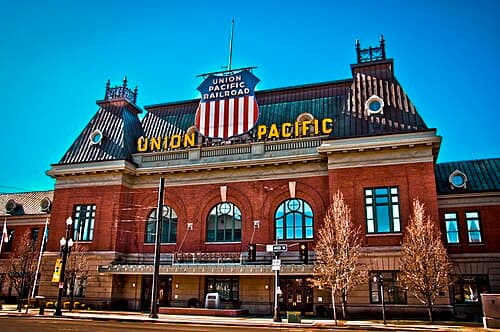
Salt Lake City
LOCATION
City in and county seat of Salt Lake County, Utah, United States and the capital of Utah
the First District
LOCATION
Location referenced in documents

United States
LOCATION
Country located primarily in North America
Statistics
Pages:23
Entities:81
Sponsored