HOUSE_OVERSIGHT_018232_sub_001 - HOUSE_OVERSIGHT_018331
Document Information
Bates Range
HOUSE_OVERSIGHT_018232_sub_001 - HOUSE_OVERSIGHT_018331
Pages
100
Source
House Oversight Committee
Original Filename
TSS1211.pdf
Document Content
Page 1 - HOUSE_OVERSIGHT_018232
HOUSE_OVERSIGHT_018232
Page 2 - HOUSE_OVERSIGHT_018233
The Seventh Sense Power, Fortune and Survival in the Age of Networks Joshua Cooper Ramo HOUSE_OVERSIGHT_018233
Page 3 - HOUSE_OVERSIGHT_018234
Part One: The Nature of Our Age In which the revolutionary character of our era is explained. The need for a new instinct is introduced. The historical stakes are weighed. Chapter 1: The Master Chapter 2: The Age of Network Power Chapter 3: The Unbuckling Part Two: The Seventh Sense In which we regard the world with a new sensibility. Connection, we discover, changes the nature of an object. Chapter 4: The Jaws of Connection Chapter 5: Fishnet Chapter 6: Warez Dudes Chapter 7: The New Caste Chapter 8: “A mechanism and a myth”: The Compression of Space and Time Part Three: Gateland A guide to power in the world that becomes newly apparent with the Seventh Sense. Chapter 9: Inside and Out Chapter 10: Defense in Depth Chapter 11: Citizens! HOUSE_OVERSIGHT_018234
Sponsored
Page 4 - HOUSE_OVERSIGHT_018235
Preface Three hundred years ago the Enlightenment and the Industrial Revolution began their pounding work on the foundations of an ancient order. Like twin hammers, these forces demolished most of what once seemed permanent: Kings, alchemists, popes, feudal lords - they were all undone. Today, a fresh hammer is cracking away at our world. The demands of constant, instant connection are tearing at old power arrangements. The formation of networks of all kinds, for trade and biology and finance and warfare and any ofa thousand varied needs, is producing new and still dimly understood sources of power. They are eroding the roots of an older order even as a new one is beginning to appear. In fact, this process is only beginning. The networks ahead of us will be even faster than those we have today. They will also be informed by artificial intelligence. The combination of these two forces - instantness and thinking machines - will further deepen an already profound change. That last great shift of the Enlightenment was a violent and wonderful transformation. It produced winners and losers, triggered tragedy and lit fresh triumphs. What lies ahead of us is the same. A new landscape of power is emerging now. This book is its story, and the tale of the instinct that will divide those who master it from those who will be mastered by it. HOUSE_OVERSIGHT_018235
Page 5 - HOUSE_OVERSIGHT_018236
Part One: The Nature of Our Age HOUSE_OVERSIGHT_018236
Page 6 - HOUSE_OVERSIGHT_018237
Chapter One: The Masters In which the immortal problems of power are discussed, and the possibility of anew instinct is introduced. 1. One morning in of 1943, a Chinese writer named Nan Huai-Chin packed his bags in Shanghai and began walking out of the city. He was headed west, and traced a route along the Huang Pu river, as he headed out towards E’Mei Shan several thousand miles away in Western China. E’Mei Shan - Eyebrow Mountain - was and is one of the holiest Buddhist sites in China. Nan was an unusual young man. At fifteen, he had won a national sword fighting competition against men twice his age. At sixteen he had been admitted to the best university in Shanghai, where he excelled in the study of natural sciences and philosophy. If you look at photos of Nan in those years, more or less at the moment he left Shanghai for the mountains, you see a clean-shaven, and soft-skinned man. He is handsome, with electric eyes. You can see, if you know to look, the rough intensity of the man he’d become during the anti-Japanese war: A toughness in his stance; some hint too in his grimace of a sword-fighter’s mercilessness. This was long before Nan was regarded as one of the finest living exemplars of the Chinese Buddhist tradition, before he became known as Master Nan. This was before his flight from China with the Kuomintang in 1949 once the communists came to power, before his decades of wandering, and his eventual return to the mainland. All that lies ahead of the man you see in the photo. The man in the photo is young, energetic. He is certain. In Nan’s youth, in his early sword fighting days, he had come to understand that mastering the blade of his sword involved really training his internal spirit to the highest possible level of sharpness. The spirit moved first, then — instants later - the sword. It was his desire to sharpen that inner blade that led him to E’mei Shan and the study of Ch’an Buddhism. Ch’an - you may know it by its Japanese name, Zen - is the steeliest of the Buddhist traditions, bred through the combination of the Buddha’s ancient Indian teachings with the mystical philosophical habits of Chinese Daoism. Its adherents explain that enlightenment in Ch’an demands concentration strong enough to make and then smash diamonds. It produces, as a result, an unmatchable form of enlightenment. So, with the anti-Japanese war still smoldering, Nan traveled for a month through his convulsing country and up E’mei Mountain, where he found a Ch’an lamasery near the peak. Once there, during three years of constant effort and meditation and deprivation, he achieved a breakthrough to samadhi, that state of spiritual alignment in which the world and your own soul become as transparent as water. Fear vanishes, as does lust or any real confusion about the deeper currents of life. You become, the priests like to say, as resilient as a HOUSE_OVERSIGHT_018237
Sponsored
Page 7 - HOUSE_OVERSIGHT_018238
natural mountain spring: No matter what mud is thrown in, itis simply and naturally bubbled away into clarity. From E’Mei temple, with this fresh, clear-running mind, Nan began a quest to sharpen his spirit even further. The journey took him, for nearly a decade, from master to master in China, from monastery to university to rural huts. These were the places where the last bits of some of China’s most ancient traditions had been carried, places where classical wisdom had survived a hundred years of national chaos. Nan’s wandering education resembled the way in which, in millennia past, monks would make spiritual marathons around China, seeking an ever-sharper edge to their insights. Solitary monks would stride into packed monasteries and engage in tests of insight, contests to see who could feel the underlying nature of the world with greater fidelity. The aim was, always, to touch the energy flows moving, just unseen, below our lives. “Ten thousand kinds of clever talk—how can they be as good as reality?” So the famous Ch’an master Yun Men, who himself trained four great masters, faced down a King with pure silence in one such a battle.! Nan was trying to cultivate in himself deep ways of feeling and sensing the world. During his wandering study, he followed a path that would lead him to enlightenment in more than a dozen different schools of Buddhism. He mastered everything from medicine to calligraphy. His youthful success and energy at sword fighting, it emerged, was a sign of a prodigal genius. He became, in the 20" century, recognized as one of those crucial human vessels by which really ancient tradition is preserved and carried forward for new generations. After a few years of study, Nan saw the descending madness of Mao’s China and slipped out of the mainland for Taiwan. He lived for decades between Taipei and Hong Kong and America. During this time his fame as a teacher grew. In the mid- 1990s as China opened, Nan returned to the mainland. He had been invited by some of China’s most powerful families, the children of communist revolutionaries who were groping for a sense of history and identity. They wanted to absorb the lessons of Chinese culture that Nan had internalized, they hoped to bend them into tools they could use to shape a Chinese future. Might the old habits of the country, with their ancient roots, have something to offer a nation nearly splitting with the energies of modernity? Nan agreed to set up a private school. He selected a site on the shores of Lake Tai in Zhejiang Province, not far from Shanghai. He chose the location carefully: The still lake water near his campus was like a giant bath of calming yin energy that balanced the urgent, uncertainly aggressive yang energy of 1990s China into a kind of harmony. Ash trees shaded the study rooms in the summer. Wild peonies erupted in pink and white each spring. 1 So the famous Ch’an master: “Yun Men’s Every Day is a Good Day” in Thomas Cleary, Secrets of the Blue Cliff Record: Zen Comments by Hakuin and Tenkei. (Boston, Mass.: Shambhala, 2002) 39. Fir an excellent introduction to the thinking of Master Nan, see Diamond Sutra Explained (Primodia Media 2007) and To Realize Enlightenment: Practice of the Cultivation Path (York Beach, ME: S. Weiser, 1994) HOUSE_OVERSIGHT_018238
Page 8 - HOUSE_OVERSIGHT_018239
It was here, when he was 92 years old, that I first came to know him. 2. Before I moved to Beijing in 2002 a friend took me aside and offered this thought: “Your life in China will change the way you see the world. But if you want to get the most out of it, you have to understand that as important as being bilingual is, it is as important to be bicultural.” I had not honestly thought of this as part of my plan, but it seemed like good advice. | have hewed to it as a personal law ever since. From my first days in China, | lived almost entirely among the Chinese. I can, for instance, nearly number on one hand the meals | shared with Westerners over my years there. This advice to learn to be bicultural really did change my experience of living in China. It changed how! saw the world. It presented moments of really honest and searching confusion. I had conversations where I understood every word and yet had no idea what my interlocutor meant. I had periods where | did not know which culture was pulling on my mind. But the decision produced, at least, a fortunate encounter that led me to Master Nan’s school. Several years after I arrived in Beijing, I was out for dinner one evening with a close Chinese friend. My friend is a remarkable woman. If you ask how China has gone from poverty to prosperity in record time, it is partly because of people like her. She had studied in the Chinese educational system, had moved overseas and mastered the technical arts of economics and finance, and had returned eagerly to help in the construction of modern post-reform China. Nearly any time the government had some new and difficult financial problem to manage, she would be shuffled into the nervous hands of some baffled Minister or Vice Premier. She had, in her various activities, helped put the Chinese stock exchange on its feet, rebuilt bankrupt banks, and had overseen the construction of China’s first sovereign wealth fund. Though only a few years older than me, her unique skills and absolute loyalty meant she had seen much of the development of China’s speed-train economy - part miracle, part near accident - from zero-distance range. As she and I were finishing dinner that evening, a door opened to a private dining room near us in the restaurant. Chinese often eat out in private rooms, and the best restaurants are usually warrens of well-appointed secret spaces, a reminder that in China door after door after door leads to ever more secure sanctums—think of the nested power architecture of the Forbidden City. When the door near us opened, a stream of senior Chinese party figures paraded past, hovering around an intense, square-jawed and smiling man who was soon to become one of the most powerful figures in China. As this man walked past, he nodded hello to both of us. | asked my friend once he had left: “How do you know him?” | expected her contact with senior leaders on financial matters would explain the connection. Her answer surprised me. “We both,” she said, “have the same Master.” HOUSE_OVERSIGHT_018239
Page 9 - HOUSE_OVERSIGHT_018240
I had only been living in China then for about four or five years, so I was still a bit surprised to learn in this unusual way about what I would later come to know - and see and even experience myself - as the spiritual life of China’s communist officials, particularly those at the absolute top of the system. The Master my friend was referring to was Master Nan. Though he was largely unknown outside of China - I am sure you had not heard of him until a few pages ago - in China he was an icon. After his return to the mainland in the 1990s, his books about Buddhism and philosophy sold millions of copies. His lectures are watched on DVDs and the Internet, and he owns a fond fame that reaches across generations and transcends politics or art or philosophy. You are as likely to find a copy of his book on the desk of a university President as stuffed into the back pocket of a tea-server in Chengdu. As you can imagine, when my friend first introduced me to the idea of someone like Master Nan serving as a spiritual mentor to the figures struggling to master this huge country, figures I had met and worked with in the brutally rational business of everyday life in a modernizing China, it raised all sorts of questions. We both have the same master? But in China, one thing you discover pretty quickly is that honest understanding of anything isn’t achieved by asking lots of questions, particularly not the direct sort. Yun Men had it right: Ten thousand kinds of clever talk get you nowhere meaningful. But with her one sentence, the dinner conversation, which had been moving pleasantly enough through the eddies of China’s politics and economics, passed into deeper water, where it has stayed in the years since. Master Nan’s particular passion, | learned that night, was a branch of Chinese Ch’an Buddhism that had, about 1000 years ago, provided the seeds for the Japanese school of “instant illumination,” known as Rinzai Zen. Rinzai is famed in the west for asking students to grapple with koans, the sorts of puzzles - “What was your face before your were born?” or “What is the sound of one hand clapping?” or just “Mu!” - that can never be approached or answered by reason alone. They require nothing but pure, trained instinct. Koans are not like math problems or word puzzles, so much as questions that have to be answered with your whole soul. We don’t really have an educational concept like this in the west, but the aim of Rinzai meditation and learning is to arrive at kensho (jianxing in Chinese), a sudden and complete understanding of the true nature of the world. Such “instant illumination” marks a very eastern sensibility: Real truth resists the grasp of mere logic. It can’t be simply explained, or taught with words alone. It calls on more immediate feelings, in the way we night fall in love or get angry. In Rinzai study, the aim is to tighten and compress your mind with meditation and focus and exercise - and the occasional slapping sharpness of a hardwood “enlightenment stick” - as a way to open it, with the goal of instant, blazing enlightenment. In such a moment, all sorts of invisible relations become unforgettably obvious. I] had been a student of Rinzai since | was 16. So it was that, in the springtime of the year after that dinner in Beijing, I was surprisingly, luckily invited to Master Nan’s campus. HOUSE_OVERSIGHT_018240
Sponsored
Page 10 - HOUSE_OVERSIGHT_018241
It is often said that during the days when Master Nan’s Lake Tai campus is open for training, when hundreds of rich and connected elites from all over the Chinese- speaking world converge there, it is the best networking spot in the country. But on the weekend of my first visit, the Tai Hu center was closed to outsiders. Only about ten of us were present. We were all, together, students. On our first morning we walked to a large hall overlooking the lake and sat down quietly on benches and meditated for three hours. And on our first evening, Master Nan sat with us during dinner, looking young and vital and 20 years short of his 92, barely eating. Above the bridge of his nose, I noticed, was a small marble-sized bump. This is the mark that emerges, according to Buddhist tradition, when your self-cultivation and meditation has led you to deep breakthrough, when energy begins to slip out of your head at that “third eye” spot and into the world, leaving a little bump as evidence. As we finished dinner, Master Nan turned the conversation to me and asked me to speak about what was on my mind. In later years I would learn this was his habit, to hand the floor over to his guests for a bit - whether they were politicians or industrial titans or innocent visitors - before entering into his own reflections. He pursued me with careful questions, his voice purring with a thick coastal accent. The questions seemed removed sometimes from my main points, but I quickly came to see them as needles. (“When he uttered a phrase,” it was said of Yun Men, “it was like an iron spike.”) Many of those present were jotting notes: Whatever Master Nan thought important, his students felt, must be worth putting down. I knew that the records of Nan’s lectures and discussions were often circulated by email. With subject lines like “Understanding This Chinese Generation” or “Master Nan Answers Questions About Chinese and Western Knowledge,” they were real- time maps of the usually invisible dance our daily lives do with history and philosophy. We live now, of course, but Nan was always aware that we lived within an historical flow too, in a particular moment amidst constant change. Remember that the foundational text of Chinese civilization is the 2500-year old Yi Jing, The Book of Changes. If Westerners are accustomed to consistent historical, Chinese begin with the idea of a flux of forces as the only constant. A world of ceaseless change means that valuable, useful education is less about facts than about the training of a vigilant instinct for reaction.” It was a version of this same aim that was at the heart of Nan’s teaching, and that made his ideas so magnetically appealing. The circulation lists on his lecture notes were the Chinese equivalent of a roster that included Ben Bernanke, Colin Powell, and Warren Buffett. They reflected the breadth of curiosity about his ideas, and the hunger to understand and digest changes in China and the world. “I just had a very senior leader here,” Nan told me during a visit several years later. | had seen the high security at the compound and 2 A world of ceaslesee change: See Francois Jullien, The Silent Tranformations (London: Seagull Books, 2011) 70, and David Hall and Roger T. Ames, Thinking from the Han Self, Truth, and Transcendence in Chinese and Western Culture (Albany, N.Y.: State University of New York Press, 1998) 150 HOUSE_OVERSIGHT_018241
Page 11 - HOUSE_OVERSIGHT_018242
the military cars whipping in and out all day. “He asked me what books | could recommend to understand this period we are living in. I said, ‘I could give you some books, but you wouldn’t understand them.” Nan laughed. The iron spike. “This can’t be understood by reading!” Nan was trying to educate his students in the original principles of Ch’an: a set of psychological and physical tools to reveal deeper patterns in the world. 4, After wearing his guests down with relentless dinner-time questioning that first night | was at Lake Tai, Master Nan began to offer his views of our age. What he saw, he explained, was a world pressing too hard on a fault line. We faced, he said, choosing his word carefully, an “ephocal” quake. We were at a moment when the river of change he had spent a lifetime feeling out was about to shift its course over the landscape, drowning many of the reliable, old routes. The origins of this change were buried in the very things we hoped might, in fact, save us from shock: money, information, speed. “People are now constantly connected to computers and machines, and this is changing the way they think. People just cannot make sense of what is happening,” he said. “There is no respite. The world is going to go faster and faster in this regard.” “In the 19 century the biggest threat to humanity was pneumonia,” he continued. “In the 20 century it was cancer. The illness that will mark our era, and particularly the start of the 215t century, is insanity. Or we can say, spiritual disease.” He paused. “This next century is going to be especially turbulent. It has already begun. And when I say insanity and spiritual disease, I don’t only mean inside the minds of individuals. Politics, military, economics, education, culture and medicine - all these will be affected.” I could sense the logic behind Master Nan’s argument. The industrialization and urbanization of the 19 century had packed much of the world into Dickensian urban pits. These became petri dishes for pneumonia. Too much industry and urbanization, too fast. The 20‘ century of plastics and artificial, untested, unsafe materials had torn away at our genetic base and worsened cancers. Too much science, too fast. In our age, in the 215t century he felt a wasting disease would be carried by information, by cell phones, by packets of data, by every bitstream we jacked into our lives - and it would go right for our brains. Our institutions and our ideas about power and stability would fall apart. The remapping of force that the information revolution represented was a profound, destructive shift - what Nan called a jieshu, the Chinese word for a rupture in the fabric of human history. In such an era, the once reliable old habits would become useless, even dangerous. All that would matter were your instincts. Frankly, all you would have would be your instincts because no existing map could guide you through a completely new landscape. In fact, the existing maps, should you stubbornly continue to use them, would lead you along dangerous paths towards catastrophes you could not even imagine. 10 HOUSE_OVERSIGHT_018242
Page 12 - HOUSE_OVERSIGHT_018243
a The dining hall around us was dark as Nan finished his discussion that night. At our table we sat in a pool of dim light and waited on the Master as he considered his next thoughts. I knew that some of what drew China’s great minds here to dinners with him was a sense that those old ideas of Chinese philosophy - born in an age of chaos and dating back to a time before rational calculation and scientific progress - offered hope. I asked Master Nan where he would begin on a quest to understand this age and how best to prepare. How to cultivate oneself? “You know you can’t just understand this easily,” Master Nan said sharply. He was a little angry with me, I could see, for asking such a direct question - and he was also using the Chinese teaching technique of taking students through a range of emotions to accelerate their learning. Chinese philosophers believe we learn differently depending on how we feel, so a teacher making a student scared or insulted or proud is often just an educational tactic. Nan was working on my humiliation bone now: “This isn’t like some idea I can sell you and then you can just go and use,” he continued, his voice rising. “This is going to be hard.” Master Nan inhaled on his cigarette and waited a moment. “If you work, though, maybe you can be like Su Qin,” he said, “the man who wrestled 20 years of peace out of 300 years of war.” Su Qin was the hero of the Warring States period during which China collapsed into total chaos. He is remembered today, two thousand years later, for the way he had penetrated the madness of his age and how he found there deeper fibers of truth that he lashed into a stable peace. “Su Qin started as an idealist. He failed. “You know, Su Qin was humiliated in trying to advise kings. Even his kin were embarrassed. His sister and mother refused to let him return to the family home. He was in so much pain over this embarrassment that he sat in front of a desk and read every book of history he could find for seven years. He tied his long hair to a beam above his desk so that if he fell asleep it would hold his head up. Sometimes he would stab a knife into his thigh to keep awake.” Nan’s voice was rising, his speech picking up pace. “But in the end, he learned. Su Qin learned. You should study him. If you do this, if you are sincere, if you work hard, if you learn these ideas, you can understand. Can you be that disciplined?” The room was dead quiet now. No one looked at me. In the silence, one of the guests passed around a plate of cut fresh fruit and cherries and sweet dried dates. Nan’s relentless, intense Ch’an Buddhism sort of enlightenment, delivered only after painful years of carbon-crushing intellectual intensity, expressed a clear ambition: To learn to feel through invisible relations and balances and to construct something promising and hopeful on the other side. Nan’s long sessions of mediation or sword play, his furious pursuing philosophical dialogues that reduced students to an embarrassed sweating state, these were all aimed at sharpening a blade so as to instantly carve at the energy flows of our age. Did “spiritual illness” really linger ahead of us? What sort of tragedy did that suggest? What was it that, hair tied to the 11 HOUSE_OVERSIGHT_018243
Sponsored
Page 13 - HOUSE_OVERSIGHT_018244
ceiling, penknife jabbed into his leg, Su Qin had learned in those long, effortful years of study? What secret had he penetrated? What sort of education had he finally received at the end of his humiliations and breakthroughs? He had mastered the energy of his age - and the exact right sensibility to use it. Might we, Nan seemed to be asking, do the same? 7. Faced with the mad unsettling of his world during the Industrial Revolution of the mid 19 century, the German philosopher Friederich Nietzsche once mused that survival and greatness would depend on having what he called a “Sixth Sense”, by which he meant a feeling for history. Surely, he felt, an instinct for ancient balances and truths would provide a guide rail of sorts as the world lurched into a new age, along an uncharted road.? If you could say “This has happened before” or “This is how we got to where we are,” Nietzsche believed, it was the first step towards knowing where to go next. Nan and Kissinger knew the need for something else for our age as well, for a different instinct. It wasn’t just about knowing your history or feeling the real possibility of human progress or tragedy. Rather it was about feeling out the roots of the present in a certain way. All of our ideas - from how we love to what we think of politics - are taken from the feedback and experience of our lives, from what we've seen and done and felt and learned. We are the sum total of our experiences, in this sense. But what to do if changes happen at some deeper, insensible level where the old ideas and instincts, where the tools of sight and smell, of feel and taste and hearing don’t fully answer? What to do when we are confronted with what we've never experienced before? Never even dreamed of, perhaps? This book is the story of a completely fresh way of feeling our world. By this I mean a sensation that is as newborn as the lively sense of connection, of freedom, of electric uncertainty and hope that come with the knowledge that we are unboxing a new age. If Nietzsche’s era demanded a feeling for history, our own age insists ona 3 Surely, he felt: Nietzche describes the “Sixth Sense” in Beyond Good and Evil in the following way: “The historical sense (or the capacity for divining quickly the order of rank of the evaluations according to which a people, a society, a human being has lived, the ‘divinatory instinct’ for the relationships of these evaluations, for the relation of the authority of values to the authority of effective forces): this historical sense, to which we Europeans lay claim as our specialty, has come to us in the wake of the mad and fascinating semi-barbarism into which Europe has been plunged through the democratic mingling of classes and races—only the nineteenth century knows this sense, as its sixth sense. The past of every form and mode of life, of cultures that formerly lay close beside or on top of one another, streams into us “modern souls” thanks to this mingling, our instincts now run back in all directions, we ourselves are a kind of chaos. In the end, as I said before, ‘the spirit’ perceives its advantage in all this.” See Friedrich Wilhelm Nietzsche and Rolf Horstmann. Beyond Good and Evil Prelude to a Philosophy of the Future, (Cambridge: Cambridge University Press, 2002), 224. 12 HOUSE_OVERSIGHT_018244
Page 14 - HOUSE_OVERSIGHT_018245
sensation alive to the pull of constant, instant connection. This Seventh Sense reacts to what none of our other senses can notice, to the subtle undercurrents of a networked age. That moment of first connection you once had - to a computer, a friend, a fast-moving financial product, a miracle medical cure, an idea, a smashed up sound - is like the first time you looked at a Matisse painting or heard Beethoven (or Orbital). It switched on a new sensibility. But you have probably had - or will shortly - another moment. This is the instant a cold and creeping chill hits you, started by the uneasy sensation that something you've done has been recorded or predicted or watched and manipulated in some way you'd not quite imagined. That some strange force from a great distance has slammed into your life. This feeling is the sudden shudder of a bill come surprisingly due: You wanted to be connected? Okay, here’s the cost. And the addition on both sides of the ledger, the massive benefits of our links and the rather terrible potential of those same threads, is still being settled. We can say at least that the sum of all the revolutions wrought by the instant mingling of the world’s soon-to-be connected billions with each other and with machine intelligence, biological innovation and the tremors of a globalizing world will be, to use Master Nan’s word, “epochal.” Most of us find ourselves torn now. Not just between future and past; not merely between the habits and loves of a slower age and the ceaslesss promise of something fast and new. We are trapped, as well, between two groups. An older generation now in power, blind to the laws of networks and connection, uses old ideas to battle problems of a connected age and makes them worse, ever faster. Terrorism. Financial chasms. Environmental imbalance. At the same time, an emergent class of powerful technologists fingers more influence than perhaps any group in history. Machines watch, learn, think and increasingly control nearly every element of our lives. This digital-age group understands networks; but if they have ideas about virtue, philosophy and justice, (mostly they don’t) these feel susbsumed by their confidence in networks and control. Each group pulls at the legacy of the Enlightenment - our liberty. And, so far, we’ve no way of defending ourselves. No new instinct for life in this still unfathomable age of connection. The Seventh Sense is a feeling for just what constant connection means - and the start of (finally) a confident knowledge of how to construct our future and protect ourselves against what is even now descending upon us. A consciouness exists in the world, Master Nan would say. It extends over borders, across differences, between people. And it becomes, on networks now, visible in new, powerful and hopeful ways. What I mean by a sensibility is really a kind of instinctive notion, a way to sense and then use the energy flows of our age that hovers perhaps just below what the rational mind alone can tell. Master Nan used to recall a famous story from the 2500 year old Daoist masterpiece Zhuangzi, about the butcher who worked for a famous and powerful Duke. One day the Duke saw the butcher cutting meat, his blade singing and moving with almost no effort. “Ah, this is marvelous. Imagine such mastery,’ the Duke said. “How have you achived this?” he asked. “What I follow is The Way,” the butcher said, referring to the idea of a spiritual force, a natural energy which Daoisim tells us infuses everthing, from trees to the human heart. “When | started butchering, all I could see was parts of the ox itself. After three years, I could 13 HOUSE_OVERSIGHT_018245
Page 15 - HOUSE_OVERSIGHT_018246
see the the whole ox. Nowadays, | meet the ox with my mind and spirit rather than see it.”4 The butcher was not looking at his work; he was feeling the energy of the task. “A good cook goes through a knife in a year, because he cuts,” the butcher concluded. “An average cook goes through a knife in a month, because he hacks. I have used this knife for nineteen years. It has butchered thousands of oxen, But the blade is still like it's newly sharpened.” He was cutting not with his knife, but with an instinct - and the result was the highest form of mastery: accomplishment with nearly no effort. This our our aim: To see the world with our mind, not our eyes. So much of what will affect us in the future is invisibly stashed on a connected landscape we're only now learning to feel. It will emerge from the complex, adaptive sea of links expanding around us. We must tune our own instincts for this power, which will make our moves almost effortless. The ever-sharp mental knife laid upon the thick challenges of a new age. There will be moments ahead for all of us - the most dangerous or terrifying or wonderful ones - in which things will happen that none of our old ideas or senses can help us understand. The truly new. We've had previews of such moments often enough in recent years: innovative devices, surprise attacks, unexpected and permanent economic quakes. A cracking of the old physics of wealth and power is underway around us, largely invisible to most of us, except perhaps in its strange and unnatural effects: everywhere terror, instant billionaries, the failure of ideas and institutions, millions of migrants loosed and drifting across old borders, but tethered to deeper fields of connection, data, and ideology. The Seventh Sense is the ability to see why this is happening. And to use what you see. This is not merely about brain power or sharpened intellect; it’s about a gut reaction. Just as the demand for liberty or industry was once invisible and insensible to an age accustomed hundreds of years ago to feudal, agricultural habits, so we're likely blind to urgent pressures of our own. Surely you've felt this creeping anxiety yourself, the exciting nausea of movement coming from you know not where? The ability to sense and feel the deeper chord changes of history has, always, been the decisive mark of leadership and success in revolutionary periods. Consider, for instance, Charles, the Duke of Brunswick-Wolfenbuttel who faced down Napoleon on the fields of Jena in what is now central Germany in October 1806. Brusnwick-Wolfenbuttel was then 71 years old. He was considered one of the most courageous soldiers of his age, with a record of astonishing victories. He looked over the sun-dappled fields along the Saar river on that fall day and saw nearly certain victory in the coming battle. He had Napoleon outmatched two soldiers to one. His men were masters of the subtle techniques of Frederick the Great, tactics that had delivered victory in far more perilous moments. But Napoleon, less than half the Duke’s age at 37, stared across the same undulating land, the same poised armies and saw in the landscape something completely 4 When I started butchering: I’ve finessed the always-unstranslatable Zhuangzi. See for reference Burton Watson, Burton, The Complete Works of Chuang Tzu. (New York: Columbia University Press, 1968) 14 HOUSE_OVERSIGHT_018246
Sponsored
Page 16 - HOUSE_OVERSIGHT_018247
different and totally, lethally correct: An interlocking set of murderous gears that could be set loose by his artillery@. In the course of the French victory the next day Brunswick-Wolfenbuttel was first blinded by French musket shot and then bled to death. It was a poetic end. He had been, like so many of the Generals who would tumble before Napoleon in coming years, absolutely blind to forces perfectly clear and visible and usable to the revolutionary upstart. Napoloen’s European opponents would come to fear and admire nothing so much as the Emperor’s specific, almosty mystical sort of battlefield vision. He could look at a battlefield and see possibilities - certanties, in fact - that eluded older, famous men. They named his masterful insight the “Coup d’Oeil”: an instant, apprehending glimpse of power waves@. He saw forces and facts in war that were obscured from his enemies by their own habits of mind and the limits of their creativity. The great Prussian military strategist Carl Von Clausewitz, who was made prisoner by Napoleon during the massacre at Jena, used his time locked up to begin compiling notes for his classic work of Western strategy, On War. “Genius,” he later wrote, “rises above the rules.” Mastery of strategy, Von Clausewitz explained, was not merely the result of steely courage, geometric calculation or even luck, as earlier writers had figured it. Rather, it was derived from the ownership of a sensibility that could discern the secretly running lines of power that made the old ways instantly irrelevant and appallingly dangerous. Historians who mark out and consider the really long, century by century movement of humanity, often divide time into “historic” eras where fundamental, tsunami-like changes wipe clean old orders and other, more sedate periods where time dawdles like a quiet lake. This is the difference between living in Warsaw in, say, 1339 or 1939. The first period was sober and silent; the second was awfully awake. Historic moments like 1939 are marked by the fact that change comes to find you. It is often unavoidable. Your children are pulled into a World War. Your village is torn down. Your health is remade by science. The paleontologist Stephen Jay Gould called the march of these snapping changes “punctuated equilibrium,” as the world is jumped from one state to another - and never turns back. He was largely considering the extinction of the dinosaurs, but we find the idea useful in thinking about history too. The Revolution of 1789 in France, for instance, which enabled the massive, volunteer armies Napoleon later brought to his wars, which were of unprecedented size. “Looking at the situation in this conventional manner, people at first expected to have to deal only with a seriously weakened French army,” Von Clausewitz explained later. “But in 1793 a force appeared that beggared all imagination.”” The 5 An interlocking set of gears: David Chandler, The Campaigns of Napoleon (New York: Macmillan Publishing, 1974), 464; For a discussion of this generational mismatch, see the essay “HJ: MA SC1K EO eT AK EE SOY 2 or Dai Xu, “Reconsidering the military aspect of great power rise and fall from a cultural perspective” PLA Daily, June 8, 2015 6 They named his masterful insight: Carl von Clausewitz, Howard, Michael, trans. Clausewitz On War, (Washington: Library of Congress, 1998) 102 7 But in 1793: On War, p 591 (1984) 15 HOUSE_OVERSIGHT_018247
Page 17 - HOUSE_OVERSIGHT_018248
European riots of 1848 were another such example. Or the ideological and military surging of 1939. Our very own age. There is a feeling of this sort of inevitable punctuation in what is underway around us now, the insertion of a single period at the end of one era and the first, italicized letters of a new one. Impulses and connections we don’t fully understand and can’t yet control are at play. Our imagination is beggared too now. Often. These forces are, we have to confess, wiping away one system. But they are also producing another. What I mean by the Seventh Sense is the ability to see both these old and the new worlds around us, to feel too the real and the virtual - and to know power as it flows through and between each. Rattling one apart. Enlivening another. I don’t mean here blinding technological optimism; nor do | mean absurd conservative historicism. The Seventh Sense is the ability to contemplate politics, economics, warfare, innovation, genomics now - really every hot-connected discipline and sense in one glance the new and the old power, and of course the fault lines running between them. Connected and yet-to-be-linked. Colliding. Melding. Repelling. Our future will be less an isolated technological paradise than an intermingling of real and virtual. It will not be an age of blacked-out virtual reality goggles like Oculus Rift or the blinding and submersive feeling of novels like Ready Player One but, | think, a bit more like a semi-transparent screen, on which real and virtual worlds mash together. Hololens or Magic Leap glasses that project virtual images on the real world, for instance. Or the feeling of Snowcrash, Neal Stephenson’s masterpiece novel whose charaters move effortlessly between net and city. Maybe even (probably most accurately) the game Ingress, in which the reality of streets and buildings and homes was augmented into a giant chessboard and populated by hundreds of thousands of us in the last few years. These cultural landmarks matter, they are worth learning about and exploring. They stand out as trailguides to a fresh sensibility in the same way Nijinsky’s 20" century dances or Goethe’s 19" century poetry once did. We flip back and forth between real and virtual in our every day lives now, popping our head from screen to street. Our art, our music, our finances - they make the same passage. To see both fields at once, to see the way they blend and pull on each other, does demand a new sensibility, of course. And though, eventually, this new instinct will be commonplace, for now at least it must be defined, refined, and learned by each of us. Like Napoleon looking at a battlfield and discovering how to spot the violent potential of industrial war. Or, Einstein reaching the deeper, invisible truths of physics as he left Newton behind: “There is no logical path to these laws,” he wrote later of the leaps that had carried him to relativity, “only intuition.”@ This is what Nan was trying to point to; the need to train an instinct for the epochal changes ahead. Whether the future that emerges from our simultaneous confrontation with real and network phenomenae will produce a speed-blasted information paradise or a terrifying dystopia is hard to say now. That will be decided largely by choices made in the next couple of decades. It will be decided by 8 Or, Einstein: Einstein, Albert, Essays in Science (New York: Philosophical Library, 1934), 4 16 HOUSE_OVERSIGHT_018248
Page 18 - HOUSE_OVERSIGHT_018249
people who do have the Seventh Sense. Even, | think, by people who are reading this book. Why start this journey into the churning, still-confusing and affronting world around us now by the shores of Lake Taihu? Why begin with the sentiments of a slower culture that Master Nan embodied, passed like delicate and still-warm tea, with so much calm in the face of all this urgency? It’s not only because of Master Nan’s insight that this world is tearing at our minds, that the faster we move the sicker we'll get. It’s something else. The training of an instinct, of a really fresh way of looking at the world, demands a kind of calm. Understanding of anything, after all, is most durably assembled in slow conversations, in patient probing. It is developed as much from brushes with music and literature as it is from any direct, slamming confrontation with the truth. The birth of an instinct requires a rewiring of our minds, a reframing of our hopes, and this can only be done at the pace of contemplation. (It’s the best way to keep the fear at bay.) We seek those stilled, freeze-framed moments where we'll pause amid lightspeed fast networks to think about why they work and just what they are doing to us. Tranquility, fora moment at least, in the face of the alternately horrible and wonderful way the world is being remade. That’s what you'll get here, in the following pages. Nan’s model statesman Su Qin, knife stabbed into his own thigh and slouched with exhaustion is a sort of totem for us. Knife in thigh. Stop. Think. Even, hard as it may be, wait for the right path to present itself. No matter how uncomfortable it may be at times, it is better to be unconventional than conventional in our revolutionary age. This is the only way to cultivate a Seventh Sense. The old methods will not teach you a new way. Let me tell you what is going to happen: In coming years there will be a struggle between those who have the Seventh Sense - who are born with it or trained to it - and those who don't. New, network forces all around us will take on old, established ones - they already are - in business, politics, warfare, science. Then - because those who don’t have the Seventh Sense for network power will lose, as anyone who tries to stop the future always loses - a new age will begin. This age will involve violent, historic wrestling between different groups with different versions of the Seventh Sense.Competing interests and ideals and aims will fire these contending forces. Networks will fight networks. Some of the plans of these connected age groups will be good, others evil, and anyhow the winners will be ruthless. Then, and this is where it will get particularly strange and incredible, there will be a battle between those with the Seventh Sense and the very systems of connection, machines and intelligence they have built. Human instincts laid in competition against the machine instincts. That struggle? I’m not quite sure how it will turn out. But for now, at least, we can say this: The future sits almost like a cold-eyed dare in front of us. Just try to avoid this! 17 HOUSE_OVERSIGHT_018249
Sponsored
Page 19 - HOUSE_OVERSIGHT_018250
Chapter Two: The Age of Network Power In which the Seventh Sense reveals a fundamental insight: Connection changes the nature of an object. 1. Several hundred years ago the forces of the Enlightenment and the Industrial Revolution, like twin hammers, began working away at the roots of an ancient order. The powerful ideas of liberty, freedom of thought, science, democracy and capitalism - these all layered one upon the other. They washed, like irresistible tides, across the institutions and kingdoms and beliefs of Europe and in a process of revolution, of invention, of destruction and creation, they put a period at the end of one era, and began the very first lines of anew human story. These forces produced what we know today as the modern world: Trains knit new markets, science tripled life spans, democracy liberated politics. Confronted with this really irresistible pressure, a gulf opened. The world started to cleave. On one side were the nations and peoples that our modern economists would come to know and label as a “Convergence Club.” ? This group mastered and refined and then used the tools of their era to become industrial, democratic, scientific and rich.1° They left the age of kings and feudal lords, of alchemists and all-knowing priests behind. At the same time, a “Divergence Club” appeared. These nations missed the essential turn. They were trapped. Old ideas, useless habits of power, inescapable history - varied shackles held them back from the punctuated shift to a new, more advanced equilibrium. Russia, China, much of Latin America and Africa - for them, the leap to being honestly modern was fatally elusive. Even today, they struggle to catch up. Weare now in the earliest stages of a shift that promises to be still more consequential than the one that enlightened and industrialized our world over several centuries after the Dark Ages. The essence of this shift is best captured by the prodigious explosion of different types of connection emerging around us now - financial, trade, information, transport, biological - and the innovative combinations that follow these and other fast, fresh links. Modern, highly-connected systems are different than those with less connection. And, as we'll come to see, they are particularly different from those with slower connection. We experience power through networks now, as once we experienced it through brick-bound institutions like universities or military headquarters or telephone company switches. You can no more understand the operations of Hizb’allah or China’s central bank or the most valuable Internet companies today without at least this frank admission: Their ° On one side: William J. Baumol, Convergence of Productivity Cross-national Studies and Historical Evidence (New York: Oxford University Press, 1994) 10 This group mastered: See Joel Mokyr, “The European Enlightenment, the Industrial Revolution, and Modern Economic Growth”, Max Weber Lecture, European University, March 27, 2007 18 HOUSE_OVERSIGHT_018250
Page 20 - HOUSE_OVERSIGHT_018251
power operates as much through light pulses running through fiber optic webs as it does in any physical sense. Think of the most influential geopolitical forces. The most lethal militaries. The greatest new commercial or financial efforts. All now depend on and are nearly defined by their fluency with different sorts of connection. Networks emerge when nodes - which can be composed of people, financial markets, computers, mobile devices, drones or any lively and connectable object - link to other nodes. Networks can be defined by geography, or by language or currency or data protocols or any of a thousand particular features.!! People who live in Bangalore, is a network. As is, Switches running DNSSEC protocol on the Internet or Businesses transacting in Rupiah. An engineer might say: Network power is simply the ceaseless summing, at any instant, of all these bundles of connection. Real, physical networks hum magnetically now in cities that now pulse and grow with accelerating, connected speed. New York City is network, in this sense, as is Beijing or - in a less evolved way - the Alaskan steppe. So while it’s tempting to call the 21st Century the “Urban Century”, in fact the billion-people a decade rush into cities is a symptom. A larger hunger for the constant knitting of lives together, for fresh and efficient connection drives us.!4 Of course completely, powerfully virtual instances of networks exist too: knit webs of computers teaching themselves how to read, or the fast, paranoid and careful buzzing of constantly alert cybersecurity firewalls. All of these systems are defined by relations. Their power comes from the number, the type and the speed of the connections they hungrily establish and then use. Networks don’t merely speed up our markets, our news, or our innovation - they revolutionize the nature of their power. Broad-based interconnection can cause and even determine events. These expanding, ever-thicker webs of data and linkage can be mapped, and taken together they reflect something we are coming to know as “Network Power’”.!3 By this phrase we mean not merely the Internet or twitter or crypto currencies like 11 Networks can be defined: For an excellent overview of networks the following texts are of use: Albert Barabasi, Linked The New Science Of Networks Science Of Networks. (S.1.: Basic Books, 2014), Mark Newman Networks: An Introduction, (Oxford: Oxford University Press 2010); Remco van der Hofstad, Random Graphs and Complex Networks. Vol. I, (Eindhoven University of Technology, 2015); Alexander R. Galloway and Eugene Thacker. The Exploit a Theory of Networks (Minneapolis: University of Minnesota Press, 2007), and S. Boccaletti, V. Latora, Y. Moreno, M. Chavez, D.-U. Hwang, “Complex networks: Structure and dynamics,” Physics Reports, Volume 424, Issues 4-5, February 2006, Pages 175-308 12 A larger hunger: Brandon Fuller and Paul Romer “Urbanization as Opportunity,” Marron Institute Working Paper No. 1, 2014 13 These expanding, ever-thicker webs: See Castells, Manuel. Communication Power. Oxford, UK: Oxford University Press, 2009; and Castells, Manuel. "Network Theory| A Network Theory of Power" International Journal of Communication, Volume 5(8 April 2011) 19 HOUSE_OVERSIGHT_018251
Page 21 - HOUSE_OVERSIGHT_018252
BitCoin - these are, of course, expressions of a kind of network power. But “Network Power” is something larger. It represents a potentially comprehensive grasp, new in human history and enmeshing billions of connected lives and tens of billions of linked sensors and machines. It is becoming, with every passing moment, more comprehensive: more sensors, more links, more points and more speed. Cascades, epidemics and interactions are ubiquitous on all these networks, producing unexpected innovation in their collisions: the weaving of genetics and databases, for instance, or of terrorism and mobile messaging". Scientists who study networks call this sort of change “Explosive Percolation,” by which they mean an instant shift in the very nature of a system as it passes a threshold level of connectivity.15 This melding of nodes into a single fabric is not unlike the linking of water molecules one to another as the temperature drops. One moment you have something you can drink; the next you have ice. So: One moment you have a world of simply connected users, the next a billion-person platform like Facebook or YouTube solidifies. One day you have tumbling, angry fundamentalists; the nexta linked terror movement. And because the impact of terrorism - which might be best defined as violence with an aim of causing psychological impact - depends on connection, exploding the landscape of links instantly expands its effects.1° The network enables a new kind of terror. It changes its nature. Expands its impact. Such elemental phase transitions, where more means different, appear everywhere in linked natural systems- the formation of crystals, for example, of the collapse of an ecosystem when the last of a keystone species is hunted down. They appear on networks too. So you might say: A phase transtion lingers ahead of us in our security, our finances, our politics. The age we're entering now will be as different from the age we're leaving behind as the Enlightenment was from the dark feudal era that preceded it. The Enlightenment’s revolution of free ideas and men and trade and capital demanded a new sensibility. Our age is similar. It insists already on a fresh feeling for the power that emerges as a result of connection. There’s an irony here: At the very moment when we might expect ourselves to be most free - liberated by wireless connections, by easy jet travel, by never-off communications - we find ourselves, inescapably, enmeshed and dependent. Mastery of connection turns out to be the modern version of Napoleon’s Coup D’Oeil. Connection increasingly defines the most elemental pieces of our lives. The old individualistic, me-first instincts don’t answer as well as they might once have when “me-first” now demands connection of some sort in order to get what you might want: Am education, better medical care, a pizza. What is true for the machines all around us now is true for us too: We are what we are connected to. 4 Cascades, epidemics and interactions: Dirk Helbing, “Globally Networked Risks and How to Respond,” Nature, 2013, 51-59. 15 Scientists who study networks: D. Achlioptas, R. M. D'souza, and J. Spencer. "Explosive Percolation in Random Networks." Science, 2009, 1453-455. 16 And because the nature of terrorism: See Anthony Richards, Conceptualizing Terrorism, (Oxford: Oxford University Press, 2015) 20 HOUSE_OVERSIGHT_018252
Sponsored
Page 22 - HOUSE_OVERSIGHT_018253
Centuries from now, our great-great grandchildren will look back at our age and name it as we have named “The Enlightenment.” Perhaps they will call this era “The Great Connection” or the “The Enmeshmnet” or somesuch. They will spot the winners and losers of our age as we do in our own review of history. That distant generation will identify a new “convergence club” emerging among us now, even if we can’t quite name its members yet. Already we can see lavish rewards accumulating to the people and nations and companies who have established an early grip on this new sensibility. They understand and manipulate connective power. What they all share is a feeling, as instant and certain as an instinct, for what it means to be enclosed, constantly, by ever growing masses of connection. A set of forces, invisible to many, is now applying a merciless and grinding pressure to the familiar structures of an older age. The struggles of our cherished institutions - the US congress, the military, the news media, our educational system, our once-inclusive capitalism - to achieve the very aims that they once elegantly and efficiently met is only the visible evidence of this shift. Buried underneath their lurching collapse is the real source of this change, a new connective energy. Power is now passing with a rippling, ripping energy from old, once-useful people and institutions and ideas and into these new platforms and protocols, built for an age of connection. If this passage has so far only wiped out encyclopedias, telephone companies or taxi medallions, it is merely because it is just beginning. 2. The Seventh Sense, in short, is the ability to look at any object and see the way in which it is changed by connection. This is the essential skill. Whether you are commanding an army, running a Fortune 50 company, planning a great work of art or thinking about your children’s education. You need to be able to look ata car, a hotel room, a share of stock, a language, a translation machine and say to yourself: Connection changes the nature of an object. It changes the nature of every object around it. This book is the story of just how and why that happens and of the way in which an instinct for this power now rests behind the fattest fortunes and the greatest successes of our age. Connection changes the nature of an object means connection changes the nature of your life, of mine, of our government, of the wars we fight and the peace we secure. The heart of the problem ahead of us is not small. It is nothing less than the most significant shift of power balances since the Enlightenment and the Industrial Revolution. How high are the stakes? If the Enlightenment is our reference, then | think we can say they are nothing less than total. Of all the Seventh Sense ideas, this single concept is the most fundamental: Connection changes the nature of an object. A medical diagnostic machine is impressive; one that is connected to a database of information that can accelerate and improve or perfect a diagnosis is revolutionary. The act of linking our bodies, our cities, our ideas - everything really - together, introduces a genuinely new dynamic to our world. It creates hyper-dense concentrations of power. It breeds 21 HOUSE_OVERSIGHT_018253
Page 23 - HOUSE_OVERSIGHT_018254
fresh chances for complex and instant chaos. The emergence of surprise, tragedy, of wealth and hope will be more common now than in less revolutionary times. To follow the logic of the French philosopher Paul Virilio, fora moment: The train produced the train accident. The plane produced the plane accident'’”. Surely we can count on the network to produce the network accident —- and many of them. In such a world the question of what you “have” - by which I mean what you are connected to - determines what you “are.” You have friends on a social network. The US has a currency platform. Some new startup has an artificially intelligent machine. We all have possibilities and vulnerabilities we only dimly understand. The great insight of the Enlightenment was that the nature of an object - a person, a piece of land, a vote, a share - changed when it was liberated from old fetters of tradition, ignorance, habit or fear. That single shift triggered centuries of disruption, of wars, of creativity and great human advance. The world realigned itself. The Seventh Sense era will be similar. When we are connected, power shifts. It changes who we are, what we might expect, how we might be manipulated, attacked, enriched. It is too early to map with any real fidelity the landscape that will emerge as a result, but we can say at least this: The nature of an object, any object, changes when it is connected. We need to say too: We are relatively early in our age of connection. It’s not just that so much of the world remains to be linked; it’s also that the nature of connection itself is changing. It is becoming instant. It is increasingly sharpened and enhanced, we will see, by the use of artificial intelligence. Basic connection is a powerful force; instant, Al-enabled links? You can imagine it must be something else entirely. Let’s take as an example a tool you're using right now, the English language. Any language is an “object” of sorts, a tool whose power depends on how and where it is used. Just as widespread use of the dollar or the British Pound or gold - for trade, for finance or for stashing under mattresses — marks a network of economic exchange, so English is a mesh for information sharing. When Spanish and Lebanese and Russian researchers gather to design a drug molecule, when astronauts talk in the International Space Station, when bankers settle finance policy in the midst of yet another unexpected crisis, they are using a powerful, standardized, shared tool that makes their work possible and efficient. English in this role, like French before it, has an appealing leverage: The more people who use it, the greater the incentive to learn it. But when we think of English in a network sense, we see it is more than simply an object. It’s a means of connection, something that information scientists calla “protocol”. You may know the word from the realm of diplomacy, where protocols ritualize and decide everything from where the President sits at a dinner to howa letter must be addressed. In technical terms a “protocol” is also a rulebook too. Some network protocols you may have heard of - HTTP, DNS, SWIFT all serve as links in this sense. They translate digital bits into organized web pages, secure 17 To follow the logic: Paul Virilio and Philippe Petit. Politics of the Very Worst: An Interview by Philippe Petit. New York: Semiotext(e), 1999 Ze HOUSE_OVERSIGHT_018254
Page 24 - HOUSE_OVERSIGHT_018255
packets or financial vouchers. Protocols embody shared rules. Their subtle, decisive power is to place each bit of data ina reliable, predictable order, just as diplomatic protocol might seat ambassadors at a negotiation. “Protocol,” the theorists Alexander Galloway and Eugene Thacker have written, “is a system for maintaining organization and control in networks.”18 In a world of older, more traditional power distributions Americans might worry about a day when another language, another “protocol” in a sense — Chinese or Spanish, say - would pry the central connective role away from English. Protocols are hard to change, of course. So many people have learned English; whole systems depend on its use. To suddenly switch the world’s airline pilots, bond traders and computer programmers to Chinese or Spanish would hardly be worth the immense cost and the colliding confusion such a transfer would demand. But it’s here where the Seventh Sense axiom, that connection changes the nature of an object, gives usa new view. For the first time, as a result of connectivity, a once unimagined possibility exists: rapid, real-time machine translation. Fast, ubiquitous network links mean that the central role of English is boiled away by another language than by a connected, intelligent network skin. “Good morning,” is less likely to be overtaken by a greeting from some other language as it is to be effortlessly, invisibly transmuted into “5 _E 4?” or “Buenos Dias.” Fast access to a great translation algorithm will be more important than the ability to speak English (or Spanish or Chinese). Even as an advocate of learning other languages, it’s hard not to feel that the American parents now plowing their children urgently into Chinese classes are missing the point. Fluency in any second language in the future will be an arcane specialty. Better to teach the kids how to build an Al, or to debate the moral reasoning of Confucius and Socrates than how to order dinner. The machines will take care of that. Power in a connected age will pool, then, not in the mouths and minds of English speakers, but rather into the hands of anyone who controls the best translation server. Connection has changed the nature of several objects here: The language itself, the people who use it - pilots, commodity traders, machines, you and J. You can see how the ability to design, build and turn on (or off) the fastest, smartest, most connected language machines becomes a nexus of fresh power. What will replace English isn’t Spanish or Chinese, but a protocol. This sort of specialized data-pipe will permit instant, always-improving translation. It will become as crucial to the operation of the global economy or research laboratories or entertainment companies as English now is. More crucial, in fact, because these machines will enable vast new communication links with a fidelity far better than pidgin-level speech. They will consider not only what we say, but what they suspect we mean to say in the quest of ever clearer discussion. The pre-network instinct of Fear Chinese! Fear Spanish! is the wrong one. As is the idea to teach the world Chinese or Spanish as a source of power. Rather, Can we control this turbo-smart connected language platform? is the right question. So many of the threats we worry about today have been similarly 18 “Protocol”: Alexander Galloway and Eugene Thacker, “Protocol, Control, and Networks” in Grey Room 17, Fall 2004, pp. 9 20 HOUSE_OVERSIGHT_018255
Sponsored
Page 25 - HOUSE_OVERSIGHT_018256
simplified and misplaced. Fear deflation? Fear ISIS? Fear the RMB? What we should be contemplating with great care is the connected skein that enmeshes us and all these connected knots of worry. We will see, over and over again, the way in which connection shifts, alters and even destroys the way an object moves and lives. The main point here is straightforward: New links, exploding into operation around us everywhere now, alter everything from how terrorists operate to how investments perform. And the failure to spot, use and understand that fact will be a source of our biggest future tragedies. Do you feel the global economy is more stable now than in 2008? Are we less susceptible to terror now? Is your data more secure than in the past? What do all these problems have in common? Perhaps we're targeting the wrong things. If the idea of a Seventh Sense for our changing world is quickly apprehensible enough - It’s that gut feeling that seems to animate wild new businesses or attacks or risks - the deeper logic will be harder to name and master. We will have to consider the most ancient instincts for power and safety in light of the very newest technological experiences: speed, machine intelligence, really constant connection. “Instead of thinking in terms of surfaces - two dimensions - or spheres - three dimensions - on is asked to think of nodes that have as many dimensions as they have connection,” the French philosopher Bruno Latour has written of a network age. “Modern societies cannot be described without recognizing them as having a fibrous, thread-like, wiry, string, ropy, capillary character that is never captured by the notions of levels, layers, territories, spheres, categories, structures, systems.”!9 Familiar borders, like the ones dividing science and politics or military power and civilian safety begin to erode when everything is linked. Computing machines and networks were once locked into usefully narrow silos, unconnected: banking, medical monitoring, power grids. In the past you could mark them as having “levels”. But now they overlap and inform each other, meshed into that stringy surface Latour describes.2° The Seventh Sense is a feeling for just how this world might be navigated; how those fibers might be pulled and yoked to new purposes. This multitude of interwoven links is why networks and their pieces spill now even into the non-digital elements of our life, from how we grow our food (with GPS- guided, self-driven tractors) to how we fight our wars (from a distance, using constantly connected drones.) As a result, many of the technical choices we’re about to make will be strikingly political. Who has access to what data? Where is the line 19 “Instead of thinking”: Bruno Latour, “On actor-network theory: A few clarifications,” In: Soziale Welt47 369-381 20 Now the overlap and inform: Richard Mortier, Hamed Haddadi, Tristan Henderson, Derek McAuley, and Jon Crowcroft, “Human-Data Interaction: The Human Face of the Data-Driven Society”, Social Science Research Network (October 1, 2014) 24 HOUSE_OVERSIGHT_018256
Page 26 - HOUSE_OVERSIGHT_018257
between human choice and machine intelligence? Why is one computer system better than another? These decisions - and the people who make them - will determine power distributions. They will reverberate through our future with the same constant noise as the Bill of Rights, the Magna Carta, the Analects or the Koran still do. The real contests ahead will be over networks, and we will come to understand in this book how these struggles will unfold and how to fight them - but keep in mind that this means, in fact, a deeper conflict. A fight about values. Networks are like any organized system; they reflect the aims and ethics and habits of the people who build them. The price of meshing so many different aims and sensibilities, hopes and hatreds, will be costly. When Nan said that really, fully grasping our world would be expensive this is what he meant. Particularly if he’s right that we'll all be going half mad under the pressures of constant connection as we try to make the shift. We will pay with our old ideas, our current fortunes and - if we're not careful - our safety. Engineers know this idea that network design shapes the real world as “Conway’s Law.”21 Melvin Conway was an early AT&T systems designer who noticed that the organization of any connected telephone system had an impact on the communities or offices it touched. Who could call who was a kind of power map. The physical world, Conway realized, could be shaped and influenced by something other than a physical force; it could be reshaped by information flows, by connection. The expansion of airline routes to Indonesia, for instance, was a network design change that tilted real-life economic patterns. New flights enabled tourism, manufacturing, investment. In our connected age, the design of research studies, voter databases, genetic information sharing networks, financial webs - all of these will create bumps in the surface of our every day lives.2? The way in which phones or data links or mobile devices are tied together changes the way we act when we use them or when we handle them to touch each other, even if the design of these systems is insensible to us most of the time - the way a marble under a carpet might create a surprising bump. Networks can organize themselves in many different ways. And in the choice of layout, or the evolution of that layout in response to pressures of profit or technology, a great deal can be decided. “When you decide what infrastructure to use for a project, you're not just making a technical decision,” the programmer and investor Paul Graham has written. “You're also making a social decision, and this may be the more important of the two.”24 You might ask: What drew tens of millions of people to watch live as Steve Jobs unveiled some new Apple device in the last years of his life? Of course, partly it was the cool technology, the warmly charming charisma of the man. But something else was at work, | think. What Jobs was unveiling atop those black-backed stages over 71 Engineers know this idea: Melvin E. Conway, “How Do Committees Invent?” Datamation, April, 1968. 23 In our connected age: Barbara Schewick, Internet Architecture and Innovation, (Cambridge, Mass.: MIT Press, 2010) Chapter 1 24 “When you decide what infrastructure to use”: Paul Graham, “Great Hackers”, on paulgraham.com July 2004 25 HOUSE_OVERSIGHT_018257
Page 27 - HOUSE_OVERSIGHT_018258
the years as we waited for him was nothing less than whole new worlds, connected landscapes that emerged entirely from systems Apple was secretly breeding. He wasn't merely introducing a phone; he was changing how we were going to experience life. “Every once in a while, a revolutionary product comes along that changes everything,” Jobs began his famous rolling introduction for the first iPhone in 2007. “In 1984 we introduced the Macintosh. It didn't just change Apple. It changed the whole computer industry. In 2001 we introduced the first iPod. It didn't just change the way we all listen to music. It changed the entire music industry.” Apple devices were cracking open paths to whole new worlds in this sense. The company develops an app for podcasts; a new media form is born. It builds an architecture for video calling; our relations to each other deepen a bit. What Jobs was presenting was new and - until that very instant - unimagined universes of possibility that we'd all explore. No wonder the world tuned in. When we speak of “architecture” in a digital sense we mean the design of the inside of a computer — how the chips link to each other - or the layout of a phone system, the mechanics of a block-chain or encryption tool, or the ethereal construction of a datascape so it can be better used to train artificially intelligent programs. These are design choices that, just like the ones about where to put a door or a freeway, conclusively decide and shape movement. They affect speed. Politics, social norms, technological needs - these and other forces all shape the architecture of digital systems. But -and this is where a new sensibility comes into play - the architectures, in turn, touch and twist politics, social norms and technology. Instant communication, social webs, fast-spreading news - all of these forces redound powerfully on the real world. They affect how we think and act. And, as a result, controlling these connections is a profound source of power. It’s also true that architectures and designs dropped into different places have different results: Think of how an open computer system plopped into the Middle East might be used differently than one placed in the American Midwest. It was these sorts of vibrations, the ones made by power pulsing through certain forms or networks in history, that led the Orientalist scholar Karl Wittfogel to his famous “Hydrological Hypothesis” in the last centrury. Ancient agrarian societies - Egypt or China, for instance - developed political orders that were decided by their need for large scale irrigation, Wittfogel explained. Without water, these societies were dead. Without control of that water? Exposed to constant chaos. Chinese dynasties tumbled and Egyptian prosperity collapsed as unexpected, unpredicted droughts and flooding tore them apart. Taming water became the aim of all politics. An unusual centralized effort emerged. It screwed these scattered, nomadic societies into a tight, enduring and largely effective authoritarianism. Wittfogel argued that the “irrigation societies” of Egypt, China, Mesopotamia, and South America all reflected this link between survival and water control. Power pooled in the hands of what he called a “Hydraulic Bureaucracy”. China’s "Yu the Great”, for instance, rose to power around 2800 B.C. because of his skills in throttling the unpredictable and deadly Yangtze flows. “Contrary to popular belief that nature always remains the same,” Wittfogel wrote, “nature changes profoundly whenever 26 HOUSE_OVERSIGHT_018258
Sponsored
Page 28 - HOUSE_OVERSIGHT_018259
man, in response to simple or complex historical causes, profoundly changes his technical equipment.”25 Control of water in those ancient ages and control of information in our own are not so different. We are in the midst, after all, of a change in our own “technical equipment.” We should read Wittfogel with one eye on our own age, particularly his warnings. “Like the tiger, the engineer of power must have the physical means with which to crush his victims,” he wrote of those older orders. “The agromanagerial despot,” he said of the masters of those connected water systems, “does indeed posses such means.” We should ask: Are we watching the emergence of an infomanagerial despotism? Who controls the dataflows we rely on now? The protocols? If we want to earn an honest understanding of how power works now, we need to begin by looking under the carpet in for the marbles, in a sense. We need to touch and follow the networks themselves, observing their construction and flow as Wittfogel once traced the transmutation of ancient water systems into the politics of an earlier age. We too need to go down, inside the connected systems of our era before we can come back up and begin, confidently, to act. That journey won't always be easy because it will require us, as we'll see, to consider some ideas that make no sense using our current way of thinking. But, remember: The idea of a democracy sounded like a laughable joke to hereditary heads of state until the 18% century — Let the peasants vote for what they want? The implications of our new networks will set uncomfortably against many of our own habits and biases - or at least what we've been told our habits and biases should be by an older generation. But once we have mastered this new instinct, there will finally be a day after which we will look at the world and really feel the new logic at work. We’ll be Napoleon, not Brunswick-Wolfenbuttel. And from that day on, everything will honestly be different. 4, We are still early in this age of network revolution. It was less than 50 years ago, after all, that the first digital communication switches emerged. Today, devices, places, people - are all losing what we might think of as their innocence of isolation. The “Internet of Things” will expand the range of connected devices - phones, refrigerators, heart-lung machines - from 10 billion today to 50 billion in less than a decade. And even with 50 billion connected points only 2 percent of the world’s people and devices and locations will be linked?’. The analysis of this linked space is a young discipline, younger even than the nearly newborn technologies at play. It was only in the mid-1990s that the first sophisticated studies of “network science” 25 “Contrary to popular belief’: Karl August Wittfogel, Oriental Despotism; a Comparative Study of Total Power (New Haven: Yale University Press, 1957) 27 “The Internet of Things”: See “The Zettabyte Era - Trends and Analysis” from Cisco Systems (San Jose) 2015 27 HOUSE_OVERSIGHT_018259
Page 29 - HOUSE_OVERSIGHT_018260
became technically possible. They have since become essential, as crucial to our network world as the first maps were to explorers centuries ago. Fundamental papers, by now-legendary researchers like the mathematicians Steven Storgratz and Albert-Lazlo Barabasi or the biologist Simon Levin, identified simple laws running in single networks. The Internet, financial markets, jungle ecosystems and even our own brain connections were found to exhibit similar, often surprisingly common habits. Unfortunately, most of our leading figures still think in terms of disconnected dangers, of risks that can be reduced to nouns: Atomic bombs, fundamentalists, hacks. To be sure plenty of these sorts of dangerous nouns confront us now. But the sharpest edges of our problems come from the fact that these nouns are part of networks, which spring them into connected, surprising action. Computers, airplanes, derivatives - they snap and break systems when connected into cascading, fast threats. When Master Nan spoke of spiritual illness, I think this is particularly what he meant. Total confusion about our world, followed by all the emotions of the lost: anger, denial, irrationality. “A commander in chief,” von Clausewitz wrote of an older age of land warfare, “must aim at acquiring an overall knowledge of the configuration of a province, of an entire country. He must hold in his mind a vivid picture of the road-network, the river-lines, and the mountain ranges without ever losing a sense of his immediate surroundings.”2@ This sort of command mastery is still relevant in an age of networks. It is as important for the design and operation of our economy, our politics, our data and our security as it is in considering problems of war and peace. But who of our current leaders holds in his or her mind such a vivid map of the ethereal and essential networks running around us now? Who owns that subtle overall knowledge and then acts with the confident sensibility such wisdom would produce? At this early moment in a new revolution, our leaders are blind. It’s not simple technical fluency that eludes them - though this is among the most embarrassing of their deficits. It’s that avoiding cyber accidents, controlling the spread of nuclear weapons, handling global warming, stemming fast financial crises, restoring equitable economic growth - all of these puzzles yearn to be tackled with a new sensibility. Not least because often they are produced by a fresh set of links and instincts. These problems linger not as independent fractures on a solid base, but rather as markers of spiderwebbing, connected cracks pressing out on knotted up networks. It is only by tackling them with network ideas that we can hope to make progress. That the rise of ISIS and the forces of global income inequality are driven by the same laws can only be understood with a knowledge, or better an experience, of connected power. Our leaders are preparing us to fight expensive new wars we need not fight, to confront enemies who might best be regarded as partners - even as they flail at the to corrosive problems of a new, emerging order simply because they can’t see or feel the essential links of power that are, even now, making the familiar dangerous and the dangerous familiar. “We got to know the nature of calculating by learning to calculate,” the Austrian philosopher Ludwig Wittgenstein 28 “A commander in chief’: Von Clausewitz, p 110 28 HOUSE_OVERSIGHT_018260
Page 30 - HOUSE_OVERSIGHT_018261
observed in his “On Certainty” at the end of his life.2? So with networks. We will get to know their nature by learning to use them. By watching what they do, observing them in their surprising movements. We know at least already that puzzles like the future of US-China relations or income inequality or artificial intelligence are simply not addressable with traditional thinking because they occur on a network surface now. Old-style ideas about each of these will likely lead us down dangerous paths. Our leaders today are, as a result, imperiling us in ways they can’t even understand. Honestly, these figures are not mentally prepared to fight any sort of battle on this landscape. They probably never will be. I’m not saying effective leadership now demands you know what “the instantiation of a class” in object oriented programming means - or that you master the technical roots of some other crucial, philosophical idea of connective design. But a feeling for the laws of networks, for the normalness of connection and the pressures that it produces is essential at least. That the terrorists of ISIS or the founders of gaming app companies are better at growth hacking - the subtle art of using data, connection and instinct to breed massive virtual communities - than our own institutions or our leaders should unnerve us for a couple of reasons. First, because it demonstrates a mastery of new power tools that move with astonishing speed, assembling nation-sized movements and forces in incomprehensively brief periods of time. But we should also worry - and this is as crucial - because that fast pace is colliding with a set of slower-moving instincts, institutions and people who still control substantial levers of power. At the same moment in time that many of us are alive with the joy of being around something that is beginning, most of our leaders are locked sadly or with terror into the ending of something else. Same exact moment. Different instincts. It reminds me of Virginia Woolf's novel of transitions, The Years, when the once-commanding Colonel Pargiter finally passes away, liberating his daughter Eleanor into a world of adventure even as the change dooms Crosby, the family’s long-serving maid. “For Crosby, it was the end of everything,” Woolf wrote. “She had known every cupboard, flagstone, chair and table in the large rambling house, not from five or six feet distance as they had known it; but from her knees as she had scrubbed and polished; she had known every groove, stain, fork, knife, napkin and cupboard. They and their doings had made her entire world. And now she was going off, alone, toa single room at Richmond.”?° The people now lamenting the decline of television, of newspapers, of a disconnected age, who are baffled by constant connection or apps of the moment or machines that learn should be given their quiet moments with the old structures. They knew that world from their knees, built and maintained it as much for us as for them. Elements of that slower unconnected era must be 29 “We got to know the nature of calculating”: Ludwig Wittgenstein, On Certainty ed. G.E.M. Anscombe and G.H.von Wright Translated by Denis Paul and G.E.M.Anscombe, (Oxford: Blackwell 1969) 30 “For Crosby”: Virginia Woolf, The Years, (New York: Harcourt, Brace & Jovanovich, 1937) p. 216 29 HOUSE_OVERSIGHT_018261
Sponsored
Page 31 - HOUSE_OVERSIGHT_018262
preserved. But, also, we must move on. These people will never grasp the opportunity that lingers in front of us now. This book is not, in any event, written for them. It is written for those of us who are inheriting the possibility of their inventions, the price of their errors. And it is aimed too at the people and the generation who are coming to power and who are - in some senses—already in power, even if they don’t appear to be just yet. By this | mean the cohort bred into the age of connected acceleration; the first generation of leaders and students and warfighters and entrepreneurs to not find the digital strange, but to find it natural and curious and wonderful in its power. It is written for those who will have to manage machines that are smarter than humans, networks that move faster than we can calculate, and cascades of chaos and conflict and creation as this new era settles in. It is for anyone too who has ever begun to speak about the strange tensions of our age, who has begun maybe with the lines, “Maybe I’m sensitive or something, but...” as they feel the tickle of their own lives, minds and cells increasingly intertwined, electrified. It is written for those afflicted with an aching feeling that we're being torn apart. Pulled into foolish conflicts and dangerous failures by old figures who don’t understand this age. Pulled into sacrifices of liberty and freedom by young technological wizards who can’t balance the miracle of their cold inventions with our hot, human needs for freedom and control. But I should say too that this book is not, either, a full-throated endorsement of the technological elite. Yes, it’s wonderful that we are at the beginning of a new period. But it’s not quite right to say that where the network age begins, the old one ends. In fact, that's a dangerous conclusion. To begin with we're at an extremely primitive point in our understanding of networks, comparable to where economics was in the 1800s or medicine centuries ago. We have a small, modest collection of tools to analyze and think about and consider the complex physics of a networked world. We barely understand the operation and evolution of many single networks today - and really only sort of grasp one or two types of design with any real depth. But networks of networks? Instant networks? Artificially intelligent ones? We have basically no laws or experience with these yet. The headlong rush ahead into a world of constant connection will, of course, be balanced, resisted, braced against, undermined, fought and manipulated. Networks touch everything, remember? The idea that such elemental control - of you, of me, of our finances or our nations - would move with anything less than a few explosions is naive. Revolutions don’t occur quietly. Consequently, the very thing that makes many of the greatest tech minds of our age magnificent - a sense of unstoppable determinism, a disregard for history, a slavish and instinctive urge to follow what we’ll come to know as a Seventh Sense - is a bit of a disadvantage at times. | know many of these men and women; their iron certainty is only a bit more dazzling than the success they have had in building something from nothing ina human instant. But that confidence in the new leads already to crushing collisions with the sorts of older ideas - privacy, localism, slowness - that echo throughout 30 HOUSE_OVERSIGHT_018262
Page 32 - HOUSE_OVERSIGHT_018263
mankind’s history precisely because they touch in subtle ways on the human heart, on what it means really to live. A friend of mine who runs one of the leading technology firms told me of the unnerving realization that the most important figures at the firm were under 25 - and no senior person had much of an idea about what they were doing. This is an inversion: Usually in a society the most power accrues to those with the most experience, and judgment and perspective. Today, tremendous even decisive influence clusters in the hands and machines of a young caste whose very fluency with the norms of a revolutionary age blots out a whole set of important connections, a group that instinctively feels networks but is deaf to the music of philosophy, history and even tragedy that should inform the operation of so much power. To love risk, to love creating and building - this is fine. Wonderful even. But it’s also not enough. “It happens that programming is a relatively easy craft to learn,” the MIT scientist Joseph Weizenbaum observed in the 1970s, as computers emerged into academic life. “Almost anyone with a reasonably ordered mind can become a good programmer with just a little instruction and practice. And because programming is almost immediately rewarding, that is because a computer very quickly begins to behave somewhat in the way a programmer intends it to, programming is very seductive.” The mistake, Weizenbaum warned, was to think that easy programming of a machine was really a predictor of anything other than getting a machine to follow commands. It didn’t mean easy programming of a complete operation. Or of science. Or, godforbid, to think you could easily program the world. Programming, he warned, “appeals most to those who do not yet have sufficient maturity to tolerate long delays between an effort to achieve something and the concrete appearance of success. Immature students are therefore easily misled into believing that they have mastered a craft of immense power and of great importance when, in fact, they have learned only the rudiments.”3! Tempting as it may be to call for our world to be turned over to entrepreneurs or technocrats, to let their tools of wired efficiency tear with a fast disruptive enthusiasm into our politics and economics, the reality is that the world (thankfully) does not respond like a cold machine. That delay between an effort to achieve something and its realization that Weizenbaum mentioned, it’s the essence of being human. The delay is filled with worry, hope, debate, exploration, error, success. In short, it’s a hitch that should never be ground out of our system, no more by technology than by authoritarian or totalitarian or fundamentalist doctrines that have ever promised instant solution to any probem. “Just let the entrepreneuers do it” or “Just let the machinces do it,” is no more a solution than “Just let the Nazis handle this,” could have been. So this is our dilemma: Old, white-haired, network-blinded leaders (and young figures who think like them despite their age) pull us from Washington and other 31 “It happens that programming”: Joseph Weizenbaum, Computer Power and Human Reason: From Judgment to Calculation, (San Francisco: W.H. Freeman 1976), 276 31 HOUSE_OVERSIGHT_018263
Page 33 - HOUSE_OVERSIGHT_018264
capitals and traditional power centers into a world where their ideas and policies constantly fail. They don’t understand networks; never will. At the same time a new, rising generation lashes us into connected and amazing meshes. We welcome this connection. Centered in Menlo Park or Seattle or Zhonguancun or Shenzhen, these figures understand networks perfectly, but not yet much else. Old and new, each group works anyhow on our freedom. We are pulled dangerously between these forces. Problems seem to get worse. What we need to find is a way out of this trap. A fusion. A blended sensibility of both the edgiest ideas of connection and the most unshakeable and brutal and inarguable requirements of power. This is the Seventh Sense. It is our only possible protection. 5. In the last century, as the economist Fredrich Hayek watched Europe both struggle against and flirt with the then-appealing ideas of Nazi and Soviet socialism, he marked the fundamental conflict of his age as the one between individual liberty and central planning. Recall that at that moment in history, the 1930s, America and much of Europe were in deep depression, their political systems struggling. The rapid growth in the USSR and Germany looked awfully appealing to many. The political stability of totalitarian ideologis had a certain placid charm in some quarters. But, Europe was, Hayek argued, walking nothing less than a road back to serfdom. Was man happier, better off, more justly fulfilled by the chaos of a market and democracy or in the orderly machine of authority, of clicking heels and machines? Hayek voted with his feet. He fled the Nazis in 1938, and he worried for the rest of his life that in the attempt to manage the risks of free markets and minds, the Europe he loved was running into socialism. “Is there a greater tragedy imaginable,” Hayek wrote, “than that we should unwittingly produce the very opposite of what we have been striving for?”32 Hayek thought two safety catches of might protect mankind from the totalizing control habits of Soviet-style thinking: First, an unkillable human instinct for individual freedom, the squirm humans have always shown under the boot of too much authority. And, a second protection he thought, would be the really terrible, absurd inefficiency of centrally planned systems. No bureaucrat, no economist, could possibly out-perform the productive chaos of a market or an election in the long run Hayek felt. Finding the right price, matching supply and demand - it was impossible to think this could be done by some technocrat in a room somwhwere. This was what markets were for. This is how they encouraged profit, free-thinking, invention. Chuchill’s famous line, that “Democracy is the worst form of government except for all the others,” contained a certain truth: civilizations, yoked by democratic and market rules, reached more durable outcomes than despots or oligarchs. Hayek, as we look at his judgment now, was correct. People wanted to be free; the dream of central planning collapsed under its own weight with the USSR in 1989, 32 “Is there a greater tragedy”: F.A. Hayek, The Road to Serfdom (Chicago: University of Chicago Press, 1994), 32 HOUSE_OVERSIGHT_018264
Sponsored
Page 34 - HOUSE_OVERSIGHT_018265
In our own age, a fundamental conflict lingers as well. This is the struggle between individual liberty and connection. We have to ask a version of Hayek’s question: Are we happier, better off, more justly fulfilled through ceaseless linkage to the fast systems all around us? The appeal of constant connection is not a mere economic fact. It’s become a feature our personalities and psychologies and even the biochemistry of our brains. To be disconnected, in so many senses, hurts. And while the human twitch for freedom remains as alive as a protection for us all, Hayek's second safety catch is eroding. Networks of deep connection, speed and intelligence will be powerfully more efficient than central planning; they know more than any central bureacrat might have. And they may yet be even more productive at times in their connection and intelligence than our existing structures or markets or electoral systems. Think of the way centralized, linked dispatch systems make a “sharing” economy of on-demand cars and rooms available in ways the market itself could not. Similar alluring evolutions lie ahead in medicine, in finance, in politics. The temptation to throw all in for some sort of technological political fusion, one that promises better returns on our time and money in exchange for our liberty, will grow. When we depend so much on connection for our identity, our work, and our safety how far from John Stuart Mill’s line from On Liberty might we tread: “Over himself, over his own body and mind, the individual is sovereign.”34+ Are we sovereign over our own bodies and minds? Over the machines? This is nota puzzle today’s power class can or should touch. They may accidentally lead us to disaster. Hayek’s fear, that in pursuing one end (freedom) leaders would secure its opposite (tyranny), is what we should share. The tools of the network age are ripe for misuse. In some senses, they are built for misuse: They are opaque. They are blindingly fast. They seduce and enmesh us with their new power. They demand, as a result, new sensibility for their final control. There are many ways we will explore the Seventh Sense. The rise and fall of startup technology companies or terror groups or epidemics will lead us. We will examine, carefully, the tensions of a network age to understand where the cracks are coming from, and where new ideas are emerging. But I’m trying at least to write a bit with that challenge of Master Nan in mind. If we are, really, facing an ephochal change then we should handle the problems of our era with particular care; we should study the opportunities with real urgency. Two hundred years from now when the great companies and billionaires and revolutionaries of our age are crushed down below the horizon of history, it is the massive movements of states and populations that will remain, with their awful or wondrous traces. Will we live in an age of war or peace? Is that something we can actually decide? 34 When we depend so much: John Stuart Mill, On Liberty and the Subjugation of Women, (New York: Penguin Classics 2007) 19. 33 HOUSE_OVERSIGHT_018265
Page 35 - HOUSE_OVERSIGHT_018266
34 HOUSE_OVERSIGHT_018266
Page 36 - HOUSE_OVERSIGHT_018267
Chapter Three: War, Peace, Networks In which The Seventh Sense reaches towards the questions of war and peace and power that will flavor our lives, like it or not. 1. One afternoon in the fall of 2009 I received an unexpected call from the Pentagon. The US was, then, nearly a decade into the wars of Afghanistan and Iraq. Each, in its own way, possessed a strange and shifting character, the sort of dim premonition of a greater violence that has always most unnerved warriors and politicians. The old soldier’s saying — Fear chaos as much as the enemy - seemed to animate, constantly, the progress of these two fights. Once, before I gave a speech to an audience of newly promoted one-star generals in 2010, a four-star general pulled me aside fora moment. He explained that I’d be speaking to a crowd of officers who had come of age pacing the murderous streets of these wars, watching soldiers under their command killed by an often invisible enemy. “You have to remember that these men have been seared, seared, by a decade of combat,” he said. The best American military minds had tried, with characteristically direct and relentless energy, to box the wildness of these wars. In books and papers and thousands of patrols, through millions of hours of language training, and endless risky nights, they had tried. It never quite seemed to work. There would never be a durable sense of mastery. The wars, which appeared a certain and unfairly tilted fight to American victory at the beginning, had run longer than any in the nation’s history. They were engines of chaos and fear. The American Marine Corps General Victor Krulak once observed, “The war you prepare for is rarely the war you get,” and you could find this phrase whistling through the years of American combat after 9/1135. One of the lessons of both Iraq and Afghanistan - and of the post-World Trade Center wars generally - was that the Pentagon and the fighting services had been unready for what they faced. Soldiers had arrived in Baghdad with forest-colored uniforms, thin-skinned transport, tank- led battle plans - all wrong and mostly dangerous. The most feared weapons system of the era told you something of the tone of the new millennium’s wars: $50 to $100 Improvised Explosive Devices (IEDs). Hidden smashups of dynamite, duct tape, cellphone detonators and as much stubbly, impaling iron as could be found. They were impossible to deter. Rapidly deadly. The IED threat, one officer later reflected, “is a contemporary example of conventional militaries being confronted with a tactical surprise with operational—if not strategic—implications.” 3° Like so much in 35 The American Marine Corps General: Victor Krulak, “A New Kind of War”, in First to Fight: An Inside View of the U.S. Marine Corps (Bluejacket Press, 1984) 179 36 The IED threat: Andrew Smith, “Improvised Explosive Devices in Iraq, 2003-09: A Case of Operational Surprise and Institutional Response” Letort Papers (Carlisle, PA: Army War College April, 2011) 9 35 HOUSE_OVERSIGHT_018267
Sponsored
Page 37 - HOUSE_OVERSIGHT_018268
our age, small-sized problems were spilling rapidly into crises of strategy. One hot battlefield instant - an explosion under an armorless truck, say - could freeze the operations of a billion-dollar division. Nearly everyone begins to ask, sometimes out loud: Why did that happen? Followed pretty quickly by: What the hell are we doing here? The little bombs were shaking more than the Humvees. Walking into the Pentagon, one is struck by cascading sensations of immensity and volume and, frankly, gravity. Surely, you reflect, there must be someone here with a plan for everything? But there was not; there is not now. Yet the massiveness, the ineffable historical density and weight of American power, is so breathtaking that its frequent impotence in the face of a changing world represents a particular and unforgettable and, well, searing shock. The soldiers who had experienced those cold, failing nights at the edge of superpower rippled with unease. This was the slim comfort of life inside big, old and lamed structures confronting the fast, blithe and unstoppable future. By 2009, with the wars in Afghanistan and Iraq settling into a low boil, America’s generals again began wondering what other cracks were spreading around the world. The Unknown and the Future seemed to have an uneasy parallel meaning. The diplomats worried about this too, of course, but with soldiers dying every day, the questions had a particular urgency for the military. The top of the command chain asked incessantly about what they might be missing. What fissures were running even through their own building, masked by its scale but waiting quietly to make their best plans look foolish and dangerous? And: How they could possibly confront this world with 30% less of what they had a decade ago? They made a few phone calls. | received one of them. vm It was hard not to notice, if you picked up one of those incoming queries from Washington and were asked to draft your views on how this uncertain world might be approached, that one of the main aims of the American military in recent years - reducing the number of terrorists - appeared to be backfiring. This was an irritating feature of many global problems. In spreading market capitalism ever wider, the world was also digging an ever wider moat between rich and poor, for instance. In trying to make the world modern with more connection we were, we found, lashing ourselves to some very unmodern risks. And in waging the most expensive war on terrorism in human history, the US was uneasily discovering that it was creating more terrorists. Secretary of Defense Donald Rumsfeld had sketched the nature of this puzzle in an October, 2003 memo with acid clarity. He asked: “Are we capturing, killing or deterring and dissuading more terrorists every day than the madrassas and the radical clerics are recruiting, training and deploying against us?”3”? Though 37 He asked: Donald Rumsfeld, memo, 16 October 2003, available at globalsecurity.org. 36 HOUSE_OVERSIGHT_018268
Page 38 - HOUSE_OVERSIGHT_018269
this was a simple question, nearly fifteen years into the wars it was still hard to answer. There were a lot of dead terrorists. There were also a lot of new ones. As the war against terrorism had progressed in the years since 2001, it had produced at least this: a huge amount of data. Inside the Pentagon, analysis teams poured over records of phone calls and text messages. They examined maps of personal relations, and studied granular statistics about who had been killed and why and when. All of this information went into targeting computers and databases, and what became more and more apparent with each passing year was that the spread of terrorism after 9/11 looked like nothing so much as the spread of a disease. This was, at first, no great insight. After all, revolutionary ideas, dangerous ideologies or just plain panic often look like epidemics. But what was shocking as you studied the Pentagon numbers was the speed of this infection. Disease epidemics, even the most virulently aggressive ones like Ebola or drug-resistant tuberculosis, move at the pace of human contact; they can be watched and blocked and even quarantined. But the contagions associated with terrorism were warp- driven to a pace well beyond what the soldiers and analysts could match or even fully monitor. “Is our current situation such that ‘the harder we work, the behinder we get?” Rumsfeld asked in 2003.38 To be constantly behind. This was a commander’s nightmare. Among other things it was that sense of never quite catching up that had so seared the new generals in the audience of my speeches. But it seemed to be an inescapable reality. One day a guy in Baghdad would figure out how to make an Explosively Formed Penetrator (EFP) - a sort of pipe bomb that becomes a flying chunk of red-hot steel and can smash through a tank from 100 yards away - and ten days later the same design of projectile would take out an official thousands of miles away in rural Afghanistan, before US troops had had a chance to update their defenses.*? Behinder. An American commander would arrive in a new town in Iraq, receive a briefing about who he could really trust, and discover a week later half of them were showing up on terrorist call logs. Behinder. The Americans knew why this was happening. The data made that clear enough. The proliferation of roadside IEDs, for instance: Obviously there was Al-Qaeda Institute of Technology, no central IED academy where bomb makers could gather to safely study trigger design or leisurely swap placement ideas.*° Such a place would have been flattened by a Tomahawk or a drone within hours of its discovery. And though tomes like Tarek Mahmoud el-Sawah’s famous 400-page guide to bomb making were often picked up on raids, they were out of date. (El-Sawah’s tips included 38 “Is our current situation”: Rumsfeld 2003 memorandum as above 39 One day a guy: Anne Stenersen, “’Bomb-making for Beginners’: Inside an Al- Qaeda E-Learning Course”, Perspectives on Terrorism, Vol 7. No. 1 (2013) 40 Obviously there was no Al-Qaeda Institute of Technology: Matthew Bolton, “From minefields to minespace: An archeology of the changing architecture of autonomous killing in US Army field manuals on landmines, booby traps and IEDs” Political Geography 46 (2015) p. 47 37 HOUSE_OVERSIGHT_018269
Page 39 - HOUSE_OVERSIGHT_018270
things like using Casio watches as timers.) No, the force at work was buried inside a network of personal and technological ties, sometimes explicit, other times almost ethereal in their nature until they were made real in a blast. By 2011 you could peel back some corner of the web and find sites like Al-Shumukh’s Special Explosives Course for Beginners, where dark diagrams were uploaded, debated, refined and re- drawn, like some sort of hobbyist site for car bomb geeks*!. Deeper still, encrypted chatrooms and messaging services pulsed invisibly, firing off real-time tips (use aluminum not copper for detonation packs) and suggestions (Marines are easier to target in the morning). When soldiers said they were fighting a “terrorist network” they really meant it: the force arrayed against them was a self-repairing, growing, constantly-learning web. The Pentagon had, after a few years of confronting this problem, organized a taskforce to deal at least with the IEDs, the “Joint IED Device Defeat Organization” (JIEDDO).*2 The group specialized in miraculous engineering. They absolutely lived up to the can-do, American spirit sound of their name: Gee! Do! Scientists and warfighters in JIEDDO devised ways to secretly surveil streets so they could fire on bomb-planting terrorists. They developed slick, blast-deflecting new designs for cars and pioneered armor that could absorb the hit of repeated surprise blasts. Gee! Do! was, its motto ran, trying to, “defeat the IED as a weapon of strategic influence.” That made good sense, of course. It was a bit weird that $100 pipe-bombs were disrupting America’s ten trillion dollar national interest. But: Defeating the device? You could sense a limit in the way that mission statement was drawn out. It wasn’t enough. Beating the devices wasn’t the same as chewing apart the network that produced them. That was the real target. The devices kept coming with their own innovative, murderous rush, with the gotta-have-it new pressure we know as the desire for the latest phone or video game or flat-screen TV. This raised an important question: Just what did it mean, really, to beat a network? Could you win? Could you ever get aheader? In fact this is a question that resonates in many parts of life now. That feeling of constantly slipping behind, one that is tied to the heart of a connected order, a world where each additional link brings both a rich pipe of new data anda sense of what you might be missing or not quite understanding. To be aheader marks, we will see, the nature of a real Seventh Sense. When you can fully feel the network, understand its logic, then you can touch and use new sources of influence to reshape your business or your career or solve the problems in the world that 41 By 2011: Stenersen as above 42 The Pentagon had: On the establishement and background of JIEDDO: “The Joint Improvised Explosive Device Defeat Organization: DOD’s Fight Against IEDs Today and Tomorrow,” U.S. House of Representatives, Committee on Armed Services, Subcomittee on Oversight & Investigations report November, 2008; “IEDs: the home-made bombs that changed modern war,”, [JSS Strategic Comments Volume 18, Issue 5, 2012. Also LTC Richard F. Ellis, USA, Maj Richard D. Rogers, USAF. LCDR Bryan M. Cochran, USN, “Joint Improvised Explosive Device Defeat Organization (JJIEDDO): Tactical Successes Mired in Organizational Chaos; Roadblock in the Counter-IED Fight” Submitted Joint Forces Staff College, March 2007 38 HOUSE_OVERSIGHT_018270
Sponsored
Page 40 - HOUSE_OVERSIGHT_018271
bother you most. The war-or-peace dilemmas of foreign policy are an essential case — when they go wrong, they hammer all of us. And we can see in the ripples of global power ideas that are of use in nearly any sphere. How, for instance, to fight a network. The struggle of JIEDDO is, in a sense, similar to something all of us face now: Old vs. new. In any event, in the case of the IEDs, here was the most powerful nation in human history, backed by hypersonic missiles, always-on radars, and endless jet fuel that found itself unable to stop a group of half-educated and promiscuously backwards terrorists. You had to ask: What was wrong? And did the failure suggest something even deeper about the position of the dominant national power of the era? About the nature of our age? 3. A few days before Christmas of December of 1787, Thomas Jefferson sat down in Paris to write a letter to James Madison.*? Madison was on the other side of the Atlantic, in Philadelphia, and struggling with refinements to the new American constitution, which had been drafted in the spring and summer just passed. The two men were frequent correspondents. They wrote to each other with an easy familiarity, revolutionary to revolutionary. Jefferson was then 44, and had settled hungrily into his role as the American minister in France, “violently smitten,” as he wrote, by the charms of The Continent*+. Madison was 36, twenty years removed from the election of 1808 that would elevate him to the Presidency as Jefferson’s successor. Madison would become, in a sense, America’s first “Foreign Policy” President, prosecuting the war of 1812 and negotiating with France for the Louisiana Purchase. He was known already, in 1787, as “The Father of the Constitution.” Jefferson begins his letter with a few of the charming literary asides we expect from him: He asks Madison about some nuns he wants to help teach his children, inquires after about a packet of carefully chosen South Carolina rice that has gone missing in the oceanic post, delaying his plans to impress French palates with an American crop. But then Jefferson turns to what he knows must be on Madison’s mind, the new constitution. “I like much the general idea of framing a government which should go on of itself peaceably,” he says, admiring the elegant balance that emerges so carefully from the pages of the document. The American constitution, Jefferson felt, reflected political arrangements new in the history of human governance, between people and power, between states and the center, between agriculture and commerce. He is, he says, “capitaved” by the details of what he has seen. 43 A few days before Christmas: Thomas Jefferson and James Madison, The Republic of Letters: The Correspondence between Thomas Jefferson and James Madison, 1776-1826, (New York: Norton, 1995) Vol 1. pp, 457-459 44 Jefferson was then 44: Thomas Jefferson and Douglas L. Wilson. Jefferson Abroad. Modern Library ed. (New York: Modern Library, 1999) letter to Madame de Tesse, 20 March 1787 39 HOUSE_OVERSIGHT_018271
Page 41 - HOUSE_OVERSIGHT_018272
Such a system, Jefferson wrote, was particularly appealing to him because it contrasted so sharply with the violent shearing of daily life then underway all around him in Europe. “France, with all its despotism, and two or three hundred thousand men always in arms, has had three insurrections in the three years | have been here,” he marvels. In fact, France’s revolutionary age was only just beginning. The fall of the Bastille was 18 months away; the flight and death of the King five years off. Paris would soon see a time when one riot a year felt like peace. You can’t miss in Jefferson’s letter, and in the others he exchanged with Madison that winter and the following spring, his instinct that the world was changing, that it was being riven by urgent new forces, and that America must be positioned for the fresh order both internally and in her foreign policy. Jefferson knows what this new age demands - liberty - and in that spirit he fires off suggestions for Madison. It is in this December, 1787 letter that he remarks that he “does not like” the absence of a “bill of rights”, a hint that led to an adjustment of historic import. It is possible to regard the transformations of politics, economics and military affairs over the past centuries, the sorts of bold remakings that tore apart places like the Bastille or built up instruments like the American Constitution, as emerging froma few crucial periods, the sorts of historic turns that mark moments when power makes an epochal shift. It is striking how, in passing through these periods of unthinkable change, America has benefited so much, so fully. The country was, to begin with, born out of the social and political revolutions of the 18" century. The national liberation that pulled Jefferson from his Virginia farm and into politics was the first of the great, revolutionary movements that convulsed and fractured a dozen European powers. France followed America, as did Germany and Italy and soon most of the continent. “The boisterious sea of liberty,” Jefferson called the new political order*. It required a strong stomach. Tempests of accumulated social pressures - the Reformation, the Enlightenment, the Scientific Revolution - had passed over one ancien regieme after another like powerful waves. America, begun on fresh land and with new ideas inked onto clean paper, had a natural advantage in the situation of her birth. “I think our government,” Jefferson concluded in his letter to Madison, “will remain virtuous for many centuries.” A second transformation of global order began in the middle of the 19 Century, as Jefferson and Madison's age ended. Their period had largely been one of internal revolutions, as the nations of Europe realigned their domestic orders. What came next were furious contests between these countries. We might think of this new period as starting with the Franco-Prussian war of 1870 and as running, with increasing violence, through to the summer of 1945 and the end of World War Two. In this era, Europe’s statesmen struggled from one tragically collapsed balance to another. The demands of industry and nationalism and ideology and economy could only be reconciled, it seemed, by war, as if it was absolutely necessary to devour the old buildings and the young men before a new order could settle in. The scale of this 45 “The bousterious sea of liberty”: Thomas Jefferson to Philip Mazzei, The Papers of Thomas Jefferson, Volume 29: 1 March 1796 to 31 December 1797 (Princeton University Press, 2002), 81-3 40 HOUSE_OVERSIGHT_018272
Page 42 - HOUSE_OVERSIGHT_018273
violence, like the scale of the industry that produced it, defied anything even the wisest minds could foresee. Eventually the entire world was pulled into the fire. “In the autumn of 1919, in which I write, we are at the dead season of our fortunes,” the economist John Maynard Keynes wrote after the Paris Peace Conference settled The Great War, dimly aware that an even deader season lay somewhere in the future in the form of another war*@. During this murderous 75 year run, in the reviving of European and then global fortunes, America played a decisive if reluctant role. As in that first period, she emerged richer, more central, and more modern. A third struggle, the Cold War, immediately followed the end of this second period. This contest was intensely material and as ideological as any conflict in hundreds of years. It represented a struggle at the level of the most fundamental question of politics: How should life be lived? Two totalizing, uncompromising worldviews were placed in opposition. This 45-year struggle occurred under the threat of nuclear disaster, which gave it an aspect new in human history, the potential for complete destruction. It was possible to find sober-minded theorists pondering problems like this one: “Let us assume that for 10 billion dollars one could build a device whose function is to destroy the earth,” Herman Kahn wrote in the 1960s, with a spirit typical of his age in his slick, sickly worrisome masterpiece On Thermonuclear War’*’. Yet in this period too, over time, America found herself in an axial role, first carrying one end of the risky fight and then, at the conflict’s surprising and jubilant conclusion in 1989, discovering the country was in a position of unprecedented, unchallenged power. As with the two earlier shifts, this one had brought with it an arrangement nearly ideally tuned, yet again, to America’s advantages. I mention all this here because while it may be fashionable to speak of the period just passed as the “American Century” - and to wonder whose century comes next, the reality is that for two and a half centuries, through some of the most violent and wonderful changes in human history, America has had a remarkable run**. A senior American military official once asked me, a week or so before he sat with the Chinese President, how best to begin his remarks. “You might say,” | suggested, “that America respects what China has done in the last thirty years. To have brought 400 million people out of poverty as Beijing has done is an historic accomplishment. But he must understand that America, particularly in the last intense century, has paid in nearly countless dollars and in the cost of hundreds of thousands of American lives, to establish an order that has benefited billions. The scale of this accomplishment is, by a great measure, historic.” America has been an emblematic, profound force. It has been a country tuned exactly to the needs of her age. Three times over. Inevitably, the world now asks: Can this continue? 46 Eventually the entire world: John Maynard Keynes, The Economic Consequences of the Peace in The Essential Keynes (Boston: Penguin Classics, 2015) 47 It was possible: Herman Kahn, On Thermonuclear War, (Princeton, N.J.: Princeton University Press, 1960) 48 ] mention all this: Henry Kissinger, Diplomacy, (New York: Simon & Schuster, 1995. See chapter one, and Paul Kennedy, The Rise and Fall of the Great Powers (TK London, 1988) 41 HOUSE_OVERSIGHT_018273
Sponsored
Page 43 - HOUSE_OVERSIGHT_018274
4, Today the world is entering a new era of revolution. The fourth wave of fresh, turbulent dynamics to confront America since Jefferson gamely predicted those centuries of virtuous prosperity back in that 1787 letter to Madison. Driven by incredible technological shifts and their economic, military and social implications, new forces are beginning to tear into the established global order. Among the most fundamental puzzles now is the problem of an American national mission. What does America seek to achieve in the world? And how? On what basis will the United States secure the chance to continue “peaceably”, as Jefferson would have it? Because the country plays such a central role, these questions’ answers will affect the calculations of every nation, of every new force yearning for influence. They represent the crucial background against which we will all live, build businesses, travel and learn. You might feel, sitting in Silicon Valley or Iowa, that such shifts don’t matter to you now, but the cold truth is that the international system is unlikely to be arranged, in two or three decades’ time, along the lines that bind it now. Too many violent forces are at work. But must this be a disaster? The technological demands of our age are forcing a new sensibility everywhere. Research labs, medicine, science, finance and the arts are all hunting now for anew outlook. The need for a fresh perspective is also reflected in the biggest of all historical questions, the one that will decide if we live in an era of peace or one of fear, uncertainty and tragedy: How is the international system to be ordered? The idea that the stability of the world system might honestly be at stake right now feels incredible to the generations of Americans born after World War II. A struggle for global order? Real, sharp, bloody nation-imperiling violence? Though we know such traps are a recurring feature of human history, we have been mostly numbed and reassured by the passing of optimistic, fast and prosperous decades. We know mostly a blur of IPOs, of rising real estate prices, and confident growth out of every crisis in our memory. Survival and stability have been, fortunately, the least of the national concerns. The sly aside of Jules Jusserand, the French Ambassador to Washington for 20 years in the last century, about America’s position in the world pretty much summed up our views: “On the north she had a weak neighbor; on the south, another weak neighbor; on the east, fish, and on the west, fish.”4? Most Americans now alive grew up relying on the durable institutions and ideas and structures built by the World War Two generation. We ride on their roads, fly into their airports, and use the schools and media they built. We absorbed their habits of consumption, home ownership, optimism and energy. This inheritance produced an historic level of prosperity. It inspired other nations. And - along with those fathoms of fish and friendly neighbors - it assured a position of real world leadership. Since the end of the World Wars, America has fought six expensive smaller wars and lost 49 The sly aside: Jules Jusserand quoted in George C. Herring, From Colony to Superpower: U.S. Foreign Relations Since 1776, (New York: Oxford University Press, 2008), 6 42 HOUSE_OVERSIGHT_018274
Page 44 - HOUSE_OVERSIGHT_018275
five. This record appeared to have had little impact on the nation’s dominant global position; it did little to unnerve a comfortable sense of national destiny. Much of our current confidence can be measured by the astonishing degree to which we embrace the scrambling of even the most elemental parts of our lives, from how we bank to how we drive. Most societies in the past were largely terrified of disruption. If you had arrived in prosperous 17 century Holland and proposed to “disrupt agriculture,” or radically change people’s banking habits, you would have been lynched. Our age is different. Many of the most unsettling forces in our world are ones we encourage, feed and push along. If I had said to you a decade ago - “I’m going to record all of your movements so you can spend less time in traffic.” - is that really a deal you would have accepted? But if you use a GPS mapping system on your phone, you have. That Orwell's sick prognostication of technocratic life would be one you'd embrace? That it would describe a desireable feature of network life? “You had to live - did live, from habit that became instinct - in the assumption that every sound you made was overheard, and ... every movement scrutinized.”*° If I had told you we were going to build a world wide high-speed data system that would, as a side effect, make it simple for children in London to connect with, learn from and then join terrorists in Syria - would you have thought that wise? The optimistic bumper sticker of our age - that any disruption is good disruption - marks a wonderful feature of the American character. It is, perhaps, to be expected of a nation built by immigrants who overturned their own lives in the hopes of something better. To pull up and leave home for a land where you did not speak the language, knew little of the culture, and faced a blank sheet of the future, demanded faith. You had to believe too: Any disruption is good disruption. But no nation, even the most heroically hopeful, is immune from the forces of history. Edmund Burke’s old line, that “every revolution contains within it the seeds of evil,” runs like a counterpoint through the hopeful music of the age now. America’s remarkable spirit does not make the demand for a national outlook, for an American grand strategy, any less real. We’re starting to be aware of just how dangerous this age can really be. In many ways, our very confidence and sometimes blindly certain feeling of destiny probably makes it even more essential that we have a sense, as we rest in Silicon Valley or Iowa or wherever, of where we are going, and why. The phrase “grand strategy” is one that carries a particular meaning when we think about problems of global balance. It means the way in which ail of a nation’s powerful tools of economics, finance, ideology, politics, and other resources can be used, together, in the service of security and prosperity.5! To get the terms right, we 50 “You had to live”: George Orwell, 1984, Signet Classic Edition (New York: Signet Press, 1961), 3 51 The phrase: For a good general introduction to the problems of grand strategy B.H. Liddell Hart, Strategy, (New York: Faber & Faber, 1967); Paul Kennedy, ed., Grand Strategies in War and Peace (New Haven: Yale University Press, 1991); Edward N. Luttwak, Strategy: The Logic of War and Peace (Cambridge, Mass:.: Belknap Press of Harvard University Press, 1987); Peter Paret with Gordon A. Craig 43 HOUSE_OVERSIGHT_018275
Page 45 - HOUSE_OVERSIGHT_018276
usually talk about “tactical”, “operational” and “strategic” levels as we watch the gears of history churning away in war and peace. The “tactical” level is the most practical. It’s the choice to use machine guns instead of tanks to secure a street in Kabul, for instance, or to buy up gold for a central bank or permit high-frequency stock trading. Tactics are where policy decisions crunch into reality. The most brutal shocks are first felt tactically: roadside bombs or mis-designed, crashing computer code. A level above the problem of tactics sits the question of operations. It’s here where decisions are made about just how various levers of power might best be moved. Should we send bombers to slow Iranian proliferation or rely on cyber attacks? Will tax dollars fix our infrastructure faster than tolls? Macarthur’s landing by surprise in Incheon on the morning of September 15, 1950, Operation Chromite, was an operational decision. “Within five hours, 40,000 men would act boldly, in the hope that 100,000 others manning the defense lines of South Korea would not die," he thought before the battle. “I alone was responsible for tomorrow, and if I failed, the dreadful results would rest on judgment day against my soul.”52 Policy gets implemented through operations. It is the level where clever bureaucrats and parasitic office politicians prey, where they can most easily undermine the ambitions of visionaries. But it is also the place where inspiration works on the will and passion of companies or armies or research labs. Server farms, data mining algorithms, trade treaties—these are the operational chessboards of our era. Operations is where the bolt tightening for revolutionary change occurs. It is intense, relentless operations that ensure stability in the face of shock or growth or collapse. “The exploding popularity of Internet services has created a new class of computing systems that we have named warehouse-scale computers,” the Google data engineers Luiz Andre Barosso and Urs Holzle wrote in famous, revolutionary paper several years ago as they described the operational revolution that lets Google serve terabytes of data, instantly, every day.*? The massive data centers they had built, they realized, are so large that they are nothing less than computers that are the size of massive buildings. Solar fields are their power supply; entire rivers are their cooling tubes. And they enable nothing less than magic: instant knowledge, connection to distant lands, a constant picture of what humanity knows. This is the growing, heroic scale of operations now. Above the operational and tactical levels is what we call the strategic dimension. It is here where overall design is considered and moved. Without it, operations and tactics are incoherent. Strategy imagines how whole structures like nations or and Felix Gilbert, eds., Makers of Modern Strategy: From Machiavelli to the Nuclear Age (Princeton, N.J.: Princeton University Press, 1986) and Sun Tzu, “The Art of War”, Filiquarian (1986) 52 “Within five hours”: Douglas MacArthur, Reminiscenes (Naval Institute Press, 1964), 354 53 “The exploding popularity”: Luiz André Barroso and Urs Holzle, The Data-Center as a Computer (San Rafael: Morgan & Claypool, 2009) 44 HOUSE_OVERSIGHT_018276
Sponsored
Page 46 - HOUSE_OVERSIGHT_018277
corporations might be directed in the service of really ambitious goals: European peace or the fiber-speed transformation of telecommunications or billion-user financial grids. It’s thin air up at this level, honestly, by which I mean that at these elevated heights you see the most ambitious athletes of human power at work: The maniacal CEO, the egotistical statesman, the mad dictator. Hundreds of millions of lives are in play; even more in some cases. By a “grand strategy” we mean the very peak of this sort of consideration. It represents, in the world of global affairs, the construction of a strategic idea that suggests how military, diplomacy, markets, and politics might be harnessed, firmly, in service of a singular aim. Grand strategy is a basic stance towards the world. If it works, it liberates creativity and national energy. It sets a clear direction*‘. It protects against the steep price of surprise. Grand strategy holds, in a single concept, the nature of their age and our plans to use that nature for the aims - security, prosperity - that gird a nation’s life and decide its future. Like it or not, we all live under the umbrella raised by grand strategic choices. “Containment” of the Cold War period, “Balance of Power” from Europe’s 19 Century Age of Revolutions, or the “Tributary Alliances” that shaped a thousand years of Chinese power - these were all big, essential organizing grand strategic concepts. They shaped security decisions for durable empires. Each balanced ideal aims like freedom or the preservation of dynastic continuity against technological revolution, economic crisis, ideologies and the numberless other forces that can crack empires. Each idea reflected the demands of the age, and as a result each tells us something about power in those eras. The Chinese strategist General Liu Yazhou observed a few years ago in a widely circulated essay, perhaps a bit too eagerly, “A major state can lose many battles, but the only loss that is always fatal is to be defeated in strategy.”5> There’s something a bit cold in that line, but it expresses a hard truth. Massiveness and deep commitment to a particular, flawed view of the world can turn strength to weakness in a heartbeat. In our connected age this sort of reversal can happen with a particularly devastating speed. In the past, traditional measures of power - tanks, airplanes, national wealth - declined or rose as a gradual process. It took years for Genoa to fund and build an expeditionary force to gut Venice’s Adriatic designs. Decades passed as Germany built her naval fleet. But in our age, such slower-moving measures are of limited use. Network systems rise and fall with astonishing speed. Once-successful firms in technology, companies like Wang or Fairchild Semiconductor or MySpace, found themselves unseated in months, after years of growth. New firms can emerge as if from nowhere and erase once cherished balances, demolish once strong names. Google unseats Britannica. Ride-sharing firms vaporize taxi medallion economics. “Change or die,” the old computer 54 If it works: Hal Brands, The Promise and Pitfalls of Grand Strategy, (U.S. Army War College Strategic Studies Institute, August 2012); Jennifer Mitzen, “Illusion or Intention? Talking Grand Strategy into Existence”, Security Studies, 24:1(2015), 61- 94 55 The Chinese strategist: Liu Yazhou, “Da guoce” on aisixiang.com (2004) 45 HOUSE_OVERSIGHT_018277
Page 47 - HOUSE_OVERSIGHT_018278
programmer’s line, runs on a very fast clock in a world of constant innovation, and it applies to nations and ideologies, your habits and mine. Think of General Liu again for amoment: “A major state can lose many battles.” Those five lost American wars over the last 50 years weren’t fatal. They wore only a bit on our national pride and our position because they weren't strategic losses. But our next errors, which may come without the firing of a single shot, could be far more costly because of the slick, strategic slope on which we are now moving. “It is one thing to struggle heroically to get out of danger,” Liu wrote in another manifesto. “But it’s better to see the danger before it even begins to sprout.”5¢ Six paradoxes trace the immensity of the gaps we now face. First: We find ourselves confronted, almost daily, with an unnerving mismatch between our interests and our means. The most powerful nation in human history finds itself unable to achieve even simple military and diplomatic goals. Second: A global crisis of faith in our institutions is now under way. No significant institution, from the US congress to the Euro to your local newspaper, is more trusted than it was a decade ago. Many of our most essential institutions seem destined to be victims to the logic of “forced obsolescence” that makes our phones, our cars and our televisions of ten years ago feel like antiques. Third: The connected age lets us see and measure, with historic precision, the problems we face - yet we can do almost nothing about them. Global warming, wealth inequality, species destruction, nuclear accidents, terror killings - we can see all of these in rattlingly sharp detail, instantly, miraculously. Watch the Fukishima reactor meltdown! See BP oil leak into the Gulf of Mexico in HD! The rise and fall of markets, the moves of distant wars, rivers of refugees appear almost as if we were tuning into a football game. But we can only watch. “Hey, do something!” we want to shout as we see financial or ideological or religious chaos spill towards us. But nothing seems to move; and what does move makes the problems worse. This impotence of being “just spectators”, works like a nutcracker on the credibility of the people and institutions we expect to fix these problems. Fourth: Many new challenges exhibit a worrying non-linearity. Small forces produce massive effects. One radical teenager, a single mis-placed commodity order, or a few bad lines of computer code can paralyze an entire system. The scale of this whiplashing grows every day, because the network itself grows, it turns pindrop noises into global avalanches. Dangers, accidents, crises were once local. A drought in California was, largely, a drought in California. A slowdown in China hit Shenzhen or Shanghai, not South America. Now, as networks overlap and influence each other, crises cascade at a new, stunning and comprehensive scale. And while we know 56 “It is one thing to struggle”: Liu Yazhou, “Tan junshi gaige yu quojia anquan wenti” 46 HOUSE_OVERSIGHT_018278
Page 48 - HOUSE_OVERSIGHT_018279
effective foreign policy or politics or economics can’t be improvised, the speed of the networks now outstrips the velocity of our decisions — even as citizens expect reactions at the ever-faster pace of their own connection. Think about the speed with which answers are expected in almost any job; all those pressures are yet more extreme at the highest levels of government. Fifth: Though the changes working through the global order depend generally on innovation rooted in American institutions, corporations and ideas, there is now an uneasy sense: This order is slipping from American control. Look back just two decades. Then America stood as the sole superpower, the global leader in finance and economics and technology - and embracing other nations into rules we’d written. Today, allies and enemies alike wonder: Is global order is collapsing? At what speed? And: What comes next? And, sixth, perhaps obviously to you by now: We don’t know where we're going - and our leaders don’t seem to have much ofa clue either. Though nations are capable of adjusting activities at the tactical and operational levels - devising better drones, sharper monetary policy - we've still set no clear strategy. American negotiations are aimed now at small problems, not the heart of the issues we face. In what area of our national security today do we appear more confident than a decade ago? What nation does conduct the confident, creative, energetic an global negotiations of the sort that mark a power with a clear sense of direction? Taken as a whole, these six paradoxes represent nothing less than the potential unbuckling of the greatest power the world has ever seen. And because the whole world is connected to that power, still more of the system may yet be rattled apart. We are surrounded today not only by fish, but enmeshed in a world of connective links that are the tissue of our real power - and a source of danger. A sense of direction. You have to feel as you look at this rotten, dangerous landscape we've made for ourselves in recent years. We need a sense of direction. 6. In response to these challenges, America’s leading figures are now proposing a range of ideas that don’t honestly resonate with much confidence. Really they are having a debate about if they should use more of the old style of power or less. What they aren’t doing is grasping the nature of the age. So no clear, imaginative and coherent picture of where we might head yet exists. In fact, as you're probably starting to suspect, the very best ideas of our incumbent figures may yet make the world more dangerous, may firmly and enthusiastically pull us into connective webs of danger and waste and mis-calculation they don't see. With our Seventh Sense we'll be able to spot and think about many of these dangers in a new, better and more rational way, free from the blinders of habit, but we should know what the world looks like to the blind. Two approaches are predominant among the most respected American elites, who - as leaders of the leaders of the establishment represent an important group for us as 47 HOUSE_OVERSIGHT_018279
Sponsored
Page 49 - HOUSE_OVERSIGHT_018280
we consider what not to do. The first approach proposes something known appealingly enough as “Smart Power.”5” The concept was summarized most sharply by President Obama in 2014, when he said American policy ought best be guided by this tight precept: “Don’t do stupid stuff.5@” And while it is hard to disagree with this sort of charming, solipsistic formulation — there’s not a long list of politicians supporting a strategy of “Do stupid things”? - “Smart Power” is no more a foreign policy vision than “Good Weather’ is a strategy for farming. It suggests in some way there is no need for a strategy at all. Faced with a problem, just make a smart decision. “I don't really even need George Kennan right now,” Obama remarked at one point during his presidency, dismissing the need for a strategist of real stature - and, by implication, the need for any strategy at all.5° Such a stance reflects an instinct that the great strategic question of our day — the future — has pretty well been worked out. In such a view of history, all we need to do is not screw this up too much. The root of this idea is an absence of a long view of history and a discomfort I think about the application of cold power. There’s a misplaced confidence at work here, an assurance that American-style power, our model of politics and economics, is the best, final and only answer to the question of how the nations of the world might be best organized. Americans need, in this telling of history, only patience. The world will catch on. And | suppose that if you grew up in the United States after World War Two, such a vision of the world certainly would be consistent with your own experience. The problem is that sucha comfortable posture is at odds with nearly any book of history you might pick up, from The Peloponnesian Wars to Churchill's The Hinge of Fate, all of which will remind you in the most violent terms that liberty and freedom demand struggle and defense; that epochal changes come whether we want them or not. Also that nations that look invincible can find themselves nearly unwound in an historical instant. Great Britain mastered the globe in 1937; three years later she was gasping for air; three decades later she was an afterthought. “Freedom is the sure possession of those alone who have the courage to defend it,” Pericles told his Athenian audience nearly 2500 years ago in as they mourned a full year of war-dead sons and fathers -— and no peace yet in sight. Or, Churchill, famously: “Never, never, never, never give up.”6! We should be embarrassed to hold “Don’t do stupid things” against these mottos. Admiral Hyman Rickover’s famous advice as he surveyed the nuclear navy he’d built in the last century has it about right at every level: “To find meaning in life one must 57 The first approach: Joseph S. Nye, Jr, “Get Smart”, Foreign Affairs, July/August 2009 58 The concept was summarized: Jeffrey Goldberg, “Hillary Clinton: ‘Failure’ to Help Syrian Rebels Led to the Rise of ISIS” Atlantic Monthly, Aug 2014 59 “IT don’t really even need”: David Remnick, “Going the Distance: On and off the Road with Barack Obama”, The New Yorker, January 27, 2014 60 “Freedom is the sure possession:” 61 Or Chuchill: 48 HOUSE_OVERSIGHT_018280
Page 50 - HOUSE_OVERSIGHT_018281
be willing to act.”@ This is as true for nations as it is for each of us. We must be willing to act. It’s easy to be sympathetic to the desire for less action. Nothing we’ve done in recent years seems to be working. But, as we'll see, that’s because we've been using the wrong tools. Our enemies? They are developing the right ones. They are willing, and eager, to act. To travel the world now is to encounter in nearly every capital figures who have a different reading of history or the future of the global order. They see the world not as some ready-to-eat American political order but rather as a churning, uncertain, urgently worrying vortex. They wonder: What might we build? They look at America’s global leadership with the hungry eyes of an Internet startup eyeing an old, unconnected market. “Don’t do stupid things,” is an invitation for these forces to poke at the world, to take risks, and to remind us that so much of what later seems brilliant appears stupid or insane when it begins. In the years since “smart power” became fashionable, another proposition has emerged from a different group of elite thinkers. It is, in a sense, the flipside of that strategy-free posture of passivity. It was distilled by a well-regarded cluster of academic foreign policy specialists in 2012 as America began withdrawing from Iraq: “Don’t Come Home America!” they called their essay. As they explained, “The United States’ globe-girding grand strategy is the devil we know. A world with a disengaged United States is the devil we don’t know.”@? According to this logic, the country’s globe-striding posture, while expensive and exhausting and admittedly inefficient, is a crucial element of our rich national power. Yes, we spend 15% of our GDP on security activities, but we reap far more in return: Access to the best minds in the world, a secure life, a culture of open debate and personal liberty. The problem here is that “Don’t Go Home!” feels, for the most part, like a costly groping after something to hold onto. Articles and speeches and policy ideas that flow from this hopeful camp have a shimmering and expensive unreality, one that American domestic sentiment would be unlikely to support for long and that jostles against our experience of recent years. Are more aircraft carriers, overseas bases and jet fighters really the cure for the dangers we face? The ideas of this group have an appealing simplicity, or maybe I should say an appealing familiarity, because they echo instincts about power that were once true. The energetic engagement with the world they suggest is attractive, but America has work to do at home and - we can all see - the ambitious overseas tasks of recent decades have not, in any event, been really finished. Instead of a confident, conclusive, “Job well done!” comfort we still sweat with nervousness. What is coming next? After all the blood and treasure, after 850,000 soldiers in Afghanistan and $3 trillion dollars - we were left with expanded swamps. Like “Don't do stupid things”, “Don’t Go Home!” tells us little about the picture of world order that might emerge in the future. (It also tips us to this: Probably as a general rule no credible grand strategy starts with the word “Don’t”.) 62 Admiral Hyman Rickover: Rickover speech date TK 63 As they explained: Stephen G. Brooks, G. John Ikenberry, William C. Wohlforth, “Don’t Come Home America: The Case Against Retrenchment” International Security, Volume 37, Number 3, Winter 2012, pp. 7-51 49 HOUSE_OVERSIGHT_018281
Page 51 - HOUSE_OVERSIGHT_018282
So we should say it coldly: We have, as of yet, no strategy. We have no shared picture of the world as it might be. You. Me. Our leaders. None of us. And the experience of other, fast-collapsed empires should way on us. “The struggle to survive,” the historian John Darwin has written of the British Empire, “was waged in an age of revolution: a Eurasian revolution that cumulatively (but very quickly) destroyed almost all the global preconditions on which the British system had depended since the 1830s.” So in our age. Many of the essential determinants of American power are being revolutionized by new, connected forces. The world syste will change in coming years. Our only question is will the changes reduce us as they once shrunk Britain, or will we draw on them to establish a longer, more durable system. At the moment, in a time of fascinating explosions of ideas and insights and connection, the American foreign policy approach is deeply and strangely unplugged from these risks and possibilities. The world has changed - is changing profoundly - from the one in which most students and practitioners of international affairs were educated. And here’s the reality: Nothing can stop this change. The last two decades have brought massive and persuasive change in so many disciplines. And in foreign policy? In the consideration of problems of war and peace which, if not handled properly will rain tragedy on every other effort we might have in mind? Not much has changed. Except this: A growing sentiment of pessimism that suggests maybe America can’t hold on. Great powers get one century to rule, the logic goes, and America’s is now up. It’s not merely that we lack a “China Strategy” or a “Middle East Strategy”, it’s that we've failed to discern an overall grand strategy that would produce a coherent answer to the question of what to do about China or the Middle East - to say nothing of how those forces might be played off another with clever diplomatic harmony like instruments in a symphony. It is hard to know if this puzzlement represents a failure of imagination or of nerve. Does it mark arrogance or confusion? Or just an ignorance of the profound, revolutionary nature of the forces now at work? Today when leading officials remark that their main concern is a rising China or revanchist Russia or that we live in a world where, as Secretary of State John Kerry said, “terrorism is the principal challenge,” they are missing the point. The fundamental threat to American interests isn’t China or Al Qaeda or Iran. It is the evolution of the network itself. Constructed of switches, chips, data, code, exploits, sensors, AI bots, financial instruments, trade, currency and more, the network is itself a weapons system. Its architecture, a wonderfully humming maze of change and contagion and instability, determines its terrifying dangers and marks its vast opportunities@. It touches - decisively - each and any particular problem we would care to name. 64 “The struggle to survive”: John Darwin, The Empire Project, (Cambridge: Cambridge University Press, 2009) 477 65 Its architecture: For an excellent overview on the politics of contagion, see Tony D. Sampson, Virality, (University of Minnesota Press, 2012) 50 HOUSE_OVERSIGHT_018282
Sponsored
Page 52 - HOUSE_OVERSIGHT_018283
Terrorism, we have to understand, is merely one example of network danger and power. So is China. And Russia. And these may not even be the most dangerous or devastating network battles that will take place in our lives. It’s a commonplace to say now that the international system is in the greatest period of upheval in more than half a century. But often this sort of remark is accompanied by a list of moving pieces that seem to be unconnected: China’s rise, the return of Russia, changes in the Middle East, globalization and then reverse globalization. “Who would have thought the post Cold War era, which was supposed to be characterized by ‘softpower’ and economic interdependence would be so violent?”@* one team of scholars recently wrote, reflecting the genuine wonderment of many “experts” who failed to predic the end of the Cold War and then, largely, the nature of what has come after. Who would have thought? Well, as we'll see, anyone who understands networks. Thomas Hobbes - the 16 century British philosopher long considered an early master of the analysis of cold, brutal power - once put it simply enough: Nations, he said, need to be mastered. “During the time men live without a common power to keep them all in awe, they are in that condition which is called war,” he wrote. “Such a war as is of every man against every man.”°’ A precondition of peace, for Hobbes, was that some country or force or tribe decisively grips a region, an empire, even the globe. “A common power to keep them all in awe,” fulfilled a need for order. In our connected age, the common, awesome power is already here. It is networks. The battle now is for and on of this genuinely historic, still curious force. They will be attacked, throttled, trashed, accelerated, used, upgraded, won and lost and inflicted on each of us and our security by those with a new sensibility. To feel the world with a Seventh Sense will reveal a whole new landscape of power; it will permit us to see the fibers of a new age and then weave them into how we see and think and, finally, act. That essential, decisive terrain of our new age is, to the “Smart Power” and “Don’t Come Home” crowd, still largely invisible and, anyhow, incomprehensible. 7. Just as rivers or mountains or air currents drove commerce and combat in past eras, networks will strongly, probably decisively, influence the dynamics ahead. Today you can’t, after all, operate on the rivers or mountains or in the skies or space without lively, near-instant connection. The space these interlocking networks occupy represents a new geography. It is growing every day, as if it were a giant new continent fusing together under the surface of the sea. We are, as the team at Gee! Do! discovered, moving from a world in which nations battled nations to one in which nations battle networks. And a world where networks battle networks. In coming years, networks will surely break nations, as once nations broke each other. It is linked the systems of trade and economics and biology and data that will create 66 “Who would have thought”: Robert Hutchings and Jeremi Suri, Foreign Policy Breakthroughs: Cases in Successful Diplomacy (Oxford: Oxford University Press, 2015) p. 2 67 “During the time”: Thomas Hobbes, Leviathan, (Cambridge University Press, 2002) 88, 51 HOUSE_OVERSIGHT_018283
Page 53 - HOUSE_OVERSIGHT_018284
the conditions for the practice of diplomacy in our future and, when that fails, the landscape for decisive military or economic moves. Mastery of these systems will provide a rich set of creative ways to increase our security, far more effective than the unilateral and inconclusive military force we largely turn to now. A sensibility for networks will unmask developments that look friendly as in fact deeply dangerous. It will reveal that some of what may appears a threat is in fact an key to security. But this instinct for seeing differenlty has largely not settled upon our leaders. Already the emergence of network power is producing strange collisions. Iran versus Twitter. The hacking collective Anonymous striking against Mexican drug lords, terrorists and Russian television. Tor versus the NSA. The use of financial networks to crack human trafficking webs. Biological surveillance sensors in cites used to fight disease contagion spreads — a network of machines laid against a network of bugs.@@ I mean this at nearly every scale. Waves of networked autonomous armed drones, for instance, may be among the greatest tactical military threats of the next few decades; the only hope of defense against them will be still better-enabled, self-thinking and learning defensive meshes, themselves capable of response at a pace dictated by links of machine learning and communications. Writing in 1890, the great American historian and admiral, Alfred Thayer Mahan, produced “The Influence of Sea Power upon History” in which he attempted to convince an age obsessed with land forces of the enduring, decisive power of armed ocean fleets. Hannibal’s smashing attacks against Rome, Mahan wrote, or Napoleon's failure against England - in each case “mastery of the sea rested with the victor.”°? Our future will bring, almost certainly, a study of the “Influence of Network Power upon History”. Here is aa line as true in diplomacy as it is in business or politics: Mastery of networks - the links of data and trade and security information and finance and others - will rest with the victor. For the most part, the order the American and European world has been accustomed to since the Treaties of Westphalia ended the Thirty Years War in the 17% century bottled the power to make large-scale change inside states. Nations held a monopoly on the use of force, in a sense. They used it. Violent, state on state struggles were the defining events of global affairs. In such a world, the country with the most power, the greatest material reserves, the strongest sense of national destiny, also enjoyed the most security - and the most options. A few hundred thousand British imperial troops overmastered India in this fashion. And a handful of really powerful nations struggled over centuries for dominance of the whole system. Statesmen sought, and even occasionally achieved, temporary balances between the lurching and violent resets of wars that erupted like a sort of pressure- 68 Biological surveliance: The foundational text of network battle thinking is John Arquilla and David Ronfeldt, eds. Networks and Netwars: The Future of Terror, Crime, and Militancy (Santa Monica: RAND, 2001). For a discussion of the biological issues, see Eugene Thacker, “Living Dead Networks”, in Fiberculture Journal No. 4 (2005) 69 Hanibal’s smashing attacks: Mahan, The Influence of Sea Power upon History 1660-1783 (Boston: Little, Broan & Co. 1890), iv 52 HOUSE_OVERSIGHT_018284
Page 54 - HOUSE_OVERSIGHT_018285
release valve for the over-inflated ambitions, nationalism, and hatreds that steamed up between nations. On our modern networked systems, however, power is different. On fast connected webs of nearly any sort, tiny forces applied can have immense impacts that leap from one domain to another. One erroneous commodity trade can snap-scramble a marketplace - and then tip a bucket of chaos into nations, companies and trading firms, One hacker, sneaking into the back-door of a computer network, can - to us a term of art - “brick” a nation’s expensive security systems into devices as lively as a doorstop: STUXNET spinning Iran’s centrifuges into planned madness, for instance.’° Here’s the essential, dangerous insight about safety in a connected world: It once required a big industrial force to defeat another big industrial force. Such grinding victories required time. They could be prepared for. They could be avoided, even. No more. Even the most formidable physical structures of our world - militaries, markets, governments - can be rendered swiftly immobile by virtual attacks on their connected nerve systems.’! These strikes - or, in some cases, these accidents — baffle and then paralyze at network speed, by which I mean less time than it took you to read this sentence. When the American national security strategy speaks of a “long struggle” against terrorism or a rising China, it doesn’t acknowledge how fast some of the turns ahead may be.” Yes, a decades-long battle for control of essential networks and platforms and protocols lingers ahead. But I fear some of the changes ahead will whiplash us with their speed. Generals in World War One lamented that the whole war might have been prevented if diplomatic communication had been conducted at the stately speed of the horse-carried message. It was the damn velocity of the telegraph that baffled the judgment of statesmen, they claimed. Figures whose every instinct runs ata pace far slower than what the age demands were then - and are now - a menace. The great 20 Century theorist of political realism, Hans Morgenthau, once referred to nation states as “blind and potent monsters.”’? He felt a sort of nervous evil as he studied the moves countries made on the stage of world history. Some of this unease was surely a result of his own life, marked by a lucky escape from Germany in 1937, as Hitler was finally perfecting a national machine of lurid and murderous potency. I suspect Morgenthau would have been terrified now by the always-on, all-seeing connected mesh that encloses us. Connected forces move at times like a potent and capricious monster too, smashing businesses or national economies or ecosystems 70 One hacker: David Raymond, Tom Cross, Gregory Conti, Robert Fanelli, “A Control Measure Framework to Limit Collateral Damage and Propagation of Cyber Weapons”, Proceedings 5th International Conference on Cyber Conflict (NATO CCD COE Publications, Tallinn 2013). 71 Even the most formidable: Daniel Geer, “Heartbleed as Metaphor”, Lawfare Blog April 21, 2014 72 When the American: See 2014 US National Security Strategy 73 The great 20‘ Century theorist: Hans Morgenthau, “The State of Political Science,” Politics in the Twentieth Century Vol. 1, (Chicago:University of Chicago Press, YEAR HERE) 53 HOUSE_OVERSIGHT_018285
Sponsored
Page 55 - HOUSE_OVERSIGHT_018286
with little useful warning, and anyhow with a merciless and unstoppable efficiency. Connected, surprising terrorism has cost trillions to fight; linked-up network businesses have demolished, surely and even gladly, trillions of dollars of old profit sources with their cold, clicking efficiency. Skype blitzes hundreds of billions of dollars of long distance telephone profits, for instance. And replaces it with free. Amazon, in the space of a few years, cripples marketplace ideas built at the cost of trillions of dollars. The world we're entering into now, one of constant, sensor-filled data streams that give us areal-time feeling for everything from the temperature of your car before you get in to the pace of your heart as you sleep, means the potent, network forces of our day are not “blind” as Morgenthau’s states were, but gifted with an exactness of vision. They see everything, always, more than we or our leaders do. They see it constantly. They never forget. Networks seem to have an irresistible and amazing energy that impels them to find and then exploit pin-holes. Think of Al-Qaeda coolly regarding the American airline network in 2000, for instance. Or rising powers now poking at weaknesses in the international order that we’ve not yet begun to consider, let alone patch up. Whether confronting mobs of network-organized terrorists or cascades of computer error, we often discover the unnerving truth that on these connected systems there is no plug to pull. Networks of one sort or another are hardly new in international affairs, even if the sheer scale and speed of our modern systems is totally, revolutionarily fresh. The spiderwebbed tendrils of the Ganges River, for instance were a network that fed the Mughal Empire in the 16 and 17" centuries.”* The Yangtze and the Yellow and the Mekong river systems each marked out vital webs that carried wealth and knowledge into a half-dozen, spectacularly rich Chinese dynasties. Egypt and Mesopotamia developed great powers that endured for centuries along the Nile and the Euphrates. Later, networks of trade overlaid the Mediterranean, which became the heart of the wealthy Carthaginian, Roman and Byzantine empires. And the greatest geographical empire in history, Great Britain, was nothing if not a network power, run on sea lines. Waterways, for centuries, pulsed with power. They were vital for trade, essential in war and crucial for national freedom. Network empires emerged on land too, assembled from connected webs of politics, of silk and tobacco and gold, or from shared religious passions. These sorts of networks, sometimes as thin as the trail of a single adventurer like Marco Polo, carried promises of prosperity (and intimations of violence) as they spread. Baron Antoin-Henry Jomini, Napoleon’s inspired tactical accomplice, was onto something when he remarked that it was the interior, networked lines of communication and logistics that had decided and delivered victory for history's great empires. “Methods change,” Jomini observed, “but principles are unchanging.” The skeins of links running inside national war machines were as essential for security as any 74 The spiderwebbed tendrils: Peter Turchin, “A theory for the formation of large agrarian empires”; Jean-Paul Rodrigue, Claude Comtois, and Brian Slack, The Geography of Transport Systems Routledge 2006 p. 10-15 54 HOUSE_OVERSIGHT_018286
Page 56 - HOUSE_OVERSIGHT_018287
ability to strike out - a lesson Jomini and Napeoleon expensively re-learned at the end of their gasping supply lines in Russia in the winter of 1807.75 In our own day, jet-meshed networks, commercial webs, satellite links and finance platforms span the omnipresent routes of America’s global reach. So as we consider the information networks evolving now: the growing connected world that is the largest, fastest, most comprehensive network in history, we should ask ourselves the question Jomini might have raised: Will an even greater empire be based on control of information-powered networks? This new world of connectivity won’t immediately devour the old. In fact, the classic and the revolutionary will contend for some time, side by side. Cyberweapons and nuclear ones in a strange dance, for instance: Imagine that you're ruling a country with no hope of building your own platforms for medicine, finance, information or security.’@ You will be, as a result, uneasily and permanently dependent on the nations or groups that do control these elemental, algorithmic and efficient tools. If you're running a medium-sized country there’s no chance your own IT industry can develop a search engine with the reach and fluency of Google; or a cybersecurity system with the omnipresence of some Chinese database. Might this make you more eager for nuclear weapons? For an atomic hedge against the day you find yourself threatened with national unplugging? Networks, we'll discover, don’t lift us above the old conflicts so much as they complicate them. They fill the old hatreds with new fidelity; sharpen the old grudges and make it easier than ever to slap at the world when you're angry. While it is tempting to say that we’ve moved from a world of “cold weapons” like planes and tanks to a world of “hot weapons” where digital light pulses and biological infections will prevail, really it is the strange blending of these cold and hot systems that is so interesting, so dangerous. Ever more precise exploding iron bombs, made from a fusion of GPS data and TNT, will be a part of our future, as will pathogens tuned by computer and delivered according to network intelligence about where a contagion might best be started. Orwell’s well-worn line - “The history of civilization is largely the history of weapons’ - settles uneasily onto a networked world.’” The networks are, so clearly already, becoming weaponized. And a great strategist should know and use the materials of his day. Napoleon had a gunpowder-burn familiarity with his artillery; Mao possessed a wizened guerilla sensibility. The electric, shifting and shocking materials of our global networks are going to be used in pursuit of power anyhow, so we had best consider how to become fluent with their real nature, how turn them to our advantage - and ideally find a way to use them to so profoundly change the rules of conflict that hurried, unconsidered and useless reaction will be all our enemies can manage. Over the centuries shifts in power and wealth were achieved 75 The skeins: John Arquilla and Ryan Nomura “Three Wars of Ideas about the Idea of War,” Comparative Strategy, 34:2 (2015), 186 76 Cyberweapons: Mary Kaldor, “In Defence of New Wars,” Stability, 2(1) 2013: 4, pp. 1-16, 77 Orwell’s well-worn line: George Orwell, “You and the Atom Bomb” in George Orwell: In Front of Your Nose, 1946-1950. (Nonpareil Books 2000) 7 55 HOUSE_OVERSIGHT_018287
Page 57 - HOUSE_OVERSIGHT_018288
by armies, by naval and air attacks. Now it is the ownership and use of connection, of networks and machine intelligence that will deliver real, perhaps even final, leverage. If the strategic aim of Europe’s leaders after Napoleon’s violent emergence and defeat was to restore a balance of power, if America’s grand strategic purpose after World War Two was the containment of the USSR and her totalizing ideologies, nations now must try for positions of security and for command during the uneasy transition ahead. The wellbeing of the whole system becomes a concern; entities, protocols and ideas that threaten the system’s health are the most urgent dangers, even as they represent seats of potentially historic power. We should ask: How is it that international cooperation occurs in an age of connection? Will it happen through slow, incremental movement? In sudden bursts? In fact, the routes to cooperation are rarely easy in any age. They involve overcoming old bureaucratic ideas, deeply held instincts of national interest, broken and humid and sometimes murderous psychological needs - all while accepting a new picture of power - and fresh risks and responsibilities. Our problem now, even in the face of these snapping traps, is to define a clear vision of our future security - and then to make a path to get there. No route exists today. “Originally, there were no roads in the world,” the Chinese writer Lu Xun observed in a famous story at the start of the last century. “It is only by walking on them that paths are made.”’@ Ours is an age of first steps. The social scientists John Padgett and Walter Powell, after considering examples of epochal, collapsing change in political and biological systems of all sorts - Renaissance finance markets, coral reefs, innovation clusters, and others - summed up their conclusions in a little koan-like package of logic: “In the short run, actors create relations. In the long run, relations create actors.” 7? The nouns we worry about now, and the ones we hope for, take their meaning and their risk and energy from relations. Your genome connected is different and more hopeful than it is alone, unplugged, slipping into cancer. This idea that relations create actors is a powerful basis for a new, enduring - even decent - grand strategy for an age of revolutionary connection. It should also offer a check against some of our horrible miscalculations: America invaded Iraq, for instance, intending to replace one state with another. Instead we replaced a state with a network - and not one that we controlled. That web still resists our old habits of control. Relations of family and faith and clan link and activate murderous, relentless actors. The super power had all the nouns: Tanks, planes, soldiers, money. But we did not have the networks. We could not create relations. No move of ours held for long. We were like the team JIEEDO - trying to defeat the wrong thing entirely. 78 “Originally, there were no roads”: Lu Xun, “My Old Home” in Diary of a Madman and Other Stories Trans. William A. Lyell (Honolulu: University of Hawaii Press, 1990.) 89-100, though the translation of the line here is my own. 79 “In the short run”: John F. Padgett and Walter W. Powell, ”The Problem of Emergence” in The Emergence of Organizations and Markets, Princeton University Press, 2012 56 HOUSE_OVERSIGHT_018288
Sponsored
Page 58 - HOUSE_OVERSIGHT_018289
As a start let’s at least fix the weird language of our current foreign policy world: We don’t live in what they like to call a “Post Cold War” era anymore. (Who, after all, called the Enlightenment the “post-Feudal era”?) We live in what is probably best called “The Age of Network Power.” A world of connection is responding to a powerful logic of its own. It builds new platforms, sometimes defined by users or by technology or by the way in which currency or weapons move. Melvin Conway’s deep engineering insight was right, the design of networks does affect our real world. Even now itis shuffling us into “convergence” and “divergence” clubs. What is next is the struggle to decide who is in which club. What businesses will win? What technologies? Which ideas? Our only chance will be to learn a new instinct for just how power moves on networks. And it’s to this that we will turn now. 57 HOUSE_OVERSIGHT_018289
Page 59 - HOUSE_OVERSIGHT_018290
Part Two: The Seventh Sense 58 HOUSE_OVERSIGHT_018290
Page 60 - HOUSE_OVERSIGHT_018291
Chapter Four: The Jaws of Connection In which the Seventh Sense explains the strange, new way power behaves on networks. 1. The Envoy, Frank Wisner Jr., had gotten the phone call on a Thursday, late in the afternoon, and within a few hours he was on a plane. It was an unusual request from the White House and from the State Department - and though he was a man who had lived a life of many unusual requests, he knew that this one had a certain significance, a weight you might say, if you were the sort of man who measured such things in human lives. The Envoy was such a man. His father, Frank Wisner Sr., had been one too. Senior was one of the most famous and effective of America’s Cold War spies. He’d run the Office of Special Services in Southern Europe during World War Two and then built operations for the Central Intelligence Agency in the years after. He was a tough man, from a generation of Americans that had fought and won wars and who, unquestioningly, weighed their actions in human lives. As a spy in Romania in 1940, Wisner Sr. had watched the Red Army, like some sort of sick machine, round up and then execute scores of his friends. The course of his life was set. “Wisner landed like a dynamo,” William Colby - a future CIA director who worked for Senior - observed. “He started operating in the atmosphere of an order of the Knights of Templar, to save Western freedom from Communist darkness—and war.”@° Frank Wisner Jr., was known too as a dynamo. He was 72 in the winter of 2011 when the White House called. He’d had already a storied career as a diplomat, following a rough trace of his father’s man-on-a-mission trajectory, also with a bit of that secretive Knights of Templar feeling: Princeton, Vietnam, the Philippines, the halls of the State Department in Foggy Bottom. Wisner had become the first phone call for some of America’s leading corporate figures when they found themselves billions of dollars backwards in some strange land, even as he’d remained closely in touch with the most explosive policy puzzles. Iran. North Korea. He was a voluble and opinionated man, but somehow also discreet, exact and patient. The combination made him at once totally reliable and a great deal of fun. He had been, over the years, a warm and personable figure in my own life, the sort of man who took the long view of any problem, who lay his hand comfortably on your knee with reassurance when some promise came undone and threatened a bit of chaos. He was like an ideogram of reliability: Bukly, bald, coiled, loyal. He’d seen it all, you felt. Frank Wisner Jr. had served as Ambassador to Egypt for half-a-decade in the 1980s. Almost inevitably, his careful manner and easy charm led him into a close relationship with Hosni Mubarak, the Egyptian president. Mubarak was an urbane former fighter pilot who had come to sudden and surprising power after the 80 “Wisner landed”: William Colby, Honorable Men: My Life in the CIA (New York 1978), 73 59 HOUSE_OVERSIGHT_018291
Sponsored
Page 61 - HOUSE_OVERSIGHT_018292
assassination of Anwar Sadat on a calm afternoon in October 1981. Wisner arrived a few years later. Though not quite a friend, Wisner had cultivated a directness at least, with Mubarak. He’d become a mirror in which the Egyptian president might see how different stances towards America or Israel would appear to the rest of the world. So when, in the winter of 2011, the White House saw Mubarak facing waves of unimagined protest, ata moment when it looked like the Egyptian president would become the latest head of state to topple amidst the accelerating discontent that would be known as the Arab Spring, they sent Wisner with a message for Mubarak: No killing - and it is time for you to retire. Wisner later recalled the tension of Cairo when he arrived. The city felt nervous ina way he’d not seen before. He landed in the early morning and went almost immediately to see the President. The situation would be brought back to normal, Mubarak assured Wisner. Soon. He’d fired most of his cabinet a few days earlier. He had promised reform, and had begun studying what might be done first, and how soon it might be carefully attempted. He hinted to Wisner that the rumored transition of power to his son Gamal was not, after all, inevitable. But, Mubarak said, he wasn’t going anywhere just now. Wisner tried another tack: He asked if the President would like to leave the country. Maybe a trip for medical treatment? Mubarak dismissed the idea. He’d seen worse, he reminded Wisner. Mubarak had been sitting inches away from Sadat on that fateful October day in 1981. He himself had survived six assassination attempts. In fact, he said he intended to go on television again that very evening. He would speak directly to the protestors. He would tell them and the Egyptian people of his plans for reform and for a gradual transition of power. He would remind them of the greatness of their national spirit. He would evoke the immensity of their ancient history. And he would be sure they understood that he would stay, he would die on Egyptian soil. You can tell that to the White House too, Mubarak told Wisner. He vouchsafed, at the end of their talk, at least some of the assurances the envoy had come to collect: No violence. A graceful departure at some point. Elections, even. But all on his timetable. Around Mubarak in those days, Wisner recalled, he saw bafflement. Resolution admixed with surprise. These men in that Egyptian power structure, all wealthy and comfortable and perfectly secure, had thought their places impregnable. They were, after all, the thin human line between the modern world and the boiling mad Islamic fundamentalists who hungered to rule the country. They'd arrested the usual dissidents, closed down the normal channels, checked with their informants. Nothing. The old, reliable vents for unrest hadn’t worked. The pressures grew. It was perhaps easy to understand why they thought they’d survive. They'd never failed. Mubarak had been president for 30 years. For now, at least, the syllogistic logic fluttering through the President’s own arguments reassured them: Egypt wants stability. Only I can deliver stability. Therefore, Egypt wants me. Wisner left the Presidential Palace. He reported what he’d learned back to Washington and, work done, headed to the airport. That evening he found himself 60 HOUSE_OVERSIGHT_018292
Page 62 - HOUSE_OVERSIGHT_018293
waiting for his flight in front of a TV in the crapped-out lobby of an old hotel on the road out of town, watching Mubarak’s promised speech. The President projected total confidence on screen. This was the Mubarak Wisner had known in the 1980s. There had always been a barreling self-assurance about the man; it was alive in him now, facing the unthinkable. Ruggedly handsome and perfectly controlled. You could almost believe, as Wisner did for a moment, “This was a great man who had led a country through difficult times. He will endure.” Six assassination attempts. Mubarak had always been a survivor. Yet as he watched, Wisner knew the challenge the great man faced. Did Mubarak, he wondered? Did he even understand what was happening around him? That he was giving the speech on television, in the face of this strange revolutionary movement that was unfolding on the smart phones of Cairo as much as on its streets, was a subtle admission: Old power struggles to handle new rules. Wisner had seen tapes of the earlier speeches, the ones intended to calm the crowds which had in fact inflamed them further. He knew just how fine the edge Mubarak now paced. Mubarak needed to address the protestors on their own level. He needed to show he understood. There was only one thing he must not do, Wisner thought as he watched. He must not address the protesters paternalistically, as a father might speak to a child. On the screen in front of him, Mubarak continued in his steady, slightly strident voice. “I am speaking to you all from the heart,” he said. “A speech from a father to his sons and daughters.” Two weeks later, Mubarak was gone. 2. Imagine, for a moment, you are Mubarak - or really any successful early 215' century autocrat. You’ve managed several decades of control in your Middle Eastern, North African or Asian country. Perhaps you've inherited your position from your father or an uncle. They’ve taught you about power. Keep it tightly controlled. Replace key officials regularly. Execute your enemies from time to time. You’ve learned the virtues of the hard crackdown. You've sent your security officers to the best military schools in the US and Europe, and taught them to temper their firm grip with (a bit of) humanity. In short, you’ve mastered the use of a strong hand and the establishment of a certain national logic that suggested your name — Qadafi or Mubarak or el-Abidine ben Ali - as a synonym for stability, for prosperity and even pride. This seems to you like the most stable possible order. You know that someday it might have to change, but that day seems a long way off. You delay reform. You prepare your son to take over. Meanwhile, your citizens begin to acquire the Internet and cell phones. And one day in 2008, following a financial crisis far away from your own shores, you begin to notice an unnerving trend. On the streets of Iceland and then Spain and then Chile and then Israel and Ukraine and Turkey and Mexico and then New York City, thousands or hundreds of thousands of citizens gather. There is no one leader of any of these protests. Instead these movements breathe and grow like an organic whole. The discontent is diffuse 61 HOUSE_OVERSIGHT_018293
Page 63 - HOUSE_OVERSIGHT_018294
even if the result is similar: Mass gatherings, control of some essential public space - a square, a stock exchange, a park. All organized, it appears, using completely ethereal techniques: Text messages, video postings, chat rooms. Similar movements appear around in the world. In Iran, in Italy, in Russia. “Occupy Wall Street”, blossoms in New York City, a protest against wealth inequality and finance. It becomes a self-franchising social movement, appearing in hundreds of cities: Occupy Hollywood. Occupy Central in Hong Kong. Occupy - strangely — Vegas. Then in Sidi Bouzid, a Tunisian town you've never heard of, far away from all these unstable looking mobs, a spark lands. A local man has set himself on fire. Police (worse, a police woman) had confiscated his scales and his fruit and then tossed him around for no reason other than that he was poor and could do nothing about it. It is November 2010. Within hours protests begin in Sidi Bouzid. They spread to Tunis. 81Then Tripoli. Then Damascus. You watch as the anger, moving on once-invisible technological lines of video and text, demolishes the stability of all of North Africa. Over the next two years leaders are pushed from power in Egypt, Tunisia, Libya, and Yemen: their names, instead of being symbols of stability, instantly cast as sources of injustice. Other countries - Syria, Algeria, Sudan, and Bahrain tumble for periods into the black hole of civil violence. Some people mistake all this for a democratic revolution. Over time, however, it’s clear this is hardly that. Something more complex is emerging from the violent mist. New, nearly virtual terror groups organized themselves in the vacuum, hyper-lethal versions of connected protest. A new kind of political energy, a method of linking people and ideas and an easy destructive power, is alive. It seems to be as active in cynical, murderous fundamentalists as in the optimistic peace-hoping youth. Democratic revolution? No. Revolution? Yes, clearly, that. A few years later, after you've been replaced or are on the run, after your own country has had upheaval and you've had your visit from a well-meaning American diplomat urging you towards a quiet retirement house in Saudi Arabi, the Spanish social philosopher Manuel Castells will name the disease that undid you. Castells is perhaps an unlikely figure to diagnose the political illness that infected so much of the world after 2008. An elfin, kinetic figure with a disorganized mop of grey hair, he sports the wardrobe of an accountant and a rolling Spanish accent that flavors his speech with a surprising taste of romance. It’s a mixture that seems somehow ideal for a world often on his lips: “Reevolootion.” With the meticulous care an anthropologist might bring to documenting a distant, undiscovered tribe, Castells has spent decades finger-poking, classifying and explaining networks. In the late 1990s his books, lectures and research set the frame for the world we inhabit: fast- changing, ripped through by communications and technology, linked in unusual ways. “The network society,” he explained, “represents a qualitative change in the human experience,” he explained. 8 81 They spread to Tunis: Mohamed Zayani, Networked Publics and Digital Contention: The Politcs of Everyday Life in Tunisia, Oxford University Press (2015) 82 “The network society”: Manuel Castells, The Rise of the Network Society (Malden, Mass: Blackwell Publishers, 1996), 508 62 HOUSE_OVERSIGHT_018294
Sponsored
Page 64 - HOUSE_OVERSIGHT_018295
Inevitably, Castells became curious about how such a change was affecting politics. Speaking to an audience at Harvard in the spring of 2014, he reviewed what he had learned in the past decade - and particularly in the years since 2008, much of which he had spent dropping into the ground-zero sites where network protest and dissatisfaction were exploding. “We are witnessing,” he told the audience, “the birth of a new form of social movement.”@? Information technology was breeding massive, rapidly moving social waves. These movements went from invisible to irresistible in instants. They pressed for political change or for economic justice or even for - and this was odd for such wired up efforts, but anyhow - a return to a pre-technological age. In most of these countries, the older organizations had little appeal to anew generation of protesters. The political parties smelled of rot. The media was state- owned or controlled by billionaires. For a generation used to instant empowerment, the time to work inside these broken structures seemed impossibly long. And, anyhow, another option existed. Twitter or Facebook or YouTube had taught them. So riots in those dozens of cities, unplanned and uncontrolled, emerged.** The “Collective Action,” of popular movements for hundreds of years from Bastille- raiders to labor actions, was replaced - upgraded? - into “Connective Action.” People who'd never met and who shared very different histories and desires, were connected, fused together by lightspeed bits in hope or fury or vengeful rage.@> This was, perhaps, predictable. It mirrored the linked, fast-spreading dynamism of the 2008 crisis itself. As the British central banker and economist Andy Haldane observed, the world had never before suffered a genuinely global financial crisis, with every county on the planet, tied together as they were by finance and technology (and fear), tumbling off a cliff at the same, nano-second instant. @¢ In one three month period, the entire global economy shrunk by five percent. As fast as shocks like that economic one spread, these linked network social reactions seemed to move faster still, echoing each other, with ever louder and more complex results. The technology itself became as important to the emergence of new groups as their ideas. The terror phenomenon of ISIS, for instance, emerged almost entirely along skeins of digital connection, and was itself a reaction to the network- led disruption of the Arab Spring - and the earlier fracturing of older order in Iraq. When President Obama dismissively called ISIS the junior-varsity squad of terror and said there was nothing much for the West to worry about, he was reflecting the 83 “We are witnessing”: Manuel Castells "The Space of Autonomy: Cyberspace and Urban Space in Networked Social Movements", Speech at Harvard GSD, February 2014, available online 84 And, anyhow: Raquel Alvarez, David Garcia, Yamir Moreno, and Frank Schweitzer. "Sentiment Cascades in the 15M Movement." EP] Data Sci. EP] Data Science, 4:6 2015 85 People who'd never met: W. Lance Bennett & Alexandra Segerberg “The Logic of Connective Action”, Information, Communication & Society, 15:5 (2012) 86 As the British central banker: Andrew Haldane “On Microscopes and Telescopes”, Speech at Lorenz Center Workshop on Socio-Economic Complexity, March 2015, p.20 63 HOUSE_OVERSIGHT_018295
Page 65 - HOUSE_OVERSIGHT_018296
same dim, comfortably dangerous instincts that undid Mubarak. These kids can't possibly amount to much. The youth of these groups, the very fact that they were not the varsity team, their intimate fingertip familiarity with virtual spaces - all this gave this new generation of movements energy, appeal, attraction. Even in countries that looked technologically “backwards” by American standards, linked systems speed-bred revolution, they gleefully filled in for a failed traditional media, and they accelerated and enabled the creation of groups as different as the Syrian Electronic Army and Occupy Hong Kong.@” Traditionally, such a long list of hopeless exclusions (no money, no friends, no access, no power) added up to an easy judgment of irrelevance. But ISIS was like the the Iranian bloggers and American social justice campaigners and Swedish digital pirates and vengeful Houthi fighters who were all staring back, confidently, at the people who had the money, the friends and the power - and the drones. Obama and Mubarak and - fill in the blank with a powerful name or institution - were too slow. Out of touch. Their connections were all wrong. So while the individual parts of the new networks - young students, poorly trained armed fighters - were soft and human and easy to destroy, they still tore unstoppably at old power. Tied together, the connected systems themselves were capable of more than their individual strength might suggest. What they shared wasn’t simply a single issue or identity. It was cheap, constant connection. And they were, frankly, furious. The old guys were crafty, of course. They tried to shut down the technology itself. Or they aimed at crucial points on the network. “Arrest or kill the leaders you can find!” was the sort of order that bolted stability back onto Iran, for example. Other governments found they could crack the will of the protesters by going after their relatives. “Relational repression,” as it became known, was the closest a big power could get, quickly, to using one network to fight another. And there were other strategies: The Egyptian military, for instance, played a deadly serious long game. They gave in on a few points. They let the massed opposition and Islamic networks come to power. But this was merely a pretext, a way to map the ties of these groups, to coldly study how they functioned and record the secret sources of their power and influence and money. Then, when the Egyptian population tired of these failing, amateurish new leaders - as the military knew they someday would - the generals moved. Skeptics would demand of Castells: What the hell did any of these protests really accomplish? What sort of reevolootion was it that left nothing but chaotic sink holes in Tripoli and Damascus? What they accomplished, Castells conceded, was mostly destructive. But that was the point. This smashing at old laws, the cracking apart of ideas of power and control had changed the landscape. And it had revealed a hidden logic of connection. Irrelevant? That was like saying earthquakes or epidemics should be overlooked. In their vibrating apart of once-solid structures, networked social movements told a great deal. They revelaled interconnected fault lines. They 87 Even in countries: Edwin Grohe “The Cyber Dimensions of the Syrian Civil War: Implications for Future Conflict,” Comparative Strategy, (2015) 34:2, 133-148 64 HOUSE_OVERSIGHT_018296
Page 66 - HOUSE_OVERSIGHT_018297
showed how groups could suck power into themselves from networks, along invisible lines, and animate themselves as if by connection to electricity. The protesters and terrorists understood power that existed simply because of connectivity. They understood how easy it was to connect. And so they had an instinct that eluded the comfortable men in the palaces. The usual reaction of authorities - Round up the usual suspects - didn’t work because, as Castells noted, “The usual suspects were networks.” You couldn’t arrest a network. 3 Before we can go much further in figuring out how network power might be used - to close up those six worrisome paradoxes, to create massive new companies (or invest in them), to rebuild our politics —- ] think we need a picture of sorts in our heads of this new landscape. What does a network look like? How does it’s design affect its operation? Yes, it’s true you can’t arrest a network. But can you say something about howit’s different? Can you spot the parts that are dangerous? When someone like Castells says to us, “Power is moving,” what does that mean exactly? Where is it going? What I want to do now is begin to assemble an image of a network, and to show what that sort of linked design tells us about where we are now and where we're going. Then, with such a picture, firmly in our minds, we can ask just what these networks are for, after all, and how they might be used. It is an old chestnut of historians and anthropologists that power - the ability to make or cause things to happen - is often determined by structure. When | say, “Superpower” | am painting a picture of the international system with a single word. “Highway,” does the same - and tells you something about logistics, trucks, economic power. Or “City.” This is why “org charts” have such a decisive power. Think of the map of power in your family or your office or a nation. Who makes the decisions? Why? The way we bottle up our lives in firms or congresses or universities flavors just about every other decision we make@@. An imperial CEO, prone to visions and control creates a different sort of firm than a boss who moves among his employees nearly as an equal. An army that moves from the top down is different than one that lives, as Mao said of the Chinese guerilla forces that mastered the country against steep odds in 1949, “as if they were fish and the people were water.” Power is always packed into structures of some sort. Emperors, kings, presidents and congresses all reflect certain arrangements. But those arrangements change; power moves. You can see leaders struggle with this constant shifting: Think of the “Englightened Despotism” of the 18 Century as Frederick II of Prussia, Joseph II of the Hapsburgs and Catherine IJ in St. Petersburg each struggled to marry the then-new ideas of liberty with older instincts of control. History is, in one sense, nothing but the tale of the movement of power. Once the idea of an Assyrian king emperor was new, as was the notion of a President or a Pope. History is paced by the arrival of new species of all sorts; and by the death of others. This is as true for institutions as is it for bugs. With this caveat: No one gives up power easily. 88 The way we: See Venkatesh Rao, “The Amazing, Shrinking Org Chart”, on Ribbonfarm.com, May 28, 2015 65 HOUSE_OVERSIGHT_018297
Sponsored
Page 67 - HOUSE_OVERSIGHT_018298
Here’s what's unnerving about this for us now: There are whole approaches to power that look extremely reasonable until one day they look insane. For thousands of years the idea that one feudal lord should control thousands of serfs seemed perfectly reasonable to the lords and serfs alike. John Maynard Keynes’ famous line about Egypt - Just because you built the pyramids doesn’t mean you get to use them - marked a whole approach that seemed inarguable for centuries, even if the experience of it was inarguably awful@?. Features of the world - moats, massive cathedrals, pyramids, sweatshops - exist only because distributions of power permitted or enabled or encouraged them. The quotidian interactions of our lives - how we shop, where we hang out with friends, the kinds of performance or politics we follow - these all produce long-lasting structures. Malls, democracies, war zones.”° Pushing power into networks, we can see already, creates whole new arrangements. Some are as unimaginable to us now as a voting booth would have been to an Egyptian slave. When we say that ours is a revolutionary age, it’s not because you can watch videos on your phone. It’s because of why you can watch video on your phone - and what that implies for the old, nervous structures around us. 4, Before the age of the Enlightenment and Industrial Revolution began most political and economic power was extremely concentrated. A few kings and feudal lords controlled most economic production. Priests decided who could speak to God, and how and when. Finance was dominated by a few families, largely working in the secretive counting rooms of early banking capitals such as Amsterdam or Genoa or Lyon. Knowledge about the world, a sense of science and of history and even geography, was closely held, fiercely opaque. Inside monastery walls or university halls the aim of protecting (and editing) what the world knew far outstripped any hunger for new ideas, for innovation or dissemination. In those times a lucky or brutal few decided the economic, political and intellectual lives of many. You can picture power as balled up almost, in the hands of a tiny and fortunate elite. Over time, cracks appeared in this system. One of the earliest was also one of the most fundamental: The schism that split the Catholic Church. This was, at first, the work of a young German theologian named Martin Luther in the 16" Century. Luther was a man whose view of life, he would say often in later years, was shaped by a single sentence: Romans 1:17. “The righteousness of God is revealed from faith to faith, as itis written: The just shall live by faith.” The Epistle to the Romans, as Romans is formally titled, was a letter from Saint Paul to a collection of recalcitrant, 89 John Maynard Keynes’ famous line: Keynes, The Economic Consequences of the Peace, p. 16 90 David Murakami Wood and Stephen Graham “Permeable Boundaries in the Software-Sorted Society: Survelliance and the Differentiations of Mobillity” in Mobile Technologies of the City eds. Mimi Sheller and John Urry. (London: Routledge. 2006) Chapter 10 66 HOUSE_OVERSIGHT_018298
Page 68 - HOUSE_OVERSIGHT_018299
spiritually mordant Jews in Rome. His message was among the simplest and most compact and personal possible: The transmission of faith requires nothing more and nothing less than faith itself. Romans teaches us that believing in God, which is faith, is enough for access to all the riches of heaven: God’s righteousness, an afterlife, forgiveness. By Luther’s age, however, access to those riches was not so simple. Among other things, spiritual control had become a source of lucre for the church. The glory of the Catholic Church, her magnificent cathedrals and clothes, and her insidious habits of selling passes to heaven in the form of indulgences - this was a deployment of faith and power marked by a venality that grated against Luther’s from-faith-to-faith sensibility. When he saw his own congregation increasingly slipping away to churches with priests who would do what he would not, which was to market and sell indulgences, he saw a rank, strange hypocrisy: The Church as an economic instrument. His rage boiled over in the summer of 1517, and he summarized his case against the Church in the 95 Theses that he nailed to the door of his local church on October 31s". Papa non vult nec potest ullas penas remittere preter eas, quas arbitrio vel suo vel canonum imposuit, he wrote in Thesis Five: No matter what you might pay him, the Pope can’t influence what happens to you after you die. Or, Thesis 78, Euangelici rhetia sunt, quibus olim piscabantur viros divitiarum. Indulgences are nets with which one fishes for the riches of men. As much as Luther was crying for a restoration of Saint Paul’s sense of a personal faith, he was also starting a difficult and - for the Church - unpleasant argument about power. Our relation to God, Luther meant, is our relation. It’s not something to be brokered or sold or negotiated. It does not require fancy clothes or cathedrals or hierarchies. For Luther, this new logic had engendered a profound spiritual crisis. He recalled, later in life, the very first time he’d encountered the possibility of direct access to God, in the pages of Saint Augustine, probably around 1508. “When I came to the words ‘thee, most merciful father,” he wrote, “the thought that I had to speak to God without a mediator almost made me flee.”?! Who was he, Martin Luther, to speak directly to God? But from then on, Luther’s experience of God, his own sense of power honestly passing from faith to faith - and not from faith to church to faith - embodied an extremely heretical idea about power: faith without a middleman. Such a concept undid much of what had been taken as inarguable doctrine. The Church immediately understood the danger. They rushed to label Luther as heretical and, later, crazy. In arguing that the Catholic Church, with all of its magnificent trappings of faith, was really a useless toll gate, Luther was picking at a still larger, more significant question: How should power be split? If Luther was right, and God should be accessible directly to each of us, then some other questions tumbled after that one. Should we have direct access to political power? To ideas? To money and land and control of our own economic destiny? Could “from faith to faith,” be recast as “from idea to idea” or “truth to truth” or - and this turned out to be the really 91 “When I came to the words”: Preserved Smith, The Life and Letters of Martin Luther, (Boston: Houghton Mifflin, 1911) Introduction 67 HOUSE_OVERSIGHT_018299
Page 69 - HOUSE_OVERSIGHT_018300
violent shift - “from citizen to citizen as equals”? The Church was merely one of many institutions that had sat massively, reliably, comfortably (and greedily) between people and power. Luther, it later emerged, was not alone. An era of awkward answers had begun. The Prussian astronomer Nicolaus Copernicus, for instance, had preceded Luther by a couple of decades with his own questioning of the unquestionable. “Those who know that the consensus of many centuries has sanctioned the idea that the earth remains at rest while the heavens move around it would regard it as an insane pronouncement if I said the opposite,” he wrote. Machiavelli, Galileo, Erasmus, a growing list of great, transformative names - they were all working away in this same questioning spirit. Their insane pronouncements, when proven true, opened the way to still further insights. The Enlightenment had begun. The old power centers acted almost as if nothing had changed; maybe they believed nothing would ever need to. “What was, still is,” the Catholic Church pronounced confidently (and absurdly) at the Council of Trent in response to Luther’s Reformation. But there was no turning back. As the German philosopher Immanuel Kant wrote, the motto of the era could best be summarized as: Dare to know! “The Enlightenment,” he explained, “requires nothing but freedom.” This, it emerged, was a hell of an expensive requirement. 4. In the years after Luther’s 95 Theses, Europe was torn apart. The continent’s longstanding image of power - balled up, concentrated, unquestioned - was ripped away. Another picture emerged. The idea of personal access to God, a kind of “one man, one prayer” approach to religion, which opened in turn other fundamental struggles. The credibility of nearly every sacred body that had once depended on controlling people and limiting their choices - the Church, those kings, feudalism, myths - faced a creeping erosion. “Human knowledge and human power come to the same thing,” the English philosopher and statesman Francis Bacon observed in the midst of this shift in his artillery shell of a book The New Organum. Human knowledge, he means, is human power. You can imagine the energy, the promise of the book as it was passed in Latin copy to Kepler in his study in Linz (then Lintz), to Gallileo in Venice a decade before his imprisonment. It was this same human power to question even the most sacred ideas that the masses of Enlightenment Europe would use, gleefully at times, to claw apart most of the old structures.?? Luther's heresy led initially to the Wars of the Reformation, battles that pulled every European royal family into a struggle between church and state, and then between each other. The bloodletting of The Thirty Years War, the first truly pan-European 92 “The Enlightenment”: Immanuel Kant, “An Answer to the Question: What is Enlightenment?” Kant: Political Writings, (Cambridge: Cambridge University Press, 1991) p. 54 93 “Human knowledge”: Francis Bacon, The New Organon. Cambridge Texts in the History of Philosophy. (Cambridge: Cambridge University Press, 2000) 32 68 HOUSE_OVERSIGHT_018300
Sponsored
Page 70 - HOUSE_OVERSIGHT_018301
conflict, established in its aftermath a new balance that let each King select the religion of his subjects. Cuius regio, eius religio as the agreements of Westphalia decided in 1648 - or Whose realm, whose religion. This produced some stability, but not for long. You could read that line, after all, very personally and see what it demanded next: My realm, my religion. In a sense, this revolutionary tumult was necessary to pull power froma comfortable, established asymmetric arrangement, in which a few people controlled so much, and into something more symmetric. Luther’s Reformation thinking made God directly, instantly accessible to anyone. (Just as Copernicus’ scientific way of thinking gave us, eventually, the ability to question if God existed at all.) Individuals — and the very birth of the idea of individualism was another heretical slap at the old institutions - could balance and contend and argue as equals. The notion that men were “created equal” became increasingly evident in this generation, even as establishing that equality triggered the French Revolution, the American Civil War and countless similar conflicts. Democratic systems aspired to enshrine this new balance, shifting countries from rule-by-birth to rule-by-majorities. In economics, markets reflected the new picture of power too. How good is that product? What is the price? Is there demand? became the essential questions, not Which Lord controls that field. Releasing power into the busy arms of businessmen, politicians, scientists and artists meant ideas, politics and innovations contended one against the other. They got better. They evolved. And the sum of all these interacting pieces made sustained economic growth into a reality for the first time in history. Ina “commercial society,” Adam Smith explained in The Wealth of Nations, “Every man lives by exchanging, or becomes in some measure a merchant.” Smith didn’t mean everyone was really a merchant, rather that in a world of markets each of us - our labor, our ideas, our capital - is a commodity. We are liberated, but only to compete. For votes, for jobs, for resources. If the old faiths and institutions couldn't stand the pressures of these powerful, equalizing forces, then new ones had to be built. “The scaffolds humans erect,” the Nobel prize-winning economist Douglass North called these foundations.> The idea of equality of influence or power - not merely opportunity - demanded new containers: voting booths, congresses, unions. Rule of law was one of the most urgently essential: a single code that could be laid down evenly across a society, demanding that principles of order outweighed the habitual advantages of prominence or power or birth. Law aspired to make men equal in front of courts. This, in turn, suggested a new degree of fairness up and down the social order. Broader literacy, the standardization of measurements or the birth of universal credit and currencies were all tools for spreading access. Museums, scientific congresses and industrial fairs helped turn sparks of theoretical knowledge into the °4 In a commercial society: Adam Smith, The Wealth of Nations, (Oxford: Oxford University Press, 2008) 32 °5 “The scaffolds humans erect”: Douglass C. North, Understanding the Process of Economic Change, (Princeton, N.J.: Princeton University Press, 2010) 48 69 HOUSE_OVERSIGHT_018301
Page 71 - HOUSE_OVERSIGHT_018302
practical heat of industry.?° Ever-more efficient use of iron, of steam, of electricity all reflected a virtuous loop of theory and practice, between the lab and the market, the scientist and the businessman. This fusion of the instinct for competition, for constant new innovation, delivered the modern world you and | live in today. “All fixed, fast-frozen relations,” Karl Marx and Friedrich Engels wrote in 1849 about the speed of this change, “are swept away. All new-formed ones become antiquated before they can ossify. All that is solid, melts into air.”?” As more people “dared to know’, the big ideas and big thinkers attracted an audience. Arguments started. New ways to record and share the answers appeared too. Locke or Newton or Darwin were as notable for the crowd of debating, curious citizens they attracted as for their ideas. Such contentious discussions were designed to elicit truth, to give individuals that same shocking sense Luther had felt on discovering a powerful idea by himself; but as important was that these debates were recorded - written and then distributed in journals, books and letters. For most of history, after all, knowledge suffered from its own fragility and asymmetry: There was always a chance, maybe even a likelihood, that some important insight would be lost in a plague, strangled as heretical, burnt up in a library fire, or dissolved by some military misfortune. This is why, for instance, we have almost all of Shakespeare and why we are missing so much of Sappho. Widespread knowledge changed this. A solid, inarguable base endured. “If 1 have seen further,” Newton famously wrote, “it is because I have stood on the shoulders of giants.” Those shoulders for Netwon were enshrined in libraries, scientific journals and the massive sense of what had come before swaddled in the Cambridge walls that surrounded him. In this sense, the preservation and advance of knowledge, the new symmetry, was not only the largest shift of power in history. It was also the best thing that ever happened to the human race. In other ways, of course, it was very nearly the worst. Symmetry had a darker edge. It meant that nations decided the strategic questions of the day by throwing massive, deadly power at one another in unprecedented volume. With each passing year, Europe's engines of science and industry were grinding out tools of unprecedented destruction. Napoleon’s greatest victories were enabled as much by the industrial strength of French artillery factories as by the liberated masses of the French revolution. When France was unseated by the British Empire, it was manufacturing scale and naval depth that tipped the balance. London’s clubby mastery was, in turn, challenged by Germany’s efficient, iron-and-blood commercial engines. Size and scale and safety became linked. This sense of the undeniable power of industrial mass was Winston Churchill's only comfort for two nervous, lonely years after 1939 as he paced the hours until what he hoped was America’s entry into The Second World War. “] knew that the United States was in the war, up °6 Museums, scientific congresses: Joel Mokyr, “The Intellectual Origins of Modern Economic Growth”, The Journal of Economic History, Vol. 65, No. 2 (June 2005) p 290 97 “All fixed, fast-frozen relations” Kar] Marx and Freiderich Engels, “The Communist Manifesto,” in The Economic and Philosophic Manuscripts of 1844 and the Communist Manifesto (Amherst, N.Y.: Prometheus Books, 1988) 212 70 HOUSE_OVERSIGHT_018302
Page 72 - HOUSE_OVERSIGHT_018303
to the neck and in to the death,” he wrote the day after Pearl Harbor. “Hitler's fate was Sealed. Mussolini's fate was sealed. As for the Japanese, they would be ground to a powder. All the rest was merely the proper application of overwhelming force.”%8 Or, the reverse of that coin: Admiral Yamamoto grimly to Emperor Hirohito: “If you tell me that it is necessary that we fight, then in the first six months to a year of war against the U.S. and England | will run wild, and I will show you an uninterrupted succession of victories. | must tell you also that, should the war be prolonged for two or three years, I have no confidence in our ultimate victory.” 9° Ground to a powder. This was symmetry at its most pounding and decisive. Mass against mass. This was a picture of power that seemed undeniable in its pure logic. Until now. ay So how should we think about power in our own age? What picture best captures its vibrant, unceasing demands? It might be tempting now, as a first pass, to say we've left that world of purely symmetric, mass-against-mass power behind. After all, a few figures, anywhere in the system, can exert massive and even fatal, collapsing pressure. One clever hacker, one terrorist, one hedge fund manager with a bad idea, even one purely accidental mis-connection - never before has so much power accumulated in systems so vulnerable to single slips. And our massive power - the US Army or our economy - is hardly decisive despite its weight. It seems now that something can grow bigger and weaker. A nation may have an ever-larger GDP, but if itis miswired somehow, if its social or legal or youthful connections misfire a bit, then it may be still more vulnerable. But this “power of a pinprick” asymmetry is not the whole story. Just when the network looks like a way to tie together all sorts of small, even isolated forces and bless them with decisive power, we notice something else. Tremendous, even historic and undeniably massive concentrations of power. Platforms like Facebook, software systems like Microsoft or search centers like Google are sort of dense, impossible-to-replace gold mines. Google answers questions for more than 50% of the world every day. Is it the most powerful company in human history? Is Facebook? And is their power widely distributed? Or is it concentrated in the algorithms and cloud data of these firms? Anyhow, they are among the first of a totally new species of firm. The leap we have to make in understanding our networked age - and by this I don’t just mean the Internet, but really any connected system you'd care to consider - begins with this idea: On connected systems, power is defined by both profound concentration and by massive distribution. It can’t be understood in simple either/or terms. Power and influence may yet become even more concentrated than it was in 98 “Hitler’s fate was sealed”: Winston Churchill, The Second World War: The Grand Alliance, (Boston: Houghton Mifflin, 1986) 540 °° Or the reverse of that coin: Roberta Wohlstetter, Pearl Harbor: Warning and Decision (Stanford, CA: Stanford University Press, 1962), 349-353. 71 HOUSE_OVERSIGHT_018303
Sponsored
Page 73 - HOUSE_OVERSIGHT_018304
feudal times and more distributed than it was in the most vibrant democracies. Network power, we might say, exists as a sort of skin or surface that ties together billions of points to each other and to vital, centralized cores. We know our world is filling with more and better and faster connected devices distributing themselves at an unmeasureably quick pace; but we are also breeding powerful centralized knowledge and computing basins. Biological research labs now engage in complex DNA analysis with powerful desktop tools (distribution), but to work efficiently, they demand fast reference to the patterns revealed only in immense genetic datasets (concentration). You can snap high quality videos with your phone (distribution); you share them with millions on a connected central stage like Facebook or YouTube (concentration). A financial engineer can architect a new and profitable trading instrument on his tablet (distribution), but his hopes for profit depend on instant connection to busy, price-setting markets were prices are set (concentration.) This sort of pulling, taffy-like web of ties between small (your watch) and big (connected data systems) stretches constantly. It’s what you need to picture when you think of an image of network power. The wired masses in Tahrir square, for instance, emerge like magic on some once-invisible surface that forms between their phones and powerful platforms like YouTube. Or: Hyper-linked terrorist groups appear from nearly nowhere, jerking recruits from suburban London bedrooms via massively connected messaging platforms. Recall Adam Smith’s line about the Enlightenment, how a commercial society was one in which every man had to become a merchant? Well, in our age of connection, every one of us is a node. We sit on that tense, stretched surface between center and periphery. When we say “connection changes the nature of an object,” this is the exact balance we have to comtemplate. “Social structures,” John Padgett and Walter Powell wrote in their masterful study of complex connected systems, The Emergence of Organizations and Markets, “should be viewed more as vortexes in the flow of social life than as buildings of stone.”!°° This idea has some eerie implications: Every structure - congresses, universities, the company where you work, our minds even - is merely a temporary collection of relations. And of course those relations can change at any moment. The tension between concentration and distribution acts, in a sense, like an hydraulic jaw. It pries power out of older, once-legitimate hands. Consider the case of my father, a cardiologist. As a doctor he stands at the head ofa medical tradition run for thousands of years on the idea that the doctor is the center of your care. If you show up ata hospital on a stretcher with a flat-line on some heart monitor, my father’s decades of training and practice have always been your best hope. But today, nearly every patient he sees - even the ones he brings back from their black flat-line future - second-guesses him as soon as he’s out the door: Googling their disease, tapping into websites of mixed reliability, joining some online community of people with the same sickness while they still have tubes in their nose. Meanwhile, his ideas about your case are under quickening pressure: An 100 Padgett and Powell, p. 8 72 HOUSE_OVERSIGHT_018304
Page 74 - HOUSE_OVERSIGHT_018305
emerging “Internet of DNA”, massive collections of treatment histories, or linked databases of medical histories will be overseen by machine intelligences able to out- diagnose him.1°! Constant, automatic links between body-borne sensors we'll wear (or swallow) and data centers will sharpen the edge these systems have on my dad further still in coming years. They will notice things he could never hope to see - small but portentous changes in your heartbeat, chemical chimeras from new medications, how you're feeling in each moment until your last. It is the nature of networks that they create both massive concentration and distribution. And in the process they simply rip apart many of our existing structures. Look at our worrisome global economics at the moment. Extreme concentration of wealth on one end and massive distribution of work tools to ever- cheaper sources of labor runs on this exact same logic: it is a sort of jawing network effect that is tearing up the middle class, producing an ever-richer elite. Those who have information in financial markets, for instance, possess a secret and vital and ever sharper edge over those who don’t. Which makes them richer still. Which sharpens their cutting edge still finer. If we ask ourselves why the world now feels on the edge of a deflationary shock - a moment where there is more supply than there is demand, where the world waits to buy because “tomorrow it will be cheaper” and sends economies spiraling as a result - one reason is this way in which networks are pulling on our economics. On the one hand, wealth is concentrated in fewer and fewer hands by the leverage of knowledge and a head start and connection — a phenomenon knowyn, in fact, as a “rich club” distribution by network theorists. The middle class is locked out of this group. Their wealth and power and influence declines, as a result. This slashes overall demand, since a billionaire consumes less of each additional dollar than, say, a school teacher. At the same time, massive distribution of technology and connection is reducing demand for labor while flooding the world with commodities, workers, newly linked-supply of items like bedrooms and car seats. The network effect works its usual jawing destruction here: Connection decreases demand and increases supply. It concentrates capital in a few hands, even as it distributes tools of work to cheaper and more distributed people and machines. The middle is class torn inexorably apart from both ends. It’s not wrong to wonder, as some economists have, if capitalism is a system best yoked to older, slower puritanical values that encouraged saving, not consumption - and to ask if wiring markets to instant networks is not, in the end like trying to warp speed a carriage. Anyhow placing an economy on a network surface produces new, ripping pressures as apparent in middle-income nations as they are in middle class households. “We are being destroyed,” a South Korean friend said to me about the hollowing out of his national economy. Korean computer and television and compute manufacturers had hoped they could develop their own essential software, that their hardware manufacturing technology would be unmatchable. In fact, software triumph was 101 Meanwhile, his ideas about your case: |. Akyildiz, Pierobon, M. Balasubramaniam, S. Koucheryavy, Y., "The internet of Bio-Nano things," Communications Magazine, IEEE , vol.53, no.3, pp.32-40, March 2015 73 HOUSE_OVERSIGHT_018305
Page 75 - HOUSE_OVERSIGHT_018306
drifting to cores in Silicon Valley and Redmond - a contest between Microsoft and Apple and Google. And the prized Korean manufacturing excellence was no match for cheap Chinese and then Vietnamese labor welded to assembly-line technology. We see this pattern of network-led shredding nearly everywhere now, the result of powerful cores of knowledge and wide distribution of connection. Newspapers - removed from relevancy by crowd-sourced newsfeeds and constantly-connected smart databases. Once indomintable television networks, devoured by cheap home- made videos and large-scale platforms that use the Internet for distribution. Bitcoin and other first-generation block-chained currencies eating at the once unquestionable authority of central banks. Drones hovering along ona skein of GPS and data links are also among the new citizens of this connected skein. They are products of a data web: They depend on centralized connection and the distribution of technology, data, and design. They may do to old ideas of security and power what the fusion of GPS and smart phones and databases have done to hotel chains or medicine. Massed, self-organized drone fleets can turn aircraft carriers and exposed battle groups from sources of strength into vulnerable and even dangerously self- defeating antiques. They will remake urban landscapes. Think of the way that Baron Hausman redesigned Paris in the 18 Century to manage with the Enlightement-age danger of liberated, angry citizens. The creation of the city’s wide boulevards, central axes for easy movement of the police, and intersections engineered to quarantine riots was a reaction against the demands of mass liberty. Our cities are now vulnerable not simply to mass protest risk, but to the pinch of asymmetric levitating drones. The sensations of safety behind walls, up a staircase, inside a windowed room all begin to slip away. Drone risk - and all the potentially wonderful elements of constant, instant drone assistance — will command a retooling of cities, much as automobiles did a century ago. So this is power: Cores and distribution. They way that tension pulls particularly on certain, once-essential structures and objects and people explains a lot about our age — including the failure of so many institutions. Connectivity changes the nature of an object. That’s true for your doctor, your bank account, your army - and for billions of people whose lives alter irreversibly once they connect to markets, to knowledge, to the world. To connect now is to be exposed to this fresh young skin of linked power, a lively surface that transports anything at near instant speed. We have to ask just how many of the “scaffolds humans erect” that were essential for Enlightenment-era advances will be pulled down. And of course we face the exciting, uneasy task of thinking up the new scaffolds we now must build. If you have the tools or the skill to see the world this way, as a vibrating and pulling mesh of connections, then you can look ata tanks or soldiers or years of stability and see possibility. A friend who controls the largest secure Bitcoin vault in the world, put it to me once this way: “Platforms mattered once; now it is protocols.” His point was that the pipes and rules connecting the varied systems of our world affect, fundamentally, the distribution of power. The rules of the Bitcoin blockchain or the implications of a protocol like IPv6 or DNSSSEC reveals something about how we'll all connect in the future. Once these new rules become visible to you, then even the 74 HOUSE_OVERSIGHT_018306
Sponsored
Page 76 - HOUSE_OVERSIGHT_018307
most inarguable current sources of influence and control - the US Dollar, say - look weak. The Seventh Sense is defined first by an intuitive feeling for just how power is being re-geared now. If you look at a kid with a phone and think “Strong”, you have the Seventh Sense. If you look at an angry, barely educated terrorist wannabe and think, “Junior Varsity”, you don't. And as a result you may be about to have a very unpleasant surprise. Try this: Ball up your right hand and hold it in front of you; now take your left hand and open the fingers and hold it a few inches away with your fingers pointing back towards the right. You can think of your left hand as the vibrating, living network of connection — reaching towards the concentrated power that your right hand represents. This is the heart of understanding our age. Networks live in that tension between distribution and concentration. To connect any object - my dad, a newspaper, a radio-controlled plastic drone - to this skein is to change, irrevocably, its essence. The reason the legitimacy of old leaders is failing, the reason our strategy is incoherent, the reason our age really is revolutionary, is that they are all sitting in the midst of these pulling, powerful forces. We should steel ourselves for the shredding imminence of this violence . But also - and you know this already, | think - we must prepare ourselves for the possibility of immense construction. Network power does not only pull apart. It also creates. This paradox confused me, to be honest, for a long time. Power is, manifestly, concentrated with astonishing efficiency now. And it is more widely dispersed than ever too. We can stare at this difference, this strange polar tension and baffle ourselves as we try to figure out just how and why it moves. The best way of understanding this, I finally concluded, requires a cognitive leap, perhaps, over our usual Western way of understanding the world as either “a” or “b”, as either “distributed” or “concentrated”, and into a view of how opposites might ceaselessly balance into a whole. Not “a” or “b” but “a” and “b” at the same time. Let me tell you what I mean: In 1132 the Song Dynasty that had ruled China for nearly 200 years collapsed in the face of an invasion by wild Manchurian soldiers from the northern plains. The Song leadership - along with its best minds and cultural figures - fled south from Beijing for a thousand miles, until they were safely on the opposite bank of the Yangtze River. They settled in a lakeside city we know today as Hangzhou. In those days Hangzhou was known as Lin’An, which might best be translated as “Gazing at Peace.” The little town must have seemed to the Song leaders a perfect respite from the horror and war they had left behind. The city lay then, as it still does, along side XiHu or West Lake, a tranquil and horizon-filling stretch of water framed by rolling hills and tea plantations. The famous poet and statesman Su Dongpo later compared gazing at the lake to looking at a beautiful woman - that same fused sense of calm, peace and astonishment you might feel while considering the object of your own love. Stilled water is regarded in Chinese culture - you may recall from Lake Tai Hu where Master Nan set his campus —as a reservoir of yin energy. Song leaders had fled the angry yang energy of invasion for the yin peace of the south. Yin energy is associated with calm, femininity, fertility. Yang expresses action, violence, creation. Yang is the thunderstorm; Yin is the peace 75 HOUSE_OVERSIGHT_018307
Page 77 - HOUSE_OVERSIGHT_018308
that comes afterwards, as the crops absorb water and grow. The idea of a balance of yin and yang is among the oldest in Chinese philosophy. “When heaven and earth were formed, they divided into yin and yang,” the Huainanzi, one of China’s greatest political texts explains. “Yang is generated from yin and yin is generated from yang.” Hangzhou became a capital of yin. It produced perhaps some of the greatest Chinese philosophy and poetry and art. Greatness emerged from that stillness - and, even today, to sit by West Lake and drink a cup of the Dragon Well tea produced on the nearby hillsides is to have every one of your senses flooded by tranquility. That yin-yang balance gives us, in a sense, a way to understand that split power ona network by seeing it is not, really, split. Network power is energetic and wild at the ends, with all the creative energy of a world filled with devices, empowered human dreams, and the violent slips of old balances. Yang. But at the center it is dense, still, even quiet with the silently cranking algorithms of massively concentrated power. The computer science pioneer Claude Shannon saw information in 1949 as wild, uncertain, and pulsing with the instability of an entropic system. Yang. The machine architect Norbert Weiner, writing at nearly the same moment in 1948, saw the digital age differently - as an expression of stability and structure. Yin.1° His vision for a digital order, what he called “cybernetics,” emerged from the Greek concept of kibernetes - the orderly steering of a ship through sometimes chaotic waters. We now know: the humming webs around us are both. They are ordered and structured. 1°? Good and evil. Power in this connected age is concentrated and distributed. Each feeds the other. The crops need the thunderstorm; the thunderstorm feeds from the heat radiated off the land. Or: The yang violence of the Manchurian wars bred the conditions for the yin renaissance in Hangzhou. The massive distribution of connected points creates revolutions, economic disruption, crackling innovation. But it also creates a need for more centralization, more agreement on protocols or platforms. This idea of opposites balancing into a whole is not unique to Chinese civilization. You can find it too in ancient Greek or Roman tradition. Heraclitis, for instance, insisting, “All things are one.” Or in the view that there can be no love without hate, no stillness without chaos, no beauty without the unbeautiful and fortunately - as we're about to see - no destruction without creation. 102 The computer science pioneer: See D. Bawden and L. Robinson, “Waiting for Carnot”: Information and Complexity. Journal of the Association for Information Science and Technology, 66: 2177-2186; Norbert Wiener Cybernetics, or control and communication in the animal and the machine (New York, NY: John Wiley and Sons, 1948); Warren Weaver, “Science and complexity”, American Scientist, 36(4), 536 103 They are ordered: Carlos Gershenson, Peter Csermely, Peter Erdi, Helena Knyazeva, and Alexander Laszlo,“The Past, Present and Future of Cybernetics and Systems Research”, arXiv:1308.6317v3, 23 Sept 2013 76 HOUSE_OVERSIGHT_018308
Page 78 - HOUSE_OVERSIGHT_018309
Chapter Five: Fishnet In which we learn why networks spread so quickly. 1. In 1959 a young aeronautical engineer named Paul Baran, who had been working at Howard Hughes’ aircraft design factory in Los Angeles, arrived for his first day at work at a low-slung, modern building along the Santa Monica beach in California. RAND - astylish 1950’s acronym for Research & Development - had been established by the US Air Force with an ambitious aim: How might the best minds of math and science be bent to the purpose of winning the Cold War? RAND was a dream destination for many researchers, offering a fusion of patriotism, technology and California sun. The place became known for a relaxed, intellectual atmosphere - an energy of open creativity that belied the dangerous, nuclear-tipped problems sitting inside its locked safes and eager minds. Shortly after settling in, Baran was given one of the most troubling, deeply secret of these puzzles. The Cold War was then in its early days. The debate over how to manage an age when it was, for the first time, possible for humans to destroy the planet was colored still by fresh memories of Hiroshima and Nagasaki. It was charged too with the fear of communist expansion, not an unreasonable worry for Americans who had just fought a world war against two other, dangerously totalitarian forces. A cold fear lingered in the minds of many citizens and military planners: Given a window of vulnerability, might the USSR loose a fast nuclear attack? Avoiding sucha risk became a primary concern of American diplomacy and defense thinking, particularly in the establishment of some sort of deterrent to a Soviet attack. Moscow had to know, and trust, that any attempt to strike-first would be met with a devastating reply. “The chief purpose of our military establishment has been to win wars,” the nuclear strategist Bernard Brodie wrote in a 1946 memo. “From now on its chief purpose must be to avert them.”!°4 Deterrence rested on this hope that the USSR would be persuaded not to launch a snap-strike because of the certainty of a nation-levelling reply. This logic, this “balance of threat” depended in turn on America’s ability to launch such a strike. If the Soviets could wipe out America’s ability to respond, then Moscow’s leaders might move first, snap of America’s claws, and then pick the world apart at their leisure. If Krushchev’s famous, mocking dangerous ”We will bury you!” line from 1956 really meant what it said, then sucha move would provide an awfully convenient first shovel. In the late 1950s, when Baran arrived at RAND, the Cold War was at its chilliest and one of the most carefully guarded American secrets was this: If the USSR attacked, 104 “The chief purpose of our military”: Bernard Brodie, “The Weapon: War in the Atomic Age and Implications for Military Policy,” in Brodie Ed, The Absolute Weapon: Atomic Power and World Order, (New York: Harcourt Brace and Company, 1946) 76 ae HOUSE_OVERSIGHT_018309
Sponsored
Page 79 - HOUSE_OVERSIGHT_018310
there might be no response. The US, with its priceless collection of bombers and missiles and million-man army, could not strike back for the simple reason that the nation’s field officers would have no way to talk to each other, or to commanders in Washington. The military radio and telephone systems America depended on for her safety would not likely endure an initial Soviet strike. This was the problem Baran had been told to solve.“At the time we didn’t know how to build a communication system that could survive even collateral damage by enemy weapons,” he recalled later. RAND determined through computer simulations that the AT&T Long Lines telephone system, a copper web that carried essentially all the nation’s military communications, would be cut apart by relatively minor physical damage.!° The military had spent, already, a fortune on the problem. (They had spent half a fortune, it turned out, trying to hide it.) The result was an expensively designed, gorgeously featured telephone network linking military bases to strategic command posts. But because the lines and their switching centers were laced out in a pattern with just a few big central nodes, like a bicycle wheel with spokes, it had almost no chance of surviving the very thing it was designed to help prevent, a Soviet strike. If you gazed at an inked-out map of this network, with its central hub staffed by senior commanders and then radiating lines out to bases and missile silos, it even looked, well, like a target. If the USSR could bullseye those hubs with a bomb or two, the rest of the network would fold. The Soviets could do whatever they wanted: Invade Berlin, roll into France, obliterate Los Angeles. America’s military would be deaf. And as Soviet missiles became more accurate, this seemed an inevitability. “We will soon be living in an era,” Baran wrote, “in which we cannot guarantee survivability of any single point.” The situation, as a carefully screened handful of scientists at RAND knew, was in fact even more perilous. Shortly before Baran arrived at RAND, scientists testing hydrogen bomb designs in the Pacific discovered that radiation from their explosions fuzzed communications for hundreds of miles. A Soviet attack, even if it 105 “At the time”: There is a fair amount of debate about this question of if the Internet design was intended for survivability or if some other systemic need - such as linking research institutions - accounted for the distributed architecture that emerged. See, for instance, Barry M. Leiner, Vinton G. Cerf, et al, “A Brief History of the Internet”, ACM SIGCOMM Computer Communication Review Volume 39 Issue 5, October 2009, 22-31. However, an examination of primary source documents shows the evolution of Baran’s thinking clearly and produces documentary evidence for the origins of the problem he and various figures at RAND were aiming to solve. Others arrived at the packet switching model, but it is clear Baran’s path to the design emerged from the security problems he was considering. For much of the information here see “Oral History: Paul Baran” Interview #378 for the IEEE History Center, The Institute of Electrical and Electronics Engineers, Inc. (Available online); Paul Baran, “On Distributed Communications I: Introduction to Distributed Communications Networks,” United States Air Force Project RAND (August, 1964); Baran “On Distributed Communications XI: Summary Overview,” United States Air Force Project RAND (August, 1964) 78 HOUSE_OVERSIGHT_018310
Page 80 - HOUSE_OVERSIGHT_018311
missed those crucial, central AT&T nodes, would still reduce American military communications to a bunch of hissing, empty phones. “Our communications were so vulnerable,” Baran said, “that each missile base commander would face the dilemma of either doing nothing in the event of a physical attack, or taking action that would mean an all out irrevocable war.” You could, uneasily, picture the moment of decision: Some Colonel alone in his bomb-laden plane over Europe or deep in some cornfield missile silo wondering “Launch or not?”. This was a horrifying possibility. Baran began to ask: Was there some other way to send a counter-strike signal? There was a sense of life-saving preciousness in such a setting about connectivity itself. To hold it, manage it, protect and control it - in the face of the extreme pressures of a nuclear balance, such connection marked the difference between safety and catastrophe. 2. You can, at the heart of many revolutions, find the warm hints of human psychology pressing out. This is the roiling, unscratchable instinct for change that marks a really revolutionary temperament - and that often is the only sort of personality that can imagine and then deliver a solution to impossible problems. Conservatives like things as they are, even if “as they are” is sometimes broken or dysfunctional or dangerous. Revolutionaries are different. They don’t seem to choose their role. They have a vision for how the world ought to be, a vibrating and instinctive picture of power, and driven by passion or anger or faith or some wild genius, they chase that vision relentlessly, even into madness. If they are lucky, however, they live in an age where their crazy hopes catch onto some larger human hunger. Khomeini worried that the Shah would never fall. Lenin was preparing to abandon revolutionary politics in 1916. Jobs was told the iPhone could never be built as he wished. Then, in an instant, revolution. We might ask: What set Martin Luther on his revolutionary course to demand instant access to God? Luther would tell you that his first inspiration had come to him one night in the summer of 1505, while he was walking home in a thunderstorm, when a lightning bolt landed a foot or two away.!°° Luther had been struggling for years with an inner battle, with a tension between his faith and what it demanded of him. Then, when that lightning cracked free from the storm, a sensation of total terror was replaced by a new feeling. The nearness and power of God snapped past him in that moment. It clarified everything. He dropped his law studies the next day and within a year he was an Augustinian monk, preaching - often hundreds of sermons a year, ever angrier, ever clearer — about the closeness of God, the real, tangible, bolt-from-the-blue passage of faith to faith. He was totally, completely converted. 106 Luther would tell you: Albert Beutel “Luther’s Life” in Ed. Donald K. McKim, The Cambridge Companion to Martin Luther (Cambridge: Cambridge University Press, 2003) 4 79 HOUSE_OVERSIGHT_018311
Page 81 - HOUSE_OVERSIGHT_018312
Long before Paul Baran dreamed up the networks that were required to solve the “deaf, dumb and blind bomber pilot” challenge, he lived through the sort of moment that left an indelible psychological mark - one that remains visible in the revolution he made, as Luther’s lightning-bolt of faith is in the unadorned churches and simple liturgy of Lutheranism. Baran was born in Grodno, Poland in 1928. His father had an uneasy sense about what was coming to Europe and he moved the family to America when Paul was six. Pesach Baran became Paul Bran in America, a model student, a prize-winning mathematician and eventually at Hughes and Rand he established himself as one of the great American engineers of his generation. And like so many refugees of that era, the sharp, irreversible exodus left him with a question. How, exactly, to stay connected - to family, to tradition, to history? As the murderous mist of Nazism swept over Europe, the problem took on a searching urgency: How to maintain a connection, any connection, in the face of utter catastrophe? As he neared retirement decades later, Baran recalled his life’s work with this resonant line: “I was concerned,” he said, “with survivability.” The problem that animated his life as much as it did his networks. Two years after arriving at RAND, Baran began to discern the outlines to a solution to the dangerous problem of American military communications. In a series of lectures for Air Force officers starting in the summer of 1961, Baran began working his way towards an answer, speech by speech and equation by equation. He didn’t fully know where he was heading when he began the talks, he said, but he had an instinct that some other design must be out there, some completely fresh way to handle the “survivability problem” and by the end of his lecture tour, he had found it. Baran’s new design for a durable network had begun with an idea that didn’t work. The Pentagon, he’d thought, might broadcast thousands of coded messages over AM radio frequencies all at once as an attack approached. “We interrupt this program to say: It’s Christmas in July!” Missile silo commanders and bomber commanders would cluster by their transistor radios, collecting a “launch” code with the ease of listning to a late-night baseball game. That target-shaped, “Just Aim Here” web of phone lines would be replaced by something far more distributed, harder to wipe out with a single Semyorka-7 missile shot. But this approach had problems too. It relied fatally on broadcast towers and on insecure AM radio waves. But the idea of such a widespread, insidiously untargettable network got Baran thinking. Sending out the messages and letting them find their own way had a lot of appeal, if it could be done. There would be no central hubs. Information would sail over linked lines in the way radio signals moved in the air. Military communications, in Baran’s system, would bounce from point to point on this tapestry, at each stop being re-directed towards their intended destination. The resulting network, if you drew it out, would look like a fishnet: Lots of links connected to a few knotted nodes. And because the bundles of data, Baran called them packets, could be moved by the network itself, you could cut or nuke or sabotage the net in a few places and still use it. The packets would would find another path. Even a badly ripped up and irradiated network could, in theory, carry a “launch” - or a recall - message safely from the White House to a bomber pilot. 80 HOUSE_OVERSIGHT_018312
Sponsored
Page 82 - HOUSE_OVERSIGHT_018313
“The early simulations,” Baran recalled, “showed that after the hypothetical network was 50% instantly destroyed, the surviving pieces of the network reconstituted themselves within a half a second.” That was a way of saying that his messages were finding new routes on the network even after huge parts of the system had been taken off line. And they were doing it nearly instantly. Better still, as he began to model these fishnet, “distributed” networks, Baran discovered that they were not only capable of surviving attack, they were also incredibly efficient. “If built and maintained at a cost of $60 million (1964 Dollars),” he calculated, his design would, “handle the long distance telecommunications within the Department of Defense that was costing the taxpayer about $2 billion a year.” Baran travelled the country for most of 1961 and 1962, classified presentation and slide-rules in hand, trying to persuade skeptical generals, engineers and other scientists. It was, he found, a nearly impossible task. He recalled a visit to the towering AT&T switching headquarters on Thomas Street in Lower Manhattan. It was,an implacable temple of the high-priests of hub-and-spoke network design. That one building handled more telephone and telex traffic than nearly any other single point on earth. Surely the place was very high on the USSR first-strike list for exactly that reason. So Baran expected a friendly reception. After all, he’d be telling a bunch of men with a uranium death sentence that he’d found a way to get them off the Soviet target list. His new “mesh” network would mean that bombing AT&T would be largely pointless. It wouldn’t blind US commanders. If only they’d redesign their network, the AT&T engineers might save their own lives. They thought he was insane. “I tried to explain packet switching to a senior telephone company executive. In mid- sentence he interrupted me, “ Baran recalled. “The old analog engineer looked stunned. He looked at his colleagues in the room while his eyeballs rolled up, sending a signal of his utter disbelief. He paused for a while, and then said, ‘Son, here’s how a telephone works...” Of course Paul Baran knew how a telephone worked. You jacked one point to a switch to another point. That was the problem. This was why AT&Ts design would be absolutely useless in the face of the catastrophe he’d been told to prevent. Baran was, nerve and blood and bone, as an analyst, and even as a refugee perhaps, alive with the imperative of survivability, of how connection might mean the difference between war and peace. Those morons in the AT&T building? What the hell could they be worrying about? But it wasn’t just that $2 billion annual check from the US Defense Department those wizened phone wizards were seeing vanish in Baran’s fishnet, it was a whole way of thinking. The AT&T scientists wanted to control the addresses, the routes, the timing of messages from the center. This sort of authoritarian design appeared more efficient to them; perhaps it was even more psychologically comfortable since it matched their own experience of being commanded and controlled. Kar] Wittfogel, the historian who identified the water totalitarians of ancient China or Egypt, would have recognized them: Switch Despots! “We had arrived at a conceptual impasse,” Baran reflected with the mild confidence of a man who knows he will eventually 81 HOUSE_OVERSIGHT_018313
Page 83 - HOUSE_OVERSIGHT_018314
win. He moved onto the next stop. Same result. And the next. Same result. Eventually Baran’s engineering colleagues back at RAND were so affronted by the routine dismissal of his logic that they spoke up. They had seen the classified briefings. They knew just how easily the nation could be hobbled - and their Santa Monica building was surely on some target list somewhere too. RAND’s scientists demanded a detailed, critical study of the “distributed network model”. By the time they were finished, the Air Force was preparing to begin construction. Survivability. Plucked from that impossible looking puzzle was the first honestly distributed network. You can sense the power of this inversion: A network with no central control, survivable, uncuttable. The earliest large network built on the Baran’s principles became known as ARPANET, the Advanced Research Project Agency NETwork - a mesh of connections that, even today, serves as the backbone for parts of the Internet. Even with the risk of nuclear war (hopefully) long gone, packet switching networks of one sort or another still account for most of the data moving in the world. Think of how true, how heat-hardened and useful an idea must be to endure more than fifty years of technological change. And all the efficiencies Baran first predicted 50 years ago on his slide rules are still at work. Every time you make a call, share a video or ask a machine to think for you, that whole transaction likely takes place through fishnet routed packets. If we had stayed with that old AT&T model, we'd be living in a different world. Riots would be flipped off with a single switch. Data flows would be monitored with the ease of watching a subway turnstile. The far flung, wild creativity of our plug-and-play connected world would be stilted, stifled. Each additional connection to the system would demand bureaucratic central approval by the Switch Despots, concerned more with their own power more than their survival. Instead, we have a slice-resistant mesh that has grown by a billion times over, with its original architecture largely intact. Packet switched systems such as the Internet mean that anyone with some string and an ability to tie knots (which, in tech-speak, is anyone with some blinking fiber optics and a TCP/IP connection) can add themselves into the global web. They can connect. They can share. Practically, this is why you can so easily snap your phone or tablet on and touch, more or less instantly, a whole world of data. Every minute now an additional 10,000 devices are connected to the Internet. Medical tools, Bitcoin mines, airplane diagnostic systems - and of course wired citizens, smart- phones and laptops and tablets. This ease of connection is an implicit part of a Seventh Sense worldview. Anyone can connect. It’s as fundamental as Luther’s “Let anyone can speak to God.” Or Kant’s “Dare to know.” When someone says “Why would anyone want to share photos with the world?” or “Why would you ever hand your DNA over?” they are missing the point that many objects now are only complete or useful once they’re connected. When we say “connection changes the nature of an object” we’re nodding towards the idea that constant connection is almosta kind of right for devices and programs and people. Anyhow, it is certainly a kind of yearning. When we described network power as stretched between distribution and concentration, we should understand too that it is this design of Baran’s that 82 HOUSE_OVERSIGHT_018314
Page 84 - HOUSE_OVERSIGHT_018315
permits the easy spread and accumulation of links.Terror cells or social networks or financial markets all lay out in this fashion. Wide-open, convenience-making links are expanding, and they serve as a kind of global nervous system, more sensitive with each passing generation. These lines of connection run two ways, of course: Networks permit any of us to connect to nearly anywhere, and to unimaginable technological power. But, at the same time, the world connects back to us. Wired jihadis and currencies and bio bits - they’re all tied in with us too. So yes: We’re murdering the exotic with our data connections and machines and discount plane flights. Should we be surprised when, from time to time now, the exotic shows up and murders us right back? We've seen, now, the way in which that pulling connection between center and periphery - that tension of our network - pulls apart old structures. And this is the first, urgent Seventh Sense understanding: Connection changes the nature of an object by placing it on this tense mesh. Connect a patient, a doctor, a flying machine, a currency - each is twisted and changed as a result. Some become great. Others snap, never to be rebuilt. Some adjust, painfully. The pulling network action accounts for our greatest new fortunes but also the tumbling of old ideas and institutions. This is why our age is so uneasy. This is also part of the picture of network power we have to keep in mind, the image of a stretched skein plucking apart old structures. Baran’s fishnet grows, it locks everything it touches into anew structure, one that resists the “arrest the usual suspects” sort of interruption. We’ve said: Connection changes the nature of an object. To be connected to a Baran-style system instead of a brush-cut 1950’s AT&T system makes a difference. The connected devices themselves are constantly improving. Back in Baran’s day, dozens of scientists counted themselves lucky to share a single computer. A few decades later, the PC revolution gave everyone their own machine. And now, of course, we each have many computers in our lives: phones, wired TVs, computers. Because of connection, we have access to thousands of such devices in data centers.1°7 We can touch them in an instant, a fusion of software and hardware and connection that we are starting to know lean on as “everyware.” This now commonplace magic was formalized back in 1965 by Gordon Moore, one of the founding engineers at Intel, who noticed the rather amazing fact that since the introduction of integrated chips in 1959, the number of transistors on each tiny chip had been doubling every two years.!°8 It seemed hard to imagine this pace could endure, but then it did and does, something known as Moore’s Law. Back in 1997 Andy Grove, who followed Moore as CEO of Intel, the chip giant, was named TIME’s Man of the Year. I wrote that story and I remember Grove telling me, in a confessional spirit: “I never stopped thinking about the business. I worked 107 And now, of course: Richard Harper, Tom Rodden, Yvonne Rogers and Abigail Sellen Eds. Being Human: Human-Computer Interaction in the year 2020, (Redmond: Microsoft Research Publication 2008) 108 This how commonplace magic: Chris Mack, “The Multiple Lives of Moore’s Law: Why Gordon Moore’s grand prediction has endured for 50 years”, IEEE Spectrum (March 30, 2015), accessible online. 83 HOUSE_OVERSIGHT_018315
Sponsored
Page 85 - HOUSE_OVERSIGHT_018316
constantly. But when Gordon Moore left the office, he left the work. Mostly he’d go fishing.” Moore had the certain confidence of a man who had spotted one of the fundamental laws of our age, the compression of computing power and cost. He had the “Let’s go fish” air of aman who had seen the inevitable. Grove, who as CEO had to match the wild speed Moore’s Law suggested, had the total unease of a man aware of just how fast a pace the inevitable was setting. Competition was everywhere. One mistake sustained for six months could kill the entire, multi-billion dollar business. It had happened to other firms. Often. Grove’s motto was best captured in the title of one of his books. Only The Paranoid Survive. Each man was right in his way. Moore’s law makes ever cheaper and more functional devices spread. But Grove’s famous anxiety was honestly earned too: So much speed. So much connection. Paranoia does seem the best reaction. You have to wonder what that eye-rolling AT&T senior telecommunications engineer who so mindlessly lectured Baran would have made of this new world. The old New York City temple of phone switches where they met in 1961 has been remade into a luxury condominium now. The company’s impregnable billions of dollars of long distance revenue were eroded and then basically destroyed by free packet-switched services running along the Internet. Son, let me tell you how a phone works. What must Baran have really thought? Massive, widespread connection changed everything. Including how a phone works. Baran eventually left RAND. He founded several of the most important (and lucrative) companies of the early Internet. Years later he understood with more precision what exactly had happened: The real risk to those vulnerable AT&T systems wasn’t Russian missiles. It was an information bomb of sorts, a concatenating desire for constant connection that exploded many old tools of control. Yes, it took out the old structures. But, because of the very way it was architected, for survivability, it had a remarkable feature that even Baran had not quite expected: It enabled each of us to create too. 3. We're surrounded by so many networks now where relations and ties of all sorts produce a constant, hard-to-predict, “I never thought of that before,” dynamism. Of course you have to pity those AT&T wizards a bit. Let me tell you how a stock market works. Or let me tell you how a biologist works. None of these have quite the same answer as they would have two unconnected decades ago. Economies, ecosystems or our politics or immune systems are charged with this energy of expanding complexity. Innocuous looking devices or people take on peculiar, sometimes dangerous aspects when connectedLinked networks of money or people or bugs tumble into wildness over and over, in ways we can’t quite anticipate or explain.. “There are systems of crucial interest that have so far defied accurate simulation,” the scientist John Holland observed in a famous paper that helped establish the discipline of “Chaos Science”.11° Holland spent years considering these puzzling, hard-to-model systems and spotted at least one regularity: Whether it was webs of 110 “There are systems”: John Holland, “Complex Adaptive Systems”, Holland, John, Daedalus; Winter 1992; 121, 1, p.; Research Library pg. 17 84 HOUSE_OVERSIGHT_018316
Page 86 - HOUSE_OVERSIGHT_018317
finance like the futures exchange or immunological networks or our own brains, highly-connected systems shared what Holland labeled an “evolving structure” - they never stayed the same. They seemed to shift, with an easy plasticity, in response to internal pressures or external changes. In the process, they took on new forms. In many cases, they became better, stronger, more adaptively fit. It wasn’t simply that the unexpected appeared, it was that the systems were evolving. We talked earlier about how political and economic ideas like serfdom or divine right fade into history as new forms - a congress, a stock market - are born to replace old ones. Holland thought the world filled with such evolutions, no different than species adjusting (or not) to a hotter climate or some fast new predator. He called the networks that produce these sorts of innovations “Complex Adaptive Systems”. When Holland chose the word “complex” he was making an important distinction. Complicated mechanisms can be designed, predicted and controlled. Jet engines, artificial hearts or your calculator are complicated in this sense. They may contain billions of interacting parts, but they can be laid out and repeatedly, predictably made and used. They don’t change. Complex systems, by contrast, can’t be so precisely engineered or guessed at with much real certainty. They are hard to fully control. Human immunology is complex, in this sense. The World Wide Web is complex. A rainforest is complex: It is made up of uncountable buzzing, connecting bugs and birds and trees.1!4 Order, to the extent it exists in the Amazon basin, emerges moment-by-moment from countless, constant interactions. The uneven symphonic sound of L’heure Blue, that romantic stopping point at dawn when the night retreats bug by bug and you can hear the forest wakeing bird by bird is the sound of complexity engaging in a never-the-same-twice phase transition. The word “complex” comes to us from the Latin world plex, which nods at the interwoven, layered nature of any object!!3. What looks simple - a flower, our skin, the value of a dollar bill - is in fact plexus, loaded with twitches and influences. In that stitching of new links, countless interactions sort of inevitably hiccup into unexpected states and ideas and objects: financial panics or disease epidemics, banks and revolutions. Traffic during rush hour is a complex system like this - the atomic, moving bits of the system, of cars and pedestrians and bicycles together determine the ultimate state of the system: jammed or no. Los Angles at 5 p.m. ona Friday isn’t designed centrally; it’s honking and confused and aggravated rush hour logic appears - slightly different every day - from interaction. . As any system fills out with more actors and more types of connection, it becomes more complex and harder to predict. Complicated systems don’t produce uncertainty in this same way; appealingly, they just run. Strapping a complicated object to the wing of a passenger plane makes sense, even if it takes decades of refinement to real reliability. A complex object? Not so wise. 112 A rainforest: Simon A. Levin, Fragile Dominion: Complexity and the Commons, (Reading, Mass.: Perseus Books, 1999) 113 The word: Carlos Gershenson, “The Implications of Interactions for Science and Philosophy”, arXiv:1105.2827v1, May 13, 2011 85 HOUSE_OVERSIGHT_018317
Page 87 - HOUSE_OVERSIGHT_018318
Most of our networked world is a pool of buzzing, fresh interaction - not only hard to predict, but constantly on the sharp edge of making something new. Scientists like Holland call this “emergence”, the way that bottom-up interactions —- between cells or chips or traders or cars - create a larger order, often something that was not there before. The fundamental uncertainty of this process means it’s often excluded from the way we look at the world. It’s easier to assume a predictable, linear, complicated logic is at work. An “a leads to b and c” sort of logic: revolution leads to freedom which leads to democracy, for instance. That such predictions are often wrong - and that we’re so often surprised by events in economics or politics - is a reminder that compicated systems are often complex, lit with mechanisms that almost gleefully snap off the fingers of meddling, confident planners. Too often we look at some puzzle - Iraq, income inequality - and think itis merely “complicated.” We should know better. “Macro models failed to predict the crisis and seemed incapable of explaining what was happening to the economy in a convincing manner,” the European Central Banker Jean-Claude Trichet lamented in the aftermath of 2008s cascading, complex financial crises, when markets and officials discovered that the problem with their system was not merely that it was “too big to fail” but also “too connected to manage” - and possibly “too complex to comprehend.” Trichet sounded a little shell-shocked. “As a policy maker during the crisis I found the available models of little help. In fact, I would go further: In the face of the crisis, we felt abandoned by the conventional tools.”1"4 This sense of abandonment comes from an attempt to use a mechanical way of thinking in age of complexity. 145 When you think an air force can simply pound an insurgency to sand or that some old reliable business should survive because it rests upon billions of dollars of infrastructure, you miss the energetic creative and destructive power of complex connection. It’s not fully right to say: Networks always beat hierarchies, because of course networks have layers and structures of their own. But it’s not wrong to consider that complex systems tear easily at stiff, competitive and overly-ordered ones, even the most carefully engineered complicated ones. Think of the mafnicently ornamented dictatorships pushed to collapse in recent years. Or, can you really look at the firm where you work and feel a sense of living, flexible adaption in the face of connection? In our age, the pressure of emerging change is particularly heightened by the very nature of the digital devices themselves. The connected and algorithmic tools all around us now lend themselves to the easy and cooperative interaction. In fact, that 114 Macro models: Jean-Claude Trichet “Reflections on the nature of monetary policy non-standard measures and finance theory”, Speech at ECB Central Banking Conference, Frankfurt, 18 November 2010 115 This sense of abandonment: Michele Catanzaro and Mark Buchanan, “Network Opportunity.” Nature Physics Vol 9, March 2013 p. 121-122 or Cesar A. Hidalgo, “Disconnected! The parallel streams of network literature in the natural and social sciences”, (2015) arXiv:1511.03981 86 HOUSE_OVERSIGHT_018318
Sponsored
Page 88 - HOUSE_OVERSIGHT_018319
ability to plug into and share with one another is the essence of their power.!!6 Your data-enabled phone or camera or database or stock-trading program is easy and powerful to use because so much of the world’s data - your Sigur Ros songs, your home movies, your skin temprature — can be reduced to ones and zeros, freed for fast transmission, endless storage and quick analysis.!1” A machine that can blithely handle digital inputs of one sort, whether it is trading orders or music files, has the capacity, in theory, to work with any data. Such adjustability is what forces app companies, gaming businesses, or phone companies onto an exhausting treadmill of constant upgrade. Interaction between the pieces of a system, every bit as much as design or mechanical manipulation, is the reason why change happens.!!8 Entrepreneurs mix GPS and phones to create a new business of tracking everything from our cars to our children. Algorithmic trading programs engineer completely virtual portfolios - you can buy the S&P Index but as your manager to strip out any performance from tobacco and gun companies, for instance. Or: Terrorists meet online and swap data. Some of the most astonishing systems of our new world have grown up this way. Google’s back-end search systems, for instance, were not “top- down” designed so much as they emerged, competed and evolved to deliver once- unimaginable loads of data. No one at Google is “The Architect.” There is no central approval for technology systems. Complexity and unpredictability and emergence are regarded as the best way to grow. 119 Long before the idea of a smart phone or 3D goggles, the British mathematician Alan Turing anticipated their arrival when he dreamed of what he called a “universal device”!2°: A notional box that, starting from the ones and zeros of digitized data, could be constructed to do anything. Since everything can ultimately be reduced to a binary encoding, nearly any sort of data can be shared, studied, combined or remixed. This easy programmability of so many objects around us now is why our world now is more complex than, say, a world of interconnected rail cars or ships might have been. Rail cars and ships don’t change much, and certainly not instantly. In the digital world, however, many of the most essential objects and nodes can be flipped around like digital Lego, connected in different ways. And because they are increasingly “always on”, they are also always changing and adjusting to what happens elsewhere on the network. This is true for some new operating system dumped onto your phone that makes it more intelligent as it is for an algorithm placed into a commodity market that causes unexpected chaos. 116 In fact; Paul Phister, “Cyberspace: The Ultimate Complex Adaptive System”, The International C2 Journal, Vol 4, No. 2 2010-2011 117 Your data-enabled phone: Gershenson, p4 118 Interaction between: Paul Dourish, Where the Action Is: The Foundations of Embodied Interaction, (Cambridge, Mass.: MIT Press, 2001) 4 119 Complexity and unpredictability: Randy Shoup speech “Service architectures at scale: Lessons from Google and Ebay”, on infoq.com, July 14, 2015 120 Long before: S. B. Cooper and J. Van Leeuwen, Alan Turing: His Work and Impact. (Waltham, MA: Elsevier, 2013) 87 HOUSE_OVERSIGHT_018319
Page 89 - HOUSE_OVERSIGHT_018320
We said earlier that the Seventh Sense is tuned to spot the unsettling ripples that come from this fact: Connection changes the nature of an object. Doctors and voters and machines now sit, we’ve seen, on that stretched skin that links central and distributed power. This changes the nature of these nodes. A connected doctor is different than an unconnected one. Well, here is another insight we should know: The simple, benign looking act of connection makes complicated objects into complex ones. The moment an object clicks into a network, it is subject to all the wildness of complexity that may lie there: cascades, whipping external forces, unexpected internal faults revealed only under the pressure of connection. Cargo packages. Shares of stock. Linked to a whole system of constant evolution, even the most innocent looking point is subject to distant twitches, infections or liberating innovations. They become, as a result, complex. That old lemma of parenting - You’re only as happy as your least happy child - can be laid upon our devices. You're as complex as the most complex device you're linked to. Linkage to a complex network is like the difference between a boxed and a plugged- in, turned-on blender: one is dormant, one is spinning with a wild and dangerous energy. Connection can change the essence of a whole system if it is designed in certain ways, as complex forces work on what looks stable. It can, for instance, take once pliant, cooperative systems, people and tools and make them competitive.!4! Jack an aspiring college graduate into a world where complex systems rip at his finances, his data and his beliefs and you can end up with a crack in his values, a move from aspiring middle class member to who knows what: nationalist, inventor, communist, bitcoin banker. “I had no idea my doctor/aircraft carrier /phone/hedge fund could do that!” is our common sort of surprise. Contagions, avalanches, tipping points, feedback loops, infections - connectivity exposes us all to these forces. “Everthing depends on everything else,” the mathemarical theorist Eugene Stanley has observed of highly connected systems?!42. On networks that hover apart, isolated from each other, small failures in one spot trigger limited damage?2?. But on highly connected systems, tiny failures tumble around, breaking things. Networks turn everything they touch from complicated to complex. Once a mesh of connection is really flowing, it creates. Networks cause things to happen, in this sense. New businesses, new fortunes, new ideas. Castell’s social protests emerged in this way, appearing like condensate in the cooling jar of the post-2008 economic crisis and then spreading, improving, evolving in scale and ambition faster than most traditional politicians could track. Researchers following in his wake studied the Spanish 15M demonstrations of 2011 and found it was composed largely of new, 121 Jt can, for instance: Martin Nowak, Evolutionary Dynamics: Exploring the Equations of Life (Cambridge, Mass.: Belknap Press of Harvard University Press, 2006) 122 “Everything depends on”:“Treading Softly in a Connected World”, Quanta Magazine, Mar 18, 2013 by Natalie Wolchover 123 On networks: Sergey V. Buldyrev, et al. “Catastrophic cascade of failures in interdependent networks”, Nature 464, 1025-1028 (15 April 2010) 88 HOUSE_OVERSIGHT_018320
Page 90 - HOUSE_OVERSIGHT_018321
young organizations that blossomed from connectivity. Other Spanish protest groups, such as labor, anti-abortion activists or regional separatists, relied on decades-old organizations. 15M - like Occupy Wall Street or pieces of the Arab Spring or Al-Qaeda - relied on groups fresh-born into a hollow, worried political vacuum. A survey of 15M members looked like a review of new Internet companies: Young, wired, vividly unplugged from history and impossible to understand without their constant connection. They were built by leaching people away from traditional parties, the appeal was both the potential of the new and the chance to get away from the rotting smell of old politics, surely an instinct many of us feel now.!24 This is one reason it’s wrong to look at the world and consider it filled merely with random events, with Black Swans. In fact, regularities and patterns appear many places on the mesh of connection that surrounds us. They can be searched and mapped and studied with the tools of data science, but of course they can also be felt. They may surprise you if you don’t know how to look for them. But the regularities are there. Human history is not only made of earthquakes. 4, Even if it can’t be predicted, complexity in any system, whether it is an Indonesian coral reef or a Russian computer network, can at least be measured. How many points are connected? How quickly and deeply do they interact? It is the multiplication of connection that produces a complex landscape. There won't be much emergence in a desert, for instance. You alone, unconnected: one point. You online: Several billion. The essential benefit of many points connected in real time is that they are an extremely fast feedback loop. This fine-tuning of action-reaction forces them to adapt and adjust quickly, as if they were runners with a coach constantly at their side. Compare the feedback loop of a marching Cairo street protest to, say, the feedback loop of the old men around Mubarak. One was capable of grabbing a new techniques and ideas in real time. The other stuck in a molasses haze of old, sweet, slowing ideas. Faced with rapid change, a fast-adapting system will nearly always perform a slow one. When we say that networks can and will devour hierarchies this is one reason. All the businesses that have been devoured by technology firms in recent years failed to adjust fast enough. Network systems are more complex, their “org charts” are an unnerving mess as a result of their speed. But under the mess is efficiency, growth, innovation. Such systems can tip into failure easily, of course. But they also can adjust their fitness before it is too late. The design of such systems becomes, then, a matter of decisive power. And most of our essential systems now are designed fora slower age. Refiguring the global financial system for an age of instant linkage was one of the crucial conceptual puzzles of the 2008 crisis. Have we done that yet for our taxes? Our voting? Our biological security? The chaos of those few weeks in the markets in 2008 revealed new geographies of finance and speed, a mechanism that had been wired to produce fortune for a few and to inspire, as a result, regulatory 124 They were built: See Bennett and Segerberg, “The Logic of Connective Action,” 759 89 HOUSE_OVERSIGHT_018321
Sponsored
Page 91 - HOUSE_OVERSIGHT_018322
desperation in men like Trichet. I’m pretty sure we'll see versions of this same sort of crisis in many other areas. More complexity produces more interaction, as you would expect. More pieces of a system rushing and touching and changing each other in a perpetual and accelerating dance. That process pushes, in turn, still more emergence. The easier it is to combine things the more creativity is tickled into life.125 You hear an amazing mashup of the Bee Gees and Michael Jackson; you download the tools to make your own. In every aspect of the connected world, growing complexity breeds emergence. This is true in finance, in terrorism, in bio-development. Some intellectuals and businessmen worry that we've arrived at the “End of Innovation” now. But this is unlikely. Connected systems, almost as if they have a mind of their own, create and surprise. The complex meshes of connection growing around us now, in a sense, are like a rainforest. They hold and breed and support a range of species native to the connected climate - things that couldn’t survive elsewhere, that were unimaginable in an age without connection. Smart medical prediction devices. Apps on your phone. Autonomous military robots. Self-driving cars. And we know that, lingering ahead of us now, as well, are a series of technological leaps that will breed still faster interaction and creation: Quantum computing, for instance, may yet push computer to speeds to 100 billion times faster than what is achievable with older technology. Self-taught, reasoning artificial intelltigence will spot patterns invisible to human minds, they will offer everythying from computer-assisted explanation to whole new theories of physics and math?°. And autonomous robotic systems will press into realms where our soft human frame cannot survive - deep underwater biological cracks, for instance, or hot molecular material mixes. More data will flow back at us from each of these pipes.!2’ And as it arrives it will give us an even more granular sense of our links to the world - and how they might be manipulated for still more invention. “Many biological and social theories were impossible to test because of lack of data,” one team of cyber-systems researchers noted. “Now we have not only the data, but the methods to analyze it.” The result, they add with a fast breath of relief that could be laid upon many sciences or theories we’ve squeezed from limited data: “We are recovering from extreme reductionism in science.”128 When we say the network “wants” something, it’s a useful anthropomorphism: A billion connected users want to be linked, so Facebook emerges. A trillon web pages demand to be searched, so Google appears. Making such ties produces, first, that 125 The easier it is to combine things: See Eric Schmidt, “Conversation with Eric Schmidt hosted by Danny Sullivan” at Search Engine Strategies Conference, August 9, 2006.p.1-2 2013 Nathaniel W. Husted 126 Self-taught: Michael Nielsen, “The Rise of Computer-Aided Explanation”, Quanta Magazine, June 23 2015 127 More data: Caitriona H. Heinl, “Artificial (Intelligence) Agents and Active Cyber Defence: Policy Implications” in 6th International Conference on Cyber Conflict, P.Brangetto, MMaybaum, J.Stinissen (Eds.) 2014 p, 60 128 “We are recovering’ :Gershonesen, et al. p 2-4 90 HOUSE_OVERSIGHT_018322
Page 92 - HOUSE_OVERSIGHT_018323
merciless clawing action we saw at the start of this chapter, which explains the unique power (and value) of the essential firms of our age. Once that’s done, however, once the mesh of distribution and connection is in place and growing, then emergence begins. The completely new appears. This is why the most successful investors or leaders of our era have a near pathological desire to push and break old systems. They do this because they have a faith, an instinct, that if they shove hard enough to snap an equilibrium, then something else will emerge. They are right. They have all the laws of physics and history behind them. In commerce, the destruction of old business models breeds new ones. In terrorism, brutal violence is more useful than bottled anger; it’s a tool to speed the viral emergence of chaos (and, some hope, a new politics). What emerges from change? Fresh structures, gates that connect us and bind us .If the Seventh Sense features a nearly wild desire to smash old equilibriums it is because of the total confidence that something else will emerge. Later in life, turning to a philosophical view, Paul Baran said that his webs, distributing themselves around the world with such smooth and relentless energy, were reflecting a kind of inevitable progress, a propensity of linked things to keep linking. Even if he did not see and name our world exactly, he likely could have predicted it. “Every object in the universe,” he once wrote, “is connected (by gravity/radiation vectors) to every other object.” We know now just how much truth is buried in Baran’s almost philosophical words. Objects and people and places now feed data constantly into the network and to each other. This presses them to evolve, to change, to connect again. It is simply a matter of time before those connections bubble up into our real lives to change our economy, our security and our leaders. That kludgey, parenthetically weird phrase of Baran’s - wired together “(by gravity/radiation vectors)” - tells us a lot. The spread of links is like gravity now. It is like radiation. Irresistible. All-penetrating and revealing the deep human truth in Baran’s Holocaust-bred instincts: To survive and to connect are really the same thing. 91 HOUSE_OVERSIGHT_018323
Page 93 - HOUSE_OVERSIGHT_018324
Chapter Six: Warez Dudes In which the Seventh Sense reveals a secret, dangerous architecture of connection. 1. It was my second overseas trip. I blinked my eyes as dawn broke over Europe and seeped inside the airplane. We began our descent into Amsterdam. | changed the tapes inside my Walkman. Something a bit more upbeat seemed right. Peter Gabriel. It was 1993. August. Earlier that spring I’d heard about a plan for a giant summer computer hacking conference that would be held outside Amsterdam. “Hacking at the End of the Universe” it was to be called. | can’t recall now where | had picked up news of the gathering, but it appealed to me immediately. I’d just moved to New York and had been dipping into the city’s hacking scene. The “scene” was less a boiling, hip hive of action than a group of computer amateurs, curious hangers on and early IT system engineers who would gather in the grubby basement of the Citicorp Building on 53" Street and Lexington some days after work to discuss various techniques for tricking digital systems of all types. Hacking didn't have a deeply nefarious connotation in those days; it was seen by most of us as a natural, even a healthy extension of an interest in computers. The Internet had about 10 million users at the time. The idea that, two decades later, it would connect more than three billion people or that it would put millions of dollars into the pockets of some of the people gathering in that basement was honestly unthinkable. The bible of the group was a thin, irregularly stapled, photocopied magazine published out on Long Island by a guy who used the nom-de-hack of Emmanuel Goldstein, the hero of George Orwell’s novel 1984. The magazine was called “2600: The Hacker Quarterly” and it offered a compilation of ideas about how to fool around with systems of all sorts, from Atari gaming consoles to door locks. The name “2600” came from one of the earliest hacks any of us at those little meetings knew about, a famous 1970’s trick that involved using an audio tone at exactly 2600 hertz (about the pitch of a truck’s backup warning) to force the backbone routing switches of the AT&T phone system to give up access to an “operator mode” which would let the phone hacker - they were called phreakers - make any sort of call for free. The hack didn’t really offer much practical pleasure except a chance to make free phone calls anywhere in the world. Once you'd mastered the trick you pretty quickly discovered there wasn't really anyone in Bombay you wanted to call anyhow. The real appeal, the deeper joy of the game, was different: It was the sense of secret, ecstatic access. A feeling of control in the largest network on earth. At one pointa phreaker named John Draper figured out that the little plastic whistles stuffed as children’s toys inside boxes of sugary Cap’n Crunch cereal produced the 2600 Hz tone nearly perfectly. The hack made him a legend. He became known, inevitably, as 92 HOUSE_OVERSIGHT_018324
Sponsored
Page 94 - HOUSE_OVERSIGHT_018325
Cap’n Crunch. An article about Draper in Esquire in 1972 had, for instance, inspired two teenagers named Steve Jobs and Steve Wozniak to start their first company to build and sell little phreaking boxes. Woz later recalled nervously meeting the Cap’n one day in California. He was a strange, slightly smelly, and extremely intense nomadic engineer. “I do it for one reason and one reason only,” the Cap’n huffed to the writer of that Esquire article, who was a bit baffled why a grown man would find whistling into phones so appealing. “I'm learning about a system. The phone company is a System. A computer is a System. Do you understand? If 1 do what I do, itis only to explore a System. Computers. Systems. That's my bag,” he said. “The phone company is nothing but a computer."1° I'd heard about the Amsterdam conference in the 2600 hacking circles, somewhere between the debates about circuit boards and which company was best for the relatively new service of email. The gathering was organized by group of Dutch computer geeks who published their own magazine, Hack-Tic. I sent an email to the founders. One of them, a man with the improbably exotic name Rop Gonggrijp, sent back an irresistible reply. “On August 4", 5t and 6 we’re organizing a three-day summer congress for hackers, phone phreaks, programmers, computer haters, data travelers, electro-wizards, networkers, hardware freaks, techno-anarchists, communications junkies, cyberpunks, system managers, stupid users, paranoid androids, Unix gurus, whizz kids, warez dudes, law enforcement officers (appropriate undercover dress required), guerilla heating engineers and other assorted bald, long-haired and/or unshaven scum,” the invitation began. Data travelers? Electro-wizards? Warez dudes? | had to go. “Also included,” the note continued, “are inspiration, transpiration, a shortage of showers (but a lake to swim in), good weather (guaranteed by god), campfires and plenty of wide open space and fresh air.” In those early days of the Internet, there was only the barest tickle of a commercial instinct at work. If anything, most of the people at places like 2600 or Hack-Tic were profoundly anti-commercial. They were hobbyists, as entranced by role-playing games like Dungeons and Dragons as by their clapped-together, often unreliable digital machines. It was no accident that firms like Apple had emerged from groups with names like The Homebrew Computer Club, names that suggested a rooty, self- defining hippy ethos. Everyone you met in that world fell pretty squarely into one of those weird-by-weirder categories Rop Gonggrijp had listed in his email. Their relaxed, nerdish temperament was reflected in the design of the Internet itself - open, generous, easy to manipulate, emotional at times in debates over protocols, freedom loving. The net design was, as well, a reaction against the systems that troubled all of us most. Like AT&T, say, which was closed, stingy, and tough (therefore enjoyable) to manipulate. Jon Postel, the American engineering and programming genius who had helped write some of the essential original protocols of the Internet, summed up this point 130 “The phone company”: Secrets of the Little Blue Box, Ron Rosenbaum, Esquire Magazine (October 1971) 93 HOUSE_OVERSIGHT_018325
Page 95 - HOUSE_OVERSIGHT_018326
of view in 1980 as an idea that he thought should characterize the architecture of the Internet. “Be conservative in what you do, be liberal in what you accept.”13! Postel’s idea became known as the “robustness principle” and it was meant to determine how switches and nodes on the net should behave. They should, Postel felt, be good at handling lots of different types of communications - they should be “robust” — but they should also be careful not to spread too much non-standard garbage out into the networks. This was an essential advance over the old ARPANET Paul Baran had helped inspire. That system worked wonderfully by itself, in isolation, as it sent humming nuclear launch codes zipping around, but it struggled when it needed to interoperate with other networks. It wasn’t generous. The Internet that Postel and others were designing was intended to be much, much larger than ARPANET, so an ability to speak to others and be understood was essential. It was like planning an airport: You wanted to be able to land lots of different types of planes. But if someone started throw golf balls, jello and gasoline on the runway you'd have a problem. It would slow down the system for everyone. Postel was telling engineers: Be careful what you do and what you put onto the system. Take responsibility on your end. Build something that’s generous in what it will handle from others. Be liberal in what you accept. From the first moments on the grass in Lelystad, the small town just outside Amsterdam where the Hacking At the End of the Universe conference gathered, the mad diversity that this idea suggested was an astonishing, delightful fact. As broad and strange a group as Rop’s email had hinted might come was in fact there, under the trees, happily running cables from tent to RV, powering their connected routers with gas-fired generators, marveling at data transmission speeds that today, your phone might manage from an underground garage with the barest connectivity. The two-day outdoor festival was an example of human interoperability. Postel’s Principle brought to life. Few of us knew most of the group. Nearly everyone was, well, not the most social. But there was instant connection, discussion, board gaming, and a degree of frank interoperating I’d never quite seen before. It was a harbinger of two decades of digital cross connection yet to come. Of all the people at the Hacktic conference, however, among the system managers and Unix gurus and heating system guerillas (hey, everyone should have a hobby), it was the Warez Dudes who were of the most interest - both to the participants in the conference and to the white vans cruising nearby, allegedly filled with curious Dutch police. The nickname came from the “wares” they had access to, which were largely cracked open versions of commercial software that could be shared and distributed and manipulated on private bulletin board systems. The Warez Dudes were pirates. And like most pirates they had an early sense of the very edges of the law and of the smell of money drifting along new and essential routes. If hacker culture was, in those early days, a frontier society - and it was, even down to the sad shortage of single women - these were the people living on the very furthest edges of the 131 “Be conservative”: Jon Postel “DOD Standard Transmission Control Protocol” (1980) RFC 761, IED 129 94 HOUSE_OVERSIGHT_018326
Page 96 - HOUSE_OVERSIGHT_018327
wilderness. They fused often fantastic technical skill with the hacker’s instinct for control - admixed with a criminal’s hunger for profit. The first computer viruses and worms were part of what they sold. These had appeared in the 1980s, mostly as curious intellectual exercises. There was a desire among computer engineers, a scientific sort of craving, to see what might be done on the systems they had built. It was not unlike those whistling telephone tones that had so fascinated Cap’n Crunch and Steve Jobs and Woz. Could you make the big room-sized machines twitch in ways no one had imagined? Absolute, undeniable thrill ran through this sort of activity. I can still recall returning to my office one day in the mid-1990s with a Ziploc-bag that contained a floppy disk marked “Viruses” which I used to promptly break my computer so completely it had to be reformatted. Twice. Such adventures, however, were also producing some of the best programmers of my generation. Managing tricks inside those early systems required then, as it does now, a profound intimacy with the code defining their electrical operations. (Computer programs are called “code”; people who write and test them are “coders”.) But the secret moves behind those early cracks and exploits were rarely secret for long. The informal culture of stapled together magazines like 2600 told you what you needed to know about this band: It was a group that liked to share, to brag, to indulge each other in stories about systems they had cracked open, to play with a bit of light paranoia about who might be watching you and who might care. Computers. Systems. That’s my bag. You might as well spread some of the adrenaline rush of your adventure with others. The sense of a “shared alternate reality” most of us had first experienced in games like Dungeons and Dragons or the pages of Dune fit nicely into the digital world. This open, friendly temperament animated most of the people spread across that Amsterdam field, jumping into the lake instead of showers, talking math, buzzing at each other like a fridge. We had the programmer’s raw fascination about what a machine might be made to do, even in ways that were deeply unintended. We were harmless. The Warez Dudes, however, were different. Their fascination was a greedy, nasty obsession. 2. The business of playing with and inside of connected computer systems was, even as we sat on that Amsterdam summer lawn, shifting. It was slipping from earnest hobbyists and system managers to something a bit more sinister. We had just begun using a new phrase, “malware,” to describe the malicious software that took advantage of Postel’s “be liberal” instinct in order to devastate connected systems that were filled with too many trusting, unlocked doors. It wasn’t merely the relaxed system design of the early ‘net or computer systems that made exploitation easy. It was also that the networks and machines themselves were slipping with a kind of frictionless momentum towards increasing complexity. This meant, invariably, that popular programs often shipped to users with mistakes or programming oversights that invited hijack. The year before the Amsterdam conference, for instance, a cruel program known as “Michelangelo”, which would overwrite the data on hard disk 95 HOUSE_OVERSIGHT_018327
Sponsored
Page 97 - HOUSE_OVERSIGHT_018328
drives with meaningless ones and zeros, spread onto millions of computers. Once a machine was infected the overwrite command would activate every year on March 6th — a twisted celebration of the birthday of the great Renaissance artist. But because the program operated at the BIOS level - the basic input/output heart of those early machines - it was nearly impossible to eradicate. Computer security companies, soon to be known as computer “insecurity” companies because they were (and are) constantly behinder, responded with the following rather unconvincing advice: Turn your machine off on March 5, Turn it back on March 7th 132 Even the biggest, most powerful companies were shipping programs packed with potential problems, cracks that were often baked into the design of a system, invisible even to their makers. A couple of years after the Hac-Tic conference, for example, a popular word processing program included a feature that could permita surreptitious hacker to make a computer to execute all sorts of nefarious commands once a user had opened a harmless-looking document. This was sort of like shipping hundreds of millions of door locks that would pop easily open for criminals who knew to ask. Did you use a word processor in the 1990s? Likely your machine faced this danger: You’d open a note from a friend or a memo from your boss and you'd then instantly, unstoppably forfeit control of your computer, even if you didn’t know or see or feel the impact for years. That problem was fixed - companies learned to issue what became known as “patches” to plug the inadvertent leaks in their systems — but that such a danger existed and could be profitably used was a sign of aruthless evolution. There were billions of dollars, even then, at stake. As technology advanced, so did the malware, which was adapting and evolving to new opportunities. Think of how hugely different our experience of machines is today as opposed to just a few years ago. Hacking has matured as fast - maybe faster. Early attacks were aimed at machines that had, essentially, no defenses. Programs like “Michelangelo” were designed to act much like the viruses of a common cold or food poisoning. They sickened and then controlled individual machines, devices with no immune systems. Hackers faced a challenge in finding ways to sneak these digital diseases onto computers, but of course they finally found holes. They hid viruses on floppy disks or inside documents or spread-sheets that appeared otherwise safe. Intelligence agencies became infamous for passing out “free disks” at conferences or littering defense contractor parking lots with infected USB sticks, waiting for some unsuspecting employee to pop them into a computer and invisibly activate some bit of carefully installed, hidden malware. Or, in a clever case of “know your target”, sneaking malware into the code of some particularly violent video game, sure to be played by an adrenaline-addled system administrator in a fit of afterhours boredom. 132 Turn it back on: For a discussion of Michaelangelo see entry for virus in Encyclopedia of Computer Science 4 Ed. (Chichester, UK: John Wiley and Sons Ltd. ), 1839-1841, 96 HOUSE_OVERSIGHT_018328
Page 98 - HOUSE_OVERSIGHT_018329
Like so much about our world, rapid, widespread connectivity of the last decade has sharpened these dangers. Connection changes the nature of an object; it can make it much more vulnerable. It can make the harmless dangerous. Generally, once a machine was jacked into a network, all sorts of fresh possibilities for mischief flowed right along with the data. The move from a lone PC on your desk to a really connected machine represented the difference between living in a small town and walking the streets of New York City. In one place you'd have few encounters, mostly familiar and harmless. In the other, you'd face an endless stream of the strange, the new and the unexpected. This is what life is like every day for your phone or your bank or military - a world of ceaseless assault, often from never-seen weapons. Robert Morris Sr., a cryptographic and security genius who towered over NSA code breaking programs for decades in the last century, compressed his lifetime of experience cracking machines into “Three Golden Rules of Computer Security”:13 Rule One: Do not own a computer. Rule Two: Do not power it on. Rule Three: Do not use it. He could have added a Fourth Rule: Do not connect it to anything. Of course, as we look around today, we're furiously, enthusiastically violating all four of these rules pretty much every moment. In fact, our whole economic and social dreamscape depends on breaking them. We want the best device, we want it always on, we want to use it all the time. Utility and connection are almost synonyms now. That the Warez Dudes, or their 21't century brethren, are hungry to exploit these systems offers us a chance to understand even more deeply just how power works in this network age. Why are they so desperate to get inside? How exactly do they do it? We’ve seen so far two important properties of life in the network age. First, the way in which network power exists on a sort of new surface of connected devices and cores, tied by strong data links that are slowly ripping power out of old institutions. Think of my Dad’s role as a doctor or the sharing economy shocks delivered by connected cars and bedrooms and labor, for instance. Second, we've seen how networks are complex adaptive systems, where emergent features -billion dollar businesses, terror organizations, drones - appear with an easy, destructive frequency that is wiping out old leaders and replacing them with new ones that better fit the demands of a connected age. Looking at the network world and seeing that mesh, seeing the emergence of fit new species and the impending extinction of others is the initial, essential part of the Seventh Sense. Lingering deep inside the systems themselves, there is another lesson, however. And, not surprisingly, it is most alive in the hackers. “Exploit engineers,” a team led by researcher Sergei Bratus has argued, “show you the unintended limits of your 133 Bob Morris cite to come 97 HOUSE_OVERSIGHT_018329
Page 99 - HOUSE_OVERSIGHT_018330
system’s functionality.”134 Hackers, they mean, reveal the dangerous holes of our new world. The bad news is that the worst of them (and often the best of them skill wise) did this at times by swiping your data, your money and finally your peace of mind. Their fortunes and safety and curiosity — all of these are woven together in their hot hunger to touch and pull and break the roots of the network. In a world of expanding connection, they are both more powerful and more dangerous than ever. 3. Networked systems of our age are confronted, constantly, with diverse, dangerous challenges, each informed by that Gordian paradox so familiar to us by now: The more connected we are, the greater the risks. And as bank balances, secret jet engine designs, and other priceless digital data are developed and then slipped safely away on connected machines, the rewards for cracking into the systems grow - far faster than the (near zero) costs of trying to break in. “It is increasingly obvious,” security researchers F.X. Lindner and Sandro Gaycken have said, “that the state of the art in Computer Network Defense is over a decade behind its counterpart in Computer Network Offense. Even intelligence and military organizations, considered to be the best positioned to defend their own infrastructures, struggle to keep the constant onslaught of attackers with varying motives, skills and resources at bay.”!35 The long list of failed US government security attempts express a strange digital logic: The more essential it is that an organization keep a secret, the less it seems able to do so. A decade behind? That is the gap between a flip phone and an iPhone. In the hyperspeed world of technology it is like confronting a laser weapon with a hoplite. The losing race slips easily enough into Donald Rumsfeld’s aheader-behinder dynamic, the one that haunts the paradoxes of national power we face now. Are we killing more terrorists than the madrassas are producing? Rumsfeld wondered. We can ask: Are we plugging more machines with more layers, software and applications than we can protect? Are we making more bugs than we're patching? (Yes and yes.) “Attackers are not like natural catastrophes,” Lindner and Gaycken write. “They can analyze their targets.” Bratus, a math genius who turned to computer science out of curiosity and now teaches at Dartmouth, has spent a fair amount of time trying to understand just what happens when a computer or a network is exploited by a hacker, or “pwned” in the funny idiom of Warez Dudes language. (The phrase means to take control, or to “own” a system. The spelling is an artifact of an overenthusiastic video-game death match gloat, in which one player killed another and in his rush to celebrate typed something along the lines of “I pwned you!” The mis-typing lives today: The highest award in hacking is known as The Pwnie.) Bratus calls the resulting, pwned device a 134 “Exploit engineers” :Sergei Bratus, et al. “Chapter 13: ‘Weird Machine’ Patterns” in C. Blackwell and H. Zhu (eds.), Cyberpatterns, Springer International Publishing Switzerland 2014, p. 13 135 Even intelligence: Felix “F.X” Lidner and Sandro Gaycken, “Back to Basics: Beyond Network Hygiene”, in Best Practices in Computer Network Defense: Incident Detection and Response, M.E. Hathaway (Ed.) IOS Press, 2014 98 HOUSE_OVERSIGHT_018330
Sponsored
Page 100 - HOUSE_OVERSIGHT_018331
“Weird Machine”: Computers or sensors or network webs silently made to do what is not intended. Made weird. Hacking is, after all, a kind of perverse programming. It involves slipping inside a target machine, and then driving it to do things it wasn’t intended to do, by giving it instructions its designers never knew it might receive.13¢ The process of developing and using computer bugs, Bratus found, is not unlike the most sophisticated software research. Hacker follow careful patterns. The best of them really conceive of whole systems in the way the finest data architects might. They look for particular designs, weaponize their code with a delicate elegance and aim relentlessly at total control. A normal machine does what you tell it. A weird machine does what someone else commands it to do. How is such a system born? Well, a potential software hole of the sort that produces a “Weird Machine” might be as simple as a failure to secure computer code after it is compiled - sort of like not locking the door on your house after you leave - ora programming oversight that means a machine can’t handle unexpected inputs. Take the technique of “fuzzing”, for example, a famously effective way to turn a normal machine into a weird one. The process involves confusing a digital security system by throwing unexpected data into normal, apparently safe-looking procedures like logging into a mail system or transferring money by wire. Think of all the “username” and “password” forms you see when you're on the Internet. In a fuzzing attack, instead of placing a legitimate user name or email address in a registration field, hackers might add some unexpected characters known to cause a system to cough up a confused response. If you type in, [email protected]!” instead of [email protected] as the machine expects, the /’ at the end of the address can baffle and stall a mis-programmed device. In some cases, that hiccup opens a vulnerability. A proficient programmer can then order the dazed computer, for instance, to opena door to the root of the system. It’s as if you could walk up to the teller at your local bank and shout “Xhsuhgnnsh!!” at her when she asks how you are doing - and in her confusion she lets you into the safe. You’ve made a weird machine of your bank. System designers in later generations have become much more sophisticated in trying to avoid such problems, not least because they’ve so often fingered the embarrassing or costly aftermath of these kinds of holes in their own code. “You do not understand how your program really works until it has been exploited,” Bratus has said, a sentiment that hints at the stomach-lurching moment many coders and their suddenly victimized users have now had.1%7 You don’t understand yourself until you've been pwned. The odds that the endless possible glitches can ever be completely patched is honestly zero. Hackers continue to use classic exploits like 136 It involves: Julian Bangert, Bratus et al. p2 “The Page-Fault Weird Machine: Lessons in Instruction-less Computing”, Presented as part of the 7th USENIX Workshop on Offensive Technologies, (Washington, D.C., 2013) available on www.usenix.org 137 “You do not really understand”: Rebecca Shapiro, Sergey Bratus, Sean W. Smith, “Weird Machines’ in ELF: A Spotlight on the Underappreciated Metadata” paper delivered 7th USENIX Workshop on Offensive Technologies, (Washington, D.C., 2013) available on www.usenix.org 99 HOUSE_OVERSIGHT_018331
Entities Mentioned
“D
“Yun Men’s Every Day
PERSON
Name reference in documents
Abigail Wexner
PERSON
Wife of Les Wexner, American philanthropist, referenced in Epstein documents
Adam Smith
PERSON
Person referenced in documents
Adolf Hitler
PERSON
Dictator of Germany from 1933 to 1945, main instigator of World War II and leader of the Holocaust (1889–1945)
AL
Al-Shumukh’s
PERSON
Name reference in documents

Alan Dershowitz
PERSON
American lawyer, author, and art collector (born 1938)
Alan Turing
PERSON
English computer scientist (1912–1954)
AL
Albert
PERSON
Ambiguous first name - refers to multiple people including Albert Bryan and Albert Paiewonsky in USVI documents
Albert Barabasi
PERSON
Romanian-born Hungarian-American physicist

Albert Beutel
PERSON
Name reference in documents
Alexander Laszlo,“The Past
PERSON
Name reference in documents
Alexander R. Galloway
PERSON
American philosopher, writer (born 1974)
AS
Alexandra Segerberg
PERSON
Name reference in documents
Alfred Thayer Mahan
PERSON
Peerage person ID=376063
Analects
PERSON
Name reference in documents
AH
Andrew Haldane
PERSON
World War II Pacific Theater Marine Captain (1917–1944)
Andrew Smith
PERSON
British politician (born 1951)
Andy Grove
PERSON
Hungarian-born American businessman, engineer and author (1936–2016)
Andy Haldane
PERSON
British economist

Anne Hathaway
PERSON
American actress (born 1982)
AS
Anne Stenersen
PERSON
Name reference in documents
Anthony Richards
PERSON
Name reference in documents
AJ
Antoin-Henry Jomini
PERSON
Name reference in documents
Anwar Sadat
PERSON
President of Egypt from 1970 to 1981
BH
B.H. Liddell Hart
PERSON
Name reference in documents

Barack Obama
PERSON • 4 mentions
President of the United States from 2009 to 2017

Barbara Schewick
PERSON
French recording artist; singer-songwriter (1930–1997)

Baron
PERSON
Surname reference in Epstein-related documents
Barry Diller
PERSON
American businessman
Barry M. Leiner
PERSON
Computer scientist
Beethoven
PERSON
References to classical composer Ludwig van Beethoven in discussions about music
BE
Behinder
PERSON
Name reference in documents
ben Ali
PERSON
Name reference in documents
Ben Bernanke
PERSON
American economist (born 1953)
Bennett
PERSON
Historically black liberal arts college for women in North Carolina, USA
BB
Bernard Brodie
PERSON
American nuclear strategist (1910-1978)

Bill Clinton
PERSON
President of the United States from 1993 to 2001 (born 1946)

Bill Cosby
PERSON
American actor and comedian
BM
Bob Morris
PERSON
Australian racing driver
Bradley Cooper
PERSON
American actor

Brandon Fuller
PERSON
Name reference in documents
Brian Slack
PERSON
Name reference in documents

Brodie Ed
PERSON
Name reference in documents
Bruno Latour
PERSON
French sociologist and philosopher (1947–2022)

Bryan M. Cochran
PERSON
Name reference in documents

Buddha
PERSON
Surname reference in Epstein-related documents
BU
Bukly
PERSON
Name reference in documents
BU
Burton
PERSON
Surname reference in Epstein-related documents
BW
Burton Watson
PERSON
American sinologist, translator, and writer (1925–2017)

C. Blackwell
PERSON
Name reference in documents
Caitriona H. Heinl
PERSON
Name reference in documents
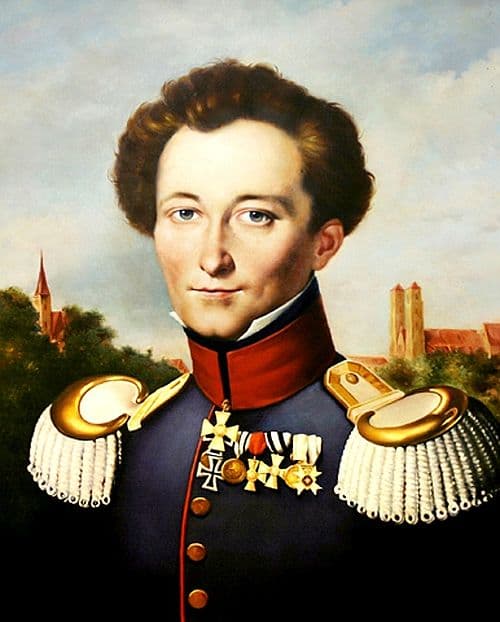
Carl Von Clausewitz
PERSON
Name reference in documents
Carlos Gershenson
PERSON
Mexican researcher
CA
Carnot
PERSON
Name reference in documents
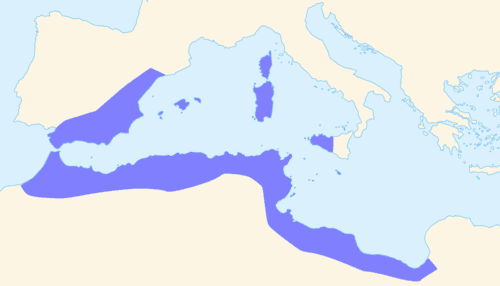
Carthaginian
PERSON
Name reference in documents

Catherine IJ
PERSON
Nigerian footballer
Cesar A. Hidalgo
PERSON
Name reference in documents

Chris Mack
PERSON
American basketball player-coach
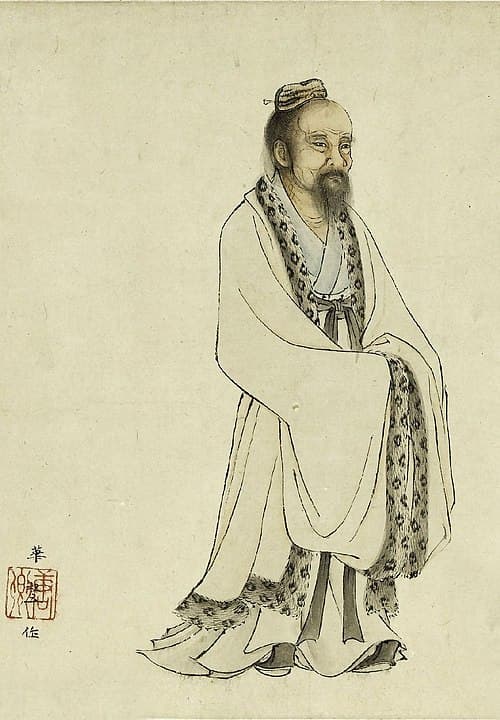
Chuang Tzu
PERSON
Name reference in documents

Claude Comtois
PERSON
Geography researcher
Claude Shannon
PERSON
American mathematician and information theorist (1916–2001)
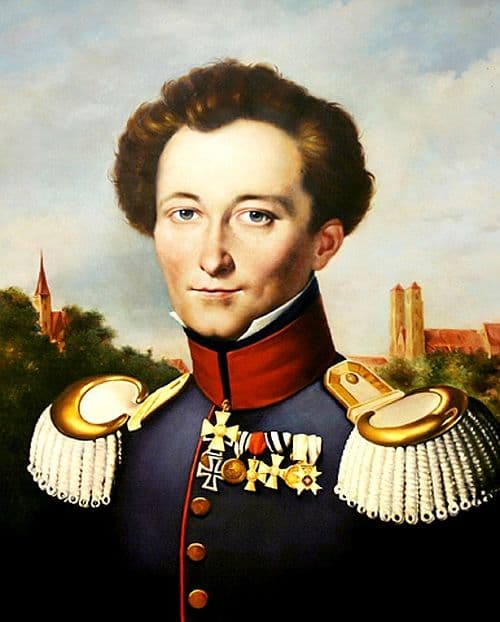
Clausewitz
PERSON
Name reference in documents

Colin Powell
PERSON
American general and diplomat (1937–2021)

Condoleezza Rice
PERSON
American diplomat and political scientist (born 1954)
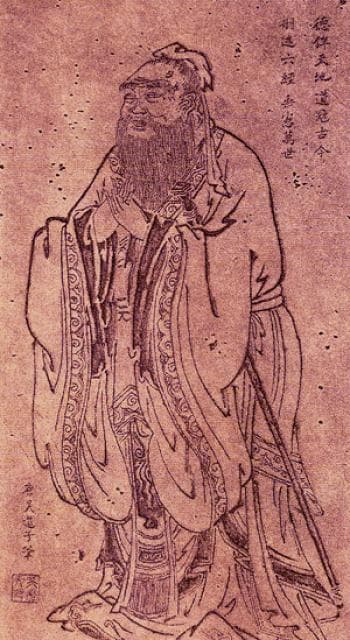
Confucius
PERSON
5th-century BCE Chinese philosopher and politician

Conway
PERSON
Refers to Kellyanne Conway (White House advisor) in news coverage within Epstein-related DOJ documents
CO
Copernicus
PERSON
Name reference in documents
CW
Courtney Wild
PERSON
American victim/survivor of Jeffrey Epstein who led legal battle for victims' rights
DA
D. Achlioptas
PERSON
Name reference in documents
DB
D. Bawden
PERSON
Name reference in documents
DX
Dai Xu
PERSON
Chinese writer
Daniel Geer
PERSON
Name reference in documents

Danny Sullivan
PERSON
American racecar driver
DA
Daoisim
PERSON
Name reference in documents
DC
David Chandler
PERSON
American chemist (1944-2017)

David Garcia
PERSON
Music producer and songwriter
David Hall
PERSON
U.S. Democratic Party politician, Governor of Oklahoma (1930-2016)

David Murakami Wood
PERSON
Name reference in documents
DR
David Raymond
PERSON
Particle physicist
David Remnick
PERSON
American journalist, writer and editor (born 1958)
DR
David Ronfeldt
PERSON
Writer, employed by the RAND corporation
DP
Denis Paul
PERSON
Name reference in documents

Derek McAuley
PERSON
Name reference in documents
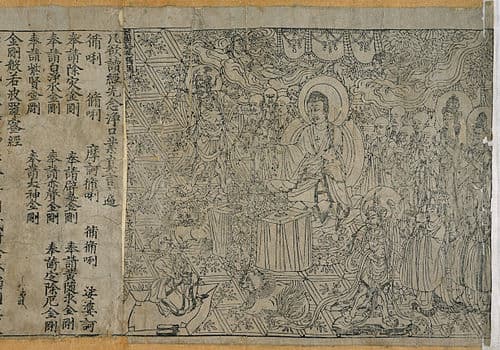
Diamond Sutra
PERSON
Name reference in documents
Dirk Helbing
PERSON
German sociologist and physicist
DM
Donald K. McKim
PERSON
Name reference in documents
Donald Rumsfeld
PERSON • 2 mentions
American politician and diplomat (1932–2021)

Donald Trump
PERSON
President of the United States (2017–2021, 2025–present)
DB
Doug Band
PERSON
American presidential advisor
DW
Douglas L. Wilson
PERSON
American historian
Douglas MacArthur
PERSON
Person referenced in documents
Douglass C. North
PERSON
American economist and Nobel laureate (1920–2015)
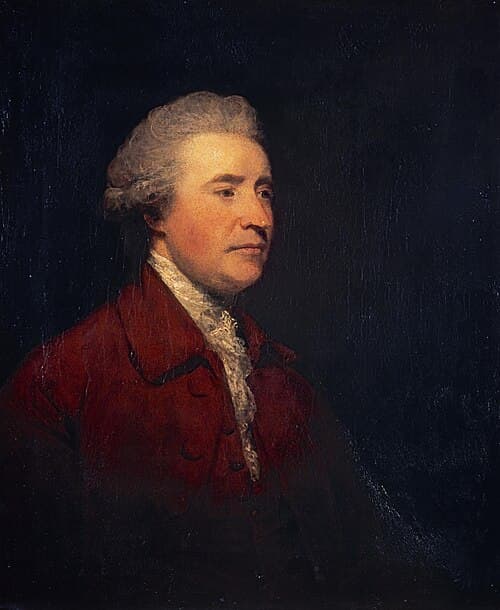
Edmund Burke
PERSON
Name reference in documents
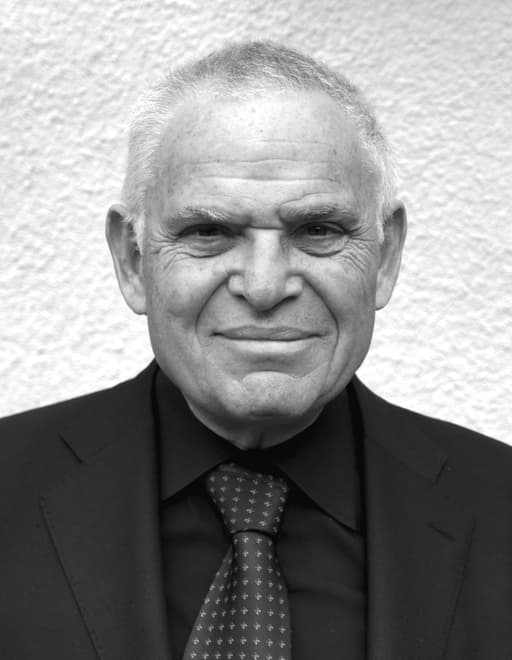
Edward N. Luttwak
PERSON
American writer and military strategist
Edwin Grohe
PERSON
Name reference in documents
EL
El-Sawah
PERSON
Name reference in documents

Eleanor
PERSON
Automobile 'character' in the movie Gone in 60 Seconds
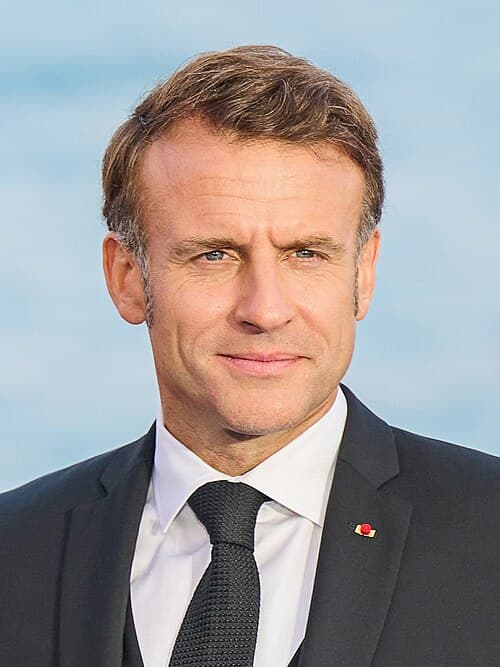
Emmanuel Macron
PERSON
President of France and Co-Prince of Andorra since 2017

Erasmus
PERSON
Surname or name fragment in documents
Eric Schmidt
PERSON • 2 mentions
Software engineer, businessman, former Google CEO

Eric Trump
PERSON
American businessman and reality television personality (born 1984)

Eugene Stanley
PERSON
Name reference in documents
ET
Eugene Thacker
PERSON
American philosopher
F.A. Hayek
PERSON
Name reference in documents
FL
F.X. Lindner
PERSON
Name reference in documents
FA
Felix “F.X” Lidner and
PERSON
Name reference in documents

Felix Gilbert
PERSON
German-american historian (1905-1991)

Francis Bacon
PERSON
Irish-born British figurative painter (1909–1992)
Francois Jullien
PERSON
Name reference in documents

Frank Wisner Jr.
PERSON
Name reference in documents

Frederick II
PERSON
Name reference in documents
Fredrich Hayek
PERSON
Name reference in documents
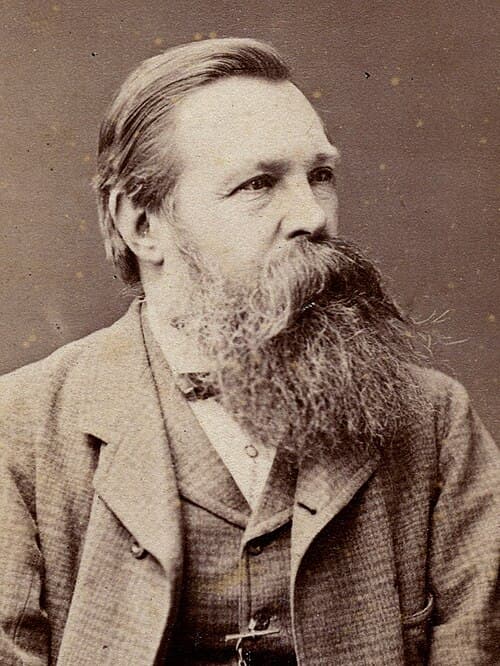
Freiderich Engels
PERSON
Name reference in documents
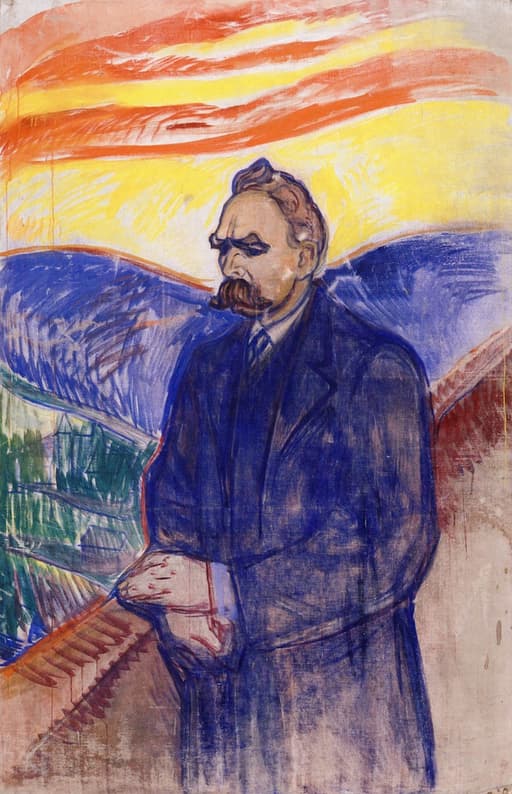
Friederich Nietzsche
PERSON
Name reference in documents
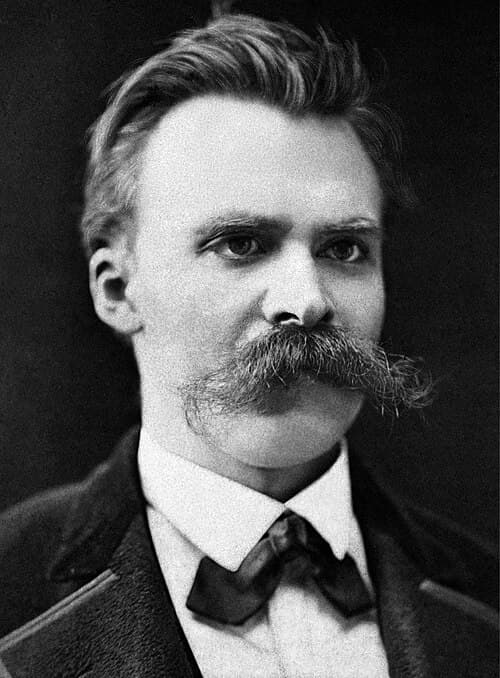
Friedrich Wilhelm Nietzsche
PERSON
Name reference in documents
G. John Ikenberry
PERSON
American political scientist

G.E.M. Anscombe
PERSON
British analytic philosopher
GA
Gamal
PERSON
Indonesian politician (born 1989)
Gaycken
PERSON
Name reference in documents
Genoa
PERSON
Surname reference in Epstein-related documents

George C. Herring
PERSON
American historian (born 1936)
George Kennan
PERSON
Name reference in documents
George Orwell’s
PERSON
Name reference in documents

George W. Bush
PERSON
President of the United States from 2001 to 2009

Gershenson
PERSON
American film producer, conductor and composer (1904–1988)
GE
Gershonesen
PERSON
Name reference in documents
Goethe
PERSON
Surname reference in documents
Gordon A. Craig
PERSON
American historian
Gordon Moore
PERSON
American businessman, co-founder of Intel Corporation (1929–2023)

Gregory Conti
PERSON
Name reference in documents

H. Zhu
PERSON
American DJ and electronic music producer
Hakuin
PERSON
Name reference in documents
Hamed Haddadi
PERSON
Iranian basketball player
Hannibal
PERSON
Surname or name fragment in documents
HM
Hans Morgenthau
PERSON
American political scientist (1904–1980)

Harvey Weinstein
PERSON
American film producer and sex offender (born 1952)
HA
Hausman
PERSON
Name reference in documents

Hayek
PERSON
Surname or name fragment in documents
Henry Kissinger
PERSON • 2 mentions
American politician and diplomat (1923–2023)
Heraclitis
PERSON
Name reference in documents
Herman Kahn
PERSON
American futurist noted for his views on nature of thermonuclear war (1922–1983)

Hillary Clinton
PERSON • 2 mentions
American politician and diplomat (born 1947)
Hirohito
PERSON
Emperor of Japan from 1926 to 1989
Hobbes
PERSON
Surname reference in documents
Hosni Mubarak
PERSON • 2 mentions
President of Egypt from 1981 to 2011

Houthi
PERSON
Surname reference in documents
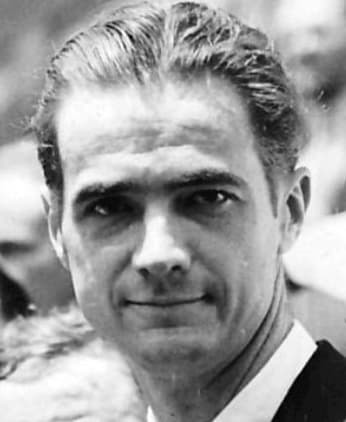
Howard Hughes’
PERSON
American aviator, engineer, industrialist, and film producer (1905–1976)
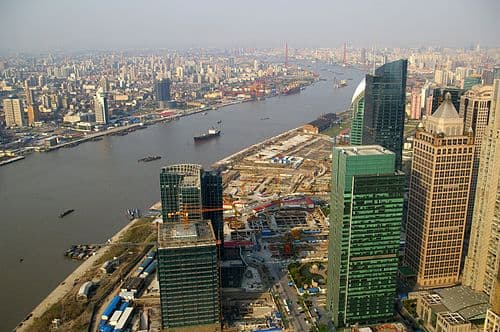
Huang Pu
PERSON
Name reference in documents

Hwang
PERSON
Surname reference in Epstein-related documents
Hyman Rickover
PERSON
United States admiral; Father of the Nuclear Navy (1900–1986)
Immanuel Kant
PERSON
German philosopher (1724–1804)
J. Spencer
PERSON
American mathematician and academic

J. Van Leeuwen
PERSON
Dutch politician (1926-2018)
JY
J. You
PERSON
Name reference in documents
James Madison
PERSON
President of the United States from 1809 to 1817
Jean-Claude Trichet
PERSON
French economist and central banker
Jean-Paul Rodrigue
PERSON
Canadian geographer
JA
Jefferson Abroad
PERSON
Name reference in documents

Jeffrey Epstein
PERSON
American sex offender and financier (1953–2019)

Jeffrey Goldberg
PERSON
American journalist (born 1965)
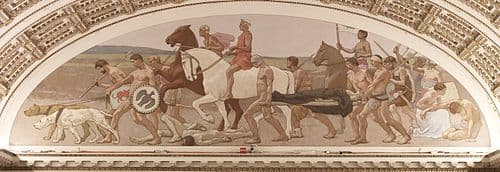
Jennifer Mitzen
PERSON
Name reference in documents
Jeremi Suri
PERSON
American historian

Joel Mokyr
PERSON
American-Israeli economic historian
John Arquilla
PERSON
American analyst/academic of international relations
JD
John Darwin
PERSON
British historian (1948-)
John Draper
PERSON
American computer programmer and former phone phreak

John F. Kennedy
PERSON
President of the United States from 1961 to 1963 (1917–1963)
JP
John F. Padgett
PERSON
American political scientist and sociologist

John Holland
PERSON
American basketball player (born 1988)
John Kerry
PERSON • 2 mentions
American politician and diplomat (born 1943)
John Maynard
PERSON
Person referenced in documents
John Maynard Keynes
PERSON
Name reference in documents
John Stuart Mill’s
PERSON
Name reference in documents
John Urry
PERSON
British sociologist (1946-2016)
Jomini
PERSON • 2 mentions
Name reference in documents
Jon Crowcroft
PERSON
British computer scientist
Jon Postel
PERSON
American computer scientist (1943–1998)
Joseph II
PERSON
Name reference in documents
Joseph S. Nye
PERSON
Name reference in documents
Joseph Weizenbaum
PERSON
German-American computer scientist (1923-2008)

Joshua Cooper Ramo
PERSON
American political analyst
Jules Jusserand
PERSON
Name reference in documents
Julian Bangert
PERSON
Name reference in documents
Karl Marx
PERSON
Person referenced in documents
Karl Wittfogel
PERSON
Name reference in documents
KE
Kepler
PERSON
Surname reference in documents
Keynes
PERSON
Surname reference in Epstein-related documents

Khomeini
PERSON
Surname reference in documents
Krushchev
PERSON
Name reference in documents
L. Robinson
PERSON
Name reference in documents

Lake Tai
PERSON • 2 mentions
Name reference in documents
LA
Latour
PERSON
Surname reference in documents
LB
Lawfare Blog
PERSON
Name reference in documents
LB
Lazlo Barabasi
PERSON
Name reference in documents
LB
Leon Black
PERSON
American billionaire businessman (born 1951)
LI
Lindner
PERSON
Surname or name fragment in documents
LY
Liu Yazhou
PERSON
Chinese People's Liberation Army general
LO
Locke
PERSON
2013 film by Steven Knight
Lu Xun
PERSON
Name reference in documents
Ludwig Wittgenstein
PERSON
Person referenced in documents
LB
Luiz Andre Barosso
PERSON
Name reference in documents
LU
Luther
PERSON
First name reference to multiple individuals in the documents

Lutheranism
PERSON
Name reference in documents

M. Chavez
PERSON
Name reference in documents
Macarthur
PERSON
Name reference in documents
Machiavelli
PERSON
Surname or name fragment in documents
MT
Madame de Tesse
PERSON
Name reference in documents
MA
Mahan
PERSON
First name reference to multiple individuals in Epstein-related documents
Maj Richard D. Rogers
PERSON
Name reference in documents
Manuel Castells
PERSON
Spanish sociologist
Mao Zedong
PERSON
1st chairman of the Chinese Communist Party and founder of the People's Republic of China (1893–1976)
Marc Rich
PERSON
American commodities trader (1934–2013)
Marco Polo
PERSON
Person referenced in documents
MB
Mark Buchanan
PERSON
American theoretical physicist and writer
MN
Mark Newman Networks
PERSON
Name reference in documents

Martin Luther
PERSON
Name reference in Epstein documents, likely referring to Martin Luther King Jr.
Martin Nowak
PERSON • 2 mentions
Austrian scientist

Mary Kaldor
PERSON
British economist
MN
Master Nan
PERSON
Name reference in documents
Matisse
PERSON
Surname reference in documents
Matthew Bolton
PERSON
Australian billiards and snooker player
Max Weber Lecture
PERSON
Name reference in documents
MC
Melvin E. Conway
PERSON
American computer scientist

Michael Douglas
PERSON
American retired actor, producer and activist (born 1944)

Michael Jackson
PERSON • 3 mentions
American singer, songwriter, record producer, and dancer (1958–2009)
Michael Nielsen
PERSON
Australian and Canadian physicist and writer (b.1974)

Michaelangelo
PERSON
Surname or name fragment in documents

Michele Catanzaro
PERSON
Name reference in documents
MS
Mimi Sheller
PERSON
American sociologist
MM
MMaybaum
PERSON
Name reference in documents
MZ
Mohamed Zayani
PERSON
Name reference in documents
Morgenthau
PERSON
Surname reference in documents
Mussolini
PERSON
Surname reference in documents
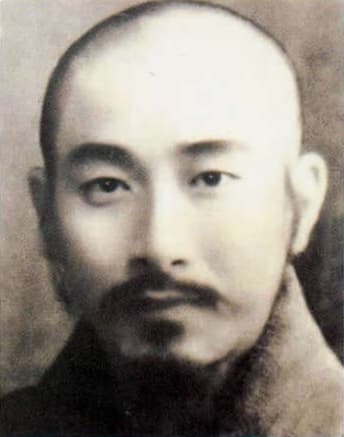
Nan Huai-Chin
PERSON
Buddhist teacher
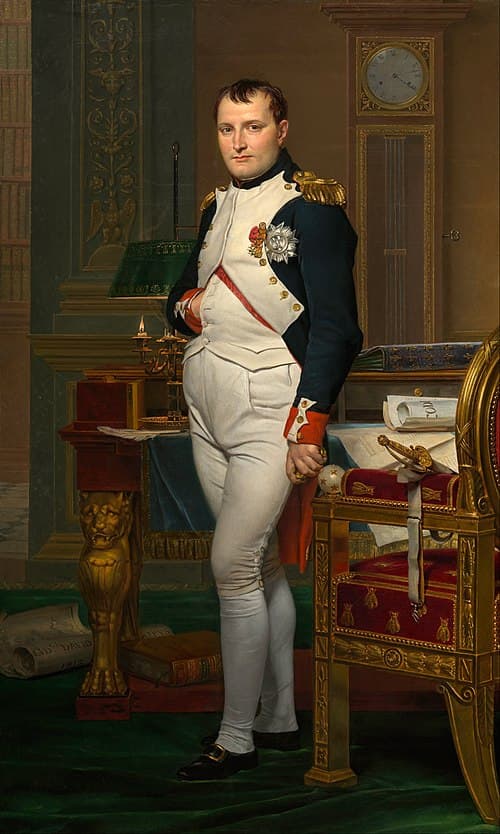
Napeoleon
PERSON
Name reference in documents
Napoleon
PERSON • 2 mentions
First name reference to multiple individuals in Epstein-related documents
NW
Natalie Wolchover
PERSON
Science journalist
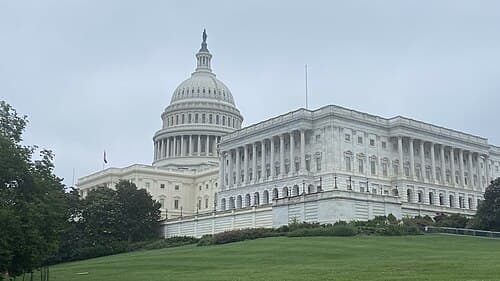
Nathaniel W. Husted
PERSON
Name reference in documents
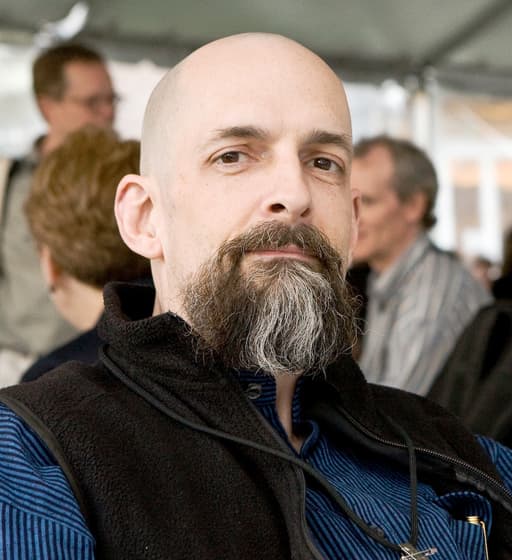
Neal Stephenson’s
PERSON
Name reference in documents
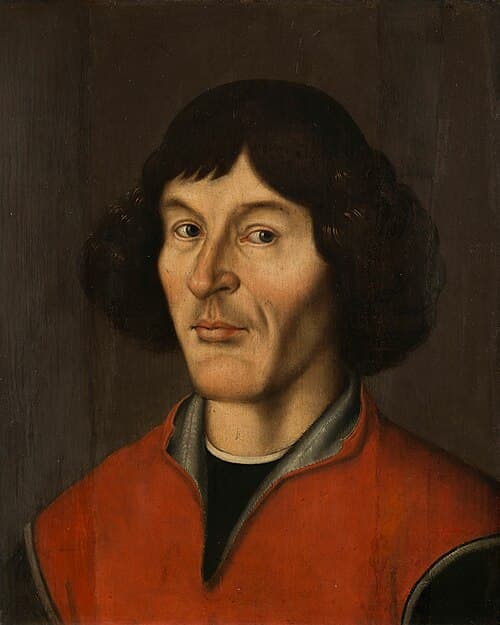
Nicolaus Copernicus
PERSON
Name reference in documents
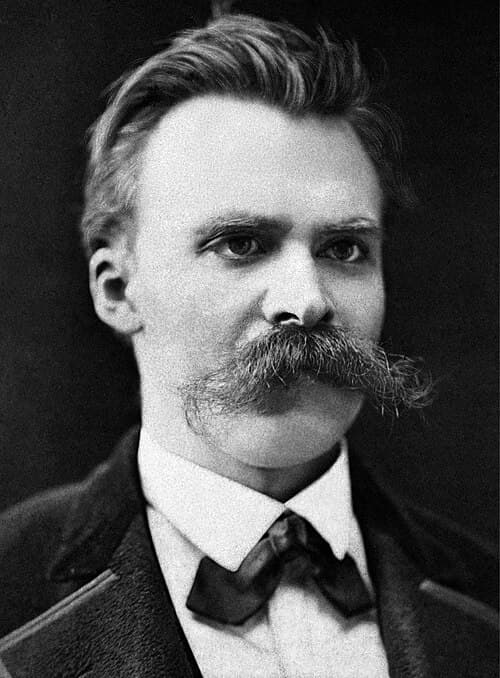
Nietzsche
PERSON
Surname reference in documents

Nijinsky
PERSON
Name reference in documents
Norbert Weiner
PERSON
Name reference in documents
OC
Operation Chromite
PERSON
Name reference in documents
Orwell
PERSON
Surname reference in Epstein-related documents
PA
Padgett
PERSON
Surname or name fragment in documents
PA
Pargiter
PERSON
Name reference in documents
Paul Baran
PERSON
American engineer (1926–2011)

Paul Cassell
PERSON • 2 mentions
United States federal judge
Paul Dourish
PERSON
British computer scientist
Paul Farmer
PERSON
American anthropologist, 1959-2022
Paul Graham
PERSON
English programmer, venture capitalist, and essayist
Paul Kennedy
PERSON
British historian
Paul Phister
PERSON
Name reference in documents

Paul Ryan
PERSON • 2 mentions
Speaker of the United States House of Representatives from 2015 to 2019

Paul Virilio
PERSON
Name reference in documents
Pericles
PERSON
Athenian statesman, orator and general (c. 495 – 429 BC)
Pesach Baran
PERSON
American engineer (1926–2011)
Peter Csermely
PERSON
Name reference in documents
Peter Erdi
PERSON
Hungarian neuroscientist

Peter Gabriel
PERSON
British musician
PP
Peter Paret
PERSON
German cultural historian, military historian, regional historian, historian and author (1924–2020)

Peter Turchin
PERSON
Russian-American complexity scientist
Philip Mazzei
PERSON
Name reference in documents

Philippe Petit
PERSON
French high-wire artist
PO
Postel
PERSON
Name reference in documents

Prince Andrew
PERSON
Third child of Queen Elizabeth II and Prince Philip, Duke of Edinburgh (born 1960)

Prince Charles
PERSON
King of the United Kingdom and other Commonwealth realms since 2022 (born 1948)

R. M. D'souza
PERSON
Name reference in documents

Rahm Emanuel
PERSON • 2 mentions
American politician (born 1959)
RS
Randy Shoup
PERSON
Name reference in documents
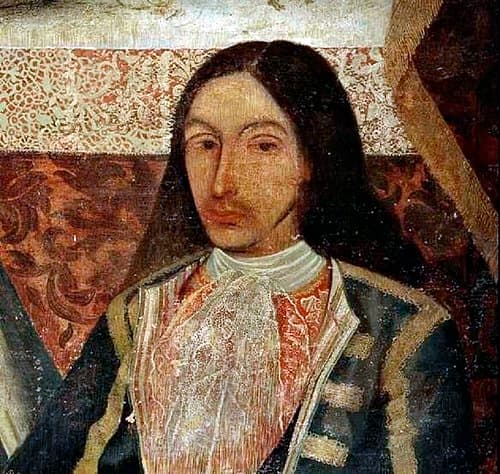
Raquel Alvarez
PERSON
Name reference in documents

Rebecca Shapiro
PERSON
Molecular biologist
Redmond
PERSON • 2 mentions
Surname reference in Epstein-related documents
RH
Remco van der Hofstad
PERSON
Researcher
RE
Richard F. Ellis
PERSON
Name reference in documents
RH
Richard Harper
PERSON
English local politician

Richard Kahn
PERSON
Jeffrey Epstein's accountant and estate co-executor (2005-present)
Richard Mortier
PERSON
Name reference in documents

Rinzai
PERSON • 2 mentions
Name reference in documents

Rinzai Zen
PERSON
Name reference in documents

Robert Fanelli
PERSON
Indian choreographer
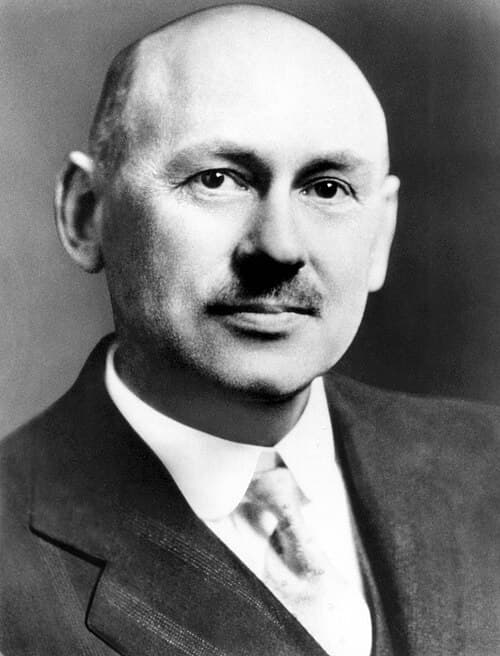
Robert Hutchings
PERSON
American diplomat
RS
Robert Morris Sr.
PERSON
Name reference in documents

Roberta Wohlstetter
PERSON
American academic (1912–2007)
Roger T. Ames
PERSON
Canadian philosopher and author (born 1947)
RH
Rolf Horstmann
PERSON
Researcher
RR
Ron Rosenbaum
PERSON
Author and science writer
Rop Gonggrijp
PERSON
Dutch hacker (born 1968)

Ryan Nomura
PERSON
Name reference in documents
S. B. Cooper
PERSON
Musician
SB
S. Boccaletti
PERSON
Italian physicist (1966-)
SK
S. Koucheryavy
PERSON
Name reference in documents
Sadat
PERSON
Arabic name

Saint Augustine
PERSON
Name reference in documents
Saint Paul’s
PERSON
Name reference in documents
Samantha Power
PERSON
Irish-American academic, author and diplomat
Sandro Gaycken
PERSON
German computer security expert

Sappho
PERSON
Ancient Greek poet from Lesbos (c. 630-c. 570 BC)

Segerberg
PERSON
Name reference in documents

Sergei Bratus
PERSON
Soviet civil law scholar (1904-1997)
SB
Sergey V. Buldyrev
PERSON
Researcher
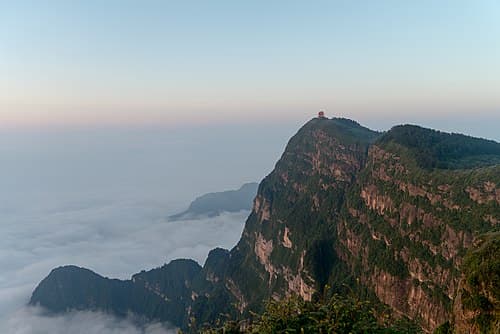
Shan - Eyebrow Mountain
PERSON
Name reference in documents
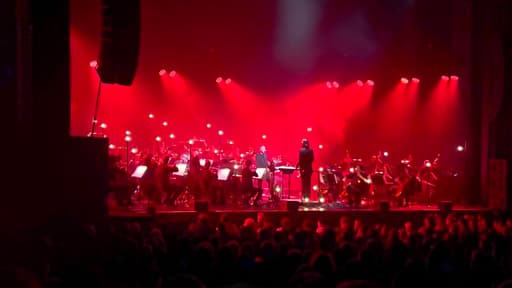
Sigur Ros
PERSON
Name reference in documents
SL
Simon A. Levin
PERSON
Name reference in documents
SN
Snowcrash
PERSON
Name reference in documents
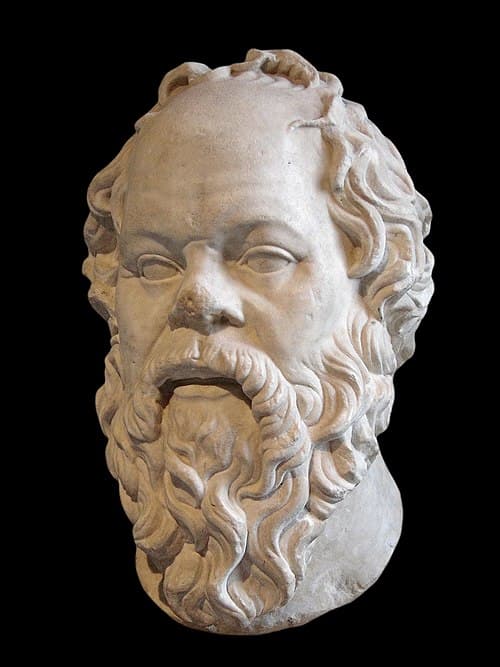
Socrates
PERSON
5th-century BCE Greek philosopher
ST
Stenersen
PERSON
Name reference in documents
SB
Stephen G. Brooks
PERSON
American professor of government
Stephen Gaghan
PERSON
American screenwriter and director
Stephen Hawking
PERSON
British theoretical physicist, cosmologist and author (1942–2018)
Stephen Jay Gould
PERSON
American biologist and historian of science (1941–2002)

Steve Jobs
PERSON
American entrepreneur; co-founder of Apple Inc. (1955–2011)
Steve Wozniak
PERSON
American computer pioneer, inventor, computer engineer and programmer; co-founder of Apple Inc.
SS
Steven Storgratz
PERSON
Name reference in documents
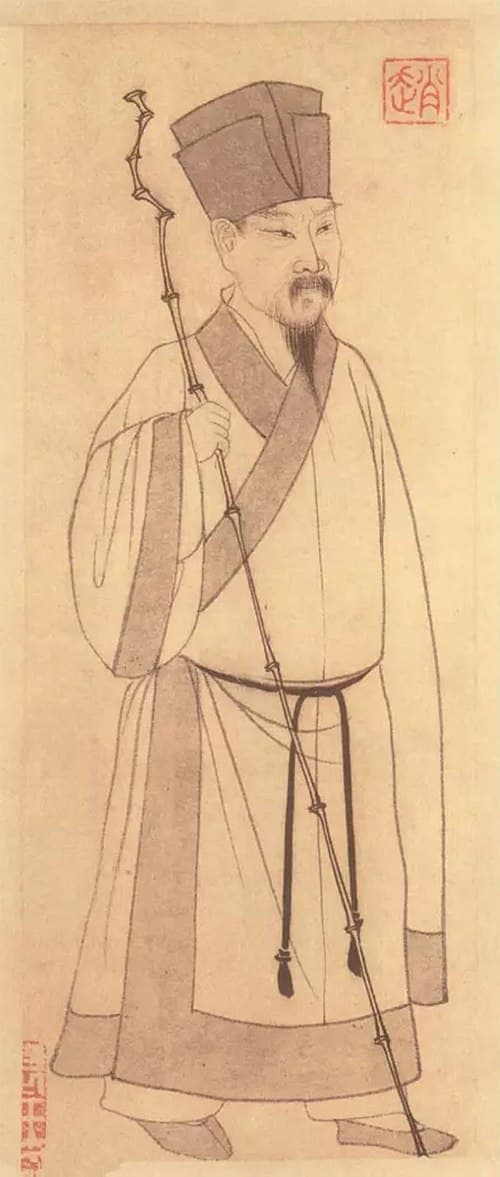
Su Dongpo
PERSON
Name reference in documents
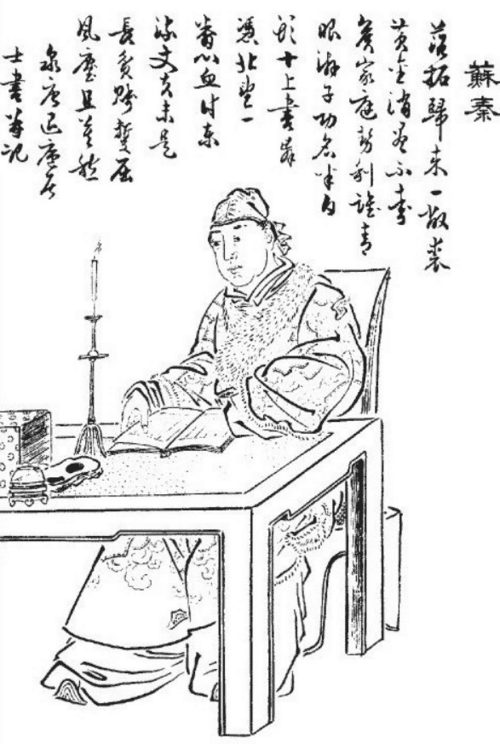
Su Qin
PERSON
Chinese political strategist in the Warring States period
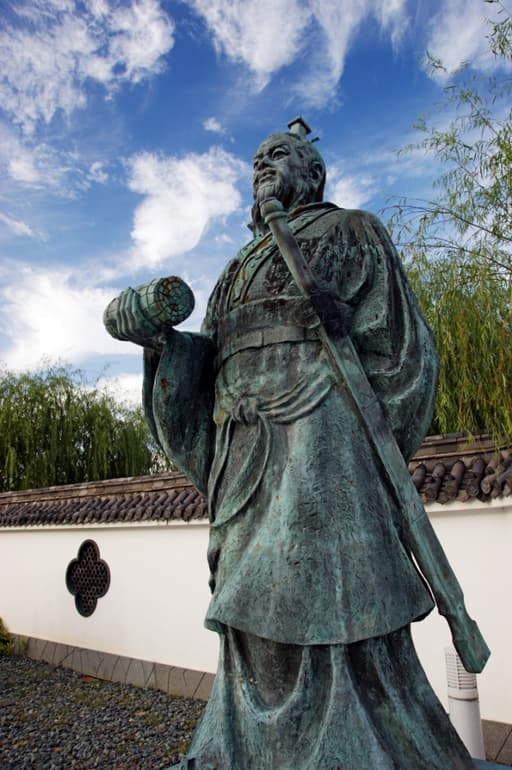
Sun Tzu
PERSON
6th century BCE Chinese general and military strategist
SU
Superpower
PERSON
Surname or name fragment in documents
SW
Switches
PERSON
Surname or name fragment in documents
TM
Tarek Mahmoud
PERSON
Name reference in documents
the Bee Gees
PERSON
Name reference in documents
the Mubarak Wisner
PERSON
Name reference in documents
Thomas Hobbes
PERSON
Person referenced in documents
Thomas Hobbes - the
PERSON
Name reference in documents

Thomas Jefferson
PERSON • 2 mentions
President of the United States from 1801 to 1809
TC
Tom Cross
PERSON
American film editor

Tom Rodden
PERSON
Scientific Adviser in UK government
TR
Trichet
PERSON
Surname reference in documents

Urs Holzle
PERSON
Swiss computer scientist
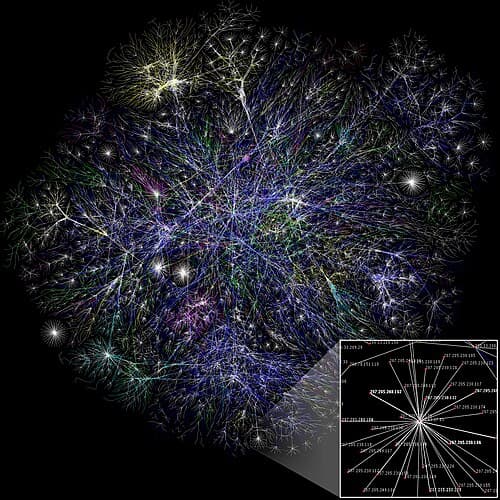
V. Latora
PERSON
Name reference in documents
Venkatesh Rao
PERSON
Indian-American author and consultant

Victor Krulak
PERSON
Name reference in documents
Vinton G. Cerf
PERSON
American computer scientist (born 1943)
Virginia Giuffre
PERSON
Advocate for sex trafficking victims (1983–2025)
Virginia Woolf
PERSON
Person referenced in documents
Virginia Woolf's
PERSON
Name reference in documents
Vladimir Lenin
PERSON
Founding leader of the Soviet Union from 1922 to 1924 (1870–1924)
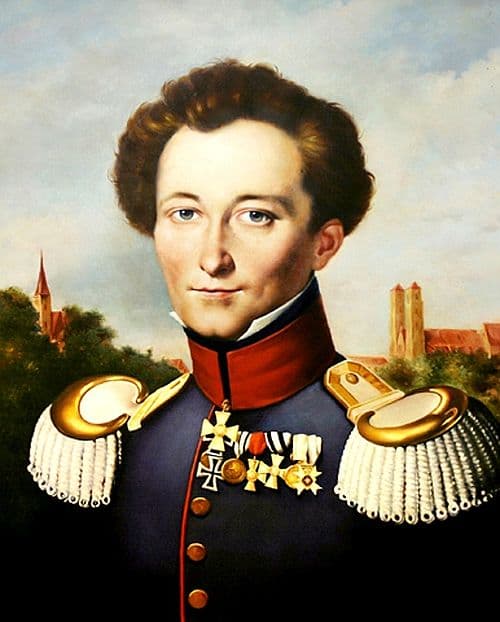
Von Clausewitz
PERSON
Name reference in documents
WP
Walter W. Powell
PERSON
American sociologist

Warren Buffett
PERSON • 2 mentions
American investor, entrepreneur and businessman
Warren Weaver
PERSON
Person referenced in documents
Weizenbaum
PERSON
Surname or name fragment in documents
William A. Lyell
PERSON
Name reference in documents
William C. Wohlforth
PERSON
American political scientist
William Colby
PERSON
American intelligence agent (1920–1996)
WB
William J. Baumol
PERSON
American economist (1922-2017)

William Shakespeare
PERSON
English playwright and poet (1564–1616)
Winston Churchill
PERSON • 2 mentions
British statesman, soldier and writer (1874–1965)

Wisner
PERSON
Surname or name fragment in documents

Wisner Sr.
PERSON
Name reference in documents
Wittfogel
PERSON
Name reference in documents
WR
Wright
PERSON
Surname reference in Epstein documents
Writings
PERSON
Name reference in documents
YA
Yamamoto
PERSON
Surname or name fragment in documents
YM
Yamir Moreno
PERSON
Cuban physicist
Yi Jing
PERSON
Researcher
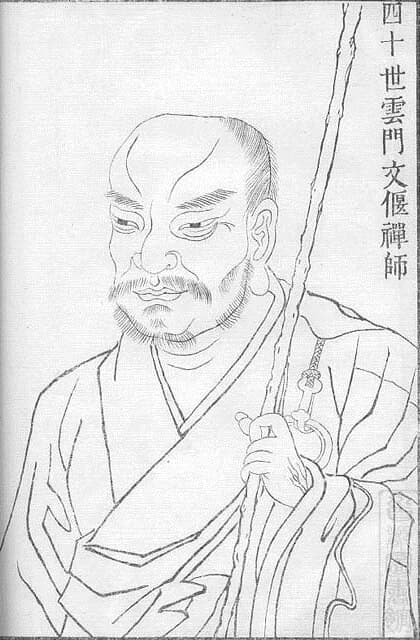
Yun Men
PERSON
Name reference in documents
YR
Yvonne Rogers
PERSON
British psychologist and computer scientist
ZC
Zen Comments
PERSON
Name reference in documents
Zhuangzi
PERSON
Name reference in documents
A Network Theory of Power" International Journal of Communication
ORGANIZATION
Organization referenced in documents
ACM SIGCOMM Computer Communication Review
ORGANIZATION
Journal
Air Force
ORGANIZATION
Military branch of service primarily concerned with aerial warfare
Al-Qaeda Institute
ORGANIZATION
Organization referenced in documents
Al-Qaeda Institute of Technology
ORGANIZATION
Organization referenced in documents
Anonymous
ORGANIZATION
Unknown creator of a work (do not use as value of P50; use "unknown value" instead)
Army War College
ORGANIZATION
Staff college of the Imperial Japanese Army
AT&T Long Lines
ORGANIZATION
Organization referenced in documents
Atomic Power
ORGANIZATION
Organization referenced in documents
Baran
ORGANIZATION • 2 mentions
Iranian singer
Belknap Press
ORGANIZATION
Organization referenced in documents
Bio-Nano
ORGANIZATION
Organization referenced in documents
Blackwell Publishers
ORGANIZATION
British book publisher
Bluejacket Press
ORGANIZATION
Organization referenced in documents
Bratus
ORGANIZATION • 2 mentions
Organization referenced in documents
Brusnwick-Wolfenbuttel
ORGANIZATION
Organization referenced in documents

Cambridge University Press
ORGANIZATION
Publishing business of the University of Cambridge
Ch’an Buddhism
ORGANIZATION
Indian religion
Cisco Systems
ORGANIZATION
American multinational technology company
COE Publications
ORGANIZATION
Organization referenced in documents
Come Home America
ORGANIZATION
Organization referenced in documents
Communications Magazine
ORGANIZATION
Organization referenced in documents
Complex Adaptive Systems
ORGANIZATION
Organization referenced in documents
Complex Networks
ORGANIZATION
Organization referenced in documents
Computer Network Defense
ORGANIZATION
Organization referenced in documents
Computer Power
ORGANIZATION
Organization referenced in documents
Convergence Club
ORGANIZATION
Organization referenced in documents
Convergence of Productivity Cross
ORGANIZATION
Organization referenced in documents
Cuius
ORGANIZATION
Organization referenced in documents
Cyberpatterns, Springer International Publishing
ORGANIZATION
Organization referenced in documents
damage?2
ORGANIZATION
Organization referenced in documents

Dartmouth
ORGANIZATION
Private university in Hanover, New Hampshire, US
Datamation
ORGANIZATION
American computer magazine
Department of Justice
ORGANIZATION
United States Department of Justice, federal executive department responsible for law enforcement
DNSSSEC
ORGANIZATION
Organization referenced in documents
DOD Standard Transmission Control
ORGANIZATION
Organization referenced in documents
Draper in Esquire
ORGANIZATION
Organization referenced in documents
Dungeons and Dragons
ORGANIZATION
First fantasy tabletop role-playing game
Eindhoven University of Technology
ORGANIZATION
University
el-Abidine
ORGANIZATION
Organization referenced in documents

Elsevier
ORGANIZATION
Dutch publishing and analytics company
Encyclopedia of Computer Science 4
ORGANIZATION
Organization referenced in documents
Euangelici
ORGANIZATION
Organization referenced in documents
European University
ORGANIZATION
Association and interest group of universities in Europe
Faber & Faber
ORGANIZATION
Organization referenced in documents
Fiberculture Journal No.
ORGANIZATION
Organization referenced in documents

Filiquarian
ORGANIZATION
Organization referenced in documents

Foreign Affairs
ORGANIZATION
American magazine and website on international relations

Fortune
ORGANIZATION
American business magazine
Future of Cybernetics
ORGANIZATION
Organization referenced in documents
Geography of Transport Systems
ORGANIZATION
Organization referenced in documents
Gordian
ORGANIZATION
Organization referenced in documents
Grand Strategies
ORGANIZATION
Organization referenced in documents
Grove
ORGANIZATION • 2 mentions
Organization referenced in documents
Hack-Tic
ORGANIZATION
Periodical literature
Hanibal
ORGANIZATION
Organization referenced in documents
happens.!!8
ORGANIZATION
Organization referenced in documents
Hapsburgs
ORGANIZATION
Organization referenced in documents
Harcourt Brace and Company
ORGANIZATION
Organization referenced in documents

Harvard GSD
ORGANIZATION
Private university in Cambridge, Massachusetts

Harvard University
ORGANIZATION
American university publishing house

Houghton Mifflin
ORGANIZATION
County seat of Houghton County, Michigan, United States
Huainanzi
ORGANIZATION
Organization referenced in documents
IEEE History
ORGANIZATION
Organization referenced in documents
Information, Communication & Society
ORGANIZATION
Organization referenced in documents
Interaction
ORGANIZATION
Organization referenced in documents
International C2 Journal
ORGANIZATION
Organization referenced in documents
Internet Architecture and Innovation
ORGANIZATION
Organization referenced in documents
IOS Press
ORGANIZATION
Publisher
JJIEDDO
ORGANIZATION
Organization referenced in documents
John Wiley
ORGANIZATION
American baseball player (1857-1926)
Knights of Templar
ORGANIZATION
Organization referenced in documents

Kuomintang
ORGANIZATION
Republic of China political party

L Brands
ORGANIZATION
Company
Lin’An
ORGANIZATION
Organization referenced in documents
Little, Broan & Co. 1890
ORGANIZATION
Organization referenced in documents
Louisiana Purchase
ORGANIZATION
Organization referenced in documents

M.E. Hathaway
ORGANIZATION
Organization referenced in documents
Macmillan Publishing
ORGANIZATION
Process of production and dissemination of literature, music, or information
Makers of Modern Strategy
ORGANIZATION
Organization referenced in documents
Marron Institute Working Paper No
ORGANIZATION
Organization referenced in documents
Microsoft Research Publication 2008
ORGANIZATION
Organization referenced in documents

MIT Press
ORGANIZATION
American university press
Modern Library
ORGANIZATION
Organization referenced in documents
Morgan & Claypool
ORGANIZATION
Organization referenced in documents
Mughal Empire
ORGANIZATION
Organization referenced in documents
MySpace
ORGANIZATION
American social networking website
Networked Publics
ORGANIZATION
Organization referenced in documents
Nietzche
ORGANIZATION
Organization referenced in documents
Nonpareil Books 2000
ORGANIZATION
Organization referenced in documents
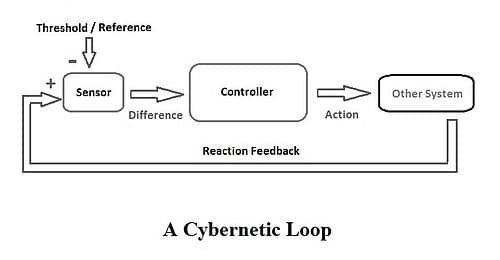
Norbert Wiener Cybernetics
ORGANIZATION
Organization referenced in documents
Occupy Central
ORGANIZATION
Organization referenced in documents
Occupy Hollywood
ORGANIZATION
Organization referenced in documents
Occupy Hong
ORGANIZATION
Organization referenced in documents

Occupy Wall Street
ORGANIZATION
Street in Manhattan, New York, USA
Offensive Technologies
ORGANIZATION
Organization referenced in documents
Office of Special Services
ORGANIZATION
Organization referenced in documents
Organizational Chaos
ORGANIZATION
Organization referenced in documents
Papa non vult nec potest
ORGANIZATION
Organization referenced in documents
Penguin Classics
ORGANIZATION
Imprint of Penguin Random House
Perseus Books
ORGANIZATION
Legendary Greek hero and founder of Mycenae
Philosophical Library
ORGANIZATION
Publishing company
Physics Reports
ORGANIZATION
Organization referenced in documents
PLA Daily
ORGANIZATION
Newspaper
Political Geography
ORGANIZATION
Organization referenced in documents
Primodia Media
ORGANIZATION
Organization referenced in documents

Princeton University
ORGANIZATION
Private Ivy League research university in Princeton, New Jersey

Prometheus Books
ORGANIZATION
American publishing company
Pwnie
ORGANIZATION
Organization referenced in documents

Qatar
ORGANIZATION
Country in West Asia
Quantum
ORGANIZATION
Quantum Fund or entity referenced in documents
Reformation
ORGANIZATION
16th-century movement in Western Christianity
Reminiscenes (Naval Institute Press
ORGANIZATION
Organization referenced in documents

Renaissance
ORGANIZATION
Hotel chain or entity
Research & Development -
ORGANIZATION
Organization referenced in documents
Research Library
ORGANIZATION
Library that collects materials on one or more subjects to support scholarly or scientific research

Routledge
ORGANIZATION
British multinational academic publisher founded in 1836

S. Weiser
ORGANIZATION
Organization referenced in documents
Search Engine Strategies Conference
ORGANIZATION
Organization referenced in documents
Security Studies
ORGANIZATION
Journal
Shambhala
ORGANIZATION
Mythical kingdom

Simon & Schuster
ORGANIZATION
American publishing company
Social Science Research Network
ORGANIZATION
Open access eLibrary; part of Elsevier
Socio-Economic Complexity
ORGANIZATION
Organization referenced in documents
Sons Ltd.
ORGANIZATION
Organization referenced in documents
State University of New York Press
ORGANIZATION
Tbilisi Metro Station
Strategy
ORGANIZATION
Organization referenced in documents
STUXNET
ORGANIZATION
Organization referenced in documents
Tactical Successes Mired
ORGANIZATION
Organization referenced in documents

Tahrir
ORGANIZATION
Organization referenced in documents
Telescopes
ORGANIZATION
Organization referenced in documents
the “American Century
ORGANIZATION
Organization referenced in documents
the “Smart Power
ORGANIZATION
Organization referenced in documents
the “Tributary Alliances
ORGANIZATION
Organization referenced in documents
the 15M Movement
ORGANIZATION
Organization referenced in documents
the Advanced Research Project
ORGANIZATION
Organization referenced in documents
the American Civil War
ORGANIZATION
Organization referenced in documents
The American Marine Corps
ORGANIZATION
Organization referenced in documents
The Campaigns of Napoleon
ORGANIZATION
Organization referenced in documents
the Catholic Church
ORGANIZATION
Catholic Church

the Central Intelligence Agency
ORGANIZATION
Organization referenced in documents
The Complete Works
ORGANIZATION
Organization referenced in documents
the Council of Trent
ORGANIZATION
Organization referenced in documents
The Data-Center
ORGANIZATION
Organization referenced in documents
the Data-Driven Society
ORGANIZATION
Organization referenced in documents
the Department of Defense
ORGANIZATION
Organization referenced in documents
the Differentiations of Mobillity
ORGANIZATION
Organization referenced in documents
The Empire Project
ORGANIZATION
Organization referenced in documents
the European Central Banker
ORGANIZATION
Organization referenced in documents
The Exploit a Theory of Networks
ORGANIZATION
Organization referenced in documents
The Future of Terror, Crime
ORGANIZATION
Organization referenced in documents
The Homebrew Computer Club
ORGANIZATION
Organization referenced in documents
The Influence of Sea Power
ORGANIZATION
Organization referenced in documents
The Institute of Electrical and Electronics Engineers, Inc.
ORGANIZATION
Organization referenced in documents
The Journal of Economic History
ORGANIZATION
Organization referenced in documents
The Logic of War and Peace
ORGANIZATION
Organization referenced in documents
the Network Society (Malden
ORGANIZATION
Organization referenced in documents
the Red Army
ORGANIZATION
Organization referenced in documents
the Switch Despots
ORGANIZATION
Organization referenced in documents
the U.S. Marine Corps
ORGANIZATION
Organization referenced in documents
the US Air Force
ORGANIZATION
Organization referenced in documents
the US congress
ORGANIZATION
Organization referenced in documents
the US Defense Department
ORGANIZATION
Organization referenced in documents
The World Wide Web
ORGANIZATION
Organization referenced in documents
U.S. Foreign Relations
ORGANIZATION
Organization referenced in documents
U.S. House of Representatives, Committee on Armed Services
ORGANIZATION
Organization referenced in documents
United States Air Force Project RAND
ORGANIZATION
Organization referenced in documents

University of Chicago Press
ORGANIZATION
Publisher in the United States
University of Hawaii Press
ORGANIZATION
Academic publisher
University of Minnesota Press
ORGANIZATION
American university press
US Army
ORGANIZATION
United States Army
Virality
ORGANIZATION
Organization referenced in documents
W. Lance Bennett &
ORGANIZATION
Organization referenced in documents
W.H. Freeman
ORGANIZATION
In Colonial America, a person who is not enslaved
Washington: Library of Congress
ORGANIZATION
Organization referenced in documents
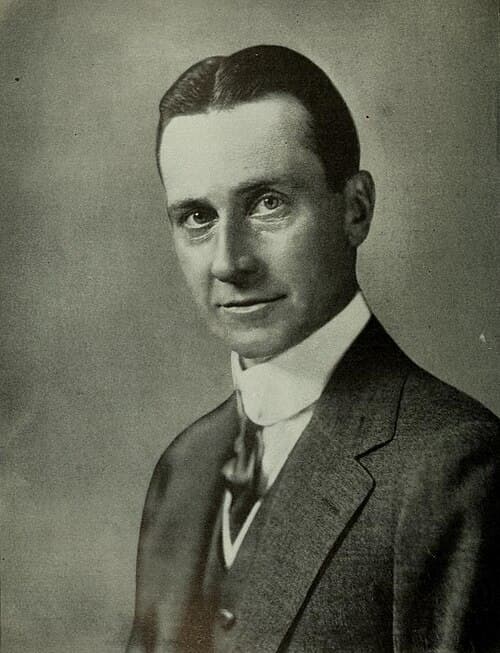
Yale University Press
ORGANIZATION
University press associated with Yale University
Adriatic
LOCATION
Location referenced in documents
Albany
LOCATION
Capital city of the State of New York, United States, and seat of Albany County

Algeria
LOCATION
Country in North Africa

Amherst
LOCATION
Liberal arts college in Massachusetts

Amsterdam
LOCATION
Capital and most populous city of the Netherlands
Baghdad
LOCATION
Capital city of Iraq

Bahrain
LOCATION
Country in the Persian Gulf

Bangalore
LOCATION
Capital city of Karnataka state in India
Bastille-
LOCATION
Location referenced in documents
Black Swans
LOCATION
Location referenced in documents
Bombay
LOCATION
Location referenced in documents
Brunswick
LOCATION
City in Glynn County, Georgia, United States
Cairo
LOCATION
Capital city of Egypt
Carlisle
LOCATION
City in Cumberland, Cumbria, England

Ch’an
LOCATION • 2 mentions
Location referenced in documents

Chengdu
LOCATION
Capital of Sichuan Province, China
Chichester
LOCATION
City in West Sussex, England

Chile
LOCATION
Country in South America

Columbia University
LOCATION
Private Ivy League research university in New York City

Damascus
LOCATION
Capital and largest city of Syria
Enlightenment Europe
LOCATION
Location referenced in documents

Euphrates
LOCATION
River in Asia
Frankfurt
LOCATION
City in Hesse, Germany
Grey Room 17
LOCATION
Location referenced in documents
Grodno
LOCATION
City in Belarus, capital of Hrodna Region
Hacktic
LOCATION
Location referenced in documents
Hangzhou
LOCATION
Capital of Zhejiang Province, China
Harcourt
LOCATION
United States publishing firm
Hiroshima
LOCATION
Capital city of Hiroshima Prefecture, Japan
Hololens
LOCATION
Location referenced in documents

Honolulu
LOCATION
City in and county seat of Honolulu County, Hawaii, United States, that is also the capital city of Hawaii
Incheon
LOCATION
City in Seoul Capital Area, South Korea
Ireland
LOCATION
Kabul
LOCATION
Capital and the largest city of Afghanistan

Lake Tai Hu
LOCATION
Lake in Jiangsu and Zhejiang, China
Lelystad
LOCATION
City in Flevoland, the Netherlands
Lexington
LOCATION
1925 Lexington-class aircraft carrier

Lintz
LOCATION
Location referenced in documents

Long Island
LOCATION
Island in New York, United States of America

Lower Manhattan
LOCATION
Southernmost part of the island of Manhattan in New York City, United States

Madison
LOCATION • 2 mentions
Capital city of Wisconsin, United States
Mediterranean
LOCATION
Sea in southern Europe
Mekong
LOCATION
Major river in Southeast Asia

Menlo Park
LOCATION
City in San Mateo County, California, United States
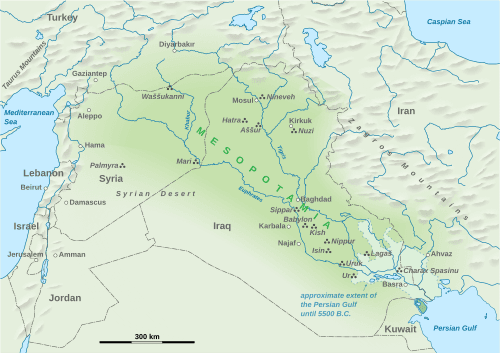
Mesopotamia
LOCATION
Historical region within the Tigris–Euphrates river system

Middle East
LOCATION
Geopolitical region encompassing Egypt and most of Western Asia, including Iran

Minneapolis
LOCATION
City in and seat of Hennepin County, and largest city in State of Minnesota, United States
Nagasaki
LOCATION
Core city in Kyushu, Japan

New York City
LOCATION
Most populous city in the United States
North Africa
LOCATION
Northernmost region of the African continent

North Korea
LOCATION
Sovereign state in East Asia

Pearl Harbor
LOCATION
Location referenced in documents
Philadelphia
LOCATION
1993 film by Jonathan Demme

Philippines
LOCATION
Archipelagic country in Southeast Asia

Richmond
LOCATION
Capital city of Virginia, United States of America

Romania
LOCATION
Country in Southeast Europe

Russia
LOCATION
Common term for the Duchy, the Kingdom and the Free State of Prussia (1525–1947)
San Jose
LOCATION
City and county seat of Santa Clara County, California, United States

Santa Monica
LOCATION
Beachfront city in Los Angeles County, California, United States

Saudi Arabia
LOCATION
Country in West Asia
Seattle
LOCATION
City in and county seat of King County, State of Washington, United States
Semiotext(e
LOCATION
Location referenced in documents

Shanghai
LOCATION
Provincial-level municipality in China
Shenzhen
LOCATION
Sub-provincial division in China
Sidi Bouzid
LOCATION
Tunisian town

Silicon Valley
LOCATION
2014–2019 American television series

South Africa
LOCATION
Country in southern Africa

South Carolina
LOCATION
State of the United States of America
Southern Europe
LOCATION
Southern region of the European continent
St. Petersburg
LOCATION
Federal city and former capital of Russia

Stanford University
LOCATION
Private research university in Stanford, California, USA

Sudan
LOCATION
Country in Northeast Africa

Tai Hu
LOCATION
Location referenced in documents

Taipei
LOCATION
Special municipality and capital city of Taiwan
Tallinn
LOCATION
Capital and most populous city of Estonia

the British Empire
LOCATION
Location referenced in documents
the Forbidden City
LOCATION
Location referenced in documents
the Ganges River
LOCATION
Location referenced in documents
the Gulf of Mexico
LOCATION
Gulf of Mexico, body of water
the Yangtze River
LOCATION
Location referenced in documents

Tripoli
LOCATION
Capital city of Libya
Tunis
LOCATION
Capital of Tunisia

Tunisia
LOCATION
Country in North Africa

Vegas
LOCATION
City of Clark County, and largest city in state of Nevada, United States
Venice
LOCATION
Capital city of Veneto, Italy

Vietnam
LOCATION
Country in Southeast Asia
Waltham
LOCATION
City in Middlesex County, Massachusetts, United States
Warsaw
LOCATION
Capital and largest city of Poland
West Lake
LOCATION
Lake in Hangzhou, Zhejiang, China
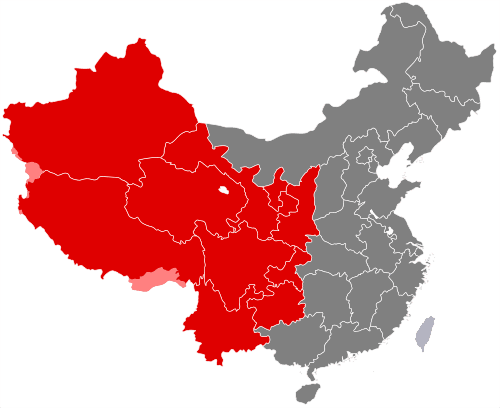
Western China
LOCATION
Geographical and cultural region in China
Westphalia
LOCATION
Region in Germany
Yangtze
LOCATION
Longest river in Asia, and the third-longest in the world

Yellow
LOCATION
Primary color between green and orange in the light spectrum

Yemen
LOCATION
Country in West Asia
York Beach
LOCATION
Unincorporated community in Maine
your Middle Eastern
LOCATION
Location referenced in documents
Zhejiang Province
LOCATION
Province of China
Zhonguancun
LOCATION
Location referenced in documents
Statistics
Pages:100
Entities:635
Avg. OCR:94.8%
Sponsored