Back to People & Entities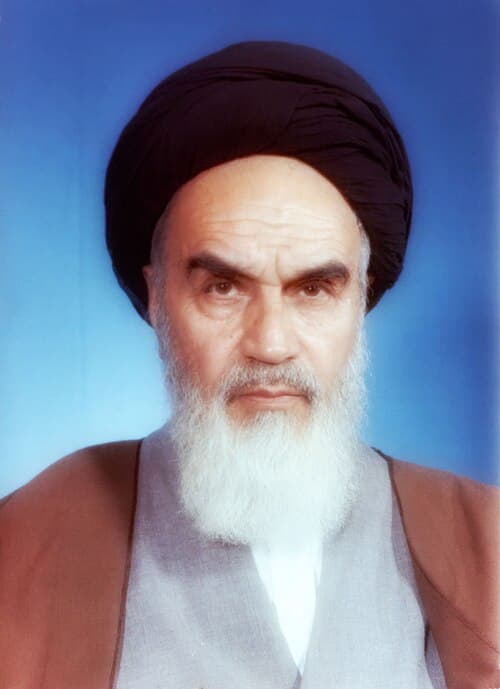



Khomeini
Person
22
Total Mentions
21
Documents
332
Connected Entities
Surname reference in documents
Document Mentions (20 of 21)
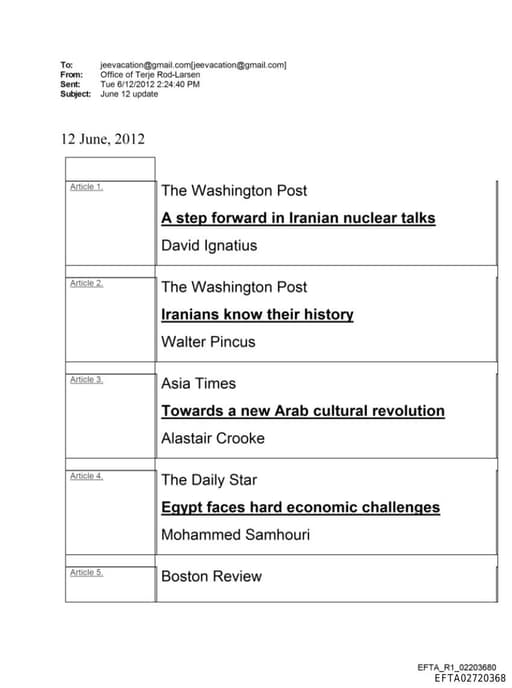
EFTA02720368.pdf
2 mentionsEFTA02720368
used nuclear reactor fuel as part of a multibillion-dollar deal to purchase American nuclear power plants. After 1979, according to Mousavian, the Khomeini revolutionary government decided against many power plants and the enrichment facility. The Bushehr nuclear power plant, EFTA_R1_02203686 EFTA027
. Though Americans saw the embassy seizure as a strike against the United States, within Iranian political circles it was seen as a clever step by Khomeini and his fellow mullahs to get rid of the Iranian exiles who had taken over the Iranian government in the wake of the 1979 revolution. There is ano
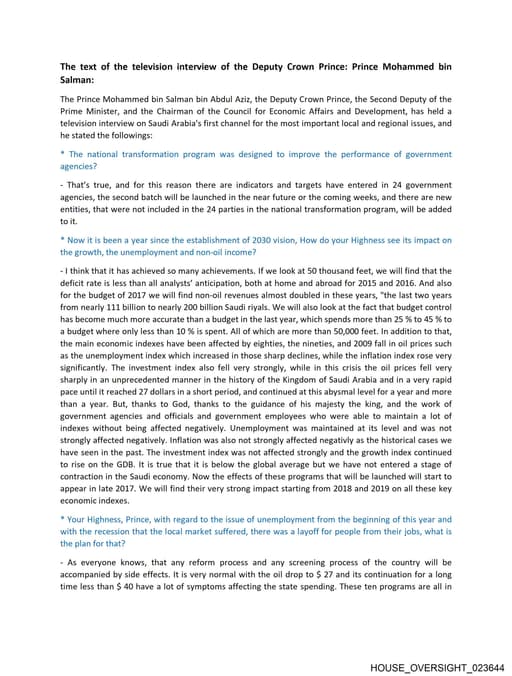
Untitled attachment 144446.docx
1 mentionHOUSE_OVERSIGHT_023644 - HOUSE_OVERSIGHT_023660
May 3, 2017Source: House Oversight Committee
s the regime is firmly convinced that his system is based on the ideology of extremism enshrined in the Constitution and stipulated in the command of Khomeini that he must control the Muslims of the Islamic world and the dissemination of the doctrine of Jaafari-Ethna Ashry ethnic of them throughout the Isla
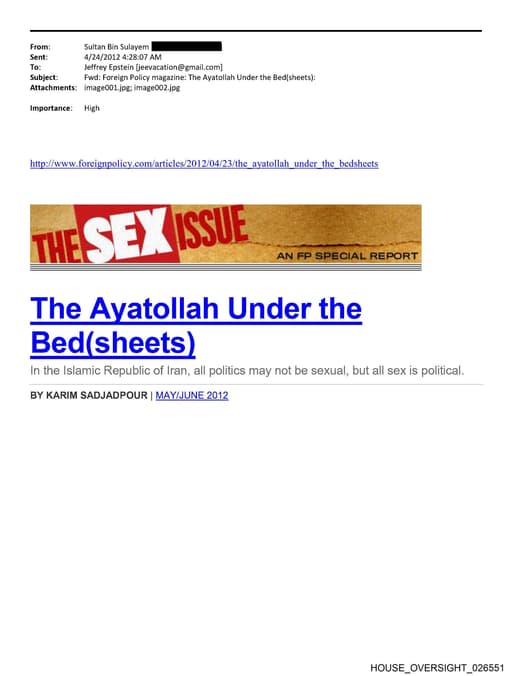
Page: HOUSE_OVERSIGHT_023659 →HOUSE_OVERSIGHT_026551 - HOUSE_OVERSIGHT_026562
1 mentionSource: House Oversight Committee
the revolution's father, the late Ayatollah Ruhollah Khomeini. Like all Shiite clerics aspiring to become a "source of emulation" (marja'’-e taglid), Khomeini spent the first part of his career meticulously examining and dispensing religious guidance on personal behavior and ritual purity that ranged from t
Page: HOUSE_OVERSIGHT_026553 →Sponsored
14 June.doc
1 mentionHOUSE_OVERSIGHT_031876 - HOUSE_OVERSIGHT_031911
Jun 14, 2011Source: House Oversight Committee
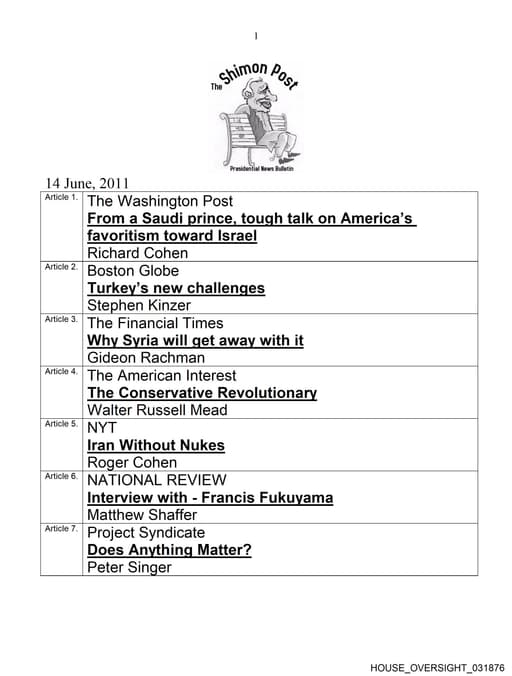
jad for various alleged frauds including, of all things, vote- buying in 2009! Ahmadinejad was booed during his June 3 speech commemorating Ayatollah Khomeini's death. Iran is characterized by what Farideh Farhi of the University of Hawaii recently termed "administrative chaos." That's not how you make a nu
Page: HOUSE_OVERSIGHT_031898 →EFTA00702176.pdf
1 mentionEFTA00702176
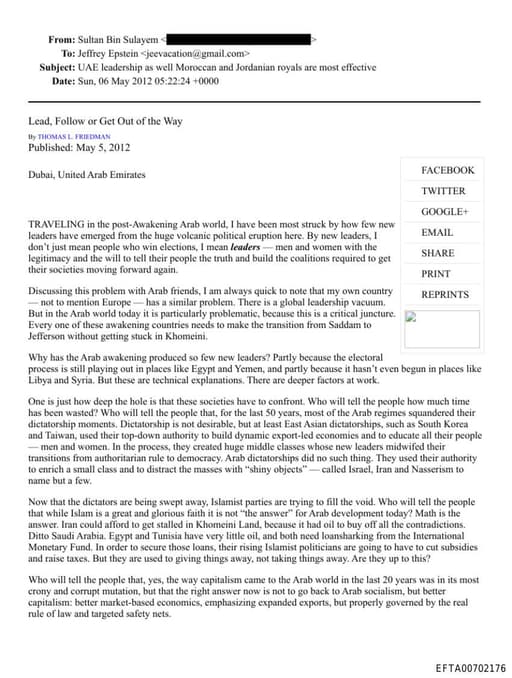
this is a critical juncture. Every one of these awakening countries needs to make the transition from Saddam to Jefferson without getting stuck in Khomeini. Why has the Arab awakening produced so few new leaders? Partly because the electoral process is still playing out in places like Egypt and Yemen,
EFTA00647756.pdf
1 mentionEFTA00647756
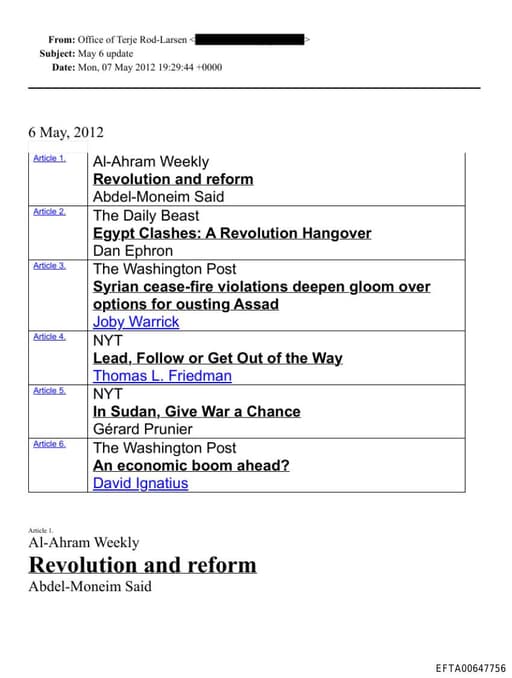
this is a critical juncture. Every one of these awakening countries needs to make the transition from Saddam to Jefferson without getting stuck in Khomeini. Why has the Arab awakening produced so few new leaders? Partly because the electoral process is still playing out in places like Egypt and Yemen,
Sponsored
EFTA00630287.pdf
1 mentionEFTA00630287
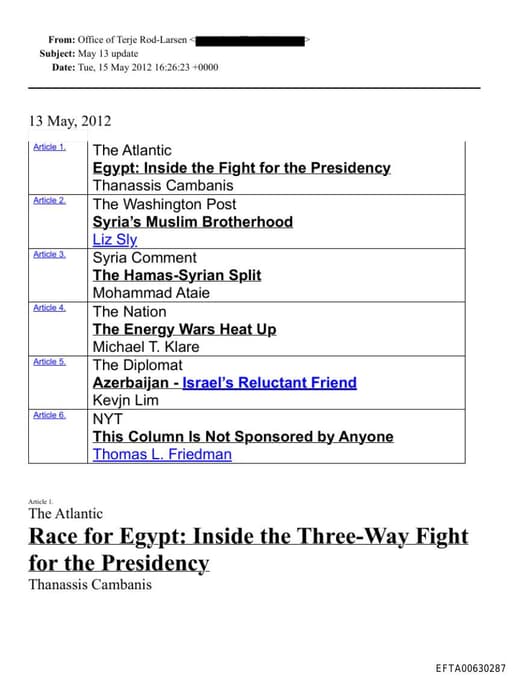
r goal of "exporting the Islamic revolution" would not succeed. No doubt that Arafat's close ties with Saddam Hussein, a nemesis of both Assad and Khomeini, and his concession to recognize Israel also widened the chasm between the PLO and the Islamic Republic. From Assad's standpoint, Arafat's relation
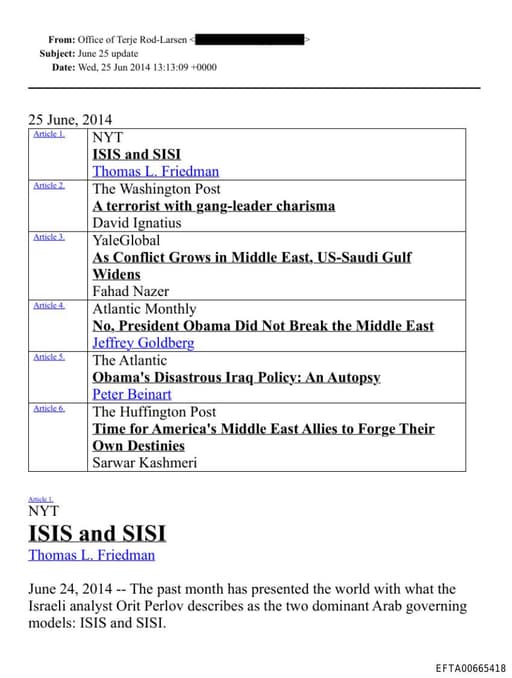
EFTA00665418.pdf
1 mentionEFTA00665418
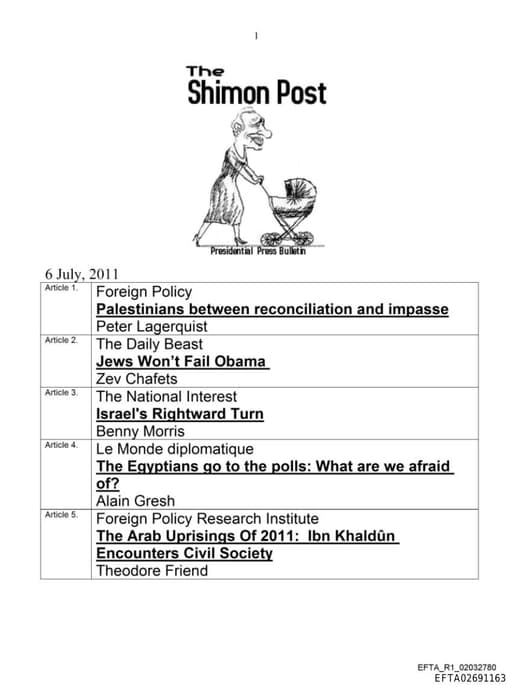
that appears under the eye-catching headline, "The Man Who Broke the Middle East." The man in question is not Sykes or Picot or Nasser or Saddam or Khomeini or George W. Bush or Noun al-Maliki, but Barack Obama. I often agree with Elliott, but I could not let this one go by without a response. Don't wor
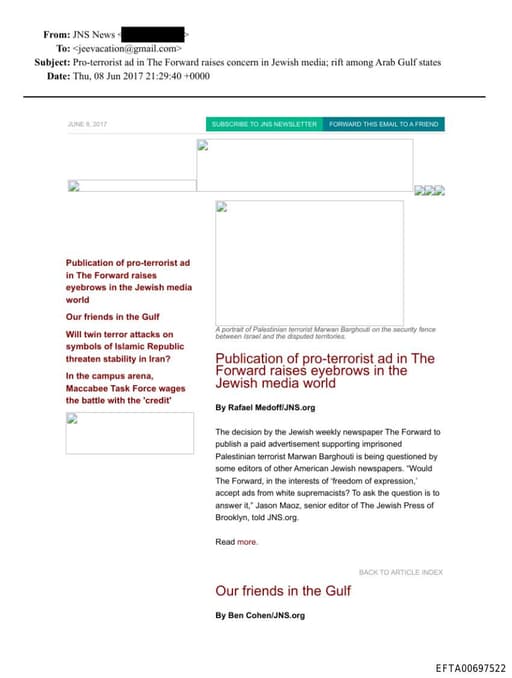
EFTA00697522.pdf
1 mentionEFTA00697522
ved within the U.S. Department of Defense for 28 years. Read more. EFTA00697523 The mausoleum of former Supreme Leader Ayatollah Ruhollah Khomeini. which was one of two prominent symbols of ran that came under attack June 7. BACK TO ARTICLE INDEX In the campus arena, Maccabee Task Fo
Sponsored
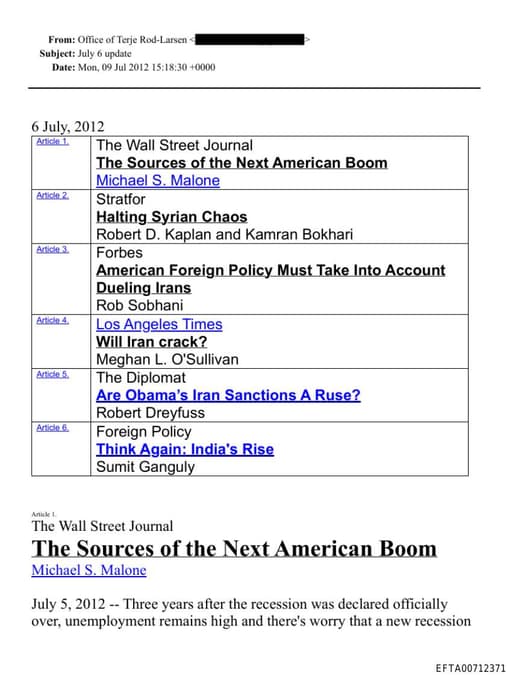
EFTA00712371.pdf
1 mentionEFTA00712371
nctions, corruption and mismanagement, oil exports are down by almost a half and production is nearing twenty year lows. Before the late Ayatollah Khomeini announced that "economics is for donkeys" Iran's oil production stood at close to six million barrels per day. Today, after thirty- two years of "th
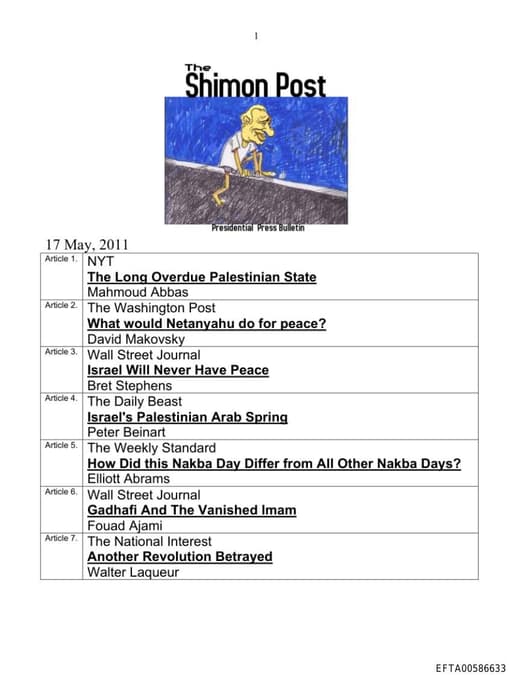
EFTA00586633.pdf
1 mentionEFTA00586633
egan to dawn on foreign observers and commentators. Some had their misgivings from the beginning, remembering Foucault's misguided enthusiasm about Khomeini and the Iranian revolution. But, they argued, Cairo was not Tehran—which is indeed undeniable. Articles began to appear arguing that revolutions ar
EFTA01367351.pdf
1 mentionEFTA01367351
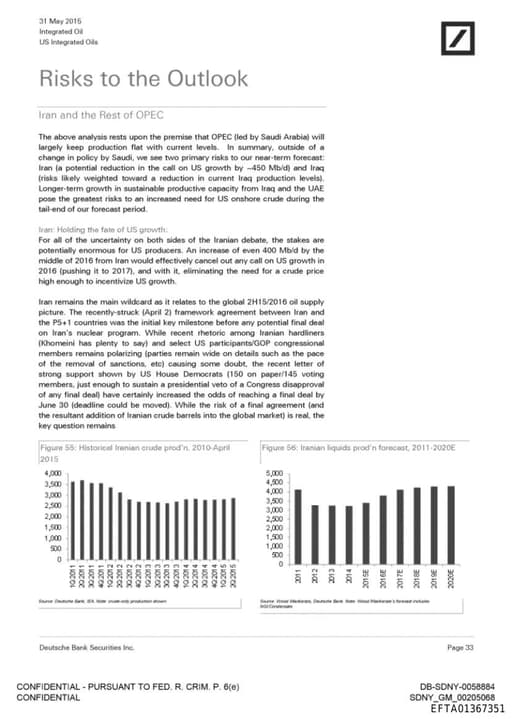
countries was the initial key milestone before any potential final deal on Iran's nuclear program. While recent rhetoric among Iranian hardliners (Khomeini has plenty to say) and select US participants/GOP congressional members remains polarizing (parties remain wide on details such as the pace of the
Sponsored
EFTA01840698.pdf
1 mentionEFTA01840698
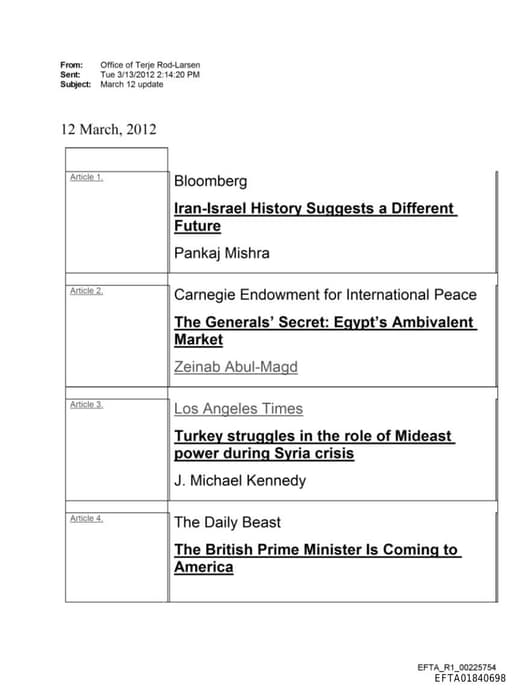
in the last years of the shah manifested a striving for local hegemony that transcended the country's strongest alliances with the U.S. and Israel. Khomeini's regime went on to reveal how even messianic ideologies can bow to long-established imperatives and dramatically different security environments.
EFTA01882540.pdf
1 mentionEFTA01882540
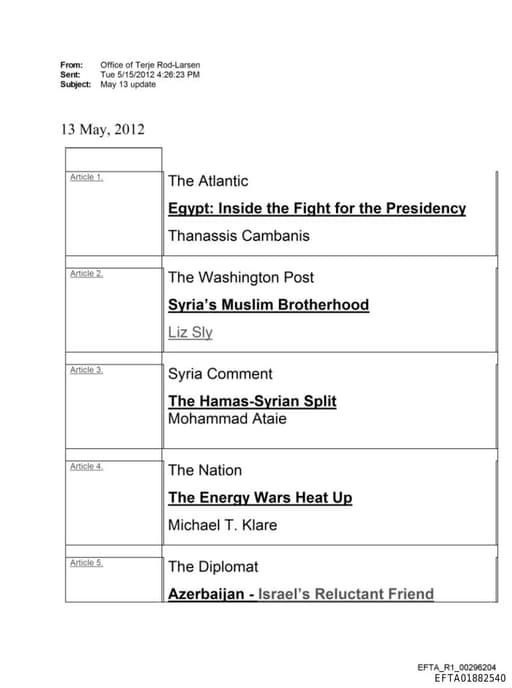
r goal of "exporting the Islamic revolution" would not succeed. No doubt that Arafat's close ties with Saddam Hussein, a nemesis of both Assad and Khomeini, and his concession to recognize Israel also widened the chasm between the PLO and the Islamic Republic. From Assad's standpoint, Arafat's relatio
EFTA01884020.pdf
1 mentionEFTA01884020
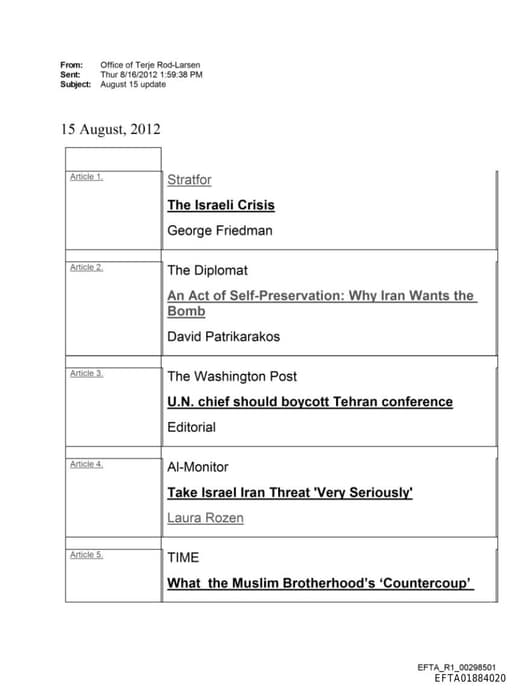
onversely, views the world as essentially hostile, and many hardliners argue for a national security policy based on the most atavistic elements of Khomeini's worldview: international institutions and diplomacy are symptoms of an inequitable world, and a farce — self-reliance is the only option. And if
Sponsored
EFTA02691163.pdf
1 mentionEFTA02691163
are ascribed a Shi'ite infallibility, supreme in faith, practice, and policy. Their Supreme Leaders have consigned thousands to death in the 1980s (Khomeini) and treat articulate liberal democrats today to prison and torture (Khamenei). Faith and the state are also interlocked, but differently, in the r
EFTA02722007.pdf
1 mentionEFTA02722007
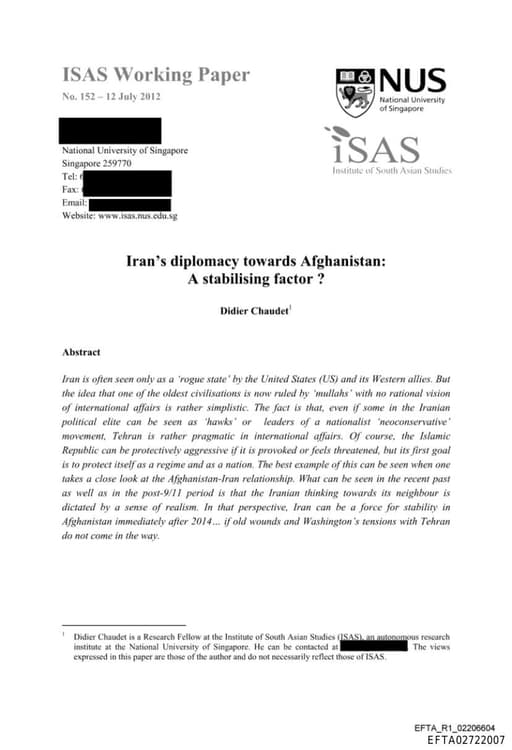
groups that would help project Iranian influence wherever it is in Tehran's interest? Besides, after the Iraq-Iran war (1980-1988) and the death of Khomeini, Iran moved towards what has been called the 'second Republic'. From that time, the Iranians understood their political and military limits, and fo
EFTA02722901.pdf
1 mentionEFTA02722901
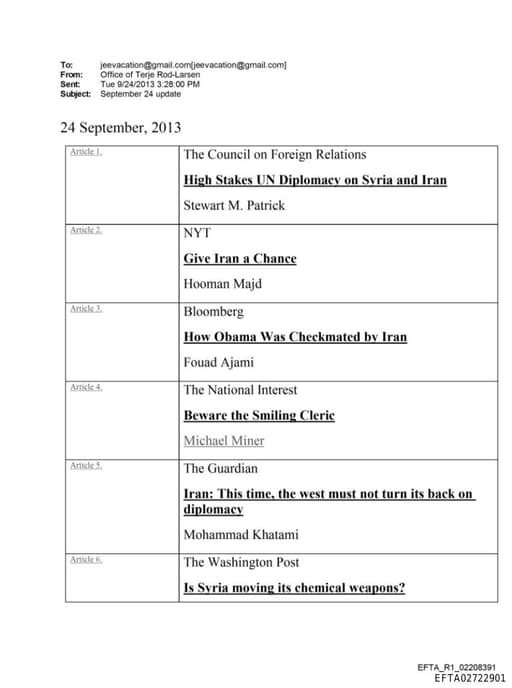
broke out in 1999 was crushed without mercy. Recalling Khatami Khatami was either a man powerless to defend the movement or a faithful son of the Khomeini order who was given leeway by the regime's powers that be. He couldn't defy the supreme leader, Ayatollah Ali Khamenei, or run afoul of the Islamic
Sponsored
EFTA02723111.pdf
1 mentionEFTA02723111
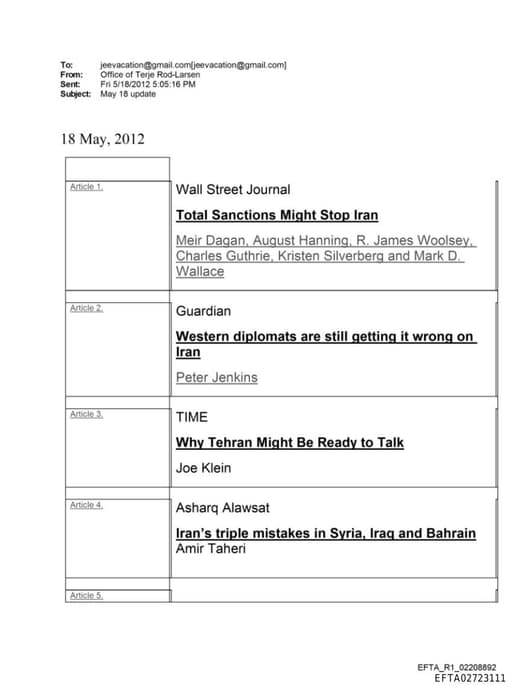
he Shah's decision to accept a United Nations' "assessment mission" to decide the fate of Bahrain had been one of his "greatest treasons". One of Khomeini's first acts after seizing power in 1979 was to create the so-called Bahrain Liberation Army. The group tried to invade Bahrain with a few boats bu
Untitled attachment 248655.pdf
1 mentionHOUSE_OVERSIGHT_023133 - HOUSE_OVERSIGHT_023197
Sep 17, 2014Source: House Oversight Committee
leaves Iran after months of domestic turmoil. 26 March 1979 Signature of the Egypt-Israel Peace Treaty in the White House. 1 April 1979 Ayatollah Khomeini proclaims the Islamic Republic of Iran after a national referendum. 2 April 1979 Prime Minister Begin visits Cairo. February 1980 Israel and Egypt
Page: HOUSE_OVERSIGHT_023153 →Sponsored
Connected Entities(20 of 332)
Barack Obama
PersonPresident of the United States from 2009 to 2017
16 docs16 co-mentions
Bashar al-Assad
PersonPresident of Syria from 2000 to 2024
14 docs14 co-mentions
George W. Bush
PersonPresident of the United States from 2001 to 2009
14 docs14 co-mentions
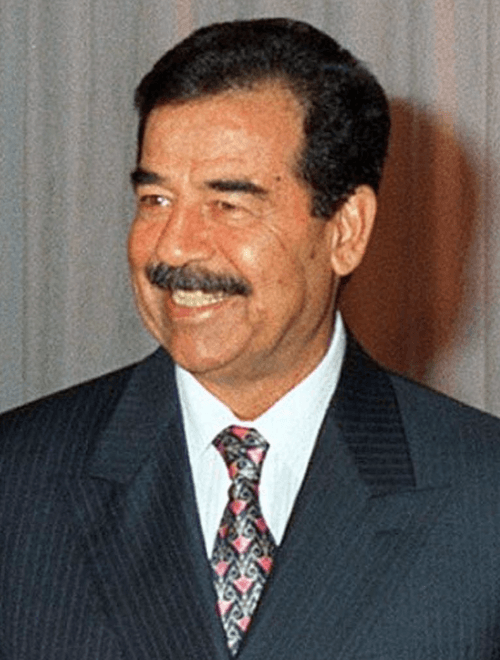
Saddam Hussein
PersonIraqi president, army officer and Baathist politician (1937–2006)
13 docs13 co-mentions
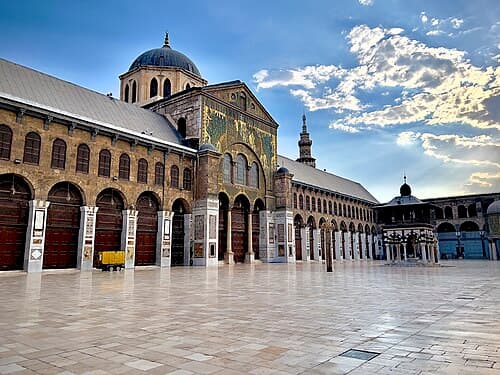
Damascus
LocationCapital and largest city of Syria
12 docs12 co-mentions
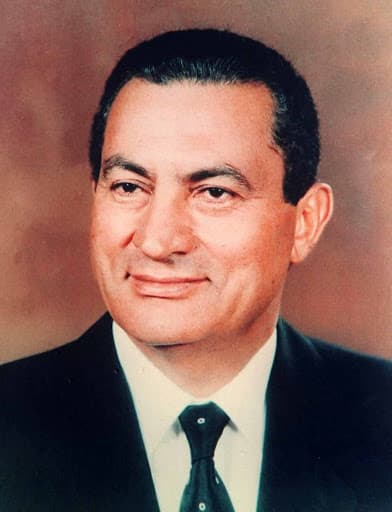
Hosni Mubarak
PersonPresident of Egypt from 1981 to 2011
12 docs12 co-mentions
Tunisia
LocationCountry in North Africa
11 docs11 co-mentions
Tehran
LocationCapital city of Iran
11 docs11 co-mentions
United States
LocationCountry located primarily in North America
11 docs11 co-mentions
Lebanon
LocationCountry in West Asia
10 docs10 co-mentions
Yemen
LocationCountry in West Asia
9 docs9 co-mentions
Terje Rod-Larsen
PersonNorwegian diplomat
9 docs9 co-mentions
Middle East
LocationGeopolitical region encompassing Egypt and most of Western Asia, including Iran
8 docs8 co-mentions
Cairo
LocationCapital city of Egypt
8 docs8 co-mentions
Bahrain
LocationCountry in the Persian Gulf
8 docs8 co-mentions
Marc Rich
PersonAmerican commodities trader (1934–2013)
8 docs8 co-mentions
Benjamin Netanyahu
PersonPrime Minister of Israel (1996–1999; 2009–2021; since 2022)
8 docs8 co-mentions
Baghdad
LocationCapital city of Iraq
7 docs7 co-mentions
Istanbul
LocationLargest city in Turkey
7 docs7 co-mentions
Gamal Abdel Nasser
PersonPresident of Egypt from 1956 to 1970
6 docs6 co-mentions