EFTA00191587_sub_004 - EFTA00191587_400
Document Information
Bates Range
EFTA00191587_sub_004 - EFTA00191587_400
Pages
100
Original Filename
EFTA00191587.pdf (email 1, pages 1-658)
Document Content
Page 301 - EFTA00191587_301
GRANT I. UN Cite as 2'C F dering a hearing or in the scope or dura- tion of a stay can be corrected by courts of appeals through the issuance of man- damus. 6 Moore, Federal Practice, 9 54.10 [4], at 87 (2d ed. 1955). Here. however, appellant has of requested 1 such relief, see Zamore Goldblatt, 2 Cir., 1953. 201 F.2d 738, t e stay was to continue only until the next motion day of the court in Albany, and the issue would doubtless have been settled long ago if the government had complied with the order to show cause instead of taking this appeal. The appeal is dismissed for lack of ap- pellate jurisdiction. MOORE, Circuit Judge (dissenting). This appeal tests the regularity of the proceedings instituted by the taxpayers (referred to as "the taxpayer") to en- join the United States Attorney from submitting to a Grand Jury any evidence of any crime whatsoever, or taking any other proceedings, against them. The injunction thus has the effect of enjoin- ing pro Canto the Grand Jury in its time- honored function of investigating crime. The reason asserted in the petition sup- porting this drastic request is in sub- stance, that, although "petitioner, either personally or through employees in his office, did make available to said (In- ternal Revenue) agents all of his books, records and papers and those of his wife, including among others, daily log books, check books, bank statements, bank books, cancelled checks, stock records, books and papers," that he did not do so "for purposes of any criminal investiga- tion." The taxpayer sought a return of these papers and an injunction against their use (and leads therefrom) by an order to show cause pursuant to Rule 41(e) of the Federal Rules of Criminal Procedure. This Rule permits a person "aggrieved by an unlawful search and seizure" to move the district court for the return of the property and its suppression as evi- dence. Of the grounds specified in the Rule the only one possibly applicable is that "the property was illegally seized ITED STATES 171 24 143 MOP without warrant." The order was sought "to initiate this special proceed- ing." It was issued ex parte on Febru- ary 26, 1960 and enjoined the govern- ment from submitting any evidence (re- gardless of any relationship whatsoever to the material sought to be suppressed) pending the determination of the applica- tion. Since the return date was March 21. 1960, the minimum period of injunc- tion was 24 days. The date of entry of an order after decision could have ex- tended this period substantially. Simultaneously a motion was made. also without notice for an order pursuant to Rule 26(a) of the Federal Rules of Civil Procedure, for leave to serve notice of taking depositions of various govern- ment agents prior to the expiration of 20 days after the commencement of "this action." The affidavit supporting this ex parte "civil procedure" motion recites that "this action" is the order to show cause under the "criminal procedure" rule. Again without notice this motion was granted. On March 4, 1960, the court issued a further order to show cause "why an order should not be made dissolving the injunction" and vacating the first order of February 26th. On March 8th the court concluded that a hearing should be held and reserved decision on the motion to dissolve the injunction until the hear- ing had been held. From the order of March 8th the government appeals. In summary, an order to show cause— at best a motion under section 41(e) of the criminal rules—containing a "with- out notice" injunction of 24 days or more simultaneously with its issuance is meta- morphosized into a civil "action" on the basis of which another "without notice' order for leave to take depositions under section 26(a) of the civil rules is issued. Under what authority of law is this baffling procedure conducted? Certainly some legal justification must be found before approving the steps here taken. Despite the fact that no jurisdictional sanction is given in any of the grants specified in 28 U.S.C.A. §§ 1331-1358, as EFTA00191887
Page 302 - EFTA00191587_302
172 282 FEDERAL REPORTER, 2d SERIES pointed out in Centracchio I Garrity, 1 Cir., 1952, 198 F.2d 382, at page 385: "it has long been accepted that where evidence, obtained by an un- constitutional search and seizure in violation of the Fourth Amendment, is in the hands of a United States attorney, a federal district court may entertain and grant relief on a petition, filed even prior to any in- dictment, seeking a return of the papers or property unconstitutional- ly seized and the suppression of the same as evidence. (Citing cases)" This court in Lapides I United States, 2 Cir., 1954, 215 F.2d 253, at page 254. described a somewhat similar proceeding as follows: "Appellant's 'motion' was in ef- fect a complaint initiating a civil action seeking suppression of evi- dence said to have been illegally ob- tained and to restrain the United States Attorney from presenting such evidence to the grand jury. The suit thus began before any criminal proceedings by the govern- ment against appellant had been in- stituted, and his appeal was there- fore not from an interlocutory order entered in the course of a criminal suit. Accordingly, the order deny- ing his motion was a final and ap- pealable order." If the order to show cause be tanta- mount to a civil action (and apparently the taxpayer would so regard it by seek- ing to avail himself of the civil deposi- tion rules), then the other civil rules are equally applicable. Federal Rules of Civ- il Procedure 65(b) specifically provides that every temporary restraining order "shall expire by its terms within such time after entry, not to exceed 10 days, as the court fixes, unless within the time so fixed the order, for good cause shown, is extended for a like period or unless the party against whom the order is directed consents that it may be extended for a longer period." The language of this Rule is signifi- cant. The restraining power of the court is restricted and by the words "shall ex- pire" the order became self-terminating in 10 days, i. e., March 7th. No good cause for the permissive extension was shown nor was any extension granted. Therefore even if the injunction had had any effect under the guise of a tem- porary restraining order between Feb- ruary 26th and March 7th it could con- tinue thereafter only as a preliminary injunction. The order of March 8th of necessity had to be an order "refusing to dissolve" an injunction. The fact that the court's memorandum-decision-order did not use the words "granted" or "de- nied" is not determinative. The in- junction was continued by the order and hence must be regarded as a refusal to dissolve it. The entire purpose of the temporary restraining order rule would be frustrat- ed if it were allowed to be disregarded at will. Ten days was the maximum period during which the enjoined party was to be restrained without opportunity for appellate review. Over the years courts have become more and more re- luctant to enjoin without notice; rules and statutes express this policy. The right of appeal from a preliminary in- junction is a purposeful exception to the general rule requiring finality. Since "preliminary" by definition precedes "final," the presently imposed restraint must be preliminary because the order to be entered after any hearing will be final. Although I agree that an appeal cannot be taken from a temporary restraining order this limitation applies only to this type of order as authorized by law. The very "label" argument advanced by the majority cannot create an order which had no legal being after March 7th mere- ly by calling it a temporary restraining order. The trial court states that his powers of restraint are supported by precedent. citing In re Fried. 2 Cir., 161 F.2d 453. 1 A.L.R.2d 996: Application of Bodki D.C., 165 F.Supp• 25 and Lapides United States, 2 Cir., 1954, 215 F.2d 25 . EFTA00191888
Page 303 - EFTA00191587_303
GRANT v. OM cite vs 282 r Upon the appeals by the taxpayers and the government in Bodkin after a stipu- lation by the taxpayers "to grant the government all the relief to which it could be entitled on a successful appeal" the appeal was dismissed as moot. How- ever, the district court's judgment was vacated and the complaint dismissed. This court specifically referred to our expre isapproval of Bodkin in United States Sclafani, 2 Cir., 1959, 265 F.2d 408. Examining the Bodkin case, a situ- wion most comparable to the present case appears, i. e., a motion to suppress and restrain under Federal Rule of Criminal Procedure 41(e). depositions under Federal Rule of Civil Procedure 26. The same grounds, in substance, were advanced, namely, that the original voluntary surrender of their books by the taxpayers for tax audit became in- voluntary when subsequently facts were thereby disclosed indicating criminal lia- bility. The hearing must have been in the nature of a full-scale trial because over 1,000 pages of testimony were taken. Bodkin,' expressly disapproved. does not furnish a precedent as to proce- dure. Lapides, as here, was a pre-indict- ment order to show cause. As this court on review said, "Nothing in said order suggested that the hearing thus set was to be a preliminary hearing only" (215 F.2d 2.53, 256). Nor was any question there raised as to the nature of the in- junctive provisions. As to the substantive law, whether the papers on which the order to show cause was granted be regarded as a Rule 41(e) motion or as a complaint in a civil action or even as a unique hybrid, they must possess legal sufficiency. Giving to the taxpayer's affidavit the most liberal con- struction as a complaint and at the same time regarding the same papers as an ap- plication for a preliminary injunction pending trial and final judgment of the issues there tendered, it fails to meet the legal requirements for suppression. Stripped of its conclusory assertions, the I. "See United Stings v. Schtfenl, 2 Cir., 265 F.2d 408, which exPreally diup- proves ►latter of Bodkin, D.C.E.D.N.Y. TED STATES 173 .24 tea ONO) taxpayer alleges that some time after he had voluntarily made available his books he was "shocked" when he was advised that as a result of the investigation crim- inal proceedings might be instituted. that he had thought, as the agents had represented, that a "routine" examina- tion only was being made and that the agents had never "implied or said that there was the remotest possibility that either fraud or criminal proceedings were under consideration." In Sclafani it was held that under quite similar circumstances "the failure to disclose the changing course of the in- vestigation is not fraudulent or deceit- ful" (265 F.2d 408, 414) and that: "A 'routine' tax investigation openly commenced as such is devoid of stealth or deceit because the ordinary taxpayer surely knows that there is inherent in it a warning that the government's agents will pursue evidence of misreporting without regard to the shadowy line between avoidance and evasion, mis- take and willful omission. "'Surely defendant was aware that, if a "routine audit" revealed evidence of criminal liability, the agent would not ignore it merely be- cause he was primarily concerned with civil liability. • * ' A statement that the purpose of an in- vestigation is a "routine audit" is not the equivalent of a promise that only civil liability will be considered regardless of what the examination reveals. Nor would any accountant or businessnuti so understand it.' United States Wolrich, D.C.S.D. N.Y.1954, 119 F.Supp. 538, 540 (Dimock, "Moreover it is unrealistic to sug- gest that the government could or should keep a taxpayer advised as to the direction in which its necessari- ly fluctuating investigations lead. The burden on the government 105.11. 165 F.Supp. 25." 2 Cir., 21.14.1 V. 2d 56. EFTA00191889
Sponsored
Page 304 - EFTA00191587_304
174 282 FEDERAL REPORTER, 2d SERIES would be impossible to discharge in fact, and would serve no useful pur- pose." he same principle was stated in Russo United States, 2 Cir., 1957. 241 F.2d 5 (Clark, then Chief Judge. Lumbard and Waterman, C. JJ.). The Fourth Circuit rejected a taxpayer's contention which the court stated as follows: "The contention seems to be that revenue agents who secure the con- sent of a taxpayer to an examination of his books with intent to obtain evidence and use it In a criminal prosecution, are guilty of deceit un- less they divulge their purpose, and that the obtaining of information in such a manner violates the Fourth Amendment and its introduction in evidence violates the Fifth Amend- ment: and even if the examination is begun solely to ascertain the civil liability of the taxpayer and evi- dence of crime is unearthed, the tax- payer must be warned and given an opportunity to withdraw his con- sent, or all information subsequent- ly obtained is inadmissible in criminal prosecution." Turner United States, 4 Cir., 1955, 222 F. 926. 930. And in Centracchio I Garrity, 1 Cir., 1952, 198 F.2d 382, at page 387, the Court said: "On the face of the petition in the present case, and certainly on the evidence offered by petitioner at the hearing before the district court, it is clear that the evidence in ques- tion did not come into the possession of the government officials in viola- tion of petitioner's rights under the Fourth Amendment. He volun- tarily turned over the evidence, and made the disclosures, to the agents of the Internal Revenue Bureau, for the purpose of a determination of his income tax liabilities." In conclusion I cannot reconcile the result reached by the majority with the language of the opinion. If. as they say. "Our holding that the order here sought to be reviewed is not appealable does not mean that district judges have unlimited discretion to stay the government or its agents from presenting evidence to a grand jury pending a hearing on a mo- tion to supress," how can the discretion be limited except by appeal? Assume that a judge disregards the 10 days' temporary restraining order limitation and grants 90 days. The restrained party has no other recourse than to move to vacate. A refusal to vacate continues the injunction. If this order is not ap- pealable, the discretion remains "unlim- ited." Add to this situation the ingredi- ent that the supporting papers do not support as a matter of law. How can relief against an improper injunction be secured except by appeal? It is all very well to say what difference does it make whether matters are called motions or actions, preliminary, temporary, civil or criminal but far more is at stake than mere words. Just as on the sea experi- ence has proven that a maximum of safe- ty for all is obtained by the formulation of definite rules of navigation and ad- herence thereto, so is it equally impor- tant that the procedures specified in legal rules be followed. The opinion of Judge Biggs of the Third Circuit (a cir- cuit which has rather taken the lead in strict limitation upon ppenlability) is most apposite. Sims Greene, 3 Cir., 1947. 160 F.2d 512. ere the district court had disregarded the time provi- sions of Rule 65(b). He said at page 516: "It is settled that no temporary restraining order may be continued beyond twenty days unless the party against whom the order is directed consents that it may be extended for a longer period." Denying the motion to dismiss the ap- peal and reversing the order, the court concluded at page 517: "In our opinion the restraining order now in effect in the District Court must be treated as a tempo- rary injunction, issued without the consent of the defendant, in the face EFTA00191890
Page 305 - EFTA00191587_305
LIZZA AND SONS, Clips. an 1'. of his motion to dissolve it, and con- trary to the provisions of Rule 52 (a). It is clear that an appeal lies from temporary injunction. Deckert Independence Shares Corporation, 311 U.S. 282, 61 S.Ct., 229, 86 L.Ed. 182. The appeal at bar therefore may not be dismissed and the order restraining the de- fendant must be reversed." II Insofar as the cision of the Fifth Circuit in Connell Dulien Steel Prod- ucts, 5 Cir., 1957, 40 F.2d 414 (tempo- rary restraining order i ued after notice) differs from Sims Greene, I believe that the Third Circuit's interpre- tation better follows the words and in- tent of the Rule.' Follow' g the type of relief granted in in Sims Greene, I would hold that the order of larch 8th is an order refusing to dissolve an injunction and hence ap- pealable. On the appeal I would vacate the stay order of February 26th as ex- tended in effect by the order of March 8th. I concur with the majority in their views with respect to the lack of suffi- ciency of the petition because the law is clear that upon the facts therein alleged the taxpayer is not entitled to an order of suppression. In connection with the pre-indictment preliminary attacks upon evidence, which are apparently becom- ing increasingly popular, it might be well to remember the words of a distin- guished jurist (L. Hand, C. J.) in In re Fried. 2 Cir., 1947, 161 F.2d 453, 455: "It would be an intolerable burden upon the prosecution of crime, if it were possible to test in advance the competency of evidence which an accused, to say nothing of a prospec- tive accused, might be able to show was likely to be used against him. The protection of the individual from oppression and abuse by the I. The recent ease in the nil Circuit. P ennsylvania Motor Tr. Amen Port of Phila. M. T. Asia, 3 Cir., Mk. VS F.2d 031, is not to the contrary. There the D'ONFRO 175 Rd 175 MON police and other enforcing officers is indeed a major interest in a free society; but so is the effective pros- ecution of crime, an interest which at times seems to be forgotten." LIZZA AND SONS, INC., Plaintiff, Appellant, Daniel A. D'ONFRO et al., Defendants, Appellees. No. 5571. United States Court of Appeals First Circuit. Aug. 18, 1960. Action by general contractor against contractor and surety for breach of al- leged subcontract. The United States District Court for the District of Massa- chusetts, 186 F.Supp. 428, Charles Ed- ward Wyzanski, Jr., J., dismissed the complaint, and general contractor appeal- ed. The Court of Appeals, Hartigan, Circuit Judge, held that where, after negotiations, contractor drafted a con- tract and delivered it to general con- tractor, who made deletions, without con- tractor's manifested assent, and returned signed draft to contractor, contractor's subsequent compliance with general con- tractor's request for a copy of the draft did not constitute acceptance of the terms. Judgment affirmed. unreal was argue.' and dismissed within the permissive period authorised by Rule 00(b). EFTA00191891
Page 306 - EFTA00191587_306
384 272 FEDERAL DEPORTEE, 24 REUSS Under I.R.C.1939, § 27200(1), (f), and (k), 26 U.S.C.A. § 272(a) (1), (1, k), the first notice of deficiency was clearly sufficient; and since timely filing is made jurisdictional, the Tax Court correctly held th it could not hear the petition. Galvin C. I. IL, 2 Cir., 239 .24 166. Cases c ed, such as ilek C. I. It, 94 II .App.D.C. 97, F 458, and Teel C. 1. R., 27 T. . 5, affirmed 10 Cir., 48 F.2d 749, not hold to the 1 con- trary, while Eppleit II C. I. R., 7 Cir., 188 F.24 95, and Cole . I. ., 80 T.C. 665, affirmed 2 Cir., gift F.2d 13, are not in point, since in each of these cases the first letter had ban sent to the wrong ad- dress. The decision of the Tax Court Is af- firmed. Harold R. STEINER, Appellant, v. Theodore ROOM United States Coinage. stoner for the Southern District of Cat tong* Central Division, and Robert W. Ware, United States Marshal for the Southern Disttiot of California, Appel• tees. James B. FREW, Appellant, v. Theodore ROME, United States Contmi9 stoner for the Southern District of Call. torn* Central Division, and Robert W. Ware, United States Marshal for the Southern District of California, Appel. ken. Mime. Nos. 895, 596. United States Court of Appeals Ninth Circuit. Nov. 5, 1958. Accused, who had been indicted in the United States District Court for the Eastern District of Michigan for alleged- t mailing circulars in violation of the o.ne Mail Statute, and who had been arrested on the indictments at their resi- dences in the Southern District of Cali forma where proceedings for their re- moval were instituted before the United States Commissioner, brought suits in equity in the United States District Court for the Southern District of Cali- fornia against the United States Cont. missioner and the United States Marshal to enjoin their removal. The United States District Court for the Southern District of California entered orders dis- missing the suits on the merits and or- dered removal of accused, and accused appealed from the orders and made a motion in the Court of Appeals for a stay of removal pending disposition of the appeals. The Court of Appeals held that stay would be denied, on ground that courts of equity do not ordinarily re- strain criminal prosecution. Stay denied and appeal dismissed. Injunctiat Ow105(1) Where accused was indicted in United States District Court for the Eastern District of Michigan for alleged- ly mailing circulars in violation of Ob- scene Mail Statute and were arrested on such indictments at their residences in Southern District of California where proceedings for removal of accused were instituted before United States Commis- sioner, and thereupon accused filed suits in equity against United Statea Com- missioner and United States Marshal in United States District Court in Southern District of California to enjoin removal of accused, on ground that circulars were identical with circulars which had previously been adjudged properly mail- able in actions by third person against Los Angeles postmaster, and the District Court dismissed suits on merits and or- dered removal of accused, and accused appealed to Court of Appeals and made motion in Court of Appeals for order staying removal pending disposition of appeals, Court of Appeals would deny stay on ground that courts of equity do not ordinarily restrain criminal prosecu- EFTA00191892
Sponsored
Page 307 - EFTA00191587_307
STEIN= Cite a. in tions. 18 U.S.C.A. §6 1461, 1462; U.S. C.A.Const. Amend. 1. Brock. Fleishman & Rykoff, Holly- wood, Cal., for appellants. Laughlin E. Waters, U. S. Atty., Rich- ard A. Lavine, Jordan A. Dreifus, Ant U. S. Attys., Loa Angeles, Cal., for appel- lees. Before POPE, HAMLET and 103- ELSCII, Circuit Judges. PER CURIAM. The appellants have each been indicted in the United States District Court for the Eastern District of Michigan for al- legedly mailing circulars in violation of the "Obscene Mail Statute", 18 U.S.C.A. 1i 1461 and 1462 as amended August 28, 1958. They were arrested upon these in- dictments at their residences in the Southern District of California where proceedings for their removal were in- stituted before the United States Com- missioner. Thereupon each of them filed a suit in equity in the District Court for the District last mentioned against the Commissioner and the United States Marshal of said District, seeking to en- join their removal. The grounds stated for the injunction sought were that the circulars they were charged with having caused to be delivered by mail in the Michigan district were the identical cir- culars which had theretofore been ad- judged properly mailable, and whose mailing was held protected by the First Amendment in certain actions previous- ly brought by one Toberoff against the Los Angeles postmaater.1 Appellants al- leged in such suits in equity, that the judgments in the former actions had finally adjudicated that the circulars were properly mailable, that the indictments I. Appellants alleged in their respective complaints that after these lodgments had beat lead& they had purchased the business of the concern, which had bean operating them at the lime the post. muter had attempted to atop the mann,: of the circulars out of width those ac- tions arose. We do sot' reach the 'mos- don whether these Weiland were la F.td—te y. HOOKE S85 /Idea now pending had been sought only to harass the appellants, that the District Court in Michigan was without jurtsdic- tion to try appellant'', that the Govern- ment is estoppel by the rule of res Judi- cats, and of estoppel by judgment to prosecute appellants for mailing the cir- culars, and hence the removal should be enjoined and prevented. The court below dismissed these suits on the merits, on the ground that appel- lants had an adequate remedy at law. Thereafter the court below, acting through another judge, ordered the re- moval. These appeals were taken and now appellants move us to order a stay of the removal pending disposition of the appeals from the orders dismissing the equity suits. Appellees, in response, show that ap- pellants have given bail bonds on remov- al calling for their appearance in the Michigan District to answer the indict- ments there. By that procedure, appel- lees say, appellants are now under obli- gation to respond in the Michigan dis- trict, and no officer in the State of Cali- fornia has any further function to per- form in connection with their removal. Appellees move to dismiss the appeal as (1) moot, and (2) frivolous. We deny the stay upon those growl nab- cif sous to discussed in Beal Mis- souri Pacific R. Co., 312 U.S. 6, 61 S.Ct. 418, 420, 85 Ltd. 677, namely, that "courts of equity do not ordinarily re- strain criminal prosecutions." While that case dealt with an attempted re- straint of state prosecutions, we think the quoted rule is equally applicable to restraints of federal prosecutions. While great inconvenience will result from ap- pellants having to defend in Michigan, yet, as in the case cited, there is no show- ing at this date, and obviously could not sufficient privity with the original Parties so ite to permit application of the mlea of rot indicate or of collateral estoppel. Nor do we come to the queen= as to whether the judgments against the post- master bound the United State.. For the purpose of this order we assume that these questions may be answered in the af- firmative. EFTA00191893
Page 308 - EFTA00191587_308
386 272 FEDERAL REPORTER, u anis be, that more than one criminal prose- cution threatened. We find no reason here w appellants should be permitted to de from the ordinary rule that equity will not intervene in criminal prosecutions. Since a removal order is, under the scheme of the rules and the statutes, not appealable, we think it would frustrate that scheme if a defendant could, as at- tempted here, frame an issue in equity designed to force an adjudication in his home district of a defense that will be fully available to him at the place of the Indictment. The 1958 amendment of the statute suggests a further reason why the Congressional purpose to permit prosecutions at the place of receipt of the circulars should not be frustrated by the device here employed. See U. S. Code Congressional and Administrative News, 86 Cong., Second Session, 1968, vol. 2, p. 4012. The stay is denied and the appeal is dlamiased. Trod 1'. STOCKWELL Appellant, v. Barry FRIBERG et al., Appellees. No. 1.9867. United States Court of Appeals Sixth Circuit Dec. 14, 1959. Action for alleged loss of constitu- tional civil rights of plaintiff while in custody of city police and for alleged ille- gal transportation of his person into an- other state. The United States District Court for the Northern District of Ohio, Kloeb, J., rendered judgment dismissing complaint with prejudice, and plaintiff appealed. The Court of Appeals, held that order dismissing complaint with prejudice would be affirmed. Affirmed. Etall Bights t3='1,8 Complaint for alleged loss of consti- tutional civil rights of plaintiff while in custody of city police and for alleged illegal transportation of his person into another state was insufficient Fred T. T. Stockwell, Toledo, Ohio, on brief in pro. per. for appellant. William D. Driscoll and Ben Neldling- er, Toledo, Ohio (Louis R. Young, Direc- tor of Law, by William D. Driscoll, Tole- do, Ohio, on the brief), for appellees. Before McALLISTER, Chief Judge and MARTIN and CECIL, Circuit Judges. PER CURIAM. This case came on to be heard on this first day of December, 1969, the appel- lant having been duly notified of the setting. The appeal has been beard and con- sidered upon the brief and reply brief of appellant, Frank T. Stockwell, and upon the brief and oral argument of the appellee, appellant having made no ap- pearance at the hearing in person or by attorney. The action of appellant was to recover damages for the alleged loss of his "con- stitutional rights while in the custody of the Toledo, Ohio, Police, and for the il- legal procedures involved which brought about the illegal transportation of his person into the State of Michigan." He prayed an award of damages in the amount of Five Million Dollars (ss,000,- 000) and that the amount awarded by the jury be tripled and declared tax free. We find no merit whatever in appel- lant's contention that his constitutional civil rights have been violated; and, for the reasons stated in the opinion of Unit- ed States District Judge Kloeb, we affirm his order dismissing the complaint with prejudice. EFTA00191894
Page 309 - EFTA00191587_309
SGO 187 FEDERAL REPORTER, 2d BEZDIS ACKERMAN, Atty. Goo. I INTERNATION- AL LONOSHOREME 'S t WARE- HOUSEMEN'S UNION of an. it DEVINE., Calmly Atty. of el. INTERNA- TIONAL LONGsHOREME & WARE- HOUSEMEN'S UNION et M. (two oasis). I ACKERMAN, Atty. Gee. at al. INTERNA. TIONAL LONGSHOREMEN &WARE- HOUSEMEN'S UNION it at. Nos. 12300, 12301. United States Court of Apnea* Moth Circuit. Feb. 28, 1051. Rebating Denied May 25,1951. Two actions by International Longshore- men's & Warehousemen's Union, a voluntary unincorporated aseoriation and labor union, and others, against Walter IX Ackerman. Jr., Individually and as Attorney General of the Territory of Hawaii, and others, and against E. B. DeeIns, Individually and as County At. torney for the County of Maui, and others, to enjoin the prosecution of four criminal pro- ceedings pending in the Circuit Conrt of the Territory of Howell, ono for not and conspi- racy and three for riot. The United States District Court for the Territory of Hawaii, John Diggs, Jr., Circuit Judge, and Delbert E. Metzger and George B. Harris, District Judges, entered final decrees granting Permit- neat injunctions, and Walter D. Ackerman, Jr., and D. IL Benin, individually, and oth- ers. appealed. The Court of anneals, Pope, circuit Judge, held that Injunctions on ground of exceptional circumstances and Ir- reparable Injury were Improper. Judgments reversed with directions. I. COOrts 1311,262.7(24) In suit to enjoin prosecutions under Hawaiian unlawful assembly and riot act and conspiracy statute against members of union for alleged acts of violence during strike, alleged efforts of pickets to prevent nonstriking workmen from entering plant, beatings by pickets and assaults which al- legedly prevented loading of products on barges had no relation to any rights grant- ed by the Labor Management Relations Act, or Civil Rights Act or to constitu- tional rights to free speech, press, assembly and peaceful picketing so as to justify injunctive relief on ground that prosecu- tions interfered with collective bargaining or legitimate activity. Rcv.Laws Hawaii 1945, 22 11120, 11570-11584, National La- bor Relations Act, 29 U.S.C.A. § 151 et seq.; Labor Management Relations Act of 1947, 29 U.S.C.A. § 141 et seq., 8 U.S.C.A. §§ 41, 43, 44, 46, 47, 49(a); U.S.C.A.Const. Amends. I, 5, 6, 14, 19. 2. Courts '8n262.7(24) Alleged activity of pickets in force- fully preventing nonstriking workers front entering plant, beating of nonstrikers, and acts of force preventing supervisory em- ployees from unloading employer's product upon barges, involved conduct, policing of which was left wholly to territory of Hawaii in which alleged acts occurred. Rev.Laws Hawaii 1945, I§ 11120, 11570- 11584. 3. Courts 43=262.6(i) Mere proof of bad faith of prosecutors is not sufficient to warrant enjoining crim- inal proceeding. 4. Courts 4=462.6(2). 262.7(3) In suit to enjoin prosecutions under Hawaiian unlawful assembly and riot act and conspiracy statute against members of union for alleged acts of violence during strike, constitutionality of statutes could be determined as readily in criminal cases as in suit for injunction. Rev.Laws Ha- waii, 1945, §§ 11120, 11570-11584. 5. Courts Ss406-3(9) In suit to enjoin prosecutions under Hawaiian unlawful assembly and riot act and conspiracy statute against members of union for alleged acts of violence during strike, trial court's finding to effect that prosecutions were not begun in good faith was clearly erroneous. Rev.Laws Ha- waii 1945, §§ 11120, 11570-11584. 6. Injunction elm109 In suit to enjoin prosecutions under Hawaiian unlawful assembly and riot act and conspiracy statute against members of union for alleged acts of violence during strike, facts that no one had been prose- cuted under first statute except in connec- tion with labor dispute, that there were mass arrests, that excessive bail was re- quired, that police did not contemplate complaints until directed by prosecuting officers, and that statutes with heavy pen- EFTA00191895
Sponsored
Page 310 - EFTA00191587_310
allies were invoked for minor infractions, among other things, did not establish lack of good faith on part of prosecutors. Rev. Laws Hawaii 1945, g 11120, 11570-11584. 7. Courts 4b 262.6(4) In suit to enjoin prosecutions under Hawaiian unlawful assembly and riot act and conspiracy statute against members of union for alleged acts of violence during strike, where constitutionality of statutes could be tested in criminal proceedings and there was no evidence to support finding that criminal prosecutions were not in good faith, plaintiffs were not entitled to have prosecutions enjoined on grounds of ex- ceptional circumstances and irreparable injury. Rev.Laws Hawaii 1945, I§ 11120, 11570-11584. 8. Courts 4=262.8(t) In suit to enjoin pending prosecutions under Hawaiian unlawful assembly and riot act and conspiracy statute against un- ion members for alleged acts of violence during strike, where complaint contained no allegations to support injunction against future criminal proceedings but merely alleged that enforcement would deprive plaintiffs of their liberty and property without due process of law, that they would be prohibited from exercising rights of free speech, press and assemblage, and that union could not function, no injunction should have been granted. Rev.Laws Ha- waii 1945, §§ 11120, 11570-11584. 9. Courts 4=0508(I) Federal court cannot interfere in ease where proceedings are already pending 'in state court. to. Courts st=.432 It is not function of federal court of equity to exercise supervisory control over action of territorial court. II. Injunction 1=105(1) Rule that equity jurisdiction does not extend to enjoining pending criminal prosecutions has no exceptions, and extra- ordinary circumstances will not create ju- risdiction. ACKERMAN I. DITELNATIONAL LONOSEWLEXEN'S t W. UNION at• as tat sidle° 12. Courts 4=262.6(l) Int uootloo I3.105(1) Equity will stay its hand with respect to criminal proceedings, always when they are pending, and ordinarily when they are threatened, and rule is applied both by state courts and by federal court when asked to enjoin criminal proceedings in federal court. IS. laluaellon I) Rule that equity will stay its hand with respect to criminal proceedings, always when they are pending, and ordinarily when they are threatened, is a principle express- ing sound policy that processes of criminal law should be permitted to reach orderly conclusion in criminal courts where they belong. 14. Courts .3=262.8(0 Ordinarily, federal court should not interfere with state officers charged with duty of prosecuting offenders against state laws. 861 15. Courts 4=462.4(5), 432 Where equitable interference with state and territorial acts is sought in fed- eral courts, judicial consideration of acts of importance primarily to people of state or territory should as a matter of dis- cretion be left by federal courts to courts of the legislating authority unless excep- tional circumstances command different course. Walter R. Ackerman, Jr., Atty. Gen. Territory of Hawaii, J. Gamer Anthony, Special Deputy Atty. Get, Rhoda'. Lewis, Asst. Atty. Gen., Richard K. Sharpies', Deputy Atty. Honolulu, T. H., for sr pellants. Bouslog & Symonds and Harriet Bous- log, all of Honolulu, T. H., for appellees. Thomas M. Waddoups, Samuel P. King, Edward N. Sylva, H. R. Hewitt, W. B. Stephenson and J. Donovan Flint, all of Honolulu, T. H., for Bar Association of Hawaii, as amicus curiae. Before DENMAN, Chief Judge, ORR and POPE, Circuit judges. EFTA00191896
Page 311 - EFTA00191587_311
862 187 FEDERAL REPORTER, id BEELER POPE, Circuit Judge. These are appeals from judgments in two actions brought by the International Longshoremen's & Warehousemen's Un- ion (ILWU), a labor union, and by certain individual members of that union, to en- join the prosecution of four criminal pro- ceedings pending in the circuit court of the Territory of Hawaii, one for riot and conspiracy, and three for riot. The court below entered final decrees granting per- manent injunctions as prayed, against the Attorney General of the Territory, the County Attorney and Deputy County At- torney of the County of Maui, and in one case the County Chief of Police. The criminal charges grew out of certain disorders which occurred during separate strikes by sugarworkers, and pineapple workers, members of the ILWU union. On the morning of October 16, 1946, during the sugarworkers strike, some three to four hundred members of that group were in a picket line, four columns deep, before the entrance to the sugar mill of Maui Agri- cultural Company at Paia, on the Island of Maui. Five workmen employed in the mill appeared for the purpose of crossing the picket line and going to work. The same men had attempted to pass through to work the previous day, but had been pre- vented because the pickets stood shoulder to shoulder. On the 16th a number of police were on hand.' As the mill whistle blew the five men, escorted by the police, started toward the mill entrance. Two hundred of the pickets converged on the five men and pushed them back. Upon a second attempt to pass the five workmen and the police were pushed back 10 or 12 feet farther. This ended the attempts to enter the mill. There is no finding that any blows were struck. I. The opinion of the district court states that at this time "After certain prelim- inary conversations between members of the ILWU. &intake, Joseph Kobetektite. and others, respecting the entry of the five workmen to the mill it was stated by KahnIonia that If the Svc men tried to cross the picket line. 'police or no police; there would be violence and bloodshed." 82 F.Supp. 63, 70 In consequence of this incident some 75 men have been indicted, charged with riot and conspiracy under the Territorial un- lawful assembly and riot ad, Chap. 277 Rev.Law of Hawaii, 1945, §§ 11570-11584, and the Territorial conspiracy statute, Rev.Laws of Hawaii, 1945, § 11120.2 The other three criminal proceedings grew out of incidents later occurring in connection with the pineapple workers strike, on the Island of lanai, also in the County of Maui. On July 14, 1947, as several supervisory employees of the Ha- waiian Pineapple Company, not members of the union, were about to load upon a barge some pineapples picked before the strike and then in bins upon the wharf, about 300 union pickets led by union "picket policemen" ran toward the men on the wharf, yelling "at the tops of their voices", caught and beat one of the men, chased and "punched at" another, forcing him and another man to jump into the water to escape, broke open the bins and threw pineapples at the barge and tug and at the men in the water. Two complaints, charging riot, were filed against persons accused of participating in this incident. In one case eleven defend- ants, and in the other, 36 defendants, were committed after waiving preliminary ex- amination, to await the action of the grand jury. On the day following the incident at the wharf. 20 to 25 persons headed by "union police" with arm bands, went to the rooms of two non-striking truck drivers employed by the Hawaiian Pineapple Com- pany on the Island of Lanai, and adminis- tered "a severe beating" to both of them. A complaint, charging riot, was filed against five persons charged with par- 2. The pending indictment la the second one in the same case. A plea to the first in- dictment. ehaeengiog its sufficient?. was denied by the circuit court and an inter- locutory appeal allowed to the Supremo Court of Hawaii, which construed the criminal statute, and held it constitution- al, but found the indictment fatally de- fective in form. Territory of Bewail v. Kabolokala, 37 !taw. 023. The snood indictment followed. EFTA00191897
Page 312 - EFTA00191587_312
ACKERMAN y. INTERNATIONAL cite as in ticipating in this affair. They also were committed awaiting action by the grand jury. The prosecution of these defendants and of the other defendants similarly bound over, has proceeded no further by reason of the injunctions issued by the court below. The individual plaintiffs in these actions are the defendants in the four criminal proceedings mentioned, plus two Officials of the union who purport to sue on behalf of themselves and all other members of the union in the Territory. Judgment in No. 12301 was based upon a complaint seeking to enjoin further prosecution of the proceeding in which the indictment was returned. The complaint in No. 12300 sought similar relief in respect to the three proceedings in which com- mitments had been made. Both complaints allege that in furtherance of the objectives of the strikes, which were to obtain better wages, hours, and conditions of employ- ment, the individual plaintiffs engaged in "lawful, peaceful and constitutionally pro- tected activities of speech, press and as- semblage and of peaceful picketing." The unlawful assembly and riot statute and the conspiracy statute are attacked as un- constitutional in that they are alleged to deprive plaintiffs of their rights of free speech, press and assemblage and will subject them to criminal prosecutions if they exercise their constitutional rights. It is alleged that the grand jury which found the indictment was chosen and com- posed in an unconstitutional manner. Pray- er was for injunction prohibiting the en- forcement of the criminal statutes men- tioned, that prosecution of the criminal proceedings be enjoined, and that the stat- utes be held unconstitutional. . • The trial courts recognized that the prayer for an injunction restraining the prosecution of criminal proceedings posed vri S. The case beard baton the decision in Steinbach Ho Bock Ka Loh Po, 336 U.B. 368, RP .Ct. 606, p3 IsEd. 741, by three judges who, although of the opin- ion they were properly constituted as • court of three judges under Title 28,1-13. C.A. 3 2281, held that If that section had no application, they were in any event • district court "sitting in bank". Since LONGSHOZEMENE 4 W. MiION 863 lid 000 serious difficulties, and in this connection quoted from the opinion of Chief Justice Stone in Douglas v. City of Jeannette, 319 U.S. 157, 163, 63 S.Ct. 877, 881, 87 LEA. 1324, as follows: "It is a familiar rule that courts of equity do not ordinarily restrain criminal prosecutions. No person is immune from prosecution in good faith for his alleged criminal acts. Its im- minence, even though alleged to be in violation of constitutional guaranties, is not a ground for equity relief since the lawfulness or constitutionality of the stat- ute or ordinance on which the prosecution is based may be determined as readily in the criminal case as in a suit for an in- junction. • • • Where the threatened prosecution is by state officers for alleged violations of a state law, the state courts are the final arbiters of its meaning and application, subject only to review by this Court on federal grounds appropriately asserted. Hence the arrest by the federal courts of the processes of the criminal law within the states, and the determination of questions of criminal liability under state law by a federal court of equity, are to be supported only on a showing of danger of irreparable injury 'both great and im- mediate?" But the trial court held that the facts of this ease were such as to take it outside of the ordinary rule that courts of equity will not enjoin criminal prosecutions; that it involved exceptional circumstances which permit injunctive relief,. and that there has been a disclosure of the "irreparable injury 'both greatI, nd immediate'", men- tioned in Douglas City of Jeannette, stn. pra. The court found two such special circum- stances. First, it said, "All collective bar- gaining in the Territory of Hawaii in our opinion is substantially affected by the two statutess as well as by the prosecutions the decision and an rulings were anent. mous, the dreumatanee of three Judaea participating we consider of no signifi- cance here. The extended opinion of the court la reported In 82 F.Supp. 65. 4. fl. e.. the unlawful assembly and not act and the conspiracy statute, both of which the court held unconstitutional.] EFTA00191898
Sponsored
Page 313 - EFTA00191587_313
864 181 FEDERAL REPORTER. 2d gusts conducted or about to be carried on there- under. Approximately thirty thousand members of the ILWU and the union it- self necessarily feel the impact of the stat- utes as does each employer in the sugar and pineapple industries. All labor re- lations in the Islands are clouded by them. On the records presently before us we think it is fair to state that equable or amicable relations betwe employers and employees in the Territo of Hawaii are cat 1 impossible while the es stand. The repercussions which arise from the en- forcement of these statutes of the Territory are such as to cause great and irreparable harm and damage to all labor relations in Hawaii" This portion of the opinion of the court was bottomed upon the case of A. F. L v. Watson, 327 U.S. 532, 66 S.Ct. 761, 90 L.Ed. 873. The trial court's opinion quoted from that case what was there said of the requirement of proof of "irreparable in- jury which is clear and imminent" as fol- lows: "That is a strict test. But we think appellants satisfy it. We reach that con- clusion on the basis of the allegations concerning the disruption of the collective bargaining processes and the injury to the unions and to the employers alike, if the closed-shop agreement is outlawed. As we have said, it is averred that there are about 500 contracts with Florida employers containing closed-shop agreements • 0 . 82 F.Supp. 65, 109. We are unable to perceive any resem- blance between the facts here and those in A. F. I.. v. Watson, supra. There it appeared that the plaintiff labor unions were engaged in negotiating closed shop agreements, as they asserted they had the right to do by virtue of the National Labor Relations Act, 29 L'.S.C.A. § 151 et seq. and that the proceedings which the At- torney General of Florida proposed to in- stitute against them. pursuant to the newly adopted Florida constitutional amendment, was an imminent threat to an entire sys- tem of collective bargaining, involving 500 contracts, and many thousands of em- ployees. 5. W 141 a see- (1,2] Here there is no showing of any attempted collective bargaining, or other legitimate union activity with which any act here charged to the defendants could possibly interfere. The evidence shows, on the contrary, that the activities in which the plaintiffs were engaged at the time of the occurrence out of which the criminal prosecutions arose had nothing to do with any right granted by the Labor Manage- ment Relations Act, 1947, he Civil Rights Act! or Amendments I, VI, XIV and XIX to the Constitution, n which plain- tiffs' rights are alleged to be founded. The activities and conduct of the plaintiffs here, (characterized by the trial court as the "illegal conduct of the strikers") in- volved the sort of conduct "policing of (which) is left wholly to the States. • • No one questions the State's power to tis police coercion by those me ." Inter- national Union, U. A. W. Wisconsin Employment Relations Board, U.S. 245, 233, 69 S.Ct. 516, 93 LEd. 651. Perhaps implicit in the triai court's finding that labor relations and collective bargaining were adversely affected, is the court's apparent view that the very ex. istence of an unconstitutional act upon the statute books operated as a psychological obstacle to labor activities and negotiations. Such an argument, if sound, would lead to the result that an injunction might issue in any case where an unconstitutional statute might constitute a mental bazar Thus the statute attacked in Douglas City of Jeannette, supra, was unquestio ably unconstitional, for the court so held in Murdock Pennsylvania, 319 U.S. 105, 63 S.Ct. 870, 87 LEd. 1292, yet the bill in the Jeannette case was held to be without equity. No doubt the invalid ordinance there was as much of a psychological hazard to the Jehovah's Witnesses, as the statutes here attacked could be to union labor. in The other exceptional circumstance which the court held justified enjoining the criminal proceedings, was found in the determination that the prosecution of these 6. 8 US.C.A. it 41. 43, 44. 46. 47. WO; 28 1.I.S.C.A. I 1343. EFTA00191899
Page 314 - EFTA00191587_314
ACHESJdA1f INTERNATIONAL Cite as 187 proceedings was not in good faith. The trial court did not undertake to cite any case in which proof of bad faith in a criminal prosecution was held to establish reason for departure from the ordinary rule that a court of equity will not entertain a suit to enjoin criminal prosecutions. The court evolved its conclusion that want of good faith was a sufficient reason for issuing such an injuncti n from the phraseology used in Douglas City of Jeannette, supra, that "courts of uity do. not ordinarily restrain criminal prosecutions. No person is immune from grosettaion in good faith for his alleged criminal acts." (Emphasis added.) The court reasoned that in in- serting the words "in good faith" in the quoted language, the court was at least implying that only prosecutions is good faith are immune from equity injunctions, and hence if bad faith be shown the crimi- nal prosecution may be enjoined. We think this purely textual analysis of the quoted language is not warranted, for to say that one is not immune from prosecution in good faith does not imply that one is im- mune from prosecution in bad faith, and may enforce that immunity by injunction. The trial court recognized that "the motive of the prosecutor is of course not relevant to the ordinary criminal proceeding." We cannot bring ourselves to believe that a defendant in a criminal case, who would not be permitted to plead or prove as a defense to the charge, that the prose- cutor's motives were bad, could neverthe- less by alleging such bad faith and the invalidity of the criminal statute, move into a court of equity and have those issues tried there. No case has been called to our attention which has applied the trial court's theory that proof of bad faith in the criminal prosecution is sufficient to 7. 01 the contrary, compare Kentucky y. Powers. 201 U.S. 1, 26 8.Ce. 887, 50 L Ed. 633. A claim of denial of constitu- tional rights and of official bad faith, op- pression and misconduct In the prosecu- tion of petitioner in a state court was made Is a petition for removal. Petition- er was remanded to the custody of the Butte authorities. Even where the bed faith charged anoint the prosecutor In- 117 LId—U LONGSHOREMEN'S a W. MIION 885 rid 40e warrant enjoining the criminal proceed- ings? The trial court has failed to note what appears to us to be the probable reason for the use of the words "prosecution in good faith" in the sentence quoted from the Jeannette case. Appellants have called our attention to the fact that the statement: "No citizen • • • is immune from prosecution, in good faith, for his alleged criminal acts", was first used in decisions following Hague v. C. I. 0., 1939, 307 U.S. 496, 59 S.Ct. 954, 83 LEd. 1423. Such decisions, thus referring to "prosecution in good faith", are Beal v. Missouri-Pacific R. Corp., 312 U.S. 45, 49, 61 S.Ct. 418, 85 LEd. 577; Watson v. Buck, 313 U.S. n 61 S.Ct. 962, 85 LEd. 4416, and Douglas I. City of Jeannette, supra. 01 We think a more likely explanation of the use of this phrase is that the Su- preme Court had in mind such cases as Hague v. C. I. 0., supra, in which it ap- peared that plaintiffs seeking to hold peace- ful meetings and to distribute literature were threatened with arrest under the void Jersey City ordinance, and their associates had been arrested and carried out of the city, all in line with a deliberate policy of excluding and removing plaintiffs' agents from Jersey City. Indeed, the Jeannette case, supra, 319 U.S. at page 164, 63 5.Q. at page 881, made specific reference to this aspect of the Hague case in distinguishing it. Another type of case is that represented by Ex parte Young, 209 U.S. 123, 28 S.Ct. 441, 52 LEd. 714, where the applicant for injunction was confronted with threatened prosecution under a statute imposing such large penalties he dare not test its validity by violation inviting prosecution. Be- cause of the special facts which were present in Hague v. C. I. 0. and Ex parte Young, the applicants for injunction had robed the knowing use of Milord teed- mon, sad a deliberate suppression of evi- dence, and hence was itself a denial of due process, the petitioner for federal court action (habeas corpus), was re- quired drat to exhaust hip remedy in the state courts. Mooney I Holoban, 2P4 101. 66 set. 840. 79 LEd. 791. Accord, Ex pane Hawk, 821 U.S. 114, 316, 64 8.0t. 448, 88 ups 672. EFTA00191900
Page 315 - EFTA00191587_315
8,86 187 FEDERAL REPORTER, Ed SERIES no reasonable opportunity to test their rights in the criminal cases. For this reason the threatened prosecutions there were not in good faith. In those cases could not be said, as it was in Douglas City of Jeannette, that "the lawfulness constitutionality of the statute or ordinance on which the prosecution is based may be determined as readily in the criminal case as in a suit for an injunction." Such, we think, is the case here. [5-7) Furthermore, we think want of good faith was not proven, and the court's finding in that respect clearly erroneous. The principal ground of bad faith is said to be that "no one has been prosecuted un- der the unlawful assembly and riot act ex- cept in connection with labor disputes". But unless riots did occur at places and tin- der circumstances not involving labor dis- putes which called for complaints which the prosecutor refused or neglected to file, the quoted statement has no significance. It is not claimed, and there was no allegation or proof that there were any such unprose- cuted violations. The remainder of the circumstances listed by the court's opin- ion as evidence of bad faith, it seems to us, are no more than expressions of the trial court's opinion that the prosecution I. The trial court's enumerstioe of the facts thought to show bad faith wee as follows: "In this connection the follow. lag facts stems* others in the Instant cases are pertinent: (1) (10, the mum arrests, and the very broad, Indeed, the too broad field, from which the police drew the defendant' In the various crim• bud proceedings after both the Pais and the Kau °Manna Harbor Incidents, demon- strated by the fact that the names of six- teen person, were stricken out of one of the complaints and that of ninety-three •rresta made os the Island of Cebu on Joly 18, 1947 only one person. viz. Mel- bore, was subjected to prosecution, all other complaints being nolle Premed; (b) the seating of persons is defendants in criminal proceedings from photographs taken by the police both prior and sub- sequent to the occurrence of the Ileums- lapin Harbor incident; • • • (oil the excessive ball required of many of the plaintiffs la the Instant eases: (2) the fact that Assistant Chief of Police Frei- tee did not read the unlawful assembly end riot act to the strikers daring the was too vigorous, or that the police officers rather than the prosecuting attorney, should have selected the statute under which com- plaint would be filed, or that the methods used in securing evidence were poor.' In our opinion these circumstances are in- sufficient to establish want of good faith. We must therefore disagree with the con- clusion of the trial court that the facts here present extraordinary circumstances to take this case out of the ordinary rule that a court of equity will not enjoin a criminal prosecution. But there is a further reason why, in our opinion, these cases cannot, in any 1 event, warra the granting of injunctions. In Babcock Noh, 9 Cir.. 99 F.2d 738, 739, this sou said: "In support of the decree appellee argues broadly that a court of equity may enjoin a criminal prosecution under a void statute where such prose- cution amounts to a wrongful invasion of a property right, [citing cases]. However, the present suit is not within the principle announced in these authorities. What was sought in those cases was relief against threatened, not pending, prosecutions; and in them the court proceeded upon the view that one is not compelled to test the con- stitutionality of an act by first incurring Pala or Kautealapau Incidents and did not contemplate the swearing out of a com• plaint against any of the plaintiff under that statute until directed to do so by the prosecuting officers of Maui County; (3) the repeated selection of the unlawful assembly and riot act with its heavy pen- shies as the vehicle for the prosecution of comparatively minor infractions of the criminal laws; (4) the baste with which the prosecuting officers of Maul County procured the second indictment of 'Cabe.. /cobalt and others when the first indict- ment was bold Invalid by the Supreme Court of Hawaii; (5) the fact. for we have found It to be a fact, that no one her been prosecuted under the unlawful assembly and riot act except In connec- tion with labor disputes at any time dun hog the life of the Territory; and (6) the fact that the maximum penalty under the unlawful assembly and riot act was increased from Iva jean' imprisonment to twenty rani imprisonment In 1929, following the Filipino workers' strike in 1924." EFTA00191901
Sponsored
Page 316 - EFTA00191587_316
ACKERMAN T. INTERNATIONAL LONOSHOREMEN'S & W. UNION 867 ate as ter rid 100 drastic penalties attached to its violation, nied. The court made no finding that fu- but may, under extraordinary circumstanc- ture prosecutions were threatened. es, appeal to equity for relief against the invasion of his property rights through the threatened enforc nt of the statute. Ex pane Young, 209 123, 28 S.Ct. 441, 52 LEd. 714; Fenner Boykin, 271 U.S. 40, 46 S.Ct. 492, 7 Ed. 927; Terrace Thompson [263 S. 197, 44 S.Ct. 15, LEd. 255]. He , no threat of the in- stitution of other criminal proceedings under the act is alleged in the bill or found to have been made. The relief sought is against the further prosecution of the pending case." [8] The injunctions here issued re- lated solely to prosecutions rhea finding.* There is no injunction against any threat. coed prosecutions. The complaints con- tained no allegations to support an injunc- tion against future or threatened criminal proceedings. The only allegation of future damage was that the criminal statutes "will deprive plaintiffs of their liberty and prop- erty without due process of law, in that plaintiffs will be prohibited from exercis- ing their rights of free speech, press and assemblage in violation of the Fifth and Fourteenth Amendments to the Constitu- tion of the United States," and that the union could not function "so long as the members of the said 1LWU are subject • • • to prosecution under statutes con- taining unconstitutional limitations." This falls far short of an allegation that these plaintiffs were threatened with prosecution under the statutes on account of peaceful picketing, publicizing, bargaining, or ex- ercising other constitutional rights and privileges. This defect in the complaints was called to the attention of the court and of the plaintiffs by motions which pointed out the failure to complain of threatened future action?* but the motions were de- S. The haienedoe bo No. 12301 was "from promedlog with the prosecution eon. menced is October. 1048." That in No. 12300, was "from proceeding with the prosecution commenced Anton 1. 1947." Both dates were prior to the commence- ment of the salts. 10. Motions for mon fleabite statement, [9] The rule stated in the Babcock case was that declared in Ex pane Young, 209 U.S. 123, 162, 28 S.Ct. 441, 455, 52 L.Ed. 714, as follows: "But the Federal court cannot, of course, interfere in a case where the proceedings were already pending in a state court" The sa rule was followed nt and applied in Cline Frink Dairy Co., 274 U.S. 445, 452-453, 7 S.Ct. 681, 71 L Ed. 1146. [10] The distinction stated in the Bab- cock case, between pending and threatened prosecutions, is founded upon certain fund- amental characteristics of equity, juris- diction. first to be noted is that stated in Douglas City of Jeannette, supra, 319 U.S. at page 165, 63 S.Ct. at page 882: "In any event, an injunction looks to the fu- ture." In the east before us all that is drawn in question are past acts. There is no proof or finding that for exercising lawful rights plaintiffs are threatened with future prosecutions under the statutes they assail. Thus, for the court below to assume to enjoin prosecution of the four pending proceedings is to assume to exercise a supervisory control over the action of the Territorial court. Such is not the function of a court of equity. The second circumstance basic to this distinction was pointed out in the quoted portion of the Babcock opinion which states that where the prosecution is threat- ened, not pending, "one is not compelled to test the constitutionality of an act by first incurring drastic penalties attached to its violation, but may, under extraordinary circumstances, appeal to equity • * *" etc. Ex pane Young, which dealt with a statute having drastic penalties, is a classic example of such a situation. Here, on the contrary, in the four pending actions, the to asmiat, and for summary Judgments recited: "The complaint fails to show that said plaintiffs are threatened with more than one criminal proceeding, or that anything at all is involved other than prosecution of an tile 00 of the criminal lows of the of Nswa0, with respect to ma era w ch have already *marred." EFTA00191902
Page 317 - EFTA00191587_317
868 187 FEDERAL REPORTER, 24 SERIES plaintiffs have at hand full opportunity to test their rights by defending in those proceedings. As this court said in Alesna v. Rice, 9 Cir., 172 Fit! 176, 377, "Had the prosecution of the information pro- ceeded, the jury might have acquitted the defendants, appellants, and the constitu- tional and other questions avoided. In any event, the appellants had a speedy and sufficient remedy at law by appeal to the Hawaiian Supreme Court, where the ap- pellants' arguments of the two contentions may have prevailed. Losing, there is the appeal here. In both appellate courts the practice gives primacy of consideration to criminal appeals." (11) The rule that equity jurisdiction does not extend to enjoining pending crim- inal prosecutions, has no exceptions. No extraordinary circumstances will serve to create such jurisdiction. 112,13) That equity will stay its hand in respect to criminal proceedings, always when they are pending, and ordinarily when they are threatened, is a rule of wide and general application under our legal system. It is a rule of the state courts in respect to criminal proceedings in the as or other state courts. Milton Dairy Co. Great Northern Ry. Co., 124 Minn. i t 144 N.W. 764, 49 R.A.,N.S., 951; State ex rel. Kenmore Wood, 155 Mo. 425, 56 S.W. 474, 48 1-. . . 596. Federal courts apply the same rule when asked to enjoin I criminal proceedings in he federal courts. Argonaut Mining Co. McPike, 9 Cir., 78 F2d 584; Whitehea v. Cheves, 5 Cir., 67 F.24 316, 317, certiorari denied 290 U.S. S.C. . Medalie, 2 Cir., 71 F.2d 671, certiorari enied 293 U.S. 592, 55 S.Ct. 108, 79 LEd. 686. It is a principle expressing a sound policy that the processes of the criminal law should be permitted to reach an orderly conclusion in the criminal courts where they belong. [14) But when the demand for an in- junction is presented to a federal court, asking an injunction against proceedings in a state or territorial court, the reasons of policy against any such action are multiplied because of the necessity of avoiding whenever possible conflict be- tween the two judicial s terns. This I t licy was stated in Fenner Boykin, 271 S. 240, 243, 46 S.Ct. 492, 3, 70 LEd. 7: "Ordinarily, there should be no inter- ference with such officers; primarily, they are charged with the duty of prosecuting offenders against the laws of the state, and must decide when and how this is to be done. The accused should first set up and rely upon his defense in the state courts, even though this involves a chal- lenge of the validity of some statute, un- less it plainly appears that this course would not afford adequate protection. The Judicial Code provides ample opportunity for ultimate review here in respect of fed- eral questions. An intolerable condition would arise, if, whenever about to be charged with violating a state law, one were permitted freely to contest its validity by an original proceeding in some federal court." • [15] That this policy applies to pro- posals to enjoin proceedings in the courts of Hawaii as well as to similar injunctions directed ainst state courts, we stated in Alesna Rice, supra: "The Jeannette case concerned the enjoining of state prose- cutions. We think the criminal laws of the Territory of Hawaii are entitled to the same protection. Section 86(c) of the Hawaiian Organic Act, 48 U.S.C. § 642, 48 U.S.C.A. § 642, provides that the United States District Court for the District of Hawaii 'shall have the jurisdiction of district courts of the United States, • •.' • • • This court has recognized that the Organic Act places the courts of the Territory of Hawaii in a relatively similar position to the federal judicial system as are e state courts. See Wilder's S. S. Co. Hind, in, 108 F. 113, 115, 116, affirmed 183 545, 22 S.O. 225, 46 L. Ed. 321, and eung Territory of Hawaii, 9 Cir., 132 KW 374, 378." And since our decision in that case, the Supreme Court stated the reason for assimilating the position of the Hawaiian urts to that of 38) State courts in Stainbaek Mo Hock Ke Lok Po, 336 U.S. 368, 69 S.C. 606, 614, 93 Ltd. 741, as follows: "Entirely aside from the question of the propriety EFTA00191903
Page 318 - EFTA00191587_318
BROOKS l aPENNSYLRANIA IL CO. sea tesellff Plage - ' of an injunction in any court, territorial fittest to prevent award of summary Jude- like state courts are the natural sources for meat against plaintiff. ' the interpretation and application of the Affirmed. acts of their legislatures and equally of the See, also, 91 P.Satip. 01. propriety of interference by injunction. i. Federal civil preradere.4=2410 We think that where equitable interference In action against railroad for alleged with state and territorial acts is sought in misdelivery of household goods transported federal courts, judicial consideration of under straight bill of lading issued by de• acts of importance primarily to the people fendant and in which plaintiff was named of a state or territory should, as a matter of as consignor and consignee, allegation in discretion, be left by the federal courts to affidavit submitted in opposition to defend- the courts of the legislating authority un- ant's motion for summary judgment, that less exceptional circumstances command plaintiff's contract with defendant called a different course." for shipment of goods to specified place Appellants argue that the district court in foreign country rather than to place was prohibited from granting the injunc- in United States to which defendant de• tions by § 2283 of Title 28, relating to in- livered the goods, do not pose a genuine junctions "to stay proceedings n a State issue of material fact and was insufficient court". As we said in Alesna Rice, su- to prevent award of summary i judgment. pra, we find it unnecessary to c Miler this 2. Carriers 6=44 question here. If plaintiff's contract with railroad Alesna Rice, au a, re. The rules expressed Babcock I Nob, for shipment of goods by railroad called supra, and in Alta for delivery at specified place in foreign quired the district to deny the in- country, but plaintiff authorized plaintiff's junctions prayed for. The judgments are agent to take delivery of goods in United reversed with directions to dismiss the States, defendant was justified in delivering suits. goods to plaintiff's agent in United States and could not be held liable for misdelivery of goods. BROOKS v. PENNSYLVANIA R. CO. PO. 199, Docket 21917. United States Court of Appeals Second Circuit. Argued March 13, 1951. Decided March 28,1951. John R. Brooks brought an action against the Pennsylvania Railroad Company for We- delivery of goods shipped on a straight bill of lading issued by defendant The United States District Court for the Southern Dis- trict of New York, entered a summary judg- ment which dismissed the complaint and the plaintiff appealed. The Court of Appeals, Per Curium held that allegation in plain- Off's affidavit submitted in opposition to mo- tion for summary Judgment did not rose a genuine Issue of material fact and was Insuf- Reverend John R. Brooks, pro se. fileakley, Platt, Gilchrist & Walker, New York City, Dennis P. Donovan and Robert L Conkling, New York City, of counsel, for appellee. Before SWAN, CHASE and FRANK, Circuit Judges. PER CURIAH. Plaintiff appeals from a summary judg- ment which dismissed his complaint in an action against the Pennsylvania Railroad Company for alleged misdelivery of house. hold goods transported under a straight bill of lading in which plaintiff was named as both consignor and consignee. Defend- ant moved for summary judgment on the grounds that (1) the uncontradicted evi- dence showed that proper delivery had been made; and that (2) the action was barred by re: judicata. The lower court held that EFTA00191904
Sponsored
Page 319 - EFTA00191587_319
644 181 FEDERAL REPORTER, 24 AERIES motion to annul, vacate and set aside his sentence and to direct his immediate re- lease from prison. There were nine counts in the indict- ment, all charging appellant's violation of section 338a, subdivision (a), of Title 18 United States Code [1948 Revised Crim• inal Code. 18 U.S.CA. § 876], in wilfully with intent to extort money, threatening to injure, and knowingly and with intent to extort money depositing in the United States Post Office letters containing threats to injure the person of the addressee. On motion of the United States Attorney, all counts of the indictment except the ninth count were dismissed. The defendant was found guilty on that count and was sen- tenced to fifteen years imprisonment The only material issue before us is whether the single count upon which the conviction rested states an offense. It is clear that it does. Even without inclusion of the first numbered paragraph of the ninth count, the offense condemned is plainly charged, in that averment is made that the defendant "did, on or about the 3rd day of May, 1948, in the City of Canton, County of Stark, State and Northern District of Ohio, then and there knowingly and with intent to ex- tort money from Joe Cohen deposit and cause to be deposited in a Post Office of the United States, to-wit, the Post Office at Canton, Ohio, to be sent and delivered by the Post Office establishment of the United States, a letter and communication postmarked Canton, Ohio, May 3, 1918, addressed to the said Joe Cohen and con- taining a threat to injure the person of the said addressee, • • • which letter and communication was then and there enclosed in a sealed envelope, postage pre- paid, a true copy of which envelope is marked Exhibit "Q", attached hereto, and by reference mule a part hereof; that a true copy of said letter and communication is marked Exhibit "R", attached hereto, and by reference made a part hereof; that said letter and communication was duly carried by the United States mail for de- livery into the City and County of San Francisco, Southern Division of the North- ern District of California, according to the direction thereon." The exhibited letter plainly threatens injury to the addressee Joe Cohen, Elks Club, San Francisco, California, and evinces the manifest intent to extort mono' from the addressee. The order of the district court denying the motion of appellant is affirmed. CITY OF MIANI I SUTTON et al. No. 13113. United States Court of Appeals Fifth Circuit. April 25,1050. Dnrward B. Sutton and Sarah R. Sutton. cluing bald flOkIl as the Sutton Jewelry Com- pany hmnght suit against the City of Miami to enjoin enforcement of city ordinance which would have effect of preventing plain- tiffs front holding proposed jewelry suction' between the hours of six In the evening and eight in the morning, on ground that era Dance, as applicable to them, violated pm- visions of the federal constitution, and for a declaratory decree. The United State* District Court for the Southern District of Plotkin, John W. flatland, J., rendered a judgment for the plaintiffs, and the defend- ants appealed. The Court of Appeals. Rus• sell, Circuit Judge, held that plaintiffs were not entitled to injunctive relief. Judgment reversed with directions to dis- miss. I. Deal judgment 4=128 I al u natio n emest2) Those operating a jewelry store were not entitled to a declaratory judgment or to injunction from federal district court enjoining city from enforcing ordinance which would 'have effect of preventing them from holding proposed jewelry auc- tions at their establishd place of business between the hours of six in the evening and eight in the morning, on ground that ordinance, as applicable to them, violated provisions of the federal Constitution be- cause they would be subject to multiple EFTA00191905
Page 320 - EFTA00191587_320
CITY OF MIAMI Ow se ta fines and imprisonments under the ordi- nance and would allegedly suffer damage to their reputation U.S.C.A.Const. Amends. 4, 14. 2. lelusetion 4DI0S(I) Equity courts do not ordinarily restrain criminal prosecutions. 3. Criminal law d=r3I Immunity from prosecution in good faith for his alleged criminal acts is not accorded to any citizen or member of the community. 4. lajumetloa 4=105(1) The imminence of a criminal prosecu- tion, even though alleged to be unauthorized and hence unlawful, is not alone ground for relief in equity which exerts its extraordi- nary powers only to prevent irreparable in- jury to the plaintiff who seeks its aid. & Courts dmKeyn The imminence of a criminal prosecu- tion, even though alleged to be unauthorized and hence unlawful, is not alone ground for relief in a federal equity court particularly where the only threatened action is the prosecution in the state courts by state offi- cers of 'an alleged violation of state law with the resulting final and authoritative determination of the disputed question whether the act complained of is lawful•or unlawful. S. Ceerts 4m50$(7) The federal courts are without juris- diction to try alleged criminal violation of state statutes. 7. Corte 4w4$9(2) The state courts are the final arbiters of the meaning and appropriate application of state statutes, subject only to review by the United States Supreme Court if such construction or application is appropriately challenged on constitutional grounds. & Coons itio508(7) Interference with the process of the criminal law in state courts, in whose con- trol they are lodged by the constitution, and the determination of question of criminal liability under state law by federal equity courts can be justified only in most excep- 7.1.44 tional circumstances and upon clear show- ing that an injunction is necessary to pre- vent irreparable injury. & Courts etri5080 In the exercise of the pound discretion which guides the determination of federal equity courts, scrupulous regard must be tad for the rightful independence of state governments, and a remedy infringing that independence which might otherwise be given should be withheld if sought on slight or inconsequential grounds. 10. Declaratory Judgment 4m3S7 Injunction 01=l05(2) The restrictions on the propriety of the grant by a federal court of an injunction to restrain institution of prosecutions for violations of state or municipal penal laws are in no wise relaxed because application for an injunction may be presented along with a request for a declaratory decree. It. Declaratory Judgment 4=l23 Where issuance of an injunction was the only means by which a declaration of rights as to the constitutionality of city ordinance as applied to plaintiffs could effectively be enforced or bring about a termination of the controversy, the legal impossibility of obtaining such injunctive relief rendered a declaration advisory only and therefore futile to effectuate a settle- ment of the controversy. • SUTTON 645 John D. Marsh, Asst. CV Atty., J. W. Watson, Jr., City Atty., Miami, Fla., for appellant. George C. McCaughan, Miami, Fla., and Arthur A. Kimmel, Miami Beach, Fla., for appellees. Morris Buick, Herbert S. Shapiro and Richard E. Gerstein, Miami Beach, Fla., for amicus curiae. Before HUTCHESON, Chief Judge, and WALLER and RUSSELL, Circuit Judges. RUSSELL, Circuit Judge. The City of Miami, appellant here, and its officers, were each and all enjoined by order of the trial Court from enforcing the EFTA00191906
Page 321 - EFTA00191587_321
646 181 FEDERAL EXPORTER 2d SERIES City's Ordinance No. 3535 against Dur- ward B. Sutton and Sarah B. Sutton, doing business as Sutton Jewelry Company. By this appeal the City contends that the Court erred in exercising jurisdiction, in granting the injunction, and in denying the appel- lant's motion to dismiss. Under the facts of this case and the law properly ap- plicable thereto, we sustain the contention that the Court erred in overruling the mo- tion to dismiss, and in granting an injunc- tion. The complaint of the appellees, seeking a declaratory decree and injunctive relief, outlined what was denominated a "unique method of doing business and effecting sales" of jewelry and other related mer- chandise, which while it concededly has some of the features of a "public auction" sale is "materially different from such auc- tion sales in important respects," these claimed differences in law and fact being fully stated.' It is alleged that the appellees had prepared for inaugurating the proposed method of sales by acquiring a substantial stock of articles, the disposal of which was prevented by the threat of a series of vexa- tious arrests, any one of which would ir- reparably damage the good reputation of the complainants which they had enjoyed in the community since 1925; and that the threatened and intended enforcement of the ordinance had injuriously restricted them in their business and resulted in a diminution of their profits. A copy of Ordinance No. 3535 of the City of Miami, attached as an exhibit to the complaint, provides stringent regula- tions governing the sale and offer to sell of jewelry, watches and diamonds "at pub- lic auction" and requires the securing of a permit to conduct such auction; the film- I. It is stated in the briefs that this proposed plan would le operation and legal effect be the same as th referred to and upheld in Zaconick City of Hollywood, D.C., 85 F.Supp. , in which the contentions now urged were approved by the trial Court Is the present ease and the enforcement of an ordinance identical with Miami's #3535 enjoined. It la apparent that the plan of sale proposed to be adopted by the COM. PlainIOU is in substantial accord with ishing of detailed reports of operations by permittees; and subjects violators to a fine of not exceeding $500.00 or imprisonment not to exceed 60 days, or both) The com- plaint specifically concedes that fraud is likely to occur at auction sales of diamonds, jewelry and other like articles conducted after nightfall and by artificial light dur- ing the excitement of competitive bidding. when the high bid is final without oppor- tunity for daylight inspection and examina- tion. Indeed the selection and proposed adoption of "appellees' detailed method" is said to be prompted by the desire to elimi- nate the possibility of fraud or deception. Appellees set forth as the controversy be- tween the parties their contention that the provisions of the ordinance, and particular• ly specified sections thereof, are not appli- cable to their proposed method of doing business, but if so, are violative of the provisions of Amendment 4 and Amend- ment 14 of the Constitution of the United States, whereas the City contends and as- serts that the ordinance is applicable to ap- pellee 's detailed method of doing business, and the ordinance and all of its provision is constitutional. The officials of defendant have "threatened to arrest the plaintiffs and • • • all of their employees and charge each of them with a violation of the provi- sions of such ordinance if and when they should conduct their business • • • within the corporate limits of said defend- ant municipality between the hours of six in the evening of any day and eight in the morning of the following day, and if and when the plaintiffs employ in the conduct of their business the methods detailed here- inabove. • • • " The appellees prayed that the Court decree the provisions of the ordinance and the specific provisions re- the discussion and rulings of the Court there made. 2. A similar ordinance has been upheld by the Florida Courts. The opinion in Doconiek v. City of Hollywood. supra, t 185 F.Supp. 1 recognises that the Levy case (Levy Stone), 07 Pia. 458, 121 So. 583. 585. old "a municipal ordinance similar Ili not identical) In Its terms to the ordinance here in question" was valid as applied to "'auction sale' at night of certain dosses of mercbandise." EFTA00191907
Sponsored
Page 322 - EFTA00191587_322
OITY OF MAXI v. 817TTON ea at. as 1St lard Set !erred to as not applicable to the plaintiffs and their proposed method of conduct of their business; or if the Court holds the provisions of such ordinance applicable to the plaintiffs and such methods, it declare and decree such ordinance unconstitutional and enjoin and restrain the municipality and its officers from enforcing or attempt- ing to enforce the ordinance during the pendency of the cause or until the further order of the Court, and that upon the final hearing the injunction be made permanent Eight days after the filing of the com- plaint the municipality 'responded with a motion to dismiss on the grounds: that no federal question was involved; that there was no matter stated warranting injunc- S. "It le Ordered and Decreed herein as • .follows: "1. flat on the plaintiffs compliance with the provisions of the paragraph hereof numbered 2, and the subject to the provisions of the paragraph hereof numbered 3. the defendant municipality. and each of its officers, agents, servants and employes be. and they hereby are, enjoined and restrained until the further order of the Court, from enforcing or at- tempting to enforce against the plaintiffs any of the provisions of that certain ordi- nance of the defendant municipality. to- wit: Ordinance #3635, dated April 7, 1049. "2. That the plaintiffs be, sod they hereby are, required to die herein a good and sufficient bond in the penal sum of $1000.00 with good and sufficient surety or sureties. Payable to the defendant. and conditioned that the plaintiff will pay. or amuse to be paid, to the defendant if and in the event the plaintiffs' application for this injunctive order shall be later held to hero been wrongful, all costs. damages and expenses (including reason- able attorney's fees) which the defend- ant shall pay or Incur sod which shall result from, or be occasioned by, such wrongful application: and the injunctive provisions of the paragraph hereof num- bered 1, shall not become or be effective unless and until the plaintiffs have hied, and the Clerk of this Court shall have approved such Donde. "3. That the plaintiffs be. and they hereby are, required to conduct and operate their business (the nature and character of which are set forth In their complaint) in strict accordance with the methods outlined and detailed in such complaint, and that they be, and they tin relief; that the complainants had a complete and adequate remedy at law in the courts of the State of I•lorida; that there was no such showing of irreparable injury u would warrant the issuance of an in- junction; and that the-ordinance was valid and constitutional: Oh the same day the Court, after a hearing, granted an injunc- tion upon terms and provisions as in the order set forth.a On January 16th, upon a further hearing, the motion to dismiss the complaint was ordered denied and •the de- fendant granted twenty days within which to file its answer. [1] The temporary injunction issued in this case had factual support only in the al- legations of the complaint There was in hereby are, farther required (a) to in- form and advise all prospective or potent- dal purchasers, prior to offering any article for sale, of the conditions or pro- visions subject to which any proposal to buy such article is to be accepted by the plaintiffs: (b) to prominently display, at all times, in their place of business a notice or bulletin in and by which pros- pective or potential purchaser. shall be effectively and adequately informed and advised of the plaintiffs' methods of do• log business (as outlined and detailed in their complaint): and (e) to furnish and deliver to each prospective or Po- tential purchaser, whose conditional or provisional proposal to buy any ankle, offered for salt by the plaintiff. shall have been accepted by him, a written or printed memorandum in and by which the plaintiffs shall legally and effectively bind themselves contractually to refund to him or her the full amount of the purchase price of such article condition- ally and provisionally paid to or deposited with the plaintiffs by such prospective or potential purchaser if and la the event he or she, of any time within thirty days after the submission of such conditional or provisional proposal, with or without the assignment of any reason or excue• for doing so, shall redeliver such article, in the same condition it was in at the time of the delivery to such prospective or potential purchaser, to the plaintiffs and regent such refund; and the ap- Pliability and effectiveness of the in- junctive provisions of the paragraph hereof number 1, are dependent and con• ditioned on strict compliance by the plain- tiffs smith the provisions of this Para- frank" EFTA00191908
Page 323 - EFTA00191587_323
848 181 FEDERAL REPORTER, 2d BER/ES opposition the defendant's motion to dis- miss. While for the purposes of the motion to dismiss, the factual allegations of the complaint may be taken as true, this is nevertheless not the preferable foundation for the issuance of an injunction against the institution of a prosecution for viola- lion of a municipal ordinance. Regardless of this, however, the facts which may be considered as thus established are insuffi- cient to authorize the issuance of an injunc- tion. The complaint fails to show "the im- minence and immediacy of proposed en- forcement, the nature of the threats actual- ly made, and the exceptional and irrepara- ble injury which [the complainant] would i sustain i those threats were carried out." E Watson Buck, 313 U.S. 387, 61 S.Ct. 962, 966, 85 L. d. 1416 Particularly here there is and can be no showing of irreparable in- jury, for there is not even a claim of in- jury to complainants established and going business, but merely a claim that the haz- ards posed by the contemplated enforcement of the ordinance prevents complainants from embarking upon a new enterprise, from trying out, it may be said, their pro- posed unique method of merchandising. The only loss which the complainants could sustain is speculative, dependent upon what, if any, profits they might make if they are permitted to begin and carry on the conduct of their sales in the manner which they as- sert is legal. They arc not disturbed in any feature of their business dealings which they allege they have conducted since 1925. Since there is no danger to their already established business, but merely apprehen- sion of punishment for, and prospective loss of profits in being prevented from, carrying on their proposed new method of sale, the question of apprehended multiple prosecu- tions could only arise upon continued and persistent engagement in the nel business in disregard of the adjudications by the municipal or state courts in which the ques- tion of the legality of the proposed business should properly be made. It is true that they are confronted with the necessity of determination of whether their proposed business operations fall within the regula- tions of the ordinance, but the situation is no different from numerous instances in the law "where a man's fate depends on his estimating rightly, that is, as the jury sub- sequently estimates it, some matter of de-- gree. If his judgment is wrong, not only may he incur a fine or a short imprison- ment, 1 as here; may incur the penalty of death;" Nash United States, 229 U.S. 373, 377, 33 S. t. 780, 781, 57 LEd. 1232. The complaint presents no ground author. izing the issuance of an injunction to pre- vent multiple prosecutions. ) [24] The law applicable to th situa- tion here is clearly stated in Beal Mis- souri Pacific R. Corp. 312 U.S. 45, S.Ct. 418, 420, 85 LEd. 577, as follows: "ft is a familiar rule that courts of equity do not ordinarily restrain criminal prosecu- tions. In re Sawyer, 124 U.1 , 211, 8 L S.Ct. 482, 488, Eil. 402; & Ear- n= Mfg. Co. City of Los ngelcs, 189 U.S. 207, 23 S. t. 41 -17 LEd. 778; Hy. grade Provision Co. Sherman, 266 U.S. 497, 500, 45 S.Ct. 141, 69 L.Ed. 402. No citizen or member of the community is im- mune from prosecution, in good faith, for his alleged criminal acts. The imminence of such a prosecution even though alleged to be unauthorized and hence unlawful is not alone ground for relief in equity which exerts its extraordinary powers only to oi it prevent irreparable injnry t he plaintiff who -s its aid. Terrace Thompson. 263 197, 4, 44 S.Ct. IS, 7, 68 LEd. 255; ackard Banton, 264 U.S. 140, 143, 44 S.Ct. 257, 8, 68 LEd. 596; Tison & Bro. United Theatre Ticket Offices Ban• t ton, 273 U.S. 418, 428, 47 S.Ct. 42 27, 71 LEd. 718, 58 A.L.R. 1236; Clin Frink Dairy Co., 274 U.S. 445, 452, 47 . . 681, 682, 71 LEd. 1446. "This is especially the case where the only threatened action is the prosecution in the state courts by state officers of an al- leged violation of state law, with the result- ing final and authoritative determination of the disputed question whether the act corn- plainel of is lawful or unlawful. Hark- radcr Wadley, 172 U.S. 148, 19 S.Ct. I19 43 Ltd. 399; Spielman Motor Sales Coat Dodge, 295 U.S. 89, 95, 55 S.Ct 678, 79 LEd. 1322. The federal courts arc without jurisdiction to try alleged criminal EFTA00191909
Page 324 - EFTA00191587_324
CITY OF ?CAM v. BUTTON 610 at. se 151 P.ta 644 • violations of state statutes. The state courts are the final arbiters of their mean- ing and appropriate application, subject only to review by this Court if such con- struction or application is appropriately challenged on consign ' nal grounds. rounds. Hy- grade Pr ision Co. Fenner Boykin, 27 rman, supra; 240, 46 S.Ct. 492, 70 Ed. 927. "Hence interference with the processes of the criminal law in state courts, in whose control they are lodged by the Constitution, and the determination of questions of crimi- nal liability under state law by federal courts of equity can be justified only in most exceptional circumstances, and upon clear showing that an injunction is neces- sary in order to prevent irreP ble injury. Cf. Hygrade rovision Co. Sherman, supra; Cline Fnnk Dry , supra; Spielman Motor Sales Co. Dodge, supra. 1 And in the exercise of the and discretion, which guides the determination of courts of equity, scrupulous regard' must be had for the rightful independence of gate gov- ernments and a remedy infringing that in- dependence which might otherwise be given should be withheld if sought on slight or inconsequential grounds. Di Giovanni v. Camden Fire Insurance Ass'n, 296 U.S. 64, 73, 66 5.O. 1, 5, 80 L.E 47, and cases cit- ed." Sec also, Watson Buck, supra. These principles are even more applica- ble here where there is no substantial con- tention that the City Ordinance, when ap- plied to the subject matter which it purports to encompass, is unconstitutional as such, but only becomes so when applied to the Complainants in the conduct of their proposed business. Nevertheless, under these circumstances, appellees were granted by the issuance of the injunction, in effect, a determination that the manner and method presented to the Court as a proposed plan of operation in the future was not within the terms of the ordinance, and therefore that the municipality would not be permitted to test the actual manner of the conduct of the complainants' business (which of course could be determinable only after it had been begun). Consequent- In ras-titg ly determination of what practice or means of operation would result in a violation of the ordinance was in effect removed from the jurisdiction and control of the munici- pal or state courts, and opportunity for determination of the legality of actual op- eration restricted solely to such rights as the city might secure by presentation to the Court of the matter of noncompliance with the Court's order by a request for modification of the restraining order. Thereby jurisdiction of the violation of the ordinance was, for all practical purposes, removed from the municipal or state courts to the federal court, but with the appellees left immune from any penalty for viola- tion of the City Ordinance; and in case of any violation of the restrictions of the de- cree, only subject to the loss of the protec- tion the decree provided when and if the city might secure a dissolution of the in- junction. [10] The restrictions upon the propriety of the grant by a federal court of an injunc- tion to restrain the institution of prosecu- tions for violations of state or municipal penal laws arc in nowise relaxed because the application for an injunction may be presented to the Court along with a re- quest for a declaratory decree. (II) Since the issuance of an injunc- tion is the only means by which any declara- tion of rights could effectively be enforced or bring about a termination of the contro- versy, the legal impossibility of obtaining such injunctive relief renders a declaration advisory only'and therefore futile to effec- tuate a settlement of the controversy. The opinion and decree of the federal court would not be yes adjudicsta in any subse- quent criminal proceeding in the municipal or state court, and the matter of the accep- tance of the federal court's declaration would be at last left solely to the volun- tary determination of the municipal author- ities. The interlocutory injunction was erron- eously granted. The complaint should have been dismissed. The judgments are re- versed with directions to dismiss it. . Reversed. EFTA00191910
Sponsored
Page 325 - EFTA00191587_325
Page 1 of 3 Westlaw. 137 F.2d 71 Page I 137 F.2d 71 (Cite as: 137 F.2d 71) C SPENCE I. COLE C.A.4 1943. Circuit Court of Appeals, Fourth Circuit. SPENCE, Chief of Police, COLE et al. No. 5082. July 14, 1943. 5. Courts 508(7) The arrest by federal courts of the processes of the criminal law within the states, and the determination of questions of criminal liability under state law by federal court of equity, are to be supported only on a showing of danger of irreparable injury both great and immediate. Appeal from the District Court of the United States for the Eastern District of North Carolina, at Elizabeth City; Isaac M. Meekins, Judge. Action by Andrew E. Cole, A. K. Smith and Everett B. Costner against Walter W. Spence, Chief of Police of Elizabeth City, N.C., to enjoin the defendant from arresting or interfering with plaintiffs in preaching the gospel or in distributing booklets, tracts and pamphlets used by them for the purpose of stimulating private Bible study. From a judgment for plaintiffs, the defendant appeals. Reversed. West Headnotes 111 Courts 106 €508(7) 106 Courts 106VII Concurrent and Conflicting Jurisdiction 106VII(B) State Courts and United States Courts 1061(508 Injunction by United States Court Against Proceedings in State Court 106k508(2) Restraining Particular Proceedings 1061(508(7) k. Criminal Proceedings. Most Cited Cases That enforcement of ordinance against plaintiffs would constitute a violation of their constitutional rights did not entitle plaintiffs to an injunction where there was no showing of such irreparable injury as would warrant a court of equity in restraining criminal prosecutions and there was no reason to think that state courts would not protect constitutional rights of plaintiffs upon such prosecutions being instituted. 121 Injunction. €105(1) Injunction 21211 Subjects of Protection and Relief 2121I(H) Matters Relating to Criminal Acts 212k105 Criminal Prosecutions 212k105(1) k. In General. Most Cited Cases Courts of equity do not ordinarily restrain criminal prosecutions. PI Injunction €105(2) El Injunction 21211 Subjects of Protection and Relief 2121I(H) Matters Relating to Criminal Acts 212k105 Criminal Prosecutions 212k105(2) k. Invalidity of Statute or Ordinance. Most Cited Cases No person is immune from prosecution in good faith for his alleged criminal acts, and imminence of prosecution though alleged to be in violation of constitutional guaranties is not a ground for equity relief, since lawfulness or constitutionality of a statute or ordinance on which the prosecution is based may be determined as readily in the criminal case as in a suit for an injunction. 141 Courts 106 €508(7) 106 Courts 106V11 Concurrent and Conflicting Jurisdiction O 2007 Thomson/West. No Claim to Orig. U.S. Govt. Works. https://web2.westlaw.com/print/printstream.aspx?vr=2.0&sv=Full&rs=WLW7.11&prft=... 12/27/2007 EFTA00191911
Page 326 - EFTA00191587_326
Page 2 of 3 137 F.2d 71 Page 2 137 F.2d 71 (Cite as: 137 F.2d 71) 106VII(B) State Courts and United States Courts 106k508 Injunction by United States Court Against Proceedings in State Court I 06k508(2) Restraining Particular Proceedings 1061(508(7) k. Criminal Proceedings. Most Cited Cases Where a threatened prosecution is by state officers for alleged violation of a state law, the state courts are the final arbiters of its meaning and application, subject only to review by Supreme Court of United States on federal grounds appropriately asserted. 151 Courts 106 C=508(7) 106 Courts 106V1I Concurrent and Conflicting Jurisdiction 106VH(B) State Courts and United States Courts 106k508 Injunction by United States Court Against Proceedings in State Court 106k508(2) Restraining Particular Proceedings 106k508(7) k. Criminal Proceedings. Most Cited Cases The arrest by federal courts of the processes of the criminal law within the states, and the determination of questions of criminal liability under state law by federal court of equity, are to be supported only on a showing of danger of irreparable injury both great and immediate. 16! Declaratory Judgment 118A Co5.1 118A Declaratory Judgment 118AI Nature and Grounds in General 118A1(A) In General 118Ak5 Discretion of Court 118A1c5.1 k. In General. Most Cited Cases (Formerly 118Ak5, I 3k6) The granting of a declaratory judgment is a matter resting in the sound discretion of the court. 171 Declaratory Judgment 118A €=84 118A Declaratory Judgment 118A11 Subjects of Declaratory Relief (i) 2007 Thomson/West. No Claim to Orig. U.S. Govt. Works. 118AII(A) Rights in General 118Ak84 k. Criminal Laws. Most Cited Cases (Formerly 13k6) The discretion to grant a declaratory judgment ought not to be exercised where its only effect would be to decide matters which could be better decided in the criminal courts of the state in pending actions involving identical questions as to which a declaratory judgment is asked. •72 John H. of Elizabeth City, N.C. (J. W. Jennette, of Eva th City, N.C., on the brief), for appellant. Hayden C. Covington, of Brooklyn, N.Y., for appellees. Before PARKER, SOPER, and NORTHCOTT, Circuit Judges. PER CURIAM. This is an appeal from a decree enjoining the Chief of Police of Elizabeth City, N.C., from arresting or interfering with plaintiffs in preaching the Gospel or in distributing booklets, tracts and pamphlets used by them for the purpose of stimulating private Bible study. Plaintiffs are members of the sect known as Jehovah's Witnesses. They were threatened with prosecution by defendant for violating an ordinance of Elizabeth City which declared it to be a nuisance for solicitors, peddlers, hawkers, itinerant merchants or transient vendors of merchandise to go in or upon private residences or premises, without the request or invitation of the owners or occupants, for the purpose of soliciting orders for goods, wares and merchandise or peddling, hawking or disposing of same. The evidence showed that plaintiffs had been going from house to house in the city distributing the pamphlets of their sect and seeking to collect a small sum of money therefor. The judge below held that their activities did not constitute a violation of the ordinance, but that defendant was attempting to enforce it against them in such way as to violate their constitutional rights. The injunction granted did not enjoin the prosecution of criminal cases already pending in which plaintiffs were being prosecuted for violation of the ordinance, but restrained future prosecutions. hups://web2.westlaw.ann/print/printstream.aspx?vr=2.0&sv=Full&rs=WLW7.11&prft=... 12/27/2007 EFTA00191912
Page 327 - EFTA00191587_327
Page 3 of 3 137 F.2d 71 137 F.2d 71 (Cite as: 137 F.2d 71) (1][2][3][41[5] We may assure that the enforcement of the ordinance against plaintiffs under the circumstances here disclosed would constitute violation of their constitutional rights. Murdock Commonwealth of Pennsylvania, 63 S.Ct. 870, L.Ed But it does not follow that plaintiffs are entitled to the injunction granted them below. There was no showing of such irreparable injury as would warrant a court of equity in restraining criminal prosecutions; and there is no reason to think that the state courts would not protect the constitutional rights of plaintiffs upon such prosecutions being instituted.*73 The case is clearly one for the application of the rut laid down by the Supreme Court in Douglas City of Jeannette, 63 S.Ct. 877, 881, 87 L.Ed , as follows: 'It is a familiar rule that courts of equity do not ordinarily restrain criminal prosecutions. No person is immune from prosecution in good faith for his alleged criminal acts. Its imminence, even though alleged to be in violation of constitutional guaranties, is not a ground for equity relief since the lawfulness or constitutionality of the statute or ordinance on which the prosecution is based may be lo determined as readily . criminal case as in suit for an injunction. & Famum Mfg. Co. S. City of Los Angel s, I .S. 207, 23 S.Ct. 498, L.Ed. 778;Fenner Boykin, 271 U.S. 240, 46 S.Ct. 492, 70 L.Ed. 927. Where the threatened prosecution is by state officers for alleged violations of a state law, the state courts are the final arbiters of its meaning and application, subject only to review by this Court on federal grounds appropriately asserted. Hence the arrest by the federal courts of the processes of the criminal law within the states, and the determination of questions of criminal liability under state law by a federal court of equity, are to be supported only on a showing of danger of irreparable injury 'both gre t and immediate.' Spielman Motor Sales Co. Dodge, 295 U.S. 89, 95, 55 S.Cj, 678, 680, L.Ed. 1322, and cases cited; Beal Missouri Pac. R. Corp., 312 U.S. 45, 49, 61 S. t. 118, 420, 85 L.Ed. 577; and cases cited; Watson Buck, 3 Ili 87, 61 S.Ct. 962, 85 L.Ed. 1416;Williams 1. 317 U.S. 599, 63 S.Ct. 258, 87 L.Ed [6][7] We are asked to hold that plaintiffs are entitled to a declaratory judgment establishing their Page 3 rights. The granting of a declaratory judgment, however, is a matter resting in the sound discreti of the court (Aetna Casualty & Surety Co. Quarles, 4 Cir., 92 F.2d 321); and it is clear thattGe discretion ought not be exercised in a case of this character where its only effect would be to decide matters, as pointed out in the quotation above, which could be better decided in the criminal courts of the state. This is particularly true in view of the fact that criminal actions are pending against plaintiffs in the state courts involving the identical questions as to which plaintiffs ask a declaratory judgment. See Borchard Declaratory Judgments 2d ed. p. 312, 653, 1022; Aetna Casualty & Surety Co. Quarles, supra. The decree appealed from will accordingly be reversed. Reversed. C.A.4 1943. Spence'. Cole 137 F.2d 71 END OF DOCUMENT C 2007 Thomson/west. No Claim to Orig. U.S. Govt. Works. https://web2.westlaw.com/print/printstream.aspx?vr=2.0&sv=Full&rs=WLW7.11&prft=... 12/27/2007 EFTA00191913
Sponsored
Page 328 - EFTA00191587_328
Page 1 of 16 Westlaw. 259 F. 525 Page I 259 F. 525, 170 C.C.A. 487 (Cite as: 259 F. 525) JACOB HOFFMAN BREWING CO.'. MIELLIGOTT C.A.2 1919. Circuit Court of Appeals, Second Circuit. JACOB HOFFMAN BREWING CO. v. McELL1GOTT, Deputy Internal Revenue Collector, et al. CLAUSEN-FLANAGAN BREWERY'. SAME. RUPPERT I. SAME. June 28, 1919. Rogers and Hough, Circuit Judges, dissenting in Part Three suits, by the Jacob Hoffman Brewing Company, by the Clausen-Flanagan Brewery, and by Jacob Ruppert, a corporation, respectively, against Richard J. McElligott, Acting and Deputy Collector of Internal Revenue, and Francis G. Caffey, United States Attorney for the Southern District of New York. From orders granting preliminary injunctions (259 Fed. 321), the defendants appeal. Affirmed as modified. West Headnotes Indictment and Information 210 €=.28 210 Indictment and Information 210111 Formal Requisites of Indictment 210k27 Commencement 210k28 k. In General. Most Cited Cases A criminal suit in the federal courts must be brought in the name of the United States and by the United States attorney. Injunction ■x75 Injunction 21211 Subjects of Protection and Relief 212I1(E) Public Officers and Entities 212k75 k. State or National Boards and Officers. Most Cited Cases Where the Internal Revenue Department refused to license or sell revenue stamps to concerns which it claimed were violating the War-Time Prohibition Act of November 21, 1918, 40 Stat. 1046, but this refusal was later abandoned, held that an acting deputy collector may be enjoined from reverting to the original practice of the department. Injunction 212 €=105(1) Injunction 212H Subjects of Protection and Relief 212I1(H) Matters Relating to Criminal Acts 212k105 Criminal Prosecutions 212k105(1) k. In General. Most Cited Cases A federal district attorney cannot be enjoined from instituting criminal proceedings under the War-Time Prohibition Act of November 21, 1918, 40 Stat. 1046, against concerns manufacturing and selling nonintoxicating beer, upon the ground that the attorney had transcended his authority by invoking the act against nonintoxicating liquors. Intoxicating Liquors 223 IC=134 223 Intoxicating Liquors 223V1 Offenses 223k133 Liquors Prohibited 223k134 k. Description and Properties. Most Cited Cases The War-Time Prohibition Act of November 21, 1918, 40 Stat. 1046, preventing the manufacture and sale of beer, wine and other intoxicating liquors, etc., refers only to beer and wine which is in fact intoxicating. United States 393 €=125(3) 393 United States 3931X Actions 393k125 Liability and Consent of United States to Be Sued 393k125(3) k. Necessity of Waiver or Consent. Most Cited Cases O 2007 Thomson/West. No Claim to Orig. U.S. Govt. Works. 12/27/2007 EFTA00191914
Page 329 - EFTA00191587_329
Page 2 of 16 259 F. 525 Page 2 259 F. 525, 170 C.C.A. 487 (Cite as: 259 F. 525) United States can only be sued by own consent. United States 393 C=125(28.1) 393 United States 3931X Actions 393k125 Liability and Consent of United States to Be Sued 393k125(28) Particular Departments, Officers, or Agencies, Suits Against 393k125(28.1) k. In General. Most Cited Cases (Formerly 393k125(28)) A suit to enjoin a United States attorney from instituting criminal proceedings under a federal statute is a suit against the United States, which cannot be maintained unless property rights are threatened with irreparable damage, and the statute is either unconstitutional or the attorney is transcending his authority under a valid statute. *525 Francis G. Caffey, U.S. Atty., of New York City (William C. Fins. Vincent H. Rothwell, and Cornelius J. Smyth, all of New York City, of counsel), for appellants. Root, Clark, Buckner & Howland, of New York City (Elihu Root and William D. Guthrie, both of New York City, of counsel), for appellee Jacob Hoffman Brewing Co. Guggenheimer, Untermyer & Marshall, of New York City (Elihu Root and William D. Guthrie, both of New York City, of counsel), for appellee Clausen-Flanagan Brewery. •526 Fitch & Grant, of New York City (Elihu Root and William D. Guthrie, both of New York City, of counsel), for appellee Jacob Ruppert. Before WARD, ROGERS, and HOUGH, Circuit Judges. WARD, Circuit Judge. These three cases involve the same question, and in each the appeal is from an order of the District Court of the United States for the Southern District of New York restraining, pending final hearing, the defendant McElligott, Acting and Deputy Collector of Internal Revenue of the Third District of New York, from refusing to issue licenses to the complainants as brewers of beer, or to issue revenue stamps in respect to their beer, provided they pay or duly tender the taxes required by law, and restraining the defendant Caffey, United States Attorney for the Southern District of New York, from arresting or prosecuting the complainants, their officers, agents, servants, etc., or from enforcing forfeiture of their property for failure to affix revenue stamps to their barrels of beer when such failure is due to the refusal of the defendant McElligott to issue the same, and from enforcing nalties of the act of November 21, 40 Stat. 1046, by arresting or e complainants, their officers, agents, the pains 1918, c. prosecuting etc. The complainants are brewers of beer made from malt with an alcoholic content not exceeding 2.75 per cent. by weight, and the rights of the parties in connection with the orders appealed from depend upon the act of Congress of November 21, 1918, the relevant portions of which are: 'That after June 30, 1919, until the conclusion of the present war and thereafter until the termination of demobilization, the date of which shall be determined and proclaimed by the President of the United States, for the purpose of conserving the man power of the nation, and to increase efficiency in the production of arms, munitions, ships, food, and clothing for the army and navy, it shall be unlawful to sell for beverage purposes any distilled spirits, and during said time no distilled spirits held in bond shall be removed therefrom for beverage purposes except for export. After May I, 1919, until the conclusion of the present war and thereafter until the termination of demobilization, the date of which shall be determined and proclaimed by the President of the United States, no grains, cereals, fruit, or other food product shall be used in the manufacture or production of beer, wine, or other intoxicating malt or vinous liquor for beverage purposes. After June 30, 1919, until the conclusion of the present war and thereafter until the termination of demobilization, the date of which shall be determined and proclaimed by the President of the United States, no beer, wine, or other intoxicating malt or vinous liquor shall be sold for beverage purposes except for export. The Commissioner of Internal Revenue is hereby C 2007 Thomson/West. No Claim to Orig. U.S. Govt. Works. hftps://web2.westlaw.com/print/printstream.aspx?vr=2.0&sv=full&rs=WLW7.11&prft=... 12/27/2007 EFTA00191915
Page 330 - EFTA00191587_330
Page 3 of 16 259 F. 525 Page 3 259 F. 525, 170 C.C.A. 487 (Cite as: 259 F. 525) authorized and directed to prescribe rules and regulations subject to the approval of the Secretary of the Treasury, in regard to the manufacture and sale of distilled spirits and removal of distilled spirits held in bond after June 30, 1919, until this act shall cease to operate, for other than beverage purposes; also in regard to the manufacture, sale, and distribution of wine for sacramental, medicinal, or other than beverage uses. After the approval of this act no distilled, malt, vinous, or other intoxicating liquors shall be imported into the United States during the continuance of the present war and period of demobilization: Provided, that this provision against importation shall not apply to shipments en route to the United States at the time of the passage of this act. *527 `Any person who violates any of the foregoing provisions shall be punished by imprisonment not exceeding one year, or by fine not exceeding $1,000, or by both such imprisonment and fine. • • • c Originally the Internal Revenue Department took the position that after May I, 1919, it would not license brewers who manufactured beer with an alcoholic content equaling or exceeding one-half of 1 per cent. by volume, nor sell the revenue stamps to be affixed to barrels of such beer; but afterwards, by advice of the Attorney-General, this position was abandoned, and the department consented to license brewers and to sell them revenue stamps, even if their beer did contain an alcoholic content equaling or exceeding one-half of 1 per cent. by volume. Accordingly the complainants are not now subject to any forfeiture or penalty under the internal revenue acts if they pay the taxes required by law. The only risk they are exposed to if they continue to brew beer of an alcoholic content not exceeding 2.75 per cent. by weight is that of imprisonment for not more than one year, or a fine not exceeding 51,000, or both, if such manufacture be found to be a violation of the act of November 21, 1918. Nevertheless the injunction against the acting deputy collector, defendant, can do no harm, and, in view of the position originally taken by the Internal Revenue Department, it may go against him. administrative board ji acting without or beyond its jurisdiction (Gegiow I. Uhl, 239 U.S. 3, 36 Sup.Ct. 2, 60 L.Ed. 114), or to deal with any attack upon or ir e interfe with the complainants' property (United States Lee, 106 U.S. 196, I Sup.Ct. 240, 27 L.Ed. 1 1), or of confiscation of it, as in the Rate races. It is perfectly well settled that the United States may not be sued, except upon its own consent. Such consent it has given by various statutes which do not apply to the case under consideration. There is no difference between the states and the United States in respect to this immunity from suit. It is an attribute of every sovereign, recognized by all sovereigns. A criminal suit in the federal courts must be brought in the name of the United States, and can only be brought by the United States attorney. Confiscation Cases, 7 Wall 454, 457, 19 L.Ed. 196. A suit in equity to enjoin the United States attorney from instituting criminal proceedings under a statute of the United States is manifestly a suit against the United States. In such a case the United States is sued as effectively as if it were a defendant by name. There is, however, a well-recognized exception to the rule, viz. if property rights are invaded, and the statute in question is unconstitutional, it is void, is to be treated as nonexistent, and so no defense to the United States attorney. When instituting criminal proceedings under it he is to be regarded not as representing the United States in his official capacity, but as acting individually. So if, under a valid statute, he threatens to proceed in a manner injurious to complainant's property rights, and not authorized by the statute, he transcends his authority, does not represent the United States, is not protected by the statute, and may be enjoined. Irreparable injury alone is not enough. Both these conditions must exist. Obviously *528 in such cases the constitutionality of the statute, or the question whether the United States attorney has transcended his authority, must be determined by the court before it can determine whether the particular suit is or is not against the United States. Mr. Justice Peckham said in Ex pane Young, 209 U.S. 123, 159, 28 Sup.Ct. 441, 453 (52 L.Ed. 714, 13 L.R.A.(N.S.) 932, 14 Ann.Cas. 764): In this case we have not to inquire whether an .O 2007 Thomson/West. No Claim to Orig. U.S. Govt. Works. https://web2.westlaw.com/print/printstream.aspx?vr=2.08csv—Full&rs—WLW7.11&prft—... 12/27/2007 EFTA00191916
Sponsored
Page 331 - EFTA00191587_331
Page 4 of 16 259 F. 525 Page 4 259 F. 525, 170 C.C.A. 487 (Cite as: 259 F. 525) 'It is also argued that the only proceeding which the Attorney General could take to enforce the statute, so far as his office is concerned, was one by mandamus, which would be commenced by the state in its sovereign and governmental character, and that the right to bring such action is a necessary attribute of a sovereign government. It is contended that the complainants do not complain and they care nothing about any action which Mr. Young might take or bring as an ordinary individual, but that he was complained of as an officer to whose discretion is confided the use of the name of the state of Minnesota so far as litigation is concerned, and that when or how he shall use it is a matter resting in his discretion, and cannot be controlled by any court. 'The answer to all this is the same as made in every case where an official claims to be acting under the authority of the state. The act to be enforced is alleged to be unconstitutional, and, if it be so, the use of the name of the state to enforce an unconstitutional act to the injury of complainants is a proceeding without the authority of and one which does not affect the state in its sovereign or governmental capacity. It is simply an illegal act upon the pan of a state official in attempting by the use of the name of the state to enforce a legislative enactment which is void because unconstitutional. If the act which the state Attorney General seeks to enforce be a violation of the federal Constitution, the officer in proceeding under such enactment comes into conflict with the superior authority of that Constitution, and he is in that case stripped of his official or representative character, and is subjected in his person to the consequences of his individual conduct. The state has no power to impart to him any immunity from responsibility to the supreme authority of the United States. See In re Ayers, supra (123 U.S.)p. 507 (8 Sup.Ct. 164, 31 L.Ed. 216). It would be an injury to complainant to harass it with a multiplicity of suits or litigation generally in an endeavor to enforce penalties under an unconstitutional enactment, and to prevent it ought to be within the jurisdiction of a court of equity. If the question of unconstitutionality with reference, at least, to the federal Constitution, be first raised in a federal court, that court, as we think is shown by the authorities cited hereafter, has the right to decide it, to the exclusion of all other courts. The act of November 21, 1918, is a war measure, constitutional as such, and by its express terms is to continue in force until a time which has not yet been reached, i.e., the conclusion of the present war and thereafter until the termination of demobilization, the date of which shall be determined and proclaimed by the President of the United States. Until such time it is the duty of the United States attorney, defendant, under section 771, United States Revised Statutes (Comp. St. Sec. 1296), to prosecute all delinquents for crimes and offenses covered by it. The sole ground upon which the United States attorney, defendant in this case, is charged with transcending his authority is that he erroneously construes the statute in connection with the complainant's product, viz. as prohibiting the use of food products in the manufacture of any beer for beverage purposes after May I, 1919, and the sale of such beer after June 30, 1919; whereas, the act, properly construed, prohibits only the manufacture and sale of such beer as is intoxicating, which the complainants' beer, containing not more than 2.75 per cent. of alcohol by weight, is not. •529 Although we concur in the construction of the statute by the court below, and assume that the United States attorney will institute criminal proceedings, we do not think the court had power to stay him by injunction from doing so. The proper place for determining whether such criminal proceedings are maintainable is not in a court of equity, but upon an indictment tried in a criminal court before a jury. For any error then committed there will be an adequate remedy by writ of error. We recognize the importance of the interests at stake; that the complainants and others in like case, if not content to manufacture beer containing an alcoholic content not equaling or exceeding one-half of 1 per cent. by volume, must choose between discontinuing their business or carrying it on at the risk of punishment under the act of November 21, 1918, if they continue after May 1, 1919, to manufacture, and after June 30, 1919, to sell, beer containing not more than 2.75 per cent. of C 2007 Thomson/West. No Claim to Orig. U.S. Govt. Works. .. 12/27/2007 EFTA00191917
Page 332 - EFTA00191587_332
Page 5 of 16 259 F. 525 Page 5 259 F. 525, 170 C.C.A. 487 (Cite as: 259 F. 525) alcohol by weight. The question, however, is not one of convenience or of discretion, but of the power of the court; and we think such an extension of judicial power, to meet what seems to be a hard case, to the domain of the executive department and of the courts of common law, would be an injury to our system of jurisprudence still more serious. This precise question was decided in accordance if n with these views by the Circuit C of Appeals for the Sixth Circuit in Arbuckle Blackburn, 113 Fed. 616, 51 C.C.A. 122, 65 .R.A. 864. Judge Day, who as Justice Day wrote the opinion in the Hammer Case, 247 U.S. 251, 38 Sup.Ct. 529, 62 L.Ed. 1101, Ann. Cas. 1918E, 724, greatly relied upon by the complainants, and to be presently considered, said: 'We are now dealing with an officer of a state proceeding under a valid law of the state, and whose error lies in wrongfully construing the statute so as to include the complainant's product. To entertain the bill in this aspect would be to subvert the administration of the criminal law, and deny the right of trial by jury, by substituting a court of equity to inquire into the commission of offenses where it would have no jurisdiction to punish the parties if found guilty. It would be the extension of equity jurisdiction to cases where prosecutions in state courts by the state officers are sought to be enjoined, with a view to determining whether they shall be allowed to proceed under valid statutes in the courts of law. We think this an enlargement of the jurisdiction opposed to reason and authority. It is claimed, however, that conceding that a court of equity cannot enjoin the prosecution of criminal offenses, as a general thing, the rule is different when property rights are involved; and we are cited to cases holding that equity has jurisdiction to enjoin acts likely to be destructive of property rights, although the acts complained of constitute infractions of the criminal law. This is quite a different proposition from enjoining criminal proceedings alleged to be indirectly destructive of property rights. Many criminal prosecutions may affect the property of the person accused. A property may be greatly injured by the wrongful and unfounded charge that it is used for immoral purposes. Such prosecution may destroy its rental value and prevent its sale, yet a court of equity could not usurp the right of trial which both the state and the accused have in a common-law court before a jury. Every citizen must submit to such accusations, if lawfully made, looking to the vindication of an acquittal and such remedies as the law affords for the recovery of damages. It is often a great hardship to be wrongfully accused of crime, but it is one of the hardships which may result in the execution of the law, against w h courts of equity N are powerless to relieve.I uess Noble (C.C.) 31 Fed. 855;*5WHemsley Myers (C.C.) 45 Fed. 2834ramer I Board, 5 .Y.Super.Ct. 492; Food Co. I. McNeal, 1 Ohio, N.P. 266.' District Judge Grubb in Central Consumers Co.'. Austin, 238 Fed. 616, arrived at the same conclusion. It is said that these cases are inconsistent with the decision in Ex parte Young, supra. In that case the defendant Young, Attorney General of Minnesota, had been enjoined by the Circuit Court of the United States from enforcing an act of the state of Minnesota fixing the charges for freight transportation at rates found to be confiscatory. After this order was entered in the federal court the Attorney General, in direct defiance of it, applied to a state court for a writ of mandamus compelling the railroad company to comply with certain provisions of the state act. For this he was adjudged by the Circuit Court to be in contempt, and put in custody of the United States marshal. Thereupon he applied to the Supreme Court for leave to file a petition for writs of habeas corpus and certiorari, which the court denied. The act was held to be unconstitutional because, among other reasons, it had been found by the lower court to be confiscatory of the railroad company's property. The general rule that courts of equity have no jurisdiction to enjoin criminal proceedings was fully recognized, but the injunction was sustained because of certain exceptions to the general rule within which that case fell. Mr. Justice Peckham said, at page 161 of 209 U.S., at page 454 of 28 Sup. Ct. (52 L.Ed. 714, 13 L.R.A.(N.S.) 932, 14 Ann.Cas. 764): 'It is further objected (and the objection really fonts part of the contention that the state cannot be sued) that a court of equity has no jurisdiction to 0111) 2007 Thomson/West. No Claim to Orig. U.S. Govt. Works. https://web2.westlaw.com/print/printstrean.aspx?vr=2.0&sv=Full&rs=WLW7.11&prft=... 12/27/2007 EFTA00191918
Page 333 - EFTA00191587_333
Page 6 of 16 259 F. 525 Page 6 259 F. 525, 170 C.C.A. 487 (Cite as: 259 F. 525) enjoin criminal proceedings, by indictment or otherwise, under the state law. This, as a general rule, is true. But there are exceptions. When such indictment or proceeding is brought to enforce an alleged unconstitutional statute, which is the subject-matter of inquiry in a suit already pending in a federal court, the latter court, having first obtained jurisdiction over the subject-matter, has the right, in both civil and criminal cases, to hold and maintain such jurisdiction, to the exclusion of 1 all of r courts, until its duty is fully performed. Prout Starr, 188 U.S. 537, 544 (23 Sup.Ct. 398, 47 L. . 584). But the federal court cannot, of li course, interfere in a case where the proceedin were already pending in a state court. Taylor Taintor, 1 Wall. 366, 370 (21 L.Ed. 28 ; e Harkrader Wadley, 172 U.S. 148 (19 Sup.Ct. 119, 43 L. a . 399). 'Where one commences a criminal proceeding who is already party to a suit then pending in a court of equity, if the criminal proceedings are brought to enforce the same right that is in issue before that ilk" court, the may ent such criminal proceedings. etc., Co. Los Angeles, 189 U.S. 207 (2 up.Ct. 498, 47 Ltd. 778). In Debbins I Los Angeles, 195 U.S. 223-241 (25 Sup.Ct. 1 , 49 L.Ed. 169), it is remarked by Mr. Justice Day, in delivering the opinion of the court, that 'it is well settled that where property rights will be destroyed, unlawful interference by criminal proceedings under a void law or ordinance may be ached and controlled by a court of equity.'Smyth I Ames (169 U.S. 466, 18 Sup.Ct. 418, 42 L.Ed. 819), supra, distinctly enjoined the proceedings in indictment to compel obedience to the rate act. 'These cases show that a court of equity is not always precluded from granting an injunction to stay proceedings in criminal cases, and we have no doubt the principle applies in a case such as the present. In re Sawyer, 124 U.S. 200, 211 (8 Sup.Ct. 482, 31 L.Ed. 402), is not to the contrary. That case holds that in general a court of equity has no jurisdiction of a bill to stay criminal proceedings, but it expressly states an exception, 'unless they are instituted by a party to the suit already pending before it and to try the same right that *531 is in issue there.' Various authorities are cited to sustain the exception. The criminal proceedings here that could be commenced by the state authorities would be under the statutes relating to passenger or freight rates, and their validity is the very question involved in the suit in the United States Circuit Court. The right to restrain proceedings by mandamus is based upon the same foundation and governed by the same principles.' ill The case under consideration does n ithin any of these exceptions. See, also, Los Angeles, 189 U.S. 207, 23 Sup.Ct. , ...Ed. 778. Only two cases are referred to in which United States attorneys have been enjoined, and the complainants rely upon them as showing that this question of jurisdiction was disregarded. Wilson I. New, 243 U.S. 332, 37 Sup.Ct. 298, 61 L.Ed. 755, i L.R.A. 1 7E, 938, Ann. Cas. 1918A, 1024, and Hammer Dagenhard, 247 U.S. 251, 38 Sup.Ct. 529, 62 .Ed. 1101, Ann. Cas. 1918E, 724. In them, as in the case under consideration, only injunctive relief was prayed for. The moment that relief was granted or denied the suit was at an end. The only difference is that, the decree in the two cases cited being final, an appeal lay directly to the Supreme Court (section 238, Judicial Code, Act March 3, 1911, c. 231, 36 Stat. 1157 (Comp. St. Sec. 1215)), whereas in this case, the order being interlocutory, appeal lay only to the Circuit Court of Appeals (section 129, Judicial Code (Comp. St. Sec. 1121)). It is said that because the Supreme Court disposed of the two cases cited it actually exercised the jurisdiction which the complainants deny the court in this suit has. Jurisdiction as a federal court is plain in all three cases, but this does not prove that a suit against the United States can be maintained either by consent of the parties or of the court or by oversight of either or both. The right to maintain the suits, i.e., to give the injunctive relief prayed for, could not be determined until the court had ascertained whether they fell within r general rule or within the exception. In Wilson New the moment the court found the act constitutional, from proceeding under which the United States attorney had been enjoined, the suit was necessarily found to be one against the United States, and the injunction improper, without any reference to the property O 2007 Thomson/West. No Claim to Orig. U.S. Govt. Works. 1 &prft=... 12/27/2007 EFTA00191919
Sponsored
Page 334 - EFTA00191587_334
Page 7 of 16 259 F. 525 259 F. 525, 170 C.C.A. 487 (Cite as: 259 F. 525) rights involved. So in Hammer' Dagenhard, the moment the statute was found to be unconstitutional, and the complainant's right to employment directly invaded by its enforcement, the suit was necessarily found not to be against the United States, and the injunction was proper within the well-established exception. The decisions in these cases do not impair the general rule as to suits against the United States, or extend the exception to that rule. The whole attention of the court was directed to the vital question of constitutionality, and the fact that it did not restate well-established law does not convince us that it intended to depart therefrom. We are sure that the United States attorney will co-operate with the complainants to have the question involved determined as speedily, and in the meantime with as little interference with their business, as possible. Because the suit, so far as the defendant Caffey, United States attorney, is concerned, is against the United States, and there is no *532 direct injury to the complainants' property rights, and the act of Congress under which it is charged he is threatening to proceed is constitutional, and in so proceeding he will not transcend his authority under the act, the order of the court below is modified by striking out the injunction pendente lite against him, and as so modified is affirmed. ROGERS, Circuit Judge (dissenting in pan). I concur in the foregoing opinion in so far as it holds that the injunction cannot issue to restrain the United States attorney from instituting criminal prosecutions under the acts of Congress approved August 10, 1917, c. 53, 40 Stat. 276 (Comp. St. 1918, Secs. 3115 1/8e to 3115 1/8r), and November 21, 1918. The importance of this case to the government and to the complainants, and the fundamental principle which is involved and which goes to the jurisdiction of the equity courts, makes it my duty to state the reasons upon which my conclusion is based. The learned District Judge has rendered an opinion in which he has denied a motion to dismiss the bill of complainant, and a preliminary injunction has Page 7 accordingly been issued restraining the United States attorney and the acting and deputy collector of internal revenue of the Third district of New York from enforcing, pending final hearing, certain acts of Congress. It seems to me that the rulings made are contrary to the powers of a court of equity, and are due to a misapprehension of certain decisions of the Supreme Court of the United States. The court of chancery was founded on the inefficiency of the ordinary tribunals to do complete justice in civil matters. Almost at the same time and for a like reason the court of star chamber was established, and both had their origin in the royal prerogative. The star chamber grew out of the failure of the ordinary tribunals to do complete justice in criminal matters and other offenses of an extraordinary and dangerous character, and its jurisdiction was confined to cases partaking of a criminal character. Select Essays in Anglo-american Legal History, vol. 2, pp. 251, 252. We accordingly find it laid down with unanimity by the text-writers that criminal proceedings are not enjoined in equity. In Pomeroy's Equity Jurisprudence (sec. 1361, p. 396, note) that distinguished authority states that ' I proceedings will never be enjoined'; citing Kerr Corporation of Preston, L.R. 6 Ch.Di 463; Saule Browne, Id. Ch.Div. 64; Portis Fall, 34 Ar . 375;Phillips Stone Mt., 61 Ga. 386. This accords with the general principle that when a cause belongs to the jurisdiction of the law courts equity will never interfere to restrain the prosecution of the action nor to stay proceedings on the judgment or execution upon mere legal grounds. In Bispham's Equity (8th Ed., Sec. 424) it is laid down that 'proceedings in criminal courts will not be interfered with by injunction unless the proceedings are commenced by a person who is also plaintiff in equity relative to the same matter.' The author notes no other exception. The exception to which he refers comes under the right of *533 the equity court to control the conduct of parties who seek its aid in furtherance of their civil rights. The defendant in the bill and in the criminal proceeding must be the same person, and the question raised and the object sought in the two C 2007 Thomson/West. No Claim to Orig. U.S. Govt. Works. https://web2.westlaw.com/print/printstream.asPx?vr=2.0&sv=Full&rs=WLW7.11&prft=... 12/27/2007 EFTA00191920
Page 335 - EFTA00191587_335
Page 8 of 16 259 F. 525 Page 8 259 F. 525, 170 C.C.A. 487 (Cite as: 259 F. 525) proceedings must be identical. In Maitland's Equity (page 261) that distinguished legal scholar says: 'A civil court, again, must not prohibit a man from instituting criminal proceedings.' In Story's Equity Jurisprudence (section 893) the law is stated as follows: 'There are, however, cases in which courts of equity will not exercise any jurisdiction by way of injunction to stay proceedings at law. In the first place, they will not interfere to stay proceedings in any criminal matters or in any cases not strictly of a civil nature. As, for instance, they will not grant an injunction to stay proceedings on a mandamus, or an indictment, or an information, or a writ of prohibition. But this restriction applies only to cases where the parties, seeking redress by such proceedings, are not the plaintiffs in equity; for, if they are, the court possesses power to restrain them personally from proceeding, at the same time upon the same matter of right, for redress in the form of a civil suit and of a criminal prosecution. In such cases the injunction is merely incidental to the ordinary power of the court to impose terms upon parties who seek its aid in furtherance of their rights. In Eden on Injunctions, 66, it is said: 'It is an established rule that an injunction, or any order in the nature of an injunction, will not be granted to restrain proceedings in a criminal matter.' In Kerr on Injunctions (4th Ed.p. 7), the leading English authority on the subject, it is said: 'The court will not interfere by injunction in matters merely criminal or immoral, which do not affect any right to property. But if an act which is criminal touches also the enjoyment of property, the court has jurisdiction, but its interference is founded solely on the ground of injury to property.' In High on Injunctions (section 68, 4th Ed.) it is laid down that- 'since courts of equity deal only with civil and property rights, they will not interfere by injunction with criminal proceedings, having no jurisdiction or power to afford relief in such cases. Jurisdiction over such actions is conferred upon courts especially created to hear them, and, with few exceptions, it is beyond the power of equity to control or in any manner interfere with such proceedings by injunction.' And the exceptions he refers to do not include a case like the present. He goes on to say: `So equity will not interfere by injunction to restrain municipal officers from the prosecution of suits for the violation of city ordinances, such proceedings being of a quasi-criminal nature, since equity will not interfere with the execution of the criminal law, whether pertaining to the state at large or to municipalities which are agents in the administration of civil governments.' In Spelling on Injunctions (2d Ed., vol. 2, Sec. 24) it is said: 'Equity has no jurisdiction to interpose for the prevention of crime, or to enforce moral obligations, nor will it interfere for the prevention of illegal acts, merely because they are illegal. Nor have the courts of equity jurisdiction*534 to prevent by injunction the institution of bona fide prosecutions for criminal offenses, whether the same be violations of state statutes or municipal ordinances.' Lord Chief Justice Holt, of r Queen's Bench, said in the case of Holderstaffe Saunders, 6 Mod. 16 (1703), when counsel suggested that an injunction be sought in chancery, that- 'Surely chancery will not grant an injunction in a criminal matter under examination in this court; and that, if they did, this court would break it, and protect any that would proceed in contempt of it.' In 1742, in the Mayor and Corporation of York, 2 Atkins, 302, the plaintiffs claimed the sole right of fishing in the River House; the defendants claimed the same right, and a bill and cross-bill were 2007 Thomson/West. No Claim to Orig. U.S. Govt. Works. https://web2.westlaw.com/print/printstreatn.aspx?vr=2.0&sv=Full&rs—WLW7.11&prft=... 12/27/2007 EFTA00191921
Page 336 - EFTA00191587_336
Page 9 of 16 259 F. 525 Page 9 259 F. 525, 170 C.C.A. 487 (Cite as: 259 F. 525) brought to establish their several rights. While these suits were pending the plaintiffs caused the agents of the defendant to be indicted at the York sessions, where they themselves were judges, for a breach of the peace, in fishing in their liberty. An application for an injunction was made to the Lord Chancellor (Hardwicke). 'This court,' said the chancellor, 'has not originally and strictly any restraining power over criminal prosecutions. • • • If actions of trespass had been brought vi et armis this court would have stopped them; but though I cannot grant an injunction, yet I may certainly make an order upon the prosecutors to prevent the proceeding on the indictment. • • • Where parties submit their right to the court, they have certainly a jurisdiction and may interpose.' In 1751, in Montague I Dudman, 2 Ves., Sr., 396, Lord Chancellor Hardwicke said: 'This court has no jurisdiction to stay proceedings on a mandamus, nor to an indictment, nor to any information, nor to a writ of prohibition, that I know of.' In 1827, in Macaulay'. Shackell, 1 Bilges New R. 96, 127, Lord Eldon declared that 'a court of equity has no criminal jurisdiction.' In 1876, in Kerr I Corporation of Preston, supra, which involved an attempt to restrain certain criminal proceedings, Jessel, M.R., said: 'Why ought a court of equity to interfere with the ordinary proceedings of a criminal court? I am not I aware that any su power exists. The point came before me in Saul Browne, L.R. 10 Ch. 64, where I declined to inte ere with criminal proceedings or 1 to follow Lord rdwicke's doubtful decision in Mayor of York Pilkington, 2 Adc. 302. My decision was appea ed from, and the Lords Justices thought it a right decision. With the exception of that case before Lord Hardwicke, there is no instance in which a court of equity has interfered in criminal proceedings. I do not say that the court might not interfere in a possible case, but as a general rule it will not.' In Whanon's Criminal Procedure (10th Ed., vol. 3, p. 2134) it is said: 'Court of equity has no jurisdiction to stay or enjoin criminal proceedings.' In 16 Am. & Eng. Encyc. of Law, p. 363, it is laid down: 'A court of equity has no criminal jurisdiction, and cannot interfere to prevent the commission of criminal or illegal acts, unless there is some interference, actual or threatened, with property or rights of a pecuniary nature; but when there is such interference, and there is no adequate remedy *535 at law, the fact that the act may be criminal will not divest the jurisdiction of equity to prevent it.' I may stop here to say that an illustration of what is meant by the passage quoted may be found in In re Debs, 158 U.S. 564, 15 Sup.Ct. 900, 39 L.Ed. 1092. In that case, decided in 1894, Mr. Justice Brewer, speaking for the court, said: 'A chancellor has no criminal jurisdiction. Something more than the threatened commission of an offense against the laws of the land is necessary to call into exercise the injunctive powers of the court. There must be some interferences, actual or threatened, with property or rights of a pecuniary nature; but when such interferences appear the jurisdiction of a court of equity arises, and is not destroyed by the fact that they are accompanied by or are themselves violations of the criminal law.' The court sustained the right to punish Debs for his violation of the injunction, the injunction having been issued for the protection of property. The acts which Debs committed in violating the injunction the court said might or might not have been violations of the criminal law. 'If they were, that matter is for inquiry in other proceedings.' In citing the English decisions above referred to I am mindful that the Supreme Court has more than once declared that the equity jurisdiction of the courts of the United States is the same in nature and extent as the equity jurisdicr of England, from which it is derived. Dodge Woolsey, 18 How. C 2007 Thomson/West. No Claim to Orig. U.S. Govt. Works. https://web2.westlaw.corn/print/printstream.aspx?vr=2.08av=Full&rs-WLW7.11&prfl=... 12/27/2007 EFTA00191922
Sponsored
Page 337 - EFTA00191587_337
Page 10 of 16 259 F. 525 259 F. 525, 170 C.C.A. 487 (Cite as: 259 F. 525) 331, 347, 15 L.Ed. 401;Fenn I Ho X 21 How. 481, 16 L.Ed. 198:Thompson Railroad t mpanies, 6 Wall. 134, 18 L.Ed. 76 an Nordgi Morton, 99 U.S. 378, 380, 25 L.Ed. 453;Root I. ilroad Co., 105 U.S. 189, 26 L.Ed. 975. There are many decisions in the courts of this country in which the general rule has been applied that in general the equity courts are without jurisdiction to restrain criminal proceedings. In Attorney General'. Utica Ins. Co., 2 Johns.Ch. 371, Chancellor Kent said: 'If a charge be of a criminal nature, or an offense against the public, and does not touch the enjoyment of property, it ought not to be brought within the direct jurisdiction of this court, which was intended to deal only in matters of civil right, resting on equity, or where the remedy at law was not sufficiently adequate.' The citations might be extended indefinitely, but enough has been said to show that the statements of the text-writers are abundantly sustained by the decisions of the courts as to what is the general rule as to the right to an injunction to restrain criminal proceedings. I come now to inquire under what circumstances the Supreme Court has recognized a right to restrain criminal proceedings by injunction. The question was before the court in 1887 in In re Sawyer, 124 U.S. 200, 8 Sup.Ct. 482, 31 L.Ed. 402. I shall not go into the facts that were before the court in that case, except to say that a bill was filed praying an injunction to restrain the mayor and council of a city from removing a city officer for malfeasance in office. The lower court granted the injunction, and committed the defendants for contempt in disregarding it. The Supreme Court held the injunction *536 absolutely void, and that the order committing defendants for contempt was also void, and that defendants were entitled to their discharge on habeas corpus. In the opinion, written by Mr. Justice Gray, it is said in referring to the jurisdiction of equity: Page 10 punishment, or the pardon of crimes or misdemeanors, or over the appointment and removal of public officers. To assume such a jurisdiction, or to sustain a bill in equity to restrain or relieve against proceedings for the punishment of offenses, or for the removal of public officers, is to invade the domain of the courts of common law, or of the executive and administrative department of the government.' And it is also said: 'From long before the Declaration of Independence it has been settled in England that a bill to stay criminal proceedings is not within the jurisdiction of the court of chancery, whether those proceedings are by indictment or by summary process.' Again it is said: 'The modem decisions in England, by eminent equity judges, concur in holding that a court of chancery has no power to restrain criminal proceedings, unless they are instituted by a party to a suit already pending before it, and to try the same right that is in issue there.' In 1898, in Fitts i d McGhee, 172 U.S. 516, 19 Sup.Ct. 269, 43 L. . 535, the subject was before the court again, a suit having been brought to restrain the Governor of Alabama, the Attorney General of the state, and the solicitor of the Eleventh judicial circuit of the state, from instituting or prosecuting any indictment or criminal proceeding against any one for violating the provisions of an act of the Legislature of Alabama, prescribing certain maximum rates of toll. The court below, the cause having been discontinued as against the governor, whose term of office had expired, issued a temporary injunction on the ground that the act was unconstitutional and void, as being in violation of the Constitution of the United States. The court, in an opinion written by Mr. Justice Harlan, referred approvingly to what was held in Re Sawyer, supra. And in referring to the fact that the toll-gatherers in the plaintiff's service had been indicted in a state court for violating the provisions of the act, the court said: 'It has no jurisdiction over the prosecution, the O 2007 Thomson/West. No Claim to Orig. U.S. Govt. Works. 1 &prfl=... 12/27/2007 EFTA00191923
Page 338 - EFTA00191587_338
Page 11 of 16 259 F. 525 Pagc II 259 F. 525, 170 C.C.A. 487 (Cite as: 259 F. 525) 'Let them appear to the indictment and defend themselves upon the ground that the state statute is repugnant to the Constitution of the United States. The state court is competent to determine the question thus raised, and is under a duty to enforce the mandates of the supreme law of the land. • • * That the defendants may be frequently indicted constitutes no reason why a federal court of equity should assume to interfere with the ordinary course of criminal procedure in a state court.' The next case I will refer to is that of Ex parte Young, 209 U.S. 123, 28 Sup.Ct. 441, 52 L.Ed. 714, 13 L.R.A.(N.S.) 932, 14 Ann.Cas. 764, decided in 1908. This was an application for leave to file a petition for writs of habeas corpus and certiorari in behalf of the Attorney General of the state of Minnesota. The lower court had restrained the Attorney General from taking any steps to put in force the orders of the railroad commission of the state, and certain *537 acts passed by the Legislature of the state fixing rates, and which subjected to criminal proceedings those who violated the provisions of the acts and the orders of the commission. It was claimed that the acts were unconstitutional as being confiscatory. The Attomey General had violated the injunction, was proceeded against for contempt, and was in the custody of the United States marshal. The Supreme Court held the acts unconstitutional. So that the court had before it (1) an unconstitutional act, (2) which act was the subject of inquiry in a suit already pending in a federal court, and (3) the intention of the state's Attorney General to enforce it. And it was held that under these circumstances the injunction was properly issued. But the case of In re Sawyer, supra, was neither overruled nor doubted. In the opinion, written by Justice Peckham, the court, referring to the rule that a court of equity has no jurisdiction to enjoin criminal proceedings, by indictment or otherwise, said: 'But there are exceptions. When such indictment or proceeding is brought to enforce an alleged unconstitutional statute, which is the subject-matter of inquiry in a suit already pending in a federal court, the latter court, having first obtained jurisdiction over the subject-matter, has the right, in both civil and criminal cases, to hold and maintain such jurisdiction, to the exclusion of all other courts, until its duty is fully performed.' The court also pointed out that an injunction might issue to prevent unlawful interference by criminal proceedings under a void law or ordinance, where otherwise property rights would be destroyed. The case is considered consistent with In re Sawyer, supra, which the court expressly declared 'is not to the contrary.' I concur with what is said in the opinion of the court that the case now under consideration does not fall within the exceptions stated in Ex pane Young. No cases have come under my notice in which the Supreme Court has added to the exceptions stated in the case last cited. In 1916 the court decided Wilson I. New, 243 U.S. 332, 37 Sup.Ct. 298, 61 L.Ed. 75 , L.R.A. 1917E, 938, Ann. Cu. 19I8A, 1024. The suit was brought to restrain the officers of certain labor unions and a United States District Attorney from establishing an eight-hour day for interstate and foreign commerce. The act provided that any person violating it should, upon conviction, be fined not less than $100 and not more than $1,000, or imprisoned not to exceed one year, or both. The court held the act constitutional, and reversed the court below, which had granted an injunction. The case turned upon the constitutionality of the act, and there is no decision of the question as to the power of a court of equity to enjoin criminal proceedings, and no reason for supposing that the court intended it to be understood that the jurisdiction of equity in such cases was to be extended beyond the limits stated in Ex pane Young. In 1918 Hammer I Dagenhari, 247 U.S. 251, 38 Sup.Ct. 529,6 L.E 1101, Ann. Cas. 1918E, 724, was decided. The court below had enjoined the enforcement of an act of Congress intended to prevent interstate commerce in the products of child labor. The act provided for a criminal prosecution of those violating its provisions. *538 The only question discussed in the opinion was that of the constitutionality of the statute, and, as the court held that unconstitutional, it affirmed the lower court, Ci 2007 Thomson/West. No Claim to Orig. U.S. Govt. Works. l&prft=... 12/27/2007 EFTA00191924
Page 339 - EFTA00191587_339
Page 12 of 16 259 F. 525 Page 12 259 F. 525, 170 C.C.A. 487 (Cite as: 259 F. 525) which enjoined its enforcement. The case added nothing to what was said in Ex parte Young upon the subject now under consideration. It was a case where property rights would have been destroyed by criminal proceedings under a void law, and therefore within the exceptions stated in Justice Peckham's opinion in the Young Case. In Truax I Raich, 239 U.S. 33, 36 Sup.Ct. 7, 60 L.Ed. 131, L.R.A. 1916D, 545, Ann. Cas. 1917B, 283, the act was unconstitutional and the Attorney General was restrained. In Philadelphia Co. idStimson, 223 U.S. 605, 32 Sup.Ct. 340, 56 L. . 570, the statute being constitutional, the bill to enjoin enforcement was dismissed. Does the fact that the prosecuting officer misconstrues a constitutional statute justify a court of equity in issuing an injunction to restrain him? I am not aware that the Supreme Court has so held. In the absence of such a ruling I think the doctrine announced by the Circuit Court of Appeals in the Sixth Circuit hould be followed. It was there said in Arbuckle Blackburn, 113 Fed. 623,51 C.C.A. 129,65 L.R.A. 864, that the jurisdiction of courts of equity had never been carried to that extent in authoritative decisions. `On the contrary,' said Judge Day (afterwards Justice Day of the Supreme Court), 'the Supreme Court, in more than one instance, has denied such jurisdiction.' And he adds: 'We think this an enlargement of the jurisdiction opposed to reason and authority.' This opinion was concurred in by Judge Lurton, who also later became a member of the Supreme Court of the United States. 1 concur also in the objection that to enjoin the United States attorney from proceeding under a constitutional statute is to join the United States. As was said in Harkrader Wadley, 172 U.S. 148, 160, 170, 19 Sup.Ct. 119, 127 (43 L.Ed. 399):'In proceeding by indictment to enforce a criminal statute the state can only act by officers or attorneys, and to enjoin the latter is to enjoin the state.' If the law officer of the government attempts to enforce an unconstitutional law, he is in that attempt not representing the state, and is to that extent denied his official or representative character. In the opinion of Judge WARD, which is the opinion of the majority of the court, the injunction is allowed to stand as against the acting and deputy collector of internal revenue. In that conclusion I am unable to concur. The bill of complaint was originally filed, not against the collector of internal revenue of the Third district, but against Mark Eisner, who at the time of the filing of the bill occupied that office. Thereafter Mr. Eisner resigned, and upon motion the defendant McElligott was made a party to the suit, he having succeeded to the office as acting and deputy collector of internal revenue. The bill is against McElligott, describing him as acting and deputy collector of internal revenue, and the injunction runs against 'the said defendant McElligott.' It is not necessary to inquire what the effect would be in case McElligott *539 should cease to hold the office he now fills, and whether the words 'acting and deputy collector of internal revenue are anything more than a descriptio personae, identifying the person intended to be bound, and not effective as against another who might succeed to the office upon his death or resignation. See Dillon on Municipal Corporations, vol. 4 (5th Ed.) Sec. 1536. The injunction restrains McElligott, his agents, servants, subordinates, and employes, `pending final hearing and decision of this cause, and until the further order of this court, from refusing to issue to said complainant, its agents, officers, servants, and employes, or any of them, revenue stamps in respect of such beer or malt liquor, provided the taxes payable thereon by law are duly tendered or paid to him or them, and from at any time hereafter refusing to license and to permit said complainant duly to qualify as a brewer of said beer or malt liquor, if otherwise duly qualified, even though the beer or malt liquor manufactured, produced, and sold by it, or intended so to be, contain more than one-half of one per cent. of alcohol by volume, so long as it shall contain, when disposed of for consumption, not to exceed two and three-quarters per cent. (2 3/4 p.c.) of (C) 2007 Thomson/West. No Claim to Orig. U.S. Govt. Works. https://web2.westlaw.com/print/printstream.aspx?vr=2.0&sv=Full&rs=WLW7.11&prft=... 12/27/2007 EFTA00191925
Sponsored
Page 340 - EFTA00191587_340
Page 13 of 16 259 F. 525 Page 13 259 F. 525, 170 C.C.A. 487 (Cite as: 259 F. 525) alcohol by weight' The injunction also restrains him from- 'seizing, attempting or causing to be seized, or otherwise interfering with the property, business, and affairs of said complainant for or on account of any such violations of the provisions of said act of Congress of November 21, 1918, or said proclamation of the President, or said regulations, upon the ground or claim that beer or malt liquor containing not to exceed two and three-quarters per cent. (2 3/4 p.c.) of alcohol by weight is as matter of fact intoxicating, and that the manufacture, production, and sale of such beer or malt liquor is prohibited by the act of Congress of November 21, 1918, or by the proclamation of the President heretofore issued under and by virtue of said act of Congress of August 10, 1917, or by the regulations of the Commissioner of Internal Revenue.' McElligott is subject to the orders of the Commissioner of Internal Revenue. That official in an affidavit states that he is acting, and will continue to act, in the matters herein involved, 'in conformity with the advice of the Department of Justice.' He states: 'That heretofore, believing that he could not properly sell stamps for tax payments on beer illegally manufactured, and that his so doing might be construed as an act on the part of the government sanctioning an illegal act, he instructed the collector of internal revenue for the Third district of New York, and the collectors of internal revenue at Philadelphia, Pa., Syracuse, N.Y., and Newark, N.J., to refuse to sell such stamps when the beer had been manufactured subsequent to December I, 1918. But being now advised by the Department of Justice that if such beer is actually manufactured the manufacturer is liable for the tax whether the manufacture be lawful or unlawful, although in the latter event such manufacturer will be subject to prosecution for a violation of the acts above mentioned, he has canceled said instructions, and directed said collectors to sell the stamps in order that the tax in question may be paid. And this course he intends to pursue unless it shall be decided by the courts that the same is improper. 'That this affiant, acting under advice from the Department of Justice, has instructed the collector of internal revenue for the Third district of New York, N.Y., and the collectors of internal revenue at Philadelphia, Pa., Syracuse, N.Y., and Newark, N.J., not to take the seizures of beer or seizures of any property of brewers because of violations of the provisions of the Food Control Act of August 10, 1917, or regulations issued thereunder, or for violations of the act of November 21, 1918. That this affiant is advised and believes•540 that the powers of seizures of beer or of the property of brewers be exercised by collectors of internal revenues only for violations or evasions of statutes relating to the payment and collection of taxes upon the manufacture and sale of beer, and that such powers of seizure do not exist because of violations of the Food Control Act of August 10, 1917, or the act of November 21, 1918, or regulations issued by the Commissioner of Internal Revenue with the approval of the Secretary of the Treasury under either of the two above-named acts.' He also states in an affidavit: 'That deponent is advised and believes, and, unless otherwise directed by the court, will act and require collectors of internal revenue to act upon the assumption that the sole penalties for such violations of section 15 of the Food Control Act of August 10, 1917, or of the rules and regulations made pursuant thereto, or of the act of November 21, 1918, are fines and imprisonments prescribed by those acts; that the penalties of seizures and forfeitures of property prescribed by the Internal Revenue Laws do not accrue because of such violations, but accrue only because of failures to comply with the Internal Revenue Laws themselves, which govern the payment and collection of taxes.' It appears that acting under instructions from the Commissioner of Internal Revenue, issued on April 11th, and revoked on or about April 21st, McElligott refused to sell internal revenue stamps to the brewers. In relation to that matter McElligott states in his affidavit: 'After the revocation of such instructions I never required such affidavit, and never refused or C 2007 Thomson/West. No Claim to Orig. U.S. Govt. Works. https://web2.westlaw.com/print/printstream.aspx?vr=2.0&sv=Full&rs=WLW7.11&prfl=... 12/27/2007 EFTA00191926
Page 341 - EFTA00191587_341
Page 14 of 16 259 F. 525 Pagc 14 259 F. 525, 170 C.C.A. 487 (Cite as: 259 F. 525) threatened to refuse to sell internal revenue stamps to be placed on beer or barrels of beer, and have been at all times and still am ready and willing to sell the brewers all such stamps as they may wish to purchase.' He also states: 'Affiant further says that while he held the office of collector of internal revenue of the Third district of New York, as aforesaid, he never did at any time make any threat or threats with respect to or in any manner or form as alleged in paragraph XI of the bill of complaint, or in any way or manner with respect to the matters or things therein alleged.' In view of these affidavits, I fmd no justification for the issuance of an injunction against McElligott. The intention to do the prohibited acts is not shown to exist, but is expressly shown not to exist. In Real Estate Trust Co. I Hatton, 194 Pa. 449, 45 Atl. 379, it was held that where the defendant, by answer and in open court, disclaimed any intention of doing the acts sought to be enjoined, a preliminary injunction should be denied, but that the bill would be retained, with leave to the plaintiff to apply for an injunction if the defendant disregarded his avowed intention. Under the circumstances existing in this case, and in view of the fact that the defendant McElligott is a responsible official of the government, who disclaims any intention of doing the acts he is alleged to intend to commit, I am of the opinion that the bill should be dismissed as to him, as well as to the United States attorney, but for a different reason. As I understand, the law courts do not grant injunctions to allay fears and apprehensions without evidence that there are sufficient reasons for the fears and apprehensions which are alleged to be entertained. It must be made to appear to the court that the acts *541 against which protection is asked are not only threatened, but will in all probability be committed to the injury of the complainant, who must show reasonable ground for apprehending that it will otherwise be done. 16 Am. & Eng.Encyc. 361. It is well to remember that there is no power the exercise of which is, in the opinion of the Supreme Court, more delicate than the issuing of an injunction. It is the strong arm of equity, which ought nr er to be extended, except in a clear case. Truly Mauer, 5 How. 142, 12 L.Ed. 88. In view of the conclusion reached that the bill should be dismissed as to the United States attorney, it is not necessary to pass upon the question as to the construction to be given to the act of Congress approved November 21, 1918. The statute provides: 'After May I, 1919, until the conclusion of the present war, and thereafter, until the termination of demobilization, the date of which shall be determined and proclaimed by the President of the United States, no grains, cereals, fruit, or other food product shall be used in the manufacture or production of beer, wine, or other intoxicating malt or vinous liquor for beverage purposes. After June 30, 1919, until the conclusion of the present war, and thereafter until termination of demobilization, the date of which shall be determined and proclaimed by the President of the United States, no beer, wine, or other intoxicating malt or vinous liquor shall be sold for beverage purposes except for export.' As, however, it is desired that the judges express their opinion as to the meaning of the words, 'no beer, wine or other intoxicating malt or vinous liquor,' I state my opinion. It is that the rule of construction known as ejusdem generis applies. Where general words follow the enumeration of a particular class of things, the general words will be construed as applicable to things of the same class as that enumerated. The paramount duty of a court is to see that no effect shall be given to any law which violates the Constitution. After that the next duty is to see that effect is given to the legislative intent. I am unable to see any escape from the conclusion that Congress in enacting the law had in mind intoxicating liquors. In that conclusion I agree with my Associates. Whether beer containing not more than 2.75 per cent. of alcohol is intoxicating is not a question of law, but one of fact, and will be determined at the C 2007 Thomson/West. No Claim to Orig. U.S. Govt. Works. 1 &prft=... 12/27/2007 EFTA00191927
Page 342 - EFTA00191587_342
Page 15 of 16 259 F. 525 259 F. 525, 170 C.C.A. 487 (Cite as: 259 F. 525) final hearing upon the merits. The acts of Congress now under consideration contain no definition of what per cent. of alcohol makes liquor intoxicating. In a number of the states the statutes prohibit the use of all 'alcoholic' liquors for beverage purposes. In a large number the standard of an intoxicating beverage is fixed at one-half of I per cent. And for nearly 20 years the Bureau of Internal Revenue has treated beer containing one-half of I per cent. or more of alcohol as a malt liquor, and the brewers of the country have acquiesced in this definition of beer. And it is not unlikely that the present Congress, in enacting a Prohibition Enforcement Bill, will undertake to define what is intoxicating liquor, and if it does may undertake to fix the standard at one-half of 1 per cent. in accordance with the rule established for so many years in the Bureau of Internal Revenue. But, in the absence of some definitive legislation, the meaning of the term ' intoxicating liquors' is clearly •542 left as a question of fact, and not of law, and the courts cannot undertake to say, as matter of law, that liquor which contains 2.75 per cent. of alcohol by weight is not intoxicating. And neither the opinion of my Associates, nor the opinion of the district judge, contains anything to the contrary. In the opinion of the district judge he expressly declared ' that the question whether beer having 2.75 per cent. of alcohol is intoxicating' was not before him for decision. I summarize my conclusions as follows: I. The acts of Congress herein involved are constitutional. 2. They relate to liquors which are intoxicating. 3. Whether liquor which contains 2.75 per cent. of alcohol in weight is intoxicating is a question of fact, which will be determined as such when the case reaches final hearing, the majority of the court having decided that the bill should not be dismissed except as against the United States attorney. 4. That the bill should have been dismissed not only as against the United States attorney, but also Page 15 against the acting and deputy collector of internal revenue. 5. That a United States attorney under certain circumstances may be restrained from instituting criminal proceedings under an unconstitutional law. 6. That under the circumstances existing in this case he cannot be restrained from instituting such proceedings under a constitutional law, the construction of which it is alleged he misapprehends. HOUGH, Circuit Judge (dissenting in part). In the result reached by Judge WARD i concur, and with the opinion I agree, except in so far as it bases the modification of injunction order on a lack of power to stay the United States attorney' from instituting any and every criminal proceeding under any constitutional statute. The matter is one of degree, not of kind or power. A prosecuting officer's threatened act may be so preposterously unlawful (though not unconstitutional) as to justify the intervention of equity. Injunction is always against human action, and no logical difference, either as to wrong or remedy, can be pointed out between unconstitutional human action and similar action without color of law therefor. The wrong here complained of, however, was and is that of the Internal Revenue Department of the Treasury. Under laws in force long before 1918, every brewer (practically) brewed on sufferance of the commissioner. As July 1, 1919, approached that official threatened to refuse the licenses and stamps, without which brewing is absolutely illicit, and subjects the brewer to confiscatory proceedings and penalties of extreme severity. The plain intent was to enforce a strained construction of the act of November 21, 1918, by preventing brewers from complying with pre-existing and unrepealed law. So far as I can now see, the injunction against the collector stops that plan, and I regard the relief obtained below against the United States attorney as t , 2007 Thomson/West. No Claim to Orig. U.S. Govt. Works. litips://web2.westlaw.com/print/printstreantaspx?vr=2.0&sv=Full&rs=WLW7.11&prf1=... 12/27/2007 EFTA00191928
Sponsored
Page 343 - EFTA00191587_343
Page 16 of 16 259 F. 525 Page 16 259 F. 525, 170 C.C.A. 487 (Cite as: 259 F. 525) in effect preventing that official from asking at the hands of a grand jury indictments for offenses created only by the act of November 21st itself. *543 Such possible indictments would not involve preliminary seizure of plant and tools, and they should be left to their course at common law, except under circumstances of extreme necessity, not here shown. This dissent, then, is limited to the reason assigned for a result to which I agree. C.A.2 1919. Jacob Hoffman Brewing Co.'. McElligott 259 F. 525, 170 C.C.A. 487 END OF DOCUMENT C 2007 Thomson/West. No Claim to Orig. U.S. Govt. Works. https://web2.westlaw.com/print/printstream.aspx?vr=2.0&sv=Full&rs=WLW7.11&prft=... 12/27/2007 EFTA00191929
Page 344 - EFTA00191587_344
Page 7 of 10 F.3d — F.3d —, 2007 WL 4510264 (C.A.10 (Utah)) (Cite as: — F.3d sufficiently analogous guideline, (to sentence the defendant according to) the provisions of 18 U.S.C. § 3553."U.S.S.G. § 2X5.I. Accordingly, under our case law, the district court first had to determine whether any guideline was sufficiently analogous be used in sentencing Mr. Rakes. United States Nichols, 169 F.3d 1255, 1270 (10th Cir.1999). f more than one sufficiently analogous guideline could be found, the court then had to assess which qualified as the most analogous, and employ it in sentencing Mr. Rakes. Id. at 1271.Put another way, the court first had to ask what analogous provisions were within the ballpark; it then had to ask which represented the best fit. On appeal, we review the district court's determinations on these scores de novo to the extent they rest on legal bases, and for clear error to the extent they rest factual findings. Id. at 1270-71;United States 11 Fortier, I80 F.3d 1217, 1225 (10th Cir.1999). Because the parties' dispute in this case involves only an interpretation of the Guidelines, our de novo standard applies. A On the first question posed by our test, we discern no material disagreement between the parties. We generally compare the elements of the defendant's crime to the elements of federal offenses already covered by specific Guidelines sections to ascertain which plausible analogies exist for sentencing. id. at 1270.Here, the parties seem to agree that two candidates emerge from this process-Sections 2A6.1 and 2A2.4. The offense of which the jury convicted Mr. Rakes requires (I) two or more persons to conspire (2) to prevent any person from discharging the duties of their office under the United States (3) by force, intimidation, or threat. Seel8 U.S.C. § 372 . Guideline 2A6.I applies to threatening or harassing communications, and the majority of the offenses covered by that section capture the threat and intimidation aspect of 18 U.S.C. § 372, requiring a threat of harm against a person, and some require that the person be a particular officer of the United States. Seel8 U.S.C. §§ 32(c), 871, 876, 877, 878(a), 879, 2332b(aX2); 47 U.S.C. § 223(aXIXC)-(E); 49 U.S.C. § 46507. Meanwhile, guideline 2A2.4 applies to efforts to obstruct or Page 7 impede various officers or employees of the United States by force, seel8 U.S.C. §§ III, 1501, 1502, to the obstruction of a federal law enforcement agent, seel8 U.S.C. § 3056(d), and to interference with the administration of internal revenue laws by force or threat of force, see26 U.S.C. § 7212(a). B *7 Which of these two provisions, 2A6.I or 2A2.4, is most analogous and thus properly employed in this case is where the dispute begins. The government argues, and the district court agreed, that 2A6.1 is the most analogous provision. Mr. Rakes disagrees, submitting that 2A2.4 is the apter section. The dispute is hardly inconsequential: under 2A6.1, with the appropriate adjustments for Mr. Rakes's criminal history and offense characteristics, his advisory Guidelines sentencing range is 63 to 78 months; under 2A2.4 with similar adjustments, his sentencing range is only 37 to 46 months. In approaching the resolution of this dispute, we pause to acknowledge an antecedent complication. Our sister circuits have adopted competing approaches to the question of what information a court should look at when deciding which Guidelines section is the most analogous. See Nichols, 169 F.3d at 1271. Some courts restrict their analysis to the facts alleged in the indictment or info ation. Id; seeU.S.S.G. § 1B1.2(a); United States Saavedra, 148 3d 1311, 1316-18 (11th Cir.1998); United States Hornsby, F.3d 336, 338-39 (5th Cir.1996); nited States ■ Terry, 86 F.3d 353, 357-78 (4th Cir.I996). Others look beyond such documents to examine the defendant's il proven relevant conduct. Nichols, 1 F.3d at 1271; seeU.S.S.G. § 1B1.3; United States Osborne, I F.3d 434, 438 (8th Cir.1999); nited States Marqurlo, 149 F.3d 36, 45 (1st Cir.1998); United States Clay, 117 F.3d 317, 319-20 (6th Cir.1997) . The parties in this case do not advocate for either approach and because we conclude that the district court chose the appropriate guideline using either methodology, we decline to enter this inter-circuit fray today. O 2007 Thomson/West. No Claim to Orig. U.S. Govt. Works. https://web2.westlaw.com/print/printstream.aspx?sv=Full&prft=HTMLE&fn=_top&mt=... 12/31/2007 EFTA00191930
Page 345 - EFTA00191587_345
Page 8 of 10 Page 8 F.3d —, 2007 WL 4510264 (C.A.10 (Utah)) (Cite as: — F.3d —) Looking solely to the face of Count II of the indictment, it charged Mr. Rakes with a conspiracy to threaten and intimidate a federal prosecutor; alleged that he conspired to write a letter with threatening language, listing the street on which the victim lived; and contended that he or a co-conspirator sent the letter to the victim through the mail. Guideline 2A6.I appears most analogous to the offense conduct charged in Count II because, as the district court noted, it better captures the element of a letter seeking to threaten or intimidate a public official. The majority of the 2A6.I listed offenses concern threats of harm. SeeU.S.S.G. § 2A6.1. By contrast, most (though admittedly not all) of the offenses listed as predicates for guideline 2A2.4 do not involve threats or intimidation and the concomitant complexities and premeditation such actions imply, but instead concern simple assaults against officers of the United States. SeeU.S.S.G. § 2A2.4. Accordingly, when compared against the indictment itself, 2A6.I appears the most analogous guideline. An examination of all the circumstances of the case confirms rather than alters this conclusion. The case actually proven at trial against Mr. Rakes centered around the threatening letter-focusing on his involvement in writing the letter, addressing it, and conveying its threat to the victim prosecutor. Although the evidence showed that Mr. Rakes sought to impede the prosecution of members of the Soldiers of Aryan Culture, it also demonstrated that he intended to accomplish this goal by means (at least in the first instance) of a premeditated and comparatively complex scheme of intimidation rather than by an act of simple assault. C •8 Mr. Rakes objects that, like 18 U.S.C. § 372, guideline 2A2.4 incorporates the fact that the victim was a governmental officer, while guideline 2A6.I is not necessarily so limited. And this is surely true. But while 2A6.I does not incorporate the official status of the victim into the base offense level, the Guidelines enhancement for an official victim, Section 3A1.2, expressly applies to 2A6.1 and not 2A2.4. SeeU.S. S.G. § 2A2.4 n. 2. Thus, the status of the victim is covered by both provisions and no reason to distinguish between them. Confirming the point, the district court applied the official victim enhancement to Mr. Rakes's sentence, making his sentence under guideline 2A6.I track the elements of 18 U .S.C. § 372 almost exactly. Mr. Rakes next argues that guideline 2A2.4 is most analogous because its title, "Obstructing or impeding officers," employs an almost identical formulation as the title language of 18 U.S.C. § 372 , "Conspiracy to impede or injure officer."But whether we adopt the face of the indictment test or the competing proven conduct test, in neither circumstance is the question as facile as matching titles of statutes and guidelines. Both require more analysis from us than that. Neither can titles of statutory or Guidelines provisions limit the pia' meaning of the provisions themselves. See Griffin Steeltek, Inc., 160 F.3d 591, 594 n. 4 (10 Cir.1998) ("Mlle title to a statutory provision is not part of the law itself."); 2A Sutherland Statutory Construction § 47:3 (7th ed.) (stating the statutory title "does not constitute part of the statute and is not controlling regarding its construction or interpretation"). Looking beyond titles, Mr. Rakes suggests that guideline 2A2.4 is the most analogous because one of the statutes (though only one of the at least 30 statutes) covered by the guideline, 26 U.S.C. § 7212 , proscribes threatening conduct similar to that of 18 U.S.C. § 372. Section 7212, part of the Internal Revenue Code, proscribes using force or threats of force, including threatening letters or communications, to intimidate or impede internal revenue officers or the administration of the internal revenue laws. 26 U.S.C. § 7212. Although we concede that the offense conduct in § 7212 is similar to the § 372 offense conduct in this case to the extent both center on communicating threats to federal officers, Mr. Rakes's argument fails to take account of the fact that § 7212 actually consists of two parts with two different applicable guidelines. The first part, intimidating or impeding a tax administration officer of the United States, uses guideline 2A2.4, but the second part, obstructing or impeding the due administration of O 2007 Thomson/West. No Claim to Orig. U.S. Govt. Works. https://web2.westlaw.com/print/printstream.aspx?sv=Full&prft=HTMLE&frk=_top&mt=... 12/31/2007 EFTA00191931
Sponsored
Page 346 - EFTA00191587_346
Page 9 of 10 - F.3d — - F.3d —, 2007 WI.. 4510264 (C.A. 10 (Utah)) (Cite as: — F.3d —) the internal revenue laws, employs guideline 2.11.2, obstruction of justice, which is more severe th 2A2.4. See U.S.S.G. app. A; United States Gunwall, 1998 WL 482787, at *3 (10th Cir.I99 . And, in fact, guideline 211.2 imposes sentences more akin to those found in 2A6.I, the provision employed by the district court in this case. For example, given Mr. Rakes's offense conduct and criminal history, his 2A6.I advisory sentencing range would be 63-78 months; with the same offense characteristics and criminal history, his sentencing range under 2JI.2 would be 70-87 months (as opposed to 37-46 months under 2A2.4). The indictment in this case not only charged Mr. Rakes with conspiring to threaten the prosecutor but also with conspiring to impede and thwart the prosecution of members of the Soldiers of Aryan Culture, that is, impede the due administration of the law. Thus, even if § 7212 were similar to the offense in this case, Mr. Rakes's conduct would likely implicate, and be more analogous to, the more severe guideline, not 2A2.4, as he urges. *9 Finally, Mr. Rakes contends that it was improper for the district court to sentence him under guideline 2A6.I, threatening or harassing communications, when the court granted him an acquittal on mailing a threatening communication, 18 U.S.C. § 876, which falls squarely within guideline 2A6.I. We have, however, already rejected precisely this argument in Nichols.There, the jury in the Oklahoma City bombing trial acquitted Terry Nichols on counts of first and second degree murder, but the district court sentenced him for his crime of conviction-conspiring to use a weapon of mass destruction-under the guideline applicable to first degree murder. Nichols, 169 F.3d at 1276 n. 7. We affirmed Mr. Nichols's sentence under the first degree murder guideline, finding that it was the most analogous, and his acquittal of murder did not affect our "most analogous guideline" Inquiry. See id at 1270-76;see also United States Sarracino, 131 F.3d 943, 950 (10th Cir .1997) (finding no merit in the argument that acquittal of first degree murder should preclude use of the first degree murder offense level at sentencing). Mr. Rakes offers us no reason why Nichols does not control the outcome of his case on this point. Page 9 •• • The district court's judgment is Affirmed. FN I. Mr. Rakes was not prosecuted for the offense that was the subject of his rejected plea agreement, misprision of a felony. Misprision of a felony is a lesser offense than conspiracy to impede or injure an officer, hence its more modest recommended sentencing range of 18 to 24 months imprisonment. FN2. The government requested that its supplemental record, including the victim impact letter, the threat letter and envelope, and the first presentence report, be sealed-a motion that we provisionally granted on May 7, 2007, pending this panel's final decision. Today, we confirm our prior ruling and grant the government's (unopposed) motion. FN3.See a1so3 Charles Alan Wright et al., Federal Practice & Procedure § 524 (3d ed.) (reporting that Rule 32 was amended to respond to "the concern that the vitally important sentencing decision will be made roneous information "); United States Hamad 495 F.3d 241, 243 (6th Cir.2007 (holding that, because " escalation of a sentence based on undisclosed evidence raises serious due process concems,"Rule 32 requires a sentencing court "either to disclose sufficient details about the evidence to give the defendant a reasonable opportunity to respond or ... to refrain 31 from ying on the evidence"); United States Baldrich, 471 F.3d 1110, 1113 (9th ir.2006) (pointing out Rule 32's concern with ex parte communications that may result in the district court considering undisclosed or improper facts). C.A.10 (Utah),2007. U.S. I. Rakes -- F.3d --, 2007 WL 4510264 (C.A.10 (Utah)) O 2007 Thomson/West. No Claim to Orig. U.S. Govt. Works. https://web2.westlaw.com/print/printstream.aspx?sv=Full&prft=HTMLE&fn=_top&mt=... 12/31/2007 EFTA00191932
Page 347 - EFTA00191587_347
Page 10 of 10 — F.3d — -- F.3d —, 2007 WL 4510264 (C.A.10 (Utah)) (Cite as: — F.3d —) END OF DOCUMENT O 2007 Thomson/West. No Claim to Orig. U.S. Govt. Works. Page 10 https://web2.westlaw.com/print/printstream.aspx7sv=Full&prft=HTMLE8cfn=_top&mt=... 12/31/2007 EFTA00191933
Page 348 - EFTA00191587_348
Page 1 of 9 Westlaw. 507 F.3d 1213 Page I 507 F.3d 1213, 07 Cal. Daily Op. Sett 13,202, 2007 Daily Journal D.A.R. 17,149 (Cite as: 507 F.3d 1213) C U.S. I. Garcia C.A.9 (Wash.),2007. United States Court of Appeals,Ninth Circuit. UNITED STATES of America, Plaintiff-Appellee, v. Adrian GARCIA, Defendant-Appellant. United States of America, Plaintiff-Appellee, v. Ivan Tortes, Defendant-Appellant. United States of America, Plaintiff-Appellee, v. Miguel Plascencia-Alvarado, also known as Esteban Garcia-Morales also known as Angel Caloca, Defendant-Appellant. Nos. 05-30356, 05-30391, 05-30415. Argued and Submitted July 25, 2006. Submission Withdrawn Oct. 31, 2006. Resubmitted Nov. I, 2007. Filed Nov. 19, 2007. Background: Defendants pled guilty in the United States District Court for the Western District of Washington, Marsha J. Pechman, J., to drug conspiracy. Defendants appealed. Holdings: The Court of Appeals, Fisher, Circuit Judge, held that: (I) it lacked jurisdiction to review sentence imposed within range stipulated to in defendant's plea agreement: (2) drug testing supervised release condition did not impermissibly delegate authority to set maximum number of non-treatment drug tests to probation officer; and (3) district court could impose financial disclosure requirement to supervised release. Affirmed. \Vest Headnotes 111 Criminal Law 110 0=1026.10(4) 110 Criminal Law I IOXXIV Review 110XXIV(D) Right of Review I 10k1025 Right of Defendant to Review 110k1026.10 Waiver or Loss of Right 110k1026.10(2) Plea of Guilty or Nolo Contendere II0k1026.10(4) k. Issues Considered. Most Cited Cases Court of Appeals lacked jurisdiction to review sentence imposed within range stipulated to in defendant's plea agreement, which was well within statutory maximum, since sentence was not imposed in violation of law and not contingent on Guidelines. 18 U.S.C.A. § 3742(a)(I); Fed.Rules Cr.Proc.Rule 11(c)(1XC), 18 U.S.C.A. 121 Criminal Law 110 €=1023(1 I) I 10 Criminal Law 110XXIV Review I 10XXIV(C) Decisions Reviewable 10k1021 Decisions Reviewable I 10k1023 Appealable Judgments and Orders I 10k1023(1 k. Requisites and Sufficiency of Judgment or Sentence. Most Cited Cases Appellate courts are granted limited jurisdiction to review a defendant's challenge to a district court's sentence. 18 U.S.C.A. § 3742(a). 131 Criminal Law 110 C=1147 110 Criminal Law I I0XXIV Review 110XXIV(N) Discretion of Lower Court 110k1147 k. In General. Most Cited Cases O 2007 Thomson/West. No Claim to Orig. U.S. Govt. Works. https://web2.westlaw.com/print/printstream.aspx?sv=Full&prft=HTMLE&fn=_top&mt=... 12/31/2007 EFTA00191934
Sponsored
Page 349 - EFTA00191587_349
Page 2 of 9 507 F.3d 1213 Page 2 507 F.3d 1213, 07 Cal. Daily Op. Serv. 13,202. 2007 Daily Journal D.A.R. 17,149 (Cite as: 507 F.3d 1213) The Court of Appeals generally defers to the district court in imposing supervised release conditions and reviews them for an abuse of discretion. 141 Criminal Law 110 €='1042 110 Criminal Law 1 0XXIV Review 110XXIV(E) Presentation and Reservation in Lower Court of Grounds of Review I 10XXIV(E)I In General 110k1042 k. Sentence or Judgment. Most Cited Cases Where defendant did not object to the conditions of his supervised release before the sentencing court, the Court of Appeals reviews for plain error. 151 Sentencing and Punishment 3501-1 C=1977(2) 350H Sentencing and Punishment 350HIX Probation and Related Dispositions 350HIX(G) Conditions of Probation 3501-MI964 Particular Terms and Conditions 350HkI977 Rehabilitation and Therapy 350Hk I 977(2) k. Validity. Most Cited Cases Supervised release condition that defendant submit to one drug test within 15 days of release from imprisonment and at least two periodic drug tests thereafter did not impermissibly delegate authority to set maximum number of non-treatment drug tests to probation officer, where government conceded that probation office could conduct only the minimum three tests allowed for in order. 161 Sentencing and Punishment 350H C=1983(2) 350H Sentencing and Punishment 350H1X Probation and Related Dispositions 350HIX(G) Conditions of Probation 3501-1k1964 Particular Terms and Conditions 350HkI983 Other Particular Conditions 350HkI983(2) k. Validity. Most Cited Cases District court could impose financial disclosure requirement to supervised release for defendant who pled guilty to drug trafficking; defendant was involved in large scale drug conspiracy as drug supplier, defendant had history of drug abuse, if defendant received or spent significant funds in suspicious way probation office would have reason to believe that defendant recngaged with drug trafficking, and financial disclosure requirement reflected appreciation of nature of defendant's crimes and served to protect public from further crimes. 18 U.S.C.A. § 3553(aX 1 ), (aX2)(C). 171 Sentencing and Punishment 350H e=.1983(I) 350H Sentencing and Punishment 350H1X Probation and Related Dispositions 350HIX(G) Conditions of Probation 3501-fic I 964 Particular Terms and Conditions 3501-M1983 Other Particular Conditions 350Hk1983( I ) k. In General. Most Cited Cases A district court may impose a financial disclosure condition to supervised release even without ordering restitution, so long as the condition is reasonably related to the statutory sentencing factors, involves no greater deprivation of liberty than is reasonably necessary, and is consistent with pertinent policy statements of the Sentencing Commission. 18 U.S.C.A. § 3553(a). *1215 Mazy Anne Royle, Vancouver, WA, for defendant-appellant Adrian Garcia. Nancy L. Talner, Seattle, WA, for defendant-appellant Miguel Plascencia-Alvarado. Jeffrey E. Ellis, Law Offices of Ellis, Holmes & Witchley, PLLC, Seattle, WA, for defendant-appellant Ivan TOMS. John L. Lulejian (argued), Assistant United States Attorney, and James M. Lord, Assistant United States Attorney, Seattle, WA, for the plaintiff-appellee. Appeal from the United States District Court for the Western District of Washington; Marsha J. Pechman, District Judge, Presiding. D.C. Nos. CR-04-00301-0 I 6-MJ P, CR-04 -00301-003-M1P, CR-04-00301.007-MJP. C 2007 Thomson/West. No Claim to Orig. U.S. Govt. Works. hups://web2.westlaw.com/print/printstream.aspx?sv=Full&prft=HTMLE8c fn=_top&mt=... 12/31/2007 EFTA00191935
Page 350 - EFTA00191587_350
Page 3 of 9 507 F.3d 1213 507 F.3d 1213, 07 Cal. Daily Op. Serv. 13,202, 2007 Daily Journal D.A.R. 17,149 (Cite as: 507 F.3d 1213) Before: J. CLIFFORD WALLACE, KIM MCLANE WARDLAW and RAYMOND C. FISHER, Circuit Judges. FISHER., Circuit Judge: This appeal requires us to consider several allegations of sentencing error. Initially, we must decide whether we have jurisdiction to review a sentence that is imposed in accordance with a plea agreement under Federal Rule of Criminal Procedure 11(cXIXC) and that is not contingent upon the advisory Sentencing Guidelines. We also must determine whether a district court commits plain error by failing to explicitly set the maximum number of non-treatment related drug tests to which the defendant will be exposed as a condition of supervised release. Finally, we must evaluate whether a district court commits plain error by imposing a financial disclosure condition on a defendant who has been convicted of a drug trafficking offense and has a history of drug use. We hold that we do not have jurisdiction to review a sentence within the range agreed to in a Rule II(c XIXC) plea agreement, and that the district court did not commit plain error by imposing either condition. I. Background Because the issues on appeal are exclusively related to sentencing, we need not recount detailed facts of the underlying criminal offenses to which the defendants pled guilty. Rather, we explain only those facts relevant to our resolution of the defendants' allegations of sentencing error. Adrian Garcia, Ivan Torres and Miguel Plascencia-Alvarado were all involved in a large-scale drug trafficking conspiracy in the Western District of Washington. After being charged with various crimes, all three entered into Rule II written plea agreements. See Fed.R.Crim.P. 11(cXIXC).Fm Garcia pled guilty to conspiracy to distribute less than 500 grams of *1216 cocaine in violation of 21 U.S.C. §§ 846 and 841(bX1XC); Plascencia-Alvarado pled guilty to conspiracy to distribute methamphetamine and cocaine in violation of 21 U.S.C. §§ 846 and 841(bXIXC); and Torres pled guilty to conspiracy Page 3 to distribute less than five grams of methamphetamine and less than 50 grams of a mixture containing methamphetamine in violation of 21 U.S.C. §§ 846 and 841(b)(1)(C), as well as witness tampering in violation of 18 U.S.C. § 1513(bX2). In accordance with their respective plea agreements, Garcia was sentenced to 48 months imprisonment and Plascencia-Alvarado was sentenced to 60 months imprisonment. Torres was sentenced to 66 months imprisonment, also pursuant to his plea agreement, and is subject to various supervised release conditions. Garcia and Plascencia-Alvarado appeal their sentences, and Torres appeals the district court's imposition of certain supervised release conditions. FN I. Rule 11(cX1XC) provides in part: An attorney for the government and the defendant's attorney ... may discuss and reach a plea agreement.... If the defendant pleads guilty or nolo contendere to either a charged offense or a lesser or related offense, the plea agreement may specify that an attorney for the government will ... agree that a specific sentence or sentencing range is the appropriate disposition of the case, or that a particular provision of the Sentencing Guidelines, or policy statement, or sentencing factor does or does not apply (such a recommendation or request binds the court once the court accepts the plea agreement). A. Garcia and Plascencia-Alvarado Garcia's and Plascencia-Alvarado's plea agreements are nearly identical in all material respects. In both plea agreements, the defendants accepted that the maximum statutory penalty for their offenses is 20 years imprisonment, waived their right to a trial and agreed that the district court "will consider the factors set forth in Title 18, United States Code, Section 3553(a), including the sentencing range calculated under the United States Sentencing Guidelines" but "is not bound by any recommendation regarding the sentence to be imposed, or by any calculation or estimation of the Sentencing Guidelines range offered by the parties, O 2007 Thomson/West. No Claim to Orig. U.S. Govt. Works. https://web2.westlaw.com/print/printstream.aspx?sv=Full&prfir-HTMLE&fn=_top&mt=... 12/31/2007 EFTA00191936
Page 351 - EFTA00191587_351
Page 4 of 9 507 F.3d 1213 507 F.3d 1213, 07 Cal. Daily Op. Serv. 13,202, 2007 Daily Journal D.A.R. 17,149 (Cite as: 507 F.3d 1213) or by the United States Probation Department." Most importantly, Garcia agreed that "the appropriate sentence of imprisonment to be imposed by the Court at the time of sentencing should be within the range of twenty-four (24) to forty-eight (48) months," and Plascencia-Alvarado agreed that the appropriate sentence in his case was "fifty-four (54) to ninety (90) months." In light of these stipulated sentencing ranges, the parties acknowledged that "the Court retains full discretion to impose a sentence within the range agreed to above." (Emphasis added.) At sentencing, the district court accepted Garcia's plea agreement and calculated the advisory guidelines range.F342 In so doing, the court, over Garcia's objection, attributed to him "the amount of cocaine that the Garcia arm of this organization was responsible for," which was nearly five kilograms. The district court also granted Garcia a three-point reduction for acceptance of responsibility, and adjusted downward the Presentence Report's criminal history calculation. After rejecting Garcia's request for a two-point reduction for his minor role in the offense, the district court arrived at a guidelines recommended range of 97 to 121 months. However, because the district court had accepted the plea agreement, Garcia was ultimately sentenced to 48 months imprisonment.FN3 Garcia •1217 appeals this sentence, arguing that the district court erred in calculating the guidelines range because it applied the wrong burden of proof with respect to the drug quantity attributed to Garcia. Had the district court applied the correct evidentiary standard, Garcia argues, it would have arrived at a lower guidelines calculation and he would have received a 24-month sentence. FN2. During sentencing, the district court acknowledged that its guidelines calculation "appear-[t'd] academic ... because [the court was] going to accept the 11(cX1XC) plea agreement." FN3. ►n justifying its sentence at the high end of the stipulated range, the district court explained that the sentence was lower than the guidelines range, was " Page 4 consistent with others who were" involved in similar offenses arising out of the conspiracy, reflected the quality of Garcia's cooperation with the government and served to deter others from criminal conduct. As with Garcia, the district court accepted Plascencia-Alvarado's plea agreement and calculated his advisory guidelines range to be 108 to 135 months imprisonment. Plascencia-Alvarado argued to the district court that he should receive a 54-month sentence (at the low end of the plea agreement stipulation) because of various equities he believed were in his favor, including his relationship with his young daughter. He further claimed that other similarly situated defendants received comparable sentences. The district court rejected these arguments and sentenced Plascencia-Alvarado to 60 months imprisonment (still at the lower end of his plea agreement's stipulated range).FN4 Plascencia-Alvarado appeals this sentence as unreasonable in light of the 18 U.S.C. § 3553(a) factors. FN4. The district court judge explained that Plascencia-Alvarado's sentence reflected his role in the conspiracy, was comparable to that imposed upon others charged with similar conduct and accounted for his contrition and lack of prior drug trafficking offenses. B. Torres Torres' plea agreement stipulated to a fixed sentence of 66 months and acknowledged "that the Court retains full discretion with regard to the imposition of a term of supervised release, the conditions of supervised release, fines, forfeiture or restitution." At sentencing, the district court accepted the Rule I 1 plea agreement and sentenced Torres to the agreed upon term. The district court also imposed several conditions of supervised release, including that Tomes orshall submit to one drug test within 15 days of release from imprisonment and at least two periodic drug tests thereafter, as determined by the court;" (2) "shall O 2007 Thomson/West. No Claim to Orig. U.S. Govt. Works. hups://web2.westlaw.coni/print/printstream.aspx?sv=Full&prft=HTMLE/kfn=_top&mt=... 12/31/2007 EFTA00191937
Sponsored
Page 352 - EFTA00191587_352
Page 5 of 9 507 F.3d 1213 507 F.3d 1213, 07 Cal. Daily Op. Sew. 13,202, 2007 Daily Journal D.A.R. 17,149 (Cite as: 507 F.3d 1213) submit to mandatory drug testing pursuant to 18 U.S.C. § 3563(aX5) and 18 U.S.C. § 3583(d)" (drug testing condition); and (3) "shall provide his probation officer with access to any requested financial information, including authorization to conduct credit checks and obtain copies of defendant's Federal Income Tax Returns" (financial disclosure condition). Although Tortes did not object to these conditions at sentencing, he now argues that the district court erred in imposing them. II. Analysis A. Garcia and Plascencia-AlwaradomF FNS. Because both Garcia's and Plascencia-Alvarado's challenges implicate the same dispositive issue, we address their claims jointly. [1] As an initial matter, the government argues that we lack jurisdiction to review these defendants' sentences because they each received a sentence within the range stipulated to in their plea agreemenB.FN6 That is, because the defendants received the benefit of their plea bargains, they may not now challenge the sentences. FN6. Neither Garcia nor Plascencia-Alvarado expressly waived the right to appeal the district court's sentence. CI United States l otyce, 357 F.3d 921, 922-23 (9th Cir. ) ("A defendant's waiver of his appellate rights is enforceable if the language of the waiver encompasses his right to appeal on the grounds raised, and if the waiver was knowingly and voluntarily made. Plea agreements are contracts between a defendant and the government, and we generally construe ambiguous language in favor of the defendant."(internal citations omitted)). *1218 [2] 18 U.S.C. § 3742(a) grants appellate Page 5 courts limited jurisdiction to review a defendant's iiii challen to a dieures sentence. See United States Barron- 922 F.2d 549, 553 (9th Cir.199 . To entertain either Garcia's or Plascencia-Alvarado's claim of sentencing error, we must find that some provision of § 3742(a) applies, thus establishing our jurisdiction. Specifically, the statute provides in relevant part: (a) Appeal by a defendant. A defendant may file a notice of appeal in the district court for review of an otherwise final sentence if the sentence- (1) was imposed in violation of law; (2) was imposed as a result of an incorrect application of the sentencing guidelines; or (3) is greater than the sentence specified in the applicable guideline range to the extent that the sentence includes a greater fine or term of imprisonment, probation, or supervised release than the maximum established in the guideline range ...; or (4) was imposed for an offense for which there is no sentencing guideline and is plainly unreasonable. 18 U.S.C. § 3742(a). Garcia asserts that we may review his sentence for guidelines calculation error under either § 3742(aX 1 ) or (2), whereas Plascencia-Alvarado relies only on § 3742(aX1) to argue that we have jurisdiction to determine whether his sentence is unreasonable.Fm We conclude that we are without jurisdiction to entertain either Garcia's or Plascencia-Alvarado's appeal. FN7. There was some discussion at oral argument regarding the applicability of I8 U.S.C. § 3742(c), which provides that " [i]n the case of a plea agreement that includes a specific sentence under rule [11( cX1XC) ] of the Federal Rules of Criminal Procedure-0) a defendant may not file a notice of appeal under paragraph (3) or (4) of [18 U.S.C. § 3742(a) ] unless the sentence imposed is greater than the sentence set forth in such agreement." Because neither Garcia nor Plascencia-Alvarado asserts that § 3742(aX3) or (4) applies, we need not explore whether § 3742(c), which by its O 2007 Thomson/West. No Claim to Orig. U.S. Govt. Works. https://web2.westlaw.com/print/printstream.aspx?sv=Full&prft=HTMLE&fn=_top&mt=... 12/31/2007 EFTA00191938
Page 353 - EFTA00191587_353
Page 6 of 9 507 F.3d 1213 Page 6 507 F.3d 1213, 07 Cal. Daily Op. Serv. 13,202, 2007 Daily Journal D.A.R. 17,149 (Cite as: 507 F.3d 1213) terms refers only to a plea agreement providing for a specific sentence, applies to cases such as this where the plea agreement provides for a specific sentencing range. Section 3742(aX1) allows us to review a sentence " imposed in violation of law." We have held that where a defendant is given the minimum sentence permit by the statute of conviction, see United States Littlefield 105 F.3d 527, 528 (9th Cir.199 , or a sentence within the statutory maximum, see United States I Baramdyka, 95 F.3d 840, 843-44 (9th Cir.1996), such a sentence is not illegal, and therefore does not violate the law. In this case, our jurisdiction is not established under § 3742(aX1) because both Garcia and Plascencia-Alvarado received sentences well within the statutory maximums. Therefore their sentences were not "imposed in violation of law." More recently, we held that § 3742(a)(I) confers jurisdiction to review sentences imposed within the advisory guidelines range if the defendant challenges the sentence as unreasonable under the § 3553(a) factors, because unreasonable sentences "imposed in violation of law." Unireatirares Plouffe, 445 F.3d 1126, 1130 (9th Cir.2006) (" sentence that is within the Guidelines range ... may be unreasonable and thus imposed in violation of law pursuant to § 3742(aXI)."). Garcia and Plascencia-Alvarado invoke Moab to argue that jurisdiction properly lies because their sentences failed to satisfy § 3553(a) either because the guidelines range was improperly computed, see§ 3553(aX4), or because the other factors were not properly weighed. However, Plouffe is inapplicable to the sentences in this case. Plouffe considered only appeals of sentences imposed *1219 within and pursuant to the applicable advisory guidelines range. Plouffe, 445 F.3d at 1129-30. In reasoning that we have jurisdiction to review even li within-guidelines sentences r reasonableness, Plouffe relied on United States Booker, 543 U.S. 220, 125 S.Ct. 738, 160 L.Ed.2 621 (2005), which held that the reasonableness (and therefore legality) of a sentence must be evaluated in light of all of the § 3553(a) factors, not just the guidelines calculation. Plauffe, 445 F.3d at 1130 (citing Booker, 543 U.S. at 245-46, 125 S.Ct. 738). Unlike Plouffe, Garcia and Plascencia-Alvarado were not sentenced pursuant to the guidelines. Their sentences were within the range they agreed to in their Rule 11(cX1XC) plea agreements, and although each agreement contemplated that the district court would calculate the guidelines range, it did not condition the sentence on a properly calculated range. We have already held that such stipulated sentences need not comport with the guidelines, as they are "not based on [g]uidelines." FN8 United States Pacheco-Navarette, 432 F.3d 967, 971 (9 Cir.2005) ("We conclude that, where a defendant was sentenced after pleading guilty pursuant to a plea agreement that included a specific sentence stipulation that did not exceed the statutory maximum and was not contingent upon the Guidelines, remand is not ired to comport with Booker and (United States Ameline, 409 F.3d 1073( Cir.2005) (en bane ."); see also United States Cieslowski, 410 F.3d 353, 364 (7th Cir.200 ("A sentence imposed under a Rule 11(c)( 1XC) plea arises directly from the agreement itself, not from the Guidelines, even though the court can and should consult the Guidelines in deciding whether to accept the plea. As Booker is concerned with sentences arising under the Guidelines, it is inapplicable in this situation." (internal citation omitted)). Consequently, we hold that we do not have jurisdiction to review a sentence that was imposed pursuant to a Rule 11(cX 1XC) plea agreement and was not contingent on the guidelines, where the defendant claims only that there was some error in the district court's i calculation of the guidelines r application of Booker."49 See United States Silva, 413 F.3d 1283, 1284 (10th Cir.2005) ("Si va's only plausible argument [that the court has jurisdiction] is that his sentence was imposed in violation of law because it was given under a mandatory sentencing scheme. But this argument fails for the simple and obvious reason that Silva received the specific sentence he bargained for as part of his guilty plea."). We therefore dismiss Garcia and Plascencia-Alvarado's appeals of their sentences. O 2007 Thomson/West. No Claim to Orig. U.S. Govt. Works. https://web2.westlaw.com/print/printstream.aspx?sv=Full&prft=HTMLEScfn=_top&mt=... 12/31/2007 EFTA00191939
Page 354 - EFTA00191587_354
Page 7 of 9 507 F.3d 1213 Pagc 7 507 F.3d 1213, 07 Cal. Daily Op. Serv. 13,202, 2007 Daily Journal D.A.R. 17,149 (Cite as: 507 F.3d 1213) FN8. Because Garcia's Rule 1(cX1XC) stipulated sentence was not conditioned by a requirement that it comport with the guidelines, and was not contingent upon them, his argument that we have jurisdiction under § 3742(aX2) must also fail. FN9. As in Pacheco-Navarette, we do not here address "whether or to what extent a plea agreement containing a stipulation of a particular Guideline range or a sentence otherwise based or contingent upon the Guidelines must comport with the Guidelines, as that situation is not before us." 432 F.3d at 971 n. 3. Furthermore, because we lack jurisdiction to review Garcia's and Plascencia-Alvarado's sentences, we do not address the applicability of Rita United States, — U.S. -, 127 S.Ct 168 L.Ed.2d 203 (2007), United States Corry, 453 F.3d 1214 (9th Cir.2006), reh'g en bane granted,462 F. 1066 (9th Cir.2006), or United States Zavala, 443 F.3d 1165 (9th Cir.2006), reh'g en bane granted,462 F.3d 1066 (9th Cir.2006). B. Torres Torres challenges the district court's imposition of both the drug testing and financial disclosure conditions. As to drug testing, Torres argues that the district court erred in failing to specify the maximum number of non-treatment drug tests, *1220 thereby impermissibly delegating that authort to Torres' probation officer. See United States Stephens, 424 F.3d 876, 881 (9th Cir.2005) (holding that "a probation officer may not decide the ... extent of the punishment imposed," because " [u]nder our constitutional system the right to ... impose the punishment provided by law is judicial" (alteration in original) (internal quotation marks and punctuation omitted)). Torres also argues that the district court abused its discretion in imposing the financial disclosure condition because it is not " reasonably related to the crime of conviction." [3][4] We generally defer to the district court in imposing supervised release conditions and revie them for an abuse of discretion. United States Johnson, 998 F.2d 696, 697(9th Cir.I993). Because Torres did not object to the conditions of his supervised release before the sentencing court, however, we review for plain error. See Stephens, 424 F.3d at 879 n. I. We conclude there was no error, much less plain error, in the district court's sentence. 1. Drug Testing Condition [5] The district court directed Torres to "submit to one drug test within 15 days of release from imprisonment and at least two periodic drug tests thereafter, as determined by the court" and to " submit to mandatory drug testing pursuant to 18 U.S.C. § 3563(aX5) and 18 U.S.C. § 3583(d)." nu° Although recitation of this boilerplate drug testing language established the minimum number of drug tests to which Tortes would be subject, it does not appear to establish a maximum number of such tests. However, as we held in Stephens:1hr [sentencing] courts [have] the responsibility of stating the maximum number of [drug] tests to be performed or to set a range for the permissible number of tests." 424 F.3d at 883(concluding that " while the district court itself determined the minimum number of tests to which [the defendant] would be required to submit, the court erred when it failed to state the maximum number of non-treatment drug tests the probation officer could impose"). Unlike in Stephens, where the district court expressly delegated the authority to set a maximum number of non-treatment drug tests to the probation officer, id at 878, in this case the district court made no such delegation. Nonetheless, because the district court did not set a maximum, Torres reasonably argues that the probation officer could be understood as having this authority, which would clearly violate Stephens. FNIO. 18 U.S.C. § 3563(aX5) applies to drug testing conditions of probation, whereas § 3583(d) applies to a condition of supervised release. Both statutory sections provide that courts shall order 0 2007 Thomson/West. No Claim to Orig. U.S. Govt. Works. https://web2.westlaw.com/print/printstream.aspx?sv=Full&prft=HTMLE&fn=_top&mt=... 12/31/2007 EFTA00191940
Sponsored
Page 355 - EFTA00191587_355
Page 8 of 9 507 F.3d 1213 Page 8 507 F.3d 1213, 07 Cal. Daily Op. Setv. 13,202, 2007 Daily Journal DA.R. 17,149 (Cite as: 507 F.3d 1213) as an explicit condition of [probation or supervised release,' that the defendant refrain from any unlawful use of a controlled substance and submit to [a] drug test within 15 days of release on [probation or supervised release] and at least 2 periodic drug tests thereafter (as determined by the court) for use of a controlled substance. In United States' Maciei-Vasquez, 458 F.3d 994(9th Cir.2006), cert. denied,-- U.S. -, 127 S.Ct. 2097, 167 L.Ed.2d 817 (2007), the defendant challenged a drug testing condition of supervised release that required him to "participate in outpatient substance abuse treatment and submit to drug and alcohol testing as instructed by the probation officer." Id. at 996(intemal quotation marks omitted). We observed that this condition would be permissible if imposed incidental to a drug treatment program, but would be improper under Stephens if it were to be understood as granting "the probation officer authority to require testing apart from any treatment program." Id. However, we refused to 9221 determine the purpose of the drug testing because the defendant did not object at sentencing and could not establish any plain error. Id. Unlike in Mae/et-Vasquez the government here concedes that "the Probation Office may conduct only the minimum three tests allowed for in the order." Indeed, it is clear that district courts that seek to impose more than the statutory minimum of three drug tests must explicitly do so at sentencing. See United States Lewandowski, 372 F.3d 470, 471 (1st Cir.2 (per curiam). Given the government's concession, we construe the district court's supervised release condition as implicitly limiting the maximum number of drug tests to three. Torres must submit to at least and at most "one drug test within 15 days of release from imprisonment and ... two periodic drug tests thereafter." Should the probation office believe more drug tests are necessary, it would have to request a modification from the district court. Any such modification would of course have to comply with Stephens. Thus construed, there is no error in the district court's drug testing condition. 2. Financial Disclosure Condition [6][7] District courts are encouraged to impose a financial disclosure condition when they require a defendant to pay restitution. SeeU.S.S.G. § 5DI.3(dX3Xinstructing that where "the court imposes an order of restitution, forfeiture, or notice to victims, or orders the defendant to pay a fine," it should also impose "a condition requiring the defendant to provide the probation officer access to any requested financial information"). However, a district court may impose such a condition even without ordering restitution, so long as the condition satisfies certain criteria.n" I First, it t must be "reasonably related to the fact set forth in 18 U.S.C. § 3553(a)." United States ■ Gallaher, 275 Fid 784, 793 (9th Cir2001); see so United States Brown, 402 F.3d 133, 137 (2d Cir.2005) C' [T]he Guidelines recommend a fmancial disclosure special condition where the court imposes a fine or restitution. By its own terms, however, this policy statement does not preclude a court from requiring financial disclosure in other `appropriate' situations. "(internal citation omitted)). Second, it must " f involve no greater deprivation of libe than is reasonably necessary...."United States Fellows, 157 F.3d 1197, 1204 (9th Cir.1998). malty, the condition "must be consistent with pertinent policy statements of the Sentencing Commission." Id FNII. Moreover, contrary to Torres' argument otherwise, the condition need not I "be related to offense of conviction." United States Wise, 391 F.3d 1027, 1031 (9th Cir.2 ). The fmancial disclosure requirement imposed on Torres satisfies all three criteria, and the district court did not commit plain error by imposing the condition. Torres was involved in a large scale drug conspiracy as a drug supplier. Torres also has a history of drug abuse. Clearly, if Torres is receiving or spending significant funds in suspicious ways, the probation office would have reason to believe he has reengaged with drug trafficking or use and would so report to the district court. Requiring Torres to disclose financial information, at the very least, reflects appreciation O 2007 Thomson/West. No Claim to Orig. U.S. Govt. Works. https://web2.westlaw.com/print/printstrearn.aspx?sv=Full&prft=HTMLE8cfn=_top&mt=... 12/31/2007 EFTA00191941
Page 356 - EFTA00191587_356
Page 9 of 9 507 F.3d 1213 Page 9 507 F.3d 1213, 07 Cal. Daily Op. Serv. 13,202, 2007 Daily Journal D.A.R. 17,149 (Cite as: 507 F.3d 1213) of "the nature and circumstances of the offense and [his] history and characteristics" and serves "to protect the public front further crimes." 18 U.S.C. § § 3553(a)(I), (aX2XC). And the probation office's monitoring is no greater than necessary to achieve these ends. We join our sister circuits in concluding that certain defendants who have been convicted of drug trafficking offenses may properly be required to disclose the details of their personal finances as a condition of *1222 supervised release. See Brown, 402 F.3d at 137(affirming financial disclosure condition imposed on defendant convicted of drug trafficking in part because "given this particular defendant's personal characteristics and history, the financial disclosure requirement is an effective monitoring-and hence deterring-device" and because "monitoring [the defendant's] finances will . .. serve to protect the public from ' further crimes the defendant' "); United States Alelendez-Santana, 353 F.3d 93, 107 (1st Cir.200 (affirming financial disclosure condition imposed on a similarly situated defendant because it is related to the characteristics of the defendant and iii deters future crimi I conduct), overruled on other grounds by U.S. Padilla, 415 rd 211 (1st Cir.2005) (en banc ; United States Behler, 187 F.3d 772, 780 (8th Cir.1999) (affirming financial disclosure condition because "the district court understood that money and greed were at the heart ()tithe defendant's] drug distribution offenses and believed that monitoring [the defendant's] financial situation would aid in detecting any return to his former lifestyle of drug distribution"). Therefore the district court did not plainly err in imposing this condition. Ill. Conclusion Garcia and Plascencia-Alvarado were sentenced to a term that was within the range they agreed to in their Rule 11(cX1XO plea agreement, which was not contingent upon the guidelines. Consequently, we do not have jurisdiction under 18 U.S.C. §§ 3742(aX I) or (aX2) to review challenges to their sentences. Tomes' supervised release drug testing condition, as construed by this court, is not improper, nor is the financial disclosure condition. Garcia's and Plascencia-Alvarado's appeals are DISMISSED. Tones' sentence (including the conditions of supervised release) is AFFIRMED. C.A.9 (Wash.),2007. U.S. 1 Garcia 507 F.3d 1213, 07 Cal. Daily Op. Serv. 13,202, 2007 Daily Journal D.A.R. 17,149 END OF DOCUMENT O 2007 Thomson/West. No Claim to Orig. U.S. Govt. Works. https://web2.westlaw.com/print/printstream.aspx?svr-Full&prft=HTMLE&fn=_top&mt=... 12/31/2007 EFTA00191942
Page 357 - EFTA00191587_357
Page 1 of 4 westia,, 42 U.S.C.A. § 16913 Page 1 Effective: July 27, 2006 United States Code Annotated Currentness Title 42. The Public Health and Welfare Chapter 151. Child Protection and Safety Su Subchapter I. Sex Offender Registration and Notification Sit Part A. Sex Offender Registration and Notification • § 16913. Registry requirements for sex offenders (a) In general A sex offender shall register, and keep the registration current, in each jurisdiction where the offender resides, wheiroTtender is an employee, and where the offender is a student. For initial registration purposes only, a sex offender shall also register in the jurisdiction in which convicted if such jurisdiction is different from the jurisdiction of residence. (b) Initial registration The sex offender shall initially register-- (I) before completing a sentence of imprisonment with respect to the offense giving rise to the registration requirement: or (2) not later than 3 business days after being sentenced for that offense, if the sex offender is not sentenced to a term of imprisonment. (c) Keeping the registration current A sex offender shall, not later than 3 business days after each change of name, residence, employment, or student status, appear in person in at least I jurisdiction involved pursuant to subsection (a) of this section and inform that jurisdiction of all changes in the information required for that offender in the sex offender registry. That jurisdiction shall immediately provide that information to all other jurisdictions in which the offender is required to register. (d) Initial registration of sex offenders unable to comply with subsection (b) of this section The Attorney General shall have the authority to specify the applicability of the requirements of this subchapter to sex offenders convicted before July 27, 2006 or its implementation in a particular jurisdiction, and to prescribe rules for the registration of any such sex offenders and for other categories of sex offenders who are unable to comply with subsection (b) of this section. O 2007 Thomson/West. No Claim to Orig. U.S. Govt. Works. hups://web2.westlaw.com/print/printstream.aspx?sv=Full8cprft=HTMLE&fn=_top&me... 12/31/2007 EFTA00191943
Sponsored
Page 358 - EFTA00191587_358
Page 2 of 4 42 U.S.C.A. § 16913 Page 2 (e) State penalty for failure to comply Each jurisdiction, other than a Federally recognized Indian tribe, shall provide a criminal penalty that includes a maximum term of imprisonment that is greater than 1 year for the failure of a sex offender to comply with the requirements of this subchapter. CREDIT(S) (Pub.L. 109-248, Title I, § 113, July 27, 2006, 120 Stat. 593.) HISTORICAL AND STATUTORY NOTES Revision Notes and Legislative Reports 2006 Acts. Statement by President, see 2006 U.S. Code Cong. and Adm. News, p. S35. References in Text This subchapter, referred to in subsets. (d) and (e) originally read "this title", meaning Title 11§ 101 et seq.] of Pub.L. 109-248, July 27, 2006, 120 Stat. 590, known as the Sex Offender Registration and Notification Act, which enacted this subchapter; for complete classification, see Short Title note set out under 42 U.S.C.A. § 16901 and Tables. NOTES OF DECISIONS Commerce clause 7 Constitutional delegation of authority 2 Ex post facto 6 Procedural due process 3 Retroactive application 1 Standing 5 Substantive due process 4 Venue 8 I. Retroactive application Defendant was required to register as a sex offender, pursuant to the Sex Offender Registration and Notification Act (SORNA), regardless of whether the Attorney General had adopted required rule specifying the applicability of 1 the Act to sex offenders convicted before its enactment; defe ant was required to register or update his registration under the existing state law of his residence. U.S. Hinen, W.D.Va.2007, 487 F.Supp.2d 747. Mental Health it= 469(2) Sex Offender Registration and Notification Act's (SORNA) requirement that sex offenders register and update their registration did not apply to defendants at the time of their indictments where their convictions pre-dated SORNA and they were indicted after SORNA's effective date, but before the Attorney General exercised his authority under SORNA and issued an interim rule that made it clear that SORNA applied to sex offenders regardless of when they were convicted: the indictments occurred in the brief window during which SORNA's scope remained undefined as 2007 Thomson/West. No Claim to Orig. U.S. Govt. Works. hups://web2.westlaw.com/print/printstream.aspx?sv=Full&prft=HTMLE8cfn=_top&mt=... 12/31/2007 EFTA00191944
Page 359 - EFTA00191587_359
Page 3 of 4 42 U.S.C.A. § 16913 Page 3 to past offenders, and th statute required the Attorney General to animate SORNA's provisions to previously convicted offenders. U.S. I. Kapp, M.D.Pa.2007, 487 F.Supp.2d 536. Statutes 0= 278.29 2. Constitutional delegation of authority Provision of Sex Offender Registration and Notification Act (SORNA) which gave Attorney General authority to decide whether persons classified as sex offenders, who were unable to register, should be subject to the registration requirements, was not unconstitutional, in violation of the non-delegation doctrine, as applied to defendant, a previously-convicted sex offender; the delegation of authority to the Attorney General was not so broad as to be violative of the non-deleglon doctrine, and defendant was not a person who was unable to register within the meaning of the provision. U.S. Hinen, W.D.Va.2007, 487 F.Supp.2d 747. Mental Health 0= 433(2) 3. Procedural due process Sex Offender Registration and Notification Act (SORNA) did not violate the procedural due process rights of defendant, a previously-convicted sex offender, by failing to give him actual notice that travel across state lin subjected him to criminal penalties; defendant had sufficient notice that failing to register was illegal. U.S. Hinen, W.D.Va.2007, 487 F.Supp.2d 747. Mental Health 0= 433(2) 4. Substantive due process Sex Offender Registration and Notification Act (SORNA) did not, by subjecting to the Act's requirements persons who were not in fact convicted of an offense listed as a qualifying sex offense, or whose conviction was set aside, is violate the substantive due process rights of defendant, a previously-convicted sex offender; defendant fel quarely within the category of persons required to register, and his conviction had not been set aside. U.S. Hinen, W.D.Va.2007, 487 F.Supp.2d 747. Mental Health C 433(2) 5. Standing Previously-convicted sex offender who could allege no injuries traceable to the Sex Offender Registration and i Notification Act's (SORNA) alleged violations of procedural and su tantive due process did not have standing to challenge the constitutionality of the Act on such grounds. U.S. Hinen, W.D.Va.2007, 487 F.Supp.2d 747. Constitutional Law 0= 885 6. Ex post facto Sex Offender Registration and Notification Act (SORNA), and the federal offense it created, of failing to register as a sex offender (FFR), did not violate the Ex Post Facto Clause by inflicting greater punishment on defendant, a previously-convicted sex offender, than was provided by law when he was convicted; Act's legislative history indicated that Congress's concern was with public safety rather than with a desire to further punish sex offenders, r d the registration requirements were not so punitive as to negate Congress's intent that they be nonpunitive. U.S. Hinen, W.D.Va.2007, 487 F.Supp.2d 747. Mental Health 0= 433(2) 7. Commerce clause Sex Offender Registration and Notification Act (SORNA), and the federal offense it created, of failing to register as a sex offender (FFR), was a proper exercise of Congressional authority under the Commerce Clause; FFR had at ast a de minimis effect on interstate travel, since it regulated sex offenders who traveled across state lines. U.S. Hinen, W.D.Va.2007, 487 F.Supp.2d 747. Mental Health a 433(2) 8. Venue O 2007 Thomson/West. No Claim to Orig. U.S. Govt. Works. https://web2.westlaw.corn/print/printstream.aspx?sv=Full&prft=HTMLE&fn=_top&mt=... 12/31/2007 EFTA00191945
Page 360 - EFTA00191587_360
Page 4 of 4 42 U.S.C.A. § 16913 Page 4 Failing to register as a sex offender, pursuant to the Sex Offender Registration and Notification Act (SORNA), was s a continuing offense, and therefore venue was in prosecution for traveling in interstate commerce and failing to register as a sex offender, in either the state in which defendant's travel originated, or in Tennessee, the place to which defendant changed is residicy and in which he failed to register, failure to register involved an element of interstate or foreign travel. U.S. Hinen, W.D.Va.2007, 487 F.Supp.2d 747. Criminal Law 0= 113 42 U.S.C.A. § 16913, 42 USCA § 16913 Current through P.L. 110-133 approved 12-6-07 Copr. (C) 2007 Thomson/West. No Claim to Orig. U.S. Govt. Works. END OF DOCUMENT O 2007 Thomson/West. No Claim to Orig. U.S. Govt. Works. https://web2.westlaw.conn/print/printstream.aspx?sv=Full&pril=HTMLE&fn=_top&mt=... 12/31/2007 EFTA00191946
Sponsored
Page 361 - EFTA00191587_361
Page 1 of 6 Westlaw. 42 U.S.C.A. § 16911 Page I 1> Effective: July 27, 2006 United States Code Annotated Currentness Title 42. The Public Health and Welfare Chapter 151. Child Protection and Safety Subchapter I. Sex Offender Registration and Notification re Part A. Sex Offender Registration and Notification . § 16911. Relevant definitions, including Arnie Zyla expansion of sex offender definition and expanded inclusion of child predators In this subchapter the following definitions apply: (I) Sex offender The term "sex offender" means an individual who was convicted of a sex offense. (2) Tier I sex offender The term "tier I sex offender" means a sex offender other than a tier II or tier III sex offender. (3) Tier II sex offender The term "tier II sex offender" means a sex offender other than a tier III sex offender whose offense is punishable by imprisonment for more than I year and-- (A) is comparable to or more severe than the following offenses, when committed against a minor, or an attempt or conspiracy to commit such an offense against a minor: (i) sex trafficking (as described in section 1591 of Title 18); (ii) coercion and enticement (as described in section 2422(b) of Title 18); (iii) transportation with intent to engage in criminal sexual activity (as described in section 2423(a)) of Title IS; (iv) abusive sexual contact (as described in section 2244 of Title 18); (B) involves-- (i) use of a minor in a sexual performance; O 2007 Thomson/West. No Claim to Orig. U.S. Govt. Works. hups://web2.westlaw.com/print/printstream.aspx?rs=WLW7.11&destination=atp&prft=H... 12/31/2007 EFTA00191947
Page 362 - EFTA00191587_362
Page 2 of 6 42 U.S.C.A. § 16911 Page 2 (ii) solicitation of a minor to practice prostitution; or (iii) production or distribution of child pornography; or (C) occurs after the offender becomes a tier I sex offender. (4) Tier Ill sex offender The term "tier Ill sex offender" means a sex offender whose offense is punishable by imprisonment for more than I year and-- (A) is comparable to or more severe than the following offenses, or an attempt or conspiracy to commit such an offense: (i) aggravated sexual abuse or sexual abuse (as described in sections 2241 and 2242 of Title 18); or (ii) abusive sexual contact (as described in section 2244 of Title 18) against a minor who has not attained the age of 13 years; (B) involves kidnapping of a minor (unless committed by a parent or guardian); or (C) occurs after the offender becomes a tier II sex offender. (5) Arnie Zyla expansion of sex offense definition (A) Generally (A) Generally Except as limited by subparagraph (B) or (C), the term " sex offense" means-- (i) a criminal offense that has an element involving a sexual act or sexual contact with another; (ii) a criminal offense that is a specified offense against a minor; (iii) a Federal offense (including an offense prosecuted under section 1152 or 1153 of Title 18) under section 1591, or chapter 109A, 110 (other than section 2257, 2257A, or 2258), or 117, of Title 18; (iv) a military offense specified by the Secretary of Defense under section 15(aX8XC)(i) of Public Law 105-119 (10 U.S.C. 951 note); or (I) an attempt or conspiracy to commit an offense described in clauses (i) through (iv). (B) Foreign convictions (B) Foreign convictions A foreign conviction is not a sex offense for the purposes of this subchapter if it was not obtained with sufficient safeguards for fundamental fairness and due process for the accused under guidelines or regulations established under section 16912 of this title. 2007 Thomson/West. No Claim to Orig. U.S. Govt. Works. haps://web2.westlaw.com/print/printstream.aspx?rs=WLW7.11&destination=atp&prft=H... 12/31/2007 EFTA00191948
Page 363 - EFTA00191587_363
Page 3 of 6 42 U.S.C.A. § 16911 Page 3 (C) Offenses involving consensual sexual conduct (C) Offenses involving consensual sexual conduct An offense involving consensual sexual conduct is not a sex offense for the purposes of this subchapter if the victim was an adult, unless the adult was under the custodial authority of the offender at the time of the offense, or if the victim was at least 13 years old and the offender was not more than 4 years older than the victim. (6) Criminal offense The term "criminal offense" means a State, local, tribal, foreign, or military offense (to the extent specified by the Secretary of Defense under section I15(a)(8XC)(i) of Public Law 105-119 (10 U.S.C. 951 note)) or other criminal offense. (7) Expansion of definition of "specified offense against a minor" to include all offenses by child predators The term " specified offense against a minor" means an offense against a minor that involves any of the following: (A) An offense (unless commined by a parent or guardian) involving kidnapping. (B) An offense (unless committed by a parent or guardian) involving false imprisonment. (C) Solicitation to engage in sexual conduct. (D) Use in a sexual performance. (E) Solicitation to practice prostitution. • (F) Video voyeurism as described in section 1801 of Title IS. (C) Possession, production, or distribution of child pornography. (H) Criminal sexual conduct involving a minor, or the use of the Internet to facilitate or attempt such conduct. (I) Any conduct that by its nature is a sex offense against a minor. (8) Convicted as including certain juvenile adjudications The term "convicted" or a variant thereof, used with respect to a sex offense, includes adjudicated delinquent as a juvenile for that offense, but only if the offender is 14 years of age or older at the time of the offense and the offense adjudicated was comparable to or more severe than aggravated sexual abuse (as described in section 2241 of Title 18), or was an attempt or conspiracy to commit such an offense. (9) Sex offender registry The term "sex offender registry" means a registry of sex offenders, and a notification program, maintained by a jurisdiction. O 2007 Thomson/West. No Claim to Orig. U.S. Govt. Works. Imps://web2.westlaw.corn/print/printstream.aspx?rs=WLW7.11&destination=atp&prft=H... 12/31/2007 EFTA00191949
Sponsored
Page 364 - EFTA00191587_364
Page 4 of 6 42 U.S.C.A. § 16911 Page 4 (10) Jurisdiction The term "jurisdiction" means any of the following: (A) A State. (B) The District of Columbia. (C) The Commonwealth of Puerto Rico. (U) Guam. (E) American Samoa. (F) The Northern Mariana Islands. (G) The United States Virgin Islands. (H) To the extent provided and subject to the requirements of section 16927 of this title, a federally recognized Indian tribe. (II) Student The term "student" means an individual who enrolls in or attends an educational institution, including (whether public or private) a secondary school, trade or professional school, and institution of higher education. (12) Employee The term "employee" includes an individual who is self-employed or works for any other entity, whether compensated or not. (13) Resides The term "resides" means, with respect to an individual, the location of the individual's home or other place where the individual habitually lives. (14) Minor The term "minor" means an individual who has not attained the age of 18 years. CREDIT(S) (Pub.L. 109-248, Title I, § 11 1, July 27, 2006, 120 Stat. 591.) HISTORICAL AND STATUTORY NOTES Revision Notes and Legislative Reports O 2007 Thomson/West. No Claim to Orig. U.S. Govt. Works. Imps://web2.westlaw.com/print/printstream.aspOrs=WLW7.118cdestination=atp&prft=H... 12/31/2007 EFTA00191950
Page 365 - EFTA00191587_365
Page 5 of 6 42 U.S.C.A. § 169 I 1 Page 5 2006 Acts. Statement by President, see 2006 U.S. Code Cong. and Adm. News, p. S35. References in Text This subchapter, referred to in text, originally read "this title", meaning Title I (§ 101 et seq.] of Pub.L. 109-248, July 27, 2006, 120 Stat. 590, known as the Sex Offender Registration and Notification Act, which enacted this subchapter; for complete classification, see Short Title note set out under 42 U.S.C.A. § 16901 and Tables. Chapter 109A of Title IS, referred to in par. (5XA)(iii), is Sexual Abuse, 18 § 2241 et seq. Chapter 110 of Title 18, referred to in par. (5XA)(iii), is Sexual Exploitation and Other Abuse of Children, 18 U.S.C.A. § 2251 et seq. Chapter 117 of Title IS, referred to in par. (5XA)(iii), is Transportation for Illegal Sexual Activity and Related Crimes, 18 U.S.C.A. § 2421 et seq. Section 115 of Public Law 105-119, referred to in par. (5)(AXiv), (6), is cl. (i) of Pub.L. 105.119, Title I, § 115(a)(8XC), Nov. 26, 1997, III Stat. 2466, which is set out as a note under 10 U.S.C.A. § 951. NOTES OF DECISIONS Generally I Commerce clause 6 Ex post facto 2 Policy safety regulation 5 Procedural due process 3 Substantive due process 4 I. Generally Congress did not impermissibly delegate its constitutional legislative duties by providing, in Sex Offender Registration and Notification Act (SORNA), that Attorney General was to specify whether statute was applicable to offenders convicted prior to its enactment date, and prescribe rules for registration of offenders unable to comply I with statutory requirements; ongress was merely authorizing executive branch to give advice to courts on question of retroactivity. U.S. . Madera, M.D.Fla.2007, 474 F.Supp.2d 1257. Mental Health C 433(2) 2. Ex post facto Congress did not violate ex post facto law clause of Constitution by passing Sex Offender Registration and Notification Act (SORNA), on grounds that registration requirements were additional punishment inflicted upon aii offender after he committed sexual offense; purpose of SORNA was civil, assur e of public safety, rather than penal, and ex post facto prohibition applied only to penal provisions. U.S. Madera, M.D.Fla.2007, 474 F.Supp.2d 1257. Mental Health e= 433(2) Sex Offender Registration and Notification Act (SORNA), and the federal offense it created, of failing to register as a sex offender (FFR), did not violate the Ex Post Facto Clause by inflicting greater punishment on defendant, a previously-convicted sex offender, than was provided by law when he was convicted; Act's legislative history indicated that Congress's concern was with public safety rather than with a desire to further punish sex offenders, and the registration requirements were not so punitive as to negate Congress's intent that they be nonpunitive. U.S. O 2007 Thomson/West. No Claim to Orig. U.S. Govt. Works. hups://web2.westlaw.corn/print/printstream.aspx?rs=WLW7.11&destination=atp&prft=H... 12/31/2007 EFTA00191951
Page 366 - EFTA00191587_366
Page 6 of 6 42 U.S.C.A. § 16911 Page 6 Hinen, W.D.Va.2007, 487 F.Supp.2d 747. Mental Health 'IC= 433(2) 3. Procedural due process Sex Offender Registration and Notification Act (SORNA) did not violate procedural due process rights of convicted sex offender, by not providing for notice and hearing prior to publication of his name on offender 1 registry or prior to being compelled to register as offender; since all convicted offe ers were required to register, there was no need for hearings to consider circumstances of individual cases. U.S. Madera, M.D.Fla.2007, 474 F.Supp.2d 1257. Mental Health em" 433(2) Sex Offender Registration and Notification Act (SORNA) did not violate the procedural due process rights of defendant, a previously-convicted sex offender, by failing to give him actual notice that travel across state lin subjected him to criminal penalties; defendant had sufficient notice that failing to register was illegal. U.S. 115. Hinen, W.D.Va.2007, 487 F.Supp.2d 747. Mental Health e=s 433(2) 4. Substantive due process Substantive due process rights of convicted sex offenders was not violated by Sex Offender Registration and Notification Act (SORNA), requiring that they register and disclose their whereabouts following release. U.S. I. Madera, M.D.Fla.2007, 474 F.Supp.2d 1257. Mental Health le= 433(2) 5. Policy safety regulation There was rational public safety basis for regulation of interstate commerce, underlying Sex Offender Registration and that released o nders 1 Notification Act (SORNA) requirements report address changes to authorities, precluding claim that SORNA violated Commerce Clause. U.S. Madera, M.D.Fla.2007, 474 F.Supp.2d 1257. Mental Health 4: 7. 433(2) 6. Commerce clause Sex Offender Registration and Notification Act (SORNA), and the federal offense it created, of failing to register as a sex offender (FFR), was a proper exercise of Congressional authority under the Commerce Clause; FFR had at last a de minimis effect on interstate travel, since it regulated sex offenders who traveled across state lines. U.S. Hinen, W.D.Va.2007, 487 F.Supp.2d 747. Mental Health 4p=i 433(2) 42 U.S.C.A. § 16911, 42 USCA § 16911 Current through P.L. 110-133 approved 12-6-07 Copr. (C) 2007 Thomson/West. No Claim to Orig. U.S. Govt. Works. END OF DOCUMENT C 2007 Thomson/West. No Claim to Orig. U.S. Govt. Works. https://web2.westlaw.com/print/printstream.aspx?rs=WLW7.11&destination=atp&prft=H... 12/31/2007 EFTA00191952
Sponsored
Page 367 - EFTA00191587_367
Page 1 of 2 restlaw. 42 U.S.C.A. § 16914 Effective: July 27, 2006 United States Code Annotated Currentness Title 42. The Public Health and Welfare Chapter 151. Child Protection and Safety Subchapter I. Sex Offender Registration and Notification 'Sit Part A. Sex Offender Registration and Notification § 16914. Information required in registration (a) Provided by the offender Page I The sex offender shall provide the following information to the appropriate official for inclusion in the sex offender registry: (1) The name of the sex offender (including any alias used by the individual). (2) The Social Security number of the sex offender. (3) The address of each residence at which the sex offender resides or will reside. (4) The name and address of any place where the sex offender is an employee or will be an employee. (5) The name and address of any place where the sex offender is a student or will be a student. (6) The license plate number and a description of any vehicle owned or operated by the sex offender. (7) Any other information required by the Attorney General. (b) Provided by the jurisdiction The jurisdiction in which the sex offender registers shall ensure that the following information is included in the registry for that sex offender: (I) A physical description of the sex offender. (2) The text of the provision of law defining the criminal offense for which the sex offender is registered. (3) The criminal history of the sex offender, including the date of all arrests and convictions; the status of parole, probation, or supervised release; registration status; and the existence of any outstanding arrest warrants for the sex offender. O 2007 Thomson/West. No Claim to Orig. U.S. Govt. Works. hups://web2.westlaw.com/print/printstream.aspx?sv=Full&prfeHTMLE&fn=_top&mt=... 12/31/2007 EFTA00191953
Page 368 - EFTA00191587_368
Page 2 of 2 42 U.S.C.A. § 16914 Page 2 (4) A current photograph of the sex offender. (5) A set of fingerprints and palm prints of the sex offender. (6) A DNA sample of the sex offender. (7) A photocopy of a valid driver's license or identification card issued to the sex offender by a jurisdiction. (8) Any other information required by the Attorney General. CREDIT(S) (Pub.L. 109-248, Title I, § 114, July 27, 2006, 120 Stat. 594.) HISTORICAL AND STATUTORY NOTES Revision Notes and Legislative Reports 2006 Acts. Statement by President, see 2006 U.S. Code Cong. and Adm. News, p. S35. 42 U.S.C.A. § 16914, 42 USCA § 16914 Current through P.L. 110-133 approved 12-6-07 Copr. (C) 2007 Thomson/West. No Claim to Orig. U.S. Govt. Works. END OF DOCUMENT ID 2007 Thomson/West. No Claim to Orig. U.S. Govt. Works. hups://web2.westlaw.corn/print/pritastream.aspx?sv=Full&prft=HTMLE&fn=_top&mt=... 12/31/2007 EFTA00191954
Page 369 - EFTA00191587_369
Page 1 of 2 Westlaw 42 U.S.C.A. § 16915 Page I C Effective: July 27, 2006 United States Code Annotated Currentness Title 42. The Public Health and Welfare Chapter 151. Child Protection and Safety 'Li Subchapter 1. Sex Offender Registration and Notification re Part A. Sex Offender Registration and Notification - § 16915. Duration of registration requirement (a) Full registration period A sex offender shall keep the registration current for the full registration period (excluding any time the sex offender is in custody or civilly committed) unless the offender is allowed a reduction under subsection (b) of this section. The full registration period is-- (1) 15 years, if the offender is a tier I sex offender; (2) 25 years, if the offender is a tier II sex offender; and (3) the life of the offender, if the offender is a tier III sex offender. (b) Reduced period for clean record (I) Clean record (I) Clean record The full registration period shall be reduced as described in paragraph (3) for a sex offender who maintains a clean record for the period described in paragraph (2) by-- (A) not being convicted of any offense for which imprisonment for more than I year may be imposed; (B) not being convicted of any sex offense; (C) successfully completing any periods of supervised release, probation, and parole; and (D) successfully completing of an appropriate sex offender treatment program certified by a jurisdiction or by the Attorney General. (2) Period C 2007 Thomson/West. No Claim to Orig. U.S. Govt. Works. https://web2.westlaw.com/print/printstream.aspx?sv=Full&prft=HTMLE&fn=jop&mt=... 12/31/2007 EFTA00191955
Sponsored
Page 370 - EFTA00191587_370
Page 2 of 2 42 U.S.C.A. § 16915 Page 2 (2) Period In the case of-- (A) a tier I sex offender, the period during which the clean record shall be maintained is 10 years; and (B) a tier Ill sex offender adjudicated delinquent for the offense which required registration in a sex registry under this subchapter, the period during which the clean record shall be maintained is 25 years. (3) Reduction (3) Reduction In the case of-- (A) a tier I sex offender, the reduction is 5 years; (B) a tier 111 sex offender adjudicated delinquent, the reduction is from life to that period for which the clean record under paragraph (2) is maintained. CREDIT(S) (Pub.L. 109-248, Title I, § 115, July 27, 2006, 120 Stat. 595.) HISTORICAL AND STATUTORY NOTES Revision Notes and Legislative Reports 2006 Acts. Statement by President, see 2006 U.S. Code Cong. and Adm. News, p. S35. References in Text This subchapter, referred to in subset. (b)(2XB) originally read "this title", meaning Title I [§ 101 et seq.] of Pub.L. 109-248, July 27, 2006, 120 Stat. 590, known as the Sex Offender Registration and Notification Act, which enacted this subchapter; for complete classification, see Short Title note set out under 42 U.S.C.A. § 16901 and Tables. 42 U.S.C.A. § 16915, 42 USCA § 16915 Current through P.L. 110-133 approved 12-6-07 Copr. (C) 2007 Thomson/West. No Claim to Orig. U.S. Govt. Works. END OF DOCUMENT O 2007 Thomson/West. No Claim to Orig. U.S. Govt. Works. hups://web2.westlaw.com/print/printstream.aspeasv=Full8cPrft=HTMLE&fn=_totAmt=... 12/31/2007 EFTA00191956
Page 371 - EFTA00191587_371
Page 1 of 10 Westlaw. Page I F.3d ----, 2007 WL 4510264 (C.A.10 (Utah)) (Cite as: — F.3d --) H U.S. I Rakes C.A.I0 (Utah),2007. Only the \Vestlaw citation is currently available. United States Court of Appeals,Tenth Circuit. UNITED STATES of America, Plaintiff-Appellee, v. Joe RAKES, Defendant-Appellant. No. 06-4208. Dec. 26,2007. Background: Defendant was convicted in the United States District Court for the District of Utah of conspiring to impede or injure an officer, and was sentenced to 63 months' imprisonment, and he appealed. Holdings: The Court of Appeals, Gorsuch, Circuit Judge, held that: (I) evidence was sufficient to support conviction; (2) court did not violate rule of criminal procedure requiring court to provide the parties with any information on which it would rely in sentencing; (3) any violation of rule of criminal procedure governing pleas was harmless error; and (4) applicable sentencing guideline was guideline for threatening or harassing communications. Affirmed. 111 Criminal Law 110 e=0 110 Criminal Law In assessing challenges to the sufficiency of the evidence to support a conviction, the court of appeals reviews the evidence presented de novo, asking whether, viewing it in the light most favorable to the government, as the prevailing party, any rational trier of fact could have found the essential elements of the crime beyond a reasonable doubt. 121 Criminal Law 110 €='0 110 Criminal Law The evidence of the existence of an agreement between defendant and another person to prevent the victim, a prosecutor, from discharging her duties by sending her a threatening letter was sufficient to support defendant's conviction for conspiring to impede or injure an officer; although coconspirator presented alternative and conflicting testimony about nature of her involvement in alleged conspiracy, including statements suggesting she was coerced by defendant, by voices in her head, or perhaps by someone else, one of the accounts she offered did involve admission of her knowing and voluntary participation in scheme with defendant, and friend of defendant, who read the letter at defendant's apartment, testified defendant told him that he and coconspirator had written letter. 18 U.S.C.A. § 372. 131 Criminal Law I ICI e=0 I ID Criminal Law In prosecution for conspiring to impede or injure an officer, district court did not violate rule of criminal procedure requiring sentencing court to provide the parties with any information on which it would rely in sentencing by failing to disclose at hearing on parties' plea agreement that court had received a victim impact letter from the prosecutor who was the victim in the case; the court did not sentence defendant at the hearing on the plea agreement, and instead, concluded the hearing by advising the parties that it was rejecting the agreement's recommended sentence, and would not sentence defendant that day in accord with the agreement. Fed.Rules Cr.Proc.Rule 32(iXIXB), 18 U.S.C.A. C 2007 Thomson/West. No Claim to Orig. U.S. Govt. Works. https://web2.westlaw.com/print/printstream.aspx?sv-Full&prft=HTMLE&fn=_top&mt=... 12/31/2007 EFTA00191957
Page 372 - EFTA00191587_372
Page 2 of 10 Page 2 F.3d 2007 WL 4510264 (C.A.I0 (Utah)) (Cite as: -- F.3d —) 141 Criminal Law 110 €=.0 110 Criminal Law In prosecution for conspiring to impede or injure an officer, any violation of rule of criminal procedure governing pleas in district court's failure to disclose at hearing at which court rejected recommended sentence in parties' plea agreement that court had received victim impact letter from victim in the case was harmless error; after defendant learned of letter, he asked court to reconsider rejection of plea agreement, and court denied reconsideration, stating it would have rejected agreement regardless of letter for reasons set forth on record, including court's assessment that guidelines advisory sentence for crime to which defendant agreed to plead guilty was at least double the parties' agreed sentence, and neither party had offered persuasive reason for such a disparity. Fed.Rules Cr.Proc.Rule 11(h), 18 U.S.C.A. I5I Sentencing and Punishment 350H €=.1) 3501i Sentencing and Punishment For purposes of defendant's sentencing for conspiring to impede or injure an officer, an offense for which no sentencing guidelines range was designated, most analogous guideline, and thus, applicable guideline, was guideline for threatening or harassing communications, rather than for obstructing or impeding an officer; indictment charged conspiracy to threaten and intimidate federal prosecutor by writing letter with threatening language, listing street on which victim lived, and mailing letter to victim, and although defendant sought to impede prosecution of members of white supremacy group, he intended to do so by means of premeditated and comparatively complex scheme of intimidation rather than by act of simple assault, and case proven at trial centered around threatening letter. U.S.S.G. §§ 2A2.4, 2A6.1(aX1). 18 U.S.C.A. Appeal from the United States District Court for the District of Utah (D.C. No. 2:05-CR- 13 I -TS). Jeremy M. Delicino, Salt Lake City, Utah, for Defendant-Appellant. Jack B. Haycock, Assistant United States Attorney (Thomas E. Moss, United States Attorney, with him on the brief), Pocatello, Idaho, for Plaintiff-Appellee. Before LUCERO, BALDOCK, and GORSUCH, Circuit Judges. GORSUCH, Circuit Judge. *1 Joe Rakes challenges his conviction and resulting sentence arising from an alleged conspiracy to impede the investigation and prosecution of a white supremacy group, the Soldiers of Aryan Culture. Specifically, he argues that (I) the evidence presented at trial was insufficient to establish a conspiracy between him and another participant in the alleged scheme: (2) the district court improperly rejected his plea agreement based on an undisclosed victim impact letter; and (3) the district court applied the wrong provision of the United States Sentencing Guidelines ("Guidelines") in calculating his sentence. While none of these arguments is without force, we ultimately conclude that none merits reversal under our governing standards of review. A In March 2004, an Assistant United States Attorney for the District of Utah in Salt Lake City received a threatening letter stating, "You stupid bitch! It is because of you that my brothers are in jail for the Rico. I know you live on the [street name redacted). We will get you. til the casket drops."The letter apparently referred to an ongoing racketeering prosecution under the Racketeer Influenced and Corrupt Organization Act ("RICO") that the victim prosecutor was pursuing against members of the Soldiers of Aryan Culture. As a result of the letter, the prosecutor moved out of her home for a month, was assigned a United States Marshals detail to protect her for a time, and was eventually removed from the prosecution in question. The Federal Bureau of Investigation's subsequent investigation of the letter led to a woman named April Dowding, a friend of two of the RICO ID 2007 Thomson/West. No Claim to Orig. U.S. Govt. Works. https://web2.westlaw.com/print/printstream.aspx?sv=Full&prft=HTMLE&fn=_top&mt-... 12/31/2007 EFTA00191958
Sponsored
Page 373 - EFTA00191587_373
Page 3 of 10 Page 3 F.3d 2007 WL 4510264 (C.A. I0 (Utah)) (Cite as: — F.3d defendants who was known to refer to them as her brothers. Ms. Dowding identified Mr. Rakes as being involved in writing or mailing the threatening letter, as did other witnesses, including Laura Scott and Doug Erten. The government indicted Mr. Rakes in March 2005 in the District of Utah on two counts: mailing a threatening communication, 18 U.S.C. § 876, and conspiring to impede or injure an officer, 18 U.S.C. § 372. After initially pleading not guilty, Mr. Rakes agreed to enter a plea of guilty to the lesser offense misprision of a felony. 18 U.S.C. § 4, in exchange for an agreement from the government that the appropriate sentence was 9 months imprisonment, below the 18 to 24 months suggested by Section 2X4.I of the advisory Guidelines. See Fed.R.Crim.P. 111(c)(IXC). The court conditionally accepted the change of plea, subject to its receipt of a presentence report and subsequent sentencing hearing. Prior to sentencing, the district court received a victim impact letter, seel8 U.S.C. § 377I(aX4), from the victim prosecutor but did not disclose the existence of the letter either to defense counsel or counsel for the government. At sentencing, the district court opened the proceeding by expressing doubt about the parties' recommended sentence of nine months, remarking that it would like them to explain how such a sentence would be justifiable even though it represented only half what the advisory Guidelines recommended as a minimum sentence. After argument, the district court, apparently seeing no convincing reason for a below-Guidelines sentence, reversed its prior conditional approval of the plea agreement, indicated its belief that a more substantial sentence was merited, and explained that it was concerned with *2 the very real victim impact presented by this case. This is a serious matter. The impact on a respected Assistant U.S. Attorney in her role as an Assistant U.S. Attorney is very real. Furthermore, the impact on her as an individual, on her family is very real. And the Court is concerned about the message that might be sent if this matter is not properly punished. R. III at 10.11. With the plea agreement's recommended sentence rejected, the district court advised Mr. Rakes of his right to withdraw his guilty plea and proceed to trial, seeFed.R.Crim.P. I 1(cX5), a right Mr. Rakes decided to exercise. B At trial, Ms. Dowding, the government's primary witness, testified that the threatening letter was created in Mr. Rakes's apartment but otherwise offered contradictory factual scenarios concerning its genesis, stating variously that (I) Mr. Rakes threatened her into writing the letter; (2) she could have been threatened by someone else or the voices in her head; and (3) she wrote the letter willingly, with the help of Mr. Rakes or at his suggestion, because she was upset about the treatment of her " brothers" in the white supremacy group who were charged in the RICO case and were in jail. Laura Scott was similarly equivocal in recalling her own involvement with the letter. She did testify, however, that she was a friend of Mr. Rakes and, at his direction and borrowing his car, went to the library to look up the address of the victim prosecutor. Ms. Scott brought the information back to Mr. Rakes at his apartment, where she saw Ms. Dowding was writing and had paper and envelopes. Doug Errett testified that he was also a friend of Mr. Rakes, having known him in prison where they were both members of the Fourth Reich, a white supremacist prison gang. Mr. Errett slated that in February 2004 he was at Mr. Rakes's residence with Mr. Rakes and Ms. Dowding, where he saw the letter in question. At that time Mr. Rakes told him he and Ms. Dowding had written the letter to the prosecutor on the Soldiers of Aryan Culture case. At the close of the government's case, Mr. Rakes moved for acquittal on both counts, see Fed.R.Crim.P. 29, which the district court granted as to Count I. mailing a threatening communication, but denied as to Count II, conspiring to impede or injure an officer. The jury thereafter found Mr. Rakes guilty of the surviving count, and the district court denied his renewed Rule 29 motion. Before 2007 Thomson/West. No Claim to Orig. U.S. Govt. Works. https://web2.westlaw.corn/print/printstream.aspx?sv=Full&prft=HTMLE8cfn= _top&mt=... 12/31/2007 EFTA00191959
Page 374 - EFTA00191587_374
Page 4 of 10 —F.3d-- -- F.3d 2007 WL 4510264 (C.A.10 (Utah)) (Cite as: — F.3d —) sentencing, Mr. Rakes filed a motion for disclosure of any victim impact statements pursuant to Rule 32 of the Federal Rules of Criminal Procedure, which the district court granted, providing both parties the letter it had received from the victim prosecutor. Because the district court had not disclosed the letter at the plea agreement stage, Mr. Rakes moved the district court to reconsider the plea agreement and recuse itself so another judge could handle the inquiry. The district court denied the motion. *3 In preparing its presentence report, the probation office encountered a different sort of complication. Because Mr. Rakes's offense, conspiracy to impede or injure an officer, 18 U.S.C. § 372, does not have an assigned Sentencing Guidelines section, the probation office was required to analogize to another Guidelines section and ultimately chose to employ Section 2A6.1(aX1), which covers certain crimes involving threatening or harassing communications and has a base offense level of 12. Mr. Rakes objected, arguing that the most analogous guideline was Section 2A2.4, relating to obstructing or impeding a law enforcement officer, with a base offense level of 10. The district court overruled Mr. Rakes's objection and, employing Section 2A6.1(aX I), sentenced Mr. Rakes to 63 months imprisonmentFN II [1][2] On appeal, Mr. Rakes first contends that the government presented insufficient evidence at trial on an essential element of his crime-namely, the existence of an agreement between him and another person to prevent the victim from discharging her duties by the use of force, violence, or intimidation. In assessing such sufficiency challenges, we review the evidence presented de novo, asking whether, viewing it in the light most favorable to the government, as the prevailing party, any rational trier of fact could have found the essential elements of the crime beyond a reasonable doubt. In so doing, we do not weigh conflicting evidence or credibility, but ask only whether the government's evidence, credited as true, would establish elements of the crime. United States Delgado-Uribe, 363 F.3d 1077, 1081 (10 Page 4 Cir.2004). While our standard of review is deferential to be sure, we will not uphold a conviction obtained by piling inference upon inference, and the evidence supporting a conviction tli must do more mere an raise a suspicion of guilt. United States Valadez-Gallegos, 162 F.3d 1256, 1262-63 (10th ir.1998). Mr. Rakes argues that Ms. Dowding could not have been a willing coconspirator with him because she was thtI tened into writing the letter. See United States Williamson 53 F.3d 1500, 1519 (10th Cir.199 (requiring some evidence that an alleged co-conspirator knowingly and voluntarily joined the conspiracy). This argument is, of course, addressed solely to whether a conspiracy existed between Mr. Rakes and Ms. Dowding and does not contemplate the possibility that, even without Ms. Dowding, the jury could have found a voluntary agreement between Mr. Rakes and Ms. Scott or perhaps Mr. Errett. Because in its briefing before us the government also pursues the theory that the conspiracy was primarily between Mr. Rakes and Ms. Dowding, and because we agree that sufficient evidence of such a conspiracy was presented, we accept for our current purposes Mr. Rakes's premise that the conspiracy was only between Ms. Dowding and himself. Viewing the case in this light, we begin by readily acknowledging that Ms. Dowding presented alternative and conflicting testimony about the nature of her involvement in the alleged conspiracy, including statements suggesting she was coerced by Mr. Rakes, by voices in her head, or perhaps by someone else. But one of the accounts she offered did involve an admission of her knowing and voluntary participation in a scheme with Mr. Rakes. In our judicial system, the jury, as factfmder, was charged with the task of sifting the wheat from the chaff, discerning which (if any) of145. Dowding's accounts merited belief. See Young I Sermons, 486 F.3d 655, 666 (10th Cir.2007) ("[It is] the responsibility of the trier of fact fairly to resolve conflicts in the testimony, to weigh the evidence, i and to draw reasonable inferences ' facts to ultimate facts."(quoting Jackson 443 U.S. 307, 319, 99 S.Ct. 2781, . . 560 (1979)). Of course, a jury is not free to credit O 2007 Thomson/West. No Claim to Orig. U.S. Govt. Works. https://web2.westlaw.com/print/printstream.aspx?sv=Full&prft=HTMLE8cfn=_top&mt=... 12/31/2007 EFTA00191960
Page 375 - EFTA00191587_375
Page 5 of 10 F.3d F.3d ---, 2007 WL 4510264 (C.A.10 (Utah)) (Cite as: — F.3d testimony beyond the pale of reason, see Parker lc Scott, 394 F.3d 1302, 1315 (10th Cir.200 (distinguishing inconsistent testimony from that which is "inherently implausible"), but we are not allowed to substitute our judgment for that of the jury when it comes to deciding which rationally plausible account of the facts to credit, see Young, 486 F.3d at 666. *4 Though the question whether Ms. Dowding was worthy of belief in any of her accounts is not one that can be reflexively dismissed, neither can we say that no rational jury could have credited her testimony that she wrote the letter willingly, with the help of, or at the suggestion of, Mr. Rakes. It seems to us that the jury could have reasonably concluded that this particular version of events was more believable than Ms. Dowding's alternative explanations, and that her alternative explanations were calculated to minimize her own culpability and rationalize her willing involvement with Mr. Rakes. Bolstering the plausibility of such a conclusion is the fact that Ms. Dowding was not the sole source of evidence about the agreement between herself and Mr. Rakes. Mr. Errett, who read the threatening letter at Mr. Rakes's apartment, testified that Mr. Rakes told him that he and Ms. Dowding had written the letter. Ms. Scott likewise testified that, after she looked up the address of the victim at the library, she brought it back to Mr. Rakes at his apartment, where Ms. Dowding, under no apparent duress, was writing and had paper and envelopes. To the extent that the jury believed either or both of these witnesses, their testimony tended to corroborate, and thus help make rationally plausible, Ms. Dowding's version of the events in which she and Mr. Rakes knowingly and voluntarily conspired. While this case surely required the jury to pick and choose among competing versions of events, with at least three witnesses testifying that Ms. Dowding and Mr. Rakes worked together on the threat letter we cannot say, as we must for Mr. Rakes to prevail, that no rational trier of fact could have found beyond a reasonable doubt that Ms. Dowding and Mr. Rakes entered into an agreement aimed at preventing the victim prosecutor from performing her job by means of force, violence, or intimidation. Page 5 111 [3] Mr. Rakes next contends that the district court committed reversible error by failing to disclose the victim impact letter during the course of its hearing on the parties' plea agreement.FN2In aid of his argument, Mr. Rakes rests primarily on Rule 32 of the Federal Rules of Criminal Procedure, which requires a sentencing court to provide both parties with any information on which it will rely in sentencing and give them a reasonable opportunity to comment on the information. SeeFed.R.Crim.P. 32(iXIXB). Under our case law, failing to disclose evidence on which the court relied in sentencing may reiIt in a remand for resentencing. See United States Alvarado, 909 F.2d 1443, 1444-46 (10th Cir.I99 ). We agree with Mr. Rakes and the government that it would have been better for the district court to have provided the parties with copies of the victim impact letter prior to its disposition of the plea agreement. Doing so would have made more transparent the district court's concerns about whether the plea agreement's proposed sentence adequately accounted for the crime's impact on the victim prosecutor and would have allowed the parties to address those concerns more intelligently. But, by its plain terms, Rule 32(iXIXB) obligates the district court to provide the parties advance access to information on which it "will rely in sentencing." And the harm it seeks to safeguard against is sentencing based on evidence that the parties have not had reasonable notice of and opportunity to address. See United Suites Begay, 117 Fed.Appx. 682, 683 (10th Cir.2004 (noting Rule 32 seeks "to ensure that sentencing is based on reliable facts found by the court itself after deliberation").R43 Here, however, the court did not sentence Mr. Rakes. Instead, it concluded the hearing by advising the parties that it would not sentence Mr. Rakes that day in accord with their plea agreement. Had the court proceeded to issue something other than the parties' agreed sentence without first affording them a meaningful opportunity to review and comment on the victim's letter, Rule 32(iXIXB) surely would have been implicated and we would have before us a very different case. As it is, however, we cannot say the O 2007 Thomson/West. No Claim to Orig. U.S. Govt. Works. https://web2.westlaw.com/print/printstream.aspx?sv=Full&prft=HTMLE8cfn=_top&mtr-... 12/31/2007 EFTA00191961
Sponsored
Page 376 - EFTA00191587_376
Page 6 of 10 Page 6 F.3d ----, 2007 WL 4510264 (C.A.I0 (Utah)) (Cite as: — F.3d rule, by its plain terms, was violated, or that the harm it seeks to avoid was implicated. In fairness to the district court we must also note that, although the parties did not have the victim's letter, they were at least on notice of its existence and could have sought its production. The presentence report prepared for the plea hearing explicitly stated, under "Victim Impact," that "[the victim] is preparing a statement that will be submitted directly to the Court."P.S.R. of Oct. 5, 2005 at ¶ II. *5 [4] Beyond Rule 32, there remains in our view a distinct and even more germane question* A district court enjoys substantial discretion in deciding whether to accept or reject a plea agreement under gule II. SeeFed.R.Crim.P. 11(O3); United States I Robertson, 15 F.3d 1423, 1438 (10th Cir.I995); United States I Carrigan, 778 F.2d 1454, 1461-62 (10th Cir.I985). But that discretion is not without limit. See Robertson. 45 F.3d at 1438. While a defendant has no absolute right to have his plea agreement accepted, in our supervisory capacity we have placed some boundaries on the district court's discretion-requiring district courts, for example, to articulate reasons on the record if and when they decide to reject such agreements in order, among other things, "to insure district courts exercise sound judicial discretion."N. Though Mr. Rakes's brief primarily discusses Rule 32, we also understand him to suggest that, even if Rule 32 is not implicated, a district court cannot exercise sound judicial discretion under Rule II in rejecting a plea agreement when it acts on the basis of undisclosed evidence, and this strikes us as a very different and more appropriately targeted question. The parties, however, have directed us to no authority on this issue and, at the end of the day, we believe this case is properly resolved without reaching it. Rule I I expressly provides that, even if the rules associated with the acceptance or rejection of a plea agreement are violated, any such error is to be deemed "harmless error if it does not affect substantial rights."Fed.R.Crim.P. 11(h); see also Fed.R.Crim.P. 52(a) ("Any error, defect, irregularity, or variance that does not affect substantial rights must be disregarded."). On balance, we think this mandate applies here. After Mr. Rakes became aware of the victim impact letter, he asked the district court to reconsider its decision to reject the parties' plea agreement, arguing that the court's decision had improperly relied on undisclosed information. The district court denied reconsideration, citing, among other grounds. the fact that it "would have rejected the plea agreement regardless of the letter for the reasons set forth plainly on the record."Sealed Mem. Decision and Order. at 5. Those reasons included the district court's assessment that the Guidelines advisory sentence for the crime to which Mr. Rakes agreed to plead guilty was at least double that of the panics' agreed sentence and neither part) had offered a persuasive reason for such a disparity under the facts and circumstances of this case. Before us on appeal. Mr. Rakes likewise offers us no reason to doubt the district court's assessment, making no attempt to show why such a disparity would have been warranted. Neither does he identify, nor did he state in his motion to reconsider. what information in the victim's letter was incorrect or what arguments addressing it he would have made to the district court. Without being given some reason to think that a sentencing court would have reached a different outcome in the disposition of the plea agreement had the letter been disclosed, we are compelled to conclude that, even taking the district court's failure to disclose the letter to be error, it was harmless error. IV *6 [5] After trial, the district court sentenced Mr. Rakes on the sole surviving charge, 18 U.S.C. § 372 , in accord with Section 2A6.1(a)(I), the guideline for threatening or harassing communications. Mr. Rakes argues that the most analogous guideline is instead Section 2A2.4, pertaining to obstructing or impeding an officer, and that his sentence was therefore in error. In approaching this dispute, we note at the outset that it is common ground between the parties that the Sentencing Guidelines Manual does not specify a sentencing range for Mr. Rakes's offense, and so the district court was obliged to "apply the most analogous offense guideline [or,][i]f there is not a O2007 Thomson/West. No Claim to Orig. U.S. Govt. Works. Imps://web2.westlaw.com/print/printstream.aspx?sv—Full&prft=1-ITMLE&fn=_top&mt=... 12/31/2007 EFTA00191962
Page 377 - EFTA00191587_377
• 1176 476 FEDERAL REPORTER, 3d SERIES UNITED STATES of America, Plaintiff—Appellee, I Justin' EVANS, Defendant-Appellant. No. 06-10907. United States Court of Appeals, Eleventh Circuit. Jan. 30, 2007. Background: Defendant was convicted in the United States District Court for the Southern District of Florida, No. 05-20444- CR-PAS, Patricia A. Seitz, J., of enticing a minor to engage in a commercial sex act, and enticing a minor to engage in prostitu- tion, and he appealed. Holdings: The Court of Appeals, Bow- man, Circuit Judge, sitting by designation, held that: (1) even though all of defendant's conduct involving child occurred solely within the state of Florida, defendant's con- duct satisfied interstate-commerce ele- ment of Trafficking Victims Protection Act (TVPA) provision prohibiting the enticing of a minor to engage in a commercial sex act, and (2) defendant's use of telephones and cel- lular telephones, even without evidence that the calls he made were routed through an interstate system, was suf- ficient to satisfy interstate-commerce element of statute prohibiting enticing a minor to engage in prostitution. Affirmed. I. Criminal Law 43=4139, 1149 A district court's denial of a motion to dismiss an indictment is generally re- viewed for abuse of discretion; however, when the motion to dismiss the indictment challenges the court's subject matter juris- diction, appellate court reviews de nerd the district court's interpretation and ap- plication of the statutory provisions con- cerning the court's subject matter jurisdic- tion. 2. Criminal Law e=,1139 Whether a statute is unconstitutional as applied is a question of law subject to de novo review. 3. Commerce e=82.6 Infants c=i13 Even though all of defendant's con- duct involving child occurred solely within the state of Florida, defendant's conduct satisfied interstate-commerce element of Trafficking Victims Protection Act (TVPA) provision prohibiting the enticing of a mi- nor to engage in a commercial sex act; defendant's enticement of child to commit prostitution had the capacity, when consid- ered in the aggregate with similar conduct by others, to frustrate Congress's broader regulation of interstate and foreign eco- nomic activity. 18 U.S.C.A. 6 1591(a). 4. Commerce 0 ,82.6 Infants e=13 Trafficking Victims Protection Act (TVPA) provision prohibiting the enticing of a minor to engage in a commercial sex act does not require knowledge by a defen- dant that his actions are in or affecting interstate commerce. 18 U.S.C.A. 1591(a)(1). 5. Commerce em•7(2) Under Congress's Commerce Clause authority, Congress is empowered to regu- late and protect the instrumentalities of interstate commerce even though the threat may come only from intrastate ac- tivities. Const. Art. 1, 6 8, cl. 8. 6. Commerce 4:=59 Telephones and cellular telephones are instrumentalities of interstate com- merce for purposes of Commerce Clause. U.S.C.A. Cont. Art. 1, 6 8, cl. 3. EFTA00191963
Page 378 - EFTA00191587_378
U.S. I EVANS 1177 Cite as 476 F.3.1 1176 (I Ithar. 2007) 7. Commerce 4=82.10 Prostitution ,2=15 Defendant's use of telephones and cel- lular telephones, even without evidence that the calls he made were routed through an interstate system, was suffi- cient to satisfy interstate-commerce ele- ment of statute prohibiting enticing a mi- nor to engage in prostitution. 18 U.S.C.A. § 2422(b). Faith Mesnekoff and Richard C. Klugh, Jr., Fed. Pub. Defenders, Jacqueline Esth- er Shapiro, Asst. Fed. Pub. Del., Miami, FL, Kathleen M. Williams, Fed. Pub. Def., West Palm Beach, FL, for Evans. Lisa T. Rubio, Dawn Bowen, Anne R. Schultz, Asst. U.S. Atty., Miami, FL, for U.S. Appeal from the United States District Court for the Southern District of Florida. Before TJOFLAT, HULL and BOWMAN,* Circuit Judges. BOWMAN, Circuit Judge: Justin Evans appeals his convictions for enticing a minor to engage in a commercial sex act in violation of 18 U.S.C. § 1591(aXl), and enticing a minor to en- gage in prostitution in violation of 18 U.S.C. § 2422(b). Evans asserts that the district court erred in denying his motion to dismiss the indictment. Specifically, Evans challenges the constitutionality of § 1591(aX1) and § 2422(b) as applied to his purely local actions and the sufficiency of the stipulated facts to satisfy the juris- dictional interstate-commerce elements of the offenses. After review and oral argu- ment, we affirm. • Honorable Pasco M. Bowman II. United States Circuit Judge for the Eighth Circuit. I. A federal grand jury indicted Evans and two co-defendants for their roles in operat- ing a child prostitution ring in Miami— Dade County, Florida. Evans filed a mo- tion to dismiss the indictment, contending that the evidence upon which the govern- ment planned to rely would not satisfy the interstate-commerce element of the stat- utes under which he was charged. There- after, the parties agreed to proceed by way of a conditional guilty plea. Evans pleaded guilty to violating 18 U.S.C. 1591(a)(1) and 2422(b), but reserved his right to pursue his motion to dismiss the indictment. See Fed.R.Crim.P. 11(a)(2). The parties agreed to the following rele- vant facts, either in the Factual Proffer to Support the Guilty Plea or at the hearing on the motion to dismiss the indictment. From December 2004 until May 2005, a fourteen-year-old girl ("Jane Doe") worked for Evans as a prostitute in Miami—Dade County. Evans arranged "dates" for Jane Doe at local hotels, and Jane Doe gave the money she earned on these dates to Ev- ans. To inform Jane Doe of dates that he had arranged, Evans called Jane Doe on a cellular telephone that she had acquired from him. Evans also gave Jane Doe's cellular telephone number to customers and told Jane Doe to arrange dates when customers called. During the dates, Ev- ans called Jane Doe on the cellular tele- phone to "check up on her." Govern- ment's Sur—Reply to Motion to Dismiss at 3. Evans supplied Jane Doe with condoms for use on the dates. The condoms were usually Lifestyle brand, which are manu- factured overseas, imported into Georgia, and then distributed throughout the Unit- ed States. In February 2005, Jane Doe was hospitalized for eleven days, during sitting by designation. EFTA00191964
Sponsored
Page 379 - EFTA00191587_379
1178 476 FEDERAL REPORTER, 3d SERIES which time she was diagnosed with AIDS. A few days after Jane Doe's release from the hospital, Evans called her on a land- line telephone and induced her to resume her work as a prostitute for him. Jane Doe worked for Evans until May 2005, when she was again hospitalized for AIDS treatment The district court determined that Ev- ans's conduct satisfied the "in or affecting interstate or foreign commerce" element of 1591(a)(1) and the "using ... any facility or means of interstate or foreign com- merce" element of § 2422(b). According- ly, the district court denied Evans's motion to dismiss the indictment Evans appeals. II. IL 21 Generally, we review a district court's denial of a motion to dismiss an indictment for abuse of discretion. See United States v. Noriega, 117 FM 1206, 1211 (11th Cir.1997), cat denied 523 U.S. 1060, 118 S.Ct. 1389, 140 L.Ed.2d 648 (1998). When the motion to dismiss the indictment challenges the court's subject matter jurisdiction, however, "we review de novo the district court's interpretation and application of the statutory provisions concerning the court's subject matter ju- risdiction." United States v. McPhee, 336 FM 1269, 1271 (11th Cir.2003): see also United Stales u Drury, 896 F.8d 1303, 1312 (11th Cir.) (applying a de novo stan- dard of review in determining whether the evidence was sufficient to satisfy the inter- state-commerce element of 18 U.S.C. § 1958(a)), telt denied — U.S. —, 126 S.Ct 336 163 L.Ed2d 48 (2005). Whether a statute is unconstitutional as applied is also a question of law subject to de nerd review. United States v. Ballinger, 395 F.3d 1218, 1225 (11th Cir.) (en bane), cert. denied, — U.S. -, 126 S.Ct 368, 163 L.Ed2d 77 (2006). A. I3) Count One of the indictment charged Evans with violating 18 U.S.C. § 1591(aX1), which imposes punishment on anyone who "knowingly in or affecting in- terstate or foreign commerce, ... recruits, entices, harbors, transports, provides, or obtains by any means a person ... know- ing ... that the person has not attained the age of 18 years and will be caused to engage in a commercial sex act." 18 U.S.C. § 1591(a)(1) (emphasis added). Evans argues that because all of his con- duct involving Jane Doe occurred solely within the state of Florida, it cannot sup- ply the necessary factual predicate for the interstate-commerce element of § 1591(aX1). We disagree. Pursuant to authority conveyed by the Commerce Clause of the United States Constitution, "Congress has the power to regulate activities that substantially affect interstate commerce." Gonzales v. Raich, 545 U.S. 1, 17, 125 S.Ct. 2195, 162 L.Ed2d 1 (2005). The Supreme Court has inter- preted this power broadly to include the "power to regulate purely local activities that are part of an economic 'class of ac- tivities' that have a substantial effect on interstate commerce." IS "(Wlhere Congress has attempted to regulate (or eliminate) an interstate market, Raich grants Congress substantial leeway to reg- ulate purely intrastate activity (whether economic or not) that it deems to have the capability, in the aggregate, of frustrating the broader regulation of interstate eco- nomic activity." United States v. Max- well, 446 F.3d 1210, 1215 (11th Cir.), cert. denied, — U.S. -, 127 S.Ct. 705, 166 L.Ed.2d 545 (2006). Thus, in Raich, the Supreme Court upheld the application of the federal Controlled Substances Act ("CSA") to the purely intrastate growth and use of marijuana for medical pur- poses. 545 U.S. at 9, 125 S.Ct 2195. The EFTA00191965
Page 380 - EFTA00191587_380
US.' EVANS cst as 476 rid 1176 (11thar. 2007) Court found that the CSA created a com- prehensive framework for regulating con- trolled substances and that Congress had a rational basis to conclude that intrastate conduct could substantially affect its abili- ty to regulate interstate commerce. Id. at 30, 32, 125 S.Ct. 2195. Applying Raich, our Court recently re- jected arguments that purely intrastate conduct could not be prosecuted under the federal Child Pornography Prevention Act of 1996 ("CPPA"). First, in Maxwell, we held that 18 U.S.C. § 2252A(a)(5)(B) was not unconstitutional as applied to a defen- dant's intrastate possession of child por- nography, even though no evidence indi- cated that the defendant's conduct was likely to impact interstate commerce. 446 F.3d at 1217-19. We noted that the CPPA is part of a comprehensive regulatory scheme criminalizing, inter alia, the pro- duction, possession, and sale of child por- nography and that Congress could ration- ally conclude that the cumulative effect of local possession of child pornography would substantially affect the interstate commerce that Congress was seeking to eliminate. Id at 1217-19. Similarly, in United States v. Smith, we rejected the argument that 18 U.S.C. § 2251(a) was unconstitutional as applied to the intra- state production of child pornography. 459 F.3d 1276, 1284-85 (11th Cir.2006), cert. denied, 75 U.S.L.W. 3352 (U.S. Jan. 8, 2007) (No. 06-7780). We reasoned that § 2251(a), like § 2252A(a)(5)(B), is part of a comprehensive regulatory scheme that could be frustrated by purely intrastate activity considered in the aggregate. hi. at 1285. We have no difficulty concluding that Raich, Maxwell, and Smith foreclose Ev- ans's challenge to the constitutionality of § 1591(a)(1) as applied to his activities oc- I. Section 1591 does not criminalize all acts of prostitution (a vice traditionally governed by state regulation). Rather, its reach is limited 1179 curring solely within Florida. Section 1591 was enacted as part of the Trafficking Victims Protection Act of 2000 ("TVPA"), Pub.L. No. 106-4386, 114 Stat. 1464 (codi- fied as amended in scattered titles of U.S.C.). Like the CSA and the CPPA, the TVPA is part of a comprehensive regulato- ry scheme. The TVPA criminalizes and attempts to prevent slavery, involuntary servitude, and human trafficking for com- mercial gain.' Congress recognized that human trafficking, particularly of women and children in the sex industry, "is a modern form of slavery, and it is the larg- est manifestation of slavery today." 22 U.S.C. § 7I01(b81); see also id at 7101(b)(2), (4), (9), (11). Congress found that trafficking of persons has an aggre- gate economic impact on interstate and foreign commerce, it § 7101(bX12), and we cannot say that this finding is irration- al. 141 Evans's enticement of Jane Doe to commit prostitution, even though his ac- tions occurred solely in Florida, had the capacity when considered in the aggregate with similar conduct by others, to frustrate Congress's broader regulation of interstate and foreign economic activity. As noted by the district court, "While (Evans's] ac- tivities may be minor in the national and international market of trafficking children for commercial sex acts, his acts contribute to the market that Congress'[sl compre- hensive scheme seeks to stop." Order of Nov. 23, 2005, at 10. Evans's use of hotels that served interstate travelers and distri- bution of condoms that traveled in inter- state commerce are further evidence that Evans's conduct substantially affected in- terstate commerce. See United Stales v. Pipkins, 378 F.3d 1281, 1295 (11th Cir. 2004) (holding that evidence that "pimps to sex trafficking that involves children or is accomplished by force, fraud, or coercion. IS U.S.C. § 1591(a). EFTA00191966
Page 381 - EFTA00191587_381
1180 476 FEDERAL REPORTER, 3d SERIES furnished their prostitutes with condoms manufactured out of state ... supports a finding that the activities of the enterprise affected interstate commerce"), vacated on other grounds, 644 U.S. 902, 126 S.Ct. 1617, 161 L.Ed2d 275, opinion reinstated 412 F.3d 1251 (11th Cir.), cert. denied — U.S. -, 126 S.Ct. 591, 163 L.Ed.2d 492 (2005). Therefore, Evans's conduct suffi- ciently satisfies the interstate-commerce element of 18 U.S.C. § 1591(a) and his as- applied constitutional challenge fails" B. Count Four of the indictment charged Evans with violating 18 U.S.C. § 2422(b), which imposes punishment on anyone who, "using the mail or any facility or means of interstate or foreign commerce, • • • knowingly persuades, induces, entices, or coerces any individual who has not at- tained the age of 18 years, to engage in 2. At oral argument, Evans's counsel asserted that the term "knowingly" modifies the inter- state-commerce element of 118 U.S.C. 3 1591(a) and that the government was there- fore required to prove that Evans knew that his actions were in or affecting interstate or foreign commerce. This argument was not made to the district court or raised in Evans's brief on appeal, and we would ordinarily deem it waived. See Saranac, LLC v. City of Neptune Beach, 410 F.36 1250. 1256 n. 6 (1 I th Cir.2005) (holding that a statutory-inter- pretation argument raised for the first time at oral argument and not raised in the district I court or in ppellate briefs was waived); United States Silvestri. 409 F.3d 1311, 1338 n. 18 (11th ir.) ("Under the law of this Circuit, an issue not raised in a party's initial appellate brief is considered waived, and the party is prohibited from raising the issue later in the appeal."), cert. denied, — U.S. —. 126 S.Ct. 772. 163 LEd.2d 598 (2005): see also Plea Agreement at 4 (-This reservation of the defendant's right to appeal is limited to arguments that are raised in district court."). Because this argument might be regarded as a challenge to our jurisdiction, however, we briefly address it. We are unaware of any court that has adopted the narrow reading of § 1591(a) prostitution." 18 U.S.C. § 2422(b) (em- phasis added). Evans argues that the government did not establish § 2422(b)'s interstate-commerce element because, al- though Evans admitted using both a cellu- lar telephone and a land-line telephone to entice Jane Doe to engage in prostitution, no evidence was presented that his intra- state calls were routed through interstate channels. This argument is without merit. I5-71 Under Congress's Commerce Clause authority, "Congress is empowered to regulate and protect the instrumentali- ties of interstate commerce ... even though the threat may come only from intrastate activities." United Stales v. Lo- pes, 614 U.S. 549, 558, 115 S.Ct. 1624, 131 L.Ed.2d 626 (1995). Telephones and cellu- lar telephones are instrumentalities of in- terstate commerce. See Pipkins, 378 KM at 1295; Ballinger, 395 F.3d at 1226. Ev- urged by Evans. Nor is there anything in the legislative history of § 1591 suggesting that Congress intended the statute to reach only those sex traffickers who knew they were act- ing in or affecting interstate or foreign com- merce. The Supreme Court has directed that "the existence of the fact that confers federal jurisdiction need not be one in the mind of the actor at the time he perpetrates the act made cjiimina) by the federal statute." United States I Peek 420 U.S. 671, 677 n. 9, 95 S.Ct. 1255. 43 LEd.2d 541 (1975); see also Smith, 459 F.3d at 1287-89 (applying plain error standard of review and rejecting the argument that the term "knowingly" applies to the interstate-commerce element of U.S.C. § 2252A(aX5XB)); United States Darby, 37 F.3d 1059, 1067 (4th Cir.1994 ("Numerous cases have held that criminal statutes based on the government's interest in regulating interstate commerce do not gener- ally require that an offender have knowledge of the interstate nexus of his actions."), cen. denied, 514 U.S. 1097, 115 S.Ct. 1826, 131 L.Ed.2d 747 (1995). Accordingly, we reject Evans's request to construe § 1591(a) as re- quiring knowledge by a defendant that his actions are in or affecting interstate com- merce. EFTA00191967
Sponsored
Page 382 - EFTA00191587_382
US. I HASSOUN ateas476 F.3d 1181 (Ilthar. 2007) ans's use of these instrumentalities of in- terstate commerce alone, even without evi- dence that the calls he made were routed through an interstate system, is sufficient to satisfy § 2422(b)'s interstate-commerce element. Accord United States v. Gilbert, 181 F.3d 152, 15849 (1st Cir.1999) (citing cases and ruling that the intrastate use of a telephone provides a sufficient basis for jurisdiction based on interstate commerce even absent evidence that the call is routed through an interstate system); United States v. Weathers, 169 F.3d 336, 341 (6th Cir.) ("It is well established that tele- phones, even when used intrastate, consti- tute instrumentalities of interstate com- merce. Similarly, cellular telephones, even in the absence of evidence that they were used to make interstate calls, have been held to be instrumentalities of inter- state commerce." (citations and emphasis omitted)), cert. denied, 528 U.S. 838, 120 S.Ct. 101, 145 L.Ed.2d 85 (1999). Thus, the district court did not err in determin- ing that § 2422(b) reached Evans's con- duct and in denying Evans's motion to dismiss Count Four. For the foregoing reasons, we affirm Evans's convictions. Affirmed. 1181 UNITED STATES of America, Plaintiff-Appellant, Adham Amin IIASSOUN, Kifah Wael Jayyousi, a.k.a. Abu Mohamed, Jose Padilla, a.k.a. Ibrahim, a.k.a. Abu Ab- dullah Al Mujahir, a.k.a. Abu Abu Ab- dullah the Puerto Rican, Defendants- Appellees. No. 06-15845. United States Court of Appeals, Eleventh Circuit. Jan. 30, 2007. Background: Five defendants were charged with various crimes arising from their alleged participation in a support cell with the aim of promoting violent jihad as espoused by a radical Islamic fundamental- ist movement. Three of the defendants moved to dismiss, on double jeopardy grounds, first count of the indictment. which charged defendants with conspiracy to murder, kidnap, and maim outside the United States, as multiplicitous of counts two and three, which charged defendants with conspiracy to provide material sup- port for the conspiracy alleged in the first count, and actual provision of such materi- al support. The United States District Court for the Southern District of Florida, No. 04-60001-CR-MGC, 2006 WL 2415946, Marcia G. Cooke, J., granted motion, and denied Government's motion for reconsid- eration. Government appealed. Holding: The Court of Appeals, Tjoflat, Circuit Judge, held that counts were not multiplicitous and did not violate Double Jeopardy Clause. Reversed and remanded with instructions. 1. Criminal Law cm,59(5) Pursuant to federal aiding and abet- ting statute, one who has been indicted as EFTA00191968
Page 383 - EFTA00191587_383
Page 1 of 3. : Westlaw 104 Fed.Appx. 479 Page I 104 Fed.Appx. 479, 2004 WL 1491625 (C.A.6 (Tenn.)) (Cite as: 104 Fed.Appx. 479) U.S. I. Kisor C.A.6 (Tenn.),2004. This case was not selected for publication in the Federal Reporter.NOT RECOMMENDED FOR FULL--TEXT PUBLICATIONSixth Circuit Rule 28(g) limits citation to specific situations. Please see Rule 28(g) before citing in a proceeding in a court in the Sixth Circuit. If cited, a copy must be served on other parties and the Court.Please use FIND to look at the applicable circuit court rule before citing this opinion. Sixth Circuit Rule 28(g). (FIND CTA6 Rule 28.) United States Court of Appeals,Sixth Circuit. UNITED STATES of America, Plaintiff-Appellee, v. William Ray KISOR, II, Defendant-Appellant. No. 02-5578. June 22, 2004. Background: Defendant was convicted in the United States District Court for the Western District of Tennessee of using facility or means of interstate commerce to knowingly persuade minor to engage in prohibited sexual acts, and he appealed. Holding: The Court of Appeals, Forester, Chief District Judge, held that district court did not abuse its discretion by refusing to ask defendant's proposed question during voir dire. Affirmed. West Headnotes Jury 230 ot:=131(8) 230 Jury 230V Competency of Jurors, Challenges, and Objections 230k124 Challenges for Cause 230kI31 Examination of Juror 230k131(8) k. Personal Opinions and Conscientious Scruples. Most Cited Cases District court did not abuse its discretion in prosecution for using facility or means of interstate commerce to knowingly persuade minor to engage in prohibited sexual acts in declining to ask potential jurors during voir dire whether they believed 16-year old girl could persuade adult male to engage in sexual activity, even if defendant's intended defense was that victim persuaded him to engage in sexual activity. 18 U.S.C.A. § 2422. •479 On Appeal from the United States District Court for the Western District of Tennessee. Richard Grinalds, Asst. U.S. Attorney, U.S. Attorney's Office, Jackson, TN, for Plaintiff-Appellee. Bruce I. Griffey, Office of Bruce Irwin Griffey, Memphis, TN, for Defendant-Appellant. Before: MOORE, and ROGERS, Circuit Judges; and FORESTER, District Judge.FNI FN1 . The Honorable Karl S. Forester, Chief Judge of the United States District Court for the Eastern District of Kentucky, sitting by designation. OPINION FORESTER, District Judge. "I The Defendant-Appellant, William Ray Kisor, II, stands convicted of using a facility or means of interstate commerce-electronic mail, instant messages and long distance telephone conversations to knowingly persuade, induce, entice, coerce and attempt to persuade, induce, entice, and coerce a minor to engage in prohibited sexual acts in violation of 18 U.S.C. § 2422(b). Kisor now appeals, arguing that the district court abused its discretion by refusing to ask one of Kisor's tendered questions to the jury during voir dire. For the following reasons, we AFFIRM. C 2007 Thomson/West. No Claim to Orig. U.S. Govt. Works. https://web2.westlaw.com/print/printstream.aspx?rs=WLW7.11&destination=atp&prft=H... 12/18/2007 EFTA00191969
Page 384 - EFTA00191587_384
Page 2 of 3 104 Fed.Appx. 479 104 Fed.Appx. 479, 2004 WL 1491625 (C.A 6 (Tenn.)) (Cite as: 104 Fed.Appx. 479) I. FACTUAL BACKGROUND AND PROCEDURAL HISTORY In October of 2000. Kisor, who was then thirty-two years old and lived in Wellston. Ohio. met a minor female, identified as J.F., who was then sixteen years old and lived in Paris. Tennessee, in an Internet chat room. For several months, the *480 two communicated with each other through electronic mail, instant messages, and long distance telephone conversations. Many of these communications involved graphic descriptions of sexual desires and sexual role playing. Kisor does not dispute the fact that he initiated some of these communications. On March 13, 2001, J.F.'s mother. Donna Gay Francisco, became suspicious when J.F.'s name appeared on her high school's daily absentee list. Francisco began looking for her daughter and eventually located her truck in front of a room at a local motel. Francisco knocked on the door of that room, and Kisor opened the door wearing only his boxer shorts. Francisco recognized the clothes on the motel room floor as belonging to J.F., and heard J.F. in the bathroom. In response to Francisco's questioning, Kisor admitted that he knew that J.F. was only sixteen years old and that he knew that it was illegal to cross state lines into the State of Tennessee to engage in sexual activity with a minor. Francisco called the police, and Kisor was arrested. A federal grand jury returned a two count indictment against Kisor, Count One charged Kisor with persuading, inducing, enticing, or coercing and attempting to persuade, induce, entice, or coerce a minor to engage in sexual acts that constitute a prosecutable offense under Tennessee law 11.42 in violation of 18 U.S.C. § 2422(b).FN3 Count Two sought forfeiture of any instruments used by Kisor in committing the offense in accordance with 18 U.S.C. § 2253. FN2. Tennessee Code Annotated § 39-13-506 provides in pertinent part as follows: "Statutory rape-(a) Statutory rape is sexual penetration of a victim by the defendant or of the defendant by the victim Page 2 when the victim is at least thirteen (13) but less than eighteen (18) years of age and the defendant is at least four (4) years older than the victim ... (c) Statutory rape is a Class E felony." FN3. This section was amended after Kisor was indicted. At trial in January of 2002, Kisor requested that the district court ask potential jurors the following question during voir dire: "Whether they believe a 16 year old girl can persuade an adult male to engage in sexual activity?" The district court denied Kiso?s request on the grounds that the answer to the question would not be relevant. A jury was empaneled and Kisor was convicted on Count One. The jury also determined that specified items were subject to forfeiture under Count Two. Kisor timely filed the instant appeal, claiming that the district court abused its discretion by failing to ask Kisoes proposed question during voir dire. This is the sole issue on appeal. II. STANDARD OF REVIEW en This Court has articulated the following standard of review of district courts' conduct of voir dire: In reviewing the district court's voir dire in this case, we must determine whether the court 'abused the broad discretion vested in [it] by the rulings of the Supreme Court of the United Stati in [its] impaneling of [the] jury.' United States Phibbs, 999 F.2d 11, 1071 (6th Cir.1993) (quoting United States Blanton, 719 F.2d 815, 822 (6th Cir.1983)), remaining mindful of the fact that a district court 'retains great latitude in deciding wl illy • should be asked on voir dire.' Mu'Min 500 U.S. 415, 424, Ill S.Ct. 1899, 114 . . 493 (1991). We ascertain only whether the district court ensured that Middleton had 'a fair r trial by a el of impartial, "indifferent" jurors.' "4811rvin Dowd, 366 U.S. 717, 722, 81 S.Ct. 1639, 6 L. .2d 751 (1961). Only in the absence of a fair trial is reversal warranted. See id. United States' Middleton, 246 F.3d 825, 834-35 O 2007 Thomson/West. No Claim to Orig. U.S. Govt. Works. https://web2.westlaw.com/print/printstream.aspx?rs=WLW7.118cdestination=atp&prft=H... 12/18/2007 EFTA00191970
Sponsored
Page 385 - EFTA00191587_385
Page 3 of 3 164 Fed.Appx. 479 104 Fed.Appx. 479, 2004 WL 1491625 (C.A.6 (Tenn.)) (Cite as: 104 Fed.Appx. 479) (6th Cir.2001). III. ANALYSIS The district court did not abuse its discretion in declining to ask Kisor's proposed question during voir dire. "Judges need not use every question submitted by counsel; they need only use those to which an anticipated response would afford basis for a challenge for cause." United States Fish. 928 F.2d 185, 185 (6th Cir.I991). challenge for cause is subject to the district court's ( approval and must be supported y a finding of actual or implied bias. Hughes United States, 258 F.3d 453, 458 (6th Cir.2001). isor's proposed question could not have been expected to elicit a response that would have provided a basis for a challenge for cause because no possible answer to the question would have shown actual or implied bias. Kisor contends that the district court's refusal to ask his proposed question prevented him from discovering whether potential jurors were biased. He maintains that, because his intended defense was that J.F. persuaded him to engage in sexual activity, it was necessary for him to discover whether potential jurors would be willing to find a sixteen year old girl capable of such persuasion. In raising this claim, Kisor presupposes that there were two possible outcomes at trial. First, the jury could ford that he persuaded J.F. to engage in sexual activity. Kisor does not dispute that, upon such a finding, the jury would be required to find him guilty of the offense. Second, the jury could find that J.F. persuaded Kisor to engage in sexual activity. Kisor contends that, upon such a finding, the jury would be required to find him not guilty of the offense. Kisor's argument is based upon an incorrect framing of the relevant possibilities at trial. Under Kisor's construct, either he persuaded J.F. or J.F. persuaded him. This flawed construct ignores other possibilities, namely that Kisor and J.F. engaged in mutual persuasion or that neither Kisor nor J.F. needed any persuading. The reality of these additional possibilities becomes ever clearer once the rest of the statutory possibilities-enticing, Page 3 inducing, coercing or attempting to persuade, entice, induce, or coerce-are considered. **3 Kisor has failed to explain why a juror who believed that J.F. could not have persuaded Kisor into engaging in sexual activity would be unable to follow the district court's instructions and decide the case on the evidence presented at trial. Even if a juror refused to believe that I.F. could have persuaded Kisor to engage in sexual activity, that juror could still conclude, on the basis of J.F.'s conduct, that Kisor did not violate 18 U.S.C. § 2422(b) because J.F. needed no persuading, enticing, inducing, or coercing to participate in sexual activity. The jury was charged with determining the lawfulness of Kisor's conduct-not J.F.'s conduct-and the district court did not abuse its discretion by refusing to ask Kisor's proposed question during voir dire. IV. CONCLUSION Accordingly, we AFFIRM the judgment of the district court. C.A.6 (Tenn.),2004. U.S. I. Kisor 104 Fed.Appx. 479, 2004 WL 1491625 (C.A.6 (Tenn.)) END OF DOCUMENT @ 2007 Thomson/West. No Claim to Orig. U.S. Govt. Works. https://web2.westlaw.com/print/printstream.aspx?rs=WLW7.11&destination=atp&prft=H... 12/18/2007 EFTA00191971
Page 386 - EFTA00191587_386
Page 1 of 13 Westlaw. 45I F.Supp.2d 775 451 F.Supp.2d 775 (Cite as: 451 F.Supp.2d 775) H United State District Court, E.D. , Alexandria Division. UNITED STATES of America, 1. David A. KAYE, Defendant. No. 1:06cr205 (JCC). Sept. 6, 2006. Background: Trial was held on charges of coercion and enticement and of travel with intent to engage in illicit sexual conduct. Holding: The District Court, Cacheris, J., held that evidence, including that defendant believed he was going to engage in sexual activity with a 13-year-old boy, established beyond a reasonable doubt all elements of the charged offenses. Ordered accordingly. West Headnotes Ill Infants C=13 211k13 Most Cited Cases To convict for coercion and enticement, the Government must prove the following elements beyond a reasonable doubt: (1) use of a facility of interstate commerce; (2) to knowingly persuade, induce, entice, or coerce; (3) a person who is younger than eighteen; (4) to engage in an illegal sexual activity. 18 U.S.C.A. § 2422(b). 121 Commerce €=82.10 83k82.10 Most Cited Cases 121 Infants €=;13 211k 1 3 Most Cited Cases To convict under the statute prohibiting sexual abuse of children in interstate commerce, the Government must prove beyond a reasonable doubt Page I that a defendant: (1) traveled in interstate commerce and (2) acted with the intent to engage in illicit sexual conduct. 18 U.S.C.A. § 2423(b). 131 Criminal Law C=1561(1) 1101(561(1) Most Cited Cases In determining the guilt or innocence of an individual under a specific statute, the court must apply the facts proven beyond a reasonable doubt to the elements of the offense; if all elements of the offense have been met by the Government, defendant will be found guilty. 141 Commerce €=82.10 83k82.10 Most Cited Cases 141 Infants le='13 211k13 Most Cited Cases 141 Telecommunications C=1351 372k1351 Most Cited Cases Evidence established beyond a reasonable doubt all elements of an attempt to violate the statute prohibiting the use of a facility of interstate commerce to coerce and entice minors to engage in sexual activity; defendant admitted that he communicated using email and Internet instant messaging, a chat log established that he persuaded, enticed, and induced his correspondent to engage in a sexual act, and evidence, including chat room logs and a videotape of the defendant when he was confronted at a location where he went to meet the correspondent, showed that he believed the correspondent to be a 13-year-old boy, despite his claim that he believed he was going to meet a young adult for a homosexual encounter. 18 U.S.C.A. § 2422(b). 151 Commerce C=82.10 83k82.10 Most Cited Cases 151 Infants C=13 211k13 Most Cited Cases 2007 Thomson/West. No Claim to Orig. US Gov. Works. https://web2.westlaw.com/print/printstream.aspx?vr=2.0&sv=Full&rs=WLW7.11&prfl=... 12/18/2007 EFTA00191972
Page 387 - EFTA00191587_387
Page 2 of 13 451 F.Supp.2d 775 451 F.Supp.2d 775 (Cite as: 451 F.Supp.2d 775) 151 Telecommunications 41 1012 372k1012 Most Cited Cases 151 Telecommunications C=1350 372k1350 Most Cited Cases Transmission of communication by means of the telephone or Internet constitutes the "use of a facility of interstate commerce," for purposes of the statute prohibiting the use of facility of interstate commerce to coerce and entice minors to engage in sexual activity. 18 U.S.C.A. § 2422(b). 161 Commerce €='82.10 83k82.10 Most Cited Cases 161 Infants €=.13 211k13 Most Cited Cases 161 Telecommunications C=1350 372kI350 Most Cited Cases Use of the Internet, particularly Internet chat rooms, necessarily involves interstate communications and therefore constitutes the "use of a facility of interstate commerce" for purposes of the statute prohibiting the use of a facility of interstate commerce to coerce and entice minors to engage in sexual activity. 18 U.S.C.A. § 2422(b). 171 Commerce 4E )82.10 83k82.10 Most Cited Cases 171 Infants C=13 211k13 Most Cited Cases 171 Telecommunications C=1351 372k1351 Most Cited Cases Evidence established beyond a reasonable doubt all elements of travel with intent to engage in illicit sexual conduct; defen ined that he traveled from Maryland to and that he was traveling to engage in omosexual activity with a "young adult," and evidence, including Internet chat room logs and a videotape of the defendant when he was confronted at his destination, showed that he believed the individual he was to meet was a 13-year-old boy. 18 U.S.C.A. § 2423. *776 Peter David Greenspun, Greenspun & Mann PC, Fairfax, VA, for Defendant. Page 2 Edmund P. Power, United States Attorney'S Office, Alexandria, VA, for United States of America. MEMORANDUM OPINION CACHERIS, District Judge. The matter before this Court is whether Defendant, David A. Kaye, violated 18 U.S.C. § 2422(b) and 18 U.S.C. § 2423(b) by using the Internet to persuade, induct, or entice an individual whom he believed was a thirteen-year-old boy to engage in a t and by traveling from Maryland to for a sexual rendezvous with said in Iva ua. For the following reasons, this Court finds Defendant guilty on both counts. I. Findings of Fact The basic facts of this case are largely undisputed as between the Government and Defendant. In evaluating Defendant's guilt or innocence, the Court carefully considered those facts that it found proven beyond a reasonable doubt. The Court's findings of fact arc as follows: A. On August 7, 2005, at 3:50 AM, Defendant, a fifty-four-year-old male in Rockville, Maryland under the America Online ("AOL") screen name [FN1] "REDBD," initiated contact by instant message (FN2] with screen name "MadC Rad1992." FNI. "A screen name is an appellation used to identify oneself in a chat room or when sending instant messages to another computer user. Although it can be the ci user's real name, it is m often a pseudonym." United States Mitchell, 353 F.3d 552, 554 n. 3 (7th Cir. 03). FN2. As its name describes, an "instant message" is a one-on-one communication whereby two parties are able to engage in real-time dialogue by typing messages to one another and sending/receiving the messages almost instantly. B. The screen name "MadC Rad1992" described 2007 Thomson/West. No Claim to Orig. US Gov. Works. https://web2.westlaw.com/print/printstream.aspx?vr=2.0&sv=Full&rs=WLW7.11&prft=... 12/18/2007 EFTA00191973
Sponsored
Page 388 - EFTA00191587_388
Page 3 of 13 451 F.Supp.2d 775 451 F.Supp.2d 775 (Cite as: 451 F.Supp.2d 775) himself to "REDBD" as a thirteen- boy named "Conrad" located in Herndon, His internet "profile" stated that he was a thirteen-year-old *777 boy and his screen name contained the number "1992," which purports to be the year in which the individual was born. C. During all relevant times, the screen name "MadC Rad1992" was controlled in reality by a 26-year-old male in Florida by the name of Sean O'Connor, a member of an organization called Perverted Justice. [FN3] FN3. Perverted Justice is an organization that is dedicated to exposing adults who use the Internet to seek sexual activity with children. The modus operandi of the organization is to have members pose as a young children in interne* "chat rooms" and wait to be contacted by adults that engage them in a sexual dialogue. The organization often involves law enforcement and also may publish information about the adult, including the sexually explicit chat, on the Internet. D. In this "chat" conversation on August 7, 2005, the following dialogue occurred between Defendant and MadC Rad1992: [FN4] FN4. Due to the informal nature of online "chatting," the conversations involve numerous typographical errors, symbols, shorthand, and abbreviations. For the sake of intelligibility of the conversation, this Court has not used "[sic]" to indicate every error or mistake in the original conversation. REDBD [3:50 AM]: hi MadC Rad1992 [04:04 AM]: yo REDBD [04:04 AM]: hey MadC Rad1992 [04:05 AM]: sorry u[you] im[instant message) me earlier I was eating a snak MadC Rad1992 [04:05 AM]: sup REDBD [04:05 AM]: ok you are only 13? MadC Rad 992[04:05 AM]: yup 13 m[male] herndon u? Page 3 REDBD [4:06 AM]: you cute? MadC Rad1992[04:06 AM]: i have a pic[picture] REDBD [04:07 AM]: please [At this time, Mr. O'Connor sent Defendant a child's picture that he downloaded from an adoption website.] MadC Rad1992[04:07 AM]: r[are] u cute? REDBD 04:07 AM]: nah but for 54 im decent i only hate x pics and dont want to send them to you because you are so young REDBD [04:07 AM]: you are very cute man wha ti syour name REDBD [04:09 AM]: where do you live? REDBD [04:09 AM]: you alone REDBD [04:09 AM]: i would like to suck your dick MadC Rad1992[04:09 AM]: illy? that would be way kewl REDBD [04:10 AM]: have you ever had someone suck you MadC Rad1992[04:10 AM]: no i really want head [fellatio] tho[though] MadC Rad1992[04:10 AM]: i wanna kno what its like REDBD [04:10 AM]: you jo[masturbate] alot? REDBD [04:11 AM]: doy oucum[sic] a lot REDBD [04:11 AM): ever been naked whit a boy or girl MadC Rad1992[04:12 AM]: no:( [after MadC Rad 1992 describes that he would like to do "stun ... 2007 Thomson West. No Claim to Orig. US Gov. Works. hups://web2.westlaw.com/printiprintstream.aspx?vr=2.0&sv=Full&rs=WLW7.11&prft=... 12/18/2007 EFTA00191974
Page 389 - EFTA00191587_389
Page 4 of 13 451 F.Supp.2d 775 451 F.Supp.2d 775 (Cite as: 451 F.Supp.2d 775) *778 REDBD [04:13 AM]: well i can help you out MadC Rad1992[04:13 AM]: sweet) REDBD [04:13 AM]: you seem sweet [After discussing that his father would be out of town soon, but that he was not allowed to throw parties) ... REDBD [04:14 AM]: but we could still party REDBD [04:14 AM]: just you and me REDBD [04:21 AM]: maybe ill send you my pics REDBD [04:21 AM]: you have mail REDBD [04:24 AM]: you arc sweet REDBD [04:24 AM]: you are not a cop are you [Defendant and "Conrad" discuss the death of Conrad's mother] ... REDBD [04:36 AM]: how long ago did your mom die? MadC Rad1992[04:47 AM]: 6 yrs ago MadC Rad1992[04:47 AM]: when l[w]as 7 REDBD [04:47 AM]: wow you were very young REDBD [04:51 AM]: soy ou [sic] in herndon REDBD [04:51 AM]: that far from me but you would be worth it REDBD [04:51 AM]: you have nice dick? MadC Rad1992[04:51 AM]: its ok MadC Rad1992[04:51 AM]: its like 5" REDBD [04:51 AM]: cut? MadC Rad1992[04:51 AM]: yep REDBD [04:51 AM]: nice to sulcc[sic] 5 crs MadC Rad1992[04:51 AM]: well tehn u'll like 2 suck mine lol [laughing out loud] MadC Rad1992[04:52 AM]: I dont got a lot of hair like alot of dudes is that kewl? REDBD [04:52 AM]: sure Page 4 REDBD [04:52 AM]: you me aroudn your dick or on your body MadC Rad1992[04:52 AM]: both MadC Rad1992[04:52 AM]: none on my body REDBD [04:53 AM]: i love smooth men [Defendant and "Conrad" discuss the relationship of his father and his girlfriend] ... REDBD (04:56 AM]: ok REDBD [04:56 AM]: you hard now again MadC Rad1992[04:56 AM]: uhm yeah it never rlly left lol MadC Rad1992[04:56 AM]: r u ? REDBD [04:57 AM]: lol REDBD [04:57 AM]: oh yes honey E. During the August 7th interaction, Defendant spoke on the phone with a person who posed as the thirteen-year-old "Conrad." In reality, the voice on the phone was Alison Shea, a 24-year-old woman and also a member of Perverted Justice. Shea had been corresponding with O'Connor during his sexual dialogue with Defendant. F. Also during this conversation, Defendant and "Conrad" electronically exchanged pictures. Mr. O'Connor, posing as "Conrad," provided Defendant with a picture of a young male that he downloaded from an adoption website. In return, Defendant sent "Conrad" pornographic pictures of himself. These sexually explicit pictures were of Defendant posing nude and engaging in fellatio with another male. (Govt. Ex. 4.1 through 4.5). *779 G. On August 10, 2005, the following dialogue occurred in a chat conversation between Defendant and MadC Rad1992: MadC Rad1992[10:41 AM]: hello MadC Rad1992[10:41 AM]::) MadC Rad1992[10:41 AM]: UGH! its early!!! REDBD [10:42 AM]: hey cutie MadC Rad1992[10:42 AM]: hi!!!! MadC Rad1992[10:42 AM]: i got ur email REDBD [10:42 AM]: :) REDBD [10:43 AM]: im at work now. is dad still at home? REDBD [10:43 AM]: i have to go MadC Rad1992[10:42 AM]: r u busy? C 2007 Thomson/West. No Claim to Orig. US Gov. Works. hups://web2.westlaw.com/print/printstream.aspx?vi=2.0&sv—Full&rs—WLW7.11&pril=... 12/18/2007 EFTA00191975
Page 390 - EFTA00191587_390
Page 5 of 13 451 F.Supp.2d 775 • 451 F.Supp.2d 775 (Cite as: 451 F.Supp.2d 775) MadC Rad1992[10:42 AM]: awww ok H. On August 16, 2005, the following dialogue occurred in a chat conversation between Defendant and MadC Rad1992: REDBD [04:39 PM]: let me call you soon MadC Rad1992 [04:39 PM]: how have you been REDBD [04:39 PM]: still in a meeting give me 20 more minutes is dad home? MadC Rad1992[04:40 PM]: ok REDBD [04:40 PM]: is dad home? MadC Rad1992 [04:40 PM]: no REDBD [04:40 PM]: is he away? MadC Rad1992 (04:41 PM]: he will be leaving tomorrow REDBD [04:41 PM]: for how long? you will be alone? MadC Rad1992 [04:41 PM]: for until Friday or Sat. and ya MadC Rad1992 [04:41 PM]: nol (no one] is avialable to stay with me REDBD [04:41 PM]: yummy REDBD [04:41 PM]: I can stay with you REDBD [04:41 PM]: lol REDBD [04:50 PM]: what is your scheudle tonite and where do yolive again? MadC Rad1992 [04:51 PM]: Herndon man REDBD [04:51 PM]: can i cum[sic) over? [Defendant and "Conrad" discuss when his father is coming home that evening.] REDBD [04:52 PM]: what time does he cum[sic] home tontie? REDBD [04:57 PM]: stats again? MadC Rad1992 [04:58 PM]: 5'S" 120 lbs MadC Rad1992 [04:58 PM]: what tomorrow? cuz he leaves REDBD [04:57 PM]: age? MadC Rad1992 [04:58 PM]: u gotta work? doin Page 5 MadC Rad1992 [04:58 PM]: 13 REDBD [04:58 PM]: im at work but could take off sometime but for sure after work i can cum[sic] over REDBD [04:58 PM]: you arc only 13? MadC Rad1992 [04:58 PM]: uhh yea REDBD [04:58 PM]: thats rape MadC Rad1992 [04:59 PM]: dood I tell ya that before REDBD[04:59 PM]: yes i remember MadC Rad1992 (04:59 PM]: oh ok REDBD (04:59 PM]: yes i remember REDBD [04:59 PM]: just that you are s000 s000 young REDBD [04:59 PM]: ive never been with a young man like you REDBD [04:59 PM]: but i would like to *780 MadC Rad1992 [04:59 PM]: i want 2 try stuff REDBD [05:00 PM]: i can let you try anything you want REDBD [05:00 PM]: waht do you want to try MadC Rad1992 [05:00 PM]: and i want u to suck me like in that pie u sent me REDBD [05:00 PM]: i can suck your dick REDBD [05:00 PM]: *you ever been sucked? MadC Rad1992 [05:00 PM]: no, never MadC Rad1992 [05:00 PM]: im stoked 2 try it REDBD [05:00 PM]: you cut? MadC Rad1992 [05:00 PM]: 5OOO stoked MadC Rad1992 [05:00 PM]: ya REDBD [05:01 PM]: yummy conrad MadC Rad1992 [05:07 PM]: u like sucking? or beng suckd? REDBD [05:07 PM]: you tell me what you want to do REDBD [05:07 PM]: I like sucking and being sucked REDBD [05:08 PM]: i like of kiss MadC Rad1992 [05:08 PM]: i wanna try that REDBD [05:08 PM]: and nib assholes Made Rad1992 [05:08 PM): ohh@ and kiss! kiss slot MadC Rad1992 [05:08 PM]: ok, C 2007 Thomson/West. No Claim to Orig. US Gov. Works. ll&prft=... 12/18/2007 EFTA00191976
Sponsored
Page 391 - EFTA00191587_391
Page 6 of 13 451 F.Supp.2d 775 451 F.Supp.2d 775 (Cite as: 451 F.Supp.2d 775) REDBD [05:08 PM]: you just have to be very clean i your ass REDBD [05:08 PM]: no shit MadC Rad1992 [05:08 PM]: ohh MadC Rad1992 [05:08 PM]: can u show me? REDBD [05:08 PM]: how to clean your asshole? MadC Rad1992 [05:08 PM]: well MadC Rad1992 [05:09 PM]: i think im clean but i wanna make sure im doin it rite u know? REDBD [05:09 PM]: ok is an hlep you (Defendant and "Conrad" then discuss what time to meet and also arrange a quick phone call from Defendant to "Conrad."] I. On August 17, 2005, the following dialogue occurred in a chat conversation between Defendant and MadC Rad1992: REDBD [09:53 AM]: So what the time my young sexy guy MadC Rad1992 (10:05 AM]: what u want me to wear? REDBD [10:05 AM]: lol REDBD [10:05 AM]: NOTHING. [Defendant and "Conrad" discuss what time to meet as well as where the meeting will take place.] REDBD [10:25 AM]: sure I love to kiss have you kissed many people? REDBD (10:25 AM]: boys or girls romantically MadC Rad1992 [10:25 AM]:just a girl but no tongue REDBD [10:26 AM]: tell me about that MadC Rad 1992 [10:26 AM]: we were at a dance MadC Rad1992 [10:26 AM]: and then after we kissd REDBD (10:26 AM]:did you slow dance with here MadC Rad1992 [10:26 AM]: yeah REDBD [10:26 AM]: did you get hard when you danced next to here REDBD [10:25 AM]: her MadC Rad1992 [10:26 AM]: yeah lol how did u know? Page 6 REDBD [10:25 AM]: we all do that REDBD [11:36 AM]: im leaving now (Govt.Ex.1). J. On August 17, around 12:00 PM, D traveled from Maryland to •781 Herndon, to meet "Conrad" to engage in sexual activity. During this trip, Defendant made several phone calls to "Conrad" to inform him of his location and that he was "on his way." (Govt.Ex.9). K. Defendant arrived at the address provided by "Conrad" and entered the house through the garage. Unbeknownst to Defendant, the house was being used in a cooperative "sting" operation between NBC Dateline and Perverted Justice. L. Defendant was filmed by a hidden camera and was quickly approached by NBC Dateline correspondent Chris Hansen, who began to question Defendant. M. When asked by Hansen "what are you doing here?" Defendant replied, "Not something good ... this isn't good." Hansen referenced the chat log and confronted him about the appearance that Defendant was "setting up a meeting with a 13-year-old boy." (Govt.Ex.6a). Defendant made incriminating statements such as "You know I'm in trouble. I know I'm in trouble." Upon learning Hansen was from NBC Dateline and that he was being filmed, Defendant became upset and departed the house. N. Defendant soon thereafter attempted to delete his entire America Online account "REDBD" as well as erase the hard drive of his computer at work. II. Elements of 18 U.S.C. § 2422(b) and 2423(6) On May 18, 2006, a grand jury returned a two-count indictment charging Defendant with one count of coercion and enticement in violation of 18 U.S.C. § 2422(b) and one count of travel with intent to engage in illicit sexual conduct in violation of 18 U.S.C. § 2423(b). On August 21, 2006, Defendant waived his Sixth Amendment right to a jury trial 2007 Thomson/West. No Claim to Orig. US Gov. Works. hups://web2.westlaw.corn/print/printstream.aspx?vr=2.0&sv=Full&rs=WLW7.11&pril=... 12/18/2007 EFTA00191977
Page 392 - EFTA00191587_392
Page 7 of 13 451 F.Supp.2d 775 • 451 F.Supp.2d 775 (Cite as: 451 F.Supp.2d 775) and requested a bench trial. With respect to Count I, the statute 18 U.S.C. § 2422(b)is commonly used as a tool in the Federal Government's attempts to prevent sexual abuse of children using the Internet. The statute's text provides: Whoever, using the mail or any facility or means of interstate or foreign commerce, or within the special maritime and territorial jurisdiction of the United States knowingly persuades, induces, entices, or coerces any individual who has not attained the age of 18 years, to engage in prostitution or any sexual activity for which any person can be charged with a criminal offense, or attempts to do so, shall be fined under this title and imprisoned not less than 5 years and not more than 30 years. 18 U.S.C. § 2422(b) (2006) (emphasis added). The statute's primary focus is on adults using the Internet to seek out and persuade minors to meet for the purpose of engaging in sexual activity. The statute is often used in the context of sting operations that involve adults posing as minors in an Internet "chat session." Many defendants have challenged this use of the statute, claiming that an "actual minor" as a victim is required. However, every Court of Appeals to address this issue has uniformly upheld this use of the statute and that an "actual minor" is not required. [FN5] FN5. In fact, Defendant challenged this use of the statute in this case, but the Court denied his challenge and upheld the interpretation that the statute does not require an "actual minor" in accordan with precedent. See United States Tykarsaly, 446 (3d 458 (3rd Cir.2 , United States Blazek, 431 F.3d 1104 (8th Cir.2005); sited States !Sims, 428 F.3d 959-60 (10th Cir.2 5); United States Meek, 366 F.3d 705, 717-20 (9th Cir.2 ); United States Root, 296 F.3d 1222, 227-29 (11th ir.2002); United States Farner, 251 F.3di 510, 513 (5th Cir.200 ; United States Bailey, 228 F.3d 637, 639 (6th Cir.2000). Page 7 *782 [1] To convict under § 2422(b). the Government must prove the following elements beyond a reasonable doubt: (I) use of a facility of interstate commerce; (2) to knowingly persuade, induce, entice, or coerce; (3) a person who is younger than eighteen; (4) to enga in an illegal 1 sexual activity. See United States Held r, 452 F.3d 751, 755 (8th Cir.2006); United tares I Mee 3d 705, 718 (9th Cir.2004); United States 165 FelAppx. 586, 588 (10th Cir.2006); United States Bolen, 136 Fed.Appx. 325, 329 (11th Cir.2005). Defendant has been charged with criminal attempt under the statute since there was no actual minor involved and, as such, the offense was not completed. Consequently, the Government must also prove that Defendant: (1) acted with the kind of culpability required for a conviction of the underlying substantive offense; (2) engaged in conduct that constitutes a substantial step to commission of the crime. See United States Farner, 251 F.3d 510, 513 (5th Cir.2001); Fielder, 452 F.3d at 755. [2] With respect to Count II, the statute 18 U.S.C. § 2423(b) is used by the federal government to prevent the sexual abuse of children in interstate commerce. The statute's relevant text provides: A person who travels in interstate commerce ... for the purpose of engaging in any illicit sexual conduct with another person shall be fined under this title or imprisoned not more than 30 years, or both. 18 U.S.C. § 2423(b). From this text, to convict an individual under this statute, the Government must prove beyond a reasonable doubt that a defendant: (1) traveled in interstate commerce and (2) acted with the intent to enga pi in illicit sexual conduct. c," See, e.g., United States Bredimus, 52 F.3d 200, 208 (5th Cir.2003); United States Hersh, zy F.3d 1233, 1246 (11th Cir.2002); nited States Gama he, 156 F.3d 1, 8 (1st Cir.1998); United States I Vang, 128 F.3d 1065, 1068 (7th Cir.1997). III. Application [3][4] In determining the guilt or innocence of an individual under a specific statute, the Court must ID 2007 Thomson/West. No Claim to Orig. US Gov. Works. https://web2.westlaw.com/print/printstream.aspx?vr=2.0&sv=Full&rs=WLW7.1 I &prft=... 12/18/2007 EFTA00191978
Page 393 - EFTA00191587_393
Page of 13 451 F.Supp.2d 775 • 451 F.Supp.2d 775 (Cite as: 451 F.Supp.2d 775) apply the facts proven beyond a reasonable doubt to the elements of the offense. If all elements of the offense have been met by the Government, Defendant will be found guilty. This Court will first address Defendant's alleged violation of § 2422(b) followed by Defendant's alleged violation of § 2423(b). A. Coercion and Enticement under § 2422(M I. "Use of Facility of Interstate Commerce" [51[6] First, the Government must prove that Defendant used a facility of interstate commerce. A transmission of communication by means of the telephone or Internet constitutes the use of a facility of interstate commerce. Use of the Internet, particularly Internet chat rooms, necessarily involves interstate communications and therefore constitutes the "use of facility of interstate commerce." United States Hornaday, 392 F.3d 1306, 1311 (11th Cir.2004). At trial, Defendant admitted that he communicated with "Conrad" using email and Internet instant messaging. Therefore, Defendant used a facility of interstate commerce and this element of the offense is satisfied. 2. "To Knowingly Persuade, Induce, Entice, or Coerce" Next, the Government must prove that Defendant knowingly attempted to persuade. *783 induce, entice. or coerce the victim. There is no definition for these terms included in the statute. Generally, courts have treated this element as self-explanatory while some have provided dictionary definitions and alternative language to juries such as "convinced, influenced or made the possibility more appealing" an "to stimulate the occurrence of." United States Rashkovski, VI F.3d 1133, 1137 (9th Cir.2002); United States Murrell, 368 F.3d 1283, 1287 (11th Cir.2004). This Court rests on the plain meaning of the words in the statute in deciding whether the Government has satisfied this element. The chat log between Defendant and "Conrad" (with excerpts provided infra Section D provides Page 8 more than sufficient evidence that Defendant persuaded, enticed, and induced the young boy to engage in a sexual act. From the outset of the relationship, Defendant repeatedly provided "Conrad" with compliments of being "cute" and "sweet." These compliments were followed not by sexual innuendo, but by blatant, aggressive sexual advances on "Conrad" such as "I want to suck your dick" and "have you ever had someone suck you?" Defendant tells the child that he can let the child "try anything you want" and suggests other forms of oral and manual stimulation. Such aggressive, persuading advances by an adult on a thirteen-year-old-boy are clearly attempts to induce and entice the child to engage in sexual activity. Moreover, Defendant's attempts to persuade, induce, and entice do not end there. Defendant sends sexually explicit pictures to Conrad depicting himself posing nude and engaging in sexual acts. Defendant asked whether the young boy has "ever been naked with a boy or a girl" and offering "to help [Conrad] out." Defendant asks personal, sexual questions to the child about masturbating, ejaculating, and whether he has a "nice dick." This Court finds that the pictures and sexually suggestive advances on the child were direct attempts to persuade, induce, and entice the child to engage in sexual activity. Counsel for Defendant argues that these comments were not sincere, but instead were simply "talking dirty" over the Internet. This Court strongly disagrees, and finds that these comments were backed by substantiated sexual intent as evidenced by Defendant's conduct. Namely, Defendant consistently asked whether the child's father is home, scheduled a time to "cum[sic] over," and actually drove across state lines to "Conrad's" house. Defendant intended far more than "talking dirty." He intended sexual activity. Counsel for Defendant further argues that it was Defendant that was induced or enticed by the members of Perverted Justice posing as a thirteen-year-old boy. Upon carefully looking at the chat logs in evidence, some of the interaction made by "Conrad"/Ferverted Justice could certainly be @ 2007 Thomson/West. No Claim to Orig. US Gov. Works. lfttps://web2.westlaw.corn/print/printstream.aspx?vr=2.0&sv=Full&rs=WLW7.11&prft=... 12/18/2007 EFTA00191979
Sponsored
Page 394 - EFTA00191587_394
Page 9 of 13 451 F.Supp.2d 775 • 451 F.Supp.2d 775 (Cite as: 451 F.Supp.2d 775) considered as inviting sexually explicit responses. (e.g. "no i really want head tho"). Furthermore, this Court recognizes that Perverted Justice is an organization dedicated to exposing child molesters and clearly had a motive to "deliver" Defendant since it was being featured on NBC Dateline, receiving 5100,000 from NBC. However, Defendant's argument proves to be unpersuasive for three reasons: First, in almost any context, Defendant's language and actions in this case can only be regarded as an attempt to persuade, entice, and induce the other individual to engage in a sexual activity. Defendant stated "I want to suck your dick" before any inviting language had been received by Defendant and Defendant sent sexually explicit pictures soon thereafter. This aggressive behavior, without any invitation from "MadC Rad 1992", would be considered *784 an attempt to persuade, induce, and entice. Second, as discussed in the next section, Defendant believed that he was interacting with a thirteen-year-old boy. No degree of interest, curiosity, or mutual enticement from a thirteen-year-old is enough to find that Defendant's aggressive language and actions arc not an attempt to persuade, induce, and entice the individual to engage in sexual activity. Third, Defendant's chat conversations with "Conrad" and his testimony clearly demonstrate his predisposition to engaging in sexual activity with persons from Internet conversations, including thirteen-year-old males. Therefore, this Court finds beyond a reasonable doubt that the statements and the pictures from Defendant to "Conrad" were an attempt to persuade, induce, and entice the individual under screen name "MadC Rad1992" to engage in sexual activity. 3. "A person younger than eighteen years of age" Third, the Government must prove that Defendant believed that the individual he was persuading, inducing, and enticing was below eighteen years of Page 9 age. As stated infra, the Government need not prove the existence of an "actual minor" but only that Defendant believed that "Conrad" was below eighteen years of age. Defendant argues that he believed he was meeting a young adult (of consenting age) for a homosexual encounter and that the picture and voice of the person purporting to be "Conrad" were that of an eighteen-year-old male. After evaluating the evidence, the Court is not persuaded by Defendant's arguments and finds that Defendant believed the individual he was inducing, enticing, and persuading was a thirteen-year-old male. First, the evidence shows that on August 7, 2005, Defendant was aware of "Conrad's" age even before the initial contact. Without any reference to age by "Conrad," Defendant stated "ok y ou are only 13?" in the third instant message he ever sent to the screen name MadC Rad1992. This fact alone shows that Defendant either (I) previously viewed "Conrad's" online profile (which contained his age), discovered he was thirteen-years-old, and then initiated contact; or (2) viewed "Conrad's" screen name of MadC Rad1992, assumed this was a reference to the year in which the individual was born (thirteen years prior in 2005), and then initiated contact. Either scenario requires Defendant to have affirmative knowledge of the child's age even before the first contact. Second, Defendant repeatedly acknowledged "Conrad" as "young" and as a thirteen-year-old boy in online conversations that occurred between August 7- 17, 2005: "I only Italie x pies and don't want to send them to you because you are so young", "for a 13 yr old you handle yourself very well", "you are only 13? thats rape", "you are s000 s000 young", and "ive never been with a young man like you/but would like to." This repeating, unambiguous acknowledgment of "Conrad's" age leads this Court to conclude that Defendant believed that he was persuading, inducing, and enticing an individual of thirteen years of age. Defendant's testimony that he believed he was going to meet a young adult for a homosexual encounter is not persuasive for two reasons. First, C 2007 Thomson/West. No Claim to Orig. US Gov. Works. hups://web2.westlaw.corn/print/printstream.aspx?vr=2.0&sv=Full&rs=WLW7.11&prft=... 12/18/2007 EFTA00191980
Page 395 - EFTA00191587_395
Page 10 of 13 451 F.Supp.2d 775 • 451 F.Supp.2d 775 (Cite as: 451 F.Supp.2d 775) when viewed in light of the chat log and the videotape of his interview with the NBC Dateline correspondent, Defendant's statement that he was meeting a young adult is not credible. Upon being confronted by the correspondent, Defendant's demeanor, body language, and facial reaction is one of complete •785 and utter shock. This is followed by Defendant stating "I know Fm in trouble" and when asked "what are you doing here" Defendant said "not something good." Defendant's behavior is not consistent with his testimony that he believed he was meeting a young adult, but instead, corroborates the extensive chat log portraying Defendant's belief that "Conrad" was a thirteen-year-old boy. Second, the Court did not find Defendant's testimony to be credible in its assessment of his veracity, demeanor, cadence, tenor, and inflection of his voice as well as the consistency of his answers on cross examination. Defendant proffered expert testimony at trial to discuss the picture and voice of the person Perverted Justice purported to be "Conrad." With respect to the picture, an expert testified that the child depicted in the picture emailed to Defendant appears to have fully developed facial features, and accordingly, the child depicted in the picture could be an eighteen-year-old male. On cross examination, the expert testified that he could not give the exact age of the child with any degree of certainty, but, as expected, could only offer a range within which the child's age is likely to fall. The expert concluded the child in the picture could be eighteen, but he could also be much younger. Defense counsel argues that since the picture depicts a person that could be an eighteen-year-old, it provides reasonable doubt with respect to Defendant's mental state that he believed he was enticing a minor for sex. This Court disagrees. Even if this Court agreed with the expert's testimony, the expert testified only that the age "could be" that of an eighteen-year-old. Never did the expert testify that the picture could not also reasonable depict a thirteen-year-old boy. This tentative, inconclusive testimony, received in light of the overwhelming evidence provided in the chat log that Defendant sought out a thirteen-year-old Page 10 boy and confirmed his age several times, does not create a reasonable doubt that Defendant believed he was enticing, persuading, and inducing a thirteen-year-old boy to engage in a sexual activity. Defendant's voice expert testified that the frequency of one's voice depends upon gender and age. For instance, the frequency of an adult female's voice is between 180 and 250 Hz, while an adult male's voice is between 100 and 150 Hz, consistent with the general understanding that a man's voice sounds lower in pitch than a female's. The expert analyzed a video-recording of a female from Perverted Justice speaking on the phone to Defendant (as "Conrad") and testified that the frequency of the woman's voice on the phone was 184 to 190 Hz (at the lower end of the spectrum for a female). Finally, the expert testified that the average frequency of the voice of a thirteen-and-a-half-year-old male is between that of an adult male and an adult female, centered around 174 Hz. In fact, on cross examination, the expert admitted that the frequency of the voice on the phone overlaps with that of a thirteen-year-old male: Q[by Government] So if you assume [the voice on the phone is] a male instead of a female, that frequency is actually between the age of 12.2 and 13.5, correct? A[by voice expert] That would be correct. (Trial Tr. of Aug. 22, 2006, 297). This testimony does not persuade the Court in the slightest that Defendant believed he was speaking to an adult male. Instead, this testimony is entirely consistent with the overwhelming evidence of Defendant's belief that he was speaking to a thirteen-year-old boy, since the actual person to whom he was speaking had a pitch of 184 Hz to 190 Hz, and the pitch of a thirteen-year-old boy's voice overlaps that range. •786 In sum, Defendant's personal testimony is not credible and his expert testimony is not persuasive. The extensive chat log and Defendant's behavior during his video-interrogation lead this Court to conclude beyond a reasonable doubt that Defendant (t) 2007 Thomson/West. No Claim to Orig. US Gov. Works. 12/18/2007 EFTA00191981
Page 396 - EFTA00191587_396
Page!! of 13 451 P.Supp.2d 775 • 451 F.Supp.2d 775 (Cite as: 451 F.Supp.2d 775) believed he was "enticing, persuading, and inducing" an individual that was thirteen years of age. 4. To engage in illegal sexual activity Fourth, the Government must prove that Defendant was enticing, persuading, or inducing the minor to engage in illegal sexual activity, or, as the statute reads: "any sexual activity for which any person can be charged with a criminal offense." 18 U.S.C. § 2422(b). There is little question that Defendant intended to engage in sexual activity. He sent "Conrad" sexually explicit pictures and suggested numerous sexual activities in the chat conversation. Therefore, the inquiry becomes whether engaging in sexual activity with a thirteen-year-old boy is an alt that can be charged as a crime. United States . Patten, 397 F.3d 1100 (8th Cir.2005). This include state sexual offenses. See. e.g.. United States Rayl. 270 F.3d 709, 713 (8th Cir.2001). The Government need not prove all the elements of the offense to establish a conviction under 18 U.S.C. § 2422(b). Instead, the Government must only prove that the sexual act intended by Defendant would constitute a criminal offense under the statute. The Government alleges that Defendant' ' l " ed conduct was in violation of the Code of § Ili taking indecent liberties with a c i . is statute criminalizes sexual conduct with an individual under the age of fifteen. In this case, as stated several times, Defendant intended to engage in sexual activity with a thirteen-year-old b conduct is clearly within the scope of the indecent liberties statute, and thus, chargea e as a criminal offense. Thus, the Government has satisfied this final element of the substantive offense under 18 U.S.C. § 2422(b). 5. "Or attempts to do so" Defendant has been charged with criminal attempt under the statute since there was no actual minor involved and, as such, the offense was not Page 11 completed. Consequently, the Government must also prove that Defendant: (1) acted with the kind of culpability required for a conviction of the underlying substantive offense; (2) engaged in conduct that constitutes a substantial step towa commission of the crime. See United States Farner. 251 F.3d 510, 513 (5th Cir.2001); Helder, 452 F.3d at 755. Whether Defendant had the requisite culpability for the underlying offense can be addressed by inquiring whether Defendant intended to complete the offense. If Defendant intended to complete the offense, then it logically follows that he had the requisite culpability. From the previous analysis in subparts 1-4, the evidence clearly shows that Defendant intended to: (1) use the Internet; (2) to knowingly persuade, induce, or entice; (3) an individual he believed was under the age of eighteen; (4) to engage in illegal sexual activity. In fact, the only element Defendant contests that he did not have knowledge of was that the individual was under eighteen, and that claim was not credible and contrary to the evidence before the Court. Therefore, this Court concludes that he intended to complete the offense and thus had the requisite culpability. [FN6] FN6. In United States Root, the Eleventh Circuit found that e defendant intended to complete the substantive offense by reviewing the online transcript ("chat log") stating that: (1) Defendant wanted to feel [victim's] "little nipples"; (2) Defendant had "never been with one your age," but would enjoy it, and (3) Defendant knew he could "get into a lot of trouble" for engaging in the activity he proposed. 296 F.3d 1222, 1228 (11th Cir.2002). *787 The final inquiry is whether Defendant's conduct constitutes a "substantial step" toward the commission of the crime. Id. This clement is satisfied by actual, objective acts that, independent of Defendant's mental state, strongly corroborate and provide unequivocal evidence of his culpability. Id. at 1229. @ 2007 Thomson/West. No Claim to Orig. US Gov. Works. hups://web2.westlaw.com/print/printstream.aspx?vr=2.0&sv=Full&rs=WLW7.11&prft=... 12/18/2007 EFTA00191982
Sponsored
Page 397 - EFTA00191587_397
Page 12 of 13 451.F.Supp.2d 775 • 451 F.Supp.2d 775 (Cite as: 451 F.Supp.2d 775) In prosecutions under 2422(b) resulting from a sting operation, courts have deemed this element satisfied by the presence of several facts: (1) sexual dialog between Defendant and the "minor;" (2) repeated references to what would be performed upon meeting the minor; (3) the transmission of a sexually suggestive photograph; and (4) travel by Defen t to meet the minor. See, e.g., United dr States Meek, 366 F.3d 705, 720 (9th Cir.2004); Root, 2 6 F.3d at 1229. The instant case contains all four of these circumstances, any of which would likely be sufficient by themselves to constitute a substantial step. Defendant engaged in extensive sexual dialog with the minor and referenced the sexual activities that would occur upon meeting the minor. Additionally, he transmitted pornographic images of himself posing and performing sex acts. Finally, he drove an ile from Rockville, Maryland to Herndon, parked the car, walked into the house, and waited in the kitchen. From these facts, there is no question that Defendant's acts constitute a substantial step towards the commission of the crime and provide significant corroboration of his culpability. In summation, with respect to Count I, the Government has satisfied all elements required for a conviction under 18 U.S.C. 2422(b). Specifically, the Government has proven beyond a reasonable doubt that (I) Defendant used a facility of interstate commerce, (the intemet); (2) to attempt to knowingly persuade, induce, entice, or coerce; (3) a person Defendant believed to be less than eighteen years of age; (4) to engage in an illegal sexual activity. Additionally, Defendant possessed the culpability required to complete the substantive offense and his actions constitute a substantial step towards the completion of the offense. Therefore, this Court finds Defendant guilty of violating 18 U.S.C. § 2422(b). B. Travel with Intent to Engage in Illicit Sexual Conduct under § 2423 [7] Defendant has also been charged with travel with intent to engage in illicit sexual conduct under Page 12 18 U.S.C. § 2423. To convict under this statute, the Government must prove beyond a reasonable doubt that Defendant (I) traveled in interstate commerce and (2) acted with the intent to engage in illicit sexual conduct. It is under this framework that the Court proceeds with its analysis of Count II. I. Travel in interstate commerce To "travel in interstate commerce" simply means to move from one state to another. Defendant has admitted that he traveled from Maryland to , therefore, this element is satisfied. 2. Intent to engage in illicit sexual conduct Next, the Government must prove that Defendant had the intent to engage in illicit sexual conduct. The term "illicit sexual conduct" is defined in 18 U.S.C. § 2423(f) as "a sexual act(as defined in section 2246) with a person under 18 years of age that would be in violation of Chapter 109A if the sexual act occurred in the *788 special maritime and territorial jurisdiction of the United States." [FN7] Put simply, the Government must prove that Defendant traveled with the intent to engage in sexual activity which, if it had occurred, could have been charged as an offense in a federal enclave. Section 2243(aXwithin chapter 109A) criminalizes knowingly engaging in a sexual act with a person who "has not attained the age of 16 years." 18 U.S.C. § 2243(a). Therefore, if Defendant intended to engage in a sexual activity with a thirteen-year-old boy, as the Government alleges in this case, such activity is squarely within the meaning of "illicit sexual conduct" in § 2423(b). ( 8] FN7. Section 2246 defines a "sexual act" as: (A) contact between the penis and the vulva or the penis and the anus, and for purposes of this subparagraph contact involving the penis occurs upon penetration, however slight; (B) contact between the mouth and the penis, the mouth and the vulva, or the mouth and the anus; €152007 Thomson/West. No Claim to Orig. US Gov. Works. https://web2.westlaw.com/print/printstream.aspx?vi=2.0&sv=Full&rs=WLW7.11&prft=... 12/18/2007 EFTA00191983
Page 398 - EFTA00191587_398
Page 13 of 13 451 F.Supp.2d 775 • .451 F.Supp.2d 775 (Cite as: 451 F.Supp.2d 775) (C) the penetration, however slight, of the anal or genital opening of another by a hand or finger or by any object, with an intent to abuse, humiliate, harass, degrade, or arouse or gratify the sexual desire of any person; or (D) the intentional touching, not through the clothing, of the genitalia of another person who has not attained the age of 16 years with an intent to abuse, humiliate, harass, degrade, or arouse or gratify the sexual desire of any person; 18 U.S.C. § 2246 FNS. It is not required that Defendant engage in the intended illegal sex at the destination, but solely that he act with the intent. Hersh, 297 F.3d at 1246-47. This Court finds this element is satisfied since Defendant traveled with the intent to engage in sexual activity with a thirteen-year-old boy. First, it is unmistakable from the evidence that Defendant intended to engage in sexual activity at his destination. In fact, Defendant admitted so at trial when testifying that he was traveling to engage in homosexual activity, with a "young adult" nonetheless. In light of these admissions, there is little left for this Court to decide on the issue of whether Defendant intended to engage in sexual activity. Next, this Court must decide whether this intended sexual activity is considered "illicit sexual conduct" within the meaning of the statute. As stated previously in Section A.3, this Court has concluded beyond a reasonable doubt that Defendant believed he was enticing, inducing, and persuading an individual he believed was a thirteen-year-old boy. There is no evidence before the Court (nor does defense counsel argue) that Defendant's mental state as to "Conrad's" age changed between the time he was "inducing, enticing, and persuading" over the intemet and the time he was traveling almost immediately thereafter. Defendant's mental state whilst traveling is confirmed by his statements to Dateline correspondent once in Herndon, When asked "what are you doing here" Page 13 Defendant replies "not something good" and "I know I'm in trouble." In sum, Defendants repeated acknowledgment of "Conrad's" age and his incriminating statements in the confrontation with NBC lead this Court to conclude that Defendant clearly intended to meet a thirteen-year-old boy for sex. Since Defendant intended to engage in sexual activity with a thirteen-year-old boy, and such sexual activity is considered "illicit sexual conduct" within the meaning of the statute, this Court concludes that this element of § 2423(b) is satisfied. Since both elements of § 2423(b) are satisfied beyond a reasonable doubt, that Defendant traveled across state lines and that such travel was with the intent to engage in illicit sexual conduct, this Court •789 finds Defendant guilty of violating 18 U.S.C. § 2423(6). IV. Conclusion For the foregoing reasons, this Court fads Defendant guilty of one count of coercion and enticement in violation of 18 U.S.C. § 2422(bXCount I) and one count of travel with intent to engage in illicit sexual conduct in violation of 18 U.S.C. § 2423(b) (Count II). 451 F.Supp.2d 775 END OF DOCUMENT 25 2007 Thomson/West. No Claim to Orig. US Gov. Works. https://web2.westlaw.com/print/printstream.aspx?vr=2.08av=Full&rs=WLW7.11&prf1=... 12/18/2007 EFTA00191984
Page 399 - EFTA00191587_399
Page 1 of 13 Westlaw. 77 Fed.Appx. 371 Page I 77 Fed.Appx. 371, 2003 WL 22331999 (C.A.6 (Ohio)) (Cite as: 77 Fed.Appx. 371) 14 U.S. I. Fuller C.A.6 (Ohio),2003. This case was not selected for publication in the Federal Reporter.NOT RECOMMENDED FOR FULL--TEXT PUBLICATIONSixth Circuit Rule 28(g) limits citation to specific situations. Please see Rule 28(g) before citing in a proceeding in a court in the Sixth Circuit. If cited, a copy must be served on other parties and the Court.Please use FIND to look at the applicable circuit court rule before citing this opinion. Sixth Circuit Rule 28(g). (FIND CCM Rule 28.) United States Court of Appeals,Sixth Circuit. UNITED STATES of America, Plaintiff-Appellee, James Stanley FULLER, Defendant-Appellant. No. 02-3303. Oct. 9, 2003. Defendant appealed his conviction, by a jury in the United States District Court for the Northern District of Ohio, John M. Manos, J., of attempting to entice a minor by computer or telephone to engage in criminal sexual activity, and related child pornography offenses. The Court of Appeals, Guy, Jr., J., held that: (1) electronic messages and c-mails were not illegally seized; (2) apartment lessee had authority to consent to warrantless search of room in which defendant was staying; (3) evidence was sufficient to support conviction for attempted enticement of a minor; (4) evidence was sufficient to establish that production of the child pornography images involved use of a minor engaged in sexually explicit conduct; and (5) sentence enhancements for use of material involving a prepubescent minor, for use of a computer in transmission of the material, on basis that offense involved distribution, and on basis that offenses involved sadistic or masochistic conduct, was not erroneous. Affirmed. West Headnotes 111 Telecommunications 372 C°1439 372 Telecommunications 372X Interception or Disclosure of Electronic Communications; Electronic Surveillance 372X(A) In General 372k1435 Acts Constituting Interception or Disclosure 372k1439 k. Computer Communications. Most Cited Cases (Formerly 372k494.1) FBI's capture of instant messaging sessions and e-mails did not constitute an illegal warrantless seizure, where the communications were sent by defendant to an undercover FBI account. 121 Searches and Seizures 349 0=125 349 Searches and Seizures 34911 Warrants 349k123 Form and Contents of Warrant; Signature 349k125 k. Objects or Information Sought. Most Cited Cases Search warrant which identified defendant's computer and its files and records as items to be seized was sufficiently particularized, with respect to the scope of the search, to allow search for defendant's computer and the files and records stored on it. 131 Searches and Seizures 349 0='174 349 Searches and Seizures 349V Waiver and Consent 349k173 Persons Giving Consent 349k174 k. Owners of Property; Hosts and Guests. Most Cited Cases Apartment lessee had authority to consent to warrantless search of spare bedroom in which defendant was staying as an overnight guest. 141 Commerce 83 €=82.10 O 2007 Thomson/West. No Claim to Orig. U.S. Govt. Works. https://web2.westlaw.com/print/printstream.aspx?rs=WLW7.11&destination=atp&prft=H... 12/18/2007 EFTA00191985
Sponsored
Page 400 - EFTA00191587_400
Page 2 of 13 77 Fed.Appx. 371 77 Fed.Appx. 371, 2003 WL 22331999 (C.A.6 (Ohio)) (Cite as: 77 Fed.Appx. 371) 83 Commerce 8311 Application to Particular Subjects and Methods of Regulation 8311(1) Offenses and Prosecutions 83k82.5 Federal Offenses and Prosecutions 83k82.10 k. Offenses Involving Activity Unlawful Under State Law. Most Cited Cases Infants 211 C=.13 211 Infants 21111 Protection 21 Ik13 k. Protection of Health and Morals. Most Cited Cases Evidence was sufficient to support conviction for attempted enticement of a minor, even if government offered no proof that victim was in fact a minor, that any sexual activity occurred, or that the necessary nexus to interstate or foreign commerce existed; age of victim and fact of sexual activity were immaterial inasmuch as defendant was only charged with attempting to entice a minor, and interstate commerce connection was established by indisputable evidence that defendant used both the internet and the telephone in committing the offense. 18 U.S.C.A. § 2422(6). 151 Obscenity 281 e=12.5 281 Obscenity 281k2 Power to Regulate; Statutory and Local Regulations 2811:2.5 k. Particular Regulations. Most Cited Cases Statute under which defendant was convicted, in his prosecution on three counts relating to interstate transportation or transmission of images of child pornography, was not unconstitutionally based on virtual computer-generated images; provisions required proof that the production of the visual images involved use of a minor engaged in sexually explicit conduct. 18 U.S.C.A. § 2252(aX I), (aX4XB). 161 Obscenity 281 €=.17 281 Obscenity 281k14 Evidence Page 2 281k17 k. Weight and Sufficiency. Most Cited Cases Evidence was sufficient to establish, in prosecution for three counts relating to interstate transportation or transmission of images of child pornography, that production of the visual images involved use of a minor engaged in sexually explicit conduct; several experts indicated that the images appeared to be of real children, and there was no evidence that the images were computer-generated. 18 U.S.C.A. § 2252(a)(1), (aX4XB). 171 Sentencing and Punishment 350H C=)995 35014 Sentencing and Punishment 350HP/ Sentencing Guidelines 350H1V(H) Proceedings 350HIV(H)3 Hearing 350H1992 Findings and Statement of Reasons 350Hk995 k. Necessity. Most Cited Cases Imposition, in sentencing on three counts relating to interstate transportation or transmission of images of child pornography, of enhancement for use of material involving a prepubescent minor was not erroneous, even though trial court failed to make required factual fmdings; defendant failed to create any dispute of fact inasmuch as he offered no evidence to contradict medical testimony that 13 of the images were of minors at a developmental stage for which the average age was 10 years. 18 U.S.C.A. § 2252(aX1), (4XB); Fed.Rules Cr.Proc.Rule 32(cX1), 18 U.S.C.A.; U.S.S.G. § 2G2.2(bX1), 18 U.S.C.A. 181 Sentencing and Punishment 350H C=995 350H Sentencing and Punishment 350H1V Sentencing Guidelines 350H1V(H) Proceedings 350HIV(H)3 Hearing 350HIc992 Findings and Statement of Reasons 350Hk995 k. Necessity. Most Cited Cases Imposition, in sentencing on three counts relating to interstate transportation or transmission of images of child pornography, of enhancement for use of a C 2007 Thomson/West. No Claim to Orig. U.S. Govt. Works. https://web2.westlaw.com/print/printstream.aspx?rs=WLW7.11&clestination=atp&prft=H... 12/18/2007 EFTA00191986
Entities Mentioned
AS
A. K. Smith
PERSON
Name reference in documents
AL
A. Lavine
PERSON
Name reference in documents
AA
Abu Abu
PERSON
Name reference in documents
AM
Abu Mohamed
PERSON
Name reference in documents
AL
ACKERMAN I. DITELNATIONAL LONOSEWLEXEN'S
PERSON
Name reference in documents
AI
ACKERMAN y. INTERNATIONAL
PERSON
Name reference in documents
AI
Adham Amin IIASSOUN
PERSON
Name reference in documents
A'
AL LONOSHOREME 'S
PERSON
Name reference in documents

Alan Dershowitz
PERSON
American lawyer, author, and art collector (born 1938)
Alberto Gonzales
PERSON
80th United States Attorney General

Alvarado
PERSON
Surname reference in Epstein-related documents
AC
Andrew E. Cole
PERSON
Name reference in documents
AP
Appel
PERSON
Surname reference in documents
AD
April Dowding
PERSON
Name reference in documents
AR
Arbuckle
PERSON
Name reference in documents
AR
Arnie
PERSON
First name reference to multiple individuals in Epstein-related documents
AZ
Arnie Zyla
PERSON
Name reference in documents
AK
Arthur A. Kimmel
PERSON
Name reference in documents
AY
Ayers
PERSON
Surname reference in documents
BA
Babcock
PERSON
Surname or name fragment in documents

Bailey
PERSON
Name reference in Epstein documents
BA
Ballinger
PERSON • 2 mentions
Surname reference in documents
BA
Baramdyka
PERSON
Name reference in documents

Barry Diller
PERSON
American businessman
BA
Barry FRIBERG et al.
PERSON
Name reference in documents
BN
Ben Neldling-
PERSON
Name reference in documents
BI
Biggs
PERSON
Surname reference in documents
BO
Bodkin
PERSON • 2 mentions
Name reference in documents
BO
Booker
PERSON
Reference to Cory Booker, U.S. Senator

Brock Pierce
PERSON
Entrepreneur, former child actor
BG
Bruce Irwin Griffey
PERSON
Name reference in documents

C. J.
PERSON
Person referenced in documents
CJ
C. JJ
PERSON
Name reference in documents
CA
Cacheris
PERSON
Name reference in documents
CG
Centracchio I Garrity
PERSON
Name reference in documents
Charles Alan Wright
PERSON
Person referenced in documents
CH
Chris Hansen
PERSON
Name reference in documents
CI
Cieslowski
PERSON
Name reference in documents

Clark
PERSON
Surname reference in Epstein documents
CL
Cline
PERSON
Surname reference in Epstein-related documents
CL
Clips
PERSON
Surname or name fragment in documents
CO
Collector
PERSON
Surname or name fragment in documents

Condoleezza Rice
PERSON
American diplomat and political scientist (born 1954)
CO
Conrad
PERSON
Roman catholic bishop (Geneva)
CS
Cornelius J. Smyth
PERSON
Name reference in documents
CO
Corry
PERSON
Surname reference in documents
DB
D. IL Benin
PERSON
Name reference in documents
DA
Daniel A. D'ONFRO et al.
PERSON
Name reference in documents
DA
Darby
PERSON
Surname reference in documents
DK
David A. KAYE
PERSON
Name reference in documents

David Beckham
PERSON
English footballer (born 1975)
David Rodgers
PERSON • 2 mentions
Jeffrey Epstein's chief pilot (1991-2019), maintained flight logs documenting passengers on Epstein's private jets
DB
Dawn Bowen
PERSON
Name reference in documents
DE
Debbins
PERSON
Surname or name fragment in documents
DE
Deckert
PERSON
Name reference in documents
DE
Defen
PERSON
Surname reference in documents
DE
Delgado-Uribe
PERSON
Name reference in documents
DD
Dennis P. Donovan
PERSON
Name reference in documents
DG
Di Giovanni
PERSON
Name reference in documents

Dillon
PERSON
Surname reference in Epstein-related documents
DS
Dnrward B. Sutton
PERSON
Name reference in documents
DG
Donna Gay
PERSON
Name reference in documents
DE
Doug Errett
PERSON
Name reference in documents
DE
Doug Erten
PERSON
Name reference in documents
DO
Dowding
PERSON
Name reference in documents
DU
Dudman
PERSON
Name reference in documents
EP
Edmund P. Power
PERSON
Name reference in documents
ES
Edward N. Sylva
PERSON
Name reference in documents
EI
Eisner
PERSON
Surname or name fragment in documents
ER
Elihu Root
PERSON
Name reference in documents

Elon Musk
PERSON
Businessman and entrepreneur (born 1971)
ET
Emmy Taylor
PERSON
Former assistant to Ghislaine Maxwell, appeared in Epstein flight logs and court documents
ER
Errett
PERSON
Name reference in documents
ES
Esteban
PERSON
Name reference in documents
EV
Evans
PERSON
Ambiguous surname - refers to multiple people in Epstein documents
F.
F.Supp
PERSON
Name reference in documents
FM
Faith Mesnekoff
PERSON
Name reference in documents
FI
Fielder
PERSON
Name reference in documents
FI
Fisher
PERSON
Surname reference in Epstein documents
FI
Fitts
PERSON
Surname reference in documents
FO
forth.a
PERSON
Name reference in documents
Fortier
PERSON
Canadian chemist
FS
Frank T. Stockwell
PERSON
Name reference in documents
GA
Gallaher
PERSON
Name reference in documents
GA
Garcia
PERSON
Surname reference to multiple individuals including Rolando Garcia (USAFLS) and Camille Garcia (JP Morgan)
GA
Garcia-Morales
PERSON
Name reference in documents
GU
Gegiow I. Uhl
PERSON
Name reference in documents
GH
George B. Harris
PERSON
Name reference in documents
GM
George C. McCaughan
PERSON
Name reference in documents
George Mitchell
PERSON
Former U.S. Senator from Maine and special envoy, connected to Epstein through flight logs and social events

George W. Bush
PERSON
President of the United States from 2001 to 2009

Ghislaine Maxwell
PERSON
British socialite and sex trafficker, daughter of Robert Maxwell, accomplice of Jeffrey Epstein

Gilbert
PERSON
Ambiguous surname - refers to Daniel Gilbert and others in Epstein documents
GU
GRANT I. UN
PERSON
Name reference in documents

Griffin
PERSON
American infectious disease virologist
HH
H. R. Hewitt
PERSON
Name reference in documents
HC
Hammer Case
PERSON
Name reference in documents
HA
Hansen
PERSON
Surname reference in Epstein-related documents
HA
Hardwicke
PERSON
Name reference in documents

Harlan
PERSON
First name reference to multiple individuals in the documents
HS
Harold R. STEINER
PERSON
Name reference in documents
HA
Harriet
PERSON
Surname or name fragment in documents
HA
Hartigan
PERSON
Name reference in documents
HA
Hatton
PERSON
Surname reference in documents
HE
Helder
PERSON
Surname reference in documents
HS
Herbert S. Shapiro
PERSON
Name reference in documents
HP
Ho Bock Ka Loh Po
PERSON
Name reference in documents
HX
Ho X
PERSON
Name reference in documents
HO
Hornsby
PERSON
Name reference in documents
IE
i. e.
PERSON
Name reference in documents
IF
I. Fuller
PERSON
Name reference in documents
IG
I. Garcia
PERSON
Name reference in documents
IM
I. McNeal
PERSON
Name reference in documents
IM
Isaac M. Meekins
PERSON
Name reference in documents
IT
Ivan TOMS
PERSON
Name reference in documents
JF
J. Donovan Flint
PERSON
Name reference in documents
JA
J. Gamer Anthony
PERSON
Name reference in documents
JH
Jack B. Haycock
PERSON
Name reference in documents
JR
Jacob Ruppert
PERSON
Name reference in documents
JA
Jacqueline
PERSON
Ambiguous first name - refers to multiple people in Epstein documents
JF
James B. FREW
PERSON
Name reference in documents
JL
James M. Lord
PERSON
Name reference in documents
JF
James Stanley FULLER
PERSON
Name reference in documents
JH
Jana L. Hammer
PERSON
Person referenced in documents
JD
Jane Doe
PERSON
Pseudonym for anonymous victims/witnesses in Epstein legal proceedings
JE
Jeannette
PERSON • 2 mentions
First name reference to multiple individuals
JE
Jeffrey E. Ellis
PERSON
Name reference in documents

Jeffrey Epstein
PERSON • 2 mentions
American sex offender and financier (1953–2019)
Jehovah
PERSON
Surname or name fragment in documents
JD
Jeremy M. Delicino
PERSON
Name reference in documents

Joe Biden
PERSON
46th President of the United States (2021–2025)
JC
Joe Cohen
PERSON
Name reference in documents
JR
Joe RAKES
PERSON
Name reference in documents
JM
John D. Marsh
PERSON
Name reference in documents
JD
John Diggs
PERSON
Name reference in documents
JL
John L. Lulejian
PERSON
Name reference in documents
JM
John M. Manos
PERSON
Name reference in documents
JB
John R. Brooks
PERSON
Name reference in documents
JW
John W.
PERSON
Name reference in documents

Johns
PERSON
Surname reference in Epstein-related documents
JD
Jordan A. Dreifus
PERSON
Name reference in documents
JK
Joseph Kobetektite
PERSON
Name reference in documents

Julie K. Brown
PERSON
American journalist
JB
Justice Brewer
PERSON
Name reference in documents
JG
Justice Gray
PERSON
Name reference in documents
JE
Justin Evans
PERSON
Name reference in documents

Justin Trudeau
PERSON
23rd prime minister of Canada from 2015 to 2025
KW
k. Necessity of Waiver
PERSON
Name reference in documents
KJ
k. Sentence or Judgment
PERSON
Name reference in documents
KV
k. Validity
PERSON
Name reference in documents
KW
k. Weight
PERSON
Name reference in documents
KA
Kabolokala
PERSON
Name reference in documents
KF
Karl S. Forester
PERSON
Name reference in documents
KW
Kathleen M. Williams
PERSON
Name reference in documents
Ken Starr
PERSON
American judge and educational administrator (1946–2022)
KI
Kisoes
PERSON
Name reference in documents
KL
Kloeb
PERSON
Name reference in documents
LD
L. d.
PERSON
Name reference in documents
LA
Lapides
PERSON • 2 mentions
Name reference in documents
LW
Laughlin E. Waters
PERSON
Name reference in documents
LS
Laura Scott
PERSON
Name reference in documents

Lewandowski
PERSON
Surname reference in documents
LR
Lisa T. Rubio
PERSON
Name reference in documents
LY
Louis R. Young
PERSON
Name reference in documents
LU
Lurton
PERSON
Name reference in documents
MA
M. T. Asia
PERSON
Name reference in documents
MA
Macaulay
PERSON
Name reference in documents
Marc Rich
PERSON • 2 mentions
American commodities trader (1934–2013)
MC
Marcia G. Cooke
PERSON
Name reference in documents

Marco Rubio
PERSON
72nd United States Secretary of State since 2025
ME
Mark Eisner
PERSON
Name reference in documents
MP
Marsha J. Pechman
PERSON
Name reference in documents
MR
Mazy Anne Royle
PERSON
Name reference in documents
MC
McGhee
PERSON
Name reference in documents
MC
McPhee
PERSON
Name reference in documents

Michael Cohen
PERSON
American former attorney and former Republican official

Michael Douglas
PERSON
American retired actor, producer and activist (born 1944)

Michael Jackson
PERSON • 2 mentions
American singer, songwriter, record producer, and dancer (1958–2009)

Middleton
PERSON
Surname reference in documents

Miguel
PERSON
American R&B singer
MP
Miguel Plascencia-Alvarado
PERSON
Name reference in documents

Mike Pence
PERSON
Vice President of the United States from 2017 to 2021
MP
Missouri Pac
PERSON
Name reference in documents
MO
Montague
PERSON
Surname reference in documents
MO
Mooney
PERSON
Surname reference in documents
MB
Morris Buick
PERSON
Name reference in documents
MU
Murrell
PERSON
Surname reference in Epstein-related documents
MY
Myers
PERSON
NER artifact - company or organization name misclassified as person

Nichols
PERSON
Ambiguous surname reference in Epstein documents
O'
O'Connor
PERSON
Ambiguous surname in legal citations within Epstein prosecution documents
Oliver Stone
PERSON
American film director, screenwriter, and producer (born 1946)
OS
Osborne
PERSON
Surname reference in Epstein-related documents
PN
Part A. Sex Offender Registration and Notification
PERSON
Name reference in documents
PI
Pasco M. Bowman II
PERSON
Name reference in documents
PS
Patricia A. Seitz
PERSON
Name reference in documents
PA
Patten
PERSON
Surname reference in documents
PG
Peter David Greenspun
PERSON
Name reference in documents
PI
Pilkington
PERSON
Surname reference in documents
PI
Pipkins
PERSON
Surname or name fragment in documents
PL
Plascencia-Alvarado's
PERSON
Name reference in documents
PL
Plotkin
PERSON
Surname or name fragment in documents
PL
Plouffe
PERSON
Name reference in documents

Pomeroy
PERSON
Name reference in documents

Prince Andrew
PERSON
Third child of Queen Elizabeth II and Prince Philip, Duke of Edinburgh (born 1960)

Prince Charles
PERSON
King of the United Kingdom and other Commonwealth realms since 2022 (born 1948)
QU
Quarles
PERSON
Name reference in documents
RA
Rakes
PERSON
Name reference in documents
RA
Rashkovski
PERSON
Name reference in documents
RH
Rhoda
PERSON
Name reference in documents
RK
Richard C. Klugh
PERSON
Name reference in documents
RG
Richard E. Gerstein
PERSON
Name reference in documents
RM
Richard J. McElligott
PERSON
Name reference in documents
RS
Richard K. Sharpies'
PERSON
Name reference in documents
RC
Robert L Conkling
PERSON
Name reference in documents

Robertson
PERSON
Ambiguous surname reference in Epstein documents
RS
RUPPERT I. SAME
PERSON
Name reference in documents
RU
Russo
PERSON
Surname reference in Epstein-related documents
ST
S. t.
PERSON
Name reference in documents
SA
Saavedra
PERSON
Surname or name fragment in documents

Samantha Power
PERSON
Irish-American academic, author and diplomat
SK
Samuel P. King
PERSON
Name reference in documents
SS
Sarah R. Sutton
PERSON
Name reference in documents
SA
Sawyer
PERSON
First name reference to multiple individuals in Epstein-related documents

Scarlett Johansson
PERSON
American actress (born 1984)

Seymour Hersh
PERSON
American investigative journalist (born 1937)
SH
Shapiro
PERSON
Ambiguous surname reference in Epstein documents
Sherman
PERSON
Ambiguous surname - refers to multiple people in Epstein documents
SI
Silva
PERSON
Surname reference in Epstein-related documents
SC
SPENCE I. COLE
PERSON
Name reference in documents
Stephen Hawking
PERSON • 2 mentions
British theoretical physicist, cosmologist and author (1942–2018)
SA
STOCKWELL Appellant
PERSON
Name reference in documents
TH
T. H.
PERSON
Name reference in documents

Terry
PERSON
First name reference to multiple individuals in Epstein documents
TN
Terry Nichols
PERSON
Name reference in documents
TR
Theodore ROME
PERSON
Name reference in documents
TC
This clement
PERSON
Name reference in documents
TM
Thomas E. Moss
PERSON
Name reference in documents
TW
Thomas M. Waddoups
PERSON
Name reference in documents
TH
Thomson
PERSON
Surname reference in Epstein-related documents
Tjoflat
PERSON
Surname reference in documents
TO
Toberoff
PERSON
Name reference in documents
TO
Tomes
PERSON
Name reference in documents

Torres
PERSON
Ambiguous surname - refers to multiple people in Epstein documents
TR
Truax
PERSON
Name reference in documents
UW
U. A. W.
PERSON
Name reference in documents
UA
U. S. Atty
PERSON
Name reference in documents
UA
U.S. Atty
PERSON
Person referenced in documents
UK
U.S. I. Kapp
PERSON
Name reference in documents

Vicky Ward
PERSON
British investigative journalist
Vince Foster
PERSON
American lawyer (1945-1993)
VR
Vincent H. Rothwell
PERSON
Name reference in documents
WA
WALLACE
PERSON
Name reference from legal documents or records
WA
Walter IX Ackerman.
PERSON
Name reference in documents
WJ
Walter R. Ackerman, Jr.
PERSON
Name reference in documents
WS
Walter W. Spence
PERSON
Name reference in documents
WB
Watson v. Buck
PERSON
Name reference in documents

Weiland
PERSON
Surname reference in Epstein-related documents
WH
Whitehea
PERSON
Name reference in documents
WI
Wilder
PERSON
Surname reference in documents
WF
William C. Fins
PERSON
Name reference in documents
WD
William D. Driscoll
PERSON
Name reference in documents
WG
William D. Guthrie
PERSON
Name reference in documents
WK
William Ray KISOR
PERSON
Name reference in documents
Williamson
PERSON
Surname reference in Epstein-related documents
WI
Wilson I.
PERSON
Name reference in documents
WN
Wilson I. New
PERSON
Name reference in documents
WO
Wolrich
PERSON
Name reference in documents
WO
Woolsey
PERSON
Surname or name fragment in documents
WY
Wyzanski
PERSON
Name reference in documents
& Coons
ORGANIZATION
Organization referenced in documents
& Courts
ORGANIZATION
Organization referenced in documents
& Famum Mfg. Co.
ORGANIZATION
Organization referenced in documents
& Warehousemen's Union
ORGANIZATION
Organization referenced in documents
1 Bilges
ORGANIZATION
Organization referenced in documents
2 Adc
ORGANIZATION
Organization referenced in documents
2A6.I
ORGANIZATION • 2 mentions
Organization referenced in documents
35014 Sentencing
ORGANIZATION
Organization referenced in documents
A. F. L
ORGANIZATION
Organization referenced in documents
ACKERMAN T. INTERNATIONAL LONOSHOREMEN'S & W. UNION
ORGANIZATION
Organization referenced in documents
Adm. News
ORGANIZATION
Organization referenced in documents
AERIES
ORGANIZATION
Organization referenced in documents
Affiant
ORGANIZATION
Organization referenced in documents
al u natio n emest2
ORGANIZATION
Organization referenced in documents
Alesna
ORGANIZATION • 2 mentions
Organization referenced in documents
Alexandria Division
ORGANIZATION
Organization referenced in documents
Alison Shea
ORGANIZATION
Organization referenced in documents
Angel Caloca
ORGANIZATION
Organization referenced in documents
Anglo-american Legal History
ORGANIZATION
Organization referenced in documents
Annotated Currentness
ORGANIZATION
Organization referenced in documents
Appellant
ORGANIZATION
Organization referenced in documents

Appellees
ORGANIZATION
Organization referenced in documents
Argonaut Mining Co.
ORGANIZATION
Organization referenced in documents
Attomey General
ORGANIZATION
Organization referenced in documents
B. Sutton
ORGANIZATION
Organization referenced in documents
B. Torres
ORGANIZATION
Organization referenced in documents
B. Travel
ORGANIZATION
Organization referenced in documents
BALDOCK
ORGANIZATION
Organization referenced in documents
Bar Association
ORGANIZATION
Organization referenced in documents
Bispham
ORGANIZATION
Organization referenced in documents
Bouslog & Symonds
ORGANIZATION
Organization referenced in documents
BROOKS l aPENNSYLRANIA IL CO.
ORGANIZATION
Organization referenced in documents
Buckner & Howland
ORGANIZATION
Organization referenced in documents
C.A.10
ORGANIZATION
Organization referenced in documents
CACHERIS
ORGANIZATION
Organization referenced in documents
Caffey
ORGANIZATION
Organization referenced in documents
Camden Fire Insurance
ORGANIZATION
Organization referenced in documents
Central Consumers Co.'
ORGANIZATION
Organization referenced in documents
Central Division
ORGANIZATION
Organization referenced in documents
City Atty
ORGANIZATION
Organization referenced in documents
Conditions of Probation
ORGANIZATION
Organization referenced in documents
Congressional and Administrative News
ORGANIZATION
Organization referenced in documents
Corporation of York
ORGANIZATION
Organization referenced in documents
CR-PAS
ORGANIZATION
Organization referenced in documents
CV Atty
ORGANIZATION
Organization referenced in documents
Daily Journal
ORGANIZATION
Organization referenced in documents
Daily Op.
ORGANIZATION
Organization referenced in documents
DENMAN
ORGANIZATION
Organization referenced in documents
Department of Justice
ORGANIZATION
United States Department of Justice, federal executive department responsible for law enforcement
DEPORTEE
ORGANIZATION
Organization referenced in documents
Dodge
ORGANIZATION
US automotive company
Donde
ORGANIZATION
Organization referenced in documents
El Injunction
ORGANIZATION
Organization referenced in documents
Eleventh Circuit
ORGANIZATION
Organization referenced in documents
Employment Relations Board
ORGANIZATION
Organization referenced in documents
every Court of Appeals
ORGANIZATION
Organization referenced in documents
Ex parte Young
ORGANIZATION
Organization referenced in documents
F.3di
ORGANIZATION
Organization referenced in documents
FBI
ORGANIZATION • 2 mentions
Federal Bureau of Investigation, domestic intelligence and security service of the United States
Federal Income Tax Returns
ORGANIZATION
Organization referenced in documents
Federal Practice
ORGANIZATION
Organization referenced in documents
Federal Practice & Procedure
ORGANIZATION
Organization referenced in documents
Fifth Circuit
ORGANIZATION
Federal appeals court
First Circuit
ORGANIZATION
Organization referenced in documents
Fitch & Grant
ORGANIZATION
Organization referenced in documents
Fleishman & Rykoff
ORGANIZATION
Organization referenced in documents
Fourth Circuit
ORGANIZATION
Organization referenced in documents

GORSUCH
ORGANIZATION
Organization referenced in documents
Gorsuch, Circuit
ORGANIZATION
Organization referenced in documents
Greenspun & Mann
ORGANIZATION
Organization referenced in documents
Grubb
ORGANIZATION
Organization referenced in documents
Guggenheimer, Untermyer & Marshall
ORGANIZATION
Organization referenced in documents
Gunwall
ORGANIZATION
Organization referenced in documents
Hawaiian Supreme Court
ORGANIZATION
Organization referenced in documents
Hayden C. Covington
ORGANIZATION
Organization referenced in documents
Hinen
ORGANIZATION
Organization referenced in documents
Hornaday
ORGANIZATION
Organization referenced in documents

HOUGH
ORGANIZATION
Organization referenced in documents
HOUGH, Circuit
ORGANIZATION
Organization referenced in documents
Hough, Circuit Judges
ORGANIZATION
Organization referenced in documents
HOUSEMEN
ORGANIZATION
Organization referenced in documents
I. Appellants
ORGANIZATION
Organization referenced in documents
I. COOrts
ORGANIZATION
Organization referenced in documents
I. Criminal Law
ORGANIZATION
Organization referenced in documents
I. Deal
ORGANIZATION
Organization referenced in documents
i. Federal
ORGANIZATION
Organization referenced in documents
I. Kisor
ORGANIZATION
Organization referenced in documents
I. Rakes
ORGANIZATION
Organization referenced in documents
I.F.
ORGANIZATION
Organization referenced in documents
I.R.C.1939
ORGANIZATION
Organization referenced in documents
I•lorida
ORGANIZATION
Organization referenced in documents
III Stat
ORGANIZATION
Organization referenced in documents
In Story's Equity
ORGANIZATION
Organization referenced in documents
Internal Revenue
ORGANIZATION
Organization referenced in documents
Internal Revenue Collector
ORGANIZATION
Organization referenced in documents
IOXXIV Review
ORGANIZATION
Organization referenced in documents
Iva jean'
ORGANIZATION
Organization referenced in documents
JACOB HOFFMAN BREWING CO.'
ORGANIZATION
Organization referenced in documents
Jessel
ORGANIZATION
Organization referenced in documents
KahnIonia
ORGANIZATION
Organization referenced in documents
Kautealapau Incidents
ORGANIZATION
Organization referenced in documents
Kerr I Corporation of Preston
ORGANIZATION
Organization referenced in documents
Kerr on Injunctions
ORGANIZATION
Organization referenced in documents
Law Offices of
ORGANIZATION
Organization referenced in documents
Legislative Reports
ORGANIZATION
Organization referenced in documents
Liability
ORGANIZATION
Organization referenced in documents
Lower Court of Grounds of Review
ORGANIZATION
Organization referenced in documents
M.D.Fla.2007
ORGANIZATION
Organization referenced in documents
Maciei-Vasquez
ORGANIZATION
Organization referenced in documents
MadC Rad 1992
ORGANIZATION
Organization referenced in documents
Mail Statute
ORGANIZATION
Organization referenced in documents
Matters Relating to Criminal
ORGANIZATION
Organization referenced in documents
McElligott *
ORGANIZATION
Organization referenced in documents
Mental Health
ORGANIZATION
Organization referenced in documents
Mental Health it= 469(2
ORGANIZATION
Organization referenced in documents
MIANI
ORGANIZATION
Organization referenced in documents
Milton Dairy Co.
ORGANIZATION
Organization referenced in documents
Moth Circuit
ORGANIZATION
Organization referenced in documents
National Boards
ORGANIZATION
Organization referenced in documents
NBC Dateline
ORGANIZATION
Organization referenced in documents
Ninth Circuit
ORGANIZATION
U.S. federal appeals court
Noble (C.C.
ORGANIZATION
Organization referenced in documents

Noriega
ORGANIZATION
Organization referenced in documents
NORTHCOTT
ORGANIZATION
Organization referenced in documents
Ordinance No.
ORGANIZATION
Organization referenced in documents
P ennsylvania Motor Tr
ORGANIZATION
Organization referenced in documents
Pacheco-Navarette
ORGANIZATION
Organization referenced in documents
Pacific R. Corp.
ORGANIZATION
Organization referenced in documents
Permit-
ORGANIZATION
Organization referenced in documents
Perverted Justice
ORGANIZATION
Organization referenced in documents
Philadelphia Co.
ORGANIZATION
Organization referenced in documents
Platt, Gilchrist & Walker
ORGANIZATION
Organization referenced in documents
Plauffe
ORGANIZATION
Organization referenced in documents
Pocatello
ORGANIZATION
Organization referenced in documents
POPE, Circuit
ORGANIZATION
Organization referenced in documents
Post Office
ORGANIZATION
Post office
Probation and Related Dispositions
ORGANIZATION
Organization referenced in documents
Provision Co.
ORGANIZATION
Organization referenced in documents
R. Corp.
ORGANIZATION
Organization referenced in documents
Real Estate Trust Co.
ORGANIZATION
Organization referenced in documents
ROGERS, Circuit Judges
ORGANIZATION
Organization referenced in documents
RUSSELL, Circuit Judges
ORGANIZATION
Organization referenced in documents
S. Ceerts
ORGANIZATION
Organization referenced in documents
Schtfenl
ORGANIZATION
Organization referenced in documents
Second Circuit
ORGANIZATION
U.S. Court of Appeals for the Second Circuit
section 2423(a
ORGANIZATION
Organization referenced in documents
seel8 U.S.C. § 3056(d
ORGANIZATION
Organization referenced in documents
SeeU.S. S.G.
ORGANIZATION
Organization referenced in documents
Shackell
ORGANIZATION
Organization referenced in documents
Sixth Circuit Rule
ORGANIZATION
Organization referenced in documents
SONS, INC.
ORGANIZATION
Organization referenced in documents
SOPER
ORGANIZATION
Organization referenced in documents
Southern Division
ORGANIZATION
Organization referenced in documents
Spielman Motor Sales Coat
ORGANIZATION
Organization referenced in documents
State Courts
ORGANIZATION
Organization referenced in documents
Steeltek, Inc.
ORGANIZATION
Organization referenced in documents
Supreme Court
ORGANIZATION • 2 mentions
Highest court of jurisdiction in the US
Sutton Jewelry Company
ORGANIZATION
Organization referenced in documents
Tenth Circuit
ORGANIZATION
Organization referenced in documents
the Clausen-Flanagan Brewery
ORGANIZATION
Organization referenced in documents
the District Court of the United States
ORGANIZATION
Organization referenced in documents
the Florida Courts
ORGANIZATION
Organization referenced in documents
the Food Control Act
ORGANIZATION
Organization referenced in documents
the Fourth Reich
ORGANIZATION
Organization referenced in documents
the Hawaiian Pineapple
ORGANIZATION
Organization referenced in documents
the Internal Revenue Bureau
ORGANIZATION
Organization referenced in documents
the Labor Management Relations
ORGANIZATION
Organization referenced in documents
the Legislature of Alabama
ORGANIZATION
Organization referenced in documents
the State of Michigan
ORGANIZATION
Organization referenced in documents
the Sutton Jewelry
ORGANIZATION
Organization referenced in documents
the Tax Court
ORGANIZATION
Organization referenced in documents
the Third Circuit's
ORGANIZATION
Organization referenced in documents
the Third District
ORGANIZATION
Organization referenced in documents
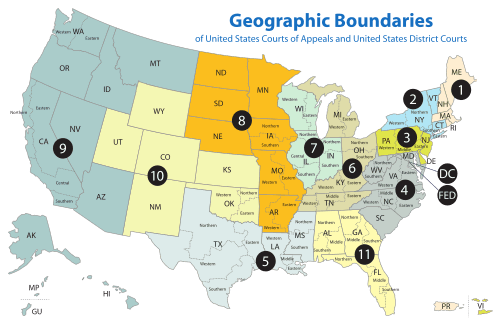
the United States District Court
ORGANIZATION
U.S. federal trial court with jurisdiction over federal cases

the United States Supreme Court
ORGANIZATION
U.S. Supreme Court
TIONAL
ORGANIZATION
Organization referenced in documents
Title
ORGANIZATION
Organization referenced in documents
Tortes
ORGANIZATION
Organization referenced in documents
Trod 1'
ORGANIZATION
Organization referenced in documents
U.S. Govt
ORGANIZATION
Organization referenced in documents
U) Guam
ORGANIZATION
Organization referenced in documents
United Stales u Drury
ORGANIZATION
Organization referenced in documents
United State District Court
ORGANIZATION
Organization referenced in documents
United States Court of Appeals
ORGANIZATION
U.S. appeals court
United States Marshals
ORGANIZATION
Organization referenced in documents
United Theatre Ticket Offices
ORGANIZATION
Organization referenced in documents
Utica Ins. Co.
ORGANIZATION
Organization referenced in documents
waiian Pineapple Company
ORGANIZATION
Organization referenced in documents
WALLER
ORGANIZATION
Organization referenced in documents
Waterman
ORGANIZATION
Organization referenced in documents
Wlhere
ORGANIZATION
Organization referenced in documents

Works
ORGANIZATION
2016 song by Rihanna
Accord United States
LOCATION
Location referenced in documents
Albany
LOCATION
Capital city of the State of New York, United States, and seat of Albany County

Alexandria
LOCATION
City in Egypt
Blanton
LOCATION
Unincorporated community in Garfield County, Oklahoma
Bredimus
LOCATION
Location referenced in documents
Butte
LOCATION
Location referenced in documents
C.A.I0
LOCATION
Location referenced in documents
Canton
LOCATION
City in Stark County, Ohio, United States
CECIL
LOCATION
Location referenced in documents
Dimock
LOCATION
Location referenced in documents
Doconiek v. City of
LOCATION
Location referenced in documents
Douglas v. City
LOCATION
Location referenced in documents
Elizabeth City
LOCATION
City in Pasquotank County and Camden County, North Carolina, United States
Eva th City
LOCATION
Location referenced in documents

Fairfax
LOCATION
County in Virginia, United States
Farner
LOCATION
Location referenced in documents

Francisco
LOCATION
266th pope of the Catholic Church (2013–2025)
Hague
LOCATION
City in the Hague, Netherlands

Hawaii
LOCATION
State of the United States of America
Herndon
LOCATION
Town in Virginia, United States

Honolulu
LOCATION
City in and county seat of Honolulu County, Hawaii, United States, that is also the capital city of Hawaii
HUTCHESON
LOCATION
Location referenced in documents
Ibrahim
LOCATION
Location referenced in documents

Idaho
LOCATION
State of the United States of America
Ill S.Ct
LOCATION
Location referenced in documents
Injunctiat
LOCATION
Location referenced in documents
Iva ua
LOCATION
Location referenced in documents
Jersey City
LOCATION
City in New Jersey, United States
Judaea
LOCATION
Province of the Roman Empire (6–135 CE)

Kentucky
LOCATION
State of the United States of America
Kisor
LOCATION • 2 mentions
Location referenced in documents
lawful•or
LOCATION
Location referenced in documents

Littlefield
LOCATION
City in Texas, USA

Los Angeles
LOCATION
Seat of Los Angeles County, and largest city in California, United States
Madera
LOCATION
City in Madera, California
Maitland
LOCATION
Location referenced in documents
Maui County
LOCATION
Location referenced in documents

Memphis
LOCATION
City in and county seat of Shelby County, Tennessee, United States

Michigan
LOCATION
State of the United States of America
Michigan District
LOCATION
Location referenced in documents

Minnesota
LOCATION
State of the United States of America
Neptune Beach
LOCATION
Location referenced in documents

New York
LOCATION • 2 mentions
Most populous city in the United States
Newark
LOCATION
City in Essex County, and largest city in New Jersey, United States
Nordgi
LOCATION
Location referenced in documents

North Carolina
LOCATION
State of the United States of America

Oklahoma City
LOCATION
City and state capital of Oklahoma, United States
Phibbs
LOCATION
Location referenced in documents
Phila
LOCATION
Daughter of Antipater, the regent of Macedonia
Philadelphia
LOCATION
1993 film by Jonathan Demme
Plage - '
LOCATION
Location referenced in documents

Puerto Rico
LOCATION
Unincorporated territory of the United States of America
Rockville
LOCATION
City in Montgomery County, Maryland, United States, suburb of Washington, DC

Salt Lake City
LOCATION
City in and county seat of Salt Lake County, Utah, United States and the capital of Utah
Samoa
LOCATION
Country in Oceania

San Francisco
LOCATION
Consolidated city and county in California, United States
Saranac
LOCATION
Location referenced in documents
Sarracino
LOCATION
Location referenced in documents
Sclafani
LOCATION
Location referenced in documents

Seattle
LOCATION
City in and county seat of King County, State of Washington, United States
See U. S. Code
LOCATION
Location referenced in documents
Stainbaek
LOCATION
Location referenced in documents
Steinbach
LOCATION
Location referenced in documents
Stone Mt.
LOCATION
Location referenced in documents
the City of Canton, County of Stark
LOCATION
Location referenced in documents
the City of Miami
LOCATION
Location referenced in documents
the City Ordinance
LOCATION
Location referenced in documents
the County of Maui
LOCATION
Location referenced in documents
The District of Columbia
LOCATION
Location referenced in documents
the District of Utah
LOCATION
Location referenced in documents
the Eastern District
LOCATION
Federal judicial district
the Eastern District of Kentucky
LOCATION
Location referenced in documents
the Eastern District of Michigan
LOCATION
Location referenced in documents
the Island of
LOCATION
Location referenced in documents
the Island of Cebu
LOCATION
Location referenced in documents
the Island of lanai
LOCATION
Location referenced in documents
the Northern District
LOCATION
Federal judicial district
the Southern District
LOCATION
Federal judicial district in New York City
the Territory of Hawaii
LOCATION
Location referenced in documents
the United States Probation Department
LOCATION
Location referenced in documents
Toledo
LOCATION
County seat of Lucas County, Ohio, United States
Tykarsaly
LOCATION
Location referenced in documents

United States
LOCATION • 8 mentions
Country located primarily in North America
United States Contmi9
LOCATION
Location referenced in documents

Vancouver
LOCATION
Largest city in the province of British Columbia, Canada
W. UNION
LOCATION
Location referenced in documents
Wellston
LOCATION
Location referenced in documents
West Headnotes
LOCATION
Location referenced in documents
Whanon's
LOCATION
Location referenced in documents
Statistics
Pages:100
Entities:550
Sponsored