HOUSE_OVERSIGHT_013501_sub_003 - HOUSE_OVERSIGHT_013795
Document Information
Bates Range
HOUSE_OVERSIGHT_013501_sub_003 - HOUSE_OVERSIGHT_013795
Pages
95
Source
House Oversight Committee
Original Filename
Nearness.pdf
Document Content
Page 201 - HOUSE_OVERSIGHT_013701
points) or more or less regular cycles. We analyze our “fixed point” data using quantities such as the mean and variance of distributional statistics and the cycle data using the amplitude, frequency, cycle length and phase of trigonometric functions. In central tendency-oriented research, rare, very high amplitude events have usually been considered aberrations and tossed, and imperfect periodic behavior is treated by “cosiner analysis” as regular cycles contaminated by measurement or system noise. Whereas technically, chaotic dynamics must live in dimension greater than two (for orbits to be more than a fixed point or limit cycle, able to snake around without necessarily intersecting ), the Lorenz attractor has dimension just a little over two, our difficulties with establishing the “true” physiological dimension of real biological observables (see below) makes such a consideration more theoretical than practical. The orbits of a forced-dissipative dynamical system in a parameter regime engendering chaos, converge onto an attractor which is neither a fixed point nor a limit cycle, thus the origin of the name “strange attractor” (Ruelle and Takens, 1971). It was James Yorke that first named these dynamics “chaos” (Li and Yorke, 1975). The necessarily statistical properties of the chaotic orbits on strange attractors follow from the generic characteristics of their motions (see Shaw, 1981 for a still conceptually current, non-mathematical treatment). These kinds of statistics are studied in a research context called the “ergodic theory of dynamical systems” (Ruelle, 1979; Eckmann and Ruelle, 1985). Ergodic is a word used to characterize a system with (or without) a particular condition placed on its statistical measures: the existence of an invariant measure which is undecomposabile into two invariant measures and, equivalently (though not obviously) one in which the time average equals its average in the geometric space into which it is embedded. One may arrive at the same ergodic measure from studying a single very long orbit or from summing across many individual but shorter orbits. This ergodic equivalence is made possible due to the definitional existence of at least one invariant statistical measure and the dynamics of the system which ideally include a uniformly, sequence disordering process called “mixing” (see below). 201 HOUSE_OVERSIGHT_013701
Page 202 - HOUSE_OVERSIGHT_013702
Of course, most real biological dynamics are not uniformly mixing and so are non-ergodic, but we shall see that the ways they fail to be ergodic (and thus remain in the conceptual context of ergodic measures) are descriptively useful (Mandell and Selz, 1997a). The emergence of many statistical approaches to characterizing these motions have been accompanied by the expected controversies about which is best or correct (see below) and have been applied to the problem of diagnosis and clinical discrimination in a variety of neuroscience settings. In ideal abstract chaotic dynamical systems called Axiom A (Russians called them “C systems’), where most mathematical theorems are proven (Smale, 1967), all these measures, if properly computed, are equivalent. In real life, as in the related case of ergodicity, they are not, and since no single one is complete, the more (incomplete) measures we use in our studies along with interest in the way that they differ, supplies more useful information about the system. Though researching and elucidating the most reliable and valid ways of computing these measures are a valuable goal, the current debates focused on the superiority of a single particular measure, constructed in a particular way in relationship to issues of insoluble absolutes like “randomness” versus “deterministic chaos may not be particularly valuable for uncovering new characteristics and potential mechanisms underlying a specific set of real neurobiological observables. Emphasizing diversity and relevance to the clinical biological sciences, we note that quantifying patterns in ergodic (non-ergodic) measures have aided: the discrimination between normal and abnormal opticokinetic nystagmus in neurology patients (Aeson et al, 1997); localizing a two year old subcortical stroke in an EEG of a patient with no other signs or neurological findings (Molnar et al, 1997); the diagnosis of early (not late) multiple sclerosis, as a nonspecific long tract disorder, in patients with mild optical neuritis using cardiac rate dynamics (Ganz and Faustman, 1996); seizure prediction from minutes to hours before the event in which subthreshold, pre-phase transition spatial diffusion and oscillations in characteristic changes in these measures can be found (Martinerie et al, 1998; Elger and Lehnertz, 1998; Pign et al, 1997; lasemidis et al, 1990); using these measures on the EEG to differentially predict hereditary predisposition to alcoholism 202 HOUSE_OVERSIGHT_013702
Page 203 - HOUSE_OVERSIGHT_013703
(Ehlers et al, 1995); indicating the presence or absence of septic encephalopathy (Straver et al, 1998); using time series from jejunal manometry to discriminate objectifiable somatic from psychological conversion related irritable bowel syndrome (Wackerbauer et al, 1998); analyzing time-dependent patterns in plasma hormone levels to discriminate between the presence or absence of a functioning tumor (Hartman et al, 1994, Mandell and Selz, 1997a); automated differentiation of ataxic from normal speech (Accardo and Menulo, 1998); and discrimination of temporomandibular joint dysfunction from normal patterns of chewing motions (Morinushi et al, 1998). Styles of Orbital Motions in Chaotic Dynamical Systems In chaotic dynamics, in various specific ways, an initial hypothetical handful of points lined up along the trajectory and acted on over time by the nonlinear differential equation (“operator”), get out of order in an unpredictable way. Here the hypothetical handful can come from a statistical aggregate of initial conditions or from a single recursive orbit studied over long times. As noted above, ergodic theorists call this getting out of order “mixing” and how and to what degree this happens consumes many mathematical theorems but for purposes of brain research, it can be best described using a variety of statistical measures. For example, visualizing the Lorenz attractor (see above) as a butterfly in phase space, the points get out of order because as they spiral out (“stretching”) to the edge of one wing and return (“folding”) to the unstable fixed point on the butterfly’s body whence they either jump to some place on the other wing to spiral to its edge or return to the same wing to spiral out again. Which one of these is chosen is exquisitely sensitive to very small changes in where the trajectory started and very small fluctuations in where it returned to the unstable fixed point on the butterfly’s body. In fact, specification of these locations is beyond the precision of any real, thermodynamically vulnerable system. Chaotic trajectories on the Réssler attractor (see above) wind out (“stretch”) to the edge along the inside of a conch shell in phase space and then are mapped 203 HOUSE_OVERSIGHT_013703
Sponsored
Page 204 - HOUSE_OVERSIGHT_013704
back (“fold”) into the spiral unpredictably somewhere in a mixing mechanism that has been called “displaced reinjection.” In the slow-fast oscillations of the forced van der Pol in the chaotic regime, points in the slow phase (“repolarization”) jitter around and step on each other’s heels, getting out of order while waiting on the ledge before jumping (“depolarization”) to the next slow phase (“repolarization”) at some unpredictable time, thus generating a variably irregular series of interspike intervals. Stretching and folding are also responsible for getting points get out of order in the single maximum map of the unit interval (studied for universal qualitative and quantitative properties by May and Feigenbaum and others as described above). With increases in parameter values, the parabolic hill function onto which the unit line has been stretched gets steeper, more stretched. Mapping points on the hill back onto the straight line of the unit interval results in what amounts to the line folding back on itself. This stretching and folding eventually fills the line with points, but their sequence, from end to end, gets shuffled like a deck of cards. As described more generally above, points that start as neighbors may get separated (“divergence along the attractor’) and those that start at a distance from each other may be thrown together (“compression back onto the attractor’). These expanding and folding motions that characterize the chaotic behavior on strange attractors have been likened to the actions of a taffy puller (Réssler, 1976). It is in this way that nearby points can separate without leaving the attractor. It is also the case that once indistinguishably close but then separated points may be compressed together again generating new, temporary (unstable) cycles of all possible period lengths. These unstable fixed points may be the most important feature of chaotic systems from the standpoint of new ideas about brain mechanisms (Pei and Moss, 1996; So et al, 1997). This aggregation of unstable loops can occur from points fluctuating away and back to the attractor as well as during the crowding of points at the turns after their stretching out on more linear parts of the flow. Under the mixing flow of a chaotic dynamics, it is also true that a single point eventually explores the entire attractor, no attractor location is inaccessible to it. 204 HOUSE_OVERSIGHT_013704
Page 205 - HOUSE_OVERSIGHT_013705
Although counter-intuitive when expressed in words, the trajectories that one sees in the graphics of chaotic attractors result from the actions along the “unstable” directions of the stretching distortion; the actions in the otherwise invisible stable directions “iron down” the points onto this unstable manifold (n dimensional abstract surface). As might be expected from this set of characteristic motions, the diagnostic triad of chaotic dynamical systems are: (1) Sensitivity to initial conditions—tiny distances between starting points are magnified and large distances between starting points are reduced under the stretching and folding actions of the system; (2) The presence of a theoretically infinite but countable number of unstable periodic orbits of theoretically all period lengths—points in phase space can be viewed an attractive-repellers, visited and left by the orbits recursively as the dynamics proceed; and (3) Indecomposability—the attractor is not separable into isolated regions and no points escape (see Devaney, 1989, for one of the clearest definitions). Of particular relevance to information encoding and transport by brain mechanisms, it is important to visualize that new information in the form of unstable periodic orbits is being created as well as destroyed by the dynamics. The logarithmic rate of formation of these new orbits is computed as the system’s topological entropy (see below). Assuming the real neurobiological system under study is behaving in these ways (and often much has to be done to help justify such a claim), the observables take the form of an irregular and/or episodic time series of amplitudes, as in repeated sample, neuroendocrine studies of plasma hormone levels (Veldhuis and Johnson, 1992) or a sequence of times between events as in neuronal interspike intervals (Katz, 1966; Perkel et al, 1967). These time or time-sequence series are generally studied from three relatively distinct yet complementary quantitative perspectives: (1) As stochastic (“random”) processes with various amounts of sequential dependency (autocorrelations) and scale (sample length) dependencies; (2) As “deterministic” smooth or discrete, vectorial geometries in phase space following reconstruction and/or embedding of the series as phase portraits or return maps; (3) As information generating and transporting, topological (about relative 205 HOUSE_OVERSIGHT_013705
Page 206 - HOUSE_OVERSIGHT_013706
nearness and sequential order not absolute distances), symbolic dynamical processes which as either (1) or (2) can be analyzed with respect to its various entropies, algorithmic complexities and word content and syntax. A variety of techniques aimed at deciding between the relevance of one or another of these underlying assumptions (such as series and Fourier phase shuffling to destroy statistical autocorrelations and vectorial continuities but leaving the probability density distributions intact ) may at times help emphasize one or another of these orientations in the analyses (see Ott et al, 1994 for a collection of articles on this topic). Nonconvergent Distributions and Power Law Scaling in Biologically Relevant Time Series The statistical distribution with which most of us are familiar is the Gaussian which can be generated by summing and averaging a series of independent random events. The average behavior head/tails probabilities observed by one person flipping a fair coin for a very long time or by many people flipping similar coins for shorter times converges upon the invariant measure of 0.5. The variance, “second moment” in the distribution of a population of coin flipping sequences will be finite and computable. In a graph of this distribution, the tails will converge to the xX axis in a Gaussian exponential manner. The longer or the more numerous the “sample” series of observations, the closer they will approximate the “ergodic” invariant measures representing the true “central moments” of the behavior of this “population” of fair flipping coins. Since the coins are not changing their relevant characteristics over the time of observation, we say that the series is not time dependent but instead is “stationary.” Computation of correlations over increasing lags to determine how much and for how many flips the sequences continue to resemble themselves yield an exponential decay with a single characteristic correlation length. This reflects the existence of a finite variance from which its amplitude is derived and serves as the single characteristic temporal scale of the random process. 206 HOUSE_OVERSIGHT_013706
Sponsored
Page 207 - HOUSE_OVERSIGHT_013707
Before describing the relatively new set of measures of biological processes designed to find and quantitate what are assumed to be relatively sample size insensitive, distributionally nonconvergent and multiply correlated processes that are without a single time or space scale, we should remind ourselves that there is already much more apparent “order” in a generically random situation than our intuitions would lead us to believe. For example, if we keep cumulative scores in a competition between heads and tails and determine the distribution of trials between those in which the number of heads and tails are even, we will get periods between zero crossings of many lengths with very short ones and very (very) long ones being most statistically prominent. The distribution of these wavelengths is shaped like a symmetrically fat-tailed, bowl (Feller, 1968). As another illustration, expected runs of heads or tails in this Gaussian random task are longer and more frequent than we might suspect. It has been proven that the expected run length grows with n coin flips (as an order of magnitude estimate) like the logarithm (for a fair coin, base 1/p = 1/0.5 = 2) of n. For example, in 512 ( e.g. 2°) tosses, we cannot report a run of 9 heads as a evidence for a biased coin or the sign of some deterministic coin tossing mechanism (Erdos and Renyi, 1970). If we had a 0.6 head biased coin, then the observation of a run of 13 heads couldn’t dissuade us from a random mechanism! Unlike our random coin task, the variances of many, perhaps most, time series of biologically-relevant events, do not tend to converge onto a limiting value as sample size, n, grows, but rather continue to increase (or decrease) with n ina scale invariant manner. Instead of “regressing to the mean” with increasing sample length or number, the likelinood of a larger deviation than previously observed increases with n. Analyses of inter-event intervals reveals a multiplicity of characteristic times. One interpretation of these finding might be that this represents evidence for the inherent “nonstationarity” of biological mechanisms as reflected in, for examples, the frequency of saccades concomitant with ceaselessly shifting foci of visual attention (Steriade and McCarley, 1990), or our inability to not think of “white bear’ when so instructed (Wegner, 1994). Hermann Haken, the father of laser-inspired “synergetics,” has said that biological mechanisms are not in a steady 207 HOUSE_OVERSIGHT_013707
Page 208 - HOUSE_OVERSIGHT_013708
state for very long, spontaneously and irregularly jumping from one unstable dynamical state to another (1997). This suggests that meaningful tension between experimental sample lengths long enough to minimize statistical error and short enough to be stationary may be, for the biological sciences, more apparent than relevant. The studies reviewed below exploit measures arising from the view that the noisy statistics of nonstationarity in biological processes are not a sign of measurement error, but rather evidence consonant with the statistical physics of nonequilibrium states and phase transitions (Stanley, 1971; Stauffer, 1985; Yeomans, 1993). Very high amplitude fluctuations and multiple, up to infinite, correlation lengths are characteristic of the normal, on-going biological dynamical behaviors, which are apparently without characteristic amplitude and time scales. From this point of view, if most or all information is widely distributed in the brain (e.g., serial order of visual tasks involving motor cortical neurons, Carpenter et al, 1999) ) then the “binding problem” (see above) could also be solved by multiple, up to infinite spatial and temporal correlation lengths in place of the current theories of monofrequency resonances (Singer, 1993). Hierarchical neurodynamical mechanisms communicating across many mechanistic temporal and spatial scales, brain information transport analogous to the energy cascade of hydrodynamic turbulent velocities (Tennekes and Lumley, 1972), would be likely in the parametric vicinity of incipient bifurcations and phase transitions. Three closely related techniques for quantifying the systematic changes in average fluctuation amplitudes with n (scale, sample length) involve a “power law,” linear slope relationship between the logarithm of an index of variability and the logarithm of sample segment sizes. These easy, yet powerful methods were brought to experimentalists’ attention by Benoit Mandelbrot (Montroll and Badger, 1974; Mandelbrot, 1983; Fedor, 1988; Bassingthwaighte et al, 1994; Liebovitch, 1998). To estimate the exponent in Hurst rescaled range analysis, we compute the standard deviation and the range of the deviation of the running sum from the mean on sequential subsamples of increasing size. The Hurst power law exponent is the slope of the straight line formed by graphing the logarithm of the subsample length 208 HOUSE_OVERSIGHT_013708
Page 209 - HOUSE_OVERSIGHT_013709
along the x axis and the logarithm of the ratio of the range to the standard deviation on the y axis. An independent random system has a Hurst of 0.5. If a sequential increase or decrease in an amplitude or inter-event time tends to be followed by a change in the same direction, the Hurst > 0.5. If an increase in the measure tends to be followed by a decrease, then Hurst < 0.5. Computation of the Fano factor (power law exponent) exploits the same general strategy using the variance/mean in place of the range/variance and counting the number of events (such as single neuron discharges or heartbeats) in time windows of increasing length, generating a similar log-log graph. There is a relatively long history of the use of spike-number variance-to mean ratio in studies of response variability in visual cortical neurons (see Teich et al, 1996 for a review). The Allen factor (power law exponent) tends to reduce the influence of local trends by a computation of the variance of the difference between the number of events in two successive time windows divided by twice the mean number of events in the window. Each system’s invariant logarithmic slope across sample segment sizes takes the place of its missing finite variance in characterizing experimental data in which the distributional tails do not converge (or do so very slowly) to the x axis. Recent approaches to these measures in the context of stochastic analysis of DNA sequences, but also applied to normal and pathological cardiac inter-beat intervals and gait interval sequences, have dealt with the influence of non-stationarity due to apparent trends in the data on a-equivalent indices by local mean-normalization of the fluctuations at each window size (Peng et al, 1993; Peng et al, 1995; Hausdorff et al, 1995). The rate of decay of the densities in the tails of the probability distribution as they approach extreme values along the x axis, called the Levy exponent when represented in Fourier space (technically, as a “characteristic function” of the probability distribution) (Shlesinger, 1988; Shlesinger et al, 1995), can also be computed directly on the distribution by fitting the tails with a two parameter curve quantifying their “fatness” and rates of decay (Mantegna, 1991). We can speak of a Gaussian tail as having an exponential decay rate representable by a = 2 implying 209 HOUSE_OVERSIGHT_013709
Sponsored
Page 210 - HOUSE_OVERSIGHT_013710
finite variance. A tail with a nonconvergent decay rate of 1 < a < 2 indicates non- finite variance in the data such that the usual “normal curve” derived, standard deviation dependent tests of statistical significance are without meaning. a < 1 indicates the data is without a consequential mean and will require the use of interquartile measures to locate the center of the distribution (Adler et al, 1998). Recalling that the Hurst, Fano and Allan indices are invariant across sample segment size, we remind ourselves that, as is the case in the finite mean and variance, a = 2, Gaussian, any of the other “a tails” also retain their value (“shape”) across all partitions that might be used to sort and sum the observable. This property is called convolutional, a, stability. In passing it should be noted that the last outpost of convergence of a probability density distribution with a = 2 is called “log-normal,” in which the tails along the x axis are “pulled in” by the variable being plotted as its logarithm. A Hurst exponent of > 0.5 in the data is associated with a Levy exponent of < 2.0, and both would be indicative of a process in which the characteristic style of change, rather than decay with some finite correlation length, would persist across all time. Using a bursting neuron as a generic example, a short interspike interval would, on the average, be followed by another short one and a long one by another long one, and this behavior, unlike our fair coin flipping sequence of observables, would not become uncorrelated with itself even over infinite time. Another way to represent this infinite, innumerably lengthed, correlation property is via its implicate frequency (inverse wavelength) content by computing its best fit assortment (along with their densities) of a range of short to long sine waves forming the Fourier transformation of the correlation function. The condition of correlated fluctuations across many measured temporal scales yields yet another power law slope when graphed as the logarithm of its range of frequencies, f, plotted along the x axis, versus their corresponding amplitudes squared, powers, plotted along the y axis. Naming this spectral power law exponent B, the system’s characteristic scaling law is usually expressed as Gr (Fedor, 1988; Hughes, 1995; Shlesinger, 1996; 210 HOUSE_OVERSIGHT_013710
Page 211 - HOUSE_OVERSIGHT_013711
Liebovitch, 1998). We see that the Hurst exponent, Fano and Allen factors, Levy exponent and power spectral scaling exponent are kindred statistical descriptors. They are most usefully applicable to systems with distributions that fail to be Gaussian or asymmetrically Poisson, the latter from random data sequences with only positive x values, thus backed up toward zero by a minimum inter-event interval or amplitude. These time series are sequentially dependent, not conventionally stationary, without finite central moments and with self-correlations that don’t demonstrate Gaussian exponential decay with sample length or time. The following are some examples of the use of these measures in studies of biological dynamics. . Examples of Biological Data with Divergent Distributions and Power Law Scaling A paradigm challenging group of experiments involved models and measures of the distribution of characteristic open and closed times of membrane ion conductance channels. The usual approach to this problem assumed the existence of a small set of distinguishable channel types that were reflected in discrete conductance events with a small set of characteristic open and closed times. The distributions of each of could be fitted with its own, Markov process derived, exponential. With technical advances and improved temporal resolution, more characteristic times and their associated a = 2 exponentials were reported with as many as three not being unusual. Liebovitch (and Sullivan,1987; 1989) used analogue to digital transformation of current recordings from the unselective corneal epithelial channels and voltage dependent potassium channels in cultured mouse hippocampal cells at temporal resolutions ranging from 170 to 5000 Hz and found similarly shaped, a < 2, nonconvergent distributions across temporal scales. This led these investigators to suggest that, related to the >16 recorded magnitudes of characteristic times, from picoseconds to months, in autonomous protein motion (Careri et al, 1975; Gurd and Rothgeb, 1979), that there was an “a stable” hierarchy 211 HOUSE_OVERSIGHT_013711
Page 212 - HOUSE_OVERSIGHT_013712
of lifetimes of states, observable at almost any temporal resolution that methods would allow. Early and representative studies comparing the fit of the data with hierarchical scaling functions versus a sum of a small number of Markovian exponentials included studies of a calcium activated potassium channel in human fibroblasts (Stockbridge and French, 1989) which yielded evidence to support both models, as did studies of membrane conductances in corneal epithelial cells by another group (Korn and Horn, 1988). In a systematic comparison of scaling and Markov exponential modes of the gating kinetics of GABA activated chloride channels, acetylcholine activated end plate potentials, calcium activated potassium channels and fast chloride channels (McManus et al, 1988), it was found that the latter fit the data best in most experiments. Similar results were reported in studies of the glutamate and delayed rectifier potassium channel with respect to distributions of open and closed times (Sansom et al, 1989). Space does not permit a systematic account of the continuing debate and conflicting studies about these representations and the implicit biophysics of discrete, finite versus continuous, hierarchical channel event heterogeneity. It is interesting that recent experiments making use of Hurst rescaled range analyses of time series of whole cell membrane voltage fluctuations (without the assumptions and current renormalizing procedures associated with patch clamping) have yielded additional evidence for multiply correlated, Hurst > 0.5, a < 2 power law behavior of what some might regard more generally as a protein relaxation time mediated hierarchical array of ion conductance behaviors (Liebovitch and Todorov, 1996). Following the discovery of (very) subsaturating (“far from equilibrium”) rat brain levels of the common cofactor for tyrosine and tryptophan hydroxylases, tetrahydrobiopterin (Bullard et al, 1978), studies of amino acid substrate saturation functions and time courses determined at these low, physiological co-reactant concentrations manifested patterns of hierarchical multiplicity and discontinuities suggestive of bifurcations and time-dependent fluctuations with fractional (hierarchical) time scaling exponents that were sensitive to psychotropic drugs 212 HOUSE_OVERSIGHT_013712
Sponsored
Page 213 - HOUSE_OVERSIGHT_013713
(Mandell and Russo, 1981; Knapp and Mandell, 1983; Russo and Mandell, 1984a; Russo and Mandell, 1986). Similar bifurcating and power law kinetics were found in receptor-ligand binding systems (Mandell, 1984) which were confirmed by more recent studies of diffusion-limited binding kinetics with receptors immobilized on a biosensor surface (Sadana, 1998). Hierarchical kinetics have also been reported in time courses of drug and metabolite levels (Koch and Zajcek, 1991), tissue tracer washout studies (Beard and Bassingthwaighte, 1998), carrier mediated transport processes (Ogihara et al, 1998), general pharmacokinetic functions (Macheras et al, 1996) and biochemical networks (Yates, 1992). It is likely that bifurcating and hierarchical, power law kinetic functions will be studied more commonly in the chemical literature in general (Shlesinger and Zaslavsky, 1996; Berlin et al, 1996) as well as applied to a variety of protein-mediated biological functions (Dewey, 1997). The first demonstration of and stochastic model for nonconvergent distributions of interspike intervals of a single neuron was by Gerstein and Mandelbrot (1964). Though rich with possibilities, it has been only very recently that additional work from this point of view has been published. This is likely due to the fact that most neuroscience oriented statistical packages, with rare exceptions, are without techniques for computing descriptive parameters for these divergent probability density distributions. This has not been the case for economic time series, download STABLE from http:///www.cas.american.edu/~jpnolan. Recently, applications of the Fano and Allan factor as well as power spectral scaling exponents to observed and shuffled series of spike counts and interspike intervals in the auditory and visual systems (including spatial and/or time resolved single unit recordings in retinal ganglion, lateral geniculate and lateral superior olivary cells as well a auditory nerve fibers) demonstrate the characteristic behavior of nonconvergent, hierarchical stochastic systems (Teich, 1989; Teich et al, 1990; Lowen and Teich, 1992; Kumar and Johnson, 1993; Kelly et al, 1996; Teich et al, 1997). These statistical techniques are well suited to the characterization of the irregularly intermittent bursting patterns generic for activity in single neurons as well 213 HOUSE_OVERSIGHT_013713
Page 214 - HOUSE_OVERSIGHT_013714
as in nonlinear equations representing them and other brain processes (Mandell, 1983). An early study of power spectral scaling in the EEG reported alpha band fluctuations that extended a <P 6B ~ 1 pattern to 0.02 Hz (Musha, 1981), as did other applications of the log-log power spectrum to the EEG in man (Hu and Hu, 1988; Prichard, 1992). This power law scaling led naturally to the suggestion that the range of frequencies available in the electromagnetic signal from the calivarial surface extends far beyond those currently appreciated and may be available for study using relatively noise free recording techniques such as_ the magnetoelectroencephalogram (Mandell and Selz, 1991). A not surprising range of intrinsic correlation lengths reflected in Hurst > 0.5 and/or Levy exponents < 2 have been reported in lamb fetal breathing patterns (Szeto et al, 1992). The exponent has been shown to be sensitive to maternal alcohol intake in humans (Akay and Mulder, 1998), rat neonatal motoric activity (Selz et al, 1995), and nuchal atonia duration sequences (associated with putative intra-uterine REM sleep) in fetal sheep (Anderson et al, 1998). Sequential amplitudes in 1 Hz stimulated soleus spinal cord H-reflex demonstrated a $F 6B ~ 0.83 in control subjects and, reflecting the decrement in correlations, by 0.31 in patients with losses in supraspinal input from spinal cord injury (Nozaki et al, 1996). Whereas the sequences of fixation times in eye movements of normal control subjects reading difficult material demonstrated an exponentially decaying distribution, those of schizophrenic patients demonstrated a power law tail, consistent with more sequential correlations (Yokoyama et al, 1996). This finding may be related to the appearance of velocity arrests, runs of sticky fixed points, in a spatially oscillating target task, called “smooth pursuit eye movement dysfunction” in schizophrenic patients which has been modeled as a parametric disorder in a periodically driven nonlinear dynamical system (Huberman, 1987). The “short time fractal dimension” has been used to discriminate acoustic signal transformations from the speech of normal subjects and ataxic patients (Accardo 214 HOUSE_OVERSIGHT_013714
Page 215 - HOUSE_OVERSIGHT_013715
and Mumolo, 1998). Spontaneous changes in the apparent syllabic sound made by regularly presented, word-like auditory stimuli emerge irregularly, the duration of perceived sameness demonstrating a power law distribution of “dwell” times (Tuller et al, 1998). The same kind of power law distribution of characteristic “brain times” can be found in studies of gait cycle durations in normal walking (Hausdorff et al, 1996) with a decrease in this locally detrended, a-like index compared with controls (0.91+0.05) in patients with the basal ganglia disorders of Parkinson’s (0.82+0.06) and Huntington’s (0.60+0.04) Diseases (Hausdorff et al, 1998). Hurst > 0.5 has been speculated to more accurately quantitate the fundamental time structure of cells that was previously called circahoralian (ultradian) intracellular rhythms (Brodski, 1998). Reconstructions of Time Series as Orbital Geometries Rene Thom (1972), extending the ideas of Poincaré and D’Arcy Thompson (1942), argued that experimentally useful, intuitive connections between the qualities of biological processes and the quantities of an explicit (equations known) or implicit (equations unknown) dynamical system could be best achieved through the use of graphic representations of their geometric and topological forms. Notably successful examples can be found in the work of Thom, Arnold (1984) and Zeeman (1977), who were inspired by “caustics” (the shapes made on surfaces by the coincidence of reflected or refracted light rays) and Whitney’s representation of parametric manifolds (surfaces) by the shadows they would make on a plane when back lit (Whitney, 1955). This led to a small number of qualitatively predictive, no tt number-of-independent-parameters dependent shapes, such as “folds” “cusps” and “wavefronts.” Experimentally crossing the values of these independent variable forms at their singular boundaries successfully predicted discontinuities in the otherwise smooth alterations in the dependent variable; i.e. bifurcations (“catastrophes”) in the behavior of the observable. This approach was best suited to the study of systems with many independent variables and one dependent variable that could be mapped on the axis of the latter to represent a continuum of 215 HOUSE_OVERSIGHT_013715
Sponsored
Page 216 - HOUSE_OVERSIGHT_013716
operationally defined “energy states.” Smooth changes along the path of the nonlinear parameter manifold generated discontinuous changes in energy levels indicating states of the observable. Crossing a wrinkle in an “independent variable” (some call it “order parameter” to indicate its emergence rather than availability for predictable manipulation) such as the nonlinear parameter surface of the countervailing influences of survival fear and financial cost, may lead to a bifurcation in behavior from peace (“low energy”) to war (“high energy”) (Zeeman, 1977). In a similar geometric spirit but dealing with nonequilibrium systems. in motion, the conditions such that one could “smoothly” embed a trajectory like a continuously recorded EEG record, a complicatedly coiled snake into a three or higher dimensional box without loss of its essential dynamical or statistically measureable properties, was settled by Whitney in what is now referred to as the “embedding theorem” (Whitney, 1936). Starting with a tangled knot of overlapping vectorial orbits with apparent “non-invertable points” (given a point, one cannot chose among or between the more than one point that it apparently came from), it can always be unwrapped into a non-crossing trajectory satisfying uniqueness when reconstructed in a box of a little more than twice the parameter-determined dimension of the original space of observables. A common technique for the spatial reconstruction of the output of a dynamical system is called a “time delay embedding.” This approach, first suggested by Ruelle (1987, pg. 28) replaced the value, x, versus the time derivative, = phase portrait plot described for a continuously perturbed bob on a spring above. A sequence of observables over time, in, for example, three dimensional “phase space” (Packard et al, 1980; Takens, 1981; Sauer et al, 1991), is depicted by a curve representing the system’s trajectory at times 4, f, fs, by sliding one-by-one down the series and plotting each pj, Po, ps, location with respect to each other along the x, y and z axes respectively. The choice of time interval between the points, the delay, can be delicate and usually some standard fraction of the decay time of the sequence’s autocorrelation length, “the decay time of mutual information” is chosen. There are many technical considerations, 216 HOUSE_OVERSIGHT_013716
Page 217 - HOUSE_OVERSIGHT_013717
including those involving the choice of the embedding space vis a vis the “true” dimension of the attractor. This becomes an issue when, for example, the attractor shrinks over time to some subspace of the initial embedding (Liebert et al, 1991 and references therein). lf we imagine the process of time series reconstruction to inscribe an attractor’s untidy ball-of-string of recurrent trajectories in three dimensions, we can then, by making the z-dimension a constant value, cut the ball with a two dimensional plane, a “Poincaré surface of section.” This could yield a roundish cloud of discrete points on the x,y plane and t,-1 — tp would be the time between two piercings of this surface. It has been proven that almost any cut, as long as it is made transverse to the direction of the orbital trajectories, is equally valid and useful for further analyses (Oseledec, 1968). If the original embedding and subsequence section was in high enough dimension to allow invertability, we might have enough (trial and error) knowledge to be able to write a discrete equation, a “return map,” f, that would move one point to the next on the plane as (x,y)/, , <> (x,y)¢,. What can sometimes be case with real systems (Coffman et al, 1986), is that reducing the geometric reconstruction still one dimension further, accepting non- invertability, ironing down the points in the plane onto the x axis line (normalized to [0,1]), and plotting the values at x; against x1 (“mapping the unit interval to itself’), can generate points in the general shape of a parabola with dynamics representable by the same family of one parameter, single maximum discrete equations that generated May's sequence of bifurcations, Feigenbaum’s scaling and Metropolis, Stein and Stein’s (and Sharkovskii’s) U sequence (see discussions of qualitative and quantitative universalities above). Although sometimes a significant change in brain system physiology, such as penicillin-induced epileptic neuron spiking activity is revealed simply by a change in the graphic appearance of suitably embedded time series data (Zimmerman and Rapp, 1991), more often statistical measures made on the geometric dynamics of the points on the attractor are required. 217 HOUSE_OVERSIGHT_013717
Page 218 - HOUSE_OVERSIGHT_013718
Orbital Divergence Characterizes Expansive Dynamics on_ Biological Attractors In the dynamical world of equilibria (fixed points in phase space) and periodic cycles (fixed points of a return map), a common concern involves their stability. What happens if an adventitious jiggle moves the orbit a little distance away from the fixed point? Would the wind wiggled suspension bridge start to flap with increasing amplitude or would it damp back down quickly to its stable state. A “Lyapounov functional,” L, is constructed which can be visualized like a smooth potential bowl around the fixed point such that any L stable solution that starts at its bottom tends to stay there or is asymptotically L stable if the solution converges to the fixed point at the bowl’s bottom as +». If the point is not L stable, it is L unstable. The modern study of nonlinear systems have produced another kind of stability issue with a similar appellation yielding other direction specific indices, the Lyapounov characteristic exponents, 42 (Oseledec, 1968; Eckmann and Ruelle, 1985; Ruelle, 1990; Ott et al, 1994). In this context, the instability is not one of perturbative escape from a fixed point, but of the average rate with which the (theoretically infinitesimal) distances among a handful of points representing a set of initial conditions (each a precision limited, hypothetical repetition of the same experiment), are being stretched apart by the expansive action of a strange attractor system. In three dimensions, one can envision a ball of initial conditions being elongated along the unstable direction and ironed down from both sides along the stable direction over time, transforming the ball into an ellipsoid and then into a (recurrent) curve. In simplest terms and thinking about a one dimensional scalar time series, the Lyapounov exponent reflects the multiplicative average (logarithmic addition) of the sequence of slopes of the series of straight lines connecting the points. An average slope of > 45 is expansive such that a linear distance on the x- axis is increased when mapped onto the y axis. A slope of < 45 is a contraction mapping reducing the linear distance of the x-axis when mapped to the y axis. 218 HOUSE_OVERSIGHT_013718
Sponsored
Page 219 - HOUSE_OVERSIGHT_013719
Réssler’s generic chaotic system (see above) moving recurrently in a three dimensional box can be orthogonally decomposed into three directional motions in a moving frame, each with a signatory sign of 2. The unstable direction of expansive stretching is characterized by some number > 0, A(+), the stable direction of contractive folding, some number, < 0, A(-), and the neutrally stable direction of recurrence, (0). For The “Lyapounov spectrum” of the Réssler attractor is [A(4), A(-),4(0)] (Shaw, 1981). An n-dimensional dynamical systems has n one- dimensional Lyapounov exponents, and it is sometimes the case in relatively noise free, finite semi-stationary data lengths of the neurosciences, that a 2>0 can be shown to exist for a second one, in a dynamical situation called “hyperchaos” by (Rossler, 1979). For example, two and sometimes three 4(+) have been reported in the flows on the EEG attractor of normal alert subjects (Gallez and Babloyantz, 1991). The presence of measurement noise, the finiteness of neurophysiological sample lengths as well as the relatively small expansive actions in some directions in the chaotic attractors of brain dynamics lead to the finding that most often, only one “leading Lyapounov exponent,” 4(+), is reliably computable (Sano and Sawada, 1885; Wolf et al, 1985; Eckmann et al, 1986). A counter-intuitive fact about the stability of a dynamical system when a decrease in the value of 4(+)is observed such that 2(+)—> A(0), is that this more neutral stability augers a global bifurcation (Guckenheimer and Holmes, 1983). A small perturbation does not change the global dynamics of an already expanding and contracting (called “hyperbolic”) dynamical system, it will maintain the style of its motions. However, when 4(+)—> 1(0), a velocity changing perturbation evokes a bifurcation to a new dynamic in what is called “loss of hyperbolic stability.” The best examples come from the observations of this kind of change in the EEG predicting the onset of epileptic seizures in patients with focal or temporal lobe epilepsy (lasemidis et al, 1988,1990; lasemidis and Sackellares, 1996 ). 219 HOUSE_OVERSIGHT_013719
Page 220 - HOUSE_OVERSIGHT_013720
The number and variety of algorithmic strategies for computing Lyapounov exponents that are applicable to real data divide naturally into those that compute directly the average rate of separation of neighboring points from the “fiduciary” orbit, as observed on the reconstructed attractor, from which only the largest 2can be obtained (Wolf et al, 1985), and a variety of techniques based on assumed model maps of the unknown flow along which the sequential products of the local derivatives are computed. The logarithms of the straight line slopes of the sequence of directionally decomposed local tangent vectors multiplied, yield as many Lyapounov exponents as directions (Sano and Sawaka, 1985; Eckmann et al, 1986; Geist et al, 1990). The techniques of regularization by which these model processes approximate the unknown flow include those with least squares, linear fit assumptions (Eckmann et al, 1986; Sato et al, 1987; Buzug et al, 1990), more detailed fits involving polynomial expressions in higher powers (Briggs, 1990; Brown et al, 1991; Bryant et al, 1991) and techniques such as “singular value decomposition” which decomposes the flow into orthogonal components before computing the logarithmic rate of divergence of nearby points on each of them (Stoop and Parisi, 1991). A clever check on the Lyapounov number obtained is to study the flow backwards so that, for example, some rate of separation of points in the forward direction would approximate the rate of convergence in the time reversed data (Parlitz, 1992). Among the sources of spurious Lyapounov exponents are sample lengths that are too short and/or too measurement-noisy to compute a statistically stable average, embedding dimensions that are too high or low and attractors (many of physiological relevance) that have geometric features such as sharp corners or tight folds as in the Réssler (where points gather) or delicate boundary points such as those on the body on the Lorenz butterfly (see above) where very small distances determine whether the orbit makes big jumps to the right or left wing leading to uncharacteristically large separations. This “nonuniformity” in the rates of expansion and contraction in the dynamics over the attractor, a source of error in computations of statistical indices of the average behavior, becomes a _ useful tool in characterizing individual differences in sets of neurobiological data ranging from 220 HOUSE_OVERSIGHT_013720
Page 221 - HOUSE_OVERSIGHT_013721
brain enzyme kinetics (Mandell, 1984) and single neuron firing patterns (Selz and Mandell, 1991) to human psychomotor and cognitive behavior (Selz, 1992; Selz and Mandell, 1993). The Leading 4(+) of Some Biologically Relevant Time Series An early application of a simplified form of leading Lyapounov exponent to brain data involved the computation of the one dimensional averaged slope of in vitro studies of psychopharmacological drug and peptide effects on time series of catecholamine and indoleamine biosynthetic enzyme _ activities studied at physiological, far-from-equilibrium reactant concentrations (Russo and Mandell, 1984b; Knapp and Mandell, 1984). A contemporaneous study also suggested the influence of differences in initial conditions for pharmacokinetic equilibrium times in drug binding kinetics by proteins (Bayne and Hwang, 1985). The most extensive applications to the clincial neurosciences of the Lyapounov measure of the exponential divergence of orbital points has involved reconstructed brain wave attractors from the intracranial or scalp recordings of the EEG (Duke and Pritchard, 1991; Dvorak and Holden, 1991; Jansen and Brandt, 1993). Space prevents us from surveying more than a small representative set of the studies (Jansen, 1996). It should be noted, however, that this is an area in which “state of the art” research has grown quite complicated and somewhat controversial with respect to technical issues. The choices of the digitizing frequency of the smooth record, the dimension of the embedding space and time delays continue to be debated in the context of numerical computations of 2 and dimension measures (Mayer-Kress, 1986; Ott et al, 1994). Controls for the implicitly required statistical discrimination between “randomness” and “deterministic chaos” consist of sequence and (Fourier) phase randomization generating “surrogate data” which conserve the probability distributions and destroy the correlation properties and attractor geometries (Sauer et al, 1991; Ott et al, 1994). Since neither bring with them any connections with 221 HOUSE_OVERSIGHT_013721
Sponsored
Page 222 - HOUSE_OVERSIGHT_013722
known or explorable brain mechanisms, one might argue that at this early stage of the work it would be more desirable to simply report the quantitative findings, leaving unanswerable questions about ultimate causality for later discussion (see below). The first EEG 4(+) was reported in a patient with epilepsy (Babloyantz and Destexhe, 1986) which was confirmed by others (lasemedia et al, 1988; Frank et all, 1990). An important study of simultaneous time series from 16 subdural electrodes placed in the right temporal cortex of a patient with a right medial temporal lobe epileptogenic focus demonstrated that a decrease in a single lead’s A(+) reliably anteceded and localized the first signs of the incipient seizure. The rest of the leads followed with similarly decreased positivity in their leading Lyapounov exponents associated with spatially coherent patterns of behavior. In addition, the averaged value of the leading Lyapounov exponents in the 16 leads increased post-ictally over the averaged values of 4(+)in the pre-ictal state (lasemidis et al, 1988,1990). These findings, including seizure anticipation for 25 minutes, were confirmed using intracranial recordings in 16 patients with temporal lobe epilepsy (Elger and Lehnertz, 1998). The para-ictal decrease and post-ictal increase in 4(+) found in patients with focal temporal lobe seizures was confirmed more generally in left and right pre-frontal-to-mastoid EEG recordings made before, during and after electroconvulsive shock treatment of psychiatric patients (Krystal and Weiner, 1991). Pre-ictal changes were also found six minutes before seizure onset from scalp EEG recordings in 17/19 patients with chronic focal epilepsy (Martinerie et al, 1998). The most exciting potential application of this approach is its use, in real time, for the prediction and prophylactic treatment of incipient seizures, minutes to hours before the event, in place of or augmenting long term drug management (lasemidis and Sackellares, 1996). There is a growing literature about leading Lyapounov exponent(s) in the reconstructed attractor of the EEG associated with a variety of normal and pathological human behavioral states. For examples, two and sometimes three 222 HOUSE_OVERSIGHT_013722
Page 223 - HOUSE_OVERSIGHT_013723
A(+) were reported in awake relaxed subjects and were lost in deep sleep (Stage IV) and coma (advanced Jakob-Creutzfeld disease), suggesting that level of consciousness correlated positively with amount of orbital divergence (Gallez and Bablioyantz, 1991). A “pathologically low’ leading 4(+)was also found to be characteristic of the EEG of patients with Alzheimer’s syndromes (Jeong et al, 1998). Technically defined sleep stages (I, Il, Ill, IV, REM) were found to correlate well with the values of the leading 4(+) of the EEG in normal subjects (Fell et al, 1993; 1996; Pradhan and Sadasivan, 1996). EEG recordings during problem solving sometimes, but not always, demonstrated a relationship between values of A(+) and the kind or amount of load of the task (Micheloyannis et al, 1998; Popivanovov et al, 1998; Meyer-Lindenberg et al, 1998). Both emotionally positive and negative videos increased the value of the leading 4(+) (Aftanos et al, 1997) as did computer generated music with sounds that exploited a “pleasing” hierarchical, 1/f but not an “unpleasant” 1/f 7 frequency spectrum (see previous section about power law scaling) (Jeong et al, 1998). The EEG theta rhythm of “day dreaming” manifested a lower 4(+) than the “relaxed alert awake” alpha rhythm (Roschke et al, 1997). Relationships between the Lyapounov spectra demonstrated both regional independence and task-related dependence in the magnetoencephalography record in man (Kowalik and Elbert, 1995). These and other studies suggest that divergence rate of orbits on a geometrically reconstructed attractor is a subtle measure, which can be quantified as a continuous variable and which has been found to be useful in a variety of neuroscience-related, experimental contexts. The range’ includes’ the characterization of the discharge pattern of a single somatic or renal sympathetic nerve fiber (Gong et al, 1998;Zhang and Johns, 1998); quantifying the results of perturbing autonomic nervous system activity, for examples, exercise, atropine and propranolol decrease 4(+)in the cardiac interbeat interval attractor (Hagerman et al, 1996) and interference with the function of the baroreflex or clonidine alters the A(+)in the blood pressure attractor in man and animals (Wagner et al, 1996; 223 HOUSE_OVERSIGHT_013723
Page 224 - HOUSE_OVERSIGHT_013724
Mestivier et al, 1998); and predicting defects in visual learning functions from decreases in the A(+)of the cardiac interbeat interval attractor in patients with multiple sclerosis (Ganz and Faustman, 1996). We recall that on theoretical grounds (Guckenheimer and Holmes, 1983), a decrease in the positivity of 4(+)—>/(0)in a delay coordinate, geometric reconstruction of a time series of observables may auger an incipient global bifurcation in the system’s dynamics. As reviewed above, this has turned out to be the case in several studies of the EEG and electrocorticogram in epileptic patients. Futher research will be required to see if this idea has substance more generally for predicting “catastrophic” changes in other brain-related systems. Power Law Scaling of Orbital Geometries in Time Series Reconstructions Benoit Mandelbrot’s book in its first incarnation was derived from his lectures at College de France in 1973 and 1974 and was called Les Objets Fractals: Forme, Hasard et Dimension (Mandelbrot, 1975). This essay was translated into English as Fractals, Form Chance and Dimension (Mandelbrot, 1977). Later expanded and reworked editions displayed another title, The Fractal Geometry of Nature (Mandelbrot, 1982) but the deep conceptual, sometimes poetic fusion and confusion generated by the apparent identity among the objects of his first title remains. “Fractal,” along with “chaos” and “strange attractor” are among the most widely familiar new words in modern dynamical systems research. Fractal is the most difficult to rigorously define and is commonly misunderstood due to the evocative yet dream-like cognitive condensations provoked by the first title and its reflections in Mandelbrot’s prose. A common conceptual confusion is exemplified by the assumed relation between “fractal time event distributions” of the cardiac interbeat interval and the “fractal like” anatomy of the purkinje network of the cardiac conduction system. Data from both contexts are often shown juxtaposed in the same illustration as though their relationships were obvious (Goldberger et al, 1990; Goldberger, 1996; Liebovitch and Todorov, 1996). “Fractal times” and “fractal 224 HOUSE_OVERSIGHT_013724
Sponsored
Page 225 - HOUSE_OVERSIGHT_013725
geometries” are not related to each other essentially, either in the mathematical or physiological domain, but are often made vaguely equivalent on the basis of their lexical similarity. An experimentally meaningful relationship between fractal statistics (hazard), dynamical fractals (dimension) and fractal geometries (form), has to be proven ona case by case basis and not assumed from their common designation. Among the informal attempts to do this have been those that involve the branching pattern of nerves and the associated reductions in their diameter-dependent characteristic conduction velocities yielding a multiplicity of “arrival times.” There is, however, a more central idea common to these concatenated meanings of fractal: the statistical, dynamical and geometric expressions of “scaling,” a word which is not mentioned in Mandelbrot’s book titles. The cluster of theories, theorems and methods associated with the idea of scaling (and renormalization) have led to Nobel Prizes for Flory (1971), Wilson (1975) and de Gennes (1979) and the (equivalent mathematical) Field’s Medal for McMullen (1994). There is speculation that the last two awards were supported by the inspiration and interest given their research by Mandelbrot’s intuitions and books. Scaling laws take the place of (unknown causal) physical laws by indicating the proportion by which observables of a system can be changed in relationship to each other such that some statement about them, “this varies with that,” still holds. In a cross species comparison, as the average weight of a mammalian body, called lb, increases, the skeletal weight, called w, increases at an exponentially greater rate: w goes like Ib'°@ where Ib'° would indicate that they grew across species at the same rate. Plotting log (Ib) on the x axis and log (w) on the y axis in a log-log plot results in a straignt line with a slope that indicates the power law scaling relationship between body weight and skeletal weight across mammals. The slope of the scaling exponent of 1.08 is a little over 45 = 1. In contrast, the metabolic rate, 0.75 r, goes like (Ib)°”, r ~ (Ib)°”°. Larger animals (relative to their weight) have lower basal metabolic rates (Schmidt-Nielsen, 1984). We don’t completely know the chain of intervening mechanisms that relate these variables to each other but we do know 225 HOUSE_OVERSIGHT_013725
Page 226 - HOUSE_OVERSIGHT_013726
invariant scaling laws that describe their relationships within some limits on the range of values. In describing the functional size, radius of gyration, Rg, of a polymer such as a polypeptide, composed of N monomers, assume each of the amino acids to be the same and that they are in a “good” hydrophobic solvent that didn’t stick the polymer together in a fold. Flory (1971) found a scaling law for certain broad classes of polymers and solvents, Rg ~ aN” where the exponent, v = 3/5, was universal, N indicated the number of monomers in the chain and the value of “pre-factor” a depended upon the particular monomer and solvent chosen. Log Rg plotted against log N has a “power law” slope of 0.60. For an equally static but less physical example, there is the well known Zipf law of “vocabulary balance’(Zipf, 1949). First reported for the 260,450 words of James Joyce’s Ulysses, the slope of the log of the rank of the words found (ordered from most to least along x) plotted against the log of their frequency (along y) results in a power law that is (generally) true for other collections of words and in other languages. An accessible example of a dynamical scaling law arises in a two dimensional lattice model of a forest which is to be set on fire with probability p independent random single tree ignitions. At some critical p, pc, the fire sweeps through the entire forest (“percolates”) and the correlation length of the connected clusters grows as |p-p,|’ with a universal scaling exponent, y = 4/3, for all Monte Carlo, two dimensional percolation problems (Stauffer, 1985; Grimmett, 1989). Mandelbrot’s scheme for the power laws that compose his fractal geometry of dynamical objects is a measure made on the pattern of occupancy in the embedding space by the reconstructed orbits of an attractor. It is, generally, mass = length” in which Do (the subscript that of the “capacity dimension”) is not the whole number of Euclidian dimensions, d, of the space in which the orbits are embedded. After Hausdorffs “convergence of external and internal measures” (Hurewicz and Wallman, 1948), the (capacity) fractal dimension Do is also defined as being larger than its topological dimension and smaller than its Euclidian embedding dimension. Graphing a time series on a plane one can think of its 226 HOUSE_OVERSIGHT_013726
Page 227 - HOUSE_OVERSIGHT_013727
topological dimension as that of a line equal to one. If each time step had the largest up or down amplitude as possible, its fractal dimension would approach (but not reach) that of the embedding plane, Euclidean d = 2. The Do of the one dimensional Richardson technique (Mandelbrot, 1967) can be computed by covering the one dimensional surface of a time series with a number, #, of line segments of several orders of magnitude range of lengths, / -Graphing log(l) along the x-axis and log #(I) along the y-axis yields a negative linear slope, -s. As defined, 1- s = Do noting that (-(-s)+s) such that 1 < Do = 1+s < 2. Strain differences and peptide and psychotropic drug-induced changes in Do computed in this way were found in time series of fluctuations in rat brainstem tyrosine and tryptophan hydroxylase activities under far-from-equilibrium co- reactant concentrations (Mandell and Russo, 1981; Knapp et al, 1981; Knapp and Mandell, 1983; 1984). Systematic influences of stimulant drug dose on Do were found as well in these systems (Mandell et al, 1982). This simple measure, made directly on the “roughness” of the graph of a one dimensional time series rather than on its orbital reconstruction, has been used to discriminate the pattern of fluctuations in daily mood scales in normal subjects and mood disordered patients (Woyshville et al, 1999). These findings confirmed dimensional scaling exponents on higher dimensional embeddings of similar time series in mood disordered patients (Gottschalk et al, 1995; Pezard et al, 1996). Due to the ease and rapidity of its computation, techniques involving Do on one dimensional time series are currently in development as possible real time epilepsy predictors when analyzing the output of a large number of EEG leads simultaneously. If M(e) is the minimum number of d-dimensional cubes of side ¢ required to cover the d-dimensionally embedded attractor, plotting a logarithmic range of rulers of length ¢ (as e—0) along the x axis and a logarithmic range of number of cubes, M(e), each of corresponding «-edge size, along the y axis, results in a negative (more smaller M(e) ‘s and fewer bigger M(e) ‘s) power law slope Do. Here the numbered covering cubes, M(e), are those in which the probability of containing at least one point (its “probability density measure,” often called uw) is not zero. We 227 HOUSE_OVERSIGHT_013727
Sponsored
Page 228 - HOUSE_OVERSIGHT_013728
note that changing the ratios of the numbers of cubes that are dense in point probability to those that are sparse would not influence the value of Do. This helps differentiate Do from other dimensions and, as noted above, Do as a maximal estimate of the fractal dimension, is called the capacity dimension and by convention the scaling law is written M(<)~ « ”. More specifically, Do is calculated by repeatedly dividing the d-dimensionally embedded phase space into equal d- dimensional hypercubes and plotting the log of the fraction of the hypercubes containing data points versus the log of the (normalized) linear dimension (“length scale”) of the hypercubes. The slope fitted to the most linear part of the slope (usually the middle 50%) indicates the capacity dimension. Do is computed for increasing embedding (and cube) dimension, d, until it achieves an asymptotic plateau, it “saturates”. This is but one of a range of geometric scaling exponents, “dimensions,” that are currently being computed (Farmer et al, 1983; Grassberger and Procaccia, 1983; Meyer-Kress, 1986; Theiler, J. (1990); Gershenfeld, 1992; Ott et al,, 1994). Although still subject to debate, convention has it that the sample length required to determine this most primitive of dimension computations goes like 10” (e.g. a dimension of 2.45 requires a sample length of at least 282 points). Assuming robust findings using Do as indicated by non-parametric tests of significance in test-retest, before and after, drug treatment designs, this arbitrary criteria sounds more like ritual than meaningful help for the clinical neuroscientist with (say) 100 spinal fluid hormone and metabolite samples painfully and laboriously collected from a patient’s indwelling catheter over 48 hours. In the context of real data (and not numerical studies of differential equations), we are dealing with empirical findings that must find their meaning (or lack of) in the context of questions about issues in the neurosciences, not in abstract questions such as those about the number of dimensions that an unknown differential equation would require to represent the data (Broomhead and King, 1986). In a similar arbitrary spirit, a system manifesting a Do > 5 is considered not discriminable from a random process; e.g. the difference between Do = 5 versus Do = 7 (though perhaps statistically significant) is thought to be without meaning. Since in neurobiological 228 HOUSE_OVERSIGHT_013728
Page 229 - HOUSE_OVERSIGHT_013729
research, “random” (if it doesn’t mean measurement error) indicates unknown degrees of freedom, this Do> 5 rule is also without relevance for brain research. D, is called the “information dimension” and is computed by counting the number of e-cubes, M(g), it takes to cover the points constituting some fixed fraction of all of the points of the set of orbital points on the attractor and can be regarded as the “core dimension” (without the outliers) of the set. The counterintuitive finding is that D, is nearly constant across a range of fixed fractions that are less than the whole measure (Farmer et al, 1983). The invariance of D; can even be taken to the extreme by computing the D, = lim in (4) around (typical, not all) single points. In this context, D; is called the “pointwise dimension” or “singularity exponent” and, as might be anticipated, its value is usually less than that of Do. The scaling exponent that is both sensitive to point densities and easiest to compute from real data is the “correlation dimension,” D2 Here, analogous to the relationship between the amplitudes of the variance and the correlation function in conventional statistics, the measure squared is of interest for the computation of Dz, M(e) e.g. /(2,¢€)= SLAC, )F (see below for this use of measure u on sum = of cubes C)). i=l The selection of Dz as the fractal measure dominates the studies that invoke scaling exponents to quantify the distributions of points on the attractor as reconstructed from time series in the neurosciences (Grassberger and Procaccia, 1983; Mayer- Kress, 1986; Ott et al, 1994). Several sets of programs are available for its computation (for example, Sprott and Rowlands, 1991). Generally, a correlation sum (“integral’, R(e) ) is computed from a starting point by counting all subsequent point pairs with distances between them less than ¢ as e—>0 and plotting __ lim In(R(e) 逗>0 Ine) , . D2 is computed for increasing embedding (and therefore hypercube) dimension, d, until Dz achieves an asymptotic plateau, it “saturates” (Ding et al, 1993). It is generally the case that Do > D;> Dz (Farmer et al, 1983). 229 HOUSE_OVERSIGHT_013729
Page 230 - HOUSE_OVERSIGHT_013730
In his statistical explorations of experimental results in hydrodynamic turbulence, Mandelbrot (1974) called attention to the need for a multiplicity of characteristic scaling exponents, a range of values for each exponent and their sensitivity to orbital point density distributions (the latter called the Sinai-Ruelle- Bowen or natural measure (Eckmann and Ruelle, 1985)). These needs grew out of the intrinsic heterogeneity in the time dynamics and the nonuniform point distributions in phase space of orbitally divergent, real physical systems. Even with relatively uniform orbital point distributions, it is intuitively obvious that as e > 0, the smaller e- cubes are over-represented and larger e- cubes are under-represented in the M(e) computation (Farmer et al, 1983). For a concrete example, the fraction of the total number of cubes containing say 75% of the points would obviously decrease as the e-lengths studied gets smaller. Normalizing the Dj measures with respect to point densities would correct for this systematic distortion. In addition, the non-systematic influence of real system heterogeneity and non-uniformity in both time and reconstruction space distributions makes the need for relating the Dj measures to the natural measure even more pressing. The derivation of many separate scaling exponents, as well as global generalized exponents and the incorporation of point densities in their computation, has been approached by a kind of method of moments (Renyi, 1970; Grassberger, 1983; Hentschel and Procaccia, 1983; Halsey et al, 1986; Mayer-Kress, 1986; Ott et al, 1994). We outline the general arguments here so that the reader will be generally familiar with the ideas and terms, not to serve as a definitive summary. It is a complicated area and the reader will find the required detailed descriptions in the references. . We recall that with respect to a statistical distribution, the first moment is the mean; the second moment, o”, the variance; the third moment, o°, the distribution’s asymmetry, the skew; and the fourth moment, o”, its relative peakedness with respect to the probability mass in the tail, called the kurtosis. In these moment computations of an observable x,’s deviation from the mean, |x, — x|*, the value for q accentuate particular regions of the density distribution. Similarly, the q’s of the 230 HOUSE_OVERSIGHT_013730
Sponsored
Page 231 - HOUSE_OVERSIGHT_013731
“generalized dimensions,” Dg, emphasize different aspects of the relative point density that are assumed to be uniform in the computation of Do. We recall from above that the power law slope constituting D, = lim a 7 é>0 sal é . If we emphasize the component of the probability (measure, uw) or, equivalently, time spent by the orbit in cube i, “(C,) instead of simply the number of cubes occupied by any points, M(e), along with the different length scales of the cube as e—0 we have a generalized dimension. A common expression for the generalized dimension includes the fractional pre-factor in q written so as to make things come out right: : M(e) D, = ,__finn sel where /(qg,¢) = SLAC I. The higher the q, the greater q-le—>0 In(e) = the dominance of the higher probability cubes, ~(C,). To see how this q-induced separation in emphasis might work, if the ratio for q = 2 between the probability containing cubes 0.25 and 0.05 is 25, their ratio for q = 3 is 125. For q = 0, the scaling exponent is the capacity dimension. This result of the actions of a changing q has been analogized to the way changing temperature in a thermodynamic system evokes different aspects of its behavior. The “multifractal formalism” generally begins by determining the statistical densities over a range of scale lengths by one means or another including wavelet transformations across wavelength scale (Arneodo et al, 1988). These densities by scale are then systematically raised to a range of q exponents. Since q, and therefore Dg, can vary continuously, functions are created that shows how D, varies with q. These are then further transformed, resulting in a single maximum parabolic curve whose shape and size is sensitive to the conditions of the experiment (Halsey et al, 1986). Generalized dimensions decrease as q increases. A unique neuropsychopharmacological application of the multifractal technique to a study of the behavioral influence of increasing amounts of cocaine on the time-dependent patterns of spatial exploration, temporal-spatial fluctuations, in rats, demonstrated a global splitting in the parabolic distribution suggestive of a cocaine-induced global phase transition, not unlike the well-known, dose-dependent, amphetamine-induced 231 HOUSE_OVERSIGHT_013731
Page 232 - HOUSE_OVERSIGHT_013732
shift from hyperactivity to motor stereotypy (Paulus et al, 1991). Studies that followed demonstrated that “q-moment” distributions of heterogeneous scaling exponents and their relative statistical weightings were useful in making subtle discriminations between effects of psychopharmacological agents and behavioral (isolation) influences on animal behavior as well as patterns of simple psychomotor behavior in normal subjects and schizophrenic patients (Paulus et al, 1994; 1996; 1998; Krebs-Thomson et al, 1998a; 1998b). Fractal Scaling Measures on Reconstructed Time Series from Biological Dynamics Publications involving the applications of various D measures, particularly Dz, to brain-relevant times series number in the hundreds and are growing exponentially. The following constitutes a brief review of a representative set of empirical findings. In doing so, for the reasons discussed below, we ignore what some might consider the rather abstract and philosophical issue of “determinism” versus “randomness” or “error” (Sugihara and May, 1990; Casdagli, 1991; Wayland et al, 1993; Kaplan and Glass, 1992; Kaplan, 1994) since this question is relatively unproductive with respect to generating new neurobiological insights, novel experiments or new quantitative approaches to brain dynamics. In addition, as noted in the final section, this discrimination may not even have definitive theoretical meaning in that the conduct of much of the rigorous mathematics about “deterministic dynamical systems” involve Markoff partitions and matrices which are also the generic operators of formal probability theory (Sullivan, 1979; Kolmogorov, 1950). For example, N-dimensional non-linear Markoff processes can be shown to capture the dynamics of multidimensional neurobiological processes such as the EEG (Silipo et al, 1998). We have also ignored the related issue of the presence or absence of “low dimensional structure” (Theiler and Rapp, 1996; Rapp, 1995) which, from the authors’ point of view, resulted from an unfortunately concrete interpretation of the word “dimensions.” With respect to experimental brain data, dimensions are defined 232 HOUSE_OVERSIGHT_013732
Page 233 - HOUSE_OVERSIGHT_013733
most relevantly by their computational procedures and what are computed are empirical scaling exponents describing real observables as limited by the precision of the observations, their resolution and series lengths (Smith, 1988; Eckmann and Ruelle, 1992). The “correlation integral,” the probability that two vectors chosen at random from the phase space reconstruction lie within “r” distance of each other, not unrelated to the phase randomization controlled, Dz measure, yields statements about amount of “nonlinearity” (not accountable by the linear regressively capturable component of the power spectrum), which are also difficult to translate into experimentally or theoretically useful concepts (Casdagli et al, 1997). These efforts contrast with a more direct attempt to establish a spiking neuron system’s dynamical “dimension” using trial and error prediction in which “dimension” was defined as the number of potentially physiologically relevant variables required to make the predictive equations fit (Segundo et al, 1998). Computations of scaling exponent descriptors of orbital point distributions on reconstructed attractors of the brain sciences have proven to be most useful as atheoretical, empirical techniques discriminating experimental, clinical and/or treatment conditions with various approaches to statistical significance. In this regard, one can say that D2 is often found to be superior to central tendency oriented statistics in making these discriminations. Dimension and _ correlation integral descriptors appear least useful when dealing with global issues such as chaos, randomness, linearity and the “underlying dimensions” of (unknown) differential equations. We discuss below the possibility that the failure to find chaos in the more recent EEG studies (Theiler and Rapp, 1996; Prichard et al, 1996) may be because the EEG attractor is better characterized as a “strange nonchaotic atttractor” with orbital patterns manifesting fractional scaling exponents but no 2(+) (Grebogi et al, 1984; Mandell and Selz, 1993). The relatively subtle influence of high altitude (Mt. Everest) oxygen concentrations was not seen in the central moments of the cardiac interbeat intervals, but the D2 of the attactor was reduced significantly (Yamamoto et al, 1993). The latencies and amplitudes of the visual evoked potential failed to 233 HOUSE_OVERSIGHT_013733
Sponsored
Page 234 - HOUSE_OVERSIGHT_013734
discriminate normal subjects from those with early glaucoma, but the reconstructed attractor of the steady state visual cortical response to full field flicker demonstrated a statistically significant decrease in D2 (Schmeisser et al, 1993). Marginal qualitative differences in optokinetic nystagmus were quantitatively significant when studied as the Dz of the attractor’s points in patients with vertigo compared with controls (Aasen et al, 1997). Reconstructions of maximum velocity waves from Doppler studies of middle cerebral artery hemodynamics (using phase random “controls”) demonstrated an increase in D2 (and a decrease in 4(+) correlated with age in an adult population (Keuner et al, 1996; Vliegen et al, 1996). D2 served as a sensitive descriptor of functional changes in the EMG from the surface of the biceps muscle, increasing with muscle load and rate of flexion and extension and decreasing with muscle fatigue (Rapp et al, 1993; Nieminen and Takala, 1996; Gupta et al, 1997), suggesting its use in suspected early myotonic dystrophies and myasthenias. Reconstructed time series of stomatognathic motions in high school students with temporomandipular joint syndromes compared with those with malocclusion revealed a specific decrease in Doin the plane of horizontal motion in the former (Morinushi et al, 1998). Time series of plasma growth hormone levels in acromegalic patients with functioning pituitary adenomas manifested a statistically significant increase in Do when compared with age-matched controls (Mandell and Selz, 1997) which corresponded nicely to the reduction in “approximate entropy” (Pincus, 1991a) computed on this same data set (Hartman et al, 1994). On the other hand, comparative in vitro studies of growth hormone release patterns in normal rat pituitary cells and their neoplastically transformed relatives, the GH3 strain, demonstrate a decrease in Do in the latter (Guillemin et al, 1983; Mandell, 1986). The number of examples of the use of D2 on orbital point geometries in explorations of physiological and pharmacological regulation are increasing. The D2 of respiratory rhythms is higher with intact vagal afferents than without (Sammon and Bruce, 1991). Histamine induced an increase in Dz in the attractor point distribution of rabbit ear artery vasomotion, attributed to calcium-activated membrane potassium channels in that TEA prevented and reversed the change 234 HOUSE_OVERSIGHT_013734
Page 235 - HOUSE_OVERSIGHT_013735
(Edwards and Griffith, 1997). The role of central and autonomic innervation in cardiac interval dynamics has been explored using D2 in various ways. For examples, the transplanted heart rhythm in man has a lower Dz than that of the normal heart (Guzzetti et al, 1996) and general anesthesia and cholinergic (but not B-adrenergic) blockade decreased multisystem Dz in a series of multiparameter (respiration, mean blood pressure and heart rate) studies in piglets (Zwiener et al, 1996; Hoyer et al, 1998). The activities of single and aggregates of neurons are being described and differentiated by the D2 of their interevent interval attractors. Early and important studies related to both neuronal and field electrical activity indicated their promise (Rapp et al, 1985; Zimmerman and Rapp, 1991). The olefactory bulb demonstrated spatially uniform scaling dimensions that changed with event-related perturbation (Skinner et al, 1990). An iron-induced spiking focus in the rat hippocampus in vivo manifested the same decrease in D2 as it did in the kindled in vitro hippocampal slice (Koch et al, 1992). D2 also differentiated among characteristic single unit time series in norepinephrine, dopamine and serotonin neurons (Selz and Mandell, 1991) and among A8, A9 and A10 dopamine neurons (Selz and Mandell, 1992). Attractors reconstructed from single unit interspike intervals in the substantia nigra pars compacta and the auditory thalamus manifested discriminatable values for D2 in neurons recorded by the same electrode (Celletti and Villa, 1996) and changes in state manifested in patterns of subthreshold oscillations in single neurons in the inferioir olivary nucleus could be characterized using this index (Makarenko and Llinas, 1998). Dz reliably discriminated between states of arousal and between the multiparameter (eye movements, neck muscle tone, EEG stage) defined EEG stages of sleep (Bablyoyantz, 1986; Rapp et al, 1989; Ehlers et al, 1991) with non- REM having a lower Dz than REM. Dz of the EEG record was selectively reduced in Stage Il and REM in schizophrenic patients compared with controls (Roschke and Aldenhoff, 1993), this difference was made more prominent by treatment with the aminodiazopoxide, lorazepam (Roschke and Aldenhoff, 1992). In the waking state, 235 HOUSE_OVERSIGHT_013735
Page 236 - HOUSE_OVERSIGHT_013736
higher EEG Dz values were frontal in schizophrenic patients and more central in controls (Elbert et al, 1992). The Dz computed on the EEG during Stage IV (“delta”) sleep was sensitive to acute sleep deprivation and recovery, but demonstrated compensation (Cerf et al, 1996). Non-alcholic children of alcoholic parents manifested lower values for D; in their EEG attractors than the children of a normal control group (Ehlers et al, 1995). Higher |.Q. correlated with EEG Dz in most leads in the resting state but not during a visual imagery task (Lutzenberger et al, 1992). These differences also correlated with individual differences in task performance in a perceptual pattern predictive task (Gregson et al, 1990) and with a working memory task load with regional differences most marked in the right fronto-temporal cortex (Sammer, 1996). Peripheral nerve stimulation in the earlobe and trapezius muscle induced increments in Dz in the EEG of specific brain regions (Heffernan, 1996). Memory for but not induced pain increased EEG D2 in chronic pain patients but not in normal controls (Lutzenberger et al, 1997). Using contingent reinforcement of brain wave modes by hypothalamic, but not cerebral hemispheric, stimulation reduced Dz in the EEG (Mogilevskii et al, 1998) resembling the changes accompanying defensive reflex conditioning in the rabbit between the early and late stages of the process (Efremova and Kulikov, 1997). Difficult to diagnose “periodic lateralized epileptiform discharge” syndromes have apparently yielded to D2 computations (Stam et al, 1998). In equally problematic “atypical seizure” syndromes in children, D2 computed on the autocovariance functions of 200 Hz digitized EEG records from multiple channels demonstrated characteristic changes (Yaylali et al, 1996). Unlike computing a reliable leading 4(+)on a point set of a time series reconstruction denoting the “sensitivity to initial conditions” requirement for the diagnosis of chaos (and a potential for change such that a decrease in the positivity of A(+) > 4(0) may auger a nearby bifurcation), the presence of a fractional scaling exponent, D,, does not in and of itself implicate a chaotic dynamical state. A nice example of a nonchaotic dynamic with 4 = 0 that has a fractional scaling exponent, D = 0.538, is the “Feigenbaum” point where the above noted “infinite” series of 236 HOUSE_OVERSIGHT_013736
Sponsored
Page 237 - HOUSE_OVERSIGHT_013737
period doubling bifurcations accumulate (Grassberger, 1981). This is a dust-like region, which when endlessly dilated looks like the same dust. Some mathematicians call these objects “Lebesgue points” because even though at low magnifications when they look rather solid, they are not. Composed of points, they have topological measure zero (a line has measure one) and non-integer fractal dimension. These 4=0, D = Integer, period doubling accumulation points can be found in a wide variety of attractors, though in each case the parameter space in which they are located is so small (in point set topology also called “Lebesgue measure zero”) that they are very difficult to locate and therefore have little chance of being physiologically significant. This constrasts with a relatively new category of dynamical systems which promises to be important in studies of the nervous system. These are ones that are driven by two or more independent frequencies (called quasiperiodic driving). We found them to be relevant to brain stem, thalamocortical neurophysiology of perceptual processes and states of consciousness. They have the properties, A=0, Do and D; # integer and a characteristic scaling “spectral distribution function” (see below). They have been named “strange nonchaotic attractors” (Grebogi et al, 1984; Romeiras et al, 1987; Ding et al, 1989). In addition, the strange nonchaotic behavior of these quasiperiodically-driven, nonlinear oscillators has positive (>0) measure in parameter space and thus is of potential physiological significance. A good demonstration of a multiple frequency driven strange nonchaotic attractor can be found and manipulated in the software package of Nusse and Yorke (1991). The neurobiological substrate for this system is the brain stem neuronal modulatory driving of on- going thalamocortcal oscillatory brain waves (once called “recruitment waves” in the 7-14 Hz, 6 to a, day dreaming to quiet alert range) and as perturbed by multifrequency driving in what was once called “reticular formation arousal” are realized as dominant EEG modes and associated states of perceptual acuity and consciousness (Moruzzi and Magoun 1949; Moruzzi, 1960; Klemm, 1990; Steriade and McCarley, 1990; Contreras et al, 1997). In addition to intrinsic 237 HOUSE_OVERSIGHT_013737
Page 238 - HOUSE_OVERSIGHT_013738
multiply periodic and aperiodic oscillations of thalamic and cortical cells and their recursive, feedback coupling, the brain stem manifests more than two orders of magnitude of “independent” neuronal driving frequencies ranging from serotonin discharges at 1 Hz, cortically direct dopamine and norepinephrine neurons in the 10-50Hz range and mesencephalic reticular neurons discharging as fast as 100 to 200 Hz. The “thalamocortical brain wave oscillator” as their target has been a fixture in global state neurophysiology since the 1940’s and 1950’s and is of great current interest (Fessard et al, 1961; Bazhenov et al, 1998). We have explored the relationships between strange nonchaotic dynamics and brain-stem neuronal and thalamocortical physiology from the standpoint of neuronal coding and the properties of the EEG attractor. (Mandell et al, 1991; Mandell and Kelso, 1991; Mandell and Selz, 1992; 1993;1994:1997a). We found that the EEG attractor could be characterized by the diagnostic triad identifying strange nonchaotic attractors: A=0, Do and D, # Integer, and a signatory power spectral distribution in which the number of peaks, N, with amplitudes greater than ow, N(w ), went as wo", 1<a <2 (Romeiras et al, 1987; Mandell et al, 1991). In addition to being consistent with known multifrequency, brain stem driving of thalamocortical oscillations, the EEG as a strange, nonchaotic attractor is intuitively appealing in that it has the necessary mechanisms for the power law scaling of a wide range of characteristic times (Do and D, =~ Integer) from picosecond fluctuations of neural membrane proteins to the decades of bipolar phenomena and since 2=0, the orbital points don’t tend to “mix’(get out of order) on the attractor, thus protecting the fidelity of sequence dependent brain information transport (Berns and Sejnowski, 1998). Entropies, Unstable Periodic Orbits and Shadowing; Short Time Series Can Discriminate Experimental Conditions in Studies of Biological Dynamics We avoid the temptation to deal with the deep analogy between thermodynamic entropy (Clausius, 1897) and information theoretic entropy (Shannon and Weaver, 1949), constraining our discussion to the context of an operational equivalence (in healthy systems) between gain of information and 238 HOUSE_OVERSIGHT_013738
Page 239 - HOUSE_OVERSIGHT_013739
decrease in entropy in brain-relevant dynamical systems. As we shall see, certain pathophysiological processes appear to manifest themselves as reductions in background or “resting” state entropy which then limits its supply with respect to information gain and/or transport. Relationships between “physical” thermodynamic observables, such as changes in heat capacity or temperature dependence of kinetic constants, and information-transport driven, neurotransmitter evoked conformational changes in neural membrane proteins may someday come together in an experimentally productive way (Hitzemann et al, 1985; Zeman et al, 1987; Borea et al, 1988), but they are beyond the scope of this paper. The idea of taming the orbit of an expanding flow (with at least one 2(+) ) by partitioning the geometric space supporting its actions, its “manifold,” and then labeling each box so that its trajectory is representable by a symbol string of box indices is the way “symbolic dynamics” are applied to dynamical systems. Symbolic dynamics arose in pure mathematics in the context of obtaining a one-to-one, topological (sequence not distance preserving ) representation of a difficult to characterize system of “geodesics on surfaces of negative curvature” (Hadamard, 1898; Morse, 1917; Morse and Hedlund, 1938). Geodesics here are the shortest lines in this curved, non-Euclidean space in which nearby lines spread apart and far away ones came together with (in Euclidian space) parallel lines meeting at infinity. Remarkably, symbolic dynamic encoding of the motions on this abstract manifold of negative curvature also capture how uniformly divergent (and convergent), “hyperbolic” chaotic systems, such as brain systems, behave in Euclidean space, an intuitive similarity about which Poincare experienced his famous vacation bus trip epiphany (Stillwell, 1985). It should also be noted that encoding neural spike trains in one dimension for symbolic dynamical comparisons of sequence structure and recurrances, “favored patterns” has been developed independently of orbital dynamics on manifolds (Dayhoff, 1984; Dayhoff and Gerstein, 1983a; 1983b). A similar approach has been used to characterize firing patterns and their response to acupuncture in dopamine neurons in the substantia nigra and hypothalamic neurons (Chen and Ku, 1992). 239 HOUSE_OVERSIGHT_013739
Sponsored
Page 240 - HOUSE_OVERSIGHT_013740
For real neurobiological data, a time series and its n time delays are first reconstructed as a trajectory in an n+1 dimensional geometric embedding space and, following partition of that geometric space into n+1 dimensional lettered boxes (the choice of partition being a sensitive step), what was once an orbit has become a sequence of symbols. Dynamical systems in geometric space become symbolic dynamics in sequence space. It was Kolmogoroff (1958) who first applied Shannon’s ideas of entropy and information (Shannon and Weaver, 1949; Khinchin, 1957) to the quantification of these dynamical system’s telegraphic messages as discrete, “stochastic” (random, probabilistic) output. Kolmogoroff turned to Shannon entropy, -S'p, log p, (where p = 1/n and n = number of possibilities) to decide the question whether a dynamical system that naturally partitioned into a two or three box system per unit time had the same entropy. His answer was no, that —3(1/3 In (1/3)) = 1.098 > -2(1/2 In (1/2) = 0.6931 loge and in computer relevant logz, 1.5850 > 1.0 (Kolmogorov, 1959). Entropy increases with possibility. Nonlinear differential equations representing brain-relevant expanding dynamical systems replace Shannon’s linguistically weighted and serially ordered, Markoff-dependent random number generator of probabilistic language. As noted above, in the case of the Sharkovskii sequences (Sharkovskii, 1964; Metropolis et al, 1973; Misiurewicz, 1995), a small change in the single parameter of an entire class of single maximum maps generating motions that are coded from their position at the left or right of center of the unit interval, alters and determines precisely the periodic output such as {1,0,0,1,0,1,1,0,0,1,0,1...) of its binary message. In higher dimensional examples such as the Rossler and Lorenz systems, one can visualize the joint actions of 24(+) and A(-) moving the trajectory so as to both enter, “create,” new boxes and generate new letters as well as visit old ones, unstable fixed points, thus forming unstable periodic orbits. The latter, one of three diagnostic features of chaotic attractors (see above), can also be seen as resulting from the “coarse-grained” imprecision of real world neurobiological measurement such that two points that are brought close to attractive-repelling points are, within measurement error, recorded as having the same value. 240 HOUSE_OVERSIGHT_013740
Page 241 - HOUSE_OVERSIGHT_013741
Problems of measurement precision, amplified by the expansive actions of systems that are sensitive to initial conditions, yield parameter sensitive entropies of two (mathematically) fundamental kinds called topological and metric entropies, hr and hw, proven to be the upper and lower bounds of any estimate of the entropy ina uniformly expanding and/or equidistributed system (Adler and Weiss, 1965). Measures of entropy, as “missing information related to the number of alternatives which remain possible to a physical system” (Boltzmann, 1909), “index of probability” (Gibbs, 1902) or the “amount of uncertainty associated with a finite scheme” (Khinchin,1957) are obviously sensitive to the partition rules and its fineness of the grain. The most theoretically defensible partition is called the “generating partition” in which no box contains more than one point. Comparisons of control and experimental data can be differentially sensitive to partition construction, so that if a generating partition is not practicable due to sample length or dense curdling in the point distribution, some arbitrary choices have to be made. These have included naturally renormalized variational partitions, such that in one dimension the boxes are defined by +1, +2, +3,...standard deviations, or quartiles or quintile, above and below the mean and in n dimensions. Partitions have also been constructed and used to described drug effects on rat exploratory behavior by sequential partitioning along the dimension of the highest remaining variation (after the previous partition) called the “KD” partition (Paulus et al, 1991). Partition strategies to capture entropic measures on serial ordering (Klemm and Sherry, 1981; Strong et al, 1998) can grow from knowledge or hypotheses about the physiological sources of temporal irregularities and discontinuities in brain dynamics including characteristic interval(s) of refractoriness, relaxation times of the inhibitory surround, correlation time in dendritic tree summation, the time course of reciprocal inhibition and its decay and chemical influences such as the synaptic half-life and time of action of inhibitory influences such as GABA on cell firing. The logarithmic growth rates of occupancy of new symbolically indexed boxes or, equivalently, the growth rates of visitations to old ones generating unstable periodic orbits, are called topological entropies, hy . They record new happenings, the growth rate of the diversity of orbits, and not how likely with respect 241 HOUSE_OVERSIGHT_013741
Page 242 - HOUSE_OVERSIGHT_013742
to box occupancy densities they are likely to occur ( Adler et al, 1964; Alexeev and Jacobson, 1981; Cornfield et al, 1982; Ornstein, 1989; Ruelle, 1990). The close relationships in real brain observables between the appearance rate of new symbols or new unstable periodic orbits, hr , and log 4(+), reflecting the rate of divergence from the next expected value generating a new, unexpected value, is not surprising. In fact, a maximal estimate of the entropy of a dynamical system, hr = log 4(+) whereas the largest value that hy can attain is log(#of states). A great deal of substantial mathematics has gone into proofs that similarities (“equivalence relations”) and differences between dynamical patterns are robustly indicated by differences in hy and hy (Adler et al, 1977; Adler and Marcus, 1979). lf the sum of the densities in each | box were normalized so as to sum to 1.0, such that each is a probability, pj , then - X pj log p; represents the metric entropy, hu. hy was first described in the dynamical context by Kolmogorov (1958;1959). The sum having a —1 prefactor converts the negative log of < 1 to a meaningful positive value in the expression. hy is maximal for the equidistributed, uniformly expansive, C or Axiom A systems (see above). As noted above, generally hy = the maximum estimate of the entropy and hy the minimum estimate (Adler and Weiss, 1965). ht = hw in uniformly hyperbolic systems (Bowen, 1975) and the difference, [hz — hy] is an index of non-uniformity found useful in discriminating among classes of single neurons from their discharge patterns (Mandell, 1987; Selz and Mandell, 1992: Mandell and Selz, 1993; Mandell and Selz, 1997a). These measures applied to temporal and spatial patterns of rat exploratory behavior have been used to discriminate among stimulant drug effects (Paulus et al, 1990; Paulus and Geyer, 1992). Similar computations involving the symbolic dynamics and disallowed transitions have been used to study the complexity of the the EEG (Xu, 1994) in which both extremely low (fixed point, periodic) and high (Gaussian random) entropies are seen as manifesting low “complexity as a function of the diversity of the available patterns of behavior (Crutchfield and Young, 1989a). Before describing the simple but definitional matrix operations for ht and hy below which might seem forbidding to those “not up on their linear algebra,” we note 242 HOUSE_OVERSIGHT_013742
Sponsored
Page 243 - HOUSE_OVERSIGHT_013743
that procedures such exponentiation of a matrix can be carried out automatically using computer algebra programs such as Maple or for data processing available as computational modules in MatLab. One of the techniques for the computation of hy involves determining the logarithm of the asymptotic growth rate of the major diagonal (“trace”) in the transition matrix symbolically encoding the trajectory which would therefore count the “self visitations” of each indexed boxes as the dynamics proceed. This involves setting up a transition incidence matrix, each box scored for a disallowed, 0, or allowed, 1, transitions and the matrix is exponentiated t times with the logarithm of the asymptotic growth rate of the sum of the diagonal values serving as a (leading eigenvalue) estimate of hr. More technical considerations involving the Frobenius- Perron theorem guaranteeing the existence of such an logarithmic index of new information generation rates, even in random matrices (Seneta, 1981), will not be discussed here. We have found that computing hz in this way is empirically useful for difficult to obtain or only transiently stationary brain data series. Even with relatively short samples lengths, if one is willing to make the pragmatic assumption of “temporary stationarity” or “things as they are right now will, for the sake of argument, go on forever’ (perhaps the best we can do with intrinsically transient brain phenomena) then this “freeze framed” representation of reality yields an asymptotic measure on relatively short sample lengths since they are computationally infinite. A similar approach to hy, requires repeatedly exponentiating a Markoff matrix constructed from relatively short samples and generates the probabilistic (eigenvector) “dual” of hr. hy computed in this way serves as a useful quantity, hy called by some the Kolmogorov entropy in comparisons of control and experimental conditions of the same sample lengths. Systematic decreases in hw (“Kolmogorov entropy”) have been shown to accompany increasing “depth” of sleep using standard sleep staging techniques (Gallez and Babloyantz, 1991) and increases in hy were associated with both positive and negative emotional states induced by movies (Aftanas et al, 1997). 243 HOUSE_OVERSIGHT_013743
Page 244 - HOUSE_OVERSIGHT_013744
ht and 4(+) have been analogized to what is called algorithmic complexity, which quantifies a computer algorithm’s minimal representation of a symbol sequence as it grows longer (Chaitin, 1974; Bennett, C.H., 1982; Nicolis, 1986; Rissanen, 1982; Crutchfield and Young, 1989b). Examples of applications of a pseudocomputational compression scheme have quantified differences among protein sequences (Ebling and Jimenez-Montano, 1980), discriminated therapist- directed “transference” manifestations in verbally encoded processes in psychotherapy (Rapp et al, 1991), characterized neural spike train patterns in a penicillin kindled spike focus (Rapp et al, 1994), differentiated among spike sequence patterns of biogenic amine families of brain stem neurons (Mandell and Selz, 1994) and as a sample length-dependent rate, in content-free, mouse driven computer tasks differentiated borderline from obsessive-compulsive personality patterns (Selz and Mandell, 1997). Computation of lexical complexity is a good example of this approach. This procedure recursively surveys the sequence of symbols for the longest word, where “words” are subsequences that appear at least three times if they contain two letters or at least twice if they contain more than two letters. Upon finding a longest repeated word, the compression algorithm replaces all occurances of this word with a single distinct (new) symbol and looks again for the longest repeated word in the modified sequence. When the sequence cannot be further recursively compressed, there may remain identical adjacent symbols in the sequence. These are coded as the symbol raised to the power of the number of its adjacent occurances. This exponent cannot exceed five because six adjacent identical symbols would be two occurances of a three letter word. The numerical value of the lexical complexity is simply the sum of the number of distinct symbols and the (sum of the) logarithm of the exponents of the symbol sequences (Ebling and Jimenez-Montano, 1980). A clear account of algorithmic and lexical complexity in relationship to other measures of “complexity” in the context of brain relevant research data can be found in Rapp and Schmah (1996). The relationship between thermodynamic and ergodic, measure theories in relationship to forced-dissipative dynamics and the 244 HOUSE_OVERSIGHT_013744
Page 245 - HOUSE_OVERSIGHT_013745
role of self-intersection on manifolds in this new source of irreversibility (with a resulting “arrow of time”) is developed in Mackey (1992). As noted, the skeleton which configures attractors is composed of unstable, “saddle” fixed points, each of which attract (iron down) the trajectory along one dimension and repel or spread it out along another. Systems fulfilling the criteria for a chaotic dynamical system have the property of a countably infinite number of unstable periodic orbits composed of these unstable fixed points. Depending upon parameters, the orbital points can pull up their tails to be discrete with respect to each other or spread along the unstable direction to connect smoothly with others along a curve such as a saddle cycle. Parametric control of the strengths and structures of the saddle point skeleton of typical attractors can be used to change both the rate of generation of novel symbols as well as recurrances to old ones in the symbolic dynamics generating a brain dynamical system’s lexagraphic products (Bowen, 1978; Alexeev and Jacobson, 1981)). Using a variety of techniques to algorithmically register “return times,” experimental condition-sensitive “saddle orbits” composing unstable periodic orbits have been demonstrated in geometric reconstructions of real data series generated by a 40+ component chemical reaction (Lathrop and Kostelich, 1989), in response to natural stimuli in the time dependent behavior of the crayfish caudal photoreceptor (Pei and Moss, 1996) and in the interburst interval sequences recorded in hippocampal slices of the rat (So et al, 1997; So et al, 1998). If the reader uses the software listed above to simulate the time evolution of one of these attractors of abstract or real systems , she will learn that a remarkably small number of points, a very short time sample, will outline, “shadow” (Bowen, 1978), the complete array of unstable fixed points before filling in the attractor. It is tempting to speculate about the potential nervous system relevance of this dynamical anticipation of the attractor’s recognizable geometry, as well as a precis of what the symbolic dynamics are going to say occurs many time steps before filling in the attractor and its asymptotic message. Values of the measures made on the early unstable periodic orbit arrays such ht, hu and 4(+), resemble very closely those 245 HOUSE_OVERSIGHT_013745
Sponsored
Page 246 - HOUSE_OVERSIGHT_013746
made on their attractors when they were much more densely filled (Lathrop and Kostelich , 1989). Bowen’s “shadow lemma” in support of a thin film of points over the skelton of unstable fixed points of attractors is the fundamental reason that short sample length time series can often discriminate between control and experimental conditions in brain research studies. Another recently implemented entropy, called “approximate entropy,” is exploiting the underlying unstable fixed point skeletal shadowing principle in expansive dynamical systems to find statistically significant differences between control and experimental results in reasonably short, physiologically realistic, sample lengths (Pincus, 1991; Pincus et al, 1991). This algorithm is somewhat derivative of those involved in the computation of the correlation dimension (see above). Instead of computing across a range (and taking the limits) of embedding dimensions, d, and sequential paired-vectorial distances, ¢«, it empirically tailors and fixes them to compute a “logarithmic likelihood” that points remains close through incremental change in the time series. The “approximate entropy” is not easily relatable to either hy and hy. One is tempted to predict that this geometrically oriented algorithm might be fooled into a postive entropy diagnosis if applied to strange, nonchaotic dynamical systems with fractal dimension but no 4(+) -related mixing. Since sequence position is conserved in this computation, two simultaneously studied (“multiparameter”) systems can be examined for their mutual coherence as the “cross approximate entropy.” Among the interesting findings from applications of this index to neuroendocrine studies are an increase in approximate entropy in LH and FSH secretory patterns with age in both sexes, perhaps quantitatively heralding menopause (Pincus and Minkin, 1998) and decreased cross approximate entropy, a decrease in regulatory coupling between ACTH and cortisol secretion patterns in patients with Cushing’s syndrome (Roelfsema et al, 1998). Among the many of other empirically derived entropies, one is called “power spectral entropy,” which is equivalent to the normalized variance of the distribution of frequencies in a power spectral transformation of a time series (Farmer et al, 1980). This has been successfully applied to brain enzyme and receptor fluctuations 246 HOUSE_OVERSIGHT_013746
Page 247 - HOUSE_OVERSIGHT_013747
(Russo and Mandell, 1984a; Mandell, 1984), and, more recently, to multiple simultaneously EEG leads which demonstrated focal increases in epileptic patients (Inouye et al, 1991; 1992). An entropy derived from the quantification of the failures in temporal forecasting of EEG signals increased in the fronto-temporal region with drug treatment in patients with Alzheimer’s syndrome (Pezard et al, 1998). With respect to their implications for the clinical neurosciences, changes in dynamical entropy in behavior of brain dynamical systems has been regarded in two general ways: (1) Since representation of information requires the resolution of relevant ambiguity, a nonrelevant and global reduction in the dynamical entropy of a brain system (Stage IV sleep EEG slow waves, neuronal fixed point or regularly periodic activity, extrapyramidal motor tremor, fixed paranoid or obsessional mentation, the actions of some anxiolytics and antipsychotics ) reduces its potential for information encoding and transport. In contrast, “arousal” induced increases in the measures of entropy in brain wave and neuronal discharge patterns (pre-task warning signals, motivating conditions, stimulant drugs) are associated with improved psychophysical receptive and discrimination functions, learning rates and memory. (2) Regarding as potentially pathophysiological both of the two extremes of entropy generation, fixed point and periodic behavior as the lowest and fair coin flipping, “Bernoulli” randomness as the highest, another descriptor, “complexity” is defined as maximal (optimal) midway through the entropy range, making a new kind of parabolic entropy curve (Bennett, 1986; Crutchfield and Young, 1989a). In analogy with an optimal amalgam of periodic rotations and coin flips, in higher dimension, the most meaningful maximum complexity of real, nonuniformly expansive processes may derive from a multiplicity of measure invariants, symmetries, of the system such as the growth rate of unstable periodic orbits, divergence of the tail of a density distribution and specifiable linguistic variables such as word length and redundancy. The more symmetries, the more potential for complicated information encoding and transport with the maximum complexity located midrange in each one. We have pursued the hypothesis that entropy is a conserved property in the healthy brain and that complementarity in other statistical measure mechanisms make that possible. For example, in uniformly expansive, 247 HOUSE_OVERSIGHT_013747
Page 248 - HOUSE_OVERSIGHT_013748
idealized systems, topological entropy has been proven be equivalent to the product of an index of expansion and the dimension of the support such that an increase in expansiveness , 4(+), is compensated by a decrease in Do leaving hr invariant (Manning,1981). This relationship has also been found in the behavior of some nonuniformly expansive neuroendocrine, neuronal and human behavioral systems (Mandell and Selz, 1995; Smotherman et al, 1996; Mandell and Selz, 1997a;). Is Randomness Versus Determinism a Productive Question for the Biological Sciences? Are There Better Ones? Measures made on realistically nonuniformly expansive behavior of dynamical systems emerging from nonlinear differential equations and that arising from a variety of non-classical random walk models overlap such that making what may be more a metaphysical discrimination at this point is labor intensive, contentious and unproductive for generating new experimental work in the neurosciences. It is important to note that random walk theory and computation has matured to such an extent that almost any “nonlinear dynamical behavior” can, with respect to statistical measure, be modeled using one of many varieties. For examples, power law distributions in continuous time random walks (times of movement are also randomly chosen) , random walks with traps (temporarily immobilizing the trajectory like unstable fixed points), random walks in random environments, time of passage of ants in a labyrinth and Levy leaps and local diffusive exploration (looking for a wallet) among many others can represent much of the irregular behavior we observe in the brain (Shlesinger et al, 1982; Montroll and Shlesinger, 1984; Hughes, 1995; Klafter et al, 1996). On the other hand, (Markoff) partition of the sequence and a probabilistic style of analysis of nonlinear dynamical systems has been a major strategy for description and quantification from the field’s beginnings (Parry, 1964; Adler and Weiss, 1967; Bowen, 1970; Lasota and Yorke, 1973). The issue of randomness versus determinism remains current although many if not most properties of deterministic dynamical systems can 248 HOUSE_OVERSIGHT_013748
Sponsored
Page 249 - HOUSE_OVERSIGHT_013749
be simulated with a suitably constructed random process and all of our random number generators are deterministic. This theoretical blind alley is reminiscent of the decades lost partialing out causal attributes of nature versus nurture before knowledge of dynamical influences on nucleotide dynamics was available. It is perhaps unfortunate that for finite length real data, “house keeping requirements” (Ruelle, 1990; Rapp, 1993;1994) and “warnings on the label” with various random sequence, random phase controls (“surrogate data”) have become so intimidating to those of us in the early stages of exploring the use of these theories and methods in the brain sciences. Currently the “controls” are more relevant to abstract statistical processes and what can be said about them rather than generating and addressing new claims and the controls for them related to quantitatively oriented, experimental brain physiology. Statistical caveats have arisen to retard the emergence of potentially important and robust neurophysiologically-relevant phenomena. For example, a recent well conducted and analyzed study of the influence of low doses of ethanol in 32 normal male subjects, which honored almost all of the current analytic rituals including sequence and phase randomized surrogate data and searches for the continuity features of deterministic dynamical systems such as time asymmetry, concluded that the drug “reduced the evidence for nonlinear dynamical structure” in the brain (Ehlers et al, 1998). Though honoring the currently popular statistical rituals, what appears to be missing here are suggestions for new neurobiological or mathematical intuitions that will lead to the design of the next experiment. We now see that it is now possible to use these new ideas and methods to ask and at least partially answer more specific questions relevant to the clinically oriented neurosciences such as: whether increases in lithium-induced expansiveness and mixing in the dynamics of brain enzymes, neurons and behavior help explicate a mechanism of de-coherence in bipolar disease (Mandell et al, 1985); do these approaches to membrane conductance fluctuations suggest a new way to think about ion channel dynamics (Liebovitch, 1990); can alcohol-induced changes in statistical dynamics of the EEG predict genetic predilection in males to 249 HOUSE_OVERSIGHT_013749
Page 250 - HOUSE_OVERSIGHT_013750
alcoholism (Ehlers et al, 1995); do these approaches suggest a new neural dynamical mechanism for the actions of anticonvulsant drugs (Zimmerman et al, 1991); can these measures made on non-verbal, psychomotor tasks yield a non- intrusive measure of personality and character (Selz, 1992); can these approaches to deviant patterns of psychomotor sequencing in schizophrenics give us some insight into potential (cerebeller-basal ganglia?) mechanisms of the thought disorder in schizophrenia (Paulus et al, 1994); does cocaine induce new patterns of behavior that conserve pre-treatment entropy in developing animals (Smotherman et al, 1996); will these quantities applied to objective gait observables supply early diagnoses and quantification of clinical course in patients with extra-pyramidal disorders or taking anti-psychotic medication (Hausdorff et al, 1998); can these transformations of time series on the EEG give us an early diagnostic approach to Alzheimer’s disease (Jeong et al, 1998) or a new acute preventive pharmacological approach to patients with psychomotor and partial seizures (lasemidis et al, 1990). To end where we began: We think that if neuroscientists “did their own” nonlinear dynamical theory and analysis, shaped and tailored by intuitions growing out of their own experimental work and thinking, abstract and philosophical questions about what is determinism and what is random would retreat in favor of new specific ideas and experiments about brain dynamical mechanisms and their pathophysiology. From the studies reviewed here, it appears that a robust move in this direction in the brain sciences is well underway. 250 HOUSE_OVERSIGHT_013750
Page 251 - HOUSE_OVERSIGHT_013751
References Aasen,T.,Kugiumtzis,D.,Nordahl,G. (1997) Procedure for estimating the correlation dimension of optokinetic nystagmus signals. Comput Biomed Res. 30:95-116 Accardo, A., Mumolo, E.(1998): An algorithm for the automatic differentiation between the speech of normals and patients with Friedreich's ataxia based on the short-time fractal dimension. Comput Biol. Med. 28:75-89 Adler, R.J., Feldman, R.E., Taqqu, M. (1998) A Practical Guide to Heavy Tails; Statistical Techniques and Applications. Birkhauser. Boston Adler, R.L., Goodwyn, L.W., Weiss, B. (1977) Equivalence of topological Markov shifts. Isreal J. Math. 27:49-63 Adler, R.L., Konheim, A.G., McAndrew, M.H. (1964) Topological entropy. Trans. Amer. Math. Soc. 114:309-319 Adler, R.L., Marcus, B. (1979) Topological entropy and equivalence of dynamical systems. Mem. Amer. Math. Soc. 219: Adler, R.L., Weiss, B. (1967) Entropy, a complete metric invariant for authomorphisms of the torus. Proc. Natl. Acad. Sci. 57:1573-1576 Aftanas, L.|.,Lotova, N.V., Koshkarov, V.I., Pokrosvskaja, V.L., Popov, S.A., Makhnev, V.P (1997) Non-linear analysis of emotion EEG: calculation of Kolmogorov entropy and the principal Lyapunov exponent. Neurosci Lett 226:13-16 251 HOUSE_OVERSIGHT_013751
Sponsored
Page 252 - HOUSE_OVERSIGHT_013752
Aihara, K., Matsumoto, G., Ikegaya, Y. (1984): Periodic and non-periodic responses of a periodically forced Hodgkin-Huxley oscillator. J. Theor. Biol. 140:27-38. Aihara, K., Numajiri, T., Matsumoto, G., Kotani, M. (1986): Structures of attractors in periodically forced neural oscillators. Phys. Lett. A116:313-317 Akay, M., Mulder, E.J. (1998) Effects of maternal alcohol intake on fractal properties in human fetal breathing dynamics. IEEE Trans Biomed Eng 45:1097-1103 Alexeev, V.M., Jacobson, M.V. (1981) Symbolic dynamics and hyperbolic dynamical systems. Phys. Rep. 75:287-325. Alonso, A., Faure, M.-P., Beaudet, A. (1994): Neurotensin promotes oscillatory bursting behavior and is internalized in basal forebrain cholinergic neurons. J. Neurosci. 14:5778-5792. Anderson, C.A., Mandell, A.J., Selz, K.A., Terry, L.M., Smotherman, W.P., Wong, C.H., Robinson, S.R., Robertson, S.S., Nathanielsz, P.W. (1998) The development of nuchal atonia associated with active (REM) sleep in fetal sheep: presence of recurrent fractal organization. Brain Res. 787:351-357 Arnold, V.|. (1984) Catastrophe Theory. Springer-Verlag. N.Y. Arnold, V.|., Avez, A. (1968) Ergodic Problems in Classical Mechanics. Addison- Wesley. Redwood City, CA Babloyantz, A. (1986) Evidence of chaotic dynamics of brain activity during the sleep cycle. In (ed. Mayer-Kress, G) Dimensions and Entropies in Chaotic Systems. Springer-Verlag, 1986 252 HOUSE_OVERSIGHT_013752
Page 253 - HOUSE_OVERSIGHT_013753
Babloyantz, A., Destexhe, A. (1986) Low dimensional chaos in an instance of epilepsy. Proc. Natl. Acad. Sci. 83:3513-3517. Baker, G.L., Gollub, J.P. (1991) Chaotic Dynamics; An Introduction. Cambridge University Press. Cambridge Bassingthwaighte, J., Liebovitch, L., West, B. (1994) Fractal Physiology. Oxford University Press. Oxford. Bayne,W.F., Hwang, S.S. (1985) Effect of nonlinear protein binding on equilibration times for different initial conditions. J Pharm Sci 74:120-123 Bazhenov, M., Timofeev, |., Steriade, M., Sejnowski, T.J. (1998) Computational models of thalamocortical augmenting responses. J. Neurosci. 18:6444-6465 Bennett, C.H. (1982) Thermodynamics of computation; A review. Intl. J. Theor. Phys. 21:905-946 Bennett, C.H. (1986) On the nature and origin of complexity in discrete, homogeneous, locally-interacting systems. Found. Phys. 16:585-604 Beard, D.A., Bassingthwaighte, J.B. (1998) Power-law kinetics of tracer washout from physiological systems. Ann Biomed Eng 26:775-779 Berge’,P., Pomeau, Y., Vidal, C. (1984) Order Within Chaos. Wiley-Interscience. N.Y. Berlin, Yu. A., Miller, J.R., Plonka, A. (1996) Rate Processes with Kinetic Parameters Distributed over Time and Space. Chem. Physics 212: Special Issue 253 HOUSE_OVERSIGHT_013753
Page 254 - HOUSE_OVERSIGHT_013754
Berns, G.S., Sejnowski, T.J. (1998) A computational model of how the basal ganglia produce sequences. J. Cogn. Neurosci. 10:108-121 Birkhoff, G.D. (1922): Surface transformations and their dynamical applications. Acta Math. 43:1-119 Boiteux, A., Goldbeter, A., Hess, B. (1975): Control of oscillating glycolysis of yeast by stochastic, periodic, and steady source of substrate: a model and experimental study. Proc Natl Acad Sci. 72:3829-33 Boltzmann, L. (1909) Wissenschaftliche Abhandlungen (ed. Hassenohrl, F.) Barth, Liepzig Bores, P.A., Bertelli, G.M., Gilli, G. (1988) Temperature dependence of the binding of mu, delta, and kappa agonists to the opirate receptors in guinea-pig brain. Eur. J. Pharmacol. 146:247-252 Bowen, R. (1970) Markoff partitions and minimal sets of Axiom A diffeomorphisms Amer. J. Math. 92:907-918 Bowen, R. (1975): Equilibrium States and the Ergodic Theory of Anosov Diffeomorphisms. Lect. Notes. Math. 35 Bowen, R. (1978) On Axiom A Diffeomorphisms. CBMS Regional Conference Series in Mathematics. Vol 35 A.M.S. Providence, RI Bressler, S.L. (1995): Large-scale cortical networks and cognition. Brain. Res. Rev. 20:288-304 254 HOUSE_OVERSIGHT_013754
Sponsored
Page 255 - HOUSE_OVERSIGHT_013755
Briggs, K. (1990) An improved method for estimating Lyapounov exponents of chaotic time series. Phys. Lett. A151:27-32 Brodskii,V.(1998) The nature of the circahoralian (ultradian) intracellular rhythms. Similarity to fractals Izv Akad Nauk Ser Biol 3:316-29 Broomhead, D.S., King, G.P. (1986) Extracting qualitative dynamics from expeirmental data. Physica D20:217-236. Brown, R., Bryant, P., Abarbanel, H.D. (1991) Computing the Lyapounov spectrum of a dynamical system from an observed time series. Phys. Rev. A43:2787-2806 Bryant, P., Brown, R., Abarbanel, H.D. |. (1990) Lyapounov exponents from observed time series. Phys. Rev. Lett. 65:1523-1526 Bullard, W.P., Guthrie, P.B., Russo, P.V., Mandell, A.J. (1978) Regional and subcellular distribution and some factors in the regulation of reduced pterins in rat brain. J. Pharmacol. Exp. Therap. 206:4-20 Buzug, Th., Reimers, T., Pfister, G. (1990) Optimal reconstruction of strange- attractors from purely geometrical arguments. Europhys. Lett. 13:605-610 Callahan, J., Sashin, J.|. (1987) Models of affect-response and anorexia nervosa. Ann. N.Y. Acad. Sci. 504:241-259 Canavier, C.C., Clark, J.W., Byrne, J.H. (1990): Routes to chaos in a bursting neuron. Biophys J. 57:1245-1251 Carpenter, G.A. (1979): Bursting phenomena in excitable membranes. SIAM J. Appl. Math. 36:334-352 255 HOUSE_OVERSIGHT_013755
Page 256 - HOUSE_OVERSIGHT_013756
Casdagli, M. (1991) Chaos and deterministic versus stochastic nonlinear modeling. J. Royal. Stat. Soc. 54B:303-328 Casdagli, M.C., lasemidis, L.D., Savit, R.S., Gilmore, R.L., Roper, S.N., Sacklellares, J.C. (1997) Non-linearity in invasive EEG recordings from patients with temporal lobe epilepsy. Electroenceph. Clin. Neurophys. 102:98-105 Cartwright, M.I., Littlewood, J. (1945): On nonlinear differential equations of the second order. J. London. Math. Soc. 20: 180-189 Celletti, A., Villa, A.E.(1996) Low-dimensional chaotic attractors in the rat brain. Biol Cybern 74:387-393 Cerf, R., Sefrioui, M., Toussaint, M., Luthringer, R., Macher, J.P. (1996) Low- dimensional dynamic self-organization in delta-sleep: effect of partial sleep deprivation Biol Cybern 74:395-403 Chaitin, G.J. (1974) Information theoretical computational complexity. IEEE Trans. Inform. Theory 1T20:10-15. Chay, T.R., Rinzel, J. (1985) Bursting, beating and chaos in an excitable membrane model. Biophys. J. 47:357-366 Chen, Y-Q., Ku, Y-H. (1992) Properties of favored patterns in spontaneous spike trains and responses of favored patterns to electroacupuncture in evoked trains. Brain Res. 578:297-304 Clausius, R. (1897) The Mechanical Theory of Heat. MacMillan London 256 HOUSE_OVERSIGHT_013756
Page 257 - HOUSE_OVERSIGHT_013757
Coffman, K., McCormick, W.D., Swinney, H.L. (1986) Multiplicity in a chemical reactions with one-dimensional dynamics. Phys. Rev. Lett. 56:999-1002 Contreras, D., Dextexhe, A., Sejnowski, T.J., Steriade, M. (1997) Spatiotemporal patterns of spindle oscillations in cortex and thalamus. J. Neurosci. 17:1179-1196 Cooper, N.G. (1987): From Cardinals to Chaos, Cambridge University Press, Cambridge. Cornfield, |.P., Fomin, S.V., Sinai, Ya.G. (1982) Ergodic Theory. Springer-Verlag. Berlin Crevier,D.W., Meister,M (1998): Synchronous period-doubling in flicker vision of salamander and man. J Neurophysiol. 79:1869-1878 Crutchfield, J.P., Young, K. (1989a) Inferring statistical complexity. Phys. Rev. Lett. 63:105-108 Crutchfield, J.P., Young, K. (1989b) Computation at the onset of chaos. In (ed. Zurek, W.H.) Complexity, Entropy and the Physics of Information. Addison-Wesley. Redwood City, CA.pp 223-269. Cvitanovic’, P. (1989): Universality in Chaos. Adam-Hilger, Bristol. Dayhoff, J.E. (1984) Distinguished words in data seqauences; analysis and applications to neural coding and other fields. Bull. Math. Biol. 46:529-543 Dayhoff, J.E., Gerstein, G.L. (1983a) Favored patterns in spike trains. |. Detection. J. Neurophysiol. 49: 1334-1346 257 HOUSE_OVERSIGHT_013757
Sponsored
Page 258 - HOUSE_OVERSIGHT_013758
Dayhoff, J.E., Gerstein, G.L. (1983b) Favored patterns in spike trains. II. Applications. J. Neurophysiol. 49:1347-1363 DeBrouwer, S. Edwards, D.H.,Griffith, T.M (1998): Simplification of the quasiperiodic route to chaos in agonist-induced vasomotion by iterative circle maps.Am J Physiol. 274:H1315-26 de Gennes, P-G. (1979) Scaling Concepts in Polymer Physics. Cornell University Press, Ithica, N.Y. Devaney, R.L. (1989): An Introduction to Chaotic Dynamical Systems, 2" ed. Addison-Wesley, Redwood City, CA. Dewey, T.G. (1997) Fractals in Molecular Biophysics Oxford University Press, Oxford Ding, M., Grebogi, C., Ott, E. (1989) Dimensions of strange nonchaotic attractors. Phys. Lett. A137:167- 172 Ding, M., Grebogi, C., Ott, E., Sauer, T., Yorke, J. (1993) Plateau onset for correlation dimension: When does it occur. Phys. Rev. Lett. 70:3872-3875. Duke, D.W. and Pritchard, W.S. (eds) (1991)Measuring Chaos in the Human Brain. World Scientific. Singapore. Dvorak, |. and Holden, A. (eds) (1991) Mathematical Approaches to Brain Functioning Diagnostics. Manchester University Press. Manchester Ebling, W., Jimenez-Montano, M.A. (1980) On grammars, complexity and information measures of biological molecules. Math. Biosci 52:53-71 258 HOUSE_OVERSIGHT_013758
Page 259 - HOUSE_OVERSIGHT_013759
Eckmann, J.-P. (1981): Roads to turbulence in dissipative dynamical systems. Rev. Mod. Phys. 53:643-654 Eckmann, J., Ruelle, D. (1985) Ergodic theory of chaos and strange attractors. Rev. Mod. Phys. 57:617-656 Eckmann, J.P., Ruelle, D. (1992) Fundamental limitations for estimating dimensions and Lyapounov exponents in dynamical systems. Physica 56D:185-187 Eckmann, J.-P., Kamphorst, S.O., Ruelle, D., Cilberto, S. (1986) Lyapounov exponents from time series. Phys. Rev. A34:4971-4979 Edwards, D.H., Griffith, T.M. (1997) Entrained ion transport systems generate the membrane component of chaotic agonist-induced vasomotion. Am J Physiol 273:H909-920 Efremova, T.M., Kulikov, M.A.(1997) The chaotic component of the high-frequency EEG of the rabbit cerebral cortex in the formation of a defensive conditioned reflex. Zh Vyssh Nerv Deiat Im | P Pavlova 47:858-869 Elger,C., Lehnertz, K. (1998) Seizure prediction by non-linear time series analysis of brain electrical activity. Eur J Neurosci.10:786-789 Enns, R.H., McGuire, G.C. (1997) Nonlinear Physics with Maple for Scientists and Engineers. Birkhauser. Boston Ehlers, C.L. (1995) Chaos and complexity. Arch. Gen. Psychiat. 52:960-964 Ehlers, C.L., Havstad, J.W., Garfinkel, A., Kupfer, D.J. (1991) Nonlinear analysis of EEG sleep states. Neuropsychopharmacology 5:167-176 259 HOUSE_OVERSIGHT_013759
Page 260 - HOUSE_OVERSIGHT_013760
Ehlers, C.L., Havstad, J., Prichard, D., Theiler, J. (1998) Low doses of ethanol reduce evidence for nonlinear structure in brain activity. J Neurosci 18:7474-86 Ehlers, C., Havstad, J.W., Schuckit, M.A. (1995) EEG dimension in sons of alcoholics. Alcohol Clin. Exp Res 19:992-998 Elbert, T., Lutzenberger, W., Rockstroh, B., Berg, P., Cohen, R.(1992) Physical aspects of the EEG in schizophrenics. Biol Psychiatry 32:595-606 Erdos, P., Renyi, A. (1970). On a new law of large numbers. J. Anal. Math. 22:103- 111 Farmer, D., Crutchfield, J., Froehling, H., Packard, N., Shaw, R. (1980) Power spectra and mixing properties of strange attractors. Ann. N.Y. Acad. Sci. 357:453- 472 Farmer, J.D., Ott, E., Yorke, J.A. (1983) The dimension of chaotic attractors. Physica D7: 153-180 Feder, J. (1988) Fractals. Plenum. N.Y. Feigenbaum, M.J. (1979) The universal metric properties of nonlinear transformations, J. Stat. Phys. 21:669-702 Fell, J.,Roschke, J., Beckmann, P. (1993) Deterministic chaos and the first positive Lyapunov exponent: a nonlinear analysis of the human electroencephalogram during sleep. Biol Cybern 69:139-46 Fell, J., Roschke, J., Schaffner, C. (1996) Surrogate data analysis of sleep electroencephalograms reveals evidence for nonlinearity. Biol Cybern 75:85-92 260 HOUSE_OVERSIGHT_013760
Sponsored
Page 261 - HOUSE_OVERSIGHT_013761
Feller, W. (1968) An Introduction to Probability Theory and Its Applications. Wiley. NY. Vol. |., Chapter 3 Fermi, E., Pasta, J., Ulam, S. (1955): Studies of nonlinear problems. Los Alamos Scientific Laboratory Report # 1940 Fessard, A., Gerard, R.,W. , Konorski, J. (1961) (eds) Brain Mechanisms and Learning. Blackwell, Oxford. Flory, P. (1971) Principles of Polymer Physics. Cornell University Press, Ithica, N.Y. Frank, G.W., Lookman, T., Nerenberg, M.A.H., Essex, C., Lemieux, J., Blume, W. (1990) Chaotic time series of epileptic seizures. Physica D46:427-438 Friedrich, R., Fuchs, A., Haken, H. (1991): Spatio-temporal EEG patterns In (ed. H.Haken and H.P. Kopchen) Synergetics of Rhythms. Springer. Berlin Gallez, D.,Babloyantz, A. (1991) Predictability of human EEG: a dynamical approach. Biol Cybern 64:381-391 Ganz,R.E., Faustman, P.M. (1996) Functional coupling between the central- autonomic and the cognitive systems is enhanced in states after optic neuritis and early multiple sclerosis. Int J Neurosci, 86:87-93 Geist, K., Parlitz, U., Lauterborn, W. (1990) Comparison of different methods for computing Lyapunov exponents. Prog. Theor. Physics 83:875-893 Gershenfeld, N.A. (1992) Dimension measurement on high-dimensional systems Physica D55: 135-154 261 HOUSE_OVERSIGHT_013761
Page 262 - HOUSE_OVERSIGHT_013762
Gerstein, G.L., Mandelbrot, B.B. (1964) Random walk models for the spike activity of a single neuron. Biophys. J. 4:41-68. Gibbs, J.W. (1902) Elementery Principles in Statistical Mechanics, Yale University Press, New Haven. Gilmore, R. (1981): Catastrophe Theory for Scientists and Engineers. Wiley. N.Y. Glass, L., Mackey, M. (1988) From Clocks to Chaos; The Rhythms of Life. Princeton University Press. Princeton. Goldberger, A.L., Rigney, D.R., West, B.J. (1990) Chaos and fractals in human physiology. Scientific American 262:42-49 Goldberger, A.L. (1996) Non-linear dynamics for clinicians: chaos theory, fractals and complexity at the bedside. Lancet 347:1312-1314 Gong, Y., Xu, J., Ren, W., Hu, S., Wang, F.(1998) Determining the degree of chaos from analysis of ISI time series in the nervous system: a comparison between correlation dimension and nonlinear forecasting methods. Biol Cybern 78:159-65 Gottschalk, A., Bauer, M.S., Whybrow, P.C. (1995) Evidence of chaotic mood variation in bipolar disorder. Arch. Gen. Psychiat. 52:947-959 Grebogi, C., Ott, E., Pellikan, S., Yorke, J.A. (1984) Strange attractors that are not chaotic. Physica 13D:261-268 Grassberger, P. (1981) On the Hausdorf dimension of fractal attractors. J. Stat. Phys. 26:173-179 262 HOUSE_OVERSIGHT_013762
Page 263 - HOUSE_OVERSIGHT_013763
Grassberger, P. (1983) Generalized dimensions of strange attractors. Phys. Lett. A97:227-230. Grassberger, P, Procaccia, |. (1983) Measuring the strangeness of strange attractors. Physica 9D:189-208 Gregson, R.A.,Britton, L.A., Campbell, E.A., Gates, G.R. (1990) Comparisons of the nonlinear dynamics of electroencephalograms under various task loading conditions: a preliminary report. Biol Psychol 31:173-191 Grimmett, G. (1989) Percolation. Springer-Verlag. Guckenheimer, J., Holmes, P. (1983): Nonlinear Oscillations, Dynamical Systems and Bifurcations of Vector Fields. Springer. N.Y. Guillemin, R.C., Brazeau, P., Briskin, A., Mandell, A.J. (1983) Evidence for synergetic dynamics in a mammalian pituitary cell perfusion system in (ed. E.Basar, H. Flohr, H. Haken, A.J. Mandell) Synergetics of Brain. Springer-Verlag. pp 155-162 Gupta, V., Suryanarayanan, S., Reddy, N.P. (1997) Fractal analysis of surface EMG signals from the biceps. Int J Med Inf 45:185-192 Guzzetti, S.,Signorini,M.G., Cogliati, C., Messetti,S., Porta, A., Cerutti, S., Malliani, A. (1996) Non-linear dynamics and chaotic indices in heart rate variability of normal subjects and heart-transplanted patients. Cardiovasc Res 31:441-446 Hadamard, J. (1898) Les surfaces a courbures opposees et leur lignes geodesic. J. Math. Pures. Appl. 4:27-73 263 HOUSE_OVERSIGHT_013763
Sponsored
Page 264 - HOUSE_OVERSIGHT_013764
Hagerman, |.,Berglund, M., Lorin, M., Nowak, J., Sylven, C.(1996) Chaos-related deterministic regulation of heart rate variability in time- and frequency domains: effects of autonomic blockade and exercise. Cardiovasc 31:410-418 Haken, H. (1997) Visions of synergetics. Int. J. Bifurcat. Chaos. 7:1927-1951 Halsey, T.C., Jensen, M.H., Kadanoff, L.P., Procacccia, |., Shraiman, B.|. (1986) Fractal measures and their singularities: the generalization of strange sets. Phys. Rev A33:1141-1151 Hartman, M., Pincus, S., Johnson, M., Matthews, D., Faunt, L., Vance, M., Thorner, M., Veldhuis, J. (1994): Enhanced basal and disorderly growth hormone secretion distinguish acromegalic from normal pulsatile growth hormone release. J. Clin. Invest. 94:1277-1288. Hausdorff, J.M., Cudkowicz, M.E., Firtion, R., Wei, J.Y., Goldberger, A.L. (1998) Gait variability and basal gangia disorders: stride-to-stride variations in gait cycle timing in Parkinson’s and Huntington’s disease. Mov. Disord. 13:428-437 Hausdorff, J.M., Peng, C.-K., Ladin, Z., Wei, J.Y., Goldberger, A.L. (1995) Is walking a random walk? Evidence for long range correlations in the stride interval of human gait. J. Appl. Physiol. 78:349-358 Hausdorff. J.M., Purdon, P.L., Peng, C.-K., Ladin, Z., Wei, J.Y., Goldberger, A.L. (1996) Fractal dynamics of human gait stability of long-range correlations in stride interval fluctuations. J. Appl. Physiol. 80:1448-1457 Heffernan, M.S.(1996) Comparative effects of microcurrent stimulation on EEG spectrum and correlation dimension. Integr Physiol Behav Sci 31:202-209 264 HOUSE_OVERSIGHT_013764
Page 265 - HOUSE_OVERSIGHT_013765
Hentschel, H.G.E., Procaccia, |. (1983) The infinite number of generalized dimensions of fractals and strange attractors. Physica D8:435-444 Herman, M.L., Pincus, S.M., Johnson, M.L.,Matthews, D.L.., Faunt, , L.M.., Vance, M.L.., Thorner, M.O., Veldhuis, J.D. (1994) Enhanced basal and disorderly growth hormone secretion distinguish acromegalic from normal pulsatile growth hormone release. J. Clin. Invest. 94:1277-1288. Hitzemann, R., Murphy, M., Curell, J. (1985) Opiate receptor thermodynamics: agonist and antogonist binding. Eur. J. Pharmacol. 108:171-177 Hoyer, D.,Pompe, B., Herzel, H., Zwiener, U. (1998) Nonlinear coordination of cardiovascular autonomic control. IEEE Eng Med Biol Mag 17:17-21 Huber, M.T., Braun, H.A., Krief, J.C. (1999) Effects of noise on different states of recurrent affective disorder. Biol. Psychiat. In press. Huberman, B.A. (1987) A model for dysfunctions in smooth pursuit eye movement. Ann. N.Y. Acad. Sci. 504:260-273 Hughes, B.D. (1995) Random Walks and Random Environments. Clarendon. Oxford. Hurewicz, W., Wallman, H. (1948) Dimension Theory. Princeton University Press, Princeton lasemidis, L.D., Sackellares, J.C. (1996) Chaos theory and epilepsy The Neuroscientist. 2:118-128. lasemidis, J., Sacklellares, H., Zaveri,H., Williams, W.J. (1990): Phase space topolography and the Laypounov exponent of electrocorticograms in partial seizures. Brain Topolography 2:187-201. 265 HOUSE_OVERSIGHT_013765
Page 266 - HOUSE_OVERSIGHT_013766
lasemidis, LD., Sveri, H.P. Sackellares, J.C., William, W.J., Hood, T.W. (1988) Nonlinear dynamics of electrocorticographic data. J. Clin. Neurophysiol. 5:339 Inouye, T., Shinosaki, K., Sakamoto, H., Toi, S., Ukai, S., lyama, A., Katsuda, Y., Hirano, M. (1991) Quantification of EEG irregularity by use of the entropy of the power spectrum. Electroencephalogr Clin Neurophysiol 79:204-210 Inouye, T., Shinosaki, K., Toi, S., Ukai, S., lyama, A., Katsuda, Y., Hirano, M. (1992) Abnormality of background EEG determined by the entropy of power spectra in epileptic patients. Electroencephalogr Clin Neurophysiol 82:203-207 Jansen, B.H. (1996) Nonlinear dynamics and quantitative EEG analysis. Electroencephalogr Clin Neurophysiol Suppl 45:39-56 Jansen, B.H. and Brandt, M.E. (eds) 1993 Nonlinear Dynamical Analysis of the EEG. World Scientific. Singapore Jeong, J., Joung, M.K., Kim, S.Y. (1998) Quantification of emotion by nonlinear analysis of the chaotic dynamics of electroencephalograms during perception of 1/f music. Biol Cybern 78:217-25 Jeong,J., Kim, S.Y., Han, S.H. (1998) Non-linear dynamical analysis of the EEG in Alzheimer's disease with optimal embedding dimension. Electroencephalogr Clin Neurophysiol 106:220-228 Kaneko, K. (1983): Similarity structure and scaling property of the period adding phenomena. Prog. Theor. Phys. 69:403-414 Kaplan, D.T. (1994) Exceptional events as evidence of determinism. Physica D73:38-48 266 HOUSE_OVERSIGHT_013766
Sponsored
Page 267 - HOUSE_OVERSIGHT_013767
Kaplan, D.T., Glass, L. (1992) Direct test for determinism in a time series. Phys. Rev. Lett. 68:427-430 Katz, B. (1966) Nerve, Muscle and Synapse. McGraw-Hill. N.Y. Kelly,O.E., Johnson, D.H., Delgutte, B., Cariani, P. (1996)Fractal noise strength in auditory-nerve fiber recordings. J Acoust Soc Am 99:2210-20 Keunen, R.W.,Vliegen, J.H., Stam,C.J., Tavy, D.L.(1996) Nonlinear transcranial Doppler analysis demonstrates age-related changes of cerebral hemodynamics. Ultrasound Med Biol 22:383-390 Khinchin, A.|. (1957) Mathematical Foundations of Information Theory. Dover. N.Y. King, R., Barchus, J.D., Huberman, B.A. (1984) Chaotic behavior in dopamine neurodynamics. Proc. Natl. Acad. Sci. 81:1244-1247 Klafter, J., Shlesinger, M.F., Zumofen, G. (1996) Beyond brownian motion. Physics Today Feb. pp 33-39 Klemm, W.R. (1990) Historical and introductory perspectives on brain-stem mediated behaviors In (ed. Klemm, W.R., Vertes, R.P.) Wiley-Interscience, N.Y. Klemm, W.R., Sherry, C.J. (1981) Serial ordering in spike trains: what's it "trying to tell us"? Int J Neurosci 14:15-33 Knapp, S., Mandell, A.J. (1983) Scattering kinetics in a complex tryptophan hydroxylase preparation from rat brainstem raphe nuclei: statistical evidence that 267 HOUSE_OVERSIGHT_013767
Page 268 - HOUSE_OVERSIGHT_013768
the lithium-induced sigmoid velocity function reflects two states of available catalytic potential. J. Neural Trans. 58:169-182 Knapp, S., Mandell, A.J. (1984) TRH influences the pterin-cofactor and time- dependent instabilities of rate raphe trypophan hydroxylase activity assessed under far-from-equilibrium conditions. Neurochem. Internat. 6:801-812 Knapp, S., Mandell, A.J., Russo, P.V., Vitto, A., Stewart, K. (1981) Strain differences in kinetic and themal stability of two mouse strain tryptophan hydroxylase activities. Brain Res. 230:317-336 Koch, C.D.,Palovcik, R.A., Uthman, B.M., Principe, J.C. (1992) Chaotic activity during iron-induced "epileptiform" discharge in rat hippocampal slices. IEEE Trans Biomed Eng 39:1152-1160 Koch,H.P, Zajcek, H. (1991) Fractals also in pharmacokinetics? Pharmazie 46:870- 871 Kolmogorov, A.N. (1950) Foundations of Probability Theory. Chelsea, N.Y. Kolmogorov, A.N. (1957): General theory of dynamical systems and classical mechanics. In Proc. 1954 International Congress of Mathematics, North-Holland. Kolmogorov, A.N. (1958) A new metric invariant of transient dynamical systems and automorphisms in Lebesgue space. Dokl. Acad. Nauk. SSSR 119:861-864 Kolmogorov, A.N. (1959) Entropy per unit time as a metric invariant of automorphisms. Dokl. Acad. Nauk. SSSR 124:754-758 268 HOUSE_OVERSIGHT_013768
Page 269 - HOUSE_OVERSIGHT_013769
Korn, S.J., Horn, R. (1988) Statistical discrimination of fractal and Markov models of single-channel gating. Biophys J. 54:871-877 Korsch, H.J., Jodl, H. (1993) Chaos; A Program Collection for the PC. Springer- Verlag. Krebs-Thomson, K., Lehmann-Masten, V., Naiem, S., Paulus, M.P., Geyer, M.A. (1998a) Modulation of phencyclidine-induced changes in locomotor activity and patterns in rats by serotonin. Eur. J. Pharmacol. 343:135-143 Krebs-Thomson, K., Paulus, M.P., Geyer, M.A. (1998b) Effects of hallucinogens on locomotor and investigatory activity and patterns: influence of 5-HT2A and 5-HT2C receptors. Neuropsychophamracology. 18:339-351 Kowalik, Z.J., Elbert, T. (1995) A practical method for the measurement of the chaoticity of electric and magnetic brain activity. Int. J. Bifurcation. Chaos 5:475-490 Kumar, A.R., Johnson, D.H. (1993) Analyzing and modeling fractal intensity point processes. J Acoust Soc Am 93:3365-3373 Krystal, A.D., Weiner, R.D. (1991) The largest Lypounov exponent of the EEG in ECT seizures. In (ed. D.Duke and W. Pritchard) Measureing Chaos in the Human Brain. World Scientific. Singapore Lasota, A., Yorke, J. (1973) On the existence of invariant measures for piecewise monotonic transformations. Trans. Amer. Math. Soc. 186:481-488 Lathrop, D.P., Kostelich, E.J. (1989) Characterization of an experimental strange attractor by periodic orbirts. Phys. Rev. A40:4028-4031 269 HOUSE_OVERSIGHT_013769
Sponsored
Page 270 - HOUSE_OVERSIGHT_013770
Levinson, N. (1949): A second order differential equation with singular solutions.. Ann. Math. 50:127-153 Li, T.Y., Yorke, J.A. (1975): Period three implies chaos. Amer. Math. Mon. 82:985- 992 Liebovitch, L.S. (1989) Analysis of fractal ion channel gating kinetics: kinetic rates, energy levels, and activation energies. Math Biosci. 93:97-115 Liebovitch, L.S. (1998) Fractals and Chaos; Simplified for the Life Sciences. Oxford University Press, Oxford. Liebovitch,L.S., Sullivan, J.M. (1987) Fractal analysis of a voltage-dependent potassium channel from cultured mouse hippocampal neurons. Biophys J. 52:979- 88 Liebovitch, L.S., Todorov, A.T. Using fractals and nonlinear dynamics to determine the physical properties of ion channel proteins. (1996) Crit Rev Neurobiol 10:169-87 Liebovitch, L.S., Todorov, A.T. (1996) Invited editorial. J. Appl. Physiol. 80:1446- 1447 Liebert, W., Pawelzik, K., Schuster, H.G. (1991) Optimal embeddings of chaotic attractors from topological considerations. Europhys. Lett. 14:521-526 Lorenz, E.N. (1963): Deterministic nonperiodic flow. J. Atmos. Sci. 20:130-141 Lowen, S.B.,Teich, M.C.(1992) Auditory-nerve action potentials form a nonrenewal point process over short as well as long time scales. J Acoust Soc Am 92:803-6 270 HOUSE_OVERSIGHT_013770
Page 271 - HOUSE_OVERSIGHT_013771
Lutzenberger, W., Flor, H., Birbaumer, N. (1997) Enhanced dimensional complexity of the EEG during memory for personal pain in chronic pain patients. Neurosci Lett 226:167-170 Lutzenberger, W., Birbaumer,N., Flor, H., Rockstroh, B., Elbert, T. (1992) Dimensional analysis of the human EEG and intelligence Neurosci Lett 143:10-14 Macheras, P.,Argyrakis, P., Polymilis, C. (1996) Fractal geometry, fractal kinetics and chaos en route to biopharmaceutical sciences. Eur J Drug Metab Pharmacokinet 21:77-86 Mackey, M. (1992) Time’s Arrow: The Origins of Thermodynamic Behavior. Springer-Verlag. NY Mackey, M., Glass, L. (1977) Oscillation and chaos in physiological control systems. Science 197:287-289 Magoun, H.W. (1954) The ascending reticular formation and wakefulness. In (ed. E.D. Adrian, F. Bremer, H.H. Jasper. Brain Mechanisms and Consciousness. Blackwell. Oxford pp 1-20 Makarenko, V., Llinas, R.(1998) Experimentally determined chaotic phase synchronization in a neuronal system. Proc Natl Acad Sci 95:15747-15752 Mandelbrot, B.B. (1967) How long is the coast of Britain? Statistical self-similarity and fractional dimension. Science 155:636-638 Mandelbrot, B.B. (1974) Intermittent turbulence in self-similar cascades: divergence of high moments and dimension of the carrier. J. Fluid Mech. 62:331-358 271 HOUSE_OVERSIGHT_013771
Page 272 - HOUSE_OVERSIGHT_013772
Mandelbrot, B.B. (1975) Les Objets Fractals:Forme, Hasard et Dimension. Flammarion. Paris Mandelbrot, B.B. (1977) Fractals; Form, Chance and Dimension. Freeman. N.Y. Mandelbrot, B.B. (1977) Fractals: Form, Chance and Dimension, Freeman. San Francisco Mandell, A.J. (1983) From intermittency to transitivity in neuropsychobiological flows. Am. J. Physiol. 245: R484-R494 Mandell, A.J. (1984) Non-equilibrium behavior of some brain enzyme and receptor systems. Ann. Rev. Pharmacol. Toxicol. 24:237-274 Mandell, A.J. (1986) The hyperbolic helix hypothesis in (ed. L Pietronero, E. Tosatti) Fractals in Physics. Elsevier. N.Y. Mandell, A.J. (1987) Dynamical complexity and pathological order in the cardiac monitoring problem. Physica D27:235-242 Mandell, A.J., Kelso, J.A.S. (1991) Dissipative and statistical mechanics of amine neuron activity. In (eds. Ellison, J.A., Uberall, H.) Essays on Classical and Quantum Dynamics. Gordon Beach. Philadelphia pp 203-236 Mandell, A.J., Knapp, S., Ehlers, C., Russo, P.V. (1985) The stability of constrained randomness: lithium prophylaxis at several neurobiological levels. In (ed. R.M. Post, J. Ballenger). Neurobiology of Mood Disorders. Williams and Wilkins. Baltimore. pp744-776 272 HOUSE_OVERSIGHT_013772
Sponsored
Page 273 - HOUSE_OVERSIGHT_013773
Mandell, A.J., Russo, P.V. (1981): Striatal tyrosine hydroxylase:multiple conformational kinetic oscillators and product concentration frequencies. J. Neuroscience 1:380-389 Mandell, A.J., Russo, P.V., Knapp, S. (1982) Strange stability in hierarchically coupled neuropsychobiological systems. In (ed. Haken, H.) Evolution of Order and Chaos. Springer-Verlag. Berlin. pp 270-286 Mandell, A.J., Selz, K.A. (1991) Period adding, hierarchical protein modes and electroencephalographically defined states of consciousness. In (eds. Vohra, S., Spano, M., Shlesinger, M.F., Pecora, L., Ditto, W. ) Proc. 42 Experimental Chaos Conference. World Scientific. Hong Kong Mandell, A.J., Selz, K.A. (1992) Dynamical systems in psychiatry: now what? Biol. Psychiat. 32:299-301. Mandell, A.J., Selz, K.A. (1993): Brain stem neuronal noise and neocortical “resonance.” J. Stat. Phys. 70:355-371 Mandell, A.J., Selz, K.A. (1994) Resonance, synchroniation and lexical redundancy in the expanding dynamics of brain stem neurons. SPIE Proc 2036:86-99 Mandell, A.J. and Selz, K.A. (1994) Resonance, synchronization and lexical redundancy in the expanding dynamics of brain stem neurons. Chaos in Medicine and Biology SPIE Proc: 2036:86-99 Mandell, A.J., Selz, K.A. (1995) Nonlinear dynamical patterns as personality theory for neurobiology and psychiatry. Psychiatry 58:371-390 273 HOUSE_OVERSIGHT_013773
Page 274 - HOUSE_OVERSIGHT_013774
Mandell, A.J., Selz, K.A. (1997a) Entropy conservation as hy. ~ 1d, in neurobiological dynamical systems. Chaos 7:67-81 Mandell, A.J. and Selz, K.A. (1997b) Is the EEG a strange attractor? Brainstem neuronal discharge patterns and electroencehphalographic rhytms in (ed. Grebogi, C., Yorke, J) The Impact of Chaos on Science and Society United Nations University Press, Tokyo, pp 64-96 Mandell, A.J., Selz, K.A., Shlesinger, M.F. (1991) Some comments on the weaving of contemporaneous minds: Resonant neuronal quasiperiodicity, period adding and O(2) symmetry in the EEG In (ed. Pritchard W., Duke, D.) Chaos in the Brain World Scientific Singapore pp 136-155 Manneville, P., Pomeau, Y. (1980): Different ways to turbulence in dissipative systems. Physica 1D:219-226 Mantegna, R.N. (1991) Levy walks and enhanced diffusion in Milan stock exchange. Physica A 179:232-242 Martinerie, J.,Adam, C., Le Van Quyen, M., Baulac, M., Clemenceau, S., Renault, B., Varela, F.J. (1998) Epileptic seizures can be anticipated by non-linear analysis Nat Med 4:1173-1176 May, R.M. (1976): Simple mathematical models with very complicated dynamics. Nature 261:459-467 Mayer-Kress, G. (1986) Dimensions and Entropies in Chaotic Systems. Springer- Verlag. N.Y. 274 HOUSE_OVERSIGHT_013774
Page 275 - HOUSE_OVERSIGHT_013775
McManus, O.B., Weiss, D.S., Blatz, A.L., Magleby, K.L. (1988) Fractal models are inadequate for the kinetics of four different ion channels. Biophys J 54:859-70 McMullen, C. T. (1994) Complex Dynamics and Renormalization. Princeton University Press. Princeton. McMurran, S., Tattersal, J. (1999): Mary Cartwright. Notices, AMS 46:214-220 Mestivier, D., Dabire, H., Safar, M., Chau, N.P. (1998) Use of nonlinear methods to assess effects of clonidine on blood pressure in spontaneously hypertensive rats. J Appl Physiol 84:1795-800 Metropolis, N., Stein, M.L., Stein, P.R. (1973): On limit sets for transfomrations on the unit interval . J. Combinatorial Theory 15:25-44 Meyer-Lindenberg, A., Bauer, U., Krieger, S., Lis, S., Vehmeyer, K., Schuler, G., Gallhofer, B. (1998) The topography of non-linear cortical dynamics at rest, in mental calculation and moving shape perception. Brain Topogr 10:291-9 Micheloyannis, S., Flitzanis, N., Papanikolaou, E., Bourkas, M., Terzakis, D., Arvanitis, S., Stam, C.J. (1998) Usefulness of non-linear EEG analysis Acta Neurol Scand 97:13-9 Milnor, J. (1985): On the concept of attractor. Commun. Math. Phys. 99:177-195 Milton, J.G., Longtin, A. (1990): Evaluation of pupil constriction and dilation from cycling measurements. Vision Res. 30:515-525 275 HOUSE_OVERSIGHT_013775
Sponsored
Page 276 - HOUSE_OVERSIGHT_013776
Misiurewicz, M. (1995) Thirty years after Sharkovskii’s theorem. Int. J. Bifurcation Chaos 5:1275-1281 Mogilevskii, A.Ya., Derzhiruk, L.P., Panchekha, A.P., Dershiruk, E.A.(1998) Adaptive regulation of the nonlinear dynamics of electrical activity of the brain. Neurosci Behav Physiol 28:366-375 Molnar, M., Gacs,G., Ujvari, G., Skinner, J.E., Karmos, G. (1997) Dimensional complexity of the EEG in subcortical stroke--a case study. Int J Psychophysiol. 25:193-199 Montroll, E.W., Badger, W.W. (1974) Introduction to Quantitative Aspects of Social Phenomena. Gordon & Breach. N.Y. Montroll, E.W., Shlesinger, M.F. (1984) On the wonderful world of random walks. In (ed. Liebowitz, J.L, Montroll, E.W.) Nonequilibrium Phenomena II: From Stohastics to Hydrodynamics. Elsevier. North-Holland. Amsterdam Moon, F. (1992): Chaotic and Fractal Dynamics; An Introduction for Applied Scientists and Engineers. Second Edition, Wiley, N.Y. Morinushi, T., Kawasaki, H., Masumoto, Y., Shigeta, K., Ogura, T., Takigawa, M. Examination of the diagnostic value and estimation of the chaos phenomenon in masticatory movement using fractal dimension in patients with temporomandibular dysfunction syndrome. (1998): J. Oral Rehabil.25:386-94 Morse, M. (1921) A one-to-one representation of geodesics on a surface of negative curvature. Amer. J. Math. 43:33-51 Morse, M. Hedlund, G.A. (1938) Symbolic dynamics. Amer. J. Math. 60:815-866. 276 HOUSE_OVERSIGHT_013776
Page 277 - HOUSE_OVERSIGHT_013777
Moruzzi, G. (1960) Synchronizing influences of the brain stem and the inhibitory mechanisms underlying the production of sleep by sensory stimulation. Electroencephal. Clin. Neurophysiol. Suppl. 13:231-256 Moruzzi, G., Magoun, R.W. (1949) Brain stem reticular formation and activation of the EEG. Electroencephal. Clin. Neurophysiol. 1:455-473 Musha, T. (1981) 1/f fluctuations in biological systems. In Sixth International Conference on Noise in Physical Systems. National Bureau of Standards #614 : 143-146 Nicolelis, M.A.L., Baccala, L.A., Lin, R.C.S., Chapin, J.K. (1995): Sensorimotor encoding by synchronous neural ensemble activity at multiple levels of the somatosensory system. Science 268:1353-1358 Nicolis, J.S. (1986) Chaotic dynamics applied to information processing. Rep. Prog. Phys. 49:1109-1196 Nieminen, H., Takala, E.P.(1996) Evidence of deterministic chaos in the myoelectric signal. Electromyogr Clin Neurophysiol 36:49-58 Nozaki,D., Nakazawa, K., Yamamoto, Y.(1996) Supraspinal effects on the fractal correlation in human H-reflex. Exp Brain Res 112:112-118 Nusse, H.E., Yorke, J.A. (1991). Dynamics: Numerical Explorations. Springer- Verlag. N.Y. 277 HOUSE_OVERSIGHT_013777
Page 278 - HOUSE_OVERSIGHT_013778
Ogihara,T., Tamai, |., Tsuji, A. (1998) Application of fractal kinetics for carrier- mediated transport of drugs across intestinal epithelial membrane. Pharm Res 15:620-625 Olsen, L.F., Degn, H. (1977): Chaos in an enzymel system. Nature 267:177-178 Ornstein, D.S. (1989) Ergodic theory, randomness and chaos. Science 243:182- 198. Ott, E. (1981): Strange attractors and chaotic motions of dynamical systems. Rev. Mod. Phys. 53:655-671 Ott, E., Sauer, T., Yorke, J.A. (1994) Coping with Chaos. Wiley-Interscience. N.Y. Packard, N., Crutchfield, J., Farmer, D., Shaw, R. (1980) Geometry from a time series. Phys. Rev. Lett. 45:712-716 Parker, T.S., Chua, L.O. (1989) Practical Numerical Algorithms for Chaotic Systems. Springer-Verlag. N.Y. Parlitz, U. (1992) Identification of true and spurious Lyapounov exponents from time series. Int. J. Bifurcation and Chaos 2:155-165 Parry, W. (1964) Intrinsic Markoff chains . Trans. Amer. Math. Soc. 112:55-66 Paulus, M.P., Bakshi, V.P., Geyer, M.A. (1998) Isolation rearing affects sequential organization of motor behavior in post-pubertal but not pre-pubertal Lister and Sprague-Dawley rats. Behavior Brain Res. 94:271-280 278 HOUSE_OVERSIGHT_013778
Sponsored
Page 279 - HOUSE_OVERSIGHT_013779
Paulus, M.P., Gass, S.F., Mandell, A.J. (1989): A realistic , minimal “middle layer” for neural networks. Physica D40:135-155 Paulus, M.P., Geyer, M.A. (1992) The effects of MDMA and other methylenedioxy- substituted phenylalkylamines on the structure of rat locomotor activity. Neuropsychopharmacology 7:15-31 Paulus, M.P, Geyer,M.A., Braff, D.L. (1994) The assessesment of sequential response organization in schizophrenic and control subjects. Prog. Neuropsychopharm. & Biol. Psychiat. 18:1169-1185 Paulus, M.P., Geyer, M.A., Braff, D.L. (1996): The use of methods from chaos theory to quantify a fundamental dysfunction in the behavioral organization of schizophrenic patients. Am. J. Psychiat. 153:714-717 Paulus, M.P., Geyer, M.A., Gold, L.H., Mandell, A.J. (1990) Application of entropy measures derived from the ergodic theory of dynamical systems to rat locomotor behavior. Proc. Natl. Acad. Sci. 87:723-727 Paulus, M.P., Geyer, M.A., Mandell, A.J. (1991) Statistical mechanics of a neurobiological dynamical system: The spectrum of local entropies, s(a) applied to cocaine-perturbed behavior. Physica A174:567-577 Pei, X., Moss, F. (1996) Characterization of low-dimensional dynamics in the crayfish caudal photoreceptor. Nature 379:618-621 Peng, C.-K., Buldyrev, S.V., Goldberger, A.L., Havlin, S., Simons, M., Stanley, H.E. (1993) Finite size effects on long range correlations: implications for analyzing DNA sequences. Phys. Rev. E47:3730-3733 279 HOUSE_OVERSIGHT_013779
Page 280 - HOUSE_OVERSIGHT_013780
Peng, C.-K., Havlin, S., Stanley, H.E., Goldberger, A.L. (1995) Quantification of scaling exponents and crossover phenomena in nonstationary heartbeat time series. Chaos 6:82-87 Perkel, D.H., Gerstein, G.L., Moore, G.P. (1967) Neuronal spike trains and stochastic point processes. Biophys. J. 7:419-440 Pezard, L., Martinerie, J., Varela, F.J., Bouchet, F., Guez, D., Derouesne, C., Renault, B. (1998) Entropy maps characterize drug effects on brain dynamics in Alzheimer’s disease Neurosci Lett 253:5-8 Pezard, L., Nandrino, J.L., Renault, B., Massioui, F.E., Allilaire, F., Muller, J. (1996) Depression as a dynamic disease. Biol. Psychiat. 39:991-999 Pijn, J., Velis, D., van der Heyden, M., DeGoede, J., van Veelen, C.W., Lopes da Silva, F. (1997): Nonlinear dynamics of epileptic seizures on basis of intracranial EEG recordings. Brain Topogr. 9:249-70 Pincus, S.M. (1991) Approximate entropy as a measure of a system’s complexity. Proc. Natl. Acad. Sci. 88:2297-2301 Pincus, S.M., Gladstone, |.M., Ehrenkranz, R.A. (1991) A regularity statistic for medical data analysis. J Clin Monit 7:335-245 Pincus, S.M.,Minkin, M.J. (1998) Assessing sequential irregularity of both endocrine and heart rate rhythms. Curr Opin Obstet Gynecol 10:281-291 Popivanov, D., Mineva, A., Dushanova, J. (1998) Tracking EEG signal dynamics during mental tasks. A combined linear/nonlinear approach. IEEE Eng Med Biol 17:89-95 280 HOUSE_OVERSIGHT_013780
Page 281 - HOUSE_OVERSIGHT_013781
Porta, A., Baselli, G., Montano, N., Gnecchi-Ruscone, T., Lombardi, F., Malliani, A., Cerutti, S. (1996): Classification of coupling patterns among spontaneous rhythms and ventilation in the sympathetic discharge of decerebrate cats. Biol Cybern. 75:163-172 Pradhan, N. Sadasivan, P.K. (1996) The nature of dominant Lyapunov exponent and attractor dimension curves of EEG in sleep. Comput Biol Med 26:419-428 Press, W.H., Flannery, B.P., Teukolsky, S.A., Vetterling, W.T. (1991) Numerical Recipies; The Art of Scientific Computing. Cambridge University Press, Cambridge. Pritchard, W.S. (1992) The brain in fractal time: 1/f-like power spectrum scaling of the human electroencephalogram. Int J Neurosci 66:119-129 Pritchard, W.S., Krieble, K.K., Duke, D.W. (1996) Application of dimension estimation and surrogate data to the time evolution of EEG topographic variables. Int. J. Psychophysiol. 24:189-195 Rapp, P. E. (1993) Chaos in the neurosciences: Cautionary tales from the frontier. The Biologist (London) 40:89-94. Rapp, P.E. (1994) A guide to dynamical analysis. Integrat. Physiol. Behavioral. Sci. 29:311-327 Rapp, P.E. (1995) Is there evidence for chaos in the human central nervous system. In (ed. R. Robertson and A. Combs) Chaos Theory in Psychology and the Life Sciences. Larence Erlbaum. Mahway, N.J. pp 89-100 Rapp, P. E., Bashore, T.R., Martinerie, J.M., Albano, A.M., Mees, A.I. (1989) Dynamics of brain electrical activity. Brain Topolography 2:99-118 281 HOUSE_OVERSIGHT_013781
Sponsored
Page 282 - HOUSE_OVERSIGHT_013782
Rapp, P.E., Goldberg, G., Albano, A.M., Janicki, M.B., Nurphy, D., Niemeyer, E., Jimenez-Montano, M.A. (1993) Using coarse-grained measures to characterize electromyographic signals. Int. J. Bifurcat. Chaos. 3:525-542. Rapp, P.E., Jimenez-Montano, M.A., Langs, R.J., Thomson, L. (1991) Quantitative characteristization of patient-therapist communication. Math. Biosci. 105:207-227 Rapp, P.E., Schmah, T. (1996) Complexity measures in molecular psychiatry. 1:408-416 Rapp, P.E., Zimmerman, |.D., Vining, E.P., Cohen, N., Albano, A.M., Jimenez- Montano, M.A. (1994) The algorithmic complexity of neural spike trains increases during focal seizures. J. Neurosci. 14:4731-4739 Ren, W., Hu. $.J., Zhang, B.J., Wang, F.Z. (1997): Period-adding bifurcation with chaos in the interspike intervals generated by an experimental neural pacemaker. Int. J. Bifurc. Chaos 7:1867-1872 Renyi, A. (1970) Probability Theory. North-Holland. Amsterdam Rinzel, J. (1985) Excitation dynamics: insights from simplified membrane models. Fed. Proc. 44:2944-2946 Rissanen, J. (1982) Estimation of structure by minimum desciption length. Circuit Systems Signal Processing 1:395-396 Roelfsema, F., Pincus, S.M., Veldhuis, J.D. Patients with Cushing's disease secrete adrenocorticotropin and cortisol jointly more asynchronously than healthy subjects. J Clin Endocrinol Metab 83:688-692 282 HOUSE_OVERSIGHT_013782
Page 283 - HOUSE_OVERSIGHT_013783
Romeiras, F.J., Bondeson, A., Ott, E., Antonsen, T.M., Grebogi, C. (19987) Quasioperiodically forced dyanmical systems with strange, nonchaotic attractors. Physica 26D:277-294. Roschke, J. (1992) Strange attractors, chaotic behavior and informational aspects of sleep EEG data. Neuropsychobiology 25:172-176 Roschke, J., Aldenhoff, J.B.(1992) A nonlinear approach to brain function: deterministic chaos and sleep EEG. Sleep 15:95-101 Roschke, J., Aldenhoff, J.B. (1993) Estimation of the dimensionality of sleep-EEG data in schizophrenics Eur Arch Psychiatry Clin Neurosci 242:191-196 Roschke, J., Fell, J., Mann, K. (1997) Non-linear dynamics of alpha and theta rhythm: correlation dimensions and Lyapunov exponents from healthy subject's spontaneous EEG Int J Psychophysiol 26:251-61 Réssler, O. (1976): An equation for continuous chaos. Phys. Lett. A57:397-398 Réssler, O.E. (1979) An equation for hyperchaos. Phys. Lett. 71A:155-157 Ruelle, D. (1978) What are measures describing turbulence. Prog. Theor. Phys. Supp. 64:339-345 Ruelle, D.(1979) Ergodic theory of differentiable dynamical systmes. Publ. Math. IHES 50:27-58 Ruelle, D. (1987) Chaotic Evolution and Strange Attractors. Cambridge University Press. Cambridge 283 HOUSE_OVERSIGHT_013783
Page 284 - HOUSE_OVERSIGHT_013784
Ruelle, D. (1990) Deterministic chaos: The science and fiction. Proc. Roy. Soc. Lond. 427A:241-248. Ruelle, D., Takens, F. (1971): On the nature of turbulence. Commun. Math. Phys. 20:167-192; 23:343-344 Russo, P.V., Mandell, A.J. (1984a) A kinetic scattering approach to the nonlinear instabilities of rat brain tyrosine hydroxylase preparations at several levels of tetrahydrobiopterin cofactor demonstrates evolutionary behavior characteristic of global dynamical systems. Brain Res. 299:313-322 Russo, P.V., Mandell, A.J. (1984b) Metrics from nonlinear dynamics adapted for characterizing the behavior of non-equilibrium enzymatic rate functions. Anal. Biochem. 139:91-99 Russo, P.V., Mandell, A.J. (1986) Sonication, calcium and peptides have systermatic effects on the nonlinear dynamics of tyrosine hydroxylase activity. Neurochem. Int. 9:171-176 Sadana,A.,(1998) Analyte-receptor binding kinetics for biosensor applications. An analysis of the influence of the fractal dimension on the binding rate coefficient. Appl Biochem Biotechnol 73:89-112 Saltzman, B. (1962): Finite amplitude free convection as an initial value problem. J. Atmos. Sci. 19:329-341 Sammer, G.(1996) Working-memory load and dimensional complexity of the EEG. Int J Psychophysiol 24:173-182 284 HOUSE_OVERSIGHT_013784
Sponsored
Page 285 - HOUSE_OVERSIGHT_013785
Sammon, M.P., Bruce, E.H. (1991) Vagal afferent activity increases dynamical dimension of respiration in rats. J Appl Physiol 70:1748-1762 Sano, M., Sawada, Y. (1985) Measurement of the Lyapounov spectrum from chaotic time series. Phys. Rev. Lett. 55:1082-1085 Sansom, M.S., Ball, F.G., Kerry, C.J., McGee, R., Ramsey, R.L., Usherwood, P.N. (1989) Markov, fractal, diffusion and related models of ion channel gating. A comparison with experimental data from two ion channels. Biophys J 56:1229-43 Sato, S., Sano, M., Sawada, Y. (1987) Practical methods of meaureing the generalized dimension and largest Lyapounov exponent in high dimensional chaotic systems. Prog. Theor. Phys. 77:1-5 Sauer, T., Yorke, J.A., Casdagli, M. (1991) Embedology. J. Stat. Phys. 65:579-616 Schiff, S.J., So, P., Chang, T., Burke, R.E., Sauer, T. (1997): Detecting generalized synchrony through mutual prediction in a spinal neural ensemble. Preprint Schierwagen, A.K. (1990) Growth, structure and dynamics of real neurons: model studies and experimental results Biomed Biochim Acta 49:709-722 Schmeisser, E.T.(1993) Fractal analysis of steady-state-flicker visual evoked potentials: feasibility. J Opt Soc Am 10:1637-1641 Schuster, H.G. (1989): Deterministic Chaos. Second Edition, VCH, Weinheim, Germany. Scott, A. (1990) The solitary wave: An enduring pulse first seen in water may convey energy in the cell. Science 30:28-35 285 HOUSE_OVERSIGHT_013785
Page 286 - HOUSE_OVERSIGHT_013786
Segundo, J.P., Sugihara, G., Dixon, P., Stiber, M.,Bersier, L.F.(1998) The spike trains of inhibited pacemaker neurons seen through the magnifying glass of nonlinear analyses. Neuroscience 87:741-66 Selz, K.A. (1992) Mixing Properties in Human Behavioral Style and Time Dependencies in Behavior Identification; The Modeling of a Universal Dynamical Law. Doctoral Disseration. UMI. N.Y. Selz, K.A., Mandell, A.J. (1991) Bernoulli partition-equivalence of intermittent neuronal discharge patterns. Int. J. Bifurcation Chaos 1:717-722. Selz, K.A., Mandell, A.J. (1992) Critical coherence and characteristic times in brain stem neuronal discharge patterns. In (ed. T. McKenna, J. Davis, S.F. Zornetzer) Single Neuron Computation, Academic. N.Y. pp 525-560. Selz, K.A., Mandell, A.J. (1993): Style as mechanism: from man to a map of the interval and back. In (ed. W. Ditto) Chaos in Medicine and Biology, Proc. SPIE 2036:174-182 Selz, K.A., Mandell, A.J. (1997) The power of style: differential operator scaling in the lexical compression of sequences generated by psychological, content-free computer tasks. Complexity 2:50-55 Selz, K.A., Mandell, A.J., Anderson, C.A., Smotherman, W., Teicher, M. (1995) Distribution of local Mandelbrot-Hurst exponents: motor activity in cocaine treated fetal rats and manic depressive patients. Fractals 3:893-904 Seneta, E. (1981) Non-negative Matrices and Markoff Chains. Springer-Verlag, New York. 286 HOUSE_OVERSIGHT_013786
Page 287 - HOUSE_OVERSIGHT_013787
Shannon, C.D., Weaver, W. (1949) The Mathematical Theory of Communication. University of Illinois Press, Urbana Sharkovskii, A.N. (1964): Coexistence of the cycles of a continuous mapping of the line to itself. Ukranian Mat. Z. 16:61-71 Shaw, R. (1981): Strange attractors, chaotic behavior and information flow. Z. Naturfursch. 36a:80-112 Shenker, S.J., Kadanoff, L.P. (1982): Critical behavior of a KAM surface. J. Stat. Phys. 27:631-645 Shlesinger, M.F. (1988) Fractal time in condensed matter. Ann. Rev. Phys. Chem. 39:269-290 Shlesinger, M.F. (1996) Random Processes. Encyclopedia of Applied Physics. 16:45-70 Shlesinger, M.F., Klafter, J., Wong, Y.M. (1982) Random walks with infinite spatial and temporal moments. J. Stat. Phys. 27:499-512 Shlesinger, M.F., Zaslavsky, G.M. (1996) Strange kinetics. Physics Today. Feb. pg. 33-39. Shlesinger, M.F., Zaslavsky, G.M., Frisch, U. (1995) Levy Flights and Related Topics in Physics. Springer-Verlag 287 HOUSE_OVERSIGHT_013787
Sponsored
Page 288 - HOUSE_OVERSIGHT_013788
Silipo, R., Deco, G., Vergassola, R., Bartsch, H.(1998)Dynamics extraction in multivariate biomedical time series. Biol Cybern 79:15-27 Simoyi, R.H., Wolf, A., Swinnery, H.L (1982): One dimensional dynamics in a multicomponent chemical reaction. Phys. Rev. Lett. 49:245-248 Sinai, Ya G. (1959) On the concept of entropy of a dynamical system. Dokl. Akad. Nauk SSSR 124:768 Singer, W. (1993): Synchronization of cortical activity and its putative role in information processing and learning. Ann. Rev. Physiol. 55:349-374 Skinner, J.E., Martin, J.L., Landisman, C.E., Mommer, M.M., Fulton, K., Mitra, M., Burton, W.D., Saltzberg,B. (1990) Chaotic attractors in a model of neocortex: dimensionalities of olfactory bulb surface potentaisl are spatially uniform and event- related. In (eds. Basar, E., Bullock, T.H.) Brain Dynamics, Progress and Perspectives. Springer-Verlag, Berlin. pp 119-134 Smale, S. (1967): Differentiable dynanmical systems. Bull. AMS 13:714-817 Smith, L.A. (1988) Intrinsic limits on dimension calculations Phys. Lett. A133:283- 288 Smith, L.A. (1992) Identification and prediction of low-dimensional dynamics. Physica D58:50-76 288 HOUSE_OVERSIGHT_013788
Page 289 - HOUSE_OVERSIGHT_013789
Smotherman, W.P., Selz, K.A., Mandell, A.J. (1996) Dynamical entropy is conserved during cocaine-induced changes in fetal rat motor patterns. Psychoendocrinology 21:173-187 So, P., Francis, J.T., Netoff, T.1., Gluckman, J., Schiff, S.J. (1998) Periodic orbits: a new language for neuronal dynamics. Biophys. J. 74:2776-2785 So, P., Ott, E., Sauer, T., Gluckman, B.J., Grebogi, C., Schiff, S.J. (1997) Extracting unstable periodic orbits from chaotic time series. Phys. Rev. E55:5398-5417 Sprott, J.C. (1993) Strange Attractors; Creating Patterns in Chaos. M&T Books. N.Y. Sprott, J.C., Rowlands, G. (1991) Chaotic Data Analyzer. Am. Institute Physics. N.Y. Stam, C.J., Nicolai, J., Keunen, R.W. (1998) Nonlinear dynamical analysis of periodic lateralized epileptiform discharges Clin Electroencephalogr 29:101-105 Stanley, H.E. (1971): Introduction to Phase Transitions and Critical Phenomena. Oxford University Press, Oxford Stauffer, C. (1985) Introduction to Percolation Theory. Taylor and Francis. London Stergiopulos, N., Porret, C.A., De Brower, S., Mesiter, J.J. (1998) Arterial vasomotion: effect of flow and evidence of nonlinear dynamics. Am J Physiol 274:H1858-1864 Steriade, M., McCarley, R.W. (1990) Brainstem Control of Wakefulness and Sleep. Plenum. N.Y. 289 HOUSE_OVERSIGHT_013789
Page 290 - HOUSE_OVERSIGHT_013790
Stillwell, J. (1985) Poincare’s Papers on Fuchsian Groups. Springer-Verlag, N.Y. pp 1-50 Stockbridge,L.L., French,A.S. (1989) Characterization of a calcium-activated potassium channel in human fibroblasts Can J Physiol Pharmacol 67:1300-1307 gating. Biophys J 54:871-877 Stoop, R., Parisi, J. (1991) Calculations of Lyapounov exponents avoiding spurious elements. Physica D50:89-94 Straver,J., Keunen, R.W., Stam, C.J., Tavy, D., de Ruiter, G., Smith, S., Thijs, L., Schellens, R., Gielen, G.(1998): The EEG diagnosis of septic encephalopathy. Neurol. Res. 20:100-106 Strogatz, S.H. (1994) Nonlinear Dynamics and Chaos. Addison-Wesley. Strong, S.P., de Ruyter van Steveninck, R.R., Bialek, W., Koberle, R. (1998) On the application of information theory to neural spike trains. Pac Symp Biocomput 621- 632 Sugihara, G., May, R.M. (1990) Nonlinear forcasting as a way of distinguishing chaos from measurement error in time series. Nature 344:734-741. Sullivan, D. (1979) Rufus Bowen. Publ. Math. |.H.E.S. 50:255 Szeto, H.H., Cheng, P.Y., Decena, J.A., Cheng, Y., Wu, D., Dwyer, G. (1992) Fractal properties in fetal breathing dynamics. Am. J. Physiol. 263:R141-R147. Takahashi, N., Hanyu, Y., Musha, T., Kubo, R., Matsumoto, G. (1990): Global bifurcation structure in periodically stimulated giant axons of squid. Physica D43:318-334 290 HOUSE_OVERSIGHT_013790
Sponsored
Page 291 - HOUSE_OVERSIGHT_013791
Takens, F. (1981) Detecting strange attractors in time series. Lect. Notes. Math. 898 :366-381 Teich M.C. (1989) Fractal character of the auditory neural spike train. IEEE Trans Biomed Eng 36:150-60 Teich, M.C., Heneghan, C., Lowen, S.B., Ozaki, T., Kaplan, E. (1997) Fractal character of the neural spike train in the visual system of the cat. J Opt Soc Am A 14:529-546 Teich, M.C., Johnson, D.H., Kumar, A.R., Turcott, R.G.(1990) Rate fluctuations and fractional power-law noise recorded from cells in the lower auditory pathway of the cat. Hear Res 46:41-52 Teich, M.C., Turcott, R.G., and Siegel, R.M. (1996) Temporal correlation in cat striate cortex neural spike trains. IEEE Eng. Med. Biol. Sept/Oct pp 79-87 Tennekes, H., Lumley, J.L (1972) A First Course in Turbulence. MIT Press, Cambridge pp 256-267 Theiler, J. (1990) Estimating fractal dimension. J. Opt. Am. A7:1055-1073 Theiler, J.,Rapp, P.E.(1996) Re-examination of the evidence for low-dimensional, nonlinear structure in the human electroencephalogram. Electroencephalogr Clin Neurophysiol 98:213-222 Thom, R. (1972) Structural Stability and Morphogenesis. Benjamin, Reading. MA Thompson, D’Arcy (1942) On Growth and Form. Dover Mineola, N.Y. 291 HOUSE_OVERSIGHT_013791
Page 292 - HOUSE_OVERSIGHT_013792
Tuller, B., Ding, M., Kelso J.A.(1997) Fractal timing of verbal transforms. Perception 26:913-28 Ueda, Y. (1992): The Road to Chaos, Aerial Press, Santa Cruz, CA Van der Pol, B. (1926): On relaxation oscillations. Philos. Mag. (London) 2:978-980 Veldhuis, J.D., Johnson, M.L. (1992) Deconvolution analysis of hormone data. Methods Enzymol. 210:539-575 Vliegen, J.H.,Stam, C.J., Rombouts, S.A., Keunen, R.W. (1996) Rejection of the filtered noise’ hypothesis to explain the variability of transcranial Doppler signals: a comparison of original TCD data with Gaussian-scaled phase randomized surrogate data sets Neurol Res 18:19-24 Wackerbauer,R., Schmidt,T., Widmer,R., Pfeiffer, A., Morfill, G., Kaess, H.(1998) Discrimination of irritable bowel syndrome by non-linear analysis of 24-h jejunal motility Neurogastroenterol. Motil. 10:331-337 Wagner, C.D., Nafz, B., Persson, P.B. (1996) Chaos in blood pressure control. Cardiovasc Res 31:380-7 Wayland, R., Bromley, D., Pickett, D., Passamante, A. (1993) Recognizing determinism in a time series. Phys. Rev. Lett. 70:580-582 Wegner, D. (1994) White Bears and Other Unwanted Thoughts; Suppression, Obsession and the Psychology of Mental Control. Guilford Press. N.Y. Whitney, H. (1936) Differentiable manifolds. Ann. Math. 37:645-672 292 HOUSE_OVERSIGHT_013792
Page 293 - HOUSE_OVERSIGHT_013793
Whitney, H. (1955) On singularities of mappings of Euclidean spaces. |. Mappings of the plane into the plane. Ann. Math. 62:374-410 Whittington, M.A., Traub, R.D., Jefferys, J.G.R. (1995): Synchronized oscillations in interneuron networks driven by metabotropic glutamate receptor activation. Nature 373:612-615 Wiggins, S. (1990): Introduction to Applied Dynamical Systems and Chaos. Springer. N.Y. Wilson, K.G. (1975) Review of the renormalization group. Rev. Mod. Phys. 47:773- 804 Wolf, A., Swift, J.B., Swinnery, H.L., Vastano, J.A. (1985) Determining Lyapounov exponents from a time series. Physica 16D:285-317 Woyshville, M.J., Lackamp, J.M., Eisengart, J.A., Gilliland, J.A.M. (1999) On the meaning and measurement of affective instability; clues from chaos theory. Bio. Psychiat. 45:261-269 Xu, J. (1994) The measure of sequence complexity for EEG studies. Chaos, Solitons and Fractals 4:2111-2119. Xu, N., Xu, J.H.(1988) The fractal dimension of EEG as a physical measure of conscious human brain activities. Bull Math Biol 50:559-65 Yamamoto, Y., Hughson, R.L., Sutton, J.R., Houston, C.S., Cymerman, A., Fallen, E.L., Kamath, M.V. (1993) Operation Everest II: an indication of deterministic chaos in human heart rate variability at simulated extreme altitude. Biol Cybern 69:205- 212 293 HOUSE_OVERSIGHT_013793
Sponsored
Page 294 - HOUSE_OVERSIGHT_013794
Yates,F.E. (1992) Fractal applications in biology: scaling time in biochemical networks Methods Enzymol 210:636-75 Yaylali, |., Kocak, H., Jayakar, P. (1996) Detection of seizures from small samples using nonlinear dynamic system theory. IEEE Trans Biomed Eng 43:743-751 Yeomans, J.M. (1993) Statistical Mechanics of Phase Transitions. Clarendon Press, Oxford Yokoyama, H., Niwa, S., Itoh K, Mazuka, R. (1996) Fractal property of eye movements in schizophrenia. Biol Cybern 75:137-140 Zabusky, N.J., Kruskal, M.D. (1965): Interaction of ‘solitons’ in a collisionless plasma and the recurrence of initial states. Phys. Rev. Lett. 15:240-243 Zeeman, C. (1976): Duffing equation in brain modeling. Bull. Inst. Math. Appl. 12:207-214. Zeeman, E.C. (1977) Catastrophy Theory, Selected Papers, 1972-1977. Addison- Wesley, Reading. MA Zeman, P., Toth, G., Kvetnanasky, R. (1987) Thermodynamic analysis of rat brain opioid mu-receptor-ligand interaction. Gen. Physiol. Biophys. 6:237-248 Zimmerman, |.D., Rapp, P.E. (1991) The geometrical characterization of neural activity displays a sensitivity to convulsants. Int. J. Biofurcation Chaos 1:253-259 Zhang, T., Johns, E.J. (1998) Chaotic characteristics of renal nerve peak interval sequence in normotensive and hypertensive rats. Clin Exp Pharmacol Physiol 25:896-903 294 HOUSE_OVERSIGHT_013794
Page 295 - HOUSE_OVERSIGHT_013795
Zipf, G.K. (1949) Human Behavior and the Principal of Least Effort. Addison- Wesley, N.Y. Zwiener, U., Hoyer, D., Bauer, R., Luthke, B., Walter, B., Schmidt, K., Hallmeyer, S.,Kratzsch, B., Eiselt, M.(1996) Deterministic--chaotic and periodic properties of heart rate and arterial pressure fluctuations and their mediation in piglets. Cardiovasc Res 31:455-465 295 HOUSE_OVERSIGHT_013795
Entities Mentioned

|.,Berglund
PERSON
Name reference in documents

A. Combs
PERSON
American consciousness theorist
AS
A.J. and Selz
PERSON
Name reference in documents
AM
A.J. Mandell
PERSON
Name reference in documents

A.J., Russo
PERSON
Name reference in documents
AS
A.J., Selz
PERSON
Name reference in documents
A.
A.K.
PERSON
Name reference in documents
AC
Accardo
PERSON
Name reference in documents

Adler
PERSON • 2 mentions
Primarily refers to Rothstein Rosenfeldt Adler law firm and Russell Adler in Epstein legal documents

Aftanos
PERSON
Name reference in documents
AI
Aihara
PERSON
Name reference in documents

Alan Dershowitz
PERSON
American lawyer, author, and art collector (born 1938)

Albano
PERSON
Italian singer and actor
Aldenhoff
PERSON
Wagnerian opera singer (1908–1959)
AL
Alexeev
PERSON
Name reference in documents

Anderson
PERSON
Surname reference in Epstein documents

Antonsen
PERSON
Name reference in documents
AR
Arvanitis
PERSON
Name reference in documents
AA
Avez, A.
PERSON
Name reference in documents
B.
B.D.
PERSON
Name reference in documents
B.
B.H.
PERSON
Name reference in documents
BA
Babloyantz
PERSON
Name reference in documents

Badger
PERSON
Surname reference in documents
BA
Bakshi
PERSON
Name reference in documents
Barchus
PERSON
Name reference in documents
Barth
PERSON
Surname reference in Epstein-related documents
BA
Basar
PERSON
Name reference in documents
BA
Bashore
PERSON
Name reference in documents
BA
Bauer
PERSON • 2 mentions
Surname reference in Epstein-related documents
Bayne
PERSON
Surname or name fragment in documents
BA
Bazhenov
PERSON
Name reference in documents

Beard
PERSON
Surname or name fragment in documents

Bennett
PERSON
Historically black liberal arts college for women in North Carolina, USA

Benoit Mandelbrot’s
PERSON
Name reference in documents

Bernoulli
PERSON
Surname reference in documents
Berns
PERSON • 2 mentions
Surname reference in documents
BE
Bertelli
PERSON
Name reference in documents

Bill Richardson
PERSON
Governor of New Mexico from 2003 to 2011

Birbaumer
PERSON
Austrian psychologist
Birkhoff
PERSON
Name reference in documents
BL
Blatz
PERSON
Name reference in documents
BO
Bondeson
PERSON
British doctor
BO
Bouchet
PERSON
Name reference in documents
BO
Bourkas
PERSON
Name reference in documents

Bowen
PERSON
Surname reference in Epstein-related documents

Bradley Cooper
PERSON
American actor

Bradley Edwards
PERSON
American attorney who represented Epstein victims, author of Relentless Pursuit
BT
Brain Topogr
PERSON
Name reference in documents
BR
Brandt
PERSON
Surname reference in Epstein-related documents

Braun
PERSON
Surname reference in documents
BR
Brazeau
PERSON
Name reference in documents

Briggs
PERSON
Australian rapper and actor
BR
Briskin
PERSON
Name reference in documents
Brodski
PERSON
Name reference in documents

Bromley
PERSON
Name reference in documents
BR
Broomhead
PERSON
Name reference in documents

Bryant
PERSON
Surname reference in Epstein-related documents

Burke
PERSON
Surname reference in Epstein-related documents
BU
Burton
PERSON
Surname reference in Epstein-related documents
BU
Buzug
PERSON
Name reference in documents
BY
Byrne
PERSON
Surname reference in Epstein-related documents
CT
C. T.
PERSON
Name reference in documents
C.
C.J.
PERSON • 2 mentions
First name reference to multiple individuals in Epstein-related documents
C.J., Rombouts
PERSON
Name reference in documents

C.W.
PERSON
NER artifact: Initials C.W.

Carpenter
PERSON
Ambiguous surname - refers to multiple people in Epstein documents
CA
Casdagli
PERSON
Name reference in documents
CE
Celletti
PERSON
Artist (floruit 20th century)

Chaitin
PERSON
Argentinian mathematician and computer scientist
CH
Chang
PERSON
NER artifact - references to climate change and Securities and Exchange Commission, not a person

Cheng
PERSON
Surname reference in Epstein-related documents
CI
Cilberto
PERSON
Name reference in documents

Clark
PERSON
Surname reference in Epstein documents
Clausius
PERSON
Lunar impact crater
Clemenceau
PERSON
Surname or name fragment in documents
CN
Clin Neurophysiol
PERSON
Name reference in documents
Clin Neurosci
PERSON
Name reference in documents

Crutchfield
PERSON
Name reference in documents
CU
Cudkowicz
PERSON
Name reference in documents

Cymerman
PERSON
Name reference in documents
D.
D.,Pompe
PERSON
Name reference in documents
DC
D.) Chaos
PERSON
Name reference in documents
D’Arcy Thompson
PERSON
Name reference in documents
DA
Dabire
PERSON
Name reference in documents

Dayhoff
PERSON • 3 mentions
Name reference in documents

de Ruiter
PERSON
Name reference in documents

de Ruyter van Steveninck
PERSON
Name reference in documents
DE
DeGoede
PERSON
Name reference in documents
DE
Delgutte
PERSON
Name reference in documents
DE
Derouesne
PERSON
Name reference in documents
Devaney
PERSON
Name reference in documents
DE
Dewey
PERSON
Surname reference in Epstein-related documents
DE
Dextexhe
PERSON
Name reference in documents
Dixon
PERSON
Surname reference in Epstein-related documents
DB
Doug Band
PERSON
American presidential advisor
DU
Dushanova
PERSON
Name reference in documents
Dvorak
PERSON
Surname or name fragment in documents

Dwyer
PERSON
First name reference to multiple individuals in Epstein-related documents
ET
E. Tosatti
PERSON
Name reference in documents
E.
E.C.
PERSON
Name reference in documents
E.
E.H.
PERSON
Name reference in documents
EB
Ebling
PERSON
Name reference in documents

Eckmann and Ruelle
PERSON
Name reference in documents

Eckmann et al
PERSON
Name reference in documents
EF
Efremova
PERSON
Soviet embroidery artist, painter (1914–2000)
EH
Ehlers
PERSON
Surname or name fragment in documents
EI
Eiselt
PERSON
Zoologist
EI
Eisengart
PERSON
Name reference in documents

Elbert
PERSON
Surname or name fragment in documents
EC
Electroencephalogr Clin
PERSON
Name reference in documents
EN
Electroencephalogr Clin Neurophysiol
PERSON
Name reference in documents
EL
Elger
PERSON
Name reference in documents

Ellison
PERSON
Surname reference in Epstein-related documents
ET
Emmy Taylor
PERSON
Former assistant to Ghislaine Maxwell, appeared in Epstein flight logs and court documents
Entropies
PERSON
Name reference in documents
ER
Erdos
PERSON
Name reference in documents

Eric Schmidt
PERSON
Software engineer, businessman, former Google CEO
F. Bremer
PERSON
Name reference in documents
F.
F.J.
PERSON • 2 mentions
Name reference in documents

Farmer et al
PERSON
Name reference in documents

Faunt
PERSON
Name reference in documents
Faustman
PERSON • 2 mentions
Actor and film director (1919-1961)
Fedor
PERSON
First name reference to multiple individuals in the documents
FE
Feigenbaum
PERSON
Surname or name fragment in documents
FE
Feldman
PERSON
Ambiguous surname reference in Epstein documents

Fell et al
PERSON
Name reference in documents
FI
Firtion
PERSON
Botanist
FL
Flory
PERSON
Name reference in documents

Form Chance and Dimension
PERSON
Name reference in documents
FR
Freeman
PERSON
Ambiguous surname - refers to multiple people in Epstein documents
Friedreich
PERSON
Name reference in documents
FA
Fuchs, A.
PERSON
Name reference in documents

Fulton
PERSON
Surname reference in documents
G.
G.W.
PERSON
Name reference in documents
GA
Gallez
PERSON
Name reference in documents

Gallhofer
PERSON
Name reference in documents
GA
Gaussian
PERSON
Name reference in documents

George W. Bush
PERSON
President of the United States from 2001 to 2009
GE
Gerard
PERSON
Surname reference in Epstein-related documents

Gershenfeld
PERSON
Surname reference in documents
GE
Gerstein
PERSON
Refers to Josh Gerstein (Politico reporter) in Epstein case coverage
GI
Gibbs
PERSON
Surname reference in Epstein-related documents
GI
Gilli
PERSON
Name reference in documents
GI
Gilliland
PERSON
Name reference in documents
GI
Gilmore
PERSON
Surname or name fragment in documents

Glass
PERSON
Surname reference in Epstein documents
GL
Gluckman
PERSON
Name reference in documents
Goldbeter
PERSON
Name reference in documents
GO
Gollub
PERSON
Name reference in documents
GO
Goodwyn
PERSON
Name reference in documents
GO
Gottschalk
PERSON
Surname reference in documents
GR
Grebogi
PERSON
Name reference in documents

Gregson
PERSON
Name reference in documents
Griffith
PERSON
Surname reference in Epstein-related documents
GR
Grimmett
PERSON
Name reference in documents

Guckenheimer
PERSON
Name reference in documents
GU
Guillemin
PERSON
Name reference in documents
GU
Gupta
PERSON
Ambiguous surname - refers to multiple people in Epstein documents

Guthrie
PERSON
Surname reference in documents

H. Haken
PERSON
Name reference in documents

H.D.
PERSON
Name reference in documents
H.
H.H.
PERSON
Name reference in documents
H.H. Jasper
PERSON
Name reference in documents
HK
H.P. Kopchen
PERSON
Name reference in documents
HS
H.P. Sackellares
PERSON
Name reference in documents
Haken
PERSON
Name reference in documents
HR
Haley Robson
PERSON
Identified as recruiter of underage girls for Jeffrey Epstein in Palm Beach
Hallmeyer
PERSON
German politician (1908–1943)

Hausdorffs
PERSON
Name reference in documents
HA
Havlin
PERSON
Surname or name fragment in documents
HA
Havstad
PERSON
Name reference in documents
HP
Havstad, J., Prichard
PERSON
Name reference in documents

Hedlund
PERSON
Name reference in documents
HE
Heffernan
PERSON
Surname or name fragment in documents
HE
Heneghan
PERSON
Name reference in documents
Hermann Haken
PERSON
German physicist
HE
Herzel
PERSON
Name reference in documents
HI
Hirano
PERSON
Japanese actress, voice actress, singer and essayist
HI
Hitzemann
PERSON
Name reference in documents

Hitzemann et al
PERSON
Name reference in documents

Holden
PERSON
Surname reference in documents
HO
Hoyer
PERSON
German badminton player

Huberman
PERSON
Name reference in documents

Hughson
PERSON
Surname or name fragment in documents

Huntington
PERSON • 2 mentions
Ambiguous - references Huntington Bancshares Inc. and Samuel Huntington (author) in Epstein financial and intellectual documents
HU
Hurewicz
PERSON
Polish mathematician (1904–1956)

Hurst
PERSON • 2 mentions
Surname reference in documents

Hwang
PERSON
Surname reference in Epstein-related documents
IP
Int J Psychophysiol
PERSON
Name reference in documents
IB
Integr Physiol Behav
PERSON
Name reference in documents
Isreal J. Math
PERSON
Name reference in documents
JP
J Appl Physiol
PERSON
Name reference in documents
JA
J. Anal
PERSON
Name reference in documents
J. Atmos
PERSON
Name reference in documents
JB
J. Bifurcat
PERSON
Name reference in documents
JC
J. Clin
PERSON • 2 mentions
Name reference in documents
JC
J. Cogn
PERSON
Name reference in documents
J. Davis
PERSON
Name reference in documents

J. London
PERSON
Name reference in documents
JN
J. Neurophysiol
PERSON
Name reference in documents
JP
J. Physiol
PERSON
Name reference in documents
J. Psychiat
PERSON
Name reference in documents
JT
J. Theor
PERSON
Name reference in documents
J., Aldenhoff
PERSON
Name reference in documents

J., Blume
PERSON
Name reference in documents
JJ
J., Joung
PERSON
Name reference in documents
JK
J., Kim
PERSON
Name reference in documents

J., Ren, W., Hu, S.
PERSON
Name reference in documents
J., Varela
PERSON
Name reference in documents
J.
J.,Rapp
PERSON
Name reference in documents

J.A.M.
PERSON
Name reference in documents
J.
J.D.
PERSON
First name reference to multiple individuals in Epstein-related documents
J.
J.P.
PERSON • 2 mentions
NER artifact: Abbreviation, likely from J.P. Morgan references
J.
J.S.
PERSON
First name reference to multiple individuals in Epstein-related documents
JG
Jack Goldberger
PERSON
American criminal defense attorney who represented Jeffrey Epstein, partner at Goldberger Weiss P.A. in West Palm Beach, Florida
JA
Jacobson
PERSON
Surname reference in Epstein-related documents

James Baker
PERSON
American lawyer and statesman (born 1930)

James Joyce’s Ulysses
PERSON
Name reference in documents
JM
James P. McGee
PERSON
Person referenced in documents
JY
James Yorke
PERSON
Name reference in documents
JA
Janicki
PERSON
Name reference in documents
JA
Jayakar
PERSON
Researcher

Jensen
PERSON
Danish professional League of Legends player
Jeong et al
PERSON
Name reference in documents
Jes Staley
PERSON
American banker, chief executive officer of Barclays

John Kerry
PERSON
American politician and diplomat (born 1943)
Johns
PERSON
Surname reference in Epstein-related documents

Julie K. Brown
PERSON
American journalist
K.
K.A.
PERSON
Surname or name fragment in documents
K.
K.K.
PERSON
Name reference in documents

Kadanoff
PERSON
American physicist (1937–2015)
KA
Kamphorst
PERSON
Name reference in documents

Kaplan
PERSON
Surname reference in Epstein documents
KA
Katsuda
PERSON
Name reference in documents

Kelso
PERSON
Surname reference in documents
KH
Khinchin
PERSON
Name reference in documents
Klafter
PERSON
Name reference in documents
KL
Klemm
PERSON
Surname or name fragment in documents
KN
Knapp
PERSON
Surname reference in Epstein-related documents
KO
Koberle
PERSON
Name reference in documents
Kolmogoroff
PERSON
Russian mathematician (1903–1987)
Kolmogorov
PERSON
Surname or name fragment in documents
KO
Konheim
PERSON
American businessman
Konorski
PERSON
Name reference in documents
KO
Korsch
PERSON
Name reference in documents
KO
Koshkarov
PERSON
Name reference in documents
KO
Kostelich
PERSON
Name reference in documents
KO
Kotani
PERSON
Name reference in documents
KO
Kowalik
PERSON
Surname or name fragment in documents

Kress
PERSON
Surname or name fragment in documents
KR
Krieble
PERSON
Name reference in documents
KR
Krief
PERSON
Researcher

Krieger
PERSON
Surname reference in Epstein-related documents
Kruskal
PERSON
Name reference in documents

Krystal
PERSON • 2 mentions
South Korean-American singer, actress and model
KU
Kulikov
PERSON
Name reference in documents

Kumar
PERSON
Surname reference in Epstein-related documents
KU
Kupfer
PERSON
Name reference in documents
KV
Kvetnanasky
PERSON
Name reference in documents
L Pietronero
PERSON
Name reference in documents
LA
Lackamp
PERSON
Name reference in documents

Ladin
PERSON
Name reference in documents
LA
Landisman
PERSON
Name reference in documents
LA
Langs
PERSON
Surname or name fragment in documents
LE
Larence Erlbaum
PERSON
Name reference in documents
LA
Lasota
PERSON
Czech soccer player, soccer representant and soccer coach

Lathrop
PERSON • 2 mentions
Surname or name fragment in documents
Lebesgue
PERSON • 2 mentions
Name reference in documents
Lehnertz
PERSON
German pole vaulter

Lemieux
PERSON
Primarily refers to Heather Lemieux in Epstein property management and design documents
LF
Levy Flights
PERSON
Name reference in documents
LI
Liebovitch
PERSON
Name reference in documents
LI
Liebowitz
PERSON
Name reference in documents
Lister
PERSON
Surname or name fragment in documents
LI
Littlewood
PERSON
Name reference in documents
LL
Llinas
PERSON
Name reference in documents
LO
Longtin
PERSON
Name reference in documents

Lookman
PERSON
Name reference in documents
LO
Lorenz
PERSON
Surname reference in Epstein-related documents
LO
Lorin
PERSON
Surname reference in documents
Lowen
PERSON
Name reference in documents
Lowen, S.B.
PERSON
Name reference in documents
LU
Lumley
PERSON
Name reference in documents
LU
Luthke
PERSON
Name reference in documents
LU
Luthringer
PERSON
Name reference in documents
LU
Lutzenberger
PERSON
Name reference in documents

Lyapounov
PERSON
Name reference in documents
MH
M. Hedlund
PERSON
Name reference in documents

M.,Bersier
PERSON
Name reference in documents
M.
M.B.
PERSON
Name reference in documents
MA
Macheras
PERSON
Roman general

Mackey
PERSON
Surname reference in documents
MA
Magleby
PERSON
Name reference in documents
MA
Magoun
PERSON
Name reference in documents

Mahway
PERSON
Name reference in documents
MA
Makarenko
PERSON
Name reference in documents
MA
Malliani
PERSON
Name reference in documents

Mandelbrot
PERSON • 2 mentions
Polish-born, French and American mathematician (1924–2010)
MA
Mandell
PERSON • 3 mentions
Surname reference in documents
Marc Rich
PERSON
American commodities trader (1934–2013)
MF
Maria Farmer
PERSON
American visual artist

Markoff
PERSON • 2 mentions
American journalist
MA
Markov
PERSON
Surname reference in documents
MA
Markovian
PERSON
Surname reference in documents

Marla Maples
PERSON
American actress and TV personality (born 1963)

Martha Stewart
PERSON
American businesswoman, writer, TV personality (born 1941)
Martin Nowak
PERSON
Austrian scientist
MW
Martin Weinberg
PERSON
American attorney (born 1946)
Martinerie
PERSON
Name reference in documents
Martinerie et al
PERSON
Name reference in documents
Mary Cartwright
PERSON
British mathematician (1900–1998)

Massioui
PERSON
Name reference in documents

McCormick
PERSON
Surname reference in Epstein-related documents

McGuire
PERSON
Surname reference in Epstein-related documents

McManus
PERSON
Surname or name fragment in documents
MC
McMullen
PERSON
Surname or name fragment in documents
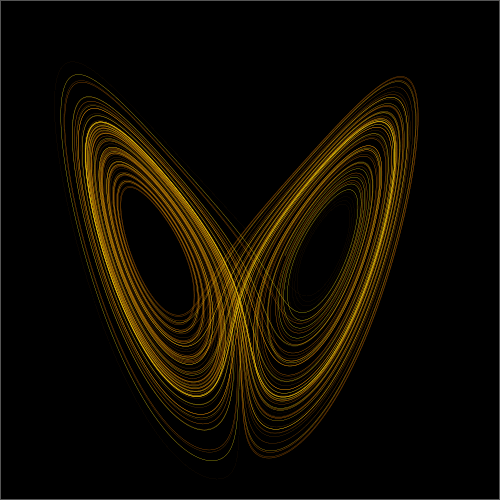
Measureing Chaos
PERSON
Name reference in documents
ME
Menulo
PERSON
Name reference in documents

Michael Cohen
PERSON
American former attorney and former Republican official
MI
Milton
PERSON
Surname reference in Epstein-related documents
MI
Mineva
PERSON
Name reference in documents
MI
Minkin
PERSON
Surname or name fragment in documents

Misiurewicz
PERSON
Polish mathematician
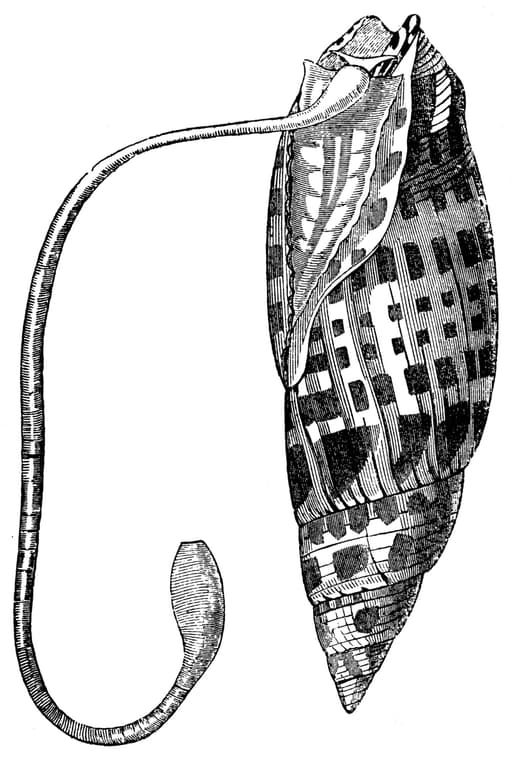
Mitra
PERSON
Surname or name fragment in documents

Mommer
PERSON
Name reference in documents
MO
Montano
PERSON
Surname reference in documents
Montroll
PERSON • 2 mentions
Name reference in documents
MK
Morfill, G., Kaess
PERSON
Name reference in documents
MO
Morse
PERSON
Surname reference in Epstein-related documents
MO
Moruzzi
PERSON
Name reference in documents
MU
Mulder
PERSON
Surname reference in documents
MU
Mumolo
PERSON
Name reference in documents

Murphy
PERSON
Ambiguous surname - refers to multiple people in Epstein documents
MU
Musha
PERSON
Name reference in documents
NS
N. Sadasivan
PERSON
Name reference in documents

Naiem, S.
PERSON
Name reference in documents
NA
Nakazawa
PERSON
Name reference in documents
NA
Nandrino
PERSON
Name reference in documents

Naomi Campbell
PERSON
English supermodel
NA
Nathanielsz
PERSON
Name reference in documents
NE
Nerenberg
PERSON
Name reference in documents
NE
Netoff
PERSON
Name reference in documents
NE
Neurochem
PERSON
Name reference in documents
Neurosci Behav Physiol
PERSON
Name reference in documents
NL
Neurosci Lett
PERSON
Name reference in documents

Niemeyer
PERSON
Name reference in documents
NI
Nieminen
PERSON
Name reference in documents
NU
Numajiri
PERSON
Name reference in documents
NU
Nurphy
PERSON
Name reference in documents
Nusse
PERSON
Name reference in documents
O.
O.E.
PERSON
Name reference in documents

Ogura
PERSON
Name reference in documents
OM
Oki Matsumoto
PERSON
Person referenced in documents
OR
Ornstein
PERSON
Surname or name fragment in documents
OE
Ott, E.
PERSON
Name reference in documents
OZ
Ozaki
PERSON
Name reference in documents

P.B., Russo
PERSON
Name reference in documents
PB
Pac Symp Biocomput
PERSON
Name reference in documents

Packard
PERSON
Surname reference in Epstein-related documents
PA
Papanikolaou
PERSON
Name reference in documents
Parry
PERSON • 2 mentions
Surname reference in Epstein documents
PA
Passamante
PERSON
Name reference in documents
Pasta
PERSON
Name reference in documents
Pecora
PERSON
Name reference in documents
PE
Pellikan
PERSON
Name reference in documents
PE
Perron
PERSON
Surname reference in documents
PE
Persson
PERSON
Name reference in documents
PE
Pezard
PERSON
Name reference in documents
PF
Pfister
PERSON
Name reference in documents
PI
Pincus
PERSON • 2 mentions
Surname or name fragment in documents
PO
Poincare
PERSON • 2 mentions
Surname reference in documents
PO
Pokrosvskaja
PERSON
Name reference in documents
Polymilis
PERSON
Name reference in documents
PO
Pomeau
PERSON • 2 mentions
Name reference in documents
PO
Popivanovov
PERSON
Name reference in documents
PR
Pradhan
PERSON • 2 mentions
Hindi traditional word

Prince Andrew
PERSON
Third child of Queen Elizabeth II and Prince Philip, Duke of Edinburgh (born 1960)
PR
Pritchard
PERSON
Surname or name fragment in documents
Pritchard W.
PERSON
Name reference in documents

Procacccia
PERSON
Name reference in documents

Psychiat
PERSON • 2 mentions
Name reference in documents
PU
Purdon
PERSON
Name reference in documents

R. Robertson
PERSON
Contributor of a single article to The Strand Magazine in 1894
R.
R.E.
PERSON
Name reference in documents
RP
R.M. Post
PERSON
Name reference in documents

Ramsey Elkholy
PERSON
Individual referenced in Epstein documents
Random Walks
PERSON
Name reference in documents

Rapp et al
PERSON
Name reference in documents
RE
Reimers
PERSON
Name reference in documents

Rene Thom
PERSON
Name reference in documents
Renyi
PERSON • 2 mentions
Name reference in documents
Rigney
PERSON
Name reference in documents
RI
Rinzel
PERSON
Name reference in documents

Robert Gates
PERSON
CIA director, U.S. Secretary of Defense, and university president

Robert Mueller
PERSON
Sixth director of the FBI; American attorney

Rockstroh
PERSON
German disc jockey
RO
Roelfsema
PERSON
Name reference in documents
RO
Romeiras
PERSON • 2 mentions
Name reference in documents
RO
Roper
PERSON
Surname or name fragment in documents
RO
Rothgeb
PERSON
Name reference in documents
Rufus Bowen
PERSON
Professor in the Department of Mathematics at the University of California, Berkeley

Russell Simmons
PERSON
American entrepreneur and record executive
RU
Russo
PERSON
Surname reference in Epstein-related documents
SE
S. Edwards
PERSON
Name reference in documents

S.,Signorini
PERSON
Name reference in documents
SZ
S.F. Zornetzer
PERSON
Name reference in documents
S.
S.H.
PERSON • 2 mentions
Name reference in documents
S.
S.R.
PERSON
NER artifact: Initials S.R. extracted from academic citations and legal document references
SA
Sadasivan
PERSON
Name reference in documents

Safar
PERSON
Name reference in documents
SA
Sakamoto
PERSON
Name reference in documents

Samantha Power
PERSON
Irish-American academic, author and diplomat

Sammer
PERSON
Name reference in documents
SA
Sashin
PERSON
Name reference in documents

Sauer
PERSON
Surname reference in documents

Savit
PERSON
Name reference in documents
SA
Sawada
PERSON
Name reference in documents

Scarlett Johansson
PERSON
American actress (born 1984)

Schiff
PERSON
Ambiguous surname - includes Adam Schiff (congressman) references in Epstein-related news and documents
SC
Schmah
PERSON • 2 mentions
Name reference in documents
SC
Schuckit
PERSON
American psychiatrist
SC
Schuler
PERSON
Surname or name fragment in documents
SC
Schuster
PERSON
Surname reference in Epstein-related documents
SE
Sefrioui
PERSON
Name reference in documents
SE
Segundo
PERSON
Name reference in documents
SE
Sejnowski
PERSON
American neuroscientist
SE
Seneta
PERSON
Name reference in documents
SH
Sharkovskii
PERSON
Name reference in documents
Sherry
PERSON • 2 mentions
First name reference to multiple individuals in Epstein-related documents
SH
Shigeta
PERSON
Name reference in documents
SH
Shlesinger
PERSON
Name reference in documents

Shraiman
PERSON
Name reference in documents
SM
Sigrid McCawley
PERSON
American attorney
SI
Simoyi
PERSON
Name reference in documents
SK
Skinner
PERSON
Surname reference in Epstein-related documents
SLAC I.
PERSON
Name reference in documents
SM
Smotherman
PERSON
Name reference in documents
SP
Spano
PERSON
Name reference in documents
SP
Sprott
PERSON
Surname or name fragment in documents
ST
Stauffer
PERSON
Surname reference in documents
ST
Stergiopulos
PERSON
Name reference in documents
ST
Steriade
PERSON
Name reference in documents

Stiber
PERSON
Colombian bicycle racer

Stillwell
PERSON
Name reference in documents
ST
Stoop
PERSON
Surname or name fragment in documents

Straver et al
PERSON
Name reference in documents
Sugihara
PERSON
Japanese diplomat, Righteous Among the Nations (1900-1986)
SU
Sullivan
PERSON
Surname reference in Epstein documents
SU
Suryanarayanan
PERSON
Ph.D. University of Texas at Austin 1996
SU
Sutton
PERSON
Surname reference in documents
SV
Sveri
PERSON
Name reference in documents
SW
Swinnery
PERSON
Name reference in documents
TM
T. McKenna
PERSON
Name reference in documents
T.
T.,Kugiumtzis
PERSON
Name reference in documents
T.
T.G.
PERSON
Name reference in documents
T.
T.M.
PERSON • 2 mentions
NER artifact: Initials or abbreviation T.M.
T.
T.R.
PERSON • 2 mentions
Name reference in documents
T.
T.S.
PERSON
Name reference in documents
TA
Takahashi
PERSON
Name reference in documents
TA
Takala
PERSON
King of Uvea
TA
Tamai
PERSON
Name reference in documents

Tattersal
PERSON
American paleoanthropologist
TE
Teich
PERSON • 2 mentions
Name reference in documents
Teich et al
PERSON
Name reference in documents
TE
Teicher
PERSON
Surname or name fragment in documents
TE
Tennekes
PERSON
Dutch meteorologist (1936-2021)

Terry
PERSON
First name reference to multiple individuals in Epstein documents
TE
Terzakis
PERSON
Name reference in documents
Theiler
PERSON • 2 mentions
Name reference in documents
TH
Theor
PERSON
Surname reference in documents
TH
Thijs
PERSON
Surname reference in Epstein-related documents
TA
Thom, Arnold
PERSON
Name reference in documents
Thomas Piketty
PERSON
French economist
TH
Thomson
PERSON
Surname reference in Epstein-related documents

Thorner
PERSON
Name reference in documents
Timofeev
PERSON
Name reference in documents
TO
Todorov
PERSON
Name reference in documents
TO
Toxicol
PERSON
Name reference in documents
TR
Traub
PERSON
Surname or name fragment in documents
TA
Tsuji, A.
PERSON
Name reference in documents
TU
Turcott
PERSON
Researcher
UB
Uberall
PERSON
Name reference in documents
V.
V.M.
PERSON
Name reference in documents

van der Heyden
PERSON
Name reference in documents

van Veelen
PERSON
Name reference in documents

Vance
PERSON
Surname reference in Epstein-related documents
VA
Varela
PERSON
Surname or name fragment in documents
VA
Vastano
PERSON
Name reference in documents
VE
Vehmeyer
PERSON
Name reference in documents
VE
Veldhuis
PERSON
Name reference in documents
Veldhuis, J.D. Patients
PERSON
Name reference in documents
VE
Verlag
PERSON
Surname or name fragment in documents
VE
Vertes
PERSON
Name reference in documents

Vidal
PERSON
Surname reference in documents
VI
Vining
PERSON
Surname or name fragment in documents

Vitto, A.
PERSON
Name reference in documents
VO
Vohra
PERSON
Name reference in documents

W. Ditto
PERSON
Name reference in documents
W. Pritchard
PERSON
Name reference in documents

W., Flor, H.
PERSON
Name reference in documents

W., Hu
PERSON
Name reference in documents
WJ
W., Jimenez-Montano
PERSON
Name reference in documents

W.J., Hood
PERSON
Name reference in documents
W.
W.P.
PERSON
Name reference in documents

Wackerbauer
PERSON
Name reference in documents
WA
Wallman
PERSON
Name reference in documents
WE
Weaver
PERSON • 3 mentions
Surname reference in Epstein-related documents
WE
Wegner
PERSON
Surname reference in documents
WE
Weiss
PERSON • 2 mentions
American multinational white-shoe law firm headquartered in New York City
WE
Wesley
PERSON
Brazilian association football player

Whittington
PERSON
Name reference in documents
WH
Whybrow
PERSON
American psychiatrist
Wolf et al
PERSON
Name reference in documents

Woody Allen
PERSON
American filmmaker, actor and comedian (born 1935)
Y-Q.
PERSON
Name reference in documents
YG
Ya G.
PERSON
Name reference in documents
YA
Ya.G.
PERSON
Name reference in documents
YA
Yamamoto
PERSON
Surname or name fragment in documents

Yamamoto et al
PERSON
Name reference in documents
Yates
PERSON
Surname reference in Epstein-related documents
YE
Yeomans
PERSON
Surname or name fragment in documents
YO
Yokoyama
PERSON
Name reference in documents

Yorke
PERSON
Geographic reference to Yorke Peninsula, South Australia (misclassified as PERSON)

Zabusky
PERSON
Physicist (1929-2018)
ZA
Zaslavsky
PERSON
Name reference in documents
ZA
Zaveri
PERSON
Surname reference in documents

Zh Vyssh Nerv Deiat
PERSON
Name reference in documents
ZH
Zhang
PERSON
Surname reference in documents
ZI
Zimmerman
PERSON
Surname reference in documents
ZA
Zimmerman et al
PERSON
Name reference in documents
ZU
Zumofen
PERSON
Name reference in documents
ZU
Zurek
PERSON
Name reference in documents
ZW
Zwiener
PERSON
Name reference in documents
ZA
Zwiener et al
PERSON
Name reference in documents
A., Destexhe, A. (
ORGANIZATION
Organization referenced in documents
A.G.
ORGANIZATION
Organization referenced in documents
A.N.
ORGANIZATION
Organization referenced in documents
A.P.
ORGANIZATION
Organization referenced in documents
A.T.
ORGANIZATION
Organization referenced in documents
Adam-Hilger
ORGANIZATION
Organization referenced in documents
Addison-Wesley
ORGANIZATION • 2 mentions
American publisher of textbooks and computer literature
Adler et al, 1998
ORGANIZATION
Organization referenced in documents
Alcohol Clin
ORGANIZATION
Organization referenced in documents
Analyte
ORGANIZATION
Organization referenced in documents
Ann Biomed Eng
ORGANIZATION
Organization referenced in documents
Axiom
ORGANIZATION
Organization referenced in documents
Axiom A Diffeomorphisms
ORGANIZATION
Organization referenced in documents
B. (1967) Entropy
ORGANIZATION
Organization referenced in documents
B., Cariani
ORGANIZATION
Organization referenced in documents
B., Elbert
ORGANIZATION
Organization referenced in documents
B., Walter, B., Schmidt, K.
ORGANIZATION
Organization referenced in documents
B.B.
ORGANIZATION
Entity referenced in documents
B.P.
ORGANIZATION
Organization referenced in documents
Bassingthwaighte et al, 1994
ORGANIZATION
Organization referenced in documents
Bifurcations of Vector Fields
ORGANIZATION
Organization referenced in documents
Biol Cybern
ORGANIZATION
Organization referenced in documents
Biol Psychol
ORGANIZATION
Organization referenced in documents
Biomed Biochim Acta
ORGANIZATION
Organization referenced in documents
Boltzmann, 1909
ORGANIZATION
Organization referenced in documents
Brain Res
ORGANIZATION
Organization referenced in documents
Brainstem Control of Wakefulness
ORGANIZATION
Organization referenced in documents
Bruce, 1991
ORGANIZATION
Organization referenced in documents
Buldyrev, S.V.
ORGANIZATION
Organization referenced in documents
Cardinals to Chaos
ORGANIZATION
Organization referenced in documents
Cardiovasc
ORGANIZATION
Organization referenced in documents
Cardiovasc Res
ORGANIZATION
Organization referenced in documents
Cerutti, S. (1996
ORGANIZATION
Organization referenced in documents
Chaotic and Fractal Dynamics
ORGANIZATION
Organization referenced in documents
Chaotic Data Analyzer
ORGANIZATION
Organization referenced in documents
Chaotic Dynamics
ORGANIZATION
Organization referenced in documents
Chaotic Evolution and Strange Attractors
ORGANIZATION
Organization referenced in documents
Chaotic Systems
ORGANIZATION
Organization referenced in documents
Chapin
ORGANIZATION
Organization referenced in documents

Clarendon
ORGANIZATION
Typeface
Clarendon Press
ORGANIZATION
Publishing imprint
Classical Mechanics
ORGANIZATION
Organization referenced in documents
Clin Exp Pharmacol Physiol
ORGANIZATION
Organization referenced in documents
Cogliati, C., Messetti,S., Porta, A., Cerutti, S.
ORGANIZATION
Organization referenced in documents
College de France
ORGANIZATION
Organization referenced in documents
Complex Dynamics and Renormalization
ORGANIZATION
Organization referenced in documents
Comput Biomed Res
ORGANIZATION
Organization referenced in documents

Cornell University
ORGANIZATION
Private Ivy League research university in Ithaca, New York
Cornfield et al, 1982
ORGANIZATION
Organization referenced in documents
Crevier
ORGANIZATION
Organization referenced in documents

Cushing
ORGANIZATION
Organization referenced in documents

De Brower
ORGANIZATION
Organization referenced in documents
de Gennes
ORGANIZATION
Organization referenced in documents
Decena, J.A.
ORGANIZATION
Organization referenced in documents
Dershiruk
ORGANIZATION
Organization referenced in documents
Derzhiruk, L.P.
ORGANIZATION
Organization referenced in documents
Deterministic Chaos
ORGANIZATION
Organization referenced in documents
Differentiable
ORGANIZATION
Organization referenced in documents
Dimension Theory
ORGANIZATION
Organization referenced in documents
Disord
ORGANIZATION
Organization referenced in documents
Dissipative
ORGANIZATION
Organization referenced in documents
Doppler
ORGANIZATION
Organization referenced in documents
Dynamical Systems
ORGANIZATION
Organization referenced in documents
E.A.
ORGANIZATION
Organization referenced in documents
E.L.
ORGANIZATION
Organization referenced in documents
E.N.
ORGANIZATION
Organization referenced in documents
EEG Dz
ORGANIZATION
Organization referenced in documents
Electromyogr
ORGANIZATION
Organization referenced in documents

Elsevier
ORGANIZATION
Dutch publishing and analytics company
Ergodic
ORGANIZATION
Organization referenced in documents
Ergodic Problems
ORGANIZATION
Organization referenced in documents
Ergodic Theory
ORGANIZATION
Organization referenced in documents
Eur Arch Psychiatry
ORGANIZATION
Organization referenced in documents
Evolution of Order
ORGANIZATION
Organization referenced in documents
Exp Res
ORGANIZATION
Organization referenced in documents
Feller
ORGANIZATION
Organization referenced in documents
Fessard et al, 1961
ORGANIZATION
Organization referenced in documents
Foundations of Probability Theory
ORGANIZATION
Organization referenced in documents
Fourier
ORGANIZATION
Organization referenced in documents
Fractal
ORGANIZATION
Organization referenced in documents
Fractal Physiology
ORGANIZATION
Organization referenced in documents
Frisch, U. (1995
ORGANIZATION
Organization referenced in documents
G., Montano, N.
ORGANIZATION
Organization referenced in documents
G., Smith, S.
ORGANIZATION
Organization referenced in documents
G.D.
ORGANIZATION
Organization referenced in documents
G.L.
ORGANIZATION
Organization referenced in documents
G.M.
ORGANIZATION
Organization referenced in documents
G.P.
ORGANIZATION
Organization referenced in documents
G) Dimensions and Entropies
ORGANIZATION
Organization referenced in documents
Geist et al, 1990
ORGANIZATION
Organization referenced in documents
Geyer
ORGANIZATION
Municipality of Germany
Gnecchi-Ruscone
ORGANIZATION
Organization referenced in documents
Gordon & Breach
ORGANIZATION
Organization referenced in documents
Grassberger
ORGANIZATION
Organization referenced in documents
Grebogi, C.
ORGANIZATION
Organization referenced in documents

Guilford Press
ORGANIZATION
Company in New York, United States
H.J., Jodl, H. (1993
ORGANIZATION
Organization referenced in documents
Hasard et Dimension
ORGANIZATION
Organization referenced in documents
Hausdorf
ORGANIZATION
Organization referenced in documents
Hodgkin-Huxley
ORGANIZATION
Organization referenced in documents
Holden, A. (eds
ORGANIZATION
Organization referenced in documents
Hydrodynamics
ORGANIZATION
Organization referenced in documents
IEEE Eng
ORGANIZATION
Organization referenced in documents
IEEE Eng Med Biol Mag
ORGANIZATION
Organization referenced in documents
IEEE Trans
ORGANIZATION
Organization referenced in documents
Institute Physics
ORGANIZATION
Organization referenced in documents
Int J Med Inf
ORGANIZATION
Organization referenced in documents
Int J Neurosci
ORGANIZATION
Organization referenced in documents
International Congress of Mathematics
ORGANIZATION
Organization referenced in documents
J Acoust Soc Am
ORGANIZATION
Organization referenced in documents
J Acoust Soc Am 92:803
ORGANIZATION
Organization referenced in documents
J. Appl
ORGANIZATION
Organization referenced in documents
J. Combinatorial Theory
ORGANIZATION
Organization referenced in documents
J. Fluid Mech
ORGANIZATION
Organization referenced in documents
J. Neural Trans
ORGANIZATION
Organization referenced in documents
J. Opt
ORGANIZATION
Organization referenced in documents
J. Royal
ORGANIZATION
Organization referenced in documents
J. Stat
ORGANIZATION
Organization referenced in documents
J., Beckmann, P.
ORGANIZATION
Organization referenced in documents
J., Farmer
ORGANIZATION
Organization referenced in documents
J., Froehling, H.
ORGANIZATION
Organization referenced in documents
J., Holmes, P.
ORGANIZATION
Organization referenced in documents
J., Keunen
ORGANIZATION
Organization referenced in documents
J., Liebovitch
ORGANIZATION
Organization referenced in documents
J., Mann, K. (1997
ORGANIZATION
Organization referenced in documents
J., Roschke, J., Schaffner, C.
ORGANIZATION
Organization referenced in documents
J., Ruelle
ORGANIZATION
Organization referenced in documents
J., Sacklellares
ORGANIZATION
Organization referenced in documents
J., Schiff
ORGANIZATION
Organization referenced in documents
J., Shlesinger
ORGANIZATION
Organization referenced in documents
J., Ulam, S. (1955
ORGANIZATION
Organization referenced in documents
J., Velis
ORGANIZATION
Organization referenced in documents
J., Wong
ORGANIZATION
Organization referenced in documents
J.,Roschke
ORGANIZATION
Organization referenced in documents
J.E., Gerstein
ORGANIZATION
Organization referenced in documents
Jakob-Creutzfeld
ORGANIZATION
Organization referenced in documents
Jansen
ORGANIZATION
Organization referenced in documents
Jefferys, J.G.R.
ORGANIZATION
Organization referenced in documents
Kamath, M.V.
ORGANIZATION
Organization referenced in documents
Kaplan, 1994
ORGANIZATION
Organization referenced in documents
King, G.P.
ORGANIZATION
Organization referenced in documents
Korn and Horn
ORGANIZATION
Organization referenced in documents
Krebs-Thomson
ORGANIZATION
Organization referenced in documents
Krebs-Thomson et al
ORGANIZATION
Organization referenced in documents
Lancet
ORGANIZATION
Peer-reviewed general medical journal
Lehmann-Masten
ORGANIZATION
Organization referenced in documents
Log Rg
ORGANIZATION
Organization referenced in documents
M., Baulac
ORGANIZATION
Organization referenced in documents
M., Curell
ORGANIZATION
Organization referenced in documents
M., McCarley
ORGANIZATION
Organization referenced in documents
M., Mulder
ORGANIZATION
Organization referenced in documents
M., Stanley
ORGANIZATION
Organization referenced in documents
M., Toussaint
ORGANIZATION
Organization referenced in documents
M.A.L.
ORGANIZATION
Organization referenced in documents
M.L.,Matthews
ORGANIZATION
Organization referenced in documents
M&T Books
ORGANIZATION
Organization referenced in documents
MacMillan London
ORGANIZATION
Organization referenced in documents
Manchester University Press
ORGANIZATION
Organization referenced in documents
Mandell et al, 1991
ORGANIZATION
Organization referenced in documents

Mantegna
ORGANIZATION • 2 mentions
Organization referenced in documents
Markoff Chains
ORGANIZATION
Organization referenced in documents
Mathematical Foundations of Information Theory
ORGANIZATION
Organization referenced in documents

Mayer-Kress
ORGANIZATION • 2 mentions
Organization referenced in documents

McGraw-Hill
ORGANIZATION
American publicly traded corporation, formerly McGraw Hill Financial, Inc
Meister,M
ORGANIZATION
Organization referenced in documents
Meyer-Lindenberg
ORGANIZATION
Organization referenced in documents

MIT Press
ORGANIZATION
American university press
mix’(get
ORGANIZATION
Organization referenced in documents
Mixing Properties in Human Behavioral Style
ORGANIZATION
Organization referenced in documents
Molecular Biophysics Oxford University Press
ORGANIZATION
Organization referenced in documents
Morinushi et al, 1998
ORGANIZATION
Organization referenced in documents
N., Flor, H.
ORGANIZATION
Organization referenced in documents
N.P.
ORGANIZATION
Organization referenced in documents
National Bureau of Standards
ORGANIZATION
Organization referenced in documents
Neurogastroenterol
ORGANIZATION
Organization referenced in documents
Neurol Res
ORGANIZATION
Organization referenced in documents
Neurophysiol
ORGANIZATION • 2 mentions
Organization referenced in documents
Neuropsychopharm. & Biol
ORGANIZATION
Organization referenced in documents
Nicolis
ORGANIZATION • 2 mentions
Organization referenced in documents
Niwa, S.
ORGANIZATION
Organization referenced in documents
Nonconvergent Distributions
ORGANIZATION
Organization referenced in documents
Nonlinear Dynamics and Chaos
ORGANIZATION
Organization referenced in documents
Nonlinear Oscillations
ORGANIZATION
Organization referenced in documents
Nonlinear Physics with Maple for Scientists
ORGANIZATION
Organization referenced in documents
North-Holland
ORGANIZATION
Organization referenced in documents
Numerical
ORGANIZATION
Organization referenced in documents

Oseledec
ORGANIZATION
Organization referenced in documents
P.N.
ORGANIZATION
Organization referenced in documents
P.V.
ORGANIZATION • 2 mentions
Organization referenced in documents
Packard et al, 1980
ORGANIZATION
Organization referenced in documents
Pezard et al, 1996
ORGANIZATION
Organization referenced in documents
Pharm Res
ORGANIZATION
Organization referenced in documents
Pharm Sci
ORGANIZATION
Organization referenced in documents
Physica
ORGANIZATION
Organization referenced in documents
Physical Systems
ORGANIZATION
Organization referenced in documents
Pign et al, 1997
ORGANIZATION
Organization referenced in documents
Poisson
ORGANIZATION
Organization referenced in documents
Polymer Physics
ORGANIZATION
Organization referenced in documents
Power Law Scaling of Orbital Geometries
ORGANIZATION
Organization referenced in documents
Practical Guide to Heavy Tails
ORGANIZATION
Organization referenced in documents

Princeton University
ORGANIZATION
Private Ivy League research university in Princeton, New Jersey
Probability Theory
ORGANIZATION
Organization referenced in documents
Proc Natl Acad Sci
ORGANIZATION
Organization referenced in documents
Quasioperiodically
ORGANIZATION
Organization referenced in documents
R.C.S.
ORGANIZATION
Organization referenced in documents
R.H., Wolf, A., Swinnery, H.L
ORGANIZATION
Organization referenced in documents
R.J.
ORGANIZATION
Organization referenced in documents
R.N.
ORGANIZATION
Organization referenced in documents
R.P.
ORGANIZATION
Organization referenced in documents
R.R., Bialek
ORGANIZATION
Organization referenced in documents
R.W.
ORGANIZATION
Organization referenced in documents
R.W., Stam
ORGANIZATION
Organization referenced in documents
Rapp, P.E.
ORGANIZATION
Organization referenced in documents
Renault
ORGANIZATION
Automotive conglomerate
Rissanen
ORGANIZATION
Organization referenced in documents
Ruelle
ORGANIZATION • 2 mentions
Organization referenced in documents
S., Flitzanis, N.
ORGANIZATION
Organization referenced in documents
S., Sano, M., Sawada, Y. (
ORGANIZATION
Organization referenced in documents
S., Stam
ORGANIZATION
Organization referenced in documents
S., Stanley, H.E., Goldberger
ORGANIZATION
Organization referenced in documents
S.O.
ORGANIZATION
Organization referenced in documents
Sadana
ORGANIZATION
Organization referenced in documents
Sammon
ORGANIZATION
Organization referenced in documents
Schmidt-Nielsen
ORGANIZATION
Organization referenced in documents
Scott, A. (1990
ORGANIZATION
Organization referenced in documents
Second Edition
ORGANIZATION
Organization referenced in documents
Shlesinger et al, 1995
ORGANIZATION
Organization referenced in documents
Single Neuron Computation, Academic
ORGANIZATION
Organization referenced in documents
Society United Nations
ORGANIZATION
Organization referenced in documents
Spatiotemporal
ORGANIZATION
Organization referenced in documents
SPIE Proc
ORGANIZATION
Organization referenced in documents
Springer-Verlag
ORGANIZATION • 3 mentions
Organization referenced in documents
Stage Il and REM
ORGANIZATION
Organization referenced in documents
Stam et al
ORGANIZATION
Organization referenced in documents
Statistical Mechanics
ORGANIZATION
Organization referenced in documents
Stockbridge
ORGANIZATION
Organization referenced in documents
Stohastics
ORGANIZATION
Organization referenced in documents
Striatal
ORGANIZATION
Organization referenced in documents
Structural Stability and Morphogenesis
ORGANIZATION
Organization referenced in documents
Suppl
ORGANIZATION
Organization referenced in documents
Synergetics of Brain
ORGANIZATION
Organization referenced in documents
T., Gluckman
ORGANIZATION
Organization referenced in documents
T., Lombardi, F., Malliani, A.
ORGANIZATION
Organization referenced in documents
T., Shinosaki, K.
ORGANIZATION
Organization referenced in documents
T., Widmer
ORGANIZATION
Organization referenced in documents
Takens
ORGANIZATION
Organization referenced in documents
The Art of Scientific Computing
ORGANIZATION
Organization referenced in documents
The Fractal Geometry of Nature
ORGANIZATION
Organization referenced in documents
The Mathematical Theory of Communication
ORGANIZATION
Organization referenced in documents
The Mechanical Theory of Heat
ORGANIZATION
Organization referenced in documents
The Modeling of a
ORGANIZATION
Organization referenced in documents
the Physics of Information
ORGANIZATION
Organization referenced in documents
Theiler, J. (1990
ORGANIZATION
Organization referenced in documents
Ukranian Mat
ORGANIZATION
Organization referenced in documents
University of Illinois Press
ORGANIZATION
Organization referenced in documents

University of Oxford
ORGANIZATION
Collegiate research university in Oxford, England

University Press
ORGANIZATION
Student magazine of Florida Atlantic University in Boca Raton, Florida, United States
V.L.
ORGANIZATION
Organization referenced in documents
Vision Res
ORGANIZATION
Organization referenced in documents
W.H.
ORGANIZATION
Organization referenced in documents
W.T.
ORGANIZATION
Organization referenced in documents

W.W.
ORGANIZATION
Organization referenced in documents
Wayland
ORGANIZATION
Organization referenced in documents
Weinheim
ORGANIZATION
Organization referenced in documents

Wiley
ORGANIZATION
American multinational publishing company
Wiley-Interscience
ORGANIZATION
Organization referenced in documents
Wissenschaftliche Abhandlungen
ORGANIZATION
Organization referenced in documents
World Scientific
ORGANIZATION
Organization referenced in documents
Y-H.
ORGANIZATION
Organization referenced in documents
Young, 1989a
ORGANIZATION
Organization referenced in documents

Zeeman
ORGANIZATION
Organization referenced in documents
1998;Zhang
LOCATION
Location referenced in documents
A.M.S.
LOCATION
Location referenced in documents
A.Ya.
LOCATION
Location referenced in documents
Aftanas
LOCATION
Location referenced in documents

Amsterdam
LOCATION
Capital and most populous city of the Netherlands
Bablioyantz
LOCATION
Location referenced in documents
Baccala
LOCATION
Location referenced in documents

Baltimore
LOCATION
City in Maryland, United States
Bartsch
LOCATION
Location referenced in documents
Bassingthwaighte
LOCATION
Location referenced in documents
Beaudet
LOCATION
Location referenced in documents

Braff
LOCATION
Location referenced in documents

Bristol
LOCATION
City in South West England, United Kingdom
C.D.,Palovcik
LOCATION
Location referenced in documents
D.,Nordahl,G. (1997
LOCATION
Location referenced in documents
Dover
LOCATION
Town and major ferry port in Kent, South East England
Dover Mineola
LOCATION
Location referenced in documents
E.P.
LOCATION
Location referenced in documents
Eckmann
LOCATION
Location referenced in documents
Ehrenkranz
LOCATION
Location referenced in documents

Essex
LOCATION
Ceremonial county in England (use Q21272241 for administrative non-metropolitan county)
F.G.
LOCATION
Location referenced in documents
Faure
LOCATION
Location referenced in documents
Fermi
LOCATION
GPU microarchitecture designed by Nvidia

Flannery
LOCATION
Australian scientist and global warming activist
Fomin
LOCATION
Location referenced in documents

Germany
LOCATION
Country in Central Europe
Gladstone
LOCATION
City in Queensland, Australia

Gordon Beach
LOCATION
Hamlet in Berrien County, Michigan, United States

Houston
LOCATION
Seat of Harris County, and largest city in State of Texas, United States

Ithica
LOCATION
City in Tompkins County, New York, USA, enclosed by the town of the same name
J.,Adam
LOCATION
Location referenced in documents
J.A.S.
LOCATION
Location referenced in documents
J.K.
LOCATION
Location referenced in documents

Kawasaki
LOCATION
City in Kanagawa prefecture, Japan
Keunen
LOCATION
Location referenced in documents
Kowalik and Elbert
LOCATION
Location referenced in documents
L.H.
LOCATION
Location referenced in documents
L.W.
LOCATION
Location referenced in documents
Lauterborn
LOCATION
German botanist, entomologist, hydrologist and zoologist (1869-1952)
Laypounov
LOCATION
Location referenced in documents
Lis, S.
LOCATION
Location referenced in documents
Los Alamos
LOCATION
Census-designated place in and county seat of Los Alamos County, New Mexico, United States
M.V.
LOCATION
Location referenced in documents
Makhnev
LOCATION
Location referenced in documents

Manchester
LOCATION
City in Greater Manchester, England
Mazuka
LOCATION
Japanese visual artist and former film actor

Mesiter
LOCATION
Location referenced in documents
Metropolis
LOCATION
Location referenced in documents

Milan
LOCATION
Italian commune and capital city of Lombardy
Mt. Everest
LOCATION
Earth's highest mountain above sea level, located in the Mahalangur Himal sub-range of the Himalayas
Neurotensin
LOCATION
Location referenced in documents

New Haven
LOCATION
City in Connecticut, United States
P.W.
LOCATION
Location referenced in documents
P.Y.
LOCATION
Location referenced in documents
Panchekha
LOCATION
Location referenced in documents

Paris
LOCATION
Capital city and largest city of France
Parlitz
LOCATION
Location referenced in documents
Paulus
LOCATION
Location referenced in documents
Philadelphia
LOCATION
1993 film by Jonathan Demme
Physica D55
LOCATION
Location referenced in documents
Plonka
LOCATION
Location referenced in documents
Popov
LOCATION
American brand of vodka
Principe
LOCATION
Neighborhood in Ceuta, Spain
Procaccia
LOCATION
Location referenced in documents

Providence
LOCATION
Capital city of Rhode Island, United States
R.A.,Britton
LOCATION
Location referenced in documents
Reddy
LOCATION
Indian caste, predominantly settled in Andhra Pradesh and Telangana
Redwood City
LOCATION
City in San Mateo County, California, United States
Réssler
LOCATION
Location referenced in documents

Rowlands
LOCATION
Human settlement in Robeson County, North Carolina, United States of America

S.M.,Minkin
LOCATION
Location referenced in documents
S.N.
LOCATION
Location referenced in documents
S.V.
LOCATION
Location referenced in documents
Sackellares
LOCATION
Location referenced in documents
Saltzberg
LOCATION
Location referenced in documents

Santa Cruz
LOCATION
City in eastern Bolivia
Sinai
LOCATION
Peninsula in the Middle East
T.Y.
LOCATION
Location referenced in documents
Takigawa
LOCATION
Location referenced in documents
Teukolsky
LOCATION
Location referenced in documents

Tokyo
LOCATION
Capital and largest city of Japan
Usherwood
LOCATION
Location referenced in documents

Uthman
LOCATION
Location referenced in documents

V.I.
LOCATION
U.S. Virgin Islands
Vergassola
LOCATION
Location referenced in documents
Vetterling
LOCATION
German composer (1903–1963)
Y.M.
LOCATION
Location referenced in documents
Z.J.
LOCATION
Location referenced in documents
Statistics
Pages:95
Entities:894
Avg. OCR:94.1%
Sponsored