EFTA00191587_sub_005 - EFTA00191587_500
Document Information
Bates Range
EFTA00191587_sub_005 - EFTA00191587_500
Pages
100
Original Filename
EFTA00191587.pdf (email 1, pages 1-658)
Document Content
Page 401 - EFTA00191587_401
Page 3 of 13 77 Fed.Appx. 371 77 Fed.Appx. 371, 2003 WL 22331999 (C.A.6 (Ohio)) (Cite as: 77 Fed.Appx. 371) computer in transmission of the material, was not erroneous even though trial court failed to make required factual findings; defendant failed to create any dispute of fact inasmuch as his conviction established that he transmitted child pornography by computer, and evidence at trial showed that he sent and downloaded child pornography. 18 U.S.C.A. § 2252(a)(1), (a)(4XB); Fed.Rules Cr.Proc.Rule 32(cX1), 18 U.S.C.A.; U.S.S.G. § 2G2.2(bX5), 18 U.S.C.A. 191 Sentencing and Punishment 350H 0=,995 350H Sentencing and Punishment 350HIV Sentencing Guidelines 350HIV(H) Proceedings 350HIV(H)3 Hearing 350Hk992 Findings and Statement of Reasons 350Hk995 k. Necessity. Most Cited Cases Imposition, in sentencing on three counts relating to interstate transportation or transmission of images of child pornography, of enhancement on basis that offense involved distribution, was not erroneous even though trial court failed to make required factual findings; defendant's objections failed to create any dispute of fact inasmuch as nothing contradicted evidence that he transmitted child pornography as part of his attempt to entice a minor into sexual activity. 18 U.S.C.A. § 2252(a)(1), (aX4XB), 2422(b); Fed.Rules Cr.Proc.Rule 32(cX1), 18 U.S.C.A.; U.S.S.G. § 2G2.2(bX2). 18 U.S.C.A. 1101 Sentencing and Punishment 350H . ;995 350H Sentencing and Punishment 350HIV Sentencing Guidelines 350H11(H) Proceedings 350HIV(H)3 Hearing 350Hk992 Findings and Statement of Reasons 350Hk995 k. Necessity. Most Cited Cases Imposition, in sentencing on three counts relating to interstate transportation or transmission of images of child pornography, of enhancement on basis that offenses involved sadistic or masochistic conduct, Pagc 3 was not erroneous even though trial court failed to make required factual findings; defendant did not dispute that his computer contained images portraying sexual penetration of prepubescent girls that would likely be painful, and he did not raise a legal controversy about the definition of sadistic conduct for purposes of the enhancement. 18 U.S.C.A. § 2252(aX1), (a)(4XB); Fed.Rules Cr.Proc.Rule 32(cX1), 18 U.S.C.A.; U.S.S.G. § 2G2.2(bX3), 18 U.S.C.A. •373 On Appeal from the United States District Court for the Northern District of Ohio. Before GUY and DAUGHTREY, Circuit Judges; and LAWSON, District Judge.' FN' The Honorable David M. Lawson, United States District Judge for the Eastern District of Michigan, sitting by designation. GUY, Circuit Judge. **I Defendant, James Stanley Fuller, appeals following his conviction by a jury on four counts: (I) attempting to entice a minor by computer or telephone to engage in criminal sexual activity (18 U.S.C. § 2422(b)); (2) interstate transportation of photographic computer files from Georgia to Ohio depicting minors engaged in sexually explicit conduct (18 U.S.C. § 2252(a)(1)); (3) interstate transmission of photographic computer files by computer depicting minors engaged in sexually explicit conduct (18 U.S.C. § 2252(aX1)); and (4) possession of photographic computer files that had been transported in interstate commerce depicting minors engaged in sexually explicit conduct (18 U.S.C. § 2252(aX4XB)). Defendant, who chose to represent himself, was sentenced to a term of imprisonment of 135 months to be followed by a two-year term of supervised release. Through appointed counsel, defendant challenges his sentence on the grounds that the district court failed to make adequate factual findings and erred in its application of the guidelines. In addition, counsel contends (in an argument also made in defendant's pro se filings), that defendant's convictions on counts 2, 3, and 4 must be vacated O 2007 Thomson/West. No Claim to Orig. U.S. Govt. Works. https://web2.westlaw.com/print/printstream.aspx?rs=WLW7.11&destination=atp&prft=H... 12/18/2007 EFTA00191987
Page 402 - EFTA00191587_402
Page 4 of 13 77 Fed.Appx. 371 77 Fed.Appx. 37I, 2003 WL 22331999 (C.A.6 (Ohio)) (Cite as: 77 Fed.Appx. 371) under Ashcroft I Free Speech Coalition. 535 U.S. 234. 122 S.Ct. 1389, 152 L.Ed.2d 403 (2002), because the government failed to prove that the depictions in the computer files were of actual•374 human beings. Although sometimes repetitive and undeveloped, defendant's pro se filings include arguments against the admission of evidence obtained illegally from America On Linc (AOL) or as a result of an illegal search of the apartment where he had been staying, and several challenges to his convictions on what appear to be sufficiency of the evidence grounds. For the reasons discussed below, we affirm defendant's convictions and sentence. 1. Defendant came to the attention of the FBI after two adult females, Margaret Dudas and Marjorie Vizurraga, reported his preoccupation with having sex with minors. Both women made contact with defendant over the Internet through the instant messaging (IM) service offered by AOL and communicated with him by e-mail and telephone before meeting him in person. Fuller used the screen name "Blueey0123" to communicate with Dudas through AOL. During one telephone conversation with Fuller, Dudas received an IM from someone using the screen name " K9Teacher" that forwarded a picture of a dog in a sexual position with a woman. Dudas later realized that she heard the AOL chimes on Fuller's end of the line each time "K9Teacher" communicated with her, but when she blocked messages from " K9Teacher" the chiming stopped. Fuller met Dudas at her home and, after consensual sex, commented on a photograph of Dudas's 14-year-old daughter. When Fuller asked about sex between Dudas and her daughter and expressed interest in having sex with them both, Dudas threw him out. Fuller communicated with Vizurraga through AOL using the screen names "Stan046" and "Blueey0123. " Fuller, who said he trained major league baseball players around the country, stayed with Vizurraga in Cleveland during their brief relationship. She testified that she ended their relationship after about Page 4 a month because of his preoccupation with sex and his desire to have her participate in sexual acts with multiple partners, including a 15 year-old female babysitter."41 FN1. Both Dudas and Vizurraga testified explicitly about what Fuller had said about sexual acts he wanted them to perform on underage girls while he participated. Fuller, representing himself at trial, cross-examined both of them. **2 FBI Special Agent Brian Vigncaux began investigating Fuller. Vigneaux leamed from another FBI office that an earlier AOL account in Fuller's name had been terminated for having transferred child pomography. In answer to an administrative subpoena, AOL advised that Fuller had been a member of AOL since February 27, 2000, and used screen names including " Blueey0123," "April0435," and "K9Teacher01." With this information, Vigneaux connected to the Internet via AOL and, using the undercover screen name "Peaches14kwl," added "Blucey0123" to the account's IM "buddy list." On July 12, 2000, Vigneaux made contact with defendant and relayed that "Peaches" was almost 14 years old and lived with her mother. Fuller said he was 48 years old, and they exchanged photographs. Vigneaux sent Fuller a photograph of Special Agent Kelly Liberti, which had been taken when she was 14 years old and in which she was dressed as a cheerleader. As the session continued, Fuller asked "Peaches" to call him on the telephone and discussed, in sexually explicit terms, her body, mother/daughter sex, masturbation, and other *375 sexual acts they could do together.rs2 After this contact, Fuller traveled from Georgia to Cleveland, Ohio, taking his laptop computer with him. FN2. Vigneaux employed a computer program to record all keystrokes by both participants to the IM session and another to capture the e-mails and pictures sent by Fuller. In addition, the FBI recorded the subsequent telephone conversations O 2007 Thomson/ West. No Claim to Orig. U.S. Govt. Works. https://web2.westlaw.com/print/printstream.aspx?rs=WLW7.118cdestination=alp&prft=H... 12/18/2007 EFTA00191988
Page 403 - EFTA00191587_403
Page 5 of 13 77 Fed.Appx. 371 Page 5 77 Fed.Appx. 371, 2003 WL 22331999 (C.A.6 (Ohio)) (Cite as: 77 Fed.Appx. 371) between Fuller and Agent Liberti. During their next IM session on July 17, 2000, Fuller told "Peaches" that he was in Cleveland and was staying with a major league baseball player. He asked about meeting with her, offered to take digital pictures of her, and questioned her in explicit terms about her sexual activity and asked if she had sex with a 13•year-old girlfriend. Fuller again asked that she call him on his cellular telephone. Vigneaux arranged to have Agent Libeni call a few hours later, posing as "Peaches" and identifying herself as "Brianna." Fuller asked her age again and was told she was "almost 14." Fuller tried to arrange for them to meet that night, told her they could have privacy, promised that they would go slowly, and talked explicitly about sex. Fuller contacted "Peaches" by instant messaging on July 19, 2000, and suggested that they could meet while her mother was at work. He accused her of being a "talker and not a doer." At the end of the session, she agreed to call him 30 minutes later. Libeni called Fuller as agreed, telling him she could ride her bicycle to meet him the following afternoon after her mom left for work. Fuller asked about her mom's age, looks, and if she was dating anyone. He also asked in explicit terms about specific sex acts; including multiple partners, domination, sex with dogs, sex with other girls, and mother/daughter sex. When Libeni expressed interest, Fuller agreed to c-mail her some pictures of things they were talking about. They discussed arrangements for their meeting the next day, and Liberti agreed to call him as soon as her mother left for work. Fuller later sent "Peaches" an e-mail with two pictures of women having sex with dogs. **3 The next morning, July 20, Fuller and 'Peaches " conversed by instant messaging about where and when they would meet and what they would each be wearing. Fuller e-mailed "Peaches" several more sexually explicit pictures; including one Fuller told her was of a 13-year-old girl.FN3 Fuller said she could meet two Cleveland Indian baseball players after he picked her up, explaining that he would say she was the daughter of a friend, and told her that they then could go to the apartment where he was staying to be alone. About 30 minutes later, Liberti called Fuller and they arranged to meet at a nearby marina. Fuller said he would be driving a white " Jimmy" and would be wearing a blue warm-up outfit. When Fuller arrived at the arranged meeting place, he was arrested. FIN13. That file was named "13 year old getting flicked and licking mom.bmp." Agents found handwritten notes referring to " Peaches" and giving directions to the meeting place, as well as receipts documenting Fuller's travel from Georgia to Ohio. They also found a digital camera, a blindfold, a cat-o-nine tails, and a prescription bottle containing Viagra. Agent Liberti located Russell Branyan, the baseball player with whom Fuller had been staying, and told him about the arrest. Branyan had known Fuller professionally for several years, but Fuller had never stayed with him before. Branyan testified that Fuller spent a lot of time using the computer in the spare *376 bedroom of the apartment. Although Branyan had asked Fuller to leave because he had continued to smoke cigarettes in the apartment, Fuller had not vacated before his arrest. Branyan offered to cooperate, gave them consent to search the apartment, and signed a consent-to-search form to that effect. When agents entered the apartment and looked in the spare bedroom, they saw a laptop computer that displayed the AOL sign-on screen for "Blueey0123" and nine "minimized" boxes showing partial file names. Although Branyan had given permission to remove Fuller's possessions, agents waited and obtained a search warrant before seizing defendant's Compaq Presario notebook computer. Barry Gummow, a computer forensic examiner, was called to assist in the execution of the warrant. Gummow "maximized" the nine boxes so that photographs could be taken of the images, which included sexually explicit pictures involving both mother/daughter sex and sex with dogs. Grummow then shut down the computer and seized it for examination. On the computer, Gummow found evidence of child pornography downloaded through AOL from the Internet; Internet history files C 2007 Thomson/West. No Claim to Orig. U.S. Govt. Works. https://web2.westlaw.com/print/printstream.aspx?rs=WLW7.11&destination=atp&prft=H... 12/18/2007 EFTA00191989
Sponsored
Page 404 - EFTA00191587_404
Page 6 of 13 77 Fed.Appx. 371 77 Fed.Appx. 371. 2003 WL 22331999 (C.A.6 (Ohio)) (Cite as: 77 Fed.Appx. 371) showing child pornography web sites visited by Fuller; and photographs of Fuller and other women, some taken with the digital camera seized at the time of his arrest. Among the pictures found on Fuller's computer were those that had been sent between Fuller and "Peaches." Using the Tanner Scale of Pubertal Development, Dr. Douglas Rogers, a pediatric endocrinologist at the Cleveland Clinic, testified that 21 pictures taken from defendant's computer depicted minor females at or below Tanner Stage Four (for which the average age is 13), and that 13 of those pictures were of females at or below Tanner Stage One (for which the average age is 10). The government also offered the opinion of Douglas Rehman, an expert in computer forensics and child exploitation, concerning his examination of the images for evidence of alteration. "4 Arrested pursuant to a complaint and warrant on July 20, 2000, Fuller was detained without bond. After the indictment was filed on August 9, 2000, Fuller was arraigned and entered a plea of not guilty. Defendant's retained counsel withdrew, as did defendant's next two court-appointed attorneys. Defendant's third appointed counsel represented him before trial and then served as an advisor during trial because defendant had asserted his right to represent himself. That attorney was permitted to withdraw prior to sentencing, and new counsel served as defendant's advisor at sentencing and filed a brief on appeal. Timely notice of appeal was filed both by Fuller and by his appointed counsel. A. Denial of Motion to Suppress [I) Fuller filed several motions to suppress evidence, which were denied in written memoranda and orders. In reviewing the denial of a motion to suppress, we review the district court's factual findings for clear errv- and the legal conclusions de novo. United States I Atkin, 107 F.3d 1213, 1216 (6th Cir.1997). In his pro se filings, Fuller argues that the FBI illegally seized communications from Page 6 AOL without a warrant in violation of 18 U.S.C. § 2703. Because this argument was not mentioned in the district court's orders, it is not clear whether the issue was preserved for appeal. Even if it was, however, the record is plain that the communications captured, both the instant messaging sessions and e-mails, were sent by Fuller to the undercover FBI account and were not obtained through disclosure forced upon AOL. *377 [2] Fuller challenges the search and seizure of evidence found in the spare bedroom of Branyan's apartment on two different grounds. Fuller argues first that the warrant lacked particularity because Attachment G to the warrant only identified items to be seized, but did not authorize the search for those items. We cannot accept this distinction as meaningful and agree with the district court's implicit finding that the search warrant was sufficiently particularized with respect to the scope of the search to satisfy the Fourth Amendment and allow search for the computer and the files and records stored on it. Although Fuller challenged the warrant on other grounds, the district court observed in a footnote that defendant has not argued that the description "all personal computers/computing systems located therein" is unconstitutionally overbroad. The Court notes that the determination of the requisite particularity must be "flexible" and the description of items to be seized need only be "as specific as the it circumstances and the nature of the tivity under investigation permit." United States Blair, 214 F.3d 690, 697 (6th Cir.2000) (citing tilted States I Abler. 167 F.3d 1021, 1033 (6th Cir.1999)). [3) Second, Fuller challenges the validity of Branyan's consent for the search of the apartment's spare bedroom. Specifically, Fuller argues that he was an overnight guest in Branyan's apartment and spent most of his time in the spare bedroom with the door closed. Consequently, Fuller claims, Branyan lacked authority to consent to a search of the spare bedroom that revealed the presence of the computer and led to the search warrant. There is support for defendant's contention that, as an overnight guest, he had an expectation of privacy that gives hi standing to challenge the search. Minnesota 1 CD 2007 Thomson/West. No Claim to Orig. U.S. Govt. Works. hups://web2.westlaw.com/print/printstream.aspx?rs=WLW7.11&destination=atp&prft=11... 12/18/2007 EFTA00191990
Page 405 - EFTA00191587_405
Page 7 of 13 77 Fed.Appx. 371 77 Fed.Appx. 371, 2003 WL 22331999 (C.A.6 (Ohio)) (Cite as: 77 Fed.Appx. 371) Olson, 495 U.S. 91, 110 S.Ct. 1684, 109 L.Ed.2d 85 (1990). Nonetheless, a warrantless search does not violate the Fourth Amendment if police have " consent to search from one who possesses common authority over the premises with the absent n-consenting target of the search." United States t Clutter, 914 .24 775, 777 (6th Cir.1990) (citing Hired States Matlock 415 U.S. 164, 169, 94 S.Ct. 988, 39 .Ed.2d 242 (1974)). The record supports the district court's finding that Branyan, as the lessee, had authority to consent to the search of the spare bedroom.FN4 RN14. The district court observed that "the lessee's consent to the instant search of the spare bedroom provides an independent g reason to deny the Defendan ' . n to suppress. See United Stain 979 1 i 2c1 77, 79 (6th Cir.1992); unite tales Clutter, 914 F.2d 775, 777 (6th r.1990), cert. denied,499 U.S. 947, III S.Ct. 1413, 113 Iird.2d 466 (1991) (citing United States Matlock, 415 U.S. 164, 169, 94 S.Ct. 9 8, 39 L.Ed.2d 242 (1974))." Moreover, even if the government could not show Branyan's consent was valid, a warrantless entry does not violate the Fourth Amendment when it is based on consent from a third party whom the agents reasonably believed (even if erroneously) to have common rt.over the premises. United Stater 979 F.2)77, 79 (6th Cir.1992) (quoting Illinois Rodriguez, 497 U.S. 177, 110 S.Ct. 93, III L.Ed.2d 148 (1990)). B. Attempted Enticement of A Minor **5 Count 1 of the indictment charged that between July 12 and July 20, 2000, James Stanley Fuller, using facilities and means of interstate and foreign commerce, that is, computerized access to the Internet and telephones, did knowingly attempt to persuade, induce, entice, and coerce an individual who had not attained the age of 18 years, that is, a thirteen (13) year old girl, to engage in sexual activity, as defined in Title 18, Section 2246, Page 7 United States Code, for which *378 JAMES STANLEY FULLER, a.k.a. JAMES STANLEY, a.k.a. STAN FULLER, a.k.a. BLUEEY0123, a.k.a. K9TEACHER01, can be charged with a criminal offense under Title 18, Section 2243, United States Code, under Ohio Revised Code Sections 2907.04(A), 2907.06(A)(4), and 2907.07(C), and under Code of Georgia Sections 16-6-2, 16-6-3, and 16-6-4; all in violation of Title 18, United States Code, Section 2422(b). Fuller argues that the government offered no proof that the victim was in fact a minor, that any sexual activity occurred, or that there was the necessary nexus to interstate or foreign commerce."45 FNS. Fuller also argues that the indictment was jurisdictionally deficient because it refers to offenses for which he can be charged. On the contrary, the indictment clearly charges Fuller, in language that parallels the statute, with attempted enticement of a minor to engage in sexual activity for which he could be charged under state law. Seel8 U.S.C. § 2422(b). [4) First, Fuller asserts that both the minor age of the victim and a sexual act are elements of the charged offense. This claim is meritless. This statute, as amended in 1998 to add "or attempts to do so," criminalizes both the enticement and the attempted enticement, but not the ac performance of the sexual activity. United States"! Bailey, 228 F.3d 637, 639 (6th Cir.2000) (intent to commit the sexual act is not required to prove attempt to persuade a minor to engage in sexual activity), cert. denied.532 U.S. 1009, 121 S.Ct. 1737, 149 L.Ed.2d 661 (2001). Further, as the district court found in denying Fuller's motion to dismiss count I, a defendant may be charged with knowingly attempting to persuade, induce, entice, or coerce a minor to engage in sexual activity even though he is mistaken as to the true age of the person with whom he admittedly communicated. Several courts have specifically held that a defendant may be convicted of attempted persuasion or enticement of a minor even though O 2007 Thomson/West. No Claim to Orig. U.S. Govt. Works. https://web2.westlaw.com/print/printstreantaspx?rs=WLW7.11&destination=atp&prft=H... 12/18/2007 EFTA00191991
Page 406 - EFTA00191587_406
Page 8 of 13 77 Fed.Appx. 371 77 Fed.Appx. 371, 2003 WL 22331999 (C.A.6 (Ohio)) (Cite as: 77 Fed.Appx. 371) the defendant had been communicating with an adult FBI age posing as a minor. See, e.g., i United States ■ Root, 296 F.3d 1222 (11th Cir.2002), cert. enied,537 U.S. 1176, 123 S. 1006, 154 L.Ed.2d 921 (2003); United States . /111 251 F.3d 510 (5th Cir.2001); United States 102 F.Supp.2d 946, 948 (N.D.I11.2000). FN6 FN6. Although not fully developed, Fuller also seems to be arguing that there was insufficient evidence to support a finding that he believed he was communicating with a minor. Fuller specifically refers to evidence that, during their final telephone conversation on July 20, Liberti indicated she was "almost 14," "14 going on 18," " going on 21," and then assented when Fuller responded: "That's what I want to hear ... you're 21 as far as I'm concerned." While neither party discusses whether Fuller preserved such a challenge by moving for judgment of acquittal at the close of the proofs, we need only examine the transcripts of the IM sessions and telephone calls to be more than satisfied that there was sufficient evidence from which a rational trier of fact could find Fuller believed he was communicating with a minor. Finally, defendant seems to argue that the government failed to prove the interstate commerce element of the offense because telephone calls to intemet service providers (ISP) made within the caller's local calling area are "local calls" for reciprocal compensation arrangements under the Teleconun ations Act of 1996. See Bell Ad. Tel. Cos. FCC, 206 F.3d I (D.C.Cir.2000) (vacating F ruling that such calls were not local because they extend beyond the ISP to out-of-state web sites). The "local call" designation for compensation purposes does not control this issue. **6 The statute requires that the defendant have used "the mail or any facility or *379 means of interstate or foreign commerce" to commit the offense of attempted persuasion or enticement. 18 Page 8 U.S.C. § 2422(b). While there was evidence that all communications initiated by customers using AOL were through one of three facilities located in before being delivered to the recipient, the interstate commerce connection was established in this case by indisputable evidence that Fuller used both the Internet and the telephone, facilities or means of interstate commerce, in committing the offense."47 FN7. Fuller also asserts that because counts I and 3 refer to interstate and foreign commerce, the government was required to prove both. We find no error in this regard. C. Counts 2, 3, and 4 Seeking reversal of his convictions on counts 2, 3, and 4, Fuller argues-both through counsel and in his pro se pleadings-that Obese convictions were invalidated by Ashcroft I Free Speech Coalition, 535 U.S. 234, 122 S.Ct. 1389, 152 L.Ed.2d 403 (2002), because the government failed to prove that the visual depictions were of "real" children as opposed to virtual, computer-generated images that "appeared to be" children. Decided several months after Fuller was sentenced, the Court in Free Speech Coalition struck down, as overbroad and unconstitutional, two provisions added by the Child Pornography Prevention Act of 1996 (CPPA). Those two provisions expanded the definition of child pornography to include: any visual depiction, including (I) a computer generated image, that "is, or appears to be, of a minor engaging in sexually explicit conduct,"18 U.S.C. § 2256(8XB) (emphasis added); and (2) any sexually explicit image that was "advertised, promoted, presented, described, or distributed in such a manner that conveys the impression" of depicting " a minor engaging in sexually explicit conduct,"I8 U.S.C. § 2256(8XD) (emphasis added). The Court held that by encompassing "virtual" child pornography that involved no real children these definitions violated the First Amendment because they proscribed "a significant ta of speech that is neither obscene under nor child O 2007 Thomson/West. No Claim to Orig. U.S. Govt. Works. https://web2.westlaw.corn/print/printstream.aspx?rs=WLW7.11&destination=atp&prft=H... 12/18/2007 EFTA00191992
Sponsored
Page 407 - EFTA00191587_407
Page 9 of 13 77 Fed.Appx. 371 77 Fed.Appx. 371, 2003 WL 22331999 (C.A.6 (Ohio)) (Cite as: 77 Fed.Appx. 371) pornography under Ferber." Free Speech Coalition,53 at 1396, 122 S.Ct. 1751 (referencing A California, 413 U.S. 15, 93 ii Ct. 2607, . d 419 (1973), and New York Ferber, 458 U.S. 747, 102 S.Ct. 3348, 73 .Ed..2d 1113 (1982)). [5] To the extent that Fuller's claim can be understood to argue that his convictions could have been based on an unconstitutional definition of child pornography, we find no danger of this was presented here because Fuller's convictions were for violations of 18 U.S.C. § 2252(aX1) and (aX4XB). These sections each require proof both that "the producing of such visual depiction involves the use of a minor engaged in sexually explicit conduct" and that "such visual depiction is of such conduct." 18 U.S.C. § 2252(aXIXA) and (B) and 2252(aX4XBXi) and (ii). These elements correspond to the definition of child pornography that predated the CPPA amendments, now found in 18 U.S.C. § 2256(8XA), which was not invalidated by the Court in Free Speech Coalition. Free Speech Coalition,535 U.S t 1397, 122 S.Ct. 1751; see also United States Kelly, 314 F.3d 908, 911-13 (7th Cir.), cert. denied,538 U.S. 1001, 123 S.Ct. 1923, 155 L.Ed.2d 829 (2003). As a result, we find Fuller's convictions on counts 2, 3, and 4 t were not rendered unconstitutional Free Speech Coalition. Accord United States Deaton, 328 F.3d 454, 455 (8th Cir.2003) (upho ing conviction under § 2252(aX4)(8)).FN8 FN8. To the extent that defendant may rely on recent cases applying Free Speech Coalition to child pornography convictions under a related statute, 18 U.S.C. § 2252A, those cases must be distinguished because § 2252A incorporates the statutory definition of child pornography, including those provisions struck down by the Supreme Court, and the ju was instructed accordingly. United States I Ellyson, 326 F.3d 522 (4th Cir.2003) (reversing conviction under § 2252A(aX5XB) where issue was preserved). On plain error review, however, some courts have found the error did not affect the defendant's Page 9 substantial rights because there was no evidence that the depictions were anything other than of "actual" minors. See, e.g., Kelly, 314 F.3d at 911 (affirming conviction under § 2252A(aXSXB) because defendant possessed " " child Pornography); United States 312 F.3d 1250, 1259 n. 11 (III tr. 002), cert. denied,538 U.S. 954, 123 S.Ct. 1646, 155 L.Ed.2d 502 (2003) (affirming because erroneous instructions did not affect defendant's substantial rights where no one claimed that the images were of virtual children). *380 **7 Next, without identifying this claim as a challenge to the sufficiency of the evidence. defendant nonetheless argues that the government's proofs were insufficient to support a finding that the visual depictions were produced using "actual" minors. In reviewing the sufficiency of the evidence, "the relevant question is whether, after viewing the evidence in the light most favorable to the prosecution, any rational trier of fact could have found the essential elements 1 the crime beyond a reasonable doubt." Jackson Virginia, 443 U.S. 307, 319, 99 S.Ct. 2781, 61 L.Ed.2d 560 (1979). FM FN9. Because the government does not argue that our review is for plain error, we assume such a challenge to the sufficiency of the evidence was preserved by motion for judgment of acquittal at the close of the evidence. Neither party, however, has indicated whether that was in fact the case. [6] In particular, defendant argues that although Dr. Rogers testified concerning the developmental stages of the depicted minors, he conceded that he was not an expert in computers and could not determine whether the images were computerized or were of real minors. When asked if he could tell whether the pictures on defendant's computer were of actual people, Grununow testified that some of the pictures were of the defendant and other known persons and that the visual depictions of child pornography "appeared to be" live human beings. O 2007 Thomson/West. No Claim to Orig. U.S. Govt. Works. https://web2.westlaw.com/print/printstream.aspx?rs=WLW7.11&destination=atp&prft=H... 12/18/2007 EFTA00191993
Page 408 - EFTA00191587_408
Page 10 of 13 • 77 Fed.Appx. 371 77 Fed.Appx. 371, 2003 WL 22331999 (C.A.6 (Ohio)) (Cite as: 77 Fed.Appx. 371) Finally, defendant relies on the statement by Rehman, the expert in computer forensics and child exploitation, that: "All of the images appear to have real children in them." When read in context, however, and in the absence of any evidence that the images were computer-generated or "virtual" child pornography, it is clear that there was sufficient evidence that actual minors were involved in the production of the images. Significantly, no contrary evidence was offered to suggest either that any of the visual depictions were computer generated, or that they were not produced using actual minors. Having not only heard the above testimony, but also having viewed the images in question, the jury was in a position to draw its own conclusions about whether they depicted actual children. Deacon, 328 F.3d at 455 (jury's conclusion that real children were depicted may be T upheld even when the only evidence offered the images themselves); see also United States Vig, 167 F.3d 443, 449-50 (8th Cir.1999) where defendant simply argues that images may or may not be of real children, the government is not required to negate as part of its proofs the unsupported speculation).FN le FNIO. Fuller's pro se pleadings also assert that the government failed to meet its burden of proving that he was personally involved in the production of the images. As the district court observed in denying one of defendant's motions to dismiss, Fuller was not charged with manufacture or production of child pornography, proscribed by 18 U.S.C. § 2251, but rather with transportation and possession of child pornography in interstate or foreign commerce in violation of 18 U.S.C. § 2252 , which does not require that the named defendant be involved in any way in the production of e visual depiction. See 0I United States Tidwell, No. 89-5880, 1990 WL 17 2, '2 (6th Cir. Nov.6, 1990) (unpublished disposition) (discussing differences between §§ 2251 and 2252 for double jeopardy purposes). Pagc 10 *381 D. Sentencing Fuller, having decided to represent himself at sentencing, filed numerous objections to the probation department's calculation of the guideline range. Each of the objections was specifically identified and responded to in a written addendum to the presentence report. Due to certain objections and some new information, the probation department reduced both the total offense level (from 36 to 34) and the criminal history category (from III to II). As an initial matter at the time of sentencing, the district judge took up and rejected the recommended 2-level enhancement for obstruction of justice. Then, after making clear that he had carefully reviewed every one of the defendant's objections, the court indicated that no further argument was necessary with respect to the objections already made, overruled those objections without specific discussion, and accepted the probation department's calculation of the offense levels under United States Sentencing Guidelines Manual (USSG) §§ 2G2.I and 2G2.2 (1998).FNI I FNI I. The 1998 edition of the United States Sentencing Guidelines Manual was applied in this case due to concerns about possible ex post facto problems that might arise from subsequent amendments to the relevant guideline provisions. **8 Without challenging the guideline calculations themselves, defendant argues that the district court erred by applying enhancements for specific offense characteristics without making factual findings required by Fed.R.Crim.P. 32(cXI). Despite the government's reliance on the context of the proceedings and the colloquy with the court at sentencing, the record is clear that the district court overruled defendant's objections to the enhancements without articulating the reasons for doing so. As we explain more fully below, we only affirm because we conclude that the denials asserted in the form of objections to the sentencing enhancements did not present a controverted or disputed matter for which findings were required. Even so, we cannot help but observe that this issue could easily have been avoided if the district court O 2007 Thomson/West. No Claim to Orig. U.S. Govt. Works. https://web2.westlaw.com/print/printstream.aspx?rs-WLW7.118cdestination=atp&prft=H... 12/18/2007 EFTA00191994
Page 409 - EFTA00191587_409
Page 11 of 13 77 Fed.Appx. 371 77 Fed.Appx. 371, 2003 WL 22331999 (C.A.6 (Ohio)) (Cite as: 77 Fed.Appx. 371) had just addressed each of the enhancements in turn and stated the basis for finding that it should be applied in this case. At the time of sentencing, Rule 32(cX1) (2001) stated that: "For each matter controverted, the court must make either a finding on the allegation or a determination that no finding is necessary because the controverted matter will not be taken into account in, or will not affect, sentencing." Fig 12 •• Because the purpose of the rule is to ensure that sentencing is based on reliable facts found by the court itself after deliberation, a court may not merely summarily adopt the factual findings in the presentence report or simply declare that the facts are supported Wr a preponderance of the evidence." United States I Tarwater, 308 F. 494, 518 (6th Cir.2002) (citing United States Corrado, 227 iinu F.3d 528, 540 (6th Cir.2000)). 's court has required "literal compliance" with this nile. United States I Tacker!. 113 F.3d 603, 613 (6th Cir.1997). FN12. This provision was replaced, effective December 1, 2002, with Fed.R.Crim.P. 32(iX3) (2003), which clarifies that the sentencing court "may accept any undisputed portion of the presentence report as a finding of fact." *382 The requirement of literal compliance, however, assumes that the objections raise a matter I which ' controverted. For example, in United States Treadway, 328 F.3d 878, 885-86 (6th Cir.200 , petition for cert. filed,No. 02-11197, — U.S.L.W. ---- (U.S. June 9, 2003), where the defendant had not objected, orally or in writing, to the drug quantity calculation, this court found "no reason to require a district court to make independent findings outside the PSR when the facts are undisputed." Id. at 886. Even an objection that represents a bare denial or "bare bones" assertion of a factual dispute will not give rise to a dispute within the meaning of Rule 32 unless the defendant produces some evidence that calls the reliability or correc of the alleged facts into question. United Stattiell Lang, 333 F.3d 678, 1 (6th Cir.2003) (agreeing with United States Mustread, 42 F.3d 1097, 1102 (7th Page 11 Cir.1994)). Defendant claims error in the district court's overruling of his objections to the enhancements imposed for the following specific offense characteristics: (1) "the material involved a prepubescent minor or a minor under the age of twelve years" (2 levels); (2) "the offense involved distribution" (5 levels); (3) "the offense involved material that portrays sadistic or masochistic conduct or other depictions of violence" (4 levels); and (4) "a computer was used for the transmission of the material" (2 levels). USSG § 2G2.2(bX1), (2), (3), and (5) (1998). The critical question is whether the objections placed any of these matters in controversy for purposes of Rule 32. I. Prepubescent Minor **9 [7] Fuller's objection to the first enhancement was that the government had failed to prove at trial that he had sent or received any visual depiction involving a prepubescent minor or a minor under the age of twelve years. As outlined above, however, Fuller offered no evidence at trial to dispute the testimony of Dr. Rogers that 21 images were of minors and that 13 of those images were of minors at a developmental stage for which the average age was 10 years. The only challenge to that testimony was the speculation, raised by cross-examination, that the images were not of "real " children. The fact that "real" children had been used was established by defendant's convictions on counts 2, 3, and 4. Thus, defendant's denial in this regard did not create a dispute as to any fact and the applicability of this specific offense characteristic cannot be said to have been reasonably controverted. 2. Use of Computer Similarly, Fuller objected to the fourth enhancement on the grounds that the government offered no evidence that he used a computer to send or receive material that involved a minor engaging in sexually explicit conduct for the purpose of producing a visual depiction of such conduct. This objection mirrors the arguments defendant made in O 2007 Thomson/West. No Claim to Orig. U.S. Govt. Works. https://web2.westlaw.com/print/printstream.aspx?rs—WLW7.11&destination=atp&prft=H... 12/18/2007 EFTA00191995
Sponsored
Page 410 - EFTA00191587_410
Page 12 of B • 77 Fed.Appx. 371 77 Fed.Appx. 371, 2003 WL 22331999 (C.A.6 (Ohio)) (Cite as: 77 Fed.Appx. 371) challenging the sufficiency of the evidence to support his convictions on counts 2, 3, and 4, but does not deny that "a computer was used for the transmission of the material" as is required for the enhancement under §2G2.2(bX5). [8) Because defendant's conviction on count 3 required proof that he transmitted child pornography by computer, application of this enhancement for that offense cannot be contested. In addition, this court has recently adopted the Seventh Circuit's interpretation of this enhancement as applying equally to material that is either shipped by the defendant or received by the defendant as long as a computer was used for tke transmission of the *383 material. United States I Boyd. 312 F.3j 213, 216 (6th Cir.2002) (following United States Richardson, 238 F.3d 837, 839 (7th Cir.2001)). The evidence at trial showed that child pornography was not only sent to Liberti, but was downloaded to defendant's computer from the Internet. Not only was this enhancement required by the convictions on counts 3 and 4, but defendant did not directly dispute the factual basis at sentencing. 3. Distribution Fuller objected to the enhancement under § 262.2(bX2), which applied if the offense involved distribution. The application notes define " distribution" to include"any act related to distribution for pecuniary gain, including, production, transportation, and possession with intent to distribute." USSG § 2G2.2, comment. (n.1) (1998). Denying that he gave any visual depiction to anyone, defendant also objected on the grounds that there was no evidence of distribution for any pecuniary gain. [9] Although courts have differed on the issue, this court has followed the Fifth Circuit's lead and held that this enhancement encompasses distribution for pecuniary gain, but does not exclud istribution for any other purpose. United States I Nibbler, 159 F.3d 233, 237-38 (6th Cir.1998) (trading child is pornography over the Internet was ' tribution for " value") (following United States Canada, 110 F.3d 260, 263 (5th Cir.1997)). ut see United Page 12 States I Laney. 189 F.3d 954 (9th Cir.1999) (pecuniary gain required). In fact, the Fifth Circuit in Canada found that the defendant's distribution of material involving the sexual exploitation of minors with a purpose of enticing another to have sex with him was sufficient to trigger the enhancement. 110 F.3d at 263. in this case, nothing in the record contradicted the evidence that Fuller transmitted child pornography as part of his attempt to entice a minor into sexual activity. Nor did defendant's objections create a disputed question on the issue. FN13 FN13. This guideline provision was substantially amended effective November 1, 2000, to clarify that the enhancement applies to distribution for pecuniary gain; distribution for the receipt, or expectation of receipt, of a thing of value; distribution to a minor; distribution to a minor that was intended to persuade, induce, entice, coerce, or facilitate the travel of a minor to engage in prohibited sexual conduct; and distribution other than that specifically enumerated. USSG § 2G2.2(bg2gA)-(E) (2000). 4. Sadistic or Masochistic Conduct "10 Finally, objecting to the 4-level enhancement under § 202.2(bg3), Fuller stated generally that the government had not charged or proved an offense that involved depictions being sent or received by computer that portrayed "sadistic or masochistic conduct or other depictions of violence." This general denial does not create a factual dispute concerning the depictions, all of which were admitted into evidence and viewed by the district court, or present a controverted matter concerning the application of this enhancement. Although the guidelines themselves do not define what is meant by sadistic, masochistic, or violent depictions, courts must look to the common meaning of these terms to desennine their application. See, e.g., United States I Parker, 267 F.3d 839, 847 (8th Cir.2001), cert. denied,535 U.S. 1011, 122 S.Ct. 1592, 152 L.Ed.2d 509 (2002); 0 2007 Thomson/West. No Claim to Orig. U.S. Govt. Works. https://web2.westlaw.com/print/printstream.aspx?rs=WLW7.118cclestination=atp&prft—H... 12/18/2007 EFTA00191996
Page 411 - EFTA00191587_411
Page 13 of 13 77 Fed.Appx. 371 77 Fed.Appx. 371, 2003 WL 22331999 (C.A.6 (Ohio)) (Cite as: 77 Fed.Appx. 371) United States' Lyckman, 235 F.3d 234, 237-40 (5th Cir.2000). The term "sadism," which is the most relevant to this case, is defined as the " infliction of pain upon a love object as a means of obtaining sexual release." Lyckman. 235 F.3d at 238 n. 19 (citation omitted). Construing*384 the terms "sadistic conduct" and "other depictions of violence" in the context of cases involving child pornography, courts have found the enhancement is warranted when the offense involves the depiction of a sexual act that is "likely to cause pain in one so young." Lyckman, 235 F.3d at 238-39. A number of courts have found that images displaying vaginal or anal penetration of a prepubescent minor by either an adult male or a foreign object is likely to be painful and constitutes "sadistic ct" that justifies the enhancement. See, e.g., 312 F.3d at 126143; Parker, 267 F.3d at 11 Lyckman, 235 F.3d at 238-31;1 Canada, 110 F.3d at 264; United States Caldwell, No. 97-5618, 1999 WL 238655, '9 (6 Cir. Apr.I3, 1999) (unpublished disposition). One circuit has specifically held that the government need not present expert medical evidence to gm& such acts would be painful to a young child. M, 312 F.3d at 1262. [10) As the government aptly observes on appeal, the pictures found on defendant's computer included images of sexual penetration of prepubescent girls that present sufficient basis to fmd the material portrayed images of "sadistic conduct" justifying the 4-level enhancement."t" Defendant's general objection did not dispute that pictures found on his computer included images that portrayed sexual penetration of prepubescent girls that would likely be painful. Nor did defendant present a legal controversy about the definition of sadistic conduct for purposes of the enhancement. As a result, the district court's failure to specify the reasons for applying the enhancement was not error.FN IS FN14. Government Exhibit 133 included two pictures entitled "Creempuff4u bottle.bmp" and "Creempuff4u ... fucking bottle.bmp." Also, Governments Exhibits 110, 113, 117, and 122 were entitled " Page 13 preteen gets it in the ass.bmp," "12 year old getting fucked.bmp," " familyfun.jpg," and "preteen.21.bmp." FNIS. As a result, we express no opinion with respect to the governments further contention on appeal that the enhancement under § 2G2.2(bX3) may be based on images of bondage or bestiality that were not identified as child pornography. (Government Exhibits 128 to 132 were entitled: "strapped to chairpussy.bmp," " bondage.jpg," "slave.l.bmp," and " slave.2.bmp.") We note, however, that the decision relied on by the government to support this proposition rested on the interplay of the sentencing guidelines and a determination of relevant conduct where the convictions involved a common scheme to distribute both obscene material that depicted adults involved in sadomasochistic conduct and sexually explicit child pornography that did not j r involve Cher violence or sadism. United States Schultz, 970 F.2d 960 (1st Cir.I99 AFFIRMED. C.A.6 (Ohio),2003. U.S. I. Fuller 77 Fed.Appx. 371, 2003 WL 22331999 (C.A.6 (Ohio)) END OF DOCUMENT O 2007 Thomson/West. No Claim to Orig. U.S. Govt. Works. https://web2.westlaw.com/print/printstream.aspx?rs=WLW7.11&destination=atp&prft=H... 12/18/2007 EFTA00191997
Page 412 - EFTA00191587_412
Page 1 of 4 W2stlaw. Not Reported in F.Supp.2d Page I Not Reported in F.Supp.2d, 2003 WL 22118983 (D.N.D.) (Cite as: Not Reported in F.Supp.2d) U.S. I. Patten D.N.D.,2003. Only the Westlaw citation is currently available. United States District Court,D. North Dakota,Southeastem Division. UNITED STATES of America, Plaintiff, Casey Scott PATTEN, Defendant. Criminal File No. C3-03-44. July 28, 2003. Christopher J. Lancaster, Stefanson Plambeck Foss & Fisher, Moorhead, MN, for Defendant. MEMORANDUM OPINION AND ORDER DENYING MOTION TO DISMISS AND DENYING MOTION FOR A BILL OF PARTICULARS RALPH R. ERICKSON, District Judge. •1 Before the Court is Defendant's Motion to Dismiss and for Bill of Particulars (doc. # 13). The United States filed a brief in opposition (doc. # 14). Defendant filed a reply brief (doc. # 19). The United States then requested the leave of Court to file an additional brief relating to an issue of first impression (doc. # 20). The Court granted that request and accepted the United States' additional brief (doc. ti 22) and allowed Defendant to file an additional brief (doc. # 24). STATEMENT OF FACTS On February 16, 2003, the defendant, Casey Patten, logged onto a Yahoo chat room using the screen name "got2run400." tie had a conversation with someone using the screen name "ndblondie2003." At the start of the conversation, ndblondie2003 identified herself as a sixteen-year-old female who lived in Fargo.R'n Defendant told her that he was twenty-six and asked her if he was too old. Ndblondie2003 replied that she had dated older guys before. FNI. In reality, ndblondic2003 was West Fargo Police Officer Al Schmidt. Defendant then discussed sexual matters with ndblondie2003. He asked her what sexual position she preferred and what type of sexual things she would allow a guy do to her. At the end of this conversation, Defendant asked her if she would want to "hook up sometime?" The two then agreed that they would talk on the phone first. Later that same day, Defendant talked to ndblondie2003 in the Yahoo chat room again. Defendant asked "Can you and I get drunk this week?"After discussing what kind of liquor nodblondie2003 liked, she stated "we could hook up this week." The next day, West Fargo Police Dispatcher Brandi Gunderson posed as ndblondie2003 and called Defendant. They arranged to meet in the parking lot of the West Fargo Sunman store. Defendant stated that he would be driving a white Blazer with big headlights. When Defendant arrived in the Sunmart parking lot in the white Blazer, Officer Schmidt arrested him. ANALYSIS The grand jury indicted Defendant with luring a minor via the intemet, in violation of 18 U.S.C. § 2422(b). At the time of the instant offense, that statute read: Whoever, using the mail or any facility or means of interstate or foreign commerce, or within the special maritime and territorial jurisdiction of the United States knowingly persuades, induces, entices, or coerces any individual who has not attained the age of 18 years, to engage in prostitution or any sexual @ 2007 Thomson/West. No Claim to Orig. U.S. Govt. Works. hups://web2.westlaw.com/print/printstream.aspx?sv=Full&prft=HTMLE&fn=_top&mt=... 12/18/2007 EFTA00191998
Sponsored
Page 413 - EFTA00191587_413
Page 2 of 4 Not Reported in F.Supp.2d Not Reported in F.Supp.2d, 2003 WL 22118983 (D.N.D.) (Cite as: Not Reported in F.Supp.2d) activity for which any person can be charged with a criminal offense, or attempts to do so, shall be fined under this title and imprisoned not more than 15 years, or both. 18 U.S.C. § 2422(b)(1998).FN2 FN2. The statute was amended in April 2003 to add a minimum mandatory sentence of five years and increase the maximum term of imprisonment to thirty years. 18 U.S.C. § 2422(bg2003). I. Motion to Dismiss "Unless there is a stipulated record, or unless immunity issues are implicated, a pretrial motion to dismiss an indictment is not a pemiissible vehicle for addressing the sufftc ncy of the government's evidencc."United States DeLaurentis, 230 F.3 659, 660-61 (3d Cir.2 (citing United States Knox. 396 U.S. 77, 83 n. 7 (1969)). There is no corollary in criminal cases to a motion for summary judgment pursuant to Rule 56 of the Federal Rules of Civil Procedure. Id. at 661.The government is entitled to present all of its evidence at trial and then have its sufficiency tested by a motion for acquittal pursuant to Rule 29 of the Federal Rules of Criminal Procedure. Id. *2 Defendant argues that the government lacks any proof on three of the essential elements of this crime. First, Defendant argues that he never attempted to persuade, induce, entice, or coerce ndblondie2003 into engaging in sexual activity. The evidence submitted to the Court demonstrates that shortly after finding out that ndblondie2003 was a sixteen-year-old female living in Fargo, Defendant asked if he was too old for her and then engaged in a discussion with her about sex acts and what kinds of sexual things she would do with a man. Following that discussion, Defendant asked her if she would like to hook up. Whether this conversation or other portions of the conversations FN3 Defendant had with ndblondie2003 prove that he attempted to persuade, induce, entice, or coerce her into engaging in sexual activity is for a jury to decide. Page 2 FN3. Defendant appears to argue that the government could not use the subject mattcr of the telephone conversation to prove the charge in the indictment since it is not the intemet. Def.'s Br. Supp. Mot. Dismiss and for Bill of Particulars at 8. However, the statute includes the use of " the mail or any facility or means of interstate or foreign commerce."18 U.S.C. § 2422(bX1998). The telephone is facility of interstate commerce. Kerbs i Fall River Indus., Inc.. 502 F. d 731, 7 (10th Cir.1974); United States Giordano, No. 3:0ICR216, 2002 W 32082891 (D.Conn. July 29, 2002). Second, Defendant argues that there is no evidence of a substantial step to prove attempt. Defendant did agree to meet with ndblondie2003 in the Sunman parking lot in West Fargo, and he drove to that location. Whether this act, or any other evidence that the government intends to produce, constitutes a substantial step is for a jury to decide. Finally, Defendant argues that the government cannot prove that "any sexual activity for which [he could have been) charged with a criminal offense" was about to occur. See 18 U.S.C. § 2422(b). Defendant alleges that under Minnesota law, and the United States does not dispute this, it is not a crime for a sixteen-year-old to have consensual sex with someone who is eighteen or older. However, Defendant concedes that it is a crime in North Dakota. The United States argues that it does not have to prove that Defendant intended to have sex with ndblondie2003 in North Dakota in order to satisfy this final element of the statute. The phrase "any sexual act for which any person can be charged with a criminal offense" is description of the intent element. United States Kufrovich, 997 F.Supp. 246, 256 (D.Conn.I99 . To satisfy this final i element, the government must prove two items: I) Defendant intended to engage in a sexual act with ndblondie2003 and 2) Defendant or ndblondie2003 could have been charged with a criminal offense for that sexual act if it had occurred. See 18 U.S.C. § 2422(3). O 2007 Thomson/West. No Claim to Orig. U.S. Govt. Works. htips://web2.westlaw.corn/print/printstream.aspx?sv=Full&prfl=HTMLE&fn=_top&mt=... 12/18/2007 EFTA00191999
Page 414 - EFTA00191587_414
Page 3 of 4 • Not Reported in F.Supp.2d Not Reported in F.Supp.2d, 2003 WL 22118983 (D.N.D.) (Cite as: Not Reported in F.Supp.2d) The United States cites Kufrovich for the basic principle that the judge instructs the jury on the law; therefore the judge will instruct the jury on whether a sexual act violates the law. 997 F.Supp. at 256. However, when factual issues will determine which 1 law applies, those actual issues must be determined first, see Blome Aerospatiale Helicopter Corp., 924 F.Supp. 805, 14 (D.Tex.1996), and the jury is the finder of fact. Assuming Defendant did intend to have sex with ndblondie2003, and did intend to have sex with her in Minnesota, then there is no " sexual act for which any person can be charged with a criminal offense" because a sixteen-year-old can have consensual sex with someone over the age of eighteen in Minnesota without either of them being charged with a criminal offense. The government will have to produce evidence that Defendant intended to engage in a sexual act with ndblondie2003 that he could be charged with if the sexual act had taken place in order to satisfy this final element. 18 U.S.C. § 2422(b). *3 The government cites United States Brockdwff, 992 F.Supp. 22 (D.C.1997) and United States I Pelton, 578 F.2d 701 (8th Cir.1978) for analogous support of its argument that it does not have to prove that Defendant intended to have sex with a sixteen-year-old in North Dakota. Both of these cases involve statutes that make the intended behavior itself a federal crime. See Pelton, 578 F.2d at 712 (stating that 18 U.S.C. § 2421 prohibits transporting women for prostitution, so this prohibition is not "keyed to the legality or illegality of prostitution under the law of the state where the transportation ends"); Brockdorff, 992 F.Supp. at 23 (quoting 18 U.S.C. & sect; 2423(bX1997)) (making it illegal for a person to travel in interstate commerce for the purpose of engaging in any sexual act with someone under eighteen years of age). Since 18 U.S.C. § 2422(b) does not make it illegal for a minor to have sex with an adult, the government has to rely on some other law that makes that sexual activity illegal. Defendant argues that the government has no proof that he was going to have sex with ndblondie2003 in North Dakota. The government will likely produce evidence at trial that ndblondie2003 told Defendant that she lived in North Dakota and that Page 3 Defendant entered North Dakota to meet with ndblondie2003. Whether this evidence, or any other evidence that the government may provide at trial, demonstrates that Defendant planned on having sex with ndblondie2003 in North Dakota is for a jury to decide. All of Defendant's arguments go to the sufficiency of the evidence. Since it is for a jury to decide whether the government has proved its case beyond a reasonable doubt, this case is not subject to dismissal. See DeLaurentis, 230 F.3d at 660-61 (citing Knox, 396 U.S. at 83 n. 7) (stating that a motion to dismiss is not the appropriate method for addressing the sufficiency of the evidence against a criminal defendant). II. Motion for a Bill of Particulars The decision to grant or deny a bill of particulars lies within th sound discretion of the trial court. United Stain I Buffington, 578 rd 213, 214 (8th Cir.1978) (citing United States Long, 449 F.2d 288, 295 (8th Cir.1971)). A party must demonstrate good cause before a court will issue an order to compel or other order pertaining to discovery. See Fed.R.Crim.P. 16(dX1) (stating that, for good cause, a court may grant appropriate relief on discovery matters). When the indictment substantially follows the words of the statute, a id court does not abuse its discretion when i enies a request for a bill of particulars. Bunn United States, 260 F.2d 313, 314 (8th Cir.1958). In this case, the indictment substantially follows the words of the statute and informs Defendant of the charges against him with sufficient particularity to allow him to prepare his defense. Defendant has failed to show good cause for an order to compel. DECISION Defendant's Motion to Dismiss is DENIED and Defendant's Motion for a Bill of Particulars is DENIED. *4 IT IS SO ORDERED. it 2007 Thomson/West. No Claim to Orig. U.S. Govt. Works. https://web2.westlaw.com/print/printstream.aspx?sv=Full&prft=HTMLE&fri=_top&mt=... 12/18/2007 EFTA00192000
Page 415 - EFTA00191587_415
Page 4 of 4 Not Reported in F.Supp.2d Page 4 Not Reported in F.Supp.2d, 2003 WL 22118983 (D.N.D.) (Cite as: Not Reported in F.Supp.2d) D.N.D.,2003. U.S. Patten Not Reported in F.Supp.2d, 2003 WL 22118983 (D.N.D.) END OF DOCUMENT @ 2007 Thomson/West. No Claim to Orig. U.S. Govt. Works. littps://web2.westlaw.com/print/printstream.aspx?sv=Full&prft=HTMLE&fn=_top&mt=... 12/18/2007 EFTA00192001
Sponsored
Page 416 - EFTA00191587_416
Page I of 27 lAreStlaw. 504 F.3d 737 504 F.3d 737, 07 Cal. Daily Op. Serv. 11,330, 2007 Daily Journal D.A.R. 14,672 (Cite as: 504 F.3d 737) H U.S. Sinerius C.A.9 (Mont.),2007. United States Court of Appeals,Ninth Circuit. UNITED STATES of America, Plaintiff-Appellee, v. Arthur Emil SINERIUS, Jr., Defendant-Appellant. No. 06-30327. Argued and Submitted March 9, 2007. Filed Sept 20, 2007. Background: Defendant was convicted in the United States District Court for the District of Montana, Charles C. Lovell, J., of receipt of child pornography and possession of child pornography, and he appealed his 180-month sentence. Holding: The Court of Appeals, O'Scannlain, Circuit Judge. held that defendant's prior conviction under Montana law for sexual assault constituted a conviction relating to sexual abuse, for purposes of increase of defendant's statutory mandatory minim- um sentences. Affumed. West Hcadnotes III Obscenity 281 4 ,18.1 281 Obscenity 281k I 8 Trial 281k18.1 k. In General. Most Cited Cases Under categorical approach for determining the character of a prior conviction, defendant's prior conviction under Montana law for sexual assault constituted a conviction relating to sexual abuse, for purposes of increase of defendant's statutory mandatory minimum sentences to 15 years for re- ceipt of child pornography and ten years for posses- sion of child pornography; all conduct criminalized by Montana statute of conviction, which prohibited Page 1 knowingly subjecting another person to sexual con- tact without consent, fell within ordinary, contem- porary, and common meaning of term "sexual ab- use," and even least egregious conduct covered by statute, ostensibly "consensual" contact between 16-year-old offender and 13-year-old victim, cat- egorically qualified as sexual abuse. 18 U.S.C.A. § 2252A(b); MCA 45-5-502. 121 Obscenity 281 e=18.1 281 Obscenity 281k18 Trial 281k18.1 k. In General. Most Cited Cases For purposes of determination of whether defend- ant's prior conviction under Montana law for sexual assault constituted a conviction relating to sexual abuse, for purposes of an increase of the defend- ant's statutory mandatory minimum sentences to 15 years for receipt of child pornography and ten years for possession of child pornography, court of ap- peals was not required to define term "sexual ab- use" by cross-reference to federal offense of sexual abuse, rather than by the ordinary, contemporary, and common meaning of the term. 18 U.S.C.A. §§ 2242, 2252A(b); MCA 45-5.502. *738 Michael Donahoe, Senior Litigator, Federal Defenders of Montana, argued the cause for the de- fendant-appellant, and filed briefs; Anthony R. Gallagher, Federal Defender, was on the briefs. Marcia Hurd, Assistant U.S. Attorney, Billings, MT, argued the cause for the plaintiff-appellee and filed a brief; William W. Mercer, U.S. Attorney, District of Montana, and Eric B. Wolf, Assistant U.S. Attorney, Billings, MT, were on the brief. Appeal from the United States District Court for the District of Montana; Charles C. Lovell, District Judge, Presiding. D.C. No. CR-05-00024-CCL. Before: B. FLETCHER, DIARMUID F. O'SCANNLAIN, and A. WALLACE TASHIMA, Circuit Judges. 4:1) 2008 Thomson/West. No Claim to Orig. U.S. Govt. Works. https://web2.westlaw.com/print/Printstream.aspx?sv=Full&prft=HTMLE&mt=FederalGov... 2/27/2008 EFTA00192002
Page 417 - EFTA00191587_417
504 F.3d 737 504 F.3d 737, 07 Cal. Daily Op. Serv. 11,330, 2007 Daily Journal D.A.R. 14,672 (Cite as: 504 F3d 737) O'SCANNLA1N, Circuit Judge: We are called upon to determine whether a fed- eral defendant's prior conviction for "sexual as- sault" under Montana state law triggers an en- hanced penalty under the sentencing provisions ap- plicable to his federal crimes. I In 2005, Arthur Emil Sinerius, Jr. was indicted by a federal grand jury for receipt of child porno- graphy ("Count I") and possession of child porno- graphy ("Count II"), in violation of 18 U.S.C. §§ 2252A(aX2) and 2252A(aX5XB) respectively. Sin- erius subsequently pled guilty to both counts, and also agreed to forfeiture of his computer pursuant to 18 U.S.C. § 2253. The government agreed, pending the determinations of the presentence investigation report ("PSR"), to recommend a sentence at the low end of the advisory guideline range. The PSR determined that Sinerius's base of- fense level was 22 and then added two levels be- cause the material involved a prepubescent minor or a minor under the age of 12, U.S.S.G. § 2G2.2(bX2); four levels because the offense in- volved material that portrays sadistic or masochistic conduct•739 or other depictions of violence, U.S.S.G. § 2G2.2(bX4); two levels because the of- fense involved the use of a computer, U.S.S.G. § 2G2.2(bX6); and four levels because the offense in- volved between 300 and 600 images, U.S.S.G. § 2G2.2(bX7XC). The PSR then subtracted two levels because Sinerius's conduct was limited to the re- ceipt of child pornography and he did not traffic in such material, U.S.S.G. § 2G2.2(bX1); and three levels for acceptance of responsibility, U.S.S.G. § 3E1.1. Accordingly, based on Sinerius's total of- fense level of 29 and Criminal History Category of II, the PSR calculated an advisory Guidelines range of 97 to 121 months. However, the PSR also de- termined that Sinerius's' prior conviction for sexual assault, in violation of Mont.Code Ann. § 45-5-502 (the "Montana sexual assault statute"), was a pre- dicate offense "relating to aggravated sexual abuse, Page 2 of 27 Page 2 sexual abuse, or abusive sexual conduct involving a minor or ward," as defined by § 2252A(b). 18 U.S.C. §§ 2252A(bX1),(2). The PSR thus con- cluded that § 2252A(b) required enhanced mandat- ory minimum sentences of 15 years for Count I and 10 years for Count II." FNI. Section 2252A(bX I) sets forth the mandatory minimum sentence for Count I (receipt of child pornography under § 2252A(aX2XB)), among other offenses. Section 2252(AXb)(2) sets forth the man- datory minimum sentence for Count II (possession of child pornography under § 2252A(a)(5XB)). Both provisions require an enhanced sentence when the defendant has been convicted of a state offense "relating to aggravated sexual abuse, sexu- al abuse, or abusive conduct involving a minor or ward." §§ 2252A(bX 1),(2). Be- cause the relevant text of both §§ 2252A(b)(1) and 2252A(bX2) is identical, we treat the two provisions together for purposes of the issue raised by this appeal. At his change of plea hearing, Sinerius admit- ted to his prior conviction and indicated that he agreed with the government's summary of the facts, including that "Sinerius is a registered sexual of- fender, having been convicted in Montana state court in 1994 of sexually abusing a minor female child." " Sinerius objected to the PSR, however, arguing that his prior Montana conviction did not categorically qualify as a predicate offense for en- hancement purposes. FN2. Sinerius was originally charged with "sexual intercourse without consent," in violation of Mont.Code Ann. § 45-5-503. The information states that Sinerius, then thirty-one years old, "knowingly had sexu- al intercourse without consent with another person, to-wit: the defendant fondled the vaginal area of R.D., d/o/b 4-23-81, and in- serted his fingers and his penis into her va- gina when she was incapable of consent 0 2008 Thomson/West. No Claim to Orig. U.S. Govt. Works. https://web2.westlaw.com/print/printstream.asPx?sv=Full&Prft=HTMLE&mt=FederalGov... 2/27/2008 EFTA00192003
Page 418 - EFTA00191587_418
504 F.3d 737 504 F.3d 737, 07 Cal. Daily Op. Serv. 11,330, 2007 Daily Journal D.A.R. 14,672 (Cite as: 504 Fid 737) due to her age." Subsequently, however, the Montana trial judge granted the state's motion in open court to amend the charge against Sinerius from "sexual intercourse without consent (felony)" to "sexual as- sault (felony)," in violation of Mont.Code Ann. § 45-5-502. The amendment was made by a handwritten interlineation on the information, striking out the former charge and replacing it with the latter. At Sinerius's federal sentencing hearing, the federal prosecutor, who, coincidentally, had also served as the state district attor- ney in the Montana court proceedings, stated that this amendment only changed the charged offense, not the underlying facts. No transcript of the state trial pro- ceedings is available. After Sinerius pled guilty to "sexual assault (felony)," the Montana trial judge sentenced him to ten years imprisonment, all but 30 days suspended, placed him on probation for ten years, and ordered him to pay a fine, register as a sex offender, and un- dergo treatment. At the sentencing hearing, the district court ruled that Sinerius's Montana conviction was a pre- dicate offense that required the enhanced mandat- ory minimum sentences provided by § 2252A(b) because it was an offense "relating to ... sexual ab- use, or abusive sexual conduct involving a minor or ward." Relying on the prior conviction, the court sentenced Sinerius to •740 imprisonment of 180 months for receipt of child pornography (under § 2252A(bX1)), and 120 months for possession of child pornography (under § 2252A(b)(2)), to run concurrently. The court also sentenced Sinerius to supervised release for a term of life, and ordered him to participate in treatment and to pay an assess- ment. Sinerius appeals the sentence. II Page 3 of 27 Page 3 [1] To determine whether Sinerius's conviction under the Montana sexual assault statute meets the definition of a predicate sex offense under § Jr 2252A(b), we on the familiar two-step test set forth in Taylor United States, 495 U.S. 575, 110 S.Ct. 43, 1 1 L.Ed.2d 607 (1990). See United States Baron-Medina, 187 F.3d 1144, 1147 (9th Cir.1999) (employing Taylor's categorical approach to interpret the phrase "sexual abuse of a minor" 8 U.S.C. § 1101(a)(43)); see also United States Romm, 455 F.3d 990, 1005 (9th Cir.2 (recognizing the parties' agreement that Taylor's categorical approach applies to a sentence enhance- ment under § 2252A(b)). First, we examine the definition of the predic- le.se in the federal statute. See United States lis, 447 F.3d 1201, 1206 (9th Cir.2006). Section 2252A(b) imposes an enhanced sentence on a defendant "if such person has a prior conviction ... under the laws of any State relating to aggrav- ated sexual abuse, sexual abuse, or abusive sexual conduct involving a minor or ward." 18 U.S.C. § 2252A(b)(1),(2) (emphasis added). Thus, the relev- ant offenses under § 2252A(b) are those "relating to ... aggravated sexual abuse, sexual abuse, or abus- ive sexual conduct involving a minor or ward." See MSolis, 447 F.3d at 1206. Next, we look to the Montana sexual assault statute and compare its elements to the definition of the terms "aggravated sexual abuse," "sexual ab- use," and "abusive sexual conduct involving a minor" under § 2252A(b). Wiz, 447 F.3d at 1206. Under this categorical approach, Sinerius's Montana conviction will qualify as a predicate sex offense only if the full range of conduct covered by the Montana statute falls within the meaning of those terms. Id. A Section 2252A(b) requires an enhanced sen- tence if Sinerius's Montana conviction is as an of- fense "relating to" either "aggravated sexual ab- O 2008 Thomson/West. No Claim to Orig. U.S. Govt. Works. hups://web2.westlaw.com/print/printstream.aspx?sv=Full&prit=HTMLE&mt=FederalGov... 2/27/2008 EFTA00192004
Sponsored
Page 419 - EFTA00191587_419
504 F.3d 737 504 F.3d 737, 07 Cal. Daily Op. Serv. 11,330, 2007 Daily Journal D.A.R. 14,672 (Cite as: 504 F.3d 737) use," "sexual abuse," or "abusive sexual conduct involving a minor." We first consider whether Sin- erius's conviction is an offense "relating to ... sexu- al abuse." Under the categorical approach, we follow our common practice in cases involving non-traditional offenses by defining the offense based on the "ordinary, contemporary, mmon meaning of the statutory words." See Solis, 447 F.3d at 1206-07 (citation omitted) ( e ruing "sexual abuse of a minor" for purposes of the predicate offense under U.S.S.G. § 2L1.2). We define the term "sexual abuse" by coupling the dictionary definition of "abuse" with the com- mon understanding of "sexual." See id. at 1207; Baron-Medina, 187 F.3d at 1146. First, in the con- text of the Sentencing Guidelines, we have defined "abuse" to mean "misuse ... to use or treat so as to injure, hurt, or damage ... to commit recent as- sault on." Id. at 1207; United States Pallares- Galan, 359 F.3d 1088, 1100 (9th Cir.2004) (quoting Webster's Third New Intl Dictionary 8 (3d ed.1981)). We have explained that this definition "encompass(es) behavior that is harmful emotion- ally and physically." Solis, 447 F.3d at 1207. Second, we *741 have given the term "sexual" its ordinary and commonsense meaning. See id. Equipped with this understanding of § 2252A(b)'s definition of a predicate offense, we next consider the Montana statute under which Sinerius was con- victed. B Under the categorical approach, we look only to the fact of Sinerius's prior conviction and the ele- ments of the Montana offense to determine whether § 2252A(b)'s definition of "sexual abuse" covers the full scope the conduct prohibited by the Montana sexual assault statute. Id. at 1206. Page 4 of 27 Page 4 The Montana statute undeniably proscribes acts that are "sexual" in nature. Mont.Code Ann. § 45-5-502. The statute prohibits knowingly subject- ing "another person to any sexual contact without consent." Id. § 45-5-502(1). The relevant defini- tional provision describes "sexual contact" as "any touching of the sexual or other intimate parts of the person of another for the purpose of arousing or gratifying the sexual desire of either party." Id. § 45-2-101(60). In addition, the range of conduct the Montana statute proscribes is "abusive" because it necessarily involves physical "contact without con- sent." Id. § 45-5-502(1) (emphasis added). The physical touching of another person's sexual or in- timate parts, for the purposes of sexual arousal or gratification and without consent,iir to an "indecent assault on" that person. Solis. 447 F.3d at 1207. Nevertheless, Sinerius maintains that the Montana statute is over-inclusive vis-a-vis the of- fenses described in § 2252A(b) and, as a con- sequence, that his conviction therefore cannot cat- egorically qualify as a predicate offense. Under the categorical approach, even the least egregious conduct proscribed by the Montana stat- ute tngi6 must qualify as an offense "rela ' o ... sexual abuse." See id. at 1206-07; Valencia Gonzales, 439 F.3d 1046, 1052 & n. 3 (9th Cir.2 ). If such conduct does not qualify, the Montana statute is over-inclusive on its face. The Montana statute provides that a victim less than 14 years old cannot consent to sexual contact if the offender's age exceeds his or her own by three or more years. Mont.Code Ann. § 45-5-502(5). Thus, one might consider the least egregious con- duct proscribed by the Montana statute to involve ostensibly "consensual" sexual contact between a 16-year-old offender and a 13-year-old victim, but for the fact that the statute negates the victim's abil- ity to consent. Even so, we have previously con- cluded this precise conduct constitutes sexual ab- use. In Baron-Medina, we held that touching the body of a child under 14 years old with sexual in- 2008 Thomson/West. No Claim to Orig. U.S. Govt. Works. https://web2.westlaw.com/print/printstream.aspx?sv=Full&Prft=HTMLE&mt=FecleralGov... 2/27/2008 EFTA00192005
Page 420 - EFTA00191587_420
504 F.3d 737 504 F.3d 737, 07 Cal. Daily Op. Serv. 11,330, 2007 Daily Journal D.A.R. 14,672 (Cite as: 504 F.3d 737) tent, even when it is "innocently and warmly re- ceived ... indisputably falls within the common, everyday meaning of the words 'sexual' and 'minor' " and that such "use of young children for the gratification of sexual desires constitutes an ab- use." 187 F.3d at 1147 (emphasis added); see also id. ("The use of young children as objects of sexual gratification is corrupt, improper, and contrary to good order. It constitutes maltreatment, no matter its form."(citations omitted) (internal quotation marks omitted)). As a consequence, even the least egregious conduct proscribed by the Montana statute, consen- sual sexual contact by a 16-year-old on a 13-year-old victim, categorically qualifies as "sexual abuse." Further, because the statute re- quires the victim to be under 14 years of age to render her consent ineffective, lusion is I decisions in lis*742 ouir so consistent with o and United States Baza-Martinez, F.3d 1010 (9th Cir.2006), holding that more expansive state statutes were not predicate offenses within the definition of the term "sexual abuse of a minor." In M -Solis, we held that a conviction under a state statutory rape statute did not qualify as "sexual abuse of a minor" because the statute pro- hibited "consensual penetration of a victim just un- der 18 years of age by a 22-year-old perpetrator." 447 F.3d at 1207. We concluded that this conduct did not categorically include the necessary physical or psychological injury required by the term "abuse," indicating that "prior case law-as well as common sense-suggest that, while consensual un- derage sex may be harmful to a young teen, it may not be harmful o an older one." Id. at 1208 (citing United States I Melton. 344 F.3d 1021, 1028-29 (9th Cir.2003)) (suggesting that only in the pres- ence of certain aggravating factors, such as incest, will a sexual encounter between a 17 year old and an adult necessarily create a "situation of [psychological] dominance and control"). Simil- arly, in Baza-Martinez, we concluded that a state statute prohibiting "indecent liberties with a child" Page 5 of 27 Page 5 did not qualify as "sexual abuse of a minor," be- cause it prohibited a very broad range of conduct, including "mere words." 464 F.3d at 1016-17 ("All that is required is that at the time of the immoral, improper, or indecent liberty, the defendant must be in either the actual or constructive presence of the child."(internal quotation marks and citations omit- ted)). In contrast to the statutes at issue in -Sol- is and Baza-Martinez, the Montana sexua assault statute proscribes a narrower range of conduct, all of which necessarily involves "sexual abuse" under its ordinary and common meaning. 2 [2] Sinerius argues, however, that § 2252A(b) requires us to define the term "sexual abuse" by cross-reference to the federal offense of "sexual ab- use" under 18 U.S.C. § 2242 rather than by the or- dinary and conunon meaning of that phrase.'"' Section 2242 proscribes a narrower range of con- duct than the Montana sexual assault statute. Spe- cifically, Sinerius argues that "sexual abuse" under § 2242 requires skin-to-skin contact, whereas "sexual assault" under the Montana statute only re- quires "offensive touching of a intimate body part," which could include touching through clothing. Mont.Code Ann. § 45-2-101. Consequently, Sineri- us contends that his conviction under the Montana statute cannot qualify, categorically, as a predicate offense "relating to ... sexual abuse" under § 2252A(b). We disagree. FN3. Sinerius offers an identical argument with respect to the other terms in § 2252A(b). He asks us to define "aggravated sexual abuse" by cross- reference to the federal offense of "aggravated sexual abuse" under 18 U.S.C. § 2241, and "abusive sexual conduct in- volving a minor or ward" by cross-ref- erence to the federal offenses of "sexual abuse of a minor or ward" under 18 U.S.C. 2008 Thomson/West. No Claim to Orig. U.S. Govt. Works. https://web2.westlaw.com/print/printstreartasPx?sv=Full&prft=HTMLE&mt=FederalGov... 2/27/2008 EFTA00192006
Page 421 - EFTA00191587_421
504 F.3d 737 504 F.3d 737, 07 Cal. Daily Op. Serv. 11,330, 2007 Daily Journal D.A.R. 14,672 (Cite as: 504 F.3d 737) § 2243 and "abusive sexual contact" under 18 U.S.C. § 2244. We decline to interpret these terms by cross-reference to the cited federal crimes for the same reasons we de- cline to interpret the term "sexual abuse" in such manner. We have never defined predicate sex offenses under § 2252A by cross reference to the federal r provisions Sinerius cites, nor any other court of appeals. See United States Hubbard, 480 F.3d 341, 348 (5th Cir.2007) (construing "aggravated sexual abuse, sexual abuse, [and] abusive sexual conduct involving a minor" under § 2252A(bX1) as "generic offenses"); Rezin. 322 F.3d at 447-48 (reaching the same conclusion in construing materi- ally indistinguishable language in § 2252). Our reasons for declining to do so derive from *743 well-established principles of statutory interpreta- tion. First, the federal crime of "sexual abuse" un- der § 2242 is not a definitional provision applicable to § 2252A. Section 2252A is codified in title 18, chapter no. The definitions applicable to chapter 110 are located in 18 U.S.C. § 2256. Section 2242, on the other hand, is located in chapter 109A. While Congress did not provide a specific definition of "sexual abuse" in § 2256, we believe its decision not to do so reflects Congress's intent to define "sexual abuse" as a generic offense, under- by its ordinary and common meaning, see Solis, 447 F.3d at 1206-07, rather than to im- port the elements of offenses delineated elsewhere in the U.S.Code. See Hubbard, 480 F.3d at 348. Our conclusion is strengthened by the plain language of § 2252A. That section specifically ac- counts for the federal crime of "sexual abuse" tin- der § 2242 in a separate category of predicate of- fenses. Section 2252A(b) requires an enhanced sen- tence if the defendant "has a prior conviction under ... chapter 109A ...or under the laws of any State re- lating to aggravated sexual abuse, sexual abuse, or abusive sexual conduct involving a minor or ward." 18 U.S.C. § 2252A(b)(1),(2) (emphasis added). Thus, § 2252A(b) treats federal offenses located in Page 6 of 27 Page 6 chapter 109A (which includes sexual abuse under § 2242) as a separate category of predicate offenses, independent from its treatment of state law convic- tions like the one at issue here. Further, § 2252A employs broader language when defining state convictions that qualify as a predicate sex offenses than it does when defining predicate federal offenses, such as those located in chapter 109A. An individual must be convicted of the specific federal offense listed to be subject to an enhanced sentence. However, such individual need only be convicted of a state offense "relating to... sexual abuse" to have the same penalty imposed. 18 U.S.C. § 2252A(bX1),(2) (emphasis added). The phrase "relating to," as defined by the Supreme Court, means "to stand in some relation to; to have bearing or concern; to pertain; refer; to bring in association with or connection with." Morales Trans World Airlines, 504 U.S. 374, 383, 112 S. . 2031, 119 L.Ed.2d 157 (1992) (quoting Black's Law Dictionary 1128 (5th ed.1979)) (construing "relating to" in a different statutory context). We have construed "relarg to" language broadly in the past, see Luu-Le INS, 224 F.3d 911, 915-16 (interpreting the phrase "relating to a controlled substance" in section 241(aX2XBXi) of the Immig- ration and Nationality Act), and the Fifth, Eighth, and Tenth Circuits have done the same when inter- preting this provision and the materially indistin- guishable text of § 2252, see Hubbard. 480 F.3d at 347 ("We must assume that Congress chose the words 'relating to' [iris§ 2252A(bX1) ] for a pur- pose."); United States I Weis, 487 F.3d 1148, 1152 (8th Cir.2007) (construing "relating to" broadly in § 2252); United States' McCutchen, 419 F.3d 1122, 1127 (10th Cir.2005) (same). In short, § 2252A does not simply mandate a sentencing enhancement for individuals convicted of state offenses equival- ent to sexual abuse. Rather, it mandates the en- hancement for any state offense that stands in some relation, bears upon, or is associated with that gen- eric offense. 3 C 2008 Thomson/West. No Claim to Orig. U.S. Govt. Works. Imps://web2.westlaw.com/print/printstream.aspx?sv=Full&prfl=HTMLE&mt—FederalGov... 2/27/2008 EFTA00192007
Sponsored
Page 422 - EFTA00191587_422
Page 7 of 27 504 F.3d 737 504 F.3d 737, 07 Cal. Daily Op. Sew. 11,330, 2007 Daily Journal D.A.R. 14,672 (Cite as: 504 F.3d 737) Finally, experience indicates that when Con- gress intends to require a state offense to be con- gruent to a corresponding federal offense for sen- tencing enhancement purposes, it will draft such a requirement expressly. For example, *74418 U.S.C. § 2241(c) requires a life sentence where the defend- ant "has previously been convicted of another Fed- eral offense under this subsection, or of a State of- fense that would have been an offense under either such provision had the offense occurred in a feder- al prison." 18 U.S.C. § 2241(c) (emphasis added).FN4 Similarly, 18 U.S.C. § 3559(eX2XB) defines a "State sex offense" for purposes of that subsection to mean "an offense under State law that is punishable by more than one year in prison and consists of conduct that would be a federal sex of fense." 18 U.S.C. § 3559(eX2XB) (emphasis ad- ded). FN4. The phrase "either such provision" refers to 18 U.S.C. §§ 2241(c) and 2243(a). United States Etimani, 328 F.3d 493, 503 (9th Cir.2003). Sinerius cites both § 2241(c) and § 3559(eX2XB) as evidence that his Montana convic- tion is not a predicate offense "relating to ... sexual abuse" under § 212.), relying on our decision in United States Etimani, 328 F.3d 493 (9th Cir.2003), as support. Given the material differ- ences in the statutory language, however, Sinerius's reliance on Etimani is misplaced. In Etimani, we re- fused to qualify categorically a conviction under a state statute prohibiting "sexual contact" as a pre- dicate offense under § 2241(c). The state statute defined "sexual contact" to include touching through clothing, while § 2241(c) required "skin-to-skin contact." Etimani, 328 F.3d at 503. But as discussed previously, § 2241(c) ex- pressly requires that a state predicate offense in- clude all the elements of a corresponding federal crime; § 2252A(b) imposes no such limitation. For that reason, Etimani not only fails to support Sineri- us's interpretation, it provides reliable evidence that Congress's failure to include an equivalency re- Page 7 quirement in § 2252A(b) manifested its intent that no such requirement exist. See Hubbard. 480 F.3d at 348 (concluding that the terms "aggravated sexu- al abuse," "sexual abuse," and "abusive conduct in- volving a minor" in § 2252A(b)(1) are "generic terms, describing generic offenses" without refer- ence to federal offenses defined elsewhere in the Code). Accordingly, we interpret § 2252A(b) in light of its plain text and reject Sinerius's argument that a state conviction "relating to ... sexual abuse" must meet the federal definition of sexual abuse under § 2242 in order to qualify as a predicate offense for purposes of § 2252A. We therefore conclude that Sinerius's conviction under the Montana sexual as- sault statute categorically qualifies as a predicate offense triggering the sentencing enhancement un- der § 2252A(b). C Since we conclude that Sinerius's prior Montana conviction categorically qualifies as "sexual abuse" for purposes of § 2252A(b), we need not consider whether the conviction would also qualify as "aggravated sexual abuse" or "abusive sexual conduct involving a minor" under the same provision, nor is it necessary that we ex- amine Sinerius's conviction under the "modified" categorical approach. III For the foregoing reasons, we agree with the district court's determination that Sinerius's prior conviction under the Montana sexual assault statute qualifies as a predicate offense under §§ 2252A(bX1) & (2). Therefore, we conclude that the district court did not err in imposing an enhanced mandatory minimum sentence of 15 years for Sin- erius's conviction under *745 § 2252A(aX2) and an enhanced mandatory minimum sentence of 10 years for Sinerius's conviction under § 2252A(aX5)(B). The decision of the district court is O 2008 Thomson/West. No Claim to Orig. U.S. Govt. Works. https://web2.westlaw.com/print/printstreantasPx?sv=Full&Prft=HTMLE&mt=FederalGov... 2/27/2008 EFTA00192008
Page 423 - EFTA00191587_423
504 F.3d 737 504 F.3d 737, 07 Cal. Daily Op. Serv. 11,330, 2007 Daily Journal D.A.R. 14,672 (Cite as: 504 F3d 737) AFFIRMED. C.A.9 (Mont.),2007. U.S. I Sinerius 504 F.3d 737, 07 Cal. Daily Op. Serv. 11,330, 2007 Daily Journal D.A.R. 14,672 END OF DOCUMENT 4C) 2008 Thomson/West. No Claim to Orig. U.S. Govt. Works. Page 8 of 27 Page 8 https://web2.westlaw.com/print/printstream.aspx?sv=Full&prft=HTMLE&mt=FederalGov... 2/27/2008 EFTA00192009
Page 424 - EFTA00191587_424
Page 9 of 27 Westiaw. 495 F.3d 536 495 F.3d 536 (Cite as: 495 F.3d 536) U.S. II. Johnson C.A.7 (Ind.),2007. United States Court of Appeals,Seventh Circuit. UNITED STATES of America, Plaintiff-Appellee, V. Charles M. JOHNSON, Jr., Defendant-Appellant. No. 06-3968. Argued April 10, 2007. Decided July 30, 2007. Background: Defendant was convicted, upon a conditional guilty plea, following denial of his mo- tion to suppress, in the United States District Court for the Southern District of Indiana, John Daniel Tinder, J., of production of child pornography. De- fendant appealed. Holdings: The Court of Appeals, Ripple, Cir- cuit Judge, held that: (I) defendant voluntarily consented to search of his computer and living area; (2) law enforcement agents had probable cause to search defendant's computer and living quarters; and (3) imposition of did not violate defendant's Fifth or Sixth Amendment rights. Affirmed. West Headnotes III Criminal Law 110 C=4139 110 Criminal Law I I0XXIV Review I I0XXIV(L) Scope of Review in General 110k1139 k. Additional Proofs and Trial De Novo. Most Cited Cases The Court of Appeals reviews a district court's nil- Page I ing on a motion to suppress de novo. 121 Criminal Law 110 4>;>11158(2) 110 Criminal Law 110XXIV Review 110XX IV(O) Questions of Fact and Findings I1Ok1158In General 110k1158(2) k. Conclusiveness of Findings on Preliminary Proceedings in Conduct of Trial in General. Most Cited Cases Because the voluntariness of a defendant's consent to search is a factual determination, the Court of Appeals reviews a district court's resolution of this question for clear error. 131 Searches and Seizures 349 C=.171 349 Searches and Seizures 349V Waiver and Consent 349k171 k. In General. Most Cited Cases The Fourth Amendment's prohibition against war- rantless searches does not apply when the defendant consents voluntarily to the search. U.S.C.A. Const.Amend. 4. 141 Searches and Seizures 349 C=194 349 Searches and Seizures 349VI Judicial Review or Determination 349k192 Presumptions and Burden of Proof 349k194 k. Consent, and Validity There- of. Most Cited Cases The government bears the burden of proving that consent to starch was given freely and voluntarily. U.S.C.A. Const.Amend. 4. 151 Searches and Seizures 349 C=201 349 Searches and Seizures 349VI Judicial Review or Determination 349k201 k. Questions of Law or Fact. Most Cited Cases Whether a defendant voluntarily consented to a search is a factual assessment which turns on the C 2008 Thomson/West. No Claim to Orig. U.S. Govt. Works. hups:/Aveb2.westlaw.com/print/printstrearmaspx?sv—Full&prft=HTMLE&mt=FederalGov... 2/27/2008 EFTA00192010
Sponsored
Page 425 - EFTA00191587_425
Page 10 of 27 495 F.3d 536 495 F.3d 536 (Cite as: 495 F.3d 536) totality of the circumstances. U.S.C.A. Const.Amend. 4. 161 Searches and Seizures 349 Co180 349 Searches and Seizures 349V Waiver and Consent 349kI79 Validity of Consent 349k180 k. Voluntary Nature in General. Most Cited Cases Searches and Seizures 349 E .183 349 Searches and Seizures 349V Waiver and Consent 349k179 Validity of Consent 349k183 k. Knowledge of Rights; Warn- ings and Advice. Most Cited Cases Searches and Seizures 349 C=184 349 Searches and Seizures 349V Waiver and Consent 349k179 Validity of Consent 349k184 k. Custody, Restraint, or Deten- tion Issues. Most Cited Cases Among the factors a court considers in determining whether consent to search was voluntarily given are: (1) the person's age, intelligence, and educa- tion, (2) whether he was advised of his constitution- al rights, (3) how long he was detained before he gave his consent, (4) whether his consent was im- mediate, or was prompted by repeated requests by the authorities, (5) whether any physical coercion was used, and (6) whether the individual was in po- lice custody when he gave his consent. U.S.C.A. Const.Amend. 4. 171 Searches and Seizures 349 C=181 349 Searches and Seizures 349V Waiver and Consent 349kI79 Validity of Consent 349k181 k. Particular Concrete Applica- tions. Most Cited Cases Page 2 349 Searches and Seizures 349V Waiver and Consent 349k179 Validity of Consent 349k183 k. Knowledge of Rights; Warn- ings and Advice. Most Cited Cues Defendant voluntarily consented to a search of his computer and living area; although law enforce- ment agents requested more than once that defend- ant consent to search, and agents told him that they would need to secure the residence until a search warrant issued if he did not consent, defendant stated that he did not feel threatened or coerced and that he understood the consent form he signed, de- fendant was 48 years old, he was of at least average intelligence, and the interview with agents was calm and professional at all times. U.S.C.A. Const.Amend. 4. 181 Criminal Law 110 C=394.1(3) 110 Criminal Law 110XVII Evidence 110XVII(I) Competency in General 110k394 Evidence Wrongfully Obtained 110k394.1 In General 110k394.1(3) k. Effect of Illegal Conduct on Other Evidence. Most Cited Cases The doctrine of inevitable discovery provides that, when the government can establish by a preponder- ance of the evidence that the information obtained would have been discovered ultimately or inevit- ably by lawful means, the deterrence rationale of the exclusionary rule no longer applies and the evidence should be admitted. U.S.C.A. Const.Amend. 4. PI Obscenity 281 €=1.6 281 Obscenity 281k7.5 Pretrial Seizure, Suppression, or Cen- sorship 281k7.6 k. In General; Necessity for Ad- versary Hearing. Most Cited Cases Law enforcement agents had probable cause to search defendant's computer and living quarters, where they had acquired detailed information from Searches and Seizures 349 C=183 C 2008 Thomson/West. No Claim to Orig. U.S. Govt. Works. https://web2.westlaw.com/Print/Printstream.aspx?sv=Full&prft=HTMLE&mt=FederalGov... 2/27/2008 EFTA00192011
Page 426 - EFTA00191587_426
Page 11 of 27 495 F.3d 536 495 F.3d 536 (Cite as: 495 F.3d 536) minor victim that defendant had taken pornographic photographs of her, that defendant used a silver di- gital camera, and that he possessed a black com- puter, and during the course of his conversation with agents, defendant confirmed that he owned a silver digital camera and black computer, and that he previously lived in the same city as victim. U.S.C.A. Const.Amend. 4. 1101 Jury 230 C=34(7) 230 Jury 230II Right to Trial by Jury 230k30 Denial or Infringement of Right 230k34 Restriction or Invasion of Func- tions of Jury 230k34(5) Sentencing Matters 230k34(7) k. Particular Cases in General. Most Cited Cues Imposition of mandatory minimum life sentence for defendant convicted of production of child porno- graphy, based on determination of the fact of a pri- or conviction by sentencing judge, rather than jury, did not violate defendants Fifth or Sixth Amend- ment rights. U.S.C.A. Const.Amends. 5, 6; 18 U.S.C.A. §§ 2251(e), 3559(e). 1111 Indictment and Information 210 C=113 210 Indictment and Information 210V Requisites and Sufficiency of Accusation 210k113 k. Matter of Aggravation in Gener- al. Most Cited Cases Jury 230 C=34(6) 230 Jury 230I1 Right to Trial by Jury 230k30 Denial or Infringement of Right 230k34 Restriction or Invasion of Func- tions of Jury 230k34(5) Sentencing Matters 230k34(6) k. In General. Most Cited Cases Sentencing and Punishment 350H €=>322 Page 3 350H Sentencing and Punishment 350HI1 Sentencing Proceedings in General 350Hll(F) Evidence 350Hk322 k. Degree of Proof. Most Cited Cases For sentencing purposes, the fact of a prior convic- tion need not be found by a jury beyond a reason- able doubt, nor must it be alleged in the indictment. U.S.C.A. Const.Amends. 5, 6. *537 Gayle Helart (argued), Office of the United States Attorney, Indianapolis, IN, for Plaintiff-Ap- pellee. William H. Dazey, Jr. (argued), Indiana Federal Community Defenders, Inc., Indianapolis, IN, for Defendant-Appellant. Before BAUER, POSNER and RIPPLE, Circuit Judges. *538 RIPPLE, Circuit Judge. Charles Johnson was charged in a two-count indictment with production of child pornography in violation of 18 U.S.C. § 2251(a) Fm and (e).1/42 Mr. Johnson filed a motion to suppress certain evid- ence on the ground that his consent to the search was involuntary. He also claimed that his waiver of his Miranda rights was involuntary. The district court conducted an evidentiary hearing and denied Mr. Johnson's motion to suppress. Mr. Johnson pleaded guilty but preserved his right to appeal the denial of his motion to suppress. The district court accepted his plea. After a sentencing hearing, Mr. Johnson was sentenced to concurrent terms of life imprisonment. He timely filed this appeal. For the reasons set forth in the following opinion, we af- firm the judgment of the district court. FN I . 18 U.S.C. § 2251(a) provides: (a) Any person who employs, uses, persuades, induces, entices, or coerces any minor to engage in, or who has a minor assist any other person to en- gage in, or who transports any minor in interstate or foreign commerce, or in any Territory or Posses- sion of the United States, with the intent that such minor engage in, any sexually explicit conduct for C 2008 Thomson/West. No Claim to Orig. U.S. Govt. Works. https://web2.westlaw.com/print/printstream.aspx?sv=Full&Prft=HTMLE&mt=FederalGov... 2/27/2008 EFTA00192012
Page 427 - EFTA00191587_427
Page 12 of 27 495 F.3d 536 495 F.3d 536 (Cite as: 495 F3d 536) the purpose of producing any visual depiction of such conduct, shall be punished as provided under subsection (e), if such person knows or has reason to know that such visual depiction will be transpor- ted in interstate or foreign commerce or mailed, if that visual depiction was produced using materials that have been mailed, shipped, or transported in in- terstate or foreign commerce by any means, includ- ing by computer, or if such visual depiction has ac- tually been transported in interstate or foreign com- merce or mailed. FN2. 18 U.S.C. § 2251(e) provides: (e) Any individual who violates, or attempts or conspires to violate, this section shall be fmed un- der this title and imprisoned not less than 15 years nor more than 30 years, but if such person has one prior conviction under this chapter, section 1591, chapter 71, chapter 109A, or chapter 117, or under section 920 of title 10 (article 120 of the Uniform Code of Military Justice), or under the laws of any State relating to aggravated sexual abuse, sexual abuse, abusive sexual contact involving a minor or ward, or sex trafficking of children, or the produc- tion, possession, receipt, mailing, sale, distribution, shipment, or transportation of child pornography, such person shall be fined under this title and im- prisoned for not less than 25 years nor more than 50 years, but if such person has 2 or more prior con- victions under this chapter, chapter 71, chapter 109A, or chapter 117, or under section 920 of title 10 (article 120 of the Uniform Code of Military Justice), or under the laws of any State relating to the sexual exploitation of children, such person shall be fined under this title and imprisoned not less than 35 years nor more than life. Any organiza- tion that violates, or attempts or conspires to viol- ate, this section shall be fmed under this title. Who- ever, in the course of an offense under this section, engages in conduct that results in the death of a per- son, shall be punished by death or imprisoned for not less than 30 years or for life. I Page 4 BACKGROUND A. The National Center for Missing and Exploited Children ("NCMEC") conducted an investigation into sexually explicit images of a prepubescent fe- male known as Jane Doe. Images of this young girl had been found on several individuals' computers and were labeled with Jane Doe's actual name. NCMEC analysts used this information to locate the girl in Indianapolis, Indiana. Law enforcement officials interviewed Jane Doe. She stated that a man she called "Charlie" had been a live-in babysitter for her neighbor's family. She stated that "Charlie" had taken nude photos of her since she was six or seven years old and *539 that he had molested her and two of the children living with him at the time. She also stated that the photos had been taken with a silver digital camera and that she had seen him transfer the photos to a black Dell-brand computer. "Charlie" was identified as Mr. Johnson, and a warrant for his arrest issued on December 15, 2005. Law enforcement officials executed this arrest war- rant the following day at a home in Cincinnati, Ohio. Mr. Johnson resided there as a live-in babysitter for the same family with whom he had lived in Indianapolis. The law enforcement officials who went to ar- rest Mr. Johnson included Agent Tim Rothrock and Sergeant Chris Hunt. The officers knocked on the door of the home, and the owner allowed them in- side. The officers proceeded to the basement where the owner told them Mr. Johnson could be found. Sgt. Hunt had left his firearm in the car, and, al- though Agent Rothrock had his firearm in his hand, he carried it behind his back. The agents identified themselves to Mr. Johnson, who was in the base- ment with a toddler. The toddler was removed from the room. Agent Rothrock then put away his fire- arm and did not take it out again during the inter- @ 2008 Thomson/West. No Claim to Orig. U.S. Govt. Works. https://web2.westlaw.com/Print/printstream.asPx?sv=Full&prfl=HTMLE&mt=FederalGov... 2/27/2008 EFTA00192013
Sponsored
Page 428 - EFTA00191587_428
Page 13 of 27 495 F.3d 536 495 F.3d 536 (Cite as: 495 F.3d 536) view with Mr. Johnson." The law enforcement officers told Mr. Johnson his name had come up during an investigation and read him his Miranda rights. Mr. Johnson and the officers each signed a form indicating Mr. Johnson's waiver of his Mir- anda rights. FN3. Mr. Johnson later testified that he never saw the firearm. The two officers then proceeded to a small bed- room where they interviewed Mr. Johnson. The tone was conversational and, although there were other officers in the home, only Sgt. Hunt and Agent Rothrock remained in the room with Mr. Johnson. Mr. Johnson stated that he had lived with the children who had been depicted in the photo- graphs and that he had a computer in his bedroom area. Agent Rothrock asked if Mr. Johnson would consent to a search of his bedroom area and his computer, and Mr. Johnson calmly replied that he would not. Agent Rothrock then asked Mr. Johnson if he would continue talking; Mr. Johnson replied that he would. Mr. Johnson then confirmed that he owned a black Dell computer and that he likewise owned a silver digital camera. At this point in the conversation, Agent Rothrock gave Mr. Johnson more information about the investigation including the fact that a victim had stated that he had taken photos of her and that he had used a specific digital camera and computer. Further, Agent Rothrock told Mr. Johnson that some of these photos had been found on the intemet. He then told Mr. Johnson that he believed he had probable cause to obtain a search warrant which would allow him to search Mr. Johnson's computer and living area. He ex- plained that the statement about the warrant was not meant as a threat and that a magistrate judge, and not he, would make the decision as to whether to is- sue a warrant. Agent Rothrock then told Mr. John- son he would have to secure the residence until the magistrate judge could be contacted, which would involve limiting the residents' ability to enter and exit the house. The officers then left and Agent Rothrock con- Page 5 tacted an Assistant United States Attorney ("AUSA") in Indianapolis. He described the house and the property inside the house, including the computer and the camera, in which Mr. Johnson re- tained a privacy interest. He also discussed the factors that supported probable cause, at which point the AUSA agreed to start the process of ob- taining a search warrant. Agent Rothrock then re- turned to the home, told Mr. Johnson that the pro- cess of *540 obtaining a warrant had been started and that the AUSA believed that probable cause ex- isted. Agent Rothrock again asked Mr. Johnson if he would consent to a search. Sgt. Hunt recalled Agent Rothrock stating that Mr. Johnson's consent "could possibly save time for us." R.53 at 105-06. Mr. Johnson was read fonts acknowledging his consent to the search of his computer and his living area, and he was reread his Miranda warnings. Mr. Johnson signed both forms. Mr. Johnson stated that the police might find child pornography on the computer. The officers continued to question Mr. Johnson about the child pornography on his com- puter. Mr. Johnson then acknowledged that he had taken the photos. He declined to answer any ques- tions as to the identity of the children in the photos and was then asked if he wished to speak to an at- torney regarding that particular question; he replied that he would. Mr. Johnson identified Jane Doe in one photo- graph in which she was fully clothed and stated that the photo had been taken in his Indianapolis bed- room. He declined to answer questions about whether he had any knowledge as to how the photo had become available on the intemet and stated that he wished to speak to an attorney as to that question as well. When Agent Rothrock sought confirmation that Mr. Johnson wished to speak to an attorney re- garding that question only, Mr. Johnson declined to answer any further questions. At that point, Mr. Johnson's computer was removed, and he was arres- ted. On July 6, 2006, the district court held a sup- pression hearing. Mr. Johnson testified that he had @ 2008 Thomson/West. No Claim to Orig. U.S. Govt. Works. https://web2.westlaw.com/print/printstream.aspx?sv=Full&prft=HTMLE&mt=FederalGov... 2/27/2008 EFTA00192014
Page 429 - EFTA00191587_429
Page 14 of 27 495 F.3d 536 495 F.3d 536 (Cite as: 495 F.3d 536) not seen Agent Rothrock's weapon when he came down the stairs. He stated that the officers were not harsh or mean to hint. He also said that he under- stood that he was suspected of a crime and that he had signed the Miranda waiver. He agreed that he never felt threatened or coerced into answering questions. He further stated that he was concerned for the other residents of the home because Agent Rothrock had mentioned his intent to secure the home until the search warrant was issued. He claimed that his consent to the search was involun- tary because he perceived that hardship would be- fall other members of the household if he persisted in declining consent. When he invoked his right to counsel as to certain questions, he indicated that he did not believe he had to answer questions on those topics. He stated that he had read and understood the consent to search forms and the Miranda waiver at the time he signed it. Mr. Johnson's computer was found to contain approximately 3,700 images of child pornography and child erotica. The nine images of Jane Doe found by the NCMEC were on the computer, and the computer allowed file sharing. B. The district court found that Mr. Johnson's con- sent to search his living area and computer was vol- untary. The court did not believe that Agent Ro- throck's statements that he would secure the home while a search warrant was obtained had overborne Mr. Johnson's free will. The district court found this consent to be voluntary because Mr. Johnson (1) was approximately 48 years old, had two years of college and had his associate's degree, (2) had demonstrated computer savvy, (3) had gained and used managerial experience in his employment, (4) had declined consent earlier in the encounter and stated that he did not feel threatened, (5) had con- sented after he was told that the process of obtain- ing a warrant had commenced, (6) had been read his Miranda warnings a second time, (7) had con- sented after one hour and five minutes which was Page 6 not an overly long *541 period of detention, (8) was not barraged with requests for consent, and (9) was not subject to a threatening atmosphere. The district court also found that Mr. Johnson select- ively had waived his Miranda rights, only request- ing counsel as to two specific questions which was an ambiguous assertion of his right to counsel as to all questions. Finally, the district court found that, even if his consent were not voluntary, the evidence would not be suppressed because it would be ad- missible under the inevitable discovery doctrine. At sentencing, the district court computed, without objection, the sentencing guidelines range. The applicable guidelines range of 188-235 months was trumped by 18 U.S.C. § 3559(e),F** which re- quires mandatory life imprisonment for repeated sex offenses against children. Mr. Johnson qualified as a repeat sex offender against minors on the basis of convictions in 1989 for second degree rape, second degree sodomy and sexual abuse offenses for victimizing two children under the age of twelve. Mr. Johnson preserved Fifth, Sixth and Eighth Amendment objections to the invocation of the recidivist statutes. The district court sentenced Mr. Johnson to concurrent terms of life imprison- ment. FN4. 18 U.S.C. § 3559(e) provides: (e) Mandatory life imprisonment for repeated sex offenses against children.- (1) In general.-A person who is convicted of a Federal sex offense in which a minor is the victim shall be sentenced to life imprisonment if the per- son has a prior sex conviction in which a minor was the victim, unless the sentence of death is imposed. II DISCUSSION A. [l][2] Mr. Johnson submits on appeal that his C 2008 Thomson/West. No Claim to Orig. U.S. Govt. Works. https://web2.westlaw.com/print/printstream.aspx?sv=Full&pril=HTMLE&mt=FederalGov... 2/27/2008 EFTA00192015
Page 430 - EFTA00191587_430
Page 15 of 27 495 F.3d 536 495 F.3d 536 (Cite as: 495 F.3d 536) consent to the search of his bedroom area and com- puter was involuntary and, therefore, that his mo- tion to suppress evidence should have been granted.FNS We review a district court's ruling on a motion to suppress de novo. However, we review the district coif 's factual findings for clear error. United States Lawshea, 461 F.3d 857, 859 (7th Cir.2006). Because the voluntariness of a defend- ant's consent to search is a factual determination, we review a district court's resoluti of this ques- tion for clear error. United States I Raibley, 243 F.3d 1069, 1076 (7th Cir.2001). FNS. Mr. Johnson does not appeal the dis- trict court's denial of his motion to sup- press statements to law enforcement offi- cials. He recognizes that he selectively waived his Miranda rights, see United States It Amara, 816 F.2d 284, 286 (7th Cir.I98 , and that suppression of his statements would have left the Govern- ment's case largely unchanged. See Appel- lant's Br. at II. [3][4][5][6] The Fourth Amendment's prohibi- tion against warrantless searches does not apply when the defendant c nts voluntarily to the search. United States Sandoval-Vasquez, 435 F.3d 739, 744 (7th Qr.2006). The Government bears the burden of proving that consent freely and voluntarily was given. Id. Whether a defendant vol- untarily consented to a search is a factual assess- ment which tutus o the totality of the circum- stances. Schneckloth Bustamonte, 412 U.S. 218, 227, 93 S.Ct. 2041, 6 L.Ed.2d 854 (1973). We must keep in mind that "a determination of volun- tariness does not ride on the presence or abre of a single controlling factor." United States LaG- tone, 43 F.3d 332, 334 (7th Cir.1994) (internal cita- tions and quotation marks omitted). Rather, we must undertake a "careful scrutiny of all the sur- rounding circumstances." Id. (citing *542 Schneck- loth. 412 U.S. at 226, 93 S.Ct. 2041). Among the factors we consider are: "(I) the person's agc, intel- ligence, and education, (2) whether he was advised Page 7 of his constitutional rights, (3) how long he was de- tained before he gave his consent, (4) whether his consent was immediate, or was prompted by re- peated requests by the authorities, (5) whether any physical coercion was used, and (6) whether the in- dividual was in police custody when he gave his consent." Sandoval-Vasquez, 435 F.3d at 744. [7] Mr. Johnson contends that his consent was given involuntarily because of two occurrences in the course of the police requests for consent: (1) Agent Rothrock requested more than once that Mr. Johnson consent to a search; (2) Agent Rothrock said that he would need to secure the residence un- til the warrant issued, thereby causing his free will to be overborne. Mr. Johnson was concerned that the other residents of the home would be unable freely to come and go. We shall examine each of these contentions. hns With respect to Mr. Jo n's first submission, our opinion in United States LaGrone, 43 F.3d 332, 333 (7th Cir.1994), is he ! pful. In LaGrone, as in this case, the defendant was asked more than once whether he would consent to a search. We stated that "[w]hile it is true that the officers asked LaGrone more than once whether he would consent to the search, we do not believe this constitutes the sort of repetitive psychological harassment that should tip the balance in favor of LaGrone." Id. at 334. Here, Agent Rothrock asked Mr. Johnson to consent on more than one occasion. However, Mr. Johnson himself stated that at no time did he feel threatened or coerced. With res t to the second submission, in United States I Santiago. 428 F.3d 699, 705 (7th Cir.2005), we determined that a defendant had con- sented freely and voluntarily to a search despite his claim that officers had threatened to arrest his fiancée and to have their children taken into pro- tective custody. The district court, however, con- cluded that no actual threat had been issued. Rather, the district court determined that, when his home address had been discovered and he realized that a search of his home was therefore likely, Santiago a, 2008 Thomson/West. No Claim to Orig. U.S. Govt. Works. hups://web2.westlaw.com/print/printstreantaspx?sv=Full&prft=HTMLE8cmt=FederalGov... 2/27/2008 EFTA00192016
Sponsored
Page 431 - EFTA00191587_431
Page 16 of 27 495 F.3d 536 495 F.3d 536 (Cite as: 495 F.3d 536) became "rightful[ly] concern[ed]" for his family. Id. The district court further found that this "rightful concern" did not amount to "psychological pressure." Id. In reaching this con- clusion, the district court found it important that the authorities had behaved professionally, that the en- tire incident took only twenty minutes and that the encounter was "devoid of any badgering or harass- ment." Id. Looking to the totality of the circum- stances considered by the district court, we con- cluded, in Santiago, that the district court's volun- tariness finding was not clearly erroneous. Id. Sim- ilarly, we must conclude that Mr. Johnson's concern that he might inconvenience the other residents of the home was a "rightful concern," but not one that caused "psychological pressure." Mr. Johnson is 48 years of age and of at least average intelligence. He testified at the suppression hearing that he understood the consent form, that he never felt coerced or threatened and that he under- stood he was waiving his Fourth Amendment rights. The interview was calm and professional at all times. Considering the totality of the factors sur- rounding Mr. Johnson's consent, we certainly can- not say the district court clearly erred in finding that consent was voluntarily and freely given. B. [8] Even if Mr. Johnson did not consent, the evidence would have been othenvise*543 admiss- ible ruder the inevitable discovery doctrine. See Nix Williams, 467 U.S. 431, 444, 104 S.Ct. 2501, 81 L.Ed.2d 377 (1984). This doctrine provides that, when the Government can establish by a preponder- ance of the evidence that the information obtained would have been discovered ultimately or inevit- ably by lawful means, the deterrence rationale of the exclusionary rule no longer applies and the evidence should be admitted. /6"The prosecution must establish that it had probable cause and prove the existence of a chain of events that would have led to a wait [ ] independent of the search." United States Brown, 328 F.3d 352, 357 (7th Page 8 Cir.2003) (internal citations and quotation marks omitted). (9) The facts of this case clearly demonstrate that pr ble cause existed for the search. See Illinois I Gates, 462 U.S. 213, 103 S.Ct. 2317, 76 L.Ed.2d 527 (1983) (establishing a totality of the circumstances test by which to determine whether probable cause exists). The officers had acquired detailed information from Jane Doe that Mr. John- son had taken the photos, that she was the child de- picted in the photos and that Mr. Johnson had used a silver digital camera. She also mentioned that he possessed a black Dell computer. R.53 at 15-16. In- deed, based on this information, Agent Rothrock obtained a warrant for Mr. Johnson's arrest before his encounter with Mr. Johnson. Moreover, before Mr. Johnson consented to the search, he had a con- versation with the officers. During the course of that conversation, he stated that he owned a black Dell computer and a silver digital camera. He con- firmed that he previously had lived in Indianapolis. This information would more than suffice to estab- lish probable cause upon which to issue a search warrant. Therefore, the deterrence rationale of the exclusionary rule would not apply, and the evid- ence would be admissible under the inevitable dis- covery doctrine. C. [10] Mr. Johnson also submits that the district court violated his Fifth and Sixth Amendment rights by imposing the mandatory minimum life sentence, required by 18 U.S.C. § 3559(e) and 18 U.S.C. § 2251(e), because the underlying fact of a prior conviction had not been charged in the indict- ment or proven beyond a reasonable doubt to a jury. [1l] Mr. Johnson acknowledges that this court is without power to decide this issue in his favor. The governing law of the Supreme Court unequi- vocally states that the fact of a prior conviction need not be found by a jury beyond a reasonable 0 2008 Thomson/West. No Claim to Orig. U.S. Govt. Works. https://web2.westlaw.com/print/printstream.aspx?sv=Full&prft=HTMLE&mt=FederalGov... 2/27/2008 EFTA00192017
Page 432 - EFTA00191587_432
Page 17 of 27 495 F.3d 536 495 F.3d 536 (ate as: 495 F.3d 536) doubt, nor must i alleged in the indictment. Al- mendarez-Torres United States, 523 U.S. 224, 246-47, 1( S.Ct. 1219, 140 L.Ed.2d 350 (1998). Apprendi New Jersey, 530 U.S. 466, 120 S.Ct. 2348, 147 .Ed.2d 435 (2000), explicitly preserved Almendarez-Torres, see530 U.S. at 490, 120 S.Ct. 2348 ("Other than the fact of a prior conviction, any fact that increases the penalty for a crime bey- ond the prescribed statutory maximum must be sub- mitted to a jury, and proved beyond a reasonable doubt") (emphasis added), although left open the possibility that future cases might revisit its hold- ing, see id. at 48190, 120 S.Ct. 2348. Later cases, including Blakely Washington, 542 U.S. 296, 124 I .Ct. 2531, 159 L.Ed.2d 403 (2004), United States Booker, 543 U.S. 220, 125 I.Ct. 738, 160 Ed.2d 621 (2005), and Shepard United States, 544 U.S. 13, 125 S.Ct. 1254, 1 1 L.Ed.2d 205 (2005), each have confirmed Almendr-Torres' continuing vitality. See United States Sachsen- maier, 491 F.3d 680, 683 (7th Cir.2007) (confirming that Almendarez-Torres remains the governing law but noting that *544 the defendant had preserved the argument for consideration by the Supreme Court). Therefore, we cannot accept Mr. Johnson's claim that the district court's failure to submit this issue to the jury constitutes reversible error. Conclusion For these reasons, the judgment of the district court is affirmed. AFFIRMED C.A.7 (Ind.),2007. U.S. I. Johnson 495 F.3d 536 END OF DOCUMENT C 2008 Thomson/West. No Claim to Orig. U.S. Govt. Works. Page 9 hups://web2.westlaw.com/print/printstream.aspx?sv=Full&Prit=HTMLE&mt=FederalGov... 2/27/2008 EFTA00192018
Page 433 - EFTA00191587_433
Page 18 of 27 1,M3stjaye 491 F.3d 858 491 F.3d 858 (Cite as: 491 F.3d 858) H U.S. I. Leach C.A.8 (Mo.),2007. United States Court of Appeals,Eighth Circuit UNITED STATES of America, Appellant, Tyler M. LEACH, Appellee. No. 06-1471. Submitted: Feb. 14, 2007. Filed: June 22, 2007. Background: Defendant was convicted in the United States District Court for the Western District of Missouri, Howard F. Sachs, Senior District Judge, of knowingly using a facility of interstate commerce to at- tempt to persuade, induce, and entice a minor to engage in illegal sexual activity, and the government appealed his 72-month sentence. Holdings: The Court of Appeals, Smith, Circuit Judge, held that: (1) government did not breach plea agreement by advocating at sentencing for application of sentencing guidelines offense level enhancement, and (2) offense level enhancement was warranted for having committed the offense subsequent to sustaining a sex offense conviction. vacated and remanded. West Headnotes Ill Sentencing and Punishment 350H C=290 350H Sentencing and Punishment 350HII Sentencing Proceedings in General 350H1I(E) Presentence Report 350Hk290 k. Successive, Supplemental and Updated Report. Most Cited Cases Sentencing and Punishment 35011 6=299 Page 350H Sentencing and Punishment 350H1I Sentencing Proceedings in General 350H1I(E) Presentence Report 350Hk299 k. Objections and Disposition Thereof. Most Cited Cases Government's failure to timely object to original presen- tence investigation report (PSR) prepared for defend- ant's sentencing for knowingly using facility of inter- state commerce to attempt to persuade, induce, and en- tice a minor to engage in illegal sexual activity did not preclude government from advocating at sentencing for sentencing guidelines offense level enhancement that was not mentioned in original PSR; probation office amended PSR more than a month before the sentencing hearing to include the enhancement, giving defendant ample opportunity before sentencing to prepare senten- cing memoranda on applicability of enhancement and to formulate an argument regarding the enhancement. Fed.Rules Cr.Proc.Rule 32(f), 18 U.S.C.A. 121 Criminal Law 110 C=.273.1(2) 110 Criminal Law 110XV Pleas 110k272 Plea of Guilty 110k273.1 Voluntary Character I 10Ic273.1(2) k. Representations, Promises, or Coercion; Plea Bargaining. Most Cited Cases Government did not breach plea agreement pursuant to which defendant pleaded guilty to knowingly using fa- cility of interstate commerce to attempt to persuade, in- duce, and entice a minor to engage in illegal sexual activity by advocating at sentencing for application of sentencing guidelines offense level enhancement under chapter 4 of guidelines for having committed offense subsequent to sustaining a sex offense conviction; al- though government stipulated in plea agreement that de- fendant's base offense level was 24, agreement only re- ferred to base offense level under chapter 2 of guidelines, and did not address adjustments from chapter 4, and agreement stated that, as to unmentioned guidelines issues, parties were free to advocate their po- sitions at sentencing. U.S.S.G. § 1B1.1 et seq., 18 U.S.C.A. C 2008 Thomson/West. No Claim to Orig. U.S. Govt. Works. littps://web2.westlaw.com/print/printstream.aspx?sv=Full&prft=HTMLE8cmt=FederalGov... 2/27/2008 EFTA00192019
Sponsored
Page 434 - EFTA00191587_434
Page 19 of 27 491 F.3d 858 491 F.3d 858 (Cite as: 491 F.3d 858) 131 Criminal Law 110 C=1139 110 Criminal Law I Review 110XXIV(L) Scope of Review in General 110k1139 k. Additional Proofs and Trial De Novo. Most Cited Cases Issues regarding the interpretation and enforcement of a plea agreement are reviewed de novo. 141 Criminal Law 110 C=273.1(2) 110 Criminal Law 110XV Pleas 110k272 Plea of Guilty 110k273.1 Voluntary Character 110k273.1(2) k. Representations, Promises, or Coercion; Plea Bargaining. Most Cited Cases Plea agreements are contractual in nature, and should be interpreted according to general contract principles. 151 Sentencing and Punishment 350H C=P795 350H Sentencing and Punishment 350HIV Sentencing Guidelines 350HIV(E) Prior or Subsequent Misconduct 350Hk795 k. Order. Most Cited Cases In a case in which the defendant had pleaded guilty in Kansas state court to attempted aggravated criminal sodomy with a child under age 14, but had not yet been sentenced for that offense when he committed the feder- al offense of knowingly using a facility of interstate commerce to attempt to persuade. induce, and entice a minor to engage in illegal sexual activity, a sentencing guidelines offense level enhancement was warranted for having committed the offense subsequent to sustaining a sex offense conviction. U.S.S.G. § 4B1.5(a), 18 U.S.C.A. *859 Philip M. Koppe, Asst. U.S. Any., argued, Kansas City, MO (Bradley J. Schlozman, U.S. Atty., Cynthia L. Phillips, Asst. U.S. Atty., on the brief), for appellant. Stephen C. Moss, Asst. Fed. Public Defender, argued, Kansas City, MO (Raymond C. Conrad, Jr., Fed. Public Defender, on the brief), for appellee. Page 2 SMITH, Circuit Judge. Tyler Leach pleaded guilty, pursuant to a plea agreement, to knowingly using a facility of interstate commerce to attempt to persuade, induce, and entice a minor to engage in illegal sexual activity, in violation of 18 U.S.C. § 2422(b). In sentencing Leach, the district court declined to apply enhancements advocated by the government under U.S.S.G. § 4B1.5(a) or, alternatively, under § 4B1.5(b). Leach was sentenced to 72 months' imprisonment. The government appeals the district court's decision that neither enhancement applies. We reverse. *860 I. Background On February 22, 2005, Leach pleaded guilty in Kansas state court to attempted aggravated criminal sodomy with a child under the age of 14 years ("the Kansas offense"). The Kansas offense involved Leach receiving oral sex from a 13-year old girl that he had met in an intemet chat-room. Leach's sentencing on that offense was set for March 15, 2005. On March 8, 2005, one week before his scheduled sentencing on the Kansas offense, Leach conversed in a chat-room with someone that he thought was a 14-year old girl named "Amber." However, "Amber" was actu- ally an undercover FBI agent. Leach's conversations with "Amber" quickly became sexual. The next day, Leach again contacted "Amberi e arrangements to travel from his residence in Kansas, to her residence in Kansas City, Missouri, to engage in sexual activity. On March 10, 2005, Leach arrived at the Kan- sas City, Missouri address provided by "Amber," and was arrested by federal agents. During a post-arrest in- terview, Leach admitted that he had arranged to have vaginal and oral sex with "Amber," whom he believed to be a 14-year old girl. Because of Leach's arrest, his sentencing on the Kansas offense did not occur as scheduled. The government charged Leach in a three-count federal indictment with knowingly using a facility of in- terstate commerce to attempt to entice a minor into en- gaging in illegal sexual conduct, in violation of 18 Before WOLLMAN, BYE, and SMITH, Circuit Judges. @ 2008 Thomson/West. No Claim to Orig. U.S. Govt. Works. https://web2.westlaw.corn/print/printstream.aspx?sv=Full&prft=HTMLE&mt=FederalGov... 2/27/2008 EFTA00192020
Page 435 - EFTA00191587_435
Page 20 of 27 491 F.3d 858 491 F.3d 858 (Cite as: 491 F.3d 858) U.S.C. § 2422(b) (Count One); traveling in interstate commerce for the purpose of engaging in illicit sexual conduct with another person, in violation of 18 U.S.C. § 2423(b) (Count Two); and criminal forfeiture, pursuant to 18 U.S.C. § 2253 (Count Three). Leach entered into a plea agreement, pleading guilty to Count One in return for the government dropping the remaining counts. In the plea agreement, Leach acknowledged that he was subject to a 5-year minimum and a 60-year maximum sentence under 18 U.S.C. § 2426(a) because his federal "offense occurred after [Leach) had a prior sex offense conviction." The parties stipulated in the plea agreement that: (1 )"the applicable Guidelines section for the offense was U.S.S.G. § 2GI.3 (Travel to engage in prohibited sexual conduct with a minor);" (2) "the base level of- fense is 24 pursuant to U.S.S.G. § 2G1.3(a);" (3) Leach was subject to a two-level enhancement pursuant to U.S.S.G. § 262.2(bX3XA) because the offense involved the use of a computer; (4) Leach was entitled to a three- level reduction for acceptance of responsibility; (5) "there [was] no agreement between the parties regard- ing the defendant's criminal history category;" (6) neither party would seek a departure from the applicable guidelines range; and (7) the court would detemnne the "applicable criminal history category after receipt of the presentence investigation report." Additionally, the plea agreement limited its scope to issues explicitly addressed therein and had no effect on any unmentioned Sentencing Guidelines issues. As to any unmentioned issues, "the parties were free to ad- vocate their respective positions at the sentencing hear- ing." It is undisputed that the plea agreement was nego- tiated without any consideration of U.S.S.G. § 4B1.5. In fact, the government acknowledges that it was "completely unaware" of the potential applicability of the enhancement when it negotiated and executed the plea agreement. The presentence investigation report ("PSR") was prepared on October 3, 2005, and revised, along with an addendum, on November 3, 2005. The PSR concluded that Leach's Guidelines range was 60-63 •861 months FNI based on an offense level of 23 and criminal his- Page 3 tory category of II. Neither party objected to these cal- culations. Thereafter, on November 10, 2005, the proba- tion office filed a second addendum to the PSR, stating that "the guidelines were inaccurately calculated" in the original PSR and suggesting that Leach was subject to an enhancement under Guidelines § 4B1.5(a) based on the existence of the Kansas offense for which he had already been adjudicated guilty but had not yet been sentenced. If the § 401.5(a) enhancement applied, Leach's offense leve would have been 34 with a crimin- al history Category g making Leach's Guidelines range 168-210 months' imprisonment. Leach timely objected to the § 4B1.5(a) enhancement. FNI. The Guidelines range would have been 51-63 months, if not for the statutory minimum sentence of 60 months. Both parties filed briefs, prior to sentencing, on the applicability of the § 4B 1.5(a) enhancement. Leach contended that the enhancement did not apply because he had not yet been sentenced for the Kansas offense, and therefore had not yet sustained a prior sex offense conviction. Additionally, Leach urged the court to honor the parties' stipulations in the plea agreement and sen- tence him accordingly. The government, despite having not objected to the initial or first-amended PSR, which did not include the § 4B 1.5 enhancement-and admitting that it had previously been "completely unaware" of § 4B1.5-adopted the position of the probation office and advocated for the application of § 4B 1.5(a). On December 20, 2005, the court held a hearing on the applicability of § 4B 1.5(a) and concluded that the enhancement did not apply because Leach had not yet been sentenced for the Kansas offense. The court de- termined that it was unclear whether the "conviction" requirement of § 4B 1.5(a) required the defendant to have been sentenced for the prior offense or merely have been adjudicated guilty by plea of guilty, nolo contendre, or a finding of guilt. Based on the failure of the enhancement section to define the term "conviction," recent legislative enactments regarding the term, and the rule of lenity, the court refused to ap- ply the § 4B1.5(a) enhancement to Leach. RC C 2008 Thomson/West. No Claim to Orig. U.S. Govt. Works. hups://web2.westlaw.com/print/printstream.aspx?sv=Full&prft=HTMLE&mt=FederalGov... 2/27/2008 EFTA00192021
Page 436 - EFTA00191587_436
Page 21 of 27 491 F.3d 858 491 F.3d 858 (Cite as: 491 F.3d 858) FN2. After the court ruled that § 4B1.5(a) did not apply, Leach stated for the record that in the event the court's decision on the enhance- ment was overturned, his position was that the plea agreement prevented the government from advocating for the enhancement. At no time during the December 20, 2005, hearing did Leach assert that the government's failure to object to the original PSR precluded it from ad- vocating for enhancement. The government moved for reconsideration of the court's ruling on the § 4B1.5(a) enhancement, and the probation office filed a third addendum to the PSR, sug- gesting that if § 4B1.5(a) did not apply, then a five-level enhancement under § 4B1.5(b) should apply because the defendant had engaged "in a pattern of activity in- volving prohibited sexual conduct." If § 4B1.5(b) ap- plied, Leach's total offense level would increase from 23 to 28, causing his Guidelines range to increase from 60-63 months to 87-108 months' imprisonment. Both parties filed sentencing briefs regarding the applicabil- ity of § 4B I.5(b). On January 13, 2006, the court conducted Leach's sentencing hearing and heard arguments on both the re- consideration of § 4B1.5(a) and the applicability of § 4B1.5(b). After oral argument, the court denied the gov- ernment's motion to reconsider its ruling on the § 4B1.5(a) enhancement, concluding that the government had no standing to seek the enhancement*862 because it had failed to timely object to the original PSR.140 Moreover, the court determined that the plea agreement prevented the government from advocating for the en- hancement. Alternatively, the court denied the motion to reconsider for the same reasons given in its original decision-that it was unclear whether § 4B1.5(a)'s con- viction requirement required a defendant to have been sentenced on the conviction or merely adjudicated guilty and that the rule of lenity favored Leach. Further, the court determined that § 4B1.5(b) was inapplicable because the government failed to prove two prior occa- sions that were distinct from the offense of conviction. FN3. Prior to the January 13, 2006 sentencing hearing, Leach had not argued that the govern- Page 4 ment had no standing to advocate for the en- hancements because it had failed to timely ob- ject to the original PSR which did not include either enhancement. The district court ultimately concluded that Leach's offense level was 23, his criminal history was a Cat- egory II and his advisory guideline range was 60-63 months. The court then sentenced Leach to 72 months' imprisonment, a 9-month increase from the top of the calculated Guidelines range. The government appeals. II. Discussion The government contends that the district court erred in not applying § 4B1.5(a), or alternatively, § 481.5(b). Leach agrees with the district court's conclu- sion that neither enhancement should apply but alternat- ively asserts that the plea agreement and the govern- ments failure to timely object to the original PSR pre- vent it from advocating for either enhancement. A. Untimely Objections to the PSR Federal Rule of Criminal Procedure 32(f) states that "[w]ithin 14 days after receiving the presentence report, the parties must state in writing any objections ... con- tained in or omitted from the report." "The reason for the fourteen-day filing requirement is 'so that the objec- tions can be addressed and investigated prior to the sen- tencing hearing.' "United States I May. 411 F.3d 841, 849 (8th Cir.2005) (quoting United States Jones, 70 F.3d 1009, 1010 (8th Cir.1995)) (emphasis de cted). [I] Here, the probation officer did not include the § 4B1.5(a) enhancement in the initial or first-amended PSR, and the government did not object to the omission. However, when the probation office amended the PSR, through the second addendum, to include the § 481.5(a) enhancement, Leach was put on notice-more than a month before his initial sentencing hearing-that the en- hancement could be at issue. This gave Leach ample op- portunity before sentencing to prepare a sentencing memoranda on the applicability of § 4B1.5(a) and for- mulate an argument regarding the enhancement. Given 2008 Thomson/West. No Claim to Orig. U.S. Govt. Works. https://web2.westlaw.com/print/printstream.aspx?sv=Full&prft=HTMLE&mt=FederalGov... 2/27/2008 EFTA00192022
Sponsored
Page 437 - EFTA00191587_437
491 F.3d 858 491 F.3d 858 (Cite as: 491 F.3d 858) these circumstances, any possible prejudice to Leach from the government's failure to object to the original and fast-amended PSR was cured by the adequate op- portunity he w given to oppose the enhancement. See United States Soto-Beniquez, 356 F.3d I, 52 (1st Cir.2004) ("Any possible prejudice to [defendant] from the government's non-compliance [with Federal Rule of Criminal Procedure 32] was cured by the district court's two-week continuance to give defense counsel an ad- equate opportunity to respondlo the government's late submission."); United States Young, 140 F.3d 453, 457 (2d Cir.1998) ("The sentencing court may impose sentencing enhancements belatedly •863 suggested by the Government and not contained in the PSR, provided the defendant is afforded an adequate opportunity to re- spond to the Government's late submission and any re- vision of the PSR.") (internal citation omitted). We hold that the government's arguments for the enhancements were not foreclosed. B. The Plea Agreement [2] Leach argues that the government's advocacy for the § 4B1.5(a) enhancement breached the plea agreement. The government stipulated that Leach's base offense level was 24, but the enhancement, if applied, would have increased Leach's offense level to 34. Leach further contends that because the plea agreement stipu- lated to a two-level enhancement for use of a computer, pursuant to § 2G2.2(b)(3XA), without any reference to § 4B1.5 or any other enhancement, the agreement ne- cessarily implied that no other enhancements would be applied. [3][4] Issues regarding the interpretation and en- forcement of a plea agreement are reviewed de novo. United States' Martinez-Noriega, 418 F.3d 809, 811 (8th Cir.2005); United States' DeWitt, 366 F.3d 667, 669 (8th Cir.2004). "Plea agreements are contractual in nature, and should be interpreted according to general contract principles." DeWitt, 366 F.3d at 669. Leach asserts that our decision in DeWitt, compels us to find a breach of the plea agreement in this case. We disagree. In DeWitt. the government and the defend- Page 22 of 27 Page 5 ant stipulated to a base offense level and a specific drug quantity in a plea agreement. Id. at 668. After the plea agreement was accepted by the court at a change of plea hearing, the probation office prepared a PSR suggesting that DeWitt's relevant conduct made her accountable for additional drug amounts and recommended a higher base offense level. Id. at 668-69. At the sentencing hearing, the government, on its own initiative, sought to introduce evidence to establish the higher drug quantity set forth in the PSR, and DeWitt objected, claiming that the government had stipulated in the plea agreement to the base offense level and the drug quantity. Id. at 669. The district court allowed the evidence and sub- sequently found DeWitt accountable for the drug quant- ity recommended in the PSR and adopted the PSR's re- commended base offense level. Id. On appeal, we reversed, holding that the govern- ment breached the plea agreement when it introduced evidence at sentencing to attribute a greater drug quant- ity to the defendant when it had previously stipulated to the total drug quantity in the plea agreement. Id. at 670-72. Although the plea agreement entitled the gov- ernment to offer evidence of uncharged relevant con- duct, we ruled that such a general provision could not be read to override the specific provision to recommend only a certain drug quantity for Guidelines calculation purposes. Id. at 670. We noted that when stipulations in the plea agreement differ from recommendations in a PSR, there is no breach of the plea agreement if the court requests the parties to provide evidence or argu- ment on the issue. Id. at 671. But, we ultimately con- cluded that "[w]here the government stipulates to a drug quantity and a base offense level, it may not then initi- ate an effort at the sentencing hearing to obtain a greater sentence, even if the government has come to believe that the stipulation was made in error." Id. at 671-72. Although there are certainly some similarities between this case and DeWitt, we believe that the in- stant case is controlled by our decision in Martinez- Noriega. In Martinez-Noriega, the plea agreement •864 stipulated that the defendant's base offense level was 20, pursuant to § 2D1.1. 418 F.3d at 810. The plea agreement in Martinez-Noriega, like the plea agreement 35 2008 ThornsortfWest. No Claim to Orig. U.S. Govt. Works. https://web2.westlaw.com/print/printstream.aspx?sv=Full&prft=HTMLE&mt=FederalGov... 2/27/2008 EFTA00192023
Page 438 - EFTA00191587_438
491 F.3d 858 491 F.3d 858 (Cite as: 491 F.3d 858) here, made no agreement regarding the defendant's criminal history category under Chapter Four of the Guidelines and made no reference to any potential ad- justment to his offense level under Chapter Four. Id. at 810-11. Prior to the sentencing hearing, the probation office prepared a PSR, which recommended that Mar- tinez-Noriega be assessed an offense level of 32, pursu- ant to the career offender guideline, § 4B1.1(b)(C), be- cause he had two prior felony drug convictions. Id. at 811. Martinez-Noriega objected, arguing that because his plea agreement stipulated that his base offense level was 20 and did not refer to § 481.1, the court was pre- cluded from applying the career offender guideline. Id. The district court disagreed and sentenced Martinez- Noriega as a career offender. Id. On appeal, Martinez-Noreiga argued that applica- tion of the career offender enhancement would render his base-offense-level stipulation under § 2D1.1 mean- ingless. He contended the existence of the specific stip- ulation concerning the base offense level necessarily implied that his offense level would be computed without regard to § 481.1. M"We reject(ed] Martinez- Noriega's argument because we [found] it inconsistent with the structure of the sentencing guidelines." Id. In reaching this conclusion, we explained: The "Application Instructions" for use of the guidelines set forth nine sequential steps to be followed by the sentencing court in applying the provisions of the guidelines manual. The second step calls for the court to "(d]etermine the base offense level ... contained in the particular guideline in Chapter Two."USSG § 181.1(6). The next three steps direct the court to apply adjust- ments from Chapter Three of the guidelines. The sixth step then states that the court should "(d]etennine the defendant's criminal history category as specified in Part A of Chapter Four," and "fdjetermine from Part B of Chapter Four any other applicable adjustments." USSG § 181.1(f). These adjustments from Part B in- clude the enhanced offense levels for career offenders pursuant to USSG § 4B1.1. Id. at 812. (emphasis in original). We further explained that "[t]he guidelines contem- plate ... that even when a defendant ultimately is subject Page 23 of 27 Page 6 to [a Chapter Four adjustment], the court will first com- pute the defendant's `base offense level' under Chapter Two of the guidelines." Id. Thus, by stipulating to a base offense level, "[the] defendant has solidified where he will start in Chapter Two of the guidelines, but he has not protected himself against adjustments in Chapter Four."/d. at 813. Accordingly, we held that the district court did not err in applying the career-offender Guideline to Martinez-Noriega because the agreement only resolved the defendant's base offense level under Chapter Two, but did not resolve any issues with re- spect to Chapter Four. Id. Like the agreement in Martinez-Noriega, Leach's plea agreement only stipulated to his base offense level under Chapter Two of the Guidelines. Although the parties were free to do so, they did not address possible adjustments "from Part B of Chapter Four," which in- cludes the enhanced offense levels for repeat and dan- gerous sex offenders against minors pursuant to U.S.S.G. § 4B1.5. Thus, in contrast to DeWitt, the gov- ernment here did not advocate for anything inconsistent with the stipulations of the plea agreement; it advocated for something that was not resolved by the plea agree- ment. Paragraph *865 11 of Leach's plea agreement stated that "[t]he parties understand, acknowledge and agree that there are no agreements between the parties with respect to any Sentencing Guidelines issues other than those specifically listed" and that "(a]s to any other Guidelines issues, the parties are free to advocate their respective positions at sentencing." We conclude, there- fore, that the government was free to advocate for the § 4B1.5(a) enhancement because it was an issue that had not been agreed to or specifically listed in the agree- ment. Accordingly, we hold that the government did not breach the plea agreement. C. U.S.S.C. § 481.5(a) [5] Having concluded that the government was not precluded from arguing in favor of the § 4B1.5 en- hancement, we must now determine whether that sec- tion should have been applied. Section 4B1.5, entitled "Repeat and Dangerous Sex Offender Against Minors," states under subsection (a) that: @ 2008 Thomson/West. No Claim to Orig. U.S. Govt. Works. https://web2.westlaw.com/print/printstream.aspx?sv-=Full&Prft—HTMLE&mr-FederalGov... 2/27/2008 EFTA00192024
Page 439 - EFTA00191587_439
491 F.343 858 491 F.3d 858 (Cite as: 491 F.3d 858) (a) In any case in which the defendant's instant offense of conviction is a covered sex crime, § 4131.1 (Career Offender) does not apply, and the defendant committed the instant offense of conviction subsequent to sustain- ing at least one sex offense conviction: (1) The offense level shall be the greater of: (A) the offense level determined under Chapters Two and Three; or (B) the offense level from the table below decreased by (i) Life. (ii) 25 years or more. (iii) 20 years or more, but less than 25 years. (iv) 15 years or more, but less than 20 years. (I) 10 years or more, but less than 15 years. (vi) 5 years or more, but less than 10 years. (vii) More than I year, but less than 5 years. (2) The criminal history category shall be the great- er of: (A) the criminal history category determined un- der Chapter Four, Part A (Criminal History); or (B) criminal history Category'. U.S.S.G. § 4B1.5(a).°N' FN4. The plea agreement stipulated that the ap- plicable Guidelines Manual was "the one that took effect on November 5, 2004." Section 4B1.5(a) remains unchanged in the current edi- tion of the Guidelines Manual. Put simply, Leach would be subject to the § 4B1.5(a) enhancement if: (I) his "instant offense of conviction is a covered sex crime;" (2) the career of- fender enhancement (§ 4B I .1) does not apply to him; and (3) he "committed the instant offense of conviction subsequent to sustaining at least one sex offense convic- tion." Id. Leach unquestionably meets the first two pre- requisites of § 481.5(a). His "instant offense of convic- tion"-knowingly using a facility of interstate commerce to attempt to entice a minor to engage in sexual activity- Page 24 of 27 Page 7 the number of levels corresponding to any applicable adjustment from § 3E1. I (Acceptance of Responsibil- ity): Offense Statutory Maximum Offense Level 37. 34. 32. 29. 24. 17. 12.. qualifies as a "covered sex crime" as that term is defined in Application Note 2 to § 4B I .5." More specifically, the offense *866 was perpetrated against a minor I'm and fell under 18 U.S.C. § 2422(b) which is under Chapter 117 of Title 18 of the United States Code and th constituting a "cove i red sex crime." See United States Blazek, 431 F.3d 1104, 1110 (8th Cir.2005) (uphol mg the application of § 4B1.5(a) enhancement and ruling that a conviction for attempted enticement of a minor under 18 U.S.C. § 2422(b) is a "covered sex crime" for purposes of the enhancement, even if the in- tended victim was an undercover officer and not an ac- tual minor). Additionally, § 4B1.1, the career offender enhancement, does not apply to Leach because he did not have at least two prior felony convictions of either a crime of violence or a controlled substance offense. Therefore, § 4B1.5(a) would apply to Leach if he "committed the instant offense of conviction subsequent to sustaining at least one sex offense conviction."§ 4B1.5(a). ENS. Application Note 2 of § 4B1.5, entitled "Covered Sex Crime as Instant Offense of Con- e 2008 Thomson/West. No Claim to Orig. U.S. Govt. Works. https://web2.westlaw.com/print/printstream.aspx?sv=Full&prft=HTMLE&mt-FederalGov... 2/27/2008 EFTA00192025
Sponsored
Page 440 - EFTA00191587_440
491 F.3d 858 491 F.3d 858 (ate as: 491 F3d 858) viction," states: For purposes of this guideline, the instant offense of conviction must be a covered sex crime, i.e.: (A) an offense, perpetrated against a minor, under (i) chapter 109A of title 18, United States Code; (ii) chapter 110 of such title, not including trafficking in, receipt of, or possession of, child pornography, or a recordkeeping offense; (iii) chapter 117 of such title, not including transmitting information about a minor or filing a factu- al statement about an alien individual; or (B) an attempt or conspiracy to commit any offense described in subdi- visions (AXi) through (iii) of this note. FN6. Although Application Note 1 to § 4B1.5, defines "minor" as a person under the age of 18 and defines "minor victim" to include "an un- dercover law enforcement officer who repres- ented to the defendant that the officer was a minor," this court has specifically held that a conviction for attempted enticement of a minor under 18 U.S.C. § 2422(b)-Leach's instant of- fense of conviction-is a "covered sex crime" for purposes of § 4B1.5 even though the inten- ded victim was in fact an underver law en- forcement officer. United States Blazek. 431 F.3d 1104, 1110 (8th Cir.2005). It is undisputed that Leach committed the instant offense of conviction after he pleaded guilty to the Kan- sas offense-attempted aggravated criminal sodomy. However, sentencing on Leach's Kansas offense was pending when the district court sentenced him on the in- stant offense. Thus, no final judgment of conviction had been entered on the Kansas offense. Leach contends, therefore, that the Kansas offense cannot be counted as a prior "sex offense conviction" for purposes of § 4B1.5(a) because the section does not define whether the term "conviction" requires the defendant to have been sentenced pursuant to the conviction (a final judg- ment of conviction) or whether a "conviction" only re- quires that the defendant was adjudicated guilty of the offense, whether by the court, jury, or accepted plea of guilty or nolo contendere. If the prior conviction under § 481.5(a) only requires that the defendant have been found guilty of the offense, the enhancement would ap- Page 25 of 27 Page 8 ply to Leach. However, if the prior "conviction" re- quires that the defendant have been sentenced for the offense and a final judgment of conviction entered, then § 4B1.5(a) would not apply to him. The district court ruled that the term "conviction" in § 4B1.5(a) was ambiguous. The court noted that the it term is not defined in § 4B1.5(a), relying on nguage from the Supreme Court's decision in Deal United States. 508 U.S. 129, 131-32, 113 S.Ct. 1 3, 124 L.Ed.2d 44 (1993) ("It is certainly correct that the word 'conviction' can mean either the finding of guilt or the entry of a final judgment on that finding," which "includes both the adjudication of guilt and the sen- tence."). The district court considered that the context of § 4B1.5(a) did not clear up the ambiguity of the term "conviction," so it applied the rule of lenity and found the Kansas offense could not count as a prior sex con- viction under the section. We disagree with the district court's interpretation and find that the context of § 4B1.5-much like the con- text of the statute at issue in Deal-makes "it unambigu- ous that 'conviction' refers to the finding of guilt by a judge or jury that necessarily precedes the entry of a fi- nal judgment of conviction." See id. at 132, 113 S.Ct. 1993. The first clause of § 4B1.5(a) speaks of "the in- stant offense of conviction," which is *11O the crime for which the defendant was now to be sentenced, and for which the enhancement would apply if the defendant has a previous sex offense conviction. See§ 4B1.5(a). The term "conviction" in § 4B1.5(a) therefore cannot mean a judgment of conviction. Clearly, the term con- viction refers to a conviction without an entry of final judgment in the phrase "instant offense of conviction" because the sentencing was not yet complete. The term should be read to have the same meaning when used later in the same sentence unless otherwise stated or im- plied.no We do not read § 4B1.5(a) as requiring the formal entry of a judgment of conviction before a de- fendant is considered convicted for the provision's en- hancements to apply. Any other reading is at best strained. See Deal, 508 U.S. at 132, 113 S.Ct. 1993 (finding that if "conviction" in § 924(c)(1) meant "judgment of conviction," then "the provision would be C 2008 Thomson/West. No Claim to Orig. U.S. Govt. Works. https://web2.westlaw.com/print/printstream.aspx?sv=Full&prft=HTMLE&mt=FederalGov... 2/27/2008 EFTA00192026
Page 441 - EFTA00191587_441
491 F.3d 858 491 F.3d 858 (Cite as: 491 F3d 858) incoherent, prescribing that a sentence which has already been imposed ... shall be 5 or 20 years longer than it was"). FN7. Essentially, Leach argues for one defini- tion of "conviction" the fast time it appears in § 4B1.5(a)-an adjudication of guilt-and a dif- ferent definition for "conviction" the second time the term is used-a judgment of conviction requiring a sentence to be imposed. This result would go against one of the basic rules of stat- utory interpretation-that identical words used in different parts of the same act or statute are ! in- tended to have the sa e meaning. See Comm'r of Internal Revenue Lundy, 516 U.S. 235, 250, 116 5.0. 647, 33 L.Ed.2d 611 (1996) ("the normal rule of statutory construction [is] that identical words used in different parts of the same act are intended to have the same meaning."). Our reading of the term "conviction" in § 481.5(a) as only requiring an adjudication of guilt is confirmed by the "Background" section of § 4B1.5, which states: The guideline is intended to provide lengthy incar- ceration for offenders who commit sex offenses against minors and who present a continuing danger to the pub- lic. It applies to offenders whose instant offense of con- viction is a sex offense committed against a minor vic- tim. The relevant criminal provisions provide for in- creased statutory maximum penalties for repeat sex of- fenders and make those increased statutory maximum penalties available if the defendant previously was con- victed of any of several federal and state sex offenses (see 18 U.S.C. 2247, 2426). In addition, section 632 of Public Law 102-141 and section 505 of Public Law 105-314 directed the Commission to ensure lengthy in- carceration for offenders who engage in a pattern of activity involving the sexual abuse or exploitation of minors. Section 401(iX1XA) of Public Law 108-21 dir- ectly amended Application Note 4(bXi), effective April 30, 2003. U.S.S.G. § 4B1.5 cmt. Background (Emphasis ad- ded). Page 26 of 27 Page 9 As stated above, § 4B1.5"is intended to provide lengthy incarceration for offenders who commit sex of- fenses against minors and who present a continuing danger to the public," and to increase the maximum penalties for "repeat sex offenders." Requiring a "repeat sex offender," such as Leach, to have been sentenced for a prior sex offense against a minor, when he has already been adjudicated guilty of the offense does nothing to effectuate the stated intent of the enhance- ment. (a) Maximum term of imprisonment: The maximum term of imprisonment for a violation of this chapter after a prior sex offense conviction shall be twice the term of imprisonment otherwise provided by this chapter, unless section 3559(e) applies. (b) Definitions.-In this section- •868 (I) the term "prior sex offense conviction" means a conviction for an offense- (A) under this chapter, chapter 109A, or chapter 110; or (B) under State law for an offense consisting of conduct that would have been an offense under a chapter referred to in paragraph (1) if the conduct had occurred within the special maritime and territorial jur- isdiction of the United States; 18 U.S.C. § 2426 (emphasis added). Although this section does not explicitly state whether a "conviction" requires sentencing to have oc- curred, subsection (a) of § 2426 doubles a defendant's maximum term of imprisonment if the defendant had a prior "sex offense conviction" against a minor. 18 U.S.C. § 2426. In the plea agreement entered into in this case, Leach acknowledged, in the "Statutory Penalties" section of his plea agreement, that upon pleading guilty to Count One of the indictment, his maximum sentence was 60 years "pursuant to 18 U.S.C. § 2426(a) because said offense occurred after (Leach) had a prior sex of- fense conviction.... " Plea Agreement 1 5 (emphasis ad- ded). Because the phrase "sex offense conviction" in § 4B1.5(a) is defined as "any offense described in 18 U.S.C. 2426(b)(1XA) or (B), if the offense was perpet- O 2008 Thomson/West. No Claim to Orig. U.S. Govt. Works. https://web2.westlaw.com/print/printstream.aspx?sv=Full&prft=HTMLE&mt=FederalGov... 2/27/2008 EFTA00192027
Page 442 - EFTA00191587_442
Page 27 of 27 491 F.3d 858 491 F.3d 858 (Cite as: 491 F.3d 858) rated against a minor" and Leach stipulated in his plea agreement that his maximum sentence would be doubled to 60 years under 18 U.S.C. § 2426(a) because the Kansas offense qualified as a prior "sex offense con- viction" against a minor, Leach essentially stipulated in the plea agreement that the Kansas offense was a prior "sex offense conviction" under § 2426(bXIXA). Because we find that § 4B1.5(a) applies to Leach, we need not address the merits of the district court's de- cision regarding the inapplicability of § 4B1.5(b), as subsection (b) can only apply if subsection (a) is inap- plicable. U.S.S.G. § 4B1.5(b). III. Conclusion Accordingly, we vacate Leach's sentence and re- mand the case for resentencing in accordance with this decision. C.A.8 (Mo.),2007. U.S. I. Leach 491 F.3d 858 END OF DOCUMENT * 2008 Thomson/West. No Claim to Orig. U.S. Govt. Works. Page 10 hups://web2.westlaw.com/print/printstream.aspx?sv=Full&prft=HTMLE&mt=FederalGov... 2/27/2008 EFTA00192028
Sponsored
Page 443 - EFTA00191587_443
Page 1 of 4 Wastlaw. Slip Copy Slip Copy, 2007 WL 3273402 (W.D.Ky.) (Cite as: Slip Copy) H U.S. I Moore W.D.Ky.,2007. Only the Westlaw citation is currently available. United States District Court, W.D. Kentucky, at Louisiville. UNITED STATES of America, Plaintiff v. James Terry MOORE, Defendant. Criminal Action No. 3:06-CR-98-S. Nov. 5, 2007. Jo E. Lawless, U.S. Attorney Office, Louisville, lilt laintiff. J. Bouldin, Western Kentucky Federal Community Defender, inc., Louisville, KY, for De- fendant. MEMORANDUM OPINION CHARLES R. SIMPSON, III, United States District Judge. *I This matter is before the court upon the mo- tion of the defendant, James Terry Moore ("Moore"), to reconsider this court's Memorandum Opinion and Order entered July 9, 2007, which con- cluded that Moore is subject to a mandatory life sentence pursuant to 18 U.S.C. § 3559(e). Moore contends that we should fmd the penalty provision of IS U.S.C. § 2251(e) applicable in this case and impose the thirty-five year mandatory minimum sentence. In September 2006, after having been arrested for advertising and facilitating the distribution of child pornography on the Internet, Moore pled guilty to violations of 18 U.S.C. §§ 2251(dX1XA), (dX2)(B), 2252A(aX2), (aX5X8), (b)(I), and 03)(4 At that time the court advised Moore that under 18 U.S.C. § 2251(e) he faced a mandatory minimum penalty of thirty-five years imprisonment and a maximum of life imprisonment. The United States now asserts that 18 U.S.C. § 3559(e) man- Page 1 dates that Moore receive a life sentence. In this court's Memorandum Opinion and Order entered July 9, 2007, we noted that Moore qualified for sentencing under both § 2251(e) and § 3559(e). We also noted that if irreconcilable sentencing pro- visions applicable to the same offense were enacted simultaneously, "the last order or arrangement United States in. I Moore, Criminal Ac- tion No. 3:06-CR-98-S Memorandum Opinion (Jut 9, 2007) (citing United States, a rel. Harris Daniels, 279 Fed. 844 (2nd Cir.1922)). Recogniz- ing that both § 2251(e) and § 3559(e) were enacted simultaneously as part of the Prosecutorial Remed- ies and Tools Against the Exploitation4 of Children Today Act of 2003, Pub.L. 108-21, 117 Stat. 650, we held that since § 3559(e) was later in arrange- ment, both in Title 18 of the U.S.Code and in Pub. 108-21, it prevails. Thus we concluded that Moore was subject to mandatory life imprisonment for his offenses under 18 U.S.C. § 2251. Moore now urges us to apply the rule of lenity and impose the thirty- five year mandatory minimum sentence provided for in § 2251(e). The rule of lenity is a principle of statutory construction which applies not only to interpreta- tions of the substantive scope of criminal statute , but also to the penalties they impose. Bifulco United States, 447 U.S. 381, 387, 100 S.Ct. 224 , 2252, 65 L.Ed .2d 205 (1980)."This policy of lenity means that the Court will not interpret a federal criminal statute so as to increase the penalty that it places on an individual when such an interpretation can be based on no more Congress intended."Ladner U.S. 169, 178, 79 &Ct. 21 (1958). However, the "touchstone" of the rule of lenity is statutory ambiguity.Bifidco, 447 U.S. at 387. The rule of lenity is generally inapplicable un- less "after seizing everything from which aid can be derived" court is still left with an ambiguity. Chapman United States, 500 U.S. 453, 463, Ill S.O. 1919, 1926, 114 L.Ed.2d 524 (quoting United a guess as to what United States, 358 , 214, 3 L.Ed.2d 199 2008 Thomson/West. No Claim to Orig. U.S. Govt. Works. https://web2.westlaw.com/print/printstream.aspx?sv—Full&prft=HTMLE&mt=FederalGov... 2/27/2008 EFTA00192029
Page 444 - EFTA00191587_444
Page 2 of 4 Slip Copy Slip Copy, 2007 WL 3273402 (W.D.Ky.) (Cite as: Slip Copy) Stases !Bass. 404 U.S. 336, 347, 92 S.Ct. 515, 522, 30 .Ed.2d 488 (1971)). *2 The rule of lenity is inapplicable to this case. Application of the rule is predicated on stat- utory, ambiguity. This court is not faced with any ambiguity insofar as whether § 3559(e) is applic- able to Moore based on his current criminal con- duct and past criminal convictions. The plain lan- guage of § 3559(e) applies directly to Moore and mandates a life sentence. Simply because Moore's criminal conduct also places him within § 2551(e) does not give rise to any ambiguity as to whether Moore's conduct places him within the ambit of § 3559(e). This court is not applying the mandatory life sentence of § 3559(e) based simply on a guess as to what Congress intended. Rather this court is applying the mandatory life sentence based on the fact that Moore's criminal conduct and past crimin- al convictions place him directly within § 3559(e), and § 3559(e) prevails over § 2551(e) because it is later in order of arrangement in the Prosecutorial Remedies and Tools Against the Exploitation of Children Today Act of 2003. Accordingly, we will deny Moore's motion for reconsideration. A separate order will be entered herein this date in accordance with this opinion. W.D.Ky.,2007. U.S. I Moore Slip Copy, 2007 WL 3273402 (W.D.Ky.) END OF DOCUMENT OD 2008 Thomson/West. No Claim to Orig. U.S. Govt. Works. Page 2 https://web2.westlaw.com/print/printstream.aspx?sv=Full&prft=HTMLE&mt=FederalGov... 2/27/2008 EFTA00192030
Page 445 - EFTA00191587_445
Page 3 of 4 %€stlaw Slip Copy Slip Copy, 2007 WL 2025191 (W.D.Ky.) (Cite as: Slip Copy) H U.S. I. Moore W.D.Ky.,2007. Only the Westlaw citation is currently available. United States District Court, W.D. Kentucky, at Louisiville. UNITED STATES of America, Plaintiff v. James Terry MOORE, Defendant. Criminal Action No. 3:06-CR-98-S. July 5, 2007. Jo E. Lawless, U.S. Attorney Office, Louisville, KY, for Plaintiff. Patrick J. Bouldin, Western Kentucky Federal Community Defender, Inc., Louisville, KY, for De- fendant. MEMORANDUM OPINION CHARLES R. SIMPSON III, United States District Judge. •1 This matter is before the court upon the parties' briefs regarding sentencing of the defend- ant, James Terry Moore ("Moore"). Moore, due to his prior sex convictions involving minors, faces statutory mandatory sentencing. At issue is whether the mandatory life sentence provided for in 18 U.S.C. § 3559(e) or the thirty-five years to life range contemplated by 18 U.S.C. § 2251(e) should be applied to him. In September 2006, after having been arrested for advertising and facilitating the distribution of child pornography on the intemet, Moore pled guilty to violations of 18 U.S.C. §§ 2251(dX1XA). (dX2XB), 2252A(aX2), (aX5XB), (bX I), and (bX2). At that time the court advised Moore that under 18 U.S.C. § 2259(e) he faced a mandatory minimum penalty of thirty-five years imprisonment and a maximum of life imprisonment. Now, the United States asserts that 18 U.S.C. § 3559(e) man- dates Moore receive a life sentence. Page 1 In short, § 2251(e) and § 3559(e) conflict, as Moore qualifies for sentencing under both. When two statutes conflict and cannot be reconciled, "the general rule of statutory interpretation is that a sub- sequent statutory provision prevails over a pre- existing and irreconcilably conflicting provision which is not expressly repealed ." 73 Am. Jr.2d Statutes § 169 (2007). This rule, however, is inap- plicable here given that § 2251(e), in its most cur- rent form, and § 3559(e) were enacted simultan- eously as part of the Prosecutorial Remedies and Tools Against the Exploitations of Children Today Act of 2003, Pub.L. No. 108-21, 117 Stat. 650.Thus, the more precise issue becomes: if Con- gress has simultaneously enacted irreconcilable sentencing provisions applicable to the same of- fense, which applies? United States, ev rel. Harris' Daniels, 279 Fed. 844 (2nd Cir.I992), provides guidance on this issue. In Ex. rel. Harris, the Second Circuit was faced with a potential conflict between two senten- cing provisions, one which permitted " 'all sen- tences' of summary court-martial [to] be carried in- to effect upon the approval of the senior officer present ...", and another, which provided "that the Secretary of the Navy may set the proceedings of the court aside and 'remit or mitigate in whole or in part the sentence imposed.' " Id. at 849.Although the court ultimately decided that the "apparent con- flict [was not] one in reality[ )," it first stated: In consideration of irreconcilable conflicting provisions, if both were enacted at the same time, the last in order or arrangement controls. Id. (citing pi Equator M & S Co., Fed. l iz Cas. No. 5931; n re ichards, 96 Fed. 93 939;in re Tune, 115 Fed. 906, 911g/nited States Jack- son, 143 Fed. 783;ifoward I Bangor & A. . Co., 29 Ad. 1101;State I Public Svc. Comm., 172 Pac. 890). Section 3559(e) is later in arrangement, both in Title 18 of the U.S.Code and Pub.L. No. 108-2I.As @ 2008 Thomson/West. No Claim to Orig. U.S. Govt. Works. https://web2.westlaw.com/print/printstream.aspx?sr—Full&prft=HTMLE&mt=FederalGov... 2/27/2008 EFTA00192031
Sponsored
Page 446 - EFTA00191587_446
Page 4 of 4 Slip Copy Page 2 Slip Copy, 2007 WL 2025191 (W.D.Ky.) (Cite as: Slip Copy) such, it prevails, subjecting Moore to mandatory life imprisonment. Moreover, an argument exists that § 2251(e) and § 3559(e) were not enacted sim- ultaneously. This argument, if accepted, permits the court to apply the general rule of statutory construc- tion calling for the later enacted provision to con- trol. Section 2559(e) existed at the time at the time § 3559(e) was enacted. Public Law No. 108-21 merely amended§ 2259(e) by raising the mandatory minimum sentence from thirty to thirty-five years. On the other hand, Pub. Law No. 108-21 added an entirely new subsection to § 3559, subsection (e), which provides for mandatory life imprisonment for repeated sex offenses against minors. *2 Accordingly, the court concludes that pursu- ant to 18 U.S.C. § 3559(e) Moore is subject to a sentence of mandatory life imprisonment for his of- fenses under 18 U.S.C. § 2251. It is so ordered. W.D.Ky.,2007. U.S. I. Moore Slip Copy, 2007 WL 2025191 (W.D.Ky.) END OF DOCUMENT @ 2008 Thomson/West. No Claim to Orig. U.S. Govt. Works. https://web2.westlaw.com/print/printstream.aspx?sv=Full&prft=HTMLE&mt=FederalGov . 2/27/2008 EFTA00192032
Page 447 - EFTA00191587_447
Page 1 of 28 NAkstlaw. 496 F.3d 885 496 F.3d 885 (Cite as: 496 F.3d 885) H U.S. I. Peck C.A.8 (lowa),2007. United States Court of Appeals,Eighth Circuit. UNITED STATES of America, Appellee, Nicholas PECK, Appellant. No. 06-4187. Submitted: June 12, 2006. Filed: Aug. 6, 2007. Rehearing and Rehearing En BancDenied Sept. 10, 2007. Background: Defendant pled guilty in the United States District Court for the Northern Dis- trict of Iowa, Linda R. Reade, Chief Judge, to sexu- al exploitation of a child, possession of child porno- graphy, and distribution of cocaine. Defendant ap- pealed. Holdings: The Court of Appeals, Gruender, Circuit Judge, held that: (I) government did not breach its plea agree- ment by advocating for sentencing enhancements; (2) imposition of enhancements for pattern of activity and exploiting more than one minor was not impermissible double counting; and (3) sentence of 420 months' imprisonment was not unreasonable. Affirmed. West Headnotes II) Criminal Law 110 €=.273.1(2) 110 Criminal Law 110XV Pleas 110k272 Plea of Guilty 1 I Ok273.1 Voluntary Character Page 1 110k273.1(2) k. Representations, Promises, or Coercion; Plea Bargaining. Most Cited Cases Government did not breach its plea agreement with defendant, in which it agreed to file no additional criminal charges, by advocating for sentencing en- hancements, where plea agreement expressly per- mitted government to provide all relevant informa- tion to probation office for use in preparing presen- tence report and the agreement did not contain any provision regarding the advisory guidelines calcula- tions. 121 Criminal Law 110 e=1030(1) 110 Criminal Law I IOXXIV Review 110XXIV(E) Presentation and Reservation in Lower Court of Grounds of Review 110XXIV(E)1 In General 110k1030 Necessity of Objections in General 110k1030(1) k. In General. Most Cited Cases The Court of Appeals can correct an error not raised before the district court if there is error, that is plain, and that affects substantial rights. [3[ Criminal Law 110 e=1030(1) 110 Criminal Law 110XXIV Review 110XXIV(E) Presentation and Reservation in Lower Court of Grounds of Review 110XXIV(E)1 In General I 1 Ok1030 Necessity of Objections in General 110k1030(1) k. In General. Most Cited Cases The Court of Appeals will reverse under plain error review only if the error prejudices the party's sub- stantial rights and would result in a miscarriage of justice if left uncorrected. @ 2008 Thomson/West. No Claim to Orig. U.S. Govt. Works. https://web2.westlaw.com/print/printstream.aspx?sv=Full&prft=HTMLE&fn=jop&mt=F... 2/27/2008 EFTA00192033
Page 448 - EFTA00191587_448
496 F.3d 885 496 F.3d 885 (Cite as: 496 F.3d 885) 141 Sentencing and Punishment 350H C=906 350H Sentencing and Punishment 350H1V Sentencing Guidelines 350HIV(G) Dual or Duplicative Use 350Hk903 Particular Cases and Problems 350H1:906 k. Adjustments. Most Cited Cases Imposition of five-level enhancement for engaging in a pattern of activity involving prohibited sexual conduct, after imposition of three-level enhance- ment for exploiting more than one minor, for de- fendant convicted of sexual exploitation of a child and possession of child pornography was not im- permissible double counting; separate adjustments for the number of minors exploited and for the fact that those minors were exploited on multiple occa- sions were not premised on the same conduct. U.S.S.G. §§ 2G2.1(dX I), 4B1.5(bX1), 18 U.S.C.A. 151 Criminal Law 110 4=1139 110 Criminal Law 110XX1V Review 1107OUV(L) Scope of Review in General 110k1139 k. Additional Proofs and Trial De Novo. Most Cited Cases The Court of Appeals reviews de novo whether the district court's application of the sentencing guidelines amounts to impermissible double count- ing. 161 Sentencing and Punishment 350H C=.902 350H Sentencing and Punishment 350HIV Sentencing Guidelines 350HIV(G) Dual or Duplicative Use 350H1c902 k. Factor Taken Into Account by Guidelines in General. Most Cited Cases Double counting occurs when one part of the Guidelines is applied to increase a defendant's pun- ishment on account of a kind of harm that has already been accounted for by application of anoth- er part of the Guidelines; such double counting is permissible where the Sentencing Commission in- tended the result and each statutory section con- Page 2 of 28 Page 2 terns conceptually separate notions related to sen- tencing. 171 Sentencing and Punishment 35014 e=645 35014 Sentencing and Punishment 350H111 Sentence on Conviction of Different Charges 3501111I(D) Disposition 350Hk645 k. Total Sentence Deemed Not Excessive. Most Cited Cases Sentence of 420 months' imprisonment imposed on defendant convicted of sexual exploitation of a child, possession of child pornography, and distri- bution of cocaine was not unreasonable, where court considered the statutory sentencing factors, sentence was within the guidelines range, death of one of the victims who defendant described as his "girlfriend" did not call for leniency, and court did consider the letters submitted on defendant's behalf. 18 U.S.C.A. § 3553(a). 181 Criminal Law 110 C=.1147 110 Criminal Law 110XXIV Review 110XXIV(N) Discretion of Lower Court 110k1147 k. In General. Most Cited Cases Sentencing and Punishment 35014 C=651 350H Sentencing and Punishment 350HP/ Sentencing Guidelines 350HIV(A) In General 350Hk651 k. Operation and Effect of Guidelines in General. Most Cited Cases The Court of Appeals reviews a sentence for reas- onableness and in doing so, like the district court, begins with the applicable guidelines sentencing range. 191 Criminal Law 110 C=1144.17 110 Criminal Law 110XXIV Review 1107OCIV(M) Presumptions 110k1144 Facts or Proceedings Not O 2008 Thomson/West. No Claim to Orig. U.S. Govt. Works. hups://web2.westlaw.com/print/printstream.aspx?sv=Full&prf1=HTMLE&In=_top&mt=F... 2/27/2008 EFTA00192034
Sponsored
Page 449 - EFTA00191587_449
Page 3 of 28 496 F.3d 885 496 F.3d 885 (Cite as: 496 F.3d 885) Shown by Record 1101(1144.17 k. Judgment, Sentence, and Punishment. Most Cited Cases Although a sentence within the applicable guidelines sentencing range is presumed reason- able, the presumption may be rebutted by reference to the statutory sentencing factors. 18 U.S.C.A. § 3553(a). 110i Sentencing and Punishment 350H €=0651 350H Sentencing and Punishment 350HIV Sentencing Guidelines 350HIV(A) In General 350Hk651 k. Operation and Effect of Guidelines in General. Most Cited Cases A defendant must show that the district court failed to consider a relevant factor that should have re- ceived significant weight, gave significant weight to an improper or irrelevant factor, or considered only appropriate factors but nevertheless committed a clear error of judgment, in order for his sentence within the guidelines range to be considered unreas- onable. I) Sentencing and Punishment 35011€=,373 350H Sentencing and Punishment 350H11 Sentencing Proceedings in General 350H1I(G) Hearing 350Hk369 Findings and Statement of Reasons 350Hk373 k. Sufficiency. Most Cited Cases While the district court is not required to mechanic- ally recite each of the statutory sentencing factors, it must be clear from the record that it actually con- sidered them in determining the appropriate sen- tence. 18 U.S.C.A. § 3553(a). •886 Anne M. Laverty, argued, Cedar Rapids, IA, for appellant. Charles J. Williams, AUSA, argued, Sean R. Berry, AUSA, on the brief, Cedar Rapids, IA, for appellee. Before MELLOY, SMITH and GRUENDER, Cir- Page 3 cuit Judges. GRUENDER, Circuit Judge. Pursuant to two plea agreements, Nicholas Peck pled guilty to one count of sexual exploitation of a child, in violation of 18 U.S.C. § 2251(a), one count of possession of child pornography, in viola- tion of 18 U.S.C. § 2252A(a), and one count of dis- tribution of cocaine, in violation of 21 U.S.C. § 84I(a)(1). The district court FN' sentenced •887 Peck to 420 months' imprisonment. Peck appeals his sentence, arguing that the Government breached one of the plea agreements, that the district court erred in applying two enhancements under the United States Sentencing Guidelines, and that his sentence is unreasonable. We affirm. FN1. The Honorable Linda R. Reade, Chief Judge, United States District Court for the Northern District of Iowa. I. BACKGROUND S.L., a fifteen-year-old girl, reported to Iowa law enforcement authorities that Peck, a twenty- four-year-old man, was involved in trafficking con- trolled substances from Illinois to Wisconsin and Iowa. S.L. also reported that Peck had a laptop computer containing pornographic images of her and another minor girl and that Peck had engaged in sex acts with her on six occasions in Iowa and on one occasion in Wisconsin. S.L. also informed the authorities he had given her cocaine. While driving in Iowa, Peck was pulled over and arrested on an outstanding warrant. During his post-arrest interview, Peck admitted that his com- puter contained pictures of S.L.'s genitalia and pic- tures of a male having sex with S.L. Peck falsely denied he was the male pictured having sex with S.L. and also falsely denied that he took the porno- graphic pictures. Peck admitted he also possessed pornographic pictures of J.C., another fifteen- year-old girl, with whom he admitted to having sex. During the search of Peck's vehicle, authorities seized the following items: a laptop computer, two C 2008 Thomson/West. No Claim to Orig. U.S. Govt. Works. https://web2.westlaw.corn/print/printstream.aspx?sv=Full&prft=HTMLE&fn=jop&mt--F... 2/27/2008 EFTA00192035
Page 450 - EFTA00191587_450
496 F.3d 885 496 F.3d 885 (Cite as: 496 F.3d 885) digital cameras, various electronic storage devices including compact discs, a hollowed out pen con- taining a white powdery residue, a digital scale with a white powdery residue, and a plastic baggie containing several pills. The compact discs revealed digital still and video images of Peck engaged in separatesual acts with S.L., J.C., and another minor, At least one of the depicted Peck having sexual intercourse with ., and sev- eral depicted Peck engaging in sexual acts with 1.C. and displayed i.e.'s genitalia. Following his arrest and release, Peck twice sold cocaine to a confidential informant, again res- ulting in his arrest. In this post-arrest interview, Peck admitted that he took the pornographic images of S.L. found on his laptop computer and admitted that he knew S.L. was fifteen years old when the pictures were talc e also admitted that he took nude pictures of iiknowing that she was either fourteen or fifteen years old. Peck was indicted in the Northern District of Iowa and charged with one count of sexual exploit- ation of a child, in violation of 18 U.S.C. § 225I(a), and one count of possession of child pornography, in violation of 18 U.S.C. § 2252A(a). Peck pled guilty to these charges pursuant to a plea agreement ("first plea agreement"). Peck was subsequently in- dicted in the Western District of Wisconsin and charged with one count of distribution of cocaine, in violation of 21 U.S.C. § 841(a)(1). The drug charge was transferred pursuant to Rule 20 of the Federal Rules of Criminal Procedure to the North- ern District of Iowa, where Peck pled guilty pursu- ant to a second plea agreement. The two cases were then consolidated for sentencing. In paragraph three of the fast plea agreement, the Government promised that it would "file no ad- ditional Title 18 criminal charges based upon in- formation now in [its) possession." Paragraph five of the plea agreement stated that, in imposing sen- tence: [T]he court will ... consider the kinds of sen- tence and the sentencing range established by the Page 4 of 28 Page 4 United States Sentencing Guidelines for the applic- able category of offense(s) committed by defendant and will consider any pertinent policy statements issued as part of the *888 Guidelines. The court will consider relevant adjustments under the United States Sentencing Guidelines, which will include a review of such things as the defendant's role in the offense, his criminal history, his acceptance or lack of acceptance of responsibility and other considera- tions. The court may also consider other informa- tion including any information concerning the background, character, and conduct of the defend- ant. Paragraph seven provided:The defendant, his attorney and the United States may make whatever comment and evidentiary offer they deem appropri- ate at the time of the guilty plea, sentencing or any other proceeding related to this case, so long as the offer or comment does not violate any other provi- sion of this agreement. The parties are also free to provide all relevant information to the probation of- fice for use in preparing the presentence report. Finally, the first plea agreement contained no stipulation or recommendation whatsoever regard- ing the advisory sentencing guidelines, and it ex- pressly noted that it "did not result in any express or implied promise or guarantee concerning the ac- tual sentence to be imposed by the court." In accord with paragraph seven of the first plea agreement, the Government provided an offense conduct statement regarding the exploitation and pornography charges to the United States Probation Office and to Peck. In that statement, the Govern- ment stated its belief that Peck's advisory guidelines calculation should be enhanced three levels pursuant to U.S.S.G. § 2O2.1(dX1), because the offense involved exploitation of three separate minors, and also enhanced five levels pursuant to U.S.S.G. § 4B1.5(b)(1), because Peck engaged in a pattern of activity involving prohibited sexual activity. The presentence investigation report sub- sequently prepared by the probation office accoun- ted for this conduct and also recommended the en- @ 2008 Thomson/West. No Claim to Orig. U.S. Govt. Works. https://web2.westlaw.com/print/printstream.aspx?sv=Full&prft=HTMLEScfri=_top&mt=F... 2/27/2008 EFTA00192036
Page 451 - EFTA00191587_451
Page 5 of 28 496 F.3d 885 496 F.3d 885 (Cite as: 496 F-3d 885) hancements. At sentencing, the district court applied the en- hancements pursuant to § 262.1(d)(1) and § 4B1.5(bXI), giving Peck a total guideline offense level of 42. The district court calculated Peck's criminal history as a category III, which resulted in a final advisory sentencing guideline range of 360 months to life in prison. The district court sen- tenced Peck to 240 months' imprisonment on the drug charge and 360 months' imprisonment on the sexual exploitation charge, to be served concur- rently. The district court also sentenced Peck to 60 months on the pornography charge, to run consecut- ively to the other sentence, for a final sentence of 420 months' imprisonment. Peck filed a timely no- tice of appeal. II. DISCUSSION A. Plea Agreement [1][2][3] Peck argues that the Government breached paragraph three of the first plea agree- ment, but he concedes that our review of this issue is for plain error because he did not present this ar- gument to the district court. We can correct an error not raised before the district court if there is "(1) er- ror, (2) that is plain, tut (3) that affects substantial rights." United States Rice, 449 F.3d 887, 894 (8th Cir.), cert. denied,— U.S. ---, 127 S.Ct. 601, 166 L.Ed.2d 446 (2006) (quotation omitted). "We will reverse under plain error review only if the er- ror prejudices the party's substantial rights and would result in a miscarria of justice if left un- corrected." United States I McCoun, 468 F.3d 1088, 1093 (8th Cir.2006), cert. denied,— U.S. ---, 127 S.Ct. 1866, 167 L.Ed.2d 356 (2007) (quotation omitted). *889 Paragraph three of the first plea agree- ment states: "The U.S. Attorney's Office for this District will file no additional Title 18 criminal charges based upon information now in [its] posses- sion." Peck concedes-as he must-that the Govern- Page 5 ment has not filed any new indictment or informa- tion officially charging him with additional crimes, arguing instead that the Government "effectively filed additional charges when it advocated, after the execution of the plea agreement, [for] sentencing enhancements" pursuant to U.S.S.G. §§ 262.1(dX1) and 4B1.5(bXI). We disagree. Peck cites no case, and our research has not re- vealed one, that supports the proposition that the Government's pursuit of sentencing enhancements breaches a promise not to file additional c * • charges. The case cited by Peck, United States Clark, 55 F.3d 9 (1st Cir.1995), is inapposite. Clark, the Government agreed not to oppose a three-level downward departure for acceptance of responsibility. Id. at 12. In a sentencing memor- andum it submitted to the district court, the Gov- ernment made its position clear that no reduction was warranted, adding that it could not present "a more vigorous argument" because of the plea agreement. Id. The First Circuit held that although the Government did not formally oppose the reduc- tion, it effectively opposed it in the memorandum. Id. Clark has no bearing on the present scenario. Unlike formally opposing a downward departure, which may be done "effectively" by other informal means such as in a memorandum, there is no way to file criminal charges "effectively." They are either filed or they are not. Here, the Government filed no additional charges, and Peck concedes as much. Peck also cites United States' Fowler, F.3d 1035 (8th Cir.2006), and United States 4411 DeWitt. 366 F.3d 667 (8th Cir.2004). In Fowler, we held that the Government breached a plea agree- ment by actively advocating for career-offender status where the plea agreement specifically stipu- lated to an offense level that did not account for such status. Fowler, 445 F.3d at 1037. Likewise, in DeWitt, we held that the Government breached a plea agreement that stipulated to the drug quantity and base offense level when it presented evidence that the drug quantity and corresponding base of- fense level should be higher. DeWitt, 366 F.3d at @ 2008 Thomson/West. No Claim to Orig. U.S. Govt. Works. https://web2.westlaw.com/print/printstream.aspx?sv=Full&prft=HTMLE&fn=_top&mt=F... 2/27/2008 EFTA00192037
Sponsored
Page 452 - EFTA00191587_452
496 F.3d 885 496 F.3d 885 (Cite as: 496 F.3d 885) 670. In contrast to the plea agreements in Fowler and DeWitt, the plea agreement in this case does not contain any provision whatsoever regarding the advisory guidelines calculations. It does contain general language, not present in the plea agree- ments in Fowler and DeWitt, that expressly permits the Government to "provide all relevant informa- tion to the probation office for use in preparing the presentence report." Peck's case, therefore, is more akin to our decision in United States I Stobaugh, 420 F.3d 796 (8th Cir.2005), cert. denied,546 U.S. 1120, 126 S.Ct. 1093, 163 L.Ed.2d 908 (2006). In Stobaugh, the plea agreement specified certain guidelines calculations but also stated that the cal- culations "are only estimates and do not bind the parties." Id. at 801. The agreement also contained a provision stating "that information about 'the en- tirety of the defendant's criminal activities' would be provided to the district court and would 'not [be] limited to the count to which the defendant pled guilty.' " Id. Noting that the plea agreement did not contain a more specific provision like that in DeWitt that conflicted with the Government's gen- eral authority under the plea agreement to present evidence of relevant conduct, we held that there was no breach. Id. at 800-01 (citing DeWitt). *890 As in Stobaugh, Peck's plea agreement lacks a specific provision that conflicts with the general provision granting the Government express authority to "provide all relevant information to the probation office for use in preparing the presen- tence report." Absent a conflicting provision, Peck cannot successfully challenge the Government's de- cision to present to the probation office and to the district court the very information contemplated by paragraph seven of the first plea agreement. There- fore, because the Government did not file addition- al charges and engaged in conduct expressly au- thorized by the first plea agreement, we hold that there was no breach. Accordingly, Peck's claim fails to survive our plain error review because without an identified error there is no substantial Page 6 of 28 Page 6 injustice left uncorrected. See Rice, 449 F.3d at 894. B. Double Counting [4][5] The district court applied sentencing en- hancements pursuant to U.S.S.G. §§ 2G2.1(dX1) and 4B1.5(bX1). Peck does not dispute that his conduct qualifies him for these enhancements. Rather, Peck contends that the five-level increase to his sentence pursuant to § 4B1.5(bX1) impermiss- ibly double counts conduct already accounted for in the three-level enhancement he received pursuant to § 2G2.1(d)(1). We review de novo whether the dis- trict court's application of the sentencing guidelines amount to impermissible double counting. United States Kiel, 454 F.3d 819, 822 (8th Cir.2006). [6] "Double counting occurs when one part of the Guidelines is applied to increase a defendant's punishment on account of a kind of harm that has already been ... accounted for by application of at other part of the Guidelines." United States Jones, 440 F.3d 927, 929 (8th Cir.), cert. denied,-- U.S. —, 127 S.Ct. 130, 166 L.Ed.2d 95 (2006) (quotations omitted). Such double counting is per- missible where "(1) the [Sentencing] Commission intended the result and (2) each statutory section concerns conceptually separ notions related to sentencing." United States Hipenbecker, 115 F.3d 581, 583 (8th Cir.1997). Section 262.1(d)(1) states: "If the offense in- volved the exploitation of more than one minor, Chapter Three, Part D (Multiple Counts) shall be applied as if the exploitation of each minor had been contained in a separate count of conviction." Peck acknowledged that he sexually exploited three minor children, and the district court applied Chapter Three of the Guidelines as though each of the three minors had been contained in a separate count. This application resulted in an increase of three levels to Peck's base offense level. SeeU.S.S.G. § 3D1.4. O 2008 Thomson/West. No Claim to Orig. U.S. Govt. Works. https://web2.westlaw.com/print/printstream.aspx?sv=Full&prft=HTMLE&fn=_top&mt-F... 2/27/2008 EFTA00192038
Page 453 - EFTA00191587_453
496 F.3d 885 496 F.3d 885 (Cite as: 496 F-3d 885) Section 481.5(bX1) states: "In any case in which the defendant's instant offense of conviction is a covered sex crime ... and the defendant engaged in a pattern of activity involving prohibited sexual conduct: (I) The offense level shall be 5 plus the offense level determined under Chapters Two and Three...." Peck does not dispute that his conviction for production of child pornography in violation of 18 U.S.C. § 2251(a) constitutes a "covered sex crime" and is "prohibited sexual conduct." A "pattern of activity" for the purposes of § 4B1.5(bX1) occurs when the defendant engages in the prohibited sexual conduct with a minor on at least two separate occasions. U.S.S.G. § 4B1.5 , cmt. n. 4(BXi). Peck also does not dispute that he engaged in prohibited sexual conduct with minor children on at least two separate occasions, thus constituting a pattern of activity involving prohib- ited sexual conduct. *891 Peck contends that the district court's im- position of a five-level increase pursuant to § 4111.5(b)(1) for engaging in a "pattern of activity" after the imposition of a three-level, multiple-vic- tim enhancement under § 2O2.1(dX1) constitutes impermissible double counting because both en- hancements are premised upon the same conduct- namely, his sexual exploitation of each of the three minor children. Peck's characterization of the tar- geted harm is too broad. The application of § 262.1(dX1) punished Peck for exploiting three different minors, while the § 4B1.5(bX1) enhancement punished him for ex- ploiting those minors on multiple occasions. See United States Schmeilski, 408 F.3d 917, 920 (7th Cir.2005) (holding that the application of both § 262.1(d)(1) and § 4B1.5(bX1) does not constitute impermissible double counting). As such, the separ- ate enhancements for the number of minors Peck exploited and for the fact that Peck exploited the minors on multiple occasions are not premised on the same harm. See id.(noting that for a defendant who had on only one occasion photographed three minor children engaging in sexually explicit con- Page 7 of 28 Page 7 duct, § 2O2.1(d)(1) would apply because more than one minor was exploited but § 4B1.5(b)(1) would not because prohibited sexual conduct did not occur on at least two separate occasions). Therefore, be- cause § 262.1(dX1) and § 4B1.5(bX1) do not ad- dress the same kind of harm, the application of both in calculating Peck's sentence did not constitute double counting under these circumstances. C. Peck's Sentence A [7)(8] "We review appell 's sentence for reasonableness." United States Cadenas, 445 F.3d 1091, 1094 (8th Cir.2006). " n doing so we, like the district court, begin with the applicable guidelines sentencing range." Id. The Supreme Court recently held that "a court of appeals may ap- ply a presumption of reasonableness to a district court sentence that reflects a proles application of the Sentencing Guidelines." Rita I United States, - -- U.S. ----, 127 S.Ct. 2456, 2462, 168 L.Ed.2d 203 (2007). Because the district court properly calcu- lated the advisory sentencing guidelines range for Peck, and because it sentenced Peck within that range, Peck's sentence is cloaked in a presumption of reasonableness. See id. [9][10][11) However, this presumption may be rebutted by reference to the factors listed in 18 ( U.S.C. § 3553(a). denas. 445 F.3d at 1094,see also United States Harris, 493 F.3d 928, 932-33 (8th Cir.2007). In o r words, Peck must show that the "district court failed to consider a relevant factor that should have received significant weight, gave significant weight to an improper or irrelevant factor, or considered only appropriate factors but nevertheless committed a clear error of judgment," in order for his sentence within the guidelines range to be considered unreasonable. Cadenas, 445 F.3d at 1094. "(W)hile we do not require the district court to mechanically recite each of the § 3553(a) factors, it must be clear from the record that it actu- ally considered them in determining the appropriate sentence." Id. @ 2008 Thomson/Wcst. No Claim to Orig. U.S. Govt. Works. https://web2.westlaw.conn/print/printstream.aspx?sv=Full&prft=HTMLE&fn=_top&mt=F... 2/27/2008 EFTA00192039
Page 454 - EFTA00191587_454
496 F.3d 885 496 F.3d 885 (Cite as: 496 F.3d 885) Peck concedes that the facts considered by the district court in reaching his sentence were "doubtless 'relevant' under 18 U.S.C. § 3553(a)," and he instead argues that "[Oven the maximum sentence permitted by law on the most serious count, [sexual exploitation of a minor], is thirty years, it is reasonable to conclude that a sentence at the bottom of the 360 to life range might be appro- priate." While this argument may explain why a different sentence would be reasonable, it fails to explain*892 why the within-guidelines-range sen- tence received is unreasonable. See United States Bryant. 446 F.3d 1317, 1319 (8th Cir.2 (noting that "there is a range of reason- ableness available to the district court in any given case"). Further, to the extent that this argument sug- gests that the district court should have run his sen- tence on the possession of child pornography charge concurrently rather than consecutively, we find it to be without merit. The district courts de- cision to run Peck's sentences consecutively is au- thorized under the guidelines and is proper under this circuit's case law. SeeU.S.S.G. § 5G1.2(d) ("If the sentence imposed on the count carrying the highest statutory maximum is less than the total punishment, then the sentence imposed on one or more of the other counts shall run consecutively, but only to the extent necessary to produce a com- bined sentenciequal to the total punishment."); United States Thomas, 484 F.3d 542, 546 (8th Cir.2007). Peck argues that because each minor "apparently may have even thought of [Peck) as their boyfriend," there was no evidence to support the district court's conclusion that Peck "preyed upon" teenage girls for sexual relations. We reject Peck's argument and note that the district court's conclusion regarding Peck's conduct supported by our cases. See, e.g., United States Abed, 350 F.3d 793, 798 (8th Cir.2003) ("[W]hen sexual as- saults are committed upon children ..., consent is not a defense. The reason is that the victims in these cases, because of ignorance or deceit, do not understand what is happening to them. Therefore Page 8 of 28 Page 8 their 'consent' is of no significance.") (quotation omitted). Peck also contends that the district court did not consider facts in his background that call for le- niency, such as the death of his girlfriend and let- ters submitted to the district court on his behalf. First, the girl Peck claims was his "girlfriend" was actually one of the minor victims he sexually ex- ploited. Her death, though tragic, does not call for leniency vis-a-vis Peck. Second, the record reveals that the district court did consider the letters sub- mitted on Peck's behalf, and nothing in the record demonstrates that they were given inappropriate weight. Peck's arguments are without merit in that they fail to demonstrate that the district court's sentence was unreasonable. The district court made a clear record of the sentencing factors relevant under § 3553(a), and our review of it shows that the district court considered them, weighed them properly and did not commit a clear error of judgment in arriving at Peck's sentence, which was within the range of choice dictated by the facts of the case. Accord- ingly, Peck's sentence was not unreasonable. See Harris, 493 F.3d at 932-33; Cadences, 445 F.3d at 1094. HI. CONCLUSION For the foregoing reasons, we affirm Peck's sentence. C.A.8 (lowa),2007. U.S. Peck 496 F.3d 885 END OF DOCUMENT CI 2008 Thomson/West. No Claim to Orig. U.S. Govt. Works. https://web2.westlaw.com/print/printstream.aspx?sv=Full&prft=HTMLE&fri=_top&mt=F... 2/27/2008 EFTA00192040
Sponsored
Page 455 - EFTA00191587_455
Page 9 of 28 Mkstlaw. 232 Fed.Appx. 336 232 Fed.Appx. 336, 2007 WL 2012431 (C.A.4 (N.C.)) (Cite as: 232 Fed.Appx. 336) H U.S. I. Denkler C.A.4 (N.C.),2007. This case was not selected for publication in the Federal Reporter.Not for Publication in West's Fed- eral Reporter See Fed. Rule of Appellate Procedure 32.1 generally governing citation of judicial de- cisions issued on or after Jan. 1, 2007. See also Fourth Circuit Rule 32.1 (Find CTA4 Rule 32.1) United States Court of Appeals,Fourth Circuit. UNITED STATES of America, Plaintiff-Appellee, Phillip Daniel DENKLER, a/k/a George Austin, Defendant-Appellant. No. 06-4781. Submitted: March 7, 2007. Decided: July 10, 2007. Background: Defendant pled guilty in the United States District Court for the Eastern District of North Carolina, at Raleigh, James C. Dever, III, J., to interstate transportation of a minor with intent to engage in criminal sexual activity and interstate transportation of a stolen vehicle, for which he was sentenced to respective terms of 360 months and 120 months. Defendant appealed. Holdings: The Court of Appeals held that: (1) victim's out-of-court statements to investig- ators had sufficient indicia of reliability to render them admissible for sentencing purposes, and (2) guidelines departure was reasonable in light of defendant's criminal history and likelihood of re- cidivism. Affirmed. West Fleadnotes Page 1 350H Sentencing and Punishment 350HIV Sentencing Guidelines 350HIV(H) Proceedings 350HIV(H)2 Evidence 350Hk967 k. Hearsay. Most Cited Cases Victim's out-of-court statements to investigators had sufficient indicia of reliability to render them admissible for sentencing purposes, for determina- tion of whether imposition of enhancement for us- ing threats and force to engage in sex with victim was warranted, in prosecution for interstate trans- portation of a minor with intent to engage in crim- inal sexual activity; victim submitted willingly to a medical examination and to interviews by local and federal authorities, and acknowledged that she had engaged in text messaging with other men, and her statement to the agent was consistent with her pre- vious statement to local police. 18 U.S.C.A. § 2423(a); U.S.S.G. § 6A1.3(a), p.s. 18 U.S.C.A. 121 Sentencing and Punishment 350H C=841 350H Sentencing and Punishment 350HIV Sentencing Guidelines 350H1V(F) Departures 350HIV(F)2 Upward Departures 350Hk841 k. Inadequacy of Criminal History Category. Most Cited Cases District court acted reasonably both with respect to its decision to impose departure sentence and with respect to the extent of the divergence from the range, upon finding that defendant's criminal his- tory category substantially underrepresented his criminal history and the likelihood of recidivism, for sentencing on conviction for interstate trans- portation of a minor with intent to engage in crim- inal sexual activity; defendant had twice received lenient sentences in state court for offenses against females and, rather than comply with the conditions of probation, he initiated the instant offense. 18 U.S.C.A. §§ 2423(a), 3553(a); U.S.S.G. § 4A1.3, p.s. 18 U.S.C.A. Sentencing and Punishment 350H e=467 tC, 2008 Thomson/West. No Claim to Orig. U.S. Govt. Works. hups://web2.westlaw.com/print/printstream.aspx?sv=Full&prft=HTMLE&fn=_top&mt=F... 2/27/2008 EFTA00192041
Page 456 - EFTA00191587_456
Page 10 of 28 232 Fed.Appx. 336 232 Fed.Appx. 336, 2007 WL 2012431 (C.A.4 (N.C.)) (Cite as: 232 Fed.Appx. 336) *337 Appeal from the United States District Court for the Eastern District of North Carolina, at Raleigh. James C. Dever, III, District Judge. (5:05-cr-00264-D). Thomas P. McNamara, Federal Public Defender, Devon L. Donahue, Assistant Federal Public De- fender Raleigh, North Carolina, for Appellant. E. United States Attorney, Anne M. Hayes, P. May-Parker, Assistant United States Attorneys, Raleigh, North Carolina, for Ap- pellee. Before WILLIAMS, Chief Judge, and KING and SHEDD, Circuit Judges. Affirmed by unpublished PER CURIAM opinion. Unpublished opinions are not binding precedent in this circuit.PER CURIAM: "I Phillip Daniel Denkler pled guilty to inter- state transportation of a minor with intent to engage in criminal sexual activity, 18 U.S.C.A. § 2423(a) (West Supp.2006) (Count One), and interstate transportation of a stolen vehicle, 18 U.S.C. § 2312 (2000) (Count Two). He received a sentence of 360 months imprisonment on Count One and a concur- rent sentence of 120 months on Count Two. Denk- ler appeals his sentence, arguing that (1) the district court erred in considering the victim's statement to a federal agent because it lacked sufficient indicia of reliability to support certain fact findings that af- fected the sentence, see U.S. Sentencing Guidelines Manual § 6A 1.3(a), p.s. (2005); (2) the district court clearly erred in finding that the victim's abil- ity to appraise or control the situation was substan- tially impaired after Denkler gave her vodka to drink, USSG § 2G1.3, comment. (n.5 (BXI)); and (3) the district court abused its discretion by depart- ing upward pursuant to USSG § 4A1.3, iff.,li on the ground that criminal history category substan- tially under-represented the seriousness o S crim- inal history. We affirm. In August 2005, after serving an eight-month custodial sentence for taking indecent liberties with a thirteen-year-old girl, and then violating proba- Page 2 Lion, Denkler began serving six months electronic * house arrest in Rocky Mount, No lina. Within a few days, using the name ' " he had somehow come in contact by telep one with a twelve-year-old girl, who told Denkler she wanted to leave home. On August 25, 2005, driving a car he had stolen from a former roommate, and in pos- session of a credit card stolen from his mother, Denkler picked up the victim. On August 30, 2005, Denkler left the victim at a bus station in Des Moines after helping her call her grandparents f re. The victim told her grandparents that ' ' had forced her to have intercourse multiple times. At a local hospital, the victim described the sexual contacts she had with Denkler to local authorities and a Federal Bureau of Investigation (FBI) agent, and identified him from a photographic line-up. She told investigators that Denkler had threatened to kill her if she did not have sex with him, and when she refused to per- form oral sex on him, he choked her until she nearly passed out to make her comply. The victim said Denkler refused to let her call her grandparents during *338 the trip. She told the FBI agent that Denkler slapped her and pulled her hair and made her drink a glass of vodka. She also said Denkler told her that, if he went to jail because of her, he would kill her when he got out, and that he would kill her if she was pregnant with his child and had an abortion or gave up the child. The results of the medical examination were not made available to the investigators or, later, to the court, and investigators were not able to obtain independent evidence that Denkler used force or threats with the victim because she had showered and had been swimming since the last time she and Denkler had intercourse, and the motel room where the last intercourse occurred had been cleaned. **2 Denkler was arrested on September 1, 2005, in Colorado. He told authorities that he and the victim had consensual intercourse several times during the trip, but denied using force or threats. He said that, on the first night they spent in a motel, O 2008 Thomson/West. No Claim to Orig. U.S. Govt. Works. https://web2.westlaw.com/print/printstrearn.aspx?svrfull&prft=HTMLE8dn=_top&mt=F... 2/27/2008 EFTA00192042
Page 457 - EFTA00191587_457
Page 11 of 28 232 Fed.Appx. 336 232 Fed.Appx. 336, 2007 WL 2012431 (C.A.4 (N.C.)) (ate as: 232 Fed.Appx. 336) they ha vodka together, after which the vic- tim got' rand they had intercourse. After Denkler's guilty plea, the probation of- ficer calculated the offense level for the sex offense under U.S. Sentencing Guidelines Manual § 2O1.3 (2005) (Transportation of Minors to Engage in Pro- hibited Sexual Contact with a Minor). Denkler had 9 criminal history points, which placed him in crim- inal history category IV. However, because he qual- ified for sentencing as a repeat and dangerous sex offender against minors, seeUSSG § ri., , he was placed in criminal history category The recom- mended advisory guideline range was 168-210 months imprisonment. With advance notice to the parties, the district court decided to apply a cross reference in USSG § 2G1.3(cX3) for offenses involving conduct de- scribed in 18 U.S.C.A. § 2241(a) or (b) (West 2000 & Supp.2006), to USSG 2A3.I (Criminal Sexual Abuse). The court determined that the cross refer- ence applied because it found as a fact that Denider used force to engage in sexual conduct with the vic- tim, see§ 201.3, comment. (n.5(BXiX1)), and also forced her to drink vodka, which substantially im- paired her ability to appraise or control her conduct, see id.(n.5 (BXiXIV)). The offense level calculated under § 2A3.I produced a higher offense level than § 2G1.3 or USSG § 4B1.5 (Repeat and Dangerous Sex Offender Against Minors); accordingly, the court applied it. At sentencing, after the FBI agent who inter- viewed the victim in the hospital in Des Moines testified, the district court found as a fact that Den- kler had used force to engage in sexual conduct with the victim. The court consequently determined that § 2A3.1 applied and recalculated the guideline range as 262-327 months. The court then departed upward, pursuanio USSG § 4A1.3, from criminal ry histo category to category VI, which increased the guideline range to 292-365 months. After con- sidering the factors set out in 18 U.S.C.A. § 3553(a) (West 2000 & Supp.2006), the court im- posed a sentence of 360 months on Count One and Page 3 a concurrent 120-month sentence (the statutory maximum) on Count Two. A natively, the court I stated that, "even if category were the appropri- ate criminal history category, e court would sen- tence Denkler, pursuant to a variance, to the same sentence of 360 months for Count One and 120 months for Count Two, to run concurrently," be- cause his threats to kill the victim if he went to jail or if she became pregnant and aborted or gave up the child increased the seriousness of the offense and were not accounted for in the offense level. [1] On appeal, Denkler first challenges the dis- trict court's application of § 2A3.I*339 on the ground that the district court erred in relying on in- formation that lacked sufficient indicia of reliability when it determined that he used threats and force to engage in sex with the victim. Policy statement § 6A1.3(a) provides that, in resolving disputes about sentencing factors, the district court "may consider relevant information without regard to its admissib- ility under the rules of evidence applicable at trial, provided that the information has sufficient indicia of reliability to support its probable accuracy." **3 Denkler fast contends that allowing sen- tencing courts to rely on he violates the Sixth a" Amendment, citing Crawford Washington, 541 U.S. 36, 124 S.Ct. 1354, 158 .Ed.2d 177 (2004) (addressing right of confrontation at trial), but con- cedes that other circuits have held that Crawford i c does not appl to sentencing hearings. See, e.g., United States • Chau, 426 F.3d 1318, 1323 (11th Cir.2005). De ler principally argues that the dis- trict court should not have relied on the victim's statements to investigators, asserting that she wished to portray herself in a sympathetic light to her grandparents, and to place the blame for the anxiety she caused them on Denkler. Denkler maintains that the district court ig- nored certain facts, such as, that the victim used the screen name "sexysatinangel" when text messaging on her cell phone, sexually explicit language was used in some of her text message exchanges, and the clothing she brought on the trip included lace C 2008 Thomson/West. No Claim to Orig. U.S. Govt. Works. hups://web2.westlaw.com/print/printstream.aspx?sv=Full&prft=HTMLE&fri=_toP&mt=F... 2/27/2008 EFTA00192043
Sponsored
Page 458 - EFTA00191587_458
Page 12 of 28 232 Fed.Appx. 336 232 Fed.Appx. 336, 2007 WL 2012431 (C.A.4 (N.C.)) (Cite as: 232 Fed.Appx. 336) thong panties, black lace panties, and a sleeveless shirt with the phrase "no boundaries" on it. Denkler also argues that the court ignored the fact that the medical examination of the victim revealed no in- dication of forcible intercourse, bruises, or serious injuries. He points out that the medical examination form states that the victim answered "Yes," when asked whether she had "any consensual coitus in the previous 72 hours" With respect to this ques- tion, the FBI agent who interviewed the victim test- ified at sentencing that the doctor who filled out the form told her the question was meant to determine whether there had been recent sexual activity, not whether it had actually been consensual. The agent also testified that the victim was cooperative with her and with the hospital staff, and was "very hon- est and very credible." Even though authorities were unable to find evidence to substantiate the victim's statements, we conclude that her statements had sufficient indicia of reliability to support their probable accuracy. She submitted willingly to a medical examination and to interviews by local and federal authorities, and acknowledged that she had engaged in text messaging with other men. Her statement to the FBI agent was consistent with her previous state- ment to local police. Therefore, the district court did not err in relying on her statements. Denkler also contends that the district court clearly erred in finding that the victim's ability to appraise or control the situation was substantially impaired after she drank alcohol because the court lacked the information necessary to reach that con- clusion. We need not decide this issue because the district court's finding that Denkler used force against the victim to engage in sex with her was supported by the victim's statement and that finding is sufficient to trigger the application of § 2A3.I. (21 Finally, Denkler maintains that the district court abused its discretion has departing upward from criminal history category I to category VI. In his view, the guideline sentence adequately accoun- ted for his past criminal conduct and the court de- Page 4 parted merely because it was dissatisfied with the length of the guideline sentence.*340 Denkler does not challenge the court's determination that a depar- ture was also warranted based on the high likeli- hood of recidivism. II **4 Following United States Booker, 543 U.S. 220, 125 5.O. 738, 160 L.Ed. d 621 (2005), we revjiew a sentence for reasonableness. United States i Hernandez-Villanueva, 473 F.3d 118, 123 (4th Cir.2007). "When we review a sentence out- side advisory sentencing range-whether as a product of a departure or a variance-we consider whether the sentencing court acted reasonably both with respect to its decision to impose such a sen- tence and with respect to the extent of the diver- gence from the range ...." Id. A departure pursuant to § 4A1.3 is encouraged, provided that the crimin- al history category does not account adequately for his past criminal conduct or the likelihooi that he will commit other crimes. United States Dixon, 318 F.3d 585, 588 (4th Cir.2003). slic Here, the di • t court decided that criminal history category substantially underrepresented Denkler's criminal istory, even though the applica- tion I of § 4B1.5 had eady raised him from cat- egory IV to category First, the court noted that Denkler was prosecute in the juvenile court sys- tem in Kentucky for stealing his father's car. This finding is based solely on a statement to investigat- ors by Denkler's estranged father that is contained in the presentence report. Although Denkler did not dispute it, no official record of the charge and its disposition was available. The court decided that the offense was similar to Count Two, transporta- tion of a stolen vehicle, and that it could consider both juvenile offenses and prior similar conduct as a basis for departure. While not exhaustive, the factors suggested in § 4A1.3(a) as possible bases for upward departure include "(plrior sentence(s) not used in computing the criminal history cat- egory," and "Nrior similar adult conduct not res- ulting in a criminal conviction." USSG § 4A1.3 (aX2XA), (E) (emphasis added). C 2008 Thomson/West. No Claim to Orig. U.S. Govt. Works. hups://web2.westlaw.eom/print/printstream.aspx?sv=Full&prilsHTMLE&fn=_top&mt=F... 2/27/2008 EFTA00192044
Page 459 - EFTA00191587_459
Page 13 of 28 232 Fed.Appx. 336 232 Fed.Appx. 336, 2007 WL 2012431 (C.A.4 (N.C.)) (Cite as: 232 Fed.Appx. 336) Second, the district court considered the fact that Denkler had previously been charged with stat- utory rape (for which the court estimated he would have received a custodial sentence of at least 192 months), was permitted to plead guilty to a lesser offense, served a short custodial sentence, violated his probation and then, after being placed on house arrest, absconded to engage in the criminal conduct that resulted in his current prosecution. The back- ground commentary to § 4A1.3 suggests that a de- fendant who has a history of serious offenses for which he has received very lenient sentences may be in a category that underrepresents his criminal history. The court found that Denkler fit this de- scription. Last, the court decided that category' did not adequately represent the likelihood that Denkler would commit similar crimes in the future. The court noted that Denkler had been prosecuted for sexual intercourse with a thirteen-year-old girl and a twelve-year-old girl, and for assaulting another female.Fm The court found that Denkler's conduct showed that he had no respect for the law and had "a strong tendency to revert to grossly inappropri- ate behavior toward females, particularly young girls." The court decided that category VI best rep- resented his criminal history and likelihood of re- cidivism. FN1. Denkler received one criminal his- tory point for a sentence of 30 days cus- tody and 36 months unsupervised proba- tion after he was convicted in 2002 of mis- demeanor assault on a female. •"5 Denkler argues that category I adequately addressed his criminal history because it took into account his repeated sexual offenses involving minors, his custodial status when he committed the instant •341 offense, and the recency of the prior conviction, and he emphasizes that he was awarded criminal history points for all his serious adult sen- tences. Denkler maintains that the court erred in as- suming that he would necessarily have been found guilty of statutory rape had he gone to trial instead Page 5 of pleading guilty to the lesser offense, and would automatically have received a sentence of 192 months imprisonment. He further maintains that his juvenile conviction for stealing his father's car was not counted because the sentence and the offense were not sufficiently serious, and that the district court decided otherwise without adequate basis for doing so. After carefully considering Denkler's argu- ments, we conclude that the district court's decision to depart pursuant to § 4A1.3 was reasonable. Den- kler had twice received lenient sentences in state court for offenses against females and, rather than comply with the conditions of probation, he initi- ated the instant offense. The district court based its decision to depart in part on the under-rep- resentation of Denkler's past criminal conduct and in part on the likelihood that he would commit fu- ture crimes. Taking the two factors together, the district court could reasonably conclude that an up- ward departure was warranted. We must also consider whether the extent of a departure is reasonable. Hernandez-Villanueva, 473 F.3d at 123. Here, the court departed upward by one category. The resulting guideline range was 292-365 months, and the sentence of 360 months (the statutory maximum) was within the departure range. The court explained that it chose the maxim- um sentence in light of several factors set out in § 3553(a), specifically, "the need to protect the pub- lic, to deter this defendant, to reflect the seriousness of the offense, and to provide just punishment." The court further stated that it imposed a sentence at the top of the guideline range because of Denk- ler's "history of violence and predatory behavior, and the court's views on his likelihood to commit similar crimes if released earlier." The top of the pre-departure range in this case was 327 months, thirty-three months less than the sentence imposed. While it is impossible to be say whether Denkler would exhibit the same predatory tendencies if he were released after a term of im- prisonment 327 months, or another term of impris- 2008 Thomson/West. No Claim to Orig. U.S. Govt. Works. hups://web2.westlaw.com/print/printstream.aspx?sv=Full&prft=HTMLE&fn=iop&mt=F... 2/27/2008 EFTA00192045
Page 460 - EFTA00191587_460
Page 14 of 28 232 Fed.Appx. 336 232 Fed.Appx. 336, 2007 WL 2012431 (C.A.4 (N.C.)) (Cite as: 232 Fed.Appx. 336) onment that is less than 360 months, the court reas- onably concluded that only the maximum sentence was adequate to protect potential victims and pun- ish Denkler for the offenses he committed. We con- clude that the length of the sentence was reason- able. We therefore affirm the sentence imposed by the district court. We dispense with oral argument because the facts and legal contentions are ad- equately presented in the materials before the court and argument would not aid the decisional process. **6 AFFIRMED. C.A.4 (N.C.),2007. U.S. I. Denkler 232 Fed.Appx. 336, 2007 WL 2012431 (C.A.4 (N.C.)) END OF DOCUMENT ei 2008 Thomson/West. No Claim to Orig. U.S. Govt. Works. Page 6 Imps://web2.westlaw.com/print/printstream.aspx?sv-Full&prf1=HTMLE&fn=_top&mt=F... 2/27/2008 EFTA00192046
Sponsored
Page 461 - EFTA00191587_461
Page 15 of 28 likksdaw. 490 F.34 641 490 F.3d 641 (Cite as: 490 F.3d 641) U.S. I. Carter C.A.8 (S.D.),2007. United States Court of Appeals,Eighth Circuit. UNITED STATES of America, Appellee, William T. CARTER, Appellant. No. 05-4414. Submitted: Sept. 26,2006. Filed: June 18,2007. Background: Defendant was convicted of sexual abuse of a minor and related crimes, and was sentenced to 360 months' imprisonment. The Court of Appeals, 410 F.3d 1017, affirmed convictions but remanded for resentencing. On remand, the United States District Court for the District of South Dakota, Charles B. Kommann, J., imposed a 295-month sentence, and defendant appealed. Holdings: The Court of Appeals, Arnold, Cir- cuit Judge, held that: (1) defendant forfeited his Ex Post Facto Clause argument, and (2) district court made adequate findings to support offense level enhancement for obstruction of justice based on perjury. Affirmed. Bye, Circuit Judge, filed opinion concurring in part and concurring in the judgment. West Headnotes ill Constitutional Law 92 C=.2789 92 Constitutional Law 92XXIII Ex Post Facto Prohibitions 92XXIII(A) Constitutional Prohibitions in Page I General 92k2789 k. Penal Laws in General. Most Cited Cases Constitutional Law 92 43=2790 92 Constitutional Law 92XXIII Ex Post Facto Prohibitions 92XXI11(A) Constitutional Prohibitions in General 92k2790 k. Punishment in General. Most Cited Cases The ex post facto clause is violated when a law de- fining a crime or increasing punishment for a crime is applied to events that occurred before its enact- ment, to the disadvantage of the offender. U.S.C.A. Const. Art. I, § 9, cl. 3. 121 Criminal Law 110 tl=.1180 110 Criminal Law 110XXIV Review 11C0OCIV(T) Subsequent Appeals II0k1180 k. In General. Most Cited Cases In defendant's appeal of sentence that was imposed for sexual abuse of a minor and related crimes after court of appeals remanded his case to district court for resentencing, law of the case doctrine did not preclude defendant's claim that use of a single, less serious offense that occurred after effective date of new version of sentencing guidelines as ground for application of that version of guidelines in his sen- tencing for more serious offenses that occurred earlier violated Ex Post Facto Clause; although court of appeals in opinion remanding case had re- jected defendant's Ex Post Facto claim based on in- sufficient evidence that any offense occurred after effective date of new guidelines version, court did not rule on specific Ex Post Facto issue raised by defendant on appeal after resentencing. U.S.C.A. Const. Art. 1, § 9, cl. 3; U.S.S.G. § IB1.11(bX2), 18 U.S.C.A. 131 Criminal Law 110 €=.1042 O 2008 Thomson/West. No Claim to Orig. U.S. Govt. Works. https://web2.westlaw.com/print/printstreatn.aspx?sv=Full&prf1=HTMLE&fn=_top&mt=F... 2/27/2008 EFTA00192047
Page 462 - EFTA00191587_462
Page 16 of 28 490 F.3d 641 490 F.3d 641 (Cite as: 490 F.3d 641) 110 Criminal Law I I0XXIV Review 110XXIV(E) Presentation and Reservation in Lower Court of Grounds of Review 110XXIV(E)I In General 110k1042 k. Sentence or Judgment. Most Cited Cases Defendant forfeited his argument that district court, in resentencing him for sexual abuse of a minor and related offenses, violated Ex Post Facto Clause by using a single, less serious offense that occurred after effective date of new version of sentencing guidelines as ground for application of that version of guidelines in his sentencing for more serious of- fenses that occurred earlier; defendant did not raise the issue at his original sentencing, on his appeal of that sentence, or at resentencing after remand from court of appeals. U.S.C.A. Const. Art. 1, § 9, cl. 3; U.S.S.G. § IB1.11(bX2), 18 U.S.C.A. 141 Sentencing and Punishment 350H €=.996 350H Sentencing and Punishment 350H1V Sentencing Guidelines 350HIV(H) Proceedings 350H1V(H)3 Hearing 350H1c992 Findings and Statement of Reasons 350H1c996 k. Sufficiency. Most Cited Cases In sentencing defendant for sexual abuse of a minor and related offenses, district court made adequate findings to support application of sentencing guidelines offense level enhancement for obstruc- tion of justice based on perjury; court stated during sentencing hearing that it found that defendant test- ified falsely as to all different sexual assaults, all of which was testimony on material matters, and ad- ded that the finding was based upon what the court saw and heard at trial, and court stated that the evidence in defendant's case was as strong as the court had seen in any case during nine years on the bench and that the court would have found defend- ant guilty in a bench trial. U.S.S.G. § 3C1.1, 18 U.S.C.A. Page 2 *642 Counsel who presented argument on behalf of the appellant was Jana M. Miner, AFPD, Pierre, SD. *643 Counsel who presented argument on behalf of the appellee was Mikal G. Hanson, AUSA, Pierre, SD. Before ARNOLD, BYE, and MELLOY, Circuit Judges. ARNOLD, Circuit Judge. William Carter was originally sentenced to 360 months in prison after being convicted of sexual ab- use of a minor and related crimes. We affirmed his convictions but remanded for resentencing. See United States Carter, 410 F.3d 1017 (8th Cir.2005XCarter / ). After a hearing, the district court *N1 sentenced Mr. Carter to 295 months' im- prisonment. Mr. Caner appeals, contending that the district court violated the a post facto clause of the Constitution by imposing an enhancement under U.S.S.G. § 4B1.5(bX1), and that it erred by impos- ing an obstruction-of-justice enhancement without making sufficient factual findings, seeU.S.S.G. § 3C1.1. We afrum. FN I. The Honorable Charles B. Korn- mann, United States District Judge for the District of South Dakota. I. [1) We review Mr. Carte a post facto claim de nova. See United States I Mashek 406 F.3d 1012, 1016 (8th Cir.2005). The a post facto clause ) is violated when a law defining a crime increas- ing punishment for a crime, see Collins Young- blood. 497 U.S. 37, 43, 110 S.Ct. 2 15, III L.Ed.2d 30 (1990), is applied to events that tmei oc- curred before its enac t, to the "disadvantage" of the offender, Weaver Graham, 450 U.S. 24, 29, 101 S.Ct. 960, 67 L. .2d 17 (1981). In Miller t Florida, 482 U.S. 423, 435-36, 107 S.Ct. 2446, L.Ed.2d 351 (1987), the Supreme Court held that retroactive application of state sentencing guidelines that subjected offenders to longer sen- 40 2008 Thomson/West. No Claim to Orig. U.S. Govt. Works. https://web2.westlaw.com/print/printstream.aspx?sv=Full&prft=HTMLE&fn=_top&mt=F... 2/27/2008 EFTA00192048
Page 463 - EFTA00191587_463
Page 17 of 28 490 F.3d 641 490 F.3d 641 (Cite as: 490 F.3d 641) tences than they would have received at the time the crime was committed, violated the ex post facto clause applicable to the states, seeU.S. Const., art. I, § 10, c 1. 1. And we have held that the ex post facto clause applicable to Congress is similarly vi- olated by retroactive application of a more ggerous federal sentencing guideline. United States I Bell, 991 F.2d 1445, 1448 (8th Cir.1993); seeU.S. Const. art. I, § 9, cl. 3. Initially, we note that since the Supreme Court decided United States' Booker, 543 U.S. 220, 125 S.Ct. 738, 160 L.Ed.2d 621(2005), at least one of our sister circuits has held that the ex post facto clause does not apply tq. the now-advisory guidelines. See United States I Demaree, 459 F.3d 791, 794 (7th Cir.2006), petition for cert. filed,No. co, 06-837 (U.S. Dec. 11, 2006); see also United States Barton, 455 F.3d 649, 655 n. 4 (6th Cir.2 . But in a case decided after Booker, we "recognize[d] that 'retrospective application of the Guidelines implicates the a post facto clause,' " though we took into account post-offense amend- ments to the guidelines when determining the over- all reasonableness of the defendant's sentence. United States I Larrabee, 436 F.3d 890, 894 (8th Cir.2006) (quoting Bell, 991 F.2d at 1448). Given our decision in Larrabee, we will proceed to ad- dress Mr. Carter's a post facto claim. The guidelines themselves refer to the a post facto clause: under U.S.S.G. § 1B1.11(a) and (b)(I), courts are directed to apply the version of the guidelines in effect on the date of sentencing unless to do so would violate the a post facto clause, in which case the guidelines in effect on the date of the crime should be used. The so called one- book rule requires*644 that the "Guidelines Manual in effect on a particular date be applied in its en- tirety." U.S.S.G. § 1B1.11(bX2). And the guidelines specify that "[i]f the defendant is con- victed of two offenses, the first committed before, and the second after, a revised edition of the Guidelines Manual became effective, the revised edition of the Guidelines Manual is to be applied to Page 3 both offenses." U.S.S.G. § 1B1.11(bX3). [2] In this appeal, Mr. Carter argues that in his case, by applying the one-book rule, seeU.S.S.G. § IB1.11(bX2), and using the date when the last crime was committed to determine which edition of the guidelines to apply, cf. U.S.S.G. § 1B1.11(bX3), the district court violated the a post facto clause. According to the defendant, the court violated the clause by sentencing him under a ver- sion of the guidelines that included U.S.S.G. § 4B1.5(bX1), an enhancement for repeat sex- offenders that went into effect on November 1, 2001, seeU.S.S.G. app. C, amend. 615, thereby in- creasing his offense level and guideline sentencing range "for the three most serious pre-November, 2001 grouped Counts." Mr. Carter argues that even if, as we held in Carter I, the evidence supported a finding that one of his crimes (Count II) occurred after November 1, 2001, he was unconstitutionally disadvantaged by the application of § 4B1.5(bX1) to the three more serious crimes that occurred be- fore that date and co dd not be grouped with Count II. Cf. United States I Ortland, 109 F.3d 539, 547 (9th Cir.1997): The government maintains that Mr. Carter's claim is precluded by the law-of the-case doctrine because of our ruling against him on an a post facto claim in Carter I, 410 F.3d at 1026-27. In general, "the law-of-the-case doctrine posits that when a court decides upon a rule of law, that de- cision should continue to govern the same issues subsequent stages in the same case." Arizona California, 460 U.S. 605, 618, 103 S.Ct. 1382, L.Ed.2d 318 (1983); see also United States Bartsh, 69 F.3d 864, 866 (8th Cir.1995). At the first sentencing hearing, the district court carefully followed the provisions of § IB1.11. The court rust rejected the 2003 guidelines manual in effect at that time based on ex post facto con- cerns, see § 181.1(a), (bX1), explaining that the then-current manual might produce a higher sen- tence because it included a new prohibition on downward departures for sexual crimes and elimin- @ 2008 Thomson/West. No Claim to Orig. U.S. Govt. Works. https://web2.westlaw.com/print/printstream.aspx?sv=Full&prft=HTMLE&fri=_top&mt=F... 2/27/2008 EFTA00192049
Sponsored
Page 464 - EFTA00191587_464
Page 18 of 28 490 F.3d 641 490 F.3d 641 (Cite as: 490 F.3d 641) ated a multiple-victim requirement for an enhance- ment under § 4B1.5(b). Then the court referred to the one-book rule, see§ 1B1.11(bX2), and the need to use the guidelines manual in effect when the last crime was committed, see§ 1B1.11(bX3). Follow- ing these provisions, the district court applied the manual that "went into effect on November I, 2001, in between the defendant's offenses of conviction" (though it mistakenly referred to it as the 2002, rather than the 2001, manual). The court found gen- erally that "at least one" of Mr. Carter's crimes oc- curred after § 4B1.5(bX1) went into effect (November 1, 2001), and it also relied on the in- dictment to determine that Count VII occurred after that date. In his first appeal, Mr. Caner maintained in his brief that the district court erred by enhancing his sentence under § 4B1.5(b)(1)"where the prosecu- tion's evidence failed to prove that any of the charged offenses" occurred after that enhancement went into effect. He asserted that the "trial testi- mony did not prove an offense" after that date and also contended that the district court should have relied on the evidence, rather than the indictment, to determine when Count VII occurred. Signific- antly, Mr. Carter did not challenge the constitution- ality of *645§ IB1.11 (bX2) or § 1B1.11 (b)(3) or the district court's decision to calculate his sentence by applying only "one book" of sentencing guidelines, i.e., the one in effect when his last crime was committed. And though he now contends that the court should not have relied on the date of a lesser crime to increase his sentence for earlier more serious crimes that could not be grouped with the later crime, in his first appeal he mentioned neither the relative seriousness of the crimes nor their groupability. We rejected Mr. Carter's previ- ous a post facto claim in Caner I, 410 F.3d at 1027, because evidence regarding Count II suppor- ted the district court's finding that at least one of the crimes occurred after November 1, 2001. We noted that the victim in Count II, who was a minor at the time of the crime, testified that Mr. Caner had sexual contact with her in December, 2001, and, Page 4 when pressed on cross-examination, estimated the date as "around November 2, 2001." After remand, the district judge reiterated that at least one of Mr. Carter's crimes occurred after § 4B1.5 went into ef- fect, basing his finding on the "trial testimony ... that the contact happened around November 2, 2001." [3] We agree with Mr. Carters contention in his reply brief that the law-of-the case doctrine does not apply because we "did not issue a legal ruling" in Carter I addressing whether the a post facto clause "prohibits using a single less serious, later offense to justify the retroactive application" of a guideline to increase the sentencing range "for earlier ungrouped more serious offenses." But we did not address the issue because Mr. Carter did not raise it, and we conclude that the issue has been forfeited. Mr. Caner asserts that he did not raise the ar- gument earlier because at the first sentencing the district court specifically referred only to Count VII and did not mention Count II when deciding to ap- ply the 2001 guidelines. We believe, however, that the argument is not dependent on the court men- tioning Count II, but is a challenge to the district court's determination that the 2001 guidelines ap- plied because at least one crime occurred after November 1, 2001. And Mr. Carter's rationale for not making his current a post facto argument is particularly unpersuasive because Counts H and VII are virtually identical: they both charge Mr. Caner with abusive sexual contact with a minor in viola- tion of 18 U.S.C. § 1153, on dates after November I, 2001, and neither crime was groupable with the earlier more serious offenses, seeU.S.S.G. § 3131.2 cmt. (n. 3, 4). Therefore we believe that Mr. Carters argument would be equally available re- gardless of whether the district court referred to Count II or Count VII when determining which ver- sion of the guidelines to apply. Not until this appeal did Mr. Caner argue that the ex post facto clause precluded the application of the 2001 guidelines even if one of his crimes took C 2008 Thomson/West. No Claim to Orig. U.S. Govt. Works. https://web2.westlaw.com/print/printstream.aspx?sv=Full&prft=HTM LE&fn=_top&mt=F... 2/27/2008 EFTA00192050
Page 465 - EFTA00191587_465
Page 19 of 28 490 F.3d 641 490 F.3d 641 (Cite as: 490 F.3d 641) place after November I, 2001. This is not simply a case where the defendant appeals an issue that he or she di not present to the district court. Cf. United States Rees. 447 F.3d 1128, 1130 (8th Cir.2006). Here Mr. Carter did not raise this issue at his first sentencing, in his appeal from that sentence, or at resentencing. We do not permit piecemeal appeals, and we choose not to afford Mr. Caner an oppor- tunity (unavailable to other defendants) to raise a new issue at this late date merely because his case r remanded on other grounds. See United States Palmer, Palmer, F.3d 760, 767 (8th Cir.2002); sited States Montana, 979 F.2d 136, 138 (8th Cir.1992); United States I Fiallo-Jacome, 874 F.2d 1479, 1481-83 (11th Cir.1989). We conclude that Mr. Carter has forfeited his *646 current ex post facto claim, and thus we decline to address it on the merits. [4) Mr. Carter next argues that the district court failed to make adequate findings to support an ob- struction-of-justice enhancement based on perjury, seeU.S.S.G. § 3C1.1. Since Mr. Caner objected to the enhancement, the court was required to "review the evidence and make independent findings neces- saryis to tablish ... obstruction of justice." United States Dunnigan, 507 U.S. 87, 95, 113 S.Ct. 1111, 1 2 L.Ed.2d 445 (1993). Although it is preferable for the court "to address each element of the alleged perjury in a separate and clear finding," a finding "that encompasses all of the factual pre- dicates for a fmding of perjury" is sufficient. Id. We conclude that there is no merit to Mr. Carter's contention that the district court did not make adequate findings here. The court stated dur- ing the sentencing hearing that it found "that Mr. Caner ... testified falsely as to all these different sexual assaults, all of which was testimony on ma- terial matters." The judge added that he was "making that fmding based upon what I saw and heard at trial." At another point, the judge stated that the evidence in Mr. Carter's case was "as Page 5 strong as [he'd] seen in any case" during nine years on the bench and that he would have found Mr. Carter guilty in a bench trial. In Dunnigan, the Court concluded that the dis- trict court's findings that "the defendant was un- truthful at trial with respect to material matters" and that the defendant's "failure to give truthful testimony on material matters ...were [sic) designed to substantially affect the outcome of the case" were sufficient to support the enhancement. Id. (emphasis in Dunnigan). The district court un- doubtedly made independent findings in Mr. Carter's case, and we believe that the court's state- ments are substantially similar to those that we have previously. concluded are sufficient. See, e.g., I United States Kessler, 321 F.3d 699, 703 (8th Cir.2003). Finally, we note that Mr. Caner takenly re- lied in his brief on United States Cabbell, 35 F.3d I , 1261 (8th Cir.1994) (quoting United States Willis, 940 F.2d 1136, 1140 (8th Cir.1991 , cert. denied,507 U.S. 971, 113 S.Ct. 1411, 122 L.Ed.2d 782 (1993)), for the proposition that an obstruction-of-justice enhancement should not be imposed based upon a defendant's testimony " 'if a reasonable trier of fact could find the testi- mony true.' " This statement, first made in Willis, 940 F.2d at 1140, was based directly on an applica- tion note to U.S.S.G. § 3C1.1 (n.1) (1990) that re- quired a sentencing court to evaluate any suspect testimony or statements in the light most favorable to the defendant when determining whether he or she had committed penury. But the Sentencing Commission amended that application note in 1997 "so that it no longer suggests the use of a heightened standard of proof,"U.S.S.G. app. C, amend. 566, and thus there was no longer a basis for our statement in Willis. Rather than viewing the evidence favorably to the defendant or to the ver- dict, the district court now makes independent find- ings based on a preponderance of the evidence, and we review thoje findings for clear error only. See United States I Guel-Contreras, 468 F.3d 517, 522 C 2008 Thomson/West. No Claim to Orig. U.S. Govt. Works. https://web2.westlaw.com/print/printstream.aspx?sv=Full&prft—HTMLE&fn=_top&mt=F... 2/27/2008 EFTA00192051
Page 466 - EFTA00191587_466
490 F.3d 641 490 F.3d 641 (Cite as: 490 F.3d 641) (8th Cir.2006). Understandably, Mr. Carter does not contend here that the fmdings of the district court are clearly erroneous. For all of the above reasons, we arum the judgment of the district court. *647 BYE, Circuit Judge, concurring in pan and concurring in the judgment. I join in Part II of the majority's opinion and its judgment. I also agree with Part I to the extent the majority recognizes Carter cannot now assert his ex post facto challenge because he did not raise it at resentencing. I write separately because I disagree with the majority's view, expressed in Part I, that Carter could have raised the challenge at his first sentencing or in his appeal from that sentence. At Carter's resentencing, the district court ap- plied the 2001 Guidelines, citing the conduct in Count VII (Resentencing Tr. at 34) and Count II (Resentencing Tr. at 39) as the basis for their ap- plication. Carter objected, arguing the 2000 Guidelines should be used but in doing so merely "restate[d]" the objection raised at the first senten- cing-that the Count VII conduct occurred before the 2001 Guidelines' November 1, 2001, effective date. Caner did not argue at resentencing, as he does in this appeal, that, regardless of when committed, the conduct in Count II could not be used to ap U.S.S.G. § 481.5(bXf ) to grouped Counts IV, and VI. Thus, Caner forfeited the a post fa o challenge he raises for the first time in this appeal and, as it is committed to our discretion, the major- ity appropriately declines to view the challenge for plain error. See Gendron United States, 295 F.2d 897, 902 (8th Cir.1961) , "The normal rule is that an appellate court should not consider ques- tions which have not been properly raised in the tri- al court and upon which the trial court has had no opportunity to pass."). But I am not as convinced as my colleagues it is reasonable to hold Carter's failure to raise his ex Page 20 of 28 Page 6 post facto challenge at the first sentencing or in his first appeal against him. At his first sentencing, the district court applied the 2001 Guidelines because it determined the offense charged in Count VII oc- curred after their effective date. Believing the evid- ence showed the conduct charged in Count VII oc- curred in August or September of 2001, Carter ap- pealed, arguing the district court violated the a post facto clause of the Constitution by applying § 481.5(bX1), which was not in effect when he com- mitted Count VII. We agreed with Caner "[t]he evidence relevant to Count VII that was offered at trial pertained to an incident that occurred in A gust or September of (2001)." United States Carter, 410 F.3d 1017, 1025 (8th Cir.2005). we affirmed the application of the 2001 Guidelines, finding, sua sponte, the conduct charged in Count II might have occurred after November 1, 2001, stat- ing, "[W]e cannot conclude that ... the district court clearly erred in determining that the defendant per- petrated at least one of his offenses after the effect- ive date of § 4B1.5(b)(/)." Id. at 1027. The relevance of the timing of the conduct charged in Count II arose "out of the correction of the sentence" and was "made newly relevant by [our] decision-whe r by the reasoning or the res- ult." United States I Lee, 358 F.3d 315, 326 (5th Cir.2004). In other words, the relevance of the tim- ing of the conduct in Count II "became extant as a consequence of our mandate." Id. Since the district court only referenced Carter's Count VII conduct in applying the 2001 Guidelines at the first senten- cing, it was not in Carter's interest to point out to the district court the Count II conduct might be an alternative basis for applying the 2001 Guidelines but argue such an application would violate the a post facto clause for the reasons stated in this second appeal. This is especially true here, where Carter's counsel would likely have violated her pro- fessional obligation to zealously and competently advocate Carter's position had she volunteered to the district court another*648 means to increase his sentence. See S.D. Rules of Prof 1 Conduct pre- amble ("As advocate, a lawyer zealously asserts the 2008 Thomson/West. No Claim to Orig. U.S. Govt. Works. https://web2.westlaw.com/print/printstream.aspx?sv=Full&prt1=HTMLE&fn=_top&mt=F... 2/27/2008 EFTA00192052
Sponsored
Page 467 - EFTA00191587_467
Page 21 of 28 490 F.3d 641 490 F.3d 641 (Cite as: 490 Fid 641) client's position under the rules of the adversary system."); Id. Rule 1.1 ("A lawyer shall provide competent representation to a client."). Even if she believed the conduct in Count II occurred after the effective date of the 2001 Guidelines (the opposite appears to be true), I do not think her candor oblig- ation required her to hang her client. Nonetheless, I concur in the ultimate outcome of this case for the reasons given. C.A.8 (S.D.),2007. U.S. Carter 490 F.3d 641 END OF DOCUMENT C 2008 Thomson/West. No Claim to Orig. U.S. Govt. Works. Page 7 hups://web2.westlaw.corn/print/printstream.aspx?sv=Full&prft=HTMLE&fn=_top&mt=F... 2/27/2008 EFTA00192053
Page 468 - EFTA00191587_468
Page 22 of 28 Wastlaw. 431 F.3d 1104 431 F.3d 1104, 69 Fed. R. Evid. Serv. 12 (Cite as: 431 Fad 1104) H U.S. I. Blazek C.A.8 (lowa),2005. United States Court of Appeals,Eighth Circuit. UNITED STATES of America, Plaintiff-Appellee, v. Michael David BLAZEK, Defendant-Appellant. No. 05-1705. Submitted: Sept. 13, 2005. Filed: Dec. 21, 2005. Rehearing and Rehearing En Banc Denied Feb. I, 2006." FN• Judge Colloton did not participate in the consideration or decision of this matter. Background: Defendant was convicted in the United States District Court for the Southern Dis- trict of Iowa, James E. Grimier, I., attempted en- ticement of a minor for sex, travel in interstate commerce to engage in prohibited sex acts with a minor, and two child pornography offenses. De- fendant appealed. Holdings: The Court of Appeals, Loken, Chief Judge, held that: (1) evidence was sufficient to support convic- tion for attempted enticement of a minor for sex; (2) evidence was sufficient to support convic- tion for travel in interstate commerce to engage in prohibited sex acts with a minor; (3) prior conviction for abusive sexual contact with minor was admissible; (4) to support conviction for traveling in inter- state commerce to engage in sexual act with minor between the ages of 12 and 16 years old, govern- ment was not required to prove that defendant knew specific age of the victim or that he knew that the requisite age difference existed between offender Page 1 and victim; and (5) convictions for attempted enticement of a minor for sex, and travel in interstate commerce to engage in prohibited sex acts with a minor were "covered sex crimes," within meaning of senten- cing guideline providing for increased sentence upon commission of such crimes. Affirmed. West Headnotes III Criminal Law 110 C=1144.13(3) 110 Criminal Law 110XXIV Review 110XX1V(M) Presumptions 110k1144 Facts or Proceedings Not Shown by Record 110k1144.13 Sufficiency of Evidence 110k1144.13(2) Construction of Evidence 110k1144.13(3) k. Construction in Favor of Government, State, or Prosecution. Most Cited Cases Criminal Law 110 C=1144.13(5) 110 Criminal Law 110XX1V Review 110XXIV(M) Presumptions 110k1144 Facts or Proceedings Not Shown by Record II0k1144.13 Sufficiency of Evidence 110k1144.13(5) k. Inferences or Deductions from Evidence. Most Cited Cases Criminal Law 110 C=01144.13(6) 110 Criminal Law 110XXIV Review 110XXIV(M) Presumptions 110k1144 Facts or Proceedings Not O 2008 Thomson/West. No Claim to Orig. U.S. Govt. Works. https://web2.westlaw.com/print/printstream.aspx?sv=Full&pr11=HTM LE& fie_top&mt=F... 2/27/2008 EFTA00192054
Page 469 - EFTA00191587_469
431 F.3d 1104 431 F.3d 1104, 69 Fed. R. Evid. Sere. 12 (Cite as: 431 F.3d 1104) Shown by Record 110k1144.13 Sufficiency of Evidence 110k1144.13(6) k. Evidence Con- sidered; Conflicting Evidence. Most Cited Cases In reviewing the sufficiency of the evidence to sup- port a conviction, an appellate court views the evid- ence in the light most favorable to the government, resolving evidentiary conflicts in favor of the gov- ernment, and accepting all reasonable inferences drawn from the evidence that support the jury's ver- dict. (21 Infants 211 0=13 211 Infants 21111 Protection 211k13 k. Protection of Health and Morals. Most Cited Cases Evidence was sufficient to prove defendant inten- ded to entice a minor to engage in illegal sexual activity, as required to support conviction for at- tempted enticement of a minor for sex; the evidence presented at trial showed that the defendant en- gaged in explicit sexual conversations over the in- temet with an undercover officer posing as a 15-year-old male, and then arranged to meet the boy. 18 U.S.C.A. § 2422(b). 131 Criminal Law 110 C=1030(1) 110 Criminal Law 110XXIV Review 110XX1V(E) Presentation and Reservation in Lower Court of Grounds of Review 110X.X1V(E)1 In General 110k1030 Necessity of Objections in General 110k1030(1) k. In General. Most Cited Cases A "plain error" is one that is clear or obvious. Fed.Rules Cr.Proc.Rule 52(b), 18 U.S.C.A. 141 Commerce 83 gE 82.10 83 Commerce 8311 Application to Particular Subjects and Page 23 of 28 Page 2 Methods of Regulation 8311(3) Offenses and Prosecutions 83k82.5 Federal Offenses and Prosecu- tions 83k82.10 k. Offenses Involving Activ- ity Unlawful Under State Law. Most Cited Cases Infants 211 e=13 211 Infants 21111 Protection 211k13 k. Protection of Health and Morals. Most Cited Cases Evidence was sufficient to prove that defendant in- tended to have sex with a minor between the ages of 12 and 16, as required to support conviction for travel in interstate commerce to engage in prohib- ited sex acts with a minor between the ages of 12 and 16; undercover officer posing as minor in inter- net chat room told defendant about a month before their planned meeting that he was 15 years old and that he would be turning 16 a couple of months after the scheduled meeting, so that when defendant made the interstate trip for the meeting, he intended to meet a boy under the age of 16. 18 U.S.C.A. §§ 2243(a), 2423(b). PI Commerce 83 C=112.10 83 Commerce 8311 Application to Particular Subjects and Methods of Regulation 8311(3) Offenses and Prosecutions 83k82.5 Federal Offenses and Prosecu- tions 83k82.10 k. Offenses Involving Activ- ity Unlawful Under State Law. Most Cited Cases Infants 211 C=43 211 Infants 21111 Protection 211k13 k. Protection of Health and Morals. Most Cited Cases A violation of statute prohibiting travel in interstate commerce to engage in prohibited sex acts with a 0 2008 Thomson/West. No Claim to Orig. U.S. Govt. Works. https://web2.westlaw.com/print/printstream.aspx?sv=Full&prft=HTMLE&fn=_top&mt=F... 2/27/2008 EFTA00192055
Sponsored
Page 470 - EFTA00191587_470
431 F.3d 1104 431 F.3d 1104, 69 Fed. R. Evid. Serv. 12 (Cite as: 431 F.3d 1104) minor between the ages of 12 and 16 turns not on the actual age of the intended victim, but on wheth- er the defendant traveled in interstate commerce with the requisite criminal intent for the purpose of engaging in a sexual act with a minor between the ages of twelve and sixteen. 18 U.S.C.A. § 2423(b). 161 Criminal Law 110 €=369.2(5) 110 Criminal Law 110XVII Evidence 110XVII(F) Other Offenses 110k369 Other Offenses as Evidence of Offense Charged in General 1101:369.2 Evidence Relevant to Of- fense, Also Relating to Other Offenses in General 110k369.2(3) Particular Offenses, Prosecutions for 110k369.2(5) k. Sex Offenses; Offenses Relating to Children. Most Cited Cases Charged offense of traveling in interstate commerce to engage in sexual act with minor between the ages of 12 and 16 years old was "offense of sexual as- sault ," and thus, defendant's prior conviction for abusive sexual contact with minor was admissible in prosecution for the charged offense, under feder- al rule of evidence providing for admission of prior sexual assault offenses in sexual assault prosecu- tions. 18 U.S.C.A. § 2423(b); Fed.Rules Evid.Rule 413(a, d), 28 U.S.C.A. 171 Commerce 83 fe=82.10 83 Commerce 831I Application to Particular Subjects and Methods of Regulation 831I(J) Offenses and Prosecutions 83k82.5 Federal Offenses and Prosecu- tions 83k82.10 k. Offenses Involving Activ- ity Unlawful Under State Law. Most Cited Cases Infants 211 €=.13 211 Infants 21111 Protection Page 24 of 28 Page 3 211k13 k. Protection of Health and Morals. Most Cited Cases To support conviction for traveling in interstate commerce to engage in sexual act with minor between the ages of 12 and 16 years old, it was not necessary for the government to prove that the de- fendant knew the specific age of the victim or that he knew that the requisite age difference existed between the offender and the victim. 18 U.S.C.A. § 2423(b). [81 Criminal Law 110 €=805(1) 110 Criminal Law 110XX Trial I 10XX(G) Instructions: Necessity, Requis- ites, and Sufficiency 110k805 Form and Language in General 110k805(1) k. In General. Most Cited Cases Criminal Law 110 C=.822(1) 110 Criminal Law 110XX Trial 110XX(G) Instructions: Necessity, Requis- ites, and Sufficiency 110k822 Construction and Effect of Charge as a Whole 110k822(1) k. In General. Most Cited Cases In reviewing challenges to jury instructions, the Court of Appeals recognizes that the district court has wide discretion in formulating the instructions, and it will affirm if all of the jury instructions, when read as a whole, fairly and adequately contain the law applicable to the case. 191 Sentencing and Punishment 350H €=,780 350H Sentencing and Punishment 350HIV Sentencing Guidelines 350HIV(E) Prior or Subsequent Misconduct 350Hk780 k. Grade, Degree or Classifica- tion of Other Offense. Most Cited Cases Defendant's convictions for attempted enticement C 2008 Thomson/West. No Claim to Orig. U.S. Govt. Works. https://web2.westlaw.com/print/printstream.aspx?sv=Full&prft=HTMLE&fn=_top&mt=F... 2/27/2008 EFTA00192056
Page 471 - EFTA00191587_471
Page 25 of 28 431 F.3d 1104 431 F.3d 1104, 69 Fed. R. Evid. Serv. 12 (Cite as: 431 Fid 1104) of a minor for sex, and travel in interstate com- merce to engage in prohibited sex acts with a minor were "covered sex crimes," within meaning of sen- tencing guideline providing for increased offense level and criminal history category when defendant committed covered sex crime, the career offender provision did not apply, and he committed at least one prior sex offense; the guideline referenced a statute, which specifically included defendant's of- fenses. 18 U.S.C.A. §§ 2422(b), 2243(a, b); U.S.S.G. § 4B1.5(a). *1106 B. John Bums, argued, Assistant Public De- fender, Des Moines, IA, for appellant. Richard Lee Richards, AUSA, argued, Des Moines, IA, for appellee. Before LOKEN, Chief Judge, WOLLMAN and BYE, Circuit Judges. LOKEN, Chief Judge. Michael Blazek appeals his conviction and sen- tence on charges of attempted enticement of a minor for sex, travel in interstate commerce to en- gage in prohibited sex acts with a minor, and two child pornography offenses. He argues that the evidence was insufficient to convict him of the en- ticement and travel offenses, the district court r"" erred in admitting a prior sexual assault conviction, a jury instruction was misleading, and the court erred in imposing a sentence enhancement under U.S.S.G. § 4B1.5 for repeated sexual offenses against minors. We affirm. FN I. The Honorable James E. Gritzner, United States District Judge for the South- ern District of Iowa. I. In July 2001, Blazek entered an intemet "male for male" chat room from his computer in Des Moines and then sent an instant message asking "Brian" for his age and location. Brian responded that he was a 15 year old male in Chicago. Brian was in fact Inspector Dan Everett of the Chicago Page 4 Police Department posing as a teenage boy to in- vestigate Internet crimes against children. Blazek and Brian discussed their respective sexual experi- ences. Blazek stated that he preferred "[yjounger smooth guys" and described his sexual preferences. Blazek and Brian continued their instant message and e-mail conversations for fifteen months. At the end of May 2002, Blazek became more explicitly sexual, inviting Brian to give him a massage and suggesting it could lead to sex. In July, Blazek gave a detailed description *1107 of how he would mas- sage Brian and said, "[s]ometimes when guys get playful they lose their clothes." In September, Blazek engaged in graphic sexual conversations, discussing oral sex and suggesting a three-way sexual encounter with one of Brian's friends. Blazek arranged to meet Brian on October 26 at a restaurant in Chicago. Blazek was arrested when he arrived at the restaurant from Iowa. His in- temet conversations with "Brian" and his trip to Chicago were the basis for the convictions for at- tempting to entice a minor to engage in illegal sexual activity in violation of 18 U.S.C. § 2422(b), and for traveling in interstate commerce to engage in an illegal sexual act with a minor in violation of 18 U.S.C. § 2423(a). After Blazek traveled to Chicago, postal inspectors obtained a warrant, searched his apartment, and seized his computer. They found hundreds of images and movies of child pornography. These materials were the basis for his convictions for the receipt and possession of child pornography in violation of 18 U.S.C. §§ 2252(aX2) and (aX4)(B). [1] Blazek argues the evidence was insufficient to convict him of the enticement and interstate travel offenses. In reviewing the sufficiency of the evidence, "[wje view the evidence in the light most favorable to the government, resolving evidentiary conflicts in favor of the government, and accepting all reasonable inferences drawn from the eviden that su the jury's verdict." United States I. Gaona- 408 F.3d 500, 504 (8th Cir.2005) (quotation omitted). @ 2008 Thomson/West. No Claim to Orig. U.S. Govt. Works. https://web2.westlaw.com/print/printstream.aspx?sv=Full&prft=HTMLE&fn=_top&mt=F... 2/27/2008 EFTA00192057
Page 472 - EFTA00191587_472
431 F.3d 1104 431 F.3d 1104, 69 Fed. R. Evid. Serv. 12 (Cite as: 431 F.3d 1104) [2] Blazek argues that the evidence was insuffi- cient to prove he intended to entice a minor to en- gage in illegal sexual activity because Inspector Everett was the one doing the enticing. Like the district court, we disagree. Blazek began the rela- tionship by contacting Brian and engaging in sexual conversations after learning Brian was fifteen. After extensive breaks in their communications, it was usually Blazck who reestablished the intemet relationship. The jury instructions included the is- sues of entrapment and predisposition to commit the crime charged. Given the explicitly sexual talks that preceded Blazek's trip to Chicago in October 2002, a reasonable jury could find that Blazek in- tended to entice a minor to engage in illegal sex. On appeal, Blazek argues for the first time that the evidence was insufficient to convict him of at- tempting to entice a minor because Inspector Ever- ett was not a minor. We review this issue for plain error. Fed.R.Crim.P. 52(b). The contention is based r upon a recent ision of the district court in United States fielder, No. 05.00125.01-Cr. (W.D.Mo. Aug. , 2005) (Judgment of Acquittal), a ruling that is ni pending on appeal in this court, United States fielder, appeal docketed. No. 05-3387 (8th Cr. Sep. 1, 2005). The decision in 1 fielder is inconsistent wi and did not cite, our de- cision in United States Patten, 397 F.3d 1100 (8th Cir.2005), that uphe d an attempt conviction under 18 U.S.C. § 2422(b) in which the enticed "minor" was an undercover police officer. Though this issue was not raised or discussed in Patten, it was raised and squarely rejected in United States I 116 Meek, F.3d 705, 717-20 (9th Cir.2004); United States Root, 296 F.11 1222, 1227-28 (11th Cir.200 , cert. denied537 U.S. 1176, 123 S.Q. 1006, 154 L.Ed.2d 921 (2003); and United States Farner, 251 F.3d 510 (5th Cir.2001). lip [3] A "plain" error • one that is "clear" or "obvious." United States Olano, 507 U.S. 725, 734, 113 S.O. 1770, 123 .Ed.2d 508 (1993). The Supreme Court dlussed when an error must be plain in Johnson United States, 520 U.S. 461, Page 26 of 28 Page 5 468, 117 S.Ct. 1544, 137 L.Ed.2d 718 (1997): *1108 We ... hold that in a case such as this- where the law at the time of trial was settled and clearly contrary to the law at the time of appeal-it is enough that an error be "plain" at the time of appel- late consideration. In this case, the law at the time of trial was not settled in this circuit; we had not addressed the is- sue. Thus, Johnson leaves open the question wheth- er Blazek must prove that the error alleged was plain at the time of trial, which it clearly was not. But in any event, even if the rule in Johnson ap- plies, and even if this court should ultimately affirm the district court's decision in fielder, thereby creat- ing a conflict with at least three other circuits, the error is not plain at this time. Therefore, the evid- ence was sufficient to convict Blank of attempted enticement of a minor. [4] Finally, Blazek argues the evidence was in- sufficient to convict him of traveling in interstate commerce "for the purpose of engaging in any sexual act ... with a person under 18 years of age that would be in violation of Chapter 109A" if it occurred within the territorial jurisdiction of the United States. 18 U.S.C. § 2423(b) (2002).na The indictment charged that Blazek traveled with the in- tent to engage in a sexual act with a person who had attained the age of twelve years but not the age of sixteen years in violation of 18 U.S.C. § 2243(a), which is part of chapter 109A. Blazek argues that the evidence was insufficient to convict him of a § 2243(a) violation because "Brian" said he was fif- teen in July 2001, when Blazek and Brian first met in a chat room, and therefore Brian must have been sixteen by the time Blazek traveled to Chicago in October 2002. FN2. This statutory prohibition was reor- ganized but not substantively altered in 2003. Seel8 U.S.C. §§ 2423(b) and (ft. [5] A § 2423(b) travel violation turns not on the actual age of the intended victim, but on wheth- er the defendant traveled in interstate commerce O 2008 ThomsontWest. No Claim to Orig. U.S. Govt. Works. https://web2.westlaw.com/print/printstreantaspx?sv=Full&prft=HTMLE&fn=_top&mt=F... 2/27/2008 EFTA00192058
Sponsored
Page 473 - EFTA00191587_473
431 F.3d 1104 431 F.3d 1104, 69 Fed. R. Evid. Serv. 12 (Cite as: 431 F.3d 1104) with the requisite criminal intent, here, for the pur- pose of engaging in a sexual act with a minor between the ages of twelve and sixteen. See Root. 296 F.3d at 1231-32. At trial, Inspector Everett test- ified that "Brian" told Blazek in July 2002, long after their initial conversation, that he was fifteen and would be sixteen in January 2003. In Septem- ber 2002, the month before the planned meeting in Chicago, Brian again told Blazek he was fifteen. In addition, Postal Inspector Robert Williams testified that, after Blazek's arrest, he told officers that he understood Brian was fifteen. Thus, there was suffi- cient evidence for a reasonable jury to find that Blazek traveled for the purpose of engaging in a sexual act with someone who was not yet sixteen years old. II. [6) At trial, over Blazek's objection, the gov- ernment introduced evidence of his 1997 conviction for Abusive Sexual Contact with a Minor in viola- tion of 18 U.S.C. § 2244(a)(1) and testimony that the conviction resulted from Blazek's fondling of his eleven-year-old nephew. The district court ad- mitted this evidence under Rule 413(a) of the Fed- eral Rules of Evidence, which provides that, "[i]n a criminal case in which the defendant is accused of an offense of sexual assault, evidence of the de- fendant's commission of another offense ... of sexu- al assault is admissible." Blazek argues that Rule 413(a) does not apply because he was not charged with an "offense of sexual assault." Like the dis- trict court, we disagree. Rule 413(d) defines an "offense of sexual as- sault" to include any federal or state crime "that in- volved-(I) any conduct proscribed*1109 by chapter 109A of title 18, United States Code."Rule 413 does not require that the defendant be charged with a chapter 109A offense, only that the instant of- fense involve conduct proscribed by chapter 109A. Here, Count Two charged Blank with violating 18 U.S.C. § 2423(b) by traveling in interstate com- merce for the purpose of "knowingly engaging in a Page 27 of 28 Page 6 sexual act with a person who has attained the age of 12 years but has not attained the age of 16 years." That conduct is proscribed by chapter 109A. Seel8 U.S.C. § 2243. Thus, the district court properly ruled that the prior conviction evidence was ad- missible under Rule 413. In addition, the court did not abuse its discretion in declining to exclude that evidence as unfairly prejudicial u4er the Rule 403 balancing test. See United States I LeCompte, 131 F.3d 767, 769-70 (8th Cir.1997). [7] Instruction 15 explained to the jury that the charged travel offense required the government to prove that Blazek traveled for the purpose of enga- ging in a sexual act with a minor at least twelve but less than sixteen years old. The last sentence of that instruction added: "It is not necessary for the United States to prove that the defendant knew the specific age of the victim or that he knew that the requisite age difference existed between the offend- er and the victim." On appeal, Blazek argues, as he did to the district court, that the last sentence "is a correct statement of the law, but it is misleading to the jury" because to violate 18 U.S.C. § 2243"the defendant would have to know or have to have an idea as to how old that victim was." [8] "In reviewing challenges to jury instruc- tions, this Court recognizes that the district court has wide discretion in formulating the instructions, and we will affirm if the entire charge to the jury, when read as a whole, fairly and adequately con- Pi ths the law applicable to the case." United States Sdoulam, 398 F.3d 981, 993 (8th Cir.2005) quotations omitted). Here, Instruction 13 told the jury the government must prove that Blazek traveled "for the purpose of engaging in a sexual act ... with an individual that was less than eighteen years of age." Instruction 14 explained that "[t]he government need only prove that the defendant knew, had reason to know or thought that the per- son was a minor." The challenged sentence in In- struction 15 was consistent with Instructions 13 and C 2008 Thomson/West. No Claim to Orig. U.S. Govt. Works. https://web2.westlaw.com/print/printstream.aspx?sv=Full&prft=HTMLE&fn=_top&mt=F... 2/27/2008 EFTA00192059
Page 474 - EFTA00191587_474
431 F.3d 1104 431 F.3d 1104, 69 Fed. R. Evid. Sew. 12 (Cite as: 431 F.3d 1104) 14 and, as Blazek admits, correctly stated the ap- plicable law. The instructions as a whole were not inherently confusing in requiring the jury to distin- guish between the intent to engage in sexual acts with a minor, and specific knowledge of the vic- tim's age. There was no abuse of discretion. IV. [9] At sentencing, the district court increased Blank's offense level and criminal history category under U.S.S.G. § 4B1.5(a) (2001),”8 which ap- plied when "the defendant's instant offense of con- viction is a covered sex crime," the career offender provision does not apply, and the defendant com- mitted the instant offense "subsequent to sustaining at least one sex offense conviction." The court then sentenced Blazek to 235 months in prison, the bot- tom of his advisory guidelines range. Blazek argues that § 4B 1.5(a) does not apply and therefore his sentence is unreasonable. We review a challenge to the district court's interpretation and application of the advisory guidelines de novo and the court's fat tual findings for clear error. United States Mashek, 406 F.3d 1012, 1017 (8th Cir.2005). FN3. The Guidelines in effect when Blazek committed the offenses of conviction. *1110 Application note 2 to § 481.5 defined "covered sex crime" to include "(A) an offense, perpetrated against a minor, under ... (iii) chapter 117 ... or (B) an attempt or a conspiracy to commit any offense described in subdivisions (AXi) through (iii) of this note." Blazek's enticement and travel offenses were violations of chapter 117. Ap- plication note 1 defined "minor" as a person under the age of 18 but defined "minor victim" to include "an undercover law enforcement officer who rep- resented to the defendant that the officer was a minor." Relying on this distinction, Blank argues that he did not commit "covered sex crimes" be- cause Inspector Everett was a "minor victim," not a "minor." We disagree. Application note 2 expressly included as covered sex crimes attempts to commit Page 28 of 28 Page 7 chapter 117 offenses against minors. As explained in Part I of this opinion, this court in Patten and at least three other circuits have upheld convictions for attempted enticement under 18 U.S.C. § 2422(b) even though the intended victim was in fact an un- dercover police officer, because the defendant be- lieved the victim to be a minor. Thus, by including attempts in the definition of covered sex crimes, ap- plication note 2 expressly included offenses in which the intended victim was a "minor victim" rather than a "minor," as those terms were defined in application note 1. Because Blazek's offenses of conviction included one or more covered sex crimes (the attempts), and because he admittedly had a prior sex offense conviction, the district court properly applied § 481.5(a). Blazek does not con- tend that his sentence was otherwise unreasonable. The judgment of the district court is affgmed. C.A.8 (lowa),2005. U.S. I. Blank 431 F.3d 1104, 69 Fed. R. Evid. Serv. 12 END OF DOCUMENT 2008 Thomson/West. No Claim to Orig. U.S. Govt. Works. https://web2.westlaw.corri/print/printstream.aspx?sv=Full&prft=HTMLE&fn=_top&mt=F... 2/27/2008 EFTA00192060
Page 475 - EFTA00191587_475
Sandy Berger - Wikipedia, the free encyclopedia Page I of 7 Sandy Berger From Wikipedia, the free encyclopedia Samuel Richard "Sandy" Berger (born October 28, 1945) served as the 19th United States National Security Advisor under President Bill Clinton from 1997 to 2001. In his position, he helped to formulate the foreign policy of the Clinton Administration. During this time he advised the President regarding the Khobar Towers bombing, Operation Desert Fox and other actions against Iraq, the NATO bombing campaign against Yugoslavia, responses to the terrorist bombings of American embassies in Kenya and Tanzania, and the administration's policy of engagement with the People's Republic of China.Ell He was also one of the prominent actors of the Camp David 2000 Summit. Samuel R. "Sandy" Berger National Security Advisor to President Bill Clinton Born October 28, 1945 Sharon, Connecticut Occupation Lobbyist, Financial Services industry, Campaign Advisor Spouse Susan Berger Before joining the administration Berger had I Children Three worked as an international trade attorney. Currently, he is chairman of an international advisory firm and chairman of the board of an international investment fund. Living in the Georgetown section of Washington, D.C., he is married to Susan Berger and has three children (two daughters and one son). In April 2005, Berger pled guilty to a misdemeanor charge of unauthorized removal and retention of classified material from the National Archives in Washington. According to the lead prosecutor in the case Berger only took copies of classified information and that no original material was destroyed; however, there is notable controversy and speculation that he might have removed or destroyed originals of other unknown documents as well. Berger currently serves as a foreign policy adviser to Senator Hillary Clinton in her presidential campaign.(2) Contents ■ 1 Early life ■ 2 Clinton administration ■ 2.1 Fined for conflict of interest ■ 2.2 Chinese nuclear espionage ■ 3 Post-government ■ 3.1 Convicted of mishandling classified terror documents ■ 4 See also ■ 5 External links ■ 6 References http://en.wikipedia.org/wiki/Sandy_Berger 2/27/2008 EFTA00192061
Sponsored
Page 476 - EFTA00191587_476
Sandy Berger - Wikipedia, the free encyclopedia Page 2 of 7 Early life Originally from Millerton, New York where his parents ran an Army-Navy store (and born in nearby Sharon, Connecticut), Berger earned his Bachelor of Arts degree from Cornell University in 1967 and his Juris Doctor (J.D.) degree from Harvard Law School in 1971. At Cornell, Berger was a member of the Quill and Dagger society with Paul Wolfowitz and Stephen Hadley. Opposed to the Vietnam War, Berger began working for Senator McGovern's presidential campaign in 1972. While there, he met Bill Clinton, forming a friendship that would last for decades. Berger later urged Clinton to run for president.(31 After the McGovern campaign, Berger gained experience working in a variety of government posts, including serving as Special Assistant to former New York City Mayor John Lindsay and Legislative Assistant to former U.S. Senator Harold Hughes of Iowa and Congressman Joseph Resnick of New York. He was also Deputy Director of Policy Planning for the U.S. State Department from 1977 to 1980 under Secretary of State Cyrus Vance during the Carter administration J41 After leaving the State Department, Berger went on to join the law firm Hogan & Hanson where he helped expand the firm's international law practice. As a partner, he opened the fum's first two international offices, in London and Brussels.[3) "Sandy Berger," Nancy Pelosi said in 1997 prior to becoming Speaker of the House, "was the point person at... Hogan & Hanson... for the trade office of the Chinese government. He was a lawyer-lobbyist."(51 Clinton administration Berger served as Senior Foreign Policy Advisor to Governor Clinton during the campaign, and as Assistant Transition Director for National Security of the 1992 Clinton-Gore Transition. During Clinton's first term of office (1993-1997), Berger served as deputy national security advisor, under Anthony Lake in the National Security Council. In Clinton's second term of office, Berger succeeded Lake as Special Assistant to the President for National Security Affairs from 1997 to 2001. Fined for conflict of interest In November 1997, Berger paid a $23,000 civil penalty to settle conflict of interest allegations stemming from his failure to sell his stock of Amoco Corporation as ordered by the White House. Berger was advised by the White House to sell the stock in early 1994. Berger said he had planned to sell the stock, but then forgot. He denied knowingly participating in decisions in which he had a financial interest. With no evidence that Berger intended to break the law, the U.S. Justice Department determined a civil penalty was adequate for a "non-willful violation" of the conflict of interest law.[6] Chinese nuclear espionage Further information: Cox Report and Timeline of Cox Report controversy In 1999, Berger was criticized for failing to promptly inform President Clinton of his knowledge that the People's Republic of China had managed to acquire the designs of a number of U.S. nuclear warheads. Berger was originally http://en.wikipedia.org/wiki/Sandy_Berger 2/27/2008 EFTA00192062
Page 477 - EFTA00191587_477
Sandy Berger - Wikipedia, the free encyclopedia Page 3 of 7 larsi Sjelk" briefed of the espionage by the United States Department of Energy (DOE) in April 1996, but did not inform the president until July 1997.171181 A number of Republicans, including then presidential hopeful Lamar Alexander, called for Berger's resignation. They accused him of ignoring the allegations of Chinese espionage. "For his unwillingness to act on this serious matter, Mr. Berger should resign", Alexander said. "If he does not, he should be relieved of his duties by President Clinton."(91 President Clinton rejected the calls: "The record is that we acted aggressively," Clinton said. "Mr. Berger acted appropriately."1101 I asked DOE to widen and deepen its investigation, to intensify as they were planning 66 their counterintelligence efforts to brief the Congress[.] [W]ithin several weeks the FBI had opened up a full investigation on the prime suspect. So I took the actions that I believe were appropriate. I get an awful lot of threat information every day. I have to make a judgment as to what I brief the president on and what I don't. In 1997, when this was clearly a pattern and a systemic problem, I thought it was essential for the president 99 to know — Sandy Berger, May 29, 1999.(11] Post-government Sand) Berger with President Clinton and Madeleine Albright After leaving the Clinton administration, Berger became chairman of Stonebridge International, an international advisory firm he co-founded in 2001 which focuses on aiding companies in their expansion into markets such as Brazil, China, India, and Russia.(41 Berger is also Chairman of the DB Zwim Global Advisory Board, an international investment fund and merchant capital provider founded in 2001 and with offices throughout North America, Europe and Asia. (12) Berger is an Advisory Board member for the Partnership for a Secure America, a not-for-profit organization dedicated to recreating the bipartisan center in American national security and foreign policy. In late 2003, Berger was called to testify before the 9/11 Commission regarding steps taken against terrorism during his tenure and the information he provided to his successor, Condoleezza Rice. At the time, Berger was also acting as an informal foreign policy advisor to Senator John Kerry during his campaign for the presidency. He quit his advisory role after controversy arose regarding his preparations for testifying before the September 11 committee.(13) Convicted of mishandling classified terror documents On July 19, 2004, it was revealed that the U.S. Justice Department was investigating Berger for stealing classified documents in October 2003, by removing them from a National Archives reading room prior to testifying before the 9/11 Commission. The documents were five classified copies of a single report commissioned from Richard Clarke, covering internal assessments of the Clinton administration's handling of the unsuccessful 2000 millennium attack plots. An associate of Berger saidE141 Berger took http://en.wikipedia.org/wiki/Sandy_Berger 2/27/2008 EFTA00192063
Page 478 - EFTA00191587_478
Sandy Berger - Wikipedia, the free encyclopedia Page 4 of 7 The National Archives building in Washington, DC When initially questioned by reporters, Berger claimed it was accidental that he put the top-secret copies in his attache-case and handwritten notes in his jacket and pants pockets. He later, in a guilty plea, admitted to deliberately removing the copies and cutting three up with scissors. Archive staff stated they witnessed Berger, on more than one occasion, stuffing into his pants and into his jacket papers he was illegally removing.(15) Two of the copies were recovered by DOJ investigators and returned to the archives. Berger eventually pleaded guilty to a misdemeanor charge of unauthorized removal and retention of classified material on April 1, 2005. Under a plea agreement, U.S. attorneys recommended a fine of $10,000 and a loss of security clearance for three years. However, on September 8, U.S. Magistrate Judge Deborah Robinson increased the fine to $50,000 at Berger's sentencing. Robinson stated, "The court finds the fine [recommended by government prosecutors] is inadequate because it doesn't reflect the seriousness of the offense."[161 Berger was also ordered to serve two years of probation and to perform 100 hours of community service.(17) Critics suggest Berger destroyed primary evidence revealing anti-terrorism policies and actions, and that his motive was to permanently erase Clinton administration pre-9/11 mistakes from the public record. Public statements to this effect have been made by talk-radio host Rush Limbaugh,[18] former Clinton campaign advisor Dick Morris,[t91 USA Today reporter Jack Kelley,[2°I multiple times by Fox News correspondent John Gibson (the last as recently as December 20061211), and former House Speaker Dennis Hasten (Republican-Illinois), who said: "What information could be so embarrassing that a man with decades of experience in handling classified documents would risk being caught pilfering our nation's most sensitive secrets?"[221 After a long investigation, the lead prosecutor Noel Hillman, chief of the Justice Department's Public Integrity Section, stated that Berger only removed classified copies of data stored on hard drives stored in the National Archives, and that no original material was destroyed [231 His and the FBI's opinion of the case initially led The Wall Street Journal to editorialize against the allegations.(241[25) On December 20, 2006, more than a year after Berger pleaded guilty and was sentenced, a report issued by the archives inspector detailed how Berger had perpetrated the crime. Inspector General Paul Brachfeld reported that Berger took a break to go outside without an escort. "In total, during this visit, he removed four documents ... Mr. Berger said he placed the documents under a trailer in an accessible construction area outside Archives 1 (the main Archives building)." Berger acknowledged that he later retrieved the documents from the construction area and returned with them to his officeP6)(27) one copy in September 2003 and four copies in October 2003. The report also stated "There were not any handwritten notes on the documents Mr. Berger removed from the archives. Mr. Berger did not believe there was unique information in the three documents he destroyed. Mr. Berger never made any copies of these documents." In the end, according to the report, "[Mr. Berger] substituted his sense of sensitivity instead of thinking of classification" in deciding to remove the documents.[281 In January 2007, departing Republican staff of The United States House Committee on Oversight and Government Reform released a report titled Sandy Berger's Theft of Classified Documents: Unanswered Questions. It states that the FBI or the Department of Justice never questioned Berger about two earlier visits he made on May 30, 2002 and July 18, 2003, when he reviewed White House working papers not yet inventoried by the National Archives, and speculates that, had Berger previously been entirely http://en.wikipedia.org/wiki/Sandy_Berger 2/27/2008 EFTA00192064
Sponsored
Page 479 - EFTA00191587_479
Sandy Berger - Wikipedia, the free encyclopedia Page 5 of 7 successful in actions at which he was later caught, "nobody would know they were gone." It also contains the FBI's statement as to why they concluded there was no exposure on those dates: "Berger was under constant supervision".[29lin][3°) Acting Assistant Attorney General Richard Heating disputed the findings of the Oversight Report and rejected the need for a polygraph since 'no new facts regarding law enforcement aspects of this investigation' had been discovered.[31) The report did, however, cause the Wall Street Journal to, in January 2007, retract their initial opinion of the case, saying there are substantial questions concerning the truth of Berger's statements and that other documents may have been removed. They now argue that Berger's taking of multiple copies of the same document contradict his statement that he took them only for his personal research, since they note that he could have simply taken one copy.(321[15) Mr. Berger continues to insist that he took the copies of the same document for personal convenience, and thought them overclassified (i.e. the information they contained was not actually sensitive to national security). On May 17, 2007, Berger relinquished his license to practice law as a result of the Justice Department investigation. Saying, "I have decided to voluntarily relinquish my license." He added that, "While I derived great satisfaction from years of practicing law, I have not done so for 15 years and do not envision returning to the profession. I am very sorry for what I did, and I deeply apologize." By giving up his license, Berger avoided cross-examinination by the Bar Counsel regarding details of his thefts.133) See also ■ History of the United States National Security Council 1993-2003 o Iraq disarmament crisis timeline 1997-2000 • Mary McCarthy (CIA) External links ■ Archives Staff Was Suspicious of Berger (http://www.washingtonpost.comfac2/wp-dyn/A4189- 2004Jul2171anguage=printer) Washington Post ■ United States National Security Council page at the White House website (http://www.whitehouse.gov/nsc/) ■ Report on Berger (PDF) (http://i.a.cnn.netIctm/2006/images/12/21/berger.document.pdf), Office of the Inspector General, National Archives and Records Administration References 1. A Apple Jr., IL W., "A Domestic Sort With Global Worries" (http://select.nytimes.com/gst/abstract.html? res-F70F15F8345C00768EDDA10894D1494D81&n=Top%2fReference%2ffimes%20Topics%21People% 21B%21Berger/o2c%20Samuel%20R%2e), New York Times, August 25, 1999 2. A Hillary Clinton's Advisor (http://www.ethicsscoreboard.com/list/berger2.html) 3 A a b Ahrens, Frank, "The Reluctant Warrior" (http://www.washingtonpost.comAvp- srv/inatl/longtentiliraq/keyplayers/berger022498.htm), Washington Post, February 24, 1998 4. A b Stonebridge website (http://www.stonebridge-intemational.com/bios/bio01.html), Retrieved: January 10, 2007 5. A Benton', Nat, "Dinner With Gen. Chi" (http://users.aol.com/beachbt/genchi.txt), Washington Post, January 26, 1997 6. A "Berger Agrees To Pay Penalty " (http://www.cnn.com/ALLP0LITICS/1997/11/10/email/berger/), CNN.com, November 10, 1997 http://en.wikipedia.org/wiki/Sandy_Berger 2/27/2008 EFTA00192065
Page 480 - EFTA00191587_480
Sandy Berger - Wikipcdia, the free encyclopedia Page 6 of 7 7. A Genh, Jeff and Risen, James, "China Stole Nuclear Secrets From Los Alamos, U.S. Officials Say" (http://seleclnytimes.com/gst/abstract.html? res-FA0B17F73E5C0C7A8CDDAD0894D1494D818:n=Top%2fReference%2(Times%20Topics% 2fPeople%2fB%2fBerger%2c%20Samuel%20R%2e), New York Times, March 6, 1999 8. A "The White House and China" (http://taiwansecurity.org/News/NYT-990306.htm), New York Times, Editorial, April 9, 1999 9. A "Clinton's security adviser takes heat for China nuclear scandal" (http://www.cnn.com/US/9903/10/nuclear.secrets.02/), CNN.com, March 11, 1999 10. A Gerstenzang, James and Drogin, Bob, "Clinton Defends Response In China Espionage Case", Los Angeles Times, March 12, 1999 11. A Transcript (http://wvAv.pbs.org/newshounbb/europe/jan-june99/berger_5-27.html), NewsHour with Jim Lehrer, PBS, May 27, 1999, Retrieved: May 27, 2006 12. A Schurr, Stephen, "DB Zwirn hires Clinton aide" (http://www.stonebridge- intemational.com/press/news010.html), Financial Times, March 15, 2006 13. A "Sandy Berger Quits Kerry Team" (http://www.cbsnews.com/stories/2004/07/19/national/main630625.shtml), CBSNews.com, July 20, 2004 14. A CNN.com - Sandy Berger to plead guilty on documents charge - Apr I, 2005 (http://edition.am.com/2005/LAW/04/01/berger.plea0 15. na b Smith, is Jeffrey, Berger Case Still Roils Archives, Justice Dept., Washington Post, February 21, 2007 (http://www.washingtonpost.cotn/svp-dyn/content/article/2007/02/20/AR2007022001344.html) 16. A Sherman, Mark, "Berger Pleads Guilty to Taking Materials" (http://www.sfgate.com/cgi-bintarticle.cgi? f=/n/a/2005/04/01/national/w111624S64.DTL), Associated Press via SFGate.com, April 2, 2005 17. A a 6 Margasak, Larry, "GOP Contradicts Justice Department" (http://www.guardian.co.ulduslatest/story/0„- 6334264,00.html), Associated Press, January 10, 2007 18. A "Limbaugh: Sandy Berger incident "far worse" than Abu Ghraib (http://mediamatters.org/iterns/200407230011)", Media Matters for America, July 23, 2004. Retrieved on 2006-12-22. 19. A Dick Morris. "Sandy Berger Rolls Over for Bill and Hill (http://www.frontpagemag.com/Articles/ReadArticle.asp?ID=17647)", April 8, 2005. Retrieved on 2006-12- 23. 20. A "Conservatives baselessly linked Sandy Berger to Atta investigation (http://mediamatters.org/items/200508160002)", Media Matters for America, August 16, 2005. Retrieved on 2006-12-22. 21. A "Why I Never Should Have Had Sandy Berger on 'The Big Story' (http://www.foxnews.com/story/0,2933,238163,00.html)", FOX News, December 21, 2006. Retrieved on 2006-12-23. 22. A "The speaker speaks (http://swew.powerlineblog.com/archives/007216.php)", Powerline, July 21, 2004. Retrieved on 2006-12-22. 23. A Seper, Jeny. "Berger fined for taking papers (http://www.washtimes.com/national/20050909-122225- 2387r.htm)", The Washington Times, September 9, 2005. Retrieved on 2006-12-22. 24. A "Berger's Plea" (http://opinionjournal.com/editorial/feature.html?id=110006521), Editorial, Wall Street Journal, April 6, 2005 25. A The Berger File (http://www.opinionjoumal.com/editorial/feature.html?id=110006534). Opinion Journal. The Wall Street Journal (April 8, 2005). Retrieved on 2006-12-22. 26. A Lichtblau, Eric, "Report Details Archives Theft by Ex- Adviser" (http://www.nytimes.com/2006/12/21/washington/2lberger.html), New York Times, December 21, 2006 27. A Margasak, Larry, "Report Says Berger Hid Archive Documents" (http://apnews.myway.com/article/20061220/D8M4R7DO0.html), Associated Press, December 20, 2006 28. A "Office of the Inspector General, National Archives and Records Administration report (page 9) (littp://i.a.cnn.net/cmi/2006/images/12/21/berger.document.pdf)". 29. A Sandy Berger's Theft of Classified Documents: Unanswered Questions (http://republicans.oversight.house.gov/Media/PDFs/BergerReport010907.pdf), U.S. House of Representatives, January 9, 2007 http://en.wikipedia.org/wiki/Sandy_Berger 2/27/2008 EFTA00192066
Page 481 - EFTA00191587_481
Sandy Berger - Wikipedia, the free encyclopedia Page 7 of 7 30. A Justice Dept. Conduct in Berger Case Questioned (http://reform.democrats.house.govistory.asp?ID=404), Chairman Henry A. Waxman, August 6, 2004 31. A Letter from Department ofJustice (http://oversight.house.govidocuments/20070221164830-34067.01), U.S. House of Representatives, February 16, 2007 32. A "The Berger Files: The Case of the Purloined Archives Gets Stranger All the Time" (http://www.opinionjournal.com/editorial/feature.hunl?id=110009522), Wall Street Journal, January 13, 2007 33. A Clinton aide forfeits law license in Justice Probe (Imp://www.washingtontimes.cominational/20070516- 113137-9942r.htm) Preceded by Deputy National Security Advisor Succeeded by Jonathan Howe 1993-1997 James Steinberg Preceded by United States National Security Advisor Succeeded by Anthony Lake 1997-2001 Condoleezza Rice Retrieved from "http://en.wikipedia.org/wiki/Sandy_Berger" Categories: 1945 births I American political scandals I American criminals I Cornell University alumni I Harvard Law School alumni I American Jews I Jewish American politicians I Living people I United States National Security Advisors I Clinton administration controversies I Clinton Administration personnel ■ This page was last modified on 6 February 2008, at 17:45. • All text is available under the terms of the GNU Free Documentation License. (See Copyrights for details.) Wikipedia@ is a registered trademark of the Wikimedia Foundation, Inc., a U.S. registered 501(cX3) tax-deductible nonprofit charity. http://en.wikipedia.org/wiki/Sandy_Berger 2/27/2008 EFTA00192067
Sponsored
Page 482 - EFTA00191587_482
Page 1 of 56 Westlaw Delivery Summary Report for VILLAFANA,MARIE 3563006 Date/Time of Request: Wednesday, February 27, 2008 14:29 Eastern Client Identifier: DOJ Database: US-PL-OLD Citation Text: PL 108-21, 2003 S 151 Lines: 2770 Documents: Images: 0 PROTECT ACT ADDS 3559(E) The material accompanying this summary is subject to copyright. Usage is governed by contract with Thomson. West and their affiliates. https://web2.westlaw.com/print/printstream.aspx?prft=HTMLE&destination=atp&sv=Full... 2/27/2008 EFTA00192068
Page 483 - EFTA00191587_483
Page 2 of 56 Altiestlaw. PL 108-21, 2003 S 151 PL 108-21, April 30, 2003, 117 Stat 650 (Cite as: 117 Stat 650) UNITED STATES PUBLIC LAWS 108th Congress - First Session Convening January 7, 2003 Copr. @ West Group 2003. No Claim to Orig. U.S. Govt.Works Page I Additions and Deletions are not identified in this database. Vetoed provisions within tabular material are not displayed PL 108-21 (S 151) April 30, 2003 PROSECUTORIAL REMEDIES AND TOOLS AGAINST THE EXPLOITATION OF CHILDREN TODAY ACT OF 2003 (PROTECT ACT) AN ACT To prevent child abduction and the sexual exploitation of children, and for other purposes. Be it enacted by the Senate and House of Representatives of the United States of America in Congress assembled, SECTION 1. SHORT TITLE; TABLE OF CONTENTS. « 18 USCA § 1 NOTE » (a) SHORT TITLE.—This Act may be cited as the "Prosecutorial Remedies and Other Tools to end the Exploita- tion of Children Today Act of 2003" or "PROTECT Act". (b) TABLE OF CONTENTS.—The table of contents for this Act is as follows: Sec. I. Short title; table of contents. Sec. 2. Severability. TITLE I--SANCTIONS AND OFFENSES Sec. 101. Supervised release term for sex offenders. Sec. 102. First degree murder for child abuse and child torture murders. Sec. 103. Sexual abuse penalties. Sec. 104. Stronger penalties against kidnapping. Sec. 105. Penalties against sex tourism. Sec. 106. Two strikes you're out. Sec. 107. Attempt liability for international parental kidnapping. Sec. 108. Pilot program for national criminal history background checks and feasibility study. Copr. Cd West 2008 No Claim to Orig. Govt. Works https://web2.westlaw.com/print/printstream.aspx?prit=HTMLE&destination=atp&sv=Full... 2/27/2008 EFTA00192069
Page 484 - EFTA00191587_484
PL 108-21, 2003 S 151 PL 108-21, April 30, 2003, 117 Slat 650 (Cite as: 117 Stat 650) TITLE II—INVESTIGATIONS AND PROSECUTIONS Sec. 201. Interceptions of communications in investigations of sex offenses. Sec. 202. No statute of limitations for child abduction and sex crimes. Sec. 203. No pretrial release for those who rape or kidnap children. Sec. 204. Suzanne's law. TITLE HI—PUBLIC OUTREACH Subtitle A—AMBER Alert Sec. 301. National coordination of AMBER alert communications network. Page 3 of 56 Page 2 Sec. 302. Minimum standards for issuance and dissemination of alerts through AMBER alert communications network. Sec. 303. Grant program for notification and communications systems along highways for recovery of abducted children. Sec. 304. Grant program for support of AMBER alert communications plans. Sec. 305. Limitation on liability. Subtitle B--National Center for Missing and Exploited Children Sec. 321. Increased support. Sec. 322. Forensic and investigative support of missing and exploited children. Sec. 323. Creation of cyber tipline. Subtitle C--Sex Offender Apprehension Program Sec. 341. Authorization. Subtitle D—Missing Children Procedures in Public Buildings Sec. 361. Short title. *651 Sec. 362. Definitions. Sec. 363. Procedures in public buildings regarding a missing or lost child. Subtitle E—Child Advocacy Center Grants Sec. 381. Information and documentation required by Attorney General under Victims of Child Abuse Act of 1990. TITLE 1V—SENTENCING REFORM Sec. 401. Sentencing reform. TITLE'--OBSCENITY AND PORNOGRAPHY Subtitle A--Child Obscenity and Pornography Prevention Copr. c \Vest 2008 No Claim to Orig. Govt. Works https://web2.westlaw.cozn/print/printstream.aspx?prft=HTMLE&destination=atp&sv=Full... 2/27/2008 EFTA00192070
Sponsored
Page 485 - EFTA00191587_485
Page 4 of 56 PL 108-21, 2003 S 151 Page 3 PL 108-21, April 30, 2003, 117 Stat 650 (Cite as: 117 Stat 650) Sec. 501. Findings. Sec. 502. Improvements to prohibition on virtual child pornography. Sec. 503. Certain activities relating to material constituting or containing child pornography. Sec. 504. Obscene child pornography. Sec. 505. Admissibility of evidence. Sec. 506. Extraterritorial production of child pornography for distribution in the United States. Sec. 507. Strengthening enhanced penalties for repeat offenders. Sec. 508. Service provider reporting of child pornography and related information. Sec. 509. Investigative authority relating to child pornography. Sec. 510. Civil remedies. Sec. 511. Recordkeeping requirements. Sec. 512. Sentencing enhancements for interstate travel to engage in sexual act with a juvenile. Sec. 513. Miscellaneous provisions. Subtitle B--Truth in Domain Names Sec. 521. Misleading domain names on the Internet. TITLE V1--MISCELLANEOUS PROVISIONS Sec. 601. Penalties for use of minors in crimes of violence. Sec. 602. Sense of Congress. Sec. 603. Communications Decency Act of 1996. Sec. 604. Internet availability of information concerning registered sex offenders. Sec. 605. Registration of child pornographers in the national sex offender registry. Sec. 606. Grants to States for costs of compliance with new sex offender registry requirements. Sec. 607. Safe ID Act. Sec. 608. Illicit Drug Anti-Proliferation Act. Sec. 609. Definition of vehicle. Sec. 610. Authorization of John Doe DNA indictments. Sec. 611. Transitional housing assistance grants for child victims of domestic violence, stalking, or sexual as- Copr. C West 2008 No Claim to Orig. Govt. Works hups:/Aveb2.westlaw.com/print/printstream.aspx?prft=HTMLE&destination=atp&sv=Full... 2/27/2008 EFTA00192071
Page 486 - EFTA00191587_486
Page 5 of 56 PL 108-21, 2003 S 151 PL 108.21, April 30, 2003, 117 Stat 650 (Cite as: 117 Stat 650) sault. « 18 USCA § 1 NOTE >> SEC. 2. SEVERABILITY. Page 4 If any provision of this Act, or the application of such provision to any person or circumstance, is held invalid, the remainder of this Act, and the application of such provision to other persons not similarly situated or to other circumstances, shall not be affected by such invalidation. TITLE I--SANCTIONS AND OFFENSES « 18 USCA § 3583 » SEC. 101. SUPERVISED RELEASE TERM FOR SEX OFFENDERS. Section 3583 of title 18, United States Code, is amended-- « 18 USCA § 3583 >> ( ) in subsection (eX3), by inserting "on any such revocation" after "required to serve"; « 18 USCA § 3583 >> (2) in subsection (h), by striking "that is less than the maximum term of imprisonment authorized under subsec- tion (eX3)"; and « 18 USCA § 3583 >> (3) by adding at the end the following: *652 "(k) Notwithstanding subsection (b), the authorized term of supervised release for any offense under sec- tion 1201 involving a minor victim, and for any offense under section 1591, 2241, 2242, 2244(a)( ), 2244(aX2), 2251, 2251A, 2252, 2252A, 2260, 2421, 2422, 2423, or 2425, is any term of years or life.". « 18 USCA § 111 » SEC. 102. FIRST DEGREE MURDER FOR CHILD ABUSE AND CHILD TORTURE MURDERS. Section 1111 of title 18, United States Code, is amended-- « 18 USCA § Ill >> (1) in subsection (a)-- (A) by inserting "child abuse," after "sexual abuse,"; and (I3) by inserting "or perpetrated as part of a pattern or practice of assault or torture against a child or children;" after "robbery;"; and « 18 USCA § Ill >> (2) by inserting at the end the following: "(c) For purposes of this section-- "(1) the term 'assault' has the same meaning as given that term in section 113; Copr. it West 2008 No Claim to Orig. Govt. Works https:/Aveb2.westlaw.com/print/printstream.aspx?prft=HTMLE&destination=atp&sv=Full... 2/27/2008 EFTA00192072
Page 487 - EFTA00191587_487
Page 6 of 56 PL 108-21, 2003 S 151 Page 5 PL 108-21, April 30, 2003, 117 Stat 650 (Cite as: 117 Slat 650) "(2) the term 'child' means a person who has not attained the age of 18 years and is-- "(A) under the perpetrator's care or control; or "(B) at least six years younger than the perpetrator; "(3) the term 'child abuse' means intentionally or knowingly causing death or serious bodily injury to a child; "(4) the term 'pattern or practice of assault or torture' means assault or torture engaged in on at least two occa- sions; "(5) the term 'serious bodily injury' has the meaning set forth in section 1365; and "(6) the term 'torture' means conduct, whether or not committed under the color of law, that otherwise satisfies the definition set forth in section 2340(1).". SEC. 103. SEXUAL ABUSE PENALTIES. (a) MAXIMUM PENALTY INCREASES.—(1) Chapter 110 of title 18, United States Code, is amended— « 18 USCA § 2251 >> (A) in section 2251(d)— (i) by striking "20" and inserting "30"; and (ii) by striking "30" the first place it appears and inserting "50"; « 18 USCA § 2252 » (B) in section 2252(6)(1)— (i) by striking "15" and inserting "20"; and (ii) by striking "30" and inserting "40"; « 18 USCA § 2252 >> (C) in section 2252(bX2)— (i) by striking "5" and inserting "10"; and (ii) by striking "10" and inserting "20"; « 18 USCA § 2252A » (D) in section 2252A(bX1)— (i) by striking "15" and inserting "20"; and (ii) by striking "30" and inserting "40"; and « 18 USCA § 2252A >> (E) in section 2252A(bX2)— Copr. O West 2008 No Claim to Orig. Govt. Works https://web2.westlaw.com/print/printstream.aspx?prft=HTMLE&destination=atp&sv=Full... 2/27/2008 EFTA00192073
Sponsored
Page 488 - EFTA00191587_488
Page 7 of 56 PL 108-21, 2003 S 151 Page 6 PL 108-21, April 30, 2003, 117 Stat 650 (Cite as: 117 Stat 650) (1) by striking "5" and inserting "10"; and (ii) by striking "10" and inserting "20". (2) Chapter 117 of title 18, United States Code, is amended-- << 18 USCA § 2422» (A) in section 2422(a), by striking "10" and inserting "20"; « 18 USCA § 2422 >> (B) in section 2422(6), by striking "15" and inserting "30"; and « 18 USCA § 2423 » (C) in section 2423(a), by striking "15" and inserting "30". « 18 USCA § 1591 » *653 (3) Section 1591(bX2) of title 18, United States Code, is amended by striking "20" and inserting "40". (b) MINIMUM PENALTY INCREASES.—(1) Chapter 110 of title 18, United States Code, is amended— << 18 USCA § 2251 » (A) in section 2251(d)— (i) by striking "or imprisoned not less than 10" and inserting "and imprisoned not less than 15"; (ii) by striking "and both,"; (iii) by striking "15" and inserting "25"; and (iv) by striking "30" the second place it appears and inserting "35"; « 18 USCA § 2251A >> (B) in section 2251A(a) and (b), by striking "20" and inserting "30"; « 18 USCA § 2252 » (C) in section 2252(bX1)— (i) by striking "or imprisoned" and inserting "and imprisoned not less than 5 years and"; (ii) by striking "or both,"; and (iii) by striking "5" and inserting "15"; « 18 USCA § 2252 >> (D) in section 2252(b)(2), by striking "2" and inserting "10"; « 18 USCA § 2252A » (E) in section 2252A(bXI)— (i) by striking "or imprisoned" and inserting "and imprisoned not less than 5 years and"; Copr. O West 2008 No Claim to Orig. Govt. Works https://web2.westlaw.com/print/printstream.aspx?prft=HTMLE&destination=atp&sv=Full... 2/27/2008 EFTA00192074
Page 489 - EFTA00191587_489
Page 8 of 56 PL 108-21, 2003 S 151 Page 7 PL 108-21, April 30, 2003, 117 Stat 650 (Cite as: 117 Stat 650) (ii) by striking "or both,"; and (iii) by striking "5" and inserting "15"; and « 18 USCA § 2252A >> (F) in section 2252A(bX2), by striking "2" and inserting "10". (2) Chapter 117 of title 18, United States Code, is amended-- « 18 USCA § 2422 >> (A) in section 2422(b)— (i) by striking ", imprisoned" and inserting "and imprisoned not less than 5 years and"; and (ii) by striking ", or both"; and (B) in section 2423(a)-- « 18 USCA § 2422 >> (i) by striking ", imprisoned" and inserting "and imprisoned not less than 5 years and"; and « 18 USCA § 2423 >> (ii) by striking ", or both". SEC. 104. STRONGER PENALTIES AGAINST KIDNAPPING. « 28 USCA § 994 NOTE » (a) SENTENCING GUIDELINES.--Notwithstanding any other provision of law regarding the amendment of Sentencing Guidelines, the United States Sentencing Commission is directed to amend the Sentencing Guidelines, to take effect on the date that is 30 days after the date of the enactment of this Act— (1) so that the base offense level for kidnapping in section 2A4.1(a) is increased from level 24 to level 32; (2) so as to delete section 2A4.1(bX4)(C); and (3) so that the increase provided by section 2A4.1(bX5) is 6 levels instead of 3. « 18 USCA § 1201 » (b) MINIMUM MANDATORY SENTENCE.--Section 1201(g) of title 18, United States Code, is amended by striking "shall be subject to paragraph (2)" in paragraph (I) and all that follows through paragraph (2) and insert- ing "shall include imprisonment for not less than 20 years.". « 18 USCA § 2423 >> SEC. 105. PENALTIES AGAINST SEX TOURISM. (a) IN GENERAL.—Section 2423 of title 18, United States Code, is amended by striking subsection (b) and in- serting the following: *654 "(b) TRAVEL WITH INTENT TO ENGAGE IN ILLICIT SEXUAL CONDUCT.—A person who travels in Copr. C West 2008 No Claim to Orig. Govt. Works hlips://web2.westlaw.com/print/printstream.aspx?prft=HTMLE&destination=atp&sv=Full... 2/27/2008 EFTA00192075
Page 490 - EFTA00191587_490
Page 9 of 56 PL 108-21, 2003 S 151 Page 8 PL 108-21, April 30, 2003, 117 Stat 650 (Cite as: 117 Stat 650) interstate commerce or travels into the United States, or a United States citizen or an alien admitted for perman- ent residence in the United States who travels in foreign commerce, for the purpose of engaging in any illicit sexual conduct with another person shall be fined under this tide or imprisoned not more than 30 years, or both. "(c) ENGAGING IN ILLICIT SEXUAL CONDUCT IN FOREIGN PLACES.--Any United States citizen or ali- en admitted for permanent residence who travels in foreign commerce, and engages in any illicit sexual conduct with another person shall be fined under this title or imprisoned not more than 30 years, or both. "(d) ANCILLARY OFFENSES.—Whoever, for the purpose of commercial advantage or private financial gain, arranges, induces, procures, or facilitates the travel of a person knowing that such a person is traveling in inter- state commerce or foreign commerce for the purpose of engaging in illicit sexual conduct shall be fined under this title, imprisoned not more than 30 years, or both. "(e) ATTEMPT AND CONSPIRACY.—Whoever attempts or conspires to violate subsection (a), (b), (c), or (d) shall be punishable in the same manner as a completed violation of that subsection. "(f) DEFINITION.—As used in this section, the term 'illicit sexual conduct' means (I) a sexual act (as defined in section 2246) with a person under 18 years of age that would be in violation of chapter 109A if the sexual act occurred in the special maritime and territorial jurisdiction of the United States; or (2) any commercial sex act (as defined in section 1591) with a person under 18 years of age. "(g) DEFENSE.—In a prosecution under this section based on illicit sexual conduct as defined in subsection (1)(2), it is a defense, which the defendant must establish by a preponderance of the evidence, that the defendant reasonably believed that the person with whom the defendant engaged in the commercial sex act had attained the age of 18 years.". << 18 USCA § 3559 >> (b) CONFORMING AMENDMENT.—Section 2423(a) of title IS, United States Code, is amended by striking "or attempts to do so,". SEC. 106. TWO STRIKES YOU'RE OUT. << 18 USCA § 3559 >> (a) IN GENERAL.--Section 3559 of title 18, United States Code, is amended by adding at the end the following new subsection: "(e) MANDATORY LIFE IMPRISONMENT FOR REPEATED SEX OFFENSES AGAINST CHILDREN.— "(1) IN GENERAL—A person who is convicted of a Federal sex offense in which a minor is the victim shall be sentenced to life imprisonment if the person has a prior sex conviction in which a minor was the victim, unless the sentence of death is imposed. "(2) DEFINITIONS.—For the purposes of this subsection— "(A) the term 'Federal sex offense means an offense under section 2241 (relating to aggravated sexual abuse), 2242 (relating to sexual abuse), 2244(aX1) (relating to abusive sexual contact), 2245 (relating to sexual abuse resulting in death), 2251 (relating to sexual exploitation of children), 2251A (relating to selling or buying of children), 2422(b) (relating to coercion and enticement of a *655 minor into prostitution), or 2423(a) (relating to Copr. O West 2008 No Claim to Orig. Govt. Works https://web2.westlaw.com/print/printstream.aspx?prft=HTMLE&destination=atp&sv--Full... 2/27/2008 EFTA00192076
Sponsored
Page 491 - EFTA00191587_491
Page 10 of 56 PL 108.21, 2003 S 151 PL 108.21, April 30, 2003, 117 Stat 650 (Cite as: 117 Stat 650) Page 9 transportation of minors); "(B) the term 'State sex offense' means an offense under State law that is punishable by more than one year in prison and consists of conduct that would be a Federal sex offense if, to the extent or in the manner specified in the applicable provision of this title-- "(i) the offense involved interstate or foreign commerce, or the use of the mails; or "(ii) the conduct occurred in any commonwealth, territory, or possession of the United States, within the spe- cial maritime and territorial jurisdiction of the United States, in a Federal prison, on any land or building owned by, leased to. or otherwise used by or under the control of the Government of the United States, or in the Indian country (as defined in section 1151); "(C) the term 'prior sex conviction' means a conviction for which the sentence was imposed before the conduct occurred constituting the subsequent Federal sex offense, and which was for a Federal sex offense or a State sex offense; "(D) the term 'minor' means an individual who has not attained the age of 17 years; and "(E) the term 'state' has the meaning given that term in subsection (c)(2). "(3) NONQUALIFYING FELONIES.--An offense described in section 2422(b) or 2423(a) shall not serve as a basis for sentencing under this subsection if the defendant establishes by clear and convincing evidence that-- "(A) the sexual act or activity was consensual and not for the purpose of commercial or pecuniary gain; "(B) the sexual act or activity would not be punishable by more than one year in prison under the law of the State in which it occurred; or "(C) no sexual act or activity occurred.". « 18 USCA § 2247 » « 18 USCA § 2426 >> (b) CONFORMING AMENDMENT.--Sections 2247(a) and 2426(a) of title 18, United States Code, are each amended by inserting ", unless section 3559(e) applies" before the final period. « 18 USCA § 1204 » SEC. 107. ATTEMPT LIABILITY FOR INTERNATIONAL PARENTAL KIDNAPPING. Section 1204 of title IS, United States Code, is amended-- (1) in subsection (a), by inserting ", or attempts to do so," before "or retains"; and << 18 USCA § 1204 >> (2) in subsection (c)-- (A) in paragraph (1), by inserting "or the Uniform Child Custody Jurisdiction and Enforcement Act" before "and was"; and Copr. @ West 2008 No Claim to Orig. Govt. Works https://web2.westlaw.com/print/printstream.aspx?prft=HTMLE&dcstination=atp&sv=Full... 2/27/2008 EFTA00192077
Page 492 - EFTA00191587_492
Page 11 of 56 PL 108-21, 2003 S 151 PL 108-21, April 30, 2003, 117 Stat 650 (Cite as: 117 Stat 650) (B) in paragraph (2), by inserting "or" after the semicolon. Page 10 «42 USCA § 5119a NOTE » SEC. 108. PILOT PROGRAM FOR NATIONAL CRIMINAL HISTORY BACKGROUND CHECKS AND FEASIBILITY STUDY. (a) ESTABLISHMENT OF PILOT PROGRAM.— (1) IN GENERAL.—Not later than 90 days after the date of the enactment of this Act, the Attorney General shall establish a pilot program for volunteer groups to obtain national *656 and State criminal history background checks through a 10-fingerprint check to be conducted utilizing State criminal records and the Integrated Auto- mated Fingerprint Identification system of the Federal Bureau of Investigation. (2) STATE PILOT PROGRAM.-- (A) IN GENERAL.—The Attorney General shall designate 3 States as participants in an 18-month State pilot program. (B) VOLUNTEER ORGANIZATION REQUESTS.—A volunteer organization in one of the 3 States particip- ating in the State pilot program under this paragraph that is part of the Boys and Girls Clubs of America, the Na- tional Mentoring Partnerships, or the National Council of Youth Sports may submit a request for a 10-fingerprint check from the participating State. A volunteer organization in a participating State may not sub- mit background check requests under paragraph (3). (C) STATE CHECK.—The participating State under this paragraph after receiving a request under subpara- graph (B) shall conduct a State background check and submit a request that a Federal check be performed through the Integrated Automated Fingerprint Identification System of the Federal Bureau of Investigation, to the Attorney General, in a manner to be determined by the Attorney General. (D) INFORMATION PROVIDED.--Under procedures established by the Attorney General, any criminal his- tory record information resulting from the State and Federal check under subparagraph (C) shall be provided to the State or National Center for Missing and Exploited Children consistent with the National Child Protection Act. (E) COSTS.-A State may collect a fee to perform a criminal background check under this paragraph which may not exceed the actual costs to the State to perform such a check. (F) TIMING.--For any background check performed under this paragraph, the State shall provide the State criminal record information to the Attorney General within 7 days after receiving the request from the organiza- tion, unless the Attorney General determines during the feasibility study that such a check cannot reasonably be performed within that time period. The Attorney General shall provide the criminal history records information to the National Center for Missing and Exploited Children within 7 business days after receiving the request from the State. (3) CHILD SAFETY PILOT PROGRAM.-- (A) IN GENERAL—The Attorney General shall establish an 18-month Child Safety Pilot Program that shall provide for the processing of 100,000 10- fingerprint check requests from organizations described in subpara- Copr. C West 2008 No Claim to Orig. Govt. Works https://web2.westlaw.com/print/printstream.aspx?prft=HTMLE&destination=atp8csv=Full... 2/27/2008 EFTA00192078
Page 493 - EFTA00191587_493
Page 12 of 56 PL 108-21, 2003 S 151 PL 108-21, April 30, 2003, 117 Stat 650 (Cite as: 117 Stat 650) Page 11 graph (B) conducted through the Integrated Automated Fingerprint Identification System of the Federal Bureau of Investigation. (B) ELIGIBLE ORGANIZATIONS.--An organization described in this subparagraph is an organization in a State not designated under paragraph (2) that has received a request allotment pursuant to subparagraph (C). *657 (C) REQUEST ALLOTMENTS.--The following organizations may allot requests as follows: (i) 33,334 for the Boys and Girls Clubs of America. (ii) 33,333 for the National Mentoring Partnership. (iii) 33,333 for the National Council of Youth Sports. (D) PROCEDURES.--The Attorney General shall notify the organizations described in subparagraph (C) of a process by which the organizations may provide fingerprint cards to the Attorney General. (E) VOLUNTEER INFORMATION REQUIRED.--An organization authorized to request a background check under this paragraph shall-- (i) forward to the Attorney General the volunteers fingerprints; and (ii) obtain a statement completed and signed by the volunteer that-- (I) sets out the provider or volunteer's name, address, date of birth appearing on a valid identification docu- ment as defined in section 1028 of title 18, United States Code, and a photocopy of the valid identifying docu- ment; (II) states whether the volunteer has a criminal record, and, if so, sets out the particulars of such record; (III) notifies the volunteer that the Attorney General may perform a criminal history background check and that the volunteer's signature to the statement constitutes an acknowledgment that such a check may be conduc- ted; (IV) notifies the volunteer that prior to and after the completion of the background check, the organization may choose to deny the provider access to children; and (I) notifies the volunteer of his right to correct an erroneous record held by the Attorney General. (F) TIMING.--For any background checks performed under this paragraph, the Attorney General shall provide the criminal history records information to the National Center for Missing and Exploited Children within 14 business days after receiving the request from the organization. (G) DETERMINATIONS OF FITNESS.-- (i) IN GENERAL.--Consistent with the privacy protections delineated in the National Child Protection Act (42 U.S.C. 5119), the National Center for Missing and Exploited Children may make a determination whether the criminal history record information received in response to the criminal history background checks conduc- ted under this paragraph indicates that the provider or volunteer has a criminal history record that renders the Copr. C West 2008 No Claim to Orig. Govt. Works https://wcb2.westlaw.com/print/printstream.aspx?prf1=HTMLE&destination=atp&sv=Full... 2/27/2008 EFTA00192079
Sponsored
Page 494 - EFTA00191587_494
Page 13 of 56 PL 108-21, 2003 S 151 PL 108-21, April 30, 2003, 117 Stat 650 (Cite as: 117 Stat 650) Page 12 provider or volunteer unfit to provide care to children based upon criteria established jointly, the National Cen- ter for Missing and Exploited Children, the Boys and Girls Clubs of America, the National Mentoring Partner- ship, and the National Council of Youth Sports. •658 (ii) CHILD SAFETY PILOT PROGRAM.--The National Center for Missing and Exploited Children shall convey that determination to the organizations making requests under this paragraph. (4) FEES COLLECTED BY ATTORNEY GENERAL.--The Attorney General may collect a fee which may not exceed 518 to cover the cost to the Federal Bureau of Investigation to conduct the background check under para- graph (2) or (3). (b) RIGHTS OF VOLUNTEERS.--Each volunteer who is the subject of a criminal history background check un- der this section is entitled to contact the Attorney General to initiate procedures to-- (1) obtain a copy of their criminal history record report; and (2) challenge the accuracy and completeness of the criminal history record information in the report. (c) AUTHORIZATION OF APPROPRIATIONS.-- ( I ) IN GENERAL.--There is authorized to be appropriated such sums as may be necessary to the National Cen- ter for Missing and Exploited Children for fiscal years 2004 and 2005 to carry out the requirements of this sec- tion. (2) STATE PROGRAM.--There is authorized to be appropriated such sums as may be necessary to the Attorney General for the States designated in subsection (a)( I ) for fiscal years 2004 and 2005 to establish and enhance finger print technology infrastructure of the participating State. (d) FEASIBILITY STUDY FOR A SYSTEM OF BACKGROUND CHECKS FOR EMPLOYEES AND VO- LUNTEERS.-- (1) STUDY REQUIRED.--The Attorney General shall conduct a feasibility study within 180 days after the date of the enactment of this Act. The study shall examine, to the extent discernible, the following: (A) The current state of fingerprint capture and processing at the State and local level, including the current available infrastructure, State system capacities, and the time for each State to process a civil or volunteer print from the time of capture to submission to the Federal Bureau of Investigation (FBI). (B) The intent of the States concerning participation in a nationwide system of criminal background checks to provide information to qualified entities. (C) The number of volunteers, employees, and other individuals that would require a fingerprint-based crimin- al background check. (D) The impact on the Integrated Automated Fingerprint Identification System (IAF'S) of the Federal Bureau of Investigation in terms of capacity and impact on other users of the system, including the effect on Federal Bureau of Investigation work practices and staffing levels. (E) The current fees charged by the Federal Bureau of Investigation, States and local agencies, and private Copr. @ West 2008 No Claim to Orig. Govt. Works Imps://web2.westlaw.com/print/printstream.aspx?prft—HTMLE&destination=atp&sv=Full... 2/27/2008 EFTA00192080
Page 495 - EFTA00191587_495
Page 14 of 56 PL 108-21, 2003 S 151 PL 108-21, April 30, 2003, 117 Stat 650 (Cite as: 117 Stat 650) Page 13 companies to process fingerprints and conduct background checks. (F) The existence of "model" or best practice programs which could easily be expanded and duplicated in oth- er States. (G) The extent to which private companies arc currently performing background checks and the possibility *659 of using private companies in the future to perform any of the background check process, including, but not limited to, the capture and transmission of fingerprints and fitness determinations. (H) The cost of development and operation of the technology and the infrastructure necessary to establish a nationwide fingerprint-based and other criminal background check system. (I) The extent of State participation in the procedures for background checks authorized in the National Child Protection Act (Public Law 103-209), as amended by the Volunteers for Children Act (sections 221 and 222 of Public Law 105-251). (J) The extent to which States currently provide access to nationwide criminal history background checks to organizations that serve children. (K) The extent to which States currently permit volunteers to appeal adverse fitness determinations, and whether similar procedures arc required at the Federal level. (L) The implementation of the 2 pilot programs created in subsection (a). (M) Any privacy concerns that may arise from nationwide criminal background checks. (N) Any other information deemed relevant by the Department of Justice. (2) INTERIM REPORT.--Based on the findings of the feasibility study under paragraph (1), the Attorney Gener- al shall, not later than 180 days after the date of the enactment of this Act, submit to Congress an interim report, which may include recommendations for a pilot project to develop or improve programs to collect fingerprints and perform background checks on individuals that seek to volunteer with organizations that work with children, the elderly, or the disabled. (3) FINAL REPORT.--Based on the findings of the pilot project, the Attorney General shall, not later than 60 days after completion of the pilot project under this section, submit to Congress a final report, including recom- mendations, which may include a proposal for grants to the States to develop or improve programs to collect fin- gerprints and perform background checks on individuals that seek to volunteer with organizations that work with children, the elderly, or the disabled, and which may include recommendations for amendments to the National Child Protection Act and the Volunteers for Children Act so that qualified entities can promptly and affordably conduct nationwide criminal history background checks on their employees and volunteers. TITLE II--INVESTIGATIONS AND PROSECUTIONS « 18 USCA § 2516 >> SEC. 201. INTERCEPTIONS OF COMMUNICATIONS IN INVESTIGATIONS OF SEX OFFENSES. Section 2516(1) of title 18, United States Code, is amended-- Copr. C West 2008 No Claim to Orig. Govt. Works htips:/Aveb2.westlaw.com/print/printstream.aspx?prft=HTMLE&destination=atp&sv-Full... 2/27/2008 EFTA00192081
Page 496 - EFTA00191587_496
Page 15 of 56 PL 108-21, 2003 S 151 PL 108-21, April 30, 2003, 117 Stat 650 (Cite as: 117 Stat 650) Page 14 « 18 USCA § 2516 >> *660 (1) in paragraph (a), by inserting after "chapter 37 (relating to espionage)," the following: "chapter 55 (relating to kidnapping),"; and « 18 USCA § 2516 >> (2) in paragraph (c)— (A) by inserting "section 1591 (sex trafficking of children by force, fraud, or coercion)," after "section 1511 (obstruction of State or local law enforcement),"; and (B) by inserting "section 225IA (selling or buying of children), section 2252A (relating to material constitut- ing or containing child pornography), section 1466A (relating to child obscenity), section 2260 (production of sexually explicit depictions of a minor for importation into the United States), sections 2421, 2422, 2423, and 2425 (relating to transportation for illegal sexual activity and related crimes)," after "sections 2251 and 2252 (sexual exploitation of children),". « 18 USCA § 3283 >> SEC. 202. NO STATUTE OF LIMITATIONS FOR CHILD ABDUCTION AND SEX CRIMES. Section 3283 of title 18, United States Code, is amended to read as follows: "§ 3283. Offenses against children "No statute of limitations that would otherwise preclude prosecution for an offense involving the sexual or phys- ical abuse, or kidnaping, of a child under the age of 18 years shall preclude such prosecution during the life of the child.". « 18 USCA § 3142 » SEC. 203. NO PRETRIAL RELEASE FOR THOSE WHO RAPE OR KIDNAP CHILDREN. Section 3142(e) of title 18, United States Code, is amended— (1) by striking "1901 et seq.), or" and inserting "1901 et seq.),"; and (2) by striking "of title 18 of the United States Code" and inserting "of this title, or an offense involving a minor victim under section 1201, 1591, 2241, 2242, 2244(aX1), 2245, 2251, 2251A, 2252(aX1), 2252(aX2), 2252(aX3), 2252A(a)(1), 2252A(aX2), 2252A(a)(3), 2252A(a)(4), 2260, 2421, 2422, 2423, or 2425 of this title". «42 USCA § 5779» SEC. 204. SUZANNE'S LAW. Section 3701(a) of the Crime Control Act of 1990 (42 U.S.C. 5779(a)) is amended by striking "age of 18" and inserting "age of 21". TITLE HI-PUBLIC OUTREACH Subtitle A—AMBER Alert «42 USCA § 5791 » SEC. 301. NATIONAL COORDINATION OF AMBER ALERT COMMUNICATIONS NETWORK. Copr. C West 2008 No Claim to Orig. Govt. Works https://web2.westlaw.com/print/printstrearn.aspx?prft=HTMLE8tdestination=atp&sv=Full... 2/27/2008 EFTA00192082
Sponsored
Page 497 - EFTA00191587_497
Page 16 of 56 PL 108-21, 2003 S 151 PL 108-21, April 30, 2003, 117 Stat 650 (Cite as: 117 Stat 650) Page 15 (a) COORDINATION WITHIN DEPARTMENT OF JUSTICE--The Attorney General shall assign an officer of the Department of Justice to act as the national coordinator of the AMBER Alert communications network re- garding abducted children. The officer so designated shall be known as the AMBER Alert Coordinator of the Department of Justice. *661 (b) DUTIES.--In acting as the national coordinator of the AMBER Alert communications network, the Co- ordinator shall-- (I) seek to eliminate gaps in the network, including gaps in areas of interstate travel; (2) work with States to encourage the development of additional elements (known as local AMBER plans) in the network; (3) work with States to ensure appropriate regional coordination of various elements of the network; and (4) act as the nationwide point of contact for-- (A) the development of the network; and (B) regional coordination of alerts on abducted children through the network. (c) CONSULTATION WITH FEDERAL BUREAU OF INVESTIGATION.--In carrying out duties under sub- section (b), the Coordinator shall notify and consult with the Director of the Federal Bureau of Investigation concerning each child abduction for which an alert is issued through the AMBER Alert communications net- work. (d) COOPERATION.--The Coordinator shall cooperate with the Secretary of Transportation and the Federal Communications Commission in carrying out activities under this section. (e) REPORT.--Not later than March I, 2005, the Coordinator shall submit to Congress a report on the activities of the Coordinator and the effectiveness and status of the AMBER plans of each State that has implemented such a plan. The Coordinator shall prepare the report in consultation with the Secretary of Transportation. « 42 USCA 5791a >> SEC. 302. MINIMUM STANDARDS FOR ISSUANCE AND DISSEMINATION OF ALERTS THROUGH AMBER ALERT COMMUNICATIONS NETWORK. (a) ESTABLISHMENT OF MINIMUM STANDARDS.--Subject to subsection (b), the AMBER Alert Coordin- ator of the Department of Justice shall establish minimum standards for-- (1) the issuance of alerts through the AMBER Alert communications network; and (2) the extent of the dissemination of alerts issued through the network. (b) LIMITATIONS.--( I ) The minimum standards established under subsection (a) shall be adoptable on a volun- tary basis only. (2) The minimum standards shall, to the maximum extent practicable (as determined by the Coordinator in con- sultation with State and local law enforcement agencies), provide that appropriate information relating to the Copr. @ West 2008 No Claim to Orig. Govt. Works hups://web2.westlaw.corn/print/printstream.aspx?prft=HTMLE&destination=atp&sv=Full... 2/27/2008 EFTA00192083
Page 498 - EFTA00191587_498
Page 17 of 56 PL 108-21, 2003 S 151 PL 108-21, April 30. 2003. 117 Stat 650 (Cite as: 117 Stat 650) Page 16 special needs of an abducted child (including health care needs) are disseminated to the appropriate law enforce- ment, public health, and other public officials. (3) The minimum standards shall, to the maximum extent practicable (as determined by the Coordinator in con- sultation with State and local law enforcement agencies), provide that the dissemination of an alert through the AMBER Alert communications network be limited to the geographic areas most likely to facilitate the recovery of the abducted child concerned. (4) In carrying out activities under subsection (a), the Coordinator may not interfere with the current system of voluntary coordination between local broadcasters and State and local law enforcement agencies for purposes of the AMBER Alen communications network. *662 (c) COOPERATION.--(1) The Coordinator shall cooperate with the Secretary of Transportation and the Federal Communications Commission in carrying out activities under this section. (2) The Coordinator shall also cooperate with local broadcasters and State and local law enforcement agencies in establishing minimum standards under this section. « 42 USCA § 5791b >> SEC. 303. GRANT PROGRAM FOR NOTIFICATION AND COMMUNICATIONS SYSTEMS ALONG HIGHWAYS FOR RECOVERY OF ABDUCTED CHILDREN. (a) PROGRAM REQUIRED.--The Secretary of Transportation shall carry out a program to provide grants to States for the development or enhancement of notification or communications systems along highways for alerts and other information for the recovery of abducted children. (b) DEVELOPMENT GRANTS.-- (1) IN GENERAL.--The Secretary may make a grant to a State under this subsection for the development of a State program for the use of changeable message signs or other motorist information systems to notify motorists about abductions of children. The State program shall provide for the planning, coordination, and design of sys- tems, protocols, and message sets that support the coordination and communication necessary to notify motorists about abductions of children. (2) ELIGIBLE ACTIVITIES.--A grant under this subsection may be used by a State for the following purposes: (A) To develop general policies and procedures to guide the use of changeable message signs or other motorist information systems to notify motorists about abductions of children. (B) To develop guidance or policies on the content and format of alert messages to be conveyed on changeable message signs or other traveler information systems. (C) To coordinate State, regional, and local plans for the use of changeable message signs or other transporta- tion related issues. (D) To plan secure and reliable communications systems and protocols among public safety and transportation agencies or modify existing communications systems to support the notification of motorists about abductions of children. Copr. West 2008 No Claim to Orig. Govt. Works https://web2.westlaw.com/print/printstream.aspx?prft=HTMLE&destination=atp&sv=Full... 2/27/2008 EFTA00192084
Page 499 - EFTA00191587_499
Page 18 of 56 PL 108.21, 2003 S 151 PL 108-21, April 30, 2003, 117 Stat 650 (Cite as: Ill Stat 650) Page 17 (E) To plan and design improved systems for communicating with motorists, including the capability for issu- ing wide area alerts to motorists. (F) To plan systems and protocols to facilitate the efficient issuance of child abduction notification and other key information to motorists during off-hours. (G) To provide training and guidance to transportation authorities to facilitate appropriate use of changeable message signs and other traveler information systems for the notification of motorists about abductions of chil- dren. (c) IMPLEMENTATION GRANTS.-- (I) IN GENERAL.--The Secretary may make a grant to a State under this subsection for the implementation of a program for the use of changeable message signs or other motorist information systems to notify motorists about abductions of *663 children. A State shall be eligible for a grant under this subsection if the Secretary determ- ines that the State has developed a State program in accordance with subsection (b). (2) ELIGIBLE ACTIVITIES.--A grant under this subsection may be used by a State to support the implementa- tion of systems that use changeable message signs or other motorist information systems to notify motorists about abductions of children. Such support may include the purchase and installation of changeable message signs or other motorist information systems to notify motorists about abductions of children. (d) FEDERAL SHARE.--The Federal share of the cost of any activities funded by a grant under this section may not exceed 80 percent. (e) DISTRIBUTION OF GRANT AMOUNTS.--The Secretary shall, to the maximum extent practicable, distrib- ute grants under this section equally among the States that apply for a grant under this section within the time period prescribed by the Secretary. (f) ADMINISTRATION.--The Secretary shall prescribe requirements, including application requirements, for the receipt of grants under this section. (g) DEFINITION.--In this section, the term "State" means any of the 50 States, the District of Columbia, or Pu- erto Rico. (h) AUTHORIZATION OF APPROPRIATIONS.--There is authorized to be appropriated to the Secretary to carry out this section $20,000,000 for fiscal year 2004. Such amounts shall remain available until expended. (i) STUDY OF STATE PROGRAMS.-- (1) STUDY.--The Secretary shall conduct a study to examine State barriers to the adoption and implementation of State programs for the use of communications systems along highways for alerts and other information for the recovery of abducted children. (2) REPORT.--Not later than 1 year after the date of enactment of this Act, the Secretary shall transmit to Con- gress a report on the results of the study, together with any recommendations the Secretary determines appropri- ate. Copr. O West 2008 No Claim to Orig. Govt. Works https://web2.westlaw.com/print/printstream.aspx?prft=HTMLE&destination=atp&sv=Full... 2/27/2008 EFTA00192085
Sponsored
Page 500 - EFTA00191587_500
Page 19 of 56 PL 108-21, 2003 S 151 PL 108-21, April 30, 2003, 117 Stat 650 (Cite as: 117 Stat 650) «42 USCA § 5791c >> SEC. 304. GRANT PROGRAM FOR SUPPORT OF AMBER ALERT COMMUNICATIONS PLANS. Page 18 (a) PROGRAM REQUIRED.--The Attorney General shall carry out a program to provide grants to States for the development or enhancement of programs and activities for the support of AMBER Alert communications plans. (b) ACTIVITIES.--Activities funded by grants under the program under subsection (a) may include-- ( I ) the development and implementation of education and training programs, and associated materials, relating to AMBER Alert communications plans; (2) the development and implementation of law enforcement programs, and associated equipment, relating to AMBER Alert communications plans; (3) the development and implementation of new technologies to improve AMBER Alert communications; and (4) such other activities as the Attorney General considers appropriate for supporting the AMBER Alert commu- nications program. •664 (c) FEDERAL SHARE.--The Federal share of the cost of any activities funded by a grant under the pro- gram under subsection (a) may not exceed 50 percent. (d) DISTRIBUTION OF GRANT AMOUNTS ON GEOGRAPHIC BASIS.--The Attorney General shall, to the maximum extent practicable, ensure the distribution of grants under the program under subsection (a) on an equitable basis throughout the various regions of the United States. (e) ADMINISTRATION.--The Attorney General shall prescribe requirements, including application require- ments, for grants under the program under subsection (a). (1) AUTHORIZATION OF APPROPRIATIONS.--(1) There is authorized to be appropriated for the Department of Justice $5,000,000 for fiscal year 2004 to carry out this section and, in addition, $5,000,000 for fiscal year 2004 to carry out subsection (b)(3). (2) Amounts appropriated pursuant to the authorization of appropriations in paragraph (1) shall remain available until expended. «42 USCA § 5791d >> SEC. 305. LIMITATION ON LIABILITY. (a) Except as provided in subsection (b), the National Center for Missing and Exploited Children, including any of its officers, employees, or agents, shall not be liable for damages in any civil action for defamation, libel, slander, or harm to reputation arising out of any action or communication by the National Center for Missing and Exploited Children, its officers, employees, or agents, in connection with any clearinghouse, hotline or com- plaint intake or forwarding program or in connection with activity that is wholly or partially funded by the United States and undertaken in cooperation with, or at the direction of a Federal law enforcement agency. (b) The limitation in subsection (a) does not apply in any action in which the plaintiff proves that the National Center for Missing and Exploited Children, its officers, employees, or agents acted with actual malice, or Copr. C West 2008 No Claim to Orig. Govt. Works Imps://web2.westlaw.com/print/printstream.aspx?prft=HTMLE&destination=atp&sv=Full... 2/27/2008 EFTA00192086
Entities Mentioned
A. Marie Villafana
PERSON
Former Assistant U.S. Attorney, lead federal prosecutor in the 2008 Epstein case
AT
A. WALLACE TASHIMA
PERSON
Name reference in documents
AF
Affumed
PERSON
Name reference in documents
AH
Ahrens
PERSON
Surname or name fragment in documents
Al Gore
PERSON
Vice President of the United States from 1993 to 2001 (born 1948)
AS
Al Schmidt
PERSON
Name reference in documents
Alberto Gonzales
PERSON
80th United States Attorney General

Alfredo Rodriguez
PERSON
Jeffrey Epstein's former butler and house manager (2004-2005), convicted of obstruction of justice for attempting to sell Epstein's contact book, died 2014
AL
Almendr-Torres'
PERSON
Name reference in documents
AM
Amara
PERSON
First name reference to multiple individuals in Epstein-related documents

Anthony Lake
PERSON
American academic and diplomat

Arianna Huffington
PERSON
Greek and American businesswoman (born 1950)

Arnold
PERSON
Surname reference in Epstein-related documents
AS
Arthur Emil SINERIUS
PERSON
Name reference in documents

Ashcroft
PERSON
Refers to John Ashcroft, former US Attorney General, referenced in legal proceedings and policy discussions

Bailey
PERSON
Name reference in Epstein documents
Barry Diller
PERSON
American businessman
BG
Barry Gummow
PERSON
Name reference in documents
BA
Barton
PERSON
Surname reference in Epstein-related documents
BE
Benton
PERSON
Surname reference in documents
BE
Berger
PERSON
Surname reference to multiple individuals: Bill Berger (victims attorney), Yvonne Berger (Brad Wechsler associate), and references in SEC whistleblower complaints
BC
Berger Case
PERSON
Name reference in documents
BI
Bifidco
PERSON
Name reference in documents
Bill Clinton
PERSON • 3 mentions
President of the United States from 1993 to 2001 (born 1946)
Bill Richardson
PERSON
Governor of New Mexico from 2003 to 2011
BL
Blakely
PERSON
Surname or name fragment in documents
BL
Blazek
PERSON
Surname or name fragment in documents
BL
Blome
PERSON
Name reference in documents
BO
Booker
PERSON
Reference to Cory Booker, U.S. Senator
BS
Bradley J. Schlozman
PERSON
Name reference in documents
BV
Brian Vigncaux
PERSON
Name reference in documents
BR
Brockdorff
PERSON
Name reference in documents
Bryant
PERSON
Surname reference in Epstein-related documents
CP
C. Peck's
PERSON
Name reference in documents
CA
Carters
PERSON
Surname or name fragment in documents
CP
Casey Patten
PERSON
Name reference in documents
CP
Casey Scott PATTEN
PERSON
Name reference in documents
CL
Charles C. Lovell
PERSON
Name reference in documents
CW
Charles J. Williams
PERSON
Name reference in documents
CJ
Charles M. JOHNSON
PERSON
Name reference in documents
CI
CHARLES R. SIMPSON III
PERSON
Name reference in documents
CH
Chris Hunt
PERSON
Name reference in documents
CL
Christopher J. Lancaster
PERSON
Name reference in documents

Clark
PERSON
Surname reference in Epstein documents
CO
Collins
PERSON
Surname reference in Epstein documents
CO
Colloton
PERSON
Name reference in documents

Condoleezza Rice
PERSON • 2 mentions
American diplomat and political scientist (born 1954)
CR
Cox Report
PERSON
Name reference in documents

Crawford
PERSON
Surname reference in Epstein-related documents
Cyrus Vance
PERSON
United States Secretary of State from 1977 to 1980
DE
Dan Everett
PERSON
Name reference in documents
DD
Daniel Denkler
PERSON
Name reference in documents
DL
David M. Lawson
PERSON
Name reference in documents
David Rodgers
PERSON
Jeffrey Epstein's chief pilot (1991-2019), maintained flight logs documenting passengers on Epstein's private jets

Deacon
PERSON
Surname or name fragment in documents
DE
Deaton
PERSON
Surname or name fragment in documents
DR
Deborah Robinson
PERSON
Name reference in documents
DE
Degree
PERSON
Surname or name fragment in documents
DE
DeLaurentis
PERSON
Name reference in documents
DE
Denkler
PERSON
Name reference in documents
DH
Dennis Hasten
PERSON
Name reference in documents
DD
Devon L. Donahue
PERSON
Name reference in documents
Dick Morris
PERSON
American political commentator and consultant
Dixon
PERSON
Surname reference in Epstein-related documents
DR
Douglas Rehman
PERSON
Name reference in documents
DR
Douglas Rogers
PERSON
Name reference in documents
DU
Dunnigan
PERSON
Name reference in documents
ET
Emmy Taylor
PERSON
Former assistant to Ghislaine Maxwell, appeared in Epstein flight logs and court documents
EW
Eric B. Wolf
PERSON
Name reference in documents

Eric Schmidt
PERSON
Software engineer, businessman, former Google CEO

Eric Trump
PERSON
American businessman and reality television personality (born 1984)
ET
Etimani
PERSON
Name reference in documents
FE
Ferber
PERSON
Surname or name fragment in documents

Fowler
PERSON
NER artifact - company or organization name misclassified as person
FU
Fuller
PERSON
Surname reference in Epstein-related documents
GE
Gendron
PERSON
Name reference in documents
GA
George Austin
PERSON
Name reference in documents
George McGovern
PERSON
Person referenced in documents

George W. Bush
PERSON
President of the United States from 2001 to 2009

Georgina Chapman
PERSON
English fashion designer and actress
GU
Gummow
PERSON
Name reference in documents
HR
Haley Robson
PERSON
Identified as recruiter of underage girls for Jeffrey Epstein in Palm Beach
HH
Harold Hughes
PERSON
Name reference in documents
HW
Henry A. Waxman
PERSON
Name reference in documents
HE
Hernandez-Villanueva
PERSON
Name reference in documents

Hillary Clinton
PERSON • 2 mentions
American politician and diplomat (born 1947)
IC
I. Carter
PERSON
Name reference in documents
IF
I. Fuller
PERSON
Name reference in documents
IJ
I. Johnson
PERSON
Name reference in documents
IP
I. Peck
PERSON
Name reference in documents
IM
I. Prepubescent Minor
PERSON
Name reference in documents
IS
I. Short
PERSON
Name reference in documents
IW
IL W.
PERSON
Name reference in documents
JB
J. Bouldin
PERSON
Name reference in documents
J.
J.D.
PERSON
First name reference to multiple individuals in Epstein-related documents
JD
James and Drogin
PERSON
Name reference in documents
JD
James C. Dever
PERSON
Name reference in documents
JG
James E. Grimier
PERSON
Name reference in documents
JG
James E. Gritzner
PERSON
Name reference in documents
JS
James Steinberg
PERSON
Name reference in documents
JM
James Terry MOORE
PERSON
Name reference in documents
JM
Jana M. Miner
PERSON
Name reference in documents
JD
Jane Doe
PERSON
Pseudonym for anonymous victims/witnesses in Epstein legal proceedings

Jeffrey Epstein
PERSON
American sex offender and financier (1953–2019)
Jes Staley
PERSON
American banker, chief executive officer of Barclays
JL
Jo E. Lawless
PERSON
Name reference in documents
John Doe
PERSON
John Doe legal placeholder in Epstein-related court proceedings
JG
John Gibson
PERSON
Name reference in documents

John Kerry
PERSON • 2 mentions
American politician and diplomat (born 1943)
JL
John Lindsay
PERSON
Name reference in documents
JH
Jonathan Howe
PERSON
Name reference in documents
JR
Joseph Resnick
PERSON
Name reference in documents

Julie K. Brown
PERSON
American journalist
KP
k. Additional Proofs
PERSON
Name reference in documents
KC
k. Consent
PERSON
Name reference in documents
KP
k. Degree of Proof
PERSON
Name reference in documents
KH
k. Hearsay
PERSON
Name reference in documents
KI
k. Inferences
PERSON
Name reference in documents
KJ
k. Judgment
PERSON
Name reference in documents
KR
k. Knowledge of Rights
PERSON
Name reference in documents
KJ
k. Sentence or Judgment
PERSON
Name reference in documents
KS
k. Sufficiency
PERSON
Name reference in documents
KL
Kelly Liberti
PERSON
Name reference in documents
KE
Kerbs
PERSON
Name reference in documents
KU
Kufrovich
PERSON
Surname or name fragment in documents
Lamar Alexander
PERSON
American politician
LA
Larrabee
PERSON
Name reference in documents
LE
Leach
PERSON • 2 mentions
Surname reference in documents
LB
Leon Black
PERSON • 3 mentions
American billionaire businessman (born 1951)
LI
Libeni
PERSON
Name reference in documents
LI
Liberti
PERSON
Name reference in documents
LI
Lichtblau
PERSON
Name reference in documents
LR
Linda R. Reade
PERSON
Name reference in documents
LO
Loken
PERSON
Name reference in documents
LY
Lyckman
PERSON
Name reference in documents

Madeleine Albright
PERSON
United States Secretary of State from 1997 to 2001
MH
Marcia Hurd
PERSON
Name reference in documents
MD
Margaret Dudas
PERSON
Name reference in documents
MA
Margasak
PERSON
Name reference in documents
MA
Martinez-Noriega
PERSON
Name reference in documents

Mary McCarthy
PERSON
Name reference in documents
MA
Mashek
PERSON • 2 mentions
Name reference in documents
MC
McCoun
PERSON
Name reference in documents

Melton
PERSON
Surname reference in documents
MB
Michael Blazek
PERSON
Name reference in documents
MB
Michael David BLAZEK
PERSON
Name reference in documents
MD
Michael Donahoe
PERSON
Name reference in documents

Michael Douglas
PERSON
American retired actor, producer and activist (born 1944)
Michael Jackson
PERSON
American singer, songwriter, record producer, and dancer (1958–2009)
MH
Mikal G. Hanson
PERSON
Name reference in documents
MO
Morales
PERSON
Capacity of a group's members to maintain belief in an institution or goal

Nancy Pelosi
PERSON • 2 mentions
American politician (born 1940)
NE
NewsHour
PERSON
Name reference in documents
NH
Noel Hillman
PERSON
Name reference in documents
O'
O'Scannlain
PERSON
Name reference in documents
OL
Olson
PERSON
Ambiguous surname - refers to multiple people in Epstein documents
Palmer
PERSON
Surname reference in Epstein-related documents
PB
Patrick J. Bouldin
PERSON
Name reference in documents
PA
Patten
PERSON
Surname reference in documents
PW
Paul Wolfowitz
PERSON
Person referenced in documents

Pelton
PERSON • 2 mentions
Surname reference in documents
PK
Philip M. Koppe
PERSON
Name reference in documents
Pierre
PERSON
Ambiguous first name - refers to multiple Pierres including Pierre Yovanovitch and Etienne Pierre

Prince Charles
PERSON
King of the United Kingdom and other Commonwealth realms since 2022 (born 1948)

Quill
PERSON
Surname reference in documents
RE
RALPH R. ERICKSON
PERSON
Name reference in documents
RC
Raymond C. Conrad
PERSON
Name reference in documents
RE
Rehman
PERSON
Surname or name fragment in documents
RC
Richard Clarke
PERSON
Name reference in documents
RH
Richard Heating
PERSON
Name reference in documents
RR
Richard Lee Richards
PERSON
Name reference in documents
RI
Risen
PERSON
Surname or name fragment in documents
RS
Rita I United States
PERSON
Name reference in documents

Robert Gates
PERSON
CIA director, U.S. Secretary of Defense, and university president
RW
Robert Williams
PERSON
English chemist (1926–2015)
RO
Rothrock
PERSON
Surname or name fragment in documents
Rush Limbaugh
PERSON • 2 mentions
American political commentator (1951–2021)
RB
Russell Branyan
PERSON
Name reference in documents
SP
S.L. Peck
PERSON
Name reference in documents
SB
sage Brian
PERSON
Name reference in documents
SB
Samuel Richard "Sandy" Berger
PERSON
Name reference in documents
SA
Sandoval-Vasquez
PERSON
Name reference in documents
Sandy Berger
PERSON
US National Security Advisor (1945–2015)
SW
Sandy Berger - Wikipcdia
PERSON
Name reference in documents

Scarlett Johansson
PERSON
American actress (born 1984)
SC
Schmeilski
PERSON
Name reference in documents
SC
Schultz
PERSON
Ambiguous surname reference in Epstein documents
SD
Sdoulam
PERSON
Name reference in documents
SB
Sean R. Berry
PERSON
Name reference in documents

Sergey Brin
PERSON
American billionaire businessman (born 1973)
SH
Sharon
PERSON
Ambiguous first name - refers to multiple Sharons including Ariel Sharon, Sharon Churcher, and Mishmar Hasharon location

Sherman
PERSON
Ambiguous surname - refers to multiple people in Epstein documents
SC
Slip Copy
PERSON
Person referenced in documents
SO
Solis
PERSON
Surname reference in documents
ST
Stases
PERSON
Surname reference in documents
SM
Stephen C. Moss
PERSON
Name reference in documents
SH
Stephen Hadley
PERSON
Name reference in documents
Stephen Hawking
PERSON
British theoretical physicist, cosmologist and author (1942–2018)
SB
Susan Berger
PERSON
Name reference in documents
SU
Suzanne
PERSON
Primarily refers to Suzanne Jaffe Bloom in Epstein financial trust documents
TA
Tacker
PERSON
Name reference in documents
TF
Tanner Stage Four
PERSON
Name reference in documents
TO
Tanner Stage One
PERSON
Name reference in documents
TE
Teleconun
PERSON
Name reference in documents
TD
tence Denkler
PERSON
Name reference in documents
TM
Thomas P. McNamara
PERSON
Name reference in documents
TH
Thomson
PERSON • 2 mentions
Surname reference in Epstein-related documents
TI
Tidwell
PERSON
Surname or name fragment in documents
TR
Tim Rothrock
PERSON
Name reference in documents

Tony Blair
PERSON
Prime Minister of the United Kingdom from 1997 to 2007
TR
Treadway
PERSON
Surname reference in documents
TL
Tyler M. LEACH
PERSON
Name reference in documents
UA
U.S. Atty
PERSON
Person referenced in documents
UB
United Stain I Buffington
PERSON
Name reference in documents
UL
United Stattiell Lang
PERSON
Name reference in documents

Vicky Ward
PERSON
British investigative journalist

Virginia Giuffre
PERSON
Advocate for sex trafficking victims (1983–2025)
VI
Vizurraga
PERSON
Name reference in documents
WE
Webster
PERSON
Ambiguous surname reference in Epstein documents
WE
Westiaw
PERSON
Name reference in documents
WD
William H. Dazey
PERSON
Name reference in documents
WC
William T. CARTER
PERSON
Name reference in documents
WM
William W. Mercer
PERSON
Name reference in documents

Willis
PERSON
Surname reference in Epstein-related documents
ZW
Zwirn
PERSON
Refers to D.B. Zwirn Partners and Daniel Zwirn in Epstein financial documents
211k13 k. Protection of Health
ORGANIZATION
Organization referenced in documents
349VI Judicial Review
ORGANIZATION
Organization referenced in documents
350HII Sentencing Proceedings
ORGANIZATION
Organization referenced in documents
783;ifoward I Bangor & A.
ORGANIZATION
Organization referenced in documents
A Justice Dept
ORGANIZATION
Organization referenced in documents
Abler
ORGANIZATION
Organization referenced in documents
Advice
ORGANIZATION
Organization referenced in documents

Advisory Board
ORGANIZATION
Body providing strategic advice to an organisation
Aerospatiale Helicopter Corp.
ORGANIZATION
Organization referenced in documents
Almendarez-Torres
ORGANIZATION
Organization referenced in documents
AMBER Alert
ORGANIZATION
Organization referenced in documents
AMBER ALERT COMMUNICATIONS NETWORK
ORGANIZATION
Organization referenced in documents
Amoco Corporation
ORGANIZATION
Organization referenced in documents
Anne M. Laverty
ORGANIZATION
Organization referenced in documents
Appellant
ORGANIZATION
Organization referenced in documents
Application Note 2 to §
ORGANIZATION
Organization referenced in documents
Application to Particular Subjects
ORGANIZATION
Organization referenced in documents
Army-Navy
ORGANIZATION
Organization referenced in documents
Attachment G
ORGANIZATION
Organization referenced in documents
BAUER
ORGANIZATION
Organization referenced in documents
Berger saidE141 Berger
ORGANIZATION
Organization referenced in documents
Branyan
ORGANIZATION • 2 mentions
Organization referenced in documents
Bye, Circuit
ORGANIZATION
Organization referenced in documents
Cabbell
ORGANIZATION
Organization referenced in documents
Caldwell
ORGANIZATION
Organization referenced in documents
Caner I
ORGANIZATION
Organization referenced in documents
Carte
ORGANIZATION
Organization referenced in documents
Child Safety Pilot Program
ORGANIZATION
Organization referenced in documents
Cir.1992
ORGANIZATION
Organization referenced in documents
Cleveland Indian
ORGANIZATION
Organization referenced in documents
COOPERATION.--(1
ORGANIZATION
Organization referenced in documents
Corrado
ORGANIZATION
Organization referenced in documents
COSTS.-A State
ORGANIZATION
Organization referenced in documents
Counts H and VII
ORGANIZATION
Organization referenced in documents
Criminal History Category
ORGANIZATION
Organization referenced in documents
Criminal Law 110 C=1030(1
ORGANIZATION
Organization referenced in documents
Daily Journal
ORGANIZATION
Organization referenced in documents
Daily Op.
ORGANIZATION
Organization referenced in documents
DAUGHTREY, Circuit Judges
ORGANIZATION
Organization referenced in documents
Denider
ORGANIZATION
Organization referenced in documents
Department of Justice
ORGANIZATION • 2 mentions
United States Department of Justice, federal executive department responsible for law enforcement
DIARMUID
ORGANIZATION
Organization referenced in documents
Dudas
ORGANIZATION • 2 mentions
Organization referenced in documents
Ellyson
ORGANIZATION
Organization referenced in documents
Equator M & S Co.
ORGANIZATION
Organization referenced in documents
Ex Post Facto
ORGANIZATION
Organization referenced in documents
Ex Post Facto Clause
ORGANIZATION
Organization referenced in documents
Ex Post Facto Prohibitions
ORGANIZATION
Organization referenced in documents
Exploited Children
ORGANIZATION
Organization referenced in documents
F.3d
ORGANIZATION
Organization referenced in documents

Fargo
ORGANIZATION
Organization referenced in documents
Favor of Government
ORGANIZATION
Organization referenced in documents
FBI
ORGANIZATION
Federal Bureau of Investigation, domestic intelligence and security service of the United States
Federal Public Defender
ORGANIZATION
Organization referenced in documents
Federal Rule of
ORGANIZATION
Organization referenced in documents
FederalGov
ORGANIZATION
Organization referenced in documents
Fifth Circuit
ORGANIZATION
Federal appeals court

Financial Services
ORGANIZATION
Functional constituency of Hong Kong
Fourth Circuit
ORGANIZATION
Organization referenced in documents
Fourth Circuit Rule
ORGANIZATION
Organization referenced in documents

Georgetown
ORGANIZATION
Private university in Washington, D.C., United States
Georgia Sections 16-6-2
ORGANIZATION
Organization referenced in documents
Giordano
ORGANIZATION
Organization referenced in documents
Global Advisory Board
ORGANIZATION
Organization referenced in documents
Gruender
ORGANIZATION
Organization referenced in documents
Grununow
ORGANIZATION
Organization referenced in documents
Hipenbecker
ORGANIZATION
Organization referenced in documents
Hogan & Hanson
ORGANIZATION
Organization referenced in documents
House Committee on Oversight
ORGANIZATION
Organization referenced in documents
House of Representatives
ORGANIZATION
Lower house of the United States Congress
Howard F. Sachs
ORGANIZATION
Organization referenced in documents
I. Blank
ORGANIZATION
Organization referenced in documents
I. Denkler
ORGANIZATION
Organization referenced in documents
I. Leach
ORGANIZATION
Organization referenced in documents
I. Moore
ORGANIZATION
Organization referenced in documents
I. Motion
ORGANIZATION
Organization referenced in documents
Integrated
ORGANIZATION
Organization referenced in documents
IOXXIV Review
ORGANIZATION
Organization referenced in documents
Khobar Towers
ORGANIZATION
Organization referenced in documents

Legislative
ORGANIZATION
Organization referenced in documents
LOKEN
ORGANIZATION
Organization referenced in documents
Lower Court of Grounds of Review
ORGANIZATION
Organization referenced in documents
Luu-Le
ORGANIZATION
Organization referenced in documents
Matlock
ORGANIZATION • 2 mentions
Organization referenced in documents
McCutchen
ORGANIZATION
Organization referenced in documents
Media Matters for America
ORGANIZATION
Organization referenced in documents
MELLOY
ORGANIZATION
Organization referenced in documents
Mentoring Partnerships
ORGANIZATION
Organization referenced in documents
Millerton
ORGANIZATION
Organization referenced in documents
na b Smith
ORGANIZATION
Organization referenced in documents
National Archives and Records Administration
ORGANIZATION
National Archives and Records Administration

National Security
ORGANIZATION
Organization referenced in documents
National Security Affairs
ORGANIZATION
Academic discipline
NCMEC
ORGANIZATION
National Center for Missing & Exploited Children
Nibbler
ORGANIZATION
Organization referenced in documents
Ninth Circuit
ORGANIZATION
U.S. federal appeals court

Noriega
ORGANIZATION
Organization referenced in documents
Offense Statutory Maximum Offense
ORGANIZATION
Organization referenced in documents
Olano
ORGANIZATION
Organization referenced in documents
Operation Desert Fox
ORGANIZATION
Organization referenced in documents
Opinion Journal
ORGANIZATION
Organization referenced in documents
Phillip Daniel DENKLER
ORGANIZATION
Organization referenced in documents
PI Commerce
ORGANIZATION
Organization referenced in documents
Plea Bargaining
ORGANIZATION
Organization referenced in documents
Policy Planning
ORGANIZATION
Organization referenced in documents
Postal Inspector
ORGANIZATION
Organization referenced in documents
Powerline
ORGANIZATION
Organization referenced in documents
Rehearing En Banc Denied
ORGANIZATION
Organization referenced in documents
RIPPLE, Circuit
ORGANIZATION
Organization referenced in documents
Russia.(41 Berger
ORGANIZATION
Organization referenced in documents
Scope of Review
ORGANIZATION
Organization referenced in documents
Second Circuit
ORGANIZATION
U.S. Court of Appeals for the Second Circuit
Section 1111
ORGANIZATION
Organization referenced in documents
See S.D. Rules of Prof 1 Conduct
ORGANIZATION
Organization referenced in documents
Senior Litigator
ORGANIZATION
Organization referenced in documents
Seventh Circuit
ORGANIZATION
Organization referenced in documents
Sinerius
ORGANIZATION • 2 mentions
Organization referenced in documents
Sixth Amend-
ORGANIZATION
Organization referenced in documents
Sjelk
ORGANIZATION
Organization referenced in documents
Smith, Circuit
ORGANIZATION
Organization referenced in documents
SMITH, Circuit Judges
ORGANIZATION
Organization referenced in documents
Soto-Beniquez
ORGANIZATION
Organization referenced in documents
Southeastem Division
ORGANIZATION
Organization referenced in documents
Stonebridge
ORGANIZATION
Organization referenced in documents
Stonebridge International
ORGANIZATION
Organization referenced in documents
Subsequent Misconduct
ORGANIZATION
Organization referenced in documents

Supreme Court
ORGANIZATION
Highest court of jurisdiction in the US
Tenth Circuits
ORGANIZATION
Organization referenced in documents
the 9/11 Commission
ORGANIZATION
Organization referenced in documents
the AMBER Alert Coordinator
ORGANIZATION
Organization referenced in documents
the Child Pornography Prevention Act
ORGANIZATION
Organization referenced in documents

the Cleveland Clinic
ORGANIZATION
Organization referenced in documents
The Court of Appeals
ORGANIZATION
Federal appeals court
The Court of Appeals, Ripple
ORGANIZATION
Organization referenced in documents
the Exploitations of Children
ORGANIZATION
Organization referenced in documents
the Federal Bureau of Investigation, States
ORGANIZATION
Organization referenced in documents
The First Circuit
ORGANIZATION
U.S. federal appeals court
the Guidelines Manual
ORGANIZATION
Organization referenced in documents
the Inspector General
ORGANIZATION
DOJ Office of Inspector General
the Integrated Automated Fingerprint Identification System
ORGANIZATION
Organization referenced in documents
the National Center for Missing
ORGANIZATION
Organization referenced in documents
the National Council of Youth Sports
ORGANIZATION
Organization referenced in documents
the National Mentoring
ORGANIZATION
Organization referenced in documents
the National Mentoring Partnership
ORGANIZATION
Organization referenced in documents

the National Security Council
ORGANIZATION
U.S. National Security Council
the Partnership for a Secure America
ORGANIZATION
Organization referenced in documents
the Uniform Child Custody Jurisdiction and Enforcement Act
ORGANIZATION
Organization referenced in documents
the United States Department of Energy
ORGANIZATION
Organization referenced in documents
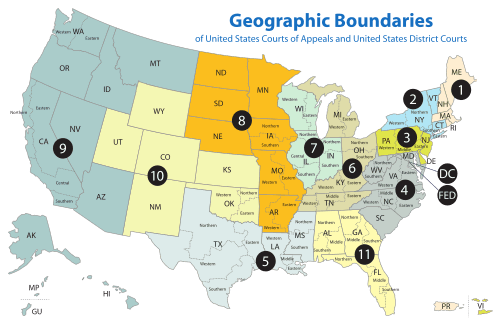
the United States District Court
ORGANIZATION
U.S. federal trial court with jurisdiction over federal cases
the Volunteers for Children Act
ORGANIZATION
Organization referenced in documents
The Washington Times
ORGANIZATION
The Washington Times, American daily newspaper
ThornsortfWest
ORGANIZATION
Organization referenced in documents
Timeline of Cox Report
ORGANIZATION
Organization referenced in documents
Trans World Airlines
ORGANIZATION
Organization referenced in documents
Transportation of Minors to Engage
ORGANIZATION
Organization referenced in documents
U.S. Govt
ORGANIZATION
Organization referenced in documents
U.S.S.G. § 1B1.11(bX3
ORGANIZATION
Organization referenced in documents
United Stain
ORGANIZATION
Organization referenced in documents
United States Court of Appeals
ORGANIZATION
U.S. appeals court
Vigneaux
ORGANIZATION
Organization referenced in documents

Wells Fargo
ORGANIZATION
American multinational banking and financial services company
West Group
ORGANIZATION
Organization referenced in documents
Western Kentucky
ORGANIZATION
Organization referenced in documents
WOLLMAN
ORGANIZATION
Organization referenced in documents
Accord United States
LOCATION
Location referenced in documents
Baza-Martinez
LOCATION • 2 mentions
Location referenced in documents
Billings
LOCATION
Location referenced in documents
Brockdwff
LOCATION
Location referenced in documents
Cadenas
LOCATION • 2 mentions
Location referenced in documents
Cedar Rapids
LOCATION
Location referenced in documents

Cincinnati
LOCATION
City in Ohio, United States; county seat of Hamilton County

Cleveland
LOCATION
City in and county seat of Cuyahoga County, Ohio, United States

Colorado
LOCATION
State of the United States of America
Conclusiveness
LOCATION
Location referenced in documents
Defendan
LOCATION
Location referenced in documents
Demaree
LOCATION
Location referenced in documents
Eastern District
LOCATION
Federal judicial district

Everett
LOCATION
Location referenced in documents
Fall River Indus
LOCATION
Location referenced in documents
Farner
LOCATION
Location referenced in documents
Fiallo-Jacome
LOCATION
Location referenced in documents
Gerstenzang
LOCATION
Location referenced in documents
I United
LOCATION
Location referenced in documents
I.Ct
LOCATION
Location referenced in documents

India
LOCATION
State of the United States of America

Indianapolis
LOCATION
Capital city of the U.S. state of Indiana and the seat of Marion County

Kansas City
LOCATION
City in Missouri, United States, that is one of two county seats of Jackson County and the largest city in Missouri

Kentucky
LOCATION
State of the United States of America

Kenya
LOCATION
Country in Eastern Africa
LaGrone
LOCATION
Location referenced in documents
Lawshea
LOCATION
Location referenced in documents
Louisiville
LOCATION
Location referenced in documents

Michigan
LOCATION
State of the United States of America

Minnesota
LOCATION
State of the United States of America

Montana
LOCATION
State of the United States of America
Moorhead
LOCATION
City in Clay County, Minnesota, USA

New York
LOCATION
Most populous city in the United States

North America
LOCATION
Continent

North Carolina
LOCATION
State of the United States of America
PLACES.--Any United States
LOCATION
Location referenced in documents

Raleigh
LOCATION • 2 mentions
City in and state capital of North Carolina, United States of America
Rocky Mount
LOCATION
City in Edgecombe and Nash counties in the coastal plain region North Carolina, United States

Santiago
LOCATION • 2 mentions
Capital city of Chile
sas City
LOCATION
Location referenced in documents

South Dakota
LOCATION
State of the United States of America
Stobaugh
LOCATION • 2 mentions
Location referenced in documents
Sunmart
LOCATION
Location referenced in documents

Tanzania
LOCATION
Country in East Africa
the 50 States
LOCATION
Location referenced in documents
the District of Columbia
LOCATION
Federal district, capital of the United States
the Northern District
LOCATION
Federal judicial district
the People's Republic of
LOCATION
Location referenced in documents
the United States National Security Council
LOCATION
Location referenced in documents
the United States Sentencing Commission
LOCATION
Location referenced in documents
the West Fargo Sunman
LOCATION
Location referenced in documents

United States
LOCATION • 3 mentions
Country located primarily in North America
United States ■ Root
LOCATION
Location referenced in documents

Valencia
LOCATION
Municipality in Spain, capital city of the Valencian Community
W.D. Kentucky
LOCATION
Location referenced in documents
W.D.Mo
LOCATION
Location referenced in documents

Washington D.C.
LOCATION
Capital city of the United States of America
West Fleadnotes
LOCATION
Location referenced in documents
West Hcadnotes
LOCATION
Location referenced in documents
West Supp.2006
LOCATION
Location referenced in documents

Wisconsin
LOCATION
State of the United States of America

Yugoslavia
LOCATION
1918–1992 country in Southeastern Europe
Statistics
Pages:100
Entities:451
Sponsored