EFTA00177847_sub_002 - EFTA00177847_200
Document Information
Bates Range
EFTA00177847_sub_002 - EFTA00177847_200
Pages
100
Original Filename
EFTA00177847.pdf
Document Content
Page 101 - EFTA00177847_101
ease 9:08-cv-80736-KAM Document 94 Entered on FLSD Docket 09/02/2011 Page 8 of 23 called upon to interpret the Constitution. Even in the case of In re Dean, 527 F.3d 391 (5th Cir. 2008), upon which the plaintiffs rely, the district court, after remand from the Fifth Circuit, denied the motion of the victims to invalidate the defendant's plea agreement as a remedy for the claimed violation of the Crime Victims' Rights Act. The court found that "[t]he purpose of the conferral right is not to give the victims a right to approve or disapprove a proposed plea in advance or to participate in plea negotiations." In re Dean on remand as United States'. BP Products North America, Mc., 610 F. Supp. 2d 655, 727 (S.D. Tex. 2009). Instead, "[t]he purpose of the reasonable right to confer is for victims to provide information to the government, obtain information from the government, and to form and express their views to the government and court." Id. The district court concluded that the violations alleged by the victims did not provide a basis for rejecting the plei. agreement. Id. at 726-27; see In re Acker, 596 F.3d 370, 373 (6th Cir. 2010) (denying mandamus where petitioners sought to vacate plea agreement which made no provision for restitution in deference to pending civil litigation); United States'. Aguirre-Gonzalez, 597 F.3d 46 (1st Cir. 2010) (relying on the "strong interest in the finality of criminal sentences" to reject mandamus under the Act where a defendant had pleaded guilty and had been sentenced more than two years earlier); see also United States'. 13edonie, 413 F.3d 1126, 1129-30 (10th Cir. 2005) (district court had no authority under mandatory restitution act to reopen restitution proceedings after sentencing). More recently in the case of In re Peterson, No. 2:10-CV-298, 2010 WL 5108692 (N.D. Ind. Dec. 8, 2010), the district court denied relief under the Crime Victims' Rights Act before any charges were filed. The court recognized that the Act "guarantees crime victims a range of substantive and participatory rights," but that "[w]hether charges might be filed and proceedings initiated in the 8 EFTA00177947
Page 102 - EFTA00177847_102
Cake 9:08-cv-80736-KAM Document 94 Entered on FLSD Docket 09/02/2011 Page 9 of 23 future is a matter of prosecutorial discretion, and the [Act] expressly provides that [n]othing in this chapter shall be construed to impair the prosecutorial discretion of the Attorney General or any office under his direction.'" Id. at *2 (quoting 18 U.S.C. § 3771(d)(6)). For these reasons, the Court should deny the motion of Jane Doe 1 and Jane Doe 2 to discover and use the plea negotiation letters as evidence. PART II MR. EPSTEIN'S PLEA NEGOTIATIONS ARE PRIVILEGED AND NOT DISCOVERABLE UNDER RULE 501 Jane Doc 1 and Jane Doe 2 are also not entitled to discovery or use of the plea negotiations because plea negotiations enjoy an evidentiary privilege, as recognized by the Supreme Court in United States I Mezzanaito, 513 U.S. 196 (1995). Additionally, because plea negotiations are "rooted in the imperative need for confidence and trust," and because their confidentiality serves significant public and private ends, they are properly subject to a common law privilege under Federal Rule of Evidence 501. That Rule provides, in relevant part: Except as otherwise required by the Constitution of the United States or provided by Act of Congress or in rules prescribed by the Supreme Court pursuant to statutory authority, the privilege of a witness, person, government, State, or political subdivision thereof shall be governed by the principles of the common law as they may be interpreted by the courts of the United States in the light of reason and experience. FED. R. EvID. 501. This Court "has the power to recognize new privileges, consistent with Rule 501 of the Federal Rules of Evidence, in cases arising under federal law." In Re Air Crash Near Cali, Colombia, 959 F. Supp. 1529, 1533 (S.D. FL. Feb. 7, 1997). 9 EFTA00177948
Page 103 - EFTA00177847_103
• Case 9:08-cv-80736-KAM Document 94 Entered on FLSD Docket 09/02/2011 Page 10 of 23 A. "REASON AND EXPERIENCE" ARE THE TOUCHSTONES FOR ACCEPTING A COMMON LAW PRIVILEGE FOR PLEA NEGOTIATIONS Jaffe4. Redmond, 518 U.S. 1 (1996), is perhaps the leading case addressing Rule 501 and the common-law principles underlying the recognition of testimonial privileges. The case involved a police officer and the extensive counseling she received after a traumatic incident in which she shot and killed a man. She was sued by the man's estate, which demanded discovery of the notes taken by the clinical social worker who provided therapy. Id. at 5-6. The officer and the therapist objected and asserted that their sessions were privileged, but the district court disagreed. The Seventh Circuit reversed and concluded that "reason and experience," which are "the touchstone for acceptance of a privilege under Federal Rule of Evidence 501," compelled recognition of a privilege between patient and psychotherapist. Id. "Reason tells us that psychotherapists and patients share a unique relationship, in which the ability to communicate freely without fear of public disclosure is the key to successful treatment." Id. The Seventh Circuit also observed that even though a number of older federal decisions had previously rejected the privilege, things had changed in the intervening years and the "need and demand for counseling" had "skyrocketed during the past several years." Id. The Supreme Court accepted certiorari to resolve a conflict among the Circuits, and affirmed the finding of a privilege. The Court's analysis was grounded "in the light of reason and experience," which showed that a therapist's ability to help a patient "is completely dependent" upon the patient's "willingness and ability to talk freely." Id. at 10, quoting Advisory Committee's Notes to Proposed Rules, 56 F.R.D. 183, 242 (1972). The Court found that the psychotherapist-patient privilege is "rooted in the imperative need for confidence and trust" and that "the mere possibility 10 EFTA00177949
Sponsored
Page 104 - EFTA00177847_104
• ' Oise 9:08-cv-80736-KAM Document 94 Entered on FLSD Docket 09/02/2011 Page 11 of 23 of disclosure may impede the development of the confidential relationship necessary for successful treatment." Id. at 10. FollowingJaffee, three important sets of decisions have recognized privileges under Rule 501 to protect information that is exchanged in an environment that encourages candid disclosures, and that depends on this open exchange of information to promote significant private and public interests. They arc: the decision of Judge Marcus, before he was appointed to the Eleventh Circuit, denying discovery and recognizing a privilege for airline pilots who report incidents and violations, In Re Air Crash Near Cali, Colombia, 959 F. Supp. 1529 (S.D. Fla. 1997); the decision of Judge Vinson, now the Chief Judge in the Northern District of Florida, denying discovery and recognizing a privilege for a corporation that reports contamination and other environmental hazards and violations to the Florida Department of Environmental Regulation, Reichhold Chemicals, Inc.. Textron, Inc., 157 F.R.D. 522 (N.D. Fla. 1994); and a number of district court decisions denying discovery and recognizing a mediation privilege where litigants can "rely on the confidential treatment of everything that transpires during mediation . . . ." Lake Utopia Paper Ltd.l. Connelly Containers, Inc., 608 F.2d 928 (2d Cir.1979); Folb I. Motion Picture Ind. Pension & Health Plans, 16 F. Supp. 2d 1164, 1173 (C.D.Ca. 1998); Sheldon Pennsylvania Turnpike Comm 'n, 104 F. Supp. 2d 511, (W.D. Pa. 2000); Microsoft Corporation'. Suncrest Enterprise, 2006 WL 929257 (N.D. Cal. Jan. 6, 2006). 1. Judge Marcus and The Common Law Privilege Of Pilots Reporting Incidents And Violations, In Re Air Crash Near Cali, Colombia, 959 F. Supp. 1529 (S.D. Fla. 1997) In re Air Crash Near Cali, Colombia involved the crash of an American Airlines plane as it arrived in Cali just before Christmas, 1995. The crash killed 159 passengers and crew members. One hundred and thirty lawsuits were consolidated befort Judge Marcus, and a steering committee was created to represent the plaintiffs. 959 F. Supp. at 1530. 11 EFTA00177950
Page 105 - EFTA00177847_105
Case 9:08-cv-80736-KAM Document 94 Entered on FLSD Docket 09/02/2011 Page 12 of 23 During discovery, American Airlines refused to produce a number of responsive documents, asserting that they were privileged because they were prepared pursuant to the American Airlines Safety Action Partnership Program, known as the ASAP program. The program was an initiative by the FAA, the Allied Pilots Association, and American Airlines. It was a "voluntary pilot self-reporting program designed to encourage pilots to report incidents and violations." Id. at 1531. The objectives of the ASAP program were "to identify and to reduce or eliminate possible flight safety concerns, as well as to minimize deviations from Federal Aviation Regulations." Id. Judge Marcus agreed that American Airlines had made "a compelling argument for recognition of a limited common law privilege for the ASAP materials." Id. at 1533. Relying on Jaffee, Judge Marcus found that he had the ability "to recognize new privileges, consistent with Rule 501 of the Federal Rules of Evidence, in cases arising under federal law." Id. He addressed the following four factors: First, the "private interests" involved — "in other words, whether dissemination of the information will chill the `frank and complete disclosure of facts' shared in an `atmosphere of confidence and trust." Id. at 1533. Judge Marcus found that American Airlines, the pilots, and the FAA had an interest in air safety and in encouraging the flow of safety information. The FAA, as the regulatory body, also had an interest in being made aware of violations. Id. at 1534. Second, Judge Marcus considered the "public interests" furthered by the proposed privilege and found that there was a compelling public interest in improving the safety of commercial flights. Third, the "likely evidentiary benefit that would result from the denial of the privilege." Id. Judge Marcus did not find a benefit from denying the privilege. On the contrary, he agreed that violations would be "kept secret if the pilots believed that their reports might be used in litigation 12 EFTA00177951
Page 106 - EFTA00177847_106
Case 9:08-cv-80736-KAM Document 94 Entered on FLSD Docket 09/02/2011 Page 13 of 23 or otherwise disseminated to the public." Id. Judge Marcus also agreed that failure to recognize the privilege would "reduce the willingness of pilots to report incidents" and would "seriously damage and probably terminate a uniquely successful safety program ... [which] relies on an assumption of strict confidentiality." Id. at 1534. He concluded that "without a privilege, pilots might be hesitant to come forward with candid information about in-flight occurrences, and airlines would be reluctant, if not altogether unwilling, to investigate and document the kind of incidental violations and general flight safety concerns whose disclosure is safeguarded by the ASAP program." Id. Finally, Judge Marcus warned that absent a privilege, "the prospect of ASAP reports being used by adverse parties in the course of litigation undoubtedly will affect the content, timeliness and candor of the reports submitted by its pilots." Id. Fourth, whether the privilege had been recognized by the states. Id. The Court was not aware of any state or federal court that had recognized the privilege claimed by American Airlines, but that did not dissuade him from finding that a privilege existed. With these considerations in mind, Judge Marcus ruled that "[t]here is a genuine risk of a meaningful and irreparable chill from the compelled disclosure of ASAP materials in connection with the pending litigation." Id. at 1534. Likewise in Mr. Epstein's case, there is a genuine risk of a meaningful and irreparable chill from the compelled disclosure of plea negotiations in connection with the pending litigation. Significant private interests support a plea negotiations privilege. It cannot be denied that defendants, prosecutors, the court system, victims, and law enforcement agencies all have a legitimate interest that criminal cases or investigations resolve by pleas. Plea negotiations benefit defendants by limiting their exposure to jail or other punishment; they benefit all the parties in the 13 EFTA00177952
Sponsored
Page 107 - EFTA00177847_107
• Case 9:08-cv-80736-KAM Document 94 Entered on FLSD Docket 09/02/2011 Page 14 of 23 system by avoiding the many expenses associated with jury trials; they benefit the court by keeping the flow of its dockets and making judges available to handle matters that are proceeding to trial or that arc contested; and they benefit prosecutors and law enforcement not only by freeing their time so that they can focus on contested matters, but also by allowing them to debrief defendants and gather information about criminal activity. The public interests in criminal cases resolving by way of plea negotiations also cannot be denied. The public has an interest in the finality of plea negotiations, in ensuring that the courts, prosecutors, and law enforcement agencies are available to dedicate their time to contested matters, and in information that may be provided by defendants that will help curb criminal activity in their communities. The public, as well as private victims and government entities, all have an interest in restitution. There are significant evidentiary consequences if the Court denies a privilege to plea negotiations. As with air safety violations that would be "kept secret if pilots believed their reports might be used in litigation," defendants and people under criminal investigation would not engage in plea negotiations and waive their Fifth Amendment rights if they believed that statements made during those negotiations could be used against them later in litigation with third parties. Candid discussions simply cannot take place if defendants fear that statements made during negotiations can be divulged to third parties in other proceedings and used to harm them, send them to prison, or invalidate their bargains years after they have served prison sentences and suffered all the consequences of their deals. Just as the work-product privilege is created, in part, to encourage lawyers to keep notes without fear of disclosure, a privilege for plea communications is necessary to encourage lawyers to communicate, in writing, without fear that their proposals, submissions, 14 EFTA00177953
Page 108 - EFTA00177847_108
Dse 9:08-cv-80736-KAM Document 94 Entered on FLSD Docket 09/02/2011 Page 15 of 23 arguments, analysis of the facts, or legal arguments will become the grist of later civil litigation to the potential detriment to the client. Few if any lawyers would engage in candid and open discussions with a prosecutor if their statements could later be used against their clients. The ethical and constitutional obligations we now have to initiate and engage in plea negotiations would be terribly at odds with any rule that made those negotiations public and admissible in evidence to be used as ammunition to harm our clients. 2. Chief Judge Vinson and the Common Law Privilege Of Reporting Environmental Hazards and Violations, Reichhold Chemicals, Inc. Textron, Inc., 157 F.R.D. 522 (NJ). Fla. 1994) Reichhold Chemicals involved a Consent Order between Reichhold and the Florida Department of Environmental Regulation. The Order obligated Reichhold "to investigate and remediate the contamination of groundwater on and under, and storm water runoff from, an industrial plant site it owns in Pensacola, Florida." 157 F.R.D. 523-24. Reichhold brought an action against former owners of the plant site, to recover some of the cost of remediating the land. The defendants sought reports that Reichhold had prepared describing possible environmental violations. Reichhold asserted that these documents were protected by "the privilege of self-critical analysis." Id. at 524. This privilege, "also known as the self-evaluative privilege," had been adopted in other jurisdictions, but at the time, it presented an issue of first impression to Chief Judge Vinson. Ile ruled in favor of Reichhold and found that the privilege allows individuals and companies to candidly assess their compliance with legal requirements without creating evidence to be later used against them by their adversaries: The self-critical analysis privilege has been recognized as a qualified privilege which 15 EFTA00177954
Page 109 - EFTA00177847_109
Case 9:08-cv-80736-KAM Document 94 Entered on Ft_SD Docket 09/02/2011 Page 16 of 23 protects from discovery certain critical self-appraisals. It allows individuals or businesses to candidly assess their compliance with regulatory and legal requirements without creating evidence that may be used against them by their opponents in future litigation. The rationale for the doctrine is that such critical self-evaluation fosters the compelling public interest in observance of the law. Id. at 524. Judge Vinson agreed with Reichhold that the privilege was necessary to protect an organization or individual from the Hobson's choice of either undertaking an aggressive investigation and correcting dangerous conditions, "thereby creating a self-incriminating record that may be evidence of liability," or "deliberately avoiding making a record on the subject (and possibly leaving the public exposed to danger) in order to lessen the risk of civil liability." Id. In recognizing the privilege, Judge Vinson relied on Bredicel. Doctor's Hospital, Inc., 50 F. R.D. 249 (D.D.C.1970), the first case to find a common law self-evaluation privilege. There, the hospital held staff meetings where the professional staff evaluated the treatment provided to patients. In a medical malpractice action, the estate of Bredice sought the minutes of the hospital's staff meetings where Bredice's treatment or death were discussed. The court denied the discovery, noting that "review of the effectiveness and results of treatments were valuable in improving the quality of health care available to the general public," and that "physicians would be unwilling to candidly critique the actions of their colleagues if such evaluations were subject to discovery and use as evidence in a subsequent malpractice action." Id. at 525. 3. The Common Law Mediation Privilege As is true in the case of plea negotiations, it seems self-evident that no system of mediation can function if parties fear that statements made and documents submitted in furtherance of mediation create a trail of incrimination that can later be used against them. "[C]ounsel, of necessity, [would] feel constrained to conduct themselves in a cautious, tight-lipped, noncommittal manner 16 EFTA00177955
Sponsored
Page 110 - EFTA00177847_110
Case 9:08-cv-80736-KAM Document 94 Entered on FLSD Docket 09/02/2011 Page 17 of 23 more suitable to poker players in a high-stakes game than adversaries attempting to arrive at a just solution of a civil dispute." Lake Utopia Paper Ltd.'. Connelly Containers, Inc., 608 F.2d 928 (2d Cir.1979). Lake Utopia involved the Second Circuit's Civil Appeals Management Plan, which called for parties to engage in a conference before oral argument, to hopefully settle their dispute. The Circuit adopted this mediation program to encourage the parties to settle, and to expedite the processing of civil appeals. Id. at 929. Counsel for the parties in Lake Utopia met pursuant to the program in an attempt to settle. The appellee later disclosed to the Court certain admissions made during the conference which showed that the appeal was frivolous. Rather than embrace this information, the Court chastised the appellee for disclosing it, holding that the purpose of the conference program was to encourage the parties to settle, and that the program would not function if statements made during the conference were later used against the parties. "It is essential to the proper functioning of the Civil Appeals Management Plan that all matters discussed at these conferences remain confidential. The guarantee of confidentiality permits and encourages counsel to discuss matters in an uninhibited fashion often leading to settlement . . . ." Id. at 930. Ten years later, in Folb'. Motion Picture Ind. Pension & Health Plans, 16 F. Supp. 2d 1164, (C.D.Ca. 1998), the district court in California became the first federal court to adopt the mediation privilege as federal common law under Rule 501. Relying on Lake Utopia Paper as well as a number of other decisions addressing the confidentiality of settlement negotiations, Folb held that "the need for confidentiality and trust between participants in a mediation proceeding is sufficiently imperative to necessitate the creation of some form of privilege." Id. at 1175. The court emphasized 17 EFTA00177956
Page 111 - EFTA00177847_111
• Case 9:08-cv-80736-KAM Document 94 Entered on FLSD Docket 09/02/2.011 Page 18 of 23 . that the mediation privilege is particularly important because federal courts rely on mediation to manage their dockets: "This conclusion takes on added significance when considered in conjunction with the fact that many federal district courts rely on the success of ADR proceedings to minimize the size of their dockets." Id. More recently in SheldoneiPennsylvania Turnpike Comm 'n, 104 F. Supp. 2d 511, (W.D. Pa. 2000), the court relied on Jaffee and on Judge Marcus' decision in In re Air Crash Near Cali, Colombia to hold that all mediation documents and mediation communications are privileged and not subject to discovery. Mediation "afford[s] to litigants an opportunity to articulate their position[s] and to hear, first hand, both their opponent's version of the matters in dispute and a neutral assessment of the relative strengths of the opposing positioni." Id. at 513. Without a mediation privilege, "parties and their counsel would be reluctant to lay their cards on the table so that a neutral assessment of the relative strengths and weaknesses of their opposing positions could be made." Id. This, of course, assumes that parties "would even agree to participate in the mediation process absent confidentiality." Id. Confidentiality is therefore"cssential to the mediation process," and it is "beyond doubt that the mediation privilege is rooted in the imperative need for confidence and trust." Id. at 514. No real distinction exists between the need to keep mediation confidential and the need to keep plea negotiations confidential. Both processes, and the goals they serve, are essentially identical. Both processes aim at encouraging settlement and compromise. Both processes depend on parties speaking candidly about the strengths and weaknesses of their positions. And in both processes, it would be manifestly unfair to require that parties attempt to settle their disputes in this fashion, only to later allow third parties to use their words as a weapon against them. 18 EFTA00177957
Page 112 - EFTA00177847_112
' tase 9:08-cv-80736-KAM Document 94 Entered on FLSD Docket 09/02/2011 Page 19 of 23 B. THE COURT SHOULD RECOGNIZE A PLEA NEGOTIATIONS PRIVILEGE The "central feature" of Rule 410 "is that the accused is encouraged candidly to discuss his or her situation in order to explore the possibility of disposing of the case through a consensual arrangement." United States'. Heiman, 544 F.2d 791, 797 (5th Cir. 1977). The Rule is derived from "the inescapable truth that for plea bargaining to work effectively and fairly, a defendant must be free to negotiate without fear that his statements will later be used against him." Id. at 796. The legislative history, too, "shows that the purpose of Fed.R.Ev. 410 and Fed.R.Crim.P. 11(eX6) is to permit the unrestrained candor which produces effective plea discussions between the . . . government and the ... defendant." Committee on Rules of Practice And Procedure of The Judicial Conference of The United States, Standing Committee On Rules of Practice And Procedure, 77 F.R.D. 507 (February 1978) (emphasis added).' For these reasons, criminal defense lawyers negotiate with prosecutors in an environment of confidentiality, fostered by the protections of Rules 410 and I I. These rules encourage a process of searching and honest disclosures, and parties expect that their negotiations, and the information they exchange, will be protected from future use by an adversary. And because criminal defense lawyers are required, by ethical and constitutional considerations, to engage in plea negotiations to discharge their duty to represent the client's best interest, they do so with the well-founded expectation that communications made during those negotiations will not later be used to harm the client. Rule 11(f) was formerly Rule 11(e)(6), which read almost identical to Rule 410. 19 EFTA00177958
Sponsored
Page 113 - EFTA00177847_113
tase 9:08-cv-80736-KAM Document 94 Entered on FLSD Docket 09/02/2011 Page 20 of 23 1. The Court Should Recognize A Plea Negotiations Privilege Because Plea Negotiations Are Critical To The Criminal Justice System The Supreme Court has recognized that "Rules 410 and 11(eX6) 'creat[e], in effect, a privilege of the defendant...."' Mezzanatto, 513 U.S. at 204.This privilege encourages disposition of criminal cases by plea agreement, which is essential to the administration of justice: The disposition of criminal charges by agreement between the prosecutor and the accused, sometimes loosely called "plea bargaining," is an essential component of the administration of justice. Properly administered, it is to be encouraged. If every criminal charge were subjected to a full-scale trial, the states and the federal government would need to multiply by many times the number of judges and court facilities. Santobellot New York, 404 U.S. 257, 260 (1971). "[T]he.fact is that the guilty plea and the often concomitant plea bargain are important components of this country's criminal justice system. Properly administered, they can benefit all concerned," Blackledget Allison, 431 U.S. 63, 71 (1977). Those sentiments are just as true today. The Bureau of Justice Statistics of the Department of Justice reports that in 2005, 96.1% of federal criminal cases were resolved by way of a plea bargain. www.oip.usdoi.uov/bistoub/html/fisst/2005/fis05st.htm That today's justice system depends on plea negotiations is a monumental understatement. 2. The Court Should Recognize A Plea Negotiations Privilege Because Plea Negotiations Are Critical To The Effective Representation of Counsel Whether to negotiate a plea or contest a criminal charge "is ordinarily the most important single decision in any criminal case." Borial Keane, 99 F.3d 492 (2d Cir. 1996). In the age of the Sentencing Guidelines, with the draconian sentences called for in federal criminal cases, minimum mandatorics, and the abolition of parole, engaging in meaningful and effective plea negotiations is 20 EFTA00177959
Page 114 - EFTA00177847_114
Case 9:08-cv-80736-KAM Document 94 Entered on FLSD Docket 09/02/2011 Page 21 of 23 perhaps one of the most important roles of a criminal defense attorney. Today, the lawyer's "ability to persuade the judge or the jury is .. . far less important than his ability to persuade the prosecutor" during plea negotiations. United States'. Fernandez, 2000 WL 534449 (S.D.N.Y. May 3, 2000) at *1. Counsel's failure to discharge his duties during plea negotiations is malpractice: "Mt is malpractice for a lawyer to fail to give his client timely advice concerning" pleas. Id. It also constitutes ineffective assistance of counsel, and violates the Constitution. Thus, counsel has a duty to advise clients fully on whether a particular plea is desirable, since "[e]ffective assistance of counsel includes counsel's informed opinion as to what pleas should be entered." United Stalest Pillar, 416 F. Supp. 887, 889 (S.D.N.Y. 1976); Borial. Keane, 99 F.3d 492, 497 (2d Cir. 1996), citing ABA Model Code of Professional Responsibility, Ethical Consideration 7-7 (1992). Counsel also has a constitutional obligation to seek out information from the government, especially information that the government intends to use against the client. Failure to do so constitutes ineffective assistance of counsel. Rompillal. Beard, 545 U.S. 374 (2005). "The notion that defense counsel must obtain information that the state has and will use against the defendant is not simply a matter of common sense, .. . it is the duty of the lawyer .. . ." Rotnpillal. Beard, 545 U.S. 374, 386 (2005), citing 1 ABA Standards for Criminal Justice 4-4.1 (2d ed. 1982 Supp).2 The constitution also requires that criminal defense lawyers conduct "a prompt investigation of the circumstances of the case," and this includes making every effort to secure information directly from the prosecutors: The Supreme Court has "long . . referred [to these ABA Standards] as 'guides in determining what is reasonable.' Rompillal. Beard, 545 U.S. 374, 387 (2005). 21 EFTA00177960
Page 115 - EFTA00177847_115
Dase 9:08-cv-80736-KAM Document 94 Entered on FLSD Docket 09/02/2011 Page 22 of 23 It is the duty of the lawyer to conduct a prompt investigation of the circumstances of the case. The investigation should always include efforts to secure information in the possession of the prosecution and law enforcement authorities. The duty to investigate exists regardless of the accused's admissions or statements to the lawyer of facts constituting guilt or the accused's stated desire to plead guilty. Rompillat Beard, 545 U.S. 374, 386 (2005), citing I ABA Standards for Criminal Justice 4-4.1 (2d ed. 1982 Supp). The lawyer's duty to investigate and obtain information from the prosecutor goes hand-in- hand with the lawyer's additional duty to "make suitable inquiry" to determine whether valid defenses exist. Jones' Cunningham, 313 F.2d 347 (4th Cir.1963) ("Of course, it is not for a lawyer to fabricate defenses, but he does have an affirmative obligation to make suitable inquiry to determine whether valid ones exist"). And regardless of whether valid defenses exist, counsel has a duty to initiate plea negotiations if he is to discharge his duty to faithfully represent the client's interests. Hawkmant Panatt, 661 F.2d 1161, 1171 (8th Cir. 1981) (counsel's "failure to initiate plea negotiations concerning the duplicitous felony counts constituted ineffective assistance of counsel which prejudiced Hawkman"). 3. The Court Should Recognize A Plea Negotiations Privilege To Avoid A Meaningful And Irreparable Chill In Plea Negotiations Reason and experience tell us that the system we have in place of sentencing laws, ethical rules, federal court dockets, and constitutional considerations, will not function if plea negotiations are not privileged. After all, "it is immediately apparent that no defendant or his counsel [would] pursue [plea negotiations] if the remarks uttered during the course of it are to be admitted in evidence as proof of guilt." Herman, 544 F.2d at 797. Plea negotiations are "rooted in the imperative need 22 EFTA00177961
Sponsored
Page 116 - EFTA00177847_116
Case 9:08-cv-80736-KAM Document 94 Entered on FLSD Docket 09/02/2011 Page 23 of 23 for confidence and trust," Jaffee, 518 U.S. at 10, and maintaining their confidentiality advances significant public and private ends. Discovery and use of plea negotiations will cause "a meaningful and irreparable chill" to the "frank and complete disclosures" that result in negotiated resolution of criminal matters. In re Air Crash Near Cali, Colombia, 957 F.2d at 1533. For these reasons, plea negotiations are properly subject to a common law privilege under Federal Rule of Evidence 501. The Court should hold that the plea negotiation letters and emails between Mr. Epstein's lawyers and the government are privileged and not subject to discovery or evidentiary use by the plaintiffs. We certify that on September 2, 2011, the foregoing document was filed electronically with the Clerk of the Court using the CM/ECF system. Respectfully submitted, BLACK, SREBNICK, KORNSPAN & STUMPF, P.A. 201 South Biscayne Boulevard Suite 1300 Miami, Florida 33131 Office: (305) 371-6421 Fax: (305) 358-2006 By /S/ ROY BLACK, ESQ. Florida Bar No. 126088 JACKIE PERCZEK, ESQ. Florida Bar No. 0042201 23 EFTA00177962
Page 117 - EFTA00177847_117
Page I of 55 Westlaw Page I 531 F.3d 197 (Cite as: 531 F.3d 197) United States Court of Appeals, Second Circuit. UNITED STATES America, Appellee, Donald FELL, Defendant-Appellant. Docket No. 06-2882-cr. Argued: June 27, 2007. Decided: June 27, 2008. Background: Defendant was convicted in the United States District Court for the Dis- trict of Vermont, William K. Sessions III, Chief Judge, of murder in course of car- jacking and kidnapping, and he was sen- tenced to death. Defendant appealed. Holdings: The Court of Appeals, B.D. Parker, Jr., Circuit Judge, held that: (1) prospective juror who strongly opposed death penalty and was unprepared to con- clude that defendant deserved death simply because murder was premeditated and sim- ultaneously claimed that she could impose death penalty as part of her responsibilities as juror in spite of her expressed reluctance to do so had views that might have sub- stantially impaired her duties as juror; (2) prospective juror whose voir dire re- sponses were not consistent or clear on whether he understood that death penalty could be imposed for murder resulting from reckless disregard for human life and whether he would be able to apply it under such circumstances could be excluded for cause; (3) prospective juror who provided incon- sistent and generally negative responses when asked whether she would consider imposing death penalty for single murder could be excluded for cause; (4) district court's decision to exclude opin- ions of prosecutors set forth in draft plea agreement with defendant was within its traditional authority to exclude evidence of questionable relevance; (5) defendant had not been prejudiced by exclusion of draft plea agreement; (6) prosecutor's arguments were reasonable responses to defendant's use of stipulation; (7) defendant's Fifth Amendment right to fair sentencing hearing had not been preju- diced by prosecutor's allegedly plainly er- roneous closing comments; and (8) evidence of defendant's satanic beliefs was not admissible to show motive in pen- alty phase for lack of relevance. Affirmed. West Headnotes [1] Criminal Law 110 €=,1152.2(2) 110 Criminal Law 110XXIV Review 110XXIV(N) Discretion of Lower Court 110k1152 Conduct of Trial in General 110k1152.2 Jury 110k1152.2(2) k. Selection and Impaneling. Most Cited Cases (Formerly 110k1152(2)) Challenges to a juror's excusel are re- viewed for abuse of discretion, inquiring whether the trial court's findings are fairly supported by the record. [2] Criminal Law 110 C=1153.1 110 Criminal Law 110XXIV Review 110XXIV(N) Discretion of Lower Court 110k1153 Reception and Admiss- ibility of Evidence O 2011 Thomson Reuters. No Claim to Orig. US Gov. Works. https://web2.westlaw.com/print/printstream.aspx?pbc=C6E6EBE9&destination=atp&utid=... 9/26/2011 EFTA00177963
Page 118 - EFTA00177847_118
Page 3 of 55 Page 3 531 F.3d 197 (Cite as: 531 F.3d 197) C=1788(3) 350H Sentencing and Punishment 350HVIII The Death Penalty 350HVIII(G) Proceedings 350HVIII(G)4 Determination and Disposition 350H1c1788 Review of Death Sentence 350Hk1788(3) k. Presenta- tion and Reservation in Lower Court of Grounds of Review. Most Cited Cases Provision of Federal Death Penalty Act (FDPA) under which appellate court shall remand a case if it finds that death sentence was imposed under influence of passion, prejudice, or any other arbitrary factor does not create exception to rule under which unpreserved objections to jury instructions may be reviewed only for plain error. 18 U.S.C.A. § 3595(c)(2). 191 Jury 230 e=108 230 Jury 230V Competency of Jurors, Chal- lenges and Objections 230k104 Personal Opinions and Conscientious Scruples 230k108 k. Punishment Pre- scribed for Offense. Most Cited Cases Not all prospective jurors who oppose the death penalty are subject to removal for cause in capital cases; instead, those who firmly believe that the death penalty is un- just may nevertheless serve as jurors in capital cases so long as they state clearly that they are willing to temporarily set aside their own beliefs in deference to the rule of law. 1101 Jury 230 €=.108 230 Jury_ 230V Competency of Jurors, Chal- lenges, and Objections 230k104 Personal Opinions Conscientious Scruples 230k108 k. Punishment scribed for Offense. Most Cited Cases and Pre- A juror's views on capital punishment prevent or substantially impair the per- formance of his duties as a juror in accord- ance with his instructions and his oath, subjecting the juror to exclusion for cause, when those views create an obstacle to a prospective juror's impartial consideration of the law and the facts. MI Criminal Law 110 €=1166.17 110 Criminal Law 110XXIV Review 110XXIV(Q) Harmless and Revers- ible Error 110k1166.5 Conduct of Trial in General 110k1166.17 k. Sustaining Challenges to Jurors. Most Cited Cases Erroneously excluding a prospective juror based on her view on the death pen- alty is reversible error. (121 Jury 230 €=)108 230 Jury 230V Competency of Jurors, Chal- lenges and Objections 230k104 Personal Opinions and Conscientious Scruples 230k108 k. Punishment Pre- scribed for Offense. Most Cited Cases To survive review of a challenge to a district court's exclusion of a prospective juror based on her view on the death pen- alty, voir dire need not establish juror parti- ality with unmistakable clarity? rather, it must be sufficient to permit a trial judge to form a definite impression that a prospect- O 2011 Thomson Reuters. No Claim to Orig. US Gov. Works. htips://web2.westlaw.com/print/printstream.aspx?pbc=C6E6EBE9&destination=atp&utid=... 9/26/2011 EFTA00177964
Sponsored
Page 119 - EFTA00177847_119
Page 5 of 55 Page 5 531 F.3d 197 (Cite as: 531 F.3d 197) fondant with murder resulting from reck- less disregard for human life. 18 U.S.C.A. §§ 2119(2, 3), 3591(a)(2)(D). [181 Jury 230 €128 230 Jury 230'V Competency of Jurors, Chal- lenges, and Objections 230k124 Challenges for Cause 230k128 k. Order of Challenges. Most Cited Cases A juror's voir dire responses that are ambiguous or reveal considerable confu- sion may demonstrate that the performance of his duties as a juror in accordance with his instructions and his oath may be sub- stantially impaired, subjecting the juror to exclusion for cause. 1191 Jury 230 0=408 230 Jury 230V Competency of Jurors, Chal- lenges and Objections 230k104 Personal Opinions and Conscientious Scruples 230k108 k. Punishment Pre- scribed for Offense. Most Cited Cases Prospective juror who provided incon- sistent and generally negative responses when asked whether she would consider imposing death penalty for single murder could be excluded for cause in death pen- alty case charging defendant with murder in course of =jacking and kidnapping. 18 U.S.C.A. §§ 2119(2, 3), 3591. [20) Sentencing and Punishment 3500 4:=1652 350H Sentencing and Punishment 350HVIII The Death Penalty 350HVIII(C) Factors Affecting Im- position in General 350Hk1652 k. Aggravating Cir- cumstances in General. Most Cited Cases Sentencing and Punishment 350H €=) 1667 350H Sentencing and Punishment 350HVIII The Death Penalty 350HVIII(D) Factors Related to Of- fense 350HIc1666 Nature or Degree of Offense 350Hk1667 k. In General. Most Cited Cases Sentencing and Punishment 350H e= 1670 350H Sentencing and Punishment 350HVIII The Death Penalty 350HVIII(D) Factors Related to Of- fense 350Hk1670 k. Intent of Offender. Most Cited Cases Under the Federal Death Penalty Act (FDPA), a defendant is eligible for the death penalty if the jury finds the charged homicide, a statutory intent element or threshold mental culpability factor, and at least one of the statuto aggravating factors. 18 U.S.C.A. §§ 3591(a ry )(2), 3592(c). 1211 Sentencing and Punishment 350H e=1757 350H Sentencing and Punishment 350HVIII The Death Penalty 350HVIII(G) Proceedings 350HVIII(G)2 Evidence 350Hk1755 Admissibility 350Hk1757 k. Evidence in Mitigation in General. Most Cited Cases District court's decision to exclude opinions of prosecutors set forth in draft C 2011 Thomson Reuters. No Claim to Orig. US Gov. Works. https://web2.westlaw.com/print/printstream.aspx?pbc 6E6EBE9&destination—atp&utid=... 9/26/2011 EFTA00177965
Page 120 - EFTA00177847_120
Page 7 of 55 Page 7 531 F.3d 197 (Cite as: 531 F.3d 197) guilty to prove acceptance of responsibility as mitigating factor, that capital murder de- fendant offered to plead guilty in exchange for minimum penalty authorized for his conduct only when faced with overwhelm- ing evidence of his guilt and that govern- ment proceeded to trial that defendant could have avoided by pleading uncondi- tionally when offer was not accepted, were reasonable responses to defendant's use of stipulation, where jury repeatedly had been told that arguments were not evidence. [26] Criminal Law 110 C=1171.1(2.1) 110 Criminal Law 110XXIV Review 110XXIV(Q) Harmless and Revers- ible Error 110k1171 Arguments and Con- duct of Counsel 110k1171.1 In General 110k1171.1(2) Statements as to Facts, Comments, and uments 110k1171.1(2.1) k. In General. Most Cited Cases In order to prevail on a claim of prosec- utorial misconduct, a defendant must demonstrate that the prosecutor's remarks were improper and that the remarks, taken in the context of the entire trial resulted in substantial prejudice. [27] Constitutional Law 92 C=4745 92 Constitutional Law 92XXVII Due Process 92XXVII@ Criminal Law 923OCWI(H)6 Judgment and Sen- 92k4741 Capital Punishment; Death Penalty 92k4745 k. Proceedings. Most Cited Cases tence Sentencing and Punishment 350H C 1780(2) 350H Sentencing and Punishment 350HVIII The Death Penalty 350HVIII(G) Proceedings 350HVIII(G)3 Hearing 350Hk1780 Conduct of Hear- ing 350Hk1780(2) k. Argu- ments and Conduct of Counsel. Most Cited Cases Capital murder defendants Fifth Amendment right to fair sentencing hear- ing had not been prejudiced by prosecutor's allegedly plainly erroneous closing com- ments, allegedly suggesting that relevance of his mitigating evidence depended on its connection with his crimes of conviction, where jury had been given thorough in- structions, prosecutor's comments formed very brief part of his summation and were not repeated during his rebuttal, and great amount of time and attention had been de- voted to defendant's early life experiences by both parties. U.S.C.A. Const.Amend. 5. [28] Sentencing and Punishment 35011 C=.1757 350H Sentencing and Punishment 350HVIII The Death Penalty 350HVIII(G) Proceedings 350HVIII(G)2 Evidence 350Hk1755 Admissibility 350Hk1757 k. Evidence in Mitigation in General. Most Cited Cases Before imposing the death penalty, a jury must be able to consider and give ef- fect to a defendants mitigating evidence. 18 U.S.C.A. §§ 3592(a)(8), 3593(c). [29] Sentencing and Punishment 350H C=1757 2011 Thomson Reuters. No Claim to Orig. US Gov. Works. https://web2.westlaw.com/print/printstream.aspx?pbc-6E6EBE98‘destination=atp&utid=... 9/26/2011 EFTA00177966
Page 121 - EFTA00177847_121
Page 9 of 55 Page 9 531 F.3d 197 (Cite as: 531 F.3d 197) 350Hk1762 k. Other Of- fenses, Charges, or Misconduct. Most Cited Cases Testimony during sentencing phase of capital murder trial indicating that interest of defendant in Native American and Muslim religions was cynical or feigned, and that his multiple religiously-related grievances reflected failure to adjust to in- carceration, was relevant, and did not result in denial of due process or violate his asso- ciational or religious rights under First Amendment, in context of testimony that defendant had successfully adjusted to pris- op, was genuinely interested m several reli- gions, and filed grievances for entirely le- gitimate purposes. U.S.C.A. Const.Amends. 1, 5. [33] Constitutional Law 92 4 1170 92 Constitutional Law 92X First Amendment in General 92X(B) Particular Issues and Applic- ations 92k1170 k. In General. Most Cited Cases The First Amendment forbids the un- cabined reliance on a defendant's abstract beliefs at sentencing. U.S.C.A. Const.Amend. 1. 1341 Constitutional Law 92 €'1170 92 Constitutional Law 92X First Amendment in General 92X(B) Particular Issues and Applic- ations 92k1170 k. In General. Most Cited Cases Constitutional Law 92 4C=1440 92 Constitutional Law 92XVI Freedom of Association 92k1440 k. In General. Most Cited Cases The government may introduce evid- ence of beliefs or associational activities without violating a defendant's First Amendment rights, so long as they are rel- evant to prove, for example, motive or ag- gravating circumstances, to illustrate future dangerousness, or to rebut mitigating evid- ence. U.S.C.A. Const.Amend. 1. [35] Sentencing and Punishment 35011 €=.1.789(3) 350H Sentencing and Punishment 350HVIII The Death Penalty 350HVIII(G) Proceedings 3501P/111(G)4 Determination and Disposition 350H1c1789 Review of Pro- ceedings to Impose Death Sentence 350Hk1789(3) k. Presenta- tion and Reservation in Lower Court of Grounds of Review. Most Cited Cases Trial memorandum that specifically ob- jected to introduction of satanic evidence on basis that it "would create a new ag- gravating circumstances [sic] which the government ha[d] not previously alleged," and therefore would have violated require- ment of formal notice under Federal Death Penalty Act (FDPA), was not sufficient to preserve First Amendment or due process challenge to testimony during sentencing phase of capital murder trial regarding de- fendant's cynical or feigned interest in Nat- ive American and Muslim religions. U.S.C.A. Const.Amend. 1; 18 U.S.CA. § 3593(a). . [36] Sentencing and Punishment 350H C=01789(3) 350H Sentencing and Punishment O 2011 Thomson Reuters. No Claim to Orig. US Gov. Works. https://web2.westlaw.com/print/printstream.aspx7pbc-6E6EBE9/tdestination=atpecutid=... 9/26/2011 EFTA00177967
Sponsored
Page 122 - EFTA00177847_122
Page II of 55 Page I I 531 F.3d 197 (Cite as: 531 F.3d 197) An excited utterance need not be con- temporaneous with the startling event to be admissible; rather, the key question gov- erning admission is whether the declarant was under the stress of excitement caused by the event or condition. Fed.Rules Evid.Rule 803(2), 28 U.S.C.A. [40] Sentencing and Punishment 35011 (:=1766 350H Sentencing and Punishment 350HVIII The Death Penalty 350HVIII(G) Proceedings 350HVIII(G)2 Evidence 35011k1755 Admissibility 3501-1k1766 k. Hearsay. Most Cited Cases Statement of highly distraught mother of capital murder defendant to bartender after mother called for assistance from po- lice after defendant had aggressively struck his mother inside bar and then assaulted her once they were outside of bar, that "she was afraid of [defendant]," was relevant in penalty phase of trial that charged defend- ant with murder of other person in course of carjacking and kidnappmg to rebut mit- igating factor that defendant had truthfully admitted responsibility for victim's murder. 18 U.S.C.A. §§ 2119(2, 3), 3593(c); Fed.Rules Evid.Rule 401, 28 U.S.C.A. [41] Sentencing and Punishment 350H C=1766 350H Sentencing and Punishment 350HVIII The Death Penalty 350HVIII(G) Proceedings 350HVIII G)2 Evidence 350HIc1755 Admissibility 350Hk1766 k. Hearsay. Most Cited Cases Statement of highly distraught mother of capital murder defendant to bartender after mother called for assistance from po- lice after defendant had aggressively struck his mother inside bar and then assaulted her once they were outside of bar, that "she was afraid of [defendant]," was not unduly prejudicial and would not have misled jury in penalty *phase of trial that charged de- fendant with murder of other .person in course of carjacking and kidnapping, where it was clear from plethora of evidence that defendant and his mother had estranged and pathological relationship and such statement did little other than confirm what jury already knew. 18 U.S.C.A. H 2119(2, 3), 3593(c); Fed.Rules Evid.Rule 403, 28 U.S.C.A. [42] Sentencing and Punishment 350H C=1765 350II Sentencing and Punishment 350HVIII The Death Penalty 350HVIII(G) Proceedings 350HVIII(G)2 Evidence 350Hk1755 Admissibility 350H1c1765 k. Declarations and Confessions. Most Cited Cases Prior statements conveying willingness of capital murder defendant to commit multiple murders and his desire to kill his mother, offered at sentencing phase in re- sponse to defendant's showing concerning abuse and neglect he suffered at hands of his parents, was relevant to defendant's background and general character and was not unduly prejudicial with regard to de- fendants murder of other person in course of carjacking and kidnapping where gov- ernment never alleged premeditated murder as aggravating factor and did not argue in closing that defendant ever intended to kill his mother and jury was instructed to only consider charged aggravating factors. 18 U.S.C.A. §§ 2119(2, 3), 3591; Fed.Rules O 2011 Thomson Reuters. No Claim to Orig. US Gov. Works. https://web2.westlaw.com/print/printstream.aspx?pbc—C6E6EBE98cdestination=atpctutid=... 9/26/2011 EFTA00177968
Page 123 - EFTA00177847_123
Page 13 of 55 Page 13 531 F.3d 197 (Cite as: 531 F.3d 197) motive for defendant's murder of victim did not subsume factor which provided that defendant "participated in the murder of [victim] after substantial premeditation to commit the crime of caijacking'; although addressing same caijacking conduct as oth- er factors, including abduction of victim, premeditation factor for caijacking did not focus on motive for murder and prosec- utor's statements did not encourage jury to confuse those factors, and thus similar but nonetheless distinct concepts justified sep- arate consideration and separate findings. 18 U.S.C.A. § 3591 et seq. 1481 Sentencing and Punishment 350H ii;=.1789(9) 350H Sentencing and Punishment 35014V111 The Death Penalty 350HVIII(G) Proceedings 350HWII(G)4 Determination and Disposition 350Hkl789 Review of Pro- ceedings to Impose Death Sentence 350Hk1789(9) k. Harmless and Reversible Error. Most Cited Cases Any constitutional error in submission of aggravating factors in death penalty phase would not have affected fairness of proceedings in light of instructions to jury, where jurors had been instructed to not simply count number of aggravating factors in reference to mitigators, but to "consider the weight and value of each"; thus, jury would have known going into de- liberations that, in reaching verdict, it should make qualitative assessment of ag- gravating and mitigating evidence as whole, rather than focusing on number of factors on each side of scale. U.S.C.A. ConstAmend. 5; 18 U.S.C.A. § 3591 et seq. [49] Indictment and Information 210 C=113 210 Indictment and Information 210V Requisites and Sufficiency of Ac- cusation 210k113 k. Matter of Aggravation in General. Most Cited Cases Government's failure to include non- statutory aggravating factors in indictment did not violate Fifth Amendment's Indict- ment Clause, where jury, not judge, found both statutory and non-statutory aggravat- ing factors beyond reasonable doubt and Federal Death Penalty Act (FDPA) re- quired only that jury sentencing defendant find mental culpability and at least one statutory aggravator, both charged in su- perseding indictment, before finding him "eligible for death penalty; thus, factors that jury assessed when determining per- missibility of death penalty did not change maximum sentence authorized under stat- ute. U.S.C.A. Const.Amend. 5; 18 U.S.C.A. § 3591(aX2). [50] Indictment and Information 210 C=113 210 Indictment and Information 210V Requisites and Sufficiency of Ac- cusation 210k113 k. Matter of Aggravation in General. Most Cited Cases The government must charge statutory aggravating factors under the Federal Death Penalty Act (FDPA) in the indict- ment. 18 U.S.C.A. § 3591 et seq. 1511 Sentencing and Punishment 35011 4D=1626 35011 Sentencing and Punishment 350HVIII The Death Penalty 35011VIII(A) In General 350Hk1622 Validity of Statute or O 2011 Thomson Reuters. No Claim to Orig. US Gov. Works. https://web2.westlaw.com/print/printstream.aspx?pbc=C6E6EBE98cdestination=atp&utid=... 9/26/2011 EFTA00177969
Page 124 - EFTA00177847_124
Page 15 of 55 Page 15 531 F.3d 197 (Cite as: 531 F.3d 197) errors in the admission of certain evidence, prejudicial comments by the prosecutors, and the violation of certain provisions of the Federal Death Penalty Act (FDPA), 18 U.S.C. § 3591 et seq. We affirm. BACKGROUND This case stems from the brutal murders by Fell and his accomplice Robert Lee in November 2000 of Fell's mother Debra, her companion Charles Conway, and King. The facts are largely undisputed. Fell, who was 20 years old at the time of the murders, does not contest his guilt and the government does not contest much of the evidence of the troubled childhood and adolescence that Fell adduced in an effort to avoid the death penalty. Fell spent his early years in Pennsylvania with parents who were chronic alcoholics. Both Fell and his sister were raped by babysitters when they were young children, abandoned by their par- ents, and raised by relatives. Fell had fre- quent brushes with the law of increasing seriousness and, fora period of time, was, committed to a home for delinquent youth. After his release, his involvement with the law continued to escalate and was punctu- ated by serious drug and alcohol abuse. Fell's mother moved to Rutland, Ver- mont in the fall of 1996 and Fell joined her in 2000. Their stormy relationship contin- ued. Fell and his mother (and their friends) drank heavily, argued frequently, and ab- used drugs. For example, in November 2000, in an incident that was the subject of disputed trial testimony, Fell assaulted his mother in a bar. After taking his mother's drink and attempting to rob her, Fell punched her in the head, knocked her to the ground and was arrested. Fell, Lee, Debra Fell, and Charles Conway were playing cards at her residence. All were drinking heavily and some were using drugs. For reasons not reflected in the re- cord, a violent altercation ensued. Fell pro- duced a kitchen knife and stabbed Conway approximately 50 times causing his death. Lee began stabbing Debra Fell and killed her with multiple wounds to the head and neck. Fell and Lee then showered, took a shotgun that Fell had brought from Pennsylvania, and left on foot at approxim- ately 3:30 am for a local mall in search of shells for the gun. Fell and Lee first went to Wal-Mart, but were turned away by a cleaning crew that informed them that the store was closed. Fell and Lee then approached a Price Chopper convenience store, where they found King, a 53 year old grandmoth- er, just arriving for work in her car. Fell and Lee stole her car and forced her into the backseat at gunpoint. King attempted to escape while on the highway but Fell re- strained her. After driving for several hours and entering New York state, Fell told King that she would be released. As they stopped the car to do so Lee apparently had second thoughts and convinced Fell that they should kill her to prevent her from identifying them. The two *206 forced King out of her car into the adjoin- ing woods where they repeatedly kicked her and Lee struck her around the head and face with a rock. After killing her, Fell wiped his boots on her clothing. The two proceeded to • Pennsylvania where they stole license plates, placed them on King's car, and drove to Arkansas where they were arrested on November 30th. Follow- ing questioning by the Arkansas police and the FBI, Fell, verbally and in a written statement, confessed to the murder of Con- way, described Debra Fell's murder, and On the evening of November 26, 2002, ID 2011 Thomson Reuters. No Claim to Orig. US Gov. Works. https://web2.westlaw.com/print/printstream.aspx?pbc-- C6E6EBE9&destinationtp&utid=... 9/26/2011 EFTA00177970
Sponsored
Page 125 - EFTA00177847_125
Page 17 of 55 Page 17 531 F.3d 197 (Cite as: 531 F.3d 197) of such act or acts; and (4) inten- tionally and specifically engaged in one or more acts of violence, know- ing that the act or acts created a grave risk of death to a person: oth- er than one of the participants m the offense, such that participation in such act or acts constituted a reck- less disregard for human life, and Teresca King died as a direct result of such act or acts. See 18 U.S.C. § 359I(aX2)(A)-(D). FN2. The statutory aggravating factors were: (1) "The death of Teresca King occurred during the commission of a kidnapping"; (2) "Donald Fell committed the offense in an especially heinous, cruel, or depraved manner in that it involved serious physical abuse to Teresca King"; and (3) "Donald Fell inten- tionally killed or attempted to kill more than one person in a single criminal episode. See 18 U.S.C. §§ 3592(cX1), (6) & (16). FN3. The non-statutory aggravating factors were: (1) "Donald Fell parti- cipated in the abduction of Teresca King to facilitate his escape from the area in which he and an accom- plice had committed a double murder"; (2) "Donald Fell particip- ated in the murder of King to pre- vent her from reporting the kidnap- ping and carjacking"; (3) "Donald Fell participated in the murder of King after substantial premeditation to commit the crime of carjacking"; and (4) "As reflected by the victim's personal characteristics as an indi- vidual human being and the impact of the offense on the victim and the victim's family, the Defendant caused loss, injury and harm to the victim and the victim's family, in- cluding but not limited to the fol- lowing: a) Infliction of distress on the victim b) Impact of the offense on the family of the victim...." See 18 U.S.C. § 3593(a). Fell, represented by the Federal Public Defender for the Northern District of New York, moved to dismiss the indictment on a number of grounds. He contended that the FDPA was unconstitutional because it per- mitted imposition of the death penalty on the basis of evidence that had not been tested according to the Sixth Amendment's guarantee of confrontation or the Fifth Amendment's guarantee of due process; or that would have been deemed inadmissible under the Federal Rules of Evidence. Id. at 489. The district cqiut granted the motion. See United States I. Fell, 217 F.Supp.2d 469, 491 (D.Vt.2002).Th4 FN4. The painstaking work of Chief Judge Sessions generated a number f published opinions. United States Fell, 217 F.Supp.2d 4 D.Vt.20021 rev'd United States ell, 360 F 135 (2d Cir.2004) United States Fell, 372 F.Supp.2d 753 D.Vt.2 . 5); 372 F.Supp.2d 73 Vt.2005); and United States .Vt.2005); United States Fell, ell, 372 F.Supp.2 766 72 F.Supp.2d 786 (D.Vt.200% . The government ap ed and we re- versed. See United States . Fell, 360 F.3d 135 (2d Cir.2004) r Fell "), cert. denied, 543 U.S. 946 125 S.Ct. 369, 160 L.Ed.2d 259 (2004). We held that the Constitution did not require adherence to the Federal Rules of Evidence. We also found the FDPA's evidentiary provisions constitu- tional because they were consistent with O 2011 Thomson Reuters. No Claim to Orig. US Gov. Works. https://web2.westlaw.com/print/printstream.aspx?pbc=C6E6EBE98ulestination=atp&utid—... 9/26/2011 EFTA00177971
Page 126 - EFTA00177847_126
Page 19 of 55 531 F.3d 197 (Cite as: 531 F.3d 197) counts one and two relating to car- jacking and kidnapping. On the gun charges, the court sentenced Fell to 120 months' imprisonment on count four, and 84 months' imprisonment on count three, consecutive to count four. DISCUSSION Fell raises a number of issues each of which we must consider separately. 18 U.S.C. § 3595 .nos Most pf our discussion *209 considers the district court's exclu- sion of three jurors, its exclusion of the draft plea agreement, the admission of evidence of a religious nature, the govern- ment's compliance with the court's instruc- tion regarding mental health experts, and several allegedly improper arguments made by the prosecution, as well as Fell's chal- lenges to the superseding indictment/NI FN6. Specifically, Fell argues that: (1) the district court erred in dis- missing three prospective jurors and (2) by excluding a draft plea agree- ment; (3) the government imp!r- missibly. argued that Fell's exercise of his right to a jury trial was incon- sistent with acceptance of respons- ibility; (4) the government imper- missibly told the jury that it could ignore certain mitigating evidence; (5) the district courts orders and the government's conduct regarding mental health experts in the penalty phase violated the Fifth and Eighth Amendments; (6) the government violated the First, Fifth, and Eighth Amendments through its reliance on Fell's interest in satanism and other religions; (7) the district court erred in admitting a hearsay statement made by Debra Fell; (8) the district court erred in admitting testimony Page 19 by a former friend of Fell's as proof of premeditation; (9) the cumulative impact of the government's miscon- duct and the district court's errors violated the constitution and the Federal Death Penalty Act (FDPA); (10) duplicative aggravating factors unconstitutionally skewed the jury's weighing process towards the death penalty; (11) the government was required to allege the non-statutory aggravating factors in the indict- ment; and (12) the bifurcated capit- al trial mandated by the FDPA viol- ates the Fifth and Sixth Amend- ments. This opinion resolves each of these issues. FN7. 18 U.S.C. § 3595(cX1) also requires that a reviewing court con- sider whether a death sentence was "imposed under the influence of passion, prejudice, or any other ar- bitrary factor[.]" The record reveals no evidence that any of those factors led to Fell's sentence. In- deed, there is every indication that the jury carefully considered the district court's instructions. Signi- ficantly, it sua sponte found mitig- ating factors in addition to those proposed by defense counsel. "Viewed collectively, these findings suggest that the jury considered the evidence in a thorough, i even- handed, anddispassionate manner." United States Sampson, 486 F.3d 13, 52 (1st C .2007) Additionally, we must independently determine that the evidence supported the finding of at least one of the charged statutory aggravating factors under 18 U.S.C. § 3592. 18 U.S.C. § 3595(cX1). Given that Fell confessed to the crime, we have O 2011 Thomson Reuters. No Claim to Orig. US Gov. Works. httos://web2.westlaw.com/print/printstream.aspx?pbc 6E6EBE98tdestination=atp&utid=... 9/26/2011 EFTA00177972
Page 127 - EFTA00177847_127
Page 21 of 55 Page 21 531 F.3d 197 (Cite as: 531 F.3d 197) that juror would react. See Fell, 372 F.Supp.2d at 770. Each potential juror was then questioned individually, rather than in an array, first by the court, which generally inquired into exposure to pre-trial publicity and views on the death penalty, and then by the parties. Fell contends that the district court im- properly excused three qualified prospect- ive jurors, numbers 64,7(1 and 195, in vi- olation of Witherspoon Illinois, 391 U.S. 510, 519, 88 S.Ct. 17 20 L.Ed.2d 776 (1968) and Wainwright Witt, 469 U.S. 412, 420-21, 105 SA. 44, 83 L.Ed.2d 841 (1985). Prospective Juror 64, Fell ar- gues, was excused based on her general disfavor of capital punishment. Prospective Jurors 141 and 195 were, Fell contends, ex- cused for expressing reservations about ap- plying the death penalty under specific fac- tual circumstances not presented by this case, even though they affirmed that they could consider and impose a death sentence if warranted by the evidence. [9][10] Under Witherspoon and its pro- geny, "not all [prospective jurors] who op- pose the death penalty are subject to re- f oval for cause in capital cases.' Lockhart McCree, 476 U.S. 162, 176, 106 S.Ct. 758, 90 L.Ed.2d 137 (1986). Instead, "those who firmly believe that the death penalty is unjust may nevertheless serve as jurors in capital cases so long as they state clearly that they are willing to temporarily set aside their own beliefs in deference to the rule of law." Id. In Win, the Supreme Court explained that "the proper standard for determining when a prospective juror may be excluded for cause because of his or her views on capital punishment ... is whether the juror's views would prevent or substantially impair the performance of his duties as a juror in accordance with his in- structions and his oath." 469 U.S. at 424, 105 S.Ct. 844 (internal qs ation marks omitted); see also Uttecht Brown, 551 U.S. 1, 127 S.Ct. 2218, 22 , 167 L.Ed.2d 1014 (2007). That impairment occurs when those views "create an obstacle" to a pro- spective juror's impartial consideration of the law and the facts. Witt, 469 U.S. at 434, 105 S.Ct. 844. [11](12][13] Erroneously excluding a prospective juror based on her view on the I eath penalty is reversible error, see Gray Mississippi, 481 U.S. 648, 668, 107 S.Ct. 045, 95 L.Ed.2d 622 (1987)1 and we re- view *211 challenges to a district court's it exclusion of a juror on that is for abuse of discretion. United States Quinones, 511 F.3d 289, 304 (2d Cir.2 7). To sur- vive our review, "voir dire need not estab- lish juror partiality with 'unmistakable clarity.' Rather, it must be sufficient to per- mit a trial judge to form 'a definite impres- sion that a prospective juror would be un- able to faithfully and impartially ag ly the law.' " Quinones, 511 F.3d at 301 quoting Witt, 469 U.S. at 424, 426, 105 S.Ct. 844). As the Supreme Court explained in Witt: Many veniremen simply cannot be asked enough questions to reach the point where their bias has been made "unmistakably clear"; these veniremen may not know how they will react when faced with imposing the death sentence, or may be unable to articulate, or may wish to hide their true feelings. Despite this lack of clarity in the printed record, however, there will be situations where the trial judge is left with the definite im- pression that a prospective juror would be unable to faithfully and impartially ap- ply the law.... [T]his is why deference must be paid to the trial judge who sees and hears the juror. O 2011 Thomson Reuters. No Claim to Orig. US Gov. Works. https://web2.westlaw.com/print/printstream.aspx?pbc 6E6EBE9&destination=atp&utid=... 9/26/2011 EFTA00177973
Sponsored
Page 128 - EFTA00177847_128
Page 23 of 55 Page 23 531 F.3d 197 (Cite as: 531 F.3d 197) that she could not "say to [the court] that [she] absolutely and unequivocally, do[es] not believe in the death sentence.' When pressed further by the court on whether she could impose the death penalty under cir- cumstances where that penalty would be appropriate under the law, she responded equivocally that she "probably could% yes." The government then asked a series of questions, culminating in whether Juror 64 could impose a death sentence if the gov- ernment carried its burden. She responded: "In theory, I'm very opposed to the death penalty, but it's part of the process of this government, and so I guess if I was sitting as a juror, that-and that was part of the pro- cess, and I had made that decision to do that, then, yes, I could make that decision" but then further explained: Well, I am just playing the question over that you asked me in terms of if I could do that, and, you know, again, I would much more lean towards someone being [sentenced to] life without parole, but 1 think that if ... I had to make that de- cision, that I could be able to make that decision, yes. Defense counsel asked Juror 64 wheth- er she could honestly consider imposing the death penalty, and she responded, "Yes." Before excusing Juror 64 from the courtroom, the court made a final inquiry: "[D]o you think that, based on your views you might lean unfairly .. toward one side or the other? Or do you ' feel that you could put aside any views ... [and] be very impartial in your decision about whether the death penalty is appropriate or whether life imprisonment is appropri- ate?' In response, she stated, "I guess I would have to say that I would defmitely lean more towards life imprisonment than I would towards the death sentence, yes." After counsel for both sides declined the court's invitation to ask follow-up ques- tions, Juror 64 was excused from the courtroom, and the government then moved to exclude her for cause. The court granted the government's motion, explain- ing that it could not rely on Juror 64's pledge to follow the court's instructions: 99 percent of the juror's] would say that they can follow [the mstructions of the court]. The question is whether some- body, in light of their own particular views, can be impartial and fair. And, I really wanted an honest response and I think I got an honest response at the very end.... I asked whether she could be fair, and her response was, "I would lean to- ward life imprisonment" ... I appreciate that she said she could follow instruc- tions but ... I think my responsibility ... is to make an analysis of whether somebody really could be fair and impartial.... think that in context,*213 she could not be fair and impartial, and so that's the Court's ruling, and she is excused. Defense counsel objected to the exclu- sion. [16] A prospective juror is not required to affirm that she would favor, or lean to- wardt the death penalty under any particu- lar circumstances in order to serve. Even "those who firmly believe that the death penalty, is unjust may nevertheless serve as jurors in capital cases," as long as they are able to subjugate their own beliefs to the need to llow the court's instructions. Lockhart McCree, 476 U.S. 162, 176, 106 S.Ct. 1758, 90 L.Ed.2d 137 (1986). O 2011 Thomson Reuters. No Claim to Orig. US Gov. Works. https://web2.westlaw.com/print/printstream.aspx?pb o-C6E6EBE9&destination=atp&utid=... 9/26/2011 EFTA00177974
Page 129 - EFTA00177847_129
Page 25 of 55 Page 25 531 F.3d 197 (Cite as: 531 F.3d 197) Fell, 372 F.Supp.2d at 770, the government asked Juror 141 whether he could consider the death penalty in a case that "didn't in- volve murder, but simply involved someone engaging in violence, knowing that the act created a grave risk of death- not premeditated murder." Juror 141 re- sponded "no" without qualification or elab- oration. The government then asked wheth- er he would consider the death penalty in a case where the defendant committed an act that "constituted a reckless disregard for human life [but] not first degree or premed- itated murder." Juror 141 again replied, un- equivocally, "No." Defense counsel objected to the gov- ernment's line of questioning. In response, the government argued that because reck- less disregard for human life under 18 U.S.C. § 3591(aX2)(D) was alleged in the indictment as a gatekeeping factor, the government had the right to pursue ques- tions related to whether the juror could im- pose the death penalty absent evidence of intent. Defense counsel then complained that this approach constituted a "stake-out" to determine whether Juror 141 would im- pose the death penalty if Fell were found guilty of reckless disregard for human life rather than whether he could impose death in that situation. The district court dis- agreed, stating that, in conformity with its prior ruling on case-specific questioning, see Fell, 372 F.Supp.2d at 770, the govern- ment could ask questions relating to its the- ory that Fell could be sentenced to the death penalty for conduct demonstrating recklessness. The court noted that defense counsel would have the opportunity to re- habilitate the juror and allowed the govern- ment to proceed. In the course of the government's con- tinued questioning, Juror 141 reiterated that "I just ... I really feel that the person, in order to be convicted of a death penalty, needs to have known what they were do- ing, to realize the consequences of what they were doing." Defense counsel then in- quired into whether Juror 141 could infer intent from a description of the violence in- flicted and "the resulting damage or in- jury." Juror 141 indicted that he could. Jur- or 141 also expressed a willingness to weigh aggravating and mitigating factors, pursuant to the instructions of the court, when considering whether death should be imposed. After this exchange, the district court returned to the issue of whether Juror 141 would consider imposing the death penalty for a killing that was reckless but not intentional, describing the reckless acts as "kicking or stomping." Juror 141 re- versed course and claimed that he could consider imposing the death penalty on the basis of such violence, acknowledging that he was "somewhat contradicting [himself]." FN. FN9. Specifically, the following colloquy took place: THE COURT: If the evidence showed that the defendant did not intentionally kill ... in other words, did not think about killing ... but intentionally engaged in an act of violence, knowing that the act created a grave risk of death, and that is, I think the facts, at least the defense is suggesting here, involved kicking or stomp- ing, and that is that there wasn't necessarily an intent to kill, but that it was an intent ... intention- ally acted with a grave risk of death to a person. JUROR 141: Right. O 2011 Thomson Reuters. No Claim to Orig. US Gov. Works. httre://web2.westlaw.com/print/printstream.aspx?pbc=C6E6EBE9tedestination=atp8cutid=... 9/26/2011 EFTA00177975
Page 130 - EFTA00177847_130
Page 27 of 55 Page 27 531 F.3d 197 (Cite as: 531 F.3d 197) [18] We see no error in the district court's decision to exclude this prospective juror. Juror 141's responses were not con- sistent or clear on whether he understood that the death penalty could be imposed for murder resulting from reckless disregard for human life and whether he would be able to apply it under such circumstances. A juror's voir dire responses that are am- biguous or reveal considerable confusion may demonstrate substantial impairment. Utrecht, 127 S.Ct. at 2229 ("[A juror's] as- surances that he would consider imposing the death penalty and would follow the law do not overcome the reasonable inference from his other statements that in fact he would be substantially impaired in this case...."). The district court properly con- sidered all of Juror 141's responses in the context in which they were given and did not err in concluding that his views would significantly interfere with his duties as juror. See Agit, 469 U.S. at 434, 105 S.Ct. 44; Darden, 477 U.S. at 178, 106 S.Ct. 2464. We find no abuse of discretion. 3. Prospective Juror 195 [19] Prospective Juror 195 rated herself as an eight on the ten-point scale of support for the death penalty contained in the juror questionnaire. Despite her support for the death penalty "[tilt a philosophical level," she noted that she was unsure whether she could vote in favor of *216 it when the decision is in [her] hands." In response to the court's questions about whether she could impose the death penalty if the cir- cumstances warranted, she repeatedly answered "I don't know" or "more yes than no" and gauged her ability to do so as "60/40." The district court's decision to excuse Juror 195 turned on her inconsistent and generally negative responses when asked whether she would consider imposing the. death penalty for a single murder. Juror 195 felt that the death penalty was "not ap- propriate for every murder" but would be justified "if it was a serial killer or mass murder, say on a mass shooting spree." She also stated that she did not think she would vote in favor of the death penalty "for one killing." The government moved to exclude her for cause following this exchange: THE COURT: The question is whether you could follow the instruction and con- sider the possible death penalty for one ... if there's only one death. JUROR 195: Probably not. I would prob- ably not be in favor of the death penalty in that scenario. r20] Under the FDPA, a defendant is eligible for the death penalty if the jury finds the charged homicide, a statutory in- tent element or threshold mental culpability factor under § 3591(aX2), and at least one of the statutory aggravating factors in 3592(c). Although E'en was charged with three statutory aggravating factors-in- cluding committing multiple killings in a single criminal episode under § 3592(c)-two of the factors related to the death of King. In the event that the jury found that the killings were not part of a single criminal episode, Fell would still be eligible for the death penalty if the jury found at least one of the threshold mental culpability factors and that he had caused King's death during the commission of a kidnapping or that he had committed the offense in an especially cruel or depraved manner. Therefore, the government argued that if Juror 195 could not consider impos- ing the death penalty without finding that Fell engaged in multiple killings, she would be substantially impaired in her abil- ity to follow the law. @ 2011 Thomson Reuters. No Claim to Orig. US Gov. Works. https://web2.westlaw.com/print/printstream.aspx7pbc-=C6E6EBE9/tdestination=atp&utid=... 9/26/2011 EFTA00177976
Sponsored
Page 131 - EFTA00177847_131
Page 29 of 55 Page 29 531 F.3d 197 (Cite as: 531 F.3d 197) 9-10.01-05. The material is re- viewed by a Committee appointed by the Attorney General, which makes a recommendation to the At- torney General, who then decides whether the Government will seek the death penalty. After considering the committee's recommendation, the views of the relevant U.S. Attor- ney, and the advice of the Deputy Attorney General, the Attorney General' will make the final decision on whether the government should file a notice of intention to seek the death penalty in a particular case. Id at § 9-10.120. In a pre-trial submission, the govern- ment moved to bar admission of the draft agreement as well as information surround- ing plea negotiations at the guilt and pen- alty phases of the trial. Fell, 372 F.Supp.2d at 781. The government characterized the plea ag.reement, a conditional offer that was subject to acceptance by the Attorney General, as containing the unendorsed opinion of the prosecution and embodying inchoate compromise negotiations barred by Federal Rules of Evidence 408 and 410. Fell agreed that the evidence was irrelevant at the guilt phase, but opposed the motion, claiming that the proposed agreement con- tained binding judicial admissions that sub- stantial mitigating factors existed. He also contended that the Fifth and Eighth Amendments as well as § 3593(c) of the FDPA compelled admission of the draft. On May 26 2005, the district court ex- cluded the draft plea agreement-and state- ments made during plea negotiations-as ir- relevant because "a prosecutor's statements of personal belief regarding jaggravating and mitigation] factors should have no bearing on the jury's independent evalu- ation of the evidence." United Stalest. Fell, 372 F.Supp.2d 773, 783 (D.Vt.200 . The court also emphasized that the state- ments in the proposed plea agreement were never adopted by the government. See id. It concluded- that while the draft's probative value was negligible*218 because "the opinions of the prosecutors [did not] make the existence or non-existence of any mit- igating factor more probable or less prob- able," id, it could prejudicially distract the jury from making its own independent evaluation of the mitigating and aggravat- ing factors. Finally, the court determined that public policy disfavored evidence that would deter plea bargaining. However, the district court permitted Fell to introduce during the penalty phase a stipulation that he had offered to plead guilty to Count 2 in exchange for a sen- tence of life imprisonment without parole. In the court's view, Fell's "offer [was] rel- evant to the mitigating factor of acceptance of responsibility?' Icf. The stipulation in- formed the jury that "on May 18th, 2001, Donald Fell, through his attorneys and in writing= offered to plead guilty to Count II of the indictment, kidnapping, death result- ing, in exchange for a life sentence without the possibility of release. The government refused that offer." In summation, defense counsel contended that Fell's attempt to plead guilty demonstrated that he had ac- cepted responsibility, assisted law enforce- ment, and felt remorse. In response, the government argued in closing: Ladies and gentlemen, the judge instruc- ted you. You know the law. Life impris- onment without the possibility of release is the minimum sentence that Donald Fell faces for kidnapping with death resulting. It's the minimum sentence. When he offered to make that plea, he knew the CD 2011 Thomson Reuters. No Claim to Orig. US Gov. Works. https://web2.westlaw.com/print/printstream.aspx?pbc 6E6EBE9/kdestination=atpecutid=... 9/26/2011 EFTA00177977
Page 132 - EFTA00177847_132
Page 31 of 55 Page 31 531 F.3d 197 (Cite as: 531 F.3d 197) ter or record and any of the circumstances of the offense that the defendant proffers as a basis for i sentence less than death." PNI2 Lockett Ohio, 438 U.S. 586 604 98 S.Ct. 29 4, 57 L.Ed.2d 973 (19783 (emphasis in original). The Supreme Court recognized, however, that its holding did not alimit ] the traditional authority of a court to exclude, as irrelevant evidence not bearing on the defendant's character, prior record, or the circumstances of his of- fense." Id. at 604 n. 12, 98 S.Ct. 2954. Likewise, the FDPA's evidentiary stand- ards do "not mean that the defense has )1c carte blanche to introduce any and a evid- ence that it wishes." United States Pur- key, 428 F.3d 738, 756 (8th Cir.200 . Nor does the FDPA "eliminate th[e] function of the judge as gatekeeper of constitutionally permissible evidence.' Fell I, 360 F.3d at 145. FN12. In Fell I, we concluded that "to achieve such 'heightened reliab- ility' [as required in considering a sentence of death], more evidence, not less, should be admitted on the presence or absence of aggravating and mitigating factors." Yell I, 360 F.3d at 143 (erhasis in original); see also Gregg Georgia, 428 U.S. 153, 203-04- 6 S.Ct. 2909, 49 L.Ed.2d 859 (1976) ("So long as the evidence introduced ... at the presentence hearing doles] not pre- judice a defendant, it is preferable not to impose restrictions .... [and] desirable for the jury to have as much information before it as pos- sible when it makes the sentencing decision.")). However, even though the FDPA purportedly allows more evidence to be considered in the penalty phase of a capital case, "the presumption of admissibility of rel- evant evidence is actually narrower under the FDPA than under the FRE." Fell I, 360 F.3d at 145. " he balancing test set forth in the FDPA is, in fact, more stringent than its counterpart in the which allows the exclusion of relev- ant evidence `if its probative value is substantially outweighed by the danger of unfair prejudice, confu- sion of the issues, or misleading the jury.' " Id. (citing Fed.R.Evid. 403) (emphasis added). The FDPA re- quires only that the probative value be "outweighed" by such dangers. See 18 U.S.C. § 3593(c). The court's exclusion of the draft agree- ment was within its "traditional authority" to exclude evidence of questionable relev- ance. The district court appropriately con- cluded that, pursuant to 18 U.S.C. § 3593(c), the draft agreement's inclusion of the unadopted statements of the prosec- utors lacked evidentiary value and that it would distract the jury from an independ- ent assessment of the mitigating factors. In addition, admission of the draft would *220 authorize a confusing and unproduct- ive inquiry into in mplete plea negoti- ations. See Berger g United States, 295 U.S. at 88, 55 S.Ct. 629 (stating that the opinions of prosecutors should properly carry no weiat with the jury); accord United States g Melendez, 57 F.3d 238, 240-41 (2d Cir.1995). For these reasons, we see no error-much less abuse of discre- tion-in the district court's decision to ex- clude the opinions of the prosecutors set forth in the draft plea agreement. [24] Fell next argues that the prosecutor misrepresented his willingness to plead guilty by stating, in closing argument, that "if [Fell] wanted to plead guilty he could t) 2011 Thomson Reuters. No Claim to Orig. US Gov. Works. https://web2.westlaw.com/print/printstream.aspx?pbc=C6E6EBE98adestination=atp&utid—... 9/26/2011 EFTA00177978
Page 133 - EFTA00177847_133
Page 33 of 55 Page 33 531 F.3d 197 (Cite as: 531 F.3d 197) Fell accepts responsibility for what he did. But he pleaded not guilty. And that's why we're here. And that's why you are here. And let's think a little bit about that. Think about the very nature of the crimes that he's charged with. They are all about evasion, about escape, about trying to avoid re- sponsibility for what he did. [26] We have held that, when address- ing the jury, a prosecutor "must avoid com- menting in a way that trenches on the de- fendant s constitutional rights and priv- ileges. For example, [ he may not permiss- ibly comment on the failure of the defend- ant to testify, or invite the jury to 'presume' in the absence of countervailing evidence that the government's view of the case is correct, or suggest that the defend- ant has any burden of proof or any obliga- tion to add any evidence whatever." United Statesucg Parker, 903 F.2d 91, 98 (2d Cir.1990). In order to prevail on a claim of prosecutorial misconduct, a de- fendant must demonstrate "that the prosec- utor's remarks were improper and ... that the remarks, taken in the context of the en- tire trial resu in substantial prejudice." United States I Bautista, 23 F.3d 726, 732 (2d Cir.1994). The challenged comments occurred in response to Fell's endeavor to use the stipu- lation of his offer to plead guilty to prove acceptance of responsibility as a mitigating factor. In summation, the prosecution sought to place the stipulation in context by noting that, when faced with over- whelming evidence of his guilt, Fell offered to plead guilty in exchange for the minimum penalty authorized for his con- duct. When this offer was not accepted, the government proceeded to a trial that Fell could have avoided by pleading uncondi- tionally. At that trial, the government was put to a burden which it met. We believe these arguments-which the jury was re- peatedly told were not evidence-were reas- onable responses to Fell's use of the stipu- lation. No error occurred. See Darden, 477 U.S. at 183, 106 S.Ct. 2464. III. PROSECUTOR'S STATEMENTS RE- GARDING CONSIDERATION OF MIT- IGATING FACTORS 127] Fell next contends that he was denied a fair sentencing hearing because the prosecutor erroneously argued that the jury could not consider mitigating evidence that was unrelated to the crimes for which he had been found guilty. During summa- tion, the prosecutor made the following ar- guments: Mou should consider, one, [w]hat do these factors have to do with the crimes in this case? And do these factors actu- ally lessen the defendant's responsibility and culpability for these crimes? . . [E]ven if you find evidence of some of those mitigating factors, we submit to you that the weight of these factors is not that heavy, and you need not give them much, if any, weight based upon those two questions ... ... you have heard so much about the de- fendant's childhood, so much about his back wound, and again, let me just re- mind you, the question is, we submit to you, what's the connection between his background and childhood and these crimes? What about his background and childhood makes him less responsible, less culpable? What about them means that he should receive a less-a lesser sen- tence? The question is, what does that sexual as- 2011 Thomson Reuters. No Claim to Orig. US Gov. Works. https://web2.westlaw.com/print/printstream.aspx?pbc=C6E6EBE98cdestination=atpitutid=... 9/26/2011 EFTA00177979
Sponsored
Page 134 - EFTA00177847_134
Page 35 of 55 Page 35 ,1F.3d197 Cite as: 531 F.3d 197) court relied deal with the scope of a court's authority to exclude evidence that "[r]easonable jurists could conclude ... was relevant mitigating evidence." Tennard, 542 U.S. at 288, 124 S.Ct. 2562; McKoy, 494 U.S. at 442, 110 S.Ct. 1227 ("Under our decisions, it is not relevant whether the bar- rier to the sentencer's considera- tion of all mitigating evidence is interposed by statute, by the sen- tencing court, or by an evidentiary ruling:' (quoting Mills, 486 U.S. at 375 108 S.Ct. 1860 (citations omitted))). They further note that the Supreme Court has never held that, when arguing the weight of the evidence, a prosecutor may not question the connection between mitigating evidence and the defendants crime of convic- tion. Finally, they conclude that the prosecutorial comments at is- sue in the instant case do not dif- fer in substance from the com- ments that the Supreme Court found acceptable in Boyde. See, e.g., 494 U.S. at 385, 110 S.Ct. 1190 (noting that the prosecutor had "argued to the jury that the mitigating evidence did not 'suggest that [Boyde's] crime is less serious or that the gravity of the crime is any less' and that Injothing I have heard lessens the seriousness of this crime' (quoting Boyde trial record). In sum they do not see the prosec- utor's observations about the lack of nexus between Fell's mitigating evidence and Fell's crime of con- viction as "separate" from the prosecutor's arguments about the weight that the jury should accord to that mitigating evidence. It is not improper for a prosecutor to argue that, because such a nexus is absent, the mitigating evidence should be given little or no weight. Judge Parker, on the other hand, agrees with the district court that the prosecutor permissibly argued that the weight of the mitigating evidence did not lessen -Fen culpability, see Boyde, 494 U.S. at 385, 110 S.Ct. 1190, but imper- missibly suggested that the juror should disregard the mitigating evidence because it did not "connect" to the charged crimes. He focuses on the prosecution's language: "What's the evidence of mitigating factors? To the extent that you find some, there are not that many, respectfully, and they don't really relate to the crimes' as demonstrating that the prosecu- tion improperly contended that mitigation evidence could be ig- nored because it bore no nexus to the crime. See Tennard 542 U.S. at 285, 124 S.Ct. 2562 (concluding that "the Eighth Amendment requires that the jury be able to consider and give effect to a capital defendant's mitigating evidence") (internal citations omitted). He further believes that Boyde has no applicability where a prosecutor makes, in addition to an argument challenging the weight of the mitigating evidence, a separate argument questioning the relevance of that evidence. Regardless, we need not resolve these differences as we find that O 2011 Thomson Reuters. No Claim to Orig. US Gov. Works. https://web2.westlaw.com/print/printstream.aspx?pbc 6E6EBE98cdestination=atp&utid=... 9/26/2011 EFTA00177980
Page 135 - EFTA00177847_135
Page 37 of 55 Page 37 531 F.3d 197 (Cite as: 531 F.3d 197) IV. MENTAL HEALTH EVIDENCE [30] Fell next argues that the govern- ment committed misconduct by violating a district court order concerning mental health evaluations. During the course of plea negotiations in 2001, the defense provided a variety of mitigation informa- tion to the government, including the dis- closure that it had hired experts to conduct mental health evaluations of Fell. After re- jecting the proposed plea agreement and filing its notice of intent to seek the death penalty, the government moved for discov- ery of all mental health evidence and for Fell to submit to an examination by a gov- ernment expert. Although the court never ruled on this motion,Ros the defense vol- untarily produced the reports and agreed to limited evaluations by two government ex- perts, doctors Richard Wetzel and John Rabun. Fell, 372 F.Supp.2d at 758. The district court later observed that the limita- tions were appropriate because "in absence of Fed.R.Cnm.P. 12.2(c), Fell's statements could be used as evidence against him at trial." 0m6 Fell, 372 F.Supp.2d at 758. Drs. Wetzel and Rabun both produced re- ports based on their examinations of Fell. FN15. In late 2002, Federal Rule of Criminal Procedure 12.2 was amended to codify a common-law sanctioned practice of the court or- dering discovery and mental health examinations by the government's experts upon notice by the defend- ant of intent to produce mental health evidence. FED.R.CRIM.P. 12.2 advisory committee's note (2002) FN16. The 2002 amendments to Rule 12.2 also allowed the govern- ment to admit statements made by a defendant during a medical examin- ation by a government expert if the defendant had introduced his own expert mental health evidence. FED R.CRIM. P. 12.2 advisory commit- tee's note (2002). The rule now provides that: No statement made by a defendant in the course of any examination conducted under this rule (whether conducted with or without the defendant's consent), no testimony by the expert based on the statement, and no other fruits of the statement may be ad- mitted into evidence against the defendant in any criminal pro- ceeding except on an issue regard- ing mental condition on which the defendant: (A) has introduced evidence of in- competency or evidence requiring notice under Rule 12.2(a) or (bxl), or (B) has introduced expert evid- ence in a capital sentencing pro- ceeding requiring notice under Rule 12.2(bX2). FED.R.CRIM.P. 12.2(cX4) (emphasis added). After we decided Fell I, in December 2004, the defense gave formal notice that it planned to introduce expert evidence on Fell's mental condition. See FED.R.CRIM.P. *225 12.2(bpN17 Sub- sequent to that announcement, the govern- ment moved for a court-ordered examina- tion of Fell's mental health pursuant to Federal Rule of Criminal Procedure 12.2(cX1)(B). The government then re- quested an unrestricted examination of Fell by a third expert, Dr. Michael Weiner, it O 2011 Thomson Reuters. No Claim to Orig. US Gov. Works. https://web2.westlaw.com/print/printstream.aspx7pbc 6E6EBE98cdestination=atp&utid=... 9/26/2011 EFTA00177981
Page 136 - EFTA00177847_136
Page 39 of 55 Page 39 531 F.3d 197 (Cite as: 531 F.3d 197) agreement with the *226 defense by decid- ing after two years that it wanted a new ex- pert. Id. The court also denied as premature Fell's motion to exclude Weiner's testi- mony, holding that the nature and scope of Webees anticipated rebuttal testimony was unclear but that, even without interviewing Fell, his testimony might "shed light on Fell's upbringing and other relevant factors concerning sentencing." Id. Accordingly, the court declined to rule on admissibility prior to the government's disclosure of the scope of Weiner's projected testimony. Pursuant to the court's April 7 2005 or- der, Wetzel interviewed Fell and prepared a report explaining his findings. Fell, 2006 U.S. Dist. LEXIS 247071 at *8. A video re- cording of the Wetzel interview was sub- sequently provided to Weiner who com- piled a report based on that interview. At the sentencing phase of the trial, Fell moved to exclude parts of Wetzel's report and also sought a copy of Weiner's report. On July 5, 2005, after the government had rested, it disclosed Weiner's report as ordered by the district court. The report re- vealed that Weiner had supplied questions for Wetzel to ask Fell and had administered psychological tests that had not been previ- ously disclosed to the defense-the Psycho- pathy Checklist-Revised CPCL-R"), the Violent Risk Appraisal Guide ("VRAG"), and the Historical/Clincal/Risk Manage- ment (HCR-20)-to assess Fell's capacity for future violence. Id at *13. Weiner admit- ted that in scoring the PCL-R, he relied on Wetzel's videotaped interview. Weiner's as- sessment based on these tests was that Fell was a psychopath and that sexual and phys- ical abuse had played little role in his de- velopment. The following day, Fell moved to ex- clude Welnees report and testimony, ar- guing that by supplying questions for Wet- zel to ask him, Weiner had used Wetzel as a proxy for interviewing Fell in violation of the court's April 7 order and that the gov- ernment administered new testing without providing notice. The court scheduled a hearing on July 11 to address this issue and others regarding Weiner's proposed testi- mony. Before the hearing took place, however, Fell changed course and elected not to call! a mental health expert. FN"" Id. at *15. The next day, the defense and the government entered into a stipulation to the effect that Fell suffered from no mental disease or defect and knew the difference between right and wrong at the time of the murders m, As a result the govenunent presented no mental health evidence during the penalty phase. Id at*15-16. FNI8. Prior to this, Fell had already decided not to call another mental health expert, Dr. Mills, as part of its mitigation case. Mills was sched- uled to testify on the first day of the defense's case, but the defense de- cided that it would save Mills's testimony for surrebuttal. FN19. The full stipulation provided: [A]fter his arrest in late 2000, Donald Fell was subjected to full psychological and psychiatric ex- aminations. Those examinations determined that, one, he had no cognitive or neurological deficits; two, his intellect and cognitive functions were intact; three, he did not suffer from any mental disease or defect. The examina- tion also found that fell was com- petent to stand trial, and knew the difference between right and wrong at the time of offenses on November 27, 2000. @ 2011 Thomson Reuters. No Claim to Orig. US Gov. Works. hiths://web2.westlaw.com/print/printstreamaspx7pbc-6E6EBE9&destination=atp&utid=... 9/26/2011 EFTA00177982
Sponsored
Page 137 - EFTA00177847_137
Page 41 of 55 Page 41 531 F.3d 197 (Cite as: 531 F.3d 197) they were growing up, she testified that Fell initially did not believe in God and on several occasions jokingly characterized Satan as "the kindest beast.' She also testi- fied that Fell had a tattoo of an upside- down cross with "666," which she believed he had gotten when he was 15 or 16 years old. However, Teri Fell explained that she did not believe that Fell worshiped Satan. James Rushlow testified on direct ex- amination as to Fell's adjustment in prison and his participation in certain religious and educational opportunities afforded by the institution. On cross-examination/ the prosecution confirmed that Fell had signed *228 up for Christian Bible Studies, and asked Rushlow: "During your time work- ing with Mr. Fell, has he also claimed to practice Native American rituals?" In re- sponse, Rushlow testified that Fell had filed a grievance and a lawsuit seeking the right to perform Native American rituals. With no objection from the defense, the government introduced into evidence a cer- tified copy of the record in that litigation Rushlow further stated that Fell had wanted to participate in Ramadan, as a Muslim, and that he had filed numerous other grievances for himself and on behalf of others. In addition, Rushlow testified, without objection, that Fell had both a "666" tattoo and one of an anarchy symbol. FN20. Defense counsel stated that he had no objection to the certified record being entered into evidence but he "may well" have an objec- tion to Rushlow being asked to comment on it. The defense called James Aiken to testify further about Fell's positive adjust- ment in prison. The government cross- examined Aiken regarding the possibility of Fell committing future assaults, and asked him to describe the significance of Fell's "666" tattoo. He responded: Well, the 666 denotes possible involve- ment in some type of relationship with an organization. I will leave it at that be- cause I have not dwelled into that from the intelligence reports. Number two is that I am more concerned about who he's controlling at the prison. And he's not controlling anybody. The prosecutor's summation made no reference to Fell's tattoos or Fell's purpor- ted satanic interest and made no attempt to explain the relevance of this evidence to the murders. The prosecutor did, however, argue that Fell had not made positive con- tributions while incarcerated because he generated numerous grievances and filed a lawsuit which was predicated on a feigned interest in multiple religions. ) FN21. Specifically, the government argued that: They want to claim that he is [sic] a positive contribution in resolv- ing grievances? You heard from Jason Rushlow. The man gener- ated grievances. Are you kidding me? You saw the lawsuit. You can read it for yourself when you go back there. This man signs up for bible study, and then files a lawsuit claiming to be American . a Native American. He files a lawsuit so that he can practice his Native American religion on the yard. It's bogus, ladies and gentle- men. You know it's even more bogus, because, believe it or not, he observes Ramadan as a Muslim. [33][34] The First Amendment forbids 2011 Thomson Reuters. No Claim to Orig. US Gov. Works. httns://web2.westlaw.com/print/printstream.aspx?pbc=C6E6EBE98cdestinationr-atpatid=... 9/26/2011 EFTA00177983
Page 138 - EFTA00177847_138
Page 43 of 55 Page 43 531 F.3d 197 (Cite as: 531 F.3d 197) other grounds, Miller-El t i Cock- rell, 537 U.S. 322, 123 S. . 1029, 154 L.Ed.2d 931 (2003), Fuller Johnson, 114 F.3d 491, 498 ( Cir.1997) (distinguishing Dawson based on the fact that the govern- ment presented evidence that de- fendant was a member of a gang that had committed violen and un- lawful acts); Wainwright . Lock- hart, 80 F.3d 1226, 1 4 (8th Cir.1996) (ruling that questioning of defendant on involvement in street gang "did not serve any prop- er rebuttal purpose" where "[tihere was no credible, admissible evid- ence that [the defendant's] crime was gang-related, that [the defend- ant] belonged to a gang or that gang membership would impeach [the defendant's testimony] about his 1- ligious beliefs"); United States Robinson, 978 F.2d 1554, 15 5 (10th Cir.1992) (rejecting a First Amendment challenge because "the government presented adequate ex- pert testimony as to the meaning of the gang affiliation evidence"). I. Native American and Muslim Religious Interests We conclude that the testimony regard- ing Fell's interest in Native American and Muslim religions was relevant in the con- text in which the testimony was elicited. Fell undertook to prove the following mit- igating factor: "Donald Fell has made pos- itive contributions to the Northwest Cor- rectional Facility by working, gaining an education, and helping to resolve inmate grievances." In support of this factor, Rushlow testified that Fell was picked by management to act as a unit representative for other inmates, took part in Bible study and other educational opportunities, and had a disciplinary record reasonably free of infractions. However, on crossexamination, Rushlow retreated from several of his prior assertions. He conceded that Fell did- not "resolve inmate grievances" but instead manufactured grievances based on his pur- ported religious beliefs. The government also showed that while Fell participated in Bible studies, he simultaneously filed grievances and a lawsuit demanding that "sweat lodges" and "talking circles" be made available in the prison so that he could engage in Native American religious practices. During that same *230 period, Fell also participated in Ramadan. The government elicited testimony that Fell was appointed unit manager in part because his familiarity with the administrative pro- cedures, due to his constant filing of com- plaints, made it easier to have the other in- mates funnel their grievances through him. The jury was free to find that Fell had successfiilly adjusted to prison, was genu- inely interested in several religions, and filed grievances for entirely legitimate pur- poses. By the same token, the jury was also free to find that Fell's interest in multiple religions was cynical or feigned and that his multiple grievances reflected a failure to adjust to incarceration. Contrary to Fell's contention that the evidence was intended to incite religious prejudice, the testimony was reasonably elicited to present a more complete picture of Fell that belied the one of a well-adjusted inmate offered by the defense. In any event, the evidence played a very minor role in the trial and added little to the quantum of evidence before the jury. We see no error and certainly no plain error in its admission. 2. Satanic Beliefs and "666" Tattoo [36] We are more troubled by the testi- mony that the government elicited regard- O 2011 Thomson Reuters. No Claim to Orig. US Gov. Works. https://web2.westlaw.com/print/printstream.aspx7pbc-6E6EBE98cdestination=atp&utid=... 9/26/2011 EFTA00177984
Page 139 - EFTA00177847_139
Page 45 of 55 Page 45 531 F.3d 197 (Cite as: 531 F.3d 197) account of his relationship with his mother. In this confession, he recalled an incident at a local bar involving a physical alterca- tion in which his mother was the aggressor. The government called Thompson, the bartender at the local bar, to show that Fell had not given a truthful account of the al- tercation to the authorities investigating King's murder. Thompson testified that Fell aggressively struck his mother inside the bar and then assaulted her once they were outside of the bar. Thompson stated that she then called 911. After the police arrived and arrested Fell, his mother, highly distraught, returned to the bar and told Thompson that: She couldn't take it. She didn't want to go back home. She was afraid to go home. And I said to her, why don't you have him leave your home if you are afraid of him. She said I can't he's my son and I love him. Prior to Thompson's testimony, the dis- trict court ruled that Fell's mother's state- ment that "she was afraid of [Fell]" quali- fied as an excited utterance under Federal Rule of Evidence 803(2), a "firmly rooted" hearsay exception under Ohio Roberts, 448 U.S. 56, 63-66, 100 S.Ct. 2531, 65 L.Ed.2d 597 (1980) (holding that the Con- frontation Clause requires that a hearsay exception be firmly rooted and reliable). The court concluded that Thompson's testi- mony was relevant to impeach aspects of Fell's confession-particularly "to rebut the defense's claim that Donald Fell gave a truthful confession"-was reliable for Con- frontation Clause purposes and was not un- duly prejudicial under 18 U.S.C. 5 3593(c). Because Fell preserved his objection to this testimony at trial, we review this eviden- tiary ruling for abuse of discretion. Yousef 327 F.3d at 156. [39[40](41] No abuse of discretion oc- curred here. First, although Fell claims that his mother's statement was too attenuated to qualify as an excited utterance, "an ex- cited utterance need not be contemporan- eous with the start event to be admiss- ible." United States . Jones, 299 F.3d 103, 112 (2d Cir.2002). ther, the key question governing admission is "whether the de- clarant was, within the meaning of Rule 803(2), 'under the stress of excitement caused by the event condition.' " Id. (quoting United States . Scarpa, 913 F.2d 993, 1017 (2d Cir.199 ). We find that the stressful events surrounding the statement support applying the excited utterance rule. See id. at 113. In any event, the FDPA per- mits the admission of evidence at the pen- alty phase *232 regardless of its admissib- ility under the Federal Rules of Evidence. See Fell I, 360 F.3d at 144. The district court correctly admitted this statement be- cause it was relevant to rebut the mitigating factor that Fell had truthfully admitted re- sponsibility for Teresca Kings murder. The statement was not unduly prejudicial and would not have misled the jury. See 18 U.S.C. § 3593(c). It was clear from a pleth- ora of evidence that Fell and his mother had an estranged and pathological relation- ship and Thompson's testimony did little other than confirm what the jury already knew. [42] Fell also challenges the admission, through the testimony of Matt Cunning- ham-a teenage friend of Fell's-of prior statements conveying Fell's willingness to commit multiple murders and his desire to kill his mother. The evidence was offered in response to Fell's showing concerning the abuse and neglect he suffered at the hands of his parents. Fell argued that be- cause the prejudicial value of the evidence exceeded its probative value, its admission O 2011 Thomson Reuters. No Claim to Orig. US Gov. Works. https://web2.westlaw.com/print/printstream.aspx7pbc=C6E6EBE9&destinationtp&utid=... 9/26/2011 EFTA00177985
Sponsored
Page 140 - EFTA00177847_140
Page 47 of 55 Page 47 531 F.3d 197 (Cite as: 531 F.3d 197) prejudice from a "bleed-over" effect poten- tially allowing the jury to find the unal- leged aggravating factor-that the murders were premeditated-we are confident that the court's instruction that the jury only consider the charged aggravating factors adequately dealt with this remark.nas Fi- nally, it is unquestioned that the jury knew from other testimony that Fell was "extraordinarily angry" with his mother and that he watched Lee stab her multiple times without intervention. FN25. Although Fell summarily al- leges Fifth and Eighth Amendment violations related to the admission of Cunningham's testimony, he of- fers no supporting arguments. "Issues not sufficiently argued in the briefs are considered waived and normally will n be addressed on appeal." Norton I. Sam's Club, 145 F.3d 114, 117 (2d Cir.1998); see United States Crispo, 306 F.3d 71, 86 (2d Cir. 002) (applying this rule to a criminal appeal); Fed. R.App. P. 28(b). VII. CUMULATIVE EFFECT [44] Fell contends that even if none of the alleged errors warrants reversal, the cu- mulative effect of the government's mis- conduct and the district court's erroneous admission of evidence rendered the pro- ceedings fundamentally unfair. It is well- settled in this circuit that the effect of mul- tiple errors in a single trial may cast such doubt on the fairness of the proceedings that a new trial is warranted, even if no ( ngle error requires reversal. United States Rahman, 189 F.3d 88 145 (41 ir.1999); see also United States I. Salameh, 152 F.3d 88, 157 (2d Cir.1998). [45] Nonetheless, not every error- whether alone or in combination with oth- ers-warrants a new trial. Cl Delaware A. Van Arsdall, 475 U.S. 673, 681, 106 S. 1431z 89 L.Ed.2d 674 (1986) ("[T]he Con- stitution entitles a criminal defendant to a fair trial, not a perfect one."). As we have discussed, the trial conduct challenged by Fell either was not improper, was not pre- judicial, or fails plain error review. The district court's evidentiary rulings were thoughtful and meticulous; none ap- proached an abuse of its broad discretion. Because considered singly, none of the er- rors claimed by Fell undermine our confid- ence in the fairness of the proceeding, we similarly conclude that, given the care and soundness with which this trial was con- ducted, "the cumulative error doctrine finds no foothold in this appeal," Sampson, 486 F.3d at 51. We now turn to Fell re- maining challenges. VIII. OVERLAP OF AGGRAVATING FACTORS [46] During the penalty phase, the dis- trict court instructed the jury to consider three statutory aggravating factors and four non-statutory aggravating factors, as well as nineteen mitigating factors. Fell argues that three of the non-statutory aggravating factors substantially overlapped- because they rest on the same factual- predicate-that Fell intentionally participated*234 in the death of King. He maintains that by finding this fact, the jury could more easily find aggravating factors and then more easily find that those factors outweighed the mit- igating factors presented by Fell. Accord- ingly, Fell contends, the overlap of aggrav- ating factors necessarily skewed the jury's decision-making in favor of the death pen- alty. We disagree. The factors in question are: (1) Donald Fell participated in the abduc- tion of Teresca King to facilitate his es- O 2011 Thomson Reuters. No Claim to Orig. US Gov. Works. https://web2.westlaw.com/print/printstream.aspx?pbc=C6E6EBE98cdestination=atp8cutid=... 9/26/2011 EFTA00177986
Page 141 - EFTA00177847_141
Page 49 of 55 Page 49 531 F.3d 197 (Cite as: 531 F.3d 197) factors are used in the penalty phase, a re- viewing court must re-weigh the factors and perform a harmless error analysis. Id. Applying this analysis, the McCullah court found that two sets of aggravating factors were duplicative because in each of them, "while the factors are not identical per se, [one] factor necessarily subsumes the [other] factor." Id at 1111. Three years after the Tenth Circuit's de- cision in McCullah, the issue of duplicative aggravating factors was crsidered by the Supreme Court in Jones . United States, 527 U.S. 373, 119 S.Ct. 2 902 144 L.Ed.2d 370 (1999), a case that reviewed a Fifth Circuit decision applying McCullah. The Fifth Circuit had found that two of the ag- gravating factors charged by the govern- ment were unconstitutionally duplicative. The Supreme Court declined to decide whether the Tenth Circuit's double- counting theory was either valid or appro- priately applied by the Fifth Circuit. It at 398-99, 119 S.Ct. 2090. Instead, the Court stated that "[w]e have never before held that aggravating factors could be duplicat- ive so as to render them constitutionally in- valid.... What we have said is that the weighing process may be impermissibly skewed if the sentencing jury considers an invalid factor." hi at 398 (citing Stringer, 503 U.S. at 232, 112 S.Ct. 1130). Assum- ills for the sake of argument that the Tenth Circuit's theory in McCullah applied in Jones, the Court found that the two non- statutory aggravating factors at issue-(I) the victim's "young age, her slight stature, her background, and her unfamiliarity with San Angelo, Texas" and (ii) the victim's "personal characteristics and the effect of the instant offense on [her] family"-were not duplicative. Jones, 527 U.S. at 378 n. 3, 119 S.Ct. 2090. Instead, "at best, certain evidence was relevant to two different ag- gravating factors." Id. at 399-400, 119 S.Ct. 2090. The Court also noted that "any risk that the weighing process would be skewed was eliminated by the District Court's instruction" to the jury that it should weigh the value of each factor rather than counting the number of factors on each side. /dm!. FN26. Currently, the circuit courts are split as to whether duplicative aggravating factors are unconstitu- tional and as to the meaning of the Supreme Court's decision in Jones. The Fourth and Ninth Circuits have aligned with the Tenth Circuit and adopted their own variations of tke rule in McCullah. See Allen V. Woodford, 395 F.3d 979, 1012-13 (9th Cir.2005) (finding that it was unconstitutional for the court and the prosecutor to present the de- fendant's prior crimes as the heart of three different • aggravating factors),• United States I. Tipton, 90 F.3d 861, 900 (4th Cir.1996) ("We agree with the McCullah court that ... a submission ... that permits and results in cumulative findings of more than one of the [statutory ag- gravating factors] is constitutional error."). In contrast, the Eighth Cir- cuit has rejected the duplicative ag- gravating factor theory when ap- plied to the FDPA, see Purkey, 428 F.3d at 762, and the Fifth Circuit has withdrawn its support of the double-counting theory in• light of Jones, see United States D. 1?obin- son, 367 F.3d 278, 292-93 (5th Cir.2004) ("Although our case law once [supported the theory], the Su- preme Court recently admonished that it does not support that theory of review.") O 2011 Thomson Reuters. No Claim to Orig. US Gov. Works. https://web2.westlaw.com/print/printstream.aspx?pbc=C6E6EBE9&destination=atp&utid=... 9/26/2011 EFTA00177987
Page 142 - EFTA00177847_142
Page 51 of 55 Page 51 531 F.3d 197 (Cite as: 531 F.3d 197) IX. SUFFICIENCY OF THE INDICT- MENT [49] Fell next complains that the gov- ernment was required to charge the non- statutory aggravating factors in the indict- ment and that its failure to do so violates the Fifth Amendment's Indictment Clause. " in Four courts of appeals have con- sidered*237 the issue of whether non- statutory aggravators must be submitted to a grand jury and included in an indictment, andall four have held that the FDPA does not expressly lc elude this r-Nuirement. See United States LeCroy, 441 F.3d 914, 922 (11th Cir.200 , cert. denied, --- U.S. ----, 127 S.Ct. 2096, 167 L.Ed.2d 816 (2007) Purkey, 428 F.3d at 749-50, cert. denied, 549 U.S. 975, 127 S.Ct. 433 166 L.Ed.2d 307 (2006); United States. G Bourgeois, 423 F.3d 50 1 507-08 (5th tr.2005) cert. ,i denied, 547 U.S. 1132, 126 S.Ct. 2026, 1 4 L.Ed.2d 786 (2006); United States . Higgs, 353 F.3d 281, 298 (4th Cir.200 , cert. dente 4 543 U.S. 999, 125 S.Ct. 62 , 160 L.Ed.2d 456 (2004). FN27. Fell contends that he raised this issue pretrial and it was denied, citing the district court's September 2002 order, 217 F.Supp.2d at 483-84. It appears, however, that the precise issue the district court addressed in that order was whether the FDPA precluded the govern- ment from including aggravating factors in a grand jury mdictment and was thus facially unconstitu- tional. See id. The district court held that the statute suffered from no such constitutional infirmity. See id.; Fell, 360 F.3d at 138. All courts of appeals to have considered that argument have likewise rejected it. See Sampson, 486 F.3d at 21. Fell, relying on Cunningham le Califor- nia, 549 U.S. 270, 127 S.Ct. 56, 166 L.Ed.2d 856 (2007), Ring I. Arizona, and related Supreme Court precedents, urges us reach a different conclusion. In Apprendi New Jersey, 530 U.S. 466 120 S.Ct. 348, 147 L.Ed.2d 435 (2000), the Su- preme Court emphasized that "Ulf a State makes an increase in a defendants author- ized punishment contingent on the finding of a fact, that fact-no matter how the State labels it-must be found by a jury beyond a reasonable doubt." Ring, 536 U.S. at 602, 122 S.Ct. 2428 (citing Apprendl, 530 U.S. at 482-83, 120 S.Ct. 2348). Two years later, in Ring the Supreme Court held that an aggravating factor rendering a defendant death-eligible "operate[s] as the functional equivalent of an element of a greater of- fense" and, therefore, must be found by a jury. Id. at 609, 122 S.Ct. 2428 (internal quotation marks and citation omitted). 150] Although Ring said nothing re- garding the Indictment Clause of the Fifth Amendment, some courts of appeals have interpreted the decision as applying with equal force at the indictment stage as at the penalty stage of a trial. Accordingly, sever- al circuits, including our own, require the government to charge statutory aggravating factors under the FDPA in the indictment. See, e.g., Quinones, 313 F.3d at 53 n. 1 (noting that, pursuant to Ring I. Arizona, "statutory aggravating factors ... must now be alleged in the indictment and found by a jury in capital cases"); see also Bourgeois, 423 F.3d at 507; Brown, 441 F.3d at 1367 (collecting cases). Here, the district court noted that the government "implicitly conceded" that the Fifth Amendment requires that statutory aggravating factors be charged in the in- dictment when, following Ring, it obtained O 2011 Thomson Reuters. No Claim to Orig. US Gov. Works. https://web2.westlaw.com/print/printstream.aspx?pbc 6E6EBE98cdestination=atp&utid=... 9/26/2011 EFTA00177988
Sponsored
Page 143 - EFTA00177847_143
Page 53 of 55 531 F.3d 197 (Cite as: 531 F.3d 197) gmvating factors beyond a reasonable doubt. Regardless, the FDPA requires only that the jury sentencing Fell find mental culpability and at least one statutory ag- gravator, both charged in the superseding indictment, before finding him "eligible" for the death penalty. See 18 U.S.C. § 3593(e). Whether or not Fell should be sentenced to death was a calculation made by the jury based on a variety of statutory and non-statutory considerations. Accord- ingly, the factors that Fell's jury assessed when determining the permissibility of the death penalty in his case did not change the maximum sentence authorized under the statute. We find that the government's fail- ure to include the non-statutory aggravat- ing factors in the indictment did not violate the Fifth Amendment. X. CONSTITUTIONALITY OF THE FDPA [51] On appeal, Fell renews his claim that the FDPA violates the Fifth and Sixth Amendments by requiring in a single pen- alty phase, not governed by the Federal *239 Rules of Evidence, the presentation of prejudicial evidence relevant to determ- ining whether a defendant should be sen- tenced to death at the same time that the jury makes findings regarding the gateway" factors allowing his statutory eligibility for the death penalty. This argu- ment is necessarily predicated on the facial unconstitutionality of the FDPA, a premise that we rejected in an earlier opinion. Fell, 360 F.3d at 144. In any event, the presenta- tion of victim impact and character evid- ence to the jury during Fell's sentencing hearing caused no prejudice. After Fell 1, the district court rejected numerous other constitutional challenges to the FDPA. See Fell, 372 F.Supp.2d at 753. Fell now renews his contention that the Page 53 FDPA's bifurcated trial procedure violates the Fifth and Sixth Amendments. He claims that the procedure allows for the in- troduction of potentially prejudicial senten- cing evidence relating to character, prior uncharged conduct, and victim impact at the same time that the government is at- tempting to prove death-eligibility factors- the elements of capital murder-beyond a reasonable doubt. When a jury reaches the penalty phase, it often decides death eligibility after it hears "selection" evidence relating to whether the death penalty is appropriate. This approach may prejudice juror deliber- ations. Ring and its progeny suggest that the FDPA's aggravating factors should be proven to a jury in the same manner as the other elements of the crint Writing•for the majority in Sattazahn . Pennsylvania, Justice Scalia explained at before Ring, "capital-sentencing proceedings were un- derstood to be just that: sentencing pro- ceedings. " 537 U.S. 101, 110, 123 S.Ct. 732, 154 L.Ed.2d 588 (2003) (internal cita- tion omitted). In contrast, after Ring, factors that make a defendant eligible for a death sentence are treated as "elements" of a crime. Id at 111, 123 S.Ct. 732. Fell contends that because these eligib- ility factors are considered elements of the crime, they should be subject to the same constitutional protections at trial, including the Sixth Amendment guarantee that the evidence against a defendant be proven beyond a reasonable doubt and be probat- ive of an element of the crime. See Ring, 536 U.S. at 609% 122 S.Ct. 2428. In con- trast, the victim impact evidence and char- acter evidence constitutionally required for sentencing purposes can sometimes be un- duly prejudicial, inflammatory, or irrelev- ant to guilt. Accordingly, "[m]uch of the C 2011 Thomson Reuters. No Claim to Orig. US Gov. Works. https://web2.westlaw.com/print/printstream.aspx?pbc 6E6EBE98cdestination=atp&utid-... 9/26/2011 EFTA00177989
Page 144 - EFTA00177847_144
Page 55 of 55 Page 55 531 F.3d 197 (Cite as: 531 F.3d 197) generally Blake Carbone, 489 F.3d 88, 100 (2d Cir.200 . We find no error in the district court's implementation of the FDPA's sentencing procedures. [53] Regardless, Fell suffered no preju- dice as a consequence of the manner in which the sentencing hearing was conduc- ted. At sentencing, the government submit- ted three statutory aggravating factors, only one of which had to be found beyond a reasonable doubt to render Fell eligible for the death penalty: (1) "The death of Teresca King occurred during the commis- sion of a kidnapping;" (2) "Donald Fell committed the offense m an especially heinous, cruel, or depraved manner in that it involved serious physical abuse to Teresca King;" and (3) "Donald Fell inten- tionally killed or attempted to kill more than one person in a single criminal epis- ode." Fell did not contest factors one or three during the sentencing phase; given his confessed participation in the kidnap- ping and murder of' Ms. King, it would have been hard to do so. Presented with two uncontested factors, and needing to find only one to deem Fell "death eligible," the jury, in our view, was unlikely to have been swayed by the additional "death-selection" evidence-mainly victim impact and character evidence-when delib- erating on whether Fell was "death eli- gible. Accordingly, we conclude that Fell suffered no unfair prejudice resulting from the district court's implementation of the FDPA's sentencing procedures. CONCLUSION Chief Judge Sessions presided over this complicated and difficult trial with care, # fairness, and an exemplary concern for the protection of Fell's ri ts. The judgment of the District Court is a med. U.S. it Fell 531 F. d 197 END OF DOCUMENT C.A.2 (Vt.),2008. 2011 Thomson Reuters. No Claim to Orig. US Gov. Works. httns://web2.westlaw.com/print/printstream.aspx?pbc 6E6EBE98cdestination=atp&utid=... 9/26/2011 EFTA00177990
Page 145 - EFTA00177847_145
Page I of 17 Westlaw. Page 1 348 F.3d 16, 62 Fed. R. Evid. Serv. 1032 (Cite as: 348 F.3d 16) United States Court of Appeals, First Circuit. In re KEEPER OF THE RECORDS (GRAND JURY SUBPOENA AD- DRESSED TO XYZ CORPORATION). XYZ Corporion, Appellant, United States of America, Appellee. Nos. 03-1726, 03-1784. Heard Sept 4, 2003. Decided Oct. 22, 2003. After corporation refused to produce documents requested by investigatory sub- poena duces tecum issued by federal grand jury, on grounds that documents were shielded by attorney-client and work- product privileges, government moved to compel production. The United States Dis- trict Court for the District of Massachu- setts, William G. Young, Chief Judge, ordered corporation to produce documents, then cited corporation for contempt when' it declined to do so. Corporation appealed.. The Court of Appeals, Selya, Circuit Judge, held that: (1) as a matter of first im- pression, extrajudicial disclosure of attor- ney-client communications, not thereafter used by client to gain adversarial advant- age in judicial proceedings, cannot work an impliedwaiver of all confidential commu- nications on the same subject matter; (2) jurisdiction existed over appeals; (3) com- munications made during conference call were not confidential and were not subject to colorable claim of attorney-client priv- ilege; (4) disclosures during conference call did not support implication of broad subject matter waiver of corporation's at- torney-client privilege; and (5) corpora- tion's pm-indictment proffers did not im- pliedly waive attorney-client privilege. Reversed. West I leadnotes (lj Contempt 93 4C=,66(1) 93 Contempt 93I1 Power to Punish, and Proceedings Therefor 93k66 Appeal or Error 93k66O) k. Nature and Form of Remedy and Jurisdiction. Most Cited Cases Federal Courts 170B €556 170B Federal Courts 170BVIII Courts of Appeals 170BVIII(C) Decisions Reviewable 170BVIII(C)1 In General 170B1(554 Nature, Scope and Effect of Decision 170Bk556 k. Discovery, Depositions, Witnesses or Affidavits: Most Cited Cases Court of Appeals had jurisdiction over appeals in which corporation challenged order compelling production of documents requested by investigatory subpoena duces tecum that corporation had withheld based on attorney-client and work-product priv- ileges, and order that cited corporation for contempt due to its failure to comply. pj Federal Courts 170B €=.776 170B Federal Courts 170BVIII Courts of Appeals 170BVIII(K) Scope, Standards, and Extent 170BVIII(K)I In General 170Bk776 k. Trial De Novo. Most Cited Cases Federal Courts 170B €=,823 O 2011 Thomson Reuters. No Claim to Orig. US Gov. Works. https://web2.westlaw.com/print/printstream.aspx?vi=2.0&mt=EleventhCircuit&destination... 9/26/2011 EFTA00177991
Sponsored
Page 146 - EFTA00177847_146
Page 2 of 17 Page 2 348 F.3d 16, 62 Fed. R. Evid. Serv. 1032 (Cite as: 348 F.3d 16) 170B Federal Courts 170BVIII Courts of Appeals 170BVIII(K) Scope, Standards, and Extent 170BVIII(IC)4 Discretion of Lower Court 170Bk823 k. Reception of Evidence. Most Cited Cases Federal Courts 170B 4E ,870.1 170B Federal Courts 170BVIII Courts of Appeals 170BVIII(K) Scope, Standards, and Extent 170BVIII(K)5 Questions of Fact, Verdicts and Findings 170Bk870 Particular Issues and Questions 170Bk870.1 k. In General. Most Cited Cases On an appeal concerning a claim of privilege, the standard of review depends on the precise issue being litigated; Court of Appeals reviews rulings on questions of law de novo, findings of fact for clear er- ror, and judgment calls-such as evidentiary determinations-for abuse of discretion. [3] Federal Courts 170B C=763.1 170B Federal Courts 170BVIII Courts of Appeals 170BVIII(K) Scope, Standards, and Extent 170BVIII(K)1 In General 170Bk763 Extent of Review Dependent on Nature of Decision Appealed from 170Bk763.1 k. In General. Most Cited Cases Standard of review on appeal raising claim of privilege is not altered by the fact that the district court granted challenged motion without much elaboration of its thinking. [4] Federal Courts 170B tE:=416 170B Federal Courts 170BVI State Laws as Rules of De- cision 170BVI(C) Application to Particular Matters 170Bk416 k. Evidence Law. Most Cited Cases Federal common law governed question of whether corporation waived attorney-cli- ent privilege with respect to documents sought by investigatory subpoena duces tecum issued by federal grand jury. [5] Grand Jury 193 €=.36.3(2) 193 Grand Jury 193k36 Witnesses and Evidence 193k36.3 Grounds for Refusal to Appear, Testify, or Produce Evidence 193k36.3(2) k. Privilege. Most Cited Cases Despite a grand jury's vaunted right to every man's evidence, it must respect a val- id claim of privilege. [6] Privileged Communications and Con- fidentiality 31111€=.26 311H Privileged Communications and Confidentiality 311HI In General 3111R24 Evidence 311Hk26 k. Presumptions and Burden of Proof. Most Cited Cases (Formerly 410k222) Party who invokes privilege bears the burden of establishing that it applies and has not been waived. 2011 Thomson Reuters. No Claim to Orig. US Gov. Works. huns://web2.westlaw.com/print/printstreamsaspx?vi=2.08cmt=EleventhCircuit&destination... 9/26/2011 EFTA00177992
Page 147 - EFTA00177847_147
Page 3 of 17 Page 3 348 F.3d 16, 62 Fed. R. Evid. Serv. 1032 (Cite as: 348 F.3d 16) 17] Privileged Communications and Con- fidentiality 311H €=.108 311H Privileged Communications and Confidentiality 311HIII Attorney-Client Privilege 311H1t108 k. Absolute or Qualified Privilege. Most Cited Cases (Formerly 410k198(1)) Attorney-client privilege is not limit: less, and courts must take care to apply it only to the extent necessary to achieve its underlying goals. [8] Privileged Communications and Con- fidentiality 311H ( 112 311H Privileged Communications Confidentiality 311HIII Attorney-Client Privilege 311Hk112 k. Construction. Cited Cases (Formerly 410k198(1)) Attorney-client privilege must be nar- rowly construed because it comes with sub- stantial costs and stands as an obstacle of sorts to the search for truth. and Most [9] Privileged Communications and Con- fidentiality 31IH €=.102 311H Privileged Communications and Confidentiality 311HIII Attorney-Client Privilege 311Hk102 k. Elements in General; Definition. Most Cited Cases (Formerly 410k205, 410k198(1)) Attorney-client privilege protects only those communications that are confidential and are made for the purpose of seeking or receiving legal advice. 110] Privileged Communications and Confidentiality 311H €=.168 311H PriVileged Communications and Confidentiality 311HIII Attorney-Client Privilege 311Hk168 k. Waiver of Privilege. Most Cited Cases (Formerly 410k219(3)) Attorney-client privilege may be waived, in that when otherwise privileged communications are disclosed to a third party, the disclosure destroys the confiden- tiality upon which the privilege is premised. ill] Privileged Communications and Confidentiality 311H Cz>168 311H Privileged Communications and Confidentiality 311HIII Attorney-Client Privilege 311Hk168 k. Waiver of Privilege. Most Cited Cases (Formerly 410k219(3)) Conduct can serve to waive the attor- ney-client privilege by implication. j12,1 Privileged Communications and Confidentiality 311H 0=168 311H Privileged Communications and Confidentiality 311HIII Attorney-Client Privilege 311Hk168 k. Waiver of Privilege. Most Cited Cases (Formerly 410k219(3)) Attorney-client privilege is highly val- ued, and therefore courts should be cau- tious about finding implied waivers. 113] Privileged Communications and Confidentiality 311H € 168 311H Privileged Communications and Confidentiality 311HIII Attorney-Client Privilege (O 2011 Thomson Reuters. No Claim to Orig. US Gov. Works. hrtrkv//web2.westlaw.com/print/printstream.aspx?vi=2.0&mt=fleventhCircuit&destination... 9/26/2011 EFTA00177993
Page 148 - EFTA00177847_148
Page 4 of 17 Page 4 348 F.3d 16, 62 Fed. R. Evid. Serv. 1032 (Cite as: 348 F.3d 16) 311Hk168 k. Waiver of Privilege. Most Cited Cases (Formerly 410k219(3)) Claims of implied waiver of attorney-cli- ent privilege must be evaluated in light of principles of logic and fairness, an evalu- ation which demands a fastidious sifting of the facts and a careful weighing of the cir- cumstances. 1141 Privileged Communications and Confidentiality 31111 it=0156 311H Privileged Communications and Confidentiality 311H111 Attorney-Client Privilege 311Hk156 k. Confidential Character of Communications or Advice. Most Cited Cases (Formerly 410k205) Outside counsel for corporation did not provide confidential advice during confer- ence call involving corporation's officers, principals of corporation's co-venturer, and co-venturer's medical advisor, but rather merely helped to advocate corporation's position to co-venturer, and therefore com- munications made during call were not subject to colorable claim of attorney-client privilege. (15] Privileged Communications and Confidentiality 31111 C=102 311H Privileged Communications and Confidentiality 311HIII Attorney-Client Privilege 311Hk102 k. Elements in General; Definition. Most Cited Cases (Formerly 410k205) Privileged Communications and Confid- entiality 311H C156 311H Privileged Communications and Confidentiality 311H111 Attorney-Client Privilege 311H1c156 k. Confidential Character of Communications or Advice. Most Cited Cases (Formerly 410k205) For the attorney-client privilege to at- tach to a communication, the communica- tion must have been made in confidence and for the purpose of securing or convey- ing legal advice, and the privilege evapor- ates the moment that confidentiality ceases to exist. (161 Privileged Communications and Confidentiality 31111 'z0158 311H Privileged Communications and Confidentiality 311H111 Attorney-Client Privilege 311Hk157 Communications Through or in Presence or Hearing of Others; Com- munications with Third Parties 311Hk158 k. In General. Most Cited Cases (Formerly 410k206) Presence of third parties is sufficient to undermine the confidentiality needed to es- tablish that attorney-client privilege at- tached to a communication. (171 Privileged Communications and Confidentiality 311H €=.168 311H Privileged Communications and Confidentiality 311HIII Attorney-Client Privilege 311Hk168 k. Waiver of Privilege. Most Cited Cases (Formerly 410k219(3)) Any previously privileged information of corporation that was actually revealed during conference call involving corpora- tion, its outside counsel, and its co-venturer O 2011 Thomson Reuters. No Claim to Orig. US Gov. Works. huns://web2.westlaw.com/print/printstrcam.aspx?w=2.0&mt=EleventhCircuit&destination... 9/26/2011 EFTA00177994
Sponsored
Page 149 - EFTA00177847_149
Page 5 of 17 Page 5 348 F.3d 16, 62 Fed. R. Evid. Serv. 1032 (Cite as: 348 F.3d 16) lost any veneer of attorney-client privilege by virtue of implied waiver resulting from lack of requisite confidentiality during call. [18] Privileged Communications and Confidentiality 311H 4i;=>168 311H Privileged Communications and Confidentiality 311HIII Attorney-Client Privilege 3111-1k168 k. Waiver of Privilege. Most Cited Cases (Formerly 410k219(3)) Waivers of attorney-client privilege by implication can sometimes extend beyond the matter actually revealed. [19] Privileged Communications and Confidentiality 31111 4E > 168 311H Privileged Communications and Confidentiality 311HIll Attorney-Client Privilege 311Hk168 k. Waiver of Privilege. Most Cited Cases (Formerly 410k219(3)) Extrajudicial disclosure of attorney-cli- ent communications, not thereafter used by client to gain adversarial advantage in judi- cial proceedings, cannot work an implied waiver of all confidential communications on the same subject matter. (201 Grand Jury 193 €=36.3(2) 193 Grand Jury 193k36 Witnesses and Evidence 193k36.3 Grounds for Refusal to Appear, Testify, or Produce Evidence 193k36.3(2) k. Privilege. Most Cited Cases Disclosures of confidential information that occurred during extrajudicial confer- ence call between officers of corporation and principals of co-venturer, which con- cerned parties' efforts to reach joint busi- ness decision regarding marketing and withdrawal of neoteric medical device, did not support implication of broad subject matter waiver of corporation's attorney-cli- ent privilege, so as to sustain order compel- ling corporation to produce otherwise priv- ileged documents relating to subject matter of call pursuant to grand jury's investigat- ory subpoena duces tecum, particularly when corporation made no subsequent use of call in any judicial proceeding. [211 Privileged Communications and Confidentiality 311H €7=168 311H Privileged Communications and Confidentiality 311HIII Attorney-Client Privilege 311Hk168 k. Waiver of Privilege. Most Cited Cases (Formerly 410k219(3)) If confidential information is revealed in an extrajudicial context and later reused in a judicial setting, the circumstances of the initial disclosure will not immunize the client against a claim of waiver of attorney- client privilege. (221 Federal Courts 170B €=453 1708 Federal Courts 170BVIII Courts of Appeals 170BVIII(K) Scope, Standards, and Extent 170BVIII(K)1 In General 1708k753 k. Questions Con- sidered in General. Most Cited Cases Court of Appeals would consider argu- ment that corporation's pre-indictment proffers waived attorney-client privilege, even though district court did not reach is- sue, when parties had briefed issues, facts @ 2011 Thomson Reuters. No Claim to Orig. US Gov. Works. https://web2.westlaw.com/print/printstream.aspx?vr=2.0&mt=EleventhCircuit&destination... 9/26/2011 EFTA00177995
Page 150 - EFTA00177847_150
Page 6 of 17 Page 6 348 F.3d 16, 62 Fed. R. Evid. Serv. 1032 (Cite as: 348 F.3d 16) pertaining to it were essentially uncontra- dieted, and an adjudication would expedite matters. [231 Privileged Communications and Confidentiality 311H st=168 311H Privileged Communications and Confidentiality 311HIII Attorney-Client Privilege 311Hk168 k. Waiver of Privilege. Most Cited Cases (Formerly 410k219(3)) Corporation reasonably interpreted governments silence in face of corpora- tion's repeated assertions of attorney-client privilege as acceptance of such reserva- tions, and therefore corporation's pre- indictment proffers did not impliedly waive attorney-client privilege, particularly when governments silence encouraged and al- lowed disclosures to go forward, and gov- ernment did not deny that it knew of oft- repeated privilege reservations. Restate- ment (Second) of Contracts § 69(1)(a). *19 William F. Lee with whom Robert D. Keefe, Stephen A. Jonas, Mark D. Selwyn, Hale and Don LLP, Richard G. Taranto, and Farr & Taranto were on brief, for ap- pellant. James E. Arnold, Trial Attorney, United States Department of Justice, with whom Michael K. Loucks, Chief, Health Care- Fraud Unit, and Michael J. Sullivan, United States Attorney, were on brief, for appellee. Before SELYA, LIPEZ and HOWARD, Circuit Judges. SELYA, Circuit Judge. Although the attorney-client privilege may be the most venerable of the privileges for confidential communications, its ac- coutrements are not the most clearly delin- eated. These appeals, which require us to answer delicate questions concerning im- plied waivers of the privilege, bear witness to that point. The appeals have their genesis in an in- vestigatory subpoena duces tecum issued by a federal grand jury (we use the adject- ive "investigatory" because no indictments have yet eventuated from the grand jury probe). The subpoenaed party, a corpora- tion, refused to produce certain of the re- quested documents on the ground that they were shielded by the attorney-client and work-product privileges. The government sought to compel production, contending that any attendant privilege had been waived. The district court, eschewing an evidentiary hearing, ordered the corpora- tion to produce the documents and cited it for contempt when it declined to do so. These appeals-there are two because the corporation filed a notice of appeal after the court ordered production of the with- held documents and another after the court adjudged it in contempt-followed. After careful consideration, we con- clude that the record fails to support the lower court's finding of a broad subject matter waiver. Accordingly, we reverse the turnover order and vacate the contempt citation. I. BACKGROUND We start with an abbreviated account of the events leading to the turnover order. Consistent with the secrecy that typically attaches to grand jury matters, see, e.g., Fed.R.Crim2. 6(e), these appeals have gone forward under an order sealing the briefs, the parties' proffers, and other per- tinent portions of the record. To preserve O 2011 Thomson Reuters. No Claim to Orig. US Gov. Works. https://web2.westlaw.com/print/printstream.aspx?vr=2.0&mt=EleventhCircuit&destination... 9/26/2011 EFTA00177996
Page 151 - EFTA00177847_151
348 F.3d 16, 62 Fed. R. Evid. Serv. 1032 (Cite as: 348 F.3d 16) that confidentiality, we use fictitious names for all affected parties and furnish only such background facts as arc necessary to provide ambiance. In the fall of 1998, XYZ Corporation (XYZ) began distributing a neoteric medic- al device. Soon after distribution began, XYZ learned that, on some occasions, the device was not functioning properly. It conducted an internal investigation and sought the advice of outside counsel to de- termine an appropriate course of action. In fairly short order, XYZ made a pre- liminary decision to withdraw the device from the market (at least temporarily). Be- fore doing so, however, XYZ's existing supply agreement obligated it to consult with its co-venturer, Smallco. Representat- ives of the two companies conferred tele- phonically. The participants in that discus- sion included two officers of XYZ, outside counsel for XYZ (Bernard Barrister), the principals of Smallco, and Smallco's*20 medical advisor.Fm During this conversa- tion, which we shall hereafter refer to as "the call," Barrister advocated XYZ's posi- tion in the face of strong counter-argu- ments from the Smallco hierarchs (who wished to keep the device on the market). Unbeknownst to XYZ, Smallco recorded the call. FNI. There is some suggestion in the record that two other employees of XYZ were on the line during the call. We need not resolve this un- certainty as the presence or absence of these individuals would not af- fect our analysis. The next days XYZ contacted the Food and Drug Administration (the FDA) to dis- cuss the emerging problems. A dialogue ensued. Less than one month after its initial Page 7 of 17 Page 7 contact with the FDA, XYZ voluntarily withdrew the device from the market. The Department of Justice got wind of what had transpired and commenced an in- vestigation into the distribution of the device. As part of this probe, a federal grand jury issued a subpoena requiring XYZ to produce an array of documents. XYZ withheld certain of the docu- ments, instead producing privilege logs in- dexing what had been retained and the claims of privilege applicable thereto. As early as April of 2001, the government re- quested XYZ to waive its claims of priv- ilege. XYZ refused. FN2. The grand jury also caused subpoenas duces tecum to be served on Barrister and Barrister's law firm. Those subpoenas are not be- fore us (although we note parenthet- ically that neither recipient has sur- rendered the documents). In late 2001, the government obtained a tape recording of the call. The government thereafter asked XYZ for permission to audit the tape. XYZ replied that it would not seek to prevent the government from listening but admonished that this decision should not be viewed as a waiver of any privilege protecting other communications. The government agreed-in writing-to this condition. The investigation continued. In February of 2002, federal prosec- utors met with XYZ's new outside counsel to inform XYZ of the direction of their in- vestigation. Pursuant to the request of a government attorney, XYZ's counsel au- thored two letters responding to concerns voiced at the February meeting. Each con- tained a footnote on the first page stating explicitly that the letter should not be con- strued as a waiver of the attorney-client or 2011 Thomson Reuters. No Claim to Orig. US Gov. Works. https://web2.westlaw.com/print/printstream.aspx?vi=2.08/mt=EleventhCircuit&destination... 9/26/2011 EFTA00177997
Sponsored
Page 152 - EFTA00177847_152
348 F.3d 16, 62 Fed. R. Evid. Serv. 1032 (Cite as: 348 F.3d 16) work-product privileges." Following this correspondence, representatives 5t XYZ again met with the prosecutors to dis- cuss the possible indictment of XYZ and/or its officers. This meeting took place in May of 2002. FN3. The language, in its entirety, read: We submit this letter pursuant to Rule 11(eX6) of the Federal Rules of Criminal Procedure. This letter may not be used as evidence against [XYZ] or any subsidiary, affiliate, successor or assign, em- ployee or agent, in any civil or criminal proceeding. This letter describes certain facts as we un- derstand them from the record de- veloped during the Government's investigation. It is not intended to, and should not be interpreted to, constitute admissions on behalf of [XYZ] or any related entities or persons. It also is not intended, and should not be construed; as any waiver of the attorney-chent, the attorney work product, or any other applicable privilege. In April of 2003-after persistently re- questing a voluntary waiver of the attor- ney-client privilege for two full years-the government changed its tune. It repaired to the federal district court and filed a motion to compel production of the disputed docu- ments. In its motion, the government ar- gued in effect that XYZ already had waived the attorney-client privilege as *21 to the most important documents described in the subpoena. The motion asserted that, during the call, Barrister had given legal advice in the presence of third parties and had disclosed legal advice previously provided to XYZ. In the government's Page 8 of 17 Page 8 view, this conduct effected a waiver of the attorney-client privilege as to all commu- nications anent the marketing and with- drawal of the device for a penod extending from August 12, 1998 to October 8, 1998. As a fallback, the government asseverated that XYZ had waived the attorney-client privilege by means of the pre-indictment presentations made in response to the pro- secutors' requests. To close the circle, the government maintained that the work- product doctrine, if applicable at all, like- wise had been waived." FN4. In addition, the government claimed that the crime-fraud excep- tion to the attorney-client and work- product privileges abrogated any protections that had not been waived. Because the district court did not reach this claim, we express no opinion on it. The government remains free, if it so chooses, to re- assert this claim in the district court. The district court, acting ex parte, gran- ted the motion to compel. In a four- sentence order, the court ruled that XYZ had "waived its attorney-client privilege with respect to the subject matter of the [call]." When the government moved for an expedited hearing to clarify the order and XYZ sought reconsideration, the dis- trict court again acted summarily. Without either conducting an evidentiary hearing or entertaining argument, it ruled ore sponge that XYZ's waiver of the attorney-client privilege applied both retrospectively (i.e., to communications before the call relating to the "same matter") and prospectively (i.e., to communications after the call relat- ing to the "same matter"). In its bench decision, the district court went well beyond the three-month waiver window envisioned by the government; it @ 2011 Thomson Reuters. No Claim to Orig. US Gov. Works. https://web2.westlaw.com/print/printstream.aspx?v1=2.08cmt=Eleventheircuititdestination... 9/26/2011 EFTA00177998
Page 153 - EFTA00177847_153
348 F.3d 16, 62 Fed. R. Evid. Serv. 1032 (Cite as: 348 F.3d 16) declared, in effect, that the waiver was to operate without limit of time (indeed, the court notedi as to future communications, that the waiver would have effect "so long as people are talking about that same sub- ject," and might apply up to the time of tri- al). The court exempted from the waiver any attorney-client communications about the waiver issue itself and provided guid- ance as to the scope of the waiver by refer- ring to the "doctnne of completeness." The court declined to resolve any additional is- sues, stating that it would cross those bridges as the need arose. [1] Notwithstanding the district court's order, XYZ refused to produce the docu- ments. The district court held the corpora- tion in contempt (thus brushing aside? inter alia, its claim of a work-product privilege), PM but stayed further proceedings pending appellate review. We have juris- diction over the ensuing appeals because XYZ subjected itself to a citation for con- tempt. See In re Grand Jury Subpoenas, 123 F.3d 695, 696-97 (1st Cir.1997). FN5. This implied dismissal of the work-product privilege was fully consistent with comments made by the court in the course of its earlier bench decision. II. STANDARD OF REVIEW [23[3] On an appeal concerning a claim of privilege, the standard of review de- pends on the pgcise issue being litigated. See Cavallaro . United States, 284 F. 236, 245 (1st ir.2002); United States I Mass. Inst. of Tech., 129 F.3d 681, 683 (1st Cir.1997). We review rulings on questions of law de novo, findings of fact for clear error, and judgment calls-such as eviden- tiary determinations-for abuse of discre- tion. Cavallaro, 284 F.3d at 245. The standard of review is not altered by the fact Page 9 of 17 Page 9 that the district court granted the *22 ) mo- tion witho much elaboration of its think- ing. FDIC . Ogden Corp., 202 F.3d 454, 460 (1st ir.2000). "Although a lower court's elucidation of its reasoning invari- ably eases the appellate task, motions often are decided summarily.... [W]e are aware of no authority that would allow us auto- matically to vary the standard of review de- pending on whether a district court has taken the time to explain its rationale." Id. [4] With these background principles in mind, we proceed to the merits. In under- taking that task, we are mindful that, on the facts of this case, the question whether XYZ has waived the attorney-client priv- ilege is govergied by federal common law. United States 1 Rakes, 136 F.3d I, 3 (1st Cir.I998). III. ANALYSIS [5][6] Despite a grand jury's vaunted right to every man's evidence, it must, nev- ertheless, vesper a valid claim of privilege. United States . Calandra, 414 U.S. 338, 346, 94 S.Ct. 13, 38 L.Ed.2d 561 (1974). But the party who invokes the privilege bears the burden of establishing that it ap- plies to the communications at issue and that it not been waived. See State of Maine . United States Dept of the Interi- or, 29 F.3d 60, 71 (1st Cir.2002); United States Bollin, 264 F.3d 391, 412 (4th ar.2 ). Thus, XYZ must carry the devoir of persuasion here. [71[8] The attorney-client privilege is well-established and its rationale straight- forward. By safeguarding communications between client and lawyer, the privilege encourages full and free discussion, better enabling the client to conform his conduct to the dictates of the law and to present le- gitimate claims and dt enses f if litigation ensues. See Upjohn Co. I United States, O 2011 Thomson Reuters. No Claim to Orig. US Gov. Works. https://web2.westlaw.com/print/printstream.aspx?vi-2.0&mt=EleventhCircuit&destination... 9/26/2011 EFTA00177999
Page 154 - EFTA00177847_154
• Page I 0 of 17 348 F.3d 16, 62 Fed. R. Evid. Serv. 1032 (Cite as: 348 F.3d 16) 449 U.S. 383, 389, 101 S.Ct. 677, 66 L.Ed.2d 584 (1981). Still, the privilege is not limitless, and cowls must take care to apply it only to the extent necessary to achieve its underlying goals. In re Grand Jury Subpoena (Custodian of Records, Newparent, Inc.), 274 F.3d 563, 571 (1st Cir.2001). In other words, the attorney-cli- ent privilege must be narrowly construed because it comes with substantial costs and stands as an obstacle of so to the search for truth. See United State Nixon, 418 U.S. 683, 709-10, 94 S. . 3090, 41 L.Ed.2d 1039 (1974). [91[101 The dimensions of the privilege itself are reasonably well honed. The priv- ilege protects only those communications that are confidential and are made for the purpose of seeking or receiving legal ad- vice. See Rollin, 264 F.3d at 412; see also 8 John Henry Wigmore, Evidence § 2292, at 554 (John T. McNaughton ed. 1961). The idea that the attorney-client privilege may be waived is a direct outgrowth of this well-established construction. When other- wise privileged communications are dis- closed to a third party, the disclosure des- troys the confidentiality upon which the privilege is premised. See 2 Paul R. Rice, Attorney-Client Privilege in the U.S. § 9:79, at 357 (2d ed. 1999). [11] Waivers come in various sizes and shapes. The easy cases tend to be those express waiver. See, e.g., United States Lussier, 71 F. 456, 462 (2d Cir.199 ; i United States Kingston, 97 F.2d 48 , 490 (10th Cir. 992); Catino . Travelers Ins. Co., 136 F.R.D. 5 4, 536-37 (D.Mass.1991). The more difficult cases tend to involve implied waivers. While it is generally accepted that conduct can serve to waive the attorney-client privilege by implication, see, e.g., Jack B. Weinstein & Page 10 Margaret A. Berger Weinstein's Federal Evidence § 503.41 (Joseph M. McLaughlin ed.1997) (collecting cases), the case law does not offer much assistance as to how *23 broadly such implied waivers sweep. Like most courts, this court has yet to de- velop a jurisprudence clarifying the scope gf such implied waivers. See United States Desir, 273 F.3d 39, 45 (1st Cir.2001). [12][13] In approaching these un- answered questions, we start with the unar- guable proposition that the attorney-client privilege is highly valued. Accordingly, courts should be cautious about finding im- plied waivers. See In re Grand Jury Pro- ceedings, 219 F.3d 175, 186 (2d Cir.2000). Claims of implied waiver must be evalu- ated in light of principles of logic and fair- ness. See 2 Rice, supra § 9:79, at 357. That evaluation demands a fastidious sifting of the facts and a careful weighing of the cir- cumstances. Desir, 273 F.3d at 45-46. Con- sidering the need for this precise, fact- specific tamisage, it is not surprising that the case law reveals few genuine instances of implied waiver. See 8 Wigmore, supra § 2327, at 635. A. The Call. [14] With these considerations in mind, we turn first to the government's contention that XYZ impliedly waived the attorney-cli- ent privilege when it "sought, obtained, and discussed legal advice" from Barrister in the presence of outsiders. Appellees Br. at 26. The district court not only found such a waiver but also concluded that it ex- tended, without limit of time, to all past and future communications on the subject matters discussed during the call. We think that the court erred as a matter of law in making these determinations. [15][16] For the attorney-client priv- ilege to attach to a communication, it must O 2011 Thomson Reuters. No Claim to Orig. US Gov. Works. https:/Aveb2.westlaw.com/printiprintstream.aspx?vr=2.0&mt=EleventhCircuit&destination... 9/26/2011 EFTA00178000
Sponsored
Page 155 - EFTA00177847_155
Page 11 of 17 348 F.3d 16, 62 Fed. R. Evid. Serv. 1032 (Cite as: 348 F.3d 16) have been made in confidence and for the purpose of securing or conveying legal ad- vice. See Cavallaro, 284 F.3d at 245; see also 8 Wigmore, supra § 2292, at 554. The privilege evaporates the moment that con- fidentiality ceases to exist. With isthmian exceptions not pertinent here, the presence of third parties is sufficient to undermine the needed confidentiality. See 8 Wigmore, supra § 2311, at 601-03 & nn. 6-8 (collecting cases). So here: XYZ knew that third parties-representatives of Smallco- were participating in the call. Thus, it could not have had any expectation of con- fidentiality as to matters discussed therein. The lack of such an expectation shattered the necessary confidentiality. See In re San Juan Dupont Plaza Hotel Fire Litig., 859 F.2d 1007, 1016 n. 6 (1st Cir.1988) ( "Absent an expectation of confidentiality, none accrues."). The short of it is that Barrister, regard- less of his professional relationship with XYZ, did not provide confidential advice during the call but, rather, merely helped to advocate XYZ's position to its co-venturer. Consequently, the communications made during the call were not confidential (and, therefore, not subject to a colorable claim of privilege). [17] The fact that no privilege attached to the call brings the government's waiver argument into sharper focus. It is crystal clear that any previously privileged inform- ation actually revealed during the call lost any eneer of privilege. See, e.g., von Bu- low . von Bulow (In re von Bulow), 828 F.2d 4, 102-03 (2d Cir.1987); In re Sealed Case, 676 F.2d 793, 817-18 (D.C.Cir.1982). XYZ does not contest the occurrence of such a waiver (indeed, it never listed the call on its privilege log). Rather, the bone of contention is whether Page 11 that waiver had a ripple effect, i.e., whether it reached anything beyond that which was actually disclosed. We think not. [18] There was no express waiver, so the question is one of implied waiver. It is well accepted that waivers by implication can sometimes extend beyond the matter *24 actually revealed. See, e.g., In re Grand Jury Proceeding, 219 F.3d at 182-83; Sedco Intl, S.A. Cory, 683 F.2d 1201, 1206 (8th Cir.19 ). Such waivers are almost invariably premised on fairness concerns. See von Bulow, 828 F.2d at 101-03. As one respected treatise explains, "[t]he courts have identified a common de- nominator in waiver by implication: in each case, the party asserting the privilege placed protected information in issue for personal benefit through some affirmative act, and the court found that to allow the privilege to protect against disclosure of that information" would have been unfair to the opposing party. 3 Weinstein, supra § 503.41[1]See also Sedco, 683 F.2d at 1206 (noting that courts have found waiver by implication when a client (i) testifies concerning portions of an attorney-client communication, (ii) places the attorney-cli- ent relationship itself at issue, or (iii) as- serts reliance on an attorney's advice as an element of a claim or defense). A paradigmatic example of this phe- nomenon is a case involving an advice of counsel defense. When such a defense is raised, the pleader puts the nature of its lawyer's advice squarely in issue, and, thus, communications embodying the subject matter of the advice typically jo9se protec- tion. See, e.g., United States Bilzerian, 926 F.2d 1285, 1292 (2d Cir.1 I). Imply- ing a subject matter waiver in such a case ensures fairness because it disables litig- ants from using the attorney-client priv- C 2011 Thomson Reuters. No Claim to Orig. US Gov. Works. https://web2.westlaw.com/print/printstream.aspx?vr=2.0&mt=EleventhCircuit&destination... 9/26/2011 EFTA00178001
Page 156 - EFTA00177847_156
Page 12 of 17 348 F.3d 16, 62 Fed. R. Evid. Serv. 1032 (Cite as: 348 F.3d 16) ilege as both a sword and a shield. Were the law otherwise, the client could select- ively disclose fragments helpful to its cause, entomb other (unhelpful) fragments, and in that way kidnap the truth-seeking process. [19] Virtually every reported instance of an implied waiver extending to an entire subject matter involves a judicial disclos- ure, that ist a disclosure made in the course of a judicial proceeding. See von Bulow, 828 F.2d at 103 (collecting cases). This uniformity is not mere happenstance; it ex- ists because such a limitation makes emin- ently good sense. Accordingly, we hold, as a matter of first impression in this circuit, that the extrajudicial disclosure of attor- ney-client communications, not thereafter used by the client to gain adversarial ad- vantage in judicial proceedings, cannot work an implied waiver of all confidential communications on the same subject mat- ter. Accord von Bulow, 82$ F.2d at 102-03; Yankee Atomic Elec. Co. I. United States, 54 Fed. Cl. 306, 316 (2002). The rationale behind our holding is self-evident. When an attorney participates in an extrajudicial meeting or negotiation, his participation alone does not justify im- plying a broad subject matter waiver of the attorney-client privilege. There is a qualit- ative difference between offering testi- mony at trial or asserting an advice of counsel defense in litigation, on the one hand, and engaging in negotiations with business associates, on the other hand. In the former setting, the likelihood of preju- dice looms: once a litigant chooses to put privileged communications at issue, only the revelation of all related exchanges will allow the truth-seeking process to function unimpeded. In the latter scenario, however, such concerns are absent. The party has in- Page 12 troduced its lawyer into the negotiations, but that act, in and of itself, does nothing to cause prejudice to the opposition or to sub- vert the truth-seeking process. Further- more, a rule that would allow broad subject matter waivers to be implied from such communications would provide perverse incentives: parties would leave attorneys out of commercial negotiations for fear that their inclusion would later force wholesale disclosure of confidential information. This would strike at the heart of the attorney-cli- ent relationship-and *25 would do so des- pite the absence of any eclipsing reason for the implication of a waiver. Where a party has not thrust a partial disclosure into on- going litigation, fairness concerns neither require nor permit massive breaching of the attorney-client privilege." See In re Grand Jury Proceedings, 219 F.3d at 188-89 (finding no broad waiver when dis- closure occurred in grand jury testimony and government did not show sufficient prejudice). FN6. Nothing in this opinion is in- tended to suggest that extrajudicial disclosures can never work an im- plied waiver of anything beyond that which actually was disclosed. But such cases will be rare, and the scope of any ensuing waiver will be narrow. See von Bulow, 828 F.2d at 102 n. 1. For today, it suffices that the government has neither argued for a narrow waiver nor identified any particular document to which such a waive! might extend. See United States . Zannino, 895 F.2d 1, 17 (1st Cir. 990) (explaining that arguments not made in • a party's bnefs need not be considered). 120] Viewed against this backdrop, the district court's turnover order cannot be O 2011 Thomson Reuters. No Claim to Orig. US Gov. Works. https://web2.westlaw.com/print/printstream.aspx?vr=2.0&mt---EleventhCircuit&destination... 9/26/2011 EFTA00178002
Page 157 - EFTA00177847_157
Page 13 of 17 348 F.3d 16, 62 Fed. R. Evid. Serv. 1032 (Cite as: 348 F.3d 16) sustained. Although plotting the precise line that separates judicial disclosures from extrajudicial disclosures sometimes can be difficult, no such difficulties are presented here. The call took place entirely outside the judicial context. The parties to it were co-venturers bent on ironing out wrinkles and reaching a joint business decision. Giv- en these facts, it would be fanciful to sug- gest that the disclosures cited by the gov- ernment were made in anticipation of litig- ation. That gets the grease from the goose. Because the call was plainly extrajudicial, the district court erred in using it as a ful- crum for the implication of a broad subject matter waiver of the attorney-client priv- ilege. See von Bulow, $28 F.2d at 103; Electro Scientific Indus. Gen. Scanning, Inc., 175 F.R.D. 539, 54344 (N.D.Ca1.1997). [21] The government argues that even extrajudicial disclosures should be given broad scope when the waiving party seeks later to use that disclosure to its advantage. We agree in part: if confidential informa- tion is revealed in an extrajudicial context and later reused in a judicial setting, the circumstances of the initial disclosure will not immunize the client against a claim of waiver. See Electro Scientific, 175 F.R.D. at 544 (explaining that a past extrajudicial disclosure will not cause any prejudice in subsequent litigation as long as the disclos- ing party "does not try to use [the disclot ure] in this litigation"); cf. United States Workman, 138 F.3d 1261, 1263-64 (8 Cir.1998) (finding subject matter waiver after client placed attorney's advice in issue in court case). The key is that the sub- sequent disclosure, on its own, would suf- fice to waive the privilege. Here, however, XYZ has not made use of the call in any Page 13 judicial proceeding.m FN7. To the extent that the govern- ment implies that XYZ used the call in its pre-indictment proffers, that argument fails for the reasons. dis- cussed in Part III(B), infra. At the risk of carting coal to Newcastle, we add that a prospective waiver will very rarely be warranted in extrajudicial disclos- ure cases. Courts have generally allowed prospective waivers in discrete and limited situations, almost invariably involving ad- vice of counsel defe s. See, e. ) se g., Minn. Specialty Crops, Inc. . Minn. Wild Hock7 Club, 210 F.R.D1 67 , 679 (D.Minn.2002 ; Chiron Corp. . Genentech, Inc., 1 9 F.Supp.2d 118 , 1187 (E.D.Ca1.2001). Every case the government cites in support of the district court's imposition of a pro- spective waiver involves precisely this scenario. See Minn. Specialty Crops, 210 F.R.D. at 679 (finding a prospective waiver effected "by the adoption of [an] advice-of- *26 counsel defense"); Chiron Corp., 179 F.Supp.2d at 1188 (same); Gabriel Capital, L.P. I. Natwest Finance, Inc., No. 99-Civ.-10488, 2001 WL 1132050, at *1 (S.D.N.Y. Sept. 21, 2001) (same); Dunhall Pharms., Inc. I. Discus Dental, Inc., 994 F.Supp. 1202, 1209 n. 3 (C.D.Ca1.1998) (finding subject matter waiver throughout the time period of alleged patent infringe- ment when putative infringer asserted ad- vice of counsel defense); see also Glen- mede Trust Co.!. Thompson, 56 F.3d 476, 486 (3d Cir.19 5) (finding broad waiver i where advice of counse defense had been asserted); Abbott Labs. . Baxter Travenol Labs., Inc., 676 F. upp. 831, 832 (N.D.I11.1987) (same). Enforcing a prospective waiver in such a case makes sense: once a litigant puts the legal advice given to him at issue, the op- O 2011 Thomson Reuters. No Claim to Orig. US Gov. Works. https://web2.westlaw.com/print/printstream.aspx?vi=2.0&mt=EleventhCircuit&destination .. 9/26/2011 EFTA00178003
Sponsored
Page 158 - EFTA00177847_158
Page 14 of 17 348 F.3d 16, 62 Fed. R. Evid. Serv. 1032 (Cite as: 348 F.3d 16) posing party should be entitled to all the in- formation on that same subject regardless of when it was compiled. This ensures that a litigant is not able to present only selec- ted bits of the story and thus distort the truth-seeking process. The case at hand is not one in which an advice of counsel de- fense has been asserted-indeed, there is no pending proceeding to serve as a vehicle for such a defense-and no such ends would be served by implying a broad prospective waiver. B. Presentations to the Government. [22] Our odyssey is not yet finished. Even though the district court did not reach the issue, the government invites us to con- sider, as an alternative basis on which to uphold the turnover order, its argument that XYZ's pre-indictment proffers waived the T orney-client privilege. See Intergen N.V. Grina, 344 F.3d 134, 142 (1st Cir.2003) slip op. at 13] (explaining that the court of appeals can affirm a judgment on any ground made manifest by the record). The parties have briefed this issue, the facts pertaining to it are essentially uncontra- dieted, and an adjudication will expedite matters. These factors convince us to ac- cept the government's invitation. Many years ago, Justice Holmes warned that those who deal with the gov- ernment must turn square x rners. Rock Is- land, Ark & La. R.R. Co. United States, 254 U.S. 141 143, 41 S. . 55, 65 L.Ed. 188 (1920). That advice cuts both ways: those who deal with the government have a right to expect fair treatment in return. The principle that the government must turn square corners in dealing with its constitu- ents is dispositive here. The facts are these. At the time the government filed the motion to compel, it had been engaged in discussions with XYZ Page 14 for over two years. During that span, the government repeatedly had requested that XYZ waive the attorney-client privilege vis-à-vis communications concerning the device's withdrawal from the market, and XYZ steadfastly had refused. When the government sought permission to audit the tape recording of the call, XYZ agreed on the express condition that leave "was not to be viewed as a waiver of any applicable privilege protecting other communica- tions." The government acceded to this condition. In February of 2002, government attor- neys met with XYZ's outside counsel to discuss the threatened indictment of the corporation and/or its officers. The govern- ment acknowledges that it solicited a re- sponse from XYZ in hopes of gaining in- formation so that an indictment, if one eventuated, would be based on a fully in- formed account of the product-withdrawal decision. Initially, this solicitation went un- heeded. In late April, however, the govern- ment wrote to XYZ's outside counsel, formally identifying the corporation as a target of *27 the grand jury investigation. That letter apparently got XYZ's attention. The next month, its counsel responded to the government's earlier request. This epistle, dated May 10, 2002, began with a clear and explicit statement, quoted supra note 3 that nothing contained therein should be deemed a waiver of the attorney- client privilege. The letter set forth various reasons why the government should forgo an indictment. It contained only one glan- cing mention of an attorney-client commu- nication-a reference to the call (a commu- nication to which the attorney-client priv- ilege never attached). In all events, the government never replied either to this let- C 2011 Thomson Reuters. No Claim to Orig. US Gov. Works. https://web2.westlaw.com/print/printstream.aspx?vff2.0&mt—EleventhCircuit&destination... 9/26/2011 EFTA00178004
Page 159 - EFTA00177847_159
Page 15 of 17 348 F.3d 16, 62 Fed. R. Evid. Serv. 1032 (Cite as: 348 F.3d 16) ter or to the privilege reservation contained therein. The May 10 letter advised the prosec- utors that XYZ's counsel would be sending additional material within the next few weeks in order to complete the response that the government had solicited As promised, XYZ's counsel sent a follow-up letter eleven days later. This missive con- tained the same privilege reservation (again conspicuously displayed on the first page). In the body of the letter, counsel discussed communications between XYZ and the FDA during September of 1998 (some of which involved Barrister). Once again, the privilege reservation evoked no response. Both of counsel's letters referred to an anticipated meeting with the government. That meeting occurred on May 22, 2002. As the first order of business, XYZ's coun- sel renewed the privilege reservation, stat- ing that any disclosures made during the meeting should not be interpreted as waiv- ing the attorney-client privilege. The. gov- ernment's representatives received this an- nouncement in stony silence. XYZ's presentation proved fruitless and the col- loquy between the parties apparently ground to a halt. That was the state of af- fairs when the government endeavored to subpoena the disputed documents. [23] The government now claims that these presentations resulted in a waiver of the attorney-client privilege as to the sub- jects discussed therein. But the circum- stances, and particularly the government's own conduct, belie that claim. XYZ was careful to condition each and every disclos- ure on a clearly stated privilege reserva- tion. The government did not raise the slightest question when these reservations were stated, but, rather, kept the dialogue going and invited additional- disclosures. In Page 15 the circumstances of this case, we think that XYZ reasonably interpreted the 9c1 gov- ernment's silence as an a ptanee of- the reservations. CI McGurn . Bell Micro- prods., Inc., 284 F.3d 86, (1st Cir.2002) (stating that silence can serve as accept- ance of a condition when the offeree, des- pite having a reasonable opportunity to re- ject the condition, takes the benefit of the offer without saying anything); Restate- ment (Second) of Contracts § 69(1Xa) (similar). To be sure, the government now says that XYZ, if it wanted to guarantee preser- vation of the attorney-client privilege, should have secured a written agreement to that effect. In the absence of such a step, the government suggests, the unilaterally imposed privilege reservation was impuis- sant. This argument lacks force. As we have said, in some cases silence can be the basis of acceptance. See, e.g., McGurn, 284 F.3d at 90. In this case, the undisputed facts show that the government knew of XYZ's intention to operate under a privilege reservation from the time that it first secured a tape recording of the call. It unquestionably accepted the reservation at that time. XYZ then repeated the reserva- tion on the occasion of each of the three succeeding pre-indictment presentations *28 (two written and one oral). The gov- ernment voiced no objection to the priv- ilege reservation at any of these times. Its silence encouraged (indeed, allowed) the disclosures to go forward. Here, moreover, the government does not deny that it knew of the oft-repeated privilege reservations. Hence, the govern- ment's long delay. in raising a cFaim of it waiver is itself an indication of s h know- ledge. See Akamai Techs., Inc. . Digital Island, Inc., No. C-00-3509CW, 002 1/1/L 2011 Thomson Reuters. No Claim to Orig. US Gov. Works. https://web2.westlaw.com/print/printstream.aspx?vr=2.0&mt=EleventhCircuit&destination... 9/26/2011 EFTA00178005
Page 160 - EFTA00177847_160
Page 16 of 17 Page 16 348 F.3d 16, 62 Fed. R. Evid. Serv. 1032 (Cite as: 348 F.3d 16) 1285126, at *6 (N.D.Cal. May 30, 2002) (finding privilege reservation valid, in part because opposition waited eight months after supposed waiver before seeking to compel production of documents). In turn, the government's ready acceptance of the proffers' benefits, notwithstanding its knowledge of the privilege reservations, makes its currenk position untenable. CI 3 A's Towing Co. P & A. Well Serv., Inc., 642 F.2d 756,58 n. 3 (5th Cir.1981) (finding ratification where delay in repudi- ating was long and failure to repudiate was "accompanied by acts indicating approval ... such as receiving and retaining the bene- fits"). In short, the privilege reservations were not unilaterally imposed, but, rather, were accepted by the government's consistent course of conduct. That course of conduct signaled clearly the government's intention to acquiesce in the privilege reservations. We conclude, therefore, that the reserva- tions were fully effective here. Having lured XYZ into making a series of proffers, the government cannot now be allowed to contradict that reasonable understanding by arguing, after the fact, that it never acced to the reservations. CI United States Tierney, 760 F.2d 382, 388 (1st Cir.198 ("Having one's cake and eating it, too, is not in fashion in this circuit."). Although we ground this result in equitable principles, it also comports with sound policy. Arm's-length negotiations between the government and private parties, in advance of an indictment, aid the truth-seeking process. Such negotiations are to everybody's advantage. They give potential defendants an opportunity to ex- plain away suspicious circumstances, give the government an opportunity to avoid embarrassing and wasteful mistakes, and give the public a greater likelihood of a just result. Requiring the government to turn square corners in such negotiations will make potential defendants more willing to deal with the government in the future. Conversely, refusing to hold the govern- ment to such a standard will send a signal to future litigants to negotiate with the gov- ernment only at their peril. That is not a message that we wish to send-nor is it one that would serve the government's in- terests. In a perfect world, of course, XYZ would have secured a written acknowledg- ment of its privilege reservation in ad- vance of each and every disclosure. But XYZ did secure one such written acknow- ledgment, and its failure to do so on sub- sequent occasions is clearly outweighed by two facts: (i) it repeatedly set forth its posi- tion, and (h) the government failed to ques- tion the privilege reservation in a timely manner. Under the circumstances of this case, we find that the proffers were made in the course of ongoing plea negotiations; that XYZ explicitly reserved all claims of attorney-client privilege with respect thereto; that the government effectively ac- quiesced in these reservations; and that the government is bound by them. Con- sequently, XYZ reserved the attorney-cli- ent prhilege by means of its pre- indictment presentations. IV. CONCLUSION *29 We need go go further."' We hold that XYZ's extrajudicial disclosure did not give rise, by implication, to a broad subject matter waiver. We further hold that the government's seeming acquiescence in XYZ's privilege reservations precludes any claim that XYZ's pre-indictment presenta- tions worked a waiver of any applicable privilege. Accordingly, we reverse the or- O 2011 Thomson Reuters. No Claim to Orig. US Gov. Works. https://web2.westlaw.com/print/printstream.aspx?vi=2.08cmt=EleventhCircuit&destination... 9/26/2011 EFTA00178006
Sponsored
Page 161 - EFTA00177847_161
Page 17 of 17 348 F.3d 16, 62 Fed. R. Evid. Serv. 1032 (Cite as: 348 F.3d 16) der appealed from, vacate the contempt citation, and remand to the district court for further proceedings not inconsistent here- with. FN8. In view of the fact that the at- torney-client privilege remains in- tact, we need not address the work- product doctrine. Nor do we need to reach the government's contention that the inadequate detail on the privilege logs resulted in a waiver. If this is a line of attack that the government wishes to pursue, the district court should consider it in the first instance. Reversed. C.A.1 (Mass.),2003. In re Keeper of Records (Grand Jury Sub- poena Addressed to XYZ Corp.) 348 F.3d 16, 62 Fed. R. Evid. Serv. 1032 END OF DOCUMENT O 2011 Thomson Reuters. No Claim to Orig. US Gov. Works. Page 17 https://web2.westlaw.com/print/printstrerun.aspx?vi=2.0/tmt=EleventhCircuit&destination... 9/26/2011 EFTA00178007
Page 162 - EFTA00177847_162
Page 1 of 27 Westlaw. 95 S.Ct. 2160 422 U.S. 225, 95 S.Ct. 2160, 45 L.Ed.2d 141, 20 Fed.R.Serv.2d 547 (Cite as: 422 U.S. 225, 95 S.O. 2160) Supreme Court of the United States Reversed. UNITED ST ES, Petitioner, Robert Lee NOBLES. No. 74-634. Argued April 23, 1975. Decided June 23, 1975. Defendant was convicted in the United States District Court for the Central Dis- trict of California of bank robbery and the Court of Appeals, 501 F.2d 146, affumed in part, reversed in part, and remanded, and certiorari was granted. The Supreme Court, Mr. Justice Powell, held that refusal to per- mit defense investigator to testify about his interviews with prosecution witnesses when defense counsel stated he did not in- tend to produce investigator's report for submission to be prosecution for inspection at completion of the investigator's testi- mony did not violate defendant's Fifth Amendment privilege against compulsory self-incrimination; that criminal discovery rule is addressed only to pretrial discovery and imposed no constraint on district court's power to condition impeachment testimony of defense witness on production of relevant portions of his report; that the qualified pnvilege derived from the attor- ney work-product doctrine was waived with respect to matters covered in investig- ator's testimony and was not available to prevent disclosure of the report; and that it was within the court's discretion to assure that jury would hear the full testimony of the investigator rather than a truncated por- tion favorable to defendant, and court's preclusion sanction did not deprive defend- ant of rights to compulsory process and cross-examination. Page 1 Mr. Justice White and Mr. Justice Rehnquist joined in parts of the court's opinion. Opinion following reversal, 522 F.2d 1274. Mr. Justice White filed an opinion con- curring in the judgment and in parts of the court's opinion, in which Mr. Justice Rehnquist joined. Mr. Justice Douglas took no part in the decision of the case. West Headnotes 111 Criminal Law 110 C=1028 110 Criminal Law 110XXIV Review 110XXIV(E) Presentation and Re- servation in Lower Court of Grounds of Review 110XXIV(E)1 In General 110k1028 k. Presentation of Questions in General. Most Cited Cases That testimony of defense investigator regarding statements previously obtained from prosecution witnesses would not have constituted an impeachment of statements of one witness within contemplation of tri- al court's order precluding investigator's testimony unless copy of investigator's re- port was submitted to prosecution for in- spection at completion of investigator's testimony could not be urged as ground for reversal of trial court's order where defense counsel failed to develop at trial the issue whether the testimony constituted impeach- ment. O 2011 Tomson Reuters. No Claim to Orig. US Gov. Works. https://web2.westlaw.com/print/printstream.aspx?rs=WLW11.074%pbc=B05CB03A8cdesti... 9/26/2011 EFTA00178008
Page 163 - EFTA00177847_163
95 S.Ct. 2160 422 U.S. 225, 95 S.Ct. 2160, 45 L.Ed.2d 141, 20 Fed.R.Serv.2d 547 (Cite as: 422 U.S. 225, 95 S.Ct. 2160) compulsory self-incrimination is a personal one and adheres basically to the person, not to information that may incrimmate him. U.S.C.A.Const. Amend. 5. [7] Witnesses 410 C=297(1) 410 Witnesses 41011I Examination 410111(D) Privilege of Witness 410 97 Self-Incrimination 410k297(1) k. In General. Most Cited Cases Constitutional guarantee against self- incrimination protects only against forced individual disclosure of a testimonial or communicative character. U.S.C.A.Const. Amend. 5. 181 Criminal Law 110 €393(1) 110 Criminal Law 1103CV11 Evidence 110XVII(I) Competency in General 110k393 Compelling Self- Incrimination 110k393(1) k. In General. Most Cited Cases Fact that statements of key prosecution witnesses were elicited by a defense invest- igator on defendant's behalf did not convert statements into defendant's personal com- munications, and Fifth Amendment priv- ilege against self-incrimination was not vi- olated by 'order excluding testimony of the investigator as to statements obtained from the witnesses unless investigator's contem- poraneous report was submitted to prosecu- tion for inspection at completion of the in- vestigator's testimony. Fed.Rules Crim.Proc. rule 16, 18 U.S.C.A.; U.S.C.A.Const. Amend. 5. 191 Criminal Law 110 C=393(1) Page 3 of 27 Page 3 110 Criminal Law 110XV11 Evidence 110XVII(1) Competency in General 110k393 Compelling Self- Incrimination 110k393(1) k. In General. Most Cited Cases Fifth Amendment privilege against compulsory self-incrimination, being per- sonal to the defendant, does not extend to the testimony or statements of third parties called as witnesses at trial. U.S.C.A.Const. Amend. 5. (10) Criminal Law 110 C:=661 110 Criminal Law 110X3C Trial 110XX(C) Reception of Evidence 1101(661 k. Necessity and Scope of Proof. Most Cited Cases Fact that provision in criminal discov- ery rule, imposing duty to notify opposing counsel or court of additional materials previously requested or inspected that are subject to discovery or inspection under the rule, may have some effect on parties' con- duct during trial does not convert rule into a general limitation on court's inherent power to control evidentiary matters. Fed.Rules Crim.Proc. rules 16, 16(a)(2), (b, c, g), 18 U.S.C.A. 1111 Criminal Law 110 €=.661 110 Criminal Law 110XX Trial 110XX(C) Reception of Evidence 1101(661 k. Necessity and Scope of Proof. Most Cited Cases The incorporation of the Jencks Act limitation on pretrial right of discovery provided by cnminal rule does not convert the rule into a general limitation on the trial O 2011 Thomson Reuters. No Claim to Orig. US Gov. Works. hups://web2.westlaw.com/print/printstream.aspx?rs=WLW11.07&pbc=B05CB03A4tdesti... 9/26/2011 EFTA00178009
Sponsored
Page 164 - EFTA00177847_164
95 S.Ct. 2160 422 U.S. 225, 95 S.Ct. 2160, 45 L.Ed.2d 141, 20 Fed.R.Serv.2d 547 (Cite as: 422 U.S. 225, 95 S.Ct. 2160) 110XX Trial 110XX(A) Preliminary Proceedings 110k627.5 Discovery Prior to and Incident to Trial 110k627.5(6) k. Work Product. Most Cited Cases Privilege derived from the work product doctrine is not absolute but may be waived. Fed.Rules Crim.Proc. rule 16(b, c), 18 U.S.C.A.; Fed.Rules Civ.Proc. rule 26(bX3), 28 U.S.C.A. 1181 Criminal Law 110 €=627.5(6) 110 Criminal Law 110XX Trial 110XX(A) Preliminary Proceedings 1101(627.5 Discovery Prior to and Incident to Trial 110k627.5(6) k. Work Product. Most Cited Cases Defense counsel, by electing to present as a witness investigator who had inter- viewed key prosecution witnesses, waived work product privilege with respect to mat- ters covered in investigator's testimony. Fed.Rules Crim.Proc. rule 16(b, c), 18 U.S.C.A.; Fed.Rules Civ.Proc. rule 26(bX3), 28 U.S.C.A. [19] Criminal Law 110 €=.627.5(6) 110 Criminal Law 110XX Trial 110XX(A) Preliminary Proceedings 110k627.5 Discovery Prior to and Incident to Trial 110k627.5(6) k. Work Product. Most Cited Cases Witnesses 410 C=271(1) 410 Witnesses 4101I1 Examination 410III(B) Cross-Examination Page 5 of 27 Page 5 410k271 Cross-Examination as to Writings 410k271(1) k. In General. Most Cited Cases When counsel necessarily makes use throughout trial of notes, documents and other internal materials prepared to present adequately his client's case and relies on the matenals in examining witnesses, there normally is no waiver of work product privilege, but where counsel attempts to make a testimonial use of these materials the normal rules of evidence come into play with respect to cross-examination and production of documents. Fed.Rules Crim.Proc. rule 16(b, c), 18 U.S.C.A.; Fed.Rules Civ.Proc. rule 26(b)(3), 28 U.S.C.A. [20] Criminal Law 110 €=.627.5(6) 110 Criminal Law 110XX Trial 110XX(A) Preliminary Proceedings 1101(627.5 Discovery Prior to and Incident to Trial 110k627.5(6) k. Work Product. Most Cited Cases Defendant can no more advance work product doctrine to sustain a unilateral testimonial use of work product materials than he could elect to testify in his own be- half and thereafter assert his Fifth Amend- ment privilege to resist cross-examination on matters reasonably related to those brought out in direct examination. U.S.C.A.Const. Amend. 5. [21] Criminal Law 110 4>=1852 110 Criminal Law 110XXX1 Counsel 110XXXI(B) Right of Defendant to Counsel O 2011 Thomson Reuters. No Claim to Orig. US Gov. Works. https://web2.westlaw.com/print/printstream.aspx?is=WLW11.07&pbc=B05CB03A&desti... 9/26/2011 EFTA00178010
Page 165 - EFTA00177847_165
Page 7 of 27 95 S.Ct. 2160 422 U.S. 225, 95 S.Ct. 2160, 45 L.Ed.2d 141, 20 Fed.R.Serv.2d 547 (Cite as: 422 U.S. 225, 95 S.Ct. 2160) of investigator's testimony was proper method of assuring compliance with order and did not deprive defendant of rights to compulsory process and cross-examination. U.S.C.A.Const. Amend. 6. 124] Witnesses 410 ti>=2(1) 410 Witnesses 4101 In General 410k2 Right of Accused to Compuls- ory Process 410k2(I) k. In General. Most Cited Cases Sixth Amendment right to compulsory process does not confer right to present testimony free from the legitimate demands of the adversarial system and is not a justi- fication for presentation of what might have been a half-truth. U.S.C.A.Const. Amend. 6. 1251 Witnesses 410 €=,391 410 Witnesses 410IV Credibility and Impeachment 410IV(D) Inconsistent Statements by Witness 410k390 Competency of Evid- ence of Inconsistent Statements in General 410k391 k. Oral Statements, and Examination of Impeaching Witnesses. Most Cited Cases Fact that trial court excluded testimony of defense investigator in advance when defense counsel stated he would not make investigator's report available for inspec- tion at conclusion of investigator's testi- mony, rather than receive the investigator's testimony and thereafter charge jury to dis- regard it when counsel refused to produce the report, had no constitutional signific- ance. 1261 Criminal Law 110 4 483 Page 7 110 Criminal Law 110XVII Evidence 110XVIIM Opinion Evidence 110k482 Examination of Experts 110k483 k. In General. Most Cited Cases Criminal Law 110 €=,1152.19(7) 110 Criminal Law 110)CCIV Review 110XXIV(N) Discretion of Lower Court 110k1152 Conduct of Trial in General 110k1152.19 Counsel 110k1152.19(7) k. Argu- ments and Statements by Counsel. Most Cited Cases (Formerly 110k1154) Criminal Law 110 C=.1153.12(3) 110 Criminal Law 110XXIV Review 110XXIV(N) Discretion of Lower Court 110k1153 Reception and Admiss- ibility of Evidence 110k1153.12 Opinion Evid- ence 110k1153.12(3) k. Admiss- ibility. Most Cited Cases (Formerly 110k1153(1)) Criminal Law 110 4 ,2063 110 Criminal Law 110XXXI Counsel 110XXXI(F) Arguments and State- ments by Counsel 110k2061 Control of Argument by Court 110k2063 k. Discretion of Court in Controlling Argument. Most Cited Cases 41, 2011 Thomson Reuters. No Claim to Orig. US Gov. Works. https://web2.westlaw.com/print/printstream.aspx?rs=WLW11.071kpbc=B05CB03A8cdesti... 9/26/2011 EFTA00178011
Page 166 - EFTA00177847_166
95 S.Ct. 2160 422 U.S. 225, 95 S.Ct. 2160, 45 L.Ed.2d 141, 20 Fed.R.Serv.2d 547 (Cite as: 422 U.S. 225, 95 S.Ct. 2160) ness, waived the privilege with respect to matters covered in his testimony. Pp. 2169-2171. 5. It was within the District Court's dis- cretion to assure that the jury would hear the investigator's full testimony rather than a truncated portion favorable to respond- ent, and the court's ruling, contrary to re- spondent's contention, did not deprive him of the Sixth Amendment rights to compuls- ory process and cross-examination. That Amendment does not confer the right to present testimony free from the legitimate demands of the adversarial system and can- not be invoked as a justification for presenting what might have been a half- truth. Pp. 2171-2172. 501 F.2d 146, reversed. Paul L. Friedman; Washington, D.C., for petitioner. Nicholas R. Allis, Los Angeles, Cal., for respondent. *227 Mr. Justice POWELL delivered the opinion of the Court. In a criminal trial, defense counsel sought to impeach the credibility of key prosecution witnesses by testimony of a defense investigator regarding statements previously obtained from the witnesses by the investigator. The question presented here is whether in these circumstances a federal trial court may compel the defense to reveal the relevant portions of the in- vestigator's report for the prosecution's use in cross-examining him. The United States Court of Appeals for the Ninth Circuit con- cluded that it cannot. 501 F.2d 146. We w! anted certiorari, 419 U.S. 1120 95 S.Ct. 801, 42 L.Ed.2d 819 (1975), and now re- verse. Page 9 of 27 Page 9 I Respondent was tried and convicted on charges arising from an armed robbery of a federally insured bank. The only signific- ant evidence linking him to the crime was the identification testimony of two wit- nesses, a bank teller and a salesman who was in the bank during_ the robbery.Thl Respondent offered an alibi but, as the Court of Appeals recognized, 501 F.2d, at 150, his strongest defense centered around attempts to discredit these eyewitnesses. Defense efforts to impeach them gave rise to the events that led to this decision. FN1. The only other evidence intro- duced against respondent was a statement made at the time of arrest in which he denied that he was Robert Nobles and subsequently stated that he knew that the FBI had been looking for him. **2165 In the course of preparing re- spondent's defense, an investigator for the defense interviewed both witnesses and preserved the essence of those conversa- tions in a written report. When the wit- nesses testified for the prosecution, re- spondent's counsel relied on the report in conducting their cross-examination. Coun- sel asked the bank *228 teller whether he recalled having told the investigator that he had seen only the back of the man he iden- tified as respondent. The witness replied that he did not remember making such a statement. He was allowed, despite defense counsel's initial objection, to refresh his re- collection by referring to a portion of the investigator's report. The prosecutor also was allowed to see briefly the relevant por- tion of the reportna The witness there- after testified that although the report in- dicated that he told the investigator he had seen only respondent's back, he in fact had O 2011 Thomson Reuters. No Claim to Orig. US Gov. Works. https://web2.westlaw.com/print/printstream.aspx?rs=WLW11.07&pbc=B05CB03A&desti... 9/26/2011 EFTA00178012
Sponsored
Page 167 - EFTA00177847_167
Page 11 of 27 95 S.Ct. 2160 422 U.S. 225, 95 S.Ct. 2160, 45 L.Ed.2d 141, 20 Fed.R.Serv.2d 547 (Cite as: 422 U.S. 225, 95 S.Ct. 2160) ent does not, and in view of the fail- ure to develop the issue at trial could not, urge this as a ground for reversal. Nor does respondent main- tain that the initial disclosure of the bank teller's statement sufficed to satisfy the court's order. We there- fore consider each of the two al- leged statements in the report to be impeaching statements that would have been subject to disclosure if the investigator had testified about them. **2166 The Court of Appeals for the Ninth Circuit while acknowledging that the trial court's ruling constituted a `very lim- ited and seemingly judicious restriction,' 501 F.2d, at 151, nevertheless considered it versible *230 error. Citing United States Wright, 160 U.S.App.D.C. 57, 68, 489 .2d 1181, 1192 (1973), the court found that the Fifth Amendment prohibited the disclosure condition imposed in this case. The court further held that Fed.Rule Crim.Proc. 16, while framed exclusively in terms of pretrial discovery, precluded pro- secutorial discovery at trial as well. 5 F.2d, at 157; accord, United States ff. Wright, supra, at 66-67, 489 F.2d, at 1190-1191. In each respect, we think the court erred. II The dual aim of our criminal justice system is `that guilt shallt of escape or in- nocence suffer,' Berger . United States, 295 U.S. 78, 88, 55 S. t. 629, 633, 79 L.Ed. 1314 (1935). To this end, we have placed our confidence in the adversary sys- tem, entrusting to it the primary responsib- ility for developing relevant facts on which a determination of guilt or Xmocence can be made. See United States I. Nixon, 418 U.S. 683, 709, 94 S.Ct. 3090, 3108, 41 Page 11 L.Ed.2d 1039 O974); Williams /. Florida, 399 U.S. 78, 82, 90 S.Ct. 189)1896, 26 L.Ed.2d 446 (1970); Elkins . United States, 364 U.S. 206, 234, 80 .Ct. 1437, 1454, 4 L.Ed.2d 1669 (1960) (Frankfurter, J., dissenting). [2][3][4] While the adversary system depends pnmarily on the parties for the presentation and exploration of relevant facts, the judiciary is not limited to the role of a reference or supervisor. Its compulsory processes stand available to require the presentation of evidence hucourt or before a grand jwy. United States R. Nixon, supra; Kastigar R. United States, 406 U.S 441, 443444. S.Ct. 1653, 1f5-1616, 32 L.Ed.2d (1972); Murphy . Waterfront Comm'n, 8 U.S. 52, 93- 4, 84 S.Ct. 1594, 1610-1611, 12 L.Ed.2d 678 (1964) (White, .J., concurring). we recently ob- served in United StatesAs, Nixon, supra, 418 U.S., at 709, 94 S.Ct., at 3108: 'We have elected to employ, an ad- versary system of criminal justice in which the parties contest all issues before a court of law. The need to develop all relevant facts in the adversary system is both *231 fundamental and comprehensive. The ends of criminal justice would be defeated if judgments were to be founded on a partial or speculative presentation of the facts. The very integrity of the judicial system and public confidence in the system depend on full disclosure of all the facts, within the framework of the rules of evidence. To en- sure that ?justice is done, it is imperative to the function of courts that compulsory pro- cess be available for the production of evidence needed either by the prosecution or by the defense.' Decisions of this Court repeatedly have recognized the federal judiciary's inherent power to require the prosecution to pro- O 2011 Thomson Reuters. No Claim to Orig. US Gov. Works. httos://web2.westlaw.com/print/printstream.aspx?rs=WLW11.07&pbc=B05CB03A8cdesti... 9/26/2011 EFTA00178013
Page 168 - EFTA00177847_168
Page 13 of 27 95 S.Ct. 2160 422 U.S. 225, 95 S.Ct. 2160, 45 L.Ed.2d 141, 20 Fed.R.Serv.2d 547 (Cite as: 422 U.S. 225, 95 S.Ct. 2160) case. *233 III A The Court of Appeals concluded that the Fifth Amendment renders criminal dis- covery 'basically a one-way street.' 501 F.2d at 154. Like many generalizations in constitutional law, this one is too broad. The relationship between the accused's Fifth Amendment rights and the prosecu- tion's ability to discover materials at trial must be identified in a more discriminating manner. [6][7] The Fifth Amendment privilege against compulsory self-incrimination is an 'intimate and personal one,' which protects 'a private inner sanctum of individual feel- ing and thought and proscribes state intru- ion to extract self-condemnation.' Couch United States, 409 U.S. 322, 327, 93 .Ct. 611: 415, 34 L.Ed.2d 548 (1973); see alio Bella United States, 417 US. 85, 90-91, 94 S.Ct. 2179 2184-2185, L.Ed.2d 678 (1974); United States r. White, 322 U.S. 694, 698, 64 S.Ct. 1248, 1251, 88 L.Ed. 1542 (1944). As we noted in Couch, supra, 409 U.S., at 328, 93 5.0., at 616, the 'privilege is a personal priv- ilege: it adheres basically to the person, not to information that may incriminate him.' FM FN7. 'The purpose of the relevant part of the Fifth Amendment is to prevent compelled self-in- crimination, not to protect private information. Testimony demanded of a witness may be very private in- deed, but unless it is incriminating and protected by the Amendment or unless protected by one of the evid- entiary privileges," must be dis- closed.' Maness . Meyers, 419 U.S. 449, 473-47444, 95 S.Ct. 584, Page 13 598, 42 L.Ed.2d 574 (1975) (White, 1, concurring in result). Moreover, the constitutional guarantee protects only against forced individual dis- closure of a 'testimonial or tommu- nicative nature' Schmerber . Cali- fornia, 384 U.S. 757, 761, 6 S.Ct. 1826, 1830, 16 L.Ed.24 908 (1966); see also United States'. Wade, 388 U.S. 218, 222, 87 S.Ct. 1926 191, 18 L.Ed.2d 1149 (1967); Gilbert . California, 388 U.S. 263, 87 S. . 1951, 18 L.Ed.2d 1178 (1967). **2168 [8] In this instance disclosure of the relevant portions of the defense in- vestigator's report would not impinge on the fundamental values protected by the Fifth Amendment. The court's order was limited to statements *234 allegedly made by third parties who were available as wit- nesses to both the prosecution and the de- fense. Respondent did not prepare the re- port: and there is no suggestion that the portions subject to the disclosure order re- flected any information that he conveyed to the investigator. The fact that these state- ments of third parties were elicited by a de- fense investigator on respondent's behalf does not convert them into respondent's personal communications. Requiring their production from the investigator therefore would not in any sense compel respondent to be a witness against himself or extort communications from him. [9] We thus conclude that the Fifth Amendment privilege against compulsory self-incrimination, being personal to the defendant, does not extend to the testimony or statements of third parties called as wit- nesses at trial. The Court of Appeals' reli- ance on this constitutional guarantee as a bar to the disclosure here ordered was mis- placed. O 2011 Thomson Reuters. No Claim to Orig. US Gov. Works. https://web2.westlaw.corn/print/printstream.aspx?rs=WLW11.07&pbc=B05CB03A&desti... 9/26/2011 EFTA00178014
Page 169 - EFTA00177847_169
Page 15 of 27 95 S.Ct. 2160 422 U.S. 225, 95 S.Ct. 2160, 45 L.Ed.2d 141, 20 Fed.R.Serv.2d 547 (Cite as: 422 U.S. 225, 95 S.Ct. 2160) express a contrary intent. It only restricts the defendant's right of pretrial discovery in a manner that reconciles that provision with the Jencks Act limitation on the trial court's discretion over evidentiary matters. It certainly does not convert Rule 16 into a general limitation on the trial court's broad discretion as t evidentiary questions at tri- al. Cf. Giles I. Maryland, 386 U.S. 66, 101, 87 S.Ct. 793, 810, 17 L.Ed.2d 737 (1967) (Fortes, J., concurring in judgment). ?to We conclude, therefore, that Rule 16 imposes no constraint on the District Court's power to condition the impeach- ment testimony of respondent's witness on the production of the relevant portions of his investigative report. In extending the Rule into the trial context, the Court of Ap- peals erred. FNIO. We note also that the com- mentators who have considered Rule 16 have not suggested that it is directed to the court's control of evidentiary questions arising at tri- al. See, e.g., Nakell, Crimmal Dis- covery for the Defense and the Pro- secution-the Developing Constitu- tional Considerations, 50 N.C.L.Rev. 437, 494-514 (1972); Rezneck The New Federal Rules of Criminal' Procedure, 54 Geo.L.J. 1276, 1279, 1282 n. 19 (1966); Note, Prosecutorial Discovery Un- der Proposed Rule 16, 85 Harv.L.Rev. 994 (1972). IV [13] Respondent contends further that the work-product doctrine exempts the in- vestigator's report from disclosure at trial. While we agree that this doctrine applies to criminal litigation as well as civil, we find its protection unavailable in this case. Page 15 nized by this Court of Hickman /. Taylor, 329 U.S. 495, 67 S.Ct. 385, 91 .Ed. 451 (1947), reflects the strong 'public policy underlying the orderly prosecution *237 and defense of legal claims.' Id., at 510, 67 S.Ct., at 393; see also id., at 514515? 67 S.Ct., at 395-396 (Jackson, J., concumng). As the Court there observed: 'Historically, a lawyer is an officer of the court and is bound to work for the ad- vancement of justice while faithfully pro- tecting the rightful interests of his clients. In performing his various duties, however, it is essential that a lawyer work with a cer- tain degree of privacy, free from unneces- sary intrusion by opposing parties and their counsel. r .r atiori of a cliegs case demands tliiflriTgs'etnbtr-irionna- tionsdtsytathe-considers to be the relev- arelevant4acts,._prcparnhis le a t cLplan his strategy without un ue and needless interference._ the —historicaLand_thenecc aynt whit ji lawyers act wi the framewcu'r6f our system note justice and to protect I t their cients erests. This work is reflected, of wino., in inter- views, statements, memoranda, corres- pondence, briefs, mental impressions, per-. sonal beliefs, and countless other tangible and intangible ways-aptly though roughly telrmed by the Circuit Court of Appeals in this case as the 'Work product of the law- yer.' Were such materials open to opposing counsel on mere demand, much of what is now put down in writing would remain un- written. An attorney's thoughts, heretofore inviolate, would not be his own. Ineffi- ciency, unfairness and sharp practices would inevitably develop**2170 in the giving of legal advice and in the prepara- tion of cases for trial. The effect on the leg- al profession would be demoralizing. And the interests of the clients and the cause of [14] The work-product doctrine, recog- C 2011 Thomson Reuters. No Claim to Orig. US Gov. Works. https://web2.westlaw.com/print/printstream.aspx?rs=WLW11.07/tpbc=B05CBO3A8cdesti... 9/26/2011 EFTA00178015
Sponsored
Page 170 - EFTA00177847_170
Page 17 of 27 95 S.Ct. 2160 422 U.S. 225, 95 S.Ct. 2160, 45 L.Ed.2d 141, 20 Fed.R.Serv.2d 547 (Cite as: 422 U.S. 225, 95 S.Ct. 2160) Federal Rules of Civil Procedure, see Rule 26(b)(3), and in Rule 16 of the Criminal Rules as well, see Rules 16(b) and (c); cf. E. Cleary, McCormick. on Evidence 208 (2d ed. 1972). [17][18][19][20][21) Ths_privilege de- rived from tile work-product doctrine is nqt abatitutictike other qualifierPrivilenk it try be Mere respondent sought to Ir n Instimony of the investigator and contrast his recollection of the con- tested statements with that of the prosecu- tion's witnesses. Respondent, by electing to present the investigator as a witness, waived the privilege with respect to mat- ters covered in his **2171 testimony.nai Respondent*240 can no more advance the work-product doctrine to sustain a unilater- al testimonial use of work-product materi- als than he could elect to testify in his own behalf and thereafter assert his Fifth Amendment privilege to resist cross- examination on matters reasonably related ts to those brought ou 'n direct examination. See, e.g., McGautha . California, 402 U.S. 183, 215, 91 S.Ct. 1 54, 1471, 28 L.Ed.2d 711 (1971).ms FN14. What constitutes a waiver with respect to work-product mater- ials depends, of course, upon the circumstances. Counsel necessarily makes use throughout trial of the notes, documents, and other internal materials prepared to present ad- equately his client's case, and often relies on them in examining wit- nesses. When so used, there nor- mally is no waiver. But where, as here, counsel attempts to make a testimonial use of these materials the normal rules of evidence come into play with respect to cross- Page 17 examination and production of doc- uments. FN15. We cannot accept respond- ents contention that the disclosure order violated his Sixth Amendment right to effective assistance of coun- sel. This claim is predicated on the assumption that disclosure of a de- fense investigator's notes in this and similar cases will compromise counsel's ability to investigate and [ epare the defense case thor- ougNy. Respondent maintains that even the limited disclosure required in this case will impair the relation- ship of trust and confidence between client and attorney and will inhibit other members of the `defense team' from gathering in- formation essential to the effective preparation of the case. See Amer- ican Bar Association Project on Standards for Criminal Justice, The fense Function s 3.1(a) (App.Draft 1971). The short answer is that the disclosure order resulted from respondent's voluntary elec- tion to make testimonial use of his investigator's report. Moreover, from this waiver, we think t the concern voiced by respond- ent fails to recognize the limited and conditional nature of the court's rder. I 122] Finally, our examination of the re- cord persuades us that the District Court properly exercised its discretion in this in- stance. The court authorized no general `fishing expedition' into the defense files ji or indeed even into the defense 'nvestigat- or's report. a. United States . Wright, 160 U.S.App.D.C. 57, 489 .2d 1181 O 2011 Thomson Reuters. No Claim to Orig. US Gov. Works. https://web2.westlaw.com/print/printstream.aspx?rs=WLW11.078‘pbc=B05CB03A&desti... 9/26/2011 EFTA00178016
Page 171 - EFTA00177847_171
Page 19 of 27 95 S.Ct. 2160 422 U.S. 225, 95 S.Ct. 2160, 45 L.Ed.2d 141, 20 Fed.R.Serv.2d 547 (Cite as: 422 U.S. 225, 95 S.Ct. 2160) peals for the Ninth Circuit is therefore re- versed. Judgment reversed. Mr. Justice DOUGLAS took no part in the consideration or decision of this case. Mr. Justice WHITE, with whom Mr. Justice REHNQUIST joins, concurring. I cons], in the judgment and in Farts II, III,. and of the opinion of the Court. I write only because of misgivings about the meaning of Part IV of the opinion. The Court appears to have held in Part IV of its opinion only that whatever protection the defense investigator's notes of his inter- views with witnesses might otherwise have had, that protection would have been lost when the investigator testified about those interviews. With this I agree also. It seems to me more sensible, however, to decide what protection these notes had in the first place before reaching the `waiver' issue. Accordingly, and because I do not believe that the ork-product *243 doctrine of Hickman Taylor, 329 U.S. 495, 67 S.Ct. 385, 91 L. . 451 (1947), can be extended wholesale from its historic role as a limita- tion on the nonevidentiary material which may be the subject of pretrial discovery to an unprecedented role as a limitation on the trial judge's power to compel production of evidentiary matter at trial, I add the follow- ing. I Up until nr the work-product doctrine of Hickman Taylor, supra, has been viewed almos exclusively as a limitation on the ability of a party to obtain pretrial discovery. It has not been viewed as a `limitation on the trial court's broad discre- tion as to evidentiary questions at trial.' Ante, at 169. The problem discussed in Hickman I. Taylor arose precisely because, in addition to accelerating the time when a Page 19 party could obtain evidentiary matter from his adversary,PNI the new Federal Rules of Civil Procedure greatly expanded the nature of the material subject to pretrial disclosure/74 *244 Under the Rules, a **2173 party was, for the first time, en- titled to know in advance his opponent's evidence and was entitled to obtain from his opponent nonprivileged `information as to the existence or whereabouts of facts' relevant to a case even though the `informatio ' was not itself evidentiary. Hickman Taylor, suprai 329 U.S., at 501, 67 S. at 389. Utilizing these Rules, the plaintiff m Hickman 1 Taylor sought discovery of statements Attained by de- fense counsel from witnesses to the events relevant to the lawsuit, not for evidentiary use but only `to help prepare himself to ex- amine witnesses and to make sure that he ha(d) overlooked nothing.' 329 U.S., at 513, 67 S.Ct., at 395 (emphasis added). In concluding that these statements should not be produced, the Court treated the matter entirely as one involving the plaintiffs en- titlement to pretrial discovery under the new Federal Rules, no and carefully lim- ited its opinion accordingly. The relevant Rule in the Court's view, Rule 26, on its face required production of the witness statements unless they were privileged. Nonetheless, the Court expressly stated that the request for witness statements was to be denied `not because the subject mat- ter is privileged' (although noting that a work-product `privilege' applies in Eng- land, 329 U.S., at 510, 67 S.Ct., at 393) as that concept was used in the Rules, but be- cause the request `falls outside the arena of discovery.' Id., at 510, 67 S.Ct., at 393 (emphasis added). The Court stated that it is essential that a lawyer work with a cer- tain degree of privacy, and concluded that the effect of giving one lawyer's work (particularly his strategy, legal theories, O 2011 Thomson Reuters. No Claim to Orig. US Gov. Works. httos://web2.westlaw.com/print/printstream.aspx?rs—WLW11.07&pbc=B05CB03A8cdesti... 9/26/2011 EFTA00178017
Page 172 - EFTA00177847_172
Page 21 of 27 95 S.Ct. 2160 422 U.S. 225, 95 S.Ct. 2160, 45 L.Ed.2d 141, 20 Fed.R.Serv.2d 547 (Cite as: 422 U.S. 225, 95 S.Ct. 2160) 329 U.S., at 515, 67 5.O., at 395.PN4 FN4. Mr. Justice Jackson also em- phasized that the wi statements involved in Hickman 1 Taylor were neither evidence nor privileged. Id., at 516, 67 S.Ct., at 396. Indeed, most of the material described by the Court as falling under the work- product umbrella does not qualify as evidence. A lawyer's mental im- pressions are almost never evidence and out-of-court statements of wit- nesses are generally inadmissible hearsay. Such statements become evidence only when the witness testifies at trial, and are then usually impeachment evidence only. This case, of course, involves a situation in which the relevant witness was to testify and thus presents the qu tion-not involved in Hickman Taylor-whether prior statemen should be disclosed under the trial judge's power over evidentiary mat- ters at trial. *246 **2174 Since Hickman t Taylor, supra, Congress, the cases, and e com- mentators have uniformly continued to view the 'work product' doctrine solely as a limitation on pretrial discovery and not as a qualified evidentiary privilege. In 1970, Congress became involved with the prob- lem for the first time in the civil area. It did so solely by accepting a proposed amend- ment to Fed.Rule Civ.Proc. 26, which in- coiwrate‘much of what the Court held in Hickman 1. Taylor, supra, with respect to pretrial discovery. See Advisory Commit- tee's explanatory statement, 28 U.S.C. App., p. 7778; 48 F.R.D. 487. In the crim- inal area, Congress has enacted 18 U.S.C. s 3500 and accepted Fed.Rule Crim.Proc. 16(c). The former prevents pretrial discov- Page 21 ery of witness statements from the Govern- ment; the latter prevents pretrial discovery of witness statements from the defense. Neither limits the power of the trial court to order production as evidence of prior statements of witnesses who have testified at trial.ms FNS. In n. 13 of its opinion, the Court cites Fed.Rule Crim.Proc. 16(c), as containing the work- product rule. In n. 10 the Court cor- rectly notes that Rule 16(c) is not 'directed to the court's control of evidentiary questions arising at tri- al.' It seems to me that this supplies a better ground for the Courfs de- cision that 'waiver.' With the exception of materials of the type discussed in Part II: infra, research has uncovered no application of the work- product rule in the lower courts since Hick- man to prevent production of evidence- impeaching or *247 otherwise-at trials and there are several examples of cases re- jecting such an approach.nn FN6. The majority does cite one case, In re Terkeltoub: 256 F.Supp. 683 (SDNY 1966), in which the court referred to the work-product doctrine in preventing the Govern- ment from inquiring of a lawyer be- fore the grand jury whether he had participated in suborning perjury of a prospective witness while prepar- ing a criminal case for trial. In any event, a grand jury investigation is in some respects similar to pretrial discovery. Compare In I Grand Jury Proceedings . United States), 473 F.2d 40 (C 1973), with Schwinuner United States, 232 F.2d 855 (C ), cert. denied, 352 U.S. 833, 77 S.Ct. 48, 1' C 2011 Thomson Reuters. No Claim to Orig. US Gov. Works. httos://web2.westlaw.com/print/printstream.aspx?rs--WLW11.07&pbc=B05CB03A&desti... 9/26/2011 EFTA00178018
Sponsored
Page 173 - EFTA00177847_173
95 S.Ct. 2160 422 U.S. 225, 95 S.Ct. 2160, 45 L.Ed.2d 141, 20 Fed.R.Serv.2d 547 (Cite as: 422 U.S. 225, 95 S.Ct. 2160) made by its witnesses on the same subject matter as their testimony. The Govern- mentargued, *249 inter alia, that produc- tion would violate the "legitimate interest that each party-including the Government- has in safeguarding the rivacy of its files." 353 U.S., at 670, 77 S.Ct., at 1014. The Court held against the Government. The Court said that to deny disclosure of prior statements which might be used to impeach the witnesses was to 'deny the accused evidence relevant and material to his de- fense,' id., at 667, 77 S.Ct., at 1013 (emphasis added). Also rejected as unreal- istic was any rule which would require the defendant to demonstrate the impeachment value of the prior statements before dis- closure, n a and the Court held that enti- tlement to disclosure for use in cross- examination is 'established when the re- ports are shown to relate to the testimony of the witness.' Id., at 669, 77 S.Ct., at 1014. Thus, not only did the Court reject the notion that there was a 'work product' limitation on the trial judge's discretion to order production of evidentiary matter at trial, but it was affirmatively held that prior statements of a witness on the subject of his testimony are the kind of evidentiary matter to which an adversary is entitled. F198. The Court in Jencks quoted the language of Mr. Clgef Justice Marshall in United State Burr, 25 Fed.Cas., No. 14,694, pp. 187, 191 (Va. 1807): "Now, if a paper be in possession of the opposite party, what statement of its contents or applicability can be expected from the person who claims its production, he not pre- cisely knowing its contents?" 353 U.S., at 668 n. 12, 77 S.Ct, at 1013. Page 23 of 27 Page 23 area in which the work-product rule does apply, work-product notions have been thought insufficient to prevent discovery of evidenfiari and impeachment material. In Hickman Taylor, 329 U.S., at 511, 67 S.Ct., at 3 , the Court stated: 'We do not mean to say that all written materials obtained or prepared by an ad- versary's counsel with an eye toward litiga- tion are necessarily free from discovery in all cases. Where relevant and nonpriv- ileged*250 **2176 facts remain hidden in an attorney's file and where production of those facts is essential to the preparation of one's case, discovery may properly be had. Such written statements and documents might, under certain circumstances, be ad- missible in evidence or give clues as to the existence or location of relevant facts. Or they might be useful for purposes of im- peachment or corroboration. (Emphasis added.) Mr. Justice Jackson, in concurring, was even more explicit on this point. See supra, at 2173. Pursuant to this language, the lower courts have ordered evidence to be turned over pretrial even when it came into being as a result of the adversary's efforts in preparation for trial!1i4 A member of a defense team who witnesses an out- of-court statement of someone who later testifies at trial in a contradictory fashion becomes at that moment a witnesss to a rel- evant and admissible even; and the cases cited above would dictate disclosure of any reports he *251 may have written about the event. nil° Since prior statements are in- admissible hearsay until the witness testi- fies, there is no occasion for ordering re- ports of such statements produced as evid- ence pretrial. However, some courts have ordered witness statements produced pre- trial in the likelihood that they will become Indeed, even in the pretrial discovery 2011 Thomson Reuters. No Claim to Orig. US Gov. Works. httos://web2.westlaw.com/print/printstream.aspx?rs=WLW11.078cpbc=B05CB03A&desti... 9/26/2011 EFTA00178019
Page 174 - EFTA00177847_174
95 S.Ct. 2160 422 U.S. 225, 95 S.Ct. 2160, 45 L.Ed.2d 141, 20 Fed.R.Serv.2d 547 (ate as: 422 U.S. 225, 95 S.Ct. 2160) of his case. We need not, however, under- take here to delineate the scope of the doc- trine at trial, for in this instance it is clear that the defense waived such right as may have existed to invoke its protections.' Ante, at 2170. As noted above, the important ques- tion is not when the document in is- sue is created or even when it is to be produced. The important ques- tion is whether the document is sought for evidentiary or impeach- ment purposes or whether it is sought for preparation purposes only. Of course, a party should not be able to discover his opponent's legal memoranda or statements of witnesses not called whether his re- quest is at trial or before trial. Inso- far as such a request is made under the applicable discovery rules, it within the rule of Hickman Taylor even though made at tria. Insofar as the request seeks to in- voke the trial judge's discretion over evidentiary matters at trial, the rule of Hickman I. Taylor is unneces- sary, since no one could ever sug- gest that legal memoranda or hearsay statements are evidence. If this is all the majority means by the above-quoted language, I agree. *252 **2177 II Iikone of its aspects, the rule of Hick- man . Taylor, supra, has application to evide iary requests at trial. Both the ma- jority d the concurring opinions in Hick- man I. Taylor were at pains to distinguish between production of statements written by the witness and in the possession of the lawyer, and those statements which were made orally by the witness and written down by the lawyer. Production and use of Page 25 of 27 Page 25 oral statements written down by the lawyer would create a substantial risk that the law- yer would have to testifyymi The major- ity said that this would 'make the attorney much less an officer *253 of the court and much more an ordinary witness.' 329 U.S. at 513, 67 S.Ct., at 394. Mr. Justice Jack- son, in concurring, stated: FN13. If the witness does not ac- knowledge making an inconsistent statement to the lawyer-even though the lawyer recorded it-the cross- examiner may not offer the docu- ment in evidence without at least calling the lawyer as a witness to authenticate the document and oth- erwise testify to the prior statement. 'Every lawyer dislikes to take the wit- ness stand and will do so only for grave reasons. This is partly because is is not his role; he is almost invariably a poor witness. But he steps out of professional character to do it. He regrets it; the profession dis- courages it But the practice advocated here is one which would force him to be a wit- ness, not as to what he has seen or done but as to other witnesses' stories, and not be- cause he wants to do so but in self-de- fense.' Id., at 517, 67 S.Ct., at 396. The lower courts, too, have frowned on any practice under which an attorney who tries a case also testifies as a witness, and trial attorneys have been permitted to testi- fy only in certain circumstances.niii FN14. United States I. Porter, 139 U.S.App.D.C. 19, 4 9 F.2d 203 (1970 ; United States & Fiorillo, 376 .2d 180 (CA2 19 ; Gajew- sld ii . United States, 321 F.2d 261 (CA 1963), cert. den., 375 U.S. (1964); United States i . 968, 84 S.Ct 486, 11 . 476 F.2d 733 (CA3 1 3 ; rave - O 2011 Thomson Reuters. No Claim to Orig. US Gov. Works. httns://web2.westlaw.com/print/printstream.aspx?rs=WLW11.07&pbc=B05CB03A&desti... 9/26/2011 EFTA00178020
Page 175 - EFTA00177847_175
95 S.Ct. 2160 422 U.S. 225, 95 S.Ct. 2160, 45 L.Ed.2d 141, 20 Fed.R.Serv.2d 547 (Cite as: 422 U.S. 225, 95 S.O. 2160) sensible to treat preparation by an attorney and an investigator alike. However, the policy against lawyers testifying applies only to the lawyer who tries the case. U.S. I. 1975. U.S. Nobles 422 .S. 225, 95 S.Ct. 2160, 45 L.Ed.2d 141, 20 Fed.R.Serv.2d 547 END OF DOCUMENT O 2011 Thomson Reuters. No Claim to Orig. US Gov. Works. Page 27 of 27 Page 27 huns://web2.westlaw.com/Drint/printstream.aspx?rs—WLW11.078cpbc=B05CB03A2tdesti... 9/26/2011 EFTA00178021
Sponsored
Page 176 - EFTA00177847_176
FD-302 (Rev. 104-95) -1- FEDERAL BUREAU OF INVESTIGATION Date of transcription 08/14/2007 COURTNEY WILD was interviewed in West Palm Beach, Florida, regarding a federal investigation involving the sexual exploitation of minors. After being advised of the identity of the interviewing agents and the nature of the interview, WILD provided the following information: In 2003 or 2004 WILD was introduced to JEFFREY EPSTEIN for the purpose of providing him with personal massages. WILD was approached at a party by a female she believoi was named CHARLISE. She described the female as female was later "- WILD and WILD's providing massag provide the mass fifteen years ol( when she first me with EPSTEIN, she ANDRIAN Beach by taxi. A. residence, ANDRIA1 wearing only a rot ANDRIANO and WILD and WILD had remov underwear. EPSTEI; EPSTEIN began to ME EPSTEIN climaxed tl 4 ,4CLA4N4Yle,Ir kL — had mentioned curing was still very surpai wncn he masturbated. $200.00. EPSTEIN did not touch WILD during that massage. WILD departed EPSTEIN's residence with two men that worked for EPSTEIN. They drove WILD to a Shell Gas Station located near Okeechobee Boulevard and the Florida Turnpike. and taller. The R). ANDRIANO told y could make money by WILD that she could E. WILD, who was to turning sixteen :LD's first contact rued eighteen. s residence in Palm ne. Once at the 7 entered the room he robe, both e. Both ANDRIANO only in their :e alone with WILD, dole. After _eved that ANDRIANO the massage but she EPSTEIN paid WILD Prior to departing the residence, WILD provided her telephone number to one of EPSTEIN's assistants, ELEJANDRA (PHONETIC). WILD described her as a very pretty Hispanic female in her early twenties, with long brown hair, and approximately 5'5" to 5'6" tall. WILD stated that SARAH KELLEN, another of EPSTEIN's assistants, or EPSTEIN would usually contact her. KELLEN would telephone and ask if she was available or if she had any other Investigation on 08/07/2007 a: West Palm Beach, Florida Rica 31E-MM-108062 SA E. Nes itt Kuyr en a by SA Jason R. Richards Date dictated 08/07/2007 This document contains neither recommendations nor conclusions of the FBI. It is the property of the FBI and is loaned to your agency; it and its contents are not to be distributed outside your agency. EFTA00178022
Page 177 - EFTA00177847_177
FD-302s (Rev. 10-6-95) 31E-MM-108062 Continuatione302d Courtney Wild .0n08/07/2007 Jaw 2 girls she could bring. When EPSTEIN telephoned, he usually asked for WILD to come over. According to WILD, EPSTEIN's house telephone number began with the digits 655. She would call sometimes and leave a message. WILD stated that when they telephoned her they would inform her of when they would be coming back to town and if she might have anyone new. WILD did not believe that EPSTEIN ever really liked her. WILD traveled to the EPSTEIN's residence during 2003 and 2004 over twenty five times. WILD believed that she provided EPSTEIN with approximately 10-15 massages. EPSTEIN initially started out touching WILD's breasts but gradually the massages became more sexual. EPSTEIN would instruct WILD on how and what to do during the massages. He would request WILD to rub his chest and nipples. WILD stated that on approximately two occasions, EPSTEIN asked that WILD remove her underwear and provide the massage nude. WILD complied. WILD stated that EPSTEIN would make her feel that she had the option to do what she wanted. During one massage, WILD stated that she had been giving EPSTEIN a massage for approximately 30-40 minutes when instead of EPSTEIN turning over to masturbate, EPSTEIN brought another female into the massage area. WILD described the female as a beautiful blonde girl, a "Cameron Diaz" type, 19 years of age, bright blue eyes, and speaking with an accent. EPSTEIN had WILD straddle the female on the massage table. EPSTEIN wanted WILD to touch the females breast. According to WILD, EPSTEIN "pleasured" the female while WILD was straddled on top of the female. WILD stated she could hear what she believed to be a vibrator. WILD said for EPSTEIN it was all about pleasuring the female. After the female climaxed, EPSTEIN patted WILD on the shoulder and she removed herself from the table. The female got up from the table and went into the spa/sauna. EPSTEIN commented to WILD that in a few minutes the female would realize what had just happened to her. WILD received $200.00. WILD advised the interviewing agents that EPSTEIN had used a back massager on her vagina. EPSTEIN asked her first if he could use the massager on her. WILD stated that she had held her breath when EPSTEIN used the back massager on her. WILD stated that at no time during any of the massages had EPSTEIN caused her to climax. During another massage, WILD believed by this time she was seventeen, EPSTEIN placed his hand on WILD's vagina, touching , EFTA00178023
Page 178 - EFTA00177847_178
FD-302a (Rev. 104-95) 31E-MM-108062 OwinmkmdFID-Mad Courtney Wild ,On 08/07/2007 ,Pap 3 WILD's clitoris. WILD was uncomfortable and told him to stop. EPSTEIN complied. WILD stated th4t the incident freaked her out. WILD stated that EPSTEIN was upset because she was upset. WILD never return to the residence. WILD stated that she did not deal with EPSTEIN anymore after that incident. EPSTEIN gave both WILD and MILLER each a book entitled "Massage for Dummies". They received the books on the same visit. EPSTEIN also commented how strong WILD's hands were when it came to her providing his massages. On another occasion, WILD mentioned to EPSTEIN that she was looking at a car, a Toyota Corolla. EPSTEIN provided WILD with $600.00 - $700.00. WILD stated that EPSTEIN gave her the money after the incident with the other female. According to WILD, EPSTEIN would ask her to bring him other girls. WILD, who started dancing at strip clubs when she was 16, brought girls from the club as well as from other sources. WILD stated she brought girls from fifteen years of age to twenty- five years of age. WILD stated that EPSTEIN would get frustrated with her if she did not have new females for him. On one instance, EPSTEIN hung up on her because she could not provide him with anyone new. WILD stated that EPSTEIN's preference was short, little, white girls. WILD stated that EPSTEIN was upset when one of the other girls brought a black girl. WILD stated that EPSTEIN did not want black girls or girls with tatoos. WILD stated that one of the girls she stayed with on occasion, AMY FOREMAN, also started providing EPSTEIN with massages. A telephone number for FOREMAN was (561)718-1924. WILD said that her family resides in Wellington, Florida, possibly Crestwood. WILD also stayed with JACLYN REGOLI during this same time period. However, REGOLI never went to EPSTEIN's house or provided him with massages. REGOLI has a Yacht Club address. Another girl that WILD had taken to EPSTEIN's residence was LAUREN Last Name Unknown(LNU). According to WILD, EPSTEIN liked LAUREN LNU a lot. WILD said that she was never a favorite of EPSTEIN. EPSTEIN offered WILD $300.00 to bring LAUREN LNU. LAUREN LNU was a couple years younger than WILD. WILD believed that she was either 16 or 17 when she first went to EPSTEIN's residence. WILD said that LAUREN LNU went 2-3 times but that she did not want any part of it after that. WILD believes she could identify LAUREN LNU if she saw her photograph. ,WILD also stated that LAUREN LNU at EFTA00178024
Sponsored
Page 179 - EFTA00177847_179
FD•302a (Rev. 10-6-95) 31E-MM-108062 Continuation of FD-302 of Courtney Wild MI108/07/2007 Page 4 one time attended PALM BEACH CENTRAL HIGH SCHOOL. WILD also believed that they had met through a group of friends while attending PACE - a dropout prevention school. WILD mentioned another girl by the name of COURTNEY LANGLEY. EPSTEIN distinguished the two "COURTNEYS" by referring to LANGLEY as COURTNEY ICE CREAM. LANGLEY worked at an ice cream shop. WILD stated that she did not like LANGLEY and that LANGLEY was a storyteller and a bad liar. WILD stated that LANGLEY never really wanted to go to EPSTEIN's residence but she went anyway. WILD said that she had not taken a good look at EPSTEIN's penis. WILD explained that it seemed like he would always try and hide his penis. WILD stated that EPSTEIN never asked her for sex. WILD started dancing when she was sixteen at PLATINUM SHOWGIRLS. The owner, MATT BARROW, let her dance. WILD has also worked at CURVES CABARET located off of Old Boynton in Boynton Beach, Florida. WILD used illegal drugs during the years she provided EPSTEIN with massages. WILD said that EPSTEIN tried to provide her with advice regarding controlled substances. WILD stated that she met with EPSTEIN's attorneys, BOB MEYERS and a unidentified female(UF), at the ALE HOUSE RESTAURANT. WILD met with them after she contacted KELLEN, who confirmed that they were really working for EPSTEIN. WILD stated that KELLEN also talked of her twin boys and stated that she was living in Manhattan. WILD found out that MEYERS and the OF are employed by RHM INVESTIGATIONS. They asked a lot of questions. They specifically asked about LANGLEY and a GINA LNU. WILD reiterated her dislike for LANGLEY. WILD also informed the interviewing agents that she had spoken to MILLER she believed before the fourth of July. MILLER told WILD that she had met with investigators and that they had videoed her. WILD confirmed her association to the following telephone numbers: Old cellular number - (561)856-2617 Possibly an old cellular number - (561)503-0858 REGOLI's telephone number - (561)202-0188 EFTA00178025
Page 180 - EFTA00177847_180
FO-M28 (RCP. 0495) 31E-MM-108062 Continuation of M.302 of Cour ney Wild .Ofl 08/07/2007 .rage 5 EFTA00178026
Page 181 - EFTA00177847_181
FD-302 (Rev 10-6-95) -1- FEDERAL BUREAU OF INVESTIGATION Date of transcription 02/08/2008 On Thursday, January 31, 2008, COURTNEY WILD met with Assistant United States Attorney MARIE VILLAFANA, UNITED STATES ATTORNEY'S OFFICE (USAO) and Attorney MYESHA K. BRADEN, UNITED STATES DEPARTMENT OF(JUSTICE(DOJ), CRIMINAL DIVISION. Also present at the meeting were Special Agents E. NESBITT KUYRKENDALL and JASON R. RICHARDS, FEDERAL BUREAU OF INVESTIGATION. The meeting was arranged pursuant to a federal investigation regarding the sexual exploitation of minors. During the course of the meeting, WILD provided the following additional or clarifying information not previously documented in earlier FD-302s: JEFFREY EPSTEIN and his assistants, SARAH and ADRIANA(identified as SARAH KELLEN and ADRIANA MUCINSKA) would contact WILD to set up appointments for EPSTEIN's massages. According to WILD, MUCINSKA would call and say that EPSTEIN was on a flight and inquire about scheduling work for WILD. Life was not going well for WILD during the time she was providing EPSTEIN with massages. WILD was buying and taking drugs, i.e. Xanax, Lorcets, and Percosets. WILD said that she stayed on pills. WILD explained that she wanted to feel numb. WILD stopped attending school at age fifteen. Her parents were addicted to crack and cocaine. Prior to her parent's drug use, WILD was in the band, a cheerleader, and a straight "A" student. WILD played the trumpet for the school band. When her parent's drug habits got bad, things went downhill, they lost everything. WILD became a dancer the day before her sixteenth birthday at PLATINUM SHOWGIRLS. She worked there for six months, up until the employer found out she was underage. Later, WILD, worked for PALATINUM GOLD which she did for 6 months. WILD stopped seeing EPSTEIN during that time. WILD stated that she brought up to twenty, twenty-five, or thirty different girls. WILD said all of the girls but maybe ten of them were underage. Some of the females WILD brought for EPSTEIN were dancers. WILD said that EPSTEIN did not care for all of the girls she brought to him. WILD explained that EPSTEIN did not care for some of the dancers, the older females, and the females with tattoos. Investigation on 01/31/2008 at West Palm Beach, Florida Heft 31E-MM-108062 SA E. es itt uyr en a by SA Jason R. Richards Date dictated 01/31/2008 This document contains neither recommendations nor conclusions of the FBI. It is the property of the FBI and is loaned to your agency; it and its contents arc not to be distributed outside your agency. EFTA00178027
Sponsored
Page 182 - EFTA00177847_182
FD-302a (Rev. 10-6-95) 31E-MM-108062 CorthmationdMI-M2d Courtney WILD ,On 01/31/2008 ,Page WILD said that during the massages EPSTEIN would push further and further regarding the sexual activity. According to WILD, EPSTEIN never asked, "is this okay," he would just see how far one would let him go. WILD recalled seeing sculptures of naked women and lots of pictures of kids in the library. WILD stated that everybody thought Epstein was a neurologist. WILD also stated that KELLEN has twin boys. EFTA00178028
Page 183 - EFTA00177847_183
ED-302 (Rev. 10-6-95) - I - FEDERAL BUREAU OF INVESTIGATION Date of transcription 10/04/2007 SHAWNA LANE RIVERA, date of birth 06/17/1988, Social Security Account Number 593-70-9393, telephone number (561)689- 4717, was contacted telephonically regarding a federal investigation involving the sexual exploitation of minors. After being advised of the identity of the interviewing agent and the nature of the interview, RIVERA stated that she would not provide any information regarding JEFFREY EPSTEIN. The interviewing agent provided RIVERA with FBI contact information. RIVERA was informed to contact the FBI should she decide to cooperate with authorities. It should be noted that RIVERA had an active warrant with the State of Florida for failure to appear regarding an arrest for shoplifting. Investigation on 10/02/2007 at nlos 31E-MM-108062 West Palm Beach, Florida (telephonically) Date dictated 10/02/2007 by SA E. Nesbitt Kuyrkendall This document contains neither recommendations nor conclusions of the FBI. It is the property of the FBI and is loaned to your agency: it and its contents are not to be distributed outside your agency. EFTA00178029
Page 184 - EFTA00177847_184
FD-302 (Rev. I0-6.95) • I • FEDERAL BUREAU OF INVESTIGATION Date of transcription 05/30/200 Pursuant to a federal investigation regarding the sexual exploitation of minors, Shawna Lane Rivera was interviewed by the Federal Bureau of Investigation (FBI). After being advised of the identity of the interviewing agents and purpose of the interview, Rivera voluntarily provided the following information: Rivera met Jeffrey Epstein when she was 14 or 15 years old. Rivera repeated eighth grade several times and was attending Jeaga Middle School during the time period she met Epstein. She estimated that she went to Epstein's residence approximately 25 times from the age of 14 or 15 until the age of 16 or 17. Rivera was introduced to Epstein by her friend Tatum Miller. Rivera met Miller at a middle school in Jupiter, Florida, but they did not become friends until later when they lived near each other in West Palm Beach, Florida. While talking to each other at the Sticks and Stones Bar, now known as Victory Billiards, Miller asked Rivera if she wanted to give a guy a massage and make easy money. Rivera declined Miller's initial invitation but later went to Epstein's Palm Beach residence with Miller. Miller told Rivera that she would have to get naked during the massage and that Epstein would touch her. Rivera first visited Epstein's residence by traveling there by taxi cab with Miller. Rivera believed they went to Epstein's residence during the summer. Rivera and Miller were led by Sarah Last Name Unknown (LNU), upstairs, through a bedroom and into an area that had two showers. There were nude pictures throughout the residence. Rivera noticed there were no faces shown on the nude pictures at the residence. Epstein walked into the room a short time later wearing a towel. Miller began removing her clothes and Epstein told Rivera, "You can undress." Miller and Rivera were both naked and began massaging Epstein together. Miller later left the room and Epstein gave her $200.00. Rivera stated that when Miller left the room it seemed planned. Rivera believed Miller was given the money because she brought Rivera to Epstein. When Rivera was alone with Epstein, he requested her to rub his chest and squeeze his nipples as he masturbated to ejaculation. Epstein touched Rivera's chest and stomach area as he masturbated. Epstein got in the shower after he ejaculated. Rivera was paid $200.00 by Epstein and he told her he had fun. Investigation on 05/28/2008 at West Palm Beach, FL Files 31E-MM-108062 SA E. Nesbitt Kuyrkendall by SA Jason R. Richards Date dictated 05/30/2008 This document contains neither recommendations nor conclusions of the FRI. It is the property of the FBI and is loaned to your agency; it and its contents are not to be distributed outside your agency. EFTA00178030
Sponsored
Page 185 - EFTA00177847_185
FD-302s (Rev. 10-6.95) 31E-MM-108062 Continuation of FD-302 of Shawna Lane Rivera .on 05/28/2008 Page 2 Epstein asked for her telephone number and she wrote it down on a notepad that had his name printed on it. During their conversation, Epstein asked Rivera who she lived with, if she had a boyfriend and he asked her age. Miller silently mouthed to Rivera, "don't lie," when Epstein asked Rivera's age. Rivera told Epstein her true age which she believed was 14 or 15. At a later contact, Epstein asked Rivera about her birthday. Rivera told Epstein she was 16, which was about a year older than her true age. Epstein replied by telling her it was ok and he did not care how old she was. Epstein told Rivera that he did not like girls that were older than 18 years old. Epstein told Rivera that when he first saw Miller he really liked her and that he "fucked her." Epstein told Rivera that he no longer wanted Miller to come to his residence because she was pregnant. Miller brought many other girls to Epstein including Rivera's cousin, Amanda Marsh. Marsh went to Epstein's residence once when she was approximately 20 years old. Epstein did not like her and did not want her brought again. Rivera added that Marsh was a heavy drug user. Miller also introduced Virginia Last Name Unknown (LNU), aka Jenny to Epstein. Virginia LNU was younger than Rivera and visited Epstein's residence one time. Virginia LNU had a Spanish last name and was described as short with long brown hair, freckles and light colored eyes. Virginia LNU attended Okeeheelee Middle School. Virginia LNU went to Epstein's residence prior to Rivera's first contact with him. During one of their conversations, Epstein asked Rivera, "Do you know that girl Jenny that Tatum brought?" At the conclusion of the interview, Rivera directed the interviewing agents to Virginia LNU's residence, 2319 Avenue Barcelona Este, located in the Tavares Cove trailer park. Rivera was usually paid $200.00 to $300.00 for the sessions with Epstein. She was given $100.00 one time for no reason. Rivera was usually contacted telephonically by Sarah LNU to make arrangements to go to Epstein's residence. Sarah LNU would call a day or two ahead of their scheduled arrival in Palm Beach. Epstein also called Rivera occasionally from his Palm Beach residence. Another female, named Natasha, Natalia or Nadia LNU, who was described as tall with straight brown hair and having an unknown accent, also set appointments for Rivera to be with Epstein. Sometimes Epstein's massage equipment was already in place when Rivera arrived at Epstein's residence and other times EFTA00178031
Page 186 - EFTA00177847_186
FD-302a (Rcv. 104-95) 31E-MM-108062 Continuation of FD-302 of Shawna Lane Rivera .on 05/28/2008 Pap 3 she had to get the massage table out of a closet and lotions out of a dresser drawer. During one of Rivera's visits to Epstein's residence, Epstein offered to pay her $400.00 for oral sex or $500 to $600 for sexual intercourse, Rivera declined both. Rivera also declined a later request by Epstein to have sexual intercourse. Epstein masturbated all but one or two of the occasions Rivera was with him. Rivera did not engage in oral sex or sexual intercourse with Epstein. Rivera advised that Epstein had fondled her breasts and legs and digitally penetrated her vagina. Epstein also used a white vibrating device directly on her vagina during one of her visits. Epstein asked Rivera if she liked it when he touched her. Rivera has touched Epstein's penis and described it as bigger at the top than at the bottom. Rivera also stated Epstein has a hairy chest. Rivera traveled to Epstein's residence by herself after her first meeting with Epstein. She primarily traveled to the residence by taxi. Epstein, Sarah LNU or the aforementioned girl with the unknown accent paid Rivera's taxi cab fares. Rivera was aware that her friend, Courtney Wild, had been to Epstein's residence. Wild previously lived with Rivera at Rivera's grandmother's house. Courtney went to Epstein's residence prior to Rivera's first contact with him. Wild was also friends with Miller. Rivera advised that she met with private investigators for Epstein's attorneys and that the same investigators had contacted Wild. The private investigators inquired about Rivera's age when she was with Epstein and how much money she was paid by Epstein. They also asked Rivera about her drug use. The private investigators revisited Rivera a few moths ago and she asked them to leave. Rivera has also observed them driving by her residence in a sport utility vehicle. Rivera was a marijuana user but she did not use drugs during her visits to Epstein's residence. Rivera did not use Xanax and cocaine until later in her life. At age 17, Rivera crashed her grandmother's car and her grandmother pressed charges. Rivera was ordered to a drug program at Milton Girls Juvenile Residential Facility in Milton, Florida. Rivera stated she was in the drug program for 5 months, one week and 3 days. EFTA00178032
Page 187 - EFTA00177847_187
FD-302a (Rev. 10-6-95) 31E-MM-108062 Continuation of FD-302 of Shawna Lane Rivera .On 05/28/2008 ,Page Epstein offered to pay an extra $100.00 to Rivera if she brought additional girls to him. Epstein asked Rivera to provide a massage to Sarah LNU but the massage never took place. Rivera advised that her former home telephone number was 561-686-6693 and her former cellular telephone number was 561-352- 4951. Rivera believes Epstein should be prosecuted for his actions. EFTA00178033
Sponsored
Page 188 - EFTA00177847_188
FD•302 (Rev. I0-6•95) FEDERAL BUREAU OF INVESTIGATION Date of transcription 08/14/2007 COURTNEY WILD was interviewed in West Palm Beach, Florida, regarding a federal investigation involving the sexual exploitation of minors. After being advised of the identity of the interviewing agents and the nature of the interview, WILD provided the following information: In 2003 or 2004 WILD was introduced to JEFFREY EPSTEIN for the purpose of providing him with personal massages. WILD was approached at a party by a female she believed was named CHARLISE. She described the female as having brown hair and taller. The female was later identified as CAROLYN ANDRIANO. ANDRIANO told WILD and WILD's friend, TATUM MILLER, that they could make money by providing massages to EPSTEIN. ANDRIANO told WILD that she could provide the massages with her clothes on or off. WILD, who was fifteen years old, believed that she was close to turning sixteen when she first met EPSTEIN. However, during WILD's first contact with EPSTEIN, she told him that she had just turned eighteen. ANDRIANO and WILD traveled to EPSTEIN's residence in Palm Beach by taxi. ANDRIANO was pregnant at the time. Once at the residence, ANDRIANO took WILD upstairs. EPSTEIN entered the room wearing only a robe. Once EPSTEIN had removed the robe, both ANDRIANO and WILD provided EPSTEIN with a massage. Both ANDRIANO and WILD had removed their clothing and remained only in their underwear. EPSTEIN asked ANDRIANO to leave. Once alone with WILD, EPSTEIN began to masturbate. WILD was uncomfortable. After EPSTEIN climaxed the massage was over. WILD believed that ANDRIANO had mentioned EPSTEIN might masturbate during the massage but she was still very surprised when he masturbated. EPSTEIN paid WILD $200.00. EPSTEIN did not touch WILD during that massage. WILD departed EPSTEIN's residence with two men that worked for EPSTEIN. They drove WILD to a Shell Gas Station located near Okeechobee Boulevard and the Florida Turnpike. Prior to departing the residence, WILD provided her telephone number to one of EPSTEIN's assistants, ELEJANDRA (PHONETIC). WILD described her as a very pretty Hispanic female in her early twenties, with long brown hair, and approximately 5'5" to 5'6" tall. WILD stated that SARAH KELLEN, another of EPSTEIN's assistants, or EPSTEIN would usually contact her. KELLEN would telephone and ask if she was available or if she had any other Investigation on 08/07/2007 at West Palm Beach, Florida File a 31E-MM-108062 SA E. Nesbitt Kuyrkendall by SA Jason R. Richards Date dictated 08/07/2007 This document contains neither recommendations nor conclusions of the FBI. It is the property of the FBI and is loaned to your agency; it and its contents are not to be distributed outside your agency. EFTA00178034
Page 189 - EFTA00177847_189
FD-302a (Rev. 10-6.95) 31E-MM-108062 Continuation of FO-302 of Courtney Wild ,On 08/07/2007 Page 2 girls she could bring. When EPSTEIN telephoned, he usually asked for WILD to come over. According to WILD, EPSTEIN's house telephone number began with the digits 655. She would call sometimes and leave a message. WILD stated that when, they telephoned her they would inform her of when they would be coming back to town and if she might have anyone new. WILD did not believe that EPSTEIN ever really liked her. WILD traveled to the EPSTEIN's residence during 2003 and 2004 over twenty five times. WILD believed that she provided EPSTEIN with approximately 10-15 massages. EPSTEIN initially started out touching WILD's breasts but gradually the massages became more sexual. EPSTEIN would instruct WILD on how and what to do during the massages. He would request WILD to rub his chest and nipples. WILD stated that on approximately two occasions, EPSTEIN asked that WILD remove her underwear and provide the massage nude. WILD complied. WILD stated that EPSTEIN would make her feel that she had the option to do what she wanted. During one massage, WILD stated that she had been giving EPSTEIN a massage for approximately 30-40 minutes when instead of EPSTEIN turning over to masturbate, EPSTEIN brought another female into the massage area. WILD described the female as a beautiful blonde girl, a "Cameron Diaz" type, 19 years of age, bright blue eyes, and speaking with an accent. EPSTEIN had WILD straddle the female on the massage table. EPSTEIN wanted WILD to touch the females breast. According to WILD, EPSTEIN "pleasured" the female while WILD was straddled on top of the female. WILD stated she could hear what she believed to be a vibrator. WILD said for EPSTEIN it was all about pleasuring the female. After the female climaxed, EPSTEIN patted WILD on the shoulder and she removed herself from the table. The female got up from the table and went into the spa/sauna. EPSTEIN commented to WILD that in a few minutes the female would realize what had just happened to her. WILD received $200.00. WILD advised the interviewing agents that EPSTEIN had used a back massager on her vagina. EPSTEIN asked her first if he could use the massager on her. WILD stated that she had held her breath when EPSTEIN used the back massager on her. WILD stated that at no time during any of the massages had EPSTEIN caused her to climax. During another massage, WILD believed by this time she was seventeen, EPSTEIN placed his hand on WILD's vagina, touching EFTA00178035
Page 190 - EFTA00177847_190
FD-302a (Rev. 10-6•95) 31E-MM-108062 Continuation of FO.302 of Courtney Wild ,on 08/07/2007 Par 3 WILD's clitoris. WILD was uncomfortable and told him to stop. EPSTEIN complied. WILD stated that the incident freaked her out. WILD stated that EPSTEIN was upset because she was upset. WILD never return to the residence. WILD stated that she did not deal with EPSTEIN anymore after that incident. EPSTEIN gave both WILD and MILLER each a book entitled "Massage for Dummies". They received the books on the same visit. EPSTEIN also commented how strong WILD's hands were when it came to her providing his massages. On another occasion, WILD mentioned to EPSTEIN that she was looking at a car, a Toyota Corolla. EPSTEIN provided WILD with $600.00 - $700.00. WILD stated that EPSTEIN gave her the money after the incident with the other female. According to WILD, EPSTEIN would ask her to bring him other girls. WILD, who started dancing at strip clubs when she was 16, brought girls from the club as well as from other sources. WILD stated she brought girls from fifteen years of age to twenty- five years of age. WILD stated that EPSTEIN would get frustrated with her if she did not have new females for him. On one instance, EPSTEIN hung up on her because she could not provide him with anyone new. WILD stated that EPSTEIN's preference was short, little, white girls. WILD stated that EPSTEIN was upset when one of the other girls brought a black girl. WILD stated that EPSTEIN did not want black girls or girls with tatoos. WILD stated that one of the girls she stayed with on occasion, AMY FOREMAN, also started providing EPSTEIN with massages. A telephone number for FOREMAN was (561)718-1924. WILD said that her family resides in Wellington, Florida, possibly Crestwood. WILD also stayed with JACLYN REGOLI during this same time period. However, REGOLI never went to EPSTEIN's house or provided him with massages. REGOLI has a Yacht Club address. Another girl that WILD had taken to EPSTEIN's residence was LAUREN Last Name Unknown(LNU). According to WILD, EPSTEIN liked LAUREN LNU a lot. WILD said that she was never a favorite of EPSTEIN. EPSTEIN offered WILD $300.00 to bring LAUREN LNU. LAUREN LNU was a couple years younger than WILD. WILD believed that she was either 16 or 17 when she first went to EPSTEIN's residence. WILD said that LAUREN LNU went 2-3 times but that she did not want any part of it after that. WILD believes she could identify LAUREN LNU if she saw her photograph. WILD also stated that LAUREN LNU at EFTA00178036
Sponsored
Page 191 - EFTA00177847_191
ED-302a (Rcv. 10-6-95) 31E-MM-108062 comimigica offnan of Courtney Wild .0:108/07/2007 ,Page 4 one time attended PALM BEACH CENTRAL HIGH SCHOOL. WILD also believed that they had met through a group of friends while attending PACE - a dropout prevention school. WILD mentioned another girl by the name of COURTNEY LANGLEY. EPSTEIN distinguished the two "COURTNEYS" by referring to LANGLEY as COURTNEY ICE CREAM. LANGLEY worked at an ice cream shop. WILD stated that she did not like LANGLEY and that LANGLEY was a storyteller and a bad liar. WILD stated that LANGLEY never really wanted to go to EPSTEIN's residence but she went anyway. WILD said that she had not taken a good look at EPSTEIN's penis. WILD explained that it seemed like he would always try and hide his penis. WILD stated that EPSTEIN never asked her for sex. WILD started dancing when she was sixteen at PLATINUM SHOWGIRLS. The owner, MATT BARROW, let her dance. WILD has also worked at CURVES CABARET located off of Old Boynton in Boynton Beach, Florida. WILD used illegal drugs during the years she provided EPSTEIN with massages. WILD said that EPSTEIN tried to provide her with advice regarding controlled substances. WILD stated that she met with EPSTEIN's attorneys, BOB MEYERS and a unidentified female(UF), at the ALE HOUSE RESTAURANT. WILD met with them after she contacted KELLEN, who confirmed that they were really working for EPSTEIN. WILD stated that KELLEN also talked of her twin boys and stated that she was living in Manhattan. WILD found out that MEYERS and the OF are employed by RHM INVESTIGATIONS. They asked a lot of questions. They specifically asked about LANGLEY and a GINA LNU. WILD reiterated her dislike for LANGLEY. WILD also informed the interviewing agents that she had spoken to MILLER she believed before the fourth of July. MILLER told WILD that she had met with investigators and that they had videoed her. WILD confirmed her association to the following telephone numbers: Old cellular number - (561)856-2617 Possibly an old cellular number - (561)503-0858 REGOLI's telephone number - (561)202-0188 EFTA00178037
Page 192 - EFTA00177847_192
1:0-302e (Rev. 10-6-95) 31E-MM-108062 Continuation or FD-302 of Courtney Wild ,on 08/07/2007 Page S EFTA00178038
Page 193 - EFTA00177847_193
FD302 (Rev. 10-6-95) - 1 - FEDERAL BUREAU OF INVESTIGATION Date of transcription 02/08/2008 On Thursday, January 31, 2008, COURTNEY WILD met with Assistant United States Attorney MARIE VILLAFANA, UNITED STATES ATTORNEY'S OFFICE (USAO) and Attorney MYESHA K. BRADEN, UNITED STATES DEPARTMENT OF JUSTICE(DOJ), CRIMINAL DIVISION. Also present at the meeting were Special Agents E. NESBITT KUYRKENDALL and JASON R. RICHARDS, FEDERAL BUREAU OF INVESTIGATION. The meeting was arranged pursuant to a federal investigation regarding the sexual exploitation of minors. During the course of the meeting, WILD provided the following additional or clarifying information not previously documented in earlier FD-302s: JEFFREY EPSTEIN and his assistants, SARAH and ADRIANA(identified as SARAH KELLEN and ADRIANA MUCINSKA) would contact WILD to set up appointments for EPSTEIN's massages. According to WILD, MUCINSKA would call and say that EPSTEIN was on a flight and inquire about scheduling work for WILD. Life was not going well for WILD during the time she was providing EPSTEIN with massages. WILD was buying and taking drugs, i.e. Xanax, Lorcets, and Percosets. WILD said that she stayed on pills. WILD explained that she wanted to feel numb. WILD stopped attending school at age fifteen. Her parents were addicted to crack and cocaine. Prior to her parent's drug use, WILD was in the band, a cheerleader, and a straight "A" student. WILD played the trumpet for the school band. When her parent's drug habits got bad, things went downhill, they lost everything. WILD became a dancer the day before her sixteenth birthday at PLATINUM SHOWGIRLS. She worked there for six months, up until the employer found out she was underage. Later, WILD worked for PALATINUM GOLD which she did for 6 months. WILD stopped seeing EPSTEIN during that time. WILD stated that she brought up to twenty, twenty-five, or thirty different girls. WILD said all of the girls but maybe ten of them were underage. Some of the females WILD brought for EPSTEIN were dancers. WILD said that EPSTEIN did not care for all of the girls she brought to him. WILD explained that EPSTEIN did not care for some of the dancers, the older females, and the females with tattoos. Investigation on 01/31/2008 at West Palm Beach, Florida File w 31E-MM-108062 SA E. Nesbitt Kuyrkendall by SA Jason R. Richards Date dictated 01/31/2008 This document contains neither recommendations nor conclusions of the FBI. It is the property of the FBI and is loaned to your agency; it and its contents are not to be distributed outside your agency. EFTA00178039
Sponsored
Page 194 - EFTA00177847_194
FP-302.6 (Rey. 10-6.95) 31E-MM-108062 ContimmtionW7D-302d Courtney WILD .O6 01/31/2008 'Page 2 WILD said that during the massages EPSTEIN would push further and further regarding the sexual activity. According to WILD, EPSTEIN never asked, "is this okay," he would just see how far one would let him go. WILD recalled seeing sculptures of naked women and lots of pictures of kids in the library. WILD stated that everybody thought Epstein was a neurologist. WILD also stated that KELLEN has twin boys. EFTA00178040
Page 195 - EFTA00177847_195
FD-302(Rev.10-6-95) FEDERAL BUREAU OF INVESTIGATION Date of transcription 10/04/2007 SHAWNA LANE RIVERA, date of birth 06/17/1988, Social Security Account Number 593-70-9393, telephone number (561)689- 4717, was contacted telephonically regarding a federal investigation involving the sexual exploitation of minors. After being advised of the identity of the interviewing agent and the nature of the interview, RIVERA stated that she would not provide any information regarding JEFFREY EPSTEIN. The interviewing agent provided RIVERA with FBI contact information. RIVERA was informed to contact the FBI should she decide to cooperate with authorities. It should be noted that RIVERA had an active warrant with the State of Florida for failure to appear regarding an arrest for shoplifting. Investigation on 10/02/2007 at West Palm Beach, Florida (telephonically) File N 31E-MM-108062 Date dictated 10/02/2007 by SA E. Nesbitt Kuyrkendall This document contains neither recommendations nor conclusions of the FBI. It is the property of the FBI and is loaned to your agency; ..A ;IC contents are not to be distributed outside your agency. EFTA00178041
Page 196 - EFTA00177847_196
FD•302 (Rev. 10495) -1- FEDERAL BUREAU OF INVESTIGATION Date of transcription 05/30/2008 Pursuant to a federal investigation regarding the sexual exploitation of minors, Shawna Lane Rivera was interviewed by the Federal Bureau of Investigation (FBI). After being advised of the identity of the interviewing agents and purpose of the interview, Rivera voluntarily provided the following information: Rivera met Jeffrey Epstein when she was 14 or 15 years old. Rivera repeated eighth grade several times and was attending Jeaga Middle School during the time period she met Epstein. She estimated that she went to Epstein's residence approximately 25 times from the age of 14 or 15 until the age of 16 or 17. Rivera was introduced to Epstein by her friend Tatum Miller. Rivera met Miller at a middle school in Jupiter, Florida, but they did not become friends until later when they lived near each other in West Palm Beach, Florida. While talking to each other at the Sticks and Stones Bar, now known as Victory Billiards, Miller asked Rivera if she wanted to give a guy a massage and make easy money. Rivera declined Miller's initial invitation but later went to Epstein's Palm Beach residence with Miller. Miller told Rivera that she would have to get naked during the massage and that Epstein would touch her. Rivera first visited Epstein's residence by traveling there by taxi cab with Miller. Rivera believed they went to Epstein's residence during the summer. Rivera and Miller were led by Sarah Last Name Unknown (LNU), upstairs, through a bedroom and into an area that had two showers. There were nude pictures throughout the residence. Rivera noticed there were no faces shown on the nude pictures at the residence. Epstein walked into the room a short time later wearing a towel. Miller began removing her clothes and Epstein told Rivera, "You can undress." Miller and Rivera were both naked and began massaging Epstein together. Miller later left the room and Epstein gave her $200.00. Rivera stated that when Miller left the room it seemed planned. Rivera believed Miller was given the money because she brought Rivera to Epstein. When Rivera was alone with Epstein, he requested her to rub his chest and squeeze his nipples as he masturbated to ejaculation. Epstein touched Rivera's chest and stomach area as he masturbated. Epstein got in the shower after he ejaculated. Rivera was paid $200.00 by Epstein and he told her he had fun. Investigation on 05/28/2008 at West Palm Beach, FL File o 31E-MM-108062 Date dictated .05/30/2008 SA E. Nesbitt Kuyrkendall by SA Jason R. Richards This document contains neither recommendations nor conclusions of the FBI. It is the property of the FBI and is loaned to your agency: ...A :•• ..... • on. DIM en he A ...tM coati& vntu AOthev. EFTA00178042
Sponsored
Page 197 - EFTA00177847_197
FD-302a (Rev. 10-6-95) 31E-MM-108062 Continuation of FD-302 of Shawna Lane Rivera .On 05/28/2008 .Page 2 Epstein asked for her telephone number and she wrote it down on a notepad that had his name printed on it. During their conversation, Epstein asked Rivera who she lived with, if she had a boyfriend and he asked her age. Miller silently mouthed to Rivera, "don't lie," when Epstein asked Rivera's age. Rivera told Epstein her true age which she believed was 14 or 15. At a later contact, Epstein asked Rivera about her birthday. Rivera told Epstein she was 16, which was about a year older than her true age. Epstein replied by telling her it was ok and he did not care how old she was. Epstein told Rivera that he did not like girls that were older than 18 years old. Epstein told Rivera that when he first saw Miller he really liked her and that he "fucked her." Epstein told Rivera that he no longer wanted Miller to come to his residence because she was pregnant. Miller brought many other girls to Epstein including Rivera's cousin, Amanda Marsh. Marsh went to Epstein's residence once when she was approximately 20 years old. Epstein did not like her and did not want her brought again. Rivera added that Marsh was a heavy drug user. Miller also introduced Virginia Last Name Unknown (LNU), aka Jenny to Epstein. Virginia LNU was younger than Rivera and visited Epstein's residence one time. Virginia LNU had a Spanish last name and was described as short with long brown hair, freckles and light colored eyes. Virginia LNU attended Okeeheelee Middle School. Virginia LNU went to Epstein's residence prior to Rivera's first contact with him. During one of their conversations, Epstein asked Rivera, "Do you know that girl Jenny that Tatum brought?" At the conclusion of the interview, Rivera directed the interviewing agents to Virginia LNU's residence, 2319 Avenue Barcelona Este, located in the Tavares Cove trailer park. Rivera was usually paid $200.00 to $300.00 for the sessions with Epstein. She was given $100.00 one time for no reason. Rivera was usually contacted telephonically by Sarah LNU to make arrangements to go to Epstein's residence. Sarah LNU would call a day or two ahead of their scheduled arrival in Palm Beach. Epstein also called Rivera occasionally from his Palm Beach residence. Another female, named Natasha, Natalia or Nadia LNU, who was described as tall with straight brown hair and having an unknown accent, also set appointments for Rivera to be with Epstein. Sometimes Epstein's massage equipment was already in place when Rivera arrived at Epstein's residence and other times EFTA00178043
Page 198 - EFTA00177847_198
. FD-302a (Rev. 104-95) 31E-MM-108062 Continuation of FD-302 of Shawna Lane Rivera ,On 05/28/2008 'Page 3 she had to get the massage table out of a closet and lotions out of a dresser drawer. During one of Rivera's visits to Epstein's residence, Epstein offered to pay her $400.00 for oral sex or $500 to $600 for sexual intercourse, Rivera declined both. Rivera also declined a later request by Epstein to have sexual intercourse. Epstein masturbated all but one or two of the occasions Rivera was with him. Rivera did not engage in oral sex or sexual intercourse with Epstein. Rivera advised that Epstein had fondled her breasts and legs and digitally penetrated her vagina. Epstein also used a white vibrating device directly on her vagina during one of her visits. Epstein asked Rivera if she liked it when he touched her. Rivera has touched Epstein's penis and described it as bigger at the top than at the bottom. Rivera also stated Epstein has a hairy chest. Rivera traveled to Epstein's residence by herself after her first meeting with Epstein. She primarily traveled to the residence by taxi. Epstein, Sarah LNU or the aforementioned girl with the unknown accent paid Rivera's taxi cab fares. Rivera was aware that her friend, Courtney Wild, had been to Epstein's residence. Wild previously lived with Rivera at Rivera's grandmother's house. Courtney went to Epstein's residence prior to Rivera's first contact with him. Wild was also friends, with Miller. Rivera advised that she met with private investigators for Epstein's attorneys and that the same investigators had contacted Wild. The private investigators inquired about Rivera's age when she was with Epstein and how much money she was paid by Epstein. They also asked Rivera about her drug use. The private investigators revisited Rivera a few moths ago and she asked them to leave. Rivera has also observed them driving by her residence in a sport utility vehicle. Rivera was a marijuana user but she did not use drugs during her visits to Epstein's residence. Rivera did not use Xanax and cocaine until later in her life. At age 17, Rivera crashed her grandmother's car and her grandmother pressed charges. Rivera was ordered to a drug program at Milton Girls Juvenile Residential Facility in Milton, Florida. Rivera stated she was in the drug program for 5 months, one week and 3 days. EFTA00178044
Page 199 - EFTA00177847_199
FD-302a (Rev. 10-6-95) 31E-MM-108062 conanuuronofFD-302or Shawna Lane Rivera .On 05/28/2008 .Page Epstein offered to pay an extra $100.00 to Rivera if she brought additional girls to him. Epstein asked Rivera to provide a massage to Sarah LNU but the massage never took place. Rivera advised that her former home telephone number was 561-686-6693 and her former cellular telephone number was 561-352- 4951. Rivera believes Epstein should be prosecuted for his actions. EFTA00178045
Sponsored
Page 200 - EFTA00177847_200
• FD•302 (Rev. 10-6-95) • 1 - FEDERAL BUREAU OF INVESTIGATION Date of transcription 08/14/2007 COURTNEY WILD was interviewed in West Palm Beach, Florida, regarding a federal investigation involving the sexual exploitation of minors. After being advised of the identity of the interviewing agents and the nature of the interview, WILD provided the following information: In 2003 or 2004 WILD was introduced to JEFFREY EPSTEIN for the purpose of providing him with personal massages. WILD was approached at a party by a female she believed was named CHARLISE. She described the female as having brown hair and taller. The female was later identified as CAROLYN ANDRIANO. ANDRIANO told WILD and WILD's friend, TATUM MILLER, that they could make money by providing massages to EPSTEIN. ANDRIANO told WILD that she could provide the massages with her clothes on or off. WILD, who was fifteen years old, believed that she was close to turning sixteen when she first met EPSTEIN. However, during WILD's first contact with EPSTEIN, she told him that she had just turned eighteen. ANDRIANO and WILD traveled to EPSTEIN's residence in Palm Beach by taxi. ANDRIANO was pregnant at the time. Once at the residence, ANDRIANO took WILD upstairs. EPSTEIN entered the room wearing only a robe. Once EPSTEIN had removed the robe, both ANDRIANO and WILD provided EPSTEIN with a massage. Both ANDRIANO and WILD had removed their clothing and remained only in their underwear. EPSTEIN asked ANDRIANO to leave. Once alone with WILD, EPSTEIN began to masturbate. WILD was uncomfortable. After EPSTEIN climaxed the massage was over. WILD believed that ANDRIANO had mentioned EPSTEIN might masturbate during the massage but she <was still very surprised when he masturbated. EPSTEIN paid WILD $200.00. EPSTEIN did not• touch WILD during that massage. WILD departed EPSTEIN's residence with two men that worked for EPSTEIN. They drove WILD to a Shell Gas Station located near Okeechobee Boulevard and the Florida Turnpike. Prior to departing the residence, WILD provided her telephone number to one of EPSTEIN's assistants, ELEJANDRA (PHONETIC). WILD described her as a very pretty Hispanic female in her early twenties, with long brown hair, and approximately 5'5" to 5'6" tall. WILD stated that SARAH KELLEN, another of EPSTEIN's assistants, or EPSTEIN would usually contact her. KELLEN would telephone and ask if she was available or if she had any other Investigation on 08/07/2007 at West Palm Beach, Florida Nita 31E-MM-108062 SA E. Nesbitt Kuyrkendall by SA Jason R. Richards Date dictated 08/07/2007 This document contains neither recommendations nor conclusions of the FBI. It is the property of the FBI and is loaned to your agency: it and its contents are not to be distributed outride your agency. EFTA00178046
Entities Mentioned
A. Marie Villafana
PERSON • 2 mentions
Former Assistant U.S. Attorney, lead federal prosecutor in the 2008 Epstein case
AL
Abbott Labs
PERSON
Person referenced in documents
AB
Accord von Bulow
PERSON
Name reference in documents
AC
Acker
PERSON
Surname reference in documents
AG
Aguirre-Gonzalez
PERSON
Surname reference in Epstein-related documents
AM
Amanda Marsh
PERSON
Name reference in documents
AF
AMY FOREMAN
PERSON
Name reference in documents
BA
Bautista
PERSON
Name reference in documents
BE
Berger
PERSON
Surname reference to multiple individuals: Bill Berger (victims attorney), Yvonne Berger (Brad Wechsler associate), and references in SEC whistleblower complaints
BB
Bernard Barrister
PERSON
Name reference in documents
BI
Bilzerian
PERSON
Surname reference in documents
BA
Blackledget Allison
PERSON
Name reference in documents
BK
Borial Keane
PERSON
Name reference in documents
BR
Bredicel
PERSON
Name reference in documents
CA
Calandra
PERSON
Surname reference in documents

Cameron Diaz
PERSON
American actress and model
CA
CAROLYN ANDRIANO
PERSON
Name reference in documents
CA
Cavallaro
PERSON
Name reference in documents
CC
Charles Conway
PERSON
Name reference in documents
CM
CI McGurn
PERSON
Name reference in documents
CL
Clgef
PERSON
Name reference in documents
CL
cLplan
PERSON
Name reference in documents
Condoleezza Rice
PERSON
American diplomat and political scientist (born 1954)
Conway
PERSON
Refers to Kellyanne Conway (White House advisor) in news coverage within Epstein-related DOJ documents

Courtney Love
PERSON
American rock musician and actress (born 1964)
CW
Courtney Wild
PERSON • 3 mentions
American victim/survivor of Jeffrey Epstein who led legal battle for victims' rights
CU
Cunningham
PERSON
Ambiguous surname reference in Epstein documents

Cynthia Nixon
PERSON
American actress and politician

David Cameron
PERSON
British politician (born 1966)
Dawson
PERSON
Surname reference in Epstein-related documents
DE
Debra
PERSON
First name reference to multiple individuals in Epstein documents
DF
Debra Fell's
PERSON
Name reference in documents
DE
Desir
PERSON
Surname or name fragment in documents
Donald Trump
PERSON
President of the United States (2017–2021, 2025–present)
DB
Doug Band
PERSON
American presidential advisor
EC
E. Cleary
PERSON
Name reference in documents
Elkins
PERSON
Ambiguous surname - Garcia Elkins Boehringer firm and Candice Elkins
ET
Emmy Taylor
PERSON
Former assistant to Ghislaine Maxwell, appeared in Epstein flight logs and court documents
FE
Fernandez
PERSON
Ambiguous surname - refers to multiple people in Epstein documents
FH
Folb I. Motion Picture Ind. Pension & Health
PERSON
Name reference in documents
GC
Gabriel Capital
PERSON
Name reference in documents
Gilbert
PERSON
Ambiguous surname - refers to Daniel Gilbert and others in Epstein documents
GM
Giles I. Maryland
PERSON
Name reference in documents
GO
Government-
PERSON
Name reference in documents
GR
Gregg
PERSON
First name reference to multiple individuals in Epstein-related documents
HR
Haley Robson
PERSON
Identified as recruiter of underage girls for Jeffrey Epstein in Palm Beach
Harvey Weinstein
PERSON
American film producer and sex offender (born 1952)
HA
Hawkman
PERSON
Surname reference in documents
HE
Heiman
PERSON
Name reference in documents
HE
Herman
PERSON
Name reference in Epstein documents
HI
Hickman
PERSON
Surname reference in Epstein-related documents
HT
Hickman I. Taylor
PERSON
Person referenced in documents
HI
Higgs
PERSON
Surname reference in documents
HO
Hobson
PERSON
Surname reference in documents
IN
I. Nixon
PERSON
Name reference in documents
IP
I. Porter
PERSON
Name reference in documents
IT
I. Taylor
PERSON
Name reference in documents
IT
I. Tipton
PERSON
Name reference in documents
IM
imp!r-
PERSON
Name reference in documents
JA
Jaffee
PERSON
Surname reference in Epstein-related documents
JA
James Aiken
PERSON
Name reference in documents
JA
James E. Arnold
PERSON
Name reference in documents
JR
James Rushlow
PERSON
Name reference in documents
JD
Jane Doe
PERSON
Pseudonym for anonymous victims/witnesses in Epstein legal proceedings
JR
Jason Rushlow
PERSON
Name reference in documents

Jeff Sessions
PERSON
American politician and lawyer (born 1946)

Jeffrey Epstein
PERSON • 5 mentions
American sex offender and financier (1953–2019)
Jencks
PERSON
Surname reference in Epstein-related documents
JE
Jenny
PERSON
Indian comedian and artist
JW
John Henry Wigmore
PERSON
Name reference in documents
JM
John T. McNaughton
PERSON
Name reference in documents
JC
Jones' Cunningham
PERSON
Name reference in documents

Julie K. Brown
PERSON
American journalist
JW
Justice White
PERSON
Name reference in documents
KA
k. Admiss-
PERSON
Name reference in documents
KA
k. Matter of Aggravation
PERSON
Name reference in documents
KN
k. Nature
PERSON
Name reference in documents
KS
Kastigar R. United States
PERSON
Name reference in documents
KE
Keane
PERSON
Surname reference in Epstein-related documents
LB
Leon Black
PERSON
American billionaire businessman (born 1951)
LO
Lockett
PERSON
Surname reference in documents
LO
Lorcets
PERSON
Surname reference in documents
MW
Margaret A. Berger Weinstein's
PERSON
Name reference in documents
MS
Mark D. Selwyn
PERSON
Name reference in documents
Marsh
PERSON
Ambiguous surname - appears in legal citations (Richardson v. Marsh) and various Epstein document contexts
MW
Martin Weinberg
PERSON • 2 mentions
American attorney (born 1946)
MB
MATT BARROW
PERSON
Name reference in documents

McCormick
PERSON
Surname reference in Epstein-related documents
MC
McGautha
PERSON
Name reference in documents
MC
McGurn
PERSON
Surname or name fragment in documents
ME
Melendez
PERSON
Surname reference in Epstein-related documents
ME
Meyers
PERSON
Surname reference in Epstein-related documents

Michael Douglas
PERSON
American retired actor, producer and activist (born 1944)
Michael Eisner
PERSON
American business executive
MS
Michael J. Sullivan
PERSON
Name reference in documents
Michael Jackson
PERSON
American singer, songwriter, record producer, and dancer (1958–2009)
ML
Michael K. Loucks
PERSON
Name reference in documents
MI
Mills
PERSON • 2 mentions
Surname reference in Epstein-related documents
MI
Milton
PERSON
Surname reference in Epstein-related documents

Murphy
PERSON
Ambiguous surname - refers to multiple people in Epstein documents
NL
Nadia LNU
PERSON
Name reference in documents
NM
Nadia Marcinkova
PERSON
Commercial pilot and flying instructor
NM
Natalia Molotkova
PERSON • 2 mentions
American Express Centurion Relationship Manager who handled travel arrangements for Jeffrey Epstein
NA
Nicholas R. Allis
PERSON
Name reference in documents
NC
Norton I. Sam's Club
PERSON
Name reference in documents
PF
Paul L. Friedman
PERSON
Name reference in documents
PR
Paul R. Rice
PERSON
Name reference in documents
PE
Peterson
PERSON
Surname reference in Epstein documents
Prince Charles
PERSON
King of the United Kingdom and other Commonwealth realms since 2022 (born 1948)
PR
Proof
PERSON • 2 mentions
American rapper (1973–2006)
QU
Quinones
PERSON
Ambiguous surname reference in Epstein documents
RE
R. EvID
PERSON
Name reference in documents
RA
Rabun
PERSON
Name reference in documents

Rahman
PERSON
Surname reference in Epstein-related documents
Ralph Lauren
PERSON
American fashion designer (born 1939)
Redmond
PERSON
Surname reference in Epstein-related documents
RE
Rehnquist
PERSON
Surname or name fragment in documents
RE
Reichhold
PERSON • 2 mentions
Surname reference in documents
RT
Richard G. Taranto
PERSON
Name reference in documents
RW
Richard Wetzel
PERSON
Name reference in documents
RIVERA
PERSON • 2 mentions
First name reference to multiple individuals in Epstein-related documents
RN
Robert Lee NOBLES
PERSON
Name reference in documents
RO
Rollin
PERSON
Surname or name fragment in documents
RB
Rompillat Beard
PERSON
Name reference in documents
RO
Rotnpillal
PERSON
Name reference in documents
RB
Roy Black
PERSON
American lawyer (1945–2025)
SK
SA E. Nesbitt Kuyrkendall
PERSON
Person referenced in documents
Samantha Power
PERSON
Irish-American academic, author and diplomat
SA
Sampson
PERSON
Surname reference in Epstein-related documents

Sarah Kellen
PERSON • 3 mentions
American assistant to Jeffrey Epstein, named as unindicted co-conspirator in 2008 non-prosecution agreement
Scalia
PERSON
Surname reference in Epstein-related documents
SC
Scarpa
PERSON
Surname reference in documents
SR
Shawna Lane Rivera
PERSON
Name reference in documents
SJ
Stephen A. Jonas
PERSON
Name reference in documents
Stephen Hawking
PERSON
British theoretical physicist, cosmologist and author (1942–2018)
ST
Sticks
PERSON
Surname or name fragment in documents
TA
Tatum
PERSON
Surname reference in Epstein-related documents
TM
Tatum Miller
PERSON
Person referenced in documents
TF
Teri Fell
PERSON
Name reference in documents
TE
Terkeltoub
PERSON
Name reference in documents
TH
Thompson
PERSON • 2 mentions
Surname reference in Epstein documents
VA
Van Arsdall
PERSON
Name reference in documents

Vicky Ward
PERSON
British investigative journalist
VI
Vinson
PERSON
Surname reference in documents

Virginia Giuffre
PERSON
Advocate for sex trafficking victims (1983–2025)
von Bulow
PERSON
Person referenced in documents

Wainwright
PERSON
Surname or name fragment in documents

Wigmore
PERSON
Surname or name fragment in documents
WL
William F. Lee
PERSON
Name reference in documents
WY
William G. Young
PERSON
Name reference in documents
WI
William K. Sessions III
PERSON
Name reference in documents
WI
Witherspoon
PERSON
Name reference in documents
Woody Allen
PERSON
American filmmaker, actor and comedian (born 1935)
WR
Wright
PERSON
Surname reference in Epstein documents

Yousef
PERSON
Surname reference in documents
ABA Model
ORGANIZATION
Organization referenced in documents
Advisory Committee's
ORGANIZATION
Organization referenced in documents
al court's
ORGANIZATION
Organization referenced in documents

American Airlines
ORGANIZATION
Major airline of the United States
ANDRIANO
ORGANIZATION • 2 mentions
Organization referenced in documents
Apprendi
ORGANIZATION
Organization referenced in documents
Apprendl
ORGANIZATION
Organization referenced in documents
Ark & La. R.R. Co.
ORGANIZATION
Organization referenced in documents
B. Presentations
ORGANIZATION
Organization referenced in documents
Bell Micro-
ORGANIZATION
Organization referenced in documents
Boyde
ORGANIZATION • 2 mentions
Organization referenced in documents
BP Products North America
ORGANIZATION
Organization referenced in documents
Bredice
ORGANIZATION
Organization referenced in documents
Capital Punishment
ORGANIZATION
Organization referenced in documents
cFaim
ORGANIZATION
Organization referenced in documents
Chiron Corp.
ORGANIZATION
Organization referenced in documents
Cl Delaware A.
ORGANIZATION
Organization referenced in documents
coati&
ORGANIZATION
Organization referenced in documents
Committee on Rules of Practice
ORGANIZATION
Organization referenced in documents
Connelly Containers, Inc.
ORGANIZATION
Organization referenced in documents
Control of Argument
ORGANIZATION
Organization referenced in documents
COURTNEY ICE CREAM
ORGANIZATION
Organization referenced in documents
Criminal Law
ORGANIZATION
Organization referenced in documents
Criminal Law 110 C=393(1
ORGANIZATION
Organization referenced in documents
Crispo
ORGANIZATION
Organization referenced in documents
Cross-Examination
ORGANIZATION
Organization referenced in documents
D.C.Cir.1982
ORGANIZATION
Organization referenced in documents
Don LLP
ORGANIZATION
Organization referenced in documents
Drug Administration
ORGANIZATION
Organization referenced in documents
Electro Scientific Indus
ORGANIZATION
Organization referenced in documents
ELEJANDRA
ORGANIZATION
Organization referenced in documents
F.R.D. 487
ORGANIZATION
Organization referenced in documents
F.R.D. 507
ORGANIZATION
Organization referenced in documents
F.R.D. 522
ORGANIZATION
Organization referenced in documents
Facility
ORGANIZATION
Prison or correctional facility
Facts, Comments
ORGANIZATION
Organization referenced in documents
Farr & Taranto
ORGANIZATION
Organization referenced in documents
FBI
ORGANIZATION
Federal Bureau of Investigation, domestic intelligence and security service of the United States
Federal Aviation Regulations
ORGANIZATION
Organization referenced in documents
Federal Courts
ORGANIZATION
Government agency
Federal Rules
ORGANIZATION
Organization referenced in documents
fidentiality 311H
ORGANIZATION
Organization referenced in documents
First Circuit
ORGANIZATION
Organization referenced in documents
FollowingJaffee
ORGANIZATION
Organization referenced in documents
FOREMAN
ORGANIZATION
Organization referenced in documents
Freedom of Association
ORGANIZATION
Organization referenced in documents
Genentech, Inc.
ORGANIZATION
Organization referenced in documents
Grounds of Review
ORGANIZATION
Organization referenced in documents
I. Discus Dental
ORGANIZATION
Organization referenced in documents
I. Native American
ORGANIZATION
Organization referenced in documents
JACLYN REGOLI
ORGANIZATION
Organization referenced in documents
Jeaga Middle School
ORGANIZATION
Organization referenced in documents
Keeper of Records
ORGANIZATION
Organization referenced in documents
Lake Utopia Paper Ltd.'
ORGANIZATION
Organization referenced in documents
LANGLEY
ORGANIZATION
Organization referenced in documents
LIPEZ
ORGANIZATION
Organization referenced in documents
lj Contempt 93 4C=,66(1
ORGANIZATION
Organization referenced in documents
Lower Court
ORGANIZATION
Organization referenced in documents
Mass. Inst
ORGANIZATION
Organization referenced in documents
McCullah
ORGANIZATION • 2 mentions
Organization referenced in documents
McKoy
ORGANIZATION
Organization referenced in documents
MEYERS
ORGANIZATION
Organization referenced in documents
Microsoft
ORGANIZATION
American multinational technology corporation
Miller-El t
ORGANIZATION
Organization referenced in documents
Misconduct
ORGANIZATION
Organization referenced in documents
Motion Picture Ind. Pension & Health Plans
ORGANIZATION
Organization referenced in documents
MUCINSKA
ORGANIZATION
Organization referenced in documents
Nakell, Crimmal Dis-
ORGANIZATION
Organization referenced in documents
Newcastle
ORGANIZATION
Organization referenced in documents
Newparent, Inc.
ORGANIZATION
Organization referenced in documents
Ninth Circuit
ORGANIZATION
U.S. federal appeals court
Ogden Corp.
ORGANIZATION
Organization referenced in documents
Okeeheelee Middle School
ORGANIZATION
Organization referenced in documents
P & A.
ORGANIZATION
Organization referenced in documents
PALATINUM GOLD
ORGANIZATION
Organization referenced in documents
PALM BEACH CENTRAL HIGH SCHOOL
ORGANIZATION
Organization referenced in documents
Parker, Jr.
ORGANIZATION
Organization referenced in documents

Pennsylvania
ORGANIZATION
State of the United States of America
PLATINUM SHOWGIRLS
ORGANIZATION
Organization referenced in documents
Price Chopper
ORGANIZATION
Organization referenced in documents
R.App
ORGANIZATION
Organization referenced in documents
R.Serv.2d
ORGANIZATION
Organization referenced in documents
REGOLI
ORGANIZATION
Organization referenced in documents
Reichhold Chemicals, Inc.
ORGANIZATION
Organization referenced in documents
Revers-
ORGANIZATION
Organization referenced in documents
Ring I. Arizona
ORGANIZATION • 2 mentions
Organization referenced in documents
Rushlow
ORGANIZATION
Organization referenced in documents
SA E. Nes itt Kuyr en
ORGANIZATION
Organization referenced in documents
Santobellot New York
ORGANIZATION
Organization referenced in documents
Second Circuit
ORGANIZATION
U.S. Court of Appeals for the Second Circuit
Sedco
ORGANIZATION
Organization referenced in documents
Sedco Intl
ORGANIZATION
Organization referenced in documents
See Electro Scientific
ORGANIZATION
Organization referenced in documents
See Minn. Specialty Crops
ORGANIZATION
Organization referenced in documents
Self-Incrimination
ORGANIZATION
Organization referenced in documents
Selya
ORGANIZATION
Organization referenced in documents
SheldoneiPennsylvania Turnpike Comm 'n
ORGANIZATION
Organization referenced in documents
Shell Gas Station
ORGANIZATION
Organization referenced in documents
SHOWGIRLS
ORGANIZATION
Organization referenced in documents
Smallco
ORGANIZATION • 2 mentions
Organization referenced in documents
Standing Committee On Rules of Practice And Procedure
ORGANIZATION
Organization referenced in documents
Stones Bar
ORGANIZATION
Organization referenced in documents
Supreme Court
ORGANIZATION • 3 mentions
Highest court of jurisdiction in the US
Tennard
ORGANIZATION
Organization referenced in documents

Textron
ORGANIZATION
American industrial conglomerate
Textron, Inc.
ORGANIZATION
Organization referenced in documents
the Allied Pilots Association
ORGANIZATION
Organization referenced in documents
the Circuit Court of Appeals
ORGANIZATION
Organization referenced in documents
The Common Law Mediation Privilege
ORGANIZATION
Organization referenced in documents
The Common Law Privilege Of Pilots
ORGANIZATION
Organization referenced in documents
The Court of Appeals'
ORGANIZATION
Organization referenced in documents
the Criminal Rules
ORGANIZATION
Organization referenced in documents
the Eleventh Circuit
ORGANIZATION
U.S. Court of Appeals for the Eleventh Circuit
the Federal Death Penalty Act
ORGANIZATION
Organization referenced in documents

the Fifth Circuit
ORGANIZATION
Organization referenced in documents
the Historical/Clincal/Risk Manage-
ORGANIZATION
Organization referenced in documents
the Second Circuit's
ORGANIZATION
Organization referenced in documents
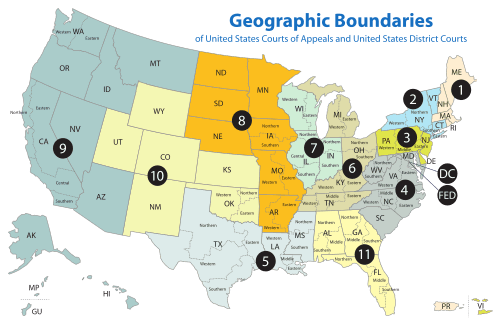
the United States District Court
ORGANIZATION
U.S. federal trial court with jurisdiction over federal cases
this Court of Hickman /.
ORGANIZATION
Organization referenced in documents
Towing Co.
ORGANIZATION
Organization referenced in documents
Toyota
ORGANIZATION
Japanese multinational automotive manufacturer
Turnpike Comm 'n
ORGANIZATION
Organization referenced in documents
United State Burr
ORGANIZATION
Organization referenced in documents
United States & Fiorillo
ORGANIZATION
Organization referenced in documents
United States Court of Appeals
ORGANIZATION
U.S. appeals court
United States Dept of the
ORGANIZATION
Organization referenced in documents
United Statesucg Parker
ORGANIZATION
Organization referenced in documents
Upjohn Co.
ORGANIZATION
Organization referenced in documents
Victory Billiards
ORGANIZATION
Organization referenced in documents
W.D. Pa. 2000
ORGANIZATION
Organization referenced in documents

Wal-Mart
ORGANIZATION
U.S. discount retailer based in Arkansas
Webees
ORGANIZATION
Organization referenced in documents
Welnees
ORGANIZATION
Organization referenced in documents
Wetzel
ORGANIZATION • 2 mentions
Organization referenced in documents

Works
ORGANIZATION
2016 song by Rihanna
Xmocence
ORGANIZATION
Organization referenced in documents
XYZ Corp.
ORGANIZATION
Organization referenced in documents
XYZ Corporation
ORGANIZATION
Organization referenced in documents
Yacht Club
ORGANIZATION
Organization referenced in documents
Yankee Atomic Elec
ORGANIZATION
Organization referenced in documents
ANDRIA1
LOCATION
Location referenced in documents
AOthev
LOCATION
Location referenced in documents
ar.2
LOCATION
Location referenced in documents
Bollin
LOCATION
Location referenced in documents

Columbia University
LOCATION
Private Ivy League research university in New York City

Kansas
LOCATION
State of the United States of America
Kingston
LOCATION
City in Jamaica or other locations
Lake Utopia
LOCATION
Location referenced in documents
Lake Utopia Paper Ltd.l
LOCATION
Location referenced in documents
LeCroy
LOCATION
Location referenced in documents

Maine
LOCATION
State of the United States of America
Northwest
LOCATION
Intercardinal direction
Old Boynton
LOCATION
Location referenced in documents
Palm Beach
LOCATION
Town in Palm Beach County, Florida, United States
Pensacola
LOCATION
County seat of Escambia County, Florida, United States
Purkey
LOCATION
Location referenced in documents
Rutland
LOCATION
Location referenced in documents
San Angelo
LOCATION
Location referenced in documents
Sattazahn
LOCATION
Location referenced in documents
the District of Massachu-
LOCATION
Location referenced in documents
the Northern District
LOCATION
Federal judicial district

United States
LOCATION • 7 mentions
Country located primarily in North America

Utrecht
LOCATION
Municipality in the Netherlands and capital city of the province of Utrecht
Wellington
LOCATION
Capital city of New Zealand; urban area of the cities of Wellington, Lower Hutt, Upper Hutt, and Porirua
Zannino
LOCATION
Location referenced in documents
Statistics
Pages:100
Entities:320
Sponsored