HOUSE_OVERSIGHT_010912_sub_002 - HOUSE_OVERSIGHT_011111
Document Information
Bates Range
HOUSE_OVERSIGHT_010912_sub_002 - HOUSE_OVERSIGHT_011111
Pages
100
Source
House Oversight Committee
Original Filename
Free Growth and Other Surprises.pdf
Document Content
Page 101 - HOUSE_OVERSIGHT_011012
Now I'll try to pull this together. Stock prices collectively, meaning all shares at current prices, is called “market cap.” (Cap is capitalization.) Market cap does not measure the whole underlying value of the issuers, meaning firms that issued the stock, since there are debt claims that must be paid off first. It measures the equity residue. It measures that imperfectly because some inefficiency and chicanery are here to stay. Itis more volatile than the debt claims because it is leveraged, but probably less volatile, given the observed reality of trends showing smoothed-out reaction of share prices to news over time, than what would be bid for the underlying assets, including intangibles, subject to the same debt claims that must be paid off first. National accounts measure market-valued (physical) capital by beginning with market cap. They then add the market value of debt claims on the same issuers, along with equity and debt claims on the rest of the business sector, and then the same for the housing sector. The sum is “private wealth.” Consumer durables such as cars and refrigerators are excluded as impractical to price. Government wealth net of national wealth is tracked separately, and tends to show as slight or negative. Finding the Free Growth Index for Stock Markets My concern in this chapter is the stock market as a data source for testing free growth theory. Here (4.2) would read total return in place of (net) output, while growth would be in market cap. Consumption in (4.2) would become dividend yield in the sense net of capital concurrently raised in new stock issues. The Global Financial Data website summarizes the history of world stock markets from inception in about 1700 for U.K., about 1800 in U.S., and later elsewhere. A nice feature of this data source, and most other sources for stock and security performance, is that market values are shown from the start. This left no need to correct for the inevitable lags in depreciation accounting, which gets the news only in purchases or sales. Chapter 4 Mill’s Idea 1/11/16 21 HOUSE_OVERSIGHT_011012
Page 102 - HOUSE_OVERSIGHT_011013
Global Financial Data reports annual rate of return, growth rate in market cap, and “imputed dividend rate” as the difference. Dividend rate itself is reported as something a little different. | made no attempt to get to the bottom of this distinction, just as | made none to allow for editorial bias in the Piketty-Zucman website. I chose the imputed version for logical consistency. This direct information obviates the chain of reasoning from (4.2) to (4.5), and allows me to jump to the latter. “Productivity gain” in (4.5) is simply annual change in reported rate of return. Acceleration is annual change in reported market cap growth rate. (4.6a) defines the free growth index as their ratio. @(SM), the green line, tracks it in the charts. It too fluctuates around the number one. Gains in dividend rate have coincided as often with gains in market cap growth rate as with drops. This seems only to expound what everyone knows. Of course firms are likelier to raise dividends in years of growth, and cut them in years of decline. I never claimed that free growth theory does more than state the obvious. What is made obvious by the data is that a change in total return is the prime mover enabling market cap and dividend rate to accelerate or decelerate as a pair. What is made obviously wrong would be a thrift theory casting dividend restraint as the prime mover. Were that so, market cap acceleration would coincide with lower rather than higher dividend rates. This pretty much completes my evidence for free growth theory. | have not found other promising data sources. One is tantalizingly close to hand. There is not much reason why corporate bond history is less transparent to the world than corporate stock history. A qualified expert might reconstruct market caps of both, side by side, to show a picture of the whole corporate sector. Surely I am not the only person who would take interest. What is the history of leverage, and of total return, and its growth and yield components, to debt and equity claims cap-weighted together? Chapter 4 Mill’s Idea 1/11/16 22 HOUSE_OVERSIGHT_011013
Page 103 - HOUSE_OVERSIGHT_011014
It would be nice to test from such a dataset, again starting from (4.6), to see if free growth theory holds again. Who knows? Meanwhile, | think, the case is closed. All growth at very large scales is free until proved otherwise. Where Does Opinion Stand Now? What should we make of this evidence for free growth in national accounts and stock market data? Lawmakers would probably demand a recount or an investigation. Tax laws discourage consumption and dividends to encourage growth. Yet data show that lower consumption rate coincides as often with lower as higher capital growth rate for eight nations over four to fourteen decades. They will show the same for dividends when we come to that. Economists would be less surprised. Solow has prepared them for the news. In 1956 and 1957 he showed evidence that most growth is not explained by capital accumulation, or saving through consumption restraint. His Nobel prize acceptance speech in 1988 includes: ... In the beginning, I was quite surprised at the relatively minor part the model ascribed to capital formation. Even when this was confirmed by Denison and others, the result seemed contrary to common sense. The fact that the steady-state rate of growth is independent of the investment quota was easy to understand; it only required thinking through the theory. It was harder to feel comfortable with the conclusion that even in the shorter run increased investment would do very little for transitory growth. The transition to a higher equilibrium growth path seemed to offer very little leverage for policy aimed at promoting investment. The formal model omitted one mechanism whose absence would clearly bias the predictions against investment. That is what I called “embodiment,” the fact that much technological progress, maybe most of it, could find its way into actual production only with the use of new and different capital equipment. Therefore the effectiveness of innovation in increasing output would be paced by the rate of gross Chapter 4 Mill’s Idea 1/11/16 23 HOUSE_OVERSIGHT_011014
Sponsored
Page 104 - HOUSE_OVERSIGHT_011015
investment. A policy to increase investment would thus lead not only to higher capital intensity, which might not matter much, but also a faster transfer of new technology into actual production, which would. Steady-state growth would not be affected, but intermediate-run transitions would, and those should be observable. That idea seemed to correspond to common sense, and it still does. By 1958 I was able to produce a model that allowed for the embodiment effect. ... If common sense was right, the embodiment model should have fit the facts better than the earlier one. But it did not. Dension (1985) , whose judgment I respect, came to the conclusion that there was no explanatory value in the embodiment idea. I do not know if that find should be described as a paradox, but it was at least a puzzle. Edward Denison was another leading growth economist Solow consulted. Remember that Solow had defined disembodied growth to mean better use of existing assets, as when ships carrying coal to Newcastle are inspired to reverse the business plan. It is easy to see how disembodied growth could come more or less for free. But Solow puzzled how embodied growth, which needs “new and different capital equipment,” could arrive without “ a policy to increase investment.” It can for the same reason that Achilles can overtake the tortoise. Solow’s problem, | think, may have been that new and different capital equipment stands to embodied novelty as a new and different chicken laying a new and different egg. We can see how the different capital might come first through saving from consumption deferment. And it seems clear that the embodied novelty could not. But one of the beauties of calculus is that it allows chicken and egg to evolve simultaneously. Neither novelty precedes the other at the instant of first embodiment. This time it is Newton and Leibnitz to the rescue, along with the trusty Gunnar Myrdal, if 1 guess right about Solow’s misgivings. Since he understands calculus and Myrdal far better than I do, I may guess wrong. So let me try another way. It seems to me that embodied growth is still disembodied growth at a finer and more basic Chapter 4 Mill’s Idea 1/11/16 24 HOUSE_OVERSIGHT_011015
Page 105 - HOUSE_OVERSIGHT_011016
scale. Instead of redeploying finished goods, we recombine raw materials. We aren't creating something from nothing. And growth is not so free that it needs no cost at all. It still needs depreciation plowback. Net investment would mean any in addition. The charts and tables, as I read them, show a steady stroke of deprecation plowback paying for all innovation, embodied or disembodied, that copes as best it can with good times or bad. The steady stroke metaphor, showing how cost (the steady stroke) and growth (against the shoreline) could be desynchronized, explains the possibility of free growth. It does not explain why the record shows no other kind. My best guess as an explanation would look to biology. The biological imperative shapes our tastes and behaviors for lineage survival in some sense of family or population or species. Other species crowd their niches. They cannot gain by consumption restraint for the two excellent reasons that there is no consumption to spare and no niche space if there were. Ricardo, Malthus and West all warned against rote replication in economies already developed. We must create means to make more from less. I suspect that we are up against that wall more or less continually. Innovation pushes the wall back when genius and happenstance are at their best, and helps us survive the rest of the time. It costs the same either way. Consumption sacrifice is sacrifice to gods who work their will heedless of it. My implication that we have no consumption to spare could mislead. Rather we have none safe to spend. All creatures hold back reserves against adversity. Economies usually carry more capital, producing more consumption, than they need for now. It is a rainy day fund to be drawn down in lean times and built back in plush ones. Many nations invaded capital to keep up consumption during the world wars and world depression between, and reversed course since. But we would be fools to spend it for return over time when the next crisis might come tomorrow. Chapter 4 Mill’s Idea 1/11/16 25 HOUSE_OVERSIGHT_011016
Page 106 - HOUSE_OVERSIGHT_011017
What exactly do IJ picture as this capital reserve? Is it vodka distilleries that might be converted to orange juice plants in a pinch? I don’t really know. Human capital itself is versatile. Some retirees could unretire, and vodka plant workers might convert with not much retraining. I will explore some of this idea later. Harrod’s Knife Edge Solow’s neoclassical growth model developed from ideas published a decade earlier by Roy Harrod. Harrod had described a “warranted growth path” given by the pace of technological innovation. He reasoned correctly that any effort to push investment faster must soon founder in the diminishing returns foreseen by Malthus, Ricardo and West in 1815. But how could we get investment exactly right? There was a critical “knife edge” with little margin for error. He was right to stress the dangers of overinvestment. I do the same. But free growth theory, and the overwhelming evidence that it is right, bring a new perspective. What Solow and other economists teach today , judging from the textbooks I read, is more or less Harrod without the knife edge. We are taught to figure out the warranted growth path, meaning the rate of technological growth, and then invest just enough, ex ante, to exceed depreciation by that margin. But my charts and tables show that any investment beyond depreciation recovery is deadweight loss. There is no need to know the warranted growth path because optimum investment is nota function of whatever it might be. Depreciation investment captures the whole of technological growth, and further investment adds no more. It is money left on the table. Optimum ex ante investment, at the collective scale, is depreciation investment. Ex post results will reveal the warranted growth path. What about Underinvestment? One indication in the charts and tables might leave us puzzled. It is easy to understand the futility of ex ante investment (consumption restraint) beyond Chapter 4 Mill’s Idea 1/11/16 26 HOUSE_OVERSIGHT_011017
Sponsored
Page 107 - HOUSE_OVERSIGHT_011018
depreciation plowback in light of the diminishing returns described by Ricardo, Malthus and West two centuries ago. We might crowd our niche, like other creatures, and leave neither consumption safe to spare nor room for capital accumulation before diminishing returns set in. But too little investment could seem a tougher challenge. No thrift at all, meaning not even depreciation plowback, would mean no growth at all. Then consumption rate would vary inversely as capital acceleration, just as predicted in in thrift theory. And underinvestment, meaning plowback of less than current cost depreciation, ought to happen about as often as overinvestment. If each year of underinvestment tended to fit the predictions of thrift theory even a little, free growth indexes should average something less than one in the end. But they don’t. The index varies, but averages more than one as often as less in every country and period. The explanation | suggest is already implied in that insight of two centuries ago. Just as overinvestment and capital glut diminish returns, underinvestment and capital shortage augment them until supply of capital catches up to demand. Even if there were no plowback at all in some years, higher returns to capital already in place would help take up the slack. There would be real danger in sustained underinvestment or overinvestment. The saving grace is in market forces restoring equilibrium as investors maximize return. Summary This gives the outline of free growth theory. It is my best speculation on how to make sense of the charts and tables. It follows Mill more or less exactly, and risks the next step in the bold new direction pointed by Solow. My prize exhibits are the charts and tables. Better this book should show them alone, with an explanation of my testing equations and the data sources, than all the rest without them. They could hardly support free growth theory better than if Mill and I had rigged them. The consequences are huge. We must get rid of the corporate double tax ASAP, and raise the corporate tax rate enough to make the overall Chapter 4 Mill’s Idea 1/11/16 27 HOUSE_OVERSIGHT_011018
Page 108 - HOUSE_OVERSIGHT_011019
adjustment revenue-neutral. That should help get both parties on board. We must tax capital gains at the same rate as ordinary income. Dividend rates should revert to the 4% - 6% range typical over the centuries before the pro-investment policies put in place after World War II. We must do whatever we can to level the consumption-investment playing field. Obvious qualifiers are worth spelling out. (4.1) and all consequences are meant to describe at the collective scale, where growth cannot be explained by transfer. Free growth theory assumes depreciation investment, not zero investment. My charts and tables will never be exact. There are inevitably errors and judgment biases in the national accounts and research assembled by Piketty and Zucman, more added by them, and more by me. These cautions will apply to later chapters as well. Chapter 4 Mill’s Idea 1/11/16 28 HOUSE_OVERSIGHT_011019
Page 109 - HOUSE_OVERSIGHT_011020
CHAPTER 5: BRINGING HUMAN CAPITAL IN Human capital is labor measured as a dollar sum rather than as so much per hour or year. It treats pay less invested consumption as our cash flow, and finds our present value (to ourselves) as expected lifetime cash flow discounted by our own time preference rates, meaning what we would charge for delay. Measurement in this way usually finds it as something near three fourths of all capital. Physical capital, much better understood because it can be bought and sold as well as hired, is only the visible tip of the iceberg. The term human capital itself is touchy because it can suggest that life has a price. Irving Fisher used it in quotation marks in 1898}, attributing it to earlier sources | haven’t found, but not in his two great books on the topic in 19062 and 1907. Wikipedia is mistaken in attributing the term to Arthur Pigou a generation later. History of the Idea The concept began with Petty in 16644. He estimated the aggregate pay of English workers, and divided by the discount rate he had modeled in A Treatise of Taxes two years earlier. | have not read Verbum Sapienti, but have read two of his later versions of the same argument>. Petty’s method was criticized by William Farr in 1854, also in a paper I haven’t read, for neglecting what I call invested consumption. Farr, if] read the right description of his argument, was both right and wrong. Petty was modeling human capital of aggregate workers. These were mostly adults, who no longer receive invested consumption if my model is right. That makes his method sound in principle for measuring adult human capital separately. It follows that he underestimated the human capital of England, rather than overestimating it as Farr claimed, by leaving 1 The Nature of Capital. 2 The Nature of Capital and Income. 3 The Rate of Interest. 4 Verbum Sapienti. 5 Political Arithmetic (1676) and A Gross Estimate of the Wealth of England (1685). 6 Vital Statistics. Chapter 5 Bringing Human Capital In 1/13/16 1 HOUSE_OVERSIGHT_011020
Sponsored
Page 110 - HOUSE_OVERSIGHT_011021
out the human capital of children. But Farr deserves credit for pointing out that human capital in general capitalizes pay less invested consumption. Keynes’ teacher Alfred Marshall agreed with Farr in 1990’. As I read this passage, Marshall interpreted maintenance consumption as investment. So did B. F. Kiker? in 1968. | interpret it as exhaust in taste satisfaction enabling energy to earn pay concurrently, while preserving but not increasing pay expectations in future. Invested consumption would mean addition to human capital concurrently for expected realization with interest in higher pay later. Meanwhile economists had developed the complementary idea of human capital as present cost of investment accumulated before. Adam Smith? in 1776 wrote .. The acquisition of such talents, by the maintenance of the acquirer during his education, study, or apprenticeship, always costs a real expense, which is a capital fixed and realized, as it were, in his person. The conversion of some consumption into human capital was a favorite theme of Frank Knight a generation before Schultz. Only the rest is what Schultz called pure consumption eliminated from the economy in satisfying tastes. Becker added in 1964 that this investment must be expected to be recovered with interest, at least when paid by employers in job training. Schultz had also pointed out that human capital depreciates, and invests some work in itself in the effort of learning to complement the exterior investment of nurture and schooling. Ben-Porath, expressing a Schultz-led consensus, added in 1967 that human capital growth is invested consumption (the nurture and schooling) plus self-invested work less human depreciation. All these ideas are now accepted everywhere in human capital studies. 7 Principles of Economics. 8 A History of Human Capital. | learned of Farr from Kiker. ° The Wealth of Nations. Chapter 5 Bringing Human Capital In 1/13/16 2 HOUSE_OVERSIGHT_011021
Page 111 - HOUSE_OVERSIGHT_011022
Jacob Mincer seems to have been first in print with the post-war revival of interest in human capital, in his 1958 paper’? rederiving Irving Fisher’s present value equation and stressing job training. Schultz impresses me as the main idea man among these post-war contributors. He usually avoided math, unlike the others, and is probably the best source for quotes in plain English. His paper Investment in Human Capital, published in 1961, includes: ... Much of what we call consumption constitutes investment in human capital. Direct expenditures on education, health and internal migration to take advantage of better job opportunities are clear examples. Earnings foregone by mature students attending school and by workers acquiring on-the-job training are equally clear examples. ... This use of leisure time to improve skills and knowledge is widespread... I shall contend that such investment in human capital accounts for most of the impressive rise in the real earnings per worker... ... Measured by what labor contributes to output, the productive capacity of human beings is now vastly larger than all other forms of wealth taken together... ... the curve relating income to age trends to be steeper for skilled than for unskilled persons. Investment in on-the-job training seems a likely explanation... ... We can think of three classes of expenditures: expenditures that satisfy human preferences and in no way enhance the capabilities under discussion - these represent pure consumption; expenditures that enhance capabilities and do not satisfy any preference underlying consumption - these represent pure investment; and expenditures that ... are ... partly consumption and partly investment. ... In 19621! he added: ... the investment in human capital can conveniently be classified in (1) nurture and higher education, (2) postschool training and learning, (3) preschool learning activities, (4) migration, (5) health, (6) information, and (7) investment in children (population) ... 10 Investment in Human Capital and Personal Income Distribution 11 Human Capital: Policy Issues and Research Opportunities Chapter 5 Bringing Human Capital In 1/13/16 3 HOUSE_OVERSIGHT_011022
Page 112 - HOUSE_OVERSIGHT_011023
... But unlike the wonderful “one-hoss shay,” the productive life of educational capital typically does not go to pieces all at once. It depreciates along the way, it becomes obsolete, it is altered by changes in retirement and by the state of employment ... ... As already noted, educational capital, like reproducible physical capital, is subject to depreciation and obsolescence. The established tax treatment takes account of both depreciation and obsolescence in the case of physical capital, but this accounting is not extended to education capital... In brief, our tax laws... appear to be all but blind to the fact that educational capital entrails maintenance and depreciation, becomes obsolete, and disappears at death... These excerpts clearly show Shultz’ meanings of pure and invested consumption, and of human deprecation. He says “pure investment” in place of my “invested consumption”, but I prefer to follow tradition by applying “invested” to physical capital alone. We also see his belief, with which | disagree, that substantial invested consumption continues after independence and physical maturity. For example, he writes “Direct expenditures on ... health and internal migration ... are clear examples.” I interpret these outlays, when applied to adult workers, as maintenance consumption preserving rather than adding skills, and enabling current pay rather than invested for higher pay later. | agree that self-invested work “to improve skills and knowledge ... accounts for most of the impressive rise in the real earnings per worker ...”. But | don’t share Schultz’ view that the “use of leisure time” accounts for much of this improvement. My years in plants and oilfields and offices have given me an impression of some study by workers during leisure time, but mostly passive accumulation of experience and insight while fully at work on the job. Practical Uses One obvious use of the human capital idea is to compare the factors (human and tradeable capital) in the same dimension. Capital and labor cannot be added, as Petty knew, since capital is measured in dollars where labor is measured in dollars Chapter 5 Bringing Human Capital In 1/13/16 4 HOUSE_OVERSIGHT_011023
Sponsored
Page 113 - HOUSE_OVERSIGHT_011024
per unit time. But Petty showed that the idea of human capital as discounted cash flow measured in a money sum allows the factors to be summed together. The revival of interest at the Chicago school soon introduced the term physical capital for land and man-made things that can be bought and sold, and total capital for the sum. Physical capital is a misnomer in that we are physical too. But I have used it throughout so that economists can follow me and general readers can pick up some of their language. From the Y = C +1 Equation to the Y Rule Chapter 2 summarized my argument adjusting the Y = C + ] equation to the Y rule. Chapter 4 spelled out the former in (4.1). The Y rule made the hidden asterisks of the Y=C +1 equation explicit. | said in both chapters that the free growth equations are the same for both when we allow for the asterisks. Let’s go through the derivation of the Y rule again. (4.1) shows output = investment + consumption. I] generally mean the version of this where “ex post net” is understood before both “output” and “investment”. | said that this idea is implicit in the Mill quote, and is probably as old as economics. Net output, here or anywhere, means creation of value. Then the equation would be guaranteed by the truism, at the collective scale, if net investment meant growth of all value existing, meaning total capital, while consumption meant elimination from total capital collectively and nothing else. But net ex post investment as meant throughout this book, and anywhere in macro, means growth in physical capital alone. Consumption includes Schultz’ invested consumption transferred into human capital as well as his pure consumption eliminated from total capital as a whole. What the truism guarantees is rather output = total growth + pure consumption, (5.1) Chapter 5 Bringing Human Capital In 1/13/16 5 HOUSE_OVERSIGHT_011024
Page 114 - HOUSE_OVERSIGHT_011025
at the collective scale and where “ex post net” is again understood before “output.” (5.1), but not (4.1), guarantees that terms are mutually exclusive and exhaustive. Total growth means this ex post net investment (growth of physical capital) plus growth of human capital. The latter would have puzzled us before the contribution of Ben-Porath. Equation (4) in his 1967 paper, summarizing the first three, shows human growth = invested consumption + self-invested work — human depreciation, (5.2) using my terms rather than his. Chapter 6 will argue that this equation needs to be clarified. I gave a preview in Chapter 2, and will update it now. Work is the output of human capital. Output is not always positive. It is negative whenever growth and cash flow sum to less than zero. A negative sum of these two shows unrecovered decapitalition (also called deadweight loss). That would include unrecovered human depreciation. If (5.2) meant all including negative self-invested work less all including unrecovered human depreciation, it would subtract unrecovered human depreciation twice. Then it must be corrected either to human growth = invested consumption + positive self-invested work — human depreciation, (5.3) or equivalently human growth = invested consumption + self-invested work — recovered human depreciation. (5.3a) It is clear that Ben-Porath meant (5.3), as other evidence shows that he treated human depreciation as unrecovered. So does all tradition, mistakenly | believe, with Chapter 5 Bringing Human Capital In 1/13/16 6 HOUSE_OVERSIGHT_011025
Page 115 - HOUSE_OVERSIGHT_011026
the partial exception of Becker. I will generally prefer (5.3a), although the two are identical in meaning. Schultz’ analysis of consumption found consumption = invested consumption + pure consumption. (5.4) This plus (5.1) and (5.3a) combine for output = total growth + pure consumption = investment + human growth + pure consumption = investment + invested consumption + self-invested work — recovered human depreciation + pure consumption = investment + invested consumption + self-invested work — recovered human depreciation + consumption — invested consumption = investment + consumption + self-invested work — recovered human depreciation. (5.5) “EX post net”, as always, should be understood before both “output” and “investment”. Chapter 6 will revisit this logic once again, and add a second way to the same conclusion. The Growth Equation Under the Y Rule (5.1) can be arranged as total growth = output - pure consumption, (5.1a) as a counterpart to (4.1a). Total growth means growth in total capital. My argument continues as in Chapter 4. Since (4.2) was a blind alley, skip to (4.3). That now becomes Chapter 5 Bringing Human Capital In 1/13/16 7 HOUSE_OVERSIGHT_011026
Sponsored
Page 116 - HOUSE_OVERSIGHT_011027
totalgrowth _— output pure consumption = 5.6 totalcapital total capital total capital (0-6) which can be written as total growth rate = total capital productivity — pure consumption rate, (5.6a) as with (4.3a). Since (5.6a) is always true, and not only under occasional circumstances, we also get change in total growth rate = change in total capital productivity —changein pure consumption rate. (5.7) This parallels the logic of (4.4). Again save space by reexpressing this as total acceleration = total productivity + total thrift, (5.7a) where “total” means “of total capital”. Now divide by total acceleration to reach the counterparts of (4.5) and (4.5a). I will sometimes save space, from now on, by expressing these arguments in the equations of Chapter 4, as for example in leaving the words “total” and “pure” implicit if the context shows that I mean them. The Slave Paradox Say that Phil enslaves Bill. Bill’s maintenance consumption had been taste-satisfying pure consumption to Bill when Bill was free, and so was not deducted from his pay to find his gross realized output as valued by himself. But Bill’s maintenance consumption satisfies no tastes of Phil. Cash flow is gross realized output less plowback from revenue less new investment from outside, for either factor, while Chapter 5 Bringing Human Capital In 1/13/16 8 HOUSE_OVERSIGHT_011027
Page 117 - HOUSE_OVERSIGHT_011028
net output is gross realized output less depreciation plus proprietary output. Both drop by the amount of Bill’s maintenance consumption on Phil’s books asa slaveowner. So then does Bill’s present value of that cash flow. This noir thought experiment is worth thinking through. It shows that even if slavery were legal and common, its market evidence would neither show the value of human capital nor refute the fact that human capital is inalienable. It is inalienable for the reason, if none other, that our maintenance consumption satisfies no one else’s tastes. Phil did not acquire Bill’s human capital. He converted it to livestock worth much less. Another useful point is that assets in general tend to be worth more to their owners. This does not contradict the convergence axioms. We buy or build to taste. That difference is particularly important as to assets not meant to be traded, such as productive plant. I suspect that this is what the national accounts missed in adjusting depreciation. Maintenance Learning Ben-Porath argued, persuasively | believe, that both kinds of investment in human capital must end when not enough time remains for recovery with interest. Those two are invested consumption, including schooling, and self-invested work. I propose that invested consumption substantially ends at maturity and independence. Self-invested work of learning continues long after, as there remains no other adequate explanation of age-wage profiles. When does it stop? Learning itself continues to the end. Yet if Ben-Porath is right, and he is, self- invested learning stops well before. What continues, | think, is what I call “maintenance learning”. It is defined as learning to keep up pay now rather than to enhance pay later. At all ages, we must learn the names and traits of new clients and co-workers and suppliers and regulations continually to do what we are paid for. Chapter 5 Bringing Human Capital In 1/13/16 9 HOUSE_OVERSIGHT_011028
Page 118 - HOUSE_OVERSIGHT_011029
This observation helps clarify my hypothesis that job learning costs no time that might otherwise have been spent earning pay. My deeper meaning is that invested learning and maintenance learning are the same process costing the same time but with different economic effect, much as with invested and maintenance consumption. Evidence that hourly if not yearly pay rises until retirement, or very near, would refute Ben-Porath’s claim if human capital ended at retirement. But it continues through retirement because imputed pay does. Mill and a few economists before him acknowledged “productive” and “unproductive” consumption. The productive kind was what I call maintenance and invested consumption. Unproductive consumption meant any written invested for higher pay later nor supporting survival pay now. That would give pure consumption = maintenance consumption + unproductive consumption (5.8) and consumption = invested consumption + pure consumption = invested consumption + maintenance consumption + unproductive consumption. (5.9) Investment and maintenance contrast in human capital as in a firm. Investment is valued only in the expectation of future maintenance. No maintenance later, no value now. To count maintenance as new investment would count part of the old investment twice. Where the accounting treatments differ is in disposition. Maintenance in the firm is recovered in pay and products. | thought before that the same was true of human capital. Thanks to the parable of the boss and her secretary, I now I think it is exhausted in satisfying our taste for lineage survival. Chapter 5 Bringing Human Capital In 1/13/16 10 HOUSE_OVERSIGHT_011029
Sponsored
Page 119 - HOUSE_OVERSIGHT_011030
Restating the Three Fourths Rule Petty, neglecting human capital of children, measured total capital as about 2.5 times physical capital in 1664. Most estimates since have run higher. I myself model 4:1 or so as a first approximation. The ratio of human to physical capital might hold to some such lasting norm for the same reason that number of shepherds should hold in proportion to number of sheep. They own as many as they can manage. Human capital means value of skills, including skills in acquiring and employing physical capital. If the value of physical capital changes, so should the value of its management. There is truth behind the old doctrine that a rise in the productivity of labor explains growth in value of physical capital. But old skills can also be more in demand when improvements in physical capital productivity can get more good out of them. Drivers are worth more when there is more valuable freight to be trucked. Arise in either kind of capital tends to invite a rise in the other. The ratio of pure to invested consumption is unsettled in human capital studies. | just showed why I think Schultz gave the right clue in 1961 when he defined invested consumption as an outlay to be recovered with interest in consumption over the future, and pure consumption as an outlay bringing taste satisfaction now. It is the same distinction as with investment and operating expense in the firm. A professional’s meals and doctor bills, and even his subscription to trade journals, are expenses needed to keep his earning power intact rather than investment to raise it over the future. It seems to me that once we are physically mature, the only avenues of investment in skill building, not exhuast in skill maintenance, are self-invested work and job training or other adult education. And | argued that there is probably not much adult education. Only a few go back to school. From what I've seen, job training is concentrated in our first few months when schooling is over and full-time work begins. That’s why | think that the rise of pay with age, implying a rise in skills marketed, is explained more or less entirely by self-invested work in the mainly subliminal accumulation of job experience. (Work Chapter 5 Bringing Human Capital In 1/13/16 11 HOUSE_OVERSIGHT_011030
Page 120 - HOUSE_OVERSIGHT_011031
means the output of human capital, and nothing in the definition of output implies effort or even awareness.) ] agree with Ben-Porath that all consumption and all work should be modeled as self-invested until independence and full-time job entry, given that models must simplify. But I just showed why I model all consumption after, or anyhow after a few months of job training, as Schultz’ pure kind. Here I would fault Mincer and his pupil Becker, but not Schultz or Ben-Porath, for too much focus on the potential of job training. It exists and is crucial. But it is so small a fraction of invested consumption, judging from my experience, that I prefer to neglect it in modeling. Job learning, conversely, seems to explain all rise in pay with age. Biology might predict the same. Nature’s plan is that we first develop and then reproduce. Some creatures follow sharply-defined somatic and reproductive phases showing first only development and then only reproduction. A mature butterfly does not eat. It may even lose mouth parts. Its time is spent in reproduction alone. Other creatures including us like eating too, but nature gives them that taste for the sake of the one behind. Adult consumption, as | see it, is more or less all pure consumption exhausted from total capital in satisfying our taste for life and energy. Consumption by the young is invested because that is the big idea. Nature’s plan is reproduction to maturity. Now suppose for simplicity that consumption is age-independent. Nobelists Milton Friedman and Franco Modigliani, mentioned earlier for their opposite reactions to my banking idea, separately argued something like that in the 1950s for adults. My extension backward to birth seems defensible when we remember to include unpaid parental care and then schooling in invested consumption. I model human capital as continuing after retirement as present value of implicit pay by ourselves and others for caring for ourselves and those others. Then if adulthood runs from ages 20 to 80, those simplifying assumptions would give pure consumption as three fourths of all consumption. Chapter 5 Bringing Human Capital In 1/13/16 12 HOUSE_OVERSIGHT_011031
Page 121 - HOUSE_OVERSIGHT_011032
I also modeled human capital as three fourths of total capital. My tag for the two ideas together was the “three fourths rule.” The agreement of the two ratios as modeled is a convenient coincidence. If they differed, this book would have to be a few sentences longer. Each is first-order approximation only. The Free Growth Index for Total Capital Given the three fourths rule, the free growth index for total capital is derived by reading “pure” and “total” before the words consumption and capital in the equations of Chapter 4. Now back to the charts and tables. The free growth index for total capital is tracked in the red line and labeled (Kt). It too fluctuates around one in each country, but in a much narrower range than does the blue line g(K). The reason is the three fourths rule. The thrift index, not shown in the charts and tables, is one minus the free growth index. It is derived in Chapter 4 as thrift rate over acceleration, where thrift rate is change in consumption/capital ratio times minus one. By the three fourths rule, where pure consumption is three fourths of all consumption while total capital is four times physical capital, the pure consumption/total capital ratio is only 3/16 (3/4 divided by 4) the size of the consumption/physical capital ratio. The yearly changes in these ratios reflected in the numerator of the thrift index will hold to the same proportion. The denominator is acceleration, which is always the same for physical as total capital by the assumption that they hold in 1:4 proportion throughout. This explains why the unshown thrift index, or numerator over denominator, is automatically 3/16 as large for total as for physical capital, and why the shown free growth index runs nearer one in consequence. I have just given an idea why it can be worthwhile to brush up the algebra we all learned in high school or before, and to suffer the nuisance of mathematical notation. | have made a very simple truth, obvious in hindsight, seem complicated by making Chapter 5 Bringing Human Capital In 1/13/16 13 HOUSE_OVERSIGHT_011032
Sponsored
Page 122 - HOUSE_OVERSIGHT_011033
do with words alone. One less something nearer zero, whether that something (the thrift index) is positive or negative, is nearer one. The wonderful books of Einstein (with Enfeld) and Steven Hawking, not to mention Mill, show that even calculus can be put that way. My task has been to follow their tough act. But I will now start to infiltrate notation where | think that that form of shorthand should help more then it hurts. Summary The data for the free growth index of total capital @(Kt) in the charts and tables do not represent a separate test. It is the same test adjusted to the three fourths rule. That was proposed as a convenient rule of thumb. I would have shown a true separate test if 1 knew how. Pure consumption might become separately measurable some day, but human capital will not. The Phil and Bill parable shows that not even evidence from slave markets would be on point. Human capital has no possible value to any but its original owner. Whether in words or notation, I hope to make the point that Chapter 4 and the charts and tables showing ¢(K)are likely to understate the case for Mill. Those showing @(K,) should be nearer the truth. Physical capital and pure consumption are less than the whole. My three fourths rule will never be exact because reality cares little for the convenience of modelers. Proportions between the kinds of consumption will not hold exactly constant and will never exactly agree. But I don’t think the three fourths rule is so wrong that the real value of g(K,,) doesn’t run nearer one than the real value of @(K). (The infiltration begins.) Then the data support free growth theory convincingly enough if we trust equation (4.1), as do all macroeconomists as far as | know, and probably more convincingly when human capital is considered too. Chapter 5 Bringing Human Capital In 1/13/16 14 HOUSE_OVERSIGHT_011033
Page 123 - HOUSE_OVERSIGHT_011034
The cautions at the end of Chapter 4 apply even more. My charts and tables for ¢(K,,) repeat the accumulated error and bias of those for (K), and add the crude simplification of the three fourths rule. (5.4) expresses my understanding of what Ben-Porath means in equation (4) in his 1967 paper, where variables are defined in his three equations before. If (5.4) doesn’t capture his idea faithfully, it anyhow captures mine. Likewise my (5.5) may or may not do justice to Schultz. Some but not all possible interpretations of what he might have meant give (5.5). Again, it is my belief whether or not his. What Farr, Marshall and Kiker have shown, by deducting both invested and maintenance consumption from pay to get adult cash flow discounted to present value, is human livestock value to a slaveowner. It is very little. The parable of Phil and Bill argued that Bill’s maintenance is expensed on Phil’s books, but treated as net output and positive cash flow on Bill’s. | said ] can’t prove that from axioms and definitions so far, and will need the biological imperative. Chapter 5 Bringing Human Capital In 1/13/16 15 HOUSE_OVERSIGHT_011034
Page 124 - HOUSE_OVERSIGHT_011035
CHAPTER 6: PARALLELS WITH THE FIRM My Own History with These Ideas For sheer shock value, at least to economists, the pay rule and the Y rule must count first amount the surprises I promised. Who would have thought that human depreciation is expected to be recovered in revenue (pay) and product value just as with plant depreciation? Heresy! Yet nothing is more easily proved. Either the maximand rule or the deadweight loss rule is enough. Free growth theory and next generation theory give more scope and policy implications. But the pay and Y rules have plenty of those, and may be new to the world. Mill and Petty beat me to the others. | have been arguing the pay and Yrules from the time | reversed course from Quesnay’s idea some five years ago. I will rederive both in new ways at the end of this chapter. My change of mind was a classical epiphany. I had been resisting the obvious for years. I showed how my parable of the boss and her secretary got me on track. My depreciation theory is a lesser shock. It occurred to me over the Christmas holidays this year. It contradicts the national accounts, whose Capital Consumption Adjustment corrects book depreciation from linear to exponentially falling. That would make depreciation fastest at the start, and progressively less. No one has objected because practical experience seems to say the same. If we resell a new car or house after only a few months of use, we take a big hit. If we resell a new factory, which would have been tailored to our unique business plan, we take a bigger one. My counter-argument is that premature resale reflects adverse selection. The usual motive for premature trade is bad news and pressure to sell, not pressure from others to buy. Chapter 6: Parallels with the Firm 2/4/16 1 HOUSE_OVERSIGHT_011035
Sponsored
Page 125 - HOUSE_OVERSIGHT_011036
I point instead to the millions who don’t sell. | argue that depreciation and amortization are the same in essence. Loan payments are all interest at the start, and all amortization at the end, by inference from the present value rule. My risk theory is a mini-surprise. It shifts focus from the risk of the asset to the risk aversion of the owner. Another mini-surprise is the feature of my growth truism pointing out that deadweight loss means negative unrealized output. ] will revisit these topics in more depth after I cover the necessary groundwork in comparing the accountancy for human capital and the firm. Assets, Owners and Revenue Assets means examples of capital of either factor. Their owners are all members of the reproducing population assumed in the axioms. Each, from newborns up, owns human capital at least. Value and growth and cash flow and output are properties of capital. Tastes, aims and ends are properties of owners. Human capital reads its owner’s aims, and manages both factors to realize them. Positive cash flow is outflow from assets to owners, to exhaust or reinvest or give away as they like. In the last two cases, the owner is mediating transfer out. She also mediates transfer in from reinvestment or gift received. Think of capital as source and present value of foreseen cash flows. Owners are the foreseers, the recipients of positive cash flows, the exhausters of some in taste satisfaction, the deciders of the time preference rates giving present value, and the mediators of transfer out and transfer in (negative cash flow). In the case of the diamond ring, the psychic positive cash flow arrived without mechanics. The more typical case reaches the same outcome indirectly. (Net) output of an asset is its value added, or creation of value. Output can be realized as outflow to owners for reinvestment or gift or exhaust, or it can be left in as growth. The part left in is proprietary or unrealized or self-invested output. Chapter 6: Parallels with the Firm 2/4/16 2 HOUSE_OVERSIGHT_011036
Page 126 - HOUSE_OVERSIGHT_011037
Outflow to owners can also include decapitalization from capital already in place, as in withdrawals from a bank account. | say decapitization, rather than depreciation, because the appropriate term might rather be amortization or depletion or liquidation in sale, depending on circumstances and the nature of the asset. The sum of the realized output and decapitalization can be called “gross cash flow”, meaning gross before deducting plowback and negative cash flow (transfer in). Then gross cash flow = cash flow + plowback + transfer in = realized output + recovered decapitalization. (6.1) Here | specify recovered decaptalization because | treat deadweight loss as decapitalization too. Cash flow as accountants and businessmen use the term usually means gross of plowback, although net of transfer in. My meaning, net of both, is the one always applied in finding total return and present value. Although cash flow might be in kind as well, I will follow convention by treating it as if realized from sale in cash. The owner can then spend the revenue on exhaust (pure consumption) or reinvestment or gift as she likes, but might also plow some or all back into the originating asset. The general principle is positive cash flow = gross cash flow - plowback. (6.2) In simple cases, revenue measures and equals gross cash flow for each asset. But revenue as the term is actually used is likelier to sum contributions from many assets and owners. To keep that usual meaning separate, define this asset’s share as “earned revenue”. Then gross cash flow = earned revenue. (6.3) Another way to put the same idea is Chapter 6: Parallels with the Firm 2/4/16 3 HOUSE_OVERSIGHT_011037
Page 127 - HOUSE_OVERSIGHT_011038
revenue = collective gross cash flow = collective earned revenue (6.4) from all contributors to revenue together. Then revenue and earned revenue would be the same if there are no other claims. Earned Revenue and Cash Flow A classical illustration of revenue generated collaboratively is the firm. The firm proper can be interpreted as a single asset of physical capital. Its typically many owners agree to hire outside management, meaning outside themselves, to contract and trade on their behalf. The firm through its managers hires the other employees, contracts with suppliers, and generates a joint product representing all its own gross cash flow plus any contributed parts of gross cash flow of others. The product is sold for revenue in the collective sense. Revenue is first applied to satisfy claims on it by those outside contributors. Claims recovered include current purchases from suppliers realized in sales. Others are pay to management and other employees, along with rent, interest, utilities, other services, and whatever is due to the tax man. The principle is to include all outlays by the firm needed to secure revenue now, as distinct from outlays invested for the sake of more revenue later. The share of revenue due the firm proper is any residue after all those prior claims are met. Then gross cash flow = revenue - prior claims = earned revenue (6.5) gives the contribution of the firm proper. Earned revenue may or may not be passed to owners. Management is typically authorized to plow back any part as reinvestment, say in replenishing inventory or cash or in buying new plant and equipment. Any revenue left over after that plowback is transferred out to owners as dividend yield. Chapter 6: Parallels with the Firm 2/4/16 4 HOUSE_OVERSIGHT_011038
Sponsored
Page 128 - HOUSE_OVERSIGHT_011039
Negative cash flow, or transfer in, always means new investment added from outside. Plowback from revenue is excluded, as it is already recognized as a deduction from positive cash flow. For the firm, the only source of positive cash flow is proceeds from new shares issued. With this understood, cash flow = gross cash flow - plowback - transfer in = earned revenue - plowback - transfer in = positive cash flow - negative cash flow, (6.6) where positive cash flow = earned revenue - plowback, and negative cash flow = transfer in. (6.7) Firms use the term gross realized output to mean the same thing as what I call gross cash flow. A common definition is gross realized output = realized output + depreciation. Now we come to the subtle point allowing for deadweight loss. The total return truism shows that output equals value growth plus cash flow. Then output is negative wherever the sum of growth and cash flow is less than zero. Natural disasters and bad investments can make them so. Those unexpected setbacks are examples of deadweight loss. It amounts to unrecovered depreciation, meaning depreciation not recovered (realized) in positive cash flow. I'll get back to that soon. The point at present is that the equation above really means gross realized output = realized output + recovered depreciation. Here too | prefer the generality of “decapitalization” over “depreciation”, and define gross realized output = gross cash flow = realized output + recovered decapitalization = earned revenue + recovered decapitalizaton. (6.8) Chapter 6: Parallels with the Firm 2/4/16 5 HOUSE_OVERSIGHT_011039
Page 129 - HOUSE_OVERSIGHT_011040
The terms gross cash flow, earned revenue and gross realized output will be used interchangeably. “Realized” and “recovered” will likewise be synonymous, as will be tt “proprietary”, “unrealized” and self-invested”. (A6.1) allows realized output = cash flow + plowback + transfer in - recovered decapitalizaiton. (6.1a) Define unrealized output = output - realized output = growth + cash flow - realized output = growth - plowback - transfer in + recovered decapitalization, (6.9) by (6.1a) and the total return truism. Proprietary Output and Deadweight Loss Unrealized or proprietary or self-invested output of the firm is creation of value not yet sold or not meant to be sold. This can be something as workaday and perfunctory and automatic as output to inventory. Other illustrations could be where a construction firm builds its own offices, or a car manufacturer makes cars for its executive fleet. (6.9) shows that it includes all growth not explained by plowback plus transfer in less recovered decapitalization. This implicitly includes all free growth. Judging from my charts and tables, free growth seems to mean all of growth at the collective scale. What effect might it have on the firm? Free growth includes random windfall gain and deadweight loss as well as the overall upward trend expressing new ideas. Deadweight loss is unrecovered decapitalization, meaning not recovered in cash flow, That makes it negative output Chapter 6: Parallels with the Firm 2/4/16 6 HOUSE_OVERSIGHT_011040
Page 130 - HOUSE_OVERSIGHT_011041
as the sum of growth and cash flow, and specifically negative unrealized output. Then deadweight loss = unrecovered decapitalization = negative output = negative unrealized output = max (0, - output) = max (0, - unrealized output). (6.10) Also positive unrealized output = max (0, proprietary output), (6.11) and output = unrealized output + realized output. (6.12) The Growth Truism In general, growth = capitalization from outside + capitalization from inside - decapitalization. (6.13) Here capitalization from outside = negative cash flow = transfer in, and capitalization from inside = positive unrealized output + plowback. Also decapitalization = recovered decapitalization + unrecovered decapitalization = recovered decapitalization + deadweight loss. Then growth = transfer in + positive unrealized output + plowback — recovered decapitalization - deadweight loss, (6.14) or more simply Chapter 6: Parallels with the Firm 2/4/16 7 HOUSE_OVERSIGHT_011041
Sponsored
Page 131 - HOUSE_OVERSIGHT_011042
growth = transfer in + positive unrealized output + plowback — decapitalization. (6.14a) (6.14a) can also be expressed as growth = transfer in + unrealized output + plowback — recovered decapitalization. (6.14b) For convenience, define gross transfer in = transfer in + plowback, So that (6.14) through (6.14b) can be put more compactly as growth = gross transfer in + positive proprietary output — decapitalizaiton = transfer in + unrealized output - recovered decapitalization. (6.14c) Any of these versions of (6.14) can be called the growth truism. The new term gross transfer in will help shorten equations for human capital. Management as a Quasi-Owner Owners (shareholders) typically allow management wide latitude to cope with needs. It stands in place of owners. Accounting tradition, and this book too, reasons out the steps from revenue to dividend yield as if management itself were the owner. Otherwise there would be little to say. From the shareholder viewpoint, revenue is simply dividend yield. But the bottom line is the same. The maximand is output, or growth plus cash flow. Positive cash flow, in the sense net of plowback, is dividend yield on both the firm’s books and the shareholder’s. Negative cash flow on the books of shareholders individually is purchase of any shares in the same firm. On the books of shareholders collectively, where sales and purchases of existing shares offset, it simplifies to purchase of new stock issues alone. This too is just as on the books of the firm. Chapter 6: Parallels with the Firm 2/4/16 8 HOUSE_OVERSIGHT_011042
Page 132 - HOUSE_OVERSIGHT_011043
My purpose in this analysis of the firm has been to derive equations valid for any capital of either factor. The firm is a good model for several reasons. Its accounting traditions are centuries old, and have been well thought through. It is rich in possibilities because it has to be. It must describe firms of many kinds. It must allow for contingencies whether or not they apply. For many simple assets, say the firm’s shares as opposed to itself, revenue and positive cash flow can be the same. But the complexity and versatility of the firm itself, and the person-likeness added by its internal management, make it a useful model for any and all capital of either factor. Not that I claim to follow accounting tradition closely, or even to understand it closely. | am even less an accountant than an economist. My terms and concepts tend to be idiosyncratic. The main thing is for the logic to hold together. Human Capital by Analogy to the Firm It is reasonable to define pay as the revenue of human capital. Earned revenue for the firm is typically less than revenue. There are prior claims to offset contribution by worker and suppliers. The counterpart in human capital, I said in Chapter 2, is maintenance consumption. | believed for years that this cost counted as a prior claim on pay, just as with the firm. ] may have been the only person to think so since Quesnay and the physiocrats, although Mill and Sraffa might be interpreted that way. But who has thought what doesn’t matter. Quesnay’s idea is a mathematical possibility that must be addressed. I’ll get there soon. Human capital is inalienable. That means that its decapitalization simplifies to human depreciation. The firm’s added possibilities of depletion and liquidation don’t apply. The output of human capital is called work. Then (6.1) through (6.8), applied to human capital, give earned revenue = pay - prior claims = gross realized work = realized work + recovered human depreciation. (6.15) Chapter 6: Parallels with the Firm 2/4/16 9 HOUSE_OVERSIGHT_011043
Page 133 - HOUSE_OVERSIGHT_011044
The pay rule argues that prior claims are zero and that all human depreciation is expected to be recovered in pay and work products as a norm. Chapter 2 offered two logical proofs of the second point. The alternative to recovery is deadweight loss. Capital is discounted foreseen cash flow, and cash flow is realization in transfer or taste satisfaction. Deadweight loss, or unrealized depcatialization, is therefore implicitly unforeseen. Human depreciation, like plant depreciation, is foreseen from the start. Aging and mortality come as no surprise. It is therefore foreseen as realized in pay. The second proof, stated in part by Becker, follows from the maximand rule. All behavior is maximization of perceived risk-adjusted return to the individual’s total capital. This follows from definitions, not from axioms. There are no exceptions because there are no square circles. The rule says that no one invests in anything without expected recovery with interest. Recovery means recovery of depreciation. We do invest in human capital, of ourselves and our children, and consequently expect recovery of human depreciation by ourselves or them. It’s that simple. Other proofs looked to evidence and experience. | offered the parable of the boss and her secretary, which had been decisive in converting me from Quesnay’s view. Let’s go through it once more. Assume that investment in each has ended before the last year for each. First take the possibility that neither maintenance consumption (the supposed prior claims) nor human depreciation is recovered in pay. Then work and cash flow for each have simplified to realized work and pay. Human capital of each is remaining pay less the time discount. At the beginning of the last year, it is something less than one year’s pay. If pay measured work, return to each (work/human capital) would be something over 100% per year. It would rise to 100% per day at the beginning of the last day, and 100% per second at the beginning of the last second. At the end of the last second it reaches infinity. Yet the portfolio assets of each reveal their rates of time-preference (return) as only a few percentage points per year. Chapter 6: Parallels with the Firm 2/4/16 10 HOUSE_OVERSIGHT_011044
Sponsored
Page 134 - HOUSE_OVERSIGHT_011045
This is enough to rule out the idea that pay recovers neither maintenance nor depreciation. Does it say which is recovered? It does if we look at the cases of the boss and her secretary separately. Each earns the same pay throughout, and the boss earns ten times more. By the beginning of the last day, the human capital and work of each is negligible. Pay is all depreciation recovery if I am right, or all maintenance recovery if Quesnay was right, or maybe both. The boss’s pay, anyhow, remains ten times higher. Is that because her maintenance is ten time more, per Quesnay, or because her depreciation is? The answer is easy. I concede that the higher-paid usually consume more. But not always, and anyhow not in proportion and not because they have to. I learned in the quartermaster corps that the consumption needs of the general and the private are not much different. The commanding officer, in the field, is expected to be the last to eat, the last to sleep and the first up in the morning. Maintenance consumption, as opposed to the rest, is what we need to keep up strength and vitality and performance. We can’t make do with less. More pay is more motive, but need not be spent on more consumption unless by choice. The boss and her secretary are paid to apply skills. They are in trouble if the worth of those skills doesn’t cover their maintenance needs. But they will tap savings if it doesn’t. Retirees need no money motive to consume. All they need is the means. The source of skills applied is human capital. The application is gross realized work. The difference between its human depreciation and realized work components matters because the maximand is net output (work) rather than gross. But itis nota difference in kind. Skill applied is skill applied. Pay is all depreciation at the last second for the same reason as with the mortgage payment. There is no balance left to earn interest. This argues strongly that human depreciation is recovered in literal pay and transferred to work products. It also argues that maintenance is not. The problem is Chapter 6: Parallels with the Firm 2/4/16 11 HOUSE_OVERSIGHT_011045
Page 135 - HOUSE_OVERSIGHT_011046
in the exact 10:1 proportion required throughout. Whatever was contributed to pay by maintenance recovery, on top of depreciation recovery, would have to hold the same ratio in order for pay to cover both. Experience shows this as unlikely in any case, let alone all cases. The boss and her secretary probably couldn’t hold maintenance consumption to that ratio if they tried. Another strong argument against the hypothesis of prior claims on pay is lack of a source. The claimant would be whoever other than the worker had paid for the maintenance consumption and needed to be made whole. Thus the employing firm would hold a valid claim if it had provided the maintenance consumption in order to enable the work. That would put the firm in the position of a farmer who must feed the livestock and must earn enough profit to recoup the cost. We went through this in the parable of Phil and Bill. But the employer firm does not advance the cost because it has no motive to do so. It knows that the worker will pay it anyhow if means allow. Where means don’t allow, as in retirement without adequate savings, the worker looks to transfer payments from society generally rather than from the firm alone. Now comes the evidence of age-wage profiles. This evidence is the substance behind the parable of the boss and her secretary. The evidence is apt. Wage generally means hourly pay, while “earnings” means yearly pay. Wage-earnings profiles show arise with age, but peaking and reversing as workers reach their fifties or so. The reason is that they tend to work fewer hours. I consider pay per hour a better measure of human capital than pay per year. If someone is worth $30 per hour half time, my impression is that she would be worth $30 per hour full time. If she prefers to stay home, her leisure must give her that much psychic pay instead. Psychic pay cuts just as much ice with me. My boss and secretary were cases preferring to work full time. Age-wage profiles bear out the scenario | imagined for them. They illustrate the logical certainty that human depreciation is expected to be recovered in pay, and support the Chapter 6: Parallels with the Firm 2/4/16 12 HOUSE_OVERSIGHT_011046
Page 136 - HOUSE_OVERSIGHT_011047
convergence axioms leading from prediction to probable outcome. More than that, continuance of the 10:1 ratio through the last day tends to confirm that no maintenance consumption is recovered alongside human depreciation. If it were, age-wage profiles show that it would have to hold the same 10:1 ratio throughout. Exhaust Pay The present value and maximand truisms affirm that all including human depreciation is expected to be recovered in positive cash flow. Positive cash flow is transfer out plus exhaust. In human capital it is pay less plowback. Might some human depreciation be realized in exhaust? I thought all was when | also thought maintenance consumption was recovered in pay and work products. The boss and secretary parable turned my thinking around on that. But it doesn’t follow that none is. Some pretty clearly is. ] argued that even suicide expresses the maximand rule. Deliberate self-maiming exists and expresses it again. Just as Citizen Kane destroyed his showcases because the fit was on him, some destroy their bodies. So long as the destruction is intended and compos mentis, it counts as economic behavior. Are there sunnier examples? What about voluntary unpaid vacations and voluntary retirements? What if the boss and her secretary enter convents in mid-career? These choices surrender human capital on the face of things because they surrender literal future pay. But the psychic pay of leisure makes up for it. Otherwise we would have stayed on the job track. Then some human depreciation is exhaust. Call the psychic pay for it “exhaust pay”. It seems mercifully small in the big picture. I tend to neglect it in modeling for that reason, just as with invested consumption after full-time job entry. But I claimed logical certitude as to expected recovery of human depreciation in pay. I’d better not leave loopholes. There are none. Some of the pay is psychic, and some of the tastes satisfied are not pretty. Chapter 6: Parallels with the Firm 2/4/16 13 HOUSE_OVERSIGHT_011047
Sponsored
Page 137 - HOUSE_OVERSIGHT_011048
Tweaking the Axioms My last argument reasoned from experience that we need no money motive to consume, and that pay tends to cover our maintenance needs. But that wasn’t strictly in the axioms. | assumed a mortal and reproducing population strategizing for means to satisfy tastes, and more generally aims. I didn’t say out loud that the population in fact survives. Now I do. Let’s specify that the population has motive and means for lineage survival, whether in a group selection or kin selection sense. The means can be specified as skill sets, as an adult norm, sufficient to earn maintenance consumption needs for themselves and invested consumption needs for their young together. As to motive, I will specify at last that maintenance consumption is exhausted in satisfying our taste for survival. I already as much as assumed this in arguing that we need no money motive to consume. This assumption of motive and means amounts to the biological imperative. It is hardly new to economics. It is the essence of Petty’s overlapping generations model of 1662 in A Treatise of Taxes. It is the essence of the equilibrium wage theory of Smith in 1776 and Ricardo 1817, where pay converges to the level holding the work force intact. It is the essence of Malthus’ population principle of 1798 and 1801, chosen by Senior as his first axiom in his Outline of 1836. It is the essence of the productive consumption theory developed from Malthus through Mill in 1848. It lapsed from attention with the marginalist revolution beginning with Jevons and Menger in 1871, ironically the year of publication of Darwin’s The Descent of Man, because the marginalists treated explanations of tastes as irrelevant. I happen to be a huge fan of the marginalists. But they’ve made their point. The microeconomics they founded is a rich and mature science. It needs no assumptions as to what explains our tastes. But macro is not doing so well. I believe that it must start over, and that a grasp of motives helps. Chapter 6: Parallels with the Firm 2/4/16 14 HOUSE_OVERSIGHT_011048
Page 138 - HOUSE_OVERSIGHT_011049
Quesnay’s Idea What Quesnay wrote, in his entry for “man” in Diderot’s Encyclopedia of 1750, was “Those who make manufactured commodities do not produce wealth...they spend their receipts in order to obtain their subsistence. Thus they consume as much as they produce...and no surplus of wealth results from it.” Quesnay, like Petty a century before, came to economics from medicine. He was personal physician to Madame de Pompadour, and then to the royal family. His argument was that value is added in agriculture alone, not in manufactures. His conclusion that only landowners can afford to pay taxes did not enchant the landed aristocracy of Versailles. Mill’s Essays! includes “as much as is necessary to keep the productive worker in perfect health and fitness for his employment, may be said to be consumed productivity. To this should be added what he expends in rearing children to the age at which they become capable of productive industry.” Mill’s Principles of 1848, which I quoted earlier, said the same: “What they consume in keeping up their health, strength and capacities of work, or in rearing the productive laborers to succeed them, is productive consumption.” Sraffa’s parallel idea is expressed in his 1960 paper Production of Commodities by Means of Commodities. My impression is that Quesnay’s “surplus of wealth” means value added, and that he thought maintenance consumption should be deducted from revenue in finding it. Mill can’t have meant what I think Quesnay did, in view of Mill’s evident belief that output is investment plus consumption. Rather, when I like Quesnay argued that 1 Essays on Some Unsettled Questions of Political Economy (1844). Chapter 6: Parallels with the Firm 2/4/16 15 HOUSE_OVERSIGHT_011049
Page 139 - HOUSE_OVERSIGHT_011050
maintenance is recovered in pay work products, | thought Mill and Sraffa might have reasoned partway there. My belief then that human depreciation is exhausted is satisfying tastes seemed defensible then. I argued, sensibly to a point, that getting older meant surviving. | suppose | might still argue the same but for the parable of the boss and her secretary. Another Look at Depreciation Theory My pay rules, illustrated in the parable of the boss and her secretary, depends on my idea that depreciation and amortization are the same. Capital means present value of a typically finite series of forseen cash flows. As each year passes, present value of the most distant and most discounted one is lost. Depreciation/amortization is that loss. It begins at a maximum, and rises steadily as the end point nears. I faulted national accounts for projecting an opposite trajectory from evidence of actual sales. | suggested a second look at likely circumstances and motivations. Depreciable assets are mostly structures and equipment. They tend to have been designed and modified for original users. Original users typically expect to own and operate them to the end. Then what is the likely driver of exceptions? Are secondary trades of plant and equipment likelier to be driven by pressure to buy or pressure to sell? Human capital, anyhow, is exempt from both pressures. We're struck with what we have. We can invest more, as a homeowner might add a pool room, but we cannot sell. The years roll by, and present value of the most distant one’s pay is lost. Consider what happens when the expected end point changes. Say that the boss and her secretary, at the beginning of what was to be the last day, are both persuaded to re-up for another five years at the same pay. Human capital of each jumps from a little less than one day’s pay to present value of five years’ pay. But human depreciation of each is sharply reduced! At the beginning of what seemed the last Chapter 6: Parallels with the Firm 2/4/16 16 HOUSE_OVERSIGHT_011050
Sponsored
Page 140 - HOUSE_OVERSIGHT_011051
day, it was substantially to be the whole of pay. Now it becomes present value of a day’s pay five years off. Another Look at Risk Theory I made the point that the boss and her secretary reveal their time preferences in the security portfolios they assemble, and discount their pay at the same rate of return to reveal their human capital. Is that too simple? Does it overlook risk, or other factors? ] argued that human capital is the risker and higher-return factor because its exceptional versatility makes it as risky as we like, and because it is owned disproportionately by the risk-tolerant young. Does that make the bosses’ or secretary's human capital riskier and higher in return than her portfolio assets? It does not. She molds all capital to her single risk-preference level at her current age. This is not to claim that age is the only determinant. Gender seems to count too, with males usually more risk-tolerant. Bob Trivers tells us why. And there is a wealth effect. We tend to tolerate more risk when wealth gives us more cushion against setbacks. But each of us, in present circumstances, has just so much tolerance. Tastes are properties of owners, not of assets. We assemble and modify assets of both factors to suit them. Human capital is not inherently riskier. It is riskier at the collective scale only because it is owned disproportionately by the risk-prone young. Each cohort, from youngest to oldest, molds it to suit that cohort’s characteristic risk profile. The boss and her secretary each molds all her assets of both factors to her single risk tolerance at the time. Tweaking the Life Cycle Model I consider Ben-Porath’s life cycle model of 1967 the most important paper in 20 century economics. | agree with all of it more or less. Now it needs clarification and completion. Chapter 6: Parallels with the Firm 2/4/16 17 HOUSE_OVERSIGHT_011051
Page 141 - HOUSE_OVERSIGHT_011052
All studies of human capital, as far as I know, effectively treat human depreciation as deadweight loss. Ben-Porath’s model seems no exception. How does he model pay? He multiplies human capital by a productivity factor, and then again by the fraction marketed for pay rather than self-invested. That gives what I call realized work. Pay, if] am right, measures gross realized work. That is the main amendment I would propose for his model. Ben-Porath’s first three equations summarize what I call the growth truism (6.14). In my terms, not his, he models human growth = invested consumption + self-invested work — human depreciation. He means positive self-invested work in the form of learning. Meanwhile the inalienability of human capital leaves its depreciation as its only avenue of decapitalization. Invested consumption corresponds to gross transfer in as meant in the growth truism (6.14c) while self-invested work is the same as proprietary output. Then (6.4c) applied to human capital could show as human growth = invested consumption + positive self-invested work — human depreciation, = invested consumption + self-invested work — recovered human depreciation, confirming (5.2) and (5.3a). Logic also seems to agree with Ben-Porath’s interpretation that self- invested work continues late into careers, and that it must stop when time for recovery runs out. But I would specify that invested consumption stops, for modeling purposes, at full- time job entry or a little later to allow for initial job training. This needn’t follow from my adjusted axioms. It’s just an impression from what | see. I don’t agree with Schultz that outlays on medicine or worker relocation are investment. I see them as maintenance consumption preserving skills, not Chapter 6: Parallels with the Firm 2/4/16 18 HOUSE_OVERSIGHT_011052
Page 142 - HOUSE_OVERSIGHT_011053
investment building skills. ] don’t see much avenue for investment in adult human capital except through textbooks and tuition. Some happens. I went back to school at the Conservatory myself, and I buy lots of textbooks. But I just don’t see enough of it around me. Models must simplify. Mine would end invested consumption at independence more or less. I would also model adult self-invested work as subliminal and costless job experience. I don’t see it as taking a second away from work for pay. This again is meant to describe the usual rule only. Ben-Porath’s model, I think, allows an impression that workers can choose between earning and learning by allocation of time. The quotes from Schultz in Chapter 5 described that as common. I just don’t see much of it happening. Rather we tend to work fewer hours at the end of careers, not the beginning or middle when time for recovery of self-invested work remains. I said that Ben-Porath’s equations imply pay = realized work. I would substitute the pay rule gross realized work realized work + human depreciation = work - self-invested work + human depreciation, (6.17) pay as a norm or expectation. It isn’t a guaranteed outcome because deadweight loss happens to human capital too. We may be hit by a bus, or lose our jobs in a slump, or be sent to prison or drafted into the army. The pay rule means that recovery is foreseen. If (6.17) were stated in terms of outcomes, “recovered” would have to be inserted before “human depreciation”. Chapter 6: Parallels with the Firm 2/4/16 19 HOUSE_OVERSIGHT_011053
Sponsored
Page 143 - HOUSE_OVERSIGHT_011054
I believe that the case for this rule is very strong. The deadweight loss rule and the argument from the maximand rule give logical certitude that human depreciation is expected to be recovered in pay. The convergence axioms would then give actual recovery as anorm. The rule disallows the prior claims hypothesis, or possibility that maintenance is recovered too, from an accumulation of implausibilities that led me finally to rule them out by adjusting the axioms. The life cycle model should also specify that human capital continues after retirement. | admit that this rules out the simplicities assumed in the boss/secretary parable. It continues because we earn imputed pay until the end, and human capital remains as its present value. I would also model in my depreciation theory. Pay, like the mortgage payments, is all realized work (interest) at the start and all human depreciation (amortization) at the end. No other explanation of age-wage profiles will hold water. A New Approach to the Pay Rule ] reasoned to the pay rule from the maximand and deadweight loss rules. Another approach can reach the same conclusion. The total return truism finds output = capital growth + cash flow. (6.16) expressed Ben-Porath’s equation as human growth = invested consumption + self-invested work -recovered human depreciation. Cash flow is the flow discounted to present value. Tradition, since Farr in the mid- nineteenth century, has seen human capital as present value of future pay less what Chapter 6: Parallels with the Firm 2/4/16 20 HOUSE_OVERSIGHT_011054
Page 144 - HOUSE_OVERSIGHT_011055
I call invested consumption. I argued in Chapter 3 that this tradition is sound, although not logical certitude. | put it as human cash flow = pay - invested consumption. (6.18) Work is defined as the output of human capital. Summing (6.16) and (6.17) now shows the pay rule work = pay + self-invested work - recovered human depreciation, after cancellation of invested consumption. This says that the pay rule is not so exotic after all. It has been staring us in the face since the Schultz-led consensus, with Ben-Porath, figured out the human growth equation a half a century ago. We had effectively recognized human cash flow as pay less invested consumption since Farr a century before, without putting it in those words. The total return truism does the rest. A New Approach to the Y Rule The marginalist tradition, which has dominated economic thought since its introduction by Jevons and Menger in 1871, has treated all consumption as the end point exhausting capital in satisfying tastes. It doesn’t follow that marginalists were unaware that some is invested in human capital. At least three of the leading ones understood human capital well. That includes Leon Walras, a third co-founder of the marginalist revolution in 1874. I also mentioned Marshall, who agreed with Farr in disputing Petty, and Irving Fisher. But all three, and marginalsts in general, preferred to locate human capital outside the economy proper. Whether they spoke of labor measured in dollars per unit time, or human capital meansured in dollars alone, the larger factor was taken to arrive exogenously. It provided its services from outside and was paid their market value in return, as if on the books of a firm. Chapter 6: Parallels with the Firm 2/4/16 21 HOUSE_OVERSIGHT_011055
Page 145 - HOUSE_OVERSIGHT_011056
Marshall’s pupil Keynes was thoroughly a marginalist, as are economists in general today and as am I. One of the features of his General Theory of 1936 was a kind of double-entry accounting for national product. Product was output and equivalently income. Output meant the sum of prices of final products produced within the year, while income meant the shares of that sum paid to the workers and investors producing it. His double-entry idea can be put as output = investment + consumption = income = pay + profit. (6.19) I showed why | disagree. But let us see how the total return truism might seem to have led to that inference if we leave workers or human capital outside the economy. To treat them as arriving exogenously from outside is essentially to treat the national economy as if it were a single firm. Output inside is simply profit. Output outside is work, meaning creation of value by the workers. This gives the truism output = work + profit, confirming that total output is the sum of factor outputs. So far, so good. But now Mill and Keynes and most tradition slip by arguing that pay equals and compensates all of work and nothing else. That’s why (6.18) equates output to pay plus profit. Schultz and Ben-Porath and other students of human capital correct this in part by recognizing some work as self-invested rather than marketed for pay. My pay rule adds that pay recovers human depreciation as well as realized work. (6.19) should have reasoned output = income = work + profit = pay + self-invested work - human depreciation + profit. (6.20) Chapter 6: Parallels with the Firm 2/4/16 22 HOUSE_OVERSIGHT_011056
Sponsored
Page 146 - HOUSE_OVERSIGHT_011057
Where Keynes and Kuznets and macroeconomic tradition have been right is in reasoning that pay and gross profit, meaning gross of depreciation, sum to the “expenditure” spent on consumption and gross investment. This fact of arithmetic is the logic behind Say’s law: pay plus profit are always enough to buy what is produced. We saw that this truism gives cold comfort when calamity or misjudgment make profit negative, as with the subprime houses of 2008. What it certifies, anyhow, is expenditure = pay + gross profit = consumption + gross investment. (6.21) We can subtract depreciation to reach pay + profit = consumption + investment. (6.22) Now (6.19) can be corrected as a whole to show income = pay + profit + self-invested work - human depreciation = output = consumption - investment + self-invested work — human depreciation. (6.23) My main goal in this book has been to further the work of Solow in exogenizing growth, and also the work of Ben-Porath in endogenizing human capital as something produced within the economy. It was in that spirit that I derived the Y rule in Chapters 2 and 5 by putting human capital inside. I reached output = investment + human capital growth + cash flow. Here “ex post net” is understood before output and investment, so that investment means physical capital growth. (6.16) applies the growth truism to human capital. The cash flow truism shows that cash flow is net transfer plus exhaust realized in Chapter 6: Parallels with the Firm 2/4/16 23 HOUSE_OVERSIGHT_011057
Page 147 - HOUSE_OVERSIGHT_011058
taste satisfaction. These are all ex post descriptions of realized outcomes rather than intentions. Together they give output = investment + invested consumption + positive self-invested work — human depreciation + net transfer + exhaust = investment + invested consumption + self-invested work — recovered human depreciation + net transfer + exhaust. (6.24) This much is certitude. I now apply (5.9), which includes consumption = invested consumption + pure consumption, to reach the Y rule in its general form: output = investment + consumption + self-invested work — human depreciation + net transfer. (6.25) The net transfer term disappears at the collective scale. Although (6.24) is logical certitude infered from definitions, (5.9) and consequently (6.25) are not. I cannot rule out the possibility of a third kind of consumption recovered in work products as per Quesnay. | hope that my interpretation of age- wage profiles in the light of the boss-secretary parable has revealed that as improbable. The same holds for my derivation of the pay rule through Ben-Porath’s equation and (6.18). (6.18), my inference that human cash flow equals less invested consumption, also trusts that all maintenance consumption is exhausted in satisfying tastes. Summary Accounting for human capital is much like accounting in a firm. Expected recovery of human depreciation in pay is logical certitude illustrated in age-wage profiles and in the boss-secretary parable. The pay rule is not entirely logical certitude, however, as it also asserts that maintenance consumption is not recovered. Age-wage profiles Chapter 6: Parallels with the Firm 2/4/16 24 HOUSE_OVERSIGHT_011058
Page 148 - HOUSE_OVERSIGHT_011059
support this hypothesis too, as the constancy of pay differences to the end would otherwise be improbable. I made it the Darwinian axiom: maintenance is exhausted in satisfying our taste for survival. Ben-Porath’s life cycle was adjusted to express these features. Factor risk theory argued that human capital is the riskier and higher-return factor because capital of any kind takes on the risk characteristics of its owners and human capital is owned disproportionately by the risk-tolerant young. The Y rule contradicts the Y = 1 + C equation, while the pay rule contradicts the dogma that output equals pay plus work. National accounts are founded on both. That means | can expect tough resistance. | have tried to prepare for it by adding a little more to each argument with each chapter. Throughout this chapter, and throughout this book, I have bent over backwards to distinguish logical certitudes from falsifiable hypothesis. Economics needs both. But it needs to know which is which. The pay and Y rules, for example, are each certitude in part. The certain part is the heretical one. The present value and maximand rules follow from definitions, and compel expected recovery of human depreciation in pay. | then relied on the convergence axioms to infer actual recovery as a norm, not a invariable outcome, and on the new axiom of the biological imperative, as well as evidence from age-wage profiles, to infer that maintenance consumption is exhausted rather than recovered in pay as well. Chapter 6: Parallels with the Firm 2/4/16 25 HOUSE_OVERSIGHT_011059
Sponsored
Page 149 - HOUSE_OVERSIGHT_011060
CHAPTER 7: PETTY’S IDEA How We Got to this Point I said that if] had any sense, I would have left the worms in the can by pretending to believe (4.1) as Mill did and as the rest of the world seems to do. Charts and tables confirm his prediction in his and their terms as well as mine. But Piketty’s argument was rightly criticized for leaving human capital out. Someone might or might not have faulted mine on the same ground if I had stopped at the end of Chapter 4. Whether they would have or not, every composer knows that the critic to hear is the one inside. What that critic told me was to gamble a case already won, open the can, and follow the argument and worms wherever they lead. That’s why my title promised other surprises. I risked following it past clarification into digression when I argued the pay rule. I since tried to justify the digression, if there was some, by showing how that rule could explain Piketty’s data for pay/net profit ratios in the twentieth century. And I tried to show how the pay rule and depreciation theory combined, making pay all human depreciation and no realized work at the end, gives the only convincing explanation of age-wage profiles showing rising or steady pay as human capital grades smoothly to zero. Risk theory reinforced this argument by revealing time discount rates for human capital as those made plain for physical capital owned by the same ageing cohorts. Every step was an adventure, and every step led to the next one. But I opened other questions and cans along the way, and the same critic tells me to follow the worms a little farther. I said that the cost of survival is adult consumption for the sake of investment in the next generation, that pure consumption is more or less the same, and that we will understand the maximand when we understand pure consumption. These threads lead into evolutionary biology, which reasons how traits are selected for lineage survival. The faithful need not take alarm. Although I mean natural selection, divine Chapter 7 Petty’s Idea 2/3/16 1 HOUSE_OVERSIGHT_011060
Page 150 - HOUSE_OVERSIGHT_011061
selection should probably do as well. We are all at peace with the fact that people and other creatures care for their young. Economics and evolutionary biology are much the same. Helen Keller, born blind and deaf, might still have reasoned her way through much of both. Hamlet would have loved them. | love them most when they test the limits of logic, and consult the data only at the end. The theme from which both reason, as Herbert Spencer taught in the nineteenth century, is what he called “survival of the fittest.” Another philosopher, Karl Popper, found fault with this idea a century later. Popper was one of those | mentioned who disapprove of truisms. | haven’t read Popper, but gather that he thought it improper to define fitness as potential survival, and then measure it as survival. That objection is close to being understandable from an anti-truism viewpoint. But the reason why it is not quite a truism is instructive. Measurement implies an “empirical” world of data in external and observable reality. Spencer’s insight, really his paraphrase and generalization of Darwin’s, is not quite a truism because it carries the hypothesis that “potential” has an empirical meaning. Aristotle’s idea that potency precedes and explains act is called causality. Adam Smith’s friend and fellow Scotsman David Hume scarcely doubted causality, but argued correctly (I think) that it cannot be proved either by logic or by experiment. The fittest prove themselves such by surviving if and only if Aristotle was right. Natural selection simply means the untestable but little-doubted theory of causality. Spencer or Darwin or Gertrude Stein might be faulted for insulting our intelligence by stating the obvious. That shoe would fit Gertrude Stein. But Spencer and Darwin, like the little boy in Hans Christian Andersen’s The Emperor’s New Clothes, were stating the obvious unseen. Andersen’s point was that intelligence was not the thing lacking or what the little boy supplied. It was about how tradition and mind-sets and in-groups might sometimes need a look from outside. Peer review is not enough. Sometimes it perpetuates nonsense. The little boy was not a peer, but he could tell clothes when he saw them. (“Peer”, as any theorist knows, means someone who pees on your theory.) Chapter 7 Petty’s Idea 2/3/16 2 HOUSE_OVERSIGHT_011061
Page 151 - HOUSE_OVERSIGHT_011062
I confess that this book casts me as that little boy crashing the economic party, and maybe the evolutionary biology one too, in trust that outsiders might have better chances to spot the obvious unseen. What else was the pay rule? I derived it easily from doctrines already accepted, I think, and anyhow hard to refute. Those were the total return turism and Ben-Porath’s equation for human growth. The maximand rule or deadweight loss rule would prove it as well. How could Becker have missed that what holds for investment in job training by employers holds for any investment by anyone in anything? How could students of the age-wage problem have missed the obvious solution? Investment implies expected recovery with interest, by the investor or a chosen donee, and recovery means recovery of depreciation. I belabor this point because tradition dies hard, and naturally tends to circle wagons under attack. I doubt that my surprise attack will meet the resistance Darwin’s found. Darwin’s met resistance founded on faith. I took pains to show that my version requires only selection for lineage survival, and that a benign Artificer might ordain the same. Evolutionary Biology and Hamilton's Rule Economics, meaning any quantitative rationale of choice, normally describes humans and human choice. That goes for this book too. But some treatments of economics including this one are meant to fit other creatures as well. My axioms have kept that in mind. The mortal and reproducing population need not be human. Much of the animal kingdom, | think, shows convergent tastes and predictions or acts as if it did. The biological imperative is meant to apply to all. All, as I see it, own capital of both factors. Even protozoans own (“monopolize”) the nutrients they assimilate and the space they occupy. Humans are exceptional in their cultural accumulations of learning and technology shown in our secular (lasting) growth. But I did not make those features axioms. | argued that economics tended to reason explicitly or implicitly from the biological imperative, meaning what | call “ends” in lineage survival, from Petty through Smith Chapter 7 Petty’s Idea 2/3/16 3 HOUSE_OVERSIGHT_011062
Sponsored
Page 152 - HOUSE_OVERSIGHT_011063
and Ricardo and Malthus and Mill, until the marginalist revolution shifted focus from objectives to the mechanics in supply, demand and price. Bioeconomics awoke a century later, largely it seems in response to the challenge of Hamilton’s rule. Now I will look at it too. My term “lineage survival” is unusual. It is meant not to take sides between “kin selection” and “group selection.” The kin selection idea was another word for Hamilton’s rule from his doctorial thesis in 1964. It said that genes encoding investment in close kin encode investment in likeliest sharers of those genes, and should tend to entrench and perpetuate themselves. His condition for investment was r)bc.r here meant relatedness: ¥% for offspring or siblings, % for nephews or nieces or grandoffspring, and so forth. b meant benefit to the donee, and c meant cost to the investor. The sign > means “greater than”. The cost and benefit were measured in fitness itself, meaning chances to survive and breed. But that too meant “inclusive fitness” where investing in kin counted as breeding when adjusted for relatedness. The idea was that I give up some of my chances if I can increase yours to my net genic advantage in the long run. Hamilton allowed for exceptions including meiotic drive, which sometimes forecloses gene competition. His rule prevailed because it made mostly good predictions. Humans and creatures in general usually care for their own young first, if they have any, and for closely related young if not. Hamilton made it clear that cost c and benefit b in his hurdle rb>c respectively meant fitness given up by the investor and fitness grained by the investee. He further made it clear that fitness could be measured as R. A. Fisher’s “reproductive value” V(x) published in 1930 and 1957. V(x) meant likelihood at age x of reaching each successive age times expected offspring at that age. V(x), or Bob Trivers’ “reproductive success” RS, which simplifies V(x) to expected remaining offspring, is implicitly constant at the population scale unless there is population growth (Fisher’s “Malthusian parameter”). For creatures other than us, the Chapter 7 Petty’s Idea 2/3/16 4 HOUSE_OVERSIGHT_011063
Page 153 - HOUSE_OVERSIGHT_011064
parameter typically fluctuates around zero and group fitness holds about where it started. Hamilton’s rule, applied to diploids like us where closest relatedness r absent inbreeding is %, forbids investment where fitness gained (benefit) is less than twice fitness given up (cost). I see no escape from the inference that fitness would double with each generation, or more to account for cases where relatedness fell below ¥%. | see no relief in an interpretation, say, that each successive generation cures this imbalance by investing only half or less of its fitness and letting the rest lapse. Fitness is likelihood of leaving descendants of equal fitness. It is not strictly conserved, because likelihood is generally not identical to outcome. There is ex ante and ex post fitness. But the ex ante kind is meaningless unless potency, in Aristotle’s terms, is expected to converge to act. Hamilton’s rule should not have escaped this critique for half a century. It clearly has merit, but needs some different expression. Such a reformulation might treat rb/c as a maximand within practical constraints. We can see how it might be by looking at the context. Darwin’s idea is a competition for breeding success. This biological imperative is a powerful predictor in nature. It predicts that traits are selected for successful reproduction to the exclusion of all else. Evidence is impressive. “Semelparous” creatures who breed only once and do not invest postpartum care, like salmon and soybeans, die within hours. An octopus mother breeds only once, cares for her young a few weeks, and dies as they disperse. Nature is on a tight budget. Resources wasted soon become resources lost to thriftier lineages. Hamilton saw this. He was right in stressing the role of competition among individuals and individual heritable traits. Darwin did the same. One thing Hamilton’s rule leaves out, which is not to claim that he overlooked it, is that traits and their genes best at prioritizing self-replication might for that reason hurt chances of achieving it. We know this happens. Human tradition everywhere resists and punishes nepotism when it crosses a line. Jane Goodall reported the same for Chapter 7 Petty’s Idea 2/3/16 5 HOUSE_OVERSIGHT_011064
Page 154 - HOUSE_OVERSIGHT_011065
her chimps at Gombe. | think I have seen it among the pack of dogs, led by my father’s favorite “Sean”, at Sutton Place. That would count as one of the practical constraints. Too little support for family over equally deserving others is seenasa fault, and too much as another. The reason is obvious. Jack’s ambitions for kin will eventually conflict with Zack’s, just as with ambitions for food and nest sites and mating opportunities. Not everyone's firstborn can be king of the hill. Social creatures evolve agonistic rules to settle such conflicts peacefully. Losers in mating tournaments, or in contests where males display and females choose, usually survive to compete again next year. The contest is in the group interest because the traits of strength and skill proved in the winner will be those passed on. Our genes tell us to compete as best we can for the sake of a fair test, and to stop when the verdict seems clear. And soon enough it does. The quarterback tries his best for three downs to move the yardsticks, but trots to the sidelines on fourth down for the sake of another chance later. If genes can encode this farsighted strategy for those other kinds of competition, why not for nepotistic competition too? For decades, biologists wondered why genes need so much selecting in species long established. Shouldn’t earlier contests have selected the fittest genes once and for all, with no need for further ones but to screen out recent and harmful mutations? Shouldn’t the best traits have become clear millennia ago? Why need males contest in tournaments or beauty contests every breeding season, with mostly the same contestants, when best genes ought to have proved themselves soon after the species began? Then there would be no genetic diversity except for recent mutations not yet screened out. Population genetists such as Fisher, J. B.S. Haldane and Sewall Wright had written mathematical models showing that even the slightest selection pressures should drive a gene to fixity, and its rivals to extinction, within a few generations if selection favored it consistently. Their argument was Malthus’ insight: breeding success is geometric. Yet there is rich allelic diversity wherever we look. There are some gene sites in some species where the most common allele Chapter 7 Petty’s Idea 2/3/16 6 HOUSE_OVERSIGHT_011065
Sponsored
Page 155 - HOUSE_OVERSIGHT_011066
holds frequencies under ten percent, and those frequencies are constantly shifting. The flux proves that losers are allowed mating opportunities too, though not as much, and leave young to compete in the next generation. Hamilton explained why that could make sense in a paper published with Marlene Zuk in 1982. George Williams in 1976 and John Tooby in 1980 had argued that fittest genes in one generation might not be fittest in the next if niche pressures varied to counter current gene choices. Tooby had pointed to parasites and pathogens, particularly single-cell ones whose life cycle runs less than an hour. They could evolve new strains to outflank our old defenses and call for new ones. Hamilton and Zuk continued this theme. They suggested that genes might have long memories, put in human terms, and might have seen the same parasites and pathogens pull such tricks before. If some individuals in the host population still carried the antidote gene that worked the last time the same unexpected strain arose, or something close enough to it, hosts collectively could weather the threat if that antidote gene could be identified and spread fast enough. Then how? Hamilton and Zuk proposed that what winning males display in contests of singing or croaking or agility or symmetry, or bright colors in the right places, was possession of the genes needed to counter the current strains of pathogens and parasites. Losers in the same contests carried genes that had proved best against strains of the past and might come back in the future. Nepotism practiced by winners would speed up the spread of the current antidote. But losers carried genes that had worked against other strains that might recur. A way had to be found to keep all those potential antidotes somewhere in the medicine cabinet. Current losers had to be saved for later. Gene diversity was the key to group survival in the long run. The quarterback trots to the bench on fourth down because that is better for himself and the team than being carried to the hospital. He realizes that other players are best for punts or field goals or defense until he gets the ball again. Selection pressures do not favor the same traits and genes every time. Chapter 7 Petty’s Idea 2/3/16 7 HOUSE_OVERSIGHT_011066
Page 156 - HOUSE_OVERSIGHT_011067
Hamilton’s Parasite Theory My take on Hamilton’s 1982 paper, which | consider his masterpiece, is a blend of his thoughts, Bob Trivers’ from a decade before, Richard Alexander’s, and maybe mine. Mine sees a population arranged in local “demes” which intrabreed in most cases for best adaptation to local pressures including pathogens and parasites. A local strain to which the local deme is adapted might spread to other demes which are not. Hosts in the invaded demes become sick. Female ones there intuit the degraded conditions, breed less often, and breed mostly females (mothers can choose) because males with their now ill-adapted anti-parasite (histocampatability) genes will find few willing mates. This begins the part from Trivers. I'll come to Alexander’s later. Mothers in the source deme see an opposite picture. Conditions are not necessarily better than before, but they are better than in the invaded demes. They intuit this, breed more often, and breed mostly males. The males migrate to those invaded demes, carrying histocompatibility genes pre-adapted to the invaders, and find willing mates there if they can show the signs. The idea that mothers choose to breed mostly males in prosperous conditions is the other half of Trivers’ idea. The idea that the invading parasite and the males with antidote genes might tend to originate from the same deme may be mine. That presupposes that females can trust the signs. Nature makes sure they can. She provides resistant males with hard-to-feign ones to prove it. This was one of Hamilton’s key insights. His idea has been called the “truth in advertising” theory. Symmetrical antlers, deep croaks, accurate songs and bright colors where they should be tell the females whose genes can be trusted. Parasites and pathogens would fake them in afflicted host males if they could. It seems they can’t. Hamilton, I believe, had solved three nagging puzzles at once. Why does nature waste resources on beauty displays that seem at first glance to hinder fitness? A Chapter 7 Petty’s Idea 2/3/16 8 HOUSE_OVERSIGHT_011067
Page 157 - HOUSE_OVERSIGHT_011068
peacock’s tail feathers are an encumbrance in running from predators. And why give the expensive displays mostly to males? Why do males exist at all in species where they contribute genes but no care? We just saw the answer to the first. Answers to the second two again build on an insight of Trivers in 1973. Males produce cheap sperm carrying genes alone. Females produce eggs packed with costly nutrients. A male can pass genes to many descendants through many mates if they approve his signs. That speeds up the fight against parasites. Nature evolved males and their self-promoting signs and their contests for fastest spread of antidote genes to catch up to shifts in parasite load. Where Do Losers Go? A key point in the Hamilton-Zuk theory is that losers’ genes in the beauty contest are typically not driven to extinction. They are driven to low frequencies until needed again. Kin selection, up to a point, helps maintain genic diversity by preserving current losers within the gene pool. Selection pressures punish and restrain kin selection when it conflicts with preservation of other genes whose time will come again. | met Hamilton at a conference in Squaw Valley, where Bob Trivers had helped us attract him, and told him this reason why I thought his 1982 paper helped complete and qualify his 1964 paper. He was the absent-minded professor to perfection. Moody, distracted, profound. He smiled, a rare thing for him, and said “It’s been a long search.” This explains what | mean by lineage survival or fitness. Much of this book assumes its maximization even among modern humans, who create our own urban environments in place of the ancestral savanna for which we were adapted. And much of economic history, although written in cities by city-dwellers, appears to assume the same. Chapter 2 listed some examples. Let’s review them. There was Petty’s of 1662. The similar equilibrium wage theories of Smith and Ricardo expected pay to converge to the level maintaining and replacing the work force, which is trusted to spend it on both. Malthus’ population principle in 1798 and 1801 Chapter 7 Petty’s Idea 2/3/16 9 HOUSE_OVERSIGHT_011068
Sponsored
Page 158 - HOUSE_OVERSIGHT_011069
added the mechanics. Nassau Senior made that principle his first axiom in his Outline of 1836. The biological imperative lapsed from attention when the first generation of marginalists, led by Jevons and Menger, with Walras soon to follow, thought it unscientific to explain or justify tastes. It reemerged a century later in bioeconomics, much of which looked for economic implications of Hamilton’s rule. We will see how it might clarify pure consumption and the maximand. Enlightened Kin Selection Hamilton’s rule needs completion because the quarterback and his genes have figured out that the bench is better than the hospital. What really happens, I think, is a long-range example of Bob Trivers’ “reciprocal altruism” of 1971 as generalized by Richard Alexander. Bob wrote that creatures might invest in non-kin if the investment were expected to be repaid with interest. Alexander added that the repayment could be to the investor’s kin with equal genetic benefit if Hamilton’s hurdle rb>c were cleared from the investor’s perspective. The quarterback yields to special teams on fourth down, and they to the defense until possession changes again, for the best interests of each and all in the long run. The interest they receive in turn for deferring to non-kin is the cost of maintaining themselves on the bench. It does not accrue and compound because it is paid out continuously. It is an insurance cost that each temporary winner dares not trim. Group selection is enlightened kin selection. Three or four decades ago, this much acknowledgement of group selection would have met more resistance than I expect now. It shouldn’t have. Half the beauty of the Hamilton-Zuc scenario is in explaining allelic diversity as a result of agonistic rather than lethal competition. Zack and Jack and their genotypes are rivals now because they are teammates in the big picture. Kin selection is a help until it crosses the line and becomes a hindrance. Some mothers in the source deme will carry higher frequencies of the antidote gene than others. They will tend to be healthier, and so able to invest more energy in more Chapter 7 Petty’s Idea 2/3/16 10 HOUSE_OVERSIGHT_011069
Page 159 - HOUSE_OVERSIGHT_011070
young. If all mothers invest preferentially in their own, or maximize Hamilton’s standard rb>c , healthier mothers will produce more young with higher doses of the antidote genes, while sicklier mothers will produce less with less. Here it is females who compete to prove the same better genes that males just proved in the tournaments or beauty contests. The race against parasites speeds up again with Trivers’ fine insight about healthier mothers choosing to dial up the ratio of sons to daughters (“primary sex ratio”), and to expand the reproductive period at both ends with shorter birth spacing for more male offspring still. (Some of this may be my idea rather than his.) Nature proves best current genes twice. Fathers prove them by duking it out or strutting their stuff. Mothers carrying the same best genes prove it by winning the breeding contest against other mothers after. The ex ante/ ex post distinction counts as much in biology as in economics. Here it accelerates the selection process. Offspring carrying the antidote gene to meet current parasites will generally not on that account cost more ex ante invested consumption to raise. If they are males, who can turn that advantage into many offspring, the ex post value of that same investment can be far higher. The converse works for offspring lacking the gene. Their mothers can make the best of it by producing females who will find breeding opportunities anyhow with mates carrying the gene, since she knows which they are and males always have cheap sperm to spare, and will so keep their own genes in the gene pool. Parasites got the last laugh by killing Hamilton on research in Africa a few years after I met him. | never knew well enough to call him Bill. Bob Trivers called him the deepest thinker in the world. That couldn’t be wrong by much. Parasites and Demes Ernst Mayr, Bob Trivers’ doctoral advisor at Harvard, defined a deme as a race or subpopulation that intrabreeds at least 95% of the time. I hypothesize that it does so, Chapter 7 Petty’s Idea 2/3/16 11 HOUSE_OVERSIGHT_011070
Page 160 - HOUSE_OVERSIGHT_011071
in some cases, to maximize frequency of a histocompatibility gene which is an antidote to the local strain of parasite or pathogen. This idea could complement the Hamilton-Zuc parasite model nicely. It would give a safe home to which both gene and parasite could retreat until their times come again. Period of Production Theory Back to economics. Chapter 4 mentioned John Rae as a contributor to what later developed into Mill’s free growth theory. Rae’s book, published in 1834, also begins what was called period of production theory. The idea was that production took time, and that profit compensated the investor’s patience over the production period. Senior, who had sent Rae’s book to Mill, adopted this idea in his own better- known Outline in 1836. Rae’s book itself found few readers, despite its warm endorsement by Mill in his own magnus opus of 1848. Jevons adopted the idea from Senior in 1871, and Boehm Bawerk from Senior and Jevons in his book of 1889. Boehm Bawerk soon learned of Rae’s work, and dedicated later editions to him. Period of production theory thrives today in the Austrian School, which had been founded by Boehm Bawerk’s teacher Carl Menger in 1871. (Menger was the guy who squabbled with Schmoller in Chapter 2.) It has found little favor elsewhere. The period seemed impractical to define or measure, and so gave little predictive value. Joseph Schumpeter, a student of Boehm Bawerk who disagreed with him on this point, argued in 1911 that the period of production is zero; capital is present continuously. Frank Knight, who had anticipated Schultz in realizing that some consumption is investment in human capital, argued as Schumpeter had. But the theory is true by definition. Any rate is the inverse or reciprocal of a period. The inverse of 4% per year is 25 years. Return is the ratio of net output to capital producing it, meaning the rate of production, and its reciprocal is the period of Chapter 7 Petty’s Idea 2/3/16 12 HOUSE_OVERSIGHT_011071
Sponsored
Page 161 - HOUSE_OVERSIGHT_011072
production. Where the critics were right was in finding a lack of clarity and predictive value in the theory. Where does it lead? Rabbits and redwoods have different periods of production, at first glance, but should nonetheless agree in return if in risk. Jevons wrote that he meant production of the “wage fund” as a whole, meaning the universe of consumer goods. But he pointed to wine and timber as examples to help pin down the period. Boehm Bawerk picked nine years for no reason I can see. All went wrong by considering physical capital only. The factors blend into each other; physical becomes human capital through invested consumption, and conversely when human depreciation is recovered in products. The generation length gives the replacement period for total capital if total capital is interpreted as fitness and if all fitness of each generation is passed to the next. Jevons and Boehm Bawerk assumed growthlessness for simplicity, and would have realized that they were modeling only the replacement component in net output. Boehm Bawerk’s contribution, anticipated by Petty, was his insight that time preference rate explains rate of return by pricing the capital denominator, and not the reverse. This had not been clear in Rae or Senior or Jevons. | give all four high marks for a near miss. But they could have come closer. Remember that Senior's first axiom had been Malthus’ population principle. He and the others would also have known of Petty’s human and total capital idea, which was occasionally revived and critiqued. They didn’t quite connect the dots. Next Generation Theory Petty wrote A Treatise of Taxes in 1662. The whole title continues to about as many words, counting ampersands, as pages in the book or pamphlet. His son tells us that Petty dictated his books overnight to secretaries who slept by turns. It is easy to believe that Petty didn’t need much sleep. He was a go-getter who had sailed to Chapter 7 Petty’s Idea 2/3/16 13 HOUSE_OVERSIGHT_011072
Page 162 - HOUSE_OVERSIGHT_011073
Ireland as chief medical officer to Cromwell’s ironsides, stayed on to survey the Irish land with which Cromwell would pay his troops, and then got Parliament's approval to invest in that high-risk land to make a fortune. It is rare for a man of practical gifts to be a deep thinker too. Petty, like my father, was both. His Verbum Sapienti of 1664 was first to apply the ancient capitalization formula to both factors, meaning workers as well as tradeable things, and so originated the concept of human capital as present value. He applied this insight there and his Political Arithmetick in 1676, and again in The Total Wealth of England in 1683, to measure the total wealth of England including human capital. That makes him the father of national accounts. But his greatest achievements, I think came in A Treatise of Taxes. Chapter 4, paragraph 9 of that book begins with 19. Having found the Rent or value of the usus fructus per annum, the question is, how many years purchase (as we usually say) is the Fee simple naturally worth? If we say an infinite number, then an Acre of Land would be equal in value to a thousand Acres of the same Land; which is absurd, an infinity of unites being equal to an infinity of thousands. Petty clearly recognizes that time preference, meaning our taste for impatience, explains productivity, or ratio of output to capital, rather than the other way around. This powerful and counterintuitive insight is usually credited to Boehm Bawerk in 1889, who showed that it is true for man-made things as well as land. The utility or usus fructus being a given, we bid less for the land or other capital producing it if we are less patient, and more if more. Bidding less for this denominator of rate of return bids that rate itself up if the numerator is a given, and conversely. That’s why riskier assets offer higher return. Petty’s reductio ad absurdam of a hypothesis of infinite patience is obvious in hindsight, but may not have been written down before. Petty continues: Chapter 7 Petty’s Idea 2/3/16 14 HOUSE_OVERSIGHT_011073
Page 163 - HOUSE_OVERSIGHT_011074
Wherefore we must pitch upon some limited number, and that I apprehend to be the number of years, which I conceive one man of fifty years old, another of twenty eight, and another of seven years old, all being alive together may be thought to live; that is to say, of a Grandfather, Father and Childe; few men having reason to take care of more remote Posterity: for ifa man be a great Grandfather, he himself is so much nearer his end, so as there are but three in a continual line of descent usually coexisting together; and as some are Grandfathers at forty years, yet as many are not till above sixty, and sic de eteteris. 20. Wherefore | pitch the number of years purchase, that any Land is naturally worth, to be the ordinary extent of three such person their lives. Now in England we esteem three lives equal to one and twenty years, and consequently the value of Land, to be about the same number of years purchase. Possibly if they thought themselves mistaken. ...(as the observer on the Bills of Mortality thinks they are...) 21....Butin other Countreys Lands are worth nearer thirty years purchase, by reason of the better titles, more people, and perhaps truer opinion of the value and duration of three lives. 23. One the other hand, Lands are worth fewer years purchase (as in Ireland) ... by reason of the frequent rebellions. . .” The “other Countreys” could include France and especially Holland, then models of prosperity. Petty had made his fortune in Irish mortgages, and knew the years purchase there. But the argument is a puzzle. There is a focus on longevity and mortality, as if the generations are providing for old age. But Petty’s overlapping generations model cannot be much like Paul Samuelson’s of three centuries later, where a generation of productives leaves a nest egg for retirement. Samuelson’s productives are replenished exogenously, with children left to the imagination. Why would Petty have mentioned their ages? And retirement at age 50, as anorm, would have made no sense to Petty or his readers. The grandfather will stay in harness. Chapter 7 Petty’s Idea 2/3/16 15 HOUSE_OVERSIGHT_011074
Sponsored
Page 164 - HOUSE_OVERSIGHT_011075
The one and twenty years could mean remaining life expectancy at age 50. But Petty could easily have spelled that out, or the implied 71 year terminus. He does spell out the ages of the three generations. Their average difference in age rounds to 21 years. Petty’s readers, like Smith’s and Ricardo’s after, would have taken it for granted that each generation provides for the next. “Few men having reason to take care of more remote posterity” would have registered in the context of that provision. “Posterity” usually meant and means descendants. His description, like mine, is incomplete. He may mean that life expectancy is also a factor in calculating the years purchase. If so, he apparently leaves that thought to be followed up later. There is also room to argue that the grandfather looks two generations ahead, so that the years purchase becomes 42 years. But that would give the usus fructus at 2.3%. All the rates Petty reports elsewhere in the tract are much higher. One generation length is what he seems to apply. My reading is that the grandfather provides for the grandson by passing all to the son. Petty’s overlapping generation insight has been one of his least noticed, just as with Mill’s on output growth preceding and explaining capital growth. I first read of Petty’s idea in a collection of Lionel Robbins’ lectures at London School of Economics delivered in 1979-1980, but published in 2000. I learned from these lectures that Gustav Cassel had published the same idea in his The Nature and Necessity of Interest in 1903. I hunted that down. Robbins misremembered in telling his students that Cassel had arrived at the idea independently. In fact Cassel and Robbins both quote the same excerpts from A Treatise of Taxes that I just did. Cassel inferred that interest rates cannot stably be less than 2% per year. Chapter 7 Petty’s Idea 2/3/16 16 HOUSE_OVERSIGHT_011075
Page 165 - HOUSE_OVERSIGHT_011076
I arrived at the same idea independently, anyhow, and published it in Social Science Information in 1989. To date it is my only publication in a refereed journal, and remains uncited as far as I know. Alan Rogers, a biologist at University of Utah, published almost the same idea in 1994! and 19972. Neither of us knew of Petty or Cassel or each other. Both of Rogers’ two papers are included in my appendix. Petty’s great idea has otherwise remained unnoticed as far as | know. His idea in modern terms comes from the same ancient capitalization formula. Sumerian temples knew how to evaluate land as well as mortgages and annuities by discounting to present value. In the simplest case, where cash flow is expected to hold constant forever, the logic begins with the definition cash flow cash flow rate = ————— capital Algebra allows h fl capital = |, (7.1) cash flowrate Years purchase, given those simplifying assumptions, meant 1 years purchase =———_———_ , (7.2) cash flow rate 1 The Evolution of Time Preference. 2 Evolution and Human Choice over Time. Chapter 7 Petty’s Idea 2/3/16 17 HOUSE_OVERSIGHT_011076
Page 166 - HOUSE_OVERSIGHT_011077
Suppose for example that cash flow rate is known to be 4%. Using (7.2), we would figure 1 100 years purchase = —_———— = yer oN 2 SO 525 years. A%/year 4% 4/100 4. That allows (7.1) to be reexpressed as capital = (cash flow) x (years purchase). (7.3) Where cash flow and cash flow rate are assumed constant over time, they become identical to profit and rate of return. Sumerians realized that return is the universal maximand, three millennia before Turgot wrote that down, and that competition tended to equalize it to a current market norm. Then it would also equal years purchase. Petty was searching for the rationale of years purchase, and found it in the generation length. Petty’s idea I think, and mine anyhow, could begin with capital = means of accomplishing goals= means of lineage survival= fitness. (7.4) Nature’s way is transmission of all fitness, meaning total capital for humans, to the next generation. Nature cares just as much for later generations, but trusts each generation of immediate descendants to know best what their own immediate descendants will need for that long-range goal. Each passes the baton and retires. We invest everything in the next generaton precisely because we care about the ones after. Hamilton’s rule reflects this reality. Grandoffspring are only % related to Chapter 7 Petty’s Idea 2/3/16 18 HOUSE_OVERSIGHT_011077
Sponsored
Page 167 - HOUSE_OVERSIGHT_011078
donors, while offspring are % related. Hamilton thus predicts grandoffspring to receive investment only when benefit/cost ratio is double. My own analysis allows more role for group selection, without saying how much, and shifts attention from who benefits to when. Petty’s idea, if | understand him, is years purchase = generation length = 21years, (7.5) which would give 1 generation length 21 years cash flow rate = 4.7% /year. (7.6) This would tally well enough with rates of return and interest rates as Petty knew them. I would adjust Petty’s estimate of the generational length. Petty’s primogeniture model may have been true to law and custom for land inheritance, but it is not true to biology. I prefer R. A. Fisher’s? method equal-weighting all births from first to last, and equal-weighing ages of both parents at each birth. We have some evidence that the maternal generation length in recent decades, by that method, has run near 26 years over recent decades. If fathers are five years older on average, Fisher’s method would arrive at 28.5 years. Rogers found 28.9 years from other sources. Then (7.6) would give cash flow rate = i. 3.5% /year. (7.7) 28.5 years 3 The Genetical Theory of Natural Selection (1930). Chapter 7 Petty’s Idea 2/3/16 19 HOUSE_OVERSIGHT_011078
Page 168 - HOUSE_OVERSIGHT_011079
All this has assumed has assumed constant cash flow indefinitely. That would imply zero growth. Only under zero growth do output and rate of return simplify to cash flow and cash flow rate. Now let’s model growth in. | divide the Y rule by total capital, as in Chapter 4, to get output __ total capital growth + cash flow total capital total capital total capital ’ or more compactly rate of return = growth rate + cash flow rate. (7.8) At the collective scale, cash flow rate simplifies to pure consumption rate. That would be written rate of return = growth rate + pure consumption rate, (7.9) as in Chapter 4. Then (7.6) through (7.9) allow rate of return = growth rate + 3.5%/year (7.10) at the collective scale. (7.10) would be wrong if growth rate were a function of cash flow rate. | said that politicians, and even economists to a degree, teach that faster growth needs consumption restraint first. That corresponds to cash flow restraint in (7.10). Free Chapter 7 Petty’s Idea 2/3/16 20 HOUSE_OVERSIGHT_011079
Page 169 - HOUSE_OVERSIGHT_011080
growth theory says such restraint doesn’t happen. Data say the same. I apply the same idea in next generation theory. My 3.5% is a rough estimate. What counts is the generation length. The length was probably higher, and the rate lower, before medicine and sanitation lowered mortality rates, and let two or three births per couple meet the need for population replenishment. The cash flow or pure consumption rate modeled at 3.5% might also vary for reasons other than changes in the generation length. My charts show the pure consumption/total capital rate as higher in the middle part of the twentieth century as people drained capital reserves to keep up consumption in times of world-wide depression. I’ll say more about these reserves. First Interpretation Next generation theory says in effect that R. A. Fisher’s version of the generation length, not Petty’s primogeniture version, gives the period of production of total capital. We would miss the point if we focused on the period production of human capital separately. Total capital is our means of lineage survival. This reinforces my theme that human capital does not mean humans. It means skill sets priced at present value of foreseen cash flow. Skill sets are not enough for lineage survival. We also need things. We should not fall into the trap of surplus value theory, which had been taught by communists for decades before Karl Marx joined their ranks, in supposing that skills make things. It is only half the truth. Skills plus things make skills plus things as the generations repeat. Nor should we make the mistake of supposing that the generation length begins and ends uniquely from birth to birth, so that the remaining period of production grows shorter over adult life and the time discount rate steeper. The period of a cycle is the same at any point. The young, simply by maturing, are already investing in their Chapter 7 Petty’s Idea 2/3/16 21 HOUSE_OVERSIGHT_011080
Sponsored
Page 170 - HOUSE_OVERSIGHT_011081
counterparts in the next generation. Each cohort (same-age group) invests effectively in its immediate descendent. Eight-year-olds are investing in the next generation of eight-year-olds, and so to the end. That’s why Fisher’s version of the generation length is best. It prioritizes each cohort and gender without judgment as to which matter more. The period of production gives our patience horizon. The horizon and its reciprocal, the pure consumption rate, both hold the same at any age. Cash Flow and Risk The maximand rule notes that time preference and return vary with risk. Return is growth rate plus cash flow rate. Is variance with risk captured more in one of these two components than the other? We might intuit that riskier and higher-return assets grow faster on average, over enough time for the bumps of risk to even out. But if that tended to be true, the universe of assets would grow progressively riskier over the decades and centuries. That is not my reading of history. My impression is that smoother and rockier periods come and go without overall trend. In the world we know, then, it is cash flow rate rather than growth rate that varies from asset to asset with risk. For illustration, consider factor risk. | argued that human capital figures to be the riskier and higher return factor because assets tend to reflect the risk appetites of their owners. The young are more risk-tolerant, and own human capital disproportionately. If this higher return were reflected in higher growth, rather than in higher cash flow, the ratio of human to physical capital would tend to rise steadily over the millennia. Most readings have tended to see it the other way around. I myself favor the neutral assumption that the factors keep pace. Then cash flow rate becomes higher for human than physical capital, with 3.5% the cap-weighted average. Chapter 7 Petty’s Idea 2/3/16 22 HOUSE_OVERSIGHT_011081
Page 171 - HOUSE_OVERSIGHT_011082
Consider also the history of corporate leverage. Equities are riskier because bond interest is paid first. If equities grew faster, however, leverage would constantly decline. That is not what we see. This inferred concentration of risk premium in cash flow rate is convenient for testing. Growth and return are two of the most closely followed variables in economics. We have no direct measure of the pure consumption rate, or cash flow rate at the collective scale. Nor have we any direct measure of growth and return to total capital at any scale. But we have a good idea of average return and growth and cash flow to securities and business assets. By the maximand rule, return to human capital should be the same but for differences in risk. | model human capital as somewhat riskier, for reasons just given, and human capital is the larger factor. Then if I am right in placing the risk premium within the cash flow component of return, and in estimating average-risk cash flow rate at 3.5%, cash-flow rate to the business sector as a whole should be somewhat less. Next generation theory predicts at the collective scale. Collective return is implicitly average return, and that means average-risk return. My reading of history, which rules out progressive growth of higher-risk assets at the expense of lower-risk ones, simplifies that to average-risk cash flow plus whatever collective or average growth happens to be at the moment. Don’t Grandparents Invest? Next generation theory assumes that each generation invests all its capital of both factors in the next within the generation length. We expect it to do the same in turn. We care about grandoffspring too, but serve them best by trusting and enabling their parents only. A first reaction is that this denies the obvious. Humans today, in advanced countries, normally live to nearly three times the generation length. (3 x 28.5 = 85.5). Even retirement at age 65 comes eight years after twice that length. And job number one Chapter 7 Petty’s Idea 2/3/16 23 HOUSE_OVERSIGHT_011082
Page 172 - HOUSE_OVERSIGHT_011083
for grandparents seems to be helping take care of grandchildren. Doesn't that falsify next generation theory? Note quite. Retirement typically means dependence on savings or subsidy. The parental generation subsidizes both the young and the old. Retirees can be interpreted to some extent as hired though willing caregivers paid for by parents. That explains part. The rest, I think, is best explained as replenishing a capital reserve. Nature builds up reserves in good times and depletes them in bad times. A rise in longevity from what is normally needed for lineage survival is a rise in human capital reserves. Human capital is the most versatile kind. We geezers have lost a step. But we remember how it’s done. We particularly remember how parenting and homemaking are done, since those change least with technology. Julius Caesar’s nanny, with a few pointers, could probably fill in as a nanny today. If the parental generation were pulled away to fight a war, or rebuild after a catastrophe, we oldsters could keep up the home front. Free growth theory, abundantly proved in the data, is essential to next generation theory. What each generation invests in the next is all its fitness (total capital). All ex post growth, up or down, is added or subtracted for free. Catastrophes and windfalls are the random kind of free growth. Tech gain is the accumulating “secular” (of ages) kind. ] wouldn't put it past nature to have learned that sustained growth means rising risk. She could adjust with reserves. We may be selected (a nicer word than programmed) to build human capital reserves intentionally, whether or not seeing nature’s motives for the buildup as distinct from our own, when real wealth doubles with every generation. That intentional or ex ante part would mean investment in the reserve. It isn’t targeted to the grandoffspring generation, because they aren’t expected to draw it down unless needed. All the rest of the buildup of human capital reserves in lifespan prolongation is best explained as random free growth if my interpretation holds Chapter 7 Petty’s Idea 2/3/16 24 HOUSE_OVERSIGHT_011083
Sponsored
Page 173 - HOUSE_OVERSIGHT_011084
water. Next generation theory is not contradicted because it describes cash flows only. It treats all growth at the collective scale as free and exogenous. Testing Next Generation Theory The proxies for the pure consumption rate (Schultz’ pure consumption over total capital) in security markets would be dividend yield for equities, and interest for debt claims. Ibbotson Associates’ SBII (2012), Chapter 4, shows average real interest on U.S. corporate bonds as 3.0% over the period 1926-2011. Real corporate dividend yield rate over the period can be estimated from the same source at about 2.9%. Jeremy Siegel’s Stocks for the Long Run (2002), Table 1-2, reports data extending back to 1802. Real return over the period 1802 - 2001 is shown as averaging 3.5% for long-term governments, and 2.9% for short-term governments. Corporate bond returns would have run somewhat higher. Global Financial Data shows stock market information for 95 countries. Data for U.K., U.S., Germany, Australia and France begin from 1701, 1801, 1870, 1883 and 1896 respectively. My charts and tables, and my website Free Growth and Other Surprises, show this information along with evidence for free growth. The eighteenth century is represented by U.K. alone. U.K. then showed real price return, dividend yield and total return at 21.4%, 7.9% and 29.3%. Volatility of dividend yield was exceptional. From 1801 forward, U.K. averages for these flows were 2.2%, 4.2% and 6.4%. U.S. figures from 1801 forward were 2.9%, 5.3% and 8.3%. Global Financial Data also shows collective flows for Europe and the world since 1926. Here the figures were 3.3%, 3.9% and 7.3% for Europe, and 3.5%, 3.8% and 7.3% for the world. Modeling of the pure consumption rate before the emergence of security markets could refer to the history of interest rates alone. Interest is rate of return to senior claims. Rate of return to any claim is realization by investors net of all expense. Chapter 7 Petty’s Idea 2/3/16 25 HOUSE_OVERSIGHT_011084
Page 174 - HOUSE_OVERSIGHT_011085
Investors as to interest means lenders, not borrowers. Interest rates published historically are rates borrowers are contracted to pay. Interest rates realized by lenders are less for two reasons. There are friction costs of due diligence, contracting and collection. Default costs, slight when times are good, can be catastrophic when times are bad. Homer and Sylla describe normal contracted rates, not realized rates net of those costs, as 10% — 40% in Sumer and Babylonia, 6% - 18% in ancient Greece, 5% — 24% in Egypt, and 4% — 12+% in Rome and the Byzantine Empire.* After higher rates in the dark ages, European mortgages and commercial loans found the range 7% — 25% in the thirteenth and fourteenth centuries. The range settled down to 4% — 14% in the sixteenth century,° and to 3% — 10% by the seventeenth and eighteenth’. The authors comment:@ “...interest rates declined during much of the later Middle Ages and Renaissance. The earliest short-term rates quoted were somewhat higher than the last and highest of the western Roman Legal limits. They were not too different from early Greek rates and were within the range of Babylonian rates... The later Renaissance rates were well within the range of modern rates and the lowest were far below modern rates in periods of credit stringency.” Merchants of Venice in Shakespeare’s time and long before borrowed from banks, not from Shylocks, and at rather lower cost than merchants of the twentieth century. Economics and Biology Bioeconomics has meant economics informed by biology. I argued that this describes much or all of classical economics from Petty through Mill, then lapsed when the marginalists preferred to do without any explanations or justifications of tastes, and revived a century later to explore Hamilton’s rule. 4A History of Interest Rates, Rutgers, 1996, Table 4. 5 Ibid. Tables 6 and 7. 6 Thid. Table 9. 7 Tid. Tables 10 and 14. 8 Ibid. Chapter 10. Chapter 7 Petty’s Idea 2/3/16 26 HOUSE_OVERSIGHT_011085
Page 175 - HOUSE_OVERSIGHT_011086
I too reason from biological axioms, and from much the same ones implicit or explicit in the classical period. But I end up framing ideas of biology in the language of economics rather than the opposite. I begin with total capital = means of ends = means of replication = fitness, where fitness is understood as a stock. The concomitant flow and rate would be output (creation of fitness/total capital) and return (ratio of the two). Free growth theory gave the inference optimum ex ante output = optimum controllable output = exact offset of pure consumption, at the collective scale. Next generation theory specified the period of this exhaust and recovery as the generation length. Consider Hamilton’s rule in this context. All ex ante output, continuing steadily at the generation rate, must be invested concurrently in the next generation or stored for later investment within the deadline. It is the problem of Brewster’s millions. Adults must invest or store as efficiently as practical (the maximand rule) before the output means has slipped by. And the more stored instead, the more pressure to invest later within the deadline. Time left for investment is another of the practical constraints on maximization of rb/c. What I sense is a watering down of Hamilton’s rule from what seemed logical compulsion a few decades ago to something more like a target of opportunity. A prediction maximizing rb/c has proved its value as a useful rule of thumb. | suggested why some nepotism might be more adaptive than none in my review of the Hamilton-Zuk parasite theory. It’s about giving all genes a fair but speedy trial. Chapter 7 Petty’s Idea 2/3/16 27 HOUSE_OVERSIGHT_011086
Sponsored
Page 176 - HOUSE_OVERSIGHT_011087
The quarterback gets three downs, and the batter three strikes, before they go back to the bench. Some nepotism directs healthier mothers to invest in more and healthier offspring, and sicker ones conversely, long enough to demonstrate which is really which. Males passing the test carry the signs to prove it. Females choose them to spread the antidote gene to the whole population. Losing genes and losing parasites retreat until their time comes again. Summary This chapter trades my wannabe economist hat for my wannabe biologist one. Herbert Spencer called those fields the same at bottom. I never read Spencer, and know him mostly from Bertrand Russell’s books on the history of philosophy. Spencer rates a subchapter there. Yet he was an autodidact with less training in either field than mine. He even had less training in philosophy than mine. He was a philosopher all the same, by Russell’s tough standards, and knew that logic comes first. Data eventually prove their worth when it’s time to test. The data I’ve found fits net generation theory more or less. What I really have on, all the while, is my wannabe philosopher hat. Popperians make no sense. Are we supposed to find that a rose is not a rose? Or that all reasoning from definition is as transparent as that example? Wiles’ proof of Fermat’s last theorem ended a search that took some pretty bright minds three centuries. My best guess would be that Popperians confuse the concepts of logic and question-begging. They are opposite. Logic (reasoning from definition) means taking out no more than you put in. Truism or tautology usually means obvious examples of the same, but sometimes includes subtle ones too. Question-begging means taking out what you never put in’. ? Circularity is question-begging which claims to take out as inference what it put in as assumption. Assumption that Socrates is a man and that all men are mortal does not confirm that Socrates is a man. It confirms that Socrates is mortal if assumptions are sound. Chapter 7 Petty’s Idea 2/3/16 28 HOUSE_OVERSIGHT_011087
Page 177 - HOUSE_OVERSIGHT_011088
Spencer’s “survival of the fittest’ doctrine would be a truism if we could prove the theory of natural causality. We can’t by any means known to me. Science takes it as a working assumption. So did Hume, and so do |. If God intervenes only a little, so that laws of nature comes close to reality most of the time, we're still in business. My critique of Hamilton’s rule proposed that nepotism meets resistance when it conflicts with nepotistic goals of others. I proposed a modus vivendi through agonistic rules. Hamilton’s parasite theory with Zuk, written 18 years later, gives the game plan. Nepotism, meaning kin selection through Hamilton’s rule, is in the common interest to a point. It speeds up proof of best genes to beat the current parasites by testing female genes as well as male ones. Healthier mothers and sisters and aunts carry more fitness to invest in more young. And females in most K-selected species, including humans, perform most care of the offspring and siblings and nepotes (nephews and nieces) that receive it!°. Male competition alone does not determine best current genes to nature’s satisfaction. Female breeding competition and nepotistic investment help prove them farther. All agonistic rules are about keeping the contest fair and deciding when proof is enough. Long-term success against future as well as current parasites needs most losers, not all, to go to the bench (low frequencies; source demes in my version) rather than to extinction. Most losers survived to enter the contest because they 10 The burden is about 50-50 in pair-bonding birds. Fathers look to be the only caregivers in territorial fish such as sticklebacks. Chapter 7 Petty’s Idea 2/3/16 29 HOUSE_OVERSIGHT_011088
Page 178 - HOUSE_OVERSIGHT_011089
were winners once before. Their cost on the bench, or on the taxi squad, is good insurance. My version of Hamilton’s parasite theory patched in some of Trivers’ ideas. One was that mothers intuiting self-health and good prospects should tend to breed higher primary sex ratios and conversely. Their male offspring can then find willing mates if health carries reliable signs as Hamilton proposed. Also the investment of insurance cost by winners in maintaining losers on the bench can be interpreted as Trivers’ reciprocal altruism to be recovered when winners now become losers later. My discussion of grandparental investment let still more worms out of the can. It is clear that humans in advanced economies today normally live to nearly three generation lengths. I proposed that we are replenishing a total capital reserve, meaning mainly a human capital one, when recovering from hard times in the world wars and world depression. No one really knows. Chapter 7 Petty’s Idea 2/3/16 30 HOUSE_OVERSIGHT_011089
Sponsored
Page 179 - HOUSE_OVERSIGHT_011090
CHAPTER 8: BANKS, MONEY AND MACROECONOMICS Splitting up Banks I started to write a book on banks and money a year ago. I stopped when | realized that I don’t know enough about the subject. I have some experience and have done some reading in those fields, but not enough to justify a whole book. A chapter, or part of a chapter, is more like it. Sumerian temples doubled as banks, mostly for agricultural loans to finance the next crop. It is from their records, in clay tablets, that we know they understood compound interest and the capitalization formula. Deposit-and-lend banks as we know them today emerged in Venice and other European cities in the twelfth and thirteenth centuries. Chapter 1 said that equity investors cannot be attracted at leverage (deposit/equity) of less than 10:1, that even one tenth so much leverage is unstable in high winds, and that we rebuild the banking system after every systemic failure because we blamed the high winds rather than the rickety structure. I said that the solution is to split up banks as we know them into deposit banks which invest in ETFs on the one side, and lending banks which raise funds from investors rather than depositors on the other. These entities would have separate stockholders, and would not interact unless incidentally. A different kind of bank split-up has been urged since the 2008 crash. Repeal of the Glass-Steagle act had allowed commercial (deposit-and-lend) banks to operate as investment banks (brokerage firms). Many blamed the crash on that repeal, and on investment bank innovations such as mortgage-backed securities. I think those critics are looking in the wrong direction. The problem, as with most bank crashes over the centuries, was overleverage encouraged by nearly costless deposits. The solution is not to peel off brokerage operations from the mix, but to peel off deposits. Chapter 8 Banks, Money and Macroeconomics 2/8/16 1 HOUSE_OVERSIGHT_011090
Page 180 - HOUSE_OVERSIGHT_011091
I see no reason why lending banks should be separate from investment banks. Rather the depositors’ money should not be risked in either. It is also a mistake to blame Wall Street chicanery. Chicanery is a fact of life, and Wall Street has more than its share. But I can testify, from a ringside seat, that many sound financiers and first-rate economists genuinely believed in the sub-prime derivatives they were selling. They were proposed to the trusts I run. ] turned them down as a business proposition because | saw too much complexity and no upside. But my read was that the presenters were sold themselves. The problem is not in the people. It is in the inherent fragility of deposit-and-lend banks. Then what would the world be like without them? The answer first needs a closer look at the problem. Credit Risk is More than Leverage Some leverage is a good thing. Firms issue bonds as well as stocks in order to attract a wider range of investors. Risk-averse investors may choose the safety of bonds, whose interest claims are paid first, while risk tolerant ones may be happy with the iffier but more promising equity remainder. Leverage in general is a way to satisfy both these constituencies. Credit risk rises with term (duration) as well as amount of debt. One of the most telling points in Siegel’s Stocks for the Long Run is that corporate bonds of 15 years or more have proved more volatile in real total return than equities have. No wonder. A corporate bond will have ample debt coverage (gross profit/debt service) at date of issuance, and an appropriate credit rating. What will both be fifteen years from now? Homeowners also typically borrow long-term. They expect to have children in local schools, husbands and/or wives in local jobs, and other roots in the community. But Chapter 8 Banks, Money and Macroeconomics 2/8/16 2 HOUSE_OVERSIGHT_011091
Page 181 - HOUSE_OVERSIGHT_011092
who knows that husbands and wives will still be married in fifteen years? Who knows that if they are, their careers will not have taken them to another city? It seems to me that reducing the dangers of debt means reducing both term and amount, and that the solution had better find ways that still accommodate the short- term and long-term needs of firms and people. Now let’s look at how deposit banks might invest. The Omnibus Fund Idea If 1 were a couple of decades younger, | would try to create something | call an omnibus fund. It starts by seeming to contradict what I just said. I said that firms issue both stocks and bonds to reach different constituencies. The omnibus fund would first erase that separation. In principle it would reconstruct the firm asa whole, or put the pieces back together again, by assembling proportionate shares of the debt and equity claims on it in a single portfolio. Suppose for example that the market cap (number of shares times current market quotation) for a firm’s equity shares is one billion dollars, while the market cap of all debt claims together in half that. Then the omnibus fund, in principle, would buy each firm’s equities and debt instruments in that proportion at current market valuation. In practice it could realize the same effect in a simpler way. The omnibus fund would be a balanced index fund. Index funds are representative of all the funds in an index, such as the S&P 500, weighted again to market cap. The omnibus fund would pick a still more inclusive index, say the Russell 3000 or even the Wilshire 5000. It would add in a corporate bond index, since balanced means mixing stocks and bonds, and cap weight the two. The object would be to model the publicly-traded corporate sector as a whole. The simplest way to get there would be to buy index ETFs (exchange traded funds) directly, rather than duplicating their work of assembling portfolios of the underlying individual issues. Chapter 8 Banks, Money and Macroeconomics 2/8/16 3 HOUSE_OVERSIGHT_011092
Sponsored
Page 182 - HOUSE_OVERSIGHT_011093
If it stopped at that point, the omnibus fund would probably attract few investors. It would offer the aggregate return and risk of the publicity-traded corporate sector as if it had never borrowed or issued debt. Aggregate means average. No one is exactly average. Some like me and my father happen to be more risk-tolerant, and opt for the higher returns that tend to come from higher risk. Some prefer the opposite. How can the omnibus fund attract both? The answer is derivatives. Derivatives are obligations whose benefits depend on outcomes imperfectly foreseen. I said in the forward that I’m all in favor of them so long as we respect and manage the risks. Equities themselves are the classical example. Mortgage-backed securities give another. Common forms include futures and swaps. The idea is about the same. Each typically picks an index, often the S&P 500. One party, the “short leg”, bets so much money, the “notional amount”, that the S&P 500 index will go down tomorrow. Another party, the “long leg”, bets it will go up. The short leg gets so much, say Libor plus 20 basis points (hundredths of a percent) of the notional amount, in any outcome. The long leg gets the index change, whether up or down, times the same notional amount. No one actually invests the notional amount. It is called “notional” for good reason. Rather each side (leg) commits a cash reserve, held by the firm managing the swap or future, in this case the omnibus fund itself, of 20% of the notional amount. The reserve is drawn down to meet payments required when market swings are averse, and replenished when favorable. When it falls to 10% of the notional amount, it is considered unsafe and the swap or future ends prematurely. Parties are warned, and new reserves can be committed in time. Monitoring of the reserve is continuous during market hours. Whenever the reserve falls to 10%, even in the middle of the day, the account is closed immediately. This discipline keeps the other party safe. Chapter 8 Banks, Money and Macroeconomics 2/8/16 4 HOUSE_OVERSIGHT_011093
Page 183 - HOUSE_OVERSIGHT_011094
Risk-averse clients in the omnibus fund can take short legs, and risk-tolerant ones long legs. Management of the omnibus fund can handle the mechanics of the swaps or futures. The effect would be not less leverage per se, since leverage at the individual account level is substituted for leverage at the corporate level. The difference is duration. Swaps and futures are short-term commitments. Three months is typical. Futures trade in active markets, for good measure, and can usually be liquidated in seconds at current market during trading hours. So can ETFs themselves. What do these derivatives cost? Essentially nothing. Those who prefer safety and the short leg are matched with those who prefer return and the long leg, while the manager charges only for its time in working the mechanics. What About Asset Allocation? Where the omnibus fund seems to violate common sense is in merging out what had seemed to be valuable distinctions. So it would seem with the blending of equity and debt claims, but for an optional overlay of derivatives such as futures to restore whatever risk and expected return we want. Many distinctions blended out, including that one, have been important to principles of asset allocation and modern portfolio theory. They are important because some investment sectors are less correlated than others, meaning less likely to risk and fall in lockstep. Low- correlation portfolios are better because less volatile as a whole without sacrifice of return. That’s why hedge funds typically assemble portfolios judged low or negative in correlation, and then try to reduce correlation still further with an overlay of derivatives. The omnibus fund seems to throw away all these options. Not really. One of the lessons of the 2008 crash is that everything but Treasuries tends to go down in high winds. Anti-correlation strategies failed when we most needed them. The omnibus fund isn’t really giving up so much. Its exceptional diversity makes it begin with less correlation than specializing portfolios. And Chapter 8 Banks, Money and Macroeconomics 2/8/16 5 HOUSE_OVERSIGHT_011094
Page 184 - HOUSE_OVERSIGHT_011095
nothing would prevent a sophisticated investor in the omnibus fund from manipulating correlation further down with derivatives as hedge funds do. Liquidity, Risk and Return Demand deposits in banks today can be withdrawn at any time. Time deposits cannot be attracted without either competitive interest or quick liquidity. This liquidity requirement has been awkward in that bank deposits are usually reloaned for years. Arun on the bank soon finds no cash left to meet withdrawals. The runs come when the high winds blow, and provide a coup de grace on top of high default rates. The omnibus fund meets withdrawals easily because it is invested only in the most liquid securities. ETFs trade in seconds at current market quotations. Any mutual fund shares that might belong to the portfolio trade at current close. Like most funds, the omnibus fund would also maintain cash. Like some others, it would “equitize” its cash by exposing it to swaps or futures. Equitized cash leaves a fund fully invested in effect, while adding instant liquidity around the clock. ETFs give instant liquidity, but only during trading hours. Mutual funds typically trade at market close only. A risk-averse investor in the omnibus fund who opts for Libor plus so many basis points is more or less in the same position as a bank depositor today. She knows that her account will grow only by deposits and by interest (Libor plus basis points) left in to compound. She knows that it will decline only by withdrawals. The investor who prefers the long leg in swaps or futures, or stays unhedged, will also see her account rise and fall with the market. There are infinite graduations around these three simple choices. An account might be partly hedged and partly exposed, or even over-exposed to a notional amount larger than the account size where law and markets permit. (They usually do.) Chapter 8 Banks, Money and Macroeconomics 2/8/16 6 HOUSE_OVERSIGHT_011095
Sponsored
Page 185 - HOUSE_OVERSIGHT_011096
Payment Mediation Banks effect payments from depositors’ accounts. An omnibus fund can do the same. Payments out are directed “redemptions” in the language of brokerage accounts, or withdrawals in the language of bank accounts. Payments in are “subscriptions” to brokers and their clients, or deposits to bankers. All these payments can be electronic. A payer, typically a customer, might swipe a card or click a screen. A payee, typically a vendor, typically must verify first that the account is authentic and covers the payment offered. An omnibus fund could be well suited to give this quick transparency. First, it is essentially an index fund. It is composed of a published ratio of index ETFs and index mutual funds and index-equitized cash. Individual accounts are then hedged or exposed to index swaps or future overlays administered by the omnibus fund itself. The fund can track all these indexes online, and knows from tick to tick what each account is worth. This holds true even for volatile accounts where risk- tolerant clients have opted for long legs in swaps and futures. So long as management effects all payments in an out, and constructs each account of index exposures itself, and tracks those exposures and payments in real time, it knows account values exactly. Risk-tolerant clients will expect daily ups and downs in account size. That means that they will have to carry larger accounts in order to be sure of covering payments in the downswings. That would be a problem if accounts yielded zero return, as checkable bank deposits do. The gist of my answer to Milton Friedman was that no amount of money is too much if it yields as much return as other assets of equal risk. Accounts are hedged or leveraged to do so. Omnibus fund accounts burn no holes in pockets. We do not own one to spend, like a checking account, and treat it as a drag on earnings until spent. We own it as a fully competitive investment, and spend it reluctantly when bills are presented. Chapter 8 Banks, Money and Macroeconomics 2/8/16 7 HOUSE_OVERSIGHT_011096
Page 186 - HOUSE_OVERSIGHT_011097
Why Invest in Indexes? The last section showed that index funds offer easy trackability over market hours. What are the other pros and cons? On sound microeconomic principle, professional asset management will add value over index results before deduction of fees. Otherwise they couldn’t stay in business. The same principle says that the fees will converge to that pre-fee value added. Price converges to marginal utility (value). Investors bid fees up when fees are less, and down when they are more. As a rule of thumb, investors should expect to do equally well in managed or index accounts when fee costs are considered too. The mechanics of convergence is worth a look. Managed and index funds compete in a kind of density-dependent flux like hawks and doves in game theory. It pays to be a hawk when the hawk/dove ratio is too low, and a dove when too high. When hawks have only hawks to fight, they will win only half the time. Fighting becomes a losing strategy when it risks more than winning stands to gain. More doves will mean easier contests. So it is with asset managers. Index funds (doves) avoid commitment (fights) as to which firms and sectors will outperform. This neutrality saves the costs of research needed for commitment (fights). Asset managers (hawks) pay those costs, and recover them when outperformance results. That means outperforming the index. But if asset managers collectively managed the whole market, they would become the index. Some would outperform others, but the whole group cannot outperform itself. Then it could not recover its research costs. Many would have to close their doors, leaving the field to index funds which don’t pay those costs, until market equilibrium was restored. Then what determines equilibrium? Is the critical variable percent of trades by managed funds? I thought so for a while. Now| think it’s percent of AUM (market value of assets under management). My reasoning now is that holds by portfolio Chapter 8 Banks, Money and Macroeconomics 2/8/16 8 HOUSE_OVERSIGHT_011097
Page 187 - HOUSE_OVERSIGHT_011098
managers reveal informed opinion on security values as clearly as trades do. Research cost is the same for both. If a manger neither buys nor sells, she tells us that she thinks the price is right. The critical variable is not trade volume, but percent of aggregate market cap controlled by asset managers collectively. The number of asset managers is much less critical. There must be enough for competition within each specialty or sector of investment. Too many is nota concern. Abler ones, on microeconomic principle, will displace the less able. That’s why Herbert Spencer taught that natural selection works the same in economics as in biology. A particular reason for preferring index ETFs as omnibus fund investments is for cheaper liquidity. The omnibus fund must compete with banks in accommodating payments and other withdrawals (redemptions). Popular index ETFs such as spiders (SPDRs, for Standard and Poor’s Depository Receipts) are bought and sold in seconds for a fee of a couple of basis points. So are Treasury ETFs. Thus the omnibus fund might do best not to include actual corporate bond ETFs in reintegrating the corporate sector. Treasuries of equal value should do about as well at much lower trading cost. Easy liquidity is essential. Why Omnibus? Omnibus means for everyone as well as of everything. It is all-inclusive either way. Individuals differ in risk tolerance. An omnibus fund provides for all. The portfolio of index exposures to riskier equity claims and safer debt claims is meant to satisfy average risk tolerance as a whole. Individual accounts then choose short-leg hedges or long-leg exposure or anything between. An omnibus portfolio best matches aggregate risk and return to individual claims on it. Other approaches would work too. A broad-based equity index fund, targeting say the S&P 500 or Russell 3000, could give the same tick-to-tick transparency in individual accounts. Hedging would still be available to cater to individual risk Chapter 8 Banks, Money and Macroeconomics 2/8/16 9 HOUSE_OVERSIGHT_011098
Sponsored
Page 188 - HOUSE_OVERSIGHT_011099
appetites within the risk-tolerant groups. A broad-based bond index fund would do the same for the risk-averse. It seems to me that the omnibus fund would do both jobs at once, and would attract more clients collectively. Bigger is better for payment processing. The more clients, the more “two-sided” payments from one client to another. These payments are always cheapest. If accounts cost little or nothing to open, vendors would logically need no urging to open them. That again favors the simplicity and economy and immediacy of two- sided payments by including both buyers and sellers within the fund. The omnibus fund is also for everyone as a investor as well as a payer. Very few people have the time or training to beat the market. I myself have not. What we have is a sense of our degree of risk-aversion. The omnibus fund gives the broadest and most flexible coverage of risk appetites. It can poll and advise clients on risk preferences, and mediate hedges and exposures to suit. How the Omnibus Fund Might Evolve I said that if] were a couple of decades younger, I would start an omnibus fund. Not to worry. If the idea holds water, as I think, someone else will. It seems to me that banks could not offer much competition. Demand deposits typically pay no interest, and process payments no better. Omnibus clients offer an infinite range of returns according to client tolerance for risk. Banks offer the advantage of federal deposit insurance (FDIC). It will not be enough. The omnibus fund carries no leverage, and needs no insurance. As it grows, banks will take notice. They can keep up the uneven fight, or they can join the parade. My working assumption is that many will prefer the latter. Banks are well positioned to make the most of the idea. They have the needed expertise and systems and Chapter 8 Banks, Money and Macroeconomics 2/8/16 10 HOUSE_OVERSIGHT_011099
Page 189 - HOUSE_OVERSIGHT_011100
clientele in place. They can spin off their lending operations as separate ventures to find funds from investors rather than depositors. If there were no FDIC, there would be no deposits and no commercial banks. People can read the newspapers. Anyone old enough has lived through periodic bailouts. I’m a free market fan who dislikes FDIC. But we would be rash to yank the rug from under banks by repealing it. We shouldn’t even hint that we might. The world we know is build around banks, and banks are built on FDIC. Let it stand. How can anyone know for sure that omnibus funds and independent lending banks will do better? I think omnibus funds figure to win despite that advantage for banks. Lending Banks This is the area least clear to me. Banks as we know them begin with expertise, systems and clientele in the loans business as well as the deposit and payment processing business. That could position them to take the lead in both if spun off separately. Lending can stand alone. There are many lending firms other than banks. They raise funds from investors seeking returns, rather than depositors seeking liquidity, and somehow mange to compete with banks today. Lending banks divorced from depositors could do whatever they do. If interest rates must rise because investors demand competitive returns, some traditional borrowers will be motivated to attract equity investment instead. Corporations and other firms could phase out structural (long-term) debt, and float new stock issues in its place. The effect would be to lower leverage, risk and return together. Investors could then tailor risk and return more flexibly by hedging or leveraging their individual holdings through professional services. If the same rise in interest rates makes it impractical for newlyweds to buy homes, they can rent until their means improve. In ten or fifteen years their incomes will double. They will know if they are still married, how much house they need if so, and where their careers have taken them. Meanwhile they might rent the same Chapter 8 Banks, Money and Macroeconomics 2/8/16 11 HOUSE_OVERSIGHT_011100
Page 190 - HOUSE_OVERSIGHT_011101
house they would have bought. They will not have missed a sure-fire investment. The crash of 2008 showed that houses are risky too. The time to commit to huge and illiquid investments, as houses are, is after ten or fifteen years of business experience. I see no reason why lending banks should not make equity investments too. Loans, convertible loans and equity investments need the same “due diligence”, or research into prospects of success and return. All might serve the same clients. “Lending banks” might simply be investment banks. That’s why splitting of investment banks and commercial (deposit-and-lend) banks may be a step in the wrong direction. The key is splitting off deposits. Macroeconomics in General Splitting up commercial banks into omnibus funds and depositless lending banks could change the nature of macroeconomics. Macro has meant the art of maintaining growth and money value stability at the same time. This has proved mostly a tightrope walk between inflation and recession. Easy money risks the first, and tight money the second. My idea is to disconnect the problems of underemployment and money value instability. If medicine for one has no side effect on the other, each can be treated more freely. I would first dissociate money value from money supply. No supply is too large if money earns competitive returns while we hold it. That was one of the main ideas of the omnibus fund. Milton Friedman thought my early version of this idea was anathema. Franco Modigliani liked it fine, but asked tough questions. I'll try to answer some of them below. My approach to the problems of underemployment and the business cycle begins with phasing out deposit-and-lend banks as | described. | more or less agree with Chapter 8 Banks, Money and Macroeconomics 2/8/16 12 HOUSE_OVERSIGHT_011101
Sponsored
Page 191 - HOUSE_OVERSIGHT_011102
Ludwig von Mises and the Austrian school that slumps come from overinvestment enabled by overlending. In 19281, a year before the crash, Mises wrote: Sooner or later, the crisis must inevitably break out as the result of change in the conduct of the banks. The later the crack-up comes, the longer the period in which the calculation of the entrepreneurs is misguided by the issue of additional fiduciary media2. The greater this additional quantity of fiduciary money, the more factors of production have been firmly committed in the form of investments which appeared profitable only because of the artificially reduced interest rate and which prove to be unprofitable... Great losses are sustained as a result of misdirected capital investments. Many new structures remain unfinished. Others, already completed, close down operations. Still others are carried on because, after writing off losses which represent a waste of capital, operation of the existing structure pays at least something. Here Mises, writing in 1928, describes the crash of 2008 even more vividly than the one in 1929. “Many new structures remain unfinished. Others, already completed, close down operations.” These were mostly plant and office buildings in 1929, and mostly houses in 2008. Mises argued that money should be backed by precious metals. He was right in thinking that it should be backed. But precious metals pay no return. The omnibus fund earns competitive return at the risk level chosen in each account. Accounts are owned for performance, and only incidentally for liquidity. No amount is so large as to tempt overspending. It did not occur to Mises that divorcement of deposits from lending might prevent the cycle in the first place. Nor did he mention the danger of 10:1 bank leverage, and often more, in amplifying consequences of bad guesses. His idea was better governance of commercial banks. Mine is ending them. Free growth theory also belongs to macroeconomics in that it predicts only at the collective scale. It predicts that ex ante net investment, or attempted investment 1 Monetary Stabilization and Cyclical Policy. 2 Unbacked paper money. Also called government fiat money. Chapter 8 Banks, Money and Macroeconomics 2/8/16 13 HOUSE_OVERSIGHT_011102
Page 192 - HOUSE_OVERSIGHT_011103
beyond depreciation recovery, is simply less consumption with no growth to show for it. My charts and tables show that this has been true wherever and whenever tested, in eight economies over 40 to 140 years. We crowd our niches like other creatures, I think, and have no room for growth except as innovation widens the niche. The charts and tables seem to tell us that innovation costs no more in failure rates and learning curves that daily coping does. Macroeconomics and Keynes Macro emerged in the 1930s under the influence of Keynes. Simon Kuznets, the chief architect of the U.S. national accounts, was one of the five economists Keynes invited to proof the chapters of his General Theory as he wrote them’. National accounts were soon reorganized along Keynesian lines. To read the General Theory, a beautiful work, one would think that counter opinions were led by his close friend Arthur Pigou. But Pigou was already in print with recommendations much like Keynes’ when it was published in 1936. Opposition came rather from Mises, the other Austrians, Lionel Robbins and the Chicago school. They argued that intervention tends to make things worse. So do many economists today. Keynes believed in fiscal and monetary policy as I describe in Chapter 1. He favored fiscal policy. Chapter 2 said that he made a basic distinction between investment producing new things and repurchase of things already produced. Only the first counted as real investment. The difference matters because only the first puts plant and people to work. Transfers neither add nor subtract value. Even so, my own language counts all as investment, and ranks investment only by return. I make no distinction among investment adding new plant and equipment, or investment in stocks and bonds already issued, or in existing structures, or even under the mattress. 3 The others were Harrod, Sraffa, Joan Robinson and Ralph Hawtree. Chapter 8 Banks, Money and Macroeconomics 2/8/16 14 HOUSE_OVERSIGHT_011103
Page 193 - HOUSE_OVERSIGHT_011104
What matters is return. I don’t have to specify “risk-adjusted” return so long as | describe the collective scale alone. Collective return is implicitly average-risk return. I prioritize it on the reasoning that optimizing employment of people and plant is implicit, and that optimizing means putting them to work most productively rather than over the most hours. If policy maximizes rate of return, at the collective scale, it will maximize true output perforce. Return is output divided by total capital producing it. More return is more output per unit capital. Putting idle plant and people to work, in a slump, is a step in the right direction. But it doesn’t get the job done unless they work productively. Even putting money under the mattress is better than investing at a loss. Zero return is better than negative return. | accept Keynes’ distinction between new investment and transfer payments. But I see the latter as part of the mechanics that ends up in the former. Maximize return, and full employment will happen. Keynes’ opposition is now mostly the Chicago school and other “freshwater” schools bordering the Great Lakes and along inland rivers. Somehow the taste for Keynesian intervention resonated best in “saltwater” seaboard school such as Harvard, MIT, Stanford, and University of California. It is probably no coincidence that the saltwater states are the “blue” ones tending to vote Democrat, while the freshwater ones are the “red” ones favoring Republicans. (I call myself a free market Democrat, whether or not that’s a contradiction in terms.) Freshwater views tend to oppose intervention, but accept Keynesian basic definitions and equations such as the Y =] +C doctrine and the distinction between “attempted saving” and investment. It is these I question. I] don’t think much of his view that intended saving (consumption foregone) becomes actual saving only if invested, and becomes an equal amount of physical capital growth if it is. Then (actual) net saving, net investment and physical capital growth would become synonymous. | said why I prefer a language where saving and investment are synonymous in the first place. What matters is rate of return. Chapter 8 Banks, Money and Macroeconomics 2/8/16 15 HOUSE_OVERSIGHT_011104
Sponsored
Page 194 - HOUSE_OVERSIGHT_011105
Investment (saving) under the mattress yields only the psychic value of liquidity. Actual capital growth depends on rate of return as much as amount invested. If return holds the same as it was before, growth and net ex ante investment will be equal. Growth will be less than consumption foregone (remembering the asterisks) if return drops, and more if return rises. Keynes saw slumps as investment deficits. I see them as return deficits. Keynes assumed uncritically, I think, that new investment is the path out of slumps. Investment will come when prospects of return do. Although the General Theory was published three years before Myrdal’s ex ante - ex post distinction, Keynes would have realized the same thing. | think he made the understandable mistake of supposing that the difference would balance out as random noise. The charts and tables show otherwise. The optimum ex ante investment target is enough to offset realistic depreciation exactly. Keynes was a great thinker, a lively writer and a decent man. | happen to endorse some of his policy ideas. So did my father. When I asked him what he thought of fiscal policy, I expected something like Hawtree’s “crowding out” argument: government investment preempts and prevents private investment. I got a surprise. My father said “When people are out of work, that’s the time to build a new post office.” It is, if you need a new post office, because returns can be higher when contractors strapped for options bid construction cost down. But it is no disrespect to point that the General Theory was published 80 years ago. | tend to support Keynes on some points, for example the usefulness of fiscal policy in relieving slumps, but to agree mostly with Mises on their causes in the first place. Where | differ from both is in the fundamental anatomy. Chapter 8 Banks, Money and Macroeconomics 2/8/16 16 HOUSE_OVERSIGHT_011105
Page 195 - HOUSE_OVERSIGHT_011106
Stabilizing Money Value Modigliani’s main critique was that money earning full competitive return, so that no amount was too much, would make monetary policy impossible in its usual forms. My best answer at the time was that full-return money ought to remove inflationary or deflationary pressures. But | agreed with him that money value might drift, even so, and that some control would be a safeguard if someone could think of a way. The best that occurs to me is continuous revaluation of the dollar. Legal tender laws specify dollars, or other currency in other countries, as the default means of payment recognized in satisfying money obligations. Laws could be changed to specify real dollars instead. Real means corrected for inflation or deflation. This would have been impractical before the information age. The problem now seems less. Spendable money, called M1, now means currency plus checking accounts. Government publishes current inflation figures online. Omnibus accounts could adjust automatically. They might show values in nominal and real dollars both. Account value would not change. Correction for inflation would show fewer dollars worth more each. Correction for deflation would show the opposite. Currency itself cannot adjust so elegantly. It would remain legal tender, but not necessarily at face value. Currency would impose a translation cost on its spenders and receivers. Say for example that the change in legal tender laws was effective as of January 1, 2020. The real value of the dollar, whether accounts or currency, would mean its value of that baseline. Nominal value would be that plus inflation since. Calculators or iPads could keep track of the conversion rate. The cost and nuisance of this conversion should be manageable. But it would probably reduce demand for currency where cards or the equivalent do as well. The benefit is in encouraging long-term contracts and saving “menu change costs.” That means costs of changing prices. There is no need to change them on account of inflation if prices are specified in real rather than nominal dollars. Chapter 8 Banks, Money and Macroeconomics 2/8/16 17 HOUSE_OVERSIGHT_011106
Page 196 - HOUSE_OVERSIGHT_011107
Price stability can matter. The United States has managed to avoid double-digit inflation since the Volker reforms of the 1980s. But the danger remains. Modigliani was right to worry. A law making real dollars legal tender might prompt better measurements of inflation. Many economists agree that our official ones overstate inflation by allowing two little for quality improvements. A Lexus or Tesla is nota Model A. That was the theme of the Boskin Commission report to President Clinton in 1995. The Boskin panel argued that quality-corrected inflation has run about 1.1% less than the numbers posted in the consumer price index (CPI). | think so too. But making real dollars legal tender, even by these imperfect measures, could still give more confidence in long-term commitments than the status quo. Speeding Up Fiscal Policy Designating real rather than nominal dollars as legal tender would amount to an unfamiliar and more direct form of monetary policy. Meanwhile devolution of banks into their separate deposit and lending functions, along with emergence of omnibus funds, need put no constraints on fiscal policy. Fiscal policy has prescribed tax cuts and government spending in slumps. It prescribes the opposite, at least in principle, in booms. A problem is that it has proved slow to implement. There is an “inside lag” while government diagnoses the problem and calls for a vote in the legislature. An “outside lag” follows until taxes come due and spending programs are put together and gradually put plant and people to work. The inside lag is unavoidable in a democracy unless the executive branch, or an independent agency like the Fed, is given standing limited authority to diagnose early signs of unemployment, and to address them with tax cuts or spending. And there must be enough outside lag to make sure that the medicine has good prospects in rate of return. Return comes first. Chapter 8 Banks, Money and Macroeconomics 2/8/16 18 HOUSE_OVERSIGHT_011107
Sponsored
Page 197 - HOUSE_OVERSIGHT_011108
Tax cuts can be faster-acting than spending programs because they obviate the construction period. Freshwater economists argue plausibly that they are likely to prove ineffective. They foresee “rational expectations” of taxpayers as predicting eventual restoration of the taxes when full employment resumes. This gives a motive to save the tax cut rather than spend it as intended. | see it a little differently. Most consumption is maintenance or investment to keep up human capital. We will need that earning power when taxes are restored. Say’s Law Jean Baptiste Say, in writings I haven’t read, argued two centuries ago that supply creates its own demand. The logic is sound to a point. The claims on output simplify to pay plus profit. The asterisks don’t matter here. Thus pay plus profit is always enough to clear that market. There could be “partial gluts” when we produced too much of one thing and not enough of another, but never a “general glut” where production got ahead of our means to pay for it. All too true. Consumption plus investment equals pay plus profit. But the sad fact is that profit can be negative. Deadweight loss happens. When it happens, at the collective scale, even pay claims may be left unsatisfied. Say’s law gives no comfort except where outcomes are as expected. Tax Considerations Schultz in 1962 argued that educational (human) capital is overtaxed. What he wrote was: “The established tax treatment takes account of both depreciation and obsolescence in the case of physical capital, but this accounting is not extended to human capital”. He was right. Income tax is charged on net profit of firms and pay of workers. Pay measures gross realized work including human depreciation. Tax laws now counter that imbalance by applying lower rates to pay as “earned income”. If we could measure human depreciation, or model it with enough Chapter 8 Banks, Money and Macroeconomics 2/8/16 19 HOUSE_OVERSIGHT_011108
Page 198 - HOUSE_OVERSIGHT_011109
confidence, we would know how much correction was enough. That’s a reason to take depreciation theory seriously. Market-Valued Capital in Macroeconomics Another reason why macro should be reconceived from scratch is that its defining equations, written mostly over half a century ago, leave out capital. Change in capital shows as net investment, but capital itself stays outside. Flows are considered sufficient for description. Piketty, a good economic historian, tells us that this did not have to be. It seems that the largest economies had good records of market-valued capital since the late- middle nineteenth century. Piketty does not speculate why macro and national accounts ignored them when both took form in the 1920s and 1930s. Physical capital and its changes can be measured at market or calculated by the perpetual inventory method used in balance sheets. | showed in Chapter 2 why that method is not the best. Depreciation accounting assumes norms in the loss of capital value with time, and gets the news of actual outcomes long after. National accounts reported positive real net investment, meaning growth in capital value, in 1929, 1930, 1937 and 2008. They give little clue to reality in years of surprise. The neglect of market-valued capital in macro and the national accounts until 1990 or so may have to do with the influence of Keynes. The General Theory includes some hilarious broadsides on the fickleness of market speculators. He put more trust in the sober disciplines of accounting. Piketty trusts the market more, and so do I. Then why does Piketty track new investment, or change in capital, by the accounting methods used in national accounts? That seems inconsistent. My charts and tables track it at market. It seems to me that national accounts should track it both ways, Chapter 8 Banks, Money and Macroeconomics 2/8/16 20 HOUSE_OVERSIGHT_011109
Page 199 - HOUSE_OVERSIGHT_011110
and let each economist decide which version is more useful. Mine, at least, correctly describes those same four years as losing ones. National Accounts Overall It seems to me that national accounts are doing nothing wrong except in modeling the depreciation curve from misleading sales evidence. Evidence seems to show depreciation as fast at first, and slower later. That tends to be true when depreciable assets are actually sold. Structures tend to be customized for their original owners and occupants. They tend to be resold when results are disappointing. This disappointment often comes when expectations are first tested. When distressed sellers market illiquid structures customized for themselves, prices too will be disappointing. Better to trust evidence of structures intended in the first place to pass from owner to owner, as with many standardized rather than customized apartment and office and warehouse buildings. Better still, from an economist’s viewpoint if not an accountant’s, is to trust logic. Capital is present value of expected cash flow. Its loss of value with time, under simplifying assumptions, is the present value of the most distant and most discounted cash flow. Depreciation of structures we keep, rather than sell, is least at first and greatest at the end. It is the same as with a level- payment mortgage. National accounts are nonetheless a magnificent achievement. They need interpretation just as corporate accounts do. That’s where economics comes in. And national accounts are not resting on past practices. They can be congratulated on including market valued capital, even if sixty years too late, and on extrapolating it backward where practical. This book could scarcely have been written if they hadn’t. I would recommend the obvious next step. Net investment should be shown alternatively as change in market-valued, and output as that plus consumption. Let economists decide which version is good for what. Chapter 8 Banks, Money and Macroeconomics 2/8/16 21 HOUSE_OVERSIGHT_011110
Sponsored
Page 200 - HOUSE_OVERSIGHT_011111
National Wealth Including Human Capital By definition, pure consumption rate is pure consumption divided by total capital. This can be arranged as pure consumption total capital = (8.1) pure consumption rate Next generation theory modeled the pure consumption rate as 3.5% per year. Historical data showed dividend and interest rates as more or less in this region since Sumerian times. I model pure consumption as about three fourths of all consumption. | take consumption as personal consumption expenditure (PCE) plus government consumption expenditure (GCE) per the national accounts. GCE includes government outlays, at all levels of government, on education and welfare. These are easily recognized as consumption. It also includes costs of law enforcement, national defense, fire control, and maintenance of infrastructure such as highways and water systems and government buildings. These too count as consumption, even if we mightn’t have thought so. They are part of the cost of our survival. That’s why I agree with Kuznets and tradition, although | didn’t always, that consumption includes all of GCE. PCE in 2015 shows as $12.429 trillion. GCE is reported at $2.5855 trillion. Both are in 2015 dollars. their sum is $15.0145 trillion. Three fourths of that is $11.2609 trillion. Then (8.1) gives pureconsumption — $11.2609 total capital = = $321.74 trillion, pure consumptionrate 035 / year in 2015 dollars. This rough estimate can be borne in mind when we evaluate the tax base and the risk of national debt. U.S. public and private debt together has been Chapter 8 Banks, Money and Macroeconomics 2/8/16 22 HOUSE_OVERSIGHT_011111
Entities Mentioned

Achilles
PERSON
First name reference to multiple individuals in Epstein-related documents
Adam Smith
PERSON
Person referenced in documents

Alan Dershowitz
PERSON
American lawyer, author, and art collector (born 1938)
Alan Rogers
PERSON
English football manager (born 1924)
Alfred Marshall
PERSON
Name reference in documents
AN
Andersen
PERSON
Surname reference in documents
Aristotle
PERSON
4th-century BCE Classical Greek philosopher and polymath
Arthur Pigou
PERSON
Name reference in documents

B. F. Kiker
PERSON
Name reference in documents
BE
Becker
PERSON
Surname reference in Epstein-related documents
Bertrand Russell
PERSON
British philosopher and logician (1872–1970)

Bill Clinton
PERSON • 2 mentions
President of the United States from 1993 to 2001 (born 1946)
BT
Bob Trivers’
PERSON
Name reference in documents
Boehm Bawerk’s
PERSON
Name reference in documents
Carl Menger
PERSON
Name reference in documents
Citizen Kane
PERSON
Name reference in documents
CR
Cromwell
PERSON
First name reference to multiple individuals in Epstein-related documents
David Hume
PERSON
Scottish philosopher, economist, and historian (1711-1776)

David Rodgers
PERSON • 2 mentions
Jeffrey Epstein's chief pilot (1991-2019), maintained flight logs documenting passengers on Epstein's private jets
DE
Denison
PERSON
Name reference in documents
ED
Edward Denison
PERSON
Name reference in documents

Enfeld
PERSON
Name reference in documents
Fermat
PERSON
Surname reference in documents
FI
Fisher
PERSON • 2 mentions
Surname reference in Epstein documents
Franco Modigliani
PERSON
Italian-American economist (1918–2003)
FK
Frank Knight
PERSON
American arborist
GW
George Williams
PERSON
Person referenced in documents
Gertrude Stein
PERSON
American author (1874–1946)

Grandoffspring
PERSON
Name reference in documents
Gustav Cassel
PERSON
Name reference in documents
Hans Christian Andersen’s
PERSON
Name reference in documents

Harvey Weinstein
PERSON
American film producer and sex offender (born 1952)

Hawtree
PERSON
Family golf course architects

Helen Keller
PERSON
Swiss writer (1914-2012)
Herbert Spencer
PERSON
Name reference in documents
Irving Fisher
PERSON
Name reference in documents
J. B.S. Haldane
PERSON
Name reference in documents
Jacob Mincer
PERSON
American economist (1922–2006)
JR
James S. Robbins
PERSON
Person referenced in documents

Jane Goodall
PERSON
English primatologist and anthropologist (1934–2025)
Jean Baptiste Say
PERSON
Name reference in documents
JS
Jeremy Siegel’s
PERSON
Name reference in documents
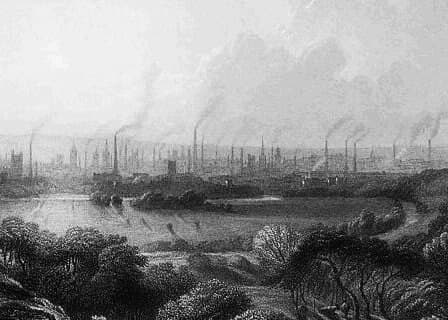
Jevons
PERSON
Surname or name fragment in documents

Joan Robinson
PERSON
English economist (1903–1983)
JR
John Rae
PERSON
Name reference in documents
JT
John Tooby
PERSON
American anthropologist
Joseph Schumpeter
PERSON
Name reference in documents
Julius Caesar’s
PERSON
Name reference in documents
Karl Marx
PERSON
Person referenced in documents
Karl Popper
PERSON
Austrian-British philosopher of science and social and política e falsificationism and for criticism of Plato, Hegel and Marx as totalitarian opponents of open society (1902-1994)
Keynes
PERSON • 2 mentions
Surname reference in Epstein-related documents
KE
Keynesian
PERSON
Name reference in documents
KI
Kiker
PERSON
Name reference in documents
KU
Kuznets
PERSON • 2 mentions
Surname or name fragment in documents

Leibnitz
PERSON
Town in Leibnitz District, Styria, Austria
Leon Walras
PERSON
Name reference in documents
Lionel Robbins’
PERSON
Name reference in documents

Madame de Pompadour
PERSON
Name reference in documents
Malthus
PERSON
Demon
Marc Rich
PERSON
American commodities trader (1934–2013)

Menger
PERSON
Name reference in documents
Milton Friedman
PERSON
American economist and statistician (1912–2006)

Mincer
PERSON
Surname or name fragment in documents
Mises
PERSON
Name reference in documents

Model A.
PERSON
Name reference in documents
Modigliani
PERSON
Surname reference in Epstein-related documents

Myrdal
PERSON
Name reference in documents

Nassau Senior
PERSON
Capital and largest city of the Bahamas

Nobelists Milton
PERSON
Name reference in documents
OU
Outline
PERSON
Surname or name fragment in documents

Paul Cassell
PERSON
United States federal judge
Paul Samuelson’s
PERSON
Name reference in documents
Paul Volcker
PERSON
American economist (1927-2019)
PE
Petty
PERSON • 2 mentions
Surname reference in documents
PO
Popper
PERSON
Surname reference in documents
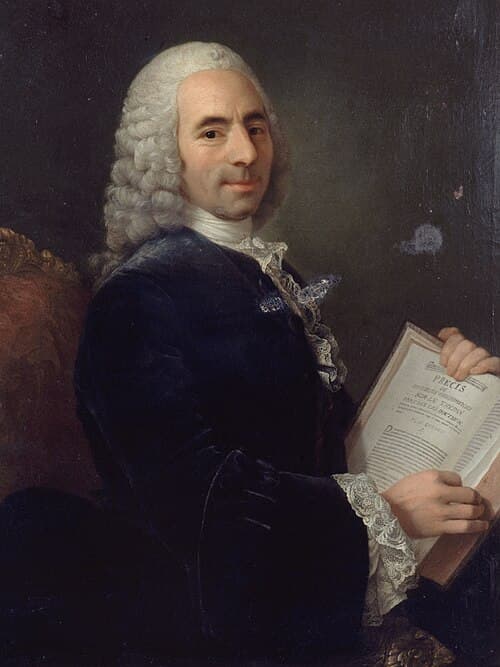
Quesnay
PERSON
Asteroid
R. A. Fisher’s
PERSON
Name reference in documents
Ralph Hawtree
PERSON
Name reference in documents

Ricardo
PERSON
Portuguese association football player
RA
Richard Alexander’s
PERSON
Name reference in documents
RT
Robert Trivers
PERSON
American evolutionary biologist and sociobiologist

Roy Harrod
PERSON
English economist (1900–1978)

Samuelson
PERSON
Surname or name fragment in documents
SC
Schmoller
PERSON
Botanist
SC
Schultz
PERSON
Ambiguous surname reference in Epstein documents
Schumpeter
PERSON
Name reference in documents
SW
Sewall Wright
PERSON
Name reference in documents
Shylocks
PERSON
Character in the play The Merchant of Venice
Simon Kuznets
PERSON
Economist
Socrates
PERSON
5th-century BCE Greek philosopher

Spencer
PERSON
Town in Worcester County, Massachusetts, United States
Sraffa
PERSON
Surname or name fragment in documents
Stephen Hawking
PERSON • 2 mentions
British theoretical physicist, cosmologist and author (1942–2018)
SY
Sylla
PERSON
Name reference in documents

Thomas Piketty
PERSON
French economist
TO
Tooby
PERSON
Surname or name fragment in documents
TU
Turgot
PERSON
Surname or name fragment in documents
VS
Verbum Sapienti
PERSON • 2 mentions
Scientific article published on January 1989
Walras
PERSON
Surname or name fragment in documents

Wiles
PERSON
Surname reference in Epstein-related documents

William Barr
PERSON
77th & 85th United States Attorney General (born 1950)
William Shakespeare
PERSON
English playwright and poet (1564–1616)
Yrules
PERSON
Name reference in documents
7 Principles of Economics
ORGANIZATION
Organization referenced in documents
A Treatise of Taxes
ORGANIZATION
Organization referenced in documents
Abler
ORGANIZATION
Organization referenced in documents
Ben-Porath’s
ORGANIZATION • 2 mentions
Organization referenced in documents
Bringing Human Capital
ORGANIZATION
Organization referenced in documents
C +1 Equation
ORGANIZATION
Organization referenced in documents
Conservatory
ORGANIZATION
Organization referenced in documents
Countreys
ORGANIZATION
Organization referenced in documents
Dension
ORGANIZATION
Organization referenced in documents
European Parliament
ORGANIZATION
American funk band most prominent during the 1970s
goals=
ORGANIZATION
Organization referenced in documents
Hamilton-Zuc
ORGANIZATION
Organization referenced in documents

Harrod
ORGANIZATION • 2 mentions
Human settlement in Allen County, Ohio, United States of America
Harrod, Sraffa
ORGANIZATION
Organization referenced in documents
Historical
ORGANIZATION
Organization referenced in documents
Ibbotson Associates’
ORGANIZATION
Organization referenced in documents
iPads
ORGANIZATION
Organization referenced in documents

Lexus
ORGANIZATION
Japanese brand of luxury vehicle owned by Toyota
Money and Macroeconomics
ORGANIZATION
Organization referenced in documents
New Clothes
ORGANIZATION
Organization referenced in documents
Newcastle
ORGANIZATION
Organization referenced in documents
Production of Commodities
ORGANIZATION
Organization referenced in documents

Renaissance
ORGANIZATION
Hotel chain or entity

Reuters
ORGANIZATION
International news agency
Russell 3000
ORGANIZATION
Russell 3000 U.S. stock market index
Semelparous
ORGANIZATION
Organization referenced in documents
Solow
ORGANIZATION
Horse
Standard and Poor’s Depository Receipts
ORGANIZATION
Organization referenced in documents
the Austrian School
ORGANIZATION
Organization referenced in documents
the Bills of Mortality
ORGANIZATION
Organization referenced in documents
the Boskin Commission
ORGANIZATION
Organization referenced in documents
the General Theory
ORGANIZATION
Organization referenced in documents
the Life Cycle Model
ORGANIZATION
Organization referenced in documents
the Long Run
ORGANIZATION
Organization referenced in documents
The Nature of Capital and Income
ORGANIZATION
Organization referenced in documents

the University of Utah
ORGANIZATION
Public research university in Salt Lake City, Utah
the Wealth of England
ORGANIZATION
Organization referenced in documents
Treasuries
ORGANIZATION
Organization referenced in documents

University of California
ORGANIZATION
University system in California, United States
Vital Statistics
ORGANIZATION
Organization referenced in documents

Babylonia
LOCATION
Historical country
Brewster
LOCATION
Location referenced in documents
Gombe
LOCATION
State in northern Nigeria

Squaw Valley
LOCATION
Unincorporated community in Placer County, California, United States
Sumer
LOCATION
1981 video game
the Byzantine Empire
LOCATION
Location referenced in documents
the Great Lakes
LOCATION
Location referenced in documents
Venice
LOCATION
Capital city of Veneto, Italy
Versailles
LOCATION
Palace in Versailles, France
Statistics
Pages:100
Entities:152
Avg. OCR:94.9%
Sponsored