Back to People & Entities



Document Mentions (12)
Free Growth and Other Surprises.pdf
2 mentionsHOUSE_OVERSIGHT_010912_sub_001 - HOUSE_OVERSIGHT_011011
Source: House Oversight Committee
Wealth of Nations published in 1776, proposed growth by belt tightening. Most tradition has agreed, with the proviso that new ideas must come first. Solow raised doubts about the role of consumption restraint, but stopped short of denying a need for it. Mill acknowledged both ways to grow. My charts and
twice. Chapter 4 will restate it in terms of total including human capital just to make sure. It is an unsettling argument either way. It unsettled Solow. Chapter 2 showed why. Weare probably more comfortable to think of income as something known which we can slice into consumption and saving slices a
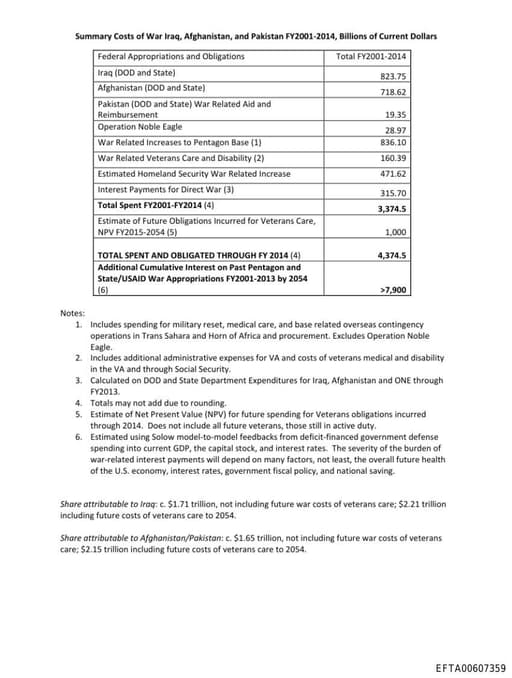
EFTA00607359.pdf
1 mentionEFTA00607359
uture spending for Veterans obligations incurred through 2014. Does not include all future veterans, those still in active duty. 6. Estimated using Solow model-to-model feedbacks from deficit-financed government defense spending into current GDP, the capital stock, and interest rates. The severity of
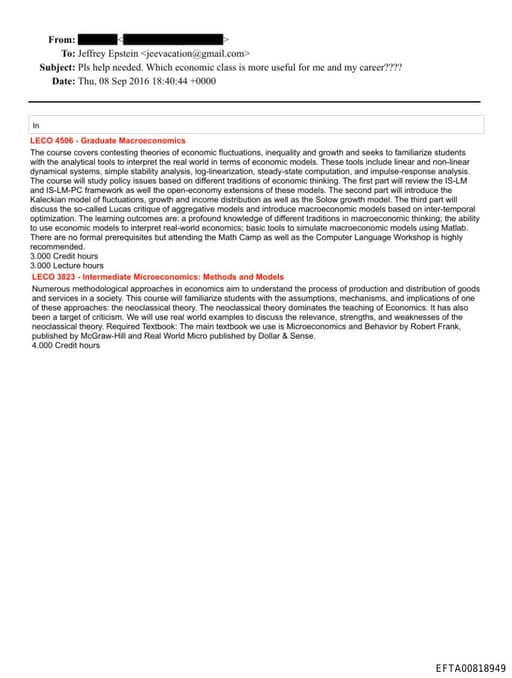
EFTA00818949.pdf
1 mentionEFTA00818949
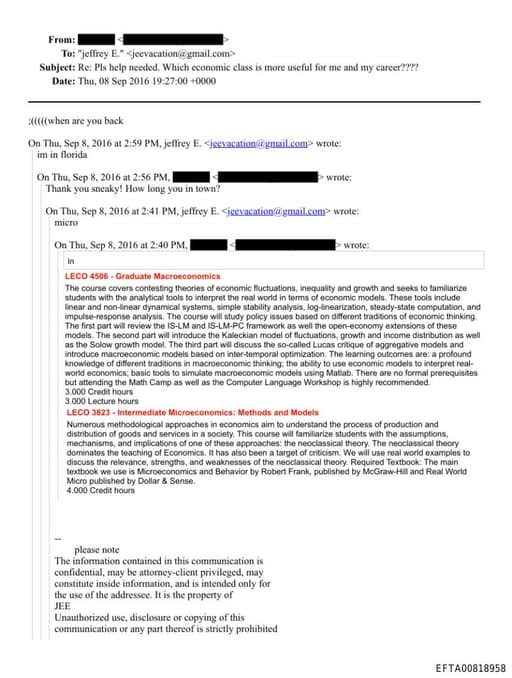
conomy extensions of these models. The second part will introduce the Kaleckian model of fluctuations, growth and income distribution as well as the Solow growth model. The third part will discuss the so-called Lucas critique of aggregative models and introduce macroeconomic models based on inter-tempo
Sponsored
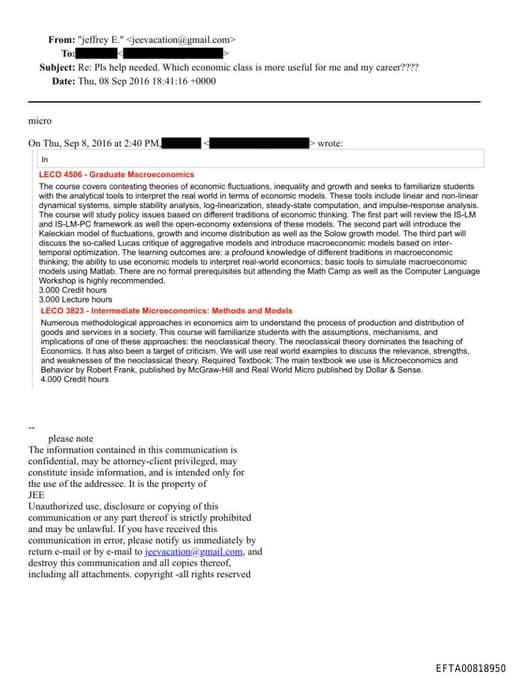
EFTA00818950.pdf
1 mentionEFTA00818950
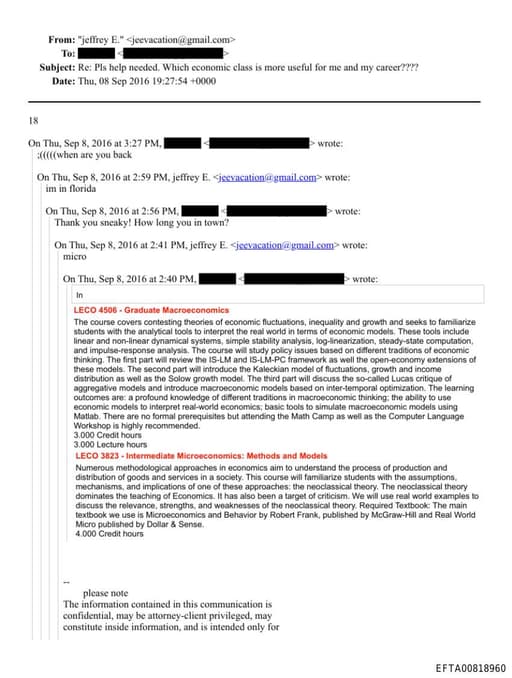
conomy extensions of these models. The second part will introduce the Kaleckian model of fluctuations, growth and income distribution as well as the Solow growth model. The third part will discuss the so-called Lucas critique of aggregative models and introduce macroeconomic models based on inter- temp
EFTA00818958.pdf
1 mentionEFTA00818958
onomy extensions of these models. The second part will introduce the Kaleckian model of fluctuations, growth and income distribution as well as the Solow growth model. The third part will discuss the so-called Lucas critique of aggregative models and introduce macroeconomic models based on inter-tempo
EFTA00818960.pdf
1 mentionEFTA00818960
onomy extensions of these models. The second part will introduce the Kaleckian model of fluctuations, growth and income distribution as well as the Solow growth model. The third part will discuss the so-called Lucas critique of aggregative models and introduce macroeconomic models based on inter-tempo
Sponsored
EFTA02577113.pdf
1 mentionEFTA02577113
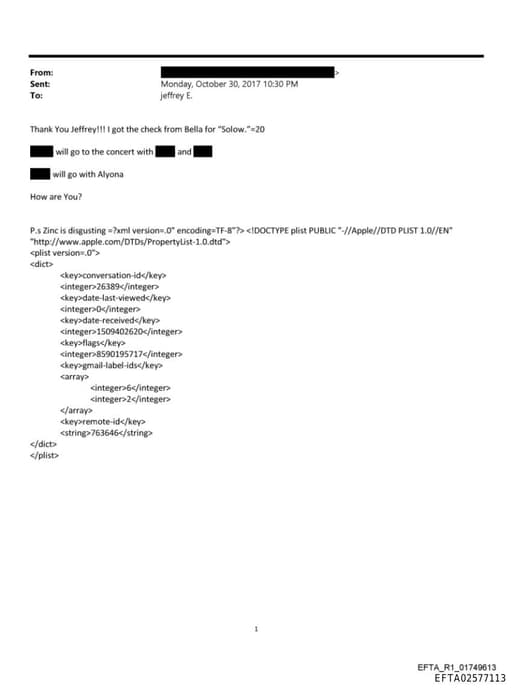
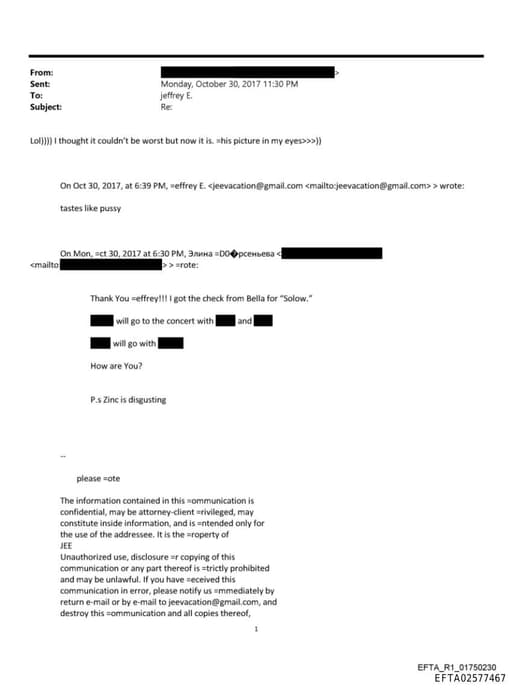
From: Sent: To: Monday, October 30, 2017 10:30 PM Jeffrey E. Thank You Jeffrey!!! I got the check from Bella for "Solow."=20 will go to the concert with and MI will go with Alyona How are You? P.s Zinc is disgusting =?xml version=.0" encoding=TF-8"?> <!DOMPE plist
EFTA02577201.pdf
1 mentionEFTA02577201
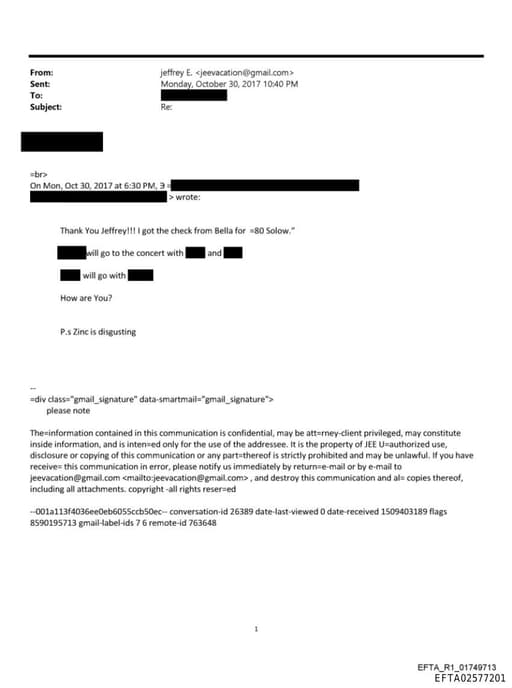
Monda , October 30, 2017 10:40 PM Re: =br> On Mon, Oct 30, 2017 at 6:30 PM, 3 > wrote: Thank You Jeffrey!!! I got the check from Bella for =80 Solow." S till go to the concert with and will go with How are You? P.s Zinc is disgusting =div class="gmail_signature" data-smartmail="gmail_signatu
EFTA02577467.pdf
1 mentionEFTA02577467
astes like pussy On Mon, =ct 30, 2017 at 6:30 PM, 3nfrina =D040pcelibesa < <mailto > =rote: Thank You =effrey!!! I got the check from Bella for "Solow." will go to the concert with and will go with How are You? P.s Zinc is disgusting please =ote The information contained in this =ommunication
Sponsored
Free Growth and Other Surprises.pdf
1 mentionHOUSE_OVERSIGHT_010912_sub_002 - HOUSE_OVERSIGHT_011111
Source: House Oversight Committee
te for eight nations over four to fourteen decades. They will show the same for dividends when we come to that. Economists would be less surprised. Solow has prepared them for the news. In 1956 and 1957 he showed evidence that most growth is not explained by capital accumulation, or saving through cons
James Patterson 2_4.pdf
1 mentionHOUSE_OVERSIGHT_022058 - HOUSE_OVERSIGHT_022117
Sep 28, 2016Source: House Oversight Committee
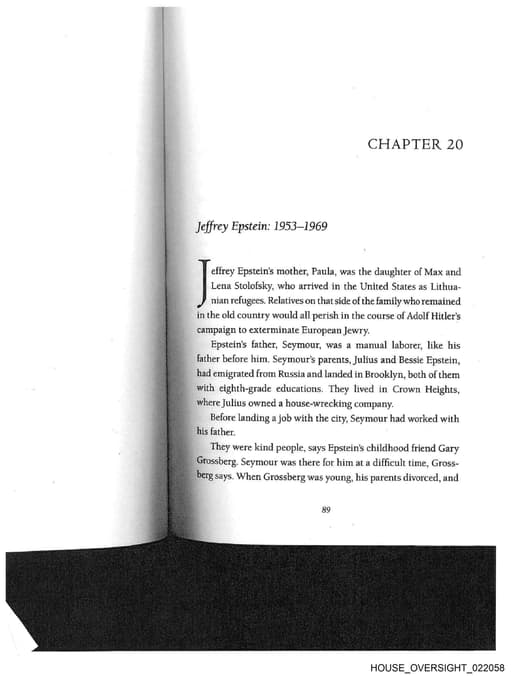
money is gone. in recall that he was bad off after it was—from Bear Stearns. Mov- a while. Sleeping in his lawyer's i - Tower an apartment in the Solow. Tower, \fter all, Epstein left Bear Stearns t Epstein’s lifestyle was expensive. 4 na was still in her twee = ctors Studio—the New York City J ie
Page: HOUSE_OVERSIGHT_022072 →Free Growth and Other Surprises.pdf
1 mentionHOUSE_OVERSIGHT_010912_sub_003 - HOUSE_OVERSIGHT_011169
Source: House Oversight Committee
Macroeconomics 2/8/16 23 HOUSE_OVERSIGHT_011112 I would tax capital gains as much as ordinary income for the same reason. Level the playing field. Solow saw most of the truth, but didn’t go far enough. Mill saw more. And even Mill stopped short. All we have to do is look at the charts and tables. Capi
Sponsored
Connected Entities(20 of 80)
Jeffrey Epstein
PersonAmerican sex offender and financier (1953–2019)
8 docs8 co-mentions
LECO 3823 - Intermediate Microeconomics: Methods and Models
OrganizationOrganization referenced in documents
4 docs4 co-mentions
Alan Dershowitz
PersonAmerican lawyer, author, and art collector (born 1938)
4 docs4 co-mentions
RF
Robert Frank
PersonPerson referenced in documents
4 docs4 co-mentions
Dollar & Sense
OrganizationOrganization referenced in documents
4 docs4 co-mentions
KA
Kaleckian
PersonSurname or name fragment in documents
4 docs4 co-mentions
McGraw-Hill
OrganizationAmerican publicly traded corporation, formerly McGraw Hill Financial, Inc
4 docs4 co-mentions
Lucas
PersonChinese rapper and singer
4 docs4 co-mentions
RT
Robert Trivers
PersonAmerican evolutionary biologist and sociobiologist
3 docs3 co-mentions
Marc Rich
PersonAmerican commodities trader (1934–2013)
3 docs3 co-mentions
JR
John Rae
PersonName reference in documents
3 docs3 co-mentions
PE
Petty
PersonSurname reference in documents
3 docs3 co-mentions
Keynes
PersonSurname reference in Epstein-related documents
3 docs3 co-mentions
Thomas Piketty
PersonFrench economist
3 docs3 co-mentions
SC
Schultz
PersonAmbiguous surname reference in Epstein documents
3 docs3 co-mentions
Mincer
PersonSurname or name fragment in documents
3 docs3 co-mentions
BE
Becker
PersonSurname reference in Epstein-related documents
3 docs3 co-mentions
Jevons
PersonSurname or name fragment in documents
3 docs3 co-mentions
Myrdal
PersonName reference in documents
3 docs3 co-mentions
Macroeconomics
PersonBranch of economics that studies aggregated indicators
3 docs3 co-mentions