HOUSE_OVERSIGHT_010912_sub_003 - HOUSE_OVERSIGHT_011169
Document Information
Bates Range
HOUSE_OVERSIGHT_010912_sub_003 - HOUSE_OVERSIGHT_011169
Pages
58
Source
House Oversight Committee
Original Filename
Free Growth and Other Surprises.pdf
Document Content
Page 201 - HOUSE_OVERSIGHT_011112
estimated at a little less than a fourth of this sum. My impression is that this exposure is not yet dangerous. But it needs watching. The best method to estimate aggregate adult human capital separately is Petty’s. It is present value of future human cash flow. That means pay less invested consumption. If] am right, meaning that Farr, Marshall and Kiker are wrong, invested consumption is negligible among adults. Then Petty was right to capitalize pay with no deduction. And he was right to capitalize aggregate current pay, with no need to model the future. Growth of pay will tend to match growth of human capital. The discount rate to find its present value is expected rated of return. Rate of return is growth rate plus cash flow rate. Evaluating human capital as constant current pay discounted by cash flow rate alone will give the same answer as if we modeled in expected pay growth, but then discounted at cash flow rate plus the same projected growth rate. Total human capital is adult capital plus that of the young. That part might be measured at current cost. I won’t attempt either of those calculations here, since they seem to call for economists expert in interpreting national accounts. To Do List Books and papers on economics tend to lead to “policy prescriptions”. That means recommendations on what governments and markets and educators should do. My list begins with getting rid of the double tax on dividends. To get democrats on board, make the effect revenue neutral by raising the corporate tax rate. Dividend rates have been far too low for about 50 years now. They should average 5% to 6% real, as they did in the nineteenth century. The result of low dividends has been dangerous overinvestment in the private sector, with growth hampered rather than enhanced. Charts and tables make it clear that ex ante investment beyond depreciation recovery is deadweight loss. Chapter 8 Banks, Money and Macroeconomics 2/8/16 23 HOUSE_OVERSIGHT_011112
Page 202 - HOUSE_OVERSIGHT_011113
I would tax capital gains as much as ordinary income for the same reason. Level the playing field. Solow saw most of the truth, but didn’t go far enough. Mill saw more. And even Mill stopped short. All we have to do is look at the charts and tables. Capital accumulation does not exist. Any attempt lowers consumption with no growth to show for it. Keep track of national wealth including human capital by my method here, and also by Petty’s of 1664, 1676 and 1685. What would we think of corporate management that added up only the smaller part of corporate assets? We now consider physical capital only. Political parties debate what taxes and the national debt should be without the key facts. Policy prescriptions can also aim at schools and what they teach. Macroeconomics should start over. It reached most of its present form in the “years of high theory”, in the 1920s through 1950s, without the concepts of human capital or market-valued capital. It is founded on the inaccurate Y = C + I equation and the concomitant belief that output equals pay plus profit. It recognizes ex ante — ex post distinctions only crudely as to saving, by taking it as either invested or uninvested, and not at all as to investment itself. By missing the lag between market effects and book reaction, it misreads some of our worst years as our best and conversely. The path forward is omnibus funds and devolution of commercial banks. Bank reform along the lines I suggested should need no help from lawmakers. But for gosh sakes, let’s not set up barriers against it. Commercial banks and 10:1 leverage make slumps inevitable. Crashes are as sure as death and taxes until we phase them out. Summary Macro has meant a tightrope walk between the risks of inflation and recession. That doesn’t have to be. The problems are detachable. Even today, It should be practical to redefine legal tender as real or inflation-corrected dollars. But the deeper Chapter 8 Banks, Money and Macroeconomics 2/8/16 24 HOUSE_OVERSIGHT_011113
Page 203 - HOUSE_OVERSIGHT_011114
solution is to devolve commercial banks into their separate deposit and lending functions, with separate stockholders and only incidental interaction. It is best for the free market to do this alone. The omnibus fund could be the decisive innovation. It too is possible today. It would offer clients full competitive return, so that no supply would be too large. It would match bank deposits in liquidity and payment services with the low service charges typical of other index funds, while tailoring risk and return to client needs with essentially costless derivatives. The intention would be obsolescence of bank accounts, and devolution of banks in result. Deposit-and-lend banks, inevitably leveraged at 10:1 or more, are the weak link explaining economic collapses about once a generation since the system was founded in the Renaissance. Misdeeds and misguesses and world events were only the proximate cause. Chicanery will be with us forever. Honest bad judgment will be with us forever. Supply shocks, as when OPEC raised oil prices in 1973, will be with us forever. Wars will be with us forever. Setbacks for our trading partners will be with us forever. These bring the high winds. I don’t foresee much payout in trying to dial down the winds by upgrading human nature. The payout is in stabler structures. The big bad wolf huffed and puffed, and the brick house stood. Omnibus funds will carry no leverage. Accounts themselves will be levered to taste, but for short periods only. Futures trade in seconds. The fund as a whole cannot become worthless until each and every security in its portfolio does. High winds and leverage can wipe out the accounts of risk-takers who chose the long leg, but not of those who opted for contractual interest and safety. That’s as it should be. Risk-takers may name their poison. Omnibus means for all, and all-inclusive. Derivatives are central to the omnibus fund idea. Some see them as dangerous. They can be. They are powerful. But they have a good track record of performing as contracted. Cash reserves, called margins, have proved enough to escape default Chapter 8 Banks, Money and Macroeconomics 2/8/16 25 HOUSE_OVERSIGHT_011114
Sponsored
Page 204 - HOUSE_OVERSIGHT_011115
even in 2008 and the flash crash of 2013. Short legs have been protected without fail, and long legs have got what they bargained for. The reason is that margin sufficiency is monitored from tick to tick. Checking every few seconds doesn’t rule out every doomsday scenario, but gives about as much confidence as we're going to find in this uncertain world. Saltwater and freshwater schools debate the wisdom of fiscal and monetary policy. But both sides frame their arguments in Keynesian language. | find it wanting. The idea that intended consumption is either invested or not, and realized in equal capital growth if it is, misses the essential mechanics. It measures employment of plant and people in hours rather than in production. This is a good reason why macro should start again from scratch. Another is to recast its basis equations in terms of market-valued capital as well as flows. Another is to accommodate human capital, for example by substituting the pay and Y rules for the doctrines that pay measures work and that output is investment plus consumption. None of those good reasons refers to the possibility of omnibus funds. They are only a gleam in my eye. If they come to pass, and succeed as | imagine, macro will have still more novelty to digest. If they lead to devolution into separate deposit and lending banks, with the deposit banks operating as omnibus funds, good riddance to the 10:1 leverage that has brought down economies every generation or so since Marco Polo’s time. The lagged flow method of assessing efficacy of ex ante investment is outdated by the simultaneous rates one outlined in Chapter 4. It should go to honorable retirement whenever market-valued capital is available. It superimposes the inevitable unintended lag of accounts themselves, even under best practices, onto the intended one needed for the new tree planted to bear fruit. Both lags blur causality. Chapter 8 Banks, Money and Macroeconomics 2/8/16 26 HOUSE_OVERSIGHT_011115
Page 205 - HOUSE_OVERSIGHT_011116
Some famous economists are tougher on the current state of macro than I am. Recent books argue that it should no longer be taught, and should receive no Nobel prizes. My diagnosis is about the same. But my prescription is opposite. Reconceive it from scratch, and teach it right. Award Nobel prizes to those who help. My first nominees would be Piketty and Zucman. Not that I think much of Piketty’s arguments. But his website with Zucman is as powerful a new resource for scholarship and the database as national accounts were eight decades ago. Chapter 8 Banks, Money and Macroeconomics 2/8/16 27 HOUSE_OVERSIGHT_011116
Page 206 - HOUSE_OVERSIGHT_011117
CHAPTER 9: SO WHAT’S NEW? To claim originality in any field is rash. It is safer to say that some things in this book are new as far as 1 know. | know at least what I can’t remember reading elsewhere. | am more confident in judging what will surprise in the sense of conflict with what is taught today. There we need only keep up with the current conversation. Judging originality with confidence means having read everything before. My surprises were not all new, and my novelties (if such) where not all surprises. A few ideas met both descriptions. They pay rule, and the equally heretical Y rule, probably count as both although Becker came within a step of getting there first. Depreciation theory is likely to be both. Other possible candidates might include my observation that holds by money managers reveal prices as clearly as trades do, and my hawks-and-doves analogy inferring from this that index funds should outperform managed ones when aggregate AUM held by money managers, not trades by them, exceeds a critical percentage of the market to be determined. There may also be both surprise and novelty in my suggestion of monetary policy by establishment of real dollars as legal tender. In my wannabe biologist role, I just may have been first to the point out the gaffe in the math of Hamilton’s rule. Free growth theory takes Mill a little farther by ruling out growth by thrift at the collective scale. It should prove a major surprise to lawmakers, who incentivize thrift in the name of growth, and a milder one to economists already prepared by the insights of Solow. My possible originality here was in the simultaneous rates equations | derived to test them, and the test itself accessing data for market-valued capital as well as consumption from the Piketty-Zucman website. My definitions of market-valued net investment and net output, substituting for the book-valued versions used in national accounts, were essential for testing. I suppose these rank as novelties but not surprises. Chapter 9: So What ‘s New? 3/17/16 1 HOUSE_OVERSIGHT_011117
Sponsored
Page 207 - HOUSE_OVERSIGHT_011118
The advantage of the simultaneous rates test over the standard lagged flows one is great. It avoids both lags, meaning the intended one to allow more capital to show its effect in more output, and the unintended one in the inherent unresponsiveness of accounts to market effects on capital already booked, while also gaining from the superiority of market measures of capital growth over book ones even when lags end. The method itself is no surprise because the math is high school algebra. The shock is in what it reveals. Solow and Denison were righter than they knew. There is no such thing as capital accumulation at the collective scale. Risk theory is probably both marginal novelty and marginal surprise. The part that might be new, although obvious in retrospect, is that assets take on the risk characteristics of their owners. We knew all along that people buy assets to fit their own risk profiles. There may be novelty in my idea that it works the same in the opposite direction. Assets once acquired are modified to fit those profiles better. A family home bought by a drug dealer might become a crack house bringing higher expected return at higher risk of confiscation by authorities. The next step was to connect risk profiles with age and gender. It seems well established that risk tolerance peaks in the teens and twenties, particularly in males. It drops steadily afterward for both sexes. R. A. Fisher in 1930, and Bob Trivers in 1972, suggested why. Males, in humans, produce thousands of cheap sperm. Females produce eggs, which are few and expensive because they are packed with nutrients. Young males might end up leaving dozens of offspring or none. Nature arranges competition to determine which. Females are reasonably sure to leave a few. They have less to compete about. As both sexes get past their 20s, their remaining reproductive chances grow fewer and competitive ranking clearer. There is less to compete about. Risk tolerance grades steadily down with age, and capital owned reflects the change with lower risk and return. This gives the basic theme. The next key information was that human capital is owned disproportionately by the young. We own little else until independence at age 20 or so. Physical capital Chapter 9: So What ‘s New? 3/17/16 2 HOUSE_OVERSIGHT_011118
Page 208 - HOUSE_OVERSIGHT_011119
builds from then on, and peaks near retirement. But human capital grows quickly in the 20s and thirties too, as most human and other depreciation is concentrated toward the end. These are persuasive reasons to think that human capital is the riskier and higher-return factor overall. The argument becomes complicated in that most investment in us before independence comes from parents rather than from self-invested work. Parents have aa strong say in what risks children run, so that parental risk tolerance governs too. But it governs most in pre-teen years, when parents themselves are passing through their own risk tolerance peaks. And human capital is probably the most versatile of assets in adjustment to our tastes for risk at the time. Cops can become robbers at will, and robbers can get religion. We should not slip into the error of concluding that an individual’s human capital is riskier than her physical capital at the same time. Both adjust to her current risk profile alike. That’s why the parable of the boss and her secretary falsifies the notion that pay compensates realized work and nothing else. That would make return of each in her human capital a little over 100% per day at the start of the last day, and 100% per second at the start of the last second, even while their security portfolios reveal their time preference rates as a few percent per year. Human capital is not inherently risker, as hand grenades than nerf balls. Each cohort adapts all its wealth of both factors, counting balanced security portfolios as single assets, to its single characteristic risk profile. There may be novelty, but not much surprise, in this projection of the owner onto the asset rather than conversely. That parable helped confirm the pay rule and explain age-wage profiles. It brought another surprise along the way. I grew up being told that houses are safe investments. But in fact they are owned by about the same age group and gender mix that owns the business sector. The publicly traded corporate sector is a part of the business sector that has given up return for safety by providing instant liquidity to shareholders. The notion that houses are safe took a punch in the gut in 2008. The Chapter 9: So What ‘s New? 3/17/16 3 HOUSE_OVERSIGHT_011119
Page 209 - HOUSE_OVERSIGHT_011120
notion that they ever were rests pretty much on evidence bolstered by government subsidies such as FHA and FNMA and FMAC which began before I was born. As itis, I don’t see enough evidence either way to assert whether houses or the publicly traded corporate sector, cap-weighting its stock and bonds, should be risker. But even that uncertainly is a surprise in view of what we all were taught. Depreciation theory is one of my favorites. It doesn’t upset the applecart as much as the pay rule does, because little economic theory depends on it. I love it because it reverses tradition precisely. National accounts model depreciation as declining exponentially. | model it as rising exponentially. It’s the same equation with a plus sign in place of a minus sign. | love its obviousness once we think about it. It follows when we remember the present value rule. Once we do, evidence for both factors makes more sense. Depreciation theory rounds out the pay rule in explaining how pay can rise or hold steady to the very end. And we see the same in businesses. Gross realized profit, analogous to pay, does not tend to decline as firms approach a date with the wrecking ball. My impression has been that rents go down when properties aren't kept up or locations become unfashionable, but not with age in itself. When it’s time to demolish and rebuild, premises are more typically vacated with trade still running at norms. Gross realized profit is inevitably all depreciation on the last day, and would approach zero steadily if tradition were right. There may have been minor novelty in my derivation of my three fundamental theorems as at least subjective certitudes following from definitions, and in my idea itself of subjective as distinct from empirical certitude. A subjective certitude is one such that contrary evidence would falsify the convergence axioms. | have found little or no empirical certitude past the cogito. | concede that the idea of subjective certitude is impertinent. How dare we infer what people must think? We dare when we infer from definitions. | began with the somewhat unusual definition of capital (value) as perceived means of foreseen taste satisfactions. The usual “means of production” is equally valid, but less suited to my purpose here. | Chapter 9: So What ‘s New? 3/17/16 4 HOUSE_OVERSIGHT_011120
Sponsored
Page 210 - HOUSE_OVERSIGHT_011121
then pictured a future instant’s worth of expected satisfaction. Its perceived value at that future moment would give its perceived value now save for differences explained by the time gap between. I adopted the old terms time preference or time discount rate to account for whatever they might be. There was no assumption as to whether the rate should prove positive or negative or zero, nor that the same rate should apply to other future instants. My goal was to leave not even the farthest- fetched of loopholes. If 1 have succeeded, the present value rule followed as subjective certitude giving exact expectations, though not outcomes, for each future instant and thus for all together. Note that my depreciation theory follows, but with the caveat that the version I have shown adds the usual assumption that time preference is positive. That part is not certitude, although neither are we likely to doubt it. It was not hard to derive the maximand rule as the next step. Once we define tastes or more generally aims as whatever behavior reveals, the rest follows quickly. (Remember that I have no problem with mutually circular definitions.) There were probably a few heuristic novelties. The parable of the boss and her secretary might itself be new. So might the slave paradox with its parable of Phil and Bill. Many including Adam Smith have pointed out economic inefficiencies in slavery, moral criticism aside. | can’t recall mention of this most obvious one. Bill’s maintenance consumption was taste-satisfying cash flow to Bill, and capitalized in his present value to himself. It is pure expense to Phil once Bill is enslaved. If all but one of us were enslaved by the one left, national output would drop by substantially all maintenance consumption on the books of the one slaveowner. There may also be minor novelty in my analogy between accounting for the firm and accounting for human capital in Chapter 6. One possible example is my use of the term “decapitalization” to include depletion and liquidation in sale as well as depreciation. It simplifies to depreciation in the case of human capital because that factor cannot be alienated in reinvestment or gift or sale. One inference was that Chapter 9: So What ‘s New? 3/17/16 5 HOUSE_OVERSIGHT_011121
Page 211 - HOUSE_OVERSIGHT_011122
deadweight loss, negative output, negative realized output and unrecovered decapitalization all mean the same. This is obvious enough, but may have been left implicit before. Chapter 9: So What ‘s New? 3/17/16 6 HOUSE_OVERSIGHT_011122
Page 212 - HOUSE_OVERSIGHT_011123
CHAPTER 10: THREE PANTHEONS A few weeks ago | was being interviewed about my opera “Usher House”. How would I like to be remembered? With a straight face, I said | would like to be thought the best composer since Mahler, the best poet since Masefield, and the best economist since John Stuart Mill. The interviewer looked startled. Was she talking instead to the successor of Don Quixote, Emperor Norton and Walter Mitty? Probably. But not to worry. Fantasies are good things. They don’t become delusions until we start believing them. What I believe is that at least dozens of composers have the knack. There must be hundreds, considering the terrific film scores attributed to names new to me when | hang on for the credits. Each of us, very much including film composers, gives the world what we think it needs. We like to be appreciated, but we don’t give a fig what it wants. We won't always agree on what it needs. We'll defend to the death the other guy’s right to his message. But we prefer our own. That’s what my answer meant. We're each the best. But I do have the temerity to limit the list to those few dozens or hundreds. Someone might also be surprised at my choice of benchmarks in verse and economics. Masefield and Mill? A consensus might have picked T. S. Elliot, say, and Lord Keynes. Masefield and Mill are likelier to be remembered as old-fashioned fuddy-duddies already outmoded when they wrote. But that’s me. I am Don Quixote. Nota single idol in my pantheons in those three fields was born after 1900, although that could change in economics. My pantheon in music is Bach, Beethoven, Schubert, Wagner and Mahler. Mahler, the last-born, died in 1911 at 51. What about Mozart? Clearly colossal. Listen to the slow movements of almost any of his piano concertos. Childlike simplicity, then a slight surprise, then another, and all at once we are on a trip through the stars. But my top five show us more. Mozart is too darned enigmatic. He is too darned coy. He is too darned third-personal. And | like breaking a sweat. Mozart is uniquely the Chapter 10: Three Pantheons 2/10/16 1 HOUSE_OVERSIGHT_011123
Sponsored
Page 213 - HOUSE_OVERSIGHT_011124
greatest at what he does within the bounds he chooses to set. But I like answers as well as questions. The five in my pantheon give me those. Mozart is unrivalled at what he does because no one else plays the same game. What other composer has put such a premium on delicacy, on poise, on self-effacement? That doesn’t deny that he was a red-blooded mensch who loved hijinks and good times as much as the rest of us. His Rondo alla Turca is one of many masterpieces showing that side. But it only rounds out the impression of a flawless dinner companion. A maxim of classicism in the Greek spirit is “nothing in excess”. Mozart's exuberance and hijinks were just the right amount. He was the master of moderation. His operas put passion mostly in the mouths of clowns and villains such as Papageno and Osmin and Queen of the Night. His sympathetic sorts have feelings too, but keep them circumspect. The perfect companion cares first about our feelings, not his. Mozart remains that even on our journeys together through the stars. We are kept safely away from the heat. We are allowed to feel anxiety because the world is so far below. That was half the point of the trip. The other half is the happy ending as he leads us safely home. Anxiety, but not in excess. That shows him as the master of levitation. Richard Strauss gives the example of Susanna’s aria “Voi che sapete” (you who know) from Figaro, an innocent ditty which somehow never lands on the tonic (home note) until the end. The beginning of Eine Kleine Nachtmusik (a little night music) does this again. But the slow movements of his piano concertos show it best. Mozart is not my pantheon, even so. He is moderation in excess. I like the game the others all play. I like a sense of the first person singular. The five in my pantheon also take us through the stars. But they take us closer. We feel the heat because they do. Listen to Bach’s chaconne for solo violin, or passacaglia and fugue for organ. Listen to the heilige dankgesang (holy song of thanksgiving) from Beethoven’s Chapter 10: Three Pantheons 2/10/16 2 HOUSE_OVERSIGHT_011124
Page 214 - HOUSE_OVERSIGHT_011125
quartet opus 132. Listen to the slow movement of Schubert’s two-cello quintet opus 163. Listen to Wagner’s liebestod (love death) from Tristan, or Mahler’s adagietto from his fifth symphony. This music plays for keeps. The polar opposite to Mozart would be Verdi. Like Mozart, he is not in my pantheon but close. For Verdi, no passion is too much. He is the master of contrast. He shakes our emotions back and forth as a dog shakes a rat. Lull and storm are each given enough time to pack the most punch in the other. He wants only opposites and extremes. What would the fastidious Franz Joseph have thought? He would have called the guard. Somewhere between Apollo and Dionysus, between relativism and frenzy, lies the true path. The five in my pantheon have found it. I seldom call myself a poet, since that’s already a tad vainglorious. For better or verse, I’m a Jack of that trade too. The true poets in my pantheon begin with Keats and Masefield. I haven’t found a clear choice for third. There are awesome things in Milton, Blake, Coleridge, Tennyson, Emily, Houseman, Robinson, Dowson, Yeats and others. Shakespeare, like Mozart, doesn’t figure in the center of the picture. I take him as the greatest mind and soul yet known, the greatest playwright, the greatest writer in general, and all of these because he taps to the bottom of what poetry can be. “Who is this whose grief/ Conjures the wandering stars, and makes them stand/ Like wonder-wounded hearers? It is I, /Hamlet the Dane”. Holy mackerel! But these are touches in his plays. Poetry, in his time, meant something too coiffed and pretty and mannered for my taste. You can take Venus and Adonis, the Rape of Lucrece, and the sonnets. That includes the petulant dark lady sonnets, which break the model of preciousness but find nothing better. Shakespeare simply came along too early. | credit Milton, in “Lycidas”, for discovering the true vein a few decades later. Chapter 10: Three Pantheons 2/10/16 3 HOUSE_OVERSIGHT_011125
Page 215 - HOUSE_OVERSIGHT_011126
That leaves economics. Here | really have a one-man pantheon in Sir William Petty. | suppose that! am the only person to have looked at his portrait alongside Isaac Newton’s, in the Royal Society which they co-founded, and seen the two as intellectual equals. Mill seems a clear second, thanks to his superb paragraph on growth. The candidates for third seem well behind. Maybe Jevons or John Rae or Leon Walras. Time has not been kind to the teachings of Keynes. I would now rank his teacher Alfred Marshall higher. I like Myrdal’s magnificent ex ante - ex post distinction. Boehm Bawerk and the Austrian school are underrated. The pantheon might have room for him. Am I being too tough on later economists? We should not forget Schultz and Ben- Porath. Schultz’ greatest achievement, unless Mincer beat him, was in spotlighting human depreciation. That left me to ask where this huge flow goes. The answer becomes inescapable once we focus on the question. It gives the obvious solution to the age-wage problem. Everything in this book is obvious. Some of it, like that solution, is the obvious but unnoticed. Somebody, sooner or later, breaks the news about the emperor’s new clothes. You’d think Don Quixote would be the last to pipe up. No one in the world was more devoted to tradition and beautiful creatures of the mind. But it takes a fool. He was that, and so am I. Der reine tor. There have to be a few of us always. We'll get a few windmills before they they get us. Chapter 10: Three Pantheons 2/10/16 4 HOUSE_OVERSIGHT_011126
Sponsored
Page 216 - HOUSE_OVERSIGHT_011127
APPENDIX A: The Argument in Notation Output and Cash Flow My focus will be on absolute rather than per capita values. The usual custom gives capital letters for the former and lower-case ones for the latter. I will prefer the upper case for stocks and flows, and the lower one for rates. That need not hold true for Greek letters. The total return truism can be notated Y=K,+F, (A1.1) where Y is output, K,, is total capital and F is cash flow. Also F=t+C, and t=T,-T_, (A1.2) where T (tau) is net transfer, tT, is transfer out, t_ is transfer in and C, is pure consumption (exhaust in taste satisfaction). Cash flow is the net of positive less negative components. I define them by F=t,+C, F=t and F=F -F. (A1.2a) + At the collective scale, where transfers cancel internally, these equations combine for Y=K,+C, and F=F=C,. (A1.3) p Math reminds us continually that “equals” does not necessarily mean “is”. (A1.1) and (A1.3), for example, do not mean that output is growth plus cash flow or growth plus APPENDIX A: The Argument in Notation 3/7/16 1 HOUSE_OVERSIGHT_011127
Page 217 - HOUSE_OVERSIGHT_011128
pure consumption. Why? Output in itself means creation of economic value. Mathematically, that could include what I called “output exhaust”, meaning value exhausted as soon as created. | ruled that out as “free goods”, which happen every day but are neglected in economics as unable to influence behavior either before or after. That’s why “equals” cannot mean “is” in (A1.3). And neither does it in (A1.5). Rather both state that output provides cash flow offset plus total capital growth. This distinction helps everywhere in economics. We know for example that transfer out may be drawn either from capital in place or from concurrent output. The source of first kind is decaptialization D. But decaptialization also includes other components than transfer out. In Chapter 3, and again just now, I excluded output exhaust as free goods possible in math but neglected in economics. That makes decapitalization D the only source of pure consumption C, . And not all decapitalization is transfer or exhaust. Some is deadweight loss, defined in (A1.1) as any negative sum of capital growth K,, and cash flow F. That can show in D=D\+D, and D,=D_+C,. (A1.4) Here D, is recovered or realized decapitalization, D, is “transfer depreciation” net of plowback into the same asset, and D, is deadweight loss. A is lambda. At the collective scale, where transfers cancel internally, (A1.4) becomes D=C., (A1.4a) The dispositions of transfer out may be reinvestment in other assets of the same owner, or may be gift to donees. Reinvestment can be interfactor as shown in Chapter 5. Transfer out from total capital of any individual, net of internal transfers, APPENDIX A: The Argument in Notation 3/7/16 2 HOUSE_OVERSIGHT_011128
Page 218 - HOUSE_OVERSIGHT_011129
simplifies to gift. Transfer in gained by the owner’s total capital, net of the same internal transfers, is gift received. The math becomes T=¥, Y=¥y,-y¥, &-F =7,+¢, , F=y_ and F=y+C, (A1.5) at the scale of each individual's total capital as a whole. Here y (gamma) is net gift, y, isgiftand y_ is gift received. Divide (A1.1) by K, to find K, F =—14—, (A1.6) K, oS: K, K, Define these three terms as productivity or rate of return r, total capital growth rate g and cash flow rate f. Then (A1.6) can be reexpressed as r=gtf. (A1.6a) (A1.3) combines with (A1.6) to show K. C T Y Ay, , at the collective scale. (A1.7) K, K,. K, Define “pure consumption rate” C, as C, /K,,, and substitute to show r=gtc,, at the collective scale. (A1.7a) APPENDIX A: The Argument in Notation 3/7/16 3 HOUSE_OVERSIGHT_011129
Sponsored
Page 219 - HOUSE_OVERSIGHT_011130
(A1.1), (A1.6), (A1.7) and (A1.8) are alternative statements of the total return truism. In general, define g(Q)=Q/Q for any variable Q. Note again that g in this book means growth rate of capital g(K,) rather than output. g in macro tradition usually means growth of output g(Y). Total capital K,. is the sum of human capital H and physical capital K. Their outputs respectively are work W and (net) profit P. Their counterparts to (A1.1) and (A1.6a) are W=H+F(H), r(H)=g(H)+f(H), P=K+F(K) and r{K)=g(K)+f(K), (A1.8) where F(H), f(H), F(K) and f(K) are respectively “human cash flow”, “human cash yw tt flow rate”, “physical cash flow” and “physical cash flow rate”. Present Value and Present Cost If there were no such thing as time preference, present and future value would be the same. All economists known to me concede that we prefer present goods to future ones, although some like Joseph Schumpter have seen no good reason why. | suggest a reason in next generation theory. Present value theory, understood in essence by the Sumerians, considers what we now call future positive cash flows which are expected to be generated from external investments (transfer in, negative cash flow) made now or earlier. At the differential (infinitesimal) scale, we can write the associated future value as dFV(z)=F (z)dz (2.1) at future moment z. The basic idea of present value PV is APPENDIX A: The Argument in Notation 3/7/16 4 HOUSE_OVERSIGHT_011130
Page 220 - HOUSE_OVERSIGHT_011131
dPV(x)= F (ze *° dz j (2.2) where q is the appropriate time discount rate. Note the implication F (z)dz= dPV(x)et?™), (2.3) showing that q is the growth rate that raises the value of dPV(x) to F (z)dz over period z—x. Since this differential component of asset value defers all positive cash flow until moment z, and cannot in itself be affected by later transfers in, q simplifies by (A1.6a) to rate of return. This was Boehm Bawerk’s insight, although he was not mathematical, in equating time preference rate to rate of return r. Thus (2.2) and (2.3) give dPV(x)dx=F, (zje"’ dz and F (z)dz= dPV(xJe™’™, (A2.4) where r is the appropriate rate of return and time discount rate equivalently. But what determines appropriate r in these equations? Rate of return varies with risk among different assets at the same time, and varies over time with economic circumstances. Most sources I have seen treat r in (A2.4) as a variable to be integrated over (x, z). | myself long believed the same. My view now looks to the context. The asset as a whole will typically have received many differential investments before time x, and may receive many after. Each at inception will have been priced by the owner’s time preference rate then. But my theme in risk theory is that assets can be traded or modified to the current owner's APPENDIX A: The Argument in Notation 3/7/16 5 HOUSE_OVERSIGHT_011131
Page 221 - HOUSE_OVERSIGHT_011132
risk tolerance now. She discounts each expected future flow not by her foreseen time preference rate then, but by her time preference rate today. It seems to me that the appropriate discount rate r in (A2.4) is r(x). She will provide for anticipated changes in her time preference rate by factoring costs of trading the asset if tradeable, or modifying it if modifiable, into her evaluations of future value F (z)dz, and so from present value too. I consequently interpret (A2.4) to mean dPV(x)= F (ze dz and =F (z)dz= APV(x)e 0), (A2.5) The value of the whole asset V(x) at time x will be the sum or integral of present values of all foreseen cash flows both negative and positive over (x, w ), where w (omega) is the foreseen end point of flows. w may be infinity oo . Thus V(xXJ=PV(x)=["F(zje" dz, xx<=z<=0. (A2.6) The terms value and total capital are interchangeable, as are their notations V and K 7 Present cost PC(x) evaluates V(x) as the sum or integral of earlier negative cash flows compounded at rate r since moment of investment u, and not yet decapitalized in positive cash flow. The counterpart to (A2.1) becomes diC(u)=F (ujdu and = dPC(x)=dV(x)=dPV{(x), (A2.7) where IC is what I call “investment cost”. The counterparts to (A2.2) and (A2.3) are dV(x)=F (uje“*du sands F (ujdu=dV(xJe™™ . (A2.8) APPENDIX A: The Argument in Notation 3/7/16 6 HOUSE_OVERSIGHT_011132
Sponsored
Page 222 - HOUSE_OVERSIGHT_011133
q here equals some appropriate r by the same logic as before. Here again, we usually read interpretations of (A2.8) which treat the appropriate r as an integral of time preference or equivalently productivity rates over the interim (u,x).1 however see dV(x) as determined by current rate r(x) whether derived by present cost or present value methods. If the original investor remains the current owner, and now finds her time preference rate different, she will have factored asset modification costs into her original decision to bid or invest. If not, she will have traded to someone whose time preference rate is better suited. My counterparts to (A2.1) and (A2.6) become dV(x)=dPC(x)=F (uje dx and F (ujdu=dV(xjeTO™ (A2.9) and V(x) =PC(x) = J Fewer du. (A2.10) These equations seem the most straightforward reconciliation of the maximand rule, the convergence axioms and the evidence supporting risk theory. They describe individual assets over time, sometimes passing from one owner to another, rather than a given owner’s total portfolio. We maximize return within current risk tolerance, recognize that it will change, and deduct present value of expected trading or asset modification costs from future value of flows while adding them to original value. This seems true to life. It allows discounting all expected positive flows over (x, z), and compounding all past negative ones over (0, x), at a single rate r(x) because of those adjustments to value or cost of flows. Tradition treats the flows as fixed givens, and the discount rate as a function of interim time between x and z or between 0 and x. APPENDIX A: The Argument in Notation 3/7/16 7 HOUSE_OVERSIGHT_011133
Page 223 - HOUSE_OVERSIGHT_011134
My interpretation that the time discount rate/rate of return we naturally apply in evaluating both present cost and present value is our time preference rate now, rather than some retrospective or prospective average, might seem counterintuitive. I propose it, even so, as the “time discount rule”. Analogy to the Firm I follow convention by treating all transfer out as compensated by actual or imputed revenue. The part exhausted in taste satisfaction gets imputed revenue paid by the consumer satisfied. Not all revenue compensates transfer out, as revenue is usually defined as sales proceeds against which prior outside claims must be satisfied first. These are typically for labor and supplies in the case of the firm. Chapter 6 gave the logic in word equations. It begins with P-P.=P.» (A3.1) where p isrevenue, p. is prior claims and p, is “earned revenue” as a residual. Earned revenue, also called gross realized output, is thus remaining share of overall revenue earned by the firm or other entity that performed the sales, collected the proceeds, and paid the outside claims on them. What the the firm or other contributor gives up to earn the earned revenue is the sum of its realized output Xs and its recovered decapitalization D,. Remember from (A1.4) that D, includes any pure consumption realized by the owner of the source asset, although that could not apply where the owner is taken as a firm. The sum of Y, and D, gives its gross realized output. Then Y gross=p,=Y,+D,, (A3.2) where Y gross is gross realized output. In Chapter 6, I also called Y gross or p, “gross positive cash flow”. All mean the same. | will usually leave out the notation APPENDIX A: The Argument in Notation 3/7/16 8 HOUSE_OVERSIGHT_011134
Page 224 - HOUSE_OVERSIGHT_011135
p, from now on, and refer to gross realized output Y, gross alone. Positive cash flow is that less plowback from revenue. This can be notated Fo= Y gross— p.,, = Y, + D, — Poy? (A3.3) where p.,, is plowback. Negative cash flow is transfer in, notated t_. Thus F =t_ and F=F -F =¥,+D,—p,y,—T_ (A3.4) Cash flow F is the difference F=F -F =Y,+D,-p,-T_. (A3.5) Gross output is gross realized output plus unrealized (or proprietary or self- invested) output. This can show as =Y gross+ Y, =Y,+D,+Y, . (A3.6) gross Think of the subscript s as meaning saved or self-invested. As all output is either realized or unrealized, we have Y=Y+Y.. sp The terms saved, self-invested, unrealized and proprietary will be taken as interchangeable. APPENDIX A: The Argument in Notation 3/7/16 9 HOUSE_OVERSIGHT_011135
Sponsored
Page 225 - HOUSE_OVERSIGHT_011136
(A3.6) combines with (A1.4) and (A1.5) to arrive at 7, =F =Y,gross—p,, (A3.7) at the scale of the total capital of the individual or any set of individuals. This fact will prove helpful in adjusting the Ben-Porath model and in next generation theory. It should be borne in mind that transfer out and transfer in are both implicitly defined as net of plowback in the first place. Thus it would be wrong to suppose that negative cash flow is transfer in less plowback from revenue. That mistake would deduct plowback twice. The Growth Truism Growth of any asset of either factor is capitalization from outside plus capitalization from inside less decapitalization. This difference can also be called net capitalization. Capitalization from outside is simply transfer in t_ . What are the other two? Our first intuition would be that capitalization from inside is identical to unrealized output. Here we must be careful. Output is negative wherever the sum of growth (net capitalization) and cash flow falls below zero. This “deadweight loss” is implicitly uncovered decapitalization, meaning not recovered in cash flow. To subtract all including unrecovered decapitalization from the sum of transfer in and unrealized output would therefore subtract the unrecovered part twice. To make this clear, define positive and negative output by Y(>0)=max(Y,0) and Y(<0)=max(-Y,0)=2, APPENDIX A: The Argument in Notation 3/7/16 10 HOUSE_OVERSIGHT_011136
Page 226 - HOUSE_OVERSIGHT_011137
where 4 (lambda) is deadweight loss. Meanwhile negative output belongs in the unrealized component of output Y. as with all effects on net capitalization not explained by transfer in or plowback from revenue. It is the random negative component in free growth. Then define positive and negative output and realized output more fully by Y,(>0)=max(¥,,0), Y,(<0)=max(-Y,,0)=4, Y,=Y,(>0)-A, (A4.1) and Y(>0)=max(Y,0), Y(<0)=max(-Y,0)=A and Y=Y(>0)-/. (A4.2) There is also indirect capitalization from inside in the form of plowback from revenue. The growth truism sums these inflows less outflows as K,=7_+Y,(>0)+p,-D=t_+Y¥,+p,—D,, (A4.3) recalling that D, shows recovered (realized) decapitalization. At the scale of the total capital of any individual or set of them, (A1.5) and (A4.3) give K,=y_+Y, +p,-C,. (A4.4) Human Cash Flow Although I can’t recall seeing the term “human cash flow” in any papers or textbooks of others, tradition defines the flow discounted to human capital as pay less Schultz’ “pure investment”. The flow so discounted is implicitly cash flow. | rename pure investment “invested consumption,” and write the traditional view as APPENDIX A: The Argument in Notation 3/7/16 11 HOUSE_OVERSIGHT_011137
Page 227 - HOUSE_OVERSIGHT_011138
F.=2-C_, (A5.1) where F, is human cash flow, z (pi) is pay, and C_ is invested consumption. The subscript s, as usual, means saved or self-invested. Pay z can be defined as the worker’s literal or imputed revenue. Self-invested consumption C_ can be defined as any investment in human capital other than through self-invested work. This makes C, all investment from outside in a sense. But that does not mean that it is limited to transfer in. There is also plowback from revenue (pay 7 ), as when we spend pay on textbooks or tuition. I model “pay plowback” 7, as minor in the world we know, but definitions must account for it. This I define C.=(H) +m, or t(H) =C,-7,, (A5.2) where t(H)_ is “human transfer in”. This and (A1.2a), showing F =T_, give F(H) =c(H) =C,-z, . (A5.3) (A3.1) and (A3.2), analyzing the firm, derived P-P. = Y gross = Y, +D, 5 For human capital, this can show as 1-1. = W, gross = W, + D(H), , (A5.4) APPENDIX A: The Argument in Notation 3/7/16 12 HOUSE_OVERSIGHT_011138
Sponsored
Page 228 - HOUSE_OVERSIGHT_011139
reading “pay less prior claims on pay equals earned pay equals gross realized work equals realized work plus realized (recovered) human depreciation”. Prior claims means outflow (transfer out), from sources other than the direct receiver of revenue, which are recovered in it and owed back to them. Maintenance consumption can be defined as any transfer out from any asset of either factor, outside the human capital of the earner, which supports pay in the sense that any less maintenance consumption would have realized less pay. This meets every criterion of prior claims but one. Maintenance consumption is the prior claims meant by z, in (A5.5) if and only if it is actually recovered in pay or so intended. I gave my arguments that it is neither, but is rather exhausted in satisfying our taste for survival, in Chapter 6 and elsewhere. If I am right, (A5.4) gives m,.=0 and = W, +D(H), = W, gross , (A5.5) so that pay would measure and compensate gross realized work. This is the pay rule. By (A3.3), positive cash flow is gross realized output less plowback from revenue. That comes to F(H), = W, gross 1, =a-T, . (A5.6) Now we have F(H)=F(H), -F(H)_ =2-2,-(C,-2,)=2-2,-C.+m,=2-C, , (A5.7) APPENDIX A: The Argument in Notation 3/7/16 13 HOUSE_OVERSIGHT_011139
Page 229 - HOUSE_OVERSIGHT_011140
as the application of (A3.5) to human capital. This confirms the traditional view (A5.1) if (A5.5) is right in interpreting prior claims on pay as zero. If 1 was wrong there, and Quesnay and the physiocrats were right, some maintenance consumption would be recovered in revenue of its suppliers. Then I should have written something like C=C_+C_ +C, , where “transfer consumption” C,_ was the value recovered by suppliers. This mathematical possibility, which I do not claim to have disproved, explains why I do not claim that the pay rule is logical certainty as a whole. | claim certitude only for its most surprising feature: human depreciation is expected to be recovered in pay. The rest follows only if (A5.5) is right as I think it is. Meanwhile (A5.5) also gives C=C,+C,, (A5.8) where C is consumption. Saved work W. means the self-invested output of human capital. It includes the subliminal and effortless work of job experience as well as the effort and opportunity cost of literal schooling, and also includes any free growth of human capital. Then W=W,+W.. (A5.9) The growth truism (A4.3) for human capital becomes H=C,.+W_(> 0)—D(H)=C, +W, — D(H), . (A5.10) Human Capital as Present Value Note APPENDIX A: The Argument in Notation 3/7/16 14. HOUSE_OVERSIGHT_011140
Page 230 - HOUSE_OVERSIGHT_011141
1 od mz—C a(F[H ))=2(@-C)=—— tt C= (A6.1) and also rH) = — =n (A6.2) Pay 7, literal and imputed, is the measure of gross realized work if 1 am right in (A5.5). I take this as meaning all adult productive activity not self-invested. Then the ratios 7 /H and C_ /H , the ratio of invested consumption to human capital, might both be intuited as biological norms, like the generation length, which tend to hold steady over time. Meanwhile the definition f =F /K, in (A1.6) and (A1.6a) is applied to human capital as ya PCH) _ m—-C_ ~f(H) FC) (A6.3) What we want is to quantify f(H) in order to reveal H from measured or modeled m—C_. Next generation theory measures cash flow rate of total capital, which simplifies to the pure consumption rate, at 3.5% a year as a reciprocal of the generation length. I argued that the risk component in rate of return is captured in cash flow rate, rather than growth rate, that return at any given moment varies only with risk, and that human capital as a whole should prove the riskier and higher- return factor. Then f(H) should prove generally higher than 3.5% per year. That could give the key to quantifying collective human capital through (A6.3). I will not attempt that step here. A reason is that national accounts reflect pay mixed with APPENDIX A: The Argument in Notation 3/7/16 15 HOUSE_OVERSIGHT_011141
Sponsored
Page 231 - HOUSE_OVERSIGHT_011142
profit when reporting income of proprietorships. I would rather trust an expert in national accounts to tease them apart, and to judge whatever pay should be imputed to people in the household sector not literally employed. The Level Payment Mortgage (A2.5) gives V(x)=F [F@eror dz . (A7.1) Consider the level payment mortgage. F(z) is the constant level payment while r(x) is the constant interest rate Here (A2.5) simplifies to V(x)= Ff-et™ dz=Fe™ im e"dz= “[1 —e@ ex) | (A7.2) As there is no self-invested output, and no negative cash flow after initial investment at time 0, decapitilization (amortization) simplifies to -V(x). Thus , _ dF —r@ 1x _F -ro YX 1X D@)=-V'x)=-_-[1-e e |r ax =— e’, (A7.3) confirming that amortization increases exponentially over the term of the mortgage. Depreciation Theory Depreciation can be defined as decapitalization which is a function of time since capitalization alone. When assets change hands, depreciation continues unchanged. Depletion and liquidation in sale, by contrast, are options available at any asset age. Amortization can be given the same definition as depreciation, but is customarily APPENDIX A: The Argument in Notation 3/7/16 16 HOUSE_OVERSIGHT_011142
Page 232 - HOUSE_OVERSIGHT_011143
applied to paper rights such as the mortgage rather than to physical or human capital itself. Depreciation of those assets is not as simple as with the mortgage. Cash flow F and discount rate r are typically variables rather than constants. Depreciation theory avoids that complexity, much as accountants do, by treating each successive investment in an asset as if it were a separate asset depreciating in itself. (A2.5) through (A2.10) gave present value at time x of a differential foreseen positive cash flow at future time z as dPV(x)= F (zje dz , (A8.1) where the differential present value arose from a earlier or concurrent negative cash flow invested at time u<=x .It was shown that all of asset value PV(x) at any time x can be explained as a sum or integral of such differential increments evolving with time alone from investment to eventual realization. Meanwhile all output within the differential increment of dPV is self invested. Growth dPV can be understood either as this self-invested output or equivalently the shortening discount period, as each means growth at rate r. At interim moment t itis dPV’(t)=r(x)dPV(t)=F(z)je dt = EHO RG: , X<=t<z. (A8.2) er la Thus present value rises exponentially as long as the moment of cash flow is deferred. APPENDIX A: The Argument in Notation 3/7/16 17 HOUSE_OVERSIGHT_011143
Page 233 - HOUSE_OVERSIGHT_011144
At moment z, self-invested output ends and all change in value is explained by depreciation alone. It equals the entire accumulated value of dPV at final moment z. That is, D(z)dz=—dPV’(z)dz= dPV(z)=dPV(x)e™"™, (A8.3) The following table shows some illustrations: Depreciation Factor e’~™ if z—x is 50 Years Interim z—x (years): 0 10 20 30 40 50 Factor if r(x) = .035: 174 247 350 A497 705 1 Factor if r(x) = .065: 039 074 142 Zits 522 1 This exactly reverses the analysis applied in national accounts, which models the factor as decreasing rather than rising exponentially. It should be stressed that these equations and this table describe each successive differential increment of outside investment (transfer in), not assets overall or groups of them. If transfer in were constant and continuous in an asset or group, other things equal, overall depreciation would show as linear. Free Growth Theory By the total return truism (A1.6a), showing r = g + f, we derive g=r-f, dg=dr-—df, and Ag=Ar-Af. (A9.1) dg or Ag is “acceleration”, dr or Ar is “productivity gain” or “free growth rate” and —df or —Af is “thrift gain”. Divide by acceleration to reach APPENDIX A: The Argument in Notation 3/7/16 18 HOUSE_OVERSIGHT_011144
Sponsored
Page 234 - HOUSE_OVERSIGHT_011145
dr of anit die ffi am Aen, (A9.2) dg dg dtdg dtdg g g Ag Ag drK, or Ark, give free growth as a flow, while —dfK, or —AdfK,, give the flow of thrift. Define the “productivity index” or “free growth index” @ (phi)as r/g or Ar/Ag, and the “thrift index” @ (theta) as -f /g or —Af /Ag.(A9.2) can then be put as g+@=1, (A9.2a) in either the continuous time or discrete period sense. Free growth theory is the prediction that @ at the collective scale will average unity (the number one), implying that 0 averages zero, when @ or @ is measured for each year or for shorter periods if practical. Thrift theory makes the opposite prediction @—1 and g—>0. The point is to compare simultaneous changes in acceleration and thrift, and then find the long-term average of these simultaneous observations, rather than compare long-term changes in the first place. If free growth is right, they will prove uncorrelated. That is exactly what the charts and tables show whenever data are available. Acceleration is as likely to coincide with unthrift, meaning increase in consumption rate C/K, as with thrift. Division of (A9.1) by acceleration was not essential to the logic. It added the convenience of index numbers totaling unity. The test should be as fine-grained as practical. If the Piketty-Zucman website showed quarterly or monthly data revealing any two of r , f and g,I would have averaged the largest number of shortest periods. What I try to compare is ex ante APPENDIX A: The Argument in Notation 3/7/16 19 HOUSE_OVERSIGHT_011145
Page 235 - HOUSE_OVERSIGHT_011146
acceleration, measured as thrift —Ac, and ex post acceleration Ag at the same moment. Otherwise we don’t have the clearest test between free growth and thrift theories. Both agree that consumption can keep pace with output and capital over time. Free growth theory asserts that they keep pace continuously. Correlations tell the same story. Tables show that coefficients between r and g run about 1, as with the free growth index, while correlations between f and g run about zero. I do not claim that anyone but Mill and | has actually proposed free growth theory, nor that anyone at all has proposed thrift theory as here defined. It is my impression, not assertion, that modern consensus fits thrift theory given Harrod’s qualifier that attempted (ex ante) net saving (thrift) must not exceed the technological growth rate (warranted growth path). My impression is that Solow and modern tradition agree, but blunt Harrod’s knife edge. Free growth theory counters that the same growth arrives costlessly when ex ante net saving/investment is held at zero. Nor do I claim that data shown in my charts and tables prove free growth theory. Rather they demonstrate that all growth has proved free wherever measured to date. Saving /Investment Unlike Lord Keynes and modern tradition, I define saving and investment as synonymous from the start. | don’t strictly need either term. My “transfer in”, “unrealized output” and “plowback” arrive at the same thing. But | know I must do my best to write in a language already understood. | will usually say “investment” to mean saving/investment, and will use Keynes’ notation I for both. Keynes did not explicitly recognize human capital, although he very probably understood it. He treated investment in physical capital only. I notate this I(K). I also treat investment in total capital, to be notated I(K,). Each, as in Keynes, sums depreciation recovery and “net investment”. The latter, in my treatment, is APPENDIX A: The Argument in Notation 3/7/16 20 HOUSE_OVERSIGHT_011146
Page 236 - HOUSE_OVERSIGHT_011147
considered in both ex ante and ex post versions. The subscripts xa and xp will show which. Ex ante net investment can be notated I(K,)__ and defined as identical to thrift flow —df(K,) or —Af(K,,). Its rate is the same as thrift rate -df or —Af . Ex post net investment is actual growth K, or AK, /At asa flow, and g or AK, /(K,At) asa rate. Free growth theory, supported by data wherever tested, predicts that thrift or ex ante net investment at the collective scale sacrifices cash flow (pure consumption) with no growth to compensate. My interpretation is that the optimum collective ex ante net investment rate is zero, or equivalently that optimum investment is current cost depreciation plowback from both factors. Then optimum ex ante net investment becomes I(K,).,,optimum=0, at the collective scale. (A9.3) (Net) output Y at that scale is total capital growth (net investment of both factors) plus pure consumption. Here too we can distinguish ex ante output as pure consumption plus ex ante investment, while ex post output is pure consumption plus ex post net investment. (9.3) gives Y optimum = C, , atthe collective scale, (A9.4) where Y_, is ex ante output. Since (gross) investment equals net investment plus makeup for decaptalization, while decapitalization equals pure consumption C, collectively by (A1.4a), we can show [(K,,)_. optimum = C, as an alternate statement of (A9.4). APPENDIX A: The Argument in Notation 3/7/16 21 HOUSE_OVERSIGHT_011147
Sponsored
Page 237 - HOUSE_OVERSIGHT_011148
Summarizing, I(K,,),, optimum = Y optimum = C, , atthe collective scale, (A9.5) if free growth theory is correct. Ex ante investment and output mean at cost. They are what we pay for. The practical importance of (A9.5) is as a guide to macroeconomic policy. It says that we cannot grow collectively by attempting to produce more than we consume. We do best by paying to produce just as much, and taking free growth as it comes. (A9.5) does not say that we cannot influence the growth tides. It says that we cannot do so by thrift. It seems to be me that growth theory lies somewhere in the province of historicism and institutionalism rather than in the mechanics of supply and demand. Judging from history, old and new, growth seems to find traction in free markets where laws and customs welcome it. These are institutions shaped by history. Free growth theory and its equations predict at the collective scale only. Clearly the Practical Pig can save out of the dissaving of his feckless brothers, while the individual life cycle is largely a story of each generation giving to the next. Adjusting the Ben-Porath Model Human capital begins at zero value at cohort age 0. Invested consumption C, starts now, and is immediately compounded by self-invested work of the young. This means all work before pay begins at age of adulthood and independence A. As human depreciation is expected to be recovered in pay, that flow too is put off until age A. Then cohort present cost at any earlier age x, as defined in (A2.10), is HOx)=[C(zJePOP dz, if x<=A, (A10.1) APPENDIX A: The Argument in Notation 3/7/16 2? HOUSE_OVERSIGHT_011148
Page 238 - HOUSE_OVERSIGHT_011149
I argued that outside investment in human young, including the unpaid work of parenting, might not be far from constant. School costs rise as parenting costs decline. (A10.1) in that case gives H(x)= ale -1), if x<=A. (A10.2) At maturity (A10.1) becomes H(A)= | . C (ze dz, (A10.3) H in adulthood is easiest to model at present value rather than present cost. Human cash flow is pay 7 less C_. Discounted cash flow becomes Hox) =f" (r-C, (Her dz, if x>=A, (A10.4) where r(z) now is best understood as time preference rate. This is identical to expected rate of return, as shown in the diamond ring parable. Note that there is no explicit adjustment for asset risk. | argue that human capital is not inherently riskier than physical capital, but rather adapts to the risk tolerance of its owner. It is riskier collectively because owned disproportionately by the risk-tolerant young. I treat risk profile as a function of the owner’s age, gender and wealth. (A10.4) describes cohort value, and so neglects individual differences in gender and wealth as already captured in the characteristics of the cohort. I model C, as negligible in adulthood because I see so little of it. That would reduce adult human cash flow to pay alone, and so simplify (A10.4) to APPENDIX A: The Argument in Notation 3/7/16 23 HOUSE_OVERSIGHT_011149
Page 239 - HOUSE_OVERSIGHT_011150
HOx)=f' ae" dz, if C,=0 and x2A, (A10.5) Now let’s add some detail and bring in physical capital. Like most, I model inheritance as zero and physical capital acquisition as beginning after age of independence A. That can be modeled as age 20. As human depreciation begins then at zero, if depreciation theory is right, gross realized work (pay) simplifies at first to realized work. This takes up all the new worker's time and attention, yet simultaneously enables subliminal self-invested work in job experience. It seems reasonable to model pay at job entry as equal to the new worker's maintenance consumption, on the reasoning that independence means reaching the ability to earn it. Thus nothing is left for investment in physical capital at first. But the quick buildup of job experience soon means pay left for investment. As I model no pay plowback, that means physical capital acquisition. Human depreciation rises slowly while the self-invested work of job experience diminishes, so that overall growth in human capital peaks and then declines. Physical capital owned does the same as we acquire it and then spend it on the young. Young arrive, on average, as a cohort reaches age 28.5 (my estimate of the generation length). The cohort of adults begins divesting its capital of both factors in nurture and schooling received by the young as invested consumption. The young reach independence on average when the adult cohort reaches age 57 (2 x 28.5). Some young will have been born after parental age 28.5, and will continue to receive parental investment over the eight years remaining between age 57 and retirement modeled at age 65. But my model cannot account confidently for this eight year gap on the whole, or for the retirement period following, which runs twice as long. My hypothesis is that retirees are effectively employees hired by productives to help take care of the kids, while the eight-year gap might show a human capital reserve against nasty surprises. APPENDIX A: The Argument in Notation 3/7/16 24 HOUSE_OVERSIGHT_011150
Sponsored
Page 240 - HOUSE_OVERSIGHT_011151
Retirement can be defined in principle as the period when our pay, literal or imputed, no longer covers our maintenance consumption needs. Human capital continues, even so, as long as we earn any imputed pay for helping take care of ourselves and others. Maintenance is not investment C., and is not deducted in finding our cash flow and its present value. (A4.4) showed the growth truism for total capital of any individual as K,=y_+Y, +p,-D,, recalling that y_is gift received, Y. is self-invested (unrealized) output of both factors, P is plowback from realized output, and D, is recovered decapitalization. For the young under age A, I model K,, as H alone, y_ as invested consumption provided by adults, Y gross as self-invested work, which I model as all work, and D, as zero. Thus (A4.4) is interpreted as K,=H=C,+W,=C,+W=C +rH, ifage <=A, (A10.5) leading directly to (A10.1) For adults I model gift received y_as zero. As physical capital acquisition is modeled as beginning at independence (age A), Y, now becomes self-invested output for both factors. Let this show as P. for physical capital. p,, Means pay plowback t, plus plowback from revenue of physical capital, as with the firm. That can show as p(k), . But I model 7, aS Zero because | see so little of it. Rather I allow reinvestment of pay APPENDIX A: The Argument in Notation 3/7/16 25 HOUSE_OVERSIGHT_011151
Page 241 - HOUSE_OVERSIGHT_011152
into physical capital holdings. That can be notated z, . I don’t allow transfer from physical to human capital in adults, which would mean invested consumption C, afforded from property cash flow, because I see so little adult C, (adult education) on which to spend it. That’s why I model 7, aS Zero. Meanwhile realized decapitalizaiton is decomposed into its human and physical components D(H), and D(K), . This adapts (A4.4) to K,=H+K=W.+P. + p({K),,+2,-D(H),-D(K),, ifage >=A, (A10.6) and specifically H=W,-D(H), and K=z,+P+p(K),—D(K),, ifage >=A. (A10.7) Next Generation Theory The period of production, as defined by Jevons and Boehm Bawerk, gave the reciprocal of rate of production (rate of return Y/K,, ) if growth were zero. Output Y equals growth plus cash flow. Then Jevons and Boehm Bawerk really meant the period needed for output to make up for losses to cash flow. I call this the “cash flow period” T, , equal to the reciprocal of cash flow rate f. That is, (A11.1) Both modeled at the collective scale, where cash flow under the Y=I+C equation both would have accepted simplifies to consumption C. Adjustment to the Y rule corrects this to pure consumption C, . That would specify (A11.1) as APPENDIX A: The Argument in Notation 3/7/16 26 HOUSE_OVERSIGHT_011152
Page 242 - HOUSE_OVERSIGHT_011153
T,= 2 at the collective scale. (A11.1a) C P recalling that c, is pure consumption rate C, /K,. Rae, Jevons and Boehm Bawerk all got nowhere because they modeled physical capital only. Jevons, in particular, saw the productive cycle as the wage fund reproducing itself as it was used up in consumption per (A11.1). He was close. (A11.1a) models it as total capital reproducing itself as it is used up in pure consumption. My next generation theory, really Petty’s, posits the generation length as the deadline for transmitting all fitness (total capital) from each generation to the next. The generation length in R.A. Fisher’s sense is average age difference between both parents and all offspring from first births to last weighted equally. It is a flexible biological norm. It was probably well over 30 years before 1900 or so, when high infant mortality compelled longer breeding to ensure that two would survive to breed again. Contraception, known since Roman times, was then less practiced. It seems to run a little under 30 years today in industrial countries. I model it at 28.5 years. That gives T, =28.5 years and Cc, = —-=.035 /year . (A11.2) F (A9.5), inferred from free growth theory, already gives I(K,),,optimum=Y optimum=c_, at the collective scale. xa xa p This shows that the output we actually control, meaning ex ante output, is optimized at just enough to make up losses to pure consumption. Next generation theory specifies that the loss and make-up period equals the generation length. APPENDIX A: The Argument in Notation 3/7/16 27 HOUSE_OVERSIGHT_011153
Sponsored
Page 243 - HOUSE_OVERSIGHT_011154
Under the simplifying assumptions of the life cycle model adapted from Ben-Porath, we would meet that deadline by directing all adult gross realized output less property plowback p(k), to gift to the immediate generation of young received as their invested consumption. The young would add their part by compounding that outside investment into their human capital at the rate of their entire ex ante output. This would prove the most straightforward strategy to exhaust and replace all total capital by the deadline exactly. This is just as in my adjusted Ben-Porath model with the addition of the specified deadline. Here as there, I describe adults collectively and the young collectively. | will not attempt to model effects of kin selection in individual investment choices. But I have intended to lay a groundwork. Investment, in Hamilton’s sense, translates to gift y, in economic terms. It is a flow of total capital (fitness) from donor to donee. At the individual scale, as well as for the group scale, it equals gross realized output less plowback. Gross realized output tends to be a continuous flow, as we see in pay, rather than one easily sped up or slowed down. This gives an idea of the time constraints I mentioned in critiquing Hamilton’s rule. APPENDIX A: The Argument in Notation 3/7/16 28 HOUSE_OVERSIGHT_011154
Page 244 - HOUSE_OVERSIGHT_011155
Evolution and Human Choice over Time Alan R. Rogers” 1997 1 The connection between evolution and economics In economics, equilibria are often found by equating two versions of the marginal rate of sub- stitution (MRS). For example, my MRS in preferences (the ratio at which I am “just willing” to exchange two goods) should equal the MRS in exchange (the ratio at which I can exchange them in the market). Otherwise, I would have reason to sell one good and buy the other. At equilibrium (as shown in figure 1) these two versions of the MRS must be equal. This analysis is also familiar to evolutionary ecologists, as shown in figure 2. There, the indif- ference curves are replaced by fitness isograms, which connect points of equal Darwinian fitness.! In place of a budget constraint, ecologists study a variety of other constraints. The principle, how- ever, is the same: equilibrium occurs at the point where the two curves have equal slope. These two forms of analysis are connected by something deeper than analogy. They are con- nected by a third equilibrium principle, which was first described by Hansson and Stuart [12]. These authors define the MRS in fitness as the ratio at which two goods can be exchanged without affecting Darwinian fitness. Thus, the MRS in fitness measures the absolute slope of the dotted lines in figure 2. The new equilibrium principle asserts that, at evolutionary equilibrium, the MRS in fitness must equal that in preferences. A simple proof of this principle is shown in figure 3. The new equilibrium principle adds an additional equation to the arsenal of economics. The MRS in preferences must now equal that in fitness as well as those in exchange and production. If the hypothesis of evolutionary equilibrium turns out to be useful, then this should allow a more powerful theory of economics. *Research Centre, King’s College, Cambridge CB2 1ST, U.K. Present address: Dept. of Anthropology, University of Utah, Salt Lake City, UT 84112, U.S.A. Published as pp. 231-252 in Characterizing Human Psychological Adaptations, edited by G. Bock and G. Cardew. CIBA Foundation Symposium 208. John Wiley and Sons. 'Tn models with discrete generations, Darwinian fitness is the conditionally expected number of an individual’s offspring, given its genotype. In models with overlapping generations, fitness is measured by R. A. Fisher’s [8] “Malthusian parameter,’ which measures the asymptotic rate of exponential increase in the numbers of one’s descen- dants [2]. HOUSE_OVERSIGHT_011155
Page 245 - HOUSE_OVERSIGHT_011156
2) Figure 1: The Indifference Diagram of Economics An individual consumes a quantity KD of good 1, and K) of good 2. The dotted indifference curves connect consumption bundles to which he is indifferent. By buying or selling, the consumer moves left or right along the solid budget line. Utility is maximized at the point where the two lines have equal slope, or in other words, at the point where MRS p = MRSz. 2 Application to time preference Suppose that, in figure 1, good 1 refers to food that is consumed today, and good 2 to food that is consumed 7 time units later. With this interpretation, the figure describes preferences regarding different paths of consumption over time, or in other words, time preference. In a recent paper [15], I developed an evolutionary theory of time preference using the methods outlined above. That paper simplified the problem by assuming that changes in consumption affect fitness solely via their effect on survival. Here, I extend that analysis to incorporate effects on fertility as well. The analysis proceeds by deriving an expression for the MRS in fitness, and setting this equal to well-known expressions for the MRS in preferences and in exchange. I begin with a series of definitions. 2.1 Definitions The MRS in preferences between immediate and delayed consumption is defined by di?) U constant where the derivative is taken along a line of constant utility U, i.e. an indifference curve. The MRS in preferences is often measured by 9, the marginal rate of time preference (MRTP), which defined HOUSE_OVERSIGHT_011156
Sponsored
Page 246 - HOUSE_OVERSIGHT_011157
(D Figure 2: Constrained Optimization in Evolution Darwinian fitness increases with increasing values of characters «) and «(2), and the dotted fitness isograms connect points of equal fitness. The two solid constraint lines illustrate two different hypotheses about which combinations of «“) and «) are feasible. For any assumed constraint, the evolutionary problem is to choose the point on the constraint line that maximizes fitness. This constrained optimum occurs where the constraint line and fitness isogram have equal slope, i.e. where MRSc = MRS. HOUSE_OVERSIGHT_011157
Page 247 - HOUSE_OVERSIGHT_011158
e(l) Figure 3: Why the MRS in fitness equals that in preferences at evolutionary equilibrium Fitness and utility each depend on consumption of commodities «‘!) and «?) If the MRS in fitness did not equal that in preferences, then the isograms of the fitness function F would cross those of the utility function U, as shown in the figure. There would then exist consumption bundles, X and Y, such that X is preferred to Y although Y confers the higher fitness. This preference ordering cannot be evolutionarily stable because a mutation that reversed the preference between X and Y would be favored by selection. HOUSE_OVERSIGHT_011158
Page 248 - HOUSE_OVERSIGHT_011159
by MRSp = e” (1) where as before 7 is the time that elapses between «“) and x). The MRS in exchange between present and future consumption is the ratio at which present and future consumption can be ex- changed by borrowing and lending. It is related to the interest rate 7 by dn) where W is wealth and the derivative is taken along a line of constant wealth, that is, along the solid market line in figure 1. The MRS in fitness is defined by de) dh) where the derivative is taken along a line of constant fitness fF’. In equilibrium, all these versions of the MRS must be equal. =e" (2) W constant MRS;p = — (3) F constant 2.2 Finding the MRS in fitness The evolutionary theory of time preference is complicated by the possibility that the returns from an investment may increase the Darwinian fitness of the investor’s daughter (or other relative) rather than that of the investor herself. This makes it necessary to use the evolutionary theory of “kin selection,” which deals with interactions between relatives [9, 10]. The particular model used here was developed in another context [14], and its application to the economic problem of time preference is discussed elsewhere [15]. Rather than repeat that material here, I shall simply state the relevant results. 2.2.1 Results from the evolutionary theory of kin selection The theory supposes that one individual (the donor or investor) undertakes an investment that has an immediate effect on himself, but a delayed effect on a second individual (the recipient). The donor and recipient may or may not be the same individual. The donor undertakes his action at age z) and the recipient is affected after 7 time units, when the recipient’s age is a), This interaction changes from P to P@) + AP the donor’s probability of surviving from age x to x + de. The donor’s fertility during this same interval is changed from m™ to m@ + Am™. Similarly, the interaction changes from P@) to P@?) + AP@) the recipient’s probability of surviving from age 2) toc) +. da. The recipient’s fertility during this interval is changed from m@) tom +Am@), The effect of this interaction on Darwinian fitness are summarized in table 1, which is adapted from table 1 of [14]. Unlike the table used in my earlier work on time preference [15], this one includes effects on fertility as well as on mortality. In the table, r denotes the coefficient of rela- tionship between donor and recipient,” the subscripts D and R indicate the sex of the donor and of *Wright’s coefficient of relationship [5, pp. 69, 137-138] can be interpreted as the fraction of their genes that two individuals can expect to hold in common. It equals 1 if the donor and recipient are the same individual, 1/2 if the recipient is an offspring, 1/4 if a grandchild, and so forth. HOUSE_OVERSIGHT_011159
Sponsored
Page 249 - HOUSE_OVERSIGHT_011160
Table 1: How Changes in Fertility and Mortality Affect Fitness Effect Additive Reproductive Discount Relationship on change value factor to donor Donor A. fert. Am) 1 ene) 1 B.mort. AP yh Ala) +-der) i Recipient C. fert. Am) 1 e—P(2\) +7) r D.mort. AP() y) eo Ale +7-+de) r Notes: The altruist allele will increase (decrease) in frequency if the sum of row products is positive (negative). The notation is defined in the text. For simplicity, I assume that the sex ratio at birth is unity, that effects on fertility are brief, that these effects are small enough that second-order terms in Am and AP can be ignored, and that a single recipient is affected by each altruistic act. Source: Rogers [14, Table 1] the recipient, and v denotes the reproductive value (R. A. Fisher, 1958). It is defined by _ ae e PY g(y)Mmg (y) 7 e~ Pl (x) (4) where p is the rate of population growth, [,(y) the probability of living to age y, m,(y) the ex- pected number of offspring produced at that age, and the subscript g indicates the individual’s sex. The reproductive value can be interpreted as the expected present value of an individual’s future contributions to the gene pool. A gene that encourages the donor to undertake this action will be favored by natural selection if the sum of the row-products in table 1 is positive, or disfavored if that sum is negative. 2.2.2 The MRS in fitness An interaction is selectively neutral—having no effect on fitness—if the sum of row-products in table 1 is zero, Le. if + Am eRe Ot p 4 A PA) yA POM +) 9 (5) Here, I have assumed that effects on mortality are brief so that dr ~ 0. When this equation holds, the interaction (or investment) described above moves us along a fitness isogram. Thus, the equation holds the key to the slope of this isogram, the MRS in fitness. But before proceeding, it will be useful to recast the equation in terms of changes in consumption. I now assume that fertility and mortality are both differentiable functions of consumption. P = P(z,k) m m(a, K) HOUSE_OVERSIGHT_011160
Page 250 - HOUSE_OVERSIGHT_011161
where « is consumption at age x. Furthermore, I assume that the fertility and mortality effects in the table were produced by changes in consumption. Specifically, the donor’s consumption at age a changed from « to « + Ax, while that of the recipient changed from 5) to 6) +An, If these changes are small, then the fertility and mortality effects are AP Am AkP,(2) (6) Akm, (2) (7) Q Q where P,, = OP(z, &)/Ok is the marginal effect of consumption on survival, and m, = Om(z, k)/OK the marginal effect on fertility. Substituting these into equation 5 and rearranging gives the MRS al (2) (1) 4 POay() Age pr 1) 4 PMylt MRSp = —— ~~ = (¢ ) Me Tin (8) Ak@) tT) \m? + PP This generalizes Eqn. 7 of my earlier paper [15], which excluded the marginal effect of consump- tion on fertility. 2.2.3 The long-term real rate of interest The long-term interest rate is found by setting setting MRSp = e'* (9) where i is the interest rate over delay 7. This procedure equates the MRS in fitness (the left-hand side of the equation) with that in exchange (the right-hand side), and is justified as follows. The argument in figure 3 shows that, in evolutionary equilibrium, the MRS in fitness must equal that in preferences. Furthermore, in market equilibrium the MRS in preferences must equal that in exchange. In studying equation 9, we are examining the implications of the hypothesis that both equilibrium assumptions hold true. As in my previous paper on time preference, I concentrate on intergenerational investments in which the investment benefits the investor’s daughter after exactly one generation. By assumption, the mother and daughter are affected at the same age, so that the two reproductive values in MRS; are equal. In stationary equilibrium, the mother and daughter will also have equal wealth at this common age, so that the marginal effects of consumption on their fertility and survival are equal as well. Consequently, the right-most fraction in equation 8 equals unity, and MRS = e’ /r, where r = 1/2 (since the two individuals are mother and daughter), and 7 equals the generation length, T.. Equation 9 becomes 2e°" = e*”, or i= (In2)/T +p (10) The relevant rate of population growth is not the current one, but some sort of average rate over re- cent evolutionary history. Since evolutionary changes are usually slow, the last couple of centuries of rapid growth have probably had no large effect. Prior to that, o must on average have been near zero. Thus, equation 10 suggests that 1 ~ (In2)/T. The generation time T’ is usually a little less HOUSE_OVERSIGHT_011161
Page 251 - HOUSE_OVERSIGHT_011162
than 30 years in human populations. For example, 7 = 28.9 in the 1906 population of Taiwan [11]. Thus, if p ~ 0, selection should favor long-term interest rates that average (In 2)/28.9 = 0.024 per year, in reasonable agreement with observation. These results are identical to those of my earlier paper on time preference [15, Eqn. 12], and extend those results to the more general context in which selection acts via fertility as well as mortality. 2.3. Diminishing marginal returns to consumption I now introduce the standard assumptions of economic analysis: that consumption helps in some sense and that each successive unit of consumption helps less than the last. In the present context, this will mean both that m(x) and P(a) each increase with consumption, and also that marginal effects decline as consumption increases. Although these assumptions are unremarkable in economics, they may seem problematic here. Eating too much can be bad for you, and animals on restricted diets often seem to live longer than those with unrestricted access to food [7, Sec. 10.3.1]. Yet this is no real cause for skepticism: food is just one of many consumer goods, and wealthy people do live longer than poor ones. To capture the diminishing marginal effect of consumption, I will assume that m(z,k) = m*(x)K° P(a,k) = Px (a)KP where 0 < a, @ < 1, and attention must be restricted to to parameter values such that P stays within the interval [0,1]. Here m*(x) and P +‘) are, respectively, the fertility and survival probability of a “standard” individual of age c—one who consumes a single unit of resource. To justify this particular formulation, I appeal to the data in figure 4. There, the vertical axis measures the variation of age-specific fertility across populations, and the horizontal axis measures mean age-specific fertility. The graph shows that fertility is most variable at age classes where fertility is high. At least some of this variation must reflect variation in consumption. Thus, it is sensible to build a model in which the effect of consumption is greatest on age classes with high fertility. Marginal fertility and survival become Ti, = —m(c, K) (11) ~ Powe. Pe = —P(e,k) (12) and the MRS in fitness is , pr (4) 1 —v)POy@ (2) MRS» = (< ) ye +(1— 7)PYv K (13) r ym + (1 = y)PQy@ ] \ 6 where ‘y = a/(a + 3) measures the importance of marginal fertility relative to marginal survival. 3I need to repeat this exercise with survival data. HOUSE_OVERSIGHT_011162
Sponsored
Page 252 - HOUSE_OVERSIGHT_011163
40 - oO 30 7 [o} oO Std. Dev. 20- ce) [e} oO 10 - [o} Qo | | 0 20 40 60 80 Mean Figure 4: Mean and Standard Deviation of Age-specific Fertility Based on the following sets of fertility data: 1906 Taiwan [11], Standard Natural Fertility [4], 1973 Libya and 19th century Utah [6]. 3 Uncertainty about recipients Thus far, I have assumed that the recipient is known with certainty at the time the investment is made. No allowance has yet been made for the possibility that the benefit may eventually go to someone other than the intended recipient. As in my previous paper on time preference, I will incorporate uncertainty by assuming that when the benefit arrives, it will be allocated among potential recipients (including the donor herself) so as to maximize its discounted value to the donor. As before, I rule out the possibility of distributing the benefit among several recipients. The development below differs from that of my previous paper in two ways. First, it allows the interaction to affect fertility as well as survival. Second, it will incorporate diminishing marginal returns to consumption. 3.1 Model We begin as before, with table 1. The difference is that, under uncertainty it is not the row-sum itself that must equal zero, but the expected value of this sum. I assume changes in fertility and survival are caused by changes in consumption, as discussed above in section 2.2.2. In addition, I use the model of diminishing marginal returns defined above in section 2.3. Thus, equations 6-7 and 11-12 allow equation 5 to be re-expressed as 0= An (am + BPYY) [KO + Ane?" Bf (am) + BPA) /n (14) where £ denotes the expectation. In taking this expectation, I define v@) = 0 when there is no recipient at all. HOUSE_OVERSIGHT_011163
Page 253 - HOUSE_OVERSIGHT_011164
10 The MRS in fitness is obtained by rearranging this expression to obtain Ak(?) 4 where = eT r(ym@) + (1 —y)P@v)\ (6 (15) and y = a/(a + (2) measures the relative importance of marginal fertility. In what follows, I will take «@) = «@) so that the final term in 7 disappears. This restricts attention to the MRS at points along the 45° line in figure 1. In intergenerational transfers there is good reason for interest in these values. At stationary equilibrium, the consumption of an in- dividual at age x‘ must equal that of her daughter one generation hence. Thus, intergenrational investments are governed by the MRS in preferences along the 45° line, which must also equal the MRS in exchange and the marginal productivity of intergenerational investment.4 These quantities could all be predicted from the MRS in fitness along the 45° line. For transfers over shorter inter- vals, there is less reason for concern with the MRS along the 45° line. For these cases, the present approach will tell only part of the story. 3.1.1 The evolutionary discount function To facilitate presentation of numerical results, I define an evolutionary discount function X, which satisfies air MRS p = ede *(@w)dw (16) For example, when ) is a constant, future benefits are discounted exponentially at a constant rate. \ can accomodate nearly any form of discounting, and is closely related to the marginal rate of time preference (MRTP): the average value of \ over any age-interval predicts the MRTP over that interval [15, Eqn. 15]. I calculate from age-specific fertility and survival data using the methods described by Rogers [15]. 3.1.2 Demographic statistics Ideally, \ should be estimated using demographic statistics that reflect some sort of long-term average of human demographic history. This, of course, is impossible. I have instead relied on demographic statistics from modern “natural-fertility” populations, whose vital rates are thought to resemble those of pre-industrial populations.° It would be unwise, however, to take any single modern population as the examplar of our unknown ancestors. We do not know whether prehistoric human demography was more similar to that of 19th century Taiwan, or that of 19th century Utah, to name just two possibilities. Nonetheless, it seems likely that species-wide mean demographic 4See [13, p. 172] and [15, Footnote 12]. 5A natural-fertility population is one in which birth-control is either absent, or else is applied independently of the number of a woman’s existing children. In natural-fertility populations, women may use birth control to space births, but they do not use it to achieve a target family size [1]. HOUSE_OVERSIGHT_011164
Page 254 - HOUSE_OVERSIGHT_011165
11 parameters have for a very long time fallen within the range spanned by modern natural-fertility populations. In my previous paper, I estimated using demographic statistics from a wide variety of natural-fertility populations, and found that this variation had little effect on the answer. Con- sequently, I will restrict attention here to a single set of demographic statistics. I use fertility and paternity data of 19th century Utah [6] and the Model West life table with mortality level 12 [3, p. 47]. This mortality level implies that the expectation of life at birth ef is approximately 45 years. 3.2 Results Before presenting new results, I summarize some old ones. Figure 5 shows an evolutionary dis- count function from my earlier paper on time preference. In the figure, “age at investment” refers to the age at which a decision is made between an immediate and a delayed benefit. Ages beyond the age at investment are “future ages.” Thus, the line marked by open circles shows the discount function pertaining to some investment that might be undertaken by newborn infants, whereas the line marked by stars pertains to investments by young adults. To understand what these curves mean, consider a hypothetical 20-year old woman who has been offered some survival benefit that will not arrive until she is 40. Since she is female and is now of age 20, the starred curve in the upper panel of figure 5 applies. It indicates that the average discount rates within the four 5-year intervals spanning ages 20-40 are 0.059, 0.050, 0.012, and 0.007 respectively. The average of these is 0.032, and this implies@ that the future benefit should be discounted by a factor of exp[—20 x 0.032] = 0.529. The 20-year old, therefore, should value this delayed benefit at only about half of its nominal value. In general, one applies a MRTP that is an average of \ over the relevant interval. The figure illustrates the major conclusions of the previous analysis: e In the long run, \ converges to a value of about 2%, very close to the value predicted by the heuristic argument leading to equation 10. This lent support to my conclusion regarding the interest rate. e The curves for different ages of investment lie nearly atop one another. Thus, \ is well approximated by a function of one argument: A(z, y) @ A*(y). e The evolutionary discount is much higher among young adults than among their elders. This predicts higher marginal rates of time preference among young adults, a prediction with which we can all identify. However, figure 5 describes an analysis on survival axes rather than consumption axes. The evolutionary discount function there refers, in other words, to a trade-off between the survival (not the consumption) of donor and recipient. The methods introduced here allow an analysis on consumption axes, with varying levels of importance accorded to marginal fertility and marginal survival. The average of predicts 9, the MRTP. This average is equal to 9 = 0.032, and equation 1 implies that the future benefit is discounted by a factor of e~°T , where 7 = 20 is the time delay. HOUSE_OVERSIGHT_011165
Sponsored
Page 255 - HOUSE_OVERSIGHT_011166
12 0.08 5 Females . x, age at investment 0.06 - Aue 0.04 - r 0.02 - 0.00 - | T 0 10 20 30 40 50 60 70 80 90 100 y, future age 0.08 _ Males 0.06 7 0.04 - r 0.02 - 0.00 — 0 10 20 30 40 50 60 70 80 90 100 y, future age Figure 5: Evolutionary Discount Function A(x, y) is the average evolutionary discount rate within a five-year age interval. “Age at investment,” z, refers to the age at which a decision is made between an immediate and a delayed benefit. “Future age,” y, refers to ages beyond the age at investment. The dotted lines show the rate of interest predicted by equation 10, where the generation time is Ty = 27.98 for females and 7,,, = 30.45 for males. Based on male and female fertility of 19th century Utah Mormons [6], and on the Model West life table (mortality level 12, e§ = 47.5 for females and 44.5 for males). HOUSE_OVERSIGHT_011166
Page 256 - HOUSE_OVERSIGHT_011167
13 0.08 - Females o direct effect on mort. 0.06 + * marg. fert. (y = 1) O marg. surv. (y = 0) 0.04 = N(x, y) (In2)/Try , Ax. ge By. 0.02 - 0.00 + | T 0 10 20 30 40 50 60 70 80 90 100 y, future age 0.08 - Males I I I I T ! 0 10 20 30 40 50 60 70 80 90 100 y, future age Figure 6: Evolutionary Discount Function A(x, y) is the average evolutionary discount rate within a five-year age interval. All curves refer to 20-year- old investors. “Future age,” y, refers to ages beyond the age at investment. The dotted lines show the rate of interest predicted by equation 10, where the generation time is T'y = 27.98 for females and T,, = 30.45 for males, Based on male and female fertility of 19th century Utah Mormons [6], and on the Model West life table (mortality level 12, eg = 47.5 for females and 44.5 for males). HOUSE_OVERSIGHT_011167
Page 257 - HOUSE_OVERSIGHT_011168
14 The result of this analysis is shown in figure 6, along with the age-20 curve from figure 5. It shows that e The long-term tendency is toward a rate of roughly 2% in all cases. Thus, conclusions about the interest rate are unaffected by the difference between these models. e When consumption affects survival (i.e. when y = 0), the curve differs little from that of the earlier analysis. e When consumption affects fertility, the discount function peaks in the late thirties and early forties. I’m not sure what to make of this. Perhaps: e young people are prone to risk their lives in return for immediate gratification (fast driving, sky diving, high crime rates), but middle aged people are more prone to take risks affecting fertility. References [1] Elizabeth A. Cashdan. Natural fertility, birth spacing, and the “first demographic transition”. American Anthropologist, 87(3):650—-653, Sept. 1985. [2] Brian Charlesworth. Evolution in Age-Structured Populations. Cambridge University Press, Cambridge, England, 1980. [3] Ansley J. Coale and Paul Demeny. Regional Model Life Tables and Stable Populations. Academic Press, New York, 2nd edition, 1983. [4] Ansley J. Coale and T. J. Trussell. Model fertility schedules: Variations in the age structure of childbearing in human populations. Population Index, 40(2):185—258, April 1974. [5] James F. Crow and Motoo Kimura. An Introduction to Population Genetics Theory. Harper and Row, New York, 1970. [6] Mahjoub A. El-Faedy and Lee L. Bean. Differential paternity in Libya. Journal of Biosocial Science, 19(4):395-403, Oct. 1987. [7] Caleb E. Finch. Longevity, Senescence, and the Genome. University of Chicago Press, Chicago, 1990. [8] Ronald A. Fisher. The Genetical Theory of Natural Selection. Dover, New York, 2nd edition, 1958. [9] William D. Hamilton. The genetical evolution of social behavior, I. Journal of Theoretical Biology, 7(1):1-16, July 1964. HOUSE_OVERSIGHT_011168
Sponsored
Page 258 - HOUSE_OVERSIGHT_011169
15 [10] William D. Hamilton. The genetical evolution of social behavior, II. Journal of Theoretical Biology, 7(1):17-52, July 1964. [11] William D. Hamilton. The moulding of senescence by natural selection. Journal of Theoret- ical Biology, 12(1):12-45, Sept. 1966. [12] Ingemar Hansson and Charles Stuart. Malthusian selection of preferences. American Eco- nomic Review, 80:529-544, 1990. [13] Jack Hirshleifer. Investment, Interest, and Capital. Prentice-Hall, Englewood Cliffs, NJ, 1970. [14] Alan R. Rogers. Why menopause? Evolutionary Ecology, 7(4):406—-420, July 1993. [15] Alan R. Rogers. Evolution of time preference by natural selection. The American Economic Review, 84():460-481, June 1994. HOUSE_OVERSIGHT_011169
Entities Mentioned
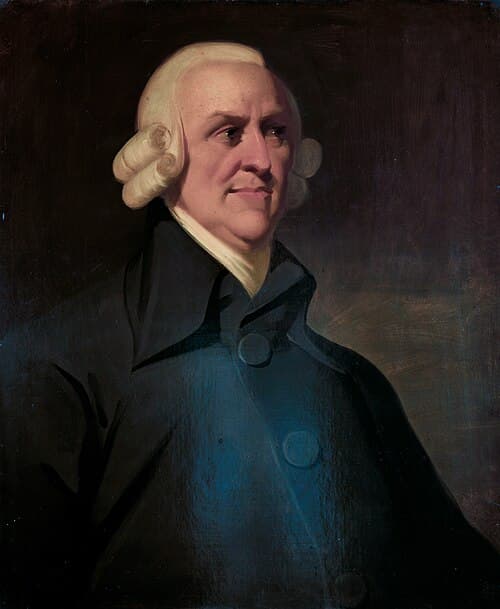
Adam Smith
PERSON
Person referenced in documents

Adonis
PERSON
Surname reference in documents

Alan Dershowitz
PERSON
American lawyer, author, and art collector (born 1938)
Alan R. Rogers
PERSON
American anthropologist
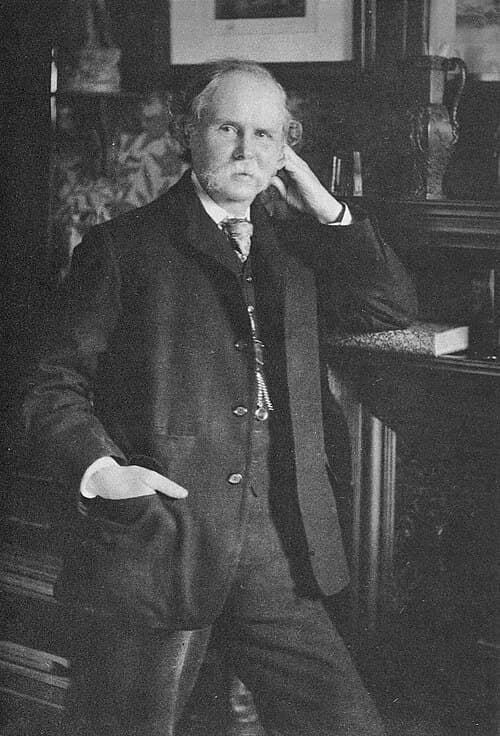
Alfred Marshall
PERSON
Name reference in documents
AC
Ansley J. Coale
PERSON
American demographer (1917–2002)

aria “Voi che sapete
PERSON
Name reference in documents
BE
Becker
PERSON
Surname reference in Epstein-related documents

Beethoven
PERSON
References to classical composer Ludwig van Beethoven in discussions about music

Bill Maher
PERSON
American stand-up comedian and television host
BL
Blake
PERSON
Ambiguous first name - refers to multiple people in Epstein documents
BT
Bob Trivers
PERSON
Person referenced in documents
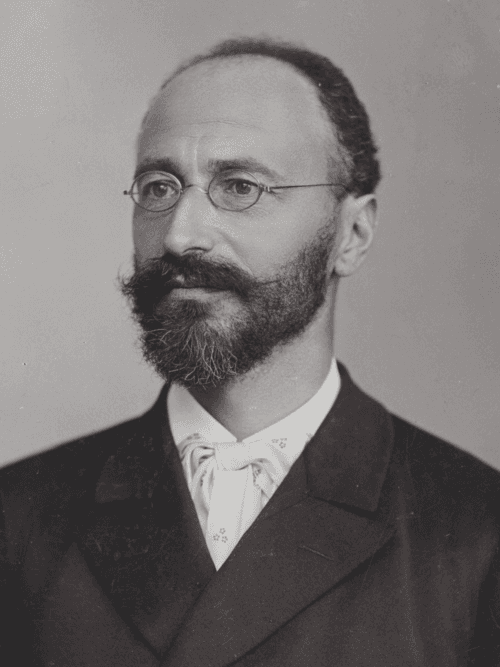
Boehm Bawerk’s
PERSON
Name reference in documents

Brian Charlesworth
PERSON
British biologist
C,+C
PERSON
Name reference in documents
CF
Caleb E. Finch
PERSON
Name reference in documents

Charles Stuart
PERSON
American murderer

Coleridge
PERSON
Name reference in documents

David Rodgers
PERSON
Jeffrey Epstein's chief pilot (1991-2019), maintained flight logs documenting passengers on Epstein's private jets
DE
Denison
PERSON
Name reference in documents
DI
Dionysus
PERSON
Ancient Greek god of winemaking and wine

Don Quixote
PERSON
Person referenced in documents
DO
Dowson
PERSON
Name reference in documents
DV
dV(xjeTO
PERSON
Name reference in documents
EC
Elizabeth A. Cashdan
PERSON
Name reference in documents

Emily, Houseman, Robinson
PERSON
Name reference in documents
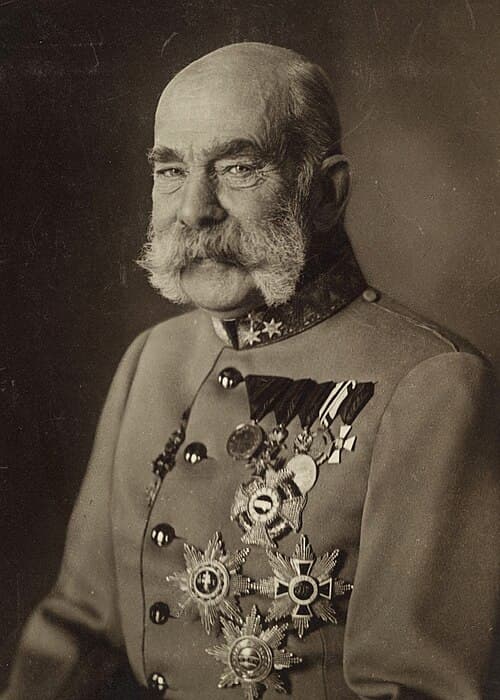
Franz Joseph
PERSON
American artist

G. Bock
PERSON
Type of lager beer

G. Cardew
PERSON
Name reference in documents

George W. Bush
PERSON
President of the United States from 2001 to 2009

Harper
PERSON
Surname reference in Epstein-related documents

I. Der
PERSON
Name reference in documents
JH
Jack Hirshleifer
PERSON
Economics professor and economic theorist (1925–2005)
JC
James F. Crow
PERSON
American geneticist (1916-2012)
Jevons
PERSON
Surname or name fragment in documents
JR
John Rae
PERSON
Name reference in documents
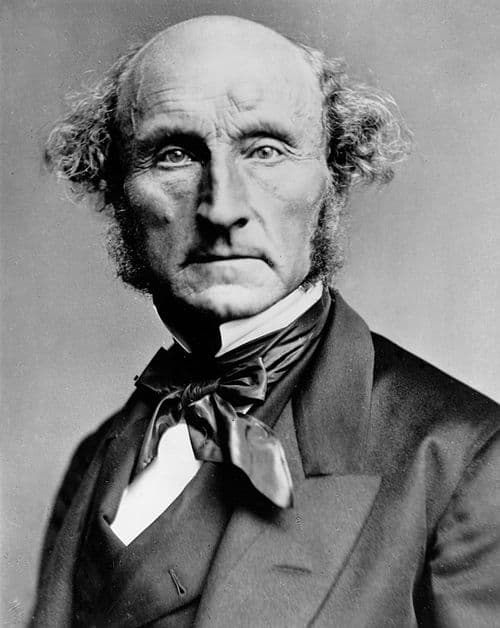
John Stuart Mill
PERSON
Person referenced in documents
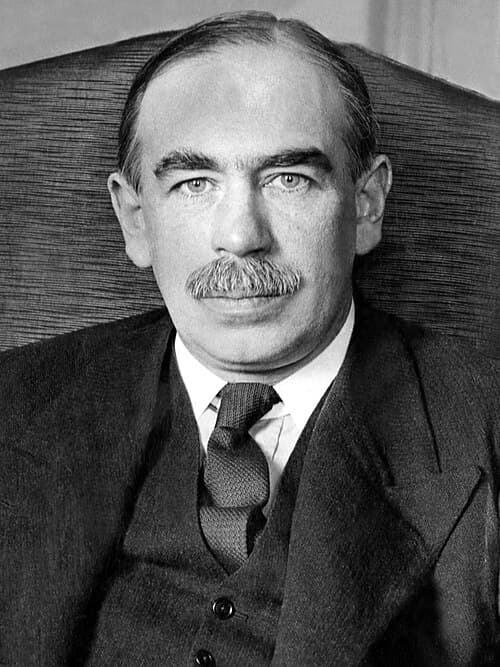
Joseph Schumpter
PERSON
Name reference in documents

K,+C
PERSON
Name reference in documents
K+
K+F(K
PERSON
Name reference in documents
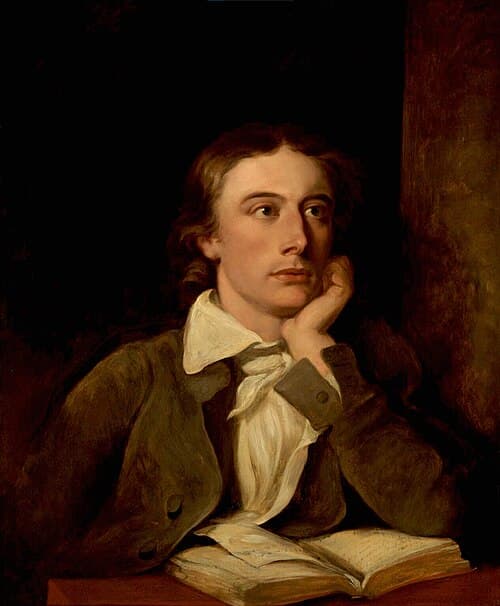
Keats
PERSON
Band
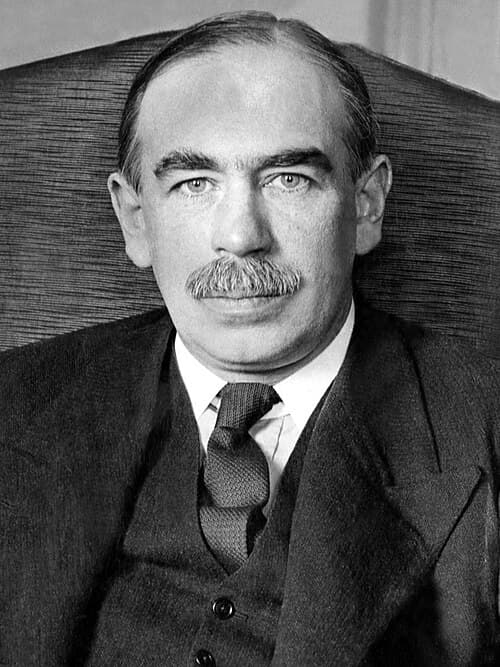
Keynes
PERSON • 2 mentions
Surname reference in Epstein-related documents
KI
Kiker
PERSON
Name reference in documents
LB
Lee L. Bean
PERSON
Name reference in documents

Leon Walras
PERSON
Name reference in documents
Marco Polo’s
PERSON
Name reference in documents
MA
Masefield
PERSON • 2 mentions
Name reference in documents

Mincer
PERSON
Surname or name fragment in documents

Motoo Kimura
PERSON
Japanese scientist (1924–1994)

Mozart
PERSON
References to classical composer Wolfgang Amadeus Mozart in discussions about music

Myrdal
PERSON
Name reference in documents
OS
Osmin
PERSON
Name reference in documents
PA
Papageno
PERSON
Operatic character in the opera The Magic Flute by Wolfgang Amadeus Mozart

Paul Demeny
PERSON
Hungarian demographer and economist (1932–2024)
PE
Petty
PERSON
Surname reference in documents

Prince Charles
PERSON
King of the United Kingdom and other Commonwealth realms since 2022 (born 1948)

Quesnay
PERSON
Asteroid
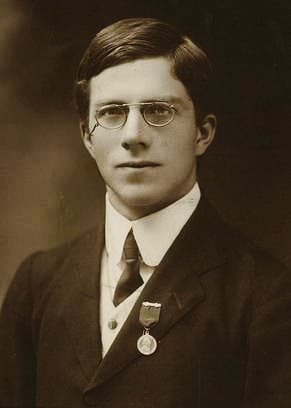
R. A. Fisher’s
PERSON
Name reference in documents
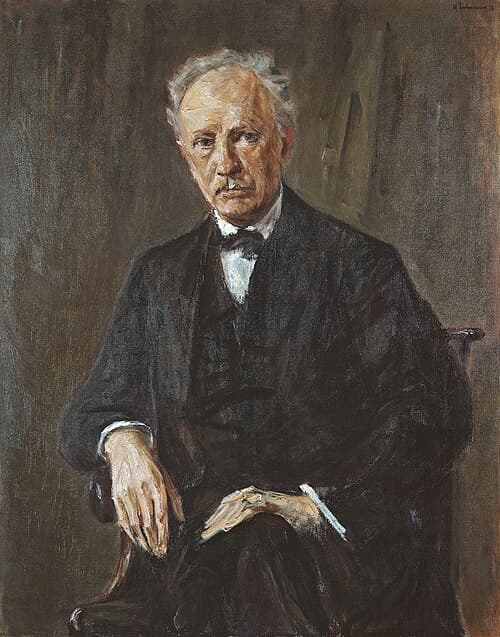
Richard Strauss
PERSON
Name reference in documents
RT
Robert Trivers
PERSON
American evolutionary biologist and sociobiologist
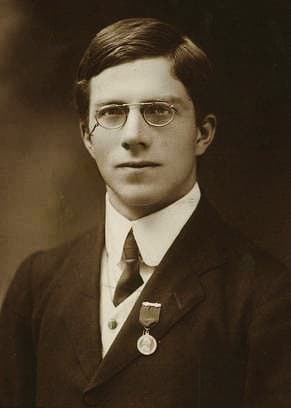
Ronald A. Fisher
PERSON
Name reference in documents

Scarlett Johansson
PERSON
American actress (born 1984)
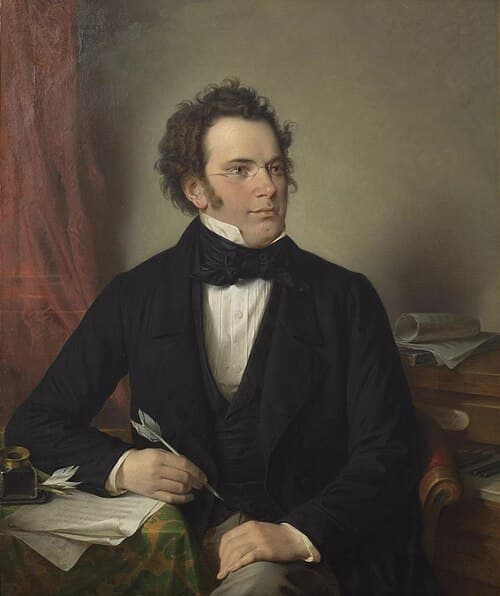
Schubert
PERSON
Surname reference in documents
SC
Schultz
PERSON
Ambiguous surname reference in Epstein documents
ST
Stuart
PERSON
Name reference in Epstein documents
SU
Susanna
PERSON
First name reference to multiple individuals
TT
T. J. Trussell
PERSON
Name reference in documents
T. S. Elliot
PERSON
Name reference in documents
Tennyson
PERSON
Surname reference in documents

Thomas Piketty
PERSON
French economist

Tristan
PERSON
South Atlantic island group
W.
W.+P.
PERSON
Name reference in documents
Wagner
PERSON
Ambiguous surname - refers to multiple people in Epstein documents
WM
Walter Mitty
PERSON
Protagonist of a James Thurber short story

William D. Hamilton
PERSON
British racing driver

William Petty
PERSON
Name reference in documents
William Shakespeare
PERSON
English playwright and poet (1564–1616)
WR
Wright
PERSON
Surname reference in Epstein documents
Yeats
PERSON
Surname reference in documents
%2C%E2%80%94D(K%2Fwikipedia.jpg&w=512&q=75)
z,+P+p(K),—D(K
PERSON
Name reference in documents
Zucman
PERSON
French economist
/At asa
ORGANIZATION
Organization referenced in documents
Academic Press
ORGANIZATION
American academic publisher (1942-)

Anthropology
ORGANIZATION
Organization referenced in documents
Ar/Ag
ORGANIZATION
Organization referenced in documents
Ben-Porath
ORGANIZATION • 2 mentions
Organization referenced in documents

Cambridge University Press
ORGANIZATION
Publishing business of the University of Cambridge
CIBA Foundation Symposium 208
ORGANIZATION
Organization referenced in documents
Constrained Optimization
ORGANIZATION
Organization referenced in documents

Edge Foundation
ORGANIZATION
Association of science and tech professionals
Eine Kleine Nachtmusik
ORGANIZATION
Organization referenced in documents
eo Ale +7-+de
ORGANIZATION
Organization referenced in documents
Evolutionary Ecology
ORGANIZATION
Organization referenced in documents
g g Ag Ag
ORGANIZATION
Organization referenced in documents

Harrod
ORGANIZATION
Human settlement in Allen County, Ohio, United States of America
John Wiley
ORGANIZATION
American baseball player (1857-1926)
K, K
ORGANIZATION
Organization referenced in documents

King’s College
ORGANIZATION
Episode of The Sopranos (S1 E5)
m(c, K
ORGANIZATION
Organization referenced in documents
PC(x
ORGANIZATION
Organization referenced in documents
Petty’s of
ORGANIZATION
Organization referenced in documents
Prentice-Hall
ORGANIZATION
Organization referenced in documents
Regional Model Life Tables and Stable Populations
ORGANIZATION
Organization referenced in documents

Renaissance
ORGANIZATION
Hotel chain or entity
Rondo alla Turca
ORGANIZATION
Organization referenced in documents

Solow
ORGANIZATION
Horse
The Genetical Theory of Natural Selection
ORGANIZATION
Organization referenced in documents
The Indifference Diagram of Economics
ORGANIZATION
Organization referenced in documents
The Level Payment Mortgage
ORGANIZATION
Organization referenced in documents

the Royal Society
ORGANIZATION
The Royal Society - UK national academy of sciences
u,x).1
ORGANIZATION
Organization referenced in documents

University of Chicago Press
ORGANIZATION
Publisher in the United States
Y=I+C
ORGANIZATION
Organization referenced in documents

Dover
LOCATION
Town and major ferry port in Kent, South East England

Englewood Cliffs
LOCATION
Borough in Bergen County, New Jersey, United States
Model West
LOCATION
Location referenced in documents

Salt Lake City
LOCATION
City in and county seat of Salt Lake County, Utah, United States and the capital of Utah

Venus
LOCATION
Location referenced in documents
Verdi
LOCATION
Location referenced in documents
Statistics
Pages:58
Entities:119
Avg. OCR:92.1%
Sponsored