HOUSE_OVERSIGHT_010912_sub_001 - HOUSE_OVERSIGHT_011011
Document Information
Bates Range
HOUSE_OVERSIGHT_010912_sub_001 - HOUSE_OVERSIGHT_011011
Pages
100
Source
House Oversight Committee
Original Filename
Free Growth and Other Surprises.pdf
Document Content
Page 1 - HOUSE_OVERSIGHT_010912
FREE GROWTH AND OTHER SURPRISES Draft Gordon Getty HOUSE_OVERSIGHT_010912
Page 2 - HOUSE_OVERSIGHT_010913
FOREWORD BY THE AUTHOR How Come This Book? A few months ago, Robert Trivers was kind enough to send me his new book. The title is “Wild Life”. Perfect two ways. Bob is a world authority on wildlife, to wit evolutionary biology. But his books and papers about that are already well known. His new one is about his own wild life, with his ideas in the background. I’ve started my own book three for four times over the past decade. Bob’s got me started again. Try it. It’s Bob’s real voice. One of his papers, co-authored by Huey Newton(!), is about deception and self-deception. I never saw much of either in Bob. I] never saw a guy less anxious to impress. Fine if you knew his achievements, and fine if you didn’t. What he wanted to talk about was great new ideas by others. It was from him that I first heard about the Hamilton-Zuk parasite theory, and Paul Ewald’s complementary one about parasites stabilizing population density of hosts. Both are beautiful examples of the obvious-in-hindsight. | realized that my book could take a cue from his. My own life hasn’t been wild. It has been interesting because the genius of my father gave me interesting places to be and things to do. I could say something about that. But the book would be mostly about my ideas in economics. Bob’s ideas are well known to anyone in his field. Mine aren't. I’m ten years older than Bob, without much to show for it except in composition. (My last two operas have been getting some traction, and my SACDs get pretty good radio time.) So I’ll run my economic ideas up the flagpole, in my real voice, and see if they prove deception or self- deception or something worth the time. Declaring My Biases I’m a big free market fan. | would love it even if | agreed with socialists that there is something inherently iniquitous about it. There are bad guys and conflicted motives Forward By The Author 04/18/16 1 HOUSE_OVERSIGHT_010913
Page 3 - HOUSE_OVERSIGHT_010914
in markets and government both. What I love about it is the chance to prove ideas. | love Wall Street innovations such as swaps and futures and ETFs and mortgage- backed securities, even admitting their dangers. And who would have thought that the San Francisco Bay area, a stronghold of political correctness at the voters’ booth, would nonetheless innovate Siri and Alexa and driverless cars, in its free market havens here and there, over the past five years? Remind me the last innovation by a committee. Who would have thought we would make the world’s best car, the Tesla, in this labor stronghold? It takes guys who prefer the impossible. It takes guys like my father. Yes, that was J. Paul Getty. I’ll declare a bias for him. His faults were just what we read they were. | liked them fine. My times with him, with an exception I'll note in Chapter 1, are some of my favorite memories. I seem to be the opposite of pharaohs who began their reigns by chiseling off their father’s names from the monuments and substituting their own. That was something about a ticket to the afterlife. I put my father’s name on things I build. The afterlife will come as it comes. Since this book is about growth first, I should say how I feel about growth. Most economists, which I’m anything but, treat it as a goal. | love innovation, which has translated to growth, while worrying plenty about growth itself. What happens when anyone can make a doomsday weapon on his desktop? Depressed people do away with themselves every day. Some might take the rest of the world with them if they could. Armageddonist religions wouldn't be needed. Not even destructive intentions need be. A doomsday weapon bought at the five and ten might go off by accident. Then why do | root for innovation when I’m scared stiff about its consequences? Because alternatives are scarier still. Humans will innovate anyhow, while Big Brother or the religious authorities aren’t looking, and | don’t like the prospects of innovation driven underground. We'll have to find some way to face the risks and Forward By The Author 04/18/16 2 HOUSE_OVERSIGHT_010914
Sponsored
Page 4 - HOUSE_OVERSIGHT_010915
manage them. This book doesn’t say how. It will open that can of worms, and others too, and try to track some but not all to their destinations. One look leads to another. This shows that I’m not an optimist in the sense of making rosy predictions. But I seem to show that bias in evaluations. I’m two thirds Panglossian. (Doctor Pangloss was the guy in Voltaire’s Candide who said that this is the best of all possible worlds.) I side with the good doctor in that I cannot imagine an improvement to this world or to the human race. I see the dangers and evils, such as Armageddonists, as somehow part of the scheme. The world would not be better if it posed no threats and challenges to solve. To solve them is not to wish them away. The stories of Aladdin’s lamp and the monkey’s paw tell us that each wish after the first is to undo the one before. I think that’s what Shaw was telling us in Don Juan in Hell. Don Juan and the others are free to go to heaven whenever they like, and occasionally do. They come back because they can’t stand the boredom. Where I find fault, and differ with Pangloss, is as to the doctrines we are taught. Whatever | study, I seem to find a good measure of nonsense taught along with wisdom. This book is about what | find of both in economics. And a problem | try to solve, not wish away, is the danger of losing sight of the points on which Pangloss was right. My verse and music try to remind us. And [Il admit a bias for the surprises my title promises. I love upending what we had all assumed. Fun! And all the more fun when | can show that famous economists had already seen and said some of the same things I do when we read those economists again. Surprise need not be true novelty. My free growth theory is really John Stuart Mill’s, although no one seems to have noticed the paragraph I quote from him. My next generation theory really belongs to my 17%-century rhymesake Sir WilliamPetty, who happens to be my nominee for greatest economist of all time. In a way, I could also credit it to the period of production theorists John Rae, Nassau Senior, William Stanley Jevons and Eugen von Boehm Bawerk. They need only to have considered human and total capital as explained by Petty two centuries before. Forward By The Author 04/18/16 3 HOUSE_OVERSIGHT_010915
Page 5 - HOUSE_OVERSIGHT_010916
This reveals my bias for economic history. It seems dry as a bone until you find something terrific like those insights. It happens that I had written both theories, and published one, decades before | found those great precedents. Should I have been chagrined? Of course not. Forgotten or unnoticed precedents are at least as much fun to point out as the surprises they showed ahead of me. I will also reveal a bias for evolutionary biology. Its main axiom, the biological imperative, becomes one of mine. The idea is that behaviors are selected for successful reproduction. | will try to show that the classical school treated this as axiomatic from Petty through Smith, Malthus, Ricardo and Mill. Malthus was only the most obvious case. It lapsed from attention when a brilliant new insight called marginalism preferred to do without explanations for tastes. Above all comes my bias for the great thinkers in those fields. We saw that as to Bob Trivers. Although | often cite them to disagree with them, | see all as giants from whose shoulders | slip in trying to climb. I don’t kick sand on 97-pound weaklings. Mill was a mensch who gives us all lessons in attribution and generosity, particularly to schools he disputed, and who nonetheless didn’t mind being a minority of one in his books or in parliament. Petty was something beyond. Polymath, self-made tycoon, anatomist, music teacher, father of national accounts, originator of present value theory and human capital and next generation theory, and esteemed by both Adam Smith and Karl Marx for other innovations I don’t mention. Such men are understood slowly and incompletely. Forward By The Author 04/18/16 4 HOUSE_OVERSIGHT_010916
Page 6 - HOUSE_OVERSIGHT_010917
CHAPTER 1: RECOLLECTIONS I never finished a course in economics. | started one at the University of San Francisco sixty years ago, and dropped it when | couldn’t see the foundations. But the bug had bitten me. I knew that one day I would try on my own. I always loved logic. My favorite philosophers at USF were the pre-Socratics who liked nothing better than to confound common sense. A brilliantly vexing example was Zeno the Eleatic and his argument that Achilles can never catch up to the tortoise; Achilles must first reach the line where the tortoise was last, and the tortoise has since moved on. Logic can play such tricks. But I sensed that economics was the place to try its limits. Dropping the course didn’t mean giving up, and logic would be the key. Neither did I take a course in business administration or investment. My major was English literature. As a grade schooler | had asked my father about this. Where and what should | end up studying? He had read economics and petroleum geology at Oxford, and I supposed he would advise something like that for me. | got a surprise. Career-oriented majors were fine but not necessary. A grounding in the liberal arts could be as much or more. The trick was to learn how to learn. That sounded right, and anyhow right for me. So I chose USF, a twenty-minute walk from home until my mother moved us to San Rafael, a half hour drive across the Golden Gate Bridge, and followed my intuitions toward English lit and history and music and philosophy. I graduated with a degree in English lit in 1956. This was the time of skittish peace between the Korean and Vietnam wars, and the Reserve Forces Act meant | had to report for six months active duty starting in the spring of 57. Meanwhile I worked for my father. | and my brother Paul, later Sir Paul, started at the bottom pumping gas and changing oil at separate gas stations not far from our home in San Rafael. That left time for a few weeks at a bulk plant (oil warehouse and tank farm) in San Francisco, still working at the bottom, before I reported. Paul had served in the Chapter 1: Recollections 1/06/16 1 HOUSE_OVERSIGHT_010917
Sponsored
Page 7 - HOUSE_OVERSIGHT_010918
Korean war, and was now exempt. I was a shavetail second lieutenant, thanks to the ROTC program at USF, in the quartermaster branch at Fort Lee, Virginia. My eyesight was never good enough for the combat branches. Ike, who was then president, had started in the quartermaster too. My military career was not so glorious. Somehow | finished the six months at Fort Lee and seven and half years of inactive duty following, obligating me to one weekend per month at military posts near home, without being promoted even to first lieutenant. By policy, I should have been promoted or busted to the ranks. I later learned that my school chum Manuel Teles, who worked at Fort Presidio in San Francisco, had somehow fixed the record. Thank God for old friends. My weekends of saluting were postponed when Paul and | went back to work for my father in 1958. My father then lived in the Ritz Hotel in Paris. He liked ordinary two- room suites. The sitting room was his office. His filing system was a steamer trunk. Our job was to sit and listen as he met with executives or art people or old friends. He would usually take us along to lunch and dinner, and wangle us along when he had been invited out. He was the world’s most attentive father whenever we were with him, at least, if focused elsewhere when we weren't. Paul went on to learn refining and marketing in Italy, after those few weeks in Paris, while I went to the oilfields my father had just found and developed in the Neutral Zone between Saudi Arabia and Kuwait. Paul soon learned Italian, became general manager within two years, and ran things well. 1 learned only a little Arabic, but also became manager in 1959, and soon blundered my way into two weeks’ house arrest. I had got crossways with the local emir, Mohammed bin Nasr, nota bad guy, about perks and privileges he and his staff expected Getty Oil to pay for. The case against me was rigged. One of our junior staff drivers, a Kuwaiti | think, had accidentally rammed and damaged a pipeline. He had fled the country to avoid jail. Jails there were no fun. His supervisor, Jim Kinnell, was warned that he (Jim) was accountable under Saudi law, and would be sent to jail instead. Jim came to me. | realized what was brewing. Laws are flexible, and Jim would have got off with a Chapter 1: Recollections 1/06/16 2 HOUSE_OVERSIGHT_010918
Page 8 - HOUSE_OVERSIGHT_010919
caution at most if 1 weren’t at odds with the governor. I was obviously next. But I was not about to gamble that the threat to Jim was a bluff. I told him that if I were in his shoes, | would go back to England. He did. That left me. But I was in my shoes. The blunders had been mine, and I would face the music. My two weeks of house arrest went peacefully. The plain cement-block house had been built for my father at our port camp of Mina Saud when he lived in the Neutral Zone in 1953. The Emir’s identical house was a few steps away. My father’s favorite maple sugar was still in the fridge. I read the few Shakespeare plays | hadn’t read in college, and read or reread the complete poems and plays of John Keats. The house arrest was probably as much dressing-down as | deserved. Paul, or anyone else, would have handled the perks and privileges more adroitly. But our host country, Saudi Arabia, may have picked up on something too. Getty Oil was not one of the concession companies in the Middle East named in the baksheesh (bribery) scandals that made the front pages over the few years remaining before most concessions were negotiated away and host countries ran things themselves. Back to my father in Scotland, where he was visiting his old friends the Maxwells near Inverness, and then to the two-room suite at the Ritz in London about like the one in Paris. He drove the six hundred miles between, in a vintage Cadillac, taking two days and stopping to visit historic sites and museums. He needed no guidebook. ] sat in on meetings and events everywhere with him in London as in Paris. | assumed that the Saudis had cleared the house arrest with him, and I would have agreed as he did. He too was in different shoes. He was right. He had solved a real problem with minimum damage. Lesson learned, and no hard feelings either way. It was clear to both of us that I was not cut out to be a line officer, meaning one who runs things from day to day. My mind goes off on tangents instead of tracking arguments in real time. It works for me, but not as an administrator. We decided to try me as a consultant. Chapter 1: Recollections 1/06/16 3 HOUSE_OVERSIGHT_010919
Page 9 - HOUSE_OVERSIGHT_010920
That began at my father’s Spartan Aircraft Company in Tulsa, Oklahoma. He hadn’t meant to buy it. He had bought control of Skelly Oil, centered in Tulsa, and Spartan turned out to be one of its holdings. Then came Pearl Harbor. My father was 48 years old, and had been a yachtsman. He took a navigation course at USC along with kids half his age, led the class, and volunteered for sea duty. His old friend James Forrestal, Secretary of the Navy, steered him to Spartan instead. Spartan could make training planes and could train pilots. My father accepted. He paid himself a salary of one dollar a year. He had decisions to make when MacArthur and Matzushita signed the peace treaty. The training planes were not meant to leave the ground. Spartan lacked the capacity to make the real thing up to competition. The demand for training planes pretty much ended with the war. My father could sell out or find another use. He decided to make house trailers. It worked. | had lived in a Spartan trailer in the Neutral Zone, like the rest of the senior staff, when | stayed at our Wafra oil field rather than the house at Mina Saud. We and the market had liked them fine. Herschel Shelton had been one of my father’s right-hand men during the conversion to trailers. He said that the place to look for him was never in his office. You would find him in overalls under a trailer on the factory floor, with a welding iron or riveting gun. He liked to be able to do any job his workers did. How else would he know if they were doing it right? I stayed in my father’s house at Spartan, as at Mina Saud. It stood at the opposite end of the runway from the offices and trailer plant. I drove another seasoned Cadillac that my father had left in case he came back. Max Balfour, who ran Spartan, called it a clunker. It clunked me around the countryside on weekends, or to Jamil’s restaurant or Cap Balfour’s house for dinner, or downtown to the movies or symphony or opera house. Cap (Captain) Balfour had flown in World War I, and showed crippled hands from when his plane caught fire. He was cranky, urbane and razor-sharp. His problem was that Spartan couldn’t seem to come out in the black. He worshipped my father, and figured he had let him down. He seems to have Chapter 1: Recollections 1/06/16 4 HOUSE_OVERSIGHT_010920
Sponsored
Page 10 - HOUSE_OVERSIGHT_010921
brought his moods with him after work, which my father generally didn’t. That cost him his sunny young wife. I somehow gota pass. I could understand him, and I was my father’s son. My advice in the end was that my father should sell. Meanwhile I was taking an interest in economics again. Business was about rate of return. Spartan’s was negative. What was the benchmark? | did a little study. It is easy to see that return tends to even out from one company or industry to the next. We pour investment into high-return prospects, and unintentionally drive that high return down toward the norm by expanding the capital denominator. I didn’t know that Robert Turgot had written the same in 1766. But what struck me was the impression that return, net of inflation, seemed to revert to a norm over time. Why were interest rates, averaged over business cycles, about the same then as in Dante’s time or Julius Ceasar’s? Why should human impatience be a steady norm? That puzzle nagged me for about a quarter century until I found the answer. Another decade or two would pass before I learned that Sir William Petty had found it in the seventeenth century. I went home in 1961 to study harmony and counterpoint at the San Francisco Conservatory of Music. I had found time to compose a few things at the house at Mina Saud with a piano | had bought in Kuwait. They included an a cappella (unaccompanied) choral setting of Tennyson’s “All Along the Valley”, and something to which I later fit Emily Dickenson’s poem “Beauty Crowds Me” in my song cycle “The White Election”. The composer Charles Haubiel published “All Along the Valley” in his Composers’ Press in Los Angeles in 1959. The one change he suggested, an unexpected D flat major resolution, is the best touch in the piece. I had noticed copies in music shops in Tulsa. So it seemed about time to develop that interest too, and the conservatory back home seemed the logical place. Chapter 1: Recollections 1/06/16 5 HOUSE_OVERSIGHT_010921
Page 11 - HOUSE_OVERSIGHT_010922
] studied there from fall 1961 through spring 1962. I was probably the only composition student already published. My teacher in both the fall and spring classes was Sol Joseph. He was a legend there. Most of what he taught confirmed my instincts. Maybe five percent was old rules | didn’t think much of, and five percent good ideas that hadn’t occurred to me. All was useful anyhow as a guide to what leading authorities have thought and taught. That was the point. We were to accept what we liked, and anyhow learn the lingo. Those two courses covered traditions of the eighteenth and nineteenth centuries. Most composers in the 1960s, and probably some or most of my classmates, thought of that as a stepping stone toward study of the serialism and other atonalism then in vogue. I skipped those classes. | realized that I was a nineteenth-century composer at heart. Now the world seems to have spun back to where I was all along. For most composers now, atonalism is one of the colors on our palettes. Even | use some. So did Bach. We reach for that color when we want to express disorientation or angst. I found I could get more said most of the time with major-minor scales. Five short piano pieces I wrote then were published by Belwin Mills in 1964. As my father’s son, you might imagine that I was asked to pay the costs. Nope. Neither had | paid a cent to Composers’ Press. Vanity press exists, but that was not the business model of those two firms. I got standard royalties from sales, not amounting to much, and they got the rest. Six published pieces by age 31 would not have impressed Mozart or Schubert. By lesser standards, it was a pretty good start. There are distinguished composers who have never found a publisher. Tomorrow the world! I would write operas and symphonies! What happened instead was sixteen years of writer’s block, or eighteen since finishing the pieces in 1962.1 suppose I was trying to say “Shazam!” and turn into something | wasn’t. The ice would break in 1980, when I realized that Billy Batson would have to do. But that gets me ahead of my story. ] married Ann in 1964, making ita banner year on that count even more than the publication, and went back to work for my father. That took us to New York in 1965. Chapter 1: Recollections 1/06/16 6 HOUSE_OVERSIGHT_010922
Page 12 - HOUSE_OVERSIGHT_010923
Tidewater Oil Company, which would merge into its parent Getty Oil Company a few years later, had red ink problems in its Eastern Division. My job was to see why. Eastern Division was run by “Jim” Jiminez, an upbeat guy I liked. | don’t think he took the red-ink problems home with him as Cap Balfour had. He reported to my half-brother George at corporate headquarters in Los Angeles, and George reported to my father in London. George had earned his job as president by outstanding performance at every level on the way up, which is more than you could say for me in the Neutral Zone. But George was touchy. He had a chip on his shoulder. | think my father liked to ride him, and he sometimes felt unappreciated. You have to shrug that off. George was doing fine. The problem in Eastern Division was not in him, and it was not in Jim Jiminez. Then what? I looked at the books. The red ink had nothing to do with management. Eastern Division did refining and marketing. Its new refinery in Delaware had been optimized to process heavy Wafra crude oil, which then was over a dollar cheaper per barrel on the market than the lighter and easier-to-refine crude we produced in Texas and the Central Basin. Tidewater’s Western Division refinery at Martinez, by contrast, had all the cheap oil it needed in our own San Joaquin field. The Martinez refinery was old, and more expensive to operate. But the net advantage still went to Western Division by about a dollar per barrel. Meanwhile gasoline sold for about a dollar less per barrel, although only two or three cents less per gallon, in the refinery-loaded east than in California. Management can’t do much about import quotas and market conditions. I reported to my father that Eastern Division was at least as well run as Western Division, where the ink was black thanks to cheaper crude and pricier gasoline. Then could we cut costs or boost receipts in other ways? I proposed that we close our old and inefficient Boston Harbor terminal, where barges unloaded gasoline into our tank farms to be trucked to stations, and supply Boston from our new terminal at Providence two hours’ drive away. If that worked, other distribution consolidations seemed possible. | later proposed much the same thing for our Chapter 1: Recollections 1/06/16 7 HOUSE_OVERSIGHT_010923
Sponsored
Page 13 - HOUSE_OVERSIGHT_010924
operations in Japan, where the new terminal at Kawasaki could theoretically obviate the older and clumsier one in Tokyo Harbor. I realized that plant-closing might be unthinkable in Japan, but thought that something good might come of the idea. Sometime a little later came my lawsuit against my father. It isn’t my happiest memory. There had been a stock dividend years before, when I was still in school. We had treated it a certain way on the books. | read the law as saying it should have been treated another way. The law was probably on my side, and common sense on my father’s. Judge Peery wisely found a way to make common sense win in the end. Meanwhile I had accused my father of nothing worse than oversight. My visits to Sutton Place, now with Ann and the boys, went the same as before. The lawsuit seldom came up and was discussed in easy terms when it did. | suggested to him, for example, that he might want to settle with my stepmother Teddy in case there could be claims by the estate of my late half-brother Timmy. He did. Somehow we got through the lawsuit without bad blood. One would not have guessed so much was at stake. The stock dividend had been a huge one. What | learned from my father, then most of all, was perspective. He believed in an even keel. Zeno the Stoic, not the Eleatic, would have met his match. The lawsuit lasted from 1966 through 1971. In hindsight, thank gosh he won. If I had, tax consequences would have been ugly all around. Again I had learned a lesson, and again there were no hard feelings either way. I continued to do consulting jobs for him throughout the lawsuit and after. I charged expenses, but no fee. And I didn’t pad expenses. If ] had, you can believe he would have seen it. ] stayed in a single room in the best hotels, ate three squares a day, and paid for anything else myself. | was trying to make the point that I didn’t want to be paid. Neither had my father at Spartan during the war. The idea was for me to be of use. I was paid like everyone else when working for my father full-time, but never on consulting jobs. Those now came once or twice a year, and lasted for a week or two each. Composing was still on the back burner. I was keen on physics, economics, human origins and Chapter 1: Recollections 1/06/16 8 HOUSE_OVERSIGHT_010924
Page 14 - HOUSE_OVERSIGHT_010925
city planning. It became clear that all but the third needed better math skills than | had. So I bought the Barnes and Noble textbook on College Mathematics, got through it in a week of hard work, and then began on the Johnson and Kiokemeister textbook on calculus along with Halliday and Resnick on physics. Together they took me nearly a year. At the end, I was allowed to sit in on the freshman physics finals at Cal Berkeley, where the same two textbooks were taught. It was the finals for physics majors, and meant to be tough. Cal took physics seriously. Not every freshman was destined to go farther. Some should be steered towards engineering, which pays better anyhow. There were 10 questions. Three hours were allowed. Each of us had a calculator and nothing else. Not even a table of integrals. My God. I had to remember them or rederive them. There are some that had taken even Newton and Leibnitz months to solve. I don’t remember any of the questions. There were 200 to 300 kids in the room. Maybe 20 or 30 orientals, about three women, no blacks. Not one finished early. And some figure to be Nobelists by now. We're talking about Cal. | had answered seven questions when the three hours were up. Was that good enough? | got a call in a few days. I passed, and beat the class average. My old friend Matt Kelly warned me about this time that George was in trouble. Matt had known George’s new wife Jackie, and had been invited to dinner there. Matt’s impression was of out-of-control mood changes. He said that George at one point had drawn him aside, shown a pistol and warned him about paying too much attention to Jackie. The next minute they were back at the table in jolly spirits. I learned later what was wrong. George thought he had a weight problem, although | never noticed one. Doctors prescribed amphetamines in those days to control appetite. They revved him up and made it hard to sleep at night. So the same doctors prescribed barbiturates at night to get him to sleep. Uppers and downers are dangerous enough. Add a drink or two and you've got trouble. Of course I should have told my father. But I didn’t want to be the one. I liked to boost my brothers. Many must have seen the symptoms Matt saw. Let them break Chapter 1: Recollections 1/06/16 9 HOUSE_OVERSIGHT_010925
Page 15 - HOUSE_OVERSIGHT_010926
the news. But the others must have felt as I did. We waited too long. | got a phone call in 1973. George had died at Mount Sinai Hospital. There was an empty bottle of sleeping pills. My father’s death came in 1976. Ann and | had got word it was coming a few weeks before. We were there. So was Norris Bramblett, an accountant who had worked for my father since I was in school. My father trusted him. So did I. He had only a fourth grade education, but a PHD’s worth of character and sense. My father, Zeno the Stoic when things got tough, cracked jokes to the end. Norris alone could understand him by then. He translated patiently. My father was giving me one more lesson. He lapsed into a coma. Ann and I| were called down from our bedroom when he died. That left me and Lansing Hays co-trustees of the trust controlling his companies. Lansing ran the law firm that handled nearly all my father’s business and little else. It was a big job. Lansing was smart, abrasive, and dead honest. He didn’t mind hurting people’s feelings. | was not immune. It didn’t matter. It wouldn’t have mattered to my father. What mattered was that Lansing knew what trust meant, and put the Trust first. That’s what I cared about. Lansing was already on the Getty Oil board. I was invited to join too. We met four times a year, most often in Los Angeles. Harold Berg, an oil engineer from Colorado, had become CEO (chief executive officer) and chairman after George died. Sid Petersen, an accountant, was COO (chief operating officer). Harold was a warmer and more approachable personality. That’s what you'd expect in an oilfield guy. Sid was reserved and analytical. That’s what you might expect from an accountant, although Norris Bramblett fit anything but the stereotype. Harold and Sid were both clearly well chosen. Neither then nor later did I doubt that Getty was run at least as well as its big oil rivals. The board too were top people. But trouble was brewing. The trust, meaning Lansing and I, owned about 43% of the shares. The Getty Museum, also chaired by Harold, owned another 11%. Boards and managers prefer scattered ownership, so that they can operate more freely. Second-best would be concentration in docile Chapter 1: Recollections 1/06/16 10 HOUSE_OVERSIGHT_010926
Sponsored
Page 16 - HOUSE_OVERSIGHT_010927
hands happy to follow the board’s guidance. But my father had made it clear to Lansing and me that we were to trust our judgment. We should be ready “to vote the management in and out.” Since stockholders elect boards and boards hire managers, that meant to vote the board in and out. No wonder they were concerned. Lansing and I were both boat-rockers. Wouldn't it be safer if there were a corporate co-trustee? These are usually safety-minded banks, and many banks did business with Getty Oil. Concerns rose when Lansing died in 1972. That left me as the sole trustee. I was less obstreperous than Lansing, but also less predictable. Hostile takeovers were common then, where bids are made directly to shareholders rather than cleared through the board. Getty was rich in oil reserves per dollar of share price. It could be a target. Board members tend to feel that they know stockholders’ interests best, and that the angels are on the side of “friendly” or board-approved takeovers if any at all. Stockholders don’t necessarily feel that way. Temperatures rose when | pushed serious study of the possibility of taking Getty private. The idea was to give up our corporate structure to escape the corporate double tax. Management and its investment banker, Goldman Sachs, advised against. I] now think they were right, although my idea had good precedents. | pressed on, unwisely, by trying to convince the Museum to back me. They had better sense. It was time to heal the breach. Marty Lipton of Wachtell, Lipton, a top mergers and acquisitions law firm, represented the Museum. He proposed a moratorium (the “tripartite agreement”) where the Trust, Museum and company would hold the status quo for one year. Harold Berg had retired as chairman of Getty Oil, and Sid was now chairman and CEO. His COO was Bob Miller, a keen petroleum engineer. Harold Berg still chaired the Museum, although Harold Williams was its CEO and main voice. We all signed. But Getty Oil had its fingers crossed. A few days later, the company petitioned the court to appoint a co-trustee. It proposed Bank of America. B of A’s chairman, Chauncey Medberry, sat on the Getty Oil board. Paul and George’s daughters joined the plaintiffs. Chapter 1: Recollections 1/06/16 11 HOUSE_OVERSIGHT_010927
Page 17 - HOUSE_OVERSIGHT_010928
The Museum was more outraged than | was. Marty felt that he had been used. He and Harold Williams, a business-savvy guy who had chaired the SEC under Jimmy Carter, realized that if I could be hog-tied, the Museum with its 11% was the next domino. This was in November of 1983. Within a few weeks, the Museum and | signed a “consent of shareholders” taking over the company. The required public disclosure of this, on top of the tripartite agreement and co-trustee lawsuit before, was blood in the water. Pennzoil launched a hostile takeover bid in December. My concern was that the trust should not be locked in a minority position. | met with Pennzoil in New York. We resolved that to my satisfaction. The Getty Oil board met, also in New York, on January fourth. The mood was not sunny. Harold Stuart, one of the brightest and finest board members, assumed that I had invited the Pennzoil bid. Chauncey Medberry thought I should be sued. But Sid and the board acted responsibly overall. We countered with a higher price, Pennzoil accepted, and we went home thinking we had a deal. Texaco offered a higher bid two days later. Was Getty Oil already bound to Pennzoil? Its lawyers and mine said it wasn’t until the final agreement was signed. I had my doubts. But I liked Texaco’s offer better, and my duty was clear. The Trust and Museum would be paid cash for their shares, rather than locked in. | had insisted on language in the Pennzoil agreement that bound me only as “consistent with my fiduciary duty.” My duty, in the light of legal advice, was to accept Texaco’s offer. | did, and voted the same way as a member of Getty’s and the Museum’s board. Those were fiduciary duties too. Pennzoil sued Texaco, and eventually won punitive damages of some eleven billion dollars. The Museum and Trust had cashed out. We were not parties. The Pennzoil and Texaco filings both spoke well of me. But there was still the lawsuit seeking a corporate co-trustee. That would have been very dangerous before the sale to Texaco cashed us out. A corporate co-trustee might well have assented to “corporate Chapter 1: Recollections 1/06/16 12 HOUSE_OVERSIGHT_010928
Page 18 - HOUSE_OVERSIGHT_010929
defenses” blocking a sale and effectively locking the trust in a minority position. But now that danger was over. The remaining plaintiffs were my three nieces and Paul. | couldn't blame them. How could a corporate co-trustee hurt? But I was still worried. I now wanted to split up the trust into four separate ones for my family, Paul’s, George’s, and my other half-brother Ronnie’s. Corporate co- trustees tend to prefer the safety of acting only as required, and anyhow might not be keen to vote themselves out of a job. Were Paul and my nieces mad at me? Believe it. Lawsuits get that way. Lawyers on both sides say nasty things. That lasted because splitting the Trust took time. The math was easy, but the legal precedents were vague. My lawyer, Mose Lasky, thought we needed new California law. Plaintiff's counsel didn’t think so. I was accused of stalling. Someone had the bright idea to approach Willy Brown as Speaker of the Senate. The law Mose wanted had already worked in other states, and Willy liked it. He pushed it through. Problem solved. The Trust was split into four in 1988, and an unhappy chapter ended. My nieces and | are as close as ever. So were Paul and I until his death in 2002. My interests by the time of the split were composing, verse, economics, human origins and evolutionary biology. Composing was going pretty well. My writer's block had melted away in the summer of 1980. Ann and | and the boys were in Paris then. We wandered into Smith’s English language bookstore. | bought the Thomas Johnson variorum of Emily Dickenson’s 1800-odd poems. “Variorum” means including Emily’s own variations when she mailed the same poem to different people, or put a copy in the chest at the foot of her bed. I read them all over the next two days. Emily had been one of my favorites at USF. She died in 1886. She had published only eleven poems. Squabbles among the heirs delayed publication of about half the rest until Johnson published them in 1959, three years after | graduated. Many already published had been “bowdlerized” to fit conventional rhyme and grammar. Johnson gave us the real McCoy from her manuscripts. All was new to me. Chapter 1: Recollections 1/06/16 13 HOUSE_OVERSIGHT_010929
Sponsored
Page 19 - HOUSE_OVERSIGHT_010930
| had no piano in our hotel room in Paris, but set a few of the poems in my head to write down later. More followed. One of her poems! didn’t set begins “Mine by the right of the white election...” Election meant choice. Her white smock hangs today by her bed in Amherst where she was born and died. White is the color of weddings and burials. Her choice, | think, was a death marriage to the reverend Charles Wadsworth of the Arch Street Church in Philadelphia. He was happily married. She met him about three times in her life. ] would tell her story in 31 of her poems, one in two different settings, in my cycle “The White Election.” It was completed in 1981, and broadcast on National Public Radio two years later. It seems to have made a good impression. Slava Rostropovich had kind words, and invited me to write something for cello and orchestra that he could schedule on his upcoming tour in Russia. Placido Domingo invited me to write a song for him. Renata Scotto wanted me to choose five or so of the White Election songs that she could include in her concerts. All were big opportunities. Somehow none happened. Other stuff was coming out the pipeline. That included my opera “Plump Jack.” Here I would tell the rise and fall of Falstaff in Shakespeare’s Henry the Fourth and Fifth. This was riskier. Now the accompaniment would be orchestra, not piano, and | had no background in orchestration. Composing and orchestrating are not the same. Composing is like writing a play, and orchestration is like casting the play. There are composers that don’t orchestrate, and orchestrators who don’t compose. Most of us do both. I always did my own orchestration because no one else would know what I wanted. I gradually learned from my mistakes. Now! can probably hold my own in orchestration, although many do that better. Plump Jack was completed scene by scene over some twenty years. I would think it was finished, and then decide it wasn’t. My next two operas, each running about an hour, would be composed much faster. I set “Usher House” to my earlier libretto based on Poe’s story in about six weeks in 2008 and 2009. “The Canterville Ghost”, on Wilde’s short story, took me about two weeks each, with two months between, Chapter 1: Recollections 1/06/16 14 HOUSE_OVERSIGHT_010930
Page 20 - HOUSE_OVERSIGHT_010931
for libretto, composition and orchestration. The last two operas have been premiered at major opera houses. Usher House ran again at San Francisco Opera. Upcoming performance of the “scare pair”, meaning Usher and Canterville asa double bill, have been announced in other cities. Plump Jack is still waiting its turn. My interest in human origins led me to the Leakey Foundation. | had read about Louis Leakey in the papers, and had met him a few times in Las Angeles and San Francisco. Brilliant, courtly, fierce. He let you know what was wrong. | became a fellow in 1973, a trustee the next year and chairman the next. Clark Howell, who taught anthropology at Berkeley, chaired our science committee. His co-chair was Dave Hamburg, a Stanford psychology professor who specialized in great ape studies or primatology. Most leading scientists in either field were members or regular advisors. They recommended grants, and we trustees funded them. We took a venture capital role, usually making grants of a few thousand dollars to promising new prospects rather than bigger amounts to steady-state projects already proved. Those proved ones included Jane Goodall’s chimp studies at Gombe or Richard Leakey’s digs at Lake Turkana. National Geographic, or the Wenner Gren or World Wildlife or National Science Foundations tended to fund the known winners. We're a lot bigger now. I am one of the few living links to those great people and times. We've evolved with the science. But we stick to the venture capital role. That always left time to organize lectures and symposia. A few of us including Nancy Pelosi, long before she tried politics, put together an all-star two-day symposium at the Palace of Fine Arts in the San Francisco Marina district in 1973. Tickets sold out, and hundreds watched on screens set up in the lobby. Julian Huxley regretted, but sent his good wishes on tape. The octogenarian Raymond Dart recounted his discovery of australopithecus africanus at Taung cave near Johannesburg in 1924. Louis Leakey had died the year before, but his equally legendary widow Mary updated us on the digs at Olduvai. Dick Hay filled us in on the geology there. Jane Goodall gave the news from Gombe. Dave Hamburg reported on the new Chapter 1: Recollections 1/06/16 15 HOUSE_OVERSIGHT_010931
Page 21 - HOUSE_OVERSIGHT_010932
chimpanzee compound near the linear reaction at Stanford. Clark Howell briefed us on his work at Torralba and Ambrona in Spain, where our ancestors half our size had hunted elephants twice the size of modern ones. (Elephants go back at least as far as mammoths and mastodons.) Desmond Clark covered African archaeology in general and his discoveries at Kalambo Falls in particular. Sherry Washburn showed the way in which our DNA is 98% the same as a chimp’s. All were my close friends. It was at a symposium in 1974, in Washington | believe, that I first heard and met Irv DeVore. His talk was on evolutionary biology and Hamilton’s rule. Both were new to me. Irv was a champion speaker. Students packed his anthropology classes at Harvard. He became a Leakey stalwart and a particularly close friend. I liked his topic. Genes code for traits, and traits more adaptive to niche pressures are likelier to carry the genes that encode them into the next generation. The likeliness is “fitness”. A beauty of this is that you can predict traits from the environment (niche), and the environment from traits. That promised the kind of logical challenge that I loved. Survival of the fittest was not news to us. What was news was that bright scientists like Irv were specializing in that logic, and making testable predictions for creatures generally, humans included, rather than sticking to the groups they studied most. That meant people | could talk to. Hamilton’s rule was put up as the prime example. It starts from the principle that the end game in biology is investment in the next generation. Hamilton had reasoned in 1965 that genes coding for most efficient investment in closest kin, who were likeliest to carry copies of those genes, ought to leave most copies in the next generation. We would invest in them when consanguinity was greater than cost/benefit ratio measured in fitness given up and fitness gained at the other end. I didn’t like this. Something was missing. The logic was seductive. But Achilles does overtake the tortoise. Traits compete, like those racers, for niche space. The winner is the fittest at meeting needs of the niche. Hamilton’s rule seemed to leave that out. Chapter 1: Recollections 1/06/16 16 HOUSE_OVERSIGHT_010932
Sponsored
Page 22 - HOUSE_OVERSIGHT_010933
It got Darwinism backward. Darwin's idea was that the best-adapted leave most progeny, not that leaving most progeny or other close kin somehow bootstraps itself into adaptiveness. The math of Hamilton’s rule didn’t work either. In diploids like us, where each parent carries two sets of chromosomes, closest relatedness without inbreeding is ¥. That meant that fitness would have to double or more with each generation. The reason is that fitness not expected to be transmitted to successors would bea contradiction in terms. If it cannot be transmitted (invested) at less than a 2:1 efficiency ratio (benefit/cost ratio), then it must be expected to double or more with each reinvestment. But aardvarks and flatfish aren’t 1024 times fitter than their ancestors of ten generations ago. They aren’t even a smidgen fitter, by any measure of fitness known to me, unless the population has grown. Population growth in nature usually fluctuates around zero. But his rule was right in important ways. Nepotism is common in nature. The Trust passed my father’s wealth to direct descendants. Most wills do, or favor nephews and nieces as a secondary choice. Chimp mothers maneuver to push their offspring up the social ladder. Worker ants and bees, who don’t breed, push the chances of their younger half-sisters. Hamilton’s rule was clearly a good rule of thumb, even though the math needed tuning. Why should it usually work? I couldn’t know then that Hamilton himself would find the biggest missing piece of the puzzle in 1982. Economics was always somewhere on my screen. It was the biggest challenge because | had to reinvent it from scratch. | had dropped the course at USF because I couldn't find the foundations. But we don’t build a foundation without knowing what we want to top. I had to reinvent everything at once. Does that mean | thought I was best qualified for such a task? No. Plenty of people are better at logic than I am. Rather I seemed to be the only volunteer. Explicit economic axioms are seen as a nineteenth century thing. There are implicit ones to a degree. Macroeconomics is said to rest on microeconomics, and microeconomics on the logic of supply and demand. Good so far. But I felt the need Chapter 1: Recollections 1/06/16 17 HOUSE_OVERSIGHT_010933
Page 23 - HOUSE_OVERSIGHT_010934
of a logical context for those. Too darned much was being taken for granted. What do we really want from economics? As we gradually figure that out, we can figure out the most efficient vocabulary for description and prediction. That’s was what Newton did. | didn’t like the lazy assumption that those problems had already been solved. Newton lucked out in that old words like mass, force and energy would mostly do if he gave them exact definitions within their usual ranges of meanings. Brand new terms would have made tougher reading, and his Principia Mathematica was tough enough in 1687.1 had the same luck in the end. But | didn’t know that until I had collected textbooks and economic dictionaries, along with most books on economic history I could find, and meanwhile worked out what | thought the right vocabulary ought to be. We pretty well have to solve every section of the jigsaw puzzle at the same time. I’m my father’s son, by the way, and balked at the three-figures prices of some of those textbooks, even though | might fork up as much for a bottle of wine. My ideas on growth theory and capital theory (explaining rates of interest and return) will get plenty of coverage later. It happens | have also taken a lifelong interest in banks and money theory. This book isn’t about that directly. But banks and money are part of the story of growth and interest, and anyhow are worth attention in themselves. Money has been defined elegantly in terms of what we want from it. We want a measure of value and a medium of exchange. The qualities to give those things are “moneyness”. Money should be “transportable”, for one, in that we don’t really want to lug bags of wampum around. It should be stable in value, so that we can contract over the future with least uncertainty. It should have the same value in different places as well as at different times, to minimize the nuisance of conversion. There should be enough of it that shortage doesn’t drive us to the clumsiness of barter. It should be “divisible” into tiny units, as hundred-dollar bills into tens and ones and pennies, for exact payment with nothing owed back. It should be fungible in that one Chapter 1: Recollections 1/06/16 18 HOUSE_OVERSIGHT_010934
Page 24 - HOUSE_OVERSIGHT_010935
unit, say dollar, is worth exactly the same as another. Most essential of all, money should be something actually and reliably valued. What meets all these criteria? Gold has been a contender since ancient times. But how reliable is its value? Spain and Portugal stockpiled gold and silver from the new world for two centuries, and bought nothing but inflation for their trouble. Gold is good for filling teeth, and for displaying status so long as it is rare. Then what is better? Two brilliant and dangerous adventurers, the Scotsman John Law and the Irishman Richard Cantillon, proposed land. France in 1720 had no new world mines, and needed money. It had plenty of land in Mississippi. Law and Cantillon put two and two together. | think they sincerely believed their advice to The Duke D’Orleans, the regent after the death of Louis XIV, that land could be the most reliable basis of value then known. More than that, I think they were probably right. But it wasn’t reliable enough. Early investors in paper rights to the land had made a mint as others crowded in. Market euphoria led to more paper rights than underlying value. You've heard that one before. Law and Cantillon saw the crash coming. It would be called the “Mississippi bubble”. Cantillon sold out just in time. Law preferred to face the music, as I would in the Neutral Zone a quarter millennium later. Land wasn’t the answer. I can’t call Law and Cantillon good guys like the emir. Both seem to have committed murder for money, Law long before and Cantillon long after, in scandals in London having nothing to do with the bubble. But they had good days. Cantillon’s book, which I know only from descriptions by economic historians, seems to be a masterpiece of the obvious-in-hindsight. Law went down with the ship, like a mensch, and seems to have kept the trust and friendship of many backers he had bankrupted. I mention the plusses of these two men to remind us that the truth is seldom black and white, and to mitigate the folly of the French in trusting them. Money today, in the United States and elsewhere, is not backed by any commodity. It is “government fiat money” backed by the taxing power of government. That may be Chapter 1: Recollections 1/06/16 19 HOUSE_OVERSIGHT_010935
Sponsored
Page 25 - HOUSE_OVERSIGHT_010936
the best solution tried so far. The value behind the taxing power is the total capital of the nation, meaning human as well as physical capital. And the dollar has proved pretty stable since Paul Volker’s tough reforms in the early 1980s. That means that government fiat money in this county is working about as well as anything we have known. But there are problems. Government tools for stabilizing government fiat money, which has no value in itself, are limited to control of its supply. The tools are monetary and financial policy. Monetary policy is mostly “open market operations” where government sells bonds to soak up excess money, and buys them back again to put money back in the system. You can also raise or lower Central Bank interest rates to get the same effects. Fiscal policy trims money supply by raising taxes and cutting government expense, and pumps money back into people’s hands by lowering taxes and raising government expense. Monetary policy is the tool of choice because it has acted must faster. But either policy, or any mix, is a tightrope walk. Too much money courts inflation by motivating people to spend rather than save. Too little courts recession by motivating the opposite. That’s why macroeconomics is said to rest on microeconomics. Are we wise to push our luck on that tightrope forever? Another problem is that our current money system may depend too much on banks. Banks buy and sell back the government bonds, for example, and create the money they lend by writing it into the borrower's checking account and booking the promissory note as value received in return. The problem is that banks are failure- prone. I mean plain commercial banks which do nothing but accept deposits and make loans, not the still more dangerous commercial/investment hybrids which rose and fell after repeal of the Glass-Steagle Act. The danger is leverage. Depositors must be attracted at some cost, say checking services. Borrowers must be attracted at a rate covering those costs to give profit in the first place. Then equity investors must be attracted at an equity rate, generally higher because equity imposes risk. These rates and costs are market givens rather Chapter 1: Recollections 1/06/16 20 HOUSE_OVERSIGHT_010936
Page 26 - HOUSE_OVERSIGHT_010937
than what the bank decides. Then how can profit from lending rates, watered down by costs of attracting depositors, translate into higher equity rates? Easily, but dangerously. That’s where the leverage comes in. If the amount borrowed is much larger than the amount invested as equity, absolute profit from borrowing might be large compared to the amount invested. If hens lay only one egg per day, but I own three hens, then I can eat three eggs a day. More money lent out, compared to equity invested, presupposes more deposits to lend. The leverage needed, or deposits/equity ratio in the bank’s case, works out to equal the market equity return for investments of equal risk, divided by the market borrowing rate for loans of such term and risk, net of expense percent including costs of attracting depositors. This has tended to pencil out at about ten to one. Firms in general are considered risky when leverage (debt/equity in that case) reaches one to one. Four to six is more typical. Not ten to one. Banks invest in loans, which are safer. But not ten times safer. Few people today would risk their money in bank deposits without federal deposit insurance. My own reading of history finds that deposit-and-lend banks have failed systemically, or needed bailouts, about once per generation since they were innovated in Marco Polo’s time. They failed because borrowers default in high winds, and defaults are magnified tenfold in effects on stockholders’ investment. We rebuilt them, and the tenfold leverage, because we blamed the high winds rather than the rickety structure. The Practical Pig knew better. It began occurring to me in the mid 90s that mutual funds might replace bank deposits, and deal with the tightrope problem too. Too much money burns holes in pockets today because money earns nothing while we hold it. Mutual funds pay returns, and are owned for their own sake. If their shares were somehow money, people would feel no impatience to spend it, and no supply would be too much. I gradually figured out how the obvious problems in fungibility and divisibility and other moneyness qualities could be addressed. Chapter 1: Recollections 1/06/16 21 HOUSE_OVERSIGHT_010937
Page 27 - HOUSE_OVERSIGHT_010938
Nobelist Franco Modigliani heard of this, and invited me to MIT for a presentation. He talked like Gepetto in Disney’s “Pinocchio”. There were a few other top brains, including Ruddiger Dornbusch and2Julio Rotemburg, in the small classroom where | spoke. Sometimes Modigliani interrupted. “Getty, you don’ta consider this.” “You forgeta that.” I guess I thought I wasn’t doing so well. My talk ended, and he and I were standing by a window. To lighten the mood, | said something about the Red Sox. He said “Getty, I getta papers on banka reform every week. Yours isa the best.” Milton Friedman, another nobelist, had a different take. We had given talks ata Cato Foundation symposium in San Francisco. He hated my idea. No great surprise. He had written that money ought to earn nothing so that we wouldn’t own too much. Any attempt to back money with anything, he told me, would meet John Law's fate in the Mississippi bubble. The backing commodity would become inflated and then crash. So Nobelists can disagree. My version of the same idea today looks first to ETFs (exchange traded funds), which are more liquid and money-like than mutual funds. ETFs are usually index funds, which replicate index holdings with no active management and so charge very small expense ratios. But mutual funds might become money too. My idea, dead opposite from Friedman’s, is that both money supply and money yield should be held as high as possible. What would happen to banks? Major angst, but not much damage. They would devolve into their separate deposit and lending specialties, with separate stockholders and only incidental interaction. Deposits would be invested in ETFs or mutual funds. Federal deposit insurance would wither away as unneeded. There are no runs on ETFs. Lending banks would have to raise funds to lend from investors expecting a return. Is there a downside? There is certainly a risk of one. The devil we don’t know is what would happen to lending rates and what the consequences might be. That had Chapter 1: Recollections 1/06/16 22 HOUSE_OVERSIGHT_010938
Sponsored
Page 28 - HOUSE_OVERSIGHT_010939
been one of Modigliani’s points in his interruptions. Federal deposit insurance subsidizes cheap money and keeps lending rates low. Most tradition associates easy money with growth and prosperity. Higher interest rates are associated with restraint in investment and consumption both. Modigliani was right to worry. My guess is that the bank reform and money reform | propose would drive borrowing costs up, borrowing volume down, and equity investment up to fill the gap. Corporations would issue new stock to retire corporate debt. Newlyweds would rent, not buy, until their incomes were high enough to bring other options. Modigliani was also worried that monetary policy would become impossible. It would as we know it. | have argued elsewhere that fiscal policy can be made to work as well and as fast. And | will argue for an unusual and more direct form of monetary policy. But no one knows. These concerns are reasons to go slow. I think that the reforms I describe are developing now, with no input from me, and will continue if they succeed. Depositors will be attracted away from banks to ETF accounts of equal liquidity and full return. Federal deposit insurance will not be advantage enough to hold them. Banks will get the message and join the parade by spinning off their loan departments and investing deposits in ETFs. If Modigliani’s valid concerns haven’t found good answers, the parade will stop until they do. It could backtrack to the starting point. The reforms | believe in ought to work, but can be scrubbed without much mess if they don't. ] am not their only advocate. Others argue for splitting up commercial banks more or less as | would. Meanwhile many people maintain liquidity in ETFs or mutual funds rather than banks. There may be some originality in putting the two reforms together. This personal account can end with more thoughts about my father. My stepmother Teddy’s touching book about their marriage, out a couple of years ago, tells the truth, the whole truth and nothing but the truth. That what she does. He seems not to have Chapter 1: Recollections 1/06/16 23 HOUSE_OVERSIGHT_010939
Page 29 - HOUSE_OVERSIGHT_010940
been the easiest guy to be married to. He pinched pennies, went on trips while she held up the home front, came home late. My mother had about the same story. But | saw different sides of him at different times and places. Twice I saw him cry. Once we were listening to a Caruso record. He might well have heard Caruso, although | don’t recall that he said so. He would already have been 28 when Caruso last sang at the Met. One of the two books he wrote by himself shows him as an opera buff when on his own in Germany in the 1930s. He wrote what operas he had heard, who sang, and what he liked. My mother said the same. Once they arrived late at a performance of La Boheme somewhere on the Riviera, couldn’t find a program, liked the tenor, decided to help him, and learned that they had failed to recognize Beniamino Gigli. The other time was about his and Teddy’s son Timmy. Timmy’s brain tumor was inoperable and growing. He was 13. The doctors had told them to prepare for the worst. We were in London. The papers said something about young toughs called Teddy boys. My father started crying. Timmy wouldn't make it, and the Teddy boys would. I’ve now lost a son myself. You thank the graces for what's left to do. What’s left to do includes composing, verse and economics. The first has panned out okay. A fair bit of the verse was set in the music. At least that makes it read and heard. Aside from the kind words of Modigliani and a few others, I can’t say as much for my economics. So here goes again. Chapter 1: Recollections 1/06/16 24 HOUSE_OVERSIGHT_010940
Page 30 - HOUSE_OVERSIGHT_010941
CHAPTER 2: FAST FORWARD I dropped the course on economics because | couldn't see the foundations. Not that they should be clear from the start. That isn’t how the mind works. We see, do and understand in that order. The pyramids rose four thousand years before people like Galileo and Newton found the laws that made them possible. Practice comes first, and science last. Science is abstraction from the particular to the general. It is fewer rules predicting more outcomes more exactly. The pyramid builders knew rules for this kind of stone and that kind of wood or rope. Newton gave rules for mass and force. Those are not particular things like stone and wood and rope. They are qualities of all things. Their rules are tougher to get our minds around, but predict everywhere once we do. What a book or course should offer from the start, even before the foundations, is an inkling that it should be worth finishing. We have to sense that we're on to something. The price of getting there will be the nuisance of abstraction from things to qualities, and we need to see a reason to pay it. | didn’t in the course on economics. Now it’s my turn. I’ll try a fast forward through free growth theory and my other arguments to give an idea where we're headed and why it matters. The foundations and then the slower tour will follow. Free Growth What I call free growth theory will probably count as the chief surprise, at least to non-economists, because the argument and the supporting evidence call for a major reversal in tax policy of this and other nations. But it is not original. John Stuart Mill wrote the same idea in his Principles of Political Economy in 1848. | will quote what he said in my Chapter 4. Although Principles became a leading textbook for decades, the paragraph | quote seems to have been overlooked. Economic historians including Joseph Schumpeter describe him as a champion of growth through belt- tightening. The paragraph I will quote makes the opposite clear. We now have means to prove his idea. I will show how to test it, and will show test results in charts and tables taking up about 20% of this book. They imply that tax laws Chapter 2: Fast Forward 1/06/16 1 HOUSE_OVERSIGHT_010941
Sponsored
Page 31 - HOUSE_OVERSIGHT_010942
encouraging investment over consumption and plowback over dividends, particularly in the last half century, have led to dangerous overinvestment in the private sector. The empty eyesores and bulldozer bills of 2008 are symptoms of pro- investment policies founded in many countries after World War II. They did no harm when the world needed rebuilding anyhow. But I suggest that output growth slowed because of them, not despite them, after 1970 or so. | will argue that optimal investment at the national scale, strange as it sounds, is depreciation plowback and nothing more. Mill showed how that could be true. The same growth will arrive, say he and | and the charts and tables, with no consumption sacrificed. More consumption at no cost to growth adds up to more output. Output nosed down since 1970 or so because we squelched consumption to no purpose. That means only private sector overinvestment, prompted by unwise tax motives, and only at the collective scale. Government follows different motives, and has somehow followed them to an opposite problem in this country. Our infrastructure rusts and crumbles. It seems that our good friends in the Tea Party think that roads and bridges undercut market freedom. Growth is interesting, even without these opposite distortions, because history is interesting. Growth is our history. It is not the history of other creatures, who repeat norms from generation to generation once evolved. That’s why the math of Hamilton’s rule doesn’t work. And we care about it because there are emotional and moral and belly issues attached. I gave an idea of its dangers in the foreword. The past has proved survivable. The future has not. Then what about its cost? Does faster growth need consumption restraint at the start? Is ita reward for sacrifice? That’s what Mill tried to answer in 1848. He started with the idea that output, meaning creation of capital, must mean growth of capital (“investment”) plus consumption. I will call this the Y=I+C (or Y=C+I) equation from the standard notation economists use. I will argue that it is true with two adjustments. Investment must include investment in human capital, and Chapter 2: Fast Forward 1/06/16 2 HOUSE_OVERSIGHT_010942
Page 32 - HOUSE_OVERSIGHT_010943
consumption must exclude any schooling or nurture already counted in that investment. (Schooling counts as consumption.) Mill would have understood the human capital concept, defined by Sir William Petty nearly two centuries before, but economists only recently have begun to take it seriously. Mill’s meaning of the Y =C +I equation, and the one accepted everywhere in macroeconomics even today, leaves out the growth in human capital and includes all consumption. That equation, which | will try to prove correct if we make the two adjustments, shows that less consumption brings faster growth if output holds still. But nothing in the equation says it will. It says that less consumption means either more growth or less output. It doesn’t say which. John Maynard Keynes, probably the most famous and influential economist of the 20" century, put this fact of math a special way in his General Theory of 1936. In his analysis, saving through less consumption is either invested or not. Since output is consumption plus investment, saving uninvested is so much less output. I like to put the same idea with a range of degrees. All saving is invested, as I use the word, but finds different returns. Saving under the mattress is investment at zero return, and drops output just as Keynes said. Investment at the current average return keeps output unchanged. That’s what Keynes meant. But investment at lower returns lowers output, and conversely. Keynes’ version sees intended saving (consumption restraint) as either invested or not, and sees it as translated dollar for dollar into actual capital growth if it is. Mine allows any degree of capital growth below or above the actual cost of investment in consumption given up. This is a surprising concept, either in Keynes’ version or mine, because it seems to fight personal experience. Until the next raise or job change or layoff, our incomes seem to be known quantities. If we skip desert, and watch TV instead of going to the movies, we can put more in the bank. At least our incomes will not drop because we saved those costs. But it is different for all of us collectively. When the whole nation saves, and either does not invest or invests less productively, output drops. Keynes’ analysis says the same, but leaves out the “less productively”. Chapter 2: Fast Forward 1/06/16 3 HOUSE_OVERSIGHT_010943
Page 33 - HOUSE_OVERSIGHT_010944
My reading of the Mill paragraph says that if we plowed back only depreciation investment, without invading consumption for more, we would still grow if that investment paid off in higher returns than the current norm. Then capital would grow faster without making consumption grow slower. The gain in output, even though we had invested only enough to make up for depreciation while keeping consumption the same, would have been split into some for capital growth and some for more consumption. And Mill gave the reason for the gain in output. The driver was “whatever increases the productive power of labor”. He was talking about better ideas. We would make returns higher if we could make capital more productive at the same cost. This possibility troubled Nobelist Robert Solow, who came reluctantly to a conclusion most of the way toward Mill’s a century later. He felt that growth should not be a gratuitous deux ex machina arriving at its own whim. How could Mother Nature say “Shazam” and turn less into more whenever new ideas come along? Didn’t the capital chicken have to grow before the output egg? Didn’t we have to tighten belts to invest in new plant applying those new ideas? But the evidence seemed to say that the rise in output came first. Rise in capital followed. Thrift seemed to play little role. Tests by others have tended to find the same thing since. My own tests, using new data from national accounts and my own new testing method shown in my charts and tables, reduces the role of thrift to zero. How could that be? How could better kinds of capital arrive without costing more, at least at the start, than the kinds we already knew? My best guess is that the cost of innovation in failure rates and learning curves is the cost of being human, that we pay it about the same every day, and that growth happens when the worth of innovation proves more than the cost. It can because we are human. The cost of being human means the cost of adapting. It is how we cope. We turned in our fangs and fur in exchange for the savvy to make tools and fire and clothing do better. Other creatures adapt Chapter 2: Fast Forward 1/06/16 4 HOUSE_OVERSIGHT_010944
Sponsored
Page 34 - HOUSE_OVERSIGHT_010945
too, but we became the specialists. Adaptation grades into innovation whenever it somehow becomes a norm. That too happens with other creatures, but not as often or as lastingly. Their new norms almost always revert to the old ones. Our innovations collect and accrue. That’s why growth is our history. Its costs are failure rates and learning curves. Many innovations are blind alleys, and most others need shakedown runs. But we're stuck with those as the cost of being human. And we're stuck with them whether the result right now is growth or not. They were our cost of survival during our million years as homo erectus, when the archeological record shows little overall change in the stone tools we made. Growth and lasting innovation picked up marginally with the emergence of Ancestral Eve and bigger brains about 200,000 years ago, and began accelerating about 50,000 years ago. Growth happened because the more or less constant cost of adaptation and innovation became less than the payoff. New ideas finally found traction at no added cost. Mill’s idea was that more payoff in growth need not presuppose more sacrifce. Does that mean that all we need for growth is new ideas and the courage to trust them? Well, no. We still have to plow back depreciation as the cost of holding even. We need practical savvy and patience too. Sometimes great new ideas must wait for an opening. That may be why our bigger brains showed little effect on the kinds of tools we made until about 50,000 years ago. And I will argue that innovations need laws and customs that welcome them. Otherwise they will make a few bucks for the local warlord rather than wealth for the originator and the world. But what they don’t need, say Mill and I and the data, is tighter belts. Adam Smith, in his Wealth of Nations published in 1776, proposed growth by belt tightening. Most tradition has agreed, with the proviso that new ideas must come first. Solow raised doubts about the role of consumption restraint, but stopped short of denying a need for it. Mill acknowledged both ways to grow. My charts and tables will confirm that only the kind that troubled Solow has actually happened, in every Chapter 2: Fast Forward 1/06/16 5 HOUSE_OVERSIGHT_010945
Page 35 - HOUSE_OVERSIGHT_010946
country and period tested. I call it free growth. My own free growth theory acknowledges growth by consumption restraint, which I call thrift, only asa mathematical possibility which doesn’t seem to happen. So my idea, taking account of data Mill didn’t have, is different from his. 1 must be careful not to put my ideas in his mouth. When I say “Mill’s idea”, from now on, | will mean some of both. No one had the data to prove him right until national accounts began reporting market-valued capital in 1990 or so, and reconstructing it for a few decades before. What they had earlier was the book measures of capital that we see in balance sheets. They don’t reveal enough. Book measures assume depreciation norms. Outcomes converge to norms over time, but meanwhile might be anything. National accounts follow a form of this book or depreciation accounting. They now report market-valued capital too, but still prefer book methods to calculate investment I and output Y in the Y = C + I equation. That doesn’t work well. Did you know that national accounts in France, Germany, U.K. and the United States all reported positive net investment in the crash years 1929, 1930, 1937 and 2008? Net investment, meaning net of depreciation, is intended to show growth in capital value. Do you think values really went up in those crash years? And national accounts can be just as wrong in the opposite direction. In the boom year 1933, when stock markets were up 42%, 67%, 96% and 46% in those four countries, Germany and U.S. reported net investment (capital growth) as negative while France and U.K. reported it up less than half a percent. All this shows in my charts and tables. Reports of net investment in national accounts tend to prove radically wrong in years of unexpected upturn or downturn because they don’t get the news of wars or national disasters or discoveries or business cycles until new assets are bought or new products sold. Purchases and sales are normally the only input into the books. Average time between original purchase and realization in sales is the “holding period” or “turnover period” of capital. For all physical capital together, it runs several years. Accounts in those slump years were reporting the good news of boom years shortly before, including the booms of 1935 as well as 1933 preceding the slump year 1937. Accounts in the boom year 1933 were finally getting the news of Chapter 2: Fast Forward 1/06/16 6 HOUSE_OVERSIGHT_010946
Page 36 - HOUSE_OVERSIGHT_010947
the crash. (Yes, some of the strongest boom years in history came during the world depression.) This is not to question the need for national accounts. We could not manage without them. But the genius of accountancy is in its reporting of cash flow items. Depreciation, even its sophisticated form used in national accounts, is a makeshift approximation better than nothing. I argue that it is obsoleted by our access to market-valued capital appearing in the last few decades. Mill’s argument was that capital growth might be explained by productivity gain as well as by thrift in deferred consumption. The way to test between them that I will describe takes measurements of market-valued capital, its year-to-year change in these, and consumption at the same time. I call it the simultaneous rates method. In any year and country where consumption restraint explains growth, although the data show none, rise in growth rate would equal current drop in consumption rate (consumption/capital) while rate of return (output/capital) holds unchanged. When productivity gain is the explanation, as the data confirm so far, it is consumption rate that holds the same while growth rate and return rise equally. That’s what I test. Data in charts and tables for those four nations from 1870 through 2010, and from Australia, Canada, Italy and Japan from 1970 through 2010, show that faster capital growth coincides with higher consumption rates in the same year as often as not. Less consumption has simply meant less output with no growth to show for it. That is the sense in which growth is free. These countries and periods are not cherry-picked to support Mill’s idea. They are all | have found. My source for national accounts including market-valued capital was the website of Thomas Piketty and Gabriel Zucman adjusting their data to uniform accounting standards and measuring them in 2010 currency units. It also collects recent and past research by other economists modeling what national accounts, again including accounts of market-valued capital, would have shown in years before they were founded in 1930 or so. Simon Kuznets, for example, who Chapter 2: Fast Forward 1/06/16 7 HOUSE_OVERSIGHT_010947
Sponsored
Page 37 - HOUSE_OVERSIGHT_010948
founded the national accounts in the 1920s and reorganized them along Keynesian lines when the General Theory was published, reconstructed them back to 1870 for the U.S. economy. Piketty and Zucman incorporate this research and others. They have acted as editors only. As a layman, I would hardly be qualified to find and interpret original sources. Even most economists might lack that specialty. I simply trust Picketty and Zucman. They will have compounded misreadings and editors’ bias in those sources by adding their own, and I will have added mine. They and I have plenty. Editing is bias by definition. But we can’t do without it. We manage as best we can. To make sure, I also test Mill’s idea on stock market data from the same nations and periods. Here my source was the Global Financial Data website marketed by Bloomberg. Market cap corresponds to capital, dividend yield to consumption and total return to output. Charts and tables show free growth as essentially all of growth in stock markets too. Now try a first look at the charts and tables. The lollipop-shaped Greek letter @ (phi) is something | call the free growth index. It reads 1 in years when growth is explained as Mill described, 0 in years when belt-tightening was the explanation, and something in between when there was both. The free growth index will be explained in chapters 4 and 5. The charts can be messy, and the data jumps around. There are spikes, both up and down, which tend to disappear in the charts which screen out small absolute values of the denominator (capital acceleration). But the free growth index clearly jumps around 1, not zero, both before or after the screening. It is as often above 1 as below. That means that growth is as likely to coincide with belt-loosening as belt-tightening. My free website FreeGrowth&OtherSurprises.org shows how everything was calculated. Economists will not be as surprised as they might have been a century ago. Growth theory since Solow’s revolutionary papers in 1956 and 1957 has marginalized Chapter 2: Fast Forward 1/06/16 8 HOUSE_OVERSIGHT_010948
Page 38 - HOUSE_OVERSIGHT_010949
capital accumulation or thrift, and has seen most growth at the national scale as “exogenous” or unexplained by whatever we suppose that we give up in exchange. This book takes the next step in the same direction. The role of thrift is zero. It is politicians, not economists, who will be flummoxed. The double tax and the tax preference for capital gains are examples of policies favoring investment over consumption to benefit growth. The record shows no such benefit in any country ever. From all evidence so far, free growth theory is free growth fact. A New Way to Measure What this book tries to add is not only the next step in Solow’s direction. My simultaneous rates method offers a new means of testing. Twentieth century growth theory, led first by Keynes’ colleague Sir Roy Harrod and then by Solow, has tried to gauge the effectiveness of consumption restraint by a different method from Mill’s and mine. It has looked for effects on later output rather than on current capital growth. | call it the lagged flows method. Why the lag? Because if output is growth of wealth (capital) plus consumption, a shift from the third to the second cannot change output at the same time. Rather output should benefit after a lag of a few years for the capital that produces it to accumulate. Capital investment plants a tree, and output growth is the new fruit expected to follow. The lagged flow method makes sense, and there was nothing better until data for market-valued capital began appearing in 1990 or so. But the lag tends to blur causality. Later changes in output could have later causes. And output itself, after the lag, could not be measured reliably for lack of the same data. It has been measured as gross or net domestic product, reported as the sum of consumption and book investment. Books don’t get the news until new assets are bought or new products sold. We just saw the anomalous book results reported for 1929, 1930, 1933 (the opposite distortion), 1937 and 2008. Those are not the only examples. My method measures output as consumption plus change in market-valued capital. It seems to me that Piketty and Zucman ought to have shown output this way, at least as an alternative version. Isn’t it inconsistent to measure capital at market, but to Chapter 2: Fast Forward 1/06/16 9 HOUSE_OVERSIGHT_010949
Page 39 - HOUSE_OVERSIGHT_010950
measure its change (net investment) at book? And isn’t it better to measure the effectiveness of thrift with neither the lag nor the well-known problems of book depreciation? I will show the math of my simultaneous rates method in Chapters 4 and 5. Chapter 4 reasons from the Y =C +] equation, even though I don’t accept it, while Chapter 5 translates findings into the new version I do accept. Charts and tables show both versions for all eight countries reported, over all years reported, and run the averages. The thrift index, or ratio of the supposed cost to actual growth, averages zero. I found it best to show separate charts for each country by each of the two versions of the Y = C + I equation and by each of three levels of denominator- screening (none, then two progressively wider screens). Other charts track other data that seemed informative. That explains why charts take up so much of this book. This completes my first survey of free growth theory and its support in the data. Chapters 4 and 5 will cover the same ground again from new perspectives. So it will be with other themes of this book and other chapters. My problem is to sell unfamiliar ideas, although not necessarily new ones, and in somewhat unfamiliar language too. My “simultaneous rates method”, yet to be clarified, is an example. | use the standard language of economics where I can, but must sometimes tweak words or coin them. We will see that in Chapter 3. I try to cope with that double challenge - unusual ideas in unusual terms - by the same strategy of restatement from new perspectives until all fits together. Fixing the Y =I + C Equation If] had any sense, I would pretend to accept the Y = 1 + C equation as Mill and all other economists seem to do. Then I could have done with only half as many charts, and made this a book about free growth only. Any fool knows that a book should pick a focus. The data confirming Mill’s idea would have made a spectacular finale. Why undermine my own case by questioning his assumptions? So I should probably Chapter 2: Fast Forward 1/06/16 10 HOUSE_OVERSIGHT_010950
Sponsored
Page 40 - HOUSE_OVERSIGHT_010951
have played dumb and quit ahead. But that would have left out half the story and all the other surprises. | confessed that the surprises are the features | can’t resist. If they are fun for me, | can accept the challenge of making them fun for the reader. Anyway, I already opened that can of worms by showing that I don’t accept the Y =] +C equation even though others do. I gave an idea why, and can sketch my reason out a little farther. It begins with something I call the total return rule or total return truism. The truism is that creation of value equals growth of value plus cash flow, where cash flow means value taken out less value inserted from outside. I don’t think anyone doubts this truism, which is fundamental everywhere every day in the investment world. | will prove it anyhow, just for good measure, in the next chapter. It is probably the reason that the Y = C + 1 equation is readily accepted. Net investment | is meant to show physical capital growth. It could look to be the growth in value, if we don’t consider human capital, and consumption C could look to be the value taken out. But a second look is needed. The logic doesn’t work unless we consider all value including human capital. Some consumption is invested in human capital, and only the rest exits the whole economy in satisfying tastes. Then the equation would still be true if the invested part of consumption equaled human capital growth. The reason why it doesn’t starts with what we already know about human capital. Petty in 1664 had hit on the idea of this as time-discounted future lifetime pay. Adam Smith in 1776 saw it equivalently as accumulated past investment in nurture and schooling. The Americans Irving Fisher and Frank Knight revived both ideas in the early 20" century. The tempo picked up after World War IJ at the University of Chicago. Jacob Mincer rederived Fisher’s present value equation in 1958, and modeled investment in human capital through job training. Nobelists Theodore Schultz and Gary Becker soon joined in. New insights included the realization that human capital grows from the self-invested work of learning, as well as the outside Chapter 2: Fast Forward 1/06/16 11 HOUSE_OVERSIGHT_010951
Page 41 - HOUSE_OVERSIGHT_010952
input of nurture and schooling, and then depreciates gradually to zero just as buildings do. Yoram Ben-Porath combined these ideas and more in a masterly life- cycle model published in 1967. We'll get to it soon. Schultz called the part of consumption exhausted in taste satisfaction “pure consumption”. The part invested in human capital was “pure investment”. I change that to “invested consumption” to avoid confusion with investment in physical capital. Since there is no settled term for the part of work invested in learning, | call it “self-invested work”. I call the part of work sold for pay “realized work”. Then the consensus view formed in the 1960s held that human capital growth equals invested consumption plus self-invested work less human depreciation. I agree, with a clarification as to possible deadweight loss that I'll come to in Chapter 6. I call it the Ben-Porath equation, although he drew it from the Schultz-led consensus. It is really a summary of the first four of the equations in his 1967 paper taken together. This explains my critique of the Y=I+C equation. The equation would be true if human capital growth equaled invested consumption. In fact it equals that plus self- invested work less human depreciation. The corrected equation would read “output equals consumption plus investment plus self-invested work less human depreciation”. | call this the “Y rule”. Upending the Y =! + C equation is big news. Macroeconomics and the national accounts are founded on it. That’s one reason, although not the main one, why | think that macroeconomics should start over. It doesn’t follow that national accounts in themselves need much change, aside from reporting net investment at market as well as at book, because accountants must measure what they can. Human depreciation and self-invested work elude market measurement. But economists can allow for them, and they are huge flows. Human depreciation is depreciation of the larger factor. And self-invested work includes more than learning. Ben-Porath showed, as we will see, that it equals all growth in human capital not explained by inflows of nurture and schooling less outflows in human Chapter 2: Fast Forward 1/06/16 12 HOUSE_OVERSIGHT_010952
Page 42 - HOUSE_OVERSIGHT_010953
depreciation. That implies that it includes all free growth of the larger factor. And these huge flows would figure to be uncorrelated. Depreciation of either factor is a steady drag on growth, while free growth is revealed in the charts and tables as a bucking bronco which might be double-digit positive one year and double-digit negative the next. No wonder that national accounts cannot reliably tell good years from bad. Another distortion in the Y=I+C equation is the undue prominence given to consumption. Physical capital, in most views including mine, is only a third to a fifth of total including human capital. Human capital is the lion’s share. Pure consumption is most of consumption, in my view, but not all of consumption. If the factors grow in mutual proportion, then, the ratio of total capital growth to pure consumption will be much higher than of net investment to all of consumption. That explains, | think, why national accounts have reported not a single year of negative net product in any of the eight countries since inception. Balanced portfolios report negative total returns every few years. So would net product, were it not dominated artificially by the steady positive of consumption. It is as if a portfolio dominated by investment grade bonds were taken as representative of a realistically balanced portfolio. Solving the Age-Wage Puzzle I will now try to solve a feature that troubled Ben-Porath and has troubled many economists since. I call it the age-wage puzzle. Age-wage profiles are published reports comparing pay earned by all working ages at the same time. Since all cohorts (same-age sets) are compared at once, as in a family portrait, age-wage profiles do not show effects of technological growth over time. They show effects of age and experience alone. What appears is that pay or wage rises steadily until retirement or near it. Meanwhile human capital is present value of remaining lifetime pay, and shrinks steadily as approaching retirement and mortality leaves fewer future paydays to discount. Most students of human capital including Ben- Porath reason that self-investment must end when time left for recovery in higher Chapter 2: Fast Forward 1/06/16 13 HOUSE_OVERSIGHT_010953
Sponsored
Page 43 - HOUSE_OVERSIGHT_010954
future pay runs out. So do I. The puzzle is how pay could rise while human capital shrinks smoothly to zero. This would not be a puzzle if we were speaking of oil wells whose oil might continue to be pumped out at a steady or even rising rate until the well ran dry. We are puzzled because pay is generally believed to equal and compensate work. Work means the output of human capital. How could less capital steadily produce more output, meaning creation as distinct from depletion of value, particularly if some work is self-invested rather than marketed for pay? That would imply exponentially rising productivity, meaning rate of return, and rising to infinity at the end. Think about it. Strictly speaking, human capital is present value of future pay less spending on future childhood nurture plus textbooks or tuition or job training (collectively called “schooling” by Mincer) invested in human capital. Ben-Porath knew that, as had others before, but reasoned that investment in anything must stop when not enough time remains for recovery. | think so too. And I argue anyhow, from observation rather than logic, that invested nurture and schooling substantially end when we enter the full-time job market sometime in our twenties. Then human capital in adulthood is essentially present value of expected pay, or even less if Ben-Porath and I are wrong and nurture or schooling continues to the end. When only a year of pay is left ahead of us, human capital at most is time- discounted present value of one year’s pay. When one day is left, it is at most present value of one day’s pay. Yet age-wage profiles show pay (wage) holding level, or even rising, as human capital grades smoothly to zero. This is the famous age- wage puzzle. |’ll flesh out the same thought experiment later in what I call the parable of the boss and her secretary. Economists have recently proposed solutions which I see as farfetched. Possibilities that human capital indeed grows more productive with age, or depreciates all at once, seem implausible in each case and cannot begin to explain enough. I think Becker hinted at the answer in 1964. Becker pointed out that job training at the Chapter 2: Fast Forward 1/06/16 14 HOUSE_OVERSIGHT_010954
Page 44 - HOUSE_OVERSIGHT_010955
employers’ expense is part of investment in human capital, and reasoned that employers won't pay it unless they expect eventual recovery with interest. What Becker stopped short of saying is that the same is true of any investment in anything by anyone. When we invest for our own benefit, we expect recovery by ourselves. When we invest for the sake of others, we expect recovery by them. Recovery means recovery of depreciation. Our parents would not have invested in our human capital without expected recovery of our human depreciation by us, and the young further invest the work of learning in themselves because they expect that to be recovered with interest as well. There is another proof which I call the deadweight loss rule. Capital of any kind is present value of cash flow, meaning expected realizations in transfer or taste satisfaction. Deadweight loss means decapitalization with neither. It follows that deadweight loss, although a common reality, is implicitly unexpected. But human depreciation, like plant depreciation, is expected from first investment. That rules out deadweight loss, and makes human depreciation expected as cash flow by elimination of alternatives. Each proof is sufficient. The first expresses what I call the maximand rule: we maximize risk-adjusted rate of return. Robert Turgot observed this in 1766. I'll say more about that in the next chapter. It takes little thought to realize that maximizing risk-adjusted return begins with recovery of investment, and that this means recovery of depreciation or amortization. We are depleted like the oil well, although we create value too. The second proof needs only the assumption that human depreciation is foreseen. It adds the specification that human depreciation is realized in human cash flow. That turns out to mean that it is realized in pay. The solution to the age-wage puzzle is that pay does not equal and compensate realized work above. It compensates that plus human depreciation. I call this the “pay rule”. Chapter 2: Fast Forward 1/06/16 15 HOUSE_OVERSIGHT_010955
Page 45 - HOUSE_OVERSIGHT_010956
The pay rule joins free growth theory and the Y rule as the three major surprises promised in my title. Recovery of human depreciation in pay changes a lot of equations. It does not impact public policy and tax laws as radically as free growth theory, but I will argue that it impacts them enough. Even if it didn’t, itis probably the most startling assertion in this book from an economist’s viewpoint. And although I now know better than to claim originality for any idea in economics, this one just might pass the test. If someone out there knows a precedent closer than Becker’s, as | eventually found ones for what I had thought were my own free growth and next generation theories, all the more fun in finding those unsuspected precursors. (Next generation theory will be outlined soon.) And the two proofs leave no doubt. I will add a few more as we go. It is never overkill to drive another stake through the heart of entrenched misperception. Meanwhile we can already be as sure of that expected recovery, not actual recovery, as of anything we know. The arguments from the maximand rule (Turgot’s insight) and the deadweight loss rule are unanswerable. An analogy from something else we all know leads to the rest of my argument. Pay over working careers is something like payments over the period of a declining- balance mortgage. Mortgage payments are partly amortization and partly interest. Amortization is like depreciation, although without the same sense of physical wear and tear behind it, and interest is like the worker’s output marketed to employers. The declining balance is like human capital. Mortgage payments are almost all interest at the start of the loan, when the declining balance is almost the whole loan amount, and then gradually less interest and more amortization as the balance shrinks. As the balance approaches zero at the end, the payment approaches all amortization while the interest share approaches zero. My depreciation theory, which we'll come to soon, argues that depreciation follows the same logic and the same math. I will argue, in the face of what has seemed to be contrary evidence, that depreciation of both factors begins at zero and grows Chapter 2: Fast Forward 1/06/16 16 HOUSE_OVERSIGHT_010956
Sponsored
Page 46 - HOUSE_OVERSIGHT_010957
exponentially to become all of cash flow at the end. This completes the explanation of age-wage profiles as we see them. Pay is all human depreciation at the end. What I Thought Once Chapter 6 will compare accounting for human capital to accounting for a firm. Pay, in this analogy, is the worker’s revenue. The firm deducts outside operating costs of labor and supplies to leave gross realized output. The analogy for human capital would be maintenance consumption enabling life and activity. But I don’t deduct this in reaching the workers’ gross realized output (gross realized work) because | take it as part of the net output we intend in itself rather than a cost in return for what we intend. I see adult consumption as mainly Schultz’ pure consumption exhausted from the universe of capital, including human capital, in satisfying our taste for adult survival. Opinion is divided here. Some economists have treated the maintenance consumption that keeps workers going as new investment in human capital for the sake of higher pay in future. Some in the 18 century expensed it, like maintenance in the firm, as a cost recovered in keeping up the worker’s revenue (pay) now, rather than invested for later. I did that for years. I now treat it as recovered neither in pay now nor pay later. Even though we couldn’t earn without it, | count it in pure consumption exhausted in satisfying tastes for survival. When! thought it was recovered in pay and work products, up to about five years ago, I realized that human depreciation could not also be. There would be nothing left for pure consumption except Mill's “unproductive consumption” neither replacing nor maintaining human capital. That would stand biology on its head. Biology is precisely about replacing and maintaining us. Unproductive consumption, for which there seem to be parallels in other species, is something biology has yet to justify. It cannot be the unique taste satisfaction that behavior reveals. Chapter 2: Fast Forward 1/06/16 17 HOUSE_OVERSIGHT_010957
Page 47 - HOUSE_OVERSIGHT_010958
I found a solution that seemed to make sense then. It was the exact opposite of what I think now. If maintenance consumption were recovered in pay and work products, as I now think human depreciation but not maintenance consumption is, then human depreciation instead of maintenance consumption could be exhausted in taste satisfaction! That seemed less macabre to me then. I looked for ways in which human depreciation, hardly the biological end in itself, could somehow be its measure. It was not unreasonable, I thought, to interpret human depreciation in aging as the cost of survival. The old gag says that aging is not so bad when you think about the alternative. Age-wage profiles could be explained, I thought then, as recovery of maintenance consumption rather than of human depreciation in pay. And I had those precedents from the 18 century. I knew that Francois Quesnay and the physiocrats, in Adam Smith's time, had argued too that consumption could be recovered in earnings. Mill could be interpreted that way, in his definition of “productive consumption”, as could Piero Sraffa in a paper from 1960. | thought I was on the right track. What brought me to my senses was the thought experiment about a boss and her secretary I mentioned earlier. Picture them together at the beginning of the last year of human capital for each. The boss earns ten times as much. Human capital for each is one year’s pay, or even less in the unlikely case that invested consumption continues to the end, less one year’s discount. If pay measured work, rate of return (work/human capital) would be something over 100% per year for each. It would be even more in the unlikely case that some work remains unrealized (self-invested) until the end. Yet their time preferences measured by return to their other investments, say securities, is less than a tenth as much. This already states pretty clearly that pay covers more than work. In case there was doubt, go on to the beginning of the last day. Age-wage profiles show that pay for each is about what it was a year before. Rate of return to each is now a little over 100% per day. At the beginning of the last second, it is a little over 100% per second. At the end of the last second it is infinite. Yet the securities in their Chapter 2: Fast Forward 1/06/16 18 HOUSE_OVERSIGHT_010958
Page 48 - HOUSE_OVERSIGHT_010959
portfolios are chosen for returns no higher and riskier than the year before. They will tend in fact to be lower, judging from logic and evidence for a decline in risk tolerance with age. Then what besides work is recovered in pay? The two possibilities I was weighing were maintenance consumption and human depreciation. The winner was obvious. The higher-paid usually consume more, but not always and not in proportion. The fact that we must generally be paid enough to cover consumption does not imply that we are paid to consume. We are motivated to do that anyhow. We are paid to apply skills, and are paid in proportion to skills applied. Human capital is skill sets. Pay measures its transfer to products, whether in realized work currently created or from capital in place through human depreciation. That’s how! came to the pay rule. We see why it ought to startle economists. Macroeconomic tradition teaches the doctrine that wage measures work, and teaches it so confidently that it uses the notation W for either. Human capital tradition recognizes that some work is self-invested, but effectively treats human depreciation as deadweight loss. That’s why I use “pay” in place of the more usual “wage”. Refuting a Piketty Argument There are practical uses for the pay rule aside from solution of the age-wage problem. These are the impact on tax laws and public policy that I promised. Piketty has shown correctly that the ratio of pay to net profit rose substantially during the world wars, world depression and welfare state period following, and has declined since. Piketty argues for higher capital taxes in consequence. His argument follows tradition in comparing pay and net profit as the shares of workers and investors in income. But tradition is wrong. Pay is the worker’s gross realized income, meaning gross of human depreciation. Depreciation, for either factor, is a steadier flow. This makes gross output for either less responsive to upturns and downturns. It is a particularly high share of realized income or output in hard times when dislocation Chapter 2: Fast Forward 1/06/16 19 HOUSE_OVERSIGHT_010959
Sponsored
Page 49 - HOUSE_OVERSIGHT_010960
of both factors (human and physical capital) drives net output down. Comparison between net income and gross realized income can mislead. Piketty is right about the data, but wrong about its interpretation. Depreciation Theory This is the explanation I promised when | said that depreciation is essentially like amortization. Accounting tends to practice straight-line depreciation over standard depreciation periods. A well-known refinement, allowed but not much practiced in business, is called current cost accounting. The idea is to correct distortions due to past inflation. The problem is that books reflect long-term assets and their depreciation at original cost at date of booking. Current cost accounting adjusts both to the equivalent in current dollars. It shows both net worth and depreciation as higher if prices inflated since booking, or lower if prices deflated. That seems to make sense. A further adjustment called replacement cost accounting does the same, but also replaces linear depreciation with a curve believed more realistic. National accounts adopt this method. It is sound in principle. But they shape the curve in the wrong direction. They rely on records of actual sales of plant to model depreciation as steep initially and slower later. I suggest that this record is misleading. My starting point is that value of any capital is discounted cash flow. To keep things simple at first, suppose that cash flow in constant dollars is expected to hold steady for fifty years before asset life ends. Also suppose a constant time discount rate. Present value at the outset is fifty years of discounted cash flow. At the beginning of the second year, it is 49 years present value of the same cash flow at the same discount rate. All that has been lost is present value of the 50 and most-discounted year. At the start of the third year, capital has dropped again by present value of the 49th and second-most discounted year. So it continues until the end as the discount Chapter 2: Fast Forward 1/06/16 20 HOUSE_OVERSIGHT_010960
Page 50 - HOUSE_OVERSIGHT_010961
period approaches zero. Depreciation increases absolutely each year, and increases even faster in ratio to capital. What | have just modeled is depreciation rising exponentially from zero at the start to a maximum at the end. National accounts show the exact opposite. They show it decreasing exponentially from a maximum at the start. The reason for the difference is instructive. I would rather trust the present value formula to show what assets are worth subjectively to their owners. The national accounts prefer to trust evidence as to what they are worth to others if sold. That’s a solid method too if the evidence is likely to prove representative. It isn’t in cases where transactions are more likely to have been driven by pressure to sell than pressure to buy. Plant is generally tailored to purposes of its first owner, and not meant to be resold. Plant sales tend to follow disappointing results. These are likelier to come early as business plans are first tested. That could explain why evidence without logic has suggested that depreciation tends to start fast and slow down with time. ] would recommend that national accounts continue tracking actual sales as an indicator of true depreciation curves, but limit the study to rental buildings expected from the start to be resold several times. | mean apartment buildings, office buildings and warehouses designed along standard lines. Many investors specialize in buying and selling these tradable assets for portfolio purposes. Pressure to buy and pressure to sell tend to balance. I can testify that prices bid for them are found either by discounted cash flow or internal rate of return (IRR) methods. IRR is a variant of the same thing. A bid price is modeled as the original negative cash flow in evaluating the proposed purchase. Then the positive cash flows at each year’s end are modeled, and the discount rate found which nets present value of all flows together to zero. If this rate is judged competitive, the purchase goes ahead. This method was originated by Keynes in the General Theory as his “marginal product of capital”. Chapter 2: Fast Forward 1/06/16 21 HOUSE_OVERSIGHT_010961
Page 51 - HOUSE_OVERSIGHT_010962
And I repeat that most other structures are not meant to be resold. Productive plant is customized to original owners. Tract housing is not, but becomes adapted to them. Original plant operators and homeowners typically expect to stay put. Most do. When they do, their own valuations are higher than would likely be realized in sale. Owners’ valuations matter. Economics is more than prediction of sales prices. It is prediction of behavior. It is the owner’s valuation of an asset, not a hypothetical outside valuation, that predicts what he will do to exploit and defend it. My depreciation theory does not jolt settled belief as forcibly as free growth theory or the pay rule and Y rule do. It contradicts only a minor feature of the national accounts. But it contradicts that diametrically, and adds clarity to the pay rule too. It is also original as far as | know. Who has said such a thing before? All the more fun and satisfaction in finding out and setting the record straight. There are giants out there, whether I ever make it to their shoulders or not, and economic history means identifying them. Retirement Theory Retirement generally means the period or first moment when people end the careers for which their training has been specialized. The reason is typically not diminished skills and performance just yet, as age-wage profiles show no little or no drop in pay toward the end. I think itis more that we and our bosses see the drop coming. Literal pay is typically zero in retirement. Instead we earn imputed pay for taking care of ourselves and one another, and for driving the grandkids to the zoo. These services are tangible, not psychic, in that they save the hire of others to do the same. The imputed pay is what the others would have charged. But it typically is not enough to meet our consumption needs. Retirees must typically draw down savings or depend on “social transfer payments”, meaning support from government or family or foundations, to make ends meet. Chapter 2: Fast Forward 1/06/16 22 HOUSE_OVERSIGHT_010962
Sponsored
Page 52 - HOUSE_OVERSIGHT_010963
It seems that these infusions from savings or gift cannot be interpreted as invested consumption to be recovered with interest later, but are rather pure consumption recovered now in the satisfaction of survival. Then human cash flow, or pay less invested consumption, remains positive to the end if we recognize imputed pay. Economists should, | think, because it figures into predicting behavior as much as literal pay. So does psychic pay. It follows that human capital, meaning present value of all pay in the absence of invested consumption to deduct, continues after retirement. That shows that my parable of the boss and her secretary is oversimplified. Parables tend to be. The secretary may happen to have better skills as a full-time caregiver, which both she and the boss will figure to be in retirement, and so may reverse the disparity in human capital then. All models, I guess, assume ceteris paribus (other things equal). My retirement theory leaves much unexplained. It tries to throw a little light here and there. | believe it achieves some surprise, and even originality until we know better, in my argument that human capital continues after retirement. Yet this follows directly from Ben-Porath. Invested consumption must end when time for recovery runs out, whether or not I am right in ending it with job entry decades before, and human capital must last as long as literal or imputed pay does. The endurance of human capital through to mortality is not logical certitude, but need not be doubted either. Retouching the Ben-Porath Model Ben-Porath’s life cycle model seems right enough in all features but one. Equations in his 1967 paper imply that pay measures realized work alone. This should be adjusted to show the pay rule. I would also model invested consumption as ending at independence, or a few months later to allow for initial job training. That does not contradict Ben-Porath, who leaves such a possibility open. I would further apply depreciation theory to model human depreciation as growing from a negligible share of pay at first employment to substantially all of pay at the end. Chapter 2: Fast Forward 1/06/16 23 HOUSE_OVERSIGHT_010963
Page 53 - HOUSE_OVERSIGHT_010964
My model is the same as Ben-Porath’s from birth to independence. All consumption and all work are invested, for modeling purposes, until schooling ends at full-time job entry. I model this transition at age 20. Pay, realized work, human depreciation and pure consumption all begin at that point, although human depreciation begins at essentially zero. Self-invested work continues as an important but diminishing share of work until late in careers, just as in Ben-Porath. | differ from him mildly in that I model all adult consumption as pure consumption. Ben-Porath allows adult invested consumption without assuming it. | regard it as real but negligible. Age-wage profiles are explained by self-invested work and depreciation theory alone. I model this self-invested work as subliminal accumulation of job experience. My reason is personal observation. What I have seen in plants and offices is people working full time on the job. We don’t take time off to learn. Experience simply arrives, much as free growth does. | think that my view on this contradicts Ben- Porath’s marginally. He seems to allow some such allocation of time to help explain age-wage profiles. Next comes retirement. | model this as just shown. Later I will expand this model to include acquisition and disposal of physical capital too. The combined model will give most of the math and mechanics of next generation theory. Risk Theory For practical purposes, economic risk is usually measured as expected standard deviation in rate of return. Safer assets vary less from their return norms. Short- term treasuries are thought safest because they combine fixed nominal return with fast liquidity in case inflation threatens. The market overall bids safer expected outputs up and riskier ones down. Since asset value is the denominator in rate of return, and output the numerator, the effect is make risker assets higher in return. Chapter 2: Fast Forward 1/06/16 24 HOUSE_OVERSIGHT_010964
Page 54 - HOUSE_OVERSIGHT_010965
Risk tolerance might be anything in any individual. As a norm, it tends to bea function of age, gender and wealth. Effects of age and gender are better understood. Teens and young adults, particularly males, seem readiest to take chances. Prison populations and medal of honor rolls feature young males. Part of the explanation, | think, is biologist R. A. Fisher’s sex ratio theory of 1930, or equally Bob Trivers’ differential investment theory of 1971. Young males show greatest variance in reproductive prospects. Females are almost always assured of a few offspring. Young males might leave none or many. Nature arranges tournaments or displays to give fitter males the advantage. Another reason is that the young, of either sex, have most time left to outride downswings. The older we get, the more risk-averse. Some businesses and assets are inherently riskier than others. Nerf balls are safer than hand grenades. But | prefer to look past the asset owned to the owner. We tend to own assets suited to our risk preferences. And we tend to operate it as safely or riskily as we like. That is true particularly of human capital, although it was first designed according to our parents’ goals rather than ours. Human capital is probably the most versatile asset, even so, and is adapted to our purposes rather than theirs. We make it as risky as we choose. The risk-averse can become florists or Trappists. Risk lovers can try bullfighting or skydiving. What does that tell us about the relative risk of the factors? Human capital is owned disproportionately by the young. We own very little physical capital, legally or in practical effect, until maturity. Pay at first is barely enough for survival. We accumulate it gradually as pay rises with age, and then deplete it in provision for the young and in our own retirement. Since physical capital is owned disproportionately by the older and more risk-averse, and human capital the contrary, human capital figures to be higher on average in risk and return. Chapter 2: Fast Forward 1/06/16 25 HOUSE_OVERSIGHT_010965
Sponsored
Page 55 - HOUSE_OVERSIGHT_010966
There is another useful inference. Adults own assets in the business and housing sectors. Older adults tend more to own debt claims on these sectors, and younger adults to own equity claims. But all adult ages collectively own both sectors collectively. It does not follow that the sectors are equal in risk, as older individuals might tend to own one sector predominantly, and younger ones the other. As a layman, I don’t really know. What I happen to know is that the publicly traded corporate sector, meaning stocks particularly but also bonds, is far more liquid than the housing sector, and that the rest of the business sector is far less liquid than either. Risk in general includes liquidity risk. This leads me to the hypothesis or hunch that the housing sector in general should be safer than the business sector, ceteris paribus, but that the publicly traded corporate sector, cap-weighting debt and equity claims on it, may be safest of all. The idea that stocks and bonds cap-weighted are safer than houses might have been laughed to scorn a few years ago. It doesn’t seem so funny after 2008. I view it as an idea to be tested, not trusted, until more is known. If it holds up, it will rank as another surprise. The effect of individual wealth on risk tolerance is less understood. Here I judge more from hunch and impression than from data. Given that human needs are fairly uniform, as with the private and the general, more wealth gives more insulation from want. Talent is wealth in human capital, and gives the same. Less, in either factor, gives less margin for error. My hunch and impression is that the wealthier in either factor should tend to be more risk tolerant so long as human capital itself is not put in harm’s way. Human capital operates physical capital, and gives the means of recovery. The wealthier, in talent or net worth, should prove the least tempted toward sky diving and Russian roulette. Chapter 2: Fast Forward 1/06/16 26 HOUSE_OVERSIGHT_010966
Page 56 - HOUSE_OVERSIGHT_010967
In this book I will usually be modeling risk and return at the collective scale or at the cohort one. A cohort means the set of all same-aged individuals. It turns out that the ratio of females to males tends to rise with each older cohort, for reasons Bob Trivers explains, as does wealth up to a point. But in cohort analysis, both effects (wealth and sex ratio) are incorporated into effects of cohort age. That will simplify modeling. My risk theory is another example of what looks to be surprise and novelty until shown otherwise. The unusual idea lies in projecting the owner’s time preference/return rate onto the asset rather than conversely. Thus all the owner’s assets of both factors are selected or modified to fit her current risk profile. This would count her liquid securities portfolio, cap weighted, as a single asset. All other assets are too illiquid for practical rebalancing. We own the assets best suited to our risk profiles, if for no better reason than that we wouldn’t be the winning bidders for any others if we wanted them. As our risk profiles evolve with age, we modify or trade them. We will tend to have anticipated this need, and to have factored modification or trading costs into our bid price. It turns out that this interpretation can simplify the math of present value and present cost. It helps in supporting the pay rule, and explaining age-wage profiles, by rebutting a hypothesis, sometimes argued, that productivity of human capital might rise with age. Productivity, rate of return and time preference rate all mean the same. My risk theory argues that we knowa cohort’s risk tolerance from the return to its cap- weighted securities portfolio as a whole. All other assets of the same cohort, including human capital, will tend to agree with it in return. Return to security portfolios tends to be transparent. It declines with adult cohort age. | infer that return to human capital does the same. My risk theory and depreciation theory together add a finishing touch to the pay rule. The key supporting evidence is age-wage profiles. Depreciation theory offers solid logic, in the face of apparent contrary data, that pay is all human depreciation Chapter 2: Fast Forward 1/06/16 27 HOUSE_OVERSIGHT_010967
Page 57 - HOUSE_OVERSIGHT_010968
at the end. Risk theory reinforces that impression by adding that the contribution of productivity in the form of realized work/human capital actually declines. One cannot pound too many stakes through the heart of the doctrine that pay compensates realized work alone. Next Generation Theory I also treat rate of return. This combined free growth theory with insights of Petty in 1662 and William Stanley Jevons in 1871. Petty’s idea was that each generation passes the baton to the next. Our investment horizon is the generation length. Its reciprocal, or one over that period, gives our time preference rate. Jevons also saw time preference as the reciprocal of the period of production, but did not connect that to the generation length. I adjust Petty’s estimate of the length from his 21 years to 28.5 by allowing for later births as well as firstborns. The reciprocal is 3.5% per year. I add free growth as an exogenous and unspecified variable. As with Mill and free growth theory, | have to walk a fine line between crediting Petty and putting my ideas in his mouth. Petty dictated his books and pamphlets, and is not always clear. My idea, probably but not certainly the same as his, is that each generation invests everything in the next in trust that it will do the same. All our capital of both factors, although Petty spoke only of a cornfield, is exhausted in putting the next generation in place. The time horizon to get this done is the generation length. This 28.5 years, as I model it, becomes Jevons’ “period of production”. Its reciprocal, meaning one over it, gives rate of return. The idea of a period of production whose reciprocal gave rate of return had begun with Rae in 1934, if you don’t count Petty, and passed through Nassau Senior to Jevons and Boehm Bawerk. All assumed growthlessness for simplicity. Return is growth rate plus cash flow rate. It simplifies to the pure consumption rate at the collective scale. All these men, even Petty, were really modeling the pure consumption rate. 28.5 years gives the period of replication, in my view, or period of production if there were no growth. Chapter 2: Fast Forward 1/06/16 28 HOUSE_OVERSIGHT_010968
Sponsored
Page 58 - HOUSE_OVERSIGHT_010969
Free growth then arrives at its whim, like a deus ex machina, without calling for more than this steady effort of replication. I find myself focusing more and more on that cash flow component of rate of return, or pure consumption rate at the collective scale, as the part we can predict and model. The generation length is a biological norm which probably has not varied by more than a factor of two since Ancestral Eve some 200,000 year ago. This suggests that next generation theory can be tested against data from any period. Meanwhile it predicts only at the collective scale. Collective return is average risk return. Subtract collective growth rate to leave cash flow rate. Return and growth are two of the most closely measured rates in economics. That says that tests of next generation theory should be practical. I will show tables broadly in support. Next generation theory is a blockbuster. An explanation of interest and return has been the Holy Grail of capital theory. Boehm Bawerk contributed a big advance by revealing return as an artifact of time preference rather than the other way around. Some including Irving Fisher have seen that beautiful insight as enough. Not me. What explains and quantifies time preference? What turned out to be Petty’s idea occurred to me about 40 years ago, when I first took an interest in evolutionary biology. My friend Alan Rogers, a population geneticist | didn’t know all the time, was thinking in the same direction. His two published papers on this are in my appendix. Neither of us knew about Petty’s priority. The idea would have been a still bigger blockbuster before the wall came down. Wars were being fought about whether return has any legitimacy at all. Karl Marx, ironically a champion of Petty, may have missed his argument on that. Petty’s idea is really the biological imperative I discussed in Chapter 1. The first priority is survival and reproduction. I will argue that this was implicitly accepted Chapter 2: Fast Forward 1/06/16 29 HOUSE_OVERSIGHT_010969
Page 59 - HOUSE_OVERSIGHT_010970
throughout economic history until new insights now summarized as the marginalist revolution began in 1871. The marginalists, mentioned in the forward, swapped the telescope for the microscope. They left aside the grand teleologies of Smith and Ricardo and Mill and Marx to refocus on the mechanics of choice. Reasons for tastes or choices were treated as irrelevant. By 1900 or so, the marginalists had given us microeconomics much as we know it today. A century would pass before bioeconomics took form in response to Hamilton’s rule. Summary That gives the outline. It is a layman’s view of what a proper economist might not have attempted. Fools rush in. I will cite sources in economics and biology not to pretend that I am an authority, but to give real ones a chance to check. My case rests on the charts and tables. Mill might have been astonished to find that the kind of growth he described is the only kind to appear in the record. What makes my book different, aside from my lack of credentials, is the surprises and the unusual degree of abstraction leading to them. Not many writers try to follow a chain of inference as far without the comforting touch of the stone and wood and rope. If Becker had been as venturesome, he might well have solved the age-wage problem in 1964. I see no other path. Economics is all inside. It is tastes expressed in choices. Capital is foreseen satisfactions discounted by whatever our taste for impatience is. Most of it is human capital leaving little market record beyond its rental cost in pay. Logic is about all we have left. But the story cannot end in thin air. Few would pay the nuisance cost of so much abstraction without prospect of surprising and testable prediction. I will try to deliver that. Mill’s idea is a surprise to politicians, if less so to economists, and could hardly be tested more thoroughly and successfully. When new ideas are thought up, Mother Nature says “Shazam” and embodies them at no cost beyond the depreciation plowback we needed anyway. The data could not be more supportive if Mill and I had invented them. Even my proposed solution to the age-wage problem, Chapter 2: Fast Forward 1/06/16 30 HOUSE_OVERSIGHT_010970
Page 60 - HOUSE_OVERSIGHT_010971
which must have seemed hopelessly stuck in subjectivity, paid off finally in that solution and in a refutation of Piketty’s argument. Risk theory and depreciation theory, each surprising enough, reinforced that solution and the pay rule. I said nothing in the this chapter about bank reform because I covered that in Chapter 1. Predictions of behavior can work because tastes converge to market equilibria. What stands behind the convergence, | argue, is biology selecting tastes that maintain and reproduce us. The idea that we act out the biological imperative is clear in Petty and Malthus, and in the equilibrium wage theory of Adam Smith and David Ricardo, where pay converges to the level preserving the work force. But if] say everything about that now, | will have nothing to say later. Chapter 2: Fast Forward 1/06/16 31 HOUSE_OVERSIGHT_010971
Sponsored
Page 61 - HOUSE_OVERSIGHT_010972
CHAPTER 3: FOUNDATIONS Historically, foundations and science itself emerge at the end of centuries of practical application. A logical place for foundations in textbooks is the beginning. So it was with Halliday and Resnick on physics, which began with Newton’s kinetics (motion in time and space) and then this three laws. Only in the last chapter did the authors remind us that Einstein later put two of these three into question, and even the kinetics. Halliday and Resnick reasoned, correctly | think, that we sometimes learn more efficiently by learning something slightly wrong first and fixing it later. | will do that, in a sense, by reasoning first through free growth theory as if the Y=C + ] equation were true, and then again with the two corrections. The sometimes counterintuitive logic of teaching and learning, including that, is “heuristics”. Building on explicit axioms was common in economics throughout the classical period running from Petty in the 17" century through Mill in the 19th. Then came the major shift in focus, beginning in 1871, called the marginalist revolution. What mattered was less our goals, and more the market mechanisms that aligned supply, demand and price. The meeting point was the margin. Axioms about goals disappeared, including the usual one of prioritizing survival and reproduction, and axioms kept were usually left implicit. The implicit ones, essential to marginalism in my view, included convergent tastes and predictions. I will make those two and others explicit, and eventually add back the goals. This book on the whole is about second-guessing what is taught. This chapter is different. The nearest thing to a surprise in itis the idea that economics needs explicit foundations in the sense of axioms and basic definitions and equations. All the ones | choose are well accepted. Why | pick which should seem obvious in hindsight. But some mini-surprises will accumulate. Why do I take such pains to prove every feature of what everyone accepts already? Why all the boilerplate and bulletproofing? I need them because I will later try to shoot down other beliefs everyone accepts. We must know what is sound to find what is not. Chapter 3: Foundations 1/11/16 1 HOUSE_OVERSIGHT_010972
Page 62 - HOUSE_OVERSIGHT_010973
Another mini-surprise is the physics-like care in definitions. The reason is that my arguments later will drive logic pretty far. Logic needs words that are like algeraic symbols in meaning the same thing all along. Figuratively and literally, foundations are groundwork. They will be less a chore if you love logic. And you'd better if you’re going to like the later chapters. Let’s get started. Orientation Economics itself, I think, is a quantitative rationale of choices. Psychology is a sister study not explicitly quantitative, and accounting for subliminal behavior as well as deliberate choices. The two fields cooperate and overlap. Economics is quantitative in that it asks how much as well as what, and focuses on numbers. It is science-like in that it looks for surprising and testable predictions in the end. It is philosophy- like in that choices are subjective and that the larger factor, human capital, leaves little market evidence from which to reason upward. Both facts put the burden on reasoning downward from axioms. Much of the evidence for both factors, meaning physical and human capital, comes from the records of literal markets where we rent and hire and buy and sell. Most economics looked no further until Gary Becker and others expanded the boundaries about 50 years ago. The expansion made sense. A rationale of choices in literal markets alone is a silly concept. It is silly to acknowledge only choices that ring cash registers. We are the same people everywhere. Logic is the same everywhere. We have little interest in axioms that aren’t the same everywhere. Becker was right to see choices in marriage and even crime as predictable in terms of supply and demand and price. That includes psychic price. Once we follow Becker past literal markets, we accept psychic value and yield. We must anyhow. Value is in the mind. Economics works as Chapter 3: Foundations 1/11/16 2 HOUSE_OVERSIGHT_010973
Page 63 - HOUSE_OVERSIGHT_010974
a rationale of choices, hence values, because human nature leads minds to converge. The literal market adds a measure. When we step outside it, we make do without the measure and trust logic alone. A Diamond Ring Parable I like a picture of a diamond ring to show something about psychic value and yield, and even about what output and exhaust in consumption are. The ring brings psychic yield to its wearer. If it didn’t, it would have no value. Its yield is each psychic satisfaction, and its value sums all time-discounted prospective ones together. Value therefore drops just a little as each yield is finally realized. It is as with apples dropping from a tree. Yet the ring is inert. It ostensibly produces nothing. It also keeps all its value as a ring from day to day. Then where does the outflow of the value in the exhaust come from? How can value go out if none was deducted and none produced? In the tree, we can see the apples growing and falling. The answer is that some value was produced in the ring, and some deducted too. What we didn’t notice was the constant shortening of remaining discount periods. As each day passes, each future yield comes one day closer. These are the apples slowly ripening on the tree. Present value of each rises because the discount period covers less time. This creation of value is output by definition, even though nothing has moved but the hands of the clock. As the discount period reaches zero, the expected yield eventuates to explain the taste satisfaction. These yields are the apples falling to be eaten. The ring holds its value intact because the exhaust of value it surrendered has exactly offset the output of replacement value as time alone shortens discount periods. Yet not an atom stirred. The whole point is that the value of the ring or anything else is discounted present value of foreseen satisfactions. They are discounted because there is such a thing as “time preference”; we value satisfactions now over foreseen ones later. This is not quite the same as the difference between birds in the hand and birds in the bush. That says that we value certainties over probabilities. Time preference also values Chapter 3: Foundations 1/11/16 3 HOUSE_OVERSIGHT_010974
Sponsored
Page 64 - HOUSE_OVERSIGHT_010975
present certainties over future certainties. The reason is studied in a branch of economics called “capital theory”. My next generation theory, really Petty’s of 1662, proposes what the average-risk time discount rate is and why. Present value of each expected instant of future satisfaction grows at that rate as time shortens the discount period. It disappears, as apples from the tree, when expectation matures into reality. This diamond ring parable is full of useful lessons. | think it contains substantially all of economics. “Consider the lilies of the field.” “They also serve who only stand and wait.” A chemist would testify that the ring has done nothing. An economist sees plenty happening. Economics is abstraction. Physical capital is not things, and human capital is not people. It’s all in the mind. What an economist sees is present value evolving with time as expectations ripen and eventuate. Output is not what we do, although it has to do with what we do. It is the passage of time. Exhaust is the fruition of time and the harvest reaped. Only when we allow psychic values can we say that all behavior is economic behavior. It is choices among alternatives. That’s what makes economics philosophy. Axioms Then what should its axioms be? We would like empirical or real-world certainties. | find none beyond Descarte’s cogito. Philosophy is certain of next to nothing. We settle for working assumptions. We want ones as safe and few as possible. Those of economics have usually been left implicit since the marginalist revolution. I dropped the course because | felt their need. It should do no harm, at this point, to risk the opposite extreme. Let’s try putting everything on the table. My first axiom, in that spirit, will be unguided natural causality. This need not alarm the devout. It is the working assumption of all science. Working assumptions are not creeds. | cannot rule out the possibility of occasional or even continuous intervention by God to explain what we see. But we know to act as if we ruled it out Chapter 3: Foundations 1/11/16 4 HOUSE_OVERSIGHT_010975
Page 65 - HOUSE_OVERSIGHT_010976
when our science hats are on. Even philosophy, in the Western tradition, leaves revelation aside. A practical consideration is that debates of how God is likely to be motivated to intercede have tended to find little consensus or traction. Science gets some. I tipped my hand on my own views in Chapter 1. As chairman of the Leakey Foundation for more than 40 years, | pretty clearly buy evolution theory and unguided natural casualty as working assumptions. But I invite those who don’t to read further before deciding that we will disagree on conclusions. If] foresaw a conflict with the devout, which | don’t, I would feel obligated to warn them now. I'll bring this up again as we go along. My next few axioms, lumped together, are a mortal and reproducing population which competes, cooperates and freelances to act on convergent predictions. It acts to satisfy convergent tastes in a world of limited resources. I will model the population as human, although other species would do insofar as my axioms hold for them. “Convergent” means non-identical from individual to individual or place to place or moment to moment, but converging to norms with increasing scale in space and time. Predictions converge to outcomes as well as to one another. The point is that tastes and predictions must be convergent enough for markets to form and hold. A market, as Becker knew, is where anyone makes any choice among alternatives. A literal market is where a choice leaves a quantitative record. Markets cannot form and hold if we cannot predict where to find them and what they supply and when they are open. They cannot form and hold without some consensus that what we predict they will offer includes something we want. Clothing stores can work because our sizes and shapes fall mostly within standard ranges. Their business would be in trouble if we did not agree in number and rough placement of arms and legs and head. Restaurants can work because we can find what we want on a finite menu. Most crucially, clothing stores and restaurants cannot hold unless there is consensus on what their wares are worth in return. All this convergence Chapter 3: Foundations 1/11/16 5 HOUSE_OVERSIGHT_010976
Page 66 - HOUSE_OVERSIGHT_010977
suggests a single species, although the axiom only said population. The ants and the picnickers can compete for the lunch, but they cannot bargain for it. The bar in Star Wars is a great gag because it thumbs its nose at this home truth. We converge in taste for the hilarious. I will add the biological imperative as a separate axiom later, although much of that at least may be implicit in the first one of natural causality. We hate unnecessary axioms, from good Occamite principle, but we hate unsupported inference or question-begging worse. I spell out the axiom of mortality and reproduction because I know I’m heading towards Petty’s insight and next generation theory. Of course we design foundations to support what we want on top. It seems to me that my axioms mention nothing about rationality, whatever that might mean, except in the sense of assumed convergence of predictions to outcomes. And that assumption itself might not be critical. What seems critical that is the predictions should converge to a known function of outcomes. If they converge to something predictably overoptimistic or overpessimistic, we're still in business. Lacking even that, economic science is stillborn. We can’t predict chaos. That’s an example of the principle that axioms need not be strictly true. They must be true enough. We're still in business if God intervenes a little here and there. Much more than that, and the convergent prediction axiom runs into the problem of predicting the mind of God. The two convergence axioms, of tastes and predictions, are implicit in all microeconomics. “Micro”, as economists call it, is about supply meeting demand at price equilibrium. This insight was the main theme of the marginalist revolution. It’s exactly what can’t happen without convergent tastes and predictions. It’s exactly why the bar in Star Wars is a hoot. Ants find price equilibria in ant markets, and people in people markets. Ants and people find no meeting of the minds. Then if Chapter 3: Foundations 1/11/16 6 HOUSE_OVERSIGHT_010977
Sponsored
Page 67 - HOUSE_OVERSIGHT_010978
macroeconomics (“macro”) rests on micro, the convergence axioms say only what economics has accepted implicitly since micro began. The “law of one price”, meaning market equilibrium, actually begins a century and a half earlier with Cantillon. But Jevons, in co-founding the marginalist revolution in 1871, effectively made it an axiom. I don’t want to seem to claim that the convergence axioms are safe because they are accepted. Arguments ad majoritatem or ad auctoritatem prove nothing. But markets do seem to form and hold, and the convergences seem implied. Authority and majority are sometimes right. Not all economists have agreed. There have been “historicists” and “institutionalists” who mistrust the idea of convergent tastes, and prefer to see idiosyncratic national tradition or power groups or mindsets as the prime movers in place of uniform human nature. Heinrich Schmoller, a historicist who stressed national differences, tangled with Carl Menger, an independent co-founder of the marginalist revolution in 1871, in a childish feud for which Menger was at least as much to blame. If you must answer your critics, be gracious. Thorstein Veblen, an institutionalist from Wisconsin, coined the term “neoclassicism” for what we now call marginalism. He made fun of it for missing the role of institutions in driving economies for institutional or collective goals rather than individual human ones. ] think there’s something there. My main theme in this book is growth theory at the collective scale. I argue that collective growth flourishes where laws and practices and cultures nurture and protect it. These are national institutions. New ideas, by definition, are opposite from the fungible commodities for which supply and demand meet at price equilibria. Somehow they come. Dogs bark, cats climb, people innovate. I’m with Menger and Jevons and the marginalists and human nature, but with asterisks there too. There is plenty left for historicists and institutionalists to help explain. Chapter 3: Foundations 1/11/16 7 HOUSE_OVERSIGHT_010978
Page 68 - HOUSE_OVERSIGHT_010979
Vocabulary and Catechism The words microeconomics and macroeconomics, by the way, didn’t exist until Ragnar Frisch coined them in the 1920s. We use terms retrospectively to describe old arguments in language familiar now. That segues into the next steps in the foundations. What should be the basic vocabulary and catechism, meaning basic logic, in terms understood today? Consideration of purpose always comes first. The purpose of economics is prediction. We happen to know that one of the most powerful predictors of economic behavior is maximization of risk-adjusted return. This was Robert Turgot’s insight of 1766, although he left the risk variable unsaid. (His real first name was somehow Anne, so we'll go with the second). He wrote that return equilibrates across markets as investors leave low-return businesses to crowd into higher-return ones. The shift bids up capital denominators in the higher-return businesses, and conversely, until return converges. It was David Ricardo, in 1817 who added that the convergence is more exactly for businesses judged equal in risk. The evidence is everywhere we look. I call this the maximand rule: all behavior maximizes perceived risk-adjusted rate of return. I'll show its proof below. That means all behavior in all markets, and markets are where any choice among alternatives is made. Return means ratio of (net) output to capital generating it. Then the vocabulary wanted might as well include capital and output. But what is capital? Economics is choices, and the measure is price or value. Price can’t be measured exactly outside literal markets, which is why economists follow those markets, but is measured in principle by what we give up in exchange. The price of any capital, even human capital, is given by the present value rule as time- discounted cash flow. Then cash flow and its positive and negative components belong to the basic vocabulary, while the present value and maximand rules both belong in the catechism. Output is total return, so the total return truism belongs in the catechism too. Chapter 3: Foundations 1/11/16 8 HOUSE_OVERSIGHT_010979
Page 69 - HOUSE_OVERSIGHT_010980
What other basic terms do we need? Cash flow at the collective scale, where transfers cancel internally, and there is no source of investment from outside, simplifies to exhaust of value in taste satisfaction. There is no negative component because there is no external source of new investment. Tradition through most of economic history has called this exhaust consumption. Schultz recognized some consumption as investment in human capital, I said earlier, and limited the exhaust to “pure consumption”. I will use this and the term “exhaust” interchangeably. Then transfer, consumption, exhaust and pure consumption belong in the vocabulary too. at So does “invested consumption”, my restatement of Schultz’ “pure investment” in human capital. This seems to be the right track. The object is prediction of behavior. The maximand rule predicts all behavior, and I have sought to build a vocabulary and catechism to clarify its terms. The right vocabulary, thank gosh, is mostly the one we have all used since Adam Smith or even Petty. It has needed only a little tweaking and clarification, as to the two kinds of capital and consumption for example. There is a “fundamental theorem” of calculus showing how differentials and integrals fit together. Its proof takes a lot of thought. There is a simpler one for algebra. Might a fundamental theorem of economics be helpful? Obvious candidates would include the maximand rule predicting all behavior, the total return truism explaining the output numerator of the maximand (rate of return), and the present value rule explaining the capital denominator. For years I chose the maximand rule as the fundamental theorem. Then | preferred the present value rule as more fundamental since it explained the denominator. But so would be the total return truism in explaining the numerator. Now | opt for the judgment of Paris. Let the three together be the fundamental theorems of economics. The maximand rule is the centerpiece, and the other two define its terms. All three together are much easier to follow, mercifully, then the one of calculus. Chapter 3: Foundations 1/11/16 9 HOUSE_OVERSIGHT_010980
Sponsored
Page 70 - HOUSE_OVERSIGHT_010981
The vocabulary can also include the standard distinction among stocks, flows and rates. These are only definitions, not assumptions. Stocks means value measured in money units, say dollars. This is not the same as stock in the sense of equity securities, although those can be examples. Flows means processes such as output for consumption measured in dollars per unit time. Flows are to stocks as verbs to nouns. Percent rates are flows divided by stocks, as rate of return or growth rate, and are measured in pure numbers over time such as 5% per year. Now for the fundamental theorems. Take the present value rule first. It starts from the axiom that we satisfy convergent tastes in the light of convergent predictions. In a simple case, we foresee that an asset (stock) is likely to yield a certain amount of taste satisfaction flow at a certain future time. We discount that expected amount at a time preference or time discount rate given by our taste for impatience, tempered by our taste for risk avoidance, to find its present value. Present value of the whole asset is the sum of present values of all the expected future satisfactions together. A more general case allows for transfers. The future events we foresee and discount are not always exhaust in taste satisfaction by ourselves at the time. Some might be foreseen liquidations to reinvest in other assets or to give away so that we or the donee can realize the taste satisfaction later. Either reinvestment or gift is called transfer. I call it “transfer out”, meaning out from the generating asset. Then transfer out = reinvestment + gift. (3.1) There can also be transfer in. Sometimes future realizations, in taste satisfaction or transfer out, are not explained as production by the asset as it is now. The asset might grow later by new investment from outside, and the investment in between might help explain the later yield. If an eighth-grader is destined to become a doctor, for example, her foreseen earnings as a doctor will presuppose investment in high school and college and med school in between. Chapter 3: Foundations 1/11/16 10 HOUSE_OVERSIGHT_010981
Page 71 - HOUSE_OVERSIGHT_010982
The expected future flow we discount to present value, allowing for transfers too, is exhaust plus transfer out less transfer in. This net difference is called cash flow. That is, cash flow = exhaust + transfer out - transfer in. (3.2) That’s the logic behind the present value rule interpreting capital as discounted cash flow. Human cash flow may not be defined in those words anywhere but in this book. But the flow discounted to find human capital is understood everywhere, | think, as pay less what Schultz called pure investment and | call invested consumption. | defended this idea in my analogy between human capital and the firm. Thus | endorse the tradition that human capital is pay less invested consumption discounted to present value. That is, human cash flow = pay - invested consumption. It turns out that this is not logical certitude, or an inference from axioms already given, and so it is not strictly part of the foundations. | will defend it in later chapters. The great convenience of the present value rule and its application to human capital is that it allows the factors to be added as a dollar sum. That helps in understanding the total return rule. That rule begins with the truism that growth of anything is internal creation plus flow passed in less flow passed out. That shows as growth = creation + flow passed out - flow passed in. (3.3) Chapter 3: Foundations 1/11/16 11 HOUSE_OVERSIGHT_010982
Page 72 - HOUSE_OVERSIGHT_010983
Algebra now allows creation = growth + flow passed out - flow passed in, (3.3a) since terms can change sides if they reverse signs. Economics is interested in creation and growth of value. Value in the stock sense means capital in general. Most economists most of the time use the word to mean only the “physical capital” we buy and sell. But the truism works for anything. | sometimes prefer the generality of “value”, meaning any amount of any mix of human and physical capital. This again can be called either “total capital” or value interchangeably. Flow of value passed out is exhaust plus transfer out, and flow passed in is transfer in. Creation of value is output in the net sense. Then (3.2) and (3.3a) give the total return rule output = growth + cash flow. (3.3b) “Income” means rights to output, and is implicitly equal to output. Like most writers in economics, I will use these words more or less interchangeably too. Now comes the centerpiece. A good starting point is the present value rule. We assemble value or total capital to satisfy foreseen tastes. But we also satisfy current tastes by spending current cash flow. At the scale of the total capital (value) of the individual, were reinvestment cancels internally, cash flow simplifies to exhaust in taste satisfaction plus gift given less gift received. Then individual cash flow = net gift + exhaust, (3.4) where net gift means gift given less gift received. Chapter 3: Foundations 1/11/16 12 HOUSE_OVERSIGHT_010983
Sponsored
Page 73 - HOUSE_OVERSIGHT_010984
Consider net gift. Its negative component, gift received, is concurrently added either into total capital growth or into exhaust. Thus it is the contribution to those two desiderata explained from outside, rather than by the individual’s behavior. Net gift deducts that negative component (gift received) from the positive one to leave the part which the individual’s behavior explains. Thus individual output, as the sum of growth and net gift, is the sum of desiderata realized by behavior. That makes it the unique behavioral maximand as a flow. Division by the individual’s total capital, which is her whole means of behavior, gives total capital rate of return as the rate maximand. This can be summarized in a slightly different way. Cash flow measures the means of taste satisfaction now. Total capital growth measures gain in means of expected satisfactions, discounted according to our taste for impatience (time preference) tempered by our taste for risk aversion. Output is their sum. Behavior reveals and maximizes the taste satisfaction including provision for future satisfaction. Therefore risk-adjusted output is the flow maximand. Capital of both factors, at present value, is defined as the whole means of that satisfaction, and implicitly of behavior. Therefore risk-adjusted return, the ratio of the flow maximand to its means, is the rate maximand. What Turgot said in 1766, in his Reflections, was “...as soon as the profits of one employment of money... increase or diminish, capitals turn in that direction... or withdraw and turn to other employments... Whatever the manner in which money is employed, its product cannot increase or diminish without all the other employments experiencing a proportionate increase or diminution.” Turgot did not allow for risk in this quick summary, but otherwise explained the mechanics that tend to equalize return. Chapter 3: Foundations 1/11/16 13 HOUSE_OVERSIGHT_010984
Page 74 - HOUSE_OVERSIGHT_010985
The rule does not say that risk-adjusted return tends to hold constant over time. To the contrary. Return equals growth plus cash flow, and my charts show the growth component as a bucking bronco. The maximand rule says only that risk-adjusted return is always the maximand. It is not always the same as time changes circumstances. Proof is in Turgot’s equalization of return at each moment, not from one moment to the next. That is what we see wherever we look. There is a quibble worth attention. Behavior seldom expresses taste exactly. We say one word when we mean another. We reach for the coffee, and accidentally spill it. That was the point of my axiom that predictions converge to outcomes, as well as to one another, only on average. Outcomes are generally a little better or a little worse than predicted. There can even be systematic bias where all people together seem overoptimistic or overpessimistic accordingly to circumstances, as shown in the psychological economics of Hanneman and Tversky. The axiom requires that these biases offset over scale and time. That sounds plausible, and anyhow makes analysis easier. The maximand rule would be ridiculous if terms were defined in a literal market context only. Markets must be defined as wherever any choice is made. It would be ridiculous if cash flow were understood to presuppose literal cash, or even the necessity of some quid pro quo to explain motivations. Unreciprocated gift down the generations drives lineage survival. All behavior means all behavior. The miser maximizes the growth component in return, the parent or philanthropist maximizes the net gift component, and the good-time Charlie maximizes exhaust. Have | gone too far in this claim? Try to imagine an exception. What kind of behavior might not maximize perceived risk-adjusted return? What if I jump out the window? Deliberately drive my car into a tree? Sell a cow for a handful of beans? Maximize a Chapter 3: Foundations 1/11/16 14 HOUSE_OVERSIGHT_010985
Page 75 - HOUSE_OVERSIGHT_010986
pile of nuclear waste in my safe instead of cash and securities? Drive a truck filled with dynamite into a crowd of unbelievers? Write a book on economics when | have no credentials? Sing when | have an atrocious voice? All express my tastes. There is no escape. Behavior reveals taste satisfaction in the broad sense including provision for future satisfactions. Tastes, Aims and Ends | usually mean the word “tastes” as objectives whose satisfaction exhausts capital value. By that usage, as we just saw, the truism that behavior reveals tastes must be interpreted carefully. We see current taste satisfaction at mealtimes. Between meals, we mostly see buildup of capital to satisfy tastes in future. And we sometimes are motivated to give capital away, as in raising the generation to succeed us. | sometimes use the term “aims” to mean the sum of this exhaust plus gift plus buildup. Then to say that output realizes growth plus cash flow is to say that it realizes aims. All behavior reveals and maximizes aims explained by ends. This again puts the maximand rule in a different way. As capital of both factors is our whole means of behavior, and as it is present value of foreseen taste satisfaction and nothing else, we might first suppose that taste satisfaction is our unique fina! goal. But that too could mislead. Biology shapes our tastes, and shapes them to replicate the generations. | treat the biological imperative as the “ends” driving tastes and aims. Our two complementary ends are adult survival and replication of both factors for survival of the young. This idea underlies next generation theory. What we maximize is risk-adjusted present value of current plus foreseen taste satisfactions by ourselves plus donees. Current taste satisfaction or exhaust by ourselves is counted at full value, and foreseen ones are added at a time discount. Transfer is part of the mechanics. The exhaust plus growth plus gift are the aims, in whatever proportion we like, and our subliminal deeper motive of lineage survival is the ends. Chapter 3: Foundations 1/11/16 15 HOUSE_OVERSIGHT_010986
Sponsored
Page 76 - HOUSE_OVERSIGHT_010987
Subjective Certitude Tautologies or truisms are logical certitudes. My three fundamental theorems are cases in point. The total return truism is a classical example. Since growth is creation less net outflow, creation is growth plus net outflow. This gives unqualified certitude to the doctrine that output, or creation of value, is growth of value plus cash flow (net outflow of value). The other two fundamental theorems are certitudes in a subjective sense. What they predict infallibly is intentions. The present value rule must give capital value as we see it individually. Only under the convergence axioms does it predict observed market equilibria. The same is true of the maximand rule. This rested on the same axioms and the one that a population acts to satisfy tastes (in the sense of aims). There are schools of thought, including Popperians and deconstructionists, which disapprove of logical certitude on grounds not clear to me. They are wrong. A rose is a rose. Nor are all examples as inane as that one from Gertrude Stein. All of math is derived as logical certitude. Its proof comes from analysis, not experiment. Proof of Fermat’s last theorem eluded some of the finest minds in the world for three centuries until Andrew Wiles published the solution in 1995. Philosophy is precisely a search for hidden truisms or tautologies. Economics is philosophy when it does the same. The pay rule shows that their inferences can be startling. Age-wage profiles are technically illustration, not proof, of the proposition that human depreciation is expected to be recovered in pay. That follows from definitions and needs no evidence in proof. The pay rule is not wholly logical certitude because it also proposes that maintenance consumption is not recovered in pay. Rather I argue that from the biological imperative: maintenance is exhausted in satisfying our taste for adult survival. The fact that few can have doubted this since the physiocrats has nothing to do with proof. The shock, anyhow, is in the expected recovery of human Chapter 3: Foundations 1/11/16 16 HOUSE_OVERSIGHT_010987
Page 77 - HOUSE_OVERSIGHT_010988
depreciation. This opened a can worms. It contradicts the Y = C + I equation, and the related belief that output equals profit plus pay. I will try to track down some of the worms, as | promised, and release new ones in the process if I must. This book will continue to hunt for certitude, absolute when possible and subjective otherwise. If the convergence axioms are trustworthy, behavior will reveal aims well enough. Output Exhaust I define output as creation of value, and equivalently of capital. Does this overlook the possibility that output might also create taste-satisfying pure consumption directly, without passing through a capital phase first? Such a thing is possible in math, but not in economics. Since capital is foreseen eventual exhaust, exhaust not drawn from capital in place would be implicitly unforeseen. This is the flip side of the deadweight loss rule. Economics is a rationale of choices, and neglects unforeseen taste satisfaction as unable to influences choices. Those unforeseen and hence costless satisfactions are called “free goods”, and ignored as outside the economic purview. They why not ignore free growth too? Growth is roughly foreseen and factored into choices, for one thing, even if 1 am the first since Mill to foresee it as free. For another, even unforeseen events are of economic interest if they affect means or choices after. Free growth does. Costless satisfactions leave no trace. Note in any case that the total return truism (3.2) through (3.3b) does not depend on this inference. Those equations describe creation of value, not necessarily of capital alone. Output exhaust would be added both to output and to exhaust, and would disappear in their difference. Chapter 3: Foundations 1/11/16 17 HOUSE_OVERSIGHT_010988
Page 78 - HOUSE_OVERSIGHT_010989
Basic Glossary I use standard terms when I can find them, and coin new ones like “aims” and “ends” when I can’t. But even standard ones are ambiguous. The vocabulary of economics is not settled. Look up “capital” or “output” or “cash flow”, for example, in any economic dictionary. It will show ranges of meanings, and appreciably different ones from one dictionary to the next. I coped by defining as | went along, and would have had to do the same even if this book were meant for economists only. Otherwise the ambiguities would have left loopholes. Definitions include: Aims: Capital: Cash flow: Ends: Exhaust: Flow: Human capital: Income: Invested consumption: Maximand rule: Net transfer: Chapter 3: Foundations Intention to maximize the sum of current taste satisfactions plus gift, plus growth in means of future satisfactions and gift. Means of aims; human plus physical capital; present value of expected cash flows. Capital passed out, in transfer or exhaust, less capital inserted from outside. Rationale of aims; biological imperative. Termination of capital in taste satisfaction. Any process measured in capital per unit time. Present value of skill sets; capital whose outside operating cost is exhausted in taste satisfaction; present value of pay less invested consumption; present cost of past invested consumption less pay. Rights to output; equal to output. Transfer into value of human capital. All behavior is maximization of perceived risk-adjusted output and return as a flow and a rate respectively. Transfer out less transfer in. 1/11/16 18 HOUSE_OVERSIGHT_010989
Sponsored
Page 79 - HOUSE_OVERSIGHT_010990
Output: Physical capital: Present value rule: Profit: Pure consumption: Rate: Stock: Tastes: Total return rule (or total return truism): Transfer in: Transfer out: Wage: Work: Summary Creation of wealth, or equivalently of capital of either factor. Capital whose outside operating cost does not satisfy tastes. Capital of either value is expected cash flow discounted at our time preference rate. Output of physical capital. Same as exhaust. Quantity measured as a flow over a stock, and equivalently as a pure number over time. Quantity measured in dollars alone. Same as capital. Intentions whose satisfaction terminates capital in exhaust. Output equals capital growth plus cash flow. Value inserted from outside. Same as new investment from outside. Value passed out and recovered fully in other assets rather than exhausted. Same as pay. Output of human capital. When I first thought these foundations through, maybe 25 years ago, I was just as happy to see that they held so little originality. The vocabulary is about the same as in Adam Smith, and the three fundamental theorems are well accepted. Any composer knows that originality should be incidental. Our music says what we think Chapter 3: Foundations 1/11/16 19 HOUSE_OVERSIGHT_010990
Page 80 - HOUSE_OVERSIGHT_010991
needs saying. If it does, that tends to mean that it is new to the current conversation. It need not be new to the world. All three fundamental theorems are part of the daily conversation of investors and finance economists. They are not much on the screens of microeconomists and macroeconomists. There may have been some originality in spelling out the implicit axioms behind them, and in generalizing them into all capital including human capital if we trust those axioms. One of the mini-surprises was that gift appeared in my very first equation. Cash flow at the scale of the total capital of the individual, where reinvestment cancels out, simplifies to gift and exhaust alone. Obvious in hindsight, but surprising if we have been taught that economics is all about numero uno. | think it is about adults giving to the young to keep the generations turning. That sets the theme of this book. Old ideas will find unfamiliar combinations and applications. Those are originality enough. But so many little stretches of the tried and true can be hard to track. Economics needs a special and counterintuitive mindset. The guiding principle is the analysis of the diamond ring. Economics means taking our minds off the physical substrate. That goes to the corners of our eyes, not the focus. Capital is not people and things. It is present value of foreseen cash flows. Output is the ripening of these foreseen flows with time, and exhaust is the harvest eventually reaped. Economics takes us through the looking glass to a place the same but different. Chapter 3: Foundations 1/11/16 20 HOUSE_OVERSIGHT_010991
Page 81 - HOUSE_OVERSIGHT_010992
CHAPTER 4: MILL’S IDEA Mill’s Paragraph It always seemed obvious to me that growth is free. Survival costs investment in the next generation, but growth costs nothing more. It seemed to me that innovation is the human specialty, that we pay its cost every day as the cost of being human, and that growth happens when genius or circumstance somehow gives it traction. I spent most of my life assuming that all economists, but not politicians, thought the same. I since learned that economists, following Solow, teach something close but different. So I guessed that J had hit on something new. ] hadn’t. We read economic history to learn that our ideas are seldom original. Thomas Malthus, contradicting his friend and rival David Ricardo, wrote something like my or Mill’s free growth theory in 1820. Chapter 7 of his Principles! says this in several ways. One example is “When we have attained...increased and steady profits, we may then begin to accumulate, and our accumulation will then be effectual. But if, instead of saving from increased profits, we save from diminished expenditure; if, at the very time that supply of commodities compared with the demand for them, clearly admonishes us that the proportion of capital to revenue is already too great, we go on saving to add still further of our capital, all general principles concur in showing that we must of necessity be aggravating instead of alleviating our distresses.” John Rae renewed this theme in 1834. Book 1, Chapter 10 of his New Principles? includes “If an improvement, for instance, in the art of baking bread were effected, by which, with half the labor and fuel, equally good bread could be produced, it would not benefit the bakers exclusively, but would be felt equally over the whole society. The bakers would have a small additional profit, the whole society would have bread for the product of somewhat less labor, and all who 1 Principles of Political Economy Considered with a View to their Practical Applications 2 Statement of some New Principles on the Subject of Political Economy Chapter 4 Mill’s Idea 1/11/16 1 HOUSE_OVERSIGHT_010992
Sponsored
Page 82 - HOUSE_OVERSIGHT_010993
consumed bread, that is, every member of society, would from the same outlay have somewhat larger returns. The whole series of instruments owned by the society would be somewhat more productive, and would be carried to an order of quicker returns.” The clearest expression, and probably clearest even today, came from Mill in 1848. He put it that output growth can precede and explain capital growth as well as the reverse. Crediting Rae, he wrote: There are other cases in which the term saving, with the associations usually belonging to it, does not exactly fit the operation by which capital is increased. If it were said, for instance, that the only way to accelerate the increase of capital is by increase of saving, the idea would probably be suggested of greater abstinence, and increased privation. But itis obvious that whatever increases the productive power of labor creates an additional fund to make savings from, and enables capital to be enlarged not only without additional privation, but concurrently with an increase of personal consumption. Nevertheless, there is here an increase of saving, in the scientific sense. Though there is more consumed, there is also more spared. There is a greater excess of production over consumption. It is consistent with correctness to call this a greater saving. Though the term is not unobjectionable, there is no other which is not liable to as great objections. To consume less than is produced, is saving; and that is the process by which capital is increased; not necessarily by consuming less, absolutely. We must not allow ourselves to be so much the slaves of words, as to be unable to use the word saving in this sense, without being in danger of forgetting that to increase capital there is another way besides consuming less, namely, to produce more. The words “accelerate” and “concurrently” show that Mill understood calculus. His autobiography says that he hadn’t really learned it from his father James, who had bought a book and was trying to teach himself and the 13-year old son at the same time. The son studied it in his later teens at school in France. He like me was writing for everyone, and preferred to keep explicit math off the page. But the quote reminds us that the only alternative in economics is implicit math in sentence form. The paragraph implies the Y = C + I equation: output equals consumption plus investment. I go a tad farther, starting one chapter ago, by offsetting my word equations from the running text. These show equal signs and plus and minus and Chapter 4 Mill’s Idea 1/11/16 2 HOUSE_OVERSIGHT_010993
Page 83 - HOUSE_OVERSIGHT_010994
division and multiplication signs, rather than keeping them inside the paragraph and writing out such words as “equals” and “plus”. These word equations are usually easy enough to read. My appendix will cover them and more in notation. Mill’s equation may be as old as economics, although | haven’t found it put explicitly before Keynes wrote it in his General Theory 1936. It is now foundational to national accounts and macroeconomics (the art of balancing full employment with price stability). | showed why | agree only if we add a couple of imaginary asterisks. We have to mean total capital growth and pure consumption. Mill and tradition have meant physical capital and all consumption. That leaves me with something like the heuristic problem of Halliday and Resnick. They started with Newton as something familiar and accessible and common- sensical. I will follow suit. | will reason as if Mill’s equation were right. My own argument is exactly the same if we remember the hidden asterisks. That saves us all the trouble of going through it twice. Chapter 4 will restate it in terms of total including human capital just to make sure. It is an unsettling argument either way. It unsettled Solow. Chapter 2 showed why. Weare probably more comfortable to think of income as something known which we can slice into consumption and saving slices as we like. Less of one would mean that much more of the other. That would put us in charge. We can always consume less by will power. If less consumption meant more growth, we could grow at will. Keynes showed otherwise by invoking the old paradox of thrift. If everyone put money in vaults instead of consuming, consumption would go down while money piled up. But the added money would find less output to buy with it, as nothing new was created to compensate for the drop in consumption. The value of the piled-up money would vanish in inflation. Saving would equal investment in the end because both disappeared. The Y = C + I equation shows the math. It say that less Chapter 4 Mill’s Idea 1/11/16 3 HOUSE_OVERSIGHT_010994
Page 84 - HOUSE_OVERSIGHT_010995
consumption C means either more investment I or less output Y. It doesn’t say which happens. Investment, for Keynes, meant creation of new productive assets. He was right in seeing that as the goal. But his analysis leaves too much outside. What I miss is a variable for investment quality. Investments in new productive assets in 1929 or 2008 yielded negative return. Money in vaults did better. I prefer an approach which takes our minds off the ultimate goal in new productive assets. I drop all distinctions between saving and investment. Either word means the other. What matters is its intended and realized return. That is the missing quality variable. Notice that | don’t have to specify “risk-adjusted” return because Keynes and | are describing only at the collective (national) scale. Risk of all investments collectively is average risk. This can be implicit whenever I describe at the collective scale. Keynes’ analysis and equations appear in his General Theory. He was addressing the world depression. A theme was that households do most saving, while businesses do most investing. Banks collected the saving and made it available for business to borrow and invest. But business lacked the “animal spirits” to take such a risk ina slump. We saw the same story after 2008. Keynes’ proposal was for government to do the borrowing and investing instead. That’s part of the “fiscal policy” I described in Chapter 1. Here we tend to agree. That would explain his sense of urgency as to new productive capital as the most direct way to put idle plant and workers back to work. I prefer to suspend judgment on what is a new productive asset and what isn't. | think my way of putting things is both simpler and subtler than Keynes’, although at sacrifice of his explicit focus. Saving and investment, in my language, are the same from the start. The maximand is return. Consumption foregone will translate into Chapter 4 Mill’s Idea 1/11/16 4 HOUSE_OVERSIGHT_010995
Sponsored
Page 85 - HOUSE_OVERSIGHT_010996
capital growth insofar as rate of return actually realized matches the current norm. Less return makes less growth than consumption sacrificed, and more makes more. But collective return can be a surprise. Boom years and bust years arrive unforeseen. The cost of investment in consumption given up, whether individually or collectively, never agrees exactly with what it proves to be worth at market. Gunnar Myrdal, in 1939, coined the terms ex ante for the first and ex post for the second. The bucking bronco describes the ex post picture overall. Ex ante (at cost) and ex post (at market) investment agree when market-realized return holds unchanged. Lower return means that ex post outcomes fell short of ex ante cost and expectations. Higher return means the reverse. That gives the context of Mill’s idea. And he clearly isn’t talking about growing or declining by random luck. His prime mover is “whatever increase the productive power of labor.” He knew that this meant innovative ideas. Can we dial them in as we like? All he says is that they need cost nothing in consumption missed. Then how might that work? Gross and Net Investment Keynes, accepting the Y =! + C equation, defined saving S as gross income less consumption C.] draw the impression that he implicitly defined output as creation of economic value. So do I. He defined gross investment I as gross output less consumption. Gross in both cases meant gross of depreciation. He knew that income and output are equal, at all scales, since the first means rights to the second, and gave both the symbol Y as! do. It followed that saving and investment are also equal. The meaning was that actually realized saving, as distinct from consumption restraint in hopes of saving, had to be realized in investment. This is the home truth which I accept but prefer to rephrase. I have traced Keynes’ argument and language on these points because | think it is now generally accepted by Keynesian and anti-Keynesian and neo-Keynesian schools alike. That’s why I think my own interpretation differs from a general Chapter 4 Mill’s Idea 1/11/16 5 HOUSE_OVERSIGHT_010996
Page 86 - HOUSE_OVERSIGHT_010997
consensus rather than supports one school over another. | think it is the consensus view, as well as Keynes’, that his “attempted saving” means gross saving (gross income less consumption) not invested in new productive assets. That can be written as Keynesian attempted saving - transfer payments = Keynesian net saving = Keynesian net investment, at any scale. | accept Keynes’ definition of transfer payments, and | recognize the importance of his distinction of those from investment in new productive assets which put idle plant and workers to work. My interpretation, even so, is that it is better to leave them idle than to put them to work unproductively. Keynes made his opposite view crystal-clear with his brilliant tongue-in-cheek parable of money buried in mineshafts and idle workers hired to dig it up. He had a sense of theater as well as a great mind. And he just might have been right. But I think my way of putting things encompasses that possibility. His mineshaft scenario works if it somehow maximizes return in the big picture. My language differs from Keynes’ in several ways. I prefer Myrdal’s ex ante - ex post dichotomy, published three years after the General Theory, to Keynes’ equivalent attempted-realized one. Like Myrdal, and unlike Keynes, I apply it to investment as well as saving. That’s why | treat them as synonymous. And | prefer to recognize human capital explicitly. Keynes surely understood the concept. He was the star pupil of Alfred Marshall's later teaching career, unless he shared that distinction with his lifelong personal friend and professional adversary Arthur Pigou, and Marshall and Pigou both describe human capital in principle. Marshall wrote that he neglected it as something outside what he saw as the main sequence ending with consumption. Keynes could have agreed, or could have meant to provide for it implicitly by defining output as investment plus consumption while realizing that Chapter 4 Mill’s Idea 1/11/16 6 HOUSE_OVERSIGHT_010997
Page 87 - HOUSE_OVERSIGHT_010998
some consumption is investment in human capital. I said what | think this overlooks (self-invested work) and what it forgets to exclude (recovered human depreciation). My own way of putting things mightn’t strictly need the terms investment or saving except to translate my ideas into the language we all know. That translation is essential if | hope to be understood. It will first take account of the fact that Keynes meant investment and saving as to physical capital only, with labor or human capital to arrive exogenously as an outcome somehow of consumption. That led to the Y=1+C equation output = investment + consumption. (4.1) Gross and net versions of (4.1) meant gross and net of depreciation. Thus gross output = gross investment + consumption (4.1a) and net output = net investment + consumption. (4.1b) In the General Theory, where (4.1) appears in his Chapter 6, (4.1) it means the gross version unless otherwise specified. I prefer the opposite, and mean the net version (4.1b) unless otherwise specified. My ex ante investment corresponds to Keynes’ “intended saving” through consumption restraint. My “depreciation investment”, or “depreciation plowback”, means just enough ex ante investment to offset actual depreciation, not book depreciation, of physical capital. 1 assume that we intuit roughly how much this is when I say that optimum ex ante investment is depreciation plowback. Now let’s consider how that could be true. Chapter 4 Mill’s Idea 1/11/16 7 HOUSE_OVERSIGHT_010998
Sponsored
Page 88 - HOUSE_OVERSIGHT_010999
Growth Mechanics Start with simplicity. Imagine a changeless world where people and things replicate themselves exactly. Chapter 3 showed that in total capital terms including human capital, although neither Mill nor Keynes used them, depreciation of both factors together, net of transfers from one to the other, equals exhaust in taste satisfaction. “Replacement investment,” or “depreciation investment,” is just enough to turn the generations over as new (net) output makes up the loss to consumption exactly. Ideas hold unchanged. That wouldn't be too far from the truth for our million years as homo erectus, or our millennia after as homo sapiens until some 50,000 years ago, or our centuries in the dark ages after Rome fell. Most of the new norms we innovated, although not all, eventually regressed to the old ones. Next imagine growth of everything at a constant rate. Capital, consumption and output all grow in constant proportion. Economists now call this “balanced” growth. Mill had described that possibility in 1844. Balanced growth isn’t driven by consumption restraint, as consumption never lags. And it isn’t driven by productivity gain, meaning more output per unit capital, since output grows no faster. What drives it? Suppose first that there are still no new ideas. If we are pioneers in a new world or empty niche, we might be able to increase numbers of exactly the same things and skill sets until we reach niche limits. Then what would pay for capital growth in that case? Zeno the Eleatic might insist that depreciation investment is never enough because it chases a moving target. But depreciation moves just as fast. Identical capital means identical in depreciation rates. That means the ratio of depreciation (pure consumption) to capital. The two racers hold neck and neck indefinitely. Depreciation investment is still enough, just as it was in the growthlessness before. In balanced growth, as in standing still, it is the only need for of capital replacement. Now comes a tougher problem. Niches in the real world are typically more or less full. Here old ideas alone can’t bring growth. David Ricardo, Thomas Malthus and Chapter 4 Mill’s Idea 1/11/16 8 HOUSE_OVERSIGHT_010999
Page 89 - HOUSE_OVERSIGHT_011000
Edward West had written in 1815 that in economies already developed, there isn’t much room for more capital of the same kind. Its productivity disappears in capital glut and diminishing returns. There could still be growth when some of the new ideas would need only redeployment of existing kinds of capital, as in relocating production nearer to the market or cutting out the middleman. This redeployment was Solow’s “disembodied growth.” But growth after that have to come from capital new in kind. Hourglasses might have to give place to pocket watches, or sailing ships to steamships. Those were Solow’s “embodied” growth. The apparent problem here is that novelty is expensive. There are blind alleys and failure rates and learning curves that rote replication avoids. This is true somewhat even in disembodied growth, where redeployment is already a step into the unfamiliar. If depreciation investment is barely enough for balanced growth without new ideas, how can it also pay for the failure rates and learning curves? A tough question. And Mill was posing an even tougher one. The paragraph quoted is clearly describing capital acceleration. Capital as he describes it is not only innovating consistently as it keeps up with consumption, but picking up the pace, and still taking the innovation costs in stride. Is that too much even for Achilles? It is not. Charts and tables show that the kind of growth Mill describes has proved the only kind in every country and period where tests are practical. It has proved the only kind whether capital was growing faster or shrinking faster or anything between. The growth bronco bucks, and the consumption rider stays on. This is what clearly happens, or anyhow has happened so far, despite so many reasons to think it is impossible. What would explain it? First take the lesser puzzle. Balanced growth, where capital, output and consumption all grow at the same constant rate, must make do with depreciation investment. How can it in crowded niches where growth compels the costs of innovation? Chapter 2 showed my inference that these are the costs of being human. Chapter 4 Mill’s Idea 1/11/16 9 HOUSE_OVERSIGHT_011000
Page 90 - HOUSE_OVERSIGHT_011001
We were paying them as homo habilis two million years ago. The cost went up, but the value of innovation just as much, when homo erectus arrived a little later. Both rose again with the emergence of Ancestral Eve 200,000 years ago. Adaptation is the human specialty. Its what gets us through the day. Innovation is adaptation that happens to become new norms. It started leaving a record of embodied growth about 50,000 years ago. That doubled pace about 400 years ago. The costs of being human are the same failure rates and learning curves whether the payoff in adaptation/innovation means faster gain in good times or slower decline in bad ones. We row ata Steady stroke, and gain against the shoreline when our new ideas are particularly good ones and the current is right. My idea, whether or not Mill’s, is that these costs might be about the same for breakthroughs or meta-ideas or paradigm shifts as for modest upgrades, or even for holding even in a world of daily surprises. Ideas trade in an inefficient market. Cost is dissociated from value, and cause is desynchronized from effect, by the vagaries of genius and the whim of circumstance. Now the tougher puzzle. How can consumption keep up with capital even in accelerations? That’s what Mill described, and that’s what happens. Can Achilles catch the tortoise even when the tortoise speeds up? Put your money on Achilles. Here it is Gunnar Myradal to the rescue. The apparent problem is that ex ante depreciation investment is never enough in acceleration. But the charts and tables show unanswerably that ex post depreciation investment is. We sow the first, but reap the second. Plowback of depreciation investment is up to us. Growth is whatever is added by genius or happenstance. The difference between market value and cost is sometimes luck, which neither loses nor gains in the long run, but sometimes imagination. Mother Nature and Gunnar Myrdal simultaneously say “Shazam”, and convert new ideas into embodied or disembodied growth without surcharge for the novelty. Chapter 4 Mill’s Idea 1/11/16 10 HOUSE_OVERSIGHT_011001
Sponsored
Page 91 - HOUSE_OVERSIGHT_011002
That still leaves the mystery only half solved. How exogenous (sourced from outside) are the genius and happenstance? Can we coax them along by policy? That isn’t really my field. What seems reasonably clear is that growth flourishes in secular free markets with solid infrastructure and rule of law. How to get those things is the problem. I will suggest that the answers, whatever they are, will be developed outside the usual marginalist perspective of supply and demand. The Free Growth Equations Now back to Mill’s argument. Notice first that he puts it all in the present tense. Modern growth economists have preferred what I called the lagged flows method: spikes in investment are compared to later ones in output. Mill here is substituting what I called a concurrent rates method: he compares changes in consumption rate to changes in capital growth rate at the same time. He writes that “whatever increases the productive power of labor ... enables capital to be enlarged ... concurrently with an increase of personal consumption.” Let’s follow that. Mill’s root assumption is the Y =I +C equation in its net form (4.1b). Put the ex post version as output = growth + consumption, (4.2) meaning net output, growth of physical capital and all consumption. The Y rule says the same with the hidden asterisks after growth and consumption. So it will continue for the rest of this discussion. (4.2) shows that less consumption implies more growth, or less output, or some of both. Mill was asking which. To show how to find out, first arrange (4.2) as growth = output —- consumption, (4.2a) again because terms can change sides if they change signs. Chapter 4 Mill’s Idea 1/11/16 11 HOUSE_OVERSIGHT_011002
Page 92 - HOUSE_OVERSIGHT_011003
Mill and Keynes and tradition hold (4.2) and (4.2a) as logical certitudes which hold constant over time. I agree if we imagine the asterisks. Constancy over time would imply change in growth = change in output - change in consumption. (4.3) I take the trouble to derive this as a road | haven't preferred to follow. | will reason instead in rates rather than flows. Rates, or ratios of flows to capital, effectively cancel capital from numerator and denominator. That frees them to show comparison between smaller and larger economies among the eight | test. Mill’s idea, or anyhow mine, is that the ratio of consumption to capital in all those countries can hold constant. That is what the charts and tables show. To follow that lead, divide (4.2a) by capital. This finds growth — output consumption at canteal ; (4.4) capital capital capital That can be put more compactly as growth rate = capital productivity - consumption rate, (4.4a) where rate always means ratio to capital. That needs a caveat because consumption rate in macro means ratio to output. Capital productivity in this sense is also called rate of return. For more compactness still, define thrift rate = - consumption rate, allowing (4.4a) to be restated as Chapter 4 Mill’s Idea 1/11/16 12 HOUSE_OVERSIGHT_011003
Page 93 - HOUSE_OVERSIGHT_011004
growth rate = capital productivity + thrift rate. (4.4b) Notice that we must change the sign before “consumption rate” to find thrift. Change downward in consumption rate is change upward in thrift rate, and conversely. Further change in growth rate = change in capital productivity — change in consumption rate, (4.5) by the same logic as with (4.3). Save space again by reexpressing (4.5) as acceleration = productivity gain + thrift gain. (4.5a) Finally divide by acceleration to reach 1= productivity gain + thrift gain ; — (4.6) acceleration acceleration if acceleration is nonzero. Reexpress as 1 = free growth index + thrift index, (4.6a) where indexes are undefined if acceleration is zero. I think this gets at what Mill meant, and anyhow what I mean. We both describe acceleration as well as growth. One night think that his “whatever increases the productive power of labor” is the opposite from my “change in capital productivity.” But they are about the same. Better machines make their operators more productive whether skills have changed or not. Chapter 4 Mill’s Idea 1/11/16 13 HOUSE_OVERSIGHT_011004
Sponsored
Page 94 - HOUSE_OVERSIGHT_011005
(4.5) shows something about “balance” or the state where capital, consumption and output grow at the same rate. It confirms the standard teaching that balance is possible, although not compelled, when growth rate is constant. It also shows that balance is impossible when growth rate changes. No one disputes that capital productivity (output/capital) always leads, and consumption rate (consumption/capital) always lags, in accelerations up and down. Output gets the bad news first and the good news first. What the equations leave unspecified is where capital itself joins the sequence. That is what the evidence in the charts and tables tells us. In the case where the free growth index equals one, for example, the above equations show thrift gain thrift index = —=0, implying acceleration — change in consumption rate thrift gain = change in growth rate =0, and change in consumption rate =0, or equivalently consumption consumption rate = oo = constant, (4.7) capita if acceleration is non-zero. (The reason for that qualifier is that zero acceleration means zero change in growth rate, and division by zero is a no-no.) In the opposite case where the thrift index is one, the same equations would show free exerts idles = productivity gain _ changeinproductivtyrate _ acceleration change in growth rate Chapter 4 Mill’s Idea 1/11/16 14 HOUSE_OVERSIGHT_011005
Page 95 - HOUSE_OVERSIGHT_011006
implying output productivity rate = “os = constant, (4.7a) capital assuming again that acceleration is nonzero. This shows how to find the position of capital in the sequence led by output, and how to test between free growth and thrift theories. The market-valued capital denominator in (4.7) and (4.7a), and the consumption numerator in (4.7), can be taken directly from national accounts data collected at the Piketty-Zucman website. The output numerator in (4.7a) can be constructed as consumption plus current change in market-valued capital. By (4.7), free growth theory (Mill’s idea) predicts a roughly constant consumption/capital ratio, even in accelerations and decelerations and reversals. Then capital acceleration would lag alongside consumption acceleration while output led alone. Thrift theory makes the opposite prediction ofa roughly constant output/capital ratio, so that output and capital would lead together while consumption lagged alone. There is no need to measure and test both indexes, as either is defined as one less the other. My charts and tables track the free growth index. They confirm free growth theory in all countries and periods. Defining Free Growth and Thrift (4.2) through (4.7a) defined the free growth and thrift indexes, but not free growth or thrift themselves as flows. Since I will use those terms often, I’d better clear that up now. Define free acceleration = productivity gain = gaininrateofreturn, and thrift acceleration = thrift gain = drop in cash flow rate, so that those sets of terms become interchangeable. Then (4.5a) can be put as Chapter 4 Mill’s Idea 1/11/16 15 HOUSE_OVERSIGHT_011006
Page 96 - HOUSE_OVERSIGHT_011007
acceleration = free acceleration + thrift acceleration. (4.5b) Rates are flows divided by capital expressing them. Then define the two flows as free growth = capital * freeacceleration, and (4.8) thrift = capital * thriftacceleration, giving (4.9) growth = free growth + thrift. (4.10) These equations apply equally in continuous or discrete-period time. In the latter, they leave the periods of acceleration and growth unspecified. Marginal or current free growth, as with the speed ofa car, is the sum of free accelerations since some past origin when growth was zero. So it is with current thrift. That need not place the origin with Ancestral Eve. Surprising as it might seem in the growth age, zero points appear to recur every few minutes at the longest. Online stock index numbers reverse direction at least that often. They pass through zero each time. Debt claims on the corporate sector figure to be less volatile, but equity (stock) ones outweigh them. Then marginal free growth means accumulated free acceleration, or rise in rate of return, since the last zero growth point no more than a few minutes ago when return and cash flow were equal. Growth is free whenever cash flow rate rises or holds steady. The Charts and Tables Mill lacked data to test whether growth tends to lead with output when it changes, or to lag with consumption, or something else. So did all economists until national accounts began reporting market-valued capital in 1990 or so, and reconstructing it backward over a few decades before. The equations through (4.7) show how to test from data in the Piketty-Zucman and Global Financial Data websites. First | downloaded the Piketty-Zucman data for market-valued capital and consumption for all countries and periods. | chose their “private wealth” data for the Chapter 4 Mill’s Idea 1/11/16 16 HOUSE_OVERSIGHT_011007
Sponsored
Page 97 - HOUSE_OVERSIGHT_011008
former. I neglected “government wealth” net of national debt, which is small and often negative, as I don’t feel that I understand it well enough. I took consumption as the sum of personal consumption expenditure (PCE) and government consumption expenditure (GCE). I also downloaded real stock market rates of growth, dividends and return from the Global Financial Data website for the same years and countries. Yearly change in capital in each country gave each year’s capital growth as a flow. I added this to consumption to give what call market-valued output. I said earlier that Piketty and Zucman should logically have done the same. This gave the values for (4.1) and (4.1a). I then divided by year-end capital to give values for (4.3). 1 next found annual changes in those three to give acceleration, productivity gain and thrift gain as shown in (4.5) and (4.5a), and divided by acceleration to find the two indexes of (4.6) and (4.6a). The test from Global Financial Data took fewer steps. Stock market growth rate, rate of return and dividend rate were downloaded directly. | took them as corresponding respectively to growth rate, capital productivity and consumption rate in (3.3a). | found their annual changes to find values for (3.4a), and again divided by acceleration to reach (3.5a). This allows tests of Mill’s idea from national accounts data for all eight nations reported at the Piketty-Zucman website, and over their entire reporting periods through 2010. (The website also reports for Spain, but only since 1993 and without data for consumption.) In each year, for each country, change in capital growth rate is compared to change in consumption rate (consumption/capital). If consumption rate grows faster than capital growth rate while both grow, or declines faster if both decline, the free growth index in that year is greater than one. If they change at the same rate in the same direction it is one exactly. If both change in the same direction, but consumption changes less, the free growth index is between zero and one. If Chapter 4 Mill’s Idea 1/11/16 17 HOUSE_OVERSIGHT_011008
Page 98 - HOUSE_OVERSIGHT_011009
either grows while the other declines, the index is zero or less; zero if one grew as much as the other declined, and less if the change in capital growth rate was larger than the opposite one in consumption rate. Interpreting the Charts and Tables Now look again at the charts captioned “free growth index” in the appendix. I will summarize them and all other charts and tables only briefly here, and save most description for there. They cover all eight countries. Each chart covering free growth tracks three separate versions of the free growth index labeled @(K), 9(K,,) and ~p(SM). The one I have discussed so far is @(K). @(K,,) is a version including human capital, and @(SM)is taken from stock markets only. @(K,,) will be explained in the next chapter. The powerful spikes both up and down in the free growth charts were described in Chapter 2. Spikes tend to be explained by the fact that acceleration, the denominator in both the free growth and the thrift index, is occasionally close to zero. Near-zero denominators, whether above zero or below, can magnify mismeasurements. Some charts report the free growth index every year, and show all the spikes. Others filter out years where denominators fall below a chosen threshold, and spikes disappear accordingly. Filtration is unbiased in that free growth index is corrected down as often as up. What jumps out from all those charts is that all versions of the free growth index fluctuate around one. That means that the unshown thrift index fluctuates around zero. We just saw that the thrift index will show as negative whenever the thrift numerator and acceleration denominator disagree in sign, meaning that thrift gain coincided with deceleration (negative acceleration) or conversely. Charts and tables show that thrift gain, meaning drop in consumption rate, coincides as often with a lower as a higher capital growth rate. Growth by thrift is a theoretical possibility Chapter 4 Mill’s Idea 1/11/16 18 HOUSE_OVERSIGHT_011009
Page 99 - HOUSE_OVERSIGHT_011010
which doesn’t actually happen. The means of growth Mill describes in the paragraph quoted is the only kind that appears in the record. Evidence from Stock Markets Market-valued capital, reported in national accounts since 1990 or so and assembled at the convenient Piketty-Zucman website, is measured by a common standard in principle. Measurement begins with stock markets. It should. The stock market is the most exact source of economic information that I know. With due reservations about connivance and “stale prices,” meaning outdated prices from earlier days because the stock has not traded since, or anyhow not enough for confidence, we know pretty well what markets think stocks are worth from tick to tick. We would know better if markets were perfectly efficient. Proof that they aren’t shows in medium-term autocorrelation or trend. Autocorrelation (in price) is tendency for markets to be up tomorrow if up today, and down if down. Trend is a shorter word for the same. Perfect efficiency ought to show a “random walk” where prices change captures all current news, news captures reality without optimistic or pessimistic bias, and tomorrow’s price direction is as unpredictable as tomorrow's news. The only exception should be long-term uptrend with productivity gain through innovation. In this case it is not surprise in the news that brings growth, but gradual gain in present value as a foreseen better future is less discounted as it draws nearer. There is chicanery as well as inefficiency. Insiders, braving the legal risks, may take advantage of outsiders. But it is not clear to me that insiders are likelier to be sellers than buyers. National accounts follow prices of publicly traded shares collectively, where some chicaneries should offset others. Allowing for all this, I think national accounts are wise to accept stock prices as the best measure of underlying assets. Intangibles such as patents or market advantages Chapter 4 Mill’s Idea 1/11/16 19 HOUSE_OVERSIGHT_011010
Sponsored
Page 100 - HOUSE_OVERSIGHT_011011
are factored into share prices because they are realities that would be valued as such by bidders for the assets themselves. It is a mistake, | think, to suppose that shares prices would be less volatile if more descriptive of real value underneath. The existence of trends suggests the opposite. Trends would be expected from systematic underreaction to the news, so that reaction catches up later, while systematic overreaction ought to be followed by adjustment in the opposite direction. This gradual rather than immediate digestion of the news would tend to smooth out price response. Trends imply systematic underreaction, not overreaction. Market evidence shows something near that random walk as a usual rule, implying neither systematic overreaction nor systematic underreaction, but with some episodes of the latter. What would the reason be? My first guess would be something delaying the mechanics of price reaction when news is particularly surprising. Our sense of where prices should go right now seems not to get them there until later. Prefect reaction to perfect news ought to mean more price volatility, not less, from day to day. Stocks are more volatile then most assets because most are “leveraged.” Firms may issue bonds, and may borrow shorter-term from banks. Fixed interest on those debt claims is paid first. Shareholders get the rest of net output, which itself fluctuates around expected norms and is sometimes negative. If a firm’s net profit (net output) is one million dollars one year, and one dollar higher the next, net profit will have varied only one ten thousandth of a percent. But if interest payments take up the same million dollars per year, every year, profit left for shareholders will have grown from nothing to one dollar. Its growth rate will have been effectively infinite. If the firm earns two dollars less the year after, it will have to invade capital to pay the interest, and owners take a one-dollar loss. Again the difference is trivial percentage-wise to net profit, but diametric to equity investors. The more fixed debt, the more surprise and volatility in whatever is left for shareholders. The ratio of debt to that remainder, called “equity,” is the leverage meant. Stock in this security sense means the same as shares or equity. Chapter 4 Mill’s Idea 1/11/16 20 HOUSE_OVERSIGHT_011011
Entities Mentioned

Achilles
PERSON
First name reference to multiple individuals in Epstein-related documents
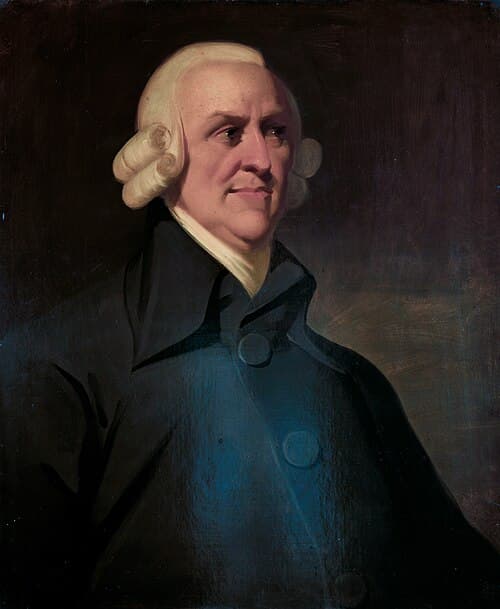
Adam Smith's
PERSON
Name reference in documents

Alan Dershowitz
PERSON
American lawyer, author, and art collector (born 1938)
Alan Rogers
PERSON
English football manager (born 1924)
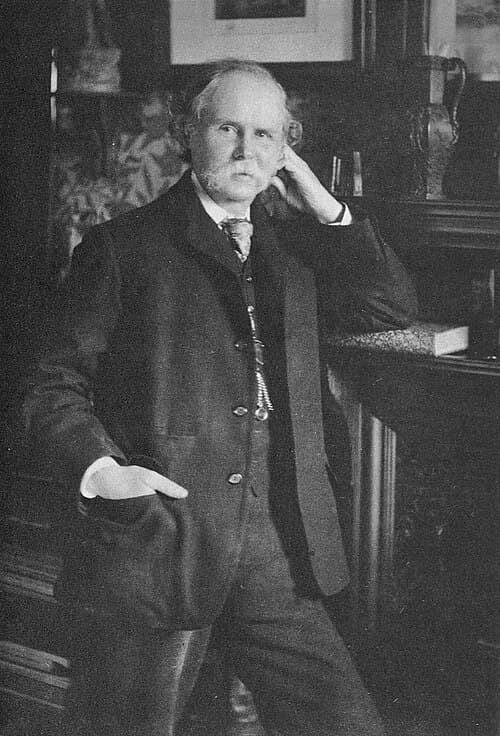
Alfred Marshall's
PERSON
Name reference in documents
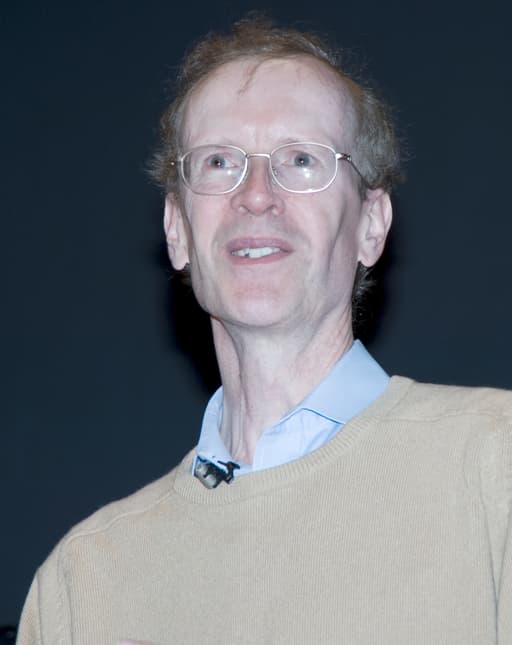
Andrew Wiles
PERSON
English mathematician (1953–)
Arthur Pigou
PERSON
Name reference in documents
BE
Becker
PERSON
Surname reference in Epstein-related documents
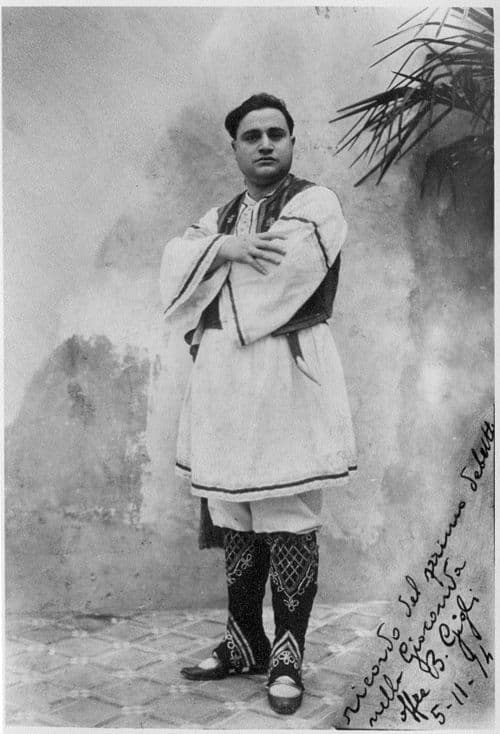
Beniamino Gigli
PERSON
Name reference in documents
Bob Miller
PERSON
26th Governor of Nevada and an American attorney and politician
BT
Bob Trivers
PERSON
Person referenced in documents
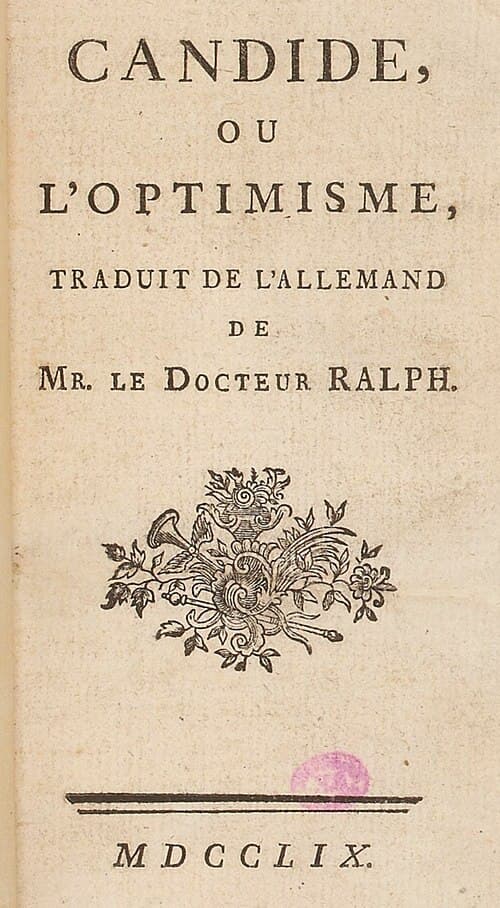
Candide
PERSON
Surname or name fragment in documents
CA
Cantillon
PERSON
Name reference in documents

Cap Balfour’s
PERSON
Name reference in documents
Carl Menger
PERSON
Name reference in documents
CA
Caruso
PERSON
Original song written, composed, and performed by Lucio Dalla
Charles Haubiel
PERSON
Name reference in documents

Charlie maximizes exhaust
PERSON
Name reference in documents

Chauncey Medberry
PERSON
Name reference in documents
CH
Clark Howell
PERSON
Name reference in documents
CW
Courtney Wild
PERSON
American victim/survivor of Jeffrey Epstein who led legal battle for victims' rights
Dante
PERSON
First name reference to multiple individuals in Epstein-related documents

Dave Hamburg
PERSON
City and state in the North of Germany
David Ricardo
PERSON
Name reference in documents
Descarte
PERSON
Name reference in documents

Desmond Clark
PERSON
Player of American football
DH
Dick Hay
PERSON
Name reference in documents
Don Juan
PERSON • 2 mentions
Opera by Wolfgang Amadeus Mozart
EM
Emily
PERSON
Ambiguous first name - refers to multiple people in Epstein documents

Emily Dickenson’s
PERSON
Name reference in documents
Eugen von Boehm Bawerk
PERSON
Name reference in documents
Falstaff
PERSON
Shakespeare character
Fermat
PERSON
Surname reference in documents
FI
Fisher
PERSON
Surname reference in Epstein documents
Franco Modigliani
PERSON
Italian-American economist (1918–2003)
Francois Quesnay
PERSON
Local service district in Newfoundland and Labrador, Canada
FK
Frank Knight
PERSON
American arborist
Gabriel Zucman
PERSON
French economist
Gary Becker
PERSON
American economist (1930-2014)
George W. Bush
PERSON • 2 mentions
President of the United States from 2001 to 2009
Gertrude Stein
PERSON
American author (1874–1946)

Ghislaine Maxwell
PERSON
British socialite and sex trafficker, daughter of Robert Maxwell, accomplice of Jeffrey Epstein

Glass
PERSON
Surname reference in Epstein documents
Gordon Getty
PERSON
American businessman, investor, philanthropist and classical music composer
Gunnar Myradal
PERSON
Name reference in documents
HA
Halliday
PERSON
Name reference in documents
HA
Hanneman
PERSON
Name reference in documents
HA
Harold
PERSON • 2 mentions
First name reference to multiple individuals in the documents
HB
Harold Berg
PERSON
Name reference in documents

Harold Stuart
PERSON
British royal house of Scottish origin
HW
Harold Williams
PERSON
Name reference in documents
Harvey Weinstein
PERSON
American film producer and sex offender (born 1952)
Heinrich Schmoller
PERSON
Name reference in documents

Herschel Shelton
PERSON
Company that manufactures backpacks, bags, accessories, and other travel goods
Irving Fisher
PERSON
Name reference in documents
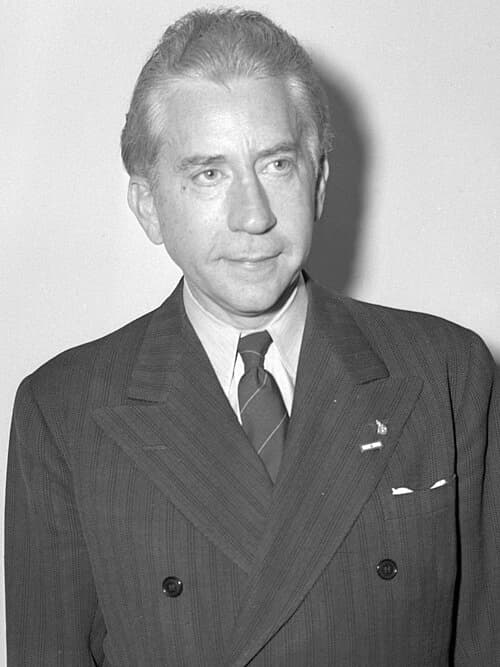
J. Paul Getty
PERSON
Person referenced in documents
JA
Jackie
PERSON
Ambiguous first name - refers to multiple people in Epstein documents
Jacob Mincer
PERSON
American economist (1922–2006)

Jane Goodall’s
PERSON
Name reference in documents
Jevons
PERSON
Surname or name fragment in documents
Jim Jiminez
PERSON
Name reference in documents
Jim Kinnell
PERSON
Name reference in documents
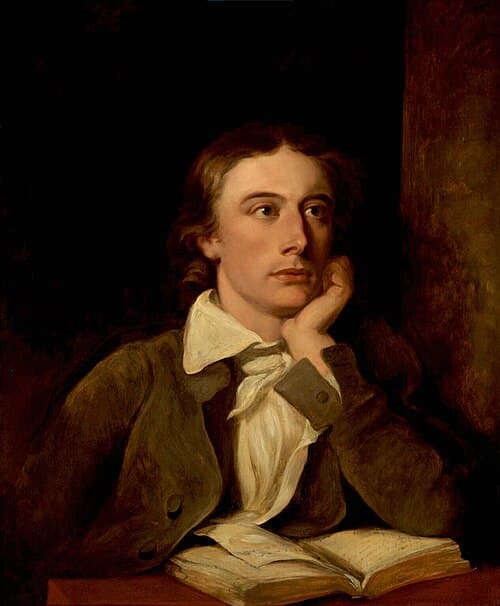
John Keats
PERSON
Person referenced in documents

John Law's
PERSON
Name reference in documents
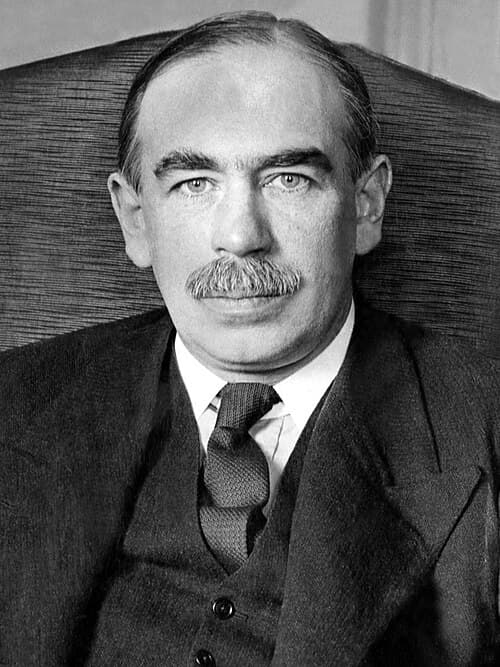
John Maynard Keynes
PERSON
Name reference in documents
JR
John Rae
PERSON
Name reference in documents
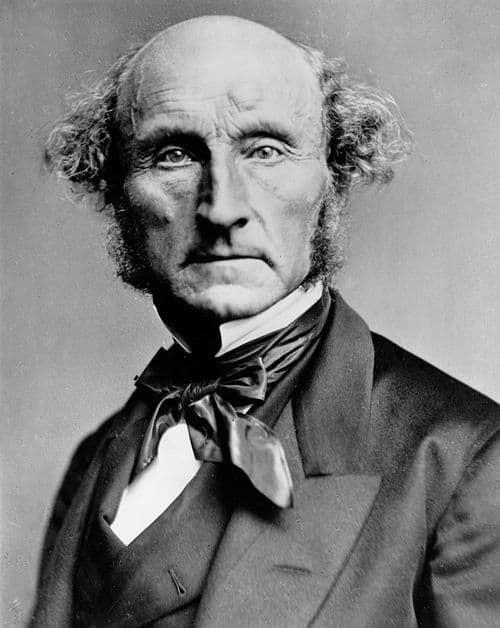
John Stuart Mill’s
PERSON
Name reference in documents
Joseph Schumpeter
PERSON
Name reference in documents
Julian Huxley
PERSON
Name reference in documents

Julie K. Brown
PERSON
American journalist
Julius Ceasar’s
PERSON
Name reference in documents
Karl Marx
PERSON
Person referenced in documents
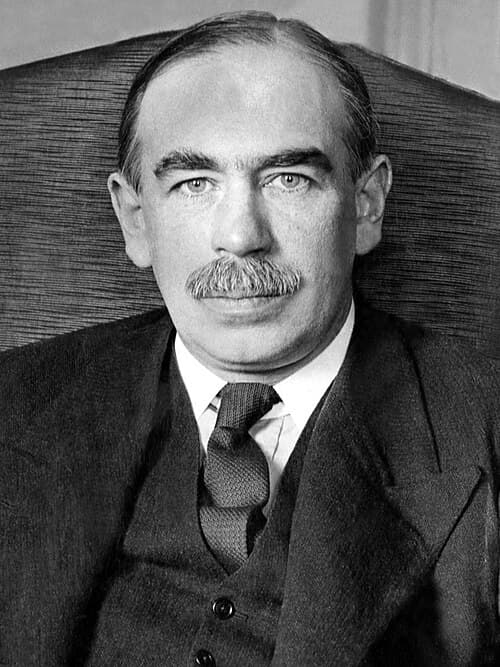
Keynes
PERSON • 2 mentions
Surname reference in Epstein-related documents
KE
Keynesian
PERSON
Name reference in documents
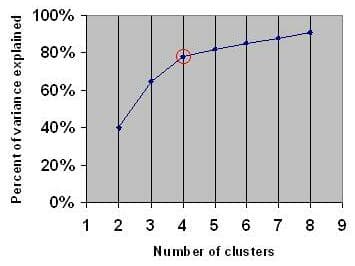
Kiokemeister
PERSON
Name reference in documents
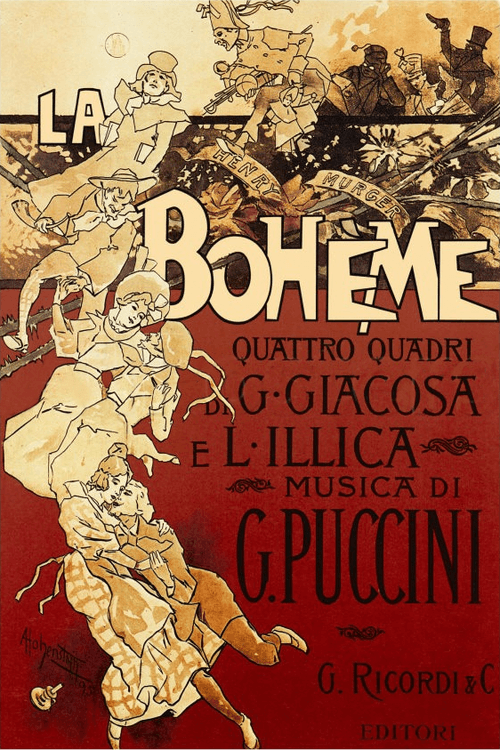
La Boheme
PERSON
Name reference in documents

Leakey
PERSON • 2 mentions
Name reference in documents

Leibnitz
PERSON
Town in Leibnitz District, Styria, Austria
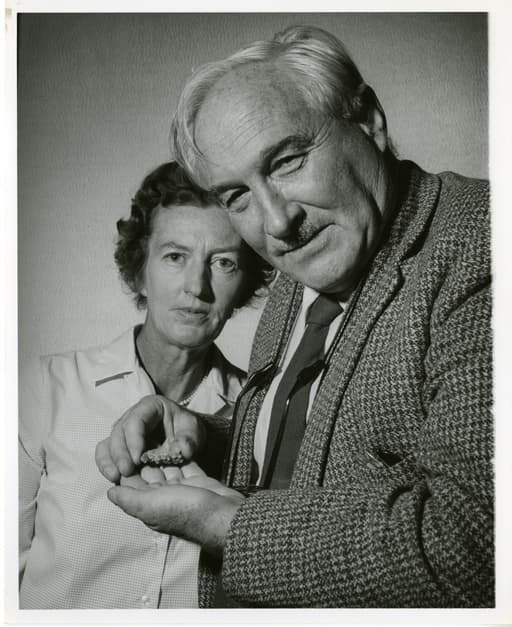
Louis Leakey
PERSON
Kenyan-British archaeologist and naturalist
LX
Louis XIV
PERSON
Person referenced in documents

MacArthur
PERSON
Ambiguous - references to MacArthur Foundation and General Douglas MacArthur in Epstein documents
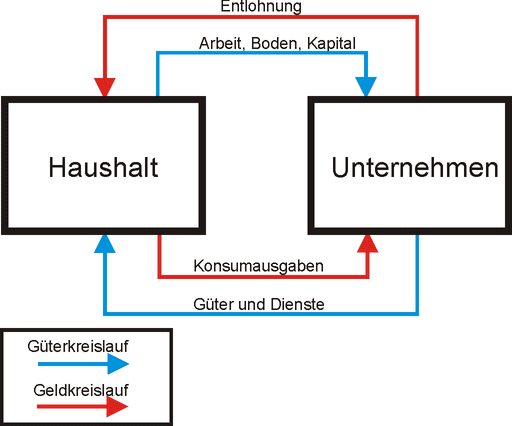
Macroeconomics
PERSON
Branch of economics that studies aggregated indicators
Malthus
PERSON
Demon

Manuel Teles
PERSON
Name reference in documents
Marc Rich
PERSON
American commodities trader (1934–2013)
Marco Polo’s
PERSON
Name reference in documents
MW
Martin Weinberg
PERSON
American attorney (born 1946)

Martinez
PERSON
Ambiguous surname - refers to multiple people in Epstein documents
Marty Lipton
PERSON
Name reference in documents
Matt Kelly
PERSON
Australian cricketer
MA
Matzushita
PERSON
Name reference in documents
Max Balfour
PERSON
Name reference in documents

McCoy
PERSON
Surname reference in Epstein-related documents

Menger
PERSON
Name reference in documents
Milton Friedman
PERSON
American economist and statistician (1912–2006)
Mina Saud
PERSON
Italian singer (1940-)

Mincer
PERSON
Surname or name fragment in documents
Modigliani
PERSON • 2 mentions
Surname reference in Epstein-related documents
MN
Mohammed bin Nasr
PERSON
Name reference in documents
Mose Lasky
PERSON
Name reference in documents
Mozart
PERSON
References to classical composer Wolfgang Amadeus Mozart in discussions about music

Myrdal
PERSON
Name reference in documents
Nancy Pelosi
PERSON
American politician (born 1940)
Nobelist Robert Solow
PERSON
Name reference in documents
Nobelists
PERSON
Surname or name fragment in documents

Norris
PERSON
Surname reference in Epstein-related documents
Norris Bramblett
PERSON
Name reference in documents
PA
Pangloss
PERSON
Name reference in documents
Paul Volcker
PERSON
American economist (1927-2019)
PE
Peery
PERSON
Surname or name fragment in documents
PE
Petty
PERSON • 2 mentions
Surname reference in documents
Piero Sraffa
PERSON
Name reference in documents
Pinocchio
PERSON
Name reference in documents
Placido Domingo
PERSON
Spanish tenor and conductor (born 1941)
Prince Andrew
PERSON
Third child of Queen Elizabeth II and Prince Philip, Duke of Edinburgh (born 1960)
Prince Charles
PERSON
King of the United Kingdom and other Commonwealth realms since 2022 (born 1948)
Ragnar Frisch
PERSON
Name reference in documents
Raymond Dart
PERSON
Name reference in documents

Renata Scotto
PERSON
Italian soprano, opera director (1934–2023)
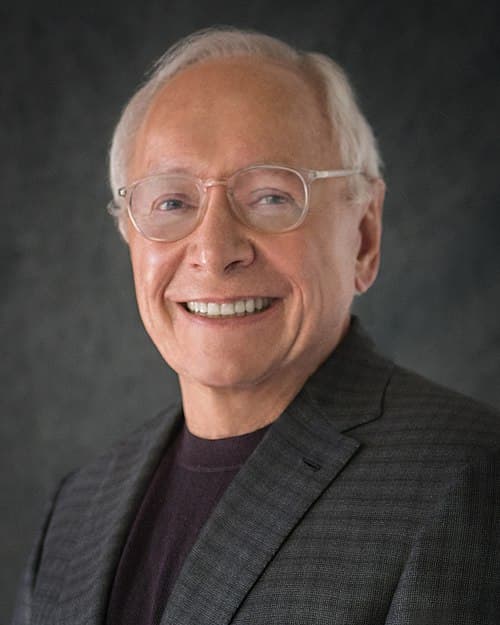
Resnick
PERSON
Surname reference in documents

Ricardo
PERSON
Portuguese association football player
RC
Richard Cantillon
PERSON
Name reference in documents
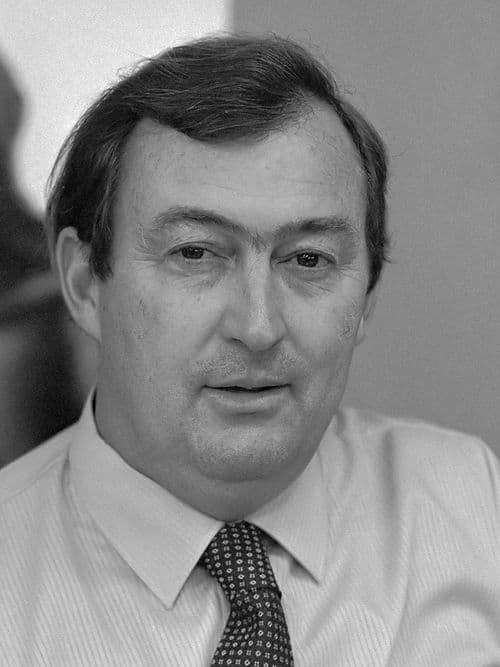
Richard Leakey
PERSON
Kenyan paleoanthropologist, conservationist, and politician (1944-2022)
RT
Robert Trivers
PERSON • 2 mentions
American evolutionary biologist and sociobiologist
RO
Ronnie
PERSON
First name reference to multiple individuals in Epstein-related documents
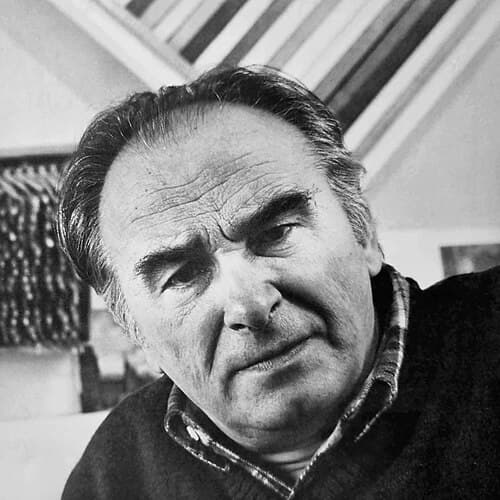
Rotemburg
PERSON
Name reference in documents
Roy Harrod
PERSON
English economist (1900–1978)

Ruddiger Dornbusch
PERSON
District of Frankfurt, Hesse, Germany

Scarlett Johansson
PERSON
American actress (born 1984)
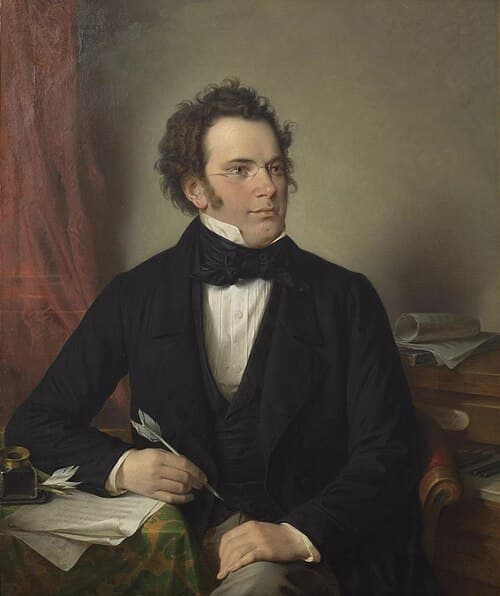
Schubert
PERSON
Surname reference in documents
SC
Schultz
PERSON
Ambiguous surname reference in Epstein documents
SW
Sherry Washburn
PERSON
American archaeologist, anthropologist, prehistorian and paleoanthropologist (1911–2000)
Simon Kuznets
PERSON
Economist
Slava Rostropovich
PERSON
Soviet and Russian cellist and conductor (1927-2007)

Sol Joseph
PERSON
Name reference in documents
Teddy
PERSON
American serial killer (1946–1989)
Tennyson
PERSON
Surname reference in documents
Thomas Malthus
PERSON
Name reference in documents
Thomas Piketty
PERSON • 2 mentions
French economist
Thorstein Veblen
PERSON
Name reference in documents
TI
Timmy
PERSON
Surname reference in Epstein-related documents
TU
Turgot
PERSON • 3 mentions
Surname or name fragment in documents
TV
Tversky
PERSON
Israeli psychologist (1937–1996)

Virginia Giuffre
PERSON
Advocate for sex trafficking victims (1983–2025)
Voltaire
PERSON
Surname reference in documents
WE
Weare
PERSON
Surname reference in documents
William Petty
PERSON
Name reference in documents
William Shakespeare
PERSON
English playwright and poet (1564–1616)
William Stanley Jevons
PERSON
Name reference in documents
WI
Willy
PERSON
Spanish YouTuber

Willy Brown
PERSON
Racial classification
YB
Yoram Ben-Porath
PERSON
Israeli economist
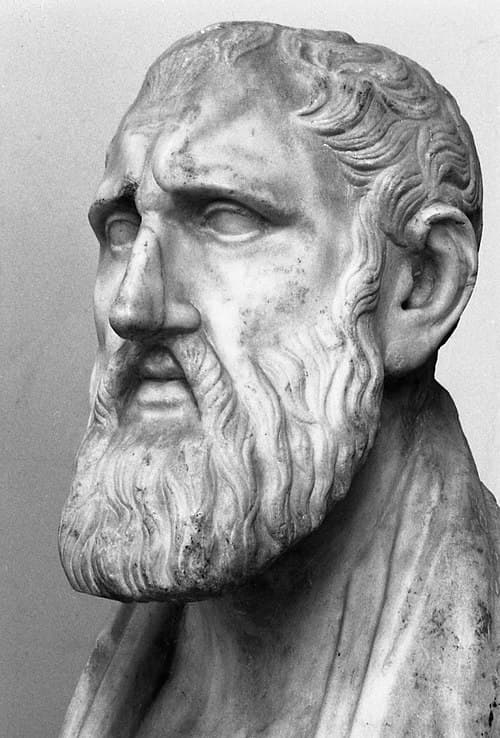
Zeno the Stoic
PERSON
Name reference in documents
Zucman
PERSON
French economist

Alexa
ORGANIZATION
Amazon virtual assistant technology

Barneys New York
ORGANIZATION
American chain of luxury department stores
Belwin Mills
ORGANIZATION
Organization referenced in documents
Ben-Porath
ORGANIZATION • 2 mentions
Organization referenced in documents

Bloomberg L.P.
ORGANIZATION
American privately held financial, software, data, and media company
Boehm Bawerk
ORGANIZATION
Organization referenced in documents

Central Bank
ORGANIZATION
Public institution that manages a state's currency, money supply, and interest rates
Charts
ORGANIZATION
Organization referenced in documents
Chauncey
ORGANIZATION
Organization referenced in documents
College Mathematics
ORGANIZATION
Organization referenced in documents
Composers’ Press
ORGANIZATION
Organization referenced in documents
Convergent
ORGANIZATION
Organization referenced in documents

Eastern Division
ORGANIZATION
Division of Fiji
Eleatic
ORGANIZATION
Organization referenced in documents
Getty Oil
ORGANIZATION
Organization referenced in documents
Getty Oil board
ORGANIZATION
Organization referenced in documents
Getty Oil Company
ORGANIZATION
Organization referenced in documents

Jamil
ORGANIZATION
Organization referenced in documents
Kalambo Falls
ORGANIZATION
Organization referenced in documents
Lansing Hays
ORGANIZATION
Organization referenced in documents
Medberry
ORGANIZATION
Organization referenced in documents
Micro
ORGANIZATION
Organization referenced in documents
National Public Radio
ORGANIZATION
Organization referenced in documents
National Science Foundations
ORGANIZATION
Organization referenced in documents
Pennzoil
ORGANIZATION
Organization referenced in documents
Petty through Smith, Malthus
ORGANIZATION
Organization referenced in documents
Piketty-Zucman
ORGANIZATION
Organization referenced in documents

Porath
ORGANIZATION
Family name
pre-Socratics
ORGANIZATION
Organization referenced in documents
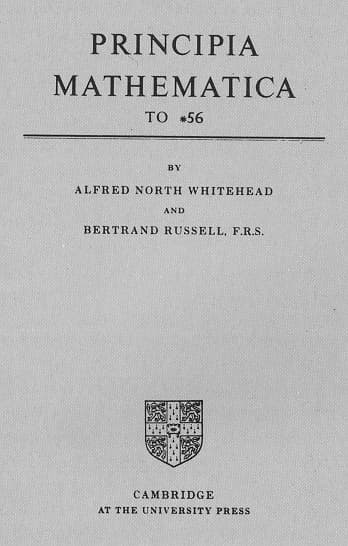
Principia Mathematica
ORGANIZATION
Organization referenced in documents
Principles of Political Economy
ORGANIZATION
Organization referenced in documents
R. A. Fisher
ORGANIZATION
Organization referenced in documents
Riviera
ORGANIZATION
Organization referenced in documents
Scotsman
ORGANIZATION
Organization referenced in documents
Skelly Oil
ORGANIZATION
Organization referenced in documents
Solow
ORGANIZATION • 2 mentions
Horse
Spartan
ORGANIZATION
Organization referenced in documents
Spartan Aircraft Company
ORGANIZATION
Organization referenced in documents
Sutton Place
ORGANIZATION
Organization referenced in documents
Taung
ORGANIZATION
Organization referenced in documents
the Arch Street Church
ORGANIZATION
Organization referenced in documents
the General Theory
ORGANIZATION
Organization referenced in documents
The Getty Museum
ORGANIZATION
Organization referenced in documents
the Global Financial Data
ORGANIZATION
Organization referenced in documents
the Leakey Foundation
ORGANIZATION
Organization referenced in documents
The Museum and Trust
ORGANIZATION
Organization referenced in documents
the Red Sox
ORGANIZATION
Organization referenced in documents
the Tea Party
ORGANIZATION
Organization referenced in documents
the Trust, Museum
ORGANIZATION
Organization referenced in documents
Tidewater
ORGANIZATION
Organization referenced in documents
Tidewater Oil Company
ORGANIZATION
Organization referenced in documents

Wachtell, Lipton
ORGANIZATION
Law firm
Wealth of Nations
ORGANIZATION
Organization referenced in documents
Wenner Gren
ORGANIZATION
Organization referenced in documents
World Wildlife
ORGANIZATION
Organization referenced in documents
Y=I+C
ORGANIZATION
Organization referenced in documents
Aladdin
LOCATION
Location referenced in documents
Ambrona
LOCATION
Human settlement in Miño de Medinaceli, Soria Province, Castile and León, Spain

Amherst
LOCATION
Liberal arts college in Massachusetts
Berkeley
LOCATION
City in Alameda County, California, United States

Boston Harbor
LOCATION
Estuary and harbor of Massachusetts Bay in the northeastern United States

Colorado
LOCATION
State of the United States of America
Fort Lee
LOCATION
Location referenced in documents
Gombe
LOCATION
State in northern Nigeria
Inverness
LOCATION
City in the Highlands of Scotland, United Kingdom

Johannesburg
LOCATION
Largest city in South Africa

Kawasaki
LOCATION
City in Kanagawa prefecture, Japan

Kuwait
LOCATION
Sovereign state in Western Asia

Los Angeles
LOCATION
Seat of Los Angeles County, and largest city in California, United States

Nassau
LOCATION
Capital and largest city of the Bahamas
Neutral Zone
LOCATION
Location referenced in documents

Oklahoma
LOCATION
State of the United States of America
Olduvai
LOCATION
Archaeological site in Tanzania

Pearl Harbor
LOCATION
Location referenced in documents
Philadelphia
LOCATION
1993 film by Jonathan Demme

Providence
LOCATION
Capital city of Rhode Island, United States

San Francisco
LOCATION • 2 mentions
Consolidated city and county in California, United States
San Francisco Marina
LOCATION
Location referenced in documents
San Joaquin
LOCATION
Passenger train in California's San Joaquin Valley
San Rafael
LOCATION
City and the county seat of Marin County, California, United States of America
the Central Basin
LOCATION
Location referenced in documents
Torralba
LOCATION
Location referenced in documents

Tulsa
LOCATION
City in Oklahoma, United States and county seat of Tulsa County

Vietnam
LOCATION
Country in Southeast Asia

Wisconsin
LOCATION
State of the United States of America
Statistics
Pages:100
Entities:239
Avg. OCR:95.0%
Sponsored