HOUSE_OVERSIGHT_027849_sub_001 - HOUSE_OVERSIGHT_027948
Document Information
Bates Range
HOUSE_OVERSIGHT_027849_sub_001 - HOUSE_OVERSIGHT_027948
Pages
100
Source
House Oversight Committee
Original Filename
EB Draft Ch1-25 PDF Sept 10 2017-Pnum.pdf
Document Content
Page 1 - HOUSE_OVERSIGHT_027849
Night Flight They say that you can read a person’s feelings on his face. But if so, either I’m a very good actor — the opposite of what anyone who has worked closely with me would tell you — or the journalists clustered in front of me weren’t very good face-readers. They said that I looked defeated. Distressed. Depressed. Yet as I delivered my brief final statement outside an olive-green cabin at Camp David, the American presidential retreat in the forested Catoctin hills north of Washington, I felt none of those things. Yes, I was disappointed. I realised that what had happened over the last 14 days, or more crucially what had not happened, was bound to have serious consequences, both for me personally, as Prime Minister of Israel, and for my country. But I had been a politician, at that point, for all of five years. By far most of my life, I had spent in uniform. As a teenager, small and slight and not even shaving yet, I was one of the founding core of a unit called Sayveret Matkal, Israel’s equivalent of America’s Delta Force, or Britain’s SAS. It may be that the way I thought and acted, the way I dealt with danger or with crises, came from someplace inside me. Even as a young kid, I was always quiet, serious, contemplative. But my 13 years as a part of Israel’s main special-forces unit, especially once I became its commander, etched those qualities more deeply. And they added new ones: a sense that you could never plan a mission too carefully or prepare too assiduously; an understanding that what you thought, and certainly what you said, mattered a lot less than what you did. And above all the realisation that, when one of our nighttime commando operations was over, whether it had succeeded or failed, you had to take a step back. Evaluate things accurately, coolly, without illusions. Then, in the light of how the situation had changed, you had to decide how best to move forward. That approach, to the occasional frustration of the politicians and diplomats working alongside me during this critical stage of Israel’s history, had guided me from the moment I became Prime Minister. In my very first discussions with President Clinton a year earlier — a long weekend, beginning at the White House and moving on to Camp David — I had mapped out at great length, in great detail, every one of the steps I knew we would have to take to confront the central issue facing Israel: the need for peace. 1 HOUSE_OVERSIGHT_027849
Page 2 - HOUSE_OVERSIGHT_027850
In choosing to return, now, to Camp David for two weeks of summit talks, I knew the risks. Of all the moments of truth in my life — and in the life of my country — few, if any, would carry higher stakes. Success would mean not just one more stutter-step away from our century-long conflict with the Palestinians. It would signal a real, final peace: in treaty-speak, end of conflict. Whatever the complexities of putting an agreement into practice, given all the suffering and bloodshed endured by both sides, we would have crossed a point of no return. There would be two states, for two peoples. And if we failed? I knew, if only from months of increasingly stark intelligence reports, that an explosion of Palestinian violence — not just with stones or bottles this time, but with guns and explosives — would be only a matter of time. I knew something else as well. This would be a moment of truth not just for me. Or for Bill Clinton, a man who understood our conflict more deeply, and was more determined to help us end it, than any other president before him. It was a moment of truth for the leader of the Palestinians, Yasir Arafat. The Oslo Accords of 1993, groundbreaking though they were, had created a peace process, not peace. Over the past few years, that process had been lurching from crisis to crisis. Political support for negotiations was fraying. And yet the core issues of our conflict had not been resolved. In fact, they had hardly been talked about. The reason for this was no secret. For both sides, these questions lay at the heart of everything we’d been saying for years, to the world and to ourselves, about the roots of the conflict and the minimum terms we could accept in order to end it. At issue were rival claims on security, final borders, Israeli settlements, Palestinian refugees, and the future of ancient city of Jerusalem. None of these could be resolved without painful, and politically perilous, compromises. Entering the summit, despite the pressures ahead, I was confident that I, with my team of aides and negotiators, would do our part to make such a final peace agreement possible. Nor did I doubt that President Clinton, whom I had come to view not just as a diplomatic partner but a friend, would rise to the occasion. But as for Arafat? There was simply no way of knowing. That was why I had pressed President Clinton so hard to convene the summit. That was why, despite the misgivings of some of his closest advisers, he had taken the plunge. We both knew that the so-called “final-status issues” — 2 HOUSE_OVERSIGHT_027850
Page 3 - HOUSE_OVERSIGHT_027851
the substance of any real peace — could not simply be put off forever. Untangling them was getting harder, not easier. And we realised that only in an environment like Camp David — a “pressure cooker” was how I described it to Clinton, and to US Secretary of State Madeleine Albright — would we ever discover whether a peace deal could in fact be done. Now, we knew. Israel’s equivalent of Air Force One, perhaps in a nod to our country’s pioneering early years, was an almost prehistoric Boeing 707. It was waiting on the runway at Andrews Air Force Base outside Washington to ferry me and the rest of our negotiating team back home. It contained a low-rent equivalent of the American version’s presidential cabin, and a few 1960s-vintage first-class seats, but consisted mostly of two long lines of coach seats, three abreast, separated by an almost tightrope-narrow aisle. I dare say I was alone in finding an odd sense of comfort in boarding the plane. This museum piece of an aircraft was part of my past. It was the same model of 707 for which I, with a couple of other young soldiers and engineers, had come up with what we dubbed the “submarine door” system outside the cockpit — to protect El Al pilots from future attacks after one of its planes had been hijacked to Algiers in the summer of 1968. It was also the same kind of plane — a Sabena flight, hijacked to Tel Aviv’s Ben-Gurion Airport — which I stormed, before sunrise, four years later with a force of nearly two dozen Matkal commandos. The shooting was over within 90 seconds. One of my men —a junior officer named Bibi Netanyahu — was wounded. By one of our own bullets. But we managed to kill two of the heavily armed hijackers, capture the others, and free all 90 passengers unharmed. Still, even I had to accept, it was no fun to fly on. As we banked eastward after takeoff and headed out over the Atlantic, the mood on board was sober. Huddling with the inner core of my negotiating team — my policy co-ordinator Gilad Sher, security aide Danny Yatom and Foreign Minister Shlomo Ben-Ami — I could see that the way the summit ended had hit them hard. It was probably true, as all three often reminded me, that the greatest pressure fell on me. I was the one who ultimately decided what we could, or 3 HOUSE_OVERSIGHT_027851
Sponsored
Page 4 - HOUSE_OVERSIGHT_027852
should, offer in search of a true peace with the Palestinians. I was the one who would be blamed by the inevitable critics, whether for going too far or not far enough, or simply for the fact the deal had eluded us. I knew the drill: the same thing had happened when I had come tantalizingly close to finalizing a peace deal with Syria’s then-dying dictator, Hafez al-Assad, a few months earlier. Yet these three dedicated men — Gili, who was by training a lawyer; Shlomo, an academic; and Danny, a former Mossad chief — had just been through dozens of hours of intricately detailed talks with each of Arafat’s top negotiators at Camp David, not to mention the dozens of other meetings before we had even got there. Now they had to accept that, even with the lid of the pressure cooker bolted down tight, we had fallen short of getting the peace agreement which each of us knew had been within touching distance. I don’t think that even they could be described as depressed. On our side, after all, we knew we had given ground on every issue we possibly could, without facing full-scale political rebellion at home. We had proposed an Israeli pullout from nearly all of the West Bank and Gaza. A support mechanism for helping compensate tens of thousands of Palestinian refugees from the serial Arab-Israeli conflicts of the past half-century. And most painfully and controversially — my rivals and critics back home were already accusing me of “treachery” — we had agreed to let President Clinton present a proposal for the Palestinians to get sovereignty over the Arab neighbourhoods of Jerusalem as well as “custodial sovereignty” over the Haram al-Sharif, the mosque complex perched above the Western Wall, the holiest site in Judaism. But precisely because we had been ready to offer so much, only for Arafat to reject it all, even as a basis for talks on a final deal, I could sense how gutted my key negotiators were feeling. Still, I’m sure none of them was surprised when my own old operational instincts kicked in. In my statement to journalists, I had been careful to say that Arafat was not ready at this time to make the historic compromises needed for peace. But before parting with President Clinton and Secretary Albright, I’d been more forthright. It was clear, without my saying so, that the chances of our getting a peace agreement on Clinton’s watch were now pretty much over. He had barely five months left in office. Yet my deeper fear was that with Arafat having brushed aside an offer that went far further than any other Israeli had proposed — far further than the Americans, themselves, had expected from Israel — the prospects for peace would be set back for years. Perhaps, I said, for two decades. 4 HOUSE_OVERSIGHT_027852
Page 5 - HOUSE_OVERSIGHT_027853
The challenge now, I told my exhausted team, was to make sure we were prepared for this new reality. Part of the spadework was already in place. Much as I’d hoped that Arafat and I could turn a new page in Middle East history, I had directed our army chief-of-staff, nine months before the summit, to draw up contingency plans for the likelihood of an unprecedentedly deadly eruption of Palestinian violence if we were to fail. Now, I felt we had to go even further, and to prepare a proactive alternative to the negotiated deal we’d been unable to secure. I proposed considering a unilateral Israeli pullout from the West Bank and Gaza. The territorial terms would, necessarily, be less far-reaching than the proposal Arafat had rejected. But I felt we should still withdraw from the great majority of the land we had captured in 1967, still leaving the Palestinians an area which the outside world would recognize as wholly sufficient for them to establish a viable, successful state. And crucially, this would finally give Israel, our country, a delineated, final border with the territory captured in the Six-Day War. Gili, clearly uneasy about accepting the idea that the chances for a negotiated peace were definitively gone, left to try to get some sleep on the long flight ahead. Danny and Shlomo Ben-Ami as well. Within an hour or so, the plane was full of irregularly slumped bodies, the silence broken only by the drone of the 707’s engines and the occasional sound of snoring. I sat, wide awake, in one of the seats at the front. My sleeping habits were another inheritance from Sayveret Matkal. During those years, nearly everything of significance which I did had happened after sundown. The commando operations were, of course, set for darkness whenever possible. The element of surprise could mean the difference between success and failure, indeed life and death. But all of my planning, all my thinking, tended to happen at night as well. The quiet, and the lack of distractions, helped to discipline my mind. I found that it helped to free my mind as well, sometimes only to discover that it went off in unexpected directions. It did so now. Perhaps even I was still reluctant to accept that Camp David meant that the opportunity for a transformative deal with Arafat was finished. Yet whatever the reason, I began thinking back to the first time that my path and his had crossed. It was in the spring of 1968, nearly a year after Israel had defeated the armies of our three main Arab enemies — Egypt, Syria and Jordan. Israeli forces were advancing on a Jordanian town called Karameh, across the 5 HOUSE_OVERSIGHT_027853
Page 6 - HOUSE_OVERSIGHT_027854
Jordan River from the West Bank, from which a fledgling group called Fatah, under the command of Arafat, had been staging a series of raids. In one of their most recent attacks, they’d planted land mines, one of which destroyed an Israeli schoolbus, killing the driver and one of the teachers and injuring nearly a dozen children. The so-called Battle of Karameh was our single most significant operation since the 1967 war. In pure military terms, it succeeded. But at a price: more than two dozen Israeli soldiers dead. It also had a major political impact. It caused shock among many Israelis, still wrapped in a sense of invincibility from the Six-Day War, as well as a feeling in the Arab world, actively encouraged by Arafat and his comrades, that compared to the great armies Israel had defeated in 1967, Fatah had at least shown fight. Fatah had drawn blood. I had just turned 26 years old. I was finishing my studies in math, physics and economics at the Hebrew University in Jerusalem, and had joined my Sayeret Matkal comrades the night before the assault. It was a huge operation: ten battalions, including crack infantry units. Our own role was relatively minor. We were to seal the southern entrance to the town. But it proved a tough slog just to get there. Our vehicles got bogged down in mud. By the time we arrived, Fatah fighters, although many were in civilian clothes so we couldn’t be sure, were racing past us in the other direction. One of them, we were later told, was Yasir Arafat. On a motorcycle. It would be nearly three decades before the two of us actually met — shortly after the assassination of my longtime comrade and friend Yitzhak Rabin, when I had become Foreign Minister under Shimon Peres. But in the intervening years, Arafat was rarely off of my radar. By the early 1970s, he and his fighters had been expelled by King Hussein’s army from Jordan and were re-based in Lebanon. Arafat was becoming a significant figure on the Arab and world political stage, and an increasingly uncomfortable thorn in Israel’s side. I was head of Sayeret Matkal by then. Over a period of months, I drew up a carefully constructed plan — a raid by helicopter into a Fatah-dominated area in southeastern Lebanon, during one of Arafat’s intermittent, morale-boosting visits from Beirut — to assassinate him. My immediate superior, the army’s head of operations, was all for our doing it. But the chief of military intelligence said no. Arafat, he insisted when we met to discuss the plan, was no longer the lean, mean fighter we had encountered in Karameh. “He’s fat. He’s a politician. He is not a target.” 6 HOUSE_OVERSIGHT_027854
Sponsored
Page 7 - HOUSE_OVERSIGHT_027855
A decade later, the idea would suddenly resurface. In my first meeting, as a newly promoted Major General, with our then Defence Minister Ariel Sharon, Sharon turned to me and the army’s Chief of Staff, Rafael Eitan, and said: “Tell me. Why the hell is Arafat still alive?” He looked first at Raful, then at me, and added: “When I was 20 years younger than you are, I never waited for someone like Ben-Gurion or Dayan to ask me to plan an operation. I would plan it! Then I’d take it to them and say, you’re the politicians, you decide, but if you say yes, we'll do it.” I smiled, telling him that I’d done exactly that, a decade earlier, only to have one of his mates in the top brass say no. Sharon now said yes. But the plan was overtaken: by his ill-fated plan to launch a full-scale invasion of Lebanon in 1982, targeting not just Arafat, but with the aim of crushing the PLO militarily once and for all. I finally met Arafat face-to-face at the end of 1995. Although the Oslo peace process had dramatically changed things, it was clear that the real prize — real peace — was still far away. We were in Barcelona, for a Euro-Mediterranean meeting under the auspices of King Juan Carlos, aimed at trying to re-invigorate negotiations. The ceremonial centrepiece of the event was a dinner at one of the royal palaces, and it was arranged for me and Arafat to meet for a few minutes beforehand. | arrived first. I found myself in a breathtakingly opulent, but otherwise empty, room. Empty, that is, except for a dark-brown Steinway piano. From childhood, I have loved music. And while I am never likely to threaten the career of anyone in the New York Philharmonic, I have, over the years, developed some ability, and drawn huge enjoyment, as a classical pianist. I pulled back the red-velvet bench and began to play. With my back to the doorway, I was unaware that Arafat had arrived, and that he was soon standing only a few feet away, watching as I played one of my favourite pieces, a Chopin waltz. My old commando antennae must have been blunted. I may not have become “fat”. But, undeniably, I was now a politician. When I finally realised Arafat was behind me, I turned, embarrassed, stood up, and grasped his hand. “It’s a real pleasure to meet you,” I said. “I must say I have spent many years watching you — by other means.” He smiled. We stood talking for about 10 minutes. My hope was to establish simple, human contact; to signal respect; to begin to create the conditions not to try to kill Arafat, but to make peace with him. “We carry a great responsibility,” I said. “Both of our peoples have paid a heavy price, and the time has come to find a way to solve this.” 7 HOUSE_OVERSIGHT_027855
Page 8 - HOUSE_OVERSIGHT_027856
I sensed, at the time, at least the start of some connection. I suspected that Arafat viewed me, as he had Rabin before me, as a “fellow fighter”. But if so, I now wondered whether that might have been part of the problem in his ever truly understanding my mission at Camp David. My motivations. Or my mind. Even in Israel, my reputation as a soldier has sometimes been as much a burden as an advantage. A whole body of stories has followed me from my 36 years in uniform — a career which, after Saveret Matkal, led me up the military ladder until I was head of operations, intelligence, and eventually of the entire army as Chief of Staff. By the time I left the military, I was the single most decorated soldier in our country’s history. Some of the stories were actually true: that when we burst onto the hijacked Sabena airliner, for instance, we were dressed as a maintenance crew; or that, in leading an assassination raid in Beirut against the PLO group that had murdered Israeli athletes at the 1972 Munich Olympics, I was disguised as a woman. Not the most attractive young lady, perhaps, though I did, painfully, pluck my eyelashes, and, with the help of four pairs of standard-issue Israeli Army socks, develop quite a comely bosom. I rejected the idea of wearing a long dress, in favour of stylishly flared trousers. I was going on a commando operation, after all, not a prom date. But I did wear heels. So yes, a woman, of sorts. Yet some of the stories were just plain myth. I had given up counting the times I’d heard about my alleged prowess in recording the fastest-ever time on the most gruelling of the Israeli army’s obstacle courses. In fact, I was a lot more like Goldie Hawn in Private Benjamin. The main misunderstanding, however, went deeper. The assumption appeared to be that my military achievements, especially in Sayeret Matkal, were down to a mix of brute force and raw courage. Courage, of course, was a requirement: the willingness to take risks, if the rewards for success, or the costs of inaction, were great enough. Few of the operations I fought in or commanded were without the real danger of not coming back alive. But whatever success I'd had as a soldier, particularly in Matkal, was not only, nor even mainly, about biceps. It was about brains. The ability to make decisions. To withstand the pressure of often having to make the most crucial decisions within a matter of seconds. It was, above all, about thinking and analyzing — and always, always, looking and planning ahead. And as our plane droned onward towards Israel, I knew that I would now need all of those qualities more than ever. 8 HOUSE_OVERSIGHT_027856
Page 9 - HOUSE_OVERSIGHT_027857
This book is only in part the story of my life — a life that, from my beginnings as a kibbutz boy in pre-state Palestine, has been intimately entwined with the infancy and adolescence and, now, the increasingly troubled middle age of the State of Israel. Still less is it only a record of its, or my, achievements, although they are inevitably a part of the story. In setting out to write it, I was also determined to document, from the inside, the critical setbacks as well. Mistakes. Misjudgements. Missed opportunities. And the lessons that we can, and must, be prepared to learn from them. No less so than I when I was planning a hijack rescue or a cross-border commando operation in Saveret Matkal, | remain convinced that Israel’s security, Israel’s very identity, can be safeguarded only by evaluating dispassionately the situation in our country and the world. And by looking ahead. Even when I was a soldier, I never stopped thinking this way, especially when, first as military intelligence chief and especially as Chief of Staff, I knew, in detail, every one of the security threats that faced Israel and was part of discussions and decisions to try to confront them. I still vividly remember as Chief of Staff, every Friday before the arrival of the Jewish Sabbath, sitting with Rabin, who was then Israel’s Defence Minister. Our offices were along the same hallway of the Airya, the ministry’s headquarters in the heart of Tel Aviv. Rabin had a very low table in his office, with two chairs. We would sit across from each other, each with a ready supply of coffee and Yitzhak smoking an apparently endless supply of cigarettes, and we would just talk. Politics. Strategy. Israel. The PLO. The surrounding Arab states. And the wider world. Many years before I became Prime Minister, I gave a lecture at a memorial meeting for an Israeli academic. Not many people were there. I doubt even they remember it. But I do, because what I said has, sadly, become more prophetic than even I could have imagined. I talked about the imperative for peace as part of Israel’s security. There was a “window,” I said. We were militarily strong. In regional terms, we were a superpower. But politically, resolving the conflict with our Arab enemies would almost certainly become more difficult with time. 9 HOUSE_OVERSIGHT_027857
Sponsored
Page 10 - HOUSE_OVERSIGHT_027858
Iraq, perhaps Iran and other Middle Eastern states, might get nuclear weapons. A violent form of fundamentalist Islam could, over time, erode existing Arab and Muslim states, threatening Israel of course, but also the stability of our neighbourhood and of the world. In those circumstances, even if an Israeli government was strong enough, wise enough, forward-looking enough to pursue avenues for negotiated peace with its immediate neighbours, getting the popular support required would be all but impossible. The window 1s still there. But it is only barely open. I fear that I was right, as well, in predicting that our failure to secure a final peace agreement with the Palestinians at Camp David might set back peacemaking not just for a few months, but for many years. I have persisted in trying, very hard, to make that particular prediction prove wrong. That was why, despite intense pressure from my own political allies not to do so, I decided to return to government in 2007 as Defence Minister. I remained in that role for six years: mostly in the current, right-wing Likud government of my onetime Sayeret Matkal charge, Bibi Netanyahu. Much of what I say in this book about war and peace, security and Israel’s future challenges, will make uncomfortable reading for Bibi. But very little of it will surprise him, or his own Likud rivals further to the right, like Foreign Minister Avigdor Lieberman and the Economy Minister, Naftali Bennett. I have said almost all of it to them behind closed doors in the past few years, more than once. When I finally decided to leave the political arena last year, it was largely because I realized that they were guided by other imperatives. In the case of Bibi, the most gifted politician with whom I’ve worked except for Clinton, the priority was to stay in power. For Avigdor and Naftali, it was to supplant Bibi, when the opportunity was ripe, as Likud leader and as Prime Minister. And much too often — as with their hugely ill-advised recent proposal to amend Israel’s basic law to define it explicitly as a Jewish state, and deny “national rights” to non-Jews — the three of them have ended up competing for party political points rather than weighing the serious future implications for the country. Peacemaking, as I discovered first-hand, requires taking risks. Statesmanship requires risks. Politics, especially if defined simply as staying in power, is almost always about the avoidance of risk. 10 HOUSE_OVERSIGHT_027858
Page 11 - HOUSE_OVERSIGHT_027859
The problem for Israel, no matter who or what party is in government, is that there are risks everywhere one looks, and they show every sign of getting more, not less, serious. The “Arab Spring” has morphed into an Islamic winter. National frontiers that were put in place by British and French diplomats after the fall of the Ottoman Empire are vanishing. Centuries-old conflicts between tribes and rival religious communities have reignited. The old Cold War system of nations has given way to a world without a single geopolitical centre of gravity. Perhaps most seriously, Iran seems determined to get nuclear weapons, and, in my view, may succeed in doing so. Where Israel is concerned, relations with our indisputably most important ally, the United States, are more strained than at any time in decades. Diplomatic ties with Europe, our single largest trading partner, have been growing steadily worse. And the only real certainty is that anyone who tells you that they know absolutely where things are heading next is lying. Just ask Hosni Mubarak, who, despite having nearly half-a-million soldiers and security operatives at his disposal, was utterly blindsided, and very soon toppled and imprisoned, by an uprising that began with a sudden show of popular anger in Cairo’s Tahrir Square. Internally as well, Israel faces dangers. Chief among them is the alarming erosion of the standards of civil discourse, amid the increasingly shrill, often hateful, divisions between left and right, secular and religious, rich and poor and, most seriously of all, Jews and Arabs. While we remain economically successful, the fruits of our wealth are being ever more unevenly shared, and the prospects for continued growth constrained by the lack of any visible prospect of long-term peace. Bibi Netanyahu, of course, knows all of this. Indeed, he has repeatedly spoken of the multiple threats Israel faces, not only in somber terms, but at times almost apocalyptically. That works, politically. Politicians, not just in Israel but everywhere, know that it is a lot easier to win elections on fear than on hope. Yet my own prescription — learned, as this book recounts, from years on the battlefield, then reinforced by my years in government — is that Israel must resist being guided by either of those alternatives. Not fear, certainly. But neither by simple, untempered hope. Though the stakes have become much higher since my night flight back from Camp David nearly 15 years ago, our 11 HOUSE_OVERSIGHT_027859
Page 12 - HOUSE_OVERSIGHT_027860
need remains what I tried to impress on my negotiators then: realism. A meticulously informed, utterly unvarnished, understanding of the threats we face, of each altered situation after every success or a failure, and an ability to set aside the background noise and political pressures and chart a way forward. So what is that way? It begins with the mindset. On more than one occasion in the past few years, after Prime Minister Netanyahu had warned our country of a nuclear Iran or the spread of Al Qaeda-style hatred and violence, as if prophesying the coming of Armageddon, I would say to him: “Stop talking like that. You’re not delivering a sermon in a synagogue. You’re Prime Minister.” Having been privileged to live my own life along with the entire modern history of our country, I went further. Zionism, the founding architecture of Israel, was rooted in finding a way to supplant not just the life, but the way of thinking, which hard-pressed Jewish communities had internalised over centuries in the diaspora: in Hebrew, the galut. We would instead take control of our own destiny, building and developing and securing our own country. Now, I told Bibi, he was back in the mindset of the galut. Yes, al-Qaeda, and more recently Islamic State, were real dangers. The prospect of a nuclear Iran was even more so. “But the implication of the way you speak, not just to Barack Obama or David Cameron, but to /sraelis, is that these are existential threats. What do you imagine? That if, God forbid, we wake up and Iran is a nuclear power, we’ll pack up and go back to the shtetls of Europe?” Of course not. Israel, as my public life has taught me more than most, remains strong militarily. We are, still, fully capable of turning back any of the undeniable threats on our doorstep. Keeping that strength, developing it and modernizng it, are obviously critically important. But as Israel’s founding Prime Minister, David Ben-Gurion, used to say, the success of Zionism, and of the Israeli state, required two things: strength and “righteousness.” He didn’t mean the word in purely religious terms. He meant that Israel, if it were to retain international backing and internal cohesion, must be guided by a core of moral assumptions as well. That, in itself, would be reason enough to pursue every possible opportunity for “end of conflict” with our neighbours. And, at home, to protect and re- inforce our commitment to Israel as both a Jewish and a democratic state. But Israel’s simple self-interest — its hope for prosperity, social cohesion, and growth in future — makes this nothing short of imperative. 12 HOUSE_OVERSIGHT_027860
Sponsored
Page 13 - HOUSE_OVERSIGHT_027861
Bibi is right about one thing. The negotiating challenges have become more difficult since Arafat’s refusal of our offer at Camp David. Arafat is no longer alive. Palestinian politics have become ever more fragmented and messy, not least as a result of the Hamas takeover of Gaza. But Churchill once said that the difference between a pessimist and an optimist was that the pessimist always saw difficulties in every opportunity. The optimist saw opportunities in the difficulties. I, of all people, do not look at such opportunities without hard-headed analysis, even a dose of scepticism. But the opportunities are undeniably there, and never has Israel risked paying a higher price for failing to see and at least to try to act on them. The first port of call should still be the Palestinians. I have repeatedly asked Bibi, and the right-wing rivals that seem often to loom large in his political calculations: “If you’re so sure you don’t have a negotiating partner in the Palestinians, who not at least try? Seriously. What do you have to lose?” But beyond this, there is a whole range of relatively moderate countries — and, as Sunni states, strongly anti-Iranian countries — which share with Israel a real, practical interest in putting in place a new political arrangement in the Middle East. So does the United States, Russia, even China. Each, in their own ways, is threatened by a terror threat that will require international action, and many years, finally to defeat. A Saudi “peace plan’, for instance, has been on the table for years. Formally endorsed by the Arab League, it proposes a swap: Israeli withdrawal for full and final peace and Arab recognition. Successive Israeli governments have dismissed it out of hand, arguing that the withdrawal which the Saudi proposal demanded — every inch of territory, back to the borders before the Six-Day War — would be not only politically unacceptable, but practically impossible. In the final days of the Camp David summit, as our failure was becoming inescapably clear, a disheartened Bill Clinton said to me that he could understand, just about, why Yasir Arafat had not accepted the unprecedentedly far-reaching proposals I had presented. But what he couldn’t grasp was how the Palestinian leader could say no even to accepting them as a basis for the hard, further work which we all knew a final peace agreement would entail. Wasn’t Arafat capable of looking beyond the political risks, of understanding the greater risks of inaction. Of seeing the rewards? Of looking ahead? 13 HOUSE_OVERSIGHT_027861
Page 14 - HOUSE_OVERSIGHT_027862
My fear — not just on issues like the Saudi peace plan, but in charting our place in a dramatically changed world, and safeguarding our twin Jewish and democratic identities at home, pairing our physical strength with an equally strong moral centre — is that we Israelis are now in danger of jettisoning the example of David Ben-Gurion. For Yasir Arafat’s. 14 HOUSE_OVERSIGHT_027862
Page 15 - HOUSE_OVERSIGHT_027863
Chapter One I am an Israeli, but also a Palestinian. I was born in February 1942 in British- ruled Palestine on a fledgling kibbutz: a cluster of wood-and-tarpaper huts amid a few orange groves and vegetable fields and chicken coops. It was just across the road from an Arab village named Wadi Khawaret, which disappeared, with the establishment of the State of Israel, when I was six years old. As Prime Minister half-a-century later, during my stubborn yet ultimately fruitless drive to secure a final peace treaty with Yasir Arafat, there were media suggestions that my childhood years gave me a personal understanding of the pasts of both our peoples, Jews and Arabs, in the land which each of us saw as our own. But that is in some ways misleading. Yes, I did know first-hand that we were not alone in our ancestral homeland. At no point in my childhood was I ever taught to hate the Arabs. I never did, even when, in my years defending the security of Israel, I had to fight, and defeat, them. But my conviction that they, too, needed the opportunity to establish a state came only later, after my many years in uniform, and especially when, as deputy chief-of-staff under Yitzhak Rabin, we were faced with the explosion of violence in the West Bank and Gaza that became known as the first intifada. And while my determination as Prime Minister to find a negotiated resolution to our conflict was in part based on a recognition of the Palestinian Arabs’ national aspirations, the main impulse was my belief that such a compromise was profoundly in the interest of Israel: the Jewish state whose birth I witnessed, whose existence I had spent decades defending on the battlefield and which I was ultimately elected to lead. Zionism, the political platform for the establishment of a Jewish state, emerged in the late 1800s in response to a brutal reality. And that, too, was a part of my own family’s story. Most of the world’s Jews, who lived in the Russian empire and Poland, were trapped at the time in a vise of poverty, powerlessness and anti-Semitic violence. Even in the democracies of Western Europe, Jews were not necessarily secure. Theodor Herzl, a thoroughly assimilated Jew in Vienna, published the foundation text of Zionism in 1896. It was called Der Judenstaat. “Jews have sincerely tried everywhere to merge with the national communities in which we live, seeking only to preserve the faith of our fathers,” he wrote. “In vain are we loyal patriots, sometimes super- loyal. In vain do we make the same sacrifices of life and property as our fellow citizens... In our native lands where we have lived for centuries, we are still decried as aliens.” Zionism’s answer was the establishment of a state of our 15 HOUSE_OVERSIGHT_027863
Sponsored
Page 16 - HOUSE_OVERSIGHT_027864
own, in which we could achieve the self-determination and security denied to us elsewhere. During the 1890s and the early years of the new century, more than a million Jews fled Eastern Europe, but mostly for America. It was only in the 1920s and 1930s that significant numbers arrived in Palestine. Then, within a few years, Hitler rose to power in Germany. The Jews of Europe faced not just discrimination or pogroms. They were systematically, industrially, murdered. From 1939 until early 1942 when I was born, nearly two million Jews were killed. Six million would die by the end of the war. Almost the whole world, including the United States, rejected pleas to provide a haven for those who might have been saved. Even after Hitler was defeated, the British shut the doors of Palestine to those who had somehow survived. I was three when the Holocaust ended, and it was three years later that Israel was established in May 1948, and neighboring Arab states sent in their armies to try to snuff the state out in its infancy. It would, again, be some years before I fully realized that this first Arab-Israeli war was the start of an essential tension in my country’s life, and my own: between the Jewish ethical ideals at the core of Zionism and the reality of our having to fight, and sometimes even kill, in order to secure, establish and safeguard our state. Yet even as a small child, I was keenly aware of the historic events swirling around me. Mishmar Hasharon, the hamlet north of Tel Aviv where I spent the first 17 years of my life, was one of the early kibbutzim. These collective farming settlements had their roots in Herzl’s view that an avant-garde of “pioneers” would need to settle a homeland that was still economically undeveloped, and where even farming was difficult. Members of Jewish youth groups from Eastern Europe, among them my mother, provided most of the pioneers, drawing inspiration not just from Zionism but by the still untainted collectivist ideals represented by the triumph of Communism over the czars in Russia. It is hard for people who didn’t live through that time to understand the mindset of the kibbutzniks. They had higher aspirations than simply planting the seeds of a future state. They wanted to be part of transforming what it meant to be a Jew. The act of first taming, and then farming, the soil of Palestine was not 16 HOUSE_OVERSIGHT_027864
Page 17 - HOUSE_OVERSIGHT_027865
just an economic imperative. It was seen as deeply symbolic, signifying Jews finally taking control of their own destiny. It was a message that took on an even greater power and poignancy after the mass murder of the Jews of Europe during the Holocaust. Even for many Israelis nowadays, the all-consuming collectivism of life on an early kibbutz, and the physical challenges, are hard to imagine. Among the few dozen families in Mishmar Hasharon when I was born, there was no private property. Everything was communally owned and allocated. Every penny — or Israeli pound — earned from what we produced went into a communal kitty, from which each one of the 150-or-so families in Mishmar Hasharon when I was a child got a small weekly allowance. By “small”, I mean tiny. For my parents and others, even the idea of an ice cream cone for their children was a matter of keen financial planning. More often, they would save each weekly pittance with the aim of pooling them at birthday time, where they might stretch to the price of a picture book, or a small toy. Decisions on any issue of importance were taken at the aseifa, the weekly meeting of kibbutz members held on Saturday nights in our dining hall. The agenda would be tacked up on the wall the day before, and the session would usually focus on one issue, ranging from major items like the kibbutz’s finances to the question, for instance, of whether our small platoon of delivery drivers should be given pocket money to buy a sandwich or a coffee on their days outside the kibbutz or be limited to wrapping up bits of the modest fare on offer at breakfast time. That debate ended in a classic compromise: a bit of money, but very little, so as to avoid violating the egalitarian ethos of the kibbutz. But perhaps the aspect of life on the kibbutz most difficult for outsiders to understand, especially nowadays, is that we children were raised collectively. We lived in dormitories, organized by age-group and overseen by a caregiver: in Hebrew, a metapelet, usually a woman in her 20s or 30s. For a few hours each afternoon and on the Jewish Sabbath, we were with our parents. But otherwise, we lived and learned in a world consisting almost entirely of other children. Everything around us was geared towards making us feel like a band of brothers and sisters, and as part of the guiding spirit of the kibbutz. Until our teenage years, we weren’t even graded in school. And though we didn’t actually study how to till the land, some of my fondest early memories are of our “children’s farm” — the vegetables we grew, the cows we milked, the hens and chickens that gave us our first experience of how life was created. And the 17 HOUSE_OVERSIGHT_027865
Page 18 - HOUSE_OVERSIGHT_027866
aroma always wafting from the stone ovens in the bakery at the heart of the kibbutz, where we could see the bare-chested young men producing loaf after loaf of bread, not just for Mishmar Hasharon but villages and towns for miles around us. Until our teenage years, we lived in narrow, oblong homes, four of us to a room, unfurnished except for our beds, under which we placed our pair of shoes or sandals. At one end of the corridor was a set of shelves where we collected a clean set of underwear, pants and socks each week. At the other end were the toilets — at that point, the only indoor toilets on the kibbutz, with real toilet- seats, rather than just holes in the ground. All of us showered together until the age of twelve. I can’t think of a single one of us who went on to marry someone from our own age-group in the kibbutz. It would have seemed almost incestuous. Mishmar Hasharon and other kibbutzim have long since abandoned the practice of collective child-rearing. Some in my generation look back on the way we were raised not only with regret, but pain: a sense of parental absence, abandonment or neglect. My own memories, and those of most of the children I grew up with, are more positive. The irony is that we probably spent more waking time with our parents than town or city children whose mothers and fathers worked nine-to-five jobs. The difference came at bedtime, or during the night. If you woke up unsettled, or ill, the only immediate prospect of comfort was from the metapeled, or another of the kibbutz grown-ups who might be on overnight duty. Still, my childhood memories are overwhelmingly of feeling happy, safe, protected. I do remember waking up once, late on a stormy winter night when I was nine, in the grips of a terrible fever. I’d begun to hallucinate. I got to my feet and, without the thought of looking anywhere else for help, made my wobbly way through the rain to my parents’ room and fell into their bed. They hugged me. They dabbed my forehead with water. The next morning, my father wrapped me in a blanket and took me back to the children’s home. To the extent that I was aware my childhood was different, I was given to understand it was special, that we were the beating heart of a Jewish state about to be born. I once asked my mother why other children got to live in their own apartments in places like Tel Aviv. “They are ironim,” she said. City-dwellers. Her tone made it clear they were to be viewed as a slightly lesser species. 18 HOUSE_OVERSIGHT_027866
Sponsored
Page 19 - HOUSE_OVERSIGHT_027867
Though both my parents were part of the pioneer generation, my mother, unlike my father, actually arrived as a pioneer, part of a Jewish youth group from Poland that came directly to the kibbutz. In addition to being more naturally outgoing than my father, she came to see Mishmar Hasharon has her extended family and spent every one of her one hundred years there. Esther Godin, as the then was, grew up in Warsaw. Born in 1913, she was the oldest of the six children of Samuel and Rachel Godin. Poland at the time was home to the largest Jewish community in the world, more than 3 million by the time of the Holocaust. While the Jews of Poland had a long history, the Godins did not. Before the First World War, my mother’s parents made their way from Smolensk in Russia to Warsaw, which was also under czarist rule. When the war was over, the Bolshevik Revolution had toppled the czars. Poland became independent, under the nationalist general Josef Pilsuldski. The Godins had a decision to make: either return to now-Communist Russia or stay in the new Polish state, though without citizenship because they had not been born there. No doubt finding comfort, community and a sense of safety amid the hundreds of thousands of Jews in the Polish capital, they chose Pilsuldski over Lenin. They lived in what would become the Warsaw Ghetto, on Nalewski Street, where Samuel Godin eked out a living as a bookbinder. My mother came to Zionism as a teenager, and it was easy to understand why she, like so many of the other young Jews around her, was drawn to it. She saw how hard her parents were struggling economically, on the refugee fringes of a Jewish community itself precariously placed in a newly assertive Poland. She saw no future for herself there. Though she attended a normal state-run high school, she and her closest friends joined a Zionist youth group called Gordonia, which had been founded in Poland barely a decade earlier. She started studying Hebrew. Each summer, from the age of 13, she and her Gordonia friends would spend deep in the Carpathian Mountains. They worked for local Polish landowners, learning the rudiments of how to farm and the rigors of simple physical labor. Late into the evening, they would learn not just about agriculture but Jewish history, the land of Palestine, and how they hoped to put both their new-found skills and the Zionist ideals into practice. She had just turned 22 when she set off for Mishmar Hasharon with 60 other Gordonia pioneers in the summer of 1935. It took them nearly a week to get there. They travelled by train south through Poland, passing not far from the little town of OSwiecim which would later become infamous as the site of the Auschwitz concentration camp. Then, on through Hungary and across Romania 19 HOUSE_OVERSIGHT_027867
Page 20 - HOUSE_OVERSIGHT_027868
to the grand old Black Sea port of Constanta, and by ship through the Bosphorus, past Istanbul, and on to Haifa on the Palestinian coast, from where they were taken by truck to their bunk-bed rooms in one of a dozen prefab structures on the recently established kibbutz. Though the water came from a well, and it lacked even the basic creature comforts of the cramped Godin apartment in Warsaw, that, to my mother, was just part of the challenge, and the dream, she’d embraced and had come to define her. I know that she felt, on arriving in the kibbutz, that only now was her life truly beginning. It was a feeling that never left her. Yet it was always clouded by the memory of the family she left behind. When the Second World War began in September 1939, the Germans, and then the Soviets, invaded, overran and divided Poland. Two of my mother’s three sisters fled to Moscow. Her teenage brother Avraham went underground, joining the anti-Nazi partisans. All three would survive the war. Yet in the autumn of 1940, the rest of her family found themselves inside the Warsaw Ghetto with the city’s other 400,000 Jews. My mother’s parents died there, along with her 13-year-old brother Itzik and her little sister Henya, who was only 11. When my mother arrived in the kibbutz, her Gordonia friends assumed she would marry a young man named Ya’akov Margalit, the leader of their group back in Warsaw. But the budding romance fell victim to the Zionist cause. As she was embarking on her new life, he was frequently back in Poland training and arranging papers for further groups of pioneers. He continued to write her long, heartfelt letters. But the letters had to be brought from the central post office in Tel Aviv, and the kibbutznik who fetched the mail was a quiet, dimunitive 25-year-old named Yisrael Mendel Brog — my father. Known as Srulik, his Yiddish nickname, he had come to Palestine five years earlier. He was an ordinary kibbutz worker. He drove a tractor. My father’s initial impulse in coming to Palestine was more personal than political. He was born, in 1910, in the Jewish shtet/ of Pushelat in Lithuania, near the larger Jewish town of Ponovezh, a major seat of rabbinic learning and teaching. His own father, though the only member of the Pushelat community with rabbinical training, made his living as the village pharmacist. Many of the roughly 10,000 Jews who lived there had left for America in the great exodus from Russian and Polish lands at the end of the 19" century. By the time my father was born, the community had shrunk to only about 1,000. When he was two years old, a fire broke out, destroying dozens of homes, as well as the shtetl’s only synagogue. Donations soon arrived from the US, and my paternal 20 HOUSE_OVERSIGHT_027868
Page 21 - HOUSE_OVERSIGHT_027869
grandfather was put in charge of holding the money until rebuilding plans were worked out. The problem was that word spread quickly about the rebuilding fund. On the night of September 16, 1912, two burglars burst into my grandfather’s home and stole the money. They beat him and my grandmother to death with an axle wrenched loose from a nearby carriage. Their four-year-old son Meir — my father’s older brother — suffered a deep wound from where the attackers drove the metal shaft into his head. He carried a golf-ball-sized indentation in his forehead for the rest of his life. My father had burrowed into a corner, and the attackers didn’t see him. The two orphaned boys were raised by their paternal grandmother, Itzila. Yet any return to normalcy they may have experienced was cut short by the outbreak of the First World War, forcing her to flee with them by train ahead of the advancing German army. They ended up some 1,500 miles south, in the Crimean city of Simferopol. Initially under czarist rule, then the Bolsheviks and from late 1917 until the end of the war under the Germans, they had to deal with cold, damp and a chronic shortage of food. My Uncle Meir quickly learned how to survive. He later told me that he would run after German supply carriages and collect the odd potato that fell off the back. Realizing that the German soldiers had been wrenched from their own families by the war, he began taking my father with him on weekends to the neighborhood near their barracks, where the soldiers would sometimes give them cookies, or even a loaf of bread. Yet they were deprived of the basic ingredients of a healthy childhood: nutritious food and a warm, dry room in which to sleep. By the time Itzila brought them back to settle in Ponovezh at the end of the war, my father was diagnosed with the bone-development disease, rickets, caused by the lack of Vitamin D in their diet. In another way, however, my father was the more fortunate of the boys. The lost schooling of those wartime years came at a less formative time for him than for his brother. Meir never fully made up the lost ground in school. My father simply began his Jewish primary education, cheder, a couple of years later than usual. He thrived there. Still, when it was time for him to enter secondary education, he decided against going on with his religious education. Meir was preparing to leave for Palestine, so my father enrolled in the Hebrew-language, Zionist high school. When he graduated, one of the many Brog relatives who were by now living in the United States, his Uncle Jacob, tried to persuade him to come to Pittsburgh for university studies. But with Meir signing on as his sponsor with the British Mandate authorities, he left for Palestine shortly before 21 HOUSE_OVERSIGHT_027869
Sponsored
Page 22 - HOUSE_OVERSIGHT_027870
his twentieth birthday. Jacob did still insist on helping financially, which allowed my father to enroll at the Hebrew University in Jerusalem. He did well in his studies — literature, history and philosophy — but abandoned them after two years. His explanation for not staying on, when I asked him years later, was that with the accelerating activity of the Zionist pioneers, it felt wrong to him to spend his days going to lectures, reading books and writing essays. I am sure that he also felt isolated and alone, with Meir, the only link to his life before Palestine, working in Haifa on the coast, four or five hours by bus from Jerusalem. When he began looking for a way to become part of the changes going on around him, Mishmar Hasharon didn’t yet exist. Its founding core — a dozen Russian Jewish pioneers — was still working on argicultural settlements near Herzliya, north of Tel Aviv, until they found a place to start their kibbutz. But they had been joined by several young men and women who, though a year or two older than my father, had been with him at the Hebrew High School in Ponovezh. He decided to join them. Late in 1932, the Jewish National Fund, supported financially by leading Jewish figures in western Europe and the US, bought 2,000 acres from an Arab landowner near Wadi Khawaret. The area was set aside for three Jewish settlements: a moshav called Kfar Haim, where the land was divided into family plots, and two kibbutzim. One was called Ma’abarot. Next to it was Mishmar Hasharon. My father was among the seventy youngsters who set off in three trucks with everything they figured they would need to turn the hard, scrubby hill into a kibbutz. They built the core from pre-fab kits: wooden huts to sleep in and a slightly larger one for the dining hall. They dug a well and ordered a pump from Tel Aviv, at first for drinking and washing, but soon allowing them to begin a vegetable garden, a dairy with a dozen cows, a chicken coop with a few hundred hens, and to plant a first orange grove and a small vineyard. Still, by the time my mother arrived three years later, there were not enough citrus trees, vines, cattle and chickens to occupy a membership which now numbered more than 200. Along with some of the others, my father worked outside the kibbutz, earning a regular paycheck to help support the collective. On his way back, he would stop at the post office in Tel Aviv to pick up letters and packages for the rest of the kibbutz — including Ya’akov Margalit’s love letters to my mother. That was how my parents’ friendship began, how a friendly hello led to shared conversation at the end of my father’s working day, and how, a few years later, my mother decided to spurn her Gordonia suitor in favor of Srulik Brog, the postman. It was not until 1939 that they moved in 22 HOUSE_OVERSIGHT_027870
Page 23 - HOUSE_OVERSIGHT_027871
together. They didn’t bother getting married until the summer of 1941. Perhaps because this was less than nine months before I was born, my mother always remained vague when asked their exact wedding date. My parents were an unlikely pair. My mother — bright, lively and energetic — was a doer, who believed passionately in the grand social experiment of kibbutz life. Having helped her mother raise her siblings in Warsaw, and with a natural affinity from children, she became the main authority on issues related to childbirth and early childcare. She actively partook in the kibbutz’s planning and politics, and reveled in its social life. My father was more detached both politically and socially. He was more contemplative, less assertive, less self- confident. Though he agreed broadly with the founding principles of the kibbutz, and wanted to play his role in making it a success, I could see, as I grew older, that he was often impatient at what he saw as its intellectual insularity and its ideological rigidities. Though it didn’t strike me at the time, he was not a large man. As a result of his childhood illness, he never grew to more than five-foot-four. Still, he was a powerful presence, stocky and strong from his work on the kibbutz. He had a deep, resonant voice and wise-looking, blue-gray eyes. It was only through Uncle Meir that by the time I was born, he had moved on from driving a tractor to a more influential role on the kibbutz. Meir worked for the Palestine Electric Company and when Mishmar Hasharon installed its own electricity system, the PEC was in charge of the work. Meir trained my father and put him forward as the kibbutz contact for maintaining and repairing the equipment. He was well suited for the work. He was a natural tinkerer, a problem-solver. He was good with his hands, and his natural caution was an additional asset as the kibbutz got to grips with the potential, and the potential dangers, of electric power. Once the system was installed, he became responsible for managing any aspect of the settlement that involved electricity: water pumps, the irrigation system, the communal laundry and our bakery. My parents were courteous and polite with each other, but they never showed any physical affection in our presence. None of the adults did. This was part of an unspoken kibbutz code. Not only for kibbutzniks, but for all the early Zionists, outward displays of emotion were seen as a kind of selfishness that risked undermining communal cohesion, tenacity and strength. Because I’d known no other way, this did not strike me as odd. Besides, I was a quiet, contemplative, bookish and self-contained child. Only in later years did I come to see the lasting effect on me. It was be a long time before I became comfortable 23 HOUSE_OVERSIGHT_027871
Page 24 - HOUSE_OVERSIGHT_027872
showing my feelings, beyond my immediate family and a few close friends. When I was in the army, this wasn’t an issue. Self-control, especially in high- pressure situations, was a highly valued asset. But in politics, I think that it did for a considerable time inhibit my ability to connect with the public, or at least with the news media that played such a critical intermediary role. And it caused me to be seen not just as reserved or aloof, but sometimes as cold, or arrogant. I did get much that I value from my parents. From my mother, her boundless energy, activism, her attention to detail, and her focus on causes larger than herself — her belief that politics mattered. Also her love for art and literature. When I would come home from the children’s dormitory to my parents’ room — just nine feet by ten, with a wooden trundle bed to save space during the day — there was always a novel or a book of verse sharing the small table with my parents’ most single prized possession: their kibbutz-issue radio. As achild, however, I spent much more time with my father. He was my guide, my protector and role model. Like my mother, he never mentioned the trials which they and their families endured before arriving in Palestine. Nor did they ever speak to me in any detail about the Holocaust. No one on the kibbutz did. It was as if the memories were scabs they dared not pick at. Also, it seemed, because they were determined to avoid somehow passing on these remembered sadnesses to their sons and daughters. Still, when I was ten or eleven, my father did — once, inadvertently — open a window on his childhood. Every Saturday morning, we would listen to a classical music concert on my parents’ radio. One day, as the beautiful melodies of Tchaikovsky’s violin concerto in D came through the radio, I was struck by the almost trancelike look that came over my father’s face. He seemed to be in another, faraway, place. When the music ended, he turned and told me about the first time he’d heard it. It was on the train ride into Crimean exile with Itzila and Meir in the early days of the First World War. The train took five days to reach the Crimea and sometimes halted for hours at a time. Every evening, a man at the far end of their carriage would take out his violin and play the second movement of the Tchaikovsky concerto. I have heard the piece in concert halls many times since. When the orchestra begins the second movement — with the violin notes climbing higher, trembling ever so subtly — it sends a shiver down my spine. I can’t help thinking of the railway car in which my then four-year-old father and other Jews from Ponovezh escaped the Great War of 1914. And of other trains, in another war 25 years later, carrying Jews not to safety but to death camps. 24 HOUSE_OVERSIGHT_027872
Sponsored
Page 25 - HOUSE_OVERSIGHT_027873
Listening to the concert program in my parents’ room was something I always looked forward to. It was my father who encouraged me, when I was eight, to begin learning to play the piano. I took lessons once a week all during my childhood along with several other of the kibbutz children. When we got old enough, we took turns playing a short piece — the secular, kibbutz equivalent of an opening prayer — at the Friday-night meal in the dining hall. I have always cherished being able to play. Sitting down at the piano and immersing myself in Tchaikovsky, Beethoven, Schubert or Mozart never ceases to bring me a sense of calm, freedom and, especially nowadays, when I have finally worked to master a particularly intricate piece, a feeling of pure joy. As a young child, I spent most of my waking hours in the company of my several dozen kibbutz “siblings” in the children’s home, the dining hall, or running through the open spaces in the center of the kibbutz with our metapelet. She would often take us through the orange groves in the afternoon, and sometimes across the main road to the Arab village. Wadi Khawaret consisted of a few dozen concrete homes built back from a main street bordered by shops and storehouses. She would buy us sweets in the little grocery store. The man behind the counter had a kindly, weathered face and a dark moustache. Dressed in a gray galabiya and a keffiyeh, he smiled when we came in. There was always a group of Palestinian women, in full- length robes, seated on stoops outside breastfeeding their babies. We saw cattle, bulls, even the odd buffalo, being led to or from the fields. I sensed no hostility, and certainly no hatred, toward us in the village. The people seemed warm, and benignly indifferent to the dozen Jewish toddlers and their metapelet. My own attitude to Wadi Khawaret was of benign curiosity. I did not imagine that within a couple of years we would be on opposite sides of a war. I enjoyed these visits, as I enjoyed every part of my early childhood. Each age-group on the kibbutz was given a name. Ours was called dror. It was the Hebrew word for “freedom”. But dror was also the name of one of the Jewish youth movements in the Warsaw Ghetto, heroes in their doomed uprising against the Nazis. Little by little, from about the age of five, I became more aware of the suffering the Jews had so recently endured in the lands my parents had left behind, the growing 25 HOUSE_OVERSIGHT_027873
Page 26 - HOUSE_OVERSIGHT_027874
tension around us and the sense that something momentous was about to happen as the prospect of a state got closer. The memories remain with me to this day, like a series of snapshots. It was on a spring morning in 1947 that I got my first real sense that the Jewish state was something which would have be fought for, and that youngsters not all that much older than me would have a critical role to play. I got a close-up look at the elite of the Zionist militias, the Palmach. It numbered something like 6,000, from a pre-state force totaling around 40,000. The Palmachniks were highly motivated, young political activists. They had no fixed base. Each platoon, almost all of them teenagers, spent five or six months at a time on various kibbutzim. For the first two weeks of each month, they would earn their keep by working in the fields. They spent the other weeks training. I had just turned five when I watched three dozen Palmach boys and girls, in their T-shirts and short khaki pants, rappel confidently down the side of one of our few concrete buildings. The building was only 25 or 30 feet high, but it looked like a skyscraper from my perch on the grass in front, and the feat of the young Palmachniks seemed to me nothing short of heroic. A few months later, on a Saturday afternoon in November 1947, I crowded into my parents’ room as the Haganah radio station crackled out its account of a United Nations debate on the future of Palestine. The session was the outcome of a long train of events starting with Britain’s acknowledgement that its mandate to rule over Palestine was unsustainable. The British had proposed a series of arrangements to accommodate both Arab and Jewish aspirations. Now, the UN was meeting to consider the idea of splitting Palestine into two new states, one Arab and the other Jewish. Since the partition was based on existing areas of Arab and Jewish settlement, the proposed Jewish state looked like a boomerang, with a long, very narrow center strip along the Mediterranean, broadening slightly into the Galilee in the north and the arid coastline in the south. Jerusalem, the site of the ancient Jewish temple, was not part of it. It was to be placed under international rule. By no means all Zionist leaders were happy with partition. Many, on both the political right and the left, wanted a Jewish state in all of Palestine, with Jerusalem as its centerpiece. But Ben-Gurion and the pragmatic mainstream argued that UN endorsement of a Jewish state — no matter what its borders, even with a new Palestinian Arab state alongside it — would represent a historic achievement. The proceedings went on for hours. At sundown, we had to return to the children’s home. But we were woken before dawn. The vote for partition 26 HOUSE_OVERSIGHT_027874
Page 27 - HOUSE_OVERSIGHT_027875
— for the Jewish state Herzl had first dreamed of 50 years before — had been won. A huge bonfire blazed in front of the bakery. All around us the grown-ups were singing and dancing in celebration. On the Arab side, there was no rejoicing. Every one of the Arab delegations at the UN voted against partition, rejecting a Jewish state even if it was created along with a Palestinian Arab one. Violence erupted the next day. An attack on a bus near Lydda, near the road up to Jerusalem, left six Jews dead. Similar attacks occurred around the country. Shooting broke out in mixed Arab-and- Jewish towns and cities: Jaffa on the southern edge of Tel Aviv. Safed, Tiberias and Haifa in the north, and in Jerusalem. I followed all this with curiosity and trepidation through my halting attempts to read Davar le Yeladim, the weekly children’s edition of the Labour Zionist newspaper Davar. We children felt an additional connection with what was going on. One of our Dror housemates, a boy named Giora Ros, had left the year before when his father took a job in Jerusalem. As the battle for the city raged through the end of 1947 and into 1948, its besieged Jewish residents fought for their lives. We sent our friend packages of clothing and food, which we saved up by eating only half of an egg at breakfast and smaller portions at dinner. The mood darkened further at the end of January 1948, four months before the British departed. A cluster of settlements known as Gush Etzion, south of Jerusalem near the hills of Bethlehem, also came under siege. Around midnight on January 15, a unit of Haganah youngsters set off on foot to try to break through. They became known as “The 35”. Marching through the night from Jerusalem, they had made it only within a couple of miles of Gush Etzion when they were surrounded and attacked by local Arabs. By late afternoon, all of them were dead. When the British authorities recovered their bodies, they found that the enemy had not simply killed them. All of the bodies had been battered and broken. Rumors spread that in some cases, the dead men’s genitals had been cut off and shoved into their mouths. Since I was still a few weeks short of my sixth birthday, I was spared that particular detail. But not the sense of horror over what had happened, nor the central message: the lengths and depths to which the Arabs of Palestine seemed ready to go in their fight against us. “Hit’alelu bagufot!” was the only slightly sanitized account we children were given. “They mutilated the corpses!” Even after the partition vote, statehood was not a given. In the weeks before the British left, two senior Americans —the ambassador to the UN and Secretary 27 HOUSE_OVERSIGHT_027875
Sponsored
Page 28 - HOUSE_OVERSIGHT_027876
of State George C. Marshall — recommended abandoning or at least delaying the declaration of an Israeli state. Yet Ben-Gurion feared that any delay risked the end of any early hope of statehood. After he managed to secure a one-vote majority in his de facto cabinet, the state was declared on May 14, 1948. And hours later, the armies of five Arab states crossed into Palestine. 28 HOUSE_OVERSIGHT_027876
Page 29 - HOUSE_OVERSIGHT_027877
Chapter Two The 1948 war and the decade that followed remain vivid in my mind not just for the obvious reason: they secured the survival of the infant state of Israel and saw it into a more assured and independent young adulthood. It was also the time when I grew from a young child —introspective and contemplative, aware of how quickly my mind seemed to grasp numbers and geometric shapes and musical notes, but also small for my age and awkward at the sports we’d play on the dusty field at the far edge of the kibbutz — into a sense of my own place in the family and community and the country around me. I did, along the way, become arguably the most effective left defensive back on our kibbutz soccer team. But that was not because I suddenly discovered a buried talent for the game. Physically, I was like my father. I had natural hand coordination which made delicate tasks come easily — one reason I would soon discover a pastime that lent itself to acts of kibbutz mischief bordering on juvenile delinquency. But when it came to larger muscles, I was hapless, if not hopeless. My prowess as a soccer defenseman was because no opposing player in his right mind, once I’d inadvertently cut his knees from under him when aiming for the ball, felt it was worth coming anywhere close to me. But when the war broke out in earnest in the spring of 1948, my focus, like that of all Israelis, was on the fighting, which even the youngest of us knew would determine whether the state would survive at all. Day after day, my father helped me to chart each major advance and setback on a little map. Dozens of kibbutzim around the country were in the line of fire. Some had soon fallen, while others were barely managing to hang on. Just five miles inland from us, an Israeli settlement came under attack by an Iraqi force in the nearby Arab village of Qaqun. But inside Mishmar Hasharon, I had the almost surreal feeling that this great historical drama was something happening everywhere else but on our kibbutz. If it hadn’t been for the radio, or the newsreels which we saw in weekly movie nights in the dining hall, and the little map on which I traced its course with my father, I would barely have known a war was going on. One Arab army did get near to us: the Iraqis, in Qaqun. If they had advanced a few miles further, they could have overrun Mishmar Hasharon, reached the coast and cut the new Jewish state in half. I can still remember the rumble of what sounded like thunder one morning in June 1948, as the Alexandronis, one of the twelve brigades in the new Israeli army, launched their decisive attack on the Iraqis. 29 HOUSE_OVERSIGHT_027877
Page 30 - HOUSE_OVERSIGHT_027878
“No reason to be afraid,” our metapelet kept telling me. That only made me more scared. Yet within a few hours, everything was quiet again, and never again did the shellfire get near to us. A few weeks later, I heard the only gunfire inside the kibbutz itself. It came from the top of our water tower. The man on guard duty thought he saw movement on the road outside. But it turned out to be nothing. It wasn’t until well into 1949 that formal agreements were signed and “armistice line” borders drawn with the Arab states. By the measure that mattered most — survival — Israel had won and the Arab attackers had lost. Jordan did end up in control of the West Bank, as well as the eastern half of a divided city of Jerusalem, including the walled Old City and the site of the ancient Jewish temple. The new Israel remained, at least geographically, vulnerable. It was just 11 miles wide around Tel Aviv and even narrower, barely half that, near Mishmar Hasharon. Egyptian-held Gaza was seven miles from the southern Israeli city of Ashkelon and just 40 from the outskirts of Tel AVIV. Israel did secure control of the entire Galilee, up to the pre-war borders with Lebanon and Syria, and of the Negev Desert in the south. The territory of our new state was about a third larger than the area proposed under the UN partition plan rejected by the Arabs. Yet the victory came at a heavy price: more than 6,000 dead, one per cent of the Jewish population of Palestine at the time. It was as if America had lost two million in the Vietnam War. One-third of the Israeli dead were Holocaust survivors. The Arabs paid a heavy price too, and not just the roughly 7,000 people who lost their lives. Nearly 700,000 Palestinian Arabs had fled — or, in some cases, been forced to flee — towns and villages in what was now Israel. The full extent and circumstances of the Arabs’ flight became known to us at Mishmar Hasharon only later. But it did not take long to notice the change around us. Wadi Khawaret was physically still there, but all of the villagers were gone. As far as I could discover, none had been killed. They left with a first wave of refugees in April 1948, and eventually ended up near Tulkarem on the West Bank. After the war, the Israeli government divided up their farmland among nearby kibbutzim including Mishmar Hasharon. The absence of our former neighbors in Wadi Khawaret seemed to me at the time simply a part of the war. From the moment the violence started, I understood there would be suffering on both sides. When we sent our care packages to Giora Ros in Jerusalem, I remember trying to imagine what “living 30 HOUSE_OVERSIGHT_027878
Sponsored
Page 31 - HOUSE_OVERSIGHT_027879
under siege” would feel like, and what would happen to Giora if it succeeded. Especially after the murder and the mutilation of The 35, I assumed the war would come down to a simple calculus. If there was going to be an Israel — if there was going to be a Mishmar Hasharon — we had to win and the Arabs had to lose. At first, even the fact our kibbutz had been given a share of the land of Wadi Khawaret seemed just another product of the war. After all, Ben-Gurion had accepted the plan for two states. The Arabs had said no, deciding to attack us instead. Someone had to farm the land. Why not us? Yet events after the war did lead me to begin to ask myself questions of basic fairness, and whether we were being faithful to some of the high-sounding ideals I heard spoken about with such pride on the kibbutz. The Palestinians were not the only refugees. More than 600,000 Jews fled into Israel from Arab countries where they had lived for generations. More than 100,000 arrived from Iraq, and several hundred thousand from Morocco, Tunisia and Algeria in north Africa. Immediately after the war, about 50,000 were airlifted out of Yemen, where they had endured violent attacks ever since the UN partition vote. The reality that greeted the Yemenis in Israel was more complex. Most were initially settled in tented transit camps. I’m not sure how several dozen Yemeni families made their way to Wadi Khawaret, but it made sense for them to move into the village’s vacant homes. It was empty except for several deserted buildings which we and other kibbutzim began using for storage and, later, for our transport co-operative. Yet a few nights after the Yemenis moved in, a posse of young men, including some from Mishmar Hasharon, descended on them and, armed with clubs and wooden staves, drove them away. I was shocked. I’d seen the photos in Davar le Yeladim celebrating the airlift, with the Yemenis kissing the airport tarmac in relief, gratitude and joy at finding refuge in the new Israeli state. Now, for the “crime” of moving into a row of empty buildings in search of a decent place to live, they’d been beaten up and chased away. By us. I realized Wadi Khawaret no longer belonged to the Arabs. But, surely, our kibbutz had no more right to the buildings than Jews who had fled from Yemen and needed them a lot more than we did. For days, I tried to discover who had joined the vigilante attack. Though everyone seemed to know what had happened, no one talked about it. In the dining hall, I ran my 31 HOUSE_OVERSIGHT_027879
Page 32 - HOUSE_OVERSIGHT_027880
eyes over all the boys in their late teens and early 20s. I was sure that after something like this there had to be some sign of who had done it. But they looked the same as before, eating and talking as if nothing had happened. The Yemenis also needed jobs. This led to a challenge for Mishmar Hasharon. The core of the kibbutz ethos was that we would live from our own labor. Yet Ben-Gurion insisted we and other kibbutzim provide work for the Yemenis and other new arrivals from the Arab states. We began hiring Yemeni workers when I was about ten, the age when we kids started working for an hour or so each day in the fields. We worked alongside several dozen Yemeni women who lived a few miles north in a maabarah, a transit settlement which later evolved into a village called Elyakhin. Each morning, the Yemenis arrived in a bus, and they left at the end of their day’s work. I don’t know whether I expected to feel a Gordonian sense of joy at the redemptive value of physical labor when I began working in the fields. Our first assignment was to plant long rows of flower bulbs — gladioli — spaced at intervals of four inches or so. But as I joined the other children and the Yemeni women, what I felt was more mundane. Heat. Fatigue. Boredom. To make the time pass, I thought of it as a competition. Each of us began together, planting the bulbs in furrows stretching to the end of the field. The point was obviously to do it right. But I found it interesting to see who finished first, and how much longer it took the rest of us. The same worker always led the way. She was a Yemeni in her early thirties. Her name was Baddura. Short and stocky, with dark curly hair, she was nearly always smiling, whether we were planting bulbs, sowing seeds or picking oranges and grapefruit and lemons, potatoes or peppers and tomatoes. When I remarked to her how much better and faster she was than the rest of us, she laughed. Still years away from growing into my adult body, I looked more like a eight- or a nine-year-old. She took me under her wing. The next day, we were picking tomatoes. “Do the row next to mine,” she said. Watching the almost balletic grace with which she moved made it easier. I decided it was like mastering a new piece on the piano. The secret was to achieve a kind of unthinking fluidity, by focusing on the passage one or two ahead of the one you were playing. Physically, Baddura was far stronger than me. Before long, however, I was finishing my sowing or reaping a good ten yards ahead of the other kids, and not too far behind her. Though the Yemenis worked in our fields, they were not members of the kibbutz. They were paid a day-rate. Though they were by far the most 32 HOUSE_OVERSIGHT_027880
Page 33 - HOUSE_OVERSIGHT_027881
productive workers, they got no share of what we produced or possessed. A few years later, I raised this at one of the separate aseifa meetings held by young people on the kibbutz, only to be told we’d never wanted to employ outsiders in the first place. It was only because of Ben-Gurion that we felt unable to refuse. I’m sure that was true, but it seemed to me an incomplete answer, and an evasion. It struck me as an exercise in finding a verbal rationale for a situation that was obviously unjust. It was an accidental glance up from picking carrots which focused in my mind the sense of unfairness I felt. We were working on a tract of about seven acres of rich, dark soil where we grew carrots, tomatoes and potatoes and eggplants. I think I was 11 or 12. We had assembled in the early afternoon near the kibbutz garage. We piled on to a flatbed trailer, a dozen kids and a dozen Yemeni women. We were towed by a tractor driven by a man named Yankele. He was in his mid-40s. Like my father, he was one of the original group at Mishmar Hasharon. Before the Yemenis came, he had worked planting and harvesting. Now, he was responsible for “managing” the Yemenis, and us kids as well, during our fieldwork. He paced among us every half-hour or so to make sure the work was going smoothly. Though the area was ankle-deep in mud during in the winter, it was hot and dusty in the summer. I’d been working for an hour or so, crouching alongside Baddura, when I looked up. On the edge of the field, under the shade of a clump of banana trees, I saw Yankele. He had a set of keys on a metal chain. He was twirling them around his finger, first one way, then the other, as his eyes tracked us and our Yemeni co-workers. Like a kibbutznik-turned-plantation-owner. As a February baby, I was the youngest in our age group. In the tiny world of the kibbutz, there were not enough children to organize separate school classes for each year. When I started school, I was five-and-a-half. Most of the others were six. A few had already turned seven. Maybe it was this age pressure, or maybe something inside me, but from the outset, I had a thirst for knowledge. I was aware early on that some of the schoolwork came easily, almost automatically to me: numbers and math and reasoning most of all. I also began reading books, even if I could not fully understand them. By the time I was eight or nine, I was burying myself in volumes of the children’s encyclopedia at 33 HOUSE_OVERSIGHT_027881
Sponsored
Page 34 - HOUSE_OVERSIGHT_027882
the kibbutz library, trying to untangle the mysteries of airplanes and automobiles, or the creation of worldly wonders, from the Hanging Gardens of Babylon to the Empire State Building and the Golden Gate Bridge. At first, I got many of the answers from my father. On Saturdays, we would walk around the kibbutz as I plied him with questions. In many ways, he always lacked self-confidence. I remember decades later, after he had passed away, asking my mother how come they had spent their entire lives on the kibbutz and never moved away. She replied: “What would your father have done outside?” But he had a quick mind and, despite having left Hebrew University early, had secured enough credits to get his degree — one of a handful of men on the kibbutz to have done so. He delighted in acquiring, and sharing, knowedge. How come the moon wasn’t always round, I remember asking him in one of our first educational strolls. How did anyone know that the sabertooth tigers I'd seen in the encyclopedia actually existed? And where were they now? There was not a single question he did not try to help me answer. When I was nine or ten, he took me to see the first water pump on the kibbutz. I watched as he disassembled the casing, then the power unit, which had a big screw-like element in the middle. I wanted to know how it worked, how it was designed. How it was made. A few months later, he took me to the factory near Tel Aviv where the pumps were manufactured. I was an introverted child, not so much shy as self-contained, contemplative, at times dreamy. Our metapelet from when I was three until age eight was named Bina. She was the mother of twins a year younger than me. She was more handsome than beautiful, with wavy dark hair. But she was full of warmth. She was especially kind to me, which was no doubt one reason I felt the effects of my collective upbringing less dramatically than some other kibbutz children. When we were both much older, she used tell a story about my slightly ethereal approach to life when I was in her charge. One winter afternoon when I was four, she took our group on to the gentle rise on the northern edge of the kibbutz, which at that time of year was full of wildflowers. When she got there, she realized I had gone missing. Retracing her steps, she found me standing in front of a rock in the middle of the dirt path. “Ehud,” she said, “why didn’t you come with us?” I apparently replied: “I’m thinking: which side of the rock should I go around?” Still, important though Bina was as a presence in my life, it was the influence of another figure — another youngster — who mattered more and for longer. His name was Yigal Garber. In first grade, every child got a mentor. 34 HOUSE_OVERSIGHT_027882
Page 35 - HOUSE_OVERSIGHT_027883
Yigal was mine. Solidly built and self-confident, with a knowing smile, he would go on to become one of the most respected members of the kibbutz. Though I was the only child he mentored, he was also in charge of our class’s extracurricular educational program. It began when I was ten, and Yigal was sixteen. It was a mix of ideological training — the kibbutz equivalent of what my mother had done with her Gordonia friends in Poland — and a scouting course. One evening a week, he would spend several hours with us. He began by reading us a story or a poem. One which I remember with particular clarity involved a slave who had a nail driven into his ear in hopes of remaining in his master’s service forever. He had become enslaved not only in body, but in mind. Another night, Yigal read us an account of a Palmach unit stranded on a hill they had taken, with anti-personnel mines all around them. The readings were gripping and they were always an entry-point for a discussion: how did we understand the story? What would we do if faced with a similar choice? When that part was over, he walked us into the fields outside the kibbutz. The only sound we heard was the occasional screech of a jackal. Sometimes, he would split us into twos and have each pair set off from a far edge of the field and find our way back. Yigal stationed himself at the center. We would have to sneak up and see which of us could get closest without his seeing or hearing us approach. In his last year with us before leaving for his army service, he gave each of us a narrow wooden stick and began drilling us in the teenage introduction to martial arts. But I was less interested in that part of the training than the scouting exercises. Not only was I the youngest in our group, and the smallest, except for a couple of the girls. Notwithstanding my accidental prowess on the soccer field, I lacked the strength and coordination to hold my own in most physical contests at the time. Yet then, shortly after I turned thirteen, I overheard a conversation between a couple of older kids in the dining hall. They said there was this guy in Gan Shmuel, a kibbutz to the north of us, who had an “amazing” ability. Using a strip of steel shaped to work like a key, he could open locks — even chunky Yale padlocks, the gold standard in those days — in less than a minute. 35 HOUSE_OVERSIGHT_027883
Page 36 - HOUSE_OVERSIGHT_027884
I was intrigued by the mechanical puzzle and managed to locate two slightly rusted locks. One was a Yale, the other an Israeli-made lookalike called a Nabob. One evening after dinner, I searched the ground around the kibbutz garage for shards of metal that looked like they might fit into the key slot, and spent the next half-hour or so propped against a tree, trying and failing to coax either lock to open. I realized I would need to discover how the locks worked. But how to get inside to see? Saturday afternoons in Mishmar Hasharon were a quiet time, like the old Jewish neighborhoods and shtetls back in Europe but minus the religious trappings. The next day, I waited until mid-afternoon and walked past the bakery towards the garage. Its roll-down, corrugated door was locked. So was the structure next to it, where the blacksmith and metalwork shop were. But attached to the blacksmith’s was a hut where our scrap metal was dumped. I doubted it would be locked, and it wasn’t. Pausing to let my eyes get used to the dark, I made my way into the metalwork area. I crossed to the cabinet where the tools were kept. I took out a steel jigsaw used for cutting through metal and, hiding it under my shirt, made my way out again. Fortunately, the saw was up to the task of cutting into the softer alloy that made up the body of the locks. Once I’d cut inside them, I saw they shared the same basic construction. There was a series of springs and shafts which, in response to the indentations of a key, aligned in such a way to allow the lock to open. I sneaked back into the metalwork shop five or six times. By trial and error, I managed to shape one of jigsaw blades into a pick tool that seemed like it should do the job. For days, I manipulated it into each of the padlocks. I knew I had the principle right, but I still couldn’t get it to work. Blisters formed on my thumb and fingers. Then, finally, the Yale sprung open! With each successive try I got better at knowing how to put the blade in, when and where to rotate it and how much pressure to apply. After fashioning a half-dozen other tools, each slightly different in width and shape, I reached a point where I could get the mechanism to work on my first try. Other locks — doors, trunks, closets — were even easier after I made picks for them as well. I couldn’t resist sharing my newly acquired skill with a couple of the boys in my class, and word gradually spread. There was a handful of slightly older boys who we referred to as the “rogues”. They weren’t delinquents. They were free spirits, bridling at the uniform expectations and rules of kibbutz life. Over the next few years, as co-conspirators more than close friends, I found myself drawn to two of them. Ido and Moshe were 18 months older than me. Though 36 HOUSE_OVERSIGHT_027884
Sponsored
Page 37 - HOUSE_OVERSIGHT_027885
Ido was just a few inches over five feet, he was strong and athletic, a star even on the basketball court. Moshe was taller, if a bit overweight. He was nowhere near as strong as Ido, but still stronger than me, and had a streetwise intelligence and a sardonic sense of humor. Both had tested the patience of our teachers to breaking point. Ido had been sent off to a vocational school in Netanya. Moshe was moved to Mikveh Israel, a school which focused mostly on agriculture. On Friday evenings and Saturdays in the kibbutz, however, they filled their time with a variety of minor misdeeds. My role — the cement in our budding partnership — was as designated lock-picker. Our first caper targeted the concrete security building near the dining hall. It contained the kibbutz’s store of weapons, with a metal door secured by a padlock. Late one Friday night, with Ido and Moshe as lookouts, I crouched in front of the lock and took out my tools. In less than a minute, I had it open. We darted into the storeroom. There were about 80 rifles, along with a few machine guns, on racks along the walls. Ido took a rifle from the furthest end of the rack and wrapped it in a blanket. Moshe pocketed a box of ammunition. As the others hurried back to our dormitory, I closed the lock, making sure it was in the same position I’d found it, and joined them. The next afternoon, we stole away through the moshav of Kfar Hayim into a field on the far side. We test-fired the rifle until sunset, when we returned to the kibbutz and replaced it in the armory. It felt like the perfect crime: foolproof, since no one was likely to notice anything. Essentially harmless. And repeatable, as we confirmed by returning on Friday nights every month or two. This modest pre-adolescent rebellion never extended to doubting the national mission of Israel. Growing up on a kibbutz in a country younger even than we were, we all felt a part of its brief history, and its future. That was especially true after my kibbutz mentor, Yigal, left for his military service and joined one of the Israeli army’s elite units. The 1948 war had been won. But it had not brought peace. Palestinian irregulars, fedayeen operating from Jordan and the Gaza Strip, mounted hit-and- run raids. In armed ambushes or by planting mines, they killed dozens of Israeli civilians and injured hundreds more. The country was in no mood for another war. The newly created Israeli armed forces — known as 7zahal, a Hebrew acronym for the Israeli Defense Force — also seemed to have lost the cutting edge, or perhaps the desperate motivation, of the pre-state militias. At first, Ben- Gurion relied on young recruits in the new army’s infantry brigades to counter the fedayeen attacks. Nearly 90 reprisal operations were launched in 1952 and 37 HOUSE_OVERSIGHT_027885
Page 38 - HOUSE_OVERSIGHT_027886
early 1953. Nearly all ended with the soldiers failing to reach their target or taking casualties. Sometimes both. By mid-1953, the army decided to set up Israel’s first dedicated commando force. It was called Unit 101. It was led by a 25-year-old named Ariel Sharon, who had been a platoon commander in 1948. With Ben-Gurion and especially his army chief-of-staff, Moshe Dayan, determined to hit back hard at the fedayeen attacks, Sharon took a few dozen hand-picked soldiers and began mounting a different kind of retaliatory attacks. The largest, in October 1953, was in response to the murder of a woman and her two children in their home in central Israel. It was against the West Bank village of Qibya. Sharon and his commandos surrounded and attacked the village, destroying homes and other buildings — and killing at least 40 villagers sheltering inside them. Israel immediately came under international condemnation, accused of allowing its troops to unleash a massacre. Unit 101 was disbanded. It lasted just half a year. But that was not because of Qibya. While realizing the importance of avoiding civilian casualties, Dayan remained convinced that only units like 101 offered any realistic hope of taking the fight to the fedayeen. He made Unit 101 the core of a larger commando force merged into Battalion 890 of the paratroopers’ brigade, and he put Sharon in overall command. It was this force that Yigal Garber joined. He became part of its elite commando team, Company A and took part in a series of attacks on the West Bank and in Gaza. While avoiding a repeat of Qibya, they inflicted heavy casualties on Jordanian and Egyptian army and police units, and also suffered casualties of their own. Battalion 890 was based just a couple of miles from Mishmar Hasharon and Yigal returned to the kibbutz every few weeks. He never talked about the commando operations. But every time there was a report of Israelis killed in a fedayeen attack, I knew there would be a retaliation raid, with my Yigal almost certainly involved and, I hoped, returning unscathed. He did. And in 1956, two years into his military service, he was part of Israel’s second full-scale war. For a while, the reprisal attacks seemed to be working. The fedayeen attacks decreased. But that didn’t last, especially in the south along the border with Gaza. Egypt’s pro-Western monarchy had been toppled in a coup organized by a group of army officers led by a stridently pan- Arabist — and anti-Israeli — lieutenant colonel named Gamal Abdel Nasser. Egypt began providing not just tacit support for the fedayeen in Gaza, but arming and training them and helping organize cross-border attacks. Then, in 38 HOUSE_OVERSIGHT_027886
Page 39 - HOUSE_OVERSIGHT_027887
the summer of 1956, Nasser nationalized the Suez Canal, which had been owned by the British and French. Ben-Gurion was emboldened to go war by the fact that both Britain and France wanted to retake the canal. Under an agreement reached beforehand, Israel was to begin the hostilities, after which the British and French would enter under the guise of separating Israeli and Egyptian forces. Ben-Gurion’s hope was to end the threat of fedayeen strikes, at least in the south, by taking control both of Gaza and the enormous natural buffer afforded by the Sinai Desert. Militarily, it went to plan. On October 29, 1956, Yigal and other paratroopers from Battalion 890 were dropped deep into the Sinai. They landed near the entrance to the Mitla Pass, a sinuous route between two lines of craggy hills 25 miles from the canal. British and French air strikes began three days later. Nasser pulled most of his forces back across the canal. By early November, Israel was in control of Gaza and the whole of the Sinai. Politically, however, Ben-Gurion and his European partners had catastrophically miscalculated. Britain and France were fading imperial powers. The balance of power after the Second World War rested with America and the Soviet Union. Both were furious over the obviously pre-arranged seizure of Sinai, Gaza and the canal. It took a while for the message to sink in. In a speech to the Knesset after the conquest was complete, Ben-Gurion declared the post- 1948 armistice null and void, and said Israel would never again allow “foreign forces” to control the territory it had captured. A few days later, however, he had no choice but to deliver a different message in a radio address to the country. He had at least managed to secure a concession with the help of the Americans. The Sinai and Gaza would be placed under supervision of a UN force. He also got a US assurance of Israel’s right of passage through the Straits of Tiran to the Red Sea, and an agreement that if the Egyptians blocked Israeli shipping we would have the right to respond. But he announced that we would be leaving every inch of territory taken in the war. By early 1957, we did so. The one lasting gain came in Gaza. On their way out, Israeli troops destroyed the fedayeen’s military installations, and cross-border attacks from the south ceased. Unlike in 1948, the Sinai War touched me directly. I never felt Israel’s existence was in danger. The fighting was brief and far away. But Mishmar Hasharon had a small role in the war plan. Ben-Gurion and Dayan were concerned that the co-ordinated attack might lead to a wider war, with the possibility that Egyptian warplanes might get involved as they had in 1948. 39 HOUSE_OVERSIGHT_027887
Sponsored
Page 40 - HOUSE_OVERSIGHT_027888
Among the precautions they took was to base several hundred reservists from the Alexandroni Brigade in a defensive position near the Mediterranean: the eucalyptus grove at the top end of our kibbutz, where the cover was so dense they were all but invisible from the air. We kids seized on the chance to talk to the reservists. I can’t remember whether it was Ido or Moshe who noticed an area at the back of their encampment, on the other side of the kibbutz cemetery, where neatly stacked boxes of munitions were being kept. But we spent the next several afternoons on reconnaissance. A soldier was always on guard. But there were times the area was unwatched, either when one guard handed over to the next, or on their cigarette breaks. We struck the following Friday. Nowadays, the cemetery consists of a half- dozen rows of headstones. Walking through it, as I still do at least once each year, 1s like revisiting my past. Almost all the grown-ups I remember from my childhood now rest there, including my parents. My father died in 2002, at the age of 92. My mother passed away only a few years ago, a few weeks after her 100" birthday. But in 1956, the cemetery was tiny. The chances of anyone being there at midnight on a Friday were close to zero. Crouching in the shadow of the headstones, we could see the guard. We waited until he left for his break. Each of us took a wooden box and one of the slightly larger metal boxes. Inside, we found a treasure trove: thousands of bullets for all kinds of weapons. The metal cases held heavier firepower: grenades and mortars. We returned those. We were mischievous, but not crazy. Yet each of us now had a crate full of ammunition, even including belts for machine guns. My experience at school began to change in my early teenage years as well. Shortly before my fourteen birthday, our age group was sent to a school outside Mishmar Hasharon. The kibbutz had decided that since there were only a dozen-or-so children in each class, it wasn’t economically viable to provide a quality education. They sent us to the regional high school. It was several hundred yards down the road in the direction of Tel Aviv. It was far more rigorous. I was no longer the only kid in my class who liked to read or could do math problems in his head. It was there I first got truly 40 HOUSE_OVERSIGHT_027888
Page 41 - HOUSE_OVERSIGHT_027889
interested in science. When I came across concepts I couldn’t understand, our teachers always seemed able to answer my questions or help me find the answers myself. I liked the school enormously. I might well have gone on to finish my secondary education there. I probably should have. But the next year, the kibbutz brought us back again. One of the considerations was financial. Like many kibbutzim, Mishmar Hasharon concluded that in order to make its school more economically sustainable it would take in a number of “outside children” — yeldei chutz — from towns and settlements around Israel. Yet this latest policy change was also triggered a debate over the kind of education kibbutzim should provide. Should a kibbutz school offer a curriculum tailored to passing the bagrut, the matriculation exam, and going on to university? Or should it limit itself to a fairly basic education geared to developing the talents needed for a productive life on the kibbutz? In a series of heated debates in the dining hall, almost all of Mishmar Hasharon supported the model of a basic, kibbutz-oriented education. My father was the leading voice among the dissenters, and though it seemed obvious he was fighting an uphill battle, I remember feeling a sense of pride at watching him — and an echo in my own impulse to reach my own judgment about issues and to act on it as | was growing older. Not only was he opposed to the new policy. He was aghast. In the only time I can recall his speaking out at one of the weekly kibbutz meetings, he asked how Mishmar Hasharon could take upon itself the right to constrain an individual child’s life potential. “We are Jews!” he said. “We are people who have left our impact on history through our scholars, not our peasants. I can’t understand how we, who came here to open a new chapter in the history of our people, can choose to keep our sons and daughters from studying. We should encourage them to study!” He accepted that the interests of the kibbutz mattered. But what kind of “model society” would we be creating if we chose to “doom our own children to ignorance, and cut them off from the great forward momentum of history in Israel and the whole world?” Especially in a kibbutz, however, the majority ruled. In this case, it was nearly unanimous, my mother included. I could see she felt torn, whether because she agreed with my father or because she realized how deeply he felt. But she accepted the decision. For her, that was what was meant by being part of the larger kibbutz family. Still, my father didn’t give up. He couldn’t change the kibbutz’s ruling. But he tried to get me to stay at the regional high school. A couple of years earlier, examiners had fanned out across Israel to administer its At HOUSE_OVERSIGHT_027889
Page 42 - HOUSE_OVERSIGHT_027890
first aptitude tests. I finished among the top two dozen results in the country. “How can you throw your gifts away? For what,” he asked me. “If you leave that school, and give up on going to university, it will be like betraying yourself.” At one point, he walked me out to the patch of hard-packed soil where we parked the tractors and farm machinery. “What do you want to do with your life,” he asked. “Do you want to be a farmer?” I thought about it before answering. “I don’t know what will happen in the future,” I said. “But if you ask me now, I would say I want to drive one of the kibbutz trucks.” I could see the shock and disappointment in his eyes. But it was the truth. I did imagine that at some point I might want to make a life outside the kibbutz. But I’d never lived anywhere else. If I was going to remain a part of it, I could think of no better way than to join our little corps of drivers. Though they lived on the kibbutz, they spent most of their time delivering or picking up goods in places like Tel Aviv, Holon or Ashkelon. As the US Marines might have put it, I guess I figured I’d join the truck-drivers and see the world. The deeper reason I said no to my father, as I am sure he suspected, was that I felt a need to take control of my own life. That was simply a part of growing up, a process which probably happened more quickly for 1950s kibbutz children than for town or city kids. We loved and respected our parents. But we were living with other teenagers. We weren’t just residents of the kibbutz. We were part of the economic collective, working in the fields or orchards, the garage and the metal shop. This bred a sense of independence. I listened to my father’s arguments. But this was a decision about my future. I felt I had to make it for myself. I cared about my education. But I’d reached a stage where my life outside the classroom, and my circle of friends, mattered more. I am sure that the same impulse drove me in my continuing freelance forays into lockpicking and petty larceny with Ido and Moshe. So I returned to the kibbutz school. The level of teaching was nowhere near the regional school’s. But we did begin studying new subjects like economics and politics. There were two other welcome surprises as well. The first was the arrival of a new history teacher. Knowledgable, enthusiastic and eloquent, he had a rare gift for igniting excitement in his students. We studied the French Revolution. He brought it to life with insights into Montesquieu, Rousseau and John Locke, Louis XVI and Mary Antoinette, Robespierre and Napoleon. He traced the dynamics that led to the revolution, and the way its ideals descended into the bloodshed and terror that followed. He presented history as a human 42 HOUSE_OVERSIGHT_027890
Sponsored
Page 43 - HOUSE_OVERSIGHT_027891
process that raised as many questions as it answered, as something we could learn from. The second high-point was a couple named David and Leah Zimmerman. Though Mishmar Hasharon, like other kibbutzim, was secular, they introduced us to the Talmud, the ancient compendium of rabbinic discussion and debate on the meaning of passages from the Bible. We focused on two tractates, Baba Kama and Baba Metziah, in which the rabbis drew on verses from Exodus to argue out a system of rules for resolving civil disputes. It was the Talmud of torts. The intricacy and the depth of the rabbinical debate fascinated me. Yigal returned from the army a few months after the 1956 war, when, like other teenagers, I was about to enter a pre-military program known as Gadna. There were several options kids could choose. One was linked to the air force, another to the navy. But most of us joined the reconnaissance and scouting group, Gadna Sayerim. It involved studying topography and navigation, as well as field exercises that were a lot like the ones Yigal had put us through a few years earlier. At year’s end, we took part in a national exercise. It was called, a bit grandiosely, Mivam el Yam: from sea to sea. We had to find our way from the Mediterranean, near Haifa, across northern Israel to a lake which was a sea only in name, the Sea of Galilee. It lasted three days. We were placed in teams of four. We were each given a topographical map and a compass, with landmarks marked along the way which we had to find and draw in a notebook to prove we’d been there. A couple of hours in, we faced our first challenge. We were making our way along a shepherds’ trail, with brush and bramble on either side, when the path split in two. We had to decide which fork to take. The map didn’t help. Each inch covered the equivalent of a mile-and-a-half. The key was to be able to match it with what we were seeing around us. To use points we could identify from the map — Haifa and the sea in the receding distance, and a taller hill to our northeast — and then figure out which path was more likely to take us in the right direction. I knew this mix of calculation and imagination was something I enjoyed. But it was more than that. Each of us had had the same preparation for the exercise. As my trek-mates turned to me for this first decision, and then on 43 HOUSE_OVERSIGHT_027891
Page 44 - HOUSE_OVERSIGHT_027892
each successive stage as we crossed the Galilee, I realized that it was also something that I was naturally good at. Still, the closest thing to real military activity remained my excurions with Ido and Moshe. Our ammunition trunks were stowed under our beds. But the final piece of our arsenal fell into place in May 1958. For the tenth anniversary of Israel, there was a national exhibition celebrating the achievements of the state. I paid a first visit on my own. I was curious to see what was on show. But as I walked through, I couldn’t help noticing the lack of security. Two days later, I returned with Ido and Moshe. There was a stand devoted to the Israeli military industry. We already had a supply of ammunition for an Uzi submachine gun, courtesy of our raid on the Alexandroni Brigade. Now, when the guy in charge of the stand was chatting with other visitors, we came away with an Uzi. It was then the trouble began. Along with Ido, Moshe and the other older boys, I now lived in a larger dormitory under the cursory gaze of an older metapelet. She was doing routine cleaning when she decided to dust around the boxes under our beds. She’d never given them much thought. But when she tried to move one of them, she was amazed by its weight. She got one her sons- in-law to help. I think the box he pried open first was Moshe’s. But within a few minutes he’d opened Ido’s and mine as well. Inside each were hundreds of bullets and the machine-gun belts. Inside mine was our prized Uzi. It would not exactly have taken the KGB to work out the rest. The kibbutz leaders ordered an inquiry. Ido was summoned first, and attempted a brief show of defiance. “What’s the big deal,” he asked. “It’s just stuff we collected. Why should you care?” But separately questioning Moshe, then Ido again, the inquisitors worked out every detail. The fact that the ammunition had come from the Alexandroni Brigade, the reservists sent to defend us, was bad enough. But the Uzi had been stolen from the National Exhibition. That was even worse. It was left to the core of young men in their late 20s and 30s to figure out how to punish us. Everyone agreed we could not be reported to the police. That would risk a scandal for the kibbutz. They decided to beat some sense into the offenders, in front of all the rest of the teenagers in the dormitory. I wasn’t there. One afternoon each week, I now boarded a bus into Tel Aviv for my piano lesson. But when I returned after sundown, I sensed immediately something was wrong. Yigal was waiting at the bus stop outside the kibbutz. He told me that what I had done was terrible. Not just because it involved weapons, but because it was a breach of trust. Did you really steal ammunition from the 44 HOUSE_OVERSIGHT_027892
Page 45 - HOUSE_OVERSIGHT_027893
army, he asked, his voice rising. And from the National Exhibition? | didn’t bother denying it. I suppose I felt lucky they hadn’t found out about our raids on the kibbutz armory. He did not administer my beating. That came a few weeks later from one of the kibbutz elders. He simply took me by the shoulders and shouted: “You must never do this again.” It was worse for my parents. At first, they believed I was an innocent party. They were convinced I couldn’t have got involved in something like this without being dragged in by the others. My father even asked me whether the reason I’d been “drafted” by Ido and Moshe was because I was small, and able to squeeze through tight spaces in windows and doors. As it happened, that did sometimes come in handy. But I told them, no, I was not an unlucky bystander. I was as much a part of it as the others. My father was angrier than I had ever seen him. My mother, faced with what must have seemed like a betrayal of every one of her Zionist principles, told me that if the kibbutz had decided to report us to the police, she would not have objected. Their mood lifted slightly when I began my final year of high school in September 1958. After two years back in the kibbutz school, our age-group was sent out again in another shift in policy. This one was in response to signs of growing support in Mishmar Hasharon and other kibbutzim for the argument my father had made against the quality of education we were offering. In order to go at least some way toward meeting that objection, Mishmar Hasharon was banding together with two dozen other kibbutzim and sending all 12"-graders to one of two outside high schools. The first, called Beit Berl, was a Labor Zionist institution focusing on the humanities. In addition to a few of the less academic boys, most of the girls were sent there. The rest of us went to a place called Rupin. It was a few hundred yards past the regional high school. It specialized in agriculturally related scientific research. A few of the teachers were enormously gifted, and they were in the areas that most interested me: math, physics and biology. Yet the rest of the curriculum was almost numbingly uninspiring. I did not miss a single math or science class. But otherwise, I began setting my own schedule. Some days, I would sleep late, or not go at all. When I did go, I’d often show up without having done the homework. Neither Ido nor Moshe was with me at Rupin. They were starting their military service. But I assembled a new band of mischief- makers, and it was not hard to entice them to go AWOL. I was warned several times by the school administrator. He said he could not accommodate a student who seemed oblivious to, or dismissive of, the rules. He 45 HOUSE_OVERSIGHT_027893
Sponsored
Page 46 - HOUSE_OVERSIGHT_027894
was especially upset because my attitude seemed to be infecting others. A few months into the school year, he told the leaders of Mishmar Hasharon, and then my parents, that I would have to leave. My father was especially upset. A couple of years earlier, he’d had visions of my staying on in the regional high school and going to university. Now, I’d been unable to hold my own in Rupin. Still, both he and my mother were relieved when Mishmar Hasharon and the school worked out a compromise which did not end my studies altogether. The expulsion stood, but I was allowed to continue attending math and science classes. For my mother, the blow was softened by the fact I began working almost full-time on the kibbutz, alongside Yigal, driving a tractor. I woke up early and accompanied him into the fields of wheat, barley or rye. We also made a series of trips 130 miles south into the Negev to a moshav called Patish. It had been set up by newly arrived Moroccan Jews. Since they didn’t have the equipment or know-how to cultivate all their fields, they were renting out some of the land. Mishmar Hasharon had contracted to farm a parcel of 450 acres. For ten days at a time, Yigal and I would place a tractor on the back of a pickup and head to Patish. We worked from four in the morning until sundown. After work, we ate at a tiny family-run restaurant a few miles away in Ofakim, a so-called “development town” populated by Moroccan Jews who had been moved there as soon as they arrived in Israel. Far from regretting not being in school, I drew satisfaction, and pride, from knowing that I was functioning as an independent adult. But it also gave me time to think. My whole life had been circumscribed by the struggle to create and secure the state. But I again found myself pondering issues of basic fairness in our young country, and the challenge of reconciling our words and principles with our deeds amid the difficult realities of building the state. Back on the kibbutz, it was the example of the kindly and hard-working Baddura which had caused me to question how we were treating the Jews who had arrived from Yemen. In the Negev, I met members of the even larger post- war influx from Morocco. One image struck me above all. It was from the place Yigal and I ate dinner. Ofakim was a development town that had yet to develop. It had no visible means of support, and there was no sign the government was doing much to remedy that or integrate the new immigrants economically and socially. The “restaurant” was a side business a family had set up in the dining room of their tiny home. The sixth or seventh time we went there, I was startled by sudden movement a couple of feet away from where we were sitting. 46 HOUSE_OVERSIGHT_027894
Page 47 - HOUSE_OVERSIGHT_027895
Looking more closely, I saw a wooden box, the kind we used in Mishmar Hasharon to crate oranges. It was filled with hay. At first, I thought the stirring inside was a family pet. Then, I saw it was a baby. I said nothing until we had left. “Was that really a child?” I asked Yigal. “A baby?” He replied, with a tinge of sadness but also a look that seemed to convey surprise at my naivety: “Yes. They don’t have room for him.” My evolving feelings about the Arabs, the other people with dreams of what they still saw as Palestine, would become more complex as my childhood drew to an end. As mentioned, I barely registered the fate of the absent villagers of Wadi Khawaret. And yet as I got older — in my teens — I came to understand why the Palestinians were fighting us. Before the 1956 war, Dayan gave a brief speech that had a powerful impact on me. It was a eulogy, but it was for someone Dayan didn’t know personally. His intended audience was the rest of the country. He spoke in Nahal Oz, a kibbutz on the border with Gaza often targeted by fedayeen. In April 1956, a group of Arabs crossed from Gaza and began cutting down the wheat in Nahal Oz’s fields. The kibbutz security officer, a 21-year-old named Roi Rotberg, rode out on horseback to chase them away. The intruders opened fire as soon as he got close. They beat him, shot him dead and took the body back over the armistice line. The corpse was returned, mutilated, after an Israeli protest through the UN. With Israeli newspapers full of agonized accounts of what had happened, Dayan’s message was that we should not blame the Arabs for Roi Rotberg’s death. We should look at ourselves, and the neighborhood in which we lived. “Why should we talk about their burning hatred for us?” he asked. “For eight years, they have been sitting in the refugee camps of Gaza, while before their eyes we have been transforming the lands and the villages where they and their fathers dwelt.” Of course, they hated us and the state we were building. Rotberg had allowed his “yearning for peace to deafen his ears, and he did not hear the voice of murder waiting in ambush.” Dayan said the danger was that other Israelis had become similarly naive. “How did we shut our eyes, and refuse to see, in all its brutality, the destiny of our generation?” A generation which was 47 HOUSE_OVERSIGHT_027895
Page 48 - HOUSE_OVERSIGHT_027896
settling the land but which, “without the steel helmet and the barrel of the gun, will not succeed in planting a tree or building a home.” Still, if | was part of a generation that understood the need for military preparedness, strength and a readiness to fight if we were to survive in the Middle East, the 1956 war also brought home to me the need to consider how we fought. This meant grappling with a contradiction wired into Zionism from the start: the need to take up arms to defend our state, while recognizing the Jewish moral code that was its foundation. When the Israeli armed forces were established in 1948, Tzahal’s doctrine included the principle of tohar haneshek — “purity of arms” — and an explicit requirement for our soldiers to use the minimum necessary force and do all they could to avoid civilian casualties. Putting “purity of arms” into practice was always going to be hard. All arms kill. In all wars, civilians die. But that did not make the principle, or the need to be aware of it in combat, any less important. Even if the soldier called on the make that judgment was someone who had mentored me from the time I was six, and whose military prowess I had come to respect. Even if it was Yigal Garber. His parachute jump on the first day of the 1956 war went smoothly. But the battle for control of the Mitla Pass turned out to be the most deadly of the war. It was also unnecessary. Under Israel’s pre- war choreography with the British and French, the very fact of our landing near the Mitla Pass was to be the trigger for an Anglo-French attack. In fact, Arik Sharon, the commander of Battalion 890, received orders from Tel Aviv not to take the pass. Only grudgingly, did they let him send in a reconnaissance force to establish whether it was safe to cross. The reconnaissance company walked into a trap. Machine-gun and mortar fire rained down from Egyptian troops dug into the caves and other natural defensive positions above the pass. It took hours to extricate the stranded men. Yigal’s unit fought its way in from the eastern side of the pass. A small group from the reconnaissance force managed to get a foothold on the western side. Almost 250 Egyptians were killed. But 38 Israeli paratroopers also died, the largest single toll in any battle since 1948. Battered and bitter, the surviving men from the reconnaissance force parachuted into the southernmost part of the Sinai, near Et-Tur on the Red Sea. Yigal and the others headed overground to join up with them. By the time they got there, Egyptian resistance had all but ended. Yigal’s company had a brief exchange of fire with several dozen hold- outs in the Egyptian force. The Egyptians surrendered. And then, apparently, Yigal and his fellow paratroopers shot all of them dead. 48 HOUSE_OVERSIGHT_027896
Sponsored
Page 49 - HOUSE_OVERSIGHT_027897
At least those were the rumors after the war. I asked friends what they were hearing. I asked some of the older men on the kibbutz, my father included. All of them responded with a slightly different version of events. But I knew what I wasn’t hearing. No one of them told me it was a lie. When I asked Yigal, he averted my glance, and then changed the subject. I knew it was true, at least broadly. I realized that, before it happened, Yigal and the others had seen dozens of friends gunned down in an Egyptian ambush in the Mitla Pass. But I didn’t need a lesson tohar haneshek to know that the killing of captured Egyptian soldiers should not have happened. Or that it was plainly, simply wrong. When Yigal and I made our final trip to Patish in 1959, I knew it would be pointless to ask him about it. Whatever he said wouldn’t change anything. I still respected his courage and his fighting spirit, and the part he’d played in defending Israel. I appreciated what he’d done for me as I grew up. But what mattered now wasn’t what Yigal had done. It was what I would do, and how I would live my life. Especially since I, too, was about to begin my army service. 49 HOUSE_OVERSIGHT_027897
Page 50 - HOUSE_OVERSIGHT_027898
Chapter Three I reported for induction on the second Sunday of November 1959, three months short of my eighteenth birthday. Military service was a near-universal rite of passage for Israeli teenagers. For children of the kibbutz, it held even greater significance. Now that we had a country, the kibbutzniks’ role as the avant-garde in taming and farming the land had ceased to be relevant. But the sense of mission we’d been raised with — what we were led to believe set us apart from the mere “city-dwellers” — drove us to aspire, maybe even assume, we would leave an imprint in other spheres of the new state’s life. I doubt it’s an accident that nearly every one of the boys with whom I grew up in Mishmar Hasharon went on to become an officer during his time in the military. Judging from my own first few weeks in uniform, however, there was every reason to believe I would end up as an unfortunate, undistinguished exception. This was not due to lack of ambition. In fact, I thought at first of joining the air force. But a question on the application form asked whether I ever suffered from any breathing discomfort. Like almost everyone on the kibbutz, I did get a bit clogged up when the weather turned cold and damp. So I naively answered yes, ending any chance of training as a pilot. My fallback choice was a tank unit. But when I joined the hundreds of other draftees at the processing center near Tel Aviv, about a hundred of us were shunted, by alphabetical lottery, into training for armored personnel carriers instead. Known as battle taxis, the APCs which Israel had at the time were lumbering, World War Two-vintage halftracks. Our training battalion was based, alongside the country’s main armored brigade, in a huge, hillside army camp outside Beersheva in the Negev. I knew that our fironut — basic training — would be tough. That was the whole point. But we endured a seemingly endless array of inspections, under the watchful eye of a corporal who meted out punishments for the tiniest scuff on a boot, a belt, or a rifle. The rest of the time was spent in physical training, which I found especially hard, at least at the beginning. I still weighed barely 130 pounds, and by no means all, or even most, of it was muscle. My military career, such as it was, looked very likely to involve spending my required couple of years baking inside an APC in the Negev before moving on to something more useful, and certainly more fulfilling, with the rest of my life. 50 HOUSE_OVERSIGHT_027898
Page 51 - HOUSE_OVERSIGHT_027899
But a series of accidents, in Israel’s life and in mine, would soon point me in a dramatically different direction. The first became known as the Rotem Crisis, and it delivered a jolting reminder of Israel’s vulnerability to a surprise attack from neighboring Arab states. Militarily, we were far stronger than in 1948. But we were still a young country, at an early stage in our economic development. Our defense strategy rested on a recognition we could not afford to sustain a large standing army, relying instead on a pool of trained reservists. The problem was that a full call-up of the reserves would require something like 48 hours. That meant some form of early warning was critical. Rotem erupted in February 1960, about halfway through my fironut, and began almost farcically. The Chief of Military Intelligence, Chaim Herzog, was at a diplomatic receiption in Tel Aviv when he began chatting with a guest he knew well: the head of the local CIA station. What, the American asked, did he make of the fact that Egypt had moved its two main armored divisions into the Sinai, toward the border with Israel? Herzog came up with a suitably woolly reply, about how it was obviously a situation which bore watching. But the truth was that neither he nor anyone else in Israel had any idea about the Egyptian mobilization. He left the party as soon as he could, to tell Dayan and Ben- Gurion. When a reconnaissance flight the next day confirmed that dozens of battle-ready tanks had been rolled forward toward the Suez Canal, Ben-Gurion and the generals scrambled for a response. They did not want a war. Ben-Gurion was particularly worried that in responding to Nasser’s buildup, he might inadvertently escalate things further. He vetoed the idea of a full mobilization. But he did order a more limited call- up, of about 7,000 reservists. He placed the air force on alert. He directed the four brigades responsible for the defense of southern Israel, including our armored brigade near Beersheva, to move within a few miles of the border — and gave us the additional role of sending several overnight munitions convoys to equip the hastily assembled border force. The first sign I saw that anything extraordinary was going on was the sudden movement of tanks and APCs inside our camp. At first, no one told us raw recruits anything. We were left to look on, and stay out of the way. But with our operational units preparing to move forward, the problem was that there seemed no one else with the expertise, experience and local knowledge to lead the supply columns. So our training battalion was summoned before the platoon commander. “Any volunteers,” he asked. When none of us raised a hand, he said: “Come on. One of you must have grown up around here. That means the 51 HOUSE_OVERSIGHT_027899
Sponsored
Page 52 - HOUSE_OVERSIGHT_027900
first 25 miles will be familiar territory.” He left unspoken the obvious postscript: the need to negotiate the final five to ten miles, through open desert, and to find the right area, on our side of a border that wasn’t even marked. “Can’t any of you,” he barked, “lead a convoy of a few dozen trucks?” I’m not sure what possessed me. But I thought to myself: yes, I probably can. I had been scouting and navigating in one way or another since those first evenings with Yigal in the kibbutz orchards. I’d trained with Gadna Sayerim. And while I’d never lived in the south, the farm settlement of Patish, where I’d worked along with Yigal after getting kicked out of high school, was not far from the route the conveys would have to take. So I raised my hand. “Can you lead a convoy?” he asked. “Yes, sir,” I said. “Of course, Pll need a map. And a compass.” “Why do you think you’re qualified?” he prodded. I’d been in Gadna Sayerim, I said. | was good with maps. “Okay,” he replied, and he sent me, along with two of the company’s junior officers, to the battalion commander. Someone must have phoned ahead, because he was clearly expecting us. Still, I could see the surprise in his eyes when he looked at me: only just eighteen, but looking closer to 15, my uniform sagging on my slender frame. He gazedat the officers, then back at me, then at the officers again, as if trying to figure out whether he was about to approve something utterly crazy. But he had little choice. Three convoys had to be dispatched within the next couple of hours. So far, with me, he had a sum total of one guy to lead them. “Fine,” he said, and waved us out. The column consisted of eight huge, American-made six-wheelers, each packed with ten tons of munitions and other supplies. I was in the lead truck. The driver was a reservist in his mid-30s. So were most of the men in the rest of the transport trucks, one driver and one soldier in each. A staff sergeant, in the second vehicle, was in theoretical command. But, surreal though it felt, I was actually in charge, since I was the only person who might, conceivably, get us to the right place. The platoon commander was right. The first part, on paved roads, was fairly easy. But just before sunset, we reached open desert, the beginning of more than three hours of picking and weaving, calibrating and recalibrating, our way across a wide expanse on sand and occasional scrub bushes that, every mile or 52 HOUSE_OVERSIGHT_027900
Page 53 - HOUSE_OVERSIGHT_027901
so, would suddenly give way to a windswept series of dunes and wadis. The map and compass helped. But I soon realized that it was almost impossible to get an accurate reading from inside the truck. Every few minutes, I waved the convoy to stop, got out, and walked fifty or sixty yards into the sand and clumps of acacia trees and calibrated our progress from there. My fallback was the stars. From them, I could at least make sure we were headed in broadly the right direction. But the need to navigate around the dunes meant we were never moving in a perfectly straight line. The miles ticking by on the truck’s odometer couldn’t tell me exactly how far we’d travelled. A couple of times, I realized we were wandering off line — not by a much, but enough to risk leaving us either a mile or two south of where we were supposed to go or, worse, on the Egyptian side of an unmarked desert frontier that, especially at night, would look pretty much the same on either side. Finally, a few hours before dawn, I brought the convoy to a halt. I climbed out, walked back to the staff sergeant and told him, with more confidence than I felt: “We’re here.” I had no way of knowing for sure. But I felt we were generally in the right place. Before we’d set off, I was briefed by the officer in charge of one of the operational APC battalions. He had been to the area before, on training exercises. Because of the emergency call-up, he was too senior to lead a supply convoy. But he told me that once we got there, we should stop and wait. He would follow our tracks the next morning and link up with us. An hour after sunrise, we saw his jeep bobbing over the sand towards us. He pulled to a stop, shook hands with the staff sergeant, and then he turned to me. “Unbelievable,” he said. ““We’re where we need to be.” Our role in the grand scheme of things, and certainly mine, was hardly decisive. But the rest of the border mobilization also went to plan. That, along with some frantic diplomatic activity and a healthy common sense on all sides, ensured that a new war with Egypt was averted — at least for a further half- dozen years, until 1967. By then, the lesson of Rotem would be learned: our need to find a realiable way to tap into the battle plans of the hostile Arab states around us. And through another wholly unexpected turn of events starting just a few weeks after the Rotem Crisis, I would turn out to play a personal role in making that happen. 53 HOUSE_OVERSIGHT_027901
Page 54 - HOUSE_OVERSIGHT_027902
Under army regulations, training recruits got a five-day leave every few months during fironut. My first one came a bit later than usual, due to Rotem. But in April 1960, shortly before the Passover holiday, I headed back to Mishmar Hasharon. Despite my minor triumph of desert navigation, I still had every reason to believe I’d be spending the next couple of years in an APC unit in the Negev, and can’t pretend I was looking forward to it. Still, the idea of returning home in my army uniform, at least a bit stronger and bulkier than before, did give me a sense of pride. It was on my third day back, when I was in the dining hall with a half-dozen schoolmates-turned-soldiers, that Avraham Ramon sat down and joined us. He was a yeled chutz, one of the “boys from outside” who had joined our class when we were taken out of the regional high school. He, too, was now in the army. As we were finishing lunch, he asked me: “How’s fironut?” “Tough,” I said. “Boring.” Smiling, he said: “How would you feel about joining a sayeret?” The question took me by surprise. In Hebrew, sayeret meant “reconnaissance unit”. It was the name given to special units that carried out missions behind enemy lines, or under particularly exacting conditions. In the early 1960s, there were only two of note. One was Sayeret Golani, attached to the Golani Brigade near the northern border. The truly elite one was Sayeret Tzanhanim, the paratroopers’ sayeret. It had been built from Company A of Battalion 890, where Yigal had served in the 1950s. “Which sayeret?” I asked. “It’s called Sayeret Matkal,” he replied. I’d never heard of it. When I asked what it did, he said: “I’m not allowed to say. But are you interested?” The air of mystery made it seem only more enticing. And no matter what it did, it had to be a step up from what lay ahead of me in the Negev. “Yeah. Sure,” I replied. I heard nothing further in the days after I got back to Beersheva. But at the end of the month, I was ordered to report to a small hut in an army base near Tel Aviv. It belonged to Maka Esser, the personnel department of military intelligence. I was greeted by two men in their late 20s. One of them, shorter even than me, introduced himself as Sami Nachmias. The other was tall and slim and said in a surprisingly quiet voice: “I’m Shmil Ben-Zvi.” They were two names which I, like most Israeli teenagers at the time, knew well. Ben-Zvi 04 HOUSE_OVERSIGHT_027902
Sponsored
Page 55 - HOUSE_OVERSIGHT_027903
had been an officer in Arik Sharon’s original Unit 101, and Nachmias was one of the earliest recruits to Company A. They shook my hand and motioned me into a Jeep. As we drove out of the base, they peppered me with questions about almost anything except the army: the kibbutz, school, sports. Then, Ben-Zvi pulled the Jeep to the side of the road, turned around to face me and asked: “Is it true you can pick locks?” Yes, I said. “Do you want me to show you?” He said that wouldn’t be necessary. “Ts it true you can navigate? Read maps?” Nachmias asked. I said yes. They drove me back to the base in silence. “OK,” Nachmias said. “You'll probably hear from us.” I didn’t. But as basic training was winding down, I got a further order: to report to an address in Tzahala, a neighborhood in north Tel Aviv where a lot of military officers lived. It was a small house with a metal gate outside. I was met at the door by a man about 30 in shorts and a T-shirt who introduced himself as Avraham Arnan. He led me inside. He unfurled a map of Jerusalem and the surrounding hills. He pointed to a spot on the southwest of the city. He drew a wide, curving line through the hills to a second point. “You know how to read a map?” he asked. When I nodded, he said: “I want you to describe to me — just as if you were walking on this line — exactly what you see, as you make your way to the place I marked.” I used the elevation lines on the map as a guide, and the positioning of the hills and woodland and villages on the map, and began describing how each stage would look. When I was finished, his only response was the hint of a smile. When he spoke, it wasn’t about the map. It was, again, about picking locks. “How did you learn?” he asked. I explained how I'd cut into the locks, figured out how they worked and made a set of tools to open them. “Thank you,” he said. “You can return to your unit.” Though he hadn’t said so, I got a feeling this was the Sayeret Matkal equivalent of a final job interview. When I got back to Beersheva, I dug around as discreetly as possible for details about Avraham Arnan. I learned he had served in 1948 in the hills around Jerusalem, so he would have known first-hand the terrain he asked me to describe. That, I guessed, explained the half-smile. But I was entering my last week of tironut. 1 still had no idea whether I’d be spending the next couple of years inside an APC — or in a sayeret whose function was a mystery, beyond the fact it seemed less interested in whether my boots were shined than whether I could pick a lock. 55 HOUSE_OVERSIGHT_027903
Page 56 - HOUSE_OVERSIGHT_027904
The day before the end of basic training, I was told to return to Maka Esser. A Jeep was waiting. A soldier was at the wheel. He mumbled hello and drove me to a sprawling military base about 15 minutes away, not too far from the international airport in Lod. It was built by the British in the Second World War for the RAF. After 1948, the main part had been converted into Israel’s officer- training school. But at the far end, set back from a criss-cross of runways, was a pair of domed concrete shelters which had been used by the British for munitions storage. Five tents. Two field toilets. And a single-story brick structure with a tin roof. It contained offices for Avraham Arnan, a couple of other officers and a secretary, a kitchenette and a room for storing weapons. This was the home of Sayeret Matkal, although the first thing I was told was that no one, outside a handful of senior officers in military headquarters, knew we existed. The heart and soul of Sayeret Matkal was Avraham Arnan. Even from my brief first encounter with him in his living room in Tzahala, I was struck by his physical presence, with almost movie-star looks and a face made even more intriguing by the fact he had different-colored eyes, one brown and one a piercing green. But what really set him apart, as I got to know him and come under his spell in the sayeret, was his playful, almost bohemian disregard for the normal strictures and structures, rules and regulations, of the armed forces. What mattered to him was what actually needed to get done, and how best to accomplish it despite all the bureaucratic obstacles, and he made me and his other teenage recruits feel we were equal partners with him in getting there. Years later, he confided that if his life had not led him into the military, he would have probably chosen something in the arts or culture, maybe directing films. But he had volunteered for the Haganah at age 17, a year before the 1948 war. As the losses mounted in Jerusalem, he found himself in the Palmach’s crack Harel Brigade, under the command of a future Israeli chief-of-staff, Dado Elazar. His vision for Sayeret Matkal became Israel’s answer to the dangers identified by Rotem. But it had its origins in his experiences in the years after 1948, when he joined a military intelligence group running a loose network of Arab agents across Israel’s northern border. They provided occasional bits of 56 HOUSE_OVERSIGHT_027904
Page 57 - HOUSE_OVERSIGHT_027905
information. But in talking with his wartime friends, he realized this kind of low-level intelligence could never address the real need for Israel: to ensure we had early warning if Syria or Lebanon, Jordan or Egypt, were preparing to go to war against us. He began toying with the idea of training a small force of Israeli soldiers to go on cross-border intelligence missions. The initial response from the kirya — military headquarters in Tel Aviv — was so frustrating that anyone else would have given up. None of the generals saw any reason to believe his scheme would work. But the real obstacle was their continuing trauma over what had happened the last time Israeli soldiers crossed the border on an intelligence mission. It had happened in 1954, and it ended in a failure even more serious than Rotem. The target was the Golan Heights, inside Syria. The special technology unit attached to military intelligence had developed a bugging device designed to be placed on a telephone pole on the Golan. The task of installing it was given to the most decorated, and respected, commando unit in the army: Company A in Sharon’s paratroop battalion, led by its commander, Meir Har-Zion. On a spring night in 1954, Har-Zion led his team onto the Golan. They rigged the bugging unit to the telephone pole, buried the bulky transmitter and made their way back. And it worked. Israeli intelligence could listen in to military communications on the Heights. The hitch as that the batteries had to be replaced every few weeks. Several more times, Meir and his men sneaked back into Syria to keep the bug working. But as commander of Company A, Meir was a key part of Israel’s anti-fedayeen operations. The last thing Moshe Dayan wanted to risk was seeing him captured while trying to replace a few batteries. So he shifted the task to a regular unit from the Golani Brigade. In December 1954, a handover mission was organized. Three men from Company A, including one of Meir’s sergeants, joined three from the Golani Brigade. But they didn’t even hold a joint exercise before setting off. There was also a lack of clarity about who was in charge. Though the Golani commander was nominally the senior officer, only the Company A men had any first-hand experience of this kind of mission. A half-mile onto the Heights, they were intercepted by a Syrian soldiers. If this had been a Company A operation, the response would have been automatic. They would have wheeled, opened fire and attacked. But when the Syrians ordered the Golanis to drop their weapons, one of them did, and the Company A men followed suit. They were all taken to Damascus, held in solitary confinement, beaten and tortured. o/7 HOUSE_OVERSIGHT_027905
Sponsored
Page 58 - HOUSE_OVERSIGHT_027906
One of the captured Golani soldiers was a 19-year-old named Uri Ilan, the son of a member of the Israeli Knesset whom Ben-Gurion and the whole of the government knew well. The soldiers’ captivity dragged on until they were finally returned to Israel in March 1956. By then, however, Uri Ilan had hanged himself. He managed to hide a note into his uniform. It was found when the body was being prepared for burial. It read: Lo bagadeti. Nekamah. “J did not betray anything. Revenge.” Ever since the Uri Ilan mission, there had been a de facto ban on cross- border intelligence operations by Israeli soldiers. Ben-Gurion and his military commanders knew, of course, the importance of getting early warning of an enemy attack. But they decided the price of possible failure was simply too high. Sayeret Matkal was born three years later. Avraham was still part of the unit running low-level agents in Syria and Lebanon, but his commander reluctantly agreed to allow him to set up his new intelligence group. His initial “headquarters” was a sparsely furnished Tel Aviv apartment. The first people he brought in were veterans of the Palmach’s Arab Platoon, pre-state fighters who trained themselves to pass as Arabs and gather intelligence, or stage raids, behind enemy lines. Next, he invited friends who had served in Unit 101 and Company A. Finally, he enlisted a core of them to help train recruits to his new sayeret. He hoped the involvement of these commando veterans would also give the unit credibility inside the kirva. One of them, Micha Kapusta, had been part of 101, as had Itzhak Gibli, who had been a teenage Palmachnik in 1948. A third was another Company A officer named Aharon Eshel, known as Errol, in part for his undeniably Errol Flynn-like swagger, but also an acronym of his Hebrew name. But the crowing addition to the group had the distinction of having led the last successful Israeli bugging mission on the Golan, in addition to being the most respected commando in Israel, a man who Dayan would later call the country’s greatest soldier. It was Meir Har-Zion himself. I was part of the second group of recruits to Sayeret Matkal, in the early summer of 1960. The unit had been given its own base barely a year earlier. Bu it had yet to carry out a single mission, and there was no sign of that happening. Avraham couldn’t be sure when, or if, the generals in the kirya might give him 58 HOUSE_OVERSIGHT_027906
Page 59 - HOUSE_OVERSIGHT_027907
the go-ahead. Still, he was convinced that if we could demonstrate a toughness, commitment and competence which offered an obvious addition to Israel’s intelligence capability, even they would recognize the folly of not using it. He made every one of us feel a part of making this possible. I was one of ten new recruits, bringing the size of the sayeret to twenty. We were almost all teenagers. In fact, the oldest of our officers was 21. Most of the men were Sephardi Jews. For a unit like ours, with the aim of undertaking secret missions in Arab countries, Avraham believed that a background in Arabic culture and language was an important asset. I was the sayeret’s only lock-picker. But all of us had been recruited in the much same way that I was. It was how the top Palmach units had been formed, and the way Sharon assembled Unit 101: friends recommending friends, in my case, my old yeled chutz schoolmate from the kibbutz. We trained in the whole range of commando skills. We used not only Uzis, but Soviet-made Kalashnikovs and Gurionov machine guns. We worked with detonators and explosives. We staged raids on Israeli airfields. We conducted exercises using rubber dinghies to practice attacking from the sea. But mostly we walked. For hundreds of miles, almost always at night the length and breadth of the country. We would study a map of each area, committing every town or village, hilltop or dry creek bed, to memory before we set off. I can still remember what Meir Har-Zion told us: to be truly prepared, you needed to spend “an hour for an hour” — an equal time mastering the lay of the land to the amount you’d need to carry out an operation. It was a gruelling regime — designed to push us to the very limits of endurance. On one series of exercises, we were limited to a single canteen of water as we trekked deep into the Negev Desert. It was gruelling, designed to push us to the very limits of endurance. I remember the first time Errol set eyes on me after I joined the unit. He turned to Avraham, laughed, and said: “Are we taking high school kids now?” But before long, I was a “high school kid” no longer. Meir Har-Zion rarely took a direct part in our exercises. On his final Company A mission, a month before the 1956 war, he had been shot in his throat and arm. A medic saved his life by performing a tracheotomy. But his speech was affected, and he still had almost no use of his right arm. Errol, Micha Kapusta and Yitzhak Gibli were more actively involved with us. They were there not only to help train us, but to instill a commando aftitude, a spirit of confidence bordering on bravado. 59 HOUSE_OVERSIGHT_027907
Page 60 - HOUSE_OVERSIGHT_027908
Kapusta was our guide on our punishing five-day treks through the Negev. Though Avraham would see us off at the start, he stayed back at the base. In a couple of the exercises, we relied on carrier pigeons to keep in touch with the base, until Kapusta began killing them for dinner. Once, on a searingly hot desert afternoon, hours from the nearest hospital, he spotted a poisonous snake. He used pieces of wood to pry its head up from the sand, grabbed its neck and strangled it. We also studied some Arabic, though most of the Sephardi recruits already spoke the language. My tutor was a Cairo-born Jew named Amin. In part because he enjoyed mathematics and played the violin, we hit it off immediately. He was also deaf in one ear. Languages have never been my forte. Even in Hebrew, I have a slight lisp. That made mastering Arabic even harder. Still, Amin would frequently compliment me on my accent, at which point the others in the class would point out that I was lucky he was hard of hearing. A year in, we were given a classroom briefing on what to do if we fell into enemy hands. The gist was to tell them only our name, rank and serial number. But we had a special session with Gibli, who told us about what captivity was really like. He had been shot and wounded during a retaliation operation in 1954 and was captured by the Jordanians. Until his release, he was kept in solitary confinement and tortured. The details of his imprisonment, the beatings and the cigarette burns, were lurid. Partly because we were developing a bit of commando self-confidence — but mostly to hide the discomfort of wondering how each of us would react to being in enemy hands — we heckled him over an account that seemed to get more heroic with each retelling. He wisely ignored us. He told us that survival would be down not just to physical strength. It required strength of mind, the kind of subtlety required to give your captors something to keep them at bay and to establish some form of human bond, to but withhold anything of genuine value. A few weeks later, the whole sayeret held a four-day exercise in the Galilee. On the second night, at about four in the morning, we shook off our backpacks and settled in for a few hours’ sleep. The first thing I heard was shouting in Arabic. I saw a guy hovering over me, his face covered. He handcuffed me, pulled a burlap sack over my head, yanked me to me feet and led me off. We were piled into the back of a truck. From the whispered comments around me, I assumed all twenty of us had been taken. We drove for nearly four hours. Twice, I got an slap across the face, more painful because of the burlap. I kept 60 HOUSE_OVERSIGHT_027908
Sponsored
Page 61 - HOUSE_OVERSIGHT_027909
telling myself this had to be part of our training. If it was for real, we’d have been more badly beaten, or killed. Still, I couldn’t be completely sure. The truck lurched to a stop. We were led into a building, down a hallway and into a large room. The walls were bare except for a series of iron rings. Our captors tore the sacks from our heads for a few moments, and tied our wrists to the manacles. For the first six or seven hours we were kept together, arms shackled and raised. Then they took us away one by one. I was the last to be led out. I was taken to a room so small there was not even space for a cot. It wasn’t until the last shaft of light disappeared from the slit-like window near the top of wall that the first interrogator showed up. He unlocked the door, entered and unfolded a metal chair. He wanted answers: what unit was I from, what did our unit do, who were our commanders, what were our orders, and what was our designated role in the event of war. I told him my name, rank and serial number. After each question, I repeated them, or shook my head in silence. “You wi// answer, sooner or later,” he shouted in heavily Arabic-accented Hebrew, hitting me across the face. “All of you will.” For four days and nights, other interrogators shouted out the same questions. I was slapped dozens of times. Punched in the stomach. One of the captors uncuffed me and bent my arm behind my back, wrenching it upward. Though I was determined not to cry out, I grunted in pain. Over and over, I told myself: “This is not for real. They can hurt me. But they have limits. They can twist my arm. They can hurt me. But there’s no way they can break my arm.” I was not allowed to sleep. I was never left alone for more than a half-hour. If I was crouching on the stone floor, I would be yanked to my feet and punched or slapped. Twice a day, I was taken from my cell to a primitive toilet and given a minute to relieve myself. There were only two changes to the routine. On a few occasions, five or six of us were brought back into the large room and told we wouldn’t be let go until we had given them more of what they wanted — the implication being that some of us had already talked. And once or twice, the interrogators sent in a good cop. “I can help you,” he told me. “But you have to give me something.” But when it was over, none of us had talked. We didn’t fool ourselves into thinking that meant we could hold up in genuine captivity. There, they could break your arm. They could burn your chest with cigarettes, rip out a fingernail or a tooth. They could kill you. The main value had been to give us some sense of what we might face. We might still be afraid, but at least it would no longer be fear of the unknown. 61 HOUSE_OVERSIGHT_027909
Page 62 - HOUSE_OVERSIGHT_027910
Challenging though our training was, I found every bit of it enthralling and, with each new test passed, somehow empowering and exhilirating. This was all the more remarkable because we had still yet to carry out a single operation. If anyone other than Avraham had been in charge, I think the unit might have unraveled. The fact that it didn’t was mostly due to of the ethos he created, the feeling that we were a special breed with a critically important common purpose, and that sooner or later we would be called on to do special things. When we were in uniform, it was camouflage dress. When we were on the base, we mostly wore sandals and shorts. We called each other by our first names, even the officers. In its first few years, the sayeret sometimes felt less like an army unit than a college fraternity. Every spring, we organized a feast in a cavernous hangar on the edge of our compound. It was called Chag ha Pri, the Feast of the Fruit. For days ahead of the event, we would mount night raids on kibbutzim, “liberating” crates of every kind of fruit imaginable, and chicken and lamb if we got lucky. The only rule was that none of us would steal from our own kibbutzim. Among the guests at the Feast of the Fruit was an unsuspecting selection of senior officers whom Avraham knew. A few of them got into the spirit, like Dado Elazar, his Palmach commander from 1948. The Palmach had held similar foodfests, with delicacies grabbed from nearby kibbutzim. Dado was by this time commander of Israel’s armored corps. Since our sayeret was always short of gasoline for our exercises, he would divert surplus supplies to us. But other guests were less impressed with the pyramids of oranges and avocados and mangoes and watermelons. I could almost hear a voice screaming inside them: these are Israeli soldiers. They’re stealing this stuff. It was not until the autumn of 1961, nearly eighteen months after I arrived, that it seemed we might actually be given a real mission. This was largely due to a change at the top of the military. For much of the 1950s, when Dayan was chief-of-staff, his right-hand-man was a Haganah veteran named Meir Amit. In 1961, the term of Dayan’s successor as chief of staff, Haim Laskov, was coming to an end and Amit was in the mix to get the top job. He was already Head of Operations. In practical terms, that made him the number-two man in the armed forces. But the job went to Tzvi Tzur, Laskov’s deputy. Amit decided to accept 62 HOUSE_OVERSIGHT_027910
Page 63 - HOUSE_OVERSIGHT_027911
the post of Head of Military Intelligence. He knew the importance of intelligence, and the potential cost of Israel being taken by surprise in a future war, having been part of the top military leadership during Rotem. He was energetic, bright, and exuded an infectious sense of self-confidence and authority. He also had clout at headquarters. If he decided the time had come to revive cross-border intelligence operations, there was every chance it would happen. Still, it was an agonizingly slow process. By the time my period of military service was drawing to an end, it hadn’t happened. I did not seriously think of leaving. Though my two years in Sayeret Matkal had been the most physically demanding of my life, they were also the most fulfilling. I did not want to forfeit the chance of being part of its finally becoming an operational unit. So I committed to at least a few more years in the military. I joined my closest friend among the recruits, Uri Zakay, for six months in officers’ school as we waited, or hoped, for approval to actually use the skills and qualities we had acquired in the sayeret. And in the summer of 1962, shortly after I returned to the unit from officers’ school as a second-lieutenant, the green light finally came. 63 HOUSE_OVERSIGHT_027911
Sponsored
Page 64 - HOUSE_OVERSIGHT_027912
Chapter Four At first, it was only “approval in principle”. It’s impossible to overstate the trepidation with which Israel’s military brass, and Ben-Gurion himself, approached the decision finally to send Sayeret Matkal into action. It was not just the fact that we were a unit uttterly untested in the field. The stakes in the mission we were contemplating were enormous. For the first time since Uri Ilan’s deseperate act of suicide in a Damascus jail cell, Israeli soldiers would be crossing into Arab territory on an intelligence mission. Amid continuing tensions with the increasingly militant rulers of Egypt and Syria, there seemed little doubt that at some stage we would again have to fight to defend our security, perhaps even our existence as a state. The Rotem debacle had highlighted the danger of a surprise attack, potentially leaving us in a scramble to call up reserve units as Syrian or Egyptian tanks advanced on our borders. But the memory of Uri Ilan remained a haunting reminder of the risks of failure. My role, again, came down partly to accident. The man initially chosen to lead the operation was someone I’d liked from my first days in the sayeret. Ya’akov Tal, known as Tubul, was a year older than me. He came from Tiberias in the north of Israel. As a teenager, he’d worked for extra pocket money alongside shepherds in the hills above the Sea of Galilee, picking up a near- fluent command of Arabic. He was self-confident without a trace of arrogance, with a natural talent for connecting with his soldiers. In my case, there was a further bond: a shared fascination with math and sciences. But Tubul had applied to the leading technology institute in Israel, the Technion near Haifa. As he began training his four-man team to cross onto Syria’s Golan Heights, he received word that he’d been accepted. The academic year wouldn’t begin until September, and it had been assumed at first that the operation would happen before then. But even though Meir Amit was pressing the rest of the military brass for a final go-ahead, it still hadn’t arrived by early August. Avraham decided he needed a fall-back plan. He called Tubul and me into his office. He said he wanted me to join the team’s training as Tubul’s deputy, and to be ready to step in as commander if that proved necessary. When we next heard from Amit, a week later, it became clear the mission would not happen in time for Tubul to lead it. We would be setting out from the northeast corner of Israel, a patch of parkland near a kibbutz called Dan, only a mile or so from where Uri Ilan’s group had begun its mission. This time, however, the target was more 64 HOUSE_OVERSIGHT_027912
Page 65 - HOUSE_OVERSIGHT_027913
ambitious. We intended to bug the communications line running east from Banias, the Syrians’ base in the north of the Golan, toward Quneitra, their main headquarters. That meant taking a longer route, beginning with a climb onto a plateau about 200 feet high and crossing the Banias River toward the Syrian base. We had nearly three weeks for our final preparations. After two years of sayeret training, I was confident that, physically, we would be up to the task. But even without the obvious jitters emanating from the kirva, I could not help but be aware of the possibility, and the cost, of failure. Every evening, I would stake out time to go through everything that might conceivably go wrong. Years later, when I went to do my graduate studies at Stanford, I was exposed to words of wisdom from a non-kibbutznik — Benjamin Franklin — which probably best summed up what drove my planning for the sayeret’s first operation, and the others that would follow. “Failing to prepare,” he wrote, “is to preparing for failure.” Running into Syrian soldiers was, of course, top of the list of potential pitfalls. But land mines were also a danger. I got a map of the area from military intelligence which, in theory at least, showed the location of mines all along the edge of the Golan. But it had been compiled over a period of nearly two decades on the basis of information from shepherds, smugglers and the occasional Arab agent. Whenever they reported seeing the telltale combination of fencing and yellow danger triangles, the place was marked. Once it was marked, no one in intelligence headquarters dared erase it. The result was that the map now showed an almost unbroken stretch of mines. And within the amount of time that we had to get ready, there was no way of knowing which of the minefields was still there. The timing was chosen by the cycle of the moon. We wanted to cross into Syria in as near to total darkness as possible. That meant the final days of September. Unlike Tubul, who had been commanding the team from the moment they had joined the sayeret, I’d been working with them for only a couple of months. My deputy for the operation, Avi Telem, was also a newcomer. But he was smart, steady and he had served in the Golani Brigade, so he knew the terrain along the border. Avraham could not hide his own nervousness as the operation drew nearer. A week before we were due to set off, he asked whether we were planning a further, full-scale exercise. When I said the final run-through was set for the following night, in the Negev, he told me he wanted Meir Har-Zion to attend. 65 HOUSE_OVERSIGHT_027913
Page 66 - HOUSE_OVERSIGHT_027914
During the exercise, Meir said nothing at all. I couldn’t help wondering whether, despite our nearly daily exercises, and my nightly stock-taking, I'd somehow missed an obvious detail in our planning. When we got back to the sayeret base, Avraham was waiting for us. “Well?” he asked Meir. “They don’t need me,” he said. “They know what they’re doing.” It was not just a source of reassurance for me, but a huge relief for Avraham. The team I’d inherited from Tubul included three gifted soldiers with different backgrounds, and different skills. Motti Nagar was born in Cairo. He was short but solidly built, smart, level-headed and almost always smiling. Kuti Sharabi grew up in a Yemeni family in an impoverished neighborhood in Tel Aviv. He had a self-deprecating sense of humor, a quick mind and sometimes even quicker tongue, but an extraordinary ability to focus on the task at hand. The third member was a kibbutznik. His name was Moshe Elimelech. We called him Moshiko. Utterly self-contained, a man who spoke only when absolutely necessary, he also brought two different qualities to the mission. One was going to be indispensable: an almost squirrel-like ability to climb trees. Or telephone poles. The other, of which I was a bit more leery, was a total, deeply irrational, absence of fear. Though none of us needed a further reminder of the weight being attached to our mission, the night before we headed north, Avraham got a call from the chief-of- staff's office. Tzvi Tzur wanted to see me the next morning for a personal briefing. I tried to get Avraham to say no. I pointed out that if we didn’t get going by ten o’clock at the latest, we’d risk throwing everything off schedule. But “no” was not an option. After some further back-and-forth, it was agreed that I would meet the commander of Israel’s armed forces at nine the next morning at a gas station north of Tel Aviv and join him for the 20-minute drive along the coastal road to a speaking engagement he had in Netanya. I saw Avraham again before I set off. “We are beginning an extremely critical 24 hours for our unit, the intelligence corps, in fact for the armed forces as a whole,” he told me. “I don’t know what might happen. No one does. Just remember two things. First, out there, in the field, you are the ramatkal” — the chief of staff. He told me that only I and my team could judge and respond to what we encountered once the operation started. “And second, this mission has to be accomplished.” I left see the real ramatkal. Before we began the drive to Netanya, he asked me to unfold the map I'd brought with me and talk him through, step by step, how we planned to get onto the Golan, plant the bugging device, and get back 66 HOUSE_OVERSIGHT_027914
Sponsored
Page 67 - HOUSE_OVERSIGHT_027915
again. The more I talked, however, the more I sensed that the details weren't what General Tzur really wanted to know. I think what he actually wanted to gauge was whether I felt confident. He wanted to reassure himself he wasn't taking any more than the obvious risks in sending us, in Uri Ilan's footsteps, back into Syria. Fortunately, he didn't ask whether I was sure we'd succeed. If he had, I would have said, yes, we were prepared. But there was no way we could be certain. Still, he must have got what he wanted. When we reached the edge of Netanya, he shook my hand, wished me luck and went on his way. The rest of the team was waiting at the crossroads for me to join them. Two teams, in fact: mine, with whom I'd be crossing into Syria in less than 10 hours' time, and our hillutz, or back-up. A hillutz was always a part of sayeret operations. The back-up group would stay on the Israeli side of the border. If we got into trouble, they'd come in after us. Even after my briefing for the chief of staff, we had one last stop to make on the way north. It was at the headquarters of the army's northern command. It was in a Tegart fortress, one of dozens built by the British around the country, with watchtowers on each corner of the outer walls. The northern commander was an equally forbidding figure. Avraham Yoffe had served in the British artillery in the Second World War and the Golani Brigade in 1948. He used to joke with other officers that while they looked like a bunch of kids, he was the only one with the true bearing of a general He must have been busy when we arrived, because we ended up hanging around in the courtyard for nearly 20 minutes. Just as I was beginning to worry that the timetable for what really mattered - our climb up onto the Golan - was being put at risk, I noticed that off to the side was a beautifully polished jeep. I assumed it belonged to General Yoffe, who was known to be an avid hunter and would later become the head of Israel's National Parks Authority. It had a padlocked metal grill on the back which held two jerrycans of gasoline. Yori Cohen, the commander of the back-up team, and I spotted the fuel containers at the same time. We couldn't help smiling. Yes, we were about to embark on an operation which, assuming we didn't fail, would finally give Israel real-time intelligence from across our border for the first time since the 1950s. But we were still Sayeret Matkal, still chronically short of gasoline for our field exercises. And I still hadn't forgotten how to pick a lock. As Yori stood guard, I broke into the grill and removed the jerrycans, one for each of us, and closed it again. Then, after briefing the general, we headed to our setting-off point. Yoffe himself left to join Avraham Arnan and Meir Amit's intelligence deputy, 67 HOUSE _OVERSIGHT_027915
Page 68 - HOUSE_OVERSIGHT_027916
Ahraleh Yariv, in the command post for our mission, atop a hill on the Israeli side of the northern border. The sun set at around seven, but we waited for darkness. It was nearly eight when we set out. Twenty minutes later, we crossed the border. I led the way, with Motti Nagar, Moshiko, Kuti Sharabi and, finally, Avi Telem behind. We carried the bugging equipment and our tools in our backpacks. Avi and I had a pair of binoculars. Mine were bulkier, but offered a slightly better view in the darkness. Each of us had an Uzi and a pair of grenades. All our planning had been aimed at getting on to the Golan, installing the bug and getting out again. If all went well, no one would even know we'd been there. But we had practiced what to do if things went wrong. If challenged or ambushed by a Syrian patrol, we would operate by old Company A rules. We would open fire. The climb onto the plateau wasn't too tough, not nearly as hard as our sayeret training treks. When we reached the top, there was no obvious sign of any Syrians. Still, we had to move slowly. Even with my binoculars, I could see barely 30 yards into the moonless night, and I had to scan the route ahead, back and forth, to make sure there were none of the fences or warning signs to keep the Syrians' own soldiers, or unsuspecting shepherds, from a minefield. Soon, however, we found an obviously well-used footpath which I figured was very likely to be safe. When we had walked a few minutes, we found ourselves going through a tangle of bushes and reeds, some of them up to two feet high, still dry and crackly from the summer. Aside from the risk of tripping, I knew the noise we were making might attract attention. I told the rest of the team to hang back 20 yards behind me. I moved forward to make sure the route was clear before signaling them to follow. I had been slightly nervous on the climb up, not so much because I expected trouble but because there was no way of knowing what to expect. Much as I tried to put the concerns of the generals from my mind, I also knew that this was no ordinary mission. But almost immediately, the nerves had gone, and I was now focused only on getting us through the next minute, the next 20 or 30 yards of the Golan. But as soon as we'd made it across the plateau, we ran into trouble. We needed to cross the Banias River. On our map, I'd picked out what looked to be a shallow ford. But the water was much higher than we expected. After spending 30 minutes scouting the bank for 150 yards in either direction, we settled on what seemed to be the shallowest part. Yet we hadn't anticipated the need to cross a river in full flow. Worse, we'd never trained to do it. Not had we 68 HOUSE _OVERSIGHT_027916
Page 69 - HOUSE_OVERSIGHT_027917
brought any special equipment. Unless we could figure out a way to cross - and quickly - we would be putting the timetable for the whole operation at risk. The only remotely useful tool I could find was two 25-foot lengths of parachute wire. We spliced them together. I took the lead end and waded in. I sunk up to above my chest, but managed to get across. With Avi Telem on the other bank holding his end of the wire, the others used it to help them cross, so they stayed a bit drier. They also kept the intercept equipment dry. Finally, Avi followed. But both he and I were now soaking wet. We were also behind schedule. We had covered less than half of the three-mile route to the telephone pole. Even if we did manage to install the bugging device, the delay meant we might be spotted on our way back to Israel. We were under strict orders to turn back by 1:15 in the morning even if that meant not getting the intercept in place. And it was already past midnight. We began climbing into the heart of the Heights, planning to go around the southern edge of the Syrian base at Banias. The vegetation was sparser but we still ran the risk of making noise from the stones and larger shards of rock as we weaved our way up. Within 10 minutes, I could see the vague outline of the army camp: several large buildings for several hundred Syrian troops, ringed by trenches with security outposts and a barbed-wire fence on the perimeter. For a half-hour or so, we moved forward in a kind of rubber-band formation. I would advance as quietly as I could, listen for signs of Syrian troops, scan the area ahead with my binoculars and wave the others to follow. But as I prepared to move forward again, I suddenly felt a tug on my shoulder. It was Moshiko, and the very fact of his speaking was proof of his alarm. "Ehud," we've got to go faster," he said. "We won't get there in time." I said I understood. But I told him to wait for the others to catch up and stay behind with them as I scouted the way ahead. Still, by the time the outer fence of the base came into view, the others had picked up their pace. They were only 15 feet behind me. It was then I heard the sound of movement. I motioned the others down. At first, I thought it was a wild animal. But then I noticed, 20 feet in front of us and a bit off to our right on a slight rise, a group of three Syrian soldiers. They were lying on rocky scrubland 40 yards outside the fence. One was tossing and turning. Another was snoring. I maneuvered my Uzi into firing position just in case. We waited for a minute. Then two. But it seemed clear they really were sleeping. 69 HOUSE _OVERSIGHT_027917
Sponsored
Page 70 - HOUSE_OVERSIGHT_027918
Then, from directly behind me, came another sound: the hiss of Avi's bulky two-way radio. I was worried we'd end up waking the Syrians. But just as I was figuring out how to make sure we got past them before that happened, Avi drew up beside me. "Ehud," he whispered. "It's 1:15. The command post ordered us to turn back." "Turn off the radio," I said, my hand on his elbow, reassuringly I hoped, as I led him and the others back a full 100 feet from the Syrians. We took a wider route around the camp. We moved much more quickly on the final mile to the road that led toward Quneitra. We were now well clear of the camp, and I felt it was unlikely we'd run into a patrol. I was also confident we'd have an easier return trip. I knew what had held us up on the way in: finding a path on the plateau clear of mines, figuring out how to cross the river, and the general unfamiliarity of the terrain. None of those applied now. I felt we could get the bugging job done and still be back before dawn. As we got nearer the road, Avi asked me a couple of more times whether he should turn the radio back on. "No," I kept telling him. "It's OK. I'll tell you when." It was about two in the morning when we reached the road. We found a telephone pole set back on the edge of a field. Moshiko hoisted himself onto Kuti Sharabi's shoulders, clambered up the pole and installed the bugging device. The entire operation took him less than 10 minutes. We moved more quickly on the way back. By around 3:30, we had crossed the river. "You can turn on the radio now," I told Avi, who was obviously relieved. He handed it to me. Using our agreed code words, I reported our location, and added the phrase for "mission accomplished." When we began our final descent, it was starting to get light. I assumed we were near enough to the border to make it unlikely we'd be shot at. Still, there was a danger we'd be spotted by a patrol, so I was relieved when we reached the mound of boulders, more than ten feet high, that served as a tank barrier outside Kibbutz Dan. When we stepped behind it, I saw that not only Avraham, but Meir Amit as well, were waiting. The Head of Military Intelligence said nothing. He didn't have to. He just shook my hand, beaming. Avraham grabbed each of us, one by one, in a bear hug. Then, drawing me aside, Avraham said that I had only narrowly missed landing in deep trouble. I assumed my transgression was shutting off the radio and disobeying the order to return. That was just part of the problem, however. 70 HOUSE _OVERSIGHT_027918
Page 71 - HOUSE_OVERSIGHT_027919
Despite General Yoffe’s angry protests in the command post, Avraham had told him what he’d told me back at the base: that once an operation like this was underway, only the commander on the spot could make life-or-death decisions. I was “the ramatkal in the field.” But Yoffe had also discovered that his jerrycans of gasoline were missing. He insisted that if and when I returned safely from the Golan, I be handed over to the military police. I don’t know what I would have told the general if he’d asked me directly whether I broke into his jeep. But in the mix of celebration and relief that the Syrian operation had succeeded, I got away with what amounted to a plea- bargain. I promised both Meir Amit and Avraham — at least one of whom believed me — that it would not happen again. 71 HOUSE_OVERSIGHT_027919
Page 72 - HOUSE_OVERSIGHT_027920
Chapter Five Almost no one in Israel knew what we had done. But the next morning, a package arrived at the Sayeret Matkal base from one of the few people who did. We opened it in Avraham's office. It was a nearly full carton of champagne: real, French champagne, since it would be years before Israel's embryonic wine industry produced anything similar. Inside was a note from the chief of staff. "For the success of the operation," General Tzur had written. "Minus two bottles... to teach Ehud Brog not to shut off his field radio." I assumed that his reprimand was tongue-in-cheek, for the same reason I'd escaped being locked up on General Yoffe's orders as a gasoline thief. Had we been captured on the Golan, the very future of the sayeret as an operational intelligence unit would have been put at risk. Tzur, and Ben-Gurion as well, would have faced a reopening of all the old wounds from the Uri Ilan mission. But not only had we managed to get in and out of Syria in one piece. We had taken at least a first step toward erasing the blind spot in our intelligence capabilities shown up so dramatically by Rotem. A few days later, I received a letter from the chief of staff informing me that I was to receive my first tzalash, or operational decoration, in recognition of "a mission which contributed to the security of the state of Israel." My own feelings were more mixed. I was proud of what I, and my team, had accomplished. On a personal level, too, I felt I'd reached an important landmark on my unlikely journey from the winter morning when I'd arrived as physically frail, awkward kibbutz teenager at APC boot camp in the Negev; through my years of sayeret training under the strict, sometimes sardonic, but always supportive gaze of Israel's most storied commandos; to, now, having begun to make a real contribution to Avraham's vision of a new kind of Israeli military unit. But while Avraham, General Tzur and our other military and intelligence chiefs celebrated our mission, I felt not so much triumph as relief. I didn't kid myself: I knew that the operation could just as easily have gone wrong. In fact, it very nearly did, through errors or omissions I had made. I made that point, in general terms, when we joined Avraham and the rest of the sayeret in a formal debriefing. But that very night, just as I had in the days before we set off, I wrote down in detail some of the oversights I knew I'd have to correct if we were to succeed in further missions. Why hadn't I chosen a route that took us further away from the Syrian base at Banias? How had I let us arrive so unprepared, untrained and unequipped for 72 HOUSE_OVERSIGHT_027920
Sponsored
Page 73 - HOUSE_OVERSIGHT_027921
crossing the swollen river? Why hadn't I taken the time to check the current several miles downriver inside Israel? And couldn't we have moved more quickly on the way in, even with the delay in crossing the river? I was aware of, and grateful for, the confidence Avraham had shown in me. He had taken a chance in choosing me to lead the sayeret's first, critical operation. He must surely have had doubts about whether I could handle the task. Years later, I asked him about it. He told me that he'd been relying on intuition. Yes, he realized I'd had no experience of a real cross-border mission. But that was true of everyone else in the unit as well. He was convinced that the tools needed for success were self-confidence, attention to detail and an ability to think and act in response to what happened on the ground - all qualities which he was confident that I possessed. Now that we had provided Israel access to communications in the north of the Golan, there was a demand for us to do the same in other parts of the Heights. I was involved in nearly all of the missions we were asked to undertake in the months that followed, either as commander of the main force or the hillutz. I was also soon training a new team of recruits for future operations. But perhaps the most important sign of Avraham's confidence was to involve me in early efforts to broaden Sayeret Matkal's experience and reach beyond pure intelligence missions - to create a true special forces unit that could fight as well. Early in 1963, we hosted a visit to the unit by Colonel Albert Merglen, a veteran of France's colonial wars in Indochina and Algeria, and commander of the airborne commando force known as the 11* Demi-brigade Parchutistes de Choc. As the colonel looked on, I led a sayeret team on a live-fire raid in a training area not far from Lod Airport. We attacked a position protected by trenches and concrete barriers and stormed a two-story building. Eager to impress Mergelen, Avraham even insisted on our wearing French-style berets in place of helmets. I assume it was the attack more than the berets that did the trick. But a couple of months later, Merglen proposed a series of exchanges. The first would involve an officer from Sayeret Matkal officer spending eight weeks on a counter-guerrilla commanders' course in the parachutistes' training headquarters. Avraham picked me to go. The French base was in a 17th-century fortress near Mont Louis, in the Pyrenees along the Spanish border. I'd never been outside Israel, at least legally. I had no passport. I didn't own a suit or a tie. But within days, I was kitted and fitted. I boarded an El Al flight to Paris and, on a 73 HOUSE_OVERSIGHT_027921
Page 74 - HOUSE_OVERSIGHT_027922
storm-tossed Caravelle, flew to Perpignan in southeastern France. There were eighteen "shock parachutists" on the course. I had just turned twenty-one. Not only were most of them at least a decade older. They were the epitome of toughness. The guy who taught us how to set booby-traps had parachuted behind German lines in the Second World War. All of the men had fought in Indochina and Algeria. One had operated behind Vietminh lines, surviving for a year-and-a-half on nuts, berries, tree bark and snakes. With the benefit of my sayeret training, I was at least their equal in fitness. I had also not spent years consuming prodigious amounts of alcohol and smoking Gitanes. But I'd never experienced anything nearly as demanding as some of the training we were put through With backpacks crammed with Alpine military gear and lead weights as well, we hiked on to the peaks overlooking the fortress. They were covered with snow and ice from about 6,500 feet upward. We trudged for hours, shifting to snowshoes with cleats for the ice. We were taught how to dig caves in the snow and to use ice axes to keep from tumbling down the steeper inclines. We scaled cliff faces, without safety cables or nets. Our training inside the fortress always included a break for lunch. Since the parachutistes de choc were, after all, French, it was a Paris-restaurant-standard meal with copious quantities of wine. I didn't drink at the time, but could hardly abstain altogether. The first exercise after lunch was pistol marksmanship. The instructors kept well clear when it was my turn. Yet however impressed, even at times awestruck, I was by the toughness of the French commandos, and the obvious closeness they had built during combat, I began to sense a darker side in them as well. They didn't talk much. Even if they had, my few words of French would not have been much help in deciphering what made them tick. But every few nights, I would accompany them when they walked into the small village down the road for a movie, or a few drinks, and the locals would literally cross the street to avoid us. Later, I discovered that every one of my French comrades had been involved in the OAS, the far-right anti-De Gaulle opposition in the French army in the late 1950s. In Algeria, they had mounted free-lance attacks on the insurgents, and on civilians as well. Though Algeria had been granted independence the year before, these men were unreconciled to it. In fact, a few months after my time in Mont Louis, the Demi-brigade was dismantled, when several of its top officers were found to be involved in an assassination plot against President De Gaulle. 74 HOUSE _OVERSIGHT_027922
Page 75 - HOUSE_OVERSIGHT_027923
After my return in June 1963, Avraham asked me to share my experiences with the other sayeret officers. I began with the positives. I singled out the sense of self-confidence, allied with individual strength and teamwork, that the French commandos had developed from exposure to almost incredible extremes of danger. I believed that their success depended not on eliminating risk. We all knew that was impossible. It was about professionalism developed over a period of years by men who had served together in the toughest of circumstances. But I also mentioned their darker side, which seemed to me a reminder of the danger of the misapplication of the very qualities which made them a formidable military force. "The ethos of a unit like theirs, and like ours, is essential to making us strong," I said. "But what I saw in France was an entire ecosystem that these guys had created, extremely patriotic in their own minds, reinforced by one another. But dangerous for society as a whole." It would be nearly a decade before Sayeret Matkal became not just a military intelligence unit, but a fighting force, and I would turn out to have a central role in making that happen. But there was an almost equally daunting challenge we were called on to tackle first - a critical one, if Israel was going to be truly prepared in the case of a further war. For while our bugging missions on the Golan had reduced our vulnerability to a surprise attack in the north, the real challenge of Rotem had yet to be addressed. It was Egypt - with its hundreds of battle tanks, and hundreds of thousands of men under arms - that was by far our most powerful Arab enemy. President Nasser wasted no opportunity to flaunt his determination to fight, defeat and ultimately erase the state of Israel. But we still had no reliable, real-time intelligence on his forces. Fixing that, if such an operation was even possible, would make our bugging operations on the Golan look like mere boy-scout missions. We could not simply walk into Egypt with our backpacks, find a telephone pole on one of the few roads crossing the vast expanse of desert, and attach a bugging device. The idea was to tap into the main military communications cable in the Sinai. That meant using a vastly more powerful, and far bulkier, intercept apparatus, weighing more than half a ton. Even getting it into Egypt would be a problem. We certainly couldn't carry it our backpacks, or tow it across the sand. Even if we figured a way to get it there, we would still have to dig up the Egyptian 75 HOUSE_OVERSIGHT_027923
Sponsored
Page 76 - HOUSE_OVERSIGHT_027924
cable, install the machinery, cover our tracks and get back into Israel again undetected. Even if we managed to avoid getting captured, without completely camouflaging what we'd done, the Egyptians would discover what we had done, almost certainly tipping off Syria as well to our bugging operations on the Golan Heights. The difficulties with a Sinai operation weren't just theoretical. Almost a year before leading the first mission on the Golan, I'd actually been involved in preliminary planning, and fairly detailed training, for such a mission in the Sinai. We'd ended up abandoning the idea as obviously unworkable. But Meir Amit, not just our unit's overall commander in the kirya but Chief of Operations during Rotem, recognized that getting intelligence access to Egypt was central to Israeli security. He was intent on reviving the plan to tap into Nasser's communications in the Sinai. So was Avraham Arnan. He enlisted the backing of an old friend, Uri Yarom, who was now commander of the Israeli Air Force and was eager to put our fleet of recently acquired Sikorsky S-58 helicopters to operational use. When Avraham called me in to tell me what he had in mind, he began by saying it would be "by far the greatest challenge we've contemplated" - typically disarming candor, but also a challenge which I'm pretty sure he knew would only increase my determination to at least try. The flight in would be difficult enough. Israel had never before tried such a heliborne mission. But he told me that wasn't my problem. "That will be Uri's job." The really testing part would be to carry out an mission, at night, deep inside Egypt, cover our tracks and get out again in one piece. "Still, I'm sure that we can succeed," he said. "And I want you and your team to do it." Even now, more than half-a-century later, some of the details of how we planned to tap into the Egyptians' communications remain classified. But once I'd chosen my team of sayeret soldiers for the mission, we trained for nearly nine months. We drafted in geologists to identify areas of the Negev similar to the terrain we'd find in the Sinai. We developed a series of methods to prevent Egyptian soldiers or scouts from discovering that we'd been there - assuming, of course, we managed to get in, attach the intercept, and return safely. It was a relentless process of trial... and error. One of the many reasons we'd abandoned the plan a couple of years earlier was that, in a nighttime exercise to see whether we could avoid detection by Israel's own crack desert scouts, we'd failed utterly. Now, after many weeks of training in the Negev, we did, finally, succeed - in a test running for four 76 HOUSE _OVERSIGHT_027924
Page 77 - HOUSE_OVERSIGHT_027925
straight nights which replicated, as nearly as we could, what we intended to do across the border in the Sinai. It was as if we'd never been there at all. Yet there were the errors, setbacks and frustrations as well. Many months into our planning, we conducted a series of run-throughs in which we simulated attaching the intercept to Israel's telephone network in the south, not far from the camp where I'd done my tironut. Though it all seemed to go as planned, the next morning in rained heavily. Within hours, the phone company was getting reports from all around southern Israel of phones malfunctioning. Even allowing for the fact it rained less in the Sinai, we had to address the risk. I went to see the people in Meir Amit's technology unit, and they began developing a waterproofing system for the equipment. The main problem with the equipment, however, was its sheer weight. The helicopter could get us, and it, into Egypt. But we couldn't fly directly to the cable site in the Sinai. We might just as well tell the Egyptians we were on our way. At around 1,100 pounds, it was much too heavy for us to carry. And if we were going to go ahead with the mission, time was running short. A date for the operation had been set by the kirya: February 1964. I was not alone in believing that, unless we cracked the problem of getting the equipment to the cable site, the operation was impossible. The solution came from a staff officer in military intelligence. Meir Amit visited our base once a month to hear how the preparations were going. With the date getting closer, he brought along his entire staff. When I raised my concern about the weight problem, a colonel from his personnel section said: "Why not build a lightweight rickshaw, small enough to get in the door of the helicopter, but which can carry all or most of the equipment once you're on the ground?" Within days, they had a prototype, made of airline-standard tubing and designed to be pulled by two men. We held an exercise in the Negev. But it was almost impossible for two men to pull through the sand. It also left deep zig-zag imprints in the sand, which would surely raise the suspicions of the Egyptians. But prototype number-two was a four-wheel, chrome alloy cart. The technology experts had made the axles telescopic, so the vehicle would get through the door of the chopper but could be expanded to the width of an Egyptian army Jeep. They had borrowed nose wheels from a training jet. To complete their oeuvre, they glued on real tire tread from one of the Egyptian Jeeps we had captured in the 1956 war. 77 HOUSE _OVERSIGHT_027925
Page 78 - HOUSE_OVERSIGHT_027926
We were as ready as we were ever going to be. We got the final go-ahead from in mid-February. Our backpacks were crammed full with the whole array of equipment we'd designed, commandeered or purchased for the mission - including a metal detector we got from a hobby shop in Pennsylvania. All the cargo except our personal gear, our weapons and our communications equipment was loaded onto the cart. A command post was set up in a few wooden huts on Mount Keren in the Negev, complete with special antennas to receive the intercept transmissions if we succeeded. Not since the first Golan operation had the attention of the kirya been so keen, or the stakes so high. In addition to Meir Amit, and of course Avraham, also flying down to Mount Keren would be General Tzur's successor as armed forces chief of staff - a gruff Palmach veteran whom I'd met very briefly at the end of my officer's course but who I would come to know well, and work closely with, in the years ahead: Yitzhak Rabin. The helicopter lifted off at about six-thirty at night. Compared to special operations nowadays, the mission still had a somewhat improvised feel about it. Certainly, that was true of the equipment we were ferrying in, and the tools we'd devised to make sure we could get it installed and working. But the men in my team were soldiers I'd trained from the day they arrived in the sayeret. Achihud Madar was unfailingly surefooted, whether finding his way alone at night on unfamiliar ground or in a firefight inside a building. He also had natural dexterity. He and another of the soldiers who was also gifted with his hands, Nissim Jou'ari, would be performing the most technically delicate part of the operation on the cable. The third member was Oded Rabinovitch. Tall, thin and quiet, he was absolutely reliable in whatever part of an operation he was given to execute. And as my deputy commander, I'd chosen a sayeret officer named Kobi Meron, who'd been with me on a number of Golan missions. Over six feet tall, he was probably the strongest man in the unit, quick-thinking and utterly unflappable. When we landed, we telescoped out the axles on the cart. The roar of the departing chopper was replaced by silence. Under the soft light of hundreds of stars, I led the way deeper into the desert. It took nearly an hour to reach the road leading to the cable site. Though traffic was light, I posted Oded and 78 HOUSE _OVERSIGHT_027926
Sponsored
Page 79 - HOUSE_OVERSIGHT_027927
Nissim as lookouts. Kobi and I began digging a trench. The top layer of sand was easy to remove. But then, just a few inches down, our shovels struck something hard. Maybe it was a sheet of rock. Maybe sand packed tight over the millennia. But it resisted all our attempts to break through. We had to find a way to get far enough beneath the surface to install the equipment. I called back Oded and Nissim from lookout duty. All four of us attacked the subsoil with every tool in our backpacks that could conceivably help. It took nearly three hours in all. But we finally managed to carve out a trench that seemed as if it might just do the job. It wasn't as deep or as wide as we'd planned. But we were approaching a point where we would have to give up. We couldn't risk any more time digging, and still leave time to attach the intercept unit, cover our tracks and make the rendezvous with the helicopter to take us back into Israel. Achihud and Nissim cramped themselves into the hole and got to work, like surgeons in an operating theater, silent except for the faint hum of the intercept equipment. Within a little less than an hour, they'd finished the main part of the work. During our training exercises, we'd factored in a fall-back plan, a way of ensuring we got the unit installed but without additional equipment to extend its battery life. Since we were still behind schedule, I was tempted to stop while we were ahead. But having come this far, and knowing the potential risks of a further mission to refresh the power unit and replace the batteries, I told them to keep going, and also to take the extra few minutes needed to make sure the equipment was functioning. We had to be out of Egypt by first light, and we were now left with more than an hour's less time than we had reckoned on to make it back to the rendezvous point. There was another problem, too, which I at first sensed more than saw. A bank of fog was closing in. It had come in patches at first, but was getting denser. We had the same radio we had taken on to the Golan. We'd worked out codewords for each part of the operation but otherwise agreed to break silence only if absolutely necessary. Now, I had no choice. If the fog continued to thicken, it would block any chance of the helicopter getting in. I radioed the command post and said as calmly as I could: "The milk is coming." It wasn't elegant. But "milk" was our codeword for fog. The chopper would now try to bring us out within 30 minutes. Moving more quickly now that the cart was nearly empty, we made our way eastward. As conditions worsened, I radioed again with a short series of numbers: directions for a new pickup point. Even that seemed like it might not 79 HOUSE _OVERSIGHT_027927
Page 80 - HOUSE_OVERSIGHT_027928
work. The fog now enveloped us completely. I brought the team to a stop. I stayed with the cart while the other four outlined a landing area with kerosene flares in the hope that the pilot would see us. It was another five minutes when we heard the thump of chopper blades. Though we couldn't see more than a few feet, I suddenly saw the outline of the landing gear and then the underbelly. But the helicopter did not seem in control. It was drifting towards where I was standing with the cart. It was just seconds away from hitting me when its nose wrenched upward. It landed with a judder a dozen yards away. Later, I learned the navigator had realized the craft was drifting and, just before impact, shouted a warning to the pilot. We piled in, secured the cart and took off. Within a minute, the murky blanket of fog was below us. As we swooped back into Israel, I could see the first pink of sunrise. By the time we touched down at Tel Nof air force base, southeast of Tel Aviv, the command post in the Negev was receiving the first intercepts. A few days later, one of the sayeret soldiers gave me a first-hand insight into the mood in the command post in the final stages of the operation. Avsha Horan's role had been to act as security guard for the top brass in Mount Keren. He occasionally took a peek inside. He described to me the atmosphere when I radioed my "milk is coming" message: solemn faces, hushed conversations between Avraham and Meir Amit. And off to the side, the recently elevated chief-of-staff, Rabin, chain-smoking and biting his nails. Finally, the audible sighs of relief when the pilot radioed in with his final message from the chopper: "Out of the fog. Heading home." With the rest of the team, I was invited to see Yitzhak Rabin ten days later. We were being given a further tzalash. This was the first time I'd met him since leaving officers' school two years earlier, when, with a few terse words, the then-deputy chief of staff congratulated me and several other cadets who graduated with top honors. I had felt a bit overwhelmed in his presence. Now, I was struck by how shy he seemed. He greeted each of us with a tentative handshake, and seemed uncomfortable in making eye contact. Yet once he began asking me about the Sinai operation itself, it was as if he was transformed. He was hungry for every detail, anxious to know the way we'd had 80 HOUSE _OVERSIGHT_027928
Page 81 - HOUSE_OVERSIGHT_027929
to adapt on the ground. And obviously pleased that we'd found a way to make the operation work. The Sinai mission marked a transition not just for me, but for others in Sayeret Matkal as well. Avraham Aranan finally left the unit he'd imagined, created and built. He became the head of the technology unit in military intelligence. His deputy, Dovik Tamari, succeeded him, serving the first in what would become two-year stints for each of his successors as the sayeret's commander. I, too, was given a wider role. Though I was still just a young lieutenant, and too junior for the job, Dovik made me his de facto deputy, with responsibility for operational oversight of our missions. I returned to the Sinai a year later, not in that capacity but because of my on-the-ground experience, to accompany a sayeret team which installed an intercept on a second Egyptian communications cable. Though the tzalash was gratifying, what gave me more satisfaction, and pride, was the importance of the Sinai operations themselves. I was confident that if we did have to go to war again, the equipment we installed, along with the bugs on the Golan, would give us an essential edge. But in truth, I didn't actually believe there would be another war. Sure, the threat was still there. Egypt, in particular, still seemed determined to find a way to hobble, and if possible eliminate, Israel. But especially since the 1956 war, the fedayeen attacks, and cross-border skirmishes, had been subsiding. Not long after the second Sinai intercept mission, I was chatting with other officers on the sayeret base and remember turning to one of them and saying I was sure that by the time I was married and had a teenage child, we'd be able to take a skiing holiday in Lebanon. We didn't have peace yet. That might take time. But I felt that things were getting more normal. I began thinking what that would mean not just for Sayeret Matkal or Israel, but for my own future. By the autumn of 1964, I'd reached a decision: to end my active service in the unit that had been central to my life since leaving the kibbutz. Dovik did persuade me to delay, for nearly a year. But at the end of the summer of 1965, I left Sayeret Matkal. In fact, I left the army altogether. I went to study mathematics and physics at Hebrew University in Jerusalem. I would remain involved in the sayeret as a reservist. But I couldn't see devoting my adult life to military service in a country which, fortunately, seemed on a trajectory toward peace. I had spent five years in an extraordinary unit. It had been more fascinating and fulfilling than I could have dreamed of when I'd 81 HOUSE _OVERSIGHT_027929
Sponsored
Page 82 - HOUSE_OVERSIGHT_027930
finished my tironut. Now I looked forward to pursuing a different path with equal eagerness and energy. There was also something else which colored my thinking. For the first time in my life, I had fallen in love. 82 HOUSE_OVERSIGHT_027930
Page 83 - HOUSE_OVERSIGHT_027931
Chapter Six The French have an expression for love at first sight: coup de foudre. A thunderbolt. That was how it felt when I'd set eyes on nineteen-year-old Nili Sonkin in mid-February 1963. It was my first visit to the kirya in Tel Aviv. I'd been told to report to the administrative section, to register my formal change of status from a mere draftee to a staff officer, something I'd managed to overlook amid the demands of our first sayeret operations on the Golan. Since I didn't know which office to go to, I asked a girl sitting at a desk near the entrance. She looked up with a wide smile. When she directed me to the second floor, it wasn't just her voice that struck me: multi-timbered, almost like a musical composition. It was her eyes. Bright, radiant, green. Full of playful, unapologetic self-confidence. In the weeks that followed, I invented a series of excuses to return to the kirya. I introduced myself to her, with as much composure as I could muster, and on each further visit chatted to her a bit more. I told her about growing up in Mishmar Hasharon, about math and music, about Israel, and how, as a soldier in the past few years, I'd walked almost every inch of the land - in short, about everything except our still-secret sayeret and our nighttime forays across the border. She, too, opened up about her home and her family and her friends. Though there was another girl I'd been going out with - the younger sister of my old kibbutz co-conspirator, Moshe - she was more a friend than a girlfriend. I'd never before felt anything like the connection I sensed with Nili, nor anything like the race in my heartbeat as I set out to see her. I also found myself gripped by an unexpected, and unfamiliar, lack of self- assurance. I was now 22, three years older than Nili. I had the inbred confidence of a kibbutznik, the quiet sense of specialness which, at least for another decade or so, would give the children of the kibbutzim a disproportionate place in Israel's government and army, media and the arts. The same confidence which had convinced me as a raw recruit back in boot camp that I could lead a supply convoy to the edge of the Sinai. Since then, I'd begun to make a mark in Sayeret Matkal as well, leading its first clandestine operation and receiving a citation from the chief-of-staff. Yet with Nili, I couldn't help feeling unmoored, totally out of my depth. She was part of a different Israel. She was a Tel Avivit, born and raised in the largest and brashest city in our young state, a place which was everything the kibbutz was not. She had graduated from Alliance, a high school 83 HOUSE_OVERSIGHT_027931
Page 84 - HOUSE_OVERSIGHT_027932
in north Tel Aviv set up with French backing and an accent on French language and culture. Unlike the girls on the kibbutz - proud of their plain, utilitarian clothes and sensible shoes - she wore make-up and perfume and, when she was out of uniform, bright print dresses. She never tried to make me feel out of place. Still, it was sometimes hard not to wonder whether she saw me as a country bumpkin - a nice, interesting, bright county bumpkin, perhaps, but still an interloper or a curiosity in her world. It wasn't until April, the day before I was due to leave for the French commando fortress in Mont Louis, that I plucked up the courage to ask her out. I needn't have worried. She smiled. In fact, she proposed that since I was about to leave the country, she should be the one doing the asking. She invited me to dinner that evening at the apartment she shared with her parents and younger sister, about a half-mile from the kirya, a few blocks back from the Mediterranean. Dinner was less awkward than I feared, but I still felt nervous, until the dishes were cleared and Nili and I went out to chat on the apartment balcony and, just before I left, to share a first kiss. We wrote each other almost every day while I was away in France. Once I got back, we met whenever I wasn't preparing for a sayeret operation. This was the first girl I'd known whom I could talk to, and listen to, on almost any subject with a feeling that it was natural and somehow meant to be. But in the second half of 1963, I was working almost non-stop on preparing for a sayeret operation. I still saw Nili when I could, sometimes at her apartment, but also occasionally going out to a movie, a meal or a concert in Tel Aviv. Yet what I most wanted was an acknowledgment that we were not just dating: a commitment that we intended the relationship to last. I didn't say this to Nili. Years later, she would say this was down to pride. In fact, I was afraid she would say no. And in the periods when we were apart, I couldn't help asking myself why she hadn't raised the question of a deeper commitment. Even more frustrating, by the time I entered Hebrew University in September 1965, our relationship was again being conducted by mail. After her military service, she took a two-year posting at our embassy in Paris. I could understand the attraction, not just because of her taste for all things French. She was working with the Mossad to help Moroccan Jews skirt an official emigration ban and get to Israel. Still, it meant that charting our future together, if we had one, was going to have to wait. 84 HOUSE_OVERSIGHT_027932
Sponsored
Page 85 - HOUSE_OVERSIGHT_027933
* The intellectual experience at university everything I hoped. The challenge was finding a way to juggle my studies with my military reserve duty. In other units, most reservists could schedule their one month per year when classes weren't in session. To be of use to Sayeret Matkal, I'd have to report when I was most needed, and four weeks was unlikely to be enough. Near the end of my first term, from late 1965 into the new year, I was called to participate in our latest mission into the Sinai. The next winter, and through early 1967, I was called up for another mission and was away for nearly two months. That operation was prompted by the fact the Egyptians had begun laying a new communications cable, parallel to the one where we'd put our intercepts. With the diggers getting closer to where I'd led the first Sinai mission, the kirya was worried that they might unearth the apparatus we'd installed. In theory, at least, we'd planned for that. The bugging unit which we buried included a booby-trap explosive device. Still, nearly four years on, we couldn't be absolutely sure it would work. So the decision was taken to send the sayeret back on a further night crossing into the Sinai, defuse the explosives, and bring the whole thing back to Israel. Since I was the one who'd installed it, I was given the job of removing it. The officer in overall command of the mission was Nechemia Cohen. He was a good friend, and one of the finest officers in the unit. Before I left for university, I'd mentored him so that he could take over my role as the effective number-two officer in the sayeret, in charge of all our core operational activities. He, too, was now about to leave, though not to for university. He was becoming deputy commander of a paratroop company, under another former Sayeret Matkal, named Yechiel Amsalem. I was meant to defuse the booby-trap remotely: with a 12-foot-long metal tool designed by the technology unit. I was fairly confident I'd manage. But when Chief-of-Staff Rabin heard about the operation, he summoned me, along with Eliezer Gonn, the scientist working with us on the plan to defuse the booby-trap. Rabin was with a half-dozen other officers when we arrived. Gonn had brought along a mock-up of the explosive device, which he proceeded to place on Rabin's office table. But as I took out the extension tool and started to explain how I was going to defuse the device, Rabin turned to Gonn and asked: "Could it blow up spontaneously?" 85 HOUSE _OVERSIGHT_027933
Page 86 - HOUSE_OVERSIGHT_027934
"Yes, it could," he said. "What?" Rabin barked. Gonn replied matter-of-factly: "It is a physical device. It obeys the laws of physics. When, for instance, there's a thunderstorm in Turkey, a flash of lightning could discharge at precisely the frequency needed, or one of its lower harmonies, with enough energy to activate the fuse in the detonator." I was far junior to everyone else in the room. But as a physics student, I was probably the only one who could fully follow the argument he was making. Looking at Rabin's expression, it was clear that he was about to cancel the operation on the spot. "Excuse me, sir," I said. "Could I ask Doctor Gonn another question?" I pointed at an unopened bottle of orange soda on Rabin's desk. "Tell me," I asked the physicist, "is it possible that the fluid in that bottle is spontaneously leaking through the glass even as I'm speaking?" "Sure," Gonn said. "It might take years before even a fraction of a centimeter of the soda goes missing. But glass is like a 'frozen' liquid, and liquid water, or the molecules, are seeping into, and through, the more viscous 'liquid' of the glass. It's just physics." Rabin looked at me, then at Gonn. But he had clearly got the message. "The operation is confirmed," he said, in the deep, gravelly voice I would become much more familiar with in the years ahead. "Good luck." The device didn't explode, but I couldn't defuse it either. I did manage to get the remote metal tool locked on the bolt on the booby trap. But it wouldn't budge - even when I waved back Nechamia and the others and took out an ordinary wrench. Though this was the first of my sayeret missions that ended in failure, that wasn't what worried me as we boarded our helicopter back into Israel a couple of hours before dawn. It was the real possibility that the Egyptians would inadvertently discover that we'd been intercepting their communications. Dovik Tamari, as sayeret commander, was especially upset. This was one of the last operations during his period in command of the unit. He was about to hand over to a veteran paratroop officer, Uzi Yairi. Yet our aborted Sinai mission turned out not to matter. What saved our eavesdropping network was the very thing which I was confident would not happen when I left for university: another Arab-Israeli war. 86 HOUSE _OVERSIGHT_027934
Page 87 - HOUSE_OVERSIGHT_027935
Tension began building in the north in the spring of 1967, initially set off by Syrian efforts to divert water from the upper reaches of the Jordan River, an important water source for Israel was well. In a series of exchanges, Syrian troops on the Golan fired on Israeli tractors in the demilitarized zone below, and began shelling our argicultural settlements in the Galilee, while we responded with tank fire and then air power, scrambling our jets and shooting down six Syrian MiG-21s. The first indication that we might be headed toward war came as I returned to university for the spring term, and trouble began brewing in the south. Ben- Gurion had by now retired as prime minister. His successor was the undeniably thoughtful, if far less charismatic, Levi Eshkol. During Israel's Independence Day parade on May 15, he received word that Egypt had moved thousands of troops into the Sinai, nearer to the border with Israel. Then, with the Soviets warned Nasser of what they said were Israeli plans for a preemptive strike against Syria, he went further expelling the United Nations force put in place after the 1956 war. On May 23, he closed the Straits of Tiran, Israel's trading gateway to the Red Sea and the source of virtually all our oil imports. I was told to report to Sayeret Matkal the following day, as part of the first group of reservists called up. When I reached the base, Uzi Yairi, who was now in charge of the unit, organized us into four teams. He put me in command of one of them. We were told to prepare ourselves to helicopter into the Sinai, attack a series of Egyptian air bases and put the runways out of commission. My team's target was the base at Gebel Libni, not far from where I'd placed, and recently failed to defuse, our first intelligence intercept. With each passing day, war looked more likely, and there was no confidence we would win without a costly struggle. In 1948, Arab attacks had killed about 170 people in Tel Aviv. Now, word got out that a park in the center of the city had been set aside to allow for the burial of as many as 5,000. With Israel's military commanders pressing Eshkol to take the initiative and launch a preemptive strike, he delivered a radio address at the end of May, intended to reassure the country the situation was under control. But due to last-minute, handwritten changes to his typescript, he faltered while reading it. He sounded 87 HOUSE _OVERSIGHT_027935
Sponsored
Page 88 - HOUSE_OVERSIGHT_027936
anything but under control. Within days, he bowed to political pressure and brought back Moshe Dayan, now a member of the Knesset, as Defense Minister. I still vividly remember a visitor to the sayeret the day after Eshkol's address. Colonel Eli Zeira was head of the "collection department" of the intelligence corps, the rough equivalent of America's National Security Agency. Formally, Sayeret Matkal was part of his department. He called together all the officers. He said that there had so far been three periods in the Zionist project. The first was from the early settlements in Palestine at the end of the 19th century until the establishment of Israel in 1948. The second, from 1948 until the 1956 War. The third from 1956 until now. Then he said: "There will soon be a war. Three Arab countries will take part. Within a week, we will defeat all of them. And a new chapter in the history of Zionism will begin." The Six-Day War began on June 5, 1967. As Eli Zeira so confidently predicted, not just Egypt and Syria, but Jordan, too, joined forces against us. And it was indeed all over within a week. The final outcome - Israel's victory - was sealed by noon on the first day, with wave after wave of pre-emptive bombing sorties destroying the entire air force of all three Arab countries. But the fighting which followed was brutal in places: especially around Jerusalem, but also in the south at the outset of the war, and later on the Golan Heights. The first effect back in Israel of our air force attacks was to make our sayeret helicopter missions into the Sinai suddenly superfluous. In fact, it left the entire unit at loose ends - especially veterans or reservists like me who had been part of our nearly decade-long development into Israel's sole, dedicated cross-border infiltration force. At this point, we were still just an intelligence unit, not an elite commando force like Britain's SAS, A vraham Aranan's ultimate vision for the sayeret. The aim of our bugging missions into Syria and Egypt was not to fight. It was to get in and get out, unseen and undetected. But we were not only equipped to fight if necessary. From the unit's earliest days under the sway of Meir Har-Zion, Kapusta and Gibli and Errol and the other grizzled vets from Unit 101 and Company A, we had been steeped in the spirit of commandos. Our training was the most rigorous in the Israeli armed forces, involving not just a punishing endurance régime but learning to assemble and disassemble, fire and detonate, everything from handguns to machine guns, makeshift explosives to grenades and landmines. The frustration we felt on the first morning of the war was not because we were itching to fight, for the hell of it. One hallmark of the sayeret's ethos, especially once the unit did start to evolve into a full-fledged commando unit, 88 HOUSE _OVERSIGHT_027936
Page 89 - HOUSE_OVERSIGHT_027937
was always the principle of targeted force, the idea that we would take out targets, or defeat enemies, out of military necessity. But even on the first day of the war, it was clear that it would be by far the most consequential conflict in our country's history. There was no mission for Sayeret Matkal, nor, it seemed, any prospect of our playing any significant part. The fact that my own role was slightly less peripheral was due to Avraham Arnan. He phoned me almost as soon as we'd got news of the Israeli air victory, and told me he had been told to take a few men from the sayeret across the southern border. Our assignment was to complete our failed attempt to defuse the booby-trap on the intercept in the Sinai. I quickly drafted in two others from the unit. One was Danny Michaelson, a friend from Hebrew University, where we had been lab partners. The other was Rafi Friedman, our paramedic, who had been with me on several of our missions on the Golan. Avraham arrived at the base around noon. I got a Jeep and we set off. We crossed into Egypt around four o'clock in the afternoon and headed for the field headquarters of Israel Tal. Known as Talik, he was the commander of Israel's armored corps, and Avraham knew him well. His wartime division consisted of the country's premier tank unit, the Seventh Armored Brigade, and a reserve brigade. We accompanied them the next day to an abandoned Egyptian camp not far from El Arish, in the northern Sinai. At least, we'd assumed it was abandoned. As Talik and Avraham were talking in his command post, we heard a sudden burst of gunfire, which seemed to come from just a few dozen yards outside. As everyone inside the command post looked around, Avraham turned to me and said: "Ehud, don't you think we ought to deal with it?" Then, to Talik: "Make sure none of your guys shoots him." I got Danny and Rafi. We made our way toward an underground bunker, which seemed the most likely source of the gunfire. Hugging the wall as I led the way down a series of concrete steps, I clicked off the safety on my Uzi just in case. But with the main Egyptian forces in obvious retreat, I figured that whoever was doing the shooting would have to be shellshocked, or insanely brave, to put up a fight. There were eight men crouched inside, soldiers and several staff officers cradling Kalashnikovs, and an Egyptian army general. In what was obviously at least serviceable Arabic, I told them all to raise their hands. I made a brief attempt to interrogate the general, but quickly reached the limits of my linguistic proficiency. So we marched them away and handed them over to Talik's intelligence officers. 89 HOUSE _OVERSIGHT_027937
Page 90 - HOUSE_OVERSIGHT_027938
This interlude instantly conferred on us the desert equivalent of street cred The next morning, Talik agreed we could accompany the Seventh Brigade as it moved deeper into the Sinai, and peel off when we got closer to Gebel Libni to complete our "sayeret mission." Given the early course of the fighting, and our forces' rapid advances in the Sinai, I couldn't help wondering whether there was any real need to defuse, much less remove, the bugging machinery. But the very fact that the kirya, in the early hours of the war, had still wanted us to try was a reflection of the deep sense of apprehension in Israel in the weeks before the war. Even now, it appeared, there was a concern that the Egyptians might reclaim the parts of the Sinai which we had captured. When the armored column got close to Gebel Libni, I pulled our Jeep aside and headed for the stretch of communications cable where we'd planted the intercept. For several hours, I tried to accomplish in broad daylight what I'd failed to do in the desert darkness four months earlier. But it was no use. I finally told Avraham we'd be better off just blowing it up. I attached an explosive charge and set a two-minute delay. We watched from a couple of hundred yards away as the whole assembly disintegrated. Then we rejoined the Seventh Brigade. Before sunset on the third day of the war, we reached the Egyptian air base at Bir Gafgafa in the heart of the Sinai. Even had the war ended then, we would have been in control of a large chunk of the desert buffer zone which Ben- Gurion had hoped to retain after the 1956 war. But now, more quickly than even the most optimistic planners in the kirya could have anticipated, Talik was poised to move on - toward the Suez Canal, and the main towns and cities of Egypt. As the Seventh Brigade billeted down in Bir Gafgafa, Talik sent his reserve brigade westward, in the direction of the canal We went with them. The battalion was more mobile than a pure tank force, but also more vulnerable: lightly armored French AMX-13s and a collection of the halftracks which I dimly, unfondly, remembered from my tironut. A few of the AMXs led the way, then a line of halftracks, and more tanks at the rear. I nosed our Jeep into the middle, behind the battalion commander, a lieutenant- colonel named Ze'ev Eitan. There were scattered groups of Egyptian soldiers on either side of us, and they aimed an occasional burst of fire in our direction. But there seemed little point in shooting back. We didn't need to fight, and it was clear that the Egyptians didn't really want to. Shortly before dark, Lieutenant-Colonel Eitan brought our column to halt. The road we were on cut through tall sandunes on either side. We knew there 90 HOUSE_OVERSIGHT_027938
Sponsored
Page 91 - HOUSE_OVERSIGHT_027939
were still Egyptian soldiers around us, though I doubt any of us expected trouble. Still, there were well-established rules for setting up a defensible position when an armored force halts for the night. As Eitan briefed his officers, I stood a few feet off to the side and listened. Suddenly, the commander of his AMX company interrupted. "Sir," he said, "why are we staying here - right on the main road? There are Egyptians still out there. Behind us, for sure. And any force ahead of us will run straight into us. Why not a few hundred yards off to the side, in a place that gives us a view of any enemy movement, or allows us to ambush an approaching force?" I could see that he was right. I expected Eitan to agree and alter the arrangements. But he didn't. I think that, having ordered his men to encamp on the road 20 minutes earlier, he was reluctant to get his tanks and halftracks moving again. No doubt, some of the exhausted crews were already asleep. I parked our Jeep a few yards off the road. We organized a series of watches: Avraham, then Rafi and Danny, with me taking the pre-dawn stretch. A few hours later, Rafi nudged me awake. "I heard something," he said, pointing west toward the Suez Canal. "It was faint. But I think so." I told him to keep listening. For a while, everything seemed fine. Then, Danny woke me up. He said he was sure he heard a faint tremor, as if from tanks or APCs. I put my ear to the ground. I heard it too. I told him to go to Eitan's command halftrack, insist he be woken up, and tell him. When he got back, Danny said: "I told him." "And?" "Don't know," he replied. "He said I could go." I tried to grab a bit more sleep before my watch. But barely 15 minutes later, Danny jostled me awake again. "I'm sure now," he said. "Whatever it is, it's closer." I went off to find Eitan. But before I got there, a column of Egyptian T-55 tanks suddenly appeared on the road, 50 yards from the front of our column. I'm sure they were every bit as surprised as we were to be face-to-face with enemy armor. But they knew what to do. They opened fire. Had we been deployed a few hundred yards off the road, we'd have seen them coming. If the battalion commander had acted on Danny's warning, we'd have had an extra 20 minutes to prepare. But the shells jolted our crews awake. Within 30 seconds, they were returning fire. But our tanks barely dented the heavily armored T- 55s. Nearly every one of theirs seemed to score a direct hit. Within minutes, a number of our halftracks, and one of our tanks, were in flames. 91 HOUSE _OVERSIGHT_027939
Page 92 - HOUSE_OVERSIGHT_027940
Now that we were in a fight -the single fiercest battle in Israel's advance across the Sinai - Lieutenant-Colonel Eitan reacted swiftly. Standing tall amid the shellfire and the flames, he radioed for supporting fire, only to be told that none of our artillery batteries was within range. Realizing we couldn't penetrate the front armor of the Egyptian tanks, he ordered a platoon from the rear to leave the road and fire on the Egyptians' from their flank. When one T-55 was hit and started to burn, he ordered the rest of us to collect the dead and wounded and retreat toward Bir Gafgafa. As we pulled back, we encountered a company of Centurion tanks from the Seventh Brigade, sent in to relieve us. We pulled off the road to let them pass. The battle ended up raging for another hour. By the time it was over, the Egyptian tank unit was nearly destroyed. But almost two dozen of Eitan's reservists had been killed. A few days later, I learned that the commander of the Centurions had also been killed. His name was Shamai Kaplan. Though I didn't know him personally, he was married to one of my kibbutz "sisters" from Mishmar Hasharon. The pace of the war, its intensity, and the transformative capture of territory across our 1948 borders had accelerated dramatically since we'd joined the reserve battalion's ill-fated advance toward the canal. Back at Bir Gafgafa, we learned that Israeli troops had broken through in fierce fighting with the Jordanians and taken the whole of east Jerusalem, including the Old City and the site of the remains of the ancient temple. The news sent a shiver down my spine. I was still only 25, a kibbutznik raised on the assertively secular creed of Gordinian Zionism. But I was old enough to remember the war of 1948, the bitter struggle for the ancient city in which Judaism had been born, the packages of food we had sent to try to help break the siege there, and the division of Jerusalem at the end of the war, leaving us with only its newer, western half. And while I may not have read the Torah in the same way as a religiously observant Jew, the meaning of Jerusalem was no less powerful for me. It was part of our people's history, of who we were, where we'd come from and how we had ended up in the place where I'd been born, where I'd grown up, and which I'd spent the early part of my adult life defending. This was no less true of the biblical sites of Judaea and Samaria - the West Bank of the Jordan river. 92 HOUSE_OVERSIGHT_027940
Page 93 - HOUSE_OVERSIGHT_027941
Places like Bet El, Shiloh, or Hebron. They represented the historic wellspring not just of the state we'd created, but of Jewish civilization, our heritage, our moral and ethical foundation. As I drove back to Tel Aviv with Avraham and the others on the morning of fourth day of the war, we heard Israeli ground forces were consolidating their hold there as well After dropping Avraham at the kirya, we drove back to the sayeret base, but it was nearly empty. The main fighting was now with Syrian armored units on the Golan Heights, and most of the men in the unit had gone north in the hope of joining what seemed likely to be the final stage of the war. Although the precise outcome was not yet clear, there was a dawning certainty, almost surreal, that Israel was gaining control of all the areas across our 1948 borders from which the Arab states around us had shelled Israeli farming settlements, or facilitated fedayeen attacks and ambushes against our citizens - the very border areas where I'd led intelligence operations in Sayeret Matkal I, too, drove north. Not far from Kibbutz Dan, the staging point for our first Golan operation, I linked up with a group of other sayeret reservists. Israeli tanks had already broken the main resistance of the Syrians, but fighting was continuing in a few parts of the Golan. In the western corner of the Heights which bordered Lebanon, several villages still lay beyond the Israeli advance. We got an order to see if we could take them. It took barely an hour, against no more resistance than I'd met in "capturing" the Egyptians in the Sinai bunker. By the time we had made our way back across the Golan to the now-abandoned Syrian headquarters in Quneitra, it was sunset. The war was drawing to a close. I gave my Jeep to a couple of paratroopers and hot-wired a more comfortable mode of transport back home: a big, black Mercedes which had obviously belonged to a senior Syrian officer. If only because of the license plates, I avoided the main road back into Israel. I found a dirt track running between Syrian positions on the southern edge of the Golan and descended toward the fruit groves of Kibbutz Ha' on, near the Sea of Galilee. I then headed for Givataim in north Tel Aviv, to a place I knew well. It was the home of Menachem Digli. He had been Avraham Arnan's deputy in the sayeret when I left for my stint in officers' school. Before I returned to the unit, he had a motorcycle accident, badly damaging his leg. He'd been temporarily reassigned to a post in intelligence. I figured a Syrian Mercedes would make a nice gift. Not wanting to wake him, I left it in front of his house. Sadly, he never got to use it. The next day a couple of military policemen knocked on his door and 93 HOUSE _OVERSIGHT_027941
Sponsored
Page 94 - HOUSE_OVERSIGHT_027942
asked what he knew about the car outside. "Nothing," he said. "It's not mine." They took it away. As insistently as I, and others in Sayeret Matkal, had wanted to play our part on the battlefields of the Six-Day War - in the Sinai, on the Golan, in the bitter battle to capture Jerusalem, or amid the olive-green hills and valleys of the West Bank - we had to accept that, at most, we'd been freelance support troops. Or mere spectators. But while it would be many years before this was openly acknowedlged, we did play an important part in the outcome. Because Dayan had been called back as Defense Minister only days before the war, he had wisely decided not to alter the plan for the preemptive air strikes. But he did adjust our ground advance. Just as with Eshkol's knowledge of the initial Egyptian advance in the Sinai before the war, Dayan's judgements were informed by detailed, real-time intelligence on where enemy tanks and troops were located, what they were doing, and what how and when they were planning to advance. As speculation mounted after the war about how Israel seemed to know so much the Arab forces, Meir Amit's successor as Head of Military Intelligence, Ahrahle Yariv, even engaged in some misdirection. He was anxious to avoid jeopardizing future sayeret bugging operations. In a speech on how the war had been won, he included a reference to a "high-ranking spy" in the Egyptian army who, he implied, had leaked critical information. The "spy" was the series of intercepts we'd attached to the Egyptians' main military communications network in the Sinai, and to the telephone poles on the Golan Heights. On a deeply personal level, too, the war left its mark on Sayeret Matkal. Though the fighting had been brief, people did die. Thousands of Egyptians, Syrians and Jordanians. And about 650 Israelis. Some of were not just people we knew. They included close friends. Nechemia Cohen, the officer I'd joined in our failed attempt to defuse the booby-trap in the Sinai before the war, entered Gaza on the first day in his new role as deputy commander of Amsalem's paratroop unit. Amsalem was killed early on, so Nechemia took command. He was shot and killed fifteen minutes later. To this day, he and I share the distinction of being the most decorated soldiers in Israel's history. Had he lived, I have no doubt that it is an honor he would have held alone. This was the first close friend from the unit we'd lost. We did not mourn him openly. For young soldiers of my generation, especially but not only those raised with the additional kibbutz ethos of stolid self-control, there was an embedded sense that such individual displays of emotion were an indulgence, and luxury 94 HOUSE _OVERSIGHT_027942
Page 95 - HOUSE_OVERSIGHT_027943
even, which the country we were building could not afford. In the early years of the state, the model Israel mother or father were those who stood silent and strong as a soldier's coffin was lowered into the ground. Nechemia's death hurt, of course. I was friends not just with him, but his older brother, Eliezer. Known by his army nickname, Cheetah, he was in charge of the air force's main helicopter squadron. He had flown both me and Nechemia on sayeret missions into the Sinai. Several days after the war was over, before returning to university, I drove up to Jerusalem to see his family. Cheetah was at the door when I arrived. Neither of us spoke. But as we embraced, I could feel my eyes dampen, and there were tears in his eyes as well. "Our squadron was the one that got the call to bring out the casualties," he said. "They ordered the pilot who brought out Nechemia not to tell me he was dead... until the war was over." "He was a wonderful man," I said. "There was no one better." **. When I returned to Hebrew University, the country felt completely different. It was not just the sudden realization that, in military terms, Israel had eliminated any realistic threat to its existence, important though that was. The more profound change was physical. The country in which I'd grown up was a place which felt not just small, but pinched, especially in its "narrow waist" near Mishmar Hasharon. Pre-1967 Israel was about three-quarters the size of the state of New Hampshire. Now, within the space of less than a week, the territory Israel controlled had more than tripled. It included the whole Sinai Desert, up to the edge of the Suez Canal. The entire Golan. The ancient lands of Judaea and Samaria: the West Bank. And the reunited capital city of Jerusalem. Suddenly, we had a sense that we could breathe. Wander, explore. Few of my classmates were religiously observant. But none of us could help feel the sense of connection as we walked through the Old City of Jerusalem, or parts of the West Bank whose place-names resonated from the Bible. I felt especially moved when I first visited the Old City with my friends, stopping and chatting and buying things at the colorful market stalls. And, religious or not, when I stood in front of the surviving Western Wall of the ancient Jewish temple. 95 HOUSE _OVERSIGHT_027943
Page 96 - HOUSE_OVERSIGHT_027944
The personal interactions we had with Palestinians in the weeks after the war were without obvious tension, much less hostility. They were often friendly. Looking back, I'm sure that was one reason - along with simple human nature, a desire to enjoy Israel's new sense of both security and size - that none of us was inclined to look too deeply, or too far ahead, and contemplate the implications for our country's future. I was aware, of course, that the politeness we exchanged with the Palestinians of Jerusalem or the West Bank were superficial: a few words across a market stall or a restaurant counter. I did not pretend to myself that our Arab neighbors were now suddenly inclined to be our friends. But I did feel that, having come face-to-face with our overwhelming military supremacy, the Arab states would, over time, grant Israel simple acceptance. From there, I believed that we could begin the process of building genuine, lasting, human relationships and, eventually, peace. There was a brief period after the war when Eshkol cautioned his ministers about the implications of holding on to the vast new area we had conquered The government formally agreed to treat most of it, with the exception of Jerusalem, as a "deposit" to be traded for the opening of peace talks. Yet within weeks, the emphasis in the Israeli political debate shifted to which parts we would keep: the Sinai and the Golan almost certainly, as well as the Jordan Valley and a number of areas of past Jewish settlement on the West Bank. The drift away from any serious talk of trading land for peace was accelerated by the Arab states' response to the war. Perhaps that, too, was simply a matter of human nature, a reluctance on their part to accept defeat. But they appeared no more ready than before to contemplate peace. Throughout the summer, there were clashes along our new "border" with Egypt: the Suez Canal. In September, all the Arab states adopted a platform which became known as the "three no's". They rejected not just the idea of peace, but peace talks, or recognition of the State of Israel. And in October, Egyptian missile boats attacked and sunk Israel's largest warship, the destroyer Eilat, killing nearly 50 people on board Without this renewed violence, perhaps, we in Israel might have been able to consider more deeply the future implications of our victory in the Six-Day War. The gains on the battlefield, of course, were clear to everyone. We were no longer a small, constricted country beset by a sense of vulnerability. We were not only much bigger, but also stronger than the combined armies of the Arab states. Still, very few people asked themselves at the time what kind of Israel this implied. We failed to grasp the potential complications in holding on to all 96 HOUSE_OVERSIGHT_027944
Sponsored
Page 97 - HOUSE_OVERSIGHT_027945
the land, and of controlling the daily lives, however benignly, of the hundreds of thousands of Arabs who lived there. Nor, crucially, did we ponder the limitations of military strength, alone, in addressing these questions. We - and I, too, at the time - were too caught up in a sense of post-war relief, celebration and, as the months of ostensible normalcy in this new Israel, complacency as well. But within only a few years, we would face a dramatically different series of challenges. First, a campaign of Palestinian terror. Then, another full-scale war, which began with a surprise attack by Arab armies which we had assumed would not dare to fight us again. 97 HOUSE_OVERSIGHT_027945
Page 98 - HOUSE_OVERSIGHT_027946
Chapter Seven If you'd visited Tel Aviv in July 1967, you would have sensed a new spirit of confidence, not cockiness exactly, but a sort of spring in the collective step. This was not just due to the Six-Day War. It was because the city, if not yet the rest of the country, had shed the economic austerity of Israel's first two decades and was beginning to experience at least some of the consumer comforts which Western Europe, or America, took for granted. But we were still a decade away from the first shopping malls, or the upscale cafés and restaurants which nowadays give places like Dizengoff Street, a few blocks back from the seafront, the feel of London or Paris on a summer's day. Television had been introduced only a year before the war. Color TV was still nearly a decade away. I can't say I was surprised to learn, when the archives were opened a few years ago, that a committee of moral arbiters in our Ministry of Education vetoed plans for the Beatles to perform in the city. "No intrinsic artistic value," they pronounced. "And their concerts provoke mass hysteria." Even in Tel Aviv, and certainly the rest of Israel, a kind of cultural austerity still prevailed, an emphasis on modesty and self-restraint. It was a legacy of 1948, a reflection of the years of shared sacrifice, physical labor, and the life- and-death struggles which I, like most Israelis at the time, had experienced within our own lifetimes. That may help explain why I can remember no one remarking on an aspect of my character which, once I rose to public prominence, would attract attention, frequent comment, and sometimes criticism as well: the fact that I seemed so self-contained, reluctant to engage emotionally with people beyond a circle of close friends or confidants. My lack of smalltalk, and the kind of gladhanding and schmoozing that are the currency of political life. At the time of the 1967 war, I was not yet a public figure. Yet to the extent those around me would have taken note - family, university classmates, sayeret comrades, or officers in the kirya - my slight emotional aloofness, my focus on simply getting things done, and the way I internalized setbacks, even tragedies like the death of Nechemia Cohen, was not exceptional. It was, in many ways, simply Israeli. Yet as Israel, Israeli society and my place in them changed, it would be suggested to me more than once - not always kindly, when it was from critics or rivals - that I had a "touch of Aspbergers" in me, a reference to those on the more benign reaches of the autism spectrum with a special facility for math, 98 HOUSE_OVERSIGHT_027946
Page 99 - HOUSE_OVERSIGHT_027947
abstract ideas, the theoretical sciences and, often, music as well. I would always smile in response, suggesting that such diagnoses were probably best left to the professionals. I couldn't pretend, however, that emotional engagement with new acquaintances, even with people I knew and liked but were not close friends, was something that came naturally. And it is also true that from my first experience of the world of numbers as a child on the kibbutz, and as I tackled ever more elaborate pieces on the piano, I did become aware of what might be called the upside of "a touch of Aspergers" - if that, indeed, is what it is. I was conscious of the ease with which my brain translated the complexities into pictures in my mind. And the joy, at times, with which it allowed me to play around with, and develop, what I saw. By the summer of 1967, I had experienced that feeling again, in my first real encounter with theoretical physics at Hebrew University. After the Six-Day War, I began seriously contemplating a future as a research scientist, or perhaps eventually a professor of physics. Two months after the war, I enrolled in a summer program at the Weizmann Institute, Israel's preeminent postgraduate research facility. Surrounded by some of the country's, even the world's, leading scientists, and by post-doctoral students determined to follow in their footsteps, was intellectually enthralling. But it turned out to have another effect on me as well. As I thought more and more about the prospect of joining their fraternity once I'd completed my undergraduate degree, I also heard them describe the way in which pure science sometimes got submerged in simple routine, or, more discouragingly, in the politics and positioning and backbiting of the academic world. I think what finally changed my mind, however, was a feeling, nurtured on the kibbutz but solidified by that many nights I'd spent leading sayeret operations across our borders, that I would find my true purpose in life trying to make some special contribution to the future course of Israel. I did not for a moment contemplate politics at that point. Instead, I thought of going back into the military. I realized that in order to make a significant mark, if indeed I could, would require me to serve in the regular army, not just an extraordinary unit like Sayeret Matkal. But I did hope that, at some stage, I'd be given the opportunity to finish my time in the sayeret as its commander, carrying on Avraham's vision and, ideally, building and expanding on it as well. At least if that part proved possible, I felt that, by comparison, a career in academia would be somehow blinkered, and surely less fulfilling personally. My sayeret experience had also taught me something else as well: that protecting Israel's security was not just a matter of muscle, or firepower, indispensible though they 99 HOUSE _OVERSIGHT_027947
Sponsored
Page 100 - HOUSE_OVERSIGHT_027948
sometime were. It called for mental application, an ability to assess risks, to find answers under enormous pressure when, inevitably, things went wrong. It required not just brawn, but brains. A week before I began my final year at Hebrew University, I went to see Eli Zeira, the senior intelligence officer who'd so brashly predicted the course of the Six-Day War, in hopes of sounding out my prospects of picking up my military career where I'd left off. Despite a yawning gap in rank and age - Eli was nearly fifteen years older - I felt I could be open with him. Not only did I know him from Sayeret Matkal, which came under his purview in the kirya. He was a scientist manqué and was eager, as soon as I arrived in his office, to hear about my physics studies. When I did manage to turn the conversation to the army, I told him I was thinking of returning after I graduated. Yet before finally deciding, I wanted his honest opinion about my chances, at some point, of being given command of the sayeret. He began with a series of caveats. The choice of future leaders of the sayeret was not be his to make. When the current commander, Uzi Yairi, ended his term in roughly 18 months' time, I'd still be too young to have a realistic chance. "Maybe even next time around," he said And in any case, I would first need to get some experience in the regular army. "But then," he concluded, "my opinion is that you have a very good chance of becoming commander of the unit." That was more than enough. I figured that whether it actually happened would now ultimately be down to me. My last year at university was the closest thing I would have to a normal student existence. I was called away only once. But it was for a battle which would turn out to have a lasting impact on the course of our conflict with the Arabs, and on the prospects of eventually finding a way to make peace. It was Israel's largest military action since the war, across our new de facto border with Jordan. And it was directed at a new enemy: a fledgling army of Palestinian fedayeen, called Fatah. It was led by a man that I, like almost all Israelis, had never heard of at the time: Yasir Arafat. Born in Egypt, as a 19-year-old he had fought against the establishment of Israel in the 1948 war. Although Fatah had nominally existed for nearly a decade, it was only now emerging as a political force, in large part because of the Arab armies' humiliating defeat in the Six- Day War. A Palestinian political leadership already existed, in the shape of the Palestine Liberation Ogranization. But it was based in Cairo. Its chairman was, for all practical purposes, an adjunct of President Nasser's leadership role in the Arab world. Though Arafat had not yet explicitly challenged this state of affairs, his, and Fatah's, rise after the war carried a powerful, message for the existing Arab presidents and prime ministers: their brash promises of victory before the 100 HOUSE_OVERSIGHT_027948
Entities Mentioned
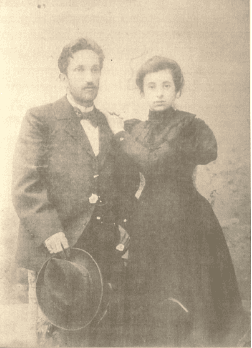
a Tel Avivit
PERSON
Name reference in documents
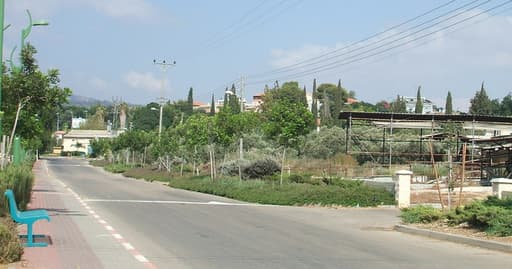
Achihud
PERSON
Name reference in documents
AM
Achihud Madar
PERSON
Name reference in documents
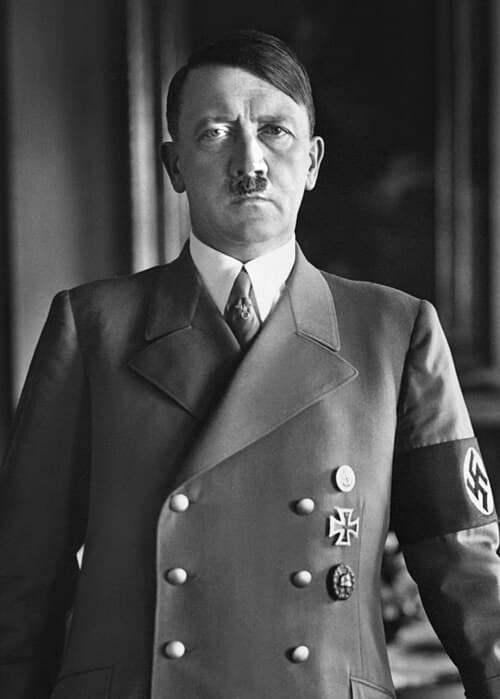
Adolf Hitler
PERSON
Dictator of Germany from 1933 to 1945, main instigator of World War II and leader of the Holocaust (1889–1945)
AE
Aharon Eshel
PERSON
Name reference in documents
AY
Ahraleh Yariv
PERSON
Name reference in documents

Albert Merglen
PERSON
French author (1915–2012)
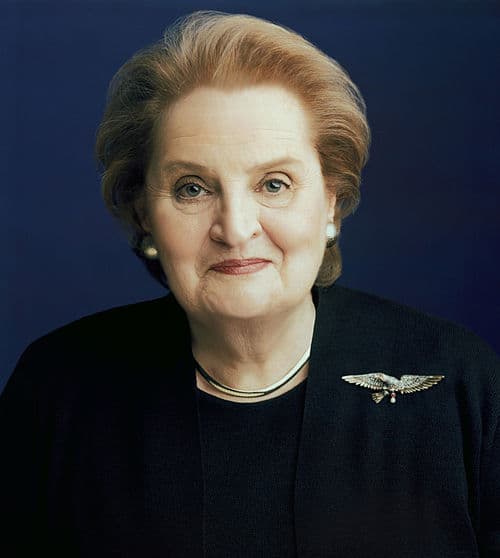
Albright
PERSON
Likely reference to Madeleine Albright, U.S. Secretary of State
Amsalem
PERSON • 2 mentions
Surname or name fragment in documents
Ariel Sharon
PERSON
Prime Minister of Israel from 2001 to 2006
Arik Sharon’s
PERSON
Name reference in documents
Aspbergers
PERSON
Name reference in documents
AT
Avi Telem
PERSON
Name reference in documents
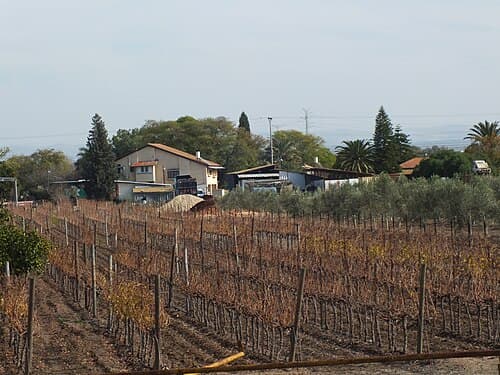
Avigdor
PERSON
Name reference in documents
Avigdor Lieberman
PERSON
Israeli politician, member of the Knesset
Avraham
PERSON
Surname or name fragment in documents

Avraham Arnan's
PERSON
Name reference in documents
AR
Avraham Ramon
PERSON
Name reference in documents
Avraham Yoffe
PERSON
Israeli politician and general (1913–1983)
BM
Baba Metziah
PERSON
Name reference in documents
BA
Baddura
PERSON
Surname or name fragment in documents

Barack Obama
PERSON • 2 mentions
President of the United States from 2009 to 2017
Bashar al-Assad
PERSON
President of Syria from 2000 to 2024
Beethoven
PERSON
References to classical composer Ludwig van Beethoven in discussions about music
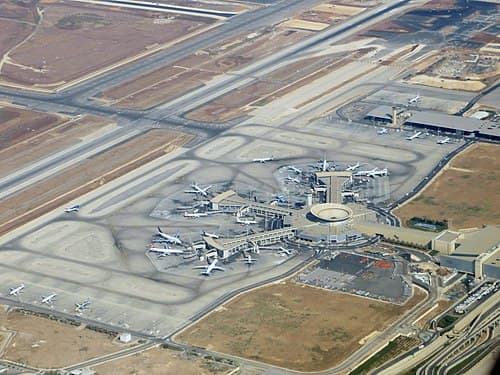
Ben-Gurion Airport
PERSON
Name reference in documents
Ben-Zvi
PERSON
Name reference in documents
Benjamin Franklin
PERSON
American polymath and statesman (1706–1790)
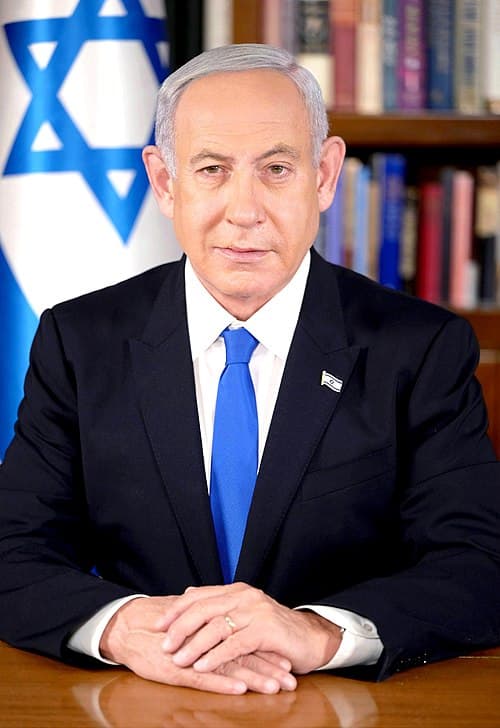
Benjamin Netanyahu
PERSON • 3 mentions
Prime Minister of Israel (1996–1999; 2009–2021; since 2022)
Bibi Netanyahu
PERSON
Prime Minister of Israel (1996–1999; 2009–2021; since 2022)
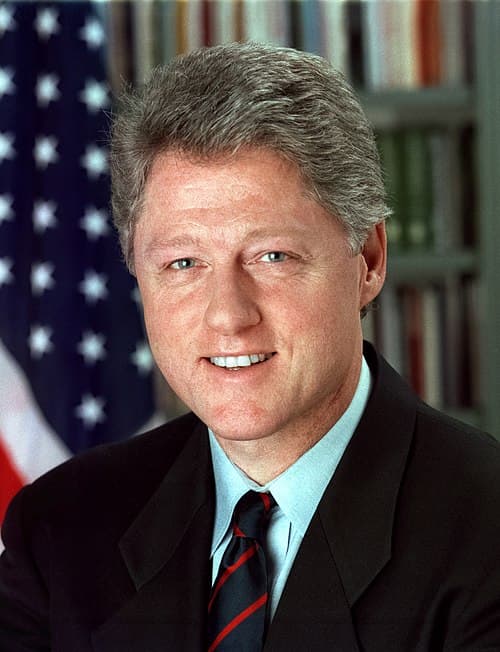
Bill Clinton
PERSON • 3 mentions
President of the United States from 1993 to 2001 (born 1946)

Chag ha Pri
PERSON
Name reference in documents
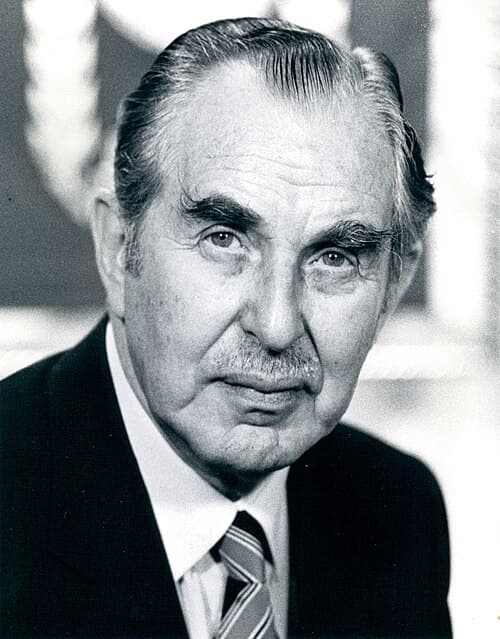
Chaim Herzog
PERSON
6th President of Israel (1983–1993) – (born1918–1997)
CW
Courtney Wild
PERSON
American victim/survivor of Jeffrey Epstein who led legal battle for victims' rights
Danny Michaelson
PERSON
Name reference in documents
Danny Yatom
PERSON
Israeli politician
David Ben-Gurion
PERSON
Israeli politician, Zionist leader, prime minister of Israel (1948–1953, 1955–1963) - (born1886–1973)
David Cameron
PERSON • 2 mentions
British politician (born 1966)
DA
Dayan
PERSON
Surname reference in documents
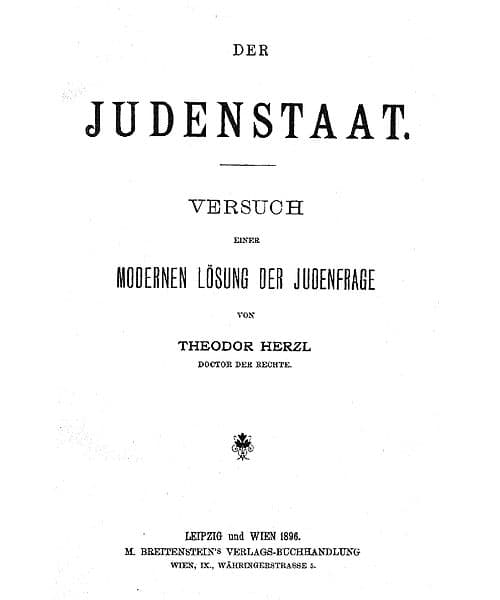
Der Judenstaat
PERSON
Name reference in documents
DB
Doug Band
PERSON
American presidential advisor
DO
Dovik
PERSON
Name reference in documents
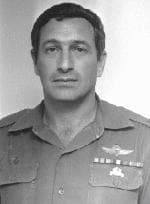
Dovik Tamari
PERSON
Name reference in documents
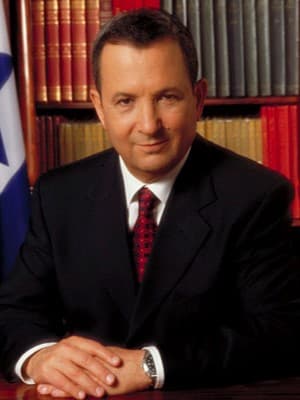
Ehud Barak
PERSON
10th Prime Minister of Israel
Ehud Brog
PERSON
10th Prime Minister of Israel
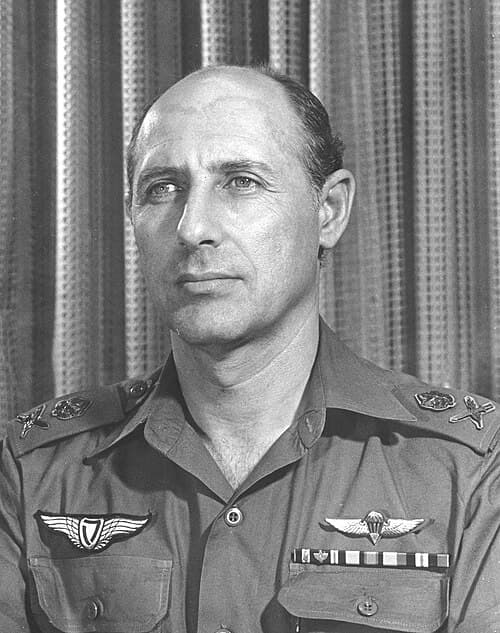
Eli Zeira
PERSON
Israeli military intelligence officer (1928–2025)
EL
Eliezer
PERSON
Biologist
EG
Eliezer Gonn
PERSON
Biologist
ER
Errol
PERSON
Surname or name fragment in documents
Errol Flynn
PERSON
Australian actor (1909–1959)
Eshkol
PERSON • 2 mentions
Israeli psychologist
Esther Godin
PERSON
Name reference in documents
EX
Exodus
PERSON
Surname reference in documents
Gamal Abdel Nasser
PERSON
President of Egypt from 1956 to 1970
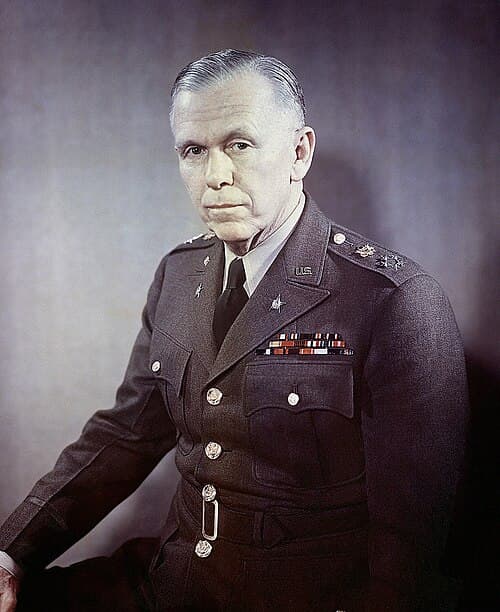
George C. Marshall
PERSON
Name reference in documents

Gibli
PERSON
Name reference in documents
GS
Gilad Sher
PERSON
Name reference in documents
GI
Giora
PERSON
Researcher
GR
Giora Ros
PERSON
Name reference in documents
GO
Godins
PERSON
Name reference in documents
Goldie Hawn
PERSON
American actress
Gurion
PERSON
Canadian academic (1925–2017)
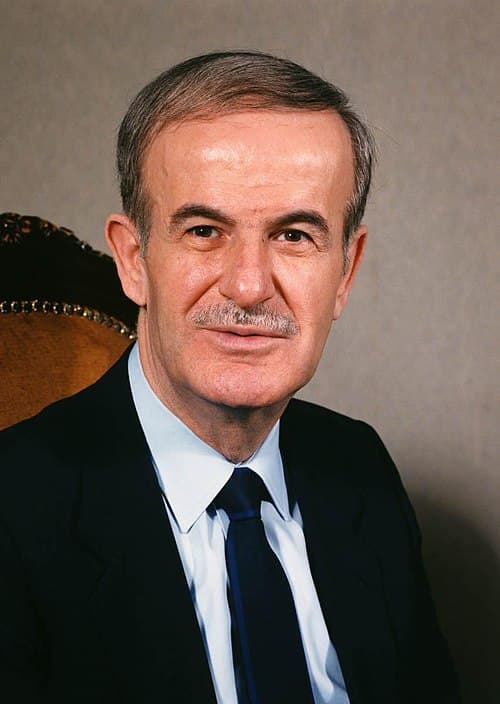
Hafez al-Assad
PERSON
President of Syria from 1971 to 2000
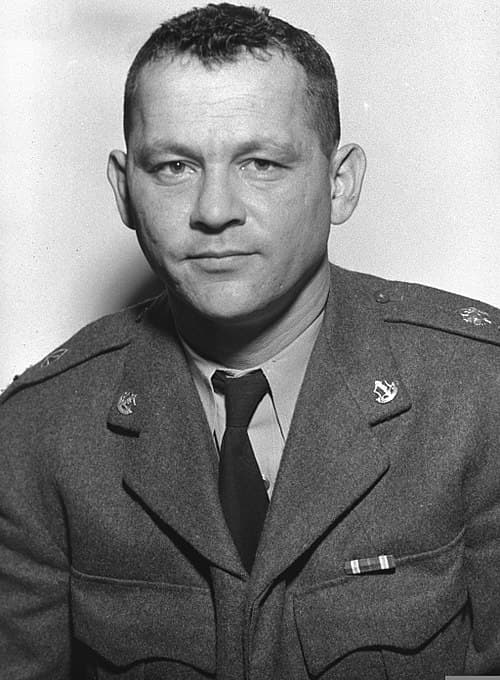
Haim Laskov
PERSON
5th Chief of General Staff of Israel Defence Forces (1919–1982)
HA
Har-Zion
PERSON
Name reference in documents
HE
Henya
PERSON
Name reference in documents
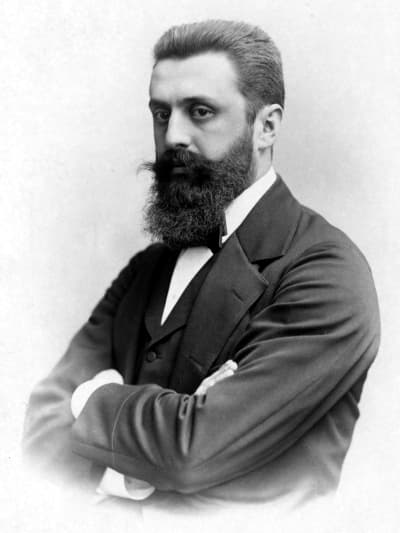
Herzl
PERSON
Name reference in documents
HE
Herzog
PERSON
Surname reference in documents
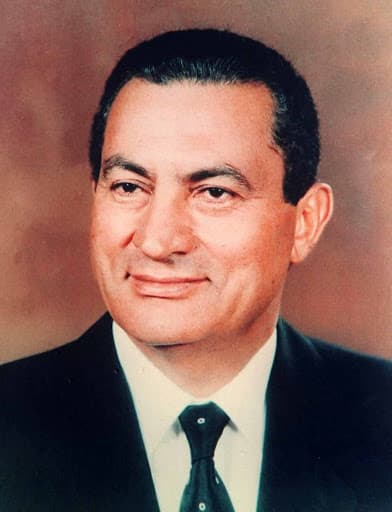
Hosni Mubarak
PERSON
President of Egypt from 1981 to 2011
Itzik
PERSON
Name reference in documents
IT
Itzila
PERSON
Name reference in documents
JA
Jacob
PERSON
First name reference to multiple individuals in Epstein documents
JH
John Horan
PERSON
Person referenced in documents
John Locke
PERSON
English philosopher and physician (1632–1704)
JP
Josef Pilsuldski
PERSON
Name reference in documents
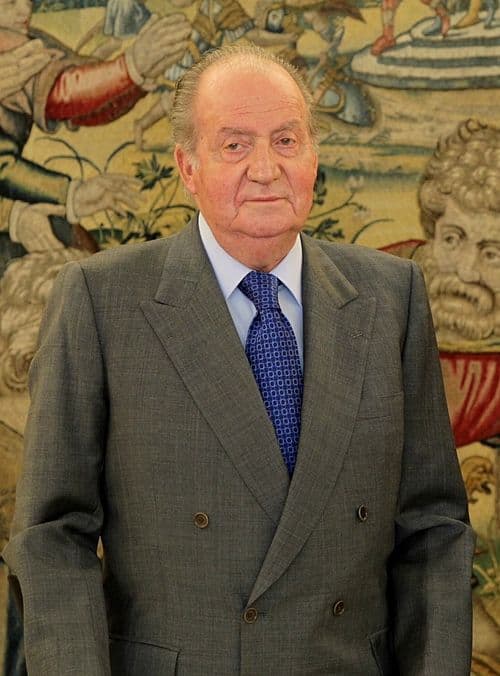
Juan Carlos
PERSON
King of Spain from 1975 to 2014
Kalashnikovs
PERSON
Surname or name fragment in documents
KA
Kapusta
PERSON
Name reference in documents
Kfar Haim
PERSON
Name reference in documents
King Hussein’s
PERSON
Name reference in documents
Kobi Meron
PERSON
Half-instanton solution of Yang–Mills theory
KS
Kuti Sharabi's
PERSON
Name reference in documents
Laskov
PERSON
Name reference in documents
LZ
Leah Zimmerman
PERSON
Name reference in documents
LB
Leon Black
PERSON
American billionaire businessman (born 1951)
Levi Eshkol
PERSON
Name reference in documents
Louis XVI
PERSON
Person referenced in documents
Madeleine Albright
PERSON
United States Secretary of State from 1997 to 2001

Maka Esser
PERSON • 2 mentions
English singer, songwriter, and producer
Marc Rich
PERSON
American commodities trader (1934–2013)
Mary Antoinette
PERSON
Name reference in documents
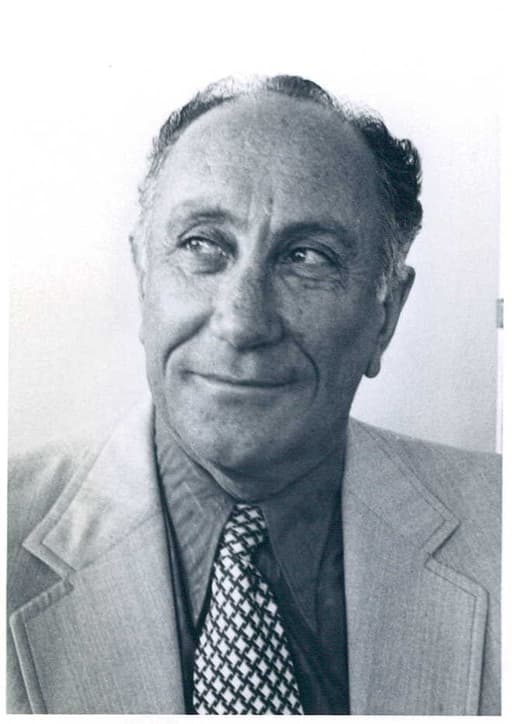
Meir Amit's
PERSON
Name reference in documents
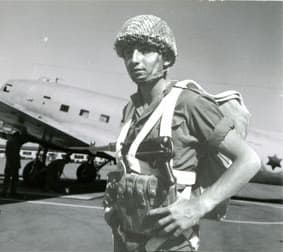
Meir Har-Zion
PERSON
Israeli paratrooper
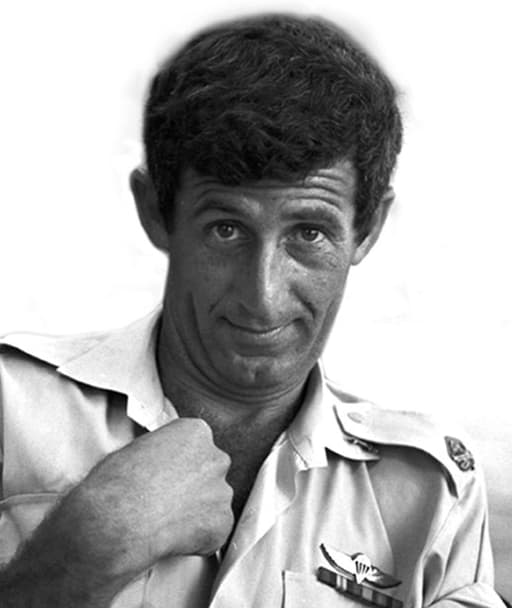
Menachem Digli
PERSON
Israeli military officer

Merglen
PERSON
Name reference in documents
MK
Micha Kapusta
PERSON
Name reference in documents
Michael Cohen
PERSON
American former attorney and former Republican official
Michael Flynn
PERSON
U.S. Army general and former U.S. National Security Advisor (born 1958)
Montesquieu
PERSON
Name reference in documents
MO
Moshe
PERSON
Ambiguous first name - refers to multiple people in Epstein documents
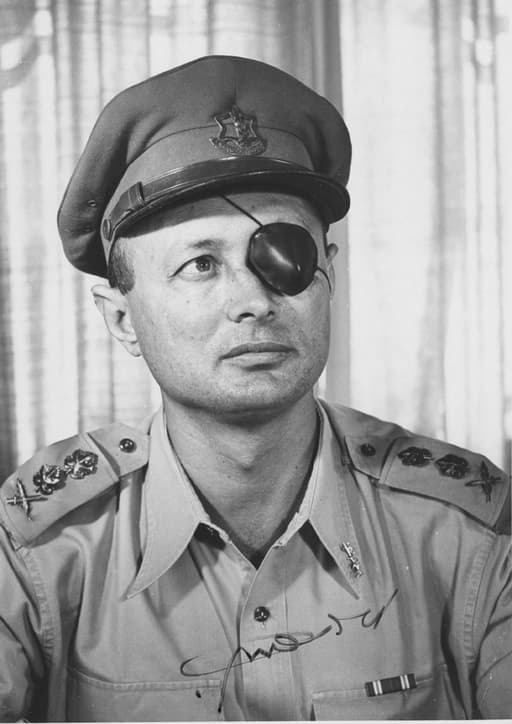
Moshe Dayan
PERSON
Israeli military leader and politician (1915–1981)
Moshe Elimelech
PERSON
Israeli journalist, poet, and Betar activist

Moshiko
PERSON
Name reference in documents
MN
Motti Nagar
PERSON
Name reference in documents
Mozart
PERSON
References to classical composer Wolfgang Amadeus Mozart in discussions about music
Nachmias
PERSON
Name reference in documents
Naftali
PERSON
Surname or name fragment in documents
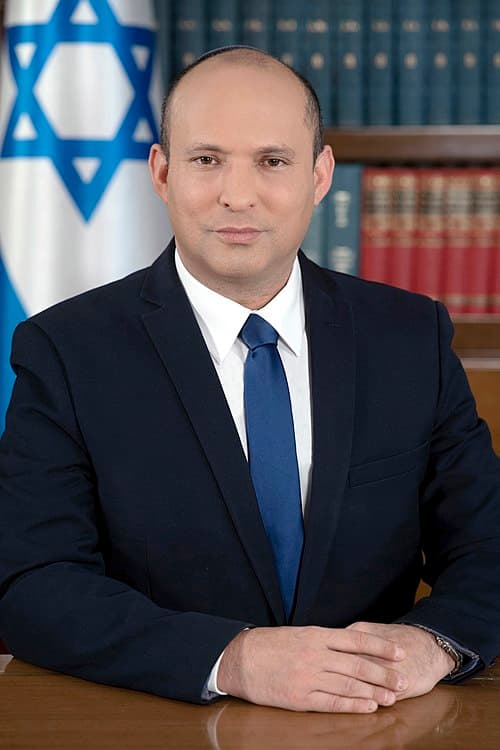
Naftali Bennett
PERSON
Prime Minister of Israel from 2021 to 2022
Napoleon
PERSON
First name reference to multiple individuals in Epstein-related documents
Nasser
PERSON
First name reference to multiple individuals in the documents
NE
Nechamia
PERSON
Name reference in documents
Nechemia Cohen
PERSON
Person referenced in documents
NE
Nekamah
PERSON
Name reference in documents
Nissim
PERSON
American rapper
Nissim Jou'ari
PERSON
American rapper
OR
Oded Rabinovitch
PERSON
Israeli historian

Palmach
PERSON • 2 mentions
Elite strike force of the Haganah in Mandatory Palestine
PA
Palmachniks
PERSON
Name reference in documents
PI
Pilsuldski
PERSON
Name reference in documents
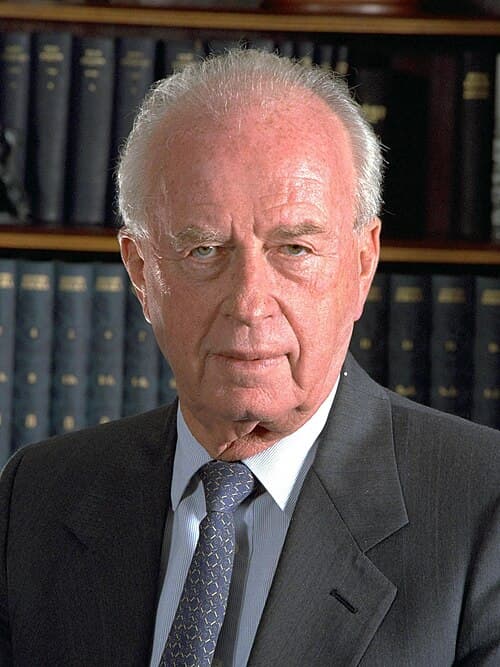
Rabin
PERSON
Surname reference in Epstein-related documents
Rachel Godin
PERSON
Name reference in documents
Rafael Eitan
PERSON
Israeli politician (1926-2019)
Rafi Friedman
PERSON
Name reference in documents
RA
Raful
PERSON
Surname or name fragment in documents
Robespierre
PERSON
Surname or name fragment in documents
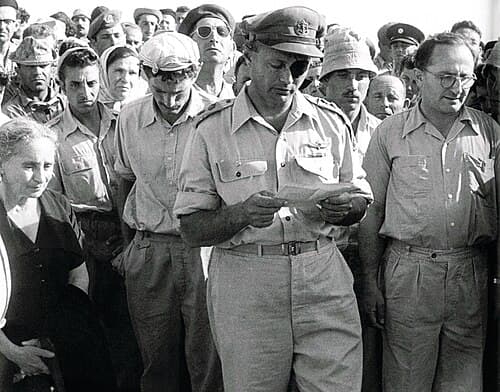
Roi Rotberg
PERSON
Name reference in documents
Rousseau
PERSON
Surname or name fragment in documents
Saddam Hussein
PERSON
Iraqi president, army officer and Baathist politician (1937–2006)
SN
Sami Nachmias
PERSON
Name reference in documents
SA
Samuel
PERSON
First name reference to multiple individuals in Epstein-related documents
Samuel Godin
PERSON
Name reference in documents
SM
Sayeret Matkal's
PERSON
Name reference in documents

Sayeret Tzanhanim
PERSON
Name reference in documents
Schubert
PERSON
Surname reference in documents
Shamai Kaplan
PERSON
Name reference in documents
SH
Sharabi
PERSON
Name reference in documents
SH
Sharon
PERSON
Ambiguous first name - refers to multiple Sharons including Ariel Sharon, Sharon Churcher, and Mishmar Hasharon location
Shimon Peres
PERSON • 2 mentions
Israeli politician (1923–2016) –Former President of Israel (2007–2014) and Prime Minister of Israel (1977, 1984–1986, 1995–1996)
SH
Shlomo
PERSON
First name reference to multiple individuals in the documents
Shlomo Ben-Ami
PERSON
Israeli diplomat
Shmil Ben-Zvi
PERSON
Name reference in documents
Srulik
PERSON
Name reference in documents
Srulik Brog
PERSON
Name reference in documents
Talik
PERSON • 2 mentions
Surname reference in documents
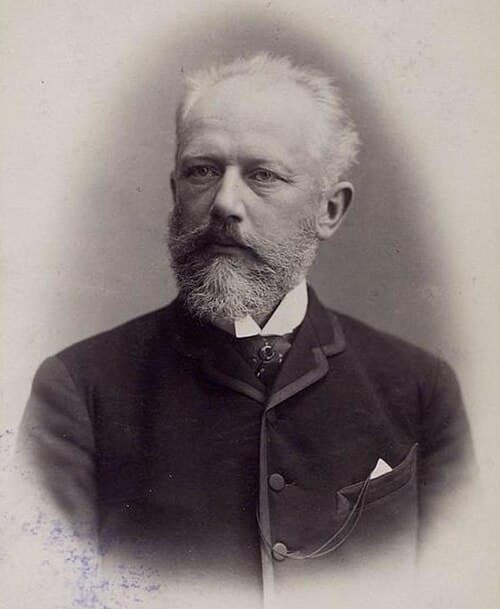
Tchaikovsky
PERSON • 2 mentions
Patter song written by Ira Gershwin and Kurt Weill
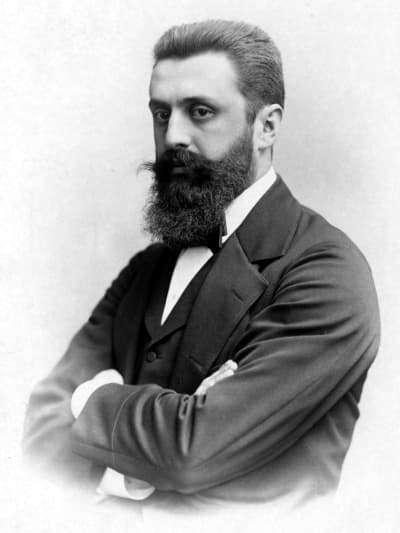
Theodor Herzl
PERSON
Name reference in documents
Tubul
PERSON • 3 mentions
Surname or name fragment in documents
Tzahal
PERSON
Herpetologist
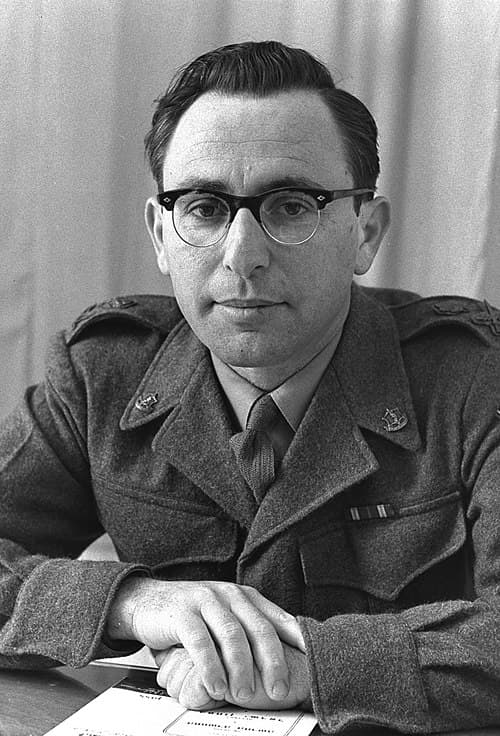
Tzvi Tzur
PERSON
Israeli politician (1923-2004)
UJ
Uncle Jacob
PERSON
Name reference in documents
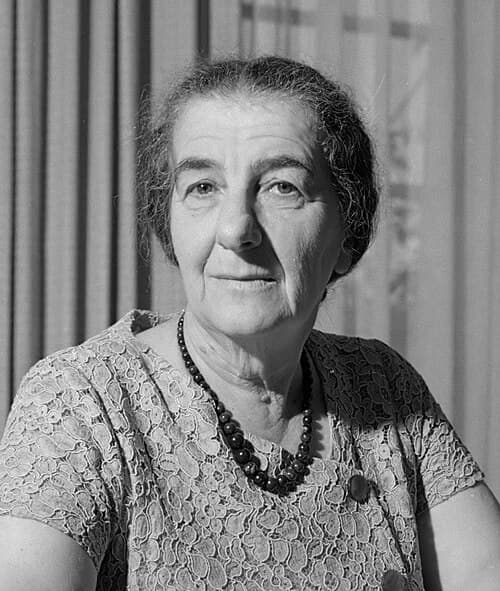
Uncle Meir
PERSON
Name reference in documents

Uri Ilan’s
PERSON
Name reference in documents

Uri Yarom
PERSON
Name reference in documents

Uri Zakay
PERSON
Name reference in documents
Uzi Yairi
PERSON
Israeli soldier
Vladimir Lenin
PERSON
Founding leader of the Soviet Union from 1922 to 1924 (1870–1924)
WK
Wadi Khawaret
PERSON • 2 mentions
Person referenced in documents
Winston Churchill
PERSON
British statesman, soldier and writer (1874–1965)
Ya’akov Margalit
PERSON
Name reference in documents
Ya’akov Tal
PERSON
Name reference in documents
YA
Yankele
PERSON
Name reference in documents
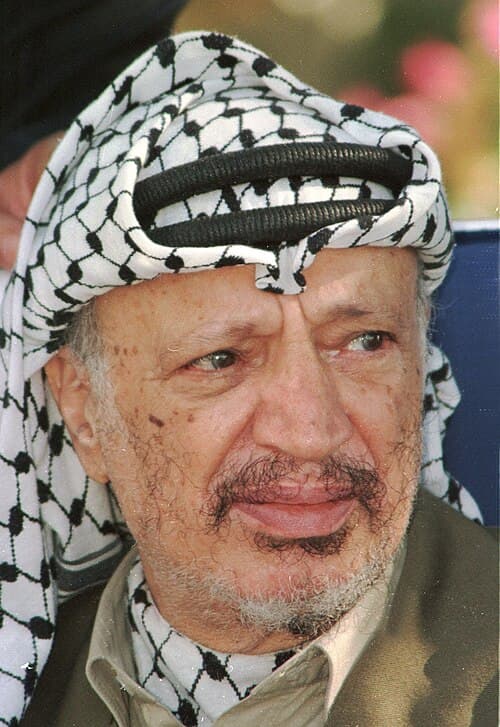
Yasser Arafat
PERSON • 2 mentions
Palestinian political leader (1929–2004) and Former President of the Palestinian National Authority (1994-2004)
YA
Yechiel Amsalem
PERSON
Name reference in documents
Yigal
PERSON
Israeli politician, general, acting prime minister of Israel (1918–1980)
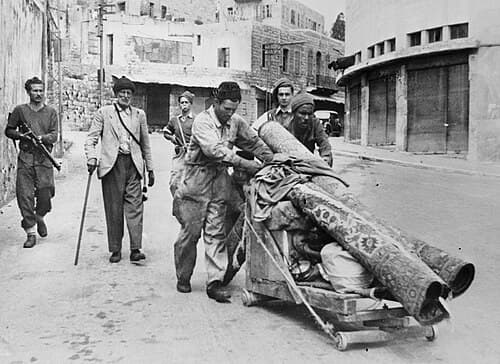
Yigal Garber
PERSON
Name reference in documents
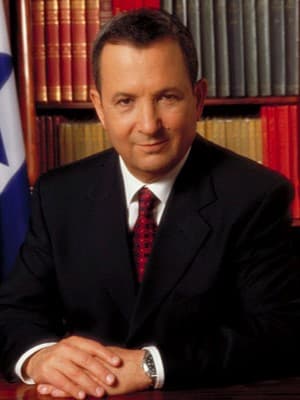
Yisrael Mendel Brog
PERSON
Name reference in documents
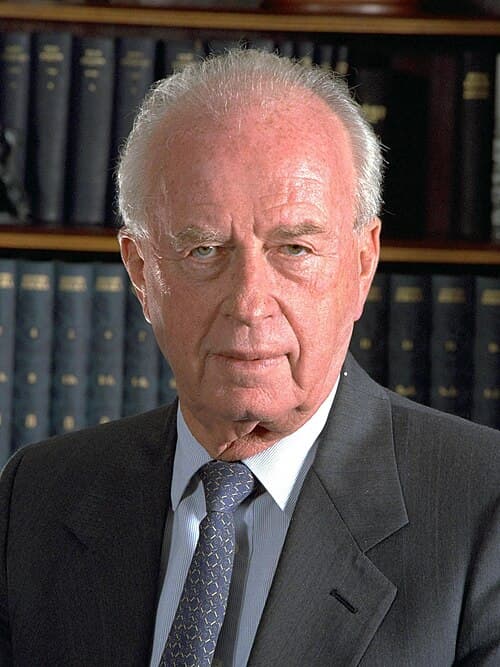
Yitzhak
PERSON
Israeli politician, statesman and general (1922–1995)
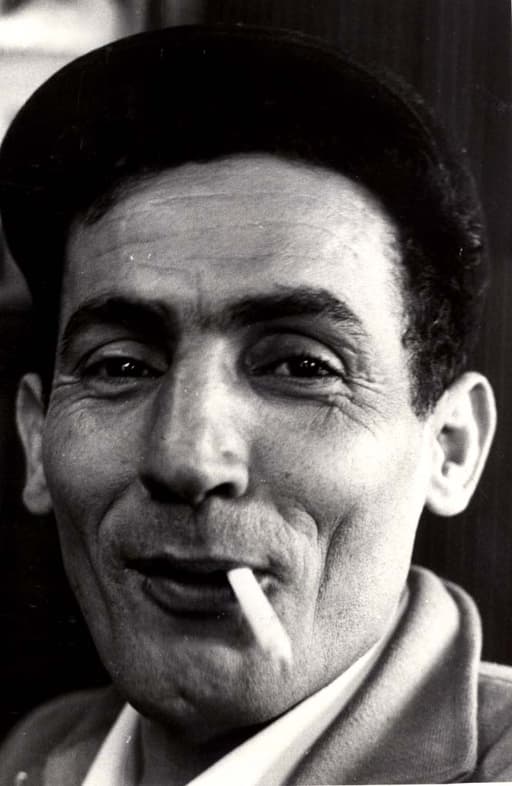
Yitzhak Gibli
PERSON
Israeli illustrator
Yitzhak Rabin
PERSON
Israeli politician, statesman and general (1922–1995)

Yoffe
PERSON • 2 mentions
Surname or name fragment in documents
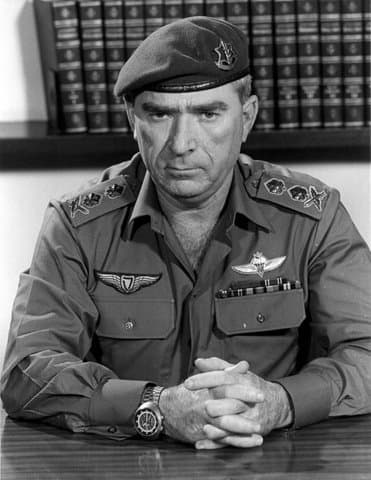
Ze'ev Eitan
PERSON
Name reference in documents
Air Force
ORGANIZATION
Military branch of service primarily concerned with aerial warfare
Airya
ORGANIZATION
Organization referenced in documents
Alexandroni
ORGANIZATION
Organization referenced in documents
Alliance
ORGANIZATION
Syntaxonomic rank in phytosociology
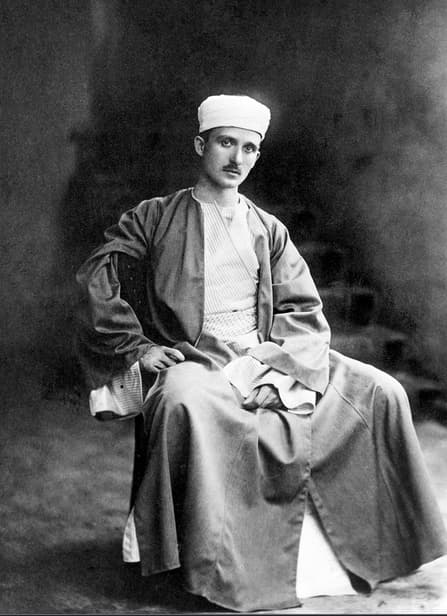
Arabist
ORGANIZATION
Organization referenced in documents
Battalion 890
ORGANIZATION
Organization referenced in documents

Beit Berl
ORGANIZATION
Village in Israel
Caravelle
ORGANIZATION
Organization referenced in documents

Cheetah
ORGANIZATION
Attack aircraft family by Atlas
Company A of Battalion 890
ORGANIZATION
Organization referenced in documents

Company A.
ORGANIZATION
1970 musical comedy by Stephen Sondheim

Davar
ORGANIZATION • 2 mentions
Israeli newspaper
Defence
ORGANIZATION
1779 American Revolutionary War privateer brigantine ship

Delta Force
ORGANIZATION
United States Army special operations unit

Eitan
ORGANIZATION
Human settlement in Israel
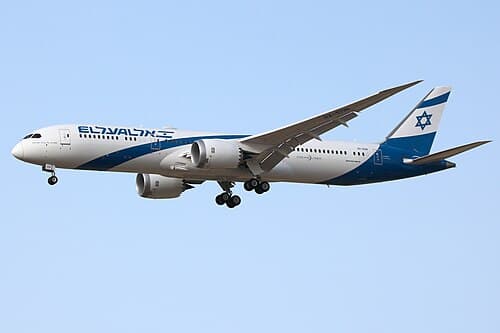
El Al
ORGANIZATION
Flag-carrier airline of Israel
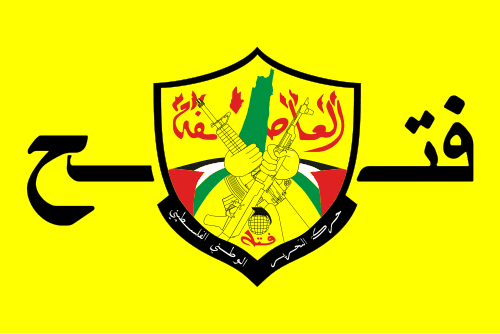
Fatah
ORGANIZATION
Palestinian nationalist political party
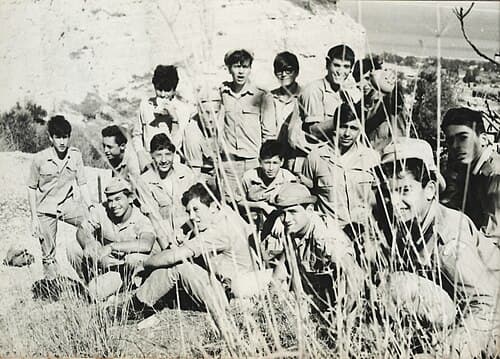
Gadna
ORGANIZATION
Israeli military program
Gadna Sayerim
ORGANIZATION
Organization referenced in documents
General Tzur's
ORGANIZATION
Organization referenced in documents
General Yoffe's
ORGANIZATION
Organization referenced in documents
Godin
ORGANIZATION
Organization referenced in documents

Golani
ORGANIZATION
Israeli military infantry brigade
Gordonia
ORGANIZATION • 2 mentions
Organization referenced in documents

Harel Brigade
ORGANIZATION
Organization referenced in documents
Islamic State
ORGANIZATION
Salafi jihadist militant Sunni Islamist group
Israeli Army
ORGANIZATION
Organization referenced in documents
Judaism
ORGANIZATION • 2 mentions
Abrahamic monotheistic ethnic religion of the Jews
Knesset
ORGANIZATION
Unicameral national legislature of Israel
Labour Zionist
ORGANIZATION
Organization referenced in documents

Likud
ORGANIZATION
Israeli centre-right to right-wing political party
Major General
ORGANIZATION
Organization referenced in documents
Mergelen, Avraham
ORGANIZATION
Organization referenced in documents
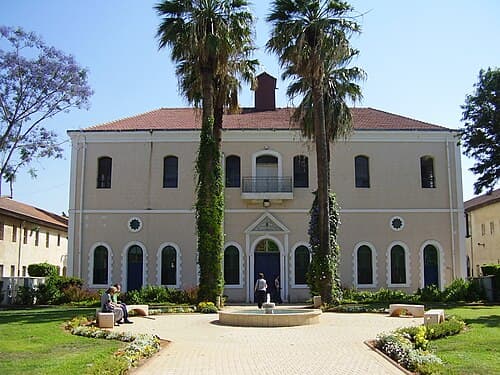
Mikveh Israel
ORGANIZATION
Agriculture school near Tel Aviv, Israel

Military Intelligence
ORGANIZATION
Military intelligence service of the Czech Republic
Mishmar Hasharon
ORGANIZATION
Kibbutz in Israel

Mossad
ORGANIZATION
National intelligence agency of Israel
Nabob
ORGANIZATION
Organization referenced in documents
Nahal Oz’s
ORGANIZATION
Organization referenced in documents
National Parks Authority
ORGANIZATION
Organization referenced in documents

National Security Agency
ORGANIZATION
Organization referenced in documents
our Ministry of Education
ORGANIZATION
Organization referenced in documents
pro-Western
ORGANIZATION
Organization referenced in documents

Rotem
ORGANIZATION • 3 mentions
Organization referenced in documents
Rupin
ORGANIZATION
Organization referenced in documents
Sayeret Golani
ORGANIZATION
Units of the Israel Defense Forces
Sayveret Matkal
ORGANIZATION
Organization referenced in documents
Sikorsky S-58
ORGANIZATION
Organization referenced in documents
Steinway
ORGANIZATION
Piano and musical instrument manufacturer
Technion
ORGANIZATION
Organization referenced in documents
The “Arab Spring”
ORGANIZATION
Organization referenced in documents
the Alexandroni Brigade
ORGANIZATION
Organization referenced in documents
the Arab League
ORGANIZATION
League of Arab states
the Empire State Building
ORGANIZATION
Organization referenced in documents
the Feast of the Fruit
ORGANIZATION
Organization referenced in documents
the Golani Brigade
ORGANIZATION
Organization referenced in documents

the Hebrew University
ORGANIZATION
Organization referenced in documents
the Israeli Defense Force
ORGANIZATION
Organization referenced in documents
the Israeli Knesset
ORGANIZATION
Organization referenced in documents
the Jewish National Fund
ORGANIZATION
Organization referenced in documents
the National Exhibition
ORGANIZATION
Organization referenced in documents
the New York Philharmonic
ORGANIZATION
Organization referenced in documents
the Palestinian Arabs’
ORGANIZATION
Organization referenced in documents
the Rotem Crisis
ORGANIZATION
Organization referenced in documents
the Seventh Armored Brigade
ORGANIZATION
Organization referenced in documents
the Seventh Brigade
ORGANIZATION
Organization referenced in documents
the US Marines
ORGANIZATION
Organization referenced in documents

the Weizmann Institute
ORGANIZATION
Organization referenced in documents

Algeria
LOCATION
Country in North Africa

Algiers
LOCATION
Capital city of Algeria
Aranan
LOCATION
Location referenced in documents
Ashkelon
LOCATION
City in Israel
Babylon
LOCATION
Capital city of Babylonia and an archaeological site in modern-day Iraq
Banias
LOCATION
Archaeological site in the Golan Heights

Barcelona
LOCATION
Multisports club in Barcelona, Spain
Beersheva
LOCATION • 2 mentions
City in Israel
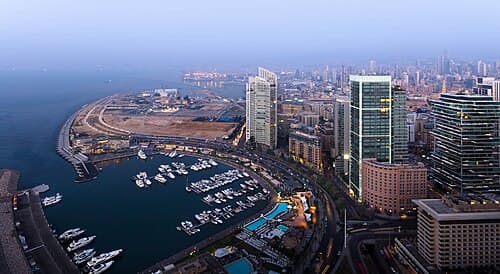
Beirut
LOCATION
Capital and largest city of Lebanon
Bet El
LOCATION
Israeli settlement in the West Bank
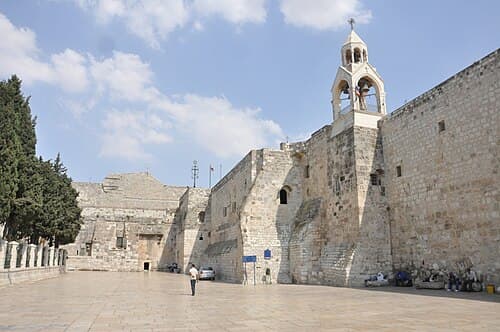
Bethlehem
LOCATION
City in the State of Palestine
Bir Gafgafa
LOCATION
Location referenced in documents
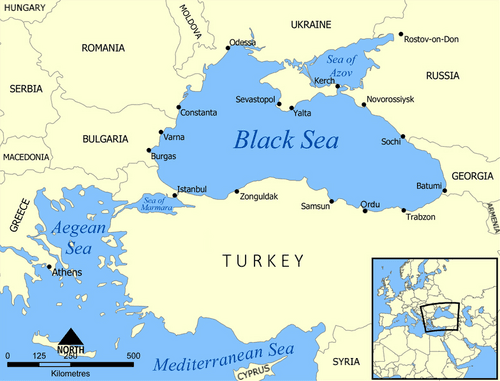
Black Sea
LOCATION
Sea between Europe and Asia
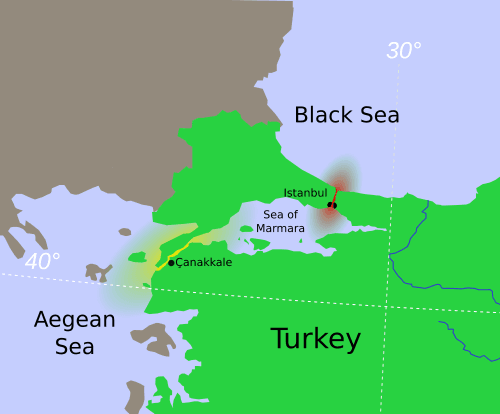
Bosphorus
LOCATION
Narrow strait in northwestern Turkey
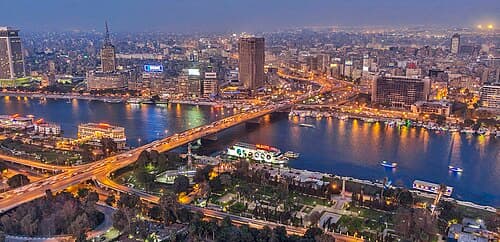
Cairo
LOCATION
Capital city of Egypt
Catoctin
LOCATION
Tributary of the Potomac River in Virginia, United States
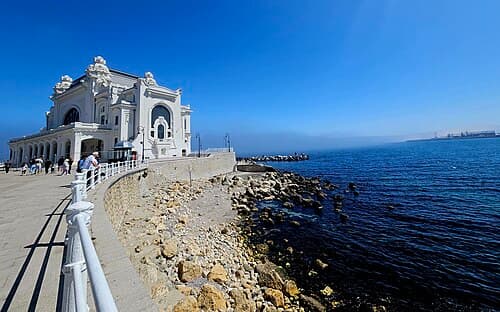
Constanta
LOCATION
City in Constanța County, Romania
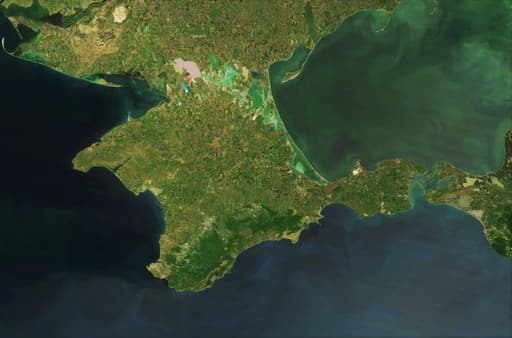
Crimea
LOCATION
Eastern European peninsula, in the Black Sea and Sea of Azov, disputed between Ukraine (de jure) and Russia (de facto)
Damascus
LOCATION
Capital and largest city of Syria
Davar le Yeladim
LOCATION
Location referenced in documents
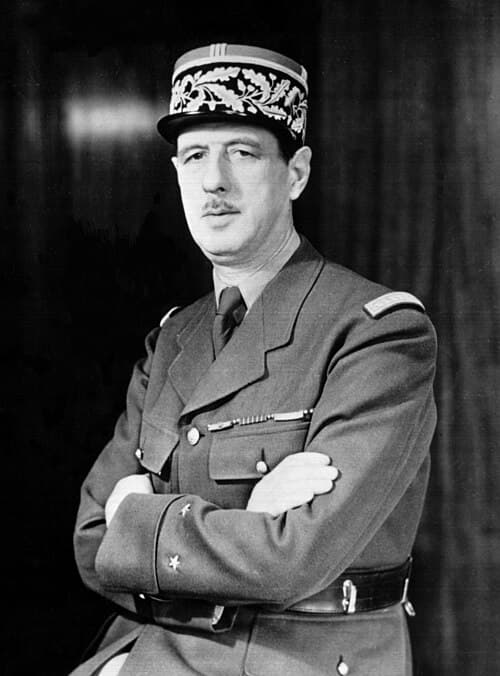
De Gaulle
LOCATION
Airport in Paris, France

Eastern Europe
LOCATION
Eastern part of Europe

Eilat
LOCATION
City in Israel
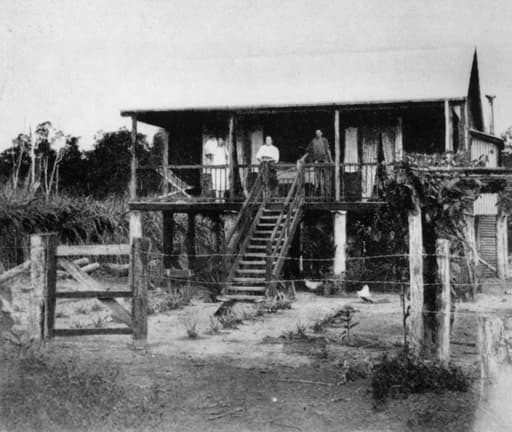
El Arish
LOCATION
Town in Queensland, Australia
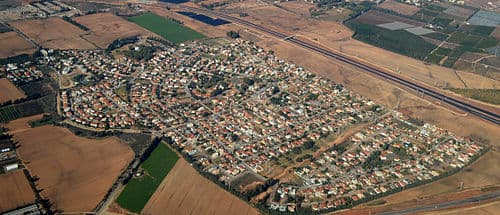
Elyakhin
LOCATION
Human settlement in Israel
Et-Tur
LOCATION
Town in Egypt
Galilee
LOCATION
Italian polymath (1564–1642)
Gebel Libni
LOCATION
Location referenced in documents
Givataim
LOCATION
City in the Tel Aviv District of Israel
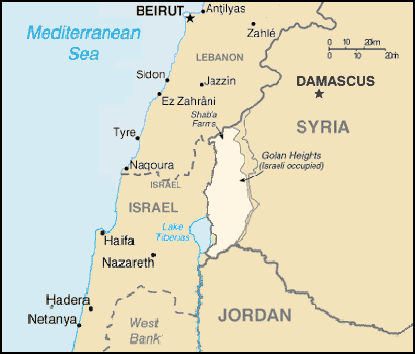
Golan
LOCATION
Territory on the Golan Heights
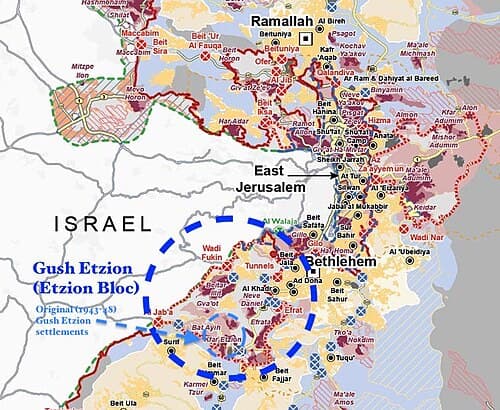
Gush Etzion
LOCATION
Cluster of Israeli settlements located in the Judaean Mountains
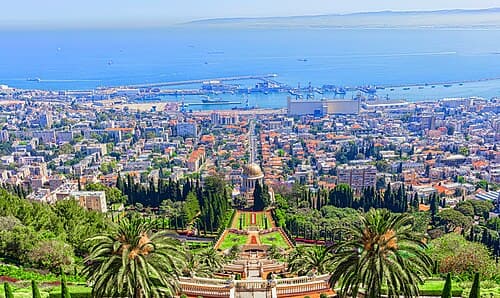
Haifa
LOCATION
Third-largest city in Israel
Hasharon
LOCATION
Location referenced in documents
Hebron
LOCATION
Palestian city in the occupied West Bank
Heights
LOCATION • 2 mentions
Location referenced in documents
Herzliya
LOCATION
City in the Tel Aviv District of Israel
Hit’alelu bagufot
LOCATION
Location referenced in documents

Hungary
LOCATION
Country in Central Europe
Indochina
LOCATION
Region in Southeast Asia
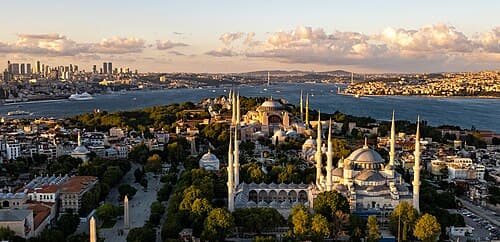
Istanbul
LOCATION
Largest city in Turkey
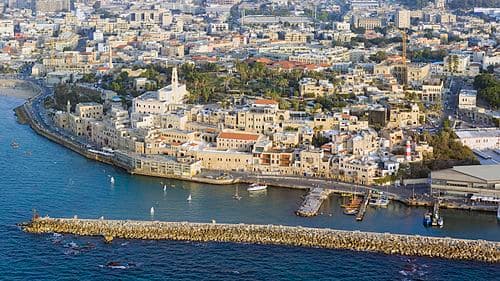
Jaffa
LOCATION
Southern and oldest part of Tel Aviv
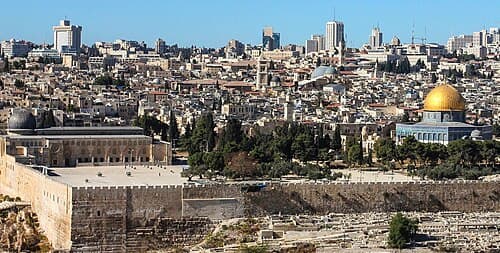
Jerusalem
LOCATION
City in the Middle East, holy to the three Abrahamic religions
Judaea
LOCATION
Province of the Roman Empire (6–135 CE)
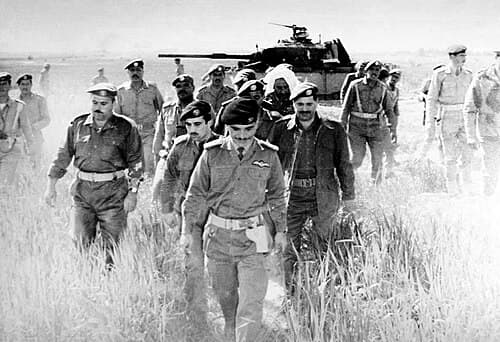
Karameh
LOCATION
Human settlement in Jordan
Kfar Hayim
LOCATION
Location referenced in documents
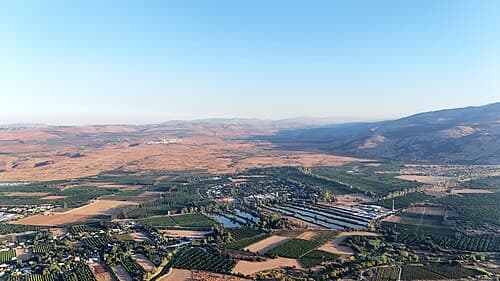
Kibbutz Dan
LOCATION
Location referenced in documents
Kibbutz Ha'
LOCATION
Location referenced in documents
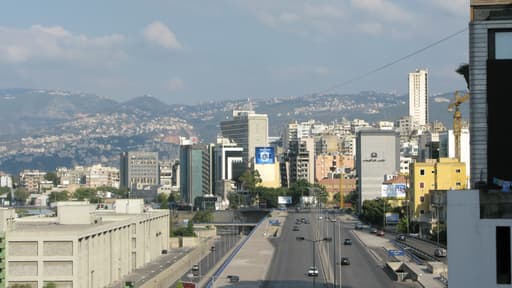
Lebanon
LOCATION
Country in West Asia

Lithuania
LOCATION
Country in northeastern Europe
Lydda
LOCATION
Roman Catholic titular see
Matkal
LOCATION
Location referenced in documents
Mediterranean
LOCATION
Sea in southern Europe
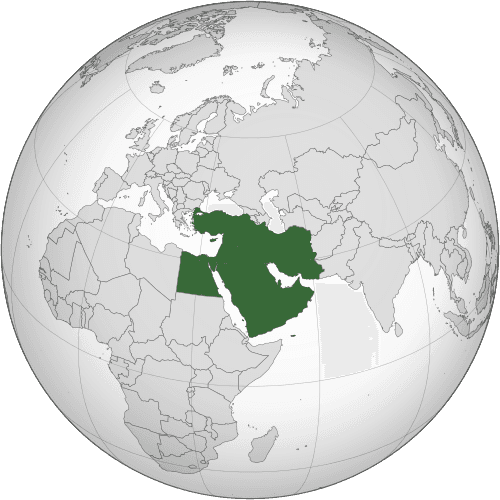
Middle East
LOCATION
Geopolitical region encompassing Egypt and most of Western Asia, including Iran
Mont Louis
LOCATION
Location referenced in documents

Morocco
LOCATION
Sovereign state in North Africa
Mount Keren
LOCATION
Location referenced in documents
Munich
LOCATION
Capital and most populous city of Bavaria, Germany
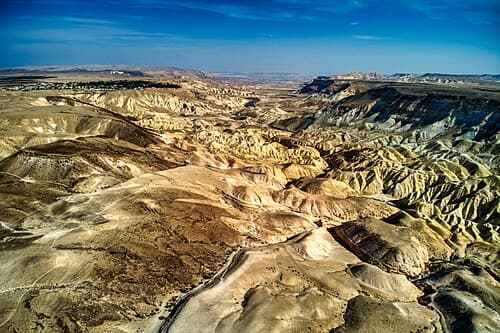
Negev
LOCATION
Desert and semidesert region of southern Israel

New Hampshire
LOCATION
State of the United States of America
Ofakim
LOCATION
City in Israel
Old City
LOCATION
Location referenced in documents
OSwiecim
LOCATION
Location referenced in documents

Ottoman Empire
LOCATION
Location referenced in documents
Patish
LOCATION
Human settlement
Perpignan
LOCATION
French commune in Pyrénées-Orientales, Occitania

Pittsburgh
LOCATION
City and county seat in Allegheny County, Pennsylvania, United States
Ponovezh
LOCATION
Location referenced in documents
Private Benjamin
LOCATION
Location referenced in documents
Pushelat
LOCATION
Location referenced in documents
Pyrenees
LOCATION
Range of mountains in southwest Europe
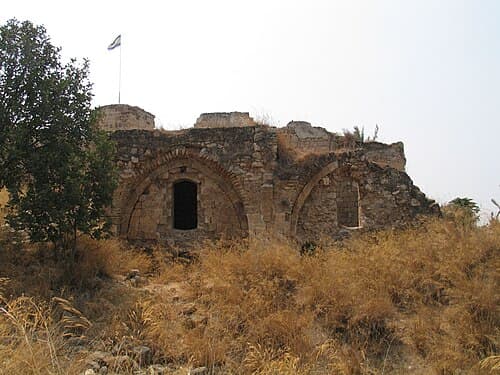
Qaqun
LOCATION
Palestinian Arab village in Tulkarm subdistrict
Qibya
LOCATION
Town in Ramallah and al-Bireh Governorate, Palestine
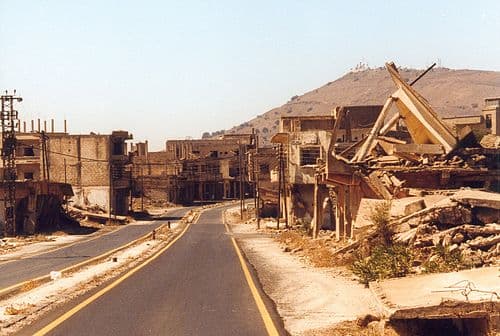
Quneitra
LOCATION
Quineitra is the largely destroyed and abandoned capital of the Quneitra Governorate in south-western Syria

Romania
LOCATION
Country in Southeast Europe
Safed
LOCATION
City in northern Israel
Samaria
LOCATION
Historical region in the Levant
Sayeret Matkal
LOCATION
Special forces unit of the Israel Defense Forces
Shiloh
LOCATION
Canadian singer and songwriter
Simferopol
LOCATION
City in Crimea, Ukraine
Sinai
LOCATION
Peninsula in the Middle East

Smolensk
LOCATION
City and administrative center of Smolensk Oblast in central Russia
Tel Aviv’s
LOCATION
Location referenced in documents
the Banias River
LOCATION
Location referenced in documents
the Carpathian Mountains
LOCATION
Location referenced in documents
the Gaza Strip
LOCATION
Territory in the Middle East
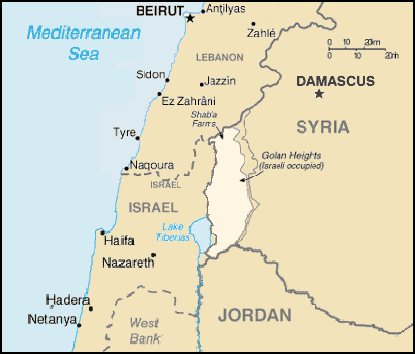
the Golan Heights
LOCATION
Territory on the Golan Heights
the Hanging Gardens
LOCATION
Location referenced in documents
the Heights
LOCATION
Location referenced in documents
the Jordan River
LOCATION
Location referenced in documents
the Negev Desert
LOCATION
Location referenced in documents
the Old City
LOCATION
Location referenced in documents
the Old City of Jerusalem
LOCATION
Location referenced in documents
the Sea of Galilee
LOCATION
Location referenced in documents
the State of Israel
LOCATION
Country in the Middle East
the Straits of Tiran
LOCATION
Location referenced in documents
the Suez Canal
LOCATION
Location referenced in documents
the West Bank
LOCATION
Territory in the Middle East
Tiberias
LOCATION
City in Galilee, Israel
Tulkarem
LOCATION
City in the State of Palestine

Tunisia
LOCATION
Country in North Africa
Tzahala
LOCATION
Location referenced in documents
Vienna
LOCATION
Capital of and state in Austria
Vietminh
LOCATION
Location referenced in documents

Warsaw
LOCATION
Capital and largest city of Poland
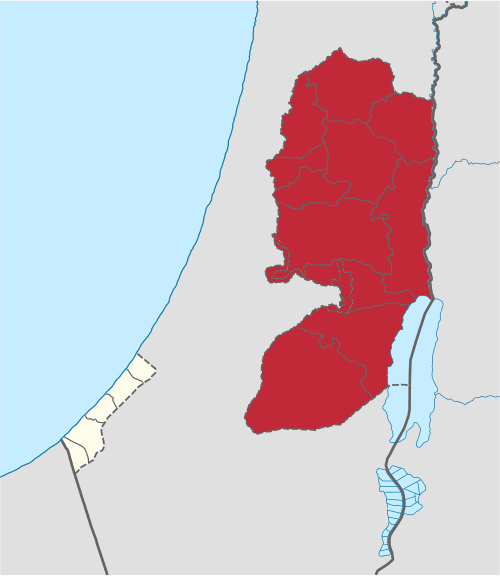
West Bank
LOCATION
Territory in the Middle East
Western Wall
LOCATION
Holy site of Islam and Judaism in Jerusalem
Yeladim
LOCATION
Location referenced in documents

Yemen
LOCATION
Country in West Asia
Statistics
Pages:100
Entities:346
Avg. OCR:96.5%
Sponsored