HOUSE_OVERSIGHT_013501_sub_002 - HOUSE_OVERSIGHT_013700
Document Information
Bates Range
HOUSE_OVERSIGHT_013501_sub_002 - HOUSE_OVERSIGHT_013700
Pages
100
Source
House Oversight Committee
Original Filename
Nearness.pdf
Document Content
Page 101 - HOUSE_OVERSIGHT_013601
Current neurochemical research using molecular biological tools such as mice knockouts (the ablation of specific proteins though interference with their nucleotide-mediated protein biosynthesis), for example, the production of animals missing a subunit of their hippocampal glutamate receptors associated with the loss of some memory functions, conclude the memorial mechanism to be a specific cellular region, such as hippocampal CA3 cells. Technology advances but continues to support a primitive philosophic animism of named brain parts which pop science icons like the late Francis Crick called “The Amazing Hypothesis.” He and his fellow brain philosophers implicate brain mechanisms such as the amygdaloidal nucleus man who can emotionally color even affectually neutral information that is transported through him. Imaging data showing amygdala man lighting up is used to tell us that circulating sensory information through the differentially behaving amygdaloid nucleus is used for fight or flight interpretive significance. Emotionally expressive human faces light up inferior parietal cortex. The lowa University Professors, the husband and wife Damasios, have located even the criminal psychopath man in specific locations in the brain. As we have argued, perhaps ad nausem, using multimillion-dollar imaging and molecular biological technology and no new thoughts that weren’t around during the era of the 19th Century’s neuroanatomists, specific brain regions continue to gain implicative properties like the task-specialized gods of the Roman and Greek pantheons. Crick implied that God is a brain part. At the same time, those of us that have been in the brain business for a while, recall skyscraper window washers, standing steady, high up on rope lashed planks, suffering from congenital absence of the cerebellum, the supposed sine qua non brain part supporting motor coordination and balance in humans. More generally, there is much evidence that if young enough and willing to work, many of the functions of missing parts of the brain can be taken on remarkably well by other brain parts thought not to be involved in these functions at all. In addition, since evidence of neuronal responding to loud noise or bright light perturbation can be found almost everywhere in the hyper-connected human brain, because anticipation and brain time inversions make before and after indicate little about human 101 HOUSE_OVERSIGHT_013601
Page 102 - HOUSE_OVERSIGHT_013602
neuropsychological causality, and inhibitory on or off and activating on or off are a priori functionally equivalent with respect to the logic gates of information encoding, transport or storage, the modern study of brain mechanisms in emotion, cognition and behavior remains almost as mysterious as ever. The only human mind-brain observations that are doubted consistently, and treated as unpublishable by the editors of the journals of science, are those that result from direct human experience using subjective reports from within. They are called unscientific. Often ignored are logically consistent mathematical and computational contexts, which, as abstract and general tools of thinking and imagining, have the capacity to frame, rigorously define and describe thinking about both the subjective and objective aspects of brain-generated phenomena. These mathematically configured metaphors can lead to consistencies in description, this is behaving like that, in what are called equivalence relations expressed both as intuitive imagery; for a concrete example, a one holed bagel and one handled tea cup are topologically equivalent because, sculpting in clay, they can be smoothly transformed into each other. We have seen that invariant measures in computable statistical flows can come out of a mess of data. Professor Paul Rapp of the University of Pennsylvania has been able to mathematically encode the verbal content of the patient’s free associations and the therapist's responses, using tape recordings of hours of psychoanalytical treatment. Examples of quantifiable qualities found useful in this regard involve a variety of characteristic statistical patterns in what are called entropies and information as well as various measures of what with a wide range of definitions is called complexity. These quantifiable properties, measures, can help in the struggle with the intrinsic tension of Absolute Reality between the “eternal emptiness of form and the eternal form of emptiness.” We resort to measures of entropy, information and complexity when confronted with our ignorance, “emptiness,” great or little, with respect to either cause or result, about what exactly is going on. Entropy in its forms relevant to information quantifies our 102 HOUSE_OVERSIGHT_013602
Page 103 - HOUSE_OVERSIGHT_013603
ignorance, the emptiness and its mystery. Computations of the entropy of systems in motion convert questions and answers concerning the detailed workings of the leg’s neuromuscular machinery to global statistical descriptions of more abstract thematic motifs, forms, expressed in the dance. Patterns of behavior of these properties can suggest intuitive ideas and imagery about global mechanisms, approach/avoid, smooth/discrete, wildtame, as well as correlated and objective physical observables. To learn more about this abstract, topology tinged (none numeric) style of model building, we can go to school on a long studied physical example. It connects a simple and well understood rea/ world observable with abstract statistical patterns resulting from motions using the one-to-one correspondence (the equivalence relation called isomorphism) between their entropies. As we have discussed, the Stanford mathematician and Field’s Medal Winner, Donald Ornstein, proved that in statistical studies of even point-to-point unpredictable, chaotic systems, entropy is the only isomorphism. The hardware of this physical example is what the statistical physicists call a dilute gas of some fixed number, n, of uniform hard spheres, moving scatterers, that, absent of dissipative friction, wander continuously around, changing their directions when bumping into each other. In a two dimensional bounded arena of randomly rolling balls, this game has been called Sinai’s billiards. It was named for previously mentioned Ya Sinai, an eminent Russian mathematician He is now at Princeton and was previously a student of Andrei Nikolaevic Kolmogorov, the Russian guru of many of the Twentieth Century’s world- class Russian mathematicians. Kolmogorov axiomatized the field of probability and, more relevantly, initiated the theory of statistical descriptions, the ergodic theory, of nonlinear dynamical systems. |In the language of statistical physics, we will see that the same system produced by high number of elements executing Newton’s deterministic laws can be generated by a so-called random system such as that resulting from flipping a suitably biased coin. Our example can also serve as a metaphor, used extensively in the mathematical biology of the late Professor Art Winfree, for the temporal features of life on a topological circle: the natural irregularities of the recurrent beat of the heart, the in and out breathing of lungs, the 103 HOUSE_OVERSIGHT_013603
Sponsored
Page 104 - HOUSE_OVERSIGHT_013604
up and down voltage of brain waves, the pendulum swings of our blood hormone levels, the cyclic procession of our days, months and years and at large scale, our body’s journey from dust to dust. The angular deviation theta, 8 from the initial reference direction of a single moving sphere, gets rotated to a new angle theta, 9 8 by a collision with another sphere. It has been shown that the new angle 0 is the previous angle, _ times twice the average distance traveled between collisions called the mean free path, here symbolized by delta, 6, divided by the diameter, D, of the sphere. Algebraically, 0-—0 the new angle is equal to twice the mean free path divided by the diameter of the spheres times the original directional angle of the sphere’s motion. If we symbolize the time between collisions with tau, 1, after an elapsed time of experimental observation, tf, we can say that the deviations from the initial direction of the sphere changes like (a The exponent, t/, represents the time of the experimental observation divided by the average time between collisions of the spheres, i.e. the time we’ve been watching, ft, is expressed as units of inter-collision interval, t. Of course, the circular deviation in the angle from the initial direction rotates repeatedly around a circle as the number of collisions increase. If a point on a circle marks the angular change resulting from each collision and the system runs long enough, it has been shown that the circle will eventually be completely covered by points. An estimate of the entropy, S, being generated by each sphere labeled with some index i, Si, is positive because the recurrent motion is deviating continuously from the initial direction. It can be computed for each sphere as the /ogarithm of the intercollision time-averaged deviation from the initial direction, S; = “loe(=>) and the T entropy of the whole n hard sphere system is the sum of the n entropies, which can be expressed as nxS;. If we keep books by registering the points when each sphere’s makes a stop on the top half of the sphere’s circle as 1 and the bottom half as O (and we must arbitrarily decide between 0 and 1 if it falls exactly on the 104 HOUSE_OVERSIGHT_013604
Page 105 - HOUSE_OVERSIGHT_013605
division between top and bottom and do so in a consistent way), then we can keep score with a random looking binary series such as 11001001010.... that describes the sequence of rotations. The advantage that accrues by doing so is that this coin flip counting eliminates details in favor of a computable over all measure and supports several forms of entropy calculations for its use in deciding if this system is behaving like that system, an equivalence relation. One can imagine a series of coin flips with 1 being heads and 0 being tails such that the statistics of a characteristic series is determined by the fairness of the coin. As noted above, Donald Ornstein’s famous theorem says that the entropy of these kinds of hardware and software systems is the only general basis for finding correspondence between characterizations of two such irregularly behaving systems. The important idea here is that a series of 1’s and 0’s may not be identical but the two systems can be isomorphically equivalent with respect to their entropy. Notice again that the physical process of hard spheres bouncing off each other on a flat surface has been captured by an abstract representation in binary numbers that, like a series of coin flips, can be quantified as entropies (which would be maximal for an ideal, fair coin). After describing the process of real number representation by the binary code, we will show how entropies can be computed for these binary series. We remind ourselves that we are struggling to obtain some kind of knowing in a representative system manifesting the tension and mystery between emptiness and form. We can translate all finite real numbers into this language, making them accessible to standard entropy computations. The following discussion of the process of transforming numbers into binary series is in the spirit of the famous number theory theorem that every natural number (the positive integers such as 1, 2, 3, 4...) can be expressed as the sum of at most four squared numbers. Encoding any number by a series of 0’s or 1’s in what is called a binary transformation, begins with its separation, called partition, into a sum of powers of 2, for example, 100 = 64 (2°) + 32 (2°) + 4 (2). A short hand description of this sum begins with a form indicating the presence or absence of each successive power by a 1 or 0 coming before the relevant power of two; i.e. 100 = 1 x 2°+1 x 2°+0 x 24+0 x 2°+1 x 10⁵ HOUSE_OVERSIGHT_013605
Page 106 - HOUSE_OVERSIGHT_013606
2? +0 x 2'+0 x 2°(in which the last term, arbitrarily, is 2° = 1, since anything to the power O = 1). This can be written even more simply as a series of 0’s or 1’s, their presence indicating whether the power represented by each place in the left to right descending sequence of powers of two participates in the sum of the partition. It is in this way that in binary numbers, 100 = 110010. As another example, if we similarly partition the decimal number 729 = 512 (2°) + 128 (2”) + 64 (2°) + 16 (2°) + 8 (2°) + 1(2°), we find that its binary transformation results in 729 = 1011011001, the 0’s representing the descending powers of two that are absent in the powers of two partition. One can compute the binary representations of lower valued numbers immediately; for example, 4 = 1 x 27 +0 x 2'+0 x 2°s0 that there is a 1 in the multiply-the-power-of- two column and 0 the power 1 and power O columns so in binary representation, 4 = 100. Similarly, 6 = 1 x 22+ 1 x 2'+0 x 2° making the binary transformation of 6 = 110. It was the co-inventor (with Isaac Newton) of the calculus, Gottfried Wilhelm Leibniz, in about 1665, who fully developed the binary representation of all decimal numbers. |n a state of wonderment about the simplicity, power and completeness of this 1 and 0 encoding, he is said to have the beliefs that 0 symbolized the emptiness of the universe’s beginnings, 1 represented the complete fullness of God and that this transformation served as metaphoric evidence consistent with God’s creation of the universe out of nothing. The simplicity of binary expressions as in the dynamics of hard spheres or rotations on the circle as well as the transformations such as 729 = 1011011001 make them propitious for exemplifying the methods for computing the entropies of the growth rate of the possible, called the topological entropy, Hr, and the probable, the metric entropy, Hy, which was introduced in a previous chapter called “Sensual In-Between Entropies.” The following exemplify the computations of measures of topological and metric entropies, Hr and Hy, another computable idea called algorithmic complexity, AC and finally, the well known (to statisticians) standard run score, src. Their descriptions have as their purpose a demonstration for the reader that these apparently abstract, perhaps nebulous sounding, words can be transformed into well-defined, concrete, quantitative and computable form of reality. 106 HOUSE_OVERSIGHT_013606
Sponsored
Page 107 - HOUSE_OVERSIGHT_013607
lf acceptance of this idea does not constitute a problem for the reader (and you do not find it fun to follow along with a computer math program and/or a pencil), then the following several paragraphs can be quickly scanned or skipped entirely. The computations of H; and Hy begins with keeping track of how many 0 > 1 and 1 > 0 transitions are found going from left to right in the binary series. For example, in the binary expression of 729, 1011011001, one starts counting with a 1— 0 transition followed by a 0 + 1 transition and then a 1 — 1 transition and so on. A useful way to record the count is via entries into a 2 x 2 matrix for score keeping in which the horizontal rows are labeled 0 on top and 1 below and the vertical columns are labeled O on the left and 1 on the right. The number of each kind of transitions (from the vertical label to the horizontal label) are counted and summed in the appropriate box of the two box by two box matrix; for examples: for a 0 > O transition, a tally mark is entered in the upper left corner of the matrix; for a 0 —>1 transition, a tally mark is entered in the upper right corner; a 1— 0 tally goes in the left lower corner and a 1-> 1 Is tallied in the right lower corner. The resulting transition incidence counting matrix, M; for the 729 binary transformation series 1 3 looks like M; = 32 indicating one 0 — O, three 0 > 1, three 1 > 0, and two 1 > 1 transitions have been tallied. Although this series alone is too short for computing reliable statistical measures, if we assume that the pattern of transitions observed in this short series is stationary, that is its transition behavior will remain the same if the binary series continued on to be infinite in length, the assumption being that the dynamics of now will be the same as always, 729 will stay 729, then we can use two forms of this transition matrix in the computation of the topological entropy reflecting the growth rate of the possible, H;, and the metric entropy from the statistical weights of allowed choices among them, the probable, Hy. To obtain the entropy representing the growth rate over time of the new possibles, the computation of H7, the topological entropy, involves first transforming M; into an transition incidence matrix, Mz; a 0 or 1 matrix indicating whether each box has been entered at all (or not). Since in the binary representation of 729, all 107 HOUSE_OVERSIGHT_013607
Page 108 - HOUSE_OVERSIGHT_013608
1 1 four boxes of M; are occupied, the Mz; = rf indicates that all four kinds of transitions are possible. Since we remain in the context of a 0,1, two state system, the growth rate of the possible equals the logarithm, base two, of the sum of the entries in the boxes of the left-top-row to right-bottom-row diagonal called the trace and Hr = log (1 + 1) = log2(2) = 1. Consistent with intuition, since every transition is possible, the topological entropy of M; as indicated in its M;; is maximal (= 1). Another expression equal to the sum of the trace (the sum of the upper left to lower right diagonal) in a square matrix, is its leading eigenva/ue, most often symbolized with a lambda, 41. The logarithm of the leading eigenvalue of the transition incidence matrix is equal to its topological entropy. Symbolically, Hz (Mz) = logz (A1 ) = log2 (2) = 1. Standard elementary linear algebra texts describe how to compute eigenvalues, these relations and related operations as well as their foundational theorems. Before computing the entropy of the distribution of probabilities among the possibles as the metric entropy, Hy, let us notice again that the occupancies in the 1 3 four entry boxes of the transition matrix M; are not uniform, M; = 3 9° This leads naturally to the intuition that for this series of binary transitions, Hy, in contrast with Hy, will not be maximal, i.e. not equal to 1 and the nonuniformity of H; and Hy is a computational expression of what we mean by a state of in-between entropy. These entropies are identical and their difference = O for transitions reflecting maximal entropy, as might be realized in a very long series of fair coin flips in which the entropies = 1. Entropy will be minimal when flipping a two headed coin, here the entropies = 0. More compactly, the non-uniform probabilistic, metric entropy, differing from the maximal topological entropy indicates that the system is in a dynamical state of in-between entropy, written as H7 - Hy + 0. In the computation of the metric entropy, Hy, the M; is transformed into a transition probability matrix, M;p, called a Markov matrix named for one of the two great Russian mathematicians, both students of Pafnuti Lvovich Chebyshev, the Markov brothers. The entries of each row in the MM; are transformed into transition 108 HOUSE_OVERSIGHT_013608
Page 109 - HOUSE_OVERSIGHT_013609
probabilities, so that the sum of the decimal fraction parts of all the boxes in each horizontal row add up to 100%, or as a real number, 1.00. Recall that in the example we’ve been using, the binary expansion of the natural number 729, the 1 3 transition incidence matrix is M; = 44 and its Markov matrix is top row, 1/4, 3/4 0.25 0.75 and bottom row 3/5 , 2/5, i.e. Mrp = Ane Od . Matrix multiplication of Mz» by itself repeatedly is equivalent to tracking the temporal evolution of the transition matrix’s probabilities until the resulting matrices move toward, converge onto, a steady state; each self matrix multiplication step represents what results from the passage of one unit of time. The convergence to equilibrium values is continuous and gradual. When the steady state is reached, both rows become identical. For this example, 0.5125 0.4875. 4 _ 0.4527 0.5472 g _ 0.4445 0.5554_ Mi x Mip or Min? = > Mip” = = te Sue" 9.3900 0.6100” ~——«0.4377-0.5622" 0.4443. 0.5556 te _ 0.4444 0.5555 = which for the first four decimal places remain the same for 0.4444 0.5555 tp additional times of self multiplication. Note the convergence of the top and bottom rows to the same asymptotic values. Books discussing the multiplicative and other behavior of these nonnegative matrices are numerous and frequently appear in matrix algebra texts under the rubric of the Frobenius-Perron theorems. Using the entropy formalism of Claude Shannon as developed previously, Hy is computed as the sum across either of the identical rows of each probability times its logarithm, px /og(p.p2x/og(p2)) remembering from above that we are working in base 2 logarithms and to change the minus sign (resulting from taking the logarithms of decimal fractions) to plus: Hy (Mip) = .4444 x log(.4444) + 5555 x log(.5555) = .9911 The nonuniformity of the box occupancy probabilities is reflected in the difference between the topological (maximal estimate) and metric (minimal estimate) entropies and is therefore quantifiable and computable: H7 - Hy # 0 = 1.00 - 0.9911 = 0. 0089. If the maximal and minimal estimates of the entropy were equal and all the probabilities boxes in each row asymptotically contained the same 109 HOUSE_OVERSIGHT_013609
Sponsored
Page 110 - HOUSE_OVERSIGHT_013610
probabilities as in M; = as es" it would retain these values across an infinite number of self multiplications such that Hy = .5 x log(.5) + .5 x log(.5) = 1 and Hr - Hy = 1.00 - 1.00 = 0.0. Complexity is a more general and variously defined descriptive expression than that of the topological and metric entropies and as such brings with it many kinds of definitions and computational approaches. One choice that’s intuitively appealing assumes that the relative complexity of an expression representing, say an outcome of an observation or experiment, is reflected in the minimum length of the most compressed program (algorithm) from which, given a suitable dictionary of symbolic equivalencies, one can reconstitute the original expression. Increases in what some have called algorithmic complexity, AC, are reflected in the growth of this minimally descriptive symbol series length. Karen Selz’s approach to compression and AC, similar to one proposed by Paul Rapp, involves the identification and symbolic representation of repeated blocks of symbols called words. For example, given an_ arbitrary, exemplifying binary — series: 011011101010001010101001001010011, we first find the longest repeated word [1010100] and represent it with the symbol, a, yielding a shortening in the original series, 011011a010a1010011. The next longest repeated word is [011] is replaced with b, yielding a further compression, 66a010a1010b. The next remaining binary word is of length equal to the previous one, [010], which, when replaced by c results in the series bbacat1cb. This can be further compressed to the final representation with four symbols and for the sequentially repeated b, one exponent of degree two, b*aca1cb. From this representation and a dictionary of letter equivalent words, the original binary expression can be recovered. For a quantitative index of the algorithmic complexity, AC, of the compression, Selz computes the sum of the number of distinct symbols plus the sum of the natural logarithms of the exponents: 4 + log (2) = 4.6931. The binary representation of 729, 1011011001, discussed above, is compressed by making two [101]’s = a and two 0’s = b resulting in a71b*1. Having three distinct symbols, a,o, and 1, and two exponents of two, its algorithmic complexity is equal to, AC = 3 + 2 x log(2) = 4.38. 110 HOUSE_OVERSIGHT_013610
Page 111 - HOUSE_OVERSIGHT_013611
In addition to H7, Hy and AC, if computable in a meaningful way, the deviation of the binary series under study from the idealized random behavior of a fair coin could serve as another index of complexity. Common descriptions of the amount of randomness in a series are indices of run length If a run length is defined by number of elements in a series of the same symbol before it stops, counting the number of run boundaries by reading along the binary series and counting the number of switches from 0 —+1 or 1 — 0, then the binary expression of 729, 1011011001, has six runs. The great analytic probabilist, William Feller, among many others, including the distinguished 18 Century Swiss family of mathematicians, the Bernoulli's, proved that computing a standard run score, srs, involves three terms, the theoretical expectation, E, of the number of runs, r, that is E(r), the number of runs actually observed, Obs(r) and the variance of the expectation of the number of runs, Var( E(r). If the srs is less than zero, then the binary series is more random than that resulting from the flipping of a fair coin. Interestingly, when a normal group of subjects are instructed to simulate what they think of as a random coin flip determined series of 0’s and 1’s, their srs tends to be lower than zero, over-estimating the degree of irregularity that randomness represents. Long runs occur by chance far more often than intuition would dictate. If srs is more than zero, than the binary, coin-flip series is more ordered than random. If srs equal to zero, the binary series is not discriminable from fair coin flipping randomness. The expected number of runs, E(r), can be estimated by a fraction formed by twice the product of the number of heads times tails divided by the sum of the 2x6x4 heads and tails to which is added one. That is, E(r) = ZA + +1=5.8. The average variation around this expectation called the variance, Var, of the expectation, Var(E(r)), is estimated by a fraction formed by (take a breath) twice the product of the number of heads times tails x twice the product of the number of heads times tails minus the number of heads and minus the number of tails, all over the product of the sum of the heads and tails squared, times the sum of the number of heads 111 HOUSE_OVERSIGHT_013611
Page 112 - HOUSE_OVERSIGHT_013612
(2x6x4)(2x6x4-6-4) (6+4) x(6+4-1) E(r)—Obs(r) _ 5.8—6,0 \Var(E(r) V2.03 the standard run score of the binary series is less than zero and therefore more and tails minus one. That is, Var(E(r)) = = 2.03. From these =-0.140. We conclude that three terms, we compute srs = random than the expected random behavior of a fair coin. Recall from the last chapter that Karen Selz, Martin Paulus and others have shown that various personality types and psychiatric diagnoses are associated with characteristic deviations of srs from zero. When the winners of the 2002 Annual World Rock, Paper Scissors Championships held in Montreal Canada were interviewed, they said that sensing their opponent’s characteristic style of deviations from randomness in what we would call the continuum from maximal to minimal entropy determined their successes. We characteristically use all of these measures to estimate quantitate the deviation from randomness standard run score, Srs, algorithmic complexity, AC, as well as H; and Hy,, the topological and metric entropies. The encounter with mystical Absolute Reality, though sought by arduous contemplative and other practice, emerges spontaneously, most often during times of apparent mental emptiness, detachment, a state in which rationally instructive thought and the choral background of brain voiced, emotion-ladened, commentary have disappeared into the entropic soup of formless silence. It is this indescribable, ineffable, stillness that we think serves as the psychophysiological anlage of mystical experience. The mathematical systems yielding quantitative metaphors, descriptive ideas about dynamical entropic statistical emptiness and form inspire the use of mathematical structures in place of localized lumps in brain meat as personalized icons of doing. Our wedding of well-defined mathematical objects to metaphoric elements of more general nonverbal intuition has a long tradition. Rene Thom’s 1990 book, 112 HOUSE_OVERSIGHT_013612
Sponsored
Page 113 - HOUSE_OVERSIGHT_013613
Semiophysics, discusses mathematical mechanisms and their representations in mind and the real world, analogizing mathematical objects and the intuitions they generate to mechanical tools. Similar ideas are found among the four liberal arts of the ancients: Number, Geometry, Music and Cosmology. The epistemologies of all four require, then and now, the intuitive use of mathematical objects, conscious or unconscious. Examples can be found in conceptual issues of Geometry and Number with implications for relationships between man’s physical and psychological worlds. One set of articulations were attributed to the shapes of Platonic solids found among the Neolithic stone circles in Aberdeenshire, Scotland, 2000 years before Plato. Each symbolized particular physical and psychological themes. All manifested equal edges and every face of each solid was the same perfect polygon. The solid with four equilateral triangles manifesting four vertices and faces, the tetrahedron, represented the physical element, Fire, and the personal psychological climate of a choleric, fiery nature. A Platonic solid composed of eight equilateral triangular faces, two tetrahedrons annealed, the octahedron, signified Air in physical composition and optimistic hopefulness in psychological disposition. Six square faces together making a cube, evoked the elemental physical component, Earth, and its human expression as a phlegmatic, apathetic personal style. Twenty faces, all equilateral triangles, constitute an icosahedron indicating Water and a dominant feeling state of melancholic sadness. Like onomatopoeic words and pictorial script, the three dimensional geometry of these Platonic solids feel like what they came to symbolize. The personality styles symbolized and evoked by the Platonic solids continue to be used to this day. For example, they compose the basic elements of the constitutional categories of remedy in homeopathic medicine as introduced over 200 years ago by Dr. Samuel Hahnemann in his classical Organon of the Medical Art. The assignment of clinical remedy in homeopathic treatment combines consideration of the presenting physical symptoms and signs, the what, with intuitive discernment of the patient’s constitutional type, the who. To the homeopathic physician, tetrahedral fire is suggested by the traits of personal magnetism, courage and inspiration as well as egotism, strong desire and rage. 113 HOUSE_OVERSIGHT_013613
Page 114 - HOUSE_OVERSIGHT_013614
Octahedral Air people intellectualize objectively in confident and insensitive aloofness. Those symbolized by cubic Earth are realistic and practical, a what-you- see-is-what-there-is belief along with rigid, materialistic ways. /cosahedral Water types experience emotions strongly and are sensitive, intuitive, nurturing and can be overly sensitive and dependent. What intuitions and observations relevant to self, subjective and objective, emanate from the stylistic properties of feelings as derived from a time series of observations of their associated actions suggested by their statistical measures, Hr, Hu, AC and srs? The yield is rich and unexpected. We find an enjoining of values of these measures, characteristic and invariant for each person, with the brain and behavioral actions of entheogenic agents and Zen meditation in contrast with worldlier focused attitude adjusting experiences and drugs. The range of their potential values helps rationalize a person’s inclinations along the continuum of attachment and detachment. This quantifiable dimension augers positively and negatively with respect to the requirements for mystical experience as poetically described by the ambivalent warrior prince, Ardjuna, in conversations with Lord Krishna in the Bhagavad-Gita, the most famous and influential component of the Mahabharata of Hindu scripture, A similar theme relevant to the occupancy of a propitious range of values for the measures, H7, Hy, AC and srs, is found in what is often called the Second Nobe/ Truth as explained by the Buddha, Siddhartha Gautama, in lectures recorded in a deer park near Benares. We begin with the results of some drug experiments conducted by behavioral neurophysiologists and end with suggestions about the intuitive relevance of the conceptual content of these measures to the universals of mystical experience and perhaps to elements of spiritual transformation. As described previously, the brain and behavioral process of habituation is characterized by a decrease in the strength of an observable response to the repetition of an evocative stimulus. Imagine the decrease in our startle responding when a once unexpected loud noise continues to occur. Sir Charles Sherrington, the early Twentieth Century British pioneer in neurophysiology showed that animals and humans gradually stopped the withdrawal of their limbs with stimulation of its 114 HOUSE_OVERSIGHT_013614
Page 115 - HOUSE_OVERSIGHT_013615
skin when it was repeated several times. Columbia University’s Nobelist in the brain sciences, Eric Kandel studied the neural mechanisms of habituation as a primitive, accessible and fundamental example of learning, the association of a nonresponse to a usually evocative stimulus, in Aplysia californica. The sea snails learned not to respond to a local irritation with a gill-withdrawal response when exposed to it many times. They learned to stop paying attention to the perturbation. The background noise appears to disappear after a little time in the Mall. Though his exploration of its synaptic mechanisms involved the neural circuit of the gill-withdrawal reflex in the marine snail, its generality and human relevance is well established. Hundreds of papers can be found reporting the results of studies of habituation in normal humans under all kinds of circumstances as well as in psychopathological conditions. That it samples something both fundamental and persistent is suggested by studies in children by one of Kandel’s students, Michael Lewis. He found that the rate of habituation of a startle response to a bright light in one-year-old human infants predicted success in many kinds of learning and other cognitive functions when the children were tested again at the age of four. Pavlov’s experiments studied habituation of the classically conditioned salivary response to meat powder- coupled bell sounds in dogs in which the bell was followed by nothing, not only led to inhibition of the salivary response with unreinforced trial repetition but generalization of the inhibitory state such that dogs were observed to freeze in motionless catatonic states for hours. In the language of our statistical measures, the fixation of the dog’s behavior would manifest minimal entropy in the form of H7 = Hu = 0 and the lowest complexity values for AC and srs. Entheogenic agents like LSD or mescaline inhibit the process of habituation and fixation, maximizing the entropy of behavioral measures, H7, Hy > 1 and high complexity values for AC and srs. Mark Geyer and David Braff, Professors at the University of California in La Jolla and Michael Davis, a Professor at Yale’s School of Medicine, found that entheogenic agents, such as mescaline and LSD, as well as naturally occurring indoleamines, such as DMT, which occurs naturally in human brain, prevented habituation of startle responding in mammals. Each sound repetition was treated as 115 HOUSE_OVERSIGHT_013615
Sponsored
Page 116 - HOUSE_OVERSIGHT_013616
though it were new. The baby is Buddha is an Eastern philosophical aphorism that captures the fresh spiritual state of each moment’s openness and readiness, the in- between entropies for new information surprise. Geyer and Martin Paulus found that entheogenic agents such as Ecstasy also increased the complexity of the patterns of spontaneous motor movement made by rats exploring a bounded space. Recall that they partitioned the floor to document the exploratory motion in the context of a sequence of location transitions, readying the data for the computation of some of the measures previously described. Following the administration of entheogenic agents, the partitioning of the space that the animals were exploring, into a lattice of discrete boxes and the encoding of each square with a symbol, the computable entropic and complexity measures such as H;, Hy, AC and srs were increased. In contrast, the administration of amphetamine-like stimulants led to a different kind of behavioral activation than that induced by entheogenic agents. The measures of Hr, Hu, AC and srs reflected decreases in entropy and complexity. As University of California’s David Segal and others documented in the 1960’s, high doses of amphetamine led to animals into in a minimal entropic state, they were frozen in stereotyped rocking, nodding and circling motions. High dose amphetamine-treated humans develop rigid fixation of ideas, low H7, Hv, AC and srs, in man this is seen as inescapable obsession and paranoid delusion. There is considerable medical evidence that Hitler took large doses of amphetamine (Benzedrine) daily for the last 20 years of his life. The entheogenic drug-induced phenomena of naive openness and absence of fixation, states of high entropy and complexity, behavior generating higher than control measures tending toward maximal values of H7, Hy, AC and srs , are subjectively reflected in the results of personal experiments of University of Chicago’s Heinrich Kluver as described in his Mescal and Mechanisms of Hallucinations (1966). Observing himself after the self administration of a crude preparation of peyote cactus, he said that it led to glad feelings of unfamiliarity and a marked reduction in his tendency for boredom (habituation), a detachment from old ways of thinking and a new openness to a rush of seen again for the first time experiences. Everything in his personal world, no matter how mundane, became a 116 HOUSE_OVERSIGHT_013616
Page 117 - HOUSE_OVERSIGHT_013617
source of new interest and fascination. New thoughts replaced old ideas in a continuing process of new formulation. All of these things feel like they emerge spontaneously, making ideas about being born again and personal renewal concrete. We remember that Timothy Leary and his wife in their privately circulated pamphlet, Neurologic, described their entheogenic drug-induced escape from the habitual order as supported by the learned and established “...mental-manipulative and socio-sexual brain circuits...,” an escape to a fresh new planet of possibilities. Louis Lewin, the early Twentieth Century German pioneering ethnopharmacologist described his subjective responses to peyote as a flood of lively, numerous, random fantastic creations of perception and thought, all demanding his fresh attention. To complement these subjective reports, experimental tasks involving habituation, such as the disappearance of a brain wave sign of arousal to sound or light stimulation, called alpha blocking, the eyes-closed resting pattern of 8-14 cycles per second, hz, waves perturbed into the arousal pattern of >20 hz, did not habituate when the subjects were pretreated with entheogenic drugs. This finding was also true for the results of years of meditative practice. In his 1974 Psychophysiology of Zen, Hirai reported that Soto Zen monks, after many years of practice in mindful, one pointed, be here now meditation, unlike normal controls, continued to show alpha blocking surprise, brain wave arousal patterns, throughout the course of repeated stimulation with auditory clicks. James Austin in his monumental book, Zen and the Brain (2000) summarizes other studies of habituation in TM practitioners and other mediators in which eyes open versus eyes closed, the set and setting and variations in other experimental variables blurred these results to some degree. He develops the case that years of meditation-induced brain states of emptiness, we would say of maximal entropy and minimal form, set the stage for the ecstatically insightful flood accompanying the sudden insight into a Zen koan’s solution or the transcendent startle induced by a roshi’s shout. A meditative struggle concerns how one can think about not thinking. That is, thinking of nothing. This is generally thought to be the most important part of Zen meditation, called zazen. Achieving high values for brain and behavioral Hr, Hm, AC and srs supply the formless infrastructure for ecstatic transformation. 117 HOUSE_OVERSIGHT_013617
Page 118 - HOUSE_OVERSIGHT_013618
In healthy people, an awareness of self is not lost during this time of invasion by and fusion with what feels like an independent agency. At full force, the mystical experience is transfixing, tending to paralyze movement and speech, and at the same time bringing with it the capacity for clear sensory and sensory-integrative lucidity. This new seeing brings previously unnoticed things to attention and makes old things new. Perhaps most striking is the passive (unsought) experience of the unification of erstwhile disparate, apparently unrelated thoughts and feelings. The yield can be the sudden emergence of deep relationships between apparently very different constructs, beliefs and formalisms leading to unanticipated and unsought integrative connections. In mathematics, this experience can lead to entirely new kinds of theorems and proofs; in the physical and biological sciences, a previously unseen organization of the data generating new global relationships and potential scientific laws. In our spiritual life, the ineffable richness of the direct experience of God. Mysticism-negative interpretations of these experiences have always been attendant. To the extent that the mystic’s inward turn is seen as a detachment and implicit derogation of the external, consensually real world, it is often seen as alienating from established institutions of religion and government. Psychoanalytic practitioners may label it a regression to primary narcissism. Most churches tend to discourage its practice as counter to the dominant social hierarchy and _ its governance. Governments pass laws against its practice and manifestations, a current example being modern Chinese governmental reactions to the Tibetan Buddhism of the Dalai Lama and the yogic practices of the Falon Gong. Agencies of established society such as the institutions of licensed medical practice make the dominance of the inner world of mysticism subject to diagnoses ranging from the narcissistic character disorders to interpretations of the reported extraordinary experiences as manifestations of schizophrenia, manic-depressive disorder or temporal lobe epilepsy. Rejection and fear of the transcendent states lead to uninformed and politicized anti-narcotic laws, grouping heroine and cocaine with the entheogenic (recall: engendering connection with the sacred within) agents such as the Huichol Indian’s peyote and the Amazonian Indian’s yage, obstruct and socially 118 HOUSE_OVERSIGHT_013618
Sponsored
Page 119 - HOUSE_OVERSIGHT_013619
taint the personal use of plants and practices that facilitate access to the mystic way. Rational, socially responsible and otherwise kind and tolerant Presbyterians, Unitarians and Reformed Jews can be suspicious and rejecting of what appears to them as the politically tinged mass hysteria of praying in tongues and other rituals of Charismatic Christian rebirth and renewal or the ecstatic states of Orthodox Jewish chant-dancing. Modern brain and behavioral scientists, remaining under the philosophical spell of logical positivism and its requirement for operational definitions and (external) experimental disconfirmability, operate from the position of strong doubt when mystical experience is addressed. What is striking and strange about how science plays the game of mysticism research is exemplified by the publishable increment in credibility concerning a meditation-induced change in state of consciousness when Boston’ University’s William Benson reported the accompanying relaxation response, a sudden decrease in heart rate---much like the dive reflex of a seal or what the heart rate does when you duck your head suddenly forward into a sink full of water. Decades are spent getting professorial tenure for research yielding things we have already experienced and know directly and for ourselves. Recall that the existence of visual imagery in the human, doubted by an experimental psychology of the time in which William James _ self-exploratory observations were viewed as revolutionary, was made more credible by evidence for the existence of a subjective spatial metric: verbally reporting subjects, when timed, took longer in their minds to go from one room to another one that was down the hall then going to the room that was immediately next door. We use brain chemical, pharmacological, neurophysiological and neuroanatomical localization and computation of characteristic statistical patterns in time dependent brain and behavioral observations to the same end. Further Readings for SOME ENTHEOGENIC ENTROPIES 119 HOUSE_OVERSIGHT_013619
Page 120 - HOUSE_OVERSIGHT_013620
Phantastica: A Classic Survey on the Use and Abuse of Mind-Altering Plants. Louis Lewin, Park Street Press, Rochester, Vermont, 1998 (First published in 1924) Indole(ethyl)amine N-methyltransferase in the human brain. M. Morgan (Poth) and A. J. Mandell, Science 165:492-493, 1969 Enzymatic formation of tetrahydro-beta-barboline from tryptamine and 5- methitetrahydrofolic acid in rat brain fractions. L.L Hus and A.J. Mandell, J. Neurochemistry 24:631-636 The Sacred and Profane, The Nature of Relgion. Mircea Eliade, Harvest Books, Harcourt, San Diego, 1957 Hashish and Mental Iliness. J. J. Moreau, Raven Press, N.Y. 1973 (First published in 1848) The Neurochemistry of Religious Insight and Ecstacy, A.J. Mandell in Art of the Huichol Indians, Fine Arts Museum of San Francisco, Abrams, N.Y. 1978 Altered States of Consciousness: A Book of Readings. Charles T. Tart, John Wiley, N.Y. 1969 Soul; God, Self and the New Cosmology. A. Tilby, Doubleday, N.Y. 1992 Pihkal: A Chemical Love Story. Alexander Shulgin and Ann Shulgin, Transform Press, Berkeley, CA 1991 Psychochemial Research Strategies in Man, A. J. Mandell and M.P. Mandell, Academic Press, N.Y. 1969 120 HOUSE_OVERSIGHT_013620
Page 121 - HOUSE_OVERSIGHT_013621
The Biology of Transcendence, J. C. Pierce, Park Street Press, Rochester, Vermont, 2002 Psychiatry and Mysticism, S.R. Dean, Nelson-Hall, Chicago, 1975 Zen and the Brain, James H. Austin, MIT Press, Boston, 2000 Perspectives in Biological Dynamics and Theoretical Medicine. Eds. S.H. Koslow, A.J. Mandell and M.F. Shlesinger, Ann. N. Y. Acad of Sci. Volume 504, 1987 Consciousness and the binding problem, W. Singer, Ann. N.Y. Acad. Sci. 929:123- 146. Mixing properties in Human Behavioral Style, Karen A. Selz, U.M.I., Ann Arbor, MI. 1992 Dynamical Systems and Ergodic Theory, M. Pollicott and M. Yuri, London Mathematical Society, 1998. Introduction to the Modern Theory of Dynamical Systems, A. Katok and B. Hasselblatt, Cambridge University Press, Cambridge, 1995 121 HOUSE_OVERSIGHT_013621
Sponsored
Page 122 - HOUSE_OVERSIGHT_013622
CHAPTER 6: PENTECOSTAL PHASE TRANSITIONS By their late teens, my two offspring, sons of an Alcohol Anonymous, born again, originally Christian Science mother and a spiritually struggling and mostly secular Jewish psychiatrist father, had been unfulfilled in their hungry search for the experience of a personally meaningful God. After years of perhaps too academic conversations with their parents, visits to a variety of houses of worship, talks with University of California religion professors and evenings with a Ph.D. psychologist- rabbi and friends at the neighborhood synagogue, they turned somewhere else. Some of their high school friends who were Evangelical Christians took them to their Assembly of God, Pentecostal and other Christian, direct experience of God, churches. They came to love what they sometimes called their Wednesday night and Sunday morning “rock and roll,” services. Struggling with the post-Vietnam cynical mistrust of authority and the Marijuana apathetic nihilism of the 60’s and 70’s, and clearly not enticed by what they regarded as their father's vacuous mélange of New Age Eastern Religions and secular brain science, they spoke about their sudden and life-changing experiences. They studied, memorized and quoted the Scriptures as part of their commitment to their word churches. As erstwhile cynical teenagers, now positive and brimming with faith, | secretly called it denial, they described what was happening to them as New 122 HOUSE_OVERSIGHT_013622
Page 123 - HOUSE_OVERSIGHT_013623
Birth. They told me that, paraphrasing Paul in Romans, they had been saved and were living New Life, not earned by good works as in Hebraic Law, but by faith through God’s Grace. Jesus had “paid their bills’ through His sacrifice at Gethsemane. They both tried to explain inexplicable feelings of new energy, the unseen hand of spiritual guidance and peace. One told me that the wind of the Holy Ghost had taken him to the front of the pulpit, tearfully, thankfully, on his knees, to accept Jesus as his personal Savior. They described how they had opened their lives to the spiritual strength of /iving in Jesus. Many things about them changed: their tastes in food, from hamburgers to vegetables and fruit; from the jazz of John Coltrane and McCoy Tyner and the cynicism of Frank Zappa’s “...only fourteen and knows how to nasty...,” to playing strum guitar and singing the hymns of Wednesday night healing services; from t- shirts hanging out of raggedy, Southern California, boutique store purchased, stressed jeans, to polished dark shoes, starched white shirts and gray or tan khaki slacks, sometimes with ties. They became cool, respectful, rational and more distant with me. They repeated often the scriptural story about young Jesus, accidentally separated from his parents on a visit to Jerusalem. When by standers asked Him about where His parents were, He answered, “| have no mother and father.” They told me that they, like God’s son Jesus, were filled to completeness with the Father and the Holy Ghost. On one hand, their experiences sounded like those of the activated mind state of Abraham Abulafia, a suddenly emergent Nevesh and my father’s metaphysical talks about personal transformation. My personal secular- computational brain God spoke to me of the mechanisms of sudden personality change, a phase transition in complex systems, in the context of the nonlinear dynamics of brain and behavior. On the other hand, their global changes in mind felt both alien and threatening. When | came to learn their churches’ full list of expectations, rules, requirements and sociopolitical policies, | found that | could not identify with this system of spiritual knowing at all. It felt rigid, righteous, unforgiving, even angry, and it frightened me. | never anticipated that my culturally enriched, intellectually sophisticated sons would be quoting Pat Robertson and Jerry Falwell. 123 HOUSE_OVERSIGHT_013623
Page 124 - HOUSE_OVERSIGHT_013624
The Freudian psychoanalyst of my younger days tried to write off these (to me) cataclysmic changes as manifestations of male sons’ unconscious oedipal strivings to father kill and thus become. After some mulling, my theory did not wash. They spent time accompanying themselves on guitars, singing hymns and shouted Corinthian Paulisms to small curious crowds gathered in beach parking lots, city parks and inner city street corners of Southern California. They passed out pamphlets containing New Testament tracts and formulaic aphorisms promising the post-repentance blessings of Jesus. The eldest, articulate, bright and prematurely worldly, had been an ardent memorizer and appreciator of Shakespeare, especially the mystical Tempest, the music of Aaron Copeland and Igor Stravinsky, the improvisations of Charlie Parker and Cannon Ball Adderley and the provocative literature of the time including Jack Kerouc’s On the Road and Hunter Thompson’s Fear and Loathing in Las Vegas. They loved riffing with the Voltairean pungency of Frank Zappa’s lyrics. Now, nihilistic humor had become an anathema. Several weeks after my eldest son’s transformation, | found him in the garage using a hammer and an empty barrel for disposal as he destroyed his modern jazz and early rock record collection. He ridded himself of all of his fiction and most of the nonfiction books in his young but relatively large personal library. His new energy and high purpose emerged as a clearly defined set of rules of behavior, a strong stand against abortion, frequent talk about the need to escape from the contaminating influence of MTV culture, as well as our years of talk about the biological and physical sciences. Both boys were particularly critical of my Darwinian flavored attempts at scientific explanation of man’s inner life using the selective and adaptive neurobiology of brain mechanisms and behavior. They spent increasing amounts of time with Church friends, seldom seeing their old ones. The eldest’s college goals turned from plans for a U.C. Berkeley equipped career in literature and creative writing to a none spiritually challenging, objective and practical, Christian free market finance and accounting degree from U.C.’s Business School. Gone were shared magical hours of intellectually stimulating, humorous, even scholarly discussions. In place of evidential talk in areas of philosophy, 124 HOUSE_OVERSIGHT_013624
Sponsored
Page 125 - HOUSE_OVERSIGHT_013625
literature and science, their opinions and claims derived exclusively from biblical quotation. Their particularly favorites were Paul’s letters and some of the later prophets, particularly Jesus-auguring Isaiah. “In the beginning was the word...” became the real reality. The meaning of life was Scripture as explicated by their book church pastors. They scribbled notes in the margins of their Bible pages during sermons They were displeased when | interpreted the wild imagery and 666 symbolism of Revelations from the point of view of the historicity of encoded political messages, meanings hidden for the safety of the early Jews in their world of Greco- Roman governance. Twenty-five years, before the glut of books by Tim LaHaye, my well-educated sons claimed that Revelations was literal and foretold the coming tribulation that augured the end of the world and ascension to heaven of the believers. My youngest, since childhood a well-read history buff, now viewed New Testament scripture as sui generisly, divinely and literally true. They said the conduct of their lives their meaning had been clarified by the biblical truths revealed to them by The Book. What | did not say was that much of the talk seemed to me to be an intellectually and spiritually impoverished miasma of cant and righteousness. At the same time, their remarkable transformation appeared to be the expression of a powerful and mystical force, the scientific understanding of which has been the ostensible focus my life’s work. Why did their alterations appear so alien, strange and forbidding? Born to a home of psychoanalytically and scientifically oriented political liberals, these precociously bright and worldly sophisticated young men were suddenly transformed into, unrecognizable to me, radical Christian Fundamentalists. They are now in their late thirties and remain just as ardent, Christian patriotic, Right Wing voters to this day. The eldest is now an executive in Morris Cerullo’s San Diego based, worldwide missionary movement, raising money for revival and media ministries. He travels to and is involved with hundreds of Fundamentalist Christian churches in countries ranging from Argentina and Africa to the Middle East and Russia. He hasn’t allow me to contact his children, my grandson and granddaughter, because, in vague talk and mostly silent implication, | and people like me are seen as sources of potentially satanic, worldly 125 HOUSE_OVERSIGHT_013625
Page 126 - HOUSE_OVERSIGHT_013626
contamination. He feels wronged by the way | am. He once chided me about what he saw as my futile spiritual search in what he called the “health food” Eastern and brain religions. My youngest, only a little less ardent and critical, visits occasionally, and, hands in the air and speaking in tongues, prays to the Lord for my salvation. Of course, this sudden and long lasting personal transformation in the direction of Fundamentalism is well known and almost commonplace in modern American and European Jewish, Christian and Moslem college educated middle class families. The Saudi Arabian World Trade Center bombers were, mostly, well supported children of the educated middle class We recall the famously tragic American radical Moslem, Richard Reid, the would be airplane shoe bomber. My stomach clenched as | heard Richard’s sophisticated and obviously caring father share his confusion and struggle to rationalize what had happened to his son. The commonality of this kind of spiritual and life transformations in the educated young makes each event no less painful. On the other hand, we know that healing transformations in the name and spirit of the Christian God can lead to quite positive realities. They are effective in even quasi-secular disguise as in Alcoholics and Narcotics Anonymous, Synanon and in the rehabilitation of the Charismatic Christian, ex-alcoholic, Southern Methodist politician, George W. Bush. Paul Holmer, Professor of Theology at Yale Divinity School gives thanks to the evangelicals who “...keep alive the radical breach that the gospel is from the nous of this world...they (Fundamentalists, Evangelicals) look marginal if you are churchy...intolerant if you are ecumenical...anti-intellectual if you are trying to systematize... in their roughness and ...abrasiveness.” | bring personal and painful witness to these claims. To get to the personal meaning and mechanisms of these transformations, | had to start from somewhere. | am wedded to the belief of the Jewish ecstatic, Abraham Abulafia, and not those of Moses Maimonides, that the human mind in an altered state of activated intellect, man’s Nevesh, can understand such mystical happenings. | would continue to work at it. One of the early personal church experiences with my sons’ religious path came after accepting an invitation to go with them to a Sunday service at their current charismatic church. By then, the eldest was married with children, the 126 HOUSE_OVERSIGHT_013626
Page 127 - HOUSE_OVERSIGHT_013627
youngest, unmarried, was teaching bilingual mathematics in high school. | had waited several years for this occasion.. The meeting took place in a large, gray, unmarked warehouse building that was crowded in back with high stacks of storage cartons. The large, cement floored, open space in front of the storage boxes was occupied by rows of metal folding chairs. They faced an unadorned, elevated wooden platform upon which was a lectern and microphone. Behind the lectern stood a casual array of a dozen or so young people, singing hymns and playing a variety of instruments. These included piano, two or three guitars and upright bass, tenor saxophone, trombone, trumpet, mouth organ and two snare drums. Sounding a bit like a Salivation Army Band, they played and sang, “They cast their nets in Galilee just off the hills of brown; such happy simple fisher folk, before the Lord came down...the peace of God, it is no peace, but strife closed in the sod. Yet let us pray for but one thing, the marvelous peace of God.” The building, used for commercial storage, packaging and mass mailings during the week and a Charismatic Christian word church on Sunday, was located at the rear of an unfinished strip mall. A new and well-polished yellow Cadillac Deville was the only vehicle parked in the no parking zone immediately in front of the entrance to the warehouse. My youngest explained that the car belonged to Carl Austin, the self-discovered and declared pastor, who spontaneously rose up to lead without academic religious training or a conventional ordination. The bright yellow car was explained as evidence of the power of God. Paraphrasing Mark, my son told me “...he who does not doubt in his heart and believes that those things he says will come to pass, he will have whatever he says...whatever things you ask for when you pray, believe that you receive them, and you will have them.” The car served as a glorious instantiation of the church’s major promise of the rewards of faith. Pastor Carl Austin, a tall, blonde, portly man in his early thirties with a resonant tenor voice, was the youngest of several children of a poor Midwest farm family. He had been a state college drop out and without a career or a job. His sermons contained stories about how he had caught spiritual fire at a revival meeting conducted by Kenneth Hagin of Kenneth Hagin Ministries, aka Rhema 127 HOUSE_OVERSIGHT_013627
Sponsored
Page 128 - HOUSE_OVERSIGHT_013628
Bible Church, Tulsa, Oklahoma. The pastor's witness of the Holy Ghost acting through his life was his personal cure, by transformative Grace, of a triad of self- destructively sinful addictions: alcohol, gambling and promiscuity. Self-chosen and self-declared, he now served this two and a half year old growing congregation of over 200, mostly young, working families. The young men in attendance at the warehouse church were in shirts and ties, very unlike the more casual garments of even dressy occasions in Southern California at that time. Women were dressed simply and modestly. Most of the children were in Sunday school in a small neighboring store in the strip mall during the adult service. The few that accompanied their parents were remarkably well behaved | was told that most t families tithed 10% of their income. They quoted Hebrews, “...king of the righteous...to whom also Abraham gave a tenth part of all....” They believed that their tithe would be returned manifold and the yellow Cadillac Deville served as Pastor Carl Austin’s personal evidence. From these funds, the congregation supported the pastor, his car, the rental expenses of the Sunday warehouse church and an orphanage in a small Mexican border town. Some of these children, several neurologically disabled, were bussed to the Sunday service for healing. They sat together in a section in the front of the congregation and were the beneficiaries of the second Sunday collection plate, passed around after the first one that was designated for the church and its pastor. The first Sunday sermon | heard in the warehouse followed several awkward minutes of Pastor-directed warm up hugs of neighboring strangers while the choir sang hymns. The songs were accompanied by instruments playing the melody in unison sans harmony, and accented by the beats of two loud drums. As the volume and pace of singing increased, | saw several episodes of ecstatic looks and fainting, dying in the Lord and shouts of praise with upraised hands. The intermittent elevation of the hands during prayer and song appeared to be spontaneous. | was told that the arms were up as antennae, feeling the energy of Lord all around us. tt The pastor’s topic was forgiveness. From Ephesians, “...let all bitterness, wrath, anger, clamor, and evil speaking be put away from you, along with all malice... be kind to one another, tender hearted, forgiving one another, just as God in Christ 128 HOUSE_OVERSIGHT_013628
Page 129 - HOUSE_OVERSIGHT_013629
also forgave you.” In the middle of his sermon, which built slowly in tension and volume, the pastor introduced a forty-ish, sparkly eyed, somewhat overweight, dark haired, slightly made up woman who the Pastor said was a witness for the ultimate in Christian forgiveness. She was someone from whom all of us could learn. She was the mother of the 7-year-old boy that he, the Pastor, had, four years before, accidentally killed during a drunken driving episode in his “other life.” That was the one he was living before he was saved. | was told that he presented her in a service at least once a year. The woman said that her successful struggle for forgiveness led to her being saved. She quoted Ephesians, "And you who were dead in trespasses and sins hath he quickened.” She looked radiant and hugged the pastor. When my sons introduced me to him as we filed out at the end of the service, the pastor told me that my visit was important to the congregation. He told me that Jews were special in Charismatic Christianity since we would play an important role in the return. He said he hoped he would see more of me. My boys seemed pleased to have invited me. | accompanied them to their church most Sundays, and often for what they called the “rock and role healing services” on Wednesday night, for over two years. Within three or four months | found myself, the first time while awakening out of a deep sleep, mumbling sounds that | was told sounded like some unknown language, | was praying in tongues. At some services it happened spontaneously accompanied by an almost ecstatic feeling accompanying the surrender of willful control. This was usually accompanied by the release of new energy. | recall thinking that the spontaneous, nonsensical linguistics shorted out my verbal and obsessionally logical left brain allowing the unbridled expression of my hysterical right brain. Sometimes in agreement with an insight offered in a sermon or when particularly moved by a hymn, | found my hands lifting skyward, right hand and arm higher than left, with a high feeling of trust and delicious surrender of conscious cognitive control. Reading the New Testament’s Acts, | learned that we were re-enacting the scene of the Apostles in the upper room. Those gathered there were the ones chosen by the risen Jesus to be able to see Him, the list including Peter, James, 129 HOUSE_OVERSIGHT_013629
Page 130 - HOUSE_OVERSIGHT_013630
John, Andrew, Philip, Thomas, Bartholomew, Matthew, James, Simon and Judas. “_..they were all filled with the Holy Spirit and began to speak with other tongues, as the Spirit gave them utterance...” The secular psychoanalyst in me tried to make an analogy with the joyful jazz lyrics of Ella Fitzgerald’s scat singing, I’d done a little of that during my small jazz group pianistics as an a adolescent. | thought about how verbally paralyzed stutterers could be articulate when singing what they mean when they could not talk it. | wondered about the relevance of the spontaneous poetry of slams and Hip Hop rapping. We attended what my sons called charismatic black Baptist churches in South Los Angeles and Long Beach. These often four hour services usually featured two wonderfully harmonic echoing choirs with organ and drum punctuation of the speech-singing, sermonizing Reverend. Large and beautifully dressed black women sang operatically and danced gracefully down the aisles. | joined my sons in this joyful noise for these long services and, exhausted, | was forced to go home for a Sunday afternoon nap. In spite of what could be regarded as validating experiences with the real life Holy Spirit, | continued to be generally confused and even more deeply estranged. An inner voice kept recalling my spiritual failure as a parent and being traitorous to my Jewish ethnic identity by Christian church attendance. | tried to understand how my sons had traveled from where | thought we were living together to this entirely new world. How did it happen? Could the path going there and back be meaningfully reconstructed and then reversed? This idea is consistent with the medical dictum that knowing the cause, the treatment logical follows. My education had shown me such assumptions of reversibility need not be true. Contrary to the beliefs of early physical mechanics, medical psychiatric history takers and psychoanalysts reconstructing childhood events, the modern physics and mathematics of complex systems says phase transitions in complex systems are probably not reversible, at least not simply so. One of the features of global changes in complex systems, often called bifurcations or phase transitions (think heated water going suddenly to a boil), is their dramatic discontinuities in behavior. Knowing only the initial and end state, phase transitions in complex systems do not allow for point-to-point backtracking or specific linear-causal 130 HOUSE_OVERSIGHT_013630
Sponsored
Page 131 - HOUSE_OVERSIGHT_013631
understanding. These discontinuous and global transformations are the stuff of miracles, especially for physicists. Even with respect to initial and end-states, rather than using straight forward phenomenological observation, the mathematical and physical theories of phase transitions are usually dependent on not necessarily intuitive, derivative physical quantities. Their verbal representations are often not concrete but metaphoric. This retreat to derived and abstract, far from the primary data computables, may be more evidence of man’s many insufficiencies in understanding of the mysteries that are often placed in the spiritual realm. Driven by an effect that contributes to cause, like the faith-driven abandonment to God that generates more faith, a drop of water hanging from a faucet is pulled down by its own gravitational field as the thinning neck of the drop facilitates its own further thinning. A gobbet connected by a thick neck to the main drop begins to separate. The neck between them thins and breaks, and one becomes suddenly and irreversibly two. A continuous structure has suddenly become discontinuous in finite time at what is called a singularity. Since the single measurable feature that dominates the water’s behavior around this singularity is the diameter of the thinning neck, a derivative physical, one-dimensional observable, neither the details about where it all began (called the initial conditions) nor the path it followed to get to the moment of fracture, are predictively relevant with respect to the sudden transition. Considering this kind of phenomenon going on in our brains, choosing between theories of behavior that involve changes in brain cell groups and/or brain chemicals versus those that involve behavioral quantities, may be neither possible nor necessary. The challenge is to place the problems of cataclysmic change in brain and behavior in sufficiently abstract and universal terms that can be represented in some low dimensional, computationally accessible space of variables. The simplification and stereotypy of behavior around singularities reduce the number of features that are required to discuss the dynamics of change in what 131 HOUSE_OVERSIGHT_013631
Page 132 - HOUSE_OVERSIGHT_013632
would otherwise be a complicated beyond reach situation. One of the properties found around singularities, is the Joss of absoluteness in contextual characteristics such as the scale of the observation. We no longer can say that what we are studying happens in inches or miles, in seconds or days, now or in the past. In the place of a single unit of relevant measurement, we have a distribution of spatial and temporal feature sizes that stretch toward both the infinitely small and the infinitely large. We can illustrate a dynamical transition involving the passage of the system through a singularity by using the metaphor of another kind of water experiment. If we pour a small amount of water through a filter full of coffee grounds, or watch our coffee maker do it, the first spurt of water makes an incomplete path of wet grounds in the bed of dry ones. The next bit of water soaks this path more thoroughly and may form additional and multiple, new and branching, incompletely penetrating paths. Eventually, on just one more of these pourings, a connection in the paths occur, such that the water snakes all the way through the coffee grounds and the first brown drop of coffee falls into the pot. At this flow singularity and opposite to the dynamic of a faucet water drop, a discontinuous system of pathways becomes continuous in finite time in a process called percolation, Trying to set up a predictive model, we can count the number of water deliveries that occur before the first drop finds its way through. Repeating the experiment many times yields a span of the number of pours required to reach the singular point of percolation. If we do the experiment enough times, the distribution of the number of pours required to reach percolation will range from one toward infinite. In the neighborhood of the transition, time as recorded as the number of small pouring events may stretch. In aa comparable system, as elegantly described by Detrich Stauffer in his Springer-Verlag book on percolation, multiple hot spots in the woods can suddenly fuse into a forest fire. Isaiah said, “...glorify the Lord in the growing fires of dawn...” Faith fires spreading through a faithless dense forest, its hot irregular front damped by the disbelief of water-filled leaves, or disillusionment gaps of already burned out trees, can, under the right motivating conditions of dryness, wind velocity, tree 132 HOUSE_OVERSIGHT_013632
Page 133 - HOUSE_OVERSIGHT_013633
density, kindling temperature and desperation-induced willing of faith, sweep through the entire woods in a sudden blaze. This is the spirit of percolation. Computer simulations of percolating blazes generate a multiplicity of life times of forest fires near the singularity that represents the transition to a global conflagration. Mentioned previously is Rudolf Otto’s 1917 book about the characteristics of religious experience, Das Heilige, The Sacred, which described phases in the discontinuous transition from everyday life to the wholly other (ganz andere) reality of the world of the sacred. They include intense rofane. In his 1958 book, Patterns in Comparative Religions, this well-known historian of religion called the revelatory occurrence of sacred reality an hierophany. Eliade’s classic work, The Sacred and the Profane, contrasts the homogenous, spiritually formless and relative world of the profane with the results of passage through spatial and temporal singularities to a place and time that are not of this world. Poincaré said that the brain did not know of absolute space, but rather established a model of it through internal reconstructions of sequential sensory experiences that_accompanied our exploratory movements. A world. It was Poincare’s habit to topologize the dynamics of motion in mathematical problems that lacked analytic solutions. In this way, simple algebraic operations replace some of the insoluble problems of the calculus. Eliade’s sacred space defining singularity in the plane that breaks profane homogeneousness, a center point that is no longer a circle, can be viewed also as Poincaré’s topological center. real physical movements around such singular fixed points. The operational object called groups defines this kind of algebraic, mathematical structure and motion. 133 HOUSE_OVERSIGHT_013633
Sponsored
Page 134 - HOUSE_OVERSIGHT_013634
HOUSE_OVERSIGHT_013634
Page 135 - HOUSE_OVERSIGHT_013635
associated with the loss of habitual temporal-spatial contextual moorings. A mind at time one and the same mind at time two are unconnected. They are wholly other. In much the same sense, for Eliade, sacred time, like space, is neither homogenous nor linearly continuous. Sacred time is circular, recoverable and reversible. Past, primordial, mythical time can exist in the present. Religious festivals are recurrently ontological, allowing the recovery of the sacred time such that their past and present expressions are the same. Rebirth is new birth. |In the language of the North American Indian Tribe, the Yokuts, the term for world (cosmos) and year are the same. A year and the world has gone by, only to start again. The Dakota Tribe says that the Year goes around the World. As Elaide has said, “...at each New Year...the world (is) recreated and to do this is also to create time...the sick man becomes well because he begins life again with its sum of the energy intact.” Healing by becoming The quality of separateness, discontinuity in states, as occurs in the same- different inside world, is much like that found in the stages of anesthesia. Each stage of anesthesia is ganz andere from the others. In Stage | anesthesia, fast frequency, low voltage brain waves are observed and accompanied by a two Martini-like, mildly activated, sedated but exhilarated high. Stage //, the next deeper stage of anesthesia, is marked by the sudden emergence of intermittent bursts of high amplitude brain waves, and animals and man demonstrate bizarre postures, hallucinatory phenomena, fixed staring, and sometimes movements that look like acting out some symbolic drama. This stage marks the beginnings of the loss of responsiveness to painful stimuli. In the sudden drop into Stage ///, a low voltage mix of mostly slow and some fast brain waves can be seen associated with depressed consciousness, complete insensitivity to pain, slow regular respiration and an unexcitable cardiovascular system. Stage /V is the deepest stage of anesthesia. This state is characterized by very low voltage, almost flat brain waves, a loss of spontaneous breathing, the collapse of blood pressure and, finally, cardiac irregularities and death in cardiac arrest. These are both discontinuous and global brain state phase transitions. 135 HOUSE_OVERSIGHT_013635
Page 136 - HOUSE_OVERSIGHT_013636
HOUSE_OVERSIGHT_013636
Sponsored
Page 137 - HOUSE_OVERSIGHT_013637
HOUSE_OVERSIGHT_013637
Page 138 - HOUSE_OVERSIGHT_013638
primary process by Freud and his followers. This forgotten language of the unconscious, an archaic needs and fear-driven tongue lurking beneath our supposedly objective discourse, comes to dominate themes of communication in the middle of these unfinished spiritual transitions. The Rorschach Test of master meditaters and LSD users overflow with conflictual primary process images, as does the talk of patients on the verge of schizophrenic decompensation. The primitive symbolism of primary process provides the major current in the overwritten prose of the hyper-religious temporal lobe limbic epileptics described previously and called the Geschwind Syndrome and in the regressed and iconic transference concerns of patients with tendencies for global and sudden phase transitions, prostitute to saint, righteous obsessional to conscienceless psychopath, called borderline personality disorder. Primary process represents a dynamical brain state, one unburdened by linearly predictive connections with reality. It is a state without even a transient single defining physical time or other fixed measure of order. It is without the causal logic or knowledge of an outside reality that a brain implies in supposing to know. Its primitively instinctual style and goals contrast with more physically time-locked, reality oriented thinking which Freud called secondary process and Penn-Lewis referred to as ordinary and religiously lawful “reasoning faculties.” An absence of absolute time and space scales with which the executive ego orders internal and external time and events, and therefore their relations, results in primary process thinking characterized by condensations of several, often incompatible, representations into one. Dueling, conflictual and simultaneous feelings and thoughts float from their relevant objects to others. In the transitional transcendent state, there may be confusion of self with others, of objects with their labels, of parts with the whole and of symbols with the things that they symbolize. This facilitates living in the spirits of the Father, the Son and the Holy Ghost at the same time. Mixed inextricably with saintly awareness and charisma, there are signatures of instinctually driven and configured primary process. Freud’s classical work on s/lips of the tongue concerned the intrusion of these instinctual thought stream condensations from the world of the ganz andere and displacements into 138 HOUSE_OVERSIGHT_013638
Page 139 - HOUSE_OVERSIGHT_013639
everyday life. In this intense and quasi-fluid state, saintly priests slip seamlessly into sexual predation; an ecstatic Jewish Orthodox fundamentalist shoots 29 praying Moslems in a cave near Abraham’s burial plot for Sarah in Hebron; what were lovingly mystical, Jelaluddin Rumi’s Afghanistan (Balkh) descendents become people bashing and women stoning morality police; committed and mesmerizing Christian televangelists attend peep shows and seek child pornography; devoted Islamists crash airplanes into tall New York buildings. In the physics of condensed matter, two common forms of multi-molecular or polyatomic cooperative arrangements are the crystalline condition and in some ways its opposite, the amorphous glassy state that results from rapid cooling through a melting temperature. The microscopic atomic arrangement in glasses, in contrast with the crystalline state, exhibits no spatial periodicity or long-range order. In contrast with fluids, the friction of passage of molecular elements of glasses past each other, their shear viscosity, is large enough such that their macroscopic shapes are maintained in the very slow flow for very long times. In-between the crystalline and glassy states their exists a multiplicity of possible unstable arrangements which result from what physicists call frustration, the inability of a system to find a unique, lowest energy, ground state. The generic example of a ferromagnetic crystal has two types of ordering principles: (1) The mutual alignment of the atomic magnetic moments, visualizable as the lining up of dipole, positive to negative, magnetic arrows; (2) The geometric crystalline low energy ground state described above. When the symmetry of these two ordering principles are incompatible, imagine an arrangement of neighboring atoms that prefer anti-alignment of the magnetic moments which are placed on a geometrically triangular rather than a square lattice, there is no single arrangement that can satisfy both magnetic and geometric principles. What emerges in this state of frustration is the potential for a multiplicity of nearly equal energy states. Water has the potential for both geometric ice crystal symmetry as well as arrangements of hydrogen proton (+) to oxygen electron (-) magnetic moments (with well-ordered oxygen lattices but disorder among the hydrogen positions). It is therefore not surprising that a multiplicity of 139 HOUSE_OVERSIGHT_013639
Sponsored
Page 140 - HOUSE_OVERSIGHT_013640
HOUSE_OVERSIGHT_013640
Page 141 - HOUSE_OVERSIGHT_013641
indirectly by my sons and church elders about joining a study group for personal conversion. | was surprised to learn that discussions of current political topics were a regular part of these discussions as well as the Sunday and Wednesday night services. We received a weekly political action committee report. Their issues involved abortion, school vouchers, sex education in schools, family planning, school prayer and carefully chosen Christian elected officials for school boards and the Congress. As a congregation, we frequently held hands in small circles and prayed for the electoral success of our issues and candidates. Twenty years later, this movement has evolved into the public political morality play of the Republican base of George W. Bush. Laying on of hands, dying in the Lord, speaking in tongues, dancing in the aisles and praying with up stretched arms were routine in the hymn dense services. The goal for all was the spiritual transformation of mind as in Romans, “...be not fashioned according to this world, but be ye transformed by the renewing of your mind that ye may prove what is the good and well-pleasing and perfect will of God...” The pastor told us that the world ruled mind could not grasp spiritual things as in Corinthians “...they are foolishness unto him and he cannot know them, because they are spiritually understood.” My research took me to a collaborative project at a European mathematics institute for three months. | returned to our town very late on a Saturday night. | planned to surprise my sons by appearing at their usual choice of the middle service the next day. | drove up to the warehouse church fifteen minutes before the service was scheduled and found that the parking lot of the strip mall was nearly empty. There was no Cadillac parked at the front door. | banged on the double door when | found it locked. More then a little surprised, | called my eldest. He told me that four weeks before, the pastor disappeared, | later found that his disappearance accompanied that of the congregation’s bank account, and no one knew where he had gone. He had not warned or informed anyone in the congregation about his plans. Calmly and without apparent awareness of my surprise and distress, my 141 HOUSE_OVERSIGHT_013641
Page 142 - HOUSE_OVERSIGHT_013642
eldest asked me if | would like to attend the late Sunday morning service at their newly chosen Charismatic Christian church. He gave me its address and told me that the service started at 11:00 AM. There still was enough time for us to meet there. | wondered how the Pastor Carl Austin would use this incident in sermons about sin and redemption to his next congregation. Further Readings for Pentecostal Phase Transitions Religious and Spiritual Groups in Modern America. Robert S. Elliwood, Prentice- Hall, Englewood, N.J. 1973. The Name of Jesus. Kenneth E. Hagin, Rhema Bible Church. Tulsa, Oklahoma. 1979. War on the Saints. Jessie Penn-Lewis, Robert Lowe, N.Y. 1973. Discipleship, David Watson, Hodder and Stoughton, London, 1981. Mysticism. Evelyn Underwood, Dutton, N.Y. 1911. A Nation of Believers Martin Marty, Univ. Chicago Press, Chicago. 1976. Introduction to Percolation Theory. Dietrich Stauffer. Taylor and Francis. London. 1985. Modern Theory of Critical Phenomena. Shang-Keng Ma, Benjamin/Cummings. Reading, MA. 1976. A Modern Course in Statistical Physics. Linda E. Reichl, Univ. Texas Press, Austin, 1980. 142 HOUSE_OVERSIGHT_013642
Sponsored
Page 143 - HOUSE_OVERSIGHT_013643
Manic-Depressive Illness. Fred K. Goodwin and Kay R. Jamison, Oxford Univ. Press, N.Y. 1990. The Pharmacological Basis of Therapeutics. Louis S. Goodman and Alfred Gilman, MacMillan, N.Y. 1975. Statistical Mechanics of Phase Transitions. J.M. Yeomans, Clarendon Press, Oxford. 1992. 143 HOUSE_OVERSIGHT_013643
Page 144 - HOUSE_OVERSIGHT_013644
CHAPTER 7: AMPHETAMINE ROLL-UP AND SPLITTING We try to understand the metaphysics and inner dynamical life of the committed, judgmental, fundamentalist believer. In these sacerdotaly rigid and faithful, disenfranchisement and righteous intolerance toward other denominations are simultaneous with spiritual compassion, mercy and forgiveness for the members of their own. This splitting between the good people and latent evil doers is seen by psychoanalysts and dynamically oriented brain scientists as an all too common, sometimes psychopathological, solution to the inevitable ambiguities of living. | am certainly not alone in being fearful of Fundamentalists: Jewish, Christian, Moslem and Hindu. From the overpass above the freeway, bearded Jewish Orthodox men rained rocks onto the roof of my rented car because | was driving on Sabbath. A research project had taken me to Jerusalem Mental Health Center’s neurochemical laboratories for collaborative work with mostly secular Jewish scientists. Halachic considerations, those of Jewish lawfulness, comparable to the constraints of Muslim shirah, forbids working, even driving, on the Sabbath. Orthodox Jews live walking distance from synagogues or benefit from a rabbinicaly blessed, network of symbolically covered walkways for going longer distances on the Sabbath. This 144 HOUSE_OVERSIGHT_013644
Page 145 - HOUSE_OVERSIGHT_013645
Sabbarian grid of permission obviously did not cover driving on the free way to the mental health center. It is the splitting of us from them that leads to the breakdown in empathy and compassionate identification with others. Studies of the dominance of direction of rotation within a closed space in small mammals have shown that amphetamine- induced intensification makes the choice of right versus left (or left versus right) rotation, broken symmetry, more statistically significant. In contrast, the Hefner Foundation of Switzerland has shown that entheogenic drugs such as psilocybin in man facilitate seeing both of the conflicting, simultaneously presented, right eye and left eye images in place of the usual dominance of just one of the two representations. A precondition of compassion might be that a person’s brain be able to see and comprehend both or several sides of apparently conflicting points of view at the same time. The Fundamentalists do not see things that way. In the Koran, Mohammed says, “...give sustenance to the poor man, the orphan, the captive...and for the unbelievers We have prepared fetters and chains and a blazing fire....” In the New Testament’s Mark we find the final words of the risen tt Jesus, “...whoever believes and is baptized will be saved but whoever does not believe will be damned.” The Crusaders’ claimed scriptural support for their murderous marches to reclaim Jerusalem. Carl Jung wrote about the New Testament’s Revelations in his Answer to Job: “...a terrifying picture that blatantly contradicts all ideas of Christian humility, tolerance, love of your neighbor and your enemies and makes nonsense of a loving father in heaven and rescuer of mankind. A veritable orgy of hatred, wrath, vindictiveness and blind destructive fury that revels in fantastic images of terror breaks out...overwhelming a world which Christ endeavored to restore to the original state of innocence and loving communion with God...” As Princeton University philosopher, Walter Kaufman, has noted in his Religion in Four t Dimensions “...compassion for unbelievers is implicitly condemned and proscribed...Augustine argued expressly against compassion for the damned and Luther used invectives against his (religious) enemies...” How can this be God’s 145 HOUSE_OVERSIGHT_013645
Sponsored
Page 146 - HOUSE_OVERSIGHT_013646
tt setting for the spiritual work toward that promised in John “...that you love one another; even as | have loved you, that you also love one another.” In contrast with what has been described in previous chapters as the entheogenic drug-induced transitions to a spiritual mind, one is tempted to describe these Fundamentalists’ states as the amphetamine religions. The Los Angeles Ram’s Hall of Fame defensive end, on very high doses of amphetamine (125 milligrams compared with the diet dose of 5 milligrams) taken four hours before the Sunday games, the Baptist minister, Deacon Jones, used his famous and consciousness annihilating head slap to daze the opposing offensive tackle in order to gain access to and injure the other team’s quarterback. Before taking the handful of Dexedrine spansuls, he would tell me, “See you on Tuesday.” Along with the Deacon’s destructive aggression was the other invariant feature of the actions of high doses of amphetamine, compulsive stereotypy, the fixity and driven repetition of over simplified actions and thoughts along with the loss of breadth of vision and adaptive flexibility. Deacon consistently rushed inside, took the inside lane, in spite of offensive linemen, who having studied previous game films, being set up to expect his route. They used this knowledge to take him out of the play. In modern theological parlance, judgmental rigidity and thinly veiled disapproval take the place of the more flexibly curious and lovingly humane feelings of the participants in the evolution in spiritual understanding of today’s /iberal Protestant process religions. These are the ones that believe that the properties of God evolve along with our biology, our brains and our growing scientific understanding of ourselves and the world. Angry splitting is not just a stimulant drug effect. Recall my experience of the sudden emergence of a first second wind after a mile or so of my daily ten miles of running. It was frequently accompanied by inner bursts of obsessive, paranoid thoughts. Taking five milligrams of amphetamine felt much like the first second wind. | am full of energy with arrogant feelings of power, mind fixated in grand and simple ideas that | believe to be absolute and correct. | feel irritably intolerant about anyone or anything different. It is my virtuous duty to set everyone straight. 146 HOUSE_OVERSIGHT_013646
Page 147 - HOUSE_OVERSIGHT_013647
In the 1980’s, Moishe Zar, a desert castle dwelling, settlement organizing, ardent Orthodox Jewish Zionist, now 65 years old, was the leading vigilante of the West Bank He planted bombs in the cars of Arab mayors and plotted to blow up the Dome of the Rock. Buying up farmland from the Palestinians beginning in 1979, many of whom were then killed by their own because they were seen as collaborators, Zar and his group of young volunteer settlers took over harvesting the Palestinian’s olive trees and shooting rifles over the heads of those that would take them back. Fundamentalist Christians share his vision that the coming of the Messiah, the second for Christians, the first for the Jews, is dependent upon the complete return of all of the land of Israel to the Jews. | recall that in the middle 1940’s, my father took me to a fund raising dinner for the local chapter of the Jewish Antidefamation League. The whispered talk was about blowing up a warehouse in which anti-Semitic pamphlets were stored, planned for the middle of the night when it was unoccupied. Even at the age of 10, | could tell that their quiet anger and firm commitment made these threatened men feel less vulnerable. | understood a little more about the motivation for this proposed nighttime property destruction when, the following year, my father explained the reason for our being refused overnight rooms at several motels as we drove along I- 95 in Southeast Florida. It took us until late night to find a place to sleep. This was America’s muted version of what Hitler and his legions were doing to Jews that, at that time, was not generally known, except for Walter Winchell, in America. Resonant with our chemical-cultural theme are the many reports that Hitler was taking an amphetamine drug, Benzedrine, daily and in high doses for the last 20 or more years of his life. One can hear the characteristic, amphetamine-induced, higher pitched, rants in his recorded radio tirades. Compare the pitch and strained voice quality of the singing of Bob Dylan in his early records made while he was on speed with the gravely, much lower pitched voice, now that he is not. In our behavioral neuropharmacology laboratory at the Brain Research Institute at UCLA, Professor Charles Spooner and | used an audiographic oscilloscope to monitor the sounds of baby chicks whose peeps became higher in pitch and rate following injections of amphetamine. The earliest members of the methadrine-amphetamine 147 HOUSE_OVERSIGHT_013647
Page 148 - HOUSE_OVERSIGHT_013648
chemical family were synthesized by the great organic chemists of the German pharmaceutical industry in the early 1930’s. The sequence of parallel streets in the neighborhood of my home and first grammar school in Kansas City, Missouri were my street, Virginia, then Tracy, Forrest and Troost. My school, Bancroft Elementary, was on Tracy and one block down that street was the Lutheran Day School established by German immigrants under the aegis of the Missouri Synod. Starting in the third grade in 1943, | was intermittently and unpredictably chased by rock throwing, “damn Jew” and “Christ killer’ shouting boys from the Lutheran Day School. | had my choice of running for safety directly from Tracy to my family’s half duplex at 4232 Virginia Street, or moving away from school via Troost and then down several blocks and around to sneak back to my home on Virginia without being spotted. One run-for-it afternoon, my parents took me to the emergency room of the Menorah Hospital to have my scalp sewed up where a sharp rock had landed. When | asked my synagogue’s young people’s spiritual counselor, Rabbi Kleigfeld, to explain the feelings and actions of these children of Martin Luther’s Post-Reformation Christian Church, he answered that | already knew about similarly difficult places and times of our Twelve Tribes’ like Rome, Medieval Europe, the Spanish Inquisition, Persia (Iran) and, it was rumored, in Germany as we spoke. “Conversion or death” was its most benign form, in places like Spain and Iran, many Jews faked it, staying alive and practicing Judaism secretly. Kleigfeld told me that the causes of this historical theme of persecution of Jews were complex. Among the frequently unmentioned events recorded in the later part of the worldly life of Mohammed, who lived from 570 to 632 AD was, ”...in the name of Allah, the Compassionate, the Merciful...” his participation in the crushing of the Jewish tribe of al-Nadhir in 626 A.D., the beheading of 800 Jewish men of the tribe of Qurayza who refused to accept Allah as their God in 627 A.D. and putting to the sword the Jews of Khaybar in 629 A.D. As in the section of the Koran called The Cow, Mohammed proposed to “...fight against them (the infidels) until idolatry is no more and Allah’s religions reigns supreme...” In contrast, the more entheogenic spiritual orientation of the ecstatic followers of Mohammed in his earlier years 148 HOUSE_OVERSIGHT_013648
Sponsored
Page 149 - HOUSE_OVERSIGHT_013649
speaks of the multiplicity of valid Ways to Deep Truth. The acceptability of many ways is supported in the tales from the millennial oral tradition of the Sufi Masters in their Teaching Stories. One of them, What Befell the Three, is attributed to the early 18" Century Sufi teacher, the Dervish Murad Shami. In it, an apparition is mobilized by the concentrated Truth seeking efforts of three Sufi Dervishes named Yak, one, Do, two and Se, three. When this “...white smoke head of the very old man...” was asked what he was, he answered “...| am what you think me to be...have you never heard the saying ‘There are as many ways to the Deep Truth as there hearts of man.” In the narratives about the lives of the Mevievi Islam dervishes called Munaquib el-Arafin (1353), Jalaludin Rumi, the Sufi saint, instructs his ill and troubled petitioner to ask forgiveness from the Christian he recently spat on saying “...whether a ruby or a pebble, there is a place on His hill, there is a place for all...” Cole Barks and Michael Green’s The Illuminated Prayer (2000) notes that the Rumi follower, Bawa Muhaiyaddeen, a modern Sufi guru, was said to be keenly aware how quickly spiritual entheogenic systems can become amphetamine-like and “...develop rigid marching orders ...which turn into a dumb obsession with other people’s behavior...” It appears that entheogenic and amphetamine spiritualities can coexist contemporaneously, in Islam as well as in all the other of the world’s great religions. One day, sneaking home from school, taking the long way around via Troost, | was spotted and chased up some stairs into an apartment building’s dark hall. Terrified, | swung hard and hit the leading angry and noisy head with a propitiously found snow shovel that had been left near the apartment’s entrance. An ambulance was called to tend to the twelve-year-old, transiently unconscious, Lutheran boy. He recovered completely within a day and the chases after school and my desperate escapes stopped suddenly, never to reappear. After several months, our family crossed the socioeconomic divide in Kansas City to a more tolerant, upper middle class, Southside neighborhood near Rockhill Road, to a suburban home, one block from Missouri’s border with Kansas. There, persecution for my Jewishness took more subtle forms such as not being permitted to play teen-age golf with my friends, though invited, on their Blue Hills and Kansas City Country Club’s golf courses. It 149 HOUSE_OVERSIGHT_013649
Page 150 - HOUSE_OVERSIGHT_013650
was decades later that the first Jewish member of the KCCC was the founder of H and R Block. Unable to afford membership in the single all Jewish country club of the region, | practiced for my high school golf team on Armour Hills Public Golf Course, where, at the time, mostly white working class golfers played. How can it be that spiritual states include both personal humbleness and loving mercy toward some of mankind and judgmentalness, nonacceptance and commitment to seduction, threat and even violence in the service of invoking changes in the beliefs of others. How can the high energy calm of being home at last in the born again condition with its new freedom from self assaults about sin, most importantly that of disbelief, but also peccadilloes such as drunkenness, promiscuity and familial abuse, be associated with readiness to judge, harass even persecute others. Psychoanalysts would say that it is a riddance mechanism, the projection of unwanted personal traits onto others. From the standpoint of rational thought, this seems more like non-Aristotelian cognition, two, not either-or, countervailing orientations toward mankind held simultaneously. The newborn parishioners of these charismatic amphetamine churches express their fealty to God with strongly held beliefs that diagram logically as contradictions. The perception of the world’s peoples into believers and infidels, good and evil, our people and your people, ourselves and the others. It is generally believed among social psychologists that it is the perceived nonpersonness of others, which allows the cruelty that empathic identification with them would never permit. Splitting feels like resolution, its stereotypy reducing the complexity of spiritual thought as well as true to life perception. A concrete laboratory example of amphetamine conversion, the sudden transition to a high energy, fixated, and delusional state called amphetamine psychosis, is supplied by experiments in humans conducted by Professor John Griffith at Vanderbilt University in the 1960’s. These experiments would not be allowed by today’s human research committees or medical ethicists. Each one of a group of psychologically screened-as-normal graduate student volunteers, at an individually unique amphetamine dose, developed suddenly a personally unique and peculiar system of new beliefs, obsessionally held as rational thoughts. Ten 150 HOUSE_OVERSIGHT_013650
Page 151 - HOUSE_OVERSIGHT_013651
milligrams of amphetamine were administered to volunteer subjects every hour until every subject crossed their particular threshold for personality change. The graduate students underwent a global mind-brain-person transition at differing total doses of amphetamine. The subject’s world was suddenly transformed into one of enemies and friends. The syndrome dissipated over several hours when the drug was stopped and the plasma levels of amphetamine and its metabolites declined. As amphetamine makes memory formation and recall stronger, the subjects were embarrassed when remembering what strange and forbidding yet uneatable things they so strongly believed. These included such things as: they as good people were caught in a network of bad person Russian spies; some threatening others arranged for poison gas to be seeping out of the water faucet; the white coated scientists were CIA undercover intelligence officers hoping to get information about their small pornography collection. The subject's world had become divided in, for each person, a stereotyped way. After a couple of weeks of return to normal living, the experiment was repeated. Each subject again developed his or her individually unique set of good- guy, bad-guy delusional beliefs and at the same dose of amphetamine as before. Like those of strong faith, their ideas once again resisted the logical arguments made by the professional staff: that the new realities were neuropsychological and had an obvious pharmacological origin. While on the drug, all stuck to their story, even while being shown the movie record of their first drug-induced episode. There is reliable scientific literature describing kamikaze pilots on high doses of amphetamine in an ecstatic state of Shinto nationalism. With their planes loaded with explosives, they deliberately crashed their planes onto American aircraft carriers in the Pacific Theater of World War II. One wonders if these drug-induced states occur in the drug-free condition in today’s abstemious Muslim suicide bombers. A more abstract and general way of thinking about the sudden emergence of fixation, repetitiousness and splitting in feelings and thoughts involves the emergence of regular /imit cycle oscillations in a complex system that was behaving previously in a stable but flexible way. Locking up into a fixed, closed loop, is a 151 HOUSE_OVERSIGHT_013651
Sponsored
Page 152 - HOUSE_OVERSIGHT_013652
common way for electrical circuits, computer programs, brain mechanisms and other complicated systems, even cultural or spiritual movements, to behave when one or more important control parameters crosses a threshold. Doyne Farmer of the Los Alamos’s Prediction Company once said about this vulnerability in complex system, “Those things can hardly wait to roll up.” The /imit cycle lock-up occurs most often as a sudden, discontinuous change, called a_ bifurcation, into autonomous Sself-oscillations from an equilibrium state around which there was some random variation. A bifurcation, a discontinuous change in outcome from a smooth changes cause, characteristically occurs when the amount of an important influence, a metabolic state, a drug, a psychodynamic conflict or level of emotional stimulation crosses some critical value. The switch from one type of dynamical behavior to another looks like the system has suddenly changed into something else with an entirely new kind of life of its own. In the new life of rolled up, locked-up repetitious motion, almost all new starting conditions follow pathways that lead into the same limit cycle pattern. Evangelical Christians talk about a// born again life being in Jesus, fixed in a complete set of moral, social and political beliefs, ideas and judgments. The limit cycle gets its name because the end state of the orbits of almost all starting points of the dynamics winds up being drawn into the same fixed, repetitious pattern of a stable cycle. Visualizing the simulation of one kind of bifurcation to a limit cycle on a computer screen, we see a slightly jiggling point explode suddenly into an orbit of ceaseless rotations around a circle. Ralph Abraham, the University of California at Santa Cruz pioneer in graphical approaches to nonlinear systems, describes, cinemagraphically, the emergence of limit cycles from a single point. He starts with a picture of an attractor of water flow in the shape of a basin. All water that enters the basin, rolls down its sides to the bottom, to what physicists say represents a potential energy minimum. A little more technically, this attractor basin is composed of the set of all points such that the orbits that flow from them tend to end up inside the basin as time goes toward infinity, no matter where they start. Changing the value of a control parameter of the system changes the shape of this basin-like landscape, of the surface of the systems dynamical actions called a manifold, which can intuitively 152 HOUSE_OVERSIGHT_013652
Page 153 - HOUSE_OVERSIGHT_013653
predict how the fluid will flow upon it. If we start with a simple bowl, a parabolic basin, then the attractor itself is a point at the bowl’s very bottom. Changing the value of some influential parameter may induce the sudden formation of a small hill, growing at the center of the basin’s bottom. Now fluid flow in the attractor bowl runs down to a path around the hill at its bottom. The autonomous motion of the fluid flows takes place now in a circular orbit. The basin of the new attractor is the original bowl minus the point at the top of the central hill. The fluid flow around the hill at the bottom of the basin is circular and is called a limit cycle. Note that the direction of the rotation of the limit cycle can circle in one direction or the other. |n some computational simulations, motion alternates between directions. This suggests the aspect of the born again amphetamine religions, splitting. There is an unstable and intermixed probability of right versus left turning directions and their alternation. This vulnerability to directional splitting and often unpredictable alterations in action themes can represent what seem to be _ paradoxical combinations of both good and evil in the same strongly faithful, for example, the apparent bidirectional morality of generous and loving, pederast priests. These mathematically flavored images of the sudden emergence of a limit cycle in complex systems was made biologically concrete to me by research conducted by one of my first graduate students, David Segal. He is now a professor of psychiatry at the University of California in San Diego. His program of work involved the administration of very gradually increasing doses of amphetamine to rats while their behavior was being monitored and recorded by a continuously running video camera. He documented the behavior of rats in a walled rectangular space within which, without drugs, they first wandered about randomly and then settled down to rest in an individually selected, favorite home corner. Segal called all of these phenomena, patterns of exploratory behavior. At doses of amphetamine below 2.5 milligrams (mg) per kilogram weight (kg), the exploration of the entire bounded space proceeded faster than was the case with their salt-water treated controls, their paths being more uniformly distributed throughout the box. They spent less time resting in their home corner. At almost precisely 2.5 mg/kg, the rat’s behavior changed dramatically into an entirely new pattern of continuous circling. As 153 HOUSE_OVERSIGHT_013653
Page 154 - HOUSE_OVERSIGHT_013654
was the case in the abstract manifold picture of bifurcations to limit cycles, some rats tended to circle their chamber to the left and some to the right and switching between them was often seen. The influence of amphetamine and other brain dopamine neurotransmitter- mediated drug manipulations on directional turning tendencies in rats, mice and cats were the focus of brain and behavioral research of Professor Stanley Glick of the University of Massachusetts. The asymmetry of dopamine concentrations in the two sides of the brain, particularly in the medial prefrontal cortex and the brain stem’s nucleus accumbens, predicted both the paw preference for pellet reaching and direction of turning in several studies in rats. These findings were statistically true over a population of rats, but not necessarily predictive for any single one. Reminiscent of the conflict between good and evil in our human spiritual analogy, naturally right turning male rats and left turning female rats, when compared with the opposite paired group, were greater voluntary ingesters of alcohol placed in their water bottles. Splitting as a part of the phenomenology of /imit cycle bifurcations, with directional implications for good and evil, has neurological support in humans as well. In the context of contrasting right versus left hemispheric temporal lobe syndromes, recall that temporal lobe seizures with a right side excitatory focus leads to the development of the Geshwind Syndrome, a high, softly energetic and saintly state of spiritual preoccupation and voluminous writings, loving and generous kindness toward all and the complete disappearance of sexual interest but not sexual potency. A left temporal lobe excitatory focus leads to the development of the Kluver-Bucy Syndrome of indiscriminate aggressiveness and hypersexuality. Experimental simulations of this syndrome in cats lead to them mounting and attacking living and nonliving things, even chairs. A variety of manipulations of the symmetry of brain dopamine concentration and dynamics by its characteristic drug, amphetamine, interact with lateral brain lesions such that we conclude that the stimulant-induced limit cycle lockup remains a phenomena influenced by drugs, sex, genetic predisposition and several other experimental conditions. This situation is 154 HOUSE_OVERSIGHT_013654
Sponsored
Page 155 - HOUSE_OVERSIGHT_013655
perhaps not so different in variety and complexity from the range of representations in art and literature of the /eft hand of evil and the right hand of grace. Oscillations that appear spontaneously in nonlinear systems without external periodic input were known to Henri Poincaré in 1882, and were systematically studied and made accessible to non-mathematicians by early 20" Century Russian mathematicians and physicists, well represented by a 1949 book, Theory of Oscillations by the Russian engineer-mathematicians, A. A. Andropov and C.E. Chaikin. Another relatively early classic is Nonlinear Oscillations by Nicholas Minorsky. The most common form of transition from a fixed point to a limit cycle was pictured as changes in the surface of the action, the bow/-hillock manifold in the paragraphs above, and is called a Hopf bifurcation. Recall that bifurcation means a discontinuous change in an observable over a continuous change in what is known as a control parameter, such as dose of amphetamine or intensity of an experience. The mathematical mechanism resulting in circular directional motion represented by the (eigen)vectorial states, was named for the German mathematician, Eduard Hopf. His 1942 paper was a mathematical proof of its existence and was discussed in the context of fluid flows that role up such that circling vortices arise from smooth, called jaminar, water flow, at a critical value of the flow rate. Hurricanes are another example of these kinds of dynamics. The Hopf bifurcation to limit cycles has been found in several, many dimensional, physical, chemical and biological systems. The latter include calcium conductance oscillations in the excitable membranes of muscle, heart and the brain, cardiac arrhythmias such as ventricular flutter as well as oscillations in population numbers in foxes and rabbits, predator-prey systems. California Institute of Technology’s Professor, James Old and Johns Hopkins Professor, Joseph Brady made experimentally obvious the potential for the rigid irrationality implied by the brain’s inclination to be locked up into limit cycle behavior. They demonstrated that animals, from rats to monkeys, could get locked up in apparent self torture, repeatedly and endlessly pushing a bar to deliver current to pain systems in the their brains. These pushes induced almost unremitting screams in monkeys and 155 HOUSE_OVERSIGHT_013655
Page 156 - HOUSE_OVERSIGHT_013656
what appeared to be rageful biting and then immobilized resignation in behaviorally depressed rats. Freud’s last paper, Analysis, Terminable and Interminable (1939), featured examples of what he perceived to be the unsolvable mystery of helpless psychological entrapment in repetitious patterns of self-destructive behavior. He blamed the lliad’s and Odyssey’s villainous immortal, Thanatos, the ever- threatening spirit of death and destruction to contrast with the good, life giving Eros. The Yiddish word for a personified Thanatos is Moloch ha-Moves. A range of fixations in self-excitatory, repetitious, self-mutilating behaviors is documented in domesticated animals. Dogs, particularly German Shepherds and Labrador Retrievers, can lock up in compulsive grooming cycles of what is called acral lick in which endless licking of paws or flanks lead to the break down of skin into seeping- sore dermatitis, which, in turn, stimulates more licking. Mark Twain wrote a story about his getting stuck in ceaseless mental repetitions of a catchy, clangy poem. He could not stop reciting it to himself even after days of sleep loss and anorexia. He was finally cured by relating his problem and the poem to his pastor who he then unwittingly heard creating a community epidemic by including the rhyme in his following Sunday’s sermon. Psychologists, who study this form of human mental limit cycle attacks, call this state of internal, repetitiously recited, poetic stuckness, earworms. There are additional invariants of sudden transformations into spiritual-mind- brain bifurcations into a limit cycle lockups and, as discussed, one of them is psychological splitting. |n psychoanalytic theory, as first suggested by Freud in his 1937 written and posthumously published paper, Splitting of the Ego in the Process of Defense (1940), splitting implies two simultaneous and contrary psychological reactions, one can be conscious and the other unconscious. They can both emerge in conflictual situations involving adaptive efforts of the personality to deal with the opposition between some form of powerful instinctual pressure and attendant perceived or imagined danger. Otto Fenichel’s Psychoanalytic Theory of Neurosis (1950) elucidates multiple manifestations of splitting of the | (more technically, the ego) into a conscious part that knows reality versus an unconscious part that denies 156 HOUSE_OVERSIGHT_013656
Page 157 - HOUSE_OVERSIGHT_013657
it. In some situations, a logical view contends with a more irrational, magical one. Today, the morning group praying, evening hymn singing, Christian Republican Right Wing feed their feelings of being on the side of God by dividing people into those that are like them and good and those that President Bush and Attorney General John Ashcroft calls the evil doing “bad guys.” As noted previously, psychoanalytic theory posits that the evil doing others may represent the projected repository of our own unacceptable impulses and inclinations. It became quite clear in my own psychoanalysis and psychoanalytic training that it is in healing our split and knowledge of our own unacceptable things that will lead to our understanding and forgiveness of others. As we dig deeper into global brain-mind dynamics of emergent high-energy fixation, stuck repetitiousness and splitting, we encounter their universality in the structures of mathematical thought. Did we just make them fit? Do these thought forms map onto internal and external physical reality? Are these abstract concepts and operations simply products of our biological brains manifested as psychological mechanics and used to explain to ourselves what we perceive and think? Does a square have external reality or is it a universally imagined something, and, as such, represented only in our minds and the pictures of it we draw? Is mathematical understanding simply inborn perceptual skills combined with developed and practiced logical cognition? Or, do we take the Platonic view of mathematical relations: these abstractions are the ultimate realities, antedating and persisting through the past, present and future of the universe and omnipresent. Where can the conceptual boundary be drawn between the physical reality of the Babylonian surveyors use of the Pythagorean theorem to calculate distances, that the sum of the squares of the lengths of the two legs of a right triangle is equal to the square of the length of its hypotenuse, and its abstract, pencil-marks-on- paper, algebraic development as in the definition of Pythagorean numbers, a,b, and c such that a*+ b*= c*. The dichotomy between the abstract and concrete, consistently blurred in our work, is between a natural science with ideas that can be disconfirmed, directly or indirectly, by experimental observation and the thinking of mathematics as an a priori field in the sense of Kant. The modern Platonic view 157 HOUSE_OVERSIGHT_013657
Sponsored
Page 158 - HOUSE_OVERSIGHT_013658
such as that held by Rene Thom is that once accepting a set of natural givens, called the axioms, the rest of the knowledge of this reality grows in the form of theorems that relate to the axioms and each other through their logical consistency. Knowledge of reality is moved by the ever-forward mathematical refinement of a priori conditions to do away with the theorems’ exceptions, called counter examples. The Hebraic Bible’s view of signifiers such as words and symbols Is close to, but not identical with, the Platonic view of mathematical formalism. According to the Torah, God made the word with words. God spoke and the world became real. The Aramaic for “Il create in speaking” is avara k’davara , or as the magician says, as he waves his wand over an apparently empty black high hat, abracadabra. The Hebrew word for word, davar, also signifies thing. This view contrasts with the mathematical formalists, among them Hilbert, who considered the signifiers of abstract mathematics simply symbols used in a game, the rules of which being arbitrary, must include proofs of consistencies among them. Consistency from the point of view of physics was addressed by Hertz, in Die Prinzipien der Mechanik,(1894), where he expressed the formalist theoretical physicist’s work as “...within our own minds we create images or symbols of the external objects, and we construct them in such a way that the logically necessary consequences of the images are again the images of the physically necessary consequences of the objects.” In another set of related contrasts, the constructionist mathematician will argue that mathematical assertions are only true if they can be demonstrated, found or constructed. In contrast, the classical school of mathematics can develop the case for the truth of mathematical statements if they are consistent with field’s network of theorems and proofs, even if, up to the current time, no specific example of this truth can be demonstrated. The former can be thought of as a builder, the latter as a discoverer. For example, suppose we try to make a proposition about perfect numbers where a perfect number is defined as being equal to half the sum of its divisors. Using the perfect number 6, we find that its non-identity divisors are 1, 2, and 3 and half of their sum = 6. Our proposition: either there exists an odd perfect number, or else there exists no odd perfect number. An expression of this 158 HOUSE_OVERSIGHT_013658
Page 159 - HOUSE_OVERSIGHT_013659
forced decision between yes and no is called the excluded middle. The constructionist mathematician, an orientation without the excluded middle, asserts that “an odd perfect number exists” would only be meaningful if one could show that such a number had been found or constructed. The classical mathematician would find the phrase “no odd perfect number exists” meaningful without a concrete example, if the assumption of its existence would lead to a no (versus yes) contradiction encountered in the proof-relevant network of established theorems and their relations. The symbolic operations of these formal schools of mathematics and their relationship to the objective and ideational realities of brain-mind-spiritual life have been viewed by some as Western cultural products rather than expressions of secular or spiritual Absolutes. Still others have argued that cultural relativism is not relevant here because mathematicians worldwide constitute a monoculture. With respect to the real world existence of abstract mathematical structure, our Platonic bias must be obvious. The thrilling experience of a new reality | get to know from finally understanding how a theorem works and the rush of peering into the grandeur of the Grand Canyon feel like the same kind of full-of-wonder high to me. | blend them here without reservation. Perhaps this world of spiritual abstraction is closer to the orientation of the school of intuitionist mathematics. |ts founder, L.E.J. Brouwer, required that every mathematical construction be so immediately apparent to the human mind that no formal proof was necessary. This became my form of spiritual transcendence, which led naturally to a mathematical, mystical faith. We carry the explication of this kind of reality further. Reflections of the good and evil, right and left, moral directional biases and their relative weightings in born again bifurcations to invariant circles called limit cycles, can be symbolically represented in what are called the complex eigenvalues of matrices describing the system’s set of orthogonal motions with changes in their control parameters. The behavior of these complex eigenvalues underlies and characterizes the mathematical mechanism of the Hopf bifurcation. 159 HOUSE_OVERSIGHT_013659
Page 160 - HOUSE_OVERSIGHT_013660
The subject of complex eigenvalues brings up in me the emotionally disturbing subject of imaginary and complex numbers. | can still feel a little of my earlier anxiety. The episode started benignly enough. Our high school’s freshman algebra class was studying how to solve quadratic equations, equations in which the highest power of an expression was two. Told to work at the blackboard in front of the class, | was given the problem of finding the two values of x that were the roots of the equation, 5x? + 3x + 4 = 0. | had been taught to use the memorized _ + af 2 quadratic formula, rs in which a = 5, b = 3 and c = 4. | always a calculated the square root part first and wound up with the expression, /9—80 =J/-71.| can still feel the sinking feeling in my stomach as | looked at the result. | anticipated the usual snide remarks and embarrassment as | contemplated doing what | did not know how to do, take the square root of a negative number. Mr. Kirby, the retired mechanical engineer who was my high school freshman algebra teacher tried to help, but | did not trust him. It seemed to me that he had already humiliated me in front of the class, several times. He asked, “... what number when squared, multiplied by itself, would equal —7.” He then asked it another way: solve the following equation for x: x°+1 = 0. Seeing something | could do, | wrote the next line quickly x° = -7 and then, taking the square root of both sides, | wrote x = V-1. He then asked me what that meant. | answered by writing quickly, glibly and blindly that that meant that J—1xV/—1=-1. He asked me to explain what that meant by giving him an example from the real world. Not yet knowing about imaginary and complex (combine real and imaginary numbers), | stood head down, ashamed and silent, thinking that my smart friend Jerry Blau would get the answer immediately. Mr. Kirby said he would go on with the class while | continued to stand in front of the blackboard and thought about it. He told me to interrupt him when | was ready to answer. Some classmates were smirking, others giggled aloud. They had seen him do this to me before. Mr. Kirby, a short, muscular man, an ex-marine with a military haircut and a brusque manner, lectured that mathematical competence and obedience to authority and class discipline were all of a piece. | asked him about mathematical 160 HOUSE_OVERSIGHT_013660
Sponsored
Page 161 - HOUSE_OVERSIGHT_013661
creativity and he said that this class was certainly not about that. | disliked and feared him. He seemed to feel (and wrote a note to my parents to the effect) that, being “too arrogant” | needed to be “brought down a peg or two.” | had gotten the best grades in the first two exams and was enjoying the role of after school tutor for some of my friends. | suspect | was getting pretty egotistical. In class, | found myself eagerly shouting out answers without holding up my hand, behavior that Mr. Kirby met with his characteristic look of fatigued disgust. Twice | was thrown out of class for my introjections. He then began to give me problems that | could not do, for which | was not prepared. This left me standing at the blackboard until the end of the hour, after all the rest of the students had solved theirs and sat down. On parent’s night, Mr. Kirby told my father that | needed more “social and intellectual discipline.” Inspired and personally directed hard work and socially defined correct behavior were not synonymous to this arrogant 13 year old who had already brought chagrin to his mother, the conservatory classical piano instructor, with his satirical pianistic jazzy composition called “How High the Moonlight Sonata.” | was also a secret reader of the book on the top back shelf in my father’s library by Jack Hanley called “How to Make Mary; A Gentlemen’s Guide to Seduction.” In Mr. Kirby’s class, inspired by the book, | sometimes reached behind me, through the crack in my desk seat, to caress the inside part of the long smooth legs and sometimes moist panties of a well developed, tall and beautiful brunette girl behind me. | was never caught and she pretended that nothing was happening. In fact, she never talked to me outside of class. | felt then, vaguely, and now, more specifically, that a content enriched, instinctually titillated and excited unconscious could lead me to the solutions of intellectual challenges if it were both sufficiently indulged and untrammeled, left alone in its work of being itself. Mr. Kirby did not see things that way. Since then, among my graduate and post-doctoral students in the neurosciences, | have learned that the Mr. Kirby’s of modern American educational practice have ruined generations of potential mathematicians and physical scientists. Worse, they have created generations of very bright math phobics who 161 HOUSE_OVERSIGHT_013661
Page 162 - HOUSE_OVERSIGHT_013662
run to other graduate fields such as biology and medicine and come to resist the potentially humiliating incursions of new and potentially helpful abstract ideas and operations from mathematics and physics into their fields. They do not want their persecutory versions of Mr. Kirby to take up residence once again in their heads. | can still feel his negative presence during long hours of struggle with the ego deflating feelings of dumbness that an understanding of almost any new mathematical concept requires of me. Holding Mr. Kirby’s voice off as long as | can until, sometimes, the wonderful “aha!” experience arrives. | have tried to forgive him since but forgetting him has not been possible. It turns out that in the world of elementary, physically representative, real numbers, the square root of a negative number has no meaning. Such a number has understandably come to be called imaginary. Was this the answer Mr. Kirby wanted? There was some conflict among mathematicians in the 17" and 18" Century about the arbitrary definition of V-las an imaginary number. |t was symbolized by a letter, /, that is J-1 =i. The existence of i extended the range of algebraic definitions so that a solution of the quadratic formula as above could be found for the square root of a negative number. A further expansion of this idea was to that of a complex number that can have both a real and an imaginary part. For example, letting letters be generalized representations of numbers, a complex number might be written, a + bi, real number a + real number b times /, the letters such as a, b, c, d... symbolized real numbers. Consistent with membership in an algebraic system, a + bi and c + di can be added and multiplied. This extension of the real numbers into the imaginary realm permitted d’Alembert’s and Gauss’s proofs (and many, more complete ones since) of the powerful Fundamental Theorem of Algebra from which the faith derives about always being able to find at least one solution to an algebraic equation. It was proven that any n” degree algebraic equation (e.g. x"+x"'+...=0) with real or complex coefficients always has at least one real or complex root. Closer to an image that helps make intuitive connections with human born again bifurcations, limit cycles and directional splitting is the geometric interpretation of a complex number, let us now call it z. As above, algebraically, z is the sum of a 162 HOUSE_OVERSIGHT_013662
Page 163 - HOUSE_OVERSIGHT_013663
real part a, plus b times the imaginary part, b/’; that is, z = a + bi. We can then set up a geometric space to represent z by imagining a two dimensional plane with the horizontal real axis extending from left to right, the usual x axis, and the vertical dimension, called the imaginary axis, extending from bottom to top like the standard y axis. These two axes, going from negative values to positive ones, left to right and bottom to top, cross at the shared value of 0. Thus a and 6 can be visualized as the rectangular coordinates of a point in the plane and the point locates the complex number, z = a + bi. Since real parts and imaginary parts are like apples and pears and for addition, like must be added to like, if two complex numbers, a+ bi and c + di are equal, then a = c and b = d and their sum Is written (a+ c)+(b+d)i. Now that we’ve set up a point z on the plane, located with a complex number at z = a + bi, we can then draw an arrow, called a vector, from the intersection of the imaginary and real axis at 0 to this point z. Its length from 0 to z, 0z, we'll call that length p, is the size or amplitude-like modulus of the complex number, z = a +i. The angle this 0z vector makes with the real, Oa-axis, lets call this angle ¢, is called the argument of complex number z = a +bi. p is a length that can grow or shrink, ¢ is an angle that can rotate. We imagine vectorial movement like that of a variable length hand of a clock. This geometric explication of complex numbers prepares us to visualize complex numbered eigenvalue solutions to matrices representing the relevant equations that bifurcate to limit cycles and directional good and evil splitting. represents the dilatable clock’s radial amplitude of circular motion and ¢, the angle of vectorial turning from the 0a-axis. The complex conjugate of the complex number, a + bi is the complex number a — bi in which the sign of the imaginary part is reversed. Geometrically, this means that a pair of complex conjugate numbers with the »’s of both having below zero values relative to the Oa-axis, that is negative real parts, could be imagined as the points indicated by two same sized, mirror image, clock hands pointing at 8:00 and 10:00 o’clock. Note that the ¢, the angle of vectorial deviation of the arrow pair from the Oa-axis, turn in opposite directions in these mirror image moving clock hand vectors. Without going deeper into the representation of the actions of the system in 163 HOUSE_OVERSIGHT_013663
Sponsored
Page 164 - HOUSE_OVERSIGHT_013664
question (its differential equation) in the form of what is called its Jacobian matrix of partial derivatives (a matrix representation of the differential equation indicating orthogonal directional velocities of change of locations of the components of the motion with respect to changing values of the control parameter), we know that when the p of the matrix’s set of two complex conjugate eigenvalues is less than zero, p <0, the orbit representing the system, spirals into a stable fixed point. This is analogous to going to the bottom of the parabolic attractor basin as described above. Values of the invisible eigenvalues and their changes constitute the abstract mathematical mechanisms underlying the observable dynamics of the system observable physically. The mathematical mechanism underlying the Hopf bifurcation of fixed points into limit cycles (associated with bi-directional splitting that accompanies the amphetamine transformation into limit cycle stereotypy of rigid ideas and equally likely mirror image motions in the directions of good versus evil) is the crossing of the systems real valued parts, p’s, of its complex conjugate eigenvalues into positive territory, o > 0. The mirror image of clock arrows is transformed from 8:00 and 10:00 o'clock to the clock locations of 4:00 and 2:00. At a Hopf bifurcation, a pair of complex conjugate eigenvalues crosses the imaginary (vertical) axis such that is real parts have positive value. In the orbit representing the motions of the system itself, the fixed point disappears to be replaced by the action spiraling out to an invariant circle. This is analogous to our manifold image of the disappearance of the central attractive point and the sudden appearance of a small hill at the bottom of a parabolic basic of attraction.. The new attractor is an invariant circular path around the hill, with the spiraling out to the invariant circle being a two dimensional picture of the disappearance of the bowl-bottom and appearance of a missing point, hill top fixed point and a spiral flow to the path circling the hill. Underlying the transition from a fixed point to a limit cycling, invariant circle, are a pair of mirror image complex conjugate eigenvalues that turn in mirror image, we could say, good versus evil, opposite directions. The Hopf bifurcating system inevitably has both. The implications of this very abstract metaphor for the emergent limit cycle- splitting style of spiritual transformation can be made deeper by considering the 164 HOUSE_OVERSIGHT_013664
Page 165 - HOUSE_OVERSIGHT_013665
common practice of Rumi’s Mevlevi (and other) orders of Islamic Dervishes that facilitate the onset and maintenance of their ecstatic states by an improvisational dance which goes from rocking to irregular whirling. The Dervish teaching tales place a symbolic emphasis on the power of the rotating wheel, the circling of the heavenly bodies, the mill wheel and the millstone. As Rumi said, “The mountain of the sun I'll fashion to a mill. And as my waters run, I'll turn thee at my will.” Note that their work toward spiritual transformation results in neither the emergence of the involuntary and rigid limit cycles of invariant circles or the associated divisive internal eigensplitting of good self from evil other. The Sufi compass points to an integrated field of divine consciousness, which contains the appearance of the world’s multiplicity. In this profound unity, all humankind is perceived as one family. The singular direction of all prayer, Salat, five times a day, at dawn, high noon, afternoon, sunset and an hour after sunset, turns the entire world into a unified directional field of prayer. At its center, the Islamic pilgrims wander round and round the black cube of the ancient shrine of Kaaba, This leaves one with the speculation that we started with: that the simple, authoritarian rules of the amphetamine, roll-up and splitting religions may be intrinsically more vulnerable to unpredictable breakouts into morally inconsistent actions and that the righteously rigid limit cyclists are invariantly split into ambivalence. In contrast, the more free form, chaotic turns of the entheogenic dervish define us all as belonging to one unified ecstatic field. Further Readings for Amphetamine Roll-Up And Splitting Psychology and Religion. Carl G Jung, Princeton Univ. Press, N.J. 1938. The Faith of a Heretic, Walter Kaufmann, Meridian, N.Y. 1959. Nightmare Season. Arnold J. Mandell, Random House, N.Y. 1976. 165 HOUSE_OVERSIGHT_013665
Page 166 - HOUSE_OVERSIGHT_013666
The Rabbinic Mind. Max Kadushin, Bloch , N.Y. 1972. Coming of (Middle) Age. Arnold J. Mandell, Simon and Schuster, N.Y. 1978. Introduction to Islamic Theology and Law. |gnaz Goldziher, Princeton Univ. Press, N.J. 1981. Tales of the Dervishes. |dries Shah, Dutton, N.Y. 1970. Open Secret; Versions of Rumi. J. Moyne and C. Barks, Threshold Books, Putney, Vermont. 1984. Amphetamine Psychosis, P.H. Connell, Oxford University Press, Oxford, 1958. Amphetamine Use, Misuse and Abuse. David Smith, Hall, Boston. 1979. Long-term Administration of D-Amphetamine. David S. Segal and Arnold J. Mandell, Pharmacology, Biochemistry and Behavior. 2:249-255. 1974. Amphetamine Enhancement of Reward Asymmetry. S.D. Glick, L.M. Weaver and R.C. Meibach, Psychopharmacology 73:323-327, 1981. Hopf Bifurcation and Its Applications, Appl. Math. Sci. Vol. 19,. Springer-Verlag, N.Y., N.Y. 1976. Dynamics, The Geometry of Behavior, I-IV, Aerial Press, P.O. Box Office 1360, Santa Cruz, CA 1982. Nonlinear Oscillations, Dynamical Systems and Bifurcations of Vector Fields. John Guckenheimer and Phillip Holmes, Springer-Verlag, N.Y. 1983. 166 HOUSE_OVERSIGHT_013666
Sponsored
Page 167 - HOUSE_OVERSIGHT_013667
Psychiatric Aspects of Neurologic Disease. D. Frank Benson and Dietrich Blumer, Grune and Stratton, N.Y. 1975. Drives and Reinforcements. James Olds. Raven, N.Y. 1977 Neurobiology of Stereotyped Behavior. S.J. Cooper and C.T. Dourish. Clarendon, Oxford, 1990. Mathematics Unlimited—2001 and Beyond. B. Engquist and W. Schmid, Springer, N.Y. 2000. 167 HOUSE_OVERSIGHT_013667
Page 168 - HOUSE_OVERSIGHT_013668
CHAPTER 8: FAITH AND RATIONALITY It was my belief that, without subjective evidence of Holy Spirit Energy, the rush of reconfiguring transcendent experience, some glimmering of grace no matter how fleeting, an experience of intoxication with God, Martin Buber’s self authenticating /-Thou encounter, the many good citizens of this world, without these moments of illumination, must be attending church or temple to negotiate a better now and hereafter. Attending synagogue or church without the promise of a mystical high seemed like a superstitious rabbit foot rubbing for personal health and safety and a sharing of propitious contacts for social and economic advantage. Why else? | have had the good feel of what Jews call 7zedakah, the sharing of supplies by the haves for the betterment of the have nots. | have known the quiet calm of human right action as in the Unitarian Universalist’s serving the needy, open and flexible, intimate mindfulness of others and their needs. Considering E.O. Wilson’s brand of brain herd biology of altruism gives me a warm feeling about the potentially intrinsic goodness of man. But compared with the Jamesian brands of ecstatic transcendence, minds blown in Sufi twirling, Orthodox Jewish chanting, rocking and dancing, hands-in-the-air praying and hands-on-the-head healings of Wednesday night Pentecostal services, the soberly serious social engagement and 168 HOUSE_OVERSIGHT_013668
Page 169 - HOUSE_OVERSIGHT_013669
responsibility sermons of Reformed Judaism and the Unitarians as well as the 19" Century hymns and high |.Q. apologetics of some Presbyterian and Methodist clergy, are like near beer. Formally equivalent but without the rush and the delicious risk and promise of life long addiction. National opinion polls have found my preference for churchly fireworks in religious experience quite common. My Charismatic Christian sons are among the many with a preference for and loving labeling of these kinds of houses of worship as rock and roll churches. In a recent survey of Americans, 46% of respondents claim to be twice born, Evangelical Christians. Perhaps unfortunate with respect to their children’s academic and professional ambitions, 48% do not accept a Darwinian view of biology. Fifty million American readers are now buying books with plots taken from the Babylonian prophecies and anticipate the Rapture of Return with weekly, joyful, mini-rehearsals. They include praying in tongues as the Spirit moves them like Peter, John, James and the rest of the one hundred and twenty in the upper room on the day of Pentecost. Those of us with two or more available cable religious networks can, on any given Sunday morning, choose a smiling, kind, Proverbs quoting, rational Presbyterian liturgical stylist. In his seventies, standing tall with a full head of white hair and in a quietly resonant voice, he delivers a sermon about seven ways to avoid growing old. His list includes learning new things and continuing to work. His spiritual proposal was about personal faith, always leaning on the Lord. On another network, the three hundred pound, restlessly pacing preacher of the Cornerstone Assembly of God Church of San Antonio, Texas, stood in front of large maps of Iraq and the Middle East. He preached from Ezekiel about the refleshing of dry bones and a return of all Jews to Israel. He said that contributions to his church over the past year helped finance the return of 4000 Russian Jews to Israel. He reiterated the promise that, when the return was completed, there would be a massive Islamic attack on Jerusalem and “we will all rise up to Heaven” in an_ ecstatic disappearance. Jews, as long as they accepted Jesus as their Savior, were welcomed along on the ride. More then two thousand parishioners erupted into loud applause along with shouts of “praise Jesus.” 169 HOUSE_OVERSIGHT_013669
Sponsored
Page 170 - HOUSE_OVERSIGHT_013670
An inkling of something entirely different, neither human psychology nor frenzy, was an unanticipated benefit of being at England’s Warwick University in sabbatical residence in Math House #2. This large, round, many windows and black boards, study with a small upstairs bedroom was one of the apartments for visiting professors behind the Warwick Mathematics Institute in the English Midlands. | attended a variety of churches and synagogues on the weekends. The perspective that emerged for me at Warwick was that rabbinic Haggadah, inferences to be drawn from imaginatively spawned narrative, isn’t the same thing as Halakhah, the law dictated by Jewish legal tradition; that geometric insight and other intuitions aren’t the same as mathematical proofs; that the mystical visions of the English romantic poet and illustrator, William Blake, were not necessarily consistent with the scientific observations and logical arguments of the contemporary Scottish philosopher, David Hume. Paul Tillich wrote that the wisdom attendant to primary spiritual experience that was without the unconditional character of sensible moral obligation was not to be trusted without critical analyses. | learned that among High Episcopal and Reformed Jewish English academics, God is not a hallucinogen, but more like a spiritually based, social contract. In his 1929 essay, Mysticism and Logic, Bertrand Russell noted mysticism’s preference for: (a) Insight over discursive analytic knowledge; (b) Belief in the unity of all things over oppositions or divisions in representational thought; (c) The denial of the reality of time, even in the divisions of past, present and future; (d) Belief that evil is unreal, manufactured by the innate divisiveness in some analytic intellects. In modern brain hemispheric and other neuropsychological philosophies, these countervailing descriptions of external observables can grow naturally out of the brain’s abilities to maintain logically incompatible perspectives simultaneously. Right-brain aesthetic holism in contrast with /eft-brain categorical analytics recalls a popular example. Would one chose Blake or Hume to better explain how the time dimensions of memory disappear with the scent of a past lover or the hearing of his favorite music for lovemaking. In the inevitable mix of primitive instinct with high purpose, the visiting professors’ Math House #2 had an aura of infamy. It was the one in which, by the 170 HOUSE_OVERSIGHT_013670
Page 171 - HOUSE_OVERSIGHT_013671
accidental intrusion of a campus security officer, the brilliantly eccentric Northern California mathematician, Ralph Abraham, was famously arrested for pot smoking. The campus officer told me that, late one night, thinking he had smelled fire, he used his master key to make an unwelcome entrance. The incident became part of the record in House of Commons hearings about the intellectual and moral decay of English Universities. Apparently, even among English intellectuals, there were trivial and politicized definitions of virtue. Christopher Zeeman, the head of the Mathematics Institute was a world- class topologist who, among other things, demonstrated biological and social- psychological applications of Rene Thom’s Catastrophe Theory. | was invited as a brain person and amateur mathematician, to see what might result from mixing me with members of his fine mathematics faculty. In addition to learning some bifurcation and lots of ergodic (statistical) theory, my chats with Christian and Jewish mathematicians on Saturday and Sunday morning visits to the synagogues and chapels of Oxford and Cambridge introduced me to an English intellectual’s religious tradition. The spirit of C.S. Lewis was still very much alive. Surprising, however, was that more than a few of these scholars had the elements of Christian faith in full menu: virgin birth, incarnation, crucifixion, resurrection, original sin and the promise of salvation. | was disabused of my belief that these elements of Christian belief were incompatible with high mental capacity and _ intellectual sophistication. Yet, the spiritual climate of these English intellectual Christians were different from today’s post, post Vietnam return of the religious themes of the turn of the Twentieth Century, big tent revivalism and Billy Sunday’s brand of Christian patriotic America. Today’s religious patriotism infuses George W. Bush’s Republican base, National Security Adviser Condoleezza Rice’s after dinner hymns and Attorney General John Ashcroft’s early morning bible study groups for his Assistant Attorney Generals. Even the most religious of my English math buddies are without what seems like adventitious baggage of today’s faith based Republicans: the belief in the immorality and godlessness of teaching evolution in schools, what has been called the massacre of the innocents in stem cell research and abortion clinics, the 171 HOUSE_OVERSIGHT_013671
Page 172 - HOUSE_OVERSIGHT_013672
right to bear machine guns and the intrinsically venal sinfulness of a man’s commitment in love of another man. Was the clustering of these apparently diverse concerns the accidental result of a sociopolitical-religious short circuit, a class- resentment-driven spiritual split in geographic, socioeconomic and educational class? Tim LeHay is selling millions of books, whole tables full at Wal-Mart’s, which come packaged with these assumptions. Surely higher-level theists would make today’s evil more subtle, abstract and pervasive, perhaps involving inner life themes of envy, vengeance and aggression; goodness implicating empathically made moral choices involving interpersonal kindness and evidence of caring about the well being of others. My contact with some English academicians taught me that even the mathematics of hard science can be viewed as a gift of grace and belief in the possibility of a continually emerging, Christ-centered, evolutionary process. Protestant philosopher mathematician Alfred North Whitehead in his 1926 Religion in the Making, Catholic anthropologist priest, Pierre Teilhard de Chardin in his The Phenomenon of Man and the more modern process theologists of New York’s Union Theological Seminary do not exclude Christ's involvement in evolving science and other new knowledge. They see Him participating in a spiritual evolutionary progress which does not gather the barnacles of irrational ideas about the murder of less than hundred-cell blastula or the psychoneurohormonally determined sexual partner preference. They know about the ever-changing cultural and political appearances of faux and real evil. Nonetheless, what | learned from my Christian and Jewish friends at the mathematics institute was that, though the definitions of evil may change, evil as a construct and spiritual mechanism is an apparently essential component of the Christian experience. On Rosh Hashanah, even the reformed Jews commit themselves to Teshuvah, making up for past evil deeds. The good versus evil dichotomous view of man’s existence is true in the lives of Assembly of God Fundamentalists of Georgia as well as the sophisticated Readers, Professors and Dons of the high Episcopal churches and university chapels of Oxford and Cambridge. 172 HOUSE_OVERSIGHT_013672
Sponsored
Page 173 - HOUSE_OVERSIGHT_013673
Finding high-level mathematical thinkers at home in metaphysical surrounds and metaphysicians diligently practicing mathematics are certainly not new. Some instructive examples include, famously, the Pythagoreans, the 15" Century Catholic Cardinal Nicholas Von Cusa, who used geometric symbols to record his spiritual philosophy, and the Talmudic-Cartesian style of argumentation of Nicholas de Spinoza. This approach to an examination of metaphysical systems, sometimes called mathematicism, exploits the machinery of the mathematical mind to evaluate the consistency and completeness of thoughts, to create representative axiomatic structures and to operate within them using syntactic calculus. The practice of the rational dialectic of mathematicism, working for moral purity of heart, develops a brain-somatic discipline much like the exercises of Yoga. This approach flies in the face of the major premise of these essays, my belief in the necessity of what William James and others have called the primary religious experience in order to know God. Recall that my father’s favorite Jewish mystic, Abraham Abulafia, said this experience gives birth to an activated mind that can then immediately and completely inform the Spirit. Among the religious English mathematicians, | learned that it doesn’t have to happen this way. One can apparently think oneself to It. A well known example of a modern theistic Oxford type, the Magdalene College English tutor and Don, C.S. Lewis, in his introduction tt to St. Athanasius’s The Incarnation of the Word of God, wrote, “...| believe that many who find that nothing happens when they sit down or kneel down with a book of devotion, might find that their heart would sing unbidden while they are working their way through a tough bit of theology with a pipe in their teeth and a pencil in their hand...” In contrast, without my personal experiences with joyful transcendence, the direct feeling of His presence, | would not have known about the goals of his more analytic efforts. It was a struggle for me to use a rational mind to share the meanings of the poetic ruminations in his BBC lectures, Mere Christianity. This Reader from Oxford with two firsts in Latin and Greek followed by another first tt in English Literature, described the world as “...enemy occupied territory...” the omnipresence of the Good Power turned Dark Power of the Prince of Darkness and the Christian as “...a man who is enabled to repent and pick himself up...” 173 HOUSE_OVERSIGHT_013673
Page 174 - HOUSE_OVERSIGHT_013674
For C.S. Lewis, religious faith came from intellectual hard work. He was put off by spirituality that arrived by thoughtless fiat. He rejected the idea of living in simple and loving direct conversation with the God within, as described by Brother Lawrence. Lawrence was described as the simple “great awkward fellow who broke everything.” Lewis had little faith in what he perceived as the mindless spiritual methodology of this selfless, silent, hard working Parisian monastery cook for a hundred fellow monks who was also their dedicated smelly sandal repairer. Perhaps reflecting his place in the British intellectual class system, Lewis wrote that Lawrence’s conversations and letters in the brief pamphlet, Practice of the Presence of God, “...full of truth... but unctuous and repulsive.” At the same time, Lewis spoke of his own experiential evidence for God in Surprised by Joy in which he admits, “| am an empirical theist. | have arrived at God by induction.” It is likely that Brother Lawrence did not know and did not need to know the difference between an inductive and deductive argument. For most of my years, | have been a subject of Jamesian transcendent experience, LSD expansive visions, Sufi moving meditation, long distance running, Black Baptist shouting, Tantric orgasmic withholding, Yiddish Labovicher dancing, Charismatic Christian Church rock and rolling, Hindi meditative rising Kundalini, almost any ecstatic crisis inducing, God type. Recall that | am from a generation that a Donovan song inspired to smoke bananas. | did not personally access Brother Lawrence’s calm, work-a-day, devotional, quietly persistent, perspective yielding, inner conversations with God until my sixth decade. The opportunity came from my growingly severe, unfixably chronic, pain. The counter-intuitive insight and helpful identification was gained from reading about Joseph de Beaufort’s conversations with Brother Lawrence. Beaufort said Lawrence was born with the name Nicholas Herman in 1611 and renamed Lawrence in honor of his parish priest. As young soldier in the Thirty Years War of the 17" Century, he was severely injured. He was left with both sciatic nerves trapped between bone spurs and tissue scarring from his early twenties. These injuries, involving the two biggest pain- conducting nerves in the body, left him crippled in gait and in chronically severe lower back and leg pain from which he would never be free. It was after this time 174 HOUSE_OVERSIGHT_013674
Page 175 - HOUSE_OVERSIGHT_013675
and a few years of looking for God in what he called “wondering in the wilderness” that he began his 40 years of monastery service as cook and sandal maker. He was tt described as amazingly selfless and a “...gentle man of joyful spirit...” who “...continually walked with God...not from the head but from the heart...” Doing long hours of selfless work with such painful disabilities, how was it that he maintained his joyful, loving and calm contact with God and his fellow man? How did he do it? | found that, as with all miracles of God contact for me, it happened by itself. | suffered my first testicular cancer in my thirties. | felt the little hard rock by accident while scratching. It was on the left side. Surgical removal was followed by a five-hour radical abdominal lymph node dissection that left me with incidental abdominal sympathetic nerve damage, urinary hesitancy and ejaculating backwards into my bladder. The tissue diagnosis was of embryonic cell carcinoma with chorionic elements. The U.S. Armed Service Pathology Department’s statistical book gave me 5% chance of living beyond two years. My second testicular cancer occurred in my fifties and on the right, two little joined lumps found by my wife. It was a seminoma with cure rate of 85% but requiring four weeks of almost daily x- ray treatment. The combination of radiation induced blood vessel scarring (they had to blast widely since my earlier lymph node dissection confused the usual radiological anatomy), a pre-existing laterally curved spinal column and the arthritic changes resulting from fifteen years of running over 10 miles per day with this kind of back led eventually to the degeneration and collapse of several of the bodies of my vertebrate pinching several leg nerves between bone spurs and radiation- induced scarring. | have been in increasingly severe back and leg pain for fifteen years. It was in this way that | fell heir to both Brother Lawrence pain syndrome and what | now think was his strong inclination to live in the Spirit, as far as possible outside the concerns with his own mental and physical body. In my experience, this led naturally to a decreased in my life long narcissistic preoccupations, diminished my ego-driven achievement desperation, setting up a more comfortable inner seating for conversations about and with God. The choice was between fully embracing a God-oriented place for most of my daily existence or the chronic use of 175 HOUSE_OVERSIGHT_013675
Sponsored
Page 176 - HOUSE_OVERSIGHT_013676
enough narcotics to eliminate complexity of thought, real interpersonal feelings and hope for meaningfully creative work. The remarkable thing to me was that people began to talk about my “improved disposition,” an increase in out-of-my- psychiatrist's office personal empathy and kindness as well as a_ significant decrement in my overweening, ego-stoking ambitious and competitive urges. Any return to the earth body of tense readiness to competitively succeed, protect with ego defensive anger, fantasies of assertive sexuality, stand tall grandiose notions of intellectual superiority, even getting up for scientific combat, was accompanied by the return to this world of pain. Only lovingly detached, unpretentious, other directed, quietly calm inner dialogue with Him was a place that | could live. This was an inner land of still another kind of God than | had previously known. | could even read and struggle with theological ideas thoughtfully, without referencing personal mystical, psychopharmacological, Holy Ghost-mimetic, experiences. | could enjoy the rational, social responsibility valuing, spiritual peace of a white Protestant Sunday morning service. | could attend Reformed Jewish Friday night services about man’s responsibility to man without restless boredom. No longer seeking the feeling of God’s thrill, | could think about it, even without being in the state of my father’s and Abulafia’s activated mind. If | had been benefited with a classical language education beyond the high school and early college Latin of Julius Caeser and Cicero or matriculated in an academic theological seminary, | would have already studied, maybe even worn out, the deeper aspects of what seemed like a paradox of the consonance of faith and reason. | would have been familiar with the rhetorical argumentation in the patristic Latin commentary on sacred texts by Tertullian and other Fathers of the early Christian Church, the Talmudic discussions (the Mishna in Hebrew and Gemora in Aramaic) of the oral Torah by the Rabbinate, the Muslim explication of Koranic Islam in the oral tradition of the Hadith. Robert Wilken in his recent The Spirit of Early Christian Thought was in no doubt about the harmonic relationship between rationality and faith: “...by putting itself in the service of truth, faith enables reason to exercise its power in realms to which it would otherwise have no 176 HOUSE_OVERSIGHT_013676
Page 177 - HOUSE_OVERSIGHT_013677
access...” It is perhaps strange to come to this common knowledge so late, but | came to my life with my forbearers and father’s magical, mystical biases. My father had parodied what he thought was the “wasteful time” spent in rational, Talmudic discussion. He said that is what Jewish men spent their time doing to avoid physical work while sitting near the city gates. It was the women who raised the crops and cared for the cattle and children. He had a favorite conundrum satirizing the village gate discussions. Jewish males, after the age of thirteen, accompany their morning prayer of commitment to loving and serving God with the ritual of wrapping scripture embedded animal skin, tefillin, and winding them seven times around the left arm, near the heart, and around the head, symbolizing the mind. This contextualizes how my father made fun of a typical topic of these all male Talmudic seminars: “If one had seven arms, would one wrap the fefillin once around each appendage or seven times about one of them. If the latter is the case, how would one chose which one.” In fact, there remains an on-going debate about the order with which the embedded four passages from Exodus and Deuteronomy should be arranged and inserted in the ftefillin such that some compromising orthodox Jews wear two types of fefi/lin, each representing one of the theoretically justified orderings. | know now that there is an implicitly positive confirmation of a jointly held faith and feeling of ethnic belonging achieved by such apparently abstract discourse and argumentation. In truth, | had not come to Warwick to explore the relationships between faith and rationality using the cognitive style of mathematicism, but rather to be saved by the mathematical miracles of the Brain God. Not unrelated to what C.S. Lewis saw as a prominent characteristic of spiritual experience, “wonder,” and what Philip Davis and Reuben Hersh in their 1981 book, The Mathematical Experience, spoke of as “beauty” and “surprise.” | know about the attack of excitement that comes with the sudden emergence of counterintuitive conceptual connections while exploring new mathematical ideas. In energetic high, | start skip reading, underlining the book frantically, jotting commentary on the margins, copying the relevant equations into my notebook. Was this the same break through to a glimmering of grace, everything beautifully in order and precious, that | experienced on LSD while sitting for hours 177 HOUSE_OVERSIGHT_013677
Page 178 - HOUSE_OVERSIGHT_013678
inside Paris’s towering, echoing, Notre Dame Cathedral, hearing Latin chants in the dank sweet smell of old church and chained, swinging canisters of smoking incense as the pipe organ roared? Those realities that George Berkeley, the 1721 author of Treatise Concerning the Principles of Human Knowledge, the theist whose name was given to a mostly agnostic Northern California city, saw as grounded in the spirituality of God’s infinite mind and broadcast as universal ideas through our derivative, finite minds. Rational religion and mystical religion joined in faith by the presence of implicit and universal mathematical structure | spent about two years at a mathematics institute in France, /nstitute des Hautes Etudes, IHES, sitting at the guru feet of the mathematical great and metaphysician, Rene Thom. His mathematical pallet was breathtakingly broad, a taste of what in past centuries was called natural philosophy and what seemed to me to be about the unapologetic geometrization of the Intuitive God of the Mind. Natalie Angiers, erstwhile mathematician, now reporter and atheistic hard ass, writing in the New York Times, called Thom’s ideas the talk of “...an Emperor without clothes...” The Kantian theme of the personal a priori status of an intuitive geometry, an already in us representation of all that’s out there, was implicit in his Catastrophe Theory research program and was published first in his classical Structural Stability of Morphogenesis (1977) and made more overt in his later (1990) Semiophysics. To get a feeling for the rational-logical versus mystical-intuitive spiritual issue in a mathematical context, consider the following: most of us remember the struggle to unify the strange and difficult cognitive duality of the high school geometry experience. On one hand, shapes and their relations and rearrangements could be intuitively grasped, even manipulated; on the other hand, we were taught that these mental images and the results of their intuitive transformations were not to be trusted. In mathematics, as in my belief in the fireworks of primary religious experience, seeing is not necessarily believing. In my high school geometry class, what was to be believed was what followed from the proper practice of the tightly organized, Euclidean system of axioms, postulates and the derivative logical 178 HOUSE_OVERSIGHT_013678
Sponsored
Page 179 - HOUSE_OVERSIGHT_013679
operations resulting in the surety of proofs. The unresolved tension about what | believed from intuitive experience and what | was allowed to believe from the logic of theorem and proof, perhaps not unlike my belief in the transcendent experience over logical theological argument as Reality, continued throughout my life. For example, many decades later at HES, | saw the world class dynamical systems theorist and differential geometer-topologist, Dennis Sullivan, use a projector to display a computer-generated, intricate and beautiful, mathematical object, the well known, computer screen saver, Mandelbrot set. It represents the control parameter plane of the well studied complex analytic map, z > z* + c. Sullivan, pointing to a small, discrete complicated little part of it that looked like a little version of the whole of it, from a distance looking like a point, said, “An important Ph.D. dissertation is waiting to be done on the question: is this (pointing to the little object) really there?” In the audience of about a hundred professional mathematicians and one amateur, | was the only one that laughed. Historians of mathematics point to the successful generalization of Euclidian geometry via its abstract axioms, postulates and logical operations to a new, not naturally intuitable, almost nonvisualizable, non-Euclidean geometry (with the new geometric axiom, parallel lines do meet at infinity), as evidence against the Kantian idea of the intuitively accessible, a priori status of geometry. This served as an example of where mathematics naturally resides, and argues in favor of the thought control imposed by the modern set theoretic and logical rituals of mathematical theorem and proof. Thom, in a_hereditary-evolutionary biological argument developed in Semiophysics, said “Objections raised to the Kantian apriority of Euclidean geometry after the discovery of non-Euclidean geometries, and the theories of twentieth century physics (restricted and general relativity, quantum mechanics) appear to me to be irrelevant...they deal with ...the infinitely small and infinitely large...which lies outside the usual cognitive activity of ancient man.” In my discussions with him, Thom found equivalence relations between mental and real world objects and their behaviors. He described what he called an abstract physicalist truth that describes a psychic universe, which, in turn, simulates outside things and processes. Much like the transcendent experiential God | have 179 HOUSE_OVERSIGHT_013679
Page 180 - HOUSE_OVERSIGHT_013680
experienced, seek and think | know about, Thom was not after the logical proofs of geometry but rather viewed mathematical theorem and proof work as activity derived from intuitive experience with geometric relations as the thought forms that represented rea/ Reality. Though a Field’s Medal winner in mathematics (recall that it is the Nobel Prize in mathematics awarded every four years at the International Congress of Mathematics) and for his life time, one of the most brilliant and fecund mathematicians in the world, so many mathematicians admit that they got the seeds of their life work from his throw away remarks, Thom, with a little smile and his eyes twinkling, admitted to me with apparent pleasure that “| have never proven any theorem in my life.” All his discoveries came from insightful moments of grace and the courage to pursue them. Riding back from Paris late one night on a train that didn’t stop at /HES’s town of Bures sur Yvette, | watched him use the red emergency phone to call the train’s engineer to stop the train suddenly for our exit. | loved him, in part, because he had the courage to believe in and act on my kind of intuitively realizable, experiential God. In keeping with his characteristic style of generalizing mathematical systems beyond their carefully defined specifics, Thom defined the concept of singularity very broadly, speaking of them as distinctive and noteworthy things, points where the usual or expected properties, laws and definitions fail, where smooth and continuous processes become discontinuous. For Thom, these were the settings for the unexpected and miraculous. He believed that his work and that of many others, now and in the future, would indicate that the set of miraculous singularities were finite, systematic, universal and describable. Most importantly for our purposes, Thom believed them to be archetypal. It was through the structure of archetypal singularities that he regarded inside and outside realities as mutually reflective. | was blessed by hours of discussion with him during his car travels to lecture around France. Thom often asked me to accompany him as he drove from IHES to various branches of the University of Paris. He used these times to exercise my geometrically flavored, mathematical intuitions. He used words to create visualizable structures without the diagrammatic aid of a blackboard. He used mental topological structures created by the properties of imagined motions, 180 HOUSE_OVERSIGHT_013680
Page 181 - HOUSE_OVERSIGHT_013681
flows, which led to examples of some of his universal singularities that he claimed could be found in all real physical, biological and psychological systems. For some examples: One of his archetypal singularities was a boundary at x = 0 such that the flow couldn’t spread from where it was in x>0O into x< 0 and was therefore like the border, the membrane, between the inside and outside of a cell as well as the hoped for sociopolitical functions of the Great Wall of China and the Maginot Line. If we were to blow up the boundary line from two to three dimensions, R’—R@, the straight boundary line becomes a cylinder for directionally organizing and connecting flows as in blood vessels, oil pipes, cables and wires. Since production and delivery need not occur at similar rates, temporary storage is required and may take the form of a spherical blow-up in the vertical segment of R@ leading to an open bottle which may serve as a dead end storage branch of a network of connected cylinders. In the conceptual reductionism of Semiophysics, Thom said, “...life is essentially a question of embankment, canalization and the struggle to stem dispersion.” These structures of mind and world are built and maintained. Coagulation of blood is an example of a canalized fluid repairing gaps like a tubeless tire. Thom considered apparent the problem of making something from nothing, birth, that of finding the hidden sources: the bubbling spring emerges from an unseen, underground network of canalized fluid flow converging on the apparent source, birth being the invisible becoming visible. In contrast, a canalized flow emptying into lake can represent disappearance as a flow. Mathematicians from all over the world attended Thom’s 65" birthday celebration at HES. His Field’s Medal winning work on the topology of differentiable (smooth) manifolds, cobordism and related ideas, was mentioned frequently, and great homage paid to him with respect to these areas of his work. However, in two days of lectures of personal and professional tribute by the world’s great mathematicians, his work relevant to Catastrophe Theory and Semiophysics was not mentioned, even once. The form taken by mathematicians’ most severe judgments is silence. As the New York Times’ Natalie Angier’s comments indicated, this is not the time for the intuitive conduct of applied mathematics. 181 HOUSE_OVERSIGHT_013681
Sponsored
Page 182 - HOUSE_OVERSIGHT_013682
It was upon Thom’s recommendation, that | spent the year in the Mathematics Institute in Warwick, England. Using the Math House #2 s home base, | made many trips to Oxford University and a few to Cambridge. It was in these places that | learned first hand that belief in the Resurrection was not simply a matter of socioeconomic class. | tried to schedule my trips to Oxford or Cambridge to coincide with the weekend so | could hear the remarkably literate sermons at the Universities college chapels. In these places, for hundreds of years, just because one was a top-notch practitioner of mathematics or linguistics did not mean that the Don did not have within him the full panoply of beliefs attendant to the Christian God. Maybe this easy combination of logic and Spirit derives from the character of English mathematics. There are graduates with professorially enfranchising Masters of Art Degrees in Mathematics from Cambridge University where the subject is considered by many to be part of the culture of the humanities, closely akin to philosophy and linguistics.. In the universities of United States, for example the Massachusetts Institute of Technology, an academic degree of Ph.D. in mathematics is seen by most faculty as an indication of the intellectual equipment required for a life of scientific work in which disconfirmable experiments are the ultimate criteria for knowledge. The field of pure mathematics (not ostensibly relevant to the real world outside the mind) has itself evolved in this direction. Recently, a physical scientist, a theoretical physicist, Edward Witten, was given the mathematician’s ultimate award, the Field’s Medal. In American universities in general, very few mathematics departments are in schools of the humanities. Most are in the schools of science. This variation in bureaucratic, metaphysical, sorting reflects our continuing struggle with the true nature of reality and the role of mathematics in its knowing. The now emergent field of computer science removes mathematics even further from intuition and Spirit. Difficult problems such as proofs of theorems can be systematically examined for all possibilities quickly by trying them out in what is now known as a computational proof. On the other hand, pointing at this computation’s graphics, the theorem and proof, real mathematicians can ask, is this really there? 182 HOUSE_OVERSIGHT_013682
Page 183 - HOUSE_OVERSIGHT_013683
Mentioned briefly above was one of humankind’s beacons, Pythagoras, the intellectual and spiritual progenitor of Plato. He taught the disciples of the Pythagorean Brotherhood in Crotona, Italy, that reality at its deepest level was mathematical thought. Studies there included philosophy, geometry, music and astronomy, all at the service of achieving closer union with the Divine. Pythagoras and his school, only his student’s writings remain, was said to be working at unifying elements of the ancient tribal mystery cults with the observables of worldly events through meditative, mathematical, philosophical mysticism. Knowledge was gained through spiritual intuition made harmonious with formal systems of thought. As Plato later said and as quoted by Thomas Heath in his 1921 History of Greek Mathematics, about the study of the motion of stars, “...leave the heavens alone...” because what one sees is only an approximation of the real and more perfect mathematical structures involving points, lines and circles. To which Newton added an elongated circle, the ellipse, and Nineteenth and Twentieth Century mathematicians and physicists, the geometries of positively and negatively curved space. It is perhaps not an accident that debates about evidence for the existence and location of God and where the ideas and structures of mathematics live and breath generally involves a stand off between those that believe that both are out there and can be seen, like thoughtful, humanistic actions and caring service for needful others, versus those that feel the phenomenology of both are projections of the psychobiologically intuitive Brain God and can be felt like an ecstatic rush of insightful illumination. Further Reading for Faith And Rationality Introduction of Comparative Mysticism. Jacques De Marquette, Philosophical Library, N.Y. 1949, 183 HOUSE_OVERSIGHT_013683
Page 184 - HOUSE_OVERSIGHT_013684
Mysticism and Logic. Bertrand Russell. Norton. N.Y. 1929. Sefer shel Devarium (The Book of Words). Lawrence Kushner, Jewish Lights, Woodstock, Vermont. 1998. Semiophysics: A Sketch, Aristotelian Physics and Catastrophe Theory. Rene Thom. Addison-Wesley, Reading, MA. 1990. Mere Christianity. C-S. Lewis. MacMillan, N.Y. 1952. Sacred Geometry. Miranda Lundy. Walker, N.Y. 1998. Fractals, Form, Chance and Dimension, B.B. Mandelbrot, Freeman, San Francisco, 1977. Non-Euclidean Geometry, H.S.M. Coxeter, University of Toronto Press, Toronto, 1957. Fundamentals of Mathematics, Vol. |. H. Behnke, F. Bachmann, K. Fladt and W. Suss, MIT Press, Cambridge. 1983. Religion Explained, The Evolutionary Origins of Religious Thought. Pascal Boyer. Basic Books, N.Y. 2001. Catastrophe Theory. Alexander Woodcock and Monte Davis, Dutton, N.Y. 1978. lt Must Be Beautiful; Great Equations of Modern Science. Graham Farmelo, Granta, London, 2002. Neurobiological Barriers to Euphoria. Arnold J. Mandell, American Scientist 61: 565- 573, 1973. 184 HOUSE_OVERSIGHT_013684
Sponsored
Page 185 - HOUSE_OVERSIGHT_013685
Brain Physics and the Respiritualization of Healing. Arnold J. Mandell, Bulletin of the National Guild of Catholic Psychiatrists. 28:19-24, 1983. Toward a Psychobiology of Transcendence, God in the Brain. Arnold J. Mandell, |In Psychobiology of Consciousness (eds. J.M. Davidson and R.J. Davidson). Plenum, N.Y. 1980. 185 HOUSE_OVERSIGHT_013685
Page 186 - HOUSE_OVERSIGHT_013686
APPENDIX AN INTUITIVE GUIDE TO THE IDEAS AND METHODS OF DYNAMICAL SYSTEMS FOR THE LIFE SCIENCES Arnold J. Mandell and Karen A. Selz Biological Scientists Can Understand and Use Ideas and Methods of Nonlinear Science A yield of advances in computer hardware and software is that even quite difficult applied nonlinear mathematics can become accessible to experimentally oriented biological scientists. Before this time, the development and analysis of a particular set of nonlinear differential equations, describing the actions of a neurobiological system in motion, involved decades of specialty training, rare insight and many hours of highly skilled, trial and error computations by hand. Since the idiosyncrasies of each nonlinear system were considered unique, the results of their analyses were thought to concern only the particular nonlinear system being studied. Often a shift in hypothetical mechanism meant starting the long and painful process all over again. In addition, these findings were usually communicated only to a small and arcane mathematical community in the form of dense theorems and difficult to follow proofs, insurmountable language barriers to biological researchers wishing to use them to better describe and understand their experimental observations. For today’s neuroscientist with a desktop computer, an inclination to program and access to computer algebra and numerical software such as Maple, Mathematica or MatLab, operational definitions and computational empiricism can replace the theorem and proof continuity required to do old style applied mathematics. For those of us without sufficient facility in algebraic manipulation to easily follow the arguments of professional mathematicians, a computer algebra program such as Maple serves as a delightfully accessible consultant with which to “check out what the guy is saying". Those motivated enough to write their own data generating or analytic programs in C, Fortran, Pascal or Basic (though not 186 HOUSE_OVERSIGHT_013686
Page 187 - HOUSE_OVERSIGHT_013687
essential) can find easy-to-use algorithmic help in Cambridge University Press’s Numerical Recipes series (Press et al, 1991). The conceptual and communication gaps between applied mathematicians and physicists and the bench practitioners of the neurosciences, that inevitably lead one or the other, most often both, to surrender their deepest intuitions to jointly shared images that are inevitably more simplistic, are no longer inevitable. With her own hands on both the quantitative conjectural and experimental machinery, the motivated practicing neuroscientist can honor her own insights, read about and construct symbolic representations from her intuitions and do her own quantitative theory. Computerized numerical techniques have become so powerful and accessible that, even in academic settings, there is debate about whether fundamental analytic tools, such as series expansions, should be taught in undergraduate courses about differential equations. The practice of “try it and see what happens", with the current name of experimental, computational mathematics, is accessible to all. In addition to the powerful general mathematical programs noted above, there exist several sets of more specifically targeted software with the capacity to generate, portray and quantify the behavior of nonlinear continuous and discrete abstract and real dynamical systems. These often also include algorithmic modules that are useful in tailoring new models and measures (see for examples, Parker and Chua, 1989; Baker and Gollub, 1991; Nusse and Yorke, 1991; Sprott and Rowlands, 1991; Sprott, 1993; Korsch and Jodl, 1994; Enns and McGuire, 1997). Learning from and using this software, along with only a little programming in the high level languages and computer algebra programs listed above, permit the non-mathematician neuroscientist, willing to read in the literature such as that described below, to do independent, cutting edge research in applied dynamical systems. Described below will be the computational discoveries in abstract systems and real neuroscientific data that have led to multiple contexts of quantitative description. These include those that are: (1) Geometric and conserve metric distances; (2) Topological and conserve relative positions but not distances; (3) Single or multiple global quantitative descriptors such as scaling numbers or scaling 187 HOUSE_OVERSIGHT_013687
Sponsored
Page 188 - HOUSE_OVERSIGHT_013688
number spectra; (4) Non-Gaussian distributions with heavy tails and correlations reflected in their Hurst, Fano, Allan and Levy exponents; (5) Statistical dynamical descriptions of trajectories of the system in their embedding space such as Lyapounov exponents, Hausdorff-Mandelbrot dimensions, Sinai-Ruelle-Bowen measures, and Adler-Weiss-Ornstein topological and metric entropies. Characteristics which discriminate between experimental versus control conditions in parametric computational and real physiological and pharmacological experiments serve to generate and test ideas and imagery arising out of behavior observed in both biological and abstract dynamical realms. New experiments can be suggested by the implicative structure of dynamical systems theory as well as neurobiological findings and intuitions. As examples, the sudden “switch” of manic- depressive bipolarity syndromes may be a “bifurcation” in nonlinear dynamical systems; the “noise” of the statistical physicist may be the “arousal” of the brain stem-thalamic biogenic amine and reticular formation neurophysiologist; aspects of “thought disorder” in the pathophysiology of schizophrenic patients may be an entropic sequencing idiosyncrasy in the “symbolic dynamics” of a particular brain system attractor; neuronal “bursting” may be the “intermittency” of a neurodynamical system; a multiplicity of “discrete ion channel conductances” may be a single “global scaling hierarchy” of conductances times. The number of published examples of this fusion of ideas and methodology in the biological-relevant literature is already in the several hundreds and Medline counts indicate is growing exponentially. Representative samples of these are described below. In addition to the technological advances in computational hardware and software, the major scientific surprise making this new era possible is the discovery of universalities, the finite set of behaviors characteristic of most, if not all nonlinear systems, across most if not all of the specific equations or neural systems being explored. This makes the emergence of semi-quantitative equivalence relations between model and data not only possible but likely, even though we don’t now and perhaps never will know enough to either write or solve completely the specific and detailed equations for the biological system of interest. We neuroscientists need not be apologetic for using these ideas and tools qualitatively and empirically. In fact, 188 HOUSE_OVERSIGHT_013688
Page 189 - HOUSE_OVERSIGHT_013689
unanticipated results of analog and digital computer experiments were responsible for most if not all of the discoveries underlying the current era’s revolution in applied nonlinear mathematics Modern Applied Dynamical Systems Emerged from Accidental Computational Discoveries A medical student named Herr, in his thesis research with the “radio engineer’, Van der Pol (1926), was simulating cardiac electrophysiology with an analog device which permitted real time, exploration of a full range of parameter values long before there were fast enough digital processors to do so. Studying the behavior of equations of a periodically, pace maker, driven, nonlinear triode oscillator, Herr found orbital points that appeared to belong to two different periods simultaneously thus violating the uniqueness of solutions of differential equation theory. The Van der Pol relaxation oscillator equations, with their slow buildup and sudden discharge of membrane potential are good models for the slow-fast processes of repolarization and depolarization of Hodgkin-Huxley type equations (Rinzel, 1985). Periodically driven, nonlinear differential equations of the Van der Pol type are generally applicable to the multiplicity of dynamical regimes of neuronal dynamics (Carpenter, 1979; Aihara et al, 1984; Chay and Rinzel, 1985) and, with periodic and aperiodic driving and noise, can be made relevant to particular mammalian neuronal subsystems in the context of clinically relevant global electrophysiological phenomena such as Magoun’s (1954) brain stem evoked EEG and behavioral arousal (Nicolis, 1986; Selz and Mandell, 1992; Mandell and Selz, 1993). In the early 1940’s, using the pre-publication results of similar analog computer studies (Levinson, 1949), the Cambridge mathematicians, Mary Cartwright and Joe Littlewood (1945; McMurran, S., Tattersal, J.,1999) used geometric methods to prove that the highly nonlinear, periodically driven Van der Pol equations, depending upon one or two changing parameters, generated fixed point (“homeostatic”), periodic (“cyclic”), subharmonic (“period doubling”), quasiperiodic (“multiply periodic”), intermittent (“bursting”) and “deterministically 189 HOUSE_OVERSIGHT_013689
Page 190 - HOUSE_OVERSIGHT_013690
random” patterns. We now know such phenomena to be universal characteristics of bifurcation scenarios in nonlinear dynamical systems where bifurcation means discontinuous changes in patterns of behavior (dependent variables) resulting from smooth changes in parameters (independent variables). Alerted to their presence in computer experiments with biologically relevant nonlinear differential equations, these phenomena have since been found in time series from patch clamped membrane channels, single neurons, neuronal networks, neuroendocrine systems, brain waves and patterns of behavior in animals and man (see below). Cartwright- Littlewood found that the inner and outer edges of the domains of attraction (all the initial values that eventually wind up in the attractor—the limit set of all bounded solutions) of two different sets of subharmonic periods for the same parameter settings were interlaced at many scales in what is today called a fractal basin boundary. It was in this way that the specific values of the end state are understood to be indeterminate since the starting values in the fractal basin boundary are impossible to isolate and specify with adequate experimental precision. Similar biologically-relevant analog computer discoveries about the Van der Pol and comparable periodically forced, dissipative (energy utilizing) Duffing equations (Zeeman, 1976) were made in the early 1960’s by electrical engineer, Yoshi Ueda (1992), but his thesis director, Chihiro Hayashi of Japan’s Kyoto University, was sufficiently disturbed by this evidence for the existence of bounded solutions (attractors) that were neither fixed points (equilibria) nor periodic orbits (cycles), the only ones known at the time and therefore “strange,” that he refused to let Ueda publish his findings until he did so as an independent investigator in the 1970's. In the early 1960’s, Edward Lorenz (1963), a meteorologist and student of the Harvard mathematician and dynamical systems pioneer, George Birkoff (1922), was computing the output of a very reduced subset of Saltzman’s differential equations for predicting the weather (1962). Lorenz found that numerically integrated trajectories manifested unpredictable times and directions of motion between the two spiral orbits of what has come to be known as the Lorenz attractor. Very small differences in starting values led to widely diverse final values, and, just 190 HOUSE_OVERSIGHT_013690
Sponsored
Page 191 - HOUSE_OVERSIGHT_013691
as importantly, far apart initial values could be found close together in the limit set. This behavior was called “sensitivity to initial conditions” by David Ruelle (1978; Ruelle and Takens, 19771). It is noteworthy, however, that over a range of values of the parameters, the overall pattern of the orbits of the Lorenz attractor results in characteristic geometric pictures as well as invariant statistical descriptors. Qualitative and quantitative global similarities were gained while specific solutions were lost in these “strange attractors” of nonlinear systems. Analog computer simulation of a simpler set of equations inspired by nonlinear chemical reaction kinetics led to the discovery by Rdéssler (1976) of another early and generic strange attractor combining sensitivity to initial conditions and characteristic geometries and measures. It was the Russian mathematicians, A.N. Kolmogorov (1957), Sinai (1959) and V.I. Arnold (Arnold and Avez, 1968), the French mathematicians, Rene Thom (1972) and David Ruelle (1978) and the U.C. Berkeley mathematicians, Steve Smale (1967) and his student, Rufus Bowen (1975), and their associates who gathered together these and other related computational discoveries and embedded them in a qualitative theory of nonlinear differential equations, using a variety of formalisms, including point set and differential topology, geometry, analysis and ergodic (having an invariant statistical description) measure theory that formally established the fundamentals for research in nonlinear dynamical systems. Here a dynamical system refers generally and simply to the components and nonlinear processes (transformations) that move points (values) in discrete (“map”) or continuous (“differential equation”) time around in an appropriately defined space. The phrase, “nonlinear transformation” in this context does not imply easily solvable curved functions, such as those representing the sigmoid kinetic or threshold functions of enzymes and neuronal networks or those that smoothly log transform the amplitudes of auditory or other sensory modalities in man, but rather allude to expressions containing products, powers and functions of the computational and/or experimental variables x,, such as x,x,, (x,)° Orsin(x) . 191 HOUSE_OVERSIGHT_013691
Page 192 - HOUSE_OVERSIGHT_013692
As noted above, the cross-disciplinary cohesiveness of such a vaguely defined field occurred as the result of the unanticipated discovery of a relatively small set of nonlinear phenomena, universalities, that implicated many fields of mathematics, from differential geometry to number theory, and were found in a broad range of physical and biological realizations, from turbulent plasmas and chemical and enzymatic reactions to neuroendocrine hormone release patterns. It is perhaps counter-intuitive but, whereas linear systems can generate an infinite number of solutions locating points anywhere the person writing the equations wants them to go, nonlinear systems are generally restricted to a finite set of global dynamics and these emerge on their own from the intrinsic dynamics of the system. Trying to make these systems follow orders, not unlike finding the most clinically effective dosage range of a psychopharmacological agent, require the empiricism of trial and error experiments. A second class of computational accidents involving nonlinear systems resulted in unanticipated coherence rather than unpredictable disorder. Using one of the early “high speed” digital computers at Los Alamos, MANIC I, Enrico Fermi with Pasta and Ulam (1955) attempted to obtain a many-body statistical thermodynamic equilibrium analogous to heat generated noise by coupling 64 particles together with nonlinear springs. They found only a few low period modes that oscillated indefinitely. Instead of equidistribution of the energy into 128 degrees of freedom (64 locations x 64 velocities in 128 dimensional phase space), they found it gathered up into only few coherent modes. Although the relevance to biological science of nonlinear multifrequency coherence is a bit off from our focus, it is worthwhile noting that a recent (Karhunen-Loeve) decomposition of the alpha band of the resting alert human EEG revealed only three dominant temporal-spatial modes: anterior-posterior, rotational and standing (Friedrich et al, 1991) and “few frequency coherence’ is a frontier of inquiry in brain wave research. A heterogeneous collection of coupled nonlinear elements in the form of widely distributed, multi-location, multifrequency systems such as cross-cortical, brain stem-thalamic-cortical and interconnected spinal motor neurons can generate 192 HOUSE_OVERSIGHT_013692
Page 193 - HOUSE_OVERSIGHT_013693
coherent activity. This temporal and phase coherence plays an important role in current theory of sensory-associative-motor integrative function, how distributed attributions come together in the brain representation of a single object or process, in the context of the so-called “binding problem” (Singer, 1993; Bressler, 1995; Nicolelis, 1995; Schiff et al, 1997). Diffusely distributed neurochemical variables have been invoked. For example, the role of metabotropic glutamate receptors in driving the synchronization of interneuronal networks has been suggested as a mechanistic model (Whittington et al, 1995). The objects of relevance to the discovery of Fermi-Pasta-Ulam are studied as the nonlinear physics of nondissapative wave processes and are called solitons (Zabusky and Kruskal, 1965). They have been invoked to model nerve conduction and information transport in brain (Scott, 1990). A third counter-intuitive set of accidental computational findings is in an area of research called symbolic dynamics which involves the universal parameter- dependent coding language and capacity of nonlinear systems. In the early 1960’s, a group around Stan Ulam at Los Alamos (Cooper, 1987) used one of the early “high powered” computers, MANIAC Il, to iterate (letting the output of the action of a discrete time function serve as its input the next time around) simple equations they called “maps.” These reduced dimensional objects shaped like tents, sine functions and parabolas can be extracted from and represent the behavior of higher dimensional, nonlinear differential equations (see Devaney, 1989; Schuster, 1989 or Moon, 1992 for intuitive descriptions). They varied a parameter, such as the height of the tent or parabola, to systematically change the period and/or phase (order) of the symbol sequence (Metropolis et al, 1973). Normalizing the range of values of the output to [0,1] and transforming the series of values into a binary code, L < 0.5 and R > 0.5, they found an invariant, one parameter dependent, progression of ordered periods, R, RLR, RLRR...RLLRL..., in all such single maximum maps. This “U (universal)sequence” has also been found as singly or multiply present in a variety of real systems, including complicated chemical reactions (Simoyi et al, 1982; Coffman et al, 1986). This means one can “dial” the parameter to generate “words” of sufficient computational complexity to serve as a language. These 193 HOUSE_OVERSIGHT_013693
Sponsored
Page 194 - HOUSE_OVERSIGHT_013694
computer experimental findings had already been anticipated in a remarkable mathematical proof by Sharkovskii (1964). The dynamical richness of these simple, single maximum, one dimensional maps was computationally explored in the context of ecological and epidemiological issues in the classical studies of Robert May (1976). It has been possible to relate the individually characteristic L, R sequence behavior of human subjects on a computer task to a unique parameter of a tent map generating those sequences which predicted age and discriminated subclinical obsessive compulsive from borderline syndromes (Selz and Mandell, 1993). The dynamical entropy of unstructured L,R behavior also discriminated a population of schizophrenic patients from normals (Paulus et al, 1996). More generally, parameter dependent dynamical coding, built into the universal behavior of its constitutive equations, is a mechanism with which a nonlinear dynamical system, such as nerve membrane equations as above, or in the aggregate, the middle layer of a completely connected neural network, can encode, Morse code-like, messages (Paulus et al, 1989). Bifurcations in Biologically Relevant Dynamical Systems Bifurcations, “splitting into (two) branches,” are observed over a smooth change in control parameter(s) (independent variables), as a discontinuous and qualitative change in the dynamical (time-dependent) pattern of the observable (Guckenheimer and Holmes, 1993; Wiggens, 1990; see Strogatz, 1994, for a particularly intuitive description). Qualitative here means how the dynamics of the trajectory appear as a geometric-topological (relative shaped not necessarily sized) pattern in phase space. In such a space, the orbital points are located along the x- axis by their value, x at time f, and along the y-axis by their time rate of change at that ¢, = To visualize a representative phase portrait in the plane, start by imagining the pattern made by mass hanging on a linear spring at rest as dx represented by a point centered at x=0,y= a 0. When perturbed from rest, the 194 HOUSE_OVERSIGHT_013694
Page 195 - HOUSE_OVERSIGHT_013695
phase portrait of the motion of this “harmonic oscillator,” is composed of a (continuous) series of points representing its location, graphed along x, its rate of motion graphed along , y= = x and = co-localize the circular orbit as it speeds up and slows down while it bobs up and down. The transition from a fixed point (the mass at rest) to a circle (the bobbing mass), a bifurcation in phase space, results in the loss of topological equivalence. That is, the phase space geometries before and after the bifurcation cannot be smoothly distorted into each other. Continuity and connectedness of the space is lost. For topological equivalence, stretching, bending and warping are allowed but not tearing apart and/or gluing together. Following the bifurcation of a fixed point into a circle, even limitless shrinking of the ring leaves a hole. The appearance or disappearance of an equilibrium fixed point (called a “saddle-node” bifurcation), splitting into two (“period doubling” bifurcation), its exploding into a circle (“Hopf’ bifurcation to a limit cycle), a circle splitting into two or more incommensurate cycles (“secondary Hopf’ bifurcation) and these multiperiodic (“quasiperiodic”) dynamics breaking down into a recursive spirals (“homoclinic bifurcation to chaos”) are among the common bifurcations in nonlinear dynamical systems, and all of them have been observed in many neurobiological settings. In the forced-dissipative (energetically driven and energy consuming) dynamical systems relevant to the neurosciences---this characteristic contrasts with the dissipation free momentum of the classical mechanics of astrophysical bodies--- there are four “most generic” bifurcation scenarios as a parameter changes that may, but need not, lead to chaos (see below for definition) (for early and physically oriented treatments see Eckmann, 1981; Ott, 1981; Berge’ et al, 1984, Kaneko, 1983). These scenarios are: (1) Fixed point or cycle splittings into twice-as-long period lengths 1>2—>4-—8->16...called the subharmonic or “period doubling route”; (2) The transformation of fixed points to one and then more periodic orbits, multiple independent (nonharmonic, incommensurate) frequency oscillations, their mode lockings and then breakdown called the “quasiperiodic route”; (3) Fixed point or cyclic equilibria metamorphosed into irregular bursting patterns called the “intermittency route”; and (4) In the context of quasiperiodic dynamics, adjacent 195 HOUSE_OVERSIGHT_013695
Page 196 - HOUSE_OVERSIGHT_013696
nonharmonic frequency encoding parameter spaces fusing, resulting in new periods that are the sums of their adjacent ones: period 2 + period 3 = period 5, in what is called the “period adding route”. Technically precise classification of bifurcations involve much more careful definitions and well studied technical constraints involving such issues as the symmetries and dimensionality of the system of observables, how many control parameters (“codimensions”) are required to reasonably realize the bifurcation and the particular way the fixed points of the system become unstable, all of which are directly explorable when the equations are known or can be hypothetically inferred from the qualitative behavior of real data. We note a few examples from the wide variety of bifurcating systems that can be found in the biomedical literature of interest for the biological sciences. With substrate input rate as the bifurcation parameter, the phosphofructokinase regulated glycolytic cycle in yeast extract was found to change among steady state, periodic and period doubling (subharmonic) regimes (Boiteux et al, 1975). Transitions between steady state, oscillatory and chaotic patterns have been reported in variety of physiological measures in man including respiratory rhythms and circulating blood cell concentrations over time (Mackey and Glass, 1977; Glass and Mackey, 1988 ) and models of dopamine cell dynamics (King et al, 1984). Flow rate parameter sensitive periodic, bursting and chaotic behavior has been found in a peroxidase-oxidase system (Olsen and Degn, 1977). A brain enzyme, substantia nigral dopaminergic tyrosine hydroxylase, manifested different saturation and fluctuation patterns, including bursting and periodicity, in experiments in which low (physiological) levels of tetrahydrobiopterin cofactor were the bifurcation parameters and adrenergic drugs were used as modulators (Mandell and Russo, 1981). All four of the generic bifurcation routes to chaos, period doubling, changing multifrequency (quasiperiodicity), period adding and bursting (called “intermittency”) were observed in self-sustained oscillations induced in the neural membranes of space clamped, giant squid axons that were immersed in a 550mM NaCl, and electrically stimulated over changing amplitudes and frequencies (Aihara et al, 1986; Takahashi et al, 1990). With external stimulus current level as the control 196 HOUSE_OVERSIGHT_013696
Sponsored
Page 197 - HOUSE_OVERSIGHT_013697
parameter, the R15 cell of the abdominal ganglion of the Aplysia demonstrates transitions between bursting and periodic modes as well as period doubling, a signatory period 3 and the Lyapounov characteristic exponent evidence (see below) for the discontinuous onset of chaos (Canavier et al, 1990). Manipulating feed back delay, the human pupillary light reflex will bifurcate into regular oscillations (Milton and Longtin, 1990). A transition between a regime of irregular discharging to oscillatory bursting behavior was induced in basal forebrain cholinergic neurons by neurotensin (Alonso et al, 1994). Sympathetic nerve discharge in decerebrate, ventilated cats demonstrated transitions between periodic, multiple periodic (quasiperiodic with changing ratios to the ventilation frequency) and subharmonic behavior in response to inferior vena cava occlusion, vagotomy, aortic constriction and spinalization (Porta et al, 1996). Period adding bifurcations were induced by changing calcium concentrations or the addition of a potassium channel blocker in the “pacemaker” formed when (rat) sciatic nerve is chronically injured (Ren et al, 1997). Changing levels of the L-type calcium channel antagonist, verapramil, alter the pattern of vasomotion of rabbit ear arteries among sets of multiple independent periods, “quasi-periodicity,” mode locking and chaos (De Brower, 1998). At critical intensity and frequency, flicker visual stimulation of the salamander generates a pharmacologically modifiable period doubling bifurcation in their ganglion cells (one spike for every two flickers) which is also seen subjectively and in occipital lobe evoked potentials at critical frequencies in bright, full-field flickered humans (Crevier and Meister, 1998). Qualitative and Quantitative Universality in Nonlinear Dynamical Systems “Universality” (see above) entered the parlance of physics in the context of the statistical mechanics of phase transitions near their critical points (Stanley, 1971; Stauffer, 1985; Yeomans, 1993) and has come to refer to the finite set of transitions and quantities common to nonlinear systems arising in_ their neighborhoods. A common physical example is the triple point of water-ice-steam on the temperature-pressure phase plane where a small change in temperature or 197 HOUSE_OVERSIGHT_013697
Page 198 - HOUSE_OVERSIGHT_013698
pressure leads to a global qualitative change in physical state. Analogously, the loss of topological equivalence occurs at the fixed point that, for examples, splits into two or explodes into a cyclic orbit in phase space. The same critical point behaviors and quantities occur in a wide variety of specific processes and their equations, and they are independent of the way the trajectories first arrived in the fixed point neighborhood. Once the system enters the regime of critical behavior, the predictive significance of its dynamical history is lost. This may also be the case for emergent psychiatric disorder (Mandell et al, 1985; Mandell and Selz, 1992; Ehlers, 1995; Paulus et al, 1996; Huber et al, 1999). There are diagnostic patterns of behavior when a nonlinear system is in a neighborhood of a potential bifurcation. They include sudden and/or large jumps resulting from a small change in experimental conditions, the appearance of big baseline fluctuations (anomalously large variance), the lengthening of the time on required to relax following evoked or spontaneous perturbation (“critical slowing”), the same global change in state occurring at different values of the parameter when increasing versus decreasing a parameter’s value (“hysteresis”), the existence of some range of values of the observable that cannot be attained by manipulation of the parameter (“inaccessibility”) and the availability of two or more distinct states in the same parameter neighborhood (“modality”) (Thom, 1972; Arnold, 1984; Gilmore, 1981). It is perhaps relevant to polydrug psychopharmacology and clinical management that the higher the co-dimension (the greater number of effective parameters being manipulated), the greater the accessibility and control of selected state stability becomes with respect to difficult to obtain behaviors. Examples of the potential advantages of simultaneous manipulation of multiple influences have been developed for affect disorder and anorexia nervosa (Callahan and Sashin, 1987). As evidence for the independence of critical behavior from specific history, the qualitatively universal bifurcations along the four canonical routes to chaos manifest dimensionless ratios of parameter and phase space geometries between bifurcations. These ratios are quantitatively universal. The formalisms that rescale the distances from fixed points in parameter and observable spaces result in the same picture across scale, a dilatational symmetry (also called self similarity or 198 HOUSE_OVERSIGHT_013698
Page 199 - HOUSE_OVERSIGHT_013699
affinity). They are called renormalization group equations, and, with respect to prediction, they replace any or all of the original specific predictive equations for the particular system under study (Cvitanovic’, 1989). Whereas the U sequence and critical point behaviors are manifestations of qualitative universality, these scaling numbers are manifestations of quantitative universality. We discuss them here because their omnipresence in computationally realized differential equations as well as physical and chemical experiments along with their quantitative specificity (with values in all systems as “constant” as x) constitute a most persuasive argument for the substantiality of modern dynamical systems approaches to brain and other biological research. The physical and physiological requirements for manifestations of these universal bifurcation scenarios can appear to be remarkably minimal. In physics, for example a full panoply can be observed in a “dripping faucet” (Shaw,1984). Similarly, a small piece of extirpated and perfused myenteric or femoral artery will demonstrate these transitions in vasomotion spontaneously and almost independent of flow rate (Stergiopulos et al, 1998). Feigenbaum discovered that in dynamical systems manifesting a series of period doubling bifurcations, the ratio of the parameter value at which the next period doubling bifurcation occurred relative to the last one ~ ... and the ratio of the magnitude of the spawning point to the one spawned ~ 2.5. (Feigenbaum, 1979). By “rescaling” distances along a parameter value (see below) using what is called a “universal renormalization operator” the geometric situation around each bifurcation point (though of different absolute “size) remains relatively the same. In intermittent systems, burst length varies as the inverse square root of the distance of the value of the parameter from that value that elicited the fixed point (Manneville and Pomeau, 1980). The universal characteristic of the third common parametric route to chaos, quasiperiodicity, is that the ratio of independent frequencies found most resistant to mode locking and breakdown into chaos is, “i = 1618... the Ost number to which the ratio of adjacent Fibonocci numbers converge (1, 2, 3, 5, 8, 13, 199 HOUSE_OVERSIGHT_013699
Sponsored
Page 200 - HOUSE_OVERSIGHT_013700
21...) (Shenker and Kadanoff, 1982). Similar quantitative scaling properties were also discovered in the parametric period adding route (Kaneko, 1983). All of these scaling numbers have been found in experiments and in remarkable agreement with theory. Examples have been discovered in electronic circuits, hydrodynamic and mercury flows, acoustic systems, laser dynamics and oscillating chemical reactions (see Cvitanovic’, 1989, for representative list of references). Whereas qualitative evidence for all of these bifurcation scenarios have been found in brain relevant experiments, there is yet to be a bifurcating experimental biological system with adequate precision across a sufficient range of magnitudes such that quantitative universality could be demonstrated across a sufficient range of values to be convincing. We remind ourselves that in order to establish a Fiegenbaum number, each period doubling bifurcation of the several required necessitates about a five-fold improvement in the experimenter’s ability to specify the control parameter. Using Invariant Measures of Dynamical Neurobiological Systems Before the modern era of dissipatively forced (energy utilizing) dynamical systems research, the known attactors of an experiment’s initial values resulted from their convergence onto either a fixed point or a limit cycle. An attractor can be regarded as a set which remains in bounded space and to which all orbits in this neighborhood converge (Milnor, 1985). Since by the rules of differential equations, orbits are required to be both smooth (graphable without lifting the pencil) and unique (different trajectories don’t intersect since the point of intersection would no longer be unique), the foundational Poincare-Bendixon theorem says that any such orbit confined to a two dimensional phase space that doesn’t converge to a fixed point must, no matter how long it irregularly wanders, must, eventually intersect with itself and then go around the same route again in a (perhaps very long) cycle. In most neuroscience research as well, we have generally regarded our data as manifesting either tolerable (or intolerable) fluctuations around mean values (fixed 200 HOUSE_OVERSIGHT_013700
Entities Mentioned
A. A. Andropov
PERSON
Name reference in documents

A. Katok
PERSON
Name reference in documents
AT
A. Tilby
PERSON
Name reference in documents
AM
A.J. Mandell
PERSON
Name reference in documents
A.N. Kolmogorov
PERSON
Russian mathematician (1903–1987)
Aaron Copeland
PERSON
American composer, composition teacher, writer, and conductor (1900-1990)
Abraham
PERSON
Hebrew patriarch according to the Hebrew Bible

Abraham Abulafia
PERSON
Name reference in documents
AR
Absolute Reality
PERSON
Name reference in documents
AB
Abulafia
PERSON
Name reference in documents
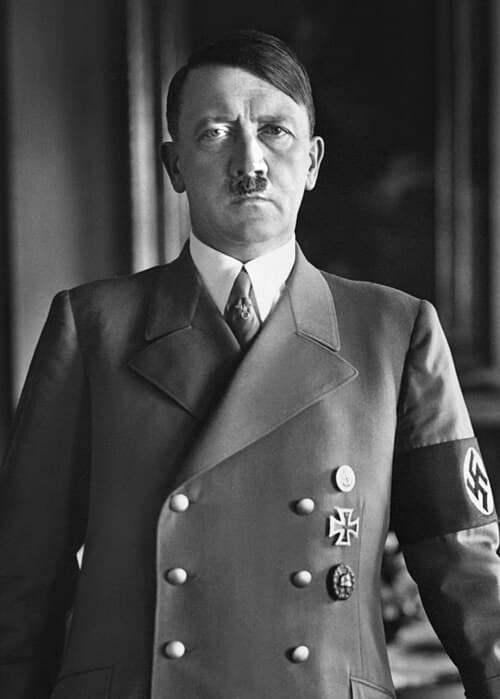
Adolf Hitler
PERSON
Dictator of Germany from 1933 to 1945, main instigator of World War II and leader of the Holocaust (1889–1945)
AA
Aihara et al
PERSON
Name reference in documents
AL
al-Nadhir
PERSON
Name reference in documents
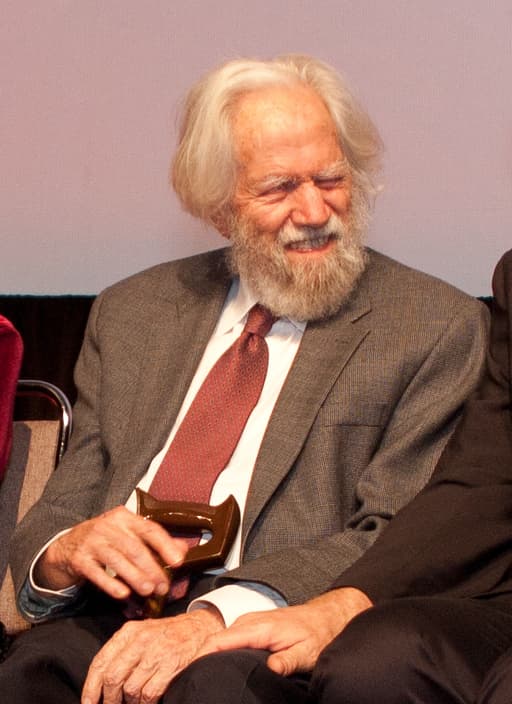
Alexander Shulgin
PERSON
American medicinal chemist, biochemist, pharmacologist, psychopharmacologist, and author (1925–2014)
AW
Alexander Woodcock
PERSON
American biologist and biophysicist

Alfred Gilman
PERSON
American pharmacologist (1908–1984)
Alfred North Whitehead
PERSON
Name reference in documents
AO
Ane Od
PERSON
Name reference in documents

Ann Shulgin
PERSON
American author and the widow of chemist Alexander Shulgin (1931–2022)
AR
Ardjuna
PERSON
Name reference in documents

Arnold
PERSON
Surname reference in Epstein-related documents
AM
Arnold J. Mandell
PERSON
American neuroscientist
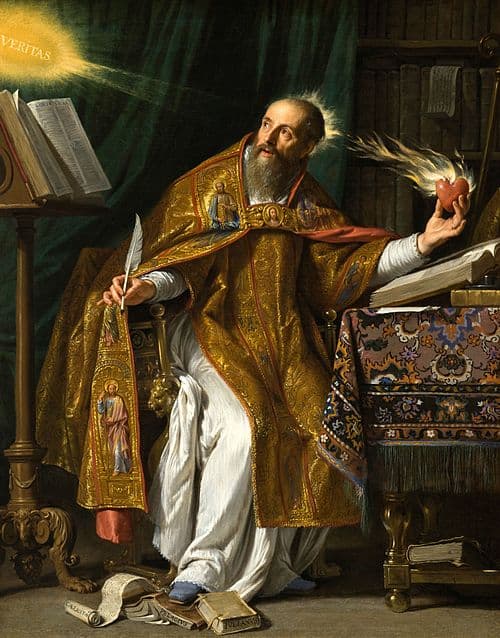
Augustine
PERSON
Surname reference in documents
BE
B. Engquist
PERSON
Name reference in documents
Bancroft Elementary
PERSON
Name reference in documents
Bartholomew
PERSON
Surname reference in documents
BM
Bawa Muhaiyaddeen
PERSON
Sri Lankan Sufi leader
BE
Berge
PERSON
Surname reference in Epstein-related documents

Bernoulli
PERSON
Surname reference in documents
Bertrand Russell
PERSON
British philosopher and logician (1872–1970)
BI
Billy
PERSON
Ambiguous first name - refers to multiple people in Epstein documents
BL
Blake
PERSON
Ambiguous first name - refers to multiple people in Epstein documents
Bloch
PERSON
Swiss physicist (1905-1983)

Bob Dylan
PERSON • 2 mentions
American singer-songwriter (born 1941)

Bradley Cooper
PERSON
American actor

Bressler
PERSON
Name reference in documents

Buddha
PERSON
Surname reference in Epstein-related documents

C. Barks
PERSON
Name reference in documents
C.S. Lewis
PERSON
Name reference in documents

C.T. Dourish
PERSON
Name reference in documents

Callahan
PERSON
Surname reference in Epstein-related documents
CA
Cannon Ball Adderley
PERSON
Name reference in documents

Carl Austin
PERSON
Name reference in documents
Carl G Jung
PERSON
Name reference in documents

Carpenter
PERSON
Ambiguous surname - refers to multiple people in Epstein documents
Charles Sherrington
PERSON
Name reference in documents
CS
Charles Spooner
PERSON
Barbadian cricketer

Charles T. Tart
PERSON
Name reference in documents
Charlie Parker
PERSON
Person referenced in documents
CH
Chihiro Hayashi
PERSON
Name reference in documents

Chris Christie
PERSON • 2 mentions
55th Governor of New Jersey and former U.S. Attorney for the District of New Jersey
Christopher Zeeman
PERSON
British mathematician (1925-2016)
Cicero
PERSON
Roman statesman, lawyer, orator, and philosopher (106–43 BC)
Claude Shannon
PERSON
American mathematician and information theorist (1916–2001)

Condoleezza Rice
PERSON • 2 mentions
American diplomat and political scientist (born 1954)
CW
Courtney Wild
PERSON
American victim/survivor of Jeffrey Epstein who led legal battle for victims' rights
Crick
PERSON
Surname reference in Epstein-related documents
D. Frank Benson
PERSON
Name reference in documents
DA
Damasios
PERSON
Name reference in documents

Das Heilige
PERSON
Name reference in documents
David Braff
PERSON
King of Israel and Judah
David Hume
PERSON
Scottish philosopher, economist, and historian (1711-1776)
David Ruelle
PERSON
Belgian-French mathematical physicist
DS
David S. Segal
PERSON
Name reference in documents
DS
David Smith
PERSON
American visual artist (1906-1965)

David Watson
PERSON
English footballer
Deacon
PERSON
Surname or name fragment in documents
Deacon Jones
PERSON
American football player (1938-2013)
Dennis Sullivan
PERSON
American mathematician

Deuteronomy
PERSON
Surname or name fragment in documents

Devaney
PERSON
Name reference in documents
Dietrich Blumer
PERSON
Name reference in documents
DS
Dietrich Stauffer
PERSON
Dr. rer. nat. Technische Universität München 1970
DO
Donald Ornstein’s
PERSON
Name reference in documents

Donald Trump
PERSON
President of the United States (2017–2021, 2025–present)
Donovan
PERSON
Surname reference in Epstein-related documents
DB
Doug Band
PERSON
American presidential advisor

Doyne Farmer
PERSON
American physicist and entrepreneur (b.1952)
DU
Dutton
PERSON
American professor of geology
E.O. Wilson’s
PERSON
Name reference in documents
Edward Lorenz
PERSON
Name reference in documents

Edward Witten
PERSON
American theoretical physicist
EH
Ehlers
PERSON
Surname or name fragment in documents
Elaide
PERSON
Name reference in documents
Eliade
PERSON
Name reference in documents

Ella Fitzgerald’s
PERSON
Name reference in documents
Elliott Abrams
PERSON
Politician
ET
Emmy Taylor
PERSON
Former assistant to Ghislaine Maxwell, appeared in Epstein flight logs and court documents
Enrico Fermi
PERSON
Italian–American physicist (1901–1954)

Ephesians
PERSON
Name reference in documents
Eric Kandel
PERSON
American neuropsychiatrist

Eric Trump
PERSON
American businessman and reality television personality (born 1984)

Evelyn Underwood
PERSON
Name reference in documents
EX
Exodus
PERSON
Surname reference in documents

Ezekiel
PERSON
Name reference in documents

F. Bachmann
PERSON
German dealer of naturalia in Hamburg, specialised on conchilia
FE
Feigenbaum
PERSON
Surname or name fragment in documents
Fibonocci
PERSON
Name reference in documents
FO
Forrest
PERSON
First name reference to multiple individuals
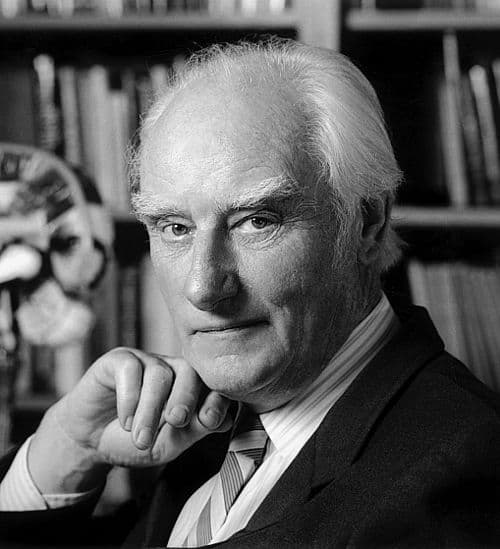
Francis Crick
PERSON
British molecular biologist, biophysicist, neuroscientist; co-discoverer of the structure of DNA
Frank Zappa’s
PERSON
Name reference in documents
FG
Fred K. Goodwin
PERSON
Name reference in documents
FR
Freeman
PERSON
Ambiguous surname - refers to multiple people in Epstein documents
Freud
PERSON
Reference to Sigmund Freud or Lucian Freud
FR
Frobenius
PERSON
Name reference in documents
Gauss
PERSON
Surname or name fragment in documents
George Berkeley
PERSON
Name reference in documents
GB
George Birkoff
PERSON
Name reference in documents

George W. Bush
PERSON • 4 mentions
President of the United States from 2001 to 2009
GI
Gilmore
PERSON
Surname or name fragment in documents

Glass
PERSON
Surname reference in Epstein documents
Goldziher
PERSON
Name reference in documents
GO
Gollub
PERSON
Name reference in documents
Grace
PERSON • 2 mentions
Short Christian prayer said before or after eating; artistic theme
GF
Graham Farmelo
PERSON
Biographer and science writer

Grune
PERSON
Name reference in documents

Guckenheimer
PERSON
Name reference in documents
HB
H. Behnke
PERSON
Name reference in documents

Harry Reid
PERSON
American politician (1939–2021)
HA
Hausdorff
PERSON
Name reference in documents
HK
Heinrich Kluver
PERSON
Name reference in documents
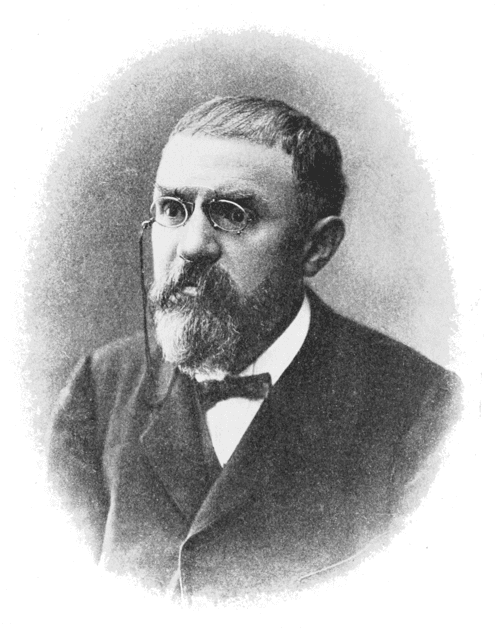
Henri Poincaré
PERSON
Name reference in documents

Hilbert
PERSON
Surname reference in Epstein-related documents
HH
Hip Hop
PERSON
Name reference in documents
HI
Hirai
PERSON
Name reference in documents
HO
Hodder
PERSON
Surname or name fragment in documents
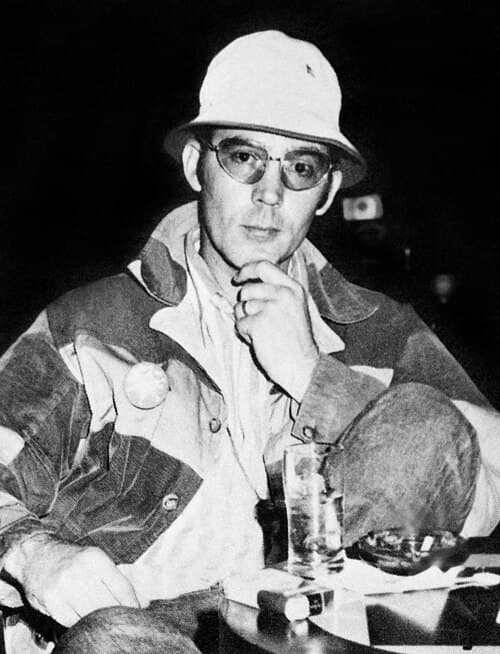
Hunter Thompson’s
PERSON
Name reference in documents

Hurst
PERSON
Surname reference in documents
Hy (Mip
PERSON
Name reference in documents
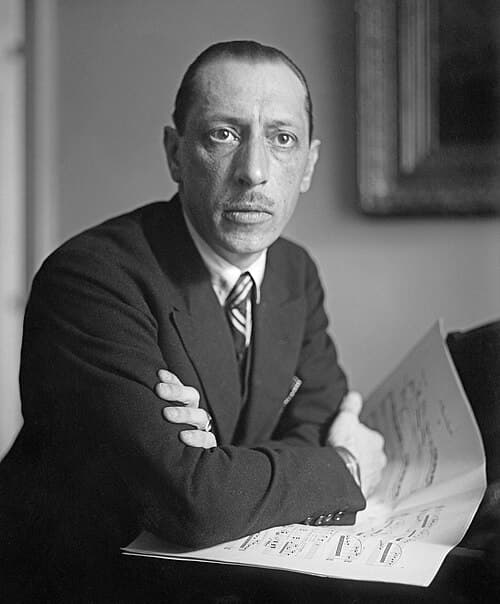
Igor Stravinsky
PERSON
Name reference in documents
IN
Interminable
PERSON
Name reference in documents
Isaac Newton
PERSON
English mathematician and physicist (1642–1727)

Isaiah
PERSON
First name reference to multiple individuals
J. J. Moreau
PERSON
Name reference in documents
J. Moyne
PERSON
Name reference in documents

J.M. Davidson
PERSON
New Zealand archaeologist (1941- )
JY
J.M. Yeomans
PERSON
Name reference in documents
JK
Jack Kerouc
PERSON
Name reference in documents

Jacques De Marquette
PERSON
Name reference in documents
James Baker
PERSON
American lawyer and statesman (born 1930)

James H. Austin
PERSON
Neurologist, author
JO
James Olds
PERSON
Name reference in documents

Jared Kushner
PERSON
American businessman and real estate investor (born 1981)
Jelaluddin Rumi
PERSON
Name reference in documents

Jerry Blau
PERSON
Name reference in documents
Jerry Falwell
PERSON
American evangelical pastor, televangelist, and conservative political commentator

Jes Staley
PERSON
American banker, chief executive officer of Barclays
Jessie Penn-Lewis
PERSON
Name reference in documents
Jesus Christ
PERSON
Central figure of Christianity (6 or 4 BC – AD 30 or 33)

Joe Biden
PERSON
46th President of the United States (2021–2025)
JL
Joe Littlewood
PERSON
Name reference in documents

John Ashcroft
PERSON
79th United States Attorney General
John Coltrane
PERSON
Person referenced in documents
JB
Joseph Brady
PERSON
British actor (1928-2001)
Joseph de Beaufort’s
PERSON
Name reference in documents
Judas
PERSON
Reference to Judas Iscariot or biblical figure

Julius Caeser
PERSON
Head of the Catholic Church from 337 to 352
KF
K. Fladt
PERSON
Name reference in documents
Kadanoff
PERSON
American physicist (1937–2015)
Kandel
PERSON
Surname reference in documents
KA
Kaneko
PERSON
Japanese video game publisher
Karen A. Selz
PERSON
Name reference in documents

Kay R. Jamison
PERSON
American bipolar disorder researcher
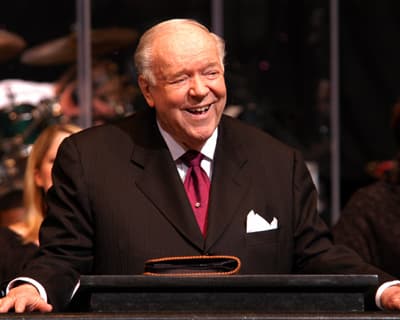
Kenneth E. Hagin
PERSON
Name reference in documents
KI
Kirby
PERSON
Surname reference in Epstein-related documents
KL
Kleigfeld
PERSON
Name reference in documents
Kolmogorov
PERSON
Surname or name fragment in documents
KO
Korsch
PERSON
Name reference in documents
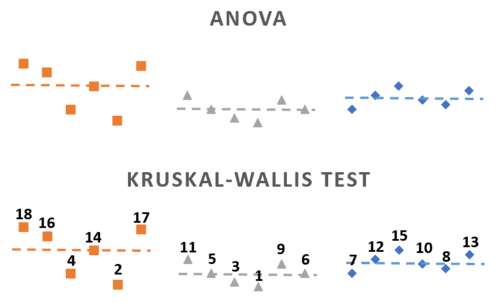
Kruskal
PERSON
Name reference in documents
L.E.J. Brouwer
PERSON
Name reference in documents
L.L Hus
PERSON
Name reference in documents

Lawrence Krauss
PERSON
American particle physicist and cosmologist

Lawrence Kushner
PERSON
American rabbi
LB
Leon Black
PERSON
American billionaire businessman (born 1951)
LE
Levinson
PERSON
Surname reference in documents
LR
Linda E. Reichl
PERSON
Statistical physicist
LI
Littlewood
PERSON
Name reference in documents
LO
Longtin
PERSON
Name reference in documents
LO
Lorenz
PERSON
Surname reference in Epstein-related documents
Louis Lewin
PERSON
Name reference in documents
Louis S. Goodman
PERSON
American pharmacologist
LU
Luther
PERSON
First name reference to multiple individuals in the documents

Lyapounov
PERSON
Name reference in documents
M. Morgan
PERSON
Anesthesiologist
MP
M. Pollicott
PERSON
British mathematician
M. Yuri
PERSON
Name reference in documents
MS
M.F. Shlesinger
PERSON
Name reference in documents
MM
M.P. Mandell
PERSON
Name reference in documents

Mackey
PERSON
Surname reference in documents
MA
Magoun
PERSON
Name reference in documents
Mandelbrot
PERSON
Polish-born, French and American mathematician (1924–2010)
MA
Mandell
PERSON • 2 mentions
Surname reference in documents
MI
MANIAC Il
PERSON
Name reference in documents
Marc Rich
PERSON
American commodities trader (1934–2013)
MF
Maria Farmer
PERSON
American visual artist

Mark Geyer
PERSON
Australian rugby league footballer
Mark Twain
PERSON
American humorist and author, referenced in Epstein contact documents
MA
Markov
PERSON
Surname reference in documents

Marla Maples
PERSON
American actress and TV personality (born 1963)
Martin Buber’s
PERSON
Name reference in documents
Martin Luther
PERSON
Name reference in Epstein documents, likely referring to Martin Luther King Jr.

Martin Marty
PERSON
American historian of religion, educator, author, and theologian
MP
Martin Paulus
PERSON
Researcher
MW
Martin Weinberg
PERSON
American attorney (born 1946)
MA
Martini
PERSON
Surname reference in documents
MK
Max Kadushin
PERSON
Name reference in documents
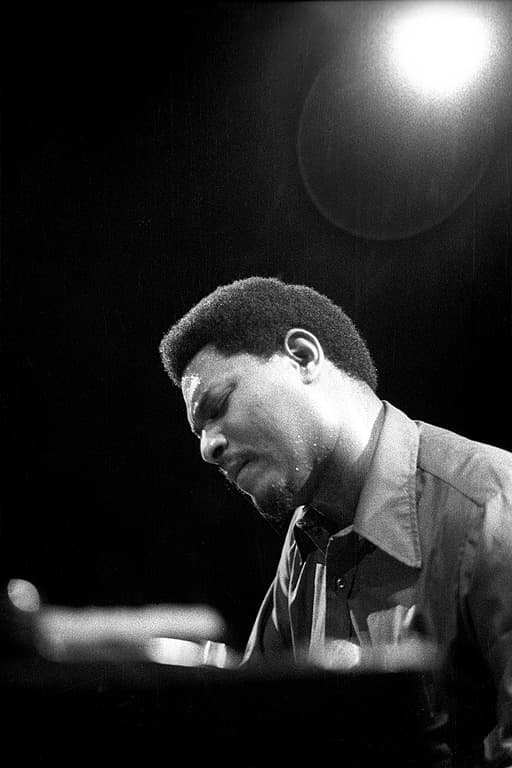
McCoy Tyner
PERSON
Person referenced in documents

McGuire
PERSON
Surname reference in Epstein-related documents
ME
Meister
PERSON
Profession
Mere Christianity
PERSON
Name reference in documents
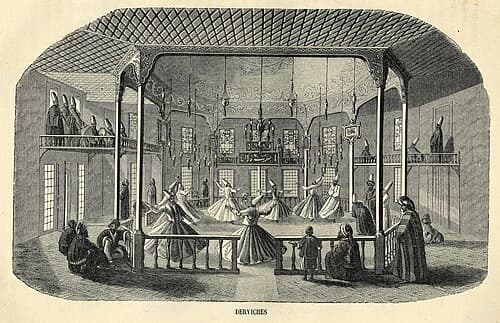
Mevlevi
PERSON
Name reference in documents
Michael Green’s
PERSON
Name reference in documents

Michael Lewis
PERSON
American writer
Milnor
PERSON
Name reference in documents
MI
Milton
PERSON
Surname reference in Epstein-related documents
ML
Miranda Lundy
PERSON
Name reference in documents
Mircea Eliade
PERSON
Romanian-American historian, writer, philosopher and professor at the University of Chicago (1907–1986)

Moishe Zar
PERSON
Name reference in documents

Monte Davis
PERSON
Name reference in documents
MO
Morse
PERSON
Surname reference in Epstein-related documents
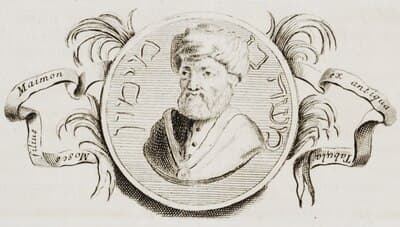
Moses Maimonides
PERSON
Name reference in documents
ME
Munaquib el-Arafin
PERSON
Name reference in documents

Murad Shami
PERSON
Indian character actor
NA
Natalie Angiers
PERSON
Name reference in documents
NE
Nevesh
PERSON
Name reference in documents
Nicholas Herman
PERSON
Name reference in documents
Nicholas Von Cusa
PERSON
Name reference in documents
Nicolelis
PERSON
Brazilian neuroscientist
Nusse
PERSON
Name reference in documents
OL
Olsen
PERSON
Ambiguous surname reference in Epstein documents
OF
Otto Fenichel’s
PERSON
Name reference in documents
Pafnuti Lvovich Chebyshev
PERSON
Name reference in documents
PA
Pascal
PERSON
Surname reference in Epstein-related documents
PB
Pascal Boyer
PERSON
French anthropologist

Pasta
PERSON
Name reference in documents

Pat Robertson
PERSON
American media mogul and minister (1930–2023)
PH
Paul Holmer
PERSON
British diplomat (1923-2006). Deputy High Commissioner, Singapore 1966-1969, Head of Security Department, Foreign and Commonwealth Office 1969-1972, Ambassador to Ivory Coast, Upper Volta and Niger 1972-1975, Deputy Permanent Repesentative to N.A.T.O

Paul Rapp
PERSON
Name reference in documents
PT
Paul Tillich
PERSON
Name reference in documents
Pavlov
PERSON
Surname or name fragment in documents
PS
Peggy Siegal
PERSON
American entertainment publicist
Philip
PERSON
First name reference to multiple individuals in Epstein documents
Phillip Holmes
PERSON
Name reference in documents
Pierre Teilhard de Chardin
PERSON
Name reference in documents
PI
Pihkal
PERSON
Name reference in documents
Plato
PERSON
4th-century BCE Greek philosopher
PO
Poincare
PERSON
Surname reference in documents
PO
Poincaré
PERSON
Name reference in documents
PO
Pomeau
PERSON
Name reference in documents

Prince Andrew
PERSON
Third child of Queen Elizabeth II and Prince Philip, Duke of Edinburgh (born 1960)

Prince Charles
PERSON
King of the United Kingdom and other Commonwealth realms since 2022 (born 1948)
PR
Proverbs
PERSON
Name reference in documents
RM
R.C. Meibach
PERSON
Name reference in documents

R.J. Davidson
PERSON
Name reference in documents

Ralph Abraham
PERSON
American physician and congressman
RD
Rdéssler
PERSON
Name reference in documents
RA
Ren et al
PERSON
Name reference in documents
Rene Thom’s
PERSON
Name reference in documents
Reuben Hersh
PERSON
American mathematician (1927–2020)
Rhema
PERSON
Name reference in documents

Richard Reid
PERSON
British terrorist
RI
Rinzel
PERSON
Name reference in documents
Robert Lowe
PERSON
Name reference in documents
R(
Robert May (
PERSON
Name reference in documents
RE
Robert S. Elliwood
PERSON
Name reference in documents
RW
Robert Wilken
PERSON
Indian choreographer
Rudolf Otto’s
PERSON
Name reference in documents
Rufus Bowen
PERSON
Professor in the Department of Mathematics at the University of California, Berkeley
RU
Russo
PERSON
Surname reference in Epstein-related documents

S.H. Koslow
PERSON
Name reference in documents

S.J. Cooper
PERSON
College basketball player (1950–1950) Mississippi State
SA
Saltzman
PERSON
Surname reference in documents

Samantha Power
PERSON
Irish-American academic, author and diplomat
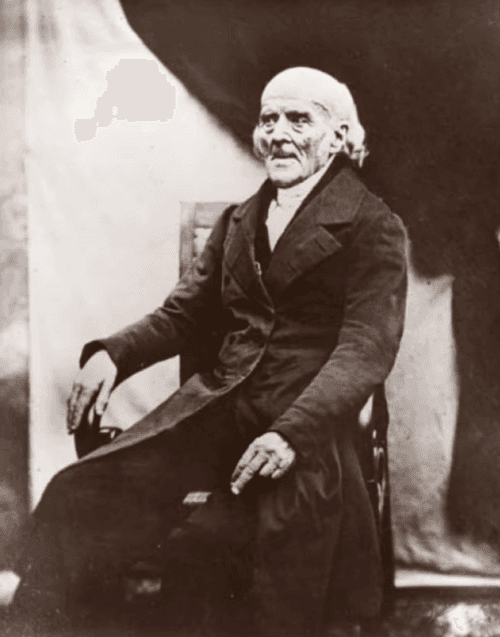
Samuel Hahnemann
PERSON
Name reference in documents
SA
Sashin
PERSON
Name reference in documents
SC
Schuster
PERSON
Surname reference in Epstein-related documents
SD
Sefer shel Devarium
PERSON
Name reference in documents

Sergey Brin
PERSON
American billionaire businessman (born 1973)
SM
Shang-Keng Ma
PERSON
Ph.D. University of California, Berkeley 1966
SH
Shenker
PERSON
Surname reference in documents
SA
Simoyi et al
PERSON
Name reference in documents
SP
Sprott
PERSON • 2 mentions
Surname or name fragment in documents
Stan Ulam
PERSON
Name reference in documents

Stanley Glick
PERSON
Name reference in documents
ST
Stauffer
PERSON
Surname reference in documents

Strogatz
PERSON
American mathematician
Tattersal
PERSON
American paleoanthropologist

te Sue
PERSON
Name reference in documents

Thanatos
PERSON
Name reference in documents

The Dalai Lama
PERSON • 2 mentions
Tibetan spiritual leader, referenced in Epstein scheduling and contact documents

the Falon Gong
PERSON
Name reference in documents
TH
Thomas Heath
PERSON
Person referenced in documents
TL
Tim LaHaye
PERSON
Name reference in documents

Tim LeHay
PERSON
Name reference in documents
Timothy Leary
PERSON
American psychologist (1920–1996)
TR
Tracy
PERSON
Ambiguous first name - refers to multiple Tracys including Tracy Chapell and Tracy Lofaro in Epstein documents

V.I. Arnold
PERSON
Name reference in documents

Van der Pol
PERSON
Photographer
VA
Var(E(r
PERSON
Name reference in documents

Virginia Giuffre
PERSON
Advocate for sex trafficking victims (1983–2025)
W. Schmid
PERSON
Ph.D. Martin-Luther-Universität Halle-Wittenberg 1965
WA
Walker
PERSON
Surname reference in Epstein documents

Walter Kaufmann
PERSON
German-American philosopher (1921–1980)
Walter Winchell
PERSON
Name reference in documents

Whittington
PERSON
Name reference in documents
WB
William Benson
PERSON
Name reference in documents
William Blake
PERSON
English poet and artist (1757–1827)
WF
William Feller
PERSON
Croatian-American mathematician
William James
PERSON
Person referenced in documents
William Shakespeare
PERSON
English playwright and poet (1564–1616)

Ya Sinai
PERSON
Name reference in documents
YE
Yeomans
PERSON
Surname or name fragment in documents

Yorke
PERSON
Geographic reference to Yorke Peninsula, South Australia (misclassified as PERSON)

Yoshi Ueda
PERSON
Name reference in documents
Zabusky
PERSON
Physicist (1929-2018)
/HES
ORGANIZATION
Organization referenced in documents
a Salivation Army Band
ORGANIZATION
Organization referenced in documents
Academic Press
ORGANIZATION
American academic publisher (1942-)
Addison-Wesley
ORGANIZATION
American publisher of textbooks and computer literature
Adler-Weiss-Ornstein
ORGANIZATION
Organization referenced in documents
Aerial Press
ORGANIZATION
Organization referenced in documents
Amphetamine Enhancement of Reward Asymmetry
ORGANIZATION
Organization referenced in documents
Aristotelian Physics and Catastrophe Theory
ORGANIZATION
Organization referenced in documents
Armour Hills Public Golf
ORGANIZATION
Organization referenced in documents
Assembly of God
ORGANIZATION
Organization referenced in documents
B.B. Mandelbrot
ORGANIZATION
Organization referenced in documents

Basic Books
ORGANIZATION
American book publisher
Benjamin/Cummings
ORGANIZATION
Organization referenced in documents
Benzedrine
ORGANIZATION
Organization referenced in documents
Bible Church
ORGANIZATION
Organization referenced in documents
Biological Dynamics
ORGANIZATION
Organization referenced in documents
Boiteux
ORGANIZATION
Organization referenced in documents
Boston’ University
ORGANIZATION
Organization referenced in documents
Brain Physics
ORGANIZATION
Organization referenced in documents
Bulletin
ORGANIZATION
Newspaper published in Bend, Oregon
C-S. Lewis
ORGANIZATION
Organization referenced in documents
Cambridge University Press’s
ORGANIZATION
Organization referenced in documents
Catastrophe Theory
ORGANIZATION
Organization referenced in documents

Century
ORGANIZATION
American movie theater chain, owned by Cinemark
Charismatic Christian Church
ORGANIZATION
Organization referenced in documents
Chemical Love Story
ORGANIZATION
Organization referenced in documents
Chicago Press
ORGANIZATION
Organization referenced in documents
Christian Science
ORGANIZATION
Organization referenced in documents

Clarendon
ORGANIZATION
Typeface
Clarendon Press
ORGANIZATION
Publishing imprint
Computerized
ORGANIZATION
Organization referenced in documents
Corinthian Paulisms
ORGANIZATION
Organization referenced in documents
Coxeter, University of Toronto Press
ORGANIZATION
Organization referenced in documents
Crevier
ORGANIZATION
Organization referenced in documents
Cvitanovic’
ORGANIZATION
Organization referenced in documents
Dark Power
ORGANIZATION
Organization referenced in documents

De Brower
ORGANIZATION
Organization referenced in documents
Dons of the high
ORGANIZATION
Organization referenced in documents
Doubleday
ORGANIZATION
American publishing company
Dynamical Systems
ORGANIZATION
Organization referenced in documents
early Christian Church
ORGANIZATION
Organization referenced in documents
Ecstasy
ORGANIZATION
Organization referenced in documents
Ergodic Theory
ORGANIZATION
Organization referenced in documents
Euclidean
ORGANIZATION
Organization referenced in documents
Fano, Allan and Levy
ORGANIZATION
Organization referenced in documents
Fermi-Pasta-Ulam
ORGANIZATION
Organization referenced in documents
Fine Arts Museum
ORGANIZATION
Organization referenced in documents
Fundamentals of Mathematics
ORGANIZATION
Organization referenced in documents
Geometry
ORGANIZATION
Organization referenced in documents
German Shepherds
ORGANIZATION
Organization referenced in documents
Geyer
ORGANIZATION
Municipality of Germany
Halakhah
ORGANIZATION
Organization referenced in documents

Harvest Books
ORGANIZATION
Organization referenced in documents
Hertz
ORGANIZATION
American car rental company
Hodgkin-Huxley
ORGANIZATION
Organization referenced in documents
Holy Spirit Energy
ORGANIZATION
Organization referenced in documents
Hopf Bifurcation and Its Applications, Appl
ORGANIZATION
Organization referenced in documents
House of Commons
ORGANIZATION
Organization referenced in documents

Howard University
ORGANIZATION
University in Washington D.C.
Hy and AC
ORGANIZATION
Organization referenced in documents
Hy, AC
ORGANIZATION
Organization referenced in documents
Islamic Dervishes
ORGANIZATION
Organization referenced in documents
Jamesian
ORGANIZATION • 2 mentions
Organization referenced in documents
Jerusalem Mental Health Center’s
ORGANIZATION
Organization referenced in documents
Jewish Lights
ORGANIZATION
Organization referenced in documents
John Wiley
ORGANIZATION
American baseball player (1857-1926)

Johns Hopkins
ORGANIZATION
Private university in Baltimore, Maryland, USA

Judaism
ORGANIZATION
Abrahamic monotheistic ethnic religion of the Jews
Kansas City Country Club’s
ORGANIZATION
Organization referenced in documents
Karhunen-Loeve
ORGANIZATION
Organization referenced in documents
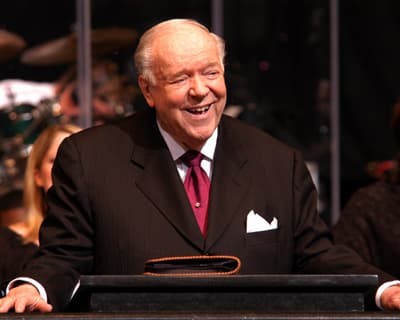
Kenneth Hagin Ministries
ORGANIZATION
Organization referenced in documents

L.M. Weaver
ORGANIZATION
Organization referenced in documents
Math House #2
ORGANIZATION
Organization referenced in documents
Mathematical Society
ORGANIZATION
Organization referenced in documents
Mathematics Institute
ORGANIZATION
Organization referenced in documents
Medline
ORGANIZATION
Organization referenced in documents
Mental Iliness
ORGANIZATION
Organization referenced in documents
Meridian
ORGANIZATION
City in and county seat of Bosque County, Texas, United States
Mishna
ORGANIZATION
Organization referenced in documents

MIT Press
ORGANIZATION
American university press
Morris Cerullo’s
ORGANIZATION
Organization referenced in documents
N. Y. Acad
ORGANIZATION
Organization referenced in documents

Nelson-Hall
ORGANIZATION
Organization referenced in documents
Neurologic
ORGANIZATION
Organization referenced in documents
Non-Euclidean Geometry
ORGANIZATION
Organization referenced in documents
Nonlinear Dynamical Systems
ORGANIZATION
Organization referenced in documents
Notre Dame Cathedral
ORGANIZATION
Organization referenced in documents
P.H. Connell
ORGANIZATION
Organization referenced in documents
P.O. Box Office
ORGANIZATION
Organization referenced in documents
Park Street Press
ORGANIZATION
Organization referenced in documents
Penn-Lewis
ORGANIZATION
Organization referenced in documents
Pharmacology, Biochemistry and Behavior
ORGANIZATION
Organization referenced in documents

Plenum
ORGANIZATION
Organization referenced in documents
Post-Reformation Christian Church
ORGANIZATION
Organization referenced in documents
Practice
ORGANIZATION
Organization referenced in documents
Prediction Company
ORGANIZATION
Organization referenced in documents

Princeton Univ
ORGANIZATION
Organization referenced in documents
Psychochemial Research Strategies
ORGANIZATION
Organization referenced in documents
Pythagorean
ORGANIZATION
Organization referenced in documents
Pythagorean Brotherhood
ORGANIZATION
Organization referenced in documents
Quantitative Universality
ORGANIZATION
Organization referenced in documents
Rabbinate
ORGANIZATION
Organization referenced in documents
Random House
ORGANIZATION
American general-interest trade book publisher
Raven Press
ORGANIZATION
Organization referenced in documents
Reality
ORGANIZATION
Organization referenced in documents
Reformed Judaism
ORGANIZATION
Organization referenced in documents
Rhema Bible Church
ORGANIZATION
Organization referenced in documents
Ruelle
ORGANIZATION
Organization referenced in documents
S.D. Glick
ORGANIZATION
Organization referenced in documents
S.R. Dean
ORGANIZATION
Organization referenced in documents
Sacred
ORGANIZATION
Organization referenced in documents

Saints
ORGANIZATION
Organization referenced in documents
Salat
ORGANIZATION
Organization referenced in documents
Semiophysics
ORGANIZATION • 2 mentions
Organization referenced in documents
Sketch
ORGANIZATION
Organization referenced in documents

Soto Zen
ORGANIZATION
Organization referenced in documents
Southern Methodist
ORGANIZATION
Organization referenced in documents

Spirit
ORGANIZATION
Spirit Airlines or entity
Springer
ORGANIZATION
Organization referenced in documents
Springer-Verlag
ORGANIZATION
Organization referenced in documents
Statistical Physics
ORGANIZATION
Organization referenced in documents
Stergiopulos et al, 1998
ORGANIZATION
Organization referenced in documents
Stratton
ORGANIZATION
Organization referenced in documents
Structural Stability of Morphogenesis
ORGANIZATION
Organization referenced in documents
Takens
ORGANIZATION
Organization referenced in documents
Tantric
ORGANIZATION
Organization referenced in documents
Teshuvah
ORGANIZATION
Organization referenced in documents
Texas Press
ORGANIZATION
Organization referenced in documents
the Brain Research Institute
ORGANIZATION
Organization referenced in documents
The Dakota Tribe
ORGANIZATION
Organization referenced in documents
The Geometry of Behavior
ORGANIZATION
Organization referenced in documents
the Geshwind Syndrome
ORGANIZATION
Organization referenced in documents
the Good Power
ORGANIZATION
Organization referenced in documents
the Huichol Indian’s
ORGANIZATION
Organization referenced in documents
the Jewish Antidefamation League
ORGANIZATION
Organization referenced in documents
the Lutheran Day School
ORGANIZATION
Organization referenced in documents
the Math House #2 s
ORGANIZATION
Organization referenced in documents
the Missouri Synod
ORGANIZATION
Organization referenced in documents
the Modern Theory of Dynamical Systems
ORGANIZATION
Organization referenced in documents
the National Guild of Catholic Psychiatrists
ORGANIZATION
Organization referenced in documents
the North American Indian Tribe
ORGANIZATION
Organization referenced in documents
the Pacific Theater of World War II
ORGANIZATION
Organization referenced in documents
the Respiritualization of Healing
ORGANIZATION
Organization referenced in documents
The Sacred and Profane
ORGANIZATION
Organization referenced in documents
The Saudi Arabian World Trade Center
ORGANIZATION
Organization referenced in documents
the Second Nobe/ Truth
ORGANIZATION
Organization referenced in documents
the Sufi Masters
ORGANIZATION
Organization referenced in documents
The U.S. Armed Service Pathology Department’s
ORGANIZATION
Organization referenced in documents
the University of California
ORGANIZATION
University
the University of California in San Diego
ORGANIZATION
Organization referenced in documents

the University of Massachusetts
ORGANIZATION
Organization referenced in documents
the University of Paris
ORGANIZATION
Organization referenced in documents
the Warwick Mathematics Institute
ORGANIZATION
Organization referenced in documents
Troost
ORGANIZATION
Organization referenced in documents
U.C. Berkeley
ORGANIZATION
Organization referenced in documents

University of Oxford
ORGANIZATION
Collegiate research university in Oxford, England

University of Pennsylvania
ORGANIZATION
University

Vanderbilt University
ORGANIZATION
Private university in Nashville, Tennessee, US

W. Singer
ORGANIZATION
Organization referenced in documents
Wal-Mart’s
ORGANIZATION
Organization referenced in documents
Warwick University
ORGANIZATION
Organization referenced in documents
Wiggens, 1990
ORGANIZATION
Organization referenced in documents

Woodstock
ORGANIZATION
1969 music festival in New York, United States
Yale Divinity School
ORGANIZATION
Organization referenced in documents
Yale’s School of Medicine
ORGANIZATION
Organization referenced in documents

Zeeman
ORGANIZATION
Organization referenced in documents
Aberdeenshire
LOCATION
Council area of Scotland

Ann Arbor
LOCATION
County seat of Washtenaw County, Michigan, United States
Aplysia
LOCATION
Location referenced in documents

Beaufort
LOCATION
City in Beaufort County, South Carolina, United States
Benares
LOCATION
Location referenced in documents

Berkeley
LOCATION
City in Alameda County, California, United States
Black Baptist
LOCATION
Location referenced in documents
Blue Hills
LOCATION
Location referenced in documents
Bures
LOCATION
Location referenced in documents

Columbia University
LOCATION
Private Ivy League research university in New York City
Corinthians
LOCATION
Location referenced in documents
Crotona
LOCATION
Italian comune

Earth
LOCATION
Third planet from the Sun in the Solar System
Eastern
LOCATION
Directional region of the United States
Englewood
LOCATION
One of the 77 official community areas of Chicago, Illinois, United States
Fiegenbaum
LOCATION
Location referenced in documents
Fortran
LOCATION
Location referenced in documents
Galilee
LOCATION
Italian polymath (1564–1642)
Gethsemane
LOCATION
Garden at the foot of the Mount of Olives in Jerusalem
Granta
LOCATION
British literary magazine and publisher
Harcourt
LOCATION
United States publishing firm

Hebron
LOCATION
Palestian city in the occupied West Bank

Hindi
LOCATION
Location referenced in documents

Jerusalem
LOCATION
City in the Middle East, holy to the three Abrahamic religions
Kaaba
LOCATION
Cubical shrine in Mecca, Saudi Arabia; direction of prayer for Muslims

Kansas City
LOCATION
City in Missouri, United States, that is one of two county seats of Jackson County and the largest city in Missouri
Labrador
LOCATION
Location referenced in documents

Las Vegas
LOCATION
City of Clark County, and largest city in state of Nevada, United States
Long Beach
LOCATION
City in Los Angeles County, California, United States
Los Alamos’s
LOCATION
Location referenced in documents
Lutheran
LOCATION
Location referenced in documents
Medieval Europe
LOCATION
Location referenced in documents
Methodist
LOCATION
Location referenced in documents

Middle East
LOCATION
Geopolitical region encompassing Egypt and most of Western Asia, including Iran
Modern America
LOCATION
Location referenced in documents

Montreal
LOCATION
Largest city in Quebec, Canada

New York City
LOCATION
Most populous city in the United States
Northern
LOCATION
Directional region of the United States

Oklahoma
LOCATION
State of the United States of America
Pentecost
LOCATION
Location referenced in documents
Putney
LOCATION
Parliamentary constituency in the United Kingdom, 1918 onwards
Qurayza
LOCATION
Location referenced in documents

Rochester
LOCATION
City in New York

Rowlands
LOCATION
Human settlement in Robeson County, North Carolina, United States of America

San Diego
LOCATION
Seat of San Diego County, California, United States; second-largest city in California

Santa Cruz
LOCATION
City in eastern Bolivia
Sinai
LOCATION
Peninsula in the Middle East
South Los Angeles
LOCATION
Districts and neighborhoods of Los Angeles

Southeast Florida
LOCATION
Location referenced in documents

Southern California
LOCATION
Geographic and cultural region
Southside
LOCATION
American record producer, rapper and songwriter
St. Athanasius’s
LOCATION
Location referenced in documents
Stoughton
LOCATION
Location referenced in documents
Synanon
LOCATION
Religious cult of the 1970s
the Amazonian Indian’s
LOCATION
Location referenced in documents

the Grand Canyon
LOCATION
Location referenced in documents
the Unitarian Universalist’s
LOCATION
Location referenced in documents

Toronto
LOCATION
Capital and largest city of the province of Ontario, Canada

Tulsa
LOCATION
City in Oklahoma, United States and county seat of Tulsa County
U.M.I.
LOCATION
Location referenced in documents

Vietnam
LOCATION
Country in Southeast Asia
Voltairean
LOCATION
Location referenced in documents
Warwick
LOCATION
County town of Warwickshire, England
World Rock
LOCATION
Location referenced in documents
Statistics
Pages:100
Entities:545
Avg. OCR:94.6%
Sponsored