EFTA00022546 - EFTA00022615
Document EFTA00022546 is a legal document from the United States District Court for the Southern District of Florida, related to the case of Jane Doe #1 and Jane Doe #2 against the United States, specifically concerning intervenor Jeffrey Epstein.
This 70-page document appears to be a reply brief filed by Jane Doe #1 and Jane Doe #2, opposing Jeffrey Epstein's arguments regarding proposed remedies in their case against the United States. The document discusses procedural due process, the concealment of a non-prosecution agreement (NPA), and whether rescission is an appropriate remedy under the Crime Victims' Rights Act (CVRA). It also touches on principles of contract law and civil releases signed by the plaintiffs.
Key Highlights
- •The document argues that Jeffrey Epstein received procedural due process.
- •It alleges that Epstein's counsel was aware of the concealment of the Non-Prosecution Agreement.
- •The document claims the USAO-SDFL was not authorized to extend Epstein's immunity without consulting his victims.
- •The document asserts the CVRA authorizes rescission as a remedy.
- •Key figures include Jeffrey Epstein, Alexander Acosta, and attorneys Paul Cassell, Kenneth Marra, and Jeffrey Sloman.
Frequently Asked Questions

Document Information
Bates Range
EFTA00022546 - EFTA00022615
Pages
70
Document Content
Page 1 - EFTA00022546
Case 9:08-cv-80736-KAM Document 466 Entered on FLSD Docket 07/23/2019 Page 1 of 70 UNITED STATES DISTRICT COURT SOUTHERN DISTRICT OF FLORIDA Case No. 08-80736-Civ-Marra/Johnson JANE DOE #1 and JANE DOE #2 v. UNITED STATES JANE DOE 1 AND JANE DOE 2'S REPLY TO INTERVENOR EPSTEIN'S BRIEF IN OPPOSITION TO PROPOSED REMEDIES Bradley J. Edwards Edwards Pottin er LP Paul G. Cassell Pro Hac Vice This daytime business address is provided for identification and correspondence purposes only and is not intended to imply institutional endorsement by the University of Utah. EFTA00022546
Page 2 - EFTA00022547
Case 9:08-cv-80736-KAM Document 466 Entered on FLSD Docket 07/23/2019 Page 2 of 70 TABLE OF CONTENTS INTRODUCTION 1 THIS CASE MUST BE DECIDED ON THE AGREED PREMISE THAT THE NPA ONLY COVERS THE U.S. ATTORNEY'S OFFICE FOR THE SOUTHERN DISTRICT OF FLORIDA. 3 DISCUSSION 6 I. INTERVENOR EPSTEIN HAS RECEIVED PROCEDURAL DUE PROCESS THROUGH AN OPPORTUNITY TO BE HEARD AND SUBMIT EVIDENCE ON ISSUES PERTAINING TO REMEDIES. 6 A. As an Intervenor, Epstein Has Received Procedural Due Process 6 B. The Court's Findings About Epstein Counsel's Awareness of Concealment of the Non- Prosecution Agreement are Well-Supported and Unchallenged 10 I. Through Counsel, Epstein Was a Party to the Illegal Concealment of the Non- Prosecution Agreement 10 2. Evidence Exists that the Epstein Defense Team Acted in Bad Faith. 18 3. The USAO-SDFL Was Not Authorized to Extend Epstein Immunity Without First Conferring with his Victims. 23 II. THE CVRA AUTHORIZES RESCISSION AS A REMEDY. 26 A. The CVRA Authorizes Rescission as a Remedy. 26 B. The Victims Are Not Time-Barred Under the CVRA. 28 III. PRINCIPLES OF CONTRACT LAW SUPPORT A RESCISSION REMEDY. 34 A. Under the CVRA, Contract Law Principles Require Rescission. 34 B. The Civil Releases Signed by Jane Doe I and 2 Did Not — and Could Not — Waive their CVRA Claims Against the Government 40 IV. THE DOCTRINES OF EQUITABLE AND JUDICIAL ESTOPPEL ARE INAPPLICABLE. 45 A. Jane Doe 1 and 2 Have Not Violated Any CVRA Requirement in Handling Their Petition. 45 B. Congress Has Not Added Doctrines of Estoppel to the CVRA. 46 C. Epstein Has Failed to Satisfy the Elements of the Equitable Estoppel Doctrine. 48 D. Epstein Has Failed to Satisfy the Elements of the Judicial Estoppel Doctrine. 50 EFTA00022547
Page 3 - EFTA00022548
Case 9:08-cv-80736-KAM Document 466 Entered on FLSD Docket 07/23/2019 Page 3 of 70 V. ALLEGED PRINCIPLES OF "SUBSTANTIVE DUE PROCESS" DO NOT PRECLUDE RESCISSION REMEDIES 53 VI. SEPARATION OF POWERS DOES NOT PREVENT THE COURT FROM EXERCISING ITS STATUTORY POWER TO ENFORCE THE CVRA. 59 VII. THE VICTIMS' REQUEST FOR DECLARATORY RELIEF (REMEDY #2) IMMEDIATELY BECOMES RIPE UPON THE GRANTING OF A RESCISSION (REMEDY #1). 61 VIII. THE COURT IS AUTHORIZED TO HOLD A PUBLIC HEARING WITH THE VICTIMS IN THIS CASE. 62 IX. ADOPTION OF EARLIER PLEADINGS BY REFERENCE 63 X. THE COURT SHOULD EXPEDITE ITS RULING ON REMEDIES AND ON THE VICTIMS' RIGHTS TO BE TREATED WITH FAIRNESS AND TO NOTICE 63 XI. REQUEST FOR A HEARING (IF NECESSARY) 65 CONCLUSION 65 EFTA00022548
Sponsored
Page 4 - EFTA00022549
Case 9:08-cv-80736-KAM Document 466 Entered on FLSD Docket 07/23/2019 Page 4 of 70 UNITED STATES DISTRICT COURT SOUTHERN DISTRICT OF FLORIDA Case No. 08-80736-Civ JANE DOE #1 and JANE DOE #2 v. UNITED STATES JANE DOE 1 AND JANE DOE 2'S REPLY TO INTERVENOR EPSTEIN'S BRIEF IN OPPOSITION TO PROPOSED REMEDIES COME NOW Jane Doe 1 and Jane Doe 2 (also referred to as "the victims"), by and through undersigned counsel, having previously provided a submission on proposed remedies (DE 458) and in light of Intervenor Epstein's' Brief in Opposition (DE 463) (hereinafter cited as "Epstein Remedies Br."), to now reply to Epstein in support of their submission on proposed remedies. For the reasons explained in their earlier submissions (see, e.g., DE 458 and 464) and below, the Court should reject the Intervenor Epstein's arguments and grant Jane Doe 1 and Jane Doe 2 the various remedies their seek to enforce and protect their rights under the Crime Victims' Rights Act (CVRA) — including rescission of the non-prosecution agreement. INTRODUCTION As Jane Doe 1 and 2 explained in their earlier submissions, this case involves deception of dozens of Florida victims of an international sex trafficking organization — the organization led by As discussed below, Epstein was granted "limited" intervention in this case to address remedies. Since remedies are now at issue, Epstein has full intervention rights and will be referenced throughout this reply as "Intervenor Epstein." 1 EFTA00022549
Page 5 - EFTA00022550
Case 9:08-cv-80736-KAM Document 466 Entered on FLSD Docket 07/23/2019 Page 5 of 70 Intervenor Epstein. The Government2 and Epstein reached a secret non-prosecution agreement (NPA) and then concealed that agreement until it was firmly in place — and the victims lost any opportunity to object. This secret justice for Epstein and his co-conspirators has led to a national outcry about unfairness and unequal treatment of the wealthy and powerful in the criminal justice system. This Court has previously determined that Jane Doe 1 and 2's CVRA rights to confer with prosecutors were violated through the machinations of prosecutors and Epstein. This Court then called for briefing on the appropriate remedy for that violation. DE 454. Jane Doe I and 2 have proposed rescission of the NPA's "immunity" provisions, which have prevented victims from conferring with prosecutors in the USAO-SDFL about prosecuting Epstein for the crimes he committed in Florida against them. Epstein claims that this remedy is not available to this Court. But the Court has previously held that it is a permissible remedy and nothing that Epstein raises should cause the Court to reverse course. The NPA's immunity provisions were founded in illegality — specifically, their concealment from the victims - something that Epstein well knew and, indeed, specifically sought. Accordingly, this Court can and should rescind the immunity provisions as the appropriate remedy for the victims. Rescission will vindicate Jane Doe 1 and 2's CVRA rights, by permitting them to confer with prosecutors in this district about obtaining federal prosecution here — against Epstein and all of his coconspirators. Epstein has little to say about the other remedies that the Jane Does seek, and accordingly the Court should (for reasons articulated earlier) grant those remedies as well. 2 References to the "Government" in this case should be generally understood to refer to the U.S. Attorney's Office for the Southern District of Florida (USAO-SDFL), which is currently being represented by the U.S. Attorney's Office for the Northern District of Georgia. 2 EFTA00022550
Page 6 - EFTA00022551
Case 9:08-cv-80736-KAM Document 466 Entered on FLSD Docket 07/23/2019 Page 6 of 70 THIS CASE MUST BE DECIDED ON THE AGREED PREMISE THAT THE NPA ONLY COVERS THE U.S. ATTORNEY'S OFFICE FOR THE SOUTHERN DISTRICT OF FLORIDA. For many years, this case has been litigated on the premise that the NPA negotiated by Epstein with prosecutors in the Southern District of Florida only precludes his prosecution in the Southern District of Florida. Indeed, the NPA's plain terms directly limit the agreement to "this District." See NPA at 2 (noting that the agreement was signed "on the authority of R. Alexander Acosta, United States Attorney for the Southern District of Florida" and requires that "prosecution in this District for [various federal offenses] shall be deferred" and that no federal prosecution of Epstein "will be instituted in this District"). This is consistent with the statute creating the Office of U.S. Attorney, which allows each U.S. Attorney to prosecute offenses only "within his district." 28 U.S.C. § 547. In light of this plain language, the NPA has no application to prosecutors in other judicial districts, such as the Southern District of New York. See United States v. Fernandez, No. 17-CR- 167 (JMF), 2017 WL 6372783 at *2 (S.D.N.Y. 2017) ("The Second Circuit has squarely held that "[w]hen the express terms of a plea agreement set forth promises by `the Government,' . . . the plea agreement binds only the office of the United States Attorney for the district in which the plea is entered unless it affirmatively appears that the agreement contemplates a broader restriction, or unless there is evidence to show that a prosecutor is attempting to evade its own obligations under the plea agreement by transferring a prosecution to another office" (citing United States v. Salameh, 152 F.3d 88, 120 (2d Cir. 1998)). The fact that the USAO-SDFL's agreement with Epstein applies only to the Southern District of Florida has been made explicitly throughout this litigation — without any objection from 3 EFTA00022551
Sponsored
Page 7 - EFTA00022552
Case 9:08-cv-80736-KAM Document 466 Entered on FLSD Docket 07/23/2019 Page 7 of 70 Intervenor Epstein. See, e.g., DE 205-6 at 30 (". . the USAO-SDFL did not bargain away the possibility of federal criminal charges being instituted in other districts based on alleged sexual acts that Epstein committed against [Jane Doe I and 2]. Such charges can still potentially be pursued in other districts, such as the Southern District of New York . . .."); DE 205-2 at 8-9 ("a number of districts outside the Southern District of Florida (e.g., the Southern District of New York ...) share jurisdiction and venue with the Southern District of Florida over potential federal criminal charges based on the alleged sexual acts committed by Epstein against [Jane Doe 1 and 2]. Epstein is thus subject to potential prosecution for such acts in those districts."); see also DE 464 at 13 n.4 ("The NPA negotiated by attorneys in the Southern District of Florida obviously only precluded prosecution in the Southern District of Florida"). Several of the remedies the victims have proposed are clearly predicated on this long-standing assumption. For example, the victims have sought documents about the investigation regarding Epstein conducted by FBI-Miami (remedy #10), education in the U.S. Attorney's Office for the Southern District of Florida (remedy #14), and sealed remedies involving other U.S. Attorney's Offices (remedy #18). The victims would have crafted all of these proposed remedies (and others) differently if they had any suggestion from Epstein that this case involved immunity that extended nationwide. Moreover, other important aspects of this case have involved the predicate that this case concerned Epstein's federal crimes subject to prosecution in this District. For example, Government notifications to crime victims about this case have apparently only gone to Epstein victims in this District. Intervenor Epstein's factual "background" section of his brief only makes clearer that the NPA at issue in this case does not have any nationwide reach. As Epstein's "background" section 4 EFTA00022552
Page 8 - EFTA00022553
Case 9:08-cv-80736-KAM Document 466 Entered on FLSD Docket 07/23/2019 Page 8 of 70 argues, the negotiations between the U.S. Attorney's Office for the Southern District of Florida (USAO-SDFL) and Epstein's high-powered legal team focused on the defense claim that this case "was, at heart, a local sex abuse case." Epstein Remedies Br. at 15 (quoting former First Assistant U.S. Attorney Jeffrey Sloman). Indeed, one of the experts that Intervenor Epstein hired represented to the Justice Department during discussions about the NPA that "[t]his is a case about purely local activity, involving local actors, and affecting local interests and thus, should be handled by local authorities." Id. at 15. In other words, according to Epstein's defense attorneys at the time that the NPA was under consideration, this was not a case "present[ing] multijurisdictional obstacles" beyond the ability of "States and localities" to confront. Id. at 16. This Court has previously ruled that this case is to be decided based on a possible CVRA rights violation "of Jane Doe 1, Jane Doe 2, and all `other similarly situated victims' (DE 324 at 9), where all the victims under contemplation have been victimized by Epstein through federal crimes subject to prosecution here. Ultimately, as Epstein himself puts it, this case involves "the exercise of discretion by ... federal prosecutors in the Southern District of Florida." Id. at 18. It is common knowledge that Intervenor Epstein is currently being prosecuted by federal prosecutors in the Southern District of New York. The NPA in this case has no connection to or bearing on that prosecution there — and the Court should craft remedies for the victims in this District for the violations of rights that occurred here. 5 EFTA00022553
Page 9 - EFTA00022554
Case 9:08-cv-80736-KAM Document 466 Entered on FLSD Docket 07/23/2019 Page 9 of 70 DISCUSSION I. INTERVENOR EPSTEIN HAS RECEIVED PROCEDURAL DUE PROCESS THROUGH AN OPPORTUNITY TO BE HEARD AND SUBMIT EVIDENCE ON ISSUES PERTAINING TO REMEDIES. A. As an Intervenor, Epstein Has Received Procedural Due Process. Intervenor Epstein begins his arguments with a procedural claim that he has somehow been denied "procedural due process" in this matter. Epstein Remedies Br. at 14-19. His argument is difficult to understand. More than six years ago, Epstein filed a motion for "limited intervention" in this case, seeking to "intervene in these proceedings when and if they reach the stage at which the Court will consider what remedy to order if it finds that the government violated the [victims'] rights under the CVRA." DE 207 at 1. As Epstein explained in his motion, this Court had earlier ruled that "rescission relief' was an available remedy in this case. Id. Accordingly, Epstein had "clear and compelling interest[s] in opposing any remedy that would entail rescission of his non- prosecution agreement with the government," and these interests were "personal to him and would not be adequately represented by the government should the Court determine that a CVRA violation occurred and that rescission or re-opening of the non-prosecution agreement was one of the remedial options under consideration." Id. The victims did not oppose his intervention. DE 209 at 3-4. And the Court duly granted Epstein's intervention motion. DE 246 at 1 (order allowing Epstein "to intervene with regard to any remedy issue concerning the non-prosecution agreement"). Of course, this Court subsequently found a violation of the victims' CVRA rights, squarely posing remedial issues. And the Court thereafter asked for submissions on how to proceed to determine appropriate remedies, receiving briefing on scheduling from the two victims and the 6 EFTA00022554
Sponsored
Page 10 - EFTA00022555
Case 9:08-cv-80736-KAM Document 466 Entered on FLSD Docket 07/23/2019 Page 10 of 70 USAO-SDFL — and from Epstein. In his scheduling brief, Epstein explained that "[r]egarding the mechanism for determining remedy, neither party disputes that Mr. Epstein has a right to be heard . . . . Mr. Epstein respectfully submits that he should be given an opportunity to file a response to the substantive legal briefs of the parties on the issue of remedy within 30 days after [the victims'] brief is filed, before the Court permits the taking of any evidence in this matter." DE 453 at 2. Thereafter, the Court established a briefing schedule that essentially tracked what Epstein proposed, and specifically allowed Epstein to "file affidavits or declarations in support of his position." See DE 454 at 2. In the wake of all this, Intervenor Epstein now broadly asserts that "summary judgment was granted against the government, not Mr. Epstein" and that, therefore, "there can be no remedy that prejudices him." DE 463 at 25. But the legal support for this claim is a mystery. It was Epstein himself who proposed limited intervention as the appropriate procedural device to allow him to be heard in this case. And obviously Epstein has had full notice and opportunity to be heard on remedy issues, including an opportunity to submit any relevant evidence he wants and to challenge any finding that he believes are inaccurate. As Epstein's own authority makes clear, the key requirement for due process is whether a litigant has "received a `full and fair' opportunity to litigate [his] claims." Parklane Hosiery Co., Inc. v. Shore, 439 U.S. 322, 332 (1979). Epstein raises no suggestions that he has been denied that opportunity here. Epstein does point to the fact that the Eleventh Circuit has previously ruled in this case that he is not "an ordinary litigant." Jane Doe 1 v. United States, 749 F.3d 999, 1005 (11th Cir. 2014). But that ruling, which involved the disclosure of certain correspondence, is of no relevance now. The Eleventh Circuit was simply describing this Court's earlier ruling on intervention. Indeed, the 7 EFTA00022555
Page 11 - EFTA00022556
Case 9:08-cv-80736-KAM Document 466 Entered on FLSD Docket 07/23/2019 Page 11 of 70 Eleventh Circuit made clear it was fully approving this Court's approach of allowing Epstein to raise remedial issues at the end of the case: The victims argue that Epstein has made himself an ordinary litigant through his intervention, but we disagree. . [T]he district court has granted Epstein limited intervention to challenge only the disclosure of his attorneys' correspondence and any remedy that involves the non-prosecution agreement. Epstein's only opportunity to challenge the disclosure order is now because there will not be an adverse judgment against him or his attorneys. The district court instead will enter any judgment against either the victims or the United States. And, even if the victims succeed in their petition to rescind the non-prosecution agreement, Epstein can challenge only that remedy, not thejudgment against the United States. The victims intend to use the correspondence from Epstein's attorneys to prove that the United States violated the Act, which is an issue separate from the kind of relief necessary to remedy that violation. And it is all the more likely that the district court would fashion a remedy that does not involve the non-prosecution agreement, if the district court were to conclude that rescission is unavailable, which might then bar an appeal by Epstein of that remedy. 749 F.3d at 1005-06 (emphasis added). Plainly when it ruled in 2014, the Eleventh Circuit foresaw a situation where Epstein might need to challenge a rescission remedy during a remedial phase of this case — which is precisely what has happened. The very purpose of allowing a person to intervene in a case is to ensure "that a single set of factual findings will bind" the intervenor and the other parties. Huff v. Commissioner of IRS, 743 F.3d 790, 797 (11th Cir. 2014). And the "fundamental requirement of due process is the opportunity to be heard `at a meaningful time and in a meaningful manner.'" Reams v. hvin, 561 F.3d 1258, 1263 (11th Cir. 2009) (quoting Mathews v. Eldridge, 424 U.S. 319, 333 (1976)). Here Epstein argues that he has been "deprived . . of the ability to contest numerous allegations and stipulations at the liability phase." Epstein Remedies Br. at 28. This is simply untrue. Epstein was free to challenge all allegations (and alleged "stipulations") from the liability phase, to the 8 EFTA00022556
Page 12 - EFTA00022557
Case 9:08-cv-80736-KAM Document 466 Entered on FLSD Docket 07/23/2019 Page 12 of 70 extent that they had any bearing on remedy. Indeed, this Court made clear that Intervenor Epstein could "file affidavits or declarations in support of his position." See DE 454 at 2. Epstein complains, for example, about the fundamental premise of this case: that Jane Doe 1 is a "crime victim" covered by the Crime Victims' Rights Act (CVRA). Epstein argues that this is not possible, because there are no pending federal charges against Epstein in this District. But this Court has already cited evidence and explained the reasons for concluding that Jane Doe 1 was a victim of a federal crime committed by Epstein in the Southern District of Florida. 359 F.Supp.3d at 1204. If Epstein wanted to challenge that finding, all he had to do was file an affidavit, under oath, to that effect. He chose not to do so — and due process hardly precludes continuing to move forward in this case on the basis of an unchallenged and factually supported finding made long ago. Moreover, if taken seriously, Epstein's position would sap the CVRA of much of its value. This Court has already held that exercising CVRA rights is possible before criminal charges are formally filed, noting that 18 U.S.C. § 3771(d)(3) provides that "the CVRA's enumerated rights `shall be asserted in the district court in which a defendant is being prosecuted for the crime or, if no prosecution is underway, in the district court in the district in which the crime occurred.'" Does v. United States, 817 F.Supp.2d 1337, 1342 (S.D. Fla. 2011) (quoting 18 U.S.C. § 377(d)(3) (emphasis added)). This Court explained that the CVRA's language allows CVRA's rights to "be enforced before a prosecution is underway . . ", id. (emphasis added) — i.e., to be "enforced" in this Court. Of course, the Crime Victims Rights Act creates rights for "crime victims," which in Epstein's (erroneous) view can never exist until a formal indictment is filed. Epstein's argument would essentially eviscerate the CVRA's pre-charging protections and should be rejected. 9 EFTA00022557
Sponsored
Page 13 - EFTA00022558
Case 9:08-cv-80736-KAM Document 466 Entered on FLSD Docket 07/23/2019 Page 13 of 70 B. The Court's Findings About Epstein Counsel's Awareness of Concealment of the Non-Prosecution Agreement are Well-Supported and Unchallenged. 1. Through Counsel, Epstein Was a Party to the Illegal Concealment of the Non-Prosecution Agreement. Intervenor Epstein also argues that his defense counsel "acted in good faith." Epstein Remedies Br. at 30. But he never defines what he means by "good faith." Rather than debating how to characterize the actions of the defense team, the salient factual issue is this Court's specific findings that the Government decided "to conceal the existence of the NPA and mislead the victims to believe that federal prosecution was still a possibility." 359 F.Supp.3d at 1219. And the Court has also previously found that "Epstein's counsel was aware that the Office was deliberately keeping the NPA secret from the victims and, indeed, had sought assurances to that effect." Id. at 1208 (citing DE 407 at ¶ 48 (emphasis added)). While Intervenor Epstein quibbles over the accuracy of these findings, one preliminary point is important: Epstein does not offer any factual evidence to the contrary. For instance, even though this Court invited Epstein to provide any affidavits or declarations in support of his position (DE 454 at 2), Epstein offered nothing. Nor did Epstein challenge the admissibility of evidence that Jane Doe 1 and 2 have previously provided. As a result, in attacking this finding, Epstein can only rely on the existing evidence. Epstein's main point appears to be not that this Court was wrong in finding that the NPA was concealed from the victims through misleading statements, but rather that this Court was technically incorrect about when the concealment began. Thus, Epstein argues (in bold face type) that "nowhere in the record is there any evidence that Mr. Epstein's counsel, prior to September 10 EFTA00022558
Page 14 - EFTA00022559
Case 9:08-cv-80736-KAM Document 466 Entered on FLSD Docket 07/23/2019 Page 14 of 70 24, 2007, urged the government not to consult with [the victims] about the government's intentions." Epstein Remedies Br. at 31 (emphasis reorganized). The Court will immediately notice the hedged and negative proposition that Epstein defends — i.e., Epstein does not argue that the Court's conclusion about concealment is somehow incorrect but merely that no record evidence exists to prove the point. But record evidence obviously demonstrates that Epstein and his lawyers signed the NPA, which itself provided that "[t]he parties anticipate that this agreement will not be made part of any public record. If the United States received a Freedom of Information Act request or any compulsory process commanding the disclosure of the agreement, it will provide notice to Epstein before making that disclosure." NPA at I 13 (emphasis added). This Court noted this provision as part of its factual findings. 359 F.Supp.3d at 1208. The NPA's plain language thus makes clear both that Epstein knew the NPA was being concealed and, by requiring that notice go to him before disclosure, that it was at Epstein's insistence that this provision is included. After all, the Government would have no reason to bind itself to an undertaking to provide special notice to Epstein. Perhaps recognizing that is difficult to contest that he sought the concealment provision, Epstein quickly falls back to the position that his lawyers "never conditioned his agreement to the NPA on non-disclosure to victims of the intended resolution." Epstein Remedies Br. at 31. To be sure, it may be impossible to say exactly how the negotiations proceeded and what was a vital "condition" for either side. Many of the important details were hammered out in unrecorded, face- to-face meetings between prosecutors and defense attorneys. And for reasons that Epstein never explains, his attorneys were discussing with prosecutors how to meet "off campus" to finalize the agreement. See DE 361 at 14 (line prosecutor writes to defense counsel that "Maybe we can set 11 EFTA00022559
Page 15 - EFTA00022560
Case 9:08-cv-80736-KAM Document 466 Entered on FLSD Docket 07/23/2019 Page 15 of 70 a time to meet. If you want to meet `off campus' somewhere, that is fine"). Indeed, the documentary evidence in this case makes clear that at least one additional meeting was held off campus between the Government and Epstein. Id. But while the Court may never know precisely what Epstein "conditioned" his agreement on, it is quite reasonable to conclude that Epstein was "seeking assurances" that the agreement would not be disclosed — or, at the very least, not disclosed without an opportunity for him to object. Indeed, the record makes clear that it was Epstein's lawyers who first asked about whether the NPA would be made public. DE 361 at 15. And, as the NPA was being executed, defense counsel followed up again with the line prosecutor, specifically requesting that she "do whatever you can to keep [the NPA] from becoming public." 359 F.Supp.3d at 1207. Moreover, even before the NPA was signed, uncontested documentary evidence shows that Epstein was working to conceal what happened from the victims. For example, as the Court noted in its findings, the line prosecutor and Epstein's counsel were working together to "avoid the press." 359 F.Supp.3d at 1206. These documents pertain to events before the NPA was executed on September 24, 2007, proving that Epstein's defense attorneys sought to have the NPA concealed in advance of its signing. Given that concealment of the NPA necessarily meant that the victims were being denied their right to confer, Epstein clearly became a party to the CVRA violation even before the NPA was executed. But it is hardly necessary to the Court's CVRA findings that Epstein have been involved in concealing the NPA before it was signed. The NPA was not actually consummated until months later, in June 2008. And by being party to — and surely instigator of— that extended concealment, Epstein was responsible for the CVRA violations. 12 EFTA00022560
Sponsored
Page 16 - EFTA00022561
Case 9:08-cv-80736-KAM Document 466 Entered on FLSD Docket 07/23/2019 Page 16 of 70 If there is any doubt on this point, it only reinforces the victims' motion that it should receive all records associated with the negotiations, including information about the Government's deliberations. Given that both the Government and now Epstein are making representations about what occurred during the negotiations, there is every reason for finding a waiver of work product and other protections, and a compelling need for disclosing all documents about what happened. See generally Jane Doe 1 and 2's Motion for Finding of Waiver of Work Product and Similar Protections and for Production of Documents, DE 414 (currently pending before the Court per DE 464 at 14).3 Epstein also points to internal Justice Department regulations, arguing that they show that the CVRA was technically inapplicable in this case. Epstein Remedies Br. at 21. But to the extent that those guidelines failed to extend victims' rights during the pre-charging process, those guidelines were simply illegal — as this Court ruled long ago. Does v. United States, 817 F.Supp.2d 1337, 1341 (S.D. Fla. 2011). Epstein also fails to fully describe what the Justice Department regulations required the Justice Department to do during the investigative stage of a case. The 2005 Attorney General Guidelines for Victim and Witness Assistance (hereinafter "2005 A.G. Victim Guidelines") to which he refers required the FBI to "provide the victim with the earliest possible notice concerning the status of the investigation of the crime, to the extent that it is appropriate and will not interfere 3 In an effort to comply with the Court's scheduling order — and to provide consolidated briefing — Jane Doe 1 and 2 have not filed a separately docketed motion for production of the materials, instead explaining in their briefs the grounds for production. If the Court believes that a separate motion is necessary to raise this issue, Jane Doe 1 and 2 would respectfully request leave be permitted to rapidly file such a motion. 4 A full copy of the 2005 Guidelines is available in Justice Department archives at https://www.justice.govisites/default/files/olp/docs/ag_guidelines2012.pdf. 13 EFTA00022561
Page 17 - EFTA00022562
Case 9:08-cv-80736-KAM Document 466 Entered on FLSD Docket 07/23/2019 Page 17 of 70 with the investigation." 2005 A.G. Victim Guidelines at p. 25, Part IV.A.3.a.3 (citing 42 U.S.C. § 10607(c)(3)A)5) (emphasis added)). Presumably, this requirement that the FBI keep victims informed is why Epstein and the prosecutors were discussing meeting privately "off campus," as a normal "on campus" meeting would have involved FBI agents and others Justice Department employees (e.g., victim-witness coordinators) who would have been obligated by these regulations to provide Epstein's victims with more information about what was happening. Epstein also refers to a 2010 opinion of the Justice Department's Office of Legal (OLC), which concluded that the CVRA did not extend rights until the filing of formal charges. Epstein Remedies Br. at 32. Of course, the OLC opinion did not exist in 2007-08, when USAO-SDFL and Epstein were concealing the NPA. Moreover, it is unsurprising to find that the Justice Department would be staking out a very narrow (but unsupportable) position on its legal obligations under the law. Cf. Paul G. Cassell, Nathanael J. Mitchell & Bradley J. Edwards, Applying the Crime Victims' Rights Act Before Criminal Charges are Filed, 104 J. CRIM. L. & CRIMINOLOGY 59, 76-77 (2014) ("OLC's analysis is unpersuasive."). But this debate over legal application of the CVRA in pre-charging situations is ultimately wide of the mark as an attack on the Court's findings regarding the CVRA violation here. The USAO-SDFL had made its own determination that the CVRA did, indeed, apply in this case — and was telling victims that they had CVRA rights well before the NPA was ever signed. As this Court has previously found, as early as March 2007, the USAO-SDFL sent official notices to Epstein victims informing them that they had rights under the CVRA. For example, on about June 7, 2007, 5 This statute has since been superseded by other victim enactments and has accordingly been repealed. 14 EFTA00022562
Page 18 - EFTA00022563
Case 9:08-cv-80736-KAM Document 466 Entered on FLSD Docket 07/23/2019 Page 18 of 70 FBI agents delivered a standard CVRA notification letter to Jane Doe 1. 359 F.Supp.2d at 1205. In this letter, the USAO-SDFL promised that it would "make its `best efforts' to protect Jane Doe l's [CVRA] rights, including `the reasonable right to confer with the attorney for the United States in the case ..'" Id. Jane Doe 1 "relied on those representations and believed that the government would protect those rights and keep her informed about the progress of the case." Id. Nowhere in his response does Epstein claim that his counsel were unaware of this approach. This issue about the Justice Department's guidelines has already been evaluated by this Court. As this Court explained in granting summary judgment: Nor did the Justice Department guidelines create an exemption from the CRVA's statutory requirements. Although the Government points to guidelines that conflicted with the requirements of the CVRA (by restricting CVRA rights until after a formal indictment), the Court is not persuaded that the guidelines were the basis for the Government's decision to withhold information about the NPA from the victims. If that had been the case, the Government would not have sent the victim letters telling them that they had rights protected under the CVRA. Nor would they have told Epstein's attorneys that it had obligations to notify the victims. In any event, an agency's own "'interpretation' of a statute cannot supersede the language chosen by Congress." Mohasco Corp. v. Silver, 447 U.S. 807, 825 (1980). Given that the USAO-SDFL had told the victims that the CVRA applied, it was obligated to confer with them and treat them fairly. Epstein does not argue (much less provide evidence) that his extensive legal team was unaware that the USAO-SDFL was following CVRA requirements. Thus, the record fully supports the conclusion that, through his many lawyers, Epstein was aware that the CVRA was in play and that, as a result of his pressure, the Government was not conferring with his victims. Even more important, Epstein cannot point to anything in Justice Department policy requiring that a non-prosecution agreement be concealed from victims, much less permitting 15 EFTA00022563
Sponsored
Page 19 - EFTA00022564
Case 9:08-cv-80736-KAM Document 466 Entered on FLSD Docket 07/23/2019 Page 19 of 70 prosecutors to mislead victims. While Epstein claims that he was simply asking USAO-SDFL to "follow its own national guidelines," Epstein Remedies Br. at 22, he was in fact asking for a clear departure from standard procedures. Indeed, the USAO-SDFL has admitted that "Epstein's counsel convinced the [Office] that (contrary to standard Government practice) Epstein should be permitted to provide input into any message being delivered, and ultimately that the victims should not be told anything `until after Epstein pleas.'" DE 361 at 5-6 (citing Exhibit 25) (emphasis added). And, as this Court has previously explained, "Particularly problematic was the Government's decision to conceal the existence of the NPA and mislead the victims to believe that federal prosecution was still a possibility. When the Government gives information to victims, it cannot be misleading." 359 F.Supp.3d at 1219. After the NPA was signed, Epstein concedes that he was involved in the notifications to victims. Thus, Epstein points to a letter sent by his counsel, on December 6, 2007, indicating that he did not object some form of notice being given to the alleged victims." Epstein Remedies Br. at 32 (citing DE 403-15:3). But as even a quick glance that letter makes clear, the "form of notice" that Epstein had in mind was very limited — indeed, Epstein's counsel was proposing that it merely be sent by the State Attorney and presumably would not mention the federal non-prosecution provisions. DE 403-15:3-4. Moreover, that same letter makes clear that Epstein was strenuously seeking an opportunity to review victim notices from the government. Id. at 3. Accordingly, when just a few weeks later the Government began circulating "misleading" notices, the record plainly supports the conclusion that Epstein had seen and approved the notices — and Epstein advances no argument (or evidence) to the contrary. 16 EFTA00022564
Page 20 - EFTA00022565
Case 9:08-cv-80736-KAM Document 466 Entered on FLSD Docket 07/23/2019 Page 20 of 70 Remarkably, despite all this evidence that Epstein was pressuring the USAO-SDFL not to discharge its statutory obligation to confer with the victims, Epstein attempts to claim that "federal law enforcement's decision to not [confer] with [the victims] was made, not for Mr. Epstein's benefit, but rather to protect their own prosecutorial interests." Epstein Remedies Br. at 23. The basis for this claim is selected excerpts from an affidavit of the line prosecutor. Id. (citing DE 403- 18). The fact that Epstein, joined by the USAO-SDFL, are both now using this affidavit discussing internal deliberations of the Office only confirms that work product and other protections have been waived over documents regarding those deliberations. See generally Jane Doe 1 and 2's Motion for Finding of Waiver of Work Product and Similar Protections and for Production of Documents, DE 414.6 Once again, the victims reassert their motion that they are entitled to see those documents, to be in position to challenge the USAO-SDFL's arguments about benign intentions — and now Epstein's similar claims. See DE 464 at 14 (reasserting DE 414). Moreover, Epstein fails to fully discuss what the line prosecutor's affidavit essentially admits. The affidavit only attempts to provide an explanation for failing to disclose the NPA's financial compensation provisions. See, e.g., DE 403-19 at 10-11 ¶ 21 (claiming that disclosure would have subjected victims to cross-examination). But the affidavit never explains why the most significant feature of the non-prosecution agreement was being concealed from the victims — i.e., the fact that the agreement would lead to Epstein's non-prosecution. As a result, through its 6 Waiver by the Government is also further demonstrated by the press conference held by then-Labor Secretary R. Alexander Acosta on July 10, 2019. Before the Washington press corps and a global television audience, Acosta discussed the substance of the affidavit and deliberations by the USAO-SDFL on the case. See https://www.c-span.orgivideon462479-1/1abor-secretary- defends-handling-epstein-plea-deal-amid-calls-resignation/. Indeed, the affidavit was part of the "press packet" Acosta handed out. 17 EFTA00022565
Page 21 - EFTA00022566
Case 9:08-cv-80736-KAM Document 466 Entered on FLSD Docket 07/23/2019 Page 21 of 70 silence, the affidavit concedes what is glaringly obvious: That due to Epstein's pressure, the USAO-SDFL was hiding from the victims that Epstein had already secured a signed agreement providing immunity from federal prosecution in Florida to him (and all "potential co-conspirators" for good measure). This Court has already discussed the point, noting that, in January 2008, when the USAO- SDFL sent notices to the victims counseling "patience," the Office "had bound itself to the terms of the NPA unless Epstein failed to comply with the terms. It was a material omission for the Government to suggest to the victims that they have patience relative to investigation about which it had already bound itself not to prosecute." 359 F.Supp.3d at 1221. Obviously, the notices to the victims could have been written differently to avoid a "material omission." But it was clearly due to Epstein's efforts that the immunity provisions were being concealed to avoid a firestorm of controversy that would have occurred if that fact was disclosed publicly. 2. Evidence Exists that the Epstein Defense Team Acted in Bad Faith. Epstein further asserts that the existing "record conclusively refutes any bad faith" on the part of his counsel. Epstein Remedies Br. at 20. But the victims have also previously made well- supported allegations of bad faith actions. In their summary judgment motion, for example, Jane Doe 1 and 2 alleged that on February I, 2007, the Epstein defense team sent a 24-page letter to the Office, which "falsely stated: `Epstein did not know or believe any women were under 18 years of age.' It also contained other deceptive factual and legal arguments about Epstein's culpability." DE 361 at 10 (citing Exhibit 43) (emphasis added). Jane Doe 1 and 2 further alleged that, on July 6, 2007, Epstein's lawyers sent a 23-page letter to USAO-SDFL which "falsely claimed that `Mr. Epstein never targeted minors' . . . ." DE 361 at 11 (citing Exhibit 47) (emphasis added). Jane 18 EFTA00022566
Sponsored
Page 22 - EFTA00022567
' Case 9:08-cv-80736-KAM Document 466 Entered on FLSD Docket 07/23/2019 Page 22 of 70 Doe I and 2 also alleged that Epstein's lawyers were discussing with the prosecutors a disposition that would make it difficult for a judge to know what was really happening. DE 361 at 14 (citing Exhibit 7). And Jane Doe 1 and 2 also alleged that Epstein and government lawyers were using private, home e-mail address to conduct some of their discussions — and noted that no emails sent to or from any home c-email addresses of prosecutors has every been produced. DE 361 at 15. Jane Doe 1 and 2 reassert all of these thus-far uncontested factual claims and ask that the Court accept them as part of deciding the basis for crafting an appropriate remedy. Epstein has not challenged any of these facts proffered by Jane Doe 1 and 2. If Epstein wants this case to be decided based on how his legal team acted, he needs to provide affidavits or other evidence of its conduct — and he has not done so. Even more significantly with regard to the alleged "bad faith" of Epstein's defense team is 19 EFTA00022567
Page 23 - EFTA00022568
' Case 9:08-cv-80736-KAM Document 466 Entered on FLSD Docket 07/23/2019 Page 23 of 70 20 EFTA00022568
Page 24 - EFTA00022569
' Case 9:08-cv-80736-KAM Document 466 Entered on FLSD Docket 07/23/2019 Page 24 of 70 21 EFTA00022569
Sponsored
Page 25 - EFTA00022570
' Case 9:08-cv-80736-KAM Document 466 Entered on FLSD Docket 07/23/2019 Page 25 of 70 22 EFTA00022570
Page 26 - EFTA00022571
Case 9:08-cv-80736-KAM Document 466 Entered on FLSD Docket 07/23/2019 Page 26 of 70 3. The USAO-SDFL Was Not Authorized to Extend Epstein Immunity Without First Conferring with his Victims. Epstein also argues that the NPA is "a legal agreement." Epstein Remedies Br. at 25. By this he apparently means that, if one looks merely at the four corners of the document, no provision is, on its face, illegal. But as Jane Doe 1 and 2 have explained earlier, it is well accepted that a contract or other agreement can be illegal based on the way in which it was formed. See Victims' Remedy Reply to the Gov't. DE 464 at 27. Indeed, the Eleventh Circuit has clearly held that the manner in which an agreement is formed can render an otherwise-valid agreement unenforceable. In San Pedro v. United States, 79 F.3d 1065 (11th Cir. 1996), the Eleventh Circuit held that in order for any provision in a plea agreement to be enforceable, "there must have been a valid, binding agreement in the first instance . . . Id. at 1068. In San Pedro, a defendant sought to block a deportation proceeding by immigration authorities, arguing that a promise by prosecutors of transactional immunity included a promise of nondeportation. Id. at 1067-68. In that case, as in this one, it could have been argued that a promise of nondeportation was "a legal agreement." But, nonetheless, the promise was unenforceable because, the Eleventh Circuit explained, the prosecutor who made the commitment was not authorized to do so. Id. at 1070. In particular, "the 23 EFTA00022571
Page 27 - EFTA00022572
Case 9:08-cv-80736-KAM Document 466 Entered on FLSD Docket 07/23/2019 Page 27 of 70 United States Attorney and the AUSAs who negotiated the plea agreement with San Pedro did not have the authority to promise that he would not be deported." Id. at 1072. So too here. Prosecutors were simply not authorized to offer Epstein immunity until they had conferred with Epstein's victims. Accordingly, the NPA's immunity provisions were not part of a "valid, binding agreement in the first instance." 79 F.3d at 1068. And thus, Epstein is not entitled to take advantage of the non-prosecution provisions, at least with respect to crimes against Jane Doe 1 and 2 and any other victim who desires to have him prosecuted. In their remedy briefing, Jane Doe 1 and 2 have asked for "partial" rescission of the immunity provisions — that is, rescission of the immunity provisions for only those victims who seek rescission. DE 464 at 17-30. In response, Epstein could have theoretically made an argument for the NPA's "total rescission." Indeed, the victims have previously discussed this issue in responding to the briefing of the USAO-SDFL, explaining that the Office itself lacked "standing" to advance a request for total rescission. Id. at 30. The victims then explained that Epstein would have standing to advance such a "total" rescission argument — if he wanted to. Id. And after this briefing — explicitly noting that Epstein would need to advance such an argument for total rescission — Epstein has not done so. Presumably the reason that Epstein is not asking for total rescission of his NPA with the USAO-SDFL is that it would eliminate what is reportedly his main defense to recent sex trafficking charges in the Southern District of New York — that somehow an agreement with the U.S. Attorney for the Southern District of Florida blocking prosecution in "this District" prevents federal prosecutors in New York from prosecuting crimes committed there. But the Court need not reach any conclusion about Epstein's motives for declining to ask for total rescission. In light of this 24 EFTA00022572
Sponsored
Page 28 - EFTA00022573
Case 9:08-cv-80736-KAM Document 466 Entered on FLSD Docket 07/23/2019 Page 28 of 70 sequence of events, Epstein has clearly waived any right to seek total rescission of the NPA. And — as the victims predicted (DE 464 at 30-31) — the case as presented to this Court now boils down to either upholding an illegal agreement or partially rescinding it. Given the choice between the only two options presented to it (at least that this time12), this Court's duty is clear. Congress has instructed that "[i]n any court proceeding involving an offense against a crime victim, the court shall ensure that the crime victim is afforded the rights described in [the CVRA]." 18 U.S.C. § 3771(b)(1) (emphasis added). This Court also previously held that "[w]hile Epstein was within his rights to attempt to persuade higher authorities with the Department of Justice to overrule the prosecutorial decisions of the U.S. Attorney's Office in the Southern District of Florida, the CVRA was designed to give victims the same opportunity to attempt to affect prosecutorial decisions before they became final." 359 F.Supp.3d at 1221 (emphasis added). While the victims have asked for partial rescission to give them the "same opportunity" that Epstein's high-powered legal team had to "attempt to affect prosecutorial decisions" in this District, Epstein fails to provide any other alternative. Thus, partial rescission of the NPA's immunity provisions is the only remedial option before the Court that comes close to permitting the Court to discharge its obligation to "ensure" that victims are afforded their rights. 18 U.S.C. § 3771(b)(1). It is only after rescission of the immunity provisions pertaining to them that Jane Doe 1 and 2 will receive "the full unfettered exercise of their conferral rights at a time that will enable [them] to exercise those rights meaningfully." DE 189 at 9 (citing U.S. v. BP Products North America, Inc., 2008 WL 501321 at *14 (S.D. Tex. 2008)); see also Kenna v. United 12 Jane Doe 1 and 2 continue to assert their position that, if partial rescission is not possible for some reason, then total rescission is required. DE 464 at 30-36. 25 EFTA00022573
Page 29 - EFTA00022574
Case 9:08-cv-80736-KAM Document 466 Entered on FLSD Docket 07/23/2019 Page 29 of 70 States District Court, 435 F.3d 1011, 1017 (9th Cir. 2006) (when trial court denied a victim his right to give a statement at the defendant's sentencing, the trial court must be "cognizant that the only way to give effect to [the victim's] right to speak . . . is to vacate the sentence and hold a new sentencing hearing"). Any other conclusion would require the Court to approve the illegal bargain struck by Epstein and the USAO-SDFL. After the passage of the CVRA, the Court is simply not permitted to approve a violation of crime victims' rights. II. THE CVRA AUTHORIZES RESCISSION AS A REMEDY. Intervenor Epstein next argues that the "CVRA itself' precludes a rescission remedy. Epstein Remedies Br. at 27-33. The Court has already ruled to the contrary, and nothing in Epstein's legal arguments should cause the Court to reverse course. A. The CVRA Authorizes Rescission as a Remedy. Intervenor Epstein's first argument is a purely legal argument — that the CVRA's plain language somehow restricts the Court from rescinding provisions in the NPA as a remedy in this case. But Epstein's argument ultimately boils down to the proposition that a provision that contains a limitation on a victim making "a motion to re-open a plea or sentence" (18 U.S.C. § 3771 (d)(5) (emphasis added)) somehow restricts the ability of a victim to make a motion regarding a right to confer regarding a non-prosecution agreement. To the contrary, as this Court has held, the fact that the CVRA permits re-opening of pleas and sentences in some circumstances, fully confirms that a non-prosecution agreement can likewise be reopened. Moreover, in attempting to apply the limitations contained in § 3771(d)(5), Epstein quickly produces a non-sequitur. The limitations he cites apply during a court "proceeding" — i.e., the victim must have asserted "the right to be heard before or during the proceeding at issue." An NPA can be drafted and signed 26 EFTA00022574
Page 30 - EFTA00022575
Case 9:08-cv-80736-KAM Document 466 Entered on FLSD Docket 07/23/2019 Page 30 of 70 before any "proceeding" is held. It is for this reason that the CVRA (as it existed in 2007-0813) required an objection during a "proceeding" as a prerequisite to re-opening a plea or sentence — but not for an NPA. Moreover, distinguishing between a non-prosecution agreement (negotiated outside of the court processes) and "plea" and "sentence" makes considerable sense. As this Court explained, an "NPA entered into without notice has a more damaging impact on victims than a plea agreement entered into without notice. When a plea agreement is entered into without notice, the victim will at least have an opportunity to provide input to a judge at sentencing. Once an NPA is entered into without notice, the matter is closed and the victims have no opportunity to be heard regarding any aspect of the case." 359 F.Supp.3d at 1220 n.7 (emphasis added). Unable to provide a logical explanation for his position, Epstein claims that two CVRA appellate decisions support him. But both decisions dealt with a separate issue — whether crime victims seeking to overturn a district court decision denying enforcement of their rights in appellate courts had to shoulder the heavy burden traditionally associated with the "mandamus" relief. See U.S. v. Monzel, 641 F.3d 58, 532-33 (D.C. Cir. 2011) (discussing 18 U.S.C. § 3771(d)(3) and holding crime victims had to satisfy high mandamus standards); United States v. Hunter, 548 F.3d 1308, 1315 (10th Cir. 2008) (same). Interestingly, Congress has since essentially overruled both of those decisions. See 18 U.S.C. § 3771(d)(3) (2015 amendment) (making clear that crime victims 13 Aware of the Government and Epstein's secret maneuvering in this case, in 2015 Congress amended the CVRA in order to codify this Court's earlier rulings here and ensure that victims received timely notice of any NPA. 18 U.S.C. § 3771(a)(9). In codifying this right, it would be hard to imagine that Congress wanted to create for victims a hollow right — one that could never be enforced in any way — which is the logical implication of Epstein's position. 27 EFTA00022575
Sponsored
Page 31 - EFTA00022576
Case 9:08-cv-80736-KAM Document 466 Entered on FLSD Docket 07/23/2019 Page 31 of 70 need only satisfy "ordinary" standards of appellate review). But, in any event, these decisions discussing appellate issues provide no useful guidance here. B. The Victims Are Not Time-Barred Under the CVRA. Intervenor Epstein also argues that rescission relief is somehow "time-barred." Epstein Remedies Br. at 40. Epstein relies upon a provision in the CVRA that states that "[t]he district court shall take up and decide any motion asserting a victim's right forthwith." DE 463 at 40 (citing 18 U.S.C. § 3771(d)(3) (emphasis added)). Epstein, however, has waived any right to complain about delay in this case. The Court will recall that back in 2013, Epstein and his lawyers tried to assert an alleged "plea negotiation" privilege over various documents. After this Court denied their assertion (DE 188) — and denied their motion for a stay pending appeal (DE 206) — Epstein and his lawyers succeeded in obtaining an Eleventh Circuit stay of proceedings in this case for months. They represented to the Eleventh Circuit that "[t]here will be no prejudice to [the victims] from waiting until an appellate court can address the critically important issues at stake here." Motion for Stay Pending Appeal, Jane Does v. United States, No. 13-12923 (11th Cir. July 12, 2013). Having declined to raise — either with this Court or the appellate court — any need for a "forthwith" ruling then, Epstein cannot belatedly raise such a claim years later. In any event, relief in this case is not time barred. The CVRA's provision requiring this Court to "take up and decide any motion asserting a victim's right forthwith," 18 U.S.C. § 3771(d)(3), is undoubtedly designed to ensure that victims can obtain immediate relief when they need it. For example, if a trial is taking place without the presence of the victim, a victim might require immediate relief, as otherwise any opportunity for the victim to attend might permanently disappear. Cf 18 U.S.C. § 3771(d)(5) (a victim cannot obtain the remedy of a "new trial"). 28 EFTA00022576
Page 32 - EFTA00022577
Case 9:08-cv-80736-KAM Document 466 Entered on FLSD Docket 07/23/2019 Page 32 of 70 In this case, this Court acted expeditiously and did take up and decide Jane Doe 1 petition (later joined by Jane Doe 2) within just four days of its filing. On July 7, 2008, when counsel for Jane Doe I began to learn that a secret, non-prosecution agreement might be in the works, they filed an "emergency" petition for enforcement of the Crime Victims' Rights Act. DE 1. Two days later, on July 9, 2008, the USAO-SDFL responded. And just two days later, on the morning of July 11, 2008, this Court held a hearing. During the hearing, victims' counsel discussed what he understood to be a plea deal of some sort that was then under negotiation. As counsel explained: "it is my understanding and belief that the agreement with the federal government and with the U.S. Attorney's Office wasn't signed on that day [i.e., June 30, 2008]. So it is still my belief, I could be wrong, but that that agreement hasn't been completed as of this time." See Tr. (July 11, 2008) at 5-6 (emphasis added). Victims' counsel went on to say that, if the Court were make the assumption that an agreement had already been reached, then the Court should "[o]rder that the agreement that was negotiated is invalid and it is illegal as it did not pertain to [or uphold] the rights of the victim[s]." Id. at 6. Thereafter, the Government disclosed that it had, in fact, reached a secret agreement with Epstein months earlier. Id. at 8. Victims counsel then pushed to have the agreement invalidated. The Court explored the posture of the case, deciding that the issues no longer required any "emergency" treatment because Epstein had entered into the NPA long ago: THE COURT: In view of the fact that this agreement has already been consummated, and you want me to set it aside, as opposed to something that's about to occur, would you agree that-- and I have done this very quickly because of the petition and your allegation that something was about to happen. I'm not blaming you. MR. EDWARDS: I was mistaken. 29 EFTA00022577
Page 33 - EFTA00022578
Case 9:08-cv-80736-KAM Document 466 Entered on FLSD Docket 07/23/2019 Page 33 of 70 THE COURT: I'm not blaming you for doing that. In view of what you know now, is there any need to treat this as an emergency that has to be decided by tomorrow? MR. EDWARDS: I can't think of any reason in light of what we just heard [i.e., that the NPA had been signed eight or nine months earlier]. THE COURT: Mr. Lee, do you have anything else you wanted to add? Does either side think I need to take evidence about anything? If I do, since this is not an emergency anymore, I can probably find a more convenient time to do that. I don't have the time today to take evidence. But if you do believe that I should take evidence on this issue. MR. EDWARDS: It may be best if I conferred with the U.S. Attorney's Office on that and we can make a decision whether it is necessary or whether Your Honor deemed it was necessary for you to make a decision. THE COURT: I want to know what your respective positions are because it may be something in terms of having a complete record, and this is going to be an issue that's is going to go to the Eleventh Circuit, [it] may be better to have a complete record as to what your position is and the government's is as to what actions were taken. . . . And because it is not an emergency, I don't have to do something quickly, we can play it by ear and make this into a more complete record for the court of appeals. See Tr. (July 11, 2008) at 25-26. As this recitation of events makes clear, the Court fully discharged its duty to "take up and decide" a victim's motion "forthwith." Acting quickly, the Court held a hearing less than four days after the petition was filed and decided, with the agreement of both parties to the action (i.e., Jane Doe 1 and 2 and the USAO-SDFL) that the appropriate course of action was to develop a full evidentiary record of the events surrounding the NPA and whether the victims were entitled to invalidation of the agreement secretly reached months earlier. Given his vast resources, Epstein was likely aware that all this was happening that same day. In any event, the record is clear that the USAO-SDFL quickly notified Epstein of these proceedings, because disclosure of Epstein's then-secret NPA was involved. Id. at 30. As noted above, the NPA directly provided that, if the USAO-SDFL was going to disclose the agreement, it was required to "provide notice to Epstein before making that disclosure." NPA at p. 5 ¶ 13. 30 EFTA00022578
Sponsored
Page 34 - EFTA00022579
Case 9:08-cv-80736-KAM Document 466 Entered on FLSD Docket 07/23/2019 Page 34 of 70 So if Epstein had thought that, after July 11, 2008, some quicker resolution of the matter was required, he was certainly free to press this point. He made no such argument — which must be regarded as a deliberate waiver of any right to a more rapid decision that he may have had. To be sure, Epstein was serving his jail sentence at that time. But issues surrounding unwinding a sentence were always going to exist in this case after Epstein pled guilty on June 30, 2008, because his jail sentence started then. Having these issues decided more quickly was something that Epstein could have sought — but did not. After setting an initial hearing within four days of the petition's filing, the Court continued move this case along, setting a hearing on August 25, 2008, to resolve the issue of whether the NPA would be turned over to the victims. During the hearing, the USAO-SDFL put on the record that they had notified Epstein of the proceedings. Tr. (Aug. 25, 2008) at 8. Epstein, however, did not ask to formally participate in the hearing. Nor did he ask to have the issues under litigation — including potential invalidation of the NPA — be decided more rapidly. The Court made further decisions about how best to proceed, including ordering disclosure of the secret NPA to the victims. 14 Thereafter, of course, extended litigation has ensued in this case. A good summary of the events between August 2008 and October 2010 is found in Docket Entry 41, in which Jane Doe 1 and 2 explained that during the summer of 2008, they had been told by the Government that it would work with the victims to put together an agreed stipulation of facts. The victims then 14 During the hearing, victims' counsel speculated that rescission of the NPA might not be in the victims' best interests. DE 27 at 4. Of course, that statement was made before counsel had even seen the entire NPA — and after the document's release, counsel moved forward seeking rescission. 31 EFTA00022579
Page 35 - EFTA00022580
Case 9:08-cv-80736-KAM Document 466 Entered on FLSD Docket 07/23/2019 Page 35 of 70 provided a set of facts, after which the Government reversed course and decided that it did not want to discuss what had happened. See DE 41 at 2-3 (citing DE 19 at 2). Because of the Government's decision not to work with Jane Doe 1 and 2 to develop a factual record, the victims had to attempt to secure that information from other sources — an effort that proved to be an arduous process. DE 41 at 3. Ultimately, on June 30, 2010, Jane Doe 1 and 2 were able to secure some correspondence between Epstein and the Government regarding the NPA's negotiation — correspondence proving that there "had been an orchestrated decision to deny them their rights." DE 41 at 1; see also DE 39 at 3-4. And thereafter in this case, the USAO-SDFL (and Epstein in some instances) proceeded to raise one objection after another, producing years of delay. While Epstein was obviously aware of this case — and that the ultimate objective was (among other things) invalidation of the NPA — he did not move to intervene in the case until September 2, 2011 (DE 93), and even then he sought only "limited" intervention with regard to remedy. In arguing that relief for the victims is now somehow "time-barred," Epstein refers to the effects of "missing a deadline." DE 463 at 42. In this case, the victims have missed no deadline. As soon as they had an inkling about a secret plea deal, Jane Doe 1 and 2 filed an emergency petition for review. And this Court has missed no deadline. It held a hearing on the initial petition in less than four days and took up and decided how the victims' petition would be handled. Thereafter, the proceedings unfolded in accordance with scheduling sought by the two parties. And Epstein has never raised a peep about any of this scheduling — until his filing two weeks ago. Moreover, it is more than a little ironic to see Epstein complaining that issues regarding the NPA have not been resolved more quickly. Of course, it was Epstein himself who set in motion 32 EFTA00022580
Page 36 - EFTA00022581
Case 9:08-cv-80736-KAM Document 466 Entered on FLSD Docket 07/23/2019 Page 36 of 70 all the events designed to keep the NPA concealed from the victims. If he had not persuaded the Government to deviate from its standard practice of keeping victims fully informed, all the issues surrounding the NPA could have been presented before he pled guilty in state court. Of course, it was precisely to keep that court — and the victims - from learning about the NPA that Epstein arranged to have the NPA shrouded in secrecy. Any passage of time in litigating these issues is directly attributable to Epstein's maneuverings. Finally, even if the Court were to conclude that somehow the "forthwith" deadline in this case had been missed, that fact would not allow it to refuse to enforce Jane Doe 1 and 2's CVRA rights now. The U.S. Supreme Court has explored a similar question of a missed deadline in connection with restitution for crime victims. Dolan v. United States, 560 U.S. 605 (2010), involved the effect of a district court missing a 90-day deadline for awarding restitution. Dolan held that the restitution statute's primary purpose was "to ensure that victims of a crime receive full restitution." Id. at 612. In setting a 90-day requirement, "the statute seeks speed primarily to help the victims of crime and only secondarily to help the defendant." Id. at 613. Of course, in this case, precisely the same focus on victims exists. Naturally, the purpose of the Crime Victims' Rights Act is to help crime victims. And the reason Congress required that rulings should be "forthwith" was to help victims. As Senator Kyl explained, "[t]he enforcement provisions of this bill ensure that never again are victim's rights provided in word but not in reality." 150 Cong. Rec. S4260-01 (Apr. 22, 2004). It would invert the purposes of the statute to allow a criminal like Epstein to take advantage of a "forthwith" enforcement provision added to help victims. And, indeed, the CVRA blocks his attempt, providing that "[a] person accused of 33 EFTA00022581
Sponsored
Page 37 - EFTA00022582
Case 9:08-cv-80736-KAM Document 466 Entered on FLSD Docket 07/23/2019 Page 37 of 70 the crime may not obtain any font: of relief under this chapter." 18 U.S.C. § 3771(d)(1) (emphasis added). Finally, to the extent that the "forthwith" provision has some application to Epstein, he could have brought that claim to the attention of this Court long ago. As the Supreme Court noted in connection with the 90-day requirement in Dolan, a defendant who is worried about the need for prompt action "can usually avoid additional delay simply by pointing to the statute and asking the court to grant a timely hearing." 560 U.S. at 616. The same thing is true in this case. Epstein could have, at any time, simply pointed to the "forthwith" provision and asked for a quick hearing. He did not do so. As in Dolan, reading the CVRA to require Epstein to have raise this argument imposes on him only a "small cost" relative "to the prospect of depriving innocent crime victims" of their CVRA rights. Id. III. PRINCIPLES OF CONTRACT LAW SUPPORT A RESCISSION REMEDY. Intervenor Epstein next argues that "principles of contract law" preclude a rescission remedy to enforce the victims' CVRA rights. Epstein's Remedy Br. at 33-36. The USAO-SDFL had raised a similar contract law argument and, to avoid duplicative briefing, Jane Doe 1 and 2 simply incorporate by reference their previous responses. DE 464 at 19-26. But a few additional words are appropriate in response to Epstein's specific claims. A. Under the CVRA, Contract Law Principles Require Rescission. Epstein begins by citing a series of Florida state law cases. Epstein Remedies Br. at 33- 34. But Epstein never provides the legal predicate for his argument — that is, why this Court should decide this case under Florida contact law. To the contrary, this case is controlled by an Act of Congress, setting out federally protected rights for crime victims. In the Crime Victims' Rights 34 EFTA00022582
Page 38 - EFTA00022583
Case 9:08-cv-80736-KAM Document 466 Entered on FLSD Docket 07/23/2019 Page 38 of 70 Act, Congress has directed that this Court "shall ensure" that victims' CVRA rights are fully protected. 18 U.S.C. § 3771(b)(1). Even if Florida contract law were to the contrary (a point Jane Doe 1 and Jane Doe 2 disprove below), the only way this Court can "ensure" the protection of Jane Doe 1 and 2's right to confer about prosecuting Epstein's (and his coconspirators') sex crimes in the Southern District of Florida is to rescind the immunity provisions. As this Court has explained, rescission of these provision is required so that the victims can have "the full unfettered exercise of their conferral rights at a time that will enable the victims to exercise those rights meaningfully." DE 189 at 9. Congress did not expect that victims' rights might be stripped away through contract law principles. To the contrary, as Senator Kyl explained, "it is the clear intent and expectation of Congress that the district . . . courts will establish procedures that will allow for a prompt adjudication of any issues regarding the assertion of a victim's right, while giving meaning to the rights we establish." 150 Cong. Rec. 22953 (Oct. 9, 2004) (statement of Sen. Kyl) (emphases added). Accordingly, this Court's remedial task is not to ensure that the NPA conforms to ill- defined contract law "principles" but rather to give meaning to the rights of victims to confer with the USAO-SDFL. To put it bluntly, a congressional command simply takes precedence over any "principles" of contract law that Epstein can cite. But if anything, standard contract law principles support Jane Doe 1 and 2's request for a rescission remedy. This Court has held that "[p]ublic policy empowers this Court to decline enforcement of a contract" that is contrary to law. Neiman v. Provident Life & Accident Ins. Co., 217 F.Supp.2d 1281, 1286 (S.D. Fla. 2002) (citing United Papenvorkers Intl Union v. Misco, Inc., 484 U.S. 29, 42 (1987)). Thus, as this Court has explained, under "Florida law, a contract 35 EFTA00022583
Page 39 - EFTA00022584
Case 9:08-cv-80736-KAM Document 466 Entered on FLSD Docket 07/23/2019 Page 39 of 70 that violates public policy is void and unenforceable." Neiman, 217 F.Supp.2d at 1286 (citing Harris v. Gonzalez, M.D., 789 So.2d 405, 409 (Fla. 4th DCA 2001)). Here, the Court would violate "public policy" — indeed, an Act of Congress, i.e., the Crime Victims' Rights Act, 18 U.S.C. § 3771 — to uphold the NPA's immunity provisions, which prevent the victims from being able to exercise their CVRA right to confer with the USAO-SDFL. The public policy Congress announced in the CVRA invalidates practices whereby victims "were kept in the dark by prosecutors too busy to care ... and by a court system that simply did not have place for them." 150 Cong Rec. 7296 (April 22, 2004) (statement of Sen. Feinstein). The CVRA demands that the Court award a rescission remedy in response to the prosecutors and Epstein keeping the victims "in the dark." Intervenor Epstein complains that a rescission remedy would violate contract law, because rescission does not restore him to the "status quo." Epstein Remedies Br. at 34. After all, Epstein notes, he has now served his jail time under the agreement. Id. But it can equally be said that not imposing a rescission remedy fails to restore Jane Doe 1 and 2 to the "status quo" to which they were entitled. Under the CVRA, they were entitled to confer with the prosecutors before any immunity deal was struck with Epstein. The Court is thus faced with a choice — it can either protect Epstein's (illegally obtained) immunity deal; or it can give Jane Doe 1 and 2 (and other victims) the CVRA rights Congress has conferred on them. This Court must act to protect the statutorily protected rights of victims rather than ill-defined "principles" of contract law that Epstein finds useful. Epstein also contends that a rescission remedy is akin to "reformation of a contract," Epstein Remedies Br. at 45, and thus must "conform" to the intention of the parties to the NPA. 36 EFTA00022584
Sponsored
Page 40 - EFTA00022585
Case 9:08-cv-80736-KAM Document 466 Entered on FLSD Docket 07/23/2019 Page 40 of 70 But, of course, the NPA was affirmatively concealed from the victims. It is precisely because the NPA was clandestine that this Court must now rescind its immunity provisions. It was never the intention of the victims to extend immunity to Epstein. Thus, reformation principles are inapplicable. Epstein also rattles the sword that a rescission remedy would somehow imperil financial payments that he has previously made to his victims under the NPA. Epstein Remedies Br. at 34- 35. Many victims — including Jane Doe 1 and 2 — did not receive any financial benefits from the NPA. Instead, they negotiated other financial terms without relying on the NPA. So, Epstein would have no basis for seeking return of any moneys he paid them. But even with regard to victims who relied on the financial provisions of the NPA, the "partial" rescission remedy that Jane Doe 1 and 2 seek would not call into question Epstein's payments. The NPA's financial provisions can only be invalidated if someone asks for them to be invalidated. Jane Doe 1 and 2 have not asked for that remedy. And neither did the USAO-SDFL, who would in any event lack "standing" to make such a request. See DE 464 at 27-28. Intervenor Epstein is the only party to the NPA who could ask for total rescission of the agreement — and he has declined to do.15 Thus, as noted above, the Court's choice is between either (1) affirming an illegal agreement or (2) rescinding provisions that block certain victims from being able to exercise their CVRA rights — the partial rescission remedy Jane Doe 1 and 2 lay out. Between those two choices, the Court must clearly act to protect the victims. Cf. Neiman, 217 F.Supp.2d at 1286 (refusing to enforce contract provision where doing so "would validate a ... [provision] founded in illegality"). " Epstein does refer, at one point, to the "government's view" that financial payments might be placed at risk through a rescission remedy. Epstein Remedies Br. at 35. But he never adopts that argument or ask this Court to adopt a "total rescission" remedy. 37 EFTA00022585
Page 41 - EFTA00022586
Case 9:08-cv-80736-KAM Document 466 Entered on FLSD Docket 07/23/2019 Page 41 of 70 Once again, this conclusion is required by binding Eleventh Circuit case law. The Eleventh Circuit has instructed that in order for any provision in a plea agreement to be enforceable, "there must have been a valid, binding agreement in the first instance ...." San Pedro v. United States, 79 F.3d 1065, 1068 (11th Cir. 1996). In this case, with respect to the NPA's immunity provisions, there never was a "valid, binding" agreement because the USAO-SDFL was not lawfully able to offer such an agreement. Under the CVRA, it had to first confer with the victims. On the other hand, with regard to the NPA's financial provisions, there was a "valid, binding" agreement that obligated Epstein to make payments to those victims who want the payment provisions enforced. The USAO-SDFL and Epstein were free to agree on those particular terms. And, to the extent contract law is relevant, there would clearly be consideration supporting those terms, since under the partial rescission that Jane Doe 1 and 2 propose, Epstein would still continue to have the right to immunity from prosecution in the Southern District of Florida for any victim who declined to ask for a rescission remedy.16 As a result, "consideration" for the contract (e.g., the NPA) would still exist, because something of value would exist for both sides. See RESTATEMENT (SECOND) OF CONTRACTS § 79.17 16 This argument assumes only that at least one of the dozens and dozens of Epstein Florida victims would not seek rescission of the immunity provision connected with her case. In the unlikely event that all of Epstein's victims unanimously demand rescission, then a different circumstance might arise. The Court could address those circumstances if they ever occurred. 17 It may also be the case that Epstein retains some "consideration" for his NPA, because the statute of limitations may have now expired on some of the crimes covered by his NPA. The Court need not reach that issue, however, because other consideration exists. And Epstein's most serious crimes covered by the NPA — specifically, the sex trafficking charges — are not time barred, due to congressional extensions of the statutes of limitations. See 18 U.S.C. § 3299 ("Notwithstanding any other law, an indictment may be found . . at any time without limitation for any . . . felony under chapter 109A, 110 (except for section[s] 2257 and 2257A), or 117, or section 1591")). 38 EFTA00022586
Page 42 - EFTA00022587
Case 9:08-cv-80736-KAM Document 466 Entered on FLSD Docket 07/23/2019 Page 42 of 70 Epstein also suggests that, if a partial rescission remedy is awarded, then he would be free to raise a "collateral attack" on his state court guilty plea. Epstein Remedies Br. at 46. Of course, whether he would be successful in doing so is dubious. Florida state courts take a dim view of belated challenges to guilty pleas. See, e.g., Guzman-Aviles v. State, 226 So. 3d 339, 346 (Fla. 5th DCA 2017) ("Every inroad on the concept of finality undermines confidence in the integrity of our procedure . . . .The impact is greatest when new grounds for setting aside guilty pleas are approved because the vast majority of criminal convictions result from such pleas. Moreover, the concern that unfair procedures may have resulted in the conviction of an innocent defendant is only rarely raised by a petition to set aside a guilty plea."). But any collateral attack would ultimately be an issue for the Florida state courts — not this Court. The only issue for this Court is whether to enforce the CVRA — and Congress has commanded that it must. 18 U.S.C. § 3771(b)(1). And after rescission, given that prosecuting sex trafficking is a high priority of the Justice Department, we assume that the USAO-SDFL would quickly prosecute Epstein in this District on serious federal sex trafficking charges — charges that the victims could help explain to the prosecutors. DE 464 at 33-34. Epstein also argues that "the NPA is not a divisible agreement." Epstein Remedies Br. at 46. But the NPA provision he cites does not say that. Instead, it simply provides that each of the NPA's provisions is "material" to the agreement and is supported "by independent consideration." NPA at p. 6. If Epstein had wanted an "indivisible" NPA (whatever that may mean), he was free to bargain for one. But nothing in the NPA's language provides that it is "indivisible." In any event, Jane Doe 1 and 2 are not arguing that the NPA is some sort of "divisible" agreement. Rather, their position is that the NPA's immunity provisions are unenforceable and 39 EFTA00022587
Sponsored
Page 43 - EFTA00022588
Case 9:08-cv-80736-KAM Document 466 Entered on FLSD Docket 07/23/2019 Page 43 of 70 must be rescinded. Epstein argues that the immunity provisions must be specifically enforced. But Florida law recognizes that "[s]pecific performance [of a contract] will be denied when the rights of innocent third parties have intervened so that enforcement of the contract would be harsh, oppressive, or unjust to them." Seaboard Oil Co. v. Donovan, 99 Fla. 1296, 1306, 128 So. 821, 825 (1930) (citing 6 POMEROY EQUITY JURISPRUDENCE, § 794). Obviously, it is unjust to Jane Doe 1 and 2 to enforce immunity provisions in the NPA depriving them of congressionally guaranteed rights. Finally, Epstein never specifically asks this Court to rule that the NPA is "indivisible" and therefore must be declared void in its entirely. As noted above, the reason that Epstein has chosen not to ask for the NPA to be declared totally invalid is obvious — he apparently intends to try to use the NPA's immunity provisions in the Southern District of New York.18 But the key point remains that Epstein has waived any opportunity to ask for total rescission. The Court accordingly must choose between no rescission and partial rescission. The CVRA commands a choice in favor of the victims. B. The Civil Releases Signed by Jane Doe I and 2 Did Not — and Could Not — Waive their CVRA Claims Against the Government. Intervenor Epstein next contends that Jane Doe 1 and 2 have somehow signed releases in a civil case that bar a rescission remedy in this criminal case. Epstein Remedies Br. at 37-38. His argument is specious. 18 Equally obvious are the reasons why Epstein has declined to have the financial compensation provisions declared invalid. Doing so would expose him to compensatory and punitive damages claims that, for each victim, would be worth tens of millions of dollars. See DE 464 at 34. 40 EFTA00022588
Page 44 - EFTA00022589
Case 9:08-cv-80736-KAM Document 466 Entered on FLSD Docket 07/23/2019 Page 44 of 70 Epstein points to civil releases signed by Jane Doe 1 and 2 that resolved their civil cases against Epstein. The terms of those releases plainly do not cover this case against the Government, seeking to enforce their rights in a criminal investigation. As Epstein's own exhibits makes clear, the release covers only claims for "compensatory or punitive damages": [Jane Doe] individually, and Jeffrey Epstein, individually (jointly referred to as "Parties"), enter into this Settlement Agreement and General Release ("Settlement Agreement") in order to resolve the pending litigation against them as follows: 2. General Release. [Jane Doe] and her agent(s), attomey(s), predecessor(s), successor(s) heir(s), administrator(s), and/or assign(s) (hereinafter "First Parties"), for and in consideration of the sum of [redacted] and other valuable consideration, received from or on behalf of Jeffrey Epstein and his agent(s), attomey(s), predecessor(s), successor(s), heir(s), administrator(s), assign(s) and/or employee(s) (hereinafter, "Second Parties"), the receipt whereof is hereby acknowledge, HEREBY remise, release, acquit, satisfy, and forever discharge the said Second Parties and any other person or entity would could have been included as a potential defendant ("Other Potential Defendants") from all, and all manner of, action and actions of [Jane Doe], including State or Federal, cause and causes of action (common law or statutory), suits, debts, dues, sum of money, accounts, reckoning, bonds, bills, specialties, covenants, contracts, controversies, agreements, promises, variances, trespasses, damages, judgments, executions, claims, and demands whatsoever in law or in equity for compensatory or punitive damages that said First Parties ever had or now have, or that any personal representative, successor, heir, or assign of said First Parties hereafter can, shall, or may have, against Jeffrey Epstein, or Other Potential Defendants, for, upon, or by reason of any matter, cause, or thing whatsoever (whether or known or unknown), from the beginning of the world to the day of this release. DE 463-4. While the release is lengthy, what is being released is clear: claims "for compensatory or punitive damages" against Epstein. Of course, this CVRA action does not seek any civil "damages" against Epstein (or anyone else, for that matter). Accordingly, the release's plain language makes clear it is inapplicable to this case. 41 EFTA00022589
Page 45 - EFTA00022590
Case 9:08-cv-80736-KAM Document 466 Entered on FLSD Docket 07/23/2019 Page 45 of 70 It is troubling that, in discussing this release, Epstein chooses to use ellipses to conceal the critical language about the release being limited to "compensatory or punitive damages." Thus, in Epstein's recounting of the tale, the general releases encompassed all "claims, and demands whatsoever in law or in equity ... for, upon, or by reasons of any matter, cause or thing whatsoever (whether known or unknown), from the beginning of the world to the day of this release." Epstein Remedies Br. at 47 (ellipses in original). Notice the ellipses — which remove the pivotal "compensatory or punitive damages" language. The Court should not permit such misleading briefing to carry the day. Cf. Loeffel Steel Prod., Inc. v. Delta Brands, Inc., 387 F. Supp. 2d 794, 823 (N.D. Ill. 2005) ("ellipses are not a cure for misquotation and indeed are often the vehicle for misleading. See Posner, OVERCOMING LAW, 277 (1995) ("Beware a [lawyer] bearing ellipses.")). This CVRA rights enforcement action does not involve any claim for damages — much less, a claim for damages against Epstein.19 As Jane Doe 1 and 2 made clear in their initial remedies submission, they "are aware, of course, that the CVRA provides that it does not 'authorize a cause of action for damages.' 18 U.S.C. § 3771(d)(6). Accordingly, Jane Doe 1 and 2 are not seeking 'damages' under the CVRA ...." DE 458 at 30 (emphasis added). Even if the this case is somehow interpreted to involve "damages," Florida courts have made clear that exculpatory clauses are only "enforceable where the intention to be relieved from liability was made clear and unequivocal and the wording was so clear and understandable that an ordinary and knowledgeable person will know what he or she is contracting away." Sanislo v. 19 The release also extends to "Other Potential Defendants," defined as any "other person or entity would could have been included as a potential defendant" in the Jane Does lawsuit alleging sex abuse. Obviously, the United States was a not sex abuser and could not have been included in the lawsuit against Epstein. 42 EFTA00022590
Sponsored
Page 46 - EFTA00022591
Case 9:08-cv-80736-KAM Document 466 Entered on FLSD Docket 07/23/2019 Page 46 of 70 Give Kids the World, Inc., 157 So.3d 256, 260-61 (Fla. 2015); see also Fresnedo v. Porky's Gym III, Inc., 271 So. 3d 1185, 1186 (Fla. 3d DCA 2019) (releases "that purport to deny an injured party the right to recover damages from another who negligently causes injury are strictly construed against the party seeking to be relieved of liability"); Diodato v. Islamorada Asset Mgmt., Inc., 138 So.3d 513, 517 (Fla. 3d DCA 2014) (reiterating the "well-settled principle that [exculpatory] clauses are disfavored and are narrowly construed"). As the beginning of the settlement agreement makes clear, "[Jane Doe] individually, and Jeffrey Epstein, individually (jointly referred to as "Parties"), enter into this Settlement Agreement and General Release ("Settlement Agreement") in order to resolve the pending litigation against them ... ." Of course, this CVRA case is not litigation between Jane Doe 1 and 2 and Epstein, but rather was (and is) styled as Jane Doe I and 2 v. United States. Thus, in the summer of 2010, Epstein was not a party to the CVRA case. He was not even an intervenor at that time. The general release that Jane Doe 1 and 2 entered into with Epstein did not apply — much less "clearly and unambiguously" apply — to this CVRA case against the United States. Confirming this understanding is the fact that, shortly after the civil cases settled, Jane Doe 1 and 2 filed a statement with this Court explaining that the settlements of civil cases with Epstein in no way affected this CVRA action against the United States: The fact that Jane Doe #1 and Jane Doe #2 have settled their civil cases against sex offender Jeffrey Epstein in no way affects their determination to move forward with the above-captioned CVRA action against a different entity — the U.S. Attorney's Office for the Southern District of Florida. For reasons explained in their earlier pleadings, that Office grossly violated their rights under the Act. The fact that Epstein has settled with Jane Doe #1 and #2 to resolve his civil liability in no way exonerates the U.S. Attorney's Office for its failure to discharge its responsibilities under the Act. 43 EFTA00022591
Page 47 - EFTA00022592
Case 9:08-cv-80736-KAM Document 466 Entered on FLSD Docket 07/23/2019 Page 47 of 70 DE 39 at 2. Epstein never argued that this statement was inaccurate, presumably because he knew that was what the parties had agreed to. At the time of the settlements, Epstein was well aware of the CVRA action against the United States. He chose not to attempt to include that case in the release. For all these reasons, it is unambiguously clear that the civil release of their "damages" claims against Epstein does not bar Jane Doe 1 and 2 from proceeding with their CVRA claim against the United States, seeking to vindicate their CVRA rights. Indeed, even if the release had dismissed CVRA claims, such a provision would have been void as against public policy. Any such CVRA release would let a wealthy defendant (like Epstein20) buy his way out of prison. The CVRA applies only to criminal cases. Affluent criminal defendants should not be able to, first, illegally conceal an NPA in violation of crime victims' rights and then, second, simply payoff victims to avoid having justice done. Of course, that is not what happened in this case — as the releases to which Epstein refers simply do not cover the CVRA case. But even if they did, they would be obviously contrary to clearly announced public policy and unenforceable. As this Court has held, under "Florida law, a contract that violates public policy is void and unenforceable." Neiman v. Provident Life & Accident Ins. Co., 217 F.Supp.2d 1281, 1286 (S.D. Fla. 2002) (citing Harris v. Gonzalez, M.D., 789 So.2d 405, 409 (Fla. 4th DCA 2001)). Public policy in Florida (and elsewhere) favors the 2° According to financial information recently filed in the Southern District of New York, Epstein "is extraordinarily wealthy, and he owns and maintains luxury properties and residences around the world, including in Manhattan, New York; Palm Beach, Florida; Stanley, New Mexico; and Paris, France." Letter from Gov't Regarding Bail, U.S. v. Epstein, No. 19-cr-490-RMB, DE 11 (S.D.N.Y. July 8, 2019). 44 EFTA00022592
Page 48 - EFTA00022593
Case 9:08-cv-80736-KAM Document 466 Entered on FLSD Docket 07/23/2019 Page 48 of 70 reporting of crimes — particularly crimes involving vulnerable child sex abuse victims. See, e.g., Valladares v. Bank of Am. Corp., 197 So.3d 1, 10 (Fla. 2016) ("Private citizens should be encouraged to become interested and involved in bringing the perpetrators of crime to justice . . . ."). And, of course, Congress can articulate public policy. The articulated public policy in the CVRA is that this Court "shall ensure" that crime victims receive their rights. 18 U.S.C. § 3771(b)(1). Construing the civil releases the way that Epstein would, obviously violates that announced policy of protecting crime victims and promoting prosecution of dangerous criminals. IV. THE DOCTRINES OF EQUITABLE AND JUDICIAL ESTOPPEL ARE INAPPLICABLE. Next, convicted sex offender Epstein asks that Court rule against his sex abuse victims under the "doctrine" of equitable and judicial estoppel. Epstein Remedies Br. at 3943. Epstein claims that Jane Doe 1 and 2 sought to enforce the terms of the NPA against him and, accordingly, "[p]rinciples of equitable and judicial estoppel" now somehow preclude them from enforcing the CVRA rights. Id. at 40. Epstein's estoppel arguments are meritless.21 A. Jane Doe I and 2 Have Not Violated Any CVRA Requirement in Handling Their Petition. Intervenor Epstein's first argument is hinges on the fact that the CVRA requires a judicial decision on a CVRA motion "forthwith." See id. at 40 (citing 18 U.S.C. § 3771(d)(3)). Epstein repeats his earlier argument, as discussed in Section II.B, supra, that Jane Doe 1 and 2 failed to obtain a decision "forthwith." But as discussed above, the "forthwith" requirement was fully satisfied in this case. The victims initially sought "emergency" relief and then this Court took 21 It bears emphasizing that the USAO-SDFL has not raised any estoppel arguments. See DE 464 at 67-68. 45 EFTA00022593
Sponsored
Page 49 - EFTA00022594
Case 9:08-cv-80736-KAM Document 466 Entered on FLSD Docket 07/23/2019 Page 49 of 70 expeditious action in less than four days on the victims' motion. The CVRA contains no further time requirements, so the notion that victims somehow deviated from CVRA requirements is untrue. And, in any event, even assuming some sort of violation of the "forthwith" provision, Epstein is precluded from taking advantage of it. The CVRA itself provides that "[a] person accused of the crime may not obtain any form of relief under this chapter." 18 U.S.C. § 3771(d)(1) (emphasis added). Moreover, Epstein seems to suggest that the victims somehow, as he puts it, "stymied the operation of the CVRA." Epstein Remedies Br. at 40. But it was, of course, Epstein and the USAO-SDFL who, in the first instance, "stymied" the CVRA by illegally concealing their NPA. Since then, it has been a long and hard road for the victims — and the Court — to fully expose what happened. But that Epstein succeeded in keeping the truth concealed for so long provides no basis for withholding relief, particularly on alleged grounds of "equity." B. Congress Has Not Added Doctrines of Estoppel to the CVRA. Intervenor Epstein next resorts to what he describes as "doctrines" of "equitable" and "judicial" estoppel. These doctrines will be of some interest to courts sitting in equity. But this CVRA enforcement action is not an occasion where the Court is free to craft its own equitable rules restricting the CVRA. In the CVRA, Congress specifically directed that, when crime victims' issues come before a court, "the court shall ensure that the crime victim is afforded the rights described in [the CVRA]." 18 U.S.C. § 3771(b) (emphasis added). That mandatory language gives no room for the Court to ignore violations of crime victims' rights based on ill-defined notions of "estoppel." As the CVRA's legislative history makes clear, "It is not the intent of this bill that its significance be 46 EFTA00022594
Page 50 - EFTA00022595
Case 9:08-cv-80736-KAM Document 466 Entered on FLSD Docket 07/23/2019 Page 50 of 70 whittled down or marginalized by the courts . ." 150 Cong. Rec. 54260-01 (Apr. 22, 2004) (statement of CVRA co-sponsor, Sen. Feinstein). Allowing a CVRA violation to go unremedied merely because a criminal can point to other competing estoppel considerations could not merely "whittle down" the CVRA but completely destroy its effectiveness in some cases. Controlling case law makes clear then when construing a remedial scheme for enforcement of congressionally created rights, the courts must give "appropriate judicial deference toward the will of Congress ...."Hardison v. Cohen, 375 F.3d 1262, 1264 (11th Cir. 2004) (internal quotation omitted). Congress is "in a better position to decide whether or not the public interest would be served" by expansive or narrow remedies. Id. at 1264. Indeed, where Congress has created a substantive right, the generally rule is that such a right "is not subject to equitable tolling or equitable estoppel." Fulghum v. Embarq Corp., 785 F.3d 395, 416 (10th Cir.), cert. denied, 136 S. Ct. 537 (2015). If notions of, for example, equitable estoppel are to become part of the CVRA, that choice is for Congress — not the courts. Moreover, if the Court is going to read into the CVRA doctrines of estoppel, it must also read in related defenses - such as the doctrine of "unclean hands." It is well-established that "[o]ne defense to the equitable claim of estoppel is the doctrine of `unclean hands!" Bird v. Centennial Ins. Co., 11 F.3d 228, 234 (1st Cir. 1993) (citing Peabody Gas & Oil Co. v. Standard Oil Co., 284 Mass. 87, 187 N.E. 112, 113 (1933) ("[O]ne must come into a court of equity with clean hands in order to secure relief....")). Thus, "equity requires that those seeking its protection shall have acted fairly and without fraud or deceit as to the controversy in issue." Ellenburg v. Brockway, Inc., 763 F.2d 1091, 1097 (9th Cir. 1985) (citing Johnson v. Yellow Cab Transit Co., 321 U.S. 383, 387 (1944)). Here, Epstein — a sex offender who worked with the USAO-SDFL to illegally conceal an 47 EFTA00022595
Page 51 - EFTA00022596
'Case 9:08-cv-80736-KAM Document 466 Entered on FLSD Docket 07/23/2019 Page 51 of 70 NM from minor sex abuse victims — has unclean hands for multiple and obvious reasons — and thus is barred from raising estoppel arguments. C. Epstein Has Failed to Satisfy the Elements of the Equitable Estoppel Doctrine. In any event, even if some sort of equitable estoppel "doctrine" applied here, Epstein's equitable estoppel argument is meritless. Equitable estoppel precludes challenging a document only where that party "rel[ies] on the terms of the written agreement in asserting [her] claims." MS Dealer Service Corp. v. Franklin, 177 F.3d 942, 947 (11th Cir. 1999). Here, of course, Jane Doe I and 2 did not "rely" on the NPA's terms to establish a CVRA violation — in fact, they were challenging the terms. Thus, the basic elements of equitable estoppel are simply not in play. Moreover, because equitable estoppel requires close assessment of all relevant circumstances, it is important to understand the very limited reference the victims made to Epstein's NPA in their civil lawsuits. Jane Doe I and 2 filed their civil lawsuits in about September 2008, only after their CVRA petition had been filed — and had succeeded in forcing the USAO- SDFL to disclose the previously secret NPA. The victims' civil lawsuits briefly alleged that Epstein had agreed that he had sexually abused the various victims and was therefore estopped from denying the abuse. See DE 401-2 at 24 (quoting complaint). Of course, in September 2008, the CVRA petition had already been filed — but had not yet been finally decided, much less decided 48 EFTA00022596
Sponsored
Page 52 - EFTA00022597
Case 9:08-cv-80736-KAM Document 466 Entered on FLSD Docket 07/23/2019 Page 52 of 70 in their favor. Accordingly, the victims (acting through legal counsel) could only speculate as to the ultimate outcome of this CVRA case and had to preserve all possible arguments in their civil suit. But simply preserving a claim is not the same thing as actually prevailing on a claim — a necessary predicate for equitable estoppel. Ultimately, the civil suits that Epstein refers to were settled before trial and Epstein does not argue that any dispositive rulings were made against him based on the NPA. Any other conclusion would convert the equitable estoppel doctrine from one having limited scope to one having sweeping implications. Frequently litigants in the early stages of litigation must, to preserve their rights, assert multiple arguments that might ultimately prove to be inconsistent with positions either taken in the same case or in other litigation. It is only when a party actually receives a court ruling based on a particular predicate that estoppel issues even begin to come in to play. If the victims had obtained money from Epstein based on a court ruling that he was estopped from contesting liability to them by the NPA, then conceivably some of the prerequisites for equitable estoppel would have been in place. But until the victims moved for — and received — such a ruling, they did nothing more than preserve their rights by simply listing all possible arguments in their complaint. Preserving arguments is commonplace in modern litigation — not some basis for precluding later arguments. A plaintiff, for example, may allege in a complaint that she was harmed by either Defendant A or Defendant B — to be sorted out after further discovery. Or a defendant may allege that he did not harm the plaintiff but, if he did, the damages were only minimal. These are not occasions for equitable estoppel to apply, but simply the routine assertion of potentially diverging legal positions that protect the rights of a party. It would hardly be equitable to preclude parties, 49 EFTA00022597
Page 53 - EFTA00022598
Case 9:08-cv-80736-KAM Document 466 Entered on FLSD Docket 07/23/2019 Page 53 of 70 who in early stages of court proceedings raises all possible arguments, to somehow later become "estopped" from selecting among them. D. Epstein Has Failed to Satisfy the Elements of the Judicial Estoppel Doctrine. Intervenor Epstein also contends that the doctrine of "judicial estoppel" applies, blocking the victims from challenging the NPA. Epstein Remedies Br. at 41-42. Once again, his argument is meritless. For starters, for all the reasons just explained that Epstein's reliance on equitable estoppel doctrine fails, his judicial estoppel argument likewise fails. For example, the decision of whether to allow a doctrine of judicial estoppel to provide a basis for declining to enforce CVRA's rights is for Congress, not the courts. In addition, Epstein has "unclean hands" and cannot raise an argument sounding in equity. Remarkably, Epstein seeks to rely on this doctrine even though, under Eleventh Circuit caselaw, one of the foundational elements for applying the doctrine is proof of "a party's success in convincing a court of the earlier position, so that judicial acceptance of the inconsistent later position would create the perception that either the earlier or later court was misled." Tampa Bay Water v. HDR Engineering, Inc., 731 F.3d 1171, 1182 (11th Cir. 2013)). In this case, even treating the filing of a civil court complaint as an earlier "proceeding," Epstein does not even attempt to argue that Jane Doe 1 and 2 had "success" in convincing the courts that Epstein was estopped from contesting liability. The reason for this is that the victims never reached the point in the civil proceedings of making that argument against Epstein — much less, having success by winning the argument. Indeed, Epstein vigorously defended liability in those cases. The reason Epstein was able to fully contest liability is that the NPA created such a limited remedy for Epstein's victims 50 EFTA00022598
Page 54 - EFTA00022599
Case 9:08-cv-80736-KAM Document 466 Entered on FLSD Docket 07/23/2019 Page 54 of 70 that it was, for all practical purposes, meaningless. Jane Doe 1 and 2 never sought summary judgment based on the NPA and instead looked forward to fully trying their cases. The relevant provision in the NPA is paragraph 9, which provided that if a victim elected to sue Epstein exclusively under 18 U.S.C. § 2255, Epstein agreed not to contest liability — "so long as the [victim] agrees to waive any other claim for damages, whether pursuant to state, federal, or common law." The practical effect of this provision was to cap the victims' claims against Epstein to no more than $150,000 (or, Epstein argued, no more than $50,000), the statutory maximum under § 2255. Given the horrific abuse that Epstein inflicted on his child sex abuse victims, this cap meant that the NPA was essentially meaningless for many of the victims — including Jane Doe 1 and Jane Doe 2, who were unwilling to waive all other claims for damages and thus had to proceed entirely apart from the NPA to obtain appropriate damages. The victims thus never had "success" relying on the NPA's provisions — but could only have success by escaping from the limits on liability that the Government had agreed to with the sex offender they were pursuing. The Supreme Court has clearly held "[a]bsent success in a prior proceeding, a party's later inconsistent position introduces no risk of inconsistent court determinations and thus poses little threat to judicial integrity." New Hampshire v. Maine, 532 U.S. 742,750-51 (2001). The victims never had "success" in arguing that Epstein was estopped from denying that he has abused the victims. Indeed, to the contrary, the victims pressed an argument that they were not limited to seeking damages under the NPA. Judicial estoppel is not applicable to this course of events. Citing a bankruptcy case, Epstein concedes the principles of judicial estoppel are very limited. Indeed, Epstein admits that, in bankniptcy proceedings, the Eleventh Circuit "employs a 51 EFTA00022599
Sponsored
Page 55 - EFTA00022600
Case 9:08-cv-80736-KAM Document 466 Entered on FLSD Docket 07/23/2019 Page 55 of 70 two-part test to guide district courts in applying judicial estoppel: whether (1) the party took an inconsistent position under oath in a separate proceeding, and (2) these inconsistent positions were calculated to make a mockery of the judicial system." Slater v. United States Steel Corp. 871 F.3d 1174, 1181 (11th Cir. 2017) (internal quotation omitted). It should be remembered that Jane Doe 1 and 2 were confronting unprecedented secrecy and violation of a congressional statute in trying to determine how to proceed. But Epstein gamely argues that Jane Doe 1 and 2 made "a mockery of the judicial system [by] trying to convince one court to rule in their favor based on the binding validity of the NPA and then trying to convince this Court that the NPA was an `illegal agreement.' Epstein Remedies Br. at 52. Epstein never cites that specific document or argument in which Jane Doe 1 or 2 tried to somehow "convince one court to rule in their favor" based on the NPA — and, indeed, this Court in fact had an essentially identical case in front of it during the entire time where no such actions took place. See Doe v. Epstein, 9:08-cv-80893-KAM (S.D. Fla. 2009-10). The reason that Epstein is unable to cite any such example is that no such reliance on the NPA ever happened. For example, Jane Doe 1 and 2 never moved for summary judgment on liability in their civil cases — they were looking forward to ultimately trying their case to a jury. And when they tried their cases to a jury, the victims intended to call witnesses and fully prove that Epstein had sexually abused them — and then to seek compensatory and punitive damages far in excess of what the NPA provided. No reliance on the NPA ever existed, much less the kind of improper behavior that would make a "mockery" of the system. Cf. Slater, 871 F.3d at 1178 (discussing deliberate concealment of claims from a bankruptcy court). 52 EFTA00022600
Page 56 - EFTA00022601
Case 9:08-cv-80736-KAM Document 466 Entered on FLSD Docket 07/23/2019 Page 56 of 70 Moreover, all of the actions in the CVRA case and the civil cases took place in public judicial proceedings in which Epstein was represented by a battery of lawyers. It "is difficult to impute an intent `to make a mockery of the judicial system' where the complaining party was aware of the inconsistency in sufficient time and in a position to properly raise an objection in the original proceeding." Ajaka v. Brooksamerica Mortg. Corp., 453 F.3d 1339, 1345 (11th Cir. 2006). Here, Epstein and the Government was well aware of both this CVRA action and the related civil suits. There is no concealment or unfairness that are the hallmarks for applying judicial estoppel. Cf. Burnes v. Pemco Aeroplex, Inc., 291 F.3d 1282 (11th Cir. 2002) (applying doctrine in circumstances showing deliberate concealment of assets). Instead of presenting evidence (such as a court ruling) that Jane Doe 1 and 2 had "success" in relying on the NPA's provisions, Epstein appeals vaguely to the notion that Jane Doe 1 and 2 "reaped for themselves the financial benefits of the NPA . . . ." Epstein's Remedies Br. at 42. What benefits? Jane Doe 1 and 2 settled their civil cases — and obtained benefits entirely apart from the NPA. The circumstances in which judicial estoppel would even potentially be in play did not occur. V. ALLEGED PRINCIPLES OF "SUBSTANTIVE DUE PROCESS" DO NOT PRECLUDE RESCISSION REMEDIES. As his fifth argument against giving Jane Doe 1 and 2 their rights, Intervenor Epstein contends it would violate "principles of substantive due process" to rescind the NPA's immunity provisions. Epstein Remedies Br. at 43-45. In making his argument, Epstein cites run of the mill cases in which the issue is interpretation of a plea agreement. Of course, the Government must 53 EFTA00022601
Page 57 - EFTA00022602
Case 9:08-cv-80736-KAM Document 466 Entered on FLSD Docket 07/23/2019 Page 57 of 70 generally abide by promises that it makes in such agreements. See, e.g., United States v. Hill, 643 F.3d 807, 874 (11th Cir. 2011) (analyzing scope of government promises in a plea agreement). But as the Eleventh Circuit (and other courts) have made clear, this general rule that the Government is bound by plea provisions is subject to qualifications. The key case on this point is the Eleventh Circuit's decision in San Pedro v. United States, 79 F.3d 1065 ( I 1th Cir. 1996), cited previously by Jane Doe 1 and 2 but not discussed by Epstein. San Pedro explains that: "[T]he general rule requiring governmental adherence to promises made during plea negotiations is subject to two conditions. First, the agent making the promise must be authorized to do so, and second, the defendant must detrimentally rely on the promise. If either condition is lacking, then the agreement is unenforceable .. . ." San Pedro v. United States, 79 F.3d 1065, 1068 (11th Cir. 1996); see also United States v. Kachkar, No. 16-20595-CR, 2018 WL 6974948 at *2 (S.D. Fla. 2018), report and recommendation adopted, No. 16-20595-CR, 2019 WL 116864 (S.D. Fla. 2019) (following San Pedro). Here, of course, in adopting the CVRA Congress directed that prosecutors must reasonably "confer" with the victim in a criminal case before making a binding resolution. 18 U.S.C. § 3771 (a)(5). Prosecutors lack authority to deviate from this congressional command — and thus (at least on the facts of this case) lacked "actual authority to make" a promise of immunity without conferring with victims. San Pedro, 795 F.3d at 1068. The word "authority" means "[t]he official right or permission to act, esp. to act legally on another's behalf ...." BLACK'S LAW DICTIONARY 158 (10'h ed. 2014) (emphasis added). Here, as the Court has previously found (without challenge from Epstein) "once the Government failed to advise the victims about its intention to enter into the NPA, a violation of the CVRA occurred." 359 F.Supp.3d at 1221. In other words, the 54 EFTA00022602
Sponsored
Page 58 - EFTA00022603
Case 9:08-cv-80736-KAM Document 466 Entered on FLSD Docket 07/23/2019 Page 58 of 70 Government was no longer acting legally — and simply did not have authority to extend immunity to Epstein. The facts of San Pedro offer clear parallels to this case. There, the prosecutor offered a promise of non-deportation to criminal defendant San Pedro. The Eleventh Circuit concluded that this agreement was unenforceable, because by statute the power to enforce immigration laws rested with the Immigration and Naturalization Service. Id. (citing 8 U.S.C. § 1103(a)). Here, Congress has also placed statutory limitations on the power of prosecutors, specifically the USAO-SDFL — requiring it to follow the law. The statute establishing the duties of the Office of U.S. Attorney provides that "Wrcept as otherwise provided by law, each United States attorney, within his district, shall. . . prosecute for all offenses against the United States .. .." 28 U.S. § 547 (emphasis added). Thus, here the USAO-SDFL had authority to make prosecutorial decisions about this District but had to proceed as "provided by law." See 28 U.S. § 547. One law — the CVRA — required the USAO-SDFL to confer with victims before extending Epstein's immunity offer. Because that was not done — a fact that Epstein well knew, and indeed had sought — the USAO- SDFL was without authority to extend the secret immunity offer. The fact that Epstein was represented by a multitude of high-powered lawyers is also relevant. "This case does not involve any government overreaching by taking advantage of an unsophisticated defendant." United States v. Friedland, 83 F.3d 1531, 1539 (3d Cir. 1996). Instead, Epstein and the USAO-SDFL sought to maneuver around the statutory commands of the CVRA. Now that their maneuver has failed, Epstein is not entitled to take advantage of his illegal agreement. This conclusion follows even if the Court were to proceed on the assumption (contrary to the facts of this case) that Epstein's legal team had no knowledge whatsoever that the Government was violating its CVRA obligations. A helpful case is United States v. Walker, 98 F.3d 944 (7th Cir. 1996). 55 EFTA00022603
Page 59 - EFTA00022604
Case 9:08-cv-80736-KAM Document 466 Entered on FLSD Docket 07/23/2019 Page 59 of 70 There, the Seventh Circuit refused to enforce a provision in a plea agreement where "the parties' bargain was founded on a mutual misunderstanding of the legal consequences of the bargain. Alternatively and equivalently, it is a case in which the bargain is vitiated by illegality — an attempt to attach an unauthorized consequence to an inappropriate order." Id. at 946. Even assuming arguendo that this case simply involves Epstein and the USAO-SDFL reaching an agreement based on a "mutual misunderstanding," the fact remains that the NPA continues to be "vitiated by illegality" and this Court cannot attach any effect to the improper agreement. In response to Walker, Epstein calls the Seventh Circuit's ruling an "entirely confused" decision. Epstein Remedies Br. at 25. But the Seventh Circuit simply followed standard principles that a court must follow the law when interpreting plea agreements. Indeed, numerous cases hold that such agreements are unenforceable when they deviate from legal requirements. See, e.g., Craig v. People, 986 P.2d 951, 959-60 (Colo. 1999) (court cannot enforce a plea agreement that waives the mandatory parole period); State v. Garcia, 582 N.W.2d 879, 881-82 (Minn. 1998) (plea agreement promised a sentence that did not contain the statutorily-required 10-year conditional release term); State v. Wall, 348 N.C. 671, 675-76 (1998) (holding that court cannot enforce a plea agreement for concurrent sentence where law mandated consecutive one); Ex parte Rich, 194 S.W.3d 508, 515 (Tex. Crim. App. 2006) (court cannot enforce an illegal sentence below the statutory range); State v. Mazzone, 212 W.Va. 368, 374 (2002) (court would not enforce plea agreement that called for court to unlawfully sentence the defendant by treating two misdemeanor offenses as felony offenses). Epstein acknowledges this long line of cases but claims that they are all distinguishable because they stand for the proposition that "a court cannot enforce facially invalid plea agreements that contain illegal terms or omit the required components of a sentence." Epstein Remedies Br. at 26. Epstein's concession effectively gives away the game. Epstein never explains why the principles expressed in 56 EFTA00022604
Page 60 - EFTA00022605
Case 9:08-cv-80736-KAM Document 466 Entered on FLSD Docket 07/23/2019 Page 60 of 70 these cases should be limited to "facially" invalid agreement. Here this Court has held that the NPA was reached in violation of congressional command, which equally renders it plainly illegal — and thus unenforceable. Craig v. People, 986 P.2d 951 (Colo. 1999), for example, explains that when "the parties attempt to fashion a sentence that is itself contrary to law, the resulting illegality is not subject to specific enforcement." Id. at 959. Here, Epstein and the USAO-SDFL attempted to "fashion" an NPA that was "contrary to law"— because it was reached without the congressionally required conferral with Epstein's victims. Similarly, State v. Wall, 348 N.C. 671 1998), holds that the defendant was not entitled to specific performance of a plea agreement to receive a concurrent sentence, because "such action would violate the laws of this state." Id. at 676. So too here. To allow Epstein to obtain specific performance of the secret NPA would "violate the laws of this" country — i.e., the Crime Victims' Rights Act. Directly contrary to Epstein's theory that "facial invalidity" only applies to the specific terms of an agreement is Ex parte Rich, 194 S.W.3d 508 (Tex. Crim. App. 2006). There, the Court refused specific performance of an illegal arrangement, explaining that "[a]lthough the plea bargain seemed fair on its face when executed, it has become unenforceable due to circumstances beyond the control of the Applicant or the State, namely the fact that one of the enhancement paragraphs was mischaracterized in the indictment, resulting in an illegal sentence far outside the statutory range of punishment." Id. at 515. Here, even if it could be argued that the NPA was "fair on its face," the fact is that it is now unenforceable due to the fact that the victims were never given their CVRA right to confer. Indeed, in Ex pane Rich, the court refused to enforce the plea agreement "due to circumstances beyond the control" of the defendant and the State. Id. Here, of course, the resulting "circumstances" 57 EFTA00022605
Sponsored
Page 61 - EFTA00022606
Case 9:08-cv-80736-KAM Document 466 Entered on FLSD Docket 07/23/2019 Page 61 of 70 (i.e., non-conferral with the victims) were entirely within the control Epstein and USAO-SDFL — and, in fact, were something that they conspired together to achieve. Epstein further argues that he should not be held accountable for what he describes as "[t]he government's failure to comply with its obligations to third parties." Epstein Remedies Br. at 45. The Court would be faced with a more difficult question if Epstein had actually understood that the Government was fully complying with its conferral obligations but had simply dropped the ball. The situation here is entirely different. It was both the Government and Epstein who worked together assiduously to hide the ball from the victims. Against that backdrop, no "inequities" (id.) would result from rescinding the NPA's immunity provisions. Epstein chose to arrange for an illegal deal — he is not entitled to reap the benefits of that illegality. Finally, Epstein also refers to his alleged "full performance" of his obligations under the NPA. Id. But that fact has recently been called into doubt by the ruling denying Epstein bail in the criminal case proceeding before the U.S. District Court for the Southern District of New York. See Decision and Order Remanding Defendant, DE 32 at 19-20, U.S v. Epstein, No. 1:19-cr-490- RMB (S.D.N.Y. July 18, 2019) (finding that "Mr. Epstein has not always been compliant with his legal obligations as a registered sex offender"). As the Court noted there, Epstein's counsel claimed that Epstein has been "scrupulously fulfill[ing] his obligations in every jurisdiction in which he was required to register [as a sex offender]" since his 2008 Florida convictions." Id. at 19. But it appears that Epstein has not been compliant, for example, in New York. See id. at 20 (noting that, notwithstanding a New York judge's order imposing a sex offender reporting requirement, according to an investigative report Epstein "has never reported as a sex offender to New York law enforcement"); see also id. at 21 (noting lack of information from Epstein's counsel 58 EFTA00022606
Page 62 - EFTA00022607
Case 9:08-cv-80736-KAM Document 466 Entered on FLSD Docket 07/23/2019 Page 62 of 70 demonstrating proper sex offender registration in New Mexico, Florida, and the Virgin Islands). These facts further undercut any claim by Epstein to being able to rely on the NPA. VI. SEPARATION OF POWERS DOES NOT PREVENT THE COURT FROM EXERCISING ITS STATUTORY POWER TO ENFORCE THE CVRA. Intervenor Epstein next argues that the rescission remedy would somehow interfere with separation of powers. Epstein Remedies Br. at 46-49. But Epstein lacks standing to assert interference with Executive prerogatives. The USAO-SDFL has been actively engaged in this litigation and has filed dozens of pleadings. Any issues regarding interference with the Executive branch have, no doubt, been properly advanced by that Office — and Epstein is simply an interloper who is not free to kibitz on constitutional issues regarding separation of powers. The federal courts are "not empowered to seek out and strike down any governmental act that they deem to be repugnant to the Constitution. Rather, federal courts sit `solely, to decide on the rights of individuals.'" Hein v. Freedom from Religion Found., Inc., 551 U.S. 587, 598 (2007) (Alito, J.) (citing Marbwy v. Madison, 1 Cranch 137, 170, 2 L.Ed. 60 (1803)). Epstein does not have a "right" to separation of powers. Second, as discussed above in connection with the statutory authority of the U.S. Attorney's Offices, Congress is entitled to pass laws establishing rights for crime victims. To our knowledge, no litigant — and certainly not Epstein — has ever argued that the CVRA's extension of rights to victims unconstitutionally intrudes on executive power. Indeed, this Court has already explained why the CVRA does not interfere with prosecutorial discretion: "The Government correctly notes that the CVRA provides that InJothing in this chapter shall be construed to impair 59 EFTA00022607
Page 63 - EFTA00022608
Case 9:08-cv-80736-KAM Document 466 Entered on FLSD Docket 07/23/2019 Page 63 of 70 the prosecutorial discretion of the Attorney General or any officer under his direction.' 18 U.S.C.A. § 3771(d)(6). The Court is not ruling that the decision not to prosecute was improper. The Court is simply ruling that, under the facts of this case, there was a violation of the victims' rights under the CVRA." 359 F.Supp.3d at 1222. The Court would say exactly the same thing in providing the victims a rescission remedy. The Court would not be ruling that the immunity provisions were "improper." The Court would simply say that, under the facts of this case, the provisions have to be rescinded because they were adopted in violation of the victims' CVRA rights. This Court's ruling to that effect would not "thrust the Court into the role of prosecutor and negotiator .. . ." Epstein Remedies Br. at 47. Instead, the Court would simply be performing the task that Congress assigned to it by directing that district courts "shall ensure" that victims receive their CVRA rights. 18 U.S.C. § 3771(b)(1). Once the immunity provisions have been rescinded, the victims would confer with the USAO-SDFL and then the prosecutors would be free to proceed as they saw fit. Ensuring that victims receive their procedural CVRA rights in no way intrudes on substantive decisions by prosecutors. To be sure, judicial authority is limited "when reviewing the Executive's exercise of discretion over charging determinations." United States v. Fokker Servs. B. V., 818 F.3d 733, 741 (D.C. Cir. 2016). But Jane Doe 1 and 2 are not asking this Court to review any prosecutor's ultimate charging determination; all the victims seek is that they have their promised opportunity to "confer" with the prosecutors about what that determination should be. Thus, in enforcing the victims' rights, the Court would not be "rejecting the deal agreed to by the parties." Epstein Remedies' Br. at 49. It would simply be enforcing the victims' right to be involved in shaping that deal. As this Court has held, "the CVRA was designed to give the victims the same opportunity 60 EFTA00022608
Sponsored
Page 64 - EFTA00022609
Case 9:08-cv-80736-KAM Document 466 Entered on FLSD Docket 07/23/2019 Page 64 of 70 to attempt to affect prosecutorial decisions before they became final" as defendants have. 359 F.Supp.3d at 1221. Enforcing that congressional decision is well within judicial authority. VII. THE VICTIMS' REQUEST FOR DECLARATORY RELIEF (REMEDY #2) IMMEDIATELY BECOMES RIPE UPON THE GRANTING OF A RESCISSION (REMEDY #1). Intervenor Epstein next argues that, even if the Court grants rescission (remedy #1), it would be premature for this Court to rule on whether the Constitution would permit his prosecution (remedy #2). Epstein Remedies Br. at 49. Epstein claims that such a ruling is precluded by the "ripeness" doctrine, which on closer examination turns out to involve a claim that no "case or controversy" would exist for such a determination. Id. at 50. If the Court grants rescission (remedy #1), the issue of declaratory relief (remedy #2) immediately becomes ripe. Specifically, unless this Court declares that it is permissible for the USAO-SDFL to prosecute Epstein, it will not be giving Epstein's victims "the same opportunity [as Epstein had] to attempt to affect prosecutorial decisions before they became final." 359 F.Supp.3d at 1221. See generally Victims' Resp. to Government Remedies Submission at 35-37. Without such a declaration, the Jane Does would not be put back in the same position as they would have been had the Government complied with the CVRA. But, in any event, given the way that briefing has proceeded in this case, this request (remedy #2) is now largely subsumed by the way in which Epstein has advanced his arguments against rescission. If the Court reviews and rejects all of Epstein's arguments (as we believe it should), then the victims would largely receive the declaratory relief that they need. Epstein obviously believes that he is entitled to obtain a ruling on all of his constitutional arguments advanced here. And Epstein has presented a wide array of constitutional and separation of powers 61 EFTA00022609
Page 65 - EFTA00022610
Case 9:08-cv-80736-KAM Document 466 Entered on FLSD Docket 07/23/2019 Page 65 of 70 arguments against the rescission remedy. See, e.g., Epstein Remedies Br. at 14-27 (arguing that "procedural due process" precludes rescission); id. at 43-46 (arguing that "substantive due process" precludes rescission); id. at 46-49 (arguing that separation of powers precludes rescission). A Court ruling that, in spite of these constitutional arguments, rescission is nonetheless appropriate would appear to sweep away most of the constitutional bathers that the victims have been concerned about. Accordingly, for remedy #2, the victims simply ask the Court to reach — and reject — all of Epstein's constitutional claims. Following a court decision to that effect, the victims could then approach the Court if any constitutional issues remained at that time that were improperly impeding their ability to confer. VIII. THE COURT IS AUTHORIZED TO HOLD A PUBLIC HEARING WITH THE VICTIMS IN THIS CASE. Jane Doe 1 and 2 have requested that the Court hold a hearing in this case, at which time they could address the Court — and Epstein and prosecutors — about this case. DE 464 at 46-49. The Government responded by agreeing that a court hearing was appropriate but suggesting a slightly different format than the victims. DE 462 at 7. Jane Doe 1 and 2 have replied to the Government, continuing to agree with the Government that a hearing is appropriate but reaffirming their request (for example) that Epstein and former-U.S. Attorney Acosta attend the hearing. DE 464 at 4649.22 22 Since the filing of that brief by the victims, Secretary Acosta has decided to resign his position as Labor Secretary. But during his press conference on July 10 on the topic of the NPA, Acosta stated that he might be willing, at some point, to "circle back" with the victims to discuss his handling of the case so as to be "more transparent." On July 15, counsel for Jane Doe 1 and 2 sent a letter to Acosta, advising him of the hearing that the victims and his prior Office was 62 EFTA00022610
Page 66 - EFTA00022611
Case 9:08-cv-80736-KAM Document 466 Entered on FLSD Docket 07/23/2019 Page 66 of 70 Now Epstein has weighed in, claiming that the Court has "no authority" under the CVRA to preside over such a hearing. But, to the contrary, the CVRA provides enforcement powers to district courts to enforce the CVRA. 18 U.S.C. § 3771(b)(1). And contrary to Epstein's suggestion, there is clearly a "case or controversy" as to how to best provide the victims their CVRA rights. In the unusual circumstances that exist in this case, where even the Government concedes no remedy (rescission or otherwise) can fully put the victims back in the position that they would have been had the Government properly conferred in 2007, this Court clearly has power to act. As Senator Kyl explained, "it is the clear intent and expectation of Congress that the district . . . courts will establish procedures that will allow for a prompt adjudication of any issues regarding the assertion of a victim's right, while giving meaning to the rights we establish." 150 Cong. Rec. 22953 (Oct. 9, 2004) (statement of Sen. Kyl) (emphases added). A hearing of the kind that the victims — and the Government —propose is an appropriate way to give at least some meaning to important CVRA rights. IX. ADOPTION OF EARLIER PLEADINGS BY REFERENCE Jane Doe 1 and 2 have also advanced numerous arguments in other filings that defeat Epstein's claims. To avoid duplicative briefing, Jane Doe I adopt by reference, in response to Epstein, all of the arguments they have advanced in DE 458 and DE 464. X. THE COURT SHOULD EXPEDITE ITS RULING ON REMEDIES AND ON THE VICTIMS' RIGHTS TO BE TREATED WITH FAIRNESS AND TO NOTICE. At this time, all of the briefing that the Court requested in its scheduling order (DE 454) has been completed. Accordingly, all the matters discussed in this submission are ripe for decision. proposing and asking whether he would voluntarily attend the hearing. Jane Doe I and 2 have yet to receive any response to the letter. 63 EFTA00022611
Sponsored
Page 67 - EFTA00022612
Case 9:08-cv-80736-KAM Document 466 Entered on FLSD Docket 07/23/2019 Page 67 of 70 Jane Doe 1 and 2 continue to request a rapid ruling on remedies by this Court.23 Any delay in ruling could further compound the damage that has already been done to Epstein's Florida victims by denying them an opportunity to meaningfully confer about federal charges being filed in this District — particularly given recent and on-going developments in New York that, while independent of this case, may make it more difficult for Jane Doe I and 2 to seek prosecution here. Jane Doe 1 and 2 also have pending before the Court two additional arguments as why the CVRA has been violated — specifically, that their rights to be treated with fairness and to notice have been violated. See DE 458 at 33. As previously explained, the Government has not challenged that the Court should hold that these two rights have been violated. DE 464 at 15. And, likewise, Epstein has not made any argument to the contrary. (He does not even cite the right to fairness in his brief.) Accordingly, the Court should summarily find that these rights have also been violated. After such a ruling, Jane Doe 1 and 2 would respectfully respect the opportunity to provide additional briefing on what additional remedies would then become available to them. Their existing briefing on remedies, of course, has been confined to explaining what remedies the Court should award based on its existing findings. The Court would have more expansive remedial powers based on more expansive findings of CVRA violations. 23 To be clear, having previously discussed the issue with the Court and seen the Court's approach to resolving the pending issues, Jane Doe I and 2 are not seeking a jury trial on any aspect of this case. With regard to crafting remedies for the violation of their right to confer, the Court should exercise its remedial power. And with regard to the victims' still-pending claims that there has been a violation of their rights to be treated with fairness and to notice, the Court can make the necessary factual determinations to decide the matters. 64 EFTA00022612
Page 68 - EFTA00022613
Case 9:08-cv-80736-KAM Document 466 Entered on FLSD Docket 07/23/2019 Page 68 of 70 But none of these other possibilities should prevent the Court from moving forward rapidly with the issues that are fully briefed and squarely before it now. The victims request that the Court rule as rapidly as possible. XI. REQUEST FOR A HEARING (IF NECESSARY). If the Court requires any further factual predicate from Jane Doe 1 and 2 in response to Epstein's arguments, they request a hearing and opportunity to provide that predicate to the Court. CONCLUSION Intervenor Epstein set in motion a plan whereby he joined with the USAO-SDFL to reach a secret non-prosecution agreement — and then to have it put it in place without the victims having any opportunity to object. That plan to keep the victims in the dark was patently illegal under the CVRA. And the plan was in service of keeping a deal secret that could never have survived public or judicial scrutiny. This Court has now held that the Government's illegal actions, undertaken at Epstein's specific request, violated Jane Doe I and 2's rights under the Crime Victims' Rights Act. And the Court now possesses ample power to respond to this deliberate attempt to keep innocent victims uncertain about why multiple federal sex crimes against them were to go unpunished. The Court should accordingly grant Jane Doe 1 and Jane Doe 2 all the remedies they have requested, including rescission of the NPA's "immunity" provisions precluding prosecution of Epstein and his co-conspirators for federal sex crimes committed in the Southern District of Florida. 65 EFTA00022613
Page 69 - EFTA00022614
Case 9:08-cv-80736-KAM Document 466 Entered on FLSD Docket 07/23/2019 Page 69 of 70 DATED: July 23, 2019 Respectfully Submitted, is,' Sadie" jZ Edepauto Bradley J. Edwards Edwards Pottin er LP Paul G. Cassell Pro Hac Vice Attorneys for Jane Does I and 2 This daytime business address is provided for identification and correspondence purposes only and is not intended to imply institutional endorsement by the University of Utah. 66 EFTA00022614
Sponsored
Page 70 - EFTA00022615
Case 9:08-cv-80736-KAM Document 466 Entered on FLSD Docket 07/23/2019 Page 70 of 70 Attorneys for Jeffrey Epstein CERTIFICATE OF SERVICE I certify that the foregoing document was served on July 23, 2019, on counsel of record using the Court's CM/ECF system: U.S. Attorneys' Office for the Northern District of Georgia Maa Attorneys for the Government Roy Eric Black Jacqueline Perczek Black Srebnick Koms an & Stumpf 67 EFTA00022615
Entities Mentioned
AJ
Ajaka
PERSON
Name reference in documents
Albert Einstein
PERSON
German-born theoretical physicist (1879–1955)
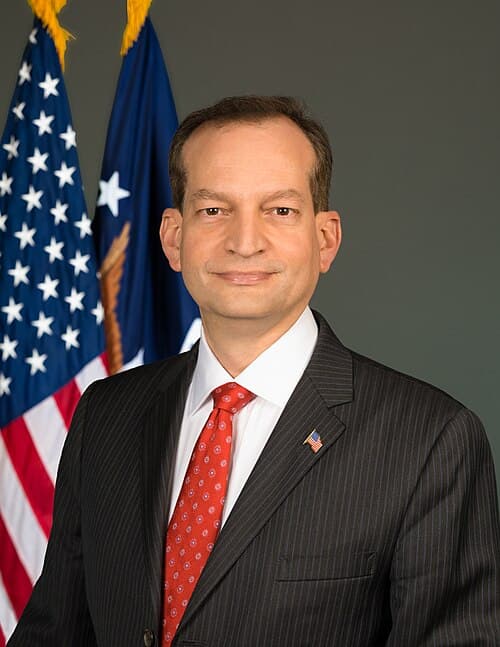
Alexander Acosta
PERSON • 3 mentions
American attorney and politician, 27th U.S. Secretary of Labor (born 1969)
AM
Andrew A. Mathews
PERSON
Person referenced in documents
Bradley Edwards
PERSON
American attorney who represented Epstein victims, author of Relentless Pursuit
BU
Burnes
PERSON
Name reference in documents
CM
Craig Martin
PERSON
Person referenced in Epstein-related documents
DI
Diodato
PERSON
Name reference in documents
Donovan
PERSON
Surname reference in Epstein-related documents
Eldridge
PERSON
Surname or name fragment in documents
EL
Ellenburg
PERSON
Name reference in documents
FE
Fernandez
PERSON
Ambiguous surname - refers to multiple people in Epstein documents
FR
Fresnedo
PERSON
Name reference in documents
FR
Friedland
PERSON
Surname or name fragment in documents
FU
Fulghum
PERSON
Name reference in documents
GA
Garcia
PERSON
Surname reference to multiple individuals including Rolando Garcia (USAFLS) and Camille Garcia (JP Morgan)
Gonzalez
PERSON
Colombian actor, songwriter, singer, dancer
GU
Guzman
PERSON
Surname reference in Epstein documents
HA
Hardison
PERSON
Surname or name fragment in documents
Hunter Biden
PERSON
American businessman and lobbyist (born 1970)
JP
Jacqueline Perczek
PERSON
Person referenced in documents
JD
Jane Doe
PERSON • 2 mentions
Pseudonym for anonymous victims/witnesses in Epstein legal proceedings

Jeffrey Epstein
PERSON • 4 mentions
American sex offender and financier (1953–2019)
Jeffrey Sloman
PERSON
Federal prosecutor, referenced in Epstein case legal proceedings
Kenna
PERSON
Surname reference in Epstein-related documents
Kenneth Marra
PERSON
American judge
MA
Marbwy
PERSON
Name reference in documents
Marc Rich
PERSON
American commodities trader (1934–2013)
MA
Mazzone
PERSON
Surname or name fragment in documents
Michael Cohen
PERSON
American former attorney and former Republican official
MO
Monzel
PERSON
Surname reference in documents
NM
NATHANAEL J. MITCHELL
PERSON
Name reference in documents

Paul Cassell
PERSON • 2 mentions
United States federal judge
PO
Posner
PERSON
Surname reference in documents
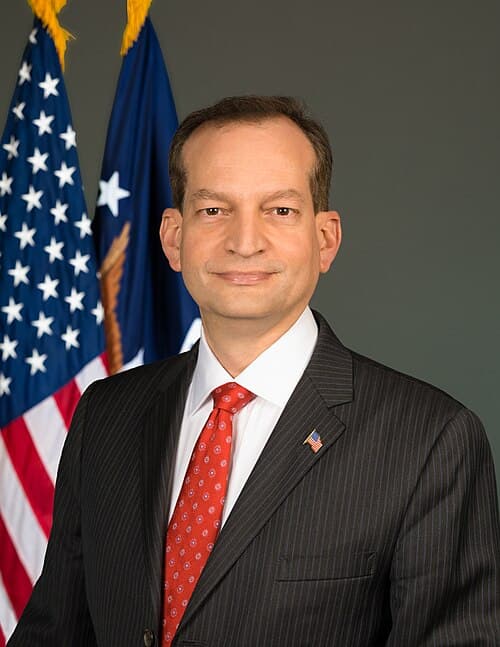
R. Alexander
PERSON
Researcher ORCID ID = 0000-0001-6410-2899
RE
Reams
PERSON
Surname reference in documents
RB
Roy Eric Black
PERSON
Person referenced in documents
SE
Sadie" jZ Edepauto
PERSON
Name reference in documents
SA
Salameh
PERSON
Legal case citation: United States v. Salameh (misclassified as PERSON)
Samuel Alito
PERSON
Associate Justice of the Supreme Court of the United States since 2006
SA
Sanislo
PERSON
Name reference in documents
SH
Shore
PERSON
Surname or name fragment in documents

Slater
PERSON
Surname reference in Epstein-related documents
TD
Timothy Dolan
PERSON
Person referenced in documents
VA
Valladares
PERSON
Surname or name fragment in documents
WA
Walker
PERSON
Surname reference in Epstein documents
Bank of Am.
ORGANIZATION
Organization referenced in documents
Brockway, Inc.
ORGANIZATION
Organization referenced in documents
Brooksamerica Mortg.
ORGANIZATION
Organization referenced in documents
Delta Brands, Inc.
ORGANIZATION
Organization referenced in documents
Department of Justice
ORGANIZATION • 2 mentions
United States Department of Justice, federal executive department responsible for law enforcement
District Court for the Southern District of New York
ORGANIZATION • 2 mentions
U.S. District Court for the Southern District of New York
Embarq Corp.
ORGANIZATION
Organization referenced in documents

Executive
ORGANIZATION
Organization referenced in documents
Fokker Servs.
ORGANIZATION
Organization referenced in documents
Give Kids the World, Inc.
ORGANIZATION
Organization referenced in documents
HDR Engineering, Inc.
ORGANIZATION
Organization referenced in documents
Kachkar
ORGANIZATION
Organization referenced in documents
Mohasco Corp.
ORGANIZATION
Organization referenced in documents
Neiman
ORGANIZATION
Organization referenced in documents
Office of Legal
ORGANIZATION
Office of the United States Department of Justice
Parklane Hosiery Co., Inc.
ORGANIZATION
Organization referenced in documents
Peabody Gas & Oil Co.
ORGANIZATION
Organization referenced in documents
Pemco Aeroplex, Inc.
ORGANIZATION
Organization referenced in documents
Pro Hac Vice
ORGANIZATION
Organization referenced in documents
Seaboard Oil Co.
ORGANIZATION
Organization referenced in documents
Srebnick Koms an & Stumpf
ORGANIZATION
Organization referenced in documents
Standard Oil Co.
ORGANIZATION
Organization referenced in documents
Supreme Court
ORGANIZATION
Highest court of jurisdiction in the US
Tampa Bay
ORGANIZATION
Organization referenced in documents
the Eleventh Circuit
ORGANIZATION
U.S. Court of Appeals for the Eleventh Circuit
the Immigration and Naturalization Service
ORGANIZATION
Organization referenced in documents
The Second Circuit
ORGANIZATION
Organization referenced in documents
the U.S. Attorney's Office for the Southern District of Florida
ORGANIZATION
Organization referenced in documents
the U.S. District Court for the Southern District of New York
ORGANIZATION
Organization referenced in documents

the University of Utah
ORGANIZATION
Public research university in Salt Lake City, Utah
U.S. Attorney's Office
ORGANIZATION
U.S. federal prosecutors office
United Papenvorkers Intl Union
ORGANIZATION
Organization referenced in documents
United States Steel Corp.
ORGANIZATION
Organization referenced in documents
USAO-SDFL
ORGANIZATION
Government agency
Yellow Cab Transit Co.
ORGANIZATION
Organization referenced in documents
Madison
LOCATION
Capital city of Wisconsin, United States
Minn. 1998
LOCATION
Location referenced in documents
New Hampshire
LOCATION
State of the United States of America
New York.18
LOCATION
Location referenced in documents
San Pedro
LOCATION • 2 mentions
Department of Paraguay
Southern District of Florida
LOCATION
Federal judicial district in Florida
the Northern District of Georgia
LOCATION
Location referenced in documents

United States
LOCATION
Country located primarily in North America
Statistics
Pages:70
Entities:89
Avg. OCR:0.9%
Sponsored