EFTA00010474 - EFTA00010493
Document EFTA00010474 is an appendix related to a legal case in the Southern District of Florida.
The document appears to be part of Case 9:08-cv-80736-KAM, specifically Document 205-2, filed on July 5, 2013. It includes a motion by the United States to dismiss a petition for lack of subject matter jurisdiction related to a Crime Victims' Rights Act claim by Jane Doe #1 and Jane Doe #2. The document argues that the court lacks jurisdiction over the petition and references legal precedents to support this claim.
Key Highlights
- •The United States is seeking to dismiss a petition based on lack of subject matter jurisdiction.
- •The case involves Jane Doe #1 and Jane Doe #2, who are advancing claims pursuant to the Crime Victims' Rights Act.
- •Judge Kenneth Marra is mentioned in the case details.
Frequently Asked Questions

Document Information
Bates Range
EFTA00010474 - EFTA00010493
Pages
20
Document Content
Page 1 - EFTA00010474
Case 9:08-cv-80736-KAM Document 205-2 Entered on FLSD Docket 07/05/2013 Page 1 of 20 Appendix B EFTA00010474
Page 2 - EFTA00010475
Case 9:08-cv-80736-KAM Document 205-2 Entered on FLSD Docket 07/05/2013 Page 2 of 20 UNITED STATES DISTRICT COURT SOUTHERN DISTRICT OF FLORIDA CASE NO. 08-80736-CIV-MARRA/JOHNSON JANE DOE #1 AND JANE DOE #2, Petitioners, vs. UNITED STATES, Respondent. UNITED STATES' SEALED MOTION TO DISMISS FOR LACK OF SUBJECT MATTER JURISDICTION The United States hereby requests that this Court enter an order dismissing these proceedings and the Petition for Enforcement of Crime Victim's Rights Act, 18 U.S.C. Section 3771 (DE I, the "Petition"), through which Petitioners Jane Doe #1 and Jane Doe #2 have advanced claims pursuant to the Crime Victims' Rights Act ("CVRA"), for lack of subject matter jurisdiction.1 This Court lacks subject matter jurisdiction over the Petition because See, e.g., Gntpo Dataflux v. Atlas Global Group, L.P., 541 U.S. 567, 571 (2004) ("Challenges to subject-matter jurisdiction can of course be raised at any time prior to final judgment."); United States v. Giraldo-Prado, 150 F.3d 1328, 1329 (11th Cir. 1998) (recognizing that "a party may raise jurisdiction at any time during the pendency of the proceedings"); Harrell & Sumner Contracting Co. v. Peabody Petersen Co., 546 F.2d 1227, 1229 (5th Cir. 1977) ("[U]nder Rule 12(h)(3), Fed.R.Civ.P., the defense of lack of subject matter jurisdiction may be raised at any time by motion of a party or otherwise."); see also Fed. R. Civ. P. 12(h)(3). In the present motion, the United States seeks dismissal of Petitioners' claims based on both a legal and factual challenge to the Court's subject matter jurisdiction. This Court may properly consider and weigh evidence beyond Petitioners' allegations when evaluating such a challenge to the Court's subject matter jurisdiction: Factual attacks [on a Court's subject matter jurisdiction] ... "challenge subject matter jurisdiction in fact, irrespective of the pleadings." In resolving a factual attack, the district court "may consider extrinsic evidence such as testimony and affidavits." Since such a motion implicates the fundamental question of a trial 1 EFTA00010475
Page 3 - EFTA00010476
Case 9:08-cv-80736-KAM Document 205-2 Entered on FLSD Docket 07/05/2013 Page 3 of 20 Petitioners lack Article III standing and because the claims raised by Petitioners in these proceedings are not constitutionally ripe. I. The Claims Raised in the Petition Must Be Dismissed for Lack of Subject Matter Jurisdiction Because the Petitioners Lack Standing to Bring Those Claims. These proceedings pursuant to the CVRA must be dismissed for lack of subject matter jurisdiction because Petitioners lack standing to pursue the remedies that they are seeking for alleged CVRA violations. As the Supreme Court has explained, to satisfy Article III's standing requirements, a plaintiff must show (1) it has suffered an "injury in fact" that is (a) concrete and particularized and (b) actual or imminent, not conjectural or hypothetical; (2) the injury is fairly traceable to the challenged action of the defendant; and (3) it is likely, as opposed to merely speculative, that the injury will be redressed by a favorable decision. Friends of the Earth, Inc. v. Laidlaw Environmental Services (7'OC), Inc., 528 U.S. 167, 180-81 (2000); see also, e.g., Young Apartments, Inc. v. Town of Jupiter, 529 F.3d 1027, 1038 (11th Cir. 2008) (quoting Harris v. Evans, 20 F.3d 1118, 1121 (11th Cir. 1994) (en banc)). Moreover, "a plaintiff must demonstrate standing separately for each form of relief sought." Friends of the Earth, 528 U.S. at 185. Here, the record incontrovertibly demonstrates that Petitioners cannot satisfy the third prong of the standing test, and the Petition and these proceedings must accordingly be dismissed for lack of subject matter jurisdiction.2 E.g., Florida Wildlife Federation, Inc. v. South Florida court's jurisdiction, a "trial court is free to weigh the evidence and satisfy itself as to the existence of its power to hear the case" without presuming the truthfulness of the plaintiff's allegations. Makro Capital of America, Inc. v. UBS AG, 543 F.3d 1254, 1258 (11th Cir. 2008) (citations omitted); see also, e.g., McMaster v. United States, 177 F.3d 936, 940 (11th Cir. 1999) ("[W]e determine whether this lawsuit survives the government's factual attack [on subject matter jurisdiction] by looking to matters outside the pleadings, and we do not accord any presumptive truthfulness to the allegations in the complaint."); Stag° v. Ginsberg, 175 F.3d 957, 960-61 (11th Cir. 1999). 2 Although Petitioners also fail to satisfy the first and second prongs of the standing test, 2 EFTA00010476
Sponsored
Page 4 - EFTA00010477
Case 9:08-cv-80736-KAM Document 205-2 Entered on FLSD Docket 07/05/2013 Page 4 of 20 Water Management Dist., 647 F.3d 1296, 1302 (11th Cir. 2011) ("If at any point in the litigation the plaintiff ceases to meet all three requirements for constitutional standing, the case no longer presents a live case or controversy, and the federal court must dismiss the case for lack of subject matter jurisdiction."); Phoenix of Broward, Inc. v. McDonald's Corp., 489 F.3d 1156, 1161 (Ilth Cir. 2007) ("[T]he issue of constitutional standing is jurisdictional ...."); National Parks Conservation Assn v. Norton, 324 F.3d 1229, 1242 (11th Cir. 2003) ("[B]ecause the constitutional standing doctrine stems directly from Article III's 'case or controversy' requirement, this issue implicates our subject matter jurisdiction, and accordingly must be addressed as a threshold matter regardless of whether it is raised by the parties.") (citation omitted). In these proceedings, the only identified legal relief that Petitioners have sought pursuant to the CVRA is the setting aside of the Non-Prosecution Agreement that was entered into between Jeffrey Epstein and the U.S. Attorney's Office for the Southern District of Florida ("USAO-SDFL"). See, e.g., DE 99 at 6 (recognizing that the relief Petitioners seek "is to invalidate the non-prosecution agreement"). But even assuming arguendo that Petitioners' rights under the CVRA were violated when Epstein and the USAO-SDFL entered into the Non- Prosecution Agreement, constitutional due process guarantees do not allow either the Non- Prosecution Agreement — which by its terms induced Epstein to, inter alia, plead guilty to state criminal charges and serve an 18-month sentence of state incarceration' — or the governmental this Court need not reach or address those issues because an analysis of the third prong of the standing test incontrovertibly establishes the Petitioners' lack of standing. Nonetheless, the circumstances which demonstrate Petitioners' lack of a concrete injury traceable to government conduct are explored infra in Section II of this memorandum, which addresses how Petitioners' claims and these proceedings lack constitutional ripeness. 3 See also July 11, 2008 Hr'g Tr. at 20-21 (Petitioners' acknowledgement that Epstein's reliance on promises in Non-Prosecution Agreement led to his guilty plea to state charges and his 3 EFTA00010477
Page 5 - EFTA00010478
Case 9:08-cv-80736-KAM Document 205-2 Entered on FLSD Docket 07/05/2013 Page 5 of 20 obligations undertaken therein to be set aside! See, e.g., Santobello v. New York, 404 U.S. 257, 262 (1971) ("[W]hen a plea rests in any significant degree on a promise or agreement of the prosecutor, so that it can be said to be part of the inducement or consideration, such promise must be fulfilled."); United States v. Harvey, 869 F.2d 1439, 1443 (11th Cir. 1989) ("Due process requires the government to adhere to the terms of any plea bargain or immunity agreement it makes."). Indeed, even if this Court were somehow to set aside the Non- Prosecution Agreement on the authority of the CVRA, and even if after consultation with Petitioners the United States determined that it would be proper and desirable to institute a criminal prosecution in the Southern District of Florida against Epstein on the criminal charges contemplated in the Non-Prosecution Agreement, the United States would still be constitutionally required to adhere to the negotiated terms of the Non-Prosecution Agreement. See, e.g., Santobello, 404 U.S. at 262; Harvey, 869 F.2d at 1443. Due process considerations further bar this Court from setting aside a non-prosecution agreement that grants contractual rights to a contracting party (Epstein) who has not been made a party to the proceedings before the Court. See, e.g., School Dist of City of Pontiac v. Secretary of U.S. Dept of Ethic., 584 F.3d 253, 303 (6th Cir. 2009) ("It is hornbook law that all parties to a contract are necessary in an action challenging its validity . . . ."); Dawavendewa v. Salt River Project Agr. Imp. & Power Dist, 276 F.3d 1150, 1157 (9th Cir. 2002) ("[A] party to a contract is necessary, and if not susceptible to joinder, indispensable to litigation seeking to decimate that subsequent 18-month state incarceration). 4 To the extent that the Petitioners' requested invalidation of the Non-Prosecution Agreement would implicitly reject and nullify the correctness of both the state court's acceptance of Epstein's guilty plea and the resulting judgment of conviction —which were induced in part by the Non-Prosecution Agreement — such judicial action might raise additional questions about this Court's jurisdiction under the Rooker/Feldman doctrine. See, e.g., Casale v. Tillman, 558 F.3d 1258, 1260-61 (11th Cir. 2009); Powell v. Powell, 80 F.3d 464, 466-68 (11th Cir. 1996). 4 EFTA00010478
Page 6 - EFTA00010479
Case 9:08-cv-80736-KAM Document 205-2 Entered on FLSD Docket 07/05/2013 Page 6 of 20 contract."); Lomayaktewa v. Hathaway, 520 F.2d 1324, 1325 (9th Cir. 1975) ("No procedural principle is more deeply imbedded in the common law than that, in an action to set aside a lease or a contract, all parties who may be affected by the determination of the action are indispensable."); see also National Licorice Co. v. NLRB, 309 U.S. 350, 362 (1940) ("It is elementary that it is not within the power of any tribunal to make a binding adjudication of the rights in personam of parties not brought before it by due process of law.").5 Additionally, a "favorable ruling" from this Court will not provide Petitioners with anything for the alleged CVRA violations that is not already available to them. For the due process reasons already discussed above, the United States must legally abide by the terms of the Non-Prosecution Agreement even if this Court should somehow set the agreement aside for Petitioners to consult further with the government attorney handling the case. Moreover, as will be explained in greater detail below, see infra at 8-12, Petitioners already have the present ability to confer with an attorney for the government about a federal criminal case against Epstein — whether or not the Non-Prosecution Agreement is set aside — because the investigation and potential federal prosecution of Epstein for crimes committed against the Petitioners and others remains a legally viable possibility.6 The present proceedings under the CVRA must accordingly be dismissed for lack of standing because Petitioners simply have no injury that is likely to be redressed by a favorable ruling in these proceedings. See, e.g., Scott v. Taylor, 470 F.3d 1014, 1018 (11th Cir. 2006) (holding that there was no standing where it was speculative that remedy that Plaintiff sought 5 Significantly, it is Epstein's contractual rights under the non-prosecution agreement that Petitioners seek to void through these proceedings. 6 Petitioners' present, as well as past, ability to confer with an attorney for the government also demonstrates that Petitioners fail to satisfy the first two prongs of the standing test: Petitioners have simply not suffered a concrete injury that is fairly traceable to the challenged government conduct. 5 EFTA00010479
Sponsored
Page 7 - EFTA00010480
Case 9:08-cv-80736-KAM Document 205-2 Entered on FLSD Docket 07/05/2013 Page 7 of 20 would redress claimed injury). II. The Claims Raised in the Petition Are Not Constitutionally Ripe, and These Proceedings Must Thus Be Dismissed for Lack of Subject Matter Jurisdiction. This Court must also dismiss these proceedings for lack of subject matter jurisdiction because the Petitioners' claims are not constitutionally ripe. Ripeness, like standing, "originate[s] from the Constitution's Article III requirement that the jurisdiction of the federal courts be limited to actual cases and controversies." Elend v. Basham, 471 F.3d 1199, 1204-05 (11th Cir. 2006). "'The ripeness doctrine keeps federal courts from deciding cases prematurely,' Beaulieu v. City of Alabaster, 454 F.3d 1219, 1227 (11th Cir. 2006), and `protects [them] from engaging in speculation or wasting their resources through the review of potential or abstract disputes,' Digital Props., Inc. v. City of Plantation, 121 F.3d 586, 589 (11th Cir.1997)." United States v. Rivera, 613 F.3d 1046, 1050 (11th Cir. 2010); see also Pittman v. Cole, 267 F.3d 1269, 1278 (11th Cir. 2001) ("The ripeness doctrine prevent[s] the courts, through avoidance of premature adjudication, from entangling themselves in abstract disagreements . . . .'") (quoting Coalition for the Abolition of Marijuana Prohibition v. City of Atlanta, 219 F.3d 1301, 1315 (11th Cir. 2000) (citations and quotations omitted))). Under the ripeness doctrine, a court must therefore determine "'whether there is sufficient injury to meet Article III's requirement of a case or controversy and, if so, whether the claim is sufficiently mature, and the issues sufficiently defined and concrete, to permit effective decisionmaking by the court."' In re Jacks, 642 F.3d 1323, 1332 (11th Cir. 2011) (quoting Cheffer v. Reno, 55 F.3d 1517, 1524 (11th Cir. 1995)). When evaluating whether a claim is ripe, a court considers: "(1) the fitness of the issues for judicial decision, and (2) the hardship to the parties of withholding court consideration."' Id. (quoting Cheffer, 55 F.3d at 1524 (citing Abbott Labs. v. Gardner, 387 U.S. 136, 149 (1967))); 6 EFTA00010480
Page 8 - EFTA00010481
Case 9:08-cv-80736-KAM Document 205-2 Entered on FLSD Docket 07/05/2013 Page 8 of 20 see also, e.g., Association For Children for Enforcement of Support, Inc. v. Conger, 899 F.2d 1164, 1165 (11th Cir. 1990). Under the doctrine, "[a] claim is not ripe when it is based on speculative possibilities," In re Jacks, 642 F.3d 1323, 1332 (11th Cir. 2011), such as if the claim "'rests upon contingent future events that may not occur as anticipated, or indeed may not occur at all,"' Atlanta Gas Light Co. v. FERC, 140 F.3d 1392, 1404 (11th Cir. 1998) (quoting Texas v. United States, 523U.S. 296, 300 (1998)). Indeed, "[t]he ripeness doctrine is designed to prevent federal courts from engaging in such speculation and prematurely and perhaps unnecessarily reaching constitutional issues." Pittman, 267 F.3d at 1280. In these proceedings, the Petitioners have sought to set aside the Non-Prosecution Agreement between Epstein and the USAO-SDFL so that Petitioners can "confer with the attorney for the Government" about the possible filing of federal criminal charges against Epstein and the potential disposition of any such charges. See, e.g., July 11, 2008 Hr'g Tr. at 6-7 (seeking an "[o]rder that the [non-prosecution] agreement that was negotiated is invalid" so that Petitioners can exercise the right to confer with the government); id. at 19-20, 24; 18 U.S.C. § 3771(a)(5); see also DE 1 at 2 ¶ 5 (claiming that Petitioner was "denied her rights" under the CVRA because she "received no consultation with the attorney for the government regarding the possible disposition of the charges"). Notwithstanding the Non-Prosecution Agreement, Petitioners are and have been free to confer with attorneys for the government about the investigation and potential prosecution of Epstein. At least one attorney for the government (Assistant United States Attorney Villafafia from the USAO-SDFL) had spoken to Petitioners about the offenses committed against them by Epstein prior to the signing of the Non-Prosecution Agreement, see, e.g., July 11, 2008 Hr'g Tr. at 22 (acknowledging that prosecutors spoke to Petitioners "about what happened" to them); DE 7 EFTA00010481
Page 9 - EFTA00010482
Case 9:08-cv-80736-KAM Document 205-2 Entered on FLSD Docket 07/05/2013 Page 9 of 20 48 at 6 ¶ 8; see also DE 99 at 3, and government attorneys have on multiple occasions offered to confer with Petitioners, see, e.g., July 11, 2008 Hr'g Tr. at 13 ("I will always confer, sit down with Jane Doe 1 and 2, with the two agents and Ms. Villafana. We'll be happy to sit down with them."). Indeed, on December 10, 2010, the United States Attorney for the Southern District of Florida, accompanied by supervisory and line prosecutors from the USAO-SDFL, personally conferred with Petitioners' counsel and with Petitioner Jane Doe #1 and entertained discussion about Petitioners' desires to see Epstein criminally prosecuted on federal charges.7 The United States Attorney and prosecutors in the USAO-SDFL have also corresponded with Petitioners' counsel on multiple occasions about Petitioners' desires to have Epstein criminally prosecuted on federal charges.8 Additionally, a number of districts outside the Southern District of Florida (e.g., the Southern District of New York and the District of New Jersey) share jurisdiction and venue with the Southern District of Florida over potential federal criminal charges based on the alleged sexual acts committed by Epstein against the Petitioners. Epstein is thus subject to potential prosecution for such acts in those districts. Furthermore, because of the nature of the allegations against Epstein, the filing of such potential charges against Epstein still remains temporally viable; charges for such sexual activities involving minors are not barred by the applicable 7 The United States Attorney also offered to confer with Jane Doe #2, but Jane Doe #2 declined the invitation and did not attend the meeting that was scheduled with the United States Attorney. 8 Since that time, the USAO-SDFL has been recused by the Department of Justice from prospective responsibility for any criminal investigation or potential prosecution relating to Epstein's alleged sexual activities with minor females. The Department of Justice has reassigned responsibility for the investigation and potential prosecution of such criminal matters in the Southern District of Florida to the United States Attorney's Office for the Middle District of Florida for consideration of any prosecutorial action that may be authorized and appropriate. 8 EFTA00010482
Sponsored
Page 10 - EFTA00010483
Case 9:08-cv-80736-KAM Document 205-2 Entered on FLSD Docket 07/05/2013 Page 10 of 20 statutes of limitations. See 18 U.S.C. §§ 3283, 3299. Petitioners are free to contact the United States Attorney's Office in those districts and seek to confer with government attorneys in those offices about investigating and potentially prosecuting Epstein based on the alleged federal crimes committed against them.9 Petitioners nonetheless have appeared to contend throughout these proceedings that the many opportunities that they have been given to consult with the attorneys for the government about Epstein's offenses and the potential charges against Epstein — opportunities which continue to be available to Petitioners — are not meaningful under the CVRA due to the existence of the Non-Prosecution Agreement. According to Petitioners, the Non-Prosecution Agreement has given Epstein a "free pass" on federal criminal charges for the offenses he committed against Petitioners and others. See, e.g., DE 9 at 15 (characterizing Non-Prosecution Agreement as "a `free pass' from the federal government"), 2 (contending that the Non-Prosecution Agreement "allowed [Epstein] ... to escape all federal prosecution for dozens of serious federal sex offenses against minors"), 7 ("the wealthy defendant has escaped all federal punishment"), 12 ("[T]he agreement prevents federal prosecution of the defendant for numerous sex offenses."); DE 77 at 2 (describing Non-Prosecution Agreement as "an agreement that blocked federal prosecution of Epstein for the multitude of sex offenses he committed again [sic] the victims"), 17 ("The [Non- 9 The USAO-SDFL has no present knowledge about whether the United States Attorney's Offices in those districts have opened any investigations into the allegations that have been made against Epstein, whether those offices are even aware of those allegations or the evidence supporting them, or what investigative or prosecutorial actions, if any, those offices might take in the future. Nonetheless, should any investigation be underwa or should an investigation be initiated involving such allegations, the evidence gathered in the Southern District of Florida could be disclosed to federal prosecutors an e era gran juries in New York or New Jersey. See 9 EFTA00010483
Page 11 - EFTA00010484
Case 9:08-cv-80736-KAM Document 205-2 Entered on FLSD Docket 07/05/2013 Page 11 of 20 Prosecution Agreement] barred prosecution of the federal sexual offenses that Epstein had committed against Jane Doe #1 and Jane Doe #2 .. ."),I° That is simply not so. Contrary to Petitioners' contentions, there has been no disposition by the government of any federal criminal charges against Epstein. No federal charges involving Petitioners have ever been brought against Epstein, and no such federal charges have been resolved. The Non- Prosecution Agreement about which Petitioners complain disposes of Eq federal criminal charges against Epstein, and that agreement does not bar the United States from bringing federal criminal charges against Epstein. Instead, when addressing potential federal criminal charges against Epstein, the USAO-SDFL merely agreed in the Non-Prosecution Agreement that: on the authority of R. Alexander Acosta, United States Attorney for the Southern District of Florida, prosecution in this District for these offenses shall be deferred in favor of prosecution by the State of Florida, provided that Epstein abides by the following conditions and the requirements of this Agreement set forth below. and that After timely fulfilling all the terms and conditions of the Agreement, no prosecution for the offenses set out on pages 1 and 2 of this Agreement, nor any other offenses that have been the subject of the joint investigation by the Federal Bureau of Investigation and the United States Attorney's Office, nor any offenses that arose from the Federal Grand Jury investigation will be instituted in this District, and the charges against Epstein if any, will be dismissed. Non-Prosecution Agreement at 2 (emphasis added). Thus, the Non-Prosecution Agreement simply obligated the government not to prosecute Epstein in the Southern District of Florida for the offenses set forth in the Non-Prosecution 10 This Court has also previously described the Non-Prosecution Agreement as "an agreement under which . . . the U.S. Attorney's Office would agree not to prosecute Epstein for federal offenses." DE 99 at 2-3. That description of the Non-Prosecution Agreement, however, was not based on the Court's interpretation of the terms of the Non-Prosecution Agreement, but was instead based on "allegations" by Petitioners that the Court concluded were "not yet supported by evidence" but upon which the Court nonetheless relied "solely to provide the context for the threshold issues addressed in" its September 26, 2011 Order. Id. at 2 n.2. 10 EFTA00010484
Page 12 - EFTA00010485
Case 9:08-cv-80736-KAM Document 205-2 Entered on FLSD Docket 07/05/2013 Page 12 of 20 Agreement. The Non-Prosecution Agreement does not bar the United States from bringing federal criminal charges against Epstein for the offenses set forth in the Non-Prosecution Agreement in any other district in the nation." See, e.g., United States v. Cain, 587 F.2d 678, 680 (5th Cir. 1979) ("Where . . . the prosecutor is not found to have made promises relating to nonprosecution of charges in another district and the [defendant] is not found to have relied on such alleged promises, this Court will affirm the trial court's denial of a motion to dismiss the subsequent prosecutions."). Neither does the Non-Prosecution Agreement bar prosecution in any district for offenses not identified in the agreement. Petitioners contend that the CVRA gives a victim the right to confer with the attorney for the government before there is a disposition of contemplated, but-not-yet-filed federal criminal charges arising from offenses against the victim. But, although the government disputes that the CVRA creates such a right,'2 the Petitioners have never been denied any such right. The Petitioners have had and still have the ability confer to with the attorney for the government about potential federal criminal charges against Epstein and about the potential disposition of any such charges, should they be filed. In fact, Petitioners are free to approach the United States Attorney's Offices in districts such as the Southern District of New York and the District of New Jersey — whose authority to institute criminal charges against Epstein in their districts has not " Significantly, under the governing provision of the United States Attorney's Manual, the USAO-SDFL did not have the authority to unilaterally bar Epstein's prosecution in any other district in the country: No district or division shall make any agreement, including any agreement not to prosecute, which purports to bind any other district(s) or division without the express written approval of the United States Attomey(s) in each affected district and/or the Assistant Attorney General of the Criminal Division. USAM 9-27.641 (Multi-District (Global) Agreement Requests). 12 The government acknowledges that this Court has nonetheless ruled that "as a matter of law the CVRA can apply before formal charges are filed," DE 99 at 10; see also id. at 6-9, but has not yet determined "whether the particular rights asserted here attached," id. at 10. 11 EFTA00010485
Sponsored
Page 13 - EFTA00010486
Case 9:08-cv-80736-KAM Document 205-2 Entered on FLSD Docket 07/05/2013 Page 13 of 20 been curtailed by the Non-Prosecution Agreement — to discuss the possibility of pursuing federal criminal charges against Epstein.13 Nothing precludes Petitioners from doing so, and there is nothing to indicate that Petitioners' wishes to confer with government attorneys in those districts would be rebuffed in any way. Indeed, it would be rank speculation by Petitioners to contend otherwise. Here, Petitioners have acknowledged that the best relief they can hope to obtain through these proceedings is the ability to confer with the attorneys for the government. See, e.g., July II, 2008 Hr'g Tr. at 7 (agreeing that "the best [Petitioners] can get" is the "right to confer"). Yet, under the circumstances, a claim that Petitioners have been denied the opportunity to confer with the attorney for the government about the filing and disposition of criminal charges against Epstein is premature and constitutionally unripe. "This is plainly the type of hypothetical case that [a court] should avoid deciding." Association for Children for Enforcement of Support, Inc. v. Conger, 899 F.2d 1164, 1166 (11th Cir. 1990). Any speculation by Petitioners that they might prospectively be denied the opportunity to confer with the government about still-legally-viable federal charges against Epstein simply cannot ripen Petitioners' claims. See id. (recognizing that courts "do not generally decide cases based on a party's predicted conduct"). For these reasons, Petitioners' claims in these proceedings should be dismissed for lack of subject matter jurisdiction. See, e.g., In re Jacks, 642 F.3d 1323, 1332 (11th Cir. 2011) (holding that claims that are "based on events that may take place in the future" are to be "dismissed for lack of jurisdiction") (citing Greenbriar, Ltd. v. City of Alabaster, 881 F.2d 1570, 1574 n.7 (1 1 th Cir. 1989) ("[R]ipeness goes to whether the district court had subject matter 13 Petitioners could also approach the United States Attorney's Office for the Middle District of Florida, but, due to that office's recusal-based derivative prosecutorial responsibilities in the Southern District of Florida, see supra note 8, the Non-Prosecution Agreement would constrain the possible filing of federal charges by that office in the Southern District of Florida. 12 EFTA00010486
Page 14 - EFTA00010487
Case 9:08-cv-80736-KAM Document 205-2 Entered on FLSD Docket 07/05/2013 Page 14 of 20 jurisdiction to hear the case.")); Reahard v. Lee County, 30 F.3d 1412, 1415 (11th Cir. 1994) ("The question of ripeness `goes to whether the district court had subject matter jurisdiction.") (quoting Greenbriar, 881 F.2d at 1573); see also Jacksonville Property Rights Ass 'n, Inc. v. City of Jacksonville, 635 F.3d 1266, 1276 (11th Cir. 2011) (concluding that when plaintiffs ask a court "to issue a declaration on an issue that might never impact their substantive rights," they are "asking th[e] court either to issue an impermissible advisory opinion, or to decide a case that is not yet ripe for decision"), reh'g & reh g en banc denied, Case No. 09-15629, Fed. App'x (11th Cir. Jun. 29, 2011) (Table). Conclusion For the reasons set forth above, the United States respectfully requests that this Court enter an order dismissing the Petitioners' claims and these proceedings for lack of subject matter jurisdiction. 13 EFTA00010487
Page 15 - EFTA00010488
Case 9:08-cv-80736-KAM Document 205-2 Entered on FLSD Docket 07/05/2013 Page 15 of 20 Respectfully submitted, WIFREDO A. FERRER UNITED STATES ATTORNEY By: Dexter A. Lee Assistant United States Attorney Florida Bar No. 0936693 99 N.E. 4th Street Miami, Florida 33132 Tel: (305) 961-9320; Fax: (305) 530-7139 Email: [email protected] Eduardo 1. Sanchez Assistant United States Attorney Florida Bar No. 877875 99 N.E. 4th Street Miami, Florida 33132 Tel: (305) 961-9057; Fax: (305) 536-4676 Email: [email protected] A. Marie Villafatia Assistant United States Attorney Florida Bar No. 0018255 500 S. Australian Avenue, Suite 400 West Palm Beach, FL 33401 Tel: (561) 820-8711; Fax: (561) 820-8777 Email: [email protected] Attorneys for Respondent 14 EFTA00010488
Sponsored
Page 16 - EFTA00010489
Case 9:08-cv-80736-KAM Document 205-2 Entered on FLSD Docket 07/05/2013 Page 16 of 20 CERTIFICATE OF SERVICE I hereby certify that a true and correct copy of the foregoing United States' Sealed Motion to Dismiss for Lack of Subject Matter Jurisdiction was served via United States Mail this 7th day of November, 2011, upon Counsel for Petitioners Jane Doe #1 and Jane Doe #2, accompanied by a copy of the November 7, 2011 Sealed Order Granting Government's Motion for Limited Disclosure of Grand Jury Matter. Pursuant to the Order regarding the disclosure of Grand Jury Information, a copy was not served upon the proposed intervenors. Assistant United Stet Attorney Is EFTA00010489
Page 17 - EFTA00010490
Case 9:08-cv-80736-KAM Document 205-2 Entered on FLSD Docket 07/05/2013 Page 17 of 20 SERVICE LIST Jane Does 1 and 2 v. United States, Case No. 08-80736-CIV-MARRA/JOHNSON United States District Court, Southern District of Florida Brad Edwards, Esq., The Law Offices of Brad Edwards & Associates, LLC 2028 Harrison Street, Suite 202 Hollywood, Florida 33020 (954) 414-8033 Fax: (954) 924-1530 Paul G. Cassell S.J. Quinney College of Law at the University of Utah 332 S. 1400 E. Salt Lake City, Utah 84112 (801) 585-5202 Fax: (801) 585-6833 E-mail: [email protected] Attorneys for Jane Doe # 1 and Jane Doe # 2 16 EFTA00010490
Page 18 - EFTA00010491
Case 9:08-cv-80736-KAM Document 205-2 Entered on FLSD Docket 07/05/2013 Page 18 of 20 UNITED STATES DISTRICT COURT SOUTHERN DISTRICT OF FLORIDA IN RE: GRAND JURY PROCEEDINGS FEDERAL GRAND JURY 05-02(WPB) AND FEDERAL GRAND JURY 07-103(WPB) Sealed Order Granting Government's Motion for Limited Disclosure of Grand Jury Matter UNDER SEAL EFTA00010491
Sponsored
Page 19 - EFTA00010492
Case 9:08-cv-80736-KAM Document 205-2 Entered on FLED Docket 07/05/2013 Page 19 of 20 UNITED STATES DISTRICT COURT SOUTHERN DISTRICT OF FLORIDA IN RE: GRAND JURY PROCEEDINGS FEDERAL GRAND JURY 05-02(WPB) AND FEDERAL GRAND JURY 07-103(WPB) Sealed Order Granting Government's Motion for Limited Disclosure of Grand Jury Matter This cause comes before the Court on the Government's Sealed Ex Parte Motion for Limited Disclosure of Grand Jury Matter Pursuant to Fed. R. Crim. P. 6(e)(3)(E)(i). After careful consideration of the pounds raised in said motions, and the Court being otherwise advised in the premises, IT IS HEREBY ORDERED that the Government's Motion for Limited Disclosure of Grand Jury Matter Pursuant to Fed. R. Crim. P. 6(e)(3)(E)(i) is GRANTED. The Government is authorized to disclose in Jane Doe No. .1 and Jane Doe No. 2 v. United States, Case No. 08- 80736-Civ-Marra (S.D. Fla.). IT IS FURTHER ORDERED that disclosure pursuant to Fed. R. Crim. P. 6(eX3XEXi) 0 shall be conditioned on the following: EFTA00010492
Page 20 - EFTA00010493
Case 9:08-cv-80736-KAM Document 205-2 Entered on FLSD Docket 07/05/2013 Page 20 of 20 (1) the disclosure of the aforementioned grand jury information shall be limited to filings made under seal in Case No. 08-80736-Civ-Marra; (2) the service of filings containing the aforementioned grand jury information shall be limited to counsel for Petitioners Jane Doe No. 1 and Jane Doe No. 2 and for the government in Case No. 08-80736-Civ-Marra, and shall be accompanied by a copy of this Order; and (3) further dissemination by any person or entity receiving disclosure of the grand jury information authorized to be disclosed by this Order shall be limited to the individual Petitioners in Case No. 08-80736-Civ-Marra, and any dissemination of such grand jury information shall be accompanied by a copy of this Order. DONE AND ORDERED in Chambers at West Palm Florida, this 7" day of November, 2011. DONICLD M. M1DDLEBROOKS UNITED STATES DISTRICT JUDGE 2 • • EFTA00010493
Entities Mentioned
A. Marie Villafana
PERSON • 2 mentions
Former Assistant U.S. Attorney, lead federal prosecutor in the 2008 Epstein case
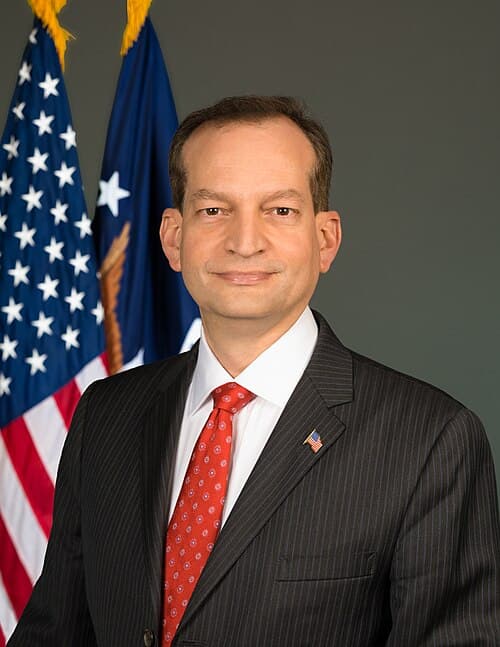
Alexander Acosta
PERSON • 2 mentions
American attorney and politician, 27th U.S. Secretary of Labor (born 1969)
AV
Ann Marie C. Villafafia
PERSON
Ann Marie Villafaña, former Palm Beach County prosecutor in original Epstein case

Anne Hathaway
PERSON
American actress (born 1982)
BA
Basham
PERSON
Surname reference in documents
BE
Beaulieu
PERSON
Surname reference in documents
Bradley Edwards
PERSON
American attorney who represented Epstein victims, author of Relentless Pursuit
CA
Casale
PERSON
Surname or name fragment in documents
CH
Cheffer
PERSON
Surname reference in documents
CO
Conger
PERSON
Surname reference in documents
DA
Dawavendewa
PERSON
Name reference in documents

Dexter Lee
PERSON
Assistant U.S. Attorney who argued for keeping Epstein non-prosecution agreement sealed
ET
Eduardo Teodorani
PERSON
Refers to multiple Eduardo individuals: primarily Eduardo Teodorani (Italian associate) and Eduardo A. Robles (architect)
EL
Elend
PERSON
Name reference in documents
ET
Emmy Taylor
PERSON
Former assistant to Ghislaine Maxwell, appeared in Epstein flight logs and court documents
EV
Evans
PERSON
Ambiguous surname - refers to multiple people in Epstein documents
GA
Gardner
PERSON
Surname reference in Epstein documents
Ginsberg
PERSON
American poet and writer (1926–1997)
GR
Greenbriar
PERSON
Surname reference in documents
Harvey Weinstein
PERSON
American film producer and sex offender (born 1952)
JA
Jacks
PERSON
Surname or name fragment in documents
JD
Jane Doe
PERSON
Pseudonym for anonymous victims/witnesses in Epstein legal proceedings

Jeffrey Epstein
PERSON • 3 mentions
American sex offender and financier (1953–2019)
Kenneth Marra
PERSON
American judge
LO
Lomayaktewa
PERSON
Surname or name fragment in documents
Paul Cassell
PERSON • 2 mentions
United States federal judge
RE
Reahard
PERSON
Name reference in documents
Rivera
PERSON
Ambiguous surname - refers to multiple people in Epstein documents
RO
Rooker
PERSON
Surname reference in documents
SA
Sanchez
PERSON
Surname reference in Epstein documents
SA
Santobello
PERSON
Legal case citation (Santobello v. New York) in Epstein court documents
Tillman
PERSON
Surname reference in documents
WF
WIFREDO A. FERRER
PERSON
Name reference in documents
YP
Yogananda Pittman
PERSON
Person referenced in documents
Abbott Labs.
ORGANIZATION
Organization referenced in documents
Association For Children for Enforcement of Support, Inc.
ORGANIZATION
Organization referenced in documents
Atlanta Gas Light Co.
ORGANIZATION
Organization referenced in documents
Atlas Global Group
ORGANIZATION
Organization referenced in documents
City of
ORGANIZATION
Organization referenced in documents
Coalition for the Abolition of Marijuana Prohibition
ORGANIZATION
Organization referenced in documents
Criminal Division
ORGANIZATION
Division of the U.S. Department of Justice
FBI
ORGANIZATION
Federal Bureau of Investigation, domestic intelligence and security service of the United States
Florida Bar
ORGANIZATION
Florida Bar, professional organization for attorneys in Florida
Florida Wildlife Federation, Inc.
ORGANIZATION
Organization referenced in documents
Friends of the
ORGANIZATION
Organization referenced in documents
Friends of the Earth, Inc.
ORGANIZATION
Organization referenced in documents
Gntpo Dataflux
ORGANIZATION
Organization referenced in documents
Greenbriar, Ltd.
ORGANIZATION
Organization referenced in documents
Hr'g Tr.
ORGANIZATION
Organization referenced in documents
Jacksonville Property Rights Ass 'n, Inc.
ORGANIZATION
Organization referenced in documents
Laidlaw Environmental Services (7'OC), Inc.
ORGANIZATION
Organization referenced in documents
Makro Capital of America, Inc.
ORGANIZATION
Organization referenced in documents
McDonald's Corp.
ORGANIZATION
Organization referenced in documents
National Licorice Co.
ORGANIZATION
Organization referenced in documents
Peabody Petersen Co.
ORGANIZATION
Organization referenced in documents
Phoenix of Broward, Inc.
ORGANIZATION
Organization referenced in documents
School Dist of City of
ORGANIZATION
Organization referenced in documents
The Law Offices of Brad Edwards & Associates
ORGANIZATION
Organization referenced in documents
the U.S. Attorney's Office for the Southern District of Florida
ORGANIZATION
Organization referenced in documents

the University of Utah
ORGANIZATION
Public research university in Salt Lake City, Utah
U.S. Attorney's Office
ORGANIZATION
U.S. federal prosecutors office
U.S. Dept of Ethic
ORGANIZATION
Organization referenced in documents

UBS AG
ORGANIZATION
Swiss multinational investment bank and financial services company
United States District Court
ORGANIZATION
U.S. federal trial court
Young Apartments, Inc.
ORGANIZATION
Organization referenced in documents
Atlanta
LOCATION
Capital city of Georgia, United States
City of Alabaster
LOCATION
Location referenced in documents
Jacksonville
LOCATION
City in Duval County, and largest city in State of Florida, United States
Lee County
LOCATION
Location referenced in documents
Salt Lake City
LOCATION
City in and county seat of Salt Lake County, Utah, United States and the capital of Utah
South Florida
LOCATION
Region of the U.S. state of Florida
Southern District of Florida
LOCATION
Federal judicial district in Florida
the District of New
LOCATION
Location referenced in documents
the District of New Jersey
LOCATION
Location referenced in documents
the Southern District
LOCATION
Federal judicial district in New York City

United States
LOCATION
Country located primarily in North America
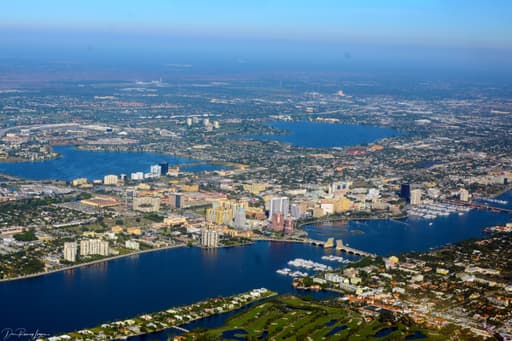
West Palm Beach
LOCATION
County seat of Palm Beach County, Florida, United States
Statistics
Pages:20
Entities:77
Avg. OCR:0.9%
Sponsored