HOUSE_OVERSIGHT_016111 - HOUSE_OVERSIGHT_016196
No Subject
Document HOUSE_OVERSIGHT_016111 is a government record from the House Oversight Committee consisting of 86 pages that discusses Saudi Arabia's National Transformation Plan (NTP) and its economic diversification efforts.
This document, a GEMs Paper from Merrill Lynch, analyzes Saudi Arabia's National Transformation Plan (NTP) within the context of Vision 2030. It assesses the NTP's potential for diversifying the Saudi economy beyond oil, while also pointing out challenges and inconsistencies, particularly regarding fiscal targets and exchange rate policy. The document also touches on the implications of the NTP for the oil market and equity strategy, identifying investable themes.
Key Highlights
- •The Saudi National Transformation Plan (NTP) aims for comprehensive reform and economic diversification in line with Vision 2030.
- •The document suggests the USD peg may face challenges due to the need for a competitive exchange rate as diversification progresses.
- •The NTP's ambitious targets in various sectors are unlikely to be reached, and medium-term macro sustainability is uncertain.
Frequently Asked Questions



Document Information
Bates Range
HOUSE_OVERSIGHT_016111 - HOUSE_OVERSIGHT_016196
Pages
86
Source
House Oversight Committee
Date
June 30, 2016
Original Filename
Saudi Arabia - beyond oil but not so fast.pdf
File Size
4.08 MB
Document Content
Page 1 - HOUSE_OVERSIGHT_016111
Unauthorized redistribution of this report is prohibited. This report is intended for [email protected] GEMs Paper #26 Saudi Arabia: beyond oil but not so fast Transforming Saudi Arabia, but challenges abound The Saudi National Transformation Plan (NTP) bodes well for comprehensive reform efforts to diversify the economy in line with Vision 2030. The NTP a) identifies key sectors with high growth potential; b) starts to articulate supportive public sector industrial strategies; and c) seeks to foster higher value-added through enhancements to processes, products and organizations. Still, ambitious targets in a number of sectors are unlikely to be reached and medium-term macro sustainability is not yet clear. USD peg holds but NTP inconsistent with stable FX policy Our view is still that the USD peg holds. However, the NTP provides a mixed message. On the one hand, it blurs policymaking incentives given the need for a competitive Fx if diversification progresses. On the other, unrealistic fiscal targets mean consolidation is likely to fall short of easing imbalances materially without oil price recovery. Energy policy thus likely needs to become less aggressive to support macro and FX policies. Eurobond premium required for fiscal slippage risk We expect large and regular sovereign Eurobond issuance to support FX reserves and domestic liquidity but to weigh on regional bond spreads if risk appetite does not hold up or fiscal balance slips. EMBIG index inclusion is unlikely, in our view. Saudi forwards, CDS and rates are likely to stay under pressure due to issuance and tight liquidity. Commodities: NTP adds to medium-term oil tightness The NTP suggestion that production capacity is maintained until 2020 reinforces our conviction of medium-term oil market tightness. The NTP gas production target that could displace domestic crude demand and boost export capacity is challenging. Equity Strategy: six investible themes on the back of NTP We see a number of investible themes emerging from the NTP which investors can use to identify potential beneficiaries. These themes include rising availability of affordable housing, increased access to healthcare, down-trading as the consumer comes under pressure, a surge in telecom infrastructure and significant opportunities in the downstream petrochemical arena. Buy-rated names with access to these themes include: Al Hammadi, Savola, Al Othaim, STC, Zain KSA and SABIC. Partial NTP success & MSCI inclusion could drive rerating The Saudi market trades on a 12m fwd P/E of c.13x, an 11% discount to the long-term average and its lowest premium to GEMs since 2010. We believe that with earnings momentum gradually reaching an inflection point a relatively negative outlook is already being priced in. Given our view that oil prices will gain strong momentum in 2017, even a partial success of the NTP along with CMA market reforms to expedite inclusion in the MSCI EM index could be sufficient to improve confidence and thus drive a rerating. Trading ideas and investment strategies discussed herein may give rise to significant risk and are not suitable for all investors. Investors should have experience in FX markets and the financial resources to absorb any losses arising from applying these ideas or strategies. >> Employed by a non-US affiliate of MLPF&S and is not registered/qualified as a research analyst under the FINRA rules. Refer to "Other Important Disclosures" for information on certain BofA Merrill Lynch entities that take responsibility for this report in particular jurisdictions. BofA Merrill Lynch does and seeks to do business with issuers covered in its research reports. As a result, investors should be aware that the firm may have a conflict of interest that could affect the objectivity of this report. Investors should consider this report as only a single factor in making their investment decision. Refer to important disclosures on page 82 to 85. Analyst Certification on page 81. Price Objective Basis/Risk on page 77. 11643724 eS Merrill Lynch 30 June 2016 Corrected GEM Fixed Income Strategy & Economics Global Jean-Michel Saliba MENA Economist MLI (UK) +44 20 7995 8568 [email protected] Hootan Yazhari, CFA >> Research Analyst Merrill Lynch (DIFC) +971 4 4258218 [email protected] Francisco Blanch Commodity & Deriv Strategist MLPF&S +1 646 855 6212 [email protected] Faisal AlAzmeh, CFA >> Research Analyst Merrill Lynch KSA Company +966 11 299 3741 [email protected] Abdelrali El Jattari >> Research Analyst Merrill Lynch (DIFC) +971 4 4258231 [email protected] Jamie Clark, CFA >> Research Analyst MLI (UK) +44 20 7995 1300 [email protected] Ali Dhaloomal Research Analyst MLI (UK) +44 20 7996 9107 [email protected] Celine Fornaro >> Research Analyst MLI (UK) +44 20 7996 5515 [email protected] See Team Page for Full List of Contributors A Transforming World Markets Government This report ties into the enterprise-wide Investment Themes recently introduced in A Transforming World. In particular, the Saudi National Transformation Plan is likely to span the themes of Markets (Frontier), Government (Reform) and Earth (Energy Efficiency) HOUSE_OVERSIGHT_016111
Page 2 - HOUSE_OVERSIGHT_016112
Contents Macro: charting the way forward 3 Towards better governance 3 Public Investment Fund to gain prominence 7 Historic energy sector liberalization 10 National Transformation Plan: many promises, few details 13 Lessons in diversification 31 Eurobond premium required for fiscal slippage risk 34 Commodities: NTP adds to medium-term oil market tightness 36 Equity Strategy: more clarity required, but investible themes emerging 39 Six key investible themes from the NTP are emerging 40 Saudi market valuation not testing 42 Taking positive steps to accelerate MSCI inclusion 45 A higher weighting in international indices 45 Telecom: supporting a move to higher connectivity 48 NTP helps increase penetration of higher margin offerings 48 Health: Not Tremendously Prescriptive 51 Vision 2030 a start but Needs Transparent Proposals 51 Healthcare implications of National Transformation Plan 51 Consumer: a necessary pain 58 Prefer staples over discretionary 58 Rationalization of subsidies for water and electricity 60 Saudi Arabia approves 100% foreign ownership rules 61 Real estate: NTP positive but not enough 64 Key strategic objectives and KPls to watch 64 Land tax - gradual revenue source 65 Metals & Mining: ambitious growth target 67 Government focus on mining to boost jobs and growth 67 Oil & gas/petchems: focus on downstream 69 Focus on downstream expansion is a priority 69 Refining capacity target: almost there 71 Ambitious natural gas expansion 72 Utility sector: sharing the capex burden and achieving cost reflective tariffs 73 Eight strategic objectives aimed at being self-funding 73 Defence: Vision 2030 supports defence spending 15 Saudi Arabia to build out military industrial base 75 Research Analysts 86 2 GEMs Paper #26 | 30 June 2016 OS merrill Lynch HOUSE_OVERSIGHT_016112
Page 3 - HOUSE_OVERSIGHT_016113
Macro: charting the way forward Jean-Michel Saliba MLI (UK) [email protected] The Saudi Vision 2030 and National Transformation Plan (NTP) present a comprehensive roadmap for change and augur for committed diversification efforts, in our view. Announced reforms can help sustain higher potential growth if fully realized as new sectoral sources of growth are developed. Positively, the NTP borrows elements from other successful strategic case studies. Still, we find a number of targets ambitious or unrealistic on the fiscal and diversification fronts, and the sequencing and details of the fiscal measures are left nebulous. In terms of the other pillars of the macro view, namely energy and Fx policy, the NTP presents a mixed picture, in our view. Energy policy is likely to be less aggressive, as the NTP suggests a constant oil production capacity. To remain consistent with the targeted government debt accumulation path, we estimate that oil prices have to average at least US$50/bbI in 2016-20 along with no growth in spending (excluding the additional cost of NTP initiatives). Partial implementation could require oil prices of cUS$65/bbl. Fiscal consolidation remains imperative to support the Fx peg, in line with stability and economic imperatives. However, as diversification progresses, the case for increased Fx flexibility to support competitiveness could likely gradually take shape. Policy-making growth-focused plans may conflict with needs to deflate Fx demand in the economy. Towards better governance The comprehensive economic blueprint unveiled by the Saudi Vision 2030 and the National Transformation Plan (NTP) confirms the economic reform credentials of the current administration. It is likely to improve government culture, accountability and transparency, in our view. The NTP will be implemented across 24 government bodies and has been presented through a number of press conferences with high-level ministerial presentations. The Governance Framework details steps to institutionalize and coordinate implementation through restructuring the government. It proposes a number of committees and bodies to report to the Council for Economic and Development Affairs (CEDA). It also introduces an escalation mechanism to rapidly resolve bottlenecks, which could see matters escalated to CEDA in 42 days. A wide-ranging policy-making reshuffle In line with ongoing Saudi Vision 2030 implementation efforts, a wide-ranging restructuring of the Saudi Cabinet and government bodies was announced in May to drive change in the government. King Salman issued 51 Royal Decrees restructuring the Cabinet, various government bodies and appointing a number of officials into various government roles. A statement concurrently issued by the Royal Court suggested these changes are in line with the recently announced Saudi Vision 2030 and aim to support its implementation. This follows from the January 2015 restructuring of the bodies affiliated to the Council of Ministers, which saw the creation of CEDA and the Council for Political and Security Affairs. We list a few major changes below. New Oil Minister represents technocratic experience and policy continuity The appointment of Khalid Al-Falih to the Ministry of Energy, Industry and Mineral Resources is not surprising, given that former Minister of Petroleum and Mineral Resources Al-Naimi has previously suggested he was approaching retirement due to old age. Al-Falih’s appointment continues the tradition of non-Royals heading the Ministry, while simultaneously holding the Chairmanship role of Saudi Aramco. Furthermore, according to local press, Al-Falih appears close to Deputy Crown Prince Mohamed bin Salman, and his appointment likely confirms the recently assertive Royal influence over energy policy, in our view. New Minister of Energy, Industry and Mineral Resources Al- Falih’s past official pronouncements are consistent with stable Saudi energy policy, in our view. OS merrill Lynch GEMs Paper #26 | 30 June 2016 3 HOUSE_OVERSIGHT_016113
Sponsored
Page 4 - HOUSE_OVERSIGHT_016114
Expanded role for the Oil Ministry under Vision 2030 The Ministry of Petroleum and Mineral Resources has been expanded to become the Ministry of Energy, Industry and Mineral Resources. It will be dedicated for energy, in addition to expanding to encompass responsibilities relating to electricity and industry. It will also undertake the management of the National Industrial Cluster Development Program (NICDP). The new Minister will chair the board of directors of the Royal Commission for Jubail and Yanbu, the Industrial Development Fund, the Saudi Organization for Industrial Estates and Technology Zones, the Saudi Geological Survey, the King Abdulaziz City for Science and Technology, the Saudi Exports Development Authority and the King Abdullah City for Atomic and Renewable Energy. Energy sector liberalization drives non-oil diversification The wider role for the Ministry of Energy, Industry and Mineral Resources is in line with the expanded industrial responsibilities foreseen for Saudi Aramco in the Vision 2030. It may also suggest a continued desire to liberalize the energy sector. The National Industrial Cluster Development Program (NICDP), established in October 2012 by the Ministry of Petroleum and Mineral Resources and the Ministry of Commerce and Industry, could likely gain further importance in the industrialization strategy adopted in the Vision 2030. The NICDP will be managed by the Ministry of Energy. It seeks to leverage Saudi Arabia’s comparative advantage in energy, petrochemicals and minerals to create sustainable export oriented industries, initially focused on the automotive, construction material, appliances, metal processing and flexible packaging sectors. Restructuring the Cabinet and other government bodies The Ministry of Commerce and Industry will become the Ministry of Commerce and Investment and sees the appointment of a new Minister. The new Minister will chair the board of directors of the General Authority for Investment, the General Authority for Small and Medium Enterprises and the Saudi Standards, Metrology and Quality Organization. The Ministry of Labor will be merged with the Ministry of Social Affairs to form the Ministry of Labor and Social Development, and sees the appointment of a new Minister. The Ministry of Water and Electricity has been disbanded. The Ministry of Agriculture was renamed the Ministry of Environment, Water and Agriculture and expands its responsibilities into these areas. Two new Ministers for Transport and Health were appointed. The Ministry of Hajj has been renamed the Ministry of Hajj and Umrah and sees the appointment of a new Minister. The Saudi Fund for Development will now report to the Council for Economic and Development Affairs. The General Authority for Entertainment and the General Authority for Culture have been created. The Department of Zakat and Income Tax was renamed the General Authority for Zakat and Income, and will report to the Ministry of Finance. New Central Bank Governor maintains commitment to USD peg Saudi Arabian Monetary Agency (SAMA) Governor Al-Mubarak has been replaced in his post by SAMA Deputy Governor for Research and International Affairs Dr. Al-Kholifey. A number of officials were also appointed into various government and advisory roles. New SAMA Governor Al-Kholifey’s past policy pronouncements suggest continued commitment to the USD peg. Watch the Saudi Fund for Development The Saudi Fund for Development (SFD) new direct link to the Council for Economic and Development Affairs likely concentrates further authority in the Deputy Crown, in our view. Given that the Public Investment Fund (PIF) last saw similar links being established prior to plans being made for it to be turned into a Sovereign Wealth Fund (SWF), this could suggest further strategic changes may take place at the SFD. 4 GEMs Paper #26 | 30 June 2016 3S Merrill Lynch HOUSE_OVERSIGHT_016114
Page 5 - HOUSE_OVERSIGHT_016115
Exhibit 1: Saudi Vision 2030 Governance Model Defining Council of Ministers Support Units directions and making decisions Council of Economic and Finance Committee Development Affairs | (CEDA) CEDA’ Public Strategy Committee Project Level 2 Fi Investment _ Developing Strategic Mmiewnrnent Carn nelcian strategies eam at Ministry of CEDA Management Office 2 MIU gun NO Performance Initiatives Management BB selection of programs adopted inVision 2030 gi Additional programs under consideration Source: Saudi Vision 2030 A web of Strategic Programs Saudi Vision 2030 incorporates a number of Executive Programs and initiatives, with implementation carried out by several government entities. The Vision continues to centralize decision-making into CEDA, chaired by Deputy Crown Prince Mohammed bin Salman, and reporting to the Council of Ministers. The Ministry of Economy and Planning also retains an important role, with lower emphasis being put on the Ministry of Finance. The Project Management Program also suggests emphasis on ongoing review of capital expenditures, whereby existing review served to examine their approval process, and control their level. From a macro perspective, the three most important programs for now are: a) the re-shaping of the Public Investment Fund (PIF) into a USS2trn Sovereign Wealth Fund (SWF); b) the new corporate strategy for Saudi Aramco to transform it into an energy and industrial conglomerate; and, c) the National Transformation Plan (NTP) which encompasses medium-term growth boosting initiatives and fiscal consolidation measures (alongside the Fiscal Balance and Privatization Programs). We discuss these three elements in turn below. Table 1: Strategic Programs introduced by the Saudi Vision 2030 Strategic Program Government Restructuring Program Strategic Directions Program Regulations Review Program Performance Measurement Program Human Capital Program Program for Strengthening Public Sector Governance Strategic Partnerships Program "Daem" Program Private Sector Growth Stimulation Program Regional Development Program Fiscal Balance Program Project Management Program Saudi Aramco Strategic Transformation Program Public Investment Fund (PIF) Restructuring Program Privatization Program National Transformation Plan Program Source: Saudi Vision 2030, BofA Merrill Lynch Global Research Comment Supreme Councils have already been implemented, and the Council of Political and Security Affairs and the Council of Economic and Development Affairs (CEDA) have been established Strategic directions determined by state agencies and approved by the government Several laws have been reviewed or enacted already such as the Company Law, the Non-Governmental Organizations Law, the White Land Law, and the General Authority for Endowments (Awqaf) Law Center for Performance Management of Government Agencies has been established Aims to measure, assess, analyze and support the efficiency of civil service Strategic Management Office reporting to CEDA as well as a Decision Support Center at the Royal Court are to be established Aims for stronger ties with economic partners to enhance exports Aims to enhance the quality of cultural activities and entertainment Under consideration Under consideration Likely target of achieving fiscal balance by 2020 Expert Project Management Offices (PMOs) and a Central Delivery Unit have been established Aims to position Saudi Aramco as a leader in more than one sector Aims to transform the PIF into the largest Sovereign Wealth Fund (SWF) in the world Comprehensive privatization program; targets under study Interim Key Performance Indicators (KPI) targets to achieve by 2020 OS Merrill Lynch GEMs Paper #26 | 30 June 2016 5 HOUSE_OVERSIGHT_016115
Page 6 - HOUSE_OVERSIGHT_016116
Table 2: Initiatives introduced by the Saudi Vision 2030 Initiative Current Target Religious tourism Number of yearly Umrah visitors per year (mn) 8 30 Building the largest Islamic museum in the world - Culture Number of Saudi heritage sites registered with UNESCO 4 8 Number of Saudi cities recognized in the top-ranked 100 cities in the world 0 3 Household spending on cultural and entertainment activities (%) 2.9 6 Social Average life expectancy (years) 74 80 Unemployment rate (%) 11.6 7 Female labour force participation (%) 22 30 Household savings ratio (% of household income) 6 10 Ranking in the Social Capital Index 26 10 Ratio of individuals exercising at least once a week (%) 13 40 Number of volunteers per year 11,000 1,000,000 Localization Localization of oil and gas sectors (%) 40 15 Localization of defence industry (%) 2 50 Renewable energy value chain (%) - = Sovereign Wealth Fund Public Investment Fund assets (SAR bn) 600 7,000 Economy Global ranking of the economy in terms of size 19 15 Ranking in the Global Competitiveness Index 25 10 Ranking in the Logistics Performance Index 49 25 Private sector contribution to GDP (%) 40 65 Foreign Direct Investment (% of GDP) 3.8 5.7 Non-oil exports share in non-oil GDP (%) 16 50 SME contribution to GDP (%) 20 35 Non-profit sector contribution to GDP <1 5 Improving the business environment and pursuing public-private partnerships - Rehabilitating economic cities and restructure King Abdullah Financial District - Establishing special zones such as logistic, tourist, industrial and financial ones - Revise energy subsidies and redirect support to eligible citizens and economic sectors - Ease restrictions on ownership and foreign investment in the retail sector - Fiscal Non-oil government revenue (SAR bn) 163 1,000 Governance Ranking in the Government Effectiveness Index 80 20 Ranking in the E-Government Survey Index 36 5 Source: Saudi Vision 2030 6 GEMs Paper #26 | 30 June 2016 3S Merrill Lynch HOUSE_OVERSIGHT_016116
Sponsored
Page 7 - HOUSE_OVERSIGHT_016117
Public Investment Fund to gain prominence The restructuring of the Public Investment Fund (PIF) is likely to allow greater focus on achieving a diversified foreign asset base which could support in turn the build-up of non-oil revenues. According to Deputy Crown Prince Mohammed bin Salman, government ownership of Saudi Aramco would be transferred to the PIF, which will be transformed into a SWF that will look to increase its overseas assets (from 5% of total to 50% of total by 2020) following its recapitalization and the proceeds of Aramco IPO. The PIF would hold on-paper a vast amount of wealth post-IPO (USS2trn, according to the Deputy Crown Prince, the bulk of which would be Saudi Aramco) as ownership of Saudi Aramco is transferred to the PIF, but it would only be able to deploy the cash proceeds of the monetized Aramco stake in the near-term, in our view. We think the PIF’s transformation is still at a relatively early stage for now. Room to grow PIF stature and budget contribution The restructuring of the PIF is likely to allow further diversification of foreign assets, which will in turn increase the share of investment income in the budget over time. We estimate that in 2015 investment income transferred to the budget stood at USS9.9bn (1.5% of GDP), which entails transfers of US$4bn from the PIF and USS5bn from SAMA. These transfers pale in comparison to the estimated budgetary contributions among main GCC peers. We estimate that the rate of return (investment income) on foreign assets of SAMA, government entities and the private sector averaged c2% over the past 8 years, which already suggests some exposure to riskier asset classes, in our view. As the PIF gains importance, it will become more prominent in the examination of the breakdown of the Saudi Net International Investment Position . Transitioning to an Abu Dhabi model It will be interesting to see how the restructuring of the PIF into an SWF works out in practice. We hypothesise that it may be that, on top of the monetization of Aramco's stake sale, PIF could get a portion of the assets of SAMA. In this scenario, we would effectively transition to the Abu Dhabi and Kuwait model where the central bank holds little reserves and non-transparent SWFs are what matters both in terms of flow and stock. Foreign assets purchases of the PIF would also have to be managed within the overall Balance of Payments (BoP) framework as they could lead to drains on SAMA reserves in the near term. Over time, Saudi Arabia could decide to emulate the Norway model, which would entail a more prudent use and conduct of fiscal policy, in our view. Chart 1: PIF budget contributions small versus GCC SWF contributions Chart 2: High rate of return suggests foreign assets well diversified 40 40 <= |mplied rate of return with respect to IIP assets (%) 30 mUS$bn m@%ofGDP m% of total revenues Implied rate of return with respect to SAMA reserve assets (%)| ~” 35 === Net income balance (% of GDP, rhs) 25 30 2.0 25 1.5 20 1.0 15 a 10 0.0 5 -0.5 -1.0 0 jaa] N tse] st lo co ~ Cc fo?) f=] —_ N oO t+ wo . . 7 : : oS SoS o oo So So oS So Oo x x x x —- x Qatar Abu Dhabi Kuwait SaudiArabia Dubai RRS RRRKRKRKCKKRRKRKKAA Source: Haver, IMF, Saudi Ministry of Finance, BofA Merrill Lynch Global Research. 2015 data, Source: Haver, BofA Merrill Lynch Global Research. Implied rate of return on SAMA reserve assets Investment income and transfer of profits of public entities for Kuwait. Investment income from simplistically assumes all investment income is earned by SAMA (instead of being earned by SAMA, public enterprises (incudes Qatar Petroleum’s net income) for Qatar. government entities and the private sector). OS erartll Lynch GEMs Paper #26 | 30 June 2016 7 HOUSE_OVERSIGHT_016117
Page 8 - HOUSE_OVERSIGHT_016118
PIF largely a domestic inward-looking entity until recently The IMF reports that the PIF had assets of 11.1% of GDP in 2014 (c.SAR310bn). PIF has foreign assets of SAR14.1bn as of end-2015. It has outstanding loans of SAR103.9bn as of 3Q15 (excluding electricity loans of SAR14bn that PIF administers). According to Bloomberg, PIF had stakes in publicly listed companies on Tadawul worth SAR934bn as of April 2016. According to the MoF, PIF held equity worth SAR63.3bn in 41 Saudi companies in total at end-2011, as well as stakes worth SAR14.9bn in a number of pan- Arab corporations. In July 2014, the cabinet authorized the PIF to establish companies inside and outside Saudi Arabia, alone or in partnership with other institutions from the public or private sectors. It also bought a USS1.1bn stake in a South Korean company and recently announced in early June it took a US$3.5bn stake in Uber, denying in the process that it was considering a USS$3bn loan to fund the acquisition. PIF has been asked to co-invest US$10bn in Russia or the Middle East with the RIDF. Note that PIF has established Sanabil investments with SAR2Obn in capital. The PIF has paid dividends to the budget last year (SAR15bn). It now reports directly to the Council of Economic and Development Affairs headed by the Deputy Crown Prince, after reporting to the Ministry of Finance in the past. JASTA bill not a hurdle for further Saudi investment in the US We expect that the deep and liquid US financial markets will remain a prominent destination for Saudi foreign asset holdings. The potential passage of the “9/11” bill (Justice Against Sponsors of Terrorism Act, JASTA) in US Congress raises the possibility that Saudi Arabia would choose to liquidate up to US$750bn in assets in the US, according to Saudi Foreign Minister Adel al-Jubeir. A forced and rapid liquidation of US- based Saudi foreign assets may expose SAMA and other government entities to mark- to-market losses, and require changes to Fx reserve management The language of the JASTA bill as it currently stands does not suggest an imminent Saudi sell-off of US assets, in our view. The “Stay of Actions Pending State Negotiations” section inserted into the bill allows a stay to be granted for an indefinitely renewable 180-day period. This would be subject to court petition by the Attorney General and repeated certification by the Secretary of State that the US is “engaged in good faith discussions with the foreign state defendant concerning the resolution of the claims against the foreign state”. The certification thus depends on the current and future US administration foreign policy inclinations, in our view. Separately, we note that the White House spokesman said US President Obama did not support the legislation and likely would not sign it. (A potential presidential veto may however still be overruled if Congress assembles the necessary two-thirds vote of each house). We continue to expect a close relationship between the US and Saudi Arabia given the confluence of interests in a broad range of matters. 8 GEMs Paper #26 | 30 June 2016 3S Merrill Lynch HOUSE_OVERSIGHT_016118
Page 9 - HOUSE_OVERSIGHT_016119
Table 3: Breakdown of Saudi Arabia Net International Investment Position (US$bn) 2007 2008 2009 2010 2011 2012 2013 2014 2015 Net International Investment Position 380 471 435 479 585 685 763 792 703 % of GDP 91 91 101 91 87 =—s 93 103 105 108 Net Foreign assets (excluding SAMA) 74 28 24 34 44 28 Sf 59 87 % of GDP 18 5 6 6 6 4 5 8 13 Assets 495 631 636 708 824 936 1,028 1,069 993 Non-reserve assets 190 188 226 262 280 279 302 337-376 by holder: Investment funds t 4 4 5 5 5 6 8 7 Commercial banks 39 41 56 52 56 57 56 67 84 Public Investment Fund (PIF) foreign investment 1 2 2 4 4 5 4 4 4 Saudi Fund for Development (SFD) cumulative loan disbursements 6 6 6 7 7 7 8 8 - Public Pension Agency (PPA) and General Organization for Social Insurance (GOSI) net foreign assets - 49 - - - 98 112 - - of which, managed by SAMA (e) 43 48 51 59 65 69 15 80 = 78 PPA net foreign assets - 24 - - - 63 72 - - GOS] net foreign assets - 25 - - - 35 40 - - Development funds and other government (exc. PPA/GOSI) entities’ foreign assets managed by SAMA (e) 15 17 18 20 22 23 25 27 26 Other - 69 - - - 85 92 - - by instrument: Direct investment abroad 17 20 23 27 30 34 39 45 63 Portfolio investment 105 99 122 146 158 168 178 199 202 Equity securities 53 50 59 79 82 = 92 99 111. 109 Debt securities 52 48 63 68 =$77 7 79 88 94 Other investment 68 69 8 90 92 77 85 93111 Loans 3 4 4 3 3 2 2 1 1 Currency and deposits 55 63 73 76 78 69 76 85 105 Other assets 10 3 5 11 14 6 Z 6 5 SAMA Reserve assets 306 443 410 445 544 657 726 732 = 616 Currency and deposits 93 132 111 #117 148 197 191 187 204 Foreign securities 211 308 286 315 380 444 519 532 400 Other assets 2 3 13 13 16 16 5 13 12 Liabilities “116 -160 -201 -228 -239 -251 -265 ~-278 -289 Direct investment in reporting economy -73 -113° -148 «-176 «-187 -199 = -208-—_ -216 = -224 Portfolio investment 0 -3 4 4 6 -10 -17 17-17 Equity securities 0 0 0 0 0 9 -15 15-15 Debt securities 0 0 0 0 0 -1 -2 -2 -2 Other investment 42 44 49 -48 46 = = -42 -40 45-48 Loans 1300-1400 --138 -18 12-11 9 -10 = -12 Currency and deposits 28 =-28 «6-25-25 -23~—s -20 -19 25-26 Other assets -4 “1-11-10 11-1 -11 -11— 11 memo: Identified Saudi Arabian and Middle Eastern holdings in the US Saudi Arabia US Treasury (UST) holdings 51 46 8 69 68 £76 80 91 109 Long-term securities 50 45 82 68 67 74 78 88 107 Short-term securities 1 1 1 1 1 2 2 3 2 Saudi Arabia holdings of US equities 45 42 34 36 «53-6 68 78 ~=«52 Saudi Arabia holdings of US Agency debt securities 8 42 14 Vi 5 5 7 6 6 Long-term securities 8 41 14 7 5 5 3 6 6 Short-term securities 0 1 0 0 0 0 0 0 0 Saudi Arabia holdings of US corporate debt securities 7 14 17 12 12 9 15 19 15 Long-term securities 5 9 11 9 8 6 10 13 13 Short-term securities 2 5 6 3 4 3 3] 5 3 Middle East Foreign Direct Investment (FDI) position in the US (cost basis) ] 9 10 8 10 11 12 11 - Middle East oil exporters gross claims on US banks 81 122 106 101 136 132 134 129 = 120 Saudi Arabia deposits in Bank for International Settlements (BIS) reporting banks Cross-border deposits with BIS reporting banks 163 180 169 167 188 244 224 210 212 of which, implied deposits from banks and others 102. 142 128 113 135 180 174 158 170 of which, deposits from nonbanks 60 39 41 54 53 64 50 52 42 Saudi Fund for Development Cumulative signed loans 7 8 8 9 10 11 tl 12 Cumulative disbursements 6 6 6 7 7 7 8 8 - Government entities foreign assets managed by SAMA off-balance sheet 58 66 69 i) 87 92 100 107 = 104 Deposits with banks abroad 4 5 3 2 2 6 13 10 5 Foreign securities 55 61 66 7 85 85 87 97 98 Source: Haver, SAMA, IMF, SFD, BofA Merrill Lynch Global Research. Middle East oil exporters consist of Bahrain, Iran, Iraq, Kuwait, Oman, Qatar, Saudi Arabia and the United Arab Emirates. OS merrill Lynch GEMs Paper #26 | 30 June 2016 9 HOUSE_OVERSIGHT_016119
Sponsored
Page 10 - HOUSE_OVERSIGHT_016120
Historic energy sector liberalization Partial privatization of energy sector assets could represent one of the cornerstones of the ambitious medium-term diversification strategy, and, if confirmed, serve as a highly visible and historic milestone. Such privatizations could ease key macro concerns regarding unsustainable debt accumulation and Fx reserves drawdown. We believe it would also confirm the government’s macro reform credentials, its preparedness for a prolonged period of low oil prices and likely signal no near-term energy policy capitulation. The NTP suggestion of a flat production capacity through 2020 suggests less aggressive market share strategy, in our view. Privatization of energy sector could start by 2018 In a recent interview with Bloomberg, Saudi Deputy Crown Prince Mohammed bin Salman outlined an array of measures the Saudi government could introduce to help diversify the economy, reduce its reliance on the hydrocarbon industry and ultimately support medium-term fiscal consolidation in a low oil price environment. Amongst these measures, the Deputy Crown Prince included a potential Initial Public Offering (IPO) of Saudi Aramco (at the parent level, and including various subsidiaries). With close to 250bn bbls of oil reserves, more than 10mn bbls per day of production and the world’s Ath largest gas reserves, Saudi Aramco is the leader in hydrocarbon access among state owned, private and public Oil & Gas (O&G) companies alike. Saudi Aramco is the world’s largest Oil & Gas Company by production and arguably the Kingdom’s most important asset. Specifically, he outlined a plan that would see “less than 5%” of the company being sold to investors on the Saudi stock exchange no later than 2018 (but potentially as soon as 2017). Furthermore, he indicated the Kingdom is seeking to transform Aramco into an “energy-industrial company”. The high profile stake sale would provide a highly visible anchor to diversification efforts and capitalize its newly restructured SWF. Energy assets form a major and strategic sector for the economy It is hard not to understate the central role the energy sector plays in the Saudi economy. The hydrocarbon sector represented 43.0% of the economy in real terms in 2015. Deputy Crown Prince Mohammed bin Salman suggested a USS2trn price tag for Saudi Aramco in his Bloomberg interview. Aramco is deeply intertwined with the Saudi state, and its workforce Saudization has increased over the years to 83%. Furthermore, it is the foundation of its state’s domestic and international energy policy. As such, a decision to partially privatize the energy sector will be a momentous one to be carefully examined by the technocratic and political leadership, in our view. More questions than answers at this stage Deputy Crown Prince Mohammed bin Salman’s initial suggestion in an interview with The Economist that a Saudi Aramco IPO could be considered has raised market expectations. Ensuing comments from Aramco’s management did not make clear whether a listing would occur, and if so, in what form (upstream versus downstream), although the Deputy Crown Prince’s subsequent Bloomberg interview suggested further impetus being given to studying the matter. A listing of the entity itself may force much more transparency regarding hydrocarbon reserves (broadly unchanged for several years), lifting costs (local crude oil sales suggest cUSS5/bbI if no loss is incurred) and the fiscal regime (estimates in the press have suggested that Aramco’s profits are taxed at 85%, with royalties set at 20%, but we also note from fiscal data that the fiscal transfer ratio in oil revenues to the Ministry of Finance appears to drop in years of low oil prices). It may also conflict with non- commercial ventures or strategic aspects of Saudi Aramco. This would include the maintaining of spare capacity and state policy matters (including energy policy). Note for instance that the US is the second regional destination for Saudi crude oil exports (17.5% of total Saudi crude oil exports) behind Asia. This was due to a strategic geopolitical decision to remain an important crude oil supplier to the US and was achieved through the buying of stakes in refineries in 1988. 10 GEMs Paper #26 | 30 June 2016 3S Merrill Lynch HOUSE_OVERSIGHT_016120
Page 11 - HOUSE_OVERSIGHT_016121
Chart 3: Saudi Arabia proven crude oil reserves Chart 4: Saudi Arabia proven gas reserves bribbi mSaudi Aramco = Others tn cf eSandidvanos withers 0 300 ont 250 THe 250 200 200 150 4 Tl 150 100 100 + 50 50 N wore wr re @oOrmevwveeanvwwseaorews*tro @ SO oe @Srre OwnrTr Oey OMMWMse Bs o wo essere pgpeseseSESSSSSSSSS SSSSSSSSSSSSSSSSSSS + x + x x a x NNN NN x 7 x x v x v x v = + NNNNN NN N Se a Source: SAMA, Bank of America Merrill Lynch Global Research Source: SAMA, Bank of America Merrill Lynch Global Research Oil sector privatization could slow debt build-up and support Fx reserves Potential energy sector asset partial privatization could raise a substantial amount for the Saudi government, in our view. A share sale would be a non-debt creating financing flow for the budget, which would lessen the need to borrow domestically or externally. A share sale could also increase Saudi Arabia’s ability to project soft power and influence regionally and internationally. However, it would only support the build-up of Fx reserves in the case of foreign investor participation. Assuming a USS2trn valuation suggested by the Deputy Crown Prince as the value for the SWF, the vast majority of which would be Aramco through a possible 5% listing, such a listing could raise up CUS$100bn, which would represent the current annual government borrowing requirements and associated Fx reserves drawdown. We expect further administered energy price adjustments over the next five years, which should increase state revenues, in our view. A share sale may also facilitate international borrowing on the back of Saudi Aramco’s balance sheet. Saudi Aramco also announced it would look to set up a corporate debt program to fund its NTP initiatives, although issuance does not appear to be an immediate prospect. A corporate debt program, alongside a sovereign one, could allow the government to simultaneously tap a new pool of liquidity through corporate bond investors, upstream proceeds if needed and support Fx reserves. This could be achieved without impacting central government debt ratios and without saturating the government debt issuance room with sovereign debt investors. Saudi Aramco raised a US$10bn syndicated loan in late March 2015 in part to fund acquisitions. The loan replaced USS4bn in existing facilities agreed to in 2010, and includes a US$6bn five- year tranche with two 1-year extension options, a US$1bn 1-year renewable facility, a non-interest bearing SAR7.5bn (USS2bn) five-year tranche with two 1-year extension options and a SAR3.75bn (US$1bn) 1-year tranche renewable yearly. Very roughly, taking the US$2trn Deputy Crown Prince potential valuation for Aramco, and assuming an optimal 10% net-debt-to-equity medium-term target, it would suggest that Aramco could manage leverage of up to US$200bn (c30% of GDP) in domestic and external debt on its balance sheet. Within a corporate setting, possible higher gearing needs to be justified to shareholders and could reflect financing of acquisitions or NTP costs. From a macro angle, international issuance would support Fx reserves. Three aspects of energy policy to consider going forward Energy sector privatization is likely to raise questions on the future path of energy policy, though we believe the latter will stay the course for now. We believe that are three aspects that are central to energy policy in Saudi Arabia: a) competition for global market share in upstream operations; b) future investment decisions and maintaining of spare capacity buffer; and c) integration and expansion of downstream ventures to create domestic jobs, secure captive crude demand and make operations less volatile. OS merrill Lynch GEMs Paper #26 | 30 June 2016 11 HOUSE_OVERSIGHT_016121
Page 12 - HOUSE_OVERSIGHT_016122
Targeting a stable oil price As a matter of Saudi policy, we would expect a preference for oil market stability over volatility, in line with recent official pronouncements. Although volatility makes it more difficult for high cost unconventional producers to operate, volatility is also damaging for Saudi Arabia and long-term planning domestically. For instance, no budget was announced for 1986 due to uncertainties in the world oil market, with monthly current appropriations set at one-twelfth of estimated actual expenditures for the prior year. We think Saudi authorities view possible eventual sharp upward price spikes in the oil price as damaging to both oil-consuming and oil-producing countries. Future investment decisions will be critical for oil prices Spare capacity is an important policy parameter for Saudi Arabia. In addition to its influence on prices through its ability to adjust production, Saudi can decide on the pace of its reserves development which would potentially affect future supply. There are distinct trade-offs in this decision. If Saudi Arabia is producing at close to its maximum capacity, it will have little control over sharp upside movements in oil prices. If excess capacity is large, oil prices are likely to be under downward pressure. In the near-term, given the uncertainty in the market, in our view, there is likely little incentive for Saudi Arabia to embark on a program to invest and increase capacity from the current level. New investments may still be made to offset declines in existing fields. Over time however, our commodities research medium-term oil balances suggest that Saudi’s spare capacity would be eroded over time unless further increases in spare capacity take place. Our BofAML commodities research medium-term supply-demand balances suggest an increased call on OPEC and need to increase production capacity. In 2004-09, Aramco invested cUS$100bn into its largest-ever capacity expansion program, which increased total capacity from 10mn bpd to 12.5mn bpd. For now, Aramco has suggested it will not slow down its hydrocarbon capex program for the next three years as cuts were achieving through savings in drilling costs and supplier discounts. Energy policy is likely to be less aggressive going forward We expect a less aggressive energy policy going forward, particularly as the NTP suggests a constant oil production capacity and an increase in gas production domestically. This is in line with Saudi Minister of Energy, Industry and Mineral Resources Al-Falih’s pronouncements during the June Ordinary OPEC meeting. While his comments served to project increased OPEC institutional credibility and increased rapprochement with fellow OPEC members, he suggested that Saudi Arabia will remain responsive to customer needs but dismissed fears that increasing Saudi market share would take place in an aggressive manner (that could drive prices lower again). Downstream operations - increased focus Saudi Aramco’s downstream integration drive is likely being pursued for two core reasons: (1) to support demand for Saudi crude (placing own crude in own refining capacity) and (2) a risk reduction mechanism in a highly volatile oil environment (having an integrated value chain allows capture of margins from well to the forecourt, promoting stability). In reflection, Saudi Aramco is building highly sophisticated refineries domestically, in addition to already completed joint-ventures and stakes in refineries abroad (China, US, Japan, South Korea, Indonesia). Domestic joint-venture (JV) refineries Satorp and Yasref added 400k bpd each of capacity in 2H14. With the completion of the fully-owned Jazan 400k bpd refinery in 2018/19, overall total refinery capacity would stand at 5.7mn bpd, of which Saudi Aramco’s share would be 3.3mn bpd. This would allow Saudi Arabia to guarantee security of demand for its heavy crude, increase domestic job creation and diversification, build an export base of refined products (likely middle distillates to the EU) and lower imports of refined products. 12 GEMs Paper #26 | 30 June 2016 3S Merrill Lynch HOUSE_OVERSIGHT_016122
Sponsored
Page 13 - HOUSE_OVERSIGHT_016123
National Transformation Plan: many promises, few details The National Transformation Plan (NTP) released by the Saudi government is a further step towards execution of Saudi Vision 2030 through a set of ambitious interim targets to achieve by 2020 by 24 government bodies. The NTP is a comprehensive program encompassing medium-term growth boosting initiatives and fiscal consolidation measures. The sequencing and details of the fiscal measures are however still left nebulous. Implementation of growth-boosting initiatives will require a challenging crowding in of private sector investment, particularly from domestic sources. The NTP is likely to introduce a number of one-off supply-side shocks to inflation through its fiscal or labor measures, which could negatively impact Real Effective Exchange Rate (REER) competitiveness. Discretionary consumption growth and real incomes are likely to remain under pressure. We find the diversification measures encouraging, although they appear too ambitious to be met within the time frame envisaged in the NTP, in our view. The focus on diversification could introduce medium- term incentives to adopt a more competitive exchange rate, while also detracting from the binding fiscal constraint under which the government has to operate. Energy policy is likely to be less aggressive and support oil prices. Fiscal targets are difficult to reach, but medium-term oil prices of at least US$50-65/bbI could support NTP progress. Table 4: Selected macro Key Performance Indicators (KPIs) under the National Transformation Plan Regional Global Government entity Key Performance Indicator (KPI) Unit Baseline 2020target b’mark — b’mark Ministry of Finance Total non-oil revenues SARbn 163.5 530 10.9 691.0 Budgeted salaries and wages SARbn 480 456 NIA N/A Salaries and wages as a percentage of the budget % 45 40 30 12 Approved projects according to criteria and timeline (% of total) % 0 40 30 78 Credit rating - At Aa2 Aa2 Aaa Government debt as percentage of gross domestic product (%) % BE 30 35 54 Total recorded non-oil assets SARtrn 3 5 NIA N/A Ministry of Economy & Planning Total revenue resulting from privatization projects Under Study Under Study Under Study NIA NIA Value of water and electricity subsidy decrease SARbn 0 200 NIA N/A Percentage decrease in non-oil subsidy % 0 20 NIA NIA Value of private sector contribution to GDP SARbn 993.3 Under Study 1226 14,133.8 Ministry of Energy, Industry and Mineral Resources Value of exports of non-oil commodities SARbn 185 330 Under Study Under Study Value of the mining sector's contribution to GDP SARbn 64 97 13 262 Local content in expenditure of public and private sectors % 36 50 Under study 57 Petroleum production capacity mn bpd 12.5 12.5 3.8 11 Dry gas production capacity bn cf pd 12 178 SL 16 Refining capacity mn bpd 2.9 3.3 1.1 1.9 Ministry of Labor and Social Development Unemployment rate for Saudis % 11.6 9 Under Study 5.8 Cost of employment of Saudis compared to expatriates % 400 280 NIA N/A Proportion of female labor force % 23 28 Under Study Under Study Ministry of Hajj and Umrah Number of formal Haijj pilgrims (domestic and foreign) mn 1.5 2.5 NIA NIA Number of Umrah Pilgrims from abroad mn 6 15 NIA N/A Number of Umrah pilgrims (domestic and GCC nationals) mn _Under Study — Under Study NIA NIA Commission for Tourism and National Heritage % contribution of tourism sector to GDP % 2.9 3.1 4.9 5.4 Ministry of Civil Service % decrease in the payroll and benefits expenditure % — Under Study 20 Under Study 22 % of workers reduction in the civil service sector % Under Study 20 Under Study 18 Saudi Arabian General Investment Authority Foreign Direct Investment (FDI) SARbn 30 70 45 481 Time needed to issue work visas for new expat employees Day 30 10 10 3 Time needed to issue new business permits Day 19 1 8 0.5 Source: National Transformation Plan OS erartll Lynch GEMs Paper #26 | 30 June 2016 13 HOUSE_OVERSIGHT_016123
Page 14 - HOUSE_OVERSIGHT_016124
Ambitious diversification agenda is not without risks Diversification initiatives will require material participation from the private sector. Vested interests and the large bureaucracy could act as a dampener on timely reform implementation going forward. The large size of the NTP program may mean some of its outcomes are internally inconsistent, in our view. Cultural and entertainment changes could be opposed by conservative or clerical factions. Slippage could occur due to execution risk or reform fatigue, particularly due to the socio-economic impact of fiscal consolidation. Any material changes to subsidies or wages could be difficult to implement in the absence of a social safety net. While fiscal consolidation measures are unprecedented in scope, they appear too ambitious or difficult to reach and may leave a financing gap. As such, the measures may still fall short if oil prices do not stabilize, which suggests a need for a less aggressive energy policy going forward, in our view. Government leaders continue to show focus on delivery The US visit of Deputy Crown Prince Mohammed bin Salman and finalization of various Memoranda of Understanding (MoUs) with prominent US corporates helps provide a highly visible anchor for foreign investment and instil business confidence in regards to government focus. It also helps boost the profile of the Deputy Crown Prince both domestically and internationally. This is in line with our view that the government is likely to target rapid implementation of several ‘low-hanging’ reforms to spearhead the program and boost confidence. Energy sector liberalization could also serve as another highly visible anchor to the reform program, in our view. Table 5: Announced US corporates plans during the US visit of the Saudi Deputy Crown Prince Company Sector Outcome Six Flags Entertainment Company has been allowed to operate in Saudi Arabia Pfizer Pharmaceuticals Company has been awarded a direct investment license 3M Manufacturing Company has been awarded a direct investment license Dow Chemical Chemicals Company has been awarded a direct investment license Microsoft IT Memorandum of Understanding signed Cisco IT Memorandum of Understanding signed Apple IT Discussions on entry to Saudi market possibly under way Source: Press reports, Saudi Press Agency, BofA Merrill Lynch Global Research Diversification drive is a step in the right direction The comprehensive medium-term diversification drive introduced by the NTP follows the typical macro template, in our view. We discuss in a later section diversification lessons from Malaysia and Norway and conclude that the NTP contains elements from these successful case studies. In particular, it a) identifies key sectors with relatively high growth potential (mining, petrochemicals, manufacturing, retail and wholesale trade, religious and other forms of tourism, healthcare, real estate and finance); b), it starts to articulate supportive public sector industrial strategies, including through localization policies; and, c) it seeks to foster higher-value added in the economy through enhancements to processes, products and organizations. 14 GEMs Paper #26 | 30 June 2016 3S Merrill Lynch HOUSE_OVERSIGHT_016124
Page 15 - HOUSE_OVERSIGHT_016125
Chart 5: More sustained private non-oil sector growth needed in Saudi Chart 6: Oil sector large; government controls 60% of real economy 25 mas Oil Sector mmm Private Non-Oil Sector 20 mmm Government Non-Oil Sector 15 »Real GDP growth (Yyoy) 10 5 0 5 -10 -15 SS8S8SE8SSESS Oil Sector mPrivate Non-Oil Sector = Government Non-Oil Sector NNNNNNNN Source: Haver, BofA Merrill Lynch Global Research. Series uses contributions to growth from real GDP Source: Haver, BofA Merrill Lynch Global Research. Data as of 2015. data with 1999 base year prior to 2010. Human capital is critical and takes time to build In our view, improvements to human capital, rather than business climate supply-side reforms, are the critical barriers to overcome. While building the appropriately qualified workforce takes time, Saudi Arabia has been making progress in this area. c25% of Saudi tertiary graduates complete humanities and arts programs, but this is down from 39.4% in 1999. Graduates from social sciences, business and law represented the largest share of graduates at 27.2% of total in 2014, up from 15.5% in 1999. Still, as we discuss in later sections, diversification prospects are mixed across sectors and will likely depend in part on providing the appropriate incentives to the private sector. Chart 7: Distribution of Saudi tertiary graduates by field of study (%) 40 35 m1999 = 2014 30 25 20 15 10 5 0 wn <= > o o Oo wn wn 5 S $2 2 sf 8s = S 8 3 8 ae 2 —£5 o 3 s Pa i= = QD ws a BS = aS) [e) oO Oo no} on Oo = (ep) n lu na o ce ZS i>) @ =a ae Ss = = BG os Fe os wi Ss o ge & = § = x= Source: UNESCO, BofA Merrill Lynch Global Research Mobilizing domestic resources is key The NTP makes clear that part of the NTP costs (40%) will need to be shouldered by the private sector. Out of a total estimated NTP cost of SAR447bn (USS119bn; 18.4% of GDP), the NTP implies that the private sector will need to contribute about SAR179bn over the coming five years (US$47.6bn; 7.4% of GDP). Implementation of growth- boosting initiatives will require a challenging crowding in of private sector investment. The NTP expects only a SAR40bn increase in the level of Foreign Direct Investment (FDI), meaning that the bulk of private sector investment could have to come from domestic sources. While the government investment is generally in retrenchment mode, the NTP may be suggesting that selective and strategic projects are likely to go ahead. Authorities have also suggested a number of projects could be structured as Public- Private Partnerships (PPP). OS Merrill Lynch GEMs Paper #26 | 30 June 2016 15 HOUSE_OVERSIGHT_016125
Sponsored
Page 16 - HOUSE_OVERSIGHT_016126
Chart 8: Saudi government non-hydrocarbon and private sector Chart 9: Crowding in domestic private sector investment when the investment growth are relatively correlated government sector retrenches can be challenging 20 —— Government non-oil nominal GFCF (% of GDP) , 120 —— -Oj 9 110 saeinaiiaie aa (Syme, yoy) Private sector nominal GFCF (% of GDP) 90 = Private sector GFCF (3yma, %yoy) Oil prices (US$/bbI, rhs) r 100 15 + 80 10 + 60 + 40 5 20 0 0 MD O DN OW Ore tktTrHRe FDO MOD Oo DN Oo MOO ON HO DWOwrewtrTFreoemMeIaeae aN ~Y b&b Bb wWWDWOIeeeoDo oe Ddd Go GB Se = ~-eHeRRrRwWA WDA ODWGdG Bo = 22222 2 22 2% 8 8 RRA 2P22222 2 2228 RR G8 Source: Haver, BofA Merrill Lynch Global Research. GFCF refers to Gross Fixed Capital Formation. Source: Haver, BofA Merrill Lynch Global Research. GFCF refers to Gross Fixed Capital Formation. Ambitious non-oil export and tourism targets, but little details The NTP targets increasing non-oil exports by SAR145bn (US$38bn, 6.0% of GDP) to SAR330bn (USS$88bn, 11.4% of 2020f GDP) over the next five years. Although implementation details are lacking, we anticipate that part of the increase could be linked to the higher mining output targeted. These would nevertheless be dependent on the global economic cycle. Higher exports of refined oil products, if all of the additional capacity to be installed by 2020 is exported, could add cUS$7.3bn to exports at current price levels (but not qualify towards non-oil exports targets under the NTP as they are classified as hydrocarbon exports). Currently, 61% of Saudi non-oil exports represents chemicals and plastics, and maintains a correlation with oil prices, and re-exports account for another 17% of total non-oil exports and have little added-value. Chart 10: Chemicals, plastics, re-exports form bulk of non-oil exports Chart 11: Non-oil exports are diversified in terms of destination SARbn Samm other 200 food ME machinery oe l= metals 150 ma re-exports 80 “ms plastics mam Chemicals 60 100 = Brent (US$/bbl, rhs) =———=non-oil exports (% of total, rhs) / 40 50 20 0 0 SBSSSSSESRSSSSSSSE mAsia =GCC mMENA @EU m Other TTT TT TTT NNN NINN ON Os Source: Haver, BofA Merrill Lynch Global Research. Source: Haver, BofA Merrill Lynch Global Research. Likewise, the focus on religious tourism is appropriate given its importance in Saudi Arabia but NTP targets appear ambitious to us with a targeted 20%yoy CAGR increase in Umrah pilgrims. Religious tourism accounted for c40% of total tourist expenditure in Saudi Arabia in 2015, bringing in proceeds of SAR33.4bn (US$8.9bn; 1.4% of GDP). Note that, for balance of payment purposes, total tourism revenues stood instead at SAR37.9bn (US$10.1bn; 1.6% of GDP). The NTP targets would thus imply religious tourism external revenues/expenditures to increase to US$10-US$20bn (1.3-2.6% of 2020f GDP). This would be helpful on the external front but not a game changer on its own, in our view. 16 GEMs Paper #26 | 30 June 2016 3S Merrill Lynch HOUSE_OVERSIGHT_016126
Page 17 - HOUSE_OVERSIGHT_016127
Chart 12: Breakdown of expenditure on inbound tourist trips Chart 13: Inbound tourist trips to Saudi Arabia by country of origin SARbn mame Other 80 mums Religious 80 mmm Business mass Family visits ms Holidays 60 religious tourism (% of t ~ 10 40 ~ 60 20 - 50 0 a mGCC sMiddle East mAsia mEurope mAfrica “America 2004 2005 2006 2007 2008 2009 2010 2011 2012 2013 2014 2015 Source: SAMA, BofA Merrill Lynch Global Research. Source: SAMA, BofA Merrill Lynch Global Research. Data as of 2015. Mixed prospects for fiscal consolidation The apparent redistribution of part of the proceeds of the flagship fiscal measures towards funding the NTP initiatives suggests that the fiscal consolidation efforts could fall short of the necessary requirement to narrow imbalances materially in the absence of a sustained oil price recovery. We calculate that the NTP targets a total net cumulative fiscal consolidation effort of SAR648bn (US$172.8bn) or c1% of GDP annually, assuming progressive and full implementation of the non-oil revenue targets. Energy policy needs to support economic transformation Energy policy is likely to be less aggressive going forward, particularly as the NTP suggests a constant oil production capacity as well as an increase in gas production domestically which could free up domestic crude for exports. To remain consistent with the targeted government debt accumulation path, we estimate that oil prices have to average at least US$50/bbl in 2016-20 along with no growth in spending from 2016 levels (excluding the additional cost of NTP initiatives but including implementation of the NTP non-oil revenue measures). Oil prices of at least cCUS$65/bbl would be required if spending is not disciplined or revenue targets are missed by c50%, in our view. Blueprint for fiscal measures lacks details The approved NTP initiatives will have a total fiscal cost of SAR268bn (USS71.5bn; 11.6% of GDP) spread over five years (annually, SAR54bn equivalent to US$14.3bn or 2.3% of GDP). Government financing could represent 60% of total funding needs for the NTP initiatives, with total NTP costs of SAR447bn (USS$119bn; 18.4% of GDP). Against that, the NTP envisages raising SAR366bn in non-oil revenues and cut the wage bill by 5% or SAR24bn (USS$6.4bn or 1% of GDP). Non-oil revenue is seen rising to SAR530bn (USS141bn, 23% of 2016f GDP) by 2020 from SAR163.5bn (7% of GDP). Wage bill measure unclear but may carry profound social implications In an unprecedented austerity measure, the share of the wage bill in total spending would fall by 5ppt to 40% (SAR456bn, from SAR480bn) by 2020. It is yet unclear how this could be achieved in practice. Furthermore, note that the MoF budget announcement estimated the wage bill in 2015 to stand at SAR450bn, blurring the target. Privatizations of government entities are likely to lead to a natural drop in the public sector number of employees and wage bill. Yet we note that the Ministry of Civil Service has two Key Performance Indicators (KPIs) directly linked to a decrease in the payroll and benefits expenditure, and to a reduction in workers in the civil service sector. This would likely be a contentious and unpopular measure to implement, and its implementation and success appear challenging to us. OS merrill Lynch GEMs Paper #26 | 30 June 2016 17 HOUSE_OVERSIGHT_016127
Page 18 - HOUSE_OVERSIGHT_016128
Spending path is unclear and is flattish (excluding NTP costs) in the best case The spending path targeted or assumed by the NTP is unclear and does not appear to match realized outturns. It may suggest that spending is likely to remain flattish, excluding NTP costs. However, the indicative level spending would settle at is around peak 2014 expenditures levels and well above the 2015 realized spending and 2016 budgeted levels. While 2015 spending could have been understated and may be revised higher, at least SAR88bn from the 2015 spending is non-recurrent as it relates to the one-off Saudi Royal edicts decreed upon King Salman’s accession. Going by the indicated 2020 target for the share of the wage bill in total spending, this would suggest that government spending is targeted at SAR1,140bn in 2020. This represents a 2.7% increase over peak 2014 spending levels and 16.5% increase over 2015 actual spending levels. Excluding the NTP annual costs, this suggests that government spending should still increase by 11% over 2015 levels and drop by 2% over 2014 spending in nominal terms. In our view, given the lack of precise spending targets, one way of remaining consistent is to use the two NTP figures for wages and infer the NTP fiscal spending from the stated share of wages in total expenditures. This would suggest that fiscal expenditures would reach SAR1,140bn in 2020, from SAR1,067bn in the base year (unstated in the NTP). This is a 6.8% increase, but excluding the NTP costs, is just 1.8% higher. As such, in the best case scenario, we think the NTP suggests flattish spending, excluding NTP costs. If we instead take the NTP level of spending inferred to be the correct amount, this would materially widen the fiscal deficit by SAR190bn (8.0% of GDP) and would be deeply negative for the sustainability of the fiscal and Fx stance, in our view. Fiscal adjustment burden shifts to raising revenue, oil prices and exports The possible flattish spending implication of the NTP would tend to indicate that the bulk of the spending cuts are now beyond us. Government projects are likely to continue to be prioritized, likely according to their economic benefits and relevance to the NTP. Flattish spending will thus shift the burden of forthcoming fiscal adjustment on raising non-oil revenues, raising hydrocarbon exports and a sustained recovery in oil prices. Table 6: National Transformation Plan-related spending across government entities (2016-2020) Cost (SARbn) Cost (US$bn) % of total Ministry of Housing 59.2 15.8 22.0 Royal Commission for Jubail and Yanbu 41.6 11.1 15.5 Ministry of Education 24.4 6.5 9.1 Ministry of Health 23.1 6.1 8.6 Ministry of communications and IT 14.9 4.0 5.6 Ministry of Agriculture 13.9 Sul 5.2 Ministry of Water and Electricity 12.9 3.4 48 Saudi Commission for Tourism & National Heritage 10.5 2.8 3.9 King Abdulaziz City for Science and Technology 8.3 2.2 3:1 Ministry of Labor res) 2.1 3.0 General Presidency of Youth Welfare 78 2.1 2.9 Ministry of Transport 5.6 1.5 24 Ministry of Social Affairs 5.4 1.4 2.0 King Abdullah City for Atomic and Renewable Energy 5.2 1.4 1.9 Ministry of Commerce and Industry 43 1.1 1.6 Ministry of Municipality and Rural Affairs 4.2 1.1 LG Ministry of Finance 3.4 0.9 1.3 Ministry of Culture and Information 3.3 0.9 1.2 Ministry of Economy and Planning 3.3 0.9 1.2 Ministry of Justice 3.2 0.9 1.2 Ministry of Petroleum and Mineral Resources 27 0.7 1.0 Saudi Arabian General Investment Authority itil 0.3 0.4 Others 2.3 0.6 0.9 Total 268.4 71.6 100.0 Source: National Transformation Plan 18 GEMs Paper #26 | 30 June 2016 3S Merrill Lynch HOUSE_OVERSIGHT_016128
Sponsored
Page 19 - HOUSE_OVERSIGHT_016129
Focus on increasing non-hydrocarbon fiscal revenue could fall short of target The breakdown of measures to raise non-oil revenues is not given. However, the tally is close to the USS100bn targeted in the Vision 2030 and is thus likely to include measures discussed then: hikes to administered energy prices, review of current levels of fees and fines, introduction of new fees, land tax (we estimate annual revenues of 1.5-2% of GDP in its first phase when fully implemented). In this regard, the NTP suggests forthcoming privatizations, imposition of taxes on harmful products (likely tobacco and soft drinks), introduction of a Value-Added Tax (VAT) for which we estimate annual revenues of up to 2% of GDP, implementation of a unified income tax and of an income tax on residents (although official comments later clarified there were no plans to tax nationals but stayed equivocal regarding expatriates). Although there is no direct budgetary impact, water and electricity subsidies are targeted to decrease by SAR200bn. Non-oil subsidies are targeted to decrease by 20% by 2020. The latter, we believe, consists largely of subsidies for social and sports clubs, private education, private hospitals, and other agricultural subsidies. They were budgeted at SAR3.9bn (US$1.0bn; 0.2% of GDP) in 2016, down from SAR15.0bn (USS$4.0bn; 0.6% of GDP) in 2015. A 20% cut to these on-budget non-oil subsidies would thus generate minimal savings of US$O.2-US$0.8bn (0.1-0.5% of GDP) depending if the reference base year was 2015 or 2016. According to the Deputy Crown Prince pronouncements early in the year, medium-term plans are also likely to target the introduction of US$400bn of unutilized state assets (land, etc) to state-owned funds, with the latter in turn in charge of developing them into projects and companies than can be IPOed to the public. In our view, this may be linked to the Ministry of Finance assigned KPI of increasing total recorded non-oil assets (real estate, etc) from SAR3trn to SARStrn. The Deputy Crown Prince provided a breakdown of the government target of raising US$100bn in additional non-oil revenue annually by 2020. The bulk of this increase in non-oil revenue would come from the restructuring of subsidies which could generate USS30bn per year (4.9% of GDP), according to the Deputy Crown Prince. VAT implementation, a Green Card-like program and a plan to allow corporates to hire foreign workers in excess of their official quotas could bring in US$10bn (1.6% of GDP) a year by 2020, according to the Deputy Crown Prince. Chart 14: US$100bn in additional non-oil revenue targeted by 2020 Chart 15: Government to focus on raising non-hydrocarbon revenue SARbn lt Non-oil revenue 1,500 me Oi] revenue 100 BS$10bn ———= Oil revenue (% of total, rhs) 1 Dee ok US$40bn \ fF . 1,000 80 US$30bn 70 500 1 m Other measures ' | = Subsidy reform - 60 m Fees to excees foreign worker quotas TTT ™ Green Card-like program : Dr MMONMOT—DMOKN DTH VMONDMTMONDT OW a m Value-Added Tax KSSGSSRSSSSSSDOBSOSSSSSOS SS SSS SS SSS SSS SSS ANAIAAAA NSN Source: Bloomberg Source: Haver, BofA Merrill Lynch Global Research OS erartll Lynch GEMs Paper #26 | 30 June 2016 + 19 HOUSE_OVERSIGHT_016129
Page 20 - HOUSE_OVERSIGHT_016130
Chart 16: Breakdown of non-hydrocarbon fiscal revenues Chart 17: Budgeted non-oil subsidies form a small portion of spending 40 ma Non-oil revenues (SARbn) SARbn a ——— % of total non-oil revenues 50 —— Budgeted subsidies 7 25 45 === % of total budgeted spending (rhs) 6 20 40 15 35 5 5 4 0 25 £2885 8388883 83 8 *8 20 a cong 4 —— = 6 28 5 @2 8 X§ 2BeFekses @ E @ ts Bawa NF GF F GB wD 15 2 mo 2 a2 SE oe FS 2 eezwe @ @ € BS @ & @@ 2 => 2% & ‘= 10 - = 5p 2 fe 8 i= 0 « = =f @ 3 a 5s So £€ 8 o £2 1 & 3 8 =e. a Ss 5 6 6 §& a 5 @ 6 s e @@ 5S D @ 2 0 0 2 oF 8 oe KMMONRnArMMORAHTMMONRA KH MW = LL oO DMADDADDADADWHADAODWODOCCCOrT = a SISlS2SLE22L2222RRRRRRAA Source: MoF, BofA Merrill Lynch Global Research. Data as of 2015. Source: SAMA, MoF, Bank of America Merrill Lynch Global Research. Further energy subsidy reform is likely The figures announced by the Deputy Crown Prince regarding proceeds of subsidy reform suggests material changes over the next 3-4 years, with annual savings close to the landmark first round of administered price changes in late 2015. However, his suggestion that the changes could be accompanied by partially offsetting cash transfers to poor households suggests policy-making caution. We do not think such a redistributive system could be technically put in place in a short time span. Recall that concurrently with the 2016 budget, a first round of energy subsidy reform saw sweeping energy, water and electricity administered price changes being instituted in late December. We estimated the natural gas price hike on petrochemical firms, domestic crude oil price hike as well as the combined gasoline and diesel price hike introduced could add US$2.2bn, US$2.0bn and USS$3.8bn to central government revenues if fully passed to the budget (a combined 1.2% of GDP). Impact of continued similar policies on domestic prices would be a further 1.5-2ppt annual increase in headline inflation, and a gradual squeeze to household incomes (where gasoline, water and electricity likely represented c.1.5%, c0.4% and 1.6% respectively of consumer spending basket prior to the late December 2015 administered price adjustments). Table 7: Administered energy price adjustments carried out in December 2015 Product Price prior to Dec 2015 Currentprice %change Methane (US$/mn BTU) 0.75 1.25 66.7 Ethane (US$/mn BTU) 0.75 1.75 133.3 Arab light (US$/bbl) 4.24 6.35 49.8 Arab Heavy (US$/bbl) 2.67 44 64.8 Diesel (US$/bbl) 9.8 14-19. 68.5 Heavy Fuel Oil (HFO) 380cst 2.08 3.8 82.7 Heavy Fuel Oil (HFO) 180cst 2.08 4.25 104.3 Propane (USD/metric ton) - - - Naphtha (USD/metric ton) - - - Butane (USD/metric ton) : - Natural gasoline (USD/metric ton) - - Kerosene (US$/bbl) 25.7 95 octane gasoline (SARIItr) 0.6 0.9 50.0 91 octane gasoline (SARIItr) 0.45 0.75 66.7 Source: SPA, BofA Merrill Lynch Global Research. Propane, naphtha, butane and natural gasoline used to be: price using the following formula: Japanese Naphtha price less transportation from Saudi multiplied by 0.72. The formula now is differentiated by product and is as follows: Japanese price of the underlying product less transportation from Saudi multiplied by 0.8. Fiscal consolidation plan looks challenging to fully achieve The US$100bn target in additional non-oil revenue through 2020 appears difficult to reach and is likely to leave a sizeable financing gap based on the current proposals, in 20 GEMs Paper #26 | 30 June 2016 OS merrill Lynch HOUSE_OVERSIGHT_016130
Page 21 - HOUSE_OVERSIGHT_016131
our view. This would thus imply that fiscal consolidation is likely to fall short of narrowing imbalances materially without a sustained oil price recovery. The fees on excess foreign worker quotas and the green-card like program targeted proceeds are difficult to reach, in our view. We calculate that to raise US$10bn from a green-card like program, authorities will need to set the program fees at US$1,500 (in line with upper bound of similar programs elsewhere) and have all expatriate workers applying to enrol in the program. This appears an unrealistic target to meet, particularly as it is not clear how these proceeds would be recurrent yearly. As for the foreign worker quotas proceeds, we calculate that, based on private sector expatriate figures and the stated 85% overall compliance with Nitaqat sector quotas, that the fees would need to be set at a large cUSS10,500 per non-compliant worker to be consistent with the NTP target. The large fee amount would likely be a material disincentive to private sector corporates and a squeeze on their profits. One of the obstacles to meeting the subsidy reform target is likely to be political in nature given the impact on inflation and household incomes. We calculate nevertheless that the target could be reached through a combination of a administered prices changes. We do not think there is major room to increase natural gas feedstock prices to petrochemical firms, given the NTP focus on the petrochemical sector as a source of future growth. We estimate raising natural gas prices to US spot levels in an oil price environment of US$50/bblI would bring in revenues to the central government of just US$2.5bn (0.4% of GDP) if fully passed to the budget. This is likely to suggest that the bulk of the future adjustments are likely to center on hikes to administered price adjustments for domestic crude oil sales, diesel and gasoline. Selling domestic crude at US$25/bbl rather than an average of US$5.4/bbl would bring in US$20.8bn in revenues. Gasoline and diesel prices could rise by the same percentage as in December 2015 to bring in additional revenues for a minimum inflation pick-up cost of O.5ppt. The most difficult part would be meeting the US$40bn in other non-oil revenues target, in our view. Given that the latter’s breakdown was not provided, we have attempted to group several measures being studied (according to local press) to provide a tentative decomposition. Still, our analysis suggests the need for a further US$16.8-US$20.7bn in financing to meet the US$40bn target. Land tax proceeds of US$11bn in the first phase of implementation are the largest item, in our view. We calculate that a 20% sin tax on tobacco and sugary drinks would raise US$2.1bn (0.3% of GDP) at a O.5ppt cost to inflation. A remittance tax being studied, according to local press, and could impose a tax of 6% gradually decline to 2% over a number of years. At the upper bound of the tax rate (6%), we calculate that the remittance tax would raise US$2.3bn (0.4% of GDP). We calculate that a 10% income tax on expatriates would raise at least between US$3.9- USS7.8bn (0.6-1.2% of GDP), depending on the assumed annual overall expatriate earnings. That being said, measures to tax expatriates could be detrimental to diversification and labor force prospects and were opposed to politically in the past. OS Merrill Lynch GEMs Paper #26 |30 June 2016 21 HOUSE_OVERSIGHT_016131
Sponsored
Page 22 - HOUSE_OVERSIGHT_016132
Table 8: Fiscal consolidation measures through 2020 leave undisclosed financing gap Fiscal measure Annual revenue raised (US$bn) Annual revenue raised (% of GDP) Impact on inflation (ppt) Remark Non-oil revenue measures 100 15.8 - NTP target Fees on excess foreign worker quotas 10 1.6 - NTP target Green-card like program 10 1.6 - NTP target VAT 10 1.6 5 NTP target Subsidy reform 30 47 NTP target Natural gas feedstock for petrochemicals 2.5 0.4 - BofA ML assumption Domestic crude 20.8 3.3 - BofA ML assumption Gasoline 1.4 0.2 0.5 BofA ML assumption Diesel 1.9 0.3 - BofA ML assumption Other measures 40 6.3 - NTP target Land tax 11 1.7 - BofA ML assumption Remittance tax 2.3 0.4 - BofA ML assumption Income tax on expatriates 3.9-7.8 0.6-1.2 - BofA ML assumption Sin tax on tobacco 0.7 0.1 0.1 BofA ML assumption Sin tax on sugary drinks 1.4 0.2 0.4 BofA ML assumption Memo: Undisclosed revenue financing gap 16.8-20.7 2.7-3.3 - BofA ML assumption Cost savings Annual savings (US$bn) Annual savings (% of GDP) 20% cut to on-budget non-oil subsidies 0.2-0.8 0.1-0.5 - BofA ML assumption 5% cut to the wage bill 6.4 1.0 z NTP target Cost increases Annual cost increase (US$bn) Annual cost increase (% of GDP) NTP costs (US$71.5bn) 14.3 2.2 NTP target Source: National Transformation Plan, BofA Merrill Lynch Global Research Chart 18: Breakdown of electricity consumption by sector Chart 19: Water consumption by sector Municipal, 9% Industh¥Qs % Agriculture, 88% m Residential = Commercial m Industry = Government m Other Agriculture Source: SAMA, BofA Merrill Lynch Global Research. Data as of 2015. Source: UN, BofA Merrill Lynch Global Research. Data as of 2010. Budgeted defence spending — up or down Localization policies in the defence industry could help cut imports (total defence imports of USS$9.8bn equivalent to US$1.5bn or 6% of total imports in 2015, according to consultancy IHS) and conserve Fx reserves, but we expect this to be a slow and gradual process. We think that large defense imports are typically amortized over a number of years. Defence spending is an important part of fiscal spending in Saudi Arabia, accounting for c30% of total budgeted spending. Defence spending in 2016 was budgeted at SAR213bn (US$56.9bn; 9.0% of GDP), down from SAR307bn (US$81.8bn; 12.7% of GDP) in 2015. Increased military and security projects in 2015 saw an additional overspend of SAR2Obn last year. It is unclear to us if all of the regional military costs have been recognised on-balance sheet. A negotiated settlement to the Yemen conflict through the ongoing political negotiations in Kuwait could help contain security spending near-term. 22 GEMs Paper #26 | 30 June 2016 3S Merrill Lynch HOUSE_OVERSIGHT_016132
Page 23 - HOUSE_OVERSIGHT_016133
Chart 20: Budgeted spending - up or down? SARbn Budgeted Defense & Security spending 350 ———% of total budgeted spending (rhs) 45 300 250 200 150 100 50 0 - mOmwore @O@wr MOH ke [oo 7c. @ °° no @ ao @ a @) EE @? ME @? EE @? EE @) mono Oo DOWD DD DBD DD BD SS Source: SAMA, Ministry of Finance, Bank of America Merrill Lynch Global Research. 2001 2003 2005 2007 2009 2011 2013 2015 Privatization comes back to the government’s agenda The consideration of a privatization program is not surprising at the current juncture, in our view. Recall that the Saudi privatization program was initially started in 1999 with the creation of the now-dissolved Supreme Economic Council, following the drop in oil prices in 1998. Small-scale privatizations took place in the early 2000s, and 2002 saw large privatization in the telecommunication sector and postal services. Selling public sector stakes is one of the non-debt creating financing options for the government that would help minimize the direct drain on Fx reserves, encourage private sector development and improve services delivery. That being said, given the lack of non-oil taxation, this would only contribute to one-off financing flows alongside savings from a drop in budgetary allocations to the privatized entities, in our view. The 2015 budgetary appropriations for public institutions totalled SAR163.7bn (USS43.7bn; 19.0% of total budgeted spending and 6.8% of GDP). We calculate that the public institutions related to the entities that appear to have been slated for privatization according to press reports account for budgetary appropriations of SAR124.8bn (US$33.3bn; 5.2% of GDP. This is likely to be the upper bound of fiscal savings possible under the privatization program. In our view, this is unlikely to be realized fully as it includes a large number of universities and because most timelines appear to center around 2020. Table 9: Privatization / Public Private Partnerships (PPPs) planned Entity Date Airports 2016-2020 Saudi General Grains Organisation 1Q17 Saudi Aramco by 2018 Stock exchange (Tadawul) by 2018 Saudia Medical Services - Saudi Electricity (SEC) by 2020 Saline Water Conversion Corporation (SWCC) - General Port Authority by 2020 Saudi Post by 2020 Education / schools - Healthcare / hospitals Road, railway and port projects Source: Press reports, Saudi Vision 2030, National Transformation Plan Comment (press reports and Saudi Vision 2030/NTP, unless stated otherwise) Targeted sale of 11 airport units by 2020 A financial advisor has been appointed A stake of less than 5% could be sold A financial advisor has been appointed Saudi Arabian Airlines appointed a financial adviser for the privatization of its unit Saudia Medical Services and had its Board of Directors restructured in June SEC's generation assets are likely to be split into four separate regional companies where minority stakes would be sold to major global utilities or sold in the public market Investment partners are likely to be sought to buy a stake in production assets, with the holding company to be listed later Commercialization program to be completed by 2020 Saudi Post to be turned into a holding company with six subsidiaries. The NTP aims to transform it to a commercially viable company with government subsidies (SAR2bn) to be phased out by 2020. Official pronouncements have suggested this could be considered, but there does not appear to be concrete plans for now The 2030 vision suggests no privatisations in the near-term, in our view. Authorities are likely to look to improve management and quality of service before considering privatisation, in our view. NTP suggests PPPs are planned with percentage in private sector contribution to development and operation to increase OS Merrill Lynch GEMs Paper #26 | 30 June 2016 23 HOUSE_OVERSIGHT_016133
Page 24 - HOUSE_OVERSIGHT_016134
Table 10: Public institutions budget appropriations SARbn US$bn % of GDP Universities 55.7 14.8 23 Saudi Arabian Airlines 28.5 76 1.2 Saline Water Conversion Corporation 15.6 4.2 0.6 General Authority of Civil Aviation (GACA) 15.5 44 0.6 Saudi Post Organization 3.2 0.8 0.1 Grain Silos and Flour Mills Organization 29 0.8 0.1 Saudi Ports Authority 1.8 0.5 0.1 Saudi Railways Organization 1.7 0.4 0.1 Other 38.9 10.4 1.6 Total 163.7 43.7 6.8 of which, public institutions in sectors that could be privatized 124.8 33.3 5.2 Source: SAMA, Ministry of Finance, Bank of America Merrill Lynch Global Research. Data as of 2015 budget. Sales of PIF assets could help replenish fiscal reserves but not Fx reserves Secondary sales of domestic assets could be a faster way than Initial Public Offerings (IPOs) and privatizations for the Ministry of Finance (MoF) to raise its fiscal reserves at SAMA, in our view. We look at this possibility to assess the potential for the MoF to use it as an option to support its fiscal reserves at SAMA and prevent a debt build-up in response to ongoing fiscal deficits. If this were to take place, this could occur through holdings of the PIF rather than the pension funds who are large institutional investors in the domestic equity market, in our view. We calculate that the PIF could sell stakes worth around SAR200bn (US$53.6bn) domestically through liquidating existing minority stakes and selling down majority holdings while retaining control. If the PIF holdings are above 50%, we assume arbitrarily that the holding is strategic, and thus calculate the current value of the stake that the PIF (using the current stock price in the market) can sell down so it retains a controlling 51% ownership share. If the PIF holdings are below 50%, we arbitrarily assume that the holding is not strategic, and thus calculate the current value of the stake that the PIF holds (using the current stock price in the market) as we assume it could be fully liquidated. The proceeds of sales domestically (without foreign participation) would increase central government deposits at SAMA, decrease other domestic liabilities of SAMA but keep Fx reserves unchanged. Because of the latter, because such large coordinated sales could weigh on the market and as the PIF is targeted to become the largest SWF by Saudi authorities, we doubt this is going to be a course policy-makers are likely to be considering in the near term. 24 GEMs Paper #26 | 30 June 2016 3S Merrill Lynch HOUSE_OVERSIGHT_016134
Sponsored
Page 25 - HOUSE_OVERSIGHT_016135
Table 11: Public Investment Fund listed domestic assets and their monetization potential in regards to replenishing fiscal reserves at SAMA Potential value of Potential value of secondary offering ifa secondary offering if government stake is sold, § government’s but with the government _ existing minority still retaining 51% control stake is liquidated Entity Sector Current government stake (%) Free-float (%) (US$bn) (US$bn) Saudi Basic Industries Corporation (SABIC) Chemicals PIF: 70.0%; GOSI: 5.7% 24.3% 12.3 0.0 Saudi Telecom (STC) Telecom PIF: 70.0%; GOSI: 7.0%; PPA: 6.77% 16.2% 6.5 0.0 Saudi Electricity (SEC) Power Government: 74.3%; Aramco: 6.9% 18.8% 54 0.0 Saudi Ground Services Travel Saudi Arabian Airline: 52.5%; National Aviation: 14.7% 30.0% 0.4 0.0 Saudi Real Estate Company Realestate PIF: 64.57% 35.5% 0.1 0.0 National Commercial Bank (NCB) Banks PIF: 44.3%; GOSI: 10%; PPA: 10.04% 35.7% 0.0 9.5 Maaden Mining PIF: 49.99%; GOSI: 7.98%; PPA: 7.45% 34.6% 0.0 5.9 Samba Banks PIF: 22.91%; GOSI: 11.76%; PPA: 15.04% 73.2% 0.0 24 Yanbu National Petrochemical Co (Yansab) Chemicals SABIC: 51%; GOSI: 11.92% 37.1% 0.0 2.2 Saudi Arabian Fertilizer Company (SAFCO) Chemicals SABIC: 42.99%; GOSI: 12.2% 44.8% 0.0 2.0 Riyadh Bank Banks PIF: 21.75%; GOSI: 16.72%; PPA: 9.18% 46.6% 0.0 1.9 Southern Province Cement Cement PIF: 37.43%; GOSI: 15.82% 46.8% 0.0 11 National shipping company Transport — PIF: 22.55% 80.0% 0.0 0.9 Saudi Catering Transport General Airline Services KSA: 35.7% 39.8% 0.0 0.8 Kayan Chemicals SABIC: 35% 65.0% 0.0 0.6 Alinma Bank Banks PIF: 10%; GOSI: 5.10%; PPA: 10.71% 74.1% 0.0 0.5 Qassim cement Cement PIF: 23.35%; GOSI: 15.09%; PPA: 5.67% 79.2% 0.0 0.4 Yanbu cement Cement PIF: 10%; GOSI: 12.37% 68.5% 0.0 0.2 National Agriculture Development Agriculture PIF: 20% 85.1% 0.0 0.1 Saudi Fisheries Agriculture PIF: 39.99% 38.5% 0.0 0.1 Saudi Public Transport Transport —— PIF: 15.72% 100.0% 0.0 0.1 Eastern Province Cement Cement PIF: 10%; GOSI: 10.65% 89.4% 0.0 0.1 National Gas and Industrialization Chemicals _ PIF: 10.91% 88.0% 0.0 0.1 Saudi Ceramic Consumer PIF: 5.94%; GOSI: 16.19% 83.8% 0.0 0.0 Petro Rabigh Chemicals Aramco: 37.5%; Sumitomo: 37.5% 25.0% 0.0 0.0 Total 24.3 28.6 Source: Bloomberg, Bank of America Merrill Lynch Global Research. PIF = Public Investment Fund. GOSI = General Organization for Social Insurance. PPA = Public Pension Agency. Based on stock prices as of 28 June 2016. Material fiscal consolidation would be necessary to narrow macro imbalances There is no substitute for fiscal consolidation to maintain Fx policy unchanged. We map out below paths for several macro variables depending on fiscal policy and oil prices, with higher oil prices easing the adjustment requirement. In a worst case scenario where US$25/bbl oil prices would persist for the next five years, sustainability of the Saudi Fx policy rests on material fiscal consolidation, which we believe is achievable based on the mix of revenue-raising and spending restraint plans likely or announced to date. This would require a total 5-year cumulative adjustment of SARSOObn (US$133bn; 20% of 2015 GDP or 4ppt of GDP annually) from 2016 onwards, which is close to what the NTP appears to be targeting in non-oil revenue measures (US$100bn, excluding NTP costs). We think 75% of the adjustment can take place through revenue-raising measures. The remainder of the adjustment would need to take place through capex cuts and is similar in size to the capex retrenchment of the 1980-90s. However, note that if one assumes that the 2015 budget deficit will be revised higher to 18.9% of GDP, this adds a need for a further 4ppt of GDP cumulative fiscal adjustment to maintain the same trajectory of Fx reserves. An overhaul of fiscal policy will likely be required In line with the 2016 budget announcement, we would expect tight budgets to be passed. We expect a VAT with 5% yield to be implemented in 2018, alongside further administered price adjustments for energy, water and electricity. Implementation of the land tax is likely, but it is unclear whether the proceeds will be ring-fenced to be used solely for housing projects. Using solely the recurring existing proceeds of the December administered price adjustments and a VAT introduction, we still see a need for further fiscal restraint in the order of 1ppt of non-oil GDP annually. The latter would OS Merrill Lynch GEMs Paper #26 | 30 June 2016 25 HOUSE_OVERSIGHT_016135
Page 26 - HOUSE_OVERSIGHT_016136
be equivalent to a SAR100bn cumulative spending cut, which we believe can be accommodated from capex retrenchment. On the basis of the above, fiscal consolidation would likely drive real GDP growth lower to an average of just around 1% of GDP. This estimate is based on a ST GCC fiscal multiplier of 0.2 for real spending to real non-oil GDP, in line with academic literature. Fx policy stays the course; NTP blurs medium-term incentives We do not believe Deputy Crown Prince Mohammed bin Salman is considering Fx reform in the near-term. We have expressed here our view that the Fx peg would hold as fiscal policy undergoes a sizeable multi-year adjustment. In a bearish scenario for oil prices, the NTP is unlikely to be implemented as deep budget cuts are likely to be required to sustain the Fx policy. We believe an oil price of at least US$50/bbl is broadly consistent with full and timely NTP implementation, but fiscal policy still needs to be disciplined. If fiscal non-oil revenue targets are missed, a higher oil price is likely to be needed. However, if the NTP is successful in diversifying the economy, it will make the costs of running an overvalued exchange rate more prohibitive, particularly as the external accounts are likely to become more responsive to an Fx shock. It also introduces a pro- growth bias for policy-makers in charge of diversifying the economy, which may conflict with the implementation of unpopular fiscal reforms or the depth of fiscal consolidation needed at weak levels of oil prices. The NTP diversification initiatives may suffer from a timing mismatch when it comes to net external receipts generated. This is because the sectors that would generate Fx receipts (non-oil exports, religious tourism) or localization policies are likely to be slow to ramp-up, while Fx demand in the economy is likely to be supported (rather than deflated) by government diversification policies. Last, the desire to build a large SWF may suggest a desire to conserve Fx reserves. Chart 21: Illustrative paths of Saudi government deposits at SAMA Chart 22: Illustrative paths of SAMA foreign assets ip of GDP 16 of GDP ——— US$50/bbI oil - nominal spending flat 10 US$50/bbI oil - nominal spending flat —— US$50/bbI oil - modest fiscal adjustment 0 il i ——— US$50/bbI oil - ambitious fiscal adjustment — US$25/bbl oil - modest fiscal adjustment —— US$50/bbI oil - ambitious fiscal adjustment —— US$25/bbl oil - modest fiscal adjustment SSSSSSSSSSSSSgsggggggssss SaSSsBSBSsS SBSSSSESESSSS N NNN NN NNN NNN NNN NNN NNN NOE Rr Or OS NNNN NNN NNN NN SN Source: , Haver, BofA Merrill Lynch Global Research estimates Source: Haver, BofA Merrill Lynch Global Research estimates 26 GEMs Paper #26 | 30 June 2016 OS merrill Lynch HOUSE_OVERSIGHT_016136
Page 27 - HOUSE_OVERSIGHT_016137
Chart 23: Illustrative paths of Saudi fiscal balance Chart 24: Illustrative paths of Saudi government debt % of GDP % of GDP 30 100 “0 75 10 50 0 10 25 -20 0 So N xt oO co S N + Oo foe) oOo N i Oo foe) Oo N > co co oS N t+ oO 2c oO N st i<o} foe) oS a> a fo?) fo?) fo?) =] So o oO oS — —_ — _ — N aD a a a oS So o So oS = = = = = N a for] fo?) fo?) fo?) So oO oO Oo oO oO oOo oO oO oOo Oo fo?) a a a oO oO oO o o oOo oO oO oO oOo oO —_ — + mal — = N N N N N N N N N N N — — — — N N N N N N N N N N N —— US$50/bbl oil - nominal spending flat —— US$50/bbI oil - nominal spending flat —— US$50/bbI oil - modest fiscal adjustment ——— US$50/bbI oil - modest fiscal adjustment —— US$50/bbI oil - ambitious fiscal adjustment ——— US$50/bbI oil - ambitious fiscal adjustment —— US$25/bbI oil - modest fiscal adjustment — US$25/bbl oil - modest fiscal adjustment US$25/bbI oil - ambitious fiscal adjustment US$25/bbI oil - ambitious fiscal adjustment Source: Haver, BofA Merrill Lynch Global Research estimates Source: Haver, BofA Merrill Lynch Global Research estimates Consumer to face mixed trends Labour policies are likely to remain a major focus for the Saudi government. Low oil prices have dented the government’s direct ability to support the consumer compared to the boom years. Furthermore, negative to flat public sector wage growth is likely to dampen income and consumption trends, although Specialized Credit Institutions (SCIs) could alleviate tightening banking sector household lending standards. The NPT suggests a focus on boosting female employment as well as increasing the cost of foreign labor relative to national labor. The latter implies a negative impact on corporate margins and profits, in the event higher labor costs are not reflected in higher consumer prices and inflation). The negative near-term cost and efficiency implications of continued labour market reforms are mitigated by the fact that eventual increase in private sector employment of higher-paid Saudi labour should prove supportive for consumption trends once the dust settles. The NTP targets increasing the cost of employment of Saudis compared to expatriates from 400 to 280. We calculate that the ratio of private sector wages of Saudis compared to non-Saudis stood at 3.64 and 1.29 for males and females respectively in 2015. The NTP target is thus akin to increasing non-Saudi private sector wages by 43% over the period to 2020, a CAGR increase of 7.4%. This would squeeze corporate profits, lead to inflationary pressures in the economy, and lead to annual additional Fx outflows through remittances of US$2.8bn (0.4% of GDP). As such, it is more likely that the employment cost of non-Saudis is likely to be increased through measures such as fees for government services, taxes and levies. It is unclear that the NTP target can be met solely through this route, but it would avoid additional Fx outflows despite still having a negative impact on corporate margins and inflation, in our view. The Nitaqat Saudization program is likely to be extended in the near-future through the forthcoming launch of the “balanced Nitaqat” initiative. While employment quotas are likely to be tightened, they will also take into account wage levels, job quality and women employment ratios, according to local press. A likely target is likely to be increased job creation for Saudis in the retail sector through higher quotas, in our view. OS Merrill Lynch GEMs Paper #26 | 30 June 2016 27 HOUSE_OVERSIGHT_016137
Sponsored
Page 28 - HOUSE_OVERSIGHT_016138
Table 12: Selected drivers of Saudi consumer Direction Comment Oil prices Volatile Indirect impact through economic activity and confidence Population growth Decreasing Direct impact through lower number of expatriates and national birth rate Public sector wage growth Flat to contracting Freeze in government wage bill Private sector wage growth Saudi private sector male employment Flat to minor increase Mixed Some sectors to contract (construction), others resilient (retail, staples) Saudization helps, but economic slowdown and supply-side factors impact negatively Saudi private sector female employment Increasing NTP aims to increase it through several measures Consumer leverage Decreasing Banking sector liquidity and lending standards are tightening Real estate finance Increasing NTP measures are supportive in this area Specialized Credit Institutions (SCls) Flat SCls can continue to support the economy Saudization Increasing Negative impact short-term, positive impact medium-term Subsidies Decreasing Timing and breadth unclear as of yet Other fiscal consolidation measures (VAT, etc) Likely forthcoming Direct and indirect negative impact on consumer Source: BofA Merrill Lynch Global Research Chart 25: Private sector average monthly wages are increasing Chart 26: Wedge between Saudi and non-Saudi private sector salaries SARImonth 2004 m 2005 m 2006 m 2007 m2008 m2009 SAR/month 3,500 - 2010 m 2011 = 2012 m2013 m2014 = 2015 7,000 m2014 2015 3,000 6,000 5,000 2,500 + 4,000 2,000 - | 3,000 1,500 + 2,000 500 - 0 0 Female Female Male Female Total Saudis Non-Saudis Source: SAMA, BofA ML Global Research. SAMA wage data coverage appears incomplete. Source: General Organization for Social Insurance (GOSI), BofA ML Global Research. Banks and contractors will require supportive policies to realize NTP benefits The banking sector is targeted to benefit from the NTP initiatives through greater disintermediation (SMEs, real estate financing, non-oil export financing) and greater household savings. However, domestic liquidity is likely to remain structurally tight, in our view. The NTP targeted increase in non-oil fiscal revenue is likely to tighten domestic liquidity, all else being equal, as it would have the effect of extracting resources from the non-hydrocarbon private sector (as opposed to government domestic spending that injects liquidity). Linked to liquidity trends and banking sector asset quality, the issue of government arrears to contractors is likely to take centre stage, in our view. Resolving this is likely to be required if the capex projects under the NTP are to be executed on a timely fashion, in our view. We think the government’s proposal to issue "| Owe You' notes (IOUs) could be a step in this direction. Government looks to issue |OUs According to the press, the Saudi government has paid contractors some cash on its arrears, and is considering to issue "| Owe You' notes (IOUs) to them. Contractors would receive these notes to cover their outstanding dues, which they could hold until maturity or sell on to banks. The government has been highlighting it wanted to settle the contractor sector dues, and recently a high-profile domestic contractor has made mass redundancies. In the previous downturn in the 1980s, arrears to domestic contractors were also likely to have been accumulated. We highlighted that the fiscal deficit was likely under-reported last year. Also, construction was one of the fastest growing sector last year both in terms of domestic activity and of domestic credit. 28 GEMs Paper #26 | 30 June 2016 3S Merrill Lynch HOUSE_OVERSIGHT_016138
Page 29 - HOUSE_OVERSIGHT_016139
Government arrears to contractors could be significant We estimate the range of unpaid capex for 2015 to be SAR23bn-SAR100bn (US$6bn- USS$27bn or 1-4.3% of 2015 GDP). At the very minimum, unpaid capex could be around SAR23bn. This is the amount of additional loans taken out by construction contractors over 2015 compared to 2014. Total construction loans were SAR106bn in 2015 versus SAR83bn in 2014. Contractors likely did not go to obtain alternative bank funding for the same amount as the delayed payments from the government, suggesting delayed payments should be larger than SAR23bn, in our view. By the same token, the 2015 budget outturns imply capex was down by 45% to SAR205bn versus 2014 levels of SAR370bn. This is of course unlikely as construction grew by 5% in real terms in 2015. Correcting the 2015 budget by the likely underreporting (an additional SAR100bn in spending, assuming it was all capex-related), then capex spending was likely down by SAR65bn (17%) in 2015. This would be in line with the c15%yoy drop in construction awards as reported by MEED. In comparison, government overdues in the healthcare sector are much smaller. Based on the disclosures of two listed healthcare groups, we estimate the growth of government receivables owed to them alone is SARO.4bn. We estimate the total sector government overdues to private healthcare operators could be 2-3 times this level. 1OUs to serve multiple purposes 1OUs could support simultaneously the multiple needs of the government, domestic banks and contractors, in our view. The government will be able to conserve fiscal reserves and restructure the maturity of its outstanding dues. Domestic banks would substitute corporate credit risk with sovereign risk and improve asset quality, while contractors could improve their liquidity and working capital position by cashing in early on the IOUs. We believe most of the contractors impacted could be domestic ones, and we presume these IOCs would be issued in domestic currency. Furthermore, to the extent these |OUs are structured as tradable instruments, this could better distribute risk in the financial sector to those agents more capable or willing to hold it. Domestic liquidity could be eased, but Fx outflows may not subside The impact of |OUs on domestic liquidity will likely depend on the issuance mechanism, of which we have little visibility for now, though this could likely ease domestic liquidity. We would however expect subsequent Fx reserves losses due to an increase in demand for Fx consequent to the liquidity injections (a 50% leakage would for instance lead to USS13.5bn loss in Fx reserves at the high-end of the estimated arrears range). One possibility for the mechanism would be for banks to extend more secured credit to contractors using the lOUs as collateral. In this case, domestic liquidity is likely to remain tight as the banking sector balance sheet would stay stretched. Another, perhaps more likely, option would be for banks to accept IOUs as deposits. Contractors would then be able to transfer |OUs to their trade creditors and withdraw cash regularly, with the total amount being likely a portion of the face value of the |OUs. Banks would hold new government instruments on the asset side of their balance sheet. This mechanism could also be structured as a simple sale of the IOUs to domestic banks (with a haircut), which domestic banks would accommodate through equivalent changes on the asset side of their balance sheet, without the creation of additional liabilities. In the latter option, to avoid straining the banking sector liquidity, the deposits withdrawal or in effect the increased money in circulation would likely require monetary accommodation from SAMA, in our view. We believe this could take the form of liquidity injection, possibly through repo operations for the |OUs. Although unconventional, this OS Merrill Lynch GEMs Paper #26 | 30 June 2016 29 HOUSE_OVERSIGHT_016139
Page 30 - HOUSE_OVERSIGHT_016140
possible source of easing of domestic liquidity would still be consistent with Article 6 Saudi Arabia’s Currency Law which imposes a 100% currency backing by Fx reserves, such that that currency issued cannot exceed foreign reserve assets. The full cover requirement would still be in force as reserve money currently represents just 14% of foreign reserve assets, down from c100% throughout the period 1996-2000. 30 GEMs Paper #26 | 30 June 2016 3S Merrill Lynch HOUSE_OVERSIGHT_016140
Sponsored
Page 31 - HOUSE_OVERSIGHT_016141
Lessons in diversification There are only few examples of countries that successfully managed diversification away from primary dependence. The examples of Malaysia and Norway suggest that a sound institutional framework, robust fiscal framework, supportive public sector industrial policies, appropriate business climate and human capital are important factors in enabling successful diversification away from the oil sector. A backdrop of low oil prices exacerbates diversification challenges but also provides impetus for change. Saudi comprehensive reforms follow standard template to shift gears The Saudi NTP broadly follows the generally accepted template of comprehensive macro- and micro- reforms needed to diversify beyond the hydrocarbon sector, in our view. The literature suggests successful diversification entails ideally a combination of three types of innovations: processes, products and organizations. Enhancement in processes would enhance productivity, new products would support emergence of new sectoral growth drivers, and improved micro- and macro-governance would help sustain production gains. The key to furthering the development path would be to move from an initial labour- and capital-intensive phase towards a phase focused on increasing productivity growth through higher value-added sectors. This will require the retention of white-collar workers, steady progress on institution- building, an increase non-hydrocarbon FDI, horizontal and vertical integration, a broader manufacturing base including at first through sectors with competitive advantage (downstream or energy-intensive ones), greater integration into the global value chain through enhanced trade relations, as well as education and business climate reform to overcome structural rigidities, in our view. Medium-term diversification may require Fx reform As diversification progresses, the case for increased Fx flexibility and making space for autonomous monetary policy conduct is likely to gradually take shape. Presumably, such a move would require putting in place a supportive institutional structure which is currently broadly lacking. It would also await improvements in productivity growth and the development of competitive local industries to minimize a potential Dutch disease effect on infant or other sectors. A fairly valued real effective exchange rate (REER) would support efficient allocation of production factors across sectors and improve competitiveness of the tradable goods sector. Malaysia case study highlights the role of supportive public sector Malaysia’s diversification away from primary commodities relied on a series of National Industrial Policies and Industrial Master Plans to promote the manufacturing sector. Focus was given to sectors with high export potential, and efforts were taken to create linkages with other sectors and to deepen interconnection with other industries. Growth strategies also aimed to develop local technological capabilities and clusters of industrial development, similar to the localization and industrial strategies spearheaded by the Saudi National Transformation Plan. OS Merrill Lynch GEMs Paper #26 | 30 June 2016 31 HOUSE_OVERSIGHT_016141
Page 32 - HOUSE_OVERSIGHT_016142
Chart 27: The launch of government industrial policies in the 1980s helped Malaysia diversify 35 === Manufacturing value-added (% of GDP) r 100 30 == Manufactured exports (% of merchandise exports, rhs) 25 20 15 10 5 0 a (se) i<o} top) N LO foe} = + ed oS (se) co fo?) N wo co _ + co ico} co oOo ad y~ y~ foe} co co aD aD fop} top) fan} So So = =_ eo ePeeereseveseeverereetaae&aa Source: Haver, BofA Merrill Lynch Global Research Norway case study suggests institutions are paramount While it is perilous to extend lessons that could overemphasize idiosyncracies, the case of Norway highlights, if anything, the importance of sound institutions and macro management when it comes to broader economic diversification. The case of Norway has relevance for the Gulf Cooperation Council countries (GCC), including Saudi Arabia, especially since oil discovery (late 1960s) and oil production (1970s) timelines were not that sensibly different from the GCC. That being said, outcomes were widely different as well as the starting point since Norway was already a developed country with mature social, economic and political institutions at the time of the discovery of oil. This allowed a distinction between the management and ownership of natural resources uncommon in the GCC and several other resource-based economies, in our view. Four ways in which the supply-side matters for economic diversification We believe that there are four lessons to learn from Norway’s outperformance: 1) The importance of human capital Norway’s priorities from early on were to build human capacity, investing in education, increasing labor force participation and supporting productivity growth. 2) Prudent conduct of fiscal policy Current Norwegian oil revenue management puts considerable emphasis on stabilizing the economy and facilitating a gradual phase-in of oil revenues over time (which crowds out trophy projects and put onus on achieving productivity gains in the non-oil sector). Following the 1970-80s boom-bust sequence and expansion of the welfare state, Norway established in 1991 a Government Petroleum Fund to receive and invest oil revenue (it received its first net transfer in 1996). The fiscal rule adopted in 2001 targets a central government structural non-oil budget deficit equal to 4% of GPF assets (the latter assumed to be its estimated long-run real rate of return). That being said, Saudi Arabia’s infrastructure requirements could have prevented adapting this part of Norway’s model for long, in our view. 3) Institutional experience Norway’s development has been characterized by continuous development and integration of resource-based export-oriented industries, some of which were active since 1950. While Norway is the world’s third largest exporter of natural gas and the sixth largest of crude oil, it is also the second largest exporter of seafood, possesses the fourth largest shipping fleet, is the sixth largest exporter of aluminium and the first exporter of sub-sea technology products and services. 32 GEMs Paper #26 | 30 June 2016 3S Merrill Lynch HOUSE_OVERSIGHT_016142
Page 33 - HOUSE_OVERSIGHT_016143
4) Industrial policy Norway’s active use and introduction of a national industrial strategy has helped shelter infant industries and create linkages between the natural resource-based industries and other sectors of the economy. For two decades (1972-1994), preference was given in a transparent fashion to local content in procurement to help build supply industries, and provisions were set in for international firms to train nationals, use domestic service industries and cooperate in R&D with local institutions. Though Norway pre-dates the GCC in this development, the region shares in many ways some of these policies, leading to the emergence of national champions. The main difference appears to relate to the scope, extent and degree of innovation involved in offshoot industries at this stage, in our view. Chart 28: Norway real GDP per capita growth outpaced GCC over the Chart 29: Norway outperforms Saudi indicators on a per capita basis past decades 6 . ; = Saudi Arabia Norway 300 Real GDP per capita (1970=100) 5 —— Norway === Saudi Arabia 4 250 — Other GCC (1980=100) == lran 3 200 2 150 0 100 Real GDP growth OilrealGDP Non-oil real GDP Per capita non-oil (%) growth (%) growth (%) real GDP growth 50 (%) 1970 1974 1978 1982 1986 1990 1994 1998 2002 2006 2010 2014 Source: Haver, BofA Merrill Lynch Global Research. Data represents averages over 1979-2014. Source: Haver, BofA Merrill Lynch Global Research Chart 30: Norway’s hydrocarbon sector share in real GDP has dropped Chart 31: Human capital is Norway’s most important resource 120 — il prices (US$/bbl) 40 === Oil sector (% of.real GDP, rhs) 35 100 30 25 20 15 10 80 60 40 20 0 @ Discounted value of labor = Real capital or t Ke ODM OG DNB DO + + : : F SE 2 SHB RBBRRSSSEEE = Discounted petroleum rent = Financial assets a DN Dw Source: Haver, BofA Merrill Lynch Global Research Source: Norway Ministry of Finance, BofA Merrill Lynch Global Research OS erartll Lynch GEMs Paper #26 | 30 June 2016 33 HOUSE_OVERSIGHT_016143
Sponsored
Page 34 - HOUSE_OVERSIGHT_016144
Eurobond premium required for fiscal slippage risk We expect large and regular sovereign eurobond issuance going forward to support FX reserves and domestic liquidity but weigh on regional bond spreads if risk appetite does not hold up or fiscal slips. EMBIG index inclusion is unlikely, in our view. Saudi Arabia CDS premium to Qatar and likely larger issuance size suggests Saudi External Debt (EXD) is likely to be issued at a premium to Qatar. Saudi Arabia international bond issuance latest in wave of Gulf supply Local press suggests that Saudi Arabia is gearing up for a large international bond issuance program (USS10-15bn issuance target this year), which, if confirmed (the government neither confirmed nor denied , should add to the sizeable sovereign bond supply pipeline this year. So far, we have seen USS$17.1bn in gross and net supply from the Gulf Cooperation Council (GCC) countries. Assuming Saudi Arabia issues US$15bn and accounting for planned issuance from Dubai and Bahrain and excluding Kuwait, the rest of this year should see a further US$16.5bn in gross issuance and US$16.1bn in net issuance. This would bring the total gross and net GCC sovereign bond issuance to US$33.6bn and US$33.2bn this year respectively. Seminal potential bond issuance has multi-pronged implications If confirmed, this could be a seminal event and mark the first time for the Saudi government to issue external bonds. It would allow for participation of foreign investors as domestic debt is being sold to Saudi banks and funds. External issuance should diversify funding sources, lock in still low interest rates, support SAMA's Fx reserves and support domestic liquidity; the latter two macro variables have weakened this year. External issuance would also imply the presence of an underlying asset that could theoretically trigger CDS contracts, as opposed to the current situation. Investment grade status to be retained despite likely further rating cuts A prolonged oil price downturn is likely to continue to put downward pressure on Saudi Arabia’s credit rating in the medium-term. On average, the GCC has benefited from three notch rating upgrades over the period 2002-10 prior to the start of the Arab Spring. Saudi Arabia was upgraded six times, from Baa3 to Aa3, by Moody's over the period starting from 1999, while it was upgraded two and three notches by S&P and Fitch over the period starting from 2003/2004 respectively. Moody’s has thus in the past preserved Saudi Arabia’s investment grade rating at the bottom of the cycle, as government debt to GDP stood at 103% of GDP and SAMA’s foreign assets at US$17bn (10% of GDP) in 1999. EMBIG Index inclusion is unlikely EMBIG index inclusion is unlikely, in our view. Estimated 2013 (US$25,140) and three- year rolling GNI per capita (US$23,090) data likely suggests Saudi Arabia does not meet EMBIG income index inclusion criteria, in our view. Saudi Arabia would however likely be eligible for Barclays EM Hard Currency Aggregate Index, based on its IMF classification as a non-advanced country (noting that the index provider has moved away from solely using rating for EM country classification). This suggests that Saudi policy-makers need to articulate a comprehensive, timely and credible medium-term fiscal policy to facilitate wide take-up from domestic, regional and international investors, in our view. Pricing matters Saudi Arabia CDS premium to Qatar, relative credit metrics and likely larger planned issuance size suggests Saudi EXD is likely to be issued at a premium to Qatar, in our view. The closest regional peers to Saudi Arabia (A1/A-/AA-) are likely Qatar (Aa2/AA/AA) and Abu Dhabi (Aa2/AA/AA). Qatar’s existing external debt curve makes it a potentially 34 GEMs Paper #26 | 30 June 2016 3S Merrill Lynch HOUSE_OVERSIGHT_016144
Page 35 - HOUSE_OVERSIGHT_016145
useful and relevant pricing benchmark in this regard, in our view. The Qatar 10-year sovereign bond currently trades at yields of 3.0%. However, Saudi CDS has been trading c65bps wider of Qatari CDS, which would suggest a 10-year Saudi bond yield of c3.65%. Current CDS spread levels suggest potential for some notch downgrades from Saudi Arabia’s current rating, as the market prices in issuance risk, volatile oil prices, hedging flows relative to the USD peg and the banking sector off-balance sheet wrong-way exposure risk. Saudi forwards, rates and CDS remain under pressure Domestic rates are under pressure with the 5y IRS spread over US at historically elevated levels due to structurally tighter liquidity. Budget consolidation could help take some of the pressure off as it would imply lower debt issuance needs. However, it would also imply lower deposit formation in domestic banks as fiscal retrenchment will impact private sector economic activity. Greater risk premium, issuance pressures and tighter liquidity will also keep CDS spreads elevated until oil recovers. Hedging against SAR devaluation risks remains strategically attractive given the risk- reward ratio. Data suggest a strained backdrop for external and domestic liquidity reflecting the combination of private sector dollarization, possible capital outflows, weakening deposit formation and the move higher in interbank rates. However, SAMA has already intervened through macro-prudential tools and may do so again if needed. Chart 32: Market remains nervous on Saudi Arabia Chart 33: A pronounced increase in SAR swap spreads vs USD 3 ———= Implied appreciation in 1-yr SAR fwd (%) r 160 e 7 (rhs) DB. Bi ae ——_ yr swap ——— Oil prices (US$/bbl, rhs) L 449 USD Syr ewap 120 5 200 100 4 80 150 60 . 100 40 2 20 : 50 0 Ses sqessSsesSsBsSsssBereIere2ee eee ete ses ebeeesee cece wead 0 0 SSSSSSSSSSSSSSSSSESSS Jan-02 Jan-04 Jan-06 Jan-08 Jan-10 Jan-12 Jan-14 Jan-16 Source: Bloomberg BofA Merrill Lynch Global Research. Source: Bloomberg BofA Merrill Lynch Global Research. OS merrill Lynch GEMs Paper #26 | 30 June 2016 35 HOUSE_OVERSIGHT_016145
Page 36 - HOUSE_OVERSIGHT_016146
Exhibit 2: Saudi credit risk prices in rating downgrades 1000 900 800 700 600 500 400 300 200 100 AA AA At A *& BBB+ BBB BBB- BB+ BB BB- B+ B B- ccc+ ccc Source: Bloomberg BofA Merrill Lynch Global Research. Commodities: NTP adds to medium-term oil market tightness Francisco Blanch Peter Helles MLPF&S MLI (UK) [email protected] [email protected] The Saudi National Transformation Plan (NTP) suggestion that production capacity is to be maintained at the current level until 2020 reinforces our conviction of medium-term oil market tightness. We continue to see a call on OPEC of 4.1mn bpd in the next five years to “balance the market”, and see oil prices of US$55-75/bbl over 2016-2020. Although the NTP incorporates a target of boosting domestic gas production by 50% to 18 bcf/d by 2020 which could crowd out oil demand, we expect Saudi Arabia’s ability to switch to reduce oil burn in power generation to 2020 to be quite limited, in our view. We see oil averaging US$55-75/bbl over 2016-2020 Real Brent prices are at one of the lowest levels in decades, and will likely encourage very strong demand growth ahead, while we see supply falling across non-cartelized producers. As such, we see global light sweet crude oil averaging US$55 to USS75/bbl over the 2016-2020 period, depending on how much incremental production OPEC can and will supply over the next five years. We think it likely that Saudi will dig into its untested spare capacity to go for increased market share, though uncertainty over how much Saudi can and will produce remains. We also remain concerned about output sustainability among weaker cartel members given the rapid credit profile deterioration. 36 GEMs Paper #26 | 30 June 2016 3S Merrill Lynch HOUSE_OVERSIGHT_016146
Sponsored
Page 37 - HOUSE_OVERSIGHT_016147
Chart 34: Real Brent prices are at one of the lowest levels in decades, Chart 35: We see global light sweet crude oil averaging US$55 to and will likely encourage very strong demand growth ahead US$75/bbl over the 2016-2020 period 440 Real and nominal yearly average Brent crude oil prices 410 Medium term oil supply & demand (2016-2020) US$/bbI avg oil price 100 90 80 80 60 70 60 40 Al 60 20 2016YTD 40 nitbpd growth, 2016-20 0 2 3 4 5 6 7 8 9 10 70 73 76 79 82 85 88 91 94 97 00 03 06 09 12 15 supply (OPEC 2.9): low supply (OPEC 4.2): base* demand supply (OPEC 5.5): high nominal oil price real oil price, rebased to 2016YTD price level Source: BP, Bloomberg, BofA Merrill Lynch Commodities Research Source: IEA, BofA Merrill Lynch Commodities Research *4.2 mn b/d OPEC supply: Saudi: 1.3 mn b/d; Iraq: 0.8 mn b/d; other OPEC crude: 1.7 mn b/d; 0.4 mn b/d OPEC NGLs. Non-OPEC production will not reach 2015 levels before 2020 at the earliest... Non-OPEC producers have massively reduced capex spending, down US$290bn or 42% from 2014 to 2016, in response to the low price environment. Should capex start to increase again in 2017, the effect on non-OPEC non-shale production is unlikely to be felt before 2020 at the earliest. Most of the decline in the short term comes from non- conventional output in the US, as shale is very price sensitive within a 12-month horizon. With Brent prices set to increase from US$46/bbl this year to US$80/bbI in 2020 in our base case, we believe US shale production will grow again, albeit at a slower rate than in the past four years. Total non-OPEC supply is set to drop to 56.4mn bpd in 2017 before rebounding to 57.5 mn bpd in 2020, a similar level as in 2015. Chart 36: With Brent prices set to increase to US$80/bbl in 2020, we Chart 37: Linking this with our 5-year price deck suggests marginal US believe US shale output will grow again, albeit at a slower rate shale output grows in 2017 and acceleration thereafter Non-OPEC oil supply growth by major country 8 Shale production forecasts aligned with BofAML WT| mn bid price assumptions 3.0 2.5 2.0 mn b/d, YoY BofAML f'cast 15 1.0 0.5 0.0 -0.5 -1.0 2010 2012 2014 2016F 2018F 2020F mu US meme Canada mam Mexico mmm North Sea mmm Russia Kazakhstan . . 2013 2014 2015 2016 2017 2018 2019 2020 mum Asia Brazil mmm Sudan/So. Sudan other —+— total non-OPEC base =2016@$45/bbl m2017@$59/bb!_ =2018@$67/bb| m2019+@$75/bbl Source: IEA, BofA Merrill Lynch Commodities Research Source: EIA, BofA Merrill Lynch Commodities Research 4.1mn bpd needs to be added by OPEC by 2020, namely Saudi, Iran and Iraq The US is the only country able to ramp up production among non-cartelized players by 2020, so OPEC has to come to the rescue to provide the required incremental supplies. We estimated that demand will grow by 5.9mn bpd in 2015-20. With the market oversupply of 1.8mn bpd in 2015, OPEC needs to increase production by 4.1mn bpd in the next five years to “balance the market”. Saudi Arabia could make up for half of this given its c2mn bpd of spare capacity, and we believe it intends to at least increase its market share. We would expect other OPEC countries to expand their capacity in the OS merrill Lynch GEMs Paper #26 | 30 June 2016 37 HOUSE_OVERSIGHT_016147
Page 38 - HOUSE_OVERSIGHT_016148
next five years, namely Iran and the UAE. As for Libya, the current turmoil needs to come to an end, while the scale of any Iraqi long-term output increase remains the biggest uncertainty. Chart 38: We estimated that demand will grow by 5.9mn bpd in 2015- Chart 39: Other than Saudi Arabia, some OPEC countries will also expand 20 their capacity in the next five years, namely Iran the UAE Global oil consumption BofAML OPEC capacjty growth, 2015-2020F 105 Kuwait mn bpd fcast uwail 100 , Algeria 95 Qatar 90 Venezuela Angola 85 3 Ecuador 80 Nigeria 15 UAE 70 Libya 65 Iran Saudi Arabia 60 87 89 91 93 95 97 99 01 03 05 07 09 11 13 15 17 19 -0.3 -0.1 0.1 0.3 05 Source: IEA, BofA Merrill Lynch Commodities Research Source: IEA, BofA Merrill Lynch Commodities Research Saudi plans to keep capacity flat add to medium term tightness Saudi Arabia has 12.5mn bpd of crude production capacity, according to the government, and the country suggested within the NTP that it plans to maintain capacity at the current level to 2020. Saudi Arabia is the only material holder of spare crude oil production capacity around the world. Spare capacity currently sits at c2mn bpd, which is one of the lowest levels ever. Even if Saudi Arabia did start investing today, it would take a number of years to be completed and would unlikely be ready before 2020 in any case. Hence, as Saudi ramps up production over the medium-term by digging into its spare capacity, the risk premium in the oil market will rise as the market becomes increasingly less able to handle future supply disruptions. Chart 40: The supply side in oil faces a lot of disruptions linked to Chart 41: Saudi Arabia has 12.5mn bpd of crude production capacity, geopolitics and broad economic mismanagement and currently is c2.0 of spare capacity over current production Major oil supply disruptions 45 Saudi Arabia spare crude oil production capacity 6 > an bid (excluding disruptions due to OPEC policy changes) mn bid 5 post Arab spring es Kuwait, — 4 3.5 Venezuela, Nigeria 30 Iraq unrest ; oil strike cut ial o5 J 90 91 92 93 94 95 96 97 98 99 00 01 03 04 05 06 07 08 09 10 11 12 13 14 16 1:5 | Iraq, civil war = Libya, civil war | @ Nigeria, oil theft @ Syria, civil war 1.0 4 m Yemen, civil war mlran, US/EU embargo Jan-09 Nov-09 Sep-10 Jul-11 May-12 Mar-13 Jan-14 Nov-14 Sep-15 Source: IEA, BofA Merrill Lynch Commodities Research Source: IEA, BofA ML Commodities Research. IEA estimates Saudi production capacity at 12.2mn bpd If Saudi gas production gets off the ground, it could crowd out oil demand... The Saudi NTP plans to grow domestic gas production by 50% to 18 bcf/d by 2020, and to use most of this gas to meet a 30% rise in domestic power demand and moreover boost gas’ share in power generation to 70%, up from 50% currently. This implies that oil burned for power generation could drop by 30% or 300 thousand bpd by 2020, most of which would likely be crude which is more valuable in the export market than the 38 GEMs Paper #26 | 30 June 2016 3S Merrill Lynch HOUSE_OVERSIGHT_016148
Page 39 - HOUSE_OVERSIGHT_016149
residual fuel oil burned. Saudi Arabia has the world’s 4" largest gas reserves, yet reaching the 5.8 bcf/d production growth target by 2020 is not that straight forward. ..though boosting gas production to the NTP target poses significant challenges The new Wasit project, which is due to come online in 2016 and ramp up to 2.5 bcf/d by 2020, meets about 40% of the gas production growth target. Other than that, Saudi Arabia is focusing on getting unconventional production off the ground to meet the remaining 3.3 bcf/d of the production growth target. The timing, cost and commercial feasibly of which this unconventional gas is highly uncertain. The 2.5 bcf/d from the Wasit project is about the amount of gas that would be needed to meet incremental power demand and displace 300 thousand bpd of crude burn, assuming gas demand does not grow in other sectors, which is unlikely. Hence, it is likely that Saudi’s ability to switch significantly to reduce oil burn in power generation to 2020 will be quite limited, explaining the new openness to consider gas imports, in our view. Chart 42: Oil burned for power generation could drop by 30% or 300 Chart 43: Other sectors like petrochemicals and industry will see their thousand bpd by 2020, most of which would likely be crude gas demand grow as well 1,200 >, td Saudi oil demand in power generation Saudi natural gas consumption, 2013 1,000 m crude burn = resid industry, 2.6 oil & gas befid 800 extraction, 0.3 beifd petchems, 0.5 600 befld 400 200 power 0 generation, 4.4 o ft 2 OO Fe D DBO THT NM TFT YO bef/d sSsS SSBB SS SES SSES N N N N N N N N N N N N N Source: IEA, BofA Merrill Lynch Commodities Research Source: IEA, BofA Merrill Lynch Commodities Research Equity Strategy: more clarity required, but investible themes emerging Hootan Yazhari, CFA >> Merrill Lynch (DIFC) [email protected] More clarity required, but high level benefits becoming evident The recent National Transformation Program (NTP) document provided a much awaited articulated roadmap through 2020 of how the government is seeking to achieve its highly ambitious Vision. However, we believe significantly more detail is still required before the market can make more concrete conclusions on the key winners and losers from the program as well as quantify the impact it could have on corporate earnings (both positive and negative). Whilst at this juncture it is difficult to quantify the size of the NTP opportunity for individual companies, we feel more confident in highlighting the sectors that we see could benefit from Saudi Arabia ambitious plans. We have detailed the sectors that we see as likely benefiting most in the table below. We also highlight the sectors which could face the most negative impact from the roll out of the NTP. OS erartll Lynch GEMs Paper #26 | 30 June 2016 39 HOUSE_OVERSIGHT_016149
Sponsored
Page 40 - HOUSE_OVERSIGHT_016150
Table 13: Summary of key sectors likely benefiting from and impacted by the National Transformation Program Sectors likely benefiting from NTP Rationale Petrochemicals With US$ 11bn being allocated to project development, downstream chemicals second largest focus of NTP; significant increase in natural gas availability (indigenous and imported); expansion opportunities Healthcare Volume growth opportunities for private healthcare providers (management contracts); private health insurance growing; participation in privatisations; significant increase in local pharmaceutical production Insurance (healthcare) Private insurance coverage to increase to 31mn from 10.5mn currently; rising availability of private healthcare facilities Real estate Higher home ownership targeted; improved access to financing/housing subsidies to both developers and buyers; volumes set to expand as NTP targets higher real estate sector growth; increased opportunities for private sector investment Consumer staples Demand growth from religious tourists; formalisation and Saudisation of retail sector; growth in locally produced poultry sales; longer-term private sector job creation Telecom Government spending US$2bn to enhance FTTH and Mobile networks; focus on increasing internet usage; religious tourism will boost demand Metals and mining Provision of new mining licenses; potential investment opportunities for international mining companies Defence Increased localization will cut imports, develop local industrial capabilities and create jobs Sectors likely negatively impacted by NTP _ Rationale Consumer discretionary Near-term squeeze on consumer disposable income and sentiment; increased competition as foreign entities given 100% ownership entitlement; development of Saudi postal system possibly a precursor to online shopping increase Petrochemicals Potential reduction in feedstock subsidies; potential for increased competition from international companies Real estate Land tax on white land could impact cost base and prices in urban areas; higher competition from new entrants All sectors Rising costs on reduced subsidies (particularly water and energy); higher wage costs; increased financing burden on private sector as government partially shoulders NTP costs Source: National Transformation Program, BofA Merrill Lynch Global Research, Six key investible themes from the NTP are emerging Using this frame work we believe a number of investible themes are emerging including: 1. Ambitious plans to grow religious tourism: with Hajj visitors set to increase from 1.5mn to 2.5mn and Foreign Umrah Pilgrims from 6mn to 15mn per annum, we see significant potential for the travel & tourism, transport sectors, consumer discretionary and telecom services sectors to benefit. 2. Down trading as pressure mounts on the consumer: With the NTP looking to reduce subsidies on energy (including transport fuels) and water, we see pressure on the disposable income of Saudi consumers rising in the short- to medium-term (although in the longer term, we expect higher employment levels, growing home ownership and accelerating growth to offset these factors). These issues could be further augmented by a slowdown in public sector wage growth and growth in the proportion of residents employed by the private sector, In reflection, we believe that the consumer will likely become more value conscious in the near- to medium-term as stress on consumer discretionary spend mounts. As such, we continue to prefer the consumer staples and the grocery retailers in this environment. We also believe the grocery retailers will benefit from the government’s focus on formalising the sector (it is highly fragmented currently and dominated by smaller independent stores) in an effort to increase Saudi participation. That said, we believe consumer discretionary companies which offer more affordable and economic goods could benefit as they take market share. 3. Rising focus on healthcare provision: Saudi Arabia is focused on significantly growing accessibility to healthcare for its residents. The provisions in the NTP include a significant increase in medical centres (hospitals and clinics), wider provision of private health insurance and an increase in the level of 40 GEMs Paper #26 | 30 June 2016 3S Merrill Lynch HOUSE_OVERSIGHT_016150
Page 41 - HOUSE_OVERSIGHT_016151
pharmaceuticals manufactured locally. We thus see potentially strong opportunities for the private hospital operators, the health insurance providers and local pharmaceutical manufacturers. 4. Animprovement in the availability of affordable housing for Saudi nationals: The Saudi housing shortage has been a persistent issue for the country; with the shortfall currently standing at an estimated 1.2mn units, in our view. Looking forward, we believe this shortfall will likely intensify given strong demand formation. The NTP is seeking to introduce greater numbers of affordable housing units and greater availability of financing. Indeed, the ministry of housing is looking to invest cUS$16bn in achieving these aims by 2020. Whilst we do not believe these measures go far enough to fully resolve the housing shortage, we nevertheless see material opportunities for Saudi real estate developers. 5. Growth in telecom/fibre infrastructure: The NTP is seeking to greatly enhance connectivity in the country, largely through increased usage of internet. Reflecting that, the government has pledged approximately USS$2bnn to significantly increase the availability of high speed FTTH networks in remote areas, increase mobile broadband coverage and density in urban centres (3G/4G) and allocate an increased amount of bandwidth to the mobile service providers. We thus see significant volume growth potential for the telecom service providers (particularly with regards to mobile data, where we see scope for price increases). Furthermore, we expect much of the capital expenditure required to expand the FTTH and Mobile networks to be provided by the private sector, which in our view will accelerate the case to spin off their tower portfolios (as a method of funding capex expansions). 6. Significant growth in downstream petrochemicals capacity and metals & mining: The NTP’s drive to diversify revenues away from the oil sector has seen it focusing on exports of non-oil commodities. In particular, we highlight the significant investment it has earmarked for the downstream industries including petrochemicals and oil refining, as well as aggressively growing the country’s metal and mining operations (likely through national champion, Maaden). Examples include the expansion of the country’s base metals production (e.g. bauxite and phosphates) and the construction of an oils-to- olefins project. The further development of capital intensive industries also provides some scope for Saudi Arabia to develop service industries and increase local content provisions, in our view. These could be facilitated through joint-ventures with global service providers, who may consider manufacturing plants in Saudi Arabia. How to gain exposure to NTP themes In reflection of the themes articulated above (and in the sections that follow), we highlight the sectors and companies which have exposure to each of these themes in the table below. The companies highlighted in green represent the companies which are currently Buy rated by our fundamental analysts and also fit in with our theme of gaining exposure to the NTP. OS merrill Lynch GEMs Paper #26|30June 2016 41 HOUSE_OVERSIGHT_016151
Page 42 - HOUSE_OVERSIGHT_016152
Chart 44: Summary of sectors and companies with exposure to key NTP themes (companies highlighted in green are rated Buy and represent our top picks) Theme 1 Theme 2 Theme 3 Theme 4 Theme 5 Theme 6 Growth in Affordable Telco infrastructure Increase in none-oil housing growth commodity exports Travel & Tourism Consumer staples Private Hospitals Real Estate Telecoms Petrchemicals Transport Consumer Disc. Insurance co's Construction Training & Education Metals & Mining Religious Tourism Downtrading Healthcare provision Sectors to Consumer staples Training & Education Pharma Banks Industrials Training & Education Training & Education Training & Education Training & Education STC Savola Al Hammadi Dar al Arkan STC SABIC ZAIN KSA Almarai Dallah Zain KSA Maaden Savola Al Othaim Yansab Almarai Al Hokair Saico Al Othaim Jarir coverage with exposure Mobily Sadafco Mouwasat Emaar Economic city Mobily Petrorabigh Sadafco Halwani Brothers Care Saudi Banks Al Khaleej Training Zamil Al Tayyar Nadec MEAHCO Al Khaleej Training Al Khaleej Training Dur Hospitality Saudi Marketing Spimaco Saudi Ground Serv. Al Khaleej Training Bupa Saudi Catering Tawuniya Al Khaleej Training Med Gulf Other Companies with exposure Source: BofA Merrill Lynch Global Research Saudi market valuation not testing The Saudi market has been one of the poorest performing emerging markets year-to- date, underperforming the MSCI EM indices by approximately 10% (and c20% since August 2015). A combination of weak oil prices and their inevitable impact on the Saudi economy including slowing economic growth, rising operational risks and fiscal consolidation (including subsidy removals) have been the key drivers. The underperformance has left the market trading on a 12mth P/E of c.13x, an 11% discount to its long term average and its lowest premium to GEMs since 2010 (Saudi trades on a 7% percent premium vs long run average of c. 30%). Furthermore, Saudi trades on 12mth FWD P/B ratio of 1.5x, a 20% discount to long run averages, but a 15% premium to GEMs on 1.3x, justified by the market’s higher ROE’s (Saudi’s long term P/B premium has been c.25%). Finally, Saudi trades on 12mth FWD EV/EBITDA multiples of 9x, a c.11% discount to long run averages. 42 GEMs Paper #26 | 30 June 2016 3S Merrill Lynch HOUSE_OVERSIGHT_016152
Sponsored
Page 43 - HOUSE_OVERSIGHT_016153
Chart 45: Saudi 12m fwd. P/E vs. EM Chart 46: Saudi 12m fwd. P/B vs. EM Chart 47: Saudi 12m fwd. EV/EBITDA MSCI Saudi 12m Fwd PB EM 12m Fwd PB 22 MSCI Saudi 12m Fwd PE 27 EM 12m Fwd PE 25 Average 23 eoccccce Average 2.1 1.9 nhs 1.5 1.3 14 09 07 08 09 10 11 12 13 14 15 16 0 10 (12181 8H Source: DataStream, |/B/E/S, Bloomberg, BofA Merrill Lynch Global Source: DataStream, |/B/E/S, Bloomberg, BofA Merrill Lynch Global Research Research Interestingly, not all sectors within the Saudi market trade at a premium to GEM peers, with both consumer discretionary and consumer staples trading at a material discount. The remaining sectors all trade at a modest premium to their GEM counterparts, with the industrial and utility sectors trading at a substantial premium on 12mth FWD P/E Chart 48: Consumer sectors trade at a discount relative to GEM averages. Industrials and Utilities are relatively expensive vs. GEM peers, other sectors trade at small premium 30.0 25.0 20.0 15.0 10.0 5.0 0.0 sanlinn aed yes sjeujsnpu| 09/8 | s|djg sawinsuo9 sjeuayey\| "posq Jawnsuo) sjeloueul4 @ Saudi Arabia 12m fwd P/E} == GEM 12m fwd P/E Source: DataStream, |/B/E/S, Bloomberg, BofA Merrill Lynch Global Research Weaker economic outlook largely priced in as ERR shows inflection A further consequence of the weakening economic outlook for Saudi Arabia has been the collapse in market expectations, with earnings estimates having posted their longest sustained period of downgrades on record. We note however, the Saudi Earnings Revision Ratio (ERR) has reached an inflection point, with a slowdown in the rate of earnings downgrades. (ERR is a ratio of number of companies enjoying earnings upgrades vs number of companies suffering downgrades. A ratio above one, therefore, indicates more upgrades than downgrades). Consequently, we believe the relatively un- testing valuations of the Saudi market indicate that a high level of negativity is already being priced in. MSCI Saudi 12m Fwd EV-EBITDA 16 7 —seeeqeeee Average 06 07 08 09 10 11 12 13 14 15 16 Source: DataStream, I/B/E/S, Bloomberg, BofA Merrill Lynch Global Research OS Merrill Lynch GEMs Paper #26|30 June 2016 43 HOUSE_OVERSIGHT_016153
Page 44 - HOUSE_OVERSIGHT_016154
Chart 49: Saudi ERR’s are showing signs of inflecting despite one of the most protracted periods of earnings downgrades. 2 160 i 140 16 - More upgrades than downgrades 120 1.4 12 100 1 80 0.8 + 60 0.6 40 0.4 More downgrades than upgrades 0.2 - 20 0 0 | |-uer Z|-uer e]-uer pl-uer G|-uer g|-uer ————ERR (LHS) —==Brent Crude (US$/bbI- RHS) Source: DataStream, I/B/E/S, Bloomberg, BofA Merrill Lynch Global Research Off benchmark and out of mind? Growing confidence could drive rerating With Saudi Arabia remaining off benchmark (it is not currently part of any major indices such as the MSCI EM or FM), GEM funds allocation to Saudi Arabia remains relatively low at just 0.25% (of total GEMs AUM). Whilst allocation levels are relatively high versus history, they are still significantly below the levels implied by MSCI EM inclusion (1.4%) or suggesting a level of apathy towards the market. Chart 50: GEM fund allocation in Saudi (asset-weighted)* 0.35 7 % GEM funds, allocation in Saudi MSCI Saudi market cap as % of MSCI EM (rhs) %r 16 0.30 0.25 0.20 0.15 0.10 0.05 0.00 06 07 08 09 10 11 12 13 14 15 16 Source: EPFR, BofA Merrill Lynch Global Research.*Market cap as % of MSCI EM represents and artificially constructed benchmark weight assuming that this market was a member of MSCI EM index With the NTP looking to diversify the Saudi economy away from the oil sector (and reduce its reliance on a higher oil prices), we believe confidence in the longer term economic outlook could improve, ultimately driving earnings momentum and a market rerating. Given our view that crude oil prices will likely post growing momentum in 2017, moving substantially above USS50/bbl, even a partial success of the NTP program would likely be sufficient to improve market confidence. CMA reforms (likely linked to the NTP), a potential catalyst for market rerating Furthermore, reforms being introduced by the Saudi Capital Markets Authority (CMA) to attract greater foreign participation in the Saudi market (see below) indicate Saudi is 44 GEMs Paper #26 | 30 June 2016 OS Merrill Lynch HOUSE_OVERSIGHT_016154
Page 45 - HOUSE_OVERSIGHT_016155
seeking an expedited path to inclusion within the major Stock indices. Given the NTP is seeking heavy involvement/investment from the private sector, we believe the measures introduced by the CMA to attract direct capital inflows to the country are likely linked with the larger NTP process. Growing confidence in the CMA’s market reforms and the potential for inclusion in the major indices could prove to be a meaningful basis for the market to rerate upwards. Taking positive steps to accelerate MSCI inclusion The Saudi Capital Markets Authority recently announced extensive changes to the Qualified Financial Investor (QFI) program, which should ultimately increase the ease of foreign access to the Saudi market. In particular: (1) Individual foreign investors will now be allowed to own up to 10% of the equity in a company (up from 5%). The total limit on foreign ownership remains at 49%. (2) CMA decreased the minimum AUM of QFls to US$1bn from USS$5bn (although funds with AUM’s below this level will be considered by the CMA). (3) CMA introduced stock lending & covered short selling; (4) CMA extended the settlement cycle to T+2 from T+0, effectively eliminating pre- funding; (5) CMA effectively removed the concept of a QFI client, which would have prevented investors from using multiple fund managers to gain exposure to Saudi Arabia. This highly restrictive clause was a significant reason why many global institutions did not seek to gain QFI status; and (6) CMA significantly reduced the amount of bureaucracy required to apply for and retain QFI status. MSCI inclusion one step closer as accessibility increases In our view, the range of measures the CMA is looking to adopt greatly enhances the accessibility of the Saudi Stock exchange and as such bring Saudi Arabia one step closer to inclusion in the MSCI EM index. Whilst we continue to see inclusion most likely from 2019 (with an announcement in 2018), the new changes indicate that a 2018 inclusion (with an announcement in 2017) is by no means out of the question. Indeed, whilst the timing of introduction of these new measures is likely to be 1H2017, a recent release of the draft proposals from the CMA suggested it could come as soon as 3Q16; although we await further clarification. A higher weighting in international indices Saudi Arabia is currently under consideration for inclusion in the MSCI EM index, potentially as soon as May/June 2018; although we believe 2019 is more likely. Saudi Arabia is currently not included in any of the Major global indices and as such its inclusion would have a profound effect on the market as it: (1) leads to significant inflows of capital in to the market from both active and passive funds following the MSCI EM index and; (2) significantly increases interest in the Saudi market as it gains profile and is no longer seen as off benchmark. We see these factors as compatible with the NTP aim to boost capital markets. Currently Saudi would be 1.4% of MSCI EM = US$10.9bn of inflows. As per MSCI’s guidance, we use MSCI’s standalone Saudi market index as a template (released May 12th 2015) for Saudi stocks to be included in the MSCI EM index. The MSCI Saudi index currently contains 19 stocks (all listed entities on the Tadawul market) which are likely for inclusion in the MSCI EM index (were Saudi to be included). By taking the total market cap of these companies and multiplying them by the foreign OS merrill Lynch GEMs Paper #26|30 June 2016 45 HOUSE_OVERSIGHT_016155
Sponsored
Page 46 - HOUSE_OVERSIGHT_016156
inclusion limit articulated by the MSCI (currently 0.2), we are able to decipher the relative weighting of Saudi Arabia if it were to be included the MSCI EM index. This analysis suggests that Saudi’s potential weighting in the MSCI EM Index (were it to be included today) would be c1.4%. Furthermore, it would likely trigger net inflows (from other MSCI EM markets) of US$10.9bn when including all passive and benchmark- neutral active funds tracking MSCI EM. Importantly, our analysis is based on EPFR data, which respectively indicates US$405bn and US$354bn of active and passive funds following the MSCI EM index. Table 14: Provisional MSCI Saudi Arabia constituents stand to gain as much as $10.9bn of total passive and benchmark-neutral active funds on inclusion Potential Total US$m Total days Provisional Provisional Potential Potential passive Potential active + active + weight in MSCI weight in MSCI ADTVactive buying active days buying passive days passive days passive days Saudi EM buying US$m buyi buying buying AL RAJHI BANK 9.5% 0.1% 37.2 546.5 14.7 477.7 12.8 1,024 27.5 ALINMA BANK 2.0% 0.0% 223.0 116.9 0.5 102.2 0.5 219 1.0 ALMARAI 44% 0.1% ip. 255.8 33.1 223.6 28.9 479 62.0 ARAB NATIONAL BANK 2.0% 0.0% 1.4 113.6 81.7 99.3 14 213 153.2 BANQUE SAUDI FRANSI 2.8% 0.0% 3 163.1 122.7 142.6 107.2 306 229.9 ETIHAD ETISALAT CO. 2.2% 0.0% 11.9 126.1 10.6 110.2 9.2 236 19.8 RABIGH REFN.& PETROCH. 1.0% 0.0% 9.2 59.1 6.5 51.7 5.6 111 12.1 RIYAD BANK 3.4% 0.0% 2.0 195.6 100.3 170.9 87.7 367 188.0 SAMBA FINANCIAL GROUP 4.0% 0.1% 5.0 232.9 47.0 203.5 41.1 436 88.2 SAUDI ARABIA FRTZ. 2.6% 0.0% 44 148.2 33.5 129.5 29.2 278 62.7 SAUDI ARABIAN MINING 4.5% 0.1% 17.2 260.8 15.1 228.0 13.2 489 28.3 SAUDI BASIC INDUSTRIES 25.3% 0.4% 170.9 1459.4 8.5 1275.6 75 2,735 16.0 SAUDI ELECTRICITY 8.4% 0.1% 6.3 485.3 17.3 424.2 67.6 910 144.8 SAUDI TELECOM 13.4% 0.2% 9.5 114.7 82.0 677.1 N77 1,452 153.6 SAVOLA GROUP 2.0% 0.0% 6.9 114.4 16.6 100.0 14.5 214 3112 YANBU NAT.PETROCH. 2.3% 0.0% 6.7 134.5 20.2 117.6 177 252 37.9 FAWAZ ABDULAZIZ ALHOKAIR 1.0% 0.0% 5.7 55.5 9.7 48.5 8.5 104 18.1 ALTAYYAR 0.8% 0.0% 38:5 44.4 1.3 38.8 1.2 83 25 NATIONAL COMMERCIAL BANK 8.2% 0.1% 6.8 474.8 70.1 415.0 61.3 890 131.4 TOTAL 5,762 5,036 10,798 Source: BofA Merrill Lynch Global Research, MSCI and DataStream Chart 51: If included today, Saudi Arabia would be the thirteenth largest constituent of the MSCI EM, accounting for 1.4% of the index. m CHINA m KOREA m@ TAIWAN m@ INDIA m@ SOUTH AFRICA m@ BRAZIL MEXICO m RUSSIA = MALAYSIA (EM) = INDONESIA m= THAILAND ~ PHILIPPI m SAUDI = TURKEY = CHILE m= POLAND @ QATAR m UAE m= COLOMBIA m PERU m GREECE m HUNGARY EGYPT m@ CZECH REPUBLIC Source: : BofA Merrill Lynch Global Research, MSCI and DataStream 46 GEMs Paper #26 | 30 June 2016 3S Merrill Lynch HOUSE_OVERSIGHT_016156
Page 47 - HOUSE_OVERSIGHT_016157
Privatisations & ownership limits could increase weighting However, our analysis of Saudi Arabia’s weighting could be significantly understated for two reasons, including: (1) our analysis currently uses a foreign ownership limit (FOL) of 0.2 (as previously guided by the MSCl). This could be understating Saudi’s weighting given the increase in foreign ownership introduced in the CMA’s announcement. Indeed, if we increased our FOL factor to 0.4, Saudi would be 2.8% of the MSCI and could attract US$21.3.bn of inflows; and, (2) Saudi Arabia (according to local press and the NTP) is seeking a number of privatisations in the coming 24 months, including a potential IPO of Aramco. Inclusions of these companies would likely increase Saudi’s weighting in the MSCI EM index and thus attract higher inflows to the market. Inclusion of energy assets could see Saudi accounting for 4.1% of MSCI EM By way of example, we believe inclusion of Saudi Aramco in the Saudi market would profoundly affect the weighting of Saudi Arabia in the MSCI EM in our view. Indeed, if we were to replicate the analysis above using the Deputy Crown Prince hypothetical valuation of US$2tn for Saudi Aramco and a 5% inclusion factor (given 5% or less of Saudi Aramco would be listed according to interviews with the Deputy Crown Prince), Saudi Arabia would account for 4.1% of the MSCI EM index and likely attract cUS$31bn of inflows from passive and active funds. We note, our calculations are highly sensitive to the inclusion factor that MSCI would ultimately use (we assume 5%, in line with its estimated free float of 5%). An inclusion factor of 10% for example, would see Saudi Arabia accounting for 6.6% of the MSCI EM index. Chart 52: If energy assets were included, Saudi Arabia would be the seventh largest constituent of @ CHINA mw KOREA = TAIWAN @ INDIA m SOUTH AFRICA @ BRAZIL SAUD: @ MEXICO m RUSSIA = MALAYSIA (EM) m= INDONESIA ~ THAILAND m@ PHILIPPINES TURKEY @ CHILE = POLAND & QATAR m UAE @ COLOMBIA = PERU m GREECE m HUNGARY EGYPT m@ CZECH REPUBLIC Source: BofA Merrill Lynch Global Research, MSCI and DataStream OS Merrill Lynch GEMs Paper #26|30 June 2016 47 HOUSE_OVERSIGHT_016157
Page 48 - HOUSE_OVERSIGHT_016158
Telecom: supporting a move to higher connectivity Hootan Yazhari, CFA >> Merrill Lynch (DIFC) [email protected] Table 15: Key NTP objectives for the Ministry of Communications and Information Technology 2020 Regional Int'l No. Strategic objective Key Performance Indicator (KPI) Unit Baseline target ervante trwarte Provide critical resources, especially frequency Percentage of frequency spectrum available for 1 spectrum for Information telecommunications —_ telecommunication services out of the total allocated % 42 80 NA >90 and Technology services telecommunication services Percentage of FTTH coverage in densely populated urban areas Percentage of FTTH coverage in urban areas % 12 55 >90 >80 Percentage of wireless broadband networks’ coverage (more % 42 70 NA 74 than 10 Mbps) in remote areas Maturity level of the government services transformation to Develop and activate smart government e-services transactions based on a common infrastructure KSA’s rank in the United Nations index for the development % 36 25 48 1 of e-government 4 Bridge the digital gap in the skills of ICT users Percentage of internet users in KSA % 63.7 85 90.4 87.9 Source: National Transformation Plan Provide broadband services to all KSA regions by stimulating investment in infrastructure and developing tools, technical and regulatory frameworks % 44 80 >95 >90 % 44 85 NA NA NTP helps increase penetration of higher margin offerings We believe the National Transformation Plan will herald significant change for the Saudi telecom sector over the next five years. In particular, its focus on increasing access to high speed internet (via wireless and fibre) should underpin a material uplift in data usage and broadband penetration levels. Given these offerings represent the highest margin services provided by the telecom service providers, we believe the move towards a more data intensive society should be supportive for industry margins. Furthermore, with the NTP’s plans relying heavily on private sector investment (including STC), we believe it could accelerate the spin out of tower portfolios from the three telecom players in the Kingdom (as a way of raising financing). Government investment set to exceed US$2bn As part of the National transformation plan, the government is seeking to invest more than US$2bn in the expansion of wireless (3G & 4G) and fibre infrastructure (FTTH) across the kingdom. Whilst the finer details on how this expenditure will be deployed (e.g. via grants or via direct investments?) have yet to be disclosed, details of the NTP suggest it will be used to expand connectivity in the remote areas of Saudi Arabia (given the telecom companies have largely avoided such expenditure in the past given low returns), as well as increasing network density in developed and urban areas. Spectrum increases an indication of ambitious growth The government is also looking to significantly enhance the availability of spectrum to the telecom industry (from 42% to 80% of total spectrum allocated), highlighting the expected surge in data usage in the Kingdom to 2020 and beyond. Whilst data usage in the Kingdom has been rapidly growing in recent years on the back of high speed rollouts (3G & LTE), demand still lags global and regional averages (as indicated by data as a percentage of total mobile revenues). Ultimately, we believe this will have a number of effects including: (1) Saudi Arabia will further increase its focus on high speed offerings, (LTE/LTEA and eventually 5G); (2) capex cycles will likely lengthen as telecom companies intensify their rollout of coverage; and, (3) tower density will likely have to increase across the key demand centres. 48 GEMs Paper #26 | 30 June 2016 3S Merrill Lynch HOUSE_OVERSIGHT_016158
Sponsored
Page 49 - HOUSE_OVERSIGHT_016159
Chart 53: Data as % of mobile service revenues Chart 54: Household Broadband penetration 50,000 ait 50,000 Kuwait 45,000 many 45,000 UAE o 40,000 40,000 w w S 35,000 S 35,000 ae : = # 30,000 8 30,000 a) =) ge 25,000 25,000 20,000 ; 8 Zz" fgentina Chile = mais = 15,000 ey mw Brazil & 15,000 10,000 South Africa : Hunga Nigeria J BR. sia 1 "0,000 Indonesi Ser Brazil Romtih a my 5,000 i ina South Africa 5.000 Tunisia OMe@HAa Russia 0 0% 10% 20% 30% 40% 50% 0% Pakjsgan 40% 60% 80% Data as % of service revenues Broadband household penetration Source: BofA Merrill Lynch Global Research, Telegeography and company data Source: BofA Merrill Lynch Global Research, Telegeography and company data Private sector participation and investment will be crucial... Whilst the government has earmarked cUS$2bn for the expansion of FTTH and wireless infrastructure (with a view to ultimately increasing internet usage), we believe this will likely be insufficient to meet the needs of the NTP’s ambitious targets (based on costs of rolling out existing wireless and FTTH networks). As such, we believe the private sector (Zain KSA, Mobily and STC) will be key contributors to the financing of the expansion plan. ..intensifying the case for creation of a Saudi tower company The Saudi telecom service providers have invested heavily in rolling out high speed wireless networks and, in the case of Mobily and STC, FTTH networks (not to mention license costs). This has seen the balance sheets of both Mobily and Zain KSA reaching relatively high gearing levels; thereby limiting their ability to step up capital expenditure for a sustained period. Consequently, we believe the focus on raising capital (to fund the expansion programmes) from the spin out of their Tower portfolios will only increase. We see Zain KSA as the key beneficiary of this given they have the most highly geared balance sheet amongst Saudi Telco peers. Mobile market share gains for Zain KSA and Mobily increasingly important Whilst the Saudi government has taken steps to introduce competition in the telecommunications industry, its moves to open the market have thus fallen short of this objective. Specifically, government-owned STC retains more than 60% revenue market share in Saudi Arabia, giving it a dominant position in the market, whilst Mobily and Zain KSA have only managed to achieve c25% and 15% revenue market share respectively. This, in our view, has likely been driven by a number of factors including: (1) the relatively high cost of market entry (ie licenses) for both Mobily and Zain KSA, which has lumbered both with high operating costs; (2) high royalty costs, which amount to c16% of revenues generated in Saudi Arabia (with some exceptions, including data), arguably inhibiting requisite marketing and infrastructure spend. We note both Mobily and Zain KSA remain loss making; and, (3) the relatively high mobile termination rates, which arguably afford an advantage to STC and prevent Zain or Mobily from competing more aggressively on price. For the realisation of the NTP, we believe it is important that all private sector players are realising sufficient rates of return and FCF generation to be able to finance the requisite growth in infrastructure. We note both Mobily and Zain KSA were loss making in 2015 and are expected to return sub 5% ROE’s in both 2016 and 2017 (according to OS merrill Lynch GEMs Paper #26 | 30 June 2016 49 HOUSE_OVERSIGHT_016159
Page 50 - HOUSE_OVERSIGHT_016160
Bloomberg consensus estimates) vs. STC at 17% (consensus). It is thus arguably crucial for Zain and Mobily to be allowed to increase market share in the mobile arena. We thus believe the regulator (CITC) regulator will have to consider further steps to afford market share to the second and third entrants including asymmetric competition measures (pricing, MTRs), license extensions or differentiated royalty rates. STC the likely beneficiary of FTTH expansion Whilst we argue that STC could lose further market share in the Mobile market as a result of regulatory moves, we believe the negative impact will be offset by growing revenues from FTTH, IPTV and the corporate market. Indeed, we believe STC, given its market leading FTTH network and IPTV offering, will likely benefit most acutely from the growth in the number of FTTH customers. Furthermore, with government grants likely to be provided for FTTH roll out in less economical areas (as part of the NTP), we believe returns will likely not suffer from the additional capital deployment. Mobily could also benefit (given its well-developed FTTH infrastructure), although we expect it to lag STC who has a first mover advantage and arguably a stronger FTTH/Triple play offering. We note, Zain KSA will unlikely participate in the rollout of the FTTH expansion given its constrained balance sheet and strategic focus on the wireless market. That said, the company could benefit from the rollout of high speed internet solutions over its wireless network (ie fixed broadband over its 4G network), particularly in areas where the construction of FTTH networks maybe be difficult or uneconomical. Royalty rate increases unlikely, particularly for Zain KSA and Mobily Admittedly, an increase in royalties could be an easy way of raising much needed revenues for the government. After all, each 1% increase could raise income by more approximately SAR500mn (cUS$130mn). However, we would argue that this is unlikely given the lack of sufficient competition in the market and the obstacles to increased competition higher royalty rates would introduce. In the same vein, we also believe it highly unlikely that the government would seek to introduce a fourth mobile operator license given the lack of sufficient market capacity between the second and third operators. Religious tourism a material opportunity for telecom providers Saudi Arabia’s ambitious growth targets for religious tourism provide a material opportunity for the telecom providers in our view. More specifically, if the number of religious tourists (for Hajj and Umrah) increases by an estimated 10mn per annum by 2020, we believe demand for roaming services (voice and data) and sim purchases will increase significantly. Indeed, on our estimates, we see the 10mn visitors potentially providing a SAR2bn-SAR4bn opportunity, representing a c4-8% uplift in total wireless revenues for service providers. We particularly believe Zain KSA will benefit strongly from this given they provide the most competitive Pay as you go packages currently and have the largest spare capacity on their network. 50 GEMs Paper #26 | 30 June 2016 3S Merrill Lynch HOUSE_OVERSIGHT_016160
Page 51 - HOUSE_OVERSIGHT_016161
Health: Not Tremendously Prescriptive Vision 2030 a start but Needs Transparent Proposals The Saudi government’s Vision 2030 document calls for an improvement in healthcare in Saudi Arabia. The private healthcare sector has some role to play; the National Transformation Plan (NTP) targets the private sector to be responsible for funding 35% of healthcare spend in 2020, up from 25% today. How it intends to do this is uncertain. We believe the incumbent private hospital operators, including listed companies (Al Hammadi, Care, Dallah, MEAHCO and Mouwasat) should be beneficiaries of increased private sector funding, although increased investment would be needed to meet growth in demand longer-term. Improve public facilities, work towards privatisation The government wants to step back from financing and providing healthcare and adopt an oversight and regulatory role. Firstly the government wants to improve the quality of care offered in the public sector, with the eventual aim of working towards privatisation of public assets and healthcare provision. This implies no privatisations short-term. Near-term: Management contracts for public hospitals In the near-term the government could seek to improve healthcare provision in the public system by using private sector expertise, through, e.g. contracting management of public facilities to the private sector. Individual such contracts are unlikely to transform company earnings, and the small size of existing Saudi hospital groups limits the depth of management available to capture large contracts, in our view. Long-term: insurance coverage up to 31m from 10.5m In the long-term a widespread adoption of private health insurance is likely to raise volumes, spurring an increase in private healthcare capacity, either from organic investment or participation in privatisations. In Saudi currently, 10.5m/31m people have insurance. We assume a more universal scheme would offer lower pricing than that today, and listed incumbents would need to make a cultural shift towards addressing this market. Such a market could attract new competitors, domestic or foreign. Type of insurance system and reimbursement uncertain We believe reimbursement levels would need to be known before privatisations can occur so bidders can budget and estimate their return on capital. It is still uncertain whether the government would seek to introduce insurance through the incumbent private operators (Bupa Arabia, Medgulf and Tawuniya) or set up its own insurance company e.g. an Abu Dhabi-style Daman. Nor whether it would subsidise premiums or simply force the private sector to employ more Saudis. Government needs to improve private sector relations At present the government has not paid private hospitals for the treatment of public patients referred to them for over a year. Until the relationship improves, engaging with the private sector could be difficult. Healthcare implications of National Transformation Plan The Saudi government’s Vision 2030 document calls for an improvement in healthcare in Saudi Arabia. The private healthcare sector is likely to be a beneficiary both in the short-term and long-term. In the short-term the National Transformation Plan (NTP) targets the private sector to be responsible for funding 35% of healthcare spend in 2020, up from 25% today. In the longer-term, the Saudi government wants to remove itself from directly providing and financing healthcare, instead focussing on public health and the regulation of the healthcare sector. Raising private sector funding thresholds to 35% appears possible if a number of measures are used, e.g. more rigorous enforcement of requirement that Saudis working in private sector hold insurance could increase penetration by 6% alone. The quality targets set for the public sector do not appear unduly onerous in theory, but execution remains key. OS Merrill Lynch GEMs Paper #26|30June 2016 51 HOUSE_OVERSIGHT_016161
Sponsored
Page 52 - HOUSE_OVERSIGHT_016162
What the Vision 2030 announcement said on healthcare Transfer the responsibility for health care provision to a network of public companies Promote competition and transparency between public and private companies to enhance the standard and quality of health care services Prepare for privatisation in the longer term. Work towards developing private medical insurance to improve access to medical services and reduce waiting times Table 16: National transformation Plan objectives for the Ministry of Health No. Strategic objective Key Performance Indicator (KPI) Unit Baseline 2020target Regional Int’l b’mark —_ b’mark 1 Increase private sector share of spending through alternative | Percentage of Private sector contribution in total % 25 35 37 60 financing methods and service provision healthcare spend 2 Increase the efficient utilization of available resources Opex for every new inpatient admission SAR 33,000 33,000 39,000 NA 3 Improve the efficiency and effectiveness of the healthcare Percentage of Saudi citizens who have a unified % 0 70 NA 100 sector through the use of information technology and digital digital medical record transformation 4 Increase training and development both locally and Number of resident Saudi physicians who are Number 2,200 4,000 NA NA internationally enrolled in training programs 5 Increase the attractiveness of nursing and medical support staff Number of qualified Saudis in the field of nursing For every 70 150 460 1,106 as a preferred career path and support staff for every 100,000 people 100000 6 Improve healthcare provision before hospitalization and in the | Percentage of patients who received emergency or % 40 75 Under study 95 main hospitals (ER & ICU) urgent care with medical decision made (admission/ transfer/ discharge) in less than 4 hours in key hospitals 7 Improve integration and continuity in service provision by Number of primary healthcare visits per capita Number 2 4 3.4 7 developing the primary care 8 Improve the infrastructure, facility management, and safety Number of licensed medical facilities ( affiliated with % 40 100 100 100 standards in healthcare facilities the Ministry of Health and private) 9 Attain acceptable waiting times across all stages of service % of appointments received in specialized medical % <40 70 Under study 83 delivery disciplines within 4 weeks (average for all specialties in key hospitals) 10 Improve governance in the health system in order to enhance % of Healthcare facilities reporting comprehensive % 10 100 NA 100 accountability with regards to quality issues and patient safety performance and quality measures 11 Adopt a national plan for emergency response to public health WHO emergency preparedness assessment score Score Calculation 4-5 Under study Under threats per international standards — average score for Riyadh, Jeddah and Eastern In Progress study Province 12 Identify additional sources of revenues Total revenue generated from private sector for SAR bn 0.3 4 NA NA utilizing government health resources 13 Improve public health services with focus on obesity and Increase in percentage of smoking incidence % Calculation Reduce by2% 12.5* 10.5* smoking In Progress _ from baseline Increase in percentage of obesity incidence % Calculation Reduce by1% 19.4* 5* In Progress _ from baseline 14 Improve the quality of life and healthcare service provided to The percentage of patients who get health care % 25 50 NA 65 patients outside hospitals after critical care and longterm hospitalization within 4 weeks 15 Improve quality and safety principles as well as skills of service Percentage of hospitals that meet the US median % 10 50 NA 50 providers for patient safety culture Source: Saudi National Transformation Plan SAR23bn budget allocated for the MoH’s NTP programmes The Ministry of Health (MoH) has been allocated SAR23bn for the transformation plan over the next five years, with any contribution from the private sector on top. Over half (56%) of the funds have been allocated to reform of primary healthcare and to the establishment of electronic medical records. Only 4% of funds (SAR937m) have been allocated to health insurance. 52 GEMs Paper #26 | 30 June 2016 OS merrill Lynch HOUSE_OVERSIGHT_016162
Page 53 - HOUSE_OVERSIGHT_016163
Chart 55: The MoH has been allocated SAR23bn over five years under NTP 20% 26% m Primary healthcare reform = Electronic health records m Develop ER and intensive care m™ Public health m Building standards of public facilities = Health insurance scheme Other Source: BofA Merrill Lynch Global Research, NTP Government currently payor and provider The government currently directly funds public hospitals, which provide free healthcare for citizens. The typical flaw with a unified system is that increased efficiency is not necessarily sought or rewarded. Employer-provided healthcare insurance is mandatory for both Saudis and expats working in the private sector, as well as their dependents. Significant scope for increase in insurance coverage from 10.5m to 31m people Saudi currently has a population of 31m, of which 10.5m have health insurance, a 34% penetration rate. Bupa Arabia believes another 2.5m Saudis who work in the private sector (including dependents) don’t have health insurance but should have. Assuming the government increases enforcement, near-term penetration could increase to 42% of the population even with extra reforms. Strain in relations between government/private sector The government has not paid private providers who have treated government patients for a year, which is hardly going to encourage the private sector's further involvement, particularly those companies that have seen the biggest increase in their receivables (Al Hammadi and Dallah). However, the government can still put considerable pressure to bear on the sector to achieve its aims if it so wishes. Increased Saudisation could be used as a policy The easiest way for the government to increase private financing of healthcare to 35% from 25% would be to raise Saudisation requirements. Under Saudisation, the government sets a minimum proportion of a company’s staff that must be Saudi citizens, which differs by industry sector. Increased Saudi employment in the private sector short-term would put the onus of financing healthcare onto employers. However, such a move would likely pressure private sector margins. Increase pressure on employers to trade down on insurance The impact of Saudisation as a mechanism would likely be negative for pricing although positive for volumes, assuming the hospital has the capacity to accept more patients. Employers would likely seek to trade down in terms of the insurance schemes they offer in a bid to reduce their involuntarily raised expenditure. Insurers would seek better deals with hospitals as a result and could seek restricted network arrangements to curtail OS Merrill Lynch GEMs Paper #26 | 30 June 2016 53 HOUSE_OVERSIGHT_016163
Page 54 - HOUSE_OVERSIGHT_016164
costs. Hospitals would be under pressure to be more flexible on prices to avoid any pressure should lower-cost packages impact their volumes. Vision implies a long process To us, the government's vision implies a two stage process over a long time-frame: e Inthe short-term: improve the quality of care offered in the public sector, potentially with the assistance of private healthcare e In the long-term: Only when public facilities have improved, privatise such facilities (although one medical city is to be privatised under a public-private partnership) e Concurrently: Prepare for a roll-out of private health insurance to finance private provision Abu Dhabi and Dubai are probably not parallels In Abu Dhabi and Dubai, private healthcare was encouraged to avoid expats relying on public facilities. The large expat population in proportion to the locals (85:15) supported the creation of private facilities that it was then possible for the governments to fully fund Emiratis to use. The quality of public facilities was not a cause for concern - many Emiratis still prefer to use government facilities for more serious problems. Expat population and quality of public system differ in Saudi The proportion of expats (33% of the population) is not large enough to drive the establishment of a large, high quality private hospital base sufficient to serve the entire Saudi population. Additionally, the quality of both care and infrastructure in the public system is seen as lacking, suggesting additional investment in facilities is required. Degree to which private sector will benefit is uncertain Given the lack of detail provided to date, it is hard to assess the benefits, or risks to the incumbent private hospital operators in detail. We see two main ways the private sector can participate in healthcare reform: e Win contracts to run and improve public health facilities e Benefit from volume growth any roll-out of private health insurance could spur e Participate in privatisations In the long-term, volumes up but pricing down, likely to benefit nonetheless At present there is limited supply of quality private hospitals and the incumbents are in a strong bargaining position with insurers. Greater private hospital supply, and competition, would likely pressure pricing, and margins in the longer-term, albeit offset by increased volumes. Assuming only basic services are offered to most citizens under any government-driven scheme, there would still be a place for offering higher-quality accommodation for example, to higher-income patients. Private sector could win public hospital contracts Private operators could be allocated management contracts for public hospitals to improve efficiency of existing hospitals, train public sector administrators and raise clinical standards. Presumably reimbursement under such contracts would be based on a fixed fee, potentially with performance clauses for improved outcomes or lowering costs. More substantive contracts, where the private operator is responsible for all aspects of operating the hospital could be more accretive, but bring greater financial risk. 54 GEMs Paper #26 | 30 June 2016 3S Merrill Lynch HOUSE_OVERSIGHT_016164
Sponsored
Page 55 - HOUSE_OVERSIGHT_016165
Table 17: Examples of management contracts Company _ Contracts Dallah Dallah has had two types of hospital contracts. One, which just involves management expertise, was worth SAR4.5m over five years and 10% of the hospitals income. The other was worth SAR89m over five years but in this Dallah was responsible for all staffing and supplies and infrastructure operation and maintenance. Mouwasat Mouwasat managed Najd consulting hospital in Riyadh in return for management fees of c.SAR3m per year; this was subsequently changed to receiving a share of revenues and net profits. NMC NMC was awarded a contract to manage a government hospital in Umm Al Quwain, UAE. The five year contract sees it earn $5m (SAR18m) in fees per year, subject to certain performance criteria being met. During the term of the contract NMC is to train government staff to which it will hand over administration at expiration. Source: BofA Merrill Lynch Global Research, company report Private groups may lack capacity to undertake such contracts The private hospital groups in Saudi Arabia are small. Habib Medical Group, Mouwasat and Middle Eastern Healthcare group are the largest, with only 8, 5 and 4 hospitals respectively. We would question whether any company has the depth of management to undertake management of a large number of government hospitals. Potentially the government could seek to import foreign expertise. Insurance roll-out likely to boost private volumes Longer-term, the roll-out of private insurance would likely have a positive impact on volumes available for incumbent operators to capture. This will depend though on the available capacity of private operators at that time and level at which reimbursement is set. The current listed operators typically target high income patients and a lot of the growth in volumes would likely be in the low-to-middle income spectrum. Cultural shift would be needed to target larger population at lower price point It would require a clear cultural shift for the incumbent listed hospital operators to switch from offering a high quality service to high income individuals to operating facilities that served the wider population at what we presume would be a much lower price point. Investment is difficult until pricing and reimbursement is clarified Until reimbursement levels are clarified, existing private operators/investors will not be able to make decisions on investing in private healthcare facilities. Privatisations seem unlikely in the near-term Given the stated intention to improve the quality of hospitals prior to privatisations, it seems unlikely there will be any near-term, although the NTP does call for privatisation of one of the medical cities in a public-private partnership. Saudi operates a number of medical cities, which are typically collections of hospitals that act as tertiary referral centres. The largest of these is the King Fahad medical city in Riyadh, with 1,095 beds. It is uncertain which city is planned for privatisation. As with further investment by private operators in new facilities, the level of reimbursement would need to be clarified so potential bidders can estimate their return on investment from participating. 270 public hospitals in Saudi currently Latest available data (2014) from the Saudi Ministry of Health discloses 270 public hospitals with 40,300 beds. Of these, 47 hospitals are in Riyadh, with 25% of the population, and 13 hospitals are in Jeddah, which holds 14% of the population. Presumably these assets would be the most valuable during a privatisation process, not only because of the population sizes, but also because the provision of beds hasn’t kept up with population growth, ensuring high demand. Both areas also host the highest number of private hospitals in the country. OS Merrill Lynch GEMs Paper #26 | 30 June 2016 55 HOUSE_OVERSIGHT_016165
Page 56 - HOUSE_OVERSIGHT_016166
Table 18: Public and private hospital and bed distribution Chart 56: Public and private hospital and bed distribution Riyadh Jeddah Other 400% Population 7,117,467 4,224,568 18,828,340 Public 80% Hospitals 47 13 210 60% Beds 7,937 2,993 29,370 40% Beds/hospital 169 230 140 Private 20% Hospitals 34 33 74 0% Beds 4,554 3,109 8,001 Riyadh Jeddah Other Beds/hospital 134 94 108 Total = % population = % public hospitals ™% public beds Hospitals 81 46 284 OF ii F Biewi 3 . Beds 12,491 6,102 37.371 = % private hospitals m% private beds = % hospitals Beds/hospital 154 133 132 1% beds Source: BofA Merrill Lynch Global Research, Ministry of Health Source: BofA Merrill Lynch Global Research, Ministry of Health Hospital quality would be key to attracting private buyers The government has not invested in hospital infrastructure and some hospitals may require substantial investment by any buyer, if they are acquired at all. One Saudi hospital operator has said that there is no way it would seek to acquire government hospitals for that reason. Bidders would likely want to obtain scale benefits from multiple purchases Operating hospitals has benefits of scale in terms of centralising certain non-medical services (e.g. purchasing, catering, laundering) and allocating central costs over a greater revenue base. The greatest financial benefit would come from acquiring groups of hospitals to maximise these benefits. There would likely be cases where staff, and/or high net worth individuals chose to bid for individual assets. Privatisation proceeds could defray some of NTP cost Amounts raised from any privatisation would reflect the degree of competition for individual assets as well as level of reimbursement and the profits any acquirer could generate. In terms of pure asset values we assume the Riyadh and Jeddah hospitals (60) would be worth more than those elsewhere (210), simply because of the greater population currently and higher expected future growth. Government hospitals are likely lower cost than that of private facilities given they are not competing on the quality of accommodation offered. Arbitrarily assuming US$100m for hospitals in Jeddah and Riyadh and USS50m elsewhere would imply proceeds of $16.5bn (SAR61bn). If every hospital were sold then it could more than cover the SAR23bn allocated to the MoH for the NTP. That seems unlikely however; there will be hospitals that require substantial investment and aren’t worth the indicative figures we have used above, or are in areas where profitability means there will be no return for the private sector at that level of acquisition. Reforms could attract additional competition Incumbent private hospital operators are best placed to expand and are seen as the natural buyers of any privatised assets. However, any substantial privatisation process, or the potential created by widespread adoption of private health insurance in general, could attract interest from foreign investors or operators. We note only a small number of international hospital groups to date have experience of successfully operating in multiple countries (IHH, Mediclinic), and we think Saudi Arabia could be too challenging as a first step for those yet to operate outside their domestic market. Structure of insurance market needs to be set There are a number of ways the government could roll-out private health insurance more widely: e Set up its own insurance company 56 GEMs Paper #26 | 30 June 2016 3S Merrill Lynch HOUSE_OVERSIGHT_016166
Page 57 - HOUSE_OVERSIGHT_016167
e Work with existing private insurers e | Use a back-door approach and just force private employers to hire more Saudis The government could set up a state insurance company The government could set up a single-state insurer that is either funded through direct contributions or through general taxation. The government would likely need to get external help from a party knowledgeable in insurance and risk, which could be an insurer, Saudi or otherwise. Daman, Abu Dhabi's health insurer is owned 80% by its government and 20% by German insurance company Munich Re. Existing private insurers may not have capacity if they were made responsible The government could decide to execute any financing scheme through existing private insurers, or give citizens the option of choosing either a government or private insurer. The existing private healthcare insurers in Saudi Arabia are unlikely to have the resources (both people and systems) in place to provide cover for an additional 20m people immediately and will need some time to prepare. Any large scale immediate expansion could put them at risk of substantial underwriting losses that they would presumably seek to have back-stopped by the government in the initial stages. Chart 57: Health insurers by share of claims (1H15) 28% 25% 4% T% 20% 16% mBupa Arabia = Tawuniya mMedguif mMalath mAxa @ Other Source: BofA Merrill Lynch Global Research, CCHI OS merrill Lynch GEMs Paper #26 | 30 June 2016 57 HOUSE_OVERSIGHT_016167
Sponsored
Page 58 - HOUSE_OVERSIGHT_016168
Consumer: a necessary pain Abdelrali El Jattari >> Merrill Lynch (DIFC) [email protected] The Saudi government initiatives taken in the National Transformation Plan (NTP) will transform the Saudi consumer landscape. We note a mixed effect on the sector: ° On the positive side, we anticipate 1) job creation for Saudi nationals in the private sector with a big focus on Small and Medium Enterprises (SMEs); 2) a strong emphasis on education; 3) an ongoing increase of the participation of women in the workforce; 4) an increase of the percentage of self-sufficiency in broiler production which should ultimately support local producers; and, 5) a significant pick-up of the religious tourism during Haj and Umrah. e On the negative side, we anticipate 1) a rationalization of subsidies for water and electricity; and, 2) a more competitive retail environment, more open to international players, attracting foreign direct investment (FDI). Prefer staples over discretionary While slowing consumer credit and weaker private sector consumption growth amid a young population do not support Saudi spending in both staple and discretionary items, we expect staple-related stocks such as Al Othaim and Savola to be better positioned to capture the marginal consumption. This is principally due to their exposure to necessities (food items) in a very fragmented market. Having said that, we expect more pressure on the opex of all Saudi consumer corporates, while revenue growth outlook will remain subdued in the short-term given the weaker consumer confidence and disposable income. A more moderate growth outlook; Saudi female workforce drives private sector Following a 12% 10-year CAGR fuelled by the rise in household income, we conclude that the retail sector will continue to play an important role in the rising participation of the Saudi workforce, women in particular (10,000 in 2010 vs 120,000 in 2014 according to the Ministry of Labor) supporting their disposable income in the long-term. Overall, the Saudi retail sector is one of the largest employers in Saudi Arabia with 1.5mn workers (17% of the Saudi workforce) of which low-cost foreign workers represent 80%. This implies that Saudis working in the retail account for 300,000 (40% are female), doubling in 4 years. Needed reforms: better macro at the expense of micro While we acknowledge that the targets set by the government are paving the way for the right reforms (development of the private sectors, a more competitive economic landscape, attraction of FDI), we expect the Saudi retail outlook to be marked by a slower growth in the coming years. In particular, we highlight few major challenges for the effective implementation of the plan: 1) incentives to enrol Saudis into consumer- related jobs suggesting rising opex pressure for consumer stocks; and, 2) 20% public payroll cut will put pressure on Saudi disposable income in the short-term given than c80% of the Saudi workforce is in the public sector. Key strategic objectives and Key Performance Indicators (KPIs) to watch The National Transformation Plan (NTP) outlays several strategic objectives and related KPIs to watch by ministry which we believe will impact the Saudi consumer universe: e The Ministry of Economy and Planning is looking to 1) expand privatization of governmental services; 2) increase the efficiency of government subsidy programs; 3) establish specific zones with competitive advantages to enhance investments; 58 GEMs Paper #26 | 30 June 2016 3S Merrill Lynch HOUSE_OVERSIGHT_016168
Page 59 - HOUSE_OVERSIGHT_016169
and, 4) develop tourism and entertainment sector. To do so, the ministry mainly targets to decrease the subsidy for water and electricity by SAR200bn by 2020 and to expand the private sector contribution to GDP from 40.5%. e The Ministry of Commerce and Investment is looking to 1) reinforce the protection of the Saudi consumers; and, 2) develop SMEs by incentivizing the culture of entrepreneurship and supporting productive families. The ministry targets by 2020 to 1) more than double the number of established entities from 50k to 104k; and, 2) increase the contribution of SME to non-oil GDP from 33% to 35%. e The Ministry of Environment, Water and Agriculture is looking to 1) optimize the use of renewable water resources for agricultural purposes; and, 2) support national companies. The ministry targets by 2020 1) to consume more than twice less water in the agricultural sector, which should be reflected in a lower percentage of water used in the agricultural sector relative to the total available renewable water resources (191% vs 416% today); and, 2) to reinforce the Saudi independence to the broiler production by increasing the percentage of self-sufficiency in broiler production to 60% from 42%. e — The Ministry of Haj and Umrah is looking to provide the opportunity for the largest number of Muslims possible to perform Haj and Umrah. The Ministry targets by 2020 the number of Haj pilgrims to increase from 1.5mn to 2.5mn and the number of Umrah Pilgrims from abroad to increase from 6mn to 15mn. e The Ministry of Labor and Social Development is looking to 1) improve education and enable more Saudi nationals to enter the job market; and, 2) to increase the participation of women in the workforce. The ministry targets by 2020 to 1) create 1.2mn jobs in the private sector (men and women); 2) reduce the unemployment rate to 9% from 11.6%; 3) reduce the cost of employment of Saudis compared to expatriates to 280% from 400% today, which implies a higher cost of expatriates; and, 3) to increase the proportion of female force to 28% vs 23% today. Table 19: National Transformation Plan objectives and Key Performance Indicators (KPIs) affecting the consumer sector Strategic objective Key Performance Indicators (KPIs) Unit Baseline 2020 target Regional b'mark _Int'l b'mark Ministry of Economy & Planning Increase efficiency of government subsidy programs _ Value of water and electricity subsidy decrease SARbn 0 200 NIA NIA Expand privatization of governmental services Private sector contribution to GDP % 40.5 NIA 20/27 36.4 Ministry of Commerce and Investment Boost entrepreneurship Number of established entities (LLC) # 50000 104000 NIA 347015 Boost SMEs Contribution of SME to non-oil GDP % 33 35 60 N/A Ministry of Environment, Water and Agriculture Optimize the use of renewable water resources for Water used in the agricultural sector relative to total agricultural purposes renewable water resources % 416 191 42.76 19.1 Maintain security of vital resources of the country % of self-sufficiency in broiler production % 42 60 80 140 Ministry of Haj and Umrah Accommodate larger number of Muslims to perform Haj Number of formal pilgrims (domestic and foreign) mn 1.5 2.5 NIA N/A Accommodate more Muslims to perform Umrah Number of Umrah Pilgrims from abroad mn 6 15 N/A NIA Ministry of Labor and Social Development Provide suitable jobs for citizens Number of suitable private sector job opportunities for Saudis 000 0 1200 NIA N/A Provide suitable jobs for citizens Saudi unemployment rate % 11.6 9 NIA 5.8 Provide suitable jobs Cost of employment of Saudis vs expatriates % 400 280 NIA NIA Empower women Proportion of female labor force % 23 28 NIA NIA Source: Saudi National Transformation Plan OS Merrill Lynch GEMs Paper #26 | 30 June 2016 59 HOUSE_OVERSIGHT_016169
Page 60 - HOUSE_OVERSIGHT_016170
Rationalization of subsidies for water and electricity The sweeping energy, water and electricity administered price changes introduced in December 2015 are a first step in the five-year fiscal consolidation and economic transformation strategy. We expect further reviews of energy, water, and electricity prices over the medium-term. Furthermore, the likely government review of current levels of fees and fines, introduction of new fees, application of a VAT and introduction of excise taxes on tobacco and soft drinks will also impact the Saudi consumer. Subsidy cuts on energy and utilities to add up to 1.5ppt to CPI inflation only We estimate the December natural gas price hike on petrochemical firms, domestic crude oil price hike as well as the combined gasoline and diesel price hike introduced could add USS2.2bn, US$2.0bn and USS$3.8bn to central government revenues if fully passed to the budget (a combined 1.2% of GDP). We estimate the direct impact of these higher gasoline, water and electricity prices to add 1.3-1.5ppt to CPI inflation due to their low basket weights (c.1.5%, cO.4% and 1.6% respectively). We think a 5% VAT tax could add c2% of 2015 GDP in fiscal revenues over the medium-term. Chart 58: Consumer Price Index (CPI) basket- consumer expenditure breakdown m Food and non-alcoholic beverages 0.47%, Tobacco 2.69% = Clothing and footwear 3.50% & 21.70% , 7 . = Housing, water, electricity, gas, and other fuels m Furnishings, household equipment & routine household maintenance Health @ Transport 10.44% Communication @ Recreation and culture Education = Restaurants and hotels Source: Haver, BofA Merrill Lynch Global Research Subsidies account for 15% of Almarai’s net income; 40% are related to poultry Almarai continues to receive subsidies from the Saudi government, amounting to SAR295mn in 2015. This represents 15% of the Almarai’s 2015 net income. The government pays subsidies based on price of subsidized feed importer, which means it may increase or decrease naturally. Regarding the breakdown by business (poultry, dairy), it is unfixed, depending on the price of feed and ingredients. As of 2015, subsidies for poultry accounted for 40% and dairy for 60%. 60 GEMs Paper #26 | 30 June 2016 3S Merrill Lynch HOUSE_OVERSIGHT_016170
Sponsored
Page 61 - HOUSE_OVERSIGHT_016171
Saudi Arabia approves 100% foreign ownership rules e Saudi Arabia’s cabinet has approved rules governing foreign ownership of retail and wholesale businesses in the Kingdom. The regulations, which were first discussed last year, allow foreign investors to own 100% of retail and wholesale businesses in the country. Earlier, the ownership ceiling for foreigners was set at 75%. This initiative is aimed at attracting more regional and international brands to Saudi Arabia, creating more jobs, and boosting non-oil revenue. This has raised concerns regarding the sustainability of the business model of Saudi retailers. e Real estate is key to entering a market: unlike its peers, Al Hokair enjoys favourable access to prime locations in well-located shopping malls owned by its parent shareholder, Al Hokair Group. Fashion retailers such as Inditex continue to compete for good-quality real estate in shopping centres and on high streets. e — Jarir and Extra are more vulnerable to the entry of international retailers such as Apple as barriers of entry are very low for consumer electronics and appliances. Furthermore, the government emphasis on developing tourism and family entertainments (Six Flags, Sea World) represents a potential threat to Jarir and Extra’s business models which still play an ‘entertaining’ role in Saudi Arabia. e — Such initiatives would result in (1) reducing the number of stores; (2) a rapid modernization of the sector; and, (3) a significant increase in labor productivity by adopting merchandising best practices. Rationale for liberalization The rationale for permitting FDI in retail trading is (1) attracting investments in production and marketing; (2) improving the availability of such goods for the consumer; (3) encouraging increased sourcing of goods from Saudi Arabia; and, (4) enhancing competitiveness of Saudi enterprises through access to global designs, technologies and management practices. Typically, global retailers follow a 100%-ownership business model, which explains their reluctance to establish their presence in Saudi Arabia because of the restrictive policy environment. This has been reflected in the little amount of FDI received in the Saudi retail sector. However, we do not believe that such decision will provide foreign investors more ability to have control of a company as the current ownership ceiling of 75% already allows them to pass both ordinary and special resolutions. Key opportunities of 100% foreign ownership initiative: We perceive several opportunities emerging from such an initiative: 1) Capital infusion: FDI is one of the major sources of investments for a developing country like Saudi Arabia wherein it expects investments from multinational companies to improve economic activity, create jobs, share their expertise, back-end infrastructure and research and development in the host country. 2) Boost competition and dampen inflation: the entry of the many multinational corporations will promise intense competition between the different companies offering their brands in a particular product market. This will result in availability of many varieties, reduced prices, and convenient distribution of the marketing offers. 3) Improvement of supply chain: Improvement of supply chain/distribution efficiencies, coupled with capacity building and introduction of modern technology will help arrest wastages, particularly in the food supply chain. OS Merrill Lynch GEMs Paper #26 | 30 June 2016 61 HOUSE_OVERSIGHT_016171
Page 62 - HOUSE_OVERSIGHT_016172
4) Jobs creation: the entry of foreign companies into retailing in Saudi Arabia will not only create job opportunities but will also ensure quality in them, improving standards of living and life styles. Al Hokair: Eased restrictions on foreign investors: perception vs reality The liberalization of the Saudi retail industry raised concerns among Al Hokair investors regarding the potential loss of the Inditex franchise, which we estimate accounts for 8% of its total stores. We think this risk is overstated for the following reasons: e _ Relationship with parent: Unlike its peers, Al Hokair enjoys favourable access to prime locations in well-located shopping malls owned by its parent shareholder, Al Hokair Group. The group owns and operates 13 shopping malls across Saudi Arabia (1.2m sqm of prime real estate) through its subsidiary Arabian Centres Company. However, we understand that rents are currently negotiated on commercial terms, thereby limiting the risk of a conflict of interest. We do not think the situation will change. e Real estate is key to entering the market: Fashion retailers continue to compete for good-quality real estate in shopping centres and on high streets. Going forward, there is likely to be significant competition between these companies for new sites, especially in prime shopping centres, as they all require similar locations, typically prominent, wide-fronted premises. Zara, in particular, uses its shop windows to advertise its products. e Local manufacturing and distribution network would add execution risks and costs to international retailers such as Inditex: While Saudi Arabia has not yet provided the details and conditions of the potential eased restrictions on foreign investors, we understand that the government is looking to attract investments, diversify its economy and improve Saudization. This means foreign retailers could be asked to set up local manufacturing and distribution networks within Saudi Arabia, which we believe could discourage retailers such as Inditex from entering the market directly. More malls, less bargaining power with international retailers The accelerating pace of mall developments in Saudi Arabia by regional competitors to Al Hokair’s parent company suggests a rising risk of diminishing bargaining power for Al Hokair with its international brand partners such as Inditex. We expect Shumoul Holding 55% owned by Mabanee, the Kuwaiti mall operator, to develop a 400k sqm mall in Riyadh while Dubai-based Majid Al Futtaim recently announced that it is looking to develop two malls in Riyadh of 300k and 100k sqm of GLA respectively resulting in four times more stores (300) in the next five years. Such new entrants can then accommodate foreign retailers (such as Inditex), which could question the sustainability of Al Hokair’s franchise model. Jarir: exposed to NTP innovations What if Apple enters Saudi Arabia Should Apple enter Saudi Arabia, it would negatively impact the Apple resellers such as Jarir as the majority of the sales would be transferred to the Apple-branded stores. As such, we highlight 2 key risks to Jarir that would ultimately deteriorate earnings outlook: (1) rising competition from Apple resulting in a weaker footfall trend due to weaker electronic sales, which are key for store traffic; and, (2) intensifying competition from organised retail space (malls), reducing the market share of specialist retailers such as Jarir. Jarir’s earnings sensitive to electronics business With c40% of revenues and c20% of gross profit derived from the electronics segment, Jarir remains vulnerable to the threat of foreign retailers entering directly Saudi Arabia. 62 GEMs Paper #26 | 30 June 2016 3S Merrill Lynch HOUSE_OVERSIGHT_016172
Page 63 - HOUSE_OVERSIGHT_016173
We estimate that a 20% decline in electronic sales would result in a 5% direct decline in gross profit. However, this ignores the other negative effects of other product categories due to a weaker footfall trend. More entertainment in KSA, less attraction for Jarir’s stores In line with the guidance of the NTP, we expect Saudi Arabia to develop the entertainment sector (theme parks, cinemas). This signals the emergence of new aspirations and social changes for Saudis. While these developments will support implementation of Saudi Vision 2030, they will pose threats to the existing business models of Saudi retailers such as Jarir and Extra that are currently substituting for the lack of entertainment opportunities in the country. OS Merrill Lynch GEMs Paper #26 | 30 June 2016 63 HOUSE_OVERSIGHT_016173
Sponsored
Page 64 - HOUSE_OVERSIGHT_016174
Real estate: NTP positive but not enough The Saudi residential sector is suffering an acute housing shortage which we estimate at c1.2mn homes. Key reasons are: e 1) Land is expensive: land constitutes as much as 50% of the cost of a housing unit which is more than double the typical 20-25% in more affordable areas globally. e 2) Affordability issue: banks are reluctant to provide mortgages to workers from the private sector. e 3) Limited financing: the Real Estate Development Fund (REDF) which used to provide interest-free loans to eligible Saudis for home purchase or construction, has been unable to cope with the demand for new loans and has a backlog of about 450,000 applicants. The housing ministry is looking to issue Islamic bonds to help fund the country’s REDF at the end of 2017. e 4) Overrun development costs: Long delays for construction approval and permits translate to overrun costs which create obstacles for developers to launch economically feasible projects. A persisting shortage of affordable residential supply The shortage of housing is not a new phenomenon - it has been ongoing for decades. The demand outlook from end-users is solid. Domestic household formation (marriages) is a large component: newly married Saudi couples need an affordable place to live. With market demand growing by 105K units pa (BofAMLe), we believe the shortage of supply will persist for the following reasons: e The limited scalability of residential projects — Dar Al Arkan is the largest residential developer with only a 1% potential market share (delivery capability of 1,100 units pa). e The capital-intensive Saudi financing model — without funding support from the government and a virtually non-existent off-plan sales market, Saudi developers have to secure funding to undertake larger residential projects. Dar Al Arkan is having to lever up, as land sales, which were once the primary source of funding, are no longer enough to enable it to scale up. ¢ A lack of incentives for large regional developers to enter the market — the dearth of off-plan sales has dried up the cash flows of developers and limited their ability to finance new projects and, in the worst cases, ongoing projects. Furthermore, the profitability of affordable housing projects is not compelling enough to attract developers to the Kingdom. Fragmented Saudi residential market Some 75% of new housing supply is from individuals and micro-home builders. This trend highlights Saudis’ preference for building their own homes and illustrates the immature profile of the real estate market in Saudi Arabia. Sovereign actions in neighbouring countries, like the UAE, have boosted the sector (land granted to developers, capital flows from international investors). We see big developers becoming more active in the Kingdom but the effects on supply will not be immediate, in our view. So far, they represent only 15% of the total market. Key strategic objectives and KPIs to watch e The Ministry of Housing is looking to: 1) improve performance of the real estate sector and increase its contribution to the GDP; and, 2) enable citizens to obtain a suitable residence. The ministry targets by 2020 to: 1) double the real estate sector 64 GEMs Paper #26 | 30 June 2016 3S Merrill Lynch HOUSE_OVERSIGHT_016174
Page 65 - HOUSE_OVERSIGHT_016175
contribution to GDP from 5% to 10%; 2) reduce the average time required to approve and license new residential real estate; 3) reduce the housing unit cost from 10x to 5x of the gross individual annual income; and, 4) increase the real estate financing to non-oil GDP ratio from 8% to 15%. e The Saudi Commission for Tourism and National Heritage is looking to increase and develop hospitality facilities and tourism services. The ministry targets by 2020 to increase the number of hotel rooms/apartments by 39% to 621.6k. Positive government ambitions but... The rise of real estate finance to non-oil GDP from 8% to 15% implies an incremental funding of US$32bn which could finance c212k additional units by 2020 or c53k additional units p.a. This compares to an estimated annual demand of 181k units which come on the top of the existing cl.2mn shortage of housing. ..needs to be combined with land tax and sukuk issuance initiatives Based on the target Key Performance Indicators (KPIs) set for the Ministry of Housing, we estimate the initiative to be supportive but not sufficient to cater to the natural annual demand which is 3.5 times more elevated than the implied additional supply funded by the programme. We understand this initiative has to be combined with the land tax initiative and the potential sukuk issuance from the Ministry of Housing which could add further liquidity to the REDF to finance more units. Land tax - gradual revenue source Land tax among flagship measures adopted by the Saudi government We expand more below on our understanding of the land tax initiative which was recently approved by the Cabinet to tackle the housing shortage and raise government revenues. Saudi Arabia’s Cabinet announced in November 2015 that it will gradually levy a 2.5% tax on undeveloped land plots owned by persons or private entities in urban areas, after the country’s Shura council approved a proposal to impose taxes on the so- called white lands. The draft law was amended to include gradual taxes in accordance with a specific timetable to force landlords to sell land, thus increasing land supply. The regulations adopted in mid-June define undeveloped land as all vacant land dedicated to residential use or commercial residential use within the urban boundary limits. Fees will be applied to in a gradual series of stages; first, to owners of undeveloped land with areas exceeding 10,000 square metres; second, to single owners of developed land of more than 10,000 square metres in one master development plan; third, to single owners of developed land of more than 5,000 square metres in one master development plan; and, last, to single owners of land of more than 10,000 square metres in one city. The Ministry of Housing will determine the land locations where the tax will apply. The extension of the tax in later phases to developed land, from undeveloped ones at first, will broaden the tax base and minimize tax evasion. Tax proceeds will be deposited in SAMA The taxes and fines collected by the Ministry of Housing shall be deposited in the central bank, the Saudi Arabian Monetary Agency, and will be used to develop the country’s infrastructure for new housing projects, according to the state-owned news agency. Law could be effective this month, but gradual implementation likely Under the new system, the housing ministry has been in charge of issuing executive procedures and rules for the new legislation within 180 days. The law will be effective 180 days after publication in the official gazette. The housing ministry is finalizing necessary amendments to the decree by end-June 2016 and aim for implementation by 17 January 2017 (including a 1-3 year grace period). OS Merrill Lynch GEMs Paper #26 | 30 June 2016 65 HOUSE_OVERSIGHT_016175
Page 66 - HOUSE_OVERSIGHT_016176
Tax on land: a lever to lower real estate prices in urban areas Given that the government is giving landlords a grace period in order to either develop or sell land to developers, we perceive the newly approved land tax as a lever to lower real estate prices. Ultimately, this would improve household affordability, reduce social tensions and indirectly tackling energy subsidies as it frees up potential household income to spend on electricity and gasoline. Land tax could generate up to US$11bn/yr from the major urban cities We estimate that the government could potentially collect up to US$11bn per annum of tax related to undeveloped land in the top 5 urban Saudi cities which accommodate more than 50% of the Saudi population. While the law will not be effective until end- 2016, we do not expect the tax proceeds to be significant early on. Table 20: Land tax proceeds estimates for the 5 major urban cities Land tax could generate up to US$11bn per annum in first phase Annual Land tax proceeds City Selected urban land area(sqm) White land value (SARbn) @ 2.5% (SARbn) Riyadh 1,300,000,000 494 12.4 Jeddah 1,686,000,000 481 12 Mecca 850,000,000 485 12.1 Medina 293,000,000 88 2.2 Dammam 200,000,000 48 1.2 Total 4,329,000,000 1,595 39.9 Source: SAMA, BofA Merrill Lynch estimates for white land and proceeds Table 21: NTP objectives and KPls affecting the real estate sector Strategic objective KPI ; , Regional _Int'l Unit Baseline 2020 target Biman bimark Ministry of Housing Enable citizens to obtain a house Real estate sector contribution to GDP % 5 10 13 20 Improve performance of real estate Average time required to license new Day/ Permit 730 60 44 6 sector residential new projects Enable citizens to obtain a house Housing unit cost multiples of gross ae , 10 5 67 3 individual annual income Enabling citizens to obtain suitable Real estate financing to non-oil GDP % 3 45 16 5 housing financing Source: Saudi National Transformation Plan Table 22: NTP government costs related to the consumer and real estate sectors Consumer SAR (000) Ministry of Economy and Planning 3,293,255 Ministry of Commerce and Industry 4,313,050 Ministry of Environment, Water and Agriculture 13,942,405 Ministry of Haj and Umrah 333,600 Ministry of Labor and Social Development 7,931,710 Total 29,814,020 Real Estate SAR (000) Ministry of Housing 59,166,666 Source: Saudi National Transformation Plan 66 GEMs Paper #26 | 30 June 2016 3S Merrill Lynch HOUSE_OVERSIGHT_016176
Sponsored
Page 67 - HOUSE_OVERSIGHT_016177
Metals & Mining: ambitious growth target Faisal AlAzmeh, CFA >> Merrill Lynch KSA Company [email protected] The NTP has focused on several areas relating to domestic drivers, i.e., housing, retail, trade and finance. However, a core part of the Saudi government’s transformation strategy is to focus on expanding the Kingdom’s mining potential. Saudi Maaden has historically been Saudi’s mining champion, but the mining sector currently contributes only around 2% to the Kingdom’s GDP. The NTP has set a high target for the sector: its contribution to GDP growing by 50% to SAR97bn by 2020 and sector employment increasing by 40% to 90k. While the first target could be achieved given the amount of capital that is currently being deployed in the sector, the latter part is questionable in our view as capital intensive projects are not the best means for employment generation. Government focus on mining to boost jobs and growth The focus on mining is driven by the ample and growing resources available. The Kingdom’s largest mined products are phosphates, bauxite and gold. It supplies around 8% of global DAP production and has the largest integrated aluminium company in the world. Ma’aden continues to discover new gold and copper sites as well. We believe the outlook for mining is encouraging and the contribution to GDP targeted by the government could be achieved. We believe investments in this sector faces two hurdles: 1. Diversification — the base metal cycle lags that of oil but is eventually driven by the same global drivers (global growth). Furthermore, the NTP has currently set a low number for its capital commitments to the industry (USS82mn), achieving the targeted diversification and job creation at the moment seems to be highly dependent on attracting private sector capital. This would require attractive incentives schemes such as energy subsidies, tax exemptions or ease of issuing work permits for expats. However, at the moment, these have not been addressed by the Saudi authorities. 2. High capital intensity — for example, the government has spent close to US$21bn on Saudi Maaden but the company employs only around 6,000 permanent workers, of which Saudis account for nearly a third. While the build-up of this capacity does create a multiplier effect of almost 10x during the construction phase, most of the added jobs are usually low income blue-collar jobs that tend not to attract Saudis. Domestic services sectors create more jobs than mining for dollars spent We argue that capital spent on domestic services sectors is likely to yield more employment for dollars spent. A key example is Saptco, the Saudi Public transport Company, which has spent around US$450mn on assets and currently employs around the same number of permanent employees as Maaden, of which 1,200 are Saudis. We acknowledge that the technology and technical transfer will be different in an investment like Maaden versus Saptco, yet we believe the economic efficiency of using the mining sector as a means of generating employment is questionable. NTP is already happening: Saudi Aramco has project to create 2,000 jobs The plan to develop the mining industry is moving forward. Saudi Aramco has already announced its plans to build a downstream industrial complex along with GE and Cividale SpA. The complex will include the first-of-its-kind high-end forging & casting manufacturing facility and will serve the region’s maritime and energy industries. The project will cost around US$400mn and likely generate around 2,000 jobs. OS Merrill Lynch GEMs Paper #26 | 30 June 2016 67 HOUSE_OVERSIGHT_016177
Page 68 - HOUSE_OVERSIGHT_016178
Exports will largely depend on market conditions Part of the NTP relies on growing Saudi exports, including that of the mining industry. While it is easy build a plant, the timing of when there projects come online and how it coincides with the cycle matters. The ability to dump will largely depend on the position on the cost curve, which seems to be fading with the recent reduction of subsidies. The conglomerate model to continue Saudi Arabia has historically adapted the conglomerate model to build up its industrial sectors, such as petrochemicals (SABIC), metals & mining (Maaden) and steel (Hadeed). We believe the government continues to focus on this model in its NTP plan and will use a number of vehicles to expand the sectors in question: Maaden in metals & mining and the new military company in defence. Maaden has transformed from a pure gold producer to one of the largest conglomerates in Saudi Arabia at the moment. Through three key Joint-Ventures (JVs), the company is a top producer of DAP (Diammonium Phosphate) and gold and aluminium. The NTP clearly sets the stage for Maaden to grow even further but is unclear on how this is to be achieved and what it would mean for shareholders. Also, in our view, the all-in-one model has delivered subpar returns globally and the trend is towards the streamlining of operations and specialised vehicles. As an example, the largest petrochemical and agrichem companies, Dow and Dupont, plan to merge and then split into three different businesses, providing more specialisation. We can see the advantages of the specialised entity model as it provides cost synergies, efficiency and a clear strategy for the company. Also, in the conglomerate model, certain parts of the company are often dwarfed as other revenues streams represent a larger contribution to returns. Board and management could be more or solely focused on the sub-segment had if it is a stand- alone entity they have to monitor and manage, in our view. Table 23: National Transformation Plan objectives in the mining sector Baseline Target 2020 Regional benchmark Global benchmark Overall kingdom: Number of jobs created 65k 90k 75k 210k Contribution to GDP SAR64bn ~=SAR97bn SAR13bn SAR262bn Number of localized technologies Under study 125 NA NA Less developed regions in Saudi: Number of jobs created 0 12k NA NA Expected contribution from private sector 0 SAR28bn NA NA memo: Initiative cost to the government: SAR310mn (US$83mn) Source: Saudi National Transformation Plan 68 GEMs Paper #26 | 30 June 2016 3S Merrill Lynch HOUSE_OVERSIGHT_016178
Page 69 - HOUSE_OVERSIGHT_016179
Oil & gas/petchems: focus on downstream Faisal AlAzmeh, CFA >> Merrill Lynch KSA Company [email protected] Focus on downstream expansion is a priority An increased focus on downstream expansion is a strategic development priority in Saudi Arabia, with the aim of exploiting competitive advantages on feedstock costs and the strategic location. Furthermore, the government sees it as a mechanism to create job opportunities for nationals. We see the NTP natural gas target as optimistic as it faces many hurdles, while imports could be a better alternative which authorities now suggest they could be open to eventually. Downstream chemicals represents the second largest focus of the NTP The NTP is firmly focused on the integration of chemicals/refining/mining capacity into value-add downstream operations that would limit imports of certain products and provide technology transfer into the Kingdom. This accompanies the government’s plans to expand its natural gas and refining capacity by 48% and 13%, respectively. The NTP includes a sizeable allocation to the Royal Commission for Jubail and Yanbu, the government body that overlooks, promotes and develops the petrochemicals/energy-intensive/mining sectors in the Kingdom. The government plans to spend around US$10.9bn on developing various areas including: 1) the oil-to-olefins (OTC) complex in Yanbu; 2) colleges and institutes in Jubal Industrial area; 3) the necessary infrastructure in the community area of Yanbu Industrial City; and 4) value- add transformation industries in Raas AlKhair Industrial City. Table 24: NTP focus for the Royal Commission of Jubail and Yanbu Key focus areas US$mn Development of the OTC project 172 Development of colleges and institutes in Jubail Industrial City 731 Development of infrastructure in Yanbu 1,003 Development of residential areas in Jubail Industrial City 642 Development of Multi-Modal Logistics Hub in Yanbu Industrial City 543 Development, protection and rehabilitation of public facilities in Jubail Industrial City 954 Development of value-added transformation industries in Raas Alkhair Industrial City 805 Construction of Housing in Jubail Industrial City 538 Development of Mineral industries port in Yanbu Industrial City 556 Other infrastructure and projects (38 projects, size between 100mn to 500mn) 4,557 Total 11,101 Source: Saudi National Transformation Plan Subsidies are likely to be needed A key obstacle to building more refining capacity and a large OTC complex is the high capital intensity of such projects and the subsidies required to ensure an acceptable rate of return. We see the natural gas target as optimistic with many hurdles; importation could be a better alternative. We believe the government plans to reduce subsidies in water and electricity, but maintain them for feedstock prices as intensive natural gas production requires cheap gas to thrive. However, a move towards benchmarking to US gas prices is a likely and logical step, in our view. An alternative scenario would to mark natural gas prices in the Kingdom to the LNG netback out of Qatar. This would facilitate an additional US$2.5bn from the sector but would also put several companies at risk of becoming loss making (especially companies with a high content of heavy feed in their input mix). Should such a scenario take place, we believe implementation would be carried out over phases in order to allow companies to cope with the new pricing order. OS Merrill Lynch GEMs Paper #26 | 30 June 2016 69 HOUSE_OVERSIGHT_016179
Sponsored
Page 70 - HOUSE_OVERSIGHT_016180
Table 25: Additional costs on petrochemical producers of higher feedstock prices Current scheme Government revenues raised (US$50/bbI) US Spot/(US$50/bbl) (US$bn) Ethane 950 1,411 461 Methane 201 457 256 Propane 3,918 4,898 980 Butane 789 986 197 Naphtha 2,348 2,934 587 Ammonia 64 132 69 Feedstock cost 8,269 10,819 2,550 Electricity & water 1,039 2,053 1,014 Total 9,309 12,872 3,564 Source: IHS Chemical, BofA Merrill Lynch Global Research. US spot refers to natural gas prices of US$2.6/mn BTU. The US$2.5bn feedstock price rise could directly accrue to the central government through Saudi Aramco, while higher electricity and water charges would not. Moving further down the value chain Downstream operations in Saudi have historically been international Joint-Ventures (JVs) and government-owned entities like SABIC. In July 1993, the government issued a Royal Decree that merged all the state-owned refineries, distribution activities and marketing operations under Saudi Aramco. This resulted in a transfer of the government’s stake in three key refineries and international refining and petrochemical operations to one state-owned company. Today, Saudi Aramco is one of the largest crude oil refiners in the world and aims to become a top-three petrochemical producer through standalone petrochemicals facilities like Sadara, downstream integration at its many refineries, and potential acquisitions. The recent announcement of the US split with Shell was followed by comments that the breakup was due to different strategies by both companies with Aramco increasing its focus on petrochemicals. Petrochemicals - a route to diversification Saudi Arabia is emerging as one of the largest petrochemicals producers globally. The country initially started with integrated refining leading to petrochemical production through its multiple JVs in Saudi and other regions, and is now building the largest petrochemical complex globally. One of the goals is to maximise the value of the Saudi hydrocarbon chain. Ultimately, this expansion into petrochemicals should further support the diversification drive and thus support the stated goals for the Saudi economy. Saudi Arabia (potentially through Saudi Aramco) aims to become a leader not only in commodity chemicals, but also downstream petrochemical conversion. In the cities of the Jubail and Rabigh, the Ministry of Energy, Industry and Mineral Resources (along with Saudi Aramco) is constructing value-parks next to upstream chemical facilities. The aim is to provide integration and the infrastructure for SMEs to operate and produce value-added products in the Kingdom. This diversification into specialty chemicals could increase returns from the current US$500/ton level to around US$2000/ton by 2040, according to local press citing senior Aramco officials. Saudi Arabia could also look to grow its international refining footprint to provide further integration opportunities, as was suggested by the recent split of the Motiva JV (Saudi is more keen to expand its downstream operations, whilst Shell is looking to reduce them). Two petrochemical projects are also being built. The first is the Sadara project in Jubail, which is expected to become the world’s largest integrated chemicals complex with 3MMt of output. It will use naphtha as feedstock. The second is Petro Rabigh II, which is the expansion project of the existing Petro Rabigh plant that will process 4MMt (93kb/d) of naphtha feedstock, and is planned to be launched in 2016. NTP includes the long discussed Oil-to-Olefins (OTC) Saudi’s national transformation plan includes the development of a US$770mn industrial cluster whereby expansion to the Aramco refinery is likely to take place, providing the platform for the long discussed OTC, Oil-to-Olefins, project. Saudi 70 GEMs Paper #26 | 30 June 2016 3S Merrill Lynch HOUSE_OVERSIGHT_016180
Page 71 - HOUSE_OVERSIGHT_016181
authorities have highlighted in several press releases that Aramco and SABIC are looking at potential oil-to-olefins projects. The Kingdom has a proprietary technology that enables it to maximise the yield of olefins per ton of oil used. According to SABIC's management, this project has been carried out on a small scale at test sites and it is conducting feasibility studies at a larger-scale facility. Aramco has also highlighted plans in this area. While both companies declined to comment, Bloomberg highlighted that sources indicate they are assessing the possibility of embarking on a project together. Such a step would be the first of its kind in Saudi Arabia, with Aramco and SABIC working alongside each other on such a large scale. Refining capacity target: almost there The NTP aims to increase the refining capacity to 3.3mn bpd per day by 2020 from 2.9mn bpd today. Saudi has recently completed and launched two large refining projects with 400kbpd installed refining capacity each: (1) SATORP in Jubail launched in June 2014; and (2) YASREF in Yanbu — first shipment made in January 2015 and inaugurated in January 2016. In addition, it is building a new refinery, Jazan, which should process 400kb/d of Arabian heavy and medium crude oil; launch is expected in 2019. Table 26: Saudi Arabia government refining assets Name Location Completion Refining Saudi Aramco's Saudi Aramco's Partner capacity, kb/d share in capacity, kb/d ownership (%) Wholly-owned domestic refineries Jeddah Jeddah 1967 90 90 100% nla Yanbu Yanbu 1979 240 240 100% nla Riyadh Riyadh 1981 126 126 100% nla Ras Tanura Ras Tanura 1986 550 550 100% nla Total 1,006 1,006 Domestic refining JVs: SAMREF Yanbu 1983 400 150 50.0% ExxonMobil SASREF Jubail 1986 305 114 50.0% Shell Petro Rabigh | Rabigh 1990 400 150 37.5% Sumitomo (37.5%, free float 25%) SATORP Jubail 2014 400 250 62.5% Total (37.5%) YASREF Yanbu 2015 400 250 62.5% Sinopec (37.5%) Total 1905 914 Total in Saudi Arabia 2,911 1,920 International refining JVs: S-Oil South Korea 1991 669 424 63.4% S-Oil Motiva USA 2002 1070 535 50.0% Shell Showa Shell Japan 2004 445 67 15.0% Shell Fujian China 2007 280 70 25.0% Sinopec, ExxonMobil Total 2464 1096 Total capacity globally 5,375 3,016 Source: Saudi Aramco, Energy Policy, BofA Merrill Lynch Global Research Table 27: Saudi Arabia petroleum product output in 2014 (mn bpd) Saudi Aramco LPG Naphtha Gasoline Jet Fuel _ Diesel Fuel oil Asphalt Total ownership (%) Wholly-owned domestic refineries Jeddah 100% 0.9 2.9 4.0 0.0 24 9.2 6.4 25.8 Yanbu 100% 24 3:2 11.5 -0.4 29.3 30.9 0.0 77.0 Riyadh 100% 1.8 0.0 10.9 27 19.2 0.0 6.5 41.2 Ras Tanura 100% 5.0 15.0 43.9 78 76.1 32.5 7.2 ~~ 187.4 Subtotal 10.1 21.1 70.3 10.0 127.1 72.6 20.1 331.3 Saudi Aramco share in domestic JVs SAMREF 50% 1.1 0.0 25.0 11.1 18.8 14.4 0.0 68.2 SASREF 50% 13 11.7 2.2 9.4 14.2 13.3 0.0 52.2 Petro Rabigh 38% 1.3 13 6.9 49 11.7 13.4 0.0 45.5 SATORP 63% 13 3.9 WA 8.2 31.6 18 0.0 63.7 Subtotal 2.9 22.9 45.2 33.7 76.3 48.6 0.0 229.5 Total 13.0 44.0 115.6 43.7 203.4 121.2 20.1 560.9 Source: Saudi Aramco, BofA Merrill Lynch Global Research OS erartll Lynch GEMs Paper #26 | 30 June 2016 71 HOUSE_OVERSIGHT_016181
Page 72 - HOUSE_OVERSIGHT_016182
Chart 59: Saudi government refining assets (effective stake in k bpd) Chart 60: Saudi refining breakdown per region (effective stake) 1,006 23% 2,464 56% 914 21% = Domestic fully owned sm Share in domestic JVs m Domestic fully owned sm Share in domestic JVs m Share in JVs overseas m Share in JVs overseas Source: Saudi Aramco, BofA Merrill Lynch Global Research Source: Saudi Aramco, BofA Merrill Lynch Global Research Exports are geared towards Asia and Far East Saudi Arabia exported c.1mbpd of oil products in 2014, mainly to Asia and the Far East (56%), other Middle Eastern countries (19%) and Western Europe (12%). Chart 61: Oil product export volumes split per region in 2014 Chart 62: Saudi Arabia oil product slate in 2014 1% _ 1% 20.1 13.0 449 11% 56% 203.4 12% 43.7 mNorth America South America Western Europe mLPG = Naphtha m Gasoline m Jet Fuel m Middle East m Middle Africa Asia and Far East m Diesel Fuel oil _m Asphalt Source: Ministry of Energy, Industry and Mineral Resources. Source: Company data, BofA Merrill Lynch Global Research Ambitious natural gas expansion The NTP also focuses on expanding natural gas production. The government aims to grow the existing production by 48%, largely through non-traditional routes. According to the minister of Energy, Industry and Mineral Resources, natural gas accounts for 50% of energy production and the target is to increase this to 70% by 2020 through expanding local production or importing if necessary. The government’s priority will be to explore the option of local production, although imports were, for the first time, not excluded. We consider this as an interesting development as importing LNG into Saudi costs the same as producing it internally through non-traditional routes, in our view. The Saudi statement acknowledges that Saudi Arabia is willing to be open to the possibility should imports provide a more economic means for this purpose. Table 28: National Transformation Plan objectives in the petrochemicals, oil, and refining sectors Base line Target 2020 Regional benchmark Global benchmark Oil production capacity (mn bbls/day) 12.5 12.5 3.8 Ai Dry gas production capacity (bn scf per day) 12 17.8 5.7 16 Refining capacity 29 3.3 ih 1.9 memo: Initiative cost to the government (total SAR491mn or US$134mn): Energy SAR216mn Oil & Gas SAR200mn Gas network SAR75mn Source: Saudi National Transformation Plan 72 GEMs Paper #26 | 30 June 2016 3S Merrill Lynch HOUSE_OVERSIGHT_016182
Sponsored
Page 73 - HOUSE_OVERSIGHT_016183
Utility sector: sharing the capex burden and achieving cost reflective tariffs Ali Dhaloomal MLI (UK) [email protected] Eight strategic objectives aimed at being self-funding The electricity sector is mentioned in eight strategic objectives of the NTP 2020. The two most important measures in our view are the one related to subsidies cuts and the one on the liberalisation of the sector which should free out financial resources to fund the future capex burden as well as the other targets under the NTP. This is even more relevant as the NTP doesn’t provide any additional funding for the sector. Unanswered questions as to impact on electricity sector While we think these initiatives should be welcomed as they would reduce the financial burden on Saudi Electricity Company (SEC) from its ambitious capacity expansion plan (SAR240bn / USS64bn to be spent over the 2016-21, mostly in generation), some questions remain unanswered, especially in regards to SEC’s capital structure and financial sustainability on a standalone basis. It remains unclear if the proceeds from the disposals of the minority stakes in the GenCos will be used to fund future capex plans or to alleviate SEC’s commercial debt (US$16.3bn as of FYE15) and government and government-related debt and payables (c.US$46bn as of FYE16). Also, it remains unclear if on the back of the NTP, SEC would start paying its current payables (fuel sourced from Aramco, electricity sourced from SWCC and fees owed to municipalities) instead of accruing these amounts as it does now. 1. Saving SAR200bn annually by cutting the water and electricity subsidies: The current print of the NTP doesn’t give any detail about how this target will be split between water and electricity subsidies, but we note that the plan aims to reach full cost reflective water tariffs by 2020 (from 30% cost coverage at the moment). Recall that starting from January 1st, electricity prices have been increased by a weighted average of close to 20%, with residential prices (half of the consumption) now ranging SAR 0.05-0.30 / KWh vs SAR 0.05-0.26 previously. The highest increases are for the commercial sector, the governmental entities and the agricultural sector. SEC’s management recently indicated to us that they expect a neutral impact over the long term from this decision as it mirrors an increase in feedstock price charged by Aramco. However, over the short to medium term, SEC cash flows are expected to benefit from the tariff decision given that the company books all its fuel costs in payables without disbursing any amount to Aramco. 2. Increasing the percentage of power generation through strategic partners to 100% from 27% now: We believe that the aim here is to bring industrial or financial partners in all SEC’s and Saline Water Conversion Corporation (SWCC) generation units, in line with the electricity sector reform which expected to be implemented by late 2016 / early 2017. According to SEC’s management, the most likely scenario involves SEC’s generation assets to be split into four separate regional GenCos where minority stakes would be sold to major global utilities or sold in the public market. 3. Increasing the efficient use of “fuel” in power generation to 40% from 33% now: We think that this objective entails increasing the share of efficient combined cycle gas turbines (CCGT) plants. Given that SEC currently represents 73% of the country’s installed capacity and that 19% of its electricity is generated via efficient combined cycle gas turbines (CCGT), this means that 71% of the remaining tier party capacity is “efficient”. We note that another 39% of SEC’s installed generation capacity is made of less efficient open cycle gas turbines (OCGT). OS Merrill Lynch GEMs Paper #26 | 30 June 2016 73 HOUSE_OVERSIGHT_016183
Page 74 - HOUSE_OVERSIGHT_016184
4. Increasing the reserve to peak demand to 12% from 10% now: This reserve margin was just at 2.3% back in 2012 and SEC was assigned a target of 10% which management expects to fulfil. In light of the recent improvements and SEC’s ambitious capacity expansion plan (SAR240bn / (US$64bn in capex over the 2016- 21), the target looks realistic to us. 5. Reducing the outages of more than 5min to 3.0 per year from 6.4 per year now and the average outage time to 120 minutes from 262 minutes now. This goal will likely be achieved through the ongoing investments in expanding and improving SEC’s transmission and distribution network (half of the overall capex incurred in 2015 went to these two segments). 6. Increasing the access to electricity to 99.5% of the population from 99% now: It is hard to quantify the cost of this objective, but we believe that it entails increasing the reach to the remote Eastern and Southern regions of the country where the economics of expanding the transmission network are not relevant. 7. Reach 86 GW of installed capacity vs. 69 GW at the end of 2015 (incl. 50 GW at SEC alone): The target is in line with SEC own current ambitious expansion plan (22.8GW to be added over five years to reach 68.3 GW by the end of 2018) and factors in additional capacity from SWCC and IPPs as well. 8. Generate 4% of the electricity from renewables (equiv. to 3.45 GW): we would expect the projects to be primarily based on onshore wind and solar. It is likely that these projects will be fully developed by IPPs under long term power purchase agreements where SEC would be the offtaker and assume the higher cost of the electricity from these RelPP. While SEC has currently no renewable generation capacity at all, it has recently invited expressions of interest for potential lead developers for two 50MW solar photovoltaic projects, which we see as a (modest) step towards the NTP target. Based on the KACARE study on grid impact, Saudi Arabia’s electricity network should be able to integrate up to 14GW of renewables capacity by 2020. Finally, we note that ACWA Power, the largest privately-owned utility company in Saudi Arabia and one of the main IPP players in the country (along with Engie), has developed a proven expertise in wind and solar projects internationally. ACWA is likely to be one of the main players in the upcoming liberalisation plans. Chart 63: SEC’s debt and payables to the gov. Chart 64: Saudi Arabia power generation Chart 65: Saudi Electricity Company (SEC) fuel & GREs grew at 17.4% CAGR since 2009 installed capacity split in 2015 (total: 69 GW) mix for electricity generation (USSbn) 50 40 30 20 10 0 2ssspseserseere2 RNRRGRRKRKRARRARA ™ Municipality fee payables @ Saudi Electricity Company (SEC) = SWCC purchased power payables m Heavy & light fuel = = Natural Gas - OCGT = Saudi Aramco net payables for fuel cost = Saline Water Conversion Corp. (SWCC) = Government soft loans = Natural Gas - CCGT m™ Other m Long-term government payables m IPPs and others Source: SEC, BofA Merrill Lynch Global Research Source: SEC, BofA Merrill Lynch Global Research Source: SEC 74 GEMs Paper #26 | 30 June 2016 OS merrill Lynch HOUSE_OVERSIGHT_016184
Page 75 - HOUSE_OVERSIGHT_016185
Defence: Vision 2030 supports defence spending Celine Fornaro >> Benjamin Heelan >> MLI (UK) MLI (UK) [email protected] [email protected] Saudi Arabia is increasing its regional role as a Security and Defence nation in the Middle East region. The 2030 Vision includes a higher local content in defence procurement which can be achieved through new contract awards and increased cooperation with large Original Equipment Manufacturers (OEMs). BAE is best positioned, in our view: it has been the in the country since 1966 with 5,000 local employees and Saudi Arabia represents 21% of BAE’s group sales. Saudi Arabia to build out military industrial base Defence is one of the key industries that Saudi is pinpointing for investment as part of its future strategy plans, and one where it is well placed to become a global leader, in our view. Saudi Arabia has one of the largest defence budgets globally, and we expect its focus on defence investment to remain broadly intact regardless of the price of oil. Due to regional tensions, defence spending will likely remain high for the foreseeable future, in our view. Saudi Vision 2030 and the associated National Transformation Plan (NTP) will likely increase focus on use of defence to achieve their economic diversification goals. This is likely to take place through capability deployment and employment in partnership with long term defence partners. Saudi authorities aim to raise the locally-sourced defence procurement from 2% today to 50% in 2030. Much of the countries’ defence spending is for foreign imports. According to consultancy IHS, 1 out of every 7 dollars spent on defence imports in 2015 was spent by Saudi Arabia, which was predicted by IHS to increase its defence imports by 52%yoy to USS9.8bn in 2015. In our view, Saudi strategy to increase locally manufactured defence content is justified, given their level of purchasing power with international contractors. However, this could trigger a round of new contracts’ awards to set up new terms. The State owned Taqnia company has been signing some contracts with international companies but this remains very limited at this stage. Saudi commitment to defence spending positive for European Defence Saudi Arabia’s Ministry of Finance 2016 defence budget spending remains high at SAR213bn (cUS$57bn) which is 25% of the total budget. In 2015, the budgeted defence spending reached SAR307bn (US$82bn). Despite the large decrease in headline defence and security expenditure, budgetary figures suggest the allocation for the Ministry of Interior, Ministry of National Guard, Ministry of Defence, General Intelligence Directorate, and Saudi Royal Guard Regiment could be heavily supported from elsewhere in the budget, if required. Figures released by the Ministry of Finance suggest that SAR183.0bn of the state budget for 2016 - c21% of total budgeted spending - will be allocated through a new ‘Budget Support Provision’ that is to be used "to give more flexibility to the budget and redirect capital and operational expenditure in line with national priorities and to fulfil spending requirements". In our view, the commitment to defence spending is positive for companies who have presence in the area, BAE (Buy, 600p) & Thales (Buy, €87). BAE Systems ties to Saudi Arabia go as far back as 1966, when the company was contracted to Lightning and Strikemaster aircraft and equipment in a programme called the ‘Magic Carpet’. In 1985, a new government-to-government (UK/Saudi Arabia) agreement was signed covering supply and support of Tornado, Hawk and PC-9 aircraft. A new government-to-government agreement, known as the Saudi British Defence Co- operation Programme, was inaugurated at the start of 2007. Salam Project, which OS Merrill Lynch GEMs Paper #26 | 30 June 2016 75 HOUSE_OVERSIGHT_016185
Sponsored
Page 76 - HOUSE_OVERSIGHT_016186
provides for the acquisition of 72 Typhoon aircraft in a programme aimed at the modernisation of the Saudi Armed Forces, was launched in September 2007. This carries substantial packages of work and expertise transfers, aimed at developing the Saudi industrial defence sector. BAE Systems has made a major commitment to the training of local nationals to bring them into management, technical and other qualified positions. Saudis constitute 21% of BAE’s group sales, 57% of the total BAE Systems’ workforce in Saudi Arabia making the Company one of the largest private sector employers of Saudis with 5,000 employees based locally. The UK and Saudi have discussed in the past moving the final assembly of some of the 72 Typhoons in Saudi Arabia but it failed. Now, the two countries may be trying to have locally produced Hawks on the back of the 22 trainer order at the end of 2015, according to local press. Thales (10% of group sales in the Middle East, mainly in defence) has an established presence in the Kingdom of Saudi Arabia, with 750 employees and a diversified portfolio of activities. The company has built a mature relationship with Saudi Arabia based on solid, country-wide partnerships. Thales’s major commercial successes include the Shahine and Crotale air defence contracts with logistic support. In naval defence, Thales is the prime contractor for the Sawari II contract (three frigates), that follows on from the successful Sawari | programme (four frigates) for which Thales now provides logistic support. In 2007, Thales was selected by the Saudi Arabian Ministry of Defence to supply a major electronic protection system to the Royal Saudi Air Force. US contractors such as Lockheed Martin (supplier of F16 jets, C130) transport planes), General Dynamics (military vehicles) and Raytheon (missiles) have some local presence in Saudi Arabia, but BAE is by in large the largest and historical local presence. 76 GEMs Paper #26 | 30 June 2016 3S Merrill Lynch HOUSE_OVERSIGHT_016186
Page 77 - HOUSE_OVERSIGHT_016187
Table 29: Stocks mentioned Name Symbol Opinion Q-R-Q Price PO Al Hammadi XBQYF Buy C-1-7 SAR 40.19 SAR 64.0 Al Othaim XWPJF Buy C-1-7 SAR 99.99 SAR 121.0 BAE SYSTEMS BAESF Buy A-1-7 GBP 483.4 GBP 600 BAE SYSTEMS BAESY Buy A-1-7 USD 26.17 GBP 34.26 SABIC XAUBF Buy C-1-8 SAR 80.87 SAR 99.5 Saudi Telecom XUTUF Buy C-1-7 SAR 63.95 SAR 81.0 Savola XSAVF Buy C-1-7 SAR 35.95 SAR 46.0 THALES THLEF Buy C-1-7 EUR 73.5 EUR 87.0 YANSAB XUYNF Buy C-1-7 SAR 40.28 SAR 48.0 Zain KSA XOCTF Buy C-1-9 SAR 7.83 SAR 12.2 Almarai XALRF Neutral B-2-7 SAR 53.7 SAR 61.0 Jarir XJRIF Neutral C-2-7 SAR 118.64 SAR 134.0 SAFCO XDUAF Neutral C-2-8 SAR 59.73 SAR 72.0 Dallah Healthcare XJEFF Underperform C-3-7 SAR 86.12 SAR 79,0 Dar Al Arkan XARKF Underperform C-3-9 SAR 6.49 SAR 7.0 Extra XYDUF Underperform C-3-7 SAR 26.72 SAR 24.0 Source: BofA Merrill Lynch Global Research Price objective basis & risk Al Hammadi (XBQYF) Our SAR64 PO for Al Hammadi is based on our DCF-derived valuation. This is equivalent to 32x FY17E EPS. Strong earnings growth means out-year valuations appear much more reasonable than near-term valuations (e.g. implied 13x FY20E EPS). Company specific risks are: lower-than-expected growth resulting from delays in executing on expansion plans, inability to raise prices to offset cost inflation, failure to manage growth without impacting margins, pricing pressure from insurers, new competition, sustained delays to government payments, and any potentially dilutive acquisitions. General/macro risks are: sustained low oil prices and any resultant slow-down in the economy, civil unrest, ongoing failure of the government to pay bills. Al Othaim (XWPJF) We use a combination of DCF, DDM and peer group analysis to value Al Othaim. We have taken a weighted average of values implied by our DCF, DDM and peer group analyses. We attribute a 50% weight to the DCF and 25% weights for both the DDM and the P/E multiple, which points to a PO of SAR121. We attribute a greater weight to the DCF valuation as we believe food retailers offer good visibility on cash flow generation. In the case of Al Othaim, we think DCF better reflects the stock's growth opportunity. We assume a perpetuity growth rate of 2% and WACC of 9.1% in our DCF. The downside risks to our investment case are: - Weaker-than-expected margin performance - Cannibalisation effect in Saudi Arabia - Competition: We expect competition to intensify among the large organized players, such as Savola-owned Panda which have aggressive retail expansion plans growth plan - Saudization: Most of Al Othaim’'s labors are low level staff working in the warehouses and branches which depends heavily on expatriate labors. This suggests the Saudization of the staff could put further pressure on margins. Almarai (XALRF) We arrive at our SAR61/share price objective using a combination of P/E multiples and DCF valuation, taking the average yielded by the two methods. More specifically: OS Merrill Lynch GEMs Paper #26 | 30 June 2016 77 HOUSE_OVERSIGHT_016187
Page 78 - HOUSE_OVERSIGHT_016188
On a multiples basis, we value Almarai on 21x 2017E EPS, a 15% premium to Global (blue chip) food producer averages. We believe that at this level it is fairly valued given it is trading at a premium to its historical trading average and the weaker consumer outlook. Our DCF analysis yields a valuation of SAR59/share, based on a WACC of 8% and terminal growth rate of 3.5%. Risks to our PO are company specific factors such as plant outages, disease outbreaks in its biological assets, delays in the investment program and factors affecting suppliers. Macro level risks are commodity prices, government regulation, subsidy removals and price pressures from growing competition. BAE SYSTEMS (BAESF / BAESY) Our PO of 600p (US$34.26/ADR) is an average based on DCF, 2016-17E P/E and EV/EBITA and Sum-of-Parts. We regard as BAE's peers Lockheed Martin, LLL, General Dynamics, Northrop Grumman, Raytheon, QinetiQ, Cobham, Ultra Electronics. Our DCF valuation (8.7% WACC and 1.8% long-term growth rate in line with defence peers and 10.7% long term margin) implies a 550p share price. Our SOP suggests at valuation range of 592-595p, using peer group EV/EBITA multiples of 12.7-13.7x and EV/sales of 1.2x. Applying EU and US peers multiples on EV/EBITA and P/E yields a valuation range of 671-679p. At 600p BAE would be trading on 14.6x 2016E P/E and at 13.9x 2016E EV/EBITA. This P/E is in the middle of the historical range of c.20x to c.6x, and the EV/EBITA is near the high end of the historical range of c.12x to c.4x. Upside risks are: 1) An export contract for Typhoons, in particular an order for 60+ airplanes from Saudi, 2) USD strength against the UK, 3) development of a large scale and long term conflict. Downside risks are: 1) significant decrease to the US or UK defence budgets, below our current assumptions, 2) significant weakness of the USS vs Sterling. Dallah Healthcare (XJEFF) We set a SAR79 price objective for Dallah, which is equivalent to 23x FY17E EPS. We expect earnings to double between FY15A and FY20E as beds triple. The multiple therefore falls quickly and on FY20E earnings, when some of this growth is likely to have come through, the stock trades in-line with other hospital stocks, both EM and Saudi. Upside risks are: greater price increases than assumed in forecasts, faster uptake of new capacity, accretive M&A activity. Down side risks are: Slowdown in the economy, lower-than-expected growth resulting from delays in executing on expansion plans, inability to raise prices to offset cost inflation, failure to manage growth without impacting margins Dar Al Arkan (XARKF) Our PO of SAR7.0/share is based on sum-of-the-parts methodology. We employ a WACC of 10.7%, derived from a COE and COD of 11.1% and 9.0%, respectively. Our SOTP includes (1) the NPV of the current development portfolio to 2016E, (2) the NPV of recurring cash flows from investment portfolio + the NPV of its terminal value minus incremental capex to complete the investment programme, (3) the NPV of land sales from the developed land bank, and (4) the book value (valued at cost) of DAAR s remaining land bank. Downside risks: (1) Deterioration of demand for land would increase the perceived liquidity risk (2) Deterioration of credit environment (3) Emergence 78 GEMs Paper #26 | 30 June 2016 3S Merrill Lynch HOUSE_OVERSIGHT_016188
Sponsored
Page 79 - HOUSE_OVERSIGHT_016189
of sub-developers which would inflate the acq. cost of land and consequently depreciate the residual value of land due to lower margins (4) Mismanagement of cash flows: a mismanagement of the resources (overspending in CAPEX for land for example) could arise liquidity concerns because of over-exposure to land sales mkt. Upside risks: A lower-than-expected borrowing cost: We forecast an incremental cost of debt of 9%, A improvement in the credit environment sensitive to exogenous factors such as liquidity and the risk appetite of the international mkt. would lower DAAR s cost of funding, We see upside valuation risk in the value of the land bank should the company manages to develop housing units with the support of the Ministry of Housing. debt-financed acquisition to boost its recurring income. Extra (XYDUF) We derive a PO of SAR 24 using a DCF valuation model which we believe best captures differing capital costs and growth profiles across the MENA region. Key assumptions are an 11% WACC and a 2% perpetuity growth rate. Upside/downside risks to our PO are better/worse returns from better/worse like-for-like sales and shorter/longer break even times from new international markets. Jarir (XJRIF) We derive a PO of SAR134 using a DCF valuation model which we believe best captures the company's plan to add c.60% new stores by 2017. Key assumptions are: - a 5-year CAGR in sales of 11% followed by an five-year CAGR of 6% and a perpetuity growth rate of 2%, - an average EBIT margin of 13%, - a WACC of 9.5% with a beta of 0.9x. Our WACC is calculated using a RFR of 5.0% and an ERP of 6.0%. We used a 2% terminal growth rate. The risks to our PO are company-specific issues such as a failure to deliver the expected 11% top-line growth or a faster-than-expected deterioration in electronics margins. In addition, there are risks associated with a slowdown in the economy or consumer spending. Saudi Arabian Fertilizer Company (XDUAF) We apply a justified P/E multiple to derive SAFCO's PO of SAR72. The P/E is based ona normalized RoE of 30.2%, Cost of Equity of 10.4% and payout of 93.5%. Upside risks to our price objective are: (1) delays in global nitrogen fertilizers capacity expansions, which would result in a tighter supply of urea and effectively higher prices, (2) Stronger demand for fertilizers and effectively prices, (3) An increase in the marginal producer cost that effectively leads to a higher urea price floor. Downside risks are: (1) lower prices of urea due to weaker than expected demand, (2) Delay in SAFCO 5 expansion project, (3) an increase in natural gas cost. Saudi Basic Industries Corporation (KAUBF) We apply a justified P/E multiple to derive SABIC's PO of SAR99.5. The P/E is based ona normalised RoE of 15.8%, Cost of Equity of 11.5% and payout of 65.0% Downside risks to our price objective are a decline in the supply of low-cost feedstock, a lower-than-expected recovery in petrochemicals prices, delays in the ramp-up of newly established subsidiaries, or weakness in steel demand in Saudi Arabia. Saudi Telecom Company (STC) (XUTUF) We derive our SAR81/share PO for STC on a sum of the parts basis, using a combination of DCF and market valuations for its core subsidiaries and associates, adjusting for ownership stakes. Specifically, we use DCF to value its core operations in Saudi Arabia (9.5% WACC), Viva Kuwait (10.5% WACC), and other subsidiaries (10.1% WACC). We OS Merrill Lynch GEMs Paper #26 | 30 June 2016 79 HOUSE_OVERSIGHT_016189
Page 80 - HOUSE_OVERSIGHT_016190
assume a terminal growth rate of 2% across all of the markets, starting from 2023. For STC's associates, we value its holdings in Oger Telecom and Binariang using a combination of our Research team's valuation (for Oger's stake in Turk Telecom) and book value. We then add STC's net cash position at YE 2015 in deriving our PO. Risks to our PO come from potential market share loss as both Mobily and Zain KSA, plus several MVNO's are aiming to take market share from STC domestically, following recent cut in MTR's. Additionally, we see ongoing risk from FX exposure at their subsidiary investments, especially their indirect stake in Turk Telekom. Savola (XSAVF) Given the diversified nature of the Savola group, we use a sum of the parts valuation in deriving our SAR46/share price objective for Savola. Specifically, we: Value the food business on 12x 2016 earnings, a 30% discount to global peers on account have having slightly slower growth and risks presented by having a significant position in Iran (which accounts for 13% of revenues). Value retail(Panda) at 15x 2016 earnings, a c.10% discount to global peers on account of having slower near term growth. we believe near term growth will be impacted by continued aggressive expansion and slowing demand trends in the Saudi market (following the introduction of the 2016 budget). The investments business is valued using a variety of methods. For its stake in Almarai, we value it in line with our price objective for the shares. Savola's interests in other listed entities (Herfy, KEC and EEC) are valued at current market valuation given we do not have research coverage on the names. The stakes in none listed entities including the real estate book and private equity holdings are valued at 2x book value (YE2015). Downside risks to our PO include higher cost escalation than we forecast, further adverse moves in commodity prices , adverse FX movements in countries outside of Saudi Arabia where Savola does business and any disruptions to its material Iranian business. THALES (THLEF) To derive our Thales price objective of €87, we use a 2017E sum of the parts valuation, using Rockwell Collins, Raytheon, Northrop Grumman, Ultra, and the EU Civil Aerospace peer group as peers for the Aerospace/defence segments, and Ansaldo STAS as a peer for the transport business. At €87 Thales would trade on 18.1x 2017E P/E and 12.3x EV/EBITA which we think is appropriate given balance sheet/ portfolio optionality and building order momentum. Upside/Downside risks to our price objective are: 1) changes in the company's free float, 2) assets swap and portfolio changes could add more value than we currently estimate 3) lower/more French defence cuts than we currently estimate. YANSAB (XUYNF) We apply a justified P/E multiple to derive YANSAB's PO of SAR48. The P/E is based on a normalized RoE of 14.5%, Cost of Equity of 11% and payout of 70% Downside risks to our price objective are: 1. Lower-than-expected demand for polyester would adversely impact MEG prices and effectively earnings 2. Unexpected change in feedstock prices could negatively impact earnings 3. Unexpected shutdowns that would result in lower production. 80 GEMs Paper #26 | 30 June 2016 3S Merrill Lynch HOUSE_OVERSIGHT_016190
Page 81 - HOUSE_OVERSIGHT_016191
Zain KSA (XOCTF) We use a DCF valuation model to derive our price objective of SAR 12.2. Key assumptions are a discount rate of 11.0%, underpinned by a risk free rate of 5.5%, a cost of equity of 29% and a 6.5% cost of debt. We explicitly forecast free cash flows until 2022 and then assume perpetuity growth of 3%, as we do when valuing other Gulf operators. Our forecasts take in to account the repayment of the deferred royalty loan afforded to Zain in 2013 (repayments starting from 2021). Downside risks are greater pricing pressure from MVNOs, the loss of its appeal against a SAR620mn tax claim, an unfavourable ruling against Zain KSA in its arbitration process with Mobily and an inability to grow market share and margins, which in turn would threaten capital requirements. Analyst Certification We, Abdelrali El Jattari, Ali Dhaloomal, Anton Fedotov, Benjamin Heelan, Celine Fornaro, Faisal AlAzmeh, CFA, Francisco Blanch, Hootan Yazhari, CFA, Jamie Clark, CFA and Jean- Michel Saliba, hereby certify that the views each of us has expressed in this research report accurately reflect each of our respective personal views about the subject securities and issuers. We also certify that no part of our respective compensation was, is, or will be, directly or indirectly, related to the specific recommendations or view expressed in this research report. Special Disclosures Some of the securities discussed herein should only be considered for inclusion in accounts qualified for high risk investment. OS Merrill Lynch GEMs Paper #26 | 30 June 2016 81 HOUSE_OVERSIGHT_016191
Sponsored
Page 82 - HOUSE_OVERSIGHT_016192
Disclosures Important Disclosures Credit opinion history Bahrain / BHRAIN Sovereign Date* Action Recommendation Bahrain / BHRAIN 12-Nov-2015 Initial Marketweight Table reflects credit opinion history as of previous business day’s close. “First date of recommendation within last 36 months. The investment opinion system is contained at the end of the report under the heading "BofA Merrill Lynch Credit Opinion Key." Dubai / DUGB Sovereign Date’ Action Recommendation Dubai / DUGB 12-Nov-2015 Initial Marketweight 08-Jan-2016 Downgrade Underweight 28-Apr-2016 Upgrade Marketweight Table reflects credit opinion history as of previous business day’s close. “First date of recommendation within last 36 months. The investment opinion system is contained at the end of the report under the heading "BofA Merrill Lynch Credit Opinion Key." Qatar / QATAR Sovereign Date’ Action Recommendation Qatar / QATAR 12-Nov-2015 Initial Marketweight 08-Jan-2016 Downgrade Underweight 26-Feb-2016 Upgrade Marketweight 25-May-2016 Restricted NA Table reflects credit opinion history as of previous business day’s close. “First date of recommendation within last 36 months. The investment opinion system is contained at the end of the report under the heading "BofA Merrill Lynch Credit Opinion Key." BofA Merrill Lynch Credit Opinion Key BofA Merrill Lynch Global Research provides recommendations on an issuer's bonds (including corporate and sovereign external debt securities), capital securities, equity preferreds and CDS as described below. Convertible securities are not rated. An issuer level recommendation may also be provided for an issuer as explained below. BofA Merrill Lynch Global Research credit recommendations are assigned using a three-month time horizon. Issuer Recommendations: If an issuer credit recommendation is provided, it is applicable to bonds and capital securities of the issuer except bonds and capital securities specifically referenced in the report with a different credit recommendation. Where there is no issuer credit recommendation, only individual bonds and capital securities with specific recommendations are covered. CDS and equity preferreds are rated separately and issuer recommendations do not apply to them. BofA Merrill Lynch Global Research credit recommendations are assigned using a three-month time horizon: Overweight: Spreads and /or excess returns are likely to outperform the relevant and comparable market over the next three months. Marketweight: Spreads and/or excess returns are likely to perform in-line with the relevant and comparable market over the next three months. Underweight: Spreads and/or excess returns are likely to underperform the relevant and comparable market over the next three months. BofA Merrill Lynch Global Research uses the following rating system with respect to Credit Default Swaps (CDS): Buy Protection: Buy CDS, therefore going short credit risk. Neutral: No purchase or sale of CDS is recommended. Sell Protection: Sell CDS, therefore going long credit risk. Sovereign Investment Rating Distribution: Global Group (as of 31 Mar 2016) Coverage Universe Count Percent Inv. Banking Relationships* Count Percent Buy § 12.82% Buy 2 40.00% Hold 28 71.79% Hold 12 42.86% Sell 6 15.38% Sell 6 100.00% * Issuers that were investment banking clients of BofA Merrill Lynch or one of its affiliates within the past 12 months. For purposes of this Investment Rating Distribution, the coverage universe includes only Sovereign issuer recommendations. A Sovereign issuer rated Overweight is included as a Buy, a Sovereign issuer rated Marketweight is included as a Hold, and a Sovereign issuer rated Underweight is included as a Sell. FUNDAMENTAL EQUITY OPINION KEY: Opinions include a Volatility Risk Rating, an Investment Rating and an Income Rating. VOLATILITY RISK RATINGS, indicators of potential price fluctuation, are: A - Low, B - Medium and C - High. INVESTMENT RATINGS reflect the analyst’s assessment of a stock’s: (i) absolute total return potential and (ii) attractiveness for investment relative to other stocks within its Coverage Cluster (defined below). There are three investment ratings: 1 - Buy stocks are expected to have a total return of at least 10% and are the most attractive stocks in the coverage cluster; 2 - Neutral stocks are expected to remain flat or increase in value and are less attractive than Buy rated stocks and 3 - Underperform stocks are the least attractive stocks in a coverage cluster. Analysts assign investment ratings considering, among other things, the 0-12 month total return expectation for a stock and the firm’s guidelines for ratings dispersions (shown in the table below). The current price objective for a stock should be referenced to better understand the total return expectation at any given time. The price objective reflects the analyst’s view of the potential price appreciation (depreciation). Investment rating Total return expectation (within 12-month period of date of initial rating) Ratings dispersion guidelines for coverage cluster* Buy 2 10% < 70% Neutral 20% £ 30% Underperform NIA 2 20% * Ratings dispersions may vary from time to time where BofA Merrill Lynch Research believes it better reflects the investment prospects of stocks in a Coverage Cluster. 82 GEMs Paper #26 | 30 June 2016 3S Merrill Lynch HOUSE_OVERSIGHT_016192
Page 83 - HOUSE_OVERSIGHT_016193
INCOME RATINGS, indicators of potential cash dividends, are: 7 - same/higher (dividend considered to be secure), 8 - same/lower (dividend not considered to be secure) and 9 - pays no cash dividend. Coverage Cluster is comprised of stocks covered by a single analyst or two or more analysts sharing a common industry, sector, region or other classification(s). A stock’s coverage cluster is included in the most recent BofA Merrill Lynch report referencing the stock. Price charts for the securities referenced in this research report are available at http://pricecharts.baml.com, or call 1-800-MERRILL to have them mailed. Credit Opinion History Tables for the securities referenced in this research report are available at http://pricecharts.baml.com, or call 1-800-MERRILL to have them mailed. One or more analysts responsible for covering the securities in this report owns stock of the covered issuer: Genel Energy. MLPF&S or an affiliate was a manager of a public offering of securities of this issuer within the last 12 months: Qatar. The issuer is or was, within the last 12 months, an investment banking client of MLPF&S and/or one or more of its affiliates: BAE SYSTEMS, Dubai, Qatar, Qatar (Central Bank), SABIC, Saudi Telecom, THALES, Yansab. MLPF&S or an affiliate has received compensation from the issuer for non-investment banking services or products within the past 12 months: BAE SYSTEMS, Bahrain, Bahrain (Treasury), Dubai, Qatar, Qatar (Central Bank), SABIC, Yansab. The issuer is or was, within the last 12 months, a non-securities business client of MLPF&S and/or one or more of its affiliates: BAE SYSTEMS, Bahrain, Bahrain (Treasury), Dubai, Qatar, Qatar (Central Bank), SABIC, Yansab. In the US, retail sales and/or distribution of this report may be made only in states where these securities are exempt from registration or have been qualified for sale: Al Hammadi, Al Othaim, Almarai, BAE SYSTEMS, Dallah Healthcare, Dar Al Arkan, Extra, Jarir, SABIC, SAFCO, Saudi Telecom, Savola, THALES, Yansab, Zain KSA. MLPF&S or an affiliate has received compensation for investment banking services from this issuer within the past 12 months: BAE SYSTEMS, Dubai, Qatar, Qatar (Central Bank), SABIC, THALES, Yansab. MLPF&S or an affiliate expects to receive or intends to seek compensation for investment banking services from this issuer or an affiliate of the issuer within the next three months: BAE SYSTEMS, Dubai, Qatar, Qatar (Central Bank), SABIC, Saudi Telecom, THALES, Yansab. MLPF&S or one of its affiliates has a significant financial interest in the fixed income instruments of the issuer. If this report was issued on or after the 15th day of the month, it reflects a significant financial interest on the last day of the previous month. Reports issued before the 15th day of the month reflect a significant financial interest at the end of the second month preceding the report: BAE SYSTEMS, Qatar. MLPF&S or one of its affiliates is willing to sell to, or buy from, clients the common equity of the issuer on a principal basis: BAE SYSTEMS. MLPF&S or one of its affiliates trades or may trade as principal in the debt securities (or in related derivatives) that are the subject of this research report: Bahrain, Bahrain (Treasury), Dubai, Qatar. The issuer is or was, within the last 12 months, a securities business client (non-investment banking) of MLPF&S and/or one or more of its affiliates: BAE SYSTEMS, Bahrain, Bahrain (Treasury), Dubai, Qatar, Qatar (Central Bank), SABIC, THALES, Yansab. BofA Merrill Lynch Research Personnel (including the analyst(s) responsible for this report) receive compensation based upon, among other factors, the overall profitability of Bank of America Corporation, including profits derived from investment banking. The analyst(s) responsible for this report may also receive compensation based upon, among other factors, the overall profitability of the Bank’s sales and trading businesses relating to the class of securities or financial instruments for which such analyst is responsible. BofA Merrill Lynch Global Credit Research analysts regularly interact with sales and trading desk personnel in connection with their research, including to ascertain pricing and liquidity in the fixed income markets. Other Important Disclosures Prices are indicative and for information purposes only. Except as otherwise stated in the report, for the purpose of any recommendation in relation to: (i) an equity security, the price referenced is the publicly traded price of the security as of close of business on the day prior to the date of the report or, if the report is published during intraday trading, the price referenced is indicative of the traded price as of the date and time of the report; or (ii) a debt security (including equity preferred and CDS), prices are indicative as of the date and time of the report and are from various sources including Bank of America Merrill Lynch trading desks. The date and time of completion of the production of any recommendation in this report shall be the date and time of dissemination of this report as recorded electronically on the platform in which the report was accessed. This report may refer to fixed income securities that may not be offered or sold in one or more states or jurisdictions. Readers of this report are advised that any discussion, recommendation or other mention of such securities is not a solicitation or offer to transact in such securities. Investors should contact their BofA Merrill Lynch representative or Merrill Lynch Financial Global Wealth Management financial advisor for information relating to fixed income securities Rule 144A securities may be offered or sold only to persons in the U.S. who are Qualified Institutional Buyers within the meaning of Rule 144A under the Securities Act of 1933, as amended. SECURITIES DISCUSSED HEREIN MAY BE RATED BELOW INVESTMENT GRADE AND SHOULD THEREFORE ONLY BE CONSIDERED FOR INCLUSION IN ACCOUNTS QUALIFIED FOR SPECULATIVE INVESTMENT. Recipients who are not institutional investors or market professionals should seek the advice of their independent financial advisor before considering information in this report in connection with any investment decision, or for a necessary explanation of its contents. The securities discussed in this report may be traded over-the-counter. Retail sales and/or distribution of this report may be made only in states where these securities are exempt from registration or have been qualified for sale. This report, and the securities discussed herein, may not be eligible for distribution or sale in all countries or to certain categories of investors. Individuals identified as economists do not function as research analysts under U.S. law and reports prepared by them are not research reports under applicable U.S. rules and regulations. Macroeconomic analysis is considered investment research for purposes of distribution in the U.K. under the rules of the Financial Services Authority. BofA Merrill Lynch Global Research policies relating to conflicts of interest are described at http://go.bofa.com/coi. "BofA Merrill Lynch" includes Merrill Lynch, Pierce, Fenner & Smith Incorporated ("MLPF&S’) and its affiliates. Investors should contact their BofA Merrill Lynch representative or Merrill Lynch Global Wealth Management financial advisor if they have questions concerning this report. "BofA Merrill Lynch” and "Merrill Lynch" are each global brands for BofA Merrill Lynch Global Research. Information relating to Non-US affiliates of BofA Merrill Lynch and Distribution of Affiliate Research Reports: MLPF&S distributes, or may in the future distribute, research reports of the following non-US affiliates in the US (short name: legal name, regulator): Merrill Lynch (South Africa): Merrill Lynch South Africa (Pty) Ltd., regulated by The Financial Service Board; MLI (UK): Merrill Lynch International, regulated by the Financial Conduct Authority (FCA) and the Prudential Regulation Authority PRA); Merrill Lynch (Australia): Merrill Lynch Equities (Australia) Limited, regulated by the Australian Securities and Investments Commission; Merrill Lynch (Hong Kong): Merrill Lynch (Asia Pacific) Limited, regulated by the Hong Kong Securities and Futures Commission (HKSFC) and the Hong Kong Monetary Authority (HKMA); Merrill Lynch (Singapore): Merrill Lynch (Singapore) Pte Ltd, regulated by the Monetary Authority of Singapore (MAS); Merrill Lynch (Canada): Merrill Lynch Canada Inc, regulated by the Investment Industry Regulatory Organization of Canada; Merrill Lynch (Mexico): Merrill Lynch Mexico, SA de CV, Casa de Bolsa, regulated by the Comision Nacional Bancaria y de Valores; Merrill Lynch (Argentina): Merrill Lynch Argentina SA, regulated by Comision Nacional de Valores; Merrill Lynch (japan): Merrill Lynch Japan Securities Co. Ltd., regulated by the Financial Services Agency; Merrill Lynch (Seoul): Merrill Lynch International Incorporated (Seoul Branch) regulated by the Financial Supervisory Service; Merrill Lynch (Taiwan): Merrill Lynch Securities (Taiwan) Ltd., regulated by the Securities and Futures Bureau; DSP Merrill Lynch (India): DSP Merrill Lynch Limited, regulated by the Securities and Exchange Board of India; PT Merrill Lynch (Indonesia): PT Merrill Lynch Indonesia, regulated by Otoritas Jasa Keuangan (OJK); Merrill Lynch (Israel): Merrill Lynch Israel Limited, regulated by Israel Securities Authority; Merrill Lynch (Russia): OOO Merrill Lynch Securities, Moscow, regulated by the Central Bank of the Russian Federation; Merrill Lynch (Turkey |.B.): Merrill Lynch Yatirim Bank A.S., regulated by the Capital Markets Board of Turkey; Merrill Lynch (Turkey Broker): Merrill Lynch Menkul Degerler AS., regulated by the Capital Markets Board of Turkey; Merrill Lynch (DIFC): Merrill Lynch International (DIFC Branch), regulated by the Dubai Financial Services Authority (DFSA); Merrill Lynch (Spain): Merrill Lynch Capital Markets Espana, S.A.S.V., regulated by Comisién Nacional del Mercado De Valores; Merrill Lynch (Brazil): Bank of America Merrill Lynch Banco Multiplo S.A., regulated by Comissdo de Valores Mobiliarios; Merrill Lynch KSA Company, Merrill Lynch Kingdom of Saudi Arabia Company, regulated by the Capital Market Authority. OS merrill Lynch GEMs Paper #26 | 30 June 2016 83 HOUSE_OVERSIGHT_016193
Page 84 - HOUSE_OVERSIGHT_016194
This information: has been approved for publication and is distributed in the United Kingdom (UK) to professional clients and eligible counterparties (as each is defined in the rules of the FCA and the PRA) by MLI (UK) and Bank of America Merrill Lynch International Limited, which are authorized by the PRA and regulated by the FCA and the PRA, and is distributed in the UK to retail clients (as defined in the rules of the FCA and the PRA) by Merrill Lynch International Bank Limited, London Branch, which is authorized by the Central Bank of Ireland and subject to limited regulation by the FCA and PRA - details about the extent of our regulation by the FCA and PRA are available from us on request; has been considered and distributed in Japan by Merrill Lynch (Japan), a registered securities dealer under the Financial Instruments and Exchange Act in Japan; is distributed in Hong Kong by Merrill Lynch (Hong Kong), which is regulated by HKSFC and HKMA; is issued and distributed in Taiwan by Merrill Lynch (Taiwan); is issued and distributed in India by DSP Merrill Lynch (India); and is issued and distributed in Singapore to institutional investors and/or accredited investors (each as defined under the Financial Advisers Regulations) by Merrill Lynch International Bank Limited (Merchant Bank) (MLIBLMB) and Merrill Lynch (Singapore) (Company Registration Nos F 06872E and 198602883D respectively). MLIBLMB and Merrill Lynch (Singapore) are regulated by MAS. Bank of America N.A., Australian Branch (ARBN 064 874 531), AFS License 412901 (BANA Australia) and Merrill Lynch Equities (Australia) Limited (ABN 65 006 276 795), AFS License 235132 (MLEA) distribute this report in Australia only to ‘Wholesale’ clients as defined by s.761G of the Corporations Act 2001. With the exception of BANA Australia, neither MLEA nor any of its affiliates involved in preparing this research report is an Authorised Deposit-Taking Institution under the Banking Act 1959 nor regulated by the Australian Prudential Regulation Authority. No approval is required for publication or distribution of this report in Brazil and its local distribution is by Merrill Lynch (Brazil) in accordance with applicable regulations. Merrill Lynch (DIFC) is authorized and regulated by the DFSA. Research reports prepared and issued by Merrill Lynch (DIFC) are done so in accordance with the requirements of the DFSA conduct of business rules. Bank of America Merrill Lynch International Limited, Frankfurt Branch (BAMLI Frankfurt) distributes this report in Germany and is regulated by BaFin. This research report has been prepared and issued by MLPF&S and/or one or more of its non-US affiliates. MLPF&S is the distributor of this research report in the US and accepts full responsibility for research reports of its non-US affiliates distributed to MLPF&S clients in the US. Any US person receiving this research report and wishing to effect any transaction in any security discussed in the report should do so through MLPF&S and not such foreign affiliates. Hong Kong recipients of this research report should contact Merrill Lynch (Asia Pacific) Limited in respect of any matters relating to dealing in securities or provision of specific advice on securities. Singapore recipients of this research report should contact Merrill Lynch International Bank Limited (Merchant Bank) and/or Merrill Lynch (Singapore) Pte Ltd in respect of any matters arising from, or in connection with, this research report. General Investment Related Disclosures: Taiwan Readers: Neither the information nor any opinion expressed herein constitutes an offer or a solicitation of an offer to transact in any securities or other financial instrument. No part of this report may be used or reproduced or quoted in any manner whatsoever in Taiwan by the press or any other person without the express written consent of BofA Merrill Lynch. This research report provides general information only. Neither the information nor any opinion expressed constitutes an offer or an invitation to make an offer, to buy or sell any securities or other financial instrument or any derivative related to such securities or instruments (e.g., options, futures, warrants, and contracts for differences). This report is not intended to provide personal investment advice and it does not take into account the specific investment objectives, financial situation and the particular needs of any specific person. Investors should seek financial advice regarding the appropriateness of investing in financial instruments and implementing investment strategies discussed or recommended in this report and should understand that statements regarding future prospects may not be realized. Any decision to purchase or subscribe for securities in any offering must be based solely on existing public information on such security or the information in the prospectus or other offering document issued in connection with such offering, and not on this report. Securities and other financial instruments discussed in this report, or recommended, offered or sold by Merrill Lynch, are not insured by the Federal Deposit Insurance Corporation and are not deposits or other obligations of any insured depository institution (including, Bank of America, N.A.). Investments in general and, derivatives, in particular, involve numerous risks, including, among others, market risk, counterparty default risk and liquidity risk. No security, financial instrument or derivative is suitable for all investors. In some cases, securities and other financial instruments may be difficult to value or sell and reliable information about the value or risks related to the security or financial instrument may be difficult to obtain. Investors should note that income from such securities and other financial instruments, if any, may fluctuate and that price or value of such securities and instruments may rise or fall and, in some cases, investors may lose their entire principal investment. Past performance is not necessarily a guide to future performance. Levels and basis for taxation may change. Futures and options are not appropriate for all investors. Such financial instruments may expire worthless. Before investing in futures or options, clients must receive the appropriate risk disclosure documents. Investment strategies explained in this report may not be appropriate at all times. Costs of such strategies do not include commission or margin expenses. BofA Merrill Lynch is aware that the implementation of the ideas expressed in this report may depend upon an investor's ability to "short" securities or other financial instruments and that such action may be limited by regulations prohibiting or restricting "shortselling’ in many jurisdictions. Investors are urged to seek advice regarding the applicability of such regulations prior to executing any short idea contained in this report. This report may contain a trading idea or recommendation which highlights a specific identified near-term catalyst or event impacting a security, issuer, industry sector or the market generally that presents a transaction opportunity, but does not have any impact on the analyst’s particular “Overweight” or “Underweight” rating (which is based on a three month trade horizon). Trading ideas and recommendations may differ directionally from the analyst's rating on a security or issuer because they reflect the impact of a near-term catalyst or event. Certain investment strategies and financial instruments discussed herein may only be appropriate for consideration in accounts qualified for high risk investment. Foreign currency rates of exchange may adversely affect the value, price or income of any security or financial instrument mentioned in this report. Investors in such securities and instruments effectively assume currency risk. UK Readers: The protections provided by the U.K. regulatory regime, including the Financial Services Scheme, do not apply in general to business coordinated by BofA Merrill Lynch entities located outside of the United Kingdom. BofA Merrill Lynch Global Research policies relating to conflicts of interest are described at http://go.bofa.com/coi. MLPF&S or one of its affiliates is a regular issuer of traded financial instruments linked to securities that may have been recommended in this report. MLPF&S or one of its affiliates may, at any time, hold a trading position (long or short) in the securities and financial instruments discussed in this report. BofA Merrill Lynch, through business units other than BofA Merrill Lynch Global Research, may have issued and may in the future issue trading ideas or recommendations that are inconsistent with, and reach different conclusions from, the information presented in this report. Such ideas or recommendations reflect the different time frames, assumptions, views and analytical methods of the persons who prepared them, and BofA Merrill Lynch is under no obligation to ensure that such other trading ideas or recommendations are brought to the attention of any recipient of this report. In the event that the recipient received this report pursuant to a contract between the recipient and MLPF&S for the provision of research services for a separate fee, and in connection therewith MLPF&S may be deemed to be acting as an investment adviser, such status relates, if at all, solely to the person with whom MLPF&S has contracted directly and does not extend beyond the delivery of this report (unless otherwise agreed specifically in writing by MLPF&S). MLPF&S is and continues to act solely as a broker-dealer in connection with the execution of any transactions, including transactions in any securities mentioned in this report. Copyright and General Information regarding Research Reports: Copyright 2016 Bank of America Corporation. All rights reserved. This research report is prepared for the use of BofA Merrill Lynch clients and may not be redistributed, retransmitted or disclosed, in whole or in part, or in any form or manner, without the express written consent of BofA Merrill Lynch. BofA Merrill Lynch research reports are distributed simultaneously to internal and client websites and other portals by BofA Merrill Lynch and are not publicly-available materials. Any unauthorized use or disclosure is prohibited. Receipt and review of this research report constitutes your agreement not to redistribute, retransmit, or disclose to others the contents, opinions, conclusion, or information contained in this report (including any investment recommendations, estimates or price targets) without first obtaining expressed permission from an authorized officer of BofA Merrill Lynch. Materials prepared by BofA Merrill Lynch Global Research personnel are based on public information. Facts and views presented in this material have not been reviewed by, and may not reflect information known to, professionals in other business areas of BofA Merrill Lynch, including investment banking personnel. BofA Merrill Lynch has established information barriers between BofA Merrill Lynch Global Research and certain business groups. As a result, BofA Merrill Lynch does not disclose certain client relationships with, or compensation received from, such issuers in research reports. To the extent this report discusses any legal proceeding or issues, it has not been prepared as nor is it intended to express any legal conclusion, opinion or advice. Investors should consult their own legal advisers as to issues of law relating to the subject matter of this report. BofA Merrill Lynch Global Research personnel’s knowledge of legal proceedings in which any BofA Merrill Lynch entity and/or its directors, officers and employees may be plaintiffs, defendants, co-defendants or co-plaintiffs with or involving issuers mentioned in this report is based on public information. Facts and views presented in this material that relate to any such proceedings have not been reviewed by, discussed with, and may not reflect information known to, professionals in other business areas of BofA Merrill Lynch in connection with the legal proceedings or matters relevant to such proceedings. Any information relating to the tax status of financial instruments discussed herein is not intended to provide tax advice or to be used by anyone to provide tax advice. Investors are urged to seek tax advice based on their particular circumstances from an independent tax professional. The information herein (other than disclosure information relating to BofA Merrill Lynch and its affiliates) was obtained from various sources and we do not guarantee its accuracy. This report may contain links to third-party websites. BofA Merrill Lynch is not responsible for the content of any third-party website or any linked content contained in a third-party website. Content contained on such third-party websites is not part of this report and is not incorporated by reference into this report. The inclusion of a link in this report does not imply any endorsement by or 84 GEMs Paper #26 | 30 June 2016 3S Merrill Lynch HOUSE_OVERSIGHT_016194
Sponsored
Page 85 - HOUSE_OVERSIGHT_016195
any affiliation with BofA Merrill Lynch. Access to any third-party website is at your own risk, and you should always review the terms and privacy policies at third-party websites before submitting any personal information to them. BofA Merrill Lynch is not responsible for such terms and privacy policies and expressly disclaims any liability for them. All opinions, projections and estimates constitute the judgment of the author as of the date of the report and are subject to change without notice. Prices also are subject to change without notice. BofA Merrill Lynch is under no obligation to update this report and BofA Merrill Lynch's ability to publish research on the subject issuer(s) in the future is subject to applicable quiet periods. You should therefore assume that BofA Merrill Lynch will not update any fact, circumstance or opinion contained in this report. Certain outstanding reports may contain discussions and/or investment opinions relating to securities, financial instruments and/or issuers that are no longer current. Always refer to the most recent research report relating to an issuer prior to making an investment decision. n some cases, an issuer may be classified as Restricted or may be Under Review or Extended Review. In each case, investors should consider any investment opinion relating to such issuer (or its security and/or financial instruments) to be suspended or withdrawn and should not rely on the analyses and investment opinion(s) pertaining to such issuer (or its securities and/or financial instruments) nor should the analyses or opinion(s) be considered a solicitation of any kind. Sales persons and financial advisors affiliated with MLPF&S or any of its affiliates may not solicit purchases of securities or financial instruments that are Restricted or Under Review and may only solicit securities under Extended Review in accordance with firm policies. Neither BofA Merrill Lynch nor any officer or employee of BofA Merrill Lynch accepts any liability whatsoever for any direct, indirect or consequential damages or losses arising from any use of his report or its contents. OS Merrill Lynch GEMs Paper #26 | 30 June 2016 85 HOUSE_OVERSIGHT_016195
Page 86 - HOUSE_OVERSIGHT_016196
Research Analysts Economics Jean-Michel Saliba MENA Economist MLI (UK) +44 20 7995 8568 [email protected] MENA & FM equity Hootan Yazhari, CFA >> Research Analyst Merrill Lynch (DIFC) +971 4 4258218 [email protected] Healthcare Jamie Clark, CFA >> Research Analyst MLI (UK) +44 20 7995 1300 [email protected] Chemicals & Mining Faisal AlAzmeh, CFA >> Research Analyst Merrill Lynch KSA Company +966 11 299 3741 [email protected] Real Estate & Consumer Abdelrali El Jattari >> Research Analyst Merrill Lynch (DIFC) +971 4 4258231 [email protected] Credit Research Ali Dhaloomal Research Analyst MLI (UK) +44 20 7996 9107 [email protected] Commodities Francisco Blanch Commodity & Deriv Strategist MLPF&S +1 646 855 6212 [email protected] Peter Helles Commodity Strategist MLI (UK) +44 20 7996 8154 [email protected] Aerospace, Defence & Satellite Services Celine Fornaro >> Research Analyst MLI (UK) +44 20 7996 5515 [email protected] Benjamin Heelan >> Research Analyst MLI (UK) +44 20 7996 5723 [email protected] Energy Anton Fedotov >> Research Analyst Merrill Lynch (Russia) +7 495 662 6079 [email protected] Trading ideas and investment strategies discussed herein may give rise to significant risk and are not suitable for all investors. Investors should have experience in FX markets and the financial resources to absorb any losses arising from applying these ideas or strategies. >> Employed by a non-US affiliate of MLPF&S and is not registered/qualified as a research analyst under the FINRA rules. Refer to "Other Important Disclosures" for information on certain BofA Merrill Lynch entities that take responsibility for this report in particular jurisdictions. 86 GEMs Paper #26 | 30 June 2016 3S Merrill Lynch HOUSE_OVERSIGHT_016196
Entities Mentioned
AJ
Abdelrali El Jattari
PERSON
Name reference in documents
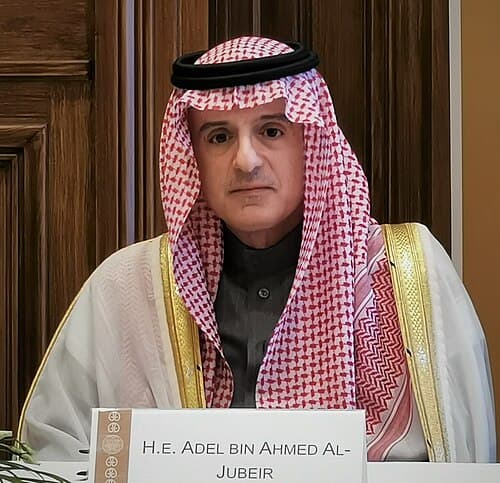
Adel al-Jubeir
PERSON
Saudi diplomat and minister of foreign affairs (born 1962)

Al Hammadi
PERSON • 2 mentions
Name reference in documents
AH
Al Hokair
PERSON • 2 mentions
Name reference in documents
AO
Al Othaim
PERSON
Name reference in documents
AJ
Al Othaim Jarir
PERSON
Name reference in documents

Al Rajhi Bank
PERSON
Person referenced in documents
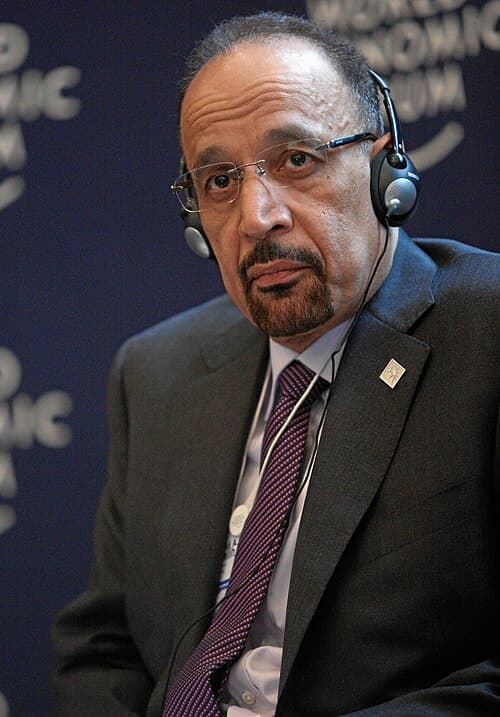
Al-Falih
PERSON
Name reference in documents
AL
Al-Kholifey
PERSON
Name reference in documents
Al-Mubarak
PERSON
Name reference in documents

Al-Naimi
PERSON
Saudi Minister of Petroleum and Mineral Resources
AD
Ali Dhaloomal
PERSON
Name reference in documents
AZ
Almarai Dallah Zain
PERSON
Name reference in documents
AF
Anton Fedotov
PERSON
Russian association football player

Barack Obama
PERSON • 2 mentions
President of the United States from 2009 to 2017

Benjamin Heelan
PERSON
Name reference in documents
CF
Celine Fornaro
PERSON
Name reference in documents

Dallah Dallah
PERSON
Name reference in documents
DA
Daman
PERSON • 2 mentions
Surname reference in Epstein-related documents
DA
Dar Al Arkan
PERSON • 2 mentions
Name reference in documents
Eric Holder
PERSON
United States Attorney General from 2009 to 2015
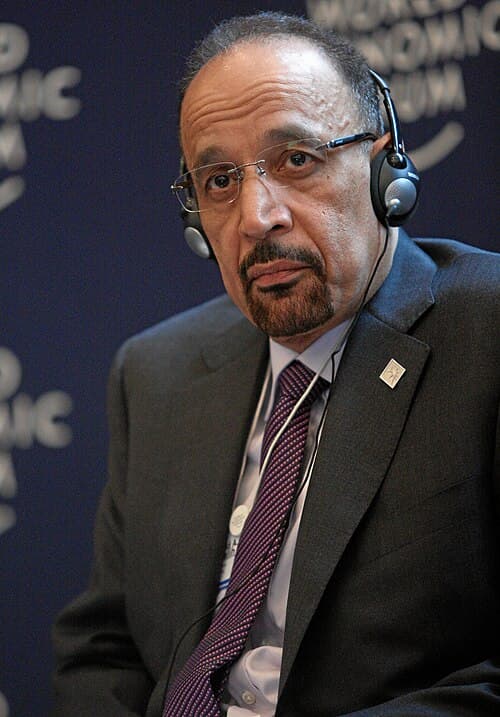
Falih
PERSON
Name reference in documents
FO
Fornaro
PERSON
Name reference in documents

Francisco Blanch
PERSON
266th pope of the Catholic Church (2013–2025)
HY
Hootan Yazhari
PERSON
Name reference in documents

Hosni Mubarak
PERSON
President of Egypt from 1981 to 2011
JC
Jamie Clark
PERSON
Scottish footballer (born 1976)
JX
Jarir XJRIF
PERSON
Name reference in documents
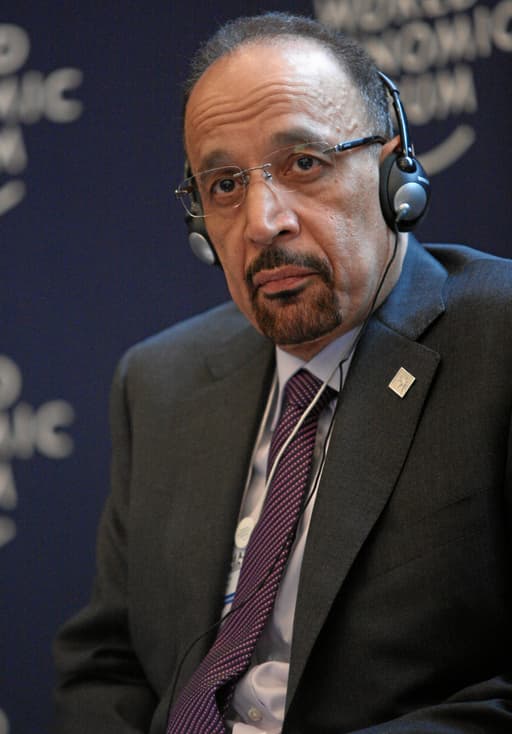
Khalid Al-Falih
PERSON
Saudi businessman and manager

Michael Bloomberg
PERSON
American businessman and politician; 108th Mayor of New York City
MB
Mohamed bin
PERSON
Name reference in documents

Mohammed bin Salman
PERSON
Saudi crown prince (born 1985)
MM
Mouwasat Mouwasat
PERSON
Name reference in documents
PH
Peter Helles
PERSON
Name reference in documents
SA
Salman
PERSON
First name reference to multiple individuals in Epstein-related documents
the Deputy Crown Prince
PERSON
Name reference in documents

ABI Research
ORGANIZATION
Organization referenced in documents
ACWA Power
ORGANIZATION
Organization referenced in documents
Al Hammadi XBQYF
ORGANIZATION
Organization referenced in documents
Al Hokair Group
ORGANIZATION
Organization referenced in documents
Al Khaleej
ORGANIZATION
Organization referenced in documents
Al Khaleej Training Med
ORGANIZATION
Organization referenced in documents
Al Othaim XWPJF
ORGANIZATION
Organization referenced in documents
Al Othaim’
ORGANIZATION
Organization referenced in documents
Almarai XALRF
ORGANIZATION
Organization referenced in documents
Ansaldo STAS
ORGANIZATION
Organization referenced in documents
Apple IT
ORGANIZATION
Organization referenced in documents
ARAB NATIONAL BANK
ORGANIZATION
Organization referenced in documents
Arabian Centres Company
ORGANIZATION
Organization referenced in documents
Aramco
ORGANIZATION
Saudi Arabian state-owned petroleum company
BAE Systems
ORGANIZATION
Organization referenced in documents
BAE SYSTEMS BAESY
ORGANIZATION
Organization referenced in documents
BAE Systems’
ORGANIZATION
Organization referenced in documents
BaFin
ORGANIZATION
German Federal Financial Supervisory Authority

BANA Australia
ORGANIZATION
Country in Oceania
Bank for International Settlements
ORGANIZATION
International financial institution owned by central banks
Bank of America
ORGANIZATION
American multinational banking and financial services corporation
Bank of America Corporation
ORGANIZATION
American multinational banking and financial services corporation
Bank of America Merrill Lynch Banco Multiplo S.A.
ORGANIZATION
Organization referenced in documents
Bank of America Merrill Lynch Global Research
ORGANIZATION
Organization referenced in documents
Bank of America Merrill Lynch International Limited
ORGANIZATION
Organization referenced in documents
Bank of America, N.A.
ORGANIZATION
American multinational banking and financial services corporation
Binariang
ORGANIZATION
Organization referenced in documents

BofA Merrill Lynch
ORGANIZATION
American investing and wealth management division of Bank of America
BofA Merrill Lynch Commodities Research
ORGANIZATION
Organization referenced in documents
BofA Merrill Lynch Credit Opinion Key
ORGANIZATION
Organization referenced in documents
BofA Merrill Lynch Research Personnel
ORGANIZATION
Organization referenced in documents

BofA ML
ORGANIZATION
Organization referenced in documents
BofA ML Commodities Research
ORGANIZATION
Organization referenced in documents
BofA ML Global Research
ORGANIZATION
Organization referenced in documents
BofAMLe
ORGANIZATION
Organization referenced in documents
BT Global
ORGANIZATION
Communications and IT services company
Bupa Arabia
ORGANIZATION
Organization referenced in documents
Center for Performance Management of Government Agencies
ORGANIZATION
Organization referenced in documents

Central Bank)
ORGANIZATION
Organization referenced in documents
Central Banks
ORGANIZATION
Public institution that manages a state's currency, money supply, and interest rates
Cobham
ORGANIZATION
Organization referenced in documents
Comisién Nacional del Mercado De Valores
ORGANIZATION
Organization referenced in documents
Comision Nacional de Valores
ORGANIZATION
Organization referenced in documents
Comissdo de Valores Mobiliarios
ORGANIZATION
Organization referenced in documents
Council of Economic and Finance Committee
ORGANIZATION
Organization referenced in documents
Council of Ministers Support Units
ORGANIZATION
Organization referenced in documents
Crotale
ORGANIZATION
Organization referenced in documents
Dallah
ORGANIZATION
Traditional pot for cooking Arabic coffee
Dallah Healthcare
ORGANIZATION
Organization referenced in documents

Datastream
ORGANIZATION
Organization referenced in documents
Development Affairs
ORGANIZATION
Organization referenced in documents
Dow Chemical Chemicals Company
ORGANIZATION
Organization referenced in documents
DSP Merrill Lynch Limited
ORGANIZATION
Organization referenced in documents

DuPont
ORGANIZATION
American multinational chemical company
Dur Hospitality
ORGANIZATION
Organization referenced in documents

Dynamics
ORGANIZATION
Light sport aircraft by Aerospool in Slovakia

Economist
ORGANIZATION
Professional in the discipline of economics
Energy Policy
ORGANIZATION
Organization referenced in documents
Energy, Industry and Mineral Resources
ORGANIZATION
Organization referenced in documents
European Defence
ORGANIZATION
Organization referenced in documents
Expert Project Management Offices
ORGANIZATION
Organization referenced in documents
Extra
ORGANIZATION
Organization referenced in documents

ExxonMobil
ORGANIZATION
American multinational oil and gas corporation

Fitch
ORGANIZATION
American credit rating agency
Fujian China
ORGANIZATION
Organization referenced in documents
Genel Energy
ORGANIZATION
Organization referenced in documents
General Authority of Civil Aviation
ORGANIZATION
Organization referenced in documents

General Dynamics
ORGANIZATION
American defense manufacturing conglomerate
General Intelligence
ORGANIZATION
Organization referenced in documents
General Organization for Social Insurance
ORGANIZATION
Organization referenced in documents
General Port Authority
ORGANIZATION
Organization referenced in documents
General Presidency of Youth Welfare
ORGANIZATION
Organization referenced in documents
Generali
ORGANIZATION
Organization referenced in documents

Global Group
ORGANIZATION
British media company
Grain Silos and Flour Mills Organization
ORGANIZATION
Organization referenced in documents
Gulf Co-operation Council
ORGANIZATION
Organization referenced in documents
Habib Medical Group
ORGANIZATION
Organization referenced in documents
Hadeed
ORGANIZATION
Organization referenced in documents
Hammadi
ORGANIZATION
Organization referenced in documents

Haver
ORGANIZATION • 2 mentions
Organization referenced in documents
Haver, BofA
ORGANIZATION
Organization referenced in documents
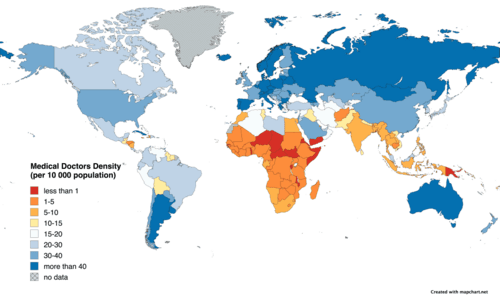
Health Care
ORGANIZATION
Organization referenced in documents
HealthCap
ORGANIZATION
Organization referenced in documents
Hokair
ORGANIZATION
Organization referenced in documents
IHS Chemical
ORGANIZATION
Organization referenced in documents
ILynch
ORGANIZATION
Organization referenced in documents

Inditex
ORGANIZATION
Spanish multinational clothing company
Jarir
ORGANIZATION • 3 mentions
Organization referenced in documents
Joint-Ventures
ORGANIZATION
Organization referenced in documents
Kayan Chemicals
ORGANIZATION
Organization referenced in documents

Lockheed Martin
ORGANIZATION
US aerospace and defense manufacturer
Ma’aden
ORGANIZATION
Organization referenced in documents
Maaden Mining
ORGANIZATION
Organization referenced in documents
Mabanee
ORGANIZATION
Organization referenced in documents
Majid Al Futtaim
ORGANIZATION
Organization referenced in documents
Management Office
ORGANIZATION
Organization referenced in documents
MEAHCO Al Khaleej
ORGANIZATION
Organization referenced in documents

Medgulf
ORGANIZATION
Organization referenced in documents
Mediclinic
ORGANIZATION
Organization referenced in documents
Merchant Bank
ORGANIZATION
Deals in commercial loans and investment

Merri
ORGANIZATION
Commune in Orne, France
Merrill Lynch
ORGANIZATION • 4 mentions
American investing and wealth management division of Bank of America
Merrill Lynch (Asia Pacific) Limited
ORGANIZATION
Organization referenced in documents
Merrill Lynch (Singapore)
ORGANIZATION
Organization referenced in documents
Merrill Lynch (Singapore) Pte Ltd
ORGANIZATION
Organization referenced in documents
Merrill Lynch Argentina SA
ORGANIZATION
Organization referenced in documents
Merrill Lynch Canada Inc
ORGANIZATION
Organization referenced in documents
Merrill Lynch Capital Markets Espana, S.A.S.V.
ORGANIZATION
Organization referenced in documents
Merrill Lynch Equities (Australia) Limited
ORGANIZATION
Organization referenced in documents

Merrill Lynch Global Wealth Management
ORGANIZATION
Investment management and financial planning service
Merrill Lynch International
ORGANIZATION
Organization referenced in documents
Merrill Lynch International Bank Limited
ORGANIZATION
Organization referenced in documents
Merrill Lynch Israel Limited
ORGANIZATION
Organization referenced in documents
Merrill Lynch Japan Securities Co. Ltd.
ORGANIZATION
Organization referenced in documents
Merrill Lynch KSA Company
ORGANIZATION
Organization referenced in documents
Merrill Lynch Menkul Degerler AS
ORGANIZATION
Organization referenced in documents
Merrill Lynch Yatirim Bank A.S.
ORGANIZATION
Organization referenced in documents

Ministry
ORGANIZATION
American industrial metal band
Ministry of CEDA
ORGANIZATION
Organization referenced in documents
Ministry of communications and IT
ORGANIZATION
Organization referenced in documents
Ministry of Culture and Information
ORGANIZATION
Organization referenced in documents
Ministry of Defence
ORGANIZATION
Organization referenced in documents
Ministry of Education
ORGANIZATION
Brazilian ministry responsible for education
Ministry of Health
ORGANIZATION
Organization referenced in documents
Ministry of Justice
ORGANIZATION
Organization referenced in documents
Ministry of Municipality and Rural Affairs
ORGANIZATION
Organization referenced in documents
Ministry of National Guard
ORGANIZATION
Organization referenced in documents
Ministry of Transport
ORGANIZATION
Organization referenced in documents
MLPF&S MLI
ORGANIZATION
Organization referenced in documents

Mobily
ORGANIZATION
Organization referenced in documents
Mobily Petrorabigh
ORGANIZATION
Organization referenced in documents
Mobily Sadafco
ORGANIZATION
Organization referenced in documents

Moody’s
ORGANIZATION
English brand for sailing yachts
Motiva USA
ORGANIZATION
Organization referenced in documents
Mouwasat
ORGANIZATION
Organization referenced in documents
Mouwasat Emaar
ORGANIZATION
Organization referenced in documents
MSCI ADTVactive
ORGANIZATION
Organization referenced in documents
MSCI Saudi
ORGANIZATION
Organization referenced in documents

Munich Re
ORGANIZATION
German reinsurance company
National Aviation
ORGANIZATION
Organization referenced in documents

National Commercial Bank
ORGANIZATION
Saudi Arabian bank
National Industrial Policies
ORGANIZATION
Organization referenced in documents
National Transformation Program
ORGANIZATION
Organization referenced in documents
Natural Gas - CCGT
ORGANIZATION
Organization referenced in documents
Nitaqat
ORGANIZATION
Organization referenced in documents
Non-OPEC production
ORGANIZATION
Organization referenced in documents

Northrop Grumman
ORGANIZATION
Aerospace and defense technology corporation
Oger Telecom
ORGANIZATION
Organization referenced in documents
Oil & Gas
ORGANIZATION
Organization referenced in documents
Oil & Gas Company
ORGANIZATION
Organization referenced in documents
Oil-to-Olefins
ORGANIZATION
Organization referenced in documents
OOO Merrill Lynch Securities
ORGANIZATION
Organization referenced in documents
Original Equipment Manufacturers
ORGANIZATION
Organization referenced in documents
OS merrill
ORGANIZATION
Organization referenced in documents
Otoritas Jasa
ORGANIZATION
Organization referenced in documents

Panda
ORGANIZATION
2016 song by Desiigner
Petro Rabigh
ORGANIZATION
Organization referenced in documents
Petro Rabigh Chemicals Aramco
ORGANIZATION
Organization referenced in documents
Petroleum and Mineral
ORGANIZATION
Organization referenced in documents
Pfizer Pharmaceuticals Company
ORGANIZATION
Organization referenced in documents
Pierce, Fenner & Smith Incorporated
ORGANIZATION
Merrill Lynch (Pierce, Fenner & Smith)
PT Merrill Lynch Indonesia
ORGANIZATION
Organization referenced in documents
Public Pension Agency
ORGANIZATION
Organization referenced in documents
Public transport
ORGANIZATION
Organization referenced in documents
Qatar Petroleum
ORGANIZATION
Organization referenced in documents
QinetiQ
ORGANIZATION
Organization referenced in documents
Ras Tanura
ORGANIZATION
Organization referenced in documents

Raytheon
ORGANIZATION
Defunct American industrial corporation (1922–2020)
Riyadh Bank Banks
ORGANIZATION
Organization referenced in documents

Rockwell Collins
ORGANIZATION
United States-based international company
SABIC XAUBF
ORGANIZATION
Organization referenced in documents
Sadafco Halwani
ORGANIZATION
Organization referenced in documents
SAFCO XDUAF
ORGANIZATION
Organization referenced in documents
Salam Project
ORGANIZATION
Organization referenced in documents
Saline Water Conversion Corporation
ORGANIZATION
Organization referenced in documents
SAMBA FINANCIAL GROUP
ORGANIZATION
Organization referenced in documents
SAMREF Yanbu
ORGANIZATION
Organization referenced in documents
Sanabil
ORGANIZATION
Organization referenced in documents
Saptco
ORGANIZATION
Organization referenced in documents
SAR2Obn
ORGANIZATION
Organization referenced in documents
SARStrn
ORGANIZATION
Organization referenced in documents
Satorp
ORGANIZATION
Organization referenced in documents
Saudi Arabian Airlines
ORGANIZATION
Organization referenced in documents
Saudi Arabian Fertilizer Company
ORGANIZATION
Organization referenced in documents
Saudi Arabian General Investment Authority
ORGANIZATION
Organization referenced in documents
SAUDI ARABIAN MINING
ORGANIZATION
Organization referenced in documents
Saudi Aramco
ORGANIZATION • 2 mentions
Saudi Arabian state-owned petroleum company
Saudi Aramco Strategic Transformation Program
ORGANIZATION
Organization referenced in documents
Saudi Banks
ORGANIZATION
Organization referenced in documents
Saudi Basic Industries Corporation
ORGANIZATION
Organization referenced in documents
Saudi Catering
ORGANIZATION
Organization referenced in documents
Saudi Catering Transport General Airline Services
ORGANIZATION
Organization referenced in documents
Saudi Ceramic Consumer PIF
ORGANIZATION
Organization referenced in documents
Saudi Electricity Company
ORGANIZATION
Organization referenced in documents
Saudi EM
ORGANIZATION
Organization referenced in documents
Saudi Fisheries Agriculture
ORGANIZATION
Organization referenced in documents
Saudi General Grains Organisation
ORGANIZATION
Organization referenced in documents
Saudi Ground Services
ORGANIZATION
Organization referenced in documents
Saudi Maaden
ORGANIZATION
Organization referenced in documents
Saudi Ports Authority
ORGANIZATION
Organization referenced in documents
Saudi Post
ORGANIZATION
Organization referenced in documents
Saudi Post Organization
ORGANIZATION
Organization referenced in documents
Saudi Press Agency
ORGANIZATION
Organization referenced in documents
Saudi Public Transport
ORGANIZATION
Organization referenced in documents
Saudi Railways Organization
ORGANIZATION
Organization referenced in documents
Saudi Royal Guard Regiment
ORGANIZATION
Organization referenced in documents
Saudi Telecom
ORGANIZATION
Organization referenced in documents
Saudi Telecom Company
ORGANIZATION
Organization referenced in documents
Saudi Telecom XUTUF
ORGANIZATION
Organization referenced in documents
Saudization
ORGANIZATION
Organization referenced in documents

Savola
ORGANIZATION
Organization referenced in documents
Savola Al
ORGANIZATION
Organization referenced in documents
SAVOLA GROUP
ORGANIZATION
Organization referenced in documents
Savola XSAVF
ORGANIZATION
Organization referenced in documents
Shahine
ORGANIZATION
Organization referenced in documents

Shell
ORGANIZATION
British multinational oil and gas company
Showa Shell Japan
ORGANIZATION
Organization referenced in documents
Shumoul Holding
ORGANIZATION
Organization referenced in documents
Shura council
ORGANIZATION
Organization referenced in documents
Sinopec
ORGANIZATION
Chinese oil and gas company
Six Flags
ORGANIZATION
Organization referenced in documents
Six Flags Entertainment Company
ORGANIZATION
Organization referenced in documents
Specialized Credit Institutions
ORGANIZATION
Organization referenced in documents
Spimaco
ORGANIZATION
Organization referenced in documents
Sterling
ORGANIZATION
Organization referenced in documents
Stock exchange
ORGANIZATION
Organization referenced in documents
Strategic Management Office
ORGANIZATION
Organization referenced in documents
Sumitomo
ORGANIZATION
Organization referenced in documents
Supreme Economic Council
ORGANIZATION
Organization referenced in documents
Taqnia
ORGANIZATION
Organization referenced in documents
Tawuniya
ORGANIZATION
Organization referenced in documents
Telecom
ORGANIZATION
Organization referenced in documents
Telecom Government
ORGANIZATION
Organization referenced in documents
Thales
ORGANIZATION
Organization referenced in documents
THALES THLEF
ORGANIZATION
Organization referenced in documents
the Australian Securities and Investments Commission
ORGANIZATION
Organization referenced in documents

the Board of Directors
ORGANIZATION
Board of directors referenced in documents
the Board of Directors’
ORGANIZATION
Organization referenced in documents
the Capital Markets Board of Turkey
ORGANIZATION
Organization referenced in documents
the Central Bank of Ireland
ORGANIZATION
Organization referenced in documents
the Comision Nacional Bancaria y de Valores
ORGANIZATION
Organization referenced in documents
the Council for Economic Affairs and Development
ORGANIZATION
Organization referenced in documents
the Council of Ministers
ORGANIZATION
Organization referenced in documents
The Department of Zakat and Income Tax
ORGANIZATION
Organization referenced in documents
the Dubai Financial Services Authority
ORGANIZATION
Organization referenced in documents
The Financial Service Board
ORGANIZATION
Organization referenced in documents

the Financial Services Agency
ORGANIZATION
Organization referenced in documents
the Financial Supervisory Service
ORGANIZATION
Organization referenced in documents
The General Authority for Entertainment
ORGANIZATION
Organization referenced in documents
The housing ministry
ORGANIZATION
Organization referenced in documents
the international mkt.
ORGANIZATION
Organization referenced in documents
the Investment Industry Regulatory Organization of Canada
ORGANIZATION
Organization referenced in documents
the Ministry of Agriculture
ORGANIZATION
Organization referenced in documents
The Ministry of Commerce and Industry
ORGANIZATION
Organization referenced in documents
The Ministry of Commerce and Investment
ORGANIZATION • 2 mentions
Organization referenced in documents
The Ministry of Economy and Planning
ORGANIZATION • 2 mentions
Organization referenced in documents

the Ministry of Finance
ORGANIZATION
Government ministry responsible for fiscal policy
the Ministry of Foreign
ORGANIZATION
Organization referenced in documents
The Ministry of Haj and Umrah
ORGANIZATION
Organization referenced in documents
The Ministry of Labor
ORGANIZATION
Organization referenced in documents
The Ministry of Petroleum and Mineral Resources
ORGANIZATION
Organization referenced in documents
the Ministry of Social Affairs
ORGANIZATION
Organization referenced in documents
The Ministry of Water and Electricity
ORGANIZATION
Organization referenced in documents
The National Industrial Cluster Development Program
ORGANIZATION
Organization referenced in documents
the Oil Ministry
ORGANIZATION
Organization referenced in documents
the Prudential Regulation Authority
ORGANIZATION
Organization referenced in documents
the Public Investment Fund
ORGANIZATION
Organization referenced in documents
the Real Estate Development Fund
ORGANIZATION
Organization referenced in documents

the Saudi
ORGANIZATION
Organization referenced in documents
the Saudi Arabian Monetary Agency
ORGANIZATION
Organization referenced in documents
the Saudi Capital Markets Authority
ORGANIZATION
Organization referenced in documents
The Saudi Commission for Tourism and National Heritage
ORGANIZATION
Organization referenced in documents
The Saudi Fund for Development
ORGANIZATION
Organization referenced in documents
the Saudi Stock exchange
ORGANIZATION
Organization referenced in documents
the Securities and Futures Bureau
ORGANIZATION
Organization referenced in documents
Total
ORGANIZATION
Organization referenced in documents

Tower
ORGANIZATION
Organization referenced in documents
Turk Telecom
ORGANIZATION
Organization referenced in documents
Typhoons
ORGANIZATION
Organization referenced in documents

U.S. Treasury
ORGANIZATION
United States Department of the Treasury, executive department of the federal government
Ultra Electronics
ORGANIZATION
Organization referenced in documents
US Agency
ORGANIZATION
Organization referenced in documents

US Government
ORGANIZATION
Government agency
Viva Kuwait
ORGANIZATION
Organization referenced in documents
Yanbu
ORGANIZATION • 2 mentions
Organization referenced in documents
Yanbu National Petrochemical Co
ORGANIZATION
Organization referenced in documents
YANSAB XUYNF
ORGANIZATION
Organization referenced in documents
Yasref
ORGANIZATION
Organization referenced in documents
Zain KSA
ORGANIZATION
Organization referenced in documents
Zain KSA XOCTF
ORGANIZATION
Organization referenced in documents
Abu Dhabi
LOCATION • 2 mentions
Capital city of the United Arab Emirates

Algeria
LOCATION
Country in North Africa

Angola
LOCATION
Country on the west coast of Southern Africa

Arabia
LOCATION • 2 mentions
Country in West Asia

Bahrain
LOCATION
Country in the Persian Gulf

Chile
LOCATION
Country in South America

Colombia
LOCATION
Sovereign state in South America

Columbia University
LOCATION
Private Ivy League research university in New York City
Czech
LOCATION
Location referenced in documents

Ecuador
LOCATION
Sovereign state in South America
Frankfurt
LOCATION
City in Hesse, Germany

Hungary
LOCATION
Country in Central Europe
Jazan
LOCATION
Location referenced in documents
Jeddah
LOCATION
City in Saudi Arabia
Jeddah Jeddah
LOCATION
City in Saudi Arabia
Jubail
LOCATION • 2 mentions
City in Saudi Arabia
Jubail Industrial City
LOCATION
Industrial City
Jubal Industrial area
LOCATION
Location referenced in documents

Kazakhstan
LOCATION
Sovereign state in Eastern Europe and Central Asia
King Abdullah Financial District
LOCATION
New development under construction in Riyadh, Saudi Arabia
King Fahad
LOCATION
Hospital in Saudi Arabia

Kuwait
LOCATION
Sovereign state in Western Asia

Malaysia
LOCATION
Country in Southeast Asia
Mecca
LOCATION
Saudi Arabian city and capital of the Makkah province
Middle Africa
LOCATION
Continent
Middle East
LOCATION
Geopolitical region encompassing Egypt and most of Western Asia, including Iran
Mobile
LOCATION
County seat of Mobile County, Alabama, United States

Nigeria
LOCATION
Sovereign state in West Africa
North Sea
LOCATION
Marginal sea of the Atlantic Ocean

Norway
LOCATION
Country in Northern Europe

Philippines
LOCATION
Archipelagic country in Southeast Asia
Rabigh
LOCATION • 2 mentions
Human settlement in Saudi Arabia
Riyadh
LOCATION
Capital and largest city of Saudi Arabia
Riyadh Jeddah
LOCATION
Capital and largest city of Saudi Arabia

Sadara
LOCATION • 2 mentions
Location referenced in documents
Saudi Arabia
LOCATION • 2 mentions
Country in West Asia

Seoul
LOCATION
Capital and largest city of South Korea

South Africa
LOCATION
Country in southern Africa
South America
LOCATION
Continent

Sudan
LOCATION
Country in Northeast Africa
Tadawul
LOCATION • 2 mentions
Stock exchange in Saudi Arabia
the Far East
LOCATION • 2 mentions
Region in the Far East
the King Abdullah City for Atomic and Renewable Energy
LOCATION
Location referenced in documents

Tunisia
LOCATION
Country in North Africa
Umm Al Quwain
LOCATION
Human settlement in United Arab Emirates

United Arab Emirates
LOCATION
Country in Western Asia

United Kingdom
LOCATION
Country in north-west Europe

Venezuela
LOCATION
Country in South America
Wasit
LOCATION
Location referenced in documents

Western Europe
LOCATION
Western part of the European continent
Yanbu Industrial City
LOCATION
Location referenced in documents
Yanbu Yanbu
LOCATION
Place in Al Madinah, Saudi Arabia
Yansab
LOCATION • 2 mentions
Location referenced in documents

Yemen
LOCATION
Country in West Asia
Statistics
Pages:86
Entities:380
Avg. OCR:93.1%
Sponsored