EFTA00182748_sub_001 - EFTA00182748_100
Document Information
Bates Range
EFTA00182748_sub_001 - EFTA00182748_100
Pages
100
Original Filename
EFTA00182748.pdf
Document Content
Page 1 - EFTA00182748_001
Case 9:08-cv-80119-KAM Document 152 Entered on FLSD Docket 06/10/2009 Page 1 of 8 UNITED STATES DISTRICT COURT SOUTHERN DISTRICT OF FLORIDA JANE DOE NO. 2, Plaintiff, vs. JEFFREY EPSTEIN Defendant. JANE DOE NO. 3, Plaintiff, vs. JEFFREY EPSTEIN Defendant. JANE DOE NO. 4, Plaintiff, vs. JEFFREY EPSTEIN Defendant. JANE DOE NO. 5, Plaintiff, JEFFREY EPSTEIN, Defendant. CASE NO.: 08-CV-80119-MARRA/JOHNSON CASE NO.: 08-CV-80232-MARRA/JOHNSON CASE NO.: 08-CV-80380-MARRALJOHNSON CASE NO.: 08-CV-8038I-MARRA/JOHNSON EFTA00182748
Page 2 - EFTA00182748_002
Case 9:08-cv-80119-KAM Document 152 Entered on FLSD Docket 06/10/2009 Page 2 of 8 Doe 101 v. Epstein Page 2 JANE DOE NO. 6, Plaintiff, JEFFREY EPSTEIN, Defendant. CASE NO.: 08-80994-CIV-MARRA/JOHNSON CASE NO.: 08-80993-CIV-MARRA/JOHNSON JANE DOE NO. 7, Plaintiff, JEFFREY EPSTEIN Defendant. CASE NO.: 08-80811-CIV-MARRAJJOHNSON Plaintiff, JEFFREY EPSTEIN Defendant. JANE DOE, CASE NO.: 08-80893-CIV-MARRA/JOHNSON Plaintiff, JEFFREY EPSTEIN et al, Defendants. DOE II, CASE NO.: 09-80469-CIV-MARRA-JOHNSON Plaintiff, JEFFREY EPSTEIN et al, Defendants. EFTA00182749
Page 3 - EFTA00182748_003
Case 9:08-cv-80119-KAM Document 152 Entered on FLSD Docket 06/10/2009 Page 3 of 8 Doe 101 v. Epstein Page 3 JANE DOE NO. 101, Plaintiff, JEFFREY EPSTEIN Defendant. CASE NO.: 09-80591-CIV-MARRA-JOHNSON JANE DOE NO. 102, CASE NO.: 09-80656-CIV-MARRAMOHNSON Plaintiff, JEFFREY EPSTEIN, Defendant. DEFENDANT EPSTEIN'S RESPONSE TO PLAINTIFFS JANE DOE NOS. 101 AND 102'S MOTION FOR LEAVE TO FILE UNDER SEAL RESPONSE IN OPPOSITION TO DEFENDANT'S MOTION TO STAY OR, IN THE ALTERNATIVE, TO UNSEAL THE NONPROSECUTION AGREEMENT (dated 5/29/09, IDE 1281 Defendant, JEFFREY EPSTEIN, ("EPSTEIN"), by and through his undersigned attorneys responds to the Plaintiffs' Jane Doe No. 101 and Jane Doe No. 102 ("Plaintiffs") Motion For Leave To File Under Seal Response In Opposition To Defendant's Motion To Stay Or, In The Alternative, To Unseal The Nonprosecution Agreement, and states: 1. This Court has already entered orders preserving the confidentiality of the Non- Prosecution Agreement ("NM") and denying prior attempts to have the document unsealed. See Court's Orders, attached hereto as Exhibit A and Exhibit B, respectively, entered in In Re: Jane Does 1 and 2. Petitioners Case No. 08-80736-CIV-MARRA/JOHNSON, A. Order To Compel Production And Protective Order, [DE 26], dated August 21, 2008, and B. Order [DE 36], dated February 12, 2009, on Petitioners' Motion To Unseal Non-Prosecution Agreement [DE 28]. Both of these Orders are clear that the terms of the NPA are to remain confidential and remain EFTA00182750
Sponsored
Page 4 - EFTA00182748_004
Case 9:08-cv-80119-KAM Document 152 Entered on FLSD Docket 06/10/2009 Page 4 of 8 Doe 101 v. Epstein Page 4 protected from being disclosed to third parties. The NPA is an agreement between the United States Attorney's Office and EPSTEIN. Plaintiffs' motion presents nothing in support of this Court modifying its prior orders. 2. Significantly, even the United States Attorney's Office (USAO), along with Defendant, has strongly opposed making the NPA public. Attached as Exhibit C hereto is Respondent United States of America's Opposition To Victims' Motion To Unseal Non- Prosecution Agreement, dated October 8, 2008, [DE 29], also filed in In Re: Jane Does 1 and 2, Petitioners, Case No. 08-80736-CIV-MARRA/JOHNSON. In opposing the petitioners' attempts to make public the terms of the NPA, the United States in the Response, Exhibit C, stated: Since the Agreement (NPA) has not been filed under seal with this Court, the legal authority cited by petitoners regarding sealing of documents, United States v. Ochoa-Vasque, 428 F.3d 1015 (11th Cir. 2005), is inapposite. The parties who negotiated the Agreement, the United States Attorney's Office and Jeffrey Epstein, determined the Agreement should remain confidential. They were free to do so, and violated no law in making such an agreement. Since the Agreement has become relevant to the instant lawsuit, petitioners have been given access to it, upon the condition that it not be disclosed further. Petitioners have no legal right to disclose the Agreement to third parties, or standing to challenge the confidentiality provision. After the United States' response, Exhibit C, this Court entered its Order, Exhibit B, agreeing with the United States' position and maintaining the confidentiality of the NPA in accordance with its prior Order, Exhibit A. The "victims" who were provided a copy of the NPA were and are required to maintain the NPA's confidentiality and not disclose the terms to third parties. 3. Other parties in the consolidated cases have been able to file their responses without a similar request being made. Defendant believes that these Plaintiffs can fully respond without the need to file under seal; and reference provisions generally. However if the Court is EFTA00182751
Page 5 - EFTA00182748_005
Case 9:08-cv-80119-KAM Document 152 Entered on FLSD Docket 06/10/2009 Page 5 of 8 Doe 101 v. Epstein Page 5 inclined to grant this Order, then in order to continue to protect the confidentiality of the NPA and to comply with the Court's prior Orders, Exhibit A and Exhibit B, Defendant would agree to allow Plaintiff to file under seal ligl• response and reference only those portions (identified herein) of the NPA which are potentially relevant to the issues arising under claims brought pursuant to 18 U.S.C. §2255 and thus, that may have impact on Defendant's motion for stay and Plaintiff's response thereto. Specifically, the only portions relevant for this Court to make a decision on Defendant's motion and Plaintiffs' response are paragraphs 7, 8, 9, and10 of the NPA, and paragraphs 7A, 7B, and 7C of the Addendum To The NPA. WHEREFORE, Defendant requests that this Court enter an Order denying any attempts by Plaintiffs to unseal or make public or to disclose to third parties the terms of the NPA, and to deny Plaintiffs move to file their response under seal; or if the Court is inclined to grant the motion, to allow Plaintiff to file her response to the motion to stay and only the specified portions of the NPA and Addendum thereto under seal. Certificate of Service I HEREBY CERTIFY that a true copy of the foregoing was electronically filed with the Clerk of the Court using CM/ECF. I also certify that the foregoing document is being served this day on all counsel of record identified on the following Service List in the manner specified by CM/ECF on this 10th day of June , 2009 Respectfully sub tted, By: ROBERT D. R1TTON, JR., ESQ. Florida Bar MICHAEL J. PIKE, ESQ. BURMAN, CROTON, LUTTIER & COLEMAN 515 N. Flagler Drive, Suite 400 West Palm Beach, FL 33401 EFTA00182752
Page 6 - EFTA00182748_006
Case 9:08-cv-80119-KAM Document 152 Entered on FLSD Docket 06/10/2009 Page 6 of 8 Doe 101 v. Epstein Page 6 Phone Fax (Counsel for Defendant Jeffrey Epstein) EFTA00182753
Sponsored
Page 7 - EFTA00182748_007
Case 9:08-cv-80119-KAM Document 152 Entered on FLSD Docket 06/10/2009 Page 7 of 8 Doe 101 v. Epstein Page 7 Certificate of Service Jane Doe No. 2 v. Jeffrey Epstein Case No. 08-CV-80119-MARRA/JOHNSON Stuart S. Mermelstein, Esq. Adam D. Horowitz, Esq. Mermelstein & Horowitz, P.A. 18205 Biscayne Boulevard Suite 2218 Miami FL 3 160 Fax: ssmasexabuseattomev.com Counsel for Plaintiffs in Related Cases Nos. 08-80069, 08-80119, 08-80232, 08-80380, 08- 80381, 08-80993, 08-80994 Richard Horace Willits, Esq. Richard H. Willits, P.A. 2290 10ib Avenue North Suite 404 Lake Worth. FL 33461 Fax: Counsel for Plaintiff in Related Case No. 80811 Brad Edwards, Esq. Rothstein Rosenfeldt Adler 401 East Las Olas Boulevard Suite 1650 Fort Laud rdal F1.33301 Phon • Counsel for Plaintiff in Related Case No. 08- 80893 Paul G. Cassell, Esq. Pro Hac Vice 332 South 1400 E, Room 101 Salt T. aka City, UT 84112 Co-counsel for Plaintiff Jane Doe 08- Isidro M. Garcia, Esq. Garcia Law Firm, P.A. 224 Datura Street, Suite 900 ch, FL 33401 Jack Scarola, Esq. Jack P. Hill, Esq. Scatty Denney Scarola Barnhart & Shipley, P.A. 2139 Palm Beach Lakes Boulevard West Palm Beach, FL 33409 Counsel for Plaintiff, Counsel for Plaintiff in Related Case No. 08- 80469 Robert C. Josefsberg, Esq. Katherine W. Ezell, Esq. Podhurst Orseck, P.A. 25 West Hagler Street, Suite 800 130 EFTA00182754
Page 8 - EFTA00182748_008
Case 9:08-cv-80119-KAM Document 152 Entered on FLSD Docket 06/10/2009 Page 8 of 8 Doe 101 v. Epstein Page 8 Bruce Reinhart, Esq. Bruce E. Reinhart, P.A. 250 S. Australian Avenue Suite 1400 West Palm Beach, FL 33401 Counsel for Defendan Theodore J. Leopold, Esq. Spencer T. Kuvin, Esq. Ricci-Leopold, P.A. 2925 PGA Blvd., Suite 200 Palm Beach Gardens, FL 33410 Fax: Counsel for Plaintiff in Related Case No. 08- 08804 Counsel for Plaintiffs in Related Cases Nos. 09-80591 and 09-80656 Jack Alan Goldberger, Esq. Atterbury Goldberger & Weiss, P.A. 250 Australian Avenue South Suite 1400 Beach, FL 33401-5012 Counsel for Defendant Jeffrey Epstein EFTA00182755
Page 9 - EFTA00182748_009
Case 9:08-cv-80993-KAM Document 86 Entered on FLSD Docket 06/10/2009 Page 1 of 10 UNITED STATES DISTRICT COURT SOUTHERN DISTRICT OF FLORIDA CASE NO.: 08-CV-80993-MARRA-JOHNSON JANE DOE NO. 7 Plaintiff, v. JEFFREY EPSTEIN, Defendant. DEFENDANT EPSTEIN'S FIRST AMENDED ANSWER & AFFIRMATIVE DEFENSES TO PLAINTIFF'S (FIRST) AMENDED COMPLAINT Defendant, JEFFREY EPSTEIN, (hereinafter "EPSTEIN"), by and through his undersigned attorneys, files his Answer to Plaintiff's Amended Complaint [DE 19] and states: 1. Without knowledge and deny. 2. As to the allegations in paragraphs 2, Defendant asserts his Fifth Amendment privilege against self-incrimination. See DeLisi v. Bankers Ins. Company, 436 So.2d 1099 (Fla. 41" DCA 1983); Malloy v. Hogan, 84 S.Ct. 1489, 1495 (1964)(the Fifth Amendment's Self-Incrimination Clause applies to the states through the Due Process Clause of the Fourteenth Amendment - lilt would be incongruous to have different standards determine the validity of a claim of privilege based on the same feared prosecution, depending on whether the claim was asserted in state or federal court."); 5 Fed.Prac. & Proc. Civ. 3d §1280 Effect of Failure to Deny — Privilege Against Self- Incrimination ("...court must treat the defendant's claim of privilege as equivalent to a specific denial."). See also 24 Fla.Jur.2d Evidence §592. Defendants in civil actions. - EFTA00182756
Sponsored
Page 10 - EFTA00182748_010
Case 9:08-cv-80993-KAM Document 86 Entered on FLSD Docket 06/10/2009 Page 2 of 10 Jane Doe No. 7 v: Epstein Page 2 "... a civil defendant who raises an affirmative defense is not precluded from asserting the privilege [against self-incrimination], because affirmative defenses do not constitute the kind of voluntary application for affirmative relief" which would prevent a plaintiff bringing a claim seeking affirmative relief from asserting the privilege. 3. As to the allegations in paragraph 3, deny. 4. As to the allegations in paragraph 4, deny. 5. As to the allegations in paragraph 5, without knowledge and deny. 6. As to the allegations in paragraphs 6, Defendant asserts his Fifth Amendment privilege against self-incrimination. See DeLisi v. Bankers Ins. Company, 436 So.2d 1099 (Fla. 4th DCA 1983) Malloy v. Hogan, 84 S.Ct. 1489, 1495 (1964)(the Fifth Amendment's Self-Incrimination Clause applies to the states through the Due Process Clause of the Fourteenth Amendment - "pit would be incongruous to have different standards determine the validity of a claim of privilege based on the same feared prosecution, depending on whether the claim was asserted in state or federal court."); 5 Fed.Prac. & Proc. Civ. 3d §1280 Effect of Failure to Deny — Privilege Against Self- Incrimination ("...court must treat the defendant's claim of privilege as equivalent to a specific denial."). See also 24 Fla.Jur.2d Evidence §592. Defendants in civil actions. — .. a civil defendant who raises an affirmative defense is not precluded from asserting the privilege [against self-incrimination], because affirmative defenses do not constitute the kind of voluntary application for affirmative relief" which would prevent a plaintiff bringing a claim seeking affirmative relief from asserting the privilege. EFTA00182757
Page 11 - EFTA00182748_011
Case 9:08-cv-80993-KAM Document 86 Entered on FLSD Docket 06/10/2009 Page 3 of 10 Jane Doe No. 7 v. Epstein Page 3 7. As to the allegations in paragraphs 7 through 15 of Plaintiff's Second Amended Complaint, Defendant exercises his Fifth Amendment Privilege against self- incrimination. See DeLisi v. Bankers Ins. Company, 436 So.2d 1099 (Fla. 4th DCA 1983); Malloy v. Hogan, 84 S.Ct. 1489, 1495 (1964)(the Fifth Amendment's Self- Incrimination Clause applies to the states through the Due Process Clause of the Fourteenth Amendment - "[lit would be incongruous to have different standards determine the validity of a claim of privilege based on the same feared prosecution, depending on whether the claim was asserted in state or federal court."); 5 Fed.Prac. & Proc. Civ. 3d §1280 Effect of Failure to Deny — Privilege Against Self-Incrimination ("...court must treat the defendant's claim of privilege as equivalent to a specific denial."). See also 24 Fla.Jur.2d Evidence §592. Defendants in civil actions. a civil defendant who raises an affirmative defense is not precluded from asserting the privilege [against self-incrimination), because affirmative defenses do not constitute the kind of voluntary application for affirmative relief' which would prevent a plaintiff bringing a claim seeking affirmative relief from asserting the privilege. 8. In response to the allegations of paragraph 16, Defendant realleges and adopts his responses to paragraphs 1 through 15 of the Second Amended Complaint set forth in paragraphs 1 through 7 above herein. 9. Defendant asserts the Fifth Amendment Privilege against self-incrimination to the allegations set forth in paragraphs 17 through 22 of the Second Amended Complaint. See DeLisi v. Bankers Ins. Company, 436 So.2d 1099 (Fla. 41" DCA 1983); Malloy v. Hogan 84 S.Ct. 1489, 1495 (1964)(the Fifth Amendment's Self-Incrimination EFTA00182758
Page 12 - EFTA00182748_012
Case 9:08-cv-80993-KAM Document 86 Entered on FLSD Docket 06/10/2009 Page 4 of 10 Jane Doe No. 7 v. Epstein Page 4 Clause applies to the states through the Due Process Clause of the Fourteenth Amendment - `lilt would be incongruous to have different standards determine the validity of a claim of privilege based on the same feared prosecution, depending on whether the claim was asserted in state or federal court."); 5 Fed.Prac. & Proc. Civ. 3d §1280 Effect of Failure to Deny — Privilege Against Self-Incrimination ("...court must treat the defendant's claim of privilege as equivalent to a specific denial."). See also 24 Fla.Jur.2d Evidence §592. Defendants in civil actions. —"... a civil defendant who raises an affirmative defense is not precluded from asserting the privilege [against self- incrimination], because affirmative defenses do not constitute the kind of voluntary application for affirmative relief' which would prevent a plaintiff bringing a claim seeking affirmative relief from asserting the privilege. 10. In response to the allegations of paragraph 23, Defendant realleges and adopts his responses to paragraphs 1 through 15 of the Second Amended Complaint set forth in paragraphs 1 through 7 above herein. 11. Defendant asserts the Fifth Amendment Privilege against self-incrimination to the allegations set forth In paragraphs 24 through 28 of the Second Amended Complaint. See DeLisi v. Bankers Ins. Company, 436 So.2d 1099 (Fla. 4th DCA 1983); Malloy v. Hogan, 84 S.Ct. 1489, 1495 (1964)(the Fifth Amendment's Self-Incrimination Clause applies to the states through the Due Process Clause of the Fourteenth Amendment - "[i]t would be incongruous to have different standards determine the validity of a claim of privilege based on the same feared prosecution, depending on whether the claim was asserted in state or federal court.")• 5 Fed.Prac. & Proc. Civ. 3d EFTA00182759
Sponsored
Page 13 - EFTA00182748_013
Case 9:08-cv-80993-KAM Document 86 Entered on FLSD Docket 06/10/2009 Page 5 of 10 Jane Doe No. 7 v. Epstein Page 5 §1280 Effect of Failure to Deny — Privilege Against Self-Incrimination ("...court must treat the defendant's claim of privilege as equivalent to a specific denial."). See also 24 Fla.Jur.2d Evidence §592. Defendants in civil actions. —"... a civil defendant who raises an affirmative defense is not precluded from asserting the privilege [against self- incrimination], because affirmative defenses do not constitute the kind of voluntary application for affirmative relief" which would prevent a plaintiff bringing a claim seeking affirmative relief from asserting the privilege. 12. In response to the allegations of paragraph 29, Defendant realleges and adopts his responses to paragraphs 1 through 15 of the Second Amended Complaint set forth in paragraphs 1 through 7 above herein. 13. Defendant asserts the Fifth Amendment Privilege against self-incrimination to the allegations set forth in paragraphs 30 through 35 of the Second Amended Complaint. See DeLisi v. Bankers Ins. Company, 436 So.2d 1099 (Fla. 4th DCA 1983); Malloy v. Hogan, 84 S.Ct. 1489, 1495 (1964)(the Fifth Amendment's Self-Incrimination Clause applies to the states through the Due Process Clause of the Fourteenth Amendment - "[I]t would be incongruous to have different standards determine the validity of a claim of privilege based on the same feared prosecution, depending on whether the claim was asserted in state or federal court."); 5 Fed.Prac. & Proc. Civ. 3d §1280 Effect of Failure to Deny - Privilege Against Self-Incrimination ("...court must treat the defendant's claim of privilege as equivalent to a specific denial."). See also 24 Fla.Jur.2d Evidence §592. Defendants In civil actions. — "... a civil defendant who raises an affirmative defense is not precluded from asserting the privilege [against self- EFTA00182760
Page 14 - EFTA00182748_014
Case 9:08-cv-80993-KAM Document 86 Entered on FLSD Docket 06/10/2009 Page 6 of 10 Jane Doe No. 7 v. Epstein Page 6 incrimination], because affirmative defenses do not constitute the kind of voluntary application for affirmative relief" which would prevent a plaintiff bringing a claim seeking affirmative relief from asserting the privilege. WHEREFORE, Defendant requests that this Court deny the relief sought by Plaintiff. Affirmative Defenses 1. As to all counts, Plaintiff actually consented to and was a willing participant in the acts alleged, and therefore, her claims are barred, or her damages are required to be reduced accordingly. 2. As to all counts alleged, Plaintiff actually consented to and participated in conduct similar and/or identical to the acts alleged with other persons which were the sole or contributing cause of Plaintiffs alleged damages. 3. As to all counts, Plaintiff impliedly consented to the acts alleged by not objecting and by going to Defendant's home with other females and/or by bringing other females to Defendant's home for which Plaintiff received money; and therefore, her claims are barred, or her damages are required to be reduced accordingly. 4. As to all counts, Defendant reasonably believed or was told that the Plaintiff had attained the age of 18 years old at the time of the alleged acts. 5. As to all counts, Plaintiff's claims are barred as she said she was 18 years or older at the time. 6. As to all counts, Plaintiff's alleged damages were caused in whole or part by events and/or circumstances completely unrelated to the incident(s) alleged in the complaint. EFTA00182761
Page 15 - EFTA00182748_015
Case 9:08-cv-80993-KAM Document 86 Entered on FLSD Docket 06/10/2009 Page 7 of 10 Jane Doe No. 7 v. Epstein Page 7 7. Plaintiff's claims are barred by the applicable statute of limitations. 8. As to Plaintiff's claims for punitive damages in Count I — "Sexual Assault & Battery," and Count II — "Intentional Infliction of Emotional Distress," such claims are subject to the limitations as set forth in §768.72, et seq., Florida Statutes. 9. As to Plaintiff's claims for punitive damages in Count I — "Sexual Assault & Battery," and Count II — "Intentional Infliction of Emotional Distress," such claims are subject to the constitutional limitations and guideposts as set forth in BMW of North America v. Gore, 116 S.Ct 1589 (1996)• Philip Morris USA v. Williams, 127 S.Ct. 1057 (2007)• State Farm v. Campbell, 123 S.Ct 1513 (2003); Engle v. Ligget Group, Inc., 945 So.2d 1246 (Fla. 2006). The Due Process Clause of the Fourteenth Amendment of the United States Constitution and Florida's Constitution, Art. I, §§2 and 9, prohibit the imposition of grossly excessive or arbitrary punishments 10.As to Plaintiffs claims for punitive damages in Count I — "Sexual Assault & Battery," and Count II — "Intentional Infliction of Emotional Distress," the determination of whether or not Defendant is liable for punitive damages is required to be bifurcated from a determination of the amount to be imposed. 11. Plaintiff has failed to state a cause of action for sexual assault and/or battery under Count I. 12.As to Count III, Plaintiff has failed to plead a cause of action as she does not and can not show a violation of a predicate act under 18 U.S.C. §2255 (2005). EFTA00182762
Sponsored
Page 16 - EFTA00182748_016
Case 9:08-cv-80993-KAM Document 86 Entered on FLSD Docket 06/10/2009 Page 8 of 10 Jane Doe No. 7 v. Epstein Page 8 13.As to Count III, the version of 18 U.S.C. §2255 in effect at the time of the alleged conduct applies, and, thus, the presumptive minimum damages amount should Plaintiff prove the elements of such claim Is $50,000, and not subject to any multiplier. 14.As to Count III, application of the amended version of 18 U.S.C. §2255, effective July 27, 2006, would be in violation of the legal axiom against retroactive application of an amended statute, and also In violation of such constitutional principles, including but not limited to, the "Ex Post Facto" Clause, U.S. Const. Article I, §9, cl. 3, §10, cl. 1, and procedural and substantive due process, U.S. Const. 14th Amend., 5th Amend. The statute in effect during the time of the alleged conduct applies. 15.As to Count III, application of the amended version of 18 U.S.C. §2255, effective July 27, 2006, is prohibited pursuant to the vagueness doctrine and the Rule of Lenity. A criminal statute is required to give " 'fair warning ... in language that the common world will understand, of what the law intends to do if a certain line is passed. To make the warning fair, so far as possible the line should be clear.' " United States v. Lanier, 520 U.S. 259, 265, 117 S.Ct. 1219, 137 L.Ed.2d 432 (1997) (quoting McBovle v. United States 283 U.S. 25, 27, 51 S.Ct. 340, 75 L.Ed. 816 (1931)) (omission in original). The "three related manifestations of the fair warning requirement" are: (1) the vagueness doctrine bars enforcement of a statute which either forbids or requires the doing of an act in terms so vague that men of common intelligence must necessarily guess at its meaning and differ as to its application; (2) the canon of strict construction of criminal statutes, or rule of lenity, ensures fair warning by so resolving ambiguity in a criminal statute as to apply it only to conduct clearly covered; (3) due process bars courts from EFTA00182763
Page 17 - EFTA00182748_017
Case 9:08-cv-80993-KAM Document 86 Entered on FLSD Docket 06/10/2009 Page 9 of 10 Jane Doe No. 7 v. Epstein Page 9 applying a novel construction of a criminal statute to conduct that neither the statute nor any prior judicial decision has fairly disclosed to be within its scope. 16. The applicable version of 18 U.S.C. §2255 creates a cause of action on behalf of a "minor." Plaintiff had attained the age of majority at the time of filing this action, and accordingly, her cause of action is barred. 17.Because Plaintiff has no claim under 18 U.S.C. §2255, this Court is without subject matter jurisdiction as to all claims asserted. 18.Application of the 18 U.S.C. §2255, as amended, effective July 27, 2006, is in violation of the constitutional principles of due process, the "Ex Post Facto" clause, and the Rule of Lenity, in that in amending the term "minor to "person" as to those who may bring a cause of action impermissibly and unconstitutionally broadened the scope of persons able to bring a §2255 claim. 19. 18 U.S.C. §2255 violates the Equal Protection Clause of the 14'h Amendment under the U.S. Constitution, and thus Plaintiff's claim thereunder is barred. 20. 18 U.S.C. §2255 violates the constitutional guarantees of procedural and substantive due process. Procedural due process guarantees that a person will not be deprived of life, liberty or property without notice and opportunity to be heard. Substantive due process protects fundamental rights. Accordingly, Plaintiffs cause of action thereunder is barred. WHEREFORE Defendant requests that this Court deny the lief sought by Plaintiff. Robert D. ritton, Jr. Attorney f. r Defendant Epstein EFTA00182764
Page 18 - EFTA00182748_018
Case 9:08-cv-80993-KAM Document 86 Entered on FLSD Docket 06/10/2009 Page 10 of 10 Jane Doe No. 7 v. Epstein Page 10 Certificate of Service I HEREBY CERTIFY that a true copy of the foregoing was electronically filed with the Clerk of the Court using CM/ECF. I also certify that the foregoing document is being served this day on all counsel of recorthidentified on the following Service List in the manner specified by CM/ECF on this ur Tay of1444-..-•, 2009: Stuart S. Mermelstein, Esq. Adam D. Horowitz, Esq. Mermelstein & Horowitz, P.A. 18205 Biscayne Boulevard Suite 2218 Counsel for Plaintiff Jane Doe #7 Jack Alan Goldberger Atterbury Goldberger & Weiss, P.A. 250 Australian Avenue South Suite 1400 ach, FL 33401-5012 Co-Counsel for Defendant Jeffrey Epstein Respectfully submi d, By: ROBERT D. RITTON, JR., ESQ. Florida Bar o. MICHAEL J. PIKE ESQ. Florida Bar BURMAN, CRIl TON, LUTTIER & COLEMAN 515 N. Flagler Drive, Suite 400 ach, FL 33401 Phone Fax (Co-Counsel for Defendant Jeffrey Epstein) EFTA00182765
Sponsored
Page 19 - EFTA00182748_019
Case 9:08-cv-80119-KAM Document 149 Entered on FLSD Docket 06/09/2009 Page 1 of 13 UNITED STATES DISTRICT COURT SOUTHERN DISTRICT OF FLORIDA JANE DOE NO. 2, Plaintiff, vs. JEFFREY EPSTEIN Defendant. JANE DOE NO. 3, Plaintiff; vs. JEFFREY EPSTEIN Defendant. JANE DOE NO. 4, Plaintiff, vs. JEFFREY EPSTEIN Defendant. JANE DOE NO. 5, CASE NO.: 08-CV-80119-MARRA/JOHNSON CASE NO.: 08-CV-80232-MARRA/JOHNSON CASE NO.: 08-CV-80380-MARRAJJOHNSON CASE NO.: 08-CV-80381-MARRA/JOHNSON EFTA00182766
Page 20 - EFTA00182748_020
Case 9:08-cv-80119-KAM Document 149 Entered on FLSD Docket 06/09/2009 Page 2 of 13 Doe 101 v. Epstein Page 2 Plaintiff, JEFFREY EPSTEIN, Defendant. JANE DOE NO. 6, Plaintiff, JEFFREY EPSTEIN, Defendant. JANE DOE NO. 7, Plaintiff; JEFFREY EPSTEIN Defendant. Plaintiff, JEFFREY EPSTEIN Defendant. CASE NO.: 08-80994-CIV-MARRAJJOHNSON CASE NO.: 08-80993-CIV-MARRA/JOHNSON CASE NO.: 08-80811-CIV-MARRA/JOHNSON JANE DOE, CASE NO.: 08-80893-CIV-MARRAJJOHNSON EFTA00182767
Page 21 - EFTA00182748_021
Case 9:08-cv-80119-KAM Document 149 Entered on FLSD Docket 06/09/2009 Page 3 of 13 Doe 101 v. Epstein Page 3 Plaintiff, JEFFREY EPSTEIN et al, Defendants. DOE II, Plaintiff, JEFFREY EPSTEIN et al, Defendants. JANE DOE NO. 101, Plaintiff, JEFFREY EPSTEIN Defendant. JANE DOE NO. 102, Plaintiff, JEFFREY EPSTEIN, Defendant. CASE NO.: 09-80469-CIV-MARRA-JOHNSON CASE NO.: 09-80591-CIV-MARRA-JOHNSON CASE NO.: 09-80656-CIV-MARRA/JOHNSON DEFENDANT, JEFFREY EPSTEIN'S REPLY TO JANE DOE NO. 101 AND JANE DOE NO. 102'S RESPONSE IN OPPOSITION TO MOTION TO COMPEL AND IDENTIFY JANE DOE NUMBERS 101 AND 102 IN THIRD PARTY SUBPOENAS FOR PURPOSES OF DISCOVERY EFTA00182768
Sponsored
Page 22 - EFTA00182748_022
Cate 9:08-cv-80119-KAM Document 149 Entered on FLSD Docket 06/09/2009 Page 4 of 13 Doe 101 v. Epstein Page 4 Defendant, Jeffrey Epstein, ("Mr. Epstein"), by and through his undersigned attorneys, hereby files his Reply To Jane Doe No. 101 And Jane Doe No. 102's Response In Opposition To Motion To Compel and Identify Jane Doe Numbers 101 and 102 in Third Party Subpoenas For Purposes of Discovery: 1. Plaintiffs' Response in Opposition is set forth in DE 124. Plaintiffs' response is drafted in a calculated effort to continue to argue issues relating to 18 U.S.C. 2255 rather than deal solely with the issue of identification of the Plaintiffs. Obviously, Plaintiffs' identification takes a second seat to Plaintiffs' attempt to continue to argue issues that are or may be set forth in their opposition to Epstein's motion to dismiss, which largely deals with issues surrounding 18 U.S.C. 2255. See Defendant's Motion to Identify Jane Doe 101 [DE 16]. 2. In their response, Plaintiffs seem to forget that they brought this lawsuit against Epstein. Plaintiffs claim they will suffer physical injury, pain and suffering, emotional distress, psychological and psychiatric trauma, mental anguish, humiliation, confusion, embarrassment, loss of educational opportunities, loss of self-esteem, loss of dignity, invasion of her privacy, separation from her family, medical and psychological expenses, loss on income, loss of the capacity to earn income in the future, and loss of the capacity to enjoy life. e.g., ¶¶28, Comp., DE 1; see also j¶36, 40, 44, 48, 52, 56, 61, 65, and 69, Comp., DE 1. Jane Doe 101 and 102 came to Defendant's home on a number of occasions. Jane Doe 101 brought her friend, (referenced by name in a number of actions) to experience this same "trauma" — it does not make sense. Jane Doe 101 had issues associated with law enforcement involving drugs, battery, fleeing police; Jane Doe 102 claims to have been raped by two (2) individuals in 1998; pre any involvement with Epstein. This type of information is relevant, and Defendant is entitled EFTA00182769
Page 23 - EFTA00182748_023
Case 9:08-cv-80119-KAM Document 149 Entered on FLSD Docket 06/09/2009 Page 5 of 13 Doe 101 v. Epstein Page 5 to fully explore it. As such, Plaintiffs' have placed their past and medical history as well as education, social, work, interpersonal, recreational legal, criminal and other aspects of their past and current lives at issue in light of the allegations they allege in their respective complaints. Despite Plaintiffs contention and effort to mislead this court, Epstein does not wish to publicize Plaintiffs' names in an effort to embarrass them. On the contrary, Epstein wishes to defend the claims made against him and dispute the damages Plaintiffs' claim by conducting discovery. Again, Plaintiffs allege substantial economic and non-economic personal injury damages. If this Court prevents Epstein from serving Third-Party Subpoenas identifying Plaintiffs, Epstein will be denied his due process rights by Plaintiffs in that he will be prevented from conducting broad, open and liberal discovery. The undersigned must serve subpoenas on medical doctors to obtain medical information related to Plaintiffs' alleged psychological and physical damages and or other third parties such as employees for other damages as same goes to the heart of Epstein's defenses and Plaintiffs' damages. Plaintiffs' intent is to have Epstein try this case without having obtained relevant and meaningful discovery. Plaintiff's proposal will chill Defendant's ability to fully and fairly access and obtain discovery. See infra. 3. Plaintiffs' counsel are competent trial attorneys well versed in many areas of the law, including that of personal injury. Despite the foregoing, Plaintiff's counsel, in some highlighted effort to resolve the discovery issues Plaintiffs have intentionally created in an effort to chill discovery, offers to provide only the documents that Plaintiffs' counsel obtains from third parties through its own selective procedures, and only after Plaintiffs' counsel has been able to cull through same. EFTA00182770
Page 24 - EFTA00182748_024
Case 9:08-cv-80119-KAM Document 149 Entered on FLSD Docket 06/09/2009 Page 6 of 13 Doe 101 v. Epstein Page 6 4. It is hard to believe that any competent law firm responsible to his/her client would ever allow an opposing party to request records and provide those records to the requesting firm only after the opposing firm had an opportunity to review and filter through same. Plaintiffs, in this case, seek thousands if not millions in damages, including physical and emotional/mental and personal injury type, and Epstein must and is entitled to conduct his own discovery thereon. No valid discovery objections or exemptions exist preventing necessary and reasonable discovery. To hold otherwise prevents Mr. Epstein from preparing and defending this matter and denies to him his right to fully and fairly defend these cases. 5. Plaintiffs cite a host of cases for the proposition that anonymity should be granted when, for instance, a fear of retaliation or ostracism exists. Inconsistent with the cases Plaintiffs cite, not once do they state that Plaintiffs will be embarrassed, ostracized, or psychologically and emotionally unable to proceed with the action. Even so, embarrassment alone is not enough. $ Response to Motion to Proceed Anonymously. In determining whether to allow a party to proceed with litigation anonymously, a court must consider whether the identification poses a risk of retaliatory physical or mental harm to the requesting party or even more critically, to innocent non-parties. Doe. No. 2 v. Kolko, 242 F.R.D. 193, 195-98 (E.D.N.Y. 2006), citing, Fed.Rules Civ.Proc.Rule 106i), 281.1.S.C,A. Further, Plaintiffs cite cases wherein a psychologist opined that plaintiff suffered or will suffer sever emotional distress. Id. Here, no such affidavit has been provided and/or submitted to this court to justify Plaintiff's requests to proceed anonymously. Good cause must also be shown in order to proceed anonymously. Good cause for a protective order, which Plaintiffs have not filed here, is established upon a showing that disclosure will work a clearly defined and serious injury to the party seeking closure; the injury EFTA00182771
Sponsored
Page 25 - EFTA00182748_025
Case 9:08-cv-80119-KAM Document 149 Entered on FLSD Docket 06/09/2009 Page 7 of 13 Doe 101 v. Epstein Page 7 must be shown with specificity. See Doe v. Evans, 202 F.R.D. 173, 176 (E.D. P.A. 2001). Thus, Plaintiffs have not met their burden of persuasion. N. Plaintiffs fail to show good cause in that they have not clearly defined what injury they will sustain if not permitted to proceed anonymously; they have only offered speculation. Such a failure is fatal to their request to proceed anonymously. See infra. 6. In Kolko, a case cited by the Defendants, the court specifically found that proceeding anonymously (i.e., in the style of the case only) would not inhibit discovery. Here, preventing Epstein from identifying Plaintiffs' in subpoenas and other type discovery overwhelmingly inhibits discovery. Ees Doe v. Evans, 202 F.R.D. at 176 (E.D. P.A. 2001) (denying protective order where alleged sexual assault victim did not demonstrate a serious specific injury and allowing Defendants to identify Plaintiff in discovery because holding otherwise would "chill defendants ability to conduct discovery"). Plaintiffs obviously cannot cite one case preventing open and broad discovery or preventing the identification of Plaintiffs in third-party subpoenas or in other discovery. While Plaintiffs cite to each of above cases, it is misleading for Plaintiffs to suggest the case did not allow for the service of third party subpoenas with the correct names. 7. Next, Plaintiffs' cite a host of criminal cases and statutes which this court has an obligation to distinguish when attempting to in artfully apply same in the civil context. For instance, while Fla. Stat. §794.024 and §794.026 appear to prevent the disclosure of the identity of a sexual assault victim, Fla. Stat. §794.024 only applies to public employees (and to investigations and state prosecutions related to claims of rape) and §794.026 only applies if disclosure is being done "with a reckless disregard for the highly offensive nature of the EFTA00182772
Page 26 - EFTA00182748_026
Case 9:08-cv-80119-KAM Document 149 Entered on FLSD Docket 06/09/2009 Page 8 of 13 Doe 101 v. Epstein Page 8 publication." Rather, disclosure is being requested in order to properly litigate and defend this matter. Further, §794.026 does not (emphasis added) prevent the disclosure of the name of a sexual assault victim - it only allows for civil remedy as a result thereof assuming one meets the criteria to recover (i.e., disclosure with a reckless disregard for the highly offensive nature of the publication). Again, Epstein agreed to enter into a confidentiality agreement and, if required by this court, to redact full names from any document filed with the Court. 8. Next, the language of Fla. Stat. §92.56 makes it clear that the statute only applies criminal proceedings brought by the State of Florida, not civil proceedings. As set forth by the Office of Attorney General, Fla. Stat. §92.56 and Fla. Stat. §794.024 "were created by the Crime Victims Protection Act" See 2003 WL 22971082 (Fla. A.G.). Even though Fla. Stat. §92.56 only applies to criminal proceedings, subsection (2) thereof allows for the accused to apply for an order of disclosure to prepare a defense in a criminal proceeding. 9. In addition, Plaintiffs cite to Fed.R.Evid. 412. The Advisory Committee Notes to Rule 412, Fed.R.Evid, makes clear that the procedures to determine admissibility of an alleged victim's/plaintiffs sexual conduct or activity in civil cases does not apply to discovery of such information. Rather, discoverability of such information is governed by Rule 26, Fed.R.Civ.P., pursuant to which the scope of discovery is broad. Rule 412, entitled "Sex Offense Cases; Relevance of Alleged Victim's Past Sexual Behavior or Alleged Sexual Predisposition," provides in relevant part - (a) Evidence generally inadmissible.--The following evidence is not admissible in any civil ... proceeding involving alleged sexual misconduct except as provided in subdivisions (b) and (c): (1) Evidence offered to prove that any alleged victim engaged in other sexual behavior. EFTA00182773
Page 27 - EFTA00182748_027
Case 9:08-cv-80119-KAM Document 149 Entered on FLSD Docket 06/09/2009 Page 9 of 13 Doe 101 v. Epstein Page 9 (2) Evidence offered to prove any alleged victim's sexual predisposition. (b) Exceptions.- (2) In a civil case, evidence offered to prove the sexual behavior or sexual predisposition of any alleged victim is admissible if it is otherwise admissible under these rules and its probative value substantially outweighs the danger of harm to any victim and of unfair prejudice to any party. Evidence of an alleged victim's reputation is admissible only if it has been placed in controversy by the alleged victim. (c) Procedure to determine admissibility.-- (1) A party intending to offer evidence under subdivision (b) must— (A) file a written motion at least 14 days before trial specifically describing the evidence and stating the purpose for which it is offered unless the court, for good cause requires a different time for filing or permits filing during trial; and (B) serve the motion on all parties and notify the alleged victim or, when appropriate, the alleged victim's guardian or representative. (2) Before admitting evidence under this rule the court must conduct a hearing in camera and afford the victim and parties a right to attend and be heard. The motion, related papers, and the record of the hearing must be sealed and remain under seal unless the court orders otherwise. In confirming that Rule 412 does not control the discoverability of such information, the Advisory Committee Notes (1994 Amendments) state - The procedures set forth in subdivision (c) do not apply to discovery of a victim's past sexual conduct or predisposition in civil cases, which will be continued to be governed by Fed. R. Civ. P. 26. In order not to undermine the rationale of Rule 412, however, courts should enter appropriate orders pursuant to Fed. R. Civ. P. 26 (c) to protect the victim against unwarranted inquiries and to ensure confidentiality. Courts should presumptively issue protective orders barring discovery unless the party seeking discovery makes a showing that the evidence sought to be discovered would be relevant under the facts and theories of the particular case, and cannot be obtained except through discovery. In an action for sexual harassment, for instance, while some evidence of the alleged victim's sexual behavior and/or predisposition in the workplace may perhaps be relevant, non-work place conduct will EFTA00182774
Sponsored
Page 28 - EFTA00182748_028
Case 9:08-cv-80119-KAM Document 149 Entered on FLSD Docket 06/09/2009 Page 10 of 13 Doe 101 v. Epstein Page 10 usually be irrelevant. Cf. Burns v. McGregor Electronic Industries, Inc., 989 F.2d 959, 962-63 (8th Cir. 1993) (posing for a nude magazine outside work hours is irrelevant to issue of unwelcomeness of sexual advances at work). Confidentiality orders should be presumptively granted as well. (Emphasis added). In accordance with Rule 412 and Rule 26, Epstein seeks discovery of Plaintiffs' physical, emotional and psychological history. We are not at the admissibility phase, which Rule 412 addresses. We are at the discovery phase, and identification of the Plaintiffs is required in order to properly litigate and defend the claims against Epstein. Defendant has no other means of obtaining any information about the Plaintiffs' without being permitted to identify Plaintiffs in third party subpoenas and in discovery. Counsel for recognized this conundrum and agreed to identifying and other attorneys in the state court cases and in one of the federal matters have agreed to serve subpoenas with full indentifying information as long as the documents do not disclose the name in the court file. See Exhibit "A". WHEREFORE, Defendant, Mr. Epstein, requests this court allow it to identify Plaintiffs in the style of this case and that Defendant be permitted to identify Plaintiffs in discovery an for such other and further relief as this court deems just and proper. Certificate of Service I HEREBY CERTIFY that a true copy of the foregoing was de ronica y filed with the Clerk of the Court using CM/ECF. I also certify that the foregoing document i being served this day on all counsel of record identified on the following Service List in the manner specified by CM/ECF on this day of June 2009. EFTA00182775
Page 29 - EFTA00182748_029
Case 9:08-cv-80119-KAM Document 149 Entered on FLSD Docket 06/09/2009 Page 11 of 13 Doe 101 v. Epstein Page 11 Respectfully By: ROBER'i. R., ESQ. Florida Bar No MICHAISUI. PLIC.B, ESQ. BURMAN, CRITTON, LUTTIER & COLEMAN 515 N. Flagler Drive, Suite 400 ch, FL 33401 Phone Fax (Counsel for Defendant Jeffrey Epstein) EFTA00182776
Page 30 - EFTA00182748_030
Case 9:08-cv-80119-KAM Document 149 Entered on FLSD Docket 06/09/2009 Page 12 of 13 Doe 101 v. Epstein Page 12 Certificate of Service Jane Doe No. 2 v. Jeffrey Epstein Case No. 08-CV-80119-MARRAJJOHNSON Stuart S. Mermelstein, Esq. Adam D. Horowitz, Esq. Mermelstein & Horowitz, P.A. 18205 Biscayne Boulevard Suite 2218 Miami, FL 33160 Fax: Counsel for Plaintiffs in Related Cases Nat 08-80069, 08-80119, 08-80232, 08-80380, 08- 80381, 08-80993, 08-80994 Richard Horace Willits, Esq. Richard H. Willits, P.A. 2290 101h Avenue North Suite 404 Lake Worth, FL 33461 Fax: Counsel for Plaintiff in Related Case No. 08- 80811 Jack Scarola, Esq. Jack P. Hill, Esq. Searcy Denney Scarola Barnhart & Shipley, P.A. 2139 Palm Beach Lakes Boulevard West Palm Beach, FL 33409 Fax: ounse Brad Edwards, Esq. Rothstein Rosenfeldt Adler 401 East Las Olas Boulevard Suite 1650 Fort Lauderdale, FL 33301 Phone: Fax: Counsel or P ainti in Related Case No. 08- 80893 Paul G. Cassell, Esq. Pro Hac Vice 332 South 1400 E, Room 101 Salt Lake Cit , UT 84112 ounse ainti f Jane Doe Isidro M. Garcia, Esq. Garcia Law Finn, P.A. 224 Datura Street, Suite 900 West Palm Beach, FL 33401 CounselO" or P ainti in elated Case No. 08- 80469 Robert C. Josefsberg, Esq. Katherine W. Ezell, Esq. Podhurst Orseck, P.A. 25 West Flagler Street, Suite 800 Miami, FL 33130 LIMM EFTA00182777
Sponsored
Page 31 - EFTA00182748_031
Case 9:08-cv-80119-KAM Document 149 Entered on FLSD Docket 06/09/2009 Page 13 of 13 Doe 101 v. Epstein Page 13 Bruce Reinhart, Esq. Bruce E. Reinhart, P.A. 250 S. Australian Avenue Suite 1400 West P each, FL 33401 Fax: Counsel for Defendan Theodore J. Leopold, Esq. Spencer T. Kuvin, Esq. Ricci-Leopold, P.A. 2925 PGA Blvd., Suite 200 Palm Beach Gardens, FL 33410 Fax: Counsel for Plaintiff in Related Case No. 08- 08804 Counsel or 1: 1 ainti s in Related Cases Nos. 09-80591 and 09-80656 Jack Alan Goldberger, Esq. Atterbury Goldberger & Weiss, P.A. 250 Australian Avenue South Suite 1400 ach, FL 33401-5012 Counsel for Defendant Jeffrey Epstein EFTA00182778
Page 32 - EFTA00182748_032
0q/05/2009 10:00 FAX ROTHSTEIN ROSENFELT ADLE on Rothstein Rosenfeldt Adler Attorneys of Low FACSIMILE COVER SHEET TO: Esq. FAX NUMBER: FROM: Brodley J. Edwards, Esq. -Susan Stirling M I DATE: June 5, 2009 RE: • v. Epstein Our File No. 09-22784 MESSAGE: Marie, as you probably know. t he Palm Beach Post filed a separate Motion to unseal the NPA. We noticed that the Post did not notice you personally, so I have enclosed a courtesy copy of that Motion and Notice. I hope this finds you well. •Please have your assistant let Susan know that you got this fax. I understand you are in a new office. # OF PAGES 11 (including cover sheet) IF YOU DO NOT RECEIVE THE DESIGNATED NUMBER OF PAGES• OR IF YOU EXPERIENCE ANY PROBLEM WITH THE TRANSMISSION OF THIS DOCUMENT, PLEASE CALL OUR FAX OPERATOR AT THIS MESSAGE IS INTENDED ONLY FOR THE USE OF THE INDIVIDUAL OR ENTITY TO WHICH IT IS ADDRESSED AND MAY CONTAIN INFORMATION THAT IS PRIVILEGED, CONFIDENTIAL AND EXEMPT FROM DISCLOSURE UNDER APPLICABLE LAW. IF THE READER OF THIS MESSAGE IS NOT THE INTENDED RECIPIENT, OR THE EMPLOYEE OR AGENT RESPONSIBLE FOR DELIVERING THE MESSAGE TO THE INTENDED RECIPIENT, YOU ARE HEREBY NOTIFIED THAT ANY DISSEMINATION, DISTRIBUTION OR COPYING OF THIS COMMUNICATION IS STRICTLY PROHIBITED. IF YOU HAVE RECEIVED THIS COMMUNICATION IN ERROR, PLEASE NOTIFY US IMMEDIATELY BY TELEPHONE AND RETURN THE ORIGINAL MESSAGE TO US AT THE ABOVE ADDRESS VIA THE U.S. POSTAL SERVICE. THANK YOU. Reply To: Las Otos City Centre • 401 East Las Olas Botdevard • Suite 1650 • Fon Lauderdale. Florio 33301 Telephone: FORT LAUDERDALE • 0OCA RATON • TAMPA • TALLAHASSEE • NEW YORK CITY • LOS ANGELES • Fax: (954)527.04363 www. r r a-1 a w. c o m EFTA00182779
Page 33 - EFTA00182748_033
08/05/2009 10:00 FAX ROTHSTEIN ROSENFELT *OLE 9)002 26-04-'09 15:18 FROM-THOMAS & LOCICERO 8139843070 T-997 P001/003 F-849 THOMAS [ 0£1CFRO BRALOW 400 14. Ashley DrivesSuite I 100aTampa. FL 33602 813-984-3060 (Phone)•813-984-3010 (Fax) Toll Free: 866-395-7100 facsimile transmittal To: R. Alexander Acosta, Eiq. Judith Stevenson Arco, Esq. Michael McAuliffe, Esq. Jack Alan Coldberger, Esq. Bradley J. Edwards, Esq. William J. Berger, Esq. From: »minne K. Shullman, Esq. Re: State v. J. Epsteln Cc: Marilyn Judicial Assistant to Judge Colbath Fax: Date: 06/04/2009 Pesu: 6 Urgent For reviewll Pia= comment f"Please reply U Fleet* soe attached Motion to Intervene and Petition for Access Meese recycle13 CONFIDENTIALITY STATEMGNic This electronic messago transminden contains information from iho Iaw fimt of Thomas, LoCitero • Sido* Pt. and is confidemiel or pnylleged. The information h intaated to be for the use ofthe individual or entity named above. If yö° lue un the trueneed lahna& he awarc ies( any disclosurc, eopyina. diSnibution or fthecontentoefih$Infonnnionisprohibited.Ifyouhaverecoiredthiaelecxonietrmmiaion In arror, plus° notiy as by tetephone immediately. Thmikyou for your coopotallort IRS Cirailat 230 Diodosore. To the «MM Mis contsponderce esanuins Central tax "Ovieg such advice wae ne* intendcdto he tued.ane «anoi he usea by any taxpaycr. Tor Ote painon of 0) avo id Ms hanttiin antia the Immo' Pennut Code or (I) promoting, marketing, or moommending to anolher yarty any cransaction or mene. addrossed beroin. I( yoti would liki us to preparo wrincn Ox Syke dimigned to provido penany 'noloon" ota* oontact us and we wllt ne heppy ro discum Cia ranta with you UI tio04, demil confidential EFTA00182780
Sponsored
Page 34 - EFTA00182748_034
08/05/2000 10:00 FAX ROTHSTEIN ROSENFELT ADLE QD003 • 06-04-'09 15:19 FROM-THOMAS & LOCICERO 8139843070 T-997 P002/003 F-849 IN THE CIRCUIT COURT OF THE FIFTEENTH JUDICIAL CIRCUIT IN AND FOR PALM BEACH COUNTY, FLORIDA CRIMINAL DIVISION STATE OF FLORIDA Plaintiff; vs. JEFFREY EPSTEIN Defendant. Case Nos.: 2006-CF9454-AXX & 2008-9381CF-AXX NOTICE OF HEARING PLEASE TAKE NOTICE that Palm Beach Newspapers, Inc., d/b/a The Palm Beach Post will call up for hearing its Motion to Intervene and Petition for Access before the Honorable Jeffrey Colbath, Palm Beach County Courthouse, 205 N. Dixie Hwy., Room 11F, West Palm Beach on June 10, 2009 at 10:40 a.m. or as soon thereafter as counsel may be heard. Time reserved: 10 Minutes THOMAS, LOCICERO & BRALOW PL Anna K. Shullman Florida Bar No.: James B. Lake Florida Bar No.: 400 North Ashley Drive, Suite 1100 P.O. Box 2602 (33601) Tampa, FLEW Telephone: Facsimile: Attorneys for The Palm Beach Post EFTA00182781
Page 35 - EFTA00182748_035
06/05/2009 10:00 FAX ROTHSTEIN ROSENFELT ADLE Qb004 06-04-'09 15:19 FROM-THOMAS & L0CICER0 8139843070 T-997 P003/003 F-849 State' Epstein Case No. 2006-CF9454 & 2008-9381CF Notice of Hearing on Palm Beach Post's Motion to Intervene CERTIFICATE OF SERVICE WE HEREBY CERTIFY that a true and correct copy of the foregoing has been furnished via 34S. Mail; ifFeCsgnile; :1 Overnight Delivery to R. Alexander Acosta, United States Attorney's Office - Southern District, 500 S. Australian Ave., Ste. 400, West Palm Beach, FL 33401; Judith Stevenson Arco, Esq., State Attorney's Office - West Palm Beach, 401 North Dixie Highway, West Palm Beach, FL 33401; William J. Berger, Esq., ROTHSTEIN ROSENFELDT ADLER, 401 East Las Olas Blvd., Ste. 1650, Fort Lauderdale, FL 33394; Bradley J. Edwards, Esq., ROTHSTEIN ROSENFELDT ADLER, 401 East Las Olas Blvd., Ste. 1650, Fort Lauderdale, FL 3394; Jack Alan Goldberger, Esq., Atterbury Goldberger, et al., 250 LA,Ze. S. Australian Ave., Ste. 1400, West Palm Beach, FL 33401 on thi 7 day of June 2 i 09. cc: Judicial Assistant (Via Fax and U.S. Mail) Esquire Court Reporting 2 Atto EFTA00182782
Page 36 - EFTA00182748_036
06/05/2009 10:01 FAX ROTHSTEIN ROSENFELT ADLE 005 06-01-'09 15:35 FROM-THOMAS & LOCICERO 8139843070 T-989 P001/007 F-845 THOMAS LOCICERO BRALOW 400 N. As le nnveoSuite 11 IT Ft. 33602 (Phone (Fax) Toll Free: facsimile transmittal • •••••••• ••••••••••••••• • To: R. Alexander Acosta, Esq. Fax: Judith Stevenson Arco, Esq. Michael McAuliffe, Esq, Jack Alan Goldberger, Esq. Brad ley J. Edwards, Esq. William J. Berger, Esq. From: Deanna K. Shullman, Esq. Date: 06/01/2009 Re: State v. J. Epstein Pages: 6 Urgent U For review U I Please comment U Please see attached Motion to intervene and Petition for Access I Please reply U 1 Please recycle K CONFIDENTIALITY STATEMENT This electronic message transmission contains information from the law firm of Thomas. LoCicero & Bralow Pl. end is oanflthintial or privileged. The information Is Intended to be for the use of the individual or entity named above. If you are not the intended recipient, be aware that my disclosure, copying• distribution or uae of the contents of this information is prohlbasa. If you nava received this electronic transmission In error. please nobly us by telephone (913)984.3060 immediately. Thank you for your cooperation IRS Circular 230 Disclosure. To the mescal this ecuresprindaneti contains federal tax advice. such advice was not intended to be uactk and cannot be used by any taxscrytr, for the purpose of (i) avoiding penalties under the Internal Revenue Code or (i) promoting, marketing, or recommending to another prim any transaction or matter addressed herein. If you would like us to prepare written tax advice designed to pros/Ids penalty protective, please contact us and we will be happy to discuss the mater with you in more doiail confidential EFTA00182783
Sponsored
Page 37 - EFTA00182748_037
00/05/2009 10:01 FAX ROTHSTEIN ROSENFELT ADLE Qhooe 06-01-'09 15:35 FROM-THOMAS & L0CICER0 8139843070 T-989 P002/007 F-845 THOMAS June 1,2009 LOCICFRO BRALOW VIA FEDERAL EXPRESS OVERNIGHT MAIL The Honorable Jeffrey Colbath Fifteenth Judicial Circuit-Palm Beach Palm Beach County Courthouse Main Judicial Complex 205 N. Dixie Highway, Room 11F West Palm Beach, FL 33401 Tampa 400 N. AM* Dr Sin 1100. lampt FL33602 P, pm 602 011 Vs Ft. Laudordele 101 N.E. INN Ave.. Stc. 1500 toll tr Now York Clly 220 E. 42nd Sc. 10th Floor www.Oclawliny eme De Direct Dial:NOB Deanna.Shullmanf000lawerm.com Reply To Tampa Re: Dear Judge Colbath: Enclosed is a courtesy copy of non-party Palm Beach Newspapers, Inc. d/b/a The Palm Beach Post's (the "Post") Motion to Intervene and Petition for Access to certain court records in this case. It is our understanding that Bradley Edwards and William Berger of Rothstein Rosenfeldt Adler have filed a similar motion on behalf of a non-party known as =11 and that a motion is set for hearing on June 10, 2009. The Post requests an opportunity to be heard on the issue of access to these records at that time. Thank you for your consideration in this matter. Please do not hesitate to contact me with any questions or comments. Sincerely, THOMAS, LOCICERO & BRALOW PL liesAAA-i(94,4th Deanna K. Shullman cc: Counsel of Record EFTA00182784
Page 38 - EFTA00182748_038
06/05/2009 10:01 FAX ROTHSTEIN ROSENFELT ADLE %007 06-01-'09 15:36 FROM-THOMAS & L0CICER3 8139843070 T-989 P003/007 F-845 IN THE CIRCUIT COURT OF THE FIFTEENTH JUDICIAL CIRCUIT IN AND FOR PALM BEACH COUNTY, FLORIDA CRIMINAL DIVISION STATE OF FLORIDA vs. Case Nos.: 2006-CF9454-AXX & 2008-9381U-AND( JEFFREY EPSTEIN PALM BEACH POST'S MOTION TO INTERVENE AND PETITION FOR ACCESS Palm Beach Newspapers, Inc., d/b/a The Palm Beach Post (the "Post") moves to Intervene in this action for the limited purpose of seeking access to documents filed under seal. The documents relate directly to the Defendant's guilty plea and sentence. Thus, the sealed documents go to the heart of the disposition of this cam:. But in requesting that Judge Pucillo seal these documents, the parties failed to comply with Florida's strict procedural and substantive requirements for sealing judicial records. In addition, continued sealing of these documents is pointless, because these documents have been discussed repeatedly in open court records. For all of these reasons, the documents must be unsealed. As grounds for this Motion, the Post states: L The Post is a daily newspaper that has covered this matter and related proceedings. In an effort to inform its readers concerning these matters, the Post relies upon (among other things) law enforcement records and judicial records. 2. As a member of the news media, the Post has a right to intervene in criminal proceedings for the limited purpose of seeking access to proceedings and records. See Barron v. Florida Freedom Newspapers. Inc., 531 So. 2d 113, 118 (Fla. 1988) (news media have standing to challenge any closure order); Miami Herald Publ'a Co. v. Lewis 426 So. 2d I, 7 (Fla. 1982) (news media must be given an opportunity to be heard on question of closure). EFTA00182785
Page 39 - EFTA00182748_039
08/05/2009 10:01 FAX ROTHSTEIN ROSENFELT ADLE e008 06-01-'09 15:36 FROM-THOMAS & LOCICERO 8139843070 T-989 P004/007 F-845 3. The particular documents under seal in this case are a non-prosecution agreement that was docketed on July 2, 2008, and an addendum docketed on August 25, 2008. Together, these documents apparently restrict any federal prosecution of the Defendant for offenses related to the conduct to which he pleaded guilty in this case. Judge Pucillo accepted the agreement for filing during a bench conference on June 30, 2008. The agreement, Judge Pucillo found, was "a significant inducement in accepting this plea." Such agreements and related documents typically are public record. See Oregonian Publishing Co. v. United States District Court, 920 17.2d 1462, 1465 (9th Cir. 1990) ("plea agreements have typically been open to the public"); United States v. Kooistra, 796 F.3d 1390, 1390-91 (11th Cir. 1986) (documents relating to defendant's change of plea and sentencing could be sealed only upon finding of a compelling interest that justified denial of public access). 4. The Florida Constitution provides that judicial branch records generally must be open for public inspection. Se& Art. I, § 24(a), Ma. Const. Closure of such records is allowed only under narrow circumstances, such as to "prevent a serious and imminent threat to the fair, impartial and orderly administration of justice," or to protect a compelling governmental interest. Fla. R. Jud. Admin. 2.420(c)(9)(A). Additionally, closure must be effective and no broader than necessary to accomplish the desired purpose, and is lawful only if no less restrictive measures will accomplish that purpose. See Fla. R. Jud. Admin. 2. 420(c)(9)(B) & (C); Lewis, 426 So. 24 at 3. 5. In this case, the non-prosecution agreement and, later, the addendum were sealed without any of the requisite findings. Rather, it appears from the record, the documents were sealed merely because the Defendant's counsel represented to Judge Pucillo that the non- prosecution agreement "is a confidential document." See Plea Conference Transcript page 38 2 EFTA00182786
Sponsored
Page 40 - EFTA00182748_040
06/0S/2000 10:01 FAX ROTHSTEIN ROSENFELT ADLE 06-01-'09 15:36 FROM-THOMAS & LOCICERO 8139843070 liboop 1-989 F005/007 F-845 (June 30, 2008). Such a representation falls well short of demonstrating a compelling interest, a genuine necessity, narrow tailoring, and that no less restrictive measures will suffice. Consequently, the sealing was improper and ought to be set aside. 6. In addition, at this time good cause exists for unsealing the documents because of their public significance. Since the Defendant pleaded guilty to soliciting a minor for prostitution, he has been named in at least 12 civil lawsuits that — like the charges in this case — allege he brought and paid teenage girls to come his home for sex and/or "massages."' At least 11 cases are pending. In another lawsuit, one of the Defendant's accusers has alleged that federal prosecutors failed to consult with her regarding the disposition of possible charges against the Defendant? State prosecutors also have been criticized: The Palm Beach Police Chief has faulted the State Attorney's handing of then cases as "highly unusual" and called for the State Attorney's disqualification. Consequently, this case — and particularly the Defendant's agreements with prosecutors — are of considerable public interest and concern. 7. The Defendant's non-prosecution agreement with federal prosecutors also was important to Judge Pucillo. As she noted in the June 2008 plea conference, "I would view [the non-prosecution agreement] as a significant inducement in accepting this plea." hS e Plea Conference Transcript page 39. Florida law recognizes a strong-public right of access to documents a court considers in connection with sentencing. Ste Sarasota Herald Tribune. Div. See. eick Doe v. -intent, Case No. 08-80069 (S.D. Fla. 2008). DQC No. 2 v. Epstein, Case No. 08.80119 (S.D. Fla. 2008); Doe No. 3. v. Epstein, Case No. 08-80232 (S.D. Fla. 2008); Doe No. 4. v. Epstein Case No. 08-80380 (S.D. Fla. 2008); Doe No. 5 v. Epstein, Case No. 08- 80381 (S.D. Fla. 2008); 1.1. v. Epstein, Case No. 08-80811 (S.D. Fla. 2008)- Doe v&pstein, Case No. 08-80893 (S.D. Fla. 2008); Doe No. 7 v. Epstein, Case No. 08.80993 (S.D. Fla. 2008); Doe No. 6 v, Epstein, Case No. 08-80994 (SD. Fla. 2008); Doe II v. Epstein, Case No. 09-80469 (S.D. Fla. 2009); Doe No. 101 v. Epstein Case No. 09-80591 (S.D. Fla. 2009). Doe No. 102 v. Epstein, Case No. 09.80656 (S.D. Fla. 2009); Doe No. 8 v. Epstein, Case No. 09-80802 (S.D. Fla. 2009). 2 20 In re: Jane Doe, Case No. 08-80736 (S.D. Fla. 2008). 3 EFTA00182787
Page 41 - EFTA00182748_041
06/05/2000 10:01 FAX ROTHSTEIN ROSENFELT ADLE 121010 06-01-'09 15:37 FROM-THOMAS & LOCICERO 8139843078 T-989 P006/007 F-845 of the New York Times Co. v. Holtzendorf 507 So. 2d 667, 668 (Fla. 2d DCA 1987) ("While a judge may impose whatever legal sentence he chooses, if such sentence is based on a tangible proceeding or document, it is within the public domain unless otherwise privileged."). In this case, no interest justifies continued sealing of these "significant" documents that Judge Pucillo considered in accepting the plea and sentencing the Defendant. The lack of any such compelling interest — as well as the parties' failure to comply with the standards for sealing documents initially — provide good cause for unsealing the documents at this time. 8. Finally, continued closure of these documents is pointless, because many portions of the sealed documents already have been made public. For example, court papers quoting excerpts of the agreement have been made public in related federal proceedings! As the Florida Supreme Court has noted, "there would be little justification for closing a pretrial hearing in order to prevent only the disclosure of details which had already been publicized." Le wis, 426 So. 2d at 8. Similarly, in this case, to the extent that information already has been made public, continued closure is pointless and, therefore, unconstitutional. 9. The Post has no objection to the redaction of victims' names (if any) that appear in the sealed documents. In addition, insofar as the Defendant or State Attorney seek continued closure, the Post requests that the Court inspect the documents in camera in order to assess whether, in fact, continued closure is proper. 3 See, ea., "Defendants Jeffrey Epstein and Motion for Stay," Mit Epstein, Case No. 08-80811 (S.D. Fla. July 25, 2008) (filed publicly Jan. 7, 2009). 4 EFTA00182788
Page 42 - EFTA00182748_042
06/05/2009 10:01 FAX ROTHSTEIN ROSENFELT ADLE • ei011 06-01-'09 15:38 FROM-THOMAS & LOCICERO 8139843070 T-989 P007/007 F-845 WHEREFORE, the Post respectfully requests that this Court unseal the non-prosecution agreement and addendum and grant the Post such other relief as the Court deems proper. Respectfully submitted, THOMAS, LOCICERO & BRALOW PL canna IC. Sh Florida Bar No.: James B. Lake Florida Bar No.: 101 N.E. Third Avenue, Suite 1500 Fort Lauder Telephone: Facsimile: Attorneys for The Palm Beach Post CERTIFICATE OF SERVICE A FOCA* I HEREBY CERTIFY that a true and correct copy of the foregoing has been tlimished via facsimile and U.S. Mail to: R. Alexander Acosta, United States Attorney's Office - Southern District, 500 S. Australian Ave., Ste. 400, West Palm Beach, FL 33401 (fax: Michael McAuliffe, Esq., and Judith Stevenson Arco, Esq., State Attorney's Office - West Palm Beach, 401 North Dixie Highway, West Palm Beach, FL 33401 (fax: I I); Jack Man Goldberger, Esq., Atterbury Goldberger, et al., 250 S. Australian Ave., Ste. 1400, West Palm Beach, FL 33401 (fax: I) ; and Bradley J. Edwards, Esq. and William Berger, Esq., Rothstein Rosenfeldt Adler, 401 East Las Olas Blvd., Suite 1650, Fort Lauderdale, FL 33394 (nix: on this 1st clay of June, 2009. 5 EFTA00182789
Sponsored
Page 43 - EFTA00182748_043
Page 2 of 5 Westlaw, 780 F.2d 929 780 F.2d 929 (Cite as: 780 F.2d 929) H United States Court of Appeals, Eleventh Circuit. UNITED STATES of America, Plaintiff-Appellant, Leon J. WOOD, III, Defendant-Appellee. No. 85-3261. Jan. 21, 1986. In prosecution for violations of the Racketeer Influ- enced and Corrupt Organizations Act, the United States District Court for the Middle District of Flor- ida, Hodges, Chief Judge, dismissed indictment against defendant, concluding that nonprosecu- tion agreement entered into by the Government and defendant barred prosecution, and the Govern- ment appealed. The Court of Appeals held that de- fendant's failure to disclose his part in possible drug deal amounted to a substantial breach of agreement nullifying Government's promise not to prosecute defendant, even though defendant was acquitted on drug charges arising out of incident in question. Reversed and remanded. West Headnotes Criminal Law 110 *C=.42.5(3) 110 Criminal Law 11011 Defenses in General I 10k42 Immunity to One Furnishing Inform- ation or Evidence I 1 0k42.5 Agreements Granting Immunity Il0k42.5(3) k. Performance and Breach. Most Cited Cases (Formerly I 10k42) Fact that alleged drug deal was not under investiga- tion and that the Government did not specifically inquire about incident did not justify defendant's failure to disclose his knowledge of drug deal, where defendant admitted that he understood that Page I he was required pursuant to reprosecution agree- ment with Government to fully disclose all inform- ation he possessed concerning drug activities, and thus, defendant's failure to disclose his part in such incident amounted to a substantial breach of agree- ment nullifying Government's promise not to pro- secute defendant, even though defendant was ac- quitted on charges arising out of alleged drug deal. * John M. Fitzgibbons, Asst. U.S. Any., Tampa, Fla., for plaintiff-appellant. Frank Regano, Tampa, Fla., for defendant- appellee. Appeal from the United States District Court for the Middle District of Florida. Before HILL and HENDERSON, Circuit Judges, and TUTTLE, Senior Circuit Judge. PER CURIAM: This is an appeal from the government's unsuccess- ful attempt to prosecute Leon J. Wood, Ill for viol- ations of the Racketeer Influenced and Corrupt Or- ganizations Act, I8 U.S.C. § 1962(c) and (d). The United States District Court for the Middle District of Florida, adopting the magistrate's report and re- commendation, dismissed the indictment against Wood, concluding that a non-prosecution agree- ment entered into by the government and Wood barred the prosecution. We reverse. On May 20, 1983, while Wood was incarcerated at Florida's Lake Butler Correctional Facility for nar- cotics violations, he entered into a covenant with the government in which the government agreed not to prosecute Wood if he consented to *930 fully and truthfully disclose to law enforce- ment everything that he knows concerning offers to, or the actual bribery of any public official con- cerning any matter, about any other matter, includ- O 2009 Thomson Reuters/West. No Claim to Orig. US Gov. Works. hups://web2.westlaw.com/print/printstrcam.aspx?sv=Split&prft=HTMLE&ifin—NotSet&mt... 6/8/2009 EFTA00182790
Page 44 - EFTA00182748_044
Page 3 of 5 780 F.2d 929 780 F.2d 929 (Cite as: 780 F.2d 929) ing drug importation and drug distribution conspir- acies now under investigation, and about any other matter as to which the Government may inquire and shall not at any time willfully fail to disclose any fact material to any such inquiry or matter. The agreement also provided that if Wood "should fail in any way to fulfill completely each and every one of his obligations, then the Government will be free from its obligations to Mr. Wood." Between May and December 1983, the FBI inter- viewed Wood on numerous occasions asking him about various matters relating to bribery attempts and drug trafficking. On January 12, 1984, Wood was arrested on narcotics charges for activities which allegedly took place in the Jacksonville area. lie was subsequently acquitted by a jury of those charges. In April, 1984, government agents in- formed Wood that he had breached the immunity agreement. After the parties met unsuccessfully to work out their differences, the government indicted Wood in the case currently pending before this court. An evidentiary hearing was held before a United States Magistrate on August 22, 1984. Sub- sequently, in a written report and recommendation, the magistrate concluded that the government failed to establish a "substantial breach of the specific terms of the agreement" and that Wood was entitled to "specific enforcement of the agreement." Magis- trate's Report and Recommendation at 6. The dis- trict court adopted the report on March 7, 1985 and subsequently dismissed the indictment. On appeal, the government first contends that the district court improperly applied a substantial com- pliance standard to Wood's obligations under the agreement instead of a strict compliance criterion. Second, it maintains that the district court's finding that Wood substantially complied with the contract is clearly erroneous. Because we agree with the lat- ter argument, we need not decide whether the dis- trict court erred by adopting a substantial compli- ance rule. Page 2 The government alleges that on numerous occa- sions Wood withheld information pertaining to bribery attempts or drug transactions until he was confronted with independent facts establishing that he actually had knowledge of the relevant incidents. For example, United States Attorney Joseph Magri testified at the hearing before the magistrate that the government learned that Wood had sold cocaine to John Tamargo but Wood did not admit to the sale until after Magri challenged this denial with facts derived from another source. Supplemental Record on Appeal, Vol. III at 209, 212. Also, the govern- ment contends that Wood initially told them that he had paid $50,000.00 to Angelo Bedami to have him bribe state officials in the Hillsborough County Sheriffs Office but that he asked for a return of the money. Subsequently, the government discovered that Wood had again furnished the money to Bed- ami and when they confronted him with that fact, he admitted that he did give the money to Bedami on a second occasion. Supplemental Record on Ap- peal, Vol. III at 135. The government urges that these incidents, along with numerous others, FM demonstrate a breach of the agreement. MI. Wood admitted at the hearing that he initially did not tell the government about the involvement of David Grimes in drug transactions because Grimes was "like a brother to him." Wood did tell the govern- ment about Grimes' drug activities in sub- sequent interviews. See Appendix to Ap- pellant's Brief at 193. In response, Wood simply claims that he eventually cured all of these alleged violations and that the district court's finding that he did not breach the agreement because of the corrections should be sustained. Even if we were to agree with this ex- planation, we must overturn the district court's de- cision because Wood breached the agreement by not disclosing the drug activities*931 leading up to his arrest in Jacksonville. Wood admitted at the hearing before the magistrate that he attempted to set up a drug deal with Robert O 2009 Thomson Reuters/West. No Claim to Orig. US Gov. Works. htips://web2.westlaw.com/print/printstream.aspx?sv=Split8cprft=HTMLE&ifm=NotSet&mt... 6/8/2009 EFTA00182791
Page 45 - EFTA00182748_045
Page 4 of 5 780 F.2d 929 780 F.2d 929 (Cite as: 780 F.2d 929) Grogan in Jacksonville. Supp. Record on Appeal, Vol. II at 28, 34. He was arrested for these activit- ies and subsequently acquitted by a jury. lie testi- fied at his trial that he was acting as a quasi-law en- forcement officer attempting to set up Grogan and that he never intended to actually consummate the drug transaction. He reaffirmed this position in the hearing before the magistrate. Id. at 36. He also ad- mitted that he did not tell the government about these efforts. He testified as follows before the ma- gistrate: Q. You were engaged in an undercover operation on your own; is that your testimony? A. Yes, sir, I was. Q. And you had knowledge that other individuals were attempting to commit a crime involving a large amount of narcotics; isn't that correct? A. They were talking about it, yes, sir. Q. And you did not reveal that information to Agent Wooldrige? A. No, sir.... Id. Wood defends his failure to inform the government about the Jacksonville drug scheme on the ground that he was never asked about it. lie stated that he was only asked about drug activities in the Tampa Bay area and not in Jacksonville. Assuming the truth of that testimony, it is nonetheless clear that Wood breached the agreement by intentionally withholding the information. Wood described his obligations under the agreement: My understanding was that I would give informa- tion, tell them everything I knew about bribe at- tempts or drug importation and trafficking that was then under investigation or that I had knowledge of and in return I would not be prosecuted in any way by the federal government. (emphasis added). Page 3 Id. at 10. In light of this concession, Wood's explanation for his failure to tell the government about the drug activities in Jacksonville does not satisfy the re- quirements of his contract. Ile admitted that he knew about a possible drug deal and yet failed to disclose that information to the government pur- portedly because they did not specifically mention Jacksonville in their inquiry,'2 Under his own in- terpretation of his duties under the contract, however, he had a continuing obligation to reveal that information regardless of whether he was spe- cifically asked about it. In our view, this failure to disclose the Jacksonville drug activities, standing alone, constitutes a substantial breach of the con- tract. FN2. Wood also testified that he didn't tell the government about his dealings in Jack- sonville because he wanted to acquire all the information at one time and then "put everything in their lap for them." Other- wise he was afraid that the government "would have blown the whole case for me." Supp. Record on Appeal, Vol. II at 40. This reason does not excuse Woods' clear breach of the contract in light of the fact that he never came forward and told the government about the Jacksonville activities. The district court held that Wood's failure to tell the government agents of his Jacksonville activities did not amount to a substantial breach of the contract because the "matter was not under investigation at the time of the agreement, the Government did not make specific inquiry concerning the matter [and) the incidental references to possible police corrup- tion has [sic) been fully disclosed by Mr. Wood both at trial and thereafter. Mr. Wood was acquitted by a jury that must have found his testimony cred- ible in arriving at its conclusion." Record Excerpts at 110. The fact that the Jacksonville episode may not have been under investigation and that the gov- ernment may not have made specific inquiry about 2009 Thomson Reuters/West. No Claim to Orig. US Gov. Works. https://web2.westlaw.corn/print/printstream.aspx?sv=Split&prft=HTMLE&ifm=NotSet&mt... 6/8/2009 EFTA00182792
Sponsored
Page 46 - EFTA00182748_046
Page 5 of 5 780 F.2d 929 780 F.2d 929 (Cite as: 780 F.2d 929) it does not justify Wood's failure to disclose his END OF DOCUMENT knowledge of the drug scheme in light of his admis- sion that he understood that he was required to fully disclose all information that he possessed concern- ing •932 drug activities.'" Furthermore, his ac- quittal on charges arising out of this course of con- duct is irrelevant to the issues here because Wood has admitted that he had knowledge of people at- tempting to engage in illegal drug pursuits. It is simply not germane that a jury believed Wood when he testified that his participation in those transactions was for a lawful purpose. FN3. Woods version of his obligations is consistent with the wording of the agree- ment and the government's understanding of the agreement. We hold that Wood's failure to disclose his part in the Jacksonville drug undertaking amounted to a substantial breach of the contract and the district court's finding to the contrary is clearly erroneous. Therefore, under the terms of the agreement, Wood's failure to comply with his obligations nulli- fies the government's promise not to prosecute him and the government is entitled to have the indict- ment reinstated."" FN4. Wood argues that it would be unfair to allow the government to use statements that he made after the time that the govern- ment considered the contract breached. This issue, however, relates to the admiss- ibility of those statements not to the ques- tion of whether Wood violated the agree- ment. We express no opinion as to the ad- missibility of any statements made by Wood either before or after the breach of the contract. REVERSED and REMANDED. C.A.I I (Fla.),1986. U.S. v. Wood 780 F.2d 929 O 2009 Thomson Reuters/West. No Claim to Orig. US Gov. Works. Page 4 haps://web2.westlaw.com/print/printstream.aspx?sv-Split&prft=HTMLE&ifm=NotSet&mt... 6/8/2009 EFTA00182793
Page 47 - EFTA00182748_047
Page 2 of 11 Westlaw. 162 F.3d 832 162 F.3d 832 (Cite as: 162 F.3d 832) C United States Court of Appeals, Fifth Circuit. UNITED STATES of America, Plaintiff-Appellee, v. Raymond CASTANEDA, Defendant-Appellant. No. 97-40307. Dec. 9, 1998. Defendant was convicted in the United States Dis- trict Court for the Southern District of Texas, Filemon B. Vela, .1., of Racketeer Influenced and Corrupt Organizations Act (RICO) conspiracy. De- fendant appealed. The Court of Appeals, Wiener, Circuit Judge, held that government failed to prove that defendant materially breached nonprosecution agreement providing defendant with transactional immunity. Reversed, sentence vacated, and remanded. West Headnotes III Criminal Law 4C=42.5(1) I I 0k42.5(1) Most Cited Cases (Formerly 110k42) 111 Criminal Law 4C=.42.5(3) 1101(42.5(3) Most Cited Cases (Formerly 1 I 0k42) Nonprosecution agreements, like plea bargains, are contractual in nature, and are therefore interpreted in accordance with general principles of contract law, under which if a defendant lives up to his end of the bargain, the government is bound to perform its promises, but if a defendant materially breaches his commitments under the agreement, the govern- ment can be released from its reciprocal obliga- tions. 121 Constitutional Law €=)4526 92k4526 Most Cited Cases (Formerly 92k257.5) When the govemment believes that a defendant has Page I breached the terms of a nonprosecution agreement and wishes to be relieved of performing its part of the bargain, due process prevents the government from making this determination and nullifying the agreement unilaterally. U.S.C.A. Const.Amend. 5. 131 Criminal Law 4C=042.5(3) 110k42.5(3) Most Cited Cases (Formerly I 1 Ok42) 131 Criminal Law €=.42.7(2) I I 0k42.7(2) Most Cited Cases (Formerly I I Ok42) When the government believes that a defendant has breached the terms of a nonprosecution agreement and wishes to be relieved of performing its part of the bargain, the government must prove to the court by a preponderance of the evidence that (I) the de- fendant breached the agreement, and (2) the breach is sufficiently material to warrant rescission. 141 Criminal Law £ 42.7(3) 110k42.7(3) Most Cited Cases (Formerly I 1 Ok42) If the pleadings show no factual dispute, the court may determine defendant's breach of terms of non- prosecution agreement as a matter of law. 151 Criminal Law (C=.1139 I I 0k1139 Most Cited Cases Where district court issued no factual findings, ap- pellate court would review defendant's claim of breach of a nonprosecution agreement de novo. 161 Criminal Law €=.42.5(3) I I0k42.5(3) Most Cited Cases (Formerly I 1 Ok42) Government failed to prove that defendant materi- ally breached nonprosecution agreement providing defendant with transactional immunity regarding his role in setting up "clients" with investigator in county attorney's office who would arrange to have criminal charges reduced or disappear, and thus government could not rescind agreement, although O 2009 Thomson Reuters. No Claim to Orig. US Gov. Works. hups://web2.westlaw.com/print/printstream.aspx?sv=Split&prid=ia744d8520000012 1 c174E.. 6/8/2009 EFTA00182794
Page 48 - EFTA00182748_048
162 F.3d 832 162 F.3d 832 (Cite as: 162 F.3d 832) defendant omitted some information, where defend- ant provided volumes of both direct and indirect leads, and government failed to show that omis- sions were intentional or prejudicial to government. U.S.C.A. Const.Amend. 5. VII Criminal Law €=>42.5(3) I 10k42.5(3) Most Cited Cases (Formerly I 10k42) In determining the materiality of a breach in the context of nonprosecution agreements, if a party's nonperfonnance is innocent, does not thwart the purpose of the bargain, and is wholly dwarfed by that party's performance, the breaching party has substantially performed under the contract, and the non-breaching party is not entitled to rescission. *833 Michael R. Dreeben, Jonathan Goldman Ce- darbaurn, Jessie Acker Allen, U.S. Dept. of Justice, Washington, DC, Paula Camille Offenhauser, Asst. U.S. Any., Houston, TX, for Plaintiff-Appellee. Lawrence Irwin Zinn, San Antonio, TX, for De- fendant-Appellant. Appeal from the United States District Court for the Southern District of Texas. Before WISDOM, WIENER and DENNIS, Circuit Judges. WIENER, Circuit Judge: In this direct criminal appeal, defendant-appellant Raymond Castaneda challenges his conviction of RICO conspiracy under I8 U.S.C. § 1962(d), al- leging errors at both the indictment and trial stages of his case. Concluding that the district court erred in failing to dismiss Castaneda's indictment on the basis *834 of the government's unwarranted revoc- ation of its transactional immunity agreement, we reverse Castaneda's conviction, vacate his sentence, and remand for entry of a judgment of acquittal. FACTS AND PROCEEDINGS Castaneda owned an auto repair shop and towing service in Brownsville, Texas. From 1990 to 1994, Page 3 of 11 Page 2 William Weaver worked as an investigator in the Cameron County Attorney's Office in Browns- ville. During these years, Castaneda and Weaver conspired to solicit bribes from individuals accused of driving while intoxicated (DWI) in exchange for getting the charges dismissed or sentences re- duced. Castaneda's role in this conspiracy was that of middleman, referring "clients" to Weaver, arran- ging meetings, receiving payments, and suggesting strategics for accomplishing fixes. Weavers role on the other hand was that of principal, making the necessary arrangements within the County Attor- ney's Office to have the charges reduced or disap- pear. Suspecting corruption, the FBI began an investiga- tion of the County Attorney's Office. As part of this activity, Special Agent Jose Louis Cisneros sought Castaneda's cooperation. This, in turn, led AUSA Mervyn Milton Mosbacker and Castaneda to enter into an informal, written proffer agreement on January 24, 1995, pursuant to which Castaneda was granted use immunity. [FNI] Sometime later, AUSA Mosbacker and Castaneda entered into an- other agreement [FN2]-- this one oral--in which Castaneda was granted transactional immunity in exchange for his obligation to "tell everything he knew" about Weaver's criminal activity. [11‘13] FN I. According to the terms of this agree- ment, Castaneda was granted "use" but not "derivative use" immunity. In other words, the government promised not to use any of the information or statements provided by Castancda directly against him in any criminal proceeding, but reserved its right to pursue investigative leads derived from Castaneda's statements and use this "derivative" evidence against him. FN2. Although there is some question as to whether AUSA Mosbacker had the author- ity to grant Castaneda transactional im- munity, for the purposes of this appeal, the government dots not dispute the existence of a valid agreement. 4;:i 2009 Thomson Reuters. No Claim to Orig. US Gov. Works. https://web2.westlaw.com/print./printstream.aspx?sv=Split&prid=ia744d85200000121e 174f... 6/8/2009 EFTA00182795
Sponsored
Page 49 - EFTA00182748_049
162 F.3d 832 162 F.3d 832 (Cite as: 162 F.3d 832) FN3. Pursuant to this agreement, Castaneda also agreed to provide informa- tion about the illegal activities of Alex Perez, the Sheriff of Cameron County. On January 24, 1995 and again on November 17, 1995, Castaneda was questioned by Agent Cisneros and AUSA Mosbacker. In those interviews, Castaneda acknowledged that he had participated as Weaver's intermediary in several acts of bribery and extortion connected to the "fixing" of criminal prosecutions brought by the County Attorney's Of- fice. Castaneda identified a number of individuals who had knowledge of, or had been involved in, the scheme. These included (I) Jose Luis Reyes, [FN4] (2) Julio Gonzalez, [FN5] (3) Jeff Lewis, [FN6] (4) Chuy Hinojosa, [FN7] (5) Guadalupe Ba- rajas, [FN8] (6) Federico Morales, [FN9] (7) *835 Alejandro Cano, IFN 1 0] and (8) Mario Meliton Garcia. [FN II] FN4. Castaneda told the government that, in addition to Reyes's involvement in drug trafficking, he often paid large sums of cash to Sheriff Perez (presumably as polit- ical contributions). On many of these oc- casions, admitted Castaneda, he served as the conduit between Reyes and Perez. FN5. Castaneda told the government that he was approached by Julio Gonzalez in 1992 for assistance in getting his DWI case reduced. Gonzalez gave Castaneda $1,000 to pass on to Weaver as payment for the fix. Castaneda acknowledged keep- ing approximately $100 for himself. FN6. Castaneda advised the government that Gonzalez approached him on another occasion for assistance in getting dis- missed a DWI for Jeff Lewis. Castaneda was unsure if Weaver had ultimately been successful in fixing the case. FN7. Castaneda told the government that an individual known as "Chuy" Hinojosa Page 4 of 11 Page 3 had approached Weaver and given him an unknown amount of money. When Weaver was unable to fix the case, Hinojosa's money was returned. FN8. Castaneda told the government that Barajas--who was on probation and afraid she would fail a urine test--paid Weaver $6,000 to have the test fixed. FN9. Castaneda told the investigators that Morales was arrested for DWI and posses- sion of a firearm and that he paid Weaver $1,000 to get the case dismissed. Castaneda admitted that, although he did not receive any money directly from this transaction, Weaver paid him $1,000 on a separate occasion to "keep [him] happy." EN 1 0. Castaneda told the government that Cano paid Weaver $15,000 to fix a cocaine possession charge. When Weaver was un- able to get the case dismissed or reduced, the money was returned to Cano's family. FNI I. Castaneda informed the agents that Meliton Garcia paid Weaver $500 to get an assault charge dismissed or reduced. Out of that money, Castaneda admitted to hav- ing kept $50. On October 22, 1996--almost one year after the November, 1995 interview with Castaneda, and at the end of the grand jury's deliberations--the gov- ernment wrote to Castaneda advising that, because he had "failed to provide ... relevant and material information concerning criminal activities of which he was well aware," he had violated the transaction- al immunity agreement, so the government was re- voking its promise not to prosecute. The very next day, a grand jury returned a seven-count indictment [FN12] against Castaneda and Weaver. (EN13] FN12. Count One alleged a pattern of rack- eteering activity through predicate acts of bribery and extortion--the taking of pay- @ 2009 Thomson Reuters. No Claim to Orig. US Gov. Works. https://web2.westlaw.corn/print/printstream.aspx?sv=Split&prid=ia744d85200000121e174f.. 6/8/2009 EFTA00182796
Page 50 - EFTA00182748_050
Page 5 of I I 162 F.3d 832 162 F.3d 832 (Cite as: 162 F.3d 832) tents for fixing DWI and marijuana pos- session prosecutions--in violation of 18 U.S.C. § 1962(c) (RICO). Count Two al- leged a conspiracy to engage in the same pattern of racketeering activity, in viola- tion of 18 U.S.C. § I962(d). Counts Three through Six alleged specific acts of extor- tion involving both defendants, in violation of 18 U.S.C. §§ 1951 and 1952 (Hobbs Act). Count Seven concerned an act of ex- tortion involving only Weaver. FN 1 3. Weaver pled guilty to the RICO substantive count, and his sentence was re- duced to approximately 17 months. The reduction of Weaver's sentence was contin- gent on his willingness to testify truthfully against Castaneda at trial. Castaneda filed two motions to dismiss the indict- ment, in one of which he argued that the govern- ment had breached its agreement not to prosecute. [FNI4] After an evidentiary hearing, the district court denied Castaneda's motion without reasons. FN I 4. In his other motion, Castaneda sought to have the indictment dismissed on the ground that the government had breached its proffer agreement by using his immunized testimony in the grand jury proceeding. The district court denied this motion but we do not reach it. Thereafter, Castaneda was convicted by a jury of RICO conspiracy. [FN 15] The district court entered judgment in accordance with the jury's ver- dict, and sentenced Castaneda to 33 months in pris- on, to be followed by a three year period of super- vised release, and a fine of $7,500.00. Castaneda appeals his conviction. [FN16] ENI5. The jury acquitted Castaneda of the RICO substantive count and the four Hobbs Act counts. The count on which Castaneda was convicted identified as pre- dicate acts five DWI cases that he and Page 4 Weaver conspired to fix. Named as the bribe-payors/extortion victims in these cases are Julio Gonzalez (a participant in two transactions--his own and that in- volving Maurice Middleton), Meliton Gar- cia, Rafael Gonzalez and Sammy Snod- grass (a participant in the transaction in- volving Jeff Lewis). Predicate Act Six-- referring to the dismissal of a marijuana charge for Silverio Garza-- pertained only to Weaver. FN I6. On appeal, Castaneda asserts four distinct errors that allegedly warrant the re- versal of his conviction. Because we con- clude that the government breached its transactional immunity agreement and that the district court erred in failing to dismiss Castaneda's indictment on this ground, we do not reach Castaneda's other three as- signments of error. ANALYSIS Castaneda argues that the district court should have granted his motion to dismiss the indictment be- cause the government breached its oral agreement not to prosecute. Implicit in this claim is the charge that the government failed to show by a pre- ponderance of the evidence that Castaneda materi- ally breached the immunity agreement, without which the government could not repudiate the con- tract and prosecute him. We agree. [1][2][3][4115] Nonprosecution agreements, like plea bargains, are contractual in nature, and are therefore interpreted in accordance with general principles of contract law. [EN17] Under these principles, if a defendant lives up to his end of the bargain, the government is bound *836 to perform its promises. [EN18] If a defendant "materially breaches" his commitments under the agreement, however, the government can be released from its reciprocal obligations. [FN I9] When the govern- ment believes that a defendant has breached the terms of a nonprosecution agreement and wishes to O 2009 Thomson Reuters. No Claim to Orig. US Gov. Works. hups://web2.westlaw.condprint/printstream.aspx?sv=Split&prid=ia744d85200000121c174f... 6/8/2009 EFTA00182797
Page 51 - EFTA00182748_051
Page 6 of 11 162 F.3d 832 162 F.3d 832 (Cite as: 162 F.3d 832) be relieved of performing its part of the bargain- -here, refraining from prosecuting the defendant- -due process prevents the government from making this determination and nullifying the agreement unilaterally. [FINI20] Instead, the government must prove to the court by a preponderance [FlsI21] of the evidence that (I) the defendant breached the agreement, and (2) the breach is sufficiently materi- al to warrant rescission. [FN22] If the pleadings show no factual dispute, however, the court may determine breach as a matter of law. [F1423) Be- cause the district court issued no factual findings in this case, we review Castaneda's claim of breach of a nonprosecution agreement de novo. [FN241 FNI7. United States v. Moulder, 141 F.3d 568, 571 (5th Cir.1998); United Slates v. Rallis, 28 F.3d 1399, 1409 (5th Cir.1994); United States v. Fitch, 964 F.2d 571, 574 (6th Cir.1992); United Stales v. Brown, 801 F.2d 352, 354 (8th Cir.1986). F1418. United States v. Tilley, 964 F.2d 66, 70 (Id Cir.1992) FN19. Dallis, 28 F.3d at 1409; Tilley, 964 F.2d at 70; United States v. Crawford, 20 F.3d 933, 935 (8th Cir.1994). According to Castaneda, the government's sole remedy for his alleged breach would be prosecution for perjury, not rescission of the agreement. Castaneda claims that the government is limited to the remedies stated in the agreement. Because the oral agreement did not specifically contemplate prosecution for immunized crimes in the event he failed to provide full and truthful information, argues Castaneda, the govern- ment may not revoke its grant of transac- tional immunity. In support of this prn- position, Castaneda cites United States v. Fitch, 964 F.2d 571, 575 (6th Cir.1992). FN20. United Slates v. Verrusio, 803 F.2d 885, 888 (7th Cir.1986); United States v. Tenant, 730 F.Supp. 30, 32 Page 5 1990). FN21. United States v. Price, 95 F.3d 364, 367 (5th Cir.1996) (stating that, in determ- ining whether government's actions have breached terms of plea agreement, defend- ant bears burden of demonstrating underly- ing facts that establish breach by prepon- derance of evidence); United States v. Wil- lie, 25 F.3d 250, 262 (5th Cir.1994), affd, 515 U.S. 389, 115 S.Ct. 2199, 132 L.Ed.2d 351 (1995) (same); Tilley, 964 F.2d at 71 (holding that before government may re- voke agreement, it must show by a prepon- derance of evidence that the defendant has committed a substantial breach); United States t Packwood, 848 F.2d 1009, 1011 (9th Cir.1988) (same). We recognize, however, that not all courts have adopted this standard. See, e.g., United Slates v. Gonzalez-Sanchez, 825 F.2d 572, 578 (1st Cir.1987) (holding that government bears the burden of demon- strating by adequate evidence that there has been a substantial breach by defend- ant); State v. Rivest 106 Wis.2d 406, 316 N.W.2d 395, 398-99 (Wis.1982) (adopting a beyond a reasonable doubt standard); United States v. Skalsky, 616 F.Supp. 676, 681 (D.N.J.I985) (requiring proof of ma- terial breach by clear and convincing evid- ence). F1122. See Packwood, 848 F.2d at 1011; Tarrant, 730 F.Supp. at 32. F1423. Packwood, 848 F.2d at 1011; United Stales v. Calabrese, 645 F.2d 1379, 1390(10th Cir.I981). FN24. Moulder, 141 F.3d at 571; Price, 95 F.3d at 367; United States v. Laday, 56 F.3d 24, 26 (5th Cir.1995); Wittie, 25 F.3d at 262; United States v. Valencia, 985 F.2d 758, 760 (5th Cir.I993). The government argues that the appropri- C 2009 Thomson Reuters. No Claim to Orig. US Gov. Works. https://web2.westlaw.com/print/printstream.aspx?sv—Split&prid=ia744d85200000121c174f... 6/8/2009 EFTA00182798
Sponsored
Page 52 - EFTA00182748_052
Page 7 of 11 162 F.3d 832 162 F.3d 832 (Cite as: 162 F.3d 832) ate standard of review is clear error. See Linked States v. Gibson, 48 F.3d 876, 878 (5th Cir.1995); Balls, 28 F.3d at 1409. We agree that this is the appropriate stand- ard for reviewing a district court's findings as to the underlying facts that constitute breach. In the absence of such factual findings, however, we must conduct a de novo review of every aspect of Castaneda's purported breach. [6] In the instant case, the government promised not to prosecute Castaneda for his role in the bribery scheme in exchange for his full and truthful disclos- ure of information implicating Weaver. After deal- ing with Castaneda for more than a year, the gov- ernment rescinded this agreement at the eleventh hour, and Castaneda was indicted by the grand jury one day later. At a pretrial hearing on Castaneda's motion to dismiss his indictment, [FN25] the gov- ernment presented evidence purporting to show that Castaneda had *837 breached his end of the bargain by failing to reveal "relevant and material informa- tion ... of which he was well aware." [FN26] Because of these alleged omissions, con- tended the government, it was entitled to rescind the agreement and be relieved of its obligation not to prosecute. Castaneda countered that he gave the government considerable, accurate, and incriminat- ing information about Weaver, and that any omis- sions Castancda made were essentially inadvertent or duplicative and thus did not amount to a material breach of the agreement. [FN27] In so many words, he argued substantial performance. FN25. The government did not seek a judi- cial determination of breach until after Castaneda had been indicted, and Castaneda does not contend that a hearing had to have been held prior to this time. For the purposes of this opinion, therefore, we do not pass on the issue of when, dur- ing the progress of a criminal investiga- tion, a judicial determination of breach is required to comport with due process. See Page 6 Vernal°, 803 F.2d at 888- 89 (discussing whether defendant's indictment constituted a deprivation of his interest in the enforce- ment of a plea agreement, and whether he was entitled to a preindictment hearing to determine whether he had breached his ob- ligations under that agreement). FN26. All of the evidence presented at the pretrial hearing pertained to Castaneda's omission of information about illegal activities involving Weaver. It appears that the government introduced evidence in camera regarding Castaneda's alleged omissions about activities involving Sher- iff Alex Perez. It is not clear whether the court took this evidence into account when determining Castaneda's breach, and this evidence is not in the record on appeal. Although the government maintains its po- sition that Castaneda breached the nonpro- secution agreement with regards to both Weaver and Perez, the government has failed to cite any specific omissions in- volving Perez and has failed to see to it that its in camera inculpatory evidence is included in the record on appeal. FN27. Castaneda's lawyer--Ernesto Game; Jr.--wrote a letter to AUSA Mos- backer, dated December 12, 1996, in which he argued that Castaneda's inadvertent omission of some names does not amount to a lie. Forgetfulness, argued Gamez, is not the same as noncompliance. Further- more, Gamez contended, the government "either already possessed [the omitted names] or acquired this additional informa- tion from [Castaneda's] statements." In the letter, Gamcz noted that he had spoken with Agent Cisneros on several occasions, and that he had been led to believe that the government was fully satisfied with the in- formation provided by Castancda. Gamez also claimed that Agent Cisneros had O 2009 Thomson Reuters. No Claim to Orig. US Gov. Works. hups://web2.westlaw.com/print/printstream.aspx?sv=Split&prid=ia744d85200000121c1741.. 6/8/2009 EFTA00182799
Page 53 - EFTA00182748_053
Page 8 of II 162 F.3d 832 162 F.3d 832 (Cite as: 162 F.3d 832) agreed to contact him in the event the gov- ernment needed additional information. There is no clear Fifth Circuit law on the issue of what constitutes a "material breach" of a nonpro- secution agreement. [FN28] In the context of gener- al contract law, however, we have recognized that a breach is not material unless the non-breaching party is deprived of the benefit of the bargain. [FN29] The less the non-breaching party is de- prived of the expected benefits, the less material the breach. [F1430] FN28. For some of the circumstances in which courts have allowed the government to rescind plea agreements, see Rallis, 28 F.3d at 1409 (withholding of information, untruthful testimony, and inducement of plea agreement by fraud); Hertz v. Har- gett, 71 F.3d 1169, 1172-75 (5th Cir.1996) (informing prosecutor of intent to change testimony is circumstance amounting to anticipatory repudiation which justifies re- vocation of agreement); Tarrant, 730 F.Supp. at 32-33 (refusing to cooperate by failing to meet with government represent- atives, failing to testify before grand jury and fleeing jurisdiction to avoid coopera- tion); United States v. Donahey, 529 F.2d 831, 832 (5th Cir.1976) (providing evas- ive, misleading answers, answers which could not be verified, and refusing to an- swer questions). FN29. Hanson Prod. Co. v. Americas Ins. Co., 108 F.3d 627, 630 (5th Cir.I997) (relying on Hernandez v. Gulf Group Lloyds, 875 S.W.2d 691, 692-92 (Tex.1994) in holding that, where an in- surer is not prejudiced by a breach, the breach is not material, the insurer has not been deprived of the benefit of the bargain, and it should not be relieved of its obliga- tion to provide coverage). The "benefit of the bargain" standard has been adopted, at least in part, by the Eighth Page 7 Circuit in determining breach of an im- munity agreement. In United States v. Crawford, 20 F.3d 933 (8th Cir.I994), the court relied on the following three factors- -borrowed from the Restatement of Con- tracts--to guide their determination: (1) the extent to which the injured party will be deprived of the benefit which he reason- ably expected; (2) the likelihood that the party failing to perform will cure his fail- ure; and (3) the extent to which the behavi- or of the party failing to perform comports with standards of good faith and fair deal- ing. Id. at 935. The other considerations listed in the Restatement as significant in determining the materiality of a breach in- clude (I) the extent to which the injured party can be adequately compensated for the part of that benefit of which he will be deprived; and (2) the extent to which the party failing to perform or to offer to per- form will suffer forfeiture. Restatement (Second)of Contracts § 241 (1981). In United States v. Fitch, the Sixth Circuit adopted a somewhat more rigorous stand- ard, holding that the government must prove a "bad faith, intentional, substantial omission" on the part of the defendant be- fore it can be released from its obligations. 964 F.2d at 574 (adopting the standard set forth in United Slates v. Castelbuono, 643 F.Supp. 965, 971 (E.D.N.Y.1986)). FN30. Hernandez v. Gulf Group Lloyds, 875 S.W.2d 691, 693 (Tex.1994). [7] Courts within this Circuit have clarified the concept of material breach by comparing it with the converse concept of substantial*838 performance. [FN3 I] Using this approach, if a party's "nonper- formance ... is innocent, does not thwart the pur- pose of the bargain, and is wholly dwarfed by that party's performance," the breaching party has sub- stantially performed under the contract, and the non-breaching party is not entitled to rescission. O 2009 Thomson Reuters. No Claim to Orig. US Gov. Works. https://web2.westlaw.com/print/printstream.aspx?sv=Split&prid=ia744d85200000121c I 74 1. . 6/8/2009 EFTA00182800
Page 54 - EFTA00182748_054
Page 9 of 11 162 F.3d 832 162 F.3d 832 (Cite as: 162 F.3d 832) [FN32] We think that this approach is equally ap- plicable in determining the materiality of a breach in the context of nonprosecution agreements. [FN33] Given the government's burden of proof, our de novo application of this test demonstrates that the relatively insignificant omissions by Castaneda did nothing to frustrate the government's prosecution of Weaver. Moreover, these omissions pale by comparison to the plethora of information delivered by Castaneda. FN3 I. See White Hawk Ranch, Inc. v. Hop- kins, No. CIV.A.91-CV29-DD, 1998 WL 94830, at *3 (N.D.Miss. Feb.12, 1998). See also 2 E. Allan Farnsworth, Farns- worth on Contracts § 8.16 at 442 (2d ed. 1990) (recognizing that substantial per- formance is performance without a materi- al breach, and a material breach results in performance that is not substantial). FN32. White Hawk Ranch, No. CIV.A.91-CV29-DD, 1998 WL 94830, at * 3. FN33. The government cites United States v. Gerant, 995 F.2d 505, 509 (4th Cir.1993) in support of its argument that Castaneda's breach of the agreement should not be overlooked simply because he furnished the government with some useful information. In Gerant, however, the court concluded that the defendant's breach of the nonprosecution agreement had "seriously impaired ongoing drug in- vestigations and prosecutions," thereby en- titling the government to rescission of the agreement. Id In other words, the govern- ment had been prejudiced by the defend- ant's breach. Moreover, the court was care- ful to point out that there may be cases "where the extent of information and co- operation provided by a defendant who has trivially breached a nonprosecution agree- ment is so great that the court is persuaded that the defendant substantially complied Page 8 with the agreement." Id. at 509 n. 4. Thus, while the Fourth Circuit rejected the defendant's substantial compliance argu- ment under the particular facts of the case, Gerant does not stand for a per se rejection of this argument. The government argues that Castaneda committed a material breach of the agreement by failing to re- veal Weaver's involvement in the dismissal of DWIs for Meliton Garcia, Maurice Middleton and Rafael Gonzalez, as well as the dismissal of a gun charge for Jose Galvan. [FN34) Although it is clear that Castaneda omitted some information during his interviews with the government, it is anything but clear that, when viewed in the context of what the government already knew or learned derivatively from other sources, these omissions rise to the level of a material breach, even collectively. FN34. Agent Cisneros testified at the pre- trial hearing that the government knew about the cases of Meliton Garcia, Maurice Middleton and Rafael Gonzalez before in- terviewing either Castaneda or Weaver. The government conducted interviews with Weaver on February 27, 1995, March 22, 1995, May 31, 1995 and January 29, 1996. Castaneda provided the government with substan- tial, detailed accounts of bribery involving Weaver and seven other individuals--Julio Gonzalez, Jeff Lewis, Chuy Hinojosa, Guadalupe Barajas, Fed- erico Morales, Alejandro Cano, and Mcliton Gar- cia. Weaver's illegal activities with three of these individuals eventually formed the basis for predic- ate racketeering acts and Hobbs Act counts in the indictment. [FN35] FN35. The indictment listed, as RICO pre- dicate acts, instances of bribery and extor- tion involving Julio Gonzalez (Act One- -for dismissal of his own DWI charge), Mcliton Garcia (Act Two--albeit for the dismissal of his DWI charge rather than his assault charge), and Jeff Lewis (Act Five-- @ 2009 Thomson Reuters. No Claim to Orig. US Gov. Works. https://web2.wcstlaw.com/print/printstream.aspx?sv=Spl it&prid=ia744d85200000121c174f... 6/8/2009 EFTA00182801
Sponsored
Page 55 - EFTA00182748_055
Page 10 of 11 162 F.3d 832 162 F.3d 832 (Cite as: 162 F.3d 832) through Sammy Snodgrass for dismissal of Lewis's DWI). Illegal activities with these same individuals formed the basis of Counts Three, Four, and Six--Hobbs Act violations. Even the government's examples of omissions cut both ways. With regard to Meliton Garcia, Castaneda did provide the government with inform- ation about the dismissal of an assault charge; he merely failed to mention the dismissal of a DWI charge as well. Thus, Castaneda led the govern- ment to the right source, even if his tip was not complete. Likewise, although Castaneda did not disclose in- formation about Weaver's dismissal of Maurice Middleton's DWI, 1FN36] Castaneda did provide accurate information about his own involvement as a go-between for Weaver and Julio Gonzalez--and, thereafter, Gonzalez confessed to the government that he had contacted Castaneda for help getting DWIs •839 dismissed both for himself and Middleton, as well as for Jeff Lewis. Thus, Castaneda did indirectly that about which the gov- ernment faults him for not doing directly. FN36. Maurice Middleton was named in predicate Act Three of the indictment. Finally, with regard to Rafael Gonzalez [FN37], Agent Cisneros and AUSA Mosbacker were incon- sistent about the extent of information Castaneda provided. In the pretrial motion hearing, Agent Cisneros repeatedly testified that Castaneda had discussed Rafael's DWI, only to recant this asser- tion on further questioning. AUSA Mosbackcr ad- mitted that he thought Castaneda had discussed il- legalities in which Weaver and Rafael were in- volved, but maintained that Castaneda did not men- tion the DWI. Even if Castaneda failed to reveal any direct information about Rafael, though, it is undisputed that he did provide substantial informa- tion about Jose Reyes--a source intimately connec- ted with Rafael Gonzalez. Thus, it appears that the only Weaver-related individual about whom Page 9 Castaneda failed entirely to provide information was Jose Galvan--for dismissal of a gun charge that did not serve as the basis for any count in the in- dictment. [FN38] FN37. Rafael Gonzalez was named in pre- dicate Act Four and Count Five. FN38. In addition, it appears that Castaneda did not provide any information about an alleged DWI dismissal for an in- dividual named Perez (first name un- known). When asked during the pretrial hearing to list the omissions constituting Castaneda's breach, however, AUSA Mos- backer did not mention this transaction. Neither is the Perez omission mentioned in the government's brief to this Court. We note that, in addition to dismissals of charges against Julio Gonzalez, Meliton Garcia, Maurice Middleton, Rafael Gonza- lez, and Jeff Lewis, the indictment identi- fied as a predicate act for the substantive RICO count the dismissal of a marijuana charge for Silverio Garza (Act Six). This same transaction formed the basis of Count Seven. Castancda was not named in Act Six or Count Seven, however, and the gov- ernment does not assert that he had any knowledge of this transaction. Having reviewed the briefs of the parties, heard or- al argument, and thoroughly reviewed the record, we are now satisfied that, despite Castaneda's relat- ively insignificant omissions, the government got the benefit of its bargain and has failed to carry its burden of proving a material breach by Castaneda. The government granted Castaneda transactional immunity with the intention of receiving in return leads and information pertinent to its investigation of Weaver and corruption in the Cameron County Attorney's Office. Castaneda provided both direct and indirect leads, and volumes of such information as well. In fact, Castaneda gave the government significant quantities of detailed information about Weaver's involvement in at least seven illegal trans- O 2009 Thomson Reuters. No Claim to Orig. US Gov. Works. hups://web2.westlaw.com/print/printstream.aspx?sv=Split&prid-ia744d85200000121e174f... 6/8/2009 EFTA00182802
Page 56 - EFTA00182748_056
Page 1I of 1 I 162 F.3d 832 162 F.3d 832 (Cite as: 162 F.3d 832) actions conducted through the County Attorneys Office. [FN39) Although it appears that Castaneda's performance was not perfect--that he did not liter- ally "tell everything he knew," as he was technic- ally required to do under the agreement--the gov- ernment has failed to show that these omissions were intentional or, more importantly, that the gov- ernment was prejudiced. Much of the relatively little that Castaneda omitted was already known to the government before interrogating Castaneda, or was discovered from other sources. When viewed in light of the overwhelming quantity of informa- tion he furnished about numerous individuals and incidents involving Weaver, much that Castaneda omitted must be classified either as cumulative or surplusage. In the absence of proof of substantial or intentional omissions by Castaneda constituting prejudice to the government, the district court erred in permitting the government to revoke the nonpro- secution agreement with Castaneda and prosecute him in this case. FN39. Including dismissals for Julio Gonzalez, Jeff Lewis, Chuy Hinojosa, Guadalupe Barajas, Federico Morales, Ale- jandro Cano, and Meliton Garcia. The in- formation that Castaneda provided regard- ing Jose Reyes was directly pertinent to the illegal activities of Sheriff Perez but not Weaver. III CONCLUSION It ill behooves government agents and prosecutors to enter into agreements of transactional immunity with mid-level co-conspirators, milk them of sub- stantial leads and information that literally make the government's case against the "big fish" while coincidentally giving the government a lay-down •840 winning hand against the cooperating co- conspirator; then, at the last moment, rely on some technical or relatively minor deficiency in perform- ance to pull the rug from under the cooperating in- formant by claiming a breach and proceed to pro- secute him in a slain-dunk case based largely on his Page 10 own revelations. Yet, this is precisely what we perceive to have happened here, and due process cannot abide such behavior. For the reasons ex- plained above, we conclude that the district court erred in failing to grant Castaneda's motion to dis- miss the indictment, which was obtained in viola- tion of a transactional immunity agreement, that the government failed to prove was materially breached. Castaneda's conviction of RICO con- spiracy is reversed, the sentence imposed in accord- ance with that conviction is vacated, and the case is remanded to the district court for entry of a judg- ment of acquittal. REVERSED; sentence VACATED; and RE- MANDED with instructions. 162 F.3d 832 END OF DOCUMENT 02009 Thomson Reuters. No Claim to Orig. US Gov. Works. https://web2.westlaw.com/print/printstream.aspx?sv=Split&prid=ia744d85200000121c 1741.. 6/8/2009 EFTA00182803
Page 57 - EFTA00182748_057
Page 1 of 5 Westlaw Delivery Summary Report for ATKINSON,KAREN Your Search: non-prosecution agreement breached by defendant, do have to give time to cure breach Date/Time of Request: Monday, June 8, 2009 15:08 Central Client Identifier: DOJ Database: ALLFEDS Citation Text: 780 F.2d 929 Lines: 203 Documents: Images: 0 The material accompanying this summary is subject to copyright. Usage is governed by contract with Thomson Reuters, West and their affiliates. https://web2.westlaw.com/print/printstream.aspx?sv=Split&prf1=1ITMLE&ifm=NotSet&mt... 6/8/2009 EFTA00182804
Sponsored
Page 58 - EFTA00182748_058
Page 2 of 9 Westlaw. 730 F.Supp. 30 730 F.Supp. 30 (Cite as: 730 F.Supp. 30) H United States District Court, N.D. Texas, Dallas Division. UNITED STATES of America v. Sean Christian TARRANT, Jon Lance Jordan, Christopher Barry Greer, Michael Lewis Lawrence, Daniel Alvis Wood. Crim. A. No. 3-89-293-H. Jan. 16, 1990. Defendant who allegedly breached nonprosecu- lion agreement moved to dismiss indictment or to suppress statements. The District Court, Sanders, Chief Judge, held that: (I) defendant, who refused to cooperate by failing to meet with Government representatives, failing to testify before grand jury, and eventually fleeing Texas to avoid cooperation altogether, substantially and materially breached pretrial proffer agreement, and (2) defendant's substantial material breach of agreement permit- ted Government to indict defendant on charges that were subject to agreement, even if indictment were issued as a result of statements defendant made un- der agreement. Motion denied. See also, 732 F.Supp. 56. West I leadnotes III Criminal Law 1104=42.5(1) 110 Criminal Law 11011 Defenses in General 110k42 Immunity to One Furnishing Inform- ation or Evidence 110k42.5 Agreements Granting Immunity I 10k42.5(1) k. In General. Most Cited Cases Page (Formerly I 10k42) Pretrial agreements, like plea bargains, are con- tractual in nature. Ill Criminal Law 1104=42.5(1) 110 Criminal Law 11011 Defenses in General I I0k42 Immunity to One Furnishing Inform- ation or Evidence II0k42.5 Agreements Granting Immunity II0k42.5(1) k. In General. Most Cited Cases (Formerly Il0k42) Although principles of contract law generally apply to pretrial agreements, constitutional ramifications of agreements require judicial supervision to safe- guard defendant's rights. (31 Criminal Law 110 e=)42.5(3) 110 Criminal Law 11011 Defenses in General I 10k42 Immunity to One Furnishing Inform- ation or Evidence 110k42.5 Agreements Granting Immunity Il0k42.5(3) k. Performance and Breach. Most Cited Cases (Formerly Il0k42) Criminal Law 110 de=.42.7(2) 110 Criminal Law 1 1011 Defenses in General 1 10k42 Immunity to One Furnishing Inform- ation or Evidence I 1 0k42.7 Enforcement of Grant of Im- munity I 10k42.7(2) k. Evidence. Most Cited Cases (Formerly I 10k42) When Government believes that defendant has breached terms of pretrial agreement and wishes to rescind its part of bargain, Government may not make determination unilaterally, but must prove to O 2009 Thomson Reuters/West. No Claim to Orig. US Gov. Works. hlips://web2.westlaw.com/print/printstream.aspx?sv=Split&prft=HTMLE8cifm=NotSet&mt... 6/8/2009 EFTA00182805
Page 59 - EFTA00182748_059
Page 3 of 9 730 F.Supp. 30 730 F.Supp. 30 (Cite as: 730 F.Supp. 30) court by preponderance of evidence that defendant materially breached agreement. 141 Criminal Law 110 te=z42.5(3) 110 Criminal Law 11011 Defenses in General I 10k42 Immunity to One Furnishing Inform- ation or Evidence Il0k42.5 Agreements Granting Immunity 110k42.5(3) k. Performance and Breach. Most Cited Cases (Formerly 110k42) Defendant, who refused to cooperate by failing to meet with government representatives, failing to testify before grand jury, and eventually fleeing Texas to avoid cooperation altogether, substantially and materially breached pretrial proffer agreement, despite defendant's attempts to charac- terize his actions as "inarticulate way of withdraw- ing from an agreement about which he had re- grets.". 151 Criminal Law 110 e=42.5(1) 110 Criminal Law 11011 Defenses in General I I0k42 Immunity to One Furnishing Inform- ation or Evidence 110k42.5 Agreements Granting Immunity I 10k42.5(I) k. In General. Most Cited Cases (Formerly 10k42) Criminal Law 110 e273.1(2) 110 Criminal Law 110XV Pleas Il0k272 Plea of Guilty I I 0k273.I Voluntary Character I 10k273.1(2) k. Representations, Promises, or Coercion; Plea Bargaining. Most Cited Cases Plea and nonprosecution agreements must be in- terpreted according to objective standards. 161 Criminal Law 110 C42.5(3) Page 2 110 Criminal Law 11011 Defenses in General I I0k42 Immunity to One Furnishing Inform- ation or Evidence I I0k42.5 Agreements Granting Immunity Il0k42.5(3) k. Performance and Breach. Most Cited Cases (Formerly 1 10k42) Where nonprosecution agreement confers im- munity for defendant, parties must look to and arc governed by agreement for the remedies arising from breach. 171 Criminal Law 110 sC=42.5(3) 110 Criminal Law 11011 Defenses in General I 10k42 Immunity to One Furnishing Inform- ation or Evidence 10k42.5 Agreements Granting Immunity 110k42.5(3) k. Performance and Breach. Most Cited Cases (Formerly I 10k42) Where cooperation agreement so provides, Gov- ernment may use defendant's statements against him in event of defendant's breach. 181 Criminal Law 110 *C=.42.5(3) 110 Criminal Law 11011 Defenses in General 110k42 Immunity to One Furnishing Inform- ation or Evidence I I0k42.5 Agreements Granting Immunity I 10k42.5(3) k. Performance and Breach. Most Cited Cases (Formerly 110k42) Defendant's substantial material breach of non- prosecution agreement by failing to testify before grand jury and eventually fleeing jurisdiction per- mitted Government to indict defendant on charges that were subject to nonprosecution agreement, even if indictment was issued as a result of state- ments defendant made; Government was not lim- ited to holding defendant in contempt for failure to testify as would have been case had defendant O 2009 Thomson Reuters/West. No Claim to Orig. US Gov. Works. haps://wel32.westlaw.com/print/printstream.aspx?sv=Split&prft=HTMLE&ifm=NotSet&mt... 6/8/2009 EFTA00182806
Page 60 - EFTA00182748_060
730 F.Supp. 30 730 F.Supp. 30 (Cite as: 730 F.Supp. 30) been granted statutory immunity. 18 U.S.C.A. §§ 6002, 6003; U.S.C.A. Const.Amend. 5. 191 Criminal Law 11001C=.408 110 Criminal Law I I0XVII Evidence I I0XV I I(L) Admissions I I0k405 Admissions by Accused I 10k408 k. Negotiations for Com- promise. Most Cited Cases Rule prohibiting admission of statement made in course of plea discussions if no plea occurs or plea is withdrawn applies only to statements leading up to agreement and not those made after agreement. Fed.Rules Cr.Proc.Rule I I (c)(6), 18 U.S.C.A. *31 James P. Turner, Acting Asst. Atty. Gen., Civ. Rights Div., U.S. Dept. of Justice, Barry Kowalski & Suzanne Drouet, Attys., Crim. Section, Washing- ton, D.C., for U.S. Craig Jett, Dallas, Tex., for defendant Wood. MEMORANDUM OPINION AND ORDER SANDERS, Chief Judge. Before the Court is Defendant Wood's Motion to Dismiss Indictment or To Suppress Statements of Defendant, filed December IS, 1989; and the Gov- ernment's Response, filed January 2, 1990. Defend- ant Wood moves the Court to dismiss the indict- ment against him or in the alternative to exclude from evidence (I) certain statements made by him to law enforcement authorities and (2) any evidence derived therefrom. I. FACTS Following his conviction for criminal mischief in state court, Defendant Wood was sentenced to im- prisonment for ten years. Soon thereafter, Wood and his attorney met with representatives of both the federal and state government. After some dis- cussion, the parties reached a deal whereby Wood Page 4 of 9 Page 3 agreed to cooperate with the federal and state au- thorities in their investigation of racist criminal activity in the Dallas area in exchange for (I) a promise that Wood would not be prosecuted further and (2) a grant of protection for Wood and his fam- ily. The parties memorialized the agreement in a three-page, single-spaced letter which included handwritten modifications and a typed addendum (hereinafter the "Proffer Agreement" or " non-pro- secution agreement"). Section TWO of the Proffer Agreement clearly states that Wood could be prosecuted for perjury, false statement, or obstruction of justice in the event he gave false, misleading, or incomplete in- formation. Section THREE specifically informed the Defendant that failure to perform any of his ob- ligations under the agreement would release the government to prosecute him for any crime and per- mit the government to use evidence against him from any source, "including (his) own admissions." n'' In an addendum to the agreement, it is reem- phasized that Wood would not be prosecuted "except as set forth in TWO and THREE." FN I. The agreement states: TWO: You will at all times give com- plete, truthful and accurate information and testimony and must not commit any further violation of state or federal law whatsoever. Nothing in this agreement shall be construed to protect you in any way from prosecution or perjury, false statement or false declaration, in viola- tion of 18 U.S.C. §§ 1001, 1621, or 1623, or obstruction of justice, in viola- tion of 18 U.S.C. §§ 1503, 1505, and 1510 in the event it is determined that you have intentionally given false, mis- leading or incomplete information. Nor does this agreement protect you from criminal prosecution for any other crim- inal offense committed by you after the date of this agreement or any criminal offense committed by you which resul- O 2009 Thomson Reuters/West. No Claim to Orig. US Gov. Works. hups://web2.westlaw.corn/print/printstreantaspx?sv=Split&prft=HTMLE8Lifm=NotSet&mt... 6/8/2009 EFTA00182807
Sponsored
Page 61 - EFTA00182748_061
Page 5 of 9 730 F.Supp. 30 730 F.Supp. 30 (Cite as: 730 F.Supp. 30) ted in the serious bodily injury or death of another. THREE: It is also understood that, if it is determined that you have intentionally given false, misleading or incomplete in- formation or violated any other term of this agreement, then: (I) You will be subject to prosecution for any criminal violations of which the United States or the State of Texas may have knowledge from any source what- soever, including your own admissions; and (2) All statements made by you to the United States and/or any other law en- forcement officials, and all testimony given by you, and all leads from such statements or testimony, will be admiss- ible in evidence against you. It is the in- tent of this agreement that you waive any and all rights which you may have under the United States Constitution, any statute or any Federal rule to seek sup- pression of these statements in the event that you violate any of the terms of this agreement. After signing the Proffer Agreement on February 16, 1989," Defendant spent several days provid- ing information to the government. Several weeks later, however,*32 Wood decided that he no longer wished to cooperate and attempted to avoid giving any further information to law enforcement author- itics.ENI Sometime after his release from incarcer- ation, Wood left Texas to avoid giving testimony before a federal grand jury to which he had been subpoenaed to testify." FN2. The Court finds that Defendant vol- untarily and knowingly entered into this agreement, having discussed it with his own counsel, having negotiated modifica- tions to the agreement, and having counsel Page 4 present at the time of execution. See De- fendant's Motion at 2, 8; Government's Re- sponse at 3, 9-10. F143. See Affidavit of Special Agent Robert Blecksmith, attachment B to the Government's Response. Among other things, Wood: (I) failed on more than one occasion to meet a police detective, as promised, to accept service of a grand jury subpoena (Blecksmith Aff.11 3, 4); (2) failed to meet government attorneys, as promised, on the day prior to his scheduled grand jury appearance (Blecksmith MITI 5, 6); (3) failed to appear for his scheduled grand jury appearance on May 3, 1989 (Blecksmith Aff. 1 7); (4) attempted to avoid service of a fur- ther subpoena on May 16, 1989 (Blecksmith Aff. 1 9); (5) failed to appear for the rescheduled grand jury appearance on May 25, 1989 (Blecksmith Aft ¶ 11); (6) was convicted of violating 18 U.S.C. § 1074, unlawful flight to avoid prosecu- tion, for leaving Texas; in the factual re- sume accompanying his plea of guilty, which plea Defendant made before this very Court, Defendant specifically ad- mitted leaving Texas to avoid testifying before the federal Grand Jury. See Factu- al Resume filed September 7, 1989 in United States v. Wood, CR3 89-211-H. FN4. See supra n. 3. Wood moves the Court to dismiss the present in- dictment against him in the belief that the govern- ment impermissibly used the statements he O 2009 Thomson Reuters/West. No Claim to Orig. US Gov. Works. hups://web2.westlaw.com/print/printstream.aspx?sv=Split8cprft=1-ITMLE&ifm=NotSet&mt... 6/8/2009 EFTA00182808
Page 62 - EFTA00182748_062
730 F.Supp. 30 730 F.Supp. 30 (Cite as: 730 F.Supp. 30) provided under the Proffer Agreement as evidence to support his indictment. Alternatively, the De- fendant moves to suppress any statements, oral or written, that he made to law enforcement officials pursuant to the agreement and any evidence derived therefrom. The government responds asserting that the agreement permits the use of Wood's statements and urging the Court to deny Defendant's motion in total. II. DISCUSSION A. Breach of the Proffer Agreement [I][2][3] Pretrial agreements, like plea bargains, are contractual in nature. United States v. Fn/bright, 804 F.2d 847, 852 (5th Cir.1986). Although prin- ciples of contract law generally apply to such agreements, the constitutional ramifications of these agreements require judicial supervision in or- der to safeguard a defendant's rights. United States v. Calabrese, 645 F.2d 1379, 1390 (10th Cir.1981), cert. denied, 454 U.S. 831, 102 S.Ct. 127, 70 L.Ed.2d 108 (1982). When the government believes that a defendant has breached the terms of a proffer agreement and then wishes to rescind its part of the bargain, the government may not make this determ- ination unilaterally. Instead, the government must prove to the court by a preponderance of the evid- ence that the defendant materially breached the agreement. United States v. Packwood, 848 F.2d 1009, 1011 (9th Cir.1988); United States v. Ver- rusio, 803 F.2d 885, 891 (7th Cir.1986).*19 Where the facts arc not in dispute, the court may determine breach as a matter of law. Calabrese, supra, 645 F.2d at 1390. INS. Courts are not unanimous about the precise level of the government's burden of persuasion on the issue of breach. See, e.g., United States v. Gonzalez-Sanchez, 825 F.2d 572, 578 (1st Cir.), (burden of proof by "adequate evidence"), cert. denied, 484 U.S. 989, 108 S.Ct. 510, 98 L.Ed.2d 508 Page 6 of 9 Page 5 (1987); United States v. Skalsky, 616 F.Supp. 676, 681 (D.N.J.1985) (proof by clear and convincing evidence), affd, 857 F.2d 172 (3d Cir.1988). However, this Court is in agreement with the Seventh and Ninth Circuits that adequate protection for a defendant's rights is provided for by the preponderance standard, since the govern- ment must still establish beyond a reason- able doubt that the defendant did in fact commit the offense so charged. See Pack- wood, supra, 848 F.2d at 1109; Verrusio. supra, 803 F.2d at 890-91. [4] It is uncontroverted that the Defendant breached the agreement by a failure to meet his obligations required thereunder. Although Wood characterizes his actions as an "inarticulate way of withdrawing from an agreement about which he had regrets," this phraseology does not conceal the fact that De- fendant does not actually contest the government's evidence of breach (e.g., failure to cooperate by meeting with government representatives, failure to appear before grand jury). Indeed, *33 the Defend- ant has admitted to perhaps the most egregious as- serted breach-that he fled Texas to avoid testifying, an admission of which the Court takes judicial no- tice. See supra n. 3. Because Wood refused to co- operate by failing to meet with government repres- entatives, failing to testify before the grand jury, and eventually fleeing the jurisdiction to avoid co- operation altogether, the Court holds as matter of law that Wood has substantially and materially breached the Proffer Agreement. See United States v. Donahey, 529 F.2d 831, 832 (5th Cir.) (per curiam) ( defendant breached cooperation agree- ment by giving evasive and misleading answers and refusing to answer certain questions), cert. denied, 429 U.S. 828, 97 S.Ct. 85, 50 L.Ed.2d 91 (1976); United States v. Reardon, 787 F.2d 512, 516 (10th Cir.1986) ( defendant breached agree- ment by failing to provide full accounting of his own activities); United States v. Irvine, 756 F.2d 708, 710-11 (9th Cir.1985) ( defendant breached cooperation agreement by soliciting bribe even eti 2009 Thomson Reuters/West. No Claim to Orig. US Gov. Works. https://web2.westlaw.com/print/printstream.aspx?sv=Split&prft=HTMLE&ifm=NotSet8cmt... 6/8/2009 EFTA00182809
Page 63 - EFTA00182748_063
730 F.Supp. 30 730 F.Supp. 30 (Cite as: 730 F.Supp. 30) though agreement only required defendant to be truthful; defendant's acts subverted "overriding purpose" of agreement). B. The Government's Remedy. [5][6][7] Plea and non-prosecution agreements must be interpreted according to objective stand- ards. Johnson v. Belo, 466 F.2d 478, 480 (5th Cir.1972) (per curiam). Where a non-prosecution agreement confers immunity for a defendant, the parties must look to and are governed by the agree- ment for their remedies arising from a breach. United States v. CasteMilano, 643 F.Supp. 965, 969 (E.D.N.Y.1986). Thus, where a cooperation agree- ment so provides, the government may use the de- fendant's statements against him in the event of a defendant's breach. Irvine, supra, 756 F.2d at 712; United States v. Doe, 671 F.Supp. 205, 208 (E.D.N.Y.I987); Castelbuono, 643 F.Supp. at 969; United States v. Skalsky, 616 F.Supp. 676, 680 (D.N.J.1985), affd, 857 F.2d 172 (3d Cir.I988). [8] Wood argues that the government has adequate remedies other than using his statements to prosec- ute him, and that use of his statements would allow the government to have the benefit of the bargain while depriving Wood of the same. Specifically, the Defendant contends that the appropriate remedy is to hold him in contempt for failure to testify before the grand jury under a grant of immunity, as would be the case had the Defendant been granted "statutory immunity" pursuant to 18 U.S.C. §§ 6002-6003. 18 U.S.C. §§ 6002 and 6003 set forth a procedure whereby, upon request of the United States Attor- ney, a court may order the testimony of an indi- vidual who asserts his or her fifth amendment priv- ilege. However, the statute provides that no testi- mony or other information compelled under the or- der, or any information directly or indirectly de- rived therefrom, may be used against the individual in any criminal case, with this exception: where a defendant, granted statutory immunity, testifies un- Page 7 of 9 Page 6 truthfully or refuses to testify the statute limits the government's remedy to a prosecution for perjury or contempt. The reason for this is clear: since the wit- ness is compelled to testify over his or her fifth amendment privilege, the statute is constitutional "only if the immunity granted is equal to the consti- tutional protection it supplants." Irvine, 756 F.2d at 712. Unlike statements given by a defendant pursuant to statutory immunity, however, those given by Wood under the Proffer Agreement were made voluntarily in exchange for a promise of nonprosecution. Wood's fifth amendment rights are not implicated in this situationfl* As the government points out, it was only willing to take Mr. Wood's statements and promise not to prosecute him under the condi- tions that the statements were made voluntarily and that Wood acknowledged that a breach of the *34 agreement's terms would result in a waiver of any rights to suppress the statements. The government was at all times prepared to give the Defendant the benefit of the bargain and continued to make at- tempts to get him to fulfill the agreement.F" FN6. See Irvine, 756 F.2d at 712: [The defendant] testified pursuant to an agreement entered into freely on his own initiative and for his own purposes. [He] was free to agree to conditions that could not have been imposed upon him had he chosen to claim his Fifth Amendment privilege. FN7. See supra n. 3. Thus, Defendant's complaint that the government is "having its cake and eating it too" is specious. As the Court stated in Irvine,"[t]here is no issue of compelled self-incrimination in this case. [The de- fendant] was not required to testify." Irvine, 756 F.2d at 712. He did testify, freely and voluntarily, and his failure to continue testifying before the grand jury and his ultimate refusal to cooperate should not limit the government's remedies to those O 2009 Thomson Reuters/West. No Claim to Orig. US Gov. Works. Imps://web2.westlaw.com/print/printstream.aspx?sv=Split&prft=HTMLE8cifm—NotSet&mt... 6/8/2009 EFTA00182810
Sponsored
Page 64 - EFTA00182748_064
Page 8 of 9 730 F.Supp. 30 730 F.Supp. 30 (Cite as: 730 F.Supp. 30) provided for in a grant of statutory immunity."'" FNB. Furthermore, should the government be deprived of using Wood's statements, then Wood and other defendants might at- tempt to manipulate investigations and prosecutions without fear of any con- sequences. As the Castelbuono court noted, this would result in a bad public policy.... If this Court held that the Government was lim- ited to a prosection for perjury or false statement in those cases where defend- ants in bad faith did not fully comply with their obligations, the Government would be reluctant ever to enter into a cooperation agreement and a useful in- vestigative tool would be lost. Defend- ants facing the possibility of extensive criminal charges would be eager to enter into cooperation agreements knowing that if they were poorly drafted ... and did not specify with particularity the consequences related to every possible breach, it might be possible in bad faith not to comply with the demands of the agreement and still limit one's exposure to a charge of perjury. Also, a defendant could make no false statement at all, simply refuse to cooperate or cooperate in a very limited way, thereby selectively immunizing himself and face little, if any, penalty. The Court will not encour- age such absurd results. Castelbuono, 643 F.Supp. at 969-70 (emphasis added). Instead, the remedial provisions contained in the Proffer Agreement govern the consequences result- ing from Wood's breach, and they should be given effect." As one court noted, proffer agreements"cannot be unilaterally broken with im- punity or without consequence." Reardon, supra, 787 F.2d at 516 (citing Calabrese, 645 F.2d at Page 7 1390). Having failed to perform his obligations, the Proffer Agreement provides that the Defendant is no longer entitled to the government's promise of non-prosecution or the promise that his statements would not be used against him.r"10 See Castel- buono, 643 F.Supp. at 969. Thus, the Defendant's indictment was wholly proper even if it was issued as a result of statements he made under the agree- ment and his request that these statements be sup- pressed must be denied."'" FN9. See supra p. 33. FN 10. See supra n. 2. FN I 1. Defendant's reliance on United States v. Brown, 801 F.2d 352 (8th Cir.1986), is misplaced. In Brown, the Eighth Circuit determined that the defend- ant had breached a cooperation agree- ment, thus permitting the government to prosecute him for the criminal conduct forming the basis of the agreement. The court also ruled that the government could not use any information, directly or indir- ectly, that was obtaincd under the plea agreement including the defendant's ad- missions. Although the court did not expli- citly say so, this result was dictated by the fact that the agreement specifically pro- hibited the use of these statements except in a prosecution for perjury or false state- ment. Id. at 353. Again, the remedies available upon the occurrence of a breach were prescribed by the agreement itself like Sections TWO and THREE of Wood's proffer agreement, the "non-use" provi- sion in the Brown case was a post-breach remedial provision but in that case limited the government's remedies. C. Fed.R.Crim.P. 11(e)(6). [9] Federal Rule of Criminal Procedure I 1(e)(6) of- fers no help to the Defendant. This rule prohibits O 2009 Thomson Reuters/West. No Claim to Orig. US Gov. Works. https://web2.westlaw.com/print/printstream.aspx?sv—Split&prfl-FITMLE&ifm=NotSet&mt... 6/8/2009 EFTA00182811
Page 65 - EFTA00182748_065
Page 9 of 9 730 F.Supp. 30 730 F.Supp. 30 (Cite as: 730 F.Supp. 30) admission of "any statement made in the course of plea discussions with an attorney for the govern- ment which do not result in a plea of guilty or which result in a plea of guilty later withdrawn." Rule Il(eX6), however, applies only to those state- ments leading up to the agreement and not those made subsequent to it. United States v. Stirling 571 F.2d 708, 731-32 (2d Cir.) (purpose of the rule is to facilitate free and fearless negotiations to encourage pleas; policy not served by ruling inadmissible testimony given after •35 agreement reached), cert. denied, 439 U.S. 824, 99 S.Ct. 93, 58 L.Ed.2d 116 (1978); see also United States v. Davis, 617 F.2d 677, 685 (D.C.Cir.1979) (ruling post-agreement statements inadmissible would permit defendant to "renounce the agreement and return to the status quo ante whenever he chose, even though the Gov- ernment has no parallel power to rescind the com- promise unilaterally"; holding that drafters of Rule I l(e)(6) could not have contemplated such a res- ult). Since the Defendant and the government attorneys negotiated, modified, and signed the Proffer Agree- ment prior to Wood's making of the statements and notes sought to be suppressed, these statements were not made in the course of plea discussions. Consequently, Fed.R.Crim.P. 11(e)(6) does not pro- tect them from evidentiary use. III. CONCLUSION For the reasons stated above, no hearing is neces- sary to resolve Defendant Wood's Motion to Dis- miss Indictment or to Suppress Statements. The un- disputed facts and arguments before the Court dic- tate that Defendant's Motion be, and it is hereby, DENIED. SO ORDERED. N.D.Tex.,1990. U.S. v. Tarrant 730 F.Supp. 30 END OF DOCU O 2009 Thomson Reuters/West. No Claim to Orig. US Gov. Works. Page 8 https://web2.westlaw.com/print/printstream.aspx?sv=Split&prft=HTMLE8cifm=NotSet&mt... 6/8/2009 EFTA00182812
Page 66 - EFTA00182748_066
Page 2 of 20 Westlaw 908 F.Supp. 1265 908 F.Supp. 1265 (Cite as: 908 F.Supp. 1265) H United States District Court, S.D. New York. UNITED STATES of America, v. Steven HOFFENBERG, Defendant. No. 94 Cr. 0273 (RWS). Dec. 18, 1995. After government terminated cooperation agree- ment with defendant due to defendant's untruthful- ness, defendant moved to enforce agreement. The District Court, Sweet, J., held that: (I) defendant breached agreement, and (2) government did not act in bad faith in refusing to move for downward de- parture after learning of defendant's untruthfulness. Motion denied. West Headnotes 111 Criminal Law 110 (C='273.1(2) 110 Criminal Law I IOXV Pleas I I 0k272 Plea of Guilty 110k273.1 Voluntary Character Il0k273.1(2) k. Representations, Promises, or Coercion; Plea Bargaining. Most Cited Cases Party who materially breaches cooperative or plea agreement may not claim its benefits. 121 Criminal Law 110 4C 1615 110 Criminal Law I I 0XX X Post-Conviction Relief I I 0XXX(C) Proceedings 110XXX(C)2 Affidavits and Evidence 1 I 0kI615 k. Degree of Proof. Most Cited Cases (Formerly 1101(997.15(6), I 10k997.15(2)) Page I At postconviction hearing, government has burden to prove breach of plea agreement by preponder- ance of evidence; such standard is consistent with standard of proof courts have required to resolve other postconviction disputes, such as disputed sen- tencing issues. 131 Criminal Law 1104::=273.1(2) I I0 Criminal Law I I0XV Pleas 1101(272 Plea of Guilty I 0k273. I Voluntary Character I10k273.1(2) k. Representations, Promises, or Coercion; Plea Bargaining. Most Cited Cases Where defendant has promised to disclose truth- fully all information about which government in- quires, any false statement, misleading statement, or omission concerning defendant's activity for area about which government has inquired, is material breach of plea agreement. 141 Criminal Law I10 liC=2731(2) 110 Criminal Law II 0XV Pleas I 10k272 Plea of Guilty 10k273.1 Voluntary Character I 10k273. I (2) k. Representations, Promises, or Coercion; Plea Bargaining. Most Cited Cases Even though government did not specifically ask about defendant's involvement with collections agencies, defendant breached terms of plea agree- ment, which obligated him to truthfully disclose all information concerning matters about which the government inquired, to inform government of any new business ventures, and to refrain from commit- ting further crimes, where he lied about his involve- ment in the operation of a collections agency and about the independence of its president, and he failed to disclose his involvement in a second col- lections agency. O 2009 Thomson Reuters/West. No Claim to Orig. US Gov. Works. https://web2.westlaw.com/print/printstream.aspx?sv=Split&prft=l-ITMLE&ifm=NotSet&mt... 6/8/2009 EFTA00182813
Sponsored
Page 67 - EFTA00182748_067
Page 3 of 20 908 F.Supp. 1265 908 F.Supp. 1265 (Cite as: 908 F.Supp. 1265) 151 Criminal Law 110 C=42.5(3) 110 Criminal Law 1 1011 Defenses in General I1 0k42 Immunity to One Furnishing Inform- ation or Evidence 110k42.5 Agreements Granting Immunity I 10k42.5(3) k. Performance and Breach. Most Cited Cases (Formerly 110k42) Opportunity to cure doctrine does not apply to co- operation agreements, as that doctrine operates only in civil contexts. 161 Criminal Law 110 te=42.5(3) 110 Criminal Law I l0ll Defenses in General I 10k42 Immunity to One Furnishing Inform- ation or Evidence I I 0k42.5 Agreements Granting Immunity II0k42.5(3) k. Performance and Breach. Most Cited Cases (Formerly I 10k42) Before terminating cooperation agreement due to breach, government was only required to give de- fendant opportunity to confront allegations that he had breached agreement and provide innocent ex- planation. 171 Sentencing and Punishment 350H 4C:=)947 3501-1 Sentencing and Punishment 3S0HIV Sentencing Guidelines 35011IV(H) Proceedings 3501-11V(H)1 In General 350Hk947 k. Effect of Cooperation Agreement or Other Promise or Representation. Most Cited Cases (Formerly 110k 1306) When cooperation agreement allows for a substan- tial assistance motion contingent upon the govern- ment's evaluation of defendant's cooperation, gov- ernment has wide discretion in determining whether to make such a motion. U.S.S.G. § 5K I .1, 18 U.S.C.A. Page 2 181 Sentencing and Punishment 350H €=,947 35011 Sentencing and Punishment 350141V Sentencing Guidelines 350H1V(H) Proceedings 350HIV(I 01 In General 350Hk947 k. Effect of Cooperation Agreement or Other Promise or Representation. Most Cited Cases (Formerly 110k I 306) Where government declines to make a substantial assistance motion pursuant to cooperation agree- ment, district court may review decision only to de- termine whether government based its decision on impermissible criteria, such as race or religion, or whether government acted in bad faith. U.S.S.G. § 5K1.1, 18 U.S.C.A. 191 Criminal Law 110 €=>273.1(2) 110 Criminal Law 110XV Pleas 110k272 Plea of Guilty 110k273.1 Voluntary Character 110k273.1(2) k. Representations, Promises, or Coercion; Plea Bargaining. Most Cited Cases Sentencing and Punishment 350H €:=947 35011 Sentencing and Punishment 350HIV Sentencing Guidelines 35011IV(-I) Proceedings 350111V(1-1)1 In General 350Hk947 k. Effect of Cooperation Agreement or Other Promise or Representation. Most Cited Cases (Formerly 110k1306) Government may not refine to make a substantial assistance motion by relying on facts which it knew at time it entered into agreement; such decision would amount to fraudulently inducing defendant's plea with promise that government already knew it would not keep. U.S.S.G. § 5K 1.1, 18 U.S.C.A. 1101 Criminal Law 110 e=i273.1(2) O 2009 Thomson Reuters/West. No Claim to Orig. US Gov. Works. https://web2.westlaw.com/print/printstream.aspx?sv=Split&prfeHTMLE&ifm=NotSet&mt... 6/8/2009 EFTA00182814
Page 68 - EFTA00182748_068
908 F.Supp. 1265 908 F.Supp. 1265 (Cite as: 908 F.Supp. 1265) 110 Criminal Law I I0XV Pleas II0k272 Plea of Guilty 110k273.1 Voluntary Character II0k273.1(2) k. Representations, Promises, or Coercion; Plea Bargaining. Most Cited Cases Sentencing and Punishment 350H tit=)947 35011 Sentencing and Punishment 350H I V Sentencing Guidelines 350111V(H) Proceedings 350111V(H)1 In General 350Hk947 k. Effect of Cooperation Agreement or Other Promise or Representation. Most Cited Cases (Formerly 110k1306) Where government enters into cooperation agree- ment in good faith, believing defendant's represent- ations, and government subsequently learns that de- fendant has lied and breached terms of agreement, government's dissatisfaction with defendant's per- formance, and a refusal to make a substantial assist- ance motion, are justified. U.S.S.G. § 5K1.1, 18 U.S.C.A. 1111 Sentencing and Punishment 350H 4C=>947 350H Sentencing and Punishment 350H IV Sentencing Guidelines 350H IV(H) Proceedings 3501IIV(H)1 In General 350Hk947 k. Effect of Cooperation Agreement or Other Promise or Representation. Most Cited Cases (Formerly II0k1306) Sentencing and Punishment 350H O=989 35011 Sentencing and Punishment 35011IV Sentencing Guidelines 350H IV(H) Proceedings 350H IV(H)3 Hearing 350Hk989 k. Necessity for Hearing. Most Cited Cases Page 4 of 20 Page 3 (Formerly 1 I 0k1316) When defendant claims that government has acted in bad faith in refusing to move for downward de- parture, as agreed upon in cooperation agreement, government may then rebut allegation, explaining its reason for refusing to so move; defendant must then make some showing of bad faith to trigger hearing on issue. U.S.S.G. § 5K 1.1, 18 U.S.C.A. 1121 Sentencing and Punishment 350H 4 947 350H Sentencing and Punishment 3501IlV Sentencing Guidelines 350111V(H) Proceedings 35011 W(11)1 In General 350Hk947 k. Effect of Cooperation Agreement or Other Promise or Representation. Most Cited Cases (Formerly II0k1306) Despite some early knowledge of defendant's breach of cooperation agreement, government did not act in bad faith in finally terminating agreement and in refusing to move for downward departure from Sentencing Guidelines, since defendant's failure to comply with agreement, by repeatedly correcting and changing his story and helping sub- orn perjury, made his information not entirely use- ful. U.S.S.G. § 5K 1.I, 18 U.S.C.A. 1131 Sentencing and Punishment 350H 4C=+947 350H Sentencing and Punishment 350H IV Sentencing Guidelines 350111V(H) Proceedings 350141V(H)1 In General 350Hk947 k. Effect of Cooperation Agreement or Other Promise or Representation. Most Cited Cases (Formerly 110k1306) Claim that defendant merely provided substantial assistance to government pursuant to cooperation agreement will not entitle defendant to remedy for government's failure to move for downward depar- ture. U.S.S.G. § 5K1.I, 18 U.S.C.A. 1141 Sentencing and Punishment 35011 4 947 O 2009 Thomson Reuters/West. No Claim to Orig. US Gov. Works. https://web2.westlaw.corn/print/printstream.aspx?sv=Split&prft=HTMLE&ifm=NotSet&mt... 6/8/2009 EFTA00182815
Page 69 - EFTA00182748_069
Page 5 of 20 908 F.Supp. 1265 908 F.Supp. 1265 (Cite as: 908 F.Supp. 1265) 3501-1 Sentencing and Punishment 350111V Sentencing Guidelines 3501I1V(H) Proceedings 3501-IIV0-DI In General 3501-1k947 k. Effect of Cooperation Agreement or Other Promise or Representation. Most Cited Cases (Formerly I 10k1306) In evaluating degree of defendant's cooperation un- der plea agreement, it is proper for government to consider defendant's truthfulness; defendant must be honest if he hopes to achieve benefit of provi- sion for motion for downward departure of senten- cing. U.S.S.G. § 51( 1.1, 18 U.S.C.A. 1151 Criminal Law 110 €=:•273.1(2) 110 Criminal Law I I 0XV Pleas I 10k272 Plea of Guilty I I 0k273.1 Voluntary Character 110k273.1(2) k. Representations, Promises, or Coercion; Plea Bargaining. Most Cited Cases Under cooperation agreement, government may permit defendant to cure his dishonesty, but it is not required to do so and need not do so continuously. 1161 Sentencing and Punishment 350H €=,947 3501-1 Sentencing and Punishment 3501-11V Sentencing Guidelines 350111V(H) Proceedings 350HIV(H)1 In General 350Hk947 k. Effect of Cooperation Agreement or Other Promise or Representation. Most Cited Cases (Formerly 110k1306) Even if defendant's untruths are not central to co- operation agreement with government, if lies are deemed material to evaluation of truthfulness, gov- ernment, absent unconstitutional or bad faith motiv- ation, is free not to move for downward departure of sentencing. U.S.S.G. § 5K1.1, 18 U.S.C.A. *1266 Mary Jo White, United States Attorney for Southern District of New York, New York City, for Page 4 United States of America; Amy E. Millard, Jonath- an Rosenberg, Assistant U.S. Attorney of counsel. Hoffman & Pollok New York City, for defendant; Jeffrey Hoffman, Susan C. Wolfe, of counsel. SWEET, District Judge. The defendant Steven Hoffenberg ("Hoffenberg") has moved under the unusual circumstances de- scribed below to enforce the Cooperational Plea Agreement of September 23, 1993 (the "Agreement") between lioffenberg and the United States Attorneys for the Southern District of New York and the Northern District of Illinois (the "Government"). Upon the hearing on contested facts, the prior pro- ceedings and the facts and conclusions set forth be- low, the motion is denied. The Issues This proceeding sets the framework for the final resolution of the responsibility of Hoffenberg for the massive frauds at his company, Towers Finan- cial Corporation ("Towers") in the early 90's which resulted in more than $400 million in losses. While other cases involving the fraud remain open, Hof- fenberg's sentence upon his criminal liability may well turn upon the applicability of the Section 5K 1.1(8)(1)-(5) exception to the Sentencing Guidelines which he has sought to enforce in this proceeding. This determination must resolve the following is- sues: (I) the applicable standard and procedures for the enforcement of cooperation agreements, (2) the factual findings as to the conduct of Hoffenberg and the Government, (3) the effect of any partial *1267 performance by the Government, and (4) the propriety of the Government's refusal to comply with the Agreement. It is anticipated that with these determinations in hand the Government and Hof- fenberg will proceed to a sentencing hearing. O 2009 Thomson Reuters/West. No Claim to Orig. US Gov. Works. https://web2.westlaw.com/print/printstream.aspx?sv=Split&prft=HTMLE&ifm=NotSet&mt... 6/8/2009 EFTA00182816
Sponsored
Page 70 - EFTA00182748_070
908 F.Supp. 1265 908 F.Supp. 1265 (Cite as: 908 F.Supp. 1265) Prior Proceedings The prior proceedings have been described in prior opinions of this Court familiarity with which is as- sumed. See United States v. Hoffenberg, 859 F.Supp. 698 (S.D.N.Y.1994) (the "July Opinion"), United States v. Hoffenberg, 1995 WL 10840 (S.D.N.Y. Jan. 12, 1994). Some restatement is re- quired in the interest of continuity. Sometime prior to 1991, Hoffenberg and a number of corporate entities with which he was associated, including Towers, and others, came under investig- ation by the Securities & Exchange Commission ("SEC"). The SEC filed an action in this District against Hoffenberg and others on February 8, 1993, and on February 17, 1993, Hoffenbcrg and certain other defendants agreed to a preliminary injunction issued by the Honorable Whitman Knapp (the "Consent Order") which, among other things, en- joined Hoffenberg and "each of his controlled, re- lated, or affiliated entities ... to hold and retain within their control, and otherwise prevent any withdrawal, transfer, pledge, encumbrance, assign- ment, dissipation, concealment, or other disposal of any funds, or other properties." It also allowed for "ordinary living and business expenses...." In 1993 the United States Attorney for the Southern District of New York began a criminal investigation against Hoffenberg and others for conspiracy to ob- struct the SEC's investigation during 1991 and 1992, and for various other criminal violations of the securities laws. In March 1993 Hoffenberg, through counsel, initi- ated a number of meetings which culminated in an oral understanding. Pursuant to that understanding, Hoffenberg agreed to talk to representatives of the United States Attorney's Office for the Southern District of New York and the Northern District of Illinois, the FBI, and the SEC (collectively, the "Government"). In return, the Government agreed to grant Hoffenberg limited immunity for each of his proffers or debriefings. Page 6 of 20 Page 5 On September 24, 1993, Hoffenberg and the Gov- ernment entered into the Agreement dated Septem- ber 23, 1993. On January 27, 1994, and on February 14, 1994, the Government confronted Hoffcnberg with allega- tions that he had violated his obligations under the Agreement. On February 17 he was advised that the Agreement had been terminated, and he was arres- ted. On April 19, 1994 he was indicted in the Northern District of Illinois on fraud charges. On April 20, 1994 he was indicted in the Southern District of New York and charged with the four counts con- templated in the Agreement, as well as six addition- al counts alleging substantive securities fraud viola- tions in connection with the sale of notes and bonds of Towers; additional violations of the mail fraud statute, and obstruction of justice by disobeying an order of the United States District Court for the Southern District of New York. Hoffcnberg moved to enforce the Agreement and by opinion dated July 21, 1994 (the "July Opin- ion"), see United States v Holienberg, 859 F.Supp. 698 (S.D.N.Y.I994), his motion was denied as pre- mature. He then moved to reargue his earlier mo- tion and to suppress the statements which he had made in reliance upon the Agreement, which mo- tion was denied by an opinion rendered on January I I, 1995 (the "January Opinion"). After the filing of the Indictment against him, the Government continued to permit him to plead to the charges as had been set forth in the Agreement and on April 20, 1995, Hoffenbcrg entered a guilty plea to four counts: (i) conspiracy to violate the securit- ies laws by fraudulently selling securities; (ii) mail fraud, (iii) conspiracy to obstruct justice; and (iv) tax evasion. The Government continued also its previously stated refusal to file a motion to advise the senten- cing judge of Hoffenberg's cooperation and to re- quest sentencing in the light of the factors set forth O 2009 Thomson Reuters/West. No Claim to Orig. US Gov. Works. https://web2.westlaw.conn/print/printstream.aspx?sv=Split&prft=HTMLF&ifm=NotSet8cmt... 6/8/2009 EFTA00182817
Page 71 - EFTA00182748_071
908 F.Supp. 1265 908 F.Supp. 1265 (Cite as: 908 F.Supp. 1265) in Section 5K1.1(a)(I)-(5) of the Sentencing Guidelines (the "SKI Letter"). The parties in a pre- trial conference*1268 agreed upon the necessity of a hearing to resolve the factual contentions. From June 5 to June 14, 1995, the parties submitted evid- ence by way of testimony and exhibits. Post hearing briefs were filed. On September 12, 1995 final ar- gument was heard. A final submission was made to the Court on December I, 1995 and the issues were considered fully submitted at that time. Facts The Background and the Agreement Sometime in 1991 Hoffenberg and a number of cor- porate entities with which he was associated, in- cluding Towers, came under investigation by the SEC for securities fraud arising out of the affairs of Towers. On February 8, 1993, the SEC filed an ac- tion in this District. See SEC v. Towers Financial Corporation, et at, 93 Civ. 0744, 1993 WL 276935 (1993) (WK) (the "SEC Action"). As it related dir- ectly to Hoffenberg, the complaint alleged that he violated the anti-fraud provisions of the securities laws by false and misleading statements to in- vestors who had purchased $215 million in promis- sory notes issued by Towers. The SEC also charged Hoffenberg with failing to register the offerings of promissory notes with the SEC, and selling his Towers common stock while in possession of inside information that the stock was worthless. In early 1993, the United States Attorney for the Southern District of New York commenced the criminal investigation against Hoffenberg and oth- ers for conspiracy to obstruct the SEC's investiga- tion during 1991 and 1992 and for various other criminal violations of the securities laws. An in- vestigation was also commenced in the Northern District of Illinois with respect to a scheme to de- fraud the Illinois Department of Insurance and two Illinois insurance companies acquired by Towers. In March 1993, Hoffenberg and the Government Page 7 of 20 Page 6 agreed that Hoffenberg would talk to representat- ives of the United States Attorney's Office for the Southern District of New York and Northern Dis- trict of Illinois, the FBI and the SEC and receive limited immunity for these proffers. On at least 22 separate occasions, Hoffenberg and his counsel met with representatives of the Government who were interested in the subject matter of Hoffenberg's de- briefings. On September 24, 1993, the parties entered into the Agreement, dated September 23, which provided that Hoffenberg would be charged with the four felony counts in a Southern District Information. It was further agreed that Hoffenberg would plead guilty to and be sentenced in this District on an in- formation filed in the Northern District of Illinois, charging him with one count of mail fraud. The Agreement also provided in relevant part as follows: If Steven Hoffenberg fully complies with the under- standings specified in this Agreement, he will not be further prosecuted by the Offices for any crimes related to his participation in: (i) the fraudulent sale of unregistered debt securities, namely, promissory notes and bonds, of Towers Financial Corporation ("Towers") from in or about 1986 through in or about February 1993; (ii) making illegal payments to representatives of pension funds to induce the purchase of Towers' securities, from in or about 1989 to in or about February, 1993; (iii) making il- legal payments to representatives of a foreign coun- try in order to secure a loan to Towers from that country's bank, from in or about 1989 to in or about February 1993; (iv) obstructing the Securities and Exchange Commission's investigation of the fraud- ulent sale of Towers' securities from in or about 1988 to in or about September 1993; (v) a scheme to illegally convert to Towers' use monies collected by Towers as collection agent for its clients, from in or about 1980 to in or about April 1993; (vi) the failure to report on his Individual U.S. Income Tax Returns for the calendar years 1987 through 1991 income Steven Hoffenberg obtained by having cor- 2009 Thomson Reuters/West. No Claim to Orig. US Gov. Works. https://web2.westlaw.com/print/printstream.aspx?sv=Split&prft=IITMLE&ifm=NotSet&mt... 6/8/2009 EFTA00182818
Page 72 - EFTA00182748_072
908 F.Supp. 1265 908 F.Supp. 1265 (Cite as: 908 F.Supp. 1265) porate entities controlled by him pay his personal expenses; and (vii) a scheme to defraud, misappro- priate, and misuse the funds and assets of two Chicago insurance companies, from in or about Oc- tober 1987 to in or about 1992. In addition, if Steven Hoffenberg fully complies with the under- standings specified in *1269 this agreement, no testimony or other information given by him (or any other information directly or indirectly derived from such testimony or other information) will be used against him in any prosecution for criminal tax violations not described above. This Agreement does not provide any protection against prosecution for any crimes except as set forth above. 11%e understandings are that Steven Hoffenberg shall truthfully disclose all information with respect to the activities of himself and others concerning all matters about which the Offices inquire of him, shall cooperate filly with the Offices, the Securities and Exchange Commission, the Federal Bureau of Investigation, the Internal Revenue Service, the United States Postal Inspection Service and any other law enforcement agency so designated by the Offices, shall attend all meetings at which his pres- ence is requested with respect to the matters about which the Offices inquire of him, and further, shall truthfully testify before the grand jury and/or at any trial or other court proceeding with respect to any matters about which the Offices may request his testimony. Any assistance Steven Hoffenberg may provide to federal criminal investigators shall be pursuant to the specific instructions and control of the Offices and those investigators. This obligation of truthful disclosure includes an obligation upon Steven Hoffenberg to provide to the Offices, upon request, any document, record or other tangible evidence relating to matters about which the Of- fices or any designated law enforcement agency in- quires of him. It is further understood that the sentence to be im- posed upon Steven Hoffenberg is within the sole discretion of the sentencing judge. The Offices can- Page 8 of 20 Page 7 not and do not make any promise or representation as to what sentence Steven Hoffenberg will receive, nor will they recommend any specific sentence to the sentencing judge. However, the Offices will in- form the sentencing judge and the Probation De- partment of: (i) this Agreement; (ii) the nature and extent of Steven Hoffenberg's activities with re- spect to this case; and (iii) the full nature and extent of Steven Hoffenberg's cooperation with the Of- fices and the date when such cooperation com- menced. In addition, if it is determined by the Of- fices that Steven Hoffenberg has provided substan- tial assistance in an investigation or prosecution, and if Steven Hoffenberg has otherwise complied with the terms of this Agreement, the Offices will file a motion, pursuant to Section 5K I. I of the Sen- tencing guidelines, advising the sentencing judge of all relevant facts pertaining to that determination and requesting the Court to sentence Steven Hof- fenberg in light of the factors set forth in Section .5K I .1(a)( I)-(5). * • • • It is further understood that Steven Hoffenberg must at all times give complete, truthful, and accur- ate information and testimony and must not commit any further crimes whatsoever. Should Steven Hof- fenberg commit any further crimes or should it be determined that he has given false, incomplete, or misleading testimony or information, or should he otherwise violate any provisions of this Agreement, Steven Hoffenberg shall thereafter be subject to prosecution for any federal criminal violation of which the Offices have knowledge, including, but not limited to, perjury and obstruction of justice. (emphasis added). The Cooperation During the period from March 1993 to February 1994 Hoffenberg responded to all inquiries put to him by the Government concerning the affairs of Towers. He was interrogated principally by Assist- ant United States Attorney Daniel A. Nardello O 2009 Thomson Reuters/West. No Claim to Orig. US Gov. Works. hlips://web2.westlaw.com/print/printstream.aspx?sv-Split&prft=HTMLE8cifm=NotSet8cmt... 6/8/2009 EFTA00182819
Sponsored
Page 73 - EFTA00182748_073
Page 9 of 20 908 F.Supp. 1265 908 F.Supp. 1265 (Cite as: 908 F.Supp. 1265) ("Nardello") who was responsible for the criminal investigation surrounding the affairs of Towers. He also testified before the grand jury on January 13 and 14, 1994 and at the Government's direction en- gaged in recorded conversation. The Government does not contend that Hoffenberg failed to perform the agreement by refusing to give information with respect *1270 to Towers or to per- form requested acts. However, during the latter quarter of 1993 and the early part of 1994, agents of the SEC advised the United States Attorney's Of- fice that Hoffenberg was not complying with the Consent Order of February 17, 1993, but rather that he made statements and representations which were false in connection with ongoing matters involving the Consent Order and thereby violated the Agree- ment. The Representations Throughout 1993 the Government remained con- cerned about Hoffenberg's compliance with the Consent Order entered in the SEC Action which had required Hoffenberg to provide an accounting of all his assets. Of particular concern was Hoffen- berg's involvement with Diversified Credit Corpor- ation ("DCC"), another collections corporation which Hoffenberg set up prior to the termination of his relationship with Towers. DCC was to do busi- ness in a manner similar to that conducted by Towers. A second area of concern relating to the Consent Order related to certain payments made to Floffenbcrg and finally his relationship to Stratford Credit Corporation ("Stratford") which was started in December 1993. a. DCC Following his termination from Towers, Hoffen- berg represented that his involvement in DCC was limited to "sales consultant," that he was only in- volved in DCC's sales in its New York office and had no involvement in DCC's collections or opera- tions which were conducted in its Long Island of- Page 8 face, nor any real influence over DCC's independent president, Lawrence Lowy ("Lowy"). These representations were significant. In a collec- tion business, such as had been conducted by DCC or its predecessor Towers, the operations side con- trolled the money collected on behalf of clients. According to the SEC and the Government, certain of the fraudulent activity at Towers centered around the failure of operations employees, at the direction of Hoffenberg and his co-conspirators, to remit funds to Towers' clients. By the representation of separation from the collections side of DCC, Hof- fenberg gave assurances that (I) he would not de- fraud DCC collections clients as he had done at Towers, and (2) DCC would not be used as a vehicle to violate the Consent Order. In June 1993, Hoffenberg told Nardello that he was not receiving any money from DCC. At a proffer session on August 25, 1993, Nardello again con- fronted Hoffenberg with concerns that his role at DCC was greater than he had revealed. As of Au- gust 25, 1993, the SEC had provided Nardello with a list of questions and allegations to use in con- fronting Hoffenberg on the issue of whether DCC fell within the Consent Order with respect to assets. In addition, on August 25, 1993, the SEC faxed to Nardello a summary of allegations concerning the issue of Hoffenberg's control of DCC. That sum- mary included allegations (I) that Hoffenberg provided funding for DCC, a fact that Hoffenberg had already told the Government, and (2) that Hof- fenberg made decisions at DCC. The allegations about Hoffenberg's decision-making at DCC came from an officer of DCC who worked in the Midwest who stated that (I) he and Hughes reported to Hof- fenberg, (2) at a meeting on Hoffenberg's boat, Hoffenberg said he owned DCC and had put his money into it, and (3) Hoffenberg represented him- self to DCC's clients as the decision-maker. At that proffer session on August 25, 1993, when Nardello confronted Hoffenberg with his concerns that Hoffenberg's role was greater than he had re- vealed, Hoffenberg admitted that DCC had been O 2009 Thomson Reuters/West. No Claim to Orig. US Gov. Works. https://web2.westlaw.com/print/printstream.aspx?sv=Splilitprft—HTMLE8cifm=NotSet&mt... 6/8/2009 EFTA00182820
Page 74 - EFTA00182748_074
Page 10 of 20 908 F.Supp. 1265 908 F.Supp. 1265 (Cite as: 908 F.Supp. 1265) paying for his chauffeur, his maids, and his boat captain, but denied any greater involvement in the company than what he had already revealed. lie in- sisted that he was not involved in collections or op- erations. Hoffenberg stated at this meeting that he held preferred, non-voting stock in DCC and there- fore could not make the financial decisions. He ac- knowledged his desire to protect his substantial in- vestment and his hope that, if DCC were success- ful, he could ultimately reach an agreement with the SEC allowing him to earn money from DCC. Nar- dello told Hoffenberg that his use of DCC to pay his expenses constituted a violation of the Consent Order, that it would have to be disclosed to the SEC, and that it would have to "stop *1271 imme- diately." Hoffenberg's admission that he had viol- ated the Consent Order with specific payments sup- ported the Government's view that Hoffenberg then understood his obligations under the Agreement. Nardello agreed to execute the Agreement with Hoffenberg one month later after obtaining Hoffen- berg's assurances that he understood his obligations under the Agreement, that he would thereafter walk the straight and narrow, and that he had disclosed all his bad acts. Hoffenberg maintained throughout his meetings with Nardello that Lowy was "running" DCC, that Lowy was independent, and that Hoffenberg could not influence Lowy's decisions. When DCC went out of business in or about January 1994, Hoffen- berg stated that Lowy had "run it into the ground." Hoffenberg stated that when he had met with Lowy in connection with the latter's testimony he had done so only to refresh Lowy's recollection. On January 27, 1994, when confronted with in- formation indicating his representations relating to DCC were false, Hoffenberg told Nardello that his attorneys at Anderson, Kill, Olick & Oshinsky ("Anderson Kill") had built a figurative "Chinese Wall" between him and Lowy at the Long Island office to ensure that Hoffenberg would remain un- involved with collections. Page 9 b. Stratford Nardello was concerned about the potential impact of any new business venture on Hoffenberg's utility as a witness and cooperator. His compliance with the Consent order, as the Government saw it, re- quired that any new business venture had to be cleared with the SEC in order to ensure that such venture did not violate the Consent Order and that Hoffenberg was not positioning himself to revert to the criminal practices he had purported to leave be- hind. Consequently, Nardello instructed Hoffenberg that he notify the Government of any contemplated business venture. In October 1993, Nardello gave this specific instruction and Hoffenberg agreed. In December 1993, as DCC became insolvent, Hof- fenberg started a new collections company, Strat- ford Credit Corporation. Hoffenberg did not advise Nardello that he had started Stratford. On December 22, 1993 Nardello asked Hoffenberg what businesses in which he was participating or had an interest. Hoffenberg stated Hcr New York and Haley Capital and omitted any mention of Stratford. When questioned point blank about Stratford, Hof- fenberg stated that he had been "approached by oth- ers" to join Stratford, which he characterized as an ongoing business, formed by some ex-Towers em- ployees, and that nothing had come of it. Nardello instructed Hoffenberg not to take any further action in Stratford until the matter could be considered further. The Falsity of the Representations Throughout 1993 the SEC had continued its invest- igation into Hoffenberg's compliance with the Con- sent Order. At the same time the United States At- torney's Office continued its investigation into the affairs of Towers. Meanwhile, Towers had filed a petition in bankruptcy, a Trustee had been appoin- ted, and he too conducted hearings related to Towers' assets. As a consequence of these investig- O 2009 Thomson Reuters/West. No Claim to Orig. US Gov. Works. https://web2.westlaw.com/print/printstream.aspx?sv=Split8cprft=HTMLE&ifm=NotSet8cmt... 6/8/2009 EFTA00182821
Page 75 - EFTA00182748_075
Page 11 of 20 908 F.Supp. 1265 908 F.Supp. 1265 (Cite as: 908 F.Supp. 1265) ations, the misrepresentations of Hoffenberg were discovered. a. DCC In May 1993, Hoffenberg was advised by one of his counsel, Martin Brecker of Anderson Kill that in order to avoid the terms of the Consent Order with respect to DCC, Hoffenberg needed to establish that, notwithstanding the legalities, Hoffenberg did not, in fact, control DCC. Further, in order to avoid losing DCC to the Towers Trustee in bankruptcy, Hoffenberg needed to show that he was not using DCC for his own benefit to the detriment of DCC. Hoffenberg instructed employees at the Long Island office to tell the public that he was just a consultant and that his only office was in New York. However, Hoffenberg closely supervised DCC's collections activities at the Long Island office. Re- gina Loveless ("Loveless") was an employee in the Long Island office from March 1993 through *1272 the middle of October 1993. She testified that be- ginning in May and continuing until she left DCC, Hoffenberg was actively involved in the supervi- sion of the office's collections activities. According to Loveless, although Lowy was running the Long Island office while Towers was still in business, be- ginning in May 1993, it seemed "like there was a higher management above Larry and Brian [Lowy]." During his first meeting with Loveless, Hoffenberg discussed with her "strategy and tactics" for the ac- counts assigned to her, instructed her to be more aggressive with debtors and to refer more cases to litigation, and to obtain the litigation fees from the DCC creditors, and directed her to provide him with a weekly status report on all cases referred to the legal department. In June 1993, Hoffenberg in- stalled his longtime confidante Michael Rosoff as the head of the DCC legal department. Hoffenberg told Loveless that whenever she needed to discuss a collections matter and could not reach Rosoff, she should call Hoffenberg. But for any settlement over Page 10 $50,000, Hoffenberg instructed Loveless to confer with him, whether or not Rosoff was available. Hoffenberg also instructed Loveless not to discuss settlements with clients. From May 1993 until her departure in October 1993, Loveless spoke with Hoffenberg over the telephone about her cases three to four times per month. Hoffenberg also visited the Long Island of- fice once or twice per week for several hours a vis- it. During those visits, Hoffenberg regularly met with John Hannon, the manager of the collections staff, and would conduct detailed debriefings of Hannon regarding the status of collections. If any large collection matter was pending, Hoffenberg would go directly to the collector assigned to the account and obtain detailed information. During his visits, Hoffenberg would walk around the office asking collectors "how much did you collect for me today?" Beginning in May 1993, the same time that Hoffen- berg became involved with operations at the Long Island office, Loveless was instructed at least once a month by Sidney Friedfertieg, the manager of customer service, "not to tell the clients about any payments we received." Friedfertieg told Loveless to lie to clients inquiring about their money by telling them that "the computer was down." When Loveless asked why she should conduct business this way, Friedfertieg responded that it was what Hoffenberg wanted. In addition, Hoffenberg was present when Lowy instructed Loveless not to in- sert in DCC's computer records DCC's collection of more than $100,000 for Loew's Hotel Corporation. According to Lowy, soon after Hoffenberg was dis- charged by the Towers bankruptcy Trustee in April 1993, and continuing until the fall of 1993, He [Hoffenberg] wanted to know the amount of collections everyday, he wanted to know what the deposits were everyday. He came out usually once or twice a week at that time and took payroll re- gisters and sometimes the registers in the check- book to see what was being deposited. O 2009 Thomson Reuters/West. No Claim to Orig. US Gov. Works. https://web2.westlaw.corn/print/printstream.aspx?sv=Split&prft=liTMLE&ifm=NotSet&mt... 6/8/2009 EFTA00182822
Sponsored
Page 76 - EFTA00182748_076
Page 12 of 20 908 F.Supp. 1265 908 F.Supp. 1265 (Cite as: 908 F.Supp. 1265) Lowy further testified that in approximately August 1993, Hoffenbcrg replaced him as head of the Long Island office with Charles Chugerman ("Chugerman"), an associate of Hoffenberg at Towers. Thereafter, Chugerman supervised Love- less's accounts, and told Loveless that she should call Hoffenberg on any matter whenever she could not reach Chugemian or Rosoff. Martin Brecker never mentioned to Hoffenberg the term "Chinese Wall." Lowy was not independent but was dominated by Hoffenberg. Lowy had worked for Hoffenberg for years and owed essentially his entire career to Hof- fenberg. Hoffenberg controlled Lowy's activities at DCC from small management decisions, such as chan- ging the name of Frederick Lawrence Associates to DCC, to hiring employees. In April 1993, Hoffenberg "basically took over the company," according to Lowy, and thereafter Lowy reported to him on nearly every detail of DCC's business. When a group of Towers employees in- dicated that they did not want to work at DCC if it meant working for Lowy, Hoffenberg assured them that they would be working for him. Beginning in May 1993, the ultimate authority to *1273 whom DCC collectors in the Long Island office were sup- posed to report was Hoffenberg, not Lowy. When Lowy complained to Hoffenberg about the bur- geoning payroll in the spring of 1993, Hoffenberg rebuffed him by saying it was his company. When Hoffenberg needed employees for Hcr New York, he took them from DCC. When Hoffenberg felt it appropriate to oust Lowy as a supervisor in the Long Island office, he did so, and installed Chuger- man. Lowy retained Alan Fraade for DCC's corporate work. Fraade had a longstanding relationship with Hoffenberg and was described as Hoffenberg's "house counsel" at Towers. Hoffenberg selected and discharged lawyers to defend Lowy's depos- Page II ition before the SEC. When Lowy spoke with Frank Wohl about the nature of his representation of Lowy, Hoffenberg instructed Lowy never to speak with a lawyer outside his presence, and discharged Wohl. Lowy accepted Brecker's representation, who had been selected by Hoffenberg, notwith- standing his knowledge that Brecker had a preexist- ing relationship with Hoffenberg, and that if a con- flict arose, Brecker would represent Hoffenberg. Thereafter, Hoffenberg frequently discussed with Brecker the status of Brecker's representation of Lowy, including whether Lowy should refuse to testify based on his Fifth Amendment privilege. Hoffenberg also involved his long-time associate and counsel Michael Rosoff into Lowy's represent- ation. Hoffenberg also extracted money from DCC in ways not revealed to Nardello. Hoffcnberg obtained blank checks from DCC, which he used for his own personal benefit, which was not disclosed until January 27, 1994, when he was again confronted by Nardello and told that the Government was contem- plating the repudiation of the Agreement. Hoffen- berg also arranged for DCC to pay certain of his personal American Express bills. Additionally, Hoffenberg obtained free labor at DCC's expense by using several employees on DCC's payroll to do the work of his publication, Her New York. This in- formation was admitted by Hoffenberg at his Feb- ruary 14, 1994 session. Hoffenberg had met with Lowy in May 1993 and knew that meeting with a witness to influence his future testimony was criminal conduct. Hoffenberg knew that Lowy's truthful testimony regarding their activities at DCC would be harmful to his litigation position and therefore told Lowy what to say. In the spring of 1993, before Lowy had any rela- tionship with the Government, Lowy told Loveless that he had an illicit agreement with Hoffenberg to mischaracterize Hoffenberg's status at DCC. Lowy stated, in substance, that because Hoffenberg had taken care of him in the past, Lowy would now take care of lloffenberg by characterizing him to the O 2009 Thomson Reuters/West. No Claim to Orig. US Gov. Works. https://web2.westlaw.com/print/printstream.aspx?sv=Split&prft=HTMLE&ifm=NotSet&mt... 6/8/2009 EFTA00182823
Page 77 - EFTA00182748_077
Page 13 of 20 908 F.Supp. 1265 908 F.Supp. 1265 (Cite as: 908 F.Supp. 1265) public as just a DCC consultant. Lowy and Joseph Hughes ("Hughes") testified falsely before the Towers' Trustee in bankruptcy. Each, at Hoffenberg's behest, minimized the ap- pearance of Hoffenberg's control of, and role in, DCC. At his SEC deposition on May 26, Lowy test- ified as to Hoffenberg's role as a sales consultant. Lowy testified on September 28 before the bank- ruptcy trustee that Frederick Lawrence Associates was a successful business doing "several million dollars a year in gross sales" before it became DCC, that Hoffenberg had no control over the dis- position of Diversified Holding's funds, that those funds were solely within Lowy's control, that Lowy ran DCC, and that Lowy had no substantive discus- sion with Hoffenberg about his deposition testi- mony. Hughes testified that Lowy ran the New York office of DCC, that Hoffenberg did not have an office at DCC, and that Hughes had not spoken to Hoffen- berg about his deposition. Hughes and Lowy had previously made false state- ments and covered up for Hoffenberg. During the 1980's, when Hoffenberg's business, Westwood Pa- per and Hardware, was in bankruptcy, Lowy obeyed Hoffenberg's instructions to destroy the company's books and records. In 1992, when Towers was in litigation with Dunn & Bradstreet, Hughes followed Hoffenberg's and Rosoffs instruc- tions to perjure himself in deposition testimony and affidavits. •1274 Hughes testified that Hoffenberg influenced his testimony and that during early 1994, Hoffen- berg and Rosoff arranged for him and two others to sign affidavits falsely characterizing the respective roles of Hoffenberg and Lowy at DCC and that in the period from April to July 1993 he met with Hoffenberg and gave false testimony in a depos- ition before the trustee in Bankruptcy, at Hoffen- berg's behest regarding the management of DCC, including the party line that he (Hoffenberg) was merely a consultant, and that his January 4, 1994 Page 12 affidavit was prepared by Rosoff and that the affi- davit was false. On January 5, 1994, Hughes swore to a false affidavit which characterized his activities at DCC in sales as being supervised by Lowy and later by Chugerman. Hughes testified in this proceeding that he had in fact reported to Hoffenberg, contrary to his affi- davit of January 4, 1994 which he had signed at Hoffenberg's request b. Stratford By November 1993, Chugerman had closed the DCC sales offices and terminated much of the sales force. Notwithstanding, remittances were not being made to the DCC clients, which resulted in a state investigation and indictment to which Lowy pled guilty. He also pled guilty under a cooperation agreement to charges of obstructing the SEC and bankruptcy investigation. Both Lowy and Hughes demonstrated a willingness to falsify testimony but their testimony concerning Hoffenberg's influence on their testimony is con- firmed by Loveless and by Hoffenberg's admission that he met with Lowy before the latter testified. On this issue the balance of credibility tilts in favor of Lowy and Hughes. Hoffcnberg started Stratford in early December 1993 without first notifying the Government. In ap- proximately November 1993, one month after Hof- fenberg had signed the Agreement, Hoffenberg called Hughes into a meeting with Rosoff and stated that he was starting a new collections busi- ness. Hoffenberg further indicated his desire to move quickly with this new collections business by asking Rosoff "(w]here is it faster to incorporate, New York or Delaware?" Hoffenberg selected Hughes as president. When Hughes declined the ap- pointment, Hoffenberg stated, "lyleah, 1 guess you're right, you have too much baggage." Hoffenberg then selected Steven Dryfus ("Dryfus") to run the new company. Dryfus had previously O 2009 Thomson Reuters/West. No Claim to Orig. US Gov. Works. https://web2.westlaw.com/print/printstream.aspx?sv=Split&prft=HTMLE&ifm=NotSet&mt... 6/8/2009 EFTA00182824
Page 78 - EFTA00182748_078
Page 14 of 20 908 F.Supp. 1265 908 F.Supp. 1265 (Cite as: 908 F.Supp. 1265) worked for Hoffenberg at Towers and was now working for Hoffenberg at Haley Capital, which was located in the Trump Tower. In late December 1993, Hoffenberg took Dryfus into the hallway where he could not be overheard and asked Dryfus to be the executive of his new collections company. That company, which Hoffenberg had by then in- corporated, was Stratford. Hoffenberg made Myna president of Stratford, and Gene Sherman ("Sherman"), Hoffenberg's uncle, vice-president. At DCC, Sherman had blank checks available for Hof- fenberg and put up the money to start Her New York and had made payments on Hoffenberg's apartment and boat mortgage. Stratford started op- erations in late December 1993 by taking on a few collections claims. Hoffenberg instructed Dryfus in early January 1994 to mischaracterize Hoffenberg's participation in Stratford as minimal. Hoffenberg preferred the ap- pearance of having "no role" in Stratford, but be- cause Hoffenberg was physically present in Strat- ford's office every day, he took on the title of con- sultant, as he had at DCC. As Dryfus put it, "that was the spin. He was not a principal with the firm, but he was working as a consultant." In accordance with Hoffenberg's instructions, Dryfus told a Wall Street Journal reporter in January 1994 that he, not Hoffenberg, was running Stratford. Hoffenberg in- structed Dryfus to tell counsel that Hoffenberg was just a consultant and that Dryfus was in business with members of Hoffenberg's family. Dryfus fol- lowed Hoffenberg's instructions. In January and February 1994, Hoffenberg spoke with Dryfus "every day" about Stratford's business. He kept track of how much money Stratford was collecting, performed weekly audits of the com- pany, supervised the collectors, and kept apprised of, and signed off on the company's business *1275 development. Hoffenberg funded the business by infusing approximately $50,000 in cash during late January and early February. Dryfus testified that all of this occurred before the Government's February 17, 1994 announcement of the termination of Hof- Page 13 fenberg's cooperation. Hoffenberg's infusion of cash into Stratford in January and February 1994 further violated the Consent Order and Nardello's instructions. The business was operated by avoiding the use of checks and resorting to cash deliveries. Dryfus testified that Hoffenberg gave him $24,000 in cash from an accordion folder, that he and Hof- fenberg counted the money in a storage room after the other employees left for the day, and that Dry- fus then took the money home and at Hoffenberg's direction, used it to pay Stratford's bills. Approximately three to five days later, Hoffenberg gave Dryfus a sealed, unaddressed, Federal Express package containing $26,000 in cash. Dryfus also used these funds to pay Stratford's bills, including Hoffenberg's $250 per month parking expenses. In his affidavit of November 28, 1994, in this pro- ceeding, Hoffenberg admitted that he "disregarded [Nardello's] instructions to avoid any involvement with that business." He related how difficult it was for him, even months after he signed the Agree- ment, to break the habit of conducting business dis- honestly. The Performance of the Agreement As set forth above, there is no evidence in this re- cord that Hoffenberg failed to perform his agree- ment with respect to the affairs of Towers. It is his failure to perform the Agreement with respect to his own affairs in 1993 that is at issue. The Government also acted in conformity with the Agreement throughout 1993 from September 24 when the Agreement was entered into until Decem- ber 22, there were no inquiries to Hoffenberg con- cerning DCC or Stratford. However, the SEC had continued its investigation which produced certain of the facts set forth above which were confirmed by Lowy, Hughes and Dry- O 2009 Thomson Reuters/West. No Claim to Orig. US Gov. Works. htips://web2.westlaw.com/print/printstream.aspx?sv=Spliteeprft=HTMLE8cifm=NotSet&mt... 6/8/2009 EFTA00182825
Sponsored
Page 79 - EFTA00182748_079
Page 15 of 20 908 F.Supp. 1265 908 F.Supp. 1265 (Cite as: 908 F.Supp. 1265) fus. Lowy's cooperation began in November, and he was interviewed by an Assistant United States At- torney on December 22. Hughes recounted his re- collection of events to James Nauwens, an investig- ator of the United States Attorney's Office on December 27, 1993. Nardello was on vacation and upon his return on January 10, 1994, he arranged to have lioffenberg testify before the grand jury on January 14, 1994. He did not obtain Nauwcns' information nor learn of Lowy's cooperation until after Hoffenberg's grand jury appearance. The Government thus called upon Hoffenberg to perform the Agreement with knowledge in its pos- session that Hoffenberg had lied about DCC and Stratford and after it had procured statements from Hughes and Lowy on the subject. When Nardello learned of Lowy's and Hughes' cooperation, he challenged Iloffenberg on January 24, and Hoffen- berg conceded certain of the information relating to his involvement in Stratford and sought to " cure" his conduct. Nardello met with Hoffenberg again on January 27 and February 14, and recommended that the Agreement be terminated. Hoffenberg was ar- rested on February 17. Discussion The Government in Refusing to Perform the Agreement Acted in Good Faith [I] A party who materially breaches a cooperation or plea agreement may not claim its benefits. United States v. Merritt, 988 F.2d 1298, 1313 (2d Cir.), cert. denied 508 U.S. 961, 113 S.Ct. 2933, 124 1,.Ed.2d 683 (1993); United Slates v. Tilley. 964 F.2d 66, 70 (1st Cir.1992) (if defendant fails to fulfill his or her promises, the Government is re- leased from its obligations under the agreement); United States v. Gonzalez-Sanchez, 825 F.2d 572, 578 (1st Cir.), cert. denied, 484 U.S. 989, 108 S.Ct. 510, 98 L.Ed.2d 508 (1987). Page 14 has the burden to prove breach of a plea agreement by a preponderance of the evidence. United States v. Verrusio, 803 F.2d 885, 894 (7th Cir.1986) (Government "must prove that the defendant breached the •1276 plea bargain by a preponder- ance of the evidence"); United States v. Tilley, 964 F.2d at 71. Such a standard is consistent with the standard of proof courts have required to resolve other post-conviction disputes, such as disputed sentencing issues. United States v. Guerra, 888 F.2d 247, 251 (2d Cir.1989), cert. denied, 494 U.S. 1090, 110 S.Ct. 1833, 108 L.Ed.2d 961 (1990); see United States v. Merritt, 988 F.2d at 1313. Hoffenberg suggests that United States v. Leonard, 50 F.3d 1152, 1158 (2d Cir.I995), suggests a high- er standard of proof. In Leonard, the Second Circuit instructed that "the district court should consider any evidence with a significant degree of probative value, and should rest its finding on evidence that provides a basis for [appellate] review." Leonard, 50 F.3d at 1157. A requirement that evidence have a significant degree of probative value is not equi- valent to the enunciation of an enhanced standard of proof. It is similar to the requirement described by the Guidelines for resolution of disputed senten- cing issues, clearly governed by a preponderance of the evidence standard. Guidelines, § 6A1.3. ("[T]he court may consider relevant evidence without re- gard to its admissibility ... provided that the inform- ation has sufficient indicia of reliability to support its probable accuracy."). Hoffenberg has also cited United States v. Martin, 25 F.3d 211, 217 (4th Cir.1994). There, at the time of sentence, the Government announced that it would make a motion, pursuant to Fed.R.Crim.P. 35(b) within the year because the defendant had co- operated fully before sentence, but it was hoped that he would provide additional cooperation fol- lowing sentence. Technically, there was no mech- anism for the Court to provide post-sentencing re- lief for the pre-sentencing cooperation. The Court of Appeals held that the Government's failure to make the motion at sentencing resulted in a [21 At post-conviction hearings, the Government O 2009 Thomson Reuters/Wcst. No Claim to Orig. US Gov. Works. https://web2.westlaw.corn/print/printstream.aspx?sv=Split&prft=HTMLEScifm=NotSet&mt... 6/8/2009 EFTA00182826
Page 80 - EFTA00182748_080
Page 16 of 20 908 F.Supp. 1265 908 F.Supp. 1265 (Cite as: 908 F.Supp. 1265) deprivation of the defendant's due process rights, and remanded for resentencing. In Martin, there were no disputed issues, leaving nothing to be re- solved in any hearing. It is undisputed that Martin reiterated the Circuit's position that the burden of proving a breach is on the party that alleges the breach. [3J Courts have generally looked to the terms of the agreement itself and to the parties' anticipated bene- fits to determine whether a material breach has oc- curred. See, e.g., United States v. Crawford, 20 F.3d 933, 934-35 (8th Cir.1994); United States v. Tilley, 964 F.2d at 71; United States v. Wood, 780 F.2d 929, 931 (11th Cir.1986), cert. denied, 479 U.S. 824, 107 S.Ct. 97, 93 L.Ed.2d 48 (1986). Where, as here, a defendant has promised to dis- close truthfully all information about which the Government inquires, any false statement, mislead- ing statement, or omission concerning the defend- ant's activity or an area about which the Govern- ment has inquired, is a material breach of the agree- ment. [4] By the terms of the Agreement, Hoffenberg was obligated to "truthfully disclose all information with respect to the activities of himself and others concerning all matters about which the Offices in- quire of him" to "cooperate fully with the Offices, the Securities and Exchange Commission ..." and that Hoffenbcrg "must at all times give complete, truthful, and accurate information" and "must not commit any further crimes." Authorities dealing with similar breaches include United States v. Crawford, 20 F.3d at 934-35 (in non-prosecution agreement, defendant agreed to provide complete and truthful cooperation; Government justified in holding defendant in breach where Government dubious about defendant's reliability after he im- plicated co-defendant in interview with agents, but admitted sole responsibility for crime in conversa- tions with others); United States v. Gerant, 995 F.2d 505, 507-08 (4th Cir.1993). When defendant agreed to cooperate fully and provided substantial information about drug operations, defendant Page 15 breached agreement by lying about his role in two deals, amount of money he earned, and status as Government informant); United States v. Tilley, 964 F.2d at 71 ( defendant agreed to testify fully, honestly, truthfully and completely; defendant breached agreement by false testimony as to his additional involvement in drug deal); United States v. Britt, 917 F.2d 353, 355-56, 360-61 (8th Cir.1990) ( defendant agreed to fully and com- pletely cooperate with the United States and, * over the course of a year, had several debriefings, recor- ded phone conversations, participated in controlled buy; defendant breached agreement by not dis- closing the full extent of his drug dealing), cert. denied, 498 U.S. 1090, III S.Ct. 971, 112 L.Ed.2d 1057 (1991); United States v. Gonzalez Sanchez, 825 F.2d at 579; United States v. Wood, 780 F.2d at 931; United Slates v. Patrick, 823 F.Supp. 583 (N.D.111.1993). See also United States v. Hon, 17 F.3d 21, 24-26 (2d Cir.1994) (upholding Govern- ment's refusal to file SKI letter for cooperator who delayed his testimony, thereby breaching his oblig- ation to "fully cooperate"). As found above, from the beginning of his proffer sessions in April 1993 through his final meeting on February 14, 1994, Hoffenberg lied to the Govern- ment about his involvement in the operation of DCC, about Lowy's "independence" as president of the company, and failed to disclose his involvement in Stratford. According to Hoffenberg, because the Government did not focus his attention on DCC until meetings in late January 1994, his failure to describe accur- ately his role at DCC was not a breach. Before he entered into the Agreement, however, Hoffenberg had been fully and pointedly questioned specific- ally about DCC, his role in the company, and whether he was receiving any payments from the company. Although the Government relied on his representations, Hoffenbcrg misled the Government when questioned. Hoffenberg argues that whether or not he "controlled" DCC is a legal question, not a factual O 2009 Thomson Reuters/West. No Claim to Orig. US Gov. Works. https://web2.westlaw.com/print/printstream.aspx?sv=Split&prft=HTMLFk ifm=NotSet&mt... 6/8/2009 EFTA00182827
Page 81 - EFTA00182748_081
Page 17 of 20 908 F.Supp. 1265 908 F.Supp. 1265 (Cite as: 908 F.Supp. 1265) one, and therefore his assertion cannot be a lie or a breach of the Agreement. Ilowever, Hoffenberg misled the Government about specific facts relevant to his role at DCC. Each misleading statement, omission, and lie was itself a breach, apart from his general assertion that he did not "control" DCC. That the Government did not specifically ask about DCC at additional meetings prior to January 1994 is no excuse for Hoffenberg's failure to provide the information, and correct the prior misleading state- ments he had already made. See United States v. Wood. 780 F.2d at 930 (defendant's failure to dis- close information about a drug deal in Jacksonville, although only questioned about drug dealing in Tampa, was a material breach of the obligation to truthfully disclose all information about drug deal- ing). When confronted by Nardello on December 22, 1993, Hoffenberg acknowledged that he had lied to the Government about even contemplating particip- ation in Stratford. Although this caused concern, the Government, in its discretion, did not end the Agreement based on that lie alone. What followed, and what the Government later learned, was that Hoffenberg misled the Government about his in- terest and participation in Stratford, the cash pay- ments to Stratford, and, of course, that he had viol- ated his promise to Nardello pursuant to the Agree- ment not to get involved in Stratford. [5] Hoffenberg argues, however, that he cured this breach by admitting his lies. Although the "opportunity to cure" doctrine applies comfortably to contracts for the delivery of goods, it does not apply to cooperation agreements. As the Second Circuit has stated, Icjomparing a criminal defend- ant to a merchant in the marketplace is an inappro- priate analogy that we have rejected." Innes v. Dalsheitn, 864 F.2d 974, 978 (2d Cir.1988), cert. denied, 493 U.S. 809, 110 S.Ct. 50, 107 L.Ed.2d 19 (1989). See United States v. Khan, 920 F.2d 1100, 1105 (2d Cir.1990) ("We recognize, of course, that criminal sentencing proceedings are not the same as civil contract disputes."), cert. denied, 499 U.S. Page 16 969, III S.Ct. 1606, 113 L.Ed.2d 669 (1991). While the differences between contracts in the civil and criminal contexts often focus on the "meticulous standards [which must be] ... met by the prosecutors ...," U.S. v. Mozer, 828 F.Supp. 208, 215-216 (S.D.N.Y.1993) (citations omitted), the differences apply to the defendants as well. The very purpose of a cooperation agreement is to ob- tain full and truthful information from a cooperator on each and every topic about which the Govern- ment inquires. While the Government gave Hoffen- berg opportunities to be truthful, it was not incum- bent on the Government to continue to extend to Hoffenberg such an opportunity. *1278 When the Government determined in February that Hoffen- berg had not been truthful, as required in the Agreement, it was within its right to declare the breach. [6] Although Hoffenberg could not " cure" the fact that he lied to and misled the Government in viola- tion of the Agreement, he was given ample oppor- tunity to confront the allegations and provide an in- nocent explanation. Such an opportunity is all that is required. In United States v. Cranford, 20 F.3d at 936, for example, a defendant told the Government one version of a fraud, implicating a co-defendant, and told others that he was solely responsible. It was sufficient that he was asked for names of people who could corroborate the version of events he had given. Hoffenberg was given numerous opportunities to show the Government that he had not breached the Agreement. Rather than terminate the Agreement once the Government had serious concerns, the Government met with Hoffcnberg on January 27 and February 14, 1994, to enable Hoffenberg to ad- dress the issues and to assert an innocent explana- tion for the allegations. With respect to Stratford, Hoffenberg admitted that he had lied to and misled the Government and intentionally violated the Agreement with Nardello. On the issue of cure, this case can be distinguished from that in United States v. Brechner, 93 Cr. 626, O 2009 Thomson Reuters/West. No Claim to Orig. US Gov. Works. https://web2.westlaw.com/print/printstream.aspx?sv=Split8cprft=HTMLE&ifm=NotSet&mt... 6/8/2009 EFTA00182828
Sponsored
Page 82 - EFTA00182748_082
Page 18 of 20 908 F.Supp. 1265 908 F.Supp. 1265 (Cite as: 908 F.Supp. 1265) Memorandum of Decision and Order, October 19, 1995 (E.D.N.Y.). In Brechner, a defendant subjec- ted to a similar truthfulness obligation was asked in a debriefing session whether or not he had received unreported cash from several individuals. The de- fendant, Brechner, said that he had not. Brechner's lawyer apparently asked to speak to Brechner, and after doing that, Brechner admitted that he had re- ceived such payments. After "coming clean," the Government "advised Brechner that he was giving him a 'fresh start' and expected him to answer questions concerning unreported cash truthfully...." The Court found that after this statement, the gov- ernment asked another hours' worth of questions and that Brechner made full and truthful disclosures of the subject schemes. When five months later the Government refused to move for a downward de- parture, the Court found that this was done in bad faith. In this case, no such promises were made to Hof- fenberg at or after the February 14 session. The Government informed Hoffenberg three days later on February 17 that it was not going to move for a downward departure. The Government had not promised that it would go forward with the SKI term of the Agreement, nor is there any indication that it used these sessions to get additional informa- tion, thus behaving as thought the Agreement was in full force. In fact, there is no indication that the Government is attempting to use affirmatively any of the information gained in those sessions against Hoffenberg. The sessions confirmed suspected lies that he had told earlier and as a result the Govern- ment is choosing not to make a SKI motion on his behalf. The Agreement Allows the Government to Con- shier Truthfulness When it Determines Whether to Make a SKI Motion [7] When a cooperation agreement allows for a sub- stantial assistance motion contingent upon the Gov- ernment's evaluation of a defendant's cooperation, the Government has wide discretion in determining Page 17 whether to make such a motion. United States v. Hon, 17 F.3d at 25; see United States v. Khan, 920 F.2d at 1105 ("where a contract is conditioned on the satisfaction of the obligor, the condition is not met 'if the obligor is honestly, even though unreas- onably, dissatisfied' "); United States v. Knights, 968 F.2d 1483, 1486 (2d Cir.I992) (Government's performance in cooperation agreement is condi- tioned on its satisfaction with the defendant's ef- forts). [8] Where the Government declines to make a sub- stantial assistance motion pursuant to a cooperation agreement, the district court may review the de- cision only to determine whether the Government based its decision on impermissible criteria, such as race or religion, or whether the Government acted in bad faith. United States v. Kaye, 65 F.3d 240, 243 (2d Cir.I995); United States y Non, 17 F.3d at 25; *1279United States v. Knights, 968 F.2d at 1487; United States v. Agu, 949 F.2d 63, 67 (2d Cir.1991), cert. denied, 504 U.S. 942, 112 S.Ct. 2279, 119 L.Ed.2d 205 (1992); see United States v. Khan, 920 E.2d at 1104 ("the prosecutor's discre- tion is generally the sole determinant of whether the defendant's conduct warrants making the motion"); United States v. Rexach 896 F.2d 710, 714 (2d Cir.) (prosecutorial discretion limited only by sub- jective good faith standard), cert. denied, 498 U.S. 969, III S.Ct. 433, 112 L.Ed.2d 417 (1990). [91[10] The Government may not refuse to make a substantial assistance motion by relying on facts which it knew at the time it entered into the agree- ment. Such a decision would amount to fraudu- lently inducing a defendant's plea with a promise that the Government already knew it would not keep. See United States v. Knights, 968 F.2d at 1488; United States v. Leonard, 50 F.3d at I I58. However, where as here, the Government enters in- to an agreement in good faith, believing the defend- ant's representations, and the Government sub- sequently learns that the defendant has lied and breached the terms of the agreement, the Govern- ment's dissatisfaction with the defendant's perform- O 2009 Thomson Reuters/West. No Claim to Orig. US Gov. Works. https://web2.westlaw.com/print/printstream.aspx?sv=Split&prft=HTMLE&ifm=NotSet&mt... 6/8/2009 EFTA00182829
Page 83 - EFTA00182748_083
Page 19 of 20 908 F.Supp. 1265 908 F.Supp. 1265 (Cite as: 908 F.Supp. 1265) ante is justified. [1I] When a defendant claims that the Government has acted in bad faith in refusing to move for down- ward departure, the Government may then rebut the allegation, explaining its reasons for refining to so move. United States v. Knights, 968 F.2d at 1487. A defendant must then make some showing of bad faith to trigger a hearing on the issue. After a full- blown hearing in this case, Hoffenberg has failed to establish any bad faith on the part of the Govern- ment. 112] The clause of the Agreement regarding the 5K1 states that: In addition, if it is determined by the Offices that Steven Hoffenberg has provided substantial assist- ance in an investigation or prosecution, and if Steven lloffenberg has otherwise complied with the terms of this Agreement, the Offices will file a mo- tion, pursuant to Section 5K1.I of the Sentencing Guidelines, advising the sentencing judge of all rel- evant facts pertaining to that determination and re- questing the Court to sentence Steven Hoffenberg in light of the factors set forth in Section 5K I. I (a)(1)-(5). (emphasis added). The Government was obligated to move for a de- parture if Hoffenberg provided substantial assist- ance and if he "othenvise complied with the terms of [the] Agreement." The Court of Appeals has stated that parties to a plea Agreement could estab- lish terms of the Agreement which were other than standard and to which they would be bound. See United States v. Rexach, 896 F.2d 710, 714 (2d Cir.1990) ("... a defendant might negotiate an agreement which, by its terms, would define a dif- ferent standard for evaluation. Should such a co- operation agreement specify ... [a more stringent standard], then we would, of course, employ [that standard].") In this case the filing of the 5K1 mo- tion was contingent on both substantial assistance and compliance with the terms of the Agreement. The parties were bound to the term as it was writ- ten. Hoffenberg did not othenvise comply with all Page 18 the terms of the Agreement. The Agreement, quoted above, required truthfulness. Hoffenberg was not truthful. [13][14] Even if the Court were to consider the "substantial cooperation" clause in isolation of the rest of the conditions, there has not been a showing of bad faith.Esi It would not be enough for Hof- fenberg to prove his substantial assistance, since "a claim that a defendant merely provided substantial assistance will not entitle a defendant to a rem- edy...." Wade v. U.S., 504 U.S. 181, 186, 112 S.Ct. 1840, 1844, 118 L.Ed.2d 524 (1992). It is reason- able and appropriate for the Government to con- sider Hoffenberg's truthfulness in evaluating his as- sistance. It is significant that Hoffenberg repeatedly corrected and changed his story and helped suborn perjury. It was not bad faith to believe that the in- formation Hoffenberg provided was not entirely useful. See, eg., United States v. Knights, 968 F.2d 1483, 1488 (2d Cir.1992). MI. In evaluating the Government's SKI motion, the Court is instructed by the Guidelines to consider the "truthfulness, completeness and reliability" of any in- formation or testimony provided, See Guidelines § 5KI.1(a)(2). *1280 The Court of Appeals' admonition in Knights, is not relevant in this case. In Knights, the Court of Appeals reminded us that while the Gov- ernment "has wide latitude in evaluating a defend- ant's cooperation, [t]hat latitude ... does not permit it to ignore a defendant's efforts at cooperation simply because the defendant is providing informa- tion that the government does not want to hear." M In this case it is the veracity of the cooperation and not the content of the cooperation that is at issue. The Agreement was vitiated only after the Govern- ment determined, after a thorough investigation, that Hoffenberg was lying about DCC, as well as about Stratford, that he encouraged the perjury of Hughes and Lowy, and only after Hoffenberg was given ample opportunity to provide an innocent ex- O 2009 Thomson Reuters/West. No Claim to Orig. US Gov. Works. https://web2.westlaw.com/print/printstream.aspx?sv=Split&prft=HTMLE&ifm=NotSet&mt... 6/8/2009 EFTA00182830
Page 84 - EFTA00182748_084
Page 20 of 20 908 F.Supp. 1265 908 F.Supp. 1265 (Cite as: 908 F.Supp. 1265) planation. Hoffenberg cannot now claim that the Government acted in bad faith by accepting and be- lieving his false portrayal of his role at DCC, and entering the Agreement in reliance on that. Because Nardello called Hoffenberg to testify in the grand jury on January 14, 1994, at a time when there were problems with Hoffenberg's cooperation and when the Government knew of his misrepres- entations, Hoffenberg claims that Nardello improp- erly "sandbagged" Hoffenberg, and thus, acted in bad faith. As Nardello testified, it had been his in- tention for Hoffenberg to testify in the grand jury since the signing of the Agreement. In fact, in November 1993, Hoffenberg testified before the grand jury in the Northern District of Illinois. As of January 14, 1994, no decision had been made to terminate Hoffenberg's cooperation agreement. Indeed, the Government did not begin to seriously consider terminating the Agreement until January 18, 1994, when Hoffenberg admitted that he had disregarded Nardello's specific instructions of December 22, 1993, regarding Stratford. As of the grand jury testimony on January 14, 1994, the only breach of which Nardello had personal knowledge was Hoffenberg's failure to mention Stratford when asked about businesses he might be considering en- tering into at the December 22, 1993 meeting. Hoffenbcrg places great emphasis on the fact that both Lowy and Hughes had already met with a Government investigator prior to January 14, 1994, and had made allegations that Hoffenberg suborned perjury. Nardello, however, did not meet with Lowy until January 24, 1994, and with Hughes until January 25, 1994. In large part what Nardello knew when is irrelevant to the determination of good faith on the issue of whether or not the Government must make the substantial assistance, SKI motion. The Government has not vitiated the other portions of the plea agreement. It has simply notified Hof- fenberg that no 5IC I letter will be forthcoming. [15][16] In the end, it is proper for the Government to consider the truthfulness of a defendant in evalu- Page 19 ating the degree of his cooperation. When a cooper- ator enters into an agreement with the government which includes a provision for a SKI motion, that defendant must be honest if he hopes to achieve the benefit of the bargain. The government may permit a defendant to cure his dishonesty, but it is not re- quired to do so and certainly need not do so con- tinuously. Even if the untruths are not central to the cooperation, if the lies are deemed material to the evaluation of the truthfulness, the Government, ab- sent unconstitutional or bad faith motivation, is free not to move for the departure. Hoffenberg's re- peated deceptions rendered him untrustworthy as a cooperator. The Government is justified in its ac- tions. There has been no showing of bad faith. Conclusion For the reasons described above, Hoffenberg's mo- tion for specific performance of the Agreement is denied. It is so ordered. S.D.N.Y.,1995. U.S. v. Hoffenberg 908 F.Supp. 1265 END OF DOCUMENT 2009 Thomson Reuters/West. No Claim to Orig. US Gov. Works. hlips://web2.westlaw.com/print/printstreantaspx?sv=Split&prft=HTMLE8cifin=NotSet&mt... 6/8/2009 EFTA00182831
Sponsored
Page 85 - EFTA00182748_085
Page I of 9 Westlaw Delivery Summary Report for ATKINSON,KAREN Your Search: non-prosecution agreement breached by defendant, do have to give time to cure breach Date/Time of Request: Monday, Junc 8, 2009 14:56 Central Client Identifier: DOJ Database: ALLFEDS Citation Text: 730 F.Supp. 30 Lines: 395 Documents: Images: 0 The material accompanying this summary is subject to copyright. Usage is governed by contract with Thomson Reuters, West and their affiliates. https://web2.westlaw.com/print/printstream.aspx?sv=Split8cprft—HTMLE8cifm=NotSet8cmt... 6/8/2009 EFTA00182832
Page 86 - EFTA00182748_086
Case 9:08-cv-80119-KAM Document 146 Entered on FLSD Docket 06/08/2009 Page 1 of 11 UNITED STATES DISTRICT COURT SOUTHERN DISTRICT OF FLORIDA JANE DOE NO. 2, Plaintiff vs. JEFFREY EPSTEIN, Defendant JANE DOE NO. 3, Plaintiff vs. JEFFREY EPSTEIN, Defendant JANE DOE NO. 4, Plaintiff vs. JEFFREY EPSTEIN, Defendant CASE NO: 08-CV-80119-MARRA/JOHNSON CASE NO: 08-CV-80232-MARRA/JOHNSON CASE NO: 08-CV-80380-MARRA/JOHNSON EFTA00182833
Page 87 - EFTA00182748_087
Case 9:08-cv-80119-KAM Document 146 Entered on FLSD Docket 06/08/2009 Page 2 of 11 CASE NO: 08-CV-80119-MARRA/JOHNSON JANE DOE NO. 5, Plaintiff vs. JEFFREY EPSTEIN, Defendant JANE DOE NO. 6. Plaintiff vs. JEFFREY EPSTEIN, Defendant JANE DOE NO. 7, Plaintiff vs. JEFFREY EPSTEIN, Defendant CASE NO: 08-CV-80381-MARRA/JOHNSON CASE NO: 08-CV-80994-MARRA/JOHNSON CASE NO: 08-CV-80993-MARRA/JOHNSON 2 EFTA00182834
Sponsored
Page 88 - EFTA00182748_088
Case 9:08-cv-80119-KAM Document 146 Entered on FLSD Docket 06/08/2009 Page 3 of 11 CASE NO: 08-CV-80119-MARRA/JOHNSON CASE NO: 08-CV-80811-MARRA/JOHNSON Plaintiff vs. JEFFREY EPSTEIN, Defendant JANE DOE, CASE NO. 08-CV-80893-CIV-MARRA/JOHNSON Plaintiff, Vs. JEFFREY EPSTEIN, et al. Defendant. DOE II, CASE NO: 09-CV-80469-MARRA/JOHNSON Plaintiff vs. JEFFREY EPSTEIN, et al. Defendants. 3 EFTA00182835
Page 89 - EFTA00182748_089
Case 9:08-cv-80119-KAM Document 146 Entered on FLSD Docket 06/08/2009 Page 4 of 11 CASE NO: 08-CV-80119-MARRA/JOHNSON JANE DOE NO. 101, CASE NO: 09-CV-80591-MARRA/JOHNSON Plaintiff vs. JEFFREY EPSTEIN, Defendant JANE DOE NO. 102, CASE NO: 09-CV-80656-MARRA/JOHNSON Plaintiff vs. JEFFREY EPSTEIN, Defendant RESPONSE IN OPPOSITION TO EPSTEIN'S MOTION TO STRIKE CASE FROM CURRENT TRIAL DOCKET COMES NOW plaintiff Jane Doe, by and through her undersigned counsel, to file this response in opposition to defendant Jeffrey Epstein's motion to strike her trial date from the current trial docket. Epstein argues that a few discovery disputes require striking the trial date. But these disputes can be resolved before the discovery deadline expires — particularly given that there are nearly four months remaining until the discovery cutoff. Moreover, Jane Doe will be gravely harmed by any delay in this matter because it will give Epstein the opportunity to finish hiding his assets. 4 EFTA00182836
Page 90 - EFTA00182748_090
Case 9:08-cv-80119-KAM Document 146 Entered on FLSD Docket 06/08/2009 Page 5 of 11 CASE NO: 08-CV-80119-MARRA/JOHNSON Background Defendant Epstein has filed a boilerplate motion to strike Jane Doe's trial date — and numerous other consolidated cases involving similar allegations of his sexual abuse of minors - for an unspecified period of time, delaying what is currently set as a February 22, 2010, trial date until some later and unspecified date. On May 28, 2009, the court granted the motion to strike the trial date as to plaintiffs Jane Does 2-7 — who had agreed to the delay for their own reasons. The court set a new trial date of June 1, 2010, for these cases. The court, however, reserved ruling on the motion to continue Jane Doe's case (and one other plaintiff, MI). In recounting the procedural history of this case, Epstein does not disclose that in this particular case, he has been the one responsible for numerous delays. Indeed, a quick review of the docket sheet shows the following requests for extensions by defendant Epstein: DE 10 (defendant's motion for extension of time to respond to complaint) (10/1/08) DE21 (defendant's motion for extension of time to file motions to compel) (3/4/09) DE39 (defendant's motion extension of time to file reply as to response to opposition to motion to stay) (4/22/09) DE41 (defendant's motion for extension of time to file reply as to response in opposition to motion to compel tax records) (4/27/09) DE42 (defendant's motion for extension of time to file reply as to response in opposition to motion to compel on first interrogatories) (4/27/09) 5 EFTA00182837
Sponsored
Page 91 - EFTA00182748_091
Case 9:08-cv-80119-KAM Document 146 Entered on FLSD Docket 06/08/2009 Page 6 of 11 CASE NO: 08-CV-80119-MARRA/JOHNSON DE44 (defendant's motion for extension of time to file response as to motion to strike reference to non-prosecution agreement) (4/29/09) DE52 (defendant's motion for extension to time to file response as to amended complaint) (5/05/09) DE60 (motion for extension of time to file response to plaintiff's first amended complaint) (5/18/09) It should be noted that Jane Doe, as a matter of civility, has not objected to a single one of these requests for an extension from defendant Epstein. In none of these conferences regarding these requests for extension did defense counsel indicate that he was concerned that the trial date might need to be continued because of any delay in this case. Jane Doe has yet to request a single extension of time for any reason. It may also be relevant to note that Epstein has "taken the Fifth" with regard to essentially all discovery that Jane Doe has propounded to him in this case. Epstein Has Failed to Provide any "Exceptional Circumstances" to Continue the Trial Date This court, of course, has discretion to continue the trial date. The rules of this court, however, make clear that "[a] continue of any trial . . will be granted only on exceptional circumstances." Local Rule 7.6 (emphasis added). All defendant Epstein has shown is a few, run of the mill, discovery disputes — that have arisen months in advance of the discovery deadline. (The deadline in this case is October 1, 2009 - roughly four months away.) At the very least, any motion to continue is premature. 6 EFTA00182838
Page 92 - EFTA00182748_092
Case 9:08-cv-80119-KAM Document 146 Entered on FLSD Docket 06/08/2009 Page 7 of 11 CASE NO: 08-CV-80119-MARRA/JOHNSON Defendant Epstein has failed to provide any good reason for delaying trial in Jane Doe's case. Most of his pleading focuses on discovery disputes that have arisen with regard to Jane Does 2-7 or . These disputes have absolutely no bearing on whether Jane Doe's case can be ready for trial by February 22, 2010. In an effort to provide some sort of "good cause" for rescheduling the trial date, Epstein's defense counsel has provided an affidavit asserting generally that it will not be possible to complete discovery in a timely fashion in this case. That same affidavit, however, acknowledges that some of the discovery disputes that have arisen in other cases have not arisen in this case. In particular, the affidavit spends a great deal of time explaining how an objection to disclosing the true names of the plaintiffs in other cases has (allegedly) made it impossible for Epstein to serve subpoenas and thus obtain meaningful discovery about other plaintiffs. See Affidavit of Michael J. Pike at 4- 5, Exhibit 1 to Epstein's Motion to Strike Cases from Current Trial Docket. The affidavit concedes, however, that this objection does not apply to Jane Doe's case. See id. at 5 ("As stated in the motion to strike, Brad Edwards [counsel for Jane Doe] has agreed to such a procedure relative to third party subpoenas?). In addition, Jane Doe will be gravely prejudiced if a delay of any sort is sanctioned in this case. As the court is well aware, this case involves serious allegations of sexual abuse of minor. Each passing day with the matter unresolved adds to the psychological stress that Jane Doe must bear. This is not the kind of case that where additional time should be allowed to pass. In general, "The compensation and remedy due a civil plaintiff should not be delayed." Gordon v. FDIC, 427 F.2d 578, EFTA00182839
Page 93 - EFTA00182748_093
Case 9:08-cv-80119-KAM Document 146 Entered on FLSD Docket 06/08/2009 Page 8 of 11 CASE NO: 08-CV-80119-MARRA/JOHNSON 580 (D.C. Cir. 1970). Given the sexual abuse allegations at stake here, that general admonition applies with even greater force. Moreover, Jane Doe will be gravely prejudiced if Epstein is allowed to postpone trial in this matter. As explained at greater length in Jane Doe's soon to be filed Memorandum in Support of Motion for Injunction Restraining Fraudulent Transfer of Assets, good cause exists for believing defendant Epstein is currently moving his assets overseas in an attempt to defeat the satisfaction of any judgment that Jane Doe might obtain in this case. In addition, it is possible that by delaying the trial until June 2010, Epstein might be able to escape the supervision of the Florida courts entirely. Epstein is currently in jail and will serve a one-year term of community control (house arrest) following his release. Conveniently enough for Epstein, it appears that this term of community control will expire at around the time of his proposed new trial date. For all these reasons, the Court should deny the motion to strike Jane Doe's currently-established trial date. Dated: June 8,2009. Respectfully Submitted, s/ Bradley J. Edwards Bradley J. Edwards ROTHSTEIN ROSENFELDT ADLER Las Olas City Centre 401 East Las Olas Blvd., Suite 1650 Fort Lauderdale Florida 301 Telephone Facsimile Florida Bar No 8 EFTA00182840
Sponsored
Page 94 - EFTA00182748_094
Case 9:08-cv-80119-KAM Document 146 Entered on FLSD Docket 06/08/2009 Page 9 of 11 CASE NO: 08-CV-80119-MARRA/JOHNSON E-mail: and Paul G. Cassell Pro Hac Vice 332 S. 1400 E. Salt Lake Cit Telephone: Facsimile: E-Mail: 9 EFTA00182841
Page 95 - EFTA00182748_095
Case 9:08-cv-80119-KAM Document 146 Entered on FLSD Docket 06/08/2009 Page 10 of 11 CASE NO: 08-CV-80119-MARRA/JOHNSON CERTIFICATE OF SERVICE I HEREBY CERTIFY that on June 8, 2009, I electronically filed the foregoing document with the Clerk of the Court using CM/ECF. I also certify that the foregoing document is being served this day on all parties on the attached Service List in the manner specified, either via transmission of Notices of Electronic Filing generated by CM/ECF or in some other authorized manner for those parties wo hare not authorized to receive electronically filed Notices of Electronic Filing. s/ Bradley J. Edwards Bradley J. Edwards I0 EFTA00182842
Page 96 - EFTA00182748_096
Case 9:08-cv-80119-KAM Document 146 Entered on FLSD Docket 06/08/2009 Page 11 of 11 CASE NO: 08-CV-80119-MARRA/JOHNSON SERVICE LIST Jane Doe v. Jeffrey Epstein United States District Court, Southern District of Florida Jack Alan Goldberger, Esq. Robert D. Critton, Esq. Isidro Manual Garcia Innle ' Katherine Warthen ell Michael James Pike Paul G Cassell Richard Horace Willits Robert C. Josefsberg Adam D. Horowitz Stuart S Mermelstein William J. Realer 11 EFTA00182843
Sponsored
Page 97 - EFTA00182748_097
Case 5:08-cv-80811-KAM Document 114 Entered on FLSD Docket 06/05/2009 Page 1 of 8 UNITED STATES DISTRICT COURT SOUTHERN DISTRICT OF FLORIDA CASE NO.: 08-CV-80811-CIV-MARRA/JOHNSON vs. Plaintiff, Y EPSTEIN and Defendants. PLAINTIFF, 'S, MOTION FOR PROTECTIVE ORDER REGARDING TREATMENT RECORDS FROM PARENT-CHILD CENTER, INC. AND DR. SERGE THYS AND INCORPORATED MEMORANDUM OF LAW Plaintiff, , by and through her undersigned attorneys, hereby files her Motion For Protective Order Regarding Treatment Records From Parent-Child Center, Inc. and Dr. Serge Thys and Incorporated Memorandum of Law, and in support there of states as follows: 1. This is an action to recover money damages against Defendant, JEFFREY EPSTEIN, for acts of sexual abuse and prostitution committed upon the then- minor, 2. Plaintiff has plead thirty separate counts against EPSTEIN for separate incidences of abuse committed by EPSTEIN against Plaintiff pursuant to 18 U.S.C. §2255. 18 U.S.C. §2255, entitled "Civil remedy for personal injuries", creates a private right of action for minor children who were the victims of certain enumerated sex offenses. 18 U.S.C. §2255 also creates a statutory floor for the amount of damages a EFTA00182844
Page 98 - EFTA00182748_098
Case 9:08-cv-80811-KAM Document 114 Entered on FLSD Docket 06/05/2009 Page 2 of 8 vs. Epstein, et al. Case No.: 08-CV-80811-CIV-MARRA/JOHNSON Plaintiffs Motion for Protective Order victim can recover for a violation of same. Plaintiff has also alleged a single count of Sexual Battery against EPSTEIN. 3. There presently exists between the Plaintiff and EPSTEIN a disagreement as to whether the statutory damage floor established in 18 U.S.C. §2255 is recoverable for each commission of an enumerated sex offenses listed in 18 U.S.C. §2255, or whether the statutory damage floor can only be enforced once, regardless of how many times a defendant perpetrates an enumerated sex offense against a minor victim. 4. This disagreement between the parties is properly the subject of Defendant's Motion to Dismiss First Amended Complaint For Failure to State a Cause of Action, and Motion For More Definite Statement; Motion to Strike, and Supporting Memorandum of Law (D.E. 47) which is currently pending before this Court. 5. In the event that the Court rules that Plaintiff can recover the statutory damage floor established in 18 U.S.C. §2255 for each proven incident of abuse committed by EPSTEIN upon her, Plaintiff intends to rely exclusively on the statutory damages, rather than those damages which are available at common law. (See D.E. 113). If however, the Court rules that the statutory floor applies only one time, regardless of the number of times EPSTEIN committed an enumerated sexual offense against her, Plaintiff will be pursuing all damages available to her at both common law and by statute. 6. Given Plaintiffs intent to rely exclusively on the statutory damages available to her under 18 U.S.C. §2255 as outline above, Plaintiff will not be presenting 2 EFTA00182845
Page 99 - EFTA00182748_099
Case 9:08-cv-80811-KAM Document 114 Entered on FLSD Docket 06/05/2009 Page 3 of 8 Et. vs. Epstein, et al. Case No.: 08-CV-80811-CIV-MARRNJOHNSON Plaintiffs Motion for Protective Order any evidence of the extent of her physical, emotional, or pecuniary injuries, beyond evidence that she was the victim of sexual contact to which she was legally incapable of consenting by virtue of her age (including, pain and suffering, emotional distress, psychological trauma, mental anguish, humiliation, embarrassment, loss of self-esteem, loss of dignity, invasion of her privacy, and loss of the capacity to enjoy life). Accordingly, any testimony and/or discovery regarding those types of damages would not be relevant to any material Issue pending in this case. 7. Presently pending before the Court is Defendant EPSTEIN's Motion to Compel Plaintiff C.M.A. to Respond to Defendant's First Request to Produce and Answer Defendant's First Set of Interrogatories, and to Overrule Objections, and For an Award of Defendant's Reasonable Expenses (D.E. 54). EPSTEIN is seeking from Plaintiff the production of certain treatment records of hers from the Parent-Child Center, Inc. and Dr. Serge Thys, a psychiatrist. 8. Neither the treatment records from the Parent-Child Center, Inc. nor Dr. Serge Thys will have any relevance whatsoever in the event that Plaintiff pursues only those statutory damages available to her under 18 U.S.C. §2255. To the contrary, the production of these confidential and private treatment records would only serve to further humiliate, embarrass, and victimize 9. Furthermore, .'s treatment records from the Parent-Child Center, Inc. and Dr. Serge Thys are protected by the psychotherapist-patient privilege pursuant to the Supreme Court's decision in Jaffee'. Redmond, 518 U.S. 1, 116 S.Ct. 1923 3 EFTA00182846
Sponsored
Page 100 - EFTA00182748_100
Case 9:08-cv-80811-KAM Document 114 Entered on FLSD Docket 06/05/2009 Page 4 of 8 a k. vs. Epstein, et al. Case No.: 08-CV-80811-CIV-MARRNJOHNSON Plaintiffs Motion for Protective Order (1996)("All agree that a psychotherapist privilege covers confidential communications made to licensed psychiatrists and psychologists. We have no hesitation in concluding in this case that the federal privilege should also extend to confidential communications made to licensed social workers in the course of psychotherapy.") Ordinarily, a plaintiff does not place her mental condition in controversy merely by requesting damages for mental anguish or "garden variety" emotional distress. In order to place a party's mental condition in controversy the party must allege a specific mental or psychiatric disorder or intend to offer expert testimony to support their claim of emotional distress. Turner v Imperial Stores, 161 F.R.D. 89 (S.D.CaI. 1995). The evidence sought is also protected under the substantive privacy rights recognized in Florida Statute §§90.503 and 90.5035. 10. Accordingly, Plaintiff respectfully moves for the entry of a protective order pursuant to Fed. R. Civ. Pro. 26(c) regarding Plaintiffs treatment records from the Parent-Child Center, Inc. and Dr. Serge Thys. More particularly, Plaintiff requests the entry of an order precluding the discovery of those records until such time as the Court rules on the issue regarding whether the statutory damage floor as contained in 18 U.S.C. §2255 applies to each proven commission of an enumerated sexual offense by EPSTEIN against. Should the Court rule that 18 U.S.C. §2255 provides a per incident damage floor, the treatment records would have absolutely no relevance whatsoever. In the event that the Court rules that the damage floor applies only once, the parties can then further brief the Court as to whether has placed her mental 4 EFTA00182847
Entities Mentioned
Adam D. Horowitz
PERSON
American attorney specializing in sexual abuse cases, represented multiple Epstein victims
Al Gore
PERSON
Vice President of the United States from 1993 to 2001 (born 1948)
Alan Dershowitz
PERSON
American lawyer, author, and art collector (born 1938)
Alan Fraade
PERSON
Person referenced in documents
Alberto Gonzales
PERSON
80th United States Attorney General
AC
Alejandro Cano
PERSON
Name reference in documents
Alexander Acosta
PERSON • 2 mentions
American attorney and politician, 27th U.S. Secretary of Labor (born 1969)
AM
Amy E. Millard
PERSON
Name reference in documents

Anderson
PERSON
Surname reference in Epstein documents
AB
Angelo Bedami
PERSON
Name reference in documents
AD
Ashley DrivesSuite
PERSON
Name reference in documents
AT
Attys
PERSON
Surname or name fragment in documents
AM
AUSA Mosbacker
PERSON • 2 mentions
Name reference in documents
BS
b. Stratford
PERSON
Name reference in documents
Barron
PERSON
Ambiguous surname - refers to John Barron and Barron's financial publication
Barry Diller
PERSON
American businessman
BK
Barry Kowalski
PERSON
Name reference in documents
BE
Bedami
PERSON
Name reference in documents
Bernie Sanders
PERSON
United States Senator from Vermont since 2007
Bill Burns
PERSON
American diplomat, former Director of the CIA (2021-2025), former Deputy Secretary of State
Bradley Edwards
PERSON • 4 mentions
American attorney who represented Epstein victims, author of Relentless Pursuit
BR
Brecker
PERSON
Name reference in documents
BH
Britt Harrington
PERSON
Person referenced in documents
BR
Bruce E. Reinhart
PERSON
Federal magistrate judge in Southern District of Florida, presided over Epstein case proceedings
BU
BURMAN
PERSON
Surname reference in Epstein-related documents
CA
Castaneda
PERSON
Surname reference in documents
CA
Castelbuono
PERSON
Name reference in documents
CG
Christopher Barry Greer
PERSON
Name reference in documents
CH
Chugerman
PERSON • 2 mentions
Name reference in documents
CH
Chuy Hinojosa
PERSON
Name reference in documents
Cisneros
PERSON
Surname reference in Epstein-related documents
CO
Colbath
PERSON
U.S. palaeobotanist and palaeontologist
CJ
Craig Jett
PERSON
Name reference in documents
Crawford
PERSON
Surname reference in Epstein-related documents
DA
Daniel A.
PERSON
Name reference in documents
DW
Daniel Alvis Wood
PERSON
Name reference in documents
David Cameron
PERSON
British politician (born 1966)
DG
David Grimes
PERSON
Name reference in documents
DS
Deanna K. Shullman
PERSON
Person referenced in documents
DeLisi
PERSON
Surname reference in documents
Doe II v. Epstein
PERSON
Name reference in documents
D-
Doe v. -intent
PERSON
Name reference in documents
DV
Doe v&pstein
PERSON
Name reference in documents
DO
Donahey
PERSON
Name reference in documents
Donald Trump
PERSON
President of the United States (2017–2021, 2025–present)
DR
Dryfus
PERSON • 2 mentions
Name reference in documents
EF
E. Allan Farnsworth
PERSON
Name reference in documents
EE
Ees Doe v. Evans
PERSON
Name reference in documents
FM
Federico Morales
PERSON
Name reference in documents
FV
Filemon B. Vela
PERSON
Name reference in documents
FL
Floffenbcrg
PERSON
Name reference in documents
FL
Florio
PERSON
Surname reference in documents
FC
FNI I. Castaneda
PERSON
Name reference in documents
FR
Frank Regano
PERSON
Name reference in documents
FR
Friedfertieg
PERSON
Name reference in documents
GA
Gamcz
PERSON
Name reference in documents
GA
Gamez
PERSON
Name reference in documents
GA
Garcia
PERSON
Surname reference to multiple individuals including Rolando Garcia (USAFLS) and Camille Garcia (JP Morgan)
George W. Bush
PERSON
President of the United States from 2001 to 2009
GI
Gibson
PERSON
American guitar manufacturer
GO
Gonzalez-Sanchez
PERSON
Name reference in documents
GR
Grimes
PERSON
Surname or name fragment in documents
GR
Grogan
PERSON
Name reference in documents
GU
Guerra
PERSON
Surname reference in documents
HC
Haley Capital
PERSON • 2 mentions
Name reference in documents

Hannon
PERSON
Surname reference in documents
HI
Hinojosa
PERSON
Name reference in documents
HA
Hobbs Act
PERSON
Person referenced in documents
HO
Hodges
PERSON
Ambiguous surname - refers to Roy Hodges (boat builder), Thomas Hodge, and others in Epstein documents
Hogan
PERSON
Ambiguous surname appearing in legal citations within Epstein court documents
IN
Innes
PERSON
Surname or name fragment in documents
IG
Isidro Manuel Garcia
PERSON
Person referenced in documents
JG
Jack Goldberger
PERSON • 2 mentions
American criminal defense attorney who represented Jeffrey Epstein, partner at Goldberger Weiss P.A. in West Palm Beach, Florida
JH
Jack Patrick Hill
PERSON
Attorney at Searcy Denney law firm, appeared in Epstein-related legal proceedings
JS
Jack Scarola
PERSON • 2 mentions
American attorney who represented Jeffrey Epstein victims, partner at Searcy Denney Scarola Barnhart & Shipley
JA
Jaffee
PERSON
Surname reference in Epstein-related documents
JL
James B. Lake
PERSON
Person referenced in documents
JN
James Nauwens
PERSON
Name reference in documents
JT
James P. Turner
PERSON
Name reference in documents
JD
Jane Doe
PERSON
Pseudonym for anonymous victims/witnesses in Epstein legal proceedings
JN
JANE DOE NO.
PERSON
Legal placeholder for unidentified alleged victim in Epstein-related court proceedings
Jeffrey Colbath
PERSON
Person referenced in documents

Jeffrey Epstein
PERSON • 5 mentions
American sex offender and financier (1953–2019)
JH
Jeffrey Hoffman
PERSON
Name reference in documents
JE
Jessica Engle
PERSON
Person referenced in documents
JA
Jessie Acker Allen
PERSON
Name reference in documents
John Hannon
PERSON
Person referenced in documents
JF
John M. Fitzgibbons
PERSON
Name reference in documents
JT
John Tamargo
PERSON
Name reference in documents
JJ
Jon Lance Jordan
PERSON
Name reference in documents
JG
Jonathan Goldman
PERSON
Name reference in documents
JG
Jose Galvan
PERSON
Name reference in documents
JC
Jose Louis Cisneros
PERSON
Name reference in documents
JR
Jose Luis Reyes
PERSON
Name reference in documents
JR
Jose Reyes
PERSON
Name reference in documents
JH
Joseph Hughes
PERSON
Name reference in documents
JM
Joseph Magri
PERSON
Name reference in documents

Julie K. Brown
PERSON
American journalist
KE
Katherine W. Ezell
PERSON
Person referenced in documents
Kenneth Marra
PERSON
American judge
KO
Kolko
PERSON
Surname or name fragment in documents
LA
Laday
PERSON
Name reference in documents
LA
Lanier
PERSON
Surname reference in documents
LZ
Lawrence Irwin Zinn
PERSON
Name reference in documents
Lawrence Krauss
PERSON
American particle physicist and cosmologist
LL
Lawrence Lowy
PERSON
Name reference in documents
LW
Leon J. WOOD
PERSON
Name reference in documents
LE
Leonard
PERSON
Ambiguous first name/surname - includes references to Elmore Leonard (author) and other Leonards in Epstein documents
LO
Loveless
PERSON
Name reference in documents
MA
Magri
PERSON
Surname reference in documents
MA
Malloy
PERSON
Surname reference in Epstein-related documents
MA
Marie
PERSON
Primarily refers to Ann Marie Villafana (USAFLS prosecutor in Epstein case), extracted from partial name references

Marilyn
PERSON
First name reference to multiple individuals in Epstein documents
MM
Mario Meliton
PERSON
Name reference in documents
MB
Martin Brecker
PERSON
Name reference in documents
Mary Jo White
PERSON
31st Chairwoman of the Securities and Exchange Commission
MC
McBovle
PERSON
Surname or name fragment in documents
ME
Meliton
PERSON
Name reference in documents
ME
Mermelstein
PERSON
Part of law firm name Herman, Sloman, & Mermelstein in Epstein legal proceedings
Merritt
PERSON
Surname reference in Epstein-related documents
MP
Michael J. Pike
PERSON
Person referenced in Epstein-related documents
ME
MICHAEL J. PIKE ESQ
PERSON
Name reference in documents
ML
Michael Lewis Lawrence
PERSON
Name reference in documents
MM
Michael McAuliffe
PERSON
Person referenced in documents
MD
Michael R. Dreeben
PERSON
Name reference in documents
MR
Michael Rosoff
PERSON
Name reference in documents

Middleton
PERSON
Surname reference in documents
MM
Milton Mosbacker
PERSON
Name reference in documents
MS
minne K. Shullman
PERSON
Name reference in documents
MO
Morales
PERSON
Capacity of a group's members to maintain belief in an institution or goal
MO
Mozer
PERSON
Name reference in documents

Naomi Campbell
PERSON
English supermodel
NA
Nardello
PERSON • 2 mentions
Name reference in documents
OS
Ox Syke
PERSON
Name reference in documents
PA
Packwood
PERSON
Name reference in documents
Paul Cassell
PERSON • 2 mentions
United States federal judge
PO
Paula Camille Offenhauser
PERSON
Name reference in documents
PE
Perez
PERSON
Surname reference in Epstein documents
Prince Charles
PERSON
King of the United Kingdom and other Commonwealth realms since 2022 (born 1948)
PU
Pucillo
PERSON
Surname reference in Epstein-related documents
RA
Rafael
PERSON
Ambiguous first name reference in Epstein documents
RA
Rallis
PERSON
Name reference in documents
RC
Raymond CASTANEDA
PERSON
Name reference in documents
RE
Reardon
PERSON
Surname or name fragment in documents
Redmond
PERSON
Surname reference in Epstein-related documents
RE
Rexach
PERSON
Name reference in documents
RE
Reyes
PERSON • 2 mentions
Refers to Efrain Reyes, Epstein cellmate whose commissary account received attorney deposits
RW
Richard Horace Willits
PERSON
Lawyer and former federal prosecutor, represented Epstein in NPA negotiations
RB
Robert Blecksmith
PERSON
Name reference in documents
RJ
Robert C. Josefsberg
PERSON
Florida criminal defense attorney, appeared in Epstein legal proceedings
RC
Robert D. Critton
PERSON
Individual referenced in Epstein legal documents
Rosenberg
PERSON
Ambiguous surname - refers to multiple people in Epstein documents
RO
Rosoffs
PERSON
Name reference in documents
SS
Sammy Snodgrass
PERSON
Name reference in documents

Scarlett Johansson
PERSON
American actress (born 1984)
SS
Scatty Denney Scarola
PERSON
Name reference in documents
SR
Scott Rothstein
PERSON
American criminal
SC
Sean Christian
PERSON
Name reference in documents
SG
Sentencing Guidelines
PERSON
Name reference in documents
ST
Serge Thys
PERSON
Person referenced in documents
Sergey Brin
PERSON
American billionaire businessman (born 1973)
SP
Sheriff Perez
PERSON
Name reference in documents
Sherman
PERSON • 2 mentions
Ambiguous surname - refers to multiple people in Epstein documents
SH
sider Hoffenberg's
PERSON
Name reference in documents
SF
Sidney Friedfertieg
PERSON
Name reference in documents
SG
Silverio Garza
PERSON
Name reference in documents
SK
Skalsky
PERSON
Name reference in documents
SK
Spencer Kuvin
PERSON • 2 mentions
American lawyer based in Florida (born 1969)
SD
Steven Dryfus
PERSON
Name reference in documents
Steven Hoffenberg
PERSON • 5 mentions
American fraudster
SM
Stuart S. Mermelstein
PERSON
Attorney involved in Jeffrey Epstein legal matters.
SW
Susan C. Wolfe
PERSON
Name reference in documents
SD
Suzanne Drouet
PERSON
Name reference in documents
TA
Tarrant
PERSON
Surname reference in documents
TL
Theodore J. Leopold
PERSON
Attorney at Leopold & Associates, represented victims in Epstein civil cases
TH
Thmikyou
PERSON
Name reference in documents
TL
THOMAS LOCICERO
PERSON
Person referenced in documents
TO
Tor Ote
PERSON
Name reference in documents
UB
United Stales v. Brown
PERSON
Name reference in documents

Vicky Ward
PERSON
British investigative journalist
WN
wae ne*
PERSON
Name reference in documents
WE
Weaver
PERSON • 3 mentions
Surname reference in Epstein-related documents
WK
Whitman Knapp
PERSON
Name reference in documents
WI
Wiener
PERSON
Surname reference in Epstein-related documents
WB
William J. Berger
PERSON
Person referenced in documents
WR
William J. Realer
PERSON
Name reference in documents
WW
William Weaver
PERSON
Person referenced in documents
Woody Allen
PERSON
American filmmaker, actor and comedian (born 1935)
WO
Wooldrige
PERSON
Name reference in documents
-THOMAS &
ORGANIZATION
Organization referenced in documents
3J Courts
ORGANIZATION
Organization referenced in documents
Action
ORGANIZATION
Organization referenced in documents

American Express
ORGANIZATION
American multinational financial services corporation
Americas Ins
ORGANIZATION
Organization referenced in documents
Assist-
ORGANIZATION
Organization referenced in documents
ATKINSON
ORGANIZATION
Organization referenced in documents
Atterbury Goldberger & Weiss
ORGANIZATION
Law firm based in Florida
Blecksmith Aff
ORGANIZATION
Organization referenced in documents
Blecksmith Aff.11 3
ORGANIZATION
Organization referenced in documents
Blecksmith Aft ¶ 11
ORGANIZATION
Organization referenced in documents
Blecksmith MITI 5
ORGANIZATION
Organization referenced in documents
Brechner
ORGANIZATION
Organization referenced in documents
C. Fed
ORGANIZATION
Organization referenced in documents
C.A.I
ORGANIZATION
Organization referenced in documents
CENTER, INC.
ORGANIZATION
Organization referenced in documents
Chuger-
ORGANIZATION
Organization referenced in documents
Cir.1986
ORGANIZATION
Organization referenced in documents
Circuit Judges
ORGANIZATION
Organization referenced in documents
CROTON
ORGANIZATION
Organization referenced in documents
D.E.
ORGANIZATION
Organization referenced in documents
D.N.J.1985
ORGANIZATION
Organization referenced in documents
Dallas Division
ORGANIZATION
Organization referenced in documents
Dalsheitn
ORGANIZATION
Organization referenced in documents
Defendant Wood's Motion
ORGANIZATION
Organization referenced in documents
Diversified Credit
ORGANIZATION
Organization referenced in documents
Diversified Holding's
ORGANIZATION
Organization referenced in documents
DQC No
ORGANIZATION
Organization referenced in documents
Dunn & Bradstreet
ORGANIZATION
Organization referenced in documents
Eleventh Circuit
ORGANIZATION
Organization referenced in documents
Enforcement of Grant
ORGANIZATION
Organization referenced in documents
Exchange Commission's
ORGANIZATION
Organization referenced in documents
F.3d
ORGANIZATION
Organization referenced in documents
F.R.D.
ORGANIZATION
Organization referenced in documents
F.R.D. 173
ORGANIZATION
Organization referenced in documents
FBI
ORGANIZATION
Federal Bureau of Investigation, domestic intelligence and security service of the United States

FedEx
ORGANIZATION
American multinational delivery services company
Fifteenth Judicial Circuit-Palm Beach
ORGANIZATION
Organization referenced in documents
Fifth Circuit
ORGANIZATION
Federal appeals court

Fitch
ORGANIZATION
American credit rating agency
Fla. A.G.
ORGANIZATION
Organization referenced in documents
Fla.),1986
ORGANIZATION
Organization referenced in documents
Florida Freedom Newspapers.
ORGANIZATION
Organization referenced in documents
FN I6
ORGANIZATION
Organization referenced in documents
ford Credit Corporation
ORGANIZATION
Organization referenced in documents
FORT LAUDERDALE • 0OCA
ORGANIZATION
Organization referenced in documents
Frederick Lawrence Associates
ORGANIZATION
Organization referenced in documents
FROM-THOMAS & LOCICERO
ORGANIZATION
Organization referenced in documents
Garcia Law Firm
ORGANIZATION
Organization referenced in documents
Gerant
ORGANIZATION • 2 mentions
Organization referenced in documents
Hanson Prod. Co.
ORGANIZATION
Organization referenced in documents
Hardware
ORGANIZATION
Organization referenced in documents
Hertz
ORGANIZATION
American car rental company
Hoffman & Pollok
ORGANIZATION
Organization referenced in documents
Icjomparing
ORGANIZATION
Organization referenced in documents
Ilowever
ORGANIZATION
Organization referenced in documents
Imperial Stores
ORGANIZATION
Organization referenced in documents
IRS Cirailat 230 Diodosore
ORGANIZATION
Organization referenced in documents
Knights
ORGANIZATION • 2 mentions
Organization referenced in documents
Las Otos City Centre •
ORGANIZATION
Organization referenced in documents
Ligget Group, Inc.
ORGANIZATION
Organization referenced in documents
LOCICERO & BRALOW PL
ORGANIZATION
Organization referenced in documents
Loew's Hotel Corporation
ORGANIZATION
Organization referenced in documents
Lowy, Hughes
ORGANIZATION
Organization referenced in documents
Lowy's
ORGANIZATION
Organization referenced in documents
McGregor Electronic Industries, Inc.
ORGANIZATION
Organization referenced in documents
Mermelstein & Horowitz
ORGANIZATION
Law firm (Mermelstein & Horowitz)
Miami Herald Publ'a Co.
ORGANIZATION
Organization referenced in documents
mitted Government
ORGANIZATION
Organization referenced in documents
Motion and Notice
ORGANIZATION
Organization referenced in documents
Motion For More Definite Statement
ORGANIZATION
Organization referenced in documents
Motion For Protective Order Regarding Treatment Records
ORGANIZATION
Organization referenced in documents
Motion to Intervene and Petition for Access
ORGANIZATION
Organization referenced in documents
Moulder
ORGANIZATION
Organization referenced in documents
Nauwcns
ORGANIZATION
Organization referenced in documents
ney's Office
ORGANIZATION
Organization referenced in documents
Office - West Palm Beach
ORGANIZATION
Organization referenced in documents
Offices
ORGANIZATION
Organization referenced in documents
Olick & Oshinsky
ORGANIZATION
Organization referenced in documents
Ovieg
ORGANIZATION
Organization referenced in documents
Palm Beach Newspapers, Inc.
ORGANIZATION
Organization referenced in documents
Parent-Child Center, Inc.
ORGANIZATION
Organization referenced in documents

Philip Morris
ORGANIZATION
American global cigarette and tobacco company
Pia=
ORGANIZATION
Organization referenced in documents
Plaintiff-Appellee
ORGANIZATION
Organization referenced in documents
Plea Bargaining
ORGANIZATION
Organization referenced in documents

Podhurst Orseck
ORGANIZATION
Law firm (Podhurst Orseck P.A.)
REMANDED
ORGANIZATION
Organization referenced in documents
Response to Motion to Proceed
ORGANIZATION
Organization referenced in documents

Reuters
ORGANIZATION
International news agency
ROSENFELDT ADLER
ORGANIZATION
Organization referenced in documents
Rothstein Rosenfeldt Adler
ORGANIZATION
Law firm involved in Scott Rothstein Ponzi scheme
ROTHSTEIN ROSENFELDT ADLER
ORGANIZATION
Organization referenced in documents
Rule 412
ORGANIZATION
Organization referenced in documents
Se& Art
ORGANIZATION
Organization referenced in documents

Searcy Denney Scarola Barnhart & Shipley
ORGANIZATION • 2 mentions
Florida plaintiffs law firm
Second Circuit
ORGANIZATION
U.S. Court of Appeals for the Second Circuit
See Oregonian Publishing Co.
ORGANIZATION
Organization referenced in documents
SERGE
ORGANIZATION
Organization referenced in documents
sions Wood
ORGANIZATION
Organization referenced in documents
Sixth Circuit
ORGANIZATION
Organization referenced in documents

Southern District of New York
ORGANIZATION
Federal judicial district covering Manhattan and surrounding areas
State Farm
ORGANIZATION
Organization referenced in documents
Ste Sarasota Herald Tribune
ORGANIZATION
Organization referenced in documents
Strat-
ORGANIZATION
Organization referenced in documents
Stuart S
ORGANIZATION
Organization referenced in documents
Supreme Court
ORGANIZATION
Highest court of jurisdiction in the US
Tex.1994
ORGANIZATION
Organization referenced in documents
the "Ex Post Facto
ORGANIZATION
Organization referenced in documents
the "Ex Post Facto" Clause
ORGANIZATION
Organization referenced in documents
The Court of Appeals'
ORGANIZATION
Organization referenced in documents
The District Court
ORGANIZATION
U.S. federal appeals court
the Equal Protection Clause of the 14'h Amendment
ORGANIZATION
Organization referenced in documents
the Illinois Department of Insurance
ORGANIZATION
Organization referenced in documents

the Internal Revenue Service
ORGANIZATION
Internal Revenue Service (IRS), US government agency responsible for tax collection and enforcement
The New York Times
ORGANIZATION
American daily newspaper (founded 1851)

The Palm Beach Post
ORGANIZATION
Daily newspaper in West Palm Beach, Florida
the Parent-Child Center, Inc.
ORGANIZATION
Organization referenced in documents
the Rule of Lenity
ORGANIZATION
Organization referenced in documents
the Securities and Exchange Commission
ORGANIZATION
U.S. Securities and Exchange Commission
the State of Texas
ORGANIZATION
Organization referenced in documents
the Towers Trustee
ORGANIZATION
Organization referenced in documents
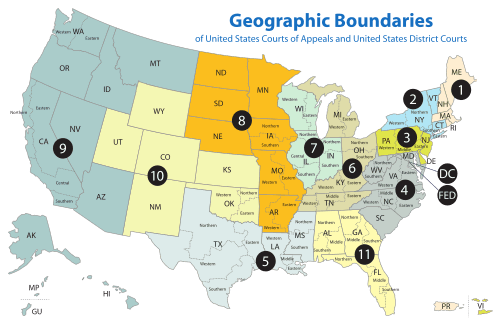
the United States District Court
ORGANIZATION
U.S. federal trial court with jurisdiction over federal cases
The Wall Street Journal
ORGANIZATION
American business-focused daily newspaper
Thomas, LoCitero • Sido
ORGANIZATION
Organization referenced in documents
Tilley
ORGANIZATION • 2 mentions
Organization referenced in documents
TON, LUTTIER & COLEMAN
ORGANIZATION
Organization referenced in documents
TUTTLE
ORGANIZATION
Organization referenced in documents
U.S. Dept. of
ORGANIZATION
Organization referenced in documents
United States Postal Inspection Service
ORGANIZATION
Organization referenced in documents
Via Fax
ORGANIZATION
Organization referenced in documents
Wis.1982
ORGANIZATION
Organization referenced in documents
Wittie
ORGANIZATION
Organization referenced in documents
Woods
ORGANIZATION
Organization referenced in documents

Works
ORGANIZATION
2016 song by Rihanna
Barajas
LOCATION
Airport in Madrid, Spain
Brownsville
LOCATION
Location referenced in documents
Cameron County
LOCATION
Location referenced in documents
Cameron County Attorney's
LOCATION
Location referenced in documents
Cir.1990
LOCATION
Location referenced in documents
Cranford
LOCATION
Location referenced in documents
Dallas
LOCATION
City in the state of Texas, United States
East Las Olas Blvd
LOCATION
Location referenced in documents
Guadalupe Barajas
LOCATION
Location referenced in documents
HENDERSON
LOCATION
Location referenced in documents
Hobbs
LOCATION
City in New Mexico
Houston
LOCATION
Seat of Harris County, and largest city in State of Texas, United States
Jacksonville
LOCATION
City in Duval County, and largest city in State of Florida, United States
Lake Worth
LOCATION
City in Palm Beach County, Florida, United States
LOCICFRO
LOCATION
Location referenced in documents

Middle East
LOCATION
Geopolitical region encompassing Egypt and most of Western Asia, including Iran

New York
LOCATION
Most populous city in the United States
North Ashley Drive
LOCATION
Location referenced in documents
Northern Dis-
LOCATION
Location referenced in documents
Palm Beach County Courthouse
LOCATION
Courthouse in Palm Beach County, Florida
Palm Beach Gardens
LOCATION
City in Palm Beach County, Florida, United States
Palm Beach Lakes Boulevard
LOCATION
Boulevard in West Palm Beach, Florida
San Antonio
LOCATION
City in Bexar, Comal, and Medina counties in Texas, United States, that is the seat of Bexar County
Stratford
LOCATION • 2 mentions
Town in Warwickshire, England
Tampa
LOCATION
City in Florida, United States
the Middle District
LOCATION
Federal judicial district

United States
LOCATION • 5 mentions
Country located primarily in North America

Valencia
LOCATION
Municipality in Spain, capital city of the Valencian Community
Verrusio
LOCATION
Location referenced in documents
Washington D.C.
LOCATION
Capital city of the United States of America
West Headnotes
LOCATION
Location referenced in documents
West Palm
LOCATION
City in Palm Beach County, Florida
Westwood
LOCATION
Location referenced in documents
Statistics
Pages:100
Entities:357
Sponsored