HOUSE_OVERSIGHT_013501_sub_001 - HOUSE_OVERSIGHT_013600
Document Information
Bates Range
HOUSE_OVERSIGHT_013501_sub_001 - HOUSE_OVERSIGHT_013600
Pages
100
Source
House Oversight Committee
Original Filename
Nearness.pdf
Document Content
Page 1 - HOUSE_OVERSIGHT_013501
THE NEARNESS OF GRACE A PERSONAL SCIENCE OF SPIRITUAL TRANSFORMATION Arnold J. Mandell HOUSE_OVERSIGHT_013501
Page 2 - HOUSE_OVERSIGHT_013502
Table of Contents Acknowledgement ................ 00. ccc cece cece eee e nce n acces ene e eee eneensenaeenes 3 Chapter 1: In Search of the Miraculous .......................ccccceee eee ene ees 4 Chapter 2: Doesn’t Everybody ............... 0.0... ccc cc cee e cece ee ee ee eneeeenens 22 Chapter 3: Transmogrifications Of Energies .........................cceceeeee 42 Chapter 4: Sensual In-Between Entropies .........................2.eceeeee ees 64 Chapter 5: Some Entheogenic Entropies .........................cceeeee ee ee ee 87 Chapter 6: Pentecostal Phase Transitions ..........................ccseeee eee 122 Chapter 7: Amphetamine Roll-Up And Splitting ..........................008 144 Chapter 8: Faith And Rationality ..............0... 0.0 cccc cece cece eee e eee ee nes 168 Appendix: An Intuitive Guide to the Ideas and Methods of Dynamical Systems for the Life Sciences ............... 186 HOUSE_OVERSIGHT_013502
Page 3 - HOUSE_OVERSIGHT_013503
ACKNOWLEDGEMENTS Appreciation is expressed to the Fetzer Institute for their support of this work. Particular thanks are due their imaginative Vice President, Dr. Paul Gailey, who shared my vision and hope that these somewhat disparate themes could be blended into a meaningful whole. Time and the reading by others will tell whether this idea was realized. The Fetzer Foundation and Dr. Gailey have facilitated exploration into blends of science and spirituality, particularly in the context of personal meaning. They also have a history of supporting serious work in this era’s most powerful and rigorous exercise in holism as represented by the mathematical and applied mathematical fields of modern dynamical systems theory. Fetzer very special environment and years of dedication have encouraged the variety of personal meanings within science to emerge and be recognized as legitimate and important parts of the research enterprise. It would be difficult to imagine a more propitious context for this effort. The book is dedicated to my daughter Buna, and to my intellectual and creative companion, Dr. Karen Selz, whose deep and lovely mind wrote much more of this book than is formally acknowledged. HOUSE_OVERSIGHT_013503
Sponsored
Page 4 - HOUSE_OVERSIGHT_013504
CHAPTER 1: IN SEARCH OF THE MIRACULOUS More than a half-century of naive persistence and driven search for unity in the biophysics of mind and personal spirituality as the basis for healing transformation has led me into many laboratories. The motivation may have been genetic. My father said that we were descended from several generations of Jewish mystics, none of them able to attain the salaried status of rabbi or cantor. These ecstatic men lived lives of peripatetic eccentricity, stirring congregations with provocative insights and uncomfortably personal inquiry. But only for a little while. Soon they were asked to leave the synagogue and often their Eastern European Jewish townships called shtetels as well. My father, in the first generation of our family without rabbis in over a Century, was a businessman-musician, who in the early mornings studied Talmudic commentaries. He taught me about why it was that most interpretations of the book by the rational, physician, lawyer, philosopher, Moses Maimonides, called Guide for the Perplexed, were in error in their assumption that man cannot understand God’s nature with his mind. He took issue with the opinion that the union of a person’s intellect and Spirit with Him was not possible as long as a person was living. Ibn Tibbon, Maimonides’ best-known early translator and interpreter, relegated the cognitive, analytical, physical and alchemical transformational sciences to the earthly, not spiritual realm. My father disagreed. He espoused the work of the 13" HOUSE_OVERSIGHT_013504
Page 5 - HOUSE_OVERSIGHT_013505
Century proponent of a school of Jewish ecstatic mysticism, Abraham Abulafia, whose interpretation of the Guide and his own Commentary on the Secrets taught that the human mind, if transformed into a “state of active intellect,” could become one with Spirit, realizing the Kingdom of God in rational mystical experience in a state of excitement with new ideas. The new consciousness achieves deep knowledge of both the “upper” and “lower” realms of what he called “reality” both spontaneously and directly. He said that without personal transformation, this knowing is not possible. Abulafia’s lesson was that the mundane intellect of man has the potential for transformation into another kind of mind in a spiritualization of thought. This occurs via developmental stages that begin with intellect and imagination and culminate in what he called prophetic emanations. The exercises leading to this transformation are to be strongly willed and practiced with regularity. This work results in ascension to an ecstatic state accompanied by great intuitive powers, which Abulafia called “prophesy.” Ibn Adret, the Chief Rabbi of Spain at the end of the Thirteenth Century, banished Abulafia from the Country, a Century before the Spanish Inquisition ousted all the Jews. Following what my father said was required in the practice of Kabbalah, a 13" Century tradition of esoteric and mystical interpretations of the Scriptures, | learned the secret meanings of each of the twenty-two letter Hebrew alphabet. Much like the Platonic view of mathematics, that it existed before the physical universe, these symbolic equivalences were believed to be eternal in the transcendental realm. One of the rare written accounts of this oral tradition is in the thirteenth-century Hebrew Book of Splendor called the Zohar which describes the Hebrew alphabet as the heavenly code of the cosmos. | learned that the Tegragrammaton’s repeated letter Hei, being fifth in the Hebrew alphabet, represents the number five. In the Kabbalistic tradition, He/ implicates the functional five-partition of the human inner self or soul. The five parts are: nefesh, instinctual drives; ruach, mood, affect and emotions; neshamah, cognitive activities of the mind; chayah, efforts to understand and _ attain transcendence; yechidah, experiencing the world as a cosmic unity. Later in life as HOUSE_OVERSIGHT_013505
Page 6 - HOUSE_OVERSIGHT_013506
a psychoanalytical neuroscientist with a computational bent, the partitions divided thoughtful, forewarning forebrain from automatic and stereotyped hind brain, the signal analyzing thalamocortical system from the emotional and impulsive brain stem-limbic, the symbolically logical left from _ intuitively geometric right hemispheres. We divide the neurotransmitter moods of dopamine aggression from the transcendentally erotic serotonin and the organized dynamical states of periodicity and quasi(multi)periodicity from the real world complexity of chaos. | learned that it is comforting to divide an unknown whole into two or more unknowable parts. The Jewish guru and Hebraic tutor of my childhood, Rabbi Isadore Kliegfeld, smiled when | told him about my sudden loss of panic during nighttime Hebrew letter meditations. He said that | had had received personal evidence that these powerful symbols could call forth the transformational powers of God. He said that | had been given a blessing, in Yiddish, a nachas. Maybe panic is not that far from the transcendence of an activated mind. In my tenth summer, behind closed door in a hot back bedroom, first by accidental touch and then by more systematic chaffing, | evoked a pleasurably urgent and yawning feeling that began in the lower part of my abdomen and back. It filled me with thought emptying fullness that a sudden involuntary burst of pelvic contractions found resolution in an hour or two of an unexplainable sadness. | had been struggling to understand my father’s well warn copy of William James’s Varieties of Religious Experience and | wondered if | had been visited by one of the altered states he described. Was this what he meant by a _ transformative experience? A few months later, a late night meditation produced physical evidence, a thick, sticky, salty sweet stuff that by morning stuck my sheets together. Later that year, in my father’s library, | found a translation of the 1500 BCE Egyptian Book of the Dead. It contained a creation myth of two Gods in which “rubbing with my fist, my heart came into my mouth and | spat forth Shu and Tefnut.” Psalm 23, read rather regularly in Sunday school, began to make me wonder about the meanings of*...rod and staff that comforts...” and what was meant by “...my cup runneth over.” Among the ten regions of the Zohar, connecting the inner world of HOUSE_OVERSIGHT_013506
Sponsored
Page 7 - HOUSE_OVERSIGHT_013507
man to the upper world, is the tree of ten sefirot in which Yesod , the phallus, occupies a central place. Now we’re allowed to know that G-spot stimulation of the para-urethral glands in the female can result in spurt as well as a cup that runneth over. Other occasions of the temporal disappearance of the self-conscious | occurred while doing the theorem and proof work of high school geometry. Axioms and the rule bound processes of deduction created difficult journeys from that which was given to what should be found. Rocking back and forth in a desk chair for hours, chewing on fingernails, cuticles and pencil ends, time disappeared in a none self aware state of work-a-day well-being. Sri Aurobindo’s Bhagadvad Gita described this state as one of the rewards of karma yoga. Abulafia’s Kabalistic School emphasized the importance of hitbodedut, detachment and seclusion in concentrated thought, as a technique for the attainment of spiritual “intensification.” Stacks of lined yellow paper piled up full of blind alleys as | lived in humbling dumbness. One of my teachers of mathematics described it as the working mathematician’s dark night of the soul. A breakthrough to a route from premises to proof brought an expansive rush. Engagement in a struggle to fuse two differing contextual worlds may be transporting. Geometric visions can be used to do imageless algebra in a brain state that feels like intuition. The brain does something like this: Let the number of a sequence of unit squares, each side of measuring 0 to 1, be the denominator of a series of fractions, say fifths. Now put five of these boxes in a row. Then the sequence of all possible fifths, 0/5,1/5, 2/5,..5/5, is inscribed by cutting the vertical sides of the five sequential squares with a diagonal from the lower left of the first one to the upper right corner of the last. This line cuts each sequential square’s front boundary with vertical lengths, 0.0, 0.2, 0.4...1.0 in a series of decimal fractions equivalent to the sequence of all possible fifths, the proper fractions 1/5, 2/5...5/5. It was Abulafia’s kabalistic belief that symbolic, (algebraic), operations in (geometric) spaces can unify the “upper” and “lower” worlds in the eternal tensions between the body and soul, the inner world and the cosmos, the conflict making the global system both sensitive and stable. The geometric-topological approach to HOUSE_OVERSIGHT_013507
Page 8 - HOUSE_OVERSIGHT_013508
modern dynamical system’s theory describes a convolution of the expansive motions (as in the upper world) and contractive motions (as in the lower world) embedded naturally in the curved time and space geometries of what are called hyperbolic spaces. Each point in this space can be visualized as a little saddle in which orbital flows from pommel and back flow down to the seat, bringing points together in contracting motion, and flows away from seat down along the sides are expanding the distance between nearby points.. In the middle of the saddle, simultaneously expansive and contracting orbits demonstrate hyperbolic stability composed of intersecting destabilizing and stabilizing influences. Loss of this countervailing hyperbolic dynamical stability results in global system transformations called bifurcations and/or phase transitions. Transformation as a loss of stability is a theme of a recent poetic translation of portions of the Zohar called Dreams of Being Eaten Alive by David Rosenberg. He writes that at some time in the difficult journey through the often- incomprehensible Zohar, in order to gain entrance to the kabalistic cosmos, there arose what he called “heartbreak.” “No matter how much intellectual study is involved, the reader cannot understand the text unless he or she has offered his heart to be broken on the altar of poetry...and prayer.” Surrender may be the source of the strange, uplifting feeling of worked through dumbness. My mother, once a conservatory teaching assistant in piano, sat beside me while | practiced almost daily, weekends included, from the age of two until the midteens. Her quiet analytic counter-point sounded mathematical, “You can hear that that this harmonic progression goes through intervals of fourths of dominant seventh chords.” | felt the persistent lack of harmonic resolution as growing tension in my groin. “If you transform each of the 12 notes in a chromatic scale, multiplying it by five (in what mathematicians call) mod 712 (the numbering system goes from one to twelve, not ten, before it repeats), one can recover the circle of fourths, the commonest harmonic chord progression in music.” Though her computational talk supported rational thought, in my adolescent heat, the addition of Charley Parker’s flatted fifth and ninth to the dominant seventh chord led suddenly somewhere else and she knew it. Hearing my arrangement of a Beethoven piano piece become a HOUSE_OVERSIGHT_013508
Page 9 - HOUSE_OVERSIGHT_013509
mix of classical and modern jazz themes that | called “How High the Moonlight Sonata,” she laughed lasciviously as though tickled by this sensual violation of musical canon. A boogie-woogie Bach two and three-part invention brought more excited disapproval. Mysterious are the conditions of attentive (preoccupied) and none attentive, (fugued out) disappearing time. | found a musical way for it to happen when improvising: continue to shuffle a small set of notes that stay within the melodic field of the tonal center of an unchanging tonic chord. In contrast, most melodies and their chords leave the tonal center to which they return in harmonic and melodic progression. We can call these conventional tonal centers unstable fixed points. They are attractive repellers of melodic and harmonic expectation. It has been mathematically proven that these hyperbolic systems are globally stable. In contrast, a melody that remains stuck in the tonic chord, a purely contracting stable fixed point, is technically a chant. Paradoxically, it can be shown that this kind of fixed point is globally unstable. Rigid things can more easily fracture. The rich, altered states of consciousness that emerge while hearing the beat of Tibetan monks meditating, the Sufi chant-dances of Rumi and the John Coltrane and McCoy Tyner’s endless, single chord, tenor/piano dialogues exemplify the bifurcation to hallucinatory new stuff arising spontaneously from the experience of unchanging repetition. Constant repetition of the conditioned (expected) stimulus drove Pavlov’s dogs, especially those with “nervous temperaments,” into frozen, catatonic states. Abulafia’s 1280 book on ecstatic techniques, Hayyei Ha’Olam HaBa, recommended the recitative rearranging of a finite set of Hebrew letters, frontward and backward, many times, using prayer melodies, until “...the heart will suddenly become aware of the intellectual, divine and prophetic...” and hitbodedut will rest upon him. The instructions were “...combine letters (and associated musical notes)... reversing and rolling them around rapidly until one’s heart begins to feel warm.” It was in my freshman year at Stanford University when | met Michael Murphy, later to co-found Esalon, the California center for mystical pursuits and naked mud bathing. He is the author of Golf in the Magic Kingdom and with George HOUSE_OVERSIGHT_013509
Sponsored
Page 10 - HOUSE_OVERSIGHT_013510
Leonard, Integral Transformative Practice. | watched him go through a dramatic personal transformation after participating in Professor of Asian Studies, Frederick Spiegelberg’s seminar (with meditation lab) about Sri Arubindo’s interpretation of the Hindu Bible, the Bhagavad-Gita. Shortly after the semester, he climbed into an abandoned tower on campus to continue his meditation. He remained there for several months, refusing to come down even after the Stanford Student Health Service sent a medical school psychiatrist to investigate. | was more than curious about how it was that this hard drinking, and like his brother Dennis, all night poker playing, Phi Gamma Delta party boy, had suddenly become a transcendent ascetic. My girl friend Mary and | signed up for Spiegelberg’s seminar in Indian Religions. We were made breathless by his accounts of administering a Rorschach Test to the Indian Saint, Swami Sivananda. He recounted discussions about God with the artists Paul Klee and Max Ernst and the philosophers Rudolph Otto, Paul Tillich, Martin Heidegger and Martin Buber. As homework, Mary and | practiced breathing awareness mediation twice a day. During the year, Spiegelberg sponsored a visit by the aging but still very lively Aldous Huxley to our seminar. He also brought us Alan Watts and several lecturers from the Jung Institute of San Francisco. Shortly after hearing Huxley talk about the spiritual power of a particular exercise of will and loving thoughts, Mary and | began the daily practice of karessa, some Call it coitus reservatus. | was eighteen and she was nineteen. We found that withholding an orgasm in order to achieve nirvanic extinction of all desires and passions was difficult. We spent hours in karessa meditation, trying to experience the detachment described in the Bhagadvad Gita. This biblical explication of karma yoga told how it was that the warrior, Ardjuna, instructed by God Krishna in the form of his charioteer, was able to detach sufficiently to do his assigned job of killing without emotional involvement. Ken Wilbur, a modern, self proclaimed pandit, an academically oriented articulator and intellectual justifier of the dharma, the spiritual work of Hindu and Buddhist practice, contrasts the nirvana (literally “end”) composed of emptiness in time and space, dharma Kaya in which “...no objects are n arising...” with the lesson of the Bhagavad-Gita. Its message involved realizing 10 HOUSE_OVERSIGHT_013510
Page 11 - HOUSE_OVERSIGHT_013511
ones spiritual unfolding within the stream of real time and space, finding emptiness in the world of form and inaction in the world of action. We worked at karessa so ardently that there was barely enough time left to do our assignments in biology and chemistry. In a darkened room, Mary and | lay legs locked, lying on our sides, moving slowly and rhythmically, humming Om and waiting for our ascension. We worked at making the journey through Sri Aurobindo’s soul planes of higher mind, illumined mind, infinitive mind, over mind and finally, the supermind of infinitely empty no mind. This somewhat unusual way to study for a three credit course in Asian Studies at Stanford grew naturally out of the central message of Spiegelberg’s seminar that whereas “...deriving a universal theology is not possible, having the universal experience is required for an understanding of any of the world’s theologies.” The controversial Bishop of the Episcopal Diocese of Newark who teaches that Christian forms continue to evolve, John Shelby Spong, D.D. says, “...every biblical word represents an attempt on the part of our ancestors in faith to make sense out of a God experience in their time and place. The experience ...is eternal and real. The explanations will never be eternal and real. They will last only as long as the (cultural) mind-set that created them.” Mary got an A+ grade, topping Spiegelberg’s class with a final examination essay, which, in literary detail, described her episodes of samadhi, yoga’s state of unity with the creator. Her 25 page blue book contained accounts of walking fugues, spontaneously strong genital sensations, changes in tastes and smells, sudden feelings of rising spinal-abdominal kundalini, middle of the night dreams of oceanic orgasmic fusion with God. She failed to mention that she was describing her usual pre-menstrual state. During these college years, | learned about two Isaac Newtons The first | met at elementary physics lectures; the unit was about how things worked called mechanics. Logically and computationally consistent but taken on faith, | learned about an invisible field force between masses called gravity that decayed in strength like the inverse of the square of their distances apart and operated in my intuitive world like an electromagnetic spirit. Less occult were the expressions of gravitational fields as contact forces, computed for the tension in the string of a HOUSE_OVERSIGHT_013511
Page 12 - HOUSE_OVERSIGHT_013512
pendulum or the pressure of the floor on a weight resting upon it. Faith in this realm came from exercises in physical object visualization followed by manipulation of self-consistent algebraic symbols. | learned about experiments attesting to the “reality” of these ghostly fields (that now include electric, magnetic and strong and weak nuclear forces), and yet it was the physicists that already believed them who designed the machines to demonstrate them. It was Gregory Bateson, Margaret Mead’s houseboy, lover, photographer and social anthropologist who said, “Newton didn’t discover gravity, he invented it.” One college summer | found a second Isaac Newton, perhaps not so estranged from the first. He appeared in the form of a marble bust in the chapel of Trinity College at Cambridge University, holding the prism he had used to explore the polychromatic properties of light like a talisman. In his essay called Newton, the Man, the early 20" Century Cambridge Don and economic theorist, John Maynard Keynes, said that the Newton of the chapel followed “...certain mystic clues which God had laid about the world to allow a sort of philosopher’s treasure hunt to the esoteric brotherhood.” Michael White’s biography, called Newton the Last Sorcerer, described his work as an attempt to integrate the magic of the Old World with the science of the New Age. Newton’s awe over what he saw as the wonders of the universe maintained him in private theological study throughout his life. Arthur Waite’s Alchemists Through the Ages describes how Newton’s alchemical orientation toward the earth’s fundamental substances such as fire, air, wind and water, their powers and potential for transformation, was joined imperceptibly with his metaphysics and physics. In his hands, experimental observations involving gravitation, celestial mechanics and optics, though motivated by esoteric alchemical theories, generated experimentally accessible phenomena and testable ideas. The French mathematician, Jacque Hadamard, in his The Psychology of Invention in the Mathematical Field, said that mystical preoccupations were never far from the minds of most of the English and European mathematicians and physicists of the 18" and 19" Centuries. This orientation served as an impetus for them to pay attention to the almost imperceptible whispers of their emergent thoughts. E.T. Bell, the historian of mathematics and mathematicians said even 12 HOUSE_OVERSIGHT_013512
Sponsored
Page 13 - HOUSE_OVERSIGHT_013513
Descartes, the essential Enlightenment rationalist, was responsive to his “...call of the Spirit...” Napier the inventor of logarithms wrote an exegetical commentary on the Book of Revelations. The mathematician and physicist, Pascal, believing that contact with a religious relic had cured his terminally ill sister, wrote long tracks about whether or not the Devil could work miracles. The great mathematician, Cauchy, was known for his persistent efforts to convert fellow mathematicians to Roman Catholicism. Gauss, who was not particularly religious, said that a difficult to prove theorem did not result from hard work but “...the grace of God.” In letters between Liebniz, who along with Newton was the inventor of calculus, and a member of the family of great mathematicians, John Bernoulli, used scriptural quotations and biblical diagrams as part of their theoretical correspondence. Perhaps the greatest mathematician of the 18" Century (or ever), Euler, in his Letters to a German Princess, discussed the functional characteristics of spirits and tt the connections between body and soul. Bell said Euler “...never discarded a particle of his Calvinist faith.” It was to the working out of a law of mechanics called “the principle of least action” that Ernst Mach attributed the beginning of the separation of physical mechanics from formal theology. The flavor of this change is captured in his 1893 The Science of Mechanics that stimulated Bridgeman’s 1936 more formal philosophical analyses of physical theory, from a position that came to be called operationalism: the restriction of physical concepts to those definable in terms of the experimental operations required to demonstrate or prove them. Mach said that these events marked the move of formal metaphysical thinking about mechanics and the physical sciences more generally into the personal and private realm of belief and meaning. Maupertuis, an eccentric friend of Frederick the Great and president of the Berlin Academy, proposed the principle of least action as evidence of the infinite wisdom of the Creator. As an early psychopharmacologist, Maupertuis recommended the use of opium to facilitate creative thought and was famously parodied for doing so by Voltaire in his 1752 story in which he is portrayed as the naively foolish Dr. Akakia. The physical law of least action belongs to a set of ideas HOUSE_OVERSIGHT_013513
Page 14 - HOUSE_OVERSIGHT_013514
that are called variational analysis. They involve the natural (or miraculous) selection of maxima or minima in quantifiable physical processes. Of all possible two-dimensional shapes with the same perimeter, the circle contains the greatest area; in three dimensions, it’s the sphere. In his Principia, Newton reports his work determining the optimal shape of round solids, with circles of revolution having the same effective cross section, in order to minimize frictional resistance to gravity in a medium. The principle of least action says that imparting energy; say by a kick, to a physical body on a rigid two-dimensional surface like the earth, results in it taking the shortest route possible from its initial to final position. The related 1650 Fermat’s “principle of least time” is about light. As Feynman explains in his Lectures in Physics, “...out of all possible paths that light might take from one point another, light takes the path that requires the shortest time.” Feynman, using elementary relations from high school geometry, proved that the /east time principle could lead directly to Snell’s law of the refraction of light at the interface of two different conducting media such as air and water. His analogy was the optimal choice of the path to take in order to rescue a pretty girl drowning in the ocean. Whereas the shortest distance to the girl leads directly into the water, faster running along the beach to the point that minimizes the distance required for the intrinsically slower rate of swimming increases the distance traveled but reduces the time required to reach her. Euler attributed the optimization principle to an expression of the meaning and purpose of a loving God. Infused with this spirit, he developed mathematical methods describing smooth variations in position of an object in motion, the Euler differential equation, in which differential coefficients are varied to prove the principle of least action for mechanical motion. He gave the law Maupertuis’s name. Mach quoted Euler’s conclusion, “As the construction of the universe is the most perfect possible, being the handiwork of an all-wise Maker, nothing can be met with in the world in which some maximal or minimal property is not displayed.” Such faith based mathematical formalisms were rejected by Joseph Lagrange, an early 19" Century mathematician, who, among many other things, proved that every natural HOUSE_OVERSIGHT_013514
Page 15 - HOUSE_OVERSIGHT_013515
number could be expressed as the sum of at most four squared numbers. It was his strongly held opinion that metaphysical speculation was both foreign and inimical to the conduct of mathematics and science. His work in the ca/culus of variations led to the development of a system of algebraic manipulations seeking the value of constants, Lagrange multipliers, in place of solving Euler’s differential equations. It makes it possible to immediately write down a computable expression for the maximum of a mathematical equation. The technique is now routinely taught to high school students and with no mention of the role of belief in the perfection of God in its discovery. | was a fortunate freshman medical student. After a visit to his office and a stimulating discussion about some of the correspondences between the ideas of psychoanalysis and neurobiology, Robert Heath, Tulane Medical School’s Gary Cooper-like charismatic chairman of the psychiatry department, offered me a place in his animal and human neurophysiological laboratory. Between classes, evenings and weekends, | used a Horsely-Clarke apparatus, one of the world’s first stereotaxic devices. It allowed the precise placement of electrodes into functionally specific regions of a cat’s brain. The electrodes were cemented to the skull in place and their wires connected to a device by which the frequency, amplitude and wave shape of the electrical stimulation could be oscilloscopically monitored and electronically controlled as the conscious cat walked around the room. | spent hours observing and recording changes in spontaneous behavior that followed activation of various nuclei in the cat’s brain with small electrical currents. Deep in the part of brain that resides in the upper neck, called the lower brain stem, the region thought to regulate functions such as breathing, heart rate, blood pressure, gastrointestinal motility and global states of consciousness such as wakefulness and sleep, | found stimulus sites that, after 15 seconds of electrical activation, led to several minutes of hissing and objectless rage. One cat attacked an empty chair. These regions when activated also inhibited spinal reflexes such as HOUSE_OVERSIGHT_013515
Sponsored
Page 16 - HOUSE_OVERSIGHT_013516
the knee jerk of the standard neurological examination. Such phenomena were already well known in the late 1930’s in what W.R. Hess and later John Flynn, following electrical stimulation of cats in the lateral hypothalamus, called “hypothalamic rage.” In the late 1940’s and 1950’s, work by National Institutes of Mental Health’s Paul MacLean attributed it to the actions of parts of the emotional “limbic” brain, particularly the fear-rage-attack coloring of experience by the temporal lobe’s amygdaloid nucleus. Modern imaging studies in man have shown that this source of emotional coloring is activated by new information, even before the more rational parts of the neocortical brain processes it. How we feel about something new arises before what we think about it. These survival-oriented states of fight or flight are known to be biologically universal and demonstrable in even single cell organisms. A greater contribution to my brain metaphysics followed observations that after several seconds of stimulation of other brain stem sites, the cats became alert but quiet, staring into space for several minutes. Then, they circled slowly and curled up on the ground. This was followed by several minutes of grooming and loud purring. Difficult to handle cats became transiently tame, some coming close for petting. | found that these same sites also increased the amplitude and reduced the threshold for the cat’s knee jerk reflex. Responsiveness increased with calmness. Particularly interesting was the finding that electrical induction of this purring state could immediately stop on-going stimulation-induced episodes of hissing rage. | referred to these experiments with my friends as my neurophysiological studies of Old Testament vengeance and New Testament forgiveness. It seemed that the hissing rage would produce eye for an eye and a tooth for a tooth hypertension, the talon principle of the Old Testament and Koran. New Testament forgiveness would yield low blood pressure health and Jesus was a healer. It was about this time in the early 1950’s that Northwestern University social psychologist, Jim Olds, found that rats could be trained to push levers to obtain current delivery via electrodes in various parts of their brains. Shortly after, Joseph Brady, then of the Walter Reed Army Institute of Research, showed that squirrel monkeys would do the same. With depth electrodes attached to wires running to a HOUSE_OVERSIGHT_013516
Page 17 - HOUSE_OVERSIGHT_013517
miniaturized electronics box strapped to their belts, some of Robert Heath’s schizophrenic patients spent hours pressing their switches with beatifically expectant smiles. It was after several months of cat experiments that Professor Heath suggested that we spend some time interviewing a hospitalized, chronically ill female patient, Donna, before and during the time she was being studied with recording and stimulating depth electrodes in the human _ neurophysiology laboratory. Donna, bony thin in a lose fitting green hospital gown and sandals, had dark red toenails, blonde hair and eyes shadowed darkly. In her mid-thirties, she had never married and, when she could, worked as a beautician. She told us that since her menarche at 13, she increasingly often had episodes of spontaneous ecstatic rushes along with sudden visions of strong white light. She attributed these experiences to visitations of “...an unseen Christ.” She showed me a stack of notebooks filled with hand written accounts of her religious experiences interspersed with biblical quotations and difficult to follow discussions of what she called the Christian ideals underlying the Civil War. She read parts of it to us. One of her memorable stories was about being invited to a Children’s Crusade that had begun in Georgia, led by a great grandson of Stonewall Jackson. “We were trying to find the Lord to see if He would part the waters and open up an escape route from General Sherman’s march to the sea.” From a relatively poor family of Southern Baptists in rural Louisiana, she had lived in a state psychiatric hospital for almost three years. Her diagnoses ranged from borderline schizophrenia to temporal lobe epilepsy. The collateral interviews with her mother from several years before had been placed in the hospital chart. They recounted that in the patient’s middle to late teens she had become suddenly promiscuous, frequently approaching strange men in city parks. Obsessed with fellatio and swallowing sperm, she told her mother that she was receiving a holy sacrament. More recently, the increasing incidence of ecstatic episodes and compulsive note taking coincided with the complete loss of interest in sexuality in any form. Her talk was now full of moralizing detail about the shoulds and should nots of daily living. She referred to herself as a non-Catholic nun who was married HOUSE_OVERSIGHT_013517
Page 18 - HOUSE_OVERSIGHT_013518
to Christ. The brain waves recorded from electrodes deep in her brain demonstrated transient episodes of spiking in a midline limbic structure called the septum and in the right hippocampus, deep in the temporal lobe. Paul MacLean and others since have shown that electrical stimulation of these and related brain regions could produce pleasure and grooming reactions in cats and prolonged penile erections in squirrel monkeys. Many years later, | spoke about Donna with the Harvard professor of neurology, Norman Geschwind. He took me to his twice a week epilepsy clinic. In an effort to demonstrate what is now known as the Geschwind Syndromes of between seizure, inter-ictal personality changes in patients with temporal lobe epilepsy, he stood in front of the patients’ waiting room. In a loud voice, he asked that all people keeping diaries and personal notebooks please stand up. Several did so, some displaying their notebooks in outstretched hands. The pages that | saw were filled mostly with religious writing, biblical quotations and exclamation points. Gathering the positive responders together, he asked them in turn what religion they were. Several answered the question with the question, “When?” It turned out that many reported having several experiences of religious conversion. Geschwind called them “Jamesian Episodes” after William James’ Varieties of Religious Experience. He then asked when was the last time they engaged in sexual activity. For most of them, including those that were married, it had been years. Thought the men said they were not impotent, experiencing early morning spontaneous erections, they claimed a complete loss of interest in sex though feeling warmly affectionate toward people generally. As he anticipated, the patients were emotionally intense and unstoppably loquacious, needing to speak at length about their moral philosophies. They persisted in following us around the clinic waiting room, several speaking at once. In his lectures and papers, Geschwind called this last feature, difficulty in separation, interpersonal “stickiness.” First reported by the French electroencephalographer, Henri Gastaut, a history of multiple ecstatic religious experiences, increasing emotional intensity and lability, hyposexualilty (not impotence), moralizing religiosity, compulsive and frequently poetic writing and tendency to cling to people is now called the Geschwind Syndrome of temporal lobe HOUSE_OVERSIGHT_013518
Sponsored
Page 19 - HOUSE_OVERSIGHT_013519
epilepsy. Some say it is relevant to the likes of Apostle Paul, Sister Teresa and Joan of Arc. One evening in the human neurophysiology laboratory, | was invited by Dr. Heath to join him and several other brain scientists behind a two-way mirror to watch an interview with Donna while electrical current was being put through her recording electrodes. We watched and listened as a psychiatrist interviewed her about her past. The patient was speaking about her childhood. Unseen by the patient, the neurophysiologist, with us behind the mirror, was intermittently pushing the button evoking brain stimulation with very low current applied to the septum. Dr. Heath told me to listen for subtle changes or discontinuities in the flow of the on- going conversation that he said might reflect alterations in her thoughts and feelings. . “The first time we were allowed to take a break from Sunday school for the church service and | got to hear the choir and the pipe organ, | suddenly got a feeling of happiness that | hoped would last forever. My Sunday school teacher told us how much Jesus loved us and that’s what the music made me feel like. For the first time in my life | felt completely safe.” Though the two way mirror | saw the psychiatrist nod silently. “When | learned about the real meaning of Christmas and Easter, it was frightening and beautiful.” Within a few seconds after the neurophysiologist, behind the mirror and unseen by the patient or her interviewing physician, pushed the switch on the stimulus generator, the patient stopped talking. After a little more silence, her interviewer encouraged her to continue, “You were talking about how beautiful the holidays were. Tell me in what ways?” “| don’t want to talk about that anymore.” She blushed and looked very uncomfortable. The neurophysiologist's hand remained on the switch. She continued to speak with her psychiatrist. “| have to ask you a favor and | don’t know why. | hope you don’t get upset. The thought won't leave me alone.” She seemed embarrassed even as her body relaxed against the back of the chair languorously. 19 HOUSE_OVERSIGHT_013519
Page 20 - HOUSE_OVERSIGHT_013520
“Of course not, Donna. You know that with me you can say anything.” Her face reddening further, she stuttered something unintelligibly and then was silent. “Pardon me, Donna, | didn’t hear what you said.” “Would you mind if | rested my legs on your shoulders?” Further Readings for In Search Of The Miraculous The Hebrew Alphabet, A Mystical Journey, Edward Hoffman, Chronical Books, San Francisco, 1998 The Book of Letters, A Mystical Alef-bait, Lawrence Kushner, Jewish Lights Publishing. Woodstock, Vt., 1990 Studies in Ecstatic Kabbalah, Moishe lIdel, State University of New York Press, Albany, N.Y. 1988 Beyond the Human Species, The Life and Work of Sri Arubindo and The Mother, Georges van Vrekhem, Paragon House, St. Paul, MN, 1997 Bhagadvad Gita, Sri Aurobindo, Lotus Press, Twin Lakes, WI, 1995 Play of Consciousness, Swami Muktananda, Syda Foundation, South Fallsburg, NY, 1978 Alchemical Psychology, Old Recipes for Living in a New World, Thom F. Cavalli, J.P. Tarcher/Putnam, NY 2002 Studies in Schizophrenia, A Multidisciplinary Application to Mind Brain Relationships, Robert G. Heath, Harvard University Press, Cambridge, MA 1954 20 HOUSE_OVERSIGHT_013520
Page 21 - HOUSE_OVERSIGHT_013521
Role of Pleasure in the Brain, Robert G. Heath, Harper-Row, N.Y. 1964 Psychiatric Aspects of Neurological Disease, D. Frank Benson and Dietrich Blumer, Grune and Straton, N.Y. 1975. Mathematics —The Music of Reason, Jean Dieudonne, Springer-Verlag, N.Y. 1991 Mathematics for the Liberal Arts, F. Richman, C.L. Walker, R.J. Wisner and J.W Brewer, Simon and Schuster, N.Y. 1998 The Feynman Lectures on Physics, R.P. Feynman, R.B. Leighton and M. Sands, Addison Wesley, Reading, MA, 1963 21 HOUSE_OVERSIGHT_013521
Sponsored
Page 22 - HOUSE_OVERSIGHT_013522
CHAPTER 2: DOESN’T EVERYBODY Varieties of religious experience and the potential they bring for personal change are embedded in and perturbative of our unique and common personalities. The obsessive compulsive may have an easier time with the rigid restrictions of Fundamentalism or be more resistant to the flagrancy of none rational mystical experience. The hysteric may find subjective evidence for the Holy Ghost more accessible and rules of behavior beside the point. The potential for double-jointed multiplicity in personal styles and quick transitions between them characterize what is called the borderline personality. |It is in these ways that temporary and permanent brain styles in us and important others supply much of the ground for the possibility of spiritual transformation and the often attendant alterations in personality. How can we think about this facilitator and source of resistance to new spiritual practice? A skinny, knobby kneed, small breasted, mousy haired, bright-eyed psychotherapy patient of mine at UCLA’s Neuropsychiatric Institute Outpatient Clinic was among the highest priced Santa Monica call girls serving Beverly Hills. Answering my unaskable question about her thousand-dollar fee, she explained that she was living proof that, in her profession, what was more important than physical beauty was “griv sense.” She explained that by her middle twenties, she had 22 HOUSE_OVERSIGHT_013522
Page 23 - HOUSE_OVERSIGHT_013523
developed the ability to anticipate the most highly prized but often embarrassing-to- say longing for a particular sexual act without being asked. She told me that she had to “empty out my personal sex manual” to feel the cravings of her clients. What the john most wanted appeared suddenly in her mind in the form of a cartoon. A university criminologist later explained that the word “griv” was probably derived from what pick pockets call grift sense, the ability to intuit who was likely to have enough money in their billfold to justify the risk, even if they appeared in the worn clothes and dated cars of old money. In his 1913 Dernieres Penses, Henri Poincare’, France’s seminal theorist in nonlinear dynamical systems theory, described intuition as a mental faculty which allows us to “...immediately see the end from afar...” In the context of mathematical epistemology, the instantaneous images of a geometer contrast with the labored sequential logic of the mathematical analyst. Poincare’ claimed that inclinations toward one or the other of these two cognitive styles and their associated mathematical tools arise from different kinds of minds. He contrasted the 19" Century German mathematicians, Weierstrass, who he said reduced his general tt theory of functions to “...a prolongation of arithmetic...without a single (pictorial) n figure in any of his books...” with Riemann who called geometry to his aid in describing functions. He created “...an image that no one can forget... once he understood it.” Experiencing the behavior of others, we create a set of anticipations about whom and how they are that align with parts of ourselves. Aware of one aspect of a person, we imagine the others. With a small amount of initial information, we connect the dots, fitting features we have seen and heard to personality configurations stored by informal category in our brain files. Our conclusions about them “being one of those” can both facilitate and impair our perceptions. Eastern metaphysicians, Western mystical religionists, socially liberal secular humanists, Shannon information theorists and today’s students of dynamical systems in brain and behavior can, in different ways, make the case that the content of these stereotypes reflect a pattern of constraints, our personal limitations resulting from the rutted roads of worldly experiences. Baba Muktananda, the Hindi Saint from the 23 HOUSE_OVERSIGHT_013523
Page 24 - HOUSE_OVERSIGHT_013524
Indian village of Ganeshpuri, called them our samsara. These limit the formlessness of anticipation that underlies sensibility. Our samsara reduces the uncertainty that could serve as grounds for new perceptions and understanding of others. Pre- emptive distortions reduce the bandwidth available for new information. They impair the range of empathic relations with others as well as ourselves. These restrictions in possibilities and choices are expressed in enduring patterns of behavior, thinking and feeling that mental health practitioners call personality and character. When confronted with these constrictions, the self justifying and diagnostically revealing thought about a feature of one’s personality is, “...doesn’t everybody? “ This pride in our shape contrasts with the teachings about emptiness of one of Baba’s favorite Indian holy men, Zipruanna, who sat all day, loin clothed naked in a garbage dump, instructing his students and followers about knowing and being nothing. We quantitate deficiencies in formlessness using statistical measures of entropy. They characterize the system’s behavior as a distance from the state of highest entropy also known as maximal randomness. Professor Karen Selz of Emory University did a study in which her human subjects, after taking a battery of personality inventories, were asked to remove as many dots as possible from a computer screen full of them in three minutes. They were to do so by left clicking on each of them with the mouse key. Two seconds after a dot was removed, it reappeared and became subject to removal again. As they went about the dot removal task and unbeknown to the subjects, the orbit inscribed by their dot removing mouse travels was recorded for later graphic representation and quantification. Most subjects with the usual broad mixture of personality traits inscribed a wide variety of orbital line styles: little wiggles, big wiggles, large and small loops, little smooth slides and big and little jumps. The counter-intuitive coupling of stylistic rigidity and whole system instability (as in non-hyperbolic fixed points described in the previous essay and below) is in evidence at the personality and graphical extremes of her subject group. A fastidious, rigidly organized, severely obsessive-compulsive subject repeatedly removes the same dot, only occasionally moving to a neighboring one to do more repetitious left key mouse clicking. Very little of the large computer screen 24 HOUSE_OVERSIGHT_013524
Sponsored
Page 25 - HOUSE_OVERSIGHT_013525
of possible mouse travels is occupied. All the action is centered on a small set of points. When such a minimal entropy person is injured and feeling helpless, their stuckness can grow bizarre. Ruminative fixation in self-critical and persecutory ideas extend into poisoned food anorexia, circular pacing, weight loss and middle- of-the-night, worried insomnia. Suffused with sin, they ask forgiveness for soiling the chair by their sitting in it or smelling up the room with their body odor. At the high entropic extreme, the mouse orbits of the seductively dramatic, new reality-creating hysteric includes big jumps, disorganized whorls and large and small restless and short attention span scribbles that tend to fill up the entire screen. The fragility of fixation at this end manifests itself in breakdown into impulsively out- of-control and floridly dramatic displays. Their decrease in contact with reality precipitates social chaos around them. The Montreal behavioral neurologist, Pierre Flor-Henry, using electroencephalographic and psychological test data, described the difference between these two extreme forms of personality expressions as the overly dominant expressions of one or another of the /eft obsessional or right hysteric hemispheric emotional styles. As examples, Flor-Henry said that a left half brain depression feels like hopeless and agitated indecision and the depression of the right brain is an experience of emptiness like homesickness. Left-brain happiness is being exactly correct and right brain joy rushes like being especially chosen. The church going obsessional resonates with the sermon of the punitive priest who invokes the tension and relief of sin and salvation. The practice can result in a life long addiction to the transient high of this temporary forgiveness. In other churches, the hysterical character gets spiritual respite in disassociative visitations of the Holy Ghost and attendant signs and wonders. At Wednesday night healing services, new hope arises from personal surrender in a floor hitting, backward collapse called dying in the Lord. Both of these antipodal personalities contrast with the more receptive state of in-between entropy (with enough entropy available to form messages) which predicts more flexibility and higher potential for undistorted information processing. Relatively style-less and ego-less people are more open to hearing a variety of Gods in themselves and others. High alertness 25 HOUSE_OVERSIGHT_013525
Page 26 - HOUSE_OVERSIGHT_013526
without presupposition, ecstatically aware and selfless, it is God’s gift realized, a joyfully awake and nonjudgmental empty state of transcendence. As we sit, we work at feeling this in the brain of the enigmatically smiling stone Buddha. The externally inactive state of high internal activity, the Bhagavad-Gita’s formlessness in the world of form, inaction in the world of action, has a natural mathematical representation in the simultaneously expanding and contracting motions of hyperbolic dynamics and its associated entropic descriptors. How can this kind of formlessness equip us for almost instantaneous knowing? In a resting state of uniform hyperbolicity that only looks like randomness, accurate impressions of others can arise quickly and from only a few data points of observation. In the late 1960’s, University of California mathematician, Rufus Bowen, proved the now famous shadow theorem. This says that in dynamical states of hyperbolicity, directly observable on the screen in computer simulations, the first few points of the on- going wild dynamical dance that appears to jump randomly from here to there on the computer screen, counter-intuitively will quickly outline the entire skeleton of its future global shape, its geometry, though more time of observation is required to realize this structure in full detail. The contracting motions on the stable surface of action, called a manifold, “iron down” all the points onto the unstable manifold that serves to outline the shape of the attractor of all starting points. In such a system, observation of just the first few points outline the whole. Intuition, anticipatory knowing and that which some call prophesy, may be expressions of the hyperbolic brain’s mind doing dynamical shadowing. To review briefly, hyperbolic brain flow is made up of three decomposable components: (1) The apparently predictable one along the main road of the action, going straight ahead and round and round on a throughway called the center manifold—analogous perhaps to what might be a sequentially logical development; (2) Intersecting the center manifold transversally is a field of influence moving the action away from the center manifold with out-of-the-box motion, exploring side paths of unpredictably new, creative possibility called the unstable manifold, we might think about inspired risk-taking, impulsive associations in thought; (3) Another transversally intersecting field of influence, which conservatively, rationally, “irons 26 HOUSE_OVERSIGHT_013526
Page 27 - HOUSE_OVERSIGHT_013527
down” the expansive flow back onto the road, the entire constrictive field called the stable manifold. This influence herds points into shadowing the main road of the dynamics, like the hair of the dog that stay close to the real body of the animal in motion. It is in this way that just a few often slightly off the mark points nonetheless shadow the real (called fiduciary) orbits of the attractor, outlining its global geometry with just a little information. The intuitive reason shadowing works Is built into these natural countervailing tendencies of hyperbolic dynamics, which on one hand tends to spread out nearby initial points and brings disparate others together. The latter inclination is the one that smoothes down the escaping points onto surfaces of actions that mathematicians call manifolds. However, the details of the orbital paths don’t look that orderly due to the mixing of the sequence of points in hyperbolic motion. The mixing process on manifolds has been analogized to that of the bundled pink loops of the stretching (expanding) and folding (contracting) taffy puller at the carnival candy stand. The process gets sequences of small particles of candy out of sequential order while maintaining the taffy’s overall geometrically ovoid shape. Disorder is local with the entropy being generated by the repeatedly shuffling of the line up of the original orbital sequence. This results in the impossibility of any point- to-point prediction for more than a few points even though the over all shape is maintained. Exactly what minute a habitually late sleeper awakes can’t be predicted. On the other hand, the skeletal manifold of the global structure is entirely in evidence from almost the beginning. Late risers remain late risers even without a precise, minute-to-minute, predictable schedule. It is also interesting that a uniformly hyperbolic dynamical system, unlike the fixed-point attractors of stylistic fixation, resist perturbation-induced changes in global dynamical form. In an apparent paradox worthy of metaphysical allusion, the dynamically hyperbolic kind of formlessness has structural stability. The global geometric predictability of this point-to-point, completely unpredictable system can be both the subject and object of Zen frustration and thoughtful meditation. During weekly professorial rounds at Los Angeles’s Neuropsychiatric Institute, | assigned a standard exercise for psychiatric residents on clinical rounds, 27 HOUSE_OVERSIGHT_013527
Sponsored
Page 28 - HOUSE_OVERSIGHT_013528
which involved limiting their contact with a patient to five minutes. This was followed by detailed discussion of everything we’d seen and heard. |’d ask them to predict what we’d find in the many pages of personal interviews and nurses observations in the clinic chart. The student psychiatrists with the most street smarts, called emotional intelligence by Daniel Goleman, were particularly quick at shadowing and thus predicting the patient’s global dynamical pattern. Do personality patterns exist? Evidence from biometric studies of the hereditary aspects of personality style in animals and humans suggest that relatively few global component properties underlie a variety of complicated-looking manifestations of behavioral style. Primary colors are the source of all hues. Harvard psychologist, Jerome Hagen, has reviewed the history of this idea in his book, Galen’s Prophecy. While there are differences among personality research programs, almost all rating scale and questionnaire-based studies result in clusters of traits that reflect statistically associated properties which when taken together are called temperament. This idea is close to what we mean by personality. These relatively few response clusters are given descriptive names such as introversion, extroversion, neuroticism, impulsivity, sociability, task persistence and tolerance of ambiguity. As defined by psychological inventories, studies of families show that these styles are heritable in the range of 60%. Hans Eysenck, in over four decades of work and more than 5000 published papers from London’s Maudsley Hospital, derived common global factors of personality using questionnaires. The best known was called the Eysenck Personality Inventory. His studies resulted in evidence for only a few fundamental behavioral axes, behavioral manifolds, which describe extremal properties of personality types analogous to stable and unstable manifolds: introversion- extroversion, shyness-sociability, low and high activity level and emotional constriction versus impulsivity. To make the issue of personality as dynamical system more realistically complex, we can call on some examples of the rich history of behavioral genetic studies using animals such as the mouse. They can be selectively bred for underlying personality factors, such as dominance, fear, aggression or exploratory 28 HOUSE_OVERSIGHT_013528
Page 29 - HOUSE_OVERSIGHT_013529
courage. Not surprisingly, social interactions, as configured by the mouse’s own personality style, contributed significantly to their behavioral patterns. As an example, the C57BL strain of laboratory mouse has strong tendencies toward impulsively wild behavior. To be anthropocentric and using Hagen and Eysenck-like behavioral dimensions, we could describe the C57BL mouse as exhibiting high psychotocism, P, energetic sociability, high energy, E, and low emotionality, low neuroticism, N. The C57BL also loves alcohol and will dominate the low E, shy, low P, retiring, alcohol avoidant, high N, emotional, anxious, frequently defecating albino BALB strain of mouse when they are placed together for a limited time in a novel situation during the daylight hours. Over a more extended time, however, the BALB mouse comes to dominate the C57BL, beginning with attacks in the dark and finally as the persistent and patient survivor over days of aggressive fighting. BALB’s low E, social fear eventually turns into rage and aggression. The C57BL is quick to mate and ejaculate but very slow to recover sexually, so that the less post-orgasmically refractory BALB also wins in long term sexual competition in a cage full of fecund females. Modern social psychological approaches to human personality are beginning to approach the interactions of genetic brain proclivities and collective social dynamics in this way. Employing Eysenck categories of personality characteristics, similar results about style as influenced by genetic selection can be seen in humans. The correlations between factor scores based on B. Loehlen’s studies using the California Personality Inventory in twins demonstrated as much as threefold higher correlations among identical twins for extroversion (E) and neuroticism (N) factors compared with matched fraternal twins. The primacy of some of the in-born biological roots of these personality styles is suggested by G. Methany’s finding of higher correlations between identical as compared to fraternal twins when studied at the age of two months. The similarities in personality and temperament measures included activity level, regularity, approach-withdrawal, intensity, persistence, distractibility and adaptability. More recent familial studies of the heritability of personality characteristics included childhood shyness, neuroticism, depressive symptoms, aggressiveness, 29 HOUSE_OVERSIGHT_013529
Page 30 - HOUSE_OVERSIGHT_013530
behavioral inhibition and anxiety, behavioral flexibility, narcissism, deviant motor activity levels, novelty seeking, harm avoidance and reward dependence. These studies were conducted by R.R. Crowe, J.F. Rosenbaum, A. Methany, and J.L Robinson and indicated familial congruity of these characteristics among first and second degree relatives in the range of 40-50%. This level of heritability in genetically unrelated family members was found to be less than 20%. Low entropy fixations of personality can also evolve developmentally. Experiments in young animals have shown that stress-induced high levels of adrenal hormones exaggerate the normal developmental process of trimming back unused neural connections, called pruning, the normally complexly over-grown sprouting pathways. The pruning actions of the pituitary-adrenal stress hormones come to dominate sprouting actions of neural growth factors and their protection of neuronal axonal branching and connections during development. The research program of Bruce McEwan of Rockefeller University and others document nerve cell loss resulting from the neurohormonal concomitants of stress. This reduction in neuronal connectivity and neuronal cell content has been conjectured to contribute to the pathological simplification of neuronal projections and neural network complexity, reducing information processing capabilities. The still intact machinery underlying the global patterns of neurological activity, such as those that underlie personality styles, is arranged around these pruned, unoccupiable holes of lost brain possibility. If this range of potential behavior is extremely reduced, the behavioral syndrome is often called a personality disorder. Those that have one are the predictable Johnny one notes of response to perturbation: thrash out, lie without reason, get drunk, binge on promiscuity, steal unneeded things from department stores, or withdraw into interpersonal isolation. A more abstract and quantifiable way of representing the pathological simplification-induced emergence of low entropy, stereotypical personality style is inscribed on the head stone of the post-suicidal grave of Ludwig Boltzmann. This father of modern statistical physics expressed the idea in the form of a transformation: the (maximal) entropy, S, of a system is the logarithm of the number,Q, of its available ways of being, (i.e., S = log ). That is, one way a 30 HOUSE_OVERSIGHT_013530
Sponsored
Page 31 - HOUSE_OVERSIGHT_013531
reduction in the dynamical entropy of a system can occur is by reducing the number of its available states. As the repertoire of ways of personal responding, log Q, is reduced, so is the brain system’s entropy, S. Reality constrained patterns of behavior, as in successfully adaptive personalities, lie in some optimal in-between place between the maximal and minimum measures of entropy. The dynamical state that is postulated to yield in- between-valued entropies is called nonuniform hyperbolicity. This is best seen when the values of the experimental observations are plotted in a two dimensional phase space with each point represented by two values: along the x-axis is plotted the value observed, along the y-axis is graphed the change in the value from the last observation. The signatory motions of these observations plotted in phase space are irregularly varying in rate of expansion (near by initial values are separating in time) and contraction (greatly differing initial values are coming together in time). Values are not fixed, rhythmically varying nor in random motion. These nonuniformly hyperbolic motions are seen in speeded up, talking head videos showing bursts of hand gestures and in normal neuronal activity. Silences have widely varying lengths and bursts of hand movements and neuronal discharges are irregular in duration and character. The statistical pattern of neuronal inter-burst intervals is not the convergent Gaussian distribution of |.Q. or heights but the nonconvergent, long tailed, Levy distribution of flood incidences and, according to Mandelbrot, stock market crashes. The labored logic and inscrutably compact mathematical formalisms of the Nobel Prize winning physicist, Ilya Prigogine, and his Belgian school, explain the thermodynamics of these long lasting niches of restricted variation in our personal style as energy requiring dissipative structures. Compulsive nail biting, driven promiscuity, readiness to be suspicious are seen as a persistence of deviations from the maximum entropy of formless, flexible, receptive end states. The system is trapped in possibility reduced, energy requiring, samsaric niches of what Prigogine called minimal entropy generation. We unique and oddly shaped and entropy leaking balloons maintain our characteristic distortions through energy-requiring, 31 HOUSE_OVERSIGHT_013531
Page 32 - HOUSE_OVERSIGHT_013532
persistent efforts at insufflation. The maintenance of neurotic defenses and eccentric habits can be fatiguing. The children at Kids in Distress Residential and Day Care Center in Southeast Florida, called KIDS, tended to be small for their ages. As a psychiatric consultant to the Center, | often summarized an evaluation of both their physical and intellectual development as “delayed.” Looking like almost completely formed adult-like personalities, however, they were developmentally “advanced.” | heard in a child analytic seminar at the Psychoanalytic Institute of Southern California that traumatized children often hurry through the dangerous developmental ambiguity of openness and flexibility to the predictable, fixed attitudes and behavior of adults. It was common to find prematurely wise young children serving as parents in chaotically dysfunctional families. In residence at the Center, set free from their pathogenic homes by social workers and family law judges, these premature caregivers lost sleep worrying about who was taking up their obligations to the sisters and brothers left behind. Trauma-induced possibility pruning was often obvious in the young refugees at Kids in Distress. Having been soaked in alcohol containing, nutritionally deficient, crack-laced amniotic fluid, young babies were then left in dirty cribs behind locked doors to cry themselves into exhausted despair. Their mothers were working the streets for drugs. The children that survived often demonstrate personality styles that are reduced in variety. They came to use a few, individualized, and stereotyped techniques for survival. Some children’s insulated detachment was_hollowly disguised as interpersonal caring. Others used driven and rigid compulsion to maintain the appearance of conscientious good citizenship. For some children, paranoid thoughts were realistic expectations. . Arriving at the Center | heard “Dr. Arnold! Dr. Arnold!’ in high-pitched screams. Several children ran up to me at once, demanding to be held. Some leaped into my arms for a hug. Trying to get and hold their visual gaze was another 32 HOUSE_OVERSIGHT_013532
Page 33 - HOUSE_OVERSIGHT_013533
matter. Their eyes darted back and forth across my face, not stopping at my eyes, as though checking for danger. It felt like a strange mix of physical clinging and interpersonal distantiation. Many articles in the International University Press’s Psychoanalytic Studies of the Child book series, described these prematurely formed child personality types: the paranoid scouts, the detached as /f children pretending to feel, the desperate to please obsessionals, the charismatically seductive hysterics and the unconscionable psychopaths. Experiments simulating trauma and neglect in young animals also demonstrate acceleration in biobehavioral development. Possibilities, the number of available states, @, brain entropies as S = log Q, become casualties of traumatic and neglected early life. Like one trick ponies, these abused and abandoned children take up singular patterns of behavior that seem to work and stick to them. One doesn’t anticipate seeing such narrowly fixated personality patterns until late adolescence or adulthood. They appear at ages too young to qualify for the character pathology coding of the Diagnostic and Statistical Manual IV. Yet the labels of adult personality disorder seem inescapable when one sees a four-year- old child trapped in a compulsive hand washing ritual or a panty flashing five-year- old girl with a seductive gait. Four-year-old Alicia rubbed the lumps in my right hip pocket containing caramel candies. Her blue eyes twinkled. Her long blonde hair was in bangs and her lips in a pout. She kept a hand on her hip and tilted her pelvis as she spoke. Listening to children’s stories, she straddled the reader's thigh and rocked. Alicia had a history of sexual abuse in a home that was a hang out for drug dealers. There were rumors that she talked to strange men late at night on the phone. On admission to the Center, she was found to have genital herpes. Both of her parents had been in and out of prison for drug-related crimes. The Center’s staff spoke of Alicia’s seductive smiles, incessant demands, irritable complaints and tantrums. With the back of her hand held against her forehead, she said that it was too hot to pick up the toys she had scattered around the fenced yard. Ordered to comply, Alicia took three steps into Florida’s summer heat and fainted. Each morning, she spent the better part of an hour in front of the mirror, trying on all four of her dresses 33 HOUSE_OVERSIGHT_013533
Sponsored
Page 34 - HOUSE_OVERSIGHT_013534
and their scarf and belt accessories before choosing one for her appearance at the breakfast table. Five-year-old Grace was a suspicious and dictatorial presence in the Center’s kindergarten class. Articulate and righteous, she confronted children and staff alike with evidence for the unfairness she found everywhere. In legalistic defense of her rights and sometimes those of her peers, she used her strong wide face, penetrating look and quick and observant mind aggressively. Her somewhat intimidated childcare worker maintained Grace's cornrowed hair with care. Sensitive to criticism and quick to anger, she competed with her teacher for control of the class. Her drug abusing young mother had escaped from her own mother’s authoritarian house, leaving six-month-old Grace in the care of her commanding grandmother, a matronly church elder. Recent studies by David Reiss and associates at George Washington University assessed psychosocial dynamics in genetically varied families. They found that genetic similarities amplified the expression of individual characteristics of interpersonal relating through what might be called personality resonance. Relatives often commented that Grace and her grandmother, being alike, deserved one another. Shortly after her fourth birthday Grace was removed from her grandmother's home while the circumstances surrounding the accidental scalding of the bottom half of her body in an overheated bath were being investigated. She began her first conversation with me, “Hey doctor baldy, why are your bottom teeth so crooked?” Damon was darkly handsome, with teasing eyes and a gleaming smile. Talking to his legal guardian on the pay phone in the afternoon of his second day at KIDS, he was heard to be making charges of mistreatment by the staff. He asked his guardian, loud enough to be heard throughout the day room, “What does it take to get someone fired around here?” Six years old and abandoned by his mother at the age of three, Damon came to KIDS with a history of provoking administrative conflicts at several children’s shelters. His record showed that once he successfully used accusations of beatings to get a staff member fired employing charges that were later shown to have been fabricated. He argued persuasively, manufacturing events and quoting imaginary conversations with smooth confidence. He could 34 HOUSE_OVERSIGHT_013534
Page 35 - HOUSE_OVERSIGHT_013535
change stories midstream without apparent loss of continuity or confidence. He learned the power of a claim of abuse, and used the threat of it to control his environment. Damon talked other children out of their candy allotments, cheated at games and stole clothes from other children’s lockers. Debbie, age eight, was the eldest of four children. Her mother was a street prostitute with an expensive drug habit. Debbie was thin, restless and worried. A self-appointed mother from the age of four, Debbie felt responsible for the care and feeding of her brother and two sisters. With a history of physical and sexual abuse by a series of her mother’s boyfriend-pimps, Debbie spent most of her time cleaning and recleaning their small apartment and worrying about obtaining enough food for her brothers and sisters. Her mother was often gone for one or two days at a time, and food supplies were not dependable. On several occasions, Debbie was caught stealing food from all night grocers. The investigative social worker reported that Debbie had learned to sell oral sex to the men who loitered behind a neighborhood bar. She used the money to buy food. For several days after admission to the crisis home, Debbie was anxious and sleepless. She worried endlessly about the welfare of her sisters and brother despite reassurances that they were in caring foster homes. She checked on them as frequently as allowed by phone. In a playroom therapy session, wielding a rubber knife, she pointed to a scar on her left forearm and told a story about the time that she cut herself with a kitchen knife and fed her blood to her infant sister when there wasn’t any food in the house. Debbie kept her room very tidy, did all her chores and sometimes those of other children. Even after several months in residence, always-busy Debbie didn’t have even one close relationship with any of the other children or members of the staff. Despite the superficial differences, there are subtle and pervasive similarities among the personality styles of Alicia, Grace, Damon and Debbie. Like overgrown and tasteless cabbages, pale and four feet across, growing from seeds over-treated with gibberellin or auxin plant hormones, the inner lives of these prematurely big little people are relatively empty of stable interpersonal objects. The pantheon of indwelling companions are either malignant, absent or both. There is a deficiency of internalized significant others with qualities we more healthy neurotics paste onto 35 HOUSE_OVERSIGHT_013535
Page 36 - HOUSE_OVERSIGHT_013536
new faces which we then love and hate. Instead, every interpersonal arrangement is new, suspect and run on a cash-and-carry basis. We are made to feel like there are no seats for us inside of them. Even Debbie, with her history of selfless motherly devotion to her “children,” felt like an empty husk, encased in the exoskeletal armor of compulsive correctness. With their inner life unpeopled, the best we on the outside can hope for is to be valuable to them as tools, like forks and chairs. In new and potentially therapeutic settings, for example a genuinely loving foster family, these children manipulate, testing for the feared loss and abuse that first generated their detachment. They provoke the very mistrust they fear. The sexually exploited child is seductive. The physically abused child provokes attack. Personality constellations which can be adaptive, when narrowed and fixated, become impediments to new and reparative experience. It is in this way that personality disorders are self-maintaining. An irony is that these interpersonally empty and rigid patterns in personality tend to occur in the most constitutionally robust of the abused and neglected children. They are those who have escaped early death from failure to thrive, severe neuropsychological impairment, chronic depression, severe social withdrawal or the pediatric psychotic disorders. The children with sufficient flexibility to adapt quickly and survive often settle into empty-centered rigid caricatures of adult personality styles. Of course, well-defined and characteristic personality patterns do not require abandonment and abuse or the pathological simplification of traumatic deforestation of neuronal connectivities in order to emerge. Demanding social selection of particular personality proclivities that are competitively advantageous for highly sought positions also results in the appearance of well-defined personality styles. no tt Common examples are the technical types, “techies,” “nerds,” whose work require long hours alone to master and execute, as in doing mathematical proofs, solving problems in theoretical physics, unraveling computer programming problems or writing highly technical tracks. These activities can be aided by the personality inclinations of shyness and distantiation, the experience of discomfort in social occasions along with a rich private fantasy life. Diagnostically oriented mental health 36 HOUSE_OVERSIGHT_013536
Sponsored
Page 37 - HOUSE_OVERSIGHT_013537
professionals (and lonely mates) may label these interpersonally distant, engineering rocket science people, “high functioning” sufferers of Asperger's autistic spectrum disorder. Things going on inside get most of the attention, having more impelling importance than those on the outside involving other people. A recent study by Cambridge University’s Autism Research Center compares the empathizing (E) versus systemizing (S) ability of normal controls and adults with Asperger Syndrome and find the quasi-autistic adults are deficient in E and superior in S. They call it the E-S theory of autistic spectrum diseases. Psychotherapists of these autistic spectrum personality types, patients who characteristically do not seek therapy but are forced into the office by marital or family conflict, speak of their long, patient and mighty struggles to make intimate contact with these clients. A more philosophical question involves issues of what are acceptable individual differences and why it is that these high functioning, highly paid and successful professionals have any diagnosis at all. It is not surprising that the highest paid members of corporations producing technical products and services such as IBM and Oracle are those rare individuals in technical sales that are able to combine the skills and insights of introverted scientists and technicians with those of the gregariously successful salespersons. In business schools such a blend is seen in people who combine talents in both marketing and finance. In architecture this combination might take the form of a graphic-design artist with computational mechanical engineering skills. Recruiters know that it is difficult to find people for what is called engineering sales. From all over the United States, professional instrumental musicians that began to experience severe technical difficulties that defied their teachers as well as more extended practice time came to see Chicago’s music guru, Carl Boardstadt. He was a nationally known consultant to classical and jazz professionals in the 1920’s and 30’s. His particular specialty involved those who had “hit the wall,” those whose progress toward advanced musical mastery and accession into the higher echelons of the business had been truncated. His recommendations were often eccentric indeed. For the wind musician with breadth control problems, it might be blowing uniform bubbles through a long tube held at increasing depths of a filled 37 HOUSE_OVERSIGHT_013537
Page 38 - HOUSE_OVERSIGHT_013538
bathtub or feeling the seductively diaphragmatically oscillating belly of a taxi dancer. Pianists with speed problems worked at specially constructed up-side-down keyboards with the rationale being that finger lifting was more rate limiting than finger placing. He said that his most hopeless cases were those whose personalities didn’t fit their choices of instrument, too often made by what position remained open in the high school band rather than following a personal interview. He claimed that trombonists should be sensually languorous; clarinetists, nervously impatient; double reed instrument players, obsessional and withdrawn; brass players, athletic and exhibitionistic. As one of the team physicians of the San Diego Chargers in the years 1971- 1975, | spent several days a week in their summer training camps, on the team plane to and from games, in the locker room and on the sidelines during games. | was involved particularly in player drafts. Unbeknown to candidate players and other teams, we used a system of what social scientists call unobtrusive measures of their personalities as part of their evaluations. College football players are sent questionnaires each year by professional teams asking about a variety of life events and attitudes including their goals for the future. Filled out by hand, they served as repeated measure, handwriting samples. Twenty years of them were available in the Charger’s record room. Using 30 standard signs from the French graphology literature and three trained raters, we evaluated the hand writing characteristics of players, National Football League wide, who obtained and retained playing, not reserve, positions in the League for at least three years. After studying handwriting profiles from close to a thousand established NFL players, and hundreds of hours of individual interviews of members of many teams, it became clear that, athletic abilities being equal, success was more likely when the player's personality type fit his football position. What amounts to a series of selective filters are operated by coaches, scouts and managers throughout the playing careers of these players in grammar schools, high schools, universities and, 38 HOUSE_OVERSIGHT_013538
Page 39 - HOUSE_OVERSIGHT_013539
ultimately, the NFL draft. Choices obviously involved more than height, weight, time in the 40-yard dash and performance in motor coordination tasks. The players behavior, carefully studied on the field, in multiple camera angle game films, direct and collateral interviews and observations under game conditions constituted a high level of selective pressure that brought with it the emergence of characteristic personality types. Tens to hundreds of thousands of candidates are winnowed down to several hundred highly paid players in this selective process. Distinctive personality patterns accompany success at a particular position. Structure loving, politically more conservative, choreographed in detail and repeatedly rehearsed, offensive players keep their lockers more organized and tidy. More rebellious, resentful of structure, politically more libertarian, thematically instructed but principally opportunistic, defensive players, particularly linemen and linebacker’s lockers had messy lockers. Defensive team players were most often in trouble with the law. Offensive lineman including centers, guards, tackles and some tight ends tend to be patiently enduring and tenacious, their aggression taking the form of stubbornness. This contrasts with the temperamental explosiveness of the defensive line and linebackers. We could speak of the volubility of centers, the loyal and caring kindness of offensive tackles, the narcissistic exhibitionism of wide receivers, the murderous rage of the defensive end, the sullen and paranoid depressiveness of the defensive back, the joyfully impulsive unpredictability of broken field running backs and the good citizenship egolessness of the blocking fullback. Some quarterbacks lead and play fearlessly in a religious state of grace, some are members of the Fellowship of Christian Athletes. Others lead as fearlessly, but in the style of an unconscionably calm psychopathic bank robbing professional. Influenced by our findings, the San Diego Chargers drafted the Hall of Fame quarterback and one time ABC Monday Night Football commentator, Dan Fouts. Skinny and hurt several times during his college years as a quarterback in Oregon, he was passed over in the NFL draft until the third round. The scouts “knock” on him was that they thought that he lacked psychological and physical toughness; the ability to get up after a hit and to ignore the on coming tons of defensive linemen 39 HOUSE_OVERSIGHT_013539
Sponsored
Page 40 - HOUSE_OVERSIGHT_013540
while calmly and quickly surveying the routes of several potential receivers. The pattern found in his handwriting features, however, resembled those Johnnie Unitas, the Hall of Fame quarterback of the Baltimore (then) Colts who, in spite of his small size, famously played with great courage and physical toughness. In chronic and severe back pain, he played regularly until retirement in his early 40’s. Fouts drafted in the third round with a small five-figure bonus, proved to be a great bargain for the Charger franchise. Given the theoretically infinite number of ways that a personality can be, it is remarkable that the latest Diagnostic and Statistical Manual of the American Psychiatric Association, DMS-IV, describes only eight types, which form three subsets of exaggerated expressions of stable personality styles called personality disorders. All eight personality disorders can be grouped into: (1) Cluster A - Odd and eccentric types, whose anxiety is related to the felt threat of disintegration and annihilation of the self and whose style is dominated by mistrustful paranoia, a schizoid, detached and emotionally flat pattern or the isolated strange eccentricism of schizotypal characters, (2) Cluster B - Unstable and impulsive types whose anxiety is related to loss of the stable self and whose style is dominated by irresponsible antisocial behavior, chronic instability with high amplitude fluctuations in behavior called borderline, or patterns of excessive emotionality and dramatic display associated with histrionic characters; and (3) Cluster C - Fearful types whose anxiety is related to hypersensitivity to criticism, guilt and feelings of inadequacy or loss of control, and whose style is dominated by interpersonal avoidance, clinging dependency, or rigid lock up into obsessive-compulsive efforts to do the right thing and avoid disapproval. This remarkably small array of stylistically consistent global behaviors selected from a practically infinite number of imaginable possibilities establishes a small set of invariants of some, perhaps abstract, property. These characteristic patterns inspire our search for the implied brain and behavioral conservation laws that may underlie them. 40 HOUSE_OVERSIGHT_013540
Page 41 - HOUSE_OVERSIGHT_013541
Further Readings for Doesn’t Everybody The Evangelicals, David F. Wells and John D. Woodbridge, Abingdon Press, Nashville, 1975. Godtalk, Travels in Spiritual America, Brad Gooch, Knopf, N.Y. 2002 The Value of Science, Essential Writings of Henri Poincare’ Stephen Jay Gould, Modern Library, Random House, N.Y. 2001 From Being to Becoming, /lya Prigogine, Freeman, San Francisco, 1980 The Development of Mathematics, E. 7. Bell, McGraw Hill, N.Y. 1945 Deterministic Chaos, An Introduction, Heinz, George Schuster, VCH, Weinheim, 1989 Lectures on Dynamical Systems, Structural Stability and their Applications, Kotic K. Lee, World Scientific, Hongkong, 1992 The Psychobiology of Behavioral Development, Ronald Gandelman, Oxford, N.Y. 1992 Handbook of Character Studies, Psychoanalytic Explorations, Manfred Kets de Vries and Sidney Perzow, International Universities Press, Madison, 1991 Cognitive Style, Five Approaches and Relevant Research, Kenneth M. Goldstein and Sheldon Blackman, Wiley, N.Y. 1975 41 HOUSE_OVERSIGHT_013541
Page 42 - HOUSE_OVERSIGHT_013542
CHAPTER 3: TRANSMOGRIFICATIONS OF ENERGIES After several of months of running, 12 miles most days, | felt an energetically calm, self-containment and a growing loss of interest in things sexual. My increasingly impoverished fantasy life led my training psychoanalyst to suggest that | was running away from the critical, females issues of my psychoanalysis. He said | was becoming more out of reach as | became more socially pleasant. This was decades before Prozac, Paxil and other serotonin reuptake inhibitors were inducing similar hyposexual, withdrawn states of cordiality in millions of Americans. Recall that Norman Geschwind, the Harvard Professor of Neurology, reported similar conditions of high energy sexual disinterest and abstract metaphysical preoccupation in patients with right temporal lobe epilepsy. For reasons other than the loss of church property rights and the spread of syphilis to the clergy, it felt like | was being readied for Pope Gregory VII’s Eleventh Century celibacy reforms for abbots and clerics of the Catholic Church. It was true that my feelings of dependence on my analyst for understanding and approval were being reduced as | ran into less emotional involvement. | was becoming a more rationally objective observer of others and myself. It wasn’t the first time that my over-ardent practice led to this warning. Baba Muktanada, my Hindi guru, told me to reduce my daily sitting time of meditation. He said my spacey 42 HOUSE_OVERSIGHT_013542
Sponsored
Page 43 - HOUSE_OVERSIGHT_013543
social smile belied a growing disinterest in the welfare of others. | was getting hooked on the hard training high of not really being there for other people. Several articles in Runner’s World said that many runners become addicted after even a few months of running over six miles per day. It’s true that over fifteen years | missed less than 10 days of running per year. | ran in driving rain, sweltering heat and dangerous places. In New York’s Central Park after dark, | followed a freshly strewn trail of torn woman’s garments that ended in shredded panties and a bra on the Park’s bridle path. In Oklahoma City at 104,° | was chased and bitten by a terrier. In Munich at 4:30 AM, before delivering a morning lecture, the black uniformed police stopped me for a shakedown. In Ann Arbor, | shuffled along in two feet of snow. By the Seine, at 14°, paranoid barge hounds barked in big dog baritones. | ran on the Hebrew University track a block away from a loud Palestinian bomb left in a refrigerator near a busy street corner. Breathless at nine thousand feet in Aspen, gagging on the strong manure smell of Sacramento Valley farms, in the hot wetness of Houston and dry heat of Palm Springs. | wore out three to four pairs of Nike running shoes per year. What | did not tell my training analyst was that this felt like a chase after God. As in most spiritual transformations, His messages and music could emerge quite suddenly. Even after stretching, it was painful to begin and that was my daily sacrifice. | was readying myself to follow the God of the Hebrews and make the “three days journey into the desert” as in Exodus and Paul’s recommended presentation of my body “as a living sacrifice, holy and well pleasing to God.” After three miles of running, the hip pain, back stiffness and leg heaviness lifted, difficult breathing became easier. A burst of new energy appeared suddenly. The first pop usually took the form of assertive feelings fueled by new personal power, an undoing of the lethargy and depression of a helpless sinner. New and big, | felt like | could fix almost anything. Up bubbled an aggressive speech to the Dean about his refusal of our recent request for an increase in departmental research space. As for the National Institute of Health’s recent return of one of our grant proposals, it was now clear that the reviewers were wrong. | would resubmit but this time ask for twice the amount of money. | rehearsed a new list of necessary and routine laboratory chores 43 HOUSE_OVERSIGHT_013543
Page 44 - HOUSE_OVERSIGHT_013544
for my most rebellious post-doctoral student. | would tell my teen-age son that he must wait another year for his own car. | felt generally intolerant. In an article in Runners World, | labeled my run’s first global brain state transition, the first second wind. |t energized me with the cool firmness but ready-to- be angry righteousness of modern religious orthodoxy: Orthodox Jews gunning down Hamas terrorists as retribution for bus bombing children which was itself a retribution; Muslim suicide bombing as vengeance for cultural contamination; Catholic Bishops refusing the Eucharist to pro-choice politicians; Charismatic Christians gay bashing defense of the sanctity of marriage; Mohammed’s early Sufi- like poetry of love turning into territorial aggression and Jew killing in his later years. Once in while, unpredictably, past the first hour of running and after the first second wind, a fatigue easing second burst of energy followed the second stage of exhaustion. | called this running-induced, second global brain state transition to a softer loving energy, the second second wind. Colors became intense, clouds breathed and my body lightened. Running once again became easy. | was flooded with empathic and generous thoughts. | understood that the Dean was faced with too many space demands to satisfy; the grant reviewers’ criticisms of the budget were meant to be constructive. | recalled that strong minded, rebellious post- doctoral students often made the most creative contributions to science. | realized that my son’s urgent desire for his own car was a proposal in the direction of the independence that would be required of him the following year when he was going to be hundreds of miles away at a university. Filled with benign optimism, | felt the compassionate perspective afforded those with energy but without envy, anger or fear. William James, in Varieties of Religious Experience, A.C. Underwood’s book, Conversion, Christian and Non-Christian and Gobi Krishna’s The Awakening of the Kundalini, among many others before and since, describe the sudden appearance of long lasting states of optimistic energy and loving empathy that can emerge after long episodes of suffering, especially following periods of privation of spiritual meaning and the loss of a previously strong faith. These episodes are painfully chronicled by St. John of the Cross in his Dark Night of the Soul. 44 HOUSE_OVERSIGHT_013544
Page 45 - HOUSE_OVERSIGHT_013545
In the long distance running model of spiritual transformation, the first energy appears suddenly in the middle of painful fatigue and feels like a vigorous implementation of Halachic commands or Canon Law. The second burst of energy emerges from readiness for resignation and ends in humane comprehension and empathy. In some Christian monastic practice, a similar transition is represented in the ritual of Tenebrae (or Darkness). Fifteen lit, unbleached candles are extinguished, one by one over the night, while reading the Psalms. The practice is said to represent the desertion of Christ by his disciples, as the church grows darker over the night. After the singing of the Benedictus, the one remaining light is quenched, plunging the church into total darkness. In Myth and Ritual in Christianity, Alan Watts suggests that the loss of the last light of Tenebrae induces the realization that “| am nothing.” This reduction in egocentrism, along with a dark- piercing alertness is said to facilitate an invasion by a loving God that precipitates the fasting, sleep deprived and praying petitioners into long lasting ecstatic states. These uses of energy and its attendant characteristics are not physically specifiable but rather hermeneutic of a force. It is both a potential and a realization, observed and inferred. It is the “energy stuff’ of Freud’s /ibido, Wilhelm Reich’s orgone energy, Pavlov’s drive, Rudolph Steiner etheric formative force, the arousal and attention of brain wave and consciousness research, the Ch’ of Chinese medicine, the Hindu divine energy of Shakti, the Hebraic ruach, the Cabalist’s Yesod, the Sufis Baraka, the Christian Holy Spirit, the Yogic breath energy, prana, Mesmer’s animal magnetism, Galvani’s life force, Goethe’s Gestaltung, Madam Blavatsky’s astral light, Georg Groddeck’s it, Henri Bergson’s elan vitale, Schroedingers entropy, Abraham Maslow, Ruth Benedict and Buckminister Fuller's synergy, Bertalanffy’s anamorphosis, Colin Wilson’s x factor and George De la Warr’s biomagnetism. Of course, by nationality, culture and field of study, there are many more examples, each locally defined by its particular context and haunting with its promise of universality. Energy in the context of mathematical physics is intuitional, abstract and relational. It is not created or destroyed, but rather transformed. Consistent with his deceptively simple style of physical intuition training of the young, Feynman’s 45 HOUSE_OVERSIGHT_013545
Sponsored
Page 46 - HOUSE_OVERSIGHT_013546
discussion of thermodynamic energy and its conservation in Lectures in Physics begins with the premise that it is a numerical quantity that does not change when one or many alterations in the system occurs. His heurism for energy and its conservation involves the premise that Dennis the Menace has 28 indivisible blocks, a number which his parents find constant at the end of every day of play. If one day a count yielded 27, an investigation would reveal that a block could be found elsewhere, say under the rug. If at the end of the day, the count was 29, the extra one had to come from somewhere else, perhaps Dennis’s playmate Bruce. If Dennis locked some of his blocks in the toy box and threw some into a bathtub of dirty water and (1) A block weighed three ounces; (2) The box alone weighed 16 ounces; and (3) Each block raised the water level of 6 inches by one fourth of an inch, then this metaphoric energy relation can be expressed: \4 (weight of box)-16 ounces (height of water)-six inches (blocks seen = constant (28) 3 ounces 1/4 inch Feynman notes that this representation of an energy relation, computed as a number of blocks, will always remain the same. If there were no blocks in sight, and one used this energy conservation relation with blocks as units of energy, we find no blocks as such in the expression at all. The abstract and formal idea of energy in physics first arose in mechanics and was generalized to electrostatics and electrodynamics. If one idealizes these systems, eliminating real world factors such as friction, temperature gradients, temperature dependence of the properties of materials, viscosity, hysteresis and other nonlinear behavior, then the energy conservation law says that in an isolated and interacting set of systems, the sum of the energies of the several systems remains constant. If, on the other hand, a system interacts with its surroundings, not isolated and interacting, then the increase in the energy of the index system is equal to the work done on the system by its surrounds. Like pre- Enron bookkeeping of corporate cash flow and balancing ones personal checking account, energy, like money, does not disappear; it is only changed in expression. As in the context of currency equivalent value, energy can represent a very general quantity applicable to a wide array of specific objects and activities. The results of 46 HOUSE_OVERSIGHT_013546
Page 47 - HOUSE_OVERSIGHT_013547
the early studies by Professor Seymore Kety of Harvard and Dr. Harold Himwich of the Thudicum Laboratory in Galesberg, Illinois, using measures of whole brain oxygen and glucose utilization as indices of energy generation and utilization by the brain, surprised many of us. They indicated that energy use by the whole brain was relatively constant when states of relaxed awakeness, mathematical cognition and deep sleep were compared. Of course, modern studies have indicated that relative regional brain energy utilization is state dependent and may vary quite widely. More spiritual aspects of energies and their transformations were made clearer during several month visits to Baba Muktananda’s, now Gurumayi Chidvilasananda’s, Sidha Yoga Ashrams. Baba Muktananda loved and worshipped his Hindu Guru, Bhagawan Nityananda. Baba had been a restlessly wandering, guru-hunting, young man. Nityananda said he had “wheels for feet.” After many years of devoted meditation, chanting and service, sadhanna, all the while being prohibited from eating mangos, his favorite food, his passive, taciturn, ecstatic guru, Nityananda, presented voluble, energetic, joyful Baba with the guru’s rather aromatic and worn sandals. This symbolically acknowledged Baba’s successful absorption of the guru’s transforming spiritual energy, shaktipat, the power of his enlightenment. At Nityananda death, Baba, using world tours, spiritual fellowship meetings, satsangs (public conversations) and spiritual training sessions called “intensives’”, organized Ashrams in West Coast sites such as Oakland and Venice, and on the East Coast, in South Fallsburg, New York, buying several old residence hotels in the Borscht Belt. Baba was introduced to America by one of his first advance men, Be Here Now Baba Ram Das, Timothy Leary’s co-investigator in the Harvard Student LSD project when his name was Richard Alpert. ESTs Werner Erhard was another of Baba’s advance men. Baba discipled and disciplined a sister and brother who, when 18 and 11 respectively, were sent to live in his Ashram in Ganeshpuri India by their parents. The girl was known as Malti when she served as a translator for Baba and Gurumayi Chidvilasananda after receiving the energy of her enlightenment. The younger brother was given the name of Baba’s guru, Nityananda. When Baba took 47 HOUSE_OVERSIGHT_013547
Page 48 - HOUSE_OVERSIGHT_013548
a guru’s ecstatic death, Samadhi, both Gurumayi and young Nityananda became co-gurus. Following three years of the usual covert power struggles of succession in organizations, Gurumayi took over the guru lineage of Siddha Yoga. Her lively brother’s worldly preoccupations with jazz drumming and confessions of promiscuity led to his giving up of the orange robe of the denunciate, sanyasi, for the blue robe of worldliness, exchanging one kind of energy for another. Brad Gooch who visited Gurumayi’s Ashram in Ganeshpuri, India, wrote in his recent book, Godta/k, that she looks like a “synthesis of Indira Gandhi and Bianca Jagger.” In what reads like a Hunter Thompson episode in an unwritten book called Fear and Loathing Along the Guru Trail, Godtalk’s explication of Siddha Yoga was dominated by yellow journalistic rumors such as the one about Baba’s use of a gynecologist’s table with stirrups for non-ejaculatory Tantric practice with some female followers. This unconfirmed claim remains, as Gooch says, in the realm of “...he said, she said.” Gooch’s exploration almost ignores the deeper meanings of Kashmir Shavism, Buddhism and Kundalini Yoga that compose the philosophical foundations of Siddha Yoga. The importance of knowing, loving and becoming one with the God within trivializes all but ungenerous or hurtful interpersonal behavior. Even the tougher version of the Ten Commandments in Leviticus 19 would not necessarily disagree. When a Los Angeles Times reporter tried to chide Baba about being driven about in his “worldly” Mercedes sedan, he explained that a very wealthy Indian merchant had given it to him and “...| have to put my behind somewhere.” Similarly, why would Gooch’s account of Baba’s Tantric practice, even if true, ruin the imago of him in my mind unless | had already surrendered to the pantheon of good and evil absolutes of Judeo-Christian taboo? My knowledge of these non-materialistic meanings of apparent materialism began with one of the favorite finds of Baba’s youthful days of guru hunting: Zipruanna, who, wearing only a loincloth spent all day, every day, on a stool in the middle of a garbage dump. Remarkable changes occurred in people who spent time there in his presence. Baba said the identity of guru was established by the results experienced by those that spent time in his presence. It could not be defined by the physical features or ritual conduct of the 48 HOUSE_OVERSIGHT_013548
Sponsored
Page 49 - HOUSE_OVERSIGHT_013549
interaction. People become spiritually energized and change in Zipruanna’s smelly, garbage-filled presence. | keep a picture of him on my desk. Gooch, in his implicitly and superficially righteous preoccupation with what he considered disenfranchising human vulnerability, recalls how the medieval church used the difficult to impossible vow of chastity for political control of their priesthood. He seemed to have missed Baba’s lessons about the remarkably simple sounding practices for mobilizing the energy of the God-receptive state. Once in this new state, the rest of the metaphysical work almost takes care of itself. |, like many others, adopted Baba’s mantra, Om Namah Shivaya, “| worship the God within me (and you)” that he was given by his guru. The inner chant of this mantra brings me to an internal quiet in which things become clearer. Meditation, chanting and service to the guru was motivated by his promise that my egoistic concerns ranging from the number of publications on my curriculum vitae, to the size and adroitness of my penis, would disappear autonomously in the Baba state of bliss. This sounds very much like the role of the transition to an “active intellect.” in Abraham Abulafia’s 13" Century Commentary on the Secrets. Arduous study of the spiritually dense writings of Sri Aurobindo during the days with Professor Spiegelberg at Stanford gave me a peak into the simple but difficult to execute idea of “simply” becoming the transcendently comprehending state of existence-consciousness-bliss. Whereas Baba would occasionally lapse into terse Sanskrit verse and its multiplicity of potential meanings, Gurumayi keeps things simple. Sitting silently and immobile at satsang for hours, she radiates transformational energy, shakti, that makes ruminations about human affairs seem unimportant. The work is about getting the self concerned head noise of ones preoccupations sufficiently out of the way to allow the discovery of the God who has been waiting patiently within. A fellow ashramite gave me a photograph of my first audience with Gurymayi. It showed me on my knees in front of her. She appears to be dismissing me with a baleful, almost disdainful look as my introducer, gesturing broadly, was, unasked, reciting a list of my professional bona fides. The picture caught her waving me off with a long, peacock-feathered stick. Obviously unimpressed, she is sending me back to my all night, every night, tent cleaning labors at the Ashram. Rich Indian 49 HOUSE_OVERSIGHT_013549
Page 50 - HOUSE_OVERSIGHT_013550
businessmen, whose large donations were a major source of support of the Ashrams, faired little better. They seldom received a personal audience or favorable seating at Darshan, the evening public time of question and answers with the guru. In contrast with the relatively easy public availability, mischievous play, provocative humor and worldly sophistication of Baba, the ambience of Gurumayi is more private, simple, serious and subtle. It is as powerful, but in another way. In response to Gurumayi’s ascension to Siddha Yoga’s singular guru, | imagined hearing Baba saying that God energy was at least androgynous, if the dimension of sexual identity was relevant at all. Baba taught that divine energy, by necessity, is expressed through a wide variety of particular personalities and cultures and should not be confused with the details of its manifestations. This included the sexual identity of the chosen Vehicle. Guramayi’s central theme, as | understand it, concerns the simple, quiet and pervasive powers of love and faith. Some say Baba took the path, marga, of selfless action, karma-marga, whereas Gurumayi took the bhakti-marga, the road of loving devotion and faith. The third marga is jnana-marga, my inclination, is the road of intellectual study and knowledge. Aldous Huxley related the choice among these three categories of yoga practice, to the physical and personality types of William Sheldon’s 1954 Atlas of Man. Karma yoga corresponded to the mesomorphic body type and the assertive boldness, high energy, and interpersonal callousness of the somatotonic personality. Bhakti Yoga was the characteristic choice of endomorphic body types with the viscerotonic personality traits of sociability, good will, tolerance and love. Huxley associated Jnana Yoga with ectomorphic body type and the cerebrotonic characteristic of shyness, sensitivity and intellectuality. My summers with Baba at his temporary Ashram in Venice, California and the permanent American Ashram in South Fallsburg, New York, were spent in daily, very early morning, chanting of the gurugita after most of the night spent taking down, cleaning and putting up large tarpaulin meeting tents. | was assigned this simple, arduously manual, all night work after being interviewed and found out to be a professor and chairperson of a medical school department. Baba instructed his assignment committee that many if not all professorial egos would benefit from what 50 HOUSE_OVERSIGHT_013550
Page 51 - HOUSE_OVERSIGHT_013551
Andrew Carnegie famously called the dignity of real work. Spicy one dish vegetarian meals, twice a day meditation and brief stolen naps consumed the rest of the day. | found myself meditating for longer and longer times, chasing the promised Blue Pearl that Baba said appeared behind the eyes near the supreme meditative end point. Beside care with the _ titration of meditation-induced interpersonal disconnection, detachment with love is the desired end point of most Hindu and Buddhist meditative practice, another set of “side effects” of the energy arising early in the course of too much meditation is called kriyas, spontaneous episodes of involuntary behaviors and postures of the body such as unprovoked chanting and writhing and stereotyped hand positions called mudras. Baba told us one of his kriyas took the form of spontaneous erections that occurred during his first experiences with deep meditative states. | recall a woman physician and fellow ashramite in Los Angeles telling me that her panties often got so soaked during meditation that she worried about being stuck to her cushion. Beyond these initial somatic overflows of Divine Energy, shakti, emerges a vision of the Blue Pear, bindu, Baba’s “gift from the Goddess Kundalini.” As he entered this stage, he said that his mind filled with “joyous contentment.” Jewish mysticism of the 1300’s acknowledged the neighborhood relations of Eros and the Sacred. More formal and scientific uses of the word, energy, like all objects of thought embeddable in a mathematical context, are abstract and relational. In his book, Mathematics-The Music of Reason, Jean Dieudonne’ treats mathematical objects as objects of thought. Dieudonne”s book documents the 19" Century transition from concrete, visualizable, classical mathematics to abstract, nonvisualizable relational ideas. This conceptual transition to abstract, relational thought objects that are no longer representable by pictures or accessible to our senses of mathematics and physics is yet to reach the concrete DNA-causal religionists of modern molecular biology. In 20" Century mathematics, Dieudonne’ observes that “...the primary role in theory is played by the relations between mathematical objects concerned rather than the nature of the objects themselves...these relations are often the same for objects which appear to be very different and therefore they must 51 HOUSE_OVERSIGHT_013551
Sponsored
Page 52 - HOUSE_OVERSIGHT_013552
be expressed in ways which do not take these appearances into account...and can be specialized at will... DNA sequences are, as MIT molecular biologist, Eric Lander observed, nothing more than an elementary “...list of parts...” In fact, since about 1% of the nucleotides are relevant to functional genes, one might say that the important members of this list of parts are distributed very thinly among many more apparently unimportant ones. The next frontier will certainly involve § an understanding of the dynamics of the interactions among elemental parts and in more abstract laws about molecular biological relations; a focus on the dynamics, not the structural parts, that regulate and control their expression. * * * | made a pilgrimage to spend eighteen months within Rene’ Thom’s penumbra, living among mathematicians in his “ashram” in Bures sur Y’vette, France. Thom was one of the founders of the /nstitute des Hautes D’Etudes, IHES, Institute for Advanced Scientific Studies, created to stanch the flow of high-level scientific talent away from France after the Second World War. It is in Bures sur Y’vette, deep in a green forested valley, 50 or so miles South of Paris, in a building packed with small, thin walled, big windows-on-the-woods offices. Each office contained a single hard chair, an old office desk, two walls of blackboards and a box of white only chalk. The use of colored chalk was felt to be without mathematical rigor because its use substitutes colors as dimensional descriptors for more demanding abstract and formal representations. Color was cheating. Meditation in this ashram was practiced by staring, pacing, scribbling, and humming, mumbling, belching and farting through the Institute’s thin office walls. The building, though almost completely occupied, was otherwise silent. The Institute was populated by such world-class mathematicians and theoretical physicists that once inside that building, | felt so intimidated that | almost never spoke above a whisper. Listening to excellent William Thurston’s casual use of a tiled bathroom floor to motivate a unique partition of a topological space, | was attacked by the awe of an early morning visit to an almost empty Notre Dame Cathedral in Paris or standing in front of Michelangelo’s radiant marble statue of Mary and Jesus the Infant in the Vatican. 52 HOUSE_OVERSIGHT_013552
Page 53 - HOUSE_OVERSIGHT_013553
Though the environment was one of tranquil academic scholarship, | lived charged with anticipated performance anxiety about the seminars on the brain as a dynamical system | was scheduled to present to these (| feared) ready-to-be- disdainful, prize-winning, pure mathematicians and theoretical physicists. My dorm-style sleeping room at /HES was, in winter, painfully cold and drafty; the narrow iron bed’s thin mattress contained lumps of persistently disturbing dreams, the small scratched table for work shim-irreparably wobbled. A faded poster of Van Gogh’s garden was tacked crookedly on the door facing the toilet in the dank, dimly lit small bathroom. A dwelling for distracted young mathematicians. A retired but still famous Parisian chef cooked many course, elegant meals every afternoon. The food was accompanied by so many liters of unlabeled red wine and peer pressure to be French and socially drink it that it became a choice between dulled, blunted,. sleepy post-prandial afternoons or living on bread, many cheeses, apples and Perrier water, alone in my room. | chose the latter. Thom’s gifts to us _ theoretically oriented non-mathematicians were diagrammatic, easy-to-visualize pictures that allow the intuitive capture of counter- intuitive discontinuities in functions. How we might imagine that a smooth and continuous change in a cause of something can lead to a big, discontinuous change in the results. His system of topological (shape not size) diagrams was useful when considering up to four causal variables and one to two dependent variables that described how things behaved. For an important real life example, in modern clinical pharmacology, the smooth dose-response curve consistent with the physician’s intuition that if a little drug didn’t work, a little more may do so, should become an up and down search for the dose-region for the desired effect which may involve a lower amount than a previously ineffective drug dose. The therapeutic effect may occur in the middle of a narrow dose range with too much or no effect occurring out of this span. In many physical systems, sudden and global transitions in state, from incoherent light rays to coherent lasing and from laminar flow of fluids to turbulence, emerge unexpectedly when causal parameter are moved into what some call the critical region of the values of control parameters. Outside this region, cause and result 53 HOUSE_OVERSIGHT_013553
Page 54 - HOUSE_OVERSIGHT_013554
were behaving linearly and smoothly whereas within this region we observe global and dramatic changes via a forced discontinuity in what Thom called a catastrophe and others use related words such as bifurcation or phase transition. The transitions from painful fatigue to running rage and then to ecstatic transcendence feels like the gifts from two kinds of Gods, the first, bearing the righteous lawfulness of the Old Testament, the second bringing the empathic forgiveness of the New Testament Jesus. Catastrophe and bifurcation theories predict and keep track of these transitions using mathematically describable changes in global characteristics of the “motion” using technical descriptors such as eigenvalues, germs and jets. Thom taught me my first catastrophe, called the cusp, in words during our late afternoon walks along a shadowed green wooded path on the grounds of the Institute des Hautes Etudes, outside of Paris. My homework consisted of trying to visualize his verbal descriptions. It was not until weeks later that he drew the geometric object being discussed on the blackboard. With eyes twinkling and in his provocatively playful style, he said, “Imagine an empty rectangular box with the front edge of its roof buckled into an *S’ and the back edge, an unfolded, left-to-right gradually rising simple smooth curve. If one moves the causal force from low to high, from left to right along the back of the box, the changing effect (represented by height) would be smooth; moving from left to right in the front encounters a sudden drop off at the S shaped buckling, a discontinuity in roof height indicating a discontinuity in effect. The energy equivalent height of the roof graphically indicates the amount of result. The roof is the manifold upon which the result of causal change is portrayed. The two dimensional floor of the box represents a graph of the two causal parameters, the increasing amount of normal factor going left to right along the °x’ dimension, the increasing amount of splitting factor (taking one from the back to the front to the region of the buckling) going back to front along the ‘y’ dimension.” He gave me some examples of systems that showed cataclysmic changes in effect from smooth changes of normal and splitting factors. About the onset of a war: “At the back of the top surface of the box, the manifold, the normal factor increasing from left to right is the amount of the perceived threat. The splitting factor 54 HOUSE_OVERSIGHT_013554
Sponsored
Page 55 - HOUSE_OVERSIGHT_013555
decreasing from front to back is the cost (and ability to pay) for war. Without the financial capacity to make war, threat goes from left to right smoothly at the back of the box as tension gradually increases without the onset of armed conflict. When effective fighting capacity is cheap and/or already well funded, the country well armed, the increases in threat go from left to right at the front edge of the box and encounter the cliff of catastrophe and war is declared. Cost of, or ability to wage war varies from the front to back, and serves as the splitting factor. Considering prison riots, social tension is the normal factor and alienation (degree of identification with prison authority) is the splitting factor.” Using factial expressions of dogs sketched by the Konrad Lorenz, Christopher Zeeman then of Warwick Mathematics Institute in England, considered countenances reflecting increasing rage as the normal factor, the amount of fear was the splitting factor. Increasing rage at high fear increased smoothly at the back of the box; at low fear, increasing rage falls off the cliff to an animal attack at the front of the box.” He paced as he talked, occasionally looking up to see if | was following him. He continued, “A light above the box casts a shadow from the roof to the floor, outlining the gradually widening fold created by the transition from the smoothly rising back of the roof to its ‘S-shaped’ front. This triangle on the x-y causal floor is the region in which the discontinuity in the result surface roof results and is called the bifurcation set. An increasing amount of the causal ‘normal factor’ is represented from left to right along the *x’ dimension, the results of which change smoothly at the back of the roof but encounter a discontinuous jump up or fall down crossing the inaccessible crevice in the °S’ fold at the front of the roof. Again, the triangular shadow on the floor made by the fold indicates the parameter region in which discontinuous changes in the result surface occur. The reason the parameter that determines the front to back location of the left to right movement of the ‘normal factor’ is called the ‘splitting factor’ becomes obvious. Its value determines whether the results induced by increasing amounts of ‘normal factor’ will be smoothly changing or generate a discontinuous jump. The entire visualizable object is called a cusp catastrophe and it along with higher dimensional parameter region-inspired shapes such as the 55 HOUSE_OVERSIGHT_013555
Page 56 - HOUSE_OVERSIGHT_013556
swallowtail and butterfly buy back the smooth DE deterministic intuition lost with discontinuous changes in results.” He grinned mischievously as he asked, “Can you see it?” Thom’s catastrophes serve as accessible and powerful theoretical settings for the use of energy as a generalizable, one dimensional, dependent, resulting effect, influenced by one or several, sometimes conflicting, independent, causal, variables. For more examples: the weight of a ship (smaller to greater, left to right, along the x, normal dimension) and the position of center of gravity (smaller to greater, front to back, along the y splitting dimension) are causal with a jump in roof- height energy from stability to capsizing, a discontinuity emerging from initially smooth changes in stability. As above, gradually increasing tension (the left to right normal factor) and alienation (the back to front (splitting factor) in inmates generate a sudden increment in energy, from subtlety increasing tension in relative quiet to the sudden outbreak in a riot in the prison population. Embryological notochord somitogenesis, (that which become the vertebrate of the spinal column) has a smooth (left to right) causal influence that Chris Zeeman named a normal factor. It is the smooth growth of the material wave of mesodermal (to become muscle, connective tissue and bone) tissue. Zeeman called the front to back dimensional gradient of influence, the secondary wave of adhesiveness, the splitting factor. The value of this secondary wave co-determined a critical-valued interaction between these causal parameters leading to a discontinuous change in the “energy” equivalent continuity of developmental growth and vertebral column segmentation. A little more technically: Thom’s basic mathematical contributions were in differential topology and analysis with particular emphasis on what is called structural stability of surfaces representing and supporting actions called manifolds. For example, in a graph of a function, say F(x), such that a change in cause x determines what happens to the result y= F(x), the stability question involves what happens when one perturbs F(x) with a littles, i.e. 6 + F(x). Do the topological properties of the surface representing the potential range of actions of the system (such as nearness of an originally close point set, continuity and connectedness of the surface, its dimensionality, its compactness as a generalization of finiteness) 56 HOUSE_OVERSIGHT_013556
Page 57 - HOUSE_OVERSIGHT_013557
remain the same after perturbation? Note that the inter-data point metric distances are not considered. If they do, the two dynamical objects being compared are topologically equivalent. The test of this equivalence requires the mapping one set onto the other with, at most, smooth distortions of either or both surfaces. In the context of catastrophe-related bifurcation theory, if a 5 converts a steady valued fixed point to an oscillating cycle on a manifold of potential actions, also called a state space, then the fixed point system was not structurally stable. In phase space, this is seen as a change-in-causal-parameter induced transformation of a dot to a circle. If the one frequency circle is perturbed to a manifold of the system’s actions consisting of two independent frequencies, the circle takes the topological form of the crust of a doughnut, one frequency graphed spiral winding around the doughnut, the other winding along the doughnut around its orifice, the circle is not structurally stable. If 5 distorts the frequency-amplitude relations on a surface such that the manifold of possible actions is distorted from a doughnut to a tea cup, both topological manifolds being one holed surfaces and therefore topologically equivalent, the system is structurally stable. Perturbed systems that maintain the sequence of points in time in sequential order (though the distances between the points may be different), are generally structurally stable. The seductive possibility, one which Thom realized so successfully, was that in the language of distance-independent differential topological forms, there would exist a small, finite set of shapes categorically describing the causes and result parameter spaces from which, even without specific quantities, universal qualitative (including discontinuous) behavior could be described and sometimes predicted. A formal yet general categorical system within which a small set of universal discontinuous changes in global qualities could be rationalized seemed seductively applicable to the enlightenment transitions, spiritual transformations, appearing suddenly after months and years of disciplined spiritual practice. The Platonic view is that the universal forms of discontinuous change existed before they could be about anything specific, before the universe was born. In this era of nonlinear dynamics and dynamical system, common dynamical scenarios give accounts of smooth changes in causes leading to discontinuous 57 HOUSE_OVERSIGHT_013557
Sponsored
Page 58 - HOUSE_OVERSIGHT_013558
changes in results. The Nobel Prize winning solid-state physicist, Phillip Anderson, in a short but memorable piece in Science in the 1970’s said it tersely, “More is different.” This general, qualitative mathematical theory of discontinuous change models nicely the sudden delivery of the first and second second winds from gradually and continuously increasing running distances as well as the abrupt transmission of the guru’s “energy”, shaktipat, from smoothly increasing amounts of chanting, meditation, guru service and Baba love. Gradually changing forces leading to sudden changes in an energy-equivalent result are found in most rigorous form in Rene’ Thom’s singularity-bifurcation-catastrophe theory applied to rational mechanics and geometric optics. Here the existence of already solvable computational formalisms makes this more qualitative approach superfluous. On the other hand, the power of this both basic and applied mathematical orientation and method lies in its approach to the qualitative understanding of variously induced global and sudden changes in an energy-equivalent observable in biological, psychological, spiritual and social systems, fields of study in which little abstract and formal lawfulness presently exists. Oxford’s Chris Zeeman’s more accessible applications of Thom’s deeper, more generally ramifying, almost mystical (due to their apparent wide generality) results, include approaches to real world problems such those above as well as the sudden change in excitable membrane potential accompanying the generation of the heart beat and neuronal discharge; mechanisms of opinion change, stock market crashes and, as noted above, the social science of riots. Whereas Thom’s On Structural Stability and Morphogenesis can be said to be scriptural, Zeeman’s Selected Papers, 1972-1977 constitute the Book of Common Prayer of this church. To review and place catastrophe and bifurcation theories in the context of the differential equations of mathematical physics and biology, causal determinism implied by differential equations conventionally requires continuity and smoothness in behavior to be credible. Our intuitions as well as the formal conditions for the generic differential equations of mathematics and physics imply that smoothly increasing amounts of cause lead to smoothly increasing results and yield at least local predictability: a little more leads to a little more, a little less leads to a little less. 58 HOUSE_OVERSIGHT_013558
Page 59 - HOUSE_OVERSIGHT_013559
This smoothness-dependent intuition of determinism breaks down in nonlinear equations as well as in a wide variety of the machines of experimental physics, from the sudden coherent lasing of previously incoherent light to the vortices and turbulence in suitably bounded rotating or flowing fluid. It took me a while for these topological still shots and movies of the head to become real. Nevertheless, the enrichment of intuition was well worth it. Of course one could smoothly increase the normal factor weight of a ship until it gradually sank, but if one moved the center of gravity splitting factor to an eccentric position in the ship in the parameter region of the bifurcation set, a sudden global capsize before weight-induced gradual sinking made sense. | could see it. Indeed, increasing normal factor tension in a prison population that was identified, not alienated, from the officials and mores of the penal institution, would increase social symptomotology gradually. However, increasing the splitting factor of social and institutional alienation results in the cataclysmic change of a riot with increasing tension. | could see it. Do we need to know the causal equations to anticipate instability and discontinuity in our lives? Zeeman making Thom’s thoughts accessible to us plain mortals said no. He suggested that we could use several diagnostic phenomenological signs to make a good guess about whether we are near or within the bifurcation set. Depending upon the route that the causal variables take through the shadow of the bifurcation set, we may see very large fluctuations in our observable. The Dow or S&P stock indices in the neighborhood of a sudden large change is often presaged, sometimes for weeks, by a marked increase in volatility, fluctuations between extreme values. Theorists call the statistical properties of a time series of values behaving this way anomalous variance. For several months, | did psychotherapy with a genuinely spiritual Catholic priest who only some Sundays served the Eucharist, the corporal presence of our Lord at Communion, wearing no trousers or underpants beneath his robes. A sudden change in a stock index in response to the “shock” of a terrorist attack takes much /onger to settle down if a cataclysmically bigger change is in the neighborhood. This extension of the system’s usual relaxation time is sometimes called critical slowing. In the bifurcation 59 HOUSE_OVERSIGHT_013559
Page 60 - HOUSE_OVERSIGHT_013560
regime of a schizophrenic break down, critical slowing can be both global and literal as the patient freezes in catatonic postures. In the neighborhood of the bifurcation set, big jumps in the stock index, up or down, are possible under almost the same surrounding conditions. This stock analyst-humbling phenomenon is called bimodality. Jimmy Swaggert’s Saturdays were often spent watching the show at naked dance parlors and buying videos at the pornography shops of Metairie Highway near Schwegmann’s Grocery outside New Orleans. Sundays found him on national television engaged with infectiously real, transcendent experiences in the public arena of the pulpit. The ecstatic congregation was deeply moved by his eloquent and tearful sermons about sin and salvation. Counter to most suspicions, this is less conscious fakery than the genuinely felt alternating states intrinsic to the bimodality in neighborhoods of spiritually unstable, born again transitions. Similarly, beginning with nearly the same initial values near the boundary of the bifurcation set, very similar motions lead to dramatically different results. This counter-intuitive behavior has been called divergence. At UCLA’s Neuropsychiatric Institute, | interviewed a pair of lively teenage, genetically identical male twins raised by a loving family in Los Angeles’s Valley. One was president of his high school class, a Sunday school nursery school volunteer and a Saturday soup server to the poor. The other twin sold pot and cocaine to support his habit. Deep and potentially dark mysteries live in these spiritual bifurcation sets. They leave us pondering child sexual abuse by deeply religious clergy and the massacre by mass suicide of a New Christian congregation by James Jones. We wonder why it is that fundamentalists (Jewish, Christian and Muslim) have the most ecstatic and direct validating experiences of God and do the most shooting and bombing of other people. In Burt Lancaster's portrayal of bifurcation set dweller, Elmer Gantry, charismatic believer and exploitative psychopath, were simultaneous and both credibly real. Another feature of the occupancy of this bifurcation region in control space is that the values producing a sudden jump that occur passing through going one way along the “normal” dimension usually jump back much further along when moving 60 HOUSE_OVERSIGHT_013560
Sponsored
Page 61 - HOUSE_OVERSIGHT_013561
the other way. Theorists call this characteristic sign of bifurcation land, hysteresis. It is generally known that sudden healing changes of the first born again experience can arrive magically fast whereas a run at it a second time, another born again state after the loss of the first one, comes, if at all, with much more effort and difficulty. Members of Alcoholic’s Anonymous know that getting on the AA wagon the first time may be quick, joyful and easy. Getting back on this wagon after a fall is much more painfully slow and demanding, analogous to the Carmalite monk; St. John’s lost faith engendered suffering of the Dark Night of the Soul. Viewing the instabilities and extremes near the boundary of a bifurcation brings inquiries and advice about why a rational compromise, some form of disciplined moderation, would not be more desirable. It turns out that in this parameter regime, the in-between state is intrinsically inaccessible. The pocket in the S shaped fold of the upper manifold cannot be attained, at least for very long, by varying the values of the two parameters. However, if one increases the number of controls, it might be possible to stabilize a small island in a parametric sea of instabilities. In an application of this strategy, Smith College and Harvard Professors James Callahan and Jerome Sashin used a geometric representation of the difficult to stabilize region of normal weight on a double cusp manifold representing the behaviors of patients with eating disorders with both anorexia nervosa and bulimia. They varied five controls to stabilize a very small result area representing normal eating by varying the control values for ability to verbalize feelings, to imagine solutions, to defend against anxiety with unconscious forgetting called repression, to make contact with realistic rationality and to modulate feelings with say exercise, meditative practice or psychopharmaceuticals. My experiences with the so-called borderline personality, with the tendency toward sudden and global personality change, from Sunday school teacher to Harlot in the space of a breath, has been both sexually exciting and personally ruinous for me in my life. | could feel the instabilities in these dwellers of the bifurcation pockets and my heart raced at the promise of mutually unconsidered impulses, the blurring of orificial identities, the experiments with sexual roles and modes and the incipiency of collapse into regressive mud play. Most of all, | anticipated that their 61 HOUSE_OVERSIGHT_013561
Page 62 - HOUSE_OVERSIGHT_013562
screaming orgasms, potentiated by a natural inclination to bifurcate, would be so messianic as to carry me along to a transcendentally erotic new place. Unfortunately, paranoid rages, bursts of promiscuity and hopeless inconsistency of goals and efforts dominated the remainder of our living days. Further Readings for TRANSMOGRIFICATIONS OF ENERGIES Religions in Four Dimensions; Existential, Aesthetic, Historical, Comparative, Walter Kaufman, Reader’s Digest Press, 1976 Religious and Spiritual Groups in Modern America, Robert S. Ellwood, Prentice- Hall, Englewood Cliffs, 1973. The Evangelicals, What They Believe, Who They Are, Where They are Changing, David F. Wells and John D. Woodbridge, Abington Press, Nashville, 1975 A Nation of Believers, Martin Marty, Univ. Chicago Press, Chicago, 1976 Conversion: Christian and Non-Christian, Alfred C. Underwood, George Allen, Unwin Ltd., London, 1925 Eros and the Sacred, Paul Avis, SPCK, London, 1989 Mukteshwari, The Way of Muktananda, SYDA Foundation, Ganeshpuri, India, 1972 Godtalk, Travels in Spiritual America, Brad Gooch, Knopf, N.Y. 2002 The Beat of a Different Drum; The Life and Science of Richard Feynman, Jadish Mehra, Clarendon Press, Oxford, 1994 62 HOUSE_OVERSIGHT_013562
Page 63 - HOUSE_OVERSIGHT_013563
The Shape of Space, Jeffrey Weeks, Dekker, NY, 1985 The Topological Picture Book, George K. Francis, Springer-Verlag, NY 1988 Mathematical Models of Morphogenesis, Rene Thom, Wiley, NY 1983 Catastrophe Theory, Selected Papers, 1972-1977, Christopher Zeeman, Addison- Wesley Reading, MA 1977 63 HOUSE_OVERSIGHT_013563
Sponsored
Page 64 - HOUSE_OVERSIGHT_013564
CHAPTER 4: SENSUAL IN-BETWEEN ENTROPIES Since the early teens, I’ve been beguiled by girls and women that have what might be regarded as exquisite sensibility, perhaps more precisely, exquisite self sensibility. These inhabitants of the near transformational neighborhoods of bifurcation sets, are grandly responsive receivers of emotionally significant information arising from their insides and the world. They are the canaries in the deep mines of human experience. Not the usual one lively-eye, one sober-eye, binocular difference of most of us, both their eyes sparkle, their feeling antennae await a happening and each is regarded as new. | spot these brains in a crowd within minutes and am compulsively drawn to know them better, to become part of them, to vicariously experience and serve them. They seem to have little inhibitory control of even weak sensory information on its way to their strong, global feelings. Near ecstasy and excruciating pain await. They feel their anticipations with their body, down to their painted toes. Their receptivity brings me lower abdominal warmth in remembrance. At sixteen in my Dad-purchased second hand Ford convertible, | was parked with my new girl friend on Sarasota’s Lido Beach, hearing and seeing dark shadows of the Gulf of Mexico’s waves hit white sand against the night sky. | took her flat party shoes off to message her feet. When | kissed her left foot and sucked gently on her toes, she gasped and became faint. She told me that a strong electric shock 64 HOUSE_OVERSIGHT_013564
Page 65 - HOUSE_OVERSIGHT_013565
had run up her back. The passionate licking and sucking of her musky, moist, pink labial lips brought what she said were explosions of pink and blue lights. She had several ecstatic multicolored crises in a row, sometimes without pause. She begged me to stop. | was as pleased as a sexually inexperienced young man in love could have possibly been. Bowled over by what seemed to be the uniquely sensual properties of her brain, | began to wonder if her sensitivity was more general when she asked me to keep the windows open or top down, even in the cool of a Florida January, because the exhaust smell in my car was suffocating, though | couldn’t smell it. The car had been checked and registered negative for abnormal fumes and leaks by Anderson Ford. She asked me never to wear any kind of after-shave lotion because it choked her. Jazz music on the car radio had to be played quietly. On-coming headlights gave her headaches. Her mother, sometimes desperate, called me for help during her daughters episodes of premenstrual emotionality and early menstrual discomfort. During these times, we would drive together for hours as she explained the many different colors of lower abdominal pain and how this particular kind yawned darkly before it cramped. It was more purple then any of the others. | tried to explain what | intuited but didn’t understand to her mother about the her gift of unfiltered information coming through her nerve endings, her ever readiness for surprise and her brain’s unwillingness or inability dampen or ignore what it didn’t like. She saw things in art, heard things in music that | only saw, and heard after her telling. She had tearful smiles listening to Debussy’s Afternoon of a Fawn. The flatted fifths of Charley Parker and the laconic riffs of Miles Davis made her anxious. Since then and for all these many years, the same sensually susceptible brains showed up in my life carrying a variety of woman’s names and | never lost my fascination for them. | learned that their heightened awareness extended to the spiritual realm with unusually strong metaphysical inclinations and readiness for transcendent experience. They seemed to live closer to the direct experience of God. Attending Assembly of God and other Pentecostal midweek service, | found that praying in tongues and dying in the Lord came as easily and dramatically to them as their orgasmic experiences. At the same time, distant bad news could 65 HOUSE_OVERSIGHT_013565
Page 66 - HOUSE_OVERSIGHT_013566
suddenly become immediate and loud in a litany of threatening thoughts that hooked and persisted through sleepless nights. They taught me to see genuinely the delicate beauty of flowers and to know in my stomach that some forms of sadness felt hollow like homesickness. In medical school | found that that many of them were the clinic patients, women and men, with unusual sensitivity to chemical odors, think Gulf War Syndrome, and fibromyalgia, which | heard as unusually sensitive awareness of normal sensory information about posture and position coming in from the bones and muscles of the body but experienced as pain. This background of odorific and somatic information is usually repressed from consciousness by the rest of us. Their medical histories contained detailed accounts about how each of their organs was feeling at the time, sensations that the textbooks say we are incapable of consciously knowing. Internists and psychiatrists often dismissed their accounts as signs of somatoform disorder, psychological conflicts expressed in the language of body feelings. In the psychophysiological laboratory, | learned these brains tended not to habituate. Each of a series of noises continued to elicit startle responses that could be picked up in brain wave recordings or in the running record of a psychophysiological, lie detector, machine. In psychoanalytic training, | learned that these brains remembered their dreams more richly than the rest of us and that treatment with over twice a week analytic sessions was potentially dangerous. The psychoanalytical situation-engendered fantasies and feelings could get too strong and exaggerated, too real. Professor Iris Bell of University of Arizona’s Alternative Medicine Research Program has, studying these brains, found slower reaction times, defects in divided attention psychological tasks, longer latencies to the first dream, and unusual patterns of odor reception called cacosmia or dysosmia. Using brain wave and cardiac interbeat interval data as markers, Bell reports the increase in the amount of alpha awake brain waves and decreases in cardiac interbeat interval variation associated with increasing sensitivity, rather than habituation, with repeated exposure to a variety of smells over time. In spite of these brains usually requiring what is known as high maintenance 66 HOUSE_OVERSIGHT_013566
Sponsored
Page 67 - HOUSE_OVERSIGHT_013567
in relationships, | continue to be erotically spellbound, in love with them in all their forms. Questions about how to think about these exquisitely sensitive women, Bell’s Syndrome exists but is rarer in men, continue to drive aspects of my scientific research. It has been variegated quest, which began with trying to find a general conceptual framework that would help my understanding of this unique capacity to be aware and process large amounts of internal and external information that escape the awareness of most of us. As one might guess, this search led to fundamental ideas about information and its inverse, the entropy indicating the amount of information transport capacity, with respect to their characterization, quantification and measurement. To get to the end from close to the beginning, we recall that it was Claude Shannon and his followers who both mathematically proved and experimentally verified that a receiver must have more entropy, less already fixed knowledge and more wondering, than the sending source, in order for the message to be sensitively and reliably received and encoded. Sensibility seems to have something to do with the readiness for information transmission afforded by the brain’s high entropy, minimal fixed information states, in its resting dynamics. Their remarkable receptivity derives from a baseline brain state like the formless emptiness of the t bodhisattva’s “...no form, no sound, no_ feelings, no _ perceptions, no n consciousness...” of transcendent Tibetan Buddhism as described in the Heart Sutra of The Dalai Lama. In Chinese Medicine, xu, meaning emptiness, contrasts with shi, the word for fullness, both of these complementary opposites having multiple specific meanings. Most metaphysically relevant is the characterization of xu as the emptiness of the deepest reality of being and the highest state of human spirituality. Like that aspect of Lao-Tsu’s ineffable Dao, The Way that is empty, xu indicates a mind devoid of desire, being lucid and serene. In the context of dynamical form, xu shares the structureless, non-imagery of maximal entropy systems and shi the lower dynamical entropy of fixations on form, desires and beliefs. Shigehisa Kuriyama’s The Expressiveness of the Body, elucidating historical and conceptual divergences of Greek and Chinese Medicine, notes that xu was the supreme end of self-cultivation 67 HOUSE_OVERSIGHT_013567
Page 68 - HOUSE_OVERSIGHT_013568
and the secret to vigor and longevity. “...to achieve fullness of life one had to abide in empty nothingness, xuwu.” In Lao-Tsu’s Tao-Te-Ching, “...the Way is gained by daily loss, loss upon loss until...by letting go, it all gets done...” William James, in The Principles of Psychology, tried to capture the subjective dynamics of the brain as an on-going preconscious stream of statistical wave processes. He envisioned autonomously increasing and decreasing coherence emerging spontaneously and from sensorial evoked thoughts via the confluence tt and disaggregation of statistical wave processes, “...wave crests and hollows...” that achieved temporary statistical stability by “...feelings of relation, consubstantial with our feelings or thoughts of the terms between which they (only temporarily) obtain.” In the more receptive, higher entropy brain systems, fleeting forms change without continuity, Jumping from one to another with “magical rapidity,” but being not already engaged, are available for use for self-organized structure evoked by new information. Without ordered, low entropy, preconceived ideational defects in the resting random brain field, the full attentional statistical machine is available to sensitively respond in self-organized, quasi-stable states of cognitive, conative and affective integration. They then disappear; this brain relaxes quickly, ready for new experience. This contrasts with those brains that are dominated by islands of order composed of personality fixations and rigid belief systems, low entropy defects, which interfere with sensorially responsive sel/f-organization. 68 HOUSE_OVERSIGHT_013568
Page 69 - HOUSE_OVERSIGHT_013569
As in most systems of authoritarian premises, precise definitions and what appears to be strict logical continuity, as in discussions of Torah among Orthodox Jews and Canon Law by Catholic bishops, classical equilibrium thermodynamic ideas that are borrowed for use out of the context of their origins, risk the calumny of their physicist practitioners. We have probably already earned more than a little distain from those quarters with our use of none-minimal or none-maximal but in- between entropies. This phrase cannot be found in the literature of physics or, as such, in the writings of communication and information theory. In the modern theory of nonlinear motion called dynamical systems, in-between entropies can be generated by chaotic systems that are non-uniform in their rates of separation of near by points and convergence of far-away points in dynamics that have been previously described as nonuniformly hyperbolic. The energies and their transformations that fuel and support karmic escape from the personality fixations of samsara and accession to unmanifest Divine Life can occur without the loss of the richness and multiplicity of apparent reality. Big internal changes without external sign can occur in the arrangements of the ineffable and mysterious formless silence within which we have associated with states of high, but not maximal, in-between entropy. For examples, the Indian Saint, Sri Aurobindo, in the early 20" Century, the Catholic metaphysical anthropologist, Teilhard de Chardin and currently American pandits (spiritual seekers with intellectual and academic inclinations) such as Ken Wilber, among many others over the millennia, direct us toward the goal of Nirvanically changeless emptiness without the properties of space or time. At the same time, we maintain an astute and effective yet distantiated appreciation for existential realities. The non-dual enlightenment of Integral Being or Yoga involves realizing emptiness through the world of form. There is a way of thinking about and even computing that “nothing within” and its changes. As John R. Pierce suggested in the 1981 revision of his book that made the theorems of the father of communication theory, Claude Shannon, so accessible, “_..If we want to understand information-related entropies, it is perhaps best to clear our minds of any (physical) ideas associated with the entropy of physics.” 69 HOUSE_OVERSIGHT_013569
Sponsored
Page 70 - HOUSE_OVERSIGHT_013570
Nonetheless, historical comments about what the classical thermodynamic term, entropy, is and is not about are in order. We recall that Richard Feynmann, in his well-known 1962 class notes, Lectures on Physics, said that the subject of thermodynamics is the study of relationships among the heat, energetic and organizational properties of materials, without knowing their internal structure. Historically, the relational formalisms of equilibrium thermodynamics emerged before our knowledge of the internal structure of matter. For examples, the pressure in an insulated container of gas is due to molecular bombardment of the container walls, which increases with heat or compression of its volume. Compression of its volume increases its temperature and expansion of its volume leads to cooling. Note that these relationships hold without specifying the constituents and the specifics of a particular gas or solid. In his lectures, Feynman’s intuitively accessible examples of reversible thermodynamic properties are reminiscent of his on camera performance at the Senatorial hearings about the Challenger disaster. Recall that he dropped an O-ring in a glass of iced water demonstrating cold-induced rigidification of the rubber ring, which he postulated to be the cause of the fuel leak and resulting explosion. In his Lectures, he said that if one holds a rubber band between ones lips as a crude thermometer, stretching a rubber band heats up the lips and relaxing it cools them. Working the same system in reverse, and equilibrium thermodynamic systems are classically reversible, we find that heating a rubber band makes it contract. These changes involve complicated alterations in the internal arrangements of the polymeric strands of rubber, their structural properties, the details of which, for the purpose of global thermodynamic characterization, need not be known. The relationships between physical state, energy and temperature in this material were predictable from thermodynamic laws even without specific knowledge of the complex internal structure and physical dynamics of rubber. Thermodynamic theory, which makes deep conceptual connections between quantitatively measurable primitives such as heat, hotness and work and the invisible in the form of derived ideas such as energy and entropy, yielded an 70 HOUSE_OVERSIGHT_013570
Page 71 - HOUSE_OVERSIGHT_013571
enormously rich and logically consistent intellectual framework from within which to characterize macroscopic behavior composed of unknown molecular mechanisms. Ideas about entropy grew out of William Thomson's (a.k.a Lord Kelvin) thermodynamic laws about energy conservation and its allowable transformations. Later Clausius decomposed the energy into that which was available for mechanical work, called work-content, and that which was not, called transformation content. He referred to the transformation content, a reflection of what changes in the internal order properties of the system that occurred as a concomitant of changes in energy and heat, as the entropy. Rudolph Clausius added the word entropy as a thermodynamic property to the conceptual armamentarium of theoretical physics in about 1865. This followed the earlier work of the French engineer, Nicolas Leonard Sadi Carnot, who was trying to develop a theoretical framework within which efficiencies in heat- generating engines might be understood. It implicated positive, > 0, changes, d, in entropy, S, with changes in time, ¢, .e. “ > 0, entropy is increasing in time, as a concomitant of the inevitable mechanical inefficiencies in an energy driven system. The resulting losses in the form of wasted energy show up as increases in molecular motion, which could be estimated from the increases in heat. Wasted energy dissipated as heat increases the amount of random motion and volume occupied by the surrounding molecules in physical processes involving heat, pressure, vaporization, condensation and work; all elements of that era’s dominant physical metaphor, the steam engine. The highly developed, multifaceted, often quite abstract formal characteristics of the inferred property, entropy, prevent glib definitions and generalizations. In the context of Kelvin-Clausius theory, the entropy of a closed system will remain the same if it is isolated from any matter or energy exchanges with the environment. If heating a system such that the change, d, in heat, Q, is positive, i.e. dQ > 0, it experiences a rearrangement in its microstructural motions, but the temperature is left unchanged. The (inferred) entropy, S, increases (i.e., dS > Q) as the ratio of change in added heat, dQ, over the unchanging, absolute 71 HOUSE_OVERSIGHT_013571
Page 72 - HOUSE_OVERSIGHT_013572
temperature, T. Thus, one definition of entropy change is dS = dQ/T. In classical contexts, dS is expressed in units of heat called Joules per degree of absolute temperature in units Kelvin, the temperature in Centigrade plus 273.16°. The best- known physical image involves the heat-energy transfer to and from heat baths called reservoirs as intermediate actions of the work of the heat driven engine executing what has come to be known as the Carnot Cycle. The same formulation emerges in this more concrete context: the heat, Q, transfer, dQ, at a particular absolute temperature, T, dQ/T, has been used to define an entropy change, dS = dQ/T related to some not-need-to-know-about specific alteration(s) in a system’s internal physical properties. lf one allows some loose thinking about heat-induced increases in the Statistical randomness of molecular motion in the above reservoir that is associated with the loss of useable energy, the positive entropy change, dS > 0, is vaguely relatable to the kinds of information entropies to be discussed below. If a gas trapped in an insulated, physically isolated, closed cylinder is allowed to expand infinitely slowly, reversibly, called adiabatically, pushing up the piston that closed off its end, the gas will become cooler, energy having been expended doing the work of lifting the piston. Defined as an isolated system (of course no where in the real, non- laboratory, world can this condition of absent exchanges of energy or matter with the environment be found), it is a reversible process, because returning the energy of the work by, again, infinitely slowly pushing down on the piston and compressing the gas to its original volume, returns it to its former temperature-defined energy state. In this historically prominent thought-toy of physics, there has been a reversible change in energy but no changes in the entropy, dS = 0. The gas’s heat, temperature (and energy and volume) can be completely restored in this metaphysically mythic classical thermodynmical tale of an entropy-conserving, reversible process. While fixed entropy and independence of the specific path is the case for the above noted abstract reversible cycle, in the real, irreversible orbits of most physical and all biological systems, entropy increases, dS > 0. Walter Nernst’s 1907 heat theorem yields a zero point from which to determine a difference measure in the 72 HOUSE_OVERSIGHT_013572
Sponsored
Page 73 - HOUSE_OVERSIGHT_013573
postulated, real physical world of ever-increasing entropy. He showed that at an absolute temperature of zero, entropy is zero. We can illustrate an approach to this singular state by placing a heated metal rod in ice water which would result in a decrease in the entropy of the rod’s molecular motions by dQ/ T; < 0, the cooling reducing the complexity of molecular motion in the metal bar and an increase in the entropy of the water by dQ/T2 > 0 indicating an increase in the amount and complexity of the surrounding water’s molecular motions. Of course the heat moves from metal rod to the water as 7; +72 making dQ > 0 positive and the entropy change, dS = dQ/ Tz - dQ/ T;, also positive. In another simple example, producing friction by rubbing a surface generates heat, dQ > O, at a temperature 7. This induces a positive change in entropy, dQ/ T > 0, in the form of increasing amount and complexity of the patterns of molecular motion in the air surrounding the rubbed surface. Using another related and well-known thermodynamic thought toy, the original isolated, insulated body of gas in the cylinder is partitioned by a membrane into two chambers, one containing all the gas with its temperature, pressure and ability to do mechanical work and the other a vacuum without these properties. This equilibrium state is changed into another equilibrium state by suddenly removing the membrane, filling both chambers with gas and, while increasing its entropy irreversibly, dS > 0, removes at least some of the gas’s ability to do piston raising work. In the context of classical thermodynamics, it is in this way that irreversibility can be defined by its associated increase in entropy. Though there has been no change in total energy in this insulated closed system, an increase in entropy means a decrease of the energy available for work. The increased disorder in the gas is associated with the loss of ability to convert heat, thermal energy, into mechanical energy. Historically important and still available elementary texts by Enrico Fermi (1936), Mark Zemansky (1957) and Herbert Callen (1985), among many others, explicate clearly the formal, but far from biologically relevant, classical theory of the physical entropy of closed equilibrium thermodynamic systems. Growing in part out of the formal thermodynamics of physics, statistical mechanics offers yet another set of intuitions about the not-necessarily-known 73 HOUSE_OVERSIGHT_013573
Page 74 - HOUSE_OVERSIGHT_013574
molecular details associated with changes in entropy. These ideas are closer to applicability in problems of making measures on the behavior of biological systems. Very generally, in the statistical mechanical context, an increase in entropy means a decrease in the order, which can be a quantitative observable reflecting a decrease in predictability and/or knowledge about the system. For example, we can locate the molecules of the gas more accurately when they are all on one side of the membrane-partitioned cylinder compared with the situation when the membrane is suddenly removed. This accompanying increase in ambiguity and decrease in knowledge in locating a set of gas particles reflects a statistical mechanical view of increases in entropy. Can anything general be said about the bounds on an increase in entropy? The statistical developments of the Yale mathematical physicist, Josiah Willard Gibbs (about 1875), consonant with the logical arguments of the Greek mathematician, Constantin Caratheodory (about 1910), conclude that the entropy increase goes to the maximum allowed by the constraints imposed by or upon the system. A change in likelihood as a probability is a characteristic way to quantify the entropy change, reflecting an alteration in knowledge or its reciprocal complement, uncertainty. The system’s entropic uncertainty said more colloquially, and relevant to the Bell Syndrome’s women of my life, is its capacity for surprise. A statistical mechanical approach to the total entropy of a bounded set of molecules in motion involves summing this property across all the participating molecules. We let N be the number of particles involved. As a problem in Newtonian mechanics, each of the N particles is represented in 6N dimensional phase space. That means that each point represents one of the N molecules in the three dimensions of location space plus three dimensions of motion space as its velocity, more specifically, the product of mass times velocity called momentum. This adds up to 6 dimensions of measurement. This so called phase space reconstruction of the molecules of a gas as individual particles are a daunting task, though fast computers and new algorithms are making computations from first principles more generally attainable. Those based on the first principles of short-range repulsion and long-range weak attraction among particles and the bumper-car collision 74 HOUSE_OVERSIGHT_013574
Page 75 - HOUSE_OVERSIGHT_013575
dynamics between them can now be implemented if the system of particles being simulated is sufficiently small and the computer simulation is for very short times. To transform the entropy into something more statistical and global, we return to the theoretical work of Ludwig Boltzmann whose formalism was used previously to quantitate pathological developmental simplification. He assumed that given a set of constraints, say the closed volume, V, of a box, B, of a fixed size, V (B), the orbit of each particle would eventually explore all the space in the box that was available to it. Boltzmann’s entropy became a constraint dependent, n- dimensional volume measure, with the assumption that the entropy, S, equals the logarithm of this volume measure, S = /n V (B). To calculate a value for the entropy, compute the volume of the molecular motion as determined by the invariant constraints of the system, such as the volume, temperature, pressure and/or its total number of molecules. We may partition, discretize, the volume up to some limit of resolution such that it is divided into @ small boxes, each containing the representation of a particular state. Making the same assumptions of closed system, equilibrium thermodynamics, such a system is completely isolated from outside sources of matter and energy, it spends equal time in each of its @ available states. In such a case, the characteristic occupancy time of any state is inverse to the number of States available, e.g. 1/0, and the system’s entropy is maximal for that set of states. Under these conditions, S = k In(Q), where the k term is the Boltzmann constant that contributes to the numeric units of entropy, as above, in Joules of heat /degrees Kelvin of the temperature. If the system is in contact with a heat bath, but cannot exchange matter with its environment, it is called diathermally isolated. The distribution of times spent in the available states of a classical diathermally isolated system of gas molecules can be represented by what is called a Boltzmann distribution of probabilities of state occupancies, p (as a function of their energy level, more measurably, their responsiveness, susceptibility, to heat). Here the characteristic time of the system spent in each state varies as the particular state’s probability. 75 HOUSE_OVERSIGHT_013575
Sponsored
Page 76 - HOUSE_OVERSIGHT_013576
Leaving the framework of physical thermodynamic entropies entirely, the entropy of information was introduced in the context of communication engineering in electrical and electronic devices. The metaphorical machine for the current age of entropy, analogous to the role of heat and steam engines in_ classical thermodynamics, is the computer. Energy in this context is a relatively trivial property. Ammeters and other monitors of load are unable to discriminate between a computer actively engaged in encoding and computation or one simply maintaining its dynamic memory while resting in computational readiness. This situation is very analogous to the results of early work discussed previously on the metabolic rates and sources of the whole brain’s energy, oxygen and glucose metabolism, by National Institutes of Mental Heath’s Seymore Kety and Louis Sokoloff and the State of Illinois Thudicum Laboratory’s Harold Himwich. Using whole head arterial-venous, energy-in, energy-out, differences, they could not demonstrate differences in rates of whole brain metabolism between states in which the human subjects were engaged in solving mathematical problems or deeply sleep. In today’s brain imaging research, using a variety of physical reflections of the brain’s metabolic activity, it is the differences in regional distributions of metabolic activity that are relatable to subjective and behavioral states, not differences in total amount of energy expended. In _ graphically coded representations of the regional metabolism of the brain in action, one or another or many areas “light up” and others “grow dark” in correlation with changes in thinking, feeling and action. The entropy first developed by Claude Shannon was formalized for use in 1948 in what was then called communication theory and now information theory. It represented a measure of the ambiguity and uncertainty that had the potential for being resolved by new knowledge. In this context, entropy and information were obviously complementary descriptors. A message that informs us about which of ten possibilities should be chosen contains less information than one that informs us about the proper choice to be made from among a thousand possibilities. The entropy of communication theory is a measure that is computed on uncertainty. The information reception capacity of a system is dependent upon the amount of 76 HOUSE_OVERSIGHT_013576
Page 77 - HOUSE_OVERSIGHT_013577
uncertainty in the receiver that pre-existed the receipt of the message. |n the binary coding scheme of digital electronic operations, the unit of information is the bit, a choice made between 0 or 1 in the resolution of a two state ambiguity at each place of some power of two number of places. Our relatively common computers these days have 32 or 64 bit processors. If these 0,1 choices are made in a random sequence in which each step is independent of the previous one, the sequential probabilities, _, are multiplicative: e.g. the probability of getting two 1’s (heads in a fair coin) in a row are the product of each 0.5 probability: p,;=0.5 x p2=0.5 = P1 P2 = 0.25. Using the common base ten system of logarithms to demonstrate the algebraic fact that multiplicative probabilities are logarithmically additive (and ignoring the minus sign that comes with making logarithms of the decimal fractions of probability), we notice that /og70(0.5) = 0.693147 and /og70(0.25) = 1.386294 and that 0.693147 + 0.693147 = 1.386294. The dot-dash choices of Morse code machines, the go, no-go gates of transistors, the open versus closed ion channel-mediated neuronal membrane discharge and the left, right spins of the single electrons of today’s quantum computers lead naturally to an information encoding of multiplicative sequences as the sum of logarithms in base (equal to the number of available states) two, each p= 0.5 choice called, /og2(0.5) = 1, a bit. Shannon’s 1938 master’s thesis mapped George Boole’s algebraic scheme for doing yes-no, either-or computation onto current switching devices such that circuit closed was “true” and circuit open was “false.” Using Boole’s laws such as “Not(A and B)” always equals “(Not A) or (Not B)” led to schemes for circuit routing through electronic gates which also serve for information storage in gadgets ranging from cell phone directories to computer hard disks. Following Claude Shannon, each logarithmically additive entropy term is expressed as the sums, ~%, of its probability, p,, times the probability’s logarithm, =.(p.x /ogz) (p,in base two. A logarithm is an exponent of its relevant base such that, for example, the logarithm, base two, of 2 x 2 x 2, 2° = 3 and 3 bits can encode eight binary (0,1) numbers: (000, 001, 010,011,100,101,110, and 111). Shannon used a hill-like, called convex, entropy function S (p)= -X(p In (p)). The amount of 77 HOUSE_OVERSIGHT_013577
Page 78 - HOUSE_OVERSIGHT_013578
information required to gain knowledge of an event is dependent upon the probability of its occurrence. log2(0.5) = 1 is the maximal entropy when modeling the equilibrium entropy of an independent random 0,1, (heads or tails) series of informational states as might result from flipping a fair coin a large number of times. This value would be maximal when the coin was fair, p(heads, tails) = 0.5, and the entropy would be 2(number of allowed states)x0.5(probability of occupying each state)x/ogio (0.5) = 0.693147...or in bits, log2(0.5) = 1. More generally, if system’s behavior is distributed equally among its possible states, the Shannon entropy is maximal and equal to the logarithm of the number of defined states, for example, log2 (2) = 1. Shannon’s classical equation about information content says the amount of information, / = -p /og2 p, measured in bits. The minus sign in this reciprocal relation indicates that the information content of data, /, goes up as the probability of occurrence of the observed data, p, goes down. Since soon we will be talking about brains and their various styles of information encoded content as well as its transmission, we note the other famous Shannon theorem dealing with limits on the channel capacity, C, for information transport is C = Wlog2(1+S/N) where W is bandwidth, the range of frequencies available for information transport, S is the strength of the signal and WN is the strength of the noise. Recall that the /og2(7) = 0 so only the signal-to-noise ratio, S/N contributes to the value of the product of the multiplication by bandwidth, W. Transparent clinical examples come from studies of the perceptual and cognitive decline in normal geriatric patients in which the range of aural frequencies (W) heard without augmentation decreases with age as does the frequency range (W) observed in their resting brain waves. The inattentiveness of the obsessively worried ruminator can be used as an example of brain channel capacity being reduced by the amount of on going head noise, an increase N, which, of course, reduces the value of S/N and therefore C. Measures of the informational complexity of systems in motion, in contrast with the information content of a static equilibrium state, are of dynamical entropy. Dynamical entropy is often called H, in contrast with thermodynamic and/or informational entropy, S. One can begin with a representational image of the 78 HOUSE_OVERSIGHT_013578
Sponsored
Page 79 - HOUSE_OVERSIGHT_013579
location, velocity and directional tendency of every point generated by a dynamical system by an arrow on the surface of action, the manifold, of a dynamical system. This field of arrows indicating directional and strength of motional tendencies is called a vector field. A vector represents its location at the base of the arrow, its velocity by the length of the arrow (called the modulus) and the direction of the motion by the direction of the arrow. If we regard all moduli as equal to one, every vector on the surface has the same length. The resulting graphs are called direction fields. Looking at a stop-action photograph of any point on this surface, its associated vector informs about where the system would take it over the next unit of time. The whole surface can be marked by initial points, which the dynamical systems move as they generate patterns of orbits of moving arrows in time. The following two brain and behavioral experimental circumstances make this depiction and its relevance to dynamical entropy more concrete. We review in more detail the concrete and visualizable findings from experiments requiring the quantification of characteristic patterns of motion in animals and man. They can be embedded into a similar surface-like setting, which might be called a behavioral manifold. For examples, my students from the past, Martin Paulus and Mark Geyer, now Professors at the Medical School of the La Jolla branch of the University of California studied the effects of psychotropic drugs on the patterns made on the floor by rats of various genetic strains while they wandered about, in exploratory behavior in a bounded space. Monitored by a video camera placed above the ceiling less cages, the patterns made by the paths taken by the rats over time were reconstructed as vectorial orbits on a behavioral manifold. This manifold was then repeatedly partitioned, covered with, from just a few large, in graded progression, to many smaller boxes, each partition composed of rectangular lattices of a particular size. Units of time were also partitioned into range of units from larger to smaller durations of observation. Differences in the rat’s genetic strain as well as injections of stimulants, antidepressants or antipsychotic drugs resulted in characteristic and discriminable path geometries mapped onto the behavioral manifold as orbital patterns. Each path was encoded as a sequence of size-dependent numbered boxes that were entered and occupied 79 HOUSE_OVERSIGHT_013579
Page 80 - HOUSE_OVERSIGHT_013580
or left. The new information being generated by the pattern of spatial orbits took the form of sequences of numbers or symbols representing the sequence of labeled boxes. The complexity of these numeric or symbol sequences was then quantified in a variety of ways including the use of two fundamental measures of dynamical entropy. One measure reflects how many new, previously unexplored boxes were entered by the rat per unit of time. This rate represents a percent of the possible. The second measure reflects how much of the time did the rat in each box visited as a distribution of the probable. The rate of expansion of the possible and the relative time in occupancy of these possibles, the probables, form the bases for the computation of these two kinds of entropies. For example, the work of Paulus and Geyer showed that the administration of a very small amount of stimulant drug, compared with a salt water control, led to an increase in the first measure of the number of new, previously unexplored, boxes entered per unit time. With respect to the second measure, the stimulant drug augmented exploratory activity was also more uniformly distributed over the possible boxes, making for more uniform probability. Administration of higher doses of stimulant drugs, at a critical dose, led suddenly to more spatially and temporally restricted and stereotyped patterns of motion of the rats, compulsive circling alternating with frozen sniffing. Both contributed to a decrease in the possible and nonuniformity in the distribution of the probabilities. In man, low doses of amphetamine tend to increase the rate and creativity of thought streams and high doses generate fixed ideas and paranoid delusions. In the statistical approach to nonlinear dynamical systems, time- dependent generation of new possibilities is called topological entropy, H; and the entropy associated with the distribution of probabilities is called the metric entropy, Hy. These kinds of entropies have also been used to quantitate characteristic patterns of in human behavior as well. We have previously mentioned these measures as used in human experiments by Karen Selz, a Research Professor of Psychiatry at Emory University in Atlanta. Recall that she devised a set of experiments leading to unobtrusive measures made on human subjects by asking them to remove, as many as they 80 HOUSE_OVERSIGHT_013580
Page 81 - HOUSE_OVERSIGHT_013581
could, the dots in a lattice, one by one, from the computer screen, by clicking on each point with a mouse. In some experiments, after removal, the dot reappeared in fifty milliseconds, in the “fast return condition”, or after one-second delay in the “slow return condition.” Unbeknown to the subject, the path made by the motions of their mouse on the computer screen over time while removing dots were reconstructed as a path on a fine to coarse grained box-partitioned behavioral manifold. Entropic indices of the rate of expansion of the possible, number of new boxes entered, reflecting H; , and the relative occupancy of the partition of the possible, reflecting Hy, the distribution of probabilities with respect to the boxes, could then be computed. For examples, Selz found that the spatial and temporal patterns of computer mouse motions made in this dot search and destroy task correlated highly with the subjects’ age, sex and personality types as defined by profiles from the Minnesota Multiphasic Personality Inventory, MMPI, and the Structured Clinical Interview, SCI, associated with the standard Diagnostic and Statistical Manual, DSM IV. She found that subjects whose personalities were like my high self-sensibility girlfriends demonstrated high indices of both Hrand Hy. The actions of nonintegrable nonlinear differential equations, not solvable by the usual techniques of integration, can be transformed into graphical images by plotting their orbits in abstract phase spaces with the three physically measurable coordinates of location x (or some other temporarily fixed value), velocity y (the rate of change in the location or measured value) and z acceleration (the rate of change of the rate of change in location or value) in x, y, z space. Graphical representations of the system in action in phase space can serve in place of analytic solutions to the equations. This idea was one of Henri Poincare’s major contributions to mathematics and physics, and has come to be the centerpiece of the qualitative theory of differential equations. The often point-to-point unpredictable but globally and qualitatively characteristic geometric shapes of the orbital patterns in abstract phase space are the objects of interest. There are visualizable representations such as cycles as circles and statistical measures made on these objects such as the Hy and Hy entropies and the in-betweenness (neither maximal nor minimal) of their difference. 81 HOUSE_OVERSIGHT_013581
Sponsored
Page 82 - HOUSE_OVERSIGHT_013582
A global statistical context for these qualitative differential systems was inspired by the Russian mathematician, Andrei Nikolaevic Kolmogorov. In his now famous foundational talk about the stability of classical mechanical systems in the final session of the 1954 International Congress of Mathematics, he gave public birth to, among other ideas, what has come to be called the ergodic or statistical, measure theory of dynamical systems. Here, ergodic means the existence of an invariant statistical measure on the phase space attractor of the system that can be obtained using a variety of equivalent methods and beginning the count at any of its points. Two phase space objects generated by a dynamical system may look different in phase space but their statistical measures may all be the same, L.e. invariant. These qualitative orbits in a box-partitioned space can be visualized as Paulus and Geyer’s rats exploring a space and Selz’s path sequences of computer screen dot quenches produced by clicking on them with a computer mouse. A precursor of Kolmogorov’s ergodicity was the earlier ergodicity of Ludwig Boltzmann. This describes a suitably partitioned system such that equivalent values come from quantitating the behavior of one single orbit exploring the space of the lattice of boxes over very long times time as those obtained from a single aggregate photograph of a// orbits run from all possible starting places simultaneously. The ergodicity of gas-like molecular randomness implicates systems being in one of only two possible equilibrium statistical states: measure zero (at most occupying a single point, zero, minimal entropy) or its “complement,” full measure one (occupying all available space in a state of maximal entropy). Joseph Goldstein, a well known teacher of meditation, giving advice recorded in Daniel Goleman’s 1977 book on the subject said that all methods of nirvana directed meditation amounted to “...simple mathematics ...all systems aiming for One or Zero—union with God or emptiness.” In place of the maximal or minimal values for the H; and Hy entropies of these states of transcendence, we in the world of samsara are stuck in states of in- between entropy which invariant statistical measures of on phase space shapes help quantify. To generalize measures made on rat and computer mouse paths to more general and idealized systems, after plotting an orbital path in a phase space, we 82 HOUSE_OVERSIGHT_013582
Page 83 - HOUSE_OVERSIGHT_013583
may partition the space of values taken by the journey of the orbital action generated by the equation over time with rectangular grids of increasing fineness. The result is an equipartition of phase space such that there is at most one orbital point in each rectangle of the grid, with, of course, many rectangles in the finer grids being empty. This final grid partition is called a generating partition. The proportion of the available boxes of the partition occupied by points is called its area or volume measure. This measure has been given a variety of names including Liouville, Haar and Lesbegue measures. lf every box is occupied, it has measure one. If at most one box, it has measure zero. If we allow partitions to be non-uniform and/or not fine enough to be generating and apply probability weightings for how many points fall into each particular box of the grid, the method is called the Sinai-Ruelle-Bowen or SRB measure after Kolmogorov’s students and followers, the Russian, Ya Sinai, the Belgian Frenchmen, David Ruelle and the American, Rufus Bowen. Similar to the SRB measure, the distribution of box occupancy probabilities multiplied by their logarithms and summed over all cells of the partition yields a statistical measure that is close to the informational entropy of Claude Shannon as described above. It is called the metric entropy ( Hy = -X(p; In(pi)), where H means entropy and gj; is the proportion of the total observations that occupy cell i of the phase space or state space partition. It was the above noted Russian father of modern dynamical systems, Kolmogorov, who in 1956 proved that the Shannon metric entropy is a quantifiable invariant of systems even in very complicated motion. Stanford University's Donald Ornstein won a Field’s Medal (the under forty year old mathematician’s Nobel Prize) for his late 1960’s work proving that the Shannon metric entropy, Hy, was the only invariant for a large class of appropriately defined, expansive (near by points separating in time) dynamical systems. Recall that we refer to metric entropy reflecting the relative occupancy as probability among the possible boxes (or states) as Hy. Hy is maximal when the percentage occupancy of all occupied boxes is uniform. IBM’s Roy Adler in New York and Brian Marcus in California, Hebrew University’s Benjamin Weiss, Warwick University’s English mathematicians, William Parry, Peter Walters, Mark Pollicott and others developed and proved the relevance 83 HOUSE_OVERSIGHT_013583
Page 84 - HOUSE_OVERSIGHT_013584
of a related measure of the rapidity of dynamical expansion, the generation of new information seen as the rate of entering new boxes of the partition, a logarithmic rate of expansion of the possible. Counting the number of previously unoccupied squares entered by the dynamical systems orbit per unit time over the generating partition, for instance, yields an estimate of entropy that, as in the rat and computer mouse examples above, is called the topological entropy, Hr. Hr, is about how much new information is being generated by the system per unit time. Theorems have been proven that Hr is a maximal estimate of the global dynamical entropy with Hy proven to be a minimum estimate. Monitoring single or aggregate molecular motion in a system with the maximum randomness of a space filling gas, we find that, on the average, every box is entered and occupied uniformly such that H; = Hy or said another way, H7 — Hy = 0. As evidenced by the above described experiments in rats and people, the same entropic relations (but usually not with maximal or minimal measure) can be found in biological systems. We have previously described the manifold geometry of a generic (typical, idealized) nonlinear dynamical systems as hyperbolic defined by the presence of simultaneous but decomposable components of the motion including the straight ahead and round and round actions on the center manifold, the new possibility generating, expansive, away from the center manifold motions along unstable manifolds and the back to the center manifold, contracting motions, along the stable manifolds. Uniform expansive and contractive influences in the flow leads to mixing of the order of the initial sequence of the values inscribed by the orbits. This results in maximization of the entropies and satisfaction of a concomitant of the uniformly hyperbolic condition, H7 — Hy = 0. These clean and mathematically proven findings do not hold for the quasi- mess that is human neuropsychobiology. Enmeshed as most of us are in only intermittently random or nonuniformly hyperbolic systems with the in-between entropies of the only apparently real world of maya, Hr — Hy # 0. How the H;— Hy = 0 of uniform hyperbolicity fails, H7 — Hy # 0, and along with it the dispassionate detachment of entropic emptiness and fullness, becomes a problem not unrelated to the existence and quantitative qualities of personality styles and their dissolution 84 HOUSE_OVERSIGHT_013584
Sponsored
Page 85 - HOUSE_OVERSIGHT_013585
with return toward but not reaching the maximally entropic openness, flexibility and naive credulousness of the in Jesus and Holy Ghost occupying transcendent dynamical states. We are all stuck somewhere in the range of measures indicating in-between entropies. Further Readings for Sensual In-Between Entropies Ecstasy in Secular and Religious Experience, Marghanita Laski, Tarcher, Los Angeles, 1961. The Role of Neural Plasticity in Chemical Intolerance, Barbara A. Sorg and Iris R. Bell, Ann. N.Y. Acad. Sci. Vol. 933, 2001 The neuropsychiatric and somatic characteristics of young adults with and without self-reported chemical odor intolerance and chemical sensitivity, |.D. Bell, C.S. Miller, G.E. Schwartz, Arch. Environ. Health 51:9-21, 1996. Application of entropy measures derived from the ergodic theory of dynamical systems to rat locomotor behavior, M. Paulus, M. Geyer, L. Gold, A. Mandell, Proc. Natl. Acad. Sci. (USA) 87:723-727, 1990. Long-range interactions in sequences of human behavior, Martin Paulus, Phys. Rev. E. 55:3249-3256, 1997. Mixing properties in human behavioral style and time dependencies in behavior identification: The modeling and application of a universal dynamical law. Karen A. Selz, UMI, Ann Arbor, 1992. A family of autocorrelation graph equivalence classes on symbolic dynamics as models of individual differences in human behavioral style, Karen A. Selz and 85 HOUSE_OVERSIGHT_013585
Page 86 - HOUSE_OVERSIGHT_013586
Arnold J. Mandell, In (ed. R.R. Vallacher and A.J. Nowak), Dynamical Systems in Social Psychology, Academic Press, San Diego, 1994. Toward a neuropsychopharmacologicy of habituation: a vertical integration. Arnold J. Mandell, Math. Modeling 7:809-888, 1986. Thermodynamics, Enrico Fermi, Dover, N.Y. 1956. Thermodynamics and Statistical Mechanics, Peter T. Landsberg, Dover, N.Y. 1978. Ergodic Theory, Symbolic Dynamics and Hyperbolic Spaces, T. Bedford, M. Keane and C. Series, Oxford, Oxford, 1991. The Mathematical Theory of Communication, Claude E. Shannon and Warren Weaver, U. of Illinois Press, Urbana, 1963. Science and Information Theory, Leon Brillouin, Academic Press, N.Y. 1962. Brain Metabolism and Cerebral Disorders, Harold E. Himwich, Williams and Wilkins, Baltimore, 1951. 86 HOUSE_OVERSIGHT_013586
Page 87 - HOUSE_OVERSIGHT_013587
CHAPTER 5: SOME ENTHEOGENIC ENTROPIES In the spring of 1968, members of my laboratory team were looking for new brain metabolic pathways of the essential amino acid tryptophan, the dietary precursor of the human mood, sleep and libidinal neurotransmitter, serotonin. After struggling for several months to identify an apparently new compound, which turned out not to be new but only new in the brain, we collected evidence for a human brain enzyme that could catalyze the production of an LSD-like hallucinogen, dimethyltryptamine, DMT. Tracing its metabolic origins, we found that DMT was derived from tryptamine, a common metabolite of the essential and omnipresent amino acid, tryptophan. This enzyme and its metabolic product were located in highest concentrations in brain stem systems that influence the neural regulation of the heart, blood pressure, temperature, breathing, vomiting and primitive approach- avoidance behavior. It was also found in limbic brain nuclei thought to modulate the emotional coloring of perception and thought. Richard Wyatt, working at the National Institutes of Mental Health found DMT in the urine of schizophrenic humans. He also showed that DMT increased significantly if tryptamine’s normal pathway for degradation was blocked by monoamine oxidase inhibitors, such as 87 HOUSE_OVERSIGHT_013587
Sponsored
Page 88 - HOUSE_OVERSIGHT_013588
Nardil, Marplan, Eutony, Parnate and others of a then common family of antidepressant drugs. The presence of a DMT-generating enzyme in human brain was particularly exciting because we knew from the work of Harvard botanist, Richard Shultes and others, that DMT and the monoamine oxidase inhibitor, beta carboline, are combined in a mixture of the leaves of a shrub and the bark of a vine, both Amazonian plants, used together by the shaman of Peru, Colombia and Ecuador for thousands of years to evoke mystical experiences in themselves. In their state of chemically-facilitated, spiritual transformation, they were better able to engage in healing and divination of others. More recently this and other similarly acting biochemicals have been called entheogenic, “connecting to the sacred within.” Consistent with our neurochemical findings in human brain, the shamanic concoction, called by many names including ayahuasca and yage, combined the DMT containing plant, Psychotria viridis, with an extract of a vine with the powerful monoamine oxidase inhibitor properties of the beta carbolines found in Banisteriospsis caapi. |n 1975, working with a graduate student, Louise Hsu, we found that the mammalian brain could also synthesize beta carbolines. This family of compounds from the vine protects the tryptamine substrate as well as DMT from metabolic degradation such that it could circulate in the blood long enough after oral ingestion for enough to cross the blood brain barrier to induced prolonged and dramatic alterations in perceptions, feelings and thoughts. In addition, the carbolines of the Benisteriospsis component extended the time of action of DMT beyond the 15-30 minutes of effect of DMT when injected alone in human subjects. We found it fascinating that the human brain made combinations of DMT and beta carbolines similar to the blend that indigenous shamamic chemists discovered as an entheogenic from plant sources. Ralph Metzner, in the introduction to his 1999 collection of papers called Ayahuasca concluded that “...it is widely recognized by anthropologists as being...the most powerful and most widespread of the shamanic hallucinogens.” William Burrough in a 1953 City Lights published book written with Allen Ginsberg, tt The Yage Letters, said that yage “...gave entrance to a city where all human 88 HOUSE_OVERSIGHT_013588
Page 89 - HOUSE_OVERSIGHT_013589
potential is spread out in a silent market...” It was generally believed that with adequate spiritual preparation, ayahuasca could generate transcendent states that allowed access to ones inner being and the beings of other worlds that could serve as sources of mystical knowledge and healing. The Shams dervish of the 13" Century, wandering the Turkish portion of the Silk Road, used the word sohbet to describe the inner land of mystical conversations about mystical subjects that their turning meditation, whirling, and the shaman’s entheogenic compounds such as DMT give entrance. The question was whether our finding of DMT and its human brain enzyme had been an artifact, an accidental laboratory fluke. Members of my neurochemical research teams at the University of California Medical Schools in Irvine and La Jolla, notably Dr. Lee Poth, now a professor of pediatric endocrinology at the Uniform Services Medical School in Washington D.C., demonstrated that the DMT synthesizing enzyme existed in the brains of recent accident victims that as far as we were able to learn from their family and social histories, had been completely psychologically normal. More than a little bit startled by this finding and worried about making a sensational scientific mistake, we repeated the experiments with a variety of controls with the same findings. Though our original estimates of the human brain enzyme concentration were on the high side, we confirmed the general finding and published them in Science in 1969 and Nature in 1970. Our carboline work was published in the Journal of Neurochemistry in 1975. A year or so after our Nature paper was published, the Nobel Prize winning neuropharmacologist at the National Institutes of Mental Health, Julius Axelrod, confirmed the presence of the DMT biosynthetic enzyme that converted the tryptophan product, tryptamine, to DMT in mammalian brain tissue. We were both delighted and relieved. We speculate, perhaps too grandly, that this finding, along with the beta carboline human brain synthesizing capacity, supplies one of many possible neurobiological and neurochemical mechanisms for the claims of the cross-cultural universality of mystical experience. We all had human brains with these enzymes. The idea that the phenomena accompanying primary religious experience were common to all cultures was a major theme of the life’s work of the philosopher- 89 HOUSE_OVERSIGHT_013589
Page 90 - HOUSE_OVERSIGHT_013590
psychologist, William James, and was studied using fieldwork by anthropologists such as Bronislaw Malinolowki as described in his classic book, Magic, Science and Religion. Wa hopeless, without materialistic solutions and trapped in a belief system of spiritual nihilism? Was this a brain chemical transcendence escape and spiritual delivery system for the suprapsychological survival of those in dire need? As the 13" Century Islamic mystic, Jelaluddin Rumi, has written, “lf a tree could fly off, it n wouldn’t suffer the saw...” and more concretely, “...if you can’t go somewhere, move into the passageways of the self...,” a spiritual escape via a neurobiological road to the God-space within. What followed were a few years of occasional exploration of an “inside out” understanding of the mystical states evoked by the entheogenic family of chemicals. There were varieties of settings for these personal experiments. | found myself LSD-lost, circling endlessly in the tall silence of a Northern California redwood forest. | tried on Hunter Thompson’s mescaline lenses for the experience of Las Vegas unfiltered. | was expertly mentored in these quests by a distinguished collection of guides: Cultural anthropologist Michael Harner who taught me about the yage and datura use among the shaman of the Jivaro; Social anthropologist, Barbara Meyerhoff introduced me to the personal renewal rituals of the peyote cactus-using Huichol Indians of the Southwestern Sonora Desert; Neurochemically sophisticated Sidney Cohen, founding director of the National Institutes of Health’s Institute on Drug Abuse, told me stories of his involvement with Aldous Huxley and Barbara Brown in the Los Angeles covey of early American LSD explorers; organic 90 HOUSE_OVERSIGHT_013590
Sponsored
Page 91 - HOUSE_OVERSIGHT_013591
did some work with the dissociated anesthesias (producing wide awake but not there states) having consulted with John Lilly, a brain scientist who used these agents as a courageous self-medicating explorer of sensory isolation tanks; | met several native shamanic practitioners including the Huichol Indian that was the model for Don Juan in Carlos Castanada’s five volumes of pseudoethnography written up in my essay “Is Don Juan Alive and Well?” in The Pushcart Prize of 1977. Issues of culture and brain chemistry came together in several accounts about entheogenic, mescaline-containing peyote use among the Huichol Indians in a book edited by Kathleen Berrin and Thomas Seligman of the San Francisco Art Museum called Art of the Huichol Indians. Over these years | collected many nauseating, upper and lower bowel wrenching and ecstatically transcendent and exhausting day-long episodes of the angular geometries of visual pattern-generating DMT, the animistic breathing of bush and flower breathing peyote cactus, the darkly forbidding shadows of the psylocybin-containing mushrooms, the irreversible rocket launches into the electrically buzzing, kaleidoscopic circus of LSD-containing vials from Sandoz and the optimistic, trust engendering, expansively warm rush of six of Sacha Shulgin’s gregarious, rave dancing, chlorinated, methoxylated and _ ethoxylated phenylethylamines which he had, years before, synthesized for “an undisclosed purpose” for the Dow Chemical Corporation under contract with the U.S. Army Chemical Corps. The best known of the latter group remains part of the rave culture as Ecstasy. These agent’s peaks are flooded with exaggerated, caricaturizing images of people’s faces and a belief in the mindedness of animals and even the embodiment of inanimate things. Evoked are simultaneous and diametrically conflicting interpretations of the same social context, heteromodal sensory fusion called synesthesia so that sound bespoke color and smells induced music, habitual thoughts rearranged as new ideas in what is experienced as exciting new insights, and, most of all, that which Louis Lewin, Berlin’s early 20" Century Freud of psychotropic drugs in his book Fantastica, called gladness of the soul. Timothy Leary wrote of entheogenic escape from the habitual human brain’s mental- 91 HOUSE_OVERSIGHT_013591
Page 92 - HOUSE_OVERSIGHT_013592
manipulative and socio-sexual circuits gaining access to the rapture and ecstasy brain pathways on the way to the new planet within. What is seldom written about is the aftermath of chemical entheogenic agents. After the several hours of fireworks, all of these entheogenic agents, some more than others, gifted me with weeks to months of more self-sufficient, emotional fullness and ease in the conduct of living that was less contaminated by narcissistic preoccupation or defensive distantiation. | was left with increased interpersonal sensitivity and a noticeable repair of my deficiencies in aesthetic sensibility, particularly for the visual arts and landscapes. What were once two dimensional, trivial, beside-the-point, scattered copses of trees and apparently casual arrays of plant life in the Boboli Gardens behind the Palazzo Pitti in Florence, became the grandly structured, botanical wonder of increased dimension, communicating awe filed new perceptions of its previously unseen beauty. For the first time, | found myself walking slowly and stopping for several minutes, wordless, spellbound, in front of the modern art pieces of New York’s Guggenheim Museum. Lost in the experience, | found myself exclaiming to no one in particular, “| can see!” The delicacy and deliciousness of post-entheogenic agent’s new and beautiful everything made me tiptoe watchfully so as not to injure an ant. Feelings of omnipersonal kindness and generous compassion were without prideful self- reflection. This state of grace felt like an invasion of a shimmering presence that made contact with my other, generally unknown to me, life. It brought new perceptions, feelings and ideas for which | was moved to give thanks. | began to think | understood a little bit about what was meant by living in the Spirit and merging with God. Mircea Eliade, the French, University of Chicag In the state that this requires, “...all nature is capable of revealing itself as cosmic sacrality....” The entire world can become a hierophany with what Abraham Abulafia called an activated mind, the Jewish soul of emergent properties called the Nefesh. This entirely new world, Rudolf Otto in his 1917 Das Helige (The Sacred) called it ganz andere, (wholly other, something else), seemed to emerge 92 HOUSE_OVERSIGHT_013592
Page 93 - HOUSE_OVERSIGHT_013593
spontaneously along with an instantaneous knowing-how-it-is-with-you-and-|l-and- all-of-us that made even vicious killers appear sympathetic. Is this what the Charismatic New Testament Book Churches mean by redemption through forgiveness of others, requiring the genuine sincerity of this thought before qualifying for Communion? Is this Christ’s undemanding gift of grace as in Romans 4: where Paul observed that all of us fall short of the full glory of God unless justified freely by His grace. Was this the New Testament’s spiritual technological advance from the Old Testament’s and Koran’s eye-for-an-eye? Did this chemically triggered transcendent experience differ significantly from the supernatural transformation of individuals by the Holy Spirit of Christian revivalist teachings? Martin Marty, University of Chicago’s Professor of Modern Church History, dates the institutionalization of this personal transformation in the United States to the post- Civil War period. Did this mean that the mysteriously selfless love of Christian agape and the altruism of E.O. Wilson’s sociobiology lay waiting in the brain and could appear spontaneously, by grace, without lawful directive, repetitive recitation or the discipline of catechism? As one might have suspected, the urgency of my inner and outer search for a new spiritual ecology of mind was driven by more personal needs. My spiritual hunger was made acute a couple of years before our laboratory’s DMT discovery when as a 30 year old Assistant Professor of Psychiatry and Neuroscience at UCLA in West Los Angeles, | was living in a small, heavily mortgaged house in Brentwood with my graduate student wife and two young sons. A testicular lump was an accidental discovery made while showering. After surgical biopsy and radical lymph node dissection, the professor of urology gave me a diagnosis of right testicular choriocarcinoma. All by itself, my testicle had given birth to a mass containing all the embryological tissues of a fetus, and had thrown in some maternal placental cells Unlike now, when the group of testicular neoplasms are treated successfully with a high survival rate (think Lance Armstrong), at that time, follow up research of this young man’s disease by the Army Medical Corps promised a five- year survival rate of only 5% to 10%. The news filled me with fear and the ensuing hopeless resignation detached me from life with a dread broken up only by 93 HOUSE_OVERSIGHT_013593
Sponsored
Page 94 - HOUSE_OVERSIGHT_013594
episodes of rageful envy of everyone else in the world that had been spared. My wife escaped into an alcoholic flirtation with her major professor; my sons grew increasingly ensconced in the generous and kind neighborhood homes of their playmates. | metered as many hours as possible in equity growing, long lonely days in a small, dark, couch filled, university office, listening to Beverly Hills, Brentwood and West Los Angles citizens as they psychoanalyzed their mysterious lack of emotional fulfillment from materialistic fulfillment. Legend has it that Gautama’s sudden insight about the universality of this sated, bored condition occurred in 528 B.C. after 49 days of sitting in the lotus position under the bodhi tree, now called ficus religiosa. In contrast with Buddha’s illumination, my psychoanalytic training- induced, Freudian-Darwinian instinctual conflict, driven by fears of starvation and castration, drew me tighter into the world of meaningless, coin flip probabilities. Our house was a block away from a West Los Angeles synagogue and we knew the Rabbi and his family well. Our sons played together frequently. The Rabbi tried to bring comfort to me on my death watch, with hours of discussions about trans-individual, ethnic belonging and a deeper foray into philosophical humanism. Both felt completely irrelevant to my condition. As an intern tending to those dying at night in Ochsner Foundation Hospital in New Orleans, it seemed to me that Jews tended to die more noisily than Catholics. For my personal escape from low-lying dread, | needed the metrically linear time of chronos to become the metric-free, topological, continuous surface of the twisted circular ribbon of a Mobius loop, with the view from each moment a kairos, a stretchable infinity of each moment’s internal multiplicity of times. The ruthlessly reasonable Hebraic historicity, configured by the tooth-for-a- tooth, Mosaic and Roman falion law, the reciprocal, economic, exchange-calculating brains of Barkow, Cosmide and Tooby’s The Adapted Mind (1992) and the terrifying stories of the Five Books of Moses, made the hopelessness of this sinner’s plight inevitable. It felt like my dichotomous choice of God-type was between One of merciless fairness and the He and She of unconditionally forgiving generosity. The mind set of logical problem solving applied to the question about which of these two represented the true character of God lead to a momentarily distracting, metaphoric 94 HOUSE_OVERSIGHT_013594
Page 95 - HOUSE_OVERSIGHT_013595
ecclesial exercise: what were the minimal number of four magical cards need we turn over with preconditions or results on the upsides and downsides if what was showing was: (1) Beatifically good; (2) Cursed with extraordinarily bad luck; (3) Not dependent upon personal virtue; (4) Inordinately fortunate in all of life’s trials. The pay-as-you-go God people would need to pick up (1) and find fortunate life and (2) to find the fate of the non-believer to establish that God was coldheartedly true and fair with the results of flipping (3) and (4) being none contributory. The grace-to-all- sinners God people need to turn over card (3) to find good life and (4) to find sometime sinners nonetheless fortunate to confirm their belief in the unconditionally of the loving generosity of God and making finding out about the underside of cards (1) and (2) unnecessary. This liturgical discussion and gamble with God’s cards, perhaps a caricature of the Talmudic, rational discussions with the rabbi, felt irrelevant to my spiritual needs. Missing was mysticism’s promise of the disappearance of | into a union with the divine, the Heart Sutra’s eternal emptiness of form and the eternal form of emptiness that gifts with spiritual perspective and not-necessarily-logical intuition about unseen Absolute Reality. Forced either-or, binary, card-turning cognition in the search for God’s logic is unrewarding. As the Dalai Lama, in his Heart of Wisdom Teaching, says, “...all phenomena are emptiness, without defining characteristics, they are not born, they do not cease..." In trying to penetrate the mystery and promise of this emptiness, it was difficult to surrender my internal parody of what sounded like that day’s Southern California New Age stuff about global nonaggression, sexual politics, Beadles music, distressed jeans and pot. In the synagogue of my neighborhood, experience with a deeply felt, never-you-mind- about-anything God of detachment with love, was not on the menus of Friday night or Saturday morning services. All | could feel was a faithless and nonnegotiable fear. In the work of many mysticism-positive scholars, a classic being Evelyn Underhill’s Mysticism, 1961, it has been speculated that this ineffable state as a union with a powerful unknown, transcending description in language, becomes more socially prominent during times of cultural efflorescence. She pointed to the 95 HOUSE_OVERSIGHT_013595
Page 96 - HOUSE_OVERSIGHT_013596
flowering of mysticism in epochs of the high cultural achievements at the close of the Classical Period in the Third Century, the Medieval Period in the Fourteenth Century, the Renaissance in the Seventeenth Century and, now, as we know, in the Western World toward the end of the Twentieth Century. An increase in general acceptance of talk, writing and practice focused on mystical experience is said by many to accompany historical high points in intellectual, literary and political achievement. One might include as a component of our growing cultural richness, the new science about chemical dialogues with the brain. Although no central nervous system agents were ever allowed in the ashrams of Baba Muktananda, it was common during some evening sessions of questioning, called satsangs, for him to acknowledge that one or a few experiences with entheogenic agents can open many recalcitrant folks to the existence of the God within. This, in turn, led them to the drug free spiritual exercises, sadhana, of love, se/f-truth, and spontaneity (each according to their nature) as well as abstinent discipline, meditation, chanting and yoga to maintain the knowledge. We might speak of participating in the creation and maintenance of the spiritual ecology of ones inner and outer being. Underhill said that the cultural richness of an efflorescent epoch is taken inward and accompanies personal and societal mutations into states and institutions involving higher spiritual consciousness. In addition to an increase in the common outward manifestations of having had a mystical experience, such as an increase in compassion, forgiveness and more respectful and reverential attitudes toward the Earth and all its creatures (currently taking the forms of deep ecology, ecofeminism, herbal medicine, organic farming and the like), these times bring more public consideration of the nature of reality itself, apart from its material manifestations. The theme of the life’s work of the Dominican priest, Thomas Aquinas, made master of theology by papal dispensation in 1259, involved the existential recognition of this dichotomy of existence, esse, and essence, nature and grace, the material world and God. William James wrote famously about mystical experience penetrating the thin veil between these two worlds. Those with a mystical orientation attribute reality to inner experience in relationship to a transcendental, supernatural world. Whereas 96 HOUSE_OVERSIGHT_013596
Sponsored
Page 97 - HOUSE_OVERSIGHT_013597
everyday events are subject to perceptual ambiguity and its attendant variety of interpretations, mystical union is claimed to bring the existence and meaning of Absolute Reality into direct experience. This kind of knowing is more akin to the Platonic view of mathematics, that theorems have been everlastingly existent, from before our physical world, then it is to the here and now, physically based, finite computations involving the experimental machines of physics. The philosopher-mathematician father of phenomenology, Edmund Husserl, criticized the physics-want-to-be orientation of the 1860 empirical, objective measure psychologies of Fechner and Wundt. He understood the best of their findings as simply correlations between subjective and observable events. Using mathematical discoveries as examples, Husserl spent his life arguing for the possibility of abstract truths relevant to mind being more reliable and valid if grasped via direct experience. Knowing by what the popular mid-twentieth century writer of science fiction, Robert Heinlein, called grocking it. This is antithetical to the attitudes of today’s human cognitive and brain sciences which disallow such knowing as deeply suspect unless accompanied by objectively definable observables such as changes in electrical or imaging indices of brain activity in one neural region or other. The modern psycholinguistics of brain mechanics can be _ called neolocationism. Using modern technology to measure regional blood flow, energy metabolism and/or electrovoltage or magnetic field activity, stories of function are spun that closely resemble those imagined more than a century ago by the first locationists, such as Ramon Cajal. These neuroanatomists spent thousands of hours looking at cell clusters and their connections in stained slides of human brain tissue using microscopes and imagined their singular and integrated function. Today, Lewis Judd, long time chairperson of the Department of Psychiatry at UCSD in La Jolla, carries a full sized, polymeric, three-dimensional model of the human brain when teaching his students about human subjective experience and interpersonal behavior. In his weekly grand rounds, he explains that day’s psychiatric patient’s problems pointing here and there at regions in this plastic surrogate for our electrical jellied brain. Few, if any, of the psychiatry students in his class was inclined to ask the foundational question: how it is that a finger point and 97 HOUSE_OVERSIGHT_013597
Page 98 - HOUSE_OVERSIGHT_013598
a name of a brain place can describe, much less explain in the language of physical or physiological mechanism, a patient’s illogical thoughts, feelings of hopelessness, irrational rage or prayerful gratitude. There remains a wide gap between ideas about the mechanisms of human symbolic processing and those involving the structures and functions of neuronal components and their connectivities in the brain, particularly when perceived as regionally segmented meat. Yet this report of Professor Judd’s finger-pointing plastic brain ritual should not elicit surprise since iconic manipulation is certainly not new to the practices of priesthood. In contrast with neuropsychiatry’s behavioral attributions to brain parts as an explanatory pantheon of mysterious doers, absent of mechanical specifics, the fields of physics turn to more abstract and general mathematical and statistical, so- called phenomenological laws, such as those of thermodynamics and statistical mechanics. The accounts of Feynman’s abstract and general thermodynamic development of conservation of energy as well as equilibrium thermodynamics discussed previously serve as relevant examples. These abstract models have been found to capture the behavior common to diverse physical systems involving (often still unknown) differing physical mechanisms. Consistency of description, reliability, weighs in before predictive validity, which, with maturation of the research area, gradually becomes detailed mechanistic understanding with the eventual goal being derivation from the first principles of physics. The painful truth is that that in spite of evocative claims made to the contrary in the 1990-2000 Decade of the Brain, this level of understanding at the interface of neurobiological hardware and software remains unbreached. Some recent attempts are interesting. One of the current research themes about real single neurons in real brains (in contrast with the silicon chip modules used in neural network computer simulations), involve widely distributed neurons that discharge in temporal synchrony. These phenomena have been described by Max Planck’s Wolf Singer, Christoff Koch of California Institute of Technology and Florida Atlantic University’s Steven Bressler and others with words such as synchronization, phase locking, coherence and binding. Binding is an intuitively seductive word that premises that two, even widely spatially separated, brain regions that manifest neuronal signals of 98 HOUSE_OVERSIGHT_013598
Page 99 - HOUSE_OVERSIGHT_013599
activation locked together in time are assumed to be functionally integrated. Another time-dependent neuronal characteristic of current interest involve neurons or neuronal clusters that beat with almost strict periodicity, the oscillatory pacemakers. For example, the program of research by Professor Al Selverson at University of California at San Diego, among others, has elucidated the role of these rhythmic pattern generators, both autonomous and those emerging from particular patterns of network connections. A wide variety of functional links involving neuronal pacemakers has been demonstrated. They range from the oscillatory transport of calcium through membrane channels in neurons and heart muscle, smooth muscle oscillations of the pylorus muscle of the stomach, the neuronal ganglion driven chewing motions of the jaws of invertebrates and the retina-to-brain hypothalamic cells gating human circadian rhythms coupling our body’s hormonal clocks to light cycles. Though regular rhythmicity in neuronal discharges is an intuitively attractive idea and relatively easy to quantitate using simple sine wave trigonometric transformations, in the real brain it is statistically rare. The commonest neuronal discharge pattern observed is that of intermittent bursting, clusters of neuronal discharges in time in which the inter-discharge intervals irregularly stretch and contract like the bellow pleats of a syncopated accordion. Bursts of repeated firing of some unpredictable length followed by silences of equally mysterious durations. Their behavior can be represented as statistical measures using non-normal, /ong tailed distributions and in-between entropies described previously. For a whole human example, although the rhythm of manic depression is commonly thought to involve periodic cycles, careful study using motility patterns of the timing through life of these episodes of extreme mood states by Professor Allan Gottschalk at the University of Pennsylvania and others have demonstrated an irregularly intermittent bursting pattern in manic-depressive episodes, getting more frequent with age. Neuronal inter-discharge intervals seldom demonstrate what is called a regression to the mean like the normal distribution of heights, as one increases the number of people measured, the tighter the distribution around the mean. Neurons, much like our own irregular pattern of doing things (in spite of our plans), the statistical 99 HOUSE_OVERSIGHT_013599
Sponsored
Page 100 - HOUSE_OVERSIGHT_013600
distributions of neuronal interspike intervals have increasingly /ong tails. Contrary to the behavior of a normally distributed observable, the larger the series of neuronal spike observed, the more likely that a longer interspike interval than had been seen before will occur. Counter-intuitively, long intervals tend to be followed by more long intervals as more shorts follow short intervals. Manic attacks cluster in time as does a number of other brain and body diseases. Maybe it is intuitively obvious that bad stuff tends to cause more bad stuff and good stuff is self-propagating. Having suffered recently does not mean fate owes you one. The brain’s syncopated segmentations of time can be translated into a creatively arrhythmic dance. What makes neurologizing conversations like these about subtle human experience possible are the human subjective scenarios we have agreed to short hand with names of brain parts and neurochemicals. The how is where conceptual connection is filled with post 19'° Century Spanish microscopic neuroanatomist, Santiago Ramon y Cajal-like, intuitions about the functional role of brain structures: we think motor automaticity and pacing when hearing the brain place names such as caudate, putamen and cerebellum; we think limbic lobe when musing about sexuality, rage and depression; we short hand /eft versus right hemispheric places for verbal and sequential versus intuitive and geometric shape cognition; we point to the frontal lobe for the future work of executive control, anticipation and paranoia; the hypothalamus for primitively expressed appetites and to the brain stem for our vital functions such as breathing and blood pressure. With respect to the brain juices, we say dopamine for aggressive activity, norepinephrine for attention and sensory discrimination and serotonin for hunger, mood and sexual inclination. No matter how avant guarde our experimental techniques such as monitoring local functional blood supply by fMRI, regional brain glucose utilization maps, time- dependent changes in_ skull surface voltage using a cap studded with electroencephalographic, EEG, leads, monitoring these voltage field via their transverse magnetic fields by the frozen helmets of magnetoencephalography, MEG, we conclude our work by calling forth named but still enigmatic brain parts and their juices as mysteriously powerful little men and women executing remarkably complex and subtle tasks, sometimes even when called upon. 100 HOUSE_OVERSIGHT_013600
Entities Mentioned
AM
A. Mandell
PERSON
Name reference in documents
A. Methany
PERSON
Name reference in documents

A.C. Underwood’s
PERSON
Name reference in documents
AN
A.J. Nowak
PERSON
Name reference in documents

Abraham Abulafia’s
PERSON
Name reference in documents
Abraham Maslow
PERSON
American psychologist (1908–1970)
AB
Abulafia
PERSON
Name reference in documents

Addison Wesley
PERSON
Name reference in documents

Adriana Ross
PERSON
Polish former model and Epstein associate, named as unindicted co-conspirator in 2007 plea deal, invoked Fifth Amendment in depositions

Akakia
PERSON
A cylindrical roll of purple silk roll enclosing dust that was held by Byzantine emperors during court ceremonies and symbolizing the mortal nature of all men
AS
Al Selverson
PERSON
Name reference in documents

Alan Dershowitz
PERSON
American lawyer, author, and art collector (born 1938)

Alan Watts
PERSON
Neighborhood of Los Angeles, California, United States
Aldous Huxley
PERSON
Name reference in documents
AL
Alicia
PERSON
First name reference to multiple individuals including Alicia Valle (USAFLS) in Epstein documents

Allan Gottschalk
PERSON
Researcher
Allen Ginsberg
PERSON
American poet and writer (1926–1997)
Andrei Nikolaevic Kolmogorov
PERSON
Name reference in documents
Andrew Carnegie
PERSON
Name reference in documents

Apostle Paul
PERSON
Name reference in documents
AR
Ardjuna
PERSON
Name reference in documents
Arnold
PERSON
Surname reference in Epstein-related documents
Asperger
PERSON
Reference to Hans Asperger or Asperger syndrome
Asperger Syndrome
PERSON
Name reference in documents
BM
Baba Muktananda’s
PERSON
Name reference in documents
Baba Ram Das
PERSON
American spiritual teacher, author and psychologist

Barbara A. Sorg
PERSON
French recording artist; singer-songwriter (1930–1997)
Barbara Brown
PERSON
American actress (1901-1975)

Barbara Meyerhoff
PERSON
Name reference in documents
BA
Barkow
PERSON
Name reference in documents
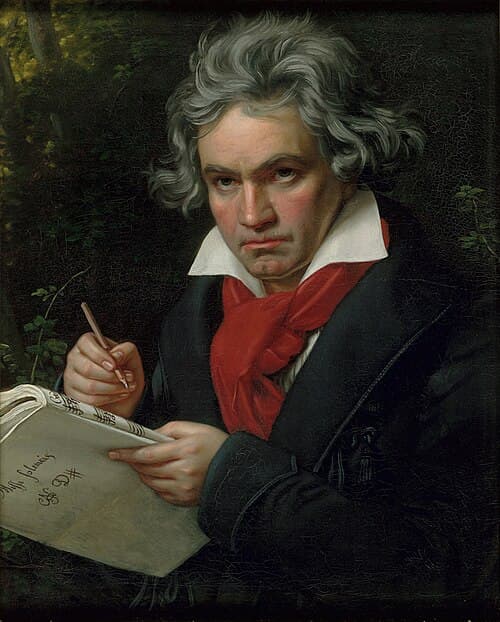
Beethoven
PERSON
References to classical composer Ludwig van Beethoven in discussions about music
BE
Benedictus
PERSON
Surname reference in documents
Benjamin Weiss
PERSON
Israeli mathematician
Bertalanffy
PERSON
Austrian biologist and philosopher (1901–1972)

Bhagawan Nityananda
PERSON
Name reference in documents

Bianca Jagger
PERSON
Nicaraguan-British human rights activist and socialite

Bishop
PERSON
Surname reference in Epstein-related documents
Blavatsky
PERSON
Name reference in documents
Boole
PERSON
Surname or name fragment in documents
Brad Gooch
PERSON
American writer

Bradley Cooper
PERSON
American actor
BM
Brian Marcus
PERSON
American mathematician
BM
Bronislaw Malinolowki
PERSON
Name reference in documents
Bruce McEwan
PERSON
Name reference in documents
Buckminister Fuller's
PERSON
Name reference in documents

Buddha
PERSON
Surname reference in Epstein-related documents
Burt Lancaster's
PERSON
Name reference in documents

C.L. Walker
PERSON
Name reference in documents
CB
Carl Boardstadt
PERSON
Name reference in documents
CC
Carlos Castanada’s
PERSON
Name reference in documents
Cauchy
PERSON
Name reference in documents
CP
Charley Parker’s
PERSON
Name reference in documents
CH
Chidvilasananda
PERSON
Hindu guru

Chris Christie
PERSON
55th Governor of New Jersey and former U.S. Attorney for the District of New Jersey
Chris Zeeman’s
PERSON
Name reference in documents

Christoff Koch
PERSON
Name reference in documents
Christopher Zeeman
PERSON
British mathematician (1925-2016)
CL
Claude
PERSON
Surname reference in Epstein-related documents
Claude E. Shannon
PERSON
American mathematician and information theorist (1916–2001)
Clausius
PERSON
Lunar impact crater
Colin Wilson’s
PERSON
Name reference in documents
Constantin Caratheodory
PERSON
Name reference in documents
CO
Cosmide
PERSON
American psychologist
CW
Courtney Wild
PERSON
American victim/survivor of Jeffrey Epstein who led legal battle for victims' rights
D. Frank Benson
PERSON
Name reference in documents

Dan Fouts
PERSON
American football player, quarterback, Pro Football Hall of Fame member

Daniel Goleman
PERSON
American psychologist & journalist
DW
David F. Wells
PERSON
American theologian
DR
David Reiss
PERSON
British businessman

David Rosenberg
PERSON
American poet and biblical translator
David Ruelle
PERSON
Belgian-French mathematical physicist
DE
Debbie
PERSON
Ambiguous first name - refers to multiple people in Epstein documents
Debussy
PERSON
Reference to Claude Debussy or similar named individual

Dennis
PERSON
First name reference to multiple individuals in Epstein documents
Dietrich Blumer
PERSON
Name reference in documents
DI
Dieudonne
PERSON
Name reference in documents
Don Juan
PERSON
Opera by Wolfgang Amadeus Mozart

Don Juan Alive
PERSON
Name reference in documents
Donald Ornstein
PERSON
Name reference in documents

Donald Trump
PERSON
President of the United States (2017–2021, 2025–present)
DO
Donna
PERSON
Ambiguous first name - refers to multiple people in Epstein documents
DB
Doug Band
PERSON
American presidential advisor
E.O. Wilson’s
PERSON
Name reference in documents
E.T. Bell
PERSON
Name reference in documents
Edmund Husserl
PERSON
Name reference in documents
EH
Edward Hoffman
PERSON
Name reference in documents
Ehud Barak
PERSON
10th Prime Minister of Israel

Elmer Gantry
PERSON
Name reference in documents
Enrico Fermi
PERSON
Italian–American physicist (1901–1954)
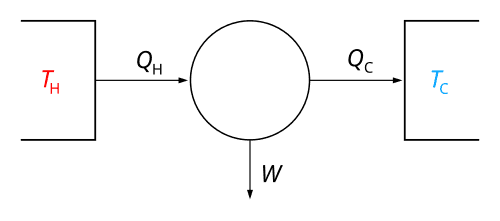
Entropies
PERSON
Name reference in documents

Eric Trump
PERSON
American businessman and reality television personality (born 1984)
Ernst Mach
PERSON
Name reference in documents
EU
Euler
PERSON
Surname reference in documents
EX
Exodus
PERSON
Surname reference in documents
FR
F. Richman
PERSON
Name reference in documents
FA
Fantastica
PERSON
Name reference in documents
FE
Fechner
PERSON
Name reference in documents
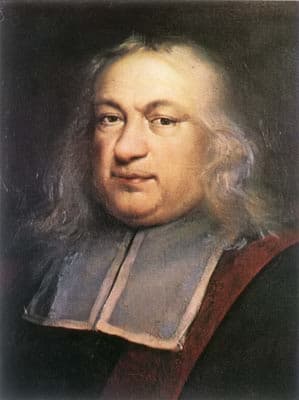
Fermat
PERSON
Surname reference in documents
FE
Fetzer
PERSON
Name reference in documents
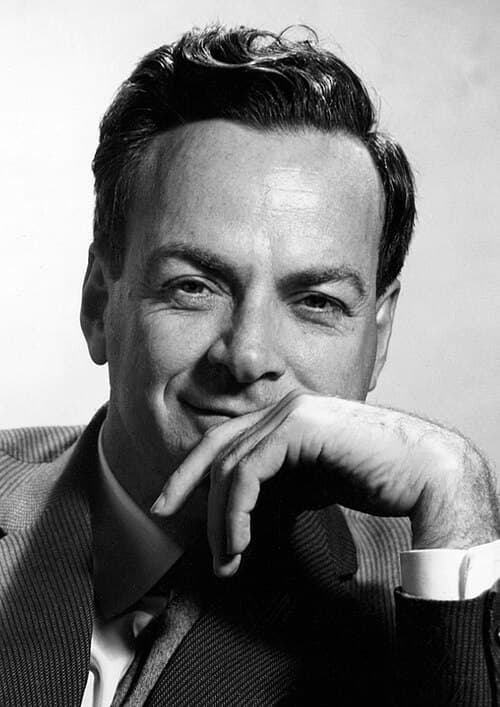
Feynman
PERSON
Surname reference in Epstein-related documents
FL
Flor-Henry
PERSON
Name reference in documents

Fouts
PERSON
Name reference in documents
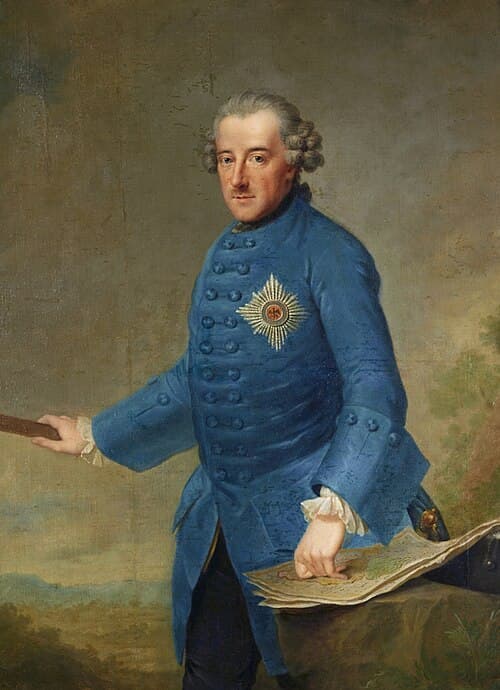
Frederick the Great
PERSON
Name reference in documents
FR
Freeman
PERSON
Ambiguous surname - refers to multiple people in Epstein documents
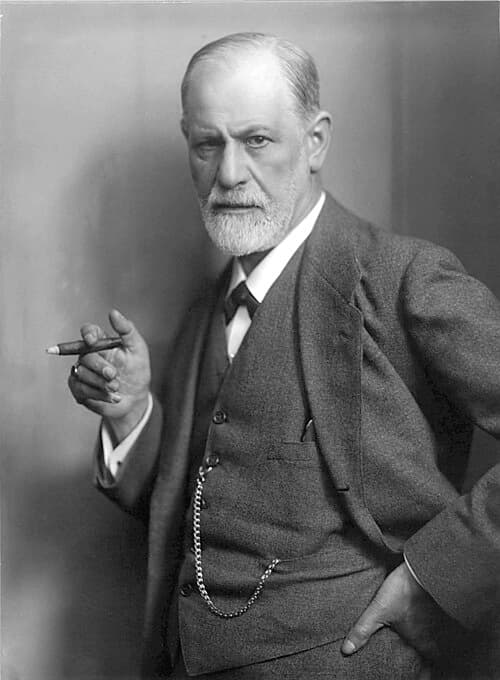
Freud
PERSON
Reference to Sigmund Freud or Lucian Freud
G. Methany’s
PERSON
Name reference in documents
GS
G.E. Schwartz
PERSON
Name reference in documents
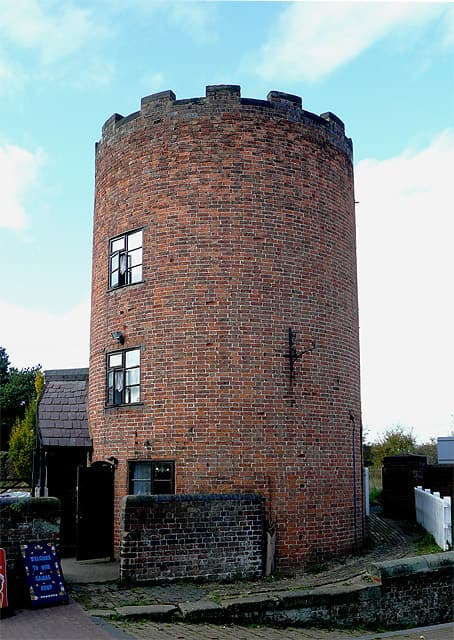
Gailey
PERSON
Name reference in documents
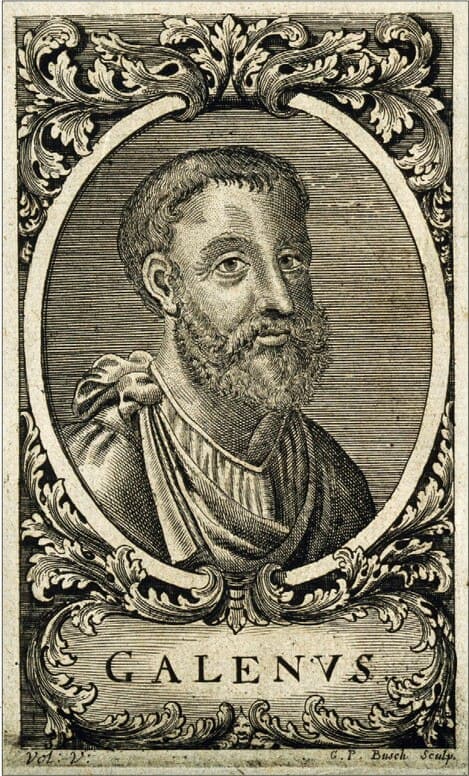
Galen
PERSON
Surname reference in documents
Galvani
PERSON
Name reference in documents
Gauss
PERSON
Surname or name fragment in documents

Gautama
PERSON
Name reference in documents
GG
Georg Groddeck
PERSON
Name reference in documents
George Allen
PERSON
American football coach (1918-1990)
George Boole’s
PERSON
Name reference in documents

George De la Warr
PERSON
Name reference in documents

George K. Francis
PERSON
Name reference in documents
GS
George Schuster
PERSON
Name reference in documents

George W. Bush
PERSON • 2 mentions
President of the United States from 2001 to 2009
GV
Georges van Vrekhem
PERSON
Belgian writer (1935-2012)
GE
Geschwind
PERSON
Name reference in documents
Gestaltung
PERSON
Name reference in documents

Gobi Krishna’s
PERSON
Name reference in documents
Goethe
PERSON
Surname reference in documents
GO
Gooch
PERSON
Surname reference in documents
Grace
PERSON • 2 mentions
Short Christian prayer said before or after eating; artistic theme

Gregory Bateson
PERSON
English anthropologist, linguist, semiotician and cyberneticist (1904-1980)

Gregory VII
PERSON
Name reference in documents
GU
Gurumayi
PERSON • 2 mentions
Name reference in documents
GC
Gurumayi Chidvilasananda
PERSON
Hindu guru
HR
Haley Robson
PERSON
Identified as recruiter of underage girls for Jeffrey Epstein in Palm Beach
Hans Eysenck
PERSON
British psychologist (1916–1997)

Heath
PERSON
Surname reference in Epstein-related documents
HE
Heinz
PERSON
Surname reference in documents
Henri Bergson’s
PERSON
Name reference in documents
HG
Henri Gastaut
PERSON
French neurologist (1915–1995)
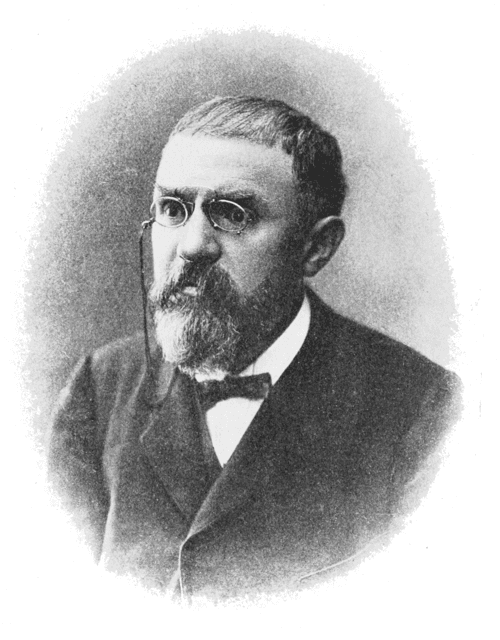
Henri Poincare’s
PERSON
Name reference in documents
HC
Herbert Callen
PERSON
American physicist (1919–1993)
HH
Hrand Hy
PERSON
Name reference in documents
Hunter Thompson’s
PERSON
Name reference in documents
HU
Husserl
PERSON
Name reference in documents
Huxley
PERSON
Name reference in documents
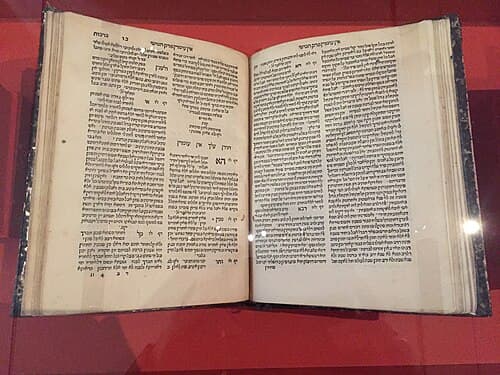
Ibn Adret
PERSON
Name reference in documents
Ilya Prigogine
PERSON
Russian-Belgian physical chemist (1917–2003)
Indira Gandhi
PERSON
Prime Minister of India (1966–1977, 1980–1984)
IB
Iris Bell
PERSON
American psychologist and alternative medicine researcher
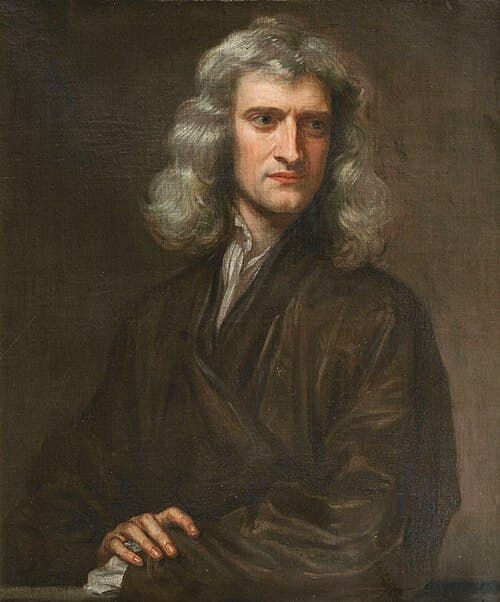
Isaac Newton
PERSON
English mathematician and physicist (1642–1727)
IK
Isadore Kliegfeld
PERSON
Name reference in documents
J.F. Rosenbaum
PERSON
Name reference in documents
JT
J.P. Tarcher
PERSON
Name reference in documents
Jacque Hadamard
PERSON
Name reference in documents
JC
James Callahan
PERSON
American labor union leader

James Jones
PERSON
American professional basketball player (born 1980)

Jared Kushner
PERSON
American businessman and real estate investor (born 1981)
JD
Jean Dieudonne
PERSON
Name reference in documents

Jeffrey Epstein
PERSON
American sex offender and financier (1953–2019)
Jelaluddin Rumi
PERSON
Name reference in documents
JH
Jerome Hagen
PERSON
Name reference in documents
Jerome Sashin
PERSON
Name reference in documents
Jesus Christ
PERSON
Central figure of Christianity (6 or 4 BC – AD 30 or 33)
Jim Olds
PERSON
Name reference in documents
Jimmy Swaggert
PERSON
Name reference in documents
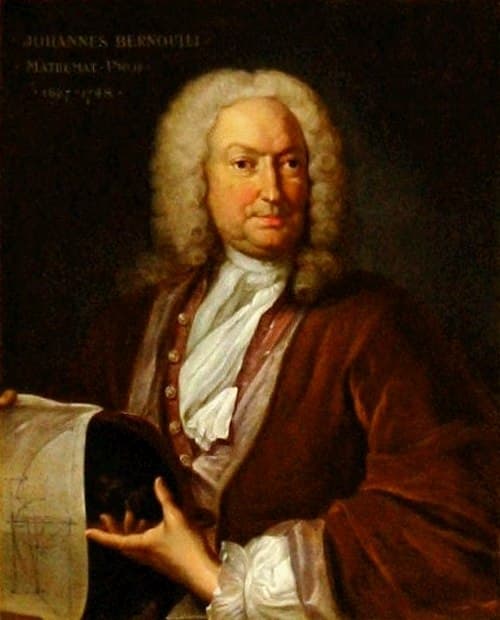
John Bernoulli
PERSON
Name reference in documents
John Coltrane
PERSON
Person referenced in documents
JW
John D. Woodbridge
PERSON
Professor of church history
JF
John Flynn
PERSON
American film director and screenwriter (1932–2007)
JL
John Lilly
PERSON
Person referenced in documents
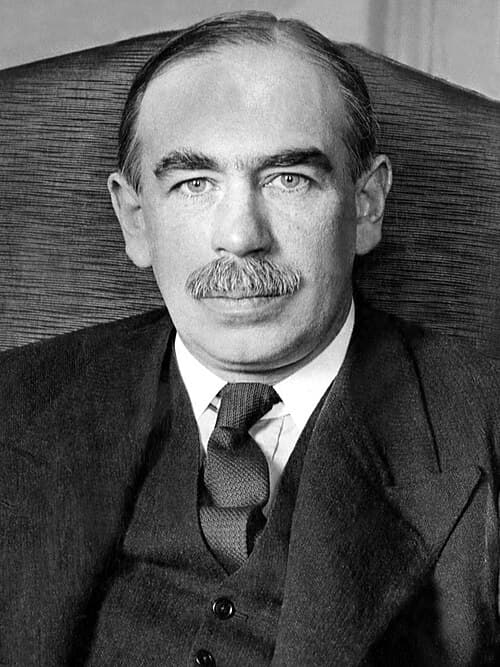
John Maynard
PERSON
Person referenced in documents
John R. Pierce
PERSON
American electrical engineer, acoustics expert, and author (1910–2002)
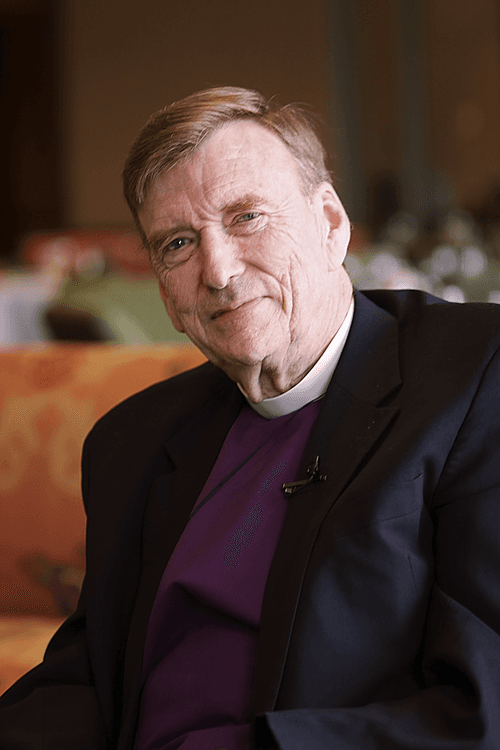
John Shelby Spong
PERSON
Name reference in documents
Johnnie
PERSON
American singer (1914-2011)
JO
Johnny
PERSON
First name reference to multiple individuals in Epstein documents
Joseph Goldstein
PERSON
American biochemist
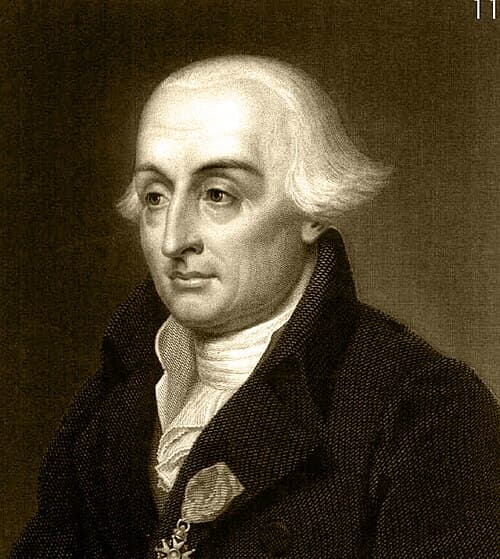
Joseph Lagrange
PERSON
Name reference in documents
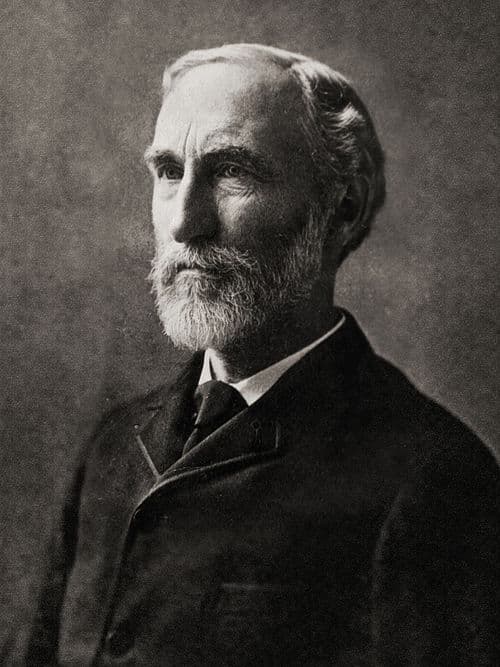
Josiah Willard Gibbs
PERSON
Name reference in documents
JO
Joules
PERSON
Surname reference in documents

Julie K. Brown
PERSON
American journalist
Julius Axelrod
PERSON
American biochemist (1912–2004)
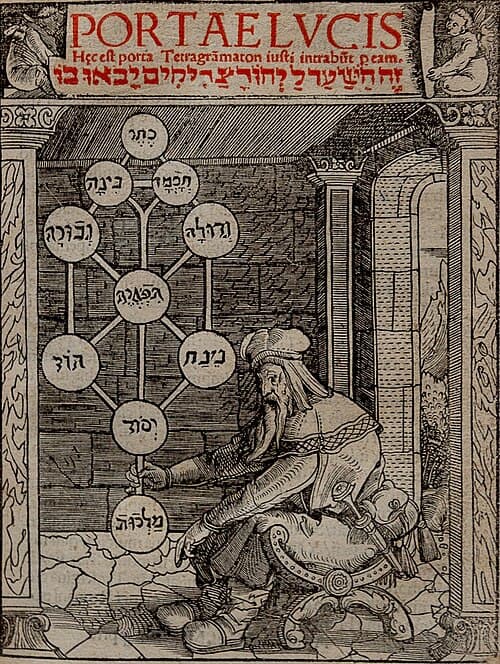
Kabbalah
PERSON
Name reference in documents
Karen A. Selz
PERSON
Name reference in documents
Kathleen Berrin
PERSON
Name reference in documents
Ken Wilbur
PERSON
American Basketball player (1944–2016)

Kenneth M. Goldstein
PERSON
Name reference in documents
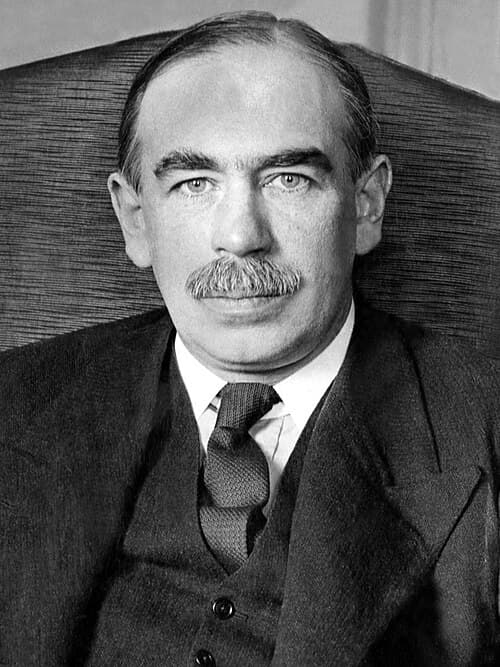
Keynes
PERSON
Surname reference in Epstein-related documents
Kolmogorov
PERSON
Surname or name fragment in documents
Konrad Lorenz
PERSON
Name reference in documents

Krishna
PERSON
Major deity in Hinduism, worshipped as the eighth avatar of Vishnu and also as the Supreme god in his own right

L. Gold
PERSON
Name reference in documents

Lance Armstrong
PERSON
Cyclist from the United States
Lao-Tsu’s
PERSON • 2 mentions
Name reference in documents

Lawrence Krauss
PERSON
American particle physicist and cosmologist
Lawrence Kushner
PERSON
American rabbi
Lee Poth
PERSON
Name reference in documents
Leon Brillouin
PERSON
Name reference in documents
LE
Leonard
PERSON
Ambiguous first name/surname - includes references to Elmore Leonard (author) and other Leonards in Epstein documents
Lewis Judd
PERSON
American psychiatrist
LI
Liebniz
PERSON
Name reference in documents
Louis Lewin
PERSON
Name reference in documents
LH
Louise Hsu
PERSON
Name reference in documents
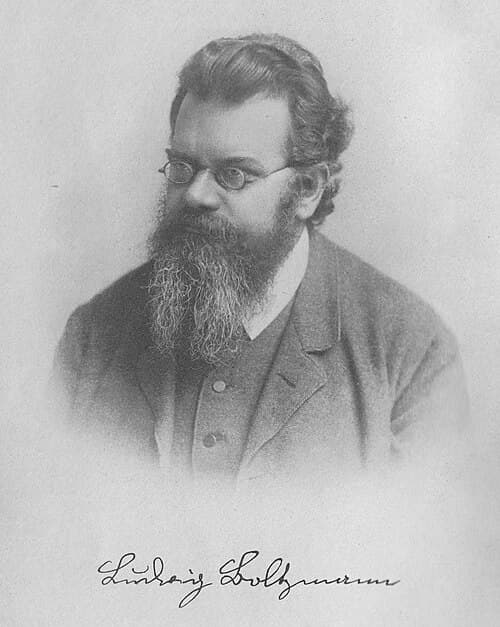
Ludwig Boltzmann
PERSON
Name reference in documents
MG
M. Geyer
PERSON
Name reference in documents

M. Keane
PERSON
Name reference in documents
M. Paulus
PERSON
Name reference in documents
M. Sands
PERSON
Name reference in documents
MH
Maddie Hagen
PERSON
Person referenced in documents
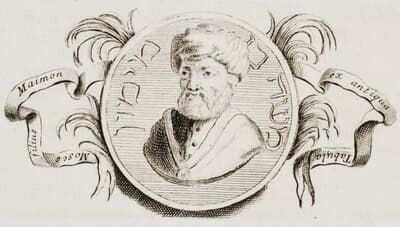
Maimonides
PERSON
Surname or name fragment in documents
Malti
PERSON
Name reference in documents
Marc Rich
PERSON
American commodities trader (1934–2013)
ML
Marghanita Laski
PERSON
English journalist, radio panellist and writer

Mark Geyer
PERSON
Australian rugby league footballer
MP
Mark Pollicott
PERSON
British mathematician
MZ
Mark Zemansky
PERSON
American physicist, physics textbook writer (1900-1981)
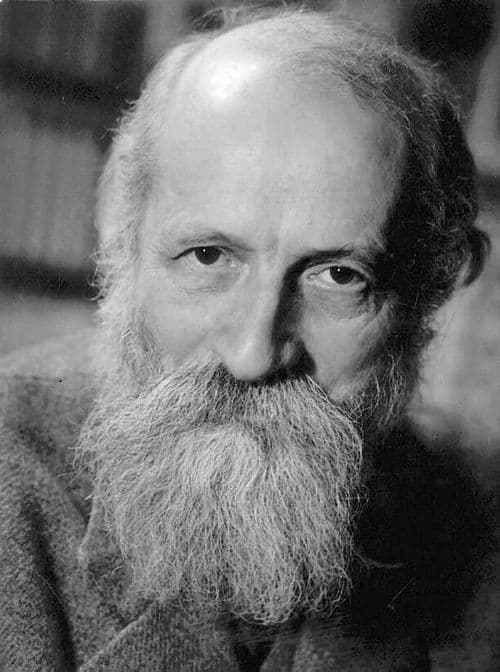
Martin Buber
PERSON
Person referenced in documents
Martin Heidegger
PERSON
Name reference in documents

Martin Marty
PERSON
American historian of religion, educator, author, and theologian
Martin Nowak
PERSON
Austrian scientist
MP
Martin Paulus
PERSON
Researcher
MW
Martin Weinberg
PERSON
American attorney (born 1946)

Matt Damon
PERSON
American actor (born 1970)
MR
Matt Riemann
PERSON
Person referenced in documents

Maupertuis
PERSON • 2 mentions
Name reference in documents
Max Ernst
PERSON
Person referenced in documents
Max Planck’s
PERSON
Name reference in documents
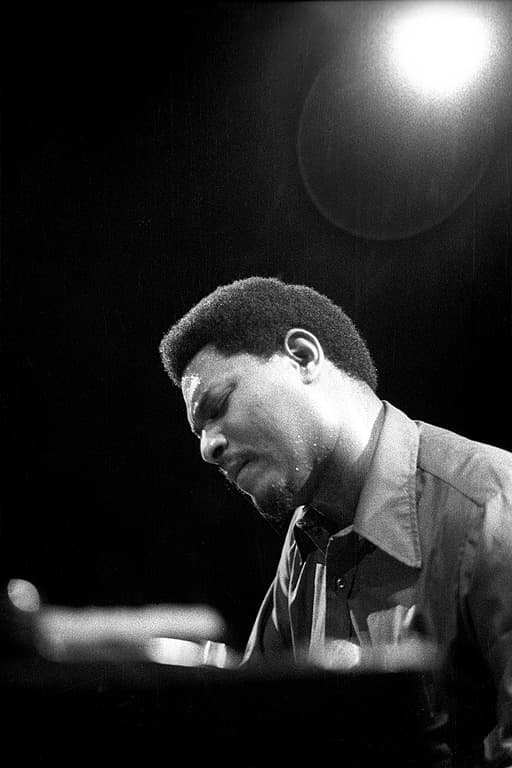
McCoy Tyner
PERSON
Person referenced in documents
Mesmer
PERSON
Surname or name fragment in documents

Michael Cohen
PERSON
American former attorney and former Republican official

Michael Flynn
PERSON
U.S. Army general and former U.S. National Security Advisor (born 1958)
Michael Hartnett
PERSON
Irish poet (1941–1999)

Michael Jackson
PERSON
American singer, songwriter, record producer, and dancer (1958–2009)

Michael White’s
PERSON
Name reference in documents
Michelangelo
PERSON
First name reference to multiple individuals in Epstein-related documents

Mick Jagger
PERSON
British singer and songwriter; vocalist of The Rolling Stones
Miles Davis
PERSON
American jazz trumpeter, bandleader, and composer (1926–1991)
Mircea Eliade
PERSON
Romanian-American historian, writer, philosopher and professor at the University of Chicago (1907–1986)
ML
Moishe lIdel
PERSON
Name reference in documents
MO
Morse
PERSON
Surname reference in Epstein-related documents
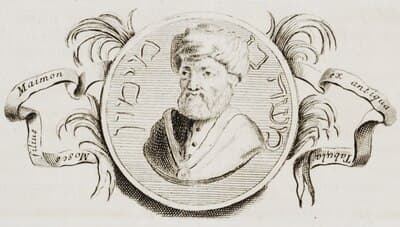
Moses Maimonides
PERSON
Name reference in documents
MU
Muktananda
PERSON
Name reference in documents

Napier
PERSON
Surname reference in documents
NE
Neurochemically
PERSON
Name reference in documents
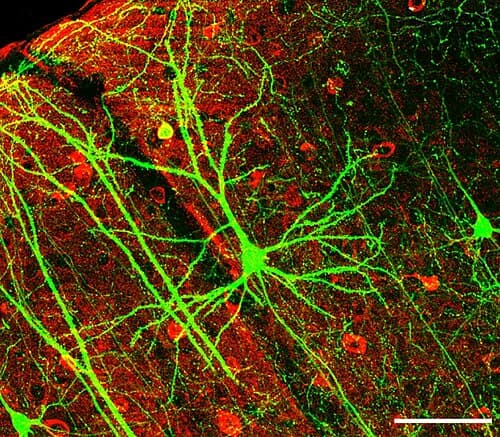
Neurology
PERSON
NER artifact: Medical specialty name misidentified as person name
Nicolas Leonard Sadi Carnot
PERSON
Name reference in documents

Nirvanically
PERSON
Name reference in documents
NI
Nityananda
PERSON
Name reference in documents
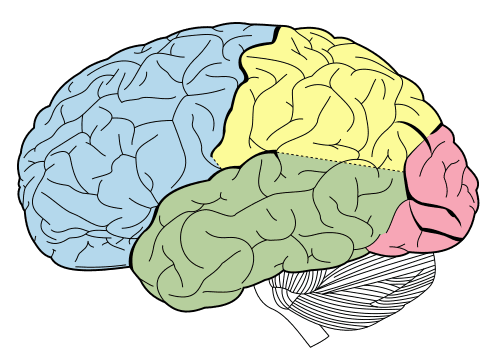
Norman Geschwind
PERSON
American physician
OS
Om Namah Shivaya
PERSON
Name reference in documents
PA
Pascal
PERSON
Surname reference in Epstein-related documents
PA
Paul Avis
PERSON
Anglican theologian
PG
Paul Gailey
PERSON
Name reference in documents
Paul Klee
PERSON
Person referenced in documents

Paul MacLean
PERSON
Name reference in documents
Pavlov
PERSON
Surname or name fragment in documents
PW
Peter Walters
PERSON
Name reference in documents

Phillip Anderson
PERSON
Brazilian association football player (born 1988)
PO
Poincare
PERSON
Surname reference in documents
Prigogine
PERSON
Name reference in documents

Prince Andrew
PERSON
Third child of Queen Elizabeth II and Prince Philip, Duke of Edinburgh (born 1960)
R.B. Leighton
PERSON
Name reference in documents

R.J. Wisner
PERSON
Name reference in documents
R.P. Feynman
PERSON
Name reference in documents
R.R. Crowe
PERSON
Name reference in documents
RV
R.R. Vallacher
PERSON
Name reference in documents
Ralph Metzner
PERSON
German psychologist (1936–2019)

Ramon Cajal
PERSON
Name reference in documents
Rene’ Thom
PERSON
Name reference in documents
Richard Alpert
PERSON
Name reference in documents
Richard Feynmann
PERSON
Name reference in documents

Richard Shultes
PERSON
Name reference in documents
RW
Richard Wyatt
PERSON
English cricketer

Robert G. Heath
PERSON
Name reference in documents
Robert Heinlein
PERSON
American author and aeronautical engineer (1907–1988)
RE
Robert S. Ellwood
PERSON
Name reference in documents
Ronald Gandelman
PERSON
Name reference in documents
Roy Adler
PERSON
American mathematician
Rudolph Clausius
PERSON
Name reference in documents
Rudolph Otto
PERSON
Name reference in documents
Rudolph Steiner
PERSON
Name reference in documents
Rufus Bowen
PERSON
Professor in the Department of Mathematics at the University of California, Berkeley

Russell Crowe
PERSON
New Zealand actor
Ruth Benedict
PERSON
Name reference in documents
SS
Sacha Shulgin’s
PERSON
Name reference in documents
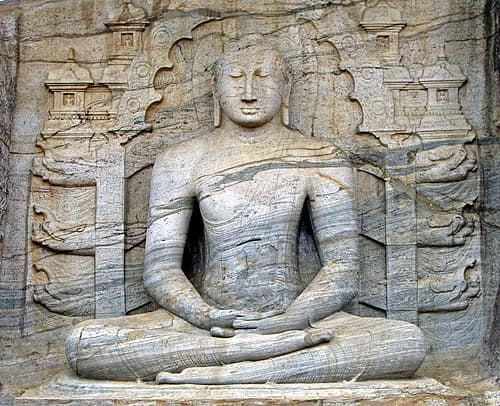
Samadhi
PERSON
Name reference in documents
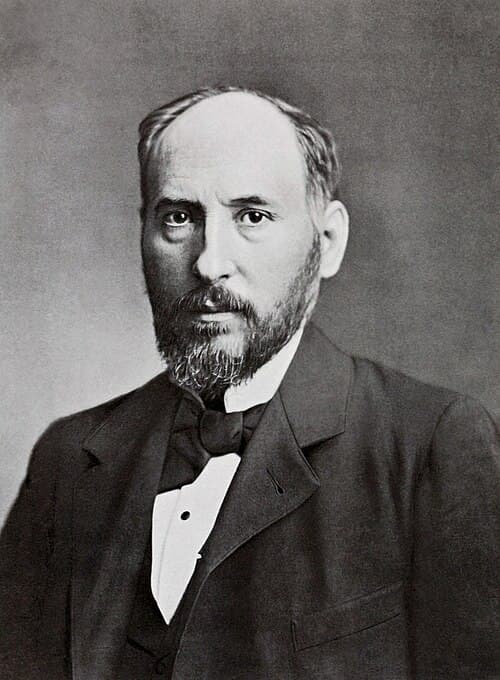
Santiago Ramon
PERSON
Name reference in documents
SC
Schuster
PERSON
Surname reference in Epstein-related documents

Sergey Brin
PERSON
American billionaire businessman (born 1973)
SK
Seymore Kety
PERSON
Name reference in documents

Shakti
PERSON
Name reference in documents
SB
Sheldon Blackman
PERSON
Name reference in documents

Sherman
PERSON
Ambiguous surname - refers to multiple people in Epstein documents
SK
Shigehisa Kuriyama
PERSON
Name reference in documents
Sidney Cohen
PERSON
Name reference in documents
SP
Sidney Perzow
PERSON
Name reference in documents
ST
Sister Teresa
PERSON
Name reference in documents
SN
Snell
PERSON
Surname reference in Epstein-related documents

Spiegelberg
PERSON • 3 mentions
Name reference in documents
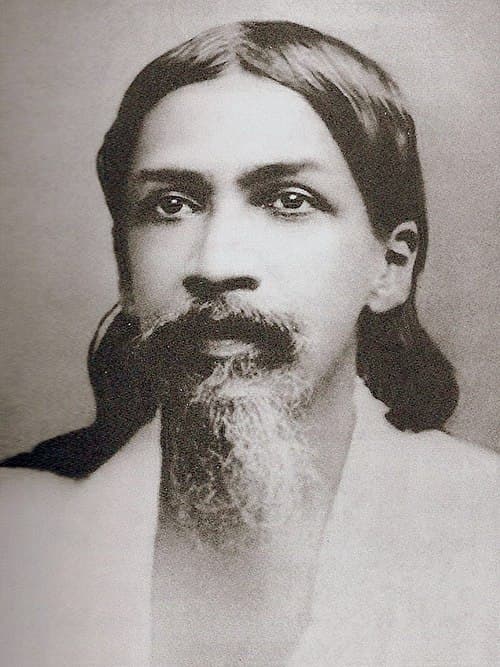
Sri Arubindo
PERSON
Name reference in documents

Sri Aurobindo’s
PERSON
Name reference in documents
SJ
St. John’s
PERSON
Name reference in documents
Stephen Hawking
PERSON
British theoretical physicist, cosmologist and author (1942–2018)

Stephen Jay Gould
PERSON
American biologist and historian of science (1941–2002)

Steven Bressler
PERSON
Name reference in documents
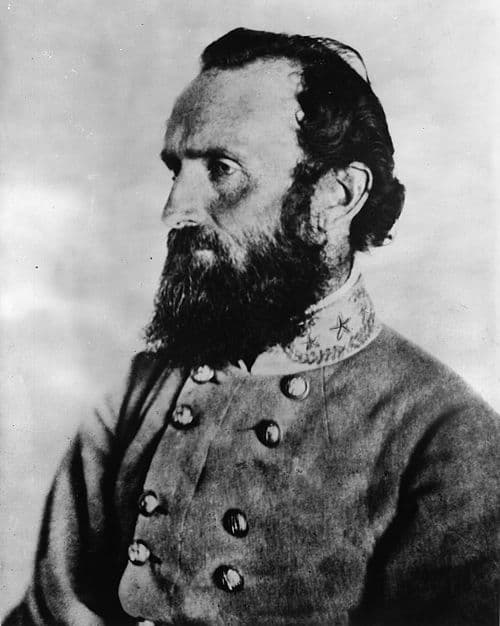
Stonewall Jackson
PERSON
Name reference in documents
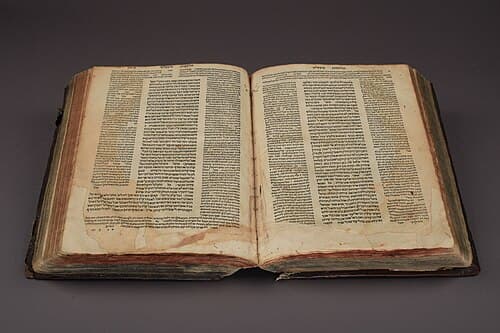
Talmudic
PERSON
Surname or name fragment in documents
Tao-Te-Ching
PERSON
Name reference in documents

Tefnut
PERSON
Name reference in documents
TE
Tegragrammaton
PERSON
Name reference in documents
Teilhard de Chardin
PERSON
Name reference in documents
TE
Tenebrae
PERSON • 2 mentions
Name reference in documents
TG
the Bhagadvad Gita
PERSON
Name reference in documents

The Dalai Lama
PERSON • 2 mentions
Tibetan spiritual leader, referenced in Epstein scheduling and contact documents
TM
The Way of Muktananda
PERSON
Name reference in documents

Thom F. Cavalli
PERSON
Name reference in documents

Thomas Aquinas
PERSON
Person referenced in documents
Thomas Seligman
PERSON
Swiss-Mexican physicist and university teacher
TO
Tooby
PERSON
Surname or name fragment in documents
UN
Underhill
PERSON
Surname or name fragment in documents
Unitas
PERSON
Surname reference in documents
Van Gogh’s
PERSON
Name reference in documents
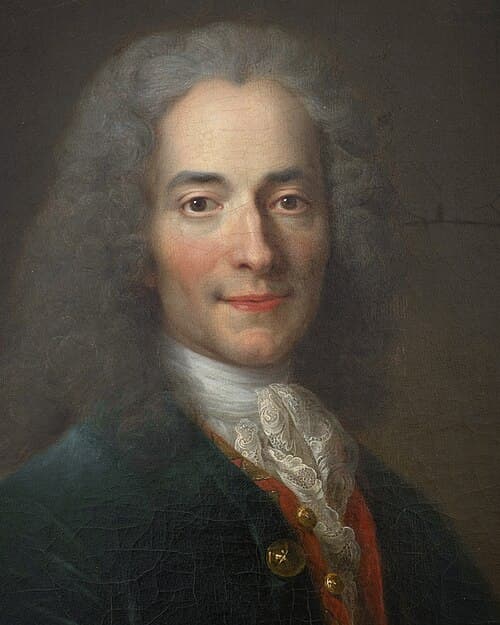
Voltaire
PERSON
Surname reference in documents
W.R. Hess
PERSON
Name reference in documents
Walter Nernst
PERSON
Name reference in documents
Weierstrass
PERSON
Name reference in documents

Werner Erhard
PERSON
Self-help guru
WE
Wesley
PERSON
Brazilian association football player
Wilhelm Reich’s
PERSON
Name reference in documents

William Barr
PERSON
77th & 85th United States Attorney General (born 1950)
William Burrough
PERSON
American novelist, short story writer, essayist, painter, and spoken word performer (1914–1997)
William James’s
PERSON
Name reference in documents
WS
William Sheldon’s
PERSON
Name reference in documents
William Thomson's
PERSON
Name reference in documents
William Thurston
PERSON
Name reference in documents

Woody Allen
PERSON
American filmmaker, actor and comedian (born 1935)
Wundt
PERSON
Name reference in documents

Ya Sinai
PERSON
Name reference in documents
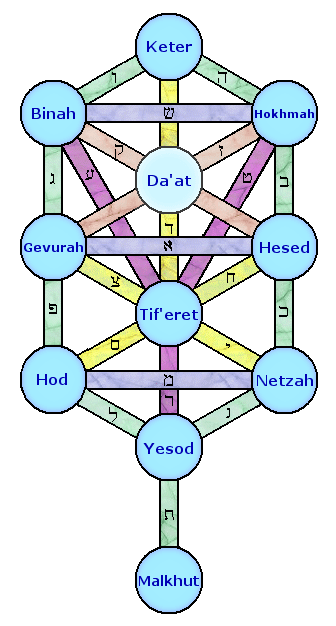
Yesod
PERSON
Name reference in documents
ZI
Zipruanna
PERSON
Name reference in documents

Abingdon Press
ORGANIZATION
Publishing house of the United Methodist Church
Academic Press
ORGANIZATION
American academic publisher (1942-)
Alchemical Psychology
ORGANIZATION
Organization referenced in documents
Alfred C. Underwood
ORGANIZATION
Organization referenced in documents
American Ashram
ORGANIZATION
Organization referenced in documents
Ammeters
ORGANIZATION
Organization referenced in documents
Applications
ORGANIZATION
Organization referenced in documents
Art of the Huichol Indians
ORGANIZATION
Organization referenced in documents
Ashram
ORGANIZATION
Organization referenced in documents
Ashrams
ORGANIZATION
Organization referenced in documents
Asian Studies
ORGANIZATION
Organization referenced in documents
B. Loehlen’s
ORGANIZATION
Organization referenced in documents
Beadles music
ORGANIZATION
Organization referenced in documents
Benisteriospsis
ORGANIZATION
Organization referenced in documents
Berlin Academy
ORGANIZATION
Organization referenced in documents
Brentwood
ORGANIZATION
Affluent neighborhood in the Westside of Los Angeles, California, United States
Bridgeman’s
ORGANIZATION
Organization referenced in documents
Cabalist
ORGANIZATION
Organization referenced in documents
California Institute of Technology
ORGANIZATION
Organization referenced in documents
California Personality Inventory
ORGANIZATION
Organization referenced in documents

Cambridge University
ORGANIZATION
Organization referenced in documents
Cambridge University’s Autism Research Center
ORGANIZATION
Organization referenced in documents
Catholic Bishops
ORGANIZATION
Organization referenced in documents
Century
ORGANIZATION
American movie theater chain, owned by Cinemark
Charger
ORGANIZATION
Organization referenced in documents
Chicago Press
ORGANIZATION
Organization referenced in documents
Chinese Medicine
ORGANIZATION
Organization referenced in documents
Chronical Books
ORGANIZATION
Organization referenced in documents
City Lights
ORGANIZATION
Organization referenced in documents
Clarendon Press
ORGANIZATION
Publishing imprint
Comparative
ORGANIZATION
Organization referenced in documents
Country
ORGANIZATION
Genre of American popular music
D.D.
ORGANIZATION
Organization referenced in documents
Darshan
ORGANIZATION
Organization referenced in documents
Dekker
ORGANIZATION
Organization referenced in documents
Deterministic Chaos
ORGANIZATION
Organization referenced in documents
Divine Energy
ORGANIZATION
Organization referenced in documents
DMS-IV
ORGANIZATION
Organization referenced in documents
DSM IV
ORGANIZATION
Organization referenced in documents
Dynamical Systems
ORGANIZATION
Organization referenced in documents

Emory University
ORGANIZATION
Private research university in Atlanta, Georgia, United States

Enron
ORGANIZATION
American energy company
Environ
ORGANIZATION
Organization referenced in documents
Ergodic Theory
ORGANIZATION
Organization referenced in documents
Eucharist
ORGANIZATION
Organization referenced in documents
Fear and Loathing Along the Guru Trail
ORGANIZATION
Organization referenced in documents
Florida Atlantic University’s
ORGANIZATION
Organization referenced in documents
Four Dimensions
ORGANIZATION
Organization referenced in documents

George Washington University
ORGANIZATION
Private university in Washington, D.C., USA
Geyer
ORGANIZATION
Municipality of Germany
Godta/k
ORGANIZATION
Organization referenced in documents
Grune and Straton
ORGANIZATION
Organization referenced in documents
Guggenheim Museum
ORGANIZATION
Organization referenced in documents
Harold E. Himwich
ORGANIZATION
Organization referenced in documents

Harvard University
ORGANIZATION
American university publishing house
Horsely-Clarke
ORGANIZATION
Organization referenced in documents
Institute for Advanced Scientific Studies
ORGANIZATION
Organization referenced in documents
Integral Being or Yoga
ORGANIZATION
Organization referenced in documents
International Congress of Mathematics
ORGANIZATION
Organization referenced in documents

Jadish
ORGANIZATION
Organization referenced in documents
Kelvin-Clausius
ORGANIZATION
Organization referenced in documents

Knopf
ORGANIZATION
Organization referenced in documents
Lesbegue
ORGANIZATION
Organization referenced in documents

Los Angeles Times
ORGANIZATION
American daily newspaper covering the Greater Los Angeles area
Lotus Press
ORGANIZATION
Organization referenced in documents
Marplan
ORGANIZATION
Organization referenced in documents
Maudsley Hospital
ORGANIZATION
Organization referenced in documents
McGraw Hill
ORGANIZATION
Organization referenced in documents
Mehra
ORGANIZATION
Organization referenced in documents
Modern Church History
ORGANIZATION
Organization referenced in documents
Modern Library
ORGANIZATION
Organization referenced in documents

Mukteshwari
ORGANIZATION
Organization referenced in documents
National Institutes of Mental Heath’s
ORGANIZATION
Organization referenced in documents
Neuropsychiatric Institute Outpatient
ORGANIZATION
Organization referenced in documents

Northwestern University
ORGANIZATION
Private university in Evanston, Illinois, U.S.
Ochsner Foundation Hospital
ORGANIZATION
Organization referenced in documents
Paragon House
ORGANIZATION
Organization referenced in documents
Pentecostal
ORGANIZATION
Organization referenced in documents
Perrier
ORGANIZATION
French sparkling water brand
Personality Inventory
ORGANIZATION
Organization referenced in documents
Peter T. Landsberg
ORGANIZATION
Organization referenced in documents
Phi Gamma Delta
ORGANIZATION
Organization referenced in documents

Principia
ORGANIZATION
Private liberal arts college in Elsah, Illinois, U.S.
Psychiatric Association
ORGANIZATION
Organization referenced in documents
Random House
ORGANIZATION
American general-interest trade book publisher
Reader’s Digest Press
ORGANIZATION
Organization referenced in documents

Renaissance
ORGANIZATION
Hotel chain or entity

Roberto Cavalli
ORGANIZATION
Fashion designer brand
Roman Catholicism
ORGANIZATION
Organization referenced in documents
Runner’s World
ORGANIZATION
Organization referenced in documents
S. One
ORGANIZATION
Organization referenced in documents
Sacred
ORGANIZATION
Organization referenced in documents

Sandoz
ORGANIZATION
Organization referenced in documents
Schwegmann
ORGANIZATION
Organization referenced in documents
Science and Information Theory
ORGANIZATION
Organization referenced in documents
Siddha Yoga
ORGANIZATION
Organization referenced in documents
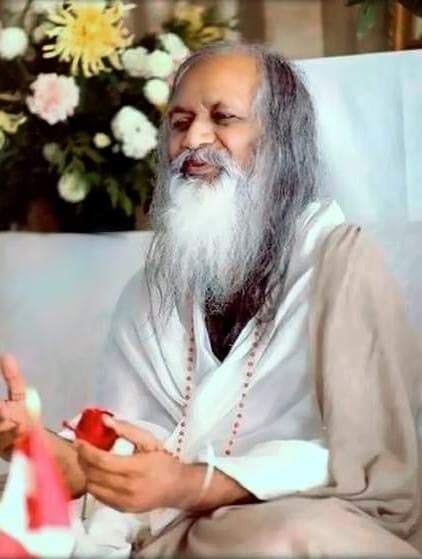
Sidha Yoga Ashrams
ORGANIZATION
Organization referenced in documents
Smith College
ORGANIZATION
Organization referenced in documents
Social Psychology
ORGANIZATION
Organization referenced in documents

Spirit
ORGANIZATION
Spirit Airlines or entity
Springer-Verlag
ORGANIZATION • 2 mentions
Organization referenced in documents
State University of New York Press
ORGANIZATION
Tbilisi Metro Station
Statistical Mechanics
ORGANIZATION
Organization referenced in documents
Structural Stability
ORGANIZATION
Organization referenced in documents
Syda Foundation
ORGANIZATION
Organization referenced in documents
Symbolic Dynamics
ORGANIZATION
Organization referenced in documents
T. Bedford
ORGANIZATION
Organization referenced in documents
T. Thus
ORGANIZATION
Organization referenced in documents
Tantric
ORGANIZATION
Organization referenced in documents
Tarcher
ORGANIZATION
Organization referenced in documents
the /nstitute des Hautes D’Etudes
ORGANIZATION
Organization referenced in documents
the Army Medical Corps
ORGANIZATION
Organization referenced in documents
the Catholic Church
ORGANIZATION
Catholic Church
the Department of Psychiatry
ORGANIZATION
Organization referenced in documents
The Development of Mathematics
ORGANIZATION
Organization referenced in documents
the Episcopal Diocese
ORGANIZATION
Organization referenced in documents
the Fellowship of Christian Athletes
ORGANIZATION
Organization referenced in documents
the Fetzer Institute
ORGANIZATION
Organization referenced in documents
the Hall of Fame
ORGANIZATION
Organization referenced in documents

the Hebrew University
ORGANIZATION
Organization referenced in documents
the Hindi Saint
ORGANIZATION
Organization referenced in documents
the Huichol Indian
ORGANIZATION
Organization referenced in documents
the International University Press’s
ORGANIZATION
Organization referenced in documents
the Journal of Neurochemistry
ORGANIZATION
Organization referenced in documents
the Liberal Arts
ORGANIZATION
Organization referenced in documents
the Life Sciences
ORGANIZATION
Organization referenced in documents
The Mathematical Theory of Communication
ORGANIZATION
Organization referenced in documents
the Old Testament
ORGANIZATION
Organization referenced in documents
the Psychoanalytic Institute of Southern California
ORGANIZATION
Organization referenced in documents
The Role of Neural Plasticity
ORGANIZATION
Organization referenced in documents
the San Diego Chargers
ORGANIZATION
Organization referenced in documents
the San Francisco Art Museum
ORGANIZATION
Organization referenced in documents
The Science of Mechanics
ORGANIZATION
Organization referenced in documents
The Shape of Space
ORGANIZATION
Organization referenced in documents
the Ten Commandments
ORGANIZATION
Organization referenced in documents
the Thudicum Laboratory
ORGANIZATION
Organization referenced in documents
the University of California
ORGANIZATION
University
the University of California Medical Schools
ORGANIZATION
Organization referenced in documents
The Value of Science
ORGANIZATION
Organization referenced in documents
the Walter Reed Army Institute of Research
ORGANIZATION
Organization referenced in documents
The Yage Letters
ORGANIZATION
Organization referenced in documents
Thermodynamics
ORGANIZATION
Organization referenced in documents

Trinity College
ORGANIZATION
Constituent college of the University of Cambridge in England
Tulane Medical School’s
ORGANIZATION
Organization referenced in documents
Tz - dQ/ T
ORGANIZATION
Organization referenced in documents
U. of Illinois Press
ORGANIZATION
Organization referenced in documents
Uniform Services Medical School
ORGANIZATION
Organization referenced in documents
University of Chicago
ORGANIZATION
Organization referenced in documents

University of Pennsylvania
ORGANIZATION
University
Unwin Ltd.
ORGANIZATION
Organization referenced in documents
Warwick Mathematics Institute
ORGANIZATION
Organization referenced in documents
Warwick University’s
ORGANIZATION
Organization referenced in documents
Weinheim
ORGANIZATION
Organization referenced in documents

Wiley
ORGANIZATION
American multinational publishing company

Woodstock
ORGANIZATION
1969 music festival in New York, United States
World Scientific
ORGANIZATION
Organization referenced in documents
Yogic
ORGANIZATION
Organization referenced in documents

Zeeman
ORGANIZATION
Organization referenced in documents
Albany
LOCATION
Capital city of the State of New York, United States, and seat of Albany County

Ann Arbor
LOCATION
County seat of Washtenaw County, Michigan, United States

Aspen
LOCATION
City in and county seat of Pitkin County, Colorado, United States

Atlanta
LOCATION
Capital city of Georgia, United States

Baltimore
LOCATION
City in Maryland, United States
Beverly Hills
LOCATION
City in Los Angeles County, California, United States
Bures
LOCATION
Location referenced in documents

Central Park
LOCATION
Public park at the center of Manhattan in New York City, New York, United States

Columbia University
LOCATION
Private Ivy League research university in New York City

Dover
LOCATION
Town and major ferry port in Kent, South East England

Earth
LOCATION
Third planet from the Sun in the Solar System

Ecuador
LOCATION
Sovereign state in South America
Englewood Cliffs
LOCATION
Borough in Bergen County, New Jersey, United States

Florence
LOCATION
Italian city and commune, located in Tuscany
Galesberg
LOCATION
Location referenced in documents
Ganeshpuri
LOCATION
Location referenced in documents
Ganeshpuri India
LOCATION
Location referenced in documents
Guide
LOCATION
Location referenced in documents
Harper-Row
LOCATION
Location referenced in documents
Hayyei Ha’Olam
LOCATION
Location referenced in documents
Hebrews
LOCATION
Location referenced in documents

Hong Kong
LOCATION
City and special administrative region of China

Houston
LOCATION
Seat of Harris County, and largest city in State of Texas, United States
Jivaro
LOCATION
Location referenced in documents
Kelvin
LOCATION
River in Glasgow, Scotland, UK, tributary of the River Clyde

La Jolla
LOCATION
Neighborhood in San Diego, California, United States
Lagrange
LOCATION
Location referenced in documents
Lido Beach
LOCATION
Census-designated place in Nassau County, New York, United States
Liouville
LOCATION
Lunar crater

Los Angeles
LOCATION
Seat of Los Angeles County, and largest city in California, United States

Louisiana
LOCATION
State of the United States of America

Madison
LOCATION
Capital city of Wisconsin, United States

Minnesota
LOCATION
State of the United States of America
Modern America
LOCATION
Location referenced in documents

Montreal
LOCATION
Largest city in Quebec, Canada
Munich
LOCATION
Capital and most populous city of Bavaria, Germany

Nashville
LOCATION
Capital and largest city of Tennessee, United States

New Orleans
LOCATION
Largest city of the state of Louisiana, United States

New York City
LOCATION
Most populous city in the United States

Newark
LOCATION
City in Essex County, and largest city in New Jersey, United States

Northern California
LOCATION
Region of California, United States

Oakland
LOCATION
City and county seat of Alameda County, California, United States

Oklahoma City
LOCATION
City and state capital of Oklahoma, United States

Oregon
LOCATION
State of the United States of America
p(heads
LOCATION
Location referenced in documents

Palm Springs
LOCATION
Resort city in Riverside County, southern California, United States
Paulus
LOCATION
Location referenced in documents
Psychotria viridis
LOCATION
Location referenced in documents
Putnam
LOCATION
City in New York
Sacramento Valley
LOCATION
Northern part of the Central Valley in California, United States of America

San Diego
LOCATION
Seat of San Diego County, California, United States; second-largest city in California

San Francisco
LOCATION
Consolidated city and county in California, United States

Santa Monica
LOCATION
Beachfront city in Los Angeles County, California, United States

Sarasota
LOCATION
City in and county seat of Sarasota County, Florida, United States

Seine
LOCATION
River in France

South
LOCATION
Directional region of the United States
South Fallsburg
LOCATION
Census designated place in Sullivan County, New York, United States

Southeast Florida
LOCATION
Location referenced in documents
Southern California New
LOCATION
Location referenced in documents
Southwestern Sonora Desert
LOCATION
Location referenced in documents
Spiritual America
LOCATION
Location referenced in documents

St. Paul
LOCATION
City in St. Paul, Minnesota

Stanford University
LOCATION
Private research university in Stanford, California, USA
the Boboli Gardens
LOCATION
Location referenced in documents
the Gulf of Mexico’s
LOCATION
Location referenced in documents
the Human Species
LOCATION
Location referenced in documents
the Kingdom of God
LOCATION
Location referenced in documents
the Magic Kingdom
LOCATION
Location referenced in documents
the State of Illinois Thudicum Laboratory
LOCATION
Location referenced in documents
Twin Lakes
LOCATION
Pair of lakes in Alaska, United States
Urbana
LOCATION
Town in and county seat of Champaign County, Illinois, United States
Venice
LOCATION
Capital city of Veneto, Italy

West Coast
LOCATION
Directional region of the United States
West Los Angeles
LOCATION
Neighborhood of Los Angeles, California, United States

Zohar
LOCATION
Location referenced in documents
Statistics
Pages:100
Entities:569
Avg. OCR:94.6%
Sponsored