EFTA00285909_sub_001 - EFTA00285909_100
Document Information
Bates Range
EFTA00285909_sub_001 - EFTA00285909_100
Pages
100
Original Filename
EFTA00285909.pdf
Document Content
Page 1 - EFTA00285909_001
Praise for The Greatest Story Ever Told—So Far "In every debate I've done with theologians and religious believers, their knock-out final argument always comes in the form of two questions: Why is there something rather than nothing? and Why are we here? The presumption is that if science provides no answers then there must be a God. But God or no, we still want answers. In A Universe from Nothing Lawrence Krauss, one of the biggest thinkers of our time, addressed the first question with verve, and in The Greatest Story Ever Told he tackles the second with elegance. Both volumes should be placed in hotel rooms across America, in the drawer next to the Gideon Bible —Michael Shermer, publisher of Skeptic magazine, columnist for Scientific American, and author of The Moral Arc "Discovering the bedrock nature of physical reality ranks as one of humanity's greatest collective achievements. This book gives a fine account of the main ideas and how they emerged. Krauss is himself close to the field and can offer insights into the personalities who have led the key advances. A practiced and skilled writer, he succeeds in making the physics 'as simple as possible but no simpler: I don't know a better book on this subject? —Martin Rees, author of Just Six Numbers "It is an exhilarating experience to be led through this fascinating story, from Galileo to the Standard Model and the Higgs boson and beyond, with lucid detail and insight, illuminating vividly not only the achieve- ments themselves but also the joy of creative thought and discovery, 2P_Glealer-StoryEverTold_Atirdd I 12/16116 3:06 PIA EFTA00285909
Page 2 - EFTA00285909_002
enriched with vignettes of the remarkable individuals who paved the way. It amply demonstrates that the discovery that 'nature really follows the simple and elegant rules intuited by the twentieth- and twenty-first- century versions of Plato's philosopher? is one of the most astonishing achievements of the human intellect." —Noam Chomsky, Institute Professor & Professor of Linguistics (emeritus), MIT "Charming ... Krauss has written an account with sweep and verve that shows the full development of our ideas about the makeup of the world around us.... A great romp." —Walter Gilbert, Nobel laureate in chemistry 1 loved the fight scenes and the sex scenes were excellent." —Eric Idle 2P_GlealerASIonEverTold_Atirdd 2 1211&I6 3:06 PIA EFTA00285910
Page 3 - EFTA00285909_003
ALSO BY LAWRENCE M. KRAUSS A Universe from Nothing The Fifth Essence Fear of Physics The Physics of Star Trek Beyond Star Trek Hiding in the Mirror Quintessence Atom Quantum Man 2P_Glealer-StoryEverTold_Atirdd 3 12/1&I6 3:06 PIA EFTA00285911
Sponsored
Page 4 - EFTA00285909_004
1 1._ 11. 1,, EFTA00285912
Page 5 - EFTA00285909_005
THE GREATEST STORY EVER TOLD-SO FAR WHY ARE WE HERE? Lawrence M. Krauss ATRIA BOOKS NEWS YORH . . •0130,,, . ,,.NEV . \EW' DELHI EFTA00285913
Page 6 - EFTA00285909_006
ATRIA BOOKS An Imprint of Simon & Schuster, Inc. 1230 Avenue of the Americas New York, NY 10020 Copyright 0 2017 by Lawrence Krauss All rights reserved, including the right to reproduce this book or portions thereof in any form whatsoever. For information, address Atria Books Subsidiary Rights Department. 1230 Avenue of the Americas, New York, NY 10020. First Atria Books hardcover edition March 2017 ATRIA BOOKS and colophon are trademarks of Simon & Schuster, Inc. For information about special discounts for bulk purchases, please contact Simon & Schuster Special Sales at 1-866-506-1949 or The Simon & Schuster Speakers Bureau can bring authors to your live event. For more information or to book an event, contact the Simon & Schuster Speakers Bureau at 1-866-248-3049 or visit our website at Interior design by Dana Sloan Manufactured in the United States of America 109 8 7 6 543 2 1 Library of Congress Cataloging-in-Publication Data ISBN 978-1-4767-7761-0 ISBN 978-1-4767-7763-4 (ebook) 2P_Glealer-StoryEverrold_Atirdd 6 12/16116 3:06 PIA EFTA00285914
Sponsored
Page 7 - EFTA00285909_007
For Nancy 2P_Glealer-StoryEverTold_AC.irdd 7 128616 06 PM EFTA00285915
Page 8 - EFTA00285909_008
2P_Gtealer-StoryEverTold_Atirdd S 12/16116 3:06 PM EFTA00285916
Page 9 - EFTA00285909_009
These are the tears of things, and the stuff of our mortality cuts us to the heart. —VIRGIL 2P_Glealer-SoryEverTold_Atirdd 9 12/1&16 3:06 Pt, EFTA00285917
Sponsored
Page 10 - EFTA00285909_010
2P_GreatestSteryEverrold_AC.indd 10 12/16/16 3:06 PM EFTA00285918
Page 11 - EFTA00285909_011
CONTENTS Prologue 1 Part One: Genesis Chapter 1: From the Armoire to the Cave 9 Chapter 2: Seeing in the Dark 19 Chapter 3: Through a Glass, Lightly 33 Chapter 4: There, and Back Again 45 Chapter S: A Stitch in Time 55 Chapter 6: The Shadows of Reality 71 Chapter?: A Universe Stranger than Fiction 83 Chapter 8: A Wrinkle in Time 97 Chapter 9: Decay and Rubble 113 Chapter 10: From Here to Infinity: Shedding Light on the Sun 125 Part Two: Exodus Chapter 11: Desperate Times and Desperate Measures Chapter 12: March of the Titans Chapter 13: Endless Forms Most Beautiful: Symmetry Strikes Back xl 139 151 167 2P_Glealer-StoryEverrold_Atirdd 11 12/18118 3:08 MA I EFTA00285919
Page 12 - EFTA00285909_012
xi' CONTENTS Chapter 14: Cold, Stark Reality: Breaking Bad or Beautiful? 181 Chapter 15: Living inside a Superconductor 191 Chapter 16: The Bearable Heaviness of Being: Symmetry Broken, Physics Fixed 201 Part Three: Revelation Chapter 17 The Wrong Place at the Right Time 211 Chapter 18: The Fog Lifts 219 Chapter 19: Free at Last 231 Chapter 2O: Spanking the Vacuum 249 Chapter 21: Gothic Cathedrals of the Twenty-First Century 259 Chapter 22: More Questions than Answers 275 Chapter 23: From a Beer Party to the End of Time 289 Epilogue: Cosmic Humility 301 Acknowledgments 307 Index 309 2P_GrealestSloryEverTald_AC.indd 12 12/16116 3:06 PIA EFTA00285920
Sponsored
Page 13 - EFTA00285909_013
rgd 93:C 90141 CI Prur0Y-PRIAm3koiSaM0,0 4C LI VA OS C1101 2:13/V3 _LSA_LVAL10 '3H1 EFTA00285921
Page 14 - EFTA00285909_014
2P_Gtealer-StoryEverTold_Atincld 14 12/16116 3:06 PM EFTA00285922
Page 15 - EFTA00285909_015
PROLOGUE The hardest thing of all to see Is what Is really there. -J. A. BAKER, THE PEREGRINE L the beginning there was light. But more than this, there was gravity. After that, all hell broke loose.... This is how the story of the greatest intellectual adventure in history might properly be introduced. It is a story of science's quest to uncover the hidden realities underlying the world of our experience, which required marshaling the very pinnacle of human creativity and intellectual bravery on an unparalleled global scale. This process would not have been possible without a willingness to dispense with all kinds of beliefs and preconcep- tions and dogma, scientific and otherwise. The story is filled with drama and surprise. It spans the full arc of human history, and most remarkably, the current version isn't even the final one—just another working draft. It's a story that deserves to be shared far more broadly. Already in the first world, parts of this story are helping to slowly replace the myths and superstitions that more ignorant societies found solace in centuries or millennia ago. Nevertheless, thanks to the directors George Stevens and David Lean, the Judeo-Christian Bible is still sometimes referred 2P_Glealer-StoryEverTold_Atirdd I 12/16116 3:06 PIA EFTA00285923
Sponsored
Page 16 - EFTA00285909_016
2 PROLOGUE to as "the greatest story ever told." This characterization is astounding because, even allowing for the frequent sex and violence, and a bit of poetry in the Psalms, the Bible as a piece of literature arguably does not compare well to the equally racy but less violent Greek and Roman epics such as the Aeneid or the Odyssey-even if the English translation of the Bible has served as a model for many subsequent books. Either way, as a guide for understanding the world, the Bible is pathetically inconsis- tent and outdated. And one might legitimately argue that as a guide for human behavior large swaths of it border on the obscene. In science, the very word sacred is profane. No ideas, religious or otherwise, get a free pass. For this reason the pinnacle of the human story did not conclude with a prophet's sacrifice two thousand years ago, any more than it did with the death of another prophet six hundred years later. The story of our origins and our future is a tale that keeps on telling. And the story is getting more interesting all the time, not due to revelation, but due to the steady march of scientific discovery. Contrary to many popular perceptions, this scientific story also en- compasses both poetry and a deep spirituality. But this spirituality has the additional virtue of being tied to the real world—and not created in large part to appease our hopes and dreams. The lessons of our exploration into the unknown, led not by our de- sires, but by the force of experiment, are humbling. Five hundred years of science have liberated humanity from the shackles of enforced igno- rance. By this standard, what cosmic arrogance lies at the heart of the assertion that the universe was created so that we could exist? What myopia lies at the heart of the assumption that the universe of our expe- rience is characteristic of the universe throughout all of time and space? This anthropocentrism has fallen by the wayside as a result of the story of science. What replaces it? Have we lost something in the pro- cess, or as I shall argue, have we gained something even greater? I once said at a public event that the business of science is to make people uncomfortable. I briefly regretted the remark because I worried 2P_Glealer-StoryEverTold_Atincld 2 12/16116 3:06 PIA EFTA00285924
Page 17 - EFTA00285909_017
PROLOGUE 3 that it would scare people away. But being uncomfortable is a virtue, not a hindrance. Everything about our evolutionary history has primed our minds to be comfortable with concepts that helped us survive, such as the natural teleological tendency children have to assume objects exist to serve a goal, and the broader tendency to anthropomorphize, to as- sign agency to lifeless objects, because clearly it is better to mistake an inert object for a threat than a threat for an inert object. Evolution didn't prepare our minds to appreciate long or short time- scales or short or huge distances that we cannot experience directly. So it is no wonder that some of the remarkable discoveries of the scientific method, such as evolution and quantum mechanics, are nonintuitive at best, and can draw most of us well outside our myopic comfort zone. This is also what makes the greatest story ever told so worth telling. The best stories challenge us. They cause us to see ourselves differently, to re- align our picture of ourselves and our place in the cosmos. This is not only true for the greatest literature, music, and art. It is true of science as well. In this sense it is unfortunate that replacing ancient beliefs with modern scientific enlightenment is often described as a "loss of faith." How much greater is the story our children will be able to tell than the story we have told? Surely that is the greatest contribution of science to civilization: to ensure that the greatest books are not those of the past, but of the future. Every epic story has a moral. In ours, we find that letting the cosmos guide our minds through empirical discovery can produce a great rich- ness of spirit that harnesses the best of what humanity has to offer. It can give us hope for the future by allowing us to enter it with our eyes open and with the necessary tools to actively participate in it. • • • My previous book, A Universe from Nothing, described how the revolu- tionary discoveries over the past hundred years have changed the way we understand our evolving universe on its largest scales. This change has led science to begin to directly address the question Why is there something 2P_Glealer-StoryEverrold_Atirdd 3 12/16116 3:06 PIA EFTA00285925
Page 18 - EFTA00285909_018
4 PROLOGUE rather than nothing?"—which was formerly religious territory—and re- work it into something less solipsistic and operationally more useful. Like A Universe from Nothing, this story also originated in a lecture I presented, in this case at the Smithsonian Institution in Washington, DC, which generated some excitement at the time, and as a result I was once again driven to elaborate upon the ideas I started to develop there. In con- trast to A Universe from Nothing, in this book I explore the other end of the spectrum of our knowledge and its equally powerful implications for under- standing age-old questions. The profound changes over the past hundred years in the way we understand nature at its smallest scales are allowing us to similarly co-opt the equally fundamental question Why are we here?" We will find that reality is not what we think it is. Under the surface are "weird: counterintuitive, invisible inner workings that can chal- lenge our preconceptions of what makes sense as much as a universe arising from nothing might. And like the conclusion I drew in my last book, the ultimate lesson from the story I will tell here is that there is no obvious plan or purpose to the world we find ourselves living in. Our existence was not preordained, but appears to be a curious accident. We teeter on a precarious ledge with the ultimate balance determined by phenomena that lie well beneath the surface of our experience—phenomena that don't rely in any way upon our existence. In this sense, Einstein was wrong: "God" does appear to play dice with the universe, or universes. So far we have been lucky. But like playing at the craps table, our luck may not last forever. • • • Humanity took a major step toward modernity when it dawned in our ancestors' consciousness that there is more to the universe than meets the eye. This realization was probably not accidental. We appear to be hardwired to need a narrative that transcends and makes sense of our own existence, a need that was probably intimately related to the rise of religious belief in early human societies. 2P_Glealer-StoryEverTold_Atincld 4 12/16116 3:06 PIA EFTA00285926
Sponsored
Page 19 - EFTA00285909_019
PROLOGUE 5 By contrast, the story of the rise of modern science and its divergence from superstition is the tale of how the hidden realities of nature were uncovered by reason and experiment through a process in which seem- ingly disparate, strange, and sometimes threatening phenomena were ultimately understood to be connected just beneath the visible surface. Ultimately these connections dispelled the goblins and fairies that had earlier spawned among our ancestors. The discovery of connections between otherwise seemingly dispa- rate phenomena is, more than any other single indicator, the hallmark of progress in science. The many classic examples include Newton's connection of the orbit of the Moon to a falling apple; Galileo's recogni- tion that vastly different observed behaviors for falling objects obscure that they are actually attracted to the earth's surface at the same rate; and Darwin's epic realization that the diversity of life on Earth could arise from a single progenitor by the simple process of natural selection. None of these connections was all that obvious, at first. However, after the relationship comes to light and becomes clear, it prompts an "Ahar experience of understanding and familiarity. One feels like saying, 1 should have thought of that!" Our modern picture of nature at its most fundamental scale—the Standard Model, as it has become called—contains an embarrassment of riches, connections that are far removed from the realm of everyday experience. So far removed that it is impossible without some ground- ing to make the leap in one step to visualize them. Not surprisingly, such a single leap never occurred historically, ei- ther. A series of remarkable and unexpected and seemingly unrelated connections emerged to form the coherent picture we now have. The mathematical architecture that has resulted is so ornate that it almost seems arbitrary. "Ahar is usually the furthest thing from the lips of the noninitiated when they hear about the Higgs boson or Grand Unifica- tion of the forces of nature. To move beyond the surface layers of reality, we need a story that 2P_Glealer-StoryEverTold_Atirdd S 12/16116 3:06 PM EFTA00285927
Page 20 - EFTA00285909_020
6 PROLOGUE connects the world we know with the deepest corners of the invisible world all around us. We cannot understand that hidden world with in- tuitions based solely on direct sensation. That is the story I want to tell here. I will take you on a journey to the heart of those mysteries that lie at the edge of our understanding of space, time, and the forces that operate within them. My goal is not to unnecessarily provoke or offend, but to prod you, just as we physicists ourselves have been prodded and dragged by new discoveries into a new reality that is at once both un- comfortable and uplifting. Our most recent discoveries about nature's fundamental scales have chillingly altered our perception of the inevitability of our presence in the universe. They provide evidence too that the future will no doubt be radically different from what we might otherwise have imagined, and they too further decrease our cosmic significance. We might prefer to deny this uncomfortable, inconvenient reality, this impersonal, apparently random universe, but if we view it in an- other context, all of this need not be depressing. A universe without purpose, which is the way it is as far as I can tell, is far more exciting than one designed just for us because it means that the possibilities of existence are so much more diverse and far ranging. How invigorating it is to find ourselves with an exotic menagerie to explore, with laws and phenomena that previously seemed beyond our wildest dreams, and to attempt to untangle the knotted confusion of experience and to search for some sense of order beneath. And how fascinating it is to discover that order, and to piece together a coherent picture of the universe on scales far beyond those that we may ever directly experience—a picture woven together by our ability to predict what will happen next, and the consequent ability to control the environment around us. How lucky to have our brief moment in the Sun. Every day that we discover some- thing new and surprising, the story gets even better. 2P_Glealer-StoryEverTold_Atirdd S 12/16116 3:06 PIA EFTA00285928
Page 21 - EFTA00285909_021
Part One GENESIS EFTA00285929
Sponsored
Page 22 - EFTA00285909_022
2P_Gtealer-StoryEverTold_Atirdd S 12/16116 3:06 PM EFTA00285930
Page 23 - EFTA00285909_023
Chapter 1 FROM THE ARMOIRE TO THE CAVE The simple inherit folly, but the prudent are crowned with knowledge. -PROVERBS 14:18 L my beginning there was light. Surely there was light at the beginning of time, but before we can get to the beginning of time, we will need to explore our own beginnings, which also means exploring the beginning of science. And that means returning to the ultimate motive for both science and religion: the longing for some- thing else. Something beyond the universe of our experience. For many people, that longing translates into something that gives meaning and purpose to the universe and extends to a longing for some hidden place that is better than the world in which we live, where sins are forgiven, pain is absent, and death does not exist. Others, however, long for a hidden place of a very different sort, the physical world beyond our senses, the world that helps us understand how things behave the way they do, rather than why. This hidden world underlies what we ex- perience, and the understanding of it gives us the power to change our lives, our environment, and our future. 9 2P_Gtealer-StoryEverTold_Atincld 9 12/16116 3:06 PIA EFTA00285931
Page 24 - EFTA00285909_024
10 THE GREATEST STORY EVER TOLD-SO FAR The contrast between these two worlds is reflected in two very dif- ferent works of literature. The first, The Lion, the Witch and the Wardrobe, by C. S. Lewis, is a twentieth-century children's fantasy with decidedly religious overtones. It captures a childhood experience most of us have had—looking under the bed or in the closet or in the attic for hidden treasure or evidence that there is more out there than what we normally experience. In the book, several schoolchildren discover a strange new world, Narnia, by climbing into a large wardrobe in the country house outside London where they have been sequestered for their protection during the Second World War. The chil- dren help save Narnia with the aid of a lion, who lets himself be humiliated and sacrificed, Christlike, at an altar in order to conquer evil in his world. While the religious allusion in story is clear, we can also in- terpret it in another way—as an allegory, not for the existence of God or the devil, but rather for the remarkable and potentially terrifying possi- bilities of the unknown, possibilities that lie just beyond the edge of our senses, just waiting for us to be brave enough to seek them out. Possibili- ties that, once revealed, may enrich our understanding of ourselves or, for some who feel a need, provide a sense of value and purpose. The portal to a hidden world inside the wardrobe is at once safe, with the familiar smell of oft-worn clothes, and mysterious. It implies the need to move beyond classical notions of space and time. For if nothing is revealed to an observer who is in front of or behind the wardrobe, and something is revealed only to someone inside, then the space experienced inside the wardrobe must be far larger than that seen from its outside. Such a concept is characteristic of a universe in which space and time can be dynamical, as in the General Theory of Relativity, where, for ex- ample, from outside the "event horizon" of a black hole—that radius inside of which there is no escape—a black hole might appear to comprise a small volume, but for an observer inside (who has not yet been crushed to smithereens by the gravitational forces present), the volume can look quite different. Indeed, it is possible, though beyond the domain where we 2P_GrealestSloryEverTold_AC.indd 10 12/10/16 3:06 PIA EFTA00285932
Sponsored
Page 25 - EFTA00285909_025
From the Armoire to the Cave 11 can perform reliable calculations, that the space inside a black hole might provide a portal to another universe disconnected from our own. But the central point I want to return to is that the possibility of universes beyond our perception seems to be tied, in the literary and philosophical imagination, at least, to the possibility that space itself is not what it seems. The harbinger of this notion, the "ur" story if you will, was written twenty-three centuries before Lewis penned his fantasy. I refer to Plato's Republic, and in particular to my favorite section, the Allegory of the Cave. But in spite of its early provenance, it illuminates more directly and more clearly both the potential necessity and the potential perils of searching for understanding beyond the reach of our immediate senses. In the allegory, Plato likens our experience of reality to that of a group of individuals who live their entire lives imprisoned inside a cave, forced to face a blank wall. Their only view of the real world is that wall, which is illuminated by a fire behind them, and on which they see shad- ows moving. The shadows come from objects located behind them that the light of the fire projects on the wall. I show the drawing below, which came from the high school text in which I first read this allegory, in a 1961 translation of Plato's dialogues. 2P_Glealer-StoryEverTold_Atirdd t1 12.'1&16 3:C8 PM EFTA00285933
Page 26 - EFTA00285909_026
12 THE GREATEST STORY EVER TOLD-SO FAR The drawing is amusing because it clearly reflects as much about the time it was drawn as it does the configuration of the cave described in the dialogue. Why, for example, are the prisoners here all women, and scantily clad ones at that? In Plato's day, any sexual allusion might easily have displayed young boys. Plato argues that the prisoners will view the shadows as reality and even give them names. This is not unreasonable, and it is, in one sense, as we shall soon see, a very modern view of what reality is, namely that which we can directly measure. My favorite definition of reality still is that given by the science fiction writer Philip K. Dick, who said, "Reality is that which, when you stop believing in it, doesn't go away." For the prisoners, the shadows are what they see. They are also likely to hear only the echoes of noises made behind them as the sounds bounce off the wall. Plato likened a philosopher to a prisoner who is freed from bondage and forced, almost against his will, to not only look at the fire, but to move past it, and out to the daylight beyond. First, the poor soul will be in distress, with the glare of the fire and the sunshine beyond the cave hurting his eyes. Objects will appear completely unfamiliar; they will not resemble their shadows. Plato argues that the new freeman may still imagine the shadows that he is used to as truer representations than the objects themselves that are casting the shadows. If the individual is reluctantly dragged out into the sunshine, ulti- mately all of these sensations of confusion and pain will be multiplied. But eventually, he will become accustomed to the real world, will see the stars and Moon and sky, and his soul and mind will be liberated of the illusions that had earlier governed his life. If the person returns to the cave, Plato argues, two things would hap- pen. First, because his eyes would no longer be accustomed to the dark- ness, he would be less able to distinguish the shadows and recognize them, and his compatriots would view him as handicapped at best, and 2P_GrealestStrayE-verTold_AC.indd 12 12/18/18 3:08 PIA EFTA00285934
Page 27 - EFTA00285909_027
From the Armoire to the Cave 13 dim at worst. Second, he would no longer view the petty and myopic priorities of his former society, or the honors given to those who might best recognize the shadows and predict their future, as worthy of his respect. As Plato poetically put it, quoting from Homer: "Better to be the poor servant of a poor master, and to endure any- thing, rather than think as they do and live after their manner." So much for those whose lives are lived entirely in illusion, which Plato suggests includes most of humanity. Then, the allegory states that the journey upward—into the light—is the ascent of the soul into the intellectual world. Clearly in Plato's mind only a retreat to the purely "intellectual world," a journey reserved for the few—aka philosophers—could replace illusion with reality. Happily, that journey is far more accessible today using the techniques of science, which combine reason and reflection with empirical inquiry. Nevertheless, the same challenge remains for scientists today: to see what is behind the shadows, to see that which, when you drop your preconceptions, doesn't disappear. While Plato doesn't explicitly mention it, not only would his fellow prisoners view the poor soul who had ventured out and returned as handicapped, but they would likely think he was crazy if he talked about the wonders that he had glimpsed: the Sun, the Moon, lakes, trees, and other people and their civilizations. This idea is strikingly modern. As the frontiers of science have moved further and further away from the world of the familiar and the world of common sense as inferred from our direct experience, our picture of the reality underlying our experience is getting increasingly difficult for us to comprehend or accept. Some find it more comforting to retreat to myth and superstition for guidance. But, we have every reason to expect that "common sense," which first evolved to help us cope with predators in the savannas of Africa, might lead us astray when we attempt to think about nature on vastly differ- 2P_Glealer-StoryEverTold_Aairdd 13 12/16116 3:06 PIA EFTA00285935
Sponsored
Page 28 - EFTA00285909_028
14 THE GREATEST STORY EVER TOLD-SO FAR ent scales. We didn't evolve to intuitively understand the world of the very small, the very big, or the very fast. We shouldn't expect the rules we have come to rely on for our daily lives to be universal. While that myopia was useful from an evolutionary perspective, as thinking beings we can move beyond it. In this regard, I cannot resist quoting one last admonition in Plato's allegory: "In the world of knowledge the idea of good appears last of all and is seen only with an effort; and, when seen, is also inferred to be the au- thor of all things good and right, parent of light, and ... the immediate source of reason and truth." Plato further argues that this is what those who would act rationally should strive for, in both public and private life—seeking the "good" by focusing on reason and truth. He suggests that we can only do so by exploring the realities that underlie the world of our direct experience, rather than by exploring the illusions of a reality that we might want to exist. Only through rational examination of what is real, and not by faith alone, is rational action—or good—possible. Today, Plato's vision of "pure thought" has been replaced by the sci- entific method, which, based on both reason and experiment, allows us to discover the underlying realities of the world. Rational action in public and private life now requires a basis in both reason and empiri- cal investigation, and it often requires a departure from the solipsistic world of our direct experience. This principle is the source of most of my own public activism in opposition to government policies based on ideology rather than evidence, and it is also probably why I respond so negatively to the concept of the "sacred"—implying as it does some idea or admonition that is off-limits to public questioning, exploration, dis- cussion, and sometimes ridicule. It is hard to state this view more strongly than I did in a New Yorker piece: 'Whenever scientific claims are presented as unquestionable, they undermine science. Similarly, when religious actions or claims 2P_Glealer-StoryEverTold_Atirdd 14 12/16116 3:06 PIA EFTA00285936
Page 29 - EFTA00285909_029
From the Armoire to the Cave 15 about sanctity can be made with impunity in our society, we undermine the basis of modern secular democracy. We owe it to ourselves and to our children not to give a free pass to governments—totalitarian, theo- cratic, or democratic—that endorse, encourage, enforce, or otherwise legitimize the suppression of open questioning in order to protect ideas that are considered 'sacred.' Five hundred years of science have liberated humanity from the shackles of enforced ignorance! Philosophical reflections aside, the prime reason I am introducing Plato's cave here is that it can provide a concrete example of the nature of the scientific discoveries at the heart of the story I want to tell. Imagine a shadow that our prisoners might see on the wall, displayed by an evil puppeteer located on a ledge in front of the fire: This shadow displays both length and directionality, two concepts that we, who are not confined to the cave, take for granted. However, as the prisoners watch, this shadow changes: Later it looks like this: And again later like this: And later still, like this: 2P_Glealer-StoryEverTold_Atirdd 15 12/16116 3:06 PIA EFTA00285937
Page 30 - EFTA00285909_030
16 THE GREATEST STORY EVER TOLD-SO FAR What would the prisoners infer from all of this? Presumably, that concepts such as length or direction have no absolute meaning. The ob- jects in their world can change both length and directionality arbitrarily. In the reality of their direct experience, neither length nor directionality appears to have significance. What will the natural philosopher, who has escaped to the surface to explore the richer world beyond the shadows, discover? He will see that the shadow is first of all just a shadow: a two-dimensional image on the wall cast from a real, three-dimensional object located behind the pris- oners. He will see that the object has a fixed length that never changes, and that it's accompanied by an arrow that is always on the same side of the object. From a vantage point slightly above the object, he sees that the series of images results from the projection of a rotating weather vane onto the wall: When he returns to join his former colleagues, the philosopher- scientist can explain that an absolute quantity called length doesn't change over time, and that directionality can be assigned unambiguously to cer- tain objects as well. He will tell his friends that the real world is three- dimensional, not two-dimensional, and that once they understand, all of their confusion about the seemingly arbitrary changes will disappear. Would they believe him? It would be a tough sell because they won't have an intuitive idea of what a rotation is (after all, with an intuition based purely on two-dimensional experience, it would likely be difficult to "picture" mentally any rotations in a third dimension). Blank stares? Probably. The loony bin? Maybe. However, he might win over the com- munity by stressing attractive characteristics associated with his claim: behavior that on the surface appears to be complex and arbitrary can be 2P_Glealer-StoryEverTold_Atindd 18 12/16116 3:06 PIA EFTA00285938
Sponsored
Page 31 - EFTA00285909_031
From the Armoire to the Cave 17 shown to result from a much simpler underlying picture of nature, and seemingly disparate phenomena are actually connected and can be part of a unified whole. Better still, he could make predictions that his friends could test. First, he could argue that, if the apparent change in length of the shadows measured by the group is really due to a rotation in a third dimension, whenever the length of the object briefly vanishes, it will immediately reemerge with the arrow pointing in the opposite direction. Second, he could argue that as the length oscillates, the maximum length of the shadow when the arrow is pointing in one direction will always be ex- actly the same as the maximum length of the shadow when it is pointing in the other direction. Plato's cave thus becomes an allegory for far more than he may have intended. Plato's freed man discovers the hallmarks of the remarkable true story of our own struggle to understand nature on its most fun- damental scales of space, time, and matter. We too have had to escape the shackles of our prior experience to uncover profound and beauti- ful simplifications and predictions that can be as terrifying as they are wonderful. But just as the light beyond Plato's cave is painful to the eyes at first, with time it becomes mesmerizing. And once witnessed, there is no going back. 2P_Glealer-Storgverrold_Atirdd 17 12/16116 3:06 PIA EFTA00285939
Page 32 - EFTA00285909_032
2P_GreatestSlowEverrold_AC.indd 18 1211&18 3:06 PM EFTA00285940
Page 33 - EFTA00285909_033
Chapter 2 SEEING IN THE DARK Let there be light: and there was light -GENESIS 1:3 L the beginning there was light. It is no coincidence that the ancients imagined in Genesis that light was created on the first day. Without light, there would be little aware- ness of the vast universe surrounding us. When we nod and say, 1 see," to a friend who is trying to explain something, we convey far more than just an observation, but rather a fundamental understanding. Plato's allegory was appropriately centered on light—light from a fire to cast the shadows on the cave wall and light from the outside to temporarily blind the freed prisoner and then illuminate the real world for him. Like the prisoners in the cave, we too are prisoners of light— almost everything we learn about the world we learn from what we see. While the most significant words in the Western religious canon may be Let there be light, in the modern world this phrase now has a completely different significance from what it once did. Human beings may be prisoners of light, but so is the universe. What once appeared as a whim of a Judeo-Christian God, or other gods before that one, we now understand to be required by the very laws that allow both heaven, and 19 2P_Glealer-StoryEverTold_Atirdd 19 1211&I6 3:06 PIA EFTA00285941
Sponsored
Page 34 - EFTA00285909_034
20 THE GREATEST STORY EVER TOLD-SO FAR more important, Earth, to exist. You cannot have one without the other. Earth, or matter, follows light. This change in perception underlies almost every development in the edifice we call modern science. I am writing these words as I stare out from a ship at one of the Galapagos Islands, which Charles Darwin made famous, and which made him famous in return, as he changed our perception of life and its diversity with a single brilliant realiza- tion: that all living species developed through the natural selection of small inherited variations that are passed along to future generations by survivors. As surely as the understanding of evolution changed every- thing about our understanding of biology, our changing understanding of light changed everything about our physical understanding of our place in the universe. As a useful fringe benefit, this change resulted in virtually all of the technology on which the modern world is based. The extent to which our observations of the world imprison our minds, and frame our description of the fabric of the universe, remained unappreciated for more than twenty centuries following Plato. Once se- rious minds began to investigate in detail the hidden nature of the uni- verse, it took over four centuries for them to fully resolve the question What is light? Perhaps the most serious modern mind, although certainly not the first, to ask this question was also one of the most famous—and oddest—scientists in history: Isaac Newton. It is not inappropriate to classify Newton as a modern mind—after all, his seventeenth-century Principia: Mathematical Principles of Natural Philosophy uncovered the classical laws of motion and laid the basis for his theory of gravity, both of which form the foundation of much of modern physics. Never- theless, as John Maynard Keynes pointed out: Newton was not the first of the age of reason, he was the last of the magicians, the last of the Babylonians and Sumerians, the last great mind that looked out on the visible and intellectual world 2P_Glealer-StoryEverrold_Atincld 20 12/16116 3:06 PIA EFTA00285942
Page 35 - EFTA00285909_035
Seeing in the Dark 21 with the same eyes as those who began to build our intellectual inheritance rather less than to,000 years ago. The truth of this statement reflects the revolutionary importance of Newton's work. After the Principia, no rational person could view the world the same way the ancients had viewed it. But it also reflects the character of Newton himself. He devoted far more time, and far more ink, to writing about the occult, alchemy, and searching for hidden meanings and codes in the Bible—focusing in particular on the Book of Revelation and mysteries associated with the ancient Temple of Solo- mon—than he did to writing about physics. Newton was also one in a long line of people, which extends before and after him, who felt that he had been specifically chosen by God to help reveal the true meaning of the Scriptures. To what extent his stud- ies of the universe derived from his fascination with the Bible is not clear, but it does seem reasonable to conclude that his primary interest was in theology, and that natural philosophy came in well below that, and probably below alchemy as well. Many individuals point to Newton's fascination with God as evi- dence of the compatibility between science and religion, and to assert that modern science owes its existence to Christianity. This confuses history with causality. It is undeniable that many of the early giants of modern Western natural philosophy, from Newton onward, were deeply religious, although Darwin lost much, if not all, of his reli- gious belief later in life. But remember that during much of this pe- riod there were primarily two sources of education and wealth: the Church and the Crown. The Church was the National Science Foun- dation of the fifteenth, sixteenth, and seventeenth centuries. All in- stitutions of higher learning were tied to various denominations, and it was unthinkable for any educated person to not be affiliated with the Church. And as Giordano Bruno and later Galileo discovered, it was unpleasant at best to counter its doctrine. It would have been 29_Glealer-StoryEverrold_Aairdd 21 12/16116 3:06 PIA EFTA00285943
Page 36 - EFTA00285909_036
22 THE GREATEST STORY EVER TOLD-SO FAR remarkable for any of these leading early scientific thinkers to have been anything but religious. The religiosity of the early scientific pioneers is also cited today by sophists who claim that science and religious doctrine are compatible, but who confuse science and scientists. In spite of frequent appearances to the contrary, scientists are people. And like all people they are capa- ble of holding many potentially mutually contradictory notions in their head at the same time. No correlation between divergent views held by any individual is representative of anything but human foibles. To claim that some scientists are or were religious is like saying some scientists are Republicans or some are flat-earthers or some are creationists. It doesn't imply causality or consistency. My friend Rich- ard Dawkins has told me of a professor of astrophysics who, during the day, writes papers that are published in astronomical journals assuming that the universe is more than 13 billion years old, but then goes home and privately espouses the literal biblical claim that the universe is six thousand years old. What determines intellectual consistency or lack thereof in the sci- ences is a combination of rational arguments with subsequent evidence and continued testing. It is perfectly reasonable to claim that religion, in the Western world, may be the mother of science. But as any parent knows, children rarely grow up to be models of their parents. Newton may, following tradition, have been motivated to look at light because it was a gift from God. But we remember his work not because of his motivation, but because of what he discovered. Newton was convinced that light was made of particles, which he re- ferred to as corpuscles, while Descartes, and later Newton's nemesis Robert Hooke, and still later the Dutch scientist Christiaan Huygens, all claimed that light was a wave. One of the key observations that appeared to support the wave theory was that white light, such as light from the Sun, could split into all the colors of the rainbow when passed through a prism. As was often the case during his life, Newton believed that he was 2P_Glealer-StoryEverTaid_Atirdd 22 12/16116 3:06 PIA EFTA00285944
Sponsored
Page 37 - EFTA00285909_037
Seeing in the Dark 23 correct and several of his most famous contemporaries (and competi- tors) were wrong. To demonstrate this, he devised a clever experiment using prisms that he first performed while at home in Woolsthorpe, to escape the bubonic plague ravaging Cambridge. As he reported at the Royal Society in 1672, on the forty-fourth try, he observed precisely what he hoped he would see. Advocates of the wave theory had argued that light waves were made of white light and that the light split into colors when it passed through a prism because of "corruption" of the rays as they traversed the glass. In this case, the more glass, the more splitting. Newton reasoned that this was not the case, but that light is made of colored particles that combine together to appear white. (With a nod to his occult fascination, Newton classified the colored particles of the spectrum-a term he coined—into seven different types: red, orange, yellow, green, blue, indigo, and violet. From the time of the Greeks, the number seven had been considered to possess mystical qualities.) To demonstrate that the wave/corruption picture was incorrect, Newton passed a beam of white light through two prisms held in opposite orien- tations. The first prism split the light into its spectrum, and the second recomposed it back into a single white light beam. This result would have been impossible if the glass had corrupted the light. A second prism would have simply made the situation worse and would not have caused the light to revert back to its original state. This result does not in fact disprove the wave theory of light (it actu- ally supports it, because light slows down as it bends upon entering the prism, just as waves would do). But since the advocates of that theory had argued (incorrectly) that the spectral splitting was due to corrup- tion, Newton's demonstration that this was not the case struck a signifi- cant blow in favor of his particle model. Newton went on to discover many other facets of light that we use today in our understanding of the wave nature of light. He showed that every color of light has a unique bend angle when passing through a 2P_Glealer-StoryEverrold_Aairdd 23 12/16116 3:06 PIA EFTA00285945
Page 38 - EFTA00285909_038
24 THE GREATEST STORY EVER TOLD-SO FAR glass prism. He also showed that all objects appear to be the same color as the color of the light beam illuminating them. And he showed that colored light will not change its color no matter how many times it is reflected by or passes through a prism. All of these results, including his original result, can be explained simply if white light is indeed composed of a collection of different col- ors—that much he got right. But they can't be explained if light is made of different-colored particles. Rather, white light is composed of waves of many different wavelengths. Newton's opponents did not give up easily, even in the face of New- ton's rising popularity and the death of his chief opponent, Hooke. They did not give up even after Newton's election as president of the Royal Society in 1703, the year he then actually published his research on light in his epic Opticks. Indeed, the debate on the nature of light continued to rage on for over a century. Part of the problem with a wave picture of light was the question ' hat is it that light is a wave of exactly?" And if it is a wave, then since all known waves require some medium, what medium does it travel in? These ques- tions were sufficiently perplexing that practitioners of the wave theory had to resurrect a new invisible substance permeating all space, the ether. The resolution of this conundrum came, as such resolutions often do, from a totally unexpected corner of the physical world, one full of sparks, and spinning wheels. When I was a young professor at Yale—in the ancient but huge office I was lucky enough to commandeer when an equally ancient colleague retired—there was left hanging for me a copy of a photograph of Mi- chael Faraday taken in 186i. I have treasured it ever since. I don't believe in hero worship, but if I did, Faraday would be up there with the best. Perhaps more than any other scientist of the nine- teenth century, he is responsible for the technology that powers our cur- rent civilization. Yet he had little formal education and at age fourteen became a bookbinder's apprentice. Later in his career, after achieving 2P_Glealer-StoryEverTold_Atirdd 24 12/18118 3:08 PIA EFTA00285946
Page 39 - EFTA00285909_039
Seeing in the Dark 25 world recognition for his scientific contributions, he insisted on keep- ing to his humble roots, turning down a knighthood and twice turning down the presidency of the Royal Society. Later on he refused to advise the British government on the production of chemical weapons for use in the Crimean War, citing ethical reasons. And for more than thirty- three years he gave a series of Christmas lectures at the Royal Institu- tion to excite young people about science. What's not to like? Much as one might admire the man, it is the scientist who matters here for our story. Faraday's first scientific lesson is one I tell my students: always suck up to your professors. At the age of twenty, after completing seven years of apprenticeship as a bookbinder, Faraday attended the lec- tures of the famous chemist Humphry Davy, then the head of the Royal Institution. Afterward Faraday presented Davy with a three-hundred- page, beautifully bound book containing the notes Faraday had taken during the lectures. Within a year, Faraday was appointed Davy's sec- retary and shortly thereafter got an appointment as chemical assistant in the Royal Institution. Later on, Faraday learned the same lesson but with the opposite result. Following his excitement over some early, quite significant experiments that he performed, Faraday accidentally forgot to acknowledge work with Davy in his published results. This acciden- tal snub probably resulted in his being reassigned to other activities by Davy and delaying his world-changing research by several years. When reassigned, Faraday had been working on the "hot" area of sci- entific research, the newly discovered connections between electricity and magnetism, driven by results of the Danish physicist Hans Christian Oersted. These two forces seem quite different, yet have odd similarities. Electric charges can attract or repel. So can magnets. Yet magnets always seem to have two poles, north and south, which cannot be isolated, while electric charges can individually be positive or negative. For some time, scientists and natural philosophers had wondered if the two forces might have some hidden connection, and the first empirical clue came to Oersted by accident In 182o, while delivering a lecture, Oersted 2P_GrealesiSleryEverTold_AC.indd 25 12/16116 3:06 PIA EFTA00285947
Sponsored
Page 40 - EFTA00285909_040
26 THE GREATEST STORY EVER TOLD-SO FAR saw that a compass needle was deflected when an electric current from a battery was switched on. A few months later he followed up on this ob- servation and discovered that a current of moving electric charges, which we now commonly call an electric current, produced a magnetic attraction that caused compass needles to point in a circle around the wire. He had blazed a new trail. Word spread quickly among scientists, through the Continent and across the English Channel. Moving electric charges produced a magnetic force. Could there be other connections? Could magnets in turn influence electric charges? Scientists searched for such a possibility, without success. Davy and an- other colleague tried to build an electric motor based on the connection discovered by Oersted, but failed. Faraday ultimately got a wire with a cur- rent in it to move around a magnet, which did form a crude sort of motor. It was this exciting development that he reported without citing Davy's name. Partly this was mere gamesmanship. No new fundamental phenom- enon was being uncovered. Perhaps this was the rationale for one of my favorite (likely apocryphal) stories about Faraday. It is said that William Gladstone, later to be British prime minister, heard of Faraday's labora- tory, full of weird devices, and asked in 289a what the practical value of all this study into electricity was. Faraday was purported to have replied, "Why, sir, there is every probability that you will soon be able to tax it." Apocryphal or not, both great irony and truth are in that witty comeback. Curiosity-driven research may seem self-indulgent and far from the immediate public good. However, essentially all of our cur- rent quality of life, for people living in the first world, has arisen from the fruits of such research, including all the electric power that drives almost every device we use. Two years after Davy's death in 2829, and six years after Faraday had become director of the laboratory of the Royal Institution, he made the discovery that cemented his reputation as perhaps the greatest experi- mental physicist of the nineteenth century—magnetic induction. Since 1824, he had tried to see if magnetism could alter the current flowing 2P_Glealer-StorgverTold_Atindd 28 12/16116 3:06 PIA EFTA00285948
Page 41 - EFTA00285909_041
Seeing in the Dark 27 in a nearby wire or otherwise produce some kind of electric force on charged particles. He primarily wanted to see if magnetism could in- duce electricity, just as Oersted had shown that electricity, and electric currents in particular, could produce magnetism. On October 28, 1831, Faraday recorded in his laboratory notebook a remarkable observation. While closing the switch to turn on a current in a wire wound around an iron ring to magnetize the iron, he noticed a current flow momentarily in another wire wrapped around the same iron ring. Clearly the mere presence of a nearby magnet could not cause an electric current to flow in a wire—but turning the magnet on or off could. Subsequently he showed that the same effect occurred if he moved a magnet near a wire. As the magnet came closer or moved away, a current would flow in the wire. Just as a moving charge created a mag- net, somehow a moving magnet—or a magnet of changing strength— created an electric force in the nearby wire and produced a current. If the profound theoretical implication of this simple and surprising result is not immediately apparent, you can be forgiven, because the implication is subtle, and it took the greatest theoretical mind of the nineteenth century to unravel it. To properly frame it, we need a concept that Faraday himself intro- duced. Faraday had little formal schooling and was largely self-taught and thus was never comfortable with mathematics. In another probably apocryphal story, Faraday boasted of using a mathematical equation only one time in all of his publications. Certainly, he never described the important discovery of magnetic induction in mathematical terms. Because of his lack of comfort with formal mathematics, Faraday was forced to think in pictures to gain intuition about the physics be- hind his observations. As a result he invented an idea that forms the cornerstone of all modern physics theory and resolved a conundrum that had puzzled Newton until the end of his days. Faraday asked himself, How does one electric charge "know" how to respond to the presence of another, distant electric charge? The same 2P_Glealer-StoryEverTold_Atinid 27 12/16116 3:06 PIA EFTA00285949
Page 42 - EFTA00285909_042
28 THE GREATEST STORY EVER TOLD-SO FAR question had been posed by Newton in terms of gravity, where he ear- lier wondered how the Earth "knew" to respond as it did to the gravita- tional pull of the Sun. How was the gravitational force conveyed from one body to another? To this, he gave his famous response "Hypotheses non jingo," "I frame no hypotheses," suggesting that he had worked out the force law of gravity and showed that his predictions matched obser- vations, and that was good enough. Many of us physicists have subse- quently used this defense when asked to explain various strange physics results—especially in quantum mechanics, where the mathematics works, but the physical picture often seems crazy. Faraday imagined that each electric charge would be surrounded by an electric "field," which he could picture in his head. He saw the field as a bunch of lines emanating radially outward from the charge. The field lines would have arrows on them, pointing outward if the charge was positive, and inward if it was negative: \17( \ 7Th He further imagined that the number of field lines increased as the magnitude of the charge increased: The utility of this mental picture was that Faraday could now in- tuitively understand both what would happen when another test charge 2P_Glealer-StoryEverTold_Atirdd 28 12/16116 3:06 PM EFTA00285950
Sponsored
Page 43 - EFTA00285909_043
Seeing in the Dark 29 was put near the first charge and why. (Whenever I use the colloquial why, I mean "how.") The test charge would feel the "field" of the first charge wherever the second charge was located, with the strength of the force being proportional to the number of field lines in the region, and the direction of the force being along the direction of the field lines. Thus, for example, the test charge in question would be pushed outward in the direction shown: \-17( 71,\ One can do more than this with Faraday's pictures. Imagine placing two charges near each other. Since field lines begin at a positive charge and end on a negative charge and can never cross, it is almost intuitive that the field lines in between two positive charges should appear to repel each other and be pushed apart, whereas between a positive and a negative charge they should connect together: Once again, if a test charge is placed anywhere near these two charges, it would feel a force in the direction of the field lines, with a strength proportional to the number of field lines in that region. Faraday thus pictured the nature of electric forces between particles 2P_Glealer-StoryEverrold_Aairdd 29 12/1006 3:06 PM EFTA00285951
Page 44 - EFTA00285909_044
90 THE GREATEST STORY EVER TOLD-SO FAR in a way that would otherwise require solving the algebraic equations that describe electrical forces. What is most amazing about these pic- tures is that they capture the mathematics exactly, not merely approxi- mately. A similar pictorial view could be applied to magnets, and magnetic fields, reproducing the magnetic force law between magnets, experi- mentally verified by Coulomb, or current-carrying wires, derived by Andth-Marie Ampere. (Up until Faraday, all the heavy lifting in discov- ering the laws of electricity and magnetism was done by the French.) Using these mental crutches, we can then reexpress Faraday's dis- covery of magnetic induction as follows: an increase or decrease in the number of magnetic field lines going through a loop of wire will cause a current to flow in the wire. Faraday recognized quickly that his discovery would allow the con- version of mechanical power into electrical power. If a loop of wire was attached to a blade that was made to rotate by, say, a flow of water, such as a waterwheel, and the whole thing was surrounded by a magnet, then as the blade turned the number of magnetic field lines going through the wire would continuously change, and a current would continuously be generated in the wire. Voila, Niagara Falls, hydroelectricity, and the modern world! This alone might be good enough to cement Faraday's reputation as the greatest experimental physicist of the nineteenth century. But tech- nology wasn't what motivated Faraday, which is why he stands so tall in my estimation; it was his deep sense of wonder and his eagerness to share his discoveries as broadly as possible that I admire most. I am convinced that he would agree that the chief benefit of science lies in its impact in changing our fundamental understanding of our place in the cosmos. And ultimately, this is what he did. I cannot help but be reminded of another more recent great experi- mental physicist, Robert R. Wilson—who, at age twenty-nine, was head of the Research Division at Los Alamos, which developed the atomic 2P_Glealer-StoryEverTold_Atirdd 30 12/16116 3:06 PIA EFTA00285952
Page 45 - EFTA00285909_045
Seeing in the Dark 31 bomb during the Manhattan Project. Many years later he was the first director of the Fermi National Accelerator Laboratory in Batavia, Il- linois. When Fermilab was being built, in 1969 Wilson was summoned before Congress to defend the expenditure of significant funds on this exotic new accelerator, which was to study the fundamental interac- tions of elementary particles. Asked if it contributed to national security (which would have easily justified the expenditure in the eyes of the congressional committee members), he bravely said no. Rather: It only has to do with the respect with which we regard one another, the dignity of men, our love of culture. . . It has to do with, are we good painters, good sculptors, great poets? I mean all the things that we really venerate and honor in our country and are patriotic about. In that sense, this new knowledge has all to do with honor and country, but it has nothing to do directly with defending our country except to help make it worth defending. Faraday's discoveries allowed us to power and create our civilization, to light up our cities and our streets, and to run our electric devices. It is hard to imagine any discovery that is more deeply ingrained in the workings of modern society. But more deeply, what makes his contribu- tion to our story so remarkable is that he discovered a missing piece of the puzzle that changed the way we think about virtually everything in the physical world today, starting with light itself. If Newton was the last of the magicians, Faraday was the last of the modern scientists to live in the dark, regarding light. After his work, the key to uncovering the true nature of our main window on the world lay in the open waiting for the right person to find it. • • • Within a decade, a young Scottish theoretical physicist, down on his luck, took the next step. 29_Glealer-StoryEverrold_Atindd 31 12/16116 3:06 PIA EFTA00285953
Sponsored
Page 46 - EFTA00285909_046
2P_GreatestSlowEverrold_AC.indd 32 12/16/I6 3:06 PM EFTA00285954
Page 47 - EFTA00285909_047
Chapter THROUGH A GLASS, LIGHTLY Nothing is too wonderful to be true, if it be consistent with the laws of nature; and in such things as these, experiment is the best test of such consistency. -FARADAY. LABORATORY JOURNAL ENTRY *10,040 (MARCH IS. 1849) The greatest theoretical physicist of the nineteenth century, James Clerk Maxwell, whom Einstein would later compare to Newton for his impact on physics, was coincidentally born in the same year that Mi- chael Faraday made his great experimental discovery of induction. Like Newton, Maxwell also began his scientific career fascinated by color and light. Newton had explored the spectrum of visible colors into which white light splits when traversing a prism, but Maxwell, while still a student, investigated the reverse question: What is the minimal combina- tion of primary colors that would reproduce for human perception all the visible colors contained in white light? Using a collection of colored spin- ning tops, he demonstrated that essentially all colors we perceive can result from mixtures of red, green, and blue—a fact familiar to anyone who has plugged RGB cables into a color television. Maxwell used this realization to produce the world's first, rudimentary color photograph. Later he became 33 2P_Gtealer-StoryEverrold_Atirdd 33 12/113116 3:0B PIA EFTA00285955
Page 48 - EFTA00285909_048
34 THE GREATEST STORY EVER TOLD-SO FAR fascinated with polarized light, which results from light waves whose elec- tric and magnetic fields oscillate only in certain directions. He sandwiched blocks of gelatin between polarizing prisms and shined light through them. If the two prisms allowed only light to pass that was polarized in different perpendicular directions, then if one was placed behind the other, no light would make it through. However, if stresses were present in the gelatin, then the light could have its axis of polarization rotated as it passed through the material, so that some light might then make it through the second prism. By searching for such fringes of light passing through the second prism, Maxwell could explore for stresses in the material. This has become a use- ful tool today for exploring possible material stresses in complex structures. Even these ingenious experiments do not adequately represent the power of Maxwell's voracious intellect or his mathematical ability, which were both manifest at a remarkably early age. Tragically, Maxwell died at the age of forty-eight and had precious little time to accomplish all that he did. His inquisitive nature was reflected in a passage his mother added to a letter from his father to his sister-in-law when Maxwell was only three: He is a very happy man, and has improved much since the weather got moderate; he has great work with doors, locks, keys, etc., and "show me how it loos" is ever out of his mouth. He also investigates the hidden course of streams and bell-wires, the way the water gets from the pond through the wall. After his mother's untimely death (of stomach cancer, to which Maxwell would later succumb at the same age), his education was in- terrupted, but by the age of thirteen he had hit his stride at the pres- tigious Edinburgh Academy, where he won the prize for mathematics, and also for English and poetry. He then published his first scientific paper—concerning the properties of mathematical curves—which was presented at the Royal Society of Edinburgh when he was only fourteen. After this precocious start, Maxwell thrived at university. He gradu- 2P_Glealer-StoryEverrold_Atirdd 34 12/16116 3:06 PIA EFTA00285956
Sponsored
Page 49 - EFTA00285909_049
Through a Glass. Lightly 35 ated from Cambridge, becoming a fellow of the college within a year after graduation, which was far sooner than average for most graduates. He left shortly thereafter and returned to his native Scotland to take up a chair in natural philosophy in Aberdeen. At only twenty-five, he was head of a department and teaching fifteen hours a week plus an extra free lecture for a nearby college for working men (something that would be unheard of for a chaired professor today, and something that I find difficult to imagine doing myself and still hav- ing any energy left for research). Yet Maxwell nevertheless found time to solve a problem that was two centuries old: How could Saturn's rings re- main stable? He concluded that the rings must be made of small particles, which garnered him a major prize that had been set up to encourage an answer to this question. His theory was confirmed more than a hundred years later when Voyager provided the first close-up view of the planet. You would think that, after his remarkable output, he would have been able to remain secure in his professorship. However, in 1860, the same year that he was awarded the Royal Society's prestigious Rumford Medal for his work on color, the college where he lectured merged with another college and had no room for two professors of natural philoso- phy. In what must surely go down in history as one of the dumbest aca- demic decisions ever made (and that is a tough list to top), Maxwell was unceremoniously laid off. He tried to get a chair in Edinburgh, but again the position was given to another candidate. Finally, he found a position down south, at King's College, London. One might expect Maxwell to have been depressed or disconsolate because of these developments, but if he was, his work reflected no signs of it. The next five years at King's were the most productive period in his life. During this time he changed the world—four times. The first three contributions were the development of the first light-fast color photograph; the development of the theory of how particles in a gas behave (which helped establish the foundations of the field now known as statistical mechanics—essential for understanding the properties of matter 2P_Glealer-StoryEverTold_Atindd 35 12/160I6 3:06 PIA EFTA00285957
Page 50 - EFTA00285909_050
36 THE GREATEST STORY EVER TOLD-SO FAR and radiation); and finally his development of "dimensional analysis: which is perhaps the tool most frequently used by modern physicists to establish deep relationships between physical quantities. I just used it last year, for example, with my colleague Frank Wilczek, to demonstrate a fundamental property of gravity relevant to understanding the creation of our universe. Each contribution on its own would have firmly established Maxwell among the greatest physicists of his day. However, his fourth contribution ultimately changed everything, including our notions of space and time. During his period at King's, Maxwell frequented the Royal Institu- tion, where he came in contact with Michael Faraday, who was forty years older but still inspirational. Perhaps these meetings encouraged Maxwell to return his focus to the exciting developments in electricity and mag- netism, a subject he had begun to investigate five years earlier. Maxwell used his considerable mathematical talents to describe and understand the phenomena explored by Faraday. He began by putting Faraday's hy- pothesized lines of force on a firmer mathematical footing, which allowed him to explore in more depth Faraday's discovery of induction. Over the dozen years between 1861 and 1873, Maxwell put the final touches on his greatest work, a complete theory of electricity and magnetism. To do this, Maxwell used Faraday's discovery as the key to revealing that the relationship between electricity and magnetism is symmetrical. Oersted's and Faraday's experiments had shown, simply, that a current of moving charges produces a magnetic field; and that a changing mag- netic field (produced by moving a magnet or simply turning on a cur- rent to produce a magnet) produces an electric field. Maxwell first expressed these results mathematically in 2861, but soon realized that his equations were incomplete. Magnetism appeared to be different from electricity. Moving charges create a magnetic field, but a magnetic field can create an electric field even without moving— just by changing. As Faraday discovered, turning on a current, which produces a changing magnetic field as the current ramps up, produces an electric force that causes a current to flow in another nearby wire. 2P_Glealer-StoryEverTold_Atirdd 38 122/18/16 3:06 PIA EFTA00285958
Page 51 - EFTA00285909_051
Through a Glass. Lightly 37 Maxwell recognized that to make a complete and consistent set of equa- tions for electricity and magnetism he had to add an extra term to the equa- tions, representing what he called a Misplacement current." He reasoned that moving charges, namely a current, produce a magnetic field, and mov- ing charges represent one way to produce a changing electric field (since the field from each charge changes in space as the charge moves along). So, maybe, a changing electric field—one that gets stronger or weaker—in a region with no charges in motion, could produce a magnetic field. Maxwell envisioned that if he hooked up two parallel plates to op- posite poles of a battery, each plate would get charged with an opposite charge as current flowed from the battery. This would produce a growing electric field between the plates and would also produce a magnetic field around the wires connected to the plates. For his equations to be com- pletely consistent, Maxwell realized, the increasing electric field between the plates should also produce a magnetic field in that empty space be- tween the plates. And that field would be the same as any magnetic field produced by a real current flowing through that space between the plates. So Maxwell altered his equations by adding a new term (displace- ment current) to produce mathematical consistency. This term effec- tively behaved like an imaginary current, flowing between the plates producing a changing electric field identical in magnitude to the actual changing electric field in the empty space between the plates. It also was the same as the magnetic field that a real current would produce if it flowed between the plates. Such a magnetic field does in fact arise when you perform the experiment with parallel plates, as undergradu- ates demonstrate every day in physics laboratories around the world. Mathematical consistency and sound physical intuition generally pay off in physics. This subtle change in the equations may not seem like much, but its physical impact is profound. Once you remove real elec- tric charges from the picture, it means that you can describe everything about electricity and magnetism entirely in terms of the hypothetical "fields" that Faraday had relied upon purely as a mental crutch. The con- 2P_GrealestSleryfverTold_AC.indd 12/16116 3:06 PIA EFTA00285959
Sponsored
Page 52 - EFTA00285909_052
38 THE GREATEST STORY EVER TOLD-SO FAR nections between electricity and magnetism can thus be simply stated: A changing electric field produces a magnetic field. A changing mag- netic field produces an electric field. Suddenly the fields appear in the equations as real physical objects in their own right and not merely as a way to quantify the force between charges. Electricity and magnetism became inseparable. It is impossible to talk about electrical forces alone because, as I will shortly show, one person's electric force is another person's magnetic force, depending on the circumstances of the observer, and whether the field is changing in his frame of reference. We now refer to electromagnetism to describe these phenomena, for a good reason. After Maxwell, electricity and magnetism were no longer viewed as separate forces of nature. They were different manifestations of one and the same force. Maxwell published his complete set of equations in 1865 and later simplified them in his textbook of 1873. These would become famous as the four Maxwell's Equations, which (admittedly rewritten in modern mathematical language) adorn the T-shirts of physics undergraduates around the world today. We can thus label 1873 as establishing the sec- ond great unification in physics, the first being Newton's recognition that the same force governed the motion of celestial bodies as governed falling apples on Earth. Begun with Oersted's and Faraday's experimen- tal discoveries, this towering achievement of the human intellect was completed by Maxwell, a mild-mannered young theoretical physicist from Scotland, exiled to England by the vicissitudes of academia. Gaining a new perspective on the cosmos is always—or should be— immensely satisfying. But science adds an additional and powerful ben- efit. New understanding also breeds tangible and testable consequences, and often immediately. So it was with Maxwell's unification, which now made Faraday's hy- pothetical fields literally as real as the nose on your face. Literally, be- cause it turns out you couldn't see the nose on your face without them. 2P_Glealer-StoryEverrold_Atirdd 38 12/16116 3:06 PIA EFTA00285960
Page 53 - EFTA00285909_053
Through a Glass. Lightly 39 Maxwell's genius didn't end just with codifying the principles of elec- tromagnetism in elegant mathematical form. He used the mathematics to unravel the hidden nature of that most fundamental of all physical quantities—which had eluded the great natural philosophers from Plato to Newton. The most observable thing in nature: light. Consider the following thought experiment. Take an electrically charged object and jiggle it up and down. What happens as you do this? Well, an electric field surrounds the charge, and when you move the charge, the position of the field lines changes. But, according to Max- well, this changing electric field will produce a magnetic field, which will point in and out of the paper as shown below: 0 (-; 2P_Gtealer-StoryEverrold_Atirdd 39 12111'16 3:06 PIA EFTA00285961
Page 54 - EFTA00285909_054
40 THE GREATEST STORY EVER TOLD-SO FAR Here the field line pointing into the paper has a cross (the back of an arrow), and that pointing out of the paper has a dot (the tip of an arrow). This field will flip direction as the charge changes the direction of its motion from upward to downward. But we should not stop there. If I keep jiggling the charged object, the electric field will keep changing, and so will the induced magnetic field. But a changing magnetic field will produce an electric field. Thus there are new induced electric field lines, which point vertically, chang- ing from up to down as the magnetic field reverses its sign. I display the electric field line to the right only for lack of space, but the mirror image will be induced on the left-hand side. 0 <— • —> X 0 <— • —> X But that changing electric field will in turn produce a changing mag- netic field, which would exist farther out to the right and left of the diagram, and so on. Jiggling a charge produces a succession of disturbances in both elec- tric and magnetic fields that propagate outward, with the change in each field acting as a source for the other, due to the rules of electro- magnetism as Maxwell defined them. We can extend the picture shown above to a 3-D image that captures the full nature of the changing as shown below: 2P_Glealer-StoryEverTold_Atirdd 40 12/10/16 306 PIA EFTA00285962
Sponsored
Page 55 - EFTA00285909_055
Through a Glass. Ughliy 41 E We see a wave of electric and magnetic disturbances, namely an electromagnetic wave moving outward, with electric and magnetic fields oscillating in space, and time, and with the two fields oscillating in directions that are perpendicular to each other and also the direction of the wave. Even before Maxwell had written down the final form of his equa- tions, he showed that oscillating charges would produce an electromag- netic wave. But he did something far more significant. He calculated the speed of that wave, in a beautiful and simple calculation that is probably my favorite derivation to show undergraduates. Here it is: We can quantify the strength of an electric force by measuring its magnitude between two charges whose magnitude we already know. The force is proportional to the product of the charges. Let's call the constant of proportionality A. Similarly we can quantify the strength of the magnetic force be- tween two electromagnets, each with a current of known magnitude. This force is proportional to the product of the currents. Let's call the constant of proportionality in this case B. Maxwell showed that the speed of an electromagnetic disturbance that emanates from an oscillating charge can be rendered precisely in terms of the measured strength of electricity and the measured strength 2P_Glealer-StoryEverTold_Atincld 41 12/16116 3:06 PM EFTA00285963
Page 56 - EFTA00285909_056
42 THE GREATEST STORY EVER TOLD-SO FAR of magnetism, which are determined by measuring the constants A and B in the laboratory. When he used the data then available for the mea- sured strength of electricity and the measured strength of magnetism and plugged in the numbers, he derived: Speed of electromagnetic waves Fac 311,000,000 meters per second A famous story claims that when Albert Einstein finished his Gen- eral Theory of Relativity and compared its predictions for the orbit of Mercury to the measured numbers, he had heart palpitations. One can only imagine, then, the excitement that Maxwell must have had when he performed his calculation. For this number, which may seem arbi- trary, was well known to him as the speed of light. In 1849, the French physicist Fizeau had measured the speed of light, an extremely difficult measurement back then, and had obtained: Speed of light 313,000,000 meters per second Given the accuracy available at the time, these two numbers are identical. (We now know this number far more precisely as 299,792,458 meters per second, which is a key part of the modern definition of the meter.) In his typical understated tone, Maxwell noted in 1862, when he first performed the calculation, We can scarcely avoid the conclusion that light consists in the transverse undulations of the same medium which is the cause of electric and magnetic phenomena." In other words, light is an electromagnetic wave. Two years later, when he finally wrote his classic paper on electro- magnetism, he added somewhat more confidently, "Light is an elec- tromagnetic disturbance propagated through the field according to electromagnetic laws? With these words, Maxwell appeared to have finally put to rest the 2P_Glealer-StorgverTold_Atincld 42 1211&I6 3:06 PIA EFTA00285964
Page 57 - EFTA00285909_057
Through a Glass. Lightly 43 two-thousand-year-old mystery regarding the nature and origin of light. His result came, as great insights often do, as an unintended by-product of other fundamental investigations. In this case, it was a by-product of one of the most important theoretical advances in history, the unifica- tion of electricity and magnetism into a single beautiful mathematical theory. Before Maxwell, the chief source of wisdom came from a faith in divin- ity via Genesis. Even Newton relied upon this source for understanding the origin of light. After 1862, however, everything changed. James Clerk Maxwell was deeply religious, and like Newton before him, his faith sometimes led him to make strange assertions about na- ture. Nevertheless, like the mythical character Prometheus before him, who stole fire from the gods and gave it to humans to use as a tool to forever change their civilization, so too Maxwell stole fire from the Judeo-Christian God's first words and forever changed their meaning. Since 1873, generations of physics students have proudly proclaimed: "Maxwell wrote down his four equations and said, Let there be lights" 2P_Glealer-StoryEverTold_Atindd 43 12/16116 3:06 PIA EFTA00285965
Sponsored
Page 58 - EFTA00285909_058
2P_Gtealer-StoryEverTold_Atirdd 44 12/16116 3:06 PM EFTA00285966
Page 59 - EFTA00285909_059
Chapter 4 THERE, AND BACK AGAIN He set the earth on its foundations; it can never be moved. -PSALMS 104:5 Wen Galileo Galilei was being tried in 1633 for heresy for "holding as true the false doctrine taught by some that the Sun is the center of the world," he allegedly muttered under his breath in front of his Church inquisitors, And yet it moves:' With these words, his revo- lutionary nature once again sprang forth, in spite of his having been forced to publicly adhere to the archaic position that the Earth was fixed. While the Vatican eventually capitulated on Earth's motion, the poor God of the Psalms never got the news. This is somewhat perplexing since, as Galileo showed a year before the trial, a state of absolute rest is impossible to verify experimentally. Any experiment that you perform at rest, such as throwing a ball up in the air and catching it, will have an identical result if performed while moving at a constant speed, as, say, might happen while riding on an airplane in the absence of turbulence. No experiment you can perform on the plane, if its windows are closed, will tell you whether the plane is moving or standing still. While Galileo started the ball rolling, both literally and metaphori- 45 2P_Gtealer-StoryEverrold_Atirdd 45 12/16116 3:06 PIA EFTA00285967
Page 60 - EFTA00285909_060
48 THE GREATEST STORY EVER TOLD-SO FAR cally, in 1632, it took another 273 years to fully lay to rest this issue (issues, unlike objects, can be laid to rest). It would take Albert Einstein to do so. Einstein was not a revolutionary in the same sense as Galileo, if by this term one describes those who tear down the dictates of the authorities who came before, as Galileo had for Aristotle. Einstein did just the opposite. He knew that rules that had been established on the basis of experiment could not easily be tossed aside, and it was a mark of his genius that he didn't. This is so important I want to repeat it for the benefit of those people who write to me every week or so telling me that they have discovered a new theory that demonstrates everything we now think we know about the universe is wrong—and using Einstein as their exemplar to justify this possibility. Not only is your theory wrong, but you are doing Ein- stein a huge disservice: rules that have been established on the basis of experiment cannot easily be tossed aside. • • • Albert Einstein was born in 1879, the same year that James Clerk Maxwell died. It is tempting to suggest that their combined brilliance was too much for one simple planet to house at the same time. But it was just a coincidence, albeit a fortuitous one. If Maxwell hadn't preceded him, Ein- stein couldn't have been Einstein. He came from the first generation of young scientists who grew up wrestling with the new knowledge about light and electromagnetism that Faraday and Maxwell had generated. This was the true forefront of physics for young Turks such as Einstein near the end of the nineteenth century. Light was on everyone's mind. Even as a teenager, Einstein was astute enough to realize that Max- well's beautiful results regarding the existence of electromagnetic waves presented a fundamental problem: they were inconsistent with the equally beautiful and well-established results of Galileo regarding the basic properties of motion, produced three centuries earlier. Even before his epic battle with the Catholic Church over the motion of Earth, Galileo had argued that no experiment exists that can be performed 2P_Glealer-StoryEverTold_Atincld 48 12/18118 308 PIA EFTA00285968
Sponsored
Page 61 - EFTA00285909_061
There, and Back Again 47 by anyone to determine whether he or she is moving uniformly or stand- ing still. But up until Galileo, a state of absolute rest was considered special. Aristotle had decided that all objects sought out the state of rest, and the Church decided that rest was so special that it should be the state of the center of the universe, namely the planet on which God had placed us. Like a number of Aristotle's assertions, although by no means all, this notion that a state of rest is special is quite intuitive. (For those who like to quote Aristotle's wisdom when appealing to his "Prime Mover" argument for the existence of God, let us remember that he also claimed that women had a different number of teeth than men, presumably without bothering to check.) Everything we see in our daily lives comes to rest. Everything, that is, except the Moon and the planets, which is perhaps one reason that these were felt to be special in antiquity, guided by angels or gods. However, every sense that we have that we are at rest is an illusion. In the example I gave earlier of throwing a ball up and catching it while in a moving plane, you will eventually be able to tell that your plane is moving when you feel the bouncing of turbulence. But even when the plane is on the tarmac, it is not at rest. The airport is moving with the Earth at about 3o km/sec around the Sun, and the Sun is moving about zoo km/sec around the galaxy, and so on. Galileo codified this with his famous assertion that the laws of phys- ics are the same for all observers moving in a uniform state of motion, i.e., at a constant velocity in a straight line. (Observers at rest are simply a special case, when velocity is zero.) By this he meant that there is no experiment you can perform on such an object that can tell you it is not at rest. When you look up in the air at an airplane, it is easy to see that it is moving relative to you. But, there is no experiment you can perform on the ground or on the plane that will distinguish whether the ground on which you are standing is moving past the plane, or vice versa. While it seems remarkable that it took so long for anyone to rec- ognize this fundamental fact about the world, it does defy most of our 2P_Glealer-StoryEverTold_Atirdd 4? 12/16116 3:06 PIA EFTA00285969
Page 62 - EFTA00285909_062
48 THE GREATEST STORY EVER TOLD-SO FAR experience. Most, but not all. Galileo used examples of balls rolling down inclined planes to demonstrate that what previous philosophers thought was fundamental about the world—the retarding force of fric- tion that makes things eventually settle at rest—was not fundamental at all but rather masked an underlying reality. When balls roll down one plane and up another, Galileo noted, on smooth surfaces the balls would rise back to the same height at which they started. But by considering balls rolling up planes of ever-decreasing incline, he showed that the balls would have to roll farther to reach their same original height. He then reasoned that if the second incline disappeared entirely, the balls would continue rolling at the same speed forever. This realization was profoundly important and fundamentally changed much about the way we think about the world. It is often sim- ply called the Law of Inertia, and it set up Newton's law of motion, relat- ing the magnitude of an external force to the observed acceleration of an object. Once Galileo recognized that it took no force to keep some- thing moving at a constant velocity, Newton could make the natural leap to propose that it took a force to change its velocity. The heavens and the Earth were no longer fundamentally different. The hidden reality underlying the motion of everyday objects also made clear that the unending motion of astronomical objects was not super- natural, setting the stage for Newton's Universal Law of Gravity, further demoting the need for angels or other entities to play a role in the cosmos. Galileo's discovery was thus fundamental to establishing physics as we know it today. But so was Maxwell's later brilliant unification of elec- tric and magnetic forces, which established the mathematical frame- work on which all of current theoretical physics is built. As Albert Einstein began his journey in this rich intellectual landscape, he quickly spied a deep and irreconcilable chasm running through it: both Galileo and Maxwell could not be right at the same time. 2P_Glealer-StoryEverTold_Atincld J8 12/16116 3:06 PIA EFTA00285970
Page 63 - EFTA00285909_063
There, and Back Again 49 More than twenty years ago, when my daughter was an infant, I first began to think about how to explain the paradox that young Einstein struggled with, and a good example literally hit me on the head while driving her in my car when she was an infant. Galileo had demonstrated that as long as I am driving safely and at a constant speed and not accelerating suddenly, the laws of physics in our car should be indistinguishable from the laws of physics that would be measured in the laboratories in the physics building to which I was driving to work. If my daughter was playing with a toy in the backseat, she could throw the toy up in the air and expect to catch it without any surprises. The intuition her body had built up to play at home would have served her well in the car. However, riding in the car did not lull her to sleep like many young chil- dren, but rather made her anxious and uncomfortable. During our trip, she got sick and projectile-vomited, and the vomit followed a trajectory well described by Newton, with an initial speed of, say, fifteen miles per hour, and a nice parabolic trajectory in the air, ending on the back of my head. Say my car was coasting to a red light at this time at a relatively slow speed, say, ten miles per hour. Someone on the ground watching all of this would see the vomit traveling at 2.5 miles per hour, the speed of the car relative to them (io mph) plus the speed of the vomit (is mph), and its trajectory would be well described by Newton again, with this higher speed (zs mph) as it traveled toward my (now moving) head. So far so good. Here's the problem, however. Now that my daughter is older, she loves to drive. Say she is driving behind a friend's car and dials him on her cell phone (hands-free, for safety) to tell him to turn right to get to the place they are both going. As she talks into the phone, elec- trons in the phone jiggle back and forth producing an electromagnetic wave (in the microwave band). That wave travels to the cell phone of her friend at the speed of light (actually it travels up to a satellite and then gets beamed down to her friend, but let's ignore that complication for the moment) and is received in time for him to make the correct turn. 2P_Glealer-StoryEverTold_Atirdd 49 12/16116 3:06 PIA EFTA00285971
Sponsored
Page 64 - EFTA00285909_064
50 THE GREATEST STORY EVER TOLD-SO FAR Now, what would a person on the ground measure? Common sense would suggest that the microwave signal would travel from my daugh- ter's car to her friend's car at a speed equal to the speed of light, as might be measured by a detector in my daughter's car (label it with the symbol c), plus the speed of the car. But common sense is deceptive precisely because it is based on com- mon experience. In everyday life we do not measure the time it takes light, or microwaves, to travel from one side of the room to another or from one phone to a nearby phone. If common sense applied here, that would mean someone on the ground (with a sophisticated measuring apparatus) would measure the electrons in my daughter's phone jiggling back and forth and observe the emanation of a microwave signal, which would be traveling at a speed c plus, say, ten miles per hour. However, the great triumph of Maxwell was to show that he could calculate the speed of electromagnetic waves emanated by an oscillat- ing charge purely by measuring the strength of electricity and magne- tism. Therefore if the person on the ground observed the waves having speed c plus io mph, then for that person the strength of electricity and magnetism would have to be different from the values that my daughter would observe, for whom the waves were moving at a speed c. But Galileo tells us this is impossible. If the measured strengths of electricity and magnetism differed between the two observers, then it would be possible to know who was moving and who was not, because the laws of physics—in this case electromagnetism—would take on dif- ferent values for each observer. So, either Galileo or Maxwell had to be right, but not both of them. Perhaps because Galileo had been working when physics was more primitive, most physicists came down closer to the side of Maxwell. They decided that the universe must have some absolute rest frame and that Maxwell's calculations applied in that frame only. All observ- ers moving with respect to that frame would measure electromagnetic 2P_Glealer-StoryEverTold_Atind0 50 12/16116 3:06 PIA EFTA00285972
Page 65 - EFTA00285909_065
There, and Back Again 51 waves to have a different speed relative to themselves than Maxwell had calculated. A long scientific tradition gave physical support to this idea. After all, if light was an electromagnetic disturbance, what was it a distur- bance of? For thousands of years, philosophers had speculated about an "ether," some invisible background material filling all of space, and it became natural to suspect that electromagnetic waves were traveling in this medium, just as sound waves travel in water or air. Electromag- netic waves would travel with some fixed, characteristic speed in this medium (the speed calculated by Maxwell), and observers moving with respect to this background would observe the waves as faster or slower, depending on their relative motion. While intuitively sensible, this notion was a cop-out, because if you think back to Maxwell's analysis, it would mean that these different ob- servers in relative motion would measure the strength of electricity and magnetism to be different. Perhaps it was deemed to be acceptable be- cause all speeds obtainable at the time were so small compared to the speed of light that any such differences would have been minute at best and would certainly have escaped detection. The actor Alan Alda once turned the tables on conventional wisdom at a public event I attended by saying that art requires hard work, and science requires creativity. While both require both, what I like about his version is that it stresses the creative, artistic side of science. I would add to this statement that both endeavors require intellectual bravery. Creativity alone amounts to nothing if it is not implemented. Novel ideas generally stagnate and die without the courage to implement them. I bring this up here because perhaps the true mark of Einstein's ge- nius was not his mathematical prowess (although, contrary to conven- tional wisdom, he was mathematically talented), but his creativity and his intellectual confidence, which fueled his persistence. The challenge that faced Einstein was how to accommodate two con- 2P_Glealer-StoryEverrold_AC.irdd Si 12/16116 3:06 PIA EFTA00285973
Page 66 - EFTA00285909_066
52 THE GREATEST STORY EVER TOLD-SO FAR tradictory ideas. Throwing one out is the easy way. Figuring out a way to remove the contradiction required creativity. Einstein's solution was not complex, but that does not mean it was easy. I am reminded of an apocryphal story about Christopher Colum- bus, who got a free drink in a bar before departing to find the New World by claiming he could balance an egg upright on top of the bar. After the barman accepted the bet, Columbus broke the tip off the egg and placed it easily upright on the counter. He never mentioned not cracking it, after all. Einstein's resolution of the Galileo-Maxwell paradox was not that different. Because, if both Maxwell and Galileo were right, then some- thing else had to be broken to fix the picture. But what could it be? For both Maxwell and Galileo to be right re- quired something that was clearly crazy: in the example I gave, both observers would have to measure the velocity of the microwave emitted by my daughter's cell phone to be the same relative to them, instead of measuring values differing by the speed of the car. However, Einstein asked himself an interesting question, What does it mean to measure the velocity of light, after all? Velocity is determined by measuring the distance something travels in a certain time. So Ein- stein reasoned as follows: it is possible for two observers to measure the same speed for the microwave relative to each of them, as long as the distance each measures the ray to travel relative to themselves during a fixed time interval (e.g., say, one second, as measured by each of them in their own frame of reference) is the same. But this too is a little crazy. Consider the simpler example of the projectile vomit. Remember that in my frame it travels from her mouth in the backseat to hit my head, say, three feet away, in about one-quarter second. But for someone on the ground the car is traveling at 10 miles per hour during this period, which is about 14.5 feet per second. Thus for the person on the ground, in one-quarter second the vomit travels about 3.6 feet plus 3 feet, or a total 6.6 feet. 2P_Glealer-StoryEverTold_Aairdd 52 12/16116 3:06 PIA EFTA00285974
Sponsored
Page 67 - EFTA00285909_067
There, and Back Again 53 Hence for the two observers, the distances traveled by the vomit in the same time is noticeably different. How could it be that for the micro- wave the distances both observers measure could be the same? The first hint that perhaps such craziness is possible is that electro- magnetic waves travel so fast that in the time it takes the microwaves to get from one car to another, each car has moved hardly at all. Thus any possible difference in measured distance traveled during this time for the two observers would be essentially imperceptible. But Einstein turned this argument around. He realized that both observers had not actually measured the distances traveled by the mi- crowaves over human-scale distances, because the relevant times ap- propriate for light to travel over human-scale distances were so short that no one could have measured them at the time. And similarly, on human timescales light would travel such large distances that no one could measure those distances directly either. Thus, who was to say that such crazy behavior couldn't really happen? The question then became, What is required for it to actually occur? Einstein reasoned that for this seemingly impossible result to be pos- sible, the two different observers must measure distances and/or times differently from each other in just such a way that light, at least, would traverse the same measured distance in the same measured time for both observers. Thus, for example, it would be as if the observer on the ground in the vomit case were to measure the vomit traversing 6.6 feet, but would somehow also infer the time interval over which this hap- pened to be larger than I would measure it inside my car, so that the in- ferred speed of the vomit would be the same relative to him as I measure it to be relative to me. Einstein then made the bold assertion that something like this does happen, that both Maxwell and Galileo were correct, and that all ob- servers, regardless of their relative state of motion, would measure any light ray to travel at the same speed, c, relative to them. Of course, Einstein was a scientist, not a prophet, so he didn't just 2P_Glealer-StoryEverTold_Aairdd 53 12/16116 3:06 PIA EFTA00285975
Page 68 - EFTA00285909_068
54 THE GREATEST STORY EVER TOLD-SO FAR claim something outlandish on the basis of authority. He explored the consequences of his claim and made predictions that could be tested to verify it. In doing so he moved the playing field of our story from the domain of light to the domain of intimate human experience. He not only for- ever changed the meaning of space and time, but also the very events that govern our lives. 2P_Glealer-StoryEverTold_Atirdd 54 12/16116 3:06 PIA EFTA00285976
Page 69 - EFTA00285909_069
Chapter 5 A STITCH IN TIME He stretcheth out the north over the empty place, and hangeth the earth upon nothing. -JOB 26:7 The great epic stories of ancient Greece and Rome revolve around heroes such as Odysseus and Aeneas, who challenged the gods and often outwitted them. Things have not changed that much for more modern epic heroes. Einstein overcame thousands of years of misplaced human percep- tion by showing that even the God of Spinoza could not impose his absolute will on space and time, and that each of us evades those imagi- nary shackles every time we look around us and view new wonders amid the stars above. Einstein emulated artistic geniuses such as Vincent van Gogh and reasoned with the parsimony of Ernest Hemingway. Van Gogh died fifteen years before Einstein developed his ideas on space and time, but his paintings make it clear that our perceptions of the world are subjective. Picasso may have had the chutzpah to claim that he painted what he saw, even as he produced representations of disjointed people with body parts pointing in different directions, but van Gogh's 55 2P_Glealer-StoryEverrold_Aairdd 55 12/16116 3:06 PIA EFTA00285977
Sponsored
Page 70 - EFTA00285909_070
56 THE GREATEST STORY EVER TOLD-SO FAR masterpieces demonstrate that the world can look very different to dif- ferent people. So too, Einstein explicitly argued, for the first time as far as I know in the history of physics, that "here" and "now" are observer-dependent concepts and not universal ones. His argument was simple, based on the equally simple fact that we cannot be in two places at once. We are accustomed to feeling that we share the same reality with those around us because we appear to share the same experiences as we look about together. But that is an illusion created by the fast speed of light. When I observe something happening now, say, a car crash down the street or two lovers kissing under a lamppost as I walk nearby, neither of these events happened now, but rather then. The light that enters my eye was reflected off the car or the people just a little bit earlier. Similarly when I take a photo of a beautiful landscape, as I just did in Northern Ireland where I began writing this chapter, the scene I captured is not a scene merely spread out in space, but rather in space and time. The light from the distant pillared cliffs at Giant's Causeway perhaps a kilometer away left those cliffs well before (perhaps thirty-millionths of a second before) the light from the people in the foreground scrambling over the hexagonal lava pods left to reach my camera at the same time. With this realization, Einstein asked himself what two events that one observer views as happening at the same time in two different loca- tions would look like for another observer moving with respect to the first observer while the observations were being made. The example he considered involved a train, because he lived in Switzerland at a time when a train was leaving about every five minutes for somewhere in the country from virtually any other place in the country. Imagine the picture shown below in which lightning hits two points beside either end of a train that are equidistant from observer A, who is at rest with respect to those points, and observer B on a moving train, who passes by A at the instant A later determines the lightning bolts struck: 2P_Glealer-StoryEverTold_Atirdd 58 122/18/16 3:06 PIA EFTA00285978
Page 71 - EFTA00285909_071
A Shich in Time 57 lightning hits B A a little while later A little while later A will see both lightning flashes reaching him at the same time. B, however, will have moved during this time. Therefore the light wave bringing the information that a flash occurred on the right will already have passed B, and the light bringing the information about the flash on the left will not yet have reached him. B sees the light coming from either end of his train, and indeed the flash at the front end occurs before the flash at the rear end. Since he measures the light as traveling toward him at speed c, and since he is in the middle of his train, he concludes therefore that the right-hand flash must have occurred before the left-hand flash. Who is right here? Einstein had the temerity to suggest that both ob- servers were right. If the speed of light were like other speeds, then B would of course see one wave before the other, but he would see them traveling toward him at different speeds (the one he was moving toward would be faster and the one from which he was moving away would be slower), and he would therefore infer that the events happened at the same time. But because both light rays are measured by B to be traveling toward him at the same speed, c, the reality he infers is completely different. As Einstein pointed out, when defining what we mean by different physical quantities, measurement is everything. Imagining a reality that is independent of measurement might be an interesting philosophical ex- ercise, but from a scientific perspective it is a sterile line of inquiry. If both A and B are located at the same place at the same time, they must both measure the same thing at that instant, but if they are in remote locations, almost all bets are off. Every measurement that B can make tells him that 2P_Glealer-StoryEverrold_Atirdd Si 12/16116 3:06 PIA EFTA00285979
Page 72 - EFTA00285909_072
58 THE GREATEST STORY EVER TOLD-SO FAR the event at the forward end of his train happened before the next, while every measurement that A makes tells him the events were simultaneous. Since neither A nor B can be at both places at the same time, their mea- surement of time at remote locations depends upon remote observations, and if those remote observations are built on interpreting what light from those events reveals, they will differ on their determination of which re- mote events are simultaneous, and they will both be correct. Here and now is only universal for here and now, not there and then. • • • I wrote "almost all" bets are off for a reason. For as strange as the example I just gave might seem, it can actually be far stranger. Another observer, C, traveling on a train moving in the opposite direction from B on a third track beside A and B will infer that the event on the left side (the forward part of his train) occurred before the event on the right-hand side. In other words, the order of the events seen by the two observers B and C will be completely reversed. One person's "before" will be the other's "after." This presents a big apparent problem. In the world in which most of us believe we live, causes happen before effects. But if "before" and "after" can be observer dependent, then what happens to cause and effect? Remarkably, the universe has a sort of built-in catch-n, which ends up ensuring that while we need to keep an open mind about reality, we don't have to keep it so open that our brains fall out, as the publisher of the New York Times used to say. In this case, Einstein demonstrated that a reversal of the time ordering of distant events brought about by the constancy of light is only possible if the events are far enough apart so that a light ray will take longer to travel between them than the inferred time differ- ence between the two events. Then, if nothing can travel faster than light (which turns out to be another consequence of Einstein's effort to coordi- nate Galileo and Maxwell), no signal from one event could ever arrive in time to affect the other, so one event could not be the cause of the other. But what about two different events that occur some time apart at 2P_Glealer-Storgverrold_Atirdd 58 12/16116 3:06 PIA EFTA00285980
Sponsored
Page 73 - EFTA00285909_073
A Stitch in Time 59 the same place. Will different observers disagree about them? To ana- lyze this situation Einstein imagined an idealized clock on a train. The ticks of the clock occur each time a light ray sent from a clock on one side of the train reflects off a mirror located on the other side and re- turns to the clock on the original side of the train (see below). minor clock Let us say each round-trip (tick) is a millionth of a second. Now con- sider an observer on the ground watching the same round-trip. Because the train is moving, the light ray travels on the trajectory shown below, with the clock and mirror having moved between the time of emission and reception. mirror 4 clock clock Clearly this light ray traverses a greater distance relative to the observer on the ground than it does relative to the clock on the train. However, the light ray is measured to be traveling at the same speed, c. Thus, the round- trip takes longer. As a result, the one-millionth-of-a-second click of the clock on the train is observed on the ground to take, say, two-millionths of a second. The clock on the train is therefore ticking at half the rate of a clock on the ground. Time has slowed down for the clock on the train. Stranger still, the effect is completely reciprocal. Someone aboard the train will observe a clock on the ground as ticking at half the rate of their 2P_Glealer-StoryEverTold_Atincld 59 12/16116 3:06 PIA EFTA00285981
Page 74 - EFTA00285909_074
60 THE GREATEST STORY EVER TOLD-SO FAR clock on the train, as the figure would look identical for someone on the train watching a light travel between mirrors placed on the ground. This may make it seem like the slowing of clocks is merely an illusion, but once again, measurement equals reality, although in this case a little more subtly than for the case of simultaneity. To compare clocks later to see which, if any, of the observers clocks has really slowed down, at least one of the observers will have to return to join the other. That observer will have to change his or her uniform motion, either by slowing down and reversing, or by speeding up from (apparent) rest and catching up with the other observer. This makes the two observers no longer equivalent. It turns out that the observer who does the accelerating or the decelerating will find, when she arrives back at the starting position, that she has actually aged far less than her counterpart, who has been in uniform motion during the whole time. This sounds like science fiction, and indeed it has provided the fod- der for a great deal of science fiction, both good and bad, because in principle it allows for precisely the kind of space travel around the gal- axy that is envisaged in so many movies. There are a few rather signifi- cant glitches, however. While it does make it possible in principle for a spacecraft to travel around the galaxy in a single human lifetime, so that Jean-Luc Picard could have his Star Trek adventures, those back at Star Fleet command would have a hard time exerting command and control over any sort of federation. The mission of ships such as the USS Enter- prise might be five years long for the crew on board, but each round-trip from Earth to the center of the galaxy of a ship at near light speed would take sixty thousand years or so as experienced by society back home. To make matters worse, it would take more fuel than there is mass in the galaxy to power a single such voyage, at least using conventional rockets of the type now in use. Nevertheless, science fiction woes aside, "time dilation"—as the rel- ativistic slowing of clocks is called with regard to moving objects—is very much real, and very much experienced every day here on Earth. 2P_Glealer-StoryEverTold_Atirdd 60 12/16116 3:06 PIA EFTA00285982
Page 75 - EFTA00285909_075
A Stitch in Time 61 At high-energy particle accelerators such as the Large Hadron Collider, for example, we regularly accelerate elementary particles to speeds of 99.9999 percent of the speed of light and rely on the effects of relativity when exploring what happens. But even closer to home, relativistic time dilation has an impact. We on Earth are all bombarded every day by cosmic rays from space. If you had a Geiger counter and stood out in a field, the counter would click at a regular rate every few seconds, as it recorded the impact of high-energy particles called muons. These particles are produced where high-energy protons in cosmic rays smash into the atmosphere, produc- ing a shower of other, lighter particles—including muons—which are unstable, with a lifetime of about one-millionth of a second, and decay into electrons (and my favorite particles, neutrinos). If it weren't for time dilation, we would never detect these muon cosmic rays on Earth. Because a muon traveling at close to the speed of light for a millionth of a second would cover about three hundred meters before decaying. But the muons raining down on Earth make it twenty kilometers, or about twelve and a half miles or so, from the upper atmosphere, in which they are produced, down to our Geiger counter. This is possible only if the muons internal "clocks" (which prompt them to decay after one-millionth of a second or so) are ticking slowly relative to our clocks on Earth, ten to one hundred times more slowly than they would be if they were produced at rest here in a laboratory on Earth. The last implication of Einstein's realization that the speed of light must be constant for all observers appears even more paradoxical than the others—in part because it involves changing the physical behavior of objects we can see and touch. But it also will help carry us back to our beginnings to glimpse a new world beyond the confines of our normal earthbound imagination. The result is simply stated, even if the consequences may take some 2P_Glealer-StoryEverTold_Atirdd SI 12/16116 3:06 PIA EFTA00285983
Sponsored
Page 76 - EFTA00285909_076
82 THE GREATEST STORY EVER TOLD-SO FAR time to digest. When I am carrying an object such as a ruler, and mov- ing fast compared to you, my ruler will be measured by you to be smaller than it is for me. I might measure it to be to cm, say: But to you, it might appear to be merely 6 cm: Surely, this is an illusion, you might say, because how could the same object have two different lengths? The atoms can't be compressed to- gether for you, but not for me. Once again, we return to the question of what is "real." If every mea- surement you can perform on my ruler tells you it is 6 cm long, then it is 6 cm long. "Length" is not an abstract quantity but requires a mea- surement. Since measurement is observer dependent, so is length. To see this is possible while illuminating another of relativity's slippery catch-2zs, consider one of my favorite examples. Say I have a car that is twelve feet long, and you have a garage that is eight feet deep. My car will clearly not fit in your garage: car But, relativity implies that if I am driving fast, you will measure my car to be only, say, six feet long, and so it should fit in your garage, at least while the car is moving: car 4 garage 2P_Glealer-StoryEverTold_Atincld 62 12/16116 3:06 PIA EFTA00285984
Page 77 - EFTA00285909_077
A Stitch in Time 63 However, let's view this from my vantage point. For me, my car is twelve feet long, and your garage is moving toward me fast, and it now is measured by me to be not eight feet deep, but rather four feet deep: car garage Thus, my car clearly cannot fit in your garage. So which is true? Clearly my car cannot both be inside the garage and not inside the garage. Or can it? Let's first consider your vantage point, and imagine that you have fixed big doors on the front of your garage and the back of your garage. So that I don't get killed while driving into it, you perform the following. You have the back door closed but open the front door so my car can drive in. When it is inside, you close the front door: However, you then quickly open the back door before the front of my car crashes, letting me safely drive out the back: Thus, you have demonstrated that my car was inside your garage, which of course it was, because it is small enough to fit in it. However, remember that, for me, the time ordering of distant events can be different. Here is what I will observe. I will see your tiny garage heading toward me, and I will see you open the front door of the garage in time for the front of my car to pass through. 2P_Glealer-StoryEverTold_Atirdd S3 12,1&I6 3:06 PIA EFTA00285985
Page 78 - EFTA00285909_078
84 THE GREATEST STORY EVER TOLD-SO FAR I will then see you kindly open the back door before I crash: After that, and after the back of my car is inside the garage, I will see you close the front door of your garage: As will be clear to me, my car was never inside your garage with both doors closed at the same time because that is impossible. Your garage is too small. "Reality" for each of us is simply based on what we can measure. In my frame the car is bigger than the garage. In your frame the garage is bigger than my car. Period. The point is that we can only be in one place at one time, and reality where we are is unambiguous. But what we infer about the real world in other places is based on remote measurements, which are observer dependent. But the virtue of careful measurement does not stop there. The new reality that Einstein unveiled, based as it was on the em- pirical validity of Galileo's law, and Maxwell's remarkable unification 2P_Glealer-StoryEverTold_Atincld S4 12116116 3:06 PM EFTA00285986
Sponsored
Page 79 - EFTA00285909_079
A Stitch in Time 66 of electricity and magnetism, appears on its face to replace any last vestige of objective reality with subjective measurement. As Plato reminds us, however, the job of the natural philosopher is to probe deeper than this. It is said that fortune favors the prepared mind. In some sense, Plato's cave prepared our minds for Einstein's relativity, though it remained for Einstein's former mathematics professor Hermann Minkowski to com- plete the task. Minkowski was a brilliant mathematician, eventually holding a chair at the University of Gottingen. But in Zurich, where he was one of Einstein's professors, he was a brilliant mathematician whose classes Einstein skipped, because while he was a student, Einstein appeared to have a great disdain for the significance of pure mathematics. Time would change that view. Recall that the prisoners in Plato's cave also saw from shadows on their wall that length apparently had no objective constancy. The shadow of a ruler might at one time look like this, at io cm: and, at another time like this, at 6 cm: The similarity with the example I presented when discussing relativ- ity is intentional. In the case of Plato's cave dwellers, however, we rec- ognized that this length contraction occurred because the cave dwellers were merely seeing two-dimensional shadows of an underlying three- dimensional object. Viewed from above, it can easily be seen that the shorter shadow projected on the wall results because the ruler has been rotated at an angle to the wall: 2P_Glealer-StoryEverTold_Atincld 65 12/16116 3:06 PIA EFTA00285987
Page 80 - EFTA00285909_080
BB THE GREATEST STORY EVER TOLD-SO FAR shadow And as another Greek philosopher, Pythagoras, taught us, when seen this way, the length of the ruler is fixed, but the projections onto the wall and a line perpendicular to the wall always combine together to give the same length, as shown below: shadow N This yields the famous Pythagorean theorem, L a = + y2, which high school students have been subjected to for as long as high schools have taught geometry. In three dimensions, this becomes L a = + ya + z1. Two years after Einstein wrote his first paper on relativity Minkowski recognized that perhaps the unexpected implications of the constancy of the speed of light, and the new relations between space and time unveiled by Einstein, might also reflect a deeper connection between the two. Knowing that a photograph, which we usually picture as a two-dimensional representation of three-dimensional space, is really an image spread out in both space and time, Minkowski reasoned that observers who were moving relative to each other might be observing different three-dimensional slices of a four-dimensional universe, one in which space and time are treated on an equal footing. 29_GlealerASIoryEverTold_Atirdd 88 1'2/1&16 3:06 PIA EFTA00285988
Page 81 - EFTA00285909_081
A Stitch in Time 67 If we return to the ruler example in the case of relativity, where the ruler of the moving observer is measured to be shorter by the other observer than it would be in the frame in which it is at rest, we should also remember that for this observer the ruler is also `spread out" in time—events at either end that are simultaneous to the observer at rest with respect to the ruler are not simultaneous for the second ob- server. Minkowski recognized that one could accommodate this fact, and all the others, by considering that the different three-dimensional perspectives probed by each observer were in some sense different "rotated" projections of a four-dimensional "space-time," where there exists an invariant four-dimensional space-time length" that would be the same for all observers. The four-dimensional space, which we now call Minkowski space, is a little different from its 3-D counterpart, in that time as a fourth dimension is treated slightly differently from the three dimensions of space, x, y, and z. The four-dimensional `space-time length," which we can label as S, is not written, in analogy to the three- dimensional length, which we denoted by L, above, as S2=X2+y2+22+t2 but rather as S2 = X2 + y2 + 22 - The minus sign that appears in front of t2 in the definition of space- time length, S, gives Minkowski space its special characteristics, and it is the reason our different perspectives of space and time when we are moving relative to one another are not simple rotations, as in the case of Plato's cave, but something a little more complicated. Nevertheless, in one fell swoop, the very nature of our universe had changed. As Minkowski poetically put it in 1908: "Henceforth space by 2P_Glealer-StoryEverTold_Atincld 67 12/16116 3:06 PIA EFTA00285989
Sponsored
Page 82 - EFTA00285909_082
68 THE GREATEST STORY EVER TOLD-SO FAR itself, and time by itself, are doomed to fade away into mere shadows, and only a kind of union of the two will preserve an independent reality." Thus, on the surface, Einstein's Special Theory of Relativity appears to make physical reality subjective and observer dependent, but rela- tivity is in this sense a misnomer. The Theory of Relativity is instead a theory of absolutes. Space and time measurements may be subjective, but `space-time" measurements are universal and absolute. The speed of light is universal and absolute. And four-dimensional Minkowski space is the field on which the game of nature is played. The depth of the radical change in perspective brought about by Minkowski's reframing of Einstein's theory can perhaps best be under- stood by considering Einstein's own reactions to Minkowski's picture. Initially Einstein called it `superfluous learnedness," suggesting that it was simply fancy mathematics, devoid of physical significance. Shortly thereafter he emphasized this by saying, "Since the mathematicians have invaded relativity theory, I do not understand it myself anymore." Ultimately, however, as happened several times in his lifetime, Ein- stein came around and recognized that this insight was essential to understand the true nature of space and time, and he later built his General Theory of Relativity on the foundation that Minkowski had laid. It would have been difficult if not impossible to guess that Faraday's spinning wheels and magnets would eventually lead to such a profound revision in our understanding of space and time. With the spectacles of hindsight, however, we could have had at least an inkling that the unifi- cation of electricity and magnetism could have heralded a world where motion would reveal a new underlying reality. Returning to Faraday and Maxwell, one of the important discoveries that started the ball rolling was that a magnet acts on a moving elec- tric charge with an odd force. Instead of pushing the charge forward or backward, the magnet exerts a force always at right angles to the motion of the electric charge. This force, now called the Lorentz force—after 2P_Glealer-StoryEverTold_Atincld 88 12/18/18 3:06 PIA EFTA00285990
Page 83 - EFTA00285909_083
A Stitch in Time 69 Hendrik Lorentz, a physicist who came close to discovering relativity himself—can be pictured as follows: force on particle The charge moving between the poles of the magnet gets pushed upward. But now consider how things would look from the frame of the par- ticle. In its frame, the magnet would be moving past it. force on particle But by convention we think of an electrically charged particle at rest as being affected only by electric forces. Thus, since the particle is at rest in this frame, the force pushing the particle upward in this picture would be interpreted as an electric force. 2P_Gtealer-StoryEverTaid_Atirdd 89 12/16116 3:06 PIA EFTA00285991
Page 84 - EFTA00285909_084
70 THE GREATEST STORY EVER TOLD-SO FAR One person's magnetism is therefore another person's electricity, and what connects the two is motion. The unification of electricity and mag- netism reflects at its heart that uniform relative motion gives observers different perspectives of reality. Motion, a subject first explored by Galileo, ultimately provided, three centuries later, a key to a new reality—one in which not only electric- ity and magnetism were unified, but also space and time. No one could have anticipated this saga at its beginning. But that is the beauty of the greatest story ever told. 2P_Gtealer-SlowEverTaid_Atindd 10 12/16116 3:06 PIA EFTA00285992
Sponsored
Page 85 - EFTA00285909_085
Chapter 6 THE SHADOWS OF REALITY As they were walking along and talking together, suddenly a chariot of fire and horses of fire appeared and separated the two of them. -2 KINGS 2:11 One might have thought that, in 1908, following the after- shock of the discovery of an unexpected hidden connection between space and time, nature couldn't have gotten much stranger. But the cos- mos doesn't care about our sensibilities. And once again, light provided the key to the door of the rabbit hole to a world that makes Alice's expe- riences seem tame. While they may be strange, the connections unearthed by Einstein and Minkowski can be intuitively understood—given the constancy of the speed of light—as I have tried to demonstrate. Far less intuitive was the next discovery, which was that on very small scales, nature behaves in a way that human intuition cannot ever fully embrace, because we cannot directly experience the behavior itself. As Richard Feynman once argued, no one understands quantum mechanics—if by under- stand one means developing a concrete physical picture that appears fully intuitive. 71 29_Glealer-StoryEverTold_Atincld 71 12/16/16 3:OB PM EFTA00285993
Page 86 - EFTA00285909_086
72 THE GREATEST STORY EVER TOLD-SO FAR Even many years after the rules of quantum mechanics were dis- covered, the discipline would keep yielding surprises. For example, in 19s2 the astrophysicist Hanbury Brown built an apparatus to measure the angular size of large radio sources in the sky. It worked so well that he and a colleague, Richard Twiss, applied the same idea to try to mea- sure the optical light from individual stars and determine their angular size. Many physicists claimed that their instrument, called an intensity interferometer, could not possibly work. Quantum mechanics, they ar- gued, would rule it out. But it worked. It wasn't the first time physicists had been wrong about quantum mechanics, and it wouldn't be the last.... Coming to grips with the strange behavior of quantum mechanics means often accepting the seemingly impossible. As Brown himself amusingly put it when trying to explain the theory of his intensity in- terferometer, he and Twiss were expounding the "paradoxical nature of light, or if you like, explaining the incomprehensible—an activity closely, and interestingly, analogous to preaching the Athanasian Creed." In- deed, like many of the stranger effects in quantum mechanics, the Holy Trinity—Father, Son, and Holy Ghost all embodied at the same time in a single being—is also seemingly impossible. The similarity ends there, however. Common sense also tells us that light cannot be both a wave and a particle at the same time. However, in spite of what common sense suggests, and whether we like it or not, experiments tell us it is so. Un- like the Creed, developed in the fifth century, this fact is not a matter of semantics or choice or belief. So we don't need to recite quantum mechanics creeds every week to make them seem less bizarre or more believable. One hears about the interpretation of quantum mechanic? for good reason, because the "classical" picture of reality—namely the pic- ture given by Newton's laws of classical motion of the world as we ex- 2P_GlealerASIonEverTold_Atincld 72 12/16116 3:06 PIA EFTA00285994
Page 87 - EFTA00285909_087
The Shadows of Reality 73 perience it on human scales—is inadequate to capture the full picture. The surface world we experience hides key aspects of the processes that underlie the phenomena we observe. So too Plato's philosophers could not discover the biological processes that govern humans by observing just the shadows of humans on the wall. No level of analysis would be likely to allow them to intuit the full reality underlying the dark forms. The quantum world defies our notion of what is sensible—or even possible. It implies that at small scales and for short times, the simple classical behavior of macroscopic objects—baseballs thrown from pitcher to catcher, for example—simply breaks down. Instead, on small scales, objects are undergoing many different classical behaviors—as well as classically forbidden behaviors—at the same time. Quantum mechanics, like almost all of physics since Plato, began with scientists thinking about light. So it is appropriate to begin to ex- plore quantum craziness by starting with light, in this case by return- ing to an important experiment first reported by the British polymath Thomas Young around iitoo—the famous "double-slit experiment." Young lived in an era that is hard to appreciate today, when a bril- liant and hardworking individual could make breakthroughs in a host of different fields. But Young was not just any brilliant hardworking in- dividual. He was a prodigy, reading at two, and by the age of thirteen he had read the major Greek and Latin epic poems, had built a micro- scope and a telescope, and was learning four different languages. Later, trained as a medical doctor, Young was the first to propose, in 2806, the modern concept of energy, which now permeates every field of scientific endeavor. That alone would have made him memorable, but in his spare time he also was one of the first to help decipher the hieroglyphics on the Rosetta stone. He developed the physics of elastic materials, associ- ated with what is now called Young's modulus, and helped first elucidate the physiology of color vision. And his brave demonstration of the wave nature of light (which argued against Isaac Newton's powerful claim 2P_Glealer-StoryEverTold_Atirdd 73 12/16116 3:06 PIA EFTA00285995
Sponsored
Page 88 - EFTA00285909_088
74 THE GREATEST STORY EVER TOLD-SO FAR that light was made of particles) was so compelling that it helped lay the basis of Maxwell's discovery of electromagnetic waves. Young's experiment is simple. Let's return to Plato's cave and con- sider a screen placed in front of the back wall of the cave. Place two slits in the screen as shown below (as seen from above): wall screen HITTIMInghtraYs If the light is made of particles, then those light rays that pierce the slits would form two bright lines on the wall behind these two slits: 'I` However, it was well known that waves, unlike particles, diffract around barriers and narrow slits and would produce a very different pattern on the wall. If waves impinge on the barrier, and if each slit is narrow, a circular pattern of waves is generated at each slit, and the patterns from the two slits can "interfere" with each other, sometimes constructively and sometimes destructively. The result is a pattern of bright and dark regions on the back wall, as shown below: 2P_GreafestSioniEverrold_Atincld 74 12/18/18 3:06 PIA EFTA00285996
Page 89 - EFTA00285909_089
The Shadows of 75 light waves barrier a Interference pattern Using just such an apparatus, with narrow slits, Young reported this interference pattern, characteristic of waves, and so definitively dem- onstrated the wave nature of light. In 1804, this was a milestone in the history of physics. One can try the same experiment that Young tried for light on el- ementary particles such as electrons. If we send a beam of electrons toward a phosphorescent screen, like the screen in old-fashioned televi- sion sets, you will see a bright dot where the beam hits the screen. Now imagine that we put two slits in front of the screen, as Young did for light, and aim a wide stream of electrons at the screen: Here, based on the reasoning I gave when I discussed the behavior of light, you would expect to see a bright line behind each of the two slits, where the electrons could pass through to the screen. However, as you have probably already guessed, this is not what you would see, at least if the slits are narrow enough and close enough. Instead, you see an interfer- 2P_Glealer-StoryEverrold_Atirdd 75 12/16116 306 PIA EFTA00285997
Page 90 - EFTA00285909_090
76 THE GREATEST STORY EVER TOLD-SO FAR ence pattern similar to that which Young observed for light waves. Elec- trons, which are particles, seem to behave in this case just like waves of light. In quantum mechanics, particles have wavelike properties. That the electron "waves" emanating from one slit can interfere with electron "waves" emanating from the other slit is unexpected and strange, but not nearly as strange as what happens if we send a stream of electrons toward the screen one at a time. Even in this case, the pat- tern that builds up on the screen is identical to the interference pattern. Somehow, each electron interferes with itself. Electrons are not billiard balls. We can understand this as follows: The probability of an electron's hitting the screen at each point is determined by treating each electron as not taking a single trajectory, but rather following many different tra- jectories at once, some of which go through one slit and some of which go through the other. Those that go through one slit then interfere with those that go through the other slit—producing the observed interfer- ence pattern at the screen. Put more bluntly, one cannot say the electron goes through either one slit or the other, as a billiard ball would. Rather it goes through nei- ther and at the same time it goes through both. Nonsense, you insist. So you propose a variant of the experiment to prove it. Put an electron-measuring device at each slit that clicks when an electron passes through that slit. Sure enough, as each electron makes its way to the screen, only one device clicks each time. So each electron apparently does go through one and only one slit, not both. However, if you now look at the pattern of electrons accumulating at the screen behind the slits, the pattern will have changed from the original interference pattern to the originally expected pattern—with a bright region behind each of the two slits, just as if one were shooting billiard balls or bullets and not waves toward the screen. In other words, in attempting to verify your classical intuition, you 2P_Glealer-StoryEverTold_Atindd 18 12/16116 3:06 PIA EFTA00285998
Sponsored
Page 91 - EFTA00285909_091
The Shadows of Reality 77 changed the behavior of the electrons. Or, as more commonly asserted in quantum mechanics, measurement of a system can alter its behavior. One of the many seemingly impossible aspects of quantum mechan- ics is that there is no experiment you can perform that demonstrates that in the absence of measurement the electrons behave in a sensible classical way. This strange wavelike nature of objects that would otherwise be con- sidered to be particles—such as electrons—is mathematically expressed by assigning to each electron a "wave function," which describes the probability of finding that electron at any given point. If the wave func- tion takes on non-zero values at many different points, then the elec- tron's position cannot be isolated in advance of accurately measuring its position. In other words there is a non-zero probability that the electron is not actually localized at just some specific point in space in advance of making a measurement. While you might imagine that this is a simple problem of not hav- ing access to all the information we need to locate the particle until we make a measurement, Young's double-slit experiment, when updated for electrons, demonstrated that this is most certainly not the case. Any "sensible" classical picture of what is happening between measurements is inconsistent with the data. • • • The strange behavior of electrons was not the first evidence that the microscopic world could not be understood by intuitive classical logic. Once again, in keeping with the revolutionary developments in our un- derstanding of nature since Plato, the discovery of quantum mechanics began with a consideration of light. Recall that if we perform Young's double-slit experiment in Plato's cave with light rays, we get the interference pattern on the wall that Young discovered, which demonstrated that light was indeed a wave. So far, so good. However, if the light source is sufficiently weak, then if we 2P_Glealer-StoryEverrold_AC.inid 17 12/16116 3:06 PIA EFTA00285999
Page 92 - EFTA00285909_092
78 THE GREATEST STORY EVER TOLD-SO FAR try to detect the light as it passes through either of the slits, something strange happens. We will measure the light beam as traveling through one slit or the other, not both. And as with electrons, in this case the pattern on the wall will now change, looking as it would if light were particles and not waves. In fact, light also behaves like both a particle and a wave, depending on the circumstances under which you choose to measure it. The indi- vidual particles of light, which we now call photons, were first labeled quanta by the German theoretical physicist Max Planck, who suggested in 1900 that light might be admitted or absorbed in some smallest bun- dle (although the idea that light might come in discrete packets had earlier been floated by the great Ludwig Boltzmann in 1877). I have come to admire Planck even more as I have learned about his life. Like Einstein, he was an unpaid lecturer and was not offered an academic position after completing his thesis. During this time he spent his career trying to understand the nature of heat and developed several important pieces of work in thermodynamics. Five years after defend- ing his thesis, he was finally offered a university position, and he then quickly rose up the ranks and became a full professor at the prestigious University of Berlin in 1892. In 1894 he turned to the question of the nature of light emitted by hot objects, in part driven by commercial considerations (the first example I know of in the story I have been telling where fundamental physics was commercially motivated). He was commissioned to explore how to get the maximum amount of light out of the newly invented lightbulbs while using the minimum amount of energy. We all know that when we heat up an oven element it first glows red, and then, when it gets hotter, it begins to glow blue. But why? Sur- prisingly, the conventional approaches to this problem were unable to reproduce these observations. After struggling with the problem for six years, Planck presented a revolutionary proposal about radiation that agreed with observations. 2P_Glealer-StoryEverTold_Atirdd 78 12/16116 3:06 PIA EFTA00286000
Page 93 - EFTA00285909_093
The Shadows of Reality 79 Originally there was nothing revolutionary about his derivation, but within two months he had revised his analysis to accommodate ideas about what was happening at a fundamental level. In a quote that has endeared him to me since I first read it, he wrote that his new approach arose as "an act of despair.... I was ready to sacrifice any of my previous convictions about physics." This reflects to me the fundamental quality that makes the scientific process so effective, and which is so clearly represented in the rise of quantum mechanics. "Previous convictions" are just convictions wait- ing to be overturned—by empirical data, if necessary. We throw out cherished old notions like yesterday's newspaper if they don't work. And they didn't work in explaining the nature of radiation emitted by matter. Planck derived his law of radiation from the fundamental assump- tion that light, which was a wave, nevertheless was emitted only in "packets" of some minimum energy—proportional to the frequency of the radiation in question. He labeled the constant that related the energy to the frequency the "action quantum," which is now called Planck's constant. This may not sound so revolutionary, and as Faraday did with elec- tric fields, Planck viewed his assumption as merely a formal mathemati- cal crutch to aid in his analysis. He later stated, "Actually I did not think much about it." Nevertheless, this proposal that light was emitted in particle-like packets is clearly difficult to reconcile with the classical pic- ture of light as a wave. The energy carried by a wave is simply related to the magnitude of its oscillations, which can change continuously from zero. However, according to Planck, the amount of energy that could be emitted in a light wave of a given frequency had an absolute minimum. This minimum was termed an "energy quantum." Planck subsequently tried to develop a classical physical understand- ing of these energy quanta, but failed—causing him, as he put it, "much trouble." Still, unlike a number of his colleagues, he recognized that the 2P_Glealer-StoryEverTold_Atirdd 79 12/16116 3:06 PIA EFTA00286001
Sponsored
Page 94 - EFTA00285909_094
80 THE GREATEST STORY EVER TOLD-SO FAR universe didn't exist to make his life easier. Referring to the physicist and astronomer Sir James Jeans, who was unwilling to give up classical notions in the face of the evidence provided by radiation, Planck stated, 1 am unable to understand Jeans's stubbornness—he is an example of a theoretician as should never be existing, the same as Hegel was for philosophy. So much the worse for the facts if they don't fit" (Just to be clear, in case readers are moved to write me letters, Planck cast this aspersion on Hegel, not me!) Planck later became friends with another physicist who had let the facts drive him toward another revolutionary idea, Albert Einstein. In 1914, when Planck had become dean at Berlin University, he established a new professorship for Einstein there. At first Planck could not accept Einstein's remarkable proposal—made in 19O5, the same year in which he proposed the Special Theory of Relativity—that not only was light emitted by matter in quantum packets, but that light beams themselves existed as bunches of these quanta—that light itself was made up of particle-like objects, which we now call photons. Einstein was driven to this proposal to explain a phenomenon called the photoelectric effect, discovered by Philipp Lenard in 19oz—a physi- cist whose anti-Semitism would later play a key role in delaying Ein- stein's Nobel Prize, and ensuring, curiously, if perhaps poetically, that it would be not for Einstein's work on relativity, but rather on the photo- electric effect. In the photoelectric effect, light shining on a metal sur- face can knock electrons out of atoms and produce a current. However, no matter how intense the light, no electrons would be emitted if the frequency of the light was below some threshold. The moment the fre- quency was raised above that threshold, a photoelectric current would be generated. Einstein realized, correctly, that this could be explained if the light came in minimum packets of energy, with the energy proportional to the frequency of light—as Planck had postulated for light emitted by mat- ter. In this case, only light with frequencies greater than some threshold 2P_GlealerASIonEverTold_Atirdd 80 12/18/18 306 PIA EFTA00286002
Page 95 - EFTA00285909_095
The Shadows of Reality 81 frequency could contain quanta energetic enough to kick electrons out of atoms. Planck could accept the quantized emission of radiation as explaining his radiation law, but the assumption that light itself was quantumlike (i.e., particle-like) was so foreign to the common understanding of light as an electromagnetic wave that Planck balked. Only six years later, at a con- ference in Belgium, the Solvay Conference, which later became famous, was Einstein finally able to convince Planck that the classical picture of light had to be abandoned, and that quanta—aka photons—were real. Einstein was also the first to actually use a fact that he later de- nounced in his famous statement deriding the probabilistic essence of quantum mechanics and reality: "God does not play dice with the uni- verse." He showed that if atoms spontaneously (i.e., without direct cause) absorb and emit finite packets of radiation as electrons jump between discrete energy levels in atoms, then he could rederive the Planck radia- tion law. It is ironic that Einstein, who started the quantum revolution but never joined it, was also perhaps the first to use probabilistic arguments to describe the nature of matter—a strategy that the subsequent physi- cists who turned quantum mechanics into a full theory would place front and center. As a result, Einstein was one of the first physicists to demonstrate that God does play dice with the universe. To take the analogy a little further, Einstein was one of the first phys- icists to demonstrate that the classical notion of causation begins to break down in the quantum realm. Many people have taken exception to my proposal that the universe needed no cause but simply popped into existence from nothing. Yet this is precisely what happens with the light you are using to read this page. Electrons in hot atoms emit pho- tons—photons that didn't exist before they were emitted—which are emitted spontaneously and without specific cause. Why is it that we have grown at least somewhat comfortable with the idea that photons can be created from nothing without cause, but not whole universes? 2P_Glealer-StoryEverTold_Atirdd SI 12/16116 3:06 PM EFTA00286003
Page 96 - EFTA00285909_096
82 THE GREATEST STORY EVER TOLD-SO FAR The realization that electromagnetic waves were also particles began a quantum revolution that would change everything about the way we view nature. To be a particle and a wave at the same time is impossible classically—as should be clear from the earlier discussion in this chap- ter—but it is possible in the quantum world. As should also be clear, this was just the beginning. 2P_GlealestStoryEverTold_Atincld B2 12/16116 3:06 PIA EFTA00286004
Sponsored
Page 97 - EFTA00285909_097
Chapter 7 A UNIVERSE STRANGER THAN FICTION Therefore do not throw away your confidence, which has a great reward. -HEBREWS 10:35 Conventional wisdom might suggest that physicists love to invent crazy esoterica to explain the universe around us, either be- cause we have nothing better to do, or because we are particularly per- verse. However, as the unveiling of the quantum world demonstrates, more often than not it is nature that drags us scientists, kicking and screaming, away from the safety of what is familiar. Nevertheless, to say that the pioneers who pushed us forward into the quantum world lacked confidence would be a profound misstatement. The voyage they embarked upon was without precedent and without guides. The world they were entering defied all common sense, and classical logic, and they had to be prepared at every turn for a change in the rules. Imagine taking a road trip to another country, where the inhabitants all speak a foreign language, and the laws are not based on experiences that compare to any you have ever had in your life. Moreover imagine the traffic signals are hidden and can change from place to place. Then 83 2P_Glealer-StoryEverTaid_Atindd 03 12/16116 3:06 PIA EFTA00286005
Page 98 - EFTA00285909_098
84 THE GREATEST STORY EVER TOLD-SO FAR you can get a sense of where the young Turks who overturned our under- standing of nature in the first half of the twentieth century were heading. The analogy between exploring strange new quantum worlds and embarking on a trek through a new landscape may seemed strained, but exactly such a relationship between the two was paralleled in the life of none other than Werner Heisenberg, one of the founders of quantum mechanics, who once reminisced about an evening in the summer of 1926 on the island of Helgoland, a lovely oasis in the North Sea, when he realized he had discovered the theory: It was almost three o'clock in the morning before the final result of my computations lay before me. The energy principle had held for all the terms, and I could no longer doubt the mathematical consistency and coherence of the kind of quantum mechanics to which my calculations pointed. At first, 1 was deeply alarmed. I had the feeling that, through the surface of atomic phenomena, I was looking at a strangely beautiful interior and felt almost giddy at the thought that I now had to probe this wealth of mathematical structures nature had so generously spread out before me. I was far too excited to sleep, and so, as a new day dawned, I made for the southern tip of the island, where I had been longing to climb a rock jutting out into the sea. I now did so without too much trouble and waited for the sun to rise. Heisenberg, fresh from obtaining his PhD, had moved to the distin- guished German university in Gottingen to work with Max Born to try to come up with a consistent theory of quantum mechanics (a term first used in the paper "On Quantum Mechanics" by Born in 1924). However, spring hay fever had laid Heisenberg low, and he escaped the green coun- tryside for the sea. There, he polished off his ideas about the quantum behavior of atoms and sent it off to Born, who submitted it for publication. You may be familiar with Heisenberg's name, not least because of the 2P_Glealer-StoryEverTold_Atirdd B4 12/16116 3:06 PIA EFTA00286006
Page 99 - EFTA00285909_099
A Universe Stranger than fiction 85 famous principle associated with it. The Heisenberg uncertainty principle has gained a New Age aura, providing fuel for many a charlatan to take advantage of people for whom quantum mechanics seems to offer hope of a world where any dream, no matter how outlandish, is realizable. Other familiar names, Bohr, Schrodinger, Dirac, and later Feynman and Dyson, each made great leaps into the unknown. But they weren't alone. Physics is a collaborative discipline. Too often science stories are written as if the protagonists had a sudden Aha! experience alone late at night. Heisenberg had been working on quantum mechanics for sev- eral years with his PhD supervisor, the brilliant German scientist Arnold Sommerfeld (whose students would win four Nobel Prizes, and whose postdoctoral research assistants would win three), and later with Born (who was finally recognized with a Nobel almost thirty years later), as well as a young colleague, Pascual Jordan. Every major triumph we cel- ebrate with a name and a prize is accompanied by a legion of hardwork- ing, often less heralded, individuals, each of whom moves forward the line of scrimmage by a little bit. Baby steps are the norm, not the exception. The most remarkable leaps into the unknown are often not fully ap- preciated, even by their developers, until much later. Thus Einstein, for example, never trusted his beautiful General Relativity enough to believe its prediction that the universe cannot be static but must be expanding or contracting—until observations demonstrated the expansion. And the world didn't stand on its head when Heisenberg's paper appeared. Heisenberg's friend and contemporary the brilliant and irascible physi- cist Wolfgang Pauli (another future Nobel laureate assistant to Som- merfeld) thought the work to be essentially mathematical masturbation, leading Heisenberg to respond in jocular form: You have to allow that, in any case, we are not seeking to ruin physics out of malicious intent. When you reproach us that we are such big donkeys that we have never produced anything new in physics, it may well be true. But then, you are also an equally big 2P_Glealer-StoryEverTold_Atirdd BS 12/16116 3:06 PIA EFTA00286007
Sponsored
Page 100 - EFTA00285909_100
86 THE GREATEST STORY EVER TOLD-SO FAR jackass because you have not accomplished it either . . . Do not think badly of me and many greetings. Physics doesn't proceed in the linear fashion that textbooks recount. In real life, as in many good mystery stories, there are false leads, mispercep- tions, and wrong turns at every step. The story of the development of quan- tum mechanics is full of them. But I want to cut to the chase here, and so I will skip over Niels Bohr, whose ideas laid out the first fundamental atomic rules of the quantum world as well as the basis for much of modern chemis- try. We'll also skip Erwin Schrtidinger, who was a remarkably colorful char- acter, fathering at least three children with various mistresses, and whose wave equation is the most famous icon of quantum mechanics. Instead I will focus first on Heisenberg, or rather not Heisenberg himself, but instead the result that made his name famous: the Heisen- berg uncertainty principle. This is often interpreted to mean that the observations of quantum systems affect their properties—which was manifest in our earlier discussions of electrons or photons passing through two slits and impinging on a screen behind them. Unfortunately this leads to the misimpression that somehow observers, in particular human observers, play a key role in quantum mechanics—a confusion that has been exploited by my Twitter combatant Deepak Cho- pra, who, in his various ramblings, somehow seems to think the universe wouldn't exist if our consciousness weren't here to measure and frame its properties. Happily the universe predates Chopra's consciousness and was proceeding pretty nicely before the advent of all life on Earth. However, the Heisenberg uncertainty principle at its heart has noth- ing to do with observers at all, even though it does limit their ability to perform measurements. It is instead a fundamental property of quan- tum systems, and it can be derived relatively straightforwardly and mathematically, based on the wave properties of these systems. Consider for example a simple wavelike disturbance with a single frequency (wavelength) oscillating as it moves along the x direction: 2P_Glealer-StoryEverTold_Atirdd 88 122/18/18 308 PIA EFTA00286008
Entities Mentioned
-B
-J. A. BAKER
PERSON
Name reference in documents
AA
Alan Alda
PERSON
Name reference in documents
Alan Dershowitz
PERSON
American lawyer, author, and art collector (born 1938)
Albert Einstein
PERSON
German-born theoretical physicist (1879–1955)

Alice
PERSON
First name reference to multiple individuals including Alice Walton (Walmart heiress), Alice (Ariane de Rothschild associate), and others
AA
Andth-Marie Ampere
PERSON
Name reference in documents
Aristotle
PERSON
4th-century BCE Classical Greek philosopher and polymath
CL
C. S. Lewis
PERSON
Name reference in documents
Charles Darwin
PERSON
Person referenced in documents

Chris Christie
PERSON
55th Governor of New Jersey and former U.S. Attorney for the District of New Jersey
CH
Christiaan Huygens
PERSON
Name reference in documents
CH
Christopher
PERSON
First name reference to multiple individuals in Epstein documents
DS
Dana Sloan
PERSON
Name reference in documents
David Lean
PERSON
British film director (1908–1991)
Deepak Chopra
PERSON
Indian-born American author and alternative-medicine advocate, physician and public speaker
Descartes
PERSON
Surname reference in documents
DB
Doug Band
PERSON
American presidential advisor
EI
Eric Idle
PERSON
Name reference in documents

Eric Trump
PERSON
American businessman and reality television personality (born 1984)
Ernest Hemingway
PERSON
Name reference in documents
ES
Erwin Schrtidinger
PERSON
Name reference in documents
Feynman
PERSON
Surname reference in Epstein-related documents
FI
Fizeau
PERSON
Name reference in documents

Frank Wilczek
PERSON • 2 mentions
American theoretical physicist
GE
Geiger
PERSON
Surname reference in documents
George Dyson
PERSON
American historian (born 1953)
George Stevens
PERSON
Name reference in documents

Ghislaine Maxwell
PERSON • 2 mentions
British socialite and sex trafficker, daughter of Robert Maxwell, accomplice of Jeffrey Epstein
GB
Gideon Bible
PERSON
Name reference in documents
GB
Giordano Bruno
PERSON
Name reference in documents

Glass
PERSON
Surname reference in Epstein documents
HB
Hanbury Brown
PERSON
Name reference in documents
HC
Hans Christian
PERSON
Name reference in documents
Harvey Weinstein
PERSON • 2 mentions
American film producer and sex offender (born 1952)
Hegel
PERSON
Surname reference in documents
Heisenberg
PERSON • 2 mentions
German theoretical physicist and nobel prize winner (1901–1976)
HL
Heisenberg low
PERSON
Name reference in documents
HL
Hendrik Lorentz
PERSON
Name reference in documents
HM
Hermann Minkowski
PERSON
Name reference in documents
HI
Higgs
PERSON
Surname reference in documents
HD
Humphry Davy
PERSON
Name reference in documents
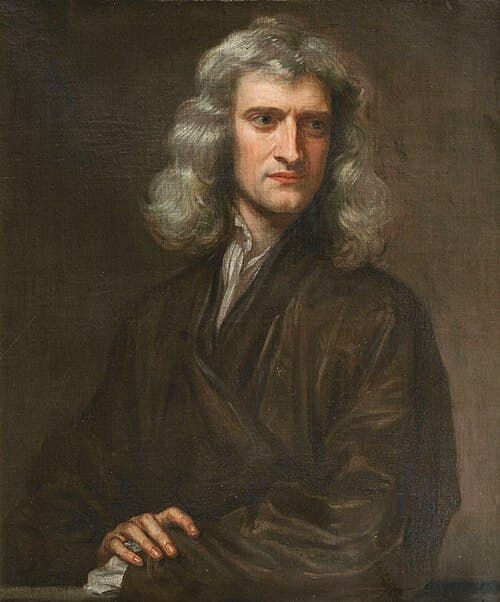
Isaac Newton
PERSON
English mathematician and physicist (1642–1727)

James Baker
PERSON
American lawyer and statesman (born 1930)
JC
James Clerk
PERSON
Name reference in documents
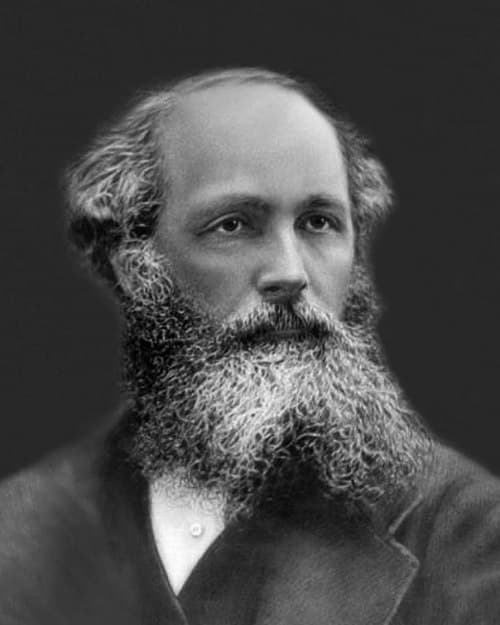
James Clerk Maxwell
PERSON
Name reference in documents
JJ
James Jeans
PERSON
Name reference in documents
John Maynard
PERSON
Person referenced in documents

Julie K. Brown
PERSON
American journalist
Keynes
PERSON
Surname reference in Epstein-related documents
Lawrence Krauss
PERSON • 3 mentions
American particle physicist and cosmologist
Marc Rich
PERSON
American commodities trader (1934–2013)
Martin Rees
PERSON
British cosmologist and astrophysicist (1942-)
MB
Max Born
PERSON
Name reference in documents
MF
Michael Faraday
PERSON
Name reference in documents

Michael Shermer
PERSON
American science writer
MI
Minkowski
PERSON
Name reference in documents
MI
Misplacement
PERSON
Name reference in documents
NA
Nancy
PERSON
First name reference to multiple individuals in Epstein documents
NA
Narnia
PERSON
Name reference in documents
Niels Bohr
PERSON
Person referenced in documents
Noam Chomsky
PERSON • 2 mentions
American linguist and activist (born 1928)
OD
Odysseus
PERSON
Name reference in documents
OE
Oersted
PERSON
Name reference in documents
Pablo Picasso
PERSON
Spanish painter and sculptor (1881–1973)
PJ
Pascual Jordan
PERSON
Name reference in documents
Philip K. Dick
PERSON
American science fiction author (1928–1982)
PL
Philipp Lenard
PERSON
Name reference in documents
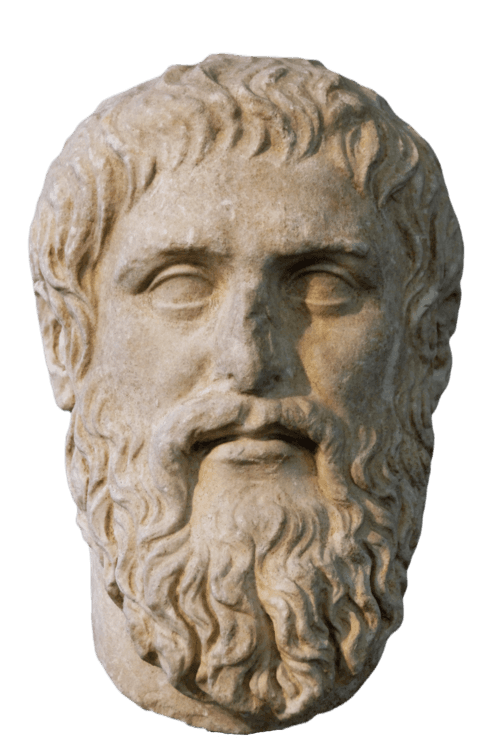
Plato
PERSON • 2 mentions
4th-century BCE Greek philosopher

Prince Charles
PERSON
King of the United Kingdom and other Commonwealth realms since 2022 (born 1948)
Pythagoras
PERSON
Greek philosopher and mathematician (c. 570 – c. 495 BC)
Richard Dawkins
PERSON
English ethologist, evolutionary biologist and author (born 1941)
Richard Feynman
PERSON
American theoretical physicist (1918–1988)
RT
Richard Twiss
PERSON
Name reference in documents
RW
Robert R. Wilson
PERSON
Name reference in documents
SC
Schrodinger
PERSON
Surname reference in Epstein-related documents
Spinoza
PERSON
Surname reference in documents
TY
Thomas Young
PERSON
Name reference in documents
TW
Twiss
PERSON
Name reference in documents
van Gogh's
PERSON
Name reference in documents
WG
Walter Gilbert
PERSON
Name reference in documents
WA
Wardrobe
PERSON
Name reference in documents
Werner Heisenberg
PERSON
Name reference in documents
WP
Wolfgang Pauli
PERSON
Name reference in documents
a Beer Party
ORGANIZATION
Organization referenced in documents
Berlin University
ORGANIZATION
Organization referenced in documents
Coulomb
ORGANIZATION
Organization referenced in documents

Deepak
ORGANIZATION
Refers to Deepak Chopra, Indian-American author and alternative medicine advocate who corresponded with Jeffrey Epstein
Edinburgh Academy
ORGANIZATION
Organization referenced in documents
Einstein's Special Theory of Relativity
ORGANIZATION
Organization referenced in documents
Faraday
ORGANIZATION • 2 mentions
Organization referenced in documents
Fermilab
ORGANIZATION
Organization referenced in documents
First Atria Books
ORGANIZATION
Organization referenced in documents
Gothic Cathedrals
ORGANIZATION
Organization referenced in documents
Hooke
ORGANIZATION
Organization referenced in documents
Institute Professor &
ORGANIZATION
Organization referenced in documents
Jean-Luc Picard
ORGANIZATION
Organization referenced in documents
King's College
ORGANIZATION
Organization referenced in documents
LABORATORY JOURNAL
ORGANIZATION
Organization referenced in documents
Lorentz
ORGANIZATION
Organization referenced in documents
Mathematical
ORGANIZATION
Organization referenced in documents
Max Planck
ORGANIZATION
Organization referenced in documents

Mercury
ORGANIZATION
Organization referenced in documents
Oersted's
ORGANIZATION
Organization referenced in documents
Opticks
ORGANIZATION
Organization referenced in documents
Planck
ORGANIZATION • 2 mentions
Organization referenced in documents

Principia
ORGANIZATION
Private liberal arts college in Elsah, Illinois, U.S.
Pythagorean
ORGANIZATION
Organization referenced in documents
Quantum
ORGANIZATION
Quantum Fund or entity referenced in documents
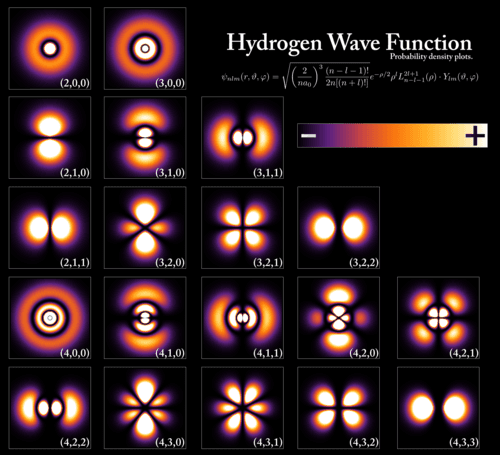
Quantum Mechanics
ORGANIZATION
Organization referenced in documents
Royal Institu-
ORGANIZATION
Organization referenced in documents
Scientific American
ORGANIZATION
American popular science magazine
Simon & Schuster Speakers
ORGANIZATION
Organization referenced in documents
Simon & Schuster, Inc.
ORGANIZATION
Organization referenced in documents
Skeptic
ORGANIZATION
Organization referenced in documents
the Catholic Church
ORGANIZATION
Catholic Church
the Fermi National Accelerator Laboratory
ORGANIZATION
Organization referenced in documents
the General Theory of Relativity
ORGANIZATION
Organization referenced in documents
the Law of Inertia
ORGANIZATION
Organization referenced in documents
the Manhattan Project
ORGANIZATION
Organization referenced in documents
The New York Times
ORGANIZATION
American daily newspaper (founded 1851)
The Physics of Star Trek
ORGANIZATION
Organization referenced in documents
the Research Division
ORGANIZATION
Organization referenced in documents
the Royal Society of Edinburgh
ORGANIZATION
Organization referenced in documents
the Royal Society's
ORGANIZATION
Organization referenced in documents
The Simon & Schuster Speakers Bureau
ORGANIZATION
Organization referenced in documents
the Smithsonian Institution
ORGANIZATION
Organization referenced in documents
the Solvay Conference
ORGANIZATION
Organization referenced in documents
the Standard Model
ORGANIZATION
Organization referenced in documents
the University of Gottingen
ORGANIZATION
Organization referenced in documents
Universal Law of Gravity
ORGANIZATION
Organization referenced in documents
University of Berlin
ORGANIZATION
Organization referenced in documents

Aberdeen
LOCATION
City in Scotland, United Kingdom
Aeneas
LOCATION
Location referenced in documents
Armoire
LOCATION
Location referenced in documents
Batavia
LOCATION
Capital of the Dutch East Indies (1619–1949), now the city of Jakarta

Belgium
LOCATION
Country in western Europe

Columbus
LOCATION
Capital city of Ohio, United States of America
Continent
LOCATION
Location referenced in documents

DELHI
LOCATION
Location referenced in documents
Dirac
LOCATION
Location referenced in documents
Earth
LOCATION
Third planet from the Sun in the Solar System

Edinburgh
LOCATION
Capital city of Scotland, UK

Gottingen
LOCATION
Large city in Lower Saxony, Germany
Helgoland
LOCATION
Location referenced in documents
Jeans
LOCATION
Location referenced in documents
Los Alamos
LOCATION
Census-designated place in and county seat of Los Alamos County, New Mexico, United States

Niagara Falls
LOCATION
Three waterfalls that straddle the international border between Canada and the United States
Northern Ireland
LOCATION
Part of the United Kingdom situated on the island of Ireland
Rumford
LOCATION
Location referenced in documents
Temple of Solo-
LOCATION
Location referenced in documents
the Galapagos Islands
LOCATION
Location referenced in documents
the North Sea
LOCATION
Location referenced in documents

United States
LOCATION
Country located primarily in North America

Washington D.C.
LOCATION
Capital city of the United States of America
Woolsthorpe
LOCATION
Location referenced in documents

Zurich
LOCATION
Capital of the canton of Zurich, Switzerland
Statistics
Pages:100
Entities:156
Sponsored