2020_11_OPR_Report_sub_001 - 2020_11_OPR_Report_p100
Document Information
Bates Range
2020_11_OPR_Report_sub_001 - 2020_11_OPR_Report_p100
Pages
100
Document Content
Page 1 - 2020_11_OPR_Report_p1
DEPARTMENT OF JUSTICE OFFICE OF PROFESSIONAL RESPONSIBILITY REPORT Investigation into the U.S. Attorney’s Office for the Southern District of Florida’s Resolution of Its 2006–2008 Federal Criminal Investigation of Jeffrey Epstein and Its Interactions with Victims during the Investigation November 2020 NOTE: THIS REPORT CONTAINS SENSITIVE, PRIVILEGED, AND PRIVACY ACT PROTECTED INFORMATION. DO NOT DISTRIBUTE THE REPORT OR ITS CONTENTS WITHOUT THE PRIOR APPROVAL OF THE OFFICE OF PROFESSIONAL RESPONSIBILITY.
Page 2 - 2020_11_OPR_Report_p2
Page 3 - 2020_11_OPR_Report_p3
EXECUTIVE SUMMARY The Department of Justice (Department) Office of Professional Responsibility (OPR) investigated allegations that in 2007-2008, prosecutors in the U.S. Attorney’s Office for the Southern District of Florida (USAO) improperly resolved a federal investigation into the criminal conduct of Jeffrey Epstein by negotiating and executing a federal non-prosecution agreement (NPA). The NPA was intended to end a federal investigation into allegations that Epstein engaged in illegal sexual activity with girls.1 OPR also investigated whether USAO prosecutors committed professional misconduct by failing to consult with victims of Epstein’s crimes before the NPA was signed or by misleading victims regarding the status of the federal investigation after the signing. I. OVERVIEW OF FACTUAL BACKGROUND The Palm Beach (Florida) Police Department (PBPD) began investigating Jeffrey Epstein in 2005, after the parents of a 14-year-old girl complained that Epstein had paid her for a massage. Epstein was a multi-millionaire financier with residences in Palm Beach, New York City, and other United States and foreign locations. The investigation led to the discovery that Epstein used personal assistants to recruit girls to provide massages to him, and in many instances, those massages led to sexual activity. After the PBPD brought the case to the State Attorney’s Office, a Palm Beach County grand jury indicted Epstein, on July 19, 2006, for felony solicitation of prostitution in violation of Florida Statute § 796.07. However, because the PBPD Chief and the lead Detective were dissatisfied with the State Attorney’s handling of the case and believed that the state grand jury’s charge did not address the totality of Epstein’s conduct, they referred the matter to the Federal Bureau of Investigation (FBI) in West Palm Beach for a possible federal investigation. The FBI brought the matter to an Assistant U.S. Attorney (AUSA), who opened a file with her supervisor’s approval and with the knowledge of then U.S. Attorney R. Alexander Acosta. She worked with two FBI case agents to develop a federal case against Epstein and, in the course of the investigation, they discovered additional victims. In May 2007, the AUSA submitted to her supervisors a draft 60-count indictment outlining charges against Epstein. She also provided a lengthy memorandum summarizing the evidence she had assembled in support of the charges and addressing the legal issues related to the proposed charges. For several weeks following submission of the prosecution memorandum and proposed indictment, the AUSA’s supervisors reviewed the case to determine how to proceed. At a July 31, 2007 meeting with Epstein’s attorneys, the USAO offered to end its investigation if Epstein pled guilty to state charges, agreed to serve a minimum of two years’ incarceration, registered as a sexual offender, and agreed to a mechanism through which victims could obtain monetary damages. The USAO subsequently engaged in additional meetings and communications with Epstein’s team of attorneys, ultimately negotiating the terms of a state-based resolution of the federal investigation, which culminated in the signing of the NPA on September 24, 2007. The 1 As used in this Report, including in quoted documents and statements, the word “girls” refers to females who were under the age of 18 at the time of the alleged conduct. Under Florida law, a minor is a person under the age of 18.
Sponsored
Page 4 - 2020_11_OPR_Report_p4
ii NPA required Epstein to plead guilty in state court to the then-pending state indictment against him and to an additional criminal information charging him with a state offense that would require him to register as a sexual offender—specifically, procurement of minors to engage in prostitution, in violation of Florida Statute § 796.03. The NPA required Epstein to make a binding recommendation that the state court sentence him to serve 18 months in the county jail followed by 12 months of community control (home detention or “house arrest”). The NPA also included provisions designed to facilitate the victims’ recovery of monetary damages from Epstein. In exchange, the USAO agreed to end its investigation of Epstein and to forgo federal prosecution in the Southern District of Florida of him, four named co-conspirators, and “any potential co-conspirators.” Victims were not informed of, or consulted about, a potential state resolution or the NPA prior to its signing. The signing of the NPA did not immediately lead to Epstein’s guilty plea and incarceration, however. For the next nine months, Epstein deployed his extensive team of prominent attorneys to try to change the terms that his team had negotiated and he had approved, while simultaneously seeking to invalidate the entire NPA by persuading senior Department officials that there was no federal interest at issue and the matter should be left to the discretion of state law enforcement officials. Through repeated communications with the USAO and senior Department officials, defense counsel fought the government’s interpretation of the NPA’s terms. They also sought and obtained review by the Department’s Criminal Division and then the Office of the Deputy Attorney General, primarily on the issue of federal jurisdiction over what the defense insisted was “a quintessentially state matter.” After reviewing submissions by the defense and the USAO, on June 23, 2008, the Office of the Deputy Attorney General informed defense counsel that the Deputy Attorney General would not intervene in the matter. Only then did Epstein agree to fulfill his obligation under the NPA, and on June 30, 2008, he appeared in state court and pled guilty to the pending state indictment charging felony solicitation of prostitution and, pursuant to the NPA, to a criminal information charging him with procurement of minors to engage in prostitution. Upon the joint request of the defendant and the state prosecutor, and consistent with the NPA, the court immediately sentenced Epstein to consecutive terms of 12 months’ incarceration on the solicitation charge and 6 months’ incarceration on the procurement charge, followed by 12 months of community control. Epstein began serving the sentence that day, in a minimum-security Palm Beach County facility. A copy of the NPA was filed under seal with the state court. On July 7, 2008, a victim, identified as “Jane Doe,” filed in federal court in the Southern District of Florida an emergency petition alleging that the government violated the Crime Victims’ Rights Act (CVRA), 18 U.S.C. § 3771, when it resolved the federal investigation of Epstein without consulting with victims, and seeking enforcement of her CVRA rights.2 In responding to the petition, the government, represented by the USAO, revealed the existence of the NPA, but did not produce it to the petitioners until the court directed it to be turned over subject to a protective order; the NPA itself remained under seal in the federal district court. After the initial filings and hearings, the CVRA case was dormant for almost two years while the petitioners pursued civil cases against Epstein. 2 Emergency Victim’s Petition for Enforcement of Crime Victim’s [sic] Rights Act, 18 U.S.C. Section 3771, Doe v. United States, Case No. 9:08-cv-80736-KAM (S.D. Fla. July 7, 2008). Another victim subsequently joined the litigation as “Jane Doe 2.”
Page 5 - 2020_11_OPR_Report_p5
iii Soon after he was incarcerated, Epstein applied for the Palm Beach County Sheriff’s work release program, and the Sheriff approved his application. In October 2008, Epstein began spending 12 hours a day purportedly working at the “Florida Science Foundation,” an entity Epstein had recently incorporated that was co-located at the West Palm Beach office of one of Epstein’s attorneys. Although the NPA specified a term of incarceration of 18 months, Epstein received “gain time,” that is, time off for good behavior, and he actually served less than 13 months of incarceration. On July 22, 2009, Epstein was released from custody to a one-year term of home detention as a condition of community control, and he registered as a sexual offender with the Florida Department of Law Enforcement. After victims and news media filed suit in Florida courts for release of the copy of the NPA that had been filed under seal in the state court file, a state judge in September 2009 ordered it to be made public. By mid-2010, Epstein reportedly settled multiple civil lawsuits brought against him by victims seeking monetary damages, including the two petitioners in the CVRA litigation. During the CVRA litigation, the petitioners sought discovery from the USAO, which made substantial document productions, filed lengthy privilege logs in support of its withholding of documents, and submitted declarations from the AUSA and the FBI case agents who conducted the federal investigation. The USAO opposed efforts to unseal various records, as did Epstein, who was permitted to intervene in the litigation with respect to certain issues. Nevertheless, the court ultimately ordered that substantial records relating to the USAO’s resolution of the Epstein case be made public. During the course of the litigation, the court made numerous rulings interpreting the CVRA. After failed efforts to settle the case, the parties’ cross motions for summary judgment remained pending for more than a year. In 2017, President Donald Trump nominated Acosta to be Secretary of Labor. At his March 2017 confirmation hearing, Acosta was questioned only briefly about the Epstein case. On April 17, 2017, the Senate confirmed Acosta’s appointment as Labor Secretary. In the decade following his release from incarceration, Epstein reportedly continued to settle multiple civil suits brought by many, but not all, of his victims. Epstein was otherwise able to resume his lavish lifestyle, largely avoiding the interest of the press. On November 28, 2018, however, the Miami Herald published an extensive investigative report about state and federal criminal investigations initiated more than 12 years earlier into allegations that Epstein had coerced girls into engaging in sexual activity with him at his Palm Beach estate.3 The Miami Herald reported that in 2007, Acosta entered into an “extraordinary” deal with Epstein in the form of the NPA, which permitted Epstein to avoid federal prosecution and a potentially lengthy prison sentence by pleading guilty in state court to “two prostitution charges.” According to the Miami Herald, the government also immunized from prosecution Epstein’s co-conspirators and concealed from Epstein’s victims the terms of the NPA. Through its reporting, which included interviews of eight victims and information from publicly available documents, the newspaper painted a portrait of federal and state prosecutors who had ignored serious criminal conduct by a wealthy man with powerful and politically connected friends by granting him a “deal of a lifetime” that allowed him both to escape significant punishment for his past conduct and to continue his 3 Julie K. Brown, “Perversion of Justice,” Miami Herald, Nov. 28, 2018. https://www.miamiherald.com/ news/local/article220097825 html.
Page 6 - 2020_11_OPR_Report_p6
iv abuse of minors. The Miami Herald report led to public outrage and media scrutiny of the government’s actions.4 On February 21, 2019, the district court granted the CVRA case petitioners’ Motion for Partial Summary Judgment, ruling that the government violated the CVRA in failing to advise the victims about its intention to enter into the NPA.5 The court also found that letters the government sent to victims after the NPA was signed, describing the investigation as ongoing, “mislead [sic] the victims to believe that federal prosecution was still a possibility.” The court also highlighted the inequity of the USAO’s failure to communicate with the victims while at the same time engaging in “lengthy negotiations” with Epstein’s counsel and assuring the defense that the NPA would not be “made public or filed with the court.” The court ordered the parties to submit additional briefs regarding the appropriate remedies. After the court’s order, the Department recused the USAO from the CVRA litigation and assigned the U.S. Attorney’s Office for the Northern District of Georgia to handle the case for the government. Among the remedies sought by the petitioners, and opposed by the government, was rescission of the NPA and federal prosecution of Epstein. On July 2, 2019, the U.S. Attorney’s Office for the Southern District of New York obtained a federal grand jury indictment charging Epstein with one count of sex trafficking of minors and one count of conspiracy to commit sex trafficking of minors. The indictment alleged that from 2002 until 2005, Epstein created a vast network of underage victims in both New York and Florida whom he sexually abused and exploited. Epstein was arrested on the charges on July 6, 2019. In arguing for Epstein’s pretrial detention, prosecutors asserted that agents searching Epstein’s Manhattan residence found thousands of photos of nude and half-nude females, including at least one believed to be a minor. The court ordered Epstein detained pending trial, and he was remanded to the custody of the Bureau of Prisons and held at the Metropolitan Correctional Center in Manhattan. Meanwhile, after publication of the November 2018 Miami Herald report, the media and Congress increasingly focused attention on Acosta as the government official responsible for the NPA. On July 10, 2019, Acosta held a televised press conference to defend his and the USAO’s actions. Acosta stated that the Palm Beach State Attorney’s Office “was ready to allow Epstein to walk free with no jail time, nothing.” According to Acosta, because USAO prosecutors considered this outcome unacceptable, his office pursued a difficult and challenging case and obtained a resolution that put Epstein in jail, forced him to register as a sexual offender, and provided victims with the means to obtain monetary damages. Acosta’s press conference did not end the controversy, however, and on July 12, 2019, Acosta submitted to the President his resignation as 4 See, e.g., Ashley Collman, “Stunning new report details Trump’s labor secretary’s role in plea deal for billionaire sex abuser,” The Business Insider, Nov. 29, 2018; Cynthia McFadden, “New Focus on Trump Labor Secretary’s role in unusual plea deal for billionaire accused of sexual abuse,” NBC Nightly News, Nov. 29, 2018; Anita Kumar, “Trump labor secretary out of running for attorney general after Miami Herald report,” McClatchy Washington Bureau, Nov. 29, 2018; Emily Peck, “How Trump’s Labor Secretary Covered For A Millionaire Sex Abuser,” Huffington Post, Nov. 29, 2018; Julie K. Brown, et al., “Lawmakers issue call for investigation of serial sex abuser Jeffrey Epstein’s plea deal,” Miami Herald, Dec. 6, 2018. 5 Doe v. United States, 359 F. Supp. 3d 1201 (S.D. Fla., Feb. 21, 2019) (Opinion and Order, 9:08-80736-CIV- Marra).
Sponsored
Page 7 - 2020_11_OPR_Report_p7
v Secretary of Labor. In a brief oral statement, Acosta explained that continued media attention on his handling of the Epstein investigation rather than on the economy was unfair to the Labor Department. On August 10, 2019, Epstein was found hanging in his cell and was later pronounced dead. The New York City Chief Medical Examiner concluded that Epstein had committed suicide. As a result of Epstein’s death, the U.S. Attorney’s Office for the Southern District of New York filed a nolle prosequi to dismiss the pending indictment against Epstein. On August 27, 2019, the district court held a hearing at which more than a dozen of Epstein’s victims—including victims of the conduct in Florida that was addressed through the NPA—spoke about the impact of Epstein’s crimes. The court dismissed the Epstein indictment on August 29, 2019. After Epstein’s death, the federal district court in Florida overseeing the CVRA litigation denied the petitioners their requested remedies and closed the case as moot. Among its findings, the court concluded that although the government had violated the CVRA, the government had asserted “legitimate and legally supportable positions throughout this litigation,” and therefore had not litigated in bad faith. The court also noted it expected the government to “honor its representation that it will provide training to its employees about the CVRA and the proper treatment of crime victims,” as well as honoring its promise to meet with the victims. On September 30, 2019, CVRA petitioner “Jane Doe 1” filed in her true name a petition for a writ of mandamus in the United States Court of Appeals for the Eleventh Circuit, seeking review of the district court’s order denying all of her requested remedies. In its responsive brief, the government argued that “as a matter of law, the legal obligations under the CVRA do not attach prior to the government charging a case” and thus, “the CVRA was not triggered in [the Southern District of Florida] because no criminal charges were brought.” Nevertheless, during oral argument, the government conceded that the USAO had not been “fully transparent” with the petitioner and had “made a mistake in causing her to believe that the case was ongoing when in fact the NPA had been signed.” On April 14, 2020, a divided panel of the Court of Appeals denied the petition, ruling that CVRA rights do not attach until a defendant has been criminally charged. On August 7, 2020, the court granted the petition for rehearing en banc and vacated the panel’s opinion; as of the date of this Report, a briefing schedule has been issued, and oral argument is set for December 3, 2020. II. THE INITIATION AND SCOPE OF OPR’S INVESTIGATION After the Miami Herald published its investigative report on November 28, 2018, U.S. Senator Ben Sasse, Chairman of the Senate Judiciary Subcommittee on Oversight, Agency Action, Federal Rights and Federal Courts, sent a December 3, 2018 letter to OPR, citing the Miami Herald’s report and requesting that OPR “open an investigation into the instances identified in this reporting of possible misconduct by Department of Justice attorneys.” On February 6, 2019, the Department of Justice Office of Legislative Affairs advised Senator Sasse that OPR had opened
Page 8 - 2020_11_OPR_Report_p8
vi an investigation into the matter and would review the USAO’s decision to resolve the federal investigation of Epstein through the NPA.6 After the district court issued its ruling in the CVRA litigation, on February 21, 2019, OPR included within the scope of its investigation an examination of the government’s conduct that formed the basis for the court’s findings that the USAO violated the CVRA in failing to afford victims a reasonable right to confer with the government about the NPA before the agreement was signed and that the government affirmatively misled victims about the status of the federal investigation. During the course of its investigation, OPR obtained and reviewed hundreds of thousands of records from the USAO, the FBI, and other Department components, including the Office of the Deputy Attorney General, the Criminal Division, and the Executive Office for U.S. Attorneys. The records included emails, letters, memoranda, and investigative materials. OPR also collected and reviewed materials relating to the state investigation and prosecution of Epstein. OPR also examined extensive publicly available information, including depositions, pleadings, orders, and other court records, and reviewed media reports and interviews, articles, podcasts, and books relating to the Epstein case. In addition to this extensive documentary review, OPR conducted more than 60 interviews of witnesses, including the FBI case agents, their supervisors, and FBI administrative personnel; current and former USAO staff and attorneys; current and former Department attorneys and senior managers, including a former Deputy Attorney General and a former Assistant Attorney General for the Criminal Division; and the former State Attorney and former Assistant State Attorney in charge of the state investigation of Epstein. OPR also interviewed several victims and attorneys representing victims, and reviewed written submissions from victims, concerning victim contacts with the USAO and the FBI. OPR identified former U.S. Attorney Acosta, three former USAO supervisors, and the AUSA as subjects of its investigation based on preliminary information indicating that each of them was involved in the decision to resolve the case through the NPA or in the negotiations leading to the agreement. OPR deems a current or former Department attorney to be a subject of its investigation when the individual’s conduct is within the scope of OPR’s review and may result in a finding of professional misconduct. OPR reviewed prior public statements made by Acosta and another subject. All five subjects cooperated fully with OPR’s investigation. OPR requested that all of the subjects provide written responses detailing their involvement in the federal investigation of Epstein, the drafting and execution of the NPA, and decisions relating to victim notification and consultation. OPR received and reviewed written responses from all of the subjects, and subsequently conducted extensive interviews of each subject under oath and before a court reporter. Each subject was represented by counsel and had access to relevant contemporaneous documents before the subject’s OPR interview. The subjects reviewed and provided comments on their respective interview transcripts and on OPR’s draft report. OPR 6 The federal government was closed from December 22, 2018, to January 25, 2019. After initiating its investigation, OPR also subsequently received other letters from U.S. Senators and Representatives inquiring into the status of the OPR investigation.
Page 9 - 2020_11_OPR_Report_p9
vii carefully considered the comments and made changes, or noted comments, as OPR deemed appropriate; OPR did not, however, alter its findings and conclusions. Finally, OPR reviewed relevant case law, statutes, regulations, Department policy, and attorney professional responsibility rules as necessary to resolve the issues presented in this case and to determine whether the subjects committed professional misconduct. As part of its investigation, OPR examined the interactions between state officials and the federal investigators and prosecutors, but because OPR does not have jurisdiction over state officials, OPR did not investigate, or reach conclusions about, their conduct regarding the state investigation.7 Because OPR’s mission is to ensure that Department attorneys adhere to the standards of professional conduct, OPR’s investigation focused on the actions of the subject attorneys rather than on determining the full scope of Epstein’s and his assistants’ criminal behavior. Accordingly, OPR considered the evidence and information regarding Epstein’s and his assistants’ conduct as it was known to the subjects at the time they performed their duties as Department attorneys. Additional evidence and information that came to light after June 30, 2008, when Epstein entered his guilty plea under the NPA, did not affect the subjects’ actions prior to that date, and OPR did not evaluate the subjects’ conduct on the basis of that subsequent information. OPR’s investigation occurred approximately 12 years after most of the significant events relating to the USAO’s investigation of Epstein, the NPA, and Epstein’s guilty plea. As a result, many of the subjects and witnesses were unable to recall the details of events or their own or others’ actions occurring in 2006-2008, such as conversations, meetings, or documents they reviewed at the time.8 However, OPR’s evaluation of the subjects’ conduct was aided significantly by extensive, contemporaneous emails among the prosecutors and communications between the government and defense counsel. These records often referred to the interactions among the participants and described important decisions and, in some instances, the bases for them. III. OVERVIEW OF OPR’S ANALYTICAL FRAMEWORK OPR’s primary mission is to ensure that Department attorneys perform their duties in accordance with the highest professional standards, as would be expected of the nation’s principal law enforcement agency. Accordingly, OPR investigates allegations of professional misconduct against current or former Department attorneys related to the exercise of their authority to 7 In August 2019, Florida Governor Ron DeSantis announced that he had directed the Florida Department of Law Enforcement to open an investigation into the conduct of state authorities relating to Epstein. As reported, the investigation focuses on Epstein’s state plea agreement and the Palm Beach County work release program. 8 OPR was cognizant that Acosta and the three managers all left the USAO during, or not long after resolution of, the Epstein case, while the AUSA remained with the USAO until mid-2019. Moreover, as the line prosecutor in the Epstein investigation and also as co-counsel in the CVRA litigation until the USAO was recused from that litigation in early 2019, the AUSA had continuous access to the USAO documentary record and numerous occasions to review these materials in the course of her official duties. Additionally, in responding to OPR’s request for a written response, and in preparing to be interviewed by OPR, the AUSA was able to refresh her recollection with these materials to an extent not possible for the other subjects, who were provided with relevant documents by OPR in preparation for their interviews.
Sponsored
Page 10 - 2020_11_OPR_Report_p10
viii investigate, litigate, or provide legal advice.9 OPR also has jurisdiction to investigate allegations of misconduct against Department law enforcement agents when they relate to a Department attorney’s alleged professional misconduct. In its investigations, OPR determines whether a clear and unambiguous standard governs the challenged conduct and whether a subject attorney violated that standard. Department attorneys are subject to various legal obligations and professional standards in the performance of their duties, including the Constitution, statutes, standards of conduct imposed by attorney licensing authorities, and Department regulations and policies. OPR finds misconduct when it concludes by a preponderance of the evidence that a subject attorney violated such a standard intentionally or recklessly. Pursuant to OPR’s analytical framework, when OPR concludes that (1) no clear and unambiguous standard governs the conduct in question or (2) the subject did not intentionally or recklessly violate the standard that governs the conduct, then it concludes that the subject’s conduct does not constitute professional misconduct. In some cases, OPR may conclude that a subject attorney’s conduct does not satisfy the elements necessary for a professional misconduct finding, but that the circumstances warrant another finding. In such cases, OPR may conclude that a subject attorney exercised poor judgment, made a mistake, or otherwise acted inappropriately under the circumstances. OPR may also determine that the subject attorney’s conduct was appropriate under the circumstances.10 IV. ISSUES CONSIDERED In this investigation, OPR considered two distinct sets of allegations. The first relates to the negotiation, execution, and implementation of the NPA. The second relates to the USAO’s interactions with Epstein’s victims and adherence to the requirements of the CVRA. The two sets of issues are described below and are analyzed separately in this Report. A. The Negotiation, Execution, and Implementation of the NPA In evaluating whether any of the subjects committed professional misconduct, OPR considered whether any of the NPA’s provisions violated a clear or unambiguous statute, professional responsibility rule or standard, or Department regulation or policy. In particular, OPR considered whether the NPA violated standards relating to (1) charging decisions, (2) declination of criminal charges, (3) deferred or non-prosecution agreements, (4) plea agreements, (5) grants 9 28 C.F.R. § 0.39a(a)(1). OPR has authority to investigate the professional conduct of attorneys occurring during their employment by the Department, regardless of whether the attorney left the Department before or during OPR’s investigation. Over its 45-year history, OPR has routinely investigated the conduct of former Department attorneys. Although former Department attorneys cannot be disciplined by the Department, OPR’s determination that a former Department attorney violated state rules of professional conduct for attorneys could result in a referral to an appropriate state attorney disciplinary authority. Furthermore, findings resulting from investigations of the conduct of Department attorneys, even former employees, may assist Department managers in supervising future cases. 10 In some instances, OPR declines to open an investigation based upon a review of the initial complaint or after a preliminary inquiry into the matter. In December 2010, one of the attorneys representing victims in the CVRA litigation raised allegations that Epstein may have exerted improper influence over the federal criminal investigation and that the USAO had deceived the victims of Epstein’s crimes about the existence of the NPA. Pursuant to its standard policy, OPR declined to open an investigation into those allegations at that time in deference to the then-pending CVRA litigation.
Page 11 - 2020_11_OPR_Report_p11
ix of immunity, or (6) the deportation of criminal aliens. The potentially applicable standards that OPR considered as to each of these issues are identified and discussed later in this Report. OPR also examined whether the evidence establishes that any of the subjects were influenced to enter into the NPA, or to include in the NPA terms favorable to Epstein, because of an improper motive, such as a bribe, political consideration, personal interest, or favoritism. OPR also examined and discusses in this Report significant events that occurred after the NPA was negotiated and signed that shed additional light on the USAO’s handling of the Epstein investigation. B. The District Court’s Conclusion That the USAO Violated the CVRA To address the district court’s adverse judicial findings, OPR assessed the manner, content, and timing of the government’s interactions with victims both before and after the NPA was signed, including victim notification letters issued by the USAO and the FBI and interviews conducted by the USAO. OPR considered whether any of the subject attorneys violated any clear and unambiguous standard governing victim consultation or notification. OPR examined the government’s lack of consultation with the victims before the NPA was signed, as well as the circumstances relating to the district court’s finding that the USAO affirmatively misled Epstein’s victims about the status of the federal investigation after the NPA was signed. V. OPR’S FINDINGS AND CONCLUSIONS OPR evaluated the conduct of each subject and considered his or her individual role in various decisions and events. Acosta, however, made the pivotal decision to resolve the federal investigation of Epstein through a state-based plea and either developed or approved the terms of the initial offer to the defense that set the beginning point for the subsequent negotiations that led to the NPA. Although Acosta did not sign the NPA, he participated in its drafting and approved it, with knowledge of its terms. During his OPR interview, Acosta acknowledged that he approved the NPA and accepted responsibility for it. Therefore, OPR considers Acosta to be responsible for the NPA and for the actions of the other subjects who implemented his decisions. Acosta’s overall responsibility for the government’s interactions or lack of communication with the victims is less clear, but Acosta affirmatively made certain decisions regarding victim notification, and OPR evaluates his conduct with respect to those decisions. A. Findings and Conclusions Relating to the NPA With respect to all five subjects of OPR’s investigation, OPR concludes that the subjects did not commit professional misconduct with respect to the development, negotiation, and approval of the NPA. Under OPR’s framework, professional misconduct requires a finding that a subject attorney intentionally or recklessly violated a clear and unambiguous standard governing the conduct at issue. OPR found no clear and unambiguous standard that required Acosta to indict Epstein on federal charges or that prohibited his decision to defer prosecution to the state. Furthermore, none of the individual terms of the NPA violated Department or other applicable standards. As the U.S. Attorney, Acosta had the “plenary authority” under established federal law and Department policy to resolve the case as he deemed necessary and appropriate, as long as his decision was not motivated or influenced by improper factors. Acosta’s decision to decline to
Page 12 - 2020_11_OPR_Report_p12
x initiate a federal prosecution of Epstein was within the scope of his authority, and OPR did not find evidence that his decision was based on corruption or other impermissible considerations, such as Epstein’s wealth, status, or associations. Evidence shows that Acosta resisted defense efforts to have the matter returned to the state for whatever result state authorities deemed appropriate, and he refused to eliminate the incarceration and sexual offender registration requirements. OPR did not find evidence establishing that Acosta’s “breakfast meeting” with one of Epstein’s defense counsel in October 2007 led to the NPA, which had been signed weeks earlier, or to any other significant decision that benefited Epstein. The contemporaneous records show that USAO managers’ concerns about legal issues, witness credibility, and the impact of a trial on the victims led them to prefer a pre-charge resolution and that Acosta’s concerns about the proper role of the federal government in prosecuting solicitation crimes resulted in his preference for a state-based resolution. Accordingly, OPR does not find that Acosta engaged in professional misconduct by resolving the federal investigation of Epstein in the way he did or that the other subjects committed professional misconduct through their implementation of Acosta’s decisions. Nevertheless, OPR concludes that Acosta’s decision to resolve the federal investigation through the NPA constitutes poor judgment. Although this decision was within the scope of Acosta’s broad discretion and OPR does not find that it resulted from improper factors, the NPA was a flawed mechanism for satisfying the federal interest that caused the government to open its investigation of Epstein. In Acosta’s view, the federal government’s role in prosecuting Epstein was limited by principles of federalism, under which the independent authority of the state should be recognized, and the federal responsibility in this situation was to serve as a “backstop” to state authorities by encouraging them to do more. However, Acosta failed to consider the difficulties inherent in a resolution that relied heavily on action by numerous state officials over whom he had no authority; he resolved the federal investigation before significant investigative steps were completed; and he agreed to several unusual and problematic terms in the NPA without the consideration required under the circumstances. In sum, Acosta’s application of federalism principles was too expansive, his view of the federal interest in prosecuting Epstein was too narrow, and his understanding of the state system was too imperfect to justify the decision to use the NPA. Furthermore, because Acosta assumed a significant role in reviewing and drafting the NPA and the other three subjects who were supervisors left the USAO, were transitioning to other jobs, or were absent at critical junctures, Acosta should have ensured more effective coordination and communication during the negotiations and before approving the final NPA. The NPA was a unique resolution, and one that required greater oversight and supervision than Acosta provided. B. Findings and Conclusions Relating to the Government’s Interactions with Victims OPR further concludes that none of the subject attorneys committed professional misconduct with respect to the government’s interactions with victims. The subjects did not have a clear and unambiguous duty under the CVRA to consult with victims before entering into the NPA because the USAO resolved the Epstein investigation without a federal criminal charge. Significantly, at the time the NPA was signed, the Department did not interpret CVRA rights to attach unless and until federal charges had been filed, and the federal courts had not established a clear and unambiguous standard applying the CVRA before criminal charges were brought. In addition, OPR did not find evidence that the lack of consultation was for the purpose of silencing victims. Nonetheless, the lack of consultation was part of a series of government
Sponsored
Page 13 - 2020_11_OPR_Report_p13
xi interactions with victims that ultimately led to public and court condemnation of the government’s treatment of the victims, reflected poorly on the Department as a whole, and is contradictory to the Department’s mission to minimize the frustration and confusion that victims of a crime endure. OPR determined that none of the subjects was responsible for communications sent to certain victims after the NPA was signed that described the case as “under investigation” and that failed to inform them of the NPA. The letters were sent by an FBI administrative employee who was not directly involved in the investigation, incorporated standard form language used by the FBI when communicating with victims, and were not drafted or reviewed by the subjects. Moreover, the statement that the matter was “under investigation” was not false because the government in fact continued to investigate the case in anticipation that Epstein would not fulfill the terms of the NPA. However, the letters risked misleading the victims and contributed to victim frustration and confusion by failing to provide important information about the status of the investigation. The letters also demonstrated a lack of coordination between the federal agencies responsible for communicating with Epstein’s victims and showed a lack of attention to and oversight regarding communication with victims. After the NPA was signed, Acosta elected to defer to the State Attorney the decision whether to notify victims about the state’s plea hearing pursuant to the state’s own victim’s rights requirements. Although Acosta’s decision was within his authority and did not constitute professional misconduct, OPR concludes that Acosta exercised poor judgment when he failed to make certain that the state intended to and would notify victims identified through the federal investigation about the state plea hearing. His decision left victims uninformed about an important proceeding that resolved the federal investigation, an investigation about which the USAO had communicated with victims for months. It also ultimately created the misimpression that the Department intentionally sought to silence the victims. Acosta failed to ensure that victims were made aware of a court proceeding that was related to their own cases, and thus he failed to ensure that victims were treated with forthrightness and dignity. OPR concludes that the decision to postpone notifying victims about the terms of the NPA after it was signed and the omission of information about the NPA during victim interviews and conversations with victims’ attorneys in 2008 do not constitute professional misconduct. Contemporaneous records show that these actions were based on strategic concerns about creating impeachment evidence that Epstein’s victims had financial motives to make claims against him, evidence that could be used against victims at a trial, and were not for the purpose of silencing victims. Nonetheless, the failure to reevaluate the strategy prior to interviews of victims and discussions with victims’ attorneys occurring in 2008 led to interactions that contributed to victims’ feelings that the government was intentionally concealing information from them. After examining the full scope and context of the government’s interactions with victims, OPR concludes that the government’s lack of transparency and its inconsistent messages led to victims feeling confused and ill-treated by the government; gave victims and the public the misimpression that the government had colluded with Epstein’s counsel to keep the NPA secret from the victims; and undercut public confidence in the legitimacy of the resulting agreement. The overall result of the subjects’ anomalous handling of this case understandably left many victims feeling ignored and frustrated and resulted in extensive public criticism. In sum, OPR concludes
Page 14 - 2020_11_OPR_Report_p14
xii that the victims were not treated with the forthrightness and sensitivity expected by the Department. VI. ORGANIZATION OF THE REPORT The Report is divided into three chapters. In Chapter One, OPR describes the relevant federal, state, and local law enforcement entities involved in investigating Epstein’s criminal conduct, as well as the backgrounds of the five subjects and their roles in the events in question. OPR provides a brief profile of Epstein and identifies the defense attorneys who interacted with the subjects. In Chapter Two, OPR sets forth an extensive account of events relating to the federal investigation of Epstein. The account begins with the initial complaint in March 2005 by a young victim and her parents to the local police—a complaint that launched an investigation by local law enforcement authorities—and continues through the mid-2006 opening of the federal investigation; the September 2007 negotiation and signing of the NPA; Epstein’s subsequent efforts to invalidate the NPA through appeals to senior Department officials; Epstein’s June 2008 guilty plea in state court; and, finally, efforts by the AUSA to ensure Epstein’s compliance with the terms of the NPA during his incarceration and until his term of home detention ended in July 2010. After describing the relevant events, OPR analyzes the professional misconduct allegations relating to the decisions made regarding the development and execution of the NPA. OPR describes the relevant standards and sets forth its findings and conclusions regarding the subjects’ conduct. Chapter Three concerns the government’s interactions with victims and the district court’s findings regarding the CVRA. OPR describes the relevant events and analyzes the subjects’ conduct in light of the pertinent standards. OPR sets forth the extensive factual detail provided in Chapters Two and Three, including internal USAO and Department communications, because doing so is necessary for a full understanding of the subjects’ actions and of the bases for OPR’s conclusions.
Page 15 - 2020_11_OPR_Report_p15
xiii TABLE OF CONTENTS EXECUTIVE SUMMARY ............................................................................................................. i I. OVERVIEW OF FACTUAL BACKGROUND ................................................................. i II. THE INITIATION AND SCOPE OF OPR’S INVESTIGATION ......................................v III. OVERVIEW OF OPR’S ANALYTICAL FRAMEWORK ............................................. vii IV. ISSUES CONSIDERED .................................................................................................. viii A. The Negotiation, Execution, and Implementation of the NPA ............................ viii B. The District Court’s Conclusion That the USAO Violated the CVRA ................. ix V. OPR’S FINDINGS AND CONCLUSIONS ...................................................................... ix A. Findings and Conclusions Relating to the NPA .................................................... ix B. Findings and Conclusions Relating to the Government’s Interactions with Victims .............................................................................................................x VI. ORGANIZATION OF THE REPORT ............................................................................. xii CHAPTER ONE: SIGNIFICANT ENTITIES AND INDIVIDUALS .......................................... 1 I. THE FEDERAL AND LOCAL LAW ENFORCEMENT AGENCIES ............................. 1 A. The Department of Justice, the U.S. Attorney’s Office for the Southern District of Florida, and the Federal Bureau of Investigation ....................1 B. The State and Local Law Enforcement Agencies ....................................................4 II. THE SUBJECT ATTORNEYS AND THEIR ROLES IN THE EPSTEIN CASE ............. 4 III. JEFFREY EPSTEIN AND HIS DEFENSE ATTORNEYS ................................................ 8 A. Jeffrey Epstein .........................................................................................................8 B. Epstein’s Defense Attorneys ....................................................................................8 CHAPTER TWO: THE NON-PROSECUTION AGREEMENT ................................................11 PART ONE: FACTUAL BACKGROUND .................................................................................11 I. OVERVIEW ...................................................................................................................... 11 II. MARCH 2005 – MAY 2006: EPSTEIN IS INVESTIGATED BY THE PALM BEACH POLICE DEPARTMENT AND THE PALM BEACH COUNTY STATE ATTORNEY’S OFFICE ...................................................................................... 11 A. The Initial Allegations and the PBPD Investigation ..............................................11 B. The State Attorney’s Office Decides to Present the Case to a State Grand Jury ..............................................................................................................14 C. Florida State Procedure for Bringing Criminal Charges........................................15 D. PBPD Chief Reiter Becomes Concerned with the State Attorney’s Office’s Handling of the State Investigation and Seeks a Federal Investigation .................16
Sponsored
Page 16 - 2020_11_OPR_Report_p16
xiv III. THE FBI AND THE USAO INVESTIGATE EPSTEIN, AND THE DEFENSE TEAM ENGAGES WITH THE USAO .......................................................... 16 A. May 2006 – February 2007: The Federal Investigation Is Initiated, and the USAO Opens a Case File ..........................................................................16 1. The PBPD Presents the Matter to the FBI and the USAO .........................17 2. May 2006: The USAO Accepts the Case and Opens a Case File .............18 3. July 14, 2006: Villafaña Informs Acosta and Sloman about the Case......18 4. Late July 2006: The State Indicts Epstein, and the USAO Moves Forward with a Federal Investigation ............................................20 5. October 2006 – February 2007: Epstein’s Defense Counsel Initiate Contact with Villafaña, Lourie, and Sloman, and Press for a Meeting ....................................................................................22 6. February 2007: Defense Counsel Meet with Lourie and Villafaña and Present the Defense Objections to a Federal Case ..............24 B. February – May 2007: Villafaña and the FBI Continue to Investigate; Villafaña Drafts a Prosecution Memorandum and Proposed Indictment for USAO Managers to Review .............................................................................24 C. May – June 2007: Miami Managers Consider the Prosecution Memorandum and Proposed Charges ............................................................................................27 D. Defense Counsel Seek a Meeting with Senior USAO Managers, which Villafaña Opposes ..................................................................................................30 E. June 2007: Villafaña Supplements the Prosecution Memorandum ......................33 F. The June 26, 2007 Meeting with Defense Counsel ...............................................33 IV. ACOSTA DECIDES TO OFFER EPSTEIN A TWO-YEAR STATE PLEA TO RESOLVE THE FEDERAL INVESTIGATION .............................................................. 35 A. June – July 2007: The USAO Proposes a State Plea Resolution, which the Defense Rejects .....................................................................................36 1. Acosta’s Explanation for His Decision to Pursue a State-based Resolution ...............................................................................37 2. July 2007: Villafaña and Menchel Disagree about the Proposed State Resolution .........................................................................40 B. Villafaña Attempts to Obtain the Computer Equipment Missing from Epstein’s Palm Beach Home, but the Defense Team Opposes Her Efforts ...........45 C. July 2007: The Defense Continues Its Efforts to Stop the Federal Investigation ..............................................................................................47 D. Acosta Decides on a Resolution That Includes a Two-Year Term of Incarceration ..........................................................................................................48 1. The July 26, 2007 Meeting in Miami .........................................................48
Page 17 - 2020_11_OPR_Report_p17
xv 2. The Subjects’ Explanations for the Decision to Offer Epstein a Sentence with a Two-Year Term of Incarceration ..................................49 E. Villafaña Drafts a “Term Sheet” Listing the Requirements of a Potential Agreement with the Defense ..................................................................................51 V. THE USAO PRESENTS EPSTEIN WITH KEY TERMS OF A DEAL: PLEAD GUILTY TO STATE CHARGES REQUIRING A TWO-YEAR TERM OF INCARCERATION AND SEXUAL OFFENDER REGISTRATION, AND AGREE TO A MEANS FOR THE VICTIMS TO OBTAIN MONETARY DAMAGES ............. 53 A. July 31, 2007: The USAO Presents Its Proposal to the Defense Team, which Makes a Counteroffer ..................................................................................54 B. In an August 3, 2007 Letter, the USAO States That a Two-Year Term of Imprisonment Is the Minimum That Will Vindicate the Federal Interest .............55 C. August – September 2007: Epstein Hires Additional Attorneys, Who Meet with Acosta ...................................................................................................59 1. Acosta Agrees to Meet with Epstein’s New Attorneys .............................59 2. Leading to the Meeting with Defense Counsel, Investigative Steps Are Postponed, and the Defense Continues to Oppose Villafaña’s Efforts to Obtain the Computer Evidence ...............................60 3. September 7, 2007: Acosta, Other USAO Attorneys, and FBI Supervisors Meet with Epstein Attorneys Starr, Lefkowitz, and Sanchez ...............................................................................................62 VI. SEPTEMBER 2007: THE PLEA NEGOTIATIONS INTENSIFY, AND IN THE PROCESS, THE REQUIRED TERM OF IMPRISONMENT IS REDUCED ................. 63 A. The Incarceration Term Is Reduced from 24 Months to 20 Months .....................63 B. September 12, 2007: The USAO and Defense Counsel Meet with the State Attorney ..................................................................................................64 C. The Evidence Does Not Clearly Show Why the Term of Incarceration Was Reduced from 24 Months to 20 Months to 18 Months ..................................66 D. The Parties Continue to Negotiate but Primarily Focus on a Potential Plea to Federal Charges .................................................................................................68 E. The Parties Appear to Reach Agreement on a Plea to Federal Charges ................72 F. Defense Counsel Offers New Proposals Substantially Changing the Terms of the Federal Plea Agreement, which the USAO Rejects .........................73 G. Villafaña and Lourie Recommend Ending Negotiations, but Acosta Urges That They “Try to Work It Out” .................................................................76 H. Acosta Edits the Federal Plea Agreement, and Villafaña Sends a Final Version to the Defense ..................................................................................77
Page 18 - 2020_11_OPR_Report_p18
xvi I. The Defense Rejects the Federal Plea Agreement, Returns to the NPA “State-Only” Resolution, and Begins Opposing the Sexual Offender Registration Requirement ......................................................................................78 J. The USAO Agrees Not to Criminally Charge “Potential Co-Conspirators” .........79 K. The USAO Rejects Defense Efforts to Eliminate the Sexual Offender Registration Requirement ......................................................................................81 L. The Defense Adds a Confidentiality Clause ..........................................................83 VII. SEPTEMBER 24, 2007: ACOSTA MAKES FINAL EDITS, AND THE NPA IS SIGNED ............................................................................................................... 84 VIII. POST-NPA NEGOTIATIONS .......................................................................................... 87 A. September – October 2007: Sloman’s Concerns about Selection of an Attorney Representative Lead to a Proposed NPA Addendum .............................87 B. October 12, 2007: Acosta and Defense Attorney Lefkowitz Meet for Breakfast .................................................................................................89 C. Acosta Agrees to the Defense Request to Postpone Epstein’s Guilty Plea; the Parties Continue to Negotiate Issues concerning the Attorney Representative and Finally Reach Agreement on the NPA Addendum ................91 D. Epstein Further Delays His Guilty Plea .................................................................94 E. Epstein Seeks Departmental Review of the NPA’s § 2255 Provision Relating to Monetary Damages for the Victims ....................................................94 F. Despite Affirming the NPA, Defense Counsel Intensify Their Challenges to It and Accuse Villafaña of Improper Conduct ...................................................98 1. December 7 and 11, 2007: Starr and Lefkowitz Send to Acosta Letters and “Ethics Opinions” Complaining about the Federal Investigation and Villafaña .....................................................98 2. As a Result of the Starr and Lefkowitz Submissions, the New USAO Criminal Chief Begins a Full Review of the Evidence, and Acosta Agrees to Meet Again with Defense Counsel .........................99 3. The Defense Notifies Acosta That It May Pursue a Department Review of the USAO’s Actions .................................................................99 4. Acosta Attempts to Revise the NPA § 2255 Language concerning Monetary Damages, but the Defense Does Not Accept It .......................100 5. January 7, 2008: Acosta and Sloman Meet with Sanchez, Who Makes Additional Allegations of USAO Misconduct .............................101 6. Acosta Asks CEOS to Review the Evidence ...........................................102 IX. FEBRUARY – JUNE 2008: THE DEPARTMENT’S REVIEW................................... 103 A. February – May 15, 2008: Review by CEOS and the Criminal Division ...........104
Sponsored
Page 19 - 2020_11_OPR_Report_p19
xvii B. May – June 23, 2008: Review by the Office of the Deputy Attorney General ..................................................................................................108 X. JUNE 2008 – JUNE 2009: EPSTEIN ENTERS HIS PLEAS AND SERVES HIS CUSTODIAL SENTENCE ...................................................................... 110 A. June 30, 2008: Epstein Enters His Guilty Pleas in State Court ..........................111 B. Epstein Is Placed on Work Release .....................................................................113 XI. POST-RELEASE DEVELOPMENTS ............................................................................ 117 PART TWO: APPLICABLE STANDARDS ............................................................................ 119 I. OPR’S ANALYTICAL FRAMEWORK ........................................................................ 119 II. APPLICABLE STANDARDS OF CONDUCT .............................................................. 120 A. The United States Attorneys’ Manual..................................................................120 1. USAM Provisions Relating to the Initiation and Declination of a Federal Prosecution...........................................................................120 2. USAM § 9-2.031: The Petite Policy .......................................................122 3. USAM Provisions Relating to Plea Agreements .....................................123 4. USAM Provisions Relating to Non-Prosecution Agreements .................124 5. USAM Provisions Relating to Grants of Immunity .................................125 6. USAM/C.F.R. Provisions Relating to Financial Conflicts of Interest .....125 B. Other Department Policies ...................................................................................125 1. Department Policies Relating to the Disposition of Charges...................125 2. Department Policy Relating to Deportation of Criminal Aliens ..............127 C. Case Law ..............................................................................................................127 1. Prosecutorial Discretion ...........................................................................127 2. Plea Agreement Promises of Leniency towards a Third Party ................128 D. State Bar Rules .....................................................................................................129 1. FRPC 4-1.1 – Competence ......................................................................130 2. FRPC 4-1.3 – Diligence ...........................................................................130 3. FRPC 4-4.1 – Candor in Dealing with Others .........................................130 4. FRPC 4-8.4 – Conduct Prejudicial to the Administration of Justice .......131 PART THREE: ANALYSIS...................................................................................................... 133 I. OVERVIEW .................................................................................................................... 133 II. ACOSTA REVIEWED AND APPROVED THE TERMS OF THE NPA AND IS ACCOUNTABLE FOR IT .............................................................................................. 133
Page 20 - 2020_11_OPR_Report_p20
xviii III. OPR FOUND THAT NONE OF THE SUBJECTS VIOLATED A CLEAR AND UNAMBIGUOUS STATUTE, PROFESSIONAL RESPONSIBILITY RULE OR STANDARD, OR DEPARTMENT REGULATION OR POLICY, IN NEGOTIATING, APPROVING, OR ENTERING INTO THE NPA ............................ 134 A. U.S. Attorneys Have Broad Discretion to Resolve Investigations or Cases as They Deem Appropriate, and Acosta’s Decision to Decline to Prosecute Epstein Federally Does Not Constitute Professional Misconduct ...........................................................................................................135 B. No Clear and Unambiguous Standard Precluded Acosta’s Use of a Non-Prosecution Agreement to Resolve the Federal Investigation of Epstein .............................................................................................................136 C. The NPA’s Individual Provisions Did Not Violate Any Clear and Unambiguous Standards ......................................................................................137 1. Acosta Had Authority to Approve an Agreement That Required Epstein to Plead to Offenses Resulting in an 18-Month Term of Incarceration ............................................................................................137 2. The USAO’s Agreement Not to Prosecute Unidentified “Potential Co-Conspirators” Did Not Violate a Clear and Unambiguous Department Policy ...................................................................................139 3. The NPA Did Not Violate Department Policy Relating to Deportation of Criminal Aliens ...............................................................140 IV. THE EVIDENCE DOES NOT ESTABLISH THAT THE SUBJECTS WERE INFLUENCED BY IMPROPER MOTIVES TO INCLUDE IN THE NPA TERMS FAVORABLE TO EPSTEIN OR TO OTHERWISE EXTEND BENEFITS TO EPSTEIN................................................................................................ 140 A. OPR Found No Evidence of Criminal Corruption, Such as Bribery, Gratuity, or Illegal Political or Personal Consideration ......................................................141 B. Contemporaneous Written Records and Witness and Subject Interviews Did Not Reveal Evidence Establishing That the Subjects Were Improperly Influenced by Epstein’s Status, Wealth, or Associations .................142 1. The Contemporaneous Records Did Not Reveal Evidence Establishing That the NPA Resulted from Improper Factors ..................142 2. The Subjects Asserted That They Were Motivated by Reasonable Strategic and Policy Considerations, Not Improper Influences .................................................................................143 3. Subject and Witness Interviews and Contemporaneous Records Identified Case-Specific Considerations Relating to Evidence, Legal Theories, Litigation Risk, and a Trial’s Potential Impact on Victims ................................................................................................144 C. Other Significant Factors Are Inconsistent with a Conclusion That the Subjects’ Actions Were Motivated by Improper Influences ..........................149
Page 21 - 2020_11_OPR_Report_p21
xix D. OPR Does Not Find That the Subjects’ Preexisting Relationships with Defense Counsel, Decisions to Meet with Defense Counsel, and Other Factors Established That the Subjects Acted from Improper Influences or Provided Improper Benefits to Epstein ................................................................150 1. The Evidence Does Not Establish That the Subjects Extended Any Improper Benefit to Epstein because of Their Preexisting Relationships with His Attorneys ............................................................150 2. The Subjects Asserted That Their Relationships with Defense Counsel Did Not Influence Their Actions ...............................................151 E. The Evidence Does Not Establish That the Subjects’ Meetings with Defense Counsel Were Improper Benefits to Epstein .........................................155 1. The Evidence Shows That the Subjects’ Decisions to Meet with Epstein’s Legal Team Were Warranted by Strategic Considerations ......155 2. The Evidence Does Not Establish That Acosta Negotiated a Deal Favorable to Epstein over Breakfast with Defense Counsel ...........160 F. Villafaña’s Emails with Defense Attorney Lefkowitz during the NPA Negotiations Do Not Establish That Villafaña, or Other Subjects, Intended to Give Epstein Preferential Treatment or Were Motivated by Favoritism or Other Improper Influences ............................................................163 G. The Evidence Does Not Establish That Acosta, Lourie, or Villafaña Agreed to the NPA’s Provision Promising Not to Prosecute “Potential Co-conspirators” in Order to Protect Any of Epstein’s Political, Celebrity, or Other Influential Associates ............................................................................166 H. OPR’s Investigation Did Not Reveal Evidence Establishing That Epstein Cooperated in Other Federal Investigations or Received Special Treatment on That Basis........................................................................................................168 V. ACOSTA EXERCISED POOR JUDGMENT BY RESOLVING THE FEDERAL INVESTIGATION THROUGH THE NPA ....................................................................169 A. Acosta’s Decision to Resolve the Federal Investigation through a State Plea under Terms Incorporated into the NPA Was Based on a Flawed Application of the Petite Policy and Federalism Concerns, and Failed to Consider the Significant Disadvantages of a State-Based Resolution ......................................170 B. The Assessment of the Merits of a Potential Federal Prosecution Was Undermined by the Failure to Obtain Evidence or Take Other Investigative Steps That Could Have Changed the Complexion of the Case ...........................175 C. OPR Was Unable to Determine the Basis for the Two-Year Term of Incarceration, That It Was Tied to Traditional Sentencing Goals, or That It Satisfied the Federal Interest in the Prosecution ......................................179 D. Acosta’s Decisions Led to Difficulties Enforcing the NPA ................................182 E. Acosta Did Not Exercise Sufficient Supervisory Review over the Process ........182
Sponsored
Page 22 - 2020_11_OPR_Report_p22
xx CHAPTER THREE: ISSUES RELATING TO THE GOVERNMENT’S INTERACTIONS AND COMMUNICATIONS WITH VICTIMS ......................................................................... 189 PART ONE: FACTUAL BACKGROUND .............................................................................. 189 I. OVERVIEW .................................................................................................................... 189 II. THE CVRA, 18 U.S.C. § 3771 ........................................................................................ 189 A. History..................................................................................................................189 B. Enumerated Rights ...............................................................................................191 III. THE DEPARTMENT’S INTERPRETATION OF THE CVRA’S DEFINITION OF “CRIME VICTIM” AT THE TIME OF THE EPSTEIN INVESTIGATION ................ 192 A. April 1, 2005 Office of Legal Counsel “Preliminary Review” ............................192 B. 2005 Attorney General Guidelines for Victim and Witness Assistance ..............193 IV. USAO AND FBI VICTIM/WITNESS NOTIFICATION PRACTICE AT THE TIME OF THE EPSTEIN INVESTIGATION ................................................................ 194 A. USAO Training ....................................................................................................194 B. The Automated Victim Notification System .......................................................195 C. FBI Victim Notification Pamphlets .....................................................................196 V. THE INTRODUCTORY USAO AND FBI LETTERS TO VICTIMS........................... 196 A. August 2006: The FBI Victim Notification Letters ............................................196 B. August 2006: The USAO’s Letters to Victims ...................................................198 C. USAO and FBI Letters Are Hand Delivered .......................................................200 VI. AUGUST 2006 – SEPTEMBER 2007: FBI AND USAO CONTACTS WITH VICTIMS BEFORE THE NPA IS SIGNED ................................................................... 200 A. The Case Agents and Villafaña Solicit Some Victims’ Opinions about Resolving the Federal Investigation.....................................................................201 B. Before the NPA Is Signed, Villafaña Expresses Concern That Victims Have Not Been Consulted ....................................................................................202 1. July 2007: Villafaña’s Email Exchanges with Menchel .........................202 2. Villafaña Asserts That Her Supervisors Gave Instructions Not to Consult Victims about the Plea Discussions, but Her Supervisors Do Not Currently Recall Such Instructions .............................................204 3. September 6, 2007: Villafaña Informs Sloman, Who Informs Acosta, of Oosterbaan’s Opinion That Consultation with Victims Was Required ...........................................................................................204 VII. SEPTEMBER 24, 2007 – JUNE 30, 2008: AFTER THE NPA IS SIGNED, THE USAO MAKES VARIOUS VICTIM NOTIFICATION DECISIONS........................... 206
Page 23 - 2020_11_OPR_Report_p23
xxi A. September – October 2007: The Case Agents Notify Some Victims about the NPA, but Stop When the Case Agent Becomes Concerned about Potential Impeachment.........................................................................................207 B. October 2007: Defense Attorneys Object to Government Victim Notifications .........................................................................................................210 C. October – November 2007: The FBI and the USAO Continue to Investigate, and the FBI Sends a Notice Letter to One Victim Stating That the Case is “Under Investigation” ...............................................................211 D. The USAO Informs the Defense That It Intends to Notify Victims by Letter about Epstein’s State Plea Hearing and the Resolution of the Federal Investigation, but the Defense Strongly Objects to the Notification Plan ...........212 E. December 19, 2007: Acosta Advises the Defense That the USAO Will Defer to the State Attorney the Decision Whether to Notify Victims of the State Plea Hearing, but the USAO Would Notify Them of the Federal Resolution, “as Required by Law”.......................................................................216 F. January – June 2008: While the Defense Presses Its Appeal to the Department in an Effort to Undo the NPA, the FBI and the USAO Continue Investigating Epstein ............................................................................220 1. Villafaña Prepares to Contact Victims in Anticipation That Epstein Will Breach the NPA ..................................................................220 2. The FBI Uses VNS Form Letters to Re-Establish Contact with Victims .....................................................................................................221 3. Villafaña, the FBI, and the CEOS Trial Attorney Interview Victims ......224 4. February – March 2008: Villafaña Takes Additional Steps to Prepare for a Prosecution of Epstein, Arranges for Pro Bono Attorneys for Victims, and Cautions about Continued Delay .................227 5. March – April 2008: Villafaña Continues to Prepare for Filing Federal Charges .......................................................................................227 VIII. USAO SUPERVISORS CONSIDER CVRA OBLIGATIONS IN AN UNRELATED MATTER AND IN LIGHT OF A NEW FIFTH CIRCUIT OPINION........................... 228 IX. JUNE 2008: VILLAFAÑA’S PRE-PLEA CONTACTS WITH THE ATTORNEY REPRESENTING THE VICTIMS WHO LATER BECAME THE CVRA PETITIONERS ........................................................................................... 229 X. JUNE 2008: EFFORTS TO NOTIFY VICTIMS ABOUT THE JUNE 30, 2008 PLEA HEARING............................................................................................................. 231 XI. JUNE 30, 2008: EPSTEIN ENTERS HIS GUILTY PLEAS IN A STATE COURT HEARING AT WHICH NO VICTIMS ARE PRESENT ................................. 234 XII. SIGNIFICANT POST-PLEA DEVELOPMENTS.......................................................... 235 A. Immediately After Epstein’s State Guilty Pleas, Villafaña Notifies Some Victims’ Attorneys ...............................................................................................235
Page 24 - 2020_11_OPR_Report_p24
xxii B. July 7, 2008: The CVRA Litigation Is Initiated .................................................236 C. July 2008: Villafaña Prepares and Sends a Victim Notification Letter to Listed Victims ..................................................................................................237 D. July – August 2008: The FBI Sends the Victim Notification Letter to Victims Residing Outside of the United States....................................................238 E. August – September 2008: The Federal Court Orders the USAO to Disclose the NPA to Victims, and the USAO Sends a Revised Victim Notification Letter ................................................................................................239 F. 2010 – 2011: Department and Congressional Actions Regarding Interpretation of the CVRA .................................................................................241 G. The CVRA Litigation Proceedings and Current Status .......................................242 PART TWO: APPLICABLE STANDARDS ............................................................................ 247 I. STATUTORY PROVISIONS ......................................................................................... 247 A. The CVRA, 18 U.S.C. § 3771 .............................................................................247 B. The Victims’ Rights and Restitution Act of 1990 (VRRA), 34 U.S.C. § 20141, Services to Victims (formerly cited as 42 USCA § 10607) .................................248 II. DEPARTMENT POLICY: THE 2005 ATTORNEY GENERAL GUIDELINES FOR VICTIM AND WITNESS ASSISTANCE (2005 GUIDELINES) ......................... 249 III. FLORIDA RULES OF PROFESSIONAL CONDUCT .................................................. 253 A. FRPC 4-4.1 – Candor in Dealing with Others .....................................................253 B. FRPC 4-8.4 – Conduct Prejudicial to the Administration of Justice ...................253 PART THREE: ANALYSIS...................................................................................................... 255 I. OVERVIEW .................................................................................................................... 255 II. THE SUBJECTS DID NOT VIOLATE A CLEAR AND UNAMBIGUOUS STANDARD BY ENTERING INTO THE NPA WITHOUT CONSULTING THE VICTIMS ................................................................................................................ 255 A. At the Time, No Clear and Unambiguous Standard Required the USAO to Notify Victims Regarding Case-Related Events until after the Filing of Criminal Charges .............................................................................................256 B. OPR Did Not Find Evidence Establishing That the Lack of Consultation Was Intended to Silence Victims .........................................................................258 III. LETTERS SENT TO VICTIMS BY THE FBI WERE NOT FALSE STATEMENTS BUT RISKED MISLEADING VICTIMS ABOUT THE STATUS OF THE FEDERAL INVESTIGATION ......................................................... 261 A. The USAO Was Not Responsible for Victim Notification Letters Sent by the FBI in October 2007, January 2008, and May 2008 Describing the Status of the Case as “Under Investigation” ..................................................262
Sponsored
Page 25 - 2020_11_OPR_Report_p25
xxiii B. Because the Federal Investigation Continued after the NPA Was Signed, the FBI Letters Were Accurate but Risked Misleading Victims regarding the Status of the Federal Investigation .................................................................263 IV. ACOSTA’S DECISION TO DEFER TO THE STATE ATTORNEY’S DISCRETION WHETHER TO NOTIFY VICTIMS ABOUT EPSTEIN’S STATE COURT PLEA HEARING DID NOT VIOLATE A CLEAR OR UNAMBIGUOUS STANDARD; HOWEVER, ACOSTA EXERCISED POOR JUDGMENT BY FAILING TO ENSURE THAT VICTIMS IDENTIFIED IN THE FEDERAL INVESTIGATION WERE ADVISED OF THE STATE PLEA HEARING ................. 265 A. Acosta’s Decision to Defer to the State Attorney’s Discretion Whether to Notify Victims about Epstein’s State Court Plea Hearing Did Not Violate Any Clear or Unambiguous Standard .....................................................265 B. Acosta Exercised Poor Judgment When He Failed to Ensure That Victims Identified in the Federal Investigation Were Informed of the State Plea Hearing ................................................................................................269 V. VILLAFAÑA DID NOT COMMIT PROFESSIONAL MISCONDUCT IN HER ORAL COMMUNICATIONS TO VICTIMS AND VICTIMS’ ATTORNEYS, IN WHICH SHE DESCRIBED THE CASE AS “UNDER INVESTIGATION” BUT DID NOT DISCLOSE THE EXISTENCE OF THE NPA TO SOME VICTIMS .........................................................................................................................273 VI. THE GOVERNMENT FAILED TO TREAT VICTIMS FORTHRIGHTLY AND WITH SENSITIVITY WHEN IT FAILED TO TIMELY PROVIDE VICTIMS WITH IMPORTANT INFORMATION ABOUT THE RESOLUTION OF THE FEDERAL INVESTIGATION ........................................................................................ 280 CONCLUSION ........................................................................................................................... 283 METHODOLOGY ..................................................................................................................... 287 Exhibit 1: State Indictment Exhibit 2: September 6, 2007 Draft Non-Prosecution Agreement Exhibit 3: September 24, 2007 Non-Prosecution Agreement Exhibit 4: Addendum to the Non-Prosecution Agreement Exhibit 5: State Information
Page 26 - 2020_11_OPR_Report_p26
xxiv [Page Intentionally Left Blank]
Page 27 - 2020_11_OPR_Report_p27
CHAPTER ONE SIGNIFICANT ENTITIES AND INDIVIDUALS I. THE FEDERAL AND LOCAL LAW ENFORCEMENT AGENCIES A. The Department of Justice, the U.S. Attorney’s Office for the Southern District of Florida, and the Federal Bureau of Investigation The Department of Justice (Department) is a cabinet-level executive branch department headed by the United States Attorney General. The stated mission of the Department is to enforce federal law and defend the interests of the United States; ensure public safety; provide federal leadership in preventing and controlling crime; seek just punishment for those guilty of unlawful behavior; and ensure the fair and impartial administration of justice. The Department enforces federal criminal law through investigations and prosecutions of violations of federal criminal statutes. It also engages in civil litigation. During the period relevant to this Report, the Department had approximately 110,000 employees in 40 components. The Department’s headquarters are in Washington, D.C., and it conducts most of its work through field locations around the nation and overseas. The prosecution of federal criminal laws is handled primarily through 94 U.S. Attorney’s Offices, each headed by a presidentially appointed (with advice and consent of the U.S. Senate) U.S. Attorney who has independent authority over his or her office but is overseen by the Attorney General through the Deputy Attorney General.1 The Department’s Criminal Division, headed by an Assistant Attorney General, includes components with specialized areas of expertise that also prosecute cases, assist in the prosecutions handled by U.S. Attorney’s Offices, and provide legal expertise and policy guidance. Among the Criminal Division components mentioned in this Report are the Appellate Section, the Office of Enforcement Operations, the Computer Crime and Intellectual Property Section, and, most prominently, the Child Exploitation and Obscenity Section (CEOS). CEOS, based in Washington, D.C., comprises attorneys and investigators who specialize in investigating and prosecuting child exploitation crimes, especially those involving technology, and they assist U.S. Attorney’s Offices in investigations, trials, and appeals related to these offenses. CEOS provides advice and training to federal prosecutors, law enforcement personnel, and government officials. CEOS also works to develop and refine proposals for prosecution policies, legislation, government practices, and agency regulations. The U.S. Attorneys’ Manual (USAM) (revised in 2018 and renamed the Justice Manual) is a compilation of Department rules, policies, and guidance governing the conduct of Department employees. It includes requirements for approval by, or consultation with, the Criminal Division 1 Two U.S. Attorney’s Offices, in the judicial districts of Guam and of the Northern Mariana Islands, are headed by a single U.S. Attorney. The Attorney General and the U.S. District Court have authority to appoint acting and interim U.S. Attorneys.
Sponsored
Page 28 - 2020_11_OPR_Report_p28
2 or other divisions having responsibility for specific criminal enforcement, such as the Civil Rights Division. In this Report, OPR applies the USAM provisions in effect at the relevant time. During the period most relevant to this Report, the Attorney General was Michael Mukasey, the Deputy Attorney General was Mark Filip, and the Assistant Attorney General for the Criminal Division was Alice Fisher. The Chief of CEOS was Andrew Oosterbaan. The U.S. Attorney’s Office for the Southern District of Florida (USAO) handles federal matters in the Southern District of Florida judicial district, which covers the counties of Miami- Dade, Broward, Monroe, Palm Beach, Martin, St. Lucie, Indian River, Okeechobee, and Highlands, an area of over 15,000 square miles. During the period relevant to this Report, the USAO had a staff of approximately 200 Assistant U.S. Attorneys (AUSAs) and 200 support personnel. The main office is in Miami; staffed branch offices are located in Fort Lauderdale, West Palm Beach (covering Palm Beach County), and Fort Pierce; and an unstaffed branch office is located in Key West. The West Palm Beach USAO office is approximately 70 miles from the Miami office. The USAO is headed by the U.S. Attorney; the second-in-command is the First Assistant U.S. Attorney (FAUSA), who serves as principal advisor to the U.S. Attorney and supervises all components of the USAO, including the Criminal, Civil, and Appellate Divisions, each of which is headed by a Chief. During the period relevant to this Report, the West Palm Beach office consisted of two criminal sections and was headed by a Managing AUSA. The Federal Bureau of Investigation (FBI) is the principal federal law enforcement agency and is part of the Department. It maintains field offices that work with U.S. Attorney’s Offices. The FBI field office in Miami, headed by a Special Agent in Charge, has satellite offices, known as Resident Agencies, one of which is located in West Palm Beach and covers Palm Beach County. The Epstein investigation was handled by Special Agents assigned to a particular West Palm Beach Resident Agency squad, headed by a Supervisory Special Agent. FBI responsibility for advising crime victims of their rights and of victim services available to them is handled by non-agent Victim Specialists. The following chart shows the Department’s organizational structure during the period relevant to this Report:
Page 29 - 2020_11_OPR_Report_p29
I ~ SOLIOTOR GENERAL SOL10T1 GEN I l OFFICE OF TH£ SOLICITOR GENERAL OFFICE SOLICI GEN OFFICE OF JUSTICE PROGRAMS OFfl, JUSTJ, PROGi EXEWTIVE O"ICE FOil THE UNITED STATB EXEWTI1 O"ICEF UNITED OFFICE OF DISPUTE RESOLUTION OFH DISPI RESOLI ASSOCIATE ATTORNEY GENERAL COMMUNITY OIIIENTED CIVIL RIGKTS -- DMSION POUONG SBIVICfi OFFICE OF ANTITRUST -- INFORMATION DMSION AND PRIVACY FOREIGN Cl.AIMS -- SETTl.EMENT TAX DIVISION COMMJSSION Off'ICEOf VIOLENCE AGAINST WOMEN -- CIVIL DIVISION EHVIRONMEHT -- AND NATlJRAL RfSOURCfi DIVISION COMMUNITY -- RELATIONS SERVICE U.S. Department of Justice 2006- 2008 Attorney General Deputy Attorney General OFFICE OF OFFICE OF LEGAL POLICY ..... PUBLIC AFFAIRS OFFICE OF OFFICE OF LEGISLATIVE -- LEGAL AFFAIRS COUNSEL Off'ICE OF INTl'R• GOVERNMENTAL AND PUBLIC UASON 3 R:DfRAL -- CRIMINAL IIUUAUOI' IN\lfSTlGATlON DIVISION DRUG BUREAU OF tNFCRClMENT -- AOMlfflSTRATION PRISONS EXEQITlVE UNITfD STATB Ol'RCEFOR -- UNITED STATl'S MARSHALS SERVICE ATTOIINEYS UNITED U.S.NATIONAL STATES -- CENTIIAL BUREAU ATTORNEYS INT1'RPOI. IUIIIAU OF OfFKEOl' THE Al.<Oo<OI., -- FEDERAL ToeACCO, FIREARMS~ & DETENTION EXPLOSIVES TRUSTEE NATIONAL SECURITY -- DIVISION OFFICE OF THE INSPECTOR -- GENERAL JUSTICE MANAGEMENT -- DIVISION EXECUTIVE O"IOEFOR -- IMIVIGRATION REVIEW O"ICEOf PRORSSIONAL RfSPONSlBIUTY "ICEOf RSSIONAL RfSPONSlBIUTY OFFlCE OFTHE PARDON ATTORNEY CE OFTHE 'ARDON HORNEY UNITED STATE'S PAROl£ ODMMISSION ITEDSTATE'S PAROl£ ODMMISSION NATIONAL DRUG lNTELUGENCf CENTER ONALDRUG RLIGENCE ENTER PRORSSIONAL RfSPONSlBIUTY ADVISORY Ol'RCE
Page 30 - 2020_11_OPR_Report_p30
4 B. The State and Local Law Enforcement Agencies Florida state criminal prosecutions are primarily managed by an Office of State Attorney in each of the state’s 20 judicial circuits, headed by a State Attorney who is elected to a four-year term. Palm Beach County constitutes the 15th Judicial Circuit. Barry Krischer was the elected State Attorney for that circuit from 1992 until January 2009. During the period relevant to this Report, the Palm Beach County State Attorney’s Office, based in the City of West Palm Beach, had more than 100 attorneys and several investigators, and a Crimes Against Children Unit headed by Assistant State Attorney Lanna Belohlavek. The incorporated Town of Palm Beach occupies the coastal barrier island off the city of West Palm Beach. Its law enforcement agency is the Palm Beach Police Department (PBPD). Michael Reiter, who joined the PBPD in 1981, served as PBPD Chief from 2001 to February 2009. The Palm Beach County Sheriff’s Office (PBSO), based in the City of West Palm Beach, is the largest law enforcement agency in the county. Through its Department of Corrections, the PBSO operates the Main Detention Center and, during the period relevant to this Report, housed minimum-security detainees, including those on work release, at its Stockade facility. The current Sheriff has served continuously since January 2005. II. THE SUBJECT ATTORNEYS AND THEIR ROLES IN THE EPSTEIN CASE R. Alexander Acosta was appointed Interim U.S. Attorney for the Southern District of Florida in June 2005, at age 36. In June 2006, President George W. Bush formally nominated Acosta, and after Senate confirmation, Acosta was sworn in as the U.S. Attorney in October 2006. After graduating from law school, Acosta served a federal appellate clerkship; an 18-month term as an associate at the firm of Kirkland & Ellis in Washington, D.C.; approximately four years as a policy fellow and law school lecturer; and nearly two years as a Deputy Assistant Attorney General in the Department’s Civil Rights Division. He was presidentially appointed in 2002 as a member of the National Labor Relations Board, and in 2003 as Assistant Attorney General in charge of the Department’s Civil Rights Division, where he served from August 2003 until his appointment as Interim U.S. Attorney, and where he oversaw, among other things, the prosecution of human trafficking and child sex-trafficking cases. As U.S. Attorney, Acosta’s office was in the USAO’s Miami headquarters, although he traveled to the USAO’s branch offices. During Acosta’s tenure as U.S. Attorney, the USAO initiated the federal investigation of Epstein, engaged in plea discussions with Epstein’s counsel, and negotiated the federal non- prosecution agreement (NPA) that is the subject of this Report. Acosta made the decision to resolve the federal investigation into Epstein’s conduct by allowing Epstein to enter a state plea. Acosta was personally involved in the negotiations that led to the NPA, reviewed various iterations of the agreement, and approved the final agreement signed by the USAO. Acosta continued to provide supervisory oversight and to have meetings and other communications with Epstein’s attorneys during the nine-month period between the signing of the NPA on September 24, 2007, and Epstein’s entry of guilty pleas in state court pursuant to the terms of the agreement, on June 30, 2008. On December 8, 2008, after the presidential election and while Epstein was serving his state prison sentence, Acosta was formally recused from all matters involving the law firm of
Sponsored
Page 31 - 2020_11_OPR_Report_p31
5 Kirkland & Ellis, which was representing Epstein, because Acosta had begun discussions with the firm about possible employment. After leaving the USAO in June 2009, Acosta became the Dean of the Florida International University College of Law. In April 2017, Acosta became the U.S. Secretary of Labor, but he resigned from that post effective July 19, 2019, following public criticism of the USAO’s handling of the Epstein case. Jeffrey H. Sloman joined the USAO in 1990 as a line AUSA. In 2001, he became Deputy Chief of the USAO’s Fort Lauderdale branch office Narcotics and Violent Crimes Section, and in 2003, became the Managing AUSA for that branch office. In early 2004, Sloman was appointed Chief of the USAO’s Criminal Division. In October 2006, Sloman became the FAUSA, and Sloman’s office was located with Acosta’s in the Miami office’s executive suite. As FAUSA, Sloman was responsible for supervising the Civil, Criminal, and Appellate Divisions, and he was part of the supervisory team that oversaw the Epstein investigation. Although Sloman had relatively little involvement in the decisions and negotiations that led to the NPA and did not review it before it was signed, he personally negotiated an addendum to the NPA, which he signed on behalf of the USAO in October 2007. After subordinates Matthew Menchel and Andrew Lourie left the USAO, Sloman directly engaged with the line AUSA, Marie Villafaña, on Epstein matters, and participated in meetings and other communications with defense counsel. After Acosta was formally recused from the Epstein matter in December 2008, Sloman became the senior USAO official supervising the matter. When Acosta left the USAO, Sloman became the Acting U.S. Attorney for the Southern District of Florida, and in January 2010, the Attorney General appointed Sloman to be the Interim U.S. Attorney for the district. Sloman left the USAO to enter private practice in June 2010. Matthew I. Menchel joined the USAO in 1998 after having served as a New York County (Manhattan) Assistant District Attorney for 11 years. After several years as a line AUSA, Menchel became Chief of the USAO’s Major Crimes Section. In October 2006, Menchel became the Chief of the USAO’s Criminal Division, based in Miami. As Criminal Division Chief, Menchel was part of the supervisory team that oversaw the Epstein investigation, and he participated in meetings and other communications with defense counsel. Menchel participated in the decision to extend a two-year state-based plea proposal to Epstein and communicated it to the defense. Shortly after that plea offer was extended to Epstein in early August 2007, and before the precise terms of the NPA were negotiated with defense counsel, Menchel left the USAO to enter private practice. Andrew C. Lourie joined the USAO as a line AUSA in 1994, after having served for three years as an AUSA in New Jersey. During his 13-year tenure at the USAO, Lourie served two terms on detail as the Acting Chief of the Department’s Criminal Division’s Public Integrity Section, first from September 2001 until September 2002, and then from February 2006 until July 2006. Between those two details, and again after his return to the USAO in July 2006, Lourie was a Deputy Chief of the USAO’s Criminal Division, serving as the Managing AUSA for the West Palm Beach branch office. Lourie was part of the supervisory team that oversaw the Epstein investigation and negotiated the NPA, participating in meetings and other communications with defense counsel. During September 2007, while the NPA was being negotiated, Lourie transitioned out of the USAO to serve on detail as the Principal Deputy Assistant Attorney General
Page 32 - 2020_11_OPR_Report_p32
6 for the Department’s Criminal Division, a position in which he served as Chief of Staff to Assistant Attorney General Alice Fisher. Lourie left the Department in February 2008 to enter private practice. Ann Marie C. Villafaña joined the USAO in September 2001 as a line AUSA. She served in the Major Crimes Section in Miami until January 2004, when she transferred to the West Palm Beach branch office. Villafaña handled the majority of the child exploitation cases in West Palm Beach, along with other criminal matters. In 2006, she was designated as the USAO’s first coordinator for Project Safe Childhood, a new Department initiative focusing on child sexual exploitation and abuse.2 In 2006, Villafaña assumed responsibility for the Epstein investigation. As the line AUSA, Villafaña handled all aspects of the investigation. Villafaña determined the lines of inquiry to pursue, identified the witnesses to be interviewed, conducted legal research to support possible charges, and sought guidance from others at the USAO and in the Department. Villafaña, along with the FBI case agents and the FBI Victim Specialist, had direct contact with Epstein’s victims. She handled court proceedings related to the investigation. She drafted a prosecution memorandum, indictment, and related documents, and revised those documents in response to comments from those in her supervisory chain of command. Villafaña participated in meetings between members of the USAO and counsel for Epstein, and prepared briefing materials for management in preparation for those meetings and in response to issues raised during those meetings. Although Acosta made the decision to utilize a non-prosecution agreement to resolve the federal investigation and approved the terms of the NPA, Villafaña was the primary USAO representative negotiating with defense counsel and drafting the language of the NPA, under her supervisors’ direction and guidance, and she signed the NPA on behalf of the USAO. Thereafter, Villafaña monitored Epstein’s compliance with the NPA and addressed issues relating to his conduct. After two victims pursued a federal civil lawsuit seeking enforcement of their rights under the Crime Victims’ Rights Act (CVRA), 18 U.S.C. § 3771 (“the CVRA litigation” or “the CVRA case”), in July 2008, Villafaña served as co-counsel to the lead attorney representing the USAO until February 2019, when the USAO was recused from handling the litigation.3 Villafaña left the USAO in August 2019 to join another federal government agency. The following chart shows the USAO positions filled by the subjects, or other USAO personnel, during the period of the Epstein investigation. 2 Project Safe Childhood is a nationwide initiative launched by the Department in May 2006 to combat the growing epidemic of technology-facilitated child sexual exploitation and abuse. Led by the U.S. Attorneys’ Offices and CEOS, Project Safe Childhood marshals federal, state, and local resources to locate, apprehend, and prosecute individuals who exploit children via the internet, as well as to identify and rescue victims. 3 After the district court issued its February 21, 2019 opinion finding misconduct on the part of the government, the Department re-assigned the CVRA case to the U.S. Attorney’s Office for the Northern District of Georgia.
Page 33 - 2020_11_OPR_Report_p33
7 United States Attorney First Assistant United States Attorney Criminal Chief Managing Assistant United Stales Attorney West Palm Beach Office Assistant United States Attorney - - - -- May 23, 2006 i"' USAO opens federal • '-)~i:t~·tt:ier~~: F1IIiia USAO Roles and Responsibilities in Epstein Investigation Mid-2006 through Mid-2009 2007 2008 Alexander Acosta .Jeff Sloman Jeff Sloman Matthew I\Ienchel Sept 24, 2007 - NPA is signed June 30, 2008 - Epstein pleads guilty in state court mnm Jeff Sloman (Acting) July 22, 200? :- Epsrein is released from • fncarceration
Sponsored
Page 34 - 2020_11_OPR_Report_p34
8 III. JEFFREY EPSTEIN AND HIS DEFENSE ATTORNEYS A. Jeffrey Epstein Jeffrey Epstein was born in Brooklyn, New York, in 1953.4 Although he did not graduate from college, he taught physics and mathematics to teens at an elite private school in Manhattan from 1974 until 1976. Through connections made at the school, he was hired at the Wall Street firm of Bear Stearns, where he rose from junior assistant to a floor trader to become a limited partner before leaving in 1981. An enigmatic individual whose source of wealth was never clear, Epstein reportedly provided wealth management and advisory services to a business entrepreneur through whom Epstein acquired a mansion in midtown Manhattan, where he resided. In the early 1990s, Epstein acquired a large residence in Palm Beach, Florida. He also owned a private island in the U.S. Virgin Islands, a ranch in New Mexico, and a residence in Paris, France. He traveled among his residences in a private Boeing 727 jet. Epstein reportedly was an investor, founder, or principal in myriad businesses and other entities, in numerous locations. Although frequently referred to as a billionaire, the sources and extent of his wealth were never publicly established during his lifetime.5 He associated with prominent and wealthy individuals from business, political, academic, and social circles, and engaged in substantial philanthropy. Epstein maintained a large corps of employees, including housekeeping staff and pilots, as well as numerous female personal assistants, several of whom traveled with him. B. Epstein’s Defense Attorneys Jeffrey Epstein employed numerous criminal defense attorneys in responding to the allegations that he had coerced girls into engaging in sexual activity with him at his Palm Beach, Florida estate. As different law enforcement entities became involved in investigating the allegations, he added attorneys having particular relevant knowledge of, or connections with, those entities. At the outset of the state investigation, Epstein retained nationally prominent Miami criminal trial attorney Roy Black. He was also represented by a local criminal defense attorney who was a former Palm Beach County Assistant State Attorney, and by nationally prominent Harvard Law School professor and criminal defense attorney Alan Dershowitz, who was a self- described close friend of Epstein. After initial plea negotiations with the State Attorney’s Office, Epstein replaced the local attorney with Jack Goldberger, a prominent West Palm Beach criminal defense attorney whose law partner was married to the Assistant State Attorney handling the Epstein case; once Epstein hired Goldberger, the Assistant State Attorney was removed from the Epstein case on the basis of that conflict of interest. Another prominent attorney who began representing Epstein during the state investigation was New York City attorney Gerald Lefcourt, 4 Epstein’s background has been extensively researched and reported in the media. See, e.g., Landon Thomas Jr., “Jeffrey Epstein: International Moneyman of Mystery,” New York, Oct. 28, 2002; Vicky Ward, “The Talented Mr. Epstein,” Vanity Fair, Mar. 2003; James Barron, “Who Is Jeffrey Epstein? An Opulent Life, Celebrity Friends and Lurid Accusations,” New York Times, July 9, 2019; Lisette Voytko, “Jeffrey Epstein’s Dark Façade Finally Cracks,” Forbes, July 12, 2019. 5 After Epstein’s death, his net worth was estimated to be approximately $577 million, based on his will and trust documents. https://time.com/5656776/jeffrey-epstein-will-estate/.
Page 35 - 2020_11_OPR_Report_p35
9 whose law firm website cites his “national reputation for the aggressive defense” of “high-profile defendants in criminal matters.” In late 2006, after the USAO opened its investigation, Epstein hired Miami criminal defense attorneys who were former AUSAs. One, Guy Lewis, had also served as the U.S. Attorney for the Southern District of Florida and as Director of the Department’s Executive Office for United States Attorneys, the component charged with providing close liaison between the Department and the U.S. Attorneys. Another, Lilly Ann Sanchez, had served in the USAO and as a Deputy Chief in the Major Crimes Section before leaving in 2005. In August 2007, immediately after the USAO offered the terms that ultimately led to the NPA, two attorneys from the firm of Kirkland & Ellis, one of the largest law firms in the country, contacted the USAO on Epstein’s behalf: Kenneth Starr, former federal judge and Solicitor General, who was serving as Dean of Pepperdine University School of Law while of counsel to the firm; and Jay Lefkowitz, a litigation partner who had served in high-level positions in the administrations of Presidents George H.W. Bush and George W. Bush. They were joined by nationally prominent Boston criminal defense attorney Martin Weinberg. After the NPA was signed, former U.S. Attorney Joe D. Whitley joined the defense team, as did the former Principal Deputy Chief of CEOS and another former U.S. Attorney, who was also a retired federal judge.
Page 36 - 2020_11_OPR_Report_p36
10 [Page Intentionally Left Blank]
Sponsored
Page 37 - 2020_11_OPR_Report_p37
11 CHAPTER TWO THE NON-PROSECUTION AGREEMENT PART ONE: FACTUAL BACKGROUND I. OVERVIEW In the following sections in this chapter, the Office of Professional Responsibility (OPR) details the significant events leading to, and during, the federal investigation of Epstein; the negotiation and signing of the NPA; and the defense’s subsequent nine-month effort to stop the NPA from taking effect. OPR also describes more briefly the events occurring after Epstein pled guilty in state court, as the USAO sought to hold him to the terms of the agreement. In describing events, OPR relies heavily on contemporaneous documents, particularly emails. In many instances, the emails not only describe meetings and identify the participants, but also set forth the issues under discussion, the alternatives considered, and the basis for certain decisions. When helpful to explain the actions taken by the subjects, OPR also includes the subjects’ explanations as provided in their written responses to, or interviews with, OPR, or explanations provided by witnesses. A timeline of key events is set forth on the following page. II. MARCH 2005 – MAY 2006: EPSTEIN IS INVESTIGATED BY THE PALM BEACH POLICE DEPARTMENT AND THE PALM BEACH COUNTY STATE ATTORNEY’S OFFICE A. The Initial Allegations and the PBPD Investigation In March 2005, the parents of a 14-year-old girl reported to the PBPD that a man had paid their daughter $300 to give him a massage in his Palm Beach home.6 The PBPD began investigating Epstein, identified as the recipient of the massage, and two of his personal assistants, who were also implicated by the complainant. The investigation soon expanded beyond the initial claim, to encompass allegations that during 2004 and 2005, Epstein, through his female assistants 6 As previously noted, “girls” refers to females under the age of 18. Epstein’s contacts with girls and young women previously had come to the attention of the PBPD. In March 2004, a PBPD officer documented a telephone complaint that a 17-year-old girl had been giving Epstein topless massages at his residence for several months for $200 per massage. The girl claimed that there were nude photos of other girls throughout Epstein’s home and offered to cooperate with a police investigation. The PBPD report relating to this complaint described the information as “unverified,” and it was not pursued. On November 28, 2004, the police received and recorded information that young women had been observed coming and going from Epstein’s residence. The police suspected Epstein was procuring prostitutes, but because the PBPD did not have evidence that the women seen entering Epstein’s home were minors, and typically did not investigate prostitution occurring in private residences, it did not open an investigation into the matter.
Page 38 - 2020_11_OPR_Report_p38
12 Timeline of Key Events for Federal Epstein Investigation - May 2006 through October 2008 May~., - V1llafaiia opens federal mwsugat10n into Jeffrey Epstein ■ July 14 - \'11lataiia first bnefing to Acosta and Sloman ■■ 2006 Oct ~ - Sloman becomes First Assistant L:mted States Attorney: Menchcl becomes Crunmal Chief - ~ - ~ -. ~ - ~ - June 26 - Sloman, Mencbel, Lourie, Villafaila, and FBI meet with Epstein's counsel July 26 - V11lafat1a learns from Menchel that Acosta decided to offer Epstein a two-year state-based resolution July 31 - Sloman, Menchel, Lourie, Villafada. and FBI agents meet with Epstein's counsel to propose two-year stale-based resoluuon Sept 7 - Acosta. Sloman, Villafaful [+others] meet with Epstein's counsel Sept 12 - Lourie, Villafana (+others) meet with Epstein's counsel and the State Attorney's Office to discuss state-based resolution Sept 24 - NPA is signed. Lourie leaves USAO for position in DOJ Crinunal Division Ott No,· Ott Jan Frb \tlr Apr Feb 25-29 - OOJ Crurunal O1vmon1CEOS begins review ).fay 15 - Criminal Division letter to Epstein's counsel supporting federal Epstein prosecution May 19 - F.pstein ·s counsel sends letter lo Deputy Attorney General's Office requesting review June 23 - Deputy Attorney General's Otlice sends letter to Epstein's counsel dee I ining 10 intervene ••••
Page 39 - 2020_11_OPR_Report_p39
13 and some of the victims as well, regularly recruited local high-school-age girls to give him massages in his home that, in some cases, led to sexual activity. Through their interviews with victims, the police learned more about Epstein’s conduct. Some girls had only one encounter with Epstein, while others had many encounters with him. The nature of the massages varied. According to victims, some girls remained fully clothed while they massaged Epstein, some wore only their underwear, and some were fully nude. Victims stated that during these massages, Epstein masturbated himself. Some victims alleged that he touched them during the massage, usually fondling their breasts or touching their vaginas directly or through their clothing. Some victims reported that Epstein used a vibrator to masturbate them, and some stated that he digitally penetrated them. Some victims who stated that they saw him more often alleged that Epstein engaged in oral and vaginal sex with them. According to one victim, an Epstein female assistant participated, on at least one occasion, in sexual activity with the victim at Epstein’s direction.7 Although the allegations varied in the specific details, for the most part they were consistent in describing a general pattern of conduct by Epstein and several of his assistants. According to the information provided to, and evidence gathered by, the PBPD, Epstein’s assistants scheduled up to three massage appointments each day, often contacting the girls to make an appointment while Epstein was en route to Palm Beach from one of his other residences. Typically, when a girl arrived at Epstein’s home for a massage, she was taken upstairs to the master bedroom and bathroom area by one of Epstein’s assistants, who set up a massage table and massage oils. When the assistant left the room, Epstein entered, wearing only a robe or a towel. After removing his clothing, Epstein lay face down and nude on the massage table, instructed the girl to remove her clothing, and then explained to her how he wished her to perform the massage. During the massage, Epstein masturbated himself, often while fondling the girl performing the massage. When Epstein climaxed, the massage was over. Usually, Epstein paid the girl $200 for the massage, and if she had not been to his home before, Epstein asked for her phone number to contact her in the future. Epstein encouraged the girls who performed these massages to find other girls interested in performing massages for him, and promised that if a girl brought a friend along to perform a massage, each girl would receive $200. Several of the victims acknowledged to the PBPD that they had recruited other girls on Epstein’s behalf. The evidence regarding Epstein’s knowledge of the girls’ ages was mixed. Some girls who recruited other girls reportedly instructed the new recruits to tell Epstein, if asked, that they were over 18 years old. However, some girls informed the PBPD that they told Epstein their real ages. Police were able to corroborate one girl’s report that Epstein sent flowers to her at her high school after she performed in a school play. In addition, an employee of Epstein told the PBPD that some of the females who came to Epstein’s residence appeared to be underage. Epstein was aware of the PBPD investigation almost from the beginning. He retained local criminal defense counsel, who in turn hired private investigators. In October 2005, the PBPD, with the assistance of the State Attorney’s Office, obtained a search warrant for Epstein’s residence. When police arrived at Epstein’s home on October 20, 2005, to execute the warrant, 7 According to the PBPD records, investigators obtained no allegations or evidence that any person other than this female assistant participated in the sexual activity with the girls.
Sponsored
Page 40 - 2020_11_OPR_Report_p40
14 they found computer monitors and keyboards in the home, as well as disconnected surveillance cameras, but the computer equipment itself—including video recordings and other electronic storage media—were gone. Nonetheless, the PBPD retrieved some evidence from Epstein’s home, including notepads on which Epstein’s assistants documented messages from many girls over a two-year span returning phone calls to confirm appointments. The police also found numerous photographs of naked young females of indeterminate age. Police photographs taken of the interior of Epstein’s home corroborated the victims’ descriptions to police of the layout of the home and master bedroom and bathroom area. The police also found massage tables and oils, one victim’s high school transcript, and items the police believed to be sex toys. B. The State Attorney’s Office Decides to Present the Case to a State Grand Jury State Attorney Barry Krischer explained to OPR that the Epstein case was unusual in that police brought the case to his office without having made an arrest. Krischer was unfamiliar with Epstein, and the case was assigned to the Crimes Against Children Unit. PBPD Chief Michael Reiter stated in a 2009 civil deposition that when the PBPD initially brought the case to the State Attorney’s Office in 2005, Krischer was supportive of the investigation and told Reiter, “Let’s go for it,” because, given the nature of the allegations, Epstein was “somebody we have to stop.” Krischer told OPR, however, that both the detectives and the prosecutors came to recognize that “there were witness problems.” Assistant State Attorney and Crimes Against Children Unit Chief Lanna Belohlavek told OPR that she and an experienced Assistant State Attorney who initially worked with her on the case “were at a disagreement” with the PBPD “over what the state . . . could ethically charge.” According to Belohlavek, she did not believe the evidence the police presented would satisfy the elements of proof required to charge Epstein with the two felony crimes the police wanted filed, unlawful sexual activity with a minor (Florida Statute § 794.05(1)) and lewd and lascivious molestation of a minor (Florida Statute § 800.04(5)), and the police “were not happy with that.”8 In addition, victims had given contradictory statements to police, and the original complainant, who could have supported a charge requiring sexual offender registration, recanted her allegation of sexual contact. Belohlavek offered Epstein a resolution that would result in a five-year term of probation, which he rejected.9 Records publicly released by the State Attorney’s Office show that, beginning in early 2006, attorneys for Epstein sought to persuade the state prosecutors to allow Epstein to plead “no contest” rather than guilty. To that end, the defense team aggressively investigated victims and presented the State Attorney’s Office with voluminous material in an effort to undermine some of the victims’ credibility, including criminal records, victims’ social media postings (such as MySpace pages) about their own sexual activity and drug use, and victim statements that appeared to undercut allegations of criminal activity and Epstein’s knowledge of victims’ ages. Krischer 8 Belohlavek stated that she did not consider charging procurement of a minor for prostitution—the charge Epstein ultimately pled to pursuant to the NPA—because the police had not presented it. 9 In April 2006, the State Attorney’s Office offered Epstein an opportunity to plead guilty to the third degree felony of aggravated assault with the intent to commit a felony, with adjudication withheld and five years of probation with no unsupervised contact with minors.
Page 41 - 2020_11_OPR_Report_p41
15 told OPR that Epstein’s local counsel brought attorney Alan Dershowitz to see Krischer and the Assistant State Attorney, but Dershowitz was “overly aggressive” and threatened, “We’re going to destroy your witnesses; don’t go to court because we’re going to destroy those girls.” According to Krischer, Dershowitz so “tainted the waters” that Epstein also hired local attorney Jack Goldberger, with whom Krischer had “a working relationship.” Because the husband of the Assistant State Attorney was Goldberger’s law partner, Belohlavek recused the Assistant State Attorney to remove “even the appearance of any kind of conflict” of interest, and Belohlavek took over the case. Goldberger, together with Gerald Lefcourt, a nationally known New York criminal defense attorney also representing Epstein, then directed their efforts at Belohlavek and Krischer to dissuade the office from prosecuting Epstein, largely by attacking the credibility of the victim witnesses. Meanwhile, the State Attorney’s Office took the unusual step of preparing to present the case to a grand jury. Krischer told OPR that under state law as it existed until changed in 2016, his office prosecuted minors as young as 14 for prostitution.10 The possibility that Epstein’s victims themselves could have been prosecuted caused “great consternation within the office,” and according to Krischer, resulted in the decision to put the case before the grand jury.11 Belohlavek told OPR that her office took the allegations against Epstein “seriously, because . . . it was an organized scheme to involve young girls by offering them money. And I wouldn’t say that we . . . thought they were prostitutes . . . [but] I think there was solicitation.” However, she said, although Epstein’s “behavior was reprehensible, . . . I’m limited by . . . the state statutes as to what I can charge.” Krischer told OPR, “There were so many issues involving the victim-witnesses that to my mind, in consultation with my [prosecutors], the only way to achieve, to my mind, real justice was to present the case to the grand jury and not to direct-file” criminal charges against Epstein. C. Florida State Procedure for Bringing Criminal Charges Federal criminal procedure requires that a felony charge—that is, any charge punishable by imprisonment for one year or more—be brought by a grand jury unless waived by a defendant.12 Under Florida law, however, a grand jury is required to bring criminal charges only in a death penalty case.13 For all other cases, a State Attorney has concurrent authority to file criminal charges by means of a document called an “information” or to seek a grand jury indictment. Although Florida criminal cases are routinely charged by information, state grand juries are often utilized in sensitive or high-profile cases, such as those involving allegations of wrongdoing by public officials.14 Florida grand jury proceedings are subject to strict secrecy rules that, among 10 Belohlavek told OPR that prostitution was a misdemeanor charge, and she did not handle misdemeanors. 11 Because the Florida Department of Law Enforcement investigation into the State Attorney’s Office’s handling of the Epstein case was pending at the time OPR interviewed Krischer, he declined to further explain to OPR his office’s prosecutive decisions. 12 U.S. Const. amend. V; Fed. R. Crim. P. 7(a), (b). The sole exception under the rule is felony criminal contempt, which need not be charged by indictment. Fed. R. Crim. P. 7(a)(1). 13 Fla. Const. Art. I, § 15(a). 14 The Florida Bar, The Grand Jury, Reporters Handbook – The Grand Jury, available at https://www floridabar. org/news/resources/rpt-hbk/rpt-hbk-13/.
Page 42 - 2020_11_OPR_Report_p42
16 other things, prohibit anyone from being present while grand jurors deliberate and vote, and proscribe the release of the notes, records, and transcripts of a grand jury.15 D. PBPD Chief Reiter Becomes Concerned with the State Attorney’s Office’s Handling of the State Investigation and Seeks a Federal Investigation In 2006, PBPD Chief Reiter perceived that Krischer’s attitude had changed and, according to Reiter’s statements in his 2009 deposition, Krischer said that he did not believe the victims were credible. Reiter was disturbed when Krischer suggested that the PBPD issue a notice for Epstein to appear in court on misdemeanor charges, leading Reiter to begin questioning Krischer’s objectivity and the State Attorney’s Office’s approach to the case. As Reiter explained in his deposition: This was a case that I felt absolutely needed the attention of the State Attorney’s Office, that needed to be prosecuted in state court. It’s not generally something that’s prosecuted in a federal court. And I knew that it didn’t really matter what the facts were in this case, it was pretty clear to me that Mr. Krischer did not want to prosecute this case. On May 1, 2006, Reiter submitted to Krischer probable cause affidavits and a case filing package relating to Epstein, one of his personal assistants, and a young local woman whom Epstein first victimized and then used to recruit other girls. In his transmittal letter, which was later made public, Reiter criticized Krischer, noting that he found the State Attorney’s Office’s “treatment of these cases [to be] highly unusual.”16 Reiter urged Krischer “to examine the unusual course that your office’s handling of this matter has taken” and to consider disqualifying himself from prosecuting Epstein.17 III. THE FBI AND THE USAO INVESTIGATE EPSTEIN, AND THE DEFENSE TEAM ENGAGES WITH THE USAO A. May 2006 – February 2007: The Federal Investigation Is Initiated, and the USAO Opens a Case File In early 2006, a West Palm Beach FBI Special Agent who worked closely with AUSA Ann Marie Villafaña on child exploitation cases—and who is referred to in this Report as “the case agent”—mentioned to Villafaña in “casual conversations” having learned that the PBPD was investigating a wealthy Palm Beach man who recruited minors for sexual activity. The case agent told Villafaña that the PBPD had reached out to the FBI because the State Attorney’s Office was considering either not charging the case or allowing the defendant to plead to a misdemeanor 15 Fla. Stat. § 905.27 (2007). 16 See Larry Keller, “Palm Beach chief focus of fire in Epstein case,” Palm Beach Post, Aug. 14, 2006. 17 As noted, Krischer generally declined in his OPR interview to explain his office’s prosecutive decisions; however, regarding allegations of favoritism to Epstein’s defense counsel, Krischer told OPR, “I just don’t play that way.”
Sponsored
Page 43 - 2020_11_OPR_Report_p43
17 charge. Villafaña suggested meeting with the PBPD, but the case agent explained that before formally presenting the case to the FBI, the PBPD wanted to see how the State Attorney’s Office decided to charge Epstein. 1. The PBPD Presents the Matter to the FBI and the USAO In May 2006, the lead Detective handling the state’s investigation met with Villafaña and the FBI case agent to summarize for them the information learned during the state’s investigation.18 At the time, neither Villafaña nor the case agent had heard of Epstein or had any knowledge of his background. According to Villafaña, during this meeting, the Detective expressed concern that “pressure had been brought to bear on . . . Krischer by Epstein’s attorneys,” and he and Chief Reiter were concerned the state would charge Epstein with only a misdemeanor or not at all.19 The Detective explained that the defense had hired private investigators to trail Reiter and the Detective, had raised claims of various improprieties by the police, and, in the view of the PBPD, had orchestrated the removal of the Assistant State Attorney initially assigned to handle the matter, who was viewed as an aggressive prosecutor, by hiring a defense attorney whose relationship with the Assistant State Attorney created a conflict of interest for the prosecutor. Further, given the missing computer equipment and surveillance camera videotapes, the Detective believed Epstein may have been “tipped off” in advance about the search warrant. During the meeting, Villafaña reviewed the U.S. Code to see what federal charges could be brought against Epstein. She focused on 18 U.S.C. §§ 2422 (enticement of minors into prostitution or other illegal sexual activity and use of a facility of interstate or foreign commerce to persuade or induce a minor to engage in prostitution or other illegal sexual activity) and 2423 (travel for purposes of engaging in illegal sexual conduct). As they discussed these charges, the Detective told Villafaña that Epstein and his assistants had traveled out of the Palm Beach International Airport on Epstein’s private airplane, and flight logs sometimes referred to passengers as “female” without a name or age, which the Detective suspected might be references to underage girls. However, the Detective acknowledged that he was unable to confirm that suspicion and did not have firm evidence indicating that Epstein had transported any girls interstate or internationally. Nevertheless, Villafaña believed Epstein could be prosecuted federally, in part because of his own interstate and international travel to the Southern District of Florida to abuse girls. Villafaña discussed with the Detective and the case agent the additional investigation needed to prove violations of the federal statutes she had identified. She told them that if the evidence supported it, the case could be prosecuted federally, but she assured them that opening a federal investigation would not preclude the State Attorney’s Office from charging Epstein should it choose to do so. 18 The Detective died in May 2018. 19 In his 2009 deposition, Reiter testified that after he referred the Epstein matter to the FBI, a Town of Palm Beach official approached Reiter and criticized his referral of the investigation to the FBI, telling Reiter that the victims were not believable and “Palm Beach solves its own problems.”
Page 44 - 2020_11_OPR_Report_p44
18 2. May 2006: The USAO Accepts the Case and Opens a Case File On May 23, 2006, Villafaña prepared the paperwork to open a USAO case file. Villafaña told OPR that several aspects of the case implicated federal interests and potentially merited a federal prosecution: (1) the victimization of minors through the use of facilities of interstate commerce (the telephone and airports); (2) the number of victims involved; (3) the possibility that Epstein had been producing or possessing child pornography (suggested by the removal of the computer equipment from his residence); and (4) the possibility that improper political pressure had affected the State Attorney Office’s handling of the case. The investigation was named “Operation Leap Year” because the state investigation had identified approximately 29 girls as victims of Epstein’s conduct.20 Villafaña told OPR that from the outset of the federal investigation, she understood that the case would require a great deal of time and effort given the number of potential victims and Epstein’s financial resources. Nonetheless, Villafaña was willing to put in the effort and believed that the FBI was similarly committed to the case. Villafaña discussed the case with her immediate supervisor, who also “thought it would be a good case” and approved it to be opened within the USAO’s file management system, and on May 23, 2006, it was formally initiated. 3. July 14, 2006: Villafaña Informs Acosta and Sloman about the Case Because Villafaña was not familiar with Epstein, she researched his background and learned that he “took a scorched earth approach” to litigation. Villafaña was aware that Epstein had hired multiple lawyers to interact with the State Attorney’s Office in an effort to derail the state case, and she believed he would likely do the same in connection with any federal investigation. Therefore, Villafaña arranged to meet with U.S. Attorney Alexander Acosta and Jeffrey Sloman, who at the time was the Criminal Division Chief.21 Villafaña told OPR that she had never before asked to meet with “executive management” about initiating a case, but the allegations that Epstein had improperly influenced the State Attorney’s Office greatly troubled her. Villafaña explained to OPR that she wanted to ensure that her senior supervisors were “on board” with the Epstein investigation. In addition, she viewed Sloman as a friend, in whom she had particular confidence. At this point, although Villafaña’s immediate supervisor was aware of the case, Villafaña did not inform Andrew Lourie, who was then in charge of the West Palm Beach office and her second-line supervisor, about the matter or that she was briefing Acosta and Sloman. Villafaña met with Acosta and Sloman in Miami on July 14, 2006. She told OPR that at the meeting, she informed them that the PBPD had identified a group of girls who had provided to 20 Villafaña opened “Operation Leap Year” during the same month in which the Department launched its “Project Safe Childhood” initiative, and Acosta designated Villafaña to serve as the USAO’s Project Safe Childhood coordinator. 21 Although Acosta had been formally nominated to the U.S. Attorney position on June 9, he was not confirmed by the Senate until August 3, 2006, and was not sworn in until October 2006. In September 2006, Acosta announced the appointments of Sloman as FAUSA and Matthew Menchel as Chief of the USAO’s Criminal Division, and they assumed their respective new offices in October 2006.
Page 45 - 2020_11_OPR_Report_p45
19 Epstein massages that were sexual in nature, and that Epstein had used “various types of pressure” to avoid prosecution by the state, including hiring attorneys who had personal connections to the State Attorney. Villafaña said that part of her goal in speaking to Acosta and Sloman at the outset of the federal investigation was to sensitize them to the tactics Epstein’s legal team would likely employ. Villafaña explained, “When you have a case that you know people are going to be getting calls about . . . you just want to make sure that they know about it so they don’t get . . . a call from out of the blue.” According to Villafaña, she told Acosta and Sloman that the FBI was willing to put the necessary resources into the case, and she was willing to put in the time, but she “didn’t want to get to the end and have [the] same situation occur” with a federal prosecution as had occurred with the state. She told OPR, “I remember specifically saying to them that I expected the case would be time and resource-intensive and I did not want to invest the time and the FBI’s resources if the Office would just back down to pressure at the end.” According to Villafaña, Acosta and Sloman promised that “if the evidence is there, we will prosecute the case.” In a later email to Lourie and her immediate supervisor, Villafaña recounted that she spoke with Acosta and Sloman because she “knew that what has happened to the state prosecution can happen to a federal prosecution if the U.S. Attorney isn’t on board,” but Acosta and Sloman had given her “the green light” to go forward with the Epstein investigation. Both Acosta and Sloman told OPR that they did not recall the July 2006 meeting with Villafaña. Each told OPR that at the time the federal investigation was initiated, he had not previously heard of Epstein.22 Acosta told OPR that he understood from the outset that the case involved a wealthy man who was “doing sordid things” with girls, and that it “seemed a reasonable matter to pursue” federally. Epstein’s wealth and status did not raise any concern for him, because, as Acosta told OPR, the USAO had prosecuted “lots of influential folks.” When asked by OPR to articulate the federal interest he perceived at the time to be implicated by the case, Acosta responded, “the exploitation of girls or minor females.” Regarding Villafaña’s view that she had been given a “green light” to proceed with the investigation, Acosta told OPR that he would not likely have explicitly told Villafaña to “go spend your time” on the case; rather, his practice would have been simply to acknowledge the information she shared about the case and confirm that a federal investigation “sound[ed] reasonable.” Sloman told OPR that he could not recall what he initially knew about the Epstein investigation, other than that he had a basic understanding that the State Attorney’s Office had “abdicated their responsibility” to investigate and prosecute Epstein. In his OPR interview, Sloman did not recall with specificity Villafaña’s concern about Epstein’s team pressuring the State Attorney’s Office, but he said he was never concerned that political pressure would affect the USAO, noting that as of July 2006, the USAO had recently prosecuted wealthy and politically connected lobbyist Jack Abramoff. 22 Lourie told OPR that when he first heard about the Leap Year investigation, he likewise was unaware of Epstein. On July 24, 2006, Villafaña emailed to Sloman a link to a Palm Beach Post article that described Epstein as a “Manhattan money manager” and “part-time Palm Beacher who has socialized with Donald Trump, Bill Clinton and Kevin Spacey.” Sloman forwarded the article to Acosta.
Sponsored
Page 46 - 2020_11_OPR_Report_p46
20 4. Late July 2006: The State Indicts Epstein, and the USAO Moves Forward with a Federal Investigation Several days after Villafaña spoke with Acosta and Sloman, on July 19, 2006, Assistant State Attorney Belohlavek presented the case to the state grand jury.23 Krischer told OPR that “the whole thing” was put before the grand jury. According to a statement made at the time by the State Attorney’s Office spokesman, the grand jury was presented with a list of charges from highest to lowest, without a recommendation by the prosecutor, and deliberated with the prosecutor out of the room.24 The state grand jury returned an indictment charging Epstein with one count of felony solicitation of prostitution, in violation of Florida Statute § 796.07, a felony under state law because it alleged three or more instances of solicitation.25 The indictment did not identify the person or persons solicited and made no mention of the fact that Epstein had solicited minors.26 On July 23, 2006, Epstein self-surrendered to be arrested on the indictment, but was not detained, and the charges were made public. Villafaña told OPR that she decided to move forward with the federal investigation at that point because she believed the State Attorney’s Office would permit Epstein to enter a plea to a reduced misdemeanor charge and that once he entered a guilty plea, the Department’s Petite policy might preclude a federal prosecution.27 Villafaña told OPR that at the time, she “definitely believed that we were going to proceed to [a federal] indictment, assuming that . . . we had sufficient evidence.” 23 Villafaña and the FBI obtained and examined records of the state grand jury proceeding, and Lourie reviewed them. Because the grand jury records have not been ordered released publicly, OPR does not discuss their substance in this Report. 24 Larry Keller, “Police say lawyer tried to discredit teenage girls,” Palm Beach Post, July 29, 2006, citing statement by State Attorney’s Office spokesman Michael Edmondson. 25 Indictment in State v. Epstein, 2006CF9454AXX (July 19, 2006), attached as Exhibit 1 to this Report. 26 In pertinent part, the state indictment read, “[B]etween the 1st day of August [2004] and October 31, 2005, [Epstein] did solicit, induce, entice, or procure another to commit prostitution lewdness, or assignation, . . . on three or more occasions.” The 15-month time frame and lack of detail regarding the place or manner of the offense made it impossible to identify from the charging document which victim or victims served as the basis for the charge in the state indictment. Belohlavek explained to OPR that the charge did not list specific victims so that she could go forward at trial with whichever victim or victims might be available and willing to testify at that time. 27 The Petite policy is a set of guidelines used by federal prosecutors when considering whether to pursue federal charges for defendants previously prosecuted for state or local offenses. The Constitution does not prohibit the federal government from prosecuting defendants who have been charged, acquitted, or convicted on state charges based on the same criminal conduct. The Supreme Court has repeatedly upheld the long-standing principle that the prohibition against double jeopardy does not apply to prosecutions brought by different sovereigns. See, e.g., Gamble v. United States, 587 U.S. ___, 139 S. Ct. 1960, 1966-67 (2019) (and cases cited therein); Abbate v. United States, 359 U.S. 187, 195 (1959) (and cases cited therein); and United States v. Lanza, 260 U.S. 377, 382 (1922). Nonetheless, to better promote the efficient use of criminal justice resources, the Department developed policies in 1959 and 1960 to guide federal prosecutors in the use of their charging discretion. See Chapter Two, Part Two, Section II.A.2, for a more detailed discussion of the Petite policy.
Page 47 - 2020_11_OPR_Report_p47
21 On July 24, 2006, Villafaña alerted Sloman, who informed Acosta, that the State Attorney’s Office had charged and arrested Epstein.28 On that same day, the FBI in West Palm Beach formally opened the case, assigning the case agent and, later, a co-case agent, to investigate it. Villafaña told Sloman that the FBI agents “are getting copies of all of the evidence and we are going to review everything at [the] FBI on Wednesday,” and she noted that her target date for filing federal charges against Epstein was August 25, 2006. Acosta emailed Sloman, asking whether it was “appropriate to approach [State Attorney Krischer] and give him a heads up re where we might go?” Sloman replied, “No for fear that it will be leaked straight to Epstein.”29 Although Lourie learned of the case at this point from Sloman, and eventually took a more active role in supervising the investigation, Villafaña continued to update Acosta and Sloman directly on the progress of the case.30 Villafaña’s immediate supervisor in West Palm Beach had little involvement in supervising the Epstein investigation, and at times, Villafaña directed her emails to Sloman, Menchel, and Lourie without copying her immediate supervisor. In the immediate supervisor’s view, however, “Miami” purposefully assumed all the “authority” for the case, which the immediate supervisor regarded as “highly unusual.”31 By late August 2006, Villafaña and the FBI had identified several additional victims and obtained “some flight manifests, telephone messages, and cell phone records that show the communication and travel in interstate commerce” by Epstein and his associates. Villafaña reported to her supervisors that the State Attorney’s Office would not provide transcripts from the state grand jury voluntarily, and that she would be meeting with Chief Reiter “to convince him to relinquish the evidence to the FBI.” Villafaña also told her supervisors that she expected “a number of fights” over her document demands, and that some parties were refusing to comply “after having contact with Epstein or his attorneys.” Villafaña’s reference to anticipated “fights” and lack of compliance led Sloman to ask whether she was referring to the victims. Villafaña responded that the problems did not involve victims, but rather a former employee of Epstein and some business entities that had objected to document demands as overly burdensome. Villafaña explained to Sloman and Lourie that some victims were “scared and/or embarrassed,” and some had been intimidated by the defense, but “everyone [with] whom the agents have spoken so far has been willing to tell her story.” Villafaña 28 On the same day, Sloman emailed Lourie, whom Villafaña had not yet briefed about the case, noting that Operation Leap Year was “a highly sensitive case involving some Palm Beach rich guy.” 29 During his OPR interview, Sloman did not recall what he meant by this remark, but speculated that it was likely that “we didn’t trust the Palm Beach State Attorney’s Office,” and that he believed there may have been “some type of relationship between somebody in the [State Attorney’s Office] and the defense team.” 30 After Villafaña sent a lengthy substantive email about the case to her immediate supervisor, Lourie, Sloman, and Acosta on August 23, 2006, Lourie emailed Sloman: “Do you and Alex [Acosta] want her updating you on the case?” Sloman responded, “At this point, I don’t really care. If Alex says something then I’ll tell her to just run it through you guys.” 31 OPR understood “Miami” to be a reference to the senior managers who were located in the Miami office, that is, Acosta, Sloman, and Menchel. Records show, and Villafaña told OPR, that she believed Epstein’s attorneys “made a conscious decision to skip” her immediate supervisor and directed their communications to the supervisory chain above the immediate supervisor—Lourie, Menchel, Sloman, and Acosta.
Page 48 - 2020_11_OPR_Report_p48
22 also informed Sloman and Lourie that the FBI was re-interviewing victims who had given taped statements to the PBPD, to ensure their stories “have not changed,” and that “[a]ny discrepancies will be noted and considered.” She conceded that “[g]etting them to tell their stories in front of a jury at trial may be much harder,” but expressed confidence that the two key victims “will stay the course.” She acknowledged that the case “needs to be rock solid.” The case agent told OPR that in this initial stage of the investigation, the FBI “partnered up very well” with the USAO. She recalled that there was little higher-level management oversight either from the FBI or the USAO, and “we were allowed to do what we needed to do to get our job done.” This included continuing to identify, locate, and interview victims and Epstein employees, and obtaining records relating to Epstein’s travel, communications, and financial transactions. The case agent viewed the case as “strong.” 5. October 2006 – February 2007: Epstein’s Defense Counsel Initiate Contact with Villafaña, Lourie, and Sloman, and Press for a Meeting Just as Epstein had learned of the PBPD investigation at its early stage, he quickly became aware of the federal investigation, both because the FBI was interviewing his employees and because the government was seeking records from his businesses. One of Epstein’s New York attorneys, Gerald Lefcourt, made initial contact with Villafaña in August 2006. As the investigation progressed, Epstein took steps to persuade the USAO to decline federal prosecution.32 As with the state investigation, Epstein employed attorneys who had experience with the Department and relationships with individual USAO personnel.33 One of Epstein’s Miami lawyers, Guy Lewis, a former career AUSA and U.S. Attorney for the Southern District of Florida, made an overture on Epstein’s behalf in early November 2006.34 Lewis telephoned Villafaña, a call that Sloman joined at Villafaña’s request. Lewis offered to provide Villafaña 32 Villafaña told OPR that Epstein’s lawyers wanted to stop the investigation “prematurely.” 33 Chapter One, Section III.B of this Report identifies several of the attorneys known to have represented Epstein in connection with the federal investigation, along with a brief summary of their connections to the Department, the USAO, or individuals involved in the investigation. At least one former AUSA also represented during civil depositions individuals associated with Epstein. Menchel told OPR that he and his colleagues recognized Epstein was selecting attorneys based on their perceived influence within the USAO, and they viewed this tactic as “ham-fisted” and “clumsy.” Menchel told OPR, “[O]ur perspective was this is not going to . . . change anything.” 34 Lewis served in the USAO for over 10 years, and was U.S. Attorney from 2000 to 2002. He then served for two years as Director of the Executive Office for U.S. Attorneys, the Department’s administrative office serving the U.S. Attorneys. Early in the investigation, Lourie voluntarily notified the USAO’s Professional Responsibility Officer that Lourie was friends with Lewis and also had a close friendship with Lewis’s law partner, who also was a former AUSA and also represented Epstein. Lourie requested guidance as to whether his relationships with Lewis and Lewis’s law partner created either a conflict of interest or an appearance of impropriety mandating recusal. The Professional Responsibility Officer responded that Lourie’s relationships with the two men were not “covered” relationships under the conflict of interest guidelines but deferred to Sloman or Menchel “to make the call.” Thereafter, Sloman authorized Lourie to continue supervising the case. During his OPR interview, Lourie asserted that his personal connection to Lewis did not influence his handling of the case.
Sponsored
Page 49 - 2020_11_OPR_Report_p49
23 “‘anything’ she wanted” without the necessity of legal process. Lewis asked to meet with Villafaña and Sloman to discuss the Epstein investigation, but Villafaña declined. Shortly thereafter, Lilly Ann Sanchez, a former AUSA, contacted Sloman and advised him that she also represented Epstein. Sanchez was employed by the USAO from 2000 to September 2005 and had been a Deputy Chief of the USAO’s Major Crimes section at the time Menchel was the Chief. According to Sloman’s contemporaneous email recounting the conversation, when Sanchez indicated to him that his participation in Lewis’s call with Villafaña led the defense team to believe that the matter had been “elevated” within the USAO, Sloman tried to “disabuse” her of that notion. Sanchez said that Epstein “wanted to be as transparent and cooperative as possible” in working with the USAO. Despite the fact that Lewis had already made contact with the USAO on Epstein’s behalf, Sanchez sent a letter to Villafaña on November 15, 2006, in which she asserted that she and Gerald Lefcourt were representing Epstein and asked that the USAO direct all contact or communications about Epstein to them. In response, Villafaña requested that the defense provide documents and information pertinent to the federal investigation, including the documents and information that Epstein had previously provided to the State Attorney’s Office, and “computers, hard drives, CPUs [computer processing units], and any other computer media” removed from Epstein’s home before the PBPD executed its search warrant in October 2005. In January 2007, Sanchez contacted Villafaña to schedule a meeting, but Villafaña responded that she wanted to receive and review the documents before scheduling a meeting with Sanchez. Immediately after receiving Villafaña’s response, Sanchez bypassed Villafaña and phoned Lourie, with whom she had worked when she was an AUSA, to press for a meeting. Lourie agreed to meet with Sanchez and Lefcourt. Lourie explained to Villafaña that Sanchez was concerned that federal charges were “imminent,” wanted to meet with the USAO and “make a pitch,” and promised that once given the opportunity to do so, if the USAO “wanted to interview Epstein, that would be a possibility.” Villafaña told Lourie that Sanchez had not yet provided the documents she had promised, and Villafaña wanted “the documents not the pitch.” Lourie explained to OPR, however, that it was his practice to grant meetings to defense counsel; he considered it “good for us” to learn the defense theories of a case and believed that “information is power.” Lourie further explained that learning what information the defense viewed as important could help the USAO form its strategy and determine which counts relating to which victims should be charged. Lourie also believed that as a general matter, prosecutors should grant defense requests to make a presentation, because “[p]art of [the] process is for them to believe they are heard.” In addition to agreeing to a meeting, Lourie sent Sanchez a narrowed document request, which responded to Sanchez’s complaint that the USAO’s earlier request was overbroad but which retained the demand for the computer-related items removed from Epstein’s home. The meeting was scheduled for February 1, 2007, and Lourie asked Sanchez to provide the documents and materials to the USAO by January 25, 2007. Villafaña did not agree with Lourie’s decision to meet with Sanchez and Lefcourt. Indeed, two days after Lourie agreed to the meeting, Villafaña alerted him that she had spoken again with Sanchez and learned that Epstein was not going to provide the requested documents. As Villafaña told Lourie, “I just get to listen to the pitch and hear about how the girls are liars and drug users.” She told OPR that in her view, “it was way too early to have a meeting,” she already knew what the defense would say, and she could not see how a meeting would benefit the federal investigation. She explained to Lourie the basis for her objections to the meeting, but Lourie “vehemently”
Page 50 - 2020_11_OPR_Report_p50
24 disagreed with her position. Villafaña and a West Palm Beach AUSA with whom she was consulting about the investigation, and who served for a time as her co-counsel, both recalled meeting with Lourie in his office to express their concerns about meeting with defense counsel. They perceived Lourie to be dismissive of their views.35 According to Villafaña, Lourie believed that a meeting with the defense attorneys would be the USAO’s chance to learn the defense’s legal theories and would position the USAO to arrange a debriefing of Epstein, through which the USAO might learn information helpful to a prosecution. Villafaña told OPR, however, that while this strategy might make sense in a white-collar crime case, she did not believe it was appropriate or worthwhile in a child exploitation case, in which the perpetrator would be unlikely to confess to the conduct. Villafaña also told OPR that she did not believe the USAO could extract information about the defense legal theories without telling the defense the precise crimes the USAO intended to charge, which Villafaña did not want to reveal. 6. February 2007: Defense Counsel Meet with Lourie and Villafaña and Present the Defense Objections to a Federal Case At the February 1, 2007 meeting with Lourie and Villafaña, Sanchez and Lefcourt set out arguments that would be repeated throughout the months-long defense campaign to stop the federal investigation. In support of their arguments, the defense attorneys provided a 25-page letter, along with documents the defense had obtained from the state’s investigative file and potential impeachment material the defense had developed relating to the victims. In the letter and at the meeting, defense counsel argued that (1) the allegations did not provide a basis for the exercise of federal jurisdiction; (2) the evidence did not establish that Epstein knew girls who provided him with massages were minors; (3) no evidence existed proving that any girl traveled interstate to engage in sex with Epstein; (4) the USAO would violate the Petite policy by initiating federal prosecution of a matter that had already been addressed by the state; and (5) there were “forensic barriers” to prosecution, referring to witness credibility issues. The letter suggested that “misleading and inaccurate reports” from the PBPD “may well have affected” the USAO’s view of the case. The letter also claimed that the State Attorney’s Office had taken into account the “damaging histories of lies, illegal drug use, and crime” of the state’s two principal victims (identified by name in the letter), and argued that “with witnesses of their ilk,” the state might have been unable “to make any case against Epstein at all.” Lourie told OPR that he did not recall the meeting, but Villafaña told OPR that neither she nor Lourie was persuaded by the defense presentation at this “listening session.” B. February – May 2007: Villafaña and the FBI Continue to Investigate; Villafaña Drafts a Prosecution Memorandum and Proposed Indictment for USAO Managers to Review Correspondence between Villafaña and defense counsel show that Villafaña carefully considered the defense arguments concerning the victims’ credibility, and she reviewed audiotapes 35 Villafaña told OPR that in a “heated conversation” on the subject, Lourie told them they were not being “strategic thinkers.” Her fellow AUSA remembered Lourie’s “strategic thinker” comment as well, but recalled it as having occurred later in connection with another proposed action in the Epstein case. Lourie did not recall making the statement but acknowledged that he could have.
Page 51 - 2020_11_OPR_Report_p51
25 of the state’s victim interviews and partial transcripts provided by defense counsel.36 Villafaña also pursued other investigative steps, which included working with the FBI to locate an expert witness to testify about the effect of sexual abuse on victims. She also continued collecting records relating to Epstein’s business entities, in part to help establish the interstate nexus of Epstein’s activity. On several occasions, Villafaña sought guidance from CEOS, which had considerable national expertise in child exploitation cases, about legal issues relating to the case, such as whether charges she was considering required proof that the defendant knew a minor victim’s age. USAO procedures generally required that a proposed indictment be accompanied by a prosecution memorandum from the AUSA handling the case. The prosecution memorandum was expected to explain the factual and legal bases for the proposed charges and address any significant procedural, factual, and legal issues of which the AUSA was aware; witness-related issues; expected defenses; and sentencing issues. Routine prosecutions could be approved by lower-level supervisors, but in high-profile or complex cases, proposed indictments might require review and approval by the Criminal Division Chief, the FAUSA, or even the U.S. Attorney. Accordingly, Villafaña drafted an 82-page prosecution memorandum directed to Acosta, Sloman, Menchel (who had replaced Sloman as the USAO’s Criminal Division Chief the previous October, when Sloman became the FAUSA), Lourie, and her immediate supervisor, dated May 1, 2007, supporting a proposed 60-count indictment that charged Epstein with various federal crimes relating to sexual conduct with and trafficking of minors. The prosecution memorandum set forth legal issues and potential defenses relating to each proposed charge; explained why certain other statutes were rejected as proposed charges; described the evidence supporting each count and potential evidentiary issues; and addressed the viability and credibility of each of the victims who were expected to testify at trial. Villafaña’s immediate supervisor told OPR that she read the prosecution memorandum, had only a few small edits to the indictment, and advised Lourie that she approved of it. The immediate supervisor told OPR that she viewed the case as prosecutable, but recognized that the case was complex and that Villafaña would need co-counsel. In his OPR interview, Lourie recalled thinking that the prosecution memorandum and proposed indictment “were very thorough and contained a lot of hard work,” but that he wanted to employ a different strategy for charging the case, focusing initially only on the victims that presented “the toughest cases” for Epstein—meaning those about whom Epstein had not already raised credibility issues to use in cross-examination. Lourie told OPR that although he had some concerns about the case—particularly the government’s ability to prevail on certain legal issues and the credibility challenges some of the victims would face—he did not see those concerns as insurmountable and was generally in favor of going forward with the prosecution. Although indictments coming out of the West Palm Beach office usually did not require approval in Miami, in this case, Lourie understood that “[b]ecause there was front office involvement from the get-go,” he would not be the one making the final decision whether to go 36 Lefcourt and Sanchez provided the recordings during a follow-up meeting with Lourie and Villafaña on February 20, 2007, and thereafter furnished the transcripts.
Sponsored
Page 52 - 2020_11_OPR_Report_p52
26 forward with charges in this case. Lourie forwarded a copy of the prosecution memorandum to Menchel. Lourie’s transmittal message read: Marie did a 50 [sic] page pros memo in the Epstein case. I am going to start reading it tonight. . . . It’s a major case because the target is one of the richest men in the country and it has been big news. He has a stable of attorneys, including Dershowitz, [Roy] Black, Lefcourt, Lewis, and Lily [sic] Sanchez. Jeff Sloman is familiar with the investigation. The state intentionally torpedoed it in the grand jury so it was brought to us. I am going to forward the pros memo to you so you can start reading it at the same time I do. The FBI is pushing to do it in Mid [sic] May, which I think is not critical, but we might as well get a jump on it. I have some ideas about the indictment (needs to be ultra lean with only clean victims), so I am not sending that yet. Lourie explained to OPR that by “clean” victims, he meant those for whom the defense did not have impeachment evidence to use against them. A few days later, Lourie emailed Menchel, asking if Menchel had read the prosecution memorandum. Lourie directed Menchel’s attention to particular pages of the prosecution memorandum, noting that the “keys” were whether the USAO could prove that Epstein traveled for the purpose of engaging in sexual acts, and the fact that some minor victims told Epstein they were 18.37 Lourie asked for Menchel’s “very general opinion as to whether this is a case you think the office should do,” and reminded Menchel that the State Attorney’s Office “went out of their way to get a no-bill on this . . . and thus only charged adult solicitation, which they would bargain away to nothing.” During his OPR interview, Menchel said that Lourie’s email transmitting the prosecution memorandum was his “official introduction” to the case and at that point in time, he had never heard of Epstein and had no information about his background. He recalled that the USAO had been asked to review the case because the state had not handled it appropriately. Menchel told OPR, however, that he had little memory about the facts of the case or what contemporaneous opinions he formed about it. Acosta told OPR that he could not recall whether he ever read Villafaña’s prosecution memorandum, explaining that he “would typically rely on senior staff,” who had more prosecutorial experience, and that instead of reading the memorandum, he may have discussed the case with Sloman, Menchel, and Lourie, who he assumed would have read the document. Acosta 37 In various submissions to the USAO, the defense contended that the federal statute required proof that engaging in a sexual act was the “paramount or dominant purpose” of Epstein’s travel, but that Epstein’s travel was motivated by his desire to live outside of New York for over half of each year for tax purposes. The defense also asserted that the federal statutes at issue required proof that the defendant knew the victims were under 18, but that Epstein “took affirmative steps to ensure that every woman was at least 18 years of age.” In her prosecution memorandum, however, Villafaña set forth her conclusion that the statute only required proof that engaging in a sexual act was one of the motivating factors for the travel. She also concluded that the statutes did not require proof that the defendant knew the victims were minors.
Page 53 - 2020_11_OPR_Report_p53
27 recalled generally having conversations with Sloman and Menchel about the Epstein case, but he could not recall with specificity when those conversations took place or the details of the discussions. Sloman told OPR that because of his broad responsibilities as FAUSA, he left it to Menchel, as a highly experienced trial attorney and the Criminal Division Chief, to work directly with Acosta, and Sloman recalled that it was Menchel and Lourie who conducted a “granular review” of the charging package. Acosta confirmed to OPR that Sloman and Menchel “were a team” who became involved in issues as needed, and if Sloman perceived that Menchel was taking the lead on the Epstein matter, Sloman may have deferred to Menchel. C. May – June 2007: Miami Managers Consider the Prosecution Memorandum and Proposed Charges When she submitted the prosecution memorandum, Villafaña intended to file charges by May 15, 2007, and the FBI planned to arrest Epstein immediately thereafter. Villafaña, however, had not obtained authorization to indict on that schedule. The managers in Miami wanted time to analyze the lengthy prosecution memorandum and consider the potential charges and charging strategy. Just a few days after he received the prosecution memorandum, and after learning that the FBI was planning a press conference for May 15, Sloman advised Villafaña that “[t]his Office has not approved the indictment. Therefore, please do not commit us to anything at this time.”38 On May 10, 2007, with Menchel’s concurrence, Lourie sent a copy of Villafaña’s prosecution memorandum to CEOS Chief Andrew Oosterbaan, who in turn sent it to his deputy and another CEOS attorney, asking them to assess the legal issues involved in the case and describing it as a “highly sensitive” case involving “a high profile, very rich defendant.”39 After CEOS reviewed the materials, Oosterbaan responded to Lourie with an email stating that the memorandum was “exhaustive” and “well done” and noting that Villafaña “has correctly focused on the issues as we see them.” He summarized CEOS’s analysis of the application of key facts to the statutes she proposed charging, concurring in Villafaña’s assessments but noting that further research was needed to determine whether certain statutes required proof of a defendant’s knowledge of victims’ ages. Oosterbaan offered to assign a CEOS attorney to work with Villafaña on the case. Lourie forwarded Oosterbaan’s email to Menchel and Villafaña. Meanwhile, contemporaneous emails show that Lourie, at least, was already considering an early resolution of the case through a pre-indictment plea agreement.40 After Lourie spoke with 38 Lourie later reported to Menchel that the FBI had “wanted to arrest [Epstein] in [the] Virgin Islands during a beauty pageant . . . where he is a judge.” The case agent recalled that she and her co-case agent were disappointed with the decision, and that the Supervisory Special Agent was “extremely upset” about it. After the federal investigation began, and except for his self-surrender to face the state indictment in July 2006, Epstein largely stayed away from West Palm Beach, only returning occasionally. 39 Before becoming Chief of CEOS, Oosterbaan was an AUSA at the USAO for about ten years and was good friends with Lourie. 40 In her prosecution memorandum, Villafaña argued against pre-charge plea negotiations, arguing that it “may undermine our arguments for pretrial detention.” Menchel, however, told OPR that he did not consider strengthening a bail argument to be a valid ground to decline to meet with defense counsel about a case.
Page 54 - 2020_11_OPR_Report_p54
28 the FBI squad supervisor on May 9, 2007, to explain that charges against Epstein would not be quickly approved, he reported to Menchel that the FBI was “not happy” about the delay, adding, “I did not even tell them I think we should bring [Epstein] in, once we decide to charge him, and offer a pre-indictment deal, figuring a judge might never agree to such a deal post indictment. That would have sent them thru the roof.” Lourie explained to OPR that he thought a judge, after seeing an indictment charging the full nature and scope of Epstein’s conduct, might not agree to a plea involving substantially less time or to dismiss substantive charges.41 Lourie told OPR that despite Oosterbaan’s favorable opinion of the case, “[t]his was . . . a bit of uncharted territory,” involving facts that were unlike the case law Oosterbaan had cited. Although Lourie had some concerns about the legal issues and about the witnesses, he “probably” did not see any impediment to going forward with the case; in fact, Lourie “was not in favor of walking away, which is what the defense wanted [the USAO] to do.” But while Lourie “thought we could have won and we could have prevailed through appeal,” he “didn’t think the odds were nearly as good as you want in a criminal case, and . . . the things that we had to gain [through a plea agreement] were much more than [in] a normal criminal case,” in which the only cost of a loss would be that the defendant did not go to jail. Lourie told OPR that to the best of his recollection, he thought a plea agreement would be a good result, and although the government might have to “give up some jail time,” there were other benefits to a plea, such as the ability to require Epstein to register as a sex offender and the availability of monetary damages for the victims. Lourie recalled “thinking that this case should settle and we should set it up so we can settle it” by, for example, charging Epstein by complaint and then negotiating a plea to limited charges in a criminal information. Villafaña told OPR that she agreed with Lourie that a criminal complaint charging an “omnibus conspiracy” containing “all of the information related to what the case was about” would be a good way to “get things moving” toward a pre-indictment plea. Although Lourie and Villafaña believed a pre-indictment plea agreement was a desired resolution, there was no guarantee that Epstein would agree to plead guilty, and they continued to work together to shape an indictment. On May 10, 2007, Lourie emailed Villafaña: [M]arie I believe that Epstein’s att[orneys] are scared of the victims they don’t know. Epstein has no doubt told them that there were many. Thus I believe the f[ir]st indictment should contain only the victims they have nothing on at all. We can add in the other ones that have myspace [sic] pages and prior testimony in a [superseding indictment]. I think for the first strike we should make all their nightmare[]s come true. Thoughts?42 41 Lourie explained to OPR that the government’s dismissal of counts in an indictment required the court’s approval, and that, while “it’s rare,” it was possible that a judge, seeing the nature and extent of Epstein’s conduct as set forth in an extensive indictment, might not allow substantive counts to be dismissed. 42 Lourie’s references to MySpace pages and “prior testimony” referred to the impeachment information brought forward by defense counsel.
Sponsored
Page 55 - 2020_11_OPR_Report_p55
29 Lourie followed up his email to Villafaña with one to Menchel, in which Lourie reiterated the potential benefits of a pre-indictment plea, explaining that he and Villafaña believed “the best thing to do is charge Epstein by complaint, assuming we decide to charge him. . . . The [sentencing] guidelines will be in the 20 year range, so we would need to plead him to one or two conspiracies to cap him and there is no telling if a judge would go for that once we indict.”43 Menchel responded that he and Acosta would read the prosecution memorandum and “[w]e can discuss after that.” Later that afternoon, Villafaña sent Lourie an email, which Lourie forwarded to Menchel, explaining that a “conservative calculation” of Epstein’s potential sentencing exposure under the U.S. Sentencing Guidelines would be 168 to 210 months, and that in her view, the facts warranted an upward departure from that range. Villafaña told OPR that although Lourie proposed some changes to the draft indictment, at that point no one had told her that the evidence was insufficient to support the proposed charges or that the office did not want to go forward with the case. In an email to Acosta and Menchel on May 11, 2007, Lourie recommended charging Epstein by complaint and seeking a pre-indictment plea: My current thoughts are that we should charge him. Not sure that I agree with the charging strategy as it is now, but at this point I think we only need to get on the same page as to whether the statutes cover the conduct and whether the conduct is the type we should charge. I think the answer to both is yes, although there is some risk on some of the statutes as this is uncharted territory to some degree. We can decide later what the [charging document] should look like precisely and which victims should be charged. I also think if we choose to go forward, we should start with a complaint, arrest him, detain him . . . and then try to see if he wants a pre-indictment resolution. That would give us more control [over] a plea than if we indict him and need the court’s approval to dismiss counts. We will need to cap him with conspiracy counts to make a plea attractive and the court could give us a hard time with that if we try to dismiss indicted counts. Although her supervisors were communicating among themselves about the case, Villafaña was unaware of those discussions and was frustrated that she was not receiving more feedback. She continued preparing to charge Epstein. Two weeks after submitting the prosecution memorandum, on May 14, 2007, Villafaña informed Lourie and Menchel by email that Epstein was flying to New Jersey from the Virgin Islands, and she asked whether she could file charges the next day. Menchel responded that “[y]ou will not have approval to go forward tomorrow,” and explained that Acosta “has your [prosecution] memo,” but was at an out-of-town conference, adding, “This is obviously a very significant case and [A]lex wants to take his time making sure 43 Lourie told OPR that he was referring to one or two counts of conspiracy under 18 U.S.C. § 371, the general “omnibus” federal conspiracy statute that carries a maximum sentence of five years.
Page 56 - 2020_11_OPR_Report_p56
30 he is comfortable before proceeding.” Menchel told Villafaña he had “trouble understanding” why she was in a “rush” “given how long this case has been pending.”44 OPR questioned Lourie, Menchel, Sloman, and Acosta about the timeline for reviewing the prosecution memorandum and the proposed charges. Acosta and Menchel believed Villafaña’s timeline was unrealistic from the start. Acosta told OPR that Villafaña was “very hard charging,” but her timeline for filing charges in the case was “really, really fast.” Menchel described Villafaña as “out over her skis a little bit” and “ahead of” Acosta in terms of his analysis of the case.45 Menchel said it was clear to him that Acosta “was going to be the one making the call” about whether to go forward with charges, and Acosta needed more time to make a decision. Menchel told OPR, “This [was] not a case [we were] going to review in two weeks and make a decision on.” Sloman told OPR that although he did not conduct a “granular review” of the proposed charges, he believed Menchel and Lourie had done so and “obviously” had concluded that “the facts and the law didn’t suggest that the right thing to do was to automatically indict.” Lourie told OPR that he believed “the case was moving ahead.” Villafaña continued to seek direction from her managers. On May 15, 2007, she emailed Sloman, noting that “[i]t seemed from our discussion yesterday that pestering Alex [Acosta] will not do any good. Am I right about that?” Sloman responded, “Yes.” On May 21, 2007, three weeks after submitting the prosecution memorandum, Villafaña emailed Sloman and Menchel asking for “a sense of the direction where we are headed–i.e., approval of an indictment something like the current draft, a complaint to allow for pre-indictment negotiations, an indictment drastically different from the current draft?” Sloman responded only, “Taken care of.”46 D. Defense Counsel Seek a Meeting with Senior USAO Managers, which Villafaña Opposes Meanwhile, Epstein’s defense counsel continued to seek additional information about the federal investigation and a meeting with senior USAO managers, including Acosta. In a May 10, 2007 email to Menchel, Lourie reported that Epstein’s attorneys “want me to tell them the statutes 44 Villafaña explained to OPR that the “rush” related to her concern that Epstein was continuing to abuse girls: “In terms of the issue of why the hurry, because child sex offenders don’t stop until they’re behind bars. That was our time concern.” Menchel, however, told OPR that he did not recall Villafaña offering this explanation to him. OPR notes that in their respective statements to OPR and in their comments on OPR’s draft report, Menchel and Villafaña expressed contradictory accounts or interpretations of certain events. When it was necessary for OPR to resolve those conflicts in order to reach its findings and conclusions, OPR considered the extensive documentary record and the testimony of other subjects and witnesses, to the extent available. 45 Sloman similarly recalled that Menchel thought Villafaña was “ahead of where the office was internally” and that caused “discontent” between Villafaña and Menchel. Villafaña was not the only one, however, who was surprised that the indictment was not approved immediately. The case agent told OPR that it seemed “everything changed” after Villafaña submitted the prosecution memorandum, and the momentum towards an indictment abated. Villafaña’s immediate supervisor told OPR that from her perspective, it appeared “Miami didn’t want the case prosecuted.” However, Menchel rebuked Villafaña in his July 5, 2007 email to her for having “led the agents to believe that [filing charges in] this matter was a foregone conclusion.” 46 Sloman could not recall during his OPR interview what he meant by this remark, but he speculated that he had spoken to Menchel, and Menchel was going to take care of it.
Page 57 - 2020_11_OPR_Report_p57
31 we are contemplating so Dershowitz can tell us why they don’t apply.”47 Lourie told Menchel, “I don’t see the downside,” but added, “Marie is against it.” Menchel responded that it was “premature” to provide the information. During his OPR interview, Menchel could not specifically recall why he believed it was “premature” to provide the defense with the requested information, but speculated that it was too soon after the prosecution memorandum had been circulated for Acosta to have made a decision about how he wanted to proceed. This recollection is consistent with the May 2007 emails reflecting that Acosta wanted time to consider the proposed prosecution. On May 22, 2007, defense counsel Lefcourt emailed Lourie a letter to “confirm” that Epstein’s attorneys would be given an opportunity to meet with Lourie before the USAO reached a final decision on charging Epstein. Lourie forwarded the letter to Menchel and Sloman, but noted that Epstein’s defense team was “really ready for the next level,” rather than another meeting with him. Lourie suggested that Menchel meet with defense counsel, adding, “Whether Alex would be present or grant them another meeting after that is his call.” Lourie also emailed Lefcourt, clarifying that Lourie had not promised to call Epstein’s counsel before filing charges, and suggesting that Epstein’s counsel make their next presentation to Menchel. Although Lourie’s emails show that he had no objection to more senior USAO managers meeting with defense counsel, Villafaña opposed such a meeting. Several emails indicate that Menchel traveled to West Palm Beach to meet with Lourie and Villafaña on the afternoon of May 23, 2007.48 On that same date, Villafaña drafted an email, which she planned to send to Sloman and Menchel, expressing her disagreement with meeting with defense counsel. Although the email was written for Sloman and Menchel, Villafaña sent it as a draft only to her immediate supervisor, seeking her “guidance and counsel” as to how to proceed. Hi Jeff and Matt – I just want to again voice my disagreement with promising to have a meeting or having a meeting with Lefcourt or any other of Epstein’s attorneys. As I mentioned, this is not a case where we will be sitting down to negotiate whether a defendant will serve one year versus two years of probation. This is a case where the defendant is facing the possibility of dozens of years of prison time. Just as the defense will defend a case like that differently than they would handle a probation-type case, we need to handle this case differently. Part of our prosecution strategy was already disclosed at the last meeting, and I am concerned that more will be disclosed at a future meeting. My co-chair . . . who has prosecuted more of these cases than the rest of us combined and who actually worked on the drafting of some of the child exploitation statutes, also opposes a meeting. We have been accused of not being “strategic thinkers” because of our 47 Dershowitz had joined Lefcourt and Sanchez in representing Epstein for the federal case. 48 During her OPR interview, Villafaña could not recall the meeting with specificity, but believed the purpose was to discuss whether the USAO should agree to additional meetings with Epstein’s counsel. Menchel, similarly, told OPR that he could not remember anything specific about the meeting.
Sponsored
Page 58 - 2020_11_OPR_Report_p58
32 opposition to these meetings, but we are simply looking at this case as a violent crime prosecution involving stiff penalties rather than as a white collar or public corruption case where the parties can amicably work out a light sentence.49 With respect to the “policy reasons” that Lefcourt wants to discuss, those were already raised in his letter (which is part of the indictment package) and during his meeting with Andy and myself. Those reasons are: (1) he wants the Petit [sic] policy to trump our ability to prosecute Epstein, (2) this shouldn’t be a federal offense, and (3) the victims were willing participants so the crime shouldn’t be prosecuted at all. Unless the Office thinks that any of those arguments will be persuasive, a meeting will not be beneficial to the prosecution, it will only benefit the defense. With respect to Lefcourt’s promised legal analysis, that also has already been provided. The only way to get additional analysis is to expose to the defense the other charges that we are considering. In my opinion this would seriously undermine the prosecution. The defense is anxious to have a meeting in order to delay the investigation/prosecution, to find out more about our investigation, and to use political pressure to stop the investigation. I have no control over the Office’s decisions regarding whether to meet with the defense or to whom the facts and analysis of the case will be disclosed. However, if you all do decide to go forward with these meetings in a way that is detrimental to the investigation, then I will have to ask to have the case reassigned to an AUSA who is in agreement with the handling of the case. After receiving this draft, the immediate supervisor cautioned Villafaña, “Let’s talk before this is sent, please.”50 Villafaña told OPR that the supervisor counseled Villafaña not to send the email to Sloman or Menchel because Villafaña could be viewed as insubordinate. She also told Villafaña that if Villafaña did not stay with the case, “the case would go away” and Epstein “would never serve a day in jail.” Villafaña told OPR that at that point in time, she believed the USAO was preparing to file charges against Epstein despite agreeing to accommodate the defense request for meetings. She also told OPR, on the other hand, that she feared the USAO was “going down the same path that the State Attorney’s Office had gone down.” Villafaña believed the purpose of the defense request 49 In commenting on OPR’s draft report, Menchel’s counsel noted Menchel’s view that the nature of a defendant’s crimes and potential penalty does not affect whether prosecutors are willing to meet with defense counsel to discuss the merits of a case. 50 The immediate supervisor recalled telling Villafaña that she and Villafaña were “not driving the ship,” and once “the bosses” made the decision, “there’s nothing else you can do.”
Page 59 - 2020_11_OPR_Report_p59
33 for meetings was to cause delay, but “the people in my office either couldn’t see that or didn’t want to see that,” perhaps because of “their lack of experience with these types of cases” or a misguided belief “that [Epstein’s] attorneys would not engage in this behavior.” Villafaña told OPR that she “could not seem to get [her supervisors] to understand the seriousness of Epstein’s behavior and the fact that he was probably continuing to commit the behavior, and that there was a need to move with necessary speed.” Nonetheless, Villafaña followed the guidance of her immediate supervisor and did not send the email. Like Lourie, Menchel told OPR that he believed meeting with defense counsel was good practice. Menchel told OPR that he saw “no downside” to hearing the defense point of view. Defense counsel might make a persuasive point “that’s actually going to change our mind,” or alternatively, present arguments the defense would inevitably raise if the case went forward, and Menchel believed it would be to the USAO’s advantage to learn about such arguments in advance. Menchel also told OPR that he did not recall Villafaña ever articulating a concern that Epstein was continuing to offend, and in Menchel’s view, Epstein was “already under a microscope, at least in Florida,” and it would have been “the height of stupidity” for Epstein to continue to offend in those circumstances. E. June 2007: Villafaña Supplements the Prosecution Memorandum While Villafaña’s supervisors were considering whether to go forward with the proposed charges, Villafaña took additional steps to support them. On June 14, 2007, she supplemented the prosecution memorandum with an addendum addressing “credibility concerns” relating to one of the victims. In the email transmitting the addendum to Lourie, Menchel, Sloman, and her immediate supervisor, Villafaña reported, “another Jane Doe has been identified and interviewed,” and the “different strategies” about how to structure the charges left Villafaña unsure whether “to make . . . changes now or wait until we have received approval of the current charging strategy.” The addendum itself related to a particular victim referred to as the minor who “saw Epstein most frequently” and who had allegedly engaged in sexual activity with both Epstein and an Epstein assistant. In the addendum, Villafaña identified documents she had found corroborating four separate statements made by this victim. Villafaña told OPR that the only victim about whom any supervisor ever articulated specific credibility issues was the victim discussed in the addendum. Lourie told OPR that he had no specific recollection of the addendum, but it was “reasonable” to assume that the addendum addressed one particular victim because no one had identified specific concerns relating to any other victim. Villafaña’s immediate supervisor similarly told OPR that to her recollection, the discussions about credibility issues were generic rather than tied to specific victims. F. The June 26, 2007 Meeting with Defense Counsel Menchel agreed to meet with defense counsel on June 26, 2007, communicating directly with Sanchez about the arrangements. At Menchel’s instruction, on June 18, 2007, Villafaña sent a letter to defense counsel identifying what she described as “the statutes under consideration.”51 51 Villafaña sent copies of this letter to both Menchel and Sanchez. Villafaña told OPR that she objected to sending this information to the defense. Although Menchel did not recall directing Villafaña to send the letter to
Page 60 - 2020_11_OPR_Report_p60
34 On that same day, Villafaña emailed Lourie, Menchel, Sloman, and her immediate supervisor complaining that she had received no reply to her query about making changes to the proposed indictment and asking again for feedback. During his OPR interview, Lourie observed that Villafaña’s request for feedback reflected her desire to “charge this case sooner than . . . everybody else,” but Acosta was still considering what strategy to pursue. Sloman told OPR that he did not know whether Villafaña received any response to her request, but he believed that at that point in time, Menchel and Lourie were evaluating the case to make a decision about how to proceed. The day before the June 26 meeting, defense counsel Lefcourt transmitted to the USAO a 19-page letter intended to provide “an overview of our position and the materials we plan to present in order to demonstrate that none of the statutes identified by you can rightly be applied to the conduct at issue here.” Reiterating their prior arguments and themes, defense counsel strongly contested the appropriateness of federal involvement in the matter. Among other issues, Lefcourt’s letter argued: x Voluntary sexual activity involving “young adults–16 or 17 years of age”–was “strictly a state concern.” x Federal statutes were not meant to apply to circumstances in which the defendant reasonably believed that the person with whom he engaged in sexual activity was 18 years of age. x One of the chief statutes the USAO had focused upon, 18 U.S.C. § 2422(b), was intended to address use of the internet to prey upon child victims through “internet trolling,” but Epstein did not use the internet to lure victims. x The “travel” statute, 18 U.S.C. § 2423(b), prohibits travel “for the purpose of” engaging in illicit sexual conduct, but Epstein traveled to Florida to visit family, oversee his Florida-based flight operations, and “engage in the routine activities of daily living.” Lefcourt also argued again that “irregularities” had tainted the state’s case and would “have a significant impact on any federal prosecution.”52 Lourie sent to Menchel, with a copy to Villafaña, an email dividing the defense arguments into “weaker” and “stronger” points. Lourie disagreed with the argument that 18 U.S.C. § 2422(b) was limited to “internet trolling,” and described this as “our best charge and the most defensible for federal interest.” On the other hand, Lourie believed the defense argument that Epstein did not travel to Florida “‘with the purpose’” of engaging in illicit sex with a minor was more persuasive. Lefcourt, he told OPR that he “wouldn’t take issue” with Villafaña’s claim that he had done so. Menchel also told OPR that he did not recall Villafaña objecting at that point to providing the information to the defense. 52 Lefcourt claimed there were deficiencies in the PBPD search warrant and “material misstatements and omissions” in the PBPD probable cause affidavit. As an example, he contended that the police had lacked probable cause to search for videotapes, “since all the women who were asked whether they had been videotaped denied knowledge of any videotaping.” (Emphasis in original).
Sponsored
Page 61 - 2020_11_OPR_Report_p61
35 Lourie opined that the government could argue “that over time [Epstein] set up a network of illegal high school massage recruits that would be difficult to duplicate anywhere else,” which supported the conclusion that the massages must have been a motivating purpose of his travel, if not the sole purpose. However, Lourie expressed concern about “getting to the jury” on this issue and noted that he had not found a legal case factually on point. Villafaña told OPR that she disagreed with Lourie’s analysis of the purpose of travel issue and had discussed the matter with him.53 Villafaña also recalled that there were aspects of the defense submissions she and her colleagues considered “particularly weak.” On June 26, 2007, Sloman, Menchel, Lourie, Villafaña, the case agent, and the West Palm Beach squad supervisor met at the Miami USAO with Epstein attorneys Dershowitz, Black, Lefcourt, and Sanchez. Dershowitz led the defense team’s presentation. From the USAO perspective, the meeting was merely a “listening session.”54 Echoing the arguments made in Lefcourt’s letter, Dershowitz argued that the USAO should permit the state to handle the case because these were “traditionally state offenses.” The case agent recalled being uncomfortable that the defense was asking questions in an attempt to gain information about the federal investigation, including the number of victims and the types of sexual contact that had been involved. Villafaña told OPR that when Epstein’s attorneys left the meeting, they appeared to be “under the impression that they had convinced us not to proceed.” But Menchel told OPR, “[T]hey obviously did not persuade” the USAO because “we . . . didn’t drop the investigation.” According to Villafaña, Lourie, and Menchel, during a short post-meeting discussion at which Lourie expressed concern about the purpose of travel issue and Menchel raised issues related to general credibility of the victims, the prevailing sense among the USAO participants was that the defense presentation had not been persuasive. Villafaña told OPR that she “left [the meeting] with the impression that we were continuing towards” filing charges. IV. ACOSTA DECIDES TO OFFER EPSTEIN A TWO-YEAR STATE PLEA TO RESOLVE THE FEDERAL INVESTIGATION USAO internal communications show that in July 2007, Acosta developed, or adopted, the broad outline of an agreement that could resolve the federal investigation. The agreement would leave the case in state court by requiring Epstein to plead guilty to state charges, but would accomplish three goals important to the federal prosecutors: Epstein’s incarceration; his registration as a sexual offender; and a mechanism to provide for the victims to recover monetary 53 Villafaña also told OPR that Lourie had, at times, expressed concern about the prosecution’s ability to prove Epstein’s knowledge of the victims’ ages, particularly with regard to those who were 16 or 17 at the time they provided massages. 54 In his written response to OPR, Menchel indicated that he had no independent recollection of the June 26, 2007 meeting. In his OPR interview, Menchel said that although he had little memory of the meeting, to the best of his recollection the USAO simply listened to the defense presentation, and in a contemporaneous email, Menchel opined that he viewed the upcoming June 26 meeting as “more as [the USAO] listening and them presenting their position.”
Page 62 - 2020_11_OPR_Report_p62
36 damages.55 During a two-month period, the subject attorneys were involved to varying degrees in converting the broad outline into specific terms, resulting in the NPA signed by Epstein on September 24, 2007. The subjects, including Acosta, were generally able to explain to OPR both the larger goals and the case-related factors they likely considered during the process of conceptualizing, negotiating, and finalizing this resolution. However, the contemporaneous emails and other records do not reflect all of the conversations among the decision makers, and their deliberative and decision-making process is therefore not entirely clear. In particular, Menchel and Acosta had offices located near each other and likely spoke in person about the case, but neither had a clear memory of their conversations. Therefore, OPR could not determine all of the facts surrounding the development of the two-year state plea resolution or the NPA. In the following account, OPR discusses the initial key decision to resolve the federal investigation through state, rather than federal, charges, and sets forth many of the numerous communications that reflect the negotiations between the parties that led to the final NPA. OPR questioned each of the subjects about how the decision was reached to pursue a state resolution, and OPR includes below the subjects’ explanations. The subjects’ memories of particular conversations about this topic were unclear, but from their statements to OPR, a general consensus emerged that there were overlapping concerns about the viability of the legal theories, the willingness of the victims to testify, the impact of a trial on the victims, the overall strength of the case that had been developed at that time, and the uncertainty about the USAO’s ability to prevail at trial and through appeal. In addition, Acosta was concerned about usurping the state’s authority to prosecute a case involving an offense that was traditionally handled by state prosecutors. Based on this evidence, OPR concludes that Acosta may well have formulated the initial plan to resolve the matter through a state plea. In any event, Acosta acknowledged to OPR that, at a minimum, he approved of the concept of a state-based resolution after being made aware of the allegations and the evidence against Epstein as set forth in Villafaña’s prosecution memorandum. Furthermore, Acosta approved of the final terms of the NPA. A. June – July 2007: The USAO Proposes a State Plea Resolution, which the Defense Rejects A few days after the June 26, 2007 meeting, Sanchez emailed Villafaña, advising her that Epstein’s defense team would submit additional material to the USAO by July 11, 2007, and hoped “to be able to reach a state-based resolution shortly thereafter.”56 In a July 3, 2007 email, Villafaña told Sloman, Menchel, Lourie, and her immediate supervisor that she intended to initiate plea discussions by inviting Sanchez “to discuss a resolution of the federal investigation that could 55 State laws require that a person convicted of specified sexual offenses register in a database intended to allow law enforcement and the public to know the whereabouts of sexual offenders after release from punitive custody, and, in some cases, to restrict such individuals’ movements and activities. The Florida Sexual Offender/Predator Registry is administered by the Florida Department of Law Enforcement. The Adam Walsh Child Protection and Safety Act of 2006 established a comprehensive, national sex offender registration system called the Sex Offender Registration and Notification Act (SORNA), to close potential gaps and loopholes that existed under prior laws and to strengthen the nationwide network of sex offender registrations. 56 In this email, Sanchez also requested a two-week extension of time for compliance with the USAO’s demands for records, which included a demand for the computer equipment that had been taken from Epstein’s residence before the October 2005 state search warrant and that Villafaña had been requesting from the defense since late 2006.
Page 63 - 2020_11_OPR_Report_p63
37 include concurrent time.” The email primarily concerned other issues, and Villafaña did not explain what the resolution she had in mind would entail.57 Villafaña requested to be advised, “[i]f anyone has communicated anything to Epstein’s attorneys that is contrary to this.” Villafaña, who was aware that Menchel and Lourie had been in direct contact with defense counsel about the case, explained to OPR that she made this request because “people were communicating with the defense attorneys,” and she suspected that those communications may have included discussions about a possible plea. In response to Villafaña’s email, Menchel notified Villafaña that he had told Sanchez “a state plea [with] jail time and sex offender status may satisfy the [U.S. Attorney],” but Sanchez had responded that it “was a non-starter for them.”58 During his OPR interview, Menchel had no independent recollection of his conversation with Sanchez and did not remember why the defense deemed the proposal a “non-starter.” However, Menchel explained that he would not have made the proposal to Sanchez without Acosta’s knowledge. He also pointed out that in numerous emails before the June 26, 2007 meeting, he repeatedly noted that Acosta was still deciding what he wanted to do with the Epstein case. Acosta agreed, telling OPR that although he did not remember a specific conversation with Menchel concerning a state-based resolution, Menchel would not have discussed a potential resolution with Sanchez “without having discussed it with me.” 1. Acosta’s Explanation for His Decision to Pursue a State-based Resolution Subsequent events showed that the decision to resolve the case through state charges was pivotal, and OPR extensively questioned Acosta about his reasoning. In his OPR interview, Acosta explained the various factors that influenced his decision to pursue a state-based resolution. Acosta said that although he, Sloman, and Menchel “believed the victims” and “believed [Epstein] did what he did,” they were concerned “about some of the legal issues . . . and some of the issues in terms of testimony.”59 Acosta also recalled discussions with his “senior team” about how the victims would “do on the stand.” Acosta told OPR that “from the earliest point” in the investigation, he considered whether, because the state had indicted the case, the USAO should pursue it. 57 Villafaña explained to OPR that she intended to recommend a plea to a federal conspiracy charge and a substantive charge, “consistent with the Ashcroft Memo, which would be the most readily provable offense,” with “a recommendation that the sentence on the federal charges run concurrent with the state sentence, or that [Epstein] would receive credit for time in state custody towards his federal release date.” See n.65 for an explanation of the Ashcroft Memo. 58 Villafaña was then in trial and on July 4, 2007, likely before reading Menchel’s email, Villafaña responded to defense counsel regarding the demand for records and also noted, “If you would like to discuss the possibility of a federal resolution . . . that could run concurrently with any state resolution, please leave a message on my voicemail.” 59 In commenting on OPR’s draft report, Sloman stated he had no involvement in assessing the Epstein case or deciding how to resolve it, and that OPR should not identify him as among the people upon whom Acosta relied in reaching the two-year-state-plea resolution through the NPA. However, Sloman also told OPR that he had little recollection of the Epstein case, while Acosta specifically recalled having discussed the case with both Sloman and Menchel.
Sponsored
Page 64 - 2020_11_OPR_Report_p64
38 [The prosecution] was going forward on the part of the state, and so here is the big bad federal government stepping on a sovereign . . . state, saying you’re not doing enough, [when] to my mind . . . the whole idea of the [P]etite policy is to recognize that the []state . . . is an independent entity, and that we should presume that what they’re doing is correct, even if we don’t like the outcome, except in the most unusual of circumstances. Acosta told OPR that “absent USAO intervention,” the state’s prosecution of Epstein would have become final, and accordingly, it was “prudent” to employ Petite policy analysis. As Acosta explained in a public statement he issued in 2011, “the federal responsibility” in this unique situation was merely to serve as a “backstop [to] state authorities to ensure that there [was] no miscarriage of justice.”60 Furthermore, Acosta saw a distinction between a case that originated as a federal investigation and one that had already been indicted by the state but was brought to the federal government because of a perception that the state charge was inadequate. In the latter circumstance, Acosta viewed the USAO’s role only as preventing a “manifest injustice.”61 Acosta explained that “no jail time” would have been a manifest injustice. But it was his understanding that if Epstein had pled guilty to state charges and received a two-year sentence to a registrable offense, “it would never have come to the office in the first place,” and therefore would not be viewed as a manifest injustice. Acosta also told OPR he was concerned that a federal prosecution in this case would result in unfavorable precedent, because the Epstein case straddled the line between “solicitation” or “prostitution,” which Acosta described as a traditional state concern, and “trafficking,” which was an emerging matter of federal interest. Acosta contended that in 2006, “it would have been extremely unusual for any United States Attorney’s Office to become involved in a state solicitation case, even one involving underage teens,” because solicitation was “the province of state prosecutors.” Acosta told OPR, “I’m not saying it was the right view -- but there are at least some individuals who would have looked at this and said, this is a solicitation case, not a trafficking case.” Acosta was concerned that if the USAO convicted Epstein of a federal charge, an appeal might result in an adverse opinion about the distinction between prostitution and sex trafficking. Acosta also told OPR that he was concerned that a trial would be difficult for Epstein’s victims. In Acosta’s estimation, a trial court in 2007 might have permitted “victim shaming,” which would have been traumatic for them. In addition, the fact that the state grand jury returned a one-count indictment with a charge that would not require jail time suggested to Acosta that the state grand jury found little merit to the case.62 Acosta told OPR: 60 Letter from R. Alexander Acosta “To whom it may concern” at 1 (Mar. 20, 2011), published online in The Daily Beast. 61 Acosta was referring to the Petite policy provision allowing the presumption that a prior state prosecution has vindicated the relevant federal interest to be “overcome . . . if the prior [state] sentence was manifestly inadequate in light of the federal interest involved and a substantially enhanced sentence . . . is available through the contemplated federal prosecution.” USAM § 9-2.031.D. 62 Acosta told OPR he was unaware that USAO prosecutors believed the State Attorney’s Office had deliberately undermined the case before the state grand jury. Menchel told OPR that he understood that the State
Page 65 - 2020_11_OPR_Report_p65
39 I do think it’s important to look back on this, and try to be in the shoes of the thought process in 2006 and ’07 when trafficking prosecutions were fairly new, when . . . more so than today, some jurors may have looked at this as prostitution, and . . . [a] judge’s tolerance for victim shaming may have . . . caused more hesitation on the part of victims . . . .63 Finally, Acosta told OPR that a state-based resolution offered more flexibility in fashioning a sentence, because he believed prosecutors would have difficulty persuading a federal district court in the Southern District of Florida to approve a federal plea for a stipulated binding sentence that differed from the otherwise applicable federal sentencing guidelines range.64 In summarizing his thinking at the time, Acosta told OPR, The way the matter came to the office was, the state wasn’t doing enough. It didn’t provide for prison time. It didn’t provide for registration, and then you had the restitution issue. There were legal issues . . . . There were witness issues. And . . . we could go to trial . . . and we may or may not prevail. Alternatively, we could look at a pre-indictment resolution, and at various points, the office went back and forth between a federal pre-indictment resolution, and a state pre-indictment resolution. Acosta told OPR that, in the end, “there was a preference for deferring to the state” because, in part, the facts of the Epstein case at the time appeared to constitute solicitation or prostitution rather than trafficking, and a federal prosecution would be “uncharted territory.” Acosta explained that he did not view it as problematic to defer resolution of the case to the state, although as the Epstein case played out, the federal role became “more intrusive” than he had anticipated, because the defense tried to get the state to “circumvent and undermine” the outcome. Attorney’s Office could have proceeded against Epstein by way of an information, but decided to go into the grand jury because the State Attorney’s Office “didn’t like the case” and wanted “political cover” for declining the case or proceeding on a lesser charge. 63 Menchel told OPR, however, that the federal judges in West Palm Beach were highly regarded and were generally viewed as “pro-prosecution.” 64 Acosta said that “dismissing a number of counts and then doing a [R]ule 11 is not something that [South Florida federal district] judges tend to do.” Other subjects also told OPR that the federal judges in the Southern District of Florida were generally considered averse to pleas that bound them on sentencing, commonly referred to as “Rule 11(c) pleas.” Federal Rule of Criminal Procedure 11(c)(1)(C) allows the parties to agree on a specific sentence as part of a plea agreement. The court is required to impose that sentence if the court accepts the plea agreement; if the court does not accept the agreed upon plea and sentence, the agreement is void. Villafaña told OPR that Rule 11(c) pleas were “uncommon” in the Southern District of Florida, as the “judges do not like to be told . . . what sentence to impose.” Menchel similarly told OPR that the USAO viewed federal judges in the Southern District of Florida as averse to Rule 11(c) pleas, although Menchel had negotiated such pleas. Villafaña told OPR that she had never offered a Rule 11(c) plea in any of her cases and had no experience with such pleas.
Page 66 - 2020_11_OPR_Report_p66
40 Menchel could not recall who initially suggested a state plea, but noted to OPR that his own “emails . . . make clear that this course of action was ultimately decided by Alex Acosta.” He referenced, among others, his May 14, 2007 email to Villafaña informing her that Acosta was deciding how he wanted to handle the case. Menchel surmised that a state resolution accomplished two things that Acosta viewed as important: first, it resolved any Petite policy concerns, and second, it afforded more flexibility in sentencing than a federal plea would have allowed. Menchel told OPR that the state plea proposal did not reflect any minimization of Epstein’s conduct and that any state plea would have been to an offense that required sexual offender registration. He told OPR, “I don’t think anybody sat around and said, you know, it’s not that big a deal. That was not the reaction that I think anybody had from the federal side of this case.” Rather, Menchel said, “The concern was if we charge him [as proposed], there’s going to be a trial.” 2. July 2007: Villafaña and Menchel Disagree about the Proposed State Resolution Villafaña told OPR that she was angry when she received Menchel’s July email explaining that he had proposed to Sanchez resolving the federal investigation through a state plea. In Villafaña’s view, the proposed state resolution “didn’t make any sense” and “did not correspond” to Department policy requiring that a plea offer reflect “the most serious readily provable offense.”65 In her view, a plea to a state charge “obviously” would not satisfy this policy. Villafaña also told OPR that in her view, the USAM required the USAO to confer with the investigative agency about plea negotiations, and Villafaña did not believe the FBI would be in favor of a state plea. Villafaña also believed the CVRA required attorneys for the government to confer with victims before making a plea offer, but the victims had not been consulted about this proposal. Villafaña told OPR she had met with some of the victims during the course of the investigation who had negative impressions of the State Attorney’s Office, and she believed that “sending them back to the State Attorney’s Office was not something” those victims would support. 65 This policy was set forth in a September 22, 2003 memorandum from then Attorney General John Ashcroft regarding “Department Policy Concerning Charging Criminal Offenses, Disposition of Charges, and Sentencing” (known as the “Ashcroft Memo”), which provided, in pertinent part: [I]n all federal criminal cases, federal prosecutors must charge and pursue the most serious, readily provable offense or offenses that are supported by the facts of the case, except as authorized by an Assistant Attorney General, United States Attorney, or designated supervisory attorney in the limited circumstances described below. The most serious offense or offenses are those that generate the most substantial sentence under the Sentencing Guidelines, unless a mandatory minimum sentence or count requiring a consecutive sentence would generate a longer sentence. A charge is not “readily provable” if the prosecutor has a good faith doubt, for legal or evidentiary reasons, as to the Government’s ability readily to prove a charge at trial. Thus, charges should not be filed simply to exert leverage to induce a plea. Once filed, the most serious readily provable charges may not be dismissed except to the extent permitted [elsewhere in this Memorandum]. See also Chapter Two, Part Two, Section II.B.1.
Sponsored
Page 67 - 2020_11_OPR_Report_p67
41 In light of these concerns, Villafaña emailed Menchel, expressing her strong disagreement with the process: [I]t is inappropriate for you to enter into plea negotiations without consulting with me or the investigative agencies, and it is more inappropriate to make a plea offer that you know is completely unacceptable to the FBI, ICE [Immigration and Customs Enforcement], the victims, and me. These plea negotiations violate the Ashcroft memo, the U.S. Attorney[s’] Manual, and all of the various iterations of the victims’ rights legislation. Strategically, you have started the plea negotiations as though we are in a position of weakness, anxious to make the case go away, by telling the defense that we will demand no federal conviction. We left the meeting on June 26th in a stronger position than when we entered, and your statement that a state resolution would satisfy us takes away that advantage. If you make it seem like the U.S. Attorney doesn’t have faith in our investigation, Epstein has no incentive to make a deal. Second, your discussion makes it appear that my investigation is for “show” only and completely undermines my ability to deal with Epstein’s attorneys directly. . . . . . . . I would like to make a presentation to the U.S. Attorney, Jeff [Sloman], Andy [Lourie], and you with our side of the investigation and a revised indictment. The presentation will address the points raised by Epstein’s counsel and will convince you all of the strength of the case. In the meantime, please direct all communications from Epstein’s counsel to me. Menchel told OPR he realized Villafaña was “very anxious” to file charges in the case. Villafaña had put a “tremendous” amount of effort into the investigation, and Menchel “was not unsympathetic at all to her desires” to pursue a federal case. However, as Menchel told OPR, Villafaña’s supervisors, including Acosta, were “trying to be a little bit more dispassionate,” and her urgency was “not respectful” of Acosta’s position. Menchel viewed the tone of Villafaña’s email as “highly unacceptable,” and her understanding of applicable law and policy incorrect. In particular, Menchel pointed out that although the Ashcroft Memo requires prosecutors to charge the “most readily provable offense,” there is nevertheless room for “flexibility,” and that the U.S. Attorney has discretion—directly or through a designated supervisor such as Menchel—to waive the policy.
Page 68 - 2020_11_OPR_Report_p68
42 Menchel’s reply email began with a rebuke: Both the tone and substance of your email are totally inappropriate and, in combination with other matters in the past, it seriously calls your judgment into question. As you well know, the US Attorney has not even decided whether to go forward with a prosecution in this matter, thus you should have respected his position before engaging in plea negotiations. Along that same line, despite whatever contrary representations you made to the agents in this matter, it was made clear to you by the US Attorney and the First Assistant from the time when you were first authorized to investigate Mr. Epstein that the office had concerns about taking this case because of petit [sic] policy and a number of legal issues. Despite being told these things, you prepared a pros memo and indictment that included a definitive date for indictment. It has come to my attention that you led the agents to believe that the indictment of this matter was a foregone conclusion and that our decision to put off that date and listen to the defense attorneys’ concerns is indicative of the office having second thoughts about indicting. As you well knew, you were never given authorization by anyone to seek an indictment in this case.66 In the email, Menchel went on to explain the circumstances of his conversation with Sanchez and respond to Villafaña’s complaints: Lilly Sanchez called me before, not after, the June 26th meeting. It was an informal discussion and not in the nature of an official plea offer but rather a feeling out by both sides as to what it might take to resolve the matter. As you are also well aware, the only reason why this office even agreed to look into the Epstein matter in the first instance was because of concerns that the State had not done an adequate job in vindicating the victims’ rights. As you and the agents conceded, had Epstein been convicted of a felony that resulted in a jail sentence and sex offender status, neither the FBI nor our office ever would have interceded. You should also know that my discussion with Lilly Sanchez was made with the US Attorney’s full knowledge. Had Lilly Sanchez expressed interest in pursuing this avenue further, I certainly would have raised it with all the interested individuals in this case, including you and the agents. In any event, I fail to see how a discussion that went nowhere has hurt our bargaining position. I am also quite confident that no one 66 Menchel also sent this message to Sloman and copied Lourie.
Page 69 - 2020_11_OPR_Report_p69
43 on the defense team believes that the federal investigation in this matter has been for show. Nor are your arguments that I have violated the Ashcroft memo, the USAM or any other policy well taken. As Chief of the Criminal Division, I am the person designated by the US Attorney to exercise appropriate discretion in deciding whether certain pleas are appropriate and consistent with the Ashcroft memo and the USAM – not you. As for your statement that my concerns about this case hurting Project Safe Childhood are unfounded, I made it clear to you that those concerns were voiced by the US Attorney.67 Whether or not you are correct, matters of policy are always within his purview and any decisions in that area ultimately rest with him. Finally, you may not dictate the dates and people you will meet with about this or any other case. If the U.S. Attorney or the First Assistant desire to meet with you, they will let you know. Nor will I direct Epstein’s lawyers to communicate only with you. If you want to work major cases in the district you must understand and accept the fact that there is a chain of command – something you disregard with great regularity. Villafaña acknowledged to OPR that as Criminal Division Chief, Menchel had authority to deviate from the Ashcroft Memo requiring that guilty pleas be to the most serious readily provable offense. She disagreed, however, with his representation about her initial meeting with Acosta and Sloman regarding the Epstein investigation, noting that Menchel had not been at that meeting.68 Villafaña told OPR that no one had communicated to her the “concerns” Menchel mentioned, and she had not been given an opportunity to respond to those concerns.69 A week later, Villafaña replied to Menchel’s email, reiterating her concerns about the process and that filing charges against Epstein was not moving forward: Hi Matt -- My trial is over, so I now have [ ] time to focus back on this case and our e-mail exchange. There are several points in your 67 Neither Menchel nor Villafaña could recall for OPR to what concerns they were referring. In commenting on OPR’s draft report, Acosta’s attorney noted that Acosta’s concerns were “the possibility that bringing a case with serious evidentiary challenges pressing novel legal issues could result in an outcome that set back the development of trafficking laws and result in an aggregate greater harm to trafficking victims.” 68 Menchel confirmed to OPR that he was not involved in the decision to initiate the federal investigation. 69 Villafaña characterized Menchel’s email as “meant to intimidate” and told OPR that she felt “put in [her] place” by him. She perceived that Menchel was making it clear that she should not “jump the chain of command.” Menchel, however, asserted to OPR that Villafaña had a “history of resisting supervisory authority” that warranted his strong response.
Sponsored
Page 70 - 2020_11_OPR_Report_p70
44 e-mail that I would like to address, and I also would like to address where we are in the case. First, I wanted to address the comment about jumping the chain of command. After that concern was brought to my attention several months ago, I have tried very hard to be cognizant of the chain of command. . . . If there is a particular instance of violating the chain of command that you would like to discuss, I would be happy to discuss it with you. . . . . The statement that I have not respected Alex’s position regarding the prosecution of the case demonstrates why you hear the frustration in the tone of my e-mail. For two and a half months I have been asking about what that position is. I have asked for direction on whether to revise the indictment, whether there are other issues that Alex wants addressed prior to deciding, whether there is additional investigation that needs to be done, etc. None of that direction has been forthcoming, so I am left with . . . victims, and agents all demanding to know why we aren’t presenting an indictment. Perhaps that lack of direction is through no fault of yours, but I have been dealing with a black box, so I do not know to whom I should address my frustration. My recollection of the original meeting with Alex and Jeff is quite different than your summary. In that meeting, I summarized the case and the State Attorney’s Office’s handling of it. I acknowledged that we needed to do work to collect the evidence establishing a federal nexus, and I noted the time and money that would be required for an investigation. I said that I was willing to invest that time and the FBI was willing to invest the money, but I didn’t want to get to the end and then have the Office be intimidated by the high-powered lawyers. I was assured that that would not happen. Now I feel like there is a glass ceiling that prevents me from moving forward while evidence suggests that Epstein is continuing to engage in this criminal behavior. Additionally, the FBI has identified two more victims. If the case is not going to go forward, I think it is unfair to give hope to more girls. As far as promising the FBI that an indictment was a foregone conclusion, I don’t know of any case in the Office where an investigation has been opened with the plan NOT to indict. And I have never presented an indictment package that has resulted in a declination. I didn’t treat this case any differently. I worked with the agents to gather the evidence, and I prepared an indictment package that I believe establishes probable cause that a series of crimes have been committed. More importantly, I believe there is
Page 71 - 2020_11_OPR_Report_p71
45 proof beyond a reasonable doubt of Epstein’s criminal culpability. Lastly, I was not trying to “dictate” a meeting with the U.S. Attorney or anyone else. I stated that I “would like” to schedule a meeting, asking to have the same courtesy that was extended to the defense attorneys extended to the FBI and an Assistant in the Office. With respect to your questions regarding my judgment, I will simply say that disagreements about strategy and raising concerns about the forgotten voices of the victims in this case should not be classified as a lapse in judgment. This Office should seek to foster spirited debate about the law and the use of prosecutorial discretion . . . . [M]y first and only concern in this case (and my other child exploitation cases) is the victims. If our personality differences threaten their access to justice, then please put someone on the case whom you trust more, and who will also protect their rights. In the meantime, I will be meeting with the agents on Monday to begin preparing a revised indictment package containing your suggestions on the indictment and responding to the issues raised by Epstein’s attorneys. . . . If there are any specific issues that you or the U.S. Attorney would like to see addressed, please let me know.70 Villafaña did not get the meeting with Acosta that she requested. She viewed Menchel’s message as a rejection of her request to make a presentation to Acosta, and she told OPR that even though she regarded Sloman as a friend, she did not feel she could reach out even to him to raise her concerns.71 Menchel, however, told OPR that he did not “order” Villafaña to refrain from raising her concerns with Acosta, Sloman, or Lourie, and he did not believe his email to Villafaña foreclosed her from meeting with Acosta. Rather, “the context of this exchange is, she is running roughshod over the U.S. Attorney, and what I am saying to her is, there is a process. You’re not in charge of it. I’m not in charge of it. [Acosta’s] in charge of it.” Acosta, who was apparently not aware of Villafaña’s email exchange with Menchel, told OPR that from his perspective, Villafaña was not “frozen out” of the case and that he would have met with her had she asked him directly for a meeting. B. Villafaña Attempts to Obtain the Computer Equipment Missing from Epstein’s Palm Beach Home, but the Defense Team Opposes Her Efforts As the USAO managers considered in July 2007 how to resolve the federal investigation, one item of evidence they did not have available to assist in that decision was the computer equipment removed from Epstein’s home before the PBPD executed its search warrant. Although Villafaña took steps to obtain the evidence, defense counsel continued to oppose her efforts. 70 Menchel forwarded this email to Sloman. 71 Villafaña told OPR that she later spoke to Menchel, asking Menchel to redirect Sanchez to Villafaña, but that Menchel responded it was not Villafaña’s “place” to tell him to whom he should direct communications.
Page 72 - 2020_11_OPR_Report_p72
46 Early in the federal investigation, Villafaña recognized the potential significance of obtaining the missing computer equipment. Villafaña told OPR that she and the FBI agents went through every photograph found in Epstein’s house, but found none that could be characterized as child pornography. Nevertheless, Villafaña told OPR that investigators had learned that Epstein used hidden cameras in his New York residence to record his sexual encounters, and she believed he could have engaged in similar conduct in his Palm Beach home. In addition, the computer equipment potentially contained surveillance video that might have corroborated victim statements about visiting Epstein’s home. More generally, in Villafaña’s experience, individuals involved in child exploitation often possessed child pornography.72 Villafaña’s co-counsel, who had substantial experience prosecuting child pornography cases, similarly told OPR, “Epstein was a billionaire. We knew his house was wired with video, it would be unusual [for] someone with his capabilities not to be video recording” his encounters. As the investigation continued, Villafaña took various steps to acquire the computer equipment removed from Epstein’s Palm Beach residence. As noted previously in this Report, in her initial request to Epstein’s counsel for documents, she asked defense counsel to provide “[t]he computers, hard drives, CPUs, and any other computer media (including CD-ROMs, DVDs, floppy disks, flash drives, etc.) removed from” the residence. Although Lourie subsequently narrowed the government’s request for documents, the request for computer equipment remained. The defense, however, failed to comply with the request. Villafaña learned that the computer equipment was in the possession of a particular individual. After consulting the Department’s Computer Crime and Intellectual Property Section and Office of Enforcement Operations about the appropriate legal steps to obtain the computer equipment, Villafaña described her plan in an email to Menchel. She asked Menchel for any comments or concerns, but OPR did not find an email response from him, and Menchel told OPR that he did not recall Villafaña’s efforts to obtain the computer equipment. In May 2007, following the plan she had outlined to Menchel, Villafaña initiated action requiring production of the computer equipment by a particular date. In her email to Villafaña on June 29, 2007, Sanchez requested a two-week extension, indicating that she hoped a “state-based resolution” to the case would soon be reached.73 Villafaña advised her supervisors of the request, and responded to Sanchez that she “would like to get the computer equipment as soon as possible.” Nonetheless, Villafaña eventually agreed to an extension. Meanwhile, Epstein attorney Roy Black wrote separately to Villafaña, demanding to know whether Villafaña had complied with applicable Department policies before seeking the computer 72 In addition, Villafaña became aware that in August 2007, FBI agents interviewed a minor victim who stated that she had been photographed in the nude by Epstein’s assistant, who told the victim that Epstein took pictures of the girls. 73 This email led Villafaña to ask her supervisors if any of them had discussed with the defense a possible resolution of the case, which resulted in Villafaña’s exchange of emails with Menchel about their respective views of the case. See Section IV.A.2 in this Part.
Sponsored
Page 73 - 2020_11_OPR_Report_p73
47 equipment.74 After further communications on this issue involving Black, Sanchez, Villafaña, and Lourie, Black took legal action that effectively halted production of the computer equipment to the USAO until the issue could be decided by the court—which, as explained below, never happened because the parties entered into the NPA. C. July 2007: The Defense Continues Its Efforts to Stop the Federal Investigation In addition to their efforts to stop the government from obtaining the computer equipment, defense counsel also sent letters to the USAO, dated July 6, 2007, and July 25, 2007, reiterating their objections to a federal investigation of Epstein. The July 25, 2007 letter included a lengthy “case analysis chart” purporting to support the defense argument that Epstein had committed no federal offense. The July 25 letter also noted that the defense had been consulting with the former Principal Deputy Chief of CEOS, reporting that she “supports our position without reservation that this is not a matter upon which the federal statu[t]es should be brought to bear.”75 While the defense was reiterating its objections to the federal investigation, CEOS expressed its endorsement of Villafaña’s legal analysis and proposed charges. On July 18, 2007, CEOS Chief Oosterbaan emailed Sloman, Menchel, and Lourie, stating that he had read Villafaña’s prosecution memorandum “closely,” and noting that “[s]he did a terrific job. As we opined to Andy [Lourie] back in May, [CEOS] agree[s] with her legal analysis. Her charging decisions are legally sound.” Oosterbaan observed: I have also reviewed the arguments contained in the letters from defense counsel. Their legal analysis is detailed and comprehensive, but I find none of their arguments persuasive. That is not to say that all the arguments are completely devoid of merit. I expect the judge to consider some of the arguments closely. Nevertheless, while the law applicable here is not always crystal clear, the balance of available precedent favors us. From the prosecution memorandum it is clear that Marie has anticipated the strongest legal arguments, scrutinized the applicable law, and has charged the case accordingly. And, while with this prosecution the government clearly faces a strong and determined defense team, it is a challenge well worth facing. I also happen to know that there is absolutely no concern . . . about facing the challenges this case presents. In closing, Oosterbaan renewed his offer to have CEOS “help you with this prosecution,” and to send “whatever and whoever you need” to assist. 74 Villafaña forwarded Black’s letter to Menchel, explaining the circumstances relating to the removal of the computer equipment from Epstein’s home, the steps she had taken to make the required consultations in the Department, and that she and Lourie had worked together on her response to Black. 75 The news that the former CEOS Principal Deputy Chief was advising the Epstein team led to an email exchange between Sloman and CEOS Chief Oosterbaan, who commented, “By the way, let me know if you want me to put something in writing to you with our position and detailing all of the child prostitution cases she supervised with similar facts.”
Page 74 - 2020_11_OPR_Report_p74
48 D. Acosta Decides on a Resolution That Includes a Two-Year Term of Incarceration The next critical step in the development of the NPA was the decision to propose a two- year term of imprisonment. Although presented to the defense as the “minimum” the USAO would accept, in actuality the two-year proposal became only the starting point for the negotiations, with the result that the defense continued to chip away at it as the negotiations continued. The contemporaneous emails make no mention of any rationale for the decision to propose two years as the government’s beginning negotiating position, and nobody with whom OPR spoke was able to recall how the decision was made. As discussed below, Acosta did offer OPR an explanation, but OPR was unable to find contemporaneous evidence supporting it.76 While the defense was communicating its objections to the federal investigation to Villafaña, Lourie, Menchel, and Sloman, Villafaña continued moving toward filing charges. On July 19, 2007, the day after receiving Oosterbaan’s email supporting a potential prosecution, Villafaña emailed Lourie and Menchel seeking approval to take further investigative steps regarding three of Epstein’s assistants. However, Menchel directed Villafaña to “hold off . . . until we decide what course of action we are going to take on [E]pstein which should happen next week.” Menchel told OPR that he did not specifically recall why he asked Villafaña to wait, but he assumed it was because Acosta was deciding what course of action to take on the case. On Monday, July 23, 2007, Menchel submitted a resignation notice to Acosta, stating that he would be leaving the USAO effective August 6, 2007.77 1. The July 26, 2007 Meeting in Miami Early on the morning of Thursday, July 26, 2007, Villafaña informed Menchel that she was preparing a new draft indictment containing revisions he had suggested, including removal of all but three of the “travel counts” and “a large number of [the] overt acts,” and the addition of overt acts and counts relating to two additional victims; she would not, however, have the revised indictment ready in time “for our discussion today” at their 2:00 p.m. meeting. Menchel told OPR that the fact that he had both proposed revisions to the indictment and also directed Villafaña to delay the investigative steps involving the assistants indicated that he was “trying to do something” with the case, but was waiting for Acosta to decide the “underlying issue” of whether to proceed with federal charges. Acosta made that decision on or before July 26, 2007. On that afternoon, Villafaña met in Miami with Menchel. She told OPR that Sloman, as well as the FBI case agents and their supervisors, were also present, with Lourie participating by telephone. Villafaña told OPR that she expected that the meeting, requested by Menchel, would address the direction of the investigation. However, Villafaña told OPR that after everyone had assembled, Menchel entered the room and stated that Acosta “has decided to offer a two-year state deal.” According to 76 See Section IV.D.2 in this Part. 77 As early as May 4, 2007, Menchel had informed Acosta that he was intending to leave the USAO to enter private practice.
Page 75 - 2020_11_OPR_Report_p75
49 Villafaña, Menchel left the meeting after almost no discussion, leaving Villafaña “shocked and stunned.” Menchel told OPR that he did not recall the July 26, 2007 meeting. Nonetheless, he strongly disputed Villafaña’s description of events, asserting that it would have been “directly at odds with his management style” to convene such a meeting, announce Acosta’s decision, and leave without discussion. Acosta told OPR that he had “decided and endorsed this resolution at some point,” but he did not recall being aware that Menchel was going to announce the decision at the July 26 meeting; in addition, although Acosta did not recall the circumstances of Menchel’s relaying of that decision, he said it “would have been consistent with” his decision for Menchel to do so. Neither Sloman nor Lourie recalled the meeting. The FBI case agent recalled attending a meeting at the USAO in Miami with her co-case agent and supervisors, together with Villafaña, Lourie (by telephone), Menchel, and Sloman, at which they discussed how to proceed with the Epstein case. According to the case agent, at this meeting the FBI insisted that Epstein be registered for life as a sexual offender, and the co-case agent advocated for waiting until the court had ruled on the USAO’s ability to obtain Epstein’s computer equipment. Regardless of exactly how Acosta’s decision regarding the two-year term was communicated to Villafaña and the FBI agents, and regardless of who initially proposed the specific term, the record shows that Acosta ultimately made the decision to offer Epstein a resolution that included a two-year term of imprisonment, as he acknowledged.78 2. The Subjects’ Explanations for the Decision to Offer Epstein a Sentence with a Two-Year Term of Incarceration Villafaña asserted that she was not consulted about the specific two-year term before the decision was made.79 Villafaña told OPR that she had worked hard to develop a strong case, and none of her supervisors had identified to her any specific problem with the case that, in her view, explained the decision to extend an offer for a two-year sentence. Villafaña also told OPR that Menchel provided no explanation for this decision during the July 26, 2007 meeting, and Villafaña did not ask for an explanation because she accepted his statement that it was Acosta’s decision. Villafaña described the proposal as “random,” and told OPR, “[W]e’re all [sentencing] guidelines people, so 24 months just makes no sense in the context of the guidelines. There’s no way to get to 24 months with this set of offenses.”80 78 OPR notes that Villafaña did not appear hesitant to send emails to her supervisors setting forth her views and objections, and there is no reference before this meeting in any of her emails indicating that a decision had been made to offer a two-year term of incarceration. Therefore, given that a meeting had been arranged involving Menchel and Villafaña, and possibly most of the other primary USAO and FBI participants, it seems logical that Acosta made a decision to resolve the case with a two-year state plea not long before the meeting. 79 OPR found no evidence in the documentary record indicating that Villafaña had knowledge of Acosta’s decision or the two-year term before the July 26, 2007 meeting at which she said she learned of it. 80 From the time the U.S. Sentencing Guidelines went into effect in 1987, they have been the mechanism for calculating federal criminal sentences. Since 2005, the Guidelines have been non-binding, but the federal courts are required to consider them. As noted in the commentary to USAM § 9-27.710,
Sponsored
Page 76 - 2020_11_OPR_Report_p76
50 Sloman also told OPR that he did not know how the decision to offer a two-year plea offer was reached, but he believed that Acosta made the decision based on recommendations from Menchel, Lourie, and Villafaña. He opined to OPR that the decision was likely based on an assessment by Menchel and Lourie of the litigation risks presented by the case.81 Sloman added that he did not know how a two-year sentence might have related to specific charges or to either state or federal sentencing guidelines. Lourie likewise told OPR he did not recall how the two-year term was decided upon, or by whom, but he speculated that it may have been presented by the defense as the most Epstein would accept, and that the decision would have been reached by Acosta following “extended consideration, research, and discussion,” among Acosta, Sloman, Menchel, Lourie, and Villafaña.82 Menchel told OPR that he did not recall discussing a two-year plea deal with Acosta or who reached the decision that two years was an appropriate sentence. Menchel also told OPR, however, that he recalled believing that if the USAO had filed the contemplated federal charges, Epstein would have felt he had “nothing to lose” and “undoubtedly” would have chosen to take the case to trial. Menchel recalled believing there was a real risk that the USAO might lose at trial, and in so doing, might cause more trauma to the victims, particularly those who were reluctant to testify. Menchel told OPR that he did not believe that anyone at the time looked at two years “as a fair result in terms of the conduct. I think that was not the issue. The issue was whether or not if we took this case to trial, would we risk losing everything,” and “if we . . . felt we could have gotten more time, we would have, without having to press it to the trial.” Acosta told OPR that “I had decided and endorsed” the two-year resolution “at some point,” and that it resulted from “back and forth” discussion “over the course of some days or a week or two.” As noted earlier in this Report, Acosta viewed the USAO’s role in this case merely as a “backstop” to the state’s prosecution, which he explained to OPR was “a polite way of saying[, ‘]encouraging the state to do a little bit more.[’]”83 Acosta said that he understood two years’ imprisonment to have represented the sentence Epstein faced under one of the original charges the PBPD was considering at the outset of the state investigation.84 Acosta also told OPR that he the attorney for the government has a continuing obligation to assist the court in its determination of the sentence to be imposed. The prosecutor must be familiar with the guidelines generally and with the specific guideline provisions applicable to his or her case. In discharging these duties, the attorney for the government should . . . endeavor to ensure the accuracy and completeness of the information upon which the sentencing decisions will be based. 81 In Sloman’s view, Menchel and Lourie were “two of the finest trial lawyers” in the USAO. 82 Lourie noted that Sloman and Menchel were “two extraordinarily experienced people in [Acosta’s] front office who had tried . . . gobs and gobs of cases.” 83 In commenting on OPR’s draft report, Acosta’s attorney asserted that OPR’s use of Acosta’s quote, “a little bit more,” “unfairly minimized” Acosta’s and the USAO’s efforts to achieve justice in this case. Acosta’s attorney also asserted that the phrase was “clearly soft-spoken understatement,” that the terms obtained were “substantially more onerous than the state’s alternative resolution,” and that Acosta was “clearly declining the invitation to take the State to task and soft-pedaling an obvious distinction.” 84 OPR examined this assertion and was unable to verify that the proposed two-year term of imprisonment corresponded with the charges that the PBPD considered at the outset of the state investigation or with the charge in
Page 77 - 2020_11_OPR_Report_p77
51 understood that the PBPD would not have asked the FBI to investigate Epstein if the state had pursued the appropriate charges. In other words, in Acosta’s view, “[T]his was, rightly or wrongly, an analysis that distinguished between what is necessary to prevent manifest injustice, versus what is the appropriate federal outcome to that.” Acosta told OPR that he believed he had discussed his concerns about the case with Lourie, Sloman, or Menchel, although he could not recall any specific conversation with them. E. Villafaña Drafts a “Term Sheet” Listing the Requirements of a Potential Agreement with the Defense A meeting with defense counsel was scheduled for Tuesday, July 31, 2007. Villafaña told OPR that between July 26 and July 30, 2007, she had “some sort of discussion” with her supervisors that resulted in her creation of a “term sheet” identifying the proposed terms for resolving the federal investigation through state charges. Sometime during that period, Villafaña left a voicemail message for Menchel. During their OPR interviews, neither Villafaña nor Menchel could recall what Villafaña said in that message. On July 30, 2007, Menchel emailed Villafaña: I received your voicemail this morning. I don’t see any reason to change our approach. I think telling them that unless the state resolves this in a way that appropriately vindicates our interests and the interests of the victims, we will seek [federal charges] conveys that we are serious. While Lilly [Sanchez] has represented in the past that this would likely not happen, I never conveyed it in quite these terms before. In any event, this is the course of action that the US Attorney feels comfortable taking at this juncture. The following day, July 31, 2007, Villafaña emailed a one-page “Terms of Epstein Non-Prosecution Agreement” to Sloman, Menchel, and Lourie. Villafaña told OPR she had never before seen or heard of a non-prosecution agreement and that it was a concept “completely foreign” to her.85 Villafaña told OPR that the idea of styling the two-year state plea agreement with Epstein the state indictment. OPR considered various potential state charges involving various numbers of victims and found no obvious reasonable state sentencing guidelines calculation that would have resulted in a two-year sentence. 85 Deferred prosecution and non-prosecution agreements were standard, though infrequently used, vehicles for resolving certain federal criminal cases against corporate entities. A 2008 Departmental memorandum explained: The terms “deferred prosecution agreement” and “non-prosecution agreement” have often been used loosely by prosecutors, defense counsel, courts and commentators. As the terms are used in these Principles [of Federal Prosecution of Business Organizations], a deferred prosecution agreement is typically predicated upon the filing of a formal charging document by the government, and the agreement is filed with the appropriate court. In the non-prosecution agreement context, formal charges are not filed and the agreement is maintained by the parties rather than being filed with a court. Clear and consistent use of these terms will enable the Department to more effectively identify and share best practices and to track the use of such agreements. These Principles do not apply
Page 78 - 2020_11_OPR_Report_p78
52 as a “non-prosecution agreement” came from Acosta, although Menchel may have communicated that terminology to her. According to Villafaña, she asked that it include a mechanism for the victims to be provided monetary compensation through 18 U.S.C. § 2255 in lieu of the restitution that would have been available if Epstein were pleading guilty to federal charges.86 Acosta told OPR that he “developed and approved” the term sheet.” Before the document was presented to defense counsel, two terms were dropped from Villafaña’s draft—one providing that the agreement would apply only to already-identified victims, and another requiring the deal to be accepted, and Epstein to plead guilty, within the month. The final term sheet was as follows: to plea agreements, which involve the formal conviction of a corporation in a court proceeding. Memorandum from Acting Deputy Attorney General Craig S. Morford to Heads of Departmental Components and United States Attorneys at n.2 (Mar. 7, 2008), available at https://www.justice.gov/archives/jm/criminal-resource- manual-163-selection-and-use-monitors. Villafaña did not have significant experience prosecuting corporate entities. 86 A civil remedy for personal injuries suffered by victims of certain crimes is provided for in the federal criminal code at 18 U.S.C. § 2255. Subsection (a) of the statute, as in effect from July 27, 2006, to March 6, 2013, provided as follows: Any person who, while a minor, was a victim of a violation of section 2241(c), 2242, 2243, 2251, 2251A, 2252, 2252A, 2260, 2421, 2422, or 2423 of this title and who suffers personal injury as a result of such violation, regardless of whether the injury occurred while such person was a minor, may sue in any appropriate United States District Court and shall recover the actual damages such person sustains and the cost of the suit, including a reasonable attorney’s fee. Any person as described in the preceding sentence shall be deemed to have sustained damages of no less than $150,000 in value. Villafaña also told OPR that she asked that the terms include the requirement that Epstein plead to an offense that required him to register as a sexual offender; however, sex offender status was also mentioned in Menchel’s July 3, 2007 email to Villafaña recounting his preliminary discussions with Sanchez.
Sponsored
Page 79 - 2020_11_OPR_Report_p79
53 V. THE USAO PRESENTS EPSTEIN WITH KEY TERMS OF A DEAL: PLEAD GUILTY TO STATE CHARGES REQUIRING A TWO-YEAR TERM OF INCARCERATION AND SEXUAL OFFENDER REGISTRATION, AND AGREE TO A MEANS FOR THE VICTIMS TO OBTAIN MONETARY DAMAGES Although the USAO term sheet was presented to Epstein’s defense team on July 31, 2007, it took almost another two months to reach a final agreement in the form of the NPA. The contemporaneous emails show that over the course of those two months, defense counsel offered multiple counter-proposals to the USAO’s stated terms, and alternated between working out the state plea disposition and seeking an alternative federal plea arrangement. The emails make clear that as the negotiations intensified in September 2007, the prosecutors became increasingly frustrated, particularly with what they perceived as the defense tactic of agreeing to terms and provisions but then backtracking or altering the agreed-upon terms in subsequent communications. It is apparent that the defense persistence achieved some measure of success, at least concerning CONFIDENTIAL PLEA NEGOTIATIONS TERMS OF EPSTEIN NON-PROSECUTION AGREEMENT ■ Epstein pleads guilty (not nolo contendere) to an Infonnation filed by the Palm Beach County State Attorney's Office charging him with: (a) lewd and lascivious batte1y on a child, in violation of Fl. Stat. 800.04(4); (b) solicitation of minors to engage in prostitution, in violation of Fl. Stat. 796.03; and (c) engaging in sexual activity with minors at least sixteen years of age, in violation of Fl. Stat. 794.05. ■ Epstein and the State Attorney's Office make a joint, binding recommendation that Epstein serve at least two years in prison. without any opportunity for withholding adjudication or sentencing; and without probation or community control in lieu of imprisonment. ■ Epstein agrees to waive all challenges to the information filed by the State and the right to appeal. ■ Epstein agrees that. if any of the victims identified in the federal investigation file suit pursuant to 18 U.S.C. § 2255, Epstein will not contest the jurisdiction of the U.S. District Court for the Southern District of Florida over his person and the subject matter. Epstein will not contest that the identified victims are persons who, while minors, were victims of violations of Title 18, United States Code, Sections(s) 2422 ancVor 2423. ■ After Epstein enters his state court plea and is sentenced, the FBI and the U.S. Attorney's Office will close their investigations.
Page 80 - 2020_11_OPR_Report_p80
54 the period of imprisonment, because the USAO failed to hold firm to its proposal of “at least two years in prison.” The USAO did, however, consistently reject defense proposals to change other terms, particularly the requirement that Epstein register as a sexual offender. A. July 31, 2007: The USAO Presents Its Proposal to the Defense Team, which Makes a Counteroffer Menchel, Sloman, Lourie, Villafaña, and the case agents met with Epstein attorneys Lefcourt, Sanchez, and Black on July 31, 2007, with Menchel “leading the meeting” for the USAO.87 The USAO presented the term sheet, and Villafaña distributed a federal sentencing guidelines calculation showing that if prosecuted federally, Epstein faced a sentencing range of 188 to 235 months’ incarceration. Villafaña recalled that during the meeting, Epstein’s attorneys opposed the requirement of sexual offender registration, argued that Epstein would not be safe in prison, suggested that Epstein serve a sentence of home confinement or “community control”88 in lieu of incarceration, and emphasized that a state resolution provided greater sentencing flexibility.89 Villafaña told OPR that when Epstein’s attorneys expressed concern during the meeting about Epstein’s security in a state prison and argued for a home confinement sentence, Menchel suggested Epstein plead to a federal charge so that he could serve his time in a federal facility. A few days after the meeting, Villafaña emailed Menchel, stating that she had “figured out a way to do a federal plea with a 2-1/2 year cap.” Although Acosta had authorized a plea to state charges, emails and other correspondence show that during the negotiations, the parties also considered structuring a plea around federal 87 Villafaña was the only witness with whom OPR spoke who had a substantive memory of this meeting. 88 According to the Florida Department of Corrections fact sheet for defendants subjected to community control, The Community Control supervision program was created as a diversion to incarceration or imprisonment; therefore it is an intensive supervision program where you are confined to your home unless you are working, attending school, performing public service hours, participating in treatment or another special activity that has been approved in advance by your officer. The program was designed to build accountability and responsibility along with providing a punishment alternative to imprisonment. While on Community Control supervision (also known as “house arrest”) you will not be allowed to leave your home to visit family or friends, go out to dinner or to the movies, go on vacation, or many of the other activities you are used to being able to do . . . , but it does allow you to continue to work to support yourself and your family or attend school in lieu of being incarcerated and away from loved ones. Florida Dept. of Corrections, Succeeding on Community Control at 1, http://www.dc.state.fl.us/cc/ccforms/ Succeeding-on-Community-Control.pdf. 89 Villafaña told OPR that she was concerned about a state resolution because the defense team “had a lot of experience with the state system. We did not.” Villafaña anticipated there would be ways to “manipulate” a state sentence and the USAO would be “giving up all control,” and she told OPR that she discussed this concern with Lourie, although she could not recall when that discussion occurred.
Page 81 - 2020_11_OPR_Report_p81
55 charges in addition to state charges. On behalf of the defense team, Sanchez followed up on the July 31, 2007 meeting with an August 2, 2007 letter to Menchel: We welcomed your recognition that a state prison sentence is neither appropriate for, nor acceptable to, Mr. Epstein, as the dangers of the state prison system pose risks that are clearly untenable. We acknowledge that your suggestion of a plea to two federal misdemeanors was an attempt to resolve this dilemma. Our proposal is significantly punitive, and if implemented, would, we believe, leave little doubt that the federal interest was demonstrably vindicated.90 Sanchez added, “We must keep in mind that Jeffrey Epstein is a 54-year-old man who has never been arrested before. He has lived an otherwise exemplary life.” The “significantly punitive” proposal described in the defense letter involved no period of mandatory incarceration. Instead, Sanchez suggested two years of home confinement, with regular reporting to and visits from a community control officer; payment of restitution, damages, court and probationary costs, and law enforcement costs; random drug testing; community service; psychological counseling; and a prohibition on unsupervised contact with the victims. The letter specifically referred to the victim damages-recovery procedure that the government had proposed under 18 U.S.C. § 2255 and represented that Epstein was “prepared to fully fund the identified group of victims which are the focus of the [USAO] – that is, the 12 individuals noted at the meeting on July 31, 2007.” Under the defense proposal, the state would incarcerate Epstein only if he failed to comply with the terms of supervised custody. Sanchez also advised that the defense team was seeking a meeting with Acosta. B. In an August 3, 2007 Letter, the USAO States That a Two-Year Term of Imprisonment Is the Minimum That Will Vindicate the Federal Interest Villafaña told OPR that she and her managers agreed the counteroffer was unacceptable, and she conferred with Lourie or Menchel about the government’s response. Villafaña drafted for Menchel’s signature a letter asserting that the USAO considered a two-year term of imprisonment to be the minimum sentence that would “vindicate” the federal interest in the Epstein investigation. Villafaña’s draft stated that the USAO “has never agreed that a state prison sentence is not appropriate for Mr. Epstein,” but was willing to allow Epstein to enter a guilty plea under Federal Rule of Criminal Procedure 11(c)(1)(C) to a federal felony charge with a binding recommendation for a two-year term of incarceration. Villafaña specified that Epstein would also be required to concede liability under 18 U.S.C. § 2255 for all of the victims identified during the federal investigation, “not just the 12 that formed the basis of an initial planned charging instrument.” 90 The USAO countered, however, that it “never agreed that a state prison sentence is not appropriate” and that “a plea to two federal misdemeanors was never extended or meant as an offer.” Records show that throughout the Epstein matter, the USAO attorneys identified instances when defense attorneys misstated or otherwise did not accurately describe events or statements. Accordingly, in evaluating the subject attorneys’ conduct, OPR did not rely on uncorroborated defense assertions.
Sponsored
Page 82 - 2020_11_OPR_Report_p82
56 Menchel made several substantive changes to Villafaña’s draft letter. He specified that “a two-year term of state imprisonment” was the minimum sentence that would satisfy the federal interest in the case. (Emphasis added.) With regard to the option of a federal plea, Menchel wrote that the USAO “would be willing to explore a federal conviction” and retained the reference to a Rule 11(c) plea. Menchel also removed the reference to the specific state offenses to which Epstein would be required to plead guilty. Menchel forwarded the redraft to Acosta, suggesting that they speak about it the next morning, as well as to Sloman, Lourie, and Villafaña. The final letter, as shown on the following pages, was identical to Menchel’s redraft, except that it omitted all reference to a federal plea under Rule 11(c).91 91 Menchel told OPR that he did not disfavor Rule 11(c) pleas but knew that the USAO believed the judges were generally averse to them. He did not recall why the provision was dropped from the letter, but “assumed” it was a decision by Acosta. In a September 6, 2007 email, Villafaña told Sloman that she and Menchel had discussed a Rule 11(c) plea, but she opined that Menchel “must have asked Alex about it and it was nixed.” Villafaña told OPR that Lourie, too, had told her Acosta did not want to do a Rule 11(c) plea.
Page 83 - 2020_11_OPR_Report_p83
57 R. ALEXANDE/f A'COSTA UNITED STATP..'i A ITORNf-:Y Re: Jeffrey Epstein Dear Lilly: U.S. Department of Justice United Stares Allorney Southern District of Florida 99 N.£ -I Sktti Mia..i. FLJJIJ1 (JOJ) 96/.9/00. TtkpltOM (JOJ) SJl-6'" . FoaUlllk August 3, 2007 Than.le you for your letter of August 2'' regarding your proposal on how to resolve the Epstein matter. As we explained at our meeting on July 31, 2007, the Office believes thatthe federal interest will not be vindicated in the absence of a two-year term of state imprisonment for Mr. Epstein. That offer was not meant as a starting point for negotiations, it is th.e minimum term of imprisonment that will obviate the need for federal prosecution. The Office has never agreed that a state prison sentence is not appropriate for Mr. Epstein. Rather we simply stated that if Mr. Epstein preferred to serve his sentence in a federal pcnctcntiary, we would be w:illing to explore a federal conviction that may allow that in lieu of any state resolution. Further, as I made clear in our follow up telephone conversation after the meeting, a plea to two federal misdemeanors was never extended or meant as an offer. We also would reiterate that the agreement to Section 2255 liability applies to all of the minor girls identified during the federal investigation, not just the 12 that form the basis of an initial p lanned charging instrument As you know, the ability to engage in flexible plea negotiations is drnmatically changed upon the return of an indictment. Once an indictment is returned, the Office does ttot intend to file a Superseding Information containing a lesser charge or to dismiss the case in favor of state prosecution.
Page 84 - 2020_11_OPR_Report_p84
58 Menchel told OPR that in his view, the two-year sentence established a “floor” for negotiations and if Epstein rejected the offer, subsequent offers would require him to accept more jail time rather than less. Menchel told OPR that the USAO was “leaving our options open” by retaining the option of a federal plea because he thought the defense was “trying . . . to get him into a federal penitentiary.” The letter’s deadline of August 17, 2007, for acceptance of the government’s offer was intended to accommodate Villafaña’s request that the deadline provide her with enough time to go to New York, pursue investigative steps involving two of Epstein’s assistants, do witness interviews, and take additional legal steps to obtain Epstein’s computers if Epstein rejected the deal. Menchel told OPR he considered August 17 to be a firm deadline: “[I]f you tell someone they have two weeks, it should be two weeks.” Menchel signed and sent the letter on Friday, August 3, 2007, which was his last day at the USAO before joining a private law firm.92 The following Monday, August 6, 2007, Villafaña contacted Menchel by email at his new firm to inquire whether the letter to Epstein’s counsel had gone out on Friday. Villafaña explained 92 Menchel told OPR that the timing of the letter to Sanchez was a “total coincidence,” and had nothing to do with his impending departure from the USAO. LILLY A DEZ, ESQ. AUGUST 3, 2007 PAG 2 Please let us know yourclieat's decis·oa byno later than August l 7. l hav,e oopfcrttd w:ith U.S .. Attorney . costa • h has • ked :me to communi-cate that ·the two-y ar t rm of i nca,ceratioa is a non-aegotiabl·e minimum to vmdicate a federal interest. and, at this time, he is not :i[Jclined to meet wilh counsel for Mr. • pstein. cc: Ro,y Black Gera1d B. Lefooun: R. Alexander Acosta Jeffrey Slo:man Andrew Lomk: A. Marie illafana -incer-ely. R. texaJ'ider Acosta niited tates A:ttomcy ~ Matithew Me:nche1 Chief, Crimina Di ision
Sponsored
Page 85 - 2020_11_OPR_Report_p85
59 to OPR that she “wanted to know whether this letter went out. Because . . . if the letter didn’t go out we can make this all go away and restart.” Menchel confirmed to her that he had sent the letter out by email. Later that day, the West Palm Beach FBI squad supervisor told Sloman that he understood Epstein had rejected the USAO’s proposal, and he asked when Epstein would be charged. Villafaña told OPR that the squad supervisor “yelled at” Sloman about the USAO’s decision not to prosecute Epstein federally. Sloman similarly told OPR that the squad supervisor “like [Villafaña] . . . [a]nd the agents felt very strongly about the case.”93 C. August – September 2007: Epstein Hires Additional Attorneys, Who Meet with Acosta 1. Acosta Agrees to Meet with Epstein’s New Attorneys Villafaña told OPR that Epstein’s team was “incensed” that Acosta would not meet with them and that the USAO had set such a short deadline to respond to its offer. Around this time, Epstein added to his team Kenneth Starr and Jay Lefkowitz, two prominent attorneys from the law firm Kirkland & Ellis, whom Acosta knew from his employment a decade earlier as an associate at the firm.94 On the evening of August 6, 2007, Sloman emailed Acosta: “Just saw Menchel. I didn’t know Kirkland made a call into you. You were right. Unbelievable.” During their OPR interviews, neither Acosta nor Sloman remembered the call from Kirkland & Ellis and could provide no additional information about the contact.95 A reply email from Acosta to Sloman indicates that the Kirkland & Ellis attorneys were considering elevating to the Department their objections to the USAO’s involvement in the Epstein matter. In that email, Acosta stated, “They are likely to go to DC. We should strategize a bit. We are not changing positions, and that should be made clear.” The next day, Acosta wrote to Sloman: [Epstein’s] attorneys want to go to DC on the case, on the grounds of a process foul, i.e., that I have not met with them. I’m concerned that this will delay matters. I am thinking of heading this off, by (i) agreeing to meet to discuss general legal policy only (the only matter in which DC has arguable 93 In an email to Lourie reporting the conversation, Sloman reported that he told the squad supervisor that “it’s a tad more complicated” and commented, “The guy is killing me.” The squad supervisor told OPR that he did not remember this exchange with Sloman, but he recalled the agents being “upset” with the proposed resolution of the case and he likely would have told Sloman, “When do we indict? Why don’t we just move forward?” 94 Acosta told OPR that as a junior associate with Kirkland & Ellis from September 1995 to March 1997, he had worked on at least one matter each with Starr and Lefkowitz, and since that time, he had professional acquaintanceships with both. 95 Menchel told OPR that he did not remember the timing of the call, but he did remember an occasion on which he entered Acosta’s office as Acosta was finishing a phone conversation, and Acosta stated, “[T]hat was Ken Starr,” and told Menchel the call related to the Epstein case.
Page 86 - 2020_11_OPR_Report_p86
60 jurisdiction), while making clear that we are not talking about the details of the case, and (ii) asking [CEOS Chief] Oosterba[an] to participate by teleconference, thereby intercepting the DC meeting. Thoughts? Acosta told OPR that he had no concern about Departmental “scrutiny of the NPA scheme” and that “[i]f anything,” he was concerned whether the Department might direct the USAO to “drop this case.”96 2. Leading to the Meeting with Defense Counsel, Investigative Steps Are Postponed, and the Defense Continues to Oppose Villafaña’s Efforts to Obtain the Computer Evidence On August 8, 2007, Villafaña informed Acosta that she had spoken with Oosterbaan, who was willing to join a meeting with the defense; although he could not do so in person until after August 21, he was willing to participate by phone in order “to stay firm on our August 17th deadline.” Villafaña also reiterated that she wanted to contact Epstein’s assistants in New York and to interview some of Epstein’s colleagues and former employees there. Noting that “there was some concern about [taking the proposed investigative steps] while we are trying to negotiate a plea,” Villafaña asked Acosta for guidance. Lourie also emailed Acosta and Sloman, asking that the USAO “stick to our deadline if possible.” Lourie pointed out that CEOS “has no approval authority” and opined it was “a bit extreme to allow the defense to keep arguing this [case] to different agencies.” Acosta replied, “This will end up [at the Department] anyhow, if we don’t meet with them. I’d rather keep it here. Brin[g]ing [the Chief of CEOS] in visibly does so. If our deadline has to slip a bit . . . it’s worth it.” As a result, the investigative steps were postponed. On August 10, 2007, Villafaña emailed Lourie inquiring whether she could “still go ahead” with the New York trip and whether she could oppose Black’s request to stay the litigation concerning the government’s efforts to obtain Epstein’s computer equipment until after Acosta’s meeting with the defense team. Villafaña was reluctant to delay the litigation and reported to Lourie that agents recently had interviewed a girl who began seeing Epstein at age 14 and who was photographed in the nude by an Epstein assistant. On August 13, 2007, Villafaña advised Black that the USAO was not willing to agree to a stay of the litigation. However, Sanchez reached out to Lourie on August 22, 2007, and obtained his agreement to a joint request for a stay until the week after Acosta’s meeting with defense counsel, which was scheduled for September 7, 2007. Villafaña told OPR that, in her opinion, the defense efforts to put off the litigation concerning the computers was “further evidence of the importance of [this] evidence.”97 Villafaña suspected the computers contained evidence that “would have put this case completely to bed.” 96 In context, Acosta appeared to mean that although he was not concerned about the Department reviewing the NPA or its terms, he did have concerns that the Department would decide the USAO should not have accepted the case because of a lack of federal interest and might direct the USAO to end its involvement in the matter. 97 Menchel told OPR, on the other hand, “there could be a lot of reasons why” defense counsel would resist “turn[ing] over an entire computer.”
Page 87 - 2020_11_OPR_Report_p87
61 She believed that access to the computer evidence would strengthen the government’s negotiating position, but that her supervisors “did not seem to recognize that.” Villafaña said she did not understand why her supervisors were uninterested in determining what the computers contained. Instead, they instructed Villafaña to “keep calling the judge” to ask for a delay in the litigation proceedings. Sloman told OPR that he recalled an issue about the computers, but did not recall “what the thinking was at the time” about pursuing that evidence or why Villafaña was “ordered to stand down.” Acosta, Menchel, and Lourie all told OPR that they did not recall Villafaña’s effort to obtain the computer evidence or that there had been litigation relating to it. Lourie, however, told OPR that the computers might have contained “very powerful evidence” that possibly “could have changed our advice to [Acosta], or his decision making.” In his OPR interview, Menchel was uncertain whether the computer evidence would have been useful, but also acknowledged to OPR, “You always want more as a prosecutor.” On August 31, 2007, in preparation for the upcoming September 7, 2007 meeting with defense counsel that he planned to attend, CEOS Chief Oosterbaan traveled to West Palm Beach to meet with Villafaña and the case agents and to examine the case file. He explained to OPR that he wanted to see the file before meeting with the defense so that he could best “represent[] the interests of the prosecution team,” and that he was in favor of going forward with the case. According to Villafaña, during his review of the file, Oosterbaan told her that the case was “really good” and offered to assist Villafaña at trial. On September 6, 2007, the day before the meeting with defense counsel, Sloman sent Villafaña an email asking, “Please refresh my recollection. What is the ‘deal’ on the table?” Sloman told OPR that his question reflected the fact that in his capacity as FAUSA, he was involved in “a hundred other things” at that time.98 Villafaña sent Sloman the term sheet and explained to him, “You and Matt [Menchel] and I had also discussed a possible federal plea to an Information charging a 371 conspiracy, with a Rule 11 plea with a two-year cap, but I think Matt must have asked Alex about it and it was nixed.” Villafaña continued: There are three concerns that I hope we can address tomorrow. First, that there is an absolute drop-dead date for accepting or rejecting because it is strategically important that we indict before the end of September, which means . . . September 25th. Second, the agents and I have not reached out to the victims to get their approval, which as Drew [Oosterbaan] politely reminded me, is required under the law. And third, I do not want to make any promises about allowing Epstein to self-surrender because I still believe that we have a good chance of getting him detained.99 98 Sloman noted that with the attention given to the Epstein investigation, “it seems like . . . this was the only case [in the office], but there were other cases.” 99 As Villafaña explained in her OPR interview, when a violent crime defendant self-surrenders, the government may have difficulty winning an argument for pretrial detention or bond. Contrary to Villafaña’s assertion in the email, the CVRA, even when applicable, required only victim consultation, not victim approval, and as is explained in
Sponsored
Page 88 - 2020_11_OPR_Report_p88
62 Villafaña added that the PBPD Chief had alerted the FBI that an upcoming news article would report that Epstein was “going to plead to a state charge” and the PBPD Chief “wanted to know if the victims had been consulted about the deal.” Sloman forwarded Villafaña’s email to Acosta with a note that read simply, “fyi.” Later that evening, Villafaña circulated to Sloman, Lourie, and Oosterbaan two alternative documents: a draft federal plea agreement and a draft NPA.100 The draft federal plea agreement, following the USAO’s standard format, called for Epstein to plead guilty to a five-year conspiracy under 18 U.S.C. § 371 to entice minors to engage in prostitution, an offense requiring registration as a sexual offender, with a Rule 11(c) binding sentence of two years’ imprisonment. The draft NPA contained the terms presented to the defense team on July 31, 2007, and called for Epstein to enter a state plea by September 28, 2007. Villafaña told OPR that because she had never seen a non-prosecution agreement before, she relied on a template she found either using USAO or the Department’s internal online resources, but she did not do any additional research regarding the use of non-prosecution agreements.101 3. September 7, 2007: Acosta, Other USAO Attorneys, and FBI Supervisors Meet with Epstein Attorneys Starr, Lefkowitz, and Sanchez On Friday, September 7, 2007, Acosta, Sloman, Villafaña, Villafaña’s co-counsel, Oosterbaan, and one or two supervisory FBI agents met at the USAO’s West Palm Beach office with defense attorneys Sanchez and, for the first time, Starr and Lefkowitz.102 This was Acosta’s first meeting with Epstein’s defense team. Villafaña understood the purpose of this meeting was to afford Epstein’s counsel an opportunity to “make a pitch” as to why the case should not be prosecuted federally. Villafaña recalled that at a “pre-meet” before defense counsel arrived, Acosta did not express concern about the viability of the prosecution or the strength of the case. Acosta told OPR that the meeting was not “a negotiation,” but a chance for the defense to present their arguments, which were made by Starr and focused primarily on federalism. Villafaña similarly recalled that the meeting mainly consisted of the defense argument that the Epstein case should remain a state matter in which the USAO should not interfere. Both Villafaña and her co-counsel recalled that Starr addressed himself directly to Acosta, and that Starr, who had held Senate-confirmed positions in the government, commented to Acosta that he and Acosta were “the only people in this room who have run the [gantlet] of confirmation by the Senate.” Acosta did not recall the comment, but he told OPR, “[B]ack in July, we had decided that we were going Chapter Three, the Department’s position at the time was that victim consultation was not required in matters in which the government did not pursue a federal charge. The USAO’s actions with respect to victim consultation and the Department’s interpretation of the CVRA are discussed in detail in Chapter Three of this Report. 100 The initial draft NPA is attached as Exhibit 2 to this Report. 101 OPR was unable to identify a template upon which she might have relied. 102 Lourie was not present. During September 2007, he was traveling between Florida and Washington, D.C., as he transitioned to his new detail post as Principal Deputy Assistant Attorney General and Chief of Staff to the head of the Department’s Criminal Division, Assistant Attorney General Alice Fisher. He served in that detail until he left the Department in February 2008.
Page 89 - 2020_11_OPR_Report_p89
63 forward, that either there is this pre-indictment resolution, or we go forward with an indictment. The September meeting did not alter or shift our position.”103 Villafaña told OPR that after hearing the defense argument, Acosta reiterated that the federal interest in the case could be vindicated only by a state plea to an offense that required sexual offender registration, resulted in a two-year term of incarceration, and was subject to the 18 U.S.C. § 2255 process for providing compensation to the victims. When defense counsel objected to the registration requirement, Acosta held firm, and he also rejected the defense proposal for a sentence of home confinement. In a subsequent email exchange with Criminal Division Deputy Assistant Attorney General Sigal Mandelker, who supervised CEOS, Oosterbaan reported that the meeting was “non-eventful,” noting that defense counsel argued “federalism” and might approach Criminal Division Assistant Attorney General Alice Fisher to present that argument directly to her. VI. SEPTEMBER 2007: THE PLEA NEGOTIATIONS INTENSIFY, AND IN THE PROCESS, THE REQUIRED TERM OF IMPRISONMENT IS REDUCED Acosta had dispensed with the August 17, 2007 plea deadline specified in Menchel’s August 3, 2007 letter, in order to allow the defense to meet with him. After that meeting, and although Villafaña continued to plan to file charges on September 25, no new plea deadline was established, and the negotiations continued through most of September. The defense used that time to push the USAO to make concessions. Because Acosta was not willing to compromise on the issue of sexual offender registration or providing a means through which the victims could seek monetary damages, the negotiations focused on the term of imprisonment. As the contemporaneous emails show, the USAO did not hold to its position that a two-year term of imprisonment was “the minimum” that the USAO would accept. To reach an agreement with the defense on Epstein’s sentence, the USAO explored possible pleas in either federal or state court, or both, and Villafaña spent considerable time and effort working with defense counsel on developing alternative pleas with various outcomes. In the course of that process, the agreement was revised to require that Epstein accept a sentence of 18 months, with the understanding that under the state’s sentencing procedures, he would likely serve just 15 months. A. The Incarceration Term Is Reduced from 24 Months to 20 Months Shortly after the September 7, 2007 meeting, Epstein attorney Gerald Lefcourt, who had not been present at the meeting, spoke with both Acosta and Lourie, and made a new counteroffer, proposing that Epstein serve 15 months in jail followed by 15 months in home confinement. On the afternoon of Monday, September 10, 2007, Villafaña emailed Sloman, identifying issues she wanted to discuss with him, including her concern that defense counsel was pushing for a resolution that would allow Epstein to avoid incarceration and possibly sexual offender registration. Villafaña stated that Lefcourt’s counteroffer was “a reasonable counteroffer in light of our starting position of 24 months,” but added that it was “a really low sentence.” Villafaña 103 Sloman echoed this point, telling OPR that Starr’s presentation focused on the issue of federalism, but the USAO had already decided to defer prosecution to the state and after the meeting, the USAO continued on that path.
Page 90 - 2020_11_OPR_Report_p90
64 noted that the revised charges involved 19 victims, so the defense proposal for a 15-month sentence amounted to less than one month per victim. Villafaña requested that “whatever the U.S. Attorney decides to do,” the agreement with Epstein should “follow . . . a version of my written non- prosecution agreement” in order to “avoid any state shenanigans and . . . keep the defense on a strict timeline.” Later that day, Villafaña circulated to Acosta and Sloman a revised NPA that called for a 20-month jail sentence to be followed by 10 months of home confinement. This redrafted NPA contained a provision that specified, “With credit for gain time, Epstein shall serve at least 17 months in a state correctional institution.”104 Acosta reviewed the revised NPA and amended it to include a statement clarifying that it was Epstein’s obligation “to undertake discussions with the State of Florida to ensure compliance with these procedures.” Villafaña sent her version of the revised NPA to Lefcourt that afternoon and forwarded Acosta’s proposed change to him the following day, after she learned of it. On September 11, 2007, the court contacted Villafaña to inquire whether the USAO would be prepared to proceed with the litigation concerning the computers the following day. At Sloman’s direction, Villafaña asked the court to delay the hearing, and the court rescheduled it for the following week. At the same time, anticipating that plea negotiations would fail, Villafaña circulated a revised indictment to her co-counsel and Oosterbaan, seeking their feedback before sending it “through the chain of command.” Villafaña also sent Oosterbaan the revised NPA and told him she was “still shooting for 9/25” to bring charges, assuming the defense declined the USAO’s offer. Oosterbaan responded, “The counter-offering is unfortunate, but I suppose it’s understandable.”105 That afternoon, Lourie asked Villafaña, “What is our latest offer?” Villafaña responded, “Plead to the three specified [state] charges, a 30-month sentence, split 20 in jail and 10 in ‘community control,’ and agree that the girls are victims for purposes of damages. We also put in deadlines for a plea and sentencing date.” B. September 12, 2007: The USAO and Defense Counsel Meet with the State Attorney Although the USAO and defense counsel had been discussing resolving the federal investigation with a plea to state charges, there is no evidence that the USAO involved the State Attorney’s Office in those discussions until September 12, 2007. On that day, Lourie, Villafaña, and another USAO supervisor who would be replacing Lourie as manager of the USAO’s West Palm Beach office, and Epstein attorneys Lefkowitz, Lefcourt, and Goldberger met with State Attorney Barry Krischer and Assistant State Attorney Lanna Belohlavek. Other than Villafaña, few of the participants had any memory of the meeting or the results of it. The available evidence indicates that the USAO made additional concessions during the meeting. 104 Through “gain time,” Florida inmates can earn a reduction in their sentence for good behavior. 105 Oosterbaan told OPR that he did not recall having read the NPA at this juncture and “had no involvement with it.”
Sponsored
Page 91 - 2020_11_OPR_Report_p91
65 Villafaña told OPR that during the meeting, the group discussed the draft NPA, but she did not think they gave a copy to Krischer and Belohlavek. Neither Krischer nor Belohlavek expressed concern about proceeding as the USAO was proposing. According to Villafaña, Belohlavek explained that a plea to the three state counts identified in the draft NPA would affect the state’s sentencing guidelines, and that it would be better for the guidelines calculation if Epstein pled guilty to just one of the three counts. Villafaña recalled that when Belohlavek confirmed that Epstein would be required to register as a sexual offender if he pled to any one of the three charges, Lourie, speaking for the USAO, agreed to allow Epstein to enter his plea to just one state charge in addition to the pending state indictment, and the defense attorneys selected the charge of procurement of minors to engage in prostitution.106 Lourie, however, disputed Villafaña’s recollection that he made the final decision, stating that it was “illogical” to conclude that he had the authority to change the terms of agreement unilaterally.107 During the meeting, defense counsel raised concerns about Epstein serving time in state prison. Villafaña also told OPR that Lourie, the other supervisor, and she made clear during the meeting that they expected Epstein to be incarcerated 24 hours a day, seven days a week, during the entirety of his sentence, and they did not “particularly care” whether it was in a state or local facility. Belohlavek explained to OPR that in order for Epstein to serve his time in a county facility, rather than state prison, his sentence on each charge could be no more than 12 months, so that, for example, consecutive terms of 12 months and 6 months—totaling 18 months—could be served in the county jail. Villafaña told OPR: Our thing was incarceration 24 hours a day. So during this meeting, I remember [the defense] talking about . . . a one year count followed by a six-month count . . . that [Epstein] could serve them back to back but at the county jail, rather than having to go to a state facility. But then I said, “But if you do that, it’s still going to have to be round the clock incarceration.” And Barry Krischer said yes. And [he] said that to avoid [Epstein being extorted while incarcerated], he would be kept in solitary confinement. Villafaña did not recall whether she and Lourie agreed to an 18-month sentence during that meeting, but she told OPR that in her view, allowing Epstein to serve his sentence in the county jail was not a “concession” because he would be incarcerated regardless. Neither Lourie nor the other USAO supervisor present could recall any substantive details of the September 12, 2007 meeting, and Krischer and Belohlavek told OPR they did not remember the meeting at all. Krischer did, however, recall that he was “not offended at all” when he learned of the proposed federal resolution, requiring Epstein to plead to both the pending state indictment and an additional charge requiring sexual offender registration, explaining to OPR that Epstein “was going to plead guilty to my indictment, we were going to add an additional charge, he was 106 Later, the defense would claim that they had mistakenly understood that the selected charge would not involve sexual offender registration. 107 As noted below, a contemporaneous email indicates that shortly after the meeting, Lourie and Villafaña spoke with Acosta and Sloman, who concurred with the agreement.
Page 92 - 2020_11_OPR_Report_p92
66 going to become a registered sex offender, and he was going to go actually do time—which he hadn’t done up to this point.” Krischer asked, “Why would I turn that down?” Krischer also noted that at that time, sexual offender registration “was not the norm” in Florida, and he recognized that “it was clearly something that was important to the U.S. Attorney’s Office.”108 Acosta told OPR that he did not recall if he learned what transpired at the September 12 meeting, nor did he recall why the USAO team agreed to permit Epstein to plead guilty to only one charge. Acosta told OPR, however, that he recognized that Villafaña and Lourie needed “some degree of discretion to negotiate”; that “in the give and take” of negotiations, they might propose a concession; and he was comfortable with the concession as long as the charge to which Epstein ultimately pled “captured the conduct” in an “appropriate” way. Although Epstein’s attorneys expressed interest in Epstein serving his time in a county facility (rather than state prison), one of Epstein’s attorneys alternatively expressed interest in Epstein serving his time in a federal facility, and along with discussions about the possible state resolution, the USAO and Epstein’s counsel also discussed a possible federal plea with a sentence running concurrently to the sentence Epstein would receive on the already indicted state charge. Later that day, Villafaña sent Lefkowitz an email advising that she and Lourie had talked with Acosta and Sloman, and they were “all satisfied in principle with the agreement.”109 The next day, September 13, 2007, Villafaña sent an email to Acosta, Sloman, Lourie, and two other supervisors, identifying potential federal offenses that would yield a two-year sentence. Villafaña also emailed defense counsel, stating that she had been “spending some quality time with Title 18”—referring to the code of federal criminal statutes—to make sure there would be a “factual basis” for any federal plea, and identifying the federal statutes she was considering. C. The Evidence Does Not Clearly Show Why the Term of Incarceration Was Reduced from 24 Months to 20 Months to 18 Months OPR reviewed the contemporaneous records and asked Acosta, Villafaña, and Lourie to explain how the jail term Epstein would have to accept came to be reduced from two years to 18 months. Lourie had no recollection of the process through which the term of incarceration was reduced. Villafaña and Acosta offered significantly different explanations. Villafaña told OPR: We had this flip flop between is it going to be a state charge, is it going to be a federal charge, is it going to be [a] state charge, is it going to be a federal charge? And to get to a federal charge, there was no way to do 24 months that made any sense. So somehow it ended up being 20 months and then it got to be 18 months. And these were calls that if I remember correctly, Jay Lefkowitz was 108 Belohlavek, however, told OPR that sexual offender registration “was a common occurrence” for enumerated state crimes, but the state crime charged in the state indictment against Epstein was not one of them. 109 The email does not indicate what the parties meant by “the agreement.”
Page 93 - 2020_11_OPR_Report_p93
67 having directly with Alex Acosta, and Alex Acosta agreed to 18 months. Villafaña further explained to OPR: Regarding going from 24 months to 20 months, I recall a discussion that 24 months of federal time was really 20 months after gain time, so Epstein should be allowed to plead to 20 months’ in the state. Epstein’s counsel represented that he wouldn’t get gain time like that in the [s]tate, and someone above me agreed. Later, of course, as shown in the agreements, Epstein’s counsel (Jay Lefkowitz) got Alex to agree that Epstein should be allowed to earn gain time in the [s]tate, so the 20 months in the state became at least 17 months. Regarding going from 20 months’ to 18 months, . . . this came from a negotiation between Epstein’s counsel and Andy or Alex where the federal statutory max could only be 24 or 18, so 18 was agreed to. I also recall that, after Epstein’s counsel decided that they wanted to proceed with an NPA and only a state guilty plea, I asked Alex why we didn’t return to 20 months because the reason why we went to 18 months was because that was the only way to end up with a federal statutory maximum.110 However, a subsequent account of the history of negotiations with Epstein’s attorneys, drafted by Villafaña for Acosta several weeks after the September 12, 2007 meeting with the State Attorney’s Office, stated that “a significant compromise” reached at the meeting “was a reduction in the amount of jail time – from [the originally proposed] twenty-four months down to eighteen months, which would be served at the Palm Beach County Jail rather than a state prison facility.” Acosta also noted to OPR that Villafaña was engaged in a “tough negotiation,” and he was willing to allow her the discretion to reduce the amount of incarceration time without him “second- guessing” her. Acosta acknowledged that he “clearly approved it at some point.” Based on this record, OPR could not definitively determine when, how, or by whom the decision was made to reduce the required term of imprisonment from 24 months to 18 months. It is possible that the reduction was connected to Epstein’s effort to achieve a result that would allow him to serve his time in a county facility, but it may also have resulted from the parties’ attempts to reach agreement on federal charges that would not result in a sentence of incarceration greater than what had been discussed with respect to state charges. In the end, the evidence shows that Acosta approved of a reduced term of incarceration from 24 months to 18 months, and the USAO understood at the time that the state gain time requirement would further reduce the actual amount of time Epstein would spend incarcerated. 110 By “federal statutory maximum,” Villafaña referred to 12-month and 6-month misdemeanors.
Sponsored
Page 94 - 2020_11_OPR_Report_p94
68 D. The Parties Continue to Negotiate but Primarily Focus on a Potential Plea to Federal Charges During the remainder of September, Villafaña conducted plea negotiations and drafted the final NPA, mainly with Epstein attorney Jay Lefkowitz. In a September 13, 2007 email to CEOS Chief Oosterbaan, Villafaña reported that the plea negotiations were “getting fast and furious.” She said that the defense wanted to establish a “victim’s fund” through which Epstein could make payments to the victims, rather than having the victims file individual § 2255 court actions for damages, which she speculated was “to keep this stuff out of the public [c]ourt files.” According to the email documentation, by Friday, September 14, 2007, the parties had moved toward a “hybrid” federal plea agreement, incorporating a plea to state charges, which would allow Epstein to serve his sentence for all the charges concurrently in a federal prison. Villafaña informed Acosta, Sloman, Lourie, and other colleagues that negotiations with Lefkowitz had resulted in a tentative agreement for Epstein to plead to two federal charges: harassment to prevent a witness from reporting a crime (18 U.S.C. § 1512(d)(2), which was then a one-year misdemeanor), and simple assault on an airplane (18 U.S.C. § 113(a)(5), a six-month misdemeanor). Villafaña reported that Lefkowitz “put in a pitch for only 12 months, I put in a pitch that [Epstein] plead to 24 with a 20-month recommendation, and we decided that we would be stuck with the 18 months.” Later that day, Villafaña sent to Lefkowitz a draft “hybrid” plea agreement and information mirroring the agreement in principle she had described to her supervisors, but which she noted had “not yet been blessed” by them. The agreement provided that Epstein would plead guilty to the two federal charges for which the parties would jointly recommend that he be sentenced to the statutory maximum penalty of 18 months’ imprisonment followed by 2 years of supervised release, and that he would also plead guilty to the state registrable offense of procurement of minors to engage in prostitution, for which Epstein and the State Attorney’s Office would make a joint, binding recommendation that he be sentenced to serve at least 20 months in prison followed by 10 months of community control (home confinement). Although not specified in the draft agreement, the negotiations evidently expected the federal and state terms would run concurrently. In addition to payment of restitution, Epstein would not oppose jurisdiction or victim status for any of the victims identified in the federal investigation—at that point specified as numbering 40—who elected to file suit for damages under 18 U.S.C. § 2255. A guardian ad litem would be appointed to communicate with the defense on the victims’ behalf. Lourie, however, quickly made clear that he was not in favor of the proposal. In response to Villafaña’s email about the potential federal charges, but after Villafaña sent the proposal to Lefkowitz, Lourie told her, “The assault [charge] sounds like a stretch and factually [is] sort of silly.”111 Lourie also told Sloman, Acosta, and another supervisor that he did not “like the assault charge” and believed that it would not “go smooth with every judge.” Acosta responded, “If we need[,] let’s find a different charge.” On Saturday, September 15, 2007, Villafaña emailed Lefkowitz, using her personal email address, reporting that she had “gotten some negative reaction 111 The charge was to be based on “an incident in which Epstein ‘put great pressure’ . . . on [one of his female assistants] to call the girls to set up appointments.”
Page 95 - 2020_11_OPR_Report_p95
69 to the assault charge” and suggesting a different factual scenario to support a federal charge.112 At this point, Sloman left on vacation, and he informed Acosta and Villafaña that in his absence Lourie had agreed “to help finalize this.” Lourie spent the following work week at his new post at the Department in Washington, D.C., but communicated with his USAO colleagues by phone and email. In a Sunday, September 16, 2007 email, Villafaña informed Lefkowitz that she had drafted a factual proffer to accompany a revised “hybrid” federal plea proposal. In that email, Villafaña also noted that she was considering filing charges in the federal district court in Miami, “which will hopefully cut the press coverage significantly.” This email received considerable attention 12 years later when it was made public during the CVRA litigation and was viewed as evidence of the USAO’s efforts to conceal the NPA from the victims. Villafaña, however, explained to OPR that she was concerned that news media coverage would violate the victims’ privacy. She told OPR, “[I]f [the victims] wanted to attend [the plea hearing], I wanted them to be able to go into the courthouse without their faces being splashed all over the newspaper,” and that such publicity was less likely to happen in Miami, where the press “in general does not care about what happens in Palm Beach.” Lefkowitz responded to Villafaña with a revised version of her latest proposed “hybrid” plea agreement, in a document entitled “Agreement.” Significantly, this defense proposal introduced two new provisions. The first related to four female assistants who had allegedly facilitated Epstein in his criminal scheme. The defense sought a government promise not to prosecute them, as well as certain other unnamed Epstein employees, and a promise to forego immigration proceedings against two of the female assistants: Epstein’s fulfilling the terms and conditions of the Agreement also precludes the initiation of any and all criminal charges which might otherwise in the future be brought against [four named female assistants] or any employee of [a specific Epstein-owned corporate entity] for any criminal charge that arises out of the ongoing federal investigation . . . . Further, no immigration proceeding will be instituted against [two named female assistants] as a result of the ongoing investigation. The second new provision related to the USAO’s efforts to obtain Epstein’s computers: Epstein’s fulfilling the terms and conditions of the Agreement resolves any and all outstanding [legal process] that have requested witness testimony and/or the production of documents and/or computers in relation to the investigation that is the subject of the Agreement. Each [legal process] will be withdrawn upon the execution of the Agreement and will not be re-issued absent reliable 112 Villafaña told OPR that she sometimes used her home email account because “[n]egotiations were occurring at nights, on weekend[s], and while I was [away from the office for personal reasons], . . . and this occurred during a time when out of office access to email was very limited.” Records show her supervisors were aware that at times she used her personal email account in communicating with defense counsel in this case.
Page 96 - 2020_11_OPR_Report_p96
70 evidence of a violation of the agreement. Epstein and his counsel agree that the computers that are currently under [legal process] will be safeguarded in their current condition by Epstein’s counsel or their agents until the terms and conditions of the Agreement are fulfilled. Later that day, Villafaña sent Lefkowitz a lengthy email to convey two options Lourie had suggested: “the original proposal” for a state plea but with an agreement for an 18-month sentence, or pleas to state charges and two federal obstruction-of-justice charges. Villafaña also told Lefkowitz she was willing to ask Acosta again to approve a federal plea to a five-year conspiracy with a Rule 11(c) binding recommendation for a 20-month sentence. Villafaña explained: As to timing, it is my understanding that Mr. Epstein needs to be sentenced in the state after he is sentenced in the federal case, but not that he needs to plead guilty and be sentenced after serving his federal time. Andy recommended that some of the timing issues be addressed only in the state agreement, so that it isn’t obvious to the judge that we are trying to create federal jurisdiction for prison purposes. With regard to prosecution of individuals other than Epstein, Villafaña suggested standard federal plea agreement language regarding the resolution of all criminal liability, “and I will mention ‘co-conspirators,’ but I would prefer not to highlight for the judge all of the other crimes and all of the other persons that we could charge.” Villafaña told OPR that she was willing to include a non-prosecution provision for Epstein’s co-conspirators, who at the time she understood to be the four women named in the proposed agreement, because the USAO was not interested in prosecuting those individuals if Epstein entered a plea. Villafaña told OPR, “[W]e considered Epstein to be the top of the food chain, and we wouldn’t have been interested in prosecuting anyone else.” She did not consider the possibility that Epstein might be trying to protect other, unnamed individuals, and no one, including the FBI case agents, raised that concern. Villafaña also told OPR that her reference to “all of the other crimes and all of the other persons that we could charge” related to her concern that if the plea agreement contained information about uncharged conduct, the court might ask for more information about that conduct and inquire why it had not been charged, and if the government provided such information, Epstein’s attorneys might claim the agreement was breached.113 With regard to immigration, Villafaña told OPR that the USAO generally did not take any position in plea agreements on immigration issues, and that in this case, there was no evidence that either of the two assistants who were foreign nationals had committed fraud in connection with their immigration paperwork, “and I think that they were both in status. So there wasn’t any reason 113 OPR understood Villafaña’s concern to be that if the government were required to respond to a court’s inquiry into additional facts, Epstein would object that the government was trying to cast him in a negative light in order to influence the court to impose a sentence greater than the agreed-upon term.
Sponsored
Page 97 - 2020_11_OPR_Report_p97
71 for them to be deported.”114 As to whether the foreign nationals would be removable by virtue of having committed crimes, Villafaña told OPR she did not consider her role as seeking removal apart from actual prosecution. Villafaña concluded her email to Lefkowitz by expressing disappointment that they were not “closer to resolving this than it appears that we are,” and offering to meet the next day to work on the agreement: Can I suggest that tomorrow we either meet live or via teleconference, either with your client or having him within a quick phone call, to hash out these items? I was hoping to work only a half day tomorrow to save my voice for Tuesday’s hearing . . . , if necessary, but maybe we can set a time to meet. If you want to meet “off campus” somewhere, that is fine. I will make sure that I have all the necessary decision makers present or “on call,” as well.115 Villafaña told OPR that she offered to meet Lefkowitz away from the USAO because conducting negotiations via email was inefficient, and Villafaña wanted “to have a meeting where we sat down and just finalized things. And what I meant by off campus is, sometimes people feel better if you go to a neutral location” for a face-to-face meeting. On the morning of Monday, September 17, 2007, the USAO supervisor who was taking over Lourie’s duties as manager of the West Palm Beach office asked Villafaña for an update on the plea negotiations, and she forwarded to him the email she had sent to Lefkowitz the previous afternoon. Villafaña told the manager, “As you can see . . . there are a number of things in their last draft that were unacceptable. All of the loopholes that I sewed up they tried to open.” Shortly thereafter, Villafaña alerted the new manager, Acosta, and Lourie that she had just spoken with Lefkowitz, who advised that Epstein was leaning towards a plea to state charges under a non-prosecution agreement, and she would be forwarding to Lefkowitz “our last version of the Non-Prosecution Agreement.” Acosta asked that Villafaña “make sure they know it[’]s only a draft” and reminded her that “[t]he form and language may need polishing.” Villafaña responded, “Absolutely. There were a lot of problems with their last attempt. They tried to re-open all the loopholes that I had sewn shut.” Villafaña sent to Lefkowitz the draft NPA that she had provided to Lefcourt on September 11, 2007, noting that it was the “last version” and would “avoid [him] having to reinvent the wheel.” She also updated the FBI case agents on the status of negotiations, noting that she had told her “chain of command . . . that we are still on for the [September] 25th [to bring charges] . . . , no matter what.” After receiving the draft NPA, Lefkowitz asked Villafaña to provide for his review a factual proffer for a federal obstruction of justice charge, and, with respect to the NPA option, asked, “[I]f 114 According to the case agents, the West Palm Beach FBI office had an ICE agent working with them at the beginning of the federal investigation, and the ICE agent normally would have looked into the immigration status of any foreign national, but neither case agent recalled any immigration issue regarding any of the Epstein employees. 115 Lefkowitz was based in New York City but traveled to Miami in connection with the case.
Page 98 - 2020_11_OPR_Report_p98
72 we go that route, would you intend to make the deferred [sic] prosecution agreement public?” Villafaña replied that while a federal plea agreement would be part of the court file and publicly accessible, the NPA “would not be made public or filed with the Court, but it would remain part of our case file. It probably would be subject to a FOIA [Freedom of Information Act] request, but it is not something that we would distribute without compulsory process.”116 Villafaña told OPR that she believed Epstein did not want the NPA to be made public because he “did not want people to believe him to have committed a variety of crimes.” As she explained to OPR, Villafaña believed the NPA did not need to be disclosed in its entirety, but she anticipated notifying the victims about the NPA provisions relating to their ability to recover damages. E. The Parties Appear to Reach Agreement on a Plea to Federal Charges Negotiations continued the next day, Tuesday, September 18, 2007. Responding to Villafaña’s revised draft of the NPA, Lefkowitz suggested that Epstein plead to one federal charge with a 12-month sentence, followed by one year of supervised release with a requirement for home detention and two years of state probation, with the first six months of the state sentence to be served under community control. Villafaña replied, “I know that the U.S. Attorney will not go below 18 months of prison/jail time (and I would strongly oppose the suggestion).” Shortly thereafter, Villafaña emailed Acosta, Lourie, and the incoming West Palm Beach manager: Hi all – I think that we may be near the end of our negotiations with Mr. Epstein, and not because we have reached a resolution. As I mentioned yesterday, I spent about 12 hours over the weekend drafting Informations, changing plea agreements, and writing factual proffers. I was supposed to receive a draft agreement from them yesterday, which never arrived. At that time, they were leaning towards pleading only to state charges and doing all of the time in state custody. Late last night I talked to Jay Lefkowitz who asked about Epstein pleading to two twelve-month federal charges with half of his jail time being spent in home confinement pursuant to the guidelines. I told him that I had no objection to that approach but, in the interest of full disclosure, I did not believe that Mr. Epstein would be eligible because he will not be in Zone A or B.117 This morning Jay Lefkowitz called and said that I was correct but, if we could get Mr. Epstein down to 14 months, then he thought he would be eligible. My response: have him plead to two separate Informations. On the first one he gets 12 months’ imprisonment and on the second he gets 116 FOIA requires disclosure of government records upon request unless an exemption applies permitting the government to withhold the requested records. See 5 U.S.C. § 552. 117 Sentences falling within Zones A or B of the U.S. Sentencing Guidelines permit probation or confinement alternatives to imprisonment.
Page 99 - 2020_11_OPR_Report_p99
73 twelve months, with six served in home confinement, to run consecutively. I just received an e-mail asking if Mr. Epstein could just do 12 months imprisonment instead. As you can see, Mr. Epstein is having second thoughts about doing jail time. I would like to send Jay Lefkowitz an e-mail stating that if we do not have a signed agreement by tomorrow at 5:00, negotiations will end. I have selected tomorrow at 5:00 because it gives them enough time to really negotiate an agreement if they are serious about it, and if not, it gives me one day before the Jewish holiday to get [prepared] for Tuesday . . . [September 25] , when I plan to [file charges], and it gives the office sufficient time to review the indictment package. Do you concur? A few minutes later, the incoming West Palm Beach manager emailed Lourie, suggesting that Lourie “talk to Epstein and close the deal.”118 Within moments, Lourie replied to the manager, with a copy to Villafaña, reporting that he had just spoken with Lefkowitz and agreed “to two fed[eral] obstruction[] charges (24 month cap) with nonbinding recommendation for 18 months. When [Epstein] gets out, he has to plead to state offenses, including against minor, registrable, and then take one year house arrest/community confinement.” By reply email, Villafaña asked Lourie to call her, but there is no record of whether they spoke. F. Defense Counsel Offers New Proposals Substantially Changing the Terms of the Federal Plea Agreement, which the USAO Rejects Approximately an hour after Lourie’s email reporting the deal he had reached with Lefkowitz, Lefkowitz sent Villafaña a revised draft plea agreement. Despite the agreement Lourie believed he and Lefkowitz had reached that morning, Lefkowitz’s proposal would have resulted in a 16-month federal sentence followed by 8 months of supervised release served in the form of home detention. Lefkowitz also inserted a statement in his proposal explicitly prohibiting the USAO from requesting, initiating, or encouraging immigration authorities to institute immigration proceedings against two of Epstein’s female assistants. Villafaña circulated the defense’s proposed plea agreement to Lourie and two other supervisors, and expressed frustration that the new defense version incorporated terms that were “completely different from what Jay just told Andy they would agree to.” Villafaña also pointed out that the defense “wants us to recommend an improper calculation” of the sentencing guidelines 118 The manager told OPR that he probably meant this as a joke because in his view the continued back-and- forth communications with defense counsel “was ridiculous,” and the only way to “get this deal done” might be to have a direct conversation with Epstein.
Sponsored
Page 100 - 2020_11_OPR_Report_p100
74 and had added language waiving the preparation of a presentence investigation (PSI) “so he can keep all of his information confidential. I have already told Jay that the PSI language . . . was unacceptable to our office.” Of even greater significance, in a follow-up email, Villafaña noted that the defense had removed both the requirement that Epstein plead to a registrable offense and the entire provision relating to monetary damages under 18 U.S.C. § 2255. In the afternoon, Villafaña circulated her own proposed “hybrid” plea agreement, first internally to the management team with a note stating that it “contains the 18/12 split that Jay and Andy agreed to,” and then to Lefkowitz. Regarding the prosecution of other individuals, she included the following provision: “This agreement resolves the federal criminal liability of the defendant and any co-conspirators in the Southern District of Florida growing out of any criminal conduct by those persons known to the [USAO] as of the date of this plea agreement,” including but not limited to the conspiracy to solicit minors to engage in prostitution. In her email to Lefkowitz, transmitting the plea agreement, Villafaña wrote: Could you share the attached draft with your colleagues. It is in keeping with what Andy communicated to me was the operative “deal.” The U.S. Attorney hasn’t had a chance to review all of the language, but he agrees with it in principle. . . . . [The West Palm Beach manager] and I will both be available at 2:00. . . . One of my suggestions is going to be (again) that we all sit down together in the same room, including Barry [Krischer] and/or Lanna [Belohlavek], so we can hash out the still existing issues and get a signed document. Villafaña also emailed Acosta directly, telling him she planned to meet with Epstein’s attorneys to work on the plea agreement, and asking if Acosta would be available to provide final approval. Acosta replied, “I don’t think I should be part of negotiations. I’d rather leave it to you if that’s ok.” Acosta told OPR that “absent truly exceptional circumstances,” he believed it was important for him “to not get involved” in negotiations, and added, “You can meet, like I did in September, [to] reaffirm the position of the office, [and] back your AUSA, but ultimately, I think your trial lawyer needs discretion to do their job.” Villafaña told OPR, however, that she did not understand Acosta to be giving her discretion to conduct the negotiations as she saw fit; rather, she believed Acosta did not want to engage in face-to-face negotiations because “he wanted to have an appearance of having sort of an arm’s length from the deal.”119 Villafaña replied to Acosta’s 119 As noted throughout the Report, Villafaña’s interpretation of her supervisors’ motivations for their actions often differed from the supervisors’ explanations for their actions. Because it involved subjective interpretations of individuals’ motivations, OPR does not reach conclusions regarding the subjects’ differing views but includes them as an indication of the communication issues that hindered the prosecution team. See Chapter Two, Part Three, Section V.E.
Entities Mentioned
A. Marie Villafana
PERSON • 3 mentions
Former Assistant U.S. Attorney, lead federal prosecutor in the 2008 Epstein case
AL
Acosta Letters
PERSON
Name reference in documents
Alan Dershowitz
PERSON • 3 mentions
American lawyer, author, and art collector (born 1938)
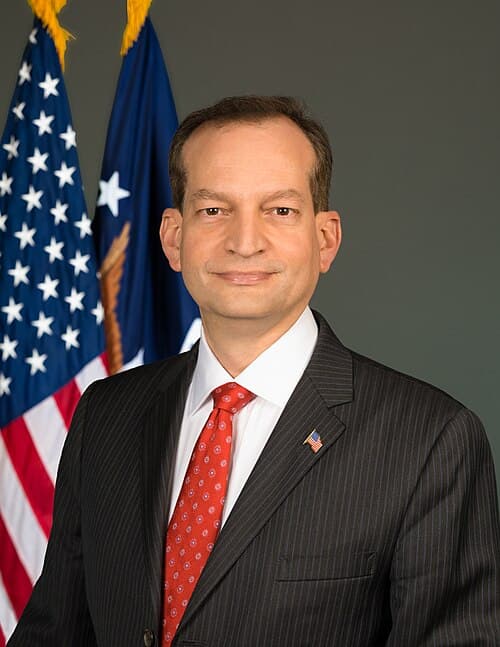
Alexander Acosta
PERSON • 3 mentions
American attorney and politician, 27th U.S. Secretary of Labor (born 1969)
Alice Fisher
PERSON
Person referenced in documents

Andrew C. Lourie
PERSON
Name reference in documents
AL
Andrew Lomk
PERSON
Name reference in documents

Andrew Oosterbaan
PERSON
Person referenced in documents
AV
Ann Marie C. Villafaña
PERSON
Name reference in documents
AS
Ann Sanchez
PERSON
Person referenced in documents
Ashcroft
PERSON
Refers to John Ashcroft, former US Attorney General, referenced in legal proceedings and policy discussions
AC
Ashley Collman
PERSON
Person referenced in documents
Barry Diller
PERSON
American businessman

Barry Krischer
PERSON • 2 mentions
Former Palm Beach County State Attorney who oversaw the initial Epstein prosecution (2005-2006)
Ben Sasse
PERSON
American politician and college president (born 1972)
Bill Clinton
PERSON • 2 mentions
President of the United States from 1993 to 2001 (born 1946)
CO
concerns.71
PERSON
Name reference in documents
CR
Contemporaneous Records
PERSON
Name reference in documents

Craig S. Morford
PERSON
American lawyer
CD
Crimina Di
PERSON
Name reference in documents
Cynthia McFadden
PERSON • 2 mentions
American journalist
Donald Trump
PERSON • 3 mentions
President of the United States (2017–2021, 2025–present)

Drew Oosterbaan
PERSON • 2 mentions
DOJ attorney, referenced in Epstein case documents
EP
Emily Peck
PERSON
Person referenced in documents
EE
Epstein Enters
PERSON
Name reference in documents
GE
General.1
PERSON
Name reference in documents
George H.W. Bush
PERSON
President of the United States from 1989 to 1993 (1924–2018)

George W. Bush
PERSON • 2 mentions
President of the United States from 2001 to 2009
GL
Gerald Lefcourt
PERSON • 2 mentions
American lawyer
GP
Guilty Plea
PERSON
Name reference in documents
Guy Lewis
PERSON
American basketball player and coach (1922-2015)
IF
i. FLJJIJ1
PERSON
Name reference in documents
JA
Jack Abramoff
PERSON
Name reference in documents
JG
Jack Goldberger
PERSON • 2 mentions
American criminal defense attorney who represented Jeffrey Epstein, partner at Goldberger Weiss P.A. in West Palm Beach, Florida
JB
James Barron
PERSON
Name reference in documents
JD
Jane Doe
PERSON
Pseudonym for anonymous victims/witnesses in Epstein legal proceedings
Jay Lefkowitz
PERSON • 2 mentions
American lawyer

Jeffrey Epstein
PERSON • 5 mentions
American sex offender and financier (1953–2019)
JS
Jeffrey Slo
PERSON
Name reference in documents
Jeffrey Sloman
PERSON • 4 mentions
Federal prosecutor, referenced in Epstein case legal proceedings
Joe Biden
PERSON
46th President of the United States (2021–2025)
Joe D. Whitley
PERSON
American lawyer
John Ashcroft
PERSON
79th United States Attorney General

Julie K. Brown
PERSON • 2 mentions
American journalist
Ken Starr
PERSON • 3 mentions
American judge and educational administrator (1946–2022)
Kenneth Marra
PERSON
American judge
Kevin Spacey
PERSON • 2 mentions
American actor (born 1959)
LJ
Landon Thomas Jr.
PERSON • 2 mentions
American journalist
LB
Lanna Belohlavek
PERSON
Person referenced in documents
Lanza
PERSON
Surname or name fragment in documents
LK
Larry Keller
PERSON
American football player
LS
Lefkowitz Send
PERSON
Name reference in documents
LS
Lefkowitz Submissions
PERSON
Name reference in documents
LB
Leon Black
PERSON
American billionaire businessman (born 1951)

Lilly Ann Sanchez
PERSON
Epstein household and administrative staff member
LV
Lisette Voytko
PERSON
Name reference in documents
LO
Lourie
PERSON
Primarily refers to Andrew Lourie, USAFLS staff involved in Epstein case
LN
Lourie Recommend Ending Negotiations
PERSON
Name reference in documents
MV
made.79 Villafaña
PERSON
Name reference in documents
Marc Rich
PERSON
American commodities trader (1934–2013)
MA
Marie
PERSON
Primarily refers to Ann Marie Villafana (USAFLS prosecutor in Epstein case), extracted from partial name references
Mark Filip
PERSON
United States federal judge
MW
Martin Weinberg
PERSON • 2 mentions
American attorney (born 1946)
Matthew I. Menchel
PERSON • 4 mentions
Attorney, corresponded with Jeffrey Epstein via email
MD
Menchel Disagree
PERSON
Name reference in documents

Mia Farrow
PERSON
American actress
ME
Michael Edmondson
PERSON
Person referenced in documents
Michael Reiter
PERSON • 3 mentions
American security advisor and former Palm Beach, Florida, police chief

Monroe
PERSON
Parish seat of Ouachita Parish, Louisiana, United States
MW
mwsugat10n
PERSON
Name reference in documents
NC
nche1
PERSON
Name reference in documents
NL
Neither Lourie
PERSON
Name reference in documents
NP
NPA.100
PERSON
Name reference in documents
OT
Otlice
PERSON
Surname or name fragment in documents
PE
Postpone Epstein’s
PERSON
Name reference in documents
Prince Andrew
PERSON
Third child of Queen Elizabeth II and Prince Philip, Duke of Edinburgh (born 1960)
RA
R. ALEXANDE
PERSON
Name reference in documents
RV
Regarding Villafaña’s
PERSON
Name reference in documents
RB
Reiter Becomes
PERSON
Name reference in documents
RD
Ron DeSantis
PERSON
American politician (born 1978)
RB
Roy Black
PERSON
American lawyer (1945–2025)
SA
Sanchez
PERSON
Surname reference in Epstein documents
SA
Sasse
PERSON
Surname reference in Epstein-related documents
SL
Sends a Victim Notification Letter
PERSON
Name reference in documents
Sergey Brin
PERSON
American billionaire businessman (born 1973)
SM
Sigal Mandelker
PERSON
Person referenced in documents
TM
the Ashcroft Memo
PERSON
Name reference in documents
TC
the Complexion of the Case
PERSON
Name reference in documents

Vicky Ward
PERSON • 3 mentions
British investigative journalist
VI
Villafaila
PERSON
Surname reference in documents
VV
Villafaña Expresses Concern That Victims
PERSON
Name reference in documents
VA
Villafaña Informs Acosta
PERSON
Name reference in documents
VN
Villafaña Notifies
PERSON
Name reference in documents
VP
Villafaña Prepares
PERSON
Name reference in documents
VS
Villafaña Sends
PERSON
Name reference in documents
Abbate
ORGANIZATION
Organization referenced in documents
an Office of State
ORGANIZATION
Organization referenced in documents
Associations
ORGANIZATION
Organization referenced in documents
Black, Sanchez
ORGANIZATION
Organization referenced in documents
Computer Crime and Intellectual Property Section
ORGANIZATION
Organization referenced in documents
Criminal Charges
ORGANIZATION
Organization referenced in documents
Defense Attorneys Object to Government
ORGANIZATION
Organization referenced in documents
Department of Corrections
ORGANIZATION
Department of Corrections
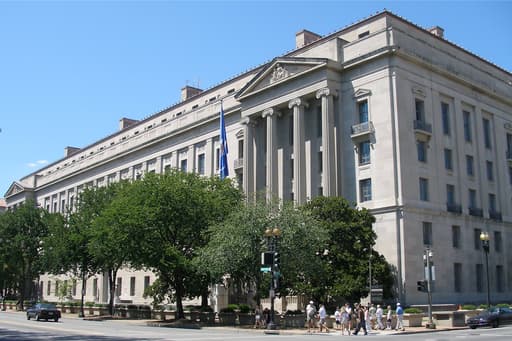
Department of Justice
ORGANIZATION
United States Department of Justice, federal executive department responsible for law enforcement
Departmental
ORGANIZATION
Organization referenced in documents
Departmental Components
ORGANIZATION
Organization referenced in documents
Detective
ORGANIZATION • 2 mentions
Organization referenced in documents
DOJ Crinunal Division
ORGANIZATION
Organization referenced in documents
EHVIRONMEHT
ORGANIZATION
Organization referenced in documents
EPSTEIN NON-PROSECUTION
ORGANIZATION
Organization referenced in documents
FBI
ORGANIZATION
Federal Bureau of Investigation, domestic intelligence and security service of the United States
Federal Bureau of Prisons
ORGANIZATION
U.S. federal agency responsible for incarceration of federal inmates
Federal Case
ORGANIZATION
Organization referenced in documents
Federal Charges
ORGANIZATION
Organization referenced in documents
Federal Courts
ORGANIZATION
Government agency
Federal Epstein Investigation -
ORGANIZATION
Organization referenced in documents
Federal Prosecution
ORGANIZATION
Organization referenced in documents
Florida Dept. of Corrections
ORGANIZATION
Organization referenced in documents
FoaUlllk
ORGANIZATION
Organization referenced in documents
Implementation of the NPA
ORGANIZATION
Organization referenced in documents
Individual Provisions Did Not Violate Any Clear
ORGANIZATION
Organization referenced in documents
Influential Associates
ORGANIZATION
Organization referenced in documents
Infonnation
ORGANIZATION
Organization referenced in documents
Intellectual Property Section
ORGANIZATION
Organization referenced in documents
IUIIIAU
ORGANIZATION
Organization referenced in documents
JUSTJ
ORGANIZATION
Organization referenced in documents
Kirkland & Ellis
ORGANIZATION
American international law firm
Lefcourt, Lewis
ORGANIZATION
Organization referenced in documents
Lefkowitz, Lefcourt
ORGANIZATION
Organization referenced in documents
Legal Theories
ORGANIZATION
Organization referenced in documents
Lewis and Lewis
ORGANIZATION
Organization referenced in documents

Lilly
ORGANIZATION
Pharmaceutical company (Eli Lilly and Company)
Major Crimes
ORGANIZATION
Organization referenced in documents
MARSHALS
ORGANIZATION
Organization referenced in documents
Martin, St. Lucie
ORGANIZATION
Organization referenced in documents
Menchel, Lourie
ORGANIZATION
Organization referenced in documents
Menchel, Villafaña
ORGANIZATION
Organization referenced in documents
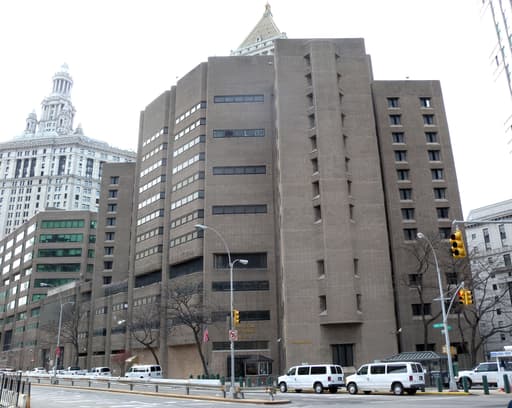
Metropolitan Correctional Center
ORGANIZATION
Metropolitan Correctional Center, New York, federal detention facility where Jeffrey Epstein died on August 10, 2019
Monetary Damages
ORGANIZATION
Organization referenced in documents
MySpace
ORGANIZATION
American social networking website
Narcotics and Violent Crimes Section
ORGANIZATION
Organization referenced in documents
NBC Nightly News
ORGANIZATION
NBC Nightly News television program
No Evidence of Criminal Corruption
ORGANIZATION
Organization referenced in documents
Office for the Southern District of Florida’s
ORGANIZATION
Organization referenced in documents
Office of Legal Counsel
ORGANIZATION
Organization referenced in documents
Oosterbaan’s Opinion That Consultation
ORGANIZATION
Organization referenced in documents
Pepperdine University School of Law
ORGANIZATION
Organization referenced in documents
Police Department
ORGANIZATION
Police department
POST-NPA
ORGANIZATION
Organization referenced in documents
POST-RELEASE DEVELOPMENTS
ORGANIZATION
Organization referenced in documents
POUONG
ORGANIZATION
Organization referenced in documents
PRE-PLEA CONTACTS
ORGANIZATION
Organization referenced in documents
Project Safe Childhood
ORGANIZATION
Organization referenced in documents
PRORSSIONAL
ORGANIZATION
Organization referenced in documents
Resident Agencies
ORGANIZATION
Organization referenced in documents
RSSIONAL
ORGANIZATION
Organization referenced in documents
Sheriff
ORGANIZATION
Organization referenced in documents
Solicitor General
ORGANIZATION
Organization referenced in documents
Southern District of New York
ORGANIZATION
Federal judicial district covering Manhattan and surrounding areas
STATB
ORGANIZATION
Organization referenced in documents
State Court
ORGANIZATION
State court
Superseding Information
ORGANIZATION
Organization referenced in documents
the “Florida Science Foundation
ORGANIZATION
Organization referenced in documents
The Adam Walsh Child Protection
ORGANIZATION
Organization referenced in documents
the Administration of Justice
ORGANIZATION
Organization referenced in documents
the Appellate Section
ORGANIZATION
Organization referenced in documents
The Automated Victim Notification System
ORGANIZATION
Organization referenced in documents
The Case Agents
ORGANIZATION
Organization referenced in documents
the Child Exploitation
ORGANIZATION
Organization referenced in documents
the Computer Crime
ORGANIZATION
Organization referenced in documents
The Contemporaneous Records
ORGANIZATION
Organization referenced in documents
the Court of Appeals
ORGANIZATION
Organization referenced in documents
the Crimes Against Children Unit
ORGANIZATION
Organization referenced in documents
the Criminal Division Chief
ORGANIZATION
Organization referenced in documents
the Criminal, Civil
ORGANIZATION
Organization referenced in documents
The CVRA Litigation Is Initiated
ORGANIZATION
Organization referenced in documents
The CVRA Litigation Proceedings
ORGANIZATION
Organization referenced in documents
the Defense Continues
ORGANIZATION
Organization referenced in documents
the Defense Does Not Accept
ORGANIZATION
Organization referenced in documents
the Defense Presses Its Appeal
ORGANIZATION
Organization referenced in documents
The Defense Rejects the Federal Plea Agreement, Returns
ORGANIZATION
Organization referenced in documents
the Defense Request
ORGANIZATION
Organization referenced in documents
the Defense Team
ORGANIZATION
Organization referenced in documents
the Defense Team Opposes Her Efforts
ORGANIZATION
Organization referenced in documents
The Department of Justice (Department
ORGANIZATION
Organization referenced in documents
The Department of Justice (Department) Office of Professional Responsibility
ORGANIZATION
Organization referenced in documents
the Department’s Civil Rights Division
ORGANIZATION
Organization referenced in documents
the Department’s Criminal Division
ORGANIZATION
Organization referenced in documents
the Department’s Executive Office
ORGANIZATION
Organization referenced in documents
the Disposition of Charges
ORGANIZATION
Organization referenced in documents
the district court’s
ORGANIZATION
Organization referenced in documents
The District Court’s Conclusion
ORGANIZATION
Organization referenced in documents
the Eleventh Circuit
ORGANIZATION
U.S. Court of Appeals for the Eleventh Circuit
The Federal Court
ORGANIZATION
Organization referenced in documents
the Federal Interest
ORGANIZATION
Organization referenced in documents
the Federal Investigation
ORGANIZATION
Organization referenced in documents
the Federal Investigation Continued
ORGANIZATION
Organization referenced in documents
The Federal Investigation Is Initiated
ORGANIZATION
Organization referenced in documents
the Federal Investigation through a State
ORGANIZATION
Organization referenced in documents
the Federal Investigation Were Informed
ORGANIZATION
Organization referenced in documents
The Florida Bar
ORGANIZATION
Florida Bar Association
the Florida Department of Corrections
ORGANIZATION
Organization referenced in documents
The Florida Sexual Offender/Predator Registry
ORGANIZATION
Organization referenced in documents
The Initial Allegations
ORGANIZATION
Organization referenced in documents
the Justice Manual
ORGANIZATION
Organization referenced in documents
the Lack of Consultation
ORGANIZATION
Organization referenced in documents
the Main Detention Center
ORGANIZATION
Organization referenced in documents
the Major Crimes Section
ORGANIZATION
Organization referenced in documents
the Meeting with Defense Counsel
ORGANIZATION
Organization referenced in documents
the National Labor Relations Board
ORGANIZATION
Organization referenced in documents
The NPA Did Not Violate Department Policy Relating
ORGANIZATION
Organization referenced in documents
the NPA Resulted
ORGANIZATION
Organization referenced in documents
the NPA Was Based on a Flawed Application
ORGANIZATION
Organization referenced in documents
THE NPA WITHOUT CONSULTING
ORGANIZATION
Organization referenced in documents
the Office of Enforcement Operations
ORGANIZATION
Organization referenced in documents

the Office of Professional Responsibility
ORGANIZATION
Office of Professional Responsibility
the Palm Beach County Sheriff’s
ORGANIZATION
Organization referenced in documents
The Palm Beach County Sheriff’s Office
ORGANIZATION
Organization referenced in documents
the Plea Discussions
ORGANIZATION
Organization referenced in documents
The State Indicts Epstein
ORGANIZATION
Organization referenced in documents
the State Investigation and Seeks
ORGANIZATION
Organization referenced in documents
The Subjects Asserted That They Were
ORGANIZATION
Organization referenced in documents
the Supervisory Special Agent
ORGANIZATION
Organization referenced in documents
The U.S. Attorneys’ Manual (USAM
ORGANIZATION
Organization referenced in documents
the U.S. Attorneys’ Offices
ORGANIZATION
Organization referenced in documents
the U.S. Senate
ORGANIZATION
Organization referenced in documents
the United States Court of Appeals
ORGANIZATION
U.S. federal appeals court
the Victim Notification Letter
ORGANIZATION
Organization referenced in documents
the West Palm Beach FBI
ORGANIZATION
Organization referenced in documents
Trump Labor
ORGANIZATION
Organization referenced in documents
UASON
ORGANIZATION
Organization referenced in documents
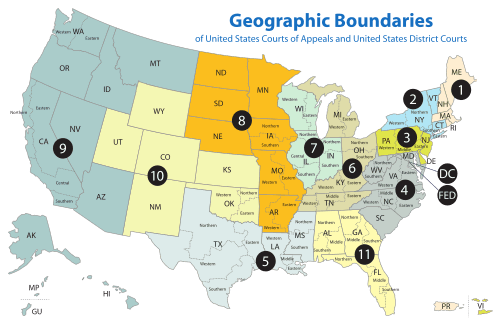
United States District Court
ORGANIZATION • 2 mentions
U.S. federal trial court
Victim Specialists
ORGANIZATION
Organization referenced in documents
West Palm Beach Office
ORGANIZATION
Organization referenced in documents
AOMlfflSTRATION
LOCATION
Location referenced in documents
Broward
LOCATION
County in southeastern Florida
detained.99
LOCATION
Location referenced in documents
Fort Pierce
LOCATION
City in Florida
Highlands
LOCATION
Location referenced in documents
HORNEY
LOCATION
Location referenced in documents
Indian River
LOCATION
Location referenced in documents
Key West
LOCATION
County seat of Monroe County, Florida, United States
Kirkland
LOCATION
City in King County, Washington, United States

New York City
LOCATION
Most populous city in the United States
Okeechobee
LOCATION
Seat of Okeechobee County in Florida, USA
Palm Beach
LOCATION
Town in Palm Beach County, Florida, United States

Palm Beach County
LOCATION
County in Florida, United States of America
Palm Beach Home
LOCATION
Location referenced in documents
the City of West Palm Beach
LOCATION
Location referenced in documents
the Northern Mariana Islands
LOCATION
Location referenced in documents
the Southern District
LOCATION
Federal judicial district in New York City
TtkpltOM
LOCATION
Location referenced in documents

United States
LOCATION • 3 mentions
Country located primarily in North America

West Palm
LOCATION
City in Palm Beach County, Florida

West Palm Beach
LOCATION • 2 mentions
County seat of Palm Beach County, Florida, United States
Statistics
Pages:100
Entities:255
Sponsored