EFTA00030943 - EFTA00030946
Document EFTA00030943 is a letter from the U.S. Department of Justice to the defense counsel of Ghislaine Maxwell, specifically addressing a request for a bill of particulars in the case United States v. Ghislaine Maxwell, 20 Cr. 330 (AJN).
The letter, dated January 10, 2021, responds to the defense's request for more specific details regarding the charges against Ghislaine Maxwell. The Department of Justice argues that it has already provided sufficient information through a detailed indictment and the production of over 2.7 million items of discovery. The letter cites legal precedents to support the government's position that a bill of particulars is not required when the indictment adequately informs the defendant of the charges.
Key Highlights
- •The document is a legal letter from the Department of Justice to Ghislaine Maxwell's defense counsel.
- •It concerns Ghislaine Maxwell's case, specifically regarding a request for a bill of particulars.
- •The Department of Justice asserts that it has already provided adequate notice of the charges against Ghislaine Maxwell.
Frequently Asked Questions


Document Information
Bates Range
EFTA00030943 - EFTA00030946
Pages
4
Document Content
Page 1 - EFTA00030943
U.S. Department of Justice United States Attorney Southern District of New York By Electronic Mail Christian Everdell, Esq. Mark Cohen, Esq. ohen & Gresser LLP Laura Menninger, Esq. Jeffrey Pagliuca, Esq. Haddon Mor an and Foreman, P.C. Dear Counsel: The Silvio J. Mono Building One Saint Andrew's Plaza New York. New York 10007 January 10, 2021 Bobbi Sternheim, Esq. Law Offices of Bobbi C. Sternheim Re: United States v. Ghislaine Maxwell, 20 Cr. 330 (AJN) We write in response to your letter of December 28, 2020, in which you request a bill of particulars in the above-captioned matter. As set forth herein, the Government does not intend to provide further particulars because under the well-established law of this Circuit it has no obligation to do so. To the contrary, and as you are aware, the Government outlined its charges against your client in a detailed speaking superseding indictment (the "Indictment") and has since provided considerable additional information through the production of to date of over 2.7 million items of discovery, all in electronic form and accompanied by an index. Accordingly, the Government has more than provided the defendant with adequate notice of the charges against her, and no further particulars are required. "A bill of particulars is required only where the charges of the indictment are so general that they do not advise the defendant of the specific acts of which he is accused." United States v. Walsh, 194 F.3d 37, 47 (2d Cir. 1999) (quotations marks and citation omitted); see also, e.g., United States v. Mahabub, No. 13 Cr. 908 (MN), 2014 WL 4243657, at *2 (S.D.N.Y. Aug. 26, 2014) (same); United States v. Mandell, 710 F. Supp. 2d 368, 384 (S.D.N.Y. 2010) (same). "Acquisition of evidentiary details is not the function of the bill of particulars." United States v. Torres, 901 F.2d 205, 234 (2d Cir. 1990), abrogated on other grounds by United States v. Marcus, 628 F.3d 36, 41 (2d Cir. 2010) (quotations marks and citation omitted). EFTA00030943
Page 2 - EFTA00030944
Nor may a bill of particulars be used as a general investigative tool. "It is not enough that the information would be useful to the defendant; if the defendant has been given adequate notice of the charges against him, the government is not required to disclose additional details about its case." United States v. Payden, 613 F. Supp. 800, 816 (S.D.N.Y. 1985); see also, e.g., United States v. Sindone, No. 01 Cr. 517 (MBM), 2002 WL 48604, at *1 (S.D.N.Y. Jan. 14, 2002) (a defendant may not "use a bill of particulars to preview the government's evidence or trial strategy, or to require the government to specify the minutiae of how it will prove the charges. The stakes in a criminal case are high, and temptations of perjury, subornation and intimidation are ever present. Accordingly, the government is not required to turn over information that will permit a defendant to preview the government's case and tempt him to tailor proof to explain it away, or see to it that the government's proof is not presented." (citations omitted)); United States v. Guerrerio, 670 F. Supp. 1215, 1225 (S.D.N.Y. 1987) (A bill of particulars "is not a discovery tool and is not intended to allow defendants a preview of the evidence or the theory of the government's case."). A bill of particulars is unwarranted in this case because the Government has more than satisfied its obligations to provide the defense with sufficient information to "prepare for trial, to prevent surprise, and to interpose a plea of double jeopardy should [the defendant] be prosecuted a second time for the same offense." United States v. Bortnovsky, 820 F.2d 572, 574 (2d Cir. 1987). The Indictment contains a written statement of the essential facts constituting the offenses charged, and it describes the conduct of the defendant that the Government expects to prove at trial with respect to three particular victims. The Indictment itself contains a detailed description of the accounts these victims have provided law enforcement. In addition to the Indictment, which provides more than sufficient information about the charges against your client, you are also in possession of, among other things, numerous search warrant affidavits that outline evidence revealed during the Government's investigation over time (see, e.g., SDNY_GM_00000423- SDNY_GM_00000524); documentary evidence, including travel records and contemporaneous journal entries that corroborate the victims' accounts; and the Government's letters concerning bail and detention. In sum, the Indictment and the materials produced during discovery provide you with more than ample information concerning the allegations that the Government intends to prove at trial and the supporting evidence. See, e.g., United States v. Reinhold, 994 F. Supp. 194, 201 (S.D.N.Y. 1998) (denying request for bill of particulars where the "indictment is detailed in its allegations" and the "defendants have had extensive discovery"). To the extent that your requests seek information regarding potential witnesses and/or co- conspirators or aiders and abettors (Requests 1-20, 22-26), the Government is not required to provide such information at this time. See, e.g., United States v. D'Amico, 734 F. Supp. 2d 321, 335 (S.D.N.Y. 2010) ("A bill of particulars is not a general investigative tool, a discovery device or a means to compel the government to disclose evidence or witnesses to be offered prior to trial." (quoting United States v. Gibson, 175 F. Supp. 2d 532, 537 (S.D.N.Y. 2001))); United States v. Barrera, 950 F. Supp. 2d 461, 478-79 (E.D.N.Y. 2013) (denying motion for bill of particulars as to identities of unnamed victims of alleged murder conspiracy); United States v. Castro, No. 08 Cr. 268 (NRB), 2008 WL 5062724, at *2 (S.D.N.Y. Nov. 25, 2008) ("An indictment need not identify all alleged co-conspirators, nor specify the nature, time and place of every overt act the defendant or others allegedly took in furtherance of a conspiracy, nor must it set forth all the evidence the government intends to introduce."); United States v. Sindone, 2002 WL 48604, at *1 2 EFTA00030944
Page 3 - EFTA00030945
(denying request for bill of particulars that would identify alleged co-conspirators and victims); United States v. Trippe, 171 F. Supp. 2d 230, 240 (S.D.N.Y. 2001) ("[D]emands for particular information with respect to where, when, and with whom the Government will charge the defendant with conspiring are routinely denied."); United States v. Mitlof, 165 F. Supp. 2d 558, 569 (S.D.N.Y. 2001) ("What defendant seeks is in the nature of the `wheres, whens and with whoms' that [c]ourts have held to be beyond the scope of a bill of particulars." (collecting cases)); United States v. Fruchter, 104 F. Supp. 2d 289, 313 (S.D.N.Y. 2000) (denying "Defendants' request for names of all aiders, abettors, unindicted co-conspirators, and confidential informants" as "nothing more than a request for a witness list"); see also Fed. R. Crim. P. 16. As previously stated, and as noted in the Government's letter dated October 28, 2020, with regard to your many requests for information that fall within the scope of the Government's Giglio and Jencks Act obligations, we intend to produce all such material in advance of trial and remain available to confer generally regarding a mutual schedule for pretrial and trial-related disclosures, including witness statements or Giglio material. You seek numerous, specific details which amount to requests for a detailed preview of the Government's case and its legal theories (Requests 7, 14, 19, 25, and 29). The Government is not required to disclose at this juncture the way in which it expects to prove the charges or the precise manner in which the defendant committed the charged crimes, nor must the Government provide a preview of the evidence or legal theories it intends to present at trial. See, e.g., United States v. Dupigny, 18 Cr. 528 (JMF), 2019 WL 2327697, at *2 (S.D.N.Y. May 30, 2019) (denying motion for bill of particulars and explaining that the defendant "need not be informed of the specific means of coercion he is alleged to have employed against the still-unidentified victims in the Superseding Indictment. And between the indictment, applications for search warrants, court filings, and proffers during bail hearings, the Government has advised Dupigny of the nature and timeframe of the conspiracy; the number of victims involved in the substantive trafficking offenses, the ages of several of the victims, and the residence from which he recruited them; and the types of physical force and coercion he has employed against at least some of them"); United States v. Pierre-Louis, 16 Cr. 541 (CM), 2018 WL 4043140, at *7 (S.D.N.Y. Aug. 9, 2018) ("Defendant's demand that the Government provide him with the specifics of how it will prove the `interstate transportation' element of its case is an improper attempt to limit the Government's proof at trial and is the type of `when, where, and how' bill of particular requests that are 'almost uniformly . . . denied."' (citation omitted)); United States v. Monzon-Liana,No. 11 Cr. 722 (RRM), 2014 WL 223100, at *4 (E.D.N.Y. Jan. 21, 2014) (denying request for bill of particulars where defendant was charged with, among other things, sex trafficking of minors and a Mann Act violation, and stating that the indictment "explains the essential facts constituting each of the crimes charge[d], the time frame in which the crime is alleged to have occurred, and the victim involved. This information is sufficient to apprise defendant of the charges against him."). For example, with respect to Requests 7, 14, 19, and 25, the Government directs your attention to the Indictment, at paragraphs 11(b), 13, 17(b), and 19, which refer to sex acts in violation of New York Penal Law, Section 130.55. With respect to Request 28, the Government refers you to the Indictment, at paragraph 7, which describes the conduct of the defendant that the Government expects to prove at trial with respect to three particular victims. Based on the foregoing, you are not entitled to the particulars sought through your requests, and in any event, much of what you seek is described in the Indictment and discovery. If you have authority for your requests, we would be happy to consider it. 3 EFTA00030945
Sponsored
Page 4 - EFTA00030946
Please let us know if you have any questions or would like to discuss the foregoing. Very truly yours, Acting United States Attorney for the Southern District of New York By: s/ Assistant United States Attorneys 4 EFTA00030946
Entities Mentioned

Barrera
PERSON
Surname reference in documents
BS
Bobbi C. Sternheim
PERSON • 2 mentions
Defense attorney for Ghislaine Maxwell in sex trafficking trial
BO
Bortnovsky
PERSON
Surname reference in Epstein-related documents

Castro
PERSON
Chilean city
Christian Everdell
PERSON
Defense attorney for Ghislaine Maxwell, partner at Everdell & Dowd
D'
D'Amico
PERSON
Surname reference in documents
DU
Dupigny
PERSON
Surname reference in documents
FR
Fruchter
PERSON
Name reference in documents
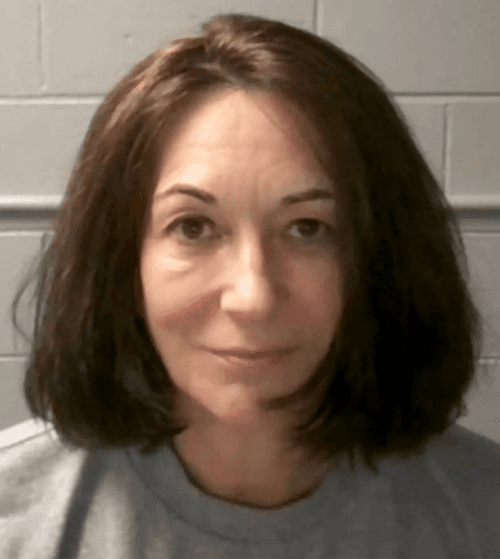
Ghislaine Maxwell
PERSON • 3 mentions
British socialite and sex trafficker, daughter of Robert Maxwell, accomplice of Jeffrey Epstein
GI
Gibson
PERSON
American guitar manufacturer

Giglio
PERSON
NER artifact - legal term or document reference misclassified as person
GU
Guerrerio
PERSON
Name reference in documents

Jeffrey Epstein
PERSON
American sex offender and financier (1953–2019)
JP
Jeffrey Pagliuca
PERSON
American attorney, defense lawyer for Ghislaine Maxwell during her criminal trial
Jencks
PERSON
Surname reference in Epstein-related documents
LM
Laura Menninger
PERSON
American attorney, defense counsel for Ghislaine Maxwell in sex trafficking trial
MA
Mahabub
PERSON
Surname reference in documents
MA
Mandell
PERSON
Surname reference in documents
MC
Mark Cohen
PERSON
American neuroscientist
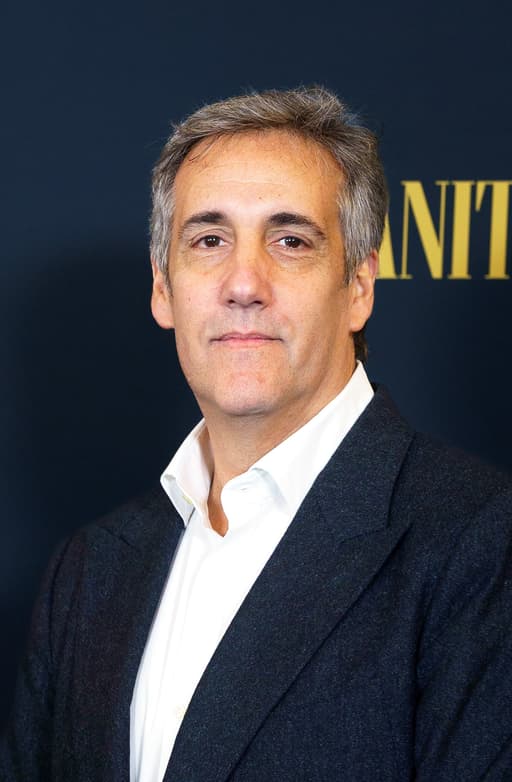
Michael Cohen
PERSON
American former attorney and former Republican official
MI
Mitlof
PERSON
Name reference in documents
MO
Monzon
PERSON
Name reference in documents
PA
Payden
PERSON
Name reference in documents

Prince Andrew
PERSON
Third child of Queen Elizabeth II and Prince Philip, Duke of Edinburgh (born 1960)
RE
Reinhold
PERSON
Surname or name fragment in documents
SI
Sindone
PERSON
Surname or name fragment in documents
Torres
PERSON
Ambiguous surname - refers to multiple people in Epstein documents
TR
Trippe
PERSON
Surname reference in documents
WA
Walsh
PERSON
Ambiguous surname - primarily appears in legal case citations within Epstein court documents
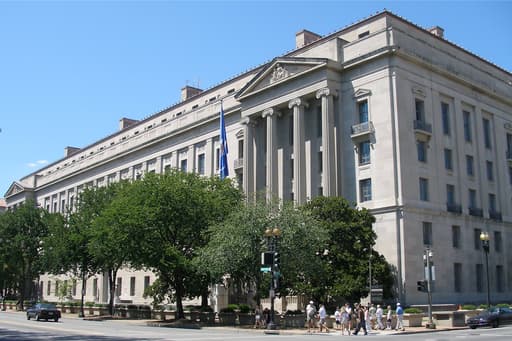
Department of Justice
ORGANIZATION
United States Department of Justice, federal executive department responsible for law enforcement
District Court for the Southern District of New York
ORGANIZATION
U.S. District Court for the Southern District of New York
Haddon Mor an and Foreman, P.C.
ORGANIZATION
Organization referenced in documents
ohen & Gresser LLP
ORGANIZATION
Organization referenced in documents
Second Circuit
ORGANIZATION
U.S. Court of Appeals for the Second Circuit
E.D.N.Y. Jan.
LOCATION
Location referenced in documents
S.D.N.Y. 1985
LOCATION
Location referenced in documents
S.D.N.Y. 2010
LOCATION
Location referenced in documents
Statistics
Pages:4
Entities:37
Avg. OCR:0.9%
Sponsored