EFTA00013785 - EFTA00013798
Document EFTA00013785 is a letter from Allen Guthrie McHugh & Thomas, PLLC, addressed to Mr. John Roth, Senior Associate Deputy Attorney General at the Office of the Deputy Attorney General, U.S. Department of Justice.
The letter, dated June 19, 2008, concerns the federal investigation of Jeffrey Epstein by the U.S. Attorney's Office for the Southern District of Florida. The author, likely Allen Guthrie McHugh, offers his reaction to a May 15, 2008 correspondence from the Department of Justice Child Exploitation and Obscenity Section (CEOS) regarding the Epstein case, highlighting salient points responsive to the CEOS letter, drawing on his experience as a former member of CEOS and federal prosecutor with extensive experience in child exploitation cases and victim/witness issues. The document provides insight into the legal arguments and background surrounding the Epstein investigation.
Key Highlights
- •The document is a letter regarding the federal investigation of Jeffrey Epstein.
- •It mentions the U.S. Attorney's Office for the Southern District of Florida and the Department of Justice Child Exploitation and Obscenity Section (CEOS).
- •The author has a background in child exploitation cases and served as a federal prosecutor and member of CEOS.
Frequently Asked Questions

Document Information
Bates Range
EFTA00013785 - EFTA00013798
Pages
14
Document Content
Page 1 - EFTA00013785
LAW OFFICES ALLEN GUTHRIE MCHUGH & THOMAS, PLLC GEORGE G. GUIHRIE ROBERT B. ALLEN REBECCA k BETTS R. TERRANCE ROOGERS DAVID B. THOMAS JAMES S. ARNOLD DAVID J. HARDY WM SCOTT WICKLINE PAMELA L. CAMPBELL PAMELA C. DEEM PHILIP J. COMBS STEPHANE D. TRACKER BRYANT J. SPANN TERESA K. THOMPSON DEBRA C. PRICE CHRISTOPHER S. ARNOLD CHRISTOPHER D. PENCE PETER G. MARKHEM ZACKARV B. MAZEY OF COUNSEL THOMAS E. MCHUGH P. 0. 00X 3301 CHARLESTON, WEST VIRGINIA 25333-3394 500 LEE STREET. EAST. SMITE 800 CHARLESTON. WEST VIRGINIA 25301 June 19, 2008 Mr. John Roth Senior Associate Deputy Attorney General Office of the Deputy Attorney General United States Department of Justice 950 Pennsylvania Avenue, N.W. Washington, D.C. 20530 Dear Mr. Roth: TELEPHONE I304) 345-7250 FACSiMILE 004) 345.9941 WRITERS DIRECT DWI Gmvil I write to offer my reaction to the May 15, 2008 correspondence from the United States Department of Justice Child Exploitation and Obscenity Section ("CEOS") regarding the federal investigation of Jeffrey Epstein by the United States Attorney's Office for the Southern District of Florida ("USAO"),I I will refrain from recounting Mr. Epstein's arguments in detail here, but, rather, will highlight salient points responsive to the CEOS letter. In particular, I write from a background well familiar with child exploitation cases and victim/witness issues. As the CEOS letter points out (CEOS letter at p. 3), I was a member of CEOS. In fact, I served as a federal prosecutor for twelve years; five years as an Assistant United States Attorney for the Southern District of West Virginia, and seven years at CEOS. I began working as a trial attorney for CEOS in 1999, and was promoted to Deputy Chief for Litigation in 2002, and ultimately to Principal Deputy Chief for the Section in 2004. As those who have worked with me know, I have a history of working diligently on behalf of victims of crime. While at the United States Attorney's Office for the Southern District of West Virginia, I was a part of the prosecution team that prosecuted the first case in the country under the federal Violence Against Women Act. United States v. Bailey, 112 F.3d 758 (41 Cir.), cert denied, 522 U.S. 896 (1997). The case went to trial and the defendant was sentenced to life in prison. I also spearheaded the domestic violence and federal criminal child support prosecution efforts for that office, prosecuting some of the first cases in the country under the federal Child Support Recovery 1 Citations to the May 15, 2008 correspondence will be referenced herein as "CEOS letter at p. ." EFTA00013785
Page 2 - EFTA00013786
ALLEN GUTHRIE MCHUGH & THOMAS, PLLC Mr. John Roth June 19, 2008 Page 2 Act. Later, while at the Department of Justice, I co-authored the Department's Federal Child Support Prosecution Handbook. My work at CEOS permitted me to continue my efforts on behalf of vulnerable victims of crime. While there, for example, I was part of the prosecution team in United States v. Dwight York, 428 F.3d 1325 (11th Cir. 2005), cert denied, 548 U.S. 908 (2006). York was the leader of a pseudo religious organization, and systematically molested countless children, some as young as six years old. The case went to trial and York was sentenced to 135 years in prison. As part of that trial team, I was awarded the Attorney General's Award for Distinguished Service. Additionally, at CEOS I was one of the architects of the Innocence Lost Initiative, a nationwide initiative designed to combat child prostitution. For this, I was awarded an Assistant Attorney General's Award for Outstanding Victim/Witness Service. Likewise, I was awarded a subsequent Assistant Attorney General's Award for Special Initiative in connection with a nationwide sex tourism prosecution initiative I helped to develop. I say all this not for any boastful purpose, but, rather, to make clear that I am fully cognizant of victim issues, and that I am no pushover in terms of prosecution standards. I am also very well aware of the good work of CEOS, and the outstanding credentials of those who toil in that office. With all due respect to CEOS, however (and recognizing that their review of this case was quite limited), given the facts and circumstances of this investigation, a federal prosecution of Mr. Epstein simply should not be countenanced. In my view, such prosecution would be counter to the important mandate of the Department of Justice as emblazoned on its seal, "Qui Pro Domina Justitia Sequitur," referring to the Attorney General "who prosecutes on behalf of justice." As you well know, it is fundamental to that mandate that, as the representative of the people of the United States, the duty of a federal prosecutor is not simply to seek conviction as at any cost, but, rather, to seek justice. Berger v. United States, 295 U.S. 78, 88 (1935). ("The United States Attorney is the representative not of an ordinary party to a controversy, but of a sovereignty whose obligation to govern impartially is as compelling as its obligation to govern at all.") While it is true that Berger was decided at the post-trial, as opposed to the pre-indictment, stage of the case, the bedrock principle contained in the above quote should transcend the entire investigation and prosecution process. Indeed, it is arguably most imperative at the investigation stage, at which point law enforcement is dealing with a presumptively innocent citizen. In summary, we understand the allegations against Mr. Epstein to be that Mr. Epstein paid individuals to find friends and acquaintances, certain of whom were under the age of 18, to provide topless massages to him at his Palm Beach home in exchange for money. Mr. Epstein's assistants allegedly scheduled these massages for him over the telephone at the direction of Mr. Epstein, allegedly including some scheduling calls to underage women. However, the evidence contradicts these allegations. First, Mr. Epstein did not ask that the masseuses be under the age of 18. To the contrary, he specifically asked that they be 18 or older. As one witness commented, said tell EFTA00013786
Page 3 - EFTA00013787
ALLEN GUTHRIE MCHUGH & THOMAS, PLLC Mr. Job Roth June 19, 2008 Page 3 them you're 18 because if you're not, he won't let you in his house." Tr. at 38-39. Second, Mr. Epstein himself did not schedule such appointments. Third, Mr. Epstein would not know who would be providing a massage at any particular time. Fourth, and importantly, Mr. Epstein's assistants were not directed to contact underage women, and were not aware of the true ages of the women they contacted. In fact, more often than not, the masseuses themselves, or the individuals who introduced the masseuses, made the initial contact. As a result, Mr. Epstein and his assistants were routinely unaware of the identities of many of these young women before they arrived. The allegations further include the assertion that Mr. Epstein engaged in unlawful sexual conduct with certain underage women who arrived at his house to provide a massage. At times, during these massages, Mr. Epstein masturbated, engaged in some sexual touching, and a small number of alleged acts of penetration. However, most of the women who performed massages on Mr. Epstein were over the age of 18. Many of the young women have sworn under oath that they, in fact, told Mr. Epstein that they were 18 or older, and that they did so because they knew that if they were not 18 years old, they would not be allowed into Mr. Epstein's home. In fact, Mr. Epstein has passed a polygra h examination to this effect relative to the government's primary, and youngest, alleged victim . Indeed, many of the women also worked at local massage parlors, which presumably had a requirement that the masseuse have reached the age of majority. To the extent there are allegations that Mr. Epstein should have been alerted to certain underage women based on conversations he allegedly had with them, those conversations would have taken place in person and at his home, thereby precluding any prior scheduling with knowledge of their true ages. As explained below, any factual allegations of repeat massages with such persons would lack necessary elements required for a federal nexus to such conduct. All of the alleged activity occurred in Mr. Epstein's home in Palm Beach, Florida. Many of the massages allegedly involved conduct which, even if engaged in, is not proscribed by federal law, either because the masseuses were of age, or because conduct with underage masseuses only involved topless massages, massages in undergarments or naked massages. To the extent prohibited sexual activity occurred, any inducement, enticement, and/or persuasion used would have taken place during a face-to-face encounter—thus eliminating the possibility for the commission of a federal crime, which requires the existence of a communication through a facility of interstate commerce in which the defendant persuades or entices the minor to engage in illegal sexual activity. Furthermore, any prohibited sexual activity that did occur based on the facts on the record is best left to the state to address because the facts of this case do not fall comfortably within the federal domain. This is a case about purely local activity, involving local actors, and affecting local interests and thus, should be handled by local authorities. Nonetheless, the USAO has indicated its intent to prosecute Mr. Epstein for purported violations of 18 U.S.C. §§ 2422, 2423, and 1591. However, as set forth in detail in prior submissions, the facts of this case fall squarely outside the heartland of those statutes - in fact, in law, and in congressional intent. As their plain EFTA00013787
Sponsored
Page 4 - EFTA00013788
ALLEN GUTHRIE MCHUGH & THONIAS, PLLC Mr. John Roth June 19, 2008 Page 4 text and history indicate, these statutes were designed to address problems that are truly national and international in scope: human trafficking in § 1591; telephone or Internet sexual predation in § 2422; and sex tourism in § 2423. Unlike the alleged conduct at issue here, those problems unquestionably present multi-jurisdictional obstacles that States and localities cannot confront effectively on their own. Mr. Epstein's conduct was purely local in nature, and the State of Florida and Palm Beach County are effectively prosecuting and punishing that conduct. Although CEOS asserts, "that a prosecution of Mr. Epstein might not look precisely like the cases that came before it is not dispositive" (CEOS letter at p. 4), the fact is this case does not look anything like those cases. The facts here do not carry any of the hallmarks that typify an appropriate federal prosecution for child exploitation as reflected in all such prior federal prosecutions. Specifically, the facts here do not carry the hallmarks for a sex trafficking or child prostitution prosecution. Mr. Epstein did not target minors. In fact, the evidence indicates just the opposite. There was no travel in interstate commerce for the purpose of engaging in illicit sexual activity. There was no prohibited use of a facility of interstate commerce. There was no commercial for profit sexual enterprise. There was no force. There was no violence. There was no use of drugs or alcohol. There was no child pornography. 18 U.S.C. § 1591 is clearly designed to combat organized rings of individuals who engage in the business of human trafficking, involving both a commercial and coercive component. As President Bush has noted: generally speaking, trafficking in persons refers to actions, often including the use of force, fraud or coercion, to compel someone into a situation in which he or she will be exploited for sexual purposes, which could include prostitution or pornography, or for labor without compensation, which could include forced or bonded labor . . . trafficking in persons is often linked to organized crime, and the profits from trafficking enterprises help fund other illegal activities. The growth of vast transnational criminal networks supported in part by trafficking in persons fosters official corruption and threatens the rule of law.2 This in no way describes the case here. Yet the USAO has been unwavering in its single minded focus to stretch the limits of these federal statutes beyond their intended use, and beyond precedent, in order to prosecute Mr. Epstein. As the CEOS letter acknowledges, the legal theories the USAO intends to attempt to pursue against Mr. Epstein are "novel," having never before been sanctioned by federal law. They should not be sanctioned now. As the Supreme Court recently pronounced, when a statutory term in a criminal statute could support both a narrow or broad application of the federal criminal law, "the tie must go to the defendant." United States v. Santos, 553 U.S. and Cuellar v. United States, 553 U.S (June 2, 2008), Slip Op. at 6. 2 February 25, 2003 Trafficking in Persons National Security Presidential Directive. EFTA00013788
Page 5 - EFTA00013789
ALLEN GUTHRIE MCHUGH & THOMAS, PLLC Mr. John Roth June 19, 2008 Page 5 A MI and fair review of the facts here is critical to this analysis. Yet, it is clear that CEOS did not conduct such a review. In his recent letter to Jay Lelkowitz, First Assistant United States Attorney ("FAUSA") confirmed our understanding that the USAO was to have "facilitated" an "independent de novo review of the investigation" by the Department. (May 19, 2008 Sloman letter at p. 5). Yet, the CEOS review was not complete, and by its own terms not de novo. As CEOS itself noted, "our review of this case is limited both factually and legally. We have not looked at the entire universe of facts in this case. It is not the role of the Criminal Division to conduct a complete factual inquiry from scratch." (CEOS letter at p. 1). Indeed, entire subject areas relevant to the inquiry were not considered at all by CEOS. In essence, CEOS was only in a position to make the most cursory possible review, an "abuse of discretion" review, without considering the facts at the necessary level of detail, and without taking into account the many and varied issues of misconduct we have raised in this case. As the CEOS letter indicates, "we did not review the facts, circumstances, or terms included in the plea offer nor any allegations that individuals involved in the investigation engaged in misconduct." (CEOS letter at p. 2). All of this begs the question — if it is not CEOS' role to "conduct a complete factual inquiry," and CEOS did not consider any of the allegations of misconduct here, which at the very least have created a strong appearance of impropriety, and, at worst evidence an intent and effort to unfairly prejudice Mr. Epstein to the financial benefit of the friends and colleagues of the prosecution team in the USAO, then where and when can justice ever hope to be served in this case? This is a prosecution burden that cannot, and should not, be brushed aside. We contend the limited nature of the CEOS review deeply affected its conclusions. For example, CEOS most likely did not review original documents, such as transcripts, and instead relied on the summaries of federal prosecutors and FBI agents, against whom we have raised serious concerns regarding misconduct. If the summary memos from the USAO are as flawed as other USAO communications have been, and which we have been able to show are misleading and inaccurate, the CEOS abuse of discretion review is likely flawed as well. Moreover although the USAO expected, and personally promised to us, an independent review, FAUSA letter also makes clear that our pivotal legal challenge to the use of 18 U.S.C. § 2422(b) had already "been previously raised and thoroughly considered and rejected by ... CEOS prior to" the recent CEOS review. (May 19, 2008 Sloman letter at p. 5). The fact that CEOS had to evaluate its own decision with respect to some of the allegations against Mr. Epstein prevents its subsequent review and opinion from being truly independent. Following this most recent CEOS review "limited both factually and legally," and with no citation to any case law relative to the statutes in question, CEOS concludes merely, "federal prosecution in this case would not be improper or inappropriate (CEOS letter at p. 5);" in essence, that the United States Attorney could bring this case in the exercise of his federal discretion should he so choose ("we conclude that U.S. Attorney Acosta could properly use his discretion to authorize prosecution in this case."). (CEOS letter at p. 2). However, CEOS drew the conclusion that the EFTA00013789
Page 6 - EFTA00013790
ALLEN GUTHRIE MCRUGH & THOMAS, PLLC Mr. John Roth June 19, 2008 Page 6 federal prosecution of Mr. Epstein would not be "improper or inappropriate" absent any review at all of the misconduct here, and absent a full review of the facts and law. The facts, the law, and the alleged misconduct are each necessarily inextricably intertwined with the question of whether or not this is a viable federal prosecution. These imposed limits flawed the review from the outset. In any event, CEOS concedes that the defense team makes "many compelling arguments." (CEOS letter at p. 5). In the end, then, one is left with the impression that the CEOS review and opinion, although concluding that the USAO could push forward at its own discretion, is a much qualified one. The federal prosecution of Mr. Epstein has been a moving target from the inception. Each time the allegations, the witnesses or the applicable law is subject to a searching inquiry, we have found that the allegations have been misrepresented, the law does not apply to the actual facts here, and the USAO prosecution theory falls apart. Yet, in the face of the voluminous evidence we have submitted in this regard, while acknowledging that the theories are "novel," and that our arguments against federal prosecution are "compelling," CEOS concluded, "Mr. Acosta could rightfully conclude that this federal issue is best resolved by a jury" and that "the USAO has a good faith basis to fully develop the facts on this issue and brief the law to permit a court to decide whether the law appropriately reaches such conduct." With all due respect, and recognizing that CEOS may be —and apparently was — limited in its authority, it should not be the prerogative of the prosecution arm of the United States government to simply roll the dice, and let the court system just sort it out when dealing with the life and liberty of a United States citizen. The Department of Justice should not be so cavalier when labeling someone as a child molester. While it may be within the discretion of the USAO to do so, it is not in accord with the principles of justice. Indeed, as noted, just a few weeks ago, the Supreme Court underscored this point in Santos and Cuellar. The Court made clear that prosecutorial discretion does not provide the USAO cart blanche to expand criminal statutes as they seek to do here with complete disregard for congressional intent. The Court rejected speculation as a basis of determining the scope of a criminal statute; "probability is not a guide which a court, in construing a penal statute, can safely take." Slip op. at 7, quoting United States v. Wiltberger, 5 Wheat. 76,105 (1820). "We interpret ambiguous criminal statutes in favor of defendants, not prosecutors." Slip op. at 12. Based on my experience, I believe that the facts here do not warrant a federal child exploitation prosecution. At its core, this case is quintessentially a state concern as opposed to implicating any federal interest. Indeed, the Florida State Attorney's Office ("SAO"), led by the chief of the Sex Crimes Division, thoroughly investigated this matter, and presented it to the grand jury. The facts, as opposed to the deeply flawed press reports, were carefully assessed by experienced State prosecutors who aggressively enforce State criminal laws. Following an extensive 15-month State investigation, Mr. Epstein was indicted by a State grand jury on a single felony count of solicitation of prostitution. During the investigation, the State prosecutor exhaustively reviewed the evidence, met face- to-face with many of the alleged victims, considered their credibility — or lack thereof — and EFTA00013790
Sponsored
Page 7 - EFTA00013791
ALLEN GUTHRIE MCHUGH & 'THOMAS, PLLC Mr. John Roth June 19, 2008 Page 7 considered the extent of exculpatory evidence, including a psychosexual evaluation of Mr. Epstein and a polygraph examination demonstrating that Mat genuinely believed at the time of the alleged conduct that the State's key witness (= was over the age of 18. Then, after months of negotiations, the State reached what it believed was an appropriate resolution of the case. Importantly, this resolution was consistent with that of cases involving other defendants who had engaged in similar conduct. Implementation of the State resolution of the case was held in abeyance, however, due to the unexpected commencement of the successive federal criminal investigation. While it is true, as CEOS points out, (CEOS letter at p. 3) that many criminal prosecutions turn on issues of credibility of witnesses, to which many members of the defense team can attest (having had decades of federal criminal litigation experience among us), this does not serve to divest the prosecutor of his/her duty to make a searching inquiry of the facts before using the power of prosecution, and the weight of the United States government, to level serious accusations. CEOS likewise acknowledges as much, "the prosecutors are in the best position to assess the witnesses' credibility." (CEOS letter at p. 3). Since the CEOS letter also singles me out as someone who should be familiar with witness issues, I feel compelled to note that, of course, I am well aware that it is not uncommon for witnesses to give conflicting statements. I am also fully aware that the credibility of key government witnesses may be strongly impacted by the $50 million incentive provided via the civil lawsuits at play, and encouraged by the government here. 3 I have also read many of the conflicts between witness testimony and Detective own rendition of that testimony in his reports and/or search warrant affidavit. Detective apparently formed a view early on as to the purported criminality of Mr. Epstein's conduct regardless of the mountain of evidence to the contrary. For a prosecutor that has had an opportunity to review the full facts, and to meet with the witnesses, however, "conflicting statements" cross the line to a "lack of credibility" that simply can not sustain a prosecution. That is where an appropriate application of prosecutorial discretion must be brought to bear. Again, CEOS was not itself in the position to exercise such discretion. By its own admission, CEOS did not make a full review of the witness statements here, and CEOS certainly did not sit down across the table and speak to these witnesses. We understand that was apparently not its perceived role. But, CEOS should recognize that at least one prosecutor in this case — the Chief of the SAO Sex Crimes Division has done so. Lana Belohlavek not only met with and interviewed these witnesses during the course of the 15-month state investigation prior to any federal involvement, but she again sat across the table from many of them in connection with recent civil rather, upon the complaint ation waton the complaint of an alleged victim, but, father, and her stepmother . More 3 It is important to note here notable still is the fact that has been convicted of federal bank fraud, and has a state conviction for identify fraud. Hardly pillars ofill. Yet, the USAO did not supply this information to the defense. Even more telling is the fact that Mr. filed a $50million lawsuit purportedly on behalf of his daughter without her authority or knowledge. EFTA00013791
Page 8 - EFTA00013792
ALLEN GUTHRIE MCHUGH & THOMAS, PLLC Mr. John Roth June 19, 2008 Page 8 0 depositions in this matter. Ms. Belohlavek, and the SAO, is likewise well familiar with the breadth of the federal investigation, and has integrated that knowledge into the current enhanced state sentencing recommendation. The SAO remains firm in the position that the proposed state resolution is a sound one, and that there was no child exploitation here. Notably, however, not once during the pendency of the federal investigation has the USAO ever reached out to its state prosecutive counterpart that initiated this investigation in the first place to discuss the issues or to thoroughly ferret out the facts or the witness credibility issues. In the eight lines the CEOS letter accords to the topic of witness credibility CEOS asserts, "there are multiple mutually-corroborating witnesses," (CEOS letter at p. 3). However, the CEOS letter does not highlight a single one. In contrast, we have put forth numerous "mutually corroborating" witness statements. Far from supporting a federal prosecution, these statements instead corroborate that I) the alleged victims lied to Mr. Epstein about their age; 2) there was no use of a facility of interstate commerce by Mr. Epstein; 3) there was no inducement or coercion; 4) there was no commercial enterprise; and 5) there was no illicit sexual conduct. Indeed, Mr. Epstein took several steps to ensure that no minors entered his , home most notably, by affirmatively asking the women whether they were actually 18. See e.g. Tr. At 38-39. That fact — which many of the potential witnesses have confirmed in sworn interviews — strongly indicates that Mr. Epstein specifically intended to preclude an one under 18 from giving him a massage. That fact is confirmed by, among other things, testimony that "he likes the girls that are between the ages of like 18 and 20 . . . ." Tr. at 12. In fact, the evidence bears out that the majority of the women who came to Mr. Epstein's residence to provide a massage were over 18. Many of the young women who were aged 16 and 17 visited Mr. Epstein's residence only once or twice, and the evidence strongl shows that the lied to Mr. Epstein about their age. Two of these individuals, and , were 14 and 15 at the time the met Mr. Epstein. Given that each has brought a civil lawsuit against Mr. Epstein, with Ms. and her family seeking $50 million from Mr. Epstein, their testimony against Mr. Epstein is per se suspect. But, despite their obvious incentive to halm Mr. Epstein, their testimony actually confirms his innocence. Ms. , for instance, has testified that Ms. =, who introduced her to Mr. Epstein, expressly told her to lie to Mr. Epstein about her age. Q: And told you that if you weren't 18 Epstein wouldn't let you into his house, right? A: That's — yes, yes. Tr. (deposition) at 32. Q: You didn't want Mr. Epstein to know that you were lying about your age, right? EFTA00013792
Page 9 - EFTA00013793
ALLEN GUTHRIE MCHUGH & THOMAS, PLLC Mr. John Roth June 19, 2008 Page 9 A: Correct. Q: You didn't want Mr. Epstein to know that you were not 18 yet, right? A: Correct. Tr. (deposition) at 36. In fact, Ms. told Mr. Epstein that she was 18 years old, and confirmed this fact with Palm Beach Police. M. at 36. Beyond that, Ms. "swore on her mother's grave" that she and Mr. Epstein did not engage in sex of any kind. Tr. (deposition) at 24. She further repeatedly explained that prior to the time she went to Mr. Epstein's house (she went there only once), nobody ever tried to coerce her to en a e m sexual activity with Mr. Epstein. Not over the telephone, not over the Internet, not at all. Tr. (deposition) at 31-32. These are not facts upon which a federal case can stand. Ms. age was also unknown to Mr. E stein when she went to his home. who was introduced to Mr. Epstein by Ms. , testified in her federal sworn interview that Ms. told her to lie to Epstein. agc Tr. at 8 ("she just said make sure you're 18 because Jeffrey doesn't want an underage girls') (emphasis added). Ms. testimon strongly suggests that Ms. lied to Mr. Epstein about her own age as well. Ms. also self represented that she worked at a local erotic massage parlor that presumably required a minimum age. The conduct of is likewise illustrative of "mutually corroborating" testimony which ports the fact that this is not an appropriate federal case. In the same way that Ms. was referred to Mr. Elan and brought to his home without havin been introduced or acquainted in any manner, Ms. was referred by someone else, , who also told her to lie to Mr. Epstein about her age, which she did. t Tr. at pp. 8-9). CEOS seeks to buttress the USAO prosecution by asserting "it is possible to satisfy that element [proof of specific intent as to the age of the alleged victims] with proof that the defendant was deliberately ignorant of facts which would suggest that the person was a minor." (CEOS letter at p. 2). Such assertion is counter to the law and to the facts. Reliance on a deliberate ignorance standard as to any of the three statutes in issue requires the factual predicate of an intent n_qt to learn of an incriminating fact. This is the antithesis of the factual context of this case where there is repeated proof that the minors believed that they had to lie because Mr. Epstein had an actual practice of attempting to verify age, and would not let them in his house if they were under the age of 18. ss& United States v. Kennard, 472 F.3d 851, 857-858 (I 1th Cir. 2006), quoting, United States v. Puche 350 F.3d 1137, 1149 (111° Cir. 2003) (An instruction on deliberate ignorance is appropriate only if it is shown [among other things] ... that the defendant purposely contrived to avoid learning EFTA00013793
Sponsored
Page 10 - EFTA00013794
ALLEN GUTHRIE MCHUGH & THOMAS, PLLC Mr. John Roth June 19, 2008 Page 10 of all of the facts in order to have a defense in the event of a subsequent prosecution."). Thus, the facts preclude reliance on the concept of deliberate ignorance as a substitute for proof. The fact that the search warrant affidavit in this case is rife with mis-statements and omissions regarding the key element of age is critical. However, CEOS concludes with no apparent supporting analysis, "despite the numerous factual errors you describe, the U.S. Attorney's Office could still plausibly argue that the mistakes —whether inadvertent or intentional — were not material to the determination . ..." (CEOS letter at p. 3). Although, as CEOS notes, there are "numerous" such misrepresentations, through affirmative statement or intentional omission, a focus on but one of those misrepresentations highlights that such misrepresentations were, in fact, material. The fact is that Detective grossly misrepresented Mr. Epstein's intent as it related to the age of the women he permitted entry to his residence. In the search warrant affidavit, Detective affirmed that claimed: [Mr. E stein told her the younger the better. And, stated she once tried to bring a 23 year old female and Epstein stated that the female was too old. What Detective M, no doubt intentionally, omitted was =s further explanation, which rendered Mr. Epstein's comments innocuous: A: Let me put it this way, he — I tried to bring him a woman who was 23 and he didn't really like it. Q: He didn't go for it? A: It's not that he didn't go for it. It's just that he didn't care for it. And he likes the girls that are between the ages of 18 and 20. (= Statement at 12) (emphasis added). Had that critical information, information that turns allegedly illegal conduct into more innocent conduct, been included, it would have seriously undermined the probable cause for the search warrant. Similarly, and equally problematic, Detective did not include the many statements demonstrating that, when asked by Mr. Epstein, the women affirmatively misrepresented their ages m1.1 18, and/or that Mr., was not aware of their true ages. Indeed, although Detective did note that Ms. told Mr. Epstein that she was 18, he omitted from the affidavit the key point as to why she lied: EFTA00013794
Page 11 - EFTA00013795
ALLEN GUTHRIE MCHUGH & THOMAS, PLLC Mr. John Roth June 19, 2008 Page 11 said tell him you're 18 because if you're not, he won't let you in his house. So I said I was 18. As I was giving him a massage, he was like how old are you. And then I was like 18. But I kind of said it really fast because I didn't want to make it sound like I was lying or anything. Tr. at 38-39. Thus, consistent with the guidance provided in Franks v. Delaware, 438 U.S. 154 (1978), the search warrant affidavit in this case reveals knowing and reckless falsehoods and omitted material information. This is precisely the type the United States Supreme Court sought to guard against. The age of the alleged victims, and of Mr. Epstein's intent in that regard, is an element of the crimes that must be proven in order to sustain a conviction. In particular, § 2422(b) requires that the defendant specifically intended to target a minor. age, a, United States v. Murrell, 368 F.3d 1286 (11th Cir. 2004) ("[T]o prove an attempt the government must first prove that [defendant], using the intemet, acted with a specific intent to persuade, induce, entice, or coerce a minor to engage in unlawful sex.") (Emphasis added). Section 2422(b) expressly requires that the crime be committed "knowingly," and that requisite mental element applies as to each element of the crime. United States v. XCitement Video. Inc., 513 U.S. 64, 68-69 (1994); United States v. Meek, 366 F.3d 705, 718 (9th Cir. 2004); United States v. Root, 296 F.3d 1222, 1227 (11th Cir. 2002); United States v. Bailey 228 F.3d 637, 638-639 (6ih Cir. 2000). How, then, could the USAO "plausibly argue" that a misrepresentation about an element of the crime could be viewed as "not material"? If the elements of the alleged crime are not met, there is no probable cause to sustain the search warrant in the first instance. If the elements are not met, there is no federal crime. That is material. Moreover, it is clear from the plaint text of the statute that the statutorily proscribed act pursuant to 18 U.S.C. §2422(b) is the actual use of a facility of interstate commerce to persuade, entice, induce, or coerce. "The underlying criminal conduct Congress expressly proscribed in passing §2422(b) is the persuasion, inducement, enticement, or coercion of the minor rather than the sex act itself. That is, if a person persuaded a minor to engage in sexual conduct (e.g., with himself or a third party) without then committing any sex act himself, he would nevertheless violate §2422(b)." United States v. Murrell, 368 F.3d 1283, 1286 (11th Cir. 2004). See also, United States v. Bailey, 228 F.3d 637, 639 (6'h Cir. 2000) ("Congress has made a clear choice to criminalize persuasion and the attempt to persuade, not the performance of the sexual acts themselves."). Thus, if there has been sexual misconduct (which we deny) without the requisite persuasion, there is no violation of this federal law. The investigation and testimony in this case makes clear that Mr. Epstein did not use any facility of interstate commerce to commit any act forbidden by 18 U.S.C. § 2422(W—to persuade, induce entice coerce—nor did he direct any of his assistants to do so. Indeed, by way of example, was clear on this point at her deposition during which she repeatedly testified that nobody—not Mr. Epstein or any of his assistants—ever used the Internet or phone in any way to try to persuade her to engage in sexual activity with Mr. Epstein. Tr. (deposition) at 31-32. Nonetheless, even assuming, arguendo, that persuasion to engage in sexual conduct occurred over EFTA00013795
Page 12 - EFTA00013796
ALLEN GUTHRIE MCHUGH & THOMAS, PLLC Mr. John Roth June 19, 2008 Page 12 the telephone (which we deny), it is black letter law that the mens rea must coincide with the actus reus. Thus, the government must prove that Mr. Epstein has the specific intent to target a known minor to engage in prohibited sexual activity at the time of the call. We have seen zero evidence of this. To the extent Mr. Epstein later may have persuaded a particular individual to engage in unlawful sexual activity during a massage, such persuasion occurred face to face, and can not work retroactively to render the earlier phone call an offense under the statute. As to the purported violation of 18 U.S.C. § 2423 for allegedly traveling in interstate commerce for the purpose of engaging in illicit sexual activity, CEOS does not deny that Mr. Epstein was returning to one of his residences when he traveled to Florida.4 CEOS explicitly stated it "fully understand[s] our argument" (CEOS letter at p.2) that Mr. Epstein should not be charged under § 2423(b) because the dominant purpose for his traveling to Palm Beach was not to engage in illegal sexual activity, but to simply return to one of his residences. Rather, this is apparently another "compelling" point of law which may be left to "a court to decide whether the law properly reaches such conduct." (CEOS letter at p. 2).5 Notably, implicit in this concession by CEOS is that the law has never before been so applied, that is, there is no precedent for a court to extend the statute as the USAO seeks to do here. In fact, the United States Supreme Court prohibited the criminalization of travel under identical circumstances over a half century ago. Sis, Mortenson v. United States 322 U.S. 369, 374 (1944) (intention to engage in proscribed conduct must "exist before the conclusion of the interstate journey and must be the dominate motive of such interstate movement." (Emphasis added.) Beyond an absence of proof regarding the travel element in connection with 18 U.S.C. §2423, the requisite age requirement for a violation of that statute is important. 18 U.S.C. §2423, by reference to Chapter 109A (18 U.S.C. §2423(f)(1)), specifically defines a minor for purposes of that statute as an individual who has not attained the age of 16. If an alleged victim is 16 years of age or older, a violation of this statute pursuant to 2423(0(1) can only occur if it can be proven that force, threat or drugs were involved. $x,18 U.S.C. §§ 2241 et seq. There are no such allegations here. As a result, in order to find a violation under 18 U.S.C. § 2423, the United States would have to prove that Mr. Epstein engaged in one of the sexual acts defined at 18 U.S.C. § 2246(2) with an individual under the age of 16, and that he formed the intent and dominant purpose to ck s i orior to the time he made a return trip to Florida. Again, there is no such evidence here. Ms. has specifically testified that 1) she never engaged in sexual activity with Mr. Epstein; 2) she never even met or talked to Mr. Epstein prior to her arrival at his house; and 3) she lied about her age not only to Mr. Epstein, but, in fact, to the world on her MySpace page when she said that she was 18 years old. It is, then, also worth noting in this regard that 18 U.S.C. §§2243(c) provides an affirmative defense if proven by a preponderance of the evidence if Mr. Epstein reasonably believed that Ms. was 4In addition to his residence there, Mr. Epstein also has several businesses, and personal matters and contacts to which he attends in Florida. For example, beginning in 2002, Mr. Epstein visited his mother nearly every weekend in Palm Beach until she passed away in April, 2004. 5 As previously set forth herein, and as more fully explained in other submissions related to this case, the recent Supreme Court decisions in Santo and Cuellar make this attempted stretch of the law improper. EFTA00013796
Sponsored
Page 13 - EFTA00013797
ALLEN GUTHRIE MCHUGH & THOMAS, PLLC Mr. John Roth June 19, 2008 Page 13 had attained the requisite legal age. Finally, although 18 U.S.C. §2423(f)(2) also defines "illicit sexual conduct" as any commercial sex act with a person under the age of 18, 18 U.S.C. §2423(g) also provides a specific affirmative defense as to that age element if proven by a preponderance of the evidence that Mr. Epstein reasonably believed that the young women had attained the requisite legal age. As we have demonstrated, time and again the women involved lied to Mr. Epstein as to their true age, representing that they were, in fact, over the age of 18. Many of them also represented that they worked at local massage parlors, which presumably would have imposed a legal age requirement. Lastly, in contrast to 18 U.S.C. §1591, Mr. Epstein's conduct did not involve trafficking of women or children in the sex industry, and was not part of any phenomenon that, in the aggregate, had an economic impact on interstate or foreign commerce. Additionally, Mr. Epstein did not benefit financially from the alleged conduct. Therefore, as the SAO determined, and still believes, Mr. Epstein was a customer, a "John" for whom prosecutions are best left to the State to address. Indeed, there is no reported precedent extending federal law to a local "John" who does not violate the child exploitation statutes. Indeed, CEOS does not point to a single case where federal prosecutors have used § 1591 in a case involving facts like these. Instead, every § 1591 prosecution has involved national or international sex trafficking and/or for-profit prostitution rings, involving the knowing use of minors and/or forcible coercion, or forcible rape, physical abuse or intimidation. These are the elements required by the statute, and they are not met here. Although CEOS could, perhaps, point to United States v. Evans, 476 F.3d 1176 (11th Cir. 2007) as a case that, standing alone, involved wholly intrastate conduct, the facts of that case are far different in key i‘ttnects than this one. The Evans case involved both the commercial and coercive components that Congress, and administration policy statements intended in 18 U.S.C. § 1591 prosecutions. Evans, and his co-conspirators (Madison and Yearby) were not "Johns." They operated a for profit prostitution ring marked by control of, and extreme violence toward, the victims, who they knew were underage. Indeed, Evans forced one such victim, age 14 years old, to continue to work even after she had been hospitalized with AIDS. As part of their business, Evans and his co-conspirators provided the victims with cell phones, hotels, and condoms, and the victims were forced to give all of their money from this prostitution ring to Evans and his co-conspirators. None of this type of activity comes close to the facts regarding Mr. Epstein. Finally, but significantly, the prostitution ring in Evans was not, in fact, entirely intrastate as the companion case of one of the Evans co-defendants makes clear. See, United States v. Madison, 477 F.3d 1312, 1313-1314 (11th Cir. 2007) (Jane Doe #2 stated that she traveled to Atlanta, Georgia with Madison to work as a prostitute). Thus, courts, including the Eleventh Circuit in Evans, have underscored the point that § 1591 simply is not intended to cover the kind of alleged conduct at issue here. "Section 1591 does not criminalize all acts of prostitution (a vice traditionally governed by state regulation). Rather, its reach is limited to sex trafficking that involves children or is accomplished by force, fraud, or coercion." United States v. Evans, 476 F.3d at 1179 n. 1; ao gsa United States v. Sims, 171 Fed. EFTA00013797
Page 14 - EFTA00013798
ALLEN GUTHRIE MCHUGH & THOMAS, PLLC Mr. John Roth June 19, 2008 Page 14 Appx. 849, 2006 WL 14581 at *3 (11th Cir. 2006) (to establish Sims's guilt on the sex trafficking of a minor count, the government had to show that Sims benefited financially from Owen's sexual activity and that Sims knew that (a) force or coercion would be used to cause Owens to engage in a criminal sex act or (b) that Owens was under the age of 18.) (emphasis added). Again, none of these factors is present in this case. The Eleventh Circuit's interpretation of the statute makes perfect sense: were § 1591 not limited in this fashion, it would threaten to criminalize a host of localized behavior that has nothing to do with human trafficking, and, thus, is of no valid federal interest. In sum, to accord discretion to the USAO, albeit without benefit of the requested full de novo review, to exercise authority to pursue a prosecution which involves a "novel" application of three federal statutes in the face of numerous "compelling arguments" is not warranted, as it is not supported by the facts, the law, or justice. Echoing the admonition of the Supreme Court in the Berger decision, the Comment to Rule 3.8 of the Rules of Professional Conduct (Special Responsibilities of a Prosecutor), says it best "A prosecutor has the responsibility of a minister of justice and not simply that of an advocate. This responsibility carries with it specific obligations to see that a defendant is accorded procedural justice and that guilt is decided upon the basis of sufficient evidence." This is a responsibility that can not be taken for granted. The government bears the burden of assuring that it possesses sufficient evidence to prove each element of a crime with respect to some specific victim before publicly branding Mr. Epstein a child molester. In this case, however, the USAO has not met its burden for any victim for any of the crimes alleged. It is not enough to simply gloss over the required proof, and rely on the jury or the court to just sort it all out in the end. The stakes are too high. As a result, the USAO should not be permitted to pursue an unfounded federal criminal case against Mr. Epstein under the guise of prosecutorial discretion. Such prosecution in this case necessarily would appear to be selective to Mr. Epstein. To be clear, our request that Mr. Epstein should not be prosecuted federally would not permit him to go completely unpunished, but, rather, would simply place him in the same prosecution position as others similarly situated. Therefore, we continue to believe that after a complete, de novo, and independent review, the only appropriate conclusion will be that this case is best left to the state to resolve. SDT/kdt Enclosures STEPHANIE D. THACKER EFTA00013798
Entities Mentioned
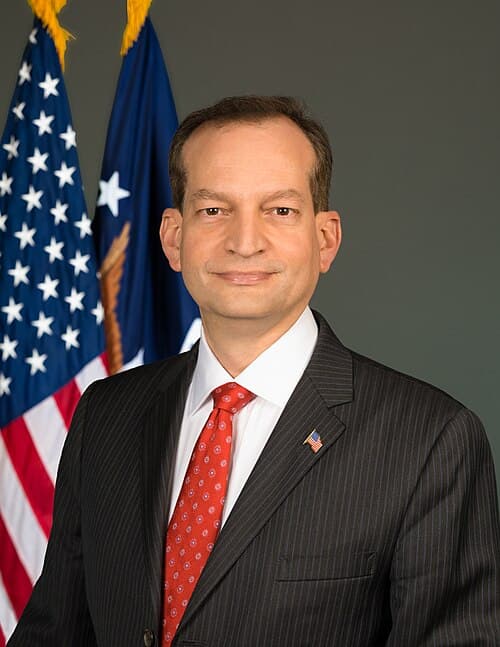
Alexander Acosta
PERSON
American attorney and politician, 27th U.S. Secretary of Labor (born 1969)
AM
ALLEN GUTHRIE MCHUGH
PERSON
Name reference in documents

Bailey
PERSON
Name reference in Epstein documents
BE
Berger
PERSON
Surname reference to multiple individuals: Bill Berger (victims attorney), Yvonne Berger (Brad Wechsler associate), and references in SEC whistleblower complaints
CP
CHRISTOPHER D. PENCE
PERSON
Name reference in documents

Cuellar
PERSON • 2 mentions
Surname reference in documents
DY
Dwight York
PERSON
American cult leader and sex offender(born 1945)
EV
Evans
PERSON • 2 mentions
Ambiguous surname - refers to multiple people in Epstein documents
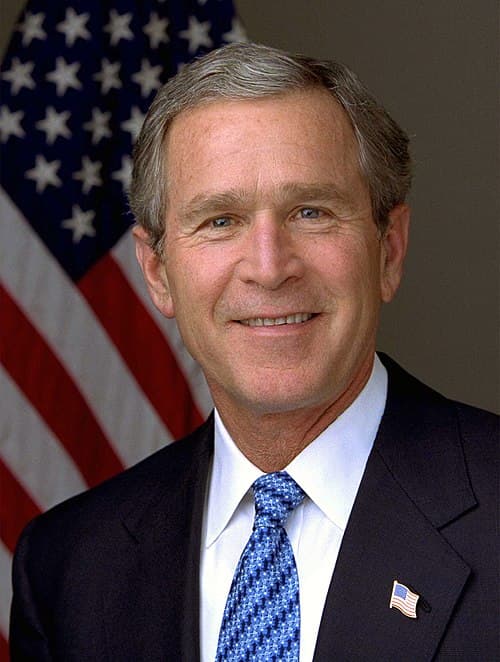
George W. Bush
PERSON • 2 mentions
President of the United States from 2001 to 2009
GM
Gmvil
PERSON
Name reference in documents
JD
Jane Doe
PERSON
Pseudonym for anonymous victims/witnesses in Epstein legal proceedings
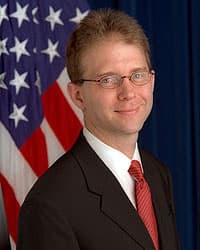
Jay Lefkowitz
PERSON
American lawyer
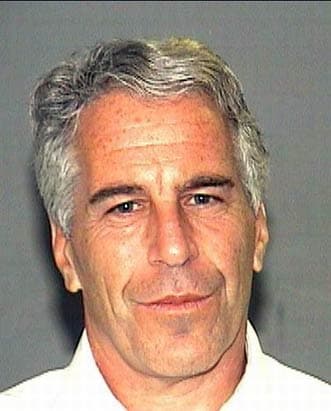
Jeffrey Epstein
PERSON • 4 mentions
American sex offender and financier (1953–2019)
JR
Job Roth
PERSON
Name reference in documents

John Roth
PERSON
Person referenced in documents

Johns
PERSON
Surname reference in Epstein-related documents

Kennard
PERSON
Surname or name fragment in documents
LB
Lana Belohlavek
PERSON
Person referenced in documents

Mortenson
PERSON
Name reference in documents
MU
Murrell
PERSON
Surname reference in Epstein-related documents
OW
Owens
PERSON
Ambiguous surname - refers to multiple people in Epstein documents
PU
Puche
PERSON
Surname reference in documents

Santos
PERSON
Ambiguous surname - refers to multiple people in Epstein documents
ST
STEPHANE D. TRACKER
PERSON
Name reference in documents

TERESA K. THOMPSON
PERSON
Name reference in documents
TM
THOMAS E. MCHUGH
PERSON
Name reference in documents

Virginia Giuffre
PERSON
Advocate for sex trafficking victims (1983–2025)
WI
Wiltberger
PERSON
Name reference in documents

Yearby
PERSON
Name reference in documents
6ih Cir.
ORGANIZATION
Organization referenced in documents
ALLEN GUTHRIE MCHUGH & THOMAS
ORGANIZATION
Organization referenced in documents
Criminal Division
ORGANIZATION
Division of the U.S. Department of Justice
MySpace
ORGANIZATION
American social networking website
Office of the Deputy Attorney General
ORGANIZATION
Organization referenced in documents
the Eleventh Circuit
ORGANIZATION
U.S. Court of Appeals for the Eleventh Circuit
the Innocence Lost Initiative
ORGANIZATION
Organization referenced in documents
the SAO Sex Crimes Division
ORGANIZATION
Organization referenced in documents

the United States Supreme Court
ORGANIZATION
U.S. Supreme Court
U.S. Attorney's Office
ORGANIZATION • 2 mentions
U.S. federal prosecutors office
XCitement Video.
ORGANIZATION
Organization referenced in documents

Atlanta
LOCATION
Capital city of Georgia, United States

Madison
LOCATION
Capital city of Wisconsin, United States

Santo
LOCATION
Mexican professional wrestler and actor (1917–1984)
the Southern District of West Virginia
LOCATION
Location referenced in documents
Statistics
Pages:14
Entities:44
Avg. OCR:0.9%
Sponsored