DOJ-COURT-198
DOJ-COURT-198 is a legal document from the Southern District of Florida, encompassing multiple cases involving Jane Doe plaintiffs and Jeffrey Epstein as the defendant.
This document consists of Jeffrey Epstein's memorandum of law in opposition to Jane Doe's motion for an injunction restraining fraudulent transfer of assets. It includes several case numbers from 2008 and 2009, all involving Jane Doe plaintiffs against Jeffrey Epstein. The document also lists other individuals and organizations, such as Donald Trump, Harvey Weinstein, and Bear Stearns, suggesting the cases may involve a wide network of individuals and financial matters.
Key Highlights
- •Multiple Jane Doe cases against Jeffrey Epstein are consolidated within this document.
- •The document pertains to Epstein's opposition to an injunction regarding potential fraudulent transfer of assets.
- •Several high-profile individuals like Donald Trump, Harvey Weinstein, and Prince Andrew are mentioned.
Frequently Asked Questions


Document Information
Bates Range
DOJ-COURT-198
Pages
24
Source
DOJ First Production
Original Filename
198.pdf
Document Content
Page 1 - DOJ-COURT-198_p1
Case 9:08-cv-80119-KAM Document 198 Entered on FLSD Docket 07/13/2009
Page 2 - DOJ-COURT-198_p2
Page 1 of 24 JANE DOE NO. 2, Plaintiff, vs. JEFFREY EPSTEIN Defendant. UNITED STATES DISTRICT COURT SOUTHERN DISTRICT OF FLORIDA CASE NO.: 08-cv-80119-MARRA/JOHNSON ----------~/ JANE DOE NO. 3, Plaintiff, vs. JEFFREY EPSTEIN Defendant. JANE DOE NO. 4, Plaintiff, vs. JEFFREY EPSTEIN Defendant. I ----------~! JANE DOE NO. 5, Plaintiff, JEFFREY EPSTEIN, Defendant. CASE NO.: 08-CV-80232-MARRA/JOHNSON CASE NO.: 08-CV-80380-MARRA/JOHNSON CASE NO.: 08-CV-80381-MARRA/JOHNSON I Case 9:08-cv-80119-KAM Document 198 Entered on FLSD Docket 07/13/2009
Page 3 - DOJ-COURT-198_p3
Page 2 of 24 Jane Doe v. Epstein Case No. 08-CV-80893-Marra/Johnson Epstein's Memorandum of Law in Opposition to Jane Doe's Injunction Motion Page 2 of24 JANE DOE NO. 6, Plaintiff, JEFFREY EPSTEIN, Defendant. CASE NO.: 08-80994-CIV-MARRA/JOHNSON ___________ __,! CASE NO.: 08-80993-CIV-MARRA/JOHNSON JANE DOE NO. 7, Plaintiff, JEFFREY EPSTEIN Defendant. I C.M.A., CASE NO.: 08-80811-CIV-MARRA/JOHNSON Plaintiff, JEFFREY EPSTEIN Defendant. I JANE DOE, CASE NO.: 08-80893-CIV-MARRA/JOHNSON Plaintiff, JEFFREY EPSTEIN et al, Defendants. I Case 9:08-cv-80119-KAM Document 198 Entered on FLSD Docket 07/13/2009
Sponsored
Page 4 - DOJ-COURT-198_p4
Page 3 of 24 Jane Doe v. Epstein Case No. 08-CV-80893-Mana/Johnson Epstein's Memorandum of Law in Opposition to Jane Doe's Injunction Motion Page 3 of24 DOE II, CASE NO.: 09-80469-CIV-MARRA-JOHNSON Plaintiff, JEFFREY EPSTEIN et al, Defendants. I JANEDOENO.101, CASE NO.: 09-80591-CIV-MARRA-JOHNSON Plaintiff, JEFFREY EPSTEIN Defendant. I JANE DOE NO. 102, CASE NO.: 09-80656-CIV-MARRA/JOHNSON Plaintiff, JEFFREY EPSTEIN, Defendant. I EPSTEIN'S MEMORANDUM OF LAW IN OPPOSITION TO JANE DOE'S MOTION FOR INJUNCTION RESTRAINING FRAUDULENT TRANSFER OF ASSETS, APPOINTMENT OF A RECEIVER TO TAKE CHARGE OF PROPERTY OF EPSTEIN, AND TO POST A $15 MILLION BOND TO SECURE POTENTIAL JUDGMENT Defendant, JEFFERY EPSTEIN ("Epstein"), by and through his undersigned counsel, submits this Memorandum of Law in Opposition to Plaintiff's, JANE DOE ("Jane Doe"), Motion for Injunction Restraining Fraudulent Transfer of Assets, Appointment of a Receive to Take Charge of Property of Epstein, and to Post a $15 Million Bond to Secure Potential Judgment (DE #165) ("Injunction Motion"), and states: Case 9:08-cv-80119-KAM Document 198 Entered on FLSD Docket 07/13/2009
Page 5 - DOJ-COURT-198_p5
Page 4 of 24 Jane Doe v. Epstein Case No. 08-CV-80893-Marra/Johnson Epstein's Memorandum of Law in Opposition to Jane Doe's Injunction Motion Page 4of24 I. INTRODUCTION Jane Doe filed her Injunction Motion (DE #165) on June 19, 2009 seeking an injunction to restrain any transfer of assets by Epstein, appointment of a receiver to take charge of Epstein's property and a $15,000,000 bond to secure her potential judgment in this action. The Injunction Motion is essentially a veiled and improper attempt to circumvent the statutory requirements for pre-judgment attachment set forth in Fla. Stat. §76.01 et seq. Nowhere in her 18-page motion does Jane Doe cite any authority supporting the relief she requests - not for an injunction, not for appointment of a receiver and not for the posting of a $15,000,000 bond. The Injunction Motion is premised on the wholly unsupported contention that Epstein is fraudulently transferring his assets. Jane Doe cites to purported facts such as Epstein being a billionaire, having financial sophistication and international contacts, as well as invocation of his constitutional rights under the Fifth Amendment in response to discovery requests, to support her fraudulent transfer claim. Jane Doe has not identified one asset transferred by Epstein nor pointed to one scintilla of evidence to suggest Epstein is fraudulently transferring his assets. Rather, she asks the Court to presume Epstein is fraudulently transferring his assets because he asserted his Fifth Amendment privilege is response to Jane Doe's Request for Admissions 6, 21 and 22. See Epstein's Response to Jane Doe's Request for Admissions attached as Exhibit C to Injunction Motion (DE #165). Based on this unsupported presumption of fraudulent transfer, Jane Doe asks the Court to impose significant and unjustified restraints on Epstein's assets. Simply put, Jane Doe is improperly seeking assurance she will be able to collect a potential judgment. Most importantly, there is no legal authority supporting any of the Case 9:08-cv-80119-KAM Document 198 Entered on FLSD Docket 07/13/2009
Page 6 - DOJ-COURT-198_p6
Page 5 of 24 Jane Doe v. Epstein Case No. 08-CV-80893-Marra/Johnson Epstein's Memorandum of Law in Opposition to Jane Doe's Injunction Motion Page 5 of24 relief requested by Jane Doe. For the following reasons, the Court must deny Jane Doe's Injunction Motion. II. JANE DOE'S STATEMENT OF MATERIAL FACTS IS BASED ON SPECULATION AND HEARSAY AND CONTAINS NO MATERIAL "FACTS" Jane Doe's "Statement of Material Facts" relies heavily on the affidavit Jane Doe's own counsel. See Affidavit of Paul Cassell, Esq., attached as Exhibit A to the Injunction Motion (DE #165). Mr. Cassell's affidavit is riddled with hearsay, speculation, conjecture and unsupported assumptions and does not contain one material "fact" based on his personal knowledge. The majority of Mr. Cassell's assertions in his affidavit are based on a 2005 Vanity Fair article (the "2005 Vanity Fair Article"). See Vicky Ward, "The Talented Mr. Epstein," Vanity Fair <http://vickyward.com/wordpress/archives/30>, (January 24, 2005; accessed June 24, 2009). Mr. Cassell's affidavit is essentially a recitation of irrelevant, speculative and hearsay statements contained in an article published over four years ago. The Court should disregard Mr. Cassell's affidavit in determining the Injunction Motion. See~ U.S. v. Baker, 432 F.3d 1189, 1211-12 (11th Cir. 2005) (holding that newspapers articles were inadmissible double hearsay when offered to prove the truth of their contents - the identity of the gunman); Dollar v. State, 685 So. 2d 901, 903 (Fla. 5th DCA 1996) (holding that a newspaper article, introduced to prove the truth of out of court statements contained therein, constitutes inadmissible hearsay); Frasher v. Fox Distributing of S.W. Fla., Inc., 813 So. 2d 1017, 1020 (Fla. 2d DCA 2002) (holding that an affidavit supporting a prejudgment writ of attachment "must not be based on hearsay or the plaintiff's subjective beliefs but rather on the plaintiff's personal knowledge of the Case 9:08-cv-80119-KAM Document 198 Entered on FLSD Docket 07/13/2009
Sponsored
Page 7 - DOJ-COURT-198_p7
Page 6 of 24 Jane Doe v. Epstein Case No. 08-CV-80893-Marra/Johnson Epstein's Memorandum of Law in Opposition to Jane Doe's Injunction Motion Page 6 of24 defendant's actions," citing Unique Caterers, Inc. v. Rudy's Farm Co., 338 So. 2d 1067, 1071 (Fla. 1976)) In his affidavit, Mr. Cassell states that "[i]t appears that defendant Jeffery Epstein is an extremely wealthy individual." See Affidavit of Paul Cassell 'l[2. Mr. Cassell's affidavit goes on to state that Epstein "has great skills in trading in international currency markets" and therefore "it is reasonable to infer that he has significant financial sophistication." Id. 'l[4. This appearance of extreme wealth and sophistication in international financial matters is based on inadmissible hearsay newspaper reports, Wikipedia, and the 2005 Vanity Fair Article. Mr. Cassell asserts that Epstein's "real mentor [Steven Hoffenberg] was sent to federal prison for twenty years for bilking investors out of more than $450 million on one of the largest Ponzi schemes in American history." Id. 'l[5. First, the foregoing statement has absolutely no relevance to the instant case, except to attempt to link Epstein to an individual convicted of operating a Ponzi scheme. The 2005 Vanity Fair Article reports on Epstein's business dealings with Steven Hoffenberg during the 1980's and merely notes that Hoffenberg is "currently ... serving a 20-year sentence" for operating a Ponzi scheme. Importantly, despite all the questionable and speculative suggestions and inferences in the 2005 Vanity Fair Article, it does not in any way link Epstein to the Ponzi scheme. Yet, Mr. Cassell tries to forge a link between Epstein and Hoffenberg's Ponzi scheme, ultimately to cast Epstein in a negative light and suggest he, like Mr. Hoffenberg, is committing financial crimes. Even Vanity Fair did not attempt to make this untenable connection. Similarly, Mr. Cassell states that Epstein was questioned by the SEC in 1981 regarding an insider trading investigation at Bear Stearns involving Case 9:08-cv-80119-KAM Document 198 Entered on FLSD Docket 07/13/2009
Page 8 - DOJ-COURT-198_p8
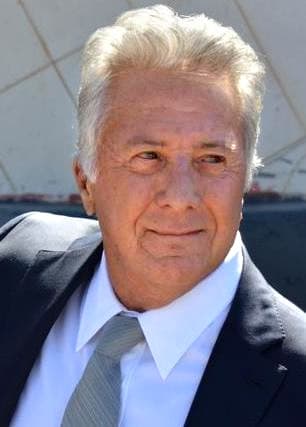
Page 7 of 24 Jane Doe v. Epstein Case No. 08-CV-80893-Marra/Johnson Epstein's Memorandum of Law in Opposition to Jane Doe's Injunction Motion Page 7 of24 Italian and Swiss investors. Id. '1[6. This statement is obviously intended to associate Epstein with Bear Sterns, a tarnished financial institution apparently involved in questionable international transactions in the 1980's, to somehow suggest Epstein is fraudulently transferring his assets overseas. It is worth noting that the questioning occurred approximately twenty-eight years ago, in 1981, and that Epstein was merely questioned because the SEC believed "Epstein had information on insider trading at Bear Sterns." The foregoing assertions in Mr. Cassell's affidavit have absolutely no bearing on Jane Doe's Injunction Motion. Then, Mr. Cassell goes beyond the pale and resorts to celebrity gossip to suggest Epstein may be transferring his assets to Israel. Specifically, in paragraph 8 of his affidavit, Mr. Cassell cites a May 2008 Vanity Fair article and states "rumors were circulating (to celebrities such as Dustin Hoffman, Alec Baldwin and filmmaker Michael Mailer) that Epstein was moving all of his considerable assets to Israel." Id. '1[8 (emphasis added). The article actually stated "[t]alk that Epstein had moved himself and his assets to Israel reached the ears of such luminaries as Harvey Weinstein .... " See Vicky Ward, "You Will Have Jeffrey Epstein to Kick Around!" Vanity Fair <http://www.vanityfair.com/online/daily/2008/05/vicky-ward-you.html>, (May 7, 2008; accessed June 24, 2009) (emphasis added). Not only does Mr. Cassell rely on utterly unreliable celebrity "rumors," he cites it out of context to suggest that Epstein is fraudulently transferring assets to Israel. Some other irrelevant, speculative and/or hearsay statements in Mr. Cassell's affidavit include: (1) Epstein may own a Boeing 727 with a trading room (See Affidavit of Paul Cassell '1[7); (2) Epstein has travelled internationally with Donald Trump and is Case 9:08-cv-80119-KAM Document 198 Entered on FLSD Docket 07/13/2009
Page 9 - DOJ-COURT-198_p9
Page 8 of 24 Jane Doe v. Epstein Case No. 08-CV-80893-Marra/Johnson Epstein's Memorandum of Law in Opposition to Jane Doe's Injunction Motion
Sponsored
Page 10 - DOJ-COURT-198_p10
Page 8 of 24 close friends with Prince Andrew and therefore it is reasonable to infer Epstein has international financial contacts (Id. 'l[9); (3) Epstein reportedly limited his clients to those with a net worth over $1 billion and kept all his deals and clients secret M 'l[4); (4) the current lawsuits could cause Epstein to financial ruin CM, 'l[lO); and (5) Mr. Cassell attests he was "advised" that Epstein works at managing his financial interests while on a "work release" program (Id. 'l[l 1). Mr. Cassell also admittedly relies on unsubstantiated reports that Epstein is transferring assets out of the country with the intent to make it impossible for Jane Doe and other plaintiffs to satisfy a potential judgment. Id. 'l[l2. Based on the foregoing irrelevant, speculative and unreliable hearsay information primarily gleaned and taken out of context from a four-year-old Vanity Fair article as well as unsubstantiated reports from unnamed individual(s), Mr. Cassell concludes that Epstein "might" be transferring his assets overseas with the intent to defeat any judgment that might be entered against him. Id. 'l[l2. Mr. Cassell does not attest to one material fact of which he has personal knowledge that would have any bearing on Jane Doe's Injunction Motion. For all of the foregoing reasons, the Court should disregard Mr. Cassell's affidavit. III. JANE DOE IS NOT ENTITLED TO INJUNCTIVE RELIEF A. Jane Doe Is Not Entitled To an Adverse Inference Based on Epstein's Invocation of His Fifth Amendment Privilege Jane Doe is not entitled to an adverse inference based on Epstein's invocation of his Fifth Amendment privilege in response to Jane Doe's Request for Admissions 6, 21 and 22. A two-step inquiry must be undertaken to determine whether such an inference is appropriate. See U.S. v. Custer Battles, LLC, 415 F.Supp.2d 628, 633 (E.D. Va. 2006). Case 9:08-cv-80119-KAM Document 198 Entered on FLSD Docket 07/13/2009
Page 11 - DOJ-COURT-198_p11
Page 9 of 24 Jane Doe v. Epstein Case No. 08-CV-80893-Marra/Johnson Epstein's Memorandum of Law in Opposition to Jane Doe's Injunction Motion
Page 12 - DOJ-COURT-198_p12
Page 9 of 24 First, the court must determine whether there was a valid basis for invocation of the privilege, which requires only "the existence of a plausible possibility that the person might be prosecuted in this country." Id. Jane Doe would be hard pressed to contend that Epstein's invocation of his Fifth Amendment privilege is invalid. However, in an abundance of caution, Epstein incorporates by reference the argument and authority set forth in his section "III" of his Motion to Stay And Or Continue Action for Time Certain Based on Parallel Civil and Criminal Proceedings with Incorporated Memorandum of Law (DE# 24). The second step requires an assessment of whether the requested inferences, which are a form of evidence, comply with the Federal Rules of Evidence. See Custer Battles, LLC, 415 F.Supp.2d at 634. That is, they must be relevant, reliable and not unfairly prejudicial, confusing or cumulative. Id. An "adverse inference can only be drawn when independent evidence exists of the fact to which the party refuses to answer." Id. at 635 (emphasis added) (citations omitted). In Custer Battles, LLC, unlike the instant case, the court found the record contained "ample evidence of Morris' involvement in the [fraudulent] billing ... which in tum ensures that the proposed adverse inferences, should the jury choose to draw them, are not unreliable." Id. See also Avirgan v. Hull, 932 F.2d 1572, 1580 (11th Cir. 1991) (holding that "the negative inference to be drawn from the assertion of the fifth amendment does not substitute for evidence needed to meet the burden of production"); Eagle Hospital Physicians, LLC v. SRG Consulting, Inc., 561 F.3d 1298, 1304 (11th Cir. 2009) (recognizing that "dismissal following the assertion of the Fifth Amendment violates the Constitution where the Case 9:08-cv-80119-KAM Document 198 Entered on FLSD Docket 07/13/2009
Sponsored
Page 13 - DOJ-COURT-198_p13
Page 10 of 24 Jane Doe v. Epstein Case No. 08-CV-80893-Mana/Johnson Epstein's Memorandum of Law in Opposition to Jane Doe's Injunction Motion Page 10 of24 inferences drawn from Fifth-Amendment-protected silence are treated as a substitute for the need for evidence on an ultimate issue of fact," citing Avirgan, supra). As belabored throughout this memorandum, Jane Doe cites no independent evidence that Epstein is fraudulently transferring assets. Accordingly, an adverse inference would be wholly unreliable and is clearly impermissible under the instant circumstances. Additionally, granting the relief sought by Jane Doe based solely on an adverse inference would violate Epstein's Fifth Amendment rights. See LaSalle Bank Lake View v. Seguban, 54 F.3d 387, 389 (7th Cir. 1995) (noting that "the Supreme Court has prohibited practices that are coercive in that they make the exercise of the privilege 'costly,"' citing Spevack v. Klein, 385 U.S. 511, 515 (1967)). As the LaSalle court explained, "deeming an allegation of a complaint [ or Jane Doe's allegation that Epstein is fraudulent transferring assets] to be admitted based on the invocation of the Fifth Amendment privilege without requiring the complainant to produce evidence in support of its allegations would impose too great a cost and exceed the authorization of Baxter [v. Palmigiano, 425 U.S. 308 (1976)]." See LaSalle Bank Lake View, 54 F.3d at 391; see also National Acceptance v. Bathalter, 705 F.2d 924, 931-32 (7th Cir. 1983) (holding that judgment imposing liability cannot rest solely upon a privileged refusal to admit or deny at the pleading stage. The cost to a defendant of treating his claim of privilege as an admission would be to excuse a plaintiff of presenting proof of his claim; "[ w ]e think Baxter indicates that this is too great a cost"). As Jane Doe fails to present any independent evidence of fraudulent transfer, the Court must deny her request for an adverse inference and ultimately deny her Injunction Motion. Case 9:08-cv-80119-KAM Document 198 Entered on FLSD Docket 07/13/2009
Page 14 - DOJ-COURT-198_p14
Page 11 of 24 Jane Doe v. Epstein Case No. 08-CV-80893-Marra/Johnson Epstein's Memorandum of Law in Opposition to Jane Doe's Injunction Motion Page 11 of24 B. Jane Doe Has Not Properly Pied a Claim for Nor Requested Injunctive Relief Jane Doe does not properly plead a claim for an injunction. While the title of Jane Doe's motion appears to request injunctive relief, nowhere in the motion does Jane Doe set forth the elements of an injunction. Moreover, the ad damnum clause of the motion does not request injunctive relief. It is well settled that the party seeking an injunction must establish: (1) substantial likelihood of success on the merits; (2) irreparable injury unless an injunction issues; (3) the threatened injury outweighs the harm to the defendant if the injunction issues; and (4) that the injunction will not disserve the public interest. See N. Am. Med. Corp. v. Axiom Worldwide, Inc., 522 F.3d 1211, 1217 (11th Cir. 2008). An injunction is a drastic and extraordinary remedy which should be granted sparingly and only after the moving party has alleged and proven facts entitling it to relief. See Shands at Lake Shore, Inc. v. Ferrero, 898 So. 2d 1037, 1038 (Fla. 1st DCA 2005); Wade v. Brown, 928 So. 2d 1260, 1262 (Fla. 4th DCA 2006). As a threshold matter, the Court should disregard Jane Doe's motion for injunctive relief as she has not properly pied the claim. She does not even attempt to allege any of the elements set forth in Axiom Worldwide, Inc., supra, and does not request injunctive relief in her motion. Moreover, in her First Amended Complaint (DE #38), Jane Doe does not seek an injunction nor does she assert a claim under Fla. Stat. §726.101 et seq. See Lawhon v. Mason, 611 So. 2d 1367, 1368 (Fla. 2d DCA 1993) (holding that a party must ''file suit under the Uniform Fraudulent Transfer Act" to enjoin fraudulent transfer of assets) (emphasis added). Case 9:08-cv-80119-KAM Document 198 Entered on FLSD Docket 07/13/2009
Page 15 - DOJ-COURT-198_p15
Page 12 of 24 Jane Doe v. Epstein Case No. 08-CV-80893-Marra/Johnson Epstein's Memorandum of Law in Opposition to Jane Doe's Injunction Motion Page 12 of24 As Jane Doe has not properly pied a claim for injunctive relief, the Court should deny Jane Doe's motion, if in fact she intended to make one, for an injunction. C. Injunctive Relief is Unavailable as Jane Doe Seeks Only Money Damages Even assuming arguendo Jane Doe properly pied the elements of an injunction, cases in which the plaintiff seeks only to recover money damages do not fall within the jurisdiction of equity and injunctive relief is therefore unavailable. See Rosen v. Cascade Int'!, Inc., 21 F.3d 1520, 1529-30 (11th Cir. 1994) (holding that the district court Jacked the general equitable authority to issue an injunction where the plaintiff sought only the award of monetary damages). Jane Doe's First Amended Complaint (DE #38) does not seek equitable relief. Rather, Jane Doe demands judgment against Epstein for compensatory damages (Counts I, II, III and V), punitive damages (Counts I - III), attorney's fees (Counts II, IV and V), minimum damages authorized by Jaw and all actual damages sustained (to be trebled as authorized by law) (Count IV) and such other relief as the Court deems just and proper (Counts I- V).1 See ad damnum clauses of Counts I - V, Plaintiff's First Amended Complaint (DE #38). The Court should deny Jane Doe's Injunction Motion as her pleadings do not invoke the Court's equity jurisdiction. D. The Court is Without Authority to Issue an Injunction Restraining Epstein's Use of His Assets Jane Doe is not entitled to the injunctive relief requested. Preliminary injunctive relief freezing a defendant's assets to establish a fund with which to satisfy a potential judgment for money damages is not an appropriate exercise of a federal district court's 1 The Eleventh Circuit in Rosen "rejected appellees' suggestion that they successfully invoked the district court's equitable jurisdiction through their requests for any additional relief as may appear 'just and proper' at the conclusion of each complaint. The mere incantation of such boilerplate language does not convert a legal cause of action into a legitimate request for equitable relief." 21 F.3d at 1526. Case 9:08-cv-80119-KAM Document 198 Entered on FLSD Docket 07/13/2009
Sponsored
Page 16 - DOJ-COURT-198_p16
Page 13 of 24 Jane Doe v. Epstein Case No. 08-CV-80893-Marra/Johnson Epstein's Memorandum of Law in Opposition to Jane Doe's Injunction Motion Page 13 of24 authority. See Rosen, 21 F.3d at 1530. It is well settled by a long and unbroken line of Florida cases that in an action at law for money damages there is no judicial authority for an order requiring the deposit of the amount in controversy into the registry of the court, or indeed for any restraint upon the use of a defendant's assets prior to the entry of judgment. Id. at 1531 (citations omitted); see also Proctor v. Eason, 651 So. 2d 1301, 1301-02 (Fla. 2d DCA 1995). In Rosen, plaintiffs brought a securities fraud action to recover money damages. See Rosen, 21 F.3d at 1522. To ensure they could collect their potential judgment, plaintiffs moved for, and the court granted, preliminary injunctive relief freezing the defendant's assets. Id. at 1525. The Eleventh Circuit vacated the injunction and held the district court did not have the authority to issue an injunction simply to tie up the defendant's assets during the pendency of the litigation. The court noted, "[t]he general federal rule of equity is that a court may not reach a defendant's assets unrelated to the underlying litigation and freeze them so that they may be preserved to satisfy a potential judgment." Id. at 1527. The court went on to cite an oft- quoted passage from the United States Supreme Court in De Beers Consol. Mines, Ltd. v. United States, 325 U.S. 212, 221 (1945): To sustain the challenged order would create a precedent of sweeping effect. This suit, as we have said, is not to be distinguished from any other suit in equity. What applies to it applies to all such. Every suitor who resorts to chancery for any sort of relief by injunction may, on a mere statement of belief that the defendant can easily make away with or transport his money or goods, impose an injunction on him, indefinite in duration, disabling him to use so much of his funds or property as the court deems necessary for security or compliance with its possible decree. And, if so, it is difficult to see why a plaintiff in any action for a personal judgment in tort or contract may not, also, apply to the chancellor for a so-called injunction sequestrating Case 9:08-cv-80119-KAM Document 198 Entered on FLSD Docket 07/13/2009
Page 17 - DOJ-COURT-198_p17
Page 14 of 24 Jane Doe v. Epstein Case No. 08-CV-80893-Marra/Johnson Epstein's Memorandum of Law in Opposition to Jane Doe's Injunction Motion Page J4of24 his opponent's assets pending recovery and satisfaction of a judgment in such a law action. No relief of this character has been thought justified in the long history of equity jurisprudence. (Emphasis added). Accordingly, the court held that preliminary injunctive relief freezing a defendant's assets to establish a fund with which to satisfy a potential money judgment is not an appropriate exercise of a district court's authority. See Rosen, 21 F.3d at 1530. The court also noted the injunctive remedy sought was equivalent to a writ of attachment. Id. at 1530. "Rule 64 [governing seizure of persons or property], and not Rule 65 (which governs injunctions generally), provides the standard for evaluating a request for preliminary injunctive relief that is, in reality, no more than a request for prejudgment attachment." Id. (Citations omitted). In actions at law, plaintiffs "possess an adequate, exclusive prejudgment remedy for the sequestration of assets under [Fla. Stat. §76.01 et seq.] provided that they can satisfy the enumerated statutory grounds for relief. Accordingly, the use of injunctive relief as a substitute for the remedy of prejudgment attachment, with its attendant safeguards, is improper." Id. at 1531 (emphasis added) (citations omitted). See also SME Racks, Inc. v. Sistemas Mecanicos Para, Electroncia. S.A., 243 Fed. Appx. 502, 504 (11th Cir. 2007) (affirming district court's refusal to grant a preliminary injunction freezing defendant's assets). Similarly, in Lawhon v. Mason, 611 So. 2d 1367, 1368 (Fla. 2d DCA 1993), plaintiffs filed a "motion to prohibit defendant from transferring assets." The motion cited plaintiffs' extensive injuries, defendant's perceived lack of insurance coverage, a belief that defendant had "substantial assets," and that defendant "had hired personal Case 9:08-cv-80119-KAM Document 198 Entered on FLSD Docket 07/13/2009
Page 18 - DOJ-COURT-198_p18
Page 15 of 24 Jane Doe v. Epstein Case No. 08-CV-80893-Marra/Johnson Epstein's Memorandum of Law in Opposition to Jane Doe's Injunction Motion Page 15 of24 counsel skilled in the area of execution of judgment." Id. The trial court granted plaintiffs' motion, which the Second District Court of Appeals characterized as "a series of temporary injunctions without the necessary showing of entitlement to injunctive relief." Id. The Second District quashed the order granting the injunction and held that "[a]n injunction cannot be used to enforce money damages or prevent a party of disposing of assets prior to the conclusion of an action at law." Id. See also Briceno v. Bryden Investment, Ltd., 973 So. 2d 614, 616 (Fla. 3d DCA 2008) (noting that in Florida, an injunction cannot be entered to prevent a party of disposing of assets prior to judgment, even where the party seeking the injunction alleges the defendant may be dissipating assets; a judgment for money damages is adequate and injunctive relief is improper) (citations omitted). The Lawhon court also noted that the order was similar to a pre-judgment writ of attachment. 611 So. 2d at 1368. "A writ of attachment cannot issue unless there is a debt due or an existing debt not yet due" and plaintiff must file a "verified complaint or sworn allegation that the defendant is removing or disposing of property. Hearsay or 'subjective belief' will not suffice." Id. (Emphasis added). See also Frasher, 813 So. 2d at 1020 (holding that an affidavit supporting a prejudgment writ of attachment "must not be based on hearsay or the plaintiff's subjective beliefs but rather on the plaintiff's personal knowledge of the defendant's actions, citing Unigue Caterers, 338 So. 2d at 1071). In the instant case, Jane Doe seeks the same relief the courts in Rosen and Lawhon prohibited - an injunction freezing Epstein's assets during the pendency of the litigation so Jane Doe will have a fund with which to satisfy her potential judgment. If the court granted the relief sought by Jane Doe based on a "mere statement of belief that Case 9:08-cv-80119-KAM Document 198 Entered on FLSD Docket 07/13/2009
Sponsored
Page 19 - DOJ-COURT-198_p19
Page 16 of 24 Jane Doe v. Epstein Case No. 08-CV-80893-Marra/Johnson Epstein's Memorandum of Law in Opposition to Jane Doe's Injunction Motion Page 16 of24 [Epstein] can easily make away with or transport his money or goods ... it is difficult to see why a plaintiff in any action for a personal judgment in tort or contract may not, also, apply to the chancellor for a so-called injunction sequestrating his opponent's assets pending recovery and satisfaction of a judgment in such a law action." See DeBeers, 325 U.S. at 221. Since Jane Doe is not seeking prejudgment attachment under Fla. Stat. §76.01 et seq., there is no authority to enjoin Epstein's use of his assets. The Court must therefore deny Jane Doe's Injunction Motion. IV. JANE DOE'S MOTION FOR APPOINTMENT OF A RECEIVER AND FOR A $15,000,000 BOND IS NOT SUPPORTED BYLAW Jane Doe moves the Court, pursuant to Fla. Stat. §726.lOS(l)(c), to appoint a receiver to take charge of and account for Epstein's assets. However, Jane Doe's reliance on the foregoing statute is misplaced in that §726.l0S(l)(c) does not provide for the appointment of a receiver to take charge of the debtor's assets. To the contrary, the statute permits "[a]ppointment of a receiver to take charge of the asset transferred or of other property of the transferee." See Fla. Stat. §726.l0S(l)(c) (emphasis added). Epstein is clearly not a "transferee" and the court should deny Jane Doe's motion to appoint a receiver to take control of Epstein's assets. Jane Doe also improperly attempts to obtain an accounting of Epstein's assets through the receiver. She states, "[a] receiver is the only way to start to block further dissipation of assets - by, first, gaining control over Epstein's assets and then, second, making an accounting of what assets of Epstein's remain in this country or are otherwise subject to control by this Court." See Injunction Motion (DE #165) at 15. However, Jane Doe does not properly plead a claim for an accounting or set forth any facts which Case 9:08-cv-80119-KAM Document 198 Entered on FLSD Docket 07/13/2009
Page 20 - DOJ-COURT-198_p20
Page 17 of 24 Jane Doe v. Epstein Case No. 08-CV-80893-Marra/Johnson Epstein's Memorandum of Law in Opposition to Jane Doe's Injunction Motion Page 17 of24 would entitle her to an accounting; she just asks for one. See Florida Software Systems, Inc. v. Columbia/HCA Healthcare Corp., 46 F.Supp.2d 1276, 1285 (M.D. Fla. 1999) (holding that a party seeking an equitable accounting must show the existence of a fiduciary relationship or a complex transaction and must demonstrate that the remedy at Jaw is inadequate); Nautica Int'! Inc. v. Intermarine USA, L.P., 5 F.Supp.2d 1333, 1343 (S.D. Fla. 1998) (holding that plaintiff failed to state a claim for equitable accounting as plaintiff failed to allege the remedy at law was inadequate). The Court should deny Jane Doe's motion to the extent it requests an accounting as she has not properly pied a claim for an accounting. In addition, not unlike her motion for an injunction and to appoint a receiver to take control of Epstein's assets, there is no authority for Jane Doe's motion to require Epstein post a $15,000,000 bond to secure a potential judgment. Jane Doe does not cite one case or statute that addresses posting a bond to secure a potential judgment. Instead, Jane Doe references cases generally addressing the court's power to grant equitable relief.2 The request for a bond is akin to Jane Doe's motion for an injunction in that it seeks to "establish a fund with which to satisfy a potential judgment for money damages," which the court in Rosen held was beyond the authority of the district court. See Rosen, 21 F.3d at 1530. "There is simply no judicial authority for an order requiring the deposit of the amount in controversy into the registry of the court, or indeed for any restraint upon the use of a defendant's assets prior to the entry of judgment." Id. at 1531 (citations omitted). Accordingly, the Court should deny Jane Doe's motion to require Epstein to post a $15,000,000 bond. 2 See also section 11!.B, supra, discussing the impropriety of granting equitable relief where there are no equitable claims pending before the court. Case 9:08-cv-80119-KAM Document 198 Entered on FLSD Docket 07/13/2009
Page 21 - DOJ-COURT-198_p21
Page 18 of 24 Jane Doe v. Epstein Case No. 08-CV-80893-Marra/Johnson Epstein's Memorandum of Law in Opposition to Jane Doe's Injunction Motion Page 18 of24 V. RELIEF UNDER THE UFTA IS INAPPROPRIATE AS THERE IS NO EVIDENCE EPSTEIN IS FRAUDULENTLY TRANSFERRING ASSETS The crux of Jane Doe's Injunction Motion is premised on the unsupported assumption that Epstein is fraudulently transfening his assets. Jane Doe asks the Court to infer, based on Epstein's invocation of his Fifth Amendment privilege in response to Jane Doe's Request for Admissions 6, 21 and 22, and the irrelevant, hearsay and speculative assertions in Paul Cassell's affidavit, that Epstein is fraudulently transferring assets. Jane Doe has not, and cannot, point to any evidence which would suggest Epstein fraudulently transferred anything. For the reasons set forth below, Jane Doe is not entitled to any relief under Fla. Stat. §726.101 et seq. - the Uniform Fraudulent Transfer Act ("UFT A"). A. Jane Doe's Burden of Proof Under the UFTA 1. The "Badges of Fraud" and Proof of Fraudulent Intent To prove a fraudulent transfer, Jane Doe must demonstrate: (1) a transfer of property has in fact occurred; (2) the property transferred belonged to the debtors; (3) the transfer occurred within certain statutory time periods; and (4) the debtor made the transfer with the intent to hinder, delay or defraud creditors. See In re Leneve, 341 B.R. 53, 56 (S.D. Fla. 2006). Courts typically resort to the "badges of fraud," to determine fraudulent intent. Id. at 61. The Eleventh Circuit has adopted the badges of fraud contained in Fla. Stat. §726.105(2) in determining a debtor's actual intent with regarding a transfer. See In re Ramsurat, 361 B.R. 246, 254 (M.D. Fla. 2006) (citations omitted). The badges of fraud are whether: (a) the transfer or obligation was to an insider; (b) the debtor retained possession or control of the property transferred after the transfer; ( c) the transfer or obligation was disclosed or concealed; ( d) before the transfer was made or Case 9:08-cv-80119-KAM Document 198 Entered on FLSD Docket 07/13/2009
Sponsored
Page 22 - DOJ-COURT-198_p22
Page 19 of 24 Jane Doe v. Epstein Case No. 08-CV-80893-Marra/Johnson Epstein's Memorandum of Law in Opposition to Jane Doe's Injunction Motion Page 19 of24 obligation was incurred, the debtor had been sued or threatened with suit; (e) the transfer was of substantially all of the debtor's assets; (f) the debtor absconded; (g) the debtor removed or concealed assets; (h) the value of the consideration received by the debtor was reasonably equivalent to the value of the asset transferred or the amount of the obligation incurred; (i) the debtor was insolvent or became insolvent after the transfer was made or obligation incurred; and (j) the transfer occurred shortly before or shortly after a substantial debt was incurred. See In re Ramsurat, 361 B.R. at 254; In re Dealers Agency Services, Inc., 380 B.R. 608, 613 (M.D. Fla. 2007) (recognizing that the Eleventh Circuit adopted the "badges of fraud" to determine fraudulent intent); Fla. Stat. §726.105(2). Moreover, Fla. Stat. §726.106, which applies to creditors whose claims arose before the transfer was made or the obligation was incurred. provides that a transfer is fraudulent "if the debtor made the transfer or incurred the obligation without receiving a reasonably equivalent value ... and the debtor was insolvent at that time or the debtor became insolvent as a result of the transfer or obligation." See Fla. Stat. §726.106(1). Subsection (2) provides that the transfer is fraudulent "if the transfer was made to an insider for an antecedent debt, the debtor was insolvent at that time, and the insider had reasonable cause to believe that the debtor was insolvent." See Fla. Stat. §726.106(2). 2. Jane Doe's "Means, Motive and Opportunity" Test is Unfounded Despite the well-settled statutory framework to determine fraudulent transfer, Jane Doe appears to have conveniently made up her own test, likely because Jane Doe cannot point to a single badge of fraud contained in Fla. Stat. §726.105(2) that would Case 9:08-cv-80119-KAM Document 198 Entered on FLSD Docket 07/13/2009
Page 23 - DOJ-COURT-198_p23
Page 20 of 24 Jane Doe v, Epstein Case No. 08-CV-80893-Marra/Johnson Epstein's Memorandum of Law in Opposition to Jane Doe's Injunction Motion Page 20of24 apply to Epstein. Indeed, Jane Doe cannot identify a single transfer made by Epstein. Yet Jane Doe urges the Court to conclude Epstein is fraudulently transferring assets because he purportedly has the means, the motive and the opportunity to do so, citing United States v. Sparks, 265 F.3d 825, 830 (9th Cir. 2001). See Injunction Motion (DE #165) at 11. Sparks is completely inapposite as it concerned whether probable cause for an arrest can be based on a showing of means, motive and opportunity. No court has recognized the "means, motive and opportunity test" to determine fraudulent transfer. B. Jane Doe Cannot Make The Requisite Showing for Relief Under the UFT A; There Is No Evidence of Fraudulent Transfer As set forth above, there are various ways, set forth in the UFT A and applicable case law, in which a creditor could prove a debtor is fraudulently transferring assets. Jane Doe fails to point to one iota of evidence that Epstein is fraudulently transferring assets. In In re Stewart, 280 B.R. 268 (M.D. Fla. 2001), proceedings were brought to set aside certain transfers of the debtor as fraudulent to creditors. The bankruptcy trustee claimed, among other things, that the debtor made a series of transfers to his wife totaling $392,691. Id. at 273. There were deposits into the wife's securities accounts in the sum of $392,691 which were not explained by the entries on the account statements. Id. at 274. The trustee concluded the funds must have originated from the debtor and pointed to the debtor's income to show that he had the financial means and the financial wherewithal to supply the funds. Id. No other evidence was presented to establish the debtor transferred $392,691 to his wife. Under these circumstances, the court held that the trustee had "not established the existence of any transfer of the Debtor's interest in property as required by ... §726.105 of the Florida Statutes." Id. See also In re Energy Case 9:08-cv-80119-KAM Document 198 Entered on FLSD Docket 07/13/2009
Page 24 - DOJ-COURT-198_p24
Page 21 of 24 Jane Doe v. Epstein Case No. 08-CV-80893-Marra/Johnson Epstein's Memorandum of Law in Opposition to Jane Doe's Injunction Motion Page21 of24 Smart, Inc., 381 B.R. 359, 382 (M.D. Fla. 2007) (holding that bankruptcy trustee failed to establish a fraudulent transfer claim as the trustee failed to establish that the debtor made any transfers).3 Moreover, the court refused to enter a final default judgment against the debtor because the complaint contained "virtually no allegations of fact." See In re Stewart, 280 B.R. at 285. The court noted that "[n]owhere in the Complaint does Barbara Stewart allege that an identifiable asset was transferred on a specific date pursuant to a specific transfer. Further, nowhere in the Complaint does Barbara Stewart allege any specific facts which, even if admitted, would support a finding that a transfer was made with the actual intent to defraud a creditor." Id. at 285-86. As in In re Stewart, Jane Doe does not allege "an identifiable asset was transferred on a specific date pursuant to a specific transfer" or allege any facts which "would support a finding that a transfer was made with the actual intent to defraud a creditor." See In re Stewart, 280 B.R. at 285-86. Moreover, the only "evidence" Jane Doe presents to prove fraudulent transfer is her assertion that Epstein "has the financial means and the financial wherewithal" to fraudulently transfer his assets. As the court in In re Stewart rejected such an argument and found that the trustee did not establish the existence of a transfer of property as required by Fla. Stat. §726.105, so should the Court here. 3 In so holding, the court cited l I U.S.C. §548. See In re Energy Smart. Inc., 381 B.R. 359 at 382. Section 548 of the Bankruptcy Code and §726.105, Florida Statutes, "are substantially the same, with the result that 'the analysis of what must be show to prove actual fraud under both the bankruptcy and state law fraudulent transfer provisions is the same."' See In re Dealer's Agency Services, Inc., 380 B.R. at 612 (citations omitted). Case 9:08-cv-80119-KAM Document 198 Entered on FLSD Docket 07/13/2009
Entities Mentioned

Adam D. Horowitz
PERSON
American attorney specializing in sexual abuse cases, represented multiple Epstein victims

Alec Baldwin
PERSON • 2 mentions
American actor
AV
Avirgan
PERSON
Surname or name fragment in documents
BS
Barbara Stewart
PERSON
Name reference in documents

Baxter
PERSON • 2 mentions
Industrial robot
Bradley Edwards
PERSON
American attorney who represented Epstein victims, author of Relentless Pursuit
BR
Briceno
PERSON
Surname or name fragment in documents
BR
Bruce E. Reinhart
PERSON
Federal magistrate judge in Southern District of Florida, presided over Epstein case proceedings
DA
DAVID A. Y AREMA
PERSON
Name reference in documents

Donald Trump
PERSON • 3 mentions
President of the United States (2017–2021, 2025–present)
Dustin Hoffman
PERSON • 2 mentions
American actor (born 1937)
EJ
Eason Jeffers
PERSON
Person referenced in documents

Ferrero
PERSON
Surname or name fragment in documents
FR
Frasher
PERSON
Name reference in documents

Harvey Weinstein
PERSON • 3 mentions
American film producer and sex offender (born 1952)
IG
Isidro Manuel Garcia
PERSON
Person referenced in documents
JG
Jack Goldberger
PERSON • 2 mentions
American criminal defense attorney who represented Jeffrey Epstein, partner at Goldberger Weiss P.A. in West Palm Beach, Florida
JH
Jack Patrick Hill
PERSON
Attorney at Searcy Denney law firm, appeared in Epstein-related legal proceedings
JS
Jack Scarola
PERSON • 2 mentions
American attorney who represented Jeffrey Epstein victims, partner at Searcy Denney Scarola Barnhart & Shipley
James Baker
PERSON
American lawyer and statesman (born 1930)
JD
Jane Doe
PERSON • 2 mentions
Pseudonym for anonymous victims/witnesses in Epstein legal proceedings

Jeffrey Epstein
PERSON • 4 mentions
American sex offender and financier (1953–2019)
KE
Katherine W. Ezell
PERSON
Person referenced in documents

Kenneth Marra
PERSON
American judge
LA
Lawhon
PERSON
Surname or name fragment in documents
LE
Leneve
PERSON
Namibian rugby union player
MA
Mailer
PERSON
Individual employed to handle newspapers from the press to the truck

Martha Stewart
PERSON
American businesswoman, writer, TV personality (born 1941)
MP
Michael J. Pike
PERSON
Person referenced in Epstein-related documents
PA
Palmigiano
PERSON
Surname reference in documents

Paul Cassell
PERSON • 2 mentions
United States federal judge

Prince Andrew
PERSON • 2 mentions
Third child of Queen Elizabeth II and Prince Philip, Duke of Edinburgh (born 1960)
PR
Proctor
PERSON
Surname or name fragment in documents
RA
Ramsurat
PERSON
Name reference in documents
RW
Richard Horace Willits
PERSON
Lawyer and former federal prosecutor, represented Epstein in NPA negotiations
RJ
Robert C. Josefsberg
PERSON
Florida criminal defense attorney, appeared in Epstein legal proceedings
RO
Rosen
PERSON
Ambiguous surname - refers to Jeffrey Rosen (Acting AG), Ira Rosen (producer), and others
Rudy Giuliani
PERSON
American attorney and politician (born 1944)

Sarah Kellen
PERSON • 2 mentions
American assistant to Jeffrey Epstein, named as unindicted co-conspirator in 2008 non-prosecution agreement
SR
Scott Rothstein
PERSON
American criminal
Searcy Denney
PERSON
Person referenced in documents
SE
Seguban
PERSON
Surname or name fragment in documents
SH
Shands
PERSON
Name reference in documents
SK
Spencer Kuvin
PERSON • 2 mentions
American lawyer based in Florida (born 1969)
SP
Spevack
PERSON
Name reference in documents
Steven Hoffenberg
PERSON • 2 mentions
American fraudster
TL
Theodore J. Leopold
PERSON
Attorney at Leopold & Associates, represented victims in Epstein civil cases

Vicky Ward
PERSON • 2 mentions
British investigative journalist
Atterbury Goldberger & Weiss
ORGANIZATION
Law firm based in Florida
Axiom Worldwide, Inc.
ORGANIZATION
Organization referenced in documents

Bear Stearns
ORGANIZATION • 2 mentions
American investment company based in New York, New York USA (1923 - 2008)
Bryden Investment, Ltd.
ORGANIZATION
Organization referenced in documents
Columbia/HCA Healthcare Corp.
ORGANIZATION
Organization referenced in documents
Debtor
ORGANIZATION
Organization referenced in documents

Dollar
ORGANIZATION
British musical duo
Eagle Hospital Physicians, LLC
ORGANIZATION
Organization referenced in documents
Garcia Law Firm
ORGANIZATION
Organization referenced in documents
Intermarine USA
ORGANIZATION
Organization referenced in documents
Mason
ORGANIZATION
Entity referenced in documents
National Acceptance v. Bathalter
ORGANIZATION
Organization referenced in documents
ProHac Vice
ORGANIZATION
Organization referenced in documents
Rothstein Rosenfeldt Adler
ORGANIZATION
Law firm involved in Scott Rothstein Ponzi scheme
Sistemas Mecanicos
ORGANIZATION
Organization referenced in documents
Sparks
ORGANIZATION
Organization referenced in documents
SRG Consulting, Inc.
ORGANIZATION
Organization referenced in documents
the Eleventh
ORGANIZATION
Organization referenced in documents
the Eleventh Circuit
ORGANIZATION
U.S. Court of Appeals for the Eleventh Circuit
The Second District
ORGANIZATION
Organization referenced in documents
the Second District Court of Appeals
ORGANIZATION
Organization referenced in documents

the United States Supreme Court
ORGANIZATION
U.S. Supreme Court
Unique Caterers, Inc.
ORGANIZATION
Organization referenced in documents

Vanity
ORGANIZATION
Canadian singer, songwriter, model, actress (1959–2016)

Lake Worth
LOCATION
City in Palm Beach County, Florida, United States
Palm Beach Gardens
LOCATION
City in Palm Beach County, Florida, United States
Palm Beach Lakes
LOCATION
Hamlet in Palm Beach County, Florida, United States

Salt Lake City
LOCATION
City in and county seat of Salt Lake County, Utah, United States and the capital of Utah
Statistics
Pages:24
Entities:76
Sponsored