HOUSE_OVERSIGHT_031834 - HOUSE_OVERSIGHT_031875
Document HOUSE_OVERSIGHT_031834 is a collection of articles compiled in a Presidential Press Bulletin from May 16, 2011, by the House Oversight Committee [cite: null].
The document consists of articles from various news sources, including The Weekly Standard, The Daily Star, The Daily Beast, The Washington Post, Newsweek, Hurriyet Daily News, and STRATFOR [cite: null]. These articles cover a range of topics related to Middle Eastern politics, including peace efforts between Israel and Syria, the Arab Spring, and U.S. foreign policy in the region [cite: null]. It provides a snapshot of the geopolitical landscape and the perspectives of different analysts and publications on these issues in May 2011 [cite: null].
Key Highlights
- •The document includes an article criticizing the Obama administration's response to the Syrian conflict and its pursuit of an Israeli-Syrian peace deal.
- •Several articles discuss the implications of the Arab Spring and the potential for democratic change in the Middle East.
- •The Geopolitics of Israel, Biblical and Modern
Frequently Asked Questions



Document Information
Bates Range
HOUSE_OVERSIGHT_031834 - HOUSE_OVERSIGHT_031875
Pages
42
Source
House Oversight Committee
Date
May 16, 2011
Original Filename
16 May.doc
File Size
195.50 KB
Document Content
Page 1 - HOUSE_OVERSIGHT_031834
1 The Shimon Post Presidential Press Bulletin 16 May, 2011 Article 1. The Weekly Standard The Illusion of Peace with Syria Elliott Abrams Article 2. The Daily Star A democratic Arab world would welcome peace with Israel Hamid Alkifaey Article 3. The Daily Beast The Awkward Exit of Mideast Envoy George Mitchell Daniel Stone Article 4. The Washington Post Amid the Arab Spring, a U.S.-Saudi split Nawaf Obaid Article 5 Newsweek Dr. K's Rx for China Niall Ferguson Article 6 Hurriyet Daily News Syria as Turkey's domestic issue Yusuf Kanli Article 7. STRATFOR The Geopolitics of Israel: Biblical and Modern HOUSE_OVERSIGHT_031834
Page 2 - HOUSE_OVERSIGHT_031835
2 Article 1. The Weekly Standard The Illusion of Peace with Syria Elliott Abrams May 23, 2011 -- The news from Syria grows grimmer by the day— more peaceful protesters killed, ten thousand arrested in the past week, army units shelling residential neighborhoods. But the Obama administration's response has not grown grimmer or louder. As recently as May 6, Secretary of State Clinton was still talking about a "reform agenda" in Syria, as if Bashar al-Assad were a slightly misguided bureaucrat rather than the murderer of roughly 1,000 unarmed demonstrators. As for the president, though the White House has issued a couple of statements in his name, he has yet to say one word on camera about the bloodletting in Syria. This is not a small matter, for a tough statement attacking the regime's repression and giving the demonstrators moral support would immediately circulate over the Internet. American sanctions against Syria, meanwhile, have not named Assad, and there has been no call for him to step down. Why is the administration appearing to stick with Assad and refusing to call for his ouster? A key reason may be the hope that an Israeli- Syrian peace deal can be arranged. From the day it came to office, the Obama administration clearly wanted to win an Israeli-Palestinian peace agreement. There has been no progress during its two years in office, mostly because the White House insisted on a 100 percent construction freeze in the West Bank settlements and Jerusalem as a precondition for negotiations. This was politically impossible in Israel, and also meant that Palestinian president Mahmoud Abbas could not come to the table lest he appear to be asking less from Israel than the Americans. HOUSE_OVERSIGHT_031835
Page 3 - HOUSE_OVERSIGHT_031836
3 With negotiations frozen, the Palestinians turned to unilateral measures: seeking a United Nations vote admitting the State of Palestine to membership and getting dozens of countries to recognize a Palestinian state. Meanwhile, their delegitimization campaign against Israel continued apace, especially in Europe, where calls for boycotts and sanctions spread. On the pro-Israel side there was also consideration of unilateral measures-steps to head off the Palestinians diplomatically (several of which I described and supported in the April 11 Weekly Standard). Some forlorn hope may still have existed inside the administration that a compromise on construction could bring the Palestinians back to the table with the government of Israel-until the agreement between Hamas and Fatah was signed on April 27. This agreement, unless and until it collapses, makes Israeli concessions or new flexibility in the West Bank impossible and puts paid to the entire "peace process." It brings Hamas into the Palestinian Authority government, ending a period of several years when Palestinian Security Forces have cooperated with the Israel Defense Forces against terrorism and against Hamas in particular. It will also bring Hamas—next year and for the first time— into the PLO, the body charged with negotiating peace with Israel. Even Yasser Arafat resisted that development when he headed the PLO, and it seems obvious that Israel cannot negotiate peace with an anti-Semitic terrorist group bent on its destruction. So where can the White House turn if it wants some kind of peace process in the Middle East? Syria. After all, in his first term as prime minister, back in 1998, Benjamin Netanyahu did authorize indirect negotiations with Syria. And the IDF—and especially Ehud Barak, a former head of the IDF, Israel's defense minister, and a close adviser to Netanyahu-has long favored such a deal. The IDF theory was that if Syria made peace, so would Lebanon, and then Israel would be at HOUSE_OVERSIGHT_031836
Sponsored
Page 4 - HOUSE_OVERSIGHT_031837
4 peace with all four neighboring Arab states. And it can be argued now that Assad may see negotiations with Israel as a way to climb back from the pariah status he is earning, making him at this juncture truly open to a new peace process. Such thinking, whether in Jerusalem or the White House, is foolish and even grotesque. There is no possibility that Assad would negotiate seriously and that an agreement could be attained. He is now clinging desperately to power, and his only true allies are Iran and Hezbollah. Yet Israel's (and, one hopes, our own) key precondition to any agreement would necessarily be a clean break in those relationships: an end to the Syrian alliance with Hezbollah and Iran. Otherwise Israel would be giving the Golan, in effect, to Iran—a suicidal act. No Israeli government would do it, which suggests that negotiations with Assad would have no purpose. Assad may indeed be open to commencing a negotiation as a means to escape international isolation, but that's all the more reason not to give it to him. Prime Minister Ehud Olmert's 2008 talks with Syria (via Turkey) allowed Syria to escape the partial isolation the United States had imposed on it in that decade, with zero gain for Israel. This is not an experiment worth repeating, for the Assad regime is today even more despicable than it was three years ago. To react to the murders now taking place all over Syria by embracing the Assad regime would be morally indefensible. Whether Assad can be overthrown soon by the people of Syria is a fair question to ask. Will the army stay with him, or will Sunni units rebel? Will the Sunni business elites turn against him? How long can the regime survive? We do not yet know the answers. But surely we must avoid any step that could help Assad, rehabilitate his regime, or undermine the courageous struggle of peaceful demonstrators in the streets of Syria. The peace agreements that Israel signed with Egypt and Jordan were real achievements, but there will be no such agreements with the HOUSE_OVERSIGHT_031837
Page 5 - HOUSE_OVERSIGHT_031838
5 Palestinians or with Syria in the foreseeable future. The Palestinians have taken themselves out of the game for now. We cannot turn from them to the Syrians while Assad's troops are using howitzers and sniper rifles against his people. This is the time not for diplomatic engagement with Assad, but for diplomacy aimed at quarantining his regime and helping bring it down. The White House should dismiss any remaining dreams of a "peace process" with Syria to substitute for the Palestinian version and face facts: There will be no peace with the butcher who rules Syria today. Elliott Abrams, senior fellow for Middle Eastern studies at the Council on Foreign Relations, was a deputy national security adviser in the George W. Bush administration. HOUSE_OVERSIGHT_031838
Page 6 - HOUSE_OVERSIGHT_031839
6 Article 2. The Daily Star A democratic Arab world would welcome peace with Israel Hamid Alkifaey One could reasonably argue that the golden opportunity for peace in the Middle East was blown away when Israeli Prime Minister Yitzhak Rabin was assassinated on Nov. 4, 1995. He was the only Israeli leader capable of making peace with the Palestinians, and was about to do so had it not been for the bullets of Yigal Amir, the right-wing religious zealot who believed in the "winner takes all" principle. One could also claim that the Israeli-Palestinian conflict and its global ramifications are responsible for agitating religious extremism in the Muslim world as a whole, and among Palestinians in particular. Prior to 1987, there was hardly any Islamic factor in Palestinian resistance. The Hamas and Islamic Jihad groups were established after the 1987 intifada. From this we deduce that extremism on the Israeli side led to the same on the Palestinian side, and consequently in other Muslim countries, which manifests in popular opposition to traditional and despotic regimes. The Arab world is currently going through a social and political revolution that has so far claimed two "entrenched" regimes in Tunisia and Egypt. At least three other regimes in the region are fighting for their lives, and are not expected to survive. There will soon be different styles of government in Libya, Yemen and Syria. This much is certain. Will there be a different policy toward Israel? Certainly. But this will take time to take shape, since there are more pressing national HOUSE_OVERSIGHT_031839
Sponsored
Page 7 - HOUSE_OVERSIGHT_031840
7 priorities, such as political and economic reforms. Israel has long branded the Arab world as tribal and undemocratic, in order to brand itself the only democracy in the Middle East. Well, soon enough it won't be. Many of its neighbors will soon join the democratic world as demands for democracy grow. Democracy will mean more development, prosperity and people's power. It means more popular participation in decision making and awareness of the possibilities of the nation and what it can and cannot do. It may not mean more hostility toward Israel if the latter knows how to deal with it. But there will be tension if Israel continues to follow extreme policies, which it will under the current leadership of Benjamin Netanyahu. The Palestinians must achieve their right to establish their own state on their land. This right has been recognized by almost everyone except a minority of extremists in Israel, led by Netanyahu. Free and democratic Arab countries won't shrink from supporting this Palestinian right under any circumstances. Muslims will not give up on East Jerusalem, either. Arab regimes have been weak in the past. Democracy will strengthen them, but also add reason to Arab governance. Most Arabs have accepted Israel's right to exist, and accepted U.N. resolutions 242 and 338, but Israeli intransigence is not helping them formulate a unified position. Democratic Egypt won't be a threat to Israel as the Egyptian military, which will continue to be highly influential in Egypt's politics in the foreseeable future, will not risk another war with Israel. Egyptians under a democratic regime will be seeking better living standards, better laws to govern the country and more rights as citizens. They won't be pressing their government to fight Israel; on the contrary, they want a stable economy where things will be better for future generations. But Israel may aggravate the situation by electing extremists and following extreme policies. This will strengthen the hands of the hawks in the Arab world. Moderate Israel under HOUSE_OVERSIGHT_031840
Page 8 - HOUSE_OVERSIGHT_031841
8 reasonable and realistic leaders should have nothing to fear from Egypt, with which it has an enduring peace treaty. The situation with Syria may not be exactly the same, however, especially when the two countries are still officially in a state of war. The regime of Bashar Assad, and his father before him, would have never started a war with Israel unilaterally. It also suited them not to have a peace treaty. Any new Syrian leader is not likely (for a considerable period of time) to initiate a move toward a peace agreement with Israel as this will weaken his position domestically. Nor will he launch a war, however, since such a war will not result in victory. A democratic regime in Syria, or any other Arab country for that matter, will need a good 10 years to build democratic institutions and stabilize a modern market economy needed in any democracy. So, war won't be on the agenda in the near future. Prosperity increases the public's stake in a stable economy, and this will make people want to compromise to make their country more prosperous and stable. However, everything will depend on how prepared the free world is to help new democracies in the Middle East survive and prosper. Small Islamic groups, organized and armed with religious zeal, could hijack power from the moderates. This would lead to a disaster for the whole region. Therefore, it is imperative for the free world, Israel included, not to leave matters to chance. A proactive stance is needed to nurture democracy and help moderate forces organize themselves in order to govern the region Hamid Alkifaey is a writer and journalist. He was the first government spokesman in post-Saddam Hussein Iraq and is founder-leader of the Movement for Democratic Society. Currently he is researching democratization at the University of Exeter in the U.K. HOUSE_OVERSIGHT_031841
Page 9 - HOUSE_OVERSIGHT_031842
9 Article 3. The Daily Beast The Awkward Exit of Mideast Envoy George Mitchell Daniel Stone May 13, 2011 -- Two days after Barack Obama's inauguration, George Mitchell was named special envoy for Middle East peace. With the new president standing beside Mitchell and Secretary of State Hillary Clinton, Vice President Joe Biden took the podium and extolled Mitchell's reputation and experience having brokered peace in Northern Ireland, calling him an "outstanding public servant" with "incredible capacity." In the press, Mitchell was praised as the right man for the job at the right time. On Friday, though, that capacity had reached its limit, and Mitchell told his bosses in the West Wing that he'd had enough. His reasons, he said, were personal-the kind of nebulous rationale that leaves ample room for interpretation. Unmentioned were the months of frustration that Mitchell had built up as direct negotiations between Israelis and Palestinians became more difficult and the peace process further off. The timing of Mitchell's departure couldn't be more awkward. Obama will meet with Israeli Prime Minister Benjamin Netanyahu and Jordan's King Abdullah next week, as well as deliver a major speech on Middle East policy. But the resignation didn't come as a surprise to those who worked closest with Mitchell. A State Department official described to Newsweek a man increasingly annoyed by both parties' constant moving of the goal posts and the constraints of the administration's unshakeable political instinct to support Israel. HOUSE_OVERSIGHT_031842
Sponsored
Page 10 - HOUSE_OVERSIGHT_031843
10 The strain was noticeable in the Middle East. In a recent interview with Newsweek, one senior Israeli official said Mitchell often would say one thing about the direction the U.S. was taking with the two sides, only to be contradicted by Dennis Ross, Clinton's special adviser to the region. The official, who did not want to be quoted by name, said it seemed as if Mitchell had abdicated his role completely in recent months. Indeed, Mitchell's frequent visits to Israel and the West Bank slowed to a trickle; his last visit to the region was in December. When he was there, officials on both sides of the conflict had voiced bewilderment at Mitchell's hands-off approach to the complex negotiating process. With a small staff in Israel, he would shuttle between Jerusalem and Ramallah to meet with senior advisers to the leaders of both sides and then leave after just a few days. In an interview with Newsweek last month, Palestinian President Mahmoud Abbas openly accused Mitchell of not doing his job. "Every visit by Mitchell, we talked to him and gave him some ideas," he said. "At the end we discovered that he didn't convey any of these ideas to the Israelis. What does it mean?" A politically attuned man who was once Senate Majority Leader, Mitchell was aware of the complaints about him. His usual comeback was to point to his success in Northern Ireland, which earned him the Presidential Medal of Freedom. For hundreds of days, he liked to say, he was considered a failure, until the final day, when he actually got it done. Mitchell's resignation letter set off a small panic inside the West Wing earlier in the week. Senior advisers, as well as Obama himself, could sense the increasing difficulty of the job: Administration officials had been unable to convince Israel to halve new settlements in the West Bank, alienating Palestinians, and Israelis were irked in early May when Abbas allied with Hamas, a group that refuses to HOUSE_OVERSIGHT_031843
Page 11 - HOUSE_OVERSIGHT_031844
11 denounce violence against Israel. But the symbolism of Mitchell leaving several days before Obama's biggest week of outreach to the region projected a vacuum of confidence that anything hopeful, however remote, was on the horizon. "He wouldn't be leaving at this important hour if he knew there was going to be a significant change in the administration's attitude toward the peace process," said Middle East analyst Gregory Orfalea, who formerly taught at Georgetown's School of Foreign Service. "He's leaving because it's status quo." Mitchell will be replaced-in the interim by his deputy, David Hale— and another official will take a crack at the quandary. But despite new momentum from Netanyahu's visit next week and Obama's speech Thursday, Mitchell's departure could signal stagnant talks for the next several years. According to Fawaz Gerges, director of the London School of Economics' Middle East Center, "the reality is that, with Mitchell leaving, Barack Obama basically lost the ideological battle [over how to confront the peace process]. By now he'll have to wait for the second term before you can get another concerted effort." Daniel Stone is Newsweek's White House correspondent. He also covers national energy and environmental policy. HOUSE_OVERSIGHT_031844
Page 12 - HOUSE_OVERSIGHT_031845
12 Article 4. The Washington Post Amid the Arab Spring, a U.S.-Saudi split Nawaf Obaid May 16 - RIYADH, SAUDI ARABIA -- A tectonic shift has occurred in the U.S.-Saudi relationship. Despite significant pressure from the Obama administration to remain on the sidelines, Saudi leaders sent troops into Manama in March to defend Bahrain's monarchy and quell the unrest that has shaken that country since February. For more than 60 years, Saudi Arabia has been bound by an unwritten bargain: oil for security. Riyadh has often protested but ultimately acquiesced to what it saw as misguided U.S. policies. But American missteps in the region since Sept. 11, an ill-conceived response to the Arab protest movements and an unconscionable refusal to hold Israel accountable for its illegal settlement building have brought this arrangement to an end. As the Saudis recalibrate the partnership, Riyadh intends to pursue a much more assertive foreign policy, at times conflicting with American interests. The backdrop for this change are the rise of Iranian meddling in the region and the counterproductive policies that the United States has pursued here since Sept. 11. The most significant blunder may have been the invasion of Iraq, which resulted in enormous loss of life and provided Iran an opening to expand its sphere of influence. For years, Iran's leadership has aimed to foment discord while furthering its geopolitical ambitions. Tehran has long funded Hamas and Hezbollah; recently, its scope of attempted interference has broadened to include the affairs of Arab states from Yemen to Morocco. This month the chief of staff of Iran's armed forces, Gen. Hasan Firouzabadi, harshly criticized Riyadh over its intervention in Bahrain, claiming this act would spark massive domestic uprisings. HOUSE_OVERSIGHT_031845
Sponsored
Page 13 - HOUSE_OVERSIGHT_031846
13 Such remarks are based more on wishful thinking than fact, but Iran's efforts to destabilize its neighbors are tireless. As Riyadh fights a cold war with Tehran, Washington has shown itself in recent months to be an unwilling and unreliable partner against this threat. The emerging political reality is a Saudi-led Arab world facing off against the aggression of Iran and its non-state proxies. Saudi Arabia will not allow the political unrest in the region to destabilize the Arab monarchies - the Gulf states, Jordan and Morocco. In Yemen, the Saudis are insisting on an orderly transition of power and a dignified exit for President Ali Abdullah Saleh (a courtesy that was not extended to Hosni Mubarak, despite the former Egyptian president's many years as a strong U.S. ally). To facilitate this handover, Riyadh is leading a diplomatic effort under the auspices of the six-country Gulf Cooperation Council. In Iraq, the Saudi government will continue to pursue a hard-line stance against the Maliki government, which it regards as little more than an Iranian puppet. In Lebanon, Saudi Arabia will act to check the growth of Hezbollah and to ensure that this Iranian proxy does not dominate the country's political life. Regarding the widespread upheaval in Syria, the Saudis will work to ensure that any potential transition to a post-Assad era is as peaceful and as free of Iranian meddling as possible. Regarding Israel, Riyadh is adamant that a just settlement, based on King Abdullah's proposed peace plan, be implemented. This includes a Palestinian state with its capital in East Jerusalem. The United States has lost all credibility on this issue; after casting the sole vote in the U.N. Security Council against censuring Israel for its illegal settlement building, it can no longer act as an objective mediator. This act was a watershed in U.S.- Saudi relations, guaranteeing that Saudi leaders will not push for further compromise from the Palestinians, despite American pressure. Saudi Arabia remains strong and stable, lending muscle to its invigorated foreign policy. Spiritually, the kingdom plays a unique HOUSE_OVERSIGHT_031846
Page 14 - HOUSE_OVERSIGHT_031847
14 role for the world's 1.2 billion Muslims — more than 1 billion of whom are Sunni - as the birthplace of Islam and home of the two holiest cities. Politically, its leaders enjoy broad domestic support, and a growing nationalism has knitted the historically tribal country more closely together. This is largely why widespread protests, much anticipated by Western media in March, never materialized. As the world's sole energy superpower and the de facto central banker of the global energy markets, Riyadh is the economic powerhouse of the Middle East, representing 25 percent of the combined gross domestic product of the Arab world. The kingdom has amassed more than $550 billion in foreign reserves and is spending more than $150 billion to improve infrastructure, public education, social services and health care. To counter the threats posed by Iran and transnational terrorist networks, the Saudi leadership is authorizing more than $100 billion of additional military spending to modernize ground forces, upgrade naval capabilities and more. The kingdom is doubling its number of high-quality combat aircraft and adding 60,000 security personnel to the Interior Ministry forces. Plans are underway to create a "Special Forces Command," based on the U.S. model, to unify the kingdom's various special forces if needed for rapid deployment abroad. Saudi Arabia has the will and the means to meet its expanded global responsibilities. In some issues, such as counterterrorism and efforts to fight money laundering, the Saudis will continue to be a strong U.S. partner. In areas in which Saudi national security or strategic interests are at stake, the kingdom will pursue its own agenda. With Iran working tirelessly to dominate the region, the Muslim Brotherhood rising in Egypt and unrest on nearly every border, there is simply too much at stake for the kingdom to rely on a security policy written in Washington, which has backfired more often than not and spread instability. The special relationship HOUSE_OVERSIGHT_031847
Page 15 - HOUSE_OVERSIGHT_031848
15 may never be the same, but from this transformation a more stable and secure Middle East can be born. The writer is a senior fellow at the King Faisal Center for Research & Islamic Studies. HOUSE_OVERSIGHT_031848
Sponsored
Page 16 - HOUSE_OVERSIGHT_031849
16 Article 5. Newsweek Dr. K's Rx for China Niall Ferguson May 15, 2011 -- Secretary of State Hillary Clinton thinks the Chinese government is "scared" of the Arab Spring. "They're worried," she told Jeffrey Goldberg in the latest Atlantic, "and they are trying to stop history, which is a fool's errand. They cannot do it." These are words-intemperate, undiplomatic, and very likely counterproductive— that you cannot imagine being uttered by her predecessor Henry Kissinger. It is now 40 years since Kissinger went on his secret mission to China, to pave the way for President Richard Nixon's historic visit the following year. Since then he has visited the country more than 50 times. And if there is one thing he has learned, it is this: the real fool's errand is to lean on the Chinese. Much has changed in the world since Kissinger's first trip to China. (In 1971, who would have dared to predict that America's public enemy No. 1 would be a Saudi-born Islamic fundamentalist skulking in a walled compound in Pakistan?) But at least two things in American foreign policy remain consistent: the relationship with mainland China, revived by Kissinger after more than 20 years in the deep freeze, and Kissinger himself, consulted formally or informally by every president from John F. Kennedy to Barack Obama. On China, Kissinger's new book, is a reminder of why our leaders still want to pick his brains. Eighty-eight years old this month, he remains without equal as a strategic thinker. The opening to China is a story Kissinger has told before: how he and Nixon had discerned that country could become a strategic counterweight to the Soviet Union; how he secretly flew to China after feigning illness in Pakistan; how he and Premier Zhou Enlai hammered out the diplomatic basis for HOUSE_OVERSIGHT_031849
Page 17 - HOUSE_OVERSIGHT_031850
17 Nixon's official visit (the Shanghai Communiqué). The result was, as he puts it, "a quasi alliance," which, though initially intended to contain the Soviet Union, ended up outliving the Cold War. In this telling, however, Kissinger is able to take advantage of recent research that illuminates the Chinese side of the story. The American opening to China was also a Chinese opening to America, actuated above all by Mao Zedong's fear of encirclement. "Think about this," Mao told his doctor in 1969. "We have the Soviet Union to the north and the west, India to the south, and Japan to the east. If all our enemies were to unite, attacking us from the north, south, east, and west, what do you think we should do?" The medic had no idea. "Think again," said Mao. "Beyond Japan is the United States. Didn't our ancestors counsel negotiating with faraway countries while fighting with those that are near?" It was to explore the American option that Mao recalled four Army marshals from exile. Skirmishes were already underway between Soviet and Chinese forces on the Ussuri River. In October 1970 Mao ordered China's top leadership to evacuate Beijing and put the People's Liberation Army on "first- degree combat readiness." The stakes for China were high indeed- higher than for the United States. As Kissinger shows, it was far from unusual for Mao to refer to "our ancestors' counsel." Despite his lifelong commitment to Marxism-Leninism, Mao was also steeped in the classics of Chinese civilization, as were his close advisers. "We can consult the example of Zhuge Liang's strategic guiding principle," Marshal Ye Jian-ying suggested, "when the three states of Wei, Shu, and Wu confronted each other: 'Ally with Wu in the east to oppose Wei in the north.' " The allusion, Kissinger explains, is to Romance of the Three Kingdoms, a 14th-century epic novel set in the so-called Warring States period (475-221 B.C.). Nor was this the only occasion when China's communist leaders looked to the distant past for inspiration. Of equal importance to HOUSE_OVERSIGHT_031850
Page 18 - HOUSE_OVERSIGHT_031851
18 them, Kissinger argues, was The Art of War by Sun Tzu, which dates from the even earlier Spring and Autumn period (770-476 B.C.). "The victorious army/Is victorious first/And seeks battle later": axioms like this one encouraged Chinese strategists to think of international relations like the board game Weiqi (known in the West as Go), a "game of surrounding pieces." Mao shared with China's prerevolutionary leaders an assumption that China is not like other countries. With a population that amounts to a fifth of humanity, it is Zhongguo: the Middle Kingdom or, perhaps more accurately, the "Central Country." At times it could even seem like tian xia: "all under heaven." The best foreign policy for such an empire was to "let barbarians fight barbarians." If that failed, then the strongest of the barbarians should be embraced and civilized (as happened to the Manchus). "Domineering and overwhelming ... ruthless and aloof, poet and warrior, prophet and scourge"-Mao's true hero was not Lenin but the tyrannical, book-burning "first emperor," Qin Shi Huang, who united China in 221 B.C. In a similar way, Kissinger shows, the current generation of Chinese leaders have drawn inspiration from the teachings of Kong Fu Zi (known in the West as Confucius). Their goal, he argues, is not world domination but da tong: "great harmony." This goes to the heart of the matter. In 1971, when Kissinger first went to China, the U.S. economy was roughly five times that of the People's Republic. Forty years later, as a result of the industrial revolution unleashed by Mao's successor Deng Xiao- ping, it is conceivable that China could overtake America within a decade. This is a feat the Soviet Union never came close to achieving. Moreover, China is now the biggest foreign holder of U.S. Treasury notes, which form an important part of its vast $3 trillion of international reserves. How China will use its newfound economic power may be the most important question of our time. Few HOUSE_OVERSIGHT_031851
Sponsored
Page 19 - HOUSE_OVERSIGHT_031852
19 Americans are better placed to answer that question than Kissinger, who has dealt with four generations of Chinese leaders. The most profound insights of On China are psychological. They concern the fundamental cultural differences between a Chinese elite who can look back more than two millennia for inspiration and an American elite whose historical frame of reference is little more than two centuries old. This became most obvious in the wake of June 1989, when Americans recoiled from the use of military force to end the Tiananmen Square pro-democracy demonstrations. To Kissinger's eyes, it was doubly naive to retaliate to this crackdown with sanctions: "Western concepts of human rights and individual liberties may not be directly translatable ... to a civilization for millennia ordered around different concepts. Nor can the traditional Chinese fear of political chaos be dismissed as an anachronistic irrelevancy needing only 'correction' by Western enlightenment." As China's first Anglophone leader, Jiang Zemin, explained to Kissinger in 1991: "We never submit to pressure ... It is a philosophical principle." The United States and China went to war in Korea because of another cultural gap. It came as a surprise to the Americans when Mao ordered Chinese intervention because the military odds looked so unfavorable. But, argues Kissinger, his "motivating force was less to inflict a decisive military first blow than to change the psychological balance, not so much to defeat the enemy as to alter his calculus of risks." Mao was a master of the ancient Empty City Stratagem, which seeks to conceal weakness with a show of confidence, even aggression. To Westerners, his insistence that he did not fear a nuclear attack seemed unhinged or, at best, callous ("We may lose more than 300 million people. So what? War is war. The years will pass, and we'll get to work producing more babies than ever before"). But this was classical Chinese bravado, or "offensive deterrence." "Chinese negotiators," observes Kissinger HOUSE_OVERSIGHT_031852
Page 20 - HOUSE_OVERSIGHT_031853
20 in a passage that should be inwardly digested not just by American diplomats but also by American businessmen before they land in Beijing, "use diplomacy to weave together political, military, and psychological elements into an overall strategic design." American diplomacy, by contrast, "generally prefers ...c to be 'flexible'; it feels an obligation to break deadlocks with new proposals— unintentionally inviting new deadlocks to elicit new proposals." We could learn a thing or two from the Chinese, Kissinger implies, particularly Sun Tzu's concept of shi, meaning the "potential energy" of the overall strategic landscape. Our tendency is to have an agenda of 10 different points, each one to be dealt with separately. They have one big game plan. We are always in a hurry for closure, anxiously watching the minutes tick away. The Chinese value patience; as Mao explained to Kissinger, they measure time in millennia. Such fundamental cultural differences may give rise to conflict with China in the future, Kissinger warns: "When the Chinese view of preemption encounters the Western concept of deterrence, a vicious circle can result: acts conceived as defensive in China may be treated as aggressive by the outside world; deterrent moves by the West may be interpreted in China as encirclement. The United States and China wrestled with this dilemma repeatedly during the Cold War; to some extent they have not yet found a way to transcend it." Could the United States and the People's Republic come to blows again? The possibility cannot be excluded. As Kissinger reminds us, war was the result when Germany rose to challenge Britain economically and geopolitically 100 years ago. Moreover, the key factor that brought America and China together in the 1970s—the common Soviet enemy the Chinese called "the polar bear" —has vanished from the scene. Old, intractable differences persist over Taiwan and North Korea. What remains is "Chimerica," a less-than- HOUSE_OVERSIGHT_031853
Page 21 - HOUSE_OVERSIGHT_031854
21 happy marriage of economic convenience in which one partner does all the saving and the other does all the spending. In Kissinger's own words, China's rise could "make international relations bipolar again," ushering in a new cold (or possibly even hot) war. Nationalist writers like Liu Mingfu, author of China Dream, urge China to switch from "peaceful development" to "military rise" and look forward to the "duel of the century" with the United States. There are those in Washington, too apparently including, for the moment, the Obama administration-who would relish a more confrontational relationship. Yet Kissinger remains hopeful that cooler heads will prevail in Beijing: thinkers like Zheng Bijian, who urges China to "transcend the traditional ways for great powers to emerge" and "not [to] follow the path of Germany leading up to World War I." Rather than attempting to "organize Asia on the basis of containing China or creating a bloc of democratic states for an ideological crusade," the United States would do better, Kissinger suggests, to work with China to build a new "Pacific Community." Four decades ago, Richard Nixon grasped sooner than most the huge potential of China. "Well," he mused, "you can just stop and think of what could happen if anybody with a decent system of government got control of that mainland. Good God ... There'd be no power in the world that could even—I mean, you put 800 million Chinese to work under a decent system ... and they will be the leaders of the world." That prophecy is being fulfilled in our time. The fact that until now China's rise has been a boon to the United States rather than a bane owes much to the work of Henry Kissinger. With this book he has given his successors an indispensable guide to continuing the Sino-American "coevolution" he began. Ferguson is writing a biography of Henry Kissinger. HOUSE_OVERSIGHT_031854
Sponsored
Page 22 - HOUSE_OVERSIGHT_031855
22 Article 6. Hurriyet Daily News Syria as Turkey's domestic issue Yusuf Kanli May 15, 2011 -- Syria is no Libya for many reasons; not just because it is a country right on the Turkish border or, like Turkey, it has a Kurdish population and an explosion there may ignite an explosion on this side of the border as well. Like a broken watch that shows correct time twice a day, Prime Minister Recep Tayyip Erdogan as well occasionally makes some correct analysis. Last week, while comparing the uprising in Libya against the Moammar Gadhafi regime and the growing unrest in the Syrian street against the Baathist regime of Bashar al-Assad, the prime minister correctly said Libya and Syria were two totally different issues for Turkey. Erdogan explained while Turkey was very much concerned with what's happening in Libya and have been undertaking every possible effort to contribute to a quick end to the tumult and restoration of peace and order in Libya, Syria was very much like a domestic incident for Turkey. As part of its neo-Ottoman drive to enhance its influence in the Middle Eastern territory of the former Ottoman Empire the ruling Justice and development Party, or AKP, government of Turkey has long waived visa requirement in travel between Turkey and Syria. The aim behind that move was to plant the seeds of a future European Union-like Middle Eastern union led by Turkey but the first tangible result was not a marked increase in commercial, business or tourist interactions, but a batch of 250 refugees running from the fire on the Syrian street. HOUSE_OVERSIGHT_031855
Page 23 - HOUSE_OVERSIGHT_031856
23 If the problem continues and escalates further in the Syrian street it is probable that the prefabricated facility in the Hatay province constructed to provide temporary lodging to pilgrims during the Hajj season will not suffice in providing a shelter to Syrian refugees who thanks to the no-visa regime in travel between Turkey and Syria may freely escape to Turkey from the trouble in their own street and thus carry the problem to the Turkish street. For now the separatist Kurdistan Workers' Party, or PKK, terrorists are abiding with an unilateral truce, which is claimed to have been negotiated with the government by Abdullah calan, the chieftain of the gang serving an enforced life term on the Imral island prison, which according to claims will last until June 15, three days after the June 12 parliamentary elections. Indeed, excluding some rehearsal for a possible mass civilian disobedience campaign after the elections and some exceptional terrorist acts, it might be said that there is nothing extraordinary in Turkey's southeast bordering Syria, Iraq and Iran, where there are sizeable Kurdish populations. The "success" of the unrest in Syrian streets in uprooting the government might mean added trouble for Turkey, which has been battling with separatist terrorism for the past 25 years. Turkey remaining silent or supportive of the Assad regime crushing the pressure for a regime change and reform calls of the Syrian street, on the other hand, would seriously imperil the regional role aspired by the AKP governance of Turkey. Indeed, while the AKP government in Ankara joined the calls of the U.S.-led coalition of the willing that time is up for Moammar Gadhafi in Libya and for peace and safety of his own people Gadhafi must step down, as regards to Syria Ankara, as well as the Western alliance, has been restraining their calls with a shy request from Assad to accelerate reforms. HOUSE_OVERSIGHT_031856
Page 24 - HOUSE_OVERSIGHT_031857
24 While Ankara may answer anti-Turkish demonstrations in Libya by closing down the Turkish embassy in Tripoli, the first ever such action by the diplomatic service throughout its modern history, anti- Turkish demonstrations in Damascus can be really costly for Turkey now and in the future. While the personal friendly relations between Assad and his counterpart in Turkey, Erdogan, might provide Turkey a golden opportunity to help Syria sail out of the current tumultuous situation. Of course at a time when Erdogan himself is after converting Turkey into his sultanate of fear under the aegis of advanced democracy it might be absurd to expect him to advise Assad of a democratic way out of the mess in Syria. Yet, as much as Turkey needs to see restoration of peace, security and stability in Syria for domestic security reasons as well as for its regional role, Syria and President Assad need Turkey and Erdogan to walk the extra mile in reforms advised by them, as the real-politic of the day compels him to do so if he wants to sail out of this problem in one piece. If, however, despite Turkey's democracy and reform preaches, the massacres continue in the Syrian street not only the prestige of Erdogan in the Arab street will be seriously impaired but sooner or later the fire in the Arab street will have a reflection on the Turkish streets. HOUSE_OVERSIGHT_031857
Sponsored
Page 25 - HOUSE_OVERSIGHT_031858
25 Article 7. STRATFOR The Geopolitics of Israel: Biblical and Modern The founding principle of geopolitics is that place - geography — plays a significant role in determining how nations will behave. If that theory is true, then there ought to be a deep continuity in a nation's foreign policy. Israel is a laboratory for this theory, since it has existed in three different manifestations in roughly the same place, twice in antiquity and once in modernity. If geopolitics is correct, then Israeli foreign policy, independent of policymakers, technology or the identity of neighbors, ought to have important common features. This is, therefore, a discussion of common principles in Israeli foreign policy over nearly 3,000 years. For convenience, we will use the term "Israel" to connote all of the Hebrew and Jewish entities that have existed in the Levant since the invasion of the region as chronicled in the Book of Joshua. As always, geopolitics requires a consideration of three dimensions: the internal geopolitics of Israel, the interaction of Israel and the immediate neighbors who share borders with it, and Israel's interaction with what we will call great powers, beyond Israel's borderlands. Israel has manifested itself three times in history. The first manifestation began with the invasion led by Joshua and lasted through its division into two kingdoms, the Babylonian conquest of the Kingdom of Judah and the deportation to Babylon early in the sixth century B.C. The second manifestation began when Israel was recreated in 540 B.C. by the Persians, who had defeated the Babylonians. The nature of this second manifestation changed in the HOUSE_OVERSIGHT_031858
Page 26 - HOUSE_OVERSIGHT_031859
26 fourth century B.C., when Greece overran the Persian Empire and Israel, and again in the first century B.C., when the Romans conquered the region. The second manifestation saw Israel as a small actor within the framework of larger imperial powers, a situation that lasted until the destruction of the Jewish vassal state by the Romans. Israel's third manifestation began in 1948, following (as in the other cases) an ingathering of t least some of the Jews who had been dispersed after conquests. Israel's founding takes place in the context of the decline and fall of the British Empire and must, at least in part, be understood as part of British imperial history. During its first 50 years, Israel plays a pivotal role in the confrontation of the United States and the Soviet Union and, in some senses, is hostage to the dynamics of these two countries. In other words, like the first two manifestations of Israel, the third finds Israel continually struggling among independence, internal tension and imperial ambition. Israeli Geography and Borderlands At its height, under King David, Israel extended from the Sinai to the Euphrates, encompassing Damascus. It occupied some, but relatively little, of the coastal region, an area beginning at what today is Haifa and running south to Jaffa, just north of today's Tel Aviv. The coastal area to the north was held by Phoenicia, the area to the south by Philistines. It is essential to understand that Israel's size and shape shifted over time. For example, Judah under the Hasmoneans did not include the Negev but did include the Golan. The general locale of Israel is fixed. Its precise borders have never been. Thus, it is perhaps better to begin with what never was part of Israel. Israel never included the Sinai Peninsula. Along the coast, it never stretched much farther north than the Litani River in today's Lebanon. Apart from David's extreme extension (and fairly tenuous control) to HOUSE_OVERSIGHT_031859
Page 27 - HOUSE_OVERSIGHT_031860
27 the north, Israel's territory never stretched as far as Damascus, although it frequently held the Golan Heights. Israel extended many times to both sides of the Jordan but never deep into the Jordanian Desert. It never extended southeast into the Arabian Peninsula. Israel consists generally of three parts. First, it always has had the northern hill region, stretching from the foothills of Mount Hermon south to Jerusalem. Second, it always contains some of the coastal plain from today's Tel Aviv north to Haifa. Third, it occupies area between Jerusalem and the Jordan River — today's West Bank. At times, it controls all or part of the Negev, including the coastal region between the Sinai to the Tel Aviv area. It may be larger than this at various times in history, and sometimes smaller, but it normally holds all or part of these three regions. Israel is well-buffered in three directions. The Sinai Desert protects it against the Egyptians. In general, the Sinai has held little attraction for the Egyptians. The difficulty of deploying forces in the eastern Sinai poses severe logistical problems for them, particularly during a prolonged presence. Unless Egypt can rapidly move through the Sinai north into the coastal plain, where it can sustain its forces more readily, deploying in the Sinai is difficult and unrewarding. Therefore, so long as Israel is not so weak as to make an attack on the coastal plain a viable option, or unless Egypt is motivated by an outside imperial power, Israel does not face a threat from the southwest. Israel is similarly protected from the southeast. The deserts southeast of Eilat-Aqaba are virtually impassable. No large force could approach from that direction, although smaller raiding parties could. The tribes of the Arabian Peninsula lack the reach or the size to pose a threat to Israel, unless massed and aligned with other forces. Even then, the approach from the southeast is not one that they are likely to take. The Negev is secure from that direction. HOUSE_OVERSIGHT_031860
Sponsored
Page 28 - HOUSE_OVERSIGHT_031861
28 The eastern approaches are similarly secured by desert, which begins about 20 to 30 miles east of the Jordan River. While indigenous forces exist in the borderland east of the Jordan, they lack the numbers to be able to penetrate decisively west of the Jordan. Indeed, the normal model is that, so long as Israel controls Judea and Samaria (the modern-day West Bank), then the East Bank of the Jordan River is under the political and sometimes military domination of Israel — sometimes directly through settlement, sometimes indirectly through political influence, or economic or security leverage. Israel's vulnerability is in the north. There is no natural buffer between Phoenicia and its successor entities (today's Lebanon) to the direct north. The best defense line for Israel in the north is the Litani River, but this is not an insurmountable boundary under any circumstance. However, the area along the coast north of Israel does not present a serious threat. The coastal area prospers through trade in the Mediterranean basin. It is oriented toward the sea and to the trade routes to the east, not to the south. If it does anything, this area protects those trade routes and has no appetite for a conflict that might disrupt trade. It stays out of Israel's way, for the most part. Moreover, as a commercial area, this region is generally wealthy, a factor that increases predators around it and social conflict within. It is an area prone to instability. Israel frequently tries to extend its influence northward for commercial reasons, as one of the predators, and this can entangle Israel in its regional politics. But barring this self-induced problem, the threat to Israel from the north is minimal, despite the absence of natural boundaries and the large population. On occasion, there is spillover of conflicts from the north, but not to a degree that might threaten regime survival in Israel. The neighbor that is always a threat lies to the northeast. Syria - or, more precisely, the area governed by Damascus at any time — is populous and frequently has no direct outlet to the sea. It is, HOUSE_OVERSIGHT_031861
Page 29 - HOUSE_OVERSIGHT_031862
29 therefore, generally poor. The area to its north, Asia Minor, is heavily mountainous. Syria cannot project power to the north except with great difficulty, but powers in Asia Minor can move south. Syria's eastern flank is buffered by a desert that stretches to the Euphrates. Therefore, when there is no threat from the north, Syria's interest - after securing itself internally — is to gain access to the coast. Its primary channel is directly westward, toward the rich cities of the northern Levantine coast, with which it trades heavily. An alternative interest is southwestward, toward the southern Levantine coast controlled by Israel. As can be seen, Syria can be interested in Israel only selectively. When it is interested, it has a serious battle problem. To attack Israel, it would have to strike between Mount Hermon and the Sea of Galilee, an area about 25 miles wide. The Syrians potentially can attack south of the sea, but only if they are prepared to fight through this region and then attack on extended supply lines. If an attack is mounted along the main route, Syrian forces must descend the Golan Heights and then fight through the hilly Galilee before reaching the coastal plain - sometimes with guerrillas holding out in the Galilean hills. The Galilee is an area that is relatively easy to defend and difficult to attack. Therefore, it is only once Syria takes the Galilee, and can control its lines of supply against guerrilla attack, that its real battle begins. To reach the coast or move toward Jerusalem, Syria must fight through a plain in front of a line of low hills. This is the decisive battleground where massed Israeli forces, close to lines of supply, can defend against dispersed Syrian forces on extended lines of supply. It is no accident that Megiddo - or Armageddon, as the plain is sometimes referred to — has apocalyptic meaning. This is the point at which any move from Syria would be decided. But a Syrian offensive would have a tough fight to reach Megiddo, and a tougher one as it HOUSE_OVERSIGHT_031862
Page 30 - HOUSE_OVERSIGHT_031863
30 deploys on the plain. On the surface, Israel lacks strategic depth, but this is true only on the surface. It faces limited threats from southern neighbors. To its east, it faces only a narrow strip of populated area east of the Jordan. To the north, there is a maritime commercial entity. Syria operating alone, forced through the narrow gap of the Mount Hermon-Galilee line and operating on extended supply lines, can be dealt with readily. There is a risk of simultaneous attacks from multiple directions. Depending on the forces deployed and the degree of coordination between them, this can pose a problem for Israel. However, even here the Israelis have the tremendous advantage of fighting on interior lines. Egypt and Syria, fighting on external lines (and widely separated fronts), would have enormous difficulty transferring forces from one front to another. Israel, on interior lines (fronts close to each other with good transportation), would be able to move its forces from front to front rapidly, allowing for sequential engagement and thereby the defeat of enemies. Unless enemies are carefully coordinated and initiate war simultaneously — and deploy substantially superior force on at least one front - Israel can initiate war at a time of its choosing or else move its forces rapidly between fronts, negating much of the advantage of size that the attackers might have. There is another aspect to the problem of multifront war. Egypt usually has minimal interests along the Levant, having its own coast and an orientation to the south toward the headwaters of the Nile. On the rare occasions when Egypt does move through the Sinai and attacks to the north and northeast, it is in an expansionary mode. By the time it consolidates and exploits the coastal plain, it would be powerful enough to threaten Syria. From Syria's point of view, the only thing more dangerous than Israel is an Egypt in control of Israel. Therefore, the probability of a coordinated north-south strike at Israel HOUSE_OVERSIGHT_031863
Sponsored
Page 31 - HOUSE_OVERSIGHT_031864
31 is rare, is rarely coordinated and usually is not designed to be a mortal blow. It is defeated by Israel's strategic advantage of interior lines. Israeli Geography and the Convergence Zone Therefore, it is not surprising that Israel's first incarnation lasted as long as it did — some five centuries. What is interesting and what must be considered is why Israel (now considered as the northern kingdom) was defeated by the Assyrians and Judea, then defeated by Babylon. To understand this, we need to consider the broader geography of Israel's location. Israel is located on the eastern shore of the Mediterranean Sea, on the Levant. As we have seen, when Israel is intact, it will tend to be the dominant power in the Levant. Therefore, Israeli resources must generally be dedicated for land warfare, leaving little over for naval warfare. In general, although Israel had excellent harbors and access to wood for shipbuilding, it never was a major Mediterranean naval power. It never projected power into the sea. The area to the north of Israel has always been a maritime power, but Israel, the area south of Mount Hermon, was always forced to be a land power. The Levant in general and Israel in particular has always been a magnet for great powers. No Mediterranean empire could be fully secure unless it controlled the Levant. Whether it was Rome or Carthage, a Mediterranean empire that wanted to control both the northern and southern littorals needed to anchor its eastern flank on the Levant. For one thing, without the Levant, a Mediterranean power would be entirely dependent on sea lanes for controlling the other shore. Moving troops solely by sea creates transport limitations and logistical problems. It also leaves imperial lines vulnerable to interdiction - sometimes merely from pirates, a problem that plagued Rome's sea transport. A land bridge, or a land bridge with minimal water crossings that can be easily defended, is a vital HOUSE_OVERSIGHT_031864
Page 32 - HOUSE_OVERSIGHT_031865
32 supplement to the sea for the movement of large numbers of troops. Once the Hellespont is crossed, the coastal route through southern Turkey, down the Levant and along the Mediterranean's southern shore, provides such an alternative. There is an additional consideration. If a Mediterranean empire leaves the Levant unoccupied, it opens the door to the possibility of a great power originating to the east seizing the ports of the Levant and challenging the Mediterranean power for maritime domination. In short, control of the Levant binds a Mediterranean empire together while denying a challenger from the east the opportunity to enter the Mediterranean. Holding the Levant, and controlling Israel, is a necessary preventive measure for a Mediterranean empire. Israel is also important to any empire originating to the east of Israel, either in the Tigris-Euphrates basin or in Persia. For either, security could be assured only once it had an anchor on the Levant. Macedonian expansion under Alexander demonstrated that a power controlling Levantine and Turkish ports could support aggressive operations far to the east, to the Hindu Kush and beyond. While Turkish ports might have sufficed for offensive operations, simply securing the Bosporus still left the southern flank exposed. Therefore, by holding the Levant, an eastern power protected itself against attacks from Mediterranean powers. The Levant was also important to any empire originating to the north or south of Israel. If Egypt decided to move beyond the Nile Basin and North Africa eastward, it would move first through the Sinai and then northward along the coastal plain, securing sea lanes to Egypt. When Asia Minor powers such as the Ottoman Empire developed, there was a natural tendency to move southward to control the eastern Mediterranean. The Levant is the crossroads of continents, and Israel lies in the path of many imperial ambitions. Israel therefore occupies what might be called the convergence zone HOUSE_OVERSIGHT_031865
Page 33 - HOUSE_OVERSIGHT_031866
33 of the Eastern Hemisphere. A European power trying to dominate the Mediterranean or expand eastward, an eastern power trying to dominate the space between the Hindu Kush and the Mediterranean, a North African power moving toward the east, or a northern power moving south — all must converge on the eastern coast of the Mediterranean and therefore on Israel. Of these, the European power and the eastern power must be the most concerned with Israel. For either, there is no choice but to secure it as an anchor. Internal Geopolitics Israel is geographically divided into three regions, which traditionally have produced three different types of people. Its coastal plain facilitates commerce, serving as the interface between eastern trade routes and the sea. It is the home of merchants and manufacturers, cosmopolitans - not as cosmopolitan as Phoenicia or Lebanon, but cosmopolitan for Israel. The northeast is hill country, closest to the unruliness north of the Litani River and to the Syrian threat. It breeds farmers and warriors. The area south of Jerusalem is hard desert country, more conducive to herdsman and warriors than anything else. Jerusalem is where these three regions are balanced and governed. There are obviously deep differences built into Israel's geography and inhabitants, particularly between the herdsmen of the southern deserts and the northern hill dwellers. The coastal dwellers, rich but less warlike than the others, hold the balance or are the prize to be pursued. In the division of the original kingdom between Israel and Judea, we saw the alliance of the coast with the Galilee, while Jerusalem was held by the desert dwellers. The consequence of the division was that Israel in the north ultimately was conquered by Assyrians from the northeast, while Babylon was able to swallow Judea. Social divisions in Israel obviously do not have to follow HOUSE_OVERSIGHT_031866
Sponsored
Page 34 - HOUSE_OVERSIGHT_031867
34 geographical lines. However, over time, these divisions must manifest themselves. For example, the coastal plain is inherently more cosmopolitan than the rest of the country. The interests of its inhabitants lie more with trading partners in the Mediterranean and the rest of the world than with their countrymen. Their standard of living is higher, and their commitment to traditions is lower. Therefore, there is an inherent tension between their immediate interests and those of the Galileans, who live more precarious, warlike lives. Countries can be divided over lesser issues — and when Israel is divided, it is vulnerable even to regional threats. We say "even" because geography dictates that regional threats are less menacing than might be expected. The fact that Israel would be outnumbered demographically should all its neighbors turn on it is less important than the fact that it has adequate buffers in most directions, that the ability of neighbors to coordinate an attack is minimal and that their appetite for such an attack is even less. The single threat that Israel faces from the northeast can readily be managed if the Israelis create a united front there. When Israel was overrun by a Damascus-based power, it was deeply divided internally. It is important to add one consideration to our discussion of buffers, which is diplomacy. The main neighbors of Israel are Egyptians, Syrians and those who live on the east bank of Jordan. This last group is a negligible force demographically, and the interests of the Syrians and Egyptians are widely divergent. Egypt's interests are to the south and west of its territory; the Sinai holds no attraction. Syria is always threatened from multiple directions, and alliance with Egypt adds little to its security. Therefore, under the worst of circumstances, Egypt and Syria have difficulty supporting each other. Under the best of circumstances, from Israel's point of view, it can reach a political accommodation with Egypt, securing its southwestern frontier HOUSE_OVERSIGHT_031867
Page 35 - HOUSE_OVERSIGHT_031868
35 politically as well as by geography, thus freeing Israel to concentrate on the northern threats and opportunities. Israel and the Great Powers The threat to Israel rarely comes from the region, except when the Israelis are divided internally. The conquests of Israel occur when powers not adjacent to it begin forming empires. Babylon, Persia, Macedonia, Rome, Turkey and Britain all controlled Israel politically, sometimes for worse and sometimes for better. Each dominated it militarily, but none was a neighbor of Israel. This is a consistent pattern. Israel can resist its neighbors; danger arises when more distant powers begin playing imperial games. Empires can bring force to bear that Israel cannot resist. Israel therefore has this problem: It would be secure if it could confine itself to protecting its interests from neighbors, but it cannot confine itself because its geographic location invariably draws larger, more distant powers toward Israel. Therefore, while Israel's military can focus only on immediate interests, its diplomatic interests must look much further. Israel is constantly entangled with global interests (as the globe is defined at any point), seeking to deflect and align with broader global powers. When it fails in this diplomacy, the consequences can be catastrophic. Israel exists in three conditions. First, it can be a completely independent state. This condition occurs when there are no major imperial powers external to the region. We might call this the David model. Second, it can live as part of an imperial system — either as a subordinate ally, as a moderately autonomous entity or as a satrapy. In any case, it maintains its identity but loses room for independent maneuvering in foreign policy and potentially in domestic policy. We might call this the Persian model in its most beneficent form. Finally, Israel can be completely crushed - with mass deportations and migrations, with a complete loss of autonomy and minimal residual HOUSE_OVERSIGHT_031868
Page 36 - HOUSE_OVERSIGHT_031869
36 autonomy. We might call this the Babylonian model. The Davidic model exists primarily when there is no external imperial power needing control of the Levant that is in a position either to send direct force or to support surrogates in the immediate region. The Persian model exists when Israel aligns itself with the foreign policy interests of such an imperial power, to its own benefit. The Babylonian model exists when Israel miscalculates on the broader balance of power and attempts to resist an emerging hegemon. When we look at Israeli behavior over time, the periods when Israel does not confront hegemonic powers outside the region are not rare, but are far less common than when it is confronting them. Given the period of the first iteration of Israel, it would be too much to say that the Davidic model rarely comes into play, but certainly since that time, variations of the Persian and Babylonian models have dominated. The reason is geographic. Israel is normally of interest to outside powers because of its strategic position. While Israel can deal with local challenges effectively, it cannot deal with broader challenges. It lacks the economic or military weight to resist. Therefore, it is normally in the process of managing broader threats or collapsing because of them. The Geopolitics of Contemporary Israel Let us then turn to the contemporary manifestation of Israel. Israel was recreated because of the interaction between a regional great power, the Ottoman Empire, and a global power, Great Britain. During its expansionary phase, the Ottoman Empire sought to dominate the eastern Mediterranean as well as both its northern and southern coasts. One thrust went through the Balkans toward central Europe. The other was toward Egypt. Inevitably, this required that the Ottomans secure the Levant. For the British, the focus on the eastern Mediterranean was as the HOUSE_OVERSIGHT_031869
Sponsored
Page 37 - HOUSE_OVERSIGHT_031870
37 primary sea lane to India. As such, Gibraltar and the Suez were crucial. The importance of the Suez was such that the presence of a hostile, major naval force in the eastern Mediterranean represented a direct threat to British interests. It followed that defeating the Ottoman Empire during World War I and breaking its residual naval power was critical. The British, as was shown at Gallipoli, lacked the resources to break the Ottoman Empire by main force. They resorted to a series of alliances with local forces to undermine the Ottomans. One was an alliance with Bedouin tribes in the Arabian Peninsula; others involved covert agreements with anti-Turkish, Arab interests from the Levant to the Persian Gulf. A third, ., minor thrust was aligning with Jewish interests globally, particularly those interested in the refounding of Israel. Britain had little interest in this goal, but saw such discussions as part of the process of destabilizing the Ottomans. The strategy worked. Under an agreement with France, the Ottoman province of Syria was divided into two parts on a line roughly running east-west between the sea and Mount Hermon. The northern part was given to France and divided into Lebanon and a rump Syria entity. The southern part was given to Britain and was called Palestine, after the Ottoman administrative district Filistina. Given the complex politics of the Arabian Peninsula, the British had to find a home for a group of Hashemites, which they located on the east bank of the Jordan River and designated, for want of a better name, the Trans-Jordan — the other side of the Jordan. Palestine looked very much like traditional Israel. The ideological foundations of Zionism are not our concern here, nor are the pre- and post-World War II migrations of Jews, although those are certainly critical. What is important for purposes of this analysis are two things: First, the British emerged economically and militarily crippled from World War II and unable to retain their global empire, Palestine included. Second, the two global powers that HOUSE_OVERSIGHT_031870
Page 38 - HOUSE_OVERSIGHT_031871
38 emerged after World War II - the United States and the Soviet Union - were engaged in an intense struggle for the eastern Mediterranean after World War II, as can be seen in the Greek and Turkish issues at that time. Neither wanted to see the British Empire survive, each wanted the Levant, and neither was prepared to make a decisive move to take it. Both the United States and the Soviet Union saw the re-creation of Israel as an opportunity to introduce their power to the Levant. The Soviets thought they might have some influence over Israel due to ideology. The Americans thought they might have some influence given the role of American Jews in the founding. Neither was thinking particularly clearly about the matter, because neither had truly found its balance after World War II. Both knew the Levant was important, but neither saw the Levant as a central battleground at that moment. Israel slipped through the cracks. Once the question of Jewish unity was settled through ruthless action by David Ben Gurion's government, Israel faced a simultaneous threat from all of its immediate neighbors. However, as we have seen, the threat in 1948 was more apparent than real. The northern Levant, Lebanon, was fundamentally disunited - far more interested in regional maritime trade and concerned about control from Damascus. It posed no real threat to Israel. Jordan, settling the eastern bank of the Jordan River, was an outside power that had been transplanted into the region and was more concerned about native Arabs - the Palestinians - than about Israel. The Jordanians secretly collaborated with Israel. Egypt did pose a threat, but its ability to maintain lines of supply across the Sinai was severely limited and its genuine interest in engaging and destroying Israel was more rhetorical than real. As usual, the Egyptians could not afford the level of effort needed to move into the Levant. Syria by itself had a very real interest in Israel's defeat, but by itself was incapable of decisive HOUSE_OVERSIGHT_031871
Page 39 - HOUSE_OVERSIGHT_031872
39 action. The exterior lines of Israel's neighbors prevented effective, concerted action. Israel's interior lines permitted efficient deployment and redeployment of force. It was not obvious at the time, but in retrospect we can see that once Israel existed, was united and had even limited military force, its survival was guaranteed. That is, so long as no great power was opposed to its existence. From its founding until the Camp David Accords re-established the Sinai as a buffer with Egypt, Israel's strategic problem was this: So long as Egypt was in the Sinai, Israel's national security requirements outstripped its military capabilities. It could not simultaneously field an army, maintain its civilian economy and produce all the weapons and supplies needed for war. Israel had to align itself with great powers who saw an opportunity to pursue other interests by arming Israel. Israel's first patron was the Soviet Union - through Czechoslovakia — which supplied weapons before and after 1948 in the hopes of using Israel to gain a foothold in the eastern Mediterranean. Israel, aware of the risks of losing autonomy, also moved into a relationship with a declining great power that was fighting to retain its empire: France. Struggling to hold onto Algeria and in constant tension with Arabs, France saw Israel as a natural ally. And apart from the operation against Suez in 1956, Israel saw in France a patron that was not in a position to reduce Israeli autonomy. However, with the end of the Algerian war and the realignment of France in the Arab world, Israel became a liability to France and, after 1967, Israel lost French patronage. Israel did not become a serious ally of the Americans until after 1967. Such an alliance was in the American interest. The United States had, as a strategic imperative, the goal of keeping the Soviet navy out of the Mediterranean or, at least, blocking its unfettered access. That HOUSE_OVERSIGHT_031872
Sponsored
Page 40 - HOUSE_OVERSIGHT_031873
40 meant that Turkey, controlling the Bosporus, had to be kept in the American bloc. Syria and Iraq shifted policies in the late 1950s and by the mid-1960s had been armed by the Soviets. This made Turkey's position precarious: If the Soviets pressed from the north while Syria and Iraq pressed from the south, the outcome would be uncertain, to say the least, and the global balance of power was at stake. The United States used Iran to divert Iraq's attention. Israel was equally useful in diverting Syria's attention. So long as Israel threatened Syria from the south, it could not divert its forces to the north. That helped secure Turkey at a relatively low cost in aid and risk. By aligning itself with the interests of a great power, Israel lost some of its room for maneuver: For example, in 1973, it was limited by the United States in what it could do to Egypt. But those limitations aside, it remained autonomous internally and generally free to pursue its strategic interests. The end of hostilities with Egypt, guaranteed by the Sinai buffer zone, created a new era for Israel. Egypt was restored to its traditional position, Jordan was a marginal power on the east bank, Lebanon was in its normal, unstable mode, and only Syria was a threat. However, it was a threat that Israel could easily deal with. Syria by itself could not threaten the survival of Israel. Following Camp David (an ironic name), Israel was in its Davidic model, in a somewhat modified sense. Its survival was not at stake. Its problems - the domination of a large, hostile population and managing events in the northern Levant - were subcritical (meaning that, though these were not easy tasks, they did not represent fundamental threats to national survival, so long as Israel retained national unity). When unified, Israel has never been threatened by its neighbors. Geography dictates against it. Israel's danger will come only if a great power seeks to dominate the Mediterranean Basin or to occupy the region between Afghanistan HOUSE_OVERSIGHT_031873
Page 41 - HOUSE_OVERSIGHT_031874
41 and the Mediterranean. In the short period since the fall of the Soviet Union, this has been impossible. There has been no great power with the appetite and the will for such an adventure. But 15 years is not even a generation, and Israel must measure its history in centuries. It is the nature of the international system to seek balance. The primary reality of the world today is the overwhelming power of the United States. The United States makes few demands on Israel that matter. However, it is the nature of things that the United States threatens the interests of other great powers who, individually weak, will try to form coalitions against it. Inevitably, such coalitions will arise. That will be the next point of danger for Israel. In the event of a global rivalry, the United States might place onerous requirements on Israel. Alternatively, great powers might move into the Jordan River valley or ally with Syria, move into Lebanon or ally with Israel. The historical attraction of the eastern shore of the Mediterranean would focus the attention of such a power and lead to attempts to assert control over the Mediterranean or create a secure Middle Eastern empire. In either event, or some of the others discussed, it would create a circumstance in which Israel might face a Babylonian catastrophe or be forced into some variation of a Persian or Roman subjugation. Israel's danger is not a Palestinian rising. Palestinian agitation is an irritant that Israel can manage so long as it does not undermine Israeli unity. Whether it is managed by domination or by granting the Palestinians a vassal state matters little. Nor can Israel be threatened by its neighbors. Even a unified attack by Syria and Egypt would fail, for the reasons discussed. Israel's real threat, as can be seen in history, lies in the event of internal division and/or a great power, coveting Israel's geographical position, marshalling force that is beyond its capacity to resist. Even that can be managed if Israel has a patron whose interests involve denying the coast to another power. HOUSE_OVERSIGHT_031874
Page 42 - HOUSE_OVERSIGHT_031875
42 Israel's reality is this. It is a small country, yet must manage threats arising far outside of its region. It can survive only if it maneuvers with great powers commanding enormously greater resources. Israel cannot match the resources and, therefore, it must be constantly clever. There are periods when it is relatively safe because of great power alignments, but its normal condition is one of global unease. No nation can be clever forever, and Israel's history shows that some form of subordination is inevitable. Indeed, it is to a very limited extent subordinate to the United States now. For Israel, the retention of a Davidic independence is difficult. Israel's strategy must be to manage its subordination effectively by dealing with its patron cleverly, as it did with Persia. But cleverness is not a geopolitical concept. It is not permanent, and it is not assured. And that is the perpetual crisis of Jerusalem. HOUSE_OVERSIGHT_031875
Entities Mentioned

Abdullah calan
PERSON
Name reference in documents
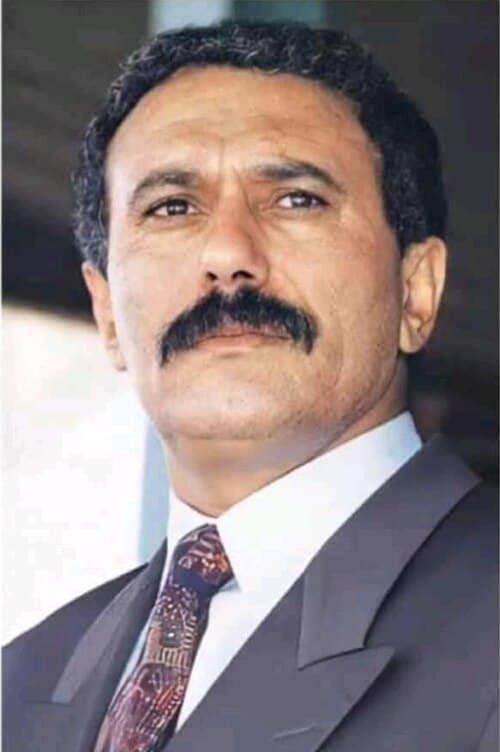
Ali Abdullah Saleh
PERSON
President of North Yemen (1978–1990) and Yemen (1990–2012)

Barack Obama
PERSON • 2 mentions
President of the United States from 2009 to 2017
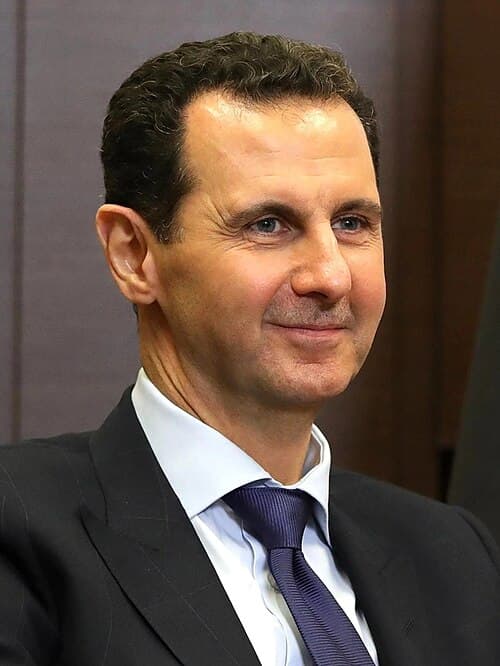
Bashar al-Assad
PERSON • 2 mentions
President of Syria from 2000 to 2024
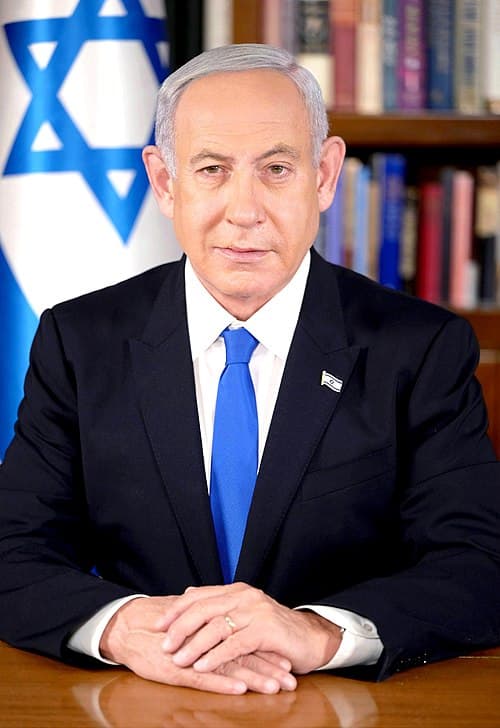
Benjamin Netanyahu
PERSON • 2 mentions
Prime Minister of Israel (1996–1999; 2009–2021; since 2022)

Bill Clinton
PERSON
President of the United States from 1993 to 2001 (born 1946)

Confucius
PERSON
5th-century BCE Chinese philosopher and politician

Cynthia Nixon
PERSON
American actress and politician
DS
Daniel Stone
PERSON
Researcher ORCID ID = 0000-0003-1619-7541
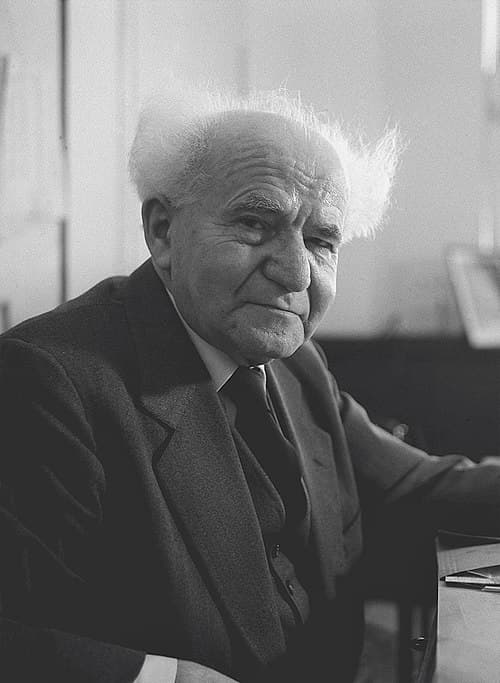
David Ben-Gurion
PERSON
Israeli politician, Zionist leader, prime minister of Israel (1948–1953, 1955–1963) - (born1886–1973)

David Hale
PERSON
American diplomat (born 1961)
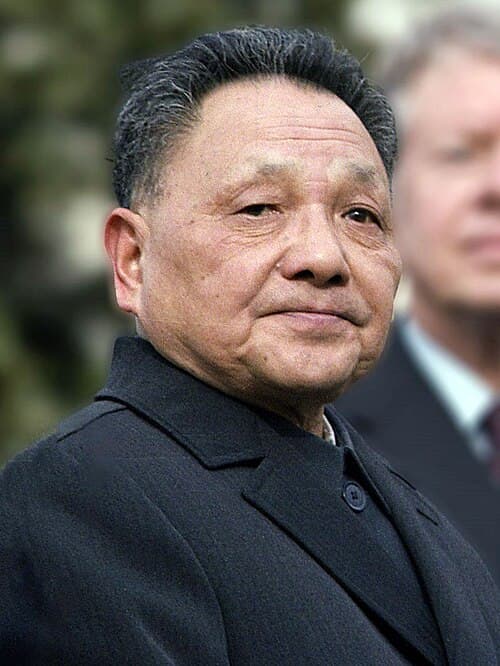
Deng Xiaoping
PERSON • 2 mentions
Chinese politician and paramount leader from 1978 to 1989
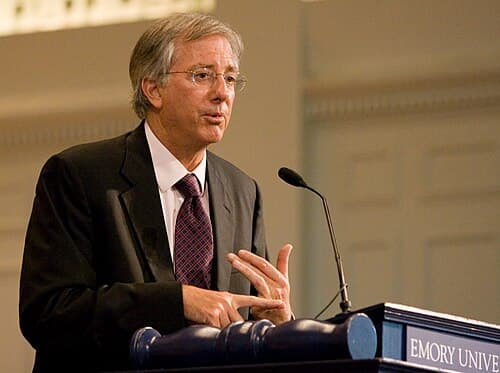
Dennis Ross
PERSON
American diplomat

Ehud Barak
PERSON • 2 mentions
10th Prime Minister of Israel
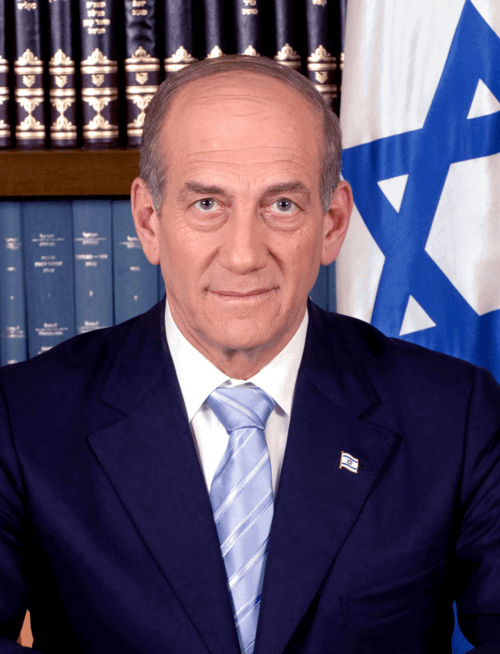
Ehud Olmert
PERSON
Prime Minister of Israel from 2006 to 2009

Elliott Abrams
PERSON
Politician
Fawaz Gerges
PERSON
American academic

George W. Bush
PERSON • 2 mentions
President of the United States from 2001 to 2009
GO
Gregory Orfalea
PERSON
Writer
HA
Hamid Alkifaey
PERSON
Name reference in documents
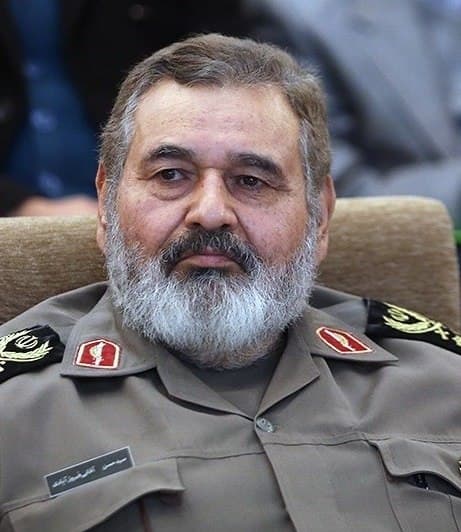
Hasan Firouzabadi
PERSON
Name reference in documents
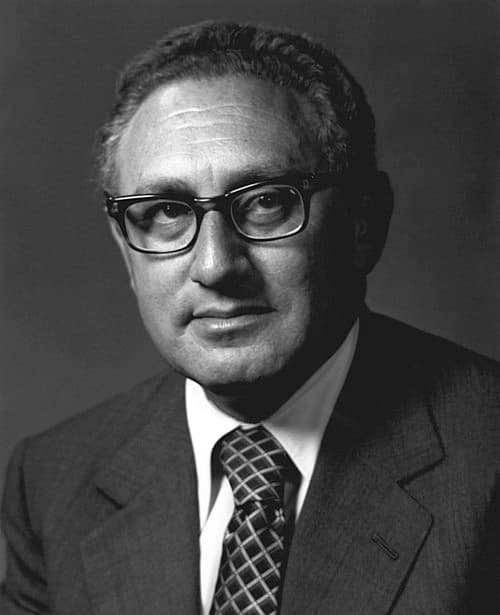
Henry Kissinger
PERSON • 2 mentions
American politician and diplomat (1923–2023)

Hillary Clinton
PERSON
American politician and diplomat (born 1947)
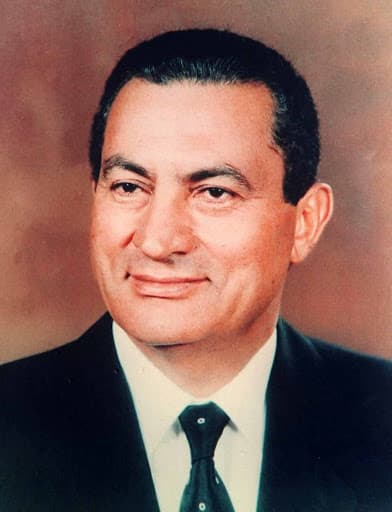
Hosni Mubarak
PERSON • 2 mentions
President of Egypt from 1981 to 2011

Huang
PERSON
Ambiguous surname reference in Epstein documents

Jeffrey Goldberg
PERSON
American journalist (born 1965)

Jiang Zemin
PERSON
Person referenced in documents
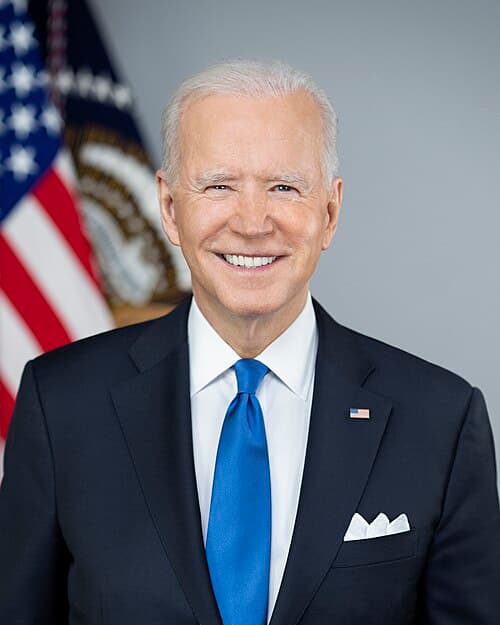
Joe Biden
PERSON • 2 mentions
46th President of the United States (2021–2025)
John F. Kennedy
PERSON • 2 mentions
President of the United States from 1961 to 1963 (1917–1963)
Joshua
PERSON
Primarily refers to Joshua Cooper Ramo in Epstein correspondence
KZ
Kong Fu Zi
PERSON
Name reference in documents
LM
Liu Mingfu
PERSON
Chinese writer
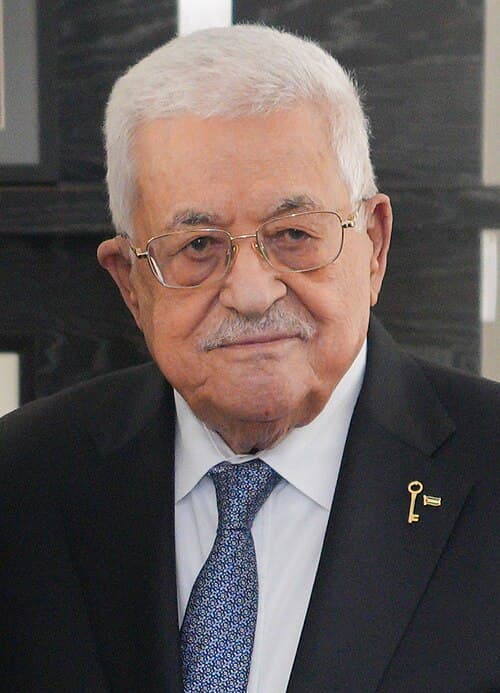
Mahmoud Abbas
PERSON
President of the Palestinian Authority since 2005
Maliki
PERSON
Surname reference in Epstein-related documents
Manchus
PERSON
Name reference in documents
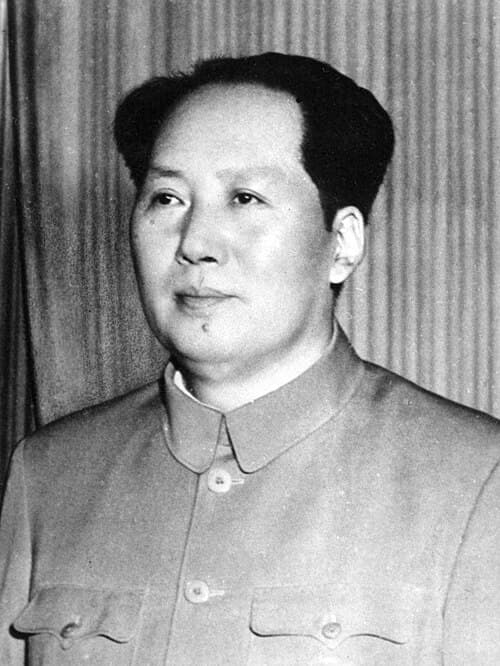
Mao Zedong
PERSON • 2 mentions
1st chairman of the Chinese Communist Party and founder of the People's Republic of China (1893–1976)

Marc Rich
PERSON
American commodities trader (1934–2013)
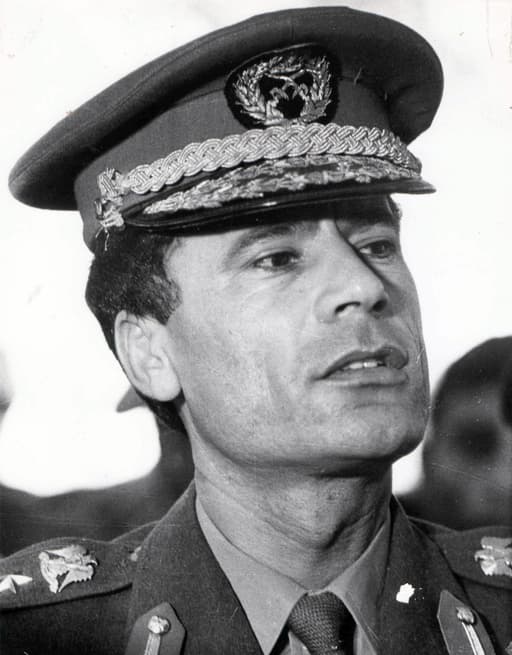
Moammar Gadhafi
PERSON
Person referenced in documents
Muammar Gaddafi
PERSON
Leader of Libya from 1969 to 2011
NO
Nawaf Obaid
PERSON
Saudi Arabian author and diplomat

Niall Ferguson
PERSON
British historian
post-Assad
PERSON
Surname reference in documents
QS
Qin Shi
PERSON
Taiwanese Go player
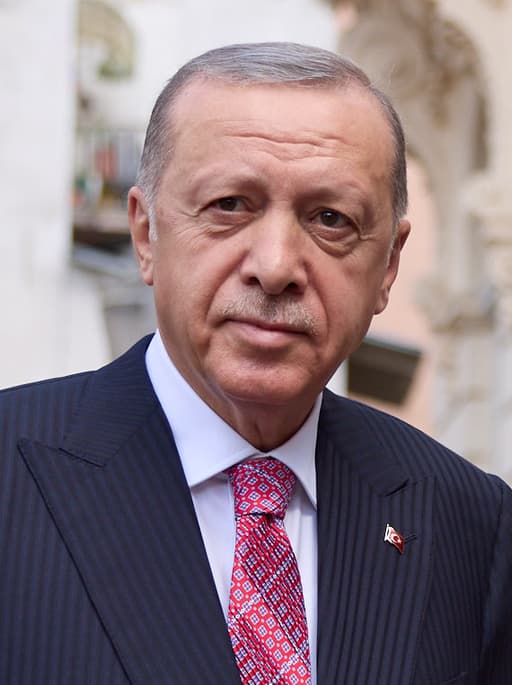
Recep Tayyip Erdogan
PERSON • 2 mentions
President of Turkey since 2014
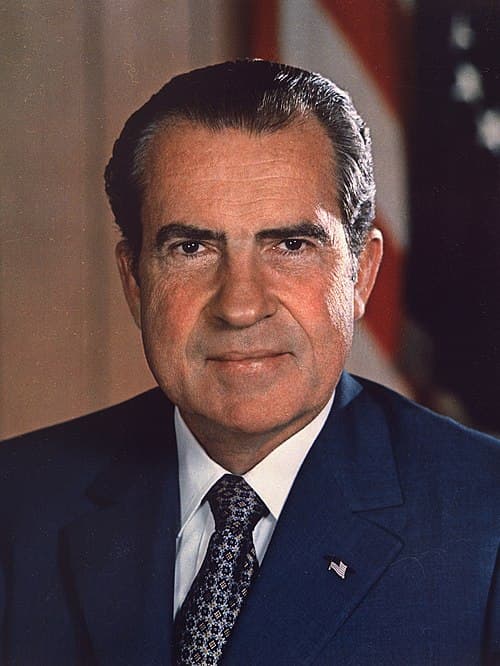
Richard Nixon
PERSON
President of the United States from 1969 to 1974 (1913–1994)
Saddam Hussein
PERSON • 3 mentions
Iraqi president, army officer and Baathist politician (1937–2006)
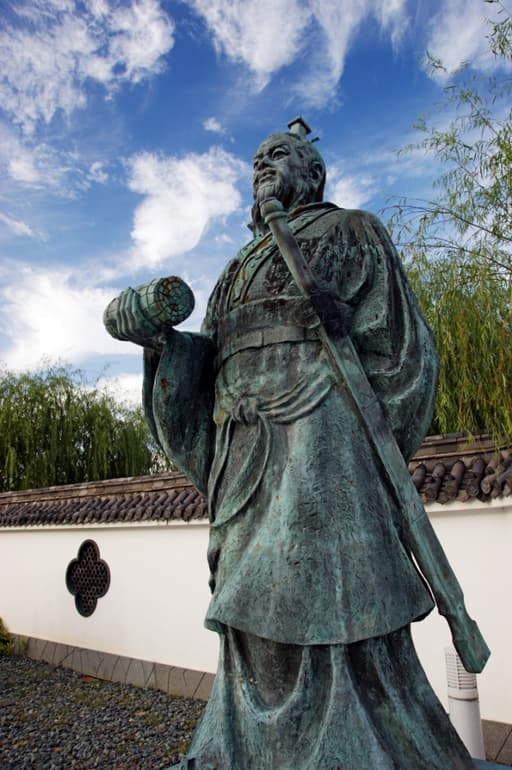
Sun Tzu
PERSON
6th century BCE Chinese general and military strategist
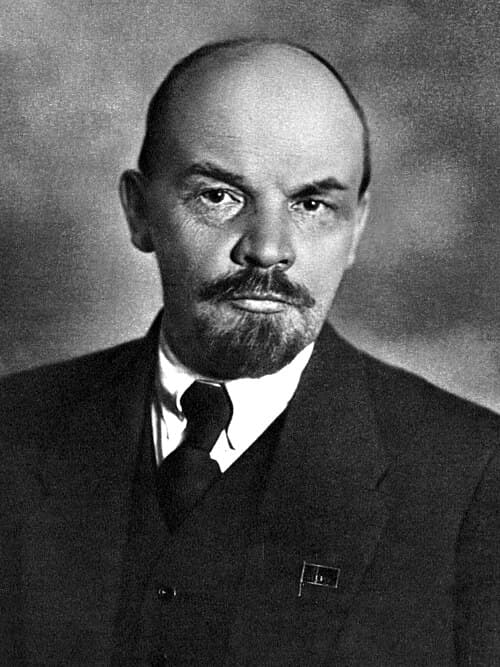
Vladimir Lenin
PERSON
Founding leader of the Soviet Union from 1922 to 1924 (1870–1924)
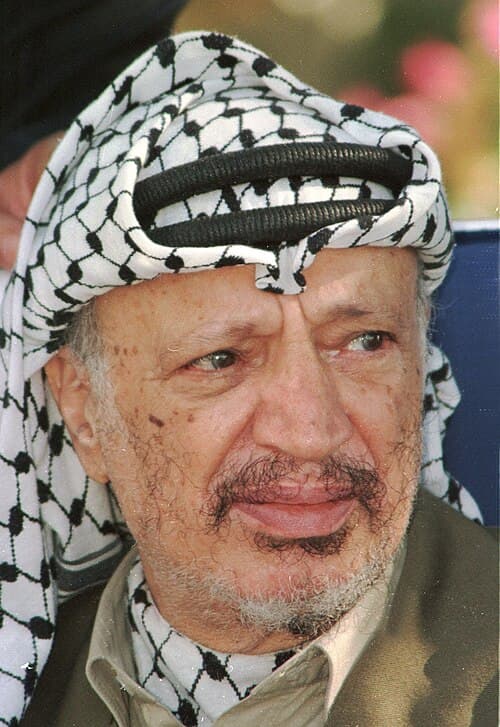
Yasser Arafat
PERSON
Palestinian political leader (1929–2004) and Former President of the Palestinian National Authority (1994-2004)
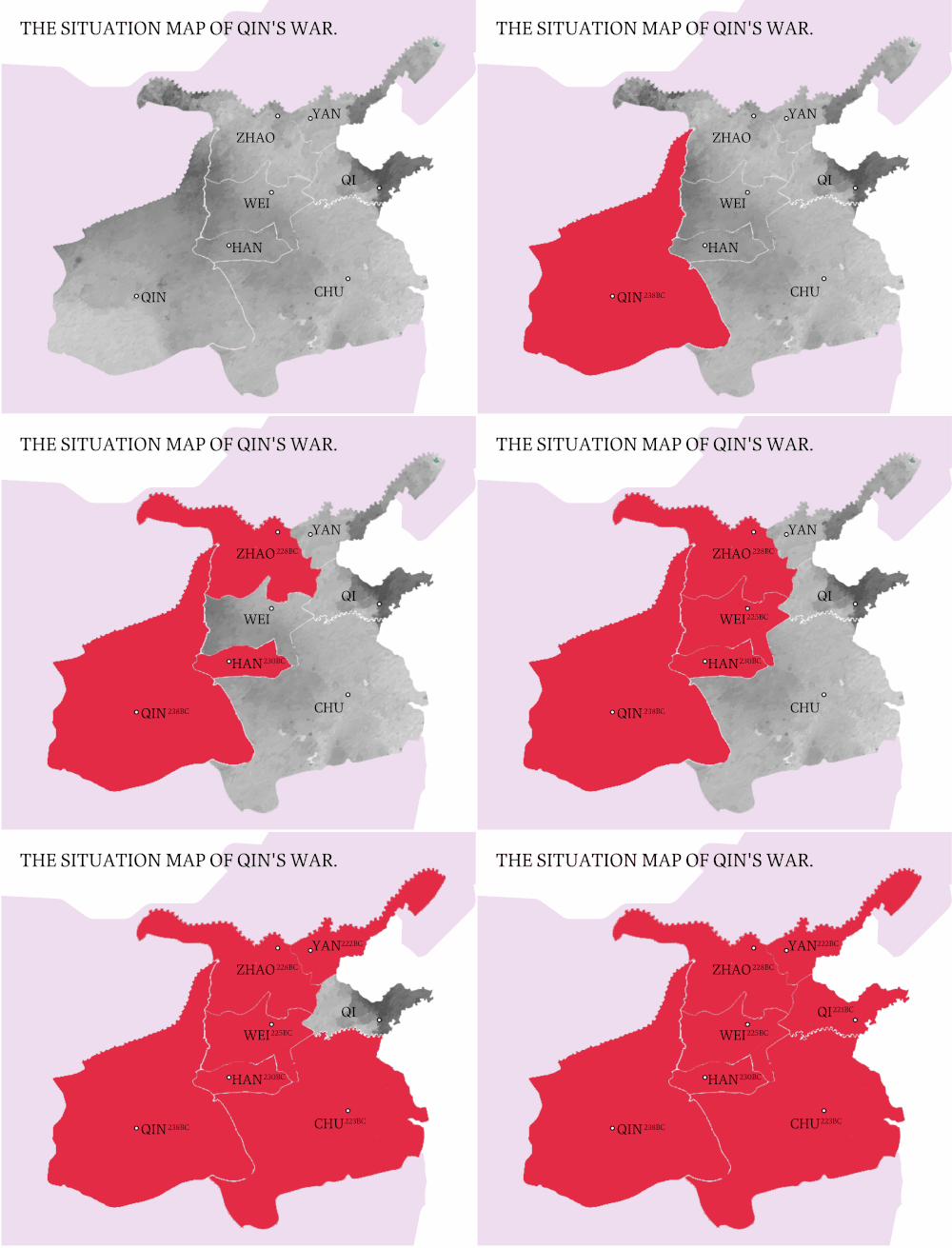
Ye Jian-ying
PERSON
Name reference in documents

Yigal Amir
PERSON
Israeli extremist and murder convict
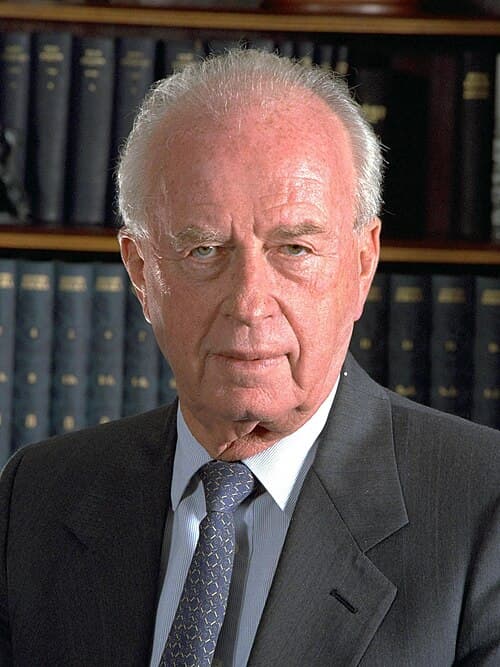
Yitzhak Rabin
PERSON
Israeli politician, statesman and general (1922–1995)

Yusuf Kanli
PERSON
Name reference in documents
Zheng Bijian
PERSON
Chinese politician
Zhou Enlai
PERSON
Person referenced in documents
Fatah
ORGANIZATION
Palestinian nationalist political party

Georgetown
ORGANIZATION
Private university in Washington, D.C., United States
Hurriyet Daily News
ORGANIZATION
Organization referenced in documents
Islamic Jihad
ORGANIZATION
Palestinian militant organization
Justice and Development Party
ORGANIZATION
Conservative-democratic political party in Turkey
Kurdistan Workers' Party
ORGANIZATION
Organization referenced in documents
Marxism-Leninism
ORGANIZATION
Variety of Marxism and the official political ideology of the Soviet Union and the countries of the Eastern Bloc

Muslim Brotherhood
ORGANIZATION
Islamist political organization
School of Foreign Service
ORGANIZATION
School of international affairs at Georgetown University

State Department
ORGANIZATION
Executive department of the U.S. federal government
The Daily Star
ORGANIZATION
Organization referenced in documents
the Interior Ministry
ORGANIZATION
Organization referenced in documents

the Israel Defense Forces
ORGANIZATION
Organization referenced in documents
the Palestinian Authority
ORGANIZATION
Palestinian National Authority

the People's Liberation Army
ORGANIZATION
Organization referenced in documents
the U.N. Security Council
ORGANIZATION
U.N. Security Council
Weekly Standard
ORGANIZATION
Warez scene rules
West Wing
ORGANIZATION
Organization referenced in documents
Zionism
ORGANIZATION
A movement to create and develop a Jewish state in the Levant
Algeria
LOCATION
Country in North Africa
Ankara
LOCATION • 2 mentions
Capital of Turkey
Asia Minor
LOCATION
1961 instrumental recording by Jimmy Wisner
Babylon
LOCATION
Capital city of Babylonia and an archaeological site in modern-day Iraq

Bahrain
LOCATION
Country in the Persian Gulf
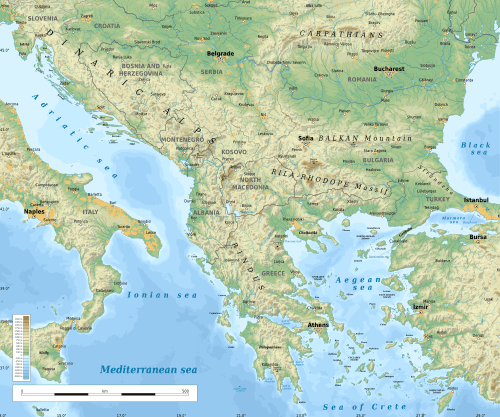
Balkans
LOCATION
Geopolitical and cultural region of Southeast Europe
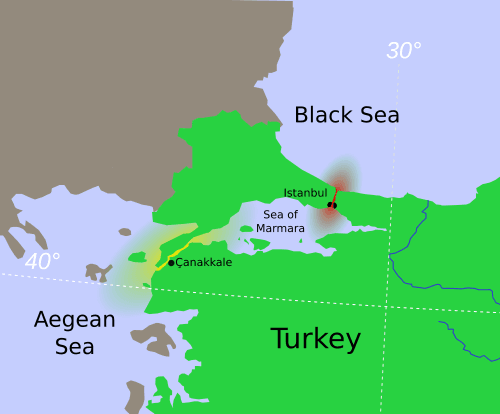
Bosporus
LOCATION
Narrow strait in northwestern Turkey
Carthage
LOCATION
Historical city in Tunisia

Czechoslovakia
LOCATION
Country in Central Europe, 1918–1992
Damascus
LOCATION
Capital and largest city of Syria
Desert
LOCATION
Location referenced in documents
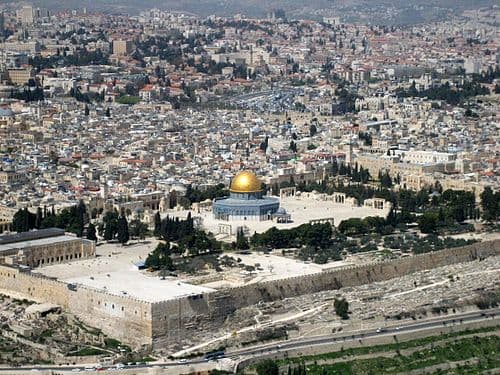
East Jerusalem
LOCATION
Eastern part of Jerusalem, in dispute between Israel and the Palestinian Arabs since 1967
Eilat-Aqaba
LOCATION
Jordanian coastal city
Euphrates
LOCATION
River in Asia
Filistina
LOCATION
Ancient people known for their conflict with the Israelites described in the Bible
Galilean
LOCATION
Inhabitant of Galilee

Galilee
LOCATION
Italian polymath (1564–1642)
Gallipoli
LOCATION
Peninsula in northwestern Turkey

Gibraltar
LOCATION
British overseas territory on the coast of Spain
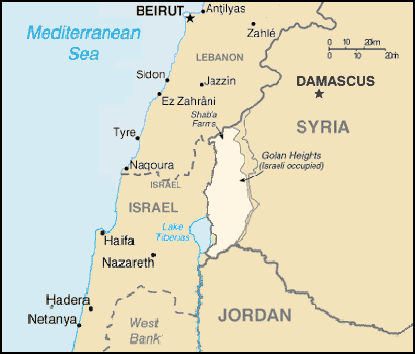
Golan
LOCATION
Territory on the Golan Heights
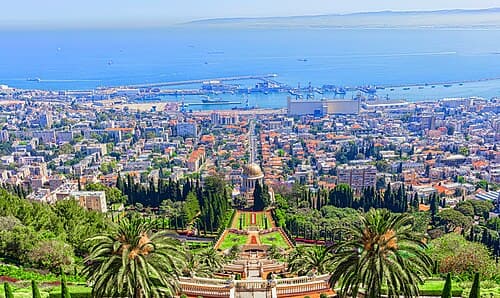
Haifa
LOCATION
Third-largest city in Israel
Hatay
LOCATION
Location referenced in documents
Imral
LOCATION
Mahalle (administrative quarter) in Çivril, Denizli, southwestern Turkey
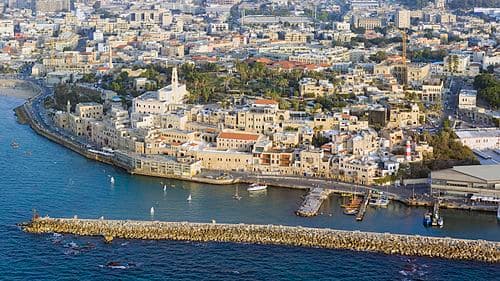
Jaffa
LOCATION
Southern and oldest part of Tel Aviv
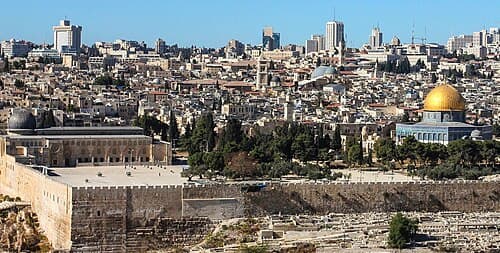
Jerusalem
LOCATION
City in the Middle East, holy to the three Abrahamic religions
Judah
LOCATION
Israelite Kingdom, whose capital was Jerusalem and Hebron, c. 930–586 BCE
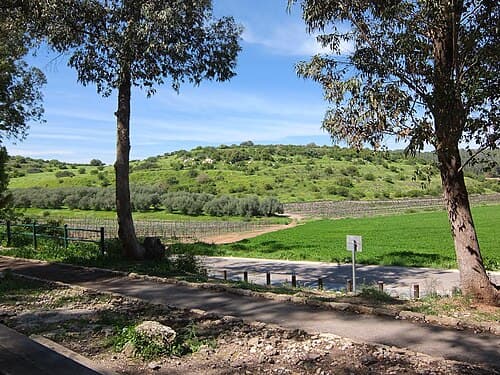
Judea
LOCATION
Region of ancient Israel
Lebanon
LOCATION
Country in West Asia
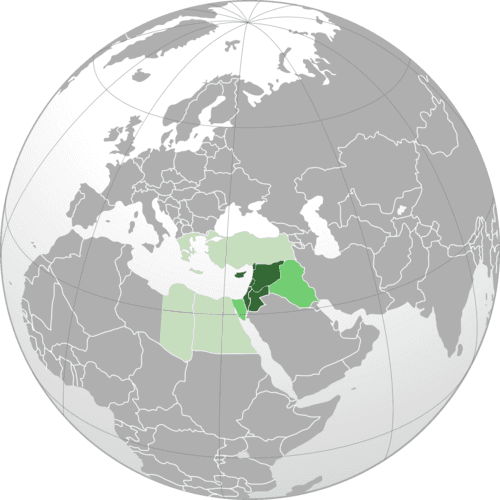
Levant
LOCATION
Geographic and cultural region consisting of the eastern Mediterranean between Anatolia and the Sinai Peninsula
Litani
LOCATION
River in France

Macedonia
LOCATION
Country in southeastern Europe
Manama
LOCATION
Capital of Bahrain
Mediterranean
LOCATION
Sea in southern Europe
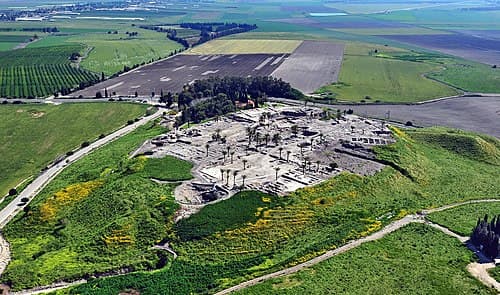
Megiddo
LOCATION
Site of an ancient city in northern Israel's Jezreel valley
Middle East Center
LOCATION
Location referenced in documents
Morocco
LOCATION
Sovereign state in North Africa
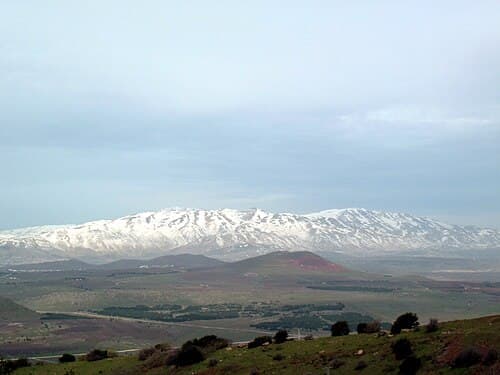
Mount Hermon
LOCATION
Mountain range in Syria and Lebanon
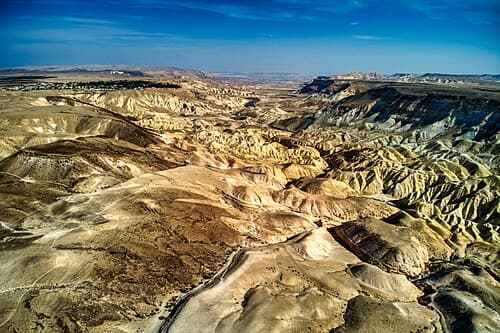
Negev
LOCATION
Desert and semidesert region of southern Israel
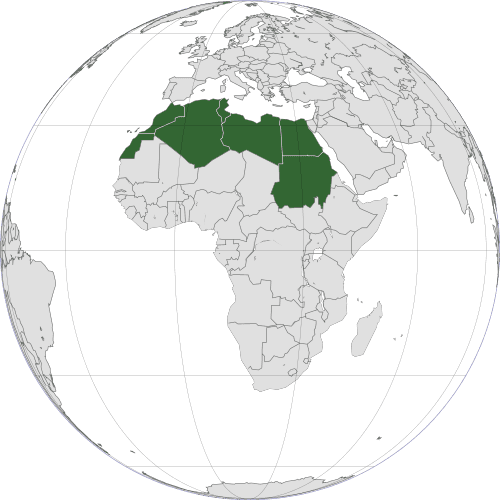
North Africa
LOCATION
Northernmost region of the African continent
North Korea
LOCATION
Sovereign state in East Asia
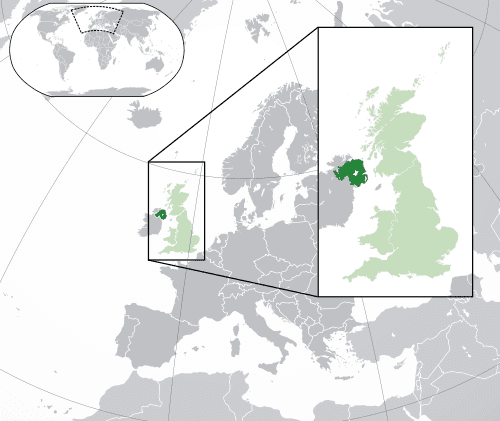
Northern Ireland
LOCATION
Part of the United Kingdom situated on the island of Ireland
Pacific Community
LOCATION
Principal scientific and technical organization in the Pacific region

Palestine
LOCATION
Country in West Asia
Phoenicia
LOCATION
Ancient Semitic maritime civilization
Ramallah
LOCATION
City in the State of Palestine
Riyadh
LOCATION
Capital and largest city of Saudi Arabia
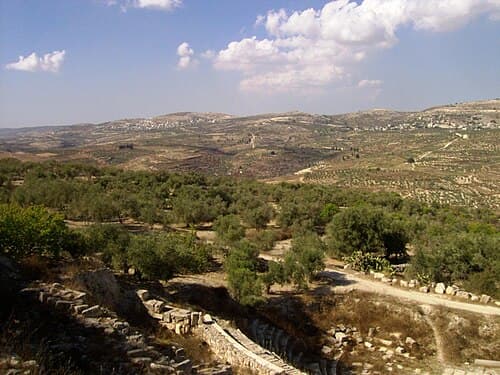
Samaria
LOCATION
Historical region in the Levant
Sinai
LOCATION
Peninsula in the Middle East
Soviet
LOCATION
Former country in Eurasia (1922–1991)

Soviet Union
LOCATION
Former country in Eurasia (1922–1991)
Tehran
LOCATION
Capital city of Iran
Tel Aviv
LOCATION
City in Israel
the Arabian Peninsula
LOCATION
Location referenced in documents

the British Empire
LOCATION
Location referenced in documents
the Convergence Zone
LOCATION
Location referenced in documents
the Eastern Hemisphere
LOCATION
Location referenced in documents
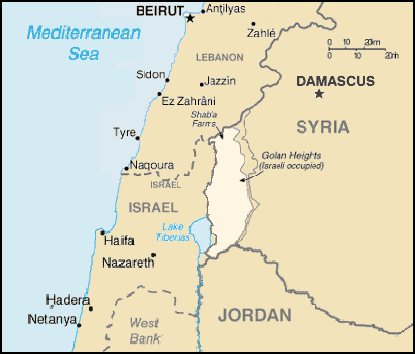
the Golan Heights
LOCATION
Territory on the Golan Heights
the Great Powers
LOCATION
Location referenced in documents
the Hindu Kush
LOCATION
Location referenced in documents
the Jordan River
LOCATION
Location referenced in documents
the Kingdom of Judah
LOCATION
Location referenced in documents
the Litani River
LOCATION
Location referenced in documents
the Mediterranean Sea
LOCATION
Location referenced in documents
the Middle Kingdom
LOCATION
Location referenced in documents
the Nile Basin
LOCATION
Location referenced in documents
the Ottoman Empire
LOCATION
Location referenced in documents
the Persian Empire
LOCATION
Location referenced in documents
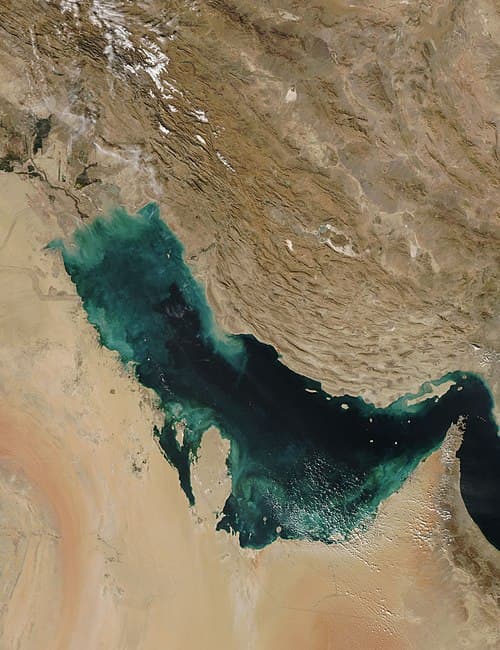
the Persian Gulf
LOCATION
Body of water between Iran and Arabian Peninsula
the Sinai Desert
LOCATION
Location referenced in documents
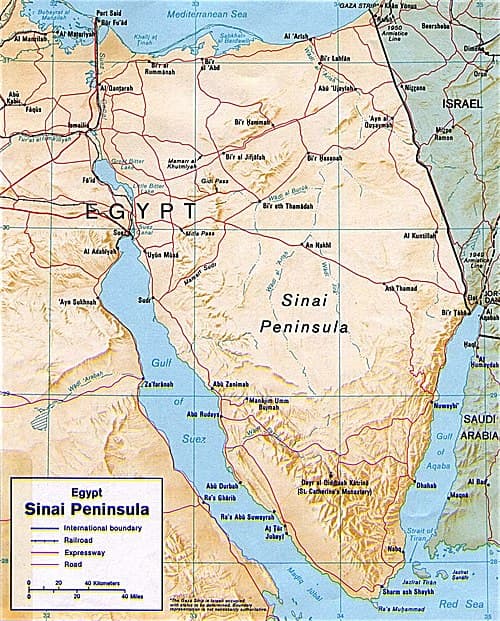
the Sinai Peninsula
LOCATION
Location referenced in documents
Tigris-Euphrates
LOCATION
River in Asia
Tripoli
LOCATION
Capital city of Libya
Tunisia
LOCATION
Country in North Africa
U.S.-Saudi
LOCATION
Location referenced in documents

United States
LOCATION • 4 mentions
Country located primarily in North America
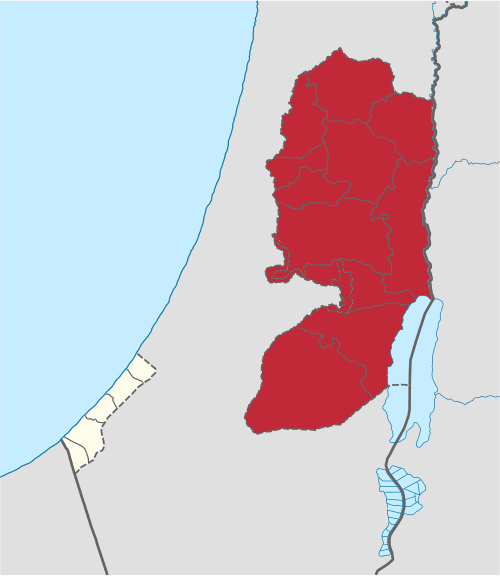
West Bank
LOCATION • 2 mentions
Territory in the Middle East

Yemen
LOCATION
Country in West Asia
Zhongguo
LOCATION
Location referenced in documents
Statistics
Pages:42
Entities:152
Avg. OCR:97.2%
Sponsored