HOUSE_OVERSIGHT_016509 - HOUSE_OVERSIGHT_016551
Article: Criminal Enforcement Redundancy: Oversight of Decisions Not to Prosecute
HOUSE_OVERSIGHT_016509 is a government record from the House Oversight Committee pertaining to an article on criminal enforcement redundancy.
The document is a scanned article titled 'Criminal Enforcement Redundancy: Oversight of Decisions Not to Prosecute' published in the Minnesota Law Review in December 2018. The article, authored by Darryl K. Brown, discusses the underenforcement of criminal law in the U.S., particularly in cases of police violence and sexual assault. It also touches upon historical instances of insufficient law enforcement attention to crimes in minority neighborhoods.
Key Highlights
- •The document is an article discussing the underenforcement of criminal law.
- •Darryl K. Brown is the author of the article.
- •The article highlights failures to prosecute cases of police violence and sexual assaults.
Frequently Asked Questions

Document Information
Bates Range
HOUSE_OVERSIGHT_016509 - HOUSE_OVERSIGHT_016551
Pages
43
Source
House Oversight Committee
Date
February 28, 2019
Original Filename
Article_ Criminal Enforcement Redundancy_ Oversight of.pdf
File Size
412.90 KB
Document Content
Page 1 - HOUSE_OVERSIGHT_016509
@ LexisNexis: User Name: DAVID SCHOEN Date and Time: Thursday, February 28, 2019 10:34:00 AM EST Job Number: 83853687 Document (1) 1. Article: Criminal Enforcement Redundancy: Oversight of Decisions Not to Prosecute, 103 Minn. L. Rev. 844 Client/Matter: -None- Search Terms: cvra and sixth amendment Search Type: Terms and Connectors Narrowed by: Content Type Narrowed by Secondary Materials Sources: Law Reviews and Journals w LexisNexis@ | About LexisNexis | Privacy Policy | Terms & Conditions | Copyright @ 2019 LexisNexis DAVID SCHOEN HOUSE_OVERSIGHT_016509
Page 2 - HOUSE_OVERSIGHT_016510
Article: Criminal Enforcement Redundancy: Oversight of Decisions Not to Prosecute December, 2018 Reporter 103 Minn. L. Rev. 844 * Length: 23570 words Author: Darryl K. Brown* + O. M. Vicars Professor of Law and Barron F. Black Research Professor of Law, University of Virginia School of Law. Copyright @ 2018 by Darryl K. Brown. Text [*844] INTRODUCTION In light of concerns about mass incarceration and excessive search practices by police, ' underenforcement of criminal law is not the first problem that springs to mind for American criminal justice. But in fact, some of the prominent contemporary complaints about U.S. criminal justice, as well as some longstanding ones, object to underenforcement of criminal law. Two of the most notable categories are failures to prosecute in cases of unjustified police violence, especially against nonwhite victims, and in cases of sexual assaults. Lower-profile examples abound as well, as do historical examples. Gtven the nation's history, underenforcement problems are often related to race. Insufficient law enforcement attention to crimes in minority neighborhoods, for example, has been criticized as depriving African American victims and communities of their fair share of government protection from criminal harm. ? In earlier eras, law enforcement inattention to, or wholesale neglect [*845] of, white offenders' victimization of black victims - in lynchings, attacks on civil right activists, sexual assaults, and other contexts - was often patent. ? But the problem of unjustified underenforcement is not confined to these contexts, nor to the United States. Failures to prosecute arise from a fundamental structural challenge faced by all criminal justice systems: how to ensure unbiased, evenhanded enforcement practices - safeguards in favor of justified enforcement. This challenge gets less attention than criminal procedure's central preoccupation of guarding against excessive or groundless criminal charges. Concern about misuse of the state's prosecution authority rightly motivates much in criminal procedure, from search and seizure rules * and judicial review of arrests > to evidence disclosure duties, @ the right to counsel, 7 and standards of proof. ° ! USS. incarceration rates quintupled over the last forty years and are five to seven times higher than those in other advanced democracies. See Floyd v. City of New York, 959 F. Supp. 2d 540, 572-602 (S.D.N.Y. 2013) (documenting and holding unconstitutional widespread stop- and-frisk practices by New York City police that disproportionately targeted non-white men); Michelle Alexander, The New Jim Crow: Mass Incarceration in the Age of Colorblindness 6-9 (2010); World Prison Brief Data, Inst. for Crim. Pol'y Res. (2016), http://www. prisonstudies.org/country/united-states-america (comparing national data on total prison population and incarceration rates and reporting that the United States has the world's largest prison population at 2,217,947 inmates). 2 Randall Kennedy, Race, Crime, and the Law 29 (1997). 3 See, e.g., Equal Justice Initiative, Lynching in America: Confronting the Legacy of Racial Terror 39, 48 (3d ed. 2017) (documenting approximately 4000 lynchings in the years 1877-1950; about one percent resulted in a conviction for perpetrators). 4 See generally Wayne R. LaFave et al., Criminal Procedure 126-63, 512-49 (5th ed. 2009) (discussing search and seizure rules). DAVID SCHOEN HOUSE_OVERSIGHT_016510
Page 3 - HOUSE_OVERSIGHT_016511
Page 2 of 42 103 Minn. L. Rev. 844, *845 Structural responses to the state declining to use its enforcement authority are much fewer and less prominent. At least in common law countries, enforcement decisions are the province of police and prosecutor discretion, and oversight of officials’ failures to enforce has been left almost wholly to the political process. Decisions to search, arrest, or charge face modest judicial scrutiny on evidentiary grounds and - at the extreme margins - racial or [*846] ethnic bias. ° Decisions not to arrest or charge are virtually immune from judicial review or other nonpolitical oversight. !° Like other common law jurisdictions, U.S. justice systems have always rejected an approach long adopted in some civil law jurisdictions to prevent unjustified and disparate nonenforcement - a rule of mandatory prosecution that restricts executive officials’ discretion over arrest and charging decisions. |! A broader view, however, reveals that all criminal justice systems incorporate one or more strategies to address underenforcement, which can be collectively described as redundant charging authority. All are to some degree familiar, though they are not usually described in these terms or understood as serving this common purpose. One approach is creation of two distinct enforcement agencies with overlapping or duplicative jurisdiction. This model is a familiar safeguard against underenforcement of transnational crimes or crimes on the high seas; international criminal law routinely grants nation-states coextensive, duplicative jurisdiction to enforce international or domestic criminal laws outside 12 can be their borders. International treaties on subjects such as public corruption, drug trafficking, and human trafficking understood as agreements to create enforcement redundancy among national criminal justice agencies to solve underenforcement problems by particular states. !> The same arrangement occurs domestically for enforcement of civil or regulatory law when administrative agencies have overlapping, and thus redundant, [*847] jurisdiction over the same regulated activities. '4 The most important version of this model in the United States, however, is criminal justice federalism. Due to the steady growth of federal criminal law, jurisdiction, and institutional capacity over the last century, state and federal 5 Gerstein v. Pugh, 420 U.S. 103, 111-16 (1975) (holding that the Fourth Amendment requires a judicial determination of probable cause prior to extended detention); County of Riverside v. McLaughlin, 500 U.S. 44, 52-58 (1991) (defining "prompt" under Gerstein's requirement of a prompt judicial determination of probable cause). 6 Brady v. Maryland, 373 U.S. 83, 86 (1963) (holding prosecution's withholding of the confession of defendant's confederate violated defendant's due process rights). 7 Gideon v. Wainwright, 372 U.S. 335, 342 (1963) (extending Sixth Amendment right to assistance of counsel to indigent state criminal defendants); Powell v. Alabama, 287 U.S. 45, 53 (1932) (holding defendants’ rights to counsel of their choice throughout the prosecution process had been violated). 8 In re Winship, 397 U.S. 358, 364 (1970) (holding that proof beyond a reasonable doubt is constitutionally required under the Due Process Clause). ° United States v. Armstrong, 517 U.S. 456, 456-71 (1996) (examining selective prosecution claim based on racial bias); see also Whren v. United States, 517 U.S. 806, 813 (1996) (holding that, in assessing the legality of police decisions to stop suspects under the Fourth Amendment, courts should ignore officers’ subjective motivations). 10 See, e.g., Abby L. Dennis, Reining in the Minister of Justice: Prosecutorial Oversight and the Superseder Power, 57 Duke L.J. 131, 132-33 (2007) (describing prosecutors' "limitless, unmonitored and ... unreviewable power"). !l See infra Part ILB. 2 See Protocol to Prevent, Suppress and Punish Trafficking in Persons, Especially Women and Children, G.A. Res. 55/25, annex II (Nov. 15, 2000), hitps://www.unodc.org/unodc/en/organized-crime/intro/UNTOC html; United Nations Office on Drugs & Crime, World Drug Report 2017, U.N. Sales No. E.17.X1.7 (2017), https:/Avww.unodc.org/wdr2017/index.himl; U.S. Dep't of State, Trafficking in Persons Report 438 ( 2017), Attps://www.state.gov/documents/organization/271339.pdf. B See Neil Boister, An Introduction to Transnational Criminal Law 135-95 (2d ed. 2012), http://opil.ouplaw.com/view/10.1093/aw/9780199605385.001.0001Aaw-9780199605385-chapter-12. 4 See Jacob E. Gersen, Overlapping and Underlapping Jurisdiction in Administrative Law, 2006 Sup. Ct. Rev. 201, 201-03 (2007). DAVID SCHOEN HOUSE_OVERSIGHT_016511
Sponsored
Page 4 - HOUSE_OVERSIGHT_016512
Page 3 of 42 103 Minn. L. Rev. 844, *847 law enforcement substantially overlap for many categories of crime. Much of this enforcement redundancy, as considered in detail below, has been a deliberate federal response to diverse problems of underenforcement in state criminal justice. The point for now, however, is the functional equivalence of duplicative federal-state jurisdiction, nation-state jurisdiction, and agency jurisdiction. All represent a common strategy to reduce underenforcement by empowering redundant enforcement authorities: independent entities with equivalent institutional capacity and expertise share jurisdiction. If one neglects to enforce, the other may. Functionally, each backstops, or provides oversight of, failures to enforce by the other. A second model for minimizing unjustified failures to prosecute relies on private actors to create redundancy with public prosecutors’ authority. Empowering private actors to file and litigate public law claims is familiar in many civil law contexts; numerous federal statutes authorize private rights of action that enable private individuals or groups to supplement public agencies’ law enforcement efforts. '*° Through much of the nineteenth century, this kind of duplicative public-private enforcement authority was a familiar feature in the criminal justice systems of many states, which permitted private parties - victims - to prosecute alleged criminal wrongdoing. Redundant charging authority takes other forms as well. In large hierarchical agencies such as the U.S. Department of Justice, internal administrative review of front-line prosecutors’ charging or declination decisions by higher-ups creates a version of redundant enforcement authority; supervisors can make independent determinations and reverse front-line prosecutors. 1° [*848] This kind of redundancy through administrative review now exists in English, Irish, and many European criminal justice systems. !7 More ambitiously from a U.S. perspective - because it is rare here - judicial power to review prosecutorial charging decisions is another means to create some degree of redundant charging authority between the executive and judicial branches. Although criminal charging is a core function of the executive branch, state and federal courts have modest authority to review and bar executive officials’ decisions to file criminal charges. It is only as a matter of policy that courts - with a few exceptions - are not empowered to address underenforcement by reviewing the executive's noncharging decisions. (This power is somewhat broader for courts in England and Wales as well as in the law of a few states.) !% This model of redundancy separates charging authority - for courts as for Department of Justice supervisors, the power to order prosecutors to prosecute - from enforcement authority, which includes the institutional capacity to file and litigate charges. Courts (with rare exceptions) have no administrative capacity to litigate a prosecution; but they could provide some redundancy in charging authority. !? In sum, charging redundancy can occur between equivalent agencies in separate governments, between public and private actors, or between agencies or branches of the same government. Criminal justice systems in Europe and the common law world have adopted or strengthened one or more of these mechanisms in recent decades. In the United States, choices among these strategies have changed over time and between jurisdictions. Nearly all states that once authorized private prosecution have long since prohibited it. Federal prosecutors are organized in a centralized hierarchical agency that makes administrative review possible, but few state prosecutors are similarly organized. For these reasons and others, the primary means of enforcement redundancy to combat underenforcement is overlapping federal- [*849] state authority made possible by the distinctive U.S. model of federalism. ‘5 Examples of federal statutes authorizing private rights of action include the Clayton Act, 75 U.S.C. § 15 (2006) (granting a private right of action for antitrust violations); Federal Tort Claims Act, 28 U.S.C. § 2680(h) (1994); Title VI of the Civil Rights Act of 1964, 42 ULS.C. § 2000e-5(f) (1994); Americans with Disabilities Act, 42 U.S.C. § 12/33 (1994). For an overview, see Pamela H. Bucy, Private Justice, 76 S. Cal. L. Rev. 1, 12-54 (2002). 16 See 18 U.S.C. § 3771(f) (2012) (mandating review of federal prosecutor decisions within the Justice Department upon victim's request). 7 See infra Part IT.A.1. 18 See infra Parts II.B.3-B.4. 19 Note that this conception of redundant authority intersects with, but is distinct from, constitutional separation of powers. In a standard account (briefly put), separation of powers describes branches of government having distinct roles, authority, and competencies. In the main, branches do not do the same things; they do different, rival, and complementary things. But if so empowered by the legislature, courts can exercise some degree of charging authority, creating limited redundancy in charging authority between the executive and judicial branches. DAVID SCHOEN HOUSE_OVERSIGHT_016512
Page 5 - HOUSE_OVERSIGHT_016513
Page 4 of 42 103 Minn. L. Rev. 844, *849 This Article has several aims. One is to introduce the concept of enforcement redundancy and demonstrate its utility. Another is to highlight problems of criminal law underenforcement and to situate contemporary complaints about failures to prosecute police violence and sexual assaults as specific examples of broader enforcement deficiencies that stem from bias and favoritism in police and prosecutorial discretion. The Article also defends the observation that enforcement redundancy strategies are responses to versions of this problem. It then assesses the strengths and weaknesses of different such strategies, with primary attention on the effectiveness of the U.S. approach of redundant federal-state authority. A focus on three different categories of criminal law underenforcement - government corruption, police violence, and sexual assaults - clarifies differences in the effectiveness of the U.S. approach. Federalism has proven an effective response to states’ failures to address forms of public corruption, and for those crimes, it 1s likely superior to its alternatives. Federal authority has had some success in compensating for states' failures to prosecute police violence and other police wrongdoing, but its efficacy is harder to judge and arguments for supplemental redundancy strategies are stronger. For sexual assaults, federal authority has failed to assert any meaningful enforcement jurisdiction to compensate for weaknesses in state justice systems. Despite the sustained efforts and notable successes of reform advocates in this area, no model of enforcement redundancy has made inroads. The Article proceeds as follows. Part II briefly surveys evidence of and reasons for underenforcement. The need for safeguards against unjustified nonenforcement has long been recognized in the United States and elsewhere; outside the United States, as part of victims’ rights reforms, it has been the object of institutional reforms. Part III elaborates the mechanisms available to address risks of criminal law underenforcement. The predominant options are (1) some authority for private actors to initiate or participate in criminal prosecutions; (2) judicial or administrative review of initial nonprosecution decisions by public prosecutors; and (3) authority for a separate, independent public prosecutor's office to bring charges when another prosecutor has declined to. Other countries - out of tradition, an absence of federalism, or as part of victims’ rights reforms - rely on versions of [*850] the first and second options. Part IIT also considers why U.S. victims’ rights laws, which are otherwise robust, lack either of these components adopted elsewhere, especially given that many state criminal justice systems relied on private prosecution for much of the nineteenth century. The likely answers help explain why the United States relies almost exclusively on the third option as a safeguard against underenforcement. Finally, Part IV assesses how effectively federalism-based enforcement redundancy addresses underenforcement, particularly the recurrent, contemporary controversies around police violence and sexual assault. Redundant enforcement through overlapping federalism has had considerable success addressing some underenforcement problems, such as corruption by state and local officials, certain kinds of civil rights violations, or crimes against disfavored minority groups. 7° It is doubtful that private prosecution or judicial review could match its success. The federalism strategy has a more mixed record on the problem of unjustified police violence. Federal officials have succeeded where state officials have failed in overseeing reform of local police departments to reduce police lawbreaking, and they occasionally prosecute and convict individual officers. 7! But the vast majority of incidents of police violence go unprosecuted, including most that lead to large civil settlements for victims. 7? 20 See, e.g., David Grann, Killers of the Flower Moon: The Osage Murders and the Birth of the FBI 57 (2017) (describing "corrupt sheriffs and police departments" that failed to enforce the law and were unable to solve serial murders of Native American victims); Margaret Bumham, The Long Civil Rights Act and Criminal Justice, 95 B.U_L. Rev. 687, 687-88 (2015) (discussing federalism-based redundancy in the context of the Civil Rights Acts); Gregory L. Padgett, Racially-Motivated Violence and Intimidation: Inadequate State Enforcement and Federal Civil Rights Remedies, 75 J. Crim. L. & Criminology 103, 105 (1984) (advocating for federalism-based enforcement redundancy to ensure punishment in crimes against racial minorities). 2 On federal reform of local police, see Rachel A. Harmon, Limited Leverage: Federal Remedies and Policing Reform, 32 St. Louis U. Pub. £. Rev. 33, 53-56 (2012); Rachel A. Harmon, Promoting Civil Rights Through Proactive Policing Reform, 62 Stan. L. Rev. I, 20-51 (2009) [hereinafter Harmon, Policing Reform]. 2 Human Rights Watch, Shielded from Justice: Police Brutality and Accountability in the United States 77-84, nn.149-72 (1998), https://www.hrw.org/legacy/reports/reports98/police/index.htm (documenting "civil remedies");id. at 89-96, nn.182-200, 92-93 tbls.1-2 (documenting "low rate of federal prosecutions"); Joanna C. Schwartz, How Governments Pay: Lawsuits, Budgets, and Police Reform, 63 UCLA I. Rev. 1144, 1147-71 (2016) (documenting civil settlements for police wrongdoing in 100 localities); Ian Simpson, Prosecution of U.S. Police for Killings Surges to Highest in Decade, Reuters (Oct. 26, 2015), /Attps://www.reuters.com/article/us-usa-police - idUSKCNO0SK17L20151026 (noting twelve officers were charged for fatal shootings in the first nine months of 2015, compared to about five per year between 2005 and 2014). DAVID SCHOEN HOUSE_OVERSIGHT_016513
Page 6 - HOUSE_OVERSIGHT_016514
Page 5 of 42 103 Minn. L. Rev. 844, *850 It is [*851] unclear what portion of those incidents merit criminal prosecution. Key facts are often disputed, and while federal and state jurisdiction are coextensive here, federal criminal law generally sets a higher bar for liability than state law, especially due to its more onerous mens rea requirement. 7? That makes the former an imperfect backstop to the latter, because they are only partially redundant. And as recent changes in federal policy suggest, 74 redundancy between governments is subject to political shifts in those governments; federal oversight of state enforcement works only if federal officials are committed to the oversight role. Moreover, keeping prosecution in the exclusive province of executive officials keeps prosecutorial discretion more closely aligned with political majorities and thereby with popular sentiments about certain groups of defendants (such as police officers) and victim groups (such as criminal suspects). In this context, redundancy in state law charging by courts or private actors, rather than rival prosecutors, might make a real contribution. Finally, cases of sexual assault reveal a weakness of federalism-based redundancy. State and federal criminal jurisdiction in the United States overlap more than elsewhere, but they are not wholly coextensive. Federal prosecutors lack authority over most assaults that do not involve public officials or federal [*852] property. Sexual assaults are one context in which the enforcement strategies favored in Europe and England - regulated private prosecution or review of declination decisions - hold more promise. I. UNDERENFORCEMENT AND REASONS NOT TO PROSECUTE A. Sources of Unyustified Noncharging Decisions Public prosecutors are the gatekeepers of criminal law enforcement, and justice systems employ a variety of safeguards against prosecutors’ misjudgment, bias, incompetence, or laziness. Most are directed at prosecutors’ charging decisions rather than decisions declining to charge (i.c., declination decisions), for familiar reasons - charging creates real burdens and risks for defendants. *° Many familiar procedural components are aimed at preventing improper criminal charges or the harm they can cause. Requirements that charges are based on sufficient evidence are an obvious example, but double jeopardy laws and restrictions on prosecutors’ conflicts of interest serve the same purpose. The full range of pretrial and trial procedures designed to assure accurate and unbiased adjudication are intended to sort out improper charges and attach punishments only to proper ones. 7° Safeguards against nonenforcement, or unjustified decisions not to prosecute, are fewer, are less explicit, and (in common law jurisdictions) are less often in the form of legal rules and mandates. One explanation for this is simply that the interests at stake are not as high - no individual faces prosecution and possible punishment. Another is that many non-prosecution decisions 2 Police violence is often prosecuted under 18 U.S.C. § 242 (2012) (criminalizing the deprivation of rights under color of law). On challenges to prosecuting police violence, including federal law's intent requirement, see Barbara E. Armacost, Organizational Culture and Police Misconduct, 72 Geo. Wash. I. Rev. 453, 465-67 (2004); Mary M. Cheh, Are Lawsuits an Answer to Police Brutality?, in Police Violence 247, 253, 258-66 (William A. Geller & Hans Toch eds., 1996); John V. Jacobi, Prosecuting Police Misconduct, 2000 Wis. L. Rev. 789, 806-11 (2000); Paul J. Watford, Screws v. United States and the Birth of Federal Civil Rights Enforcement, 98 Marg. L. Rev. 465, 477- 86 (2014); Mark Joseph Stern, Why the Feds Can't Charge Darren Wilson: They Should, but the Supreme Court Gutted the Civil Rights Law He Violated when He Killed Michael Brown, Slate (Mar. 4, 2015), http://www.slate.com/articles/news_and_politics/jurisprudence/2014/11/will_justice_department_charge_darren_wilson supreme_court_gutted_civil-html; William Yeomans, The Cognitive Dissonance of Federal Civil Rights Prosecutions and Race, ACS Blog (Feb. 13, 2015), hitps://www.acslaw.org/acsblog/the-cognitive-dissonance-of-federal-civil-rights -prosecutions-and-race. 4 See, e.g., U.S. Attorney Gen., Memorandum: Supporting Federal, State, Local and Tribal Law Enforcement (2017); Sari Horwitz et al., Sessions Orders Justice Department to Review All Police Reform Agreements, Wash. Post (Apr. 3, 2017), https://www.washingtonpost.com/world/national -security/sessions-orders-justice-department-to-review-all-police-reform - agreements/2017/04/03/ba934058- 18bd-1 1e7-9887-1a5314b56a08_story.html. 2% See, e.g., United States v. Armstrong, 517 U.S. 456, 463-66 (1996) (examining the Equal Protection Clause's prohibition on racially- motivated charging); Wayte v. United States, 470 U.S. 598, 608 (1985) (holding due process bars prosecution in retaliation for exercising fundamental rights); Kolender v. Lawson, 461 U.S. 352, 355 (1983) (holding due process bars unduly vague offense definitions to reduce opportunities for selective enforcement); Papachristou v. Jacksonville, 405 U.S. 156, 162 (1972) (same). 26 See Duncan v. Louisiana, 391 U.S. 145, 156 (1968) (regarding trial by jury as a "safeguard against the corrupt or overzealous prosecutor"). DAVID SCHOEN HOUSE_OVERSIGHT_016514
Sponsored
Page 7 - HOUSE_OVERSIGHT_016515
Page 6 of 42 103 Minn. L. Rev. 844, *852 follow from determinations that there is insufficient evidence to support charging, and common law jurisdictions [*853] have long left those assessments in the unregulated discretion of police and prosecutors. 77 But that is not the whole story. For one, it does not follow from the fact that officials must assess evidentiary sufficiency that their assessments should be unregulated or unsupervised. The tradition in civil law jurisdictions is otherwise, and available evidence often depends on the effort and priority officials give to finding it. More importantly, how rigorously we guard against unmerited nonenforcement depends on how we value the interests harmed by nonenforcement, and on how much we worry about nonenforcement for the wrong reasons. Both have changed over time. The primary causes of underenforcement are failing to investigate and charge due to biases against certain victims or harms, or favoritism toward certain kinds of suspects. 7° Three kinds of crimes - local government corruption, sexual assaults, and unjustified uses of force by law enforcement officers - illustrate the link between these risks, failures to enforce, and the consequences of underenforcement. Local corruption garners the least public and political attention now; 7° not coincidentally, the United States has found an effective model of enforcement redundancy on this front. 7° The justice system's responses to sexual assault and police violence, on the other hand, are subjects of heated political and policy debates. 3! There has been notable progress in reducing the criminal justice system's disregard of [*854] both kinds of offenses, but underenforcement - and almost as important, widespread suspicion of underenforcement - remain significant enough that they illustrate some of the key costs of those failures. Suspicion of underenforcement is itself a cost, because it reflects a loss of legitimacy for criminal justice institutions. That loss in turn undermines the system's efficacy if citizens decline to report victimization or otherwise decline to cooperate with law enforcement officials. Evidence for those effects is strong for both sexual assaults and police violence. 37 More generally, underenforcement is a form of unequal treatment that unevenly - and unjustly - distributes the important public benefits of criminal law enforcement, including the state's commitment to protect everyone equally from unlawful harms. * It also deprives victims of the private benefits that criminal justice is now widely recognized to afford, and owe, to victims. 27 See Morrison v. Olson, 487 U.S. 654, 727-28 (1988) (Scalia, J., dissenting) ("Law enforcement is not automatic ... . What every prosecutor is practically required to do is to select the cases for prosecution and to select those in which the offense is the most flagrant, the public harm the greatest, and the proof the most certain." (quoting Robert H. Jackson, Attorney Gen. of the U.S., Address to the Second Annual Conference of United States Attorneys: The Federal Prosecutor (Apr. 1, 1940))); 483 Parl Deb HC (Sth ser.) (1951) col. 681 (UK) ("It has never been the rule ... that suspected criminal offences must automatically be the subject of prosecution."). 28 See Alexandra Natapoff, Underenforcement, 75 Fordham L. Rev. 1715, 1722-39 (2006) (documenting underenforcement as a significant problem). On underenforcement of sexual assault offenses, see Deborah Tuerkheimer, Underenforcement as Unequal Protection, 57 B.C. L. Rev. 1287, 1292-1303 (2016) (discussing empirical evidence of bias leading to underenforcement). 29 Concern about public corruption at the federal government level, by contrast, has increased, precisely where criminal and regulatory level are somewhat weaker. See, e.g., Zephyr Teachout, Corruption in America: From Benjamin Franklin's Snuff Box to Citizens United 1-16 (2014). 30 See infra Part III.B.1. 3 See, eg. Do Police Use Deadly Force Too Often?, N.Y. Times: Room for Debate (Apr. 9, 2015), hittps://www.nytimes.com/roomfordebate/2015/04/09/are -police-too-quick-to-use-force. 32 See Michael Planty et al, U.S. Dep't of Justice, Female Victims of Sexual Violence, 1994-2010, at 6 (2013), hittps://www.bjs.gov/content/pub/pd{/{vsv9410.pdf (estimating portion of sexual assaults reported to police annually varied from fifty-nine to thirty-two percent between 2003-10); Nancy Krieger et al., Police Killings and Police Deaths Are Public Health Data and Can Be Counted, PLOS Medicine 1-4 (2015), Attps://journals.plos.org/plosmedicine/article/file?id=10.1371/journal.pmed. 1001915 &type=printable (describing underreporting of killings by police); Kate B. Wolitzky-Taylor et al., Is Reporting of Rape on the Rise? A Comparison of Women with Reported Versus Unreported Rape Experiences in the National Women's Study Replication, 26 J. Interpersonal Violence 807, 807-08 (2011) (estimating fifteen percent of rapes were reported to police in 2006). 33. This point is better developed in literature on policing than prosecution. See, e.g., Angela J. Davis, Arbitrary Justice: The Power of the American Prosecutor 166 (2007) (noting that prosecutorial discretion can unintentionally "produce inequitable results for similarly situated DAVID SCHOEN HOUSE_OVERSIGHT_016515
Page 8 - HOUSE_OVERSIGHT_016516
Page 7 of 42 103 Minn. L. Rev. 844, *854 1. Underenforcement Against Corruption Crimes of corruption by state and local officials are a good example of harms that, at times, criminal justice systems have unduly ignored. 34 Local police and prosecutors are not institutionally well-situated to pursue and evaluate those crimes. They often have professional, if not personal, ties to other local officials, which heightens the risk of undue favoritism or judgments that are otherwise not fully disinterested. That is the main reason [*855] that federal investigators and prosecutors have state and local corruption in their portfolios. *° 2. Underenforcement Against Sexual Assault Sexual assault offenses are another context in which underenforcement is now widely recognized, but the causes are different. Rather than favoritism toward offenders, the problem seems to be bias against the type of offense, and, in varying degrees, against the victims. Failures of police to rigorously pursue allegations of sexual assaults have been widely documented. %° Among the explanations that advocates, attorneys and some scholars point to are "the entrenched nature of long-recognized, gender-driven biases by police against domestic violence or sexual assault claims" and "against individuals from particular groups or under particular circumstances," especially against victims who are poor or are racial, ethnic or gender minorities. 37 One large-scale empirical study of why rape-kit evidence remained untested, for example, suggested that the explanation in part was "negative beliefs and stereotypes about victims, which adversely affected the quality of the investigation." 3° It bears noting that much of this bias is understood to be subtle or unconscious patterns built on cultural norms, rather than conscious, purposeful disfavor. 3? But when evidentiary records are incomplete or ambiguous, their effects are substantial. [*856] 3. Underenforcement Against Police Excessive Uses of Force Failures to prosecute in the wake of police shootings and other possibly excessive uses of force against civilians are scenarios that raise suspicions of both bias against victims, many of whom are black men (and often criminal suspects, another disfavored victims and defendants"); Natapoff, supra note 28, at 1753; David Alan Sklansky, Police and Democracy, /03 Mich. L. Rev. 1699, 1822 (2005) (arguing that policing failures in some communities undercuts "the egalitarian project of protecting all citizens from private violence"). 34 The point extends to private actors, especially organized crime, with ties to local officials. 35 See infra Part III.B.1. On local corruption, see generally, for example, Corruption and American Cities: Essays and Case Studies in Ethical Accountability (Joaquin Jay Gonzalez III &? Roger L. Kemp eds., 2016) (discussing the role of corruption in American cities); James L. Merriner, Grafters and Goo Goos: Corruption and Reform in Chicago, 1833-2003 (2004) (discussing the role of corruption in Chicago). 36 See Tuerkheimer, supra note 28, at 1292-99. 37, ACLU, Responses from the Field: Sexual Assault, Domestic Violence, and Policing 40 (2015); see also Tuerkheimer, supra note 28, at 1292-99 (citing a range of studies to conclude that "in many jurisdictions, the widespread perception that law enforcement officers will likely not pursue allegations of rape [due to race, class or gender bias] is entirely accurate"). 38 Rebecca Campbell et al., The Detroit Sexual Assault Kit (SAK) Action Research Project (ARP), Final Report 109 (2015). 39 Davis, supra note 33, at 23-34; Tuerkheimer, supra note 28 (discussing bias in sexual assault prosecutions); cf. ACLU, supra note 37 (surveying advocates, service providers, and attorneys, who described "the entrenched nature of long-recognized, gender-driven biases by police against domestic violence or sexual assault claims" and "against individuals from particular groups or under particular circumstances," including "bias against survivors of color, and against survivors who are poor, Native American, immigrant, or LGBTQ"); Joshua Correll et al., The Police Officer's Dilemma: A Decade of Research on Racial Bias in the Decision to Shoot, 8 Soc. & Personality Psychol. Compass 201, 202-09 (2014) (finding that police training reduces some forms of racial bias compared to lay people in shooting simulations but cautioning training effects may be reduced by real-world stress and fatigue conditions); Jeffery J. Pokorak, Probing the Capital Prosecutor's Perspective: Race of the Discretionary Actors, 83 Cornell L. Rev. 181], 1817 (1998) (discussing unconscious bias in death penalty prosecutions). DAVID SCHOEN HOUSE_OVERSIGHT_016516
Page 9 - HOUSE_OVERSIGHT_016517
Page 8 of 42 103 Minn. L. Rev. 844, *856 group), and favoritism toward the class of perpetrators, law enforcement officers. 4° In the ordinary organization of criminal justice systems, those cases call on officials from one law enforcement agency to assess the evidence against officials from another, even when the agencies regularly work together. +! As in the context of local public corruption, conflict-of-interest rules 42 are far from adequate to prevent prosecutors from making judgments in light of such professional relationships and circumstances. 43 The possibility of partiality is inevitable. When [*857] that possibility combines with the long history of racial disparities in U.S. criminal justice administration, widespread suspicion of non-prosecution decisions in cases of police violence against minority civilians is hardly surprising, as the Black Lives Matter movement demonstrates. “4 4. Other Underenforcement Contexts Corruption, sexual assaults, and police violence illustrate the key causes and effects of failures to enforce criminal law, but the same forces are recognizably at work in other social contexts. Scholars and advocates have pointed to biases as explanations for inadequate law enforcement responses to offenses against undocumented aliens, sex workers, institutionalized persons, and targets of anti-LGBT hate crimes. * Complaints that police ignored wrongdoing against racial-minority victims in minority communities were prominent in the 1970s and 1980s. 4° Some of [*858] the remedies, however - which included harsher drug laws adopted with substantial support from African American politicians and communities - have proven deeply problematic for those same communities. 47 Finally, less pernicious biases and favoritism are suspected explanations for lenient enforcement patterns in lower-visibility contexts, such as bicyclists killed by motor vehicle drivers, ** employees injured on the job due to workplace safety violations, and bystanders shot by recreational hunters. +? Even critics of those enforcement decisions in those settings view them as products of subtle or unconscious empathy with vehicle drivers, employers, and recreational gun users, which incline officials 40 Prison guard assaults on inmates raise the same concerns, although they get less public attention. For a notorious failure to prosecute prison guards and law enforcement officials for unjustified lethal force, see generally Heather Ann Thompson, Blood in the Water: The Attica Prison Uprising of 1971 and Its Legacy (2016). 41 Cf. Paul Cassell, Who Prosecutes the Police? Perceptions of Bias in Police Misconduct Investigations and a Possible Remedy, Wash. Post: Vololkh Conspiracy Blog (Dec. 5, 2014), Attps:/Awww.washingtonpost.com/news/volokh -conspiracy/wp/2014/12/05/Awho-prosecutes-the- police-perceptions-of-bias-in-police-misconduct-investigations-and-a-possible-remedy (describing the problem of local prosecutors! handling police cases as a "perception of bias" rather than a "conflict of interest" and recommending state attorneys general handle police cases). One solution, followed in Wisconsin, is to assign investigation of deaths involving law enforcement officers to a state-level investigative agency unconnected to the local agency of the officer under investigation. Vis. Stat.§ $175.47, 950.04(1v) (do), 950.0822) (h) (2014). # E.g., Criminal Justice Standards 3-1.3 (A.B.A. 2015); ef. Braman v. Corbett, 19 A.3d 1151, 1154 (Pa. Super. Ct. 2011) (describing a situation where a district attorney's office recused itself from decision to prosecute on a private complaint alleging the district attorney committed rape, and the state attorney general investigated and made the decision not to prosecute). 8 For a disturbing account of prosecutorial deference to police, see Nicole Gonzalez Van Cleve, Crook County: Racism and Injustice in America's Largest Criminal Court 127-56 (2016); David A. Harris, The Interaction and Relationship Between Prosecutors and Police Officers in the United States, and How This Affects Police Reform Efforts, in The Prosecutor in Transnational Perspective 54, 55, 60-63 (Erik Luna & Marianne Wade eds., 2012) (describing reasons why the prospect of police reform through the efforts of state prosecutors is "bleak"); Nicole Gonzalez Van Cleve, Chicago's Racist Cops and Racist Courts, N.Y. Times (Apr. 14, = 2016), https ://www.nytimes.com/2016/04/15/opinion/chicagos-racist-cops-and-racist-courts.html; see also Kate Levine, The Ultimate Conflict, Slate (Sept. 11, 2014), Attp:/Avww.slate.com/articles/news and_politics/jurisprudence/2014/09/local_prosecutor_bob_meculloch_should_ not_be_the_one_to_decide_whether_to.html. For a harrowing account of a federal prosecutor who did not show deference to fellow law enforcement officials and faced apparent retaliation for it, see Paul Butler, Let's Get Free: A Hip-Hop Theory of Justice 1-21 (2009). DAVID SCHOEN HOUSE_OVERSIGHT_016517
Sponsored
Page 10 - HOUSE_OVERSIGHT_016518
Page 9 of 42 103 Minn. L. Rev. 844, *858 to assess conduct as non-negligent rather than reckless. °° Yet even those relatively benign affinities can lead to sub-optimal enforcement policies that might benefit from redundant evaluation of charging decisions. B. Other Contributions to Underenforcement It is worth noting that prosecutors themselves might not share those biases so much as take account of them in a local community and jury pool. Expecting juries will be unreceptive to a case is one reason that some prosecutors cite for not charging in some cases. There is evidence for this with regard to hate [*859] crimes against LGBT victim groups, for example, *! and the difficulty prosecutors have faced in convicting police officer defendants is a well-recognized hurdle in police violence cases. *2 The same considerations can cut against prosecutions when victims are undocumented immigrants, sex workers, prisoners, and suspects in custody. >? Redundant enforcement authority can do less to redress this barrier, although depending on its form, it is not powerless. A separate prosecuting authority might bring better investigation and fact development, or different jurisdictional rules that change the composition of jury venires. ~4 Inadequate funding for criminal justice agencies can also play a role in aggravating areas of unjustified underenforcement. Lack of public resources is an accepted (and inevitable) justification for declining to prosecute in some cases where evidence is sufficient to prove guilt. °° But funding constraints are [*860] not an affirmative good on par with other policy-based, public- interest justifications for non-prosecution, such as judgments finding that civil, regulatory, or public-health remedies are preferable to criminal sanctions, or concluding that third-party harms outweigh prosecution's benefits. *° Resource constraints are a problem justice systems would like to minimize. Two of the three primary forms of enforcement redundancy do exactly that, or have in the past. Expanding federal law enforcement jurisdiction over crimes already within state jurisdiction was designed to bring federal resources to bear on crimes where state resources were insufficient. >’ And private prosecution, where it [*861] still exists, has an equivalent effect - it permits victims to contribute private funds to public enforcement efforts. It is no coincidence that common law jurisdictions relied on private prosecution most heavily - through the mid- nineteenth century - when state capacity, including criminal justice infrastructure, was much thinner. *@ 4 See, e.g., Paul D. Butler, Poor People Lose: Gideon and the Critique of Rights, /22 Yale L.J. 2176, 2204 (2013) (describing protest movements and other responses to racially disparate criminal justice policies); Roseanna Sommers, Will Putting Cameras on Police Reduce Polarization?, /25 Yale L.J. 1304, 1307-17 (2016) (describing polarized public perceptions of, and protests against, police uses of force and non-prosecution of police); What We Believe, Black Lives Matter, tips://blacklivesmatter.com/about/what-we-believe (last visited Oct. 30, 2018). 4 See Aviana Eisenberg, Expressive Enforcement, 67 UCLA L. Rev. 858, 861-64 (2014) (studying the reasons prosecutors choose not to charge hate crimes); Natapoff, supra note 28 (summarizing evidence of underenforcement of crimes against prostitutes, undocumented immigrants, residents of certain low-income neighborhoods, and drug-crime suspects); see also Human Rights Watch, supra note 22, at 102 ("In fiscal year 1997, the [DOJ] Civil Rights Division received a total of 10,891 complaints [against law enforcement officers], ... leading to twenty-five indictments and informations, involving sixty-seven law enforcement agents; nine were convicted, nineteen entered guilty pleas, and four were acquitted."); Ryan Gabrielson et al., Deadly Force, in Black and White, ProPublica (Oct. 10, 2014), https://www.propublica.org/article/deadly-force-in-black-and-white ("Analysis of killings by police shows outsize risk for young black males."). 46 See Kennedy, supra note 2, at 29-75 (providing a broader account of complaints about law enforcement providing insufficient protection to black communities); Rod K. Brunson & Ronald Weitzer, Police Relations with Black and White Youths in Different Urban Neighborhoods, 44 Urb. Aff. Rev. 858, 876 (2009) (Perceived police under-protection or poor service in poor, minority neighborhoods has been complained about for generations ... ."). 47 Michael Javen Fortner, Black Silent Majority: The Rockefeller Drug Laws and the Politics of Punishment 173-216 (2015) (describing support from working-class and middle-class blacks for punitive drugs laws in the 1970s as a means to fight growing disorder in black communities); Kennedy, supra note 2, at 351-86; David A. Sklansky, Cocaine, Race, and Equal Protection, 47 Stan. L. Rev. 1283, 1285-90 (1995) (describing the effects of anti-cocaine laws on black communities). Underenforcement of criminal law by southern states through the 1960s, when civil rights activists were the victims, are another example. DAVID SCHOEN HOUSE_OVERSIGHT_016518
Page 11 - HOUSE_OVERSIGHT_016519
Page 10 of 42 103 Minn. L. Rev. 844, *861 When resource constraints remain, however, they force officials to choose which cases get priority. That creates more opportunity for biases and favoritism to play a role in determining which cases to charge and which to forgo. That is especially so with crimes in which evidence development is more costly, so officials have to decide whether to invest scarce resources in those that require substantial investigative efforts. Both sexual assault and police violence cases often require larger-scale investments to develop evidence sufficient for prosecution. Failures to make those investments are common reasons for non- prosecution in both contexts. >? Il. MECHANISMS OF PROSECUTORIAL ACCOUNTABILITY For a range of reasons and across a range of contexts, public prosecutors’ failures to enforce criminal law have been of sufficient concern to lead contemporary justice systems to devise checks against unjustified underenforcement. Approaches take three basic forms: (1) limited authority for private parties to initiate or participate in criminal prosecutions; (2) independent review of initial non-prosecution decisions, upon petition from a [*862] victim; and (3) multiple, mdependent public prosecution agencies with independent authority to bring charges for the same wrongdoing. Outside the United States, the first two options predominate; their expansion in recent years is a direct consequence of broader reforms to expand crime victims' rights. °° U.S. jurisdictions, however, rely almost wholly on the third model. Despite having adopted otherwise expansive victims’ rights laws in recent decades in response to an influential movement for crime victims' rights, state and federal laws consistently and explicitly avoid granting any formal authority to private parties, or courts, over criminal charging. The next three Sections provide an overview of these options, where they exist. Largely with regard to U.S. policy choices only, they also suggest reasons that one model prevailed over others. A. Victim Rights and Private Versus Public Interests In the wake of victims’ rights movements in North America and Europe, crime victims now have an array of legal nights once criminal charges are filed. Victims in the U.S. and European jurisdictions now commonly have rights to participate that include rights to consult with prosecutors, to be notified of and present at court proceedings, and to offer statements at stages such as hearings on bail, sentencing, and parole. @! 48 See Daniel Duane, Is It O.K. to Kill Cyclists?, N.Y. Times (Nov. 9, 2013), hitps:/Avww.nytimes.com/2013/11/10/opinion/sundav/is-it-ok- to-kill-cyclists html (discussing failures to prosecute motor vehicle drivers who injure or kill bicyclists); see also BikeMaps.org, hittps://bikemaps.org (last visited Oct. 30, 2018) (displaying a crowd-sourced map of locations of cyclist injuries and fatalities). 49 See John F. Decker, Don't Forget to Wear Your Hunter Orange (or Flack Jacket): A Critique on the Lack of Prosecution of Hunting "Accidents," 56.S.C. L. Rev. 135, 166-73 (2004). @ See id.; Duane, supra note 48. 5! Eisenberg, supra note 45, at 893-96 (discussing data from prosecutor interviews). In the contexts Eisenberg describes, prosecutors typically forgo hate-crime offenses in favor of other charges rather than declining to prosecute altogether. Though the focus here is on prosecutors, they may not be the key cause of underenforcement. For similar reasons, police may not investigate or arrest in such cases, or if they do prosecution can be undermined by lax evidence-gathering. Police practices are the focus on much of the scholarship on underenforcement of certain offenses. Much of the literature on inadequate enforcement of sexual assault crimes focuses on weaknesses in the police rather than prosecutors. See, e.g., Tuerkheimer, supra note 28, at 1292-99 (discussing evidence of police bias). 2 See, e.g., Alan Blinder, Michael Slager, Officer in Walter Scott Shooting, Gets 20-Year Sentence, N.Y. Times (Dec. 7, 2017), https ://www.nytimes.com/2017/12/07/us/michael-slager-sentence-walter-scott.html (explaining that an officer pled guilty in federal court after a 2016 prosecution in state court ended with a hung jury). 3 See Natapoff, supra note 28. 4 See, e.g., id. % See U.S. Dep't of Justice, United States Attorneys' Manual § 9-27.230 cmt. 1 (1997) (recognizing limited prosecution resources); see also Human Rights Watch, supra note 22, at 99 (listing "lack of investigative or prosecutorial resources" among the most common reasons noted by the federal Civil Rights Division for declining to prosecute); U.S. Dep't of Justice, FY 2013 Performance Budget: Civil Rights Division 39 (noting that strengthening of civil rights enforcement efforts under the "Vulnerable People Priority" policy "has been reversed because full DAVID SCHOEN HOUSE_OVERSIGHT_016519
Page 12 - HOUSE_OVERSIGHT_016520
Page 11 of 42 103 Minn. L. Rev. 844, *862 Under the criminal justice systems of all other major common law countries and nearly all European states, victims’ rights also include authority to challenge prosecutors’ decisions not to prosecute, either by a limited right to initiate prosecutions as private parties or by enabling victims to trigger judicial or [*863] administrative review of noncharging decisions. °* By contrast, nearly every U.S. jurisdiction rejects these mechanisms. State and federal laws consistently avoid permitting victims any power to challenge or encroach on public prosecutorial authority. Federal law, for example, explicitly dictates that "nothing im this [victims' rights] chapter shall be construed to impair the prosecutorial discretion of the Attorney General or any officer under his direction." @? State statutes manifest the same policy in various ways, such as by prohibiting legal remedies for violations of participation rights they create. °+ U.S. laws limit victims’ participation to "non-dispositive" forms, such as providing information and personal statements to prosecutors, judges, and parole boards, which facilitates victims’ influence on public officials' decisionmaking. @ But state and federal policy rejects enlisting victims as "agents of accountability" for public prosecution. °° In U.S. jurisdictions and elsewhere, the conceptual innovation of victims' rights laws was to recognize victims’ distinct private [*864] interests in public criminal litigation. Most rights are specific entitlements to advance victims' broader, dignitary right to be "treated with fairness and with respect for the victim's dignity." @” These provisions conceive of victims as "agents of individual rights" and "independent from systemic interests," and their interests can either conflict or align with those of law enforcement. ° At the same time, victim participation rights can also be understood to serve a broader public interest in procedural outcomes, on the premise, for example, that prosecutors’ and judges’ decisions will improve with direct input from victims. Public decisionmaking risks substantive deficiency, and criminal process would be procedurally deficient, without due regard for victims’ interests. Jurisdictions that empower victims to challenge non-prosecution decisions enable private parties themselves to address the problem of criminal law underenforcement. The remainder of this Section provides some detail on contemporary forms of private prosecution authority, their capacity to advance public as well as private interests, and reasons for its absence (or demise) in U.S. jurisdictions. 1. Private Prosecution in the Shadow of Public Prosecution funding of these program areas was not provided"). In specific contexts as diverse as tax law and marijuana control, legislators intentionally limit enforcement budgets in order to restrict enforcement efforts. See Daniel C. Richman, Federal Criminal Law, Congressional Delegation, and Enforcement Discretion, 46 UCLA LE. Rev. 757, 793-99 (1999) (discussing agency budget appropriations as a mechanism of congressional control over some agencies, such as the IRS, more than others, such as the FBI); Rachael Bade, Republicans Seek to Cripple IRS: The GOP's Moves Will Gut the Tax Agency, Advocates Warn, Politico (Dec. 11, 2014), https:/Avww.politico.com/storv/2014/12/republicans-irs- regulations-1 13484 (quoting a senator's aim to use "the power of the purse" to "push back on the regulatory overreach" of the IRS and EPA); Douglas A. Berman, Mixed Outcomes for Marijuana Reform Efforts in Latest Omnibus Spending Bill from Congress, Sent'g L. & Pol'y Blog (Dec. 16, 2015), hitp:-//sentencing.tvpepad.com/sentencing law_and_policy/2015/week5 I/index.himl (describing H.R. 4660, enacted as part of a spending bill, which prohibited spending of Justice Department funding to hinder state medical marijuana policies). 36 See, €.2., Crown Prosecution Serv., The Code for Crown Prosecutors 4 (2013), https://www.cps.gov.uk/sites/default/files/documents/publications/code_2013_accessible_english.pdf (providing guidelines for England and Wales). Familiar policies include declinations based on first-offender or drug-court diversion programs, the adequacy of civil penalties, a policy preference for public health responses to drug abuse, and - with regard to marijuana - federal deference to state policymaking. See Memorandum from James M. Cole, Deputy Attorney Gen. to U.S. Attorneys, Guidance Regarding Marijuana Enforcement (Aug. 29, 2013),http:/Avwww justice. gov/iso/opa/resources/3052013829132756857467.pdf (describing Justice Department policy not to prosecute marijuana dealers who comply with state law). For local examples, see Joseph Goldstein, Spare a Swipe? New York City Eases Rules for a Subway Request, N.Y. Times (Apr. 17, 2016), Atips://www.nytimes.com/2016/04/18/nyregion/spare-a-swipe-new-yvork-city-eases-rules-for-a- subway-request.himl (describing a new policy "by the Manhattan district attorney's office to no longer prosecute people arrested for minor infractions such as swipe-begging, smoking in the subway, or taking up two seats on a subway car"); Greg LaRose, No Arrests for Pot Possession in New Orleans, Council Decides, Nola.com (Mar. 17, 2016), hittps://www.nola.com/politics/index.ssf/2016/03/marijuana_possession_ city_coun.html (reporting city council vote to expand range of marijuana offenses for which police do not have to arrest offenders or charge as state criminal misdemeanors); Max Taves & Justin Scheck, San Francisco Police Ease Drug Enforcement, Wall St. J. (Aug. 1, 2012), https://www.wsj.com/articles/SB 100008723 963904 44226904577559243414878630 (describing police treating drug possession crimes as a low priority in part because the chief prosecutor "looks at drug possession as a health issue"). Seattle city voters in 2003 approved Initiative 75, which established adult personal marijuana use as "Seattle's lowest law enforcement priority." Seattle Voters Approve Initiative Making Marijuana Enforcement City's "Lowest Priority," NORML (Sept. 18, 2003),/ttp-/norml.org/news/2003/09/1 8/seattle-voters-approve- initiative-making -marijuana-enforcement-city-s-lowest-priority. DAVID SCHOEN HOUSE_OVERSIGHT_016520
Sponsored
Page 13 - HOUSE_OVERSIGHT_016521
Page 12 of 42 103 Minn. L. Rev. 844, *864 Public prosecutors now dominate enforcement decisions in both common law-based and civil law-based justice systems worldwide. That is hardly surprising, given the far-reaching regulatory scope of modern criminal law and high expectations that the state will ensure security against social disorder and innumerable harms, and will intervene in risk creation long before manifest criminal conduct or injury. @ That agenda requires capacity, resources, and expertise that only public agencies can marshal. Moreover, a criminal enforcement regime that relied heavily on private plaintiffs would be one skewed against redress for poor victims who cannot bear litigation costs to vindicate their own interests. 7° Without safeguards, such a regime [*865] also could be at the mercy of the varied, perhaps idiosyncratic motives and interests of private actors lodging criminal complaints. Still, many countries continue to authorize private citizens to initiate criminal prosecutions when public officials do not, and others allow privately funded attorneys to assist or supplement public prosecutors in litigating criminal cases. Canada, Australia, New Zealand, and England and Wales all continue to allow private prosecutions, 7! and fifteen of the twenty-eight member states of the European Union grant victims some comparable [*866] authority. ’* Details vary across jurisdictions, but everywhere private prosecutors’ authority is limited by oversight from public [*867] prosecutors and courts. ™ The standard common law model is that public prosecutors retain the power to take over privately filed charges and then either try the case themselves, negotiate a plea bargain, or - more commonly when intervention occurs - dismiss the charges altogether. In this framework, private actors can press charges when public officials do not, but functionally they serve primarily as a mechanism for political accountability. Through private charging in the wake of public prosecutors’ declination, victims force public officials to justify publicly their reasons for not charging and for vetoing privately filed charges - and to do so on grounds other than public resource constraints, given that a private actor has offered to bear the costs. Given the private cost barriers and the capacity of public prosecution agencies, it is unsurprising that, even where permitted, privately initiated charges nonetheless contribute to a tiny fraction of prosecutions on criminal dockets. “4 2. Abolition of Private Prosecution in State Criminal Justice 75 U.S. jurisdictions are comparative exceptions; nearly all long ago prohibited privately initiated prosecutions, ‘° even though in other contexts private actors continue to enforce public law in service of public interests. 7° But private criminal charges were +7 See Harmon, Policing Reform, supra note 21, at 20-51. Federal funding to state and local enforcement agencies is a more direct example of supplementing resources. Federal influence over local enforcement policies that comes with such funding is an attenuated version of enforcement redundancy. Id. at 66. *8 On staffing of state prosecutor offices in the nineteenth century, see Nicholas R. Parrillo, Against the Profit Motive: The Salary Revolution in American Government, 1780-1940, at 11-23 (2013). *9 On sexual assault cases (especially reasons for not testing evidence gathered in rape kits), see Campbell et al., supra note 38, at 60-100; Tuerkheimer, supra note 28, at 1297. On police use-of-force cases, see Human Rights Watch, supra note 22, at 99 (reporting that the Justice Department Civil Rights Division's "most common reasons for declining prosecution were: weak or insufficient admissible evidence ... ; lack of evidence of criminal intent; ... and lack of investigative or prosecutorial resources"). For a good analysis of how police shootings of "unarmed victims" vary widely in critical factual details and why many are justified, see Heather Mac Donald, Black and Unarmed: Behind the Numbers: What the Black Lives Matter Movement Misses About Those Police Shootings, Marshall Project (Feb. 8, 2016), https:/Awww .themarshallproject.org/2016/02/08/black-and-unarmed-behind-the-numbers. 60 See, eg. Council Directive 2012/29, 2012 OJ. (L 315) 57° (EC), hittp:/eur — -lex.europa.eu/legal- content/EN/TXT/?uri=CELEX:32012L0029 (defining standards for treatment and rights of crime victims in E.U. member states); Marie Manikis, Conceptualizing the Victim Within Criminal Justice Processes in Common Law Tradition, in Oxford Handbook on Criminal Process (Darryl K. Brown et al. eds., forthcoming 2019) (manuscript at 18-19) (on file with author). 6! For an overview of victim rights in Europe, see Slawomir R. Buczma, An Overview of the Law Concerning Protection of Victims of Crime in the View of the Adoption of the Directive 2012/29/EU Establishing Minimum Standards on the Rights, Support and Protection of Victims of Crime in the European Union, 14 ERA F. 235, 239-41 (2013). On U.S. jurisdictions, see Crime Victim Rights Act (CVRA), 18 U.S.C. § 3771(a) (2012) (enumerating the federal rights of victims of crime); Michael Solimine & Kathryn Elvey, Federalism, Federal Courts, and Victims' Rights, 64 Cath. U_L. Rev. 909, 913-14 & nn.30-31 (2015) (collecting all thirty-two state constitutional provisions and all fifty state statutes relating to victims' rights). @ See infra Part II.B. DAVID SCHOEN HOUSE_OVERSIGHT_016521
Page 14 - HOUSE_OVERSIGHT_016522
Page 13 of 42 103 Minn. L. Rev. 844, *867 once common and significant in many state justice systems. U.S. colonies and states created public prosecution offices much earlier than England. 77 [*868] Even so, in the nation's earliest decades, those officials were often part-time or short-term officials, whose duties were often primarily quasi-judicial or administrative. 7* For those reasons, in many states those officials coexisted alongside private prosecutors with whom they shared some similarities. Early public prosecutors were paid by the case or the conviction ” and pursued cases from private complainants. °° But by the mid-nineteenth century, every state had public prosecutor offices of some sort. @! Increasingly, they were full-time and accompanied by [*869] public police forces. In this context, private prosecutions diminished, then vanished. °? However, because public prosecutors continued to suffer from poor funding (and consequently were held in low regard), * some states continued an alternate form of private prosecution: privately funded attorneys could assist in criminal prosecutions as long as the public prosecutor supervised or retained formal control. *4 This form of ancillary or supplementary private prosecution, which leaves charging decisions in public hands, is still permitted in several states. 8° Otherwise, only vestiges of private [*870] prosecution remain in a few states. Pennsylvania seems to have the strongest version: it permits private prosecutions for any offense upon the approval from a state prosecutor or a judge. *° Rhode Island authorizes private prosecutions only for misdemeanors. 8’ Under state common law, New Hampshire might permit the same for nonjailable offenses. °° Beyond that, judges in many states can issue an arrest warrant or criminal summons based on a private person's testimony, but public prosecutors control whether to go forward with the case. °° [*871] In sum, U.S. jurisdictions are unusual among common law jurisdictions in having abolished private prosecution as a means to vindicate victims' private interests, a supplement to public enforcement resources, and a structural check on selective underenforcement from biases in public prosecutors’ discretionary decisions not to charge. English authorities, in contrast, explicitly recognize this public function for private prosecution. Private actors’ authority to second-guess declination decisions - charging decision redundancy - operates as "the ultimate safeguard for the citizen against inaction on the part of the authorities." °° The only remnant of this view in the United States seems to be in Pennsylvania. Its courts view victim-initiated 6 18 U.S.C. § 3771(d)(6). Elsewhere, regarding victim complaints of rights violations to the Justice Department, the statute provides that "the Attorney General ... shall be the final arbiter of the complaint, and that there shall be no judicial review of the final decision of the Attorney General by a complainant." Id. § 3771(f)(2)(D); see also United States v. Thetford, 935 F. Supp. 2d 1280, 1282 (ND. Ala. 2013) ("These rights, however, do not extend to giving crime victims veto power over the prosecutor's discretion."); Does v. United States, 817 F. Supp. 2d 1337, 1343 (S.D. Fla. 2011) ("To the extent that the victims' pre-charge CVRA rights impinge upon prosecutorial discretion, under the plain language of the statute those rights must yield."). 4 See, e.g., Ohio Rev. Code Ann. § 2930.06(A) (West 2004) ("A prosecutor's failure to confer with a victim ... does not affect the validity” of a decision to dismiss charges, plea agreement, or other disposition). Only a few jurisdictions, such as California and the federal system, provide for meaningful enforcement of participation rights by, for example, allowing victims to intervene in trial proceedings to demand rights, or to appeal trial court violations; to facilitate a remedy, courts may order that a guilty plea or sentence be re-opened. See Cal. Const. art. I, § 28(c)(1) (stating that a victim may enforce a list of enumerated rights in trial or appellate court "as a matter of right"); 78 U.S.C. § 3771(d); cf. Paroline v. United States, 134 8. Ct. 1710, 1718 (2014) (providing an example of a decision resulting from a victim's appeal of a restitution order). 6 See Ian Edwards, An Ambiguous Participant: The Crime Victim and Criminal Justice Decision-Making, 44 Brit. J. Criminology 967, 974 (2004) (classifying "dispositive" and "non-dispositive" forms of victim participation and putting modes of consultation, information- provision, and expression under the latter heading). 66 See Marie Manikis, Expanding Participation: Victims as Agents of Accountability in the Criminal Justice Process, Pub. L. 63, 69 n.29 (2017). 67 See, e.g., Ohio Const. art. I, § 10(a) (establishing victims’ rights to "fairness, dignity, and respect"); Tex. Const. art. I, § 30(a)(1) (establishing victims' "right to be treated with fairness and with respect for the victim's dignity and privacy"); /8 U.S.C. § 3771](a)(8) (establishing victims' "right to be treated with fairness and with respect for the victim's dignity"). 68 Manikis, supra note 60. DAVID SCHOEN HOUSE_OVERSIGHT_016522
Page 15 - HOUSE_OVERSIGHT_016523
Page 14 of 42 103 Minn. L. Rev. 844, *871 prosecutions as fulfilling the same structural purpose. Allowing private actors to begin prosecutions meets "the need for a system of checks and balances on the office of the district attorney" and "constitutes a recognition by the legislature that the office of the district attorney should be subject to a system of checks and balances." °! The rarity of private charges in jurisdictions that authorize them hardly justifies their abolition. Private prosecutions should be rare in well-functioning public prosecution systems, because public agencies pursue most provable cases and because private actors must bear considerable costs to press charges themselves. Moreover, other rules and institutions - including other safeguards on prosecutorial charging - endure despite few indications of their utility. There has never been a successful claim that a criminal charge violated the Equal Protection prohibition on racially biased charging, °” but few argue the doctrine lacks at least normative value. °° Grand juries rarely reject prosecutors’ [*872] charging requests for indictments, but courts continue to tout them as a structural check on prosecutors. °+ Like private prosecution, these safeguards may work by deterring biased or ill-conceived prosecutorial decisions; their efficacy 1s probably impossible to measure. A contributing explanation for the U.S. aversion to private prosecution may lie m a familiar theme of U.S. law and history: race. During the first several decades of the nineteenth century, when private citizens could prosecute crimes, many states - and not only Southern ones - either denied African Americans legal capacity as litigants °° or barred them from testifying under oath on the basis of race. Among other effects, those barriers barred private prosecutions by African Americans. °° After 1865 - an era in which rights to litigate and testify were viewed by many as more meaningful than the right to vote ?’ - those race- based legal disabilities were abolished. °° In the same period, private charging authority, already on the decline, was abolished in most [*873] states that still permitted it. States that retained a formal litigation role for crime victims did so by allowing privately funded attorneys to assist in prosecutions filed and controlled by public prosecutors, thus ensuring that public officials are the exclusive gatekeepers of criminal law enforcement. Between the 1840s and 1860s, prosecutors had become locally elected officials in nearly all states. That effectively aligned their charging monopoly with the preferences of local white majorities (or white minorities in localities in which black citizens were the majority, once Southern whites succeeded in disenfranchising black citizens). °? Evidence for the relationship between race and the demise of private prosecution is 6) Among myriad examples are crimes of preparation, conspiracy, possession of contraband, consensual exchanges (e.g., of drugs or sex for money), and many kinds of criminal attempts. See Andrew Ashworth & Lucia Zedner, Preventive Justice 95-118, 171-223 (2014). 7% Douglas Campbell, 2 The Puritan in Holland, England, and America 444 (1892) (criticizing the English system of private prosecution as one "by the rich for the rich"); Joan E. Jacoby, The American Prosecutor: A Search for Identity 17 (1980). German victims who challenge a non-prosecution decision must put up security to cover the public costs of judicial review. See Strafprozessordnung [StPO] [Code of Criminal Procedure], § 176, translation at hittps://www.gesetze-im-internet.de/englisch_stpo/englisch stpo .html; Ante Novokmet, The Right of a Victim to a Review of a Decision Not to Prosecute as Set out in Article 11 of Directive 2012/29/EU and an Assessment of Its Transposition in Germany, Italy, France and Croatia, 12 Utrecht L. Rev. 86, 94 (2016). 71 For England and Wales, see Prosecution of Offences Act 1985, c. 23, § 6, Attps://www.legislation.gov.uk/ukpga/1985/23 (stating that the creation of Crown Prosecution Service shall not "preclude any person from instituting any criminal proceedings or conducting any criminal proceedings"). For Canada, see, for example, Ontario Provincial Offences Act, R.S.O. 1990, c. P.33; Director of Public Prosecutions Act, S.C. 2006, c 9, § 121, para. 3(3)(f) (describing DPP "duties and functions," which includes "exercising the authority of the Attorney General respecting private prosecutions, including to intervene and assume the conduct of - or direct the stay of - such prosecutions"); Private Prosecutions, Ministry Att'y Gen., hittps://www.attornevgeneral.jus.gov.on.ca/english/private_prosecution.php (last modified Oct. 29, 2015) (describing private prosecutions and noting "the Criminal Code and the Crown Attorneys Act authorize Crown Counsel to supervise privately laid charges to ensure that such prosecutions are in the best interest of the administration of justice" and to "take over the prosecution" of indictable offences); Private Prosecutions, Pub. Prosecution Serv. Can.,/ittp://www.ppsc-sppc.gc.ca/eng/pub/fpsd-s{ps/{ps-sfp/fpd/ch26 .html (last modified Dec. 24, 2008). For Australia, see, for example, Director of Public Prosecutions Act 1983 s 10(2) (Austl.) (preserving private prosecution); id. s 9(5) (giving the Director power to take over a prosecution for a Commonwealth offence that has been instituted by another and either carry on or discontinue it); Annual Report 2014-15, Commonwealth Dir. Pub. Prosecutions (2015), https:/Awww.cdpp.gov.au/2014 -15-annual-report-html-0 (reporting three private prosecutions in 2014-15, two of which were discontinued by the DPP); see also Director of Public Prosecutions Act 1984 (Queensl.) s 10(c)(2) (Austl.) (giving DPP the power to "take over and conduct" criminal proceedings); Director of Public Prosecutions Act 1986 (N.S.W.) s 9 (Austl.) (using similar language to Commonwealth DPP Act); Dir. of Pub. DAVID SCHOEN HOUSE_OVERSIGHT_016523
Sponsored
Page 16 - HOUSE_OVERSIGHT_016524
Page 15 of 42 103 Minn. L. Rev. 844, *873 correlative rather than causal, but it nonetheless suggests a reason for why state justice systems took a different path from other common-law jurisdictions and abolished private charging. Local white majorities had little need for a structural check on prosecutors they elected, and they likely did not want a way for African-American citizens to challenge prosecutors and independently pursue their interests in criminal courts. Prosecution redundancy would reduce the control of local majorities to dictate enforcement policies, including preferences for selective underenforcement. B. Judicial and Administrative Review of Decisions Not to Charge A second structure that creates some redundant authority over decisions not to prosecute exposes those prosecutorial decisions to review, either by courts or by supervising officials within an administrative hierarchy. As with private prosecution, this mechanism is almost nonexistent among U.S. jurisdictions, with the significant exception of federal law. But this option has gained ground elsewhere, in England and throughout E.U. countries. In all these contexts, its adoption responds to demands for expanded victims’ rights in the criminal process. This Section briefly surveys prominent examples of noncharging review in federal law and Europe, then considers why state justice systems uniformly reject it. [*874] 1. Oversight of Declination Decisions in Europe Pursuant to an E.U. Directive, !°° twenty-five of the twenty-eight member states of the European Union grant crime victims formal rights to seek review of decisions not to file criminal charges based on their complaints. '°! The details of these review procedures vary. Some authorize judicial review of prosecutors’ decisions; most jurisdictions, including Scotland and France, provide at least a means for review by mdependent officials within the prosecution agency, perhaps with an additional possibility for judicial review. !°* Although E.U. nations with common law-based legal systems, such as Ireland, Northern 103 Ireland, and England, have adopted versions of this practice, the [*875] practice is more established in civil law jurisdictions, likely because it is consistent with the longstanding duty in some civil law countries of mandatory prosecution. 104 Prosecutions Vict., Annual Report 14-15, at 86, http://www. opp.vic.gov.au/getattachment/Shc2fefc-8715-4516-9fb8- 57ea3e4b6342/OPP_ Annual Report_]4_15 Full_web .aspx (noting that pursuant to discretion granted under § 22(b)(ii), the DPP took over and dismissed one private prosecution instituted for an "improper purpose"). Regarding New Zealand, see Criminal Disclosure Act 2008 (N.Z.); Criminal Procedure Act 2011 (N.Z.); Crown Law, Solicitor-General's Prosecution Guidelines 4 (2013), http:/;www .crownlaw.govt.nz/assets/Uploads/Prosecution-Guidelines/prosecution-guidelines-2013.pdf. Scotland is much more restrictive. See Criminal Procedure (Scotland) Act 1975, c. 21, § 310A (Scot.) (stating in a provision added in 1996 that "except where any enactment otherwise expressly provides, all prosecutions under this Part of this Act shall be brought at the instance of the procurator fiscal"); Frazer McCallum, Scottish Parliament Info. Ctr., The Scottish Criminal Justice System: The Public Prosecution System 2 (2016), http:/;www .parliament.scot/ResearchBriefingsAndFactsheets/S5/SB_16-47_The_ Scottish_Criminal_Justice System_The Public Prosecution System.pdf ("Prosecutions by private individuals are possible in some circumstances, but are very rare."). Before 1995, judicial approval was granted for only two private prosecutions in Scotland in the twentieth century. See Woman Loses Attempt to Bring Private Prosecution. Judges Reject Move on Rape Case, Herald Scot. (June 1, 1995), hittp://www.heraldscotland.com/sport /spl/aberdeen/woman-loses -attempt-to-bring-private-prosecution-judges-reject-move-on-rape-case-1 677607. 7 See Challenging the Decision Not to Prosecute, Eur. Union Agency for Fundamental Rts. (2014) [hereinafter FRA Report], http://fra.europa.eu/en/publications-and-resources/data-and-maps/comparative-data/victims-support -services/prosecution (summarizing policies of EU nations). This source arguably overstates private-prosecution jurisdictions by characterizing "private prosecution" broadly to include states, such as France, in which victims can initiate petty offense charges and inquiries by investigating judges but may pursue only civil actions without public prosecutors. See Country Studies for the Project "Victim Support Services in the EU: An Overview and Assessment of Victims' Rights in Practice,' Eur. Union Agency for Fundamental Rts. (Feb. 2016), /ittp://fra.europa.eu/en/country- data/201 6/country-studies-project-victim-support -services-eu-overview-and-assessment-victims. For separate developments in the Council of Europe, including standards for victim assistance and procedural rights to be informed about and participate in criminal proceedings, and for a victim's right to review decisions not to prosecute, see Comm. of Ministers, Council of Eur., Recommendation Rec(2006)8 of the Committee of Ministers to Member States on Assistance to Crime Victims (2006); Comm. of Ministers, Council of Eur., Recommendation No. R (87) 4 of the Committee of Ministers to Member States Concerning the Simplification of Criminal Justice (1987); Comm. of Ministers, Council of Eur., Recommendation No. R (87) 4 of the Committee of Ministers to Member States on the Protection of Workers in the Event of DAVID SCHOEN HOUSE_OVERSIGHT_016524
Page 17 - HOUSE_OVERSIGHT_016525
Page 16 of 42 103 Minn. L. Rev. 844, *875 The mandatory prosecution duty, known as the "legality principle," is itself a safeguard against selective underenforcement due to bias or favoritism. It is primarily an anti-discrimination injunction, intended to ensure that prosecutors treat like cases alike, rather than a mandate to ensure public safety and order through full enforcement. !°> Administrative and judicial enforceability of that duty is intended to ensure its effectiveness. 2. Oversight of Declination Decisions in England and Wales 106 and its largest criminal The United Kingdom was an E.U. member state when the victim's right Directive was issued, [*876] justice system - the combined jurisdictions of England and Wales - provides several grounds on which victims or other aggrieved parties may obtain both administrative and judicial review of non-prosecution decisions. Yet the reasons for this relate foremost to public rather than private interests: "a decision not to prosecute, especially in circumstances where it is believed or asserted that the decision is or may be erroneous, can affect public confidence in the integrity and competence of the criminal justice system." 107 In line with other E.U. member states, English victims can seek administrative review within the Crown Prosecution Service. The process appears to be meaningful; in recent years, between seven and thirteen percent of prosecution decisions challenged in this way have been reversed. !°8 Moreover, noncharging decisions are also subject to judicial review - a policy rarely seen in other common law jurisdictions. !°? The standard is deferential, but English courts do periodically overturn non-prosecution decisions after evaluating them against written standards in the Code for Crown Prosecutors and other guidelines. !!° English 111 courts have disapproved of decisions not to prosecute upon finding they were based on an unlawful policy or were found to be [*877] "perverse" under a general reasonableness standard. !!? And in particular contrast to U.S. law with regard to lethal force by police, English judges give special scrutiny to cases that arise from deaths in state custody, which by their nature raise the specter of prosecutorial favoritism toward fellow law enforcement officials. !!3 Employers' Insolvency (1987); Comm. of Ministers, Council of Eur., Recommendation No. R (85) 11 of the Committee of Ministers to Members States on the Position of the Victim in the Framework of Criminal Law and Procedure (1985). For analysis of Directive 2012/29 as well as Council of Europe recommendations, see Buczma, supra note 61, at 242-48. In Germany, victims can initiate a private prosecution for certain minor offenses, and for more serious offenses may take a formal role as accessory prosecutors with rights to participate in proceedings and to be heard before charges are dismissed. See Strafprozessordnung [StPO] [Code of Criminal Procedure], §§374-94, translation at hittps://www.gesetze-im-internet.de/englisch_ stpo/englisch_stpo.html (describing rights of privateklage); id. §§153, 395-402 (describing rights of nebenklager); see also id.§§403-406c (describing compensation); id. § 172 (describing victim's right to seek court order to compel public prosecution); Michael Bohlander, Principles of German Criminal Procedure 25, 64 (2012). 7% This describes, for example, the German system that allows private parties to act as accessory prosecutors alongside public prosecutors. See Strafprozessordnung [StPO] [Code of Criminal Procedure],§§153, 395-402 (describing rights of nebenklager). 4 See, e.g., Commonwealth Dir. of Pub. Prosecutions, supra note 71 (reporting three private prosecutions in federal courts in 2014-15). 75 By the end of the nineteenth century, state and federal justice systems were firmly committed to the principle that prosecution is an exclusive power of public officials in which private victims have no role or standing. See Malley v. Lane, 115 A. 674, 676 (Conn. 1921); cf. Linda R.S. v. Richard D., 410 U.S. 614, 619 (1973) ("[A] citizen lacks standing to contest the policies of the prosecuting authority when he himself is neither prosecuted nor threatened with prosecution... . In American jurisprudence at least, a private citizen lacks a judicially cognizable interest in the prosecution or nonprosecution of another."). 76 See Manikis, supra note 66. 77 See Jacoby, supra note 70, at 5-7; Jack M. Kress, Progress and Prosecution, 423 Annals Am. Acad. Pol. & Soc. Sci. 99, 100 (1976); Allen Steinberg, From Private Prosecution to Plea Bargaining: Criminal Prosecution, the District Attorney, and American Legal History, 30 Crime & Deling. 568, 571-72 (1984) (finding that private prosecutions predominated in the colonies). In 1704, Connecticut established what was probably the first public prosecutor's office. See Jacoby, supra note 70, at 17; Kress, supra, at 103. When Blackstone described criminal law as predominantly directed at public wrongs, he did so in the context of a late eighteenth century justice system in which private prosecutions were common. See 4 William Blackstone, Commentaries on the Laws of England: Book the Fourth 5-6 (1795). 78 See Jacoby, supra note 70, at 23 (concluding that after 1789 “for the first half-century at least" the public prosecutor was "clearly a minor actor in the court's structure" with a more judicial than executive role); Stephanie A.J. Dangel, Note, Is Prosecution a Core Executive Function? Morrison v. Olson and the Framers' Intent, 99 Yale LJ. 1069, 1073 (1990) ("First, colonial attorneys general and district attorneys performed non-prosecutorial tasks ... ." ); see also Steinberg, supra note 77, at 577 (noting public prosecutor's duties included responsibility DAVID SCHOEN HOUSE_OVERSIGHT_016525
Page 18 - HOUSE_OVERSIGHT_016526
Page 17 of 42 103 Minn. L. Rev. 844, *877 [*878] 3. Federal Oversight of Declination Decisions In the United States, only the federal justice system provides for a process of administrative review somewhat comparable to those in E.U. member states. Federal law grants victims a right to seek review of prosecutors' decisions within the Department of Justice hierarchy, although it also explicitly bars judicial review of Justice Department decisions in this process. !!4 Although decision makers in an internal review process have less institutional independence from those they review than do judges engaged in judicial review, they also have a comparative advantage in institutional expertise, which could translate into less deference to, and more meaningful oversight of, front-line prosecutors. In addition, federal law guarantees victims "the reasonable right to confer with the attorney for the Government in the case." 115 The Department of Justice interprets this not to create a right to confer before charges are filed, reasoning that no "case" exists until charges are filed. '!@ Some lower courts have interpreted the statute differently, however, and concluded that it [*879] creates an enforceable right for victims to confer with prosecutors before, and about, the charging decision. One held that prosecutors cannot enter a non-prosecution agreement with a suspect until they confer with victims, and that if they fail to do so the court can order prosecutors to re-open the non-prosecution agreement. !!7 A few other lower federal courts have reached similar conclusions, !18 119 although at least two have opposing conclusions. Even in its stronger form, this is a limited entitlement, in effect, to an opportunity to try to influence charging decisions. Even the most aggressive federal courts on this point do not examine prosecutors’ good faith during consultations or their reasons for disagreeing with victims. In sum, neither the consultation right nor the right to review by Justice Department supervisors infringes federal prosecutors’ monopoly power over charging from judicial oversight. for the court calendar). England had no full-scale prosecution agency until the creation of the Crown Prosecution Service in the Prosecution of Offences Act 1985. See Prosecution of Offences Act 1985, c. 23. The Director of Public Prosecutions office was established in 1879, but it supplemented rather than displaced private prosecution. See Glanville Williams, The Power to Prosecute, Crim. L. Rev. 596, 601-03 (1955) (noting 1879 creation of Director of Public Prosecutions and describing police as de facto public prosecutors). 7 See Parrillo, supra note 58. 8° Professional police forces did not arise until the 1850s, so victims investigated crimes and arrested offenders. See Peggy M. Tobolowsky, Victim Participation in the Criminal Justice Process: Fifteen Years After the President's Task Force on Victims of Crime, 25 New Eng. J. Crim. & Civ. Confinement 21, 25 (1999) (explaining that, to arrest offenders, victims could enlist the "aid of the local watchman, justice of the peace, or constable for whose assistance the victim paid"). 81 See, e.g., Mike McConville & Chester Mirsky, Jury Trials and Plea Bargaining: A True History 25-42 (2005) (describing early systems in New York of judicial or gubernatorial appointment of prosecutors, until the office first became elective in 1847); Allen Steinberg, The Transformation of Criminal Justice: Philadelphia, 1800-1880, at 152-58 (1989) (stating that Philadelphia first elected its district attorney in 1850). Prosecutors as well as judges became elected positions in many states as part of a wave of state constitutional reform in the mid- nineteenth century. See, e.g., Ind. Const. art. 7, § 11 (1851); Md. Const. art. 5 (1851); see also id. art. 3 (forbidding creation of state attorney general office); Mich. Const. arts. 8, 10 (1850); N.Y. Const. art. 10 (1846); N.C. Const. art. 4, § 29 (1868); Va. Const. art. 6,§§6, 8, 30 (1851). 82 See Jacoby, supra note 70, at 6 (arguing that American prosecutors evolved from weak to strong figures largely because they were popularly elected and tied to local government organization). Public and private prosecutors coexisted for a few decades in some places. See Cantrell v. Commonwealth, 329 S.E.2d 22, 25 (Va. 1985) (describing the history of private prosecution in Virginia); State v. Stein, 30 S.C.L. (1 Rich.) 189, 190 (S.C. 1845) (affirming that private individuals may file criminal or civil actions for the same offense but must elect the form before trial); Corley v. Williams, 17 S.C.L. (1 Bail.) 588, 588-89 (S.C. 1830) (providing an example of private prosecution). Pennsylvania and New York relied heavily on private prosecutors for criminal law enforcement before 1850. See Stewart v. Sonneborn, 98 U.S. 187, 198 (1879) (Bradley, J., dissenting) ("Every man in the community, if he has probable cause for prosecuting another, has a perfect right, by law, to institute such prosecution, subject only, in the case of private prosecutions, to the penalty of paying the costs if he fails in his suit."); McConville & Mirsky, supra note 81 (describing New York courts with private prosecutors and, prior to 1847, judicial or gubermatorial appointments of public prosecutors); Steinberg, supra note 81, at 24-69, 152-57 (describing private prosecutions, screened by aldermen acting as magistrates, and creation of elected district attorney's office in 1852). 83 Robert M. Ireland, Privately Funded Prosecution of Crime in the Nineteenth-Century United States, 39 Am. J. Legal Hist. 43, 44-45 (1995) (recounting numerous comments by state supreme courts on the low quality and inadequate funding of public prosecutor offices). DAVID SCHOEN HOUSE_OVERSIGHT_016526
Sponsored
Page 19 - HOUSE_OVERSIGHT_016527
Page 18 of 42 103 Minn. L. Rev. 844, *879 [*880] 4. Oversight of Declination Decisions in State Justice Systems State justice systems do not go as far as the federal system does, much less provide the kind of oversight or victim recourse that European systems now offer. And this is so despite the fact that all states have adopted substantial victims' bills of rights, nearly all of which include rights for victims to consult with prosecutors. Most make clear that the consultation right attaches only after the prosecutor decides to file charges. !*° Rights of administrative review are rare. !*! One reason for that is surely structural. The U.S. Department of Justice is a hierarchically organized agency within which all federal prosecutors operate, a structure that enables supervisory and quasi-independent review within the agency. But few states follow that model. Instead, prosecutors in most states are locally elected and operate [*881] autonomously from state justice departments or attorneys general, which generally exercise little, if any, oversight. !?? Administrative review of state prosecutors! charging decisions is simply not feasible without major reorganization of state justice systems. That structural barrier probably explains why state prosecutors’ decisions are functionally immune to administrative oversight, but the lack of judicial oversight has a different origin. In accord with common law tradition, state and federal courts have never meaningfully reviewed public prosecutors’ noncharging decisions. !73 In particular, they have unambiguously rejected victims' claims of standing to challenge those decisions. '24 A few [*882] limited exceptions prove the rule. In cases of private criminal complaints filed by alleged victims, Colorado, Michigan, Nebraska, and Pennsylvania authorize judges to review public prosecutors' decisions not to charge. !?> Even when statutes grant courts the power to review (or even mandate review) of charging and dismissal decisions, state judges consistently have refused to scrutinize the merits of prosecutors' judgments. Many states have replaced the common law rule that gave prosecutors complete discretion to nolle prosequi (or dismiss) any criminal charge with statutes that require judges to confirm that non-prosecution is in the interest of justice. 17° Yet courts uniformly refuse to engage in meaningful review, inferring instead that those statutes require deference to prosecutors. 12) 84 See Erikson v. Pawnee Cty. Bd. of Cty. Comm'rs, 263 F.3d 1151, 1154 (10th Cir. 2001) (finding no due process violation because private attorney assisting prosecution did not "control[] critical prosecutorial decisions"). The first states to prohibit privately funded prosecutors even under supervision of public prosecutors were Massachusetts, Michigan, and Wisconsin. See Commonwealth v. Gibbs, 70 Mass. (4 Gray) 146, 147-48 (1855); Meister v. People, 31 Mich. 99, 104-06 (1875); Biemel v. State, 37 N.W.244, 248-49 (Wis. 1888). See also Ireland, supra note 83, at 49 (listing fifteen states that still approved privately funded prosecutors in 1900). Other states abolished this practice more recently. See State ex rel. Wild v. Otis, 257 N.W.2d 361, 365 (Minn. 1977) (holding that party has no right of private prosecution); State v. Harrington, 534 SW.2d 44, 48 (Mo. 1976) (holding that a right of private prosecution should not be permitted); People v. Calderone, 573 N.Y.S.2d 1005, 1007 (N.Y. City Crim. Ct. 1991) (concluding that under New York law private prosecutions by interested parties or their attorneys present inherent conflicts of interest which violate defendants' due process rights); State v. Best, 186 S.E.2d 1, 4 (N.C. 1972) (noting that a public prosecutor must be in charge of all prosecutions). 8 See, e.g., N.J. Ct. R. 3:23-9 (permitting private prosecutor with approval of the public prosecutor and court); N.J. Ct. R. 7:8-7(b) (permitting private prosecutor for cross-complaints with court approval); State v. Harton, 296 S.E.2d 112, 113 (Ga. 1982) (private party not allowed to prosecute without state approval); State v. Moose, 313 S.E.2d 507, 512-13 (N.C. 1984) (stating that private attorneys may assist public solicitors where public solicitors retain control and management of prosecution); Cantrell, 329 S.E.2d at 25 (stating that private attorneys may assist commonwealth attorneys with the permission of the prosecutor and the court); 63C Am. Jur. 2d Prosecuting Attorneys § J2 (2018) (citing authority in some states that private attorneys may assist public prosecutors). For a state statute that apparently gives the "prosecuting witness" a right to pay a private attorney to assist the public prosecutor without the latter's consent, see Kan. Stat. Ann. § 19-717 (2017); see also John D. Bessler, The Public Interest and the Unconstitutionality of Private Prosecutors, 47 Ark. IL. Rev. 51], 529, nn.71-72 (1994) (citing cases in majority of states allowing private prosecutors to assist in public prosecutions). Bessler identifies three states that "allow private prosecutors to participate without the consent or supervision of the district attorney," but in all three states, the public prosecutor initiated and litigated the criminal charge, while the private prosecutor assisted in the litigation as counsel to a victim. Jd. at 529 7. 86 234 Pa. Code § 506 (2001); In_re Private Criminal Complaints of Rafferty, 969 A.2d 578, 582 (Pa. 2009) (discussing the ability of a prosecutor to approve or disapprove of private complaints). Judges may authorize private counsel to take over as prosecutor upon finding that a district attorney has "neglected or refuseed to prosecute" a properly grounded charge. See 16 Pa. Stat. and Cons. Stat. Ann. § 1409 (West DAVID SCHOEN HOUSE_OVERSIGHT_016527
Page 20 - HOUSE_OVERSIGHT_016528
Page 19 of 42 103 Minn. L. Rev. 844, *882 [*883] This is a stark contrast with European justice systems, but U.S. jurisdictions are not alone in shielding prosecution decisions from judicial oversight. Aside from England and Wales, courts in other common law jurisdictions - notably Canada and Australia - take roughly the same approach and defer to prosecutorial charging discretion. !76 5. Summary of Declination Oversight Both private prosecution and review procedures provide a kind of redundancy that checks prosecutorial declination decisions, and both can do so im service of public interests as well as victims’ private interests. Both options have some capacity to challenge prosecutorial judgments affected by political or personal biases, institutional allegiances (especially between police and local politicians), or other illicit sources of favor or disfavor. As one commentator put it in the English context, private prosecution authority recognizes that victims possess some capacity to be independent "assessors of the evidence as well as the public interest." !*? Review procedures enable judges and supervisory [*884] officials to do much the same thing, without the cost barriers for victims posed by private prosecutions. (Although it may well be that poorer victims are less likely even to petition for review, especially if they lack legal counsel to press their review requests.) Why, then, have U.S. jurisdictions so uniformly rejected both options? As noted, both racial politics and the power of common law tradition are probable contributing reasons. '3° Another is the singular choice of most state justice systems to make prosecutors locally elected officials, which does much to prevent kinds of over-and underenforcement disfavored by local majorities. That, in turn, likely reduces pressure for reforms that would improve other safeguards against decisions not to prosecute - especially decisions that cut against popular local preferences, which in many communities include rigorous 2016) (authorizing victims dissatisfied with public prosecutor to petition the court and granting courts the power to allow victim's attorney to take over as private prosecutor). 87 See 12 RL Gen. Laws$§12-4-1, 12-4-2, 12-4-6, 12-12-1.3 (2017); Cronan ex rel. State v. Cronan, 774 A.2d 866, 871 (RI. 2001) (approving private misdemeanor prosecution for assault under state statutes). 88 See State v. Martineau, 808 A.2d 51, 54 (N.H. 2002); see also State by Tucker v. Gratta, 133 A.2d 482, 482 (N.H. 1957) (holding that state prosecutors retain power to dismiss private criminal complaints). 89 See, e.g., N.C. Gen. Stat.§$15A-303, 304 (2016); Moose, 313 S.E.2d at 512-13 (requiring that the public prosecutor remain in continuous control of the case). Scattered marginal remnants of private enforcement may remain elsewhere, such as an Oklahoma statute providing that prosecutions for adultery (a felony) may be "commenced and carried on against either of the parties to the crime only by his or her own husband or wife." Okla. Stat. tit. 2] § 871 (2017) ("Prosecution for adultery can be commenced and carried on against either of the parties to the crime only by his or her own husband or wife as the case may be, or by the husband or wife of the other party to the crime."). °° The Royal Commission on Criminal Procedure, 1981, Cmnd. 8092, P 7.47 (UK); see also Gouriet v. Union of Post Office Workers [1978] AC (HL) 435 at 477 (Eng. and Wales) (private prosecutions are a "valuable constitutional safeguard against inertia or partiality on the part of the authority"); cf. Manikis, supra note 66, at 67, 71 (describing review as a means to correct prosecution errors). 91 In re Hickson, 2000 PA Super 402, PP 22, 41; see also In_re Piscanio, 344 A.2d 658, 660-61 (Pa. Super. Ct. 1975) ("The judge's independent review of the complaint checks and balances the district attorney's decision and further hedges against possibility of error."). 9% United States v. Armstrong, 517 U.S. 456, 461-64 (1996). 3 Arguments for strengthening the doctrine to make claims easier to pursue are common. See, e.g., Richard H. McAdams, Race and Selective Prosecution: Discovering the Pitfalls of Armstrong, 73 Chi.-Kent L. Rev. 605, 606 (1998) (discussing use of the equal protection doctrine but challenging current precedent). °4 Grand juries remain a fixture in the federal system and in roughly half the states. See Sara Sun Beale et al., Grand Jury Law and Practice § 1:5 (2d ed. 2017) (describing grand jury status and rules in states and noting states that have partially or wholly abolished grand juries); Andrew D. Leipold, Why Grand Juries Do Not (and Cannot) Protect the Accused, 80 Cornell L. Rev. 260, 274-75 (1995) (noting difficulty of getting data on grand jury screening and offering reasons why grand juries rarely reject requests for indictments). To extend the comparison, public officials (judges) have a long track record of doing the same task that trial and grand juries do. That available substitute did not lead to calls for juries’ abolition. Yet the availability of public prosecutors as replacements led to the U.S. jurisdictions to abolish private prosecutors. DAVID SCHOEN HOUSE_OVERSIGHT_016528
Page 21 - HOUSE_OVERSIGHT_016529
Page 20 of 42 103 Minn. L. Rev. 844, *884 prosecution of excessive police uses of force. Finally, another institution responds to some of the same underenforcement problems that private prosecution and judicial review could address - redundant prosecution authority in a federal system. C. Federalism Safeguards on Prosecutorial Discretion The scope of the U.S. federal crimmal code expanded vastly in the twentieth century, as did the federal government's institutional capacity to enforce that code and its regulatory authority more generally. The result has been a distinctive form of criminal justice federalism: federal enforcement authority wholly overlaps the territorial scope of state criminal law, and the federal code substantially overlaps much of what is covered in state criminal codes. The resulting structure of redundant federal-state authority has evolved into a means - unusual even among federal nation-states - to second-guess and effectively trump state prosecutors’ declination decisions without empowering courts or private parties. No other nation built on a federal model incorporates nearly [*885] the same degree of redundancy between state and federal justice systems. !3! The more common model of criminal justice federalism is found in Canada and Germany: each has a single national criminal code that is administered by separate state-level prosecution agencies and court systems. !3? Other federal states follow the U.S. model and have separate criminal codes, prosecution agencies, and court systems in each state as well as for the federal government. Australia follows this model, but the scope and jurisdiction of Australian federal criminal law is much more limited than is U.S. federal law; federal crimes are largely confined to offenses that implicate distinct federal interests - it is probably closer to U.S. federal criminal law in 1910 than 2010. The result is that in Australia federal criminal law enforcement overlaps much less with state criminal law. !73 The broad redundancy provided by U.S. federalism enables federal prosecutors to serve as checks on underenforcement by state prosecutors, at least for some large and important categories [*886] of crime. In effect, federal prosecutors can review the declination decisions of state prosecutors - as well as the adequacy and success of their prosecutions - and then decide whether to file federal charges in cases that their state counterparts declined to pursue, charged too leniently, or in which they failed to win a conviction or sufficiently harsh sanctions. (In theory state prosecutors conduct the same oversight over much of °° See George Fisher, The Jury's Rise as Lie Detector, 107 Yale L.J. 575, 671-96 (1997) (discussing the impact of racial policies in post-Civil War jury and court processes). %6 Tam aware of no historical research on African American private prosecutors, and I have found no evidence of any in case law or general accounts of private prosecutions. %7 See, e.g., Fisher, supra note 95, at 684 n.514 ("Denial to the freedman of the power to testify in court against the white man ... strikes not at a mere civil franchise, but at a natural right - the right of protecting life and property. When a white man may take a freedman's life or property with impunity, if no other white men be present, the freedman has no security for either." (quoting The Progress of Reconstruction, N.Y. Times, Oct. 3, 1865, at 4)). °8 When Southern states were compelled to grant African American citizens litigation rights, they imposed strict conditions, permitting African Americans the right to testify only when the crime victim (or the opposing civil litigant) was African American. Id. at 684. Those limitations likewise restricted African Americans’ private prosecution authority, although in many places racial customs, backed by the prospect of racial violence, was probably discouragement enough. See generally Douglas A. Blackmon, Slavery by Another Name: The Re- Enslavement of Black Americans from the Civil War to World War IT (2008) (discussing history of African Americans' distrust of America's Judicial system); Nicholas Lemann, Redemption: The Last Battle of the Civil War (2007) (exploring incidents after the Civil War and the impact on politics during the Reconstruction Era). °° Michael J. Klarman, From Jim Crow to Civil Rights: The Supreme Court and the Struggle for Racial Equality 49-51 (2004). Northern states were not models of race-blind democracy. Connecticut voters in 1865 rejected a proposal to enfranchise African American citizens in their state. Fisher, supra note 95, at 685. 100 See Council Directive 2012/29, art. 11, 2012 OJ. CM 315) 57 (EC) (EU), Attp:/eur-lex.europa.eu/legal- content/EN/TXT/? uri=CELEX:32012L0029 (requiring member states to give crime victims means to challenge non-prosecution decisions, either through private prosecution or a right to review). 101 See FRA Report, supra note 72 (summarizing policies of EU member states and noting that only Cyprus and Malta provide victims neither right). DAVID SCHOEN HOUSE_OVERSIGHT_016529
Sponsored
Page 22 - HOUSE_OVERSIGHT_016530
Page 21 of 42 103 Minn. L. Rev. 844, *886 federal enforcement practice, but this is less common.) !*4 State prosecutors’ decisions, at least for certain categories of serious wrongdoing, face de facto review by federal executive officials. Or so the law for a century has permitted. The constitutional double jeopardy doctrine since at least 1922 has recognized the "dual sovereignty" of state and federal governments. Notwithstanding the guarantee that no person shall "be subject for the same offence to be twice put in jeopardy," the Double Jeopardy Clause has been understood not to preclude federal prosecutors' power to charge a person who has previously been prosecuted by state officials for the same criminal conduct, and federal prosecutions likewise do not limit subsequent state enforcement efforts. !5° By granting certiorari in United States v. Gamble 136 this term, the U.S. Supreme Court is set to revisit this doctrine, which provides the foundation for the federalism-based check on underenforcement. Federal prosecutors do not attempt to keep an eye on all state prosecution decisions and practices, and federal criminal [*887] law is not fully coextensive with state criminal law; significant gaps are discussed in the next Part. But the substantive redundancy is considerable. For some areas of dual authority - such as drug crimes, fraud, child pornography, and human trafficking - federal and state agencies often coordinate investigative efforts and divide up prosecution responsibilities. But federal Justice Department policy to exercise oversight of state enforcement practices in certain categories of crime is deliberate and formalized. Notable examples include state and local government corruption, excessive use of force and other wrongdoing by police, and other criminal civil rights violations. 1!37 Especially in these areas, federal prosecutors assess whether to file their own charges in cases in which their state counterparts declined to charge, charged too leniently, or in which they failed to win appropriate convictions. Federal prosecution in the wake of state declination is hardly the norm - it should not be, if state prosecutors decline cases for the right reasons !38 139 - but federal officials do remedy meaningful enforcement gaps left by state prosecutors. Functionally, this inter-governmental model of review resembles intra-agency administrative review with greater independence between initial decision makers and subsequent reviewers. Oversight of state prosecutors rests with the policy [*888] priorities of federal executive branch officials. The Justice Department has well-established written guidelines for much of this oversight activity, although they are not formally binding. '4° Although the Justice Department bureaucracy has a stronger 102 On Scotland, see Victims and Witnesses (Scotland) Act 2014, (ASP 1) § 4 ("The Lord Advocate must make and publish rules about the process for reviewing, on the request of a person who is or appears to be a victim in relation to an offence, a decision of the prosecutor not to prosecute a person for the offence."); Crown Office & Procurator Fiscal Serv., Lord Advocate's Rules: Review of a Decision Not to Prosecute - Section 4 of the Victims and Witnesses (Scotland) Act 2014, at 5 (2015), http://www.copfs.gov.uk/images/Documents/Victims_and_Witnesses/Lord%20Avocates%20Rules%20-% — 20June%2015%20v2.pdf. On France, see Novokmet, supra note 70, at 101-02. In addition to judicial review, England also provides administrative review. See Dir. of Pub. Prosecutions, Victims' Right to Review Guidance 6-9 (2016), /ttps:/Avww.cps.gov.uk/sites/default/files/documents/publications/vrr guidance_2016.pdf (noting that victims may seek administrative review of decisions not to prosecute, which are checked in a local CPS office by a prosecutor who has not been involved with the case previously, then at the victim's request in a review by the Appeals and Review Unit); Victims' Right to Review Scheme, Crown Prosecution Serv., https:/Awww.cps. gov.uk/legal-guidance/victims -right-review-scheme (last updated July 2016). Decisions are reviewed as questions of law - that is, whether they are correct as a matter of law, even if reasonable.R v. Killick [2011] EWCA (Crim) 1608, [2012] 1 Crim. App. 10 [48] (recognizing victim right to review under EU Directive art. 10, and noting original prosecution decision was reasonable but wrong); see also Keir Starmer, Human Rights, Victims and the Prosecution of Crime in the 21st Century, Crim. L. Rev. 777, 783-84 (2014) (describing aims of review policy). 103 See Carlin v. Dir. of Pub. Prosecutions [2010] IESC 14, 3 IR 547, at P 12 (Ir.) ("If ... it can be demonstrated that [the DPP] reaches a decision mala fide or influenced by an improper motive or improper policy then his decision would be reviewable by a court. To that extent I reject the contention again made on behalf of this respondent that his decisions were not as a matter of public policy ever reviewable by a court." (quoting State (McCormack) v. Curran, [1987] ILRM 225, 237 (Ir.))); Office of the Dir. of Pub. Prosecutions, The Role of the DPP 16 (2015), https://www.dppireland.ie/filestore/documents/victims_ directive_publications/ENGLISH_-_Role_of_the DPP.pdf (noting crime victims, among others, can seek DPP review of prosecutors' decisions). On Northern Ireland, see Pub. Prosecution Serv. for N. Ir., Victims of Crime: Requesting a Review of a Decision Not to Prosecute 2-4 (2017), https ://www.ppsni.gov.uk/Branches/PPSNI/PPSNI/Files/Documents/Rquests%20F or% 20Review/Victims%200f%20Crime%20- %20Requesting%20a%20Review™s 200f%20a%20Decision%20not%20to%20Prosecute%20(October%202017 ).pdf. DAVID SCHOEN HOUSE_OVERSIGHT_016530
Page 23 - HOUSE_OVERSIGHT_016531
Page 22 of 42 103 Minn. L. Rev. 844, *888 institutional culture of professionalism than many state prosecutor offices, departmental policies and priorities can change substantially with presidential administrations - as they have recently. !4! Nonetheless, this federalism-based model of prosecutorial oversight has an advantage shared by the administrative review schemes within single prosecution agencies. In both settings, those with review power are prosecutors who should have greater institutional competence and legitimacy to second-guess other prosecutors’ charging decisions, and consequently less inclination than courts to defer to prosecutorial judgments. This federalist model of enforcement redundancy did not evolve from earlier common law institutional arrangements, like private prosecution, nor from the modern victims’ rights movement, like judicial and administrative review of decisions not to prosecute. Federal criminal law enforcement expanded for several reasons, but behind many of those reasons is a common purpose: to remedy glaring patterns of underenforcement by the states. For example, federal law and institutional capacity (such as the advent of the Federal Bureau of Investigation) expanded in response to states’ inability to confront adequately the tise of interstate violence and drug crimes (as well as, for a time, prohibition on alcohol manufacture and distribution). !47 Federal law [*889] took on the primary role in combatting local government corruption - including police corruption and excessive uses of force - which local prosecution agencies often lacked the ability, or political independence, to confront. 7 And federal law has long attempted to fill the gap when racially biased local police, prosecutors, and juries declined to arrest, prosecute, or convict suspects - especially white ones - who victimized black citizens. !44 In sum, the redundant enforcement 104 Strafprozebetaordnung [StPO] [Code of Criminal Procedure], §§152, 160, 170, translation at /htips://www.gesetze-im- internet.de/englisch_ stpo/englisch_stpo-html (Ger.) (defining prosecution duty to investigate suspected crime and indict when evidence is sufficient); id. §§171-75 (providing for judicial orders to prosecute, including victim's right to seek order compelling prosecution); Bohlander, supra note 72, at 25-27, 67-71, 103-04 (describing German procedures to compel prosecutions under statutory legality principle); Novokmet, supra note 70, at 92-93. Failures to charge when required to do so can expose a prosecutor to discipline or even criminal liability. See Strafgesetzbuch [StGB] [Penal Code], § 339, translation at https://www .gesetze-im-internet.de/englisch_stgb/englisch_stgb.html (Ger.) (establishing that rechtsbeugung, or perversion of justice, is punishable by one to five years in prison); id.§§258, 258a (establishing punishment for police or prosecutor's failure to investigate or prosecute colorable offenses). 105 See Shawn Marie Boyne, The German Prosecution Service: Guardians of the Law? 8-10, 91-92 (2014) (quoting Hans-Heinrich Jescheck, The Discretionary Powers of the Prosecuting Attorney in West Germany, 18 Am. J. Comp. L. 508, 511 (1970)); Markus D. Dubber, Criminal Process in the Dual Penal State: A Comparative-Historical Analysis, in Oxford Handbook of Criminal Process, supra note 60; see also Klaus Sessar, Prosecutorial Discretion in Germany, in The Prosecutor 255, 272-73 (William F. McDonald ed., 1979). For the German example of this principle, see Strafprozebetaordnung [StPO] [Code of Criminal Procedure],§§152, 160, 170, translation at htips://www.gesetze-im- internet.de/englisch_stpo/englisch_stpo.html (Ger.) (defining prosecution duty to investigate suspected crime and indict when evidence is sufficient). DAVID SCHOEN HOUSE_OVERSIGHT_016531
Page 24 - HOUSE_OVERSIGHT_016532
Page 23 of 42 103 Minn. L. Rev. 844, *889 authority developed as part of the modern model U.S. federalism has much in common, in functional terms, with private prosecution and review of prosecutorial declination decisions. All are mechanisms to guard against unjustified nonenforcement, or underenforcement, by jurisdictions’ primary prosecution agencies. The next Part examines the relative strengths of these alternatives. Ill. PROS AND CONS OF FEDERALISM-BASED ENFORCEMENT REDUNDANCY A. Comparative Limits of Enforcement-Oversight Strategies Each of the institutional approaches to reducing underenforcement of criminal law by public prosecutors has comparative strengths and weaknesses. All three share the common virtue of being a means to reduce instances of bias, favoritism, or other misjudgments that result in unjustified nonenforcement. All three enable outside reevaluation of declination decisions. Private prosecution empowers motivated private parties - crime victims - to initiate the challenge to a public prosecutor's decision not to charge by filing charges themselves. The same is true in jurisdictions that subject declination decisions to formal administrative or judicial review; victims trigger that process by petitioning for an independent evaluation. Both of those practices harness the motivations of interested private parties to, in effect, screen which declination decisions should be subject to reassessment, although private prosecution poses a significant cost barrier for victims who want to take advantage of it. At the same time, both of these practices give public officials the final [*890] word on whether a prosecution (public or private) will proceed. The federalism route to prosecutorial oversight, by contrast, gives private parties no formal role, although victims can file complaints and lobby federal prosecutors just as they can with local police and prosecutors for any alleged crime. Put differently, federal prosecution as check on state underenforcement rests more directly on the mitiative, diligence, and judgment of federal prosecutors than private victims. In some areas, federal commitment is significant. !45 But it also varies with the policy priorities of presidential administrations, which can vary considerably in their commitment to fighting certain kinds of crimes and to federal oversight of state criminal justice administration. !4° 106 The U.K. is scheduled to leave the European Union in 2019. See Alex Hunt & Brian Wheeler, Brexit: All You Need to Know About the U.K. Leaving the E.U., BBC (Sept. 13, 2018), https ://www.bbec.co.uk/news/uk-politics-32810887. 107 R (Da Silva) v. DPP [2006] EWHC (Admin) 3204 [20] (Eng. and Wales). 108 See Victims’ Right to Review Data, CPS, hittp:/Awww.cps.gov.uk/victims_ witnesses/victims_right_to_review/vrr_data/index.html (last updated June 2017) (noting that 6.8% of appeals (137 out of 1988) succeeded in 2016-17; thirteen percent of appeals (210 out of 1674) succeeded in 2014-15). The percentage of prosecution decisions challenged in this way has been well below one percent - 0.13% in 2016-17, and 0.17% in 2014-15 - which suggests the administrative burden is manageable. See id. 109 See Balderstone v. R (1983), 23 Man. R. (2d) 125, at para. 28 (Can. Man. C.A.) ("If a judge should attempt to review the actions or conduct of the Attorney-General - barring flagrant impropriety - he could be falling into a field which is not his and interfering with the administrative and accusatorial function of the Attorney-General or his officers. That a judge must not do."). 110 Decisions to discontinue a prosecution after charging get similar scrutiny. For an example of a court finding wrongful a decision to discontinue prosecution, see R (FB) v. DPP [2009] EWHC (Admin.) 106, [2009] Crim. App. 38, at P 70 (Eng. and Wales). On prosecutor's nolle pros authority, see R v. B(F) [2010] EWCA (Crim.) 1857, [2010] 2 Crim. App. 35, at P13 (Eng.); R (Gujra) v. CPS [2013] AC 484, at 484 (Eng. and Wales). See also R v. DPP [1995] (QB) 1 Crim. App. 136, at 145 (Eng.). ‘ll For leading decisions on the issue, see R v. DPP [2001] QB 330, at 344-48 (Eng. and Wales); R (Da Silva) v. DPP [2006] EWHC (Admin) 3204 [24] (Eng. and Wales); Sharma v. Brown-Antoine [2006] UKPC 57, [2007] 1 WLR 780, at 792-96 (appeal taken from Trin. And Tobogo); Marshall v. DPP [2007] UKPC 4 (appeal taken from Jam.); R v. Metropolitan Police Commr. [1968] 2 QB 118, at 119-20 (Eng.); R v. DPP (Kebiline) [2000] 2 AC 326, at P 2 (Eng.). England created its prosecution agency, the Crown Prosecution Service, only in 1985. See Prosecution Offences Act 1985, c. 23, § 1 (Eng. and Wales); Andrew Ashworth & Mike Redmayne, The Criminal Process 222-23 (4th ed. 2010). The Director of Public Prosecutions was created in 1879 but did not handle most prosecutions until the creation of the Crown Prosecution Service. In the intervening century, police came to dominate filing of criminal charges, supplemented by private prosecutions, a system that eventually was viewed as providing insufficient supervision of charging decisions by police. See Williams, supra note 78. DAVID SCHOEN HOUSE_OVERSIGHT_016532
Sponsored
Page 25 - HOUSE_OVERSIGHT_016533
Page 24 of 42 103 Minn. L. Rev. 844, *890 But that distinction has an upside: private prosecution and judicial review do not work in cases in which there is no direct victim - or in which private parties do not realize they have been victimized, as in some cases of large-scale corporate or government fraud, or in some cases of child pornography. !47 Federal prosecutors, however, take on just such cases as a core part of their enforcement agenda. '48 On the other hand, federal oversight is limited in other important respects: federal criminal enforcement authority is not fully coextensive with state criminal law; notably, for example, it provides effectively no enforcement redundancy for ordinary domestic violence, rape, and other sexual assault offenses. '4° [*891] B. Three Kinds of Offenses: Corruption, Police Violence, Sexual Assault Consider the efficacy for these oversight options with respect three types of offenses: local fraud or corruption, excessive use of force and other wrongdoing by local law enforcement officers, and sexual assaults. These three classes of offenses have in common that they have proven to be especially vulnerable to underenforcement. At the same time, the differences in how U.S. criminal justice institutions have responded to underenforcement in each area highlight the efficacy and limits of the federalism-based enforcement redundancy compared to the alternatives - both those U.S. jurisdictions reject (private prosecution and judicial review) and a fourth, unique strategy they embrace: politically accountable prosecutors. 1. Public Corruption Corrupt conduct by government officials is a category of wrongdoing especially likely to suffer from underenforcement, for obvious reasons: we depend on one set of public officials, prosecutors and investigative agents, to stop wrongdoing by other public officials - as well as by colleagues within their own ranks. Professional and even personal relationships often exist between these groups of public officials. Even when the boundaries between lawful and unlawful conduct are clear and law 112 R (Da Silva) v. DPP [2006] EWHC (Admin) 3204 [24] (Eng. and Wales) (summarizing three grounds for review and citing R v. DPP [1995] (QB) 1 Crim. App. 136 (Eng.)); R (Guest) v. DPP [2009] EWHC (Admin.) 594, [2009] 2 Crim. App. 26, at P 34 (Eng. and Wales); R v. General Council of the Bar [1990] 3 All ER 137 (QB), at 137-38 (Eng. and Wales). For an overview, see Ashworth & Redmayne, supra note 111; Christopher Hilson, Discretion to Prosecute and Judicial Review, Crim. L. Rev. 739 (1993) (examining case law regarding prosecution decisions and subsequent judicial review); Appeals: Judicial Review of Prosecutorial Decisions, CPS, https://www.cps.gov.uk/legal-guidance/appeals -judicial-review-prosecutorial-decisions (last updated May 21, 2009). The European Convention on Human Rights may impose affirmative obligations on member states that certain instances require prosecutions, or that more generally require a state to maintain a criminal justice system that provides sufficient protection to citizens. English courts found that their established standards of review of noncharging decisions, based in domestic law, have been held sufficient to meet any such obligation. See R (FB) v. DPP [2009] EWHC (Admin.) 106,[2009] Crim. App. 38, at P 64 (Eng. and Wales) (discussing state obligations under Articles 2 and 3); see also R v. Killick [2011] EWCA (Crim.) 1608, [2012] 1 Crim. App. 10 at [48] (confirming victims' right to review). Judges may require disclosure of internal prosecution documents, but they assess the lawfulness of nonprosecution without examining the underlying evidence. See R (Da Silva) v. DPP [2006] EWHC (Admin) 3204 [24] (Eng. and Wales) (noting use of redacted investigative report and case notes from CPS but disavowing evaluation of evidence). 113 See R v. DPP [2001] QB 330 at 337 (Eng. and Wales); R v. Metro. Police Commr. [1958] 2 QB 118, at 123-25 (Eng. and Wales); Ashworth & Redmayne, supra note 111, at 221-22. Decisions by U.S. courts give no special solicitude to instances of nonprosecution in the wake of injuries or deaths caused by prison guards or other law enforcement officials. See, e.g., Leeke v. Timmerman, 454 U.S. 84, 85-87 (1981) (rejecting state prison inmates! federal civil claim alleging bad faith by state officials to block issuance of arrest warrants against guards on allegations of unnecessary beatings during prison uprising); Jnmates of Attica Corr. Facility v. Rockefeller, 477 F.2d 375, 382-83 (2d Cir. 1973) (rejecting request, on behalf of inmates injured or killed by state prison guards in the wake of a prison riot, that federal courts compel state and federal prosecutors to charge guards, reaffirming that prosecutorial discretion is immune to judicial review). To facilitate review, English prosecutors in some circumstances must provide public reasons for choosing not to file charges. See Jordan v. United Kingdom (No. 2) [2003] 37 Eur. Ct. H.R. 52 PP 82-86, 122-23, 142-45 (holding that under article 2 of the European Convention on Human Rights prosecutors should give reasons explaining a decision not to bring criminal charges after an investigation into a death caused by police shootings); see also R v. DPP [2001] QB 330, at 347 (Lord Bingham, CJ) (Eng. and Wales) ("In the absence of compelling grounds for not giving reasons, we would expect the Director to give reasons in such a case [of non-prosecution]: to meet the reasonable expectation of interested parties that either a prosecution will follow or a reasonable explanation for not prosecuting be given ... ."); EU Council Directive 2012/29, supra note 100, art. 6, at 67 (requiring explanations to victims that can be subjected to review). Irish victim rights laws that took effect in 2015 now require prosecutors to provide reasons to victims for declining to prosecute. See Mark Hilliard, New Laws on Rights of DAVID SCHOEN HOUSE_OVERSIGHT_016533
Page 26 - HOUSE_OVERSIGHT_016534
Page 25 of 42 103 Minn. L. Rev. 844, *891 enforcement can learn of misconduct done mostly in secret, political or personal incentives for enforcement officials that discourage zealous enforcement can exist for enforcement officials in the same jurisdiction - perhaps enmeshed in the same political networks. In short, underenforcement in this realm follows more from favoritism toward offenders than the biases against victim groups or types of offenses. "Corruption" is a notoriously hard concept to define, '*° but that difficulty is actually somewhat useful for present purposes. Some of what constitutes public corruption is relatively clearly [*892] defined in positive law. Easy cases involve straightforward property theft or embezzlement, quid pro quo bribery, and extortion. '*! Statutes also make clear at least some cases of illegal gratuities and breaches of regulations that govern activities such as campaign finance. '** More ambiguous or marginal cases of alleged corruption, however, illustrate the federal government's ambitious commitment to enforcing broad interpretations of federal anti-corruption laws to conduct of state and local officials. That enforcement track record demonstrates the strong commitment to enforcement redundancy in this area. States have their own regulatory strategies to address government corruption, although independent assessments do not judge them to be particularly successful. '°? The federal government seems to share that view. The Justice Department created a Public Integrity Section within the Criminal Division in 1976, !>4 and in the four decades since, federal prosecutors have [*893] aggressively prosecuted conduct of state and local officials that it determines breaches federal anti-corruption statutes. 'S> For the past two decades, federal anti-corruption prosecutions of state and local officials typically average 350-400 per year. 156 Combatting "public corruption" is a top priority for the Federal Bureau of Investigation, on par with combating threats of terrorism, foreign espionage, and cyber-warfare. '*7 And many of these prosecutions targeted wrongdoing far removed from property theft or quid pro quo bribery. !°8 They extend to conduct involving undue influence, breaches of fiduciary duty, or failure to provide citizens with "honest services" 1°? 160 - wrongdoing for which the public harm is sometimes hard to identify. [#894] By some accounts, including the U.S. Supreme Court's on occasion, 1°! this enforcement agenda has been overly aggressive. '°? But Congress has generally encouraged far-reaching federal enforcement, notably by expanding the scope of federal anti-corruption law in response to narrow judicial interpretation. !@? And the key point here is that the federal executive Crime Victims are Criticized, Irish Times (Nov. 16, 2015), hitp:-/Avww.irishtimes.com/news/crime-and-law/new-laws-on-rights-of -crime- victims-are-criticised-1.2431095. By contrast, seeSinger v. United States, 380 U.S. 24, 34-37 (1965) (holding that due to judicial "confidence in the integrity of the federal prosecutor," U.S. attorneys need not give reasons for refusing to consent to defendant's waiver of jury trial). For rare examples of U.S. rules requiring prosecutors to give reasons for not charging, see Colo. Rev. Stat. § 16-5-209 (2014) (requiring prosecutor's reasons upon private complaint objecting to non-prosecution); Pa. R. Crim. P. 506. 14 Review within the U.S. Justice Department hierarchy is mandated by /8 U.S.C. § 3771(f) (2016); see also id. § 3771(f)(2)(D) (protecting Justice Department decisions from judicial review). US See 18 U.S.C. § 3771(a)(5). 116 The Availability of Crime Victims’ Rights Under the Crime Victims' Rights Act of 2004, 35 Op. O.L.C. 8 (2010). For a vigorous argument against the OLC position, see Paul Cassell et al., Crime Victims’ Rights During Criminal Investigations? Applying the Crime Victims' Rights Act Before Criminal Charges Are Filed, /04 J. Crim. I. & Criminology 59, 61-63 (2014) (arguing for victims’ right to confer and that the right to fair treatment extends to pre-charging stage). 7 Doe v. United States, 950 F. Supp. 2d 1262, 1267-68 (S.D. Fla. 2013) (re-opening and setting aside a pre-charge non-prosecution agreement between prosecutors and defense because prosecutor had not consulted with victim in violation of 1/8 U.S.C. § 3771). 8 See In re Dean, 527 F.3d 391, 395 (Sth Cir. 2008) (acknowledging lower court's interpretation of § 3771(a) before any prosecution is underway); Does v. United States, 817 F. Supp. 2d 1337, 1342-45 (SD. Fla. 2011) (recognizing that 1/8 U.S.C. § 3771(a) can apply before formal charges are filed); Jordan v. Dep't of Justice, 173 F. Supp. 3d 44, 52 (S.D.N.Y. 2016) (citing In re Dean, 527 F.3d at 395); United States v. BP Prod. N. Am., Inc., No. H-07-434, 2008 WL 501321, at 11 (S.D. Tex. Feb. 21, 2008) (discussing /8 U.S.C. § 377] and a broad duty to confer before charges are filed). Another district court refused prosecutors' request to dismiss charges before the prosecutor consulted the victim. United States v. Heaton 458 F. Supp. 2d 1271, 1272 (D. Utah 2006) (citing victim's right under 78 U.S.C. § 3771](a)(8) "to be treated with fairness and with respect for [her] dignity and privacy"). DAVID SCHOEN HOUSE_OVERSIGHT_016534
Page 27 - HOUSE_OVERSIGHT_016535
Page 26 of 42 103 Minn. L. Rev. 844, *894 branch is firmly committed to a robust enforcement policy against local government corruption that is also criminalized under state law, and Congress has supported this agenda by enacting federal crimes intended to duplicate, or greatly overlap, state offenses. !°4 In fact, federal statutes used in anti-corruption cases - [*895] like other federal criminal statutes - rely on and incorporate state law in federal offense definitions. In light of this structure, federal prosecutions can claim to effectuate state law goals - an especially straightforward version of federalism-based enforcement redundancy. !@ 2. Sexual Assault In sharp contrast to public corruption, enforcement redundancy through coextensive jurisdiction is largely nonexistent for a large portion of the serious crimes that dominate state felony dockets, including sexual assaults, domestic violence, and homicide. '°° Federal law reaches only a small number of these offenses when they intersect a special basis for federal jurisdiction, such as interstate conduct - like human trafficking - or wrongs that occur on federal property or involve federal employees. '@’ For most kinds of homicides, the lack of redundancy is only a modest hindrance to adequate enforcement; holding aside distinctive exceptions - such as homicides by police or racially motivated lynchings - there 1s little evidence to suggest patterns of homicide underenforcement in state justice systems. '°@ Domestic violence and sexual assaults are a different story. Like local public corruption, sexual assaults have long been a key example of [*896] serious wrongdoing to which the responses of state and local criminal justice agencies have been deeply problematic. 1° Underenforcement is hard to measure for sexual assaults as it is in other contexts, but central features of the problem are clear enough. Rape and other forms of sexual assault are dramatically underreported crimes. !7° The leading government effort to collect data on sexual assaults (and other crimes), the National Crime Victimization Survey, is widely thought to undercount incidents of those offenses. '7! And rates of victim reports to police departments are even lower. The FBI Uniform Crime Reports collects data on sexual assaults reported to local police agencies; the number is consistently well below the annual number reported in the National Crime Victimization Survey. !7* One reason that victims do not to report rapes to law enforcement is the perception that police and prosecutors (as well as juries) are unduly skeptical of rape allegations. '7? And there is good evidence that law enforcement agencies’ responses to 19 See In re Petersen, No. 2:10-CV-298 RM, 2010 WL 5108692, at 2 (N.D. Ind. Dec. 8, 2010) (concluding that prosecutors control charging decisions and certain victim rights under /8 U.S.C. § 377/(a), including the right ""to confer with the attorney for the Government in the case,’ ... arise only after charges have been brought against a defendant and a case has been opened," although a "victim's "right to be treated with fairness and with respect for [his or her] dignity and privacy,’ ... may apply before any prosecution is underway" (quoting /8 U.S.C. § 377I(a))); cf. United States v. Rubin, 558 F. Supp. 2d 411, 419 (E.D.N.Y. 2008) (assuming without deciding that some federal victim rights may apply before any prosecution is under way, but "cannot be read to include the victims of uncharged crimes that the government has not even contemplated ... [or] has not verified to at least an elementary degree"). 20 Many state laws grant victims a right to consult only “after the crime against the victim has been charged" or "regarding the charges filed." Others create only a general right to confer, or "to communicate," “with the prosecution." E.g., Alaska Const. art. I, § 24 (granting "the right to confer with the prosecution"); Ariz. Const. art. 2, § 2.1(A)(6) (granting the right to “confer with the prosecution, after the crime against the victim has been charged, before trial or before any disposition of the case and to be informed of the disposition"); Cal. Const. art. I, § 28(b)(6) (granting the right to "reasonably confer with the prosecuting agency, upon request, regarding ... the charges filed ... ."); Idaho Const. art. I, § 22(5) (granting the right to "communicate with the prosecution"); Ill. Const. art. I, § 8.1(a)(4) (granting the right to "communicate with the prosecution"); Ind. Const. art. I, § 13(b) (amended 1996) (granting the right to "confer with the prosecution"); La. Const. art. I, § 25 (granting the "right to confer with the prosecution prior to final disposition of the case"); Mich. Const. art. I, § 24(1) (granting the "right to confer with the prosecution"); N.M. Const. art. 2, § 24(A)(6) (granting the "right to confer with the prosecution"); N.C. Const. art. I, § 37(1)(h) (granting the "right as prescribed by law to confer with the prosecution"); Or. Const. art. I, § 42(1)(f) (granting the "right to be consulted, upon request, regarding plea negotiations involving any violent felony"); S.C. Const. art. I, § 24(A)(7) (granting the right to "confer with the prosecution, after the crime against the victim has been charged, before the trial or before any disposition and informed of the disposition"); Tenn. Const. art. I, § 35(a) (granting the "right to confer with the prosecution"); Tex. Const. art. I, § 30(b)(3) (granting the "right to confer with a representative of the prosecutor's office"); Va. Const. art. I, § 8-A(7) (granting the "right to confer with the prosecution"); Wis. Const. art. I, § 9m (granting an "opportunity to confer with the prosecution"); De/. Code Ann. tit. 1], § 9405 (2018); Ga. Code Ann. § 17-17-11] (2018); Haw. Rev. Stat. § 801D-4(a)(1) (2017) (granting the right of victim to be informed of the final disposition of the case); Neb. Rev. Stat. 29-120 (2017) (requiring the prosecution to make a good faith effort to consult with victim); N.Y. Exec. Law § 642(1) (LexisNexis 2018) (providing standards for fair treatment of victims); Ohio Rev. Code Ann. § 2930.06(A) (LexisNexis 2018) (stating DAVID SCHOEN HOUSE_OVERSIGHT_016535
Sponsored
Page 28 - HOUSE_OVERSIGHT_016536
Page 27 of 42 103 Minn. L. Rev. 844, *896 sexual assault reports are ineffective. Police clearance-by-arrest rates are low. !’4 Detailed studies of how police departments handle reported sexual assault cases find "substantial attrition," [*897] typically at the point when police decide whether to make an arrest. !7° In the Los Angeles Police Department, only one report in nine was cleared by arrest; one in ten resulted in prosecution. !7° One hurdle lies in forensic evidence development: law enforcement agencies nationwide have suffered long 177 178 backlogs in testing rape evidence kits, although federal funding has recently helped reduce that problem. Notoriously, things used to be much worse. Under the common law definition, rape convictions required proof that the offender used force to overcome the victim's "utmost resistance." !7? Evidence of women's - and only women's - prior sexual conduct or reputation for "unchastity" was a permissible basis on which to infer consent. '8° The law excluded rape of one's spouse from [#898] the offense definition. '°! Prosecutors and police were openly skeptical of rape accusations and reluctant to investigate. !8? Yet much of this legal infrastructure intended to restrict rape law enforcement has been abolished. Rape offenses have been revised to eliminate resistance requirements, and many states also removed the requirement to prove use of force. !83 Evidence rules are now more favorable to sexual assault complammants: rape shield laws in all jurisdictions prohibit use of a complainant's 184 hile evidence rules in federal courts and past sexual behavior as character evidence or a basis on which to infer consent, nineteen states permit evidence of the defendant's past sexual offenses to show propensity to commit sexual assaults. !8° Some police departments have officers specially trained mm sexual assault investigations, and prosecutors’ offices (as required by statute in some states) have specially trained units dedicated to sexual assault prosecutions. !°° Hospitals and [*899] social service agencies likewise now have staff trained in forensic interviewing and evidence-gathering in the course of aiding assault victims. 187 that the "prosecutor ... shall confer with the victim in the case before pretrial diversion is granted ... [or] before amending or dismissing a charge"). 21 No rights of administrative review are specified in the state victims’ rights laws cited supra note 120. 122 Five states place all their prosecutors within a single state agency, which at least potentially makes possible hierarchical oversight. In New Jersey, Connecticut, Rhode Island, Delaware, and Alaska, local prosecutors are appointed by, and under the supervision of, the state attorney general. See Steven W. Perry, Bureau of Justice Statistics, U.S. Dep't of Justice, Prosecutors in State Courts, 2005, at 2 (2006), https://www.bjs.gov/content/pub/pdf/psc05.pdf (noting Alaska, Connecticut, and New Jersey do not elect prosecutors; Delaware and Rhode Island elect attorneys general who appoint all prosecutors; all other states elect prosecutors at the local level). Id. at 11. For an example of a state attorney general's limited authority over locally elected prosecutors, see, for example,Va. Code § 2.2-5/] (2018). 123 Equal protection and due process doctrines nominally empower courts to review charging decisions motivated by racial bias or retaliation for exercising fundamental rights, and inquiry into selective charging implicitly requires examining biased declinations as well. But these doctrines are wholly deferential to prosecutorial discretion. See United States v. Armstrong, 517 U.S. 456, 469 (1996) (holding that equal protection doctrine bars racially biased charging); Wayte v. United States, 470 U.S. 598, 607-08 (1985) (holding that due process bars charging in retaliation for exercising fundamental rights); see also McCleskev v. Kemp, 48] U.S. 279, 312-314 (1987) (holding that statistical evidence of bias in death penalty administration insufficient to prove constitutional violation without proving purposeful discrimination in defendant's case). For a classic account, see Kenneth Culp Davis, Discretionary Justice: A Preliminary Inquiry 188, 207-08 (1969) ("The affirmative power to prosecute is enormous, but the negative power to withhold prosecution may be even greater, because it is less protected against abuse... . The plain fact is that nine-tenths of local prosecutors’ decisions are supervised or reviewed by no one."). DAVID SCHOEN HOUSE_OVERSIGHT_016536
Page 29 - HOUSE_OVERSIGHT_016537
Page 28 of 42 103 Minn. L. Rev. 844, *899 This basic overview - drawn from a substantial scholarly literature - paints a somewhat contradictory picture. On the one hand, the primary story is one of longstanding underenforcement - a combination of explicit legal policies, practical evidence- gathering and proof challenges, and cultural biases resulted in a notoriously weak response to sexual assaults by state criminal justice systems. On the other hand, there is a story, over the last forty years or so, of wide-ranging success in achieving reforms on several fronts - substantive and procedural law, institutional design, and resource allocation - designed to improve enforcement capacity. In other words, U.S. jurisdictions made substantial progress against an ingrained tradition of underenforcement without turning to any model of enforcement redundancy - federalization, private prosecution, or judicial review. That is more than state justice systems were ever able to do with regard to local government corruption, where the remedy instead was the rise of federal criminal law enforcement. And yet, few seem to consider this reform story a success. !*8 The data on underreporting by victims, low arrest rates by police, and charging rates by prosecutors (along with the rape kit [*900] testing backlog) make it easy to view state criminal justice systems as failing to achieve adequate enforcement responses to sexual assaults despite the scope and gravity of the problem - 124,000 offenses reported to police in 2015, and 431,000 assault reports estimated by the National Crime Victim Survey. 189 This story of reform, its decidedly limited success, and the responses to that record all reveal insights about the prospects for redressing underenforcement through redundancy in this context. Intersecting feminist, victim rights, and rape-law-reform movements have achieved some remarkable reforms through the political process over the last four decades. U.S. criminal justice, like U.S. public law generally, is responsive to popular sentiment, well-organized reform movements, and interest groups. !?° But these movements never sought any mechanism of enforcement redundancy, and federal and state lawmakers never seriously considered one. Even now, when offense definitions, victim rights, evidentiary rules, and organizational changes in law enforcement agencies offer few plausible options for further improvement, there is effectively no sign of interest in private prosecution and judicial or administrative oversight. Instead, the sole focus of further innovation to address endemic underenforcement of sexual assault offenses is the federal government. And most federal policy - and policy proposals - stop short of expanding federal law to cover sexual assaults now within the jurisdiction solely of state courts. !°! A notable D4 Linda R.S. v. Richard D., 410 U.S. 614, 619 (1973) (rejecting private plaintiff's challenge on federal equal protection grounds to state policy of prosecuting only married men for failures to pay child support, concluding "in American jurisprudence at least, a private citizen lacks a judicially cognizable interest in the prosecution or nonprosecution of another"); Leeke v. Timmerman, 454 U.S. 83, 84 (1981) (extending Linda R.S. to hold that private citizens have "no cognizable interest" in process by which magistrates decide whether to issue warrants on criminal complaints); cf. Inmates of Attica Corr. Facility v. Rockefeller, 477 F.2d 375, 382-83 (2d Cir. 1973) (rejecting purported crime victims' request that court order prosecutors to charge). 25 See, e.g., Colo. Rev. Stat. § 16-5-209 (2017) ("The judge of a court having jurisdiction of the alleged offense, upon affidavit filed with the judge alleging the commission of a crime and the unjustified refusal of the prosecuting attorney to prosecute any person for the crime, may require the prosecuting attorney to appear before the judge and explain the refusal. If ... the judge finds that the refusal of the prosecuting attorney to prosecute was arbitrary or capricious and without reasonable excuse, the judge may order the prosecuting attorney to file an information and prosecute the case or may appoint a special prosecutor to do so."); Mich. Comp. Laws § 767.41 (2017) ("If, upon examination, the court is not satisfied with the [prosecution's] statement, the prosecuting attorney shall be directed by the court to file the proper information and bring the case to trial."); Neb. Rev. Stat. § 29-1606 (2017) ("If, upon such examination, the court shall not be satisfied with the [prosecution's] statement, the county attorney shall be directed by the court to file the proper information and bring the case to trial."); Pa. R. Crim. P. 506(B)(2) (requiring prosecutors to give reasons for declining to prosecute a criminal complaint filed by a private party, and permitting "the affiant [to] petition the court of common pleas for review of the decision"); Jn re Hickson, 2000 PA Super 402, PP 2-19 (describing victim standing to seek judicial review of decisions not to prosecute based on private complaints); see also State ex rel. Clyde v. Lauder, 90 NW. 564, 569 (N.D. 1902) ("The more modern rule, and that adopted in this state, is the reverse of that at common law. In this state, while the prosecutor may file with the court his reasons for not filing an information ... it is the province of the court to determine the ultimate question whether the case shall be prosecuted or dismissed."); cf. Olsen v. Koppy, 593 N.W.2d 762, 765-67 (N.D. 1999) (citing Lauder, 90 NW. 564, with approval). 26 See Cal. Penal Code § 1385 (West 2016) ("The judge or magistrate may, either of his or her own motion or upon the application of the prosecuting attorney, and in the furtherance of justice, order an action to be dismissed."); Darryl K. Brown, Free Market Criminal Justice 35- 37 (2016); Valena E. Beety, Judicial Dismissals in the Interest of Justice, 80 Mo. L. Rev. 629, 640-43 (2015) (advocating for a shift in court- reviewed dismissals). DAVID SCHOEN HOUSE_OVERSIGHT_016537
Page 30 - HOUSE_OVERSIGHT_016538
Page 29 of 42 103 Minn. L. Rev. 844, *900 exception is Professor Donald Dripps's current proposal to expand federal criminal law to cover most sexual assault offenses - precisely the model of federal-state enforcement redundancy that [*901] exists now for drug crimes, corruption, police violence, and much else. !°? But otherwise, existing policies and reform proposals emphasize more modest, although meaningful, federal efforts to improve state justice administration through, for example, funding grants (as for rape kit testing) 193 and occasionally by litigation to force institutional reforms in local agencies. In fact, federal law empowers the U.S. Justice Department to sue local police departments and other agencies, and authorizes structural injunctions to remedy systemic misconduct. !°4 But the Department's use of this authority has largely focused on police violence rather than sexual assault underenforcement. !9° Various local law enforcement agencies have entered consent decrees under which they adopt institutional and policy reforms to reduce patterns of misconduct, even though federal intervention 1s hampered by the paucity of data on police misconduct, limited federal resources, and at times the political commitment of the presidential administration. !°° More to the point here, in only a few cases have federal officials targeted local agencies' inadequate responses to sexual assault. !?7 In sum, and in sharp contrast to public corruption, the problem of underenforcement in the sexual assault context reveals the resistance, and cost, of U.S. criminal justice to institutional structures of enforcement redundancy. Having ruled out judicial review and private prosecution from the imaginations of reform-movement activists, the only alternative is the one that U.S. criminal justice always favors - federalism. Where federal criminal law takes on an enforcement agenda, it is usually effective. 198 Where tradition, politics, jurisdictional limits, or policy [*902] choices restrict the reach of federal law, as with sexual assault, the U.S. justice system is largely out of options. States were willing to change substantive and procedural law in hopes of improving rape prosecutions, but not to infringe prosecutors' monopoly control of charging by expanding modes of judicial, administrative, or private-party oversight. 3. Police Violence 27 New York granted courts nolle prosequi authority in 1829, during its era of private and judicially appointed prosecutors. McConville & Mirsky, supra note 81, at 35 (citing 1829 N.Y. Rev. Stat. tit. IV, § 68, p.730 & § 54. p.726). For a broad overview of state nolle pros laws, see Annotation, Power of Court to Enter Nolle Prosequi or Dismiss Prosecution, 69 A.L.R. 240 (1930). The federal rule is Fed. R. Crim. P. 48(a). Note that these rules give judges implicit power to compel prosecutors to litigate charges they would rather dismiss. For decisions insisting on judicial deference, see, for example, Genesee Prosecutor v. Genesee Circuit Judge, 215 N.W.2d 145, 147-48 (Mich. 1974). For similar examples in federal cases, see United States v. Smith, 55 F.3d 157, 159-60 (4th Cir. 1995); United States v. Perate, 719 F.2d 706, 710-11 (4th Cir. 1983); United States v. Smith, 853 F. Supp. 179, 183-84 (M.D.N.C. 1994); Dawsey v. Gov't of Virgin Islands, 931 F. Supp. 397, 402-04 (D.V.J. 1996). A standard explanation for deference is that judges lack means to compel prosecutors to litigate charges at trial. See, e.g., United States v. Greater Blouse, Skirt & Neckwear Contractors Ass'n, 228 F. Supp. 483, 489-90 (S.D.N.Y. 1964) ("Even were leave of Court to the dismissal of the indictment denied, the Attorney General would still have the right to ... , in the exercise of his discretion, decline to move the case for trial. The Court in that circumstance would be without power to issue a mandamus or other order to compel prosecution of the indictment, since such a direction would invade the traditional separation of powers doctrine."). But judges have options short of mandamus. Presumably they could hold prosecutors in contempt for failures to appear, as they could for all other attorneys. And whenever prosecutors retain an interest charges they seek to dismiss, judges could incentivize them by ruling that failure to litigate charges results (as for civil parties) in forfeiture of the claim, or dismissal with prejudice. 28 For an overview of Canadian law on this point, see Mark Phillips, The Public Interest Criterion in Prosecutorial Discretion: A Lingering Source of Flexibility in the Canadian Criminal Process?, 36 Windsor Rev. Legal & Soc. Issues 43 (2015) (describing case law requiring great judicial deference to prosecutorial discretion). For Australia cases on prosecutorial discretion, see Miller v Commonwealth Dir. of Pub. Prosecutions [2005] 142 FCR 394, 399-400 (Austl.). 29 Manikis, supra note 60, at 29. In addition, many nineteenth-century state courts justified privately funded prosecutions by citing the public value of these contributions to supplement underfunded district attorney offices. See Ireland, supra note 83, at 47, 49-51 (citing and quoting multiple state courts). Private prosecutors may have different reasons to proceed when despite comparatively low odds of winning a conviction. Some of those motivations, at least, can be public-regarding. Avlana Eisenberg makes the point that prosecuting hate crimes cases, for example, can have expressive and educative value that justifies pursuing well-grounded cases despite skeptical juries. Eisenberg, supra note 45, at 893-95, 902-18. 130 For discussions on the common law aversion to private prosecution, see Ireland, supra note 83 and for a review of the impact of racial tensions on private prosecution, see Blackmon, supra note 98. DAVID SCHOEN HOUSE_OVERSIGHT_016538
Sponsored
Page 31 - HOUSE_OVERSIGHT_016539
Page 30 of 42 103 Minn. L. Rev. 844, *902 Responses to unjustified police violence reveal a third outcome for enforcement redundancy confined to the federalism model. Federal enforcement authority extends to cases of police violence to a much greater degree than for sexual assaults. That authority extends as well to other kinds of bias-motivated wrongdoing by both private actors and government officials, which local police and prosecutors have at times ignored or devalued, and for which state-level enforcement commitment continues to be uneven. !” Federal jurisdiction is coextensive with state jurisdiction regarding police wrongdoing, and the Justice Department's institutional capacity for enforcement probably exceeds that of its state counterparts, but in one respect the overlap is not complete. The key substantive criminal offenses available to prosecutors in the federal code are somewhat more restrictive. The primary federal statute used to charge cases of [*903] police excessive use of force requires proof of willful deprivation of rights, °° a strict mens rea standard that makes it harder for federal prosecutors to prove liability than it would be for state prosecutors relying on typical assault or homicide offense definitions. 7°! The fact that Congress has for decades let stand this mens rea hurdle to excessive-force prosecutions suggests that federal legislators, if not Justice Department officials, are less committed to a full federal-state enforcement redundancy - or "to altering the federal-state balance in order to reinforce state law enforcement" - than they are for public corruption offenses. 7° That limit notwithstanding, federal prosecutions in this area have a track record of succeeding where state prosecutions failed or were never attempted, and in that way providing at least a partial remedy for underenforcement by state criminal justice officials. Much of the federal advantage comes from the fact that federal prosecutors are, in general, better situated to objectively investigate, assess, and prosecute wrongdoing by police officers than are local prosecutors who ordinarily interact with and depend upon those officers (or at least their agencies). This is not a particular criticism of local prosecutors’ offices; it is one instance of the basic problem that officials (and people generally) are untrustworthy judges of the conduct of others with whom they have affiliations, allegiances, or ongoing relationships. For that reason a few states assign such cases to state-level, rather than local, officials. 7° And the U.S. Justice Department attempts to collect data on deaths in jails, prison, or during [#904] attempted arrests, to facilitate Justice Department oversight. ?°4 The same concerns motivate English laws applying special judicial scrutiny (when triggered by requests from victims' families) to prosecutor's decisions not to charge in the case of death caused by law enforcement officials or occurring in official custody. 7° 131 Some federal states such as Germany and Canada lack enforcement redundancy because they use a single, nationwide, criminal code, which is enforced for prosecution agencies and courts organized at the state or provincial level. See generally Eric P. Polten & Eric Glezl, Federalism in Canada and Germany: Overview and Comparison (2014) (describing similarities in German and Canadian federalism, including allocating authority over substantive criminal law to the federal government but criminal justice administration to state or provincial prosecutors and courts). In Australia, like in the United States, states and the federal government each have their own criminal codes. But Australian federal criminal authority is confined much more narrowly than in the United States to conduct that implicates a distinct federal interest. See generally Arther B. Gunlicks, The Lander and German Federalism 59, 72, 129 (2003) (describing German criminal affairs and jurisdictions as compared to the United States); Polten & Glezl, supra, at 5-6, 10, 13-14; Brian Galligan, Comparative Federalism, in The Oxford Handbook of Political Institutions 261, 266-75 (Sarah A. Binder et al. eds., 2008) (discussing federalism and judicial review and regulations); Kathleen Daly & Rick Sarre, Criminal Justice System: Aims and Processes, in Crime and Justice: A Guide to Criminology 357 (Darren Palmer et al. eds., 5th ed. 2017) (examining the processes and purposes of the criminal justice system); Vicki Waye & Paul Marcus, Australia and the United States: Two Common Criminal Justice Systems Uncommonly at Odds, Part 2, 78 Tul. J. Int'l & Comp. L. 335 (2010) (highlighting similarities and differences between the two countries in relation to criminal laws and policies). 32 Since 2011, Switzerland also now has unified national criminal law and procedure codes administered in all cantons. See Anna Petrig, The Expansion of Swiss Criminal Jurisdiction in Light of International Law, 9 Utrecht L. Rev. 34, 36 (2013). 33 See Director of Public Prosecutions Act 1983 s 10(2); Annual Report 2014-15, supra note 71. 34 Tn unusual circumstances, two states may also have concurrent jurisdiction over the same crime, enabling one to assess the adequacy of the other's enforcement effort. For a rare example, see Heath v. Alabama, 474 U.S. 82, 91-93 (1985). 35. See U.S. Const. amend. V (Double Jeopardy Clause); Bartkus v. Illinois, 359 U.S. 121, 136-39 (1959) (affirming power of state to prosecute defendant after a federal prosecution for the same bank robbery); United States v. Lanza, 260 U.S. 377, 384-85 (1922) (approving federal prosecution after state prosecution based on same conduct). DAVID SCHOEN HOUSE_OVERSIGHT_016539
Page 32 - HOUSE_OVERSIGHT_016540
Page 31 of 42 103 Minn. L. Rev. 844, *904 U.S. victims lack a right to challenge noncharging decisions in cases of homicides by police. But they, along with organized interest groups, can lobby prosecutors to prosecute. In some cities, voters and activist groups have pressured local prosecutors on police violence cases. °° It is difficult to assess what role public sentiment plays (and should play) in charging decisions. But it is not hard to find instances of potent political challenges to non-prosecution of police officers in the wake of fatal shootings. Chief prosecutors in Cleveland, Ohio, and Chicago, Illinois, lost reelection bids in the wake controversial failures to charge police officers in fatal-shooting cases. 7°7 In the midst of popular and activist attention on such cases, prosecutors in several other cities have charged officers for offenses related to suspects' deaths, with mixed records of success. 7°8 Chicago prosecutors did so a year [*905] after police fatally shot a suspect and only upon public release of video of the incident 7° - a scenario that suggests public attention corrected a noncharging decision influenced by improper considerations. However, U.S. localities vary widely in their demographics, politics, and community sentiments toward these cases. 7!° That variation, plus local election of prosecutors, contributes to widely varying enforcement policies across prosecution offices. 7!! And it means victims who urge prosecutions when local majority sentiment disfavors it have lower odds of successfully influencing [*906] prosecutors. The political variability of local prosecutors’ charging policies - and the vulnerability of those decisions to local sentiment that favors unjustified underenforcement - are a key reason federal redundancy is important in this context. Given that police misconduct is an established part of the U.S. Justice Department's enforcement agenda, federal prosecutors should be a check on political judgments of local prosecutors. They also provide victims with a different agency to appeal to for investigation and prosecution. This federalism-based model of redundant enforcement has advantages as a strategy to reduce risks of unmerited underenforcement. The alternative model authorizing judicial review of declination decisions, as is used in England, relies on the independence of judges from the prosecutors whom they review. *!* The federalism model relies on the independence of federal prosecutors from state prosecutors and police. The executive branch of one sovereign scrutinizes the enforcement response of another. And it has the capacity to act on its independent judgment, while courts are confined to ordering 6 See United States v. Gamble, 694 Fed. App'x. 750 (11th Cir. 2017), cert. granted, Gamble v. United States, 138 S. Ct. 2707 (2018). Even if the Court abolishes the dual sovereignty doctrine in Gamble, federal and state prosecutors will continue to be able to prosecute the same offenders for the same conduct in many cases. Under Blockburger v. United States, 284 U.S. 299, 304 (1932), the Double Jeopardy Clause precludes multiple prosecutions only if the subsequent charge has the "same elements" as the first. See United States v. Dixon, 509 U.S. 688, 696 (1993) (affirming Blockburger's same-elements test as the sole basis for double jeopardy claims). Unlike the firearm offenses that gave rise to Gamble's Double Jeopardy claim, federal and state crimes covering the same conduct often have distinct elements. For an example, see infra notes 200-02 and accompanying text. 37 See, e.g., U.S. Dep't of Justice, United States Attorneys’ Manual, supra note 55, § 9-2.031 (explaining the "Petite policy" criteria for federal prosecution of same conduct after state prosecution). 8 For an example of a high-profile federal declination in the wake of state declination, see U.S. Dep't of Justice, Department of Justice Report Regarding the Criminal Investigation Into the Shooting Death of Michael Brown by Ferguson, Missouri Police Officer Darren Wilson 5-9 (2015), https://www. justice. gov/sites/default/files/opa/press- releases/attachments/2015/03/04/doj_report_on_shooting of michael_brown_lI.pdf. For a study of federal declination, see Reuters, U.S. Police Escape Federal Charges in 96% of Rights Cases, Fortune (Mar. 13, 2016),hitp.//ortune.com/2016/03/13/us-police-federal-charges- data (explaining that between 1995 and 2015, "[federal] prosecutors turned down 12,703 potential civil rights violations out of 13,233 total complaints. By contrast, prosecutors rejected only about 23 percent of referrals in all other types of criminal cases"). 39 See, e.g., Koon v. United States, 518 U.S. 81, 113-14 (1996) (remanding for new sentence calculation of police officers convicted in federal court after acquittals in state court); Blinder, supra note 52 (describing federal conviction of South Carolina police officer after an unsuccessful homicide prosecution of the officer in state court); Seven Baltimore City Police Officers Arrested for Abusing Power in Federal Racketeering Conspiracy, U.S. Dep't Just. (Mar. 1, 2017), https:/www.justice.gov/usao-md/pr/seven-baltimore-city-police-officers -arrested- abusing-power-federal-racketeering. 40 Moreover, internal Justice Department decisions are not subject to judicial review. See, e.g., U.S. Dep't of Justice, Criminal Resource Manual § 162 (2016); U.S. Dep't of Justice, United States Attorneys' Manual, supra note 55, § 9-2.031. 4! For a recent example of change in Justice Department policies, see Eric Lichtblau, Sessions Indicates Justice Department Will Stop Monitoring Troubled Police Agencies, N.Y. Times (Feb. 28, 2017), hitps:/Avww.nytimes.com/2017/02/28/us/politics/jeff-sessions-crime.html. DAVID SCHOEN HOUSE_OVERSIGHT_016540
Page 33 - HOUSE_OVERSIGHT_016541
Page 32 of 42 103 Minn. L. Rev. 844, *906 prosecutors to reverse their earlier non-prosecution decisions (or, occasionally, to appointing substitute prosecutors). This "executive separation of powers" model has proven effective, although whether it is effective enough is debated; it depends on whether all cases of police violence that should have been prosecuted - based on the evidence and the public interest in enforcement - were prosecuted. State and federal prosecution offices have distinct professional cultures and are responsive to different constituencies and modes of political supervision, which increases the independence of one from the other. 7!? On the other hand, federal prosecution is still to some degree political; it varies with the policy priorities of presidential administrations 714 to a degree that judicial review [*907] (in theory) should not. When there is less federal commitment to oversight of states’ approaches to police violence, enforcement redundancy is weak. 7!° Victims and other interested parties have no other recourse. C. Underenforcement and Prosecutor Political Accountability In short, U.S. strategies of enforcement redundancy have a relatively strong track record for some crimes such as public corruption, are robust but vulnerable to political shifts for others such as a police violence, and are notably weak with regard to certain offenses, such as sexual assaults. That last category is important because that weakness extends well beyond sexual assault offenses; many of the routine crimes that make up typical state criminal dockets are not within the scope of federal criminal law enforcement. And since private prosecution and judicial or administrative review of prosecutorial decisions are almost completely absent from state criminal justice systems, there is no charging-decision oversight of state prosecutors’ declination decisions and enforcement policies - save for local electoral accountability. In forty-five of fifty states, chief prosecutors are directly elected in local constituencies. *!@ This form of democratic accountability operates as a kind of check on underenforcement, although it has significant limits in its capacity to play that role. State prosecutors’ elected status is likely the best explanation [*908] for why victim-based checks on declination - private prosecution or judicial review - never became a part of victims' rights reforms enacted in U-S. jurisdictions in recent decades. First, prosecutors are politically powerful groups with legislatures, and they zealously guard their unfettered discretion over criminal charging. *!7 Second, it has led even courts to disfavor any degree of judicial review of charging decisions, on the On Justice Department professionalism, see Jim McGee & Brian Duffy, Main Justice: The Men and Women Who Enforce the Nation's Criminal Laws and Guard Its Liberties 7-9 (1996); Jed Handelsman Shugerman, The Creation of the Department of Justice: Professionalization Without Civil Rights or Civil Service,66 Stan. L. Rev. 121, 125-26 (2014). 142 The arguable exceptions are federal crimes for race-based and civil rights-related violence and for local officials’ abuses of power; in those realms federal authorities responded to widespread failures by state law enforcement and justice systems. See generally Michal R. Belknap, Federal Law and Southern Order: Racial Violence and Constitutional Conflict in the Post-Brown South 154-58 (1987) (highlighting the federal response to southern violence in mid-twentieth century); Rhodri Jeffreys-Jones, The FBI: A History 19-24 (2007) (tracing FBI to nineteenth century federal efforts to combat Ku Klux Klan terrorism of voters); William J. Stuntz, The Collapse of American Criminal Justice 99-157 (2011) (documenting the expansion of federal role in law enforcement and prosecution in the late nineteenth century). 43° See infra Part III.B.1. I44 See, e.g., Screws v. United States, 325 U.S. 91, 110-14 (1945). 45 For an indication that federal enforcement policy is designed to protect specific victim interests, see U.S. Dep't of Justice, FY 2014 Annual Performance Report and FY 2016 Annual Performance Plan 1-16-17 (2015), hittps://www. justice. gov/sites/default/files/doj/pages/attachments/2015/02/06/{v2014aprfv_20]6app2.pdf (describing aspects of the "Vulnerable People Priority Goal"). 46 See Lichtblau, supra note 141. 47 See Paul G. Cassell & James R. Marsh, Full Restitution for Child Pornography Victims: The Supreme Court's Paroline Decision and the Need for a Congressional Response, /3 Ohio St. J. Crim. L. 1, 7 (2015). 48 See U.S. Dep't of Justice, supra note 145, at I-22, I-33 (describing prioritization of federal prosecutions into financial or government fraud and child exploitation). 49 See Jane Kim, Taking Rape Seriously: Rape as Slavery, 35 Harv. J.L. & Gender 263, 277-83 (2012) (criticizing inadequate federal criminalization of rape); Donald A. Dripps, Why Rape Should Be a Federal Crime 4 (2018), (unpublished manuscript), DAVID SCHOEN HOUSE_OVERSIGHT_016541
Sponsored
Page 34 - HOUSE_OVERSIGHT_016542
Page 33 of 42 103 Minn. L. Rev. 844, *908 rationale that oversight of prosecutors lies in the political process rather than judicial enforcement of legal parameters for charging. 7!8 Third, popular and political pressure has succeeded in redressing some underenforcement practices by prosecutors (and police) when victim groups, or issues tied to specific offenses, achieve political potency. Intoxicated driving is perhaps the best example of harmful wrongdoing about which many enforcement agencies have successfully revised their policies to increase enforcement. 7!? Domestic violence and sexual assaults are other examples where enforcement shifts have been more limited but still significant. °7° Responses by local agencies to this type of pressure have taken three basic forms. First, chief prosecutors adopted internal office policies that mandate - or set a strong presumption for - [*909] prosecution of specific crimes when evidence is sufficient. 27! Second, prosecutors get specialized training on how to address the particular challenges posed by specific kinds of cases such as domestic violence or sexual assault. **? Finally, many offices have established dedicated, in-house units of prosecutors who specialize in these same kinds of crimes. 77+ States legislatures have encouraged these reforms, 774 but virtually everywhere, the adoption, content, and enforcement of policies 1s left to local chief prosecutors. No legislation sets specific charging criteria, authorized judicial review, or gives enforceable rights to victims. 77° These responses to underenforcement are meaningful, but their form is more political than legal. They are the kinds of responses produced by a system of electorally accountable prosecutors and legislatures. 7° Often they are in large part attributable to successful political efforts by advocacy groups. Mothers Against Drunk Driving (MADD), for example, successfully urged reforms of laws and enforcement practices against intoxicated driving. 77’ Feminist groups and women's advocates play important, ongoing roles in reforming police and prosecution policies, substantive criminal laws, and evidence rules for domestic [*910] violence and sexual assault offenses. 77° These efforts have succeeded in changing attitudes, professional cultures, and enforcement practices in police and prosecution agencies that had contributed to underenforcement in these areas. 7? Prosecution units specializing in offenses such as domestic violence, for example, strengthen professional culture committed to enforcement by attracting lawyers who share that commitment and who develop expertise to act on it. 72° https://papers.ssrn.com/sol3 /papers.cfm?abstract_id= 3095741. Without grounds for federal jurisdiction - such as conduct involving interstate travel or occurring on federal property - sexual assaults and other violent offenses are the exclusive province of state officials. Kim, supra, at 277. For examples of the limits built into federal offenses, see/S U.S.C. § /59](a)(1) (2016) (knowingly recruiting or enticing minors to engage in commercial sex acts); 18 U.S.C. § 2423(b) (2016) (prohibiting travel in interstate commerce for purpose of engaging in illicit sexual conduct with minor females). 150 The scholarly literature on public corruption is considerable. For a short overview of the debate and the federal law, see David Mills & Robert Weisberg, Corrupting the Harm Requirement in White Collar Crime, 60 Stan. L. Rev. 1371, 1377-94 (2008). For longer treatments, see generally Political Corruption: A Handbook (Arnold J. Heidenheimer et al. eds., 2d ed. 1989) (compiling comparative scholarly work on political corruption); Routledge Handbook of Political Corruption: A Handbook (Paul M. Heywood ed., 2015) (focusing on international and comparative corruption issues). Il See, e.g., McDonnell v. United States, 136 S.Ct. 2355, 2365 (2016) (describing quid pro quo requirement for federal bribery offense, 78 U.S.C. § 201, in relation to extortion and honest-services fraud statutes, 78 U.S.C. §$/95](a) & 1346, used to prosecute corruption by state officials); Skilling v. United States, 561 U.S. 358, 407-09 (2010) (clarifying quid pro quo requirements for bribery and kickback conduct in honest-services fraud prosecutions). 152 See 18 U.S.C. § 201 (2012) (criminalizing bribes and gratuities); 18 U.S.C. § 666 (2012) (criminalizing theft or bribery related to federally funded programs); 78 U.S.C.§$1341, 1343, 1346 (2016) (criminalizing mail, wire, and “honest services" fraud); 7/8 U.S.C. § 1/95] (2012) (criminalizing extortion “under color of official right"). 153 See, e.g., Nicholas Kusnetz, Only Three States Score Higher Than D+ in State Integrity Investigation; 11 Flunk, Ctr. for Pub. Integrity, https:/Awww .publicintegrity.org/2015/11/09/18693/only-three-states-score-higher-d-state -integrity-investigation-11-flunk (last updated Nov. 23, 2015) (scoring states and explaining methodology; all but three states scored a "D+" or below on A-to-F scale); see also Corruption Perceptions Index 2016, Transparency Intl (Jan. 25, 2017), = Atips://www.transparency.org/news/feature/corruption perceptions _index_2016#table (ranking 174 countries by corruption scores; the United States ranked eighteenth). On the challenges facing corruption measures, see generally Staffan Andersson, Beyond Unidimensional Measurement of Corruption, 19 Pub. Integrity 58 (2017) (analyzing the challenges posed by treating corruption as a one-dimensional phenomenon); Adriana S. Cordis & Jeffrey Milyo, Measuring Public Corruption in the United States: Evidence From Administrative Records of Federal Prosecutions, 18 Pub. Integrity 127 (2016) DAVID SCHOEN HOUSE_OVERSIGHT_016542
Page 35 - HOUSE_OVERSIGHT_016543
Page 34 of 42 103 Minn. L. Rev. 844, *910 Successes notwithstanding, reliance on this kind of political supervision cannot be an equally effective remedy for underenforcement across all contexts. The independence of local prosecution and police agencies means that policies, resources, and constituent support for rigorous enforcement inevitably vary. 7! They will differ not only across localities but also according to the type of offense and the identity of the victim. Some groups, such as victims of intoxicated drivers, can succeed at achieving more rigorous enforcement policies. 732 Other victims with less political support or popular sympathy - undocumented immigrants, sex workers, prison inmates, and casualties of police shootings 777 - have dimmer prospects when prosecutors are responsive to local majorities’ preferences. In some places, public [*911] sentiment is a force in favor of charging in categories of wrongdoing that have suffered from patterns of underenforcement. In other places, the same can be a force against charging and can reinforce underenforcement practices. Either way, electoral accountability can lead to undue pressure on prosecutors to yield to majoritarian or interest-group pressure to avoid "commiting political suicide." 774 In short, political supervision, as an institutional structure to minimize unjustified failures to prosecute, is an institutional structure with a highly uneven track record and decidedly mixed prospects. On the other hand, some of the strategies for enforcement redundancy examined above that take the form of legal entitlements would likely also achieve partial success. Private prosecution is an unpromising device to aid certain marginalized victim groups such as inmates, undocumented immigrants, or low-income people generally. Other options - review of declination by courts, or concurrent jurisdiction of a separate prosecution agency - hold somewhat more promise. Judicial review is somewhat more removed from political influence (though perhaps less so in jurisdictions that elect judges), 73° although that mechanism still depends on victims to petition for review. The overlap of federal and state criminal jurisdiction subjects enforcement to review by a rival agency subject to, at worst, different political influences. At best, as with a Justice Department that can minimize political influence with professional and bureaucratic norms, it expands the prospect for less political review. 7°° (criticizing the use of federal convictions data in public corruption analysis and advocating instead for the use of administrative data). For a list of state criminal laws and ethical rules governing corruption, see Penalties for Violations of State Ethics and Public Corruption Laws, Nat'l Conf. St. Legislatures, http://www.ncsl.org/research/ethics/50-state-chart-criminal-penalties -for-public-corr.aspx (last updated Sept. 10, 2018). 4 Pub. Integrity Section, U.S. Dep't Of Justice, Report to Congress on the Activities and Operations of the Public Integrity Section for 2015, at 1 (2015), Attps://www.justice.gov/criminal/file/891961/download. > See, e.g., id. at 17-19 (providing examples of the Justice Department's prosecution of state and local officials). 56 Td. at 23-24 tbl.2 (tracking the number of convictions of corrupt public officials during 1996-2015); id. at 25-28, tbl.3 (tracking public corruptions prosecutions by federal district during 2006-2015); Patricia Salkin & Bailey Ince, It's a "Criming Shame": Moving from Land Use Ethics to Criminalization of Behavior Leading to Permits and Other Zoning Related Acts, 46 Urb. Law. 249, 250 (2014) (describing federal prosecution of state and local officials). 157 Fed. Bureau of Investigation, U.S. Dep't of Justice, The FBI Story: 2017, at 11 (2017), hitps:/Awww.fbi.gov/file-repository/the-fbi-story- 2017 .pdf/view (describing public corruption as a "key responsibility"). 58 See, e.g., id. at 10-20 (providing specific examples of federal public corruption prosecution for various types of conduct). 159 Tq, DAVID SCHOEN HOUSE_OVERSIGHT_016543
Page 36 - HOUSE_OVERSIGHT_016544
Page 35 of 42 103 Minn. L. Rev. 844, *911 [*912] CONCLUSION All justice systems suffer from pockets of unjustified, even pernicious, underenforcement. All recognize that public prosecutors can be vulnerable to biases and institutional interests that distort enforcement decisions. Especially in recent decades, nearly all have adopted mechanisms to address those risks. Outside the United States, victim rights legislation has included provisions directed at unjustified decisions not to prosecute. In other common law countries and in Europe, most victims may now either seek independent review of prosecutors or initiate prosecutions on their own. Independent review keeps the safeguard against underenforcement in public hands while strengthening the principle that charging decisions should be nonpolitical and ministerial in nature. Victim rights reforms in general manifest a judgment that modern criminal justice had focused excessively on public interests and unduly neglected victims' private interests in criminal prosecutions. Authorizing victims to challenge declination decisions extends this idea by recognizing victims’ private stake in those decisions and enabling victims to serve the public interest in preventing unjustified failures to prosecute. 737 Virtually all U.S. jurisdictions reject both of those strategies. 738 And rather than insulate their prosecutors from political [*913] influence, most states rely on electoral politics for oversight of prosecution practices. Instead, the U.S. model opts for duplicative federal-state jurisdiction against a background of politically attuned state prosecutors. Both this federalism model of redundant prosecutorial authority - which may be reduced this term by the Supreme Court's decision in Gamble - and the model of politically responsive prosecutors have proven effective at redressing some types of underenforcement. Both serve some victims’ interests without taking the form of victim rights. And both reflect a preference for political over legal safeguards against biased or ill-conceived uses of prosecutorial discretion. American criminal justice is more sanguine than other legal systems about the downsides of prosecutors’ electoral accountability and attention to majoritarian sentiments. U.S. prosecutors’ democratic legitimacy works against arguments for more formal oversight or regulation. Even against the potent political power of victims’ rights movements, unfettered executive charging discretion has proven immutable. 739 But federal prosecutors provide significant oversight, at least for some 160 United States v. Alfisi, 308 F.3d 144, 155-56 (2d Cir. 2002) (Sack, J., dissenting) (arguing that payments to federal officials prosecuted under 78 U.S.C. § 201 caused no clear harm or "corruption"); Mills & Weisberg, supra note 150, at 1373-74 (discussing the role of fiduciary duties in criminal liability); id. at 1377, 1386-90, 1404-05 (discussing uncertainty of "harm" in some contexts); id. at 1395-1400 (discussing honest services); Lex Hemphill, Acquittals End Bid Scandal that Dogged Winter Games, N.Y. Times, Dec. 6, 2003, at D1 (reporting a federal district judge's criticism of the prosecution, saying "in his 40 years of working in the criminal justice system, he had never seen a case so devoid of "criminal intent or evil purpose"). 161 For Supreme Court decisions rejecting broad applications of federal anti-corruption statutes, see generally McDonnell v. United States, 136 S. Ct. 2355 (2016) (reversing the former Virginia Governor's conviction for honest-services fraud and extortion); McNally v. United States, 483 U.S. 350 (1987) (reversing the conviction of state officials and holding that federal mail fraud statute, 78 U.S.C. § 1341, does not apply to schemes to defraud state citizens of the intangible "right to have the Commonwealth's affairs conducted honestly"). As a matter of statutory interpretation, the Court requires a "clear statement" that Congress intends a federal criminal statute to duplicate a state crime and thereby "effect a significant change in the sensitive relation between federal and state criminal jurisdiction." United States v. Bass, 404 U.S. 336, 349-50 (1971); see also Rewis v. United States, 401 U.S. 808, 811-12 (1971). But Congress has made such intent sufficiently clear for the Court in numerous statutes, including those at issue in Bass (78 U.S.C. § 1202(a), now codified at 18 U.S.C. § 922(g)) and in Rewis (/8 US.C. § 1952). See, e.g., Perrin v. United States, 444 U.S. 37, 50 (1979) (finding that § 1952 reflects congressional intent "to alter the federal-state balance in order to reinforce state law enforcement"). 162 See, e.g., Roderick M. Hills, Jr., Corruption and Federalism: (When) Do Federal Criminal Prosecutions Improve Non-Federal Democracy?, 6 Theoretical Inquiries L. 113, 137-44 (2005) (arguing that federal enforcement of public corruption in local governments harms local styles of democracy); Harvey A. Silverglate & Emma Quinn-Judge, Tawdry or Corrupt? McDonnell Fails to Draw a Clear Line for Federal Prosecution of State Officials, 2016 Cato Sup. Ct. Rev. 189, 213-19 (2016) (arguing that the honest services statute is too vague to be fairly enforced); cf. John C. Coffee, Jr., Modern Mail Fraud: The Restoration of the Public/Private Distinction, 35 4m. Crim. L. Rev. 427, 430-31 (1998) (arguing that federal prosecutors rely on broad federal common law crimes in fraud cases against state and local public officials); Salkin & Ince, supra note 156, at 266-67 (describing aggressive federal enforcement of public corruption in the context of land DAVID SCHOEN HOUSE_OVERSIGHT_016544
Sponsored
Page 37 - HOUSE_OVERSIGHT_016545
Page 36 of 42 103 Minn. L. Rev. 844, *913 use). But see Mark S. Gaioni, Federal Anticorruption Law in the State and Local Context: Defining the Scope of 18 U.S.C. § 666, 46 Colum. JE. & Soc. Probs. 207, 237-45 (2012) (arguing for broad interpretation of § 666 to cover state and local officials). 163 See, e.g., 8 U.S.C. § 1346 (2012) (criminalizing "honest services" fraud). The statute was enacted in 1988 in response to the Supreme Court's 1987 decision in United States v. McNally, which held that 78 U.S.C. § 1341 did not cover "honest services" fraud. Gaioni, supra note 162, at 243 n.192. 164 See, e.g., Perrin, 444 U.S. at 50 (finding that section 1952 reflects congressional intent "to alter the federal-state balance in order to reinforce state law enforcement"). 165 See, e.g., J8 U.S.C. § 1952 (2012) (prohibiting interstate travel for "unlawful activity," which can be made unlawful by state law); Perrin 444 U.S. at 50 ("In defining "unlawful activity’ [in 78 U.S.C. § 1952], Congress has clearly stated its intention to include violations of state as well as federal bribery law."); United States v. Welch, 327 F.3d 1081, 1092-1103 (10th Cir. 2003) (reinstating an indictment and holding that Utah law serves as predicate to define violations of JS U.S.C. § 1952). 166 See Kim, supra note 149; Dripps, supra note 149, at 3 (noting that sexual assaults in federal law are confined to very limited contexts, such as human trafficking). 167 See Kim, supra note 149. 168 See Lynching in America: Confronting the Legacy of Racial Terror, Equal Just. Initiative, hitps://ynchinginamerica.eji.org/report (last visited Oct. 30, 2018) ("Of all lynchings committed after 1900, only 1 percent resulted in a lyncher being convicted of a criminal offense" (citing Paula J. Giddings, Ida: A Sword Among Lions 473-74 (2008))). Data on prosecutorial charging decisions is harder to come by, but clearance rates for homicides - meaning the percentage of cases police resolve, usually by arrest - are higher for homicides than other offense categories. See 2016 Crime in the United States, FBI: UCR, /ttps://ucr.fbi.gov/crime-in-the-u.s/201 6/crime-in-the-u.s.-201 6/tables/table-17 (last visited Oct. 30, 2018) (reporting that the 2016 national clearance rate for homicides was 59.4%, compared to 45.6% for all violent crime and 18.3% for property crimes). 169 See S. Rep. No. 103-138, at 42 (1994) ("Police may refuse to take reports [of crimes against women]; prosecutors may encourage defendants to plead to minor offenses ... . At every step of the way, the criminal justice system poses significant hurdles for victims."); Catharine A. MacKinnon, Rape Redefined, /0 Harv. L. & Pol'y Rev. 431, 439 (2016) ("One out of about ten acts of rape or attempted rape that fit basic legal definitions in the United States is reported to authorities. Dramatically fewer [reported cases] are prosecuted or result in convictions ... ."). For detailed examination of prosecutor decision-making on sexual assault complaints in three jurisdictions, see Cassia C. Spohn et al., Nat'l Criminal Justice Reference Serv., Prosecutors' Charging Decisions in Sexual Assault Cases: A Multi-Site Study 85-88 (2001), https://www.ncjrs.gov/pdffiles I/nij/grants/197048.pdf. 170 See Dripps, supra note 149, at 6 & n.25 (noting a National Violence Against Women survey by the Centers for Disease Control found twice as many rapes as the NCVS survey reported for the same year). See generally Candace Kruttschnitt et al., Estimating the Incidence of Rape and Sexual Assault (2014) (describing the reasons why it is "highly likely" that the National Crime Victimization Survey, conducted by the Bureau of Justice Statistics, underestimates rapes and other sexual assaults). 71 Kruttschnitt et al., supra note 170; Dripps, supra note 149. 7% Dripps, supra note 149, at 9 (summarizing and comparing Federal Bureau of Investigation Uniform Crime Reports and National Crime Victimization Survey data). 73 See supra note 169 and accompanying text. 74 Dripps, supra note 149, at 13-15 (summarizing clearance-rate data from Federal Bureau of Investigation Uniform Crime Reports and from the Los Angeles County Sheriff's Department). 75 See, e.g., Cassia Spohn & Katharine Tellis, Nat'l Criminal Justice Reference Serv., Policing and Prosecuting Sexual Assault in Los Angeles City and County VII (2012), https:-/www.ncjrs.gov/pdffiles I/nij/grants/237582.pdf. 76 Td. at VII-VIII, 8. Data on clearance rates is itself suspect; departments sometimes do not disclose all reports of sexual assaults they receive. Id. at IV (finding that the L.A. Police Department and the L.A. Sheriff's Department both substantially exaggerated their clearance rates). "7 Rape Kit Backlogs: Failing the Test of Providing Justice to Sexual Assault Survivors: Hearing Before the Subcomm. on Crime, Terrorism, and Homeland Sec. of the H. Comm. on the Judiciary, 111th Cong. 21 (2010) (statement of Rep. Anthony Weiner, Member, H. DAVID SCHOEN HOUSE_OVERSIGHT_016545
Page 38 - HOUSE_OVERSIGHT_016546
Page 37 of 42 103 Minn. L. Rev. 844, *913 Comm. on the Judiciary) (noting that there are over 542,000 untested rape kits); Caitlin Dickson, How the U.S. Ended Up With 400,000 Untested Rape Kits, Daily Beast (Sept. 23, 2014), https:/Awww_ .thedailybeast.com/how-the-us-ended-up-with-400000-untested-rape-kits; Dayton —_ Uttinger, Why Is There Still a Rape Kit Backlog?, Women's Media Ctr. (Aug. 1, 2017), http://www.womensmediacenter.com/fbomb/why-is-there-still-a-rape-kit-backlog ("There are an estimated 175,000 untested rape kits ... across the US ... ."). 178 See Office on Violence Against Women, U.S. Dep't of Justice, Sexual Assault Kit Testing Initiatives and Non-Investigative Kits 3 (2017), hittps://www.justice. gov/ovw/page/file/931391/download (noting that $ 100 million was awarded to states and localities in 2014-16 to reduce rape kit backlog). 179 Note, Recent Statutory Developments in the Definition of Forcible Rape, 61 Va. L. Rev. 1500, 1505-07 (1975). 180 See, e.g., State v. Sibley, 33 S.W. 167, 171 (Mo. 1895) ("The rule in this state permitting a witness to be impeached by proof of general reputation for unchastity is confined to females."); People v. Abbot, 19 Wend. 192, 194 (N.Y. 1838) (permitting questions to the rape complainant about her past sexual conduct because in rape prosecutions "the material issue is on the willingness or reluctance of the prosecutrix - an act of the mind"). 181 Susan Estrich, Real Rape 8 (1987). 182 See id. at 8-22 (describing traditional rape definitions, spousal exception, evidentiary rules, and police responses to rape reports); Recent Statutory Developments in the Definition of Forcible Rape, supra note 179, at 1505-07 (describing the "utmost resistance" requirement); see also State v. Terry, 215 A.2d 374, 376 (N.J. Super. Ct. App. Div. 1965) (affirming that, to prove liability for rape, "it must be shown that [the victim] did, in fact, resist the assault"). 183 Kathleen F. Cairney, Addressing Acquaintance Rape: The New Direction of the Rape Law Reform Movement, 69 St. John's L. Rev. 291, 298-99 (2012). 184 See Fed_R. Evid. 412; Leah DaSilva, The Next Generation of Sexual Conduct: Expanding the Protective Reach of Rape Shield Laws to Include Evidence Found on Myspace, 13 Suffolk J. Trial & App. Advoc. 211, 219 (2008) ("In 1974, Michigan became the first jurisdiction to enact a rape shield law. The federal government and remaining forty nine states followed, most within several years."); cf. Joel E. Smith, Annotation, Constitutionality of "Rape Shield" Statute Restricting Use of Evidence of Victim's Sexual Experiences, 1 A.L.R. 4th 283 (2018) (discussing constitutional limits on rape shield rules). 185 See Fed_R. Evid. 413, 414. 186 See, e.g., Cyrus R. Vance, Jr, N.Y. Cty. Dist. Attorney's Office, Sexual Assault and the Criminal Justice System (2010), http://manhattanda. org/sites/default/files/Sex_Crimes.pdf [https://web.archive.org/web/20170702150412/ http://manhattanda.org/sites/default/files/Sex_Crimes .pdf] (describing the "Sex Crimes Prosecution Unit" and special units for sexual assaults crime and victims in hospitals police precincts, and social service agencies). See generally Jennifer G. Long & John Wilkinson, The Benefits of Specialized Prosecution Units in Domestic and Sexual Violence Cases, AEquitas: Strategies Brief, Dec. 2011, at 1, 1 (describing how experienced prosecutors improve handling of domestic and sexual violence cases). Similar strategies of offense reform and creation of dedicated prosecution units have more recently been strategies against another context of endemic underenforcement - crimes against inmates. See Alysia Santo, Preying on Prisoners: In Texas, Staffers Rarely Go to Jail for Sexually Abusing Inmates, Marshall Project (June 7, 2015), hitps://www.themarshallproject.org/2015/06/17/preving-on-prisoners (describing a special prosecution unit in Texas focused on crimes against inmates, and noting that between 1990 and 2006, the number of states with statutes that expressly criminalize sexual abuse of inmates rose from eighteen to fifty, and prosecution rates rose from thirty-seven to forty-nine percent of staff sexual misconduct case referrals). 187 See State v. Stahl, 855 N.E.2d 834, 836 (Ohio 2006) (describing the "Developing Options for Violent Emergencies (DOVE) unit" in a hospital designed to gather evidence from and provide care to sexual assault victims); History of the Movement, Wash. Coalition Sexual Assault Programs, http:/Avww .wesap.org/history-movement (last updated May 9, 2016) (describing the establishment of the first rape crisis centers in 1972). See generally Office Violence Against Women, U.S. Dep't of Justice, A National Protocol for Sexual Assault Medical Forensic Examinations: Adults/Adolescents (2013), https:/(www.ncjrs.gov/pdffiles]/ovw/241903.pdf (describing recommendations, techniques, and strategies for health care providers to maximize forensic evidence gathering during provision of medical care). DAVID SCHOEN HOUSE_OVERSIGHT_016546
Page 39 - HOUSE_OVERSIGHT_016547
Page 38 of 42 103 Minn. L. Rev. 844, *913 important kinds of crimes within states’ jurisdictions. This federalism-based model of enforcement redundancy is a distinctive if 188 Cassia Spohn & Julie Horney, Rape Law Reform: A Grassroots Revolution and Its Impact 77 (1992) (describing expectations that legal reforms would improve prosecution rates); id. at 100 ("Legal changes did not produce the dramatic results that were anticipated by reformers. The reforms had no impact in most of the jurisdictions."). 189 Jennifer L. Truman & Rachel E. Morgan, Bureau Justice Statistics, U.S. Dep't of Justice, Criminal Victimization, 2015, at 2 tbl.1 (2016), hittps://www.bjs.gov/content/pub/pdf/cvl5.pdf (reporting that the National Crime Victimization Survey estimated 431,840 rapes/sexual assaults in 2015); Crime in the United States by Volume and Rate Per 100,000 Inhabitants, 1996 -2015, Fed. Bureau Investigation, hittps://ucr fbi.gov/crime-in-the-u.s/201 5/crime-in-the-u.s.-20] S/tables/table-] (last visited Oct. 30, 2018) (reporting 124,047 rape reports under the "revised definition"). 199 Cf. Jack M. Balkin & Reva B. Siegel, Principles, Practices, and Social Movements, /54 U. Pa. L. Rev. 927, 946-50 (2006) (arguing that social movements significantly shape the application of constitutional principles); Reva B. Siegel, Text in Contest: Gender and the Constitution from a Social Movement Perspective, /50 U. Pa. L. Rev. 279, 328-44 (2001) (arguing that the history of the Nineteenth Amendment and the Equal Rights Amendment show that the U.S. Constitution is amenable to contestation by social movements). °! Violence Against Women Act of 1994, Pub. L. 103-322 (1994) (codified at 34 U.S.C.§8$/2291-12511) (2017) (establishing a broad set of policies directed at violence against women that creates no federal criminal offenses). °2 Dripps, supra note 149, at 46-49, app. I. For an earlier proposal along the same lines, see Kim, supra note 149, at 304-09. 3 E.g., Office on Violence Against Women, supra note 178 and accompanying text. °4 The statutory authority is 42 U.S.C. § 1/414] (2016). °° See Harmon, Policing Reform, supra note 21 (discussing structural reform aimed at police violence without noting any instances of targeting sexual assault offenses). °° Leading observers view this structural reform as insufficient to address the scope of the police-misconduct problems. See id. at 59-61 (describing injunctive relief under 42 U.S.C. § /4/4/, noting limits on data about police misconduct, and explaining how insufficient data limits the effectiveness of reform efforts). On the prospect of reduced federal commitment to this strategy in the Trump administration, see U.S. Attorney Gen., supra note 24; Horwitz et al., supra note 24. 197 See Dripps, supra note 149, at 19 & n.100 (citing five federal actions under § 14141 addressing local agencies' responses to sexual assault crimes). 198 That is, federal criminal law is effective at successful prosecutions, if not at reducing the underlying social problem targeted by criminal law. See generally, e.g., Steven B. Duke & Albert C. Gross, America's Longest War: Rethinking Our Tragic Crusade Against Drugs (1993) (examining and critiquing American drug policies). 199 See, e.g., 18 U.S.C. § 241 (2012) (criminalizing conspiracy); id. § 242 (criminalizing willful deprivation of federal rights while acting under color of law); id. § 249 (criminalizing willful bodily injury because of victim's race, religion, sexual orientation, or gender identity). Federal prosecutors focus on other serious direct-victim crimes as well, such as human trafficking and child pornography. See U.S. Dep't of Justice, supra note 145 (describing prioritization of such cases). But federal involvement in that realm is presumably motivated not so much by a need for oversight of untrustworthy state prosecutors as by the greater resources, expertise, and interstate jurisdictional advantages that federal prosecutors bring to such cases. Criminal prosecution is only one aspect of federal policies to reduce custodial deaths and improper uses of force by police. Other strategies include investigating abuse and corruption in local police agencies and using civil injunctive remedies against those agencies to change patterns of wrongdoing, as well as gathering data on custodial deaths and police uses of force. See Harmon, Policing Reform, supra note 21; Simone Weichselbaum, Policing the Police: As the Justice Department Pushes Reform, Some Changes Don't Last, Marshall Project (May 26, 2015), https:/Avww.themarshallproject.org/2015/04/23/policing -the-police (describing the difficulties in achieving lasting reforms in local police departments through federal consent decrees). 200 See 18 U.S.C. § 242 (liability for an official who "willfully subjects any person ... to the deprivation of any [federal] rights"); United States v. Screws, 325 U.S. 91, 103 (1945) (interpreting § 242's willfulness term to require "specific intent to deprive a person of a federal right"). 201 The prosecution of South Carolina police officer Michael Slager provides an example. State prosecutors charged Slager with murder; federal prosecutors charged him with criminal violation of civil rights under 18 U.S.C. § 242. For an example of this contrast between state and federal charges for the same offense, see Blinder, supra note 52; Michael S. Schmidt & Matt Apuzzo, Officer Is Charged with Murder of a Black Man Shot in the Back, N.Y. Times, Apr. 8, 2015, at Al. DAVID SCHOEN HOUSE_OVERSIGHT_016547
Sponsored
Page 40 - HOUSE_OVERSIGHT_016548
Page 39 of 42 103 Minn. L. Rev. 844, *913 202 See Perrin v. United States, 444 U.S. 37, 50 (1979) (broadly interpreting "bribery" in /8 U.S.C. § 1952 to include bribery of private individuals); supra Part III.B.1 and note 161 (citing Perrin in discussion of anti-corruption prosecutions under /8 U.S.C. § 1952). 203 See, e.g., Wis. Stat. §§175.47, 950.04(1v) (do), 950.08(2g)(h) (2014) (codifying Wis. Act 348 (2013)) (requiring investigations of "officer- involved deaths" to be conducted by investigators from a different agency). 204 See Data Collection: Mortality in Correctional Institutes (MCT) (Formerly Deaths in Custody Reporting Program (DCRP)), Bureau Just. Stat., https://www.bjs.gov/index.cfm? ty=dcdetail&iid=243 (last visited Oct. 30, 2018) (providing data collection since 2000 for jails, since 2001 for prisons, and since 2003 during arrests). The Death in Custody Reporting Act of 2000,42 U.S.C. § 13704 (2006), required local agencies to report deaths until it lapsed in 2006. Hunter Schwartz, Congress Decides to Get Serious About Tracking Police Shootings, Wash. Post (Dec. 11, 2014), Attps:/Awww.washingtonpost.com/news/post-politics/wp/201 4/1 2/1 1/congress-decides-to-get-serious-about-tracking - police-shootings. It was renewed in 2014. Death in Custody Act of 2013, Pub. L. 113-242,728 Stat. 2860 (codified as amended in scattered sections of 42 U.S.C). In the interim years, the Bureau collected data voluntarily reported by local agencies. Pete Kasperowicz, House Bill Would Require States to Report on Prisoner Deaths, Hill (Dec. 6, 2013), https://thehill.com/blogs/floor-action/government-oversight/192354- house-to-require-states-to-report-on-prisoner -deaths. 205 See supra note 113. 206 ~E.g., Ed Krayewski, Prosecutors in Chicago, Cleveland Lose Re-Election Bids After Police Abuse Controversies, Reason (Mar. 16, 2016), http://reason .com/blog/2016/03/16/prosecutors-in-chicago-cleveland-lose-re. 207 -Td.; see also Justin Glawe, Anita Alvarez, Chicago's Top Prosecutor, Cleared Killer Cops 68 Times, Daily Beast (Mar. 14, 2016), http:/Awww .thedailybeast.com/articles/2016/03/14/anita-alvarez-chicago-s-top-prosecutor -cleared-killer-cops-68-times.html. 208 See Manslaughter Conviction for Ex-Officer, N.Y. Times, Aug. 5, 2016, at A15; Richard Perez-Pena, Officer Indicted in Shooting Death of Unarmed Man, N.Y. Times, July 30, 2015, at Al; Mark Berman, Minn. Officer Acquitted in Shooting of Philando Castile During Traffic Stop, Dismissed From Police Force, Wash. Post (June 17, 2017), hitps://www.washingtonpost.com/news/post -nation/wp/2017/06/16/minn- officer-acquitted-of-manslaughter-for-shooting -philando-castile-during-traffic-stop; Chris Dixon, Ex-Officer Seeks Bond in Shooting Death of Walter Scott, N.Y. Times (Sept. 11, 2015), https://www. nytimes.com/2015/09/12/us/officer-seeks-bond-in-shooting-death-of-walter - scott.html (stating that officer was charged with murder); Wil S. Hylton, Baltimore vs. Marilyn Mosby, N.Y. Times Mag. (Sept. 28, 2016), hittps://www.nytimes.com/2016/10/02/magazine /marilyn-mosby-freddie-gray-baltimore.html (describing the failure to convict any of six officers indicted for the April 2015 death of Freddie Gray); Justin Juozapavicius, Tulsa Officer Acquitted In Man's Shooting Death Is Returning To The Police Force, Associated Press (May 19, 2017), Attps://www.apnews.com/9af40bcdbbd8 4f6e9 5fb3.a430d4016c0. 209 Monica Davey & Mitch Smith, Justice Department Is Expected to Investigate Chicago Police, N.Y. Times, Dec. 7, 2015, at A10 (reporting on the Justice Department's investigation into the patterns and practices of the Chicago Police Department in the wake of Laquan McDonald shooting); Mitch Smith, Chicago Officer Pleads Not Guilty to Charge of Murder in Death of a Teenager, N.Y. Times, Dec. 30, 2015, at Al2 (stating that a police officer was charged for the 2014 fatal shooting of a teenager just before video footage of the incident was released). 210 For one notable political response, see La. Stat. Ann. §§14:107.2(A), (E) (2018) (creating the "Blue Lives Matter" law); Kevin Conlon, Louisiana Governor Signs "Blue Lives Matter’ Bill, CNN (May 27, 2016), https:/Avww.cnn.com/2016/05/26/us/louisiana-blue-lives-matter- law/index.html (describing passage of House Bill 953). 211 See, e.g., W. David Ball, Tough on Crime (on the State's Dime): How Violent Crime Does Not Drive California Counties' Incarceration Rates - And Why It Should, 28 Ga. St. UL. Rev. 987, 1018-34 (2012) (analyzing data from 2000-2009 and describing how county-level criminal justice officials, including prosecutors, vary greatly in their use of state incarceration as a response to crime); Erika Martin, While Some California DAs Are Throwing Out Old Pot Convictions, L.A. County's Jackie Lacey Takes a Different Path, KTLAS (Feb. 3, 2018), https://ktla.com/2018/02/03/while-some-california-das-are-throwing-out -old-pot-convictions-angelenos-will-have-to-be-proactive-in- clearing-records (describing different policies among California district attorneys on expungement of marijuana offenses); cf. Civil Rights Div., US. Dep't of Justice, Investigation of the Ferguson Police Department 10-15 (2015), https://www. justice. gov/sites/default/files/opa/press-releases/attachments/2015/03/04/ferguson_police_department_report.pdf (describing prosecution policies motivated by revenue-generating goals). 212. The alternative of administrative review within the Crown Prosecution Service relies on whatever independence is sustained by the bureaucratic hierarchy, administrative regulations, and professional norms. See supra note 111 and accompanying text. DAVID SCHOEN HOUSE_OVERSIGHT_016548
Page 41 - HOUSE_OVERSIGHT_016549
Page 40 of 42 103 Minn. L. Rev. 844, *913 not unique hybrid: it provides independent review removed from local electoral politics, yet power remains in the hands of 213, U.S. Attorneys and the U.S. Attorney General are political appointees, U.S. Const. art. II, § 2 (Appointments Clause); 28 U.S.C. § 541 (2012) ("The President shall appoint ... a United States attorney for each judicial district."), although much of the Justice Department staff are nonpolitical, civil service appointees. See Government Ethics Outline, U.S. Dep't Just., https:/Awww_ justice.gov/jmd/government-ethics- outline (last updated July 5, 2017) (explaining ethics rules for "non-career" political appointees and for career employees). 214 See Sanford C. Gordon, Assessing Partisan Bias in Federal Public Corruption Prosecutions, 103 Am. Pol. Sci. Rev. 534, 549 (2009) (finding evidence of political party bias among federal prosecutors). 215 The clearest historical example would be the post-Reconstruction decades, starting roughly after 1876, when the federal government retreated from civil rights enforcement in the former Confederate states, including from prosecutions for criminal rights violations and offenses that states declined to charge, including for homicides. See generally Eric Foner, Reconstruction: America's Unfinished Revolution, 1863-1877, at 524-86 (2014) (describing declining enthusiasm for civil rights enforcement and waning Republican political influence in the South); William Gillette, Retreat from Reconstruction, 1869-1879, at 190-200 (1979) (describing Southern Democrats efforts to resist civil rights enforcement); George Rutherglen, Civil Rights in the Shadow of Slavery: The Constitution, Common Law, and the Civil Rights Act of 1866, at 95-100 (2013) (describing Supreme Court decisions limiting the enforcement of the Civil Rights Act of 1866). 216 Alaska, Connecticut, and New Jersey do not elect prosecutors. Perry, supra note 122, at 2. Delaware and Rhode Island elect state attorneys general, whose appointed staff handle all prosecutions. Id. at 11. Except in these jurisdictions, state attorneys general and justice departments generally have little authority over local prosecutors' offices. Cf. Michael J. Ellis, The Origins of the Elected Prosecutor, /2/ Yale L.J. 1528, 1528 n.1 (2012) (noting that elected prosecutors are unique to the United States). 217 A classic account of prosecutors' political influence is William J. Stuntz, The Pathological Politics of Criminal Law, /00 Mich. L. Rev. 505, 546-57 (2001). For an insightful account of federal prosecutors successfully convincing Congress to expand their discretion at the expense of judges' sentencing authority, see United States v. Kupa, 976 F. Supp. 2d 417, 419-27 (E.D.N.Y. 2013) (describing the legislative history and Justice Department lobbying related to federal drug statutes, notably 27 U.S.C. § 841 (2012)). 218 See, e.g., Milliken v. Stone, 7 F.2d 397, 399 (S.D.N.Y. 1925), aff'd 16 F.2d 98] (2d Cir. 1927) ("The remedy for [dereliction of the prosecutor's duty] is with the executive and ultimately with the people."); Jn re Hickson, 2000 PA Super 402, P 36 ("The prosecutor is elected to run her office using her broad discretion fairly and honestly. If she fails to do so, ... the remedy lies in the power of the electorate to vote her out of office."); Jn re Padget, 678 P.2d 870, 873-74 (Wvo. 1984) ("District and county attorneys hold elective offices; if their constituents are unsatisfied, they are free to express their feelings at the voting polls."); cf. Chenev v. U.S. Dist. Court, 542 U.S. 367, 386 (2004) ("The decision to prosecute a criminal case ... is made by a publicly accountable prosecutor."). For discussion of this point, see Brown, supra note 126, at 33-41. 219 See Adam M. Gershowitz, 12 Unnecessary Men: The Case for Eliminating Jury Trials in Drunk Driving Cases, 20// U.JIII_L. Rev. 961, 966-69, 984-87 (2011). 20 Emily J. Sack, Battered Women and the State: The Struggle for the Future of Domestic Violence Policy, 2004 Wis. L. Rev. 1657, 1689-90 (2004). ~I Police departments also widely adopted mandatory arrest policies, especially for domestic violence offenses. For discussions and examples of both police and prosecution policies on domestic violence and sexual assault, see Aya Gruber, The Feminist War on Crime, 92 Towa L. Rev. 741, 760 & n.90 (2007); Sack, supra note 220. Note how this resembles the mandatory prosecution duty familiar in European systems, although it is an internal policy rather than statutory mandate. See supra Part II.B.1. 222 See supra note 186 and accompanying text. 223 Td, 24 See, e.g., Fla. Stat. § 741.2901(1)-(2) (2018) ("Each state attorney shall develop special units or assign prosecutors to specialize in the prosecution of domestic violence cases ... [who] shall receive training in domestic violence issues... . The state attorney in each circuit shall adopt a pro-prosecution policy for acts of domestic violence ... ."); Wis. Stat. § 968.075(7) (2018) ("Each district attorney's office shall develop, adopt and implement written policies encouraging the prosecution of domestic abuse offenses."). 5 Some state legislatures enact voluntary charging criteria in statutes that affirm prosecutorial discretion. See, e.g., Wash. Rev. Code § 9.944.411 (2018) ("A prosecuting attorney may decline to prosecute, even though technically sufficient evidence to prosecute exists," and providing a "Guideline/Commentary" for such decisions). DAVID SCHOEN HOUSE_OVERSIGHT_016549
Page 42 - HOUSE_OVERSIGHT_016550
Page 41 of 42 103 Minn. L. Rev. 844, *913 26 See supra note 224 (citing state statutes in Florida and Wisconsin that encourage or mandate local prosecutors to adopt policies that improve enforcement). 27 Gershowitz, supra note 219. 8 On domestic violence and rape offenses, see Gruber, supra note 221, at 752-63 (recounting the feminist movement's efforts to reform domestic violence and rape prosecution law and policies); id. at 760 & n.90 (citing statutes that require prosecutors to adopt "pro- prosecution" policies for domestic violence); id. at 763-74 (describing the history of victim rights' movement); Sack, supra note 220, at 1666, 1689-90 (2004) (describing the women's movement as focused on domestic violence since the 1960s and arguing that mandatory prosecution policies are necessary for police and prosecutors to make the "right choices"); Christine O'Connor, Note, Domestic Violence No-Contact Orders and the Autonomy Rights of Victims, 40 B.C. LE. Rev. 937, 942-43 (1999) (arguing that prosecutors' view of domestic violence as a private problem contributed to reluctance to prosecute). On drunk-driving law and policy, see Gershowitz, supra note 219 (describing efforts by MADD and other groups to toughen laws and enforcement efforts against drunk driving and summarizing subsequent law reform). 229 See supra note 228. 220 Cf. Long & Wilkinson, supra note 186, at 1 (explaining that specialized prosecution units provide prosecutors with the opportunity to work with "community partners"). 21 See, e.g., Jeffrey Ulmer & Christopher Bader, Do Moral Communities Play a Role in Criminal Sentencing? Evidence from Pennsylvania, 49 Soc. Q. 737, 753, 757 (2008) (finding in county-level data that "Christian religious homogeneity" increases the likelihood of incarceration, especially when Christian denominations are civically engaged, partially through the effect of local Republican Party dominance via the election of judges and prosecutors). 232 Gershowitz, supra note 219. 233 See generally Richard Perez-Pena & Timothy Williams, Glare of Video Is Shifting Public's View of Police, N.Y. Times, July 31, 2015, at Al (describing survey data on public views about police and apparent effects of video evidence on public opinion); Santo, supra note 186 (describing enforcement challenges for crimes against prison inmates). 234 Tan Lovett, Los Angeles Joins Debate on Force After Police Killing of a Homeless Man, N.Y. Times, April 17, 2016, at A12 (describing the "pressure that prosecutors now face to move aggressively against officers who kill civilians" and quoting an activist who says that the Los Angeles prosecutor's failure to indict in one case would be "political suicide"). 235 See Carlos Berdejo & Noam Yuchtman, Crime, Punishment, and Politics: An Analysis of Political Cycles in Criminal Sentencing, 95 Rev. Econ. Stat. 741, 754-55 (2013) (finding that elected judges in Washington state assign longer sentences in years closest to elections); Sanford C. Gordon & Gregory A. Huber, The Effect of Electoral Competitiveness on Incumbent Behavior, 2 Q.J. Pol. Sci. 107, 133 (2007) (comparing partisan and nonpartisan judicial elections in Kansas and finding strong effects on sentencing when judges in partisan elections expect or face challengers). See generally, Jed Handelsman Shugerman, The People's Courts (2012) (providing a history of elected judges). 26 For a knowledgeable account of the U.S. Justice Department's traditions of professionalism that mostly minimize political influence in charging decisions, see generally Samuel W. Buell, Capital Offenses: Business Crime and Punishment in America's Corporate Age (2016). But see Gordon, supra note 214; cf. Scott Ashworth, Electoral Accountability: Recent Theoretical and Empirical Work, 15 Ann. Rev. Pol. Sci. 183, 183-201 (2012) (surveying theoretical and empirical research into the connection between political accountability and policy decisions). 237 See, e.g., In re Hickson, 2000 PA Super 402, P 41 (finding that private prosecutions "constitute[] a recognition by the legislature that the office of the district attorney should be subject to a system of checks and balances"); /n re Piscanio, 344 A.2d 658, 660-61 (Pa. Super. Ct. 1975) ("The judge's independent review of the complaint checks and balances the district attorney's decision and further hedges against possibility of error."). 238 Outside the United States, prosecution agencies are commonly under a politically accountable justice minister or attorney general, whose political judgment, in principle, operates only at the level of broad policy and should not interfere with specific case decisions. See, e.g., Prosecution of Offences Act 1974, § 2(5) (Act No. 22/1974) (Ir.) http:/ /www.irishstatutebook.ie/eli/1974/act/22/section/2/enacted/en/index.html ("The Director [of Public Prosecutions] shall be independent in the performance of his functions."). Australia's Office of the Commonwealth Director of Public Prosecutions, whose director is appointed for a seven-year term, is an independent prosecution service within the Commonwealth Attorney-General's portfolio, but functions independently of the Attorney-General and the political process. Director of Public Prosecutions Act 1983 (Cth) (Austl.) (as amended 2012); About Us, Commonwealth Dir. Pub. Prosecutions, /ttp.//www.cdpp.gov.au/AboutUs (last visited Oct. 30, 2018); see also Mark Findlay et al., Australian Criminal Justice 125-26 (1994) (describing "the development of prosecutorial independence from the executive"). Canada's Public DAVID SCHOEN HOUSE_OVERSIGHT_016550
Sponsored
Page 43 - HOUSE_OVERSIGHT_016551
Page 42 of 42 103 Minn. L. Rev. 844, *913 professional, rival, and politically accountable executive branch officials. The msight of the U.S. approach is that, for many types of [*914] underenforcement, federal oversight combined with democratically responsive local prosecutors can perform the same function as judicial review and private prosecution of correcting bad declination decisions driven by institutional allegiances, cultural biases, and favoritism. Politically responsive criminal justice sometimes works relatively well at changing prosecution practices to serve victim interests that majorities or strong interest groups embrace. Politics has brought meaningful reforms to prosecution for drunk driving, for example, and it has led to improvements, if still msufficient ones, regarding domestic violence and sexual assault crimes. But political accountability has not worked as well to remedy underenforcement when key victim groups have less public sympathy, or key defendant groups, such as police, have a lot. Redundant prosecution authority, in the form of federal oversight, has a similarly mixed track record. Federal law has done much to compensate for state underenforcement of public corruption offenses. It has made significant but less ambitious and successful commitments in the context of police violence. And federal authorities so far have attempted to reinforce state sexual assault enforcement only at the margins. The track record of the U.S. responses to underenforcement, then, is mixed. But it is not clear that the alternative safeguards that predominate elsewhere are, on their own, clearly superior. Private prosecution is little use for victims with few financial resources or who are legally unsophisticated. Judicial review of declination can be exceedingly deferential, especially if statutes and regulations do not provide courts with clear criteria against which to assess prosecutorial decision making. Jurisdictions strongly committed to reducing unjustified declinations would combine most or all of these mechanisms. U.S. jurisdictions arguably have a history that should have made them especially likely to do so. States once permitted and relied on private prosecutions; judicial authority to review executive action, outside of prosecutor charging, is at least as robust here as in England; the movement for crime victim rights was as effective here as anywhere. The failure to devise more comprehensive safeguards suggests that certain specific pockets of underenforcement - involving police, marginalized victim groups, and sexual assaults - are especially hard to remedy, regardless of readily available solutions. Minnesota Law Review Copyright (c) 2018 Minnesota Law Review Foundation Minnesota Law Review End of Document Prosecution Service describes itself as "an independent prosecution authority." See About the Public Prosecution Service of Canada, Pub. Prosecution Serv. Can., hitp://www.ppsc-sppc.ge.ca/eng/bas/dpp-dpp.himl (last updated Apr. 4, 2018). The Canadian Supreme Court affirms the prosecutor's wide discretion with reference to his political independence. See Krieger v. Law Society of Alta., [2002] 3 S.C.R. 372, para. 32 (Can.) ("The independence of the Attorney-General, in deciding fairly who should be prosecuted, is ... a hallmark of a free society." (quoting In re Hoem v. Law Soc'y of B.C. (1985), 63 B.C.L.R. 36 (Can. B.C. C.A.))). 239 For a sample of longstanding criticisms of unregulated prosecutorial discretion, see Davis, supra note 123; Roscoe Pound, Criminal Justice in America 183 (1930) (criticizing the "intimate connection of the prosecutor's office with politics."); James Vorenberg, Decent Restraint of Prosecutorial Power, 94 Harv. L. Rev. 1521, 1554-60 (1981) (arguing that the scope of prosecutorial discretion is too broad). See generally Raymond Moley, Politics and Criminal Prosecution (1929) (criticizing political influence over prosecution). DAVID SCHOEN HOUSE_OVERSIGHT_016551
Entities Mentioned

Abbot
PERSON
Surname reference in documents

Abby L. Dennis
PERSON
Name reference in documents
AG
Adam M. Gershowitz
PERSON
American law professor
AC
Adriana S. Cordis
PERSON
Name reference in documents
Alan Blinder
PERSON
American economist
Alan Dershowitz
PERSON
American lawyer, author, and art collector (born 1938)
Albert C. Gross
PERSON
Name reference in documents

Alex Hunt
PERSON
English association football player
AN
Alexandra Natapoff
PERSON
Name reference in documents
AL
Alfisi
PERSON
Name reference in documents
Allen Steinberg
PERSON
Name reference in documents
Alysia Santo
PERSON
Mexican professional wrestler and actor (1917–1984)
AA
Andrew Ashworth
PERSON
British academic
AL
Andrew D. Leipold
PERSON
Name reference in documents
Angela J. Davis
PERSON
American law professor
Anita Alvarez
PERSON
The State's Attorney for Cook County, Illinois.

Anna Petrig
PERSON
Name reference in documents
AN
Ante Novokmet
PERSON
Name reference in documents
Anthony Weiner
PERSON
American politician (born 1964)
Antonin Scalia
PERSON
Associate Justice of the Supreme Court of the United States from 1986 to 2016

Armstrong
PERSON
Surname reference in Epstein-related documents
AA
Arnold J. Heidenheimer et al.
PERSON
Name reference in documents
AG
Arther B. Gunlicks
PERSON
Name reference in documents
AS
Ashworth
PERSON
Name reference in documents
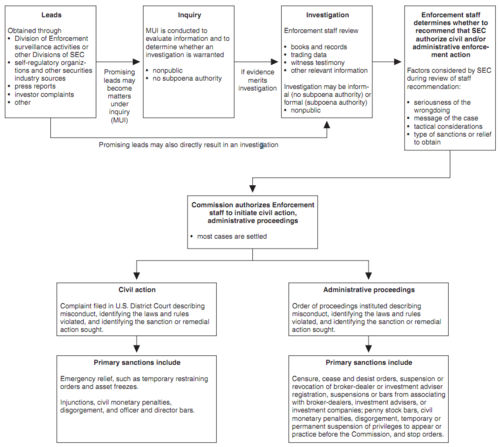
Aviana Eisenberg
PERSON
Name reference in documents
AS
Aviva Stahl
PERSON
Person referenced in documents
AG
Aya Gruber
PERSON
University teacher

Balderstone
PERSON
Name reference in documents

Barbara E. Armacost
PERSON
Name reference in documents
BB
Barron F. Black
PERSON
Name reference in documents
Barry Diller
PERSON
American businessman
BA
Bartkus
PERSON
Surname or name fragment in documents
Benjamin Franklin
PERSON
American polymath and statesman (1706–1790)

Bessler
PERSON
Name reference in documents
BI
Biemel
PERSON
German philosopher (1918–2015)
Bingham
PERSON
Surname reference in documents
BL
Blackmon
PERSON
Name reference in documents
BL
Blinder
PERSON
Name reference in documents
BL
Blockburger
PERSON
Name reference in documents
Bradley Edwards
PERSON
American attorney who represented Epstein victims, author of Relentless Pursuit

Brady
PERSON
Surname reference in Epstein documents
BR
Braman
PERSON
Surname or name fragment in documents
BD
Brian Duffy
PERSON
English photographer and film producer (1933–2010)
Brian Galligan
PERSON
Name reference in documents
BW
Brian Wheeler
PERSON
American sports announcer
BU
Buczma
PERSON
Name reference in documents
BU
Bumham
PERSON
Name reference in documents
Caitlin Dickson
PERSON
Name reference in documents
CA
Calderone
PERSON
Name reference in documents
CK
Candace Kruttschnitt
PERSON
Name reference in documents

Cantrell
PERSON
Name reference in documents
Carlin
PERSON
Surname reference in documents
CB
Carlos Berdejo
PERSON
Name reference in documents

Cassia C.
PERSON
Name reference in documents
CS
Cassia Spohn
PERSON
American criminologist

Chenev
PERSON
Name reference in documents

Chester Mirsky
PERSON
Name reference in documents
Chris Dixon
PERSON
American businessman

Christine O'Connor
PERSON
Name reference in documents
CB
Christopher Bader
PERSON
Sociologist and paranormal researcher
CH
Christopher Hilson
PERSON
Name reference in documents

Clyde
PERSON
Ambiguous first name reference in Epstein documents
Corbett
PERSON
Surname reference in documents
Corley
PERSON
Surname reference in Epstein-related documents
CR
Cronan
PERSON
Name reference in documents
CU
Curran
PERSON
Surname reference in documents

CYRUS R. VANCE, JR
PERSON
American lawyer, District Attorney of New York County
Cyrus R. Vance, Jr.
PERSON
American lawyer, District Attorney of New York County
DR
Daniel C. Richman
PERSON
Name reference in documents
Daniel Duane
PERSON
Name reference in documents
Darren Palmer
PERSON
Name reference in documents
DW
Darren Wilson
PERSON
American drummer
DB
Darryl K. Brown
PERSON
Name reference in documents
DA
Darryl K. Brown et al.
PERSON
Name reference in documents

David A. Harris
PERSON
American activist

David Alan Sklansky
PERSON
American lawyer

David Grann
PERSON
American journalist and writer
DM
David Mills
PERSON
American journalist and TV writer (1961-2010)
David Schoen
PERSON
American legal scholar
DT
Deborah Tuerkheimer
PERSON
Name reference in documents
Dixon
PERSON
Surname reference in Epstein-related documents
DD
Donald A. Dripps
PERSON
Name reference in documents
Donald Trump
PERSON
President of the United States (2017–2021, 2025–present)
DB
Douglas A. Berman
PERSON
Name reference in documents
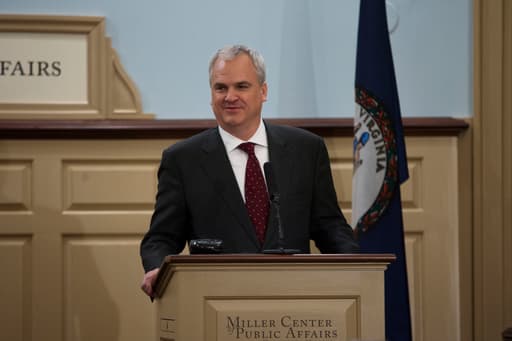
Douglas A. Blackmon
PERSON
American journalist
Douglas Campbell
PERSON
Canadian actor (1922–2009)
DR
Dripps
PERSON
Name reference in documents

E.O. Wilson
PERSON
American biologist, naturalist, and writer (1929–2021)
Ed Krayewski
PERSON
Name reference in documents

Emily J. Sack
PERSON
Name reference in documents

Emma Quinn-Judge
PERSON
Name reference in documents

Eric Foner
PERSON
American historian (born 1943)
EG
Eric Glezl
PERSON
Name reference in documents
EL
Eric Lichtblau
PERSON
American journalist
EP
Eric P. Polten
PERSON
Name reference in documents

Eric Schmidt
PERSON
Software engineer, businessman, former Google CEO

Erik Luna
PERSON
Name reference in documents
Erika Martin
PERSON
Name reference in documents
Erikson
PERSON
Cuban-American pianist
Floyd
PERSON
Ambiguous surname - includes George Floyd references and others in Epstein-related documents
Gaioni
PERSON
Name reference in documents
GA
Gamble
PERSON
Surname or name fragment in documents
George Fisher
PERSON
Name reference in documents
George Mitchell
PERSON
Former U.S. Senator from Maine and special envoy, connected to Epstein through flight logs and social events

George Rutherglen
PERSON
Name reference in documents
GE
Gerstein
PERSON
Refers to Josh Gerstein (Politico reporter) in Epstein case coverage
GI
Gibbs
PERSON
Surname reference in Epstein-related documents

Gideon
PERSON
Judge in the Biblical Book of Judges
Glanville Williams
PERSON
Welsh legal scholar (1911–1997)
GO
Gouriet
PERSON
Name reference in documents
GR
Gratta
PERSON
Name reference in documents
GH
Gregory A. Huber
PERSON
Researcher

Gregory L. Padgett
PERSON
Name reference in documents
GR
Gruber
PERSON
Surname reference in documents

Gujra
PERSON
Name reference in documents
Hans-Heinrich Jescheck
PERSON
German officer and Knight's Cross recipient (1915–2009)
Harmon
PERSON
Surname reference in documents
HA
Harrington
PERSON
Surname reference in documents

Harton
PERSON
Name reference in documents
HS
Harvey A. Silverglate
PERSON
Attorney, co-founder, Foundation for Individual Rights in Education
Harvey Weinstein
PERSON
American film producer and sex offender (born 1952)

Heath
PERSON
Surname reference in Epstein-related documents
HT
Heather Ann Thompson
PERSON
American historian

Heather Mac Donald
PERSON
American conservative political commentator, essayist, attorney and author

Heaton
PERSON
Surname reference in documents
HI
Hickson
PERSON • 2 mentions
Name reference in documents
HO
Horwitz
PERSON
Surname reference in documents
Howell
PERSON
City and county seat of Livingston County, Michigan, United States of America
HS
Hunter Schwartz
PERSON
Name reference in documents
IE
Ian Edwards
PERSON
British comedian
IS
Ian Simpson
PERSON
English architect
Jack M. Balkin
PERSON
American legal scholar

Jack M. Kress
PERSON
Name reference in documents
Jackie Lacey
PERSON
American politician and Los Angeles County District Attorney (born 1957)
JG
Jacob E. Gersen
PERSON
American legal scholar
JA
Jacoby
PERSON
Surname reference in Epstein-related documents
JE
James Eisenberg
PERSON
Person referenced in documents
JL
James L.
PERSON
Particle physicist
James M. Cole
PERSON
American lawyer

James R. Marsh
PERSON
Judge
JV
James Vorenberg
PERSON
American legal scholar (1927–2000)

Jane Kim
PERSON
American lawyer and politician
Jed Handelsman Shugerman
PERSON
Professor at Fordham University School of Law
Jeff Sessions
PERSON • 2 mentions
American politician and lawyer (born 1946)
JP
Jeffery J. Pokorak
PERSON
Name reference in documents
Jeffrey Epstein
PERSON
American sex offender and financier (1953–2019)
JM
Jeffrey Milyo
PERSON
Economist (University of Missouri)
JU
Jeffrey Ulmer
PERSON
Name reference in documents
JL
Jennifer G. Long
PERSON
Name reference in documents
JT
Jennifer L. Truman
PERSON
Name reference in documents
JJ
Joan E. Jacoby
PERSON
Name reference in documents
JS
Joanna C. Schwartz
PERSON
Name reference in documents
JI
Joaquin Jay Gonzalez III
PERSON
Name reference in documents
JS
Joel E. Smith
PERSON
Name reference in documents
JJ
John C. Coffee, Jr.
PERSON
American legal scholar

John D. Bessler
PERSON
American politician
JD
John F. Decker
PERSON
Name reference in documents
John F. Kennedy
PERSON
President of the United States from 1961 to 1963 (1917–1963)
John Kerry
PERSON
American politician and diplomat (born 1943)
John V. Jacobi
PERSON
Name reference in documents

Joseph Goldstein
PERSON
American biochemist
JD
Josh Dawsey
PERSON
American journalist
JC
Joshua Correll
PERSON
Researcher, psychologist
JH
Julie Horney
PERSON
US-American psychologist, sociologist and criminologist
Justin Glawe
PERSON
American singer-songwriter

Justin Juozapavicius
PERSON
Name reference in documents
Justin Scheck
PERSON
American singer-songwriter
KW
Kate B. Wolitzky-Taylor
PERSON
Name reference in documents
KL
Kate Levine
PERSON
Name reference in documents
KT
Katharine Tellis
PERSON
Name reference in documents
KD
Kathleen Daly
PERSON
Name reference in documents
KC
Kathleen F. Cairney
PERSON
Name reference in documents

Kathryn Elvey
PERSON
Name reference in documents

Keir Starmer
PERSON
Prime Minister of the United Kingdom since 2024
KD
Kenneth Culp Davis
PERSON
American legal scholar
Kevin Conlon
PERSON
Researcher ORCID ID = 0000-0003-0798-368X
Killick
PERSON
Name reference in documents
KL
Klaus
PERSON
First name reference to multiple individuals in the documents
KO
Kolender
PERSON
Name reference in documents
KO
Koppy
PERSON
Japanese mangaka
Kress
PERSON
Surname or name fragment in documents

Krieger
PERSON
Surname reference in Epstein-related documents
KR
Kruttschnitt
PERSON
Name reference in documents

Lanza
PERSON
Surname or name fragment in documents
Lauder
PERSON • 2 mentions
Ambiguous surname - possibly refers to Ronald Lauder or Estee Lauder family in Epstein documents

Lawson
PERSON
Surname reference in documents
LE
Leeke
PERSON
Name reference in documents

Lex Hemphill
PERSON
Name reference in documents
LI
Lichtblau
PERSON
Name reference in documents
LP
Linda Pinto
PERSON
Person referenced in Epstein scheduling and administrative documents
LR
Linda R.S.
PERSON
Person referenced in documents

Lucia Zedner
PERSON
British legal scholar
MA
Malley
PERSON
Surname reference in documents
MA
Manikis
PERSON
Name reference in documents
Marc Rich
PERSON
American commodities trader (1934–2013)

Margaret
PERSON
First name reference to multiple individuals in Epstein-related documents

Marianne Wade
PERSON
Name reference in documents
MA
Marie
PERSON
Primarily refers to Ann Marie Villafana (USAFLS prosecutor in Epstein case), extracted from partial name references

Marie Manikis
PERSON
Name reference in documents
Marilyn Mosby
PERSON
American politician and lawyer (born 1980)
MB
Mark Berman
PERSON
American jazz musician

Mark Findlay
PERSON
South Korean-Canadian rapper
MH
Mark Hilliard
PERSON
Name reference in documents
Mark Joseph Stern
PERSON
American film and TV producer (born 1940)
Mark Phillips
PERSON
English equestrian; first husband of Anne, Princess Royal
MG
Mark S. Gaioni
PERSON
Name reference in documents

Markus D. Dubber
PERSON
Name reference in documents

Marsala
PERSON
Surname reference in documents
MA
Marsha
PERSON
Ambiguous first name reference in Epstein documents
Martineau
PERSON
Name reference in documents

Mary M. Cheh
PERSON
American politician

Matt Apuzzo
PERSON
American journalist
MT
Max Taves
PERSON
Name reference in documents
MC
McLaughlin
PERSON
Surname reference in Epstein-related documents
ME
Meister
PERSON
Profession
ME
Merriner
PERSON
Name reference in documents

Michael Bohlander
PERSON
Name reference in documents
Michael Brown
PERSON
American actor
ME
Michael J. Ellis
PERSON
British playwright

Michael J. Klarman
PERSON
Name reference in documents

Michael Javen Fortner
PERSON
Name reference in documents
Michael Milken
PERSON
American investor
MP
Michael Planty
PERSON
Name reference in documents
Michael S. Schmidt
PERSON
American Pulitzer Prize-winning journalist and author

Michael Slager
PERSON
Name reference in documents
Michael Solimine
PERSON
Name reference in documents
Michal R.
PERSON
Name reference in documents
Michelle Alexander
PERSON
American lawyer, civil rights activist and writer

Mike Redmayne
PERSON
Name reference in documents
Mitch McConnell
PERSON
American politician and lawyer (born 1942)
MS
Mitch Smith
PERSON
American basketball player

Monica Davey
PERSON
American singer and rapper (born 1980)
Moose
PERSON
American professional wrestler and football player (born 1984)
MO
Morrison
PERSON
Surname reference in Epstein documents
Nancy Krieger
PERSON
Social epidemiologist
Natapoff
PERSON
Name reference in documents
Neil Boister
PERSON
Professor of law at University of Canterbury in New Zealand
NK
Nicholas Kusnetz
PERSON
Name reference in documents
Nicholas Lemann
PERSON
American journalism professor and writer for The New Yorker
Nicholas R. Parrillo
PERSON
Legal scholar
NC
Nicole Gonzalez Van Cleve
PERSON
Name reference in documents
NY
Noam Yuchtman
PERSON
Professor of managerial economics and strategy at the London School of Economics and Political Science
NO
Novokmet
PERSON • 2 mentions
Name reference in documents
OV
O. M. Vicars
PERSON
Name reference in documents
OL
Olsen
PERSON
Ambiguous surname reference in Epstein documents
OL
Olson
PERSON
Ambiguous surname - refers to multiple people in Epstein documents
PA
Padget
PERSON
Name reference in documents

Pamela H. Bucy
PERSON
Name reference in documents

Papachristou
PERSON
Greek triple jumper
PA
Parrillo
PERSON
Name reference in documents
PS
Patricia Salkin
PERSON
American academic
Paul Cassell
PERSON • 2 mentions
United States federal judge
Paul D. Butler
PERSON
Name reference in documents
Paul J. Watford
PERSON
United States Circuit Judge
PH
Paul M. Heywood
PERSON
British academic
PM
Paul Marcus
PERSON
British television director and producer (1954–2011)
Paul Ryan
PERSON
Speaker of the United States House of Representatives from 2015 to 2019
Paula J. Giddings
PERSON
American lawyer
PT
Peggy M. Tobolowsky
PERSON
Name reference in documents
PS
Peggy Siegal
PERSON
American entertainment publicist
PE
Perate
PERSON
Name reference in documents

Perrin
PERSON
Surname reference in documents
Pete Kasperowicz
PERSON
Name reference in documents
PE
Petersen
PERSON
Surname reference in documents
PC
Philando Castile
PERSON
Name reference in documents
PI
Piscanio
PERSON
Name reference in documents
RB
Rachael Bade
PERSON
American journalist
Rachel A. Harmon
PERSON
Name reference in documents
Rachel E. Morgan
PERSON
Name reference in documents
Raymond Moley
PERSON
Name reference in documents
RC
Rebecca Campbell
PERSON
Researcher
RS
Reva B. Siegel
PERSON
American legal scholar
RE
Rewis
PERSON
Name reference in documents
RJ
Rhodri Jeffreys-Jones
PERSON
American academic
RP
Richard Perez-Pena
PERSON
American journalist
RS
Rick Sarre
PERSON
Name reference in documents

Robert H. Jackson
PERSON
Canadian political scientist
RW
Robert Weisberg
PERSON
American law professor
RB
Rod K. Brunson
PERSON
Name reference in documents
RH
Roderick M. Hills
PERSON
American lawyer; Securities and Exchange commissioner (1931-2014)
RW
Ronald Weitzer
PERSON
American criminologist
Roscoe Pound
PERSON
Name reference in documents
RS
Roseanna Sommers
PERSON
Name reference in documents
RU
Rubin
PERSON
Surname reference in Epstein documents
RG
Ryan Gabrielson
PERSON
American journalist
SB
Samuel W. Buell
PERSON
American academic
Sanford C. Gordon
PERSON
Name reference in documents
SB
Sara Sun Beale
PERSON
Researcher at Duke University
SB
Sarah A. Binder
PERSON
American political scientist

Sari Horwitz
PERSON
American journalist

Scott Ashworth
PERSON
Name reference in documents

Screws
PERSON
Name reference in documents
SE
Sessar
PERSON
German jurist
SH
Sharma
PERSON
Surname reference in Epstein-related documents
SB
Shawn Marie Boyne
PERSON
Name reference in documents
Sibley
PERSON
Name reference in documents
Simone Weichselbaum
PERSON
Name reference in documents
SL
Slager
PERSON
Name reference in documents
SB
Slawomir R. Buczma
PERSON
Name reference in documents
Sonneborn
PERSON
Name reference in documents
SA
Staffan Andersson
PERSON
Name reference in documents
ST
Steinberg
PERSON
Surname reference in Epstein-related documents
Stephanie A.J. Dangel
PERSON
Name reference in documents
Steven B. Duke
PERSON
Legal scholar

Steven W. Perry
PERSON
Name reference in documents
SE
Susan Estrich
PERSON
American lawyer, academic and political analyst

Tan Lovett
PERSON
Name reference in documents
Terry
PERSON
First name reference to multiple individuals in Epstein documents

Thetford
PERSON
Surname reference in documents
TI
Timmerman
PERSON
Name reference in documents
TW
Timothy Williams
PERSON
American football player
TU
Tuerkheimer
PERSON
Name reference in documents
UT
Uttinger
PERSON
Name reference in documents
VB
Valena E. Beety
PERSON
Name reference in documents
VI
Vicki
PERSON
First name reference to multiple individuals in Epstein-related documents
W. David Ball
PERSON
English record producer and electronic musician (1959–2025)

Wainwright
PERSON
Surname or name fragment in documents
Walter Scott
PERSON
Person referenced in documents
WA
Wayte
PERSON
Progamer
Welch
PERSON
Surname reference in Epstein-related documents
WH
Whren
PERSON
Name reference in documents

Wil S. Hylton
PERSON
American writer
WI
Wilkinson
PERSON
Surname reference in Epstein-related documents
William Blackstone
PERSON
Person referenced in documents

William F. McDonald
PERSON
Name reference in documents
William Gillette
PERSON
Name reference in documents
WS
William J. Stuntz
PERSON
Law professor
WY
William Yeomans
PERSON
Vicar of St Philip and St Jacob, Bristol, and a prebendary of Bristol Cathedral 1555 - 1633
WI
Winship
PERSON
Researcher
Zephyr Teachout
PERSON
American academic, political activist and candidate
a Justice Department
ORGANIZATION
Organization referenced in documents
About the Public Prosecution Service of Canada
ORGANIZATION
Organization referenced in documents
Acad. Pol. & Soc. Sci.
ORGANIZATION
Organization referenced in documents
AEquitas
ORGANIZATION
Organization referenced in documents
Agency for Fundamental Rts.
ORGANIZATION
Organization referenced in documents
Ashworth & Redmayne
ORGANIZATION
Organization referenced in documents
Black Lives Matter
ORGANIZATION
Organization referenced in documents

Blackstone
ORGANIZATION
Canadian television series
BP Prod. N. Am., Inc.
ORGANIZATION
Organization referenced in documents

Citizens United
ORGANIZATION
Conservative 501(c)(4) nonprofit organization
Civil Rights Division
ORGANIZATION
Organization referenced in documents
Coalition Sexual
ORGANIZATION
Organization referenced in documents
Comm. of Ministers
ORGANIZATION
Organization referenced in documents

Commonwealth
ORGANIZATION • 2 mentions
Political association of mostly former British Empire territories
Commonwealth Dir. of Pub.
ORGANIZATION
Organization referenced in documents
Commonwealth Dir. of Pub. Prosecutions
ORGANIZATION
Organization referenced in documents

Council of Europe
ORGANIZATION • 2 mentions
Organization referenced in documents
Criminal Division
ORGANIZATION
Division of the U.S. Department of Justice
Crown Office & Procurator Fiscal Serv.
ORGANIZATION
Organization referenced in documents
Crown Prosecution Serv.
ORGANIZATION
Organization referenced in documents
Cty. Comm'rs
ORGANIZATION
Organization referenced in documents
Dep't of Justice
ORGANIZATION
Organization referenced in documents
Department of Justice
ORGANIZATION • 6 mentions
United States Department of Justice, federal executive department responsible for law enforcement
Dir. of Pub. Prosecutions
ORGANIZATION
Organization referenced in documents
Director of Public Prosecutions
ORGANIZATION
Organization referenced in documents
District Court for the Southern District of New York
ORGANIZATION
U.S. District Court for the Southern District of New York
Equal Justice Initiative, Lynching in America
ORGANIZATION
Organization referenced in documents
Eur. Union Agency for Fundamental Rts.
ORGANIZATION
Organization referenced in documents
FBI
ORGANIZATION • 2 mentions
Federal Bureau of Investigation, domestic intelligence and security service of the United States
Federal authority
ORGANIZATION
Organization referenced in documents
Federal Bureau of Investigation Uniform Crime Reports
ORGANIZATION
Organization referenced in documents

Federal Reserve
ORGANIZATION
Federal Reserve System, central banking system of the United States

Fortune
ORGANIZATION
American business magazine
FRA Report
ORGANIZATION
Organization referenced in documents
Genesee Circuit Judge
ORGANIZATION
Organization referenced in documents
Genesee Prosecutor
ORGANIZATION
Organization referenced in documents
Gov't of Virgin Islands
ORGANIZATION
Organization referenced in documents
Greater Blouse, Skirt & Neckwear Contractors Ass'n
ORGANIZATION
Organization referenced in documents
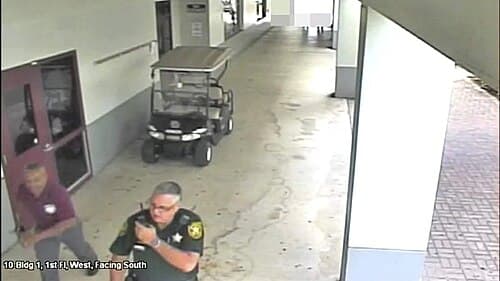
Herald Scot
ORGANIZATION
Organization referenced in documents
Human Rights Watch
ORGANIZATION
International human rights advocacy and research non-governmental organization
Law Society of Alta.
ORGANIZATION
Organization referenced in documents

LexisNexis
ORGANIZATION
Corporation providing computer-assisted legal research, as well as business research and risk management services
Marshall Project
ORGANIZATION
Organization referenced in documents
Metropolitan Police Commr
ORGANIZATION
Organization referenced in documents
Mills & Weisberg
ORGANIZATION
Organization referenced in documents
Minnesota Law Review
ORGANIZATION
Organization referenced in documents
Minnesota Law Review Foundation
ORGANIZATION
Organization referenced in documents

Mothers Against Drunk Driving
ORGANIZATION
American organization
N.J. Super. Ct. App. Div.
ORGANIZATION
Organization referenced in documents
N.Y. Cty. Dist. Attorney's Office
ORGANIZATION
Organization referenced in documents
Nat'l Criminal Justice Reference Serv.
ORGANIZATION
Organization referenced in documents
Office of the Commonwealth
ORGANIZATION
Organization referenced in documents
Office of the Dir. of Pub. Prosecutions
ORGANIZATION
Organization referenced in documents
Office of the Mayor
ORGANIZATION
Organization referenced in documents
Office on Violence Against Women
ORGANIZATION
Organization referenced in documents
Ohio Rev. Code Ann. §
ORGANIZATION
Organization referenced in documents
Oxford Handbook on Criminal
ORGANIZATION
Organization referenced in documents
Pa. Super. Ct
ORGANIZATION
Organization referenced in documents
Police and Democracy
ORGANIZATION
Organization referenced in documents
Police Force
ORGANIZATION
Organization referenced in documents
Police Relations with Black and White
ORGANIZATION
Organization referenced in documents
Polten & Glezl
ORGANIZATION
Organization referenced in documents

ProPublica
ORGANIZATION
Nonprofit investigative journalism organization based in New York City
Reason
ORGANIZATION
Organization referenced in documents

Slate
ORGANIZATION
U.S.-based online magazine
Sth Cir.
ORGANIZATION
Organization referenced in documents
Supreme Court
ORGANIZATION • 2 mentions
Highest court of jurisdiction in the US
The Canadian Supreme Court
ORGANIZATION
Organization referenced in documents
the Centers for Disease Control
ORGANIZATION
Organization referenced in documents
the Federal Bureau of Investigation
ORGANIZATION
Organization referenced in documents

the Ku Klux Klan
ORGANIZATION
Organization referenced in documents
the Los Angeles Police Department
ORGANIZATION
Organization referenced in documents
The People's Courts
ORGANIZATION
Organization referenced in documents
The Progress of Reconstruction
ORGANIZATION
Organization referenced in documents
the Republican Party
ORGANIZATION
Organization referenced in documents
the Subcomm.
ORGANIZATION
Organization referenced in documents
The Supreme Court and the Struggle for Racial Equality
ORGANIZATION
Organization referenced in documents

The U.S. Justice Department
ORGANIZATION
Organization referenced in documents
the U.S. Supreme Court
ORGANIZATION
Organization referenced in documents
the University of Virginia School of Law
ORGANIZATION
Organization referenced in documents

The Washington Post
ORGANIZATION
Daily broadsheet newspaper in Washington, D.C.
Transparency Intl
ORGANIZATION
Organization referenced in documents
Tul. J. Int'l
ORGANIZATION
Organization referenced in documents
U.S. DEP’T OF
ORGANIZATION
Organization referenced in documents
U.S. Dep't of Justice
ORGANIZATION
Organization referenced in documents

U.S. Dist.
ORGANIZATION
Organization referenced in documents
U.S. Dist. Court
ORGANIZATION
Organization referenced in documents
Union of Post Office Workers
ORGANIZATION
Organization referenced in documents
United O
ORGANIZATION
Organization referenced in documents
Wall St. J.
ORGANIZATION
Organization referenced in documents
William A. Geller & Hans Toch eds.
ORGANIZATION
Organization referenced in documents

Alabama
LOCATION
State of the United States of America

Alaska
LOCATION
State of the United States of America
Ark. IL
LOCATION
Location referenced in documents

Baltimore
LOCATION
City in Maryland, United States
Baltimore City
LOCATION
City in Maryland, United States

Cleveland
LOCATION
City in and county seat of Cuyahoga County, Ohio, United States

Colorado
LOCATION
State of the United States of America

Connecticut
LOCATION
State of the United States of America

Croatia
LOCATION
Country in Central Europe
Crook County
LOCATION
County in Illinois, United States

Cyprus
LOCATION
Mediterranean island country in West Asia

Dayton
LOCATION
City and county seat of Montgomery County, Ohio, United States

Delaware
LOCATION
State of the United States of America

Illinois
LOCATION
State of the United States of America

Jacksonville
LOCATION
City in Duval County, and largest city in State of Florida, United States

Kansas
LOCATION
State of the United States of America

Louisiana
LOCATION
State of the United States of America

Malta
LOCATION
Country in Southern Europe situated on an archipelago in the Mediterranean Sea

Maryland
LOCATION
State of the United States of America

Michigan
LOCATION
State of the United States of America
Minn. 1977
LOCATION
Location referenced in documents
Missouri
LOCATION
State of the United States of America

Nebraska
LOCATION
State of the United States of America

New Hampshire
LOCATION
State of the United States of America

New York
LOCATION
Most populous city in the United States

New Zealand
LOCATION
Island country in the southwest Pacific Ocean
North America
LOCATION
Continent

North Carolina
LOCATION
State of the United States of America
Northern
LOCATION
Directional region of the United States
Northern Ireland
LOCATION
Part of the United Kingdom situated on the island of Ireland

Oklahoma
LOCATION
State of the United States of America
Philadelphia
LOCATION
1993 film by Jonathan Demme
Rhode
LOCATION
City in Rhode Island

Rhode Island
LOCATION
State of the United States of America
S.D.N.Y. 2013
LOCATION
Location referenced in documents
Santo
LOCATION
Mexican professional wrestler and actor (1917–1984)
Seattle
LOCATION
City in and county seat of King County, State of Washington, United States

South Carolina
LOCATION
State of the United States of America

Tulsa
LOCATION
City in Oklahoma, United States and county seat of Tulsa County

United Kingdom
LOCATION
Country in north-west Europe

United States
LOCATION
Country located primarily in North America
United States Attorneys' Manual
LOCATION
Location referenced in documents
United States Attorneys’ Manual
LOCATION
Location referenced in documents

Wales
LOCATION • 2 mentions
Country in north-west Europe, part of the United Kingdom
Wis. 1888
LOCATION
Location referenced in documents
Wisconsin
LOCATION
State of the United States of America
Statistics
Pages:43
Entities:467
Avg. OCR:93.6%
Sponsored