Back to Network


















9
Shared Docs
8
Same-Page
9 / 14
Mentions
Document Mentions (9 shared documents)
3 mentions1 same-page
Page ?Same page
losive belt Martyrdom-seeking operation in the history of the Palestinian revolution was carried out by the first Martyrdom-seeker at the battle of Karameh, Martyr Abd AI-Mutalleb AI-Dmeik, known as "Phosphorous," one of the most outstanding activists of Fatah." "Did you know? The first Martyrdom-seek
Nazareth, Jaffa, Ramle, Beer Sheva, and Jerusalem. In the upper left corner, there is a picture of terrorist Dalal Mughrabi. The next picture shows Arafat with Abu Jihad, one of the founders of Fatah who was responsible for many terrorist attacks, among them the Coastal Road attack that Dalal Mughrabi
, the revolution that turned refugees into fighters and turned fighters into an army to build the state. This picture shows columns of refugees who Yasser Arafat turned into fighters by virtue of his keffiyeh (i.e., headscarf) and his revolution." VJ , Dec. 28, 2012] For several days, the cover picture on
3 mentions1 same-page
Page ?Same page
ut. My own hope was that the nod would go to any even closer friend of mine: Dan Shomron. I had first got to know Dan well in the late sixties after Karameh, Israel’s costly standoff with Arafat, when Fatah’s influence was in its infancy. We exchanged impressions on what had gone wrong, and why? When I be
be at stake for Damascus, I certainly couldn’t see the Phalangists being able to drive them out by force. The more immediate, open question involved Arafat and the Palestinians. Our other two invasion forces had driven almost all the PLO fighters out of south Lebanon, though not without costs and casualt
s, and at the dinner held at one of King Juan Carlos’s palatial estates, and, for me, a first opportunity to meet not only Arab foreign ministers but Yasir Arafat. My first, brief encounter with Arafat began a bit embarrassingly. I’d arrived a few minutes early for the conference dinner and was led into an imp
3 mentions1 same-page
Page ?Same page
ter Israel had defeated the armies of our three main Arab enemies — Egypt, Syria and Jordan. Israeli forces were advancing on a Jordanian town called Karameh, across the 5 HOUSE_OVERSIGHT_011476 Jordan River from the West Bank, from which a fledgling group called Fatah, under the command of Arafat, had b
or did I doubt that President Clinton, whom I had come to view not just as a diplomatic partner but a friend, would rise to the occasion. But as for Arafat? There was simply no way of knowing. That was why I had pressed President Clinton so hard to convene the summit. That was why, despite the misgiving
deeply, and was more determined to help us end it, than any other president before him. It was a moment of truth for the leader of the Palestinians, Yasir Arafat. The Oslo Accords of 1993, groundbreaking though they were, had created a peace process, not peace. Over the past few years, that process had been l
Sponsored
3 mentions1 same-page
Page ?Same page
ter Israel had defeated the armies of our three main Arab enemies — Egypt, Syria and Jordan. Israeli forces were advancing on a Jordanian town called Karameh, across the 5 HOUSE_OVERSIGHT_027853 Jordan River from the West Bank, from which a fledgling group called Fatah, under the command of Arafat, had b
or did I doubt that President Clinton, whom I had come to view not just as a diplomatic partner but a friend, would rise to the occasion. But as for Arafat? There was simply no way of knowing. That was why I had pressed President Clinton so hard to convene the summit. That was why, despite the misgiving
deeply, and was more determined to help us end it, than any other president before him. It was a moment of truth for the leader of the Palestinians, Yasir Arafat. The Oslo Accords of 1993, groundbreaking though they were, had created a peace process, not peace. Over the past few years, that process had been l
3 mentions1 same-page
Page ?Same page
rut. My own hope was that the nod would go to any even closer friend of mine: Dan Shomron. I had first got to know Dan well in the late sixties after Karameh, Israel's costly standoff with Arafat, when Fatah's influence was in its infancy. We exchanged impressions on what had gone wrong, and why? When I be
be at stake for Damascus, I certainly couldn't see the Phalangists being able to drive them out by force. The more immediate, open question involved Arafat and the Palestinians. Our other two invasion forces had driven almost all the PLO fighters out of south Lebanon, though not without costs and casualt
s, and at the dinner held at one of King Juan Carlos's palatial estates, and, for me, a first opportunity to meet not only Arab foreign ministers but Yasir Arafat. My first, brief encounter with Arafat began a bit embarrassingly. I'd arrived a few minutes early for the conference dinner and was led into an impr
2 mentions1 same-page
Page ?Same page
ect, form of confrontation with the "Zionist enemy." Arafat had set up camp with nearly a thousand men just across the Jordan River, in a town called Karameh. From early 1968, they had been launching hit- and-run raids, not just on the West Bank but into the Negev. Eshkol's cabinet was initially divided on
1967 war had turned out to be hollow words. It was time for a new generation, and a new, more direct, form of confrontation with the "Zionist enemy." Arafat had set up camp with nearly a thousand men just across the Jordan River, in a town called Karameh. From early 1968, they had been launching hit- and-
Sponsored
2 mentions1 same-page
Page ?Same page
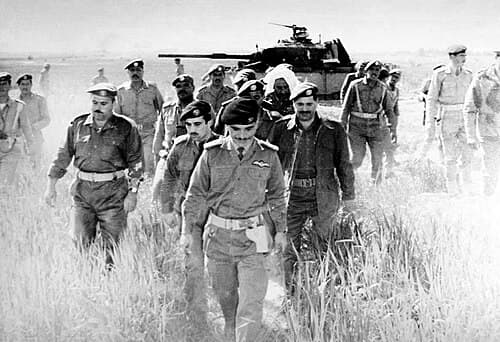
in the Gaza Strip, and killed two Israeli soldiers, Snir Flum and Sharon Shitoubi. Shitoubi shot the terrorist, who later died of his wounds. The Karameh battle, or Al-Karameh - In 1968, Israeli army forces attacked the Al-Karameh village in Jordan, where Fatah terrorists were launching attacks on Is
e, or Al-Karameh - In 1968, Israeli army forces attacked the Al-Karameh village in Jordan, where Fatah terrorists were launching attacks on Israel. Arafat used the event for propaganda purposes, declaring the battle a great victory that erased the disgrace of the 1967 Six Day War defeat. EFTA_R1_00471
2 mentions1 same-page
Page ?Same page
ct, form of confrontation with the “Zionist enemy.” Arafat had set up camp with nearly a thousand men just across the Jordan River, in a town called Karameh. From early 1968, they had been launching hit- and-run raids, not just on the West Bank but into the Negev. Eshkol’s cabinet was initially divided on
967 war had turned out to be hollow words. It was time for a new generation, and a new, more direct, form of confrontation with the “Zionist enemy.” Arafat had set up camp with nearly a thousand men just across the Jordan River, in a town called Karameh. From early 1968, they had been launching hit- and-
Page HOUSE_OVERSIGHT_023139
ement) (28 September 1995) 145 Temporary International Presence in Hebron (TIPH Agreement) (9 May 1996) 324 Declaration by PM Netanyahu and Chairman Arafat following their first meeting (4 September 1996) 327 Hebron Protocol (17 January 1997) 329 Note for the Record (17 January 1997) 336 HOUSE_OVERSIGH
Page: HOUSE_OVERSIGHT_023139 →Page HOUSE_OVERSIGHT_023152
eights. 1 September 1967 Khartoum Resolution of the three ‘Noes’. 22 November 1967 UN Security Council Resolution 242. 21 March 1968 The battle of Karameh between Israel and Fatah and Jordanian forces. First direct military confrontation between Israeli and Palestinian forces. 17 July 1968 The Palestini
Page: HOUSE_OVERSIGHT_023152 →Sponsored
Mutual Connections (792)
Entities connected to both Karameh and Yasser Arafat
Jerusalem
LOCATION9 w/ Karameh·49 w/ Yasser
Fatah
ORGANIZATION9 w/ Karameh·43 w/ Yasser
George W. Bush
PERSON5 w/ Karameh·47 w/ Yasser
Benjamin Netanyahu
PERSON7 w/ Karameh·39 w/ Yasser
Lebanon
LOCATION7 w/ Karameh·39 w/ Yasser
Barack Obama
PERSON3 w/ Karameh·41 w/ Yasser
Mahmoud Abbas
PERSON5 w/ Karameh·38 w/ Yasser
Bill Clinton
PERSON5 w/ Karameh·37 w/ Yasser
Bashar al-Assad
PERSON5 w/ Karameh·35 w/ Yasser
West Bank
LOCATION5 w/ Karameh·35 w/ Yasser
United States
LOCATION3 w/ Karameh·34 w/ Yasser
Hosni Mubarak
PERSON7 w/ Karameh·30 w/ Yasser
Saddam Hussein
PERSON8 w/ Karameh·29 w/ Yasser
Damascus
LOCATION7 w/ Karameh·29 w/ Yasser
Ehud Barak
PERSON7 w/ Karameh·28 w/ Yasser
Ramallah
LOCATION4 w/ Karameh·28 w/ Yasser
Cairo
LOCATION5 w/ Karameh·26 w/ Yasser
Marc Rich
PERSON2 w/ Karameh·29 w/ Yasser
the West Bank
LOCATION7 w/ Karameh·23 w/ Yasser
Yitzhak Rabin
PERSON7 w/ Karameh·23 w/ Yasser