EFTA00229916_sub_002 - EFTA00229916_200
Document Information
Bates Range
EFTA00229916_sub_002 - EFTA00229916_200
Pages
100
Original Filename
EFTA00229916.pdf
Document Content
Page 101 - EFTA00229916_101
. . . --.4"in it --- -- --------- Case 9:0B-cv-80736-KAM Document 79-1 Entered on FLSD Docket 05/03/2011 Page 15 of 31 Page 3 of 4 10. At all relevant times, the Office had approximately 20 Assistant U.S. Attorneys assigned to the West Palm Beach location. The prosecutor assigned to the Epstein case, I I end I were assigned to different sections within the Office. We reported to different supervisors. 11. I did not participate in any way in the Office's investigation of Epstein. I was not involved in any of the Office's decisionmalcing with regard to the Epstein matter. 12. I never learned any confidential, non-public information about the Epstein matter. 13. In late December 2007, I had an "exit meeting" with Dexter Lee, the Office's ethics officer. As part of that meeting, Mr. Lee reviewed with me the Department of Justice's post-employment restrictions. Based on our conversation, it was my understanding that I could work on any matter so long as I had not participated in it personally and substantially as a government employee. I also understood that I could not use non-public Government information for any purpose. 14. After opening my private practice on January 2, 2008, I was retained to represent r purposes of civil depositions in causes of action to which the United States was not a party. At a later time, I was retained to represent several other members of Mr. Epstein's staff in their civil depositions. I5.. After leaving the Office, I did not participate in any of the negotiations over Mr. Epstein's non-prosecution agreement EFTA00230016
Page 102 - EFTA00229916_102
Case 9:08-cv-80736-KAM Document 79-1 Entered on FLSD Docket 05/03/2011 Page 16 of 31 Page 4 of 4 16. After leaving the Office, I did not communicate with the Office, in person or in writing, about any matters relating to possible criminal charges against Mr. Epstein. 17. Because I did not have any, I did not share non-public confidential information about the Epstein investigation with any of Epstein's attorneys. 18. Prior to the filing of Plaintiff's Motion for Finding of Violations of the Crime Victims' Rights Act, neither Mr. Edwards, nor Judge Cassell, nor anyone on their behalf contacted me to determine if the allegations in Paragraphs 52 and 53 of that Motion were true. I declare under penalty of perjury that the foregoing is true and correct. Executed on May 3, 2011. Brace E. Reinhart EFTA00230017
Page 103 - EFTA00229916_103
Case 9:08-cv-80736-KAM Document 79-1 Entered on FLSD Docket 05/03/2011 Page 17 of 31 EXHIBIT 2 EFTA00230018
Sponsored
Page 104 - EFTA00229916_104
Case 9:08-cv-80736-KAM Document 79-1 Entered on R&D Docket 05/03/2011 Page 18 of 31 § 2641.201 Parrnanent restriction on any former employee's..., 5 C.F.Ft. § 2641.201 Code of Federal Regulations Title 5. Administrative Personnel Chapter XVI. Office of Government Ethics Subchapter B. Government Ethics Part 2641. Post-Employment Conflict of Interest Restrictions (Refs & Annos) Subpart B. Prohibitions 5 C.F.R. § 2641.201 § 2641.201 Permanent restriction on any former employee's representations to United States concerning particular matter in which the employee participated personally and substantially. Effective July 25, 2008 Currentness • (a) Basic prohibition of 18 U.S.0 207(a)(l). No former employee shall knowingly, with the intent to influence, make any communication to or appearance before an employee of the United States on behalf of any other person in connection with a particular matter involving a specific party or parties, in which he participated personally and substantially as an employee, and in which the United States is a party or has a direct and substantial interest (b) Exceptions and waivers, The prohibition of 18 U.S.C. 207(aX1) does not apply to a former employee who is: (1) Acting on behalf of the United Staves. See § 2641.301(a). (2) Acting as an elected State or local government official. See § 2641.301(b). (3) Communicating scientific or technological information pursuant to procedures or certification. See § 2641.301(e). (4) Testifying under oath. See § 2641.3010). (Note that this exception from § 2641.201 is generally not available for expert testimony. See § 2641.301(1)(2).) (5) Acting on behalf of an international organization pursuant to a waiver. See § 2641.301(h). (6) Acting as an employee of a Government-owned, contractor-operated entity pursuant to a waiver. See § 2641.301(1). (c) Commencement and length of restricfion. 18 U.S.C. 207(aX I) is a pennenent restriction that commences upon an employee's termination from Government service. The restriction lasts for the life of the particular matter involving specific parties in which the employee participated personally and substantially. (d) Communication or appearance— (1) Communication. A former employee makes a communication when he imparts or tranamits information of any kind, including facts, opinions, ideas, questions or direction, to an employee of the United States, whether orally, in written correspondence, by electronic media, or by any other means. This includes only those communications with respect to which the loaner employee intends that the information conveyed will be attributed to himself, although it is not steamy that any employee of the United States actually recognize the former employee as the source of the information. (2) Appearance. A former employee makes an appearance when he is physically present before an employee of the United Slates, in either a formal or informal setting. Although an appearance also may be accompanied by certain communications, an appearance need not involve any communication by the former employee. WesllawNegs @ 2011 Thomson Reuters. No claim to original U.S. Government Works. 1 EFTA00230019
Page 105 - EFTA00229916_105
Case 9:08-cv-80736-KAM Document 79-1 Entered on FLSD Docket 05/03/2011 Page 19 of 31 § 2641.201 Permanent restriction on any former empioyee's_., a C.F.R. § 2641.201 (3) Behind-the-scenes assistance. Nothing in this section prohibit a former employee from providing assistance to another person, provided that the assistance does not involve a communication to or an appearance before an employee of the United States. Example 1 to paragraph (d): A former employee of the Federal Bureau of Investigation makes a brief telephone call to a. colleague in her former office concerning an ongoing investigation. She has made a communication. If she personally attends an informal meeting with agency personnel concerning the matter, she will have made an appearance. Example 2 to paragraph (d): A former employee of the National Endowment for the Humanities (NEH) accompanies other representatives of an NEH grantee to a meeting with the agency. Even if the former employee does not say anything at the meeting, he has made an appearance (although that appearance may or may not have been made with the intent to influence, depending on the circumstances). Example 3 to paragraph (d): A Government employee administered a particular contract fix agricultural research with Q Company. Upon termination of ha Government employment, she is hired by Q Company. She works on the matter covered by the contact, but has no direct contact with the Government. At the request of a company vice president, she prepares a paper describing the persons at ha former agency who should be contacted and what should be said to them in an effort to increase the scope of funding of the contact and to resolve favorably a dispute over a contract clause She may do so. Example 4 to paragraph (d): A firmer employee of the National Institutes of Health (NIN) prepares an application for an NIH research grant on behalf of her university employer. The application is signed and submitted by another university officer, but it lists the loaner employee as the principal investigator who will be responsible for the substantive work under the grant. She has not made a communication. She also may sign an assurance to the agency that shewill be personally responsible for the direction and conduct of the research under the grant, pursuant to § 264 l.201(e)(2Xiv). Moreover, she may personally communicate scientific or technological information to NIB concerning the application, provided that she does so under circumstances indicating no intent to influence the Government pursuant to § 2641.20I(eX2) or she makes the communication in accordance with the exception for scientific or technological information in § 2641.301(e). Example 5 to paragraph (d): A former employee established a small government relations firm with a highly specializedpractice in certain environmental compliance issues. She prepared a report for one of her clients, which she knew would be presented to her former agency by the client. The report is not signed by the former employee, but the document does bear the name of her firm. The former employee expect that it is commonly known throughout the industry and the agency that she is the author of the report If the report were submitted to the agency, the former employee would be making a oonununication and not merely confining herself to behind-the-scenes assistance, because the cimumstanoes indicate that she intended the information to be attributed to herself. (e) With the intent to influence— )Basic concept The prohibition applies only to communications or appeal-wan made by a former Government employee with the intent to influence the United States. A communication or appearance is made with the intent to influence when made for the purpose of. (i) Seeking a Government ruling, benefit, approval, or other discretionary Government action; or (ii) Affecting Government action in connection with an issue or aspect of a matter which involves an appreciable element of actual or potential dispute or controversy. Example 1 to paragraph (e)(1): A former employee of the Administration on Children and Families (ACF) signs a grant application and submits it to ACE on behalf °fa nonprofit organization for which she now works. She has made a communication with the intent to influence an employee of the United States because her communication was made for the purpose of seeking a Government benefit. Westin/Mein' @ 2011 Thomson Reuters. No claim to original U.S. Government Works. 2 EFTA00230020
Page 106 - EFTA00229916_106
Case 9:08-cv-80736-KAM Document 79-1 Entered on FLSD Docket 05/03/2011 Page 20 of 31 § 2641.201 Permanent restriction on any tonne. employee's..., 5 C.F.R. § 2641.201 Example 2 to paragraph (e)(l): A former Government employee calls an agency official to complain about the auditing methods being used by the agency in conr.ection with an audit of a Government contractor for which the former employee serves as a consultant. The former employee has made a communication with the intent to influence because his call was made for the purpose of seeking Government action in connection with an issue involving an appreciable element of dispute. (2) Intent to influence not present. Certain communications to and appearances before employees of the United States are not made with the intent to influence, within the meaning of paragraph (e)(I) of this section, including, but not limited to, communications and appearances made solely for the purpose of: (i) Making a routine request not involving a potential controversy, such as a request for publicly available documents or an inquiry as to the status of a matter; (ii) Making factual statements or asking factual questions in a context that involves neither an appreciable element of dispute nor ar. effort to seek discretionary Government action, such as conveying factual information regarding matters that are not potentially controversial during the regular course of performing a contract; (iii) Signing and filing the tax return of another person as preparet; (iv) Signing an assurance that one will be responsible as principal investigator for the direction and conduct of research under a Federal grant (see example 4 to paragraph (d) of this section); (v) Filing a Securities and Exchange Commission (SEC) Porn 10-K or similar disclosure forms required by the SEC; (vi) Making a communication, at the initiation of the Government, concerning work performed or to be performed under a Government contract or grant, during a routine Government site visit to premises owned or occupied by a person other than theUnited States where the work is performed or would be performed, in the ordinary course of evaluation, administration, or performance of an actual or proposed contract or gran or (vii) Purely social contacts (see example 4 to paragraph (0 of this section). Example Ito paragraph (e)(2): A former Government employee calls an agency to ask for the dam ofa scheduled public hearing on her client's license application. This is a routine request not involving a potential controversy and is not made with the intent to influence. Example 2 to paragraph (e)(2): In the previous example, the agency's hearing calendaris quite frill, as the agency has a significant backlog of license applications. Tae former employee calls a Conner colleague at the agency to ask if the hearing date for her client could be moved up on the schedule, so that her client can move forward with its business plans more quickly. This is a communication made with the intent to influence. Example 3 to paragraph (e)(2): A former employee of the Department of Defense (DOD) now works for a firm that has a DOD contract to produce an operator's manual for a radar device used by DOD. In the coarse of developing a chapter about certain technical features of the device, the former employee asks a DOD official certain factual questions about the device and its properties. The discussion does rot concern any matter that is known to involve a potential controversy between the agency and the contractor. The former employee has not made a communication with the intent to influence. Example 4 to paragraph (e)(2): A former medical officer of the Food and Drug Administration (FDA) sends a letter to the agency in which he sets out certain data from safety and efficacy test on a new drug for which his employer, ABC Drug Co., is seeking FDA approval. Even if the letter is confined to arguably "factual" matters, such as syncpses of data from clinical trials, the communication is made for the purpose of obtaining a discretionary Government action, i.e., approval of a new drug. Therefore, this is a communication made with the intent to influence. Example 5 to paragraph (eX2): A former Government employee now works for a management consulting firm, which has • Government contract to produce a study on the efficiency of certain agency operations. Among other things, the contract calls WestlawNext @ 2011 Thomson Reuters. No claim to original U.S. Government Works. 3 EFTA00230021
Sponsored
Page 107 - EFTA00229916_107
Case 9:08-cv-80736-KAM Document 79-1 Entered on FLSD Docket 05/03/2011 Page 21 of 31 § 2641.201 Permanent restrle0on on any former employee's..., 5 O.F.R. § 2641.201 for the contractor to develop a range of alternative options for potential restructuring of certain internal Government procedures. The former employee would like to meet with agency representatives to present a tentative list of options developed by the contractor. She may not do so. There is a potential for controversy between the Government and the contractor committing the extent and adequacy of any options presented, and, moreover, the oor.tractor may have its own interest in emphasizing certain options as opposed to others because some options may be more difficult and expensive for the contractor to develop fully than others. Example 6 to paragraph (eX2): A former employee of the Internal Revenue Service (IRS) prepares his client's tax return, signs it as prepare:, and mails it to the IRS. He has not made a communication with the intent to influence. In the event that any controversy should arise concerning the return, the former employee may not represent the client in the proceeding, although he may answer direct factual questions about the records be used to compile figures for the return, provided that he does not argue any theories or positions tojustify the use of ore figure rather than another. Example 7 to paragraph (eX2): An agency officialvisitsthepremises of a prospective contractor to evahmte the testing procedure being proposed by the contractor for a research contract on which it has bid. A former employee of the agency, now employed by the contractor, is the person most ferniliar with the technical aspects of the proposed testing procedure. The agency official asks the former employee about certain technical features of the equipment used in connection with the testing procedure. The former employee may provide factual information that is responsive to the questions posed by the agency official, as such information is requested by the Government under circumstances for its convenience in reviewing the bid. However, the former employee may not argue for the appropriateness of the proposed testing procedure or otherwise advocate any position on behalf of the contractor. (3) Change in circumstances. If, at any time during the course of a communication or appearance otherwise permissible under paragraph (e)(2) of this section, it becomes apparent that circumstances have changed which would indicate that any further communication or appearance would be nude with the intent to influence, the former employee must refrain from such further communication or appearance. Example 1 to paragraph (eX3): A former Government employee accompanies another employee of a contractor to a routine meeting with agencyofficials to deliver technical data called for under a Government contract. During the course of the meeting. an unexpected dispute arises concerning certain terms of the contract. The former employee may cotparticipate in anydiscussion of this issue. Moreover, if the oitvumstances clearly indicate that even her continued presence during this discussion would be en appearance made with the intent to influence, she should excuse herself from the meeting. (4) More physical presence intended to influence. Under some circumstances, a former employee's mere physical Presence, without any communication by the employee concerning any material issue or otherwise, may constitute an appearance with the intent to influence an employee of the United States. Relevant considerations include such factors as whether. (i) The former employee has been given actual or apparent authority to make any decisions, commitments, or substantive arguments in the course of the appearance; (I i)The Comment employee before whom the appearance is made has substantive responsibility for the matter and does not simply perform ministerial functions, such as the acceptance of paperwork; (ii) The former employee's presence is relatively prominent; (iv) The former employee is paid for tasking the appearance; (v) It is anticipated that others present at the meeting will make reference to the views or past or present work of the former employee; (vi) Circumstances do not indicate that the former employee is present merely for informational purposes, for example, merely to listen and record information for later use; WesItaveNest O 2011 Thomson Reuters. No claim to original U.S. Government Works. 4 EFTA00230022
Page 108 - EFTA00229916_108
. . . . . . . . 4 trc4.555--4,;:c.W4-- ..... kw'reer7.7 Case 9:08-cv-80736-KAM Document 79-1 Entered on FLSD Docket 05/03(2011 Page 22 of 31 § 21141.201 Permanent restriction on any former employes's—, 5 C.F.R. § 2841201 (vii)Thefonner employee has entered a formal appearance in connection withalegal proceeding at which he is present and (viii) The appearance is before former subordinates or others in the same chain of command as the former employee. Example Ito paragraph (e)(4): A formerRegional Administrator ofthe Occupational Safety and Health Administration (OSHA) becomes a consultant for a company being investigated for possible enforcement baton by the regional OSHA Office. She is hired by the company to coordinate and guide its response to the OSHA investigation. She accompanies company officers to an informal meeting with OSHA, which is held for the purpose of airing the company's explanation of certain findings in en adverse inspection report. The former employee is introduced at the meeting as the company's compliance and governmental affairs adviser, but she does not make any statements during the meeting concerning the investigation. She is paid a fee for attending this meeting. She has made an appearance with the intent to influence Example 2 to paragraph (eXt): A former employee of an agency row works for a manufacturer that seeks agency approval for a new product. The agency convenes a public advisory committee meeting for the purpose of receiving expert advice concerning the product. Representatives of the manufacturer will make an extended presentation of the data supporting the application for approval, and a special table has been reserved for them in the meeting room for this purpose. The former employee does not participate in the manufacturer's presentation to the advisory carmine* and does not even sit in the section designated for the manufacturer. Rather, he sits in the back of the room in a large area reserved for the public and the media. The manufacturer's speakers make no reference to the involvement or views of the former employee with respect to the matter. Even though the former employee may be recognized in the audience by certain agency employees, he las not made an appearance with the intent to influence because his presence is relatively inconspicuous and there is little to identif}, him with the mannfacturer or the advocacy of its representatives at the meeting. (I) To or before an employee of the United States— (1) Employee of the United States. For purposes of this paragraph, an "employee of the United States" means the President, the Via President, and any current Federal employee (including an individual appointed as an employee or detailed to the Federal Government under the Intergovernmental Personnel Act (5 U.S.C. 3371-3376)) who is detailed to or employed by any: (i) Agency (including a Government corporation); (ii) Independent agency in the executive, legislative, or judicial branch; (lil) Federal court or (iv) Court-martial. (2) To or before. Except as provided in paragraph (0(3) of this section, a communication "to" or appearance "before" an employee of the United States is one: (i) Directed to and received by an entity specified in paragraphs (f)( WO through (f)(1)(iv) of this section even though not addressed to a particular employee, e.g., as when a former employee mails correspondence to an agency but not to any named employee; or (ii) Directed to and received by an employee in his capacity as an employee of an entity specified in paragraphs )(1) (i) through (f)(1)(iv) of this section, e.g., as when a former employee directs remarks to an employee representing the United States as a party or intervenor in a Federal or non-Federal judicial proceeding. A former employee does not direct bis communication or appearance to a bystander who merely happens to overhear the communication or witness the appearance. (3) Public conuner.tary. WesltartNexr @ 2011 Thomson Reuters. No claim to original U.S. Government Works. 5 EFTA00230023
Page 109 - EFTA00229916_109
Case 9:08-cv-80736-KAM Document 79-1 Entered on FLSD Docket 05/03/2011 Page 23 of 31 § 2541.201 Pemsanent restriction on any former employee's—, 5 C.P.R. § 2641.201 (i)A former employee who addresses a public gathering or a conference, seminar, or similar forum as a speaker or panel participant will not be considered to be making a prohibited communication or appearance if the forum: (A) Is not sponsored or co -sponsored by an entity specified in paragraphs (f)(1Xi) through (f)(1Xiv) of this section; (B) Is attended by a large number of people; and (C) A significant proportion of those attending ate not employees of the United States. (ii) In the circumstances described in paragraph (f)(3)(i) of this section, a former employee may engage in exchanges with any other speaker or with any member of the audience. (iii) A former employee also may permit the broadcast or publication of a commentary provided that it is broadcast or appears in a newspaper, periodical, or similar widely available publication. Example 1 to paragraph (f): A Federal Trade Commission (FTC) employee participated in the Fit's decision to initiate an enforcement proceeding against a particular company. After terminating Government service, the former employee is hired by the company to lobby key Members of Congress concerning the necessity of the proceeding. He may contact Members of Congress or their staff since a communication to or appearance before such persons is not made to or before an "employee of the United States" as that term is defined in paragraph (0(1) of this section. Example 2 to paragraph (t): In the previous example, the former FTC employee arranges to meet with a Congressional staff member to discuss the necessity of the proceeding. A current FTC employee is invited by the staff member to attend and is authorized by the FTC to do so k order to present the agency's views. The former employee may not argue his new employer's position at that meeting since his arguments would unavoidably be directed to the FTC employee in hie capacity as an employee of the FTC. . . Example 3 to paragraph (0: Tho Department of State granted a waiver pursuant to 18 U.S.C. 208(b)(1) to permit one of its employees to serve in his official capacity on the Board of Directors of a private association. The employee participates in a Board meeting to discuss what position the association should take concerning the award of a recent contract by the Depanment of Energy (DOE). When a former DOE employee addresses the Board to argue that the association should object to the award of the contract, she is directing her communication to a Department of State employee in his capacity as an employee of the Department of State. Example 4 to paragraph (0: A Federal Communications Commission (FCC) employee participated in a proceeding to review the renewal of a license for a television station. After terminating Government service, he is hired by the company that holds the license. At a cocktail party, the former employee meets his former supervisor who is still employed by the FCC and begins to discuss the specifics of the license renewal case with him. The former employee is directing his communication to an FCC employee in his capacity as an employee of the FCC. Moreover, as the conversation concerns the license renewal matter, it is not a purely social contact and satisfies the element of the intent to influence the Government within the meaning of paragraph (e) of this section. Example S to paragraph (0: A Federal Trade Commission economist participated in her agency's review of a proposed merge• between two companies. After terminating Government service, she goes to work for a trade association that is interested in the proposed merger. She would like to speak about the proposed merger at a conference sponsored by the made association. The conference is attended by 100 individuals, 50 of whom arc employees of entities specified in paragraphs (TX1X0 through (fX1Xiv) of this section. The former employee may speak at the conference and may engage in a discussion of the merits of the proposed merger in response to a question posed by a Department of Justice employee in attendance. Example 6 to paragraph (f): The former employee in the previous example may, on behalf of her employer, write and permit publication of an op-ed piece in a metropolitan newspaper in support of a particular resolution of the merger proposal. Westievrtslext 0 2O1 t Thomson Reuters. No claim to original U.S. Government Works. EFTA00230024
Sponsored
Page 110 - EFTA00229916_110
Pictice"..e......e. Case 9:08-cv-80736-KAM Document 79-1 Entered on FLSD Docket 05/03/2011 Page 24 of 31 § 2641.201 Permanent restriction on any former employee's_., 5 C.F.R. §2641.201 Example 7 to paragraph (f): ABC Company has a contract with the. Department of Energy which requires that contractor personnel work closely with agency employees in adjoining offices and work stations in the same building. After leaving the Department, a former employee goes to work for another corporation that has an interest in performing certain work related to the same contract, and he arranges a meeting with certain ABC employees at the building where he previously worked on the project_ At the meeting, he asks the ABC employees to mention the interest of his new employer to the project supervisor, who is an agency employee. Moreover, he tells the ABC employees that they can say that ho was the source of this information. The ABC employees in tuna convey this information to the project supervisor. The former employee has made a comnr.usicati on to art employee of the Department of Energy. His communication is directed to an agency employee because he intended that the information be conveyed to an agency employee with the intent that it be attributed to himself, and the circumstances indicate such a close working relationship between contractor personnel and agency employees that it was likely that the information conveyed to contractor personnel would be received by the agency. (g) On behalf of any other person— (1) On behalf of. (i) A former employee makes a communication or appearance on behalf of another person if the Conner employee is acting as the other person's agent or attorney or if: (A)The former employee is acting with the consent of the other person, whether express or implied; and (B) The former employee is acting subject to some degree of control or direction by the other person in relation to the communication or appearance. (ii) A former employee does not act on behalf of another merely because his communication or appearance is consistent with the interests of the other pawn, is in support of the other person, or may cause the other person to derive a benefit as a consequence of the former employee's activity. (2) Any other person. The term "person" is defined in § 2641.104. For purposes of this paragraph, the term excludes the former employee himself or any tole proprietorship owned by the former employee. Example t to paragraph (g): An employee of the Bureau of Land Management (BIM) participated in the decision to grant ■ private company the right to explore for minerals on certain Federal lands After retiring from Federal service to pursue her hobbies, the former employee becomes concerned that BLM is misinterpreting a particular provision of the lease. The former employee may contact a current BLM employee on her own behalf in order to argue that her interpretation is correct. Example 2 to paragraph (g): The former BLM employee torn the previous example later joins an environmental organization as an uncompensated volunteer. The leadership of the organization authorizes die former employee to engage in any activity that she believes will advance the interests of the organization. She makes a communication on behalf of the organization when, pursuant to this authority, she writes to BLM on the organization's letterhead in order to present an additional argument concerning the interpretation of the lease provision. Although the colonization did not direct her to sand the specific communication to BLM, the circumstances establish that she made the communication with the consent of the organization and subject to a degree of control or direction by the organization. Example 3 to paragraph (g): An employee of the Administration for Children and Families wrote the statement of work for a cooperative agreement to be issued to study alternative workplace arrangements. After terminating Government service, the former employee joins a nonprofit group formed to promote family togetherness. He is asked by his former agency to attend a meeting in order to offer his recommendations concerning the ranking of the pant applications he had reviewed while still a Government employee. The management of the nonprofit group agrees to permit him to take leave to attend the meeting in order to present his personal views concerning the ranking of the applications. Although the former employee is a salaried employee of the non-ptofit group and his recommendations may be consistent with the group's interests, the circumstances establish that he did not make the communication subject to the control of the group. WestlawNexr @ 2011 Thomson Reuters. No claim to original U.S. Government Works. EFTA00230025
Page 111 - EFTA00229916_111
r-zerne": Case 9:08-cv-80736-KAM Document 79-1 Entered on FLSD Docket 05/03/2011 Page 25 of 31 § 2641.201 Permanent restriction on any former employee's, 5 C.F.R. S 2541201 Example 4 to paragraph (g): An Assistant Secretary of Defense participated in a meeting at which a defense contractor pressed Department of Defense (DOD) officials to continue lording the contractor's sole source contract to develop the prototype of a specialized robot. After terminating Government service, the former Assistant Secretary approaches the contractor and sugges:s that she can convince her former DOD colleagues to pursue development of the prototype robot. The contractor agrees that the former Assistant Socretatts proposed efforts could be useful and asks her to set up a meeting with key DOD officials for the following week. Although the former Assistant Secretary is not an employee of the contractor, the circumstances establish that she is acting subject to some degree of control or direction by the contractor. (h) Particular matter involving a specific party or panics— (1) Basic concept The prohibition applies only to communications or appearances made in connection with a "particular manor involving a specific party or parties." Although the statute defines "particular matter" broadly to include "any investigation, application, request for a ruling or determination, rulemaking, contract, controversy, claim, charge, accusation, arrest, or judicial or other proceeding," 18 U.S.C. 207(1)(3), only those particular matters that Involve a specific party or parties fall within the prohibition of section 20700(4 Such a matter typically involves a specific proceeding erecting the legal rights of the parties or an isolatable transaction or related set of transactions between identified parties, such as a specific contract, grant, license, product approval application, enforcement action, administrative adjudication, Or COUR Case Example I to paragraph (hX1): An employee of the Department of Housing and Urban Development approved a specific citys application for Federal assistance for a renewal project. After leaving Government service, she may not represent the city in relation to that application as it is a particular matter involving specific parties in which she participated personally and substantially as a Government employee. Example 2 to paragraph (h)(I): An attorney in the Department of Justice drafted provisions of a civil complaint that is filed in Federal court alleging violations of certain environmental laws by ADC Company. The attorney may not subsequent:), represent ABC before the Government in connection with the lawsuit, which is a particular matter involving specific parties. (2) Matters of general applicability not covered. Legislation or rulemaking of general applicability and the formulation of general policies, standards of objectives, or other matters of general applicability are not particular matters involving specific parties. International agreements, such as treaties and trade agreements, must be evaluated in light of all relevant circumstances to determine whether they should be considered particular matters involving specific parties; relevant considerations include such factors as whether the agreement focuses on a specific property or territory, a specific claim, or addresses a large number of diverse issues or economic interests. Example 1 to paragraph (h)(2): A former employee of the Mine Safety and Health Administration (MSHA) participated personally and substantially in the development of a regulation establishing certain new occupational health and safety standards for mine workers. Because the regulation applies to the entire mining industry, it is a particular matter of general applicability, not a matter involving specific parties, and the former employee would not be prohibited from melting post-employment representations to the Government in connection with this regulation. Example 2 to paragraph (hX2): The lamer employee in the previous example also assisted MSHA in its defense of a lawsuit brought by a trade association challenging the same regulation. This lawsuit is a particular matter involving specific parties, and the former MSHA employee would be prohibited from representing the trade association or anyone else in connection with the case. Example 3 to paragraph (hX2): An employee of the National Science Foundation formciated policies for a grant program for organizations nationwide toproduce science education programs targeting elementary school age children. She is not prohibited from later representing a specific organization in connection with its application for assistance under the program. WestlawNart 02011 Thomson Reuters. No claim to original U.S. Government Works. 8 EFTA00230026
Page 112 - EFTA00229916_112
I r' Case 9:08-cv-80736-KAM Document 79-1 Entered on FLSD Docket 05/03/2011 Page 26 of 31 § 2141.201 Permanent restriction on any former employee's..., 5 C.F.R. § 2641.201 Example 4 to paragraph (hX2): An employee in the legislative affairs office of the Department of Homeland Security (DHS) drafted official COMM= submitted to Congress with respect to a pending immigration reform bill. After leaving the Government, he contacts DHS on behalf of a private organization seeking to influence the Administration to insist on certain amendmer.ts to the bill. This is not prohibited. Generally, legislation is not a particular matter involving specific panics. However, if the same employee had participated as a D115 employee in formulating the agency's position on proposed private relief legislation granting citizenship to a specific individual, this matter would involve specific parties, and the employee would be prohibited from later making representational contacts in connection with this matter. Example 5 to paragraph (hX2): An mr.ployee of the Food and Drug Administration (FDA) dratted a proposed rule requiring all manufacturers of a particular type of medical device to obtain pre-market approval for their products. It was known at the time that only three or four manufacturers cun entry were marketing or developing such products. However, there was nothing to preclude other manufacturers from entering the market in the future. Moreover, the regulation on its face was not limited in application to those companies already known to be involved with this type of product at the time of promulgation. Because the proposed rule would apply to an open-coded class of manufacturers, not just specifically identified companies, it would not be a particular matter involving specific parties. After leaving Government, the former FDA employee would not be prohibited from representing a manufacturer in connection with the final rule or the application of the rule in any specific case. Example 6 to paragraph (hX2): A former agency attorney participated in drafting a standard form contract and certain standard terms and clauses for use in all future contracts. The adoption of a standard fonn and language for all contracts is a matter of general applicability, not a particular matter involving specific parties. Therefore, the attorney would not be prohibited from representing another person in a dispute involving the application of one of the standard terms or clauses in a specific contract in which he did not participate as a Government employee. Example 7 to paragraph (hX2): An employee of the Department of State participated in the development of the United States' position with respect to a proposed treaty with a foreign government concerning transfer of ownership with respect to a parcel of real property and certain operations there. After terminating Government employment, this individual seeks to represent the foreign government before the Department with respect to certain issues arising in the final stage of the treaty negotiations. This bilateral treaty is a particular matter involving specific parties, and the former employee had participated personally and substantially in this matter. Note also that certain employees may be subject to additional restrictions with respect to trade and treaty negotiations or representation of a foreign entity, pursuant to 3 U.S.C. 207(10 and (f). Example 8 to paragraph (h)(2): The employee in the previous example participated for the Department in negotiations with respect to a multilateral trade agreement concerning tariffs and other trade practices in regard to various industries in 50 countries. The proposed agreement would provide various stages of implemer.tation, with benchmarks for certain legislative enactments by signatory countries These negotiations do not concern a particular matter involving specific parties. Even though the former employee would not be prohibited under section 207(a)(I) from representing another person in connection with this matter, she must comply with any applicable restrictions in 18 U.S.C. 2070) and (1). (3) Specific parties at all relevant times. The particular matter must involve specific parties both at the time the individual participated as a Government employee and at the time the former employee makes the communication or appearance, although the parties need not be identical at both times. Example 1 to paragraph (h)(3): An employee of the Department of Defense (DOD) performed certain feasibility studies and other basic conceptual work for a possible innovation to a missile system. At the time she was involved in the matter, DOD had not identified any prospective contractors who might perform the work on the project. After she left Government, DOD issued a request for proposals to comtruct the new system, and she now seeks to represent one of the bidders in connection with this procurement. She may do so. Even though the procurement is a particular matter involving specific parties at the time of her proposed representation, no parties to the matter had been identified at the time she participated in the project as a Government employee. WestiativNext O 2011 Thomson Reuters. No claim to original U.S. Government Works. 9 EFTA00230027
Sponsored
Page 113 - EFTA00229916_113
•••••••:..7,.." Case 9:08-cv-80736-KAM Document 79-1 Entered on FLSD Docket 05/03/2011 Page 27 of 31 § 2041.201 Permanent restriction on any former employee's—, S C.F.R. § 2641.201 Example 2 to paragraph (h)(3): A former employee in an agency inspector general's office conducted the first investigation of its kind concerning a particular fraudulent accounting practice by a grantee. This investigation resulted in asignificant monetary recovery for the Government, as well as a sett:ement agreement in which the grantee agreed to use only certain specified accounting methods in the future. As a result of this case, the agency decided to issue a proposed rule expressly prohibiting the fraudulent accounting practice and requiring all grantees to use the same accounting methods that had been developed in connection with the settlement agreement. The former employee may represent a group of grantees submitting comments critical of the proposed regulation. Although the proposed regulation in some respects evolved from the earlier fraud case, which did involve specific parties, the subsequent rulemaking proceeding does not involve specific parties. (4) Preliminary or informal stages in a matter. When a particular mater involving specific parties begins depends on the facts. A particular matter may involve specific parties prior to any formal action or filings by the agency or other parties. Much of the work with respect to a particular riveter is accomplished before the matter reaches its final stage, and preliminary or informal action is covered by the prohibition, provided that specific parties to the matter actually have been identified. With mailers such as grants, contracts, and other agreements, ordinarily specific parties are first identified when initial proposals or indications of interest, such as responses to requests for proposals (RP?) or earlier expressions of interest, are received by the Government; in unusual circumstances, however, such as a sole source procurement or when there are sufficient indicia that the Government has explicitly identified a specific party in an otherwise ordinary prospective grant, contract, or agreement, specific parties may be identified even prior to the receipt of a proposal or expression of interest Example Ito paragraph (Ms): A Government employee participated in internal agency deliberations concerning the merits of taking enforcement action against a company for certain trade practices. He left the Government before any charges were filed against the company. lie has participated in a particular matter involving specific parties and may not represent another person in connection with die ensuing administrative or judicial proceedings against the company. Example 2 to paragraph (hX4): A former special Government employee (SOB) of the Agency for Health Care Policy and Research served, before leaving the agency, on a "peer review" committee that made a recommendation to the agency concerning the technical merits of a specific grant proposal submitted by a university. The committee's recommendations are nonbinding and constitute only the first of several levels of review within the agency. Nevertheless, the SOB participated in a particular matter involving specific parties and may not represent the university in subsequent efforts to obtain the same grant Example 3 to paragraph (hX4): Prior to filing a product approval application with a regulatory agency, a company sought guidance from the agency. The company provided specific information concerning the product, including its composition and intended uses, safety and efficacy data, and the results and designs of prior studies on the product. After a series of meetings, the agency advised the company concerning the design of additional studies that it should perform in order to address those issues that the agency still believed were unreso:ved. Even though no formal application had been filed, this was a particular matter involving specific parties. The agency guidance was sufficiently specific, end it was clearly intended to address the substar.ce of a prospective application and to guide the prospective applicant in preparing an application that would meet approval requirements. An agency employee who was substantially involved in developing this guidance could not leave the Government and represent the compony when it submits its formal product approval application. Example 4 to paragraph (hX4): A Government scientist participated in preliminary, internal deliberations about her agency's need for additional laboratory facilities. After she terminated Government service, the General Services Administration issued a request for proposals (R.1411) seeking private architectural services to design the new laborato:y apace for the agency. The former employee may represent an architectural firm in connection with its response to the RIP. During the preliminary stage in which the former employee participated, no specific architectural firms had been identified for the proposed work. Example 5 to paragraph (hX4): In the previous example, the proposed laboratory was to be an extension of a recently completed laboratory designed by XYZ Architectural Associates, and the Government had determined to pursue a sole WesitawNecr Cr 2011 Thomson Reuters. No claim to original U.S, Government Works: 10 EFTA00230028
Page 114 - EFTA00229916_114
Case 9:08-cv-80736-KAM Document 79-1 Entered on FLSD Docket 05/03/2011 Page 28 of 31 § 2641.201 Permanent restriction on any former employee's..., 5 C.F.R. § 2841.201 source contract with that same farm for the new work. Even before the firm was contacted or expressed any interest concerning the sole source contract, the former employee participated in meetings in which specifications fora potential sole source contract with the firm were dismissed. The former employee may not represent XYZ before the Government in connection with this matter. (5) Same particular matter— (t) General. The prohibition applies only to communications or appearances in connection with the same particular matter involving specific parties in which the former employee participated as a Government employee. The same particular matter may continue in another form or in part. In determining whether two particular mitten involving specific parties are the same, all relevant factors should be considered, including the extent to which the matters involve the same basic facts, the satne or related parties, related lames, the same confidential information, and the amount of time elapsed. (ii) Considerations in the case of contracts, grants, and other agreements. With respect to matters such as contracts, grants or other agreements: (A) A new matter typically does not arise simply because there are amendments, modifications, or extensions of a contract (or other agreement), unless there are fundamental changes in objectives or the nature of the matter; (B) Generally, successive or otherwise separate contracts (or other agreements) will be viewed as different matters from each other, absent some indication that one contract (or other agreement) contemplated the other or that both are in support of the same specific proceeding;. (C) A contract is almost always a single particular matter involving specific parties. However, under compelling circumstances, distinct aspects or phases of certain large umbrella-type contracts, involving separate task orders or delivery orders, may be considered separate individual particular matters involving specific parties, if an agency determines that articulated lines of division exist. In making this determination, an agency should consider the relevant factors as described above. No single factor should be determinative, and any divisions must be based on the contract's characteristics, which may include, among other things, performance at different geographical locations, separate and distinct subject matters, the separate negotiation or competition of Individual task or delivery orders, and the involvement of different program offices or even different agencies. Example Ito paragraph (h)(5): An employee drafted one provision of an agency contract to procure new software. After she left Government, a dispute arose under the same contract concerning a provision that she did not draft. She may not represent the contractor in this dispute. The contract as a whole is the particular matter involving specific parties and may not be fractionalized into separate clauses for purposes of avoiding the prohibition of 18 U.S.C. 207(aX1). Example 2 to paragraph (hX5): la the previous example, anew software contract was awarded to the same contractor through a full and open competition, following the employee's departure from the agency. Although no major changes were made in the contract terms, the new contract is a different particular matter involving specific parties. Example 3 to paragraph (hX5): A former special Government employee (SOB) recommended that his agency approve a new food additive made by Good Foods, Inc., on the grounds that it was proven safe for human consumption. The Healthy Food Alliance (FIFA) sued the agency in Federal court to challenge the decision to approve the product. After leaving Government service, the former SGE may not serve as an expert witness on behalf of FIFA in this litigation because it is a continuation of the same product approval matter in which he participated personally and substantially. Example 4 to paragraph (h)(5): An employee of the Department of the Army negotiated and supervised a contract with Munitions, Inc. for four million mortar shells meeting certain specifications. After the employee left Government, the Army sought a contract modification to add another one million shells. All specifications and contractual terms except price, quantity and delivery date. were 'deadest to those in the original contract. The former Army employee may not represent Munitions in connection with this modification, because it is part of the same particular matter involving specific parties as the original comma WestlawNext 0 2011 Thomson Reuters. No claim to original U.S. Government Works. 11 EFTA00230029
Page 115 - EFTA00229916_115
Case 9:08-cv-80736-KAM Document 79-1 Entered on FLSD Docket 05/03/2011 Page 29 of 31 § 2641.201 Permanent restriction on any former employee's..., 5 C.F.R. § 2641.201 Example 5 to the paragraph (hX5): In the previous example, certain changes in technology occurred since the date of the original contract, and the proposed contract modifications would require the additional shells to incorporate new design features. Moreover, because of changes in the Army's internal system for storing and distributing shells to various locations, the modifications would require Munitions to deliver its product to several decentralized destination points, thus requiring Munitions to develop novel delivery and handling systems and incur new transportation costs. The Army considers these modifications to be fundamental changes in the approach and objectives of the contract and may determine that these changes constitute a new particular matter. Example 6 to paragraph (h)(5): A Government employee reviewed and approved certain wiretap applications. The prosecution of a person overheard during the wiretap, although not originally targeted, must be regarded as part of the same particular matter as the original wiretap application. Thc reason is that the validity of the wiretap may be put in issue and many of the facts giving rise to the wiretap application would be involved. Example 7 to paragraph (hX5): The Navy awards an indefinite delivery contract for environmental remediation services in the northeastern U.S. A Navy engineer is assigned as the Navy's technical representative on a task order for remediation of an oil spill at a Navy activity in Maine. The Navy engineer is personally and substantially involved in the task order (e.g., he negotiates the scope of work, the labor hours required, and monitors the contractor's performance). Following successful completion of the remediation of the oil spill in Maine, the Navy engineer leaves Government service and goes to work for the Navy's remediation contractor. In year two of the contract, the Navy issues a task order for the remediation of lead-based paint at a Navy housing complex in Connecticut The contractor assigns the former Navy engineer to be its project manager for this task order, which will require him to negotiate with the Navy about the scope of work and the labor hours under the task order. Although the task order is placed under die same indefinite delivery contract (the terms of which remain unchanged), the Navy would be justified in determining that the lead-based paint task order is a separate particular matter as it involves a different type of remediation, at a differed location, and at a different time. Note, however, that the engineer in this example had not participated personally and substantially in the overall contract Any former =04:yet who had—for example, by participating personally and substantially in the initial award or subsequent oversight of the umbrella contract—will be deemed to have also participated personally and substantially in any individual particular matters resulting from the agency's determination that such contract is divisible. Example 8 to paragraph (h)(5): An agency contracts with Company A to install a satellite system connecting the headquarters office to each of its twenty field offices. Although the field offices ere located at various locations throughout the country, each installation is essentially identical, with the terms of each negotiated in the main contract Therefore, this contract should not be divided into separate particular matters involving specific parties. (i) Participated personally and substantially— (I) Participate. To "participate" means to take an action as an employee through decision, approval, disapproval, recommendation, die rendering of advice, investigation, or other such action, or to purposefully forbear in order to affect the outcome of a mater. An employee can participate in particular matters that are pending other than in his own agency. An employee does not participate in a matter merely because he tad knowledge of its existence or because it was pending under his official responsibility. An employee does not participate in a matter within the meaning of this section unless he does so in his official capacity. (2) Personally. To participate "personally" means to participate: (i) Directly, either individually or in combination with other persons; or (ii) Through direct and active supervision of the participation of any person he supervises, including a subordinate. (3) Substantially. To participate "substantially" means that the employee's involvement is of significance to the matter. Participation may be substantial even though it is not determinative of the outcome of a particular matter. However, it requires more than official responsibility, knowledge, perfunctory involvement, or involvement on an administrative or WestlainNexr @ 2011 Thomson Reuters. No claim to original U.S. Government Works. 12 EFTA00230030
Sponsored
Page 116 - EFTA00229916_116
••:".", txrx,c-rf, Case 9:08-cv-80736-KAM Document 79-1 Entered on FLSD Docket 05/03/2011 Page 30 of 31 § 2641.201 Permanent restriction on any former employee's..., 5 C.F.R § 2641.201 peripheral issue. A finding of substantiality should be based not only on the effort devoted to a matter, but also on the importance of the effort. While a series of peripheral involvements may be insubstantial, the single as of approving or participating in a critical step may be substantial. Provided that an employee participates in the substantive merits of a matter, his participatien may be substantial even though his role in the matter, or the aspect of the matter in which he is participating, may be minor in relation to the matter as a whole. Participation in peripheral aspects of a matter or in aspects not directly involving the substantive merits of a matter (such as reviewing budgetary procedures or scheduling meetings) is not substantial. Example I to paragraph (i): A General Services Administration (GSA) attorney drafted a standard form contract and certain standard terms and classes for use in future contracts. A contracting officer uses one of the standard clauses in a subsequent contras without consulting the GSA attorney. The attorney did not participate personally in the subsequent contract. Examp!e 2 to paragraph (I): An Internal Revenue Service (IRS) attorney is neither in charge of nor does she have official responsibility for litigation involving a particular delinquent taxpayer. At the request of a co-worker who is assigned responsibility for the litigation, the lawyer provides advice concerning strategy during the discovery stage of the litigation. The IRS attorney participated personally in the litigation. Example 3 to paragraph (i): The IRS attorney in the previous example had no further involvement in the litigation. She participated substantially in the litigation notwithstanding that the post-discovery stages of the litigation lasted for ten years after the day she offered her advice. Example 4 to paragraph (i): The General Counsel of the Office of Government Ethics (OGE) contacts the CUE attorney who is assigned to evaluate all requests for "certificates of divestiture" to check on the status of the attorneys work with respect to all pending requests. The General Counsel makes no comment concerning the merits or relative importance of any particular request. The General Counsel did not participate substantially in any particular request when she checked on the status of all pending requests. Example 5 to paragraph (I): The 00E attorney in the previous example completes his evaluation of a particular certificate of divestiture request and forwards kis recommendation to the General Counsel. The General Counsel forwards the package to the Director of OGE with a note indicating her concurrence with the attomey's recommendation. The General Counsel participated substantially in the request. Example 6 to paragraph (i): An International Trade Commission (ITC) computer programmer developed software designed to analyze data related to unfair trade practice complaints. At the request of an ITC employee who is considering the merits of a particular complaint, the programmer enters all the data supplied to her, nuts the computer program, and forwards the results to the employee who will make a recommendation to an ITC Commissioner concerning the disposition of the complaint The programmer did not participate sibstantially in the complaint. Example 7 to paragraph (i): The director of an agency office must concur in any decision to grant an application for technical assistance to certain nonprofit entities. When a particular application for assistance comes into her office and is presented to her for decision, she intentionally takes no action on it because she believes the application will raise difficult policy questions for her agency at this time. As a consequence of her inaction, the resolution of the application is deferred indefinitely. She has participated personally and substantially in the matter. (j) United States is a party or has a direct and substantial interest— (1) United States. For purposes of this paragraph, the "United States" means: (i) The executive branch (including a Government corporation): (ii) The legislative branch; or (iii) The judicial branch. Westlatifiercf 8,s. 2011 Thomson Reuters. No claim to original U.S. Government Works. 13 EFTA00230031
Page 117 - EFTA00229916_117
Case 9:08-cv-80736-KAM Document 79-1 Entered on FLSD Docket 05/03/2011 Page 31 of 31 § 2641.201 Permanent restriction on any former employee's—, 6 C.F.R. § 2841.201 (2) Party or direct and substantial interest The United States may be a patty to or have a direct and substantial interest in a particular matter even though it is pending in a non-Federal forum, such as a State court. The United States is neither a party to nor does it have a direct and substantial interest in a particular muter merely because a Federal statute is at issue or a Federal court is serving as the forum for resolution of the matter. Whenit is not clear whether the United States is a patty to or has a direct and substantial interest in a particular matter, this determination shall be made in accordance with the folbwing procedure: (i) Coordination by designated agency ethics official. The designated agency ethics official (DAEO) for the former employee's agency shall have the primary responsibility for coordinating this determination. When it appears likely that a component of the United States Government other than the former employee's former agency may be a party to or have a direct and substantial interest in the particular matter, the DAEO shall coordinate with agency ethics officials serving in those components. (ii) Agency determination. A component of the United States Government shall determine if it is a party to or has a direct and substantial interest in a matter in accordance with its own internal procedures. It shall consider al: relevant factors, including whether. (A) The component his a financial interest in the matter; (D) The matter is likely to have an effect on the policies, programs, or operation of the component; (C) The component is involved in any proceeding associated with the matter, e.g., as by having provided witnesses or documentary evidence; and (D) The component has more than an academic interest in the outcome of the matter. Example l to paragraph (9: An attorney participated in preparing the Government's antitrust action against Z Company. After leaving the Government, site may not represent Z Company in a private antitrust action brought against it by X Company on the same facts involved in the Government action. Not may she represent X Company in that matter. The interest of the United Sates in preventing both inconsistent results and the appearance of impropriety in the same factual matter involving the same party, Z Company, is direct and substantial. However, if the Government's antitrust investigation or case is closed, the United . States no longer has a direct and substantial interest in the case. SOURCE: 73 FR 36186, June 25, 2008, unless otherwise noted. AUTHORITY: 5 U.S.C. App. (Ethics in Government Act of 1978); 18 U.S.C. 207; E.O. 12674,54 FR 15159, 3 CFR, 1989 Comp., p. 215, as modified by 10. 12731, 55 PR 42547, 3 CPR, 1990 Comp., p. 306. Current through April 21, 2011; 76 PR 22602 EM orDomnont C2011 Thomson Roica. No don m oriOne U.S. Govmumay Worh WesttavvNese 02011 Thomson Reuters. No claim to original U.S. Government Works. 14 EFTA00230032
Page 118 - EFTA00229916_118
• . .:5.-7;55:tiart;??7. --- Case 9:08-cv-80736-KAM Document 79 Entered on FLSD Docket 05/03/2011 Page 1 of 4 UNITED STATES DISTRICT COURT SOUTHERN DISTRICT OF FLORIDA CASE NO. 08-80736-Civ JANE DOE #1 AND JANE DOE #2, Plaintiffs, v. UNITED STATES OF AMERICA, Defendant. MOTION TO INTERVENE OR IN THE ALTERNATIVE FOR A SUM SPONTE RULE 11 ORDER Comes now, Movant Bruce E. Reinhart, pursuant to Federal Rule of Civil Procedure 24(b), and seeks leave to intervene as a party-in-interest in this matter. Movant seeks to intervene to file a Motion for Sanctions based on unfounded factual and legal accusations made about Movant in Plaintiff's Motion for Finding of Violations of the Crime Victims' Rights Act (the "Motion") [DE 48]. I In the context of a motion alleging that the U.S. Department of Justice violated Plaintiff's rights under the Crime Victims Rights Act, Plaintiffs make irrelevant and gratuitous accusations that Movant violated unspecified Florida Bar rules and Department of Justice regulations. Movant should be granted leave to intervene to rebut these false allegations, and to seek sanctions. Alternatively, the Court on its own initiative should require Plaintiffs and their counsel to show their compliance with Federal Rule of Civil Procedure 11. Without any attempt to tie the allegations to the asserted violation of the CVRA, Paragraphs 52 and 53 of the Motion falsely allege that Movant, a non-party to this matter, I Movant was not served with a copy of the pleading. Movant first saw the pleading on April 20, 2011. EFTA00230033
Sponsored
Page 119 - EFTA00229916_119
Case 9:08-cv-80736-KAM Document 79 Entered on FLSD Docket 05/03/2011 Page 2 of 4 violated Florida Bar rules and Department of Justice regulations by representing employees of Jeffrey Epstein ("Epstein") in civil litigation after the undersigned retired from the United States Attorney's Office for the Southern District of Florida (the "Office"). They also falsely allege that Movant, while still employed by the Office engaged in improper conduct relating to Epstein. The Motion does not make any effort to connect these allegations to the relief it seeks. It does not explain how the accusations against Movant are relevant to its claims under the CVRA, nor does it explain how Movant's alleged conduct can be imputed to any party in the action. Because there is no proper purpose for these allegations, they are made in bad faith, unreasonably, vexatiously, and for the improper purpose of harassing Movant. Plaintiff has injected into this action questions of law and fact relating to Movant's alleged conduct. Movant now seeks to assert a claim under Fed. Rule Civ. P. 11 and 28 U.S.C. §1927 arising from the same questions of law and fact that Plaintiff raised. Movant's claim shares with the main action common questions of law and fact. See New York News, Inc. v. Newspaper and Mail Deliverer's Union, 139 F.R.D. 291, 293 (S.D.N.Y. 1991Xfor purposes of Rule 24(b), claim that falsities in pleading impugned movant's reputation created a question of fact in common with underlying cause of action). Therefore, the Court has discretion to permit intervention. CI Id. (permissive intervention denied because it would unduly delay and prejudice imminent settlement of the original claims), aff'd sub nom New York News v. Klieel, 972 F.2d 482, 487 (2d Cir. 1992). Here, the proposed intervention does not create a risk of undue delay or prejudice to the adjudication of the underlying claims. See Fed. R. Civ. P. 24(b)(3). Movant should be permitted to intervene under Fed. R. Civ. P. 24(bX1)(B). Unless Movant is permitted to intervene, he cannot remedy the false accusations in Paragraphs 52 and 53. The Department of Justice has responded to the Motion. It declined to respond on the merits to the allegations in Paragraphs 52 and 53 because they are so obviously 2 EFTA00230034
Page 120 - EFTA00229916_120
".4',7•Ve.ner """ 7 ... Case 9:08-cv-80736-KAM Document 79 Entered on FLSD Docket 05/03/2011 Page 3 of 4 irrelevant to the Government's alleged violation of the CVRA. As such, Movant's interest is not adequately protected by the existing parties. Alternatively, Movant asks the Court sua sponte to issue an Order to Show Cause under Rule 11(cX3X"On its own, the court may order an attorney, law firm, or party to show cause why conduct specifically described in the order has not violated Rule 11(b)"). This Court should not countenance a party making irrelevant, slanderous accusations against a non-party. On the face of Plaintiffs' Motion, it is cleat that the allegations in Paragraphs 52 and 53 are irrelevant to whether the CVRA was violated, and therefore are not being presented for a proper purpose. The Court should require Plaintiffs and their counsel to show what legal and factual inquiry they undertook to comply with Rule 11(b) before making the allegations in Paragraphs 52 and 53, and to articulate the proper purpose for which these allegations were included in their Motion. As required by Fed. R. Civ. P. 24(c), attached to this motion is a proposed Motion for Sanctions. If leave to intervene is granted, the Motion for Sanctions which will be served on Plaintiffs' counsel under Fed. R. Civ. P. 5, but not filed for 21 days thereafter. See Fed. R. Civ. P. 11(cX2). Pursuant to Local Rule 7.1(aX3), undersigned counsel contacted counsel for Plaintiffs and counsel for the United States. Assistant United States Attorney Dexter Lee reported that the United States does not oppose the Motion to Intervene. Bradley Edwards, Esq., counsel for Plaintiffs reported that they oppose the Motion to Intervene. Respectfully submitted, is/ Bruce E. Reinhart BRUCE E. REINHART,P.A. Florida Bar # 10762 EFTA00230035
Page 121 - EFTA00229916_121
Case 9:08-cv-80736-KAM Document 79 Entered on FLSD Docket 05/03/2011 Page 4 of 4 CERTIFICATE OP SERVICE I hereby certify that a true and correct copy of the foregoing Motion to Intervene or in the Alternative for a Sua Sponte Rule 11 Order was served on all counsel of record by CMIECF on May 3, 2011. /s/Bruce Reinhart BRUCE REINHART 4 EFTA00230036
Sponsored
Page 122 - EFTA00229916_122
Case 9:08-cvAO]35-KAM Document 79-1 Entered on FLSD Docket 05/03/2011 Page 1 of 31 ATTACHMENT TO MOTION TO INTERVENE OR IN THE ALTERNATIVE FOR A SUA SPONTE RULE 11 ORDER EFTA00230037
Page 123 - EFTA00229916_123
Case 9:08-cv-80736-KAM Document 79-1 Entered on FLSD Docket 05/03/2011 Page 2 of 31 UNITED STATES DISTRICT COURT SOUTHERN DISTRICT OF FLORIDA CASE NO. 08-80736-Civ- JANE DOE #1 AND JANE DOE #2, Plaintiffs, v. UNITED STATES OF AMERICA, Defendant. BRUCE E. REINHART, Intervenor INTERVENOR'S MOTION FOR SANCTIONS Comes now, Bruce B. Reinhart, intervenor and party in interest (hereinafter "Movant"), and moves this Honorable Court to impose sanctions under Federal Rule of Civil Procedure 11(b) and 28 U.S.C. 1927 based on intentional or reckless false, bad faith, vexatious factual and legal assertions made about Movant in Paragraphs 52 and 53 of Plaintiff's Motion for Finding of Violations of the Crime Victims' Rights Act (the "Motion") (DE 48]. BACKGROUND The instant cause of action involves claims by Plaintiffs that Defendant violated the Crime Victims Rights Act (CVRA), 18 U.S.C. §3771, in its handling of a criminal investigation of Jeffrey Epstein ("Epstein") and others. The investigation ultimately resulted in a non-prosecution agreement between the United States and Epstein. On EFTA00230038
Page 124 - EFTA00229916_124
Case 9:08-cv-80736-KAM Document 79-1 Entered on FLSD Docket 05/03/2011 Page 3 of 31 March 21, 2011, Plaintiffs filed their Motion.l Numbered paragraphs 1-50 of the Motion are a chronological review of the background of the Epstein investigation, including the interactions among the victims' counsel, counsel for Epstein, the Government and the FBI. Paragraph 51 asserts that at all relevant times it was feasible for the Government to provide certain notifications to Plaintiffs. Without attempting to make any connection to the asserted violation of the CVRA, Paragraphs 52 and 53 falsely allege that Movant violated Florida Bar rules and Department of Justice regulations by representing Epstein's employees in civil litigation after Movant retired from the United States Attorney's Office for the Southern District of Florida ("Office"). They also falsely allege that Movant, while still employed by the Office engaged in improper conduct relating to Epstein. These allegations are made in bad faith, unreasonably, without reasonable inquiry into the law and facts, vexatiously, and for the improper purpose of gratuitously harassing Movant. LEGAL STANDARDS Federal Rule of Criminal Procedure 11 Federal Rule of Civil Procedure 11 states that a lawyer signing any pleading in federal court is certifying that: [Ty° the best of the person's knowledge, information, and belief, formed after an inquiry reasonable under the circumstances: (1) it is not being presented for any improper purpose, such as to harass, cause unnecessary delay, or needlessly increase the cost of litigation; (2) the claims, defenses, and other legal contentions are warranted by existing law or by a nonfrivolous argument for extending, modifying, or reversing existing law or for establishing new law; Movant was not served with a copy of the pleading. Movant first saw the pleading on April 20, 2011. 2 EFTA00230039
Sponsored
Page 125 - EFTA00229916_125
1 Case 9:08-cv-80736-KAM Document 79-1 Entered on FLSD Docket 05/03/2011 Page 4 of 31 (3) the factual contentions have evidentiary support or, if specifically so identified, will likely have evidentiary support after a reasonable opportunity for further investigation or discovery. Fed. R. Civ. P. 11(b). Rule 11 uses an objective standard. Kaplan v. Dainderarysler, A.G., 331 F.3d 1251, .1255 (11th Cir. 2003). The analysis is whether "a reasonable • attorney in like circumstances could believe that his actions were factually and legally justified." Id (citing Placard v. Prudential Ira. Co., 307 F.3d 1277, 1294 (11th Cir. 2002)). Violations of Rule 11 are punishable by monetary and non-monetary sanctions against both the lawyer filing the pleading and the lawyer's client. Fed: R Civ. P. 11(c). 28 U.S.C. 61927 Title 28, United States Code, Section 1927 states: Any attorney or other person admitted to conduct cases in any court of the United States or any Territory thereof who so multiplies the proceedings in any case unreasonably and vexatiously may be required by the court to satisfy personally the excess costs, expense, and attorneys' fees reasonably incurred because of such conduct. To impose sanctions under § 1927, the Court must find that the attorney's conduct is "'tantamount to bad faith.'" Amlong & Amlong, 500 F.3d 1230, 1239 (111 Cir. 2007) (quoting Avirgan v. Hull, 932 F.2d 1572, 1582 (11th Cir. 1991)). "Mhe attorney must knowingly or recklessly pursue a frivolous claim." Id at 1242. The finding of bad faith does not turn on "the attorney's subjective intent, but on the attorney's objective conduct." Id. at 1239. The standard is "whether, regardless of the attorney's subjective intentions, the conduct was unreasonable and vexatious when measured against an objective standard." Hudson v. Int'l Comp. Negotiations, Inc., 499 F.3d 1252, 1262 (11th Cir. 2007). 3 EFTA00230040
Page 126 - EFTA00229916_126
v , Case 9:08-cv-80736-KAM Document 79-1 Entered on FLSD Docket 05/03/2011 Page 5 of 31 DISCUSSION Paragraphs 52 and 53 contain inflammatory claims that are false, misleading, and irrelevant to the relief sought in the Motion. See generally Declaration of Bruce E. Reinhart (attached as Exhibit 1 and incorporated by reference). They ultimately allege, "[Movant's) representations [of Epstein's employees] are in contravention of Justice Department regulations and Florida bar rules. Such representations also give, at least, the improper appearance that Roinhart may have attempted to curry [sic] with Epstein and then reap his reward through favorable representation." Plaintiff's Motion at 153. They do not cite to any particular bar rule or regulation that they believe was violated. They do not explain how the alleged conduct contributed to the Department of Justice's alleged violation of the CVRA. Nor do they explain how the alleged conduct is imputable to the Department of Justice. These otherwise slanderous accusations against a non-party are false. They were made in bad faith, without a factual inquiry reasonable under the circumstances, or elementary research into the legal basis for the allegations. Paragraphs 52 and 53 omit the following true facts, which Plaintiffs should have investigated before making their allegations: (1) Movant did not participate in any way in the Office's investigation of Epstein, (2) after leaving government employment, Movant did not represent Epstein before the Department of Justice, nor did Movant communicate with the Department of Justice about Epstein, and (3) Movant did not use confidential information obtained during his Government employment to the detriment of the United States. See Declaration of Bruce E. Reinhart at 111-12, 17. Rather than conducting the required inquiry, Plaintiffs simply make two irresponsible and unsupported leaps. First, they incorrectly conclude that merely because 4 EFTA00230041
Page 127 - EFTA00229916_127
Case 9:08-cv-80736-KAM Document 79-1 Entered on FLSD Docket 05/03/2011 Page 6 of 31 Movant worked in the Office at the time of the Epstein case, Movant Must have been involved in the internal decisionmaking at the Office about Epstein. Second, they incorrectly conclude that because Movant later represented Epstein's employees in private civil litigation, Movant must have used confidential Government information improperly in his representation of Epstein's employees, and for his own financial gain. It is ipparent that Plaintiffs conducted no factual inquiry to substantiate their accusations before making them. They never contacted Movant. On information and belief, they did not speak to any current or former personnel from the Office or the FBI who were familiar with the structure of the West Palm Beach Office or with Movant's role (or lack thereof) in the Epstein investigation. Had they done so, they would have learned that there were approximately 20 Assistant United States Attorneys in the West Palm Beach Office during the relevant time period. See Declaration of Bruce E. Reinhart at ¶10. They would have learned that Movant was not assigned to the same section as the prosecutor handling the Epstein matter. Id. They would have learned that Movant had a different chain of supervision from the prosecutor assigned to the Epstein matter. Id. They would have learned that Movant had no involvement in the Epstein investigation. See Declaration of Bruce E. Reinhart at ¶111-12. Further, Plaintiffs did not conduct an adequate inquiry into the applicable Department of Justice regulations. As discussed below, to violate the relevant regulations, a former employee must appear before, or communicate with, the Department of Justice, about a particular matter in which the former employee participated personally and substantially while employed at the Department of Justice. See 5 C.F.R. §2641.201(a). The Motion contains approximately 50 paragraphs of a 5 EFTA00230042
Sponsored
Page 128 - EFTA00229916_128
Case 9:08-cv-80736-KAM Document 79-1 Entered on FLSD Docket 05/03/2011 Page 7 of 31 detailed historical litany of the interactions among the parties to the Epstein matter. The Motion does not allege that Movant participated at all, let alone personally and substantially, as a government employee in the Epstein investigation. The Motion does not allege that that Movant subsequently appeared before, or communicated with, the Department of Justice about Epstein. To the contrary, the Motion alleges only that, after leaving the Office, Movant represented Epstein's employees in litigation with non- Governmental third parties. Had Plaintiffs conducted rudimentary research into the applicable regulations, they would have known that any allegation that Movant violated these regulations was frivolous. Movant Did Not Violate Any Florida Bar Rule Relevant Florida Bar Rules The potentially applicable Florida'Bar rules are Rule 4-1.6(a) (Confidentiality of Information), Rule 4-1.9 (Conflict of Interest; Former Clients), and Rule 4-1.11 (Special Conflicts of Interest for Former and Current Government Officers and Employees). For purposes of these rules, the U.S. Department of Justice was Movant's client during his employment in the Office. Movant did not violate any of the bar rules. Rule 4-1.6(a) states: A lawyer shall not reveal information relating to representation of a client except as stated in subdivisions (b), (c), and (d), unless the client gives informed consent. Rule 4-1.6 was not violated because Movant did not know any confidential information about the Epstein matter, so none could be revealed. Rele 4-1.9 states: A lawyer who has formerly represented a client in a matter shall not thereafter: EFTA00230043
Page 129 - EFTA00229916_129
"/- Case 9 08-cv-80736-KAM Document 79-1 Entered on FLSD Docket 05/03/2011 Page 8 of 31 (a) represent another person in the same or a substantially related matter ' in which that person's interests are materially adverse to the interests, of the former client unless the former client gives informed consent; or (b) use information relating to the representation to the disadvantage of the former client except as these rules would permit or require with respect to a client or when the information has become generally known; or, (c) reveal information relating to the representation except as these rules would permit or require with respect to a client. Rule 4-1.9 was not violated because Movant never represented the United States in the Epstein matter. Rule 4-1.11 states in pertinent parts: (a) A lawyer who has formerly served as a public officer or employee of the government: (1) is subject to rule 4-1.9(b); and (2) shall not otherwise represent a client in connection with a matter in which the lawyer participated personally and substantially as a public officer or employee, unless the appropriate government agency gives its informed consent, confirmed in writing, to the representation. (c) A lawyer having information that :he lawyer knows is confidential government information about a person acquired when the lawyer was a public officer or employee may not represent a private client whose interests are adverse to that person in a matter in which the information could be used to the material disadvantage of that person. As used in this rule, the term "confidential government information" means information that has been obtained under governmental authority and which, at the time this rule is applied, the government is prohibited by law from disclosing to the public or has a legal privilege not to disclose and which is not otherwise available to the public. (d) A lawyer currently serving as a public officer or employee: (1) is subject to rules 4-1.7 and 4.1.9; and 7 EFTA00230044
Page 130 - EFTA00229916_130
en.neer '' Case 9:08-cv-80736-KAM Document 79-1 Entered on FLSD Docket 05/03/2011 Page 9 of 31 (2) shall not: (A) participate in a matter in which the lawyer participated personally and substantially while in private practice or nongovernmental employment, unless the appropriate government agency gives its informed consent; or (B) negotiate for private employment with any person who is involved as a party or as attorney for a party in a matter in which the lawyer is participating personally and substantially. Rule 4-1.11(a) was not violated because Movant did not participate personally and substantially in the Epstein matter. Rule 4-1.11(c) was not violated because Movant did not have any confidential Government information within the meaning of the rule, so he did he use any confidential Government information about a third parry to the detriment of that third party. Rule 4-1.11(d) was not violated because Movant did not participate personally and substantially in the Epstein matter. Movant Did Not Violate Department of Justice Regulations Deoartment of Justice Regulations The Department of Justice regulation containing post-employment restrictions, 5 C.P.R. §2641.201, states in most pertinent part: (a) Basic prohibition of 18 U.S.C. 207(aX1.). No former employee shall knowingly, with the intent to influence, make any communication to or appearance before an employee of the United States on behalf of any other person in connection with a particular matter involving a specific party or parties, in which he participated personally and substantially as an employee, and in which the United States is a party or has a direct and substantial interest. (i) Participate: To "participate" means to take an action as an employee through decision, approval, disapproval, recommendation, the rendering of advice, investigation, or other such action, or to purposefully forbear in order to affect the outcome of a matter ... An employee does not participate in a matter EFTA00230045
Sponsored
Page 131 - EFTA00229916_131
Case 9:08-cir-80736-KAM Document 79-1 Entered on FLSD Docket 05/03/2011 Page 10 of 31 merely because he had knowledge of its existence or because it was pending under his official responsibility. Mov.ant did not violate S C.F.R. §2641.201 because he did not participate personally and substantially in the Epstein matter as a Government employee. He did not appear before the United States on behalf of Epstein after leaving Government employment. He did not communicate with the United States on behalf of Epstein after leaving Government employment. He represented Epstein's employees in civil cases in which the Government was not a party. ' It is clear from the face of the regulations that Movant's representing Epstein's employees in civil matters not involving the Government did not violate §2641(a). In fact, had Plaintiffs and their counsel properly investigated the facts and law, they would have seen that §2641(a) would have permitted Movant to represent Epstein, himself, openly against the Department of Justice. Movant did not. The allegation that Movant violated Department of Justice regulations is frivolous. 2 A complete copy of this regulation is attached to this Motion as Exhibit 2. 9 EFTA00230046
Page 132 - EFTA00229916_132
Case 9:08-cv-80736-KAM Document 79-1 Entered on FLSD Docket 05/03/2011 Page 11 of 31 CONCLUSION The allegations in Paragraph 52 and 53 of the Motion are false, made in bad faith, and made without sufficient inquiry into the law and fac. They are irrelevant to whether the United States Attorney complied with the CVRA. Notably, the Motion does not attempt to tie the allegations against Movant to the alleged violation of the CVRA. The allegations are included gratuitously in the Motion solely to harass Movant in a forum where the accusations are not legally slanderous. The allegations are made without reasonable pre-filing inquiry into the facts or law. This Court should issue an Order to Show Cause why sanctions should not be imposed under Rule I I or 28 U.S.C. §1927. Respectfully submitted, /s/ Bruce E. Reinhart BRUCE E. REINHART,P.A. Florida Bar 10762 CERTIFICATE OF SERVICE 1 hereby certify that a true and correct copy of the foregoing Intervenor's Motion For Sanctions was served on all counsel of record by CM/ECF on 2011. /s/Bruce Reinhart BRUCE REM MART 10 EFTA00230047
Page 133 - EFTA00229916_133
Case 9:08-cv-80736-KAM Document 79-1 Entered on FLSD Docket 05/03/2011 Page 12 of 31 EXHIBIT 1 EFTA00230048
Sponsored
Page 134 - EFTA00229916_134
Case 9:08-cv-80736-KAM Document 79-1 Entered on FLSD Docket 05/03/2011 Page 13 of 31 PECLARATION OF BRUCE E. RELN HART I, Bruce E. Reinhart, make the following declaration pursuant to 28 U.S.C. §1746. 1. I am a licensed attorney in solo practice as Bruce E. Reinhart, P.A. My office is located a 2. I am a member in good standing of the bars of the states of Florida, Pennsylvania, and New Jersey. I am also admitted to the practice in the United States District Court for the Southern District of Florida, the U.S. Court of Appeals for the Eleventh Circuit, the U.S. Supreme Court, and several other federal courts. 3. I graduated from Princeton University in 1984 with a B.S.E. in civil engineering cum laude. I graduated from the University of Pennsylvania Law School in 1987, cum laude. I also served as an Editor of the University of Pennsylvania Law School. 4. After graduating from law school, I served as judicial law clerk to the Honorable Norma L. Shapiro, United States District Judge for the Eastern District of Pennsylvania. 5. In 1988, I began working at the Criminal Division of the United States Department of Justice in Washington, D.C., through the Attorney General's Honors Program. From 1988-1994, I worked in the Public Integrity Section of the Criminal Division. While working there, I received two Special Achievement Awards for Meritorious Acts and Service from the Department of Justice. EFTA00230049
Page 135 - EFTA00229916_135
Case 9:08-cv-80736-KAM Document 79-1 Entered on FLSD Dodket 05/03/2011 Page 14 of 31 Page 2 of 4 6. While at the Public Integrity Section, I was involved in investigating and prosecuting people who violated federal conflict of interest and post- employment statutes. I attended multiple training conferences where federal conflicts of interest laws and regulations were discussed. 7. From in or about July 1994 to on or about May 1, 1996, I served as Senior Policy Advisor to the Undersecretary of the Treasury for Enforcement at the United States Department of the Treasury. In that position, I helped. the Undersecretary, the Deputy Secretary, and the Secretary of the Treasury to develop law enforcement policies for U.S. Customs, ATF, Secret Service, and IRS Criminal Investigations. I also acted as principal staff liaison to the Deputy Attorney General, the FBI and the other Department of Justice law enforcement agencies. For my service, I was awarded the Undersecretary for Enforcement's Award for Exceptional Service. 8. I am the former Vice Chair of the Palm Beach County Bar's Professionalism Committee. I am the former President of the Palm Beach County Chapter of the Federal Bar Association. I currently serve as an Ethics Commissioner on the Palm Beach County Commission on Ethics. 9. From May 1, 1996 to January 1, 2008, I served as an Assistant United States Attorney in the Southern District of Florida, assigned to the West Palm Beach office. From in or about July 1998 to in or about October 2002, I was a Supervisory Assistant United States Attorney. From October 2002 to January 2008, I was a non-supervisory Assistant United States Attorney handling my own docket of cases. EFTA00230050
Page 136 - EFTA00229916_136
........... .... . . Case 9:08-cv-80736-KAM Document 79-1 Entered on F LSD Docket 05/03/2011 Page 15 of 31 Page 3 of 4 10. At all relevant times, the Office had approximately 20 Assistant U.S. Attorneys assigned to the West Palm Beach location. The prosecutor assigned to the Epstein case, , and I were assigned to different sections within the Office. We reported to different supervisors. 11. I did not participate in any way in the Office's investigation of Epstein. I was not involved in any of the Office's decisionmaking with regard to the Epstein matter. 12. I never learned any confidential, non-public information about the Epstein matter. 13. In late December 2007, I had an "odt meeting" with Dexter Lee, the Office's ethics officer. As part of that meeting, Mr. Lee reviewed with me the Department of Justice's post-employment restrictions. Based on our conversation, it was my understanding that I could work on any matter so long as I had not participated in it personally and substantially as a Government employee. I also understood that I could not use non-public Government information for any purpose. 14. After opening my private practice on January 2, 2008, I was retained to = represent for purposes of civil depositions in causes of action to which the United States was not a party. At a later time, I was retained to represent several other members of Mr. Epstein's staff in their civil depositions. 15. After leaving the Office, I did not participate in any of the negotiations over Mr. Epstein's non-prosecution agreement EFTA00230051
Sponsored
Page 137 - EFTA00229916_137
15.. • ... ..... wirtffr Case 9:08-cv-80736-KAM Document 79-1 Entered on FLSD Docket 05/03/2011 Page 16 of 31 Page 4 of 4 16. After leaving the Office, I did not communicate with the Office, in person or in writing, about any matters relating to possible criminal charges against Mr. Epstein. 17. Beesnse I did not have any, I did not share non-public confidential information about the Epstein investigation with any of Epstein's attorneys. 18. Prior to the filing of Plaintiffs Motion for Finding of Violations of the Crime Victims' Rights Act, neither Mr. Edwards, nor Judge Cassell, nor anyone on their behalf contacted me to determine if the allegations in Paragraphs 52 and 53 of that Motion were true. 1 declare under penalty of perjury that the foregoing is true and correct. Executed on May 3,2011. Bruce E. Reinhart EFTA00230052
Page 138 - EFTA00229916_138
Case 9:08-cv-80736-KAM Document 79-1 Entered on FLSD Docket 05/03/2011 Page 17 of 31 EXHIBIT 2 EFTA00230053
Page 139 - EFTA00229916_139
•ic ••••••••• ....... • • • Case 9:08-cv-80736-KAM Document 79-1 Entered on FLSD Docket 05/03/2011 Page 18 of 31 § 2641.201 Permanent restriction on any fanner employee's..., It C.F.R. *2641.201 Code of Federal Regulations Title 5. Administrative Personnel Chapter XVI. Office of Government Ethics Subchapter B. Government Ethics Part 2641. Post-Employment Conflict of Interest Restrictions (Refs & Annos) Subpart B. Prohibitions 5 C.F.R. § 2641.201 § 2641.201 Permanent restriction on any former employee's representations to United States concerning particular matter ln which the employee participated personally and substantially. Effective: July 25, 2008 Currentness (a) Basic prohibition of till U.S.C. 207(aX1). No forma employee shall knowingly, with the intent to influence, make any communication to or appearance before an employee of the United States on behalf of any other person in connection with a particular matter involving a specific party or parties, in which he participated personally and substantially as an employee, and in which die United States is a party or has a direct and substantial interest (b) Exceptions and waiver. The prohibition of 18 U.S.C. 207(aXI) does not apply to a forma employee who is: (1) Acting on behalf of the United States. See § 2641.301(a). (2) Acting as an elected State or local government official. See § 2641301(b). (3) Communicating scientific or technological information pursuant to procedures or certification. See § 2641.301(e). (4) Testifying under oath. See *2641_301(0. (Note that this exception from 12641.201 is generally not available for expert testimony. See § 2641.301(f)(2).) (5) Acting on behalf of an international organization pursuant to a waiver. See § 2641.301(h). (6) Acting as an employee of a Govemment-owned, contractor-operated entity pursuant to a waiver. See § 2641.301(i). (e) Commencement and length of restriction. 18 U.S.C. 207(a)(1) is a permanent restriction that commences upon an employee's termination from Government service. The restriction lasts for the life of the particular matter involving specific parties in which the employee participated personally and substantially. (d) Communication or appearance-- (1) Communication. A former employee makes a communication when he imparts or transmits information of any kind, including facts, opinions, ideas, questions or direction, to an employee of the United States, whether orally, in written correspondence, by electronic media, or by any other means. This includes only those comrnunicatiors with respect to which the former employee intends that the information conveyed will be attributed to himself, although it is not necessary that any employee of the United States smelly recognize the former employee as the source of the information. (2) Appearance. A former employee makes an appearance when he is physically present before an employee of the United States, in either a formal or informal setting. Although an appearance also maybe accompanied by certain communications, an appearance need not involve any communication by the former employee. WrAlloMslext 0 2011 Thomson Reuters. No clam to original U.B. Government Works. EFTA00230054
Sponsored
Page 140 - EFTA00229916_140
Case 9:08-cv-80736-KAM Document 79-1 Entered on FLSD Docket 05/03/2011 Page 19 of 31 2541.201 Permanent restriction on any former employee's.., 5 C.F.R. 12641.201 (3) Behind-the-scenes assistance. Nothing in this section prohibits a former employee from providing assistance to another person, provided that the insistence does not involve a communication to or an appearance before an employee of the United States. Example 1 to paragraph (d): A former employee of the Federal Bureau of investigation makes a brief telephone call to a. colleague in her former office concerning an ongoing investigation. She has made a communication. If she personally attends an informal meeting with agency personnel concerning the muter, she will have made an appearance. Example 2 to paragraph (O A former employee of the National Endowment for the Humanities (NEH) accompanies other representatives of an NEH grantee to a meeting with the agency. Even if the former employee does not say anything at the meeting, he has made an appearance (although that appearance may or may not have been made with the intent to influence, depending on the circumstances). Example 3 to paragraph (d): A Government employee administered a particular contract for agricultural research with Q Company. Upon termination of her Government employment, she is hired by Q Company. Stn works on the matter covered by the contact, but has no direct contact with the Government. At the request of a company vice president, she prepares a paper describing the persons at her former agency who should be contacted and what should be said to them in an effort to increase the scope of funding of the contract and to resolve favorably a dispute over a contract clause. She may do so. Example 4 to paragraph (d): A former employee of the National Institutes of Health (NIH) prepares an application for an NTH research grant on behalf of her university employer. The application is signed and submitted by another university officer, but it lists the former employee as the principal investigator who will be responsible for the substantive work under the grant She has cot madea communication. She also may sign an assurance to the agency that she will bepersonally responsible for the direction and conduct of the research under die grant, pursuant to § 2641.201(eX2)(v). Moreover, aka may personally communicate scientific or technological information to NM concerning the application, provided that she does so under circumstances indicating no intent to influence the Government pursuant to § 2641.201(0)(2) or she makes the communication in accordance with the exception for scientific or technological information is § 2641.301(e). Example 5 to paragraph (d): A former employee established a. small government relations firm with a highly specializedpractice in certain environmental compliance issues. She prepared a report for one of her clients, which she knew would be presented to her former agency by the client. The report is not signed by the former employee, but the document does bear the name of her firm. The former employee expects that it is commonly known throughout the industry and the agency that she is the author of the report. If the report were submitted to the agency, the former employee would be making a communication and not merely confining herself to behind-the-scenes assistance, because the circumstances indicate that she intended the information to be attributed to herself: (e) With the intent to influence - (I) Basic concept. The prohibition applies only to communications or appearanece made by a former Governmentemployee with the intent to influence the United States. A communication or appearance is made with the intent to influence when made for the purpose of: (i) Seeking a Government ruling, benefit, approval, or other discretionary Government action; or (ii) Affecting Government action in connection with an issue or aspect of a matter which involves an appreciable element of actual or poundal dispute or controversy. Example I to paragraph (eXI): A former employee of the Administration on Children and Families (ACF) signs a grant application and submits it to ACF onbehalfof a nonprofit organization for which shenow works. Site hasmade a communication with the intent to influence an employee of the United States because her communication was made for the purpose of seeking a Government benefit. WeellawNext 0 2011 Thomson Reuters. No claim to original U.S. Government Works. 2 EFTA00230055
Page 141 - EFTA00229916_141
Case 9:08-cv-80736-KAM Document 79-1 Entered on FLSD Docket 05/03/2011 Page 20 of 31 2841.201 Permanent restriction on any former employee's..., 5 § 2641.201 Example 2 to paragraph (eX1): A former Government employee calls an agency official to complain about the auditing methods being used by die agency in connection with an audit of a Government contractor for which the former employee servos as a consultant. The former employee has made a communication with the intent to influence because his call was made for the purpose of seeking Government action in connection with an issue involving an appreciable element of dispute. (2) intent to influence not present. Certain communications to and appearances before employees of the United States are not made with the intent to influence, within the meaning of paragraph (e)(1) of this section, including, but not limited to, communications and appearances made solely for the purpose of: (i) Making a routine request not involving a potential controversy, such as a request for publicly available documents or an inquiry as to the status of a matter; (in) Making factual statements or asking factual questions in a context that involves neither an appreciable element of dispute nor an effort to seek discretionary Government action, such as conveying factual information regarding matters that are not potentially controversial during the regular course of performing a contact; (iii) Signing and filing the tax return of another person as preparer; (iv) Signing an assurance that one will be responsible as principal investigator for the direction and conduct of research under a Federal grant (see example 4 to paragraph (d) of this section); (v) Filing a Securities and Exchange Commission (SEC) Form 10-K or similar disclosure forms required by the SEC; (vi) Making a communication, at the initiation of the Government, concerning work performed or to be performed under a Government contact or grant, daring a routine Government site visit to premises owned or occupied by a person other than the United States where the work is performed or would beperfortned, in the ordinary course of eve/nation, administration, or performance of an actual or proposed contract or grant; or (vii) Purely social contacts (see example 4 to paragraph (0 of this section). Example 1 to paragraph (eX2): A former Govermnent employee calls an agency to ask for the date of a scheduled public hearing on her client's license application. This is a routine request not involving a potential controversy and is not made with the intent to influence. Example2 to paragraph (eX2): In the previous example, the agency's bearing calendar is quite full, as the agency has a significant . backlog of license applications. The former employee cats a former colleague at the agency to ask if the hearing date for her client could be moved up on the schedule, so that her client can move forward with its business plans more quickly. This is a communication made with the intent to influence. Example 3 to paragraph (e)(2): A former employee of the Department of Defense (DOD) now works fora firm that has a DOD contract to produce an operator's manual for a radar device used by DOD. in the course of developing a chapter about certain technical features of the device, the former employee asks a DOD official certain factual questions about the device and its properties. The discussion does not concern any matter that is known to involve a potential controversy between the agency and the contractor. The former employee bas not made a communication with the intent to influence. Example 4 to paragraph (eX2): A former medical officer of die Food and Drug Administration (FDA) sendi a letter to the agency in which he sets out certain data from safety and efficacy tests on a new drag for which his employer, ABC Drug Co., is seeking FDA approval. Even if the letter is confined to arguably "factual" matters, such as synopses of data from clinical trials, the communication is made for the purpose of obtaining a discretionary Government action, i.e., approval of a new drug. Therefore, this is a communication made with the intent to influence. Example 5 to paragraph (eX2): A former Government employee now works fora management consulting firm, which has a Government contract to produce a study on the efficiency of certain agency operations. Among other things, the contact calls WestlawNet C 2011 Thomson Reuters. No claim to original U.S. Government Works. 3 EFTA00230056
Page 142 - EFTA00229916_142
Case 9:08-cv-80736-KAM Document 79-1 Entered on FLSD Docket 05/03/2011 Page 21 of 31 § 2841.201 Permanent restriction on any former employee's..., 5 C.F.R. § 2841.201 for the contractor to develop a range of alternative options for potential restructuring of certain internal Government procedures. The former employee would hie to meet with agency representatives to present a tentative list of options developed by the connector. She may not do so. There is a potential for controversy between the Government and the contractor concerning the extent and adequacy of any options presented, and, moreover, the contactor may have its own interest in emphasizing certain options as opposed to others because some options may be more difficult and expensive for the contractor to develop fully than others. Example 6 to paragraph (e)(2): A former employee of the Internal Revenue Service (IRS) prepares his client's tax return, signs it as preparer, and mails it to the IRS. He has not made a communication with the intent to influence. In the event that any controversy should arise concerning the return, the former employee may not represent the client in the proceeding, although he may answer direct factual questions about the records he used to compile figures for the return, provided that he does not argue any theories or positions to justify the use of one figure rather than another. Example 7 to paragraph (e)(2): An agency official visits thepremisesof aprospective contractor to evaluate the testing procedure being proposed by the contractor for a research contract on which it has bid. A former employee of the agency, now employed by the contractor, is the person most familiar with the technical aspects of the proposed testing procedure. The agency official asks the former employee about certain technical features of the equipment used in connection with the testing procedure. The former employee may provide factual information that is respells-we to the questions posed by the agency official, as such information is requested by the Government under circumstances for its convenience in reviewing the bid. However, the fanner employee tray tot argue for the appropriateness of the proposed testing procedure or otherwise advocate any position on behalf of the contractor. (3) Change in circumstances. If; at any time during the course of a communication or appearance otherwise permissible under paragraph (eX2) of this section, it becomes apparent that circumstances have changed which would indicate that any further communication or appearance would be made with the intent to influence, the former employee must refrain from such further communication or appearance. Example t to paragraph (eX3): A former Government employee accompanies another employee of a contractor to a routine meeting with agency officials to deliver technical data called for under a Government cor.trael. During the course of the meeting, an unexpected dispute arises concerning certain tarns of the contract The former employee may not participate in any discussion of this issue. Moreover, if the circumstances clearly indicate that even her continued presence during this discussion would be zn appearar.ce made with the intent to influence, she should excuse herself from the meeting. (4) Mere physical presence intended to influence. Under some circumstances, a former employee's mere physical presence, without any communication by the employee concerning any material issue or otherwise, may constitute an appearance with the intent to influence an employee of the United States. Relevant considerations include such factors as whether (i) The former employee has been given actual or apparent authority to make any decisions, commitments, or substantive arguments in the course of the appearance; (a) The Government employee before whom the appearance is made has substantive responsibility for the matter and does not simply perform ministerial functions, such u the acceptance of paperwork; (iii) The Conner employee's presence is relatively prominent; (iv) The former employee is paid for making the appearance; (v) It is anticipated that others present at the meeting will make reference to the views or past or present work of the Conner employee; (vi) Circumstances do not indicate that the former employee is present merely for informational purposes, for example, merely to listen and record information for later use; WestlawNexr et) 2011 Thomson Reuters. No claim to original U.S. Government Works. 4 EFTA00230057
Sponsored
Page 143 - EFTA00229916_143
• Case 9:08-cv-80736-KAM Document 79-1 Entered on FLSD Docket 05/03/2011 Page 22 of 31 g2m1.2oi Permanent restriction on any former employee's..., 5 C.F.R. 42641201 (vii)The formaemployee has enteneda formal appearance in connection witha legal proceeding at which he is present; and (viii) The appearance is before former subordinates or others in the unit chain of command as the former employee. Example Ito paragraph (eX4): A former Regional Administrator of the Occupational Safety and Health Administration (OSHA) becomes a consultant fora company being investigated for possible enforcement action by the regional OSHA office. She is hired by the company to coordinate and guide its response to the OSHA investigation. She accompanies company officers to an informal meeting with OSIIIA, which is held for the purpose of airing the company's explanation of certain findings in an adverse inspection report. The former employee is introduced at the meeting as the company's compliance and governmental affairs adviser, but she does not make any statements during the meeting concerning the investigation. She is paid a fee for attending this meeting. She has made an appearance with the intent to influence. Example 2 to paragraph (eX4): A former employee of an agency now works for a manufacturer that seeks agency approval for a new product The agency convenes a public advisory committee meeting for the purpose of receiving expert advice concerning the product. Representatives of the manutliettner will make an extended presentation of the data supporting the application for approval, and a special table has been reserved for them in the meeting room for this purpose. The former employee does not participate in the manufacturer's presentation to the advisory committee and does not even sit in the section designated for the manufacturer. Rather, he sits in the back of the room in a largo area reserved for the public and the media. The manufacturer's speakers make r.o reference to the involvement or views of the former employee with respect to the matter. Even though the former employee may be recognized in the audience by certain agency employees, he has not made an appearance with the intent to influence because his presence is relatively incoospiamus and there is little to identifj, hint with the manufacturer or the advocacy of its representatives at the meeting. (0 To or before an employee of the United States-- (1) Employee of the United States. For purposes of this paragraph, an "employee of the United States" means the President, the Vice President, and any current Federal employee (including an individual appointed as an employee or detailed to the Federal Government under the Intergovernmental Personnel Act (5 U.S.C. 3371-3376)) who is detailed to or employed by any: (i) Agency (including a Government corporation); (ii) Independent agency in the executive, legislative, or judicial branch; (iii) Federal court; or (iv) Court-martial. (2) To or before. Except as provided in paragraph (fX3) of this section; a communication "to" or appearance "before" an employee of the United States is one: (0 Directed to and received by an entity specified in paragraphs (0(1)(0 through (f)(IXiv) of this section even though not addressed to a particular employee, e.g., as when a former employee mails correspondence to an agency but not to any named employee; or (ii) Directed to and received by an employee in his capacity as an employee of an entity specified in paragraphs (fXI) (i) through (f)(l)(iv) of this section, e.g., as when a former employee directs remarks to an employee representing the United Slates as a party or intervenor in a Federal or non-Federal judicial proceeding. A Conner employee does not direct his communication or appearance to a bystander who mereiy happens to overhear the communication or witness the appearance. (3) Public commentary. WestlawNSZCV 0 2011 Thomson Reuters. No claim to original U.S. Government Works. 5 EFTA00230058
Page 144 - EFTA00229916_144
Case 9:08-cv-80736-KAM Document 79-1 Entered on FLSD Docket 05/03/2011 Page 23 of 31 2641.201 Permanent restriction on eny fanner employee's..., IS C.F.R. S 2641.201 (0 A former employee who addresses a public gathering or a conference, seminar, or similar forum as a speaker or panel participant will not be considered to be making a prohibited communication or appearance if the forum: (A) Is not sponsored or co-sponsored by an entity specified in paragraphs (fXIXi) through (f)(1Xiv) of this section; (B) Is attended by a large number of people; and (C) A significant proportion of those attending are tot employees of the United States. (ii) in the circumstances described in paragraph ()(3)(i) of this section, a former employee may engage in exchanges with any other speaker or with any member of the audience. (iii) A former employee also may permit the broadcast or publication of a (*momentary provided that it is broadcast or appears in a newspaper, periodical, or similar widely available publication. Example 1 to paragraph (0: A Federal Trade Commission (FTC) employee participated in the FTC's decision to ir.itiate an enforcement proceeding against a particular company. After terminating Government service, the former employee is hilted by the company to lobby key Members of Congress concerning the necessity of the proceeding. He may contact Members of Congress or their staff since a communication to or appearance before such persons is not made to or before an "employee of the United States" as that term is defined in paragraph (NI) of this section. Example 2 to paragraph (f): In the previous example, the former FTC employee arranges to meet with a Congressional staff member to discuss the necessity of the proceeding. A current FTC employee is invited by the staff member to attend and is authorized by the FTC to do so in order to present the agency; views. The former employee may not argue his new employer's position at thatmeeting since his arguments would unavoidably be directed to the FTC employee in his capacity as an employee of the FTC. Example 3 to paragraph (f): The Department of State granted a waiver pursuant to 18 U.S.C. 2.08(bX1) to permit one of its employees to serve in his official capacity on the Board of Directors of a private association. The employee participates in a Board meeting to discuss whatposition the association should take concerning the award of a recent contract by the Department of Energy (DOE). When a former DOE employee addresses the Board to argue that the association should object to the award of the contract, she is directing her eonunanication to a Department of State employee in his capacity as an employee of the Department of State. Example 4 to paragraph (f): A Federal Communications Commission (FCC) employee participated in a proceeding to review the renewal of a license for a television station. After terminating Government service, he is hired by the company that holds the license. At a cocktail party, the former employee meets his former supervisor who is still employed by the FCC and begins to discuss the specifics of the license renewal case with him. The former employee is directing his communication to an FCC employee in his capacity as an employee of the FCC. Moreover, as the conversation concerns the license renewal matter, it is not a purely social contact and satisfies the element of the intent to influence the Government within the meaning of paragraph (e) of this section. Example 5 to paragraph (1): A Federal Trade Commission economist participated in her agency's review of a proposed merger between two companies. After terminating Government service, she goes to work for a trade association that is interested in the proposed merger. She would like to speak about the proposed merger at a conference sponsored by the trade association. The conference is attended by 100 individuals, 50 of whom are employees of entities specified in paragraphs (f)(1)() through (f)(1)(w) of this section. The former employee may speak at the conference and may engage in a discussion of the merits of the proposed merger in response to a question posed by a Department of Justice employee in attendance. Example 6 to paragraph (0: The former employee in the previous example may, on behalf of her employer, write and permit publication of an op-ed piece in a metropolitan newspaper in support of a particular resolution of the merger proposal. WestlawNext- A 2011 Thomson Reuters. No claim to original U.S. Government Works. 6 EFTA00230059
Page 145 - EFTA00229916_145
r T.M.X.Vori7: Case 9:08-cv-80736-KAM Document 79-1 Entered on FLSD Docket 05/03/2011 Page 24 of 31 2641,201 Permanent restriction on any former employee's..., 5 C.F.R. § 2641.201 Example 7 to paragraph (1): ABC Company has a contract with the. Department of Energy which requires that contractor personnel work closely with agency employees in adjoining offices and work stations in the same building After leaving the Department, a former employee goes to work for another corporation that has an interest in performing certain work related to the same contract, and he arranges a meeting with certain ABC employees at the building where he previously worked on the project. At the meeting, he asks the ABC employees to mention the interest of his new employer to the project supervisor, who is an agency employee. Moreover, he tells the ABC employees that they can say that he was the source of this information. The ABC employees in turn convey this information to the project supervisor. The former employee has made a communication to an employee of the Department of Energy. His communication is directed to en agency employee because he intended that the informatics be conveyed to an agency employee with the intent that it be attributed to himself, and the circumstances indicate such a close working relationship between contractor personnel and agency employees that it was likely that the information conveyed to contractor personnel would be received by the agency. (g) On behalf of any other person— ( I) On behalf of (i) A former employee makes a communication or appearance on behalf of another person if the former employee is acting as the other person's agent or attorney or it (A) The former employee is acting with the consent of the other person, whether express or implied; and (B) The former employee is acting subject to some degree of control or direction by the other penion in relation to the co•.n:nunication or appearance. (i) A former employee does not act on behalf of another merely because his communication or appearance is consistent with the interests of the other person, is in support of the other person, or may cause the other person to derive a benefit as a consequence of the former employee's activity. (2) Any other person. The term "person" is defined in § 2641.104. For purposes of this paragraph, the term excludes the former employee himself or any sole propnetorship owned by the former employee. Example 1 to paragraph (g): An employee of the Bureau of Land Management (BLM) participated in the decision to grant a private company the right to explore for minerals on certain Federal lands After retiring firm Federal service to pursue her bobbies, the former employee becomes concerned that BLM is misinterpreting a partictdar provision of the lease. The former employee may contact a current sim employee on her own behalf in order to argue that her interpretation is correct Example 2 to paragraph (g): The former BLM employee from the previous example later joins an environmental organization as an uncompensated volunteer. The leadership of the organization authorizes the former employee to engage in any activity that she believes will advance the interests of the organization. She makes a communication on behalf of the organization when, pursuant to this authority, she writes to BLM on the organization's letterhead in order to present an additional argument concerning the interpretation of the lease provision. Although the organization did not direct her to send the specific communication to BL'vf, the circumstances establish that she made the communication with the consent of the organization and subject to a degree of control or direction by the organization. Example 3 to paragraph (g): An employee of the Administration for Children and Families wrote the statement of work for a cooperative agreement to be issued to stud), alternative workplace arrangements. After terminating Government service, the former employ= joins a nonprofit group formed to promote family togetherness. He is asked by his former agency to attend a meeting in order to offer his recommendations concerning the ranking of the grant applications be had reviewed while still a Government employee. The management of the nonprofit group agrees to permit him to take leave to attend the meeting in order to present his personal views concerning the ranking of the applications. Although the former employee is a salaried employee of the non-profit group and his recommendations may be consistent with the group's interests, the circumstances establish that he did not make the communication subject to the control of the group. ViestlawNlexf 0 2011 Thomson Reuters. No claim to original U.B. Government Works. 7 EFTA00230060
Sponsored
Page 146 - EFTA00229916_146
LreaCC.iii0 -------------- ------- Case 9:08-cv-80736-KAM Document 79-1 Entered on FLSD Docket 05/03/2011 Page 25 of 31 § 2641.201 Permanent restriction on any former employee's..., 5 C.F.R. § 2641.201 Example 4 to paragraph (g): An Assistant Secretary of Defense participated in a meeting at which a defense contractor pressed Department of Defense (DOD) officials to continue thnding the contractor's sole source contract to detelop the prototype of a specie/4W robot After terminating Government service, the former Assistant Secretary approaches the contractor and suggests that she can convince her former DOD colleagues to pursue development of the prototype robot The contractor agrees that the former Meant Secretary's proposed efforts could be useful and asks her to set up a meeting with key DOD officials for the following week. Although the former Assistant Sderetary is not an employee of the contractor, the circumstances establish that she is acting subject to some degree of control or direction by the contractor. (h) Particular matter involving a specific party or parties-- (1) Basic concept. The prohibition applies only to communications or appearances made in connection with a "particular matter involving a specific party or parties." Although the statute defines "particular matter" broadly to include "any investigation, application, request for a ruling or determination, mien:taking, contract, controversy, claim, charge, accusation, arrest, orjudicial or other remedies," 18 U.S.C. 207(1X3), only those particular matters that involve a specific party or parties fall within the prohibition of section 207(aX1). Such a matter typically involves a specific proceeding affecting the legal rights of the parties or an isolatable transaction or related set of transactions between identified parties, suoh as a specific contract, grant, license, product approval application, enforcement action, administrative adjudication, or court case. Example Ito paragraph (h)( I): An employee of the Department of Housing and Urban Development approved a specific city's application for Federal assistance for a renewal project After leaving Government service, she may not represent the city in relation to that application asit is a particular matter involving specific parties in which she participated personally and substantially as a Government employee. Example 2 to paragraph (hX I): An attorney in the Department of Justice drafted provisions of a civil complaint that is filed in Federal court alleging violations of certain environmental laws by ABC Company. The attorney may not subsequently represent ABC before the Government in connection with the lawsuit, which is a particular matter involving specific parties. (2) Matters of general applicability not covered. Legislation or rulemaking of general applicability and the formulation of- general policies, standards or objectives, or other matters of general applicability are not particular matters involving specific parties. International agreements, such as treaties and trade agreements, must be evaluated in light of all relevant circumstances to determine whether they should bo considered particular matters involving specific parties; relevant considerations include such factors as whether the agreement focuses on a specific property or territory, a specific claim, or addresses a large number of diverse issues or economic interests. Example I to paragraph (hX2): A former employee of the Mine Safety and Health Administration (MSHA) participated personally and substantially in the development of a regulation establishing certain new occupational health and safety standards for mine workers. Because the regulation applies to the entire mining industry, it is a particular matter of general applicability, not a matter involving specific parties, and the former employee would not be prohibited from making post-employment representations to the Government in connection with this regulation. Example 2 to paragraph (h)(2): The former employee in the previous example also assisted MSHA in its defense of a lawsuit brought by a trade association challenging the same regulation. This lawsuit is a particular matter involving specific parties, and the fonner MSHA employee would be prohibited from representing the trade association or anyone else in connection with the case. Example 3 to paragraph (h)(2): An employee of the National Science Foundation formulated policies for a great program for organizations nationwide to produce science education programs targeting elementary school age children. She is not prohibited front later representing a specific organization in connection with its application for assistance under the program. NriestlavvNeit 0 2011 Thomson Reuters. No claim to original U.S. Goverment Works. 8 EFTA00230061
Page 147 - EFTA00229916_147
Case 9:08-cv-80736-KAM Document 79-1 Entered on FLSD Docket 05/03/2011 Page 26 of 31 2641.201 Permanent restriction on any former employee's..., 5 C.F.R. ¢ 2841.201 Example 4 to paragraph (6)(2): An employee in the legislative affairs office of the Department of Homeland Security (DHS) drafted official comments submitted to Congress with respect to a pending immigration reform bill. After leaving the Government, he contacts DHS on behalf of a private organization seeking to influence the Administration to insist on certain amendments to the bill. This is not prohibited. Generally, legislation is not a particular matter involving specific parties. However, if the same employee had participated as a DHS employee in formulating the agency's position on proposed private relief legislation granting citizenship to a specific individual, this matter would involve specific parties, and the employee would be prohibited from later making representational contacts in connection with this matter. Example 5 to paragraph (h)(2): An employee of the Food and Drug Administration (FDA) drafted a proposed rule requiring all manufacturers of a particular type of medical device to obtain pre-market approval for their products. It was known at the time that only three or four manufacturers currently were marketing or developing such products. However, there was nothing to preclude other manufactures from entering the market in the future. Moreover, the regulation on its face was not limited in application to those companies already known to be involved with this type of product at the time of promulgation. Because the proposed rule would apply to an open-ended class of manufacturers, not just specifically identified companies, it would not be a particular matter involving specific parties. After leaving Government, the former FDA employee would not be prohibited from representing a manufactutr in connection with the final rule or the application of the rule in any specific case. Example 6 to paragraph (h)(2): A former agency attorney participated in drafting a standard form contract and certain standard terms and clauses for use in all future contracts. The adoption of a standard form and language for all contracts is a matter of general applicability, not a particular matter involving specific parties. Therefore, the attorney would not be prohibited from representing another person in a dispute involving the application of one of the standard terms or clauses in a specific contract in which he did not participate as a Goverment employee. Example 7 to paragraph (h)(2): An employee of the Department of State participated in the development of the United States' position with respect to a proposed treaty with a foreign government concerning transfer of ownership with respect to a parcel of real property and certain operations there. After terminating Government employment, this individual seeks to represent the foreign government before the Department with respect to certain issues arising in the final stage of the treaty negotiations. This bilateral treaty is a particular matter involving specific parties, and the former employee had participated personally and substantially in this matter. Note also that certain employees may be subject to additional restrictions with respect to trade and treaty negotiations or representation of a foreign entity, pursuant to 18 U.S.C. 207(b) and (f). Example S to paragraph (h)(2): The employee in the previous *example participated for the Department in negotiations with respect to a multilateral trade agreement concerning tariffs and other trade practices in regard to various industries in 50 countries. The proposed agreement would provide various stages of implementation, with benchmarks for certain legislative enactments by signatory countries. These negotiations do not concern a particular matter involving specific parties. Even though the former employee would not he prohibited under section 207(a)(!) from representing another person in connection with this matter, she must comply with any applicable restrictions in 18 U.S.C. 207(b) and (0. (3) Specific parties at all relevant times. The particular matter must involve specific parties both at the time the individual participated as a Government employee and at the time the former employee makes the communication or appearance, although the parties need not be identical at both times. Example 1 to paragraph (hX3): An employee of the Department of Defense (DOD) performed certain feasibility studies and other basic conceptual work fcr a possible innovation to a missile system. At the time she was involved in the matter, DOD had not identified any prospective contractors who might perform the work on the project After she left Government, DOD issued a request for proposals to construct the new system, and she now seeks to represent one of the bidders in connection with this procurement She may do so. Even though the procurement is a particular matter involving specific parties at the time of her proposed representation, no parties to the matter had been identified at the time she participated in the project as a Government employee. WestlawNege O 2011 Thomson Reuters. No claim to original U.S. Government Works. 9 EFTA00230062
Page 148 - EFTA00229916_148
Case 9:08-cv-80736-KAM Document 79-1 Entered on FLSD Docket 05/03/2011 Page 27 of 31 § 2641.201 Permanent restriction on any former employee's.... 5 C.F.R. § 2641.201 Example 2 to paragraph (h)(3): A former employee in an agency inspector general's office conducted the rust investigation of its kind concerning a particular fraudulent accounting practice by a grantee. This investigation resulted inn significant monetary recovery for the Government, as well as a settlement agreement in which the grantee agreed to use only certain specified accounting methods in the future. As a result of this case, the agency decided to issue a proposed rule expressly prohibiting the fraudulent accounting practice and requiring all grantees to use the same accounting methods that had been developed in connection with the settlement agreement. The forme employee may represent a group of grantees submitting comments critical of the proposed regulation. Although the proposed regulation in some impacts evolved from the earlier fraud case, which did involve specific parties, the subsequent rulemaking proceeding does not involve specific parties. (4) Preliminary or informal stages in a matter. When a particular matter involving specific parties begins depends on the facts. A particular matter may involve specific parties prior to any formal action or filings by the agency or other parties. Much of the work with respect to a particular matter is accomplished before the matter reaches its final stage, and preliminary or informal action is covered by the prohibition, provided that specific parties to the matter actually have been identified. With matters such as grams, contracts, and other agreements, ordinarily specific parties are first identified when initial proposals or indications of interest, such as responses to requests for proposals (REP) or earlier expressions of interest, are received by the Government; in unusual circumstances, however, such as a sole source procurement or when there are sufficient indict that the Government has explicitly identified a specific party in an otherwise ordinary prospective grant, contract, or agreement, specific parties may be identified even prior to the receipt of a proposal or expression of interest. Example I to paragraph (h)(4): A Government employee participated in internal agency deliberations concerning the merits of taking enforcement action against a company for certain trade practices. He left the Government before any charges were filed against the company. He has participated in a particular matter involving specific parties and may not represent another person in connection with the ensuing administrative or judicial proceedings against the company. Example 2 to paragraph (hX4): A former special Government employee (SGE) of the Agency for Health Caro Policy and Research served, before leaving the agency, on a "peer review" committee that made a recommendation to the agency concerning the technical merits of a specific grant proposal submitted by a university. The committee's recommendations are nonbinding and constitute only the first of several levels of review within the agency. Nevertheless, the SGE participated in a particular matter involving specific parties and may not represent the university in subsequent efforts to obtain the same grant Example 3 to paragraph (hX4): Prior to filing a product approval application with a regulatory agency, a company sought guidance from the agency. The company provided specific information concerning the product, including its composition and intended uses, safety and efficacy data, and the results and designs of prior studies on the product After a series of meetings, the agency advised the company concerning the design of additional studies that it should perform in order to address those issues that the agency still believed were unresolved. Even though no formal application had been filed, this was a particular matter involving specific parries. The agency guidance was sufficiently specific, and it was clearly intended to address the substance of a prospective application and to guide the prospective applicant in preparing an application that would meet approval requirements. An agency employee who was substantially involved in developing this guidance could not leave the Government and represent the company when it submits its formal product approval application. Example 4 to paragraph (h)(4): A Government scientist participated in preliminary, internal deliberations about her agency's need for additional laboratory facilities. After she terminated Government service, the General Services Administration issued a request for proposals (RAP) seeking private architectural services to design the new laboratory space for the agency. The former employee may represent an architectural firm in connection with its response to the REP. During the preliminary stage in which the former employee participated, no specific architectural firms had been identified for the proposed work. Example 5 to paragraph (h)(4): In the previous example, the proposed laboratory was to be an extension of a recently completed laboratory designed by XYZ Architectural Associates, and the Government had determined to pursue a sole Vir ttawttlext* O 2011 Thomson Reuters. No claim to original U.S. Government Works. 10 EFTA00230063
Sponsored
Page 149 - EFTA00229916_149
Case 9:08-cv-80736-KAM Document 79-1 Entered on FLSD Docket 05/03/2011 Page 28 of 31 § 2541.201 Permanent restriction on any former employee's..., 5 C.F.R. § 2641.201 source contract with that mine firm for the new work. Even before the firm was contacted or expressed any interest concerning the sole source contract, the former employee participated in meetings in which specifications for a potential sole source contract with the fiat were discussed. The fanner employee may not represent XYZ before the Government in connection with this maser. (S) Same particular matter— () General. The prohibition applies only to communications or appearances in connection with the same particular matter involving specific price in which the former employee participated as a Government employee. The same particular matter may continue in another form or in part In determining whether two particular matters involving specific pasties are the same, all relevant factors should be considered, including the extent to which the matters involve the same basic facts, the same or related parties, related issues, the same confidential information, and the amount of time elapsed. (ii) Considerations in the case of contracts, grants, and other agreements. With respect to matters such as contracts, grants or other agreements: (A) A new matter typically does not arise simply because there are amendments, modifications, or extensions of a contract (or other agreement), unless there are fundamental changes in objectives or the nature of the matter; (B) Generally, successive or otherwise separate connects (or other agreements) will be viewed as different matters • from each other, absent some indication that one cor.tract (or other agreement) contemplated the other or that both are in support of the same specific proccear& (C) A contract is almost always a single particular matter involving specific parties. However, under compelling circumstances, distinct aspects or phases of certain large umbrella-type contracts, involving separate task orders or delivery orders, may be considered separate individual particular matters involving specific parties, if an agency detnimines that articulated lines of division exist in making this determination, an agency should consider the relevant factors as described above. No single factor should be determinative, and any divisions must be based on the contract's characteristics, which may include, among other things, performance at different geographical locations, separate and distinct subject matters, the separate negotiation or competition of individual task or delivery orders, and the involvement of different program offices or evert different agencies. Example Ito paragraph (hX5): An employee drafted one provision of an agency contract to procure new software. After she left Government, a dispute arose under the same contract concerning a provision that she did not draft. She may not represent the contractor in this dispute. The contract as a whole is the particular matter involving specific parties and may not be fractionalized into separate clauses for purposes of avoiding the prohibition of 18 U.S.C. 207(aX1). Example 2 to paragraph (hXS): In the previous example, anew software contract was awarded to the same contractor through a full and open competition, following the employee's departure from the agency. Although no major changes were made in the contract terms, the new contract is a different particular matter involving specific parties. Example 3 to paragraph (hX5): A former special Government employee (SGE) recommended that his agency approve a new food additive made by Good Foods, Inc., on the grounds that it was proven safe for human consumption. The Healthy Food Alliance (HFA) sued the agency in Federal court to challenge the decision to approve the product. After leaving Government service, the former SOB may not serve as an expert witness on behalf of FIFA in this litigation because it is a continuation of the same product approval matter in which he participated personally and substantially. Example 4 to paragraph (h)(5): An employee of the Department of the Army negotiated and supervised a contract with Munitions, Inc. for four million mortar shells meeting certain specifications. After the employee left Government, the Army sought a contract modification to add another one million shells. All specifications and contractual terms except price, quantity and delivery dates were identical to those in the original contract The former Army employee may not represent Munitions in connection with this modification, because it is part of the same particular matter involving specific parties as the original COMMA ViestlawNetr 89 2011 Thomson Routers. No don to original U.S. Government Works. 11 EFTA00230064
Page 150 - EFTA00229916_150
• ..d Case 9:08-cv-80736-KAM Document 79-1 Entered on FLSD Docket 05/03k011 Page 29 of 31 § 2641.201 Permanent restriction on any former 5 C.F.R. ti 2641.201 Example 5 to the paragraph (hX5): In the previous example, certain changes in technology occurred since the date of the original contract, and the proposed contact modifications would require the additional shells to incorporate new design features. Moreover, because of changes in the Army's internal system for storing and distributing shells to various locations, the modifications would require Munitions to deliver its product to several de-centralized destinaticn points, thus requiring Munitions to develop novel delivery and handling systems and incur new transportation costs. The Army considers these modifications to be fundamental changes in the approach and objectives of the contract and may determine that these changes constitute a new particular matter. Example 6 to paragraph (1X5): A Government employee reviewed and approved certain wiretap applications. The prosecution of a person overheard during the wiretap, although not originally targeted, must be regarded aspartof the same particular matter as the original wiretap application. The reason is that the validity of the wiretap may be put in issue and many of the facts giving rise to the wiretap application would be involved. Example 7 to paragraph (hX5): The Navy awards an indefinite delivery contract for environmental remediation services in the northeastern U.S. A Navy engineer is assigned as the Navy's technical representative on a task order for remediation of an oil spill at a Navy activity in Maine. The Navy engineer is personally and substantially involved in the task order (e.g., he negotiates the scope of work, the labor hours required, and monitors the contractor's performance). Following successful completion of the remediation of the oil spill in Maine, the Navy engineer leaves Government service and goes to work for the Navy's remediation contractor. in year two of the contract, the Navy issues a task order for the remediation of lead-based paint at a Navy housing complex in Connecticut. The contractor assigns the fanner Navy ergineer to be its project manager for this task order, which will require him to negotiate with the Navy about the scope of work and the labor hours under the task order. Although the task order is placed under the same indefinite delivery contract (the terms of which remain unchanged), the Navy would be justified in determining that the lead-based paint task order is a separate partiatlar matter as it involves a different type of remediation, at a different location, and at a different time. Note, however, that the engineer in this example had not participated personally and substantially in the overall contract. My former employee who had—for example, by participating personally and substantially in the initial award or subsequent oversight of the umbrella contract—will be deemed to have also participated personally and substantially in any individual particular matters resulting from the agency's determination that such contract is divisible. Example 8 to paragraph (hX5): An agency contracts with Company A to install a satellite system connecting the headquarters office to each of its twenty field offices. Although the field offices are located at various locations throughout the country, each installation is essentially identical, with the tams of each negotiated in the main contract. Therefore, this contract should not be divided into separate particular matters involving specific parties. (I) Participated personally and substantially-- (I) Participate. To 'participate" means to take an action as an employee through decision, approval, disapproval, recommendation, the rendering of advice, investigation, or other such action, or to purposeftlly forbear in order to affect the outcome of a matter. An employee can participate in particular matters that are pending other than ip his own agency. An employee does not participate in a matter merely because he had knowledge of its existence or because it was pending under his official responsibility. An employee does not participate in a matter within the meaning of this section unless be dots so in his official capacity. (2) Personally. To participate "personally" means to participate: (i) Directly, either individually or in combination with other persons; or (ii) Through direct and active supervision of the participation of any person he supervises, including a subordinate. (3) Substantially. To participate "substantially" means that the employee's involvement is of significance to the matter. Participation may be substantial even though it is not determinative of the outcome of a particular matter. However, it requires more than official responsibility, knowledge, perfunctory involvement, or involvement on an administrative or V'tstlavrNexf 67 2011 Thomson Reuters. No claim to original U.S. Government Works. 12 EFTA00230065
Page 151 - EFTA00229916_151
Case 9:08-cv-80736-KAM Document 79-1 Entered on FLSD Docket 0510312011 Page 30 of 31 § 2641.201 Permanent restriction on any former employee's..., 5 C.F.R. § 2641.201 peripheral issue. A finding of substantiality should be based not only on the effort devoted to a matter, but also on the importance of the effort while a series of peripheral involvements may be insubstantial, the single act of approving or participating in a critical step may be substantial. Provided that an employee participates in the substantive merits of a matter, his participation may be substantial even though his role in the matter, or the aspect of the matter in which ho is participating, may be minor in relation to the matter as a whole. Participation in peripheral aspects of a matter or in aspects not directly involving the substantive merits of a matter (such as reviewing budgetary procedures or scheduling meetings) is nor substantial. Example 1 to paragraph (i): A General Services Administration (GSA) attorney drafted a standard form contract and certain standard terms and clauses for use in future contracts. A contracting officer uses one of the standard clauses in a subsequent contract without consulting the GSA attorney. The attorney did not participate personally in the subsequent contract. Example 2 to paragraph (i): An Internal Revenue Service (IRS) attorney is neither in charge of nor dots she have official responsibility for litigation involving a particular delinquent taxpayer. At the request of a co-waiter who is assigned responsibility for the litigation, the lawyer provides advice concerning strategy during the discovery stage of the litigation. The IRS attorney participated personally in the litigation. Example 3 to paragraph (i): The IRS attorney in the previous example had no further involvement in the litigation. She participated substantially in the litigation notwithstanding that the post-discovery stages of the Litigation lasted for ten years after the day she offered her advice. Example 4 to paragraph (0: The General Counsel of the Office of Government Ethics (OGE) contacts the OGE attorney who is assigned to evaluate all requests for "certificates of divestiture" to check on the status of the attorney's work with respect to all pending requests. The General Counsel makes no comment concerning the merits or relative importance of any particular request. The General Counsel did not participate substantially in any particular request when she checked on the status of all pending requests. Example 5 to paragraph (i): The OGE attorney in the previous example completes his evaluation of a particular certificate of divestiture request and forwards his recommendation to the General Counsel. The General Counsel forwards the package to the Director of OGE with a note indicating her concurrence with the attorneys recommendation. The General Counsel participated substantially in the request. Example 6 to paragraph (i): An International Trade Commission (ITC) computer programmer developed software designed to analyze data related to unfair trade practice complaints. At the request of an ITC employee who is considering the merits of a particular complaint, the programmer enters all the data supplied to her, rum the computer program, and forwards the results to the employee who will make a recommendation to an ITC Commissioner concerning the disposition of the complaint. The programmer did not participate substantially in the complaint. Example 7 to paragraph (i): The director of an agency office must concur in any decision to grant an application for technical assistance to certain nonprofit entities. When a particular application for assistance comes into her office and is presented to her for decision, she intentionally takes no action on it because she believes the application will raise difficult policy questions for her agency at this time. As a consequence of her inaction, the resolution of the application is deferred indefinitely. She has participated personally and substantially in the matter. (j) United States is a party or has a direct and substantial interest-- (1) United States. For purposes of this paragraph, the "United States" mains: (i) The executive branch (including a Government corporation); (ii) The legislative branch; or (iii) The judicial branch. viestlawNag O 2011 Thomson Reuters. No claim to original U.S. Government Works. 13 EFTA00230066
Sponsored
Page 152 - EFTA00229916_152
a ...! .. • • Case 9:08-cv-80736-KAM Document 79-1 Entered on FLSD Docket 05/03/2011 Page 31 of 31 § 2641.201 Permanent restriction on any former employee's..., 5 C.F.Ft. § 2441.201 (2) Party or direct and substantial interest The United States may be a party to or have a direct and substantial interest in a particular matter even though it is pending in a non-Federal forum, such as a State court. The United States is neither a party to nor does it have a direct and substantial interest in a particular meter merely because a Federal statute is at issue or a Federal court is serving as the form for resolution of the matter. When it is not clear whether the United States is a party to or has a direct and substantial interest in a particular matter, this determination shall be made in accordance with the following procedure: () Coordination by designated agency ethics official. The designated agency ethics official (DAEO) for the former employees agency shall have the primary responsibility for coordinating this determination. When it appears likely that a component of the United States Government other than the former employee's former agency may be a party to or have a direct and substantial interest in the particubr matter, the DAEO shall coordinate with agency ethics officials serving in those components. (ii) Agency determination A component of the United States Government shall determine if it is a party to or has a direct and substantial interest in a matter in accordance with its own interne/ procedures. it shall consider all relevant factors, including whether: (A) The component has a financial interest in the matter; (B) The matter is likely to have an effect on the policies, programs, or operations of the component; (C) The component is involved in any proceeding associated with the matter, e.g., as by having provided witnesses or documentary evidence; and (1)) The component has more than an academic interest in the outcome of the mater. Example 1 to paragraph 0): An attorney participated in preparing dm Governments lutanist action against Z Company. After laving the Government, she may not represent Z Company in a private antitrust action brought against it by X Company on the same facts involved in the Government action. Nor may she represent X Company in that mater. The interest of the United States in preventing both inconsistent results and the appearance of impropriety in the same factual matter involving the same party, Z Company, is direct and substantial. However, if the Government's antitrust investigation or case is closed, the United States no longer has a direct and substantial interest in the case. SOURCE: 73 FR 36186, June 25, 2008, unless otherwise noted. AUTHORITY: 5 US.C. App. (Ethics in Government Act of 1978); 18 U.S.C. 207; B.O. 12674, 54 FR. 15159, 3 CFR, 1989 Comp., p. 215, ss modified by 8.O. 12731, 55 PR 42547, 3 CFR, 1990 Comp., p. 306. Conan through April 21, 2011; 76 PR 22602 End of Detriment 42011 Thoososi Radom. No claim to original OS. Gorannot Works. Westtavhiext• O 2011 Thomson Reuters, No calm to original U.S. Government Works. 14 EFTA00230067
Page 153 - EFTA00229916_153
.??;. ---- Case 9:08-cv-80736-KAM Document 62 Entered on FLSD Docket 04/08/2011 Page 1 of 54 UNITED STATES DISTRICT COURT SOUTHERN DISTRICT OF FLORIDA CASE NO. 08-80736-ON JANE DOE #1 and JANE DOE #2, Petitioners, vs. UNITED STATES, Respondent. UNITED STATES' RESPONSE TO JANE DOE NI AND JANE DOE #2'S MOTION FOR FINDING OF VIOLATIONS OF THE CRIME VICTIM RIGHTS ACT AND REOUEST FOR A HEARING ON APPROPRIATE REMEDIES Respondent, United States of America, by and through its undersigned counsel, files its Response to Jane Doe #1 and Jane Doe #2's Motion for Finding of Violations of the Crime Victims Rights Act and Request for a Hearing on Appropriate Remedies, and states: I. INTRODUCTION The issue before this Court is whether the petitioners, Jane Doe #1 and Jane Doe #2, had any rights under 18 U.S.C. § 3771(a), in the absence of a criminal charge being filed in the Southern District of Florida, charging someone with the commission of a federal crime in which petitioners were victims. Resolution of this issue is a matter of statutory interpretation of the language of the Crime Victims Rights Act (CVRA). Whether the government had a legal duty under § 3771(a) is not resolved with reference to the position taken by employees of the Department of Justice (DOJ) in letters to the petitioners, or the defense attorneys representing Jeffrey Epstein. Nor are the subjective beliefs of DO.1 employees relevant to the issue of whether a duty existed under § 3771(a)(5) to consult with petitioners prior to entering into a Non- EFTA00230068
Page 154 - EFTA00229916_154
1 Case 9:08-cv-80736-KAM Document 62 Entered on FLSD Docket 04/08/2011 Page 3 of 54 treated with fairness and with respect for her dignity and privacy. 5. The Petitioner has been denied her rights in that she has received no consultation with the attorney for the government regarding the possible disposition of the charges, no notice of any public court proceedings, no information regarding her right to restitution, and no notice of rights under the CVRA, as required under law. 6. The Petitioner is in jeopardy of losing her rights, as described above, if the government is able to negotiate a plea or agreement with the Defendant without her participation and knowledge. WHEREFORE, for the reasons outlined above, the Petitioner respectfully requests this Court to grant her Petition, and to order the United States Attorney to comply with the provisions of the CVRA prior to and including any plea or other agreement with the Defendant and any attendant proceedings. (DE1 at 1-2.) On the same day, the government was ordered by the Court to respond. (DE3). Two days later, on July 9, 2008, the Government filed its Response and an accompanying Declaration, establishing that (1) no federal criminal case charging Epstein had ever been filed and that a non- prosecution agreement ("NPA") had been signed and (2) despite this, the U.S. Attorney's Office had used its best efforts to comply with the CVRA. (DE 6-8, 12-14.) On July 10, 2008, the Court set the matter for a hearing on July 11, 2008. (DE 5.) At the hearing, Jane Doe #2 was added as a Petitioner. (DE15 at 14.) The Court inquired of Petitioners what remedy they sought, and Petitioners made clear that they wanted to invalidate the Non- Prosecution Agreement with Epstein. (Id. at 12.). The Court recognized that Epstein had entered his State court guilty plea in reliance on the NPA (id. at 20), and the Petitioners concurred (id. at 20-21). Nonetheless, the Petitioners asked the Court "to vacate the ageement." (Id. at 21.) The Court asked the Petitioners whether there was "any need to rush to a decision in this 3 EFTA00230069
Sponsored
Page 155 - EFTA00229916_155
Case 9:08-cv-80736-KAM Document 62 Entered on FLSD Docket 04/08/2011 Page 4 of 54 matter?" (Id. at 24.) The Petitioners said that there was not — "Your Honor is correct in stating that it is not an emergency and it doesn't need to happen today.. . . It doesn't seem like there will be any prejudice to any party." (Id. at 26.)' Two weeks later, on July 29, 2008, the government filed a notice informing the Court of its position that there was no need for an evidentiary hearing and that the matter was ready for ruling. (DE17.) A few days later, Petitioners filed a response to the government's notice, arguing that the documents submitted by the government in its attachments to the Declarations it had filed showed that violations of the CVRA had occurred and demanding the production of the NPA and the report of an interview with Jane Doe #1.4 (DE19.) In that "Response," the Petitioners asked the Court to enter "judgment in their favor that their rights under the CVRA have been violated." (Id. at II.) On August 14, 2008, the Court held a status conference. (DE25.) The parties discussed two matters. First, there was a discussion of the status of the litigation. Second, there was a discussion of the Petitioners' request to have access to the NPA. With regard to the second topic, the Court decided to order the government to make the NPA available to any and all identified victims, so long as they agreed to abide by the terms of a Protective Order, and ordered the parties to work out the terms of such a Protective Order. (DE27 at 22-24.) As to the first topic, the Court inquired of the Petitioners whether there was a sufficient 'The Court also heard argument on whether the government's filings needed to remain under seal. (Id. at 27-32.) 'With regard to the report of the meeting with Jane Doe #I, the government informed the Court that no report was ever prepared. (DE22.) 4 EFTA00230070
Page 156 - EFTA00229916_156
• • • 1 Case 9:08-cv-80736-KAM Document 62 Entered on FLSD Docket 04/08/2011 Page 5 of 54 `e""*.r.4•7'n- ----- factual record for the Court to make its determination. Petitioners responded: "I believe that you do have a sufficient record, in that I don't think that — I think that we're in agreement that additional evidence does not need to be taken in the case for Your Honor to make a ruling." (DE27 at 4 (emphasis added).) Petitioners also stated that, "because of the legal consequences of invalidating the current agreement, it is likely not in my clients' best interest to ask for the relief that we initially asked for. So in order to effectively evaluate the situation and ask for the appropriate relief, we would just be asking Your Honor at this point in time to allow us to see the full entire plea agreement ..." (Id.) the Court enquired, "All right. And then if I grant that relief, you will evaluate the agreement and then decide whether to either dismiss your case or go forward and ask for some additional relief?" (Id.) Petitioners responded, "That's correct, Your Honor." (Id. at 5.) One week after the status conference, on August 21, 2008, the Court entered the agreed Protective Order, (DE26,) and the Petitioners were provided with a copy of the NM. More than a month later, on September 25, 2008, Petitioners did not dismiss their action, but, rather, asked for additional relief — that is, they filed a motion to unseal the NPA. (DE28.) On October 8, 2008, the government responded (DE29), stating that the NPA was never filed with the Court and there was no reason to unseal the document. Petitioners filed a Reply on October 16, 2008, (DE30,) asserting, in part, that the failure to unseal the NM allowed the government to file factually inaccurate Declarations. In the Reply, Petitioners again did not ask for any additional relief, now that they had the NM in their possession, other than their renewed request to unseal the NPA. (See DE30.) EFTA00230071
Page 157 - EFTA00229916_157
Case 9:08-cv-80736-KAM Document 62 Entered on FLSD Docket 04/08/2011 Page 7 of 54 Rights Act." (DE.48, 49, 50, 51.) This response follows. ARGUMENT Petitioners are not entitled to any relief in this case for several reasons. First, as stated in the government's response to Petitioners' Emergency Petition, CVRA rights do not attach in the absence of federal criminal charges filed by a federal prosecutor. And crime victims cannot file a stand-alone suit to enforce those rights. This conclusion is required by the CVRA itself and separation of powers principles. Second, despite owing no legal duty, the U.S. Attorney's Office used its best efforts to treat both Petitioners fairly as set forth in the original response to the Emergency Petition, and as further explained herein. Third, Petitioners' failure to prosecute this case in a timely fashion has extinguished their desired remedy under Due Process principles. PETITIONERS HAD NO RIGHTS UNDER 18 U.S.C. § 3771(a) BECAUSE CRIMINAL CHARGES WERE NEVER FILED AGAINST EPSTEIN IN THE SOUTHERN DISTRICT OF FLORIDA The CVRA appears in Title 18, "Crimes and Criminal Procedure," and the procedures for enforcing the CVRA were implemented in the Federal Rules of Criminal Procedure. See 18 U.S.C. § 3771; Fed. R. Crim. P. 60.6 The CVRA clearly states that it creates no civil "cause of action for damages" for victims and that it does not "impair the prosecutorial discretion of the Attorney General or any officer under his direction." 18 U.S.C. § 3771(dX6). "Crime victims have not been recognized as parties, and the Federal Rules of Criminal Procedure do not allow them to intervene as parties to a prosecution." In re Amy Unknown, F.3d , 2011 WL 988882 at •2 (5th Cr. Mar. 22, 2011). See also United States v. Aguirre-Gonzalez, 597 F.3d 46, 'Fed. R. Crim. P. 60 was adopted on April 23, 2008 and made effective on December 1, 2008. While this was after most of the relevant events in this case, it reenforces the CVRA's clear directive that it was not meant to create a civil cause of action. 7 EFTA00230072
Sponsored
Page 158 - EFTA00229916_158
Case 9:08-cv-80736-KAM Document 62 Entered on FLSD Docket 04/08/2011 Page 8 of 54 53 (1st Cir. 2010) ("Notwithstanding the rights reflected in the restitution statutes, crime victims are not parties to a criminal sentencing proceeding. . .. Thus the baseline rule is that crime victims, as non-parties, may not appeal a defendant's criminal sentence.") While the CVRA provides specific procedures for what should occur if a victim is not accorded rights in "any court proceeding involving any offense against a crime victim," in a federal criminal case, such as a change of plea or sentencing, see 18 U.S.C. §§ 3771(bX1), (d)(3), no mandates are provided in instances where no federal criminal charges are ever filed. Of the eight victims' rights set forth in 18 U.S.C. § 3771(a), the petition alleges a violation of § 3771(aX5), the right to consult with the attorney for the Government; § 3771(a)(2), the right to reasonable, accurate, and timely notice of any public court proceeding § 3771(a)(6), the right to full and timely restitution as provided in law; and notice of their rights under the CVRA. It is undisputed that no federal criminal charges have been filed against Jeffrey Epstein, in the U.S. District Court, Southern District of Florida, pertaining to the sexual abuse of minors.? The United States submits that, since there was no "case" pending in the Southern District of Florida against Epstein, or any "court proceeding" involving an offense against Jane Doe #1 and Jane Doe# 2, they cannot invoke any protections under the CVRA. Title 18, United States Code, § 3771(aX5), provides that a "crime victim" has "[t]he reasonable right to confer with the attorney for the Government in the case." (emphasis supplied). In its interpretation of a federal statute, the court assumes that "Congress used words in a statute "A district court may take judicial notice of public records within its files relating to the particular case before it or other related cases? Cash Inn of Dade, Ina v. Metropolitan Dade County, 932 F.2d 1239, 1243 (11` Cir. 1991)(citations omitted). 8 EFTA00230073
Page 159 - EFTA00229916_159
1 Case 9:08-cv-80736-KAM Document 62 Entered on F LSD Docket 04/08/2011 Page 9 of 54 as they are commonly and ordinarily understood," and reads the statute to give full effect to each of its provisions. United States v. DBB, Inc., 180 F.3d 1277, 1281 (11th Cir. 1999), citing United States v. McLymont, 45 F3d 400, 401(11° Cir. 1995). Section 3771(aX5) grants a crime victim the reasonable right to confer with the attorney for the Government "in the case." The phrase "in the case" must be considered since there is a canon of statutory construction that "discourages courts from adopting a reading of a statute that renders any part of the statute mere surplusage." Bailey v. United States, 516 U.S. 137, 146 (1995)(noting that each word in a statute is intended to have "particular, nonsuperfluous meaning"). Congress intended the phrase "in the case" to mean a case filed in a federal court. Federal criminal cases are filed in the United States district courts through the filing of a criminal complaint, Fed.R.Crim.P. 3, or indictment, Fed.R.Crim.P. 7. In each instance, an attorney representing the United States Government is required to sign the complaint or indictment. Fed.R.Crim.P. 7(eX1) provides that "[the] indictment or information must be a plain, concise, and definite written statement of the essential facts constituting the offense charged and must be signed by an attorney for the government." Interestingly, section 3771(aX5) provides that a crime victim has "[t]he reasonable right to confer with the attorney for the Government in the case." The exact phrase "attorney for the government" is used in both Fed.R.Crim.P. 7(eX1) and 18 U.S.C. § 3771(aX5), with the addition of the term, "in the case," in latter provision. Thus, each criminal case filed in the district court has an "attorney for the Government" representing the sovereign United States. Petitioners attempt to distort the meaning of "case" by arguing that a case existed in June 2007, when the FBI began investigating the allegations against Epstein. DE 48 at 25-26. In their 9 EFTA00230074
Page 160 - EFTA00229916_160
1 r Case 9:08-cv-80736-KAM Document 62 Entered on FLSD Docket 04/08/2011 Page 10 of 54 view, a case commences when a law enforcement agency begins its investigation of a potential crime. This interpretation is completely contrary to the text of section 3771(aX5), since there is no "attorney for the government" when a crime is first reported to a law enforcement agency. In most instances, the law enforcement agency begins its preliminary investigation without consulting the U.S. Attorney's Office. Only when it appears the investigation may generate a potential for an indictment does the investigative agency refer the matter to the U.S. Attorney's Office. An "attorney for the government" appears only when a complaint or indictment is filed in the district court. Further, as used in legal documents, the word "case" is a term of art that has long been understood to mean "a suit instituted according to the regular course of judicial procedure." Muskrat v. United States, 219 U.S. 346, 356 (1911) (Article HI "case" or controversy); see also Black's Law Dictionary (6th ed.) 215 ("case" is a "general term for an action, cause, suit or controversy at law or in equity"). "Whenever the claim of a party under the Constitution, laws or treaties of the United States takes such a form that the judicial power is capable of acting upon it, then it has become a case." Muskrat, 219 U.S. at 356. A "case," in other words, is an adversarial dispute where one party purposefully invokes the judicial power seeking an adjudication of their rights and obligations. ILL; see also Black's at 215 (defining "case" as "a question contested before a court of justice"). This general understanding is equally applicable to criminal proceedings. In Chavez v. Martine:, 538 U.S. 760 (2005), the Supreme Court held that a criminal "case" — as distinct from an investigation — "at the very least requires the initiation of legal proceedings." Id. at 766 (holding that police questioning during the course of a criminal investigation "does not constitute a 'case' within the meaning of the Fifth Amendment's Self- 10 EFTA00230075
Sponsored
Page 161 - EFTA00229916_161
:••,7"• ,:f.,""•••••• Case 9:08-cv-80736-KAM Document 62 Entered on FLSD Docket 04/08/2011 Page 11 of 54 Incrimination Clause) (citing Blyew v. United States, 80 U.S. (13 Wall.) 581, 595 (1871), and Black's Law Dictionary). Finally, Congress's use of the definite article "the" in reference to the word "case" supports respondent's view that "the case" implies a specific adversary proceeding rather than an indefinite ongoing investigation. Cf. Runtsfeld v. Padilla, 542 U.S. 426, 434 (2004) (use of definite article "the person" in 28 U.S.C. 2241's provision regarding a habeas custodian signifies that there is usually only one proper custodian, and not several different ones). Because there was not and is not any case against Epstein in the Southern District of Florida, petitioners have no rights under § 3771(aX5) to consult with the attorney for the Government. The United States Attorney's Office was under no obligation to consult with petitioners prior to concluding its Non-Prosecution Agreement with Epstein. For the same reason, petitioners' claim under § 3771(a)(2) also fails. There has been no "public court proceeding" against Epstein in the U.S. District Court, Southern District of Florida, since no criminal case has been filed against him in the federal court. Consequently, there has been nothing for which the U.S. Attorney's Office was required to give notice to petitioners. A different provision in the CVRA, 18 U.S.C. § 3771(b), also supports the Government's interpretation of § 3771(aX5). Section 3771(6)(1) provides as follows: In any court proceeding involving an offense against a crime victim, the court shall ensure that the crime victim is afforded the rights described in subsection (a). Before making a determination described in subsection (aX3), the court shall make every effort to permit the fullest attendance possible by the victim and shall consider reasonable alternatives to the exclusion of the victim from the criminal proceeding. The reasons for any decision denying relief under this chapter shall be clearly stated on the record. 11 EFTA00230076
Page 162 - EFTA00229916_162
Case 9:08-cv-80736-KAM Document 62 Entered on FLSD Docket 04/08/2011 Page 12 of 54 There is no "court proceeding" in this case because no federal criminal charges have been lodged against Jeffrey Epstein. Section 3771(b)(1) envisions that a district court presiding over a criminal trial will be responsible for ensuring that a crime victim will be afforded rights granted in § 3771(a). Section 3771(a)(3), which is expressly referenced in § 3771(bX1), provides that a crime victim has The right not to be excluded from any such public court proceeding, unless the court, after receiving clear and convincing evidence, determines that testimony by the victim would be materially altered if the victim heard other testimony at that proceeding. This provision contemplates that, in the event a defendant invokes the rule of sequestration in Fed.R.Eivid. 615, the court must consider the crime victim's rights under § 3771(aX3), and can only exclude the victim from the proceeding if the court fords there is clear and convincing evidence that the victim's testimony would be materially altered if the victim was allowed to hear other testimony at the proceeding. By providing a difficult evidentiary standard which must be met before a victim's right to be present in the court proceeding can be denied, Congress was purposefully limiting a court's discretion in sequestering trial witnesses, when the witness is a crime victim. In the instant case, there is no "court proceeding" since no federal criminal charges have been brought against Epstein. Therefore, § 3771(bX1) is inapplicable. There is no role for this Court to fulfill under § 3771(bX1).' sAs discussed, infra, this interpretation is buttressed by the Federal Rules Committee's decision to incorporate the CVRA into the Federal Rules of Criminal Procedure at Fed. R. Crim. P. 60. 12 EFTA00230077
Page 163 - EFTA00229916_163
Case 9:08-cv-80736-1(Atvl Document 62 Entered on FLSD Docket 04/08/2011 Page 13 of 54 A. The Venue Provision, Section 3771(4)(3), Does Not Support Petitioners' Argument That CVRA Rights Attach Prior to Formal Charges Being Filed Petitioners also attempt to buttress their argument by claiming that section 3771(dX(3), which sets forth the venue where a victim can seek relief, supports their view that the rights in section 3771(a) attach before any criminal charges are filed. DE 48 at 26. Section 3771(d)(3) provides, in pertinent part, that "Whe rights described in subsection (a) shall be asserted in the district court in which a defendant is being prosecuted for the crime or, if no prosecution is underway, in the district court in the district in which the crime occurred." As the respondent explained at the July 11, 2008 hearing, section 3771(4)(3) is a venue provision, which provides for where a motion under that section shall be filed. Congress' provision of a location where a motion can be filed does not lead to the conclusion that Congress also intended rights in section 3771(a) to exist even if no federal criminal charges are ever filed. The venue language in the CVRA states that rights "shall be asserted ... if no prosecution is underway, in the district court in the district in which the crime occurred," 18 U.S.C. § 3771(0)(3). Petitioners maintain that this provision establishes that the CVRA contemplated a case such as this where no charges were ever filed. To the contrary, the Separation of Powers doctrine and the full context of the CVRA counsel otherwise.* Here, By making this suggestion, the government is not suggesting that this language is superfluous. Rather the period referred to in 18 U.S.C. § 3771(d)(3) is the time between arrest and indictment. As stated by the Supreme Court, for purposes of the Sixth Amendment right to counsel, "criminal prosecution" does not commence with the filing of a complaint and issuance of an arrest warrant, but only upon the return of an indictment. Kirby v. Illinois, 406 U.S. 682, 688-690 (1972). See also United States v. Pace, 833 FM 1307, 1312 (9th Cir. 1987) (filing of complaint and issuance of arrest warrant do not commence criminal prosecution for Sixth Amendment purposes, but rather, based on Fed. R. Crim. P. 7. "prosecution commenced when the indictment was handed down") (emphasis added). 13 EFTA00230078
Sponsored
Page 164 - EFTA00229916_164
Case 9:08-cv-80736-KAM Document 62 Entered on FLSD Docket 04/08/2011 Page 14 of 54 Petitioners have not articulated what they are seeking. As set forth above in the Procedural History, originally, Petitioners sought to have the NPA set aside.10 (DEI5 at 12, 21.) They later explicitly denied that they were seeking that remedy. (DE27 at 4.) The Court asked Petitioners to review the NPA and either dismiss their case or advise the Court promptly what remedy they were seeking. (hl) Thereafter, Petitioners asked only to have the NPA unsealed and made The filing of a federal criminal complaint does not commence a formal prosecution. Rather, the main reason a law enforcement officer files such a complaint is to establish probable cause for an arrest warrant. See Fed. R. Crim. P. 3, 4(a); United States v. Moore, 122 F.3d 1154, 1156 (8th Cir.1997). The criminal process is still in the investigative stage, and "the adverse positions of government and defendant" have yet to solidify. The filing of the federal complaint, therefore, can no more be characterized as "the initiation of adversary judicial proceedings against the defendant," than can the filing of an affidavit in support of a search warrant. United States v. Alvarado, 440 F.3d 191, 200 (4th Cir. 2006) (quoting United States v. Gouveia, 467 U.S. 180, 187, 189) (emphasis added). See also United States v. Langley, 848 F.2d 152 (11th Cir. 1988) (formal criminal prosecution does not commence upon issuance of arrest warrant). During the period between the filing of a Criminal Complaint or a defendant's arrest (whichever occurs first), and the filing of an Indictment or an Information, several important events will occur, including his initial appearance and bond hearing. There also may be pre- indictment plea negotiations. Also, if the defendant is arrested outside of the district where he was charged, i.e., outside the district where the criminal activity occurred, the defendant may ask for permission to plead guilty in the arresting district — away from where the victims are located. Section 3771(d)(3) makes certain that the victims can be heard in their "home" district to object to the Rule 20 procedure for transferring the case so that they can more easily exercise their right to appear at court proceedings. Importantly, when incorporated into the Federal Rules of Criminal Procedure, this language became: "Where Rights May Be Asserted. A victim's rights described in these rules must be asserted in the district where a defendant is being prosecuted for the crime." Fed. R. Crim. P. 60(bX4) (emphasis added). mAs explained below, to the extent that they are still asserting the right to that relief, they are not entitled to it. 14 EFTA00230079
Page 165 - EFTA00229916_165
i • • • ;:!!,•.;••;,;(1),..7..•:•.• • ev."...Vt• Case 9:08-cv-80736-KAM Document 62 Entered on FLSD Docket 04/08/2011 Page 15 of 54 public. (DE28.) The Court denied that motion. (DE36.) Now, more than two years later, they have asked the Court only to make a finding of a violation of the CVRA, asking that the issue of remedy be saved for a later date. The fundamental rationale of the separation of powers doctrine is particularly compelling in the context of this case, the handling of criminal prosecutions. "The Attorney General and United States Attorneys retain `broad discretion' to enforce the Nation's criminal laws. They have this latitude because they are designated by statute as the President's delegates to help him discharge his constitutional responsibility to `take Care that the Laws be faithfully executed.'" United States v. Armstrong, 517 U.S. 456, 464 (1996) (quoting Wayte v. Untied States, 470 U.S. 598, 607 (1985); quoting U.S. Const., Art. II § 3; citing 28 U.S.C. §§ 516, 547). This broad discretion rests largely on the recognition that the decision to prosecute is particularly ill-suited to judicial review. Such factors as the strength of the case, the prosecution's general &AAfence value, the Government's enforcement priorities, and the case's relationship to the Government's overall enforcement plan are not readily susceptible to the kind of analysis the courts are competent to undertake. Judicial supervision in this area, moreover, entails systemic costs of particular concern. Examining the basis of a prosecution delays the criminal proceeding, threatens to chill law enforcement by subjecting the prosecutor's motives and decisionmaking to outside inquiry, and may undermine prosecutorial effectiveness by revealing the Government's enforcement policy. All these are substantial concerns that make the courts properly hesitant to examine the decision whether to prosecute. Wayte v. United States, 470 U.S.598, 607-08 (1985). See also Town of-Newton v. Rumery, 480 U.S. 386, 396 (1987) ("[C]ourts normally must defer to prosecutorial decisions as to whom to prosecute. The reasons for judicial deference are well known. Prosecutorial charging decisions are rarely simple. In addition to assessing the strength and importance of a case, prosecutors also must consider other tangible and intangible factors, such as government enforcement priorities. 15 EFTA00230080
Page 166 - EFTA00229916_166
• ! Crio,y -yet • --- 1 f " , "":57 • Case 9:08-cv-80736-KAM Document 62 Entered on FLSD Docket 04/08/2011 Page 16 of 54 Finally, they also must decide how best to allocate the scarce resources of a criminal justice system that simply cannot accommodate the litigation of every serious criminal charge."). In the Epstein case, the U.S. Attorney's Office also had to balance its federal prosecutorial discretion with its relationship with the Palm Beach County State Attorney's Office in light of the pre- existing state investigation. In addition to the authorities cited above, the Supreme Court's decision in Heckler v. Chaney, 470 U.S. 821 (1985), further supports the interpretation that the CVRA does not provide for judicial intervention in a case where no criminal charges were ever filed against a defendant. In Chaney, the Supreme Court held that an agency's decision to refuse enforcement of one of its regulations is unsuitable for judicial review, despite the existence of the Administrative Procedures Act ("APA"), like, in this case, the Justice Department's regulations on victim consultations." See id at 831; see also American Disabled for Attendant Programs Today v. United States Dep't of Housing and Urban Dev., 170 F.3d 381, 384 (3d Cir. 1999 (citing "The reasons are identical to those that disfavor judicial intervention into prosecutorial discretion: First, an agency decision not to enforce often involves a complicated balancing of a number of factors which are peculiarly within its expertise. Thus, the agency must not only acsecs whether a violation had occurred, but whether agency resources are best spent on this violation or another, whether the agency is likely to succeed if it acts, whether the particular enforcement action requested best fits the agency's overall policies, and, indeed, whether the agency has enough resources to undertake the action at all. An agency generally cannot act against each technical violation of the statute it is charged with enforcing. The agency is far better equipped than the courts to deal with the many variable involved in the proper ordering of its priorities. M at 831-32 16 EFTA00230081
Sponsored
Page 167 - EFTA00229916_167
Case 9:08-cv-80736-KAM Document 62 Entered on FLSD Docket O4/08/2011 Page 17 of 54 Chaney) ("Agency actions are typically presumed to be reviewable under the APA.12 Importantly however, the Supreme Court has established a presumption against judicial review of agency decisions that involve whether to undertake investigative or enforcement actions."). Thus, as explained in Chaney, the existence of the APA and an agency's refusal to act, without more, will not create a "case or controversy." Chaney explained that, the agency's refusal is "only presumptively unreviewable; the presumption may be rebutted where the substantive statute has provided guidelines for the agency to follow in exercising its enforcement powers." Chaney at 833. The CVRA reiterates the presumption created by the language contained in 3771(dX6) — that there is no "cause of action" — and in 3771(f)(2)(D)— that there shall be no "judicial review of the final decision of the Attorney General" of any complaints of violations of the CVR.A. Block v. Securities and Exchange Comm 'n, 50 F.3d 1078 (D.C. Cir. 1995), is instructive. In Block, petitioners filed a petition asking the Court to find that the SEC had failed to fulfill its obligation to hold a hearing and determine whether petitioners were "interested persons" under the Investment Advisers Act. Id. at 1080. The SEC responded that its decision not to act upon petitioners' application was a decision not to enforce that is committed to the agency's discretion and, therefore, was not subject to judicial review under Chaney. Block at 1081. The D.C. Circuit found that the Chaney rule applied: The Supreme Court in Chaney provided no formula by which to determine whether agency decisions of a particular type are "decisions to refuse enforcement." The Court clearly included within that set, however, not only an agency's determination not to proceed against a recognized violation, but also its antecedent judgment upon the question "whether a violation has occurred." '2Of course, Petitioners have not invoked the APA as a basis for jurisdiction. 17 EFTA00230082
Page 168 - EFTA00229916_168
Case 9:08-cv-80736-KAM Document 62 Entered on FLED Docket 04/08/2011 Page 18 of 54 Block, 50 F.3d at 1081 (quoting Chaney, 470 U.S. at 831). That type of inquiry is exactly the one requested by Jane Does #1 and #2 — did the U.S. Attorney's Office for the Southern District of Florida violate the CVRA. Here, Petitioners' request should be examined with even greater caution than the average agency decision because it involves a decision regarding a criminal prosecution. At least one district court has also recognized that finding a CVRA violation, especially of the right to be treated with dignity and respect — the right that is the primary focus of Petitioners' Motion for Finding of Violations — does not always provide a remedy, even when a federal criminal case exists. In United States v. Rubin, 558 F. Supp. 2d 411 (E.D.N.Y. 2008), the district court treated the victims with a fair amount of skepticism, and noted that the government believed that the victims were trying to use the CVRA as a mechanism to "undo Rubin's guilty plea in exchange for a favorable settlement of their ongoing civil suit in California state court. Movants take vigorous exception to any [such] suggestion ..." although the Court later noted that the victims were attempting to use the CVRA to obtain discovery from the defendant. Id. at 416, 425. With respect to certain CVRA rights, the Rubin court noted the lack of a remedy: The CVRA also lists among the rights secured to a victim the right to "be treated with fairness and with respect for the victim's dignity and privacy." 18 U.S.C. § 3771(a)(8). As Magistrate Judge Orenstein observed in Turner "Neither the text of the statute nor its legislative history provides guidance as to what specific procedures or substantive relief, if any, Congress intended this provision to require or prohibit." [United States v. Turner, 367 F. Supp. 2d 319, 335 (E.D.N.Y 2005).] While this provision must be read liberally as giving courts and the government the mission to do all that they can to vindicate a victim's legitimate requests for fairness, respect and dignity, the Court doubts, strongly, that the authors of the statute succeeded in doing more. It is hard to comprehend, in any case, how a court presiding over the prosecution of a defendant could engage in sidebar dispute resolution between a victim and the government regarding the strategic decisions of the government about the very prosecution the Court is to 18 EFTA00230083
Page 169 - EFTA00229916_169
Case 9:08-cv-80736-KAM Document 62 Entered on FLSD Docket 04/08/2011 Page 19 of 54 try impartially.. . . the Court refuses to adopt an interpretation of (aX8) that prohibits the government from raising legitimate arguments in support of its opposition to a motion simply because the arguments may hurt a victim's feelings or reputation. More pointedly, such a dispute is precisely the kind of dispute a court should not involve itself in since it cannot do so without potentially compromising its ability to be impartial to the government and defendant, the only true parties to the trial of the indictment. Id. at 428. Cf. Cole v. Federal Bureau of Investigation, 719 F. Supp. 2d 1229, 1245 n.4 (D. Mont. 2010) (Purported crime victims brought class action claim against FBI and U.S. Attorney's Office for repeated failures to investigate and prosecute crimes involved Native American victims asserting, inter alia, violations of the CVRA. District court dismissed most claims, including CVRA claims, noting that the alleged CVRA injury "does not meet the requirements for an injury-in-fact for standing purposes. The lost opportunities to receive benefits under the crime victims statutes are too speculative to give rise to an Article III injury.") B. Construing the CVRA to Apply Before a Decision to Prosecute Federally Is Made Will Improperly Impair the Decision-Making Authority of the Executive Branch, in Contravention of the Legislative History of the CVRA The ramifications of the position espoused by the Petitioners in this case are significant And those ramifications were understood by Congress. Thus, Congress maintained separate legislation aimed at rights governing pre-charging protections, see 42 U.S.C. § 10607, and legislation aimed at rights governing post-charging protections, that is, the CVRA. Senator Kyl noted that the right to confer with the "attorney for the Government in the case" only applied post charging: This right to confer does not give the crime victims any right to direct the prosecution. Prosecutors should consider it part of their profession to be available to consult with crime victims about concerns the victims may have which are pertinent to the case, case proceedings or dispositions. Under this provision, victims are able 19 EFTA00230084
Sponsored
Page 170 - EFTA00229916_170
• ?K-t. -••••• Case 9:08-cv-80736-KAM Document 62 Entered on F LSD Docket 04/08/2011 Page 20 of 54 to confer with the Government's attorney about proceedings after cha g. 150 Cong.Rec. S4260, S4268 (daily ed. Apr. 22, 2004)(statement of Sen. Ky1Xemphasis added). In addition to issues of prosecutorial discretion described above, additional considerations prior to filing criminal charges include grand jury secrecy, see Fed. R. Crim. P. 6(e), and due process rights of persons under investigation. Petitioners' argument fails to take into account the admonition of Congress in section 3771(d)(6) that In]othing in this chapter shall be construed to impair the prosecutorial discretion of the Attorney General or any officer under his direction." It is well-settled that "the decision of whether or not to prosecute ... is a decision firmly committed by the [C]onstitution to the executive branch of the government." United States v. Renfro, 620 F.2d 569, 574 (6th Cir. 1980). Further, "intervention by the court in the internal affairs of the Justice Department would clearly constitute a violation of the Separation of Powers doctrine." Id. In Dresser Industries, Inc. v. United States, 596 F.2d 1231, 1237 (5th Cir. 1979), the court of appeals observed that tilt decision to prosecute is largely unreviewable by the courts." citing United States v. Cox, 342 F.2d 167 (5th Cir. 1965). The logical corollary to this proposition is that, the decision not to prosecute, or to dispose of a matter by entering into a non-prosecution agreement, is also largely unreviewable by the courts. An interpretation that the rights enumerated in section 3771(a) do not attach until formal charges are filed in a district court comport with the notion of giving broad deference to the prosecutorial discretion of the Attorney General. Under petitioners' interpretation, a case is commenced when a law enforcement agency begins to investigate to determine if a crime was 20 EFTA00230085
Page 171 - EFTA00229916_171
Case 9:08-cv-80736-KAM Document 62 Entered on FLSD Docket 04/08/2011 Page 21 of 54 committed. Under their view of section 3771(a)(5), a putative victim could file a motion with the district court, in the district where the crime occurred, to complain that a law enforcement agency declined to refer a case for prosecution to the U.S. Attorney's Office, and the law enforcement agency did not afford him or her "the reasonable right to confer with the attorney for the Government in the case," prior to making its decision not to refer the case. It is only a small step to the next phase, a motion to challenge the U.S. Attorney's Office's decision to decline prosecution, without having conferred with the putative victim prior to making the decision. Even if the U.S. Attorney's Office decided to seek a grand jury indictment, under petitioners' interpretation, a dissatisfied victim could file a motion challenging the Attorney General's choice of the charges to bring, or who it chose to charge, by arguing the U.S. Attorney's Office did not confer with the victim prior to drafting the indictment. Of course, such judicial scrutiny is not available since "[d]ecisions on whether to charge, who to charge, and what to charge, are all in the prosecutor's discretion." United States v. BP Products North America, Inc., 2008 WL 501321 at *11, citing United States v. Armstrong, 517 U.S. 456, 464 (1996Xquoting Bordenkircher v. Hayes, 434 U.S. 357, 364 (1978)). Allowing claims like Petitioners' to proceed would open the inner workings of that prosecutorial discretion and the grand jury to judicial scrutiny exactly the outcome that the CVRA states is disallowed. For example, in In re Petersen, 2010 WL 5108692 (N.D. lnd. Dec. 8, 2010), an individual and a corporation filed an emergency petition for enforcement of the CVRA, "seeking an order compelling the Department of Justice and United States Attorney General Eric Holder, Jr. to comply with the CVRA and to accord them various rights conferred upon crime victims under 21 EFTA00230086
Page 172 - EFTA00229916_172
Case 9:08-cv-80736-KAM Document 62 Entered on FLSD Docket 04/08/2011 Page 22 of 54 the Act, 18 U.S.C. § 3771(a)," in a case where no charges were ever filed against the putative defendants. Id. at •1. The petitioners claimed that they were victims of various federal crimes related to fraud, securities crimes, and money laundering, among others, and that the U.S. Attorney's Office for the Northern District of Indiana had "refused to confer with them, denied them their right to full and timely restitution, ... and demonstrated 'a total indifference and lack of respect to the victims of real estate and mortgage fraud crimes,' in violation of 18 U.S.C. § 3771(a)(5)-(8)."' Id. Citing the CVRA's express prohibition on impairing prosecutorial discretion, id. at *2, and noting that the court had "no authority under the CVRA to compel the Attorney General to promulgate regulations, 'meaningful' or otherwise," id. at *3, the Petersen court dismissed the CVRA petition. Simply, "the U.S. Attorney didn't have an obligation under the CVRA to confer with the petitioners until after a charge was filed and a case opened, and the decision not to bring charges against the alleged perpetrators was a matter of prosecutorial discretion, not subject to review under the CVRA." Id. at *2. Petersen previews the reasons for limiting CVRA actions to cases where criminal charges have already been filed. Failure to do so could divert limited prosecutorial and judicial resources to dealing with numerous frivolous claims. For example, any assault that occurs in a federal prison could be charged as a federal offense." The Bureau of prisons also has its own administrative remedies for resolving prisoner disputes. Construing the CVRA in the way that "See 18 U.S.C. § 113 (assault within territorial jurisdiction of the United States); United States v. Anderson, 528 F.2d 590, 591 (5th Cir. 1976) (in prosecution for assault with intent to commit murder within territorial jurisdiction of United States, district court could properly take judicial notice of fact that FCI Tallahassee was within special territorial jurisdiction of United States). 22 EFTA00230087
Sponsored
Page 173 - EFTA00229916_173
,5tit;c7/.1.7/.7. Case 9:08-cv-80736-KAM Document 62 Entered on FLSD Docket 04/08/2011 Page 23 of 54 Petitioners urge would require AUSAs to meet and confer with each and every prisoner who alleged that he or she was the victim of an assault from another prisoner. If the U.S. Attorney's Office determined that there was insufficient evidence to prosecute, or exercised its discretion to decline prosecution in favor of administrative remedies, the prisoner could, according to Petitioners, file a CVRA claim, and then a petition for mandamus that would have to be heard within 72 hours." At least one prisoner has filed exactly this type of suit, not once, but twice. See Searcy v. NEN Paletz, 2007 WL 1875802 (D.S.C. June 27, 2007) (prisoner who alleged he was victim of assault filed suit under CVRA attempting to force U.S. Attorney's Office, FBI, and BOP to prosecute alleged perpetrator); Searcy v. NFN Skinner, 2006 WL 1677177 (D.S.C. June 16, 2006) (same). These fears are not imagined — several individuals have tried to use the CVRA to force the United States — via the federal courts — to act in ways never contemplated by the CVRA's drafters. For example, a prisoner filed a writ of mandamus asking the Third Circuit Court of Appeals to find that the United States had violated his victims' tights under the CVRA by failing to file a Rule 35 motion to reduce his sentence after he provided information against another prisoner who had committed theft from the prison. See In re Dawalibi, 338 Fed. Appx. 112, 2009 WL 2186517 (3d Cir. 2009). The other prisoner had assaulted Dawalibi when he learned that Dawalibi had provided information against him, and Dawalibi asserted that the failure to award a Rule 35(b) sentence reduction violated his right under the CVRA to be treated with fairness. See id., 338 Fed. Appx. at 113-14. "Pursuant to 18 U.S.C. § 3771(O(3), "(i]f the district court denies the relief sought, the movant may petition the court of appeals for a writ of mandamus... . The court of appeals shall take up and decide such application forthwith within 72 hours after the petition has been filed." 23 EFTA00230088
Page 174 - EFTA00229916_174
Case 9:08-cv-80736-KAM Document 62 Entered on FLSD Docket 04/08/2011 Page 24 of 54 In Sieverding v. United States Deft opus:ice, 693 F. Supp. 2d 93 (D.D.C. 2010), the district court discussed a series of claims brought by the Sieverdings, a husband and wife so well known to the court for their "abusive litigation practices" that the district court "imposed filing restrictions" on them and "arrested and jailed [Mrs. Sieverding] for civil contempt several times between 2005 and 2007." Id. at 99 (citations omitted). Thereafter, the Sieverdings alleged dozens of Privacy Act and other violations stemming from these arrests and incarcerations. The allegations by Mrs. Sieverding included that: DOJ was required to meet with her and investigate (if not prosecute) her various allegations of criminal behavior [by FBI agents and Deputy U.S. Marshals in connection with the court-ordered arrests]. She argues that the Justice for All Act of 200415 "gives her the right to discuss her allegation of criminal acts and DOJ's decisions to prosecute or not prosecute with a U.S. Attorney." .. . Ms. Sieverding also alleges that the Justice for All Act and the Mandatory Victim's Restitution Act require DOJ to "subpoena the parties whom she alleges committed federal crimes that injured her." Similarly she contends that DOJ had "a specific statutory mandate to investigate alleged crimes and they chose not to." M at 110. Just as in Petersen, the Sieverding court dismissed these claims, relying on 18 U.S.C. § 3771(dX6) ("Nothing in this chapter shall be construed to impair the prosecutorial discretion of the Attorney General or any officer under his direction."). The Court should do the same in this case. Analysis of Whether an Individual is a Victim Entitled to Protections under § 3771(a) Is Based Upon the Criminal Charge Lodged By the United States Government in the United States District Court Federal court decisions construing the CVRA have focused upon the charges fonnally lodged against an accused, in determining whether an individual was covered by the CVRA. In In Re Stewart, 552 F.3d 1285 (II' Cir. 2008), the Eleventh Circuit observed, in the opening 15The Justice for AU Act included the CVRA and several other criminal laws. 24 EFTA00230089
Page 175 - EFTA00229916_175
Case 9:08-cv-80736-KAM Document 62 Entered on FLSD Docket 04/08/2011 Page 25 of 54 sentence of its opinion, that "[tjhe Crime Victim Rights Act ("CVRA"), 18 U.S.C. § 3771, provides that victims of a federal crime may appear and be heard during some phases of the prosecution of the person charged with the crime." Id. at 1285-86 (footnote omitted and emphasis added). In Stewart, the issue was whether individuals who had purchased houses from various real estate developers were victims under the CVRA, when the purchasers were required to pay a two percent mortgage origination fee, instead of the one percent fee which Coast Bank of Florida and American Mortgage Link, the mortgage origination firm, had agreed would be paid by a purchaser. The additional one percent was pocketed by defendant Phillip Coon, an Executive Vice-President of Coast Bank, and defendant John Miller, president of American Mortgage Link. Coon and Miller were charged in a one-count Information on October 15, 2008, with conspiracy to deprive the bank of honest services in violation of the wire fraud statute. Id. at 1287. On November 5, 2008, Coon and Miller entered into a plea agreement with the government. On the same day, Coon and Miller appeared before a Magistrate Judge to tender their pleas of guilty. The petitioners appeared and asked to be heard. Id. The government objected, arguing that the petitioners were not victims of the offense charged in the information. The Magistrate Judge agreed and denied the petitioners the right to be heard. Id. On appeal, the Eleventh Circuit noted that, "[title question the petition presents is whether petitioners are victims of the criminal conduct as described in the information pending in the district court." IS at 1288. Referencing the definition of victim in 18 U.S.C. § 3771(c), the Eleventh Circuit noted that, to determine a crime victim, first, the court identifies the behavior constituting "commission of a federal offense," and second, identifies the direct and proximate 25 EFTA00230090
Sponsored
Page 176 - EFTA00229916_176
Case 9:08-cv-80736-KAM Document 62 Entered on FLSO Docket 04/08/2011 Page 26 of 54 effects of that behavior on parties other than the United States. Id. If the criminal behavior causes a party direct and proximate harmful effects, the party is a victim under the CVRA. The Eleventh Circuit ultimately found that the petitioners had been harmed because they had to pay the extra one percent. In doing so, the appellate court examined the relevant criminal behavior which formed the basis for the criminal violation charged in the information. Id. at 1288-89. Similarly, in United States v. Turner, 367 F.Supp.2d 319 (E.D.N.Y. 2005), the district court analyzed the means by which a court would identify the victims in a criminal case, when applying the definition in § 3771(e).16 Noting the presumption of innocence that a defendant enjoys, the court observed that it could presume no person would meet the definition of victim unless and until the defendant was proved guilty beyond a reasonable doubt. Id. at 326. This approach was rejected because it would produce an absurd result that the court assumed Congress did not intend. Next, the court found that, while the CVRA does not include an express provision preserving the presumption of a defendant's innocence, such a reasonable limitation must be inferred as a matter of due process and to avoid an interpretation that would render the statute unconstitutional. Id. at 326(citations omitted). The district court then concluded: Accordingly, I interpret the definition in § 3771(e) to include any person who would be considered a "crime victim" if the government were to establish the truth of the factual allegations in its charging instrument. 16 18 U.S.C. § 3771(e) defines "crime victim" as "a person directly and proximately harmed as a result of the commission of a Federal offense or an offense in the District of Columbia." 26 EFTA00230091
Page 177 - EFTA00229916_177
Case 9:08-cv-80736-KAM Document 62 Entered on FLSD Docket 04/06/2011 Page 27 of 54 Id. (emphasis added). In In Re McNulty, 597 F.3d 344 (6` Cir. 2010), the petitioner claimed he was a victim under the CVRA in a prosecution of Arctic Glacier International, Inc., for participating in a conspiracy to suppress and eliminate competition by allocating packaged-ice customers in southeastern Michigan and the Detroit, Michigan, metropolitan area. McNulty had been an employee of Arctic Glacier, and was told of the conspiracy. Id. at 346-47. When he refused to participate in the conspiracy, he was fired by Arctic Glacier. On September 29, 2009, the United States government charged Arctic Glacier, in a sealed information, with violating 15 U.S.C. § 1. Id. at 347. Arctic Glacier and the government entered into a plea agreement on October 13, 2009, in which Arctic Glacier agreed to plead guilty to the charge; the parties agreed to recommend a fine of $9 million; and the government agreed not to seek restitution. Id. At the sentencing hearing held on February 22, 2010, the district court found that the victims in the case were the customers of Arctic Glacier, and that McNulty was an employee of the defendant, not a customer. Id. at 348. The court further found that there was no evidence McNulty was directly or proximately harmed by the conspiracy for which Arctic Glacier was convicted. Accordingly, the district court held McNulty was not a "victim of the offense charged in this case." Id. McNulty sought mandamus relief in the court of appeals under 18 U.S.C. § 3771(d)(3). Relying upon appellate court decisions from other circuits, including Stewart, the Sixth Circuit found that § 377I(e)'s definitional requirement that a victim be "directly and proximately harmed" encompassed the traditional "but for" and proximate cause analyses. Id. at 350, citing 27 EFTA00230092
Page 178 - EFTA00229916_178
ff ell.;;;;;:t; --- ------- 1 Case 9:O8-cv-80736-KAM Document 62 Entered on FLSD Docket 04/08/2011 Page 28 of 54 In Re Rendon Galvis, 564 F.3d 170, 175 (2gd Cir. 2009). As applied to McNulty, the issue was whether he was directly and proximately harmed by criminal conduct in the course of the conspiracy or if the actions taken by defendants in the underlying case which allegedly harmed McNulty were merely ancillary to the conspiracy. The Sixth Circuit stated: In making this determination, we must (1) look to the offense of conviction, based solely on the facts reflected in the jury verdict or admitted by defendant; and then (2) determine, based on those facts, whether any person or persons were "directly and proximately harmed as a result of the commission of [that] Federal offense. Id. at 351, citing United States v. Ad. States Cast Iron Pipe Co., 612 F.Supp.2d 453, 536 (D.N.J. 2009). Again, in determining whether an individual qualified as a victim, the appellate court looked to the charging document, and the crime charged, to decide whether the individual had been directly and proximately harmed. In McNulty, the Sixth Circuit ultimately agreed with the district court's conclusion that McNulty was not a victim. 597 F.3d at 351-52. The appellate court found that the alleged harm to McNulty stemmed front his firing for refusing to participate in the conspiracy, and his "blackballing" from future employment with packaged-ice companies until he stopped working with the government in exposing the conspiracy. "If proven, these would indeed be halms to McNulty, but they are not criminal in nature, nor is there any evidence that they are normally associated with the crime of antitrust conspiracy." Id. at 352. Interestingly, the Sixth Circuit observed that McNulty's firing and subsequent blackballing in the packaged-ice industry may have supported a charge of obstruction of justice. Id. at 352 n.9. Nonetheless, the court found this to be irrelevant because, "for purposes of the CVRA definition of 'crime victim,' the only material federal offenses are those for which there is a conviction or plea." M., citing Hughey v. United States, 495 U.S. 411, 418 (1979), and In Re 28 EFTA00230093
Sponsored
Page 179 - EFTA00229916_179
Case 9:08-cv-80736-KAM Document 62 Entered on FLSD Docket 04/08/2011 Page 29 of 54 Rendon Galvis, 64 F.3d at 175. Plainly, the analysis of whether an individual is entitled to invoke rights provided in § 3771(a) is based upon an examination of the criminal charge in the charging instrument. It follows, therefore, that in the absence of any charging instrument, there are no rights under § 3771(a). D. In re Dean Is Inapplicable to this Case Petitioners rely heavily upon In re Dean, 527 F.3d 391 (5th Cir. 2008). DE 48 at 27-31. They argue Dean is "remarkably similar" to their case (DE 48 at 27), but close examination demonstrates there are major differences which render Dean inapplicable. First, unlike here, a criminal charge was actually filed in Dean. The government in Dean filed its criminal information on October 22, 2007, and defendant BP signed the plea agreement two days later. Id The information was unsealed, and notices sent to the victims in November 2007 and January 2008, advising of scheduled proceedings and their right to be heard. On February 4, 2008, BP plead guilty at a hearing, and all victims who wished to be heard were permitted to speak. Second, "[b]efore bringing any charges, the government, on October 18, 2007, filed a sealed ex parte motion for 'an order outlining the procedures to be followed under the [CVRA].." Id at 392. The government invoked 18 U.S.C. § 3771(d)(2), applicable to cases involving multiple crime victims, and sought judicial review and approval of what the government deemed was a "reasonable procedure to give effect to this chapter that does not unduly complicate or prolong the proceedings." United States v. BP Products North America, Inc., 2008 WL 501321 (S.D.Tex. Feb. 21, 2008) at " 2. The government announced to the court 29 EFTA00230094
Page 180 - EFTA00229916_180
Case 9:08-cv-80736-KAM Document 62 Entered on FLSD Docket 04/08/2011 Page 30 of 54 that a plea agreement was expected to be signed in about a week, and that because of the number of victims, consulting all the victims would not be practicable, and notifying the victims would result in media coverage that could impair the plea negotiation process and might prejudice the case in the event no plea was reached. Dean, 572 F.3d at 392. The district court granted the government's ex pane motion, finding that notifying all the victims was impracticable due to their large number, and that extensive media coverage could prejudice the plea negotiation process or prejudice the case if no plea was reached. The court directed that, once an agreement was signed, the government should provide reasonable notice to all identifiable victims and afford the victims of the rights set forth in the CVRA, prior to the actual entry of the guilty plea. Id at 393. Ultimately, the Fifth Circuit found the district court erred in entering its ex pane order because the fewer than 200 victims "could be easily reached." Id. at 394-95. Additionally, the Fifth Circuit assailed the district court's reasoning that any public notification of a potential criminal disposition of the case, due to extensive media coverage of the explosion, would prejudice BP and could impair the plea negotiation process and could prejudice the case in the event that no plea was reached. Id. at 395. The Fifth Circuit observed: In passing the Act, Congress made the policy decision — which we are bound to enforce — that the victims have a tight to inform the plea negotiation process by conferring with prosecutors before a plea agreement is reached. Id. In the instant case, the U.S. Attorney's Office never invoked the Court's authority to obtain a dispensation on the application of the CVRA. Since no filing of federal charges was contemplated, there was no need to seek Court approval of the manner in which the CVRA would be implemented, as in Dean. In Dean, the U.S. Attorney's Office knew that it would be 30 EFTA00230095
Page 181 - EFTA00229916_181
1 t••••••••••.,!,r Case 9:08-cv-80736-KAM Document 62 Entered on FLSD Docket 04/08/2011 Page 31 of 54 filing criminal charges against BP, and thc provisions in 18 U.S.C. § 3771(a) would become applicable. Since it expected to formally file the criminal charges after a plea agreement had been concluded, it needed to consult the Court to obtain judicial approval of what it deemed would satisfy the CVRA. In contrast, the U.S. Attorney's disposition of the Epstein matter was to enter into a non- prosecution agreement with him. Unlike a plea agreement, non-prosecution agreements are not subject to judicial pre-approval. United States v. Dorsett, 2009 WL 2386070 at •4 (D.Neb. Jul. 23, 2009)("Non-prosecution agreements are similar to plea agreements, except adherence to a non-prosecution agreement is the responsibility of the prosecutor alone while a plea agreement is subject to the approval of the court"), and United States v. Minnesota Mining & Mfg. Co., 551 F.2d 1106, 1112 (13th Cir. 1977rThis was not a traditional plea bargain arrangement in which the trial judge was a participant. Rather, it was a prosecutorial agreement, the inviolability of which rested completely in the province of the government prosecutors, who have sole power and responsibility to institute criminal proceedings"). Consequently, the U.S. Attorney's Office did not invoke the authority of the Court, or file a formal charge against Epstein. These two key distinctions, the absence of any invocation of the Court's authority and the absence of any formal charge being filed, render Dean inapplicable to the instant case. IV. THE SUBJECTIVE BFI WFS OF UNITED STATES ATTORNEY'S OFFICE OFFICIALS, THAT PETITIONERS WERE COVERED BY THE CVRA, ARE IRRELEVANT Petitioners next argue they are protected by the CVRA because the U.S. Attorney's Office took that position in letters to Jane Doe #1 and to Epstein's attorneys. DE 48 at 31-33. Further, petitioners have assembled a list of purportedly uncontroverted facts, based mainly upon e-mail 31 EFTA00230096
Sponsored
Page 182 - EFTA00229916_182
red • 4..4. • • Case 9:08-cv-80736-KAM Document 62 Entered on FLSD Docket 04/0812011 Page 32 of 54 messages and correspondence between U.S. Attorney's Office officials and the legal representatives of Jeffrey Epstein, in the time surrounding the execution of the Non-Prosecution Agreement. In several of the e-mails, U.S. Attorney's Office personnel express the view that the CVRA applied to petitioners, or that the CVRA obligated the U.S. Attorney's Office to take certain actions with regard to the victims. Petitioners argue that the Government is somehow bound by the position taken in these e- mails and letters. This assertion is plainly incorrect. These e-mails authored by members of the U.S. Attorney's Office are "merely a statement of assertion or concession made for some independent purpose," and may be controverted or explained by the party who made it. Martinez v. Bally's Louisiana, Inc., 244 F.3d 474, 476-77 (V' Cir. 2001), citing McNamara v. Miller, 269 F.2d 511, 515 (D.C. Cir. 1959). In contrast, a judicial admission is a formal concession in the pleadings or stipulations by a party or counsel that is binding on the party making them. Martinez, 244 F.3d at 476. Significantly, an admission is binding as a judicial admission only if it pertains to a fact, not a legal conclusion. McCaskill v. SCI Mgmt. Corp., 298 F.3d 677, 681-82 (7th Cir. 2002)(Rovner, J., concurring). In S1dkoff v. United States, 2003 WL 1903349 (S.D. lad. 2003), the United States filed its answer in a Federal Tort Claims Act case, in which it admitted that a physician, Dr. Jackson, was an employee of the Veterans Administration at the time he treated the plaintiff Sulkoff. Subsequently, the United States Attorney's Office became aware that Dr. Jackson was not an employee of the United States. When the United States sought to amend its answer, Sulkoff claimed the government was bound by its judicial admission that Dr. Jackson was an employee of the United States. Id. at *5. 32 EFTA00230097
Page 183 - EFTA00229916_183
Case 9:08-cv-80736-KAM Document 62 Entered on FLSD Docket 04/08/2011 Page 33 of 54 The district court found that the United States' admission that Dr. Jackson was an employee was not a judicial admission, because "[w]hether Dr. Jackson was a federal employee under the FTCA appears to be a question of law." Id.(citations omitted). The court also observed that, "[fjactual admissions can be binding as judicial admissions; admissions of legal conclusions cannot." Id.(citations omitted). See also Dabertin v. HCR Manor Care, Inc., 68 F.Supp.2d 998, 1000 (N.D. Dl. 1999)("It is well established that judicial admissions on questions of law have no legal effect.")(citation omitted). Inasmuch as judicial admissions, which are formally made in pleadings or stipulation by a party or its counsel, cannot extend to legal conclusions, it follows that evidentiary admissions, which are not made in the course of the litigation itself, also cannot bind a party on a question of law. Simply stated, the subjective beliefs of some U.S. Attorney's Office officials that the CVRA applied to petitioners does not make it so. Whether any of the rights in 18 U.S.C. § 3771(a) applied to petitioners is a question of law, to be decided by this Court. Under petitioners' argument, the pre-litigation position taken by the U.S. Attorney's Office should be binding. Of course, if the same e•mails and letters expressed the view that 18 U.S.C. § 3771(a) did not apply until a formal charge was Sled, the government doubts petitioners would be withdrawing their motion. If petitioners' argument is correct, then the resolution of whether rights accorded in § 3771(a) apply would depend upon the position asserted by the government, prior to the litigation. Court decisions would be based upon what position the DOJ took prior to the inception of the litigation, what could lead to conflicting decisions, based not upon statutory interpretation, but the pre-litigation position taken by the Government. Simply stated, the positions taken by the government in the e-mails and 33 EFTA00230098
Page 184 - EFTA00229916_184
Case 9:08-cv-80736-KAM Document 62 Entered on FLED Docket 04/08/2011 Page 34 of 54 letters are irrelevant to the resolution of the legal question of whether § 3771(a) applies prior to the filing of a fortnal charge. V. CONSIDERING EACH OF THE CVRA RIGHTS SEPARATELY, THERE WAS NO CVRA VIOLATION As set forth above, the CVRA did not apply because the U.S. Attorney's Office ultimately exercised its discretion to defer prosecution in favor of prosecution by the State of Florida. Nonetheless, during its investigation, the agents and AUSA, in compliance with the Justice Department's guidelines on working with victims and witnesses, went above and beyond the legal minimum requirements and provided information and assistance prior to the decision to decline prosecution and even afterwards. Those guidelines encourage Justice Department employees to do more than the legal minimum when possible and to treat victims and witnesses with courtesy and respect. In doing so, the Court will see that, even if the CVRA had applied, there was compliance. 1. The right to be reasonably protected from the accused The first CVRA right is to be "reasonably protected from the accused." 18 U.S.C. § 3771(aX1). As explained in Rubin, some victims have fastened "on this first enumerated right as a wellhead of boundless authority to fashion protection for victims in the guise of 'protecting them from the accused.' .. . Simply put, the 'accused' must be accused by the government, not just be someone complaining to the government that they have been the victim of a crime. The CVRA cannot realistically be read to create upon mere citizen complaint a self effectuating right to protection from the one accused, regardless of its impact on resources, any pending investigation or prosecutorial discretion." Rubin, 558 F. Supp. 2d at 420. Thus, according to the 34 EFTA00230099
Sponsored
Page 185 - EFTA00229916_185
' Case 9:08-cv-80736-KAM Document 62 Entered on FLSD Docket 04/08/2011 Page 35 of 54 statute's language, this first right only applies following a formal charge filed via a Criminal Complaint or Indictment." Nonetheless, it is undisputed that Petitioners were given letters in approximately June 2007 [Jane Doe #1] and August 2006 [Jane Doe #2) wherein they were advised of this right and given the phone numbers of AUSA FBI Special Agent and the Justice Department's Office for Victims of Crime. The letters specifically advised that if the Petitioners felt that they were "being threatened or harassed, then please contact Special Agent or [AUSA I (See DE14, as. I and 2.) It is further undisputed that Jane Doe #1 actually took advantage of the offer of protection when Epstein's counsel began harassing her to take her deposition. Although not required to do so, the AUSA and agents handling the investigation went above and beyond the minimum required by law and secured legal representation for Jane Doe #1 in connection with that deposition. (See DE14 ¶ 9.) 2. The right to notice of any public court proceeding, or release of the accused Again, by definition, a "public court proceeding" requires the existence of a federal case. Nonetheless, it is undisputed that the Petitioners were advised, through counsel, of the state court proceeding by the AUSA who conducted the federal investigation, so that the Petitioners, or their counsel, could attend if they desired and could address the Court, either in person or via letters to "The Victims Rights and Restitution Act (VRRA), 42 U.S.C. § I 0607(c)(2), provides for a crime victim to have "reasonable protection from a suspected offender and persons acting in concert with or at the behest of the suspected offender." Congress's use of the term "suspected offender" in the VRRA, and "the accused" in section 3771(a)(I) of the CVRA, demonstrates the intent to have the right to reasonable protection attach at different times, depending on which statute applies. The right to reasonable protection, from a suspected offender, applies prior to the lodging of formal criminal charges. In contrast, "the right to be reasonably protected from the accused," arises only when there is an "accused," which occurs when formal charges are filed. 35 EFTA00230100
Page 186 - EFTA00229916_186
1-z Case 9:08-cv-80736-KAM Document 62 Entered on FLSD Docket 04/08/2011 Page 36 of 54 the judge. They elected not to do so." Although not required to do so, the AUSA who conducted the federal investigation also attempted to keep the victims apprised of Epstein's release. These attempts were met with resistance from Epstein's counsel, who took the position that the CVRA required no such notification and were evidence of overreaching by the AUSA conducting the investigation. Nonetheless, the AUSA and agents attempted to go above and beyond on behalf of these victims. A request was made to the Palm Beach County Sheriff's Office ('PBSO") that it notify the U.S. Attorney's Office of Epstein's release so that further release notification could be made, but PBSO did not honor that request. 3. The right not to be excluded from public court proceeding There is no dispute that the Petitioners have never been excluded from a public court proceeding. 4. The right to be reasonably heard at a public proceeding in the district court There was no proceeding in the District Court, and there is no allegation that Petitioners were ever kept from being heard at a public proceeding in the District Court." "In the "statement of undisputed fact," Petitioners suggest that, during negotiations for a possible plea to a federal charge, discussions of "avoiding the press" and handling the case in Miami were done so that the victims would not be informed of the case. This is directly contradicted by the fact that, as shown, there was no obligation to inform the victims of the state court plea but, instead, the AUSA and agents who handled the federal investigation worked to contact the identified federal victims to personally inform them of the state court hearing so that they could attend. Instead, as will be explained, infra, as part of the duty to respect the victims' privacy, the AUSA and agents sought a venue where the victims could participate in the process without fearing exposure of their identities due to excess press coverage. "While this is not in dispute, it is worth noting, that "(i)t is, perhaps, with this enumerated CVRA right, though that it is most important to underline what the CVRA does not empower victims to do. The right does not give the victims of crime veto power over any 36 EFTA00230101
Page 187 - EFTA00229916_187
r•••••ft,..,..• • . . . 1 Case 9:08-cv-80736-KAM Document 62 Entered on FLSD Docket 04/08/2011 Page 37 of 54 5. The reasonable right to confer with the government in the case Again, the use of the words "in the case," as opposed to "in the investigation" or otherwise, by definition requires that a case — i.e., a tiled federal criminal charging instrument — exist. Thus, because no federal criminal case was ever filed against Epstein, this statutory right to confer never ripened. Nonetheless, AUSA and the agents who conducted the federal investigation went above and beyond the minimum statutory requirements. For example, it is undisputed that: (1) Petitioners were both advised of their right to consult with AUSA in August 2006 and June 2007 and were given her telephone number; (2) Petitioners both met with AUSA Villafaiia and the agents before the NPA was signed in the context of witness interviews; (3) neither of them contacted AUSA prior to the NPA being signed to discuss plea negotiations or asked to be consulted regarding a plea;" (4) there was never a time when Petitioners asked to consult with AUSA when she refused to meet with Petitioners; (5) when counsel for Petitioners contacted AUSA to ask her to consider certain evidence, she encouraged counsel to send the evidence to her to review; and (6) at the time the Petitioners became interested in seeing Epstein prosecuted in January 2008, he had already signed the NPA. Thus, by the time the Petitioners were interested in urging individuals at the U.S. Attorney's Office to seek harsher punishment for Epstein, the decision to decline prosecution in favor of the state's prosecution had already been made. prosecutorial decision, strategy or tactic regarding bail, release, plea, sentencing or parole." Rubin, 558 F. Supp. 2d at 424 (citation omitted). "As is discussed in the Response to DE49, Jane Doe #2's position at the time of her interview was that Epstein should not be prosecuted. 37 EFTA00230102
Sponsored
Page 188 - EFTA00229916_188
Case 9:08-cv-80736-KAM Document 62 Entered on FLSD Docket 04/08/2011 Page 38 of 54 6. The right to full and timely restitution as provided in law With respect to restitution, the "CVRA does not grant victims any rights against individuals who have not been convicted of a crime. Concomitantly, neither the Government nor the sentencing court are restricted by the CVRA from effecting reasonable settlement or restitution measures against nonconvicted defendants." In re W.R. Huff Asset Mgt. Co., LLC, 409 F.3d 555, 564 (2d Cir. 2005) (emphasis added). In WR. Huff petitioners filed two writs of mandamus seeking to vacate settlement agreements of forfeiture actions between the United States and members of the Rigas family. Two members of the Rigas family were convicted of securities fraud. A third was acquitted. Adelphia Communications Corporation (a company founded by the Rigas family) entered into a non prosecution agreement with the Government, pursuant to which it paid the Government $715 million for a Victim Compensation Fund. The Rigas family members signed a proposed Settlement Agreement with the government consenting to forfeitures. As part of the Settlement Agreement, any victim who agreed to receive restitution from the Victim Compensation Fund had to agree to a release of all civil and other claims, including claims in bankruptcy court, against the Rips family, Adelphia, and other conspirators. The district court approved the Settlement Agreement over the objection of the victims and the victims filed the petitions for mandamus. On appeal, the Second Circuit disagreed with the victims: To the extent that the Government recognizes that victims would have difficulty in effecting any recoveries from the Rigas family members because of difficulties in proof of culpability and because of security interests affecting the family's assets, petitioners cannot meet their burden in showing that the Government or the district court acted unreasonably in entering the Settlement Agreement or approving it. Additionally, the district court in no way treated the victims unfairly or without "respect for [their] dignity and privacy," 18 U.S.C. § 3771(10(8), but 38 EFTA00230103
Page 189 - EFTA00229916_189
Case 9:08-cv-80736-KAM Document 62 Entered on FLSD Docket 04/08/2011 Page 39 of 54 rather took into consideration the numerosity of victims, the uncertainty of recovery, and the prospect of unduly prolonging the sentencing proceedings when adopting the settlement, factors which Congress has required the court to consider. See 18 U.S.C. § 377l(dX2). W11. Huff 409 F.3d at 564. In this instance, as in W.R. Huff there was an un-convicted defendant, Epstein. Unlike in Wit. Huff here Epstein was the only defendant. Nonetheless, the AUSA who investigated Epstein developed a procedure to provide for restitution, despite the fact that the "CVRA does not grant victims any rights against individuals who have not been convicted of a crime." Id. That procedure not only provided for funds and attorney representation, it also provided for privacy and discretion, again to protect the victims' dignity. (See discussion, infra.) 7. The right to proceedings free from unreasonable delay The use of the term "proceedings" again refers to a federal court proceeding. Accordingly, Petitioners have not alleged a violation of this right. Nonetheless, Petitioners do complain about the delay in notification between the time of signing the NPA and the notification of its existence at the time of Epstein's state court plea. As has been explained at hearings in this matter, the delay stemmed from Epstein's appeal to higher authority within the Department of Justice. As will be further explained in the response to DE49, one of the bases for Epstein's counsel to appeal to the Department of Justice — which has been explained to Petitioners' counsel — was the inclusion of Jane Doe #2 among the list of identified victims. The efforts of the AUSA and the agents to treat Jane Doe #2 with respect, despite her own insistence at the time that she was not a victim — resulted in allegations of overreaching and prosecutorial misconduct. After several levels of review, the Senior Associate Deputy Attorney General concluded that there was 39 EFTA00230104
Page 190 - EFTA00229916_190
Case 9:08-cv-80736-KAM Document 62 Entered on FLSD Docket 04/08/2011 Page 40 of 54 no misconduct. 8. The right to be treated with fairness and with respect for the victim's dignity and privacy The Petitioners maintain that this right has been violated. Because there has been no "court proceeding involving an offense against a crime victim [where] the court shall ensure that the crime victim is afforded the rights described in subsection (a)," Petitioners are alleging that the "employees of the Department of Justice . [failed to] make their best efforts to see that crime victims are notified of, and accorded, the rights described in subsection (a)." 18 U.S.C. 3771(6)(1), (cX1). It is undisputed that Jane Does #1 and #2 were notified of this right in August 2006 and June 2007. (DE14 Exs. I and 2.) Thus the allegation is that best efforts weren't used to accord them these rights. Since this right is the only one that does not mention the existence of a court proceeding or an accusation, Petitioners are trying to assert through this right everything from the right to be advised of and veto pre-indictment plea negotiations, to a demand that the prosecutor disregard her ethical obligation to treat opposing counsel and the putative defendant politely. So, for example, Petitioners make numerous allegations regarding efforts to mininthP press coverage, for example, "the U.S. Attorney's Office was interested in finding a place to conclude a plea bargain that would effectively keep the victims from learning what was happening through the press." (UE48 at 7.) Yet Petitioners admit that they were notified regarding the change of plea in state court. Petitioners also neglect to mention that numerous other victims were not willing to give up their privacy and were very concerned about family members learning that they were even connected to the Epstein case, much less that they were 40 EFTA00230105
Sponsored
Page 191 - EFTA00229916_191
Case 9:08-cv-80736-KAM Document 62 Entered on FLSD Docket 04/08/2011 Page 41 of 54 victims. To allow them to participate in court proceedings, while maintaining their dignity and privacy, the AUSA handling the case thought it was, balancing the competing interests of several different girls, best to consider a venue outside of Palm Beach County. Petitioners also allege that they were not treated with respect when they received letters stating that the case was "still under investigation" after the NPA was signed. As noted above and in earlier presentations, after the NPA was signed, Epstein's counsel sought higher-level review in the Department of Justice seeking to set aside the NM. The U.S. Attorney's Office determined that, if Epstein were not to abide by the terms of the NPA, then it wanted to be prepared to go forward with charges. Accordingly, the investigation of Epstein had to continue. Thus, the letters sent to Jane Does #1 and #2 were not false. In fact, as set forth in Petitioners' "Undisputed Facts," on "January 31, 2008, Jane Doe #1 met with FBI Agents and AUSA's from the U.S. Attorney's Office. She provided additional details of Epstein's sexual abuse of her." (DE48 at 17.) And, one of Petitioners' counsel's other clients, S.R., was originally interviewed in October 2007 and refused to provide information regarding Epstein. (DE14 at It 7.) During the time that Epstein was challenging the NPA, the investigation continued and agents were able to conduct a more thorough interview of S.R. in May 2008, such that she was identified as a victim who could benefit under the NPA. Thus, the "undisputed facts" themselves show that the investigation was ongoing. Petitioners also argue that "[alt all times material to this statement of facts, it would have been practical and feasible for the federal government to inform Jane Doe #1 and Jane Doe #2 of the details of the proposed non-prosecution agreement with Epstein . .." First, Jane Doe #1 was informed of the details, including the fact that Epstein would not 41 EFTA00230106
Page 192 - EFTA00229916_192
Case 9:08-cv-80736-KAM Document 62 Entered on FLSD Docket 04/08/2011 Page 42 of 54 be prosecuted federally, shortly after the NPA was signed. (See DE14 at ¶ 8.) In Petitioners' "Undisputed Facts," Petitioners allege that Jane Doe #1 was told that Epstein would enter a guilty plea to state charges, would register as a sex offender for life, and "he had made certain concessions related to the payment of damages to the victims, including Jane Doe #1." (DE48 at 12.) Despite this, Petitioners suggest that it was "quite reasonable" for Jane Doe #1 to believe that "Jane Doe #1 also understood her own case was move [sic] forward towards possible prosecution." (Id.) It was not "quite reasonable" for Jane Doe #1 to believe that Epstein would pay damages to Jane Doe #1 while still being exposed to criminal penalties for his conduct towards Jane Doe #1. While Jane Doe #1 may not have understood this, it was not due to any misleading behavior by the agents; it was simply a misunderstanding on Jane Doe # l's part. And that misunderstanding was not a reasonable one. Second, after Jane Doe #1 was notified about the NPA, Epstein's attorneys began their appeal to the Justice Department. Hence, there was a situation where there was a signed NPA that provided, amongst other things, that the victim-witnesses would receive compensation from Epstein as a result of his resolution of the matter, but there also was a possibility that Epstein would not perform the NPA. A determination was made to cease notifications for the simple reason that, if Epstein did not perform, and there was a trial, on cross-examination of the victim- witnesses, Epstein would claim that the victims had been told, by the United States, that Epstein would pay them if he were convicted. This concern was not an unfounded one. Epstein's attorneys actually made these baseless allegations in depositions and other court filings. (See, e.g., Jane Doe l. Jeffrey Epstein, nc=Court File No. 08-80804-Civ- , DE1 at 44-52.) 42 EFTA00230107
Page 193 - EFTA00229916_193
fmney,'" Case 9:08-cv-80736-KAM Document 62 Entered on FLSD Docket 04/08/2011 Page 43 of 54 Petitioners' allegations provide further examples of why die CVRA contains the caveat that nothing within the statute is meant to "impair the prosecutorial discretion of the Attorney General or any officer under this direction." 18 U.S.C. § 3771(dX6). Petitioners simply cannot understand how their demands and allegations would have impacted the plan to prosecute Epstein. The AUSA and agents did use their "best efforts" to accord all of the tights to these and all of the identified victims. They also needed to preserve the possibility of prosecuting Epstein should he violate or not perform the NPA. These Petitioners' interests are adverse to several of the other victims. For example, they neglect to mention that several other victims obtained counseling services during the investigation through the efforts of the AUSA and agents. If the Petitioners succeed in using these "above and beyond" efforts as proof of violations of the CVRA, it will preclude AUSAs and agents from offering such services in the future. Finally, if Petitioners succeed in convincing the Court to set aside the NPA, all of the victims who obtained counsel and damages paid for by Epstein through the NM will be adversely affected. VL UNDER ELEVENTH CIRCUIT LAW, ESTOPPEL WILL NOT LIE AGAINST THE GOVERNMENT WHEN IT ACTS IN ITS SOVEREIGN CAPACITY Petitioners argue the government should be estopped from denying that they had right under the CVRA, due to its representations in letters to Jane Doc #1 and Jane Doc #2 that they did have rights under § 3771(a). DE 48 at 33-36. This argument should be rejected because the government, under Eleventh Circuit law, cannot be estoppel when it is acting in its sovereign capacity. 43 EFTA00230108
Sponsored
Page 194 - EFTA00229916_194
Case 9:08-cv-80736-KAM Document 62 Entered on FLSD Docket 04/08/2011 Page 44 of 54 In FDIC v. Harrison, 735 F.2d 408 (11* Cir. 1984), the Eleventh Circuit found that, "(aJctivities undertaken by the government primarily for the commercial benefit of the government or an individual agency are subject to estoppel while actions involving the exercise of exclusively governmental or sovereign powers are not." Id. at 411. In a subsequent case, United States v. Vondereau, 837 F.24 1540 (I I* Cir. 1988), the Eleventh Circuit observed: This Court has held that for estoppel to apply against the Government (1) the traditional private law elements of estoppel must have been present; (2) the Government must have been acting in its private or proprietary capacity as opposed to its public or sovereign capacity; and (3) the Government's agent must have been acting within the scope of his or her authority. Id. at 1541, citing FDIC v Harrison, 735 F.2d at 410. In this case, the Government was acting in its sovereign capacity when it investigated whether Epstein had committed any federal crimes, and entered into the non-prosecution agreement with Epstein, which was an exercise of its prosecutorial discretion. Nixon v. United States, 418 U.S. 683, 693 (1974)("the Executive Branch has exclusive authority and absolute discretion to decide whether to prosecute a case."). Therefore, estoppel will not lie against the Government. Estoppel will also not lie in this case because this Court's authority is limited by what legal duties are created by section 3771(a). "The proposition that the law alone defines the limits of a court's power to enter a judgment can be traced to this Court's early precedents." Libretti v. United States, 116 S.Ct. 356, 371 (1995)(Stevens, J., dissenting). Just as a court's subject matter jurisdiction cannot be conferred by estoppel, Mickler v. Nimishillen and Tuscarawas Railway Co., 13 F.3d 184, 189 (6* Cir. 1993), and Intercontinental Thavel 44 EFTA00230109
Page 195 - EFTA00229916_195
ovenfiedry#, Case 9:08-cv-80736-KAM Document 62 Entered on FLSD Docket 04/08/2011 Page 45 of 54 Marketing, Inc. v. FDIC, 45 F.3d 1278, 1286 (9' Cir. 1994)("Estoppel may not prevent an objection to subject matter jurisdiction, because such an objection to subject matter jurisdiction may be raised at any time, by any party or the court."), estoppel cannot prevent the Government from contending it owed no duty to petitioners under section 3771(a). This Court's authority to enter a judgment is based on its determination whether any legal duties were owed to petitioners under section 3771(a) in the absence of a formal charge being filed against Epstein. The Government cannot be estopped from maintaining that such duties did not exist. VII. PETMONERS' CASE SHOULD BE DISMISSED DUE TO THEIR FAILURE TO PROSECUTE THEIR CASE EXPEDITIOUSLY AS REQUIRED BY THE CVRA As explained above, at the initial hearing on the Emergency Petition, Petitioners stated that their desired result was the setting aside of the NPA and the prosecution of Epstein. At the second hearing on the matter, counsel stated that they no longer wanted that remedy and stated that they would inform the Court of their desired remedy upon reviewing the full NPA. However, after reviewing the NPA, no such notification was provided, other than filing a motion to unseal the NPA. And, although the most recent motion (DE48) contains no demand for a remedy, the clear suggestion is that Petitioners are seeking to set aside the NPA.21 Epstein entered his guilty plea to state charges on June 30, 2008. At the time that Petitioners filed the Emergency Petition on July 7, 2008, Epstein had been imprisoned for seven 21 See Jon Swaine, Duke of York to Face Fresh Questions as Epstein Case Takes New Twist, TELEGRAPH (London), Mar. 11, 2011 ("Several women who claim they were sexually abused by Epstein are challenging a plea bargain deal that enabled the billionaire to avoid being tried for offences that carried a possible life sentence. They say the deal with prosecutors was unlawful because under US law they should have been consulted, and want Epstein's convictions for lesser offences to be set aside so he can face a fresh trial. ... One lawyer said the plea bargain deal 'stinks to high heaven' ...") 45 EFTA00230110
Page 196 - EFTA00229916_196
Case 9:08-cv-80736-KAM Document 62 Entered on FLSD Docket 04/08/2011 Page 46 of 54 (7) days. At the time of the first hearing on the matter on July 11th, when the Petitioners made clear that they wanted to invalidate the NPA, Epstein had been imprisoned for eleven (11) days. At that hearing, the Petitioners again stated that they wanted to invalidate the NPA, even though Epstein had entered his state court guilty plea in reliance on the NPA. (DE15 at 20.21.) The Court asked Petitioners about whether the Court needed to rule on the Emergency Petition quickly, and the Petitioners said that the Court did not need to do so. (Id. at 26.) Briefing on the "Emergency Petition" was completed by August 1st, and the second hearing on the Petition was completed on August 14, 2008, wherein the Petitioners admitted that the Court had a sufficient record and did not need to take any additional evidence in the matter. (DE19; DE27 at 4-5.) By this point, Epstein had served 49 days of his 18-month term of imprisonment. Thereafter, other than Petitioners' motion to unseal the NPA, there was no further action on the matter until the Court's Order to administratively close the case. Epstein was released from prison in July 2009 and his term of probation ended in July 201032 The CVRA's drafters understood that victims' rights of access needed to be balanced against defendants' rights to Due Process. Unlike victims' rights, which are only statutory constructs, defendants' rights are guaranteed in the Constitution. Accordingly, the CVRA contains strict time constraints. First, a "district court shall take up and decide any motion 22To be clear, the delay from October 28, 2010 through early March 2011 was due to the United States' efforts to reach amicable resolution of the case and the need to obtain an opinion from the Justice Department as set forth in the Status Report filed by the United States. (DE45.) That additional delay is irrelevant to the analysis under the CVRA and the Due Process clause. 46 EFTA00230111
Sponsored
Page 197 - EFTA00229916_197
• Case 9:08-cv-80736-KAM Document 62 Entered on FLSD Docket 04/08/2011 Page 47 of 54 asserting a victim's right forthwith." 18 U.S.C. § 3771(4X3)." Second, if the district court denies the victim's motion, the victim may petition the court of appeal for a writ of mandamus and the "court of appeals shall take up and decide such application forthwith within 72 hours after the petition has been filed." Id. Third, in "no event shall proceedings be stayed or subject to a continuance of more than five days for purposes of enforcing this chapter." Id. Fourth, the CVRA specifies that "Din no case shall failure to afford a right under this chapter provide grounds for a new trial. A victim may make a motion to re-open a plea or sentence only if .. . (B) the victim petitions the court of appeals for a writ of mandamus within 14 days . . ." 18 U.S.C. § 3771(d)(5). The First Circuit addressed how the conflict between the rights of victims and defendants is exacerbated by the passage of time in United States'. Aguirre-Gonzalez, 597 F.3d 46 (1st Cir. 2010). In Aguirre-Gonzalez, a group of victims appealed an order of restitution, asserting that they were improperly excluded from the restitution award. However, rather than seeking a writ of mandamus under the expedited procedure in the CVRA, the victims filed a "regular" appeal. The Court of Appeals began by deciding that "crime victims are not parties to a criminal sentencing proceeding [and) the baseline rule is that crime victims, as non-parties, may not [directly] appeal a defendant's criminal sentence;" id. at 53 (extensive citations omitted); thus, crime victims are limited to proceeding via mandamus. Id. at 54-55. Next, the First Circuit considered whether it could convert the crime victims' direct appeal into a petition for writ of mandamus. Although the parties agreed that the court had the "The Federal Rules Committee interpreted this as: "The court must promptly decide any motion asserting a victim's rights described in these rules." Fed. R. Crim. P. 60(bX1). 47 EFTA00230112
Page 198 - EFTA00229916_198
Case 9:08-cv-80736-KAM Document 62 Entered on FLSD Docket 04/08/2011 Page 48 of 54 authority to do so, the First Circuit declined because of its effect on the Duo Process rights of the defendant: The CVRA plainly envisions that crime victims' petitions challenging a denial of their rights will be taken up and decided in short order. It requires expeditious consideration by the district court, quick appellate review, and provides that a victim may not move to disturb a defendant's plea or sentence unless, among other things, "the victim petitions the court of appeals for a writ of mandamus within 14 days" of the denial of the victim's motion in the district court. 18 U.S.C. §§ 37771(d)(3), 3771(dX5). We are mindful that the federal restitution statutes are intended to protect victims, not defendants. See, e.g., United States v. Rostoff, 164 F.3d 63, 66 (1st Cir. 1999) (applying VWPA). However, the criminal justice system also has a strong interest in the finality of criminal sentences. Olsen v. Correiro, 189 F.3d 52, 69 (1st Cir. 1999) (noting society's "interest in the integrity of the system of compromise resolution of criminal charges"); see Blackledge v. Allison, 431 U.S. 63,71 (1977) ("The guilty plea and the often concomitant plea bargain are important components of this country's criminal justice system . . . The advantages can be secured, however, only if dispotision by guilty plea are accorded a great measure of finality."); see also Teague v. Lane, 489 U.S. 288, 309 (1989) ("The principle of fmality ... is essential to the operation of our criminal justice system.") These finality concerns animate the CVRA's procedural mechanisms. The CVRA was in force when appellants elected to pursue a direct appeal rather than petition for the writ as provided by statute and more than two years have passed since the district court sentenced Aguirre. Under these circumstances, we conclude that appellants would not be entitled to mandamus relief ... Id. at 55-56 (brackets in original removed). In this case, the CVRA was in force when Petitioners elected to tell the Court that there was no longer any "Emergency." It was in effect during the second hearing when Petitioners announced that they were no longer seeking to have the NPA set aside, but, instead, would review the NPA and then advise the Court of the remedy they were seeking. It was in effect throughout the years thereafter when there was no activity on the case. Petitioners' counsel is well acquainted with the CVRA and Rule 60, as he is credited with being the source of the initial 48 EFTA00230113
Page 199 - EFTA00229916_199
1 r"C P49.rn" • Z ?.• 1 Case 9:08-cv-80736-KAM Document 62 Entered on FLSD Docket 04/08/2011 Page 49 of 54 draft of Rule 60. See 153 Cong. Rec. 58742, S8746 (June 29, 2007) ("Federal district court judge Paul Cassell initiated the process [of incorporating the CVRA into the Federal Rules] by recommending rule changes to the Advisory Committee on Criminal Rules.") And Petitioners were also well aware that Epstein was serving his prison sentence for his state court guilty plea, as administered by the Palm Beach County Sheriff's Office, in accordance with the terms of the NPA. Against this backdrop, the Petitioners elected to focus on exercising their right to collect damages from Epstein, and filed civil suits against him. Through those civil suits, they had the opportunity to have a public trial where they could have held him publicly accountable for the harms they alleged he caused them. Instead, they chose to enter into confidential settlement agreements with him. Only after those confidential settlement agreements were signed, and after Epstein completed his term of imprisonment and his term of community control, did the Court file its administrative order closing the case, which prompted Petitioners to file their notice that they intended to continue litigating this claim. Petitioners bear the burden of proof as to all stages of their claim, that is, (1) that there is a justiciable case or controversy; (2) that there was any violation of the CVRA in this case where no federal charges were ever filed; and (3) that there is still a remedy available for the harm that was alleged to have occurred and that Petitioners are entitled to that remedy despite their failure to proceed promptly. The remedy that is sought is an equitable one, because the CVRA clearly states that no claim for damages is allowed, see 18 U.S.C. § 3771(d)(6), and that remedy will impact a non-party to this suit — Epstein. In deciding whether the Petitioners have shown that they are entitled to the remedy that they at one time disavowed — setting aside the NPA — the 49 EFTA00230114
Sponsored
Page 200 - EFTA00229916_200
Case 9:08-cv-80736-KAM Document 62 Entered on FLSD Docket 04/08/2011 Page 50 of 54 Court should consider a comment from Washington Supreme Court Justice James M. DoInver. "[E]mphasizing the conflict between the victim and the accused and placing the victim in the role of a quasi-prosecutor or co-counsel... represents a dangerous return to the private blood feud mentality." Dolliver, James, "Victims' Rights Constitutional Amendment A Bad Idea Whose Time Should Not Come," 34 Wayne L. Rev. 87, 90 (1987) (quoted in Levine, Danielle, "Public Wrongs and Private Rights: Limiting the Victim's Role in a System of Public Prosecution," 104 Nw. U. L. Rev. 335, 353 (2010)). Everyone who has encountered the Epstein case has an opinion regarding the NPA, the state court plea, the sentence imposed, and the way the sentence was served. If the civil settlement agreements were made public, people would doubtless have differences of opinion on those, as well. Nonetheless, the facts remain that Epstein entered his state court guilty plea in reliance on the NPA and he served his sentence. The Petitioners knew these facts and could have sought expedited review of their claim. They elected not to do so. As in Aguirre, the Petitioners' election not to seek expedited resolution should not be used to violate a criminal defendant's Due Process rights. VIII. PETITIONERS LACK STANDING TO SEEK RELIEF UNDER SECTION 3771(d)(3) Based on the foregoing, it is apparent that petitioners have no enforceable rights under section 3371(a) because no charges were filed in the district court. Petitioners invoked section 3771(d)(3) in seeking relief, but they lack standing to seek such relief since the rights provided in section 3771(a) have not attached. In Baloco v. Drummond Company, Inc., 631 F.3d 1350 (11th Cir. 2011), the Eleventh Circuit observed that the Supreme Court discussed the standing inquiry 50 EFTA00230115
Entities Mentioned
AG
Aguirre
PERSON
Surname reference in documents
AG
Aguirre-Gonzalez
PERSON
Surname reference in Epstein-related documents

Alvarado
PERSON
Surname reference in Epstein-related documents

Anderson
PERSON
Surname reference in Epstein documents
Armstrong
PERSON
Surname reference in Epstein-related documents
AH
Avirgan v. Hull
PERSON
Name reference in documents

Bailey
PERSON
Name reference in Epstein documents
BE
Beesnse
PERSON
Name reference in documents
BA
Blackledge v. Allison
PERSON
Person referenced in documents
BL
Blyew
PERSON
Name reference in documents
BO
Bordenkircher
PERSON
Surname reference in documents
Bradley Edwards
PERSON • 2 mentions
American attorney who represented Epstein victims, author of Relentless Pursuit
CI
Cash Inn
PERSON
Name reference in documents
CH
Chaney
PERSON
Surname reference in documents

Chavez
PERSON
Surname reference in Epstein-related documents

Conan
PERSON
Primarily refers to Conan Leung in Epstein documents
CO
Conner
PERSON • 2 mentions
Surname reference in Epstein-related documents

Cynthia Nixon
PERSON
American actress and politician
DA
Dabertin
PERSON
Surname or name fragment in documents
DA
Danielle
PERSON
Ambiguous first name - refers to multiple people in Epstein documents
DA
Dawalibi
PERSON • 2 mentions
Surname reference in documents

Dexter Lee
PERSON
Assistant U.S. Attorney who argued for keeping Epstein non-prosecution agreement sealed
DO
Dorsett
PERSON
Surname reference in documents
E)
e)(l
PERSON
Name reference in documents
Eric Holder
PERSON • 2 mentions
United States Attorney General from 2009 to 2015

Eric Trump
PERSON
American businessman and reality television personality (born 1984)

Gouveia
PERSON
Surname reference in documents

Hayes
PERSON
Ambiguous surname - refers to multiple people in Epstein documents
HE
Heckler
PERSON
Surname reference in documents

Hudson
PERSON
Surname reference in Epstein documents
H4
Huff 409
PERSON
Name reference in documents
Hughey v. United States
PERSON
Name reference in documents
JD
James M. DoInver
PERSON
Name reference in documents
JD
Jane Doe
PERSON
Pseudonym for anonymous victims/witnesses in Epstein legal proceedings
JE
Jane Doe l. Jeffrey Epstein
PERSON
Name reference in documents

Jeffrey Epstein
PERSON • 4 mentions
American sex offender and financier (1953–2019)
JM
John Miller
PERSON
Person referenced in documents

Joi Ito
PERSON
Japanese-American activist, entrepreneur, and venture capitalist

Jon Swaine
PERSON
Person referenced in documents
KD
Kaplan v. Dainderarysler
PERSON
Name reference in documents
KI
Kirby v. Illinois
PERSON
Person referenced in documents
KL
Klieel
PERSON
Name reference in documents

Langley
PERSON
Surname reference in Epstein-related documents
LB
Leon Black
PERSON • 2 mentions
American billionaire businessman (born 1951)
LE
Levine
PERSON
Ambiguous surname - refers to Philip Levine and David Levine in Epstein documents

Martha Stewart
PERSON
American businesswoman, writer, TV personality (born 1941)

Martinez
PERSON
Ambiguous surname - refers to multiple people in Epstein documents

McCaskill
PERSON
Surname reference in documents
MM
McNamara v. Miller
PERSON
Person referenced in documents
MC
McNulty
PERSON
Surname reference in documents

Michael Jackson
PERSON
American singer, songwriter, record producer, and dancer (1958–2009)
MI
Mickler
PERSON
Name reference in documents
MR
Movant Bruce E. Reinhart
PERSON
Person referenced in documents
MM
Movant Must
PERSON
Name reference in documents
MU
Munitions
PERSON
Surname or name fragment in documents
ND
N.D. Dl
PERSON
Name reference in documents
NS
NFN Skinner
PERSON
Person referenced in documents
NS
Norma L. Shapiro
PERSON
Person referenced in documents
OL
Olsen
PERSON
Ambiguous surname reference in Epstein documents
OR
Orenstein
PERSON
American epidemiologist

Paul Cassell
PERSON • 2 mentions
United States federal judge
PE
Petersen
PERSON
Surname reference in documents
PC
Phillip Coon
PERSON
Person referenced in documents

Prince Andrew
PERSON
Third child of Queen Elizabeth II and Prince Philip, Duke of Edinburgh (born 1960)
R4
Rele 4-1.9
PERSON
Name reference in documents
RG
Rendon Galvis
PERSON
Person referenced in documents
RE
Renfro
PERSON
Surname or name fragment in documents
RO
Rostoff
PERSON
Surname or name fragment in documents
RU
Rubin
PERSON • 2 mentions
Surname reference in Epstein documents
RU
Rumery
PERSON
Surname or name fragment in documents
RU
Runtsfeld
PERSON
Name reference in documents
S.
S.R.
PERSON
NER artifact: Initials S.R. extracted from academic citations and legal document references
SD
Sderetary
PERSON
Name reference in documents

Searcy
PERSON
Primarily refers to Chris Searcy in Epstein documents
SO
Socretatts
PERSON
Name reference in documents
SU
Sulkoff
PERSON
Surname reference in documents
TL
Teague v. Lane
PERSON
Name reference in documents
TR
Timothy J. Rigas
PERSON
Person referenced in documents
UR
U. L. Rev.
PERSON
Person referenced in documents
VO
Vondereau
PERSON
Surname or name fragment in documents

W.R. Huff
PERSON
Person referenced in documents
WR
Wayne L. Rev.
PERSON
Person referenced in documents
WA
Wayte
PERSON
Progamer
a. small government relations
ORGANIZATION
Organization referenced in documents
A.G.
ORGANIZATION
Organization referenced in documents
ABC Company
ORGANIZATION
Organization referenced in documents
ABC Drug Co.
ORGANIZATION
Organization referenced in documents
Adelphia
ORGANIZATION
Organization referenced in documents
Adelphia Communications Corporation
ORGANIZATION
Organization referenced in documents
American Mortgage Link
ORGANIZATION
Organization referenced in documents
Arctic Glacier International, Inc.
ORGANIZATION
Organization referenced in documents
Bally
ORGANIZATION
Swiss luxury fashion house
BP Products North America
ORGANIZATION
Organization referenced in documents
BRUCE E. RELN HART
ORGANIZATION
Organization referenced in documents
BRUCE REM MART
ORGANIZATION
Organization referenced in documents
Coast Bank
ORGANIZATION
Organization referenced in documents
Company A
ORGANIZATION
Organization referenced in documents
Deoartment of Justice Regulations
ORGANIZATION
Organization referenced in documents
Depanment
ORGANIZATION
Organization referenced in documents

Department of Homeland Security
ORGANIZATION
U.S. Department of Homeland Security
Department of Justice
ORGANIZATION • 5 mentions
United States Department of Justice, federal executive department responsible for law enforcement
Dresser Industries, Inc.
ORGANIZATION
Organization referenced in documents
Drummond Company, Inc.
ORGANIZATION
Organization referenced in documents
Duo Process
ORGANIZATION
Organization referenced in documents
Enforcement's Award for Exceptional Service
ORGANIZATION
Organization referenced in documents
FBI
ORGANIZATION
Federal Bureau of Investigation, domestic intelligence and security service of the United States
FDIC v Harrison
ORGANIZATION
Organization referenced in documents

Federal Communications Commission
ORGANIZATION
Organization referenced in documents
Federal Government
ORGANIZATION
Organization referenced in documents

Federal Trade Commission
ORGANIZATION
Organization referenced in documents
Florida Bar
ORGANIZATION
Florida Bar, professional organization for attorneys in Florida
Florida Bar rules and
ORGANIZATION
Organization referenced in documents
Good Foods, Inc.
ORGANIZATION
Organization referenced in documents
Gorannot Works
ORGANIZATION
Organization referenced in documents
Housing and Urban Dev
ORGANIZATION
Organization referenced in documents
Intercontinental Thavel
ORGANIZATION
Organization referenced in documents
International Trade Commission
ORGANIZATION
Organization referenced in documents
INTERVENOR
ORGANIZATION
Organization referenced in documents
Libretti v. United States
ORGANIZATION
Organization referenced in documents
Louisiana, Inc.
ORGANIZATION
Organization referenced in documents
Marketing, Inc.
ORGANIZATION
Organization referenced in documents
Meritorious Acts and Service
ORGANIZATION
Organization referenced in documents
Minnesota Mining & Mfg. Co.
ORGANIZATION
Organization referenced in documents
Munitions, Inc.
ORGANIZATION
Organization referenced in documents
Muskrat
ORGANIZATION
Organization referenced in documents
Negotiations, Inc.
ORGANIZATION
Organization referenced in documents
New York News
ORGANIZATION
Organization referenced in documents
Office for the Southern District of Florida
ORGANIZATION
U.S. Attorney office for the Southern District of Florida
Office for Victims of Crime
ORGANIZATION
Office for Victims of Crime, U.S. DOJ
Office of Epstein's
ORGANIZATION
Organization referenced in documents
OSHA Office
ORGANIZATION
Organization referenced in documents
OSIIIA
ORGANIZATION
Organization referenced in documents
Petition
ORGANIZATION
Organization referenced in documents
Pipe Co.
ORGANIZATION
Organization referenced in documents
Post-Employment Conflict of Interest Restrictions
ORGANIZATION
Organization referenced in documents
proccear&
ORGANIZATION
Organization referenced in documents
Protective Order
ORGANIZATION
Organization referenced in documents
Prudential Ira. Co.
ORGANIZATION
Organization referenced in documents
Refs & Annos
ORGANIZATION
Organization referenced in documents
Response
ORGANIZATION
Organization referenced in documents

Reuters
ORGANIZATION
International news agency
Roinhart
ORGANIZATION
Organization referenced in documents
SCI Mgmt. Corp.
ORGANIZATION
Organization referenced in documents
Second Circuit
ORGANIZATION
U.S. Court of Appeals for the Second Circuit
Sieverdings
ORGANIZATION
Organization referenced in documents
Supreme Court
ORGANIZATION • 2 mentions
Highest court of jurisdiction in the US
the "Office
ORGANIZATION
Organization referenced in documents
the Administration for Children and Families
ORGANIZATION
Organization referenced in documents
the Advisory Committee on Criminal Rules
ORGANIZATION
Organization referenced in documents
the Agency for Health
ORGANIZATION
Organization referenced in documents
the Agency for Health Care Policy
ORGANIZATION
Organization referenced in documents

the Board of Directors
ORGANIZATION
Board of directors referenced in documents
the Bureau of Land Management
ORGANIZATION
Organization referenced in documents
The Court of Appeals
ORGANIZATION
Federal appeals court
the Department of Defense
ORGANIZATION
Organization referenced in documents
the Department of Housing and Urban Development
ORGANIZATION
Organization referenced in documents
the Department of the Army
ORGANIZATION
Organization referenced in documents
the Eleventh Circuit
ORGANIZATION
U.S. Court of Appeals for the Eleventh Circuit
the Federal Bar Association
ORGANIZATION
Organization referenced in documents
the Federal Rules Committee's
ORGANIZATION
Organization referenced in documents

the Fifth Circuit
ORGANIZATION
Organization referenced in documents

the Food and Drug Administration
ORGANIZATION
Organization referenced in documents

the Internal Revenue Service
ORGANIZATION
Internal Revenue Service (IRS), US government agency responsible for tax collection and enforcement
the Justice for All Act
ORGANIZATION
Organization referenced in documents
the Mine Safety and Health Administration
ORGANIZATION
Organization referenced in documents
the Motion for Sanctions
ORGANIZATION
Organization referenced in documents
the National Endowment for the Humanities
ORGANIZATION
Organization referenced in documents

the National Institutes of Health
ORGANIZATION
U.S. biomedical research agency

the National Science Foundation
ORGANIZATION
Organization referenced in documents
the Office of Government Ethics
ORGANIZATION
Organization referenced in documents
the Palm Beach County Bar's
ORGANIZATION
Organization referenced in documents
the Palm Beach County Commission
ORGANIZATION
Organization referenced in documents
the Palm Beach County Sheriff's Office
ORGANIZATION
Organization referenced in documents
the Public Integrity Section
ORGANIZATION
Organization referenced in documents
the Securities and Exchange Commission
ORGANIZATION
U.S. Securities and Exchange Commission
the Separation of Powers
ORGANIZATION
Organization referenced in documents
the Third Circuit Court
ORGANIZATION
Organization referenced in documents
the Treasury for Enforcement
ORGANIZATION
Organization referenced in documents
the Veterans Administration
ORGANIZATION
Organization referenced in documents
the Victim Compensation Fund
ORGANIZATION
Organization referenced in documents
the West Palm Beach Office
ORGANIZATION
Organization referenced in documents
Thomson Roica
ORGANIZATION
Organization referenced in documents
Town of-Newton
ORGANIZATION
Organization referenced in documents
Tuscarawas Railway Co.
ORGANIZATION
Organization referenced in documents
U.S. Customs
ORGANIZATION
Organization referenced in documents
U.S. Marshals
ORGANIZATION
Organization referenced in documents

United States Department of the Treasury
ORGANIZATION
Organization referenced in documents
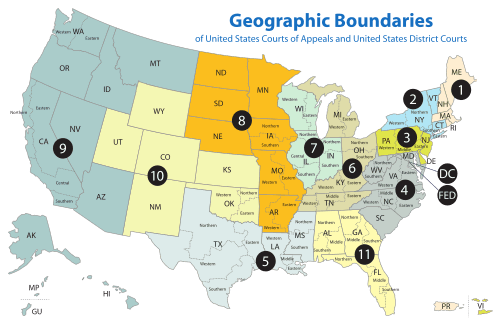
United States District Court
ORGANIZATION
U.S. federal trial court
W.R. Huff Asset Mgt. Co.
ORGANIZATION
Organization referenced in documents
Washington Supreme Court
ORGANIZATION
Organization referenced in documents
WeellawNext 0 2011
ORGANIZATION
Organization referenced in documents
WesltartNexr
ORGANIZATION
Organization referenced in documents
WestiativNext
ORGANIZATION
Organization referenced in documents
Westievrtslext 0
ORGANIZATION
Organization referenced in documents
WestlainNexr
ORGANIZATION
Organization referenced in documents
XYZ Architectural Associates
ORGANIZATION
Organization referenced in documents
Z Company
ORGANIZATION
Organization referenced in documents
Arctic Glacier
LOCATION
Location referenced in documents
B.O.
LOCATION
Location referenced in documents

Detroit
LOCATION
City in and county seat of Wayne County, and largest city in State of Michigan, United States
Governmentemployee
LOCATION
Location referenced in documents

India
LOCATION
State of the United States of America

Maine
LOCATION
State of the United States of America
McLymont
LOCATION
Location referenced in documents

Michigan
LOCATION
State of the United States of America

Tallahassee
LOCATION
County seat of Leon County, Florida, USA and Florida federated state capital city
the Southern District
LOCATION
Federal judicial district in New York City

United States
LOCATION • 4 mentions
Country located primarily in North America
Statistics
Pages:100
Entities:208
Sponsored