HOUSE_OVERSIGHT_017088_sub_001 - HOUSE_OVERSIGHT_017187
Document Information
Bates Range
HOUSE_OVERSIGHT_017088_sub_001 - HOUSE_OVERSIGHT_017187
Pages
100
Source
House Oversight Committee
Original Filename
CURREN DRAFT 04.02.12.docx
Document Content
Page 1 - HOUSE_OVERSIGHT_017088
4.2.12 WC: 191694 TOTAL WORD COUNT 191,694 TOTAL PAGES 401 TABLE OF CONTENTS Preface: Ideology as Biography—A life of continuous change We 4391 Pages 9 Part I: From Brooklyn to Cambridge (with stops in New Haven and Washington Chapter 1: Born and religiously educated in Brooklyn We 15,669 Pages 27 Chapter 2: My Secular Education—Brooklyn and Yale We 3811 Pages 6 Chapter 3: My Clerkships: Judge Bazelon and Justice Goldberg We 13969 Pages 24 Chapter 4: Beginning my life as an academic—and its changes over time We 7530 Pages 12 Part Il; The changing sound and look of freedom of speech: from the Pentagon Papers to Wikileaks and from Harry Reems’ Deep Throat to Woodward and Bernstein’s “Deep Throat.” Chapter 5: The Changing First Amendment—New Meanings For Old Words We 5259 Pages 9 Chapter 6 Offensiveness- Pornography: I Am Curious Yellow and Deep Throat We 12,338 Pages 24 Chapter 7 Disclosure of Secrets: From Pentagon Papers to Wikileaks We 6905 Pages 13 Chapter 8: Expressions that incite violence and disrupt speakers We 3545 Pages 6 HOUSE_OVERSIGHT_017088
Page 2 - HOUSE_OVERSIGHT_017089
4.2.12 WC: 191694 Chapter 9: The Right to Falsify History: Holocaust Denial and Academic Freedom Wc 5031 Pages 10 Chapter 10: Speech that Conflicts with Reputational and Privacy Rights We 4685 Pages 9 Part II: Criminal Justice: From Sherlock Holmes to Barry Scheck and CSI Chapter 11: “Death is different’': Challenging Capital Punishment We 3157 Pages 6 Chapter 12: The death penalty for those who don’t kill: Ricky and Raymond Tison We 6392 Pages 20 Chapter 13: Using Science, Law, Logic and Experience to Disprove Murder We 23825 Pages 51 Chapter 14: The changing politics of rape: From “no” means “maybe,” to “maybe” means “no.” We 15644 Pages 29 Chapter 15: The changing impact of the media on the law We 14877 Pages 29 PART IV: THE NEVERENDING QUEST FOR EQUALITY AND JUSTICE Chapter 16: The Changing Face of Race: From Color Blindness to Race-Specific Remedies We 14130 Pages 26 Chapter 17 The crumbling wall between church and state: from separation to christianization We 8883 Pages 16 Chapter 18: From Human Right to Human Wrongs: How the hard left hijacked the Human Rights Agenda Wc 14667 Pages 27 ' Justice John Paul Stevens HOUSE_OVERSIGHT_017089
Page 3 - HOUSE_OVERSIGHT_017090
4.2.12 WC: 191694 Conclusion—Closing Argument: Looking back at my 50 year career and forward to the laws next 50 years. Wc 7047 Pages 13 APPENDIX— VIGNETTES We 8817 Pages 42 (each on separate page) HOUSE_OVERSIGHT_017090
Sponsored
Page 4 - HOUSE_OVERSIGHT_017091
4.2.12 WC: 191694 Alan Dershowitz Takes The Stand: An Autobiography Or Taking the Stand—an Autobiography by Alan Dershowitz Preface: Ideology as Biography—A life of continuous change My legal practice has been described as “the most fascinating on the planet.” Though perhaps hyperbolic, the fact is that during my long career as a lawyer, I have: * represented and counseled presidents, prime ministers, United Nations high officials, judges, senators, actors, musicians, athletes as well as ordinary people who have had the most extraordinary cases; * played a role, sometimes large, sometimes small, in some of the most cataclysmic events of the last half century—from the assassination of JFK, to the forced resignation of Richard Nixon, to the Chappaquiddick investigation of Ted Kennedy, to the impeachment of President Clinton, to the war crimes trials of accused war criminals, to the defense of Israel in international fora. * represented some of the most despised and despicable people on the face of the earth and sat across the table from defendants accused of mass murder, terrorism, war crimes, torture, rape and hate crimes; * — served as a lawyer in some of the most transforming legal cases of the age, including the Pentagon Papers Case, the WikiLeaks investigation, the anti-war prosecutions of Dr. Spock, the Chicago 7, the Weather Underground and Patricia Hearst; * represented some of the most controversial defendants in recent history: OJ Simpson; Claus Von Bulow; Mike Tyson; Leona Helmsley and Michael Milken. This autobiography delves beneath the surface of these cases and causes. It presents an inside account of legal events that have altered history and that continue to have a major impact on the lives of millions of people. What Tocqueville observed two centuries ago—that in our country nearly every great issue finds its way into the courts—is even truer today than it was then. Accordingly, my autobiography will, in some sense, be a history of the last half century as seen through the eyes of a lawyer who > [quote] HOUSE_OVERSIGHT_017091
Page 5 - HOUSE_OVERSIGHT_017092
4.2.12 WC: 191694 was privileged to have participated in many of the most intriguing and important cases and controversies of our era. The law has changed considerably over the past half century. I have not only observed and written about these changes, I have helped to bring some of them about through my litigation, my writing and my teaching. This book presents an account of these changes and of my participation in the cases that precipitated them. It is also an account of one man’s intellectual and ideological development during a dramatic century of world, American, and Jewish history, enriched with anecdotes and behind-the-scenes stories from my life and the lives of those I have encountered. An autobiographer is like a defendant who takes the stand at his own trial. We all have the right to remain silent, both in life and in law. But if one elects to bear witness about his own life, then he or she must tell the truth, the whole truth and nothing but the truth. This commitment to complete candor is subject only to limited privileges such as those between a lawyer and a client, or a husband and a wife. A witness may be questioned not only about his actions, but also about his motivations, his feelings, his biases, and his regrets. In this autobiography, I intend to comply with these rules to the best of my ability. Why then have I waived my privilege of silence and decided to write this autobiography: because I have lived the passion of my times and participated in some of the most transforming, legal and political events of the past half century. In this autobiography, I will describe and explain my role in litigating cases and advocating causes that have changed the political and legal landscape—for better or worse. I will also explain how I litigate difficult cases—the tactics and strategies I have successfully developed over the years. My oath of honesty makes it impossible to hide behind the false modesty that often denies the readers of autobiographies an accurate picture of the impact an author has had on events. Since you’re reading these words, you’ve probably encountered the public Alan Dershowitz—confrontational, unapologetic, brash, tough, argumentative, and uncompromising. Those who know me well—family, friends, and colleagues—hardly recognize the “character” I play on TV [alternative: my TV persona]. They tell me in my personal life, I shy away from confrontation and am something of a pushover. My son Elon says that when people bring me up in conversation, he can instantly tell whether they know me from TV or from personal interactions—whether they know what he calls “The Dersh Character” or “the real Alan.” This sharp dichotomy between my public and private personas was brought home to me quite dramatically, when a major motion picture, Reversal of Fortune, was made about my role in the Claus Von Bulow case, and a character, based on me, was played by Tony Award actor Ron Silver. The New York Times asked me to write an article for the arts and entertainment section on how it feels to watch someone play you on the big screen. The opening scene of the film had my character playing an energetic basketball game with himself—true enough. But when he’s interrupted by a phone call giving him the news that he had lost a case involving two brothers on death row (the Tison brothers, see Chapter 12), he smashes the phone on the pavement. HOUSE_OVERSIGHT_017092
Page 6 - HOUSE_OVERSIGHT_017093
4.2.12 WC: 191694 When I complained to my son, who had co-produced the film, that I don’t throw phones when I lose cases—even capital cases—my son responded: “Dad, you’ve got to get it through your head that the person on the screen isn’t you; it’s your character—‘the Dersh Character.’” He continued to assure me, in his best professional manner, that characters have to “establish themselves” early in the film, and that this “establishing scene” was intended to convey my energy and my passion for the rights of criminal defendants. “If we had several hours, we could have demonstrated your passion by recounting your involvement in many other cases, but we had about a minute; hence the smashed phone.” I wasn’t satisfied. “That scene doesn’t show passion,” I said. “It shows a temper tantrum.” My son tried to explain that a character in a film has to be shown with some faults early on in the film, so that he can “overcome” them. “I know you don’t lose your temper,” Elon assured me smilingly, “but the viewing audience has to see you grow.” Still, I didn’t like being portrayed as a person whose passions—manifested by occasional curses in addition to the smashed phone—are reserved exclusively for his professional life. My “girlfriend” in the film—a mostly fictional character played by Annabella Sciorra—complains loudly that my character has nothing left for the people around him, and my character seems to agree: “My clients are the people I care about.” Poor guy! I hope that’s not me, although I do have to acknowledge that people who know me only professionally assume that I have nothing left for those I love. But the fact is that I reserve a lot of love, loyalty and friendship for family and people close to me. I asked Ron Silver—who knows how important my family and friends are to me—how he felt playing me in way that he knew was something of a stereotype of the passionate lawyer for whom, Oliver Wendell Holmes’ said, “the law is a jealous mistress.” He responded: “I’m playing the public Alan Dershowitz—the one people see on TV and in the newspapers. I can’t get to know the private Alan well enough to play him, and frankly the public isn’t interested in that side of you.” In this book, I will try to interest my readers in both sides of my life, and how each impacts the other, and how both are very much the products of my early upbringing and my lifelong experiences. I think of myself as an integrated whole, though the very different roles I play—as lawyer, teacher, writer, father, husband, friend, colleague—require somewhat different balances among the various elements of my persona. Although this autobiography is my first attempt to explore my life in full, I have written several earlier books that touch on aspects of my public life. The Best Defense dealt with my earliest cases during the first decade of my professional life. Chutzpah covered my Jewish causes and cases. Reversal of Fortune and Reasonable Doubts each dealt with one specific case (Von Bulow and O.J. Simpson). I will try not to repeat what I wrote in those books, though some overlap is inevitable. This more ambitious effort seeks to place my entire professional life into the broader context of how the law has changed over the past half century and how my private life prepared me to play a role in these changes. HOUSE_OVERSIGHT_017093
Sponsored
Page 7 - HOUSE_OVERSIGHT_017094
4.2.12 WC: 191694 I bring to this task a strong and dynamic world view that has been shaped by my life experiences and which has, in turn, shaped my life experiences. In looking back on my life, I am inevitably peering through the prism of the powerful ideology that has provided a compass for my actions. Ideology is biography. Where we stand is the result of where we sat, who we sat next to, what we observed, what happened to us, and how we reacted to our experiences. Ideology is complex. Its causes are multifaceted and rarely subject to quantification. The philosopher, Descartes, who famously said, “I think therefore I am” got it backwards. I am—I was, I will be—therefore I think what I think. The ability to think is inborn—a biological and genetic endowment. The content of one’s thinking—the nature and quality of our ideas—is more nurture than nature. Without human experiences there could be no well-formed ideology, merely simple inborn reflexes based on instinct and genetics.* There is no gene, or combination of genes, that ordains the content of our views regarding politics, law, morality or religion.* Biology gives us the mechanisms with which to organize our experiences into coherent theories of life, but without these experiences—which begin in the womb and may actually alter the physical structures of our brain over time—all we would have are the mechanics of thought and the potential for formulating complex ideas and ideologies. It is our interactions—with other human beings, with nature, with nurture, with luck, with love, with hate, with pleasure, with pain, with our own limitations, with our mortality-—that shape our world views. Among the most enduring and influential human encounters are those experienced at an early age. These include the accidents of birth: to which family, in which place, at which time we happen to come into the world. It is true that most people die with the religion and political affiliation into which they were born (or adopted). Identical twins, separated at birth, may share a common disposition, IQ and susceptibility to disease, but they are likely to share the religious and political affiliations of their adoptive parents. There is little genetic about the factors that directly influence religious, political or other ideological choices. They are largely a function of exposure to external factors.° Many of these external factors are totally beyond the control of the person. They may involve decisions made by others, often before they were even born. Probably the most significant decisions affecting my own life were made by my great grandparents on my father’s side and my grandparents on my mother’s side: the decision to leave the shtetls of Poland and move to New York. Had they remained in Poland, as some of my relatives did, I would probably not have survived the Holocaust, since I was three years old when the systematic genocide began.’ That 3 Quote Steve Pinker “EN on Mark Hauser “Moral Minds.” Drew Weston, George Lakoff. > Kafka once quipped that “the meaning of life is that we die,” and when God told Adam and Eve that if they eat from the tree of knowledge, they will die, he meant they will obtain the knowledge of mortality—which elevated humans above other species. ° This is not to deny the likely influence genetics and biology may have on a predisposition toward homosexuality or other orientations. Nor is it to deny that biological predisposition may influence ideology through the prism of experience. See [cite] [expand] ’ Perhaps, of course, had my forbearers remained in Poland, my father might not have met my mother (although their families lived in neighboring shtetls). Accident, timing and luck determine virtually everything relating to birth. HOUSE_OVERSIGHT_017094
Page 8 - HOUSE_OVERSIGHT_017095
4.2.12 WC: 191694 may be why Jews of my generation are so influenced in their attitudes and ideology by the Holocaust. There but for the grace of God, and the forethought of our grandparents, go we. (In 1999, I wrote a novel Just Revenge, which reflected my dear feelings about the unavenged murders of so many of my relatives.) Once a person is born in a certain place, at a certain time, attitudes and ideology are shaped (in part, because luck always intrudes’) directly by family, religion, culture, neighborhood, childhood friends, teachers and other mentors and role models. Sometimes they are a reaction to these influences. Often they are a combination of both. If ideology is biography, then autobiography must honestly attempt to explore the sources of the author subject’s ideology in his or her life experiences. This requires not only deep introspection, but a willingness to expose—to the reader but also to the writer—aspects of one’s life that are generally kept private or submerged. Everyone has the right, within limits, to maintain a zone of privacy. I have devoted a considerable portion of my professional life seeking to preserve, indeed expand, that zone. But a decision to write an autobiography requires a commitment to candor and openness—a “waiver” (to use a legal term) of much of the right to privacy. I keep fairly complete records of my cases and controversies. My archives are in the Brooklyn College Library where, subject to a few limited exceptions, they are available for all to read. I have published dozens of books, hundreds of articles and thousands of blogs. My professional life has been an open book and the accessibility of my architves—containing letters, drafts and other unpublished material— opens the book even further. But beyond the written record lies a trove of memories, ideas, dreams, conversations, actions, inactions, passions, joys, and feelings not easily subject to characterization or categorization. Fortunately, I have a very good memory (more about that later) and I am prepared to open much of my memory bank in this autobiography, because I believe that the biography that informs my ideology and life choices cannot be limited to the externalities of my career. It must dig deeper into the thought processes that motivate actions, inactions and choices. In the process of self- exploration, I must also be willing to examine feelings and motivations that I have kept submerged, willfully or unconsciously, from my own conscious thought process. I don’t know that I will be able to retrieve them all, but I will try. Nor can I be absolutely certain that all of my memories are photographically precise, since my children chide me that my stories get “better” with each retelling. I believe that my actions, inactions, and choices have been significantly influenced by my upbringing. That might not seem obvious to those who know me and are familiar with my family background. Superficially, I am very different from my parents and grandparents, who lived insular lives in the Jewish shteles of Galicia, Poland, the Lower East side of Manhattan, and the Williamberg, Crown Heights and Boro Park Orthodox Jewish neighborhoods (also “shtetles”) of Brooklyn. My parents and grandparents had little formal education. They rarely traveled beyond their routes to and from work (except for my grandparents’ one-way journeys from Poland to Ellis Island). They almost never attended concerts, the Broadway Theater or dance recitals. They owned no art, few books, and no classical records. They rarely visited museums or 5 An old Yiddish expression says: “Man plans, God laughs.” 8 HOUSE_OVERSIGHT_017095
Page 9 - HOUSE_OVERSIGHT_017096
4.2.12 WC: 191694 galleries. Their exposure to culture was limited to things Jewish—cantorial recitations, Yiddish theater, lectures by Orthodox rabbis, Jewish museums, Catskill Mountain and Miami Beach entertainment. My adult life has been dramatically different. I travel the globe, meet with world leaders, own a nice art collection, am deeply involved in the world of music, theater and other forms of culture, and lead a largely secular life (though I too enjoy cantorial music “borsht belt” humor, and a good pastrami sandwich). Yet I am their son and grandson. Although my life has taken a very different course—both personally and professionally—I could not begin to explain who I am, how I got to be who I am, and where I am heading, without exploring my family background and heritage. It is this history that helped to form me, that caused me to react against parts of it, and—most important—that gave me the tools necessary to choose which aspects of my traditions to accept and which to reject.” I had a very powerful upbringing, having been born to a family with strong views on religion, morality, politics and community service. My neighborhood was tight knit. Everyone had a place and knew their place. Status was important, especially for our parents and grandparents, as was “yichus” (the Yiddish term for ancestry). But I grew up at a time of change, growth, excitement and opportunity. Despite the reality of pervasive anti-Jewish discrimination—in college admission, employment, residency and social clubs—my generation believed there were no limits to what we could accomplish. If Jackie Robinson could play second base for the Brooklyn Dodgers, we could do anything. Maybe that was the reason so many successful people grew up in Brooklyn in the immediate post-war period. (In 1971, I was selected among 40 young scholars from around the country for a distinguished fellowship. When we met in Palo Alto, California, we discovered close to half the group had Brooklyn roots!) We were the breakout generation, standing on the broad shoulders and backbreaking work of our immigrant grandparents and our working class parents. I cannot explain, indeed understand, my own world views, without describing those on whose shoulders I stand, that from which I have broken out, and the experiences that have shaped my life. So I will begin at the beginning, with my earliest memories and the stories I have been told about my upbringing. But formative experiences do not end at childhood or adolescence. They continue throughout a lifetime. Learning never ends, at least for those with open minds and hearts, and, though ideologies may remain relatively fixed over time, they adapt to changing realities and perceptions. Winston Churchill famously quipped, “Show me a young conservative and I’ll show you someone with no heart. Show me an old liberal and I’ll show you someone with no brain.” It is surely true that some people become less idealistic with age, with economic security and family responsibilities. But it is equally true that some young conservatives become more liberal as they ° My dear friend and teaching colleague Steven Pinker believes that parental influence may be overvalued [CITE]. I’m certain that it varies among individuals and families. 9 HOUSE_OVERSIGHT_017096
Sponsored
Page 10 - HOUSE_OVERSIGHT_017097
4.2.12 WC: 191694 seek common ground with their children, while other people remain true to their earlier world views. It depends on the life one has lived. I have been fortunate to live an ever changing life, both personally and professionally, and although my views on particular issues have been modified over time, my basic commitment to liberal values has remained relatively constant, in part because of my strong upbringing and in part because my career has been based on advocating these values. An ancient Chinese curse goes this way: “May you live in interesting times.” One of the worst things a doctor can say after examining you is: “Hmm... that’s interesting.” I have been blessed with living an interesting, if often controversial, life. As an adolescent, I was involved in causes such as justice for the Rosenbergs, abolition of the death penalty, and the end of McCarthyism. As a law clerk, during one of the most dramatic periods of our judicial history, I worked on important civil rights and liberties cases, heard the “I have a dream” speech of Martin Luther King, was close to the Cuban Missile Crisis, and partook of events following the assassination of John F. Kennedy. As a young lawyer, I played a role in the Pentagon Papers case, the forced resignation of Richard Nixon, and the anti-war prosecutions of Dr. Spock, the Chicago Seven, the Weather Underground and Patricia Hearst. I consulted on the Chappaquiddick investigation of Ted Kennedy, on the attempted deportation of John Lennon and the draft case against Mohammad Ali. I was an observer at the trial of accused Nazi war criminal John Demjanjuk and subsequently consulted with the Israeli government about that case. Later in my career, I was a lawyer in the Bill Clinton impeachment, the Bush v. Gore election case, the efforts to free Nelson Mandela, Natan Sharansky and other political prisoners. I participated in the Senate censure of California Senator Alan Cranston, the Frank Snepp CIA censorship case, prosecutions involving the former Yugoslavia in the Hague, the defense of Israel against international war crime prosecution, and the investigation of Wiki-Leaks and Julian Assange. I worked on the appeals of the Jewish Defense League murder case and the Jonathan Pollard spy prosecution. I consulted on the defense of director John Landis, the OJ Simpson double murder case and the Bakke “affirmative action” litigation. I challenged the Bruce Franklin tenure denial at Stanford and appealed the Claus Von Bulow attempted murder conviction, the Leona Helmsley tax case, the Mike Tyson rape prosecution, the conviction of Conrad Black, the Tison Brothers murder case, the “I Am Curious Yellow” censorship prosecution, the Deep Throat case, the nude beach case on Cape Cod and the HAIR censorship case. I participated in the Woody Allen-Mia Farrow litigation, the Michael Milken case, the litigation against the cigarette industry and the wrongful death suit on behalf of Steven J. Gould. I have won more than 100 cases and have been called—perhaps also with a bit of hyperbole—“the winningest appellate criminal defense lawyer in history.” Of the more than three dozen murder and attempted murder cases in which I have participated, I lost fewer than a handful. None of my capital punishment clients has been executed. 10 HOUSE_OVERSIGHT_017097
Page 11 - HOUSE_OVERSIGHT_017098
4.2.12 WC: 191694 Among the people I have advised are President Bill Clinton, Prime Minister Benjamin Netanayu and President Moshe Katsav of Israel, Canadian Prime Minister Pierre Trudeau, Senator Alan Cranston, the Deputy Secretary General of the United Nations, Marlon Brando, Frank Sinatra, Woody Harrelson, Michael Jackson, John Lennon, Natalie Portman, Broadway producer David Merrick, New England Patriot Head Coach Bill Belichick, the actress Isabella Rossellini, the international arms dealer Adnan Khashoggi, singers Carly Simon and David Crosby, basketball player Hakeem Olajuwon, baseball star Kevin Youkilis, football quarterback Tom Brady, saxophonist Stan Goetz, artist Peter Max, cellist Yo Yo Ma, comedian Steven Wright, actor Robert Downey, Jr., several billionaires such as Sheldon Adelson and Mark Rich, authors such as Saul Bellow, David Mamet and Elie Wiesel, and judges, senators, congressmen, governors and other public officials. In addition I have had some of the most interesting cases involving people who are not well known but the cases raised intriguing and fascinating issues. Among these issues are whether a man can be prosecuted for attempted murder for shooting a dead body that he thought was alive, whether a husband can be prosecuted on charges of slavery for not doing anything about his wife’s alleged abuse of domestic employees, whether a husband can be forced to adopt a child and whether a law firm can discriminate in its partnership decision. I have engaged in public debates and controversies with some of the most contentious and influential figures of the age including William F. Buckley, Noam Chomsky, Rabbi Meyer Kahana, Rabbi Adan Steinzaltz, Justice Antonin Scalia, Ken Starr, Elie Wiesel, Vaclav Havel, Golda Meir, Red Auerbach, William Kunstler, Roy Cohn, Norman Mailer, Patrick Buchanan, Norman Podhoretz, Bill O’Reilley, Skip Gates, Alan Keyes, Dennis Prager, Jeremy Ben Ami, Mike Hukabee, Shawn Mann, William Bulger, James Zogby, Jimmy Carter, Richard Goldstone, Norman Finkelstein and many others. I was part of an American team of debaters selected to confront Soviet debaters on a nationally televised debate, during the height of Soviet oppression of Refusenicks, for which William Buckley suggested that the US team be given medals of freedom. I was a regular “advocate” on the nationally-televised Peabody award winning show “The Advocates” on PBS for several years. I have been interviewed by nearly every television and radio talk and news show and have written for most major newspapers, magazines and blogs. This is my 30" book. In recent years, I have devoted considerable energy to the defense of Israel, while remaining critical of some of its policies. The Forward has called me, “America’s most public Jewish defender,” and “Israel’s single most visible defender — the Jewish state’s lead attorney in the court of public opinion.” In 2010, The Prime Minister of Israel asked me to become Israel’s Ambassador to the United Nations—an offer I respectfully declined because I am an American, not an Israeli citizen. I have agreed instead to be available to serve as an American lawyer for Israel before international tribunals. I have also taught thousands of students, many of whom have become world and national leaders. I have learned from each of these experiences, and they too have helped to shape my evolving world views. I have seen the law change, in some respects quite dramatically, in the half century I 11 HOUSE_OVERSIGHT_017098
Page 12 - HOUSE_OVERSIGHT_017099
4.2.12 WC: 191694 have been practicing it. If the past is the best predictor of the future, then I also have some ideas about what changes we might anticipate in the law over the next half century. Oliver Wendell Holmes urged his young colleagues to “live the passion of your times.” I have followed that advice and now wish to share this passion with my readers. 12 HOUSE_OVERSIGHT_017099
Sponsored
Page 13 - HOUSE_OVERSIGHT_017100
4.2.12 WC: 191694 Part I: From Brooklyn to Cambridge (with stops in New Haven and Washington) Chapter 1: Born and religiously educated in Brooklyn The doctor told my pregnant and anxious mother that she would give birth “first in September.” So when I was born on September 1, 1938, my mother thought the doctor was a genius. I was the first person in the history of my family to be born in a hospital. My maternal grandfather, an immigrant from Poland, wanted me to be born at home, because in Poland, there were rumors that Jewish babies were switched with Polish babies. To prevent this from happening to his grandchild, he stood guard over me at the baby room. Nevertheless, when I started to misbehave early in my life, he was convinced that the switch had taken place, despite me being—in my paternal grandmother’s words—“the spittin’ image” of my father. (I was well into my adult life before I realized that I was much more like my mother in ways other than physical resemblance.) I was born in the Williamsberg neighborhood of Brooklyn, where both of my parents had lived most of their lives, having moved as youngsters from the lower East Side of Manhattan where they were born to Orthodox Jewish parents who had emigrated from Poland at the end of the 19" and beginning of the 20" Century. When my mother was pregnant with my brother Nathan, who is three and a half years younger than me, we moved to the Boro Park neighborhood of Brooklyn where I grew up and where my parents remained until their deaths. Boro Park is unique among American Jewish neighborhoods in that it has always been Jewish. Unlike the neighborhoods of Manhattan—such as the Lower East side and Harlem, which have had changing ethnic populations—Boro Park has always been, and remains, dominantly Jewish. The first occupants of the small tract houses built near the beginning of the twentieth century of the site of rural farms were Jewish immigrants seeking to escape from the crowded ghettos of Manhattan and later Williamsberg. The current occupants of the modern multi-dwelling units are Chasidic Jews who have moved from Crown Heights and Williamsberg seeking to recreate the shtetles of Eastern Europe. When I lived in Boro Park during the 1940s and 1950s, it was a modern Orthodox community of second generation Jews whose grandparents had emigrated mostly from Poland and Russia during the late 19" and early 20" centuries. Following the end of World War II, some displaced persons who had survived the Holocaust moved into the neighborhood. My parents reached adulthood in Williamsberg during the peek of the Great Depression. My mother Claire had been a very good student at Eastern District High School and at the age of 16 enrolled at City College in the fall of 1929—the first in the history of her family to attend college. She was forced to leave before the end of the first semester by her father’s deteriorating economic situation. She went to work as a bookkeeper, earning $12 a week. My father, who was not a good student, attended a Yeshiva high school in Williamsberg. It was called Torah V’Daas—ttranslated as Bible and Knowledge. He began to work during high school and never attended college. 13 HOUSE_OVERSIGHT_017100
Page 14 - HOUSE_OVERSIGHT_017101
4.2.12 WC: 191694 My grandparents knew each other from the neighborhood even before my parents met. My grandfathers were both amateur “chazanim,” cantors, who sang the Jewish liturgy in small synagogues, called “shteebles.” They were slightly competitive, but were both involved in the founding of several Jewish institutions in Williamsberg, including a free loan society, a burial society, the Young Israel synagogue and the Torah V’Daas Yeshiva. Their day jobs were typical for their generation of Jewish immigrants. Louis Dershowitz, my paternal grandfather, sold corrugated boxes. Naphtali Ringel, my maternal grandfather, was a jeweler. My grandmothers, Ida and Blima, took care of their many children. Each had eight, but two of Blima’s children died of diphtheria during an epidemic. My mother nearly died during the influenza outbreak of 1917, but according to family lore, she was saved by being “bleeded.” I was born toward the end of the depression and exactly a year to the day before the outbreak of the Second World War. I was the first grandchild on both sides of my family. Many were to follow. Among my earliest memories were vignittes from the Second World War, which ended when I was nearly seven. I can see my father pasting on the Frigidaire door newspaper maps depicting the progress of allied troops toward Berlin. I can hear radio accounts, in deep Stentorian voices, from WOR (which I thought spelled “war’’) announcing military victories and defeats. I can still sing ditties I learned from friends (the first sung to the tune of the Disney song from Snow White). “Whistle while you work Hitler is a jerk Mussolini is a meanie And the Japs are worse” And another (sung to the melody of “My Country Tis of Thee, Sweet Land of Liberty”): “My country tis of thee Sweet land of Germany My name is Fritz My father was a spy Caught by the FBI Tomorrow he must die My name is Fritz.” The comic books we read during the war always pitted the superheroes against the “Nazis” and “Japs” and I wanted to help in the effort. I decided that if Billy Batson could turn into Captain Marvel by simply shouting Shazam, so could I. And so, after making a cape out of a red towel and tying it around my neck, I jumped out of the window yelling Shazam. Fortunately, I lived on the first floor and only sustained a scraped knee and a bad case of disillusionment. (For my 70" birthday, my brother found a card that commemorated the superhero phase of my life; it showed an elderly Superman standing on a ledge, ready to fly, but wondering “now where is it ’m supposed to be flying?”’) 14 HOUSE_OVERSIGHT_017101
Page 15 - HOUSE_OVERSIGHT_017102
4.2.12 WC: 191694 If I could help our war effort by turning myself into a superhero, at least I could look out for German spies on our beaches. When I was four years old, German spies landed on Long Island in a submarine. Although they were quickly captured, there were rumors of other planned landings. And so over the next few summers, which my family spent in a rented room near Rockaway Beach, a local police officer paid us kids a penny a day to be on the lookout for “Kraud Subs.” We took our job very seriously. I recall my grandmother Ringel (my mother’s mother), who was recovering from a heart attack, taking me to a rehabilitation home in Lakewood, New Jersey, where several wounded or shell- shocked soldiers were also being rehabilitated and listening to their scary combat stories. Then I remember, quite vividly, both VE (Victory in Europe) and VJ (Victory over Japan) days. There was dancing in the streets, block parties and prayerful celebrations. Our soldiers, including several of my uncles, were coming home. (My father received a medical deferment because he had an ulcer, which my mother said was caused by my bad behavior.) We weren’t told of any Holocaust or Shoah—those words were not even in our vocabulary—just that we had lost many relatives in Europe to the brutal Nazis and Hitler (“Yemach Sh’mo—may his name be erased from memory). We cheered Hitler’s death, which according to a Jewish joke of the time, we knew would occur on a Jewish holiday—because whatever day he died would be a Jewish holiday! A few weeks earlier, we cried over Roosevelt’s passing, which I heard of while listening to the radio and broke the news to my grandmother Ringel, who was taking care of me. She refused to believe it, until she herself heard it on the radio. Then she cried. Roosevelt (which she pronounced like “Rosenfeld”) was the hero of our neighborhood (and other Jewish neighborhoods). A magazine photo of him hung in our home. The “greenies” (recent immigrants, “greenhorns”) who moved to Boro Park from the displaced person camps never talked out what had happened “over there.” The tattooed numbers on their arms remained unexplained, though we knew they were the dark reminders of terrible events. Among my other early memories was Israel’s struggle for independence and statehood, just a few years after the war. My family members were religious Zionists (“Misrachi Zionists”). We had a blue and white Jewish National Fund “pushka” (charity box) in our homes, and every time we made a phone call, we were supposed to deposit a penny. We sang the “Jewish National Anthem” (Hatikvah) in school assemblies. I still remember its original words, before Israel became a state: “Lashuv L’Eretz Avosainv” (“to return to the land of our ancestors’). One particular incident remains a powerful and painful memory. My mother had a friend from the neighborhood named Mrs. Perlestein, whose son Moshe went off to fight in Israel’s War of Independence. There was a big party to celebrate his leaving. Several months later, I saw my mother crying hysterically. Moshe had been killed, along with 34 other Jewish soldiers and civilians, trying to bring supplies to a Jewish outpost near Jerusalem. My mother kept sobbing, “She was in the movies, when her son was killed. She was in the movies.” Israel’s war had come home to Boro Park. It had been brought into our own home. Everyone in the neighborhood knew Moshe and his parents. He had attended my elementary school, played stickball on my be) HOUSE_OVERSIGHT_017102
Sponsored
Page 16 - HOUSE_OVERSIGHT_017103
4.2.12 WC: 191694 block and was a local hero. It was a shared tragedy and Moshe’s death—combined with my mother’s reaction to it—had a profound and lasting effect on my 9 year old psyche. My friends and I formed a “club’”—teally just a group of kids who played ball together. We named it “The Palmach”—after the Israeli strike force that was helping to win the war. We memorized the Palmach Anthem “Rishonin, Tamid Anachnu Tamid, Anu, Anu Hapalmach.” ( “We are always the first, we are the Palmach”). Recently, I spoke to a Jewish group in Los Angeles and among the guests were Vidal Sassoon (the style master) and David Steinberg (the comedian). Steinberg mentioned to me that when Sassoon was a young man, he had volunteered to fight for the Palmach (If you think that seems unlikely, consider that “Dr. Ruth” Westheimer served as a sniper in the same war). I challenged Sassoon to sing the Palmach Anthem and before you knew it, Sassoon and I were loudly belting out the Hebrew words to the amusement of the other surprised guests. Israel declared statehood in May of 1948, when I was nine and a half years old. Following its bold declaration that after 2,000 years of exile, there arose a Jewish state in the Land of Israel, (supported by the United Nations, the United States, the Soviet Union and most western nations), the nascent state was attacked by the armies of the surrounding Arab countries. That summer I went to a Hebrew speaking Zionist summer camp called “Massad.” During my summer at Camp Massad (where the counselor of an adjoining bunk was a young Noam Chomsky, then a fervent left-wing Zionist) we heard daily announcements over the loudspeaker regarding the War of Independence. We sang Israeli songs, danced the hora and played sports using Hebrew words (a “strike” was a “Shkeya,” a “ball” a “kadur”.) The announcement I remember most vividly was “Hatinok Rut met hayom’”—the “babe” Ruth died today. But I also remember several announcements regarding the death or wounding of Israelis who were related to the people in the camp. One out of every hundred Israeli men, women and children were killed—some in cold blood, after surrendering—while defending their new state. Many of those killed had managed to survive the Holocaust. We also learned of Stalin’s campaign against Jewish writers, politicians and Zionists. After the end of the war, Stalin became the new Hitler as we read about show trials, pogroms and executions of Jews. We hated communism almost as much as we hated fascism. These early memories—relating to the America’s war against Nazism, Israel’s War of Independence, and Stalin’s war against the Jews—contributed significantly to my emerging ideology and world views. I grew up in a home with few books, little music, no art, no secular culture and no intellectualism. My parents were smart but had no time or patience for these "luxuries." Our home was modest--the ground floor of a two and half family house. (The finished basement was rented to my cousin and her new husband). Our apartment had two small bedrooms, the smaller of which I shared with my brother. We ate in the kitchen. The living room, which had the mandatory couch covered with a plastic protector, was reserved for special guests (who were rare). The tiny bathroom was shared by the four of us. The foyer doubled as a dining area for Friday night and Shabbat meals. The total area was certainly under __ square feet. But we had an outside—and what an outside it was! In the front there was a small garden and a stoop. In the 16 HOUSE_OVERSIGHT_017103
Page 17 - HOUSE_OVERSIGHT_017104
4.2.12 WC: 191694 rear there was a tiny back porch, a yard and a garage. Since we had no car, we rented the garage to another cousin who used it to store the toys he sold wholesale. We were not poor. We always had food. But we couldn’t afford any luxuries, such as restaurants. We passed down clothing from generation to generation and ate a lot of “leftovers”. (Remember the comedian who said “we always ate leftovers—nobody has ever found the “original” meal.) My mother has always said we were “comfortable.” (The same comedian told about the Jewish man who was hit by a car, and was laying on the ground; when the ambulance attendant asked him “are you comfortable,” he replied, “I make a living.’’) The center of our home was the stoop in front of the house. We sat on it, played stoop ball on it, jumped from it and slid down the smooth slides on each side of it. It was like a personal playground. On nice days, everyone was outside, especially before the advent of television. We even listened to the radio--Brooklyn Dodger baseball games, the Lone Ranger, "Can You Top This?," "The Shadow," "Captain Midnight," and "The Arthur Godfrey Show"--while sitting on the stoop, with the radio connected to an inside socket by a long, frayed extension cord. We ate lunch on the stoop on days off from school, had our milk and cookies on the stoop when we got back from school, traded jokes, and even did our homework on the stoop. Mostly, we just sat on the stoop and talked among ourselves and to passing neighbors, who knew where to find us. In those days, nobody called ahead—phone calls were expensive. They just dropped by. In front of the stoop was what we called "the gutter." (Today it is referred to as "the street.") The gutter was part of our playground since cars rarely drove down our street. We played punch ball in the gutter, stickball in the driveway and basketball in front of the garage--shooting at a rim screwed to an old ping pong table that was secured to the roof of the garage by a couple of two by fours. We had no room to play indoors, so we had to use the areas around the house as our play area. Our house became the magnet for my friends because we had a stoop, a hoop and an area in front of our stoop with few trees to hinder the punched ball. (A ball that hit a tree was called a “hindoo”—probably a corruption of “hinder.’’) The stereotype of the Brooklyn Jewish home during the immediate post WWII era was one filled with great books, classical music, beautiful art prints and intellectual parents forcing knowledge into their upwardly mobile male children aspiring to become doctors, teachers, lawyers and businessmen. (The daughters were also taught to be upwardly mobile by marrying the doctors, etc.) My home could not have been more different--at least externally. The living room book shelves were filled with inexpensive knickknacks (chachkas). The only books were a faux leather yellow dictionary that my parents got for free by subscribing to "Coronet Magazine." When I was in college, they briefly subscribed to the Reader's Digest Condensed Books. There was, of course, a "Chumash" (Hebrew bible) and half dozen prayer books (siddurs and machsers). I do not recall 17 HOUSE_OVERSIGHT_017104
Page 18 - HOUSE_OVERSIGHT_017105
4.2.12 WC: 191694 seeing my parents read anything but newspapers (The New York Post), until I went to college. They were just too busy making a living--both parents worked--and keeping house. There were no book stores in Boro Park, expect for a small used book shop that smelled old and seemed to specialize in subversive books. The owner, who smelled like his mildewed books, looked like Trotsky, who he was said to admire. We were warned to stay away, lest we be put on some "list" of young subversives. My parents, especially my mother, were terrified about “lists” and “records.” This was, after all, the age of “blacklists,” “redchanels,” and other colored compilations that kept anyone on them from getting ajob. “They will put you on a list,” my mother would warn. Or “it will go on your permanent record.” When I was 13 or 14, I actually did something that may have gotten me on a list. It was during the height of the McCarthy period, shortly after Julius and Ethel Rosenberg had been sentenced to death. A Rosenberg relative was accosting people getting off the train, asking them to sign a petition to save the Rosenbergs’ lives. I read the petition and it made sense to me, so I signed it. A nosy neighbor observed the transaction and duly reported it to my mother. She was convinced that my life was over, my career was ruined and that my willingness to sign a communist-inspired petition would become part of my permanent record. (Was there ever really a permanent record? It was certainly drummed into me for years that such a paper existed. I'd love to find mine and see what’s in it.)'? My mother decided that I had to be taught a lesson. She told my father the story. I could see that my father was proud of what I had done, but my mother told him to slap me. Ever obedient, he did, causing him more pain than me. In addition to the “subversive” book store, we had a library that was also tiny and somewhat decrepit, but when I was nearing the end of high school, a new, spacious library opened about half a mile away. We went there every Friday afternoon--for two reasons. First, that's where the girls were on Friday afternoon. And second, we could take out up to four books and keep them for a month. The two reasons merged when Artie Edelman realized that we could impress the girls by taking out serious books. Up until that time my reading of serious literature had been limited to Classic Comics. Don't laugh! Classic Comics were marvelous. Not only could we read about the adventures of Ivanhoe, we could see what he looked like! My first erotic desires were aroused by the illustration of the dark- haired "Jewess" Rebecca. (I can still picture her and have searched for a copy of the Classic Comic at flea markets from coast to coast to relive my unrequited adolescent lust). I recently came across the Classic Comic of Crime and Punishment. Having read three translations of the great work of Dostoyevsky, I was amazed at how faithful the comic was to the tone, atmosphere and even words of the original. I tried to give it to my granddaughter who was reading the book for class, but she politely turned down the offer, with a slight air of condescension that one gratefully accepts only from a grandchild. '° Now there really are “permanent records.” They’re called Facebook, Twitter and the Internet. 18 HOUSE_OVERSIGHT_017105
Sponsored
Page 19 - HOUSE_OVERSIGHT_017106
4.2.12 WC: 191694 The first real books I actually read were several to which I had been introduced by the Classic Comics: The Count of Monte Christo, The Red Badge of Courage; Moby Dick; and a Connecticut Yankee in King Arthur's Court. During my senior year in high school, I became a voracious reader, to the disdain of some family members. My Uncle Hedgie (a nickname for Harry) would berate me for sitting around the house reading, when I could be working or playing sports. "Be a man," he would demand. "Get off your ass." But I would stay in my tiny room, with my Webcote tape recorder playing classical music I had recorded off WQXR, the New York Times classical music station, or off a record I borrowed from the library and recorded from my friend Artie's turntable. I also bought a used copy of the Encyclopedia Americana, whose twenty plus volumes filled the hitherto empty shelves in our living room. My friend Norman Sohn had found an old book store in Manhattan that sold used Encyclopedias, and the Americana cost only $75, as contrasted with the Britannica, which was $200. During my early years, all we had was a small plastic radio that lived in the kitchen, unless it was moved near the stoop. When I was 10 years old, we bought a ten inch TV "console" that included a 78 phonograph player that opened at the top. But my mother had situated her "good" lamp on the top of the console, so I couldn't get access to the turntable. I saved up, and with my Bar Mitzvah money, I bought a humongous webcore reel to reel tape recorder, which must have been a foot cubed. I could barely lift it, and the tape often tangled or split, but it was better than the wire recorder technology that it replaced. I loved classical music, especially opera and choral music. As an adolescent I had sung alto in the local synagogue choir and had a fairly good voice. I was "fairly" good--but not very good-- at lots of things in addition to singing: athletics, acting, joke telling and getting dates with girls. I was very good at only one thing: debating. And I was equally bad at one thing: school. My passion for music took me to the Metropolitan Opera House, where for 50 cents, a student could get a seat with a table and a lamp if he came with a score of the opera. We would borrow the score from the library, take a train to Times Square and listen to Richard Tucker, Robert Merrill, Jan Pierce and Roberta Peters sing Carman, La Boheme and La Traviata. (We were forbidden to listen to Wagner, because he was an anti-Semite, who admired). I also became passionate about art. All kinds of art from Egyptian and Roman Sculpture to Picasso's Guernica and Rodan's Thinker. There were no art poster or reproductions in our home. The walls had mirrors (to make the apartment seem bigger) and some family photos. But there were free museums all around us, and the library had art books--with pictures of naked women! I loved Goya's nude, especially when contrasted with the clothed version of La Gioconda who I could imagine undressing just for me! The girls loved to be asked on a museum date, and we loved to ask because it was free and it showed them that we had "culture" (pronounced "culchah"). 19 HOUSE_OVERSIGHT_017106
Page 20 - HOUSE_OVERSIGHT_017107
4.2.12 WC: 191694 To this day I have no idea how I fell in love with literature, music and art. They are my passions, as they have been since I was old enough to appreciate these "Iuxuries"--inexpensive as they were to us--that my parents couldn't afford. I was never exposed to classical music or art, even in school where the music teacher taught us "exotic" songs like “finicula, funicula,” American songs by Stephen Foster, and an assortment of religious and Zionist Hebrew songs. (Zum Gali, Gali, Gali; Tsena, Tsena; Hayveynu Shalom Alechem.) Our art teachers tried to teach us to draw “useful” objects, like cars, trains and horses. My friends’ homes were as barren of culture as mine with the exception of Artie Edelman and Bernie Beck, whose parents were better educated and more cultured than mine. I must have picked up some appreciation of music and art from them. When I went to sleep away camp, especially as a junior counselor, I also came in contact with music and art through the “rich” Manhattan kids who had attended the expensive camp as paying campers and were now junior counselors. Several of them, who became my friends, had been exposed to culture through their more sophisticated Jewish parents. None of these peripheral contacts with culture fully explains my transition from a home barren of books, records and posters, to my home as an adult that is filled with books, music, paintings, sculpture and historical objects." Nor does it explain why none of my three children, who were brought up in my home, have any real passion for the classical arts. They are by no means uncultured. They love popular music, films, current fiction, theater and gourmet food. But they don’t have the same passion for classical music or fine art that I have. By mentioning this difference, I don’t mean to be a snob, but for someone who strongly believes in the power of nurture, exposure and experience, this generational skip poses a dilemma. Reaction is, of course, one sort of experience, and my passion may well have been a reaction to my parents, as my childrens’ lack of passion for what moves me so deeply may be a reaction to their parents. So be it. The family values that shape my upbringing focused on modern Orthodox Judaism, religious Zionism, political liberalism of the sort represented by FDR, Anti-Nazism, Anti-Communism, opposition to all kinds of discrimination, support for freedom of speech, a hatred of McCarthyism, opposition to the death penalty, a commitment to self defense and defense of family and community, a strong sense of patriotism, and a desire to be as truly American as was consistent with not assimilating and losing our traditions and heritage. My father, who was a physically strong but rather meek man, wanted me to be “a tough Jew” who always “fought back.” He urged me to never let “them” get away with “it.” By them he meant anti-Semites, and by it, he meant pushing Jews around. He taught me to box and wrestle and insisted that I never “tattle” on my friends, regardless of the consequences to me. One of my father’s brother’s was a man named Yitzchak, who we called Itchie. It had nothing to do with any skin condition. One day my Uncle Itchie took me to a Brooklyn Dodger baseball " Finding Jefferson 20 HOUSE_OVERSIGHT_017107
Page 21 - HOUSE_OVERSIGHT_017108
4.2.12 WC: 191694 game that got rained out half way through. We ran to the train station only to find no one tending the token booth. My uncle had one token and so the two of us squeezed through the turnstile on his one token. As soon as we got home he took a dime, put it in an envelope and sent it to the transit authority, apologizing profusely for temporarily cheating them of their dime. A year later he did the same thing, but on a much larger scale. My Uncle Itchie stowed away on a ship headed for Palestine in order to participate in Israel’s struggle for statehood. He did not have enough money for passage, so he hid in a closet during the nearly month long trip, getting food from a friend who was paying his own way over. My Uncle then swam from the ship to shore, evading British authorities. After working for several months he then sent the full fare for the lowest class of service to the shipping company. Those were the values with which I was brought up. You do what you have to do, but then you pay your debts. Religion in my home was not a matter of faith or an accepted theology. To this day, I have no idea what my parents believed about the nature of God, the literal truth of the Bible, heaven and hell, or other issues so central to most religions. Ours was a religion of practice and rules—of required acts and omissions. A cartoon I once saw perfectly represented my parents approach to religion. It showed a father dragging his reluctant young son in the direction of the synagogue and saying: “Atheist, Shmathiest, I don’t care—as long as you come to shul.” Our Judaism was entirely rule bound. Before every activity, there was a required “brucha”—a formulistic blessing appropriate to the activity. “Baruch ata Adonoy”—“blessed be you our God”—followed by a reference to His creation: “who brings forth bread from the earth” or “wine from the grapes” or “fruit from the trees” or “produce from the ground.” Then there was a generic brucha that covered everything not included among the specific blessing: “Sheh-hakol Nihiye B’Dvaroh.” My grandmother Ringel, who was the religious enforcer in the family, would ask demandingly, if she saw me drinking a glass of water, “Did you make a “shakel,” referring to the previously mentioned generic blessing. My grandmother, who spoke no Hebrew, probably had no idea of the literal meaning of the blessing, but she knew—and insisted that I knew—you had to recite it (even just mumble it) before you drank the water. There were rules for everything. If you accidentally used a “milichdika” (dairy) fork on a “flayshidika” (meat) item, the offending (or offended) item had to be buried in the earth for exactly seven days. That restored its kosher quality by “kashering” it. After eating meat, we had to wait precisely 6 hours before eating dairy—after eating dairy, however, you had to wait only half an hour to eat meat, but a full hour if the “dairy” meal contained fish. Not a minute less. When my parents told me the rules of swimming after eating—wait two hours after a heavy meal, one hour after a light meal, half an hour after a piece of fruit and 15 minutes after a Hershey bar—lI thought these were religious rules, because they paralleled the rules about how long you had to wait between meat and dairy. (I later learned that the swimming rules were based neither on religion, nor upon science, but rather on questionable “folk wisdom.”) From my earlier days, I accepted the highly technical, rule-oriented religious obligations imposed on me by my parents and grandparents. It was a lot easier for me to obey rules—even if I didn’t understand the reasons, if any, behind them—than to accept a theology that was always somewhat Al HOUSE_OVERSIGHT_017108
Sponsored
Page 22 - HOUSE_OVERSIGHT_017109
4.2.12 WC: 191694 alien to my rational mindset. (And I suspect, to my parents, if they even bothered to think about it.) Everyone in the almost entire Jewish neighborhood (at least everyone who was part of the modern Orthodox community) followed the rules. Few, I suspect, accepted the entire theological framework that included the literal truth of the bible, the resurrection of the dead, heaven and hell (which were not in the Jewish Bible) and the incorporeal nature of a single God. What we cared about was the precise ingredients in a candy bar (no lard or gelatin), the number of steps you could take if your yarmulkah fell off (more on this later), whether you could wear your house key as a tiepin to avoid the prohibition against carrying on the Sabbath, whether it was permissible to use an automatic timer—a “shabos clock”—to turn on the TV for a Saturday afternoon World Series game, or whether you could ride on an elevator on Shabos if it automatically stopped on every floor and required no pressing of buttons. The rabbis answered these questions for us, but they didn’t always agree. My mother had little patience with most of the local rabbis because her late father, who was not a rabbi, “knew so much more than they did,” and always resolved religious disputes by accepting the approach that was “easiest” and most adaptive to the modern lifestyle. Even my grandmother knew more than these “phony rabbis,” my mother would insist contemptuously. My mother always said, “Respect people, not titles.” Then she was appalled when I showed disrespect for my frequently incompetent teachers! Most of the rules we were required to obey were negative ones: “Donts.” Don’t—eat unkosher, drive or work on Shabas, eat anything on fast days, marry a non-Jew, eat ice cream after a hot dog, wear leather on Yom Kippur, talk after washing your hands but before making a “motzie” and eating the challah. My grandmother—the enforcer—had a favorite Yiddish word: “meturnished’”—tt is forbidden to do! She would shout it out in anticipation of any potential violation. If she saw you about to eat a Nabisco cookie, she would intone the M word. If she saw you putting a handkerchief in your pocket on Shabas, the word would ring in your ear. If you even thought about putting your yalmulkah in your pocket, you would hear the word. Once I began to whistle a tune. My musical effort was grated with a loud “meturnished.” “Why?” I implored. There’s nothing in the Torah about whistling. “It is unJewish,” my grandmother insisted, “The Goyim whistle, we don’t.” It’s now more than 30 years, since Grandma Ringel died, but the M word still rings in my ears every time I indulge in a prohibited food or contemplate an un-Jewish activity (such as enjoying a Wagnerian opera). Freud called it the “superego.” He must have had a Jewish grandmother too. Of course we tried to figure out ways around these prohibitions—half of Jewish law seems to be creating technical prohibitions, while the other half seems to be creating ways around them. Much like the Internal Revenue Code. No wonder so many Jews become lawyers and accountants. It’s not in our DNA; it’s in our religious training. A story from my earliest childhood illustrates the extraordinary hold that religion—really observance of religious obligations—held over all of us. A few months before my brother was born, my father was holding my hand on a busy street, while my mother was shopping. She had just bought me a new pair of high leather shoes—they went above my ankles. For some reason, I bolted away from my father and ran into the “gutter.” My foot was run over by an 18 wheeler truck. It would have been much worse had my father not 22 HOUSE_OVERSIGHT_017109
Page 23 - HOUSE_OVERSIGHT_017110
4.2.12 WC: 191694 pulled me out from under the humongous vehicle. Fortunately, the new shoes saved my foot from being crushed, but several bones were broken and I was rushed to the nearest hospital, which was Catholic. My parents left me there overnight. At about 8:00PM one of the nurses called my mother and said that I was refusing to eat and demanding to go to Florida. My mother said, “He’s never even heard of Florida.” She was told to come to the hospital immediately. She saw me sitting in front of my tray of food refusing to eat and screaming, “Miami, Miami!” To the nurses, that referred to a city in southern Florida. My mother immediately understood that I was referring not to Miami, but to my “yami’”—which was short for yamulka, the religious skullcap that every Jewish male must wear while eating. I refused to eat without my yami, even though I was only 3 years old. My response was automatic—programmed. As soon as my mother made a yamulka for me out of a handkerchief and placed it on my head, I ate all the food and asked for doubles (the Catholic hospital provided kosher food for Jewish patients.) I’m sure I mumbled the appropriate Bruchas for each item of food I imbibed. We learned these rules first at home and then in the Yeshiva—Jewish day school—that nearly everyone in the neighborhood attended. As is typical in Orthodox Jewish neighborhoods, there were two competing Yeshivas: One taught Yiddish, the other Hebrew. I started out in the Yiddish-speaking more traditional, school-named “Torahs Emes” (the Truthful Bible), where my grandma Ringel wanted me to go to learn the “Mamma Loshen’”—the mother tongue. But after two years, my parents switched me to the Hebrew-speaking, more modern Yeshiva, named “Etz Chaim” (the Tree of Life), which I attended through 8" grade, when I shifted to a Yeshiva high school until I finished 12 grade. My Yeshiva education was a decidedly mixed blessing (both in the literal and figurative senses of that overworked phrase.) The hours were long: elementary school went from 8:30AM to 4:30PM; high school from 9:00AM to 6:10PM. We had only one full day off, Saturday, but it really wasn't a day off, since we spent much of it in the synagogue--9:00AM to noon and then afternoon and evening services, which varied in time depending on when it got dark (two stars had to be visible to the naked eye, or in the event there were clouds, "would have been" visible. ) Friday was an early day, with school ending at about 1PM to allow us to prepare for the Sabbath. And Sunday was also a half day, though this compromise with secularism engendered grumbling from some of the old fashioned rabbis, who wanted us to spend the entire Christian day of rest in class. Mornings were generally devoted to religious subjects—Bible (Tanach) Talmud, (Gemarah), ritual rules (Shulchan Aruch,) and ethics (Pirkay Avos.) Afternoons were devoted to the usual secular subjects--math, science, history, English, French (for the smart kids who wanted to become doctors) or Spanish (for the rest of us), (no German or Latin), civics, gym, art, music appreciation--as well as "Jewish secular" subjects, such as Hebrew, Jewish history, Zionism and Jewish literature. Then there was debate, student government, basketball and other "extracurricular" activities. Lunch "hour", which was 35 minutes, separated the religious from the secular classes and was the only time we ever discussed the conflict between what we were taught 23 HOUSE_OVERSIGHT_017110
Page 24 - HOUSE_OVERSIGHT_017111
4.2.12 WC: 191694 in the morning, such as the creation story, and what we were taught in the afternoon, such as evolution and genetics. No attempt was made to reconcile Torah (scripture) and Madah (secular knowledge). They were simply distinct and entirely separate world views (or as my late colleague Steven Jay Gould put it in his always elegant choice of words, "separate magisteria"). We lived by the rule of separation between church and state, and for most of the students it raised no issue of cognitive dissonance. In the morning, they thought like rabbis; in the afternoon like scientists; and there was no need to reconcile. It was like being immersed in a good science fiction novel or film: one simply accepted the premises and everything else followed quite logically. For a few of us, that wasn't good enough. I recall vividly our efforts to find--or contrive-- common ground. For some, this quest took them to wonder whether the God of Genesis could have created evolution. For them there was an abiding faith that both religion and science could both be right. For me, the common ground was an abiding conviction that both could be wrong-- or at least incomplete as an explanation of how we came to be. I was skeptical of both religion and science. Genesis, though elegant and poetic, seemed too simple. But so did evolution--at least the way we were taught it. The apparent conflict between religion and science did not move me to search for reconciliation. It moved me to search for doubts, for holes (not black ones, but grey ones), for inconsistencies not between religion and science--that was too easy--but rather within religious doctrine and within scientific "truth." I loved hard questions. I hated the easy answers often given, with a smirk of self-satisfaction by my religious and secular teachers. The mission of our modern Orthodox Yeshiva was to integrate us into the mainstream of American life while preserving our commitment to modern Orthodox Judaism. “Torah” and “Madah” were the two themes. Torah, which literally means bible, represented the religious component. Madah, which literally means knowledge, represented the secular component. They were thought to be reconcilable, though little explicit effort was directed at reconciling the very different world views implicit in the relatively closed system of Orthodox Judaism and the openness that is required to obtain real secular knowledge. When it came to culture, however, there was actually very little conflict, because becoming good Americans—including immersing ourselves in mainstream American culture—was part of the mission of our schools. Of course I hated anything the teachers tried to imbue in us, because with a few exceptions, they taught by rote and memorization. Although I was good at memorization, I rebelled against the authoritarianism implicit in religious teaching. As much as I hated my teachers, they hated me even more. I loved conflict, doubt, questions, debates and uncertainty. I expressed these attitudes openly, often without being called on. I was repeatedly disciplined for my “poor attitude.” My 6" grade report card, which I still have, graded me “unsatisfactory” in “deportment” and “getting along with others.” I received grades of D in “effort,” D in “conduct,” D in “achievement,” C in spelling, D in “respects the rights of others,” D in “comprehension,” C+ in geography and A in “speaks clearly.” One teacher even gave me an “unsatisfactory” in “personal hygiene.” My mother, who was meticulous about cleanliness and scrubbed me clean every day before school, complained. The teacher replied, “his body is clean, but his mind is dirty; he refuses to show respect to his rabbis.” 24 HOUSE_OVERSIGHT_017111
Sponsored
Page 25 - HOUSE_OVERSIGHT_017112
4.2.12 WC: 191694 To be sure, I was a mediocre Yeshiva student--actually I exaggerate: I was slightly worse than mediocre, once having actually received a grade of "Bayn Ani Minus," which literally means "mediocre minus." I couldn't even quite make it to mediocrity. At least I had something to which to aspire! When I was in sixth grade, the school decided to administer IQ tests to all the students. The school called my mother and said that I had gotten one of the highest scores. At first the rabbi thought I had cheated, but when he was persuaded that in fact I had a high IQ he decided to put me in the A class. We had a track system and the grades were divided into the A, B and C classes. I had always been in the C class. My mother was worried about me having to compete with all those smart kids, so she persuaded the principal to compromise and put me in the B class, where I remained, getting C’s until I graduated. I spent my four high school years in what was called "the garbage class," which focused more on discipline than learning. I had a well deserved reputation in both elementary and high school as a “bad kid”. My grades were low (except on state-wide standardized tests called the “regents,” which I always aced). My conduct, called “deportment,” was terrible. I was always getting into trouble because of my pranks, because I “talked back” and was “fresh” to teachers, because I questioned everything, because I didn’t show “respect,” and because I was a “wise guy.” This was the greatest gift—ok, I will even say "blessing"—of my Yeshiva education: To question everything and everyone. It was merely an unintended consequence of the Yeshiva method, and I was certainly not its only beneficiary or (according to the rabbis) its only failure. The Jewish characteristic of questioning is not a complete coincidence. It is a product of experiences, and surely the Yeshiva education--which juxtaposes religion and science with little explicit effort to reconcile these distinct approaches to the search for truth--is an element of these experiences, for at least some young Jews. It certainly was for me, and for that I will be eternally grateful. I also need to thank my local synagogue for helping me discover sex. To this day I am convinced that some higher authority built the benches at precisely the right height to introduce sexual feelings at precisely the right time. When Orthodox Jews pray, they shake back and forth while standing up. At a certain point in my life, the top of the bench in front of me, which had a curve on the top, was exactly parallel to my genitals while I stood in prayer. It was while shuckling back and forth in the synagogue that I experienced my first arousal. What then was my "take away" from Yeshiva? For me it has been a lifelong "belief" in the "certainty" of "doubt." For most of my classmates, the take away has been a lifelong belief in the certainty of certainty. Why the difference? Surely minor genetic disparities do not explain such a profound difference in world views. Nor does mere intelligence, since many of my “certain” classmates were brilliant. I think it was the environment underneath the roof of our homes. I came to Yeshiva ready to doubt. Although my parents were both strictly observant, relatively modern Orthodox Jews, they too were skeptics, especially my mother. Despite her lack of formal education and high culture, she was a cynic, always doubting, always questioning, though this became less apparent as she grew older and observed--to her chagrin--what she had actually transmitted to her children. She doubted while continuing to observe all the rituals. That was the 25 HOUSE_OVERSIGHT_017112
Page 26 - HOUSE_OVERSIGHT_017113
4.2.12 WC: 191694 traditional Jewish approach to learning and ritual—doubt all you want, but do! My brother and I started that way, but ultimately our doubts carried over into action--or more precisely inaction. We stopped observing in our mid 20s. My mother couldn't understand or accept that. "I don't care what you believe or don't believe," she would insist, "as long as you go to Shul, keep kosher and don't work (broadly defined to include driving, watching television or going to a ballgame) on Shabbas." That's all she asked of us. "Is that so much to ask!" When we started to break the rules, my mother began to doubt her doubting. Doubting was good as long as it didn't lead to breaking with the rituals--as it didn't in her case. Or so she believed, until she saw, with her own eyes, the wages of doubt, in her own children. This led her to doubt doubt and to embrace certainty. She would never completely abandon her doubting nature, but she no longer believed that doubt was cost-free. It had cost her to lose her own children to "excessive doubt" and the real sin of acting on one's doubt. I certainly don't mean to suggest that our mother "lost" us in any sense other than the observance of ritual, but that was critically important to her. Although my brother and I maintained an extremely close relationship until her death at age 95--we spoke to her almost every day--it was never quite the same once we left the "club" and followed our own rules as it pertained to Jewish practices. My mother even questioned her decision to “let me go to Brooklyn College.” She insisted that I would have “turned out better” if I had gone to Yeshiva University, but I didn’t have that option, because Yeshiva turned me down. (More on that later). My mother may not have been happy with the way I used the doubt she instilled in me, but I have been ecstatic. It has become the most important quality in my life--and the most significant ingredient in whatever success I may have achieved. It certainly played an important role in my decision to become a lawyer defending freedom of speech, accused criminals, and other unpopular causes. (More on that later.) So thank you Mom! And even thank you Yeshiva Etz Chaim and Yeshiva University High School for provoking me to be a skeptic, a doubter and an agnostic about life. (And thank you Yeshiva University for turning me down!) My mother influenced me in many ways with her skepticism, not the least of which was when she repeatedly had to defend me for my conduct at school. I remember one incident in particular. I was playing “Ring A Levio” in the schoolyard on any icy winter day and chasing a classmate named Victor Botnick. He slipped and his leg got stuck under the gate and he broke it while trying to stand up. I was accused of deliberately breaking his leg and called into the principal’s office. My mother immediately came to school and spoke to me privately. I told her the story and assured her that I would never break my friend Victor’s leg purposely. My mother went to the principal’s office with me and served as my defense attorney, making charts and diagrams that proved that I could not have possibly broken his leg deliberately and that he caused it to break while trying to stand up with his foot still stuck under the gate. I was acquitted, though the Principal still had his suspicions. This was my first experience with the adversarial process and with a defense attorney. My mother, of course, was not a lawyer, having attended college for only part of one semester. But she was my Perry Mason, and an important inspiration for why I decided to become a defense lawyer. For me the presumption of innocence was not a theory. I knew I was innocent, yet the principal presumed me guilty. Only my mother’s effective advocacy kept me from being suspended—at least this time. 26 HOUSE_OVERSIGHT_017113
Page 27 - HOUSE_OVERSIGHT_017114
4.2.12 WC: 191694 My decision to become a criminal lawyer was certainly not influenced by any exposure to real crime. I lived in a neighborhood where we never locked our doors and where violent crime was unheard of. There were of course street fights, in which I frequently participated - - more often as victim than victor - - but the Borough Park section of Brooklyn was a safe neighborhood. (L [possible omission] Several years after I moved out of the house, my parents’ apartment was burglarized. All the burglars took were Jewish ritual items, such as the Hanukah Menorah, the Sabbath candles, etc. When my mother called to tell me about the burglary, I responded, “See, Jews can be burglars too.” Without a moment’s hesitation my mother rebuked me, “They weren’t Jews, they were Israelis.” For my mother, real Jews, who in her world were all orthodox, and Israelis, who tended to be secular, were completely different breeds. My father, though rarely at home, influenced me as well. He had a small store on the lower east side, where he sold wholesale during the week and retail on Sunday (he was of course closed on Saturday). I would sometimes help him on Sunday after my school finished at 1:00 pm. One Sunday he got a ticket for violating the Sunday closing law. I went to court with him a few days later and the presiding judge was man named Hyman Barshay. It was my first experience in a real court. He asked my father why he was open on Sunday and my father responded that he had to stay closed on Saturday because he was an Orthodox Jew and he couldn’t afford to be closed for two days. “Did you go to Schul on Saturday?” the judge asked. My father replied, “Of course.” The judge challenged him, asking, “Then what was the Torah portion of the week?” When my father responded correctly, the judge tore up the ticket. If he had gotten the answer wrong, the judge would’ve doubled the fine. So much for separation between church and state. This was not my only experience with the First Amendment. Shortly thereafter, my friends and I decided to form a social athletic club - - a euphemism for a Jewish gang, but without the rough stuff. We named our club The Shields and we designed our own jackets, which we got wholesale, since the father of one of our members owned an athletic store. His name was “Snot” Chaitman. I leave the source of that nickname to your imagination. Whitey, the leader of our club, decided that we should have something sexy and not at all Jewish looking (whatever that meant). Accordingly, the colors we selected were chartreuse and black. We really wanted to look like hoods, despite our generally wimpy nature. Our yeshiva immediately banned the jackets as too tough looking and not consistent with the Jewish values of the school. Fortunately one of our 27 HOUSE_OVERSIGHT_017114
Sponsored
Page 28 - HOUSE_OVERSIGHT_017115
4.2.12 WC: 191694 club members lived across the street from the school, and so we would go to school wearing normal approved clothes, then immediately upon leaving school go to our friend’s house and change into our costumes. We felt like super heroes, but I was no longer jumping out of windows. Boro Park in the 1940s and 50s was not only a religious neighborhood; it was a funny neighborhood. Two houses away from me lived Jackie Mason. Around the corner was Eliot Gould (ne Goldstein). A few blocks away, in my uncle’s building, lived Buddy Hackett. Woody Allen grew up in a nearby neighborhood, as did Larry David. Joke telling among my friends was a competitive sport. (In those days there were new jokes because our parents and grandparents didn’t tell jokes—at least not to us kids, but older brothers were a good source.) We didn’t know anybody who actually made up a joke. Every rendition would begin with, “I heard a good joke,” or “have you heard the one about—the rabbi and the farmer’s daughter, or the rabbi, the priest and the minister?” (The rabbi always came out on top!) The first joke I remember hearing (and telling) involved a put-down of communist Russia. It was about the time the Russians wanted to one-up the Americans by ordering a large number of condoms 14 inches long. The Americans sent them the 14 inch condoms—marked “medium.” The jokes improved as we got older! Our favorite radio show was “Can you top this,” which involved professional comics who would try to top each other and listeners who submitted jokes. A “laugh meter” determined whose joke was funniest. There were cash prizes for listeners who topped the pros. The jokes told by panelists, such as Harry Hershfield and Joe Laurie, Jr., had to be spontaneous and related to the subject of the original joke. The panelists boasted that they knew 15,000 jokes among them. We would sit around the radio and try to top the pros. We would also send in our own jokes, which were never chosen. But we often thought our jokes were as good or better than theirs. Living in a funny neighborhood at a funny time and listening to funny shows served me well. (My wife thinks too well, since I often use humor to avoid discussing serious issues.) I use humor in the courtroom, in the classroom and in every other aspect of my life. A highlight of my current summers is sitting on the porch of the Chilmark store on Martha’s Vineyard and playing a contemporary version of “Can you top this?” with my friend Harold Ramis, who knows more than 15,000 Jewish jokes! Sometimes Larry David, Ted Danson, Seth Myers or Tony Shalub drop by. I never “top” Harold, but I hold my own. I learned many of my jokes in the Catskill Mountains where I worked as a busboy over the Jewish holidays. The only hotel that would hire me was the King David. It was a run-down place that conveniently burned to the ground right after the Jewish holidays. It was across the road from The Posh Brown’s, made famous by Jerry Lewis, who frequently performed there. Nearby were Grossingers, Concord, Kutchers, President, Nevelle, Tamarak, Pine View and Pioneer. I played and watched basketball, played “Simon Says” with Lou Goldstein, who claimed to have invented the game, and snuck into the shows that featured Alan King, Freddie Roman, Sheky Green and Red Burrons. It was “Can you top this?” on steroids. Plus, there were girls. 28 HOUSE_OVERSIGHT_017115
Page 29 - HOUSE_OVERSIGHT_017116
4.2.12 WC: 191694 Although we were orthodox Jews, none of us abided by the orthodox rules regulating sexuality. We were as anxious to make out as anyone; the problem was we had no one to make out with because the girls all had to be beyond reproach. The closest we ever came to a good squeeze was when we went to the Cyclone at Coney Island. We were all scared, but figured the girls would be more frightened and would cuddle up to us during the dangerous ride. Sometimes we tried to pick up non-Jewish girls at Coney Island, because we heard they had wild reputations (meaning we could get to “first base”). We wore our basketball jackets, which said “Talmudical” - - our school was Brooklyn Talmudical Academy. (The full name was Rabbi Isaac Elchanan Theological Seminary and Talmudical Academy, Yeshiva University High School, Brooklyn Branch, Boys Division. Imagine the locomotive cheer!) The colors for these jackets were selected by the school. Not surprisingly there were blue and white - -very Jewish. “Talmudical” was not a particularly good visual for pick-ups, so we turned our jackets inside out. The raincoat side was gray and read “B.T.A.”, which we told the girls stood for “Brooklyn Technical Aviation.” It still didn’t work. In our senior year we discovered that a train ride to Manhattan and a bus ride to Union City would get us to the burlesque house where at least we could see what we could not touch. One day a group of us went, and we took along one particularly orthodox classmate who insisted on wearing his yamulka during the show. The rest of us had tucked ours into our pockets. Of course we sat in the front row, to get the best view. When a drunken guy in the back started screaming “Take it off, Take it off,’ Irving was sure he was referring to his yarmulke. He stood and confronted the guy shouting: "I will not take it off. I am proud of my yarmulke.” To this day, whenever I see Irving, I always yell, “Take it off! Take it off!” He’ll never live it down. The yeshiva I went to was strongly Zionist, supporting Israel’s struggle for independence, but the rabbis hated David Ben Gurion, Israel’s first leader. Ben Gurion was an atheist who believed that Israel should be a secular socialist democracy. My rabbis wanted it to be an orthodox Jewish theocracy. Thank God Ben Gurion won, though he ultimately reached an uncomfortable compromise with the rabbis. (Recently, I acquired a letter Ben Gurion wrote in 1963, stating that the religious and secular elements of Israeli society must be sensitive to each other’s beliefs: “There is no doubt that the feelings of a religious man are to be respected, but religious people must respect the freedom of choice of a fellow man, and no coercion is to be exercised for or against religious conduct.” These words could have been spoken by Jefferson or Madison.) One day, David Ben Gurion was giving a speech in Central Park to a vast audience of supporters. My friend Tsvi Groner, who subsequently made “Aliya” to Israel, and I decided to cut school to listen to Ben Gurion. When we were caught being out of school we had to make up a lie. We told the rabbis that we’d gone to a Brooklyn Dodgers baseball game. For that we received far less of a punishment than we would have had we admitted going to hear the atheist Ben Gurion. 29 HOUSE_OVERSIGHT_017116
Page 30 - HOUSE_OVERSIGHT_017117
4.2.12 WC: 191694 My mother was summoned to my high school so often that some of the students thought she worked in the principal’s office. One day, after I had done something especially egregious—I threw a “dummy” dressed like me off the roof of the building, after threatening to “jump off the roof’ when my teacher threw me out of the class'*—the principal demanded of my mother “what are we going to do with your son?” Without any hesitation my mother responded, “I don’t know what you’re going to do, but as for me, I’m going to keep him.” The principal threatened to send me to another school called “R.J.J.,” which we always said, stood for “Reformatory for Jewish Juveniles,” because some of the tougher kids—the disciplinary “problems”—went there. (The initials really stood for “Rabbi Jacob Joseph’). Ultimately I was suspended for a few weeks on the ground of “lack of respect” and spent them at the local library and museum, where I learned considerably more than I was learning in my classes. It was not my first suspension, nor would it be my last. Nor would it be my first encounter with my principal, Rabbi Zuroff, who in my senior year, when he was finally resigned to my remaining in the school until graduation, called me to his office for some career advice. This is what he told me: “You have a good mouth, but not much of a ‘Yiddisher Kup,’” which means ‘Jewish head’ or brain, as distinguished from a Goyisher (non-Jewish) Kup”—a slightly bigoted concept suggesting that Jews are endowed with special mental qualities or capacities.’* He continued: “You should do something where you use your mouth, not your brains.” I asked him what he would suggest. He replied: “You should become either a lawyer, or a Conservative Rabbi.” (He was an Orthodox Rabbi who held his Conservative colleagues in utter contempt.) To make sure the latter part of his advice was followed, he urged Yeshiva University, which trained Orthodox Rabbis, to reject me, which it did. My classmates as well valued my verbal over my intellectual skills. The first draft of my high school yearbook description said that I have “a mouth of Webster, but a head of clay.” (My mother made them change it!) Rabbi Zuroff’s career advice was actually better than the choices given to me by the New York City Department of Employment, to which my mother turned in desperation. After reviewing my high school record, and administering an aptitude test, the counselor told my mother that I could aspire to work in an advertising firm or a “funeral parlor.” My mother asked whether I could be a lawyer, to which the counselor replied, “Mrs. Dershowitz, I’m afraid you have to go to college to be a lawyer, and your boy just isn’t college material.” Many years later, following a talk I gave at a temple in Los Angeles, a man about my age came up to me and asked whether I was “related to a guy I went to high school with named Avi Dershowitz.” “Avi” was the Hebrew nick-name by which I was known all through high school. I began to use my “real” name, Alan, when I started Brooklyn College, though my old friends and family still call me Avi. I decided to put the questioner on, so I said, “yeah, yeah, we are related.” ” For a fuller account of this episode, see The Best Defense at ff__ 8 The classic Jewish joke reflecting this xenophelia is about Moishe who says to his wife, “It’s too hard to be a Jew. I’m converting to Christianity.” He goes to church, converts and goes home to sleep. Next morning his wife wakes up and sees Moishe wearing his Talit (Jewish prayer shawl) while davening (praying in Hebrew). “What are you doing Moishe,” she asks, “You’re a Christian.” Moishe replies, “I forgot! Goyisher Kup.” 30 HOUSE_OVERSIGHT_017117
Sponsored
Page 31 - HOUSE_OVERSIGHT_017118
4.2.12 WC: 191694 “What ever happened to Avi?” he asked. I continued the put on: “We don’t talk about him in our family. He came to no good.” Showing no surprise, my questioner replied: “I knew he would come to no good. He was such a bad kid in high school.” I’m sure some of my critics would agree that I came to “no good,” but at least by objective standards I’ve exceeded the expectations my high school teachers and principal had for me. None of them thought I was “college material.” This assessment was recently confirmed by a classmate who I encountered in Florida. We had been friends during our first two years in high school and then, quite suddenly, his parents moved to a different city and I had no contact with him for nearly 60 years. When we first spoke on the phone, I asked him what he had done after leaving Talmudical Academy in Brooklyn. He told me had had moved away and then come back to New York City for college. When I told him that I had attended Brooklyn College and then law school, he seemed surprised. I suspect that he too, along with others of my classmates, didn’t think I was “college material.” The only successful part of my high school career, other than my debating, was making the varsity basketball team. Though I was never a starter (except when one or two of the starters were sick), I did manage to accompany my team to Madison Square Garden for the inter-Yeshiva finals. I shared a locker with Dolph Schayes, (who, you know was born before 1933, since after that no Jewish boy was ever again named Adolph) whose team, the Syracuse Nationals, was playing against the N.Y. Knicks in the main event to which our game was a preliminary. One of the people on the opposing team was a kid even shorter than me named Ralph Lipschitz. He eventually decided that to make it in the fashion business he would have to change his name. So Lipschitz became Lauren. All of the teams we played against in our league were Jewish high schools, but some were much more orthodox than we were. We did not wear yarmulkes when we played, but some of our opponents did. They believed that it was improper to walk more than four steps without wearing a yarmulke. In one game, one of my opponents stole a ball from me and had a open lane to the basket. He was very fast and so I had no hope of catching him. Instead I grabbed the yarmulke off the top of his head and threw it on the floor and yelled, “You can’t go more than four steps.” He stopped, shot the ball and missed. I got a technical foul, which was well deserved. Ifthe Anti- Defamation League had heard about my actions it might well have qualified as an anti-Semitic incident, but all’s fair in love and basketball. Basketball was not our only passion. We all loved baseball, especially since Ebbets Field was located four blocks from our high school. The morning recess generally coincided with the time when several of the players walked past our school to the stadium. Remember that these players were working stiffs being paid low salaries and generally taking public transportation to and from the games. We would wait for them to pass school and walk with them to Ebbets Field. I got to know several of the players, including Carl Furillo, Pee Wee Reese, Gene Hermansky, Gil Hodges a1 HOUSE_OVERSIGHT_017118
Page 32 - HOUSE_OVERSIGHT_017119
4.2.12 WC: 191694 and Ralph Branca (whose mother, it now turns out, was Jewish!). Jackie Robinson, who was our real hero, generally was driven to the stadium for safety reasons. I will never forget Jackie Robinson’s first game with the Dodgers. We persuaded our European-born rabbi to make a special blessing for him, without his knowing whom he was blessing, since he never would have approved blessing a baseball player. We made up a Hebrew name for Jackie Robinson, calling him Yakov (Jacob) Gnov (Rob) buh (in) Ben (son). When he got his first hit, we were convinced the blessing had worked. I had a spiral notebook in which I had collected autographs of every single Brooklyn Dodger who played during my high school years. As soon as I moved out of the house my mother tossed it in the garbage pail, along with my signed baseball cards and comic book collection. I could’ve been a millionaire.... When the Dodgers were not at home, we would play softball in the parking lot adjacent to Ebbets Field. One day we made headlines when one of my classmates hit a homerun from the parking lot over the Ebbets Field wall. The Brooklyn Eagle reported that it was the first time anyone had hit a home run into rather than out of the ballpark. It’s not surprising that my high school memories are long on sports and short on academics, because my academic performance was abysmal. In my senior semester my first half grades were as follows (I still have the report card): English 80; Math 60 (F); Hebrew 65; History 65; Physics 60 (F). With two failing grades, I couldn’t graduate, and so by the end of the last semester, I raised my physics grade to the minimum passing number of 65; my math grade to 75; and my history grade to 70 (the others remained the same). Yet despite my poor grades, I still remember much of what the teachers taught, often quite poorly. Other, more useful, information from Yeshiva has also stayed with me, especially from the Torah, the Talmud and Jewish history. Half a century after finishing my religious education, I wrote a book entitled “The Genesis of Justice,” in which I analyzed the first book of the Bible from a secular lawyer’s perspective. I never could have done this without my Jewish education. When I showed the galley proofs to my Uncle Zacky, an Orthodox rabbi, he said he admired its intellectual content but not its heretical views. He pleaded with me to “change just one word.” I asked him, “which word?” He responded “the word ‘Dershowitz’ on the cover. In my family, directness was more of a virtue than politeness, and interrupting someone was a sign of respect. It meant, "I get it, so you don't have to finish your thought. Now let me tell you why you're wrong." The interrupter fully expected to be interrupted in turn, and so on. Nobody ever got to finish what they were saying. Now that's a good conversation. I'm reminded of the joke about the pollster who approaches four random people in Times Square and says, "Excuse me, I'd like your opinion on the meat shortage." The first one, an Ethiopian replies, "There's a word I don't understand, what ‘meat?’ is?" The second, an American, also says there's a word he doesn’t understand: "What's "shortage?" The third, from China, also doesn't understand something: "What's opinion?" Finally, the Israeli too says there's something he doesn't understand: "What's 'excuse me?" We never said "excuse me." Conventional politeness was not part of our language. Nor was rudeness. We simply didn't regard interrupting someone as rude, as long as everyone eventually got to say what they wanted. My mother regarded people who were “too polite” with suspicion: “You never know what Muriel is really thinking,” she would say about my extremely polite Aunt (by marriage, of course) Muriel, who lived upstairs from us and was married to my somewhat rude (in the best sense of 32 HOUSE_OVERSIGHT_017119
Page 33 - HOUSE_OVERSIGHT_017120
4.2.12 WC: 191694 that word, at least to my family) Uncle Hedgie, who you always knew exactly what he was thinking. When I began teaching at age 25, some of my more "proper" students objected to my constant interruptions, until I persuaded them that being interrupted was a compliment, signifying that their point had been made and understood. ("We get it.") Some televisions viewers have also written to me about my penchant for interrupting opposing "talking heads." It's simply a matter of style, not rudeness, though some mistake the former for the latter. Another blessing of my early religious training relates to memory and my use of it in my professional life. My mother was blessed (cursed?) with a near perfect memory. (Probably more nature than nurture.) She could recall virtually everything from her youth. When she was in her 80s, she would spot someone on the train and go over to her and ask her “Aren’t you Mildred Cohen and weren’t you in my sixth grade class?” She was invariably right. She remembered, word for word, what she had been taught in the third or fourth grade. She remembered every melody she had ever learned, even though she never went to concerts and didn’t listen to recordings as an adult. She could recite from memory long poems she learned in elementary school. Most surprising of all, she had committed to memory an entire Latin mass, which a Catholic elementary schoolteacher, in an effort to Americanize the children of immigrants, had made her learn by heart. She had no idea what it meant, but it was one of her favorite parlor tricks to repeat its Latin words, accompanied by the church melody she had learned. She never forgot anything she had heard, read or smelled. Growing up with a mother who never forgot was a curse for me, because I did a good many things I wish she could forget. Although I always knew I had a good memory, I discovered that I had inherited my mother’s extraordinary gift while participating in intercollegiate debates. The debate tournaments always took place on Saturday. I pleaded with my parents to let me go, promising that I would travel before the Sabbath and after the Sabbath, and that I would say my prayers wherever I happened to be. My parents agreed on the condition that I not write during the Sabbath. (“Meturnished”) My mother told me it wasn’t necessary to write because I could remember things that others had to write down. (“Our family has good memories.”) I was doubtful but it proved to be true. I became a champion debater and my teammates marveled at the fact that I didn’t bring a pencil or pad but could recite word for word what my opponent had said before responding to it. I then realized what a blessing this memory was. I went through the rest of college and law school without ever taking a note. This enabled me to listen very carefully to what was being taught and to have a far better understanding of it than the student “stenographers” who were busy taking down every word the teacher said, as if putting it in writing was a substitute for understanding it. To this day, I rarely take notes, even in court, though my memory for new information is not nearly as good as it used to be. Recently, after watching the film "Invictus," my wife asked me if I had any idea who wrote the poem by that name. She thought it must be a well known poet, such as Byron or Shelly. Without thinking, I blurted out "Henley." She replied "who the hell is Henley?" I said, "I don't have the slightest idea, but I think Invictus was written by some English poet named "Henley." She checked Google and sure enough the poem was written by a relatively obscure Victorian poet named William Ernst Henley (1849-1903), who wrote little else of note. His name popped into 33 HOUSE_OVERSIGHT_017120
Sponsored
Page 34 - HOUSE_OVERSIGHT_017121
4.2.12 WC: 191694 my head as a 55 year old memory association from a high school English class in which we had to memorize the author's various works that we read but probably didn't understand. (To show how little has changed in more than half a century of poor education, my daughter in her sophomore year at Yale had to memorize and spout back on the final exam, the name of British landscape portraits, the year they were painted and the museum in which they hang. It's as if God hadn't invented Google precisely to eliminate such absurd memorization tasks.) A few years earlier, I impressed my children at Steve’s ice cream shop in Cambridge, which offered free ice cream to anyone who could answer really obscure trivial pursuit questions. The question of the month that no one had answered was: “What was the Lone Ranger’s family name? (Most people said “Ranger.”) I immediately blurted out “Reed.” I added that Reed was also the Green Hornet’s family name because according to the “origin story” in a comic book that I had read half a century earlier, they were cousins. During my junior year in high school, my memory for obscure facts and the “parlor tricks” I played with it got me an interview with the producers of a television game show called “The $64,000 question,” but I failed the personality part of the test and was rejected. That was fortunate, since the show was rigged. (I still have the letter from “Production Services Company” at 667 Madison Avenue informing me that the results of my written examination “are gratifying” and inviting me for the personal interview I failed). But my “mother’s memory” has served me well as a lawyer, teacher—and joke teller. (The downside of remembering every joke I ever heard is that I rarely get to hear a “new” joke, because I’ve heard—and told—a good many jokes over my lifetime). I not only remember the jokes I’ve heard (and told and retold) over the years, but more importantly, I remember nearly every case I ever read, nearly every fact in the records of cases and nearly every principle of law I ever learned. I try to teach my students to develop and rely on their memories rather than on their stereotypical skills. During the first two weeks of law school, I forbid my first year students to take any notes (“meturnished”). I assure them that nothing discussed during this “listening” period will be on the exam and I urge them to learn how to listen and remember, because this will be very important in court and other professional settings. Many of the students react nervously because they have never been denied the ability to take notes, but after a few days they acclimate, and some even appreciate, the different regime. My good memory went mostly to waste in my early years, because there was so little worth remembering. We would be given a quarter to memorize passages from holy texts and a dollar if we could recite “by heart” (what does that mean?) an entire chapter from the Bible. Only once did my memory serve me well during my adolescence, and that was at my Bar Mitzvah. Prior to “becoming a man,” I had never really excelled at anything. I was good, but not great, at athletics; good, but not great, with my social life, and God-awful in academics and behavior. But my Bar Mitzvah performance was perfect. I had read the Torah portion—“Judges and Magistrates”—flawlessly, because I was able to memorize the entire reading, melody and all. My performance was the talk of the neighborhood. But a month later, my friend Jerry (now a prominent rabbi) read his Torah portion in the same synagogue. He was awful, making mistake after mistake, and singing off tune. It was embarrassing. The rabbi then got up to give the sermon. He recognized that Jerry had not done well and in order to console him, he referred to 34 HOUSE_OVERSIGHT_017121
Page 35 - HOUSE_OVERSIGHT_017122
4.2.12 WC: 191694 “another Bar Mitzvah boy” who had done a better job reading from the Torah, but who wasn’t nearly as good a student or person as Jerry. “We judge boys not by the quality of their voices or their ability to memorize, but by their understanding of what they were reciting and by the lives they lead based on their understanding.” It was a direct put down of me, and so understood by the congregation. It stung me and led me to conclude that I could do nothing right in the eyes of the religious authority figures. Even when I did something perfectly, they would find some way to turn my success against me. It discouraged me from trying. A few years later, I had a similar experience in high school. The one subject that interested me was history, and the teacher was young and dynamic. I studied hard—a rarity—for a state-wide exam and got an 88. When the teacher, who knew my reputation as a mediocre student, told me my score, he said: “Don’t let it go to your head. You’re a 75 student. You’ve always been a 75 student and you’ll always be a 75 student.” (He gave me a 70 despite my 88 grade on the Regents exam.) It became a self-fulfilling prophecy for two reasons. First, all my teachers believed it. Second, I believed it and stopped studying because I could get 70’s or 75’s without much work, and if that’s who I am, why take time away from activities I enjoyed, such as sports, jokes, girls and messing around. It was in the summer of my junior year in high school, when an authority figure—the camp dramatics counselor, Yitz Greenberg (also now a prominent rabbi)—finally told me that I wasn’t a “75 student.” He had cast me in the difficult rule of Cyrano d’Berjurac in the camp play. I memorized the lines and did a good job (my long nose helped). After the performance, Yitz put his arm around me and said, “You know you’re very smart.” I replied, “No, I just have a good memory.” He insisted that my smarts went beyond memorization. He told me I could be a good lawyer. I respected and believed him. It was an important moment in my life, for which I will be forever grateful. My parents loved me but never told me I was smart, because they believed my teachers and saw my report cards. I needed to hear it from an authority figure outside of my home, and Yitz was that figure. Despite my inglorious high school career, Yitz’s faith in me led to consider college. My father thought I should go to work and take some classes at night, but my mother wanted me to graduate from college—as she couldn’t do. My mother filled out my application to Brooklyn College. I wanted to go to City College in Manhattan, because my best friend Norman Sohn was going there, but my parents wouldn’t let me go to an “out-of-town college.” Brooklyn College was part of the New York City College system, which had an excellent academic program, but little by way of any social or athletic life. It was free to any New York City resident, and anyone who had a sufficiently high grade average in high school was automatically admitted. Remarkably, the required grade score was different for boys and girls. Boys needed an 82 or 83 average (depending on the year) while girls needed an 86 or 87. Imagine the lawsuit today! The reason for this differential was that the school wanted “gender balance,” and if the same score were required, the college would be dominantly female. (Similar differentials are still at work today, but they operate beneath the radar screen under the rubric of “diversity” and “discretion.” An admissions officer at an elite college told me that he turns down many students with perfect SAT scores. When I asked him who these rejected students were, he acknowledged that they were almost exclusively of Asian and Jewish background: “if we took everybody with perfect 35 HOUSE_OVERSIGHT_017122
Page 36 - HOUSE_OVERSIGHT_017123
4.2.12 WC: 191694 SAT scores, there would be little diversity,” he explained. He too apparently believed in the “Yiddisher (and Asian) Kup” theory.) I did not come close to having an 82 average, but fortunately there was also a test that an applicant with non-qualifying grades could take. Unfortunately, a high score alone on the test did not get you in: you needed a combined score—test plus grade average—to make the cut. With my low average, I needed a near perfect score to make it. Otherwise I would have to go to night school and work during the day. I did very well on the test and was admitted. I also won a New York State Regents Scholarship which paid me $1,400 to go to college. (I put the money in an interest bearing account that paid for my first year at law school.) The state scholarship was based entirely on a single, highly competitive exam. High schools took great pride in how many state scholarships their students won. The relevant statistic that helped rank the schools was the percentage of those who won, based on the number of students who took the exam. My high school was obsessed with doing well in the state scholarship competition, so it limited those who could take the exam to students with grade points over 80, in order to inflate the percentage of winners. I did not qualify, but I knew I could do well on a state-wide competitive exam that was graded by outsiders, not by my teachers who were predisposed against me. So I pleaded with Rabbi Zuroff to take the exam. He refused, telling me I would never win and my taking it would just bring down the percentage. Not satisfied with his answer, I filed a petition with the New York Regents—my first of many petitions. To everyone’s surprise, the Regents ruled in my favor and the school was ordered to let me, and everyone else, take the exam. Two of us, who had averages below 80, along with 4 or 5 others, won the scholarship. My principal’s first reaction was that I must have cheated, but a check of the seating chart showed that I was not sitting near anyone else who won. So off I went to Brooklyn College, with money in my bank account. It was a turning point for me academically, professionally, religiously and existentially. Before I turn to my college and law school years, which were quite successful, I want to speculate for a moment as to why, despite the unsuccessful nature of my early teen years, I am so focused on them as so formative to my later life. Several years ago, Zhe New York Times Magazine asked me to reflect back on my teen years for a column entitled About Men. The assignment got me to wonder why I am so obsessed with nostalgia from that particular period in my life. This is part of what I wrote: I'M ENTERING THAT AGE WHEN songs from the hit parades of my adolescence bring tears of nostalgia. I'm a sucker for memorabilia of the 1950's. My house is cluttered with toys I've recently bought - chintzy replicas of vintage Chevys and Thunderbirds, overpriced miniature jukeboxes that play "Rock Around the Clock," anything reminiscent of the 1955 world champion Brooklyn Dodgers (a redundancy to any aficionado, because there are no other world champion Brooklyn Dodgers). I rush to see any Woody Allen film that has even a remote connection to the time and place we both grew up in (another redundancy - everything Woody Allen does has a strong connection to Brooklyn in the 50's). I drag my family to Neil Simon plays through 36 HOUSE_OVERSIGHT_017123
Sponsored
Page 37 - HOUSE_OVERSIGHT_017124
4.2.12 WC: 191694 which I laugh and cry while they observe me in puzzlement. I crave reruns of television sit- coms and revivals of shows I hated in their original incarnations. Those must have been wonderful times to evoke such strong - and expensive - reactions. I then described a nostalgia weekend that I and six guys I grew up spent at the Concord Hotel in the Catskill Mountains, where we once had gone to summer camp or worked as waiters. The guys played one-on-one basketball and horse (even those who hated hoop as kids). We told jokes so old you could give them numbers (itself one of the oldest jokes). And we wondered about why our lost adolescence exerted such magnetic attraction. "Those were the worst days of my life," one of the guys - who used to talk with a high voice - confided. Suddenly, we were all contemplative. Our adolescence was miserable, we acknowledged. As the Musak played "Love Is a Many-Splendored Thing," another related how he dreaded the slow dances because he would always become palpably tumescent (certainly not a phrase from our youth) while doing the fox trot. Another shocked us all by soberly confessing that he had become tumescent only once during his adolescence, but then he reassured us by bragging that "it started when I was 12 and it didn't stop until I was 21." I then recalled one of the most humiliating moments from my adolescence: It was prom time, and the girls had established a committee of three to which the boys had to apply for dates. I had my eye on a pretty blonde from an adjoining neighborhood (her distance, I hoped, might have kept her from learning of my questionable reputation among the local parents). As I approached the committee and shyly uttered "Karen," all three arbiters laughed. "Don't you know," the cruelest admonished me, "that Karen is on the A list and you're on the C list? You can only pick from the C or D lists." It was a relief to learn there was a list lower than mine, but a shock to be confronted with my official ranking. I went to the prom alone and danced with my cousin, who was also on the C list. Those were miserable years, all right. They were years of self-doubt, sexual guilt without sexual pleasure, fears and transitions. Before you were comfortably into one stage you were already entering another, more precarious, one. They popped up as if on schedule, like the beginning of the yo-yo, marbles or mumble typeg seasons. So I asked myself why I insisted on recapturing the most miserable period of my life. This was my answer: [W]hen a man reaches the age of counting backward, maudlin nostalgia sets in and he begins to run, not walk, to every restored toy emporium he hears about from other retrievers of lost youth." a7 HOUSE_OVERSIGHT_017124
Page 38 - HOUSE_OVERSIGHT_017125
4.2.12 WC: 191694 Our wives—most of whom had known us as adolescents—agreed that we had been pretty nerdy back then, but they prided themselves on having seen through the external faults that had relegated us to C lists. "You don't need to buy the 50's in a store," one spouse quipped, "you guys are walking memorabilia." Another turned an old phrase: "I was able to take my husband out of the 50's, but I can't take the 50's out of him." The early 1950s—my high school years from September 1951 to June 1955—were not my finest hours. Yet they were as formative as any other period, though the formative dynamic was mostly reactive. I think about them often. My wife says I am obsessed with nostalgia for my troubled adolescent past. Perhaps that is because I would like to relive them—both to regain my vigorous youth and to use it in a more productive manner. I’m not sure. But I am sure that my early teens laid a firm foundation for my very successful late teens—my college years at Brooklyn between the ages of 16 and 20. I had something to prove, and I went about proving it with a vengeance. My parents were hoping I would make a B average in college, which was very respectable in those days before grade inflation. They didn’t want me to get A’s because A students became teachers, and they certainly didn’t want me to get C’s, as I had in high school. I could never satisfy them. I went straight from C’s to A’s, almost never getting a B in anything. I really blossomed in college, though I didn’t do anything very different from what I had done in high school. I was a “smart aleck” and a “wise guy,” but these qualities were appreciated and rewarded at Brooklyn College, while at Yeshiva High School they were punished. Whenever I came up with anything original in my high school religious classes, my rabbis would say: “If your idea is so good, then the ancient rabbis, who were so much smarter than you, would have came up with it first. If those rabbis, who were so much smarter than you, didn’t come up with the idea first, then it can’t be any good.” End of discussion. It was all different at college. ‘4 Salesmen at the nostalgia shops tell me that men in their 40's and 50's experience the need to "collect" their adolescence more than women do. "When I see a guy with a goofy looking grin dragging a couple of teen-age kids through my door on a weekend, I know my summer vacation will be paid for," one shop owner told me. "But if he's got his wife with him, he'll probably buy just one sensible memento for his office." 38 HOUSE_OVERSIGHT_017125
Page 39 - HOUSE_OVERSIGHT_017126
4.2.12 WC: 191694 Chapter 2: My Secular Education—Brooklyn and Yale I loved everything about Brooklyn College. The inner city campus was green and lush. The professors were phenomenal teachers—many of them en route to more elite universities. The students, though mostly Jewish, seemed diverse to me because so few were Orthodox. Intellectual and political debate filled the classrooms, the lunchrooms and the quad. No one said “Meturneshed.” Every idea was acceptable (except, perhaps Communism, since the stench of McCarthyism still hung in the air.) I felt free to experiment with my thoughts and words, but not yet with my actions. I remained an Orthodox Jew in practice and I did not try drugs or even alcohol. (I tried to try sex, but couldn’t find any willing partners.) My friends and I founded a “house plan” — an urban fraternity for students who lived at home with our parents, as we all did. We called it “Knight House” and our boastful Latin slogan was “semil equis satis’—“once a knight is enough.” Since we were all orthodox Jews, we could not attend the usual Friday night parties, so our orthodox Jewish house plan had its parties on Saturday or Sunday night. We were desperate to defy the stereotype of orthodox Jewish wimps, so we worked hard on our athletic skills, ultimately winning the house-plan championship in several sports. I still have newsclippings attesting to my athletic accomplishments: “Knight soccer champs”—“AlI Dershowitz led the knighters to victory, scoring two large goals.” In my senior year in college, a group of friends decided it was time to lose our collective virginities. We heard that there was a special deal over Christmas vacation to travel to Havana, then a wild city. We all went down to Florida in another friend’s old car and bought round trip tickets to Havana for $59. We had the name of a house, which specialized in transitioning young boys into men. We were scheduled to make the hour-long flight the day before the 1959 New Year. We couldn’t wait to get to Havana, but a bearded guy named Fidel got there first and we couldn’t make it. For years, I had been telling people that the flights were cancelled, but a couple of summers ago I was at a party with a man (now married to a prominent public figure) who was at Brooklyn College with me. He and several of his friends were also going to Havana for the same reason. I had forgotten that the trip to Florida was actually sponsored by the Brooklyn College Student Government. When I told him my story, he said, “I made it to Havana,” and I said, “but the flights were cancelled.” He said, “No they weren’t. The State Department just issued a warning that it was a little bit dangerous.” I guess he was more determined to lose it than I was. His wife, who was then his college girlfriend, said that she didn’t “touch him for a year after that.” I took another trip with my college friends. It was to Washington D.C. On the day we arrived, the king of Saudi Arabia was a state visitor. In his honor, green Saudi flags draped all of the important federal buildings and monuments. When I saw the flag of that slave-owning dictator on the Lincoln Monument, I got angry and tore it down. I was immediately taken into custody by a park policeman. His superior was sympathetic, however, and let me go with a warning: “Next time, make sure no one sees you when you tear down the rest of those damn flags.” 39 HOUSE_OVERSIGHT_017126
Sponsored
Page 40 - HOUSE_OVERSIGHT_017127
4.2.12 WC: 191694 Mostly, I worked very hard, achieving an A average and Phi Beta Kappa Honors, winning debate tournaments and being elected president of the student council and captain of the debate team. Reading became my passion: literature (Dostoyevski, Shakespeare, Bellow); philosophy (Kant, Aristotle, Plato, Neitsche; history ( ) and politics ( ). Lloved arguing with my professors. One of my favorites was John Hope Franklin, the first African American appointed to the chairmanship of a department (history) in a college that was not historically black. We remained friends and colleagues until his death in his mid-90s. My presidency of the student council brought me into repeated conflict with Professor Harry Gideonese, the President of the College, a Midwestern conservative who was brought to Brooklyn to “clean out” what had become “the little red schoolhouse.” Several professors had been fired, or not hired, because of the “red” or “pink” affiliations and I fought against this post- McCarthy purge, on freedom of speech grounds. Leading the other side was a professor of romance languages named Eugene Scalia, an elegant and brilliant reactionary, whose son Antonin has followed in his ideological footsteps. Despite my conflict with President Gideonese, the school nominated me for a Rhodes Scholarship. In my application, I wrote the following: I believe that my college career has been a period of moral and intellectual growth throughout which time I have felt an increasing responsibility to my conscience in matters of self improvement. I felt this personal responsibility so strongly in college because I had almost completely neglected it throughout high school. A firm determination to show myself, as well as my high school contemporaries, that I could become an outstanding student in college has been a most potent motivating force. I also listed my academic, political and athletic achievements, and promised that if admitted to Oxford: I would read for the Oxford B.A. in the Honor School of Jurisprudence and then enter Law School in the United States. In those days Jewish boys (only males were eligible for Rhodes) from Brooklyn were not selected by the Rhodes Committee, and despite my academic, political and athletic accomplishments, I did not even get an interview. It took several decades before Brooklyn College received its first Rhodes Scholarship. By my senior year at Brooklyn, I had decided to go to law school. That path seemed natural in light of my success in debate and school politics. I had no idea what the practice of law was, except what I had read about the careers of such legal luminaries as Clarence Darrow, Thurgood Marshall, and Louis Brandeis. My uncle Morris was a lawyer, but he spent most of my formative years in the Army and when he returned he specialized in contract cases, which held little interest for me. I asked Grandma Ringel to introduce me to an old friend of hers, whom she always referred to as “Judge Berenkoff.” I had no idea what kind of judge he was, but he was the only judge I knew. My grandmother wondered why I wanted to meet Judge Berenkoff. I told her that since he was a judge, he might have some good career advice for an aspiring lawyer. My 40 HOUSE_OVERSIGHT_017127
Page 41 - HOUSE_OVERSIGHT_017128
4.2.12 WC: 191694 grandmother laughed and said: “Berenkoff’s no judge, he’s a butcher.” She explained that “his first name is Judge,” and then she spelled it out: “G-E-O-R-G-E,” which she, with her Yiddish accent, pronounced “Judge.” Shortly after New Year I got my letters of acceptance from the various law schools to which I had applied. Since I had done very well in college and was president of the student government, I got into all the law schools to which I applied. I chose Yale, much to my mother’s regret. She wanted me to go to Harvard. Until the day she died at age 95, when people ask her where I went to law school, she replied, “He got into Harvard, but he went to Yale.” I also got into Columbia Law School, and the dean of Columbia, William Warren, wrote a letter to my parents, congratulating them on my admission and on the fancy scholarship I had won. (I still have the letter addressed “Dear Mr. and Mrs. Dershowitz”). I interpreted his letter as an attempt to have my parents try to persuade me to go to Columbia. So I wrote back—not to Dean Warren, but to “Dean Warren’s parents, care of Dean Warren, Columbia Law School.” I told his parents that their son was writing to my parents, and suggested that they tell him that if he wanted students to go to his law school, he should write to the students themselves rather than to their parents. I thought it was pretty funny, but I stopped laughing several years later, when I was on the law school teaching market and I went to Columbia for an interview. After meeting several members of the faculty, I was taken in to meet Dean Warren. He was waiting for me, with my letter in his hand. I was sure I would never get a job offer, but he looked at me and said, “That was a really good letter. I stopped writing to parents after getting it.” He offered me a job. Immediately after graduating from Brooklyn College, I got married to a woman I had met in a Jewish summer camp that boasted of the many “shidachs” (meetings that resulted in marriages) for which it was responsible. I was not yet 21. Sue was 19. My mother wouldn’t let me go to an out of town law school unless I was married, for fear that I would meet “the wrong kind of girl.” A year after we were married, Sue became pregnant with our first child, Elon. I loved Yale Law School. During my first year, I had Professor Guido Calabresi as a teacher. It was his first year of teaching. When I came home for the Jewish holidays, my mother asked me how I found my professors. I told her that they were all brilliant mentioning Professor Pollak and Professor Goldstein, but I told her my most brilliant teacher was Professor Guido Calabresi. Without missing a beat she said, “Is he an Italian Jew?” I replied, “Ma, you really are a bigot. Non-Jews can be smart too.” She looked at me as if to say, “Wait, you'll see.” Sure enough, several weeks later, my wife and I invited Calabresi, who was a bachelor at the time, to our apartment for dinner. We served him lamb chops and a baked potato with margarine on it. Calabresi looked at the margarine and the lamb chops and said, “Isn’t this fleishicks mixed with milichicks,” using the Yiddish words for meat and milk. I explained that the margarine did not contain dairy, although it looked like butter. I then asked him how he knew these words. He explained that he was an Italian Jew. I refuse to give my mother the satisfaction by telling her that she was right, at least about Calabresi. One of my teachers was Abe Goldstein who had grown up in Williamsburg, near where my family had lived. My class contained lots of students with famous names—William Brennan, Jr. (son of the Justice), a grandson of Chief Justice Warren, a descendent of President and Chief Justice Taft, 4l HOUSE_OVERSIGHT_017128
Page 42 - HOUSE_OVERSIGHT_017129
4.2.12 WC: 191694 John Marshall and others. When Abe Goldstein called on each of these men, he did it nonchalantly without mentioning their heritage. But when he came to my name, he paused and said, “Dershowitz, from the famous Dershowitz family?” The class burst out laughing. For a moment I thought he was mocking me, but he explained that in Williamsburg, the Dershowitz name was quite well known. Yale Law School was an institution of meritocracy, where one could rise to the top, regardless of name or lack of heritage. I was first in my class, and became editor-in-chief of the law journal. That wasn’t enough for the fancy white shoe Wall Street firms. During my second year, I applied to about thirty such firms, and was turned down by every one of them. The hiring partner of Sullivan and Cromwell, looked at my transcript and saw all A’s, except for one C in Contracts. (I was so angry with my Contracts professor that I immediately enrolled in Advanced Contracts with the same teacher, and got an A). The hiring partner looked at my transcript and brushed me away and said, “We don’t take C students at Sullivan and Cromwell.” Years later he approached me at a Yale reunion function and told me that he had saved me from a bad experience. He disclosed that he was a closet Jew and realized that I would never fit into the culture of that firm. Within several years however, that firm along with most other Wall Street firms, had significant numbers of Jewish associates and partners. (In the late 1960s, I sued one of the firms that didn’t hire me for refusing to promote an Italian-American to partnership and won a ruling that discrimination in promotion was prohibited by the law). I got two job offers, both with Jewish firms, but even one of them discriminated against me on account of my religion. Paul, Weiss, Rifkin, Wharton, and Garrison offered me a summer job at $100 a week. (I still have the letter!) I immediately accepted and wrote to them that I could not work on Saturday. I did not give the reason, namely that I was an observant orthodox Jew. I was told to come and meet some of the partners when I was next in New York. I was introduced to Adlai Stevenson and several other partners and finally taken in to see the firm’s major “rammaker,” Simon Rifkin, a prominent Jew who was active in numerous Jewish organizations. He told me how pleased he was that I would be working with the firm, but asked me why I would not be available on Saturdays. When I told him it was because I was Sabbath observant, he replied, “Oh no, we can’t have that here. I thought it was just a restriction on your availability this summer. I need associates who are available seven days a week.” I took a job with the other Jewish firm, Kaye, Scholer, Feirman, Hays, and Handler. They were perfectly comfortable with my being Sabbath-observant. The big “rainmaker” at that firm was Milton Handler, who was so busy seeing clients, that he would make time for associates only when he could not fit in a client. He would ask associates to drive home with him, or to go with him to Columbia when he was going to teach. One day his secretary called and said Mr. Handler wants you to meet him at a particular address. She gave me the address; I proceeded to walk up Park Avenue not knowing where I would find him or in what setting. When I got there, his private barber was cutting his hair. I was seated next to him while he got his haircut, and he dictated notes to me. It wasn’t as bad as what Lyndon Johnson would do, requiring aides to join him in the bathroom. While working at Kay, Scholer, I had the first fancy restaurant meal of my life. I was asked to join two of the partners at an elegant Park Avenue establishment. Though I was twenty-two years old, I had never eaten out except at delis. When the waiter put a napkin on my lap, I didn’t 42 HOUSE_OVERSIGHT_017129
Sponsored
Page 43 - HOUSE_OVERSIGHT_017130
4.2.12 WC: 191694 know what to do with it so I tucked it under my neck to protect my new tie. One of the partners pulled it off and said “Young man, this is a restaurant, not a barbershop.” All first year law students at Yale are required to participate in a moot court competition. My opponent was a classmate named Taft, one of whose ancestors was the President of the United States and the Chief Justice; another a senator from Ohio and the third the mayor of Cincinnati. It is fair to say at that time that Taft was one of the most prominent names in America. My mother was convinced that I couldn’t possibly compete with a Taft and that I would be demolished in moot court. To provide support, she and my father came up to New Haven to watch me argue. I did fine. When my mother told my grandmother that I had beaten a Taft, she replied, “Taft? That’s a funny name. I wonder what he changed it from?” In my neighborhood, many short names, like many short noses, had once been longer. In my third year, I served as editor-in-chief of the Yale Law Journal. I was the first orthodox Jew to serve in that capacity, and there were some who doubted that this seven day a week job could be done by a six-day a week worker. But I managed to get the job done, and at the end of the year a few of my associate editors presented me with a mock copy of the law journal in which every seventh page was blank. The speaker at my law school graduation was President John F. Kennedy. He used the occasion to make the statement about having the best of both worlds, a Harvard education and a Yale degree. (I now have what I think is the best of both worlds, a Yale education and a Harvard teaching job). My son Elon was a year old at graduation, and I brought him along. During Kennedy’s speech, he started crying. A local New Haven television station caught him in the act, and the voiceover said that Yale was always a Republican school. (I don’t think Elon has ever voted for a Republican in his life.) During my years at law school, I developed an interest in writing academic articles. At Brooklyn College, I wrote a paper about the 5" Amendment. In it, I explored the history, policies and applications of the privilege, especially in the context of legislative investigations, where many of the battles over the scope of the 5 Amendment were then being fought. I pointed out that the privilege had “traversed many cycles” over the years and had been “adapted to changing times and needs,” and concluded that though we “are considering the very same constitutional phrase, we are dealing with a completely new and hitherto unknown privilege.” I would repeat the theme of a changing Constitution in much of my writings over the years and would eventually write a book about the 5" Amendment. At Yale, I wrote two articles for the law journal—one about attempted murder, the other about corporate crime—that brought me to the attention of the faculty not only at Yale but at Harvard as well. Both schools had their eyes out for me as a potential faculty recruit. I worked with several professors at Yale, serving as a research assistant to Professor Guido Calabresi, Joseph Goldstein, Jay Katz, Alexander Bickel and Telford Taylor. They each became mentors to me and I tried to follow in their very large footsteps. The professor who most influenced my legal thinking were Joseph Goldstein, who taught me criminal law, but he really didn’t teach me much about the actual law; his job was to get the students to question everything, to accept nothing and to rethink every principle of law. Some 43 HOUSE_OVERSIGHT_017130
Page 44 - HOUSE_OVERSIGHT_017131
4.2.12 WC: 191694 students hated his course, because they learned no law. Goldstein had failed the bar and had never practiced a day in his life. I loved his course and seminars and was deeply influenced by his approach to law. Another professor who influenced my approach to law, but in a rather different way was Alex Bickel, who taught me advanced constitutional law. He looked at our constitution politically and structurally and had a coherent, if imperfect, theory of how the constitution should be interpreted. Both of these mentors defied conventional labels, such as liberal or conservative. The professor who had the most influence on my career choice was Telford Taylor, who combined an active constitutional law practice with teaching and writing. Although we could not have been more different in background and bearing—he was a tall, elegant WASP, had served as a general in the Army, was the Chief Prosecutor at the Nuremburg Trials, always wore a suit and tie, and was polite to a fault—we had much in common and became close friends and colleagues. (So much for needing mentors of the same ethnicity, religion, race, gender, etc!) I consciously tried to model my career (except for the Army part) after his. Shortly after John Kennedy was elected president, rumors began to circulate that Taylor was being considered to head the C.I.A. He took me aside one day after class and asked me, in confidence, whether I would consider coming with him to Washington, if he were to get the appointment, and serving as his executive assistant. I told him I would certainly consider such an offer. Eventually President Kennedy appointed someone else, deeming Taylor too liberal for the job. Years later, Telford and I discussed how different our lives would have been if we had both joined the CIA. “One thing I know would have been different,” Telford quipped. “There would have been no Bay of Pigs.” Telford Taylor made me another offer, during my second year in law school, which I also could not accept. He had been hired to go to Jerusalem to broadcast the trial of Adolf Eichmann, a job for which he was eminently suited, having been the Chief Prosecutor of Nazi war criminals at Nuremberg and also Chairman of the Federal Communications Commission. He asked me to come with him to serve as his research assistant and translator. But I had just been elected Editor- in-Chief of the Yale Law Journal and didn’t feel comfortable being away for so long. I declined the offer, and have always regretted missing that important historical event. (Years later, I observe and write about the trial of accused Nazi war criminal John Demjanjuk in Jerusalem.) During law school I also developed a keen interest in the relationship between law and other disciplines, such as economics and science—both physical and social. I worked as a research assistant on Professor Calabresi’s groundbreaking article on law and economics, and a research assistant to Professors Goldstein and Katz on their teaching and writing on law and psychiatry. I eventually collaborated with Goldstein and Katz on a book entitled Psychoanalysis, Psychiatry and the Law. Later I collaborated with Telford Taylor n several human rights projects. During law school I also developed interests in civil rights, especially with regard to desegregation. In college I had joined the NAACP and had participated in a bus protest to Washington. In my second summer at law school I went to Howard University in Washington 44 HOUSE_OVERSIGHT_017131
Page 45 - HOUSE_OVERSIGHT_017132
4.2.12 WC: 191694 and trained to become a civil rights observer in the South. My family was frightened when I traveled to Georgia and Alabama, but I returned unscathed but forever sensitized to the evils of segregation. My law school career was a resounding success and I was ready for the next stage in my life—a clerkship in the nation’s capital. 45 HOUSE_OVERSIGHT_017132
Sponsored
Page 46 - HOUSE_OVERSIGHT_017133
4.2.12 WC: 191694 Chapter 3: My Clerkships: Judge Bazelon and Justice Goldberg Appellate court clerkships, most especially with a Supreme Court Justice, are the most coveted positions following graduation from law school. Today, many law firms pay huge signing bonuses--some as high as $250,000--to attract Supreme Court clerks. In my day, the value of such clerkships were not measured in dollars, but rather in status and prestige. In 1962, there were approximately 18 clerks serving the 9 justices; the chief justice had 3, the associate justices were entitled to 2, but Justice Douglas--who rarely used his clerk--opted for only one. Today, each justice has __ law clerks and the chiefjustice has _. The competition for these coveted positions has always been fierce. Although, theoretically, any law school graduate can apply, most of the clerkships go to a handful of elite schools, with Harvard, Yale, Chicago and Stanford generally garnering the most. (Probably because so many of the Justices attended elite schools: The current Supreme Court has 5 justices who graduated Harvard, 3 Yale and | who attended Harvard but graduated Columbia.) Some clerkships were reserved for those who met certain criteria. Justices Brennan, Frankfurter and Harlan picked only from Harvard. Justice Douglas generally picked from the West Coast, often from Washington State. Justice Black favored southerners, tennis players, and “kissin’ cousins”, but was open to accepting recommendations from certain Yale Law School professors. Chief Justice Warren favored "hail fellows well met" and athletes! Justice Clark preferred Texans. Justice Goldberg (who replaced Justice Frankfurter shortly after I graduated) liked to have one clerk with Chicago connections. I fit none of the pigeonholes, except that I was male and white--as were all the law clerks. This meant that, effectively, I was competing for 3 or 4 slots. My best shot was with Justice Black, because one of my mentors at law school was his recent clerk, Guido Calabresi, and he strongly recommended me to the Justice. But there was a problem. I had alienated another Yale law professor, who was also very close to Justice Black. Professor Fred Rodel was something of an iconoclast. He insisted on teaching his seminar on the Supreme Court at "Morrie’s," a private club near the law school (whose "tables" had been made famous by the Wiffenpoof song: "From the tables down at Morries to the place where Louie dwells....") Morrie’s was a men's club that did not serve women, so Rodel, who fancied himself a left-wing radical, simply excluded women from the seminar. When I learned of this policy of exclusion, I quit the seminar, earning the everlasting hatred of Rodel. To add insult to injury, I substituted a seminar by Professor Alex Bickel, who Rodel despised, because Bickel took a "Frankfurtiarian" approach to constitutional law, rather than a "Blackian" approach. Though I myself favored Justice Black’s “absolutist” view of the Bill of Rights, I admired Professor Bickel’s writings and loved his class. This was enough to make me unkosher for Rodel. Professor Bickel gave me an important, if difficult, piece of advice when I asked him to recommend me for a clerkship. “Alan, I’m going to recommend you for clerkships, but you have to promise me you’re going to turn off at least one of your barrels when you go and clerk for these judges. They’re not used to being confronted directly, and you have to really be very respectful and polite and if you want to say anything critical put it in writing and read it very carefully, but don’t do it in front of them.” So he taught me the etiquette of being a law clerk, because in Law School, I was doing to my law professors what I had done to my Rabbis. At 46 HOUSE_OVERSIGHT_017133
Page 47 - HOUSE_OVERSIGHT_017134
4.2.12 WC: 191694 Yale, this confrontational approach was generally admired. It had not been acceptable to the Rabbis, nor would it be to justices and judges. Even at Yale, my chutzpah was not welcome by all the professors. Professor Fritz Kessler, was an older European trained academic who taught jurisprudence. One day, he was lecturing on Freud’s influence on German jurisprudence and he misunderstood one of Freud’s most important theories. I raised my hand and corrected him. After class, an older student, who had been a Marine and was married to another student in our class, grabbed me and said, “You embarrassed someone I love. If you ever do that again, I’ll deck you.” I was startled and replied, “How did I embarrass your wife?” He said, “Not my wife, stupid. Professor Kessler, you embarrassed him. Don’t ever correct him again publicly.” So much for academic freedom. But Professor Bickel was wise to caution me about toning down my aggressiveness if I wanted to succeed as a law clerk. Guido Calabresi offered similar cautionary advice, but it was more about style than substance. He really pushed hard to get Justice Black to select me. Professor Rodel was so concerned that I might contaminate the elderly Justice Black that he took the train to Washington to try to persuade him to reject the recommendation of his recent law clerk. In the end, Justice Black told Professor Calabresi that he had to defer to his friend's veto for that year but that he would consider me for the following year. This was the best possible news because it allowed me to accept a clerkship with Judge David Bazelon on the United States Court of Appeals for the District of Columbia. Judge Bazelon was actually my first choice, but I also wanted--indeed I felt I needed--the status that came along with a Supreme Court clerkship in order to obtain the kind of job offers I would be seeking after finishing my clerkships. Two of my other mentors at law school, Professor Joseph Goldstein and Professor Abraham Goldstein (not related) had both clerked for Judge Bazelon. One of my primary interests in law school was the relationship between law and psychiatry. Another was criminal law. Those were also Judge Bazelon's specialties. Making the Bazelon clerkship even more appealing was the likely upcoming vacancy that would be left when Justice Frankfurter, who had suffered a stroke, retired. Bazelon was on the short list to fill the so- called "Jewish seat" on the Supreme Court. So if Judge Bazelon were to be promoted to the Supreme Court, he might take his law clerk with him. In the end, Judge Bazelon was regarded as too liberal for the Kennedy Administration and was passed over for labor secretary Arthur Goldberg, who had no judicial experience, but boasted a distinguished career as a labor lawyer before he joined the Cabinet as Secretary of Labor. Bazelon and Goldberg were close friends, both having grown up in the Jewish neighborhoods of Chicago and being the same age. I ended up clerking for both Judge Bazelon and for Justice Goldberg, which was a dream come true. I spent two years in Washington from the summer of 1962 to the summer of 1964. These were extremely eventful years, not only for me, but for the country and the world. The Cuban Missile Crisis took place several months into my clerkship with Judge Bazelon. Martin Luther King's "I have a dream" speech was delivered in the summer of 1963. And in the fall of 1963, early in my Supreme Court clerkship, President Kennedy was 47 HOUSE_OVERSIGHT_017134
Page 48 - HOUSE_OVERSIGHT_017135
4.2.12 WC: 191694 assassinated and Lee Harvey Oswald was murdered. I had personal connections to each of these momentous events. Those years were also eventful in terms of judicial decisions. Many of the most important civil rights, criminal law and freedom of speech cases were decided during my tenure as a law clerk. It was a period of liberal judicial activism—the Zenith (or for those more admiring of judicial restraint, the Nadir) of The Warren Court. It was a heady time for a young liberal lawyer to be in the nation’s capital. My year of clerking for Judge Bazelon Even more important than my substantive experiences in working with these two important judges, was the personal impact they both had on my life. Each was to serve as a mentor, though in very different ways, throughout their entire lives. Indeed, I continue to be influenced by them even years after their deaths. I arrived in Washington during the summer of 1962, in the midst of the Kennedy Administration. Although Judge David Bazelon was a court of appeals judge—early in my clerkship he became Chief Judge—he was at the center of Washington life, both socially and politically. He knew everyone. He socialized regularly with Senators, Congressmen, cabinet members, White House staffers, Supreme Court justices, diplomats and other movers and shakers. He had two clerks, but I was very much his senior clerk, and he didn’t much like or respect his junior clerk. He saw me as a protégé and he took me with him everywhere that it was appropriate for me to go. At the center of his social life were the weekly lunches at the office restaurant of a local liquor distributor named Milton Kronheim, whose personal chef would prepare simple but superb lunches for “Milton’s boys.” Kronheim himself was in his mid-seventies when I met him. (He would live to 97, pitching in his weekly company softball game until his late 80s). His frequent guests, in addition to Judge Bazelon, included Chief Justice Earl Warren, Justices Thurgood Marshall, William Brennan and William Douglas, Judges J. Skelly Wright, Senators Abe Ribacoff and Jacob Javits and many other judicial and political notables. The small lunchroom where Milton’s entertained had photographs of Kronheim with every president since Harding. Hundreds of other wall-to-wall photographs showed him with just about every important political, business and sports figure of the Twentieth Century. Judge Bazelon once told me a joke about Kronheim, which, with a change of name, from Kronheim to “Katz,” became a standard part of the Jewish joke cannon. “There was a guy named Kronehiem who bragged he was so famous he could be photographed with “anyone in the world.” A skeptical friend challenged him. “You can’t be photographed with the President!” Within days, Kronheim was standing on the White House balcony with JFK, as photographers snapped pictures. “Ok,” the friend conceded “maybe in the United States, but not in other parts of the world!” He then issued another challenge: “You could never be photographed with Israel’s Prime Minister 48 HOUSE_OVERSIGHT_017135
Sponsored
Page 49 - HOUSE_OVERSIGHT_017136
4.2.12 WC: 191694 David Ben Gurion.” The next day they were on a plane to Israel, and that afternoon Kronheim was standing on the balcony of the Prime Minister’s house being photographed. “Ok, here’s the final challenge: maybe among Jews and Americans, you’re famous, but you'll never get a picture with the Pope.” Next day, they’re off to Rome, and by afternoon, Kronheim is standing on the balcony of St. Peters next to the Holy Father. A nun standing in the crowd turns to the skeptical friend and asks, “Who’s that guy standing next to Kronheim?” Presidents and Prime Ministers come and go. So do Popes. But not Milton Kronheim, who was a fixture of Washington life for more than 60 years. I was privileged to participate in many of their lunches—mostly as a quiet observer—during my clerkship. (When I became a professor, Judge Bazelon invited me whenever I visited—then as a full participant). The first time I went to Kronheim’s for lunch, we picked up two justices at the Supreme Court building: William O. Douglas and William Brennan. I had previously met Justice Brennan through his son Bill, who was my law school classmate and moot court partner. Justice Brennan was just about the nicest, sweetest, most modest, important person I had ever met. I continued a friendship with him until his death in 1997. Justice Douglas was entirely different. Nobody ever accused him of being nice or friendly. He was surly, arrogant, dismissive and—I later learned—a blatant hypocrite. I learned this several weeks after the Kronheim lunch, when Judge Bazelon buzzed me into his office and pointed to the extension phone, signaling me to pick it up. The voice on the other end of the phone was familiar. He was berating Judge Bazelon for canceling a speaking engagement that he had previously accepted. Bazelon turned to me and silently mouthed the words “Bill Douglas,” pointing to the phone. I listened as the Justice lectured my judge. Bazelon kept trying to reply, saying “TI just can’t do it, Bill. It’s a matter of principle.” Douglas responded, “We’re not asking you to join, just to speak.” Bazelon replied, “That’s the point, Bill. They wouldn’t let me join. They don’t accept Jews or Blacks.” It soon became evident that the two great liberal judges were arguing about a private club that excluded Jews and Blacks. Douglas was a member of that club and had invited Bazelon to give a luncheon talk to its members. Bazelon had originally agreed, but when he learned of the clubs “restricted” nature, he withdrew his acceptance. Douglas was furious, Bazelon adamant. Neither relented. I couldn’t believe that the great liberal justice not only belonged to a restricted club that discriminated on the basis of race and religion, but that he was utterly insensitive to Bazelon’s principled refusal to speak at such a club. This was the height of the civil rights movement, and Justice Douglas was writing decision after decision decrying public segregation and supporting efforts to demantle it. Yet he himself was participating in private segregation and condemning Bazelon’s principled refusal to become complicit in it. This phone call had a profound effect on my own subsequent actions and my refusal to speak, or remain silent about, private clubs that discriminate, whether it be the Harvard Club of New York, 49 HOUSE_OVERSIGHT_017136
Page 50 - HOUSE_OVERSIGHT_017137
4.2.12 WC: 191694 which refused accept women for many years, or Jewish clubs, which limit their memberships to my own co-religionists. (More on this later.) Judge Bazelon played hard and worked even harder. For his law clerks it was all work, no play. We had to be in the office before he arrived, and his arrival time was never predictable, though his secretary would sometimes tip us off about an unusually late or early arrival. We had to stay until after he left, and he often worked late. He did not believe in vacation for the clerks—“It’s only a one year job, and that means 365 days”—no personal time off. When I first came to work over the summer, I asked him for a few days off to take a preparation course for the DC bar exam. He assured me that I didn’t need time off to prepare! “I hired you because you were first in your law school class. You don’t have to study for this test.” I told him I had been first because I always prepared, but he was dismissive of my request. I tried to prepare myself late at night, but the material was so dry and boring—the criteria to qualify for the “bulk sales act” and other information I would never use—that I always fell asleep. “I’m going to fail the bar,” I told him wortriedly, “and it may embarrass you.” He told me that one of his earlier star law clerks who was my professor at Yale Law School had failed the bar and it didn’t embarrass him. Finally, he relented when I told him that I was really having trouble focusing on the ridiculous bar exam questions and he allowed me to leave a bit early for a week to take a crash course that met from six to nine in the evening. A few weeks after I took the exam, Judge Bazelon came storming out of his office holding a paper and not smiling. I knew that he got advance notice of the bar results and I thought that he was coming to tell me I had flunked. Instead he shouted, “You didn’t need time off. You got the goddamn highest grade in the city. You’re a faker,” he complained, not bothering even to congratulate me on passing. Several months later when my second son, Jamin, was about to be born, I asked the judge for the day off to accompany my wife to the hospital. He asked, “Isn’t Sue’s mother here?” She was. “You did your part of the job already. You can visit after the baby is born. It isn’t your first child. You don’t have to be there for the birth.” Fortunately, he was traveling on the day of the birth and I made it to the hospital in time. In light of these actions and attitudes, one can only imagine how shocked I was when Judge Bazelon came back to the office from a lunch at the White House in mid-October and told his entire staff, including his clerks, to “go home and be with your families.” He was grim-faced and pale. “Why?” we asked. “There may be a nuclear attack,” he said solemnly. “I’ve just been briefed on the presence of Soviet nuclear rockets in Cuba. Neither side is backing down. Nobody wants war, but each side is calling the other’s bluff. No one knows how this will turn out. Go home. Be with your families.” We all left in a panic. Bazelon called me later that evening at home. “I have no faith in those Kennedy brothers and their friends. They’re a bunch of spoiled brats—their fathers’ children, he said contemptuously of Joseph Kennedy. I don’t like them and I don’t trust them. Look at the way they screwed up the Bay of Pigs. A bunch of arrogant amateurs.” 50 HOUSE_OVERSIGHT_017137
Page 51 - HOUSE_OVERSIGHT_017138
4.2.12 WC: 191694 Early the next morning, he called me back. “I’ve spoken to Abe Chayes,” he said referring to a Harvard Law professor who was then serving as legal counsel in the State Department. “He’s a bit more optimistic that cooler heads will prevail. Come into work.” So off I went to the courthouse, where Bazelon gave us hourly updates on the Cuban Missile Crisis until it was resolved by a deal. “I misjudged those Kennedy boys,” he told me when the crisis was over. “Abe tells me they did good. Much better than Bay of Pigs. They were actually quite mature. They’re quick learners. They did good.” Just a few weeks into my clerkship, Justice Felix Frankfurter resigned from the Supreme Court, leaving the so-called “Jewish seat” vacant. Judge Bazelon was on the short list, along with Senator Abraham Ribicoff and Labor Secretary Arthur Goldberg. Ribicoff and Goldberg were close friends of Bazelon. All three wanted the job, but Bazelon was regarded as too liberal, especially on criminal justice matters, and was strongly opposed by Justice Department officials. I vividly remember the day Goldberg was nominated. “Arthur will be a great justice, if he has the sitzfleish to stay on the bench,” Bazelon told me. “He’s used to the active life of the labor lawyer. Always in the middle of the action. He’s going to have to get used to the isolation, but he’s smart as hell, and he’s always wanted to be on the Supreme Court.” Clearly Bazelon was disappointed but he knew it would have taken a miracle to overcome the objections of the Justice Department, and he didn’t have close connections to the Kennedys. “Good for you. Not so good for me. And good for the country,” is how he summarized the appointment to me a few days later. Good for me, because the new justice would certainly consider a recommendation from his old Chicago friend, when picking his next year’s law clerks. I immediately began to dream of clerking for the new justice when I completed my year with Bazelon. Judge Bazelon became Chief Judge soon after I began working for him and dominated that important court of appeals—second only to the Supreme Court—during his long tenure. His rival—both professionally and personally—was Judge (later Chief Justice) Warren Burger. Bazelon was deeply committed to equality in the criminal justice system—between rich and poor, white and black, and mentally sound and mentally ill. These passions brought him into constant conflict with the executive and legislative branches of government, and especially with prosecutors. He knew he could never win his battles by relying on current public opinion, which showed little compassion for those who came into conflict with the criminal justice system. His weapons were education and elite academic opinion. His goal was to change minds through his opinion writing, speeches and articles. He chose his law clerks based on their ability to assist him in these tasks. “Every case presents an opportunity to change minds, to teach, to influence,” he would say. “The court is a bully pulpit and we must make the most of it.” His favorite story was about the New York judge who complained, “Why does Cardozo always get the interesting cases,” referring to the great New York Court of Appeals Chief Judge (later Justice) who transformed tort law and other parts of the legal landscape with his elegant and influential opinions. The point, of course, is that the cases weren’t at all interesting until Benjamin Cardozo got his hand—or pen—on them. He turned mundane legal 5] HOUSE_OVERSIGHT_017138
Sponsored
Page 52 - HOUSE_OVERSIGHT_017139
4.2.12 WC: 191694 controversies, such as a railroad accident or a conventional contract dispute, into monumental legal decisions. Judge Bazelon did the same with regard to criminal cases, especially those involving defendants who could not afford an adequate defense and those with serious mental illnesses. He would ask his clerks to scour the records of cases—even those not assigned to him—for evidence of injustice. He told me that most indigent defendants—and most defendants in DC were indeed indigent—did not have adequate lawyers: “You're their lawyer of last resort,” he would tell me. “Search the record for errors. Tell me if you find any injustices.” “But the case isn’t even before you,” I would protest, or “there were no objections and so the issues aren’t properly preserved for appeal.” “No matter. We will find a way to secure justice. Your job is to find injustices. My job is to figure out a way to bring about justice.” He told me about a conversation between the great Justice Oliver Wendall Holmes and one of the justice’s law clerks (who were called “secretaries”). After the justice rendered an opinion denying relief to a morally deserving litigant, the clerk complained, “But Mr. Justice, the result in this case is unjust.” To which Holmes reportedly responded: “We’re in the law business, young man, not the justice business.” David Bazelon was in the justice business, though he used the law—sometimes stretching it beyond existing precedent—to bring about what he regarded as a just result. He was a “judicial activist”, at least when it came to doing justice to the poor, the disadvantaged and the sick, and proud of it. That catch phrase had not yet become a term of opprobrium, as it has to so many today. I was proud to assist my activist judge and eagerly pursued my assigned task of searching for injustices. I recall telling Bazelon, who was Jewish but not well educated in Jewish religion tradition, that the Torah commands not merely that we be just, or even that we do justice, but rather that we actively pursue justice, as if injustice never rests. The exact words of Deuteronomy—which I recalled because I recited them in my Bar Mitzvah portion—were “Justice, justice, you must actively chase after.” The traditional translation “pursue” doesn’t quite capture the essence of the Hebrew words, “Tzedek, Tzedek, Tirdof,” since “Tirdof,” comes from the root that means to run or chase after. Bazelon asked me to make a sign for his office with these words, in Hebrew and English. He quoted them frequently in defense of his activism. They became his mantra, as they have become mine. The sign now hangs in my office. Another example of the good that has come from my not- so-good Jewish education! The other good lesson—this one taught by Bazelon to me by example—was that justice requires some degree of compassion. 52 HOUSE_OVERSIGHT_017139
Page 53 - HOUSE_OVERSIGHT_017140
4.2.12 WC: 191694 When I told Bazelon about the justice quote from the Torah, he asked me why the word justice was repeated. Wouldn’t it have been enough to say “justice you must actively chase after.” “Why ‘justice, justice.”” No word, or even syllable of the Torah is supposed to be redundant. Every one has a meaning. I told Judge Bazelon that the rabbis had a field day providing interpretation to the repeat of justice. My favorite, the one I had proposed in my Bar Mitzvah speech, was that the first “tzedek” meant legal justice, while the second meant compassionate justice. Judge Bazelon corrected me: “Compassion must come before the law. The first means compassionate justice, the second legal justice.” Whichever came first in Judge Bazelon’s court, every decision that he wrote or joined combined elements of both. His compassion wasn’t always appreciated, even by its objects. Judge Bazelon once showed me a letter he received from his most famous defendant, a man named Monte Durham. Durham was the defendant in the case in which Bazelon announced his innovative approach to the insanity defense in the form of a new tule called “The Durham Rule” that declared a person to be legally insane, and thus not guilty, if his crime was “the product” of a mental disease or defect. This controversial rule revolutionized the relationship between law and psychiatry. The letter from Monte Durham complained about the rule bearing his name. “Now everyone calls me “Durham the Nutcase.’” He noted that when doctors discover a new disease, they name it after themselves and not after the patient. He wondered why the new rule wasn’t called “The Bazelon Rule” instead of the “Durham Rule!” Bazelon apologized to Durham and noted that if judges could name new rules after themselves there would be too many new rules. Judge Bazelon and I were a match made, if not in heaven, at least in legal nirvana. I learned a lot from him and even taught him a little. We remained lifelong friends, though the year of clerking was more like hell than heaven, at least as regards to working conditions. Bazelon was never satisfied. He never told me that a draft opinion or article was good. It always needed to be “made better.” “It’s getting there” or “it’s close,” was the highest compliment he ever paid. But when it was done and published, and colleagues complimented him on the finished product, he would always give me credit. But never to my face. I always had to hear it from others. He was beyond a perfectionist. He knew his opinions would be read by generations of law students, professors, lower court judges and assorted critics. He was on a never-ending mission, and nothing was ever good enough. Even if it was good enough to publish or deliver because of artificial deadlines, it was never quite good enough for David Bazelon. But the long hours, demanding boss and difficult working conditions were well worth it. Law clerks who endured this trial by fire went on to great careers. Former Bazelon clerks include the deans of Harvard and Yale Law Schools, the President of New York University, the former Chancellor of the New York City school system, a prominent reform rabbi, numerous law professors, lawyers and business and political leaders. He influenced us all, and his influence continues in the work that many still do. As Peter Strauss, a law professor at Columbia once aptly characterized the relationship between Judge Bazelon and his clerks: “He the pebble, we the ripples.” The primary job of the law clerk related to the appellate cases that came before the United States Court of Appeals for the District of Columbia. In the years I was a clerk, that court served not only as a federal appellate court, but also as the Supreme Court of the District of Columbia, a reasonably sized city with a racially mixed population and a relatively high violent crime rate. Many of our cases involved very high level appeals relating to federal administrative 53 HOUSE_OVERSIGHT_017140
Page 54 - HOUSE_OVERSIGHT_017141
4.2.12 WC: 191694 agencies—the so called “alphabet agencies”—such as the FCC, FPC, SEC and FDA. The rest were run of the mill criminal cases—murder, robbery, rape, assault and other street crimes. It was a perfect combination for a budding law professor who was interested in constitutional and criminal law. Our task began with a case record, which consisted of the appellate briefs filed by the lawyers and an “appendix,” which included relevant excerpts from the trial transcript and motions filed before the trial court. Some records were relatively short, perhaps 300 pages in total. Others were humongous, as many as 5,000 pages. Then there was the complete trial transcript—a verbatim account of every word spoken during the trial, as well as during the pretrial and post-trial proceedings. Judge Bazelon would often ask me to read the entire transcript in search of errors or particular issues that were of interest to him. When we completed the review, we would discuss the case with the judge, who had read the briefs and perused the appendix in preparation for the oral argument in court. Occasionally, we were permitted to listen to the oral argument, especially when leading lawyers were arguing (which was rare), or when issues close to the judge’s heart were being considered. But generally, we were required to remain in the chambers working while the judge presided over the oral argument. Since Bazelon was the Chief Judge, he always presided and got to assign the opinion to one of the three judges on a panel (or nine when on rare occasions the entire court heard the case “en banc”). Following the oral argument, there was a conference among the judges during which a tentative result was reached and the case assigned. Bazelon always assigned the most interesting cases to himself, or to a judge whose decisions he wanted to influence. When the conference was over and the case assigned, we would meet with the judge and he would tell us which clerk was to work on the opinion. I always got the interesting cases (at least the ones that interested the judge). My co-clerk, who the judge didn’t much like, got the dregs. This was fine with him, since he didn’t much like working closely with the judge. Then the real work would begin. Draft after draft was submitted, marked up by the judge and rejected with the admonition, “You can do better,” or sometimes “start over, this draft isn’t right.” After many drafts, and some pressure from the other judges on the panel, the opinion was released to the public. Generally, they were majority opinions, often unanimous, but frequently they were dissenting or concurring opinions. This was a deeply divided court and the dissenting opinions pulled no punches in criticizing the majority, and vice versa. At the end of the year, the clerks would prepare bound volumes of all the opinions we worked on during our clerkship. One was given to the judge and the others to us, as mementoes of our year. As I write these words, I have in front of me the maroon volume engraved with the following words: “Chief Judge David L. Bazelon 54 HOUSE_OVERSIGHT_017141
Sponsored
Page 55 - HOUSE_OVERSIGHT_017142
4.2.12 WC: 191694 Opinions 1962-1963 Alan M. Dershowitz, Law Clerk” It is a treasured possession. A year in the life of! And what a year it was. My first case involved a man named “Daniel Jackson Oliver Wendell Holmes Morgan”—Quite a name! Any lawyer would be proud to have been named after. “Daniel Webster,” “Andrew Jackson” and “Oliver Wendell Holmes.” That’s what Mr. Morgan thought too. The only problem was he wasn’t a lawyer and that wasn’t his name! He was an uneducated, but slick, African American man whose parents were sharecroppers and who made his way to the District of Columbia, where he apparently bought a dead lawyer’s bar certificate in a junk shop. He started to practice law, and he did extremely well, beating real prosecutors in several cases involving street crimes. For more than a year, he went to court and argued to juries and judges. His reputation spread in the downtown area, as he kept winning difficult cases. Ultimately the feds checked him out, discovered that despite his name, he wasn’t a lawyer, and charged him with multiple counts of fraud, forgery, impersonating an officer of the court and false pretenses. He represented himself at trial, was convicted and sentenced to 3 to 10 years in prison. The court appointed a lawyer named Monroe Freedman to argue his appeal. Judge Bazelon invited me to watch the oral argument. I was blown away by Freedman’s eloquence, erudition, command of the record and ability to further his argument while responding to hard questions. I had participated in moot court appeals as a law student, and I had done very well—even earning a job offer from one of the judges who was a partner at a Jewish law firm. But this was a different league. I remember thinking “I want to be like this guy,” and wondering whether I could ever be that good. The lawyer for the prosecution was also quite good, though not up to Freedman’s high standards. He was an African American named Charles Duncan, who, I later was told, was the son of the singer Todd Duncan, who had played “Porgy” in the original Broadway run of the Gershwin opera. Following the argument, the judges conferred and unanimously decided to affirm the conviction. I was upset, because Freedman had clearly “won” the argument and had certainly convinced me that his client deserved a new trial, or at least a reduction in the sentence. I pleaded with Bazelon to let me try to draft an opinion reversing the conviction. He said, “go ahead,” because he too was somewhat sympathetic to the defendant. “But you must find a valid legal basis for reversal. It’s not enough that the defendant’s lawyer was better than the government’s lawyer. Nor is it enough that we think the defendant should get relief. There has to be a solid legal basis. Go ahead and look for one.” I searched and searched, but Freedman had mined every possible nugget from the sparse record and to no avail. There was no plausible legal basis for reversal. I learned several important lessons from this exercise in futility: there’s an enormous difference between winning an appellate argument and reversing a conviction; there’s an equally significant difference between wanting to see a conviction reversed and finding a valid basis for reversal; all the hard work in the world cannot bring about a result if the facts and the law don’t justify it. (At least that’s what I believed until such cases as Bush v. Gore, of which more later.) 55 HOUSE_OVERSIGHT_017142
Page 56 - HOUSE_OVERSIGHT_017143
4.2.12 WC: 191694 Subsequently, I later learned a series of related lessons that parallel the above: even when there is a firm basis for reversal, a bad job of lawyering will not bring it about in most cases; a court that is determined to affirm a conviction—because they don’t like the defendant or for some ideological reason—will not be convinced even by the most compelling arguments and the most egregious record; without hard work, many of the most persuasive reasons for reversal are never uncovered. I learned these lessons later, because in Judge Bazelon’s court, the judge and the law clerks often did the jobs that the lawyers were supposed to do. Not in the case of Daniel Jackson Oliver Wendell Holmes Morgan, because his lawyer, Monroe Freedman, had done all the hard work and made all the plausible arguments. Eventually Freedman and I became friends and colleagues, and he went on to become Dean of Hofstra Law School and one of the nation’s leading experts in legal ethics. I tried to follow in his large footsteps but I’m not sure I ever made as good an oral argument as he did in the Morgan case. It was quite a way to begin my career as a law clerk. The remaining cases during my year were in many ways representative of the Supreme Court’s future docket during the haydays of the Warren Court. Many dealt with the rights of indigent defendants—an issue that came to the fore in the Supreme Court’s decision in Gideon versus Weinright, decided toward the end of the year of my Bazelon clerkship. That decision ruled that every indigent criminal defendant in a serious case had the right to appointed counsel. The opinions of Judge Bazelon over the years had the laid the foundation for this decision and several of them were cited in the briefs filed by his friends Abe Fortas and Abe Krash, who had been appointed to Represent Gideon. (My friend John Hart Ely was working for the Fortas firm during the summer the briefs were being prepared and I reviewed and edited several drafts with John.) Bazelon’s opinions—more often dissents than majority—had established the conceptual framework for a broad-based claim of equality in the criminal justice system. He had gone considerably further than the Supreme Court would ever go in seeking to assure that indigent defendants were treated no differently from wealthy ones. Many of the cases my year dealt with this issue. Other cases dealt with the pervasive problem of police perjury—today it’s called “testilying”!°—especially in the context of searches and interrogations. Ifa search or interrogation is found to be unconstitutional, its fruits are generally excluded, even if they would conclusively prove the defendant’s guilt. Not surprisingly, many police officers (as well as prosecutors) hate these “exclusionary rules” and do whatever they can to circumvent them. Some policemen even resort to perjury, occasionally assisted by prosecutors in making their “testilies” fit the law. I was shocked when Judge Bazelon first told me about this phenomenon. We didn’t learn about this dark side of the law at Yale, and at first I was skeptical. But then when I read case after case in which police officer—often the same ones from the same drug unit—would give essentially the same scripted testimony, I began to believe it. Bazelon had no patience for testilyers, for the prosecutors who coached them, or for trial judges who pretended to believe their obvious lies. He would call them on it, much to the chagrin of See Reasonable Doubts, Best Defense 56 HOUSE_OVERSIGHT_017143
Page 57 - HOUSE_OVERSIGHT_017144
4.2.12 WC: 191694 some of his fellow judges, especially Warren Burger. Sparks would fly and Bazelon generally ended up in dissent, but he had made his point. Years later, in my first popular book, The Best Defense, I summarized what I had first seen in Judge Bazelon’s chambers and had then experienced in several cases I had litigated as a practicing lawyer. I called my summary “The Rules of the Justice Game:” Rule I: Almost all criminal defendants are, in fact, guilty. Rule II: All criminal defense lawyers, prosecutors and judges understand and believe Rule ke Rule III: It is easier to convict guilty defendants by violating the Constitution than by complying with it, and in some cases it is impossible to convict guilty defendants without violating the Constitution. Rule IV: Almost all police lie about whether they violated the Constitution in order to convict guilty defendants. Rule V: All prosecutors, judges and defense attorneys are aware of Rule IV. Rule VI: Many prosecutors implicitly encourage police to lie about whether they violated the Constitution in order to convict guilty defendants. Rule VII: All judges are aware of Rule VI. Rule VIII: Most trial judges pretend to believe police officers who they know are lying. Rule IX: All appellate judges are aware of Rule VII, yet many pretend to believe the trial judges who pretend to believe the lying police officers. Rule X: Most judges disbelieve defendants about whether their constitutional rights have been violated, even if they are telling the truth. Rule XI: Most judges and prosecutors would not knowingly convict a defendant who they believe to be innocent of the crime charged (or a closely related crime). Rule XII: Rule XI does not apply to members of organized crime, drug dealers, career criminals, or potential informers. Rule XIII: [Almost] Nobody really wants justice. The seeds of my career as a criminal lawyer were planted deeply into fertile soil during my clerkship. So were the seeds of my career as an academic who focused, early in my years at Harvard, on the relationship between law and the social sciences, especially psychiatry and psychology. 57 HOUSE_OVERSIGHT_017144
Sponsored
Page 58 - HOUSE_OVERSIGHT_017145
4.2.12 WC: 191694 One of the most intriguing cases during my year with Judge Bazelon began as an ordinary pick pocketing of a wallet containing $14. Based on the sparse evidence, “the jury could have inferred either that the wallet was picked from [the alleged victim’s] pocket, or that it was accidentally dropped from his pocket and was picked up by someone who ran off with it.”’@ The judge instructed the jury that there is a legal presumption that a defendant’s “flight may be considered by jurors as evidence of guilt.” There was no dispute that the defendant did flee when confronted by the alleged victim shouting , “Hey, that’s my wallet. Give it back to me.” But of course the defendant might well flee even if he simply picked up a dropped wallet and didn’t want to return it. Such an action would be immoral and perhaps even minimally criminal—the misdemeanor of failing to return a found wallet, for which he had not been charged. But the defendant here was charged with the felony of robbery. The jury convicted him of robbery and the judge sentenced him to prison for two to six years. When the case came across my desk, I saw it as an opportunity to use my law school background in psychiatry and law—I was working on a casebook with two of my law school professors on “Psychoanalysis, Psychiatry and the Law”—to reverse what appeared to be a possibly unjust conviction. The great legal commentator Wigmore had written the following about evidence of guilty feelings: “The commission of a crime leaves usually upon the consciousness a moral impression which is characteristic. The innocent man is without it; the guilty man usually has it. Its evidential value has never been doubted. The inference from consciousness of guilt to “guilty” is always available in evidence. It is a most powerful one, because the only other hypothesis conceivable is the rare one that the person’s consciousness is caused by a delusion, and not by the action doing of the act.’”'” This view had become the accepted wisdom by lawyers, judges and professors and was the basis for the judge’s instructions to the jury in the pick pocketing case. I found it highly questionable, especially in the context of the facts of the case. In an effort to support my conclusion that the defendant’s flight in this case was equally consistent with the legally innocent explanation that he was fleeing to avoid returning a dropped wallet, or the guilty explanation that he was fleeing from a pick pocketing crime, I introduced a quote from Sigmund Freud: “You may be lead astray...by a neurotic who reacts as though he were guilty even though he is innocent—because a lurking sense of guilt already in him assimilates the accusation made against him on this particular occasion. You must not regard this possibility as an idle one; you have only to think of the nursery where you can often observe it. It sometimes happens that a child who has been accused of a misdeed denied the accusation, but at the same time weeps like a sinner who has been caught. You might think that the child lies, even while it asserts its innocence; but this need not be so. The child is really '@ Miller v. US (June 14, 1963) Centuries early, the Jewish scholar Maimonides had provided a more nuanced psychological insight. [quote] 58 HOUSE_OVERSIGHT_017145
Page 59 - HOUSE_OVERSIGHT_017146
4.2.12 WC: 191694 not guilty of the specific misdeed of which he is being accused, but he is guilty of a similar misdemeanor of which you know nothing and of which you do not accuse him. He therefore quite truly denies his guilt in the one case, but in doing so betrays his sense of guilt with regard to the other. The adult neurotic behaves in this and in many other ways just as the child does. People of this kind are often to be met, and it is indeed a question whether your technique will succeed in distinguishing such self-accused persons from those who are really guilty. In addition to citing Freud and dozens of other psychological sources, I also invoked my favorite novelist, Dostoevski, noting that in the Brothers Karamazov: “the author describes how Ivan—the brother who had desired death of the father but had not perpetrated the act—manifests all the traditional symptoms of guilt described by Wigmore, whereas the actual murderer reacts in a cool dispassionate way, consistent—according to Wigmore—with innocence.” Judge Bazelon approved of my somewhat sophomoric display of erudition, so long as at least one other judge agreed to reverse the conviction and order a new trial with a proper instruction on flight and guilt.'*@ Judge Fahey did agree, while writing a short concurrence. Judge Burger wrote a scathing dissent—arguing that our proposed instruction “may be appropriate to a philosophical interchange between judges, lawyers and experts in psychology...but was unnecessary to a jury.” Judge Bazelon assured me that Burger’s dissent “proves we’re right.” All in all the Bazelon clerkship proved to be a turning point in my life. He helped shape me into the person I have become. He influenced me as a lawyer, teacher, writer, public intellectual and as a liberal Jew. His highest praise for any person was that he or she “is a mensch.” I have aspired to that accolade. When Judge Bazelon retired in 1985, I wrote the following about his contributions to our nation: David Bazelon is certainly not a household name to most Americans. Yet Judge Bazelon—who just retired after thirty six years of distinguished service on the US Court of Appeals for the District of Columbia—has been your conscience in Washington since 1949. No single judge—whether on the Supreme Court, the lower federal courts or the state courts—has had a more profound impact on the law’s sensitivity to human needs. '8 The new instructions were to follow these principles: “When evidence of flight has been introduced into a case, in my opinion the trial court should, if requested, explain to the jury, in appropriate language, that flight does not necessarily reflect feelings of guilt, and that feelings of guilt, which are present in many innocent people, do not necessarily reflect actual guilt. This explanation may help the jury to understand and follow the instruction which should then be given, that they are not to presume guilt from flight; that they may, but need not, consider flight as one circumstance tending to show feelings of guilt; and that they may, but need not, consider feelings of guilt as evidence tending to show actual guilt.” 59 HOUSE_OVERSIGHT_017146
Page 60 - HOUSE_OVERSIGHT_017147
4.2.12 WC: 191694 As a judge, he saw the enormous disparities between how the wealthy are treated in court and how the poor are mistreated. Although he provided few final answers, he pricked the conscience of a nation, and he goaded the US Supreme Court into action in several cases... I pointed out that no student can go through a three-year course at any major law school without studying the life work of David Bazelon—and I predict that this will be true well into the next century. The reason for Bazelon’s continuing impact is that his primary role—as he saw it—was to raise enduring questions, not to provide transient, trendy solutions. He saw the role of the courts—especially the intermediate appellate courts, such as the one he served on—as uniquely capable of raising questions and directing them at the Supreme Court, the lower District courts, the legislatures and the executives. Bazelon was at his finest when he threw the ball back at government officials, making them think hard, reconsider and question their own programs and political solutions. Over my own career, I have certainly not been known for effusively praising the judiciary. Indeed, part of the reason I have been so critical of so many judges is that I learned at the feet of one who set a tone and provided a model that few can meet. Perhaps in that respect Bazelon has made me too tough a critic of others. I know he would be proud of having provoked hard questions, even about the judiciary that he loves. Several years after retiring, David Bazelon called to inform me that he had early stage Alzheimer’s, a disease that also afflicted my father. I visited with David all through his illness, often with his closest friend Bill Brennan. We would take David on walks, reminisce with him and tell him stories. I remained his law clerk until he died at age 93. My clerkship with Justice Arthur Goldberg was, in many ways, more exciting than my clerkship with Judge Bazelon. It was, after all, on the Supreme Court, where nearly every case made headlines. During my Goldberg clerkship, President Kennedy was assassinated, Lee Harvey Oswald was killed, and Lyndon Johnson ascended to the oval office. Many transforming decisions were rendered in areas as wide-ranging and important as desegregation, freedom of the press, the rights of criminal defendants, the law of obscenity, the death penalty and trial by jury. Yet, in a more personal way, my second clerkship was somewhat anticlimactic. I learned far more during my year on the court of appeals than during my year on the High Court, in part because Judge Bazelon was such a remarkable teacher and in part because it was my first exposure to the judiciary in action. This is not to diminish the impact Justice Goldberg had on my life. It too was profound and enduring. The major difference was that Justice Goldberg, who saw me as a protégé, had a specific life plan for me: he wanted me to follow in his footsteps. He saw my professional life unfolding in parallel to his. He wanted me to work in the Kennedy 60 HOUSE_OVERSIGHT_017147
Sponsored
Page 61 - HOUSE_OVERSIGHT_017148
4.2.12 WC: 191694 administration. Indeed he arranged for me to become an assistant to then Attorney General Robert Kennedy—without even asking me! It was well intentioned, and it might even have been the right choices of jobs following the clerkships, but it was his choice, not mine. He wanted me to aspire to a judgeship, perhaps even as a Justice of the Supreme Court, but I never wanted to be a judge. (Neither, it turned out, did he, since he resigned from the Supreme Court after only 3 years.) Judge Bazelon, on the other hand, encouraged me to create my own unique career path and avoid the “cookie cutter” paths for which most elite young lawyers opt. “Don’t follow in anyone’s footsteps,” he urged me. “Your feet are too big to fit anyone else’s print. Create your own life. You are unique. Live a unique life. Take risks. Live boldly.” It was scary, but it fit my personality to a T. Half way through my year with David Bazelon I was offered a clerkship with Justice Arthur Goldberg. I had also been offered a clerkship with Justice Hugo Black, but I strongly preferred to clerk for a new Justice whose views were not as firmly formed. I asked to see Justice Goldberg before I formally accepted his offer. I told him that I wanted him to know that I would not be able to work on Saturday or Friday night and asked him if he still wanted to extend the offer. He angrily replied, “I should withdraw the offer just because you asked me that ridiculous question. What do you think Iam? How could I possibly turn down somebody because he is an orthodox Jew?” I apologized for asking the question, but told him that I had been previously been turned down by the firm of Paul Weiss, Rifkin, Wharton and Garrison. He said, “Paul Weiss turned you down because you were orthodox? I’m going to call my friend Si Rifkin. He won’t let them get away with that.” I sheepishly replied that it was Simon Rifkin who turned me down. (Years later, Arthur Goldberg was offered a partnership at Paul, Weiss and before accepting he insisted on being assured that what happened to his law clerk would never happen to another Orthodox Jew. Paul, Weiss now has many Orthodox Jews). Goldberg told me that my co-clerk was Christian and didn’t work on Sunday, so he had assistance available to him seven days a week. Me on Sunday and my co-clerk Lee McTurnan on Saturday. It worked very well, except that on one Saturday an emergency death penalty petition came to Justice Goldberg, and I was the death penalty specialist. So Justice Goldberg had his driver take him to my house in Hyattsville, MD, where he knew I would be, and we conferred on the case and he made his decision. A few months before I started my Supreme Court clerkship, my grandmother came to town and I took her and my son Elon, who was then 2 years old, to see the Supreme Court. We got permission to go to Justice Goldberg’s chambers, but he was not there. His secretary, Fran Gilbert, invited me to take my grandmother and my son in to the Justice’s private office to look at the paintings, which were all done by his very artistic wife, Dorothy. The new decorations in his office had just been finished and his secretary told me that Goldberg was proud of how nice they looked. My son, however, had no appreciation for the new rug and proceeded to leave a large yellow stain right in front of Justice Goldberg’s desk. When the Justice finally came in I was on my hands and knees scrubbing the rug with soap, only making it worse. This time, he almost did fire me, but with my grandmother there he would have had a hard time. My grandmother did have an argument with him. She told him that she noticed that morning that I had davened (prayed) for only twenty minutes. “It takes at least a half hour,” she said. “He’s skipping. Tell him to take the full half hour.” Justice Goldberg shook his finger at me and said, “Listen to your 61 HOUSE_OVERSIGHT_017148
Page 62 - HOUSE_OVERSIGHT_017149
4.2.12 WC: 191694 Grandmother.” (Justice Steven Breyer, who succeeded me as Goldberg’s law clerk, now sits in Goldberg’s old office.) Before I knew I was to be selected by Justice Goldberg, I interviewed with several of the other Justices, including John Harlan, an elegant aristocrat whose grandfather had also served on the Supreme Court. He was impressed with my grades and my law review experience, but he gently asked me why I hadn’t worked during the summer for one of the “Great Wall Street firms.” I couldn’t believe that he didn’t know that the “Great Wall Street Firms” were not hiring Jewish kids from Brooklyn whose ancestors came over from Poland and who hadn’t attended an Ivy League college. Harlan had himself been the senior partner in one of those firms, and I assumed that he was familiar with their bigoted hiring policies. I later learned from one of his Jewish law clerks — he hired many Jews to work for him when he was a judge — that Justice Harlan was probably oblivious to his firms hiring practices, or at least never really thought about them. Maybe! An interesting event marked a transition between my two clerkships. I began working for Justice Goldberg on August 1, 1963, just __ days before Martin Luther King delivered his “I have a dream” speech from the steps of the Lincoln Monument. A large rally was planned and I wanted to attend. But Justice Goldberg told me that Chief Justice Earl Warren did not want members of the judiciary—which included clerks—to be on the mall that day, because there might be violence and cases growing out of the violence might come before the courts. I really wanted to hear Martin Luther King speak and so I asked Judge Bazelon what I should do. “Come with me,” he proposed. He and another judge were planning to go to the mall and listen from the rear, and off to the side, in relative anonymity. I went with them and heard—and barely saw—that remarkable speech (following several long winded speakers representing the groups that had organized the event.) I never told Justice Goldberg that I had disobeyed the Chief Justice order. 62 HOUSE_OVERSIGHT_017149
Page 63 - HOUSE_OVERSIGHT_017150
4.2.12 WC: 191694 My Year of Clerking For Justice Goldberg Justice Arthur Goldberg was a man of action. Before being nominated at age 54 to the Supreme Court by President John F. Kennedy, Goldberg had accomplished an enormous amount. Unlike most of the current justices, he would have been in the history books even had he never served on the High Court. Arthur Goldberg helped establish the profession of labor law. He represented the most important labor unions in the country. He helped merge the American Federation of Labor (AFL) with the Congress of Industrial Organizations (CIO). He helped rid unions of communist influence. He argued some of the most significant cases before the Supreme Court and other courts, including the Steel Seizure Case of 1951. He was, perhaps the most successful Secretary of Labor in history, settling one strike after another and being recognized as a legendary mediator. The Supreme Court is not a place of action, it is an institution of reaction—to cases and controversies generated by others. It is a place of thoughtful, often solitary, meditation and research. Justice Goldberg was used to working with many people. He was accustomed to crisis. His phone had always rung. When he arrived at the Supreme Court, as he once summarized the situation, “my phone never rings.” The High Court is the loneliest of institutions. As Justice Brandeis once put it, “here we do our own work.” The Justices only occassionally interact: on the bench, in the weekly, somewhat formal, conference; and in informal one-on-one meetings, which were rare then and even rarer today. It is fair to say that Justice Goldberg was somewhat lonely, often restless and craved the active life he had left behind. This is not to say that Justice Goldberg was not a serious intellectual. He was. He was also one of the smartest justices in history. He loved the Supreme Court. He loved the law. He loved having intense discussions with his law clerks about jurisprudence and the role of the Supreme Court. But he needed more than contemplation, deliberation and discussion. The “passive virtues,” as Professor Alexander Bickel once characterized the Supreme Court’s role in not making decisions, was a vice to Arthur Goldberg. He wanted to get things done. He too was an unapologetic judicial activist. He came to the High Court with an agenda—a list of changes he wanted to help engender. I will never forget my first meeting with my new boss when I came to work in the Supreme Court during the summer of 1963. He tossed a certiorari petition at me from across his desk and asked me to read it in his presence. It was only a few pages long and I did. He then asked me, “What do you see in it?” I said, “It’s just another pro se cert petition in a capital case.” He said, “No, what you’re holding in your hand is the vehicle by which we can end capital punishment in the United States.” Abolishing the death penalty was the first item on his “to do” list as a justice. My major responsibility during the first part of my clerkship was to draft a memorandum supporting Justice Goldberg’s views that the death penalty was cruel and unusual punishment in violation of the Constitution. He knew we had no chance of getting the majority to support that view—at least not yet—but he wanted to start a dialogue that would ultimately lead to the judicial abolition of the death penalty. He decided to focus first on an interracial rape case involving an African American defendant and a white victim, since almost no whites had been executed for 63 HOUSE_OVERSIGHT_017150
Sponsored
Page 64 - HOUSE_OVERSIGHT_017151
4.2.12 WC: 191694 raping Blacks, but many Blacks had been executed for raping, or even assaulting, white women. I recount this story in greater detail in the chapter on the death penalty. For now, suffice it to say that he knew that the key Justice would be William Brennan, since if liberal Brennan would not go along with him he had no chance of beginning any meaningful dialogue. Since I had done all the research, he assigned me the delicate task of trying to get Justice Brennan to join our opinion. It was a daunting task for a 24-year-old law clerk to persuade a Justice of anything, but I went in to see Justice Brennan and he listened to me politely without committing himself. Eventually he did join Justice Goldberg’s dissenting opinion and the dialogue was begun. Within less than a decade, it resulted in the judicial abolition of capital punishment, but soon thereafter in its resurrection of the “game” of two steps forward, one step backward is still ongoing. My conversation with Justice Brennan marked the beginning of what developed into a lifelong friendship and mutual admiration society. One of my great treasures is a handwritten letter from the justice in 1982 that includes the following: “There are winds swirling these days that too few resist---it’s a comfort to know that outside there are steadfast champions who are putting up a gilliant fight. You are first among them and that’s a matter of special pride for those of us who have followed your career with increasing satisfaction.” [check quote] As I write these words, the death penalty is now deemed constitutionally permissible, at least for certain crimes, though I am convinced that Justice Goldberg’s “pet project” marked the beginning of what will be its ultimate demise in the United States. Justice Goldberg’s “pet project” and the way he sought try to implement it, tells us much about the man and his relationship to his law clerks, but it doesn’t tell us everything. He regarded his “one year clerks” as “law clerks for life.” After I completed my clerkship, Justice Goldberg continued to give me assignments, ranging from helping him pick future clerks and assistants, to editing his speeches and articles, to helping him draft resolutions at the United Nations (most notably Security Council Resolution 242, following Israel’s victory in the Six Day War of 1967), to assisting in his campaign for Governor of New York. He called me for help, advice and just to “schmooze” about the state of the world until his death at the age of 81. Even while he served on the Supreme Court he took an interest in his law clerks and their intellectual development. He included us in his weekly Friday afternoon lunches or teas with noteworthy people. When such people came to visit the justice, he always introduced us and encouraged us to sit on part of the discussion. Knowing that I was interested in Israel, he invited me to meet the Israeli Ambassador to the United States, Avraham Harmon as well as visiting Israeli public officials. When I went to Israel in 1970 he asked me to smuggle a carton of Lucky Strike cigarettes to Israel’s Prime Minister Golda Meir, who he had known from their earliest Zionist days together in the Midwest. Since Justice Goldberg had very few clerks—he served only three terms—he was able to remain close to all of us. He invited us to his famous Passover Seders, where he and his wife Dorothy sang labor and Zionist songs from their youth. When he moved to New York, he attended High 64 HOUSE_OVERSIGHT_017151
Page 65 - HOUSE_OVERSIGHT_017152
4.2.12 WC: 191694 Holiday services with my family in Brooklyn. The Lyon’s Den, a popular New York gossip column, carried the following vignette: [C] He was close to each clerk in a different way, following our careers, advising us on life choices and encouraging us to “do great things.” Three months after I started working for Justice Goldberg I was in his secretary’s office while she was talking on the phone to her husband who was an officer in the U.S. armed forces. I think he had something to do with communications, because he told her that shots had been fired in Dallas. We turned on a small television set that had been in my cubicle ever since the World Series a couple of months earlier. Nothing was yet on the news. A few minutes later everyone in the world knew that President Kennedy had been shot. It was a Friday morning and the nine Justices of the Supreme Court were in their weekly private conference, which no one, except for the Justices, was allowed to attend. There were no secretary, clerks or messengers. I had been given strict instructions never to interrupt Justice Goldberg during one of these conferences, but I knew this was an exception. And so I went to the door of the private conference room and knocked. Justice Goldberg, being the junior Justice, answered the door and gave me a dirty look, saying, “I told you not to interrupt me.” I said, “Mr. Justice, you are going to want to know that the President has been shot.” Several of the Justices immediately gathered around my little television set which, it turned out, was the only one in the entire Supreme Court building. We watched, as the news got progressively worse, finally leading to the announcement that the President was dead. The Chief Justice asked all of the Justices to disperse for fear that there might be a conspiracy involving attacks on other institutions. The clerks stayed behind to finish the court’s business. The following night, right after the Sabbath was over, Justice Goldberg asked me to pick him up and drive him to the White House. He was closely connected both to the Kennedy family and to Lyndon Johnson, and the new President wanted his advice. I picked up the Justice in my old Peugeot, which was filled with children’s toys. I drove him to the White House gate. Goldberg asked me to wait for him, since the meeting would be relatively brief, and drive him home. When the White House guard looked into the car, he immediately flung the back door open and grabbed a toy plastic gun. Nerves were pretty tense. He wouldn’t let me wait inside the White House gate, so I had to wait outside until the Justice returned. I also drove him to the funeral and was with him when the news came over the radio that Lee Harvey Oswald had been shot. Goldberg exclaimed angrily, “What kind of a country are we living in!” Shortly thereafter, Chief Justice Earl Warren told the Supreme Court staff and employees that he was becoming Chairman of the newly formed Warren Commission. I asked Goldberg why he would do that. Goldberg told me something, which only in retrospect became clear. He said that the President had asked him to perform a patriotic duty and to convince the American public that the act was that of a lone gunman, and not a conspiracy by the communists. Warren agreed because he did not want to allow any excuses either for a return of McCarthyism or for military hostilities between the Soviet Union and the United States. I later learned that Lyndon Johnson personally believed that there was a conspiracy behind the Kennedy assassination, but handpicked the Warren Commission to assure that even if the evidence pointed in that direction, it would be covered up in the interest of national security. 65 HOUSE_OVERSIGHT_017152
Page 66 - HOUSE_OVERSIGHT_017153
4.2.12 WC: 191694 Another controversial issue during my year on the Supreme Court was obscenity. I recall Justice Goldberg coming back from a screening of an allegedly obscene movie called “The Lovers” and saying “That damn movie ought to be banned, not for obscenity, but for fraud. There were no good dirty parts.” There was another case involving a dirty book called Fanny Hill. The book was not included in the record, but Justice Goldberg wanted to read it. He was embarrassed about going to a bookstore and buying it himself, so he asked me to go and buy a copy of the book, but not to read it. Hah! Some people think that Goldberg was bored on the Supreme Court. He was used to his phone ringing all the time. The truth is that his phone rang all the time he was on the Supreme Court. He always had visitors and guests. He lived a very hectic life. Sometimes the guests were unwelcome. I remember one situation where a man knocked at the door of Justice Goldberg’s chambers (in those days, anybody could walk into the chambers; today, that is impossible). He told me that he had met Justice Goldberg and that he knew that the Justice was making a great financial sacrifice to serve on the Supreme Court. He was starting a foundation, he told me, to help people make the transition from lucrative private life to low paying government jobs, and he would like to offer the Justice the opportunity to have his salary supplemented. When I told the Justice the story, he told me to “Throw the bum out.” The “bum” turned out to be Louis Wolfson, a man facing stock fraud charges, who later made a similar offer to Justice Fortas. Justice Fortas accepted the offer and lost his seat on the Supreme Court as a result. Justice Goldberg was far more scrupulous. One day he received a basket of fruit. I don’t remember if it was for Hanukah, Christmas or a birthday. But he immediately looked at the card and saw that it was from Katherine Graham, the publisher of the Washington Post. The important case of New York Times v. Sullivan was then pending before the Supreme Court. Goldberg insisted that we immediately send the basket back. I told him that I had eaten a banana from it. He insisted that I go to the fruit store and buy one to replace it before having the basket returned. Justice Goldberg was a deeply ethical, but only marginally religious, man. He did not attend synagogue regularly, though he was very active in numerous aspects of Jewish public life. Every year he had a Passover Seder, to which he invited all the Washington luminaries. When I was his law clerk, he invited me and I gladly accepted. Knowing that I was strictly kosher, he arranged to have the entire Seder dinner catered by an expensive kosher caterer. At the last minute, my mother forbade me from attending a Seder other than hers, and I had to decide whose views trumped, a Justice of the Supreme Court or a Jewish mother. I don’t have to tell you who won, and Justice Goldberg remained angry with me for months, saying, “All those people had to eat catered kosher food because of you, while you ate your mother’s home-cooked food.” Shortly after I received the offer to clerk with Justice Goldberg, my second son Jamin was born. Since we did not know many people in Washington, we asked for a recommendation for a mohel - - the man who performs the ritual circumcision. His name was Goldberg. We duly entered his name in our address book. One night I called him to discuss the upcoming bris. A man answered the phone and I inquired, “Mr. Goldberg?” He replied, “Who is this?” I said, “Is this Mr. Goldberg the mohel?” He replied, “No, this is Mr. Goldberg the Justice.” I quickly apologized and addressed him as Mr. Justice Goldberg. I still don’t know the appropriate way to address a mohel. 66 HOUSE_OVERSIGHT_017153
Sponsored
Page 67 - HOUSE_OVERSIGHT_017154
4.2.12 WC: 191694 One day while he was hearing arguments, and I was working in the office, I received a note from the Justice asking me whether it was required under Jewish law that an orthodox woman always wears a hat, even while arguing a case in the Supreme Court. The Supreme Court had a rule prohibiting wearing any head covering. But Goldberg was willing to insist that there be an exception if there was a religious obligation. I wrote back saying that there was such a rule for strictly orthodox women. He wrote back asking me to come into the courtroom, which I did. When I got there I looked at the offending hat. Just as I did so, I got another note from Justice Goldberg saying is there anything in Jewish law that requires a woman to wear such a big ugly hat. I assured him that there was not. Nonetheless they made an exception, but Justice Goldberg told me to discreetly inform the woman that next time she argues, she should wear a smaller hat. Justice Goldberg also asked my advice about whether he should sit on the opening day of Court, which fell on Yom Kippur, the holiest day of the Jewish calendar, during which all work is prohibited. I looked at the calendar of cases to be argued that day and noted that there was a capital case. I told him that Jewish law permitted violation of nearly all religious precepts if human life was at stake and recommended that he call the rabbi of his congregation. The rabbi confirmed my view and told him to sit only on that case. He did and helped save the life of the condemned man. The Supreme Court had a small basketball court on the fifth floor. The clerks called it “The Highest Court in the Land,” since it was directly above the Supreme Courtroom itself. Rumor had it that in previous years the clerks used to play basketball while the Justices were hearing arguments, and the sound of the bouncing ball could be heard through the ceiling of the Court. A rule was established therefore prohibiting the playing of basketball during Court sessions. By the time I got there the games were in early evening, and occasionally Justice White, who had been a former professional football player, participated. As a basketball player, White was a great football player - - not much finesse, but lots of elbows. I played only occasionally, but was there once when Justice White was in a game. He boxed me out for a rebound and, in the process of grabbing the ball, hit me in the face with his elbow. I instinctively yelled, “That’s a foul, damn it!” to which I quickly added, “Mr. Justice.” I was overruled by His Honor. According to historians of the Supreme Court, the 1963-64 term was among the most significant and innovative in the history of the American judiciary, and Justice Goldberg was at the center of the action. He assigned me to draft the famous Escobedo opinion, which changed the law of confessions and led to the even more famous Miranda decision. Escobedo was suspected of killing a relative and he was interrogated without his lawyer being present, even though his lawyer was in the police station, trying to advise him on his right to remain silent. I penned the following words that became an important part of my legal philosophy throughout my career: We have...learned the...lesson of history that no system of criminal justice can, or should, survive if it comes to depend for its continued effectiveness on the citizens' abdication through unawareness of their constitutional rights. No system worth preserving should have to fear that if an accused is permitted to consult with a lawyer, he will become aware of, and exercise, these rights. If the exercise of constitutional rights will thwart the 67 HOUSE_OVERSIGHT_017154
Page 68 - HOUSE_OVERSIGHT_017155
4.2.12 WC: 191694 effectiveness of a system of law enforcement, then there is something very wrong with that system. The theme of this paragraph — the right to know of one’s rights — has pervaded my thinking and teaching. During that term, I also drafted opinions—some majority, some concurring, some dissenting—on trial by jury, freedom of speech, desegregation, reapportionment, immunity and other important and changing areas of the law. There could be no better foundation for the next phase of my career—teaching law students at the nation’s largest and most prestigious law school, Harvard. Before I leave the Supreme Court, I must recount one vignette regarding Justice Goldberg that caused me considerable disappointment. One of the great villains of the day to all liberals was J. Edgar Hoover, the head of the FBI. On several occasions, I let my negative views about Hoover be known to Goldberg, but he never said a word. I didn’t understand why. A few years later, I asked Bazelon, who smiled, and said “I probably shouldn’t tell you, but it’s important for you to know that there are no perfect heroes.” He continued, “Hoover and Goldberg got along well, because when Goldberg was the lawyer for the labor movement, he worked hard to rid the C.I.O. of Communist influence.” I asked whether that meant he informed on Communist with the Union. Bazelon replied, “I wouldn’t use the word informed, but he worked closely with Hoover on a common goal: to rid the C.I.O. of Communist influence.” Bazelon then told me that Thurgood Marshall had played a similar role with regard to the NAACP-—trying to cleanse it of Communist influences.” “That’s how Thurgood and Arthur made it to the Court. If Hoover had opposed them, they might not have been appointed.” I was shocked. “But there have been other liberals appointed as well,” I insisted. “Yes, Douglas, but he was Joe Kennedy’s boy, and Hoover liked Joe Kennedy, at least back in the day when Douglas was appointed. With Hoover, it wasn’t so much what you believed as were you with Hoover or against him.” “What about Justice Brennan?,” I asked. “Bill was an accident, an Eisenhower mistake. They didn’t know he would be so liberal. Eisenhower regarded Warren and Brennan as his worst mistakes.” Bazelon then paused and said he would tell me something else, if I promised to keep it a secret until Goldberg and Marshall were both dead. I promised. “Hoover had something on both of them.” “What?” I asked. “Goldberg apparently had a brief ‘friendship’ with some European woman who may have been a Russian spy. Hoover covered it up.” 68 HOUSE_OVERSIGHT_017155
Page 69 - HOUSE_OVERSIGHT_017156
4.2.12 WC: 191694 “What about Marshall?” “Thurgood had a drinking problem that got him into some sexual trouble. He went into therapy and Hoover gave him a pass.” I asked Bazelon how he knew, and he told me that Marshall had sought his advice about a therapist and that the Goldberg story was well known among his close circle of friends. I was deeply disappointed, but the new information didn’t diminish my respect for the two giants of the law. It did confirm my belief that there are no heroes without clay feet. It also confirmed my belief that J. Edgar Hoover was among the most powerful and dangerous forces in Washington. About a year after I finished my clerkship with Justice Goldberg the phone rang one night. It was Dorothy Goldberg, she was sobbing, “Alan, make him change his mind.” Justice Goldberg had decided to leave the Supreme Court in order to become the U.S. Representative to the U.N. Mrs. Goldberg was very upset with her husband’s decision, but there was nothing I could say that would make him change his mind. He talked about patriotism and the need to end the war in Vietnam and insisted that he was doing the right thing. Five years after he retired from the Supreme Court, Justice Goldberg decided to run for governor. He asked his former law clerks, including current Supreme Court Justice Stephen Breyer and me, to help him in his campaign. Goldberg was a stiff campaigner, and not particularly knowledgeable about New York. Once while eating a knish at Yona Shimmel’s on Houston in the Lower East Side, he told the assembled press how pleased he was to be in Brooklyn. A few days later a friend of mine who was a reporter with the Daily News called to have me comment on a story he was writing concerning how stiff and formal Justice Goldberg was. He said he had heard reports that he required his former law clerks still to call him “Mr. Justice.” It was absolutely true. I told my friend that I would get back to him with a comment. I then went in to see the Justice and told him about the upcoming story. He replied, “Well it’s true so why don’t you just confirm it.” I said, “Mr. Justice can’t we just change it.” He said, “No, I want you to continue to call me Mr. Justice.” I replied with a compromise, “How about if we continue to call you Mr. Justice in private but we call you Arthur or Art or Artie in public?” He reluctantly agreed to be called “Arthur” in public, so long as we still continued to call him “Mr. Justice” in private. I called him “Mr. Justice” till the day he died. Needless to say, he lost the election to Nelson Rockefeller. Justice Goldberg always wanted me to become a judge, perhaps even a Justice. I never had any interest in wearing a robe since judging requires the kind of passivity that is not suitable to my temperament. I was surprised that Justice Goldberg was so insistent since he himself had left the bench after only 3 years. I don’t think I would have lasted 3 months. In any event, I never lived my life so as to make it possible to be nominated for anything that required confirmation. I was once flattered by a magazine article that listed some of the most talented but unconfirmable people in America. I was included on that honor roll. My friend Steve Breyer on the other hand, was always the perfect judge and I worked hard behind the scenes to do everything I could to help his chances of serving on the bench. I helped him get confirmed for the Court of Appeals and lobbied President Clinton to appoint him to the Supreme Court. On the night of his nomination, he had his wife came to our home for an intimate celebration of his assuming the 69 HOUSE_OVERSIGHT_017156
Sponsored
Page 70 - HOUSE_OVERSIGHT_017157
4.2.12 WC: 191694 Goldberg seat on the Supreme Court. He has proved to be an extraordinary judge and is one of the fairest people I know.” Some lawyers describe their clerkships as interesting or career-enhancing “jobs.” My clerkships were life-changing experiences, which continue to influence me to this day. There could be no better preparation for my life as a professor at Harvard Law School. '? When he was finally appointed to the Supreme Court, he invited me to come to his swearing in at the White House, after which there was a little party, where wonderful White House cookies were being served. My daughter was then in elementary school and I thought it would be nice to bring to her class a bunch of White House cookies for their next snack period. I took a paper napkin with White House markings and I started to put as many cookies as I could in it and then into my pocket. Suddenly there was a tap on my shoulder, “Stealing cookies from the White House, huh?” It was Hillary. She told me I didn’t have to do that. She would be happy to give me a large box to take home. The kids in my daughter’s class loved the cookies and the story. But the truth is they weren’t quite as good as my mother’s. 70 HOUSE_OVERSIGHT_017157
Page 71 - HOUSE_OVERSIGHT_017158
4.2.12 WC: 191694 Chapter 4: Beginning my life as an academic—and its changes over time I moved to Cambridge with my wife and two sons during the late summer of 1964. We rented an apartment, first in Brookline and a year later in Cambridge. I began my teaching career at Harvard at the age of 25. Some of my students were older than I was, and a lot more experienced. I was called the “Boy Professor.” It was intimidating and scary. Preparing for classes that I had never before taught was a full time job. When I began teaching in 1964, the two “best” teachers were reputed to be Clark Byse and Ben Kaplan. I wanted to learn from the best, so I asked them if I could sit in on some of their classes to observe their teaching techniques and styles. They both refused. Professor Kaplan asked me, rhetorically, whether I “allowed people to watch while you make love with your wife?” I replied, “of course not.” He smiled and said “well, I make love with my students and don’t want anyone watching.” I was tempted to respond that if I had 160 wives and made love to them all at once, I wouldn’t even notice if people watched, but I accepted his rebuke and had to figure out how to teach based on trial and error. There were no classes at Yale Law School on how to teach law—and no instruction books. For the first several years I did nothing but teach and write. It was a full time job, and I had no time for cases or other outside activities. That was soon to change, but not until after I learned how to be a professor. My first assignment was to teach the required first year course in criminal law. On my first day of teaching, I encountered 160 eager faces. The men were dressed in shirts and ties; the handful of women wore skirts. The teaching style of the day was Socratic, with the teacher posing difficult hypothetical questions based on cases the students were assigned from a case book. The “Socratic Method” came naturally to me because of my Talmudic background and argumentative nature. Right from the beginning I sensed that the traditional case books did not give the students an appropriate balance between the theory of law and its real world practice. I decided to write my own case book, along with my criminal law mentor at Yale, Joseph Goldstein. I also decided to supplement my case book on a weekly basis with materials about contemporaneous developments in the law. My goal was to keep the students current while also preparing them to practice, teach, judge or legislate about criminal issues until the end of their careers a half century hence. I also wanted to introduce my students to other disciplines—psychology, sociology, economics, biology, literature—that would enrich their lives as lawyers. It was a daunting task, but one that I approached with enthusiasm and eagerness. I rejected any sharp distinction between “theoretical” and “practical” approaches to teaching, believing that theory must be tested by practice, and that practice should be informed by theory. To this day, I bring my practice into the classroom and my theory into the courtroom. I immediately loved teaching, particularly the Socratic exchange with my students. But I noticed that even though several of my students were older than me (William Bennett was among them), many of them were intimidated by the fact that I was the Professor. The “Paper Chase” professors were still the rule at Harvard and students were terrified of making a mistake. I wanted very much to loosen up the students and so I decided on a ploy. About a month into the 0 Harvard Law Record, October 22, 1964, p. 3 71 HOUSE_OVERSIGHT_017158
Page 72 - HOUSE_OVERSIGHT_017159
4.2.12 WC: 191694 class I deliberately made a mistake in asking about a case. I asked what the jury instruction had been. A student sheepishly raised his hand and said, “Professor, there was no jury instruction - - the case was tried before a judge.” I said, “Woops - - I made a mistake. You’re right,” and I moved on. I noticed that after that “mistake” the students loosened up and were prepared to take many more risks. I have repeated this ploy many times to loosen up a class. Sometimes my mistakes in class were completely unintentional and darn embarrassing. Once I was teaching about a criminal concept that required the prosecution to build a wall separating information obtained under grant of immunity from information independently secured through investigation. The courts described this as a “Chinese Wall” because it had to be impenetrable. I was raising the possibility that one prosecutor may have improperly leaked information to another prosecutor, and I described it as follows: “There may have been a chink in the Chinese Wall.” A Chinese American student in the class immediately took offense, erroneously believing that I was referring to Chinese people with that racial epithet. The thought had never occurred to me, but I never used that particular phraseology again. I also offended some of my Jewish students once when I was comparing Canada’s approach to affirmative action to our own. In Canada, only “visible minorities” are eligible for affirmative action. A student asked me whether Jews were a visible minority. I responded, “No, we’re an audible minority.” Even though I was joking about my own group, I got flack from a number of Jewish students who thought I was reaffirming an old stereotype. I quickly learned that humor was important to my teaching but that humor based on racial, gender or religious stereotyping could raise sensitivities. I was sympathetic, therefore, when I asked a first year student how we would have responded to a particular plea bargain offer by a prosecutor. His response: “I would have tried to Jew him down a bit.” The class was appalled at his ethnic slur and so was I, but I understood that he was probably just regurgitating what he had heard at his dinner table. I spoke to him privately after class. He was genuinely mortified at his lack of sensitivity. I’m sure he never repeated that particular slur. Because I was a rookie, I tended to spend an enormous number of hours preparing for each class. I stayed up the night before planning my questions and strategies and got to the law school at 7:00 am before each class. Naturally I parked in the first available slot in the parking lot. Several days into the semester Professor Clark Byse mentioned at lunch that Dean Griswold was sizzling mad because someone was taking his parking spot every day. Nobody had told me that the first spot was traditionally reserved for the Dean. Erwin Griswold was quite concerned about my lack of sophistication. I had never been outside the United States when I first started teaching at Harvard. I had barely been out of the Northeast. I still spoke with a pretty thick Brooklyn accent and, occasionally, allowed Yiddishisms to creep into my conversation. Griswold decided to take me on as a project. In the spring of my first year, he told me that he wanted me to go to England and France to look into criminology institutes in those two countries. The school would pay for the entire trip and various alumni would meet me in Paris and London and show me around. I was thrilled, but a bit surprised, when I got to Paris and discovered that there was no criminology institute to speak of. I still had a wonderful time. 72 HOUSE_OVERSIGHT_017159
Sponsored
Page 73 - HOUSE_OVERSIGHT_017160
4.2.12 WC: 191694 In London, I was invited to represent the Harvard Law School at the 750" anniversary of the Magna Carta at Westminster Abby, where I sat several rows behind the Queen. It was only years later that Griswold acknowledged to me that the criminology institutes were just an excuse to have me travel abroad and get a little culture. It worked. I bought my first piece of art in Paris on that trip — a Kandinsky lithograph for which I paid $25. While in Paris, I was offered the opportunity one night either to attend a Paris opera or to hear a new group of British pop singers. Because I was trying to gain some culture, I chose the opera, and missed an opportunity to hear the Beatles in person. My children still kid me about that one. My mother loved to write me letters at Harvard and she would always address me as “Ass Prof,” the abbreviation for assistant professor. Naturally, a student came upon one of the envelopes, and the word got around that my mother was calling me “The Ass Professor.” My grandmother couldn’t get the pronunciation rate, calling me the “Profresser” (in Yiddish, fresser means overeater). One day in criminal law I had a particularly obnoxious student who kept trying to one up other students by referring to his extensive background in philosophy, a subject in which he had a PhD. He would always begin his statements by saying, “Kant would say” or “Hegel would say.” One day we were going to be studying an essay by one of the great contemporary philosophers, Robert Nozick. I knew that this particular student had studied with Nozick and would invoke him during the next class. Unbeknownst to the student, Bob Nozick was one of my closest friends. This was shortly after the release of Woody Allen’s film “Annie Hall,” in which Woody is standing in line for a movie and overhears a pretentious man regaling his date with information about Marshall McCluen. Woody Allen then pulls Marshall McCluen from behind a sign and has McCluen confront the pompous man, saying, “You know nothing of my philosophy.” It was a wonderful putdown scene. I told Bob Nozick about the student. He knew him and agreed with my assessment. On the day in question, Bob sat in the back of the room with a hat over his head. As soon as the student began, “As Professor Nozick would say,” Bob took his hat off, strutted to the front of the room and declared, “You know nothing of my philosophy.” He then turned to me and said, “And neither do you.” We all had a good laugh and Bob co-taught the rest of the class with me. Shortly after I began teaching, the Harvard Law Record wrote an article, headlined “The Psyche and the Law,” describing my somewhat unusual approach to teaching criminal law. “His course in criminal law seems to some not to be a law course at all. For in place of abstracted appellate decisions, the would-be lawyers read pages by Margaret Mead. Where one would expect a capsule treatment of criminal procedure, he is apt to find a papal lecture on medical research and morality. Instead of listing categories of offences, the students skim Alfred Kinsey’s report on the sex life of American males.” It described me as “probably the youngest man ever named to the Harvard Law School faculty, [who] got his appointment at age 24.” It quotes me as making the heretical statement that: “there’s no such thing as The Law....Law is one of our many processes for ordering society. You can’t view this process as a neatly compartmentalized entity. It must be viewed in its full perspective as an ongoing system.” fe) HOUSE_OVERSIGHT_017160
Page 74 - HOUSE_OVERSIGHT_017161
4.2.12 WC: 191694 Professor Dershowitz sees his job not as teaching “the specifics of law in any jurisdiction; anyone can find that on his own,” but to teach his students how “to ask the right questions and bring to bear the right information for the right purpose.” In short, her purports to teach his students how to think critically and teach themselves. “T can only present the problems,” he explains. “In many instances there are no answers, and I don’t particularly care what answers the students find. As long as they see the process in perspective and are equipped to ask the right questions, that’s all that counts.” We deal with common day-to-day documents of the law—indictments, probation reports, transcripts—not merely sterile abstracts of appellate cases...Every major problem faced by the practicing lawyer will come up eventually. But the student will have to find them; they won’t pop out at him...We don’t play the logical, cute little game that often typifies criminal law courses. There are rarely pat answers and clear distinctions in this course; the student will have to make his own chapter titles.” Some traditionalists were appalled at my interdisciplinary approach. One distinguished alumnus spoke for many when he wrote: “Professor Dershowitz seems to epitomize some of the lack of reality at the law school....Until such time as our whole penalogical system is changed, the law student is going to have to know his ‘law’ as his preliminary basis for the experience to cope with existing institutions and do a lawyer’s job. One cannot deny the credentials of Professor Dershowitz’s genius, but I question whether the application of his genius as apparently applied, is of any help making good lawyers out of Harvard law students.” My approach was defended by Justice Arthur Goldberg, for whom I had just finished clerking, who assured my critics that: “Mr. Dershowitz’s students will be the beneficiaries of his engaging personality and extraordinary insight into the subjects he will teach, just as I was.” The Harvard Law Record also editorialized that: It is good to know that many of these subjects are being injected into the Harvard Law curriculum by young Professor Alan M. Dershowitz; no doubt, even with our liberal arts backgrounds, we could stand and benefit from more such learning. Shortly thereafter, a lead article in the New York Times Magazine, comparing Harvard and Yale law schools, described me as “a fresh wind blowing through Harvard” and as an extremely popular teacher.*’ That article afforded me legitimacy, even among some of the faculty and alumni who remained skeptical about my non-traditional approach to teaching law. At the end of my first year, I was given the highest teaching rating among the faculty. A subsequent article said that, “his students have praised him as ‘the master of the hypothetical—answer one correctly, and he’s got one in his arsenal that’s guaranteed to tie your tongue in knots.’” Soon, younger teachers were asking to sit in on my classes. I always said yes. ?1 New York Times Magazine, September 11, 1966, Victor S. Nevasky, The Yales vs. The Harvards 74 HOUSE_OVERSIGHT_017161
Page 75 - HOUSE_OVERSIGHT_017162
4.2.12 WC: 191694 I had a goal for every class, and when I think back on it, it was far too ambitious. I had to, with every single class, say something original, teach something original that had never been written or said before by anybody. That was my aspiration, and I worked hard to achieve it. Law, of course, was based on precedent: you got points for showing that someone, particularly a judge, had said earlier what you are saying now. I hated that approach. It reminded me of my Yeshiva education. I wanted to be original. Every single class had to have something new. I knew the students wouldn’t appreciate it because they didn’t know it had never been said by anybody, but that was my way of satisfying myself. And I would rip up the notes at the end of the year and I'd say, we have to start from scratch all over again. I was a very energetic teacher and I really tried to put everything I had into each class. I introduced a lot philosophy and psychology into the classroom, and because I was teaching criminal law. I had a lot of freedom since no one really cared about criminal law at Harvard. Our students were unlikely to become criminal lawyers in those days. In fact, I started out one of my classes by saying, “statistically, more of you are going to be criminal defendants than criminal lawyers, so pay attention.” My first year of “crim” class was kind of a course designed to stretch the mind and teach analytic skills because it was not regarded as a “bread and butter” course like corporations or tax. So I had a lot of flexibility in what I could teach. A few years after I became a full professor, Derek Bok became the Dean of the Law School. We never got along all that well. One day he called me into his office with a smile on his face and told me that I was a very expensive professor. Since salaries are fairly standard at Harvard, I didn’t know what he was talking about. He pulled out a letter from a Harvard alum saying that he would make a very considerable donation to Harvard Law School on one condition, namely, that I was fired. Many of the old-fashioned alumni were upset by my liberalism and the fact that I was teaching subjects like Psychiatry and Law, in addition to traditional subjects such as Criminal Law, but this particular alum had a more personal grievance. I had represented, on a pro bono basis, a young man I had grown up with in Brooklyn, who had been accused of making a bomb for the Jewish Defense League that had caused the death of a young woman employee of Sol Hurok. The young woman, as it turned out, was the sister-in-law of this wealthy alumnus. He would not contribute a single penny to Harvard Law as long as I remained on the faculty, but if I were fired he would donate a large building worth millions of dollars. In jest, I suggested to Derek Bok that maybe we could make a deal for a significant severance package. We both laughed. He knew that a great university like Harvard could never be intimidated, by the threat of withholding any amount of money, into firing a tenured professor. In my second semester of teaching, I was assigned the class in family law, which was an advanced elective popular with women students, because women lawyers were thought suitable to practice in such “soft” areas of law as divorce and child custody. My class included some of the most prominent women graduates of that era, including Lydy Dole, who became a United States Senator, Elizabeth Holtzman, who became a member of Congress and the District Attorney of Brooklyn, Elizabeth Bartholet, who is a professor at Harvard Law School and several other prominent figures. 7S HOUSE_OVERSIGHT_017162
Sponsored
Page 76 - HOUSE_OVERSIGHT_017163
4.2.12 WC: 191694 When I began teaching, Harvard Law School had been admitting women for only about a decade, and some of the professors still didn’t believe that women could make really good lawyers. I encountered this prejudice at the end of my first year of teaching. The star student in my first year class was a woman from New York who eventually became a distinguished judge. She received an A grade on the final exam. Three of her other first year teachers also gave her A grades, but her contracts teacher gave her a D. She came to me upset about her D grade and asked me to read her exam. I read it and it was clearly of A quality. I was sure that her contracts professor had simply made a transcription error and so I went to his office to discuss it. He glanced at the exam and said, “Oh yes, I remember her. She doesn’t think like a lawyer. That’s why I gave her a D.” I later learned that this professor has been opposed to admitting women to Harvard Law School because he believed that women don’t think like lawyers. This episode persuaded me that something had to be done about the lingering prejudices of some of the faculty. Accordingly, I proposed “blind grading” of all exams, so that professors could not find out the gender of the student until after the grades were submitted. Several years later, my wife and I, and my son Elon, had dinner with then President Clinton and the First Lady. We had invited them to our synagogue on Martha’s Vineyard for Rosh Hashanah services and they asked us to join them for dinner after the services. (More on this later) During dinner, I asked Hillary why she had chosen Yale Law School over Harvard. She laughed and said, “Harvard didn’t want me.” I said I was sorry that Harvard had turned her down, but she replied “no, I received letters of acceptance from both schools.” She explained that a then boyfriend had invited her to The Harvard Law School Christmas dance, at which several Harvard Law School professors were in attendance. She was introduced to one of them and asked him for advice about which law school to attend. The professor looked at her and said, “We have about as many women as we need here. You should go to Yale. The teaching there is more suited to women.” I asked her who the professor was and she told me she couldn’t remember his name but that she thought it started with a “B.” A few days later, we met the Clintons at a party. I came prepared with yearbook photos of all the professors from that year whose name began with “B.” She immediately identified the culprit. He was the same professor who had give my A student a D, became she didn’t think like a lawyer. It turned out, of course, that it was this professor—and not the two brilliant women he was prejudiced against—who didn’t think like a lawyer. Lawyers are supposed to act on the evidence, rather than on their prejudgments. The sexist professor ultimately became a judge on the Internal Court of Justice—a perfect fit! (More on this later.) Nor was Professor “B” alone in his negative views of women as lawyers. One teacher refused to call on women, except on one day of the year, which he called “ladies day.” On that day, he picked on them and verbally abused them to the point that some deliberately stayed away. The dean of the law school, Erwin Griswold, a great defender of civil liberties and civil rights, was a blatant misogynistic. Near the beginning of my teaching career, he invited the new assistant professor—me—and all the women students—a small number—to his home for dinner. He warned the women that if they came to law school to find husbands, they would be disappointed: “Harvard Law School men don’t date Harvard Law School girls. They date girls from Lesley” (a neighboring women’s college). He then went around the table asking all the women students why 76 HOUSE_OVERSIGHT_017163
Page 77 - HOUSE_OVERSIGHT_017164
4.2.12 WC: 191694 they were taking up the place of a man who would actually practice law, while they got married and raised children. Dean Griswold wasn’t particularly comfortable with Jews either. At the same dinner, he noticed that I didn’t eat the meat, and he asked me why. I told him I was kosher, to which he responded: “Even the Catholics have eliminated the prohibition against eating meat on Friday. Don’t you think it’s time for your people to eat what everyone else eats.” I thought he was kidding, so I said: “Ill check with my people.” He wasn’t kidding. The next time I saw him I said: “I’ve checked with my people and they said that they’ve been keeping kosher for thousands of years, so a few more centuries couldn’t hurt.” He didn’t laugh. I think this exchange kept me kosher for an extra few years! For more than a year, Griswold called me “Shapiro,” which was the name of another assistant professor, with whom I had nothing in common, except a Jewish sounding name. Griswold demanded that I teach classes on Saturday. I refused. He said he couldn’t make a special exception for me because I was a practicing Jew. I still refused. So he abolished all Saturday classes. Shortly after I was appointed to the Harvard Law School faculty, I received a call from Judge Aldrich inviting me to present a talk to the members of his private club, called the “Club of Odd Volumes.” He assured me that its members included some of the best and most important lawyers in Boston, including several Justices of the Supreme Court and other judges. “We invite all the new dons to tell us about their work,” he advised me. Remembering Judge Bazelon’s refusal to speak to the members of Justice Douglas’ restricted club, I politely told Judge Aldrich that I would get back to him. I then called the head of the local Anti-Defamation League and inquired about the Club of Odd Volumes. “They don’t accept Jews, Catholics, Blacks or women as members,” he quickly responded. I called Judge Aldrich, and told him that I had a strict policy against speaking at any “restricted” club and so I would respectfully have to decline his kind invitation. (I adopted that “policy” that day, having never before been invited to speak at a restricted club.) He thanked me for considering it and hung up the phone. Within an hour, I was abruptly summoned into the Dean’s Office. Dean Erwin Griswold informed me that I had offended one of the Law School’s most important and influential alumni, that I was the only assistant professor ever to turn down an invitation to speak at that club and that it was important for untenured faculty to present their work there because several of the members served on the Harvard Board of Overseers that had to approve all tenure decisions. “You’ve hurt your chances,” he chided me. “Why did you decline their invitation? Will you reconsider it if I can get them to invite you again?” I explained my reasons. Griswold, who despite his Midwest origins considered himself an honorary Brahman, was a cautious advocate of civil rights and civil liberties, so I thought he would understand. What I did not know was that he himself was a member of a restricted club. Nevertheless, he paused, looked directly at me and said, “While I don’t agree with you, considering your background I can understand why you would feel uncomfortable at that club. Pll call Bailey and try to explain. I hope he understands, and I hope you haven’t hurt your 77 HOUSE_OVERSIGHT_017164
Page 78 - HOUSE_OVERSIGHT_017165
4.2.12 WC: 191694 chances.” That was the last I heard, until a few years later when Dean Griswold informed me that the chairman of the overseers subcommittee being asked to review and approve the faculty decision recommending me for tenure, was an active member of “the Club.” I was ready for a fight. But there was no fight. I was approved, the dean later told me, by a unanimous vote. Several years after I began teaching, I was invited to deliver a distinguished named lectureship at a major university. Following my talk, there was a dinner in my honor at the local university club. When I got to the club, there were several women standing outside picketing because it was a men’s only club. I refused to cross the picket line and the dinner had to be moved to a different venue, over the strong objections of the Chief Justice of the State, who was one of the sponsors to the dinner. I had a similar experience in Columbus, Ohio, after I argued an important case on behalf of a local law firm. They invited my female associate and me to have dinner with them at the local university club. When we got there, they asked my associate if she wouldn’t mind walking in through the side door since the main entrance was for men only. Since she was a young associate, she reluctantly agreed, but I refused to let her demean herself. We had lunch at the local McDonald’s. Several years later, I was invited to Australia to give a series of lectures, and the Harvard Club of Sydney asked me to give a luncheon talk to Harvard alumni. I agreed. When I mentioned to a friend that I was going to be speaking at the Australia Club, he advised me that it was closed to Jews, women, and Blacks. I gave the Harvard Club two options: I would keep my commitment and make my speech, but I would speak about why it was wrong for Harvard to hold events at segregated clubs; or they could move the speech and I would give a talk about life at Harvard. They chose the second alternative. When I returned to Harvard, I wrote to the dean and a memo was circulated mandating that henceforth no Harvard professors, speaking on behalf of Harvard, should appear in a segregated venue. When a Jewish country club in Boston asked me to talk, I told them about my policy and declined the invitation. They explained that the club had been established in reaction to the unwillingness of other country clubs in the area to accept Jewish members. I told them that I did not think this justified further discrimination. A few days later, the membership chairman called and told me that, in fact, the club had six non-Jewish members and that it was open to accepting more. I made the speech. A young member approached me following my speech and told me I had been conned, “Sure, we have six non-Jewish members, but they’re all sons-in-law of Jewish members.” I have never spoken at that club again. When I joined the faculty, it was quite small—perhaps two dozen full time professors. (Today there are more than 100, with a student body that hasn’t increased in size.) The entire faculty would meet for lunch every day in a small dining room around a large table presided over by the dean, and in his absence by a senior faculty member. The discussions would revolve around legal issues. The criteria for judging an argument and its maker was its “soundness.” That word still rings in my ear, like my grandmother’s “meturnished.” All faculty nominees had to have “sound” judgment. Their writing had to be “sound,” rather than creative, speculative, quirky or provocative. I was concerned because my views were anything but “sound”—as least as judged by some of the more traditional faculty members. Recently, I told one of my long-time colleagues that when I was choosing between teaching at Harvard and Yale Law Schools, my Yale Law School teacher, mentor and friend, Professor Alex Bickel, who had been turned down for a professorship at Harvard because his views of 78 HOUSE_OVERSIGHT_017165
Sponsored
Page 79 - HOUSE_OVERSIGHT_017166
4.2.12 WC: 191694 constitutional law weren’t sound enough, and subsequently became one of the most distinguished law professors at Yale, advised me against going to Harvard: “You won’t fit in there,” he warned me. When I recounted this story to my Harvard colleague of 50 years, he replied: “Alex was right. You don’t fit in here.” I never tried to. In order to obtain tenure, each assistant professor had to publish a “tenure piece.” I wrote an article on the relationship between law and psychiatry that was critical of the law’s overreliance on psychiatry in judging whether mentally ill criminals could be held responsible for their crimes, and whether people thought to be dangerously mentally ill should be preventively detained in asylums. Because the article insisted that these decisions should be based on legal rather than medical criteria, and because it was somewhat critical of certain views espoused by my mentor Judge Bazelon—who was regarded at the epitome of unsoundness by the Harvard Law School establishment—it was deemed sound and I was voted tenure. While I was being considered for tenure, I began to get offers from the other elite law schools—Columbia, Chicago, Stanford, Yale, NYU. I was earning $12,000 a year at Harvard and would be offered a raise to $14,000 when I received tenure. Stanford offered me $20,000, which was the highest offer any assistant professor had ever received in the history of law teaching. It was well above what many full professors at Harvard were then making. I went to Dean Griswold and told him I couldn’t afford to turn down an additional $6,000 since I had two kids in private school and no money in the bank. He told me sternly that he could not pay me more than older professors so he raised everyone’s salary starting with mine to $21,000. I became the most popular professor among my young colleagues who all benefited from what became known as “the Dershowitz bump.” Over my long career at Harvard, I’ve published a great deal. I’ve never counted but one of my secretaries estimated that she typed a million words a year for me (including legal briefs). This would amount to 500 books! I love writing. I write every day, on hundreds of subjects, and I write everything by hand on yellow pads. I venture to guess that I’ve probably published more words (not necessarily wiser or better, but more) than any professor in the law school’s history—imore than 30 books, hundreds of chapters in other books, dozens of law review articles and thousands of newspaper and magazine articles. I’ve probably also taught more different courses than most other professors. These include: Criminal Law; Constitutional Litigation; Family Law; Psychiatry and the Law; the Prediction and Prevention of Harmful Conduct; Race and Violence; the Scriptural Sources of Justice; the Law of Sports; the Legal, Moral and Psychological Implications of Shakespeare’s Tragedies; Ethics and Tactics in the Trial of Criminal Cases; Human Rights; Terrorism and the Law; Probabilities and the Law; a Comparative Analysis of Talmud and Common Law; Wikileaks and the First Amendment; the Arab Israeli Conflict through Literature; Black Power and its Legal Implications; The Writings of Thomas Jefferson; and Constraining Prosecutorial Misconduct. In addition to my classes at the law school, I have also taught numerous classes at Harvard College, including a very large course that I created and taught jointly with Professor Robert Nozick and Stephen J. Gould, entitled Thinking about Thinking; a seminar with Professor Steven 79 HOUSE_OVERSIGHT_017166
Page 80 - HOUSE_OVERSIGHT_017167
4.2.12 WC: 191694 Kosslyn on Neurobiology and the Law; a large class with Professor Steven Pinker on the subject of Taboos; and a series of freshman seminars entitled Where Does Your Morality Come From? My teaching and academic writing have centered on several overarching themes. Between my earliest articles on the preventive detention of the dangerously mentally ill and my recent series of books on the prevention of terrorism, my major academic focus has been on prediction and prevention of harmful conduct. I’ve taught numerous classes about that and related issues. The writings ranged from the preemption and prevention of harmful conduct by the mentally ill, to the effort to predict which kinds of speeches and writings might lead to violence.” They included articles and books on preventive detention of suspected terrorists, preventive interrogation and surveillance methods designed to secure real-time intelligence information necessary to prevent terrorism, preemptive military actions, pre-trial detention of ordinary criminals, preventive genetic testing and inoculation, preventive character testing,~ and preventive profiling. As to all of these issues, I have sought to balance the imperatives of due process, liberty and decency, against the legitimate needs of national security and crime prevention. I coined the term “The Preventive State” and have been thinking, teaching and writing about its increasing dangers for half a century. I believe I was the first academic to focus on this problem in a systematic way. The overt text of many of my books, articles and classes dealt in large part with the substantive and procedural issues growing out of prediction and prevention of harmful conduct—the movement we are experiencing toward “the preventive state’”—and the jurisprudential problems associated with this movement. There is, however, a more subtle swbrext that runs through not only the writings about prevention, but virtually all my other writings as well. This subtext is the need in a democracy for openly articulated criteria and standards, whenever states (or state-like institutions) take actions that affect the rights of individuals whether these actions are preventive or reactive in nature. This need may seem obvious, since democracy cannot operate in the absence of visibility and accountability. Yet in virtually all of the areas about which I have chosen to write and teach, the criteria and standards for government action have been unarticulated or hidden from public view. Moreover, there have been some who have argued that it is wiser, even in a democracy, sometimes to hide from public view (and hence public scrutiny) what the government is doing.** Some governmental decisions and actions must, of course, be kept secret, at least for a time. Espionage activities, weapon development, military planning and the like must, by their very nature, be kept under wraps if they are to succeed. But broad policy decisions should, in a democracy, be subjected to the checks and balances not only by the other branches of 2 See Alan Dershowitz, Finding Jefferson (Hoboken, NJ: John Wiley & Sons, 2008). 3 See Alan Dershowitz, “Preventive Disbarment: The Numbers Are Against It,” American Bar Association Journal 58 (Aug. 1972): 815. 4! AsT wrote in Why Terrorism Works: In my debates with two prominent civil libertarians, Floyd Abrams and Harvey Silverglate, both have acknowledged that they would want nonlethal torture to be used if it could prevent thousands of deaths, but they did not want torture to be officially recognized by our legal system. As Abrams put it: “In a democracy sometimes it is necessary to do things off the books and below the radar screen.” Alan Dershowitz, Why Terrorism Works (New Haven: Yale University Press, 2002): 151. See also Richard Posner, Quoted pp infra. 80 HOUSE_OVERSIGHT_017167
Page 81 - HOUSE_OVERSIGHT_017168
4.2.12 WC: 191694 government, but of non-governmental organizations such as the media, the academy and, most important, the citizenry. As I wrote in Rights from Wrongs: This balance is part of our dynamic system of governing, which eschews too much concentration of power. American sovereignty, unlike that of most other Western democracies, does not reside in one branch of government or even in the majority of the people. Our sovereignty is a process, reflected in governmental concepts such as checks and balances, separation of powers, and judicial review. More broadly it is reflected in freedom of the press, separation of church from state, academic freedom, the free-market economy, antitrust laws, and other structural and judicial mechanisms that make concentration of power difficult. These checks on abuse cannot operate effectively in the absence of visibility, accountability and public discourse. What is needed, and what is sorely lacking, is a theory of when governmental actions may appropriately be kept secret (and for how long) and when they must be subject to open debate and accountability. I have been seeking to contribute to the development and articulation of that theory by writing and teaching about areas of law in which the criteria and standards for state action are either hidden from public view or so vague that they invite the exercise of untrammeled discretion not subject to the rule of law. Perhaps it is my interest in this issue of standards and accountability that is one of the reasons why I chose to focus my academic career around areas such as the prediction and prevention of harmful conduct, where there are few articulated standards and little public accountability. Or perhaps it was my focus on prediction and prevention that sensitized me to the more subtle issue of lack of visible standards and criteria. Whichever was the chicken and whichever the egg, these two paramount areas of my interest have worked symbiotically to generate my body of scholarship. My insistence on articulate standards and accountability has not been without controversy. When I espoused the need for “torture warrants” to cabin the widespread use of extreme methods of interrogation, such as waterboarding, by the Bush Administration, I was accused of being an apologist for torture. When I have sought to learn the actual criteria by which students are admitted pursuant to affirmative action programs, I have been accused of insensitivity to racial issues. When I have demanded clearly articulated rules for limiting “offensive” speech on campus, I have been accused of favoring censorship. (More on these issues later.) When I have insisted on neutral standards of human rights, articulated with clarity. I have been accused of being a special pleader for Israel. The reality is that neutral standards and public accountability are essential to democratic governance. That is why I have devoted so much of my writing and teaching to these issues over the years. I will continue to work on these issues as long as I can think, write and speak—even after my active teaching career at Harvard comes to an end. I am a teacher first and foremost. All of my work—classroom pedagogy, academic and popular writing, lecturing, media appearances, even litigation—is teaching. Only the audience is different. 81 HOUSE_OVERSIGHT_017168
Sponsored
Page 82 - HOUSE_OVERSIGHT_017169
4.2.12 WC: 191694 The question I’m most often asked about my classroom teaching is how the students have changed and how the teaching of law has changed during the 50 years I have been at Harvard. The change in the student body has been dramatic. The vast majority of our students are no longer the white American males that dominated the classroom in the early 1960s. Nearly half the class is comprised of women, about a quarter of the class of racial and ethnic minorities, and approximately 10% from foreign countries. This increased diversity brings with it a wide range of viewpoints and experiences that enrich the class discussion. Today’s students are also older, with more work experience. They come to the classroom with firm, if not always clear, views of who they are and what they want to be. They are not the naive, sycophantic, uncritical consumers that characterized my generation of students right out of college. This is all good, because it makes teaching them more challenging. Equally important has been the globalization of law over the past quarter decade. When I began teaching, all law, like all politics, was local. Today, virtually all law is global. A typical case that comes across my desk and that I now teach about is as follows: A man born in Israel becomes a British citizen and moves to Houston where he works for a multinational firm which allegedly paid a bribe to an African prince from one country to build a gas facility in another African country using French funds transmitted from a Swiss bank. The person is now in Canada and the United States and Great Britain are both seeking his extradition. The laws of each of the countries differ considerably as to what constitutes a bribe, as distinguished from a proper or merely unethical payment. The laws of each country also differ as to the propriety of preparing witnesses and gathering evidence. A lawyer confronting this kind of case must know how to deal with these transnational problems. Law schools have traditionally offered courses in international law, teaching the students about international tribunals and treaties. The source of problems confronted today are not decided by international law or international courts. They are transnational, rather than international, in nature and require an ability to navigate the very different terrains of many nations’ legal systems. Among the areas of law in which political and legal boundaries are frequently crossed, are: internet law, environmental law, antitrust law, corporate law, criminal law and many newly emerging fields of law. We are just beginning to teach our students how to practice in this global environment. We must do more if we are to stay ahead of major changes and prepare our students to be great lawyers through the middle of the 21* Century. I have been privileged to teach nearly 10,000 students over my half century career as a law professor. Among the students I have taught, mentored, advised and encountered have been Presidents, Supreme Court justices, judges, senators, congressmen, corporate CEO, deans, professors, university presidents, journalists and other movers and shakers. With the privileges of teaching tomorrow’s world leaders comes enormous responsibilities. Among these responsibilities is not to use the classroom to propagandize one’s captive audience. My goal is not to turn conservatives into liberals, but to make conservatives more thoughtful conservatives, 82 HOUSE_OVERSIGHT_017169
Page 83 - HOUSE_OVERSIGHT_017170
4.2.12 WC: 191694 better able to articulate and defend nuanced positions. The same is true of liberals and everyone else. I always play the devil’s advocate, challenging every view, questioning every idea, pushing every opinion. In doing so, I learn a great deal from my students. My classroom is truly a marketplace of ideas. This should not be surprising, considering my life-long commitment to freedom of expression and the widest exchange of views, as I describe in the next chapter. When I was offered the job at Harvard at age 24, I knew that I was qualified to teach theoretical subjects, but I worried about my lack of real world legal experience, since I had never practiced law. (One summer at a law firm between my second and third year at Yale does not a practitioner make.) Unlike some academics, my Brooklyn upbringing gave me a practical bent of mind— “street smarts”—but I craved some real world experience. I looked for opportunities to become involved in cases that would provide a smooth transition from theory to practice. Within a few years of beginning my teaching career, I found a natural transition in the form of First Amendment cases challenging governmental censorship. 83 HOUSE_OVERSIGHT_017170
Page 84 - HOUSE_OVERSIGHT_017171
4.2.12 WC: 191694 Part II: The changing sound and look of freedom of speech: from the Pentagon Papers to Wikileaks and from Harry Reems’ Deep Throat to Woodward and Bernstein’s “Deep Throat.” Chapter 5: The Changing First Amendment—New Meanings For Old Words I always wanted to be a First Amendment lawyer. Everything in my upbringing and education led me to the defense of freedom of speech. I was always a dissident—though they used the less polite term “trouble-maker.” I argued with everyone, all the time. I defended other trouble- makers. I questioned everything and everybody. I may have had a Fifth Amendment right to “remain silent,” but I rarely exercised it. I spoke up. For me, the freedom to speak, to write, to dissent, to seek a redress of grievances, to assemble, to doubt, to challenge, has always been central not only to democratic governance but to life itself. The First Amendment has always been my favorite part of the Constitution, not because it is first among the Amendments—in its original, proposed form, it was the Third Amendment*>—but because without its protection, all other rights are in danger. Not everyone agrees. Listen to Charlton Heston: “I say that the Second Amendment is, in order of importance, the first amendment. It is America's First Freedom, the one right that protects all the others. Among freedom of speech, of the press, of religion, of assembly, of redress of grievances, it is the first among equals. It alone offers the absolute capacity to live without fear. The right to keep and bear arms is the one right that allows 'rights' to exist at all.” Both history and geography have proved Heston wrong: Nearly every other freedom loving country in the world has severe restrictions on gun ownership; while none has severe restrictions on expression. 4 The stirring words of the First Amendment—“Congress shall make no law...abridging the freedom of speech or of the press...”—haven’t been amended between my first case defending freedom of expression in the 1960s and my most recent one, but the meaning of these words has undergone dramatic transformation over the past half century. The major reason has been the rapid change in the manner by which speech is transmitted. Technology has altered the sound and look of freedom of expression. Over the past 50 years I have defended every means, manner and mode of expression from films to plays, books, magazines, newspapers, photographs, leaflets, pamphlets, megaphones, websites, internet postings, speeches, heckling, cartoons, faxes, composites, noises, threats, incitements, videos, ads, prayers, classes, live and filmed nudity (frontal, sideal, backal), defamation, blasphemy, and digital communication (by which I mean a raised middle finger). I have defended right wing Neo Nazi and racist speech, hard left Stalinist rhetoric, soft core erotica, hard core pornography, nude photographs of children and disgusting videos of bestiality. I have defended the right of major newspapers and book publishers, as well as anonymous and not- °> Congress originally voted to submit 12 Amendments to be ratified by the States. The First and Second—which dealt with the size of Congress and the compensation of Senators and Congressmen—were not ratified and the Third Amendment became the First. 84 HOUSE_OVERSIGHT_017171
Sponsored
Page 85 - HOUSE_OVERSIGHT_017172
4.2.12 WC: 191694 so-anonymous bloggers, tweeters, website operators and whistleblowers to disclose classified information, state secrets and other material the government would prefer to keep under wraps. I have represented people I love, people I hate and people I don’t give a damn about—good guys, bad guys, and everything in between. H.L. Mencken used to bemoan the reality that: “The trouble about fighting for human freedom is that you have to spend much of your life defending sons of bitches: for oppressive laws are always aimed at them originally, and opression must be stopped in the beginning if it is to be stopped at all.” In each instance, I’ve stood up for an important principle: the right of the individual, rather than the government, to decide what to say, what to show, what to hear, what to see, what to teach, what to learn. I have opposed the power of the state (and other state-like institutions) to censor, punish, chill, or impose costs on the exercise of the freedom of expression—even, perhaps especially, expression with which I disagree and despise or believe may be hateful, hurtful or even dangerous. I have myself been the victim of outrageous defamations (including that I beat and killed my wife! And that I plagiarized my book “The Case for Israel’). I have been accused (falsely, I believe) of defaming others. I have been informally charged with inciting war crimes, and formally charged with criminally defaming a judge—to which I plead not guilty! I have defended the right of my enemies to lie about me, to boo and heckle me and even to try to get me fired. While defending the right of my political, ideological and personal opponents to say nearly anything they want, I have insisted on my own right to criticize, condemn and vilify them for the wrongness of what they have chosen to say. Freedom of expression includes the right to be wrong, but it does not include the right to be immune from verbal counterattack. I am not a free speech absolutist when it comes to the First Amendment—at least not in theory. But in practice I nearly always side with the freedom to speak, rather than the power to censor. It’s not that I trust the citizenry; it’s that I distrust the government. It’s not that I believe the exercise of the freedom of speech will always bring about good results; it’s that I believe that the exercise of the power to censor will almost always bring about bad results. It’s not that I believe the free marketplace of ideas will always produce truth; it’s that I believe that the shutting down of that marketplace by government will prevent the possibility of truth. My family and educational background—especially my constant arguments with rabbis, teachers, neighbors and friends—made me into a skeptic about everything, even skepticism. I am certain that certainty is the enemy of truth, freedom and progress. Hobbs has been proved wrong by the verdict of history in his inclusion among the “rights of sovereigns” the power to censor “all books before they are published” that are “averse” to “the truth,” or not conducive to peace. I know that I will never know “the truth.” But neither will anyone else. All I can do is doubt, challenge, question and keep open the channels of knowledge, the flow of information and the right to change my mind. To me, truth is not a noun; it is an active verb, as in “truthing” (or knowing, learning or experiencing). 85 HOUSE_OVERSIGHT_017172
Page 86 - HOUSE_OVERSIGHT_017173
4.2.12 WC: 191694 My favorite characters in the Bible and in literature are those who challenge authority: Adam and Eve defying God and eating the forbidden fruit of knowledge; Abraham chastising God for threatening to sweep away the innocent along with the guilty; Moses imploring God to change his mind about destroying the “stiff-necked” Jewish people. My favorite Justices of the Supreme Court are the dissenters. My favorite historical figures are political and religious dissidents. My closest friends are iconoclasts. Some of my best teachers were fired. The First Amendment would have been nothing more than a parchment promise had it not been given life by brave political dissidents and bold judicial dissenters. Because of these provocateurs, the First Amendment has not become ossified with age. It has changed with the times, sometimes for the better, sometimes for the worse. Although the literal words have remained the same for more than two centuries, two of the most important ones have been changed beyond recognition. These words are “Congress” and “no.” (“Congress shall make no law....”) The controversial role of these two words can best be illustrated by a story; perhaps aprocrophyl but reflecting reality, about two great and contentious justices, Hugo Black, who claimed to be an absolutist and literalist when it came to the words of the First Amendment, and Felix Frankfurter, who advocated a more functional balancing approach despite the seemingly clear words of that Amendment. In a case involving censorship by a state, Black pulled out his ragged old copy of the Constitution, turned to the First Amendment and read it out loud to the lawyer representing the state. “Read the words,” he shouted at the intimidated lawyer. “It says Congress shall make NO law abridging the freedom of speech.” He banged the table as he shouted and repeated the word “no.” “What don’t you understand about the word ‘no,’” he asked rhetorically. Justice Frankfurter interrupted and said, “You’re reading the words wrong.” The lawyer looked startled as the Justice explained. “It doesn’t say ‘Congress shall make NO law.’ It says, “CONGRESS shall make no law,’” banging the table as he shouted and repeated the word “Congress.” He then continued, “This law wasn’t passed by Congress, it was passed by the state. What don’t you understand about the word ‘Congress,’” he asked, mocking his fellow justice. By emphasizing different words, the two justices were giving radically different meanings to the very same language of the First Amendment. The reality is that both of these words—“Congress” and “no”—have been excised over time. The first—“Congress”—was central to the history of the Bill of Rights, which was seen by its framers largely as a bill of restrictions on the power of the national legislature—namely “Congress.” There was considerable concern that the Constitution, which replaced the Articles of Confederacy, bestowed too much power on the national legislature, thus reducing the rights (really the powers) of the states to legislate for their citizens.*° The First Amendment was not intended by its framers to impose restrictions on the states. In fact when the Bill of Rights was enacted, and for many years thereafter, many states had laws severely abridging the freedom of speech and of the press. (Several states also had officially established churches and officially discriminated against Catholics, Jews, Turks and “other” Pathens.) Ifthe framers had wanted to impose restriction on the states, it would have been simple to have written a more general °6 The rarely invoked 10 Amendment makes this clear: “The powers not delegated to the United States by the Constitution, nor prohibited by it to the States, are reserved to the States respectively, or to the people.” 86 HOUSE_OVERSIGHT_017173
Page 87 - HOUSE_OVERSIGHT_017174
4.2.12 WC: 191694 declaration protecting the right of free speech from abridgment by any government. For example: “the freedom of speech shall not be abridged by Congress or by the states.” Indeed, many scholars and judges believe that this was accomplished three quarters of a century later when the 14" Amendment was ratified. It provides in relevant part: “nor shall any State deprive any person of life, liberty, or property, without due process of law; nor deny to any person within its jurisdiction the equal protection of the laws.” The current judicial view is that the words in the 14 Amendment “incorporated” the First Amendment (along with most but not all of the others) and applied it to the states. According to this view, the First Amendment now reads, in effect, as follows: “Congress and the state legislatures shall make no law abridging the freedom of speech.” Actually, it now reads even more broadly, since the courts have not limited the prohibitions of the First Amendment to the legislative branches, but have extended them to the executive and judicial branches—to any governmental action—as well. So the First Amendment now reads, in effect, as follows: “Congress and the state legislatures, as well as the executive and judicial branches of the federal and state governments, shall make no law and shall take no executive or judicial action abridging the freedom of speech.” Thus the first major change—from “Congress” to “government’”—has considerably expanded the meaning of the First Amendment and broadened the right to free speech. The second change has narrowed the right, at least as literally written, by excising the word “no” as in “no law.” The words “no law’”—an absolute prohibition on all legislation abridging any speech—are somewhat understandable if limited to Congress. A democracy can survive if the national legislature has absolutely no power to abridge speech of any kind, no matter how dangerous or harmful, so long as the state legislatures can pick up the slack and enact what all reasonable people would agree are essential limitations on some forms of expression, such as disclosing the names of spies, the locations or warships, the plans for battle, the nature of secret weapons and other matters that must be kept from enemies.*’ But the words “no law” make little sense when applied both to the federal and state legislatures, indeed to all governmental bodies, because there really is no rational case to be made for a total and absolute prohibition by any and all governmental institutions on any and all abridgment of any and all possible utterances. Even those, such as Justice Hugo Black, who purport to be absolutist for the protection of all speech, have figured out ways to finesse the problem. Consider the case of Cohen v. the United States in which an opponent of the Viet Nam War wore to court a jacket displaying the words “Fuck the draft.” Justice Black joined a dissenting opinion that would have affirmed Cohen’s °7 Interestingly, it is the National Congress, rather than the states, that should have the power to protect the national security interests of our nation, but many of the exceptions to an absolute right of speech, that were recognized at the time the First Amendment was ratified, were matters of state concern, such as defamation laws, obscenity laws and blasphemy laws. 87 HOUSE_OVERSIGHT_017174
Sponsored
Page 88 - HOUSE_OVERSIGHT_017175
4.2.12 WC: 191694 conviction on the ground that “Cohen’s absurd and immature antic” was “mainly conduct and little speech.” Under this approach, “all” speech remains constitutionally protected, but if you don’t like the content of a particular speech—“Fuck the draft” worn on a jacket—simply call it “conduct” and by slight of hand (or abuse of language), the constitutional protection vanishes. In other words, First Amendment absolutists—those who claim to read literally and apply absolutely the words “no law abridging the freedom of speech”—simple declare a genre of expression that they do not wish to protect to be “not speech.” It reminds me of the story of the Theodore White’s famous visit to Communist China in the days when only a select few were invited. He was hosted by Chou en Lie at a banquet at which the main dish was roasted pork. White, a moderately observant Jew, told the Communist leader that he could not eat pig. Without missing a beat the leader told his guest that in China only he has the power to declare what a food item actually is. “I hereby declare this to be duck,” he said. So White ate the “duck.” According to the absolutist view, obscenity—including dirty words used in the context of a political protest—is not speech. (Perhaps it’s “duck.”) The same is true for other categories of expression that do not—in the view of at least some absolutists—warrant the protection of the First Amendment. I know of no absolutist who would argue that all expression—including words of extortion, falsely shouting fire in a crowded theater, or disclosure of all secrets—are protected by the First Amendment. Non-absolutists recognize that these forms of verbal expression are indeed “speech,” but they argue that the words of the First Amendment should not be read literally. Some argue that they must be understood in the context of the times when they were written, and they point to restrictions on speech that were widely recognized in 1793. Under this approach, much of what we take for granted today as protected speech—such as blasphemy, truthful criticism of judges and serious art and literature of a sexual nature—would not fall within the First Amendment. Other non-absolutists reject this “originalist” approach, preferring instead to argue for a “living,” “evolving” and “adapting” view of the First Amendment (and the Constitution in general), which explicitly acknowledges that courts must have the power to redefine old words to meet the new needs of changing times. Whichever approach is taken, it is clear that not all verbal and other form of expression are protected by the First Amendment. There is widespread disagreement over what are appropriate exceptions, as reflected by the divided votes of the Justices in many cases and the lack of consensus among scholars. All seem to agree with Justice Oliver Wendell Holmes that even “the most strident protections of free speech would not protect a man in falsely shouting fire in a theater....” (More on this soon.) Several general categories of speech that may result in harms purport to flow from the “shouting fire” paradigm. They include the following: 1. Offensiveness: Expressions that offend others, such as sexist, scatological, racist, anti- Semitic, anti-Muslim, anti-Christian, homophobic and other demeaning or repulsive speech. 88 HOUSE_OVERSIGHT_017175
Page 89 - HOUSE_OVERSIGHT_017176
4.2.12 WC: 191694 2. Fighting Words: Speech that is so offensive to some that it may cause those who hear it to react violently. This includes racial or religious epithets hurled at minorities. 3. Criminogenic speech: Violent sexualized images that may cause, directly or indirectly, such harms as rape or sexual harassment. 4. Disclosure of information that may harm the nation or individuals. This includes military and diplomatic secrets, and other information that the government or individuals may have a right to keep from the public. It may also include disclosure of personal information that may embarrass individuals. 5. Defamatory speech: Expressions that libel, slander or harass others, by conveying false or ridiculing information about them. 6. Incitements: Expressions that are calculated to incite others to commit violent or other illegal actions. 7. Disruptions: Expressions that are designed to disrupt speakers or otherwise prevent opposing views from being expressed or heard.”@ These alleged harms sometimes overlap, as with obscenity which may offend and also cause violence against women, or racist speech which may both offend and provoke violence. In the pages to follow, I will recount my experiences—both professional and personal—with each of those purported exceptions to the First Amendment. I will describe how the First Amendment has changed over the half century I have been litigating freedom of expression cases. In some instances, these exceptions have been narrowed, while in others they have been expanded. I will begin by exploring the roots and rationality of the “mother” of all exceptions to the First Amendment: “Falsely shouting fire in a theater.” This metaphor has been invoked to justify censorship in nearly all of my cases: pornography, revealing state secrets, defamation, ridicule, incitement and fighting words. Those advocating censorship generally argue that these exceptions “are just like shouting fire in a theater.” It is important, therefore, to consider whether this paradigm has a strong enough foundation to support the many exceptions to freedom of expression that purport to rest on it. Shouting Fire: The mother of all exceptions to the First Amendment Justice Oliver Wendell Holmes’ statement that freedom of speech does not protect someone who falsely shouts “fire” in a theater has been invoked so often, by so many people, in such diverse contexts, that it has become part of our national folk language. It has even appeared —most appropriately — in the theater: In Tom Stoppard’s play Rosencrantz and Guildenstern Are Dead, a character shouts at the audience, “Fire!” He then quickly explains: “It’s all right — ’'m demonstrating the misuse of free speech.” Shouting “Fire!” in the theater may well be the only jurisprudential analogy that has assumed the status of a folk argument. A prominent historian has characterized it as “the most brilliantly persuasive expression that ever came from Holmes’ pen.” But in spite of its hallowed position in both the jurisprudence of the First Amendment and the arsenal of political discourse, it is and always was an inapt analogy, even in the context in which it was originally offered. It has °8 An additional, quite controversial, mechanism involves the financing of political campaigns. See Citizen’s United Case [cite]. I have not yet litigated cases in this area. 89 HOUSE_OVERSIGHT_017176
Page 90 - HOUSE_OVERSIGHT_017177
4.2.12 WC: 191694 lately become —despite, perhaps even because of, the frequency and promiscuousness of its invocation — little more than a caricature of logical argumentation. From the beginning of my career as a First Amendment lawyer, I have taken aim at this analogy, both in my writings and in my cases. In my view, it is one of the least persuasive, though most influential, arguments for censorship that ever came from anyone’s pen! The case that gave rise to the “Fire!’”’-in-a-crowded-theater analogy— Schenck v. United States— involved the prosecution of Charles Schenck, who was the general secretary of the Socialist Party in Philadelphia. In 1917 a jury found Schenck guilty of attempting to cause insubordination among soldiers who had been drafted to fight in the First World War. He had circulated leaflets urging draftees not to “submit to intimidation” by fighting in a war being conducted on behalf of “Wall Street’s chosen few.” Schenck admitted that the intent of the pamphlet’s “impassioned language” was to “influence” draftees to resist the draft. Nothing in the pamphlet suggested that the draftees should use unlawful or violent means to oppose conscription. As Justice Holmes found: “In form at least [the pamphlet] confined itself to peaceful measures, such as a petition for the repeal of the act” and an exhortation to exercise “your right to assert your opposition to the draft.” Many of the pamphlet’s words were quoted directly from the Constitution. It would hard to . Aclear case of petitioning one’s government for a redress of grievances, which is explicitly protected by the worlds of the First Amendment. Holmes also acknowledged that “in many places and in ordinary times the defendants, in saying all that was said in the circular, would have been within their constitutional rights.” “But,” he added, “the character of every act depends upon the circumstances in which it is done.” And to illustrate that truism he went on to say, “The most stringent protection of free speech would not protect a man in falsely shouting fire in a theater, and causing a panic.” Justice Holmes upheld the convictions, finding that the pamphlet created “a clear and present danger” of hindering the war effort while our soldiers were fighting for their lives and our liberty. The example of shouting “Fire!” obviously bore little relationship to the facts of the Schenck case. The Schenck pamphlet contained a political message—a series of ideas and arguments. It urged its draftee readers to think about the message and then — if they so chose — to act on it ina lawful and nonviolent way. The man who shouts “Fire!” in a theater is neither sending a political message nor inviting his listener to think about what he has said and decide what to do in a rational, calculated manner. On the contrary, the message is designed to force action without contemplation. The shout of “Fire!” is directed not to the mind and the conscience of the listener but, rather, to his adrenaline and his feet. It is a stimulus to immediate action, not thoughtful reflection. > The core analogy is the nonverbal alarm, and the derivative example is the verbal shout. By cleverly substituting the derivative shout for the core alarm, Holmes made it possible to analogize one set of words to another—as he 90 HOUSE_OVERSIGHT_017177
Sponsored
Page 91 - HOUSE_OVERSIGHT_017178
4.2.12 WC: 191694 Indeed, in that respect the shout of “Fire!” is not even speech, in any meaningful sense of that term.*’ It is a clang sound — the equivalent of setting off a nonverbal alarm. Had Justice Holmes been more honest about his example, he would have said that freedom of speech does not protect a kid who pulls a fire alarm in the absence of a fire, in a theater when there is no fire, and thereby causes a panic. But that obviously would have been irrelevant to the case at hand. The proposition that pulling an alarm is not protected speech certainly leads to the conclusion that shouting the word fire is also not protected, but it certainly does not support the very different conclusion that circulating a thoughtful pamphlet is also not protected. The analogy is thus not only inapt but also insulting. Most Americans do not respond to written political advocacy with the same kind of automatic acceptance expected of schoolchildren responding to a fire drill. Not a single recipient of the Schenck pamphlet is known to have changed his mind after reading it. Indeed, one draftee, who appeared as a prosecution witness, was asked whether reading a pamphlet asserting that the draft law was unjust would make him “immediately decide that you must erase that law.” Not surprisingly, he replied, “I do my own thinking.” A theatergoer would probably not respond similarly if asked how he would react to a shout of “Fire!” Another important reason the analogy is inapt is that Holmes emphasizes the factual falsity of the shout “Fire!” The Schenck pamphlet, however, was not factually false. It contained political opinions and ideas about the causes of war and about appropriate and lawful responses to the draft. As the Supreme Court has repeatedly stated, “the First Amendment recognizes no such thing as a ‘false’ idea.” Nor does it recognize false opinions about the causes of war. A closer analogy to the facts of the Schenck case might have been provided by a person’s standing outside a theater, offering the patrons a leaflet advising them that in his opinion the theater was a fire hazard, and urging them not to enter but to complain to the building inspectors. That analogy, however, would not have served Holmes’s argument for punishing Schenck. Holmes needed an analogy that would appear relevant to Schenck’s political speech but that would invite the conclusion that censorship was appropriate. Ironically, the “Fire!” analogy is all that survives from the Schenck case; the ruling itself is no longer good law. Pamphlets of the kind that resulted in Schenck’s imprisonment have been circulated with impunity during subsequent wars. Over the years I have assembled a collection of instances— including my own cases, speeches I have heard, articles I have read — in which proponents of censorship have maintained that the expression at issue is “just like” or “equivalent to” falsely shouting “Fire!” in a crowded theater and ought to be banned, “just as” shouting “Fire!” ought to be banned. The analogy is generally invoked, often with self-satisfaction, as an absolute argument stopper. It does, after all, claim the could not have done if he had begun with the self-evidence proposition that setting off an alarm bell is not free speech. Oo] HOUSE_OVERSIGHT_017178
Page 92 - HOUSE_OVERSIGHT_017179
4.2.12 WC: 191694 high authority of the great Justice Oliver Wendell Holmes. I have rarely heard it invoked in a convincing, or even particularly relevant, way. But that, too, can claim lineage from the great Holmes. In the coming pages I will describe a series of pornography cases I have litigated. In several of them, those advocating censorship have cited a state supreme court that held that “Holmes’ aphorism . . . applies with equal force to pornography.” Another court analogized “picketing . . . in support of a secondary boycott” to shouting “Fire!” because in both instances “speech and conduct are brigaded.” A civil rights lawyer, in a New York Times op-ed piece, analogized a baseball player’s bigoted statements about blacks, gays, and foreigners to shouting fire in a crowded theater. I responded with my own op-ed, disputing the analogy. The Reverend Jerry Falwell, in arguing that the First Amendment doesn’t protect a parody of him having drunken sex with his mother, invoked the Holmes example: “Just as no person may scream ‘Fire!’ in a crowded theater when there is no fire and find cover under the First Amendment, likewise, no sleazy merchant like Larry Flynt should be able to use the First Amendment as an excuse for maliciously and dishonestly attacking public figures, as he has so often done.” In the famous Skokie case, in which I supported the right of neo-Nazis to march through a heavily Jewish Chicago suburb, one of the judges argued that allowing Nazis to march through a city where a large number of Holocaust survivors live ‘just might fall into the same category as one’s ‘right’ to cry fire in a crowded theater.”*° Some close analogies to shouting “Fire!” or setting off an alarm are, of course, available: calling in a false bomb threat; dialing 911 and falsely describing an emergency; making a loud, gunlike sound in the presence of the president; setting off a voice-activated sprinkler system by falsely shouting “Fire!” (or any other word or sound). In one case in which the “Fire!” analogy was directly to the point, a creative defendant tried to get around it. The case involved a man who calmly advised an airline clerk that he was “only here to hijack the plane.” He was charged, in effect, with shouting “Fire!” in a crowded theater, and his rejected defense — as quoted by the court — was as follows: “If we built fire-proof theaters and let people know about this, then the shouting of ‘Fire!’ would not cause panic.” 3° Outside court the analogies become even more absurdly stretched. A spokesperson for the New Jersey Sports and Exposition Authority complained that newspaper reports to the effect that a large number of football players had contracted cancer after playing in the Meadowlands— a stadium atop a landfill — were the “journalistic equivalent of shouting fire in a crowded theater.” An insect researcher acknowledged that his prediction that a certain amusement park might become roach infested “may be tantamount to shouting fire in a crowded theater.” The philosopher Sidney Hook, in a letter to the New York Times bemoaning a Supreme Court decision that required a plaintiff in a defamation action to prove that the offending statement was actually false, argued that the First Amendment does not give the press carte blanche to accuse innocent persons “any more than the First Amendment protects the right of someone falsely to shout fire in a crowded theater.” 92 HOUSE_OVERSIGHT_017179
Page 93 - HOUSE_OVERSIGHT_017180
4.2.12 WC: 191694 Analogies are, by their nature, matters of degree. Some are closer to the core example than others. But any attempt to analogize political ideas in a pamphlet, ugly parody in a magazine, offensive movies in a theater, controversial newspaper articles, or any of the other expressions and actions cataloged above to the very different act of shouting “Fire!” in a crowded theater is either self-deceptive or self-serving. Abbie Hoffman, on whose Chicago conspiracy case I worked, once described an occasion when he was standing near a fire with a crowd of people and got in trouble for yelling “Theater, theater!” That, I think, is about as clever and productive a use as anyone has ever made of Holmes’s flawed analogy. And it is about the right level of logical response Holmes’s silly argument deserves. In a 1989 article I wrote criticizing the Holmes Analogy, I concluded with the following plea: “Let us hear no more nonsensical analogies to shouting fire in a crowded theater. Those who seek to censor speech will just have to come up with a somewhat more cogent illustration — one that bears at least some relationship to real speech.” And so, with that in mind, I will turn to the other commonly offered exceptions to the First Amendment, some of which are quite compelling, others less so. In each instance, I will focus on cases I have litigated challenging the exception. 93 HOUSE_OVERSIGHT_017180
Sponsored
Page 94 - HOUSE_OVERSIGHT_017181
4.2.12 WC: 191694 Chapter 6 Offensiveness- Pornography: I Am Curious Yellow and Deep Throat Freedom of speech is not free. The right to say, show or publish often carries a heavy price tag. As kids, we recited the following ditty: “Sticks and stones may break my bones, but names will never harm me.” Before too long we learned, often from painful experiences, how wrong it was. Names—such as “kike,” “fag,” “wop,” “nigger,” “retard,” “sissy,” “fatso”—could harm far more than sticks and stones. Lies, rumors, gossip, slurs, insults, caricatures could all be painful. Even the truth can hurt.*' That’s why we learn to be “polite’”—1to self-censor. That’s why families, schools, groups and other institutions have rules, sometimes explicit, more often implicit, regulating speech. “We just don’t say that kind of thing around here,” is a common, if informal, limitation on freedom of expression. 99 ¢¢ It is a far cry, however, from an informal family understanding to formal government legislation and enforcement of formal restrictions on expression. I would never use —or allow anyone I love to use—the kind of epithets listed in the prior paragraph, but nor would I want the government to prohibit, under threat of criminal punishment or prior restraint, the use of those or other hurtful or offensive words. You may remember that in the 1970s, the comedian George Carlin listed the seven words that could never be uttered on radio or television. The list included such innocent words as “piss” and “tits.” (Use your imagination for the other 5!) Although the list was never officially promulgated by the Federal Communications Commission, the uttering of the prohibited words on a Pacifica radio station that broadcast Carlin’s routine led to a Supreme Court decision setting out standards for what could and could not be said during certain hours of the day and night. Carlin’s routine also became fodder for other comedians and led to the widespread mocking of any attempts to create lists of approved and unapproved words. Nonetheless, governments have understandably sought to protect some adult citizens*’ from being “offended” by the words or expressions of other citizens. Nudists are not free to bare their privates in public, since most people are offended by the sight of other people’s naked bodies, thought they may be free to do so in special areas set aside for those who are not so offended.** I 31 At common law, truth was not a defense to defamation because a “truthful defamation was deemed more harmful than a false one.” See Alan Dershowitz, Finding Jefferson (Wiley 2008 pages 104-05). >». The exposure of such material raises separate issues but the Supreme Court has ruled that the potential exposure of children does not by itself justify censoring adults. See 33 See Dershowitz, The Best Defense, Chapter 5. In any event, the issue of pornography illustrates at least two distinct types of harm that have the alleged basis for prohibiting expression. A related harm grows out of the expectation that certain people who are offended by certain kind of speech will react violently to the offending person. Thus, if a white person confronts a black person and calls him by the “N word,” the black person may well respond by striking the offender. Similarly if a Jewish, Muslim, Italian, Irish, Polish or gay person is confronted with a word or name deeply offensive to him or his 94 HOUSE_OVERSIGHT_017181
Page 95 - HOUSE_OVERSIGHT_017182
4.2.12 WC: 191694 defended the right of skinny dippers to an isolated section of the Cape Cod National Seashore. (In 197_, a federal district court recognized a limited right to nude sunbathing in areas that present no conflicts with the rights of others. The decision, despite its limited scope was characterized as a “Magna Carta for nudism.’’) Pornography, like nudity, offends many Americans, but there are those who would ban not only public displays of pornography, but private use as well. They argue that three distinct types of harm are caused by pornography. The first, as with nudity, is that it is offensive to many people who are involuntarily exposed to it. No empirical evidence is required to prove this kind of harm: if people say they are offended, that is the end of the matter. The second is that some people are offended by the mere knowledge that other people, who are not offending by watching it, are watching it in private. Whether this type of what I call “vicarious offensiveness” warrants an except to the First Amendment raises profound legal issues. The third, very different, kind of harm is that pornography is alleged to cause rape and other physical violence against women. This allegation, which if true would warrant legal protection, is hotly disputed and unproven, if not improvable.** group, he might respond by striking back. Hence, such provocatively offensive expressions have been called “fighting words” and have been denied First Amendment protection by some courts over the years. This concept has assumed center stage recently, as some Muslim groups, individuals and even nations have threatened violence in response to the publication of “offensive” books, cartoons and other media critiques of Islam and its prophet. The stakes have also risen. Instead of merely fighting words, some radical Muslims regard insults to the prophet as killing and bombing words. * The issue is somewhat complicated, because it may be true that certain kinds of violent pornography (as well as violent non-pornography) may be contributing factors in certain people’s decision or propensity to rape, just as alcohol or other drugs may be contributing factors. What is undeniably clear is that only a miniscule fraction of men who view pornography go on to rape or commit violence, and that a great many rapists do not view pornography. See Alan Dershowitz, Why Pornography? in Shouting Fire (Little Brown, 2002) pp. 1630-1675. 95 HOUSE_OVERSIGHT_017182
Page 96 - HOUSE_OVERSIGHT_017183
4.2.12 WC: 191694 I am Curious Yellow My initial professional encounter with the First Amendment involved a direct challenge to the concept of offensiveness in the context of a Swedish anti-war film called I Am Curious Yellow. The story involved a young girl coming-of-age both politically and sexually during the Vietnam War. It included several scenes in which she was nude and engaged in sexual activities. By today’s standards, it could be shown on cable television and in art theater with an R rating, but in the late 1960s, it was scandalous. (The young girl who played the lead role, and also starred in an Ingmar Bergmann film, recently died at the age of 66, thus bringing home to me how much time had passed). The film was seized by US Customs and banned throughout the country. Grove Press, a radical publishing house in New York, owned the film and retained me to argue for its protection under the First Amendment. I don’t recall whether I charged a small fee or whether I took the case pro bono, but I put everything I had into my new found role as part time litigator on behalf of my beloved First Amendment. I decided on a bold challenge to the traditional power of the government to censor obscene material—indeed to censor any “offensive” material shown only to people who aren’t offended by it. Instead of arguing that the film itself was not obscene, I decided to argue that it was none of the government’s constitutional business to act as a board of censors—to tell its adult citizens what they could and could not watch in the privacy of a movie theater that was off limits to children and that did not advertise in a pandering manner that would reasonably offend people outside the theater. There was no legal binding precedent for such a challenge. Indeed the Supreme Court had just recently reaffirmed the power of the government to ban and prosecute obscenity, as an exception to the freedom of speech. In this respect, my bold and unprecedented challenge was much like the one I helped Justice Goldberg devise against the death penalty, with the difference being he was a Justice of the Supreme Court, while I was a novice lawyer litigating my first case. What both challenges shared was a large dose of chutzpah. The leading case affirming the power of government to censor porn was Roth v. United States. But in a more recent case, Stanley v. Georgia, the court carved out an exception to the exception. A divided court ruled, in an opinion by Justice Thurgood Marshall, that the state had no power to prosecute an adult for merely possessing obscene material—in this case some old stag films—in the privacy of his home. The ruling was a combination of 4 Amendment (the right of privacy in one’s home) and 1 Amendment principles and was somewhat unclear about its reach, because it went out of its way to reaffirm the holding in Roth that obscenity was not protected by the First Amendment. I decided to try to use the Szan/ey case as a battering ram against the very idea that government has the power to tell adults what films they could watch in a theater. The mechanism I chose for this attack was to challenge the constitutionality of the Massachusetts obscenity statute under which the owner of an art theater located across the street from the famous Boston Symphony Hall was being prosecuted for showing J Am Curious Yellow. In those days, a challenge to the constitutionality of a state statute could be brought in front of a three judge district court with the right to appeal its ruling directly to the Supreme Court. The 96 HOUSE_OVERSIGHT_017183
Sponsored
Page 97 - HOUSE_OVERSIGHT_017184
4.2.12 WC: 191694 criteria for bringing such a challenge, particularly if one were seeking an injunction against a state prosecution, were quite narrow. Nevertheless, we decided to try it. We asked the three judges to enjoin the Boston prosecutor, a man named Garrett Byrne, from prosecuting the theater owner. The three judges we drew were not a promising crew. When I learned that Judge Aldrich would preside over the panel selected to hear the I Am Curious Yellow case, I was concerned that he would remember the incident we had when I turned down his invitation to speak at his restricted club, and hold it against me. I didn’t know the other two judges, both of whom were Italian American and Catholic. One of them, Judge Julian, had anglicanized his original Italian name, but his strict Catholic upbringing and world views became evident throughout the hearing. The third judge, Raymond Pettine, was from Providence, Rhode Island and he surprised me with his apparent liberalism. I argued the case for several hours over three separate days. I began by presenting my broad challenge to the power of the state to regulate the content of films shown in adult-only theaters: If the First Amendment means anything, it means that a state has no business telling a man, sitting alone in his own house, what books he may read or what films he may watch. Our constitutional heritage rebels at the thought of giving government the power to control mens’ minds. I argued that the ruling in the Stanley case was analogous to what was occurring in our case: There is no distinction in law, in logic, in common sense between the individual [watching a film at home or] deciding to go to a movie theater [and] pay his $2.50 or $3. I could see skepticism in the faces of the judges—they did not seem to see any connection between the Stanley case and this one—as I continued with my argument: I submit that it’s indistinguishable whether a person makes a private, individual decision to go to a movie theater and there to satisfy his intellectual and emotional needs in the company exclusively of voluntary people, people who have sought out and decided to see this film (with the possible exception of a few policemen and officials who see this film because of business reasons and who may indeed be offended by what they see, but with respect, it’s part of their job.) I acknowledged that “the Supreme Court ruled only on [home] possession in the Stanley case,” but I argued that there was no real difference between possession and exhibition: Surely Stanley could not have been prosecuted under Justice Marshall’s decision if he were caught putting the film in the 8mm projector and showing the film to himself or his friends in the privacy of his basement. o7 HOUSE_OVERSIGHT_017184
Page 98 - HOUSE_OVERSIGHT_017185
4.2.12 WC: 191694 Judge Aldrich immediately expressed skepticism about the reach of my argument, suggesting that the Stanley decision wasn’t relevant to a movie theater. He told me about his grandmother who “once went to a movie entitled Sur Les Troits de Paris. She thought it was a travelogue. She didn’t after she got there of course...I heard about it.” I assured him that we had dealt with that problem by providing a “prologue” that advises the audience who are admitted only before the film begins what they are about to see: “the story of a young girl who is trying to work out her relationships. There are a number of scenes which show the young girl and her lover nude. Several scenes depict sexual intercourse under various circumstances, some of them quite unusual. If you believe that you would be offended or embarrassed by the showing of such scenes, you are invited at this time to obtain a refund of your admission at the box office.” As Judge Aldrich continued to press me about his grandmother’s sensibilities, I was reminded of the old Jewish joke about the man with the broken watch who goes into a storefront window and asks the man behind the counter to fix his watch. “I don’t fix watches. I perform circumcisions,” the man replied. “Then why do you have clocks and watches in your window,” the customer wondered. “What do you think I should put in my window?” the store owner responded. I had that joke in my head when I offered the following argument to Judge Aldrich: If a store were to open in Boston which was simply marked “Pornography Shop,” it had nothing in the window, it had no advertising, it was a place where people like Stanley could come and quietly and discreetly purchase their 8mm films, [I submit] that Stanley vs. Georgia would proscribe prosecution of that seller. I submit that necessarily if there is this right to exercise one’s freedom to read and see a film, there is necessarily the concomitant right to purchase it. But the state has a great interest in making sure that the purchasing is not done in a way that intrudes on sensibilities or intrudes on other legitimate interests. The judges pressed me on whether obscene films, even when viewed in a restricted theater, could cause viewers to go out and commit crimes such as rape. I responded that if that were true, it would be just as likely—perhaps even more so—that a person watching such films alone in his basement would be influenced in that manner. I argued that Stanley had implicitly rejected that theory. The questioning persisted, with Judge Julian wondering whether Judge Aldrich’s aunt was typical: As a matter of common sense though, unless we are to be so gullible as to be incredibly gullible, don’t the great vast majority of the people who go to a theater to see a film like this know what they’re going to see? MR. DERSHOWITZ: Precisely. JUDGE JULIAN: So this prologue is a lot of nonsense, just a gesture to try to wipe out----- 98 HOUSE_OVERSIGHT_017185
Page 99 - HOUSE_OVERSIGHT_017186
4.2.12 WC: 191694 JUDGE ALDRICH: He’s looking after my grandmother who went to see Sur Les Toits De Paris. MR. DERSHOWITZ: The only valid basis for punishing obscenity ...is to protect people [like Judge Aldrich’s grandmother] from being offended, from having something thrust on them in an unwilling manner and also to protect youngsters. When I then advised the court that under my theory, the judges would not have to view the film. Judge Aldrich immediately interjected: “Are you trying to bribe us to decide the case so we don’t have to see the film?...I will admit that’s the best bribe I have ever been offered.” Judge Julian did not seem to understand my argument. He kept asking me whether I wanted the court to assume that I Am Curious Yellow was not “pornographic.” I tried to explain: “Tt’s exactly the opposite. We do not ask you to decide whether or not the film is pornographic. We are asking you to decide that the film shown in a nonobtrusive way, advertised in the way that it’s been advertised right from the beginning, with no hint, no suggestion of obscenity or prurience, played, if you wish, with the warning being given, although there have been no complaints by a single viewer of the film that he’s been offended—because your Honor is of course right: everybody knows what they’re going to see—exhibited in that manner, the film is protected by the First Amendment without regard to its contents.” Judge Julian then questioned me about whether this case was really about money, rather than freedom of speech, because Grove Press was a commercial distributor of films for profit: JUDGE JULIAN. These people are exhibiting this film for the box office receipts, are they not as a fact? Mr. DERSHOWITZ. The New York Times is selling its papers for the box office receipts as well. JUDGE JULIAN. Let’s talk about this film not the New York Times. Isn’t this film being exhibited for the primary purpose and perhaps...for the only purpose of getting money at the box office? Isn’t that the actual fact? Mr. DERSHOWITZ. Your Honors, that fact is utterly irrelevant, I would submit. JUDGE JULIAN. But is it the fact though? Mr. DERSHOWITZ. I don’t know. I can’t probe Mr. Rosset’s mind, who is the president of Grove Press...I think he probably has very mixed motives. JUDGE JULIAN. That’s what troubled me immensely, to see the First Amendment used for the sole and obvious purpose of making a profit and for no other purpose. 99 HOUSE_OVERSIGHT_017186
Sponsored
Page 100 - HOUSE_OVERSIGHT_017187
4.2.12 WC: 191694 Mr. DERSHOWITZ. Well, I would submit that most politicians that get up and make political speeches are doing it for a motive which is not unrelated to that. Yet we don’t probe the motives of Presidents and Vice-presidents and Senators in speaking. Nor should we probe the motives of newspaper publishers and film producers. JUDGE JULIAN. Perhaps they should be probed. Mr. DERSHOWITZ. I think the First Amendment would be virtually a dead letter; [if] we would only permit people to speak who spoke simply for art for art’s sake or politics for politics’ sake... Here we’re talking about something where money is being paid in order to show the film and nobody can suggest that the film should be shown in this country for free or at cost. There would simply be no films being manufactured in this country and that aspect of the First Amendment will have substantially suffered. I then returned to my distinction between an enclosed theater and an open display. If Grove Press were to put up a billboard...above a large area where people congregate and there were to be an alleged obscene picture on the billboard, and the state were to try to enjoin that, I would have to [concede that there might be some harm to people who didn’t want to be exposed to obscenity. ] JUDGE JULIAN. That’s a very generous concession. Mr. DERSHOWIZ. But in this case I do submit nobody is being exposed to anything that he doesn’t want to be exposed to at all. The only thing that people are being exposed to is the fact that they know that a film is being played in Boston or in Springfield, and that fact, if it offends people, is not entitled to constitutional protection so long as they can avoid being exposed directly to the contents of the film. Judge Aldrich was intrigued by this last point and said that he wished to pursue it further. I knew I was in for some tough questioning: JUDGE ALDRICH. I wish to pursue that point. I happen to be very straight laced. Every time I walk down through Harvard Square and I see there is a movie going on there that I know is obscene, of course, I don’t have to go in. I can protect myself. But I’m offended by the fact that I see all these students who are age 21 and a half going in and that we are maintaining in my home town, in which I have such great pride, we are maintaining this house—I use the word “house” advisedly—filthy pictures are being shown. Do I have any interests or rights? Judge Aldrich had put his finger directly on the vicarious offensiveness rationale for censorship. I needed to come up with an answer that didn’t devalue his concerns (and his grandmother’s). 100 HOUSE_OVERSIGHT_017187
Entities Mentioned

Abbie Hoffman
PERSON
American activist (1936–1989)
Abe Chayes
PERSON
Name reference in documents
Abe Fortas
PERSON
United States Supreme Court Justice (1910-1982)
AG
Abe Goldstein
PERSON
Name reference in documents
AK
Abe Krash
PERSON
Name reference in documents
AR
Abe Ribacoff
PERSON
Name reference in documents
Abraham
PERSON
Hebrew patriarch according to the Hebrew Bible

Abraham Goldstein
PERSON
Israeli actress, singer and activist
Abraham Lincoln
PERSON
President of the United States from 1861 to 1865 (1809–1865)
Abraham Ribicoff
PERSON
Name reference in documents
AG
Ace Greenberg
PERSON
American executive, former CEO and Chairman of Bear Stearns, who hired Jeffrey Epstein in 1976 (1927-2014)

Aclear
PERSON
Name reference in documents

Adam Sandler
PERSON
American actor and comedian
AS
Adan Steinzaltz
PERSON
Name reference in documents
Adlai Stevenson
PERSON
American politician and diplomat (1900–1965); 31st governor of Illinois from 1949 to 1953 (1900–1965)
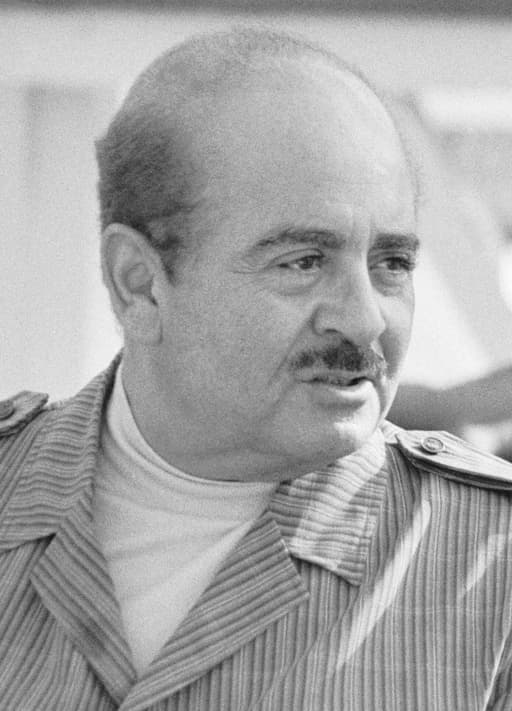
Adnan Khashoggi
PERSON
Saudi Arabian businessman (1935-2017)
Adolf Eichmann
PERSON
German-Austrian SS officer and one of the major organizers of the Holocaust (1906–1962)
Adolf Hitler
PERSON
Dictator of Germany from 1933 to 1945, main instigator of World War II and leader of the Holocaust (1889–1945)
Al Gore
PERSON
Vice President of the United States from 1993 to 2001 (born 1948)
Alan Cranston
PERSON
American politician
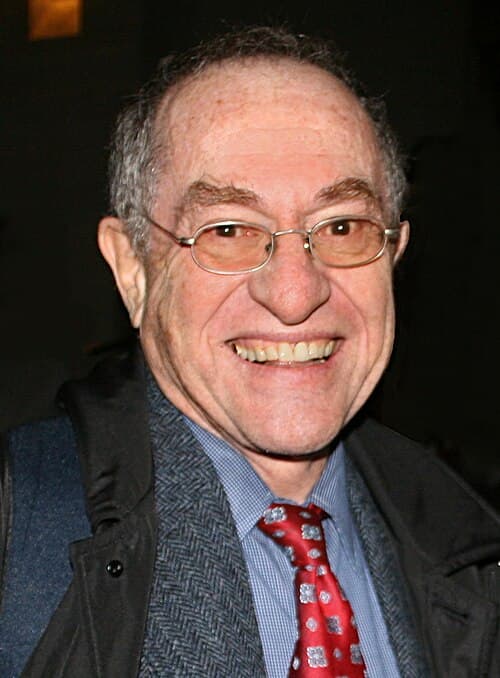
Alan Dershowitz
PERSON • 5 mentions
American lawyer, author, and art collector (born 1938)
Alan Keyes
PERSON
American politician (born 1950)
Alan King
PERSON
American comedian and actor (1927–2004)
AL
Aldrich
PERSON
Surname reference in Epstein-related documents
AB
Alexander Bickel
PERSON
American legal scholar (1924–1974)
Alfred Kinsey’s
PERSON
Name reference in documents
AL
Aliya
PERSON
Chinese-Mongolian actress

Annabella Sciorra
PERSON
American actress
AF
Annie Farmer
PERSON
American psychologist and Epstein survivor who testified at the Ghislaine Maxwell trial
AH
Annie Hall
PERSON
Person referenced in documents
AN
Anti-Nazism
PERSON
Name reference in documents
AN
Antonin
PERSON
First name reference to multiple individuals in the documents
Antonin Scalia
PERSON
Associate Justice of the Supreme Court of the United States from 1986 to 2016
Anu Hapalmach
PERSON
Name reference in documents
Aristotle
PERSON
4th-century BCE Classical Greek philosopher and polymath
Arthur Goldberg
PERSON
American lawyer, politician and civil servant (1908-1990)
AR
Artie
PERSON
First name reference to multiple individuals in Epstein-related documents
Artie Edelman
PERSON
Name reference in documents
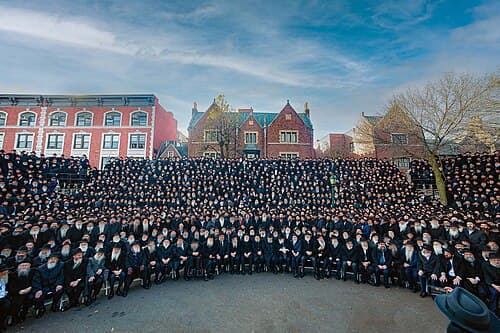
Avraham Harmon
PERSON
Name reference in documents

Bailey
PERSON
Name reference in Epstein documents
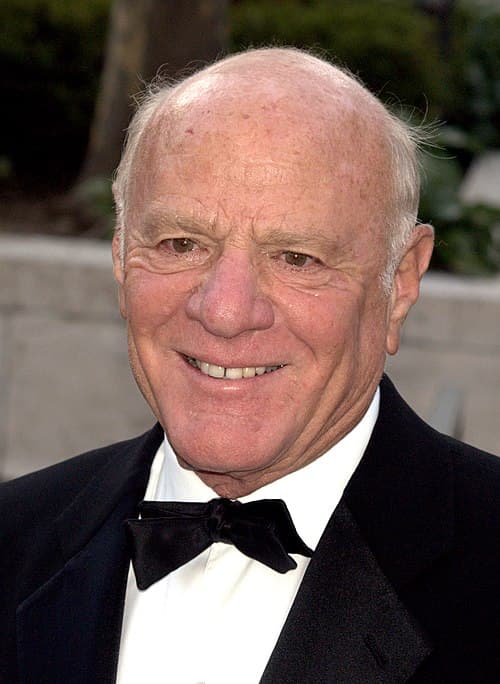
Barry Diller
PERSON
American businessman
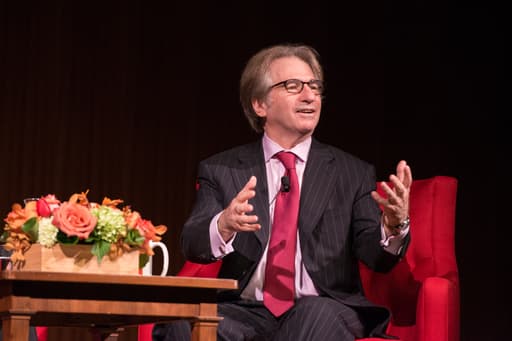
Barry Scheck
PERSON
American lawyer and legal scholar
BA
Baruch ata
PERSON
Name reference in documents
BA
Bazelon
PERSON
Surname or name fragment in documents
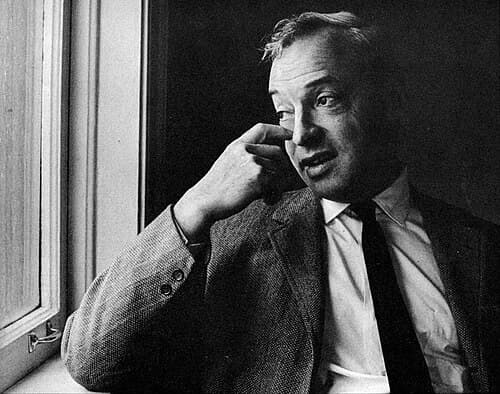
Bellow
PERSON
Name reference in documents
Ben Gurion
PERSON
Person referenced in documents
BK
Ben Kaplan
PERSON
American economist and author
Benjamin Cardozo
PERSON
Name reference in documents

Benjamin Netanyahu
PERSON
Prime Minister of Israel (1996–1999; 2009–2021; since 2022)
BE
Berenkoff
PERSON
Name reference in documents

Bernie Beck
PERSON
United States Senator from Vermont since 2007
Bernie Sanders
PERSON
United States Senator from Vermont since 2007
Bernstein
PERSON
Ambiguous surname - Bernstein & Harley firm, Carl Bernstein
BI
Bickel
PERSON
Name reference in documents
Bill Belichick
PERSON
Name reference in documents
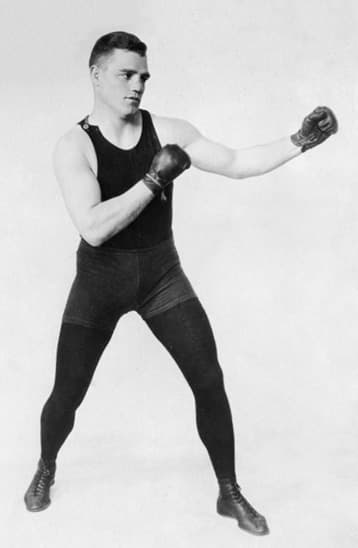
Bill Brennan
PERSON
College basketball player (1984–1987) Vermont
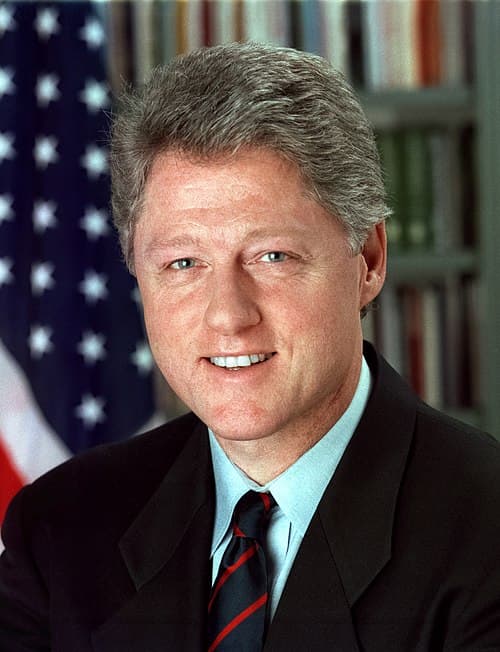
Bill Clinton
PERSON • 3 mentions
President of the United States from 1993 to 2001 (born 1946)
BD
Bill Douglas
PERSON
Director (1934-1991)
BO
Bill O’Reilley
PERSON
Name reference in documents
BB
Billy Batson
PERSON
Name reference in documents
Biography
PERSON
Surname reference in documents
BL
Blima
PERSON
Name reference in documents
Bob Nozick
PERSON
Name reference in documents

Brahman
PERSON
Surname or name fragment in documents

Bruce Franklin
PERSON
American musician

Bruchas
PERSON
Name reference in documents
Buddy Hackett
PERSON
American actor and comedian (1924–2003)
BU
Burger
PERSON • 2 mentions
Surname reference in documents
Byron
PERSON
American actor (1913–1978)
CA
Calabresi
PERSON • 2 mentions
Surname reference in documents

Cape Cod
PERSON
Peninsula in Massachusetts, United States
CA
Cardozo
PERSON
Surname or name fragment in documents
Carl Furillo
PERSON
American baseball player
Carlin
PERSON
Surname reference in documents
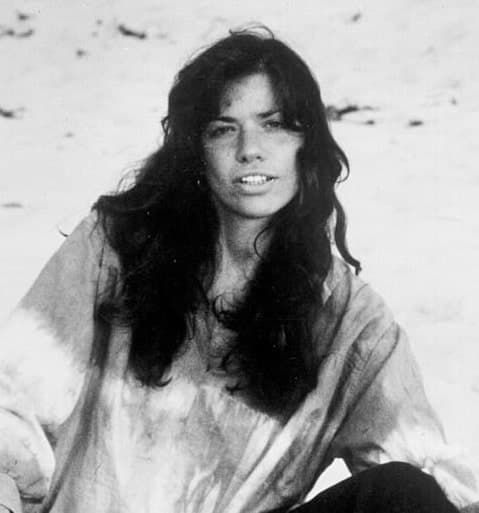
Carly Simon
PERSON
American musician
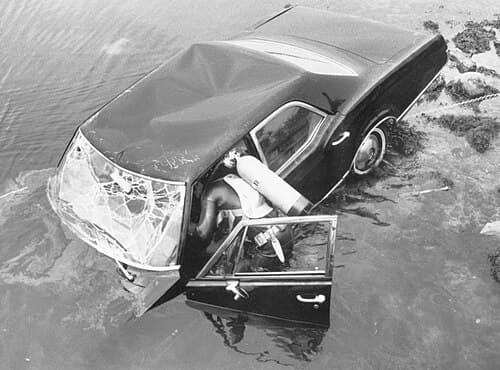
Chappaquiddick
PERSON
Surname or name fragment in documents
CD
Charles Duncan
PERSON
Name reference in documents
CS
Charles Schenck
PERSON
Name reference in documents
Charlton Heston
PERSON
American actor (1923–2008)
Chou en Lie
PERSON
Name reference in documents
Chris Tucker
PERSON
American actor and comedian
CL
Claire
PERSON
First name reference to multiple individuals in Epstein documents
Clarence Darrow
PERSON
Person referenced in documents
Clark
PERSON
Surname reference in Epstein documents
CB
Clark Byse
PERSON
Name reference in documents
Claus Von Bulow
PERSON
Person referenced in documents
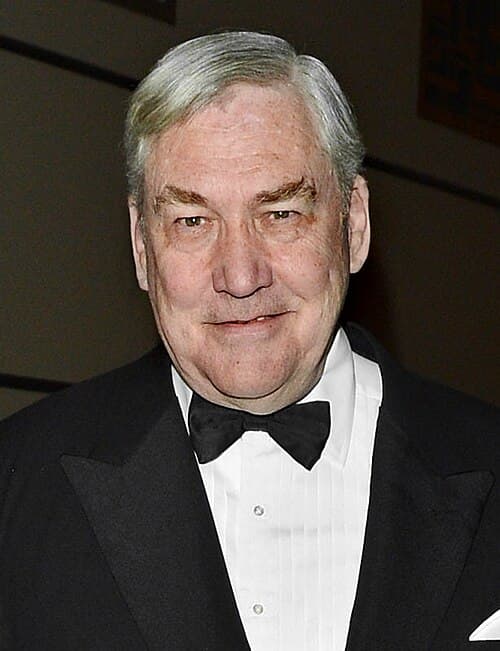
Conrad Black
PERSON
Canadian and British newspaper publisher (born 1944)
CW
Courtney Wild
PERSON
American victim/survivor of Jeffrey Epstein who led legal battle for victims' rights
CR
Cromwell
PERSON
First name reference to multiple individuals in Epstein-related documents

Cynthia Nixon
PERSON
American actress and politician
CY
Cyrano
PERSON
Name reference in documents
DJ
Daniel Jackson
PERSON
Name reference in documents
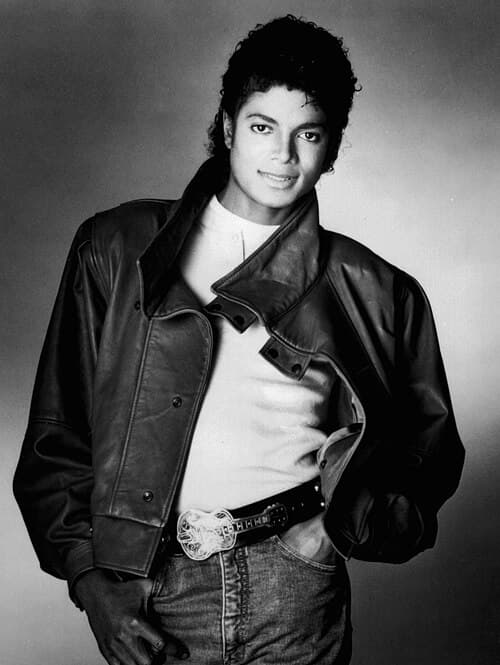
Daniel Jackson Oliver
PERSON
Name reference in documents
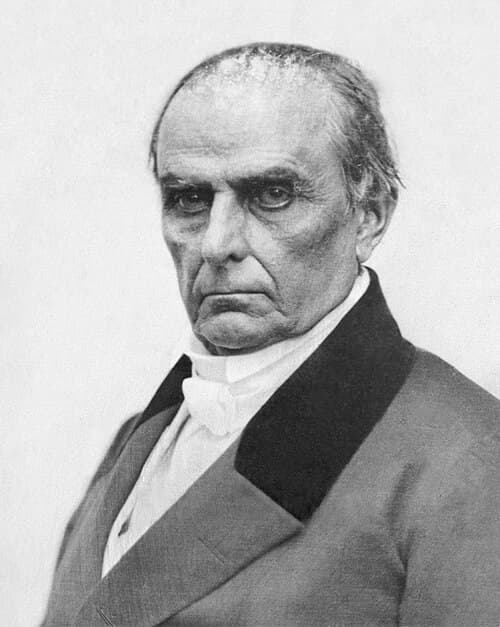
Daniel Webster
PERSON
Name reference in documents
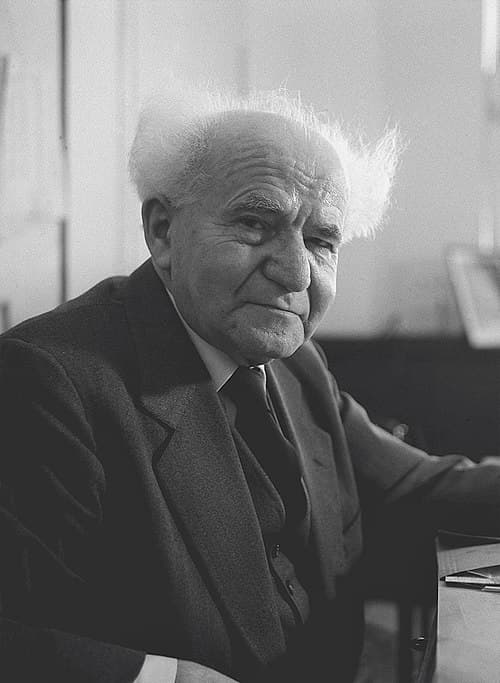
David Ben-Gurion
PERSON
Israeli politician, Zionist leader, prime minister of Israel (1948–1953, 1955–1963) - (born1886–1973)
David Crosby
PERSON
American singer, guitarist and songwriter (1941–2023)
David L. Bazelon
PERSON
American judge (1909–1993)
David Mamet
PERSON
American playwright, filmmaker and author (born 1947)

David Rodgers
PERSON • 3 mentions
Jeffrey Epstein's chief pilot (1991-2019), maintained flight logs documenting passengers on Epstein's private jets
David Steinberg
PERSON
Comedian, actor, director, and writer
Dean Erwin Griswold
PERSON
Name reference in documents
Dean Griswold
PERSON
Name reference in documents
DW
Dean Warren’s
PERSON
Name reference in documents
Deep Throat
PERSON
Alias of Mark Felt, the whistleblower who exposed the Watergate scandal
Dennis Prager
PERSON
American writer, speaker, radio and TV commentator
DB
Derek Bok
PERSON
Person referenced in documents
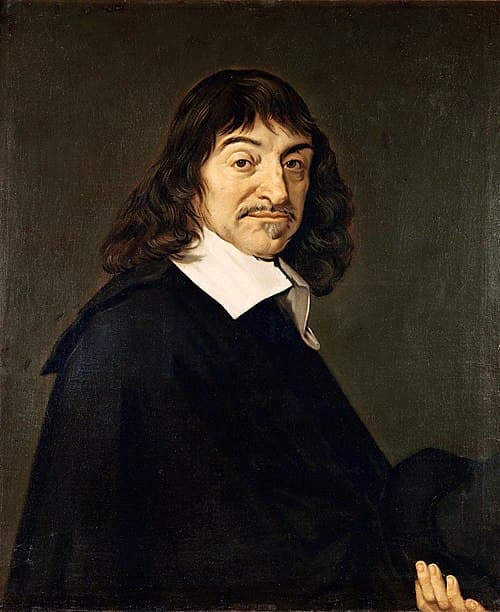
Descartes
PERSON
Surname reference in documents

Deuteronomy
PERSON
Surname or name fragment in documents
Dolph Schayes
PERSON
American basketball player and coach (1928–2015)
DO
Dorothy
PERSON
- 1640
Dorothy Goldberg
PERSON
American professional wrestler, kickboxer, actor, and football player (born 1966)
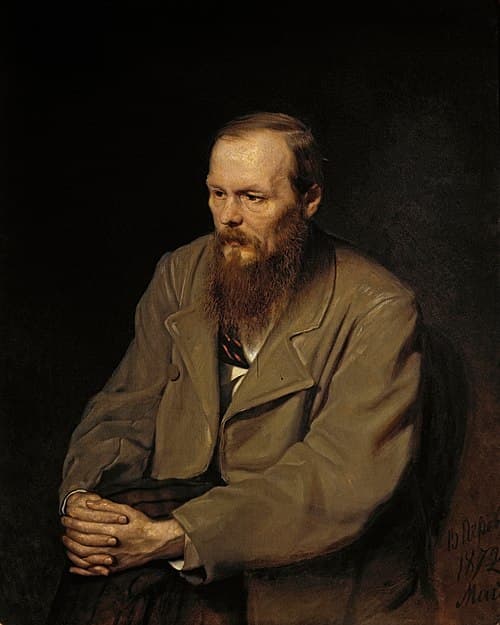
Dostoyevsky
PERSON
Surname or name fragment in documents
DW
Drew Weston
PERSON
Name reference in documents
Earl Warren
PERSON
Person referenced in documents
Eleanor Roosevelt
PERSON
First Lady of the United States from 1933 to 1945 (1884–1962)
Elie Wiesel
PERSON
Romanian-born American writer, professor, political activist, Nobel laureate, and Holocaust survivor (1928-2016)
EB
Elizabeth Bartholet
PERSON
American academic
Elizabeth Holtzman
PERSON
U.S. Representative from New York

Elon Musk
PERSON • 2 mentions
Businessman and entrepreneur (born 1971)
ET
Emmy Taylor
PERSON
Former assistant to Ghislaine Maxwell, appeared in Epstein flight logs and court documents
Erwin Griswold
PERSON
American lawyer (1904-1994)
ES
Escobedo
PERSON
Name reference in documents
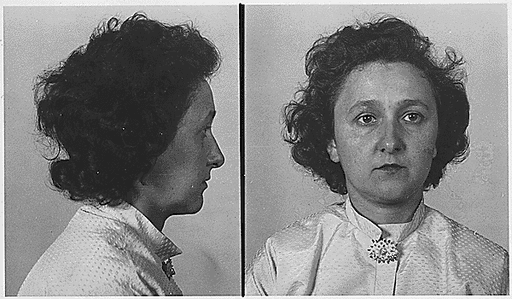
Ethel Rosenberg
PERSON
American woman executed for spying for the Soviet Union (1915-1953)
Eugene Scalia
PERSON
American lawyer
FA
Fahey
PERSON
Name reference in documents
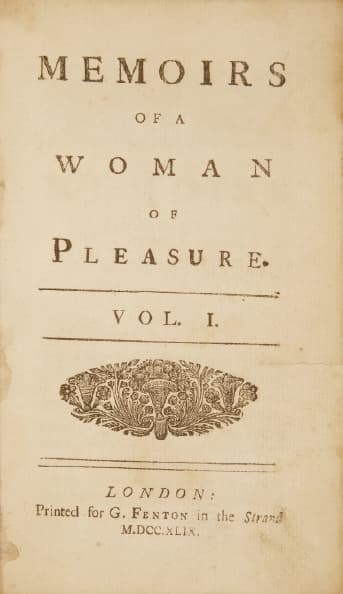
Fanny Hill
PERSON
Name reference in documents
FE
Feirman
PERSON
Name reference in documents
Felix Frankfurter
PERSON
Former Associate Justice of the United States Supreme Court (1882–1965)
FI
Fidel
PERSON
First name reference to multiple individuals in the documents
Floyd Abrams
PERSON
American attorney
Fortas
PERSON • 2 mentions
Name reference in documents
Frank Sinatra
PERSON
American singer and actor (1915–1998)
Frank Snepp
PERSON
American journalist
FR
Frankfurter
PERSON
Surname or name fragment in documents
FR
Fred Rodel
PERSON
American legal scholar
FR
Freddie Roman
PERSON
American comedian
FR
Freedman
PERSON
Surname reference in Epstein-related documents
Freud
PERSON
Reference to Sigmund Freud or Lucian Freud
FR
Fritz
PERSON
Chess software
FK
Fritz Kessler
PERSON
Name reference in documents
GB
Garrett Byrne
PERSON
Name reference in documents
Garrison
PERSON
Primarily refers to Frank M. Garrison in Epstein documents
Gemarah
PERSON
Name reference in documents

Gene Hermansky
PERSON
Name reference in documents
George Carlin
PERSON
American stand-up comedian (1937–2008)
George Lakoff
PERSON
American linguist
George W. Bush
PERSON
President of the United States from 2001 to 2009
Gershwin
PERSON
American-Australian marine biologist
Gideon
PERSON
Judge in the Biblical Book of Judges
Gideonese
PERSON
Name reference in documents
Gil Hodges
PERSON
United States Marine; American Hall of Fame baseball player (1924–1972)
Golda Meir
PERSON
Person referenced in documents
GO
Goldstein
PERSON
Surname reference in Epstein-related documents
GO
Goyisher
PERSON
Name reference in documents
GK
Goyisher Kup
PERSON
Name reference in documents

Grandma Ringel
PERSON
Name reference in documents
GR
Grossingers
PERSON
Name reference in documents

Guernica
PERSON
Name reference in documents
GC
Guido Calabresi
PERSON
United States federal judge
H.L. Mencken
PERSON
Name reference in documents
Hakeem Olajuwon
PERSON
Nigerian-American basketball player
HA
Harding
PERSON
Surname reference in documents
Harlan
PERSON
First name reference to multiple individuals in the documents
HA
Harold
PERSON
First name reference to multiple individuals in the documents
Harold Ramis
PERSON
American actor, comedian, and filmmaker (1944–2014)
Harry Hershfield
PERSON
Name reference in documents
Harry Reems
PERSON
American pornographic actor (1947–2013)
HS
Harvey Silverglate
PERSON
Attorney, co-founder, Foundation for Individual Rights in Education
Harvey Weinstein
PERSON
American film producer and sex offender (born 1952)
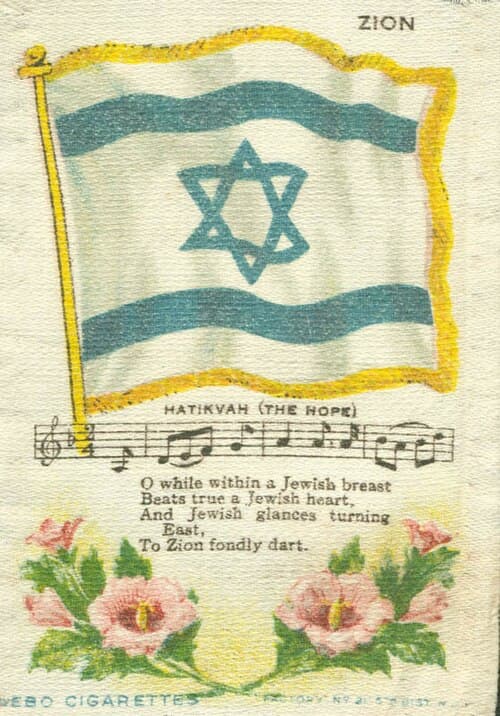
Hatikvah
PERSON
Name reference in documents
HA
Hayveynu Shalom Alechem
PERSON
Name reference in documents
Hegel
PERSON
Surname reference in documents
HE
Henley
PERSON • 2 mentions
Surname or name fragment in documents
Heston
PERSON
Surname reference in documents

Hillary Clinton
PERSON
American politician and diplomat (born 1947)
Hoover
PERSON • 2 mentions
Surname reference in Epstein-related documents
Hugo Black
PERSON
Name reference in documents
HB
Hyman Barshay
PERSON
Name reference in documents

Irving
PERSON
Primarily refers to Irving Uscanga in Epstein documents

Isabella Rossellini
PERSON
Italian-American actress (born 1952)
IT
Itchie
PERSON
Name reference in documents
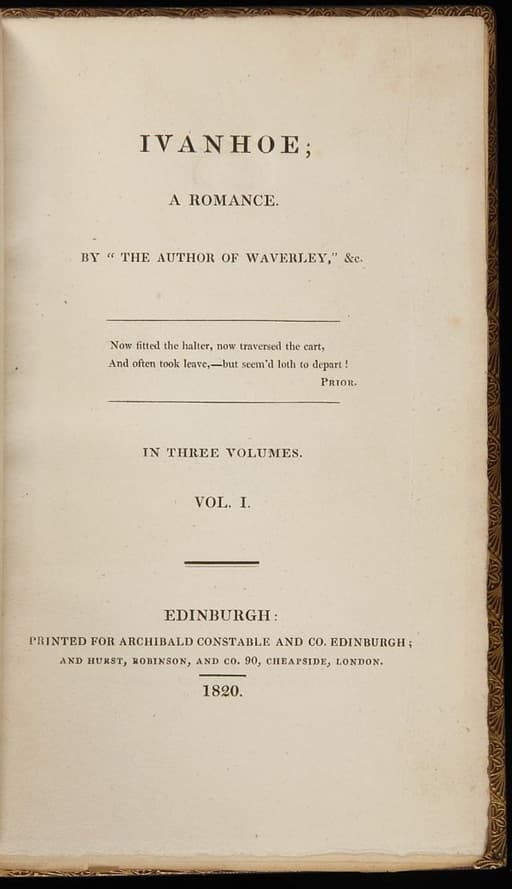
Ivanhoe
PERSON
Name reference in documents
J. Edgar Hoover
PERSON
American law enforcement administrator (1895–1972)
J. Skelly Wright
PERSON
American Judge (1911-1988)
JG
Jack Goldberger
PERSON
American criminal defense attorney who represented Jeffrey Epstein, partner at Goldberger Weiss P.A. in West Palm Beach, Florida

Jackie Mason
PERSON
American comedian (1928-2021)
JA
Jacob
PERSON
First name reference to multiple individuals in Epstein documents
Jacob Javits
PERSON
American politician (1904-1986)
Jacob Joseph
PERSON
Name reference in documents
James Zogby
PERSON
Founder of the Arab American Institute
JA
Jamin
PERSON
Surname or name fragment in documents
Jan Pierce
PERSON
Name reference in documents
JK
Jay Katz
PERSON
American physician (1922-2008)

Jeremy Ben Ami
PERSON
Name reference in documents

Jerry
PERSON
First name reference to multiple individuals in Epstein documents
Jerry Falwell
PERSON
American evangelical pastor, televangelist, and conservative political commentator
Jerry Lewis
PERSON
American comedian, actor and film director (1926–2017)
Jes Staley
PERSON • 2 mentions
American banker, chief executive officer of Barclays
Jimmy Carter
PERSON
President of the United States from 1977 to 1981 (1924–2024)
Joe Biden
PERSON
46th President of the United States (2021–2025)
JL
Joe Laurie
PERSON
Name reference in documents
John Brennan
PERSON
Director of the Central Intelligence Agency from 2013 to 2017
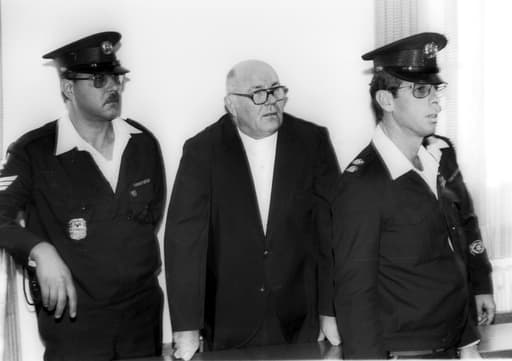
John Demjanjuk
PERSON
Ukrainian guard at Nazi death camps (1920–2012)
John F. Kennedy
PERSON • 4 mentions
President of the United States from 1961 to 1963 (1917–1963)
John Harlan
PERSON
American television announcer (1925–2017)
JE
John Hart Ely
PERSON
American legal scholar (1938-2003)
John Hope Franklin
PERSON
African-American historian
John Landis
PERSON
American film director, screenwriter and producer
John Lennon
PERSON
British musician (1940–1980)
John Marshall
PERSON
Person referenced in documents
John Paul Stevens
PERSON
United States Supreme Court justice (1920–2019)
Joseph Goldstein
PERSON
American biochemist
Joseph Kennedy
PERSON
American writer (born 1929)
JU
Julian
PERSON
Ambiguous first name - refers to multiple people in Epstein documents

Julie K. Brown
PERSON
American journalist
Julius
PERSON
Head of the Catholic Church from 337 to 352
JW
Justice White
PERSON
Name reference in documents

Justin Trudeau
PERSON
23rd prime minister of Canada from 2015 to 2025
Kafka
PERSON
Surname reference in Epstein-related documents
KA
Kandinsky
PERSON
Surname reference in documents
Kaplan
PERSON
Surname reference in Epstein documents
KA
Karen
PERSON
Primarily refers to Karen Gordon, New Zealand property manager at Epstein's Zorro Ranch
KG
Katherine Graham
PERSON
American golfer (1923-2019)
Ken Starr
PERSON • 2 mentions
American judge and educational administrator (1946–2022)
KE
Kessler
PERSON
Surname reference in Epstein-related documents
Kevin Youkilis
PERSON
American baseball player
KR
Kronehiem
PERSON
Name reference in documents
Kronheim
PERSON
Name reference in documents
Kutchers
PERSON
Name reference in documents

La Gioconda
PERSON
Name reference in documents
La Traviata
PERSON
Name reference in documents
Larry David
PERSON
American comedian, writer and actor (born 1947)
Larry Flynt
PERSON
American publisher
LC
Law Clerk
PERSON
Name reference in documents
Lee Harvey Oswald
PERSON
American former marine who assassinated John F. Kennedy (1939–1963)
Lee McTurnan
PERSON
Name reference in documents
LB
Leon Black
PERSON
American billionaire businessman (born 1951)
Leona Helmsley
PERSON
American hotel owner (1920–2007)

Lipschitz
PERSON
Name reference in documents
LG
Lou Goldstein
PERSON
Name reference in documents
LO
Louie
PERSON
First name reference to multiple individuals in the documents
Louis Brandeis
PERSON
Holocaust victim (born 1902)
Louis Wolfson
PERSON
American financier
LD
Lydy Dole
PERSON
Name reference in documents
Lyndon Johnson
PERSON
President of the United States from 1963 to 1969 (1908–1973)
Madah
PERSON
Name reference in documents
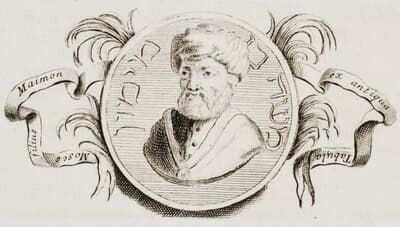
Maimonides
PERSON
Surname or name fragment in documents
Marc Rich
PERSON • 2 mentions
American commodities trader (1934–2013)
Margaret Mead
PERSON
American anthropologist (1901-1978)

Mark Hauser
PERSON
South Korean-Canadian rapper
Marlon Brando
PERSON
American actor (1924–2004)
MM
Marshall McCluen
PERSON
Name reference in documents
MV
Martha’s Vineyard
PERSON
Person referenced in documents
Martin Luther
PERSON
Name reference in Epstein documents, likely referring to Martin Luther King Jr.
Martin Luther King's
PERSON
Name reference in documents
McCluen
PERSON
Name reference in documents
Meyer Kahana
PERSON
Name reference in documents

Mia Farrow
PERSON • 2 mentions
American actress
Michael Cohen
PERSON
American former attorney and former Republican official

Michael Douglas
PERSON
American retired actor, producer and activist (born 1944)
Michael Jackson
PERSON • 2 mentions
American singer, songwriter, record producer, and dancer (1958–2009)
Michael Milken
PERSON • 2 mentions
American investor

Mike Tyson
PERSON
American boxer and media personality
MI
Milton
PERSON
Surname reference in Epstein-related documents
MH
Milton Handler
PERSON
American lawyer
Milton Kronheim
PERSON
Name reference in documents
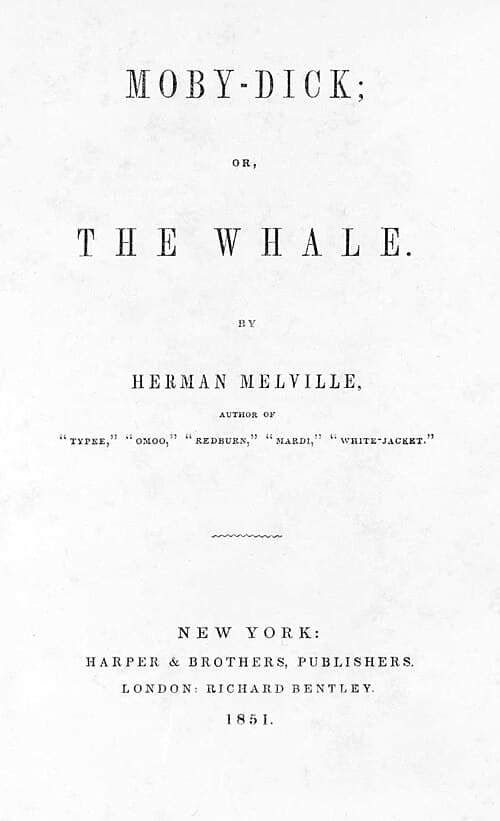
Moby Dick
PERSON
Name reference in documents
MO
Moishe
PERSON
First name reference to multiple individuals in the documents
MF
Monroe Freedman
PERSON
Name reference in documents

Monte Durham
PERSON
Name reference in documents
MO
Morrie
PERSON
Japanese musician
Moses
PERSON
Abrahamic prophet said to have led the Israelites out of Egypt
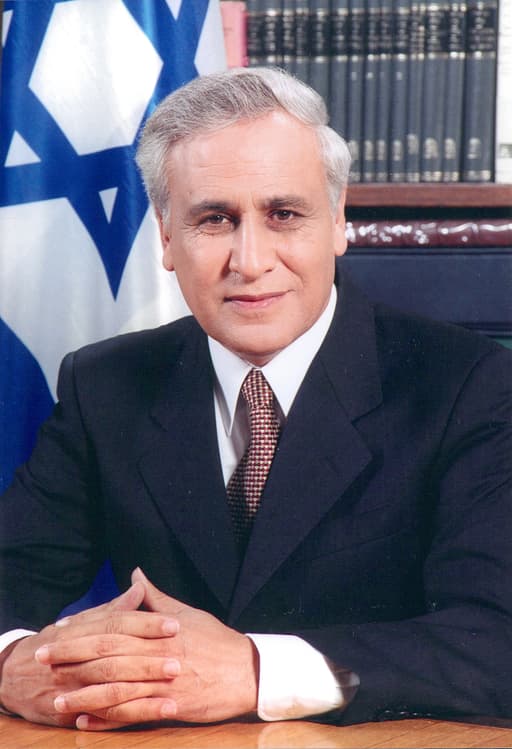
Moshe Katsav
PERSON
8th President of Israel (2000–2007)
MU
Muriel
PERSON
Surname reference in documents
Mussolini
PERSON
Surname reference in documents
MI
My Uncle Itchie
PERSON
Name reference in documents
Naphtali Ringel
PERSON
Name reference in documents

Natalie Portman
PERSON • 2 mentions
Israeli-American actress (born 1981)

Natan Sharansky
PERSON
Israeli politician (born 1948)
Neil Simon
PERSON
American playwright, writer, academic (1927-2018)
NE
Neitsche
PERSON
Name reference in documents
Nelson Mandela
PERSON
First President of South Africa and anti-apartheid activist (1918–2013)
Nelson Rockefeller
PERSON
Vice President of the United States from 1974 to 1977
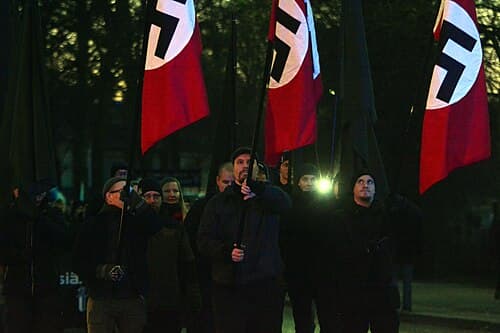
Neo Nazi
PERSON
Name reference in documents
NE
Nevelle
PERSON
American football player (born 1996)

Nihiye
PERSON
Name reference in documents
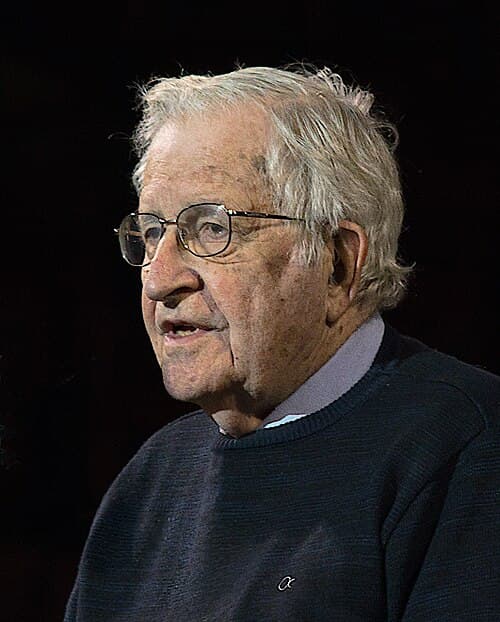
Noam Chomsky
PERSON • 2 mentions
American linguist and activist (born 1928)
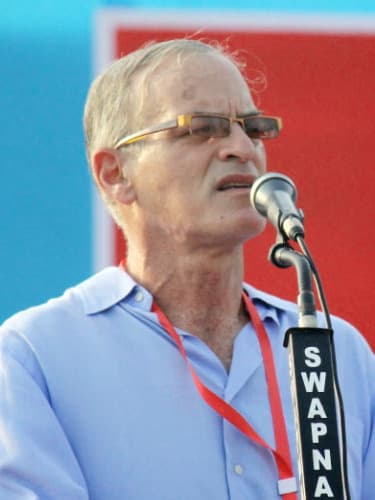
Norman Finkelstein
PERSON
American political scientist (born 1953)
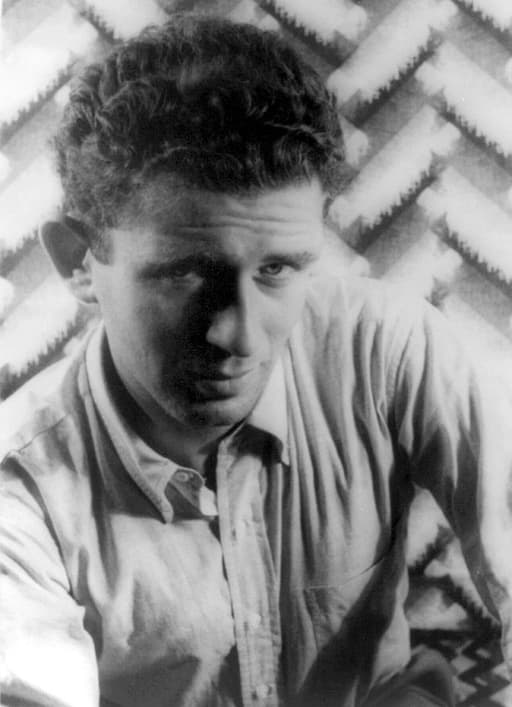
Norman Mailer
PERSON
American writer (1923–2007)
Norman Sohn
PERSON
Name reference in documents
Nozick
PERSON • 2 mentions
American political philosopher (1938–2002)
O.J. Simpson
PERSON • 2 mentions
Former American football player acquitted of murder, referenced in Epstein-related documents and media coverage
OH
Oliver Wendell Holmes’
PERSON
Name reference in documents
Pablo Picasso
PERSON
Spanish painter and sculptor (1881–1973)

Palmach
PERSON
Elite strike force of the Haganah in Mandatory Palestine

Patricia Hearst
PERSON
American kidnapping victim
Patrick Buchanan
PERSON
Name reference in documents
PE
Perlestein
PERSON
Name reference in documents
Perry Mason
PERSON
Name reference in documents
Peter Max
PERSON
German-born American artist (born 1937)
Peter Strauss
PERSON
American actor
Pierre Trudeau
PERSON
Prime Minister of Canada from 1968 to 1979 and 1980 to 1984 (1919–2000)

Plato
PERSON
4th-century BCE Greek philosopher

Prince Andrew
PERSON
Third child of Queen Elizabeth II and Prince Philip, Duke of Edinburgh (born 1960)
Prince Charles
PERSON
King of the United Kingdom and other Commonwealth realms since 2022 (born 1948)
Ralph Branca
PERSON
American baseball player (1926–2016)
Ralph Lauren
PERSON
American fashion designer (born 1939)
Ralph Lipschitz
PERSON
Name reference in documents
Raymond Pettine
PERSON
Name reference in documents
RT
Raymond Tison
PERSON
Name reference in documents
Red Auerbach
PERSON
American basketball coach (1917–2006)
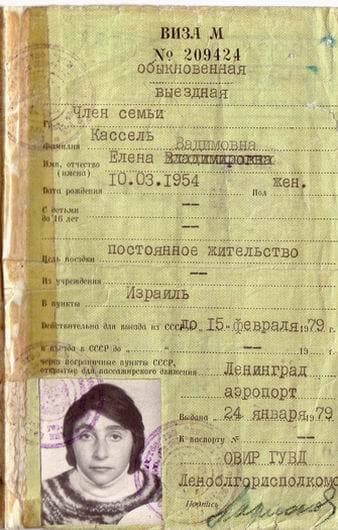
Refusenicks
PERSON
Name reference in documents
Represent Gideon
PERSON
Name reference in documents

Rhodes
PERSON
Ambiguous surname reference in Epstein documents
Ribicoff
PERSON
American politician (1910–1998)
Richard Goldstone
PERSON
South African former judge
Richard Nixon
PERSON
President of the United States from 1969 to 1974 (1913–1994)
Richard Posner
PERSON
United States federal judge
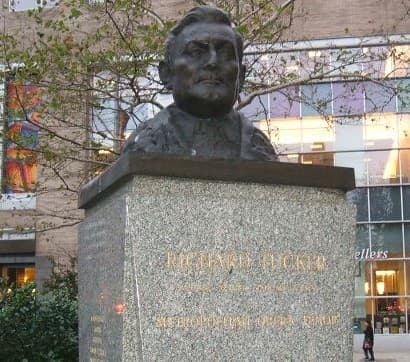
Richard Tucker
PERSON
American opera singer (1913-1975)
RI
Ricky
PERSON
First name reference to multiple individuals in Epstein-related documents
RI
Rifkin
PERSON
Surname reference in documents
RI
Ringel
PERSON
Name reference in documents

Robert Downey, Jr.
PERSON
American actor (born 1965)
Robert F. Kennedy Jr.
PERSON
American politician, environmental lawyer, anti-vaccine activist, and conspiracy theorist (born 1954)
Robert Gates
PERSON
CIA director, U.S. Secretary of Defense, and university president
Robert Nozick
PERSON
Indian choreographer
Roberta Peters
PERSON
American operatic soprano (1930-2017)
RO
Rodan
PERSON
Surname reference in documents

Rodel
PERSON
Name reference in documents
Roman Sculpture
PERSON
Name reference in documents
Ron Silver
PERSON
American actor and activist (1946-2009)

Ronan Farrow
PERSON
American journalist

Rosenbergs
PERSON • 2 mentions
Name reference in documents
Rosenfeld
PERSON
Surname reference in Epstein-related documents

Rosset
PERSON
Name reference in documents
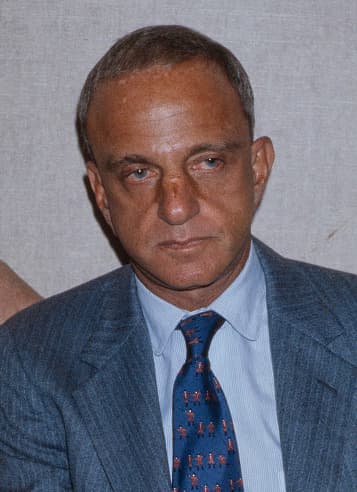
Roy Cohn
PERSON
American lawyer (1927–1985)
RV
Rule VI
PERSON
Name reference in documents

Samantha Power
PERSON
Irish-American academic, author and diplomat
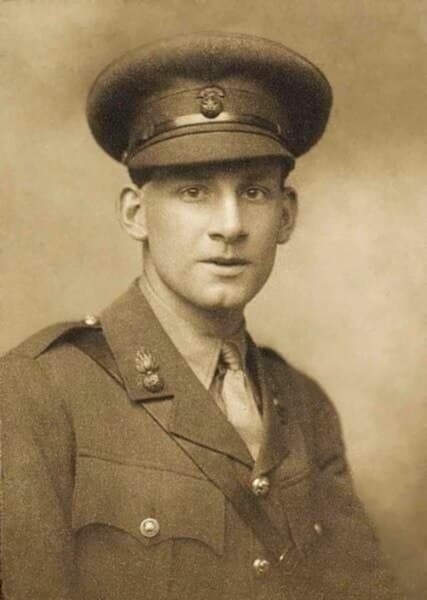
Sassoon
PERSON
Surname reference in documents
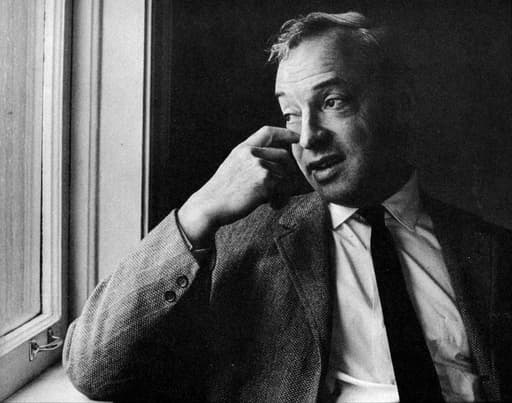
Saul Bellow
PERSON
Canadian-American writer
SC
Schenck
PERSON • 2 mentions
Surname or name fragment in documents
SC
Scholer
PERSON
Name reference in documents

Seth Myers
PERSON
Name reference in documents

Shabbas
PERSON
Name reference in documents
SH
Shapiro
PERSON
Ambiguous surname reference in Epstein documents
SM
Shawn Mann
PERSON
American musician

Shazam
PERSON
Music application

Sheky Green
PERSON
Name reference in documents
Sheldon Adelson
PERSON
American businessman (1933–2021)

Shelly
PERSON
First name reference to multiple individuals in Epstein-related documents
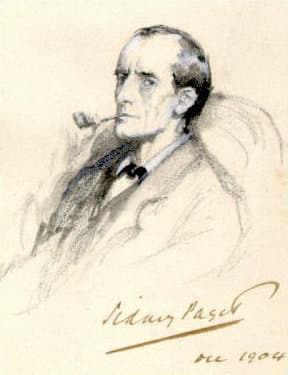
Sherlock Holmes
PERSON
Fictional character (consulting detective) created by Sir Arthur Conan Doyle
Shields
PERSON
Surname reference in Epstein-related documents

Shinzo Abe
PERSON
Prime Minister of Japan from 2006–2007 and 2012–2020 (1954–2022)
SH
Shmathiest
PERSON
Name reference in documents
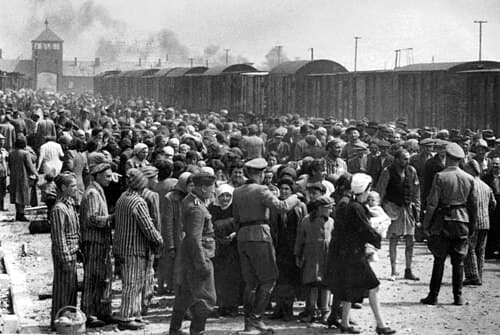
Shoah
PERSON
Surname or name fragment in documents
Sidney Hook
PERSON
American philosopher (1902–1989)
Sigmund Freud
PERSON
Austrian neurologist and founder of psychoanalysis (1856–1939)
Simon Rifkin
PERSON
Name reference in documents
Skip Gates
PERSON
Name reference in documents

speech—“Fuck
PERSON
Name reference in documents

Spock
PERSON
Surname or name fragment in documents
SG
Stan Goetz
PERSON
Name reference in documents
ST
Steinberg
PERSON
Surname reference in Epstein-related documents
Stephen Breyer
PERSON
US Supreme Court justice from 1994 to 2022
Stephen Foster
PERSON
Name reference in documents
Stephen Hawking
PERSON
British theoretical physicist, cosmologist and author (1942–2018)
Stephen Kosslyn
PERSON
American psychologist
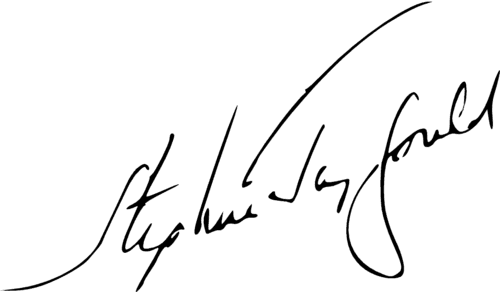
Steven Jay Gould
PERSON
American biologist and historian of science (1941–2002)

Steven Pinker
PERSON • 2 mentions
Canadian-American cognitive psychologist, linguist, and author, an advocate of evolutionary psychology and the computational theory of the mind
Steven Wright
PERSON
American comedian
SU
Sullivan
PERSON
Surname reference in Epstein documents
TA
Tamarak
PERSON
Name reference in documents
TT
Tamid Anachnu Tamid
PERSON
Name reference in documents
Ted Danson
PERSON
American actor (born 1947)
Ted Kennedy
PERSON
United States Senator from Massachusetts from 1962 to 2009

Telford
PERSON
Surname reference in documents
Telford Taylor n
PERSON
Name reference in documents

the Hanukah Menorah
PERSON
Name reference in documents
the Lone Ranger’s
PERSON
Name reference in documents
the Palmach Anthem
PERSON
Name reference in documents
Thomas Jefferson
PERSON • 2 mentions
President of the United States from 1801 to 1809
Thurgood
PERSON
Surname reference in documents
Thurgood Marshall
PERSON
Associate Justice of the Supreme Court of the United States from 1967 to 1991 (1908–1993)
Tirdof
PERSON
Name reference in documents
TI
Tison
PERSON
Name reference in documents
Tocqueville
PERSON
Surname or name fragment in documents
Tom Brady
PERSON
American football player (born 1977)
Tom Stoppard’s
PERSON
Name reference in documents
TA
Tony Award
PERSON
Person referenced in documents
Tony Shalub
PERSON
American actor (born 1953)
Trotsky
PERSON
Surname or name fragment in documents
TS
Tsena
PERSON
Name reference in documents
Tsvi Groner
PERSON
Israeli scholar of the Geonic literature
TZ
Tzedek
PERSON
Name reference in documents
Uncle Hedgie
PERSON
Name reference in documents
Vaclav Havel
PERSON
Czech statesman, playwright, and former dissident, the last president of Czechoslovakia and the first president of the Czech Republic (1936–2011)

Victor
PERSON
First name reference to multiple individuals in Epstein documents

Victor Botnick
PERSON
Name reference in documents
Victor S. Nevasky
PERSON
Name reference in documents
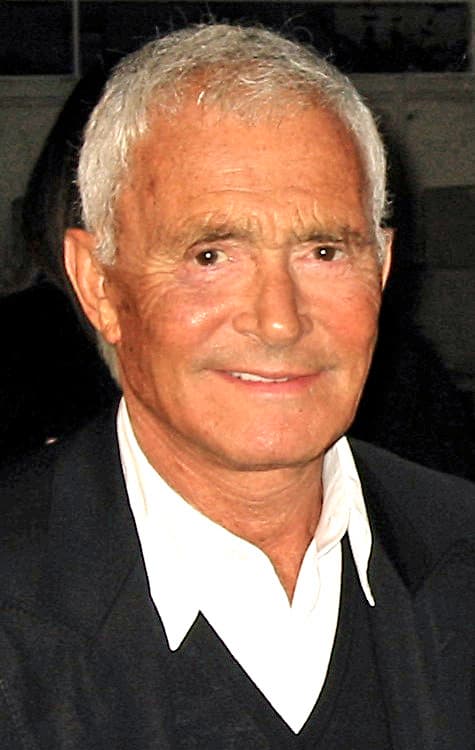
Vidal Sassoon
PERSON
British hairstylist (1928–2012)
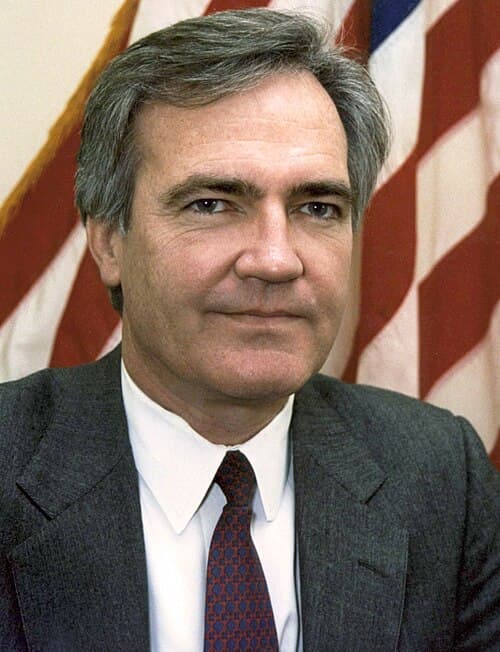
Vince Foster
PERSON
American lawyer (1945-1993)
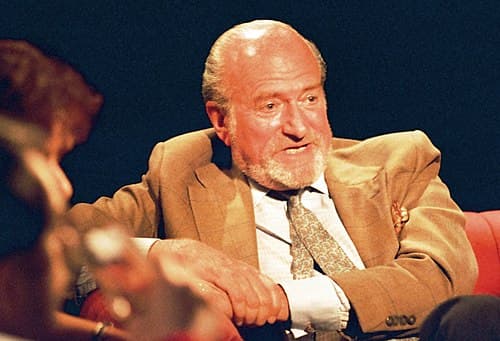
Von Bulow
PERSON
Name reference in documents
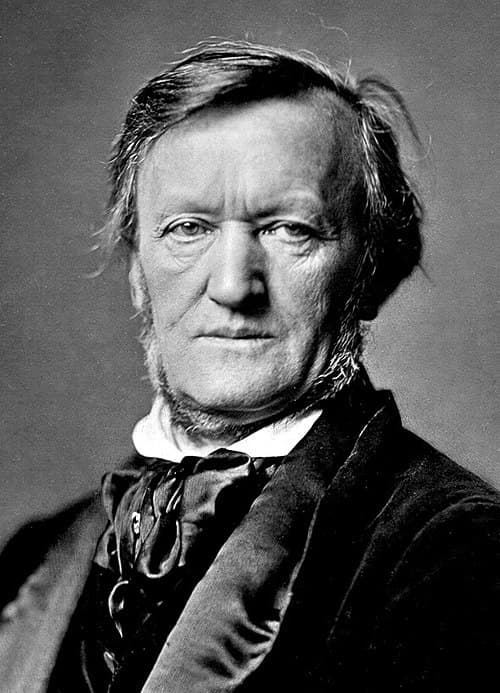
Wagner
PERSON
Ambiguous surname - refers to multiple people in Epstein documents
Warren Burger
PERSON
Chief justice of the United States from 1969 to 1986 (1907–1995)
WE
Webster
PERSON
Ambiguous surname reference in Epstein documents
Wee Reese
PERSON
Name reference in documents
WE
Weinright
PERSON
Name reference in documents
WE
Weiss
PERSON
American multinational white-shoe law firm headquartered in New York City
Wendell Holmes Morgan
PERSON
Name reference in documents

Westheimer
PERSON
Surname reference in documents
Westminster Abby
PERSON
Name reference in documents
WH
Whitey
PERSON
Surname reference in documents
WI
Wiffenpoof
PERSON
Name reference in documents

Wigmore
PERSON
Surname or name fragment in documents
William Bennett
PERSON
American pundit (1943-)
William Brennan
PERSON
Name reference in documents
William Bulger
PERSON
Politician in Massachusetts, US
WH
William Ernst Henley
PERSON
Name reference in documents
William F. Buckley
PERSON
American public intellectual, conservative author and political commentator (1925–2008)
William Kunstler
PERSON
American lawyer and civil rights activist (1919-1995)
William O. Douglas
PERSON
Name reference in documents
William Shakespeare
PERSON
English playwright and poet (1564–1616)
WW
William Warren
PERSON
Name reference in documents
Winston Churchill
PERSON • 2 mentions
British statesman, soldier and writer (1874–1965)
WO
Woodward
PERSON
Surname reference in Epstein-related documents

Woody Allen
PERSON • 3 mentions
American filmmaker, actor and comedian (born 1935)

Woody Allen-Mia Farrow
PERSON
Name reference in documents

Woody Harrelson
PERSON
American actor

Writings
PERSON
Name reference in documents
YA
Yakov
PERSON
Name reference in documents

Yeshiva
PERSON
Surname reference in documents
Yiddish
PERSON
Surname reference in documents
YI
Yiddisher
PERSON
Name reference in documents
YK
Yiddisher Kup
PERSON
Name reference in documents
YI
Yiddishisms
PERSON
Name reference in documents
Yitz Greenberg
PERSON
American rabbi
YI
Yitzchak
PERSON
Name reference in documents

Yo-Yo Ma
PERSON
American cellist (born 1955)
Yona Shimmel’s
PERSON
Name reference in documents
ZG
Zum Gali
PERSON
Name reference in documents
Zuroff
PERSON
American historian
a Justice of the Supreme Court
ORGANIZATION
Organization referenced in documents
a Rhodes Scholarship
ORGANIZATION
Organization referenced in documents
American Bar Association
ORGANIZATION
Law firm

Anti-Defamation League
ORGANIZATION
Organization referenced in documents
Bakke
ORGANIZATION
Organization referenced in documents
Black Power
ORGANIZATION
Organization referenced in documents
Boston Symphony
ORGANIZATION
Organization referenced in documents

Britannica
ORGANIZATION
General knowledge English-language encyclopaedia, first published in Scotland in 1768
Brooklyn College
ORGANIZATION
Senior college of the City University of New York, located in Brooklyn
Brooklyn Talmudical Academy
ORGANIZATION
Organization referenced in documents
C in Contracts
ORGANIZATION
Organization referenced in documents
C.I.O.
ORGANIZATION
Organization referenced in documents
Carman, La Boheme
ORGANIZATION
Organization referenced in documents
Chevys
ORGANIZATION
Organization referenced in documents
Chilmark
ORGANIZATION
Town in Dukes County, Massachusetts, United States
Chutzpah
ORGANIZATION
Quality of audacity, of Yiddish origin into English
City College
ORGANIZATION
Senior college of the City University of New York
City Department of Employment
ORGANIZATION
Organization referenced in documents
Classic Comics
ORGANIZATION
American publisher of comic strip reprints

College
ORGANIZATION
Episode of The Sopranos (S1 E5)

Columbia Law School
ORGANIZATION
Law school of Columbia University
Congress of Industrial Organizations (CIO
ORGANIZATION
Organization referenced in documents
Constitutional Litigation
ORGANIZATION
Organization referenced in documents
Constraining Prosecutorial Misconduct
ORGANIZATION
Organization referenced in documents
Coronet Magazine
ORGANIZATION
English post-punk band
Courage
ORGANIZATION
Organization referenced in documents
Criminogenic
ORGANIZATION
Organization referenced in documents
Department of Justice
ORGANIZATION
United States Department of Justice, federal executive department responsible for law enforcement
Eastern District High School
ORGANIZATION
High school in Brooklyn, New York City
Ebbets Field
ORGANIZATION
Organization referenced in documents
Exposition Authority
ORGANIZATION
Organization referenced in documents
Family Law
ORGANIZATION
Organization referenced in documents

First Amendment
ORGANIZATION
Organization referenced in documents
Frigidaire
ORGANIZATION
Organization referenced in documents
Grove Press
ORGANIZATION
American publishing house
Harvard Law School
ORGANIZATION
Law school of Harvard University in Cambridge, Massachusetts

Harvard University
ORGANIZATION
American university publishing house
Hatinok Rut
ORGANIZATION
Organization referenced in documents
Hershey
ORGANIZATION
Organization referenced in documents
Hofstra Law School
ORGANIZATION
Organization referenced in documents
Invictus
ORGANIZATION
Organization referenced in documents
J Am Curious Yellow
ORGANIZATION
Organization referenced in documents

Jewish National Fund
ORGANIZATION
Organization referenced in documents
John Wiley & Sons
ORGANIZATION
American baseball player (1857-1926)
Justice Black
ORGANIZATION
Organization referenced in documents
Kay, Scholer
ORGANIZATION
Organization referenced in documents
Knight House
ORGANIZATION
Organization referenced in documents
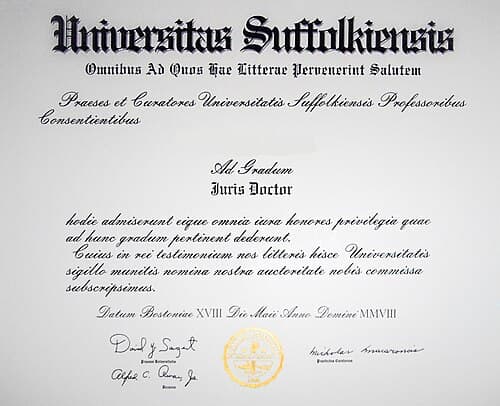
Law School
ORGANIZATION
Institution specializing in legal education
Magna Carta
ORGANIZATION
Organization referenced in documents
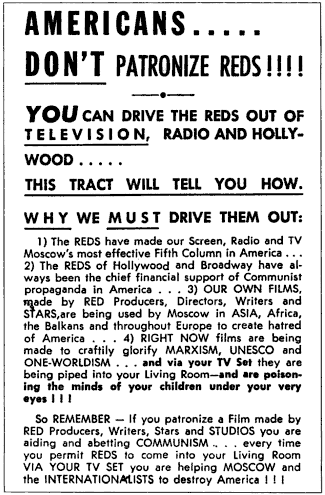
McCarthyism
ORGANIZATION
Phenomenon in the United States of making accusations of subversion or treason without proper regard for evidence, named after Senator Joseph McCarthy

McDonald’s
ORGANIZATION
Borough of Pennsylvania, United States
Morries
ORGANIZATION
Organization referenced in documents
My uncle Morris
ORGANIZATION
Organization referenced in documents

NAACP
ORGANIZATION
Civil rights organization
Nabisco
ORGANIZATION
American snack company
New York Court of Appeals
ORGANIZATION
Organization referenced in documents
no Bay of Pigs
ORGANIZATION
Organization referenced in documents
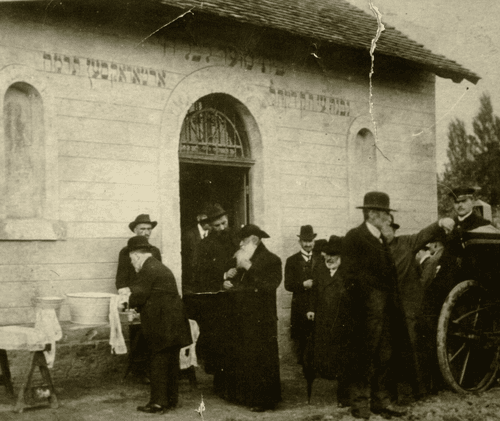
Orthodox Judaism
ORGANIZATION
Organization referenced in documents
Orthodox Yeshiva
ORGANIZATION
Organization referenced in documents
Pentagon Papers
ORGANIZATION
Organization referenced in documents
Phi Beta Kappa Honors
ORGANIZATION
Organization referenced in documents
Pine View
ORGANIZATION
Email and newsgroups client
Pirkay Avos
ORGANIZATION
Organization referenced in documents
Production Services Company
ORGANIZATION
Organization referenced in documents
Security Council Resolution 242
ORGANIZATION
Organization referenced in documents
Shulchan Aruch
ORGANIZATION
Organization referenced in documents
Socratic
ORGANIZATION
Organization referenced in documents
Supreme Court
ORGANIZATION
Highest court of jurisdiction in the US
Talmudical Academy
ORGANIZATION
Jewish school in Maryland, United States
the American Federation of Labor (AFL
ORGANIZATION
Organization referenced in documents
the Australia Club
ORGANIZATION
Organization referenced in documents
The Best Defense
ORGANIZATION
Organization referenced in documents
the Broadway Theater
ORGANIZATION
Organization referenced in documents
the Brooklyn Dodgers
ORGANIZATION
Organization referenced in documents
The Brooklyn Eagle
ORGANIZATION
Organization referenced in documents
the Bush Administration
ORGANIZATION
Organization referenced in documents
the Chicago 7
ORGANIZATION
Organization referenced in documents
the Court of Appeals
ORGANIZATION
Organization referenced in documents

the Daily News
ORGANIZATION
New York Daily News
the Encyclopedia Americana
ORGANIZATION
Organization referenced in documents
the Harvard Board of Overseers
ORGANIZATION
Organization referenced in documents
the Harvard Club
ORGANIZATION
Organization referenced in documents
The Harvard Law School Christmas
ORGANIZATION
Organization referenced in documents
the High Court
ORGANIZATION
Organization referenced in documents
the Holmes Analogy
ORGANIZATION
Organization referenced in documents
the Honor School of Jurisprudence
ORGANIZATION
Organization referenced in documents
the Internal Court of Justice
ORGANIZATION
Organization referenced in documents
the Jewish Defense League
ORGANIZATION
Organization referenced in documents
the Kennedy Administration
ORGANIZATION
Organization referenced in documents
the King David
ORGANIZATION
Organization referenced in documents
the Law School’s
ORGANIZATION
Organization referenced in documents
the Metropolitan Opera House
ORGANIZATION
Organization referenced in documents
the N.Y. Knicks
ORGANIZATION
Organization referenced in documents
the National Congress
ORGANIZATION
Organization referenced in documents
the New Jersey Sports
ORGANIZATION
Organization referenced in documents
the New York City College
ORGANIZATION
Organization referenced in documents
The New York Post
ORGANIZATION
New York City tabloid newspaper
the New York Regents
ORGANIZATION
Organization referenced in documents
the Oxford B.A.
ORGANIZATION
Organization referenced in documents
the Reader's Digest Condensed Books
ORGANIZATION
Organization referenced in documents
The Red Badge
ORGANIZATION
Organization referenced in documents
the Rhodes Committee
ORGANIZATION
Organization referenced in documents
the Scriptural Sources of Justice
ORGANIZATION
Organization referenced in documents
the Socialist Party
ORGANIZATION
Organization referenced in documents
the Supreme Court of the District of Columbia
ORGANIZATION
Organization referenced in documents
the Syracuse Nationals
ORGANIZATION
Organization referenced in documents
the Torah V’Daas Yeshiva
ORGANIZATION
Organization referenced in documents
the Tree of Life
ORGANIZATION
Organization referenced in documents
the Trial of Criminal Cases
ORGANIZATION
Organization referenced in documents
the U.S. Representative
ORGANIZATION
Organization referenced in documents
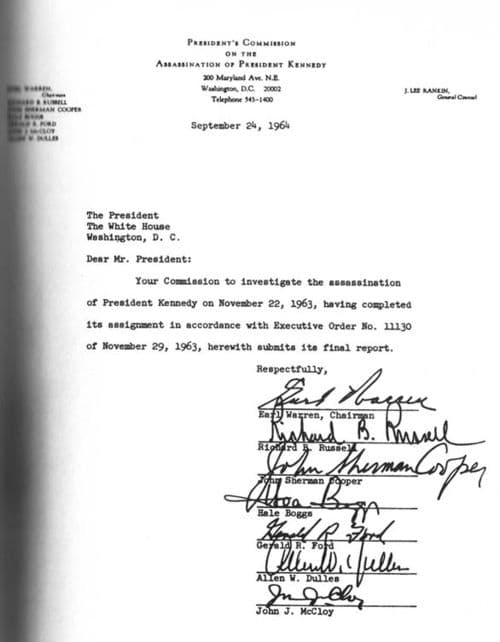
the Warren Commission
ORGANIZATION
Organization referenced in documents
The Warren Court
ORGANIZATION
Organization referenced in documents
the Yale Law Journal
ORGANIZATION
Organization referenced in documents
Tison Brothers
ORGANIZATION
Organization referenced in documents
US Court
ORGANIZATION
Organization referenced in documents
US Customs
ORGANIZATION
U.S. Customs service
Wharton
ORGANIZATION
Organization referenced in documents

WikiLeaks
ORGANIZATION
Organization that publishes leaks provided by anonymous sources

Wiley
ORGANIZATION
American multinational publishing company

Yale Law Schools
ORGANIZATION
Organization referenced in documents

Yale University
ORGANIZATION
Private university in New Haven, Connecticut
Yale University Press
ORGANIZATION
University press associated with Yale University
Yeshiva Etz Chaim
ORGANIZATION
Tree of Life in Hebrew
Yeshiva High School
ORGANIZATION
Educational institute combining a Yeshiva and high school
Yeshiva University
ORGANIZATION
Private university in New York City
Yeshiva University High School
ORGANIZATION
Yeshiva high school in Los Angeles, California, United States

Zenith
ORGANIZATION
Organization referenced in documents
Zhe New York Times Magazine
ORGANIZATION
Organization referenced in documents

Bay of Pigs
LOCATION
Location referenced in documents
Borough Park
LOCATION
Neighborhood in New York City
Brookline
LOCATION
Town in Massachusetts, United States

Central Park
LOCATION
Public park at the center of Manhattan in New York City, New York, United States

Cincinnati
LOCATION
City in Ohio, United States; county seat of Hamilton County

Columbus
LOCATION
Capital city of Ohio, United States of America

Concord
LOCATION
Capital city of state of New Hampshire, United States; county seat of Merrimack County, New Hampshire

Coney Island
LOCATION
Coastal neighborhood in Brooklyn, New York City, New York, USA
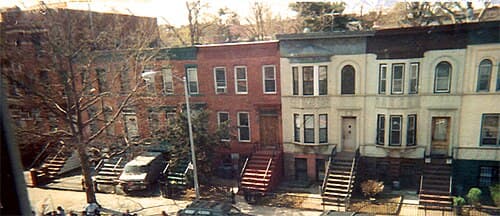
Crown Heights
LOCATION
Neighborhood of Brooklyn in New York City, USA

Dallas
LOCATION
City in the state of Texas, United States
Durham
LOCATION
Ceremonial county in North East England, United Kingdom

Eastern Europe
LOCATION
Eastern part of Europe
Ellis Island
LOCATION
Island in New York Harbor in the United States of America

Galicia
LOCATION
Autonomous community of Spain
Griswold
LOCATION
Town in Connecticut, United States
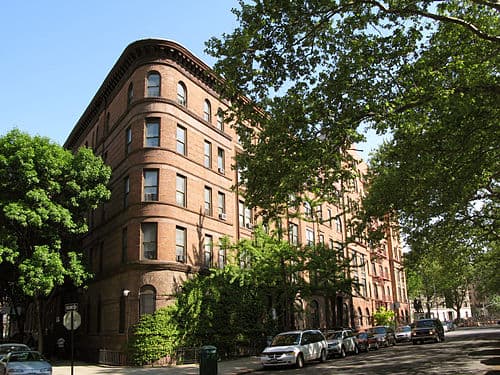
Harlem
LOCATION
Neighborhood in Manhattan, New York City, New York, United States

Havana
LOCATION
Capital and largest city of Cuba

Hobbs
LOCATION
City in New Mexico

Hoboken
LOCATION
City in Hudson County, New Jersey, United States
Houston
LOCATION
Seat of Harris County, and largest city in State of Texas, United States
Hyattsville
LOCATION
City in Prince George’s County, Maryland, United States

Jerusalem
LOCATION
City in the Middle East, holy to the three Abrahamic religions
Lakewood
LOCATION
City in Jefferson County, Colorado, United States

Long Island
LOCATION
Island in New York, United States of America
Lower East
LOCATION
Location referenced in documents
Madison
LOCATION
Capital city of Wisconsin, United States
Meadowlands
LOCATION
Location referenced in documents

Middle East
LOCATION
Geopolitical region encompassing Egypt and most of Western Asia, including Iran

New England
LOCATION
Region of the northeasternmost United States

New Haven
LOCATION
City in Connecticut, United States

Northeast
LOCATION
Directional region of the United States
Nuremberg
LOCATION
City in the German state of Bavaria
Palo Alto
LOCATION
City in Santa Clara County, California, United States
Philadelphia
LOCATION
1993 film by Jonathan Demme
Pioneer
LOCATION
Community in Amador County, California, United States

Providence
LOCATION
Capital city of Rhode Island, United States
Rockaway
LOCATION
Neighborhoods of Queens in New York City
Schul
LOCATION
Location referenced in documents
Shabos
LOCATION
Human settlement in Koverninsky District, Nizhny Novgorod Oblast, Russia

Skokie
LOCATION
Village in Cook County, Illinois, United States

South
LOCATION
Directional region of the United States

Springfield
LOCATION
County seat of Hampden County, Massachusetts, United States
St. Peters
LOCATION
City in Missouri

Sydney
LOCATION
Capital city of New South Wales, Australia
the Bay of Pigs
LOCATION
Location referenced in documents
the Cape Cod National Seashore
LOCATION
Location referenced in documents
the Catskill Mountains
LOCATION
Location referenced in documents
the District of Columbia
LOCATION
Federal district, capital of the United States
the Hague
LOCATION
Location referenced in documents
the Land of Israel
LOCATION
Location referenced in documents
the Soviet Union
LOCATION
Former country, now part of Russia and other nations
the West Coast
LOCATION
Directional region of the United States
Union City
LOCATION
City in the northern part of Hudson County, New Jersey, United States

United States
LOCATION
Country located primarily in North America

Vietnam
LOCATION
Country in Southeast Asia
Webcote
LOCATION
Location referenced in documents
Williamsberg
LOCATION • 2 mentions
Location referenced in documents
Yugoslavia
LOCATION
1918–1992 country in Southeastern Europe
Statistics
Pages:100
Entities:627
Avg. OCR:95.2%
Sponsored