HOUSE_OVERSIGHT_015675_sub_004 - HOUSE_OVERSIGHT_016074
Document Information
Bates Range
HOUSE_OVERSIGHT_015675_sub_004 - HOUSE_OVERSIGHT_016074
Pages
100
Source
House Oversight Committee
Original Filename
AreTheAndroids_James Tagg_small_p2.pdf
Document Content
Page 301 - HOUSE_OVERSIGHT_015975
Chapter 13 HY PER- COMMUNICATION World Wide Communication HOUSE_OVERSIGHT_015975
Page 302 - HOUSE_OVERSIGHT_015976
“The single biggest problem in communication is the illusion that it has taken place.” George Bernard Shaw HOUSE_OVERSIGHT_015976
Page 303 - HOUSE_OVERSIGHT_015977
ach Christmas I buy the Private Eye annual (an English satirical mens only to be slightly disappointed when much of the humor falls flat, yet I can watch the TV current affairs quiz “Have I Got News for You’ featuring its editor and be reduced to tears of laughter. Being at a live recording of the show is even more powerful. Why is this? Why is the experience and effect so different? Is it just the sense of occasion when I go to a live show or is there something more to shared experience? We appear to learn more from lectures delivered in person than reading the lecturer’s book, or even watching the same lecture recorded on video. Studies show children who are read to by their parents do better than if they are left to follow along with a CD. Two groups of children were tested on two made-up words used in a story. The children read to by their parents had an 80% recall rate, while children who followed the CD only 17%. This is a big disparity. The simplest explanation is that the children who were read to pay more attention. Are there other effects? ee) es @ = &- {iw “aes ae PS # IMAX HOUSE_OVERSIGHT_015977
Sponsored
Page 304 - HOUSE_OVERSIGHT_015978
288 Are the Androids Dreaming Yet? Most scientists believe communication between humans is classical: words spoken in proximity have no more power than had we carefully written out what we wanted to say. Body language and tone of voice are simply useful tools to aid the transmission of this information. I’m going to explore the ways in which human face-to-face communication might exceed this traditional classical model. Let us look first at the bandwidth of communication between people. Bandwidth Let me give you a mental picture for what I mean by bandwidth. Imagine Iam sitting in a darkened theatre enjoying one of my favorite comedians at the Edinburgh Festival — the biggest arts festival in the world. I phone a friend who is also a fan and let them listen in. Perhaps I even use the camera and surreptitiously point the phone at the comedian. My live experience is digitized, compressed and transmitted over the mobile network to my friend. He gets the same experience but at much-reduced bandwidth. My friend has a similar but qualitatively different experience to mine. He cannot hear the degrees of loud and soft I hear, nor the full range of high and low frequencies forming the timbre of the comedian’s voice; no sense of the smell of old armchairs or the heat of the audience around me. He is spared the strange stickiness my shoes meet on the floor of the auditorium and the occasional slosh of beer that hits me froma slightly inebriated neighbor. For the person at the other end of the phone, their view is of a tiny two-dimensional screen about 4 by 3 inches square. Of course, they can enlarge the picture, but then the pixilation dominates and it looks like an impressionist picture viewed close up. He has nothing like the same intensity of experience. Loss of bandwidth is something we can study mathematically and the reduction is enormous. Video and Audio The image of the comedy show is digitized by the camera and microphone; the video at 384,000 bits per second and the audio at 64,000 bps. Mathematical compression will be applied and the video will shrink to 30,000 while the audio drops down to 4,700. After compression, the whole experience amounts to around 40,000 bits per second. To put it in some perspective, a DVD would be 11.5 million bits per second, nearly 300 times the bandwidth. HOUSE_OVERSIGHT_015978
Page 305 - HOUSE_OVERSIGHT_015979
Hyper-Communication 289 My in-person experience has much higher bandwidth than even a DVD. It may even have infinite bandwidth. Physicists argue whether space-time is quantized but, for now, we will look at what would be needed to reproduce the experience faithfully on modern digital recording equipment. Digitization When something is converted to digital form, it goes through a number of steps. First, some way must be found to chop the thing into small parts in space and time. Then each of these parts is sampled with a sensor to give an electrical signal and, finally, this signal is measured and turned into a number. Old microphones used carbon granules. As the sound waves passed through them, the granules were shaken and made better contact with each other. Connecting a battery across the granules gave a varying voltage. Modern microphones use a variety of technologies. The preference of most recording artists today is the electret microphone. A coil moves inside a magnet generating a varying voltage which is translated into a voltage as before. Next we use a fast running clock and measure the voltage on each tick giving us a sequence of numbers. We have created a near perfect record of the sound, and we can prove this by recreating the sound through a loudspeaker. This is what happens every time you listen to your iPod. To digitize film, each frame must be split in space as well as time. On each tick of the clock, a process scans left to right and top to bottom to form a one-dimensional stream of numbers that records the image. The system cuts the picture up into little elements called pixels, standing for picture elements. Each small square has its average color measured for red, green, and blue content coded as a number. Digitization techniques have become the dominant way electronics work in the home, and digitization circuits are now ubiquitous. Reality How big is reality? Setting aside for a moment the problem that it might be infinite, we need to reproduce all the elements that go to make it up. A normal DVD has an image of 720 by 576 pixels with 16 bits of color depth and a frame rate of 25 frames per second. The eye, however, is considerably better than this and a DVD does not fool it. HD video HOUSE_OVERSIGHT_015979
Page 306 - HOUSE_OVERSIGHT_015980
290 Are the Androids Dreaming Yet? is 1900 by 1000 pixels with 32 bits of color depth and 100 frames per second. This is a great deal better — if you enjoy watching sport or nature documentaries, the additional resolution is amazing. This still falls far short of reality. An IMAX theatre gives a wrap-around image of about 10,000 by 7,000 pixels and comes closer to the average resolution of the human eye, estimated at about 30,000 by 20,000 pixels. But the eye cheats. It concentrates the rods and cones in the central portion of the retina. Although IMAX achieves the average pixel density of your eye, it comes nowhere near the peak density which is nearly 10,000 times greater. For a truly equivalent experience, we would need about 320 million pixels per eye at a frame rate of 120 frames per second, allowing us full stereo synthesis. At this speed and resolution, we are matching the visual acuity of the eye and should be able to fool it completely. But there is one more problem to overcome: The image is not interactive. Move your head in the real world and the image will change. The objects in the foreground will vary their position in relation to the background, so- called motion parallax. Try it now, move your head and you will see that the book, or screen you are reading moves in relation to the background. In a simple digitized 3D image this will not happen. You will have a 3D image but you will not have a real image, a light field. To create a real image you need to view a hologram or use head- tracking technology. A hologram records the light waves given off by an object in multiple directions rather than just the intensity of the light striking the camera through a single focal point. When you shine a laser back through the hologram, it regenerates the light waves as they would have originally come from the object. That light can be viewed from different directions, giving the impression of three dimensions rather than a mere two-dimensional photograph. There is often a limitation in viewing angle because the original photographic plate must wrap all the way around an object to capture the full 3D light field, but the illusion is very convincing. A more effective way to create a real experience — and one with no restriction on viewing angle — is to construct the image in a computer and track the movement of your head. The computer can create the two-dimensional images each eye would see if the scene were truly three-dimensional. Computer software resolves motion parallax and a host of other elements, but to do so the computer must understand a model of the world so it can calculate how the scene would look from a particular angle and in the appropriate lighting. Some recent games such as Activision's ‘Call of Duty’ do this, and the experience is compelling. HOUSE_OVERSIGHT_015980
Sponsored
Page 307 - HOUSE_OVERSIGHT_015981
Hyper-Communication 291 Hologram There are still problems. The image is stereo but planar. All the light coming into your eye comes from the screen a meter or so away. In the real world objects need you to change the focal length of your eye to bring them into sharp focus depending on their proximity. Try looking at your hand as you move it towards and away from your face, too close and your eye can't pull focus any further and it will blur. This mismatch between focal depth and the apparent distance implied by motion parallax is one of the reasons you can get headaches watching 3D images. There is something not quite right about them and your eye has to learn a new behavior. Audio Field Our poor friend at the end of the phone is listening to a mere 4700 bits per second rendition of the comedian. A compact disk is 64,000, 16- bit samples per second in stereo, over a million bits per second. So the information content of a mobile phone call is very low. It is a miracle you can understand speech at all over such a narrow channel, but this is made possible by two factors. First, human speech uses a limited range of frequencies. All the information in our voices lies within about two octaves centered on middle C. And, second, you can perform some HOUSE_OVERSIGHT_015981
Page 308 - HOUSE_OVERSIGHT_015982
292 Are the Androids Dreaming Yet? clever mathematics to generate speech from seed information. For a given speaker the vowel ‘a might be 20% middle C, 50% F and 25% A, with a few other things thrown in for good measure. We can transmit this information and ask the computer at the other end to re-synthesize it. This is what happens when you listen to someone on a modern phone. You do not hear their actual speech, you listen to a computer synthesizer make a near approximation. CD is no longer the gold standard for sound. Professional audio has standardized on 24 bit recording which is probably far beyond the limit of the human ear. An audio soundtrack is doing a good job at 2 million bits per second. Sitting perfectly still in the middle of a room, each ear will pick up a different signal if the source is not directly in front of us. The two ears on a human head face a little forward, and the hair on your head slightly absorbs sound. We can calculate the source of the sound by the slight difference in the times at which it strikes each ear, and the variation in frequency content. We can use these two pieces of information to determine the direction from which a sound is coming. It was useful for our ancestors to be able to tell where the saber-tooth tiger was hiding. We can gain more accurate information by turning our heads from side to side. The differences in frequency and timing should vary as we do so and we gain a little more data to perform the calculation. If we walk through the room we sample yet more of the soundscape and this can be used to pinpoint the exact location of the source. As we move, we expect the sounds we hear to change subtly according to the mental model we use for locating objects in the soundscape. To give the illusion of a soundscape modern systems use multiple microphones to capture the sound, so it can be reproduced on multiple speakers. Ideally, we would record a hologram of the sound but it is possible to record on thirty or so microphones and mix the tracks down to 5 or more channels giving us the sound experience we now expect at a modern cinema. What is the Bandwidth of Life? We have not yet talked about the other senses; smell, vibration, temperature, balance, wind chill, and touch. In all, there are over 25 senses that must be stimulated accurately to simulate reality. Just think for a moment how much information must be replayed to reproduce the sensation of bungee jumping off a bridge in the jungle or taking off into HOUSE_OVERSIGHT_015982
Page 309 - HOUSE_OVERSIGHT_015983
Hyper-Communication 293 space, or giving birth. To digitize life completely, we need to stimulate every relevant nerve ending in the human body in real-time — skin, ears, eyes, balance, pain centers, and so on. At the low end, a ‘perfect? IMAX production would require 360 degree stereoscopic projection and the generation of a full sound field. This would take 3 Gigabits per second for the audio field and 5,600 terabits per second for the video field. This could be substantially reduced if the person wears virtual reality glasses to track their head and eye move- ments, but then you are substituting resolution with computer power. At the high end, a team at the US Department of Energy’s Fermilab estimate reality needs one hundred trillion samples per inch for a ‘simple quantum representation. If we look at the many worlds view of quantum mechanics, each photon hitting our eye can’t be fully described by a single number. The photon may be entangled with other realities we should keep track of. This causes our picture of reality to become wildly complex. Everything we might see and experience is in some way a combination of possibilities, and these possibilities all interact. Real life is very complex. Symbolic Communication Computers have no concept of an in-person meeting. They communicate using purely symbolic methods in binary numbers. These have the same meaning whether communicated over a short piece of wire or using a fiber optic cable half way around the world. Computers never have to communicate understanding to each other because they use programs and a program can be perfectly transmitted. Body language is, of course, completely alien to them! We know there are non-computable things; functions, numbers, musical melodies, and mathematical puzzles. Why would there not also be a place for non-computation in communication? David Deutsch has suggested human creativity is used to guess the ‘program’ running in someone's mind, and evolved so we can learn skills. Instead, might face- to-face communication be important because it lets us impart knowledge in a non-symbolic manner? Hyper-communication As with hyper-computing, hyper-communication is controversial. We instinctively know human communication is very different to computer communication. Face-to-face communications have a qualitatively HOUSE_OVERSIGHT_015983
Sponsored
Page 310 - HOUSE_OVERSIGHT_015984
294 Are the Androids Dreaming Yet? different feel to them. My question is this. Is there more to face-to-face communication between human beings than the simple exchange of symbolic information? Let us propose an experiment. I erect a 3D screen with a hi-fi surround sound system in a university lecture hall and deliver a lecture to a camera in the adjacent hall. Half the students see the lecture directly, and half remotely. With modern screens, it might be possible to set up the experiment so well that is difficult to tell which hall I am actually in. Is the experience of the remote students the same as the ones sitting in direct proximity with me? Do mirror neurons fire more strongly and pick up more information when you see me in the flesh, or is the feeling that a lecture is better when you are ‘physically there’ an illusion? You are perhaps less likely to fall asleep in my lecture if you are physically there because you are afraid I might walk over and hit you! What possible non- classical effects could be in play when you see an event or communicate in person that might make the communication different? Here are two potential differences: Information in a face-to-face encounter is continuous, not digitized. Continuous information is infinite in nature and does not have the finite limitation of digitized data. Of course, if we have digitized the sound at 24 bits and replayed it with extreme fidelity, there should not be any loss in information, but the interactivity of the soundscape is hard to simulate. Light entering your eye contains information that could be quantum entangled with the object you are viewing. You become part of the system rather than merely an independent observer. It is difficult to see why this would produce a different quality of communication but it is testable. Set up the lecture experiment and measure the quality of understanding communicated between the parties. If we believe our brains are super-Turing, then considering there might be some similar effects involved in human communication is not unreasonable, perhaps quantum effects play a role in communication. If we conclude our brains think classically, then we probably communicate classically. HOUSE_OVERSIGHT_015984
Page 311 - HOUSE_OVERSIGHT_015985
Chapter 14 CREATIVITY Thomas Edison, his wife and a Light Bulb HOUSE_OVERSIGHT_015985
Page 312 - HOUSE_OVERSIGHT_015986
“Creativity is allowing yourself to make mistakes. Art is knowing which ones to keep.” Scott Adams “Invention is 1% inspiration and 99% perspiration.” Thomas Edison “Creativity is just connecting things. When you ask creative people how they did something, they feel a little guilty because they didn't really do it, they just saw something. It seemed obvious to them after a while. Thats because they were able to connect experiences they've had and synthesize new things.” Steve Jobs HOUSE_OVERSIGHT_015986
Sponsored
Page 313 - HOUSE_OVERSIGHT_015987
Our job, as humans, was to look at the earth and discover things about it. When we looked at light passing through water or built a boat to travel on it, we were discovering, not inventing. Shipwrights did not invent boats they were simply building inevitable forms. Everything there was to know already existed, we just hadn't realized it yet. Of course, Greek playwrights were busy ‘creating the first plays; tragedies, comedies and the like, but serious thinkers thought of them as documenting the human condition. It wasn't until the Renaissance, 1500 years later, that humans began to appreciate that they create knowledge, and this started us on our quest to understand creativity. One of my childhood memories is sitting on the kitchen floor with a glass of water and surrounded by knives and milk bottles. I was trying to solve one of the problems from Edward de Bono’s book on lateral thinking, A Five-day Course in Thinking. De Bono, now in his 80s, is a prolific writer with over 60 publications to his name - all aimed at r Whe ancient Greeks believed there was no such thing as creativity. making us more creative. His books pose a series of practical problems, each needing progressively greater creative intelligence. The particular problem I was trying to solve was to balance a glass of water on knives suspended from four milk bottles. It took me after 2 hours. Steve Jobs shows the iPhone HOUSE_OVERSIGHT_015987
Page 314 - HOUSE_OVERSIGHT_015988
298 Are the Androids Dreaming Yet? Except for De Bono there is not much written about creativity in books or on the Internet, but if you dip into the video archive, the discussion really opens up. Perhaps this is a feature of creativity; it’s easier to explain in person. Of course, I have taken on the writing task with this book but I have the benefit of modern day resources such as multimedia, interactivity, and the web. Some people appear to have creativity in abundance and the things they create are truly wonderful. I’m thinking here of Picasso, Einstein, Mozart, Edison, or Maxwell, but a precise definition of creative thinking is hard to pin down. Here are some generally accepted categories: Divergent Thinking The first sort of creative thinking we recognize is divergent thinking, often called brainstorming. This is the art of coming up with ideas — lots of them. A quick way to test your skill is to take a minute, and list all the possible uses for a paperclip. Try it! J In 60 seconds write down all the uses for a paper clip you can think of. Time yourself. HOUSE_OVERSIGHT_015988
Page 315 - HOUSE_OVERSIGHT_015989
Creativity 299 ANSWER WITHOUT READING ON This is the classic test of creativity developed by J.P. Guilford in 1967. It is called the Alternative Uses Task. You can try the task with many objects: bricks, chairs, even water. How did you do on your first attempt? 8 to 10 uses is about average, 20 is extremely good. It’s possible to teach most people to get near twenty and [ll show you how to do this in a moment. Another test of idea generation is to draw 30 things in 30 circles. Thirty is such a large number it forces us to come up with some nutty ideas and break our natural tendency to self-censor. For example, I'd like you to create logos or logo ideas, for a new coffee company in your circles. The test is best done without a time limit so now is the time to break off reading and make yourself a coffee. Then come back and draw 30 circles on a piece of paper. Fill in the circles. MAKE A COFFEE, THEN START DRAWING. The aim of brainstorming is to remove our inhibitions and get us to generate a mass of ideas. In normal life, we tend to suppress ideas even before we are consciously aware of them. Sir Ken Robinson has researched creativity in children and found the ability to brainstorm reduces linearly with age. At five or six, children given one of these divergent thinking tasks come up with many creative solutions: fold the paper clip into a dinosaur, and use it to attack your friends, get two and use them as chop sticks. As adults, we tend to disqualify ideas. You could never fold a paperclip that tightly or accurately, we said, “a” paper clip not two. But, you can fold a paper clip tightly, and the room you are doing the test in has thirty paper clips and thirty people in it so just team up with a friend. I never said this was a solo task! Do you see how you impose nonexistent rules on your thinking, particularly the implied rule of not working with others? I did not say this test was subject to examination conditions. The first twenty years of our lives teaches us to work alone on intellectual tasks, yet when we get to the workplace we can, and indeed must collaborate to succeed. Now you have an idea how to ace the paper clip test: don’t censor yourself and don't imply rules I have not imposed! HOUSE_OVERSIGHT_015989
Sponsored
Page 316 - HOUSE_OVERSIGHT_015990
300 Are the Androids Dreaming Yet? TRY THE PAPER CLIP TEST AGAIN! Divergent thinking is rarely the final goal; it is rather a jumping off point for the creation of something new, like a solution to a mathematical puzzle, a painting, or a novel invention. The exercises allow us to explicitly see one of the early creative steps — idea generation before the pruning step. But most creative people often just create, they don’t follow a scripted process. The term ‘the creative process’ is a great misnomer. There is no process that actually creates. Process merely puts us in the right frame of mind to do so. Processes are useful for framing a problem and ensuring we have all the right tools at our disposal: good crayons, some nice art paper, a hot cup of coffee. But process must be put to one side at the moment of actual creation. Convergent Thinking Convergent thinking is the opposite of divergent thinking. It focuses on discovering the final solution to a problem rather than generating precursor ideas. Some creative people only use this method, avoiding laborious processes such as brainstorming. Tests of skill for convergent thinking generally pose puzzles where there is only one correct answer, but one that requires a non-linear step. Here’s a really simple convergent thinking puzzle to try. It only requires a piece of paper and pen. Draw a circle on a piece of paper with a dot in the center. It should look like this. Do NOT take the tip of the pen off the paper until you are finished. HOUSE_OVERSIGHT_015990
Page 317 - HOUSE_OVERSIGHT_015991
Creativity 301 TRY ANSWERING IN YOUR OWN TIME Another famous, but clichéd, problem is of you to draw four straight lines through these nine points without lifting the pen from the paper. Can you do it? e ° ° e e ° * e e TRY ANSWERING IN YOUR OWN TIME I won't put the answers here, or even a hint. It’s quite famous and many of you will be familiar with them. The answers are buried on the website, and for those of you who already know the solution, there are some alternative problems. If you can’t immediately solve a problem, think about it overnight. It’s worth seeing what your brain will do while you are asleep! The Science of Creativity The first person to theorize about the creative process was Graham Wallas, the co-founder of the London School of Economics. In his book The Art of Thought, he proposed a five-step model for creative thinking. First preparation, when you become fully acquainted with the problem and its domain. Then incubation; walk the dog or make a cup of tea. After the meditative incubation phase you may get a gut feeling that a solution is on its way. Wallas called this third step intimation. It’s left out of many modern versions of his theory, but I think it’s an important step. Shortly HOUSE_OVERSIGHT_015991
Page 318 - HOUSE_OVERSIGHT_015992
302 Are the Androids Dreaming Yet? = 3 —————————_ Eureka after this you get that Eureka moment - illumination or insight where the creative idea bursts forth into your conscious awareness. The idea must finally be verified. Many of our ideas will turn out to be mistakes, but that’s part of creativity. In the nearly hundred years of investigation since Wallas proposed this theorem, we have not moved much further forward in understanding creativity. Alan Turing described his thoughts on the science behind creativity in a short piece he wrote about decision making: “When making a decision of minor importance, I have always found it advantageous to consider all the pros and cons. In vital matters, however, such as the choice of a mate or a profession, the decision should come from the unconscious, from somewhere within ourselves. In the important decisions of personal life, we should be governed, I think, by the deep inner needs of our nature.” HOUSE_OVERSIGHT_015992
Sponsored
Page 319 - HOUSE_OVERSIGHT_015993
Creativity 303 Later in his career he came to believe machines would become intelligent and this sort of intuitive thinking could be effectively performed by a computer. As you know, I don’t agree with his later viewpoint. Another person who has thought long and hard about creativity is John Cleese, the comedian and actor. He describes the process wonderfully in a number of talks which you can find on YouTube. He finds a lot of his creativity emanates from his unconscious rather than conscious thought processes. To optimize this he needs large uninterrupted blocks of quiet John Cleese on Creativity HOUSE_OVERSIGHT_015993
Page 320 - HOUSE_OVERSIGHT_015994
304 Are the Androids Dreaming Yet? time. Often, if a problem seems impossible, he will sleep on it. When he wakes the next morning, he will frequently find the problem has solved itself and a solution is ready at hand. Art The final class of creative thinking we generally recognize is artistic skill. This is probably a form of convergent thinking, except both the problem and the solution are open. Good artists are considered highly creative and most people tend to agree on what constitutes good art. There are some arguments but they are usually more about genres. I might not appreciate modern installation art, even to the point of declaring it, “not art” But, when forced to ignore their prejudices most people tend to agree on the distinction between good and bad. Painting, sculpture, music, architecture and poetry are the traditional fine arts. There is often some argument over architecture: is it not too ‘functional to be considered an artistic endeavor? After all, art is not supposed to have any purpose other than to be, well, art. This definition inevitably leads to arguments about whether bad art is still ‘art’ Art should be artful and how do you arrange a pile of used tires artfully? But this isa very narrow definition. I prefer to define art as something that provokes an emotional response in the beholder. Using this definition, the fact that a pile of tires disgusts and annoys you is exactly the point. Perhaps a more ‘enlightened’ viewer than you is intrigued by the clever use of materials. Regardless, we consider art to be a creative endeavor and we can measure it using the criteria of novelty and quality. Since most people agree on these measures for a given piece of art, we can use the wisdom of crowds to give us a scientific scale. That does not mean there won't be art that you love but which leaves me cold. That is the joy of it. Novelty and quality are not the same as joy and pleasure, far less the tingle factor. A quick test for artistic skill is to take a pen and paper and turn to the person sitting on your left and try to sketch them. TRY IT! HOUSE_OVERSIGHT_015994
Page 321 - HOUSE_OVERSIGHT_015995
Creativity 305 If you tried, you and your neighbor would probably find the results rather humorous. But, most likely, you did not follow my instruction. This is a form of social self-censorship. I asked you to do something rather difficult and embarrassing, but very creative and likely to enlighten you. Sadly most people — I am no exception — tend to censor their creativity for fear of embarrassment. Children, of course, do not sensor themselves as much as adults. Now you know how to be more creative. Find your inner child and don't censor yourself too much! What Sparks Creativity As an inventor, I’m often asked what makes me creative. How do I do it? The answer is, I have no real process. After all, a process is mechanical and this entire book has been about exploring how creativity is a non- mechanical task. However, there are many things you can do to unleash your creative potential. New ideas are often sparked through linking disparate ideas. Expose yourself to as many ideas as you can, read widely, attend conferences, visit customers. Creativity requires peace and quiet. I personally get up early every morning. This gives me a good two hours of uninterrupted time every day. It’s also the part of the day when my brain works best. Others prefer to work late into the night. Pressure, for me and for many people, is a great incentive. Tales of the Polish Enigma code breakers, Douglas Adams’ writing deadlines and the fear of impending death in shark attack stories all force people to think in an accelerated way. This appears to help many people defeat the human tendency to prevaricate. On the other hand avoid panic. While a level of pressure can help, panic is unproductive. There is a sweet spot between having enough time to get properly acquainted with a problem and an impending deadline to force the crystallization of ideas. This balance varies from person to person and is something you need to test for yourself. You need time off. Once you have a well thought out idea, you may need to leave it alone for a while to allow your subconscious to work. Time off does not need to be two weeks at the beach. Charles Darwin and Benjamin Britten used to go for long walks. You can walk in Darwin's footsteps at Down House in Kent. Others such as John Cleese HOUSE_OVERSIGHT_015995
Sponsored
Page 322 - HOUSE_OVERSIGHT_015996
306 Are the Androids Dreaming Yet? like to ‘sleep on it. Stephen Hawking distracts himself by working on a different problem for a while. Anything that avoids focusing directly on the problem itself seems to allow our creative freewheel run. Environment can be important. The campuses created by Steve Jobs for both Apple and Pixar are designed to foster creativity. The physical environments build team behavior but also cause people to bump into each other. Cross-pollination drives creativity. There are also some myths to dispel about creative people. Inventors are portrayed as eccentric and hopelessly disorganized, but Feynman kept notes of every idea he ever had. I have kept a series of notebooks, now computer based, since J left university. I still have almost all of these ona shelf at home. Creative people may be a little mad, but the successful ones are rarely disorganized. You must allow your brain to free wheel. J.K. Rowling has said the characters in the Harry Potter novels write themselves. I come to my computer each morning having not thought too much overnight and just write. Creation is just that; you must allow yourself to do it. It’s not a process. The Innovator’s Dilemma Why don't big companies create? In 1997, Clayton Christensen of Harvard Business School wrote The Innovator’s Dilemma, the seminal work on creativity within organizations. In it, he shows us why established companies tend not to innovate and why startups exist. Christiansen’s academic research examines how companies handle discontinuous change in technology, focussing on the hard disk industry. You might not think this a very sexy sector. Microprocessors and game consoles would be more fun, but the great advantage with the hard disk is there is a single industry journal that has tracked the progress of every player over 30 years, collecting detailed annual data on every facet of their business. For an academic, this is gold dust. IBM invented the hard disk drive in their research center near Winchester, England. The first prototypes were, consequently, called Winchester Drives. When Christiansen examined the industry, he found something very strange. As the size of disks reduced first from 8” to 5%” and then from 5%” to 3%”, the dominant players in the previous era went out of business and new startups colonized the market. This fallout was not confined to a few small companies. It affected large, well- established, publicly-listed organizations, too. They failed en masse at each discontinuity. At first this made no sense to him. Surely a skilled HOUSE_OVERSIGHT_015996
Page 323 - HOUSE_OVERSIGHT_015997
Creativity 307 Fae Vg v0 L (Be) ely PS ie eB aha pe ia | RA a1 Hard Drives hard drive manufacturer would be the obvious group to construct the next generation. But it seemed that not only did incumbent players not construct the next generation, they ran their businesses into the ground while ignoring the technology discontinuity. Despite their legions of Ivy League graduates and business school MBAs, they all went bankrupt. As he looked around the economy, he found a similar pattern in other sectors. Minicomputer companies failed to make the jump to personal computers. Further back in time, buggy whip companies — in the Fortune 100 at the turn of the 20" century — failed to make the transition to the motor vehicle economy. The only exception he could find was IBM. IBM had successfully navigated some transitions but at that time was fighting for survival as companies transitioned from mainframes to Linux based servers and their survival was in question. Why was this so? Christensen’s conclusion is that established companies tend to concentrate too much on their existing revenue streams while ignoring potential new ones. This is no surprise. When the disc drive industry made the move from 8” disks to 54”, the only customers for these new new smaller models were unheard of manufacturers of personal computers. Some were based in the dorms of MIT and Harvard — Dell and Compaq -— not in the existing powerhouses of computing — Digital HOUSE_OVERSIGHT_015997
Page 324 - HOUSE_OVERSIGHT_015998
308 Are the Androids Dreaming Yet? Equipment and Wang. New technology often underperforms the existing forms. 544” drives were slower, less reliable, and cost more per bit than their 8” predecessors but, of course, in one respect they were better. They were smaller and lighter and could fit in portable computers. The new technologies did a different thing in a different way, and overcame their disadvantages later. This chain of events is repeated many times over: Yellow Pages overtaken by Google, Borders by Amazon, Blockbusters by Netflix. Disruptive innovation changes the rules of the game as well as the pieces in the game. Christensen’s advice to companies is to separate your innovators from the existing business because their priorities will differ too greatly. Modern companies build entirely new divisions to create new products, or set up innovation labs to incubate ideas that would otherwise never get enough resources. Reward for Creativity There's no doubt society values creativity very highly. One of the first tasks Thomas Jefferson undertook when he became President of the United States was to set up a patent system. He remained head of the patent office for over ten years. These days, the protection of creative Harold Cohen, Computer Art HOUSE_OVERSIGHT_015998
Sponsored
Page 325 - HOUSE_OVERSIGHT_015999
Creativity 309 ideas through patents, copyright, and trade secret is big business and combines to form the practice of ‘intellectual property. Societies with the best protection of intellectual property are often the most successful. The USA is the unassailed leader, with Asian countries rapidly catching up. Poor old Europeans have struggled with an almost unworkable patent system for nearly 30 years; a genuine Europe-wide patent only came into effect in 2013. Creativity in the economy is now extremely important, and nothing emphasizes the point more than the job market. During the 60s finding a job was easy. There was an almost unlimited range of mechanical jobs on offer. In the post-industrial age, almost all the mechanical jobs have gone. Today we need to be experts in a field, able to solve problems creatively. You can't expect to walk into a job and be profitably productive on the first day. Finding a job is harder and the cost of employing someone is greater. Why did we Evolve Creativity? Roger Penrose wonders why mathematical creativity evolved in humans since it only became useful in ancient Greece a few thousand years ago. He believes it must have been useful for something before this. But what? David Deutsch thinks creativity developed to allow one human to understand the thoughts of a fellow human being. We can't precisely communicate the ‘programs’ we run in our heads. We are unable to download a detailed thought and put it on a memory stick. He thinks our creative capacity developed to help us pass skills from one to another. The ability to paint and sculpt is an accidental by-product of this adaption. It's my view we evolved creativity to deal with new situations and puzzles in our daily lives. We use creative thought processes and ingenuity to come up with novel solutions for when we can't rely on programming or a store of rules. Otherwise, the very first unforeseen situation could kill us! Computer Creativity Humans find creativity difficult. It requires peace and quiet, detailed study and input of caffeine. How does a computer fare? I have argued that computers cannot be creative above the logic limit, so this does not preclude them from creating within the narrow confines of a particular solution space. But a human still needs to set the rules for this space. The level of creativity we should see from computers is convincing within HOUSE_OVERSIGHT_015999
Page 326 - HOUSE_OVERSIGHT_016000
310 Are the Androids Dreaming Yet? a limited conceptual area. Computers are not going to wake up one morning and decide to compose a breathtakingly beautiful symphony, but if we give them rules they can make a convincing version. Many computer systems have been designed to tackle creativity. We have already met the composer Emily Howell and Douglass Hofstadter’s computation program. Here are two more examples: Jape and AARON, which create jokes and art, respectively. Jape — Joke Analysis and Production Engine — is a program created by Graeme Ritchie and Kim Binsted. It generates puns, the sort of things you might find in an English Christmas cracker or children’s joke book. Pil let the output speak for itself. Q: “What is the difference between leaves and a car?” A: “One you brush and rake, the other you rush and brake.” Q: “What do you call a spicy missile?” A: “A hot shot!” One of the most enlightening examples of computer creativity is AARON - refreshingly not an acronym. His machine is depicted here and you should look up some works on the web, such as Adam and Eve, and Aaron’s Garden. The program encodes rules about figures, objects AARON - Harold Cohen, Automatic Painting Machine HOUSE_OVERSIGHT_016000
Page 327 - HOUSE_OVERSIGHT_016001
Creativity 311 and perspective. Once coded the program takes off and is remarkably creative in its compositions, without any further human intervention. However, each new capability must be hand-coded by its creator, Harold Cohen. These paintings give a good visual interpretation for the sort of latitude imposed by the logic limit. AARON can do some very impressive things, but always in a mechanical — albeit beautiful — way, within the rules set by Harold Cohen, the true artist. AARON will not suddenly awake one morning and independently decide to experiment with the color blue! To give an idea of what I mean by ‘mechanical elaboration’ in a musical context, imagine you were using a Casio synthesizer. These machines have all sorts of fun settings. You can program them to play drum tracks, fill in chords, and add a jazzy, syncopated harmonization to your melody. But none of this is truly innovative. It’s mechanical elaboration of your artistic material. Jape, AARON and Emily Howell all do the same thing within their domain. They mechanically elaborate the artistic creation of their human masters. AARON does an extremely good job of this. The Myth of the Design Tradeoff An important consequence of the non-linearity of creativity is we are not constrained by tradeoff laws. Let me explain. Volkswagen Polo HOUSE_OVERSIGHT_016001
Sponsored
Page 328 - HOUSE_OVERSIGHT_016002
312 Are the Androids Dreaming Yet? How often do you hear the phrase, “It's down to tradeoffs,” or “It’s a matter of priorities’, or even “You can't have your cake and eat it?” These stock statements misunderstand the infinitely complex nature of creativity and problem solving. Let us take a concrete example: the car. My first car was a Volkswagen Polo. It was a great little car, quite nippy, cassette-radio, and four seats. The most recent Polo has antilock brakes, airbags, NCAP 5-star crash resistance, smarter styling, and a low emission engine. Shall I go on...? The doctrine of tradeoffs says I would have to give up something to gain these new features. But, I have not. The newer Polo is cheaper in real terms than my original, as well as being better designed. Problems always have at least two dimensions of freedom. We can trade one feature for another or we can innovate to both have our cake and eat it! We are never constrained to simple on-the-one-hand, on-the- other-hand type decisions. Creativity is unconstrained by linear rules and tradeoffs. Process versus Creativity How many times have you heard the words, “We must create a process for this!” In its place, process is good; It makes things consistent, repeatable and predictable. You can follow a process by rote without error. Processes are also easy to document and communicate because they are symbolic. But process is limited. It is, after all, a set of prescribed rules for solving a particular problem — and, because of this, it falls into the same trap. A process cannot solve a problem that requires creative thought or logic more complex than the logic limit. Logical processes are useful for tracking lists. I am reassured when I get on an airplane and know the pilot has been through a preflight checklist. I would not want to fly in an airplane where the pilot announced he was taking a creative approach to the preflight check. Process is a perfect tool for organizing the steps around being creative, but it won't do the creating for you. HOUSE_OVERSIGHT_016002
Page 329 - HOUSE_OVERSIGHT_016003
Chapter 15 FREE WILL (D0 You THINK | > | | BLATE PEOPLE FOR CONTROLS WHAT | | PEOPLE DO? ( OF COURSE IT IS. BUT (50, YOU'RE SAYING THE ) | IT'S THE PART OF THE | | “FREE WILL” PART OF | | BRAIN THAT'S OUT || THE BRAIN 15 EXEMPT | | FROM THE NATURAL — Dilbert Ponders Free Will HOUSE_OVERSIGHT_016003
Page 330 - HOUSE_OVERSIGHT_016004
“We have to believe in free will - we have no choice.” Isaac Singer “Time really is an illusion - lunchtime doubly so.” Douglas Adams HOUSE_OVERSIGHT_016004
Sponsored
Page 331 - HOUSE_OVERSIGHT_016005
child grows up in poverty, their father absent, mother a drug addict. Riots break out and the child defends the local convenience store. Another child born on the same road, but from a better background, loots the store and is arrested. This scene played out on the streets of London during the summer of 2011, but similar incidents happen all across the world. People choose different moral paths; one person makes a good decision; the other, a bad one. Did they make these decisions freely or was their behavior inevitable, dictated at the dawn of time? Free will is at the heart of our justice system. It requires a crime to be intentionally committed by a person of sound mind. If I kill you in an accident or because I am mentally incapacitated, I am innocent. Of course, if I mentally incapacitate myself with alcohol I would be guilty of manslaughter, perhaps even murder. Our justice system requires a crime to be intentionally committed by a person of sound mind. Whenever we see something bad in the world we trace the events back to the thought processes which led up to it. It seems we punish the decisions in our brains leading to a crime, not the crime itself. But, in a deterministic Universe my thoughts could never be at fault. They are inevitable. “The Universe made me do it!” You need not worry about the fabric of society falling apart in a deterministic Universe. The whole of existence will play out according to a predetermined script, complete with lawyers, trials, drama and pathos. The judge, jury and executioner would also have no free will. It would look as if you paid the price for the choices you made, but this would be an illusion. The whole thing would be like one enormous screenplay. The concept of determinism goes against our conscious experience. We all have a strong sense of free will. I certainly think I have it! And this presents a problem, because the classical laws of physics say our Universe is entirely deterministic, and that free will is an illusion. I should briefly mention ‘compatibilism, a branch of philosophy that claims determinism is not at odds with free will. It argues that if I feel free and my actions do not appear constrained, then I am free even though my future might be inevitable: a sensation of freedom is sufficient. This seems rather feeble. I am seeking an explanation for how we might be truly free to choose our actions, not some linguistic trick to argue freedom is subjective. I believe true free will is a physical principle with observable effects on the Universe that would not be seen in a determined one. HOUSE_OVERSIGHT_016005
Page 332 - HOUSE_OVERSIGHT_016006
316 Are the Androids Dreaming Yet? (C bilge th Domino Toppling Determinism To firmly grasp the idea of determinism let’s look at a fun example, domino toppling. If I arrange a set of dominoes on their edge in a long line and push over the first it will fall, knock over the next, then the next, and so on until all the dominoes have fallen. It is inevitable, and fun to watch. The same is thought to happen with particles in our Universe, albeit at a much smaller scale. The laws of physics governing these particles describe precisely what will happen as they interact. Our Universe could be thought of as a mechanical clock, wound and set at the Big Bang, or a fractal equation generating the wonders we see around us. When I push over the first domino it should be possible to capture all the information about the particles in the dominoes, my hand, the table, and the surrounding environment to precisely determine what will happen next. Will all the dominoes fall perfectly, or is there a break in the pattern — one domino just a tiny bit out of alignment — which will spoil the fun? All the information is there in front of me and I should be able to predict it perfectly. The laws of physics, as we understand them, are not only deterministic, they are reversible. This means if we know the position and momentum of every particle in the dominoes and the surrounding environment, we can extrapolate their motion back into the past. It should be possible to trace back the path of each particle to reconstruct the past history of the dominoes. If we were to cast a wide enough net, and collect all the available information, we could go back and see the events in the factory where the dominoes were made, or even see the trees that was felled to make them. We would need a Jot of information and huge computing power, but we could do it! With a sufficiently powerful computer we could travel HOUSE_OVERSIGHT_016006
Page 333 - HOUSE_OVERSIGHT_016007
Free Will 317 back in time, albeit as a simulation, and relive past events. This would have no effect on the events themselves as it would be like watching a movie, but we could see every aspect of the past from any viewpoint. To perform this time travel trick for real, we would have to gather information from an enormously wide area. Information spreads out at the speed of light. One minute after the dominoes topple, the information about the event will have spread one light minute — that is over a sphere forty-million kilometers across — half way to Venus. An hour later and it would be outside the solar system. If you were to cast your net that wide, and gathered up all the information within the sphere, you could still perfectly model the moment when the dominoes were toppled. The wider you cast the net, the more information you have and the further backward in time you can travel. If you take the idea of collecting information to its logical conclusion you could gather all the information in the Universe at a moment in time. In 1814, Laplace put this idea in an essay. He proposed an immensely powerful being observes the position and momentum of every particle in the Universe. Armed with any snapshot of the Universe and the laws of physics, the entire future and the past of the Universe. The being was nicknamed Laplace’s Daemon and the idea has influenced philosophy ever since. If the Universe is predictable, our concept of time needs to be rethought. A common sense notion isthat things inthe futureare unknown and things in the past are known. But, in a deterministic Universe a daemon or a supercomputer could keep track of all the information and tell you what is inevitably going to happen. The conscious feeling we have of moving through time would be just an illusion. Past and future have no meaning and there would just be a solid, permanent block of space- time. If you stood outside the Universe and looked at this block of space- time, everything that is going to happen and has already happened is set. This is sometimes called the Block Universe Hypothesis and is the logical conclusion of any theory that imagines an entirely determined Universe. One thing that seems to throw doubt on this Block Universe Hypothesis is our personal conscious experience of the world. We experience the Universe unfolding over time. (Of course, we could have this conscious experience in a determined Universe if someone had programmed it that way. All we can say is that it seems unlikely someone would go to the trouble of giving us a completely fictitious experience. There are an infinite number of possible Universes, why pick one where we think time flows, but it does not.) HOUSE_OVERSIGHT_016007
Sponsored
Page 334 - HOUSE_OVERSIGHT_016008
318 Are the Androids Dreaming Yet? Uncertainty If youknow alittle of quantum mechanics you might imagine Heisenberg’s Uncertainty Principle comes to our rescue. Heisenberg’s principle is often misunderstood. People sometimes try to explain it as an experimental problem. If I want to measure the position ofa particle I am going to need to shine a light on it. The photons I use to illuminate the particle will knock it out of position so the act of measurement disturbs the system. This is not the Uncertainty Principle. It is a different but related effect, called the measurement problem. The muddle is really Heisenberg’s own fault. When he tried to produce a layman’s explanation he used the analogy of disturbing the particle with the photon. This is wrong. A photon would not disturb a particle enough to explain the uncertainty we find; particles are fundamentally uncertain even before we measure them. Heisenberg’s Uncertainty Principle is a quantum property, which means it makes no sense and there is no analogy I can give you to properly explain it! Here is the closest thing I can find. Imagine I am playing a musical note on a guitar. You might want to know two things about it; where exactly is the string and what pitch, or note, am I playing? The problem with these two measurements is they can't be stated at the same time. Pitch is dictated by the rate of oscillation over time: the number of times a string vibrates back and forth per second. Position is the exact location of the string at a given moment in time. IfI state the position precisely this has no pitch because pitch needs a time interval. If I allow a time interval the string will move during that time and it won't be precisely in one place. The best I can say is the string is about two millimeters above the fret board and two-thirds of the way across it. So, I hear you cry, this Uncertainty Principle means our Universe is not deterministic because it is uncertain. Unfortunately, the principle only prevents us from measuring the position and momentum ofa particle at the same time, it does not prevent the Universe knowing the information it needs to allow the particle to go about its business in an entirely deterministic fashion. There is a perfectly reliable and predictable wave function that governs the motion of every particle, just as there is an entirely predictable equation for the motion of a string on a musical instrument. If both the classical and quantum laws of physics are deterministic where does the freedom come from to make our Universe non- deterministic? There is just one place to look: you and me. HOUSE_OVERSIGHT_016008
Page 335 - HOUSE_OVERSIGHT_016009
Free Will 319 The Observer I am looking out of my office window. It is a sunny autumn day and I have a beautiful view over London, but if I squint a little I can also see my reflection. The window in front of me is not perfect. Although it is mostly transparent, the glass also reflects some of the light. If you think of light as particles, the majority of the photons go through. But some bounce back. I’m going to show you that the behavior of these photons is governed by the observer — me! The laws governing light, and most of the strange and wonderful effects it has, were first stated by Isaac Newton. Newton was an extraordinary man. He discovered many of the physical principles we use today, and his view of the Universe reigned unchallenged until Einstein’s discovery of relativity. He was also, by many accounts, a nasty piece of work. Not only was he a famous academic, he also head of the Royal Mint. He is said to have taken great pleasure in having forgers hanged on Tower Hill. He claimed the invention of differential calculus despite it being invented independently by Gottfried Leibniz. Newton managed to have himself appointed to chair the committee reviewing Leibniz’s work and determine who had come up with the idea first. Unsurprisingly, the committee found for Newton! We see Newton's laws of reflection and transmission in all manner of everyday products, for example, the antireflective coatings of camera lenses or the screen of your smartphone. Manufacturers cover the glass in these products with coatings just a few molecules thick. Interference between the layers kills the reflections. On a very expensive lens several different layers are used; some kill red light and others kill blue light. Together they suppress most of the reflection. If it were not for these coatings you would be unable to go to the park on a summer's day and read your iPad. We need to think about reflection and transmission to demonstrate our role as observers. A windowpane has two surfaces. Both surfaces reflect light, and if you look closely you will see your face is really reflected twice. You might think this is simply a double reflection but this is not so. Light behaves like waves. As with water waves, they interfere with one another. If two light waves are at the top of a crest as they meet, the result is a crest of double height. If both are at the bottom, you have a double trough, and if one is a crest and the other a trough you get nothing as they cancel each other out. You can see this effect in waves on the surface of a pond. When light strikes a window pane, the light has two chances to reflect: one from the front surface and the second from the back surface. These two reflections interfere with each other. And, again, when you HOUSE_OVERSIGHT_016009
Page 336 - HOUSE_OVERSIGHT_016010
320 Are the Androids Dreaming Yet? Wave Interference have interference you sometimes get constructive interference — the double crest or trough — and sometimes destructive interference — the crest and trough canceling each other. The reason we don’t see this effect in every reflection is because of imperfection. Windows are not perfectly flat and light is multicolored, so the effect is hard to see. But it is definitely there, and if you look really hard at a reflection in a window, you can sometimes see it at the boundary of sharp objects. The effect is very clear in the next picture which has been set up with two flat pieces of glass resting against each other. There is a tiny air gap between them. It is also commonly seen on puddles in cities. In this case the puddle usually has a slight film of oil on it. Unlike glass, puddles are perfectly flat thanks to gravity, but the oil film is thick in the center and thin at the edges. The light reflecting off a puddle will show a rainbow of colors. This is because each color is giving us a pattern of light and dark. If you look at the same puddle at night in a yellow streetlight, you will just see a monochrome pattern of light and dark. Look at the picture of waves on a pond. The patterns of light and dark are usually explained by imagining the photons interfere with each other. This explanation is insufficient. Imagine for a moment you can see as well as a frog, and perceive one photon at a time. One moonless night just one photon comes to the two glass surfaces and reflects. What happens? HOUSE_OVERSIGHT_016010
Sponsored
Page 337 - HOUSE_OVERSIGHT_016011
Free Will 321 Newton's Rings It turns out a single photon can interfere with itself! How can this be? It must somehow split up and consider both the available paths reflecting off the glass surfaces. Now that we have these two concepts in our head, that a photon sometimes reflects and sometimes does not, and a single photon must consider both paths, we can ask: what tells the photon what to do? There are only three possible answers: the light source that emitted the photon, the pane of glass that reflected the photon or the observer that saw the photon — me. The first obvious place that might control the photon is the original source of the photon; the light bulb. The photon might leave the bulb already knowing what path to follow, whether it will be reflected and whether that reflection will be affected by the gap between the two surfaces in a positive or negative way. This is sometimes called a pilot wave theory. The problem with this theory is I could insert a piece of glass into the experiment after the photon has left the light source. This will affect the photon but the light source could not have known my intention in advance and told the photon what to do. Therefore, the path of the photon is not pre-programmed by the light source. Now our photon has left the bulb and is traveling toward the glass. The glass has two surfaces. The photon reaches the first surface and has to decide if it will reflect. But there is a problem. The second surface HOUSE_OVERSIGHT_016011
Page 338 - HOUSE_OVERSIGHT_016012
322 Are the Androids Dreaming Yet? will have an effect on this decision — constructively or destructively. The photon can't make up its mind at the first surface. It has not yet seen the second surface. The photon travels on and reaches the second surface. It needs to make a decision: Shall I reflect or not? It cannot decide that it should have been reflected from the first surface because it is already at the second surface; it’s too late. The photon is stuck. It cannot make the decision at the first surface because that is too early, nor at the second surface because that is too late. The glass surfaces cannot be the source of the decision. This leaves only one remaining option: I, the observer, tell the photon what to do. The word ‘tell’ is probably a little strong. Sadly, I am not that powerful. All I can do is tell the photon to make up its mind. When the photon reaches my eye, it must decide what happened to it along the journey, but this decision appears purely random and I have no effect upon it. The best way physicists have found to describe what is going on is to say particles, such as a photons, behave according to a wave function. Particles oscillate between all the possible options available to them and when we take a measurement this freezes the oscillations and gives a single result. Where exactly is the measurement made? At my eye when the photon is refracted by the lens, when the photon enters the aqueous humor, or perhaps as it interacts with the rods and cones in the retina. Maybe we must wait until the detection of the photon is converted into an electrical impulse in the optic nerve or even the point at which my human consciousness perceives it. This prompted the physicist John Bell to ask a slightly tongue- in-cheek question, “Was the world wave function waiting to jump for thousands of millions of years until single-celled creatures appeared? Or, did it have to wait a little longer for some more highly qualified measurer — with a Ph.D.?” You see his point. Where is the bar set that defines a measurement? One of the most extreme answers to Bell's question is the strong anthropic principle. It argues humans — or at least sentient beings, perhaps even cats — cause the Universe to exist. The Universe bubbles along in a state of superposition with every possible event occurring and bifurcating until an observer emerges in one of the branches and the whole edifice collapses to that state. It is not clear if this produces many concurrent universes or if the first universe with a sentient being wins! HOUSE_OVERSIGHT_016012
Page 339 - HOUSE_OVERSIGHT_016013
Free Will 323 Solvay Conference HOUSE_OVERSIGHT_016013
Sponsored
Page 340 - HOUSE_OVERSIGHT_016014
“There is no way to understand the mechanism that turns the water of the brain to the wine of consciousness. Colin McGinn “If you think this Universe is bad, you should see some of the others.” Philip K. Dick HOUSE_OVERSIGHT_016014
Page 341 - HOUSE_OVERSIGHT_016015
Schrédinger’s Cat easurement is a big puzzle. What causes the collapse of the Mees function so that the photon stops considering many optional paths and makes a hard and fast decision. When light passes through a series of glass surfaces, it is reflected or transmitted by each. We can stack up as many pieces of glass as we want, but none of the surfaces will cause a measurement — a collapse of the wave function. It is not until the photon reaches a detector that a measurement is made and all the potential reflections and transmissions that might have happened ‘collapse’ into the one choice that actually happened. You might doubt this but there are ingenious experiments that can be performed to prove it. One is quite simple to do and can be set up on your kitchen table with a handheld laser and $100 worth of optical components. You need three ordinary mirrors and a beam splitter. Beam splitters are often made from half-silvered mirrors. They are similar to your bedroom mirror except the silver coating is more thinly applied, allowing only half the light to reflect while the rest passes straight through. Arrange the mirrors and beam splitter on a table at the four corners of an imaginary box, as in the diagram. If you point your laser at the half-silvered mirror, half the light will go straight through and half will be reflected upwards towards the first mirror. It is sent on around the square until it meets the half-silvered mirror again, and the beams meet up. You might expect that half the light reaches the detector but this is not what happens. Depending on the way the mirrors are positioned, either all the light reaches the detector, or none does. (The light does not disappear it just gets sent back to the light source, energy is conserved.) If you turn down the brightness of your laser, this does not change. Even HOUSE_OVERSIGHT_016015
Page 342 - HOUSE_OVERSIGHT_016016
326 Are the Androids Dreaming Yet? <§¥—_ — —_> Half silvered Mirror Light — ¥ Detector Interferometer if only one photon is traveling at a time, still no light comes out in one direction and all the photons come out the other. The wave functions of each photon interfere with each other constructively or destructively. The only conclusion available is the photon must be traveling along both paths! They are said to be in ‘superposition. If you introduce a measuring device half way around the experiment, it will destroy the superposition and the photons behave in the common sense way. Remove the measuring device and, once again, the photons seem to take both paths. Richard Feynman pointed out that you really have to imagine that the photons take every possible path, not only the straight line paths. He received his Nobel Prize for demonstrating how to add up these infinite paths to get a finite answer with his ‘sum over histories method. Superposition is a strange idea when limited to the realm of small particles but what about larger things? — cats for example. Erwin Schrédinger’s unfortunate cat is trotted out to demonstrate the paradox so often that Stephen Hawking is on record for wanting to reach for a gun every time he hears mention of it. The thought experiment works like this. A cat is put in a box with a radioactive substance, a Geiger counter and a vial of poison. If the counter detects a radioactive decay it breaks the bottle and the cat dies, if no decay is detected the cat lives. HOUSE_OVERSIGHT_016016
Sponsored
Page 343 - HOUSE_OVERSIGHT_016017
Free Will 327 Schrédinger’s Cat - both Alive and Dead Since radioactive decay is a quantum event, we have to assume it might or might not have happened right up until the point of measurement. It is the same with any quantum event: photons reflecting from a piece of glass, measuring the spin of an electron or measuring the polarization of a photon. All these quantum effects exist in superposition until measured. But in the real world, we don't experience superposition. If I miss the train, I miss it. I don’t partially catch it and partially miss it, and I don’t experience any such quantum ambiguity. The only place I ever see such effects is watching science fiction movies. In real life the large scale world is certain. At what point does this quantum uncertainty transition to our classical certainty? What is the state of the cat before I - a sentient observer — open the box? Was the result of the decay measured by the Geiger counter, the cat, or are we waiting for someone to open the box and observe the result? The Copenhagen interpretation of quantum mechanics — named after the main center of early quantum theory at the Niels Bohr Institute — says the cat is both alive and dead until I make a measurement. ‘The cat is said to be in superposition, meaning a live cat and a dead cat inhabit the same volume of space-time ‘experiencing’ both alternatives and waiting for my measurement. This seems nonsensical, but Copenhagen quantum folk simply say, “That’s the way it is; the mathematics works, if you don't like it, tough. Nature does not have to explain herself? Einstein strongly disagreed with this position. He believed the world is certain and laws must govern radioactive decay and, therefore, the breaking of the vial and the life and death of the cat. There must be some, as yet, undiscovered theory. He reasoned as follows: A particle HOUSE_OVERSIGHT_016017
Page 344 - HOUSE_OVERSIGHT_016018
328 Are the Androids Dreaming Yet? has position, velocity and spin. Why can it not have more hidden information that tells it when to decay? Perhaps particles are composed of sub-particles that cause the weird quantum effects we see. We have discovered sub-particles — quarks and the like — but more than a hundred years of experimentation have gradually ruled out any form of theory explaining how these random events can be governed by the properties of the particle. The collapse of the wave function just seems to happen randomly. There is one explanation for quantum mechanics that avoids the measurement problem altogether but it is even stranger than the Copenhagen interpretation: ‘the many worlds’ view. The idea was first put forward by Hugh Everett in 1957, and it claims measurements are never made, there is never a collapse of the wave function, and every wave continues to exist. We just can't see them all. There is a version of me that has seen a live cat and another in a parallel universe that saw a dead one. The two versions of me are also in superposition, just like the cat, so there are an infinity of parallel universes tracking every possible option. The only measurable consequence of this ‘many worlds’ idea is the existence of enormously enjoyable science fiction plots and much poking of fun between the many worlds camp, and the no-many-worlds camp. The single-worlds proponents point out the whole idea is untestable and just plain odd. For example, each choice we make, every reflection and any quantum process generates a new branch in the Universe. This is a vast amount of information to track and puts us back in a position where moral choices have no consequence. Every decision I make spawns a Universe where I made a different choice. For a humorous take on this, you can visit a website and buy your own Universe for $2.99. You pose a question based on the throw of a die, let’s say, one to three I go to work today and, four to six, I take a sick day. The website generates a quantum random number using an experimental setup at a laboratory in California. You can make your choice based on this quantum random number in the certain knowledge that another Universe springs into existence where you made the alternate choice, so somewhere you are not taking a sick day after all, and can be found hard at work at your desk. There is one more explanation for quantum measurement, proposed by Roger Penrose. He proposes gravity comes to the rescue. Once enough particles are involved in the superposition of states, the curvature in space time becomes great enough to force a measurement event. In his view, a measuring instrument is simply an amplifier which brings a HOUSE_OVERSIGHT_016018
Page 345 - HOUSE_OVERSIGHT_016019
Free Will 329 quantum event to the point where gravity begins to matter. His solution removes the requirement for many worlds and, indeed, our curious position as the conscious beings that bring the world into existence. Of course, Penrose does not stop there. He proposes the quantum gravity interaction gives rise to conscious thought and this process is the root of mathematical intuition. The aim of our discussion is to show where determinism might break down in the physical laws of the Universe. If our Universe is determined, there will need to be a huge quantity of information stored somewhere to tell it what to do at each step. Storing a script for the Universe is not the conventional way people imagine determinism works. Rather they explain the apparent complexity we see through the application of a simple set of rules called ‘the laws of physics. We imagine using these laws to expand up a small set of starting conditions into the complexity of the Universe we experience. This is similar to the way fractals produce beautifully complex images from a tiny quantity of information. For example, the Mandelbrot set is created from a single, simple mathematical statement just twelve characters long, with one or two starting numbers. If this is how our Universe works then our thoughts and actions are just like the fronds of a fractal. It would mean the particles in the Universe ‘know what they will do next and carry enough information with them to determine their next action. This is a testable hypothesis and the test we have devised to measure this is the twin particle experiment. HOUSE_OVERSIGHT_016019
Sponsored
Page 346 - HOUSE_OVERSIGHT_016020
Right and Left Socks “Was the world wave-function waiting to jump for thousands of millions of years until single- celled creatures appeared? Or did it have to wait a little longer for some more highly qualified measurer - with a Ph.D.?” John Bell HOUSE_OVERSIGHT_016020
Page 347 - HOUSE_OVERSIGHT_016021
Twins here are several ways to make twin particles. The ‘easy way is with a laser and a nonlinear crystal. A beam of ultraviolet photons enters the crystal and about one in a billion times they interact with quantum fluctuations in the crystal lattice to create two red photons. This is known as ‘spontaneous down conversion. There are two types of down conversion. In a type I interaction the twins have the same polarization, and in a type II they are at 90 degrees to each other. You can set up the experiment with either type, but it is important to remember which you used, or you will easily become confused. When we talk about photon experiments, we are usually referring to type I interactions because they are easier to understand. Often the actual experiment uses oppositely polarized photons because they are easier to generate. Polarization is a wavelike property of photons. You can visualize them wiggling up and down, side-to-side or something in between. We use polarization to our advantage when we go on holiday to the beach; light from the sun is randomly polarized, but when it glances off the ocean it becomes predominantly horizontally polarized. If we wear vertically polarized sunglasses the glare off the ocean is blocked and we can see the ocean more clearly. The following two pictures show this effect. The two photons we make with the crystal can be separated and sent to different places. The record so far is two towns near Geneva, 50 kilometers apart. For this experiment scientists ‘borrowed’ the unused fibers of Swisscom in the middle of the night - when phone traffic was light. A detector was placed at the end of each fiber to measure the particles. HOUSE_OVERSIGHT_016021
Page 348 - HOUSE_OVERSIGHT_016022
332 Are the Androids Dreaming Yet? Effect of Polaroid Lenses When scientists examine the polarization of these photons, they get random results. Sometimes the photon is oscillating side to side, sometimes up and down and sometimes part way in between. This can be determined simply by taking a lens out of a pair of Polaroid glasses, holding it up at an angle and seeing if the photon can pass through. Obviously laboratory grade Polaroid material is available, so scientists don't have to destroy an expensive pair of designer glasses, but the principle is identical. Very strange things happen when the measurements are made. The polarizations appear to have no discernible pattern, but once one of the photons has gone through a polarizer in the first town, its sister photon will always be found to have the opposite polarization (or the same if it was a type [).. Einstein was uncomfortable with this for two reasons. The first related to his famous statement, “God does not play dice with the Universe.” He was deeply uncomfortable with the idea that the polarizations were random. Even more troubling to him was the idea that the sister photon somehow instantaneously had the opposite polarization. How would it know? For the sister photon to immediately have the opposite polarization, information would have to travel faster than the speed of light from the first photon to tell its sister what to do. In 1935, Einstein wrote a paper with Jacob Podolsky and Samuel Rosen describing this ‘EPR paradox. Since faster than light communication was impossible — it breaks the law of special relativity — they concluded quantum mechanics must be wrong, or at least incomplete. A deeper theory would be needed to explain the particles’ behavior. One very simple explanation is by analogy to socks! (Clothing analogies are one of the ways physicists try to make quantum mechanics less intimidating.) Consider sister photons as if they were right and left socks. If we found a left sock on the bedroom floor, we would be unsurprised to find the matching sock was a right one. There is no need for messages to flow HOUSE_OVERSIGHT_016022
Sponsored
Page 349 - HOUSE_OVERSIGHT_016023
Free Will 333 between the socks faster than the speed of light to synchronize them, they already know what they are! Einstein presumed sister photons were like socks; they were emitted from the light source with their polarizations already set, though you could not see this information until you measured one of the photons. The information was dubbed ‘hidder’ and the theory is called hidden variable theory. Einstein was to be proven wrong. For many years after the EPR paper was published, physicists split into factions: some thought the world random, some believed in hidden variables, and others thought attempts to ‘understand’ quantum mechanics were misguided. Why should physics make sense? The equations work. Who cares why? In 1964, John Bell, an Irish physicist working at the Conseil Européen pour la Recherche Nucléaire (“CERN’), devised a way to test Einstein’s hidden variable theory. He pointed out that if photons possess hidden variables and we randomly measure them with a detector set at three angles, we would expect to see more than one-third of the photons share the same result. But, in 1972, Freedman and Clauser performed this experiment and showed the photons share the result only a little over a quarter of the time. Since ‘a little over a quarter’ is less than ‘more than a third’, Bell’s theory is false. Of course, Bell was entirely happy about this, since he set the equation up to be disproven. His equation is called an inequality because the equation contains a more than sign ‘>’ rather than an equals ‘=’ sign, so people say that quantum mechanics violates the Bell inequality. Because the inequality is violated, photons can have no prior knowledge of their polarization. Blue Light Detectors Detectors a Red Red a i Photon Photon — Polarizer Polarizer ————_—_——l Correlater Bell Test Experiment HOUSE_OVERSIGHT_016023
Page 350 - HOUSE_OVERSIGHT_016024
334 Are the Androids Dreaming Yet? This is quite a complex piece of mathematics so let me show you how it works. Again, our thought experiment relies on an analogy involving clothing — sorry. In the Bell Test experiment three polarizers are set up at 0, % and % of the way around a circle, 120 degrees apart. For Einstein to be correct photons must each carry at least three pieces of information: If I meet the 0 degree polarizer do I go through or not? If I meet the 120 degree polarizer do I go through or not? If I meet the 240 degree polarizer do I go through or not? If a photon had only one piece of information, say that it was vertically polarized, it would not know what to do if it came across a polarizer at 45 degrees. In that case the photon would sometimes go through and sometimes not, with a fifty-fifty probability. But Einstein did not want to countenance probability. “God does not play dice with the Universe.” He required certainty. “I like to think the Moon is there when I am not watching it” The photons must know enough to handle, with certainty, any eventuality they may come across. (We could set up experiments with a more complex set of choices, dividing the photons into quarters, fifths and so on, but thirds are simple numbers and we can use the children’s clothing analogy to demonstrate the mathematics.) z2z2<<<< EF ; Zz<=<22<< GE) z<<2<22< HHoouoo ow F- wonooHnoak ° Hats, Scarves, and Gloves HOUSE_OVERSIGHT_016024
Page 351 - HOUSE_OVERSIGHT_016025
Free Will 335 We could liken photons knowing three pieces of information to children in a playground choosing to wear either hats, scarfs or gloves in some combination: hats for vertical, gloves for 120 degrees and scarfs for 240 degrees. There are eight choices for each child; nothing, hat, gloves, scarf, hat and scarf, hat and gloves, scarf and gloves, or all three. Bell asked how often we would see two measurements agree. Look at the illustration and you can see when this happens. If a child was wearing all the clothes then if you check any pair, say gloves and scarfs you will always get a yes. If one of the children is wearing none of their winter clothes, you will always get a no for any pair you check. In these two cases, we are always sure to get agreement. For all the other cases, only one in three of the tests will agree. So Bell said that any time you have something with three hidden variables, there is at least a one in three chance that the measurements you make will agree, since six of the tests are one in three and the other two are certain. Due to Heisenberg’s Uncertainty Principle we can only look at one piece of clothing at a time. But, there is a trick. If there are identical twins among the children — who always dress the same way in our analogy —- we can look at the gloves of one twin and the hat of another. Because they are twins if the first twin is wearing a hat we know the second one is too, without looking. We have a trick to measure two things at once. When the test is done on twin photons only one in four, one quarter, agree. So there is a problem with the children analogy. It turns out photons don't wear gloves, hats, and scarfs. There are no hidden variables. A photon does not know what it will do before you measure it and can only decide on the fly at the point of measurement. This means quantum particles are not there when they are not being observed. Observing them does appear to make them real. If the hidden variables, the gloves, hats and scarfs were in set positions when we were not observing them, the photon measurements would agree at least one-third of the time, but they do not. When we measure them, the two particles somehow communicate and agree to give a positive result only one quarter of the time. Bizarre, but that’s just the way it is! The Bell result is still somewhat controversial and has not been proven to everyone's satisfaction. Potential loopholes exist but are steadily being eroded. An experiment by Nicolas Giseng of CERN using the fiber optic network of Swiss Telecom to separate twin photons, shows the coordination signals must travel at least 10,000 times the speed of light - the limitation, and reason it is not infinitely fast, being the accuracy of his clocks. Daniel Sego, Daniel Danziger and Michael Wise have performed the Bell test experiment with an apparatus installed near Innsbruck HOUSE_OVERSIGHT_016025
Sponsored
Page 352 - HOUSE_OVERSIGHT_016026
336 Are the Androids Dreaming Yet? where the choice of detector orientation was made by a random number generator after the photons had left the emitter. This shows the photons really can’t know what they will do before they start their journey. Another loophole is the loss of some photons. We don’t measure all the photons in an optical experiment because some are absorbed by the apparatus. It has been suggested all the ‘lost’ photons make up the error in the experiment. This is not very likely, it’s akin to assuming all the voters who did not vote in an election would have voted Democrat. To avoid this criticism, an experiment has been performed with magnetized particles that don't get lost. The Bell result holds true.The loopholes are diminishing and it seems likely Bell will win out in the end. Although the coordination information appears instantaneous, John Bell gave us an elegant explanation as to why this does not allow us to use the effect to transfer information faster than the speed of light. Imagine we are sitting at opposite ends of a room. We both toss coins and each of us write down our results; heads, tails, heads, heads and so on. I then acquire a magical power that causes your coin to make an extra flip just before you catch it, so it always gives the opposite result to mine. Although I am now controlling your coin, you cannot tell, as the result looks as random as before. The difference is simply that at first the coin orientation was random in its own right and then the opposite of my random result. It is only when I walk over and compare our results we can see they are matched in this strange way. There is no way to transmit information using this effect. Only after the experiment is finished can we exchange the necessary information to see the coordination that existed, and that comparison required me to transfer information. The fastest way to do that is at the speed of light. Despite saying it is impossible, let us do a thought experiment and try to transmit information using Morse code. I will set up a simple old fashion telegraph machine. When I press the telegraph button at my end this will cause a measurement and the photons at your end will be forced to the opposite polarization. When I lift the key, your photons will revert to being randomized. You can see this illustrated in the diagram. Although I make your photon take up a polarization, analogous to making the coin take an extra flip, you don’t have enough information to know this. Now we are ready to use our quantum Morse machine to prove the Universe must have free will, or at least a degree of non-determinism. HOUSE_OVERSIGHT_016026
Page 353 - HOUSE_OVERSIGHT_016027
Free Will morse message 00000 my photon your photon Decoded1l Decoded2 10100 11011 random 01111 0 titi 10101 01010 opposite 1 00000 01001 00101 random 01100 0 337 tigi 01000 LOTTI opposite 11111 1 Quantum Morse Machine A Simple Free Will Theorem In the quantum Morse machine, I do transmit information faster than the speed of light. But the information I have transmitted is useless as it is, in effect, encrypted using a one-time pad. The only person in possession of a copy of this one-time pad is me: the sender. Claude Shannon proved a one-time pad is unbreakable during the Second World War. Yet the British succeeded in breaking it. How was this possible? The fatal weakness in the German one-time pads was the random numbers used to code the messages were generated by a machine, and were therefore not truly random. The numbers followed a sequence, and it was possible for Allied code breakers to work out the sequence and decode the messages. It follows that if we believe no message can propagate faster than the speed of light, my sequence of numbers must be non-computable. There must be no algorithm or computation that could generate it. Otherwise it would be liable to the same sort of decryption attack that the one-time pads suffered. If sequences of random measurements taken in the universe are non-computable it follows the Universe as a whole must be non-computable. There are a few holes you could pick in this argument. Would it be sufficient if it were impossible to decrypt the message in the age of the Universe? What if there was an algorithm, but it was practically unknowable? But, I am talking here of principle. In principle, the Universe must be non-decryptable. HOUSE_OVERSIGHT_016027
Page 354 - HOUSE_OVERSIGHT_016028
THERE’S PROBABLY NO GoD. NOW STOP WORRYING AND ENJOY YOURI LIFE Richard Dawkins and the Atheist Tour Bus “God exists, if only in the form of a meme with high survival value, or infective power, in the environment provided by human culture.” Richard Dawkins HOUSE_OVERSIGHT_016028
Sponsored
Page 355 - HOUSE_OVERSIGHT_016029
Does God have Free Will? God. Scientists generally avoid the topic, but since we’re talking about such a fundamental concept, we must consider whether the Universe would be any different if it had a creator. Recently there have been two widely publicized attacks on religious belief from the scientific community: the head-on attack from Richard Dawkins in The God Delusion or, the hard hitting sideswipe by Stephen Hawking in The Universe in a Nutshell. Hawking made the front pages in 2000 with the statement: “There is then no need for a creator” He was considering whether God needed to ignite the Big Bang or if it occurred as a natural result of the laws of physics. Hawking had run the mathematics and realized a god was not needed to light the blue touch paper for the Big Bang - the laws of physics spontaneously caused it. His argument does not actually preclude the existence of a god, but it does move the point where we need a creator one step further up the chain. This is not a fundamental change to the progress of theological argument over the last thousand years. Once we abandon our vision of God as a master builder, literally breathing life into Adam while putting the finishing touches to the Garden of Eden, we can move him up the causal chain as far as we like, eventually reaching a point where intervention is necessary to get things started. Hawking is only pointing out an intervention is not needed at the point of the Big Bang. It still begs A ny discussion of free will is incomplete without some mention of HOUSE_OVERSIGHT_016029
Page 356 - HOUSE_OVERSIGHT_016030
340 Are the Androids Dreaming Yet? the question “Where did the laws of physics come from?” If you don't believe in a god then pushing a creator figure further and further up the chain eventually makes him redundant. If you have faith, you can take the position God is the creator of the fundamental rules. Regardless of your personal position, I would like to make the argument for free will independent of belief. We must resolve the age- old paradox: How can God be all-knowing and all-powerful, and still have free will? This is a long-standing theological debate dating back to the 15" century. It splits theologians into two camps. The first maintains God has both omniscience and omnipotence, and they are not inconsistent. This is the compatibilism argument again. Despite the acknowledged paradox, they argue that we should simply accept it and acknowledge that we are unable to comprehend such things. I don’t like this argument because it essentially denies reason. We are supposed to acknowledge that we simply cannot understand the mind of God. I prefer the more modern argument from the second camp that omnipotence trumps omniscience. It preserves the view that man can reason about the Universe - “Man is made in God’s image.” This argument follows the logic: God must be able to choose not to know what will happen in the future so that he can have free will. HOUSE_OVERSIGHT_016030
Page 357 - HOUSE_OVERSIGHT_016031
HOUSE_OVERSIGHT_016031
Sponsored
Page 358 - HOUSE_OVERSIGHT_016032
Fork in the Road “When making a decision of minor importance, I have always found it advantageous to consider all the pros and cons. In vital matters, however, such as the choice of a mate or a profession, the decision should come from the unconscious, from somewhere within ourselves. In the important decisions of personal life, we should be governed, I think, by the deep inner needs of our nature.” Alan Turing HOUSE_OVERSIGHT_016032
Page 359 - HOUSE_OVERSIGHT_016033
The Free Will Theorem Theorem. The paper received huge press attention and has been widely discussed in the scientific community. Their theorem states that; provided experimenters are free to run their experiment as they choose, the behavior of the particles they experiment upon is not determined in advance. Particles have free will! If we go back to the Bell Test experiment, this proved twin particles do not carry around a parcel of information telling them what to do. Perhaps they get their marching orders from some outside influence. There are two possibilities. A particle is either told what to do by its environment or it gets its information from some data source. Can we use the laws of physics to test these possibilities? We don't need to know how the influence works, just that it might exist in principle. Conway and Kochen prove there can be no external influence, and when a particle reveals its spin, that spin was not known beforehand. It is independent of any information in the history of the Universe up to that point. Conway and Kochen’s proof is elegant and involves some mental gymnastics, but it is no harder than Archimedes’ proof of the infinity of primes we looked at earlier. Let us start with our twin particles. We are going to pick bosons, which have whole number spin. If you measure the spin, you will always get a reading of -1, 0 or +1. ‘Spir’ is one of those words physicists use to explain quantum things. It does not necessarily denote rotation but, if your mental model is a spinning top, that’s not too [: 2006, John Conway and Simon Kochen published The Free Will HOUSE_OVERSIGHT_016033
Page 360 - HOUSE_OVERSIGHT_016034
344 Are the Androids Dreaming Yet? bad. If we measure something in the quantum world, it always yields a classical result — in this case the magnitudes of spin are 1, 0 and 1. (Minus one squared is one.) We need to imagine measuring the spin of a particle along three axes; x, y and z. Hold your hand up and make a shape that looks like the one in the following picture. You might remember it from science classes; it was used to help you understand Fleming’s left-hand rule. For our purposes it does not matter which hand you use; it is just the shape that matters. I am going to use my left hand for sentimental reasons. Now, imagine the palm of your hand is the measuring apparatus: your index finger the x axis, your middle finger, y and your thumb, z. At any moment you can move your hand to point in any direction and take a measurement. We will have to round up or down. Quantum mechanics is named ‘quantum because ail the readings must be whole numbers. You will never see 10% spin in x, 90% in y and 85% in z; just ones, and zeros. The measurements for a Boson will always be 1,0,1 in some order. This is known as the ‘101’ rule. Now, we ask the question: does a particle have a definite spin before we take a measurement? The instinctive answer is yes, and this way of viewing things is known as realism. It seems obvious that even if we did not make a measurement, the particle would still have its spin; we just wouldn't know which type. Einstein explained realism by saying “T like Kochen Specker HOUSE_OVERSIGHT_016034
Sponsored
Page 361 - HOUSE_OVERSIGHT_016035
Free Will 345 to think the Moon is there when I am not looking at it.” But, how can we test his statement? How can we know something is there without taking a look? There is a way... Let us suppose the particle had a definite spin before we measured it. Perhaps its spin points at the top left hand corner of the room. Imagine taking many measurements and seeing what happens. We can point our hand in any direction: top of the room, bottom left corner, bottom right corner and so on. Each time we point our hand in a direction we must get 1,0 and 1 in some combination (110, 011, 101). The particles are 101 particles and this is an absolute rule. Let’s imagine doing the experiment. We fix the spin of a particle and begin to take measurements, noting the answers as we go. If we get a borderline condition we obey the 101 rule and give ourselves a 1, 0, 1 reading. As we move our hand to take measurements, a problem begins to emerge. Every now and again we obtain a measurement that conflicts. We chose a 1, 0, | when we were pointing our index finger towards the floor, but if we point the finger toward the door, we need that original middle number to have been a 1 for consistency. (The middle finger is now pointing in the direction the index finger pointed to for the first reading.) To fix the inconsistency we can change our original borderline decision to a 1,1,0. All is well and we continue. But, as we get over 30 measurements, we can't seem to find any way to make all the 1,0,1s fit together. After scratching our head for a while, we realize there might be no solution. And indeed there is not. This is the Kochen- Specker Paradox. The odd shaped cubes on the building in the Escher print are an example of one of these impossible figures. An analogy to this problem is trying to solve a_ broken Rubik’s Cube. There is a really mischievous trick you can play on someone: reverse two colors on a Rubik’s Cube. You can easily do this by snapping one of the edge blocks out, turning it around and snapping it back in. When the colors are already muddled up 101 puzzle piece this is not obvious. Now give your HOUSE_OVERSIGHT_016035
Page 362 - HOUSE_OVERSIGHT_016036
346 Are the Androids Dreaming Yet? M. C. Escher’s Waterfall (Impossible Shapes) friend the puzzle and they will spend hours trying to solve it! It can’t be done because the puzzle is put together wrong. And in this matter nature is also put together wrong! With as few as 33 measurements it is impossible to construct a consistent three-dimensional shape that has ls and Os obeying the 101 rule in every place. The only way to complete such a shape is with a measurement that is both simultaneously zero and one: a paradox. We know what happens when we generate paradoxes. It means one of the original assumptions is false and, in this instance, the falsehood is that a particle has a definite spin before we measure it. It HOUSE_OVERSIGHT_016036
Page 363 - HOUSE_OVERSIGHT_016037
Free Will 347 Kochen-Specker Cube cannot. It must make up its mind on the fly. Einstein would be horrified. Realism is violated by the quantum world: reality and measurement are intertwined. The Kochen-Specker paradox shows us that a particle only makes its choice at the point of measurement. This does not prove it has free will as it might still be told what to do by some external entity. It’s rather like the famous game show, Who Wants to be a Millionaire? The particle could answer the spin question in four possible ways. First, it could know the answer, but we have just proven it does not. Second, it could phone a friend obtaining the answer from some cosmic arbiter. Third, it could ask the audience and take a vote from all the particles around it. Finally, it could freely choose, without recourse to any of the other possible options — in other words, it would guess! HOUSE_OVERSIGHT_016037
Sponsored
Page 364 - HOUSE_OVERSIGHT_016038
348 Are the Androids Dreaming Yet? A guess would mean particles have free will; no extraneous influence or piece of information either on their person or from some external source could have any effect. We are now going to prove the particle does guess. The Proof Conway and Kochen construct their proof from a small set of axioms, which form a rhyme. The axioms are; twin, fin and spin. If two particles are separated by a distance (fin) and entangled (twin), the spins of the particles (spin) cannot be determined by any information in their history of the Universe up to that point. The proof relies on a thought experiment. Consider twin particles separated by a long distance. Physicists call this ‘space like separation. All this means is one particle is measured on, say, Earth and the other on Mars, so relativity is significant in the experiment. This may be impractical today but there is no reason the experiment could not be done in principle. In the future, our children could set up on the UN Moon base and fire one photon to a detector on Hubble II and the other to the future Mars Orbital Station. Farfetched? If you had told Einstein back in 1947 that in less than 70 years we would be able to measure individual photons by sending them down spun glass fibers to locations separated by 50 kilometers, involving a multidisciplinary team composed of American, German, French and Russian scientists, all working in harmony, he might have been equally incredulous. As the proof introduces relativity we also need two imaginary rocket ships. They must be traveling below the speed of light, so no Star Trek Enterprise or Millennium Falcon. We will have to stick with an old- school spaceship, the Sulaco from Aliens should do the trick. They must travel in opposite directions, passing our Moon Base just as the scientists run the experiment. Special Relativity shows our Universe has a strange property: there is no such thing as a simultaneous event for two observers — at least if they are separated by any distance. From the point of view of the first spaceship, the measurement on Mars occurs first. But from the vantage point of the second observer, the measurement on Hubble occurs first. Now comes the proof by counter example. Let us suppose the particles were influenced by an outside effect and had no free will. HOUSE_OVERSIGHT_016038
Page 365 - HOUSE_OVERSIGHT_016039
Free Will 349 Let us say the Mars particle chooses its answer because of an external influence. Its Hubble twin must choose the same answer. There is no problem with this because the Hubble particle could have made its decision before the Mars particle, so the decision was not predetermined. But in another frame of reference the choice is made in the opposite sequence. The Hubble particle chooses after the Mars particle. This is predetermination and it breaks the Kochen-Specker theorem. You can reverse the whole analysis and see the same problem from the other point of view. There is a paradox here however you look at it. The only solution to the paradox is that both particles make their choice without any information from an outside source; particles have free will. This means at least one new piece of information spontaneously appears in the Universe — a ‘bit’ of free will, so to speak. You might think there is a problem because the first particle affects its twin, even if the second did not receive any outside influence. This would result in the Kochen-Specker paradox reemerging. There is a neat way out of this; time has no meaning for the particles. Or, I should say, relative time has no meaning and, therefore, has no effect. There is no concept of before or after between the particles. They live in a little bubble of space-time where the order of events has no meaning. The particles make their free choice together within this safe bubble, and the paradox is avoided. When we come to measure them, we see they both made a random decision together, but if we ask which made it first, the question has no meaning. There is no clock valid for both particles, so there is no possible answer to the question. Conway and Kochen have proven sub-atomic particles have free will — or at least entangled bosons do. At this point, their argument becomes a philosophical one. They propose that these particles pass on this free will to larger entities in the Universe and ultimately to us. Although particles are small and insignificant, they are the fundamental building blocks of nature, and the butterfly effect multiplies up tiny variations in the microscopic world into the macroscopic events we see. Although their theorem is very elegant, we still have to address the question of whether the experimenter has the true freedom to run the experiment in the first place: the determined determinist argument. HOUSE_OVERSIGHT_016039
Page 366 - HOUSE_OVERSIGHT_016040
Russian Dolls “Great fleas have little fleas upon their backs to bite em. And little fleas have lesser fleas, and so ad infinitum. And the great fleas themselves, in turn, have greater fleas to go on. While these again have greater still, and greater still, and so on.” Augustus De Morgan HOUSE_OVERSIGHT_016040
Sponsored
Page 367 - HOUSE_OVERSIGHT_016041
Free Will Universe believe we live in a Universe where information comes into existence through the creative endeavors of human beings. When Andrew Wiles discovered his solution to Fermat’s Last Theorem, he did something a computer cannot do and demonstrated non-computational thought. But there is an alternative explanation put forward by the determined determinists. Daniel Dennett - the standard bearer for this camp — believes everything in the Universe is entirely determined. He argues there is no place in the laws of nature for free will to arise. Both sides of the argument agree Turing prohibits a general- purpose machine from solving all mathematical problems, but that seems to be the extent of agreement. The determinists solve the Wiles Paradox by arguing he is a special purpose machine, perfectly able to find answers to non-computable problems. The Turing prohibition only applies to general purpose machines. Let us run a thought experiment to see what sort of Universe we would live in if special purpose machines were the answer to this puzzle. Ifthe Universe is determined, it can be modeled asa single algorithm. If everything in the Universe evolves according to a set of rules, it will run like a giant piece of clockwork or one large computer game. Each solar system, planet, and individual mathematician would evolve along preordained lines. Mathematicians would operate as software subroutine and would rely on further subroutines to explain the beating of their hearts and the way the molecules of their body interact. If our Universe were organized in this way: This Universe could not discover solutions to arbitrary problems. HOUSE_OVERSIGHT_016041
Page 368 - HOUSE_OVERSIGHT_016042
352 Are the Androids Dreaming Yet? This Universe could be preprogrammed with every theory we could ever discover within it. (There would be no arbitrary problems.) This argument neatly sidesteps Turing’s theorem by specifying there is no such thing as an arbitrary problem - a random problem picked from the infinite set of problems. At the same time, it sets certain characteristics of such a Universe and I believe we can test these... A computable Universe must already know the solution to every problem it will encounter above the logic limit: It cannot discover knowledge on the fly. For many problems, a small number of fundamental rules can account for everything. Although our galaxy and the beautiful nebulae we see through our telescopes look complex, they might be the result of some such simple set of rules — just like a fractal. That’s Stephen Wolfram’s solution to the mystery of our Universe. But some problems are complex. The solution to Fermat’s Last Theorem is an 80 page document consisting of 5 million bits of information. All this must be stored somewhere in the Universe. It might not be stored as a string of bytes, it could be found in a set of equations governing the motion of the atoms such that at some point — in 1995 to be exact — they all line up in Andrew Wiles’ brain to direct his fingers to type out the proof. In this case, the Universe has solved a mathematical puzzle because it was specifically set up to do so from the time of the Big Bang, but this raises three questions: Where does the Universe store this enormous amount of information? How does The Universe hold the information reliably? How did the pre-Universe solve the problem, so it might program the Universe at the moment of the Big Bang? The first question is probably answerable. The Universe is a big place and could store sufficient information to solve the mysteries that puzzle the inquisitive creatures that inhabit its planes. There are many practical problems to consider, such as how to preserve the information through all the strange evolutions of our Universe; inflation, star formation, and so on. But it could be done. The second question is insurmountable and presents the counter argument to the determinists. Our Universe appears to be composed of non-deterministic objects. Such objects exist in the mathematical world; Kochen-Specker cubes, for example. Unfortunately for the determined determinist, bosons behave according to the same principles. In case you're thinking thinking bosons are rare, light is formed of bosons. Our HOUSE_OVERSIGHT_016042
Page 369 - HOUSE_OVERSIGHT_016043
Free Will 353 whole existence is surrounded by non-deterministic physics. Therefore, your actions are not predetermined by anything in your local corner of the Universe — the past light cone if you want to be strict about the physics. The determined determinists are a determined bunch. Just because the information that determines your actions cannot be encoded by the particles you are made from, does not mean youare free. The information could be stored in parts of the Universe we cannot see, or held outside the Universe in some sort of cosmic hard drive. Every creative event in the Universe would be specified in this store. But this begs the third question: How was this store of information generated in the first place? If a Universe contains creative things — as our Universe does — there is no way to computably generate the necessary determinist store of information. The Universe has free will because there is no deterministic process that could generate it. If our Universe were a Turing machine, everything within it would be too. Think about the deterministic clockwork argument I gave earlier. If you try to construct a better — say a more random -— machine inside a Turing machine, an observer could simply ignore the better machine hidden within it, and watch the outer machine work. The outer machine will predict the operation of the inner machine perfectly, even if the inner machine is fiendishly complicated. We have to consider the machine on which our human software runs. Our bodies, our minds, all that we are, is software running on the Universe's hardware of quarks and photons. If the hardware is deterministic, then so is our software. And if the hardware is deterministic, there can be no creativity within the Universe. So the free will camp has an argument easily as frustrating as the one deployed by the determinists. Every time a determinist asks, “How do you know you were not always going to do that?” the free will believer can reply, “You asked me a question. If this dialogue is to have any significance, then we must exist in a rational Universe and, therefore, the laws of information give us creativity and free will. If you believe we are fully determined, there is no point in my answering your question.” I reason. Therefore, I have free will. The Universe is not a machine. HOUSE_OVERSIGHT_016043
Sponsored
Page 370 - HOUSE_OVERSIGHT_016044
354 Are the Androids Dreaming Yet? HOUSE_OVERSIGHT_016044
Page 371 - HOUSE_OVERSIGHT_016045
Chapter 16 THE QUEST FOR KNOWLEDGE Darwin's Beagle HOUSE_OVERSIGHT_016045
Page 372 - HOUSE_OVERSIGHT_016046
“Sometimes I've believed as many as six impossible things before breakfast.” Queen of Hearts in Lewis Carroll’s Alice “It is not the strongest of the species that survives, nor the most intelligent that survives. It is the one that is the most adaptable to change.” Charles Darwin HOUSE_OVERSIGHT_016046
Sponsored
Page 373 - HOUSE_OVERSIGHT_016047
e celebrate creativity with many competitions and prizes. I W been a student of problem lists of over the years. Here is my list of the problems remaining open in the modern world. I’ve tied it in with other lists where relevant, and indicate what you might win if you were to solve one. As I was writing this book, a few of the questions were answered; the Higgs Boson was discovered and the Poincaré Conjecture proven. I will keep the list up to date on the web site. 1. Mathematics "e's Med! 1.1 The Birch and Swinnerton-Dyer Conjecture.“ 1.2 Hodge Conjecture @ 1.3. Navier-Stokes Equations @ 1.4 A proof or disproof of P =NP @ 1.5 The Poincaré Conjecture @ —- Solved 1.6 Riemann Hypothesis °° 1.7 Yang-Mills Theory @ 1.8 Can we understand and solve all 23 Hilbert Problems ™** 1.9 Goldbach Conjecture ™ 1.10 Is mathematics fundamental to or simply a good model of our Universe? "° 1.11 Is mathematics an emergent property in our Universe or causal? Which is more fundamental? 1.12 Fermat’s own original proof of his theorem! 2. Physi cs Nobel Prize for Physics 2.1 Are there many worlds or just one? 2.2 Does quantum collapse have meaning? 2.3 Will we find the Higgs-Boson? (Provisionally yes, 2012) 2.4 Do we need quantum gravity to explain human thought? 2.5 Will we observe gravitational waves, and what is the current explanation for gravitational noise? 2.6 What causes the arrow of time and the asymmetry of physical laws? 2.7 Do the constants of physics change over time? 2.8 Is quantum computation sufficient to simulate the universe, or is the universe non-computational? 2.9 Can magnetic monopoles exist? 2.10 What is meant by quantum non-locality, a.k.a., spooky action at a distance? HOUSE_OVERSIGHT_016047
Page 374 - HOUSE_OVERSIGHT_016048
358 2.11 2.12 2.13 Are the Androids Dreaming Yet? Is there a theory that would unite gravity with the other three forces: a Theory of Everything? Is Schrédinger’s cat alive or dead in the box? Does ball lightning exist and can it be made in the laboratory? 3, Cosmology Nobel Prize for Physics 3.1 Bid 3.3 3.4 3.5 3.6 3.7 3.8 3.9 3.10 3.11 3.12 3.13 3.14 3.15 3.16 3.17 3.18 3.19 What is the nature of Dark Matter? What is the nature of Dark Energy? What is Dark Flow? The slingshot anomaly. Did inflation really happen? Was there a singularity at the origin of our Universe, and what happened before the first second? An eternity? Can any information travel faster than the speed of light? What is the cause of the Pioneer anomaly? (solved in 2011) Are there aliens? The Goldilocks question. Why are the cosmological constants so finely tuned? Do real numbers exist or is our Universe quantized? Why is there little antimatter? What are cosmic rays and where do they come from? What was the WOW signal? Does the fine structure constant vary over time? If we live in an infinite Universe, why don’t we see more strange things? Why is the cosmic background radiation so smooth? How can we explain the lack of total smoothness of the cosmic background radiation! Is there an explanation for any detail in the cosmic background radiation map? 4. Engin e ering Nobel Prize for Chemistry, Turing Award 4.1 4.2 4.3 4.4 4.5 4.6 4,7 4.8 Can we achieve economic nuclear fusion? Will we realize cold fusion? (Partially demonstrated) Can an amateur get to the moon? Can an amateur collect a rock from the moon? * Will we make an Artificial Intelligence? Can we make a Tricorder? * Can we power the world from renewable sources? Will robots go to war in the future? HOUSE_OVERSIGHT_016048
Page 375 - HOUSE_OVERSIGHT_016049
4.9 4.10 4.11 4.12 . Biology 5.1 Ded 5.3 5.4 5.5 5.6 5.7 5.8 5.9 5.10 5.11 5.12 5.13 5.14 The Quest for Knowledge 359 Can we make a robot indistinguishable from a human and cross the uncanny valley? What is the tallest building we could build on planet Earth? Will we routinely use flying cars by the end of this century? Will we have a base on the Moon or Mars in this century? Nobel Prize for Medicine Why is the placebo effect so strong? Can we cure the common cold? Is there a generally effective treatment for cancer? Can we find a vaccine against HIV? Can we cure endemic diseases such as malaria, or is it an arms race? How plastic are our genes and is epigenetics a significant factor? Can we cure dementia? * Can we make a desktop gene sequencer? * Will we prove the Kurzweil Hypothesis that technology will allow us to live forever? How old will we live to with a reasonable quality of life? Can genes jump between organisms? Even participating in whole scale fusion? Will we be able to grow organs? Will we clone a human from an adult? Can we clone a dinosaur? Th e Min d Nobel Prize for Medicine 6.1 6.2 6.3 6.4 6.5 6.6 6.7 6.8 6.9 6.10 6.11 6.12 6.13 Does the Flynn Effect mean we are really becoming more intelligent? What is the nature of consciousness? Do we have free will? Which is more important: Nature or Nurture? What is humor for? Do some people have photographic memory? (yes, recent) What is the purpose of sleep and, in particular, dreams? What is understanding? Do we ever truly know something? How does the brain think? Is the brain a quantum device? Why do we get stressed? Why are some people more intelligent than others? HOUSE_OVERSIGHT_016049
Sponsored
Page 376 - HOUSE_OVERSIGHT_016050
360 6.14 Are the Androids Dreaming Yet? What limits our ability to concentrate and work hard mentally? 7 The Ancient World Pulitzer prize for History 7.1 ve 7.3 7.4 7.9 7.6 7.7 7.8 7.9 7.10 7.11 7.12 What is the Linear-a script discovered in Crete? Where are the ruins of the Light House at Alexandria and indeed Alexandria itself? What is the location of the Lost City of Atlantis if it is not a myth? Will we ever find King John’s Treasure? What is the truth to the legend of El Dorado? Why were the pyramids built? What was the purpose of Stonehenge and who built it? How many books and how much knowledge have we lost? Did King Arthur and Camelot exist in any real way? Why did the people of Easter Island build their statues? Was there an ancient flood, suggested by the Bible and other ancient texts? Are the Seven Wonders of the Ancient World lost forever? 8 The Modern World Nobel Peace Prize or Prize for Economics 8.1 8.2 8.3 8.4 8.5 8.6 8.7 8.8 8.9 8.10 8.11 8.12 Is there a best political organization for a country? What is the best political balance of federation and autonomy? The Black Swan Effect: Why do improbable things happen? Is there a right way to run the economies of the world? When is it right to intervene in a conflict, and when is it best to leave a country to its own devices? What is the best way to choose a political representative? Will we ever abolish war? Why is the gap between rich and poor increasing in most of the world today? How powerful should states be compared with world organizations? Is there a right level of tax? Are morals absolute or relative: euthanasia, abortion, gay marriage, eating meat? What will we do about our aging population? 9 Planet Earth Goldman Prize for the Environment HOUSE_OVERSIGHT_016050
Page 377 - HOUSE_OVERSIGHT_016051
10. 11. 9.1 9.2 9.3 9.4 9.5 9.6 9.7 9.8 9.9 9.10 10.1 10.2 10.3 10.4 10.5 10.6 10.7 10.8 11.1 11.2 11.3 11.4 11.5 11.6 11.7 11.8 11.9 11.10 11.11 11.12 The Quest for Knowledge 361 Is man-made global warming real, and if already proven will we ever persuade the US government? What caused the Tunguska Explosion? What caused the extinction of the dinosaurs? Can we predict earthquakes or eruptions? What caused the reversing of the poles and when will the next one occur? What was the origin of life on Earth? Will we be wiped out by an asteroid before we build a suitable defense? Can we grow enough food to feed the planet? ' Can we give clean water to everyone on the planet? " Is increasing air travel compatible with survival of the planet? * Phil os ophy Nobel Prize in Literature and others Is there a God? Where did we come from if we are not made by a god? And if we were, then where did God come from? Where do morals come from? Is there a reality? Is there life after death? Do we have free will? Is beauty in the eye of the beholder? What is the meaning of life, the Universe and everything, other than 42? Conspiracy and Paranormal Is there anything going on in the Bermuda Triangle? Do aliens make crop circles? (disproven hoax) Who was Jack the Ripper? Can the mind bend spoons? (hoax, admitted) Does the government suppress UFO existence? Why was the Mary Celeste abandoned? Is the Turin Shroud that of Christ? Do the Abominable Snowman and Sasquatch exist? Are there ghosts? Is there a paranormal? Do aliens live amongst us? Was there a conspiracy in the shooting of JFK? HOUSE_OVERSIGHT_016051
Page 378 - HOUSE_OVERSIGHT_016052
362 Are the Androids Dreaming Yet? Cross reference to other lists Hn: Hilbert’s Problem C: Clay Mathematics Millennium Prizes X: XPRIZE L: Longitude Prize HOUSE_OVERSIGHT_016052
Sponsored
Page 379 - HOUSE_OVERSIGHT_016053
HOUSE_OVERSIGHT_016053
Page 380 - HOUSE_OVERSIGHT_016054
Nobel Prize Medal “If I could explain it to the average person, I wouldn't have been worth the Nobel Prize.” Richard P. Feynman HOUSE_OVERSIGHT_016054
Page 381 - HOUSE_OVERSIGHT_016055
Awards for Discovery we don't properly understand. In film, we have the Academy Awards, whilst on the web we have The Webbies. Some prizes, such as the Nobel Prize, Fields Medal and Pulitzer Prizes, have a long and distinguished history, while others such as the XPRIZE are more recent creations. Some prizes, such as the Ig Nobel Prize and the Golden pe: like prizes. Competition drives humans forward in a way Pineapples were mainly created for their humorous value. Prizes are not a recent phenomenon. The Longitude Prize, originally won by John Harrison, is being revived in Britain in 2014 to mark its 300" anniversary. The original prize, £10,000 in its day, was awarded by the British government for making a device that allowed ships to determine their East-West position (a sextant only gives north-south). The 2014 prize is £10m pounds and the topic will be chosen by public vote! Here is a small history of some of the more famous prizes. Nobel Prizes Alfred Nobel spent his life developing weapons and explosives. His laboratory was built in the middle of a lake with a bridge running to it, so if he blew himself up doing an experiment, only he would die. He managed to stabilize nitroglycerine by mixing it with saltpeter and created HOUSE_OVERSIGHT_016055
Sponsored
Page 382 - HOUSE_OVERSIGHT_016056
366 Are the Androids Dreaming Yet? Pulitzer Medal dynamite. This was used in the mining industry but also extensively in weaponry, so he came to be known as the Merchant of Death during his lifetime. To be known as the merchant of death would have a profound effect on anyone. As Nobel pondered the balance of his life’s work he decided to do something positive with the huge wealth he had accumulated. On his death in 1896, he willed his entire fortune to create the awards we now call Nobel Prizes. There were five original prizes; physics, chemistry, peace, physiology or medicine, and literature. A newer economic science prize is awarded by the Royal Swedish Academy of Sciences. You must be alive to receive a Nobel Prize; a few have been awarded posthumously because the laureate died after the winner was announced but before the award ceremony. The work must have been proven experimentally, and although originally it was supposed to be for discoveries in the previous year, nowadays a theory must have stood the test of time. Consequently, winners tend to be quite old. The prize must be for something with practical applicability — Einstein received his Nobel Prize for the Photo Electric Effect, rather than his more famous Theory of Relativity. The judges evidently thought particles more practical than planets! The prize is usually awarded to a maximum of three people. This has produced some controversial results but despite this the Nobel Prize is the uncontested top prize in science. HOUSE_OVERSIGHT_016056
Page 383 - HOUSE_OVERSIGHT_016057
The Quest for Knowledge 367 Pulitzer Prize A Pulitzer Prizes is to the arts what a Nobel Prize is to science. Again the Prize was the result of a bequest. They are awarded in the fields of music, art and literature. Unlike Nobel Prizes, where there are no public nominations and you might wait a lifetime for the phone call, you enter your name for a Pulitzer Prize. Most people associate the term Pulitzer Prize winner with journalism, but about 25 Pulitzers are awarded each year. You must be a US citizen to enter. Turing Award Originally set up by the Association of Computer Machinery, this award comes with prize money of $250,000, supported by Google and Intel, and goes to a person who significantly advanced computer science or artificial intelligence in the previous year. It is considered the Nobel Prize for computing. XPRIZE XPRIZEs are awarded for technology and bear the democratic stamp of the Internet age. Anyone can propose a challenge but they must also provide the prize money! It’s big money. The Ansari XPRIZE for the first XPRIZE First Award Ceremony HOUSE_OVERSIGHT_016057
Page 384 - HOUSE_OVERSIGHT_016058
368 Are the Androids Dreaming Yet? non-governmental organization to put a man in space was $10 million, awarded in 2004. There are a growing number of XPRIZEs, including, at the time of writing: * Google Lunar XPRIZE, $30m to put a rover on the Moon. * Qualcomm Tricorder XPRIZE, $10m to make your mobile phone into a hand held medical health scanner, similar to the Star Trek tricorder. « Nokia Sensing CHALLENGE, $2.25m to build a hand-held medical scanner. « Wendy Schmidt Ocean Health XPRIZE, $2m to create a method to measure the ocean’s pH. Fields Medal The equivalent of a Nobel Prize for mathematics is a Fields Medal. Joseph Field provided the money and helped set up the prize. Today it is administered as part of the International Mathematical Union. You must be under 40 to receive the prize. Andrew Wiles was 45 when he solved Fermat's Last Theorem, so they created a special prize for him called a Fields Fellowship. Until recently only men had received the prize. However in 2014 Maryam Mirzakhani won the prize for her work on the geometry of Riemann surfaces. Fields Medal HOUSE_OVERSIGHT_016058
Sponsored
Page 385 - HOUSE_OVERSIGHT_016059
The Quest for Knowledge 369 Riemann Surface HOUSE_OVERSIGHT_016059
Page 386 - HOUSE_OVERSIGHT_016060
HOUSE_OVERSIGHT_016060
Page 387 - HOUSE_OVERSIGHT_016061
Chapter 17 THE FUTURE Be + Omar Khayyam HOUSE_OVERSIGHT_016061
Sponsored
Page 388 - HOUSE_OVERSIGHT_016062
“Prediction is very hard, especially about the future.” Niels Bohr “The Moving Finger writes: and, having writ, Moves on: nor all thy Piety nor Wit Shall lure it back to cancel half a Line, Nor all thy Tears wash out a Word of it.” Rubaiyat of Omar Khayyam, Edward FitzGerald MEGS Fe tule HOUSE_OVERSIGHT_016062
Page 389 - HOUSE_OVERSIGHT_016063
remember when I was eight years old, being asked to draw a vision |: the world in the year 2000. In my the home of the future, rather than going to the shops to get milk, orange juice and cornflakes, they would arrive by pipe. These days I know about microbiology and realize this would have been highly impractical and perhaps rather dangerous. I could claim some premonition of the Internet at this point; no self- respecting science book is complete without one of these! Of course, the truth is I had no more idea of the way things would turn out than anyone else. Now that I am a little older let’s see how much trouble I can get into predicting the future. I think we will build thinking machines — Als — using our insights into the operation of the brain. They will not be like the computers of today but will still be physical devices. There is nothing overtly spiritual in my conception of the way we operate, but I am arguing that the human mechanism is more complex than a digital computer. Building these machines will be hard, and they will not be ‘machines’ in the sense I have used throughout this book. They will be minds. When we build Als that think and feel, will they acquire ‘human’ rights? Might one of my grandchildren fall in love with an AI, perhaps even marry one? On the darker side, how will they view us: what place would we have in their world once we had brought them into being? However, I think this process of building an AI will be hard and in one hundred years’ time we will still be struggling with the problem. In this book, I have presented a way to understand the creative process within our Universe. It relies on the existence of non-computable processes in our brain and in the physical laws which govern them. Currently, the laws contain a big hole. Although we can, perhaps, see where freedom might come from - through randomness and non- determinism — we don’t understand where the will emanates to shape the Universe. Over the next thirty years, I think we will begin to understand this and see how creativity relates to the Universe we observe. I am not suggesting any anthropic principle, or some grand interaction between mankind and the Universe, just an important simple freedom: That we humans are free to think and do as we please. When I choose to lift my arm and raise a glass of wine with friends, this is my choice. I am the cause. The effect is the displacement of my arm, causing photons and gravitational waves to ripple out across the Universe, and in that sense I freely affect my environment. HOUSE_OVERSIGHT_016063
Page 390 - HOUSE_OVERSIGHT_016064
Da Vinci, Self Portrait ‘A good painter is to paint two main things, men and the working of mans mind.” Leonardo da Vinci HOUSE_OVERSIGHT_016064
Sponsored
Page 391 - HOUSE_OVERSIGHT_016065
Appendix 1 — — Acknowledgments Front Matter Cover Spine Equations Author Photograph ACPMM, Wolfson College Cambridge Mathematical Bridge, Cambridge Introductory Image Chapter 1 Computer versus Human Kasparov versus Deep Blue The Music of Emily Howell IBM’s Watson Plays Jeopardy Watson Questions and Answers Steve Wozniak Turning Images to Music Brain Image of Fish Hunting Prey Babbage Difference Engine No. 2 19" Century Calculators Model of the Antikythera Mechanism Vladislav Ociacia Illustration by Arabella Tagg Arabella Tagg James Tagg Personal Collection, Course changed name to ACDMM in 1990. Hipgnosis, www.shutterstock.com Photograph by James Tagg Blutgruppe/Corbis Louie Psihoyos/Corbis Kind permission of David Cope and Centaur Records. Emily Howell: From Darkness, Light. Picture and Audio Clip Associated Press Carol Kaelson/ Jeopardy Productions, Inc. Illustration by James Tagg TIM CHONG/Reuters/Corbis Credited to: Maxim Dupliy, Amir Amedi and Shelly Levy-Tzedek This work (or this video) was pub- lished from Kawakami lab in National Institute of Genetics , Japan (Muto, A. et al. Current Biology 23, 307-311, 2013)” Photograph by James Tagg @ The Computer History Museum Wikimedia, Ezrdr, CC3 Wikimedia, Geni, CC3 HOUSE_OVERSIGHT_016065
Page 392 - HOUSE_OVERSIGHT_016066
376 Are the Androids Dreaming Yet? Moore’s Law 3D Chip Richard Branson ELIZA, DOCTOR IQ Test Metal Puzzle Hole in the Wall Experiment One Laptop per Child Piano Practice Dan McLaughlin Astrological Clock, Hampton Court Lava Lamp Steve Jobs Collage “Ascending and Descending” Chapter 2 Afghanistan Stability/COIN Dynamics McChrystal in Kabul Gettysburg Address as PowerPoint Space Shuttle Columbia Crew Shuttle Tile Shuttle Images Searle's Chinese Room Black Box Diagrams The Miracle Worker, Helen Keller Human Person, or is it? New Yorker Dog Internet Cartoon Chapter 3 Body Language Ronald Reagan and Mikael Gorbachev H6fdi House in Reykjavik Fake or Real Smile Yasser Arafat and Shimon Pérez Learning Swedish, The Two Ronnies Scripts of the World Chinese Traditional and Simplified Great Comedy Videos Credited to Ray Kurzweil, CC1 Kind permission Intel Press Department kathclick, www.bigstock.com Opensource project encapsulated into widget by James Tagg Illustrated by James Tagg based on a Wechsler example question www.shutterstock.com, fdpress Courtesy Philippe Tarbouriech/Hole- in-the-Wall Education Ltd. One Laptop per Child project Photograph by James Tagg Kind permission of Dan McLaughlin, www.thedanplan.com Wazzaman, Wikimedia, CC3 Sean Gladwell, www.shutterstock.com Kind permission: www.village9991.it @ 2014 The M.C. Escher Company- The Netherlands. All rights reserved. www.mceescher.com US Government, Joint Chiefs of Staff, PD USA Navy Photo, PD Kind permission of Peter Norvig Credit NASA US Government, PD Credit NASA Illustrated by James Tagg Illustrated by James Tagg Associated Press Associated Press New Yorker @ Condé Nast Licensing Kind permission of Conference on Communication and Body Language. US Government, PD Wikimedia Bigedhar, www.bigstock.com UPI Kind permission of BBC, hosted on YouTube Illustrated by James Tagg Illustrated by James Tagg Kind permission BBC hosted on YouTube HOUSE_OVERSIGHT_016066
Page 393 - HOUSE_OVERSIGHT_016067
Acknowledgements 377 Chapter 4 Child Having EEG X-Ray of Rontgen’s Wife’s Hand Lego Cubes Under Ultraviolet Light Pit Viper Einstein’s Brain Thermal Image of a House Flowers in Ultraviolet Light Functional MRI, Response Functional MRI: Working Memory McGill Diffusion Tensor Image Functional PET Organization of Your Brain Visual Processing System Impressionist Painting, Monet Haystack Frogs Eyes are Very Sensitive Color is Not an Absolute Sense McGurk Effect Penrose Steps Scintillating Blobs Selective Attention video link Tiger Woods Swing video Neural Network Synapse Paramecium Quantum Tubulin Tubulin Molecule Chapter 5 Chimpanzee and Typewriters There are Holes in the Sky poem Spike Milligan Lewis Carroll’s Jabberwocky Lewis Carroll’s Jabberwocky Word's Verdict on the Jabberwocky dblight, www.iStockphoto.com Wikimedia www.public-domain-image.com abcphotosystem, www.shutterstock. com Wikimedia Fotoflash, www.bigstock.com Bjorn Rerslett National Institute of Mental Health, Wikimedia, PD Kind permission John Graner, Neuroimaging Department, National Intrepid Center of Excellence, Walter Reed National Military Medical Center, 8901 Wisconsin Avenue, Bethesda, MD 20889, USA Thomas Schultz, Wikimedia, CC3 Jens Maus, Wikimedia, PD www.shutterstock.com and James Tagg Illustrated by James Tagg includes www.shutterstock.com components. Wikimedia, PD Michiel de Wit, www.shutterstock.com Illustrated by James Tagg Kind permission of BBC, hosted on YouTube James Tagg, Sketchup Model Illustrated by James Tagg Kind permission to link provided by Daniel Simons. DVDs can be pur- chased from www.viscog.com Kind permission of www.craighanson- golf.com Illustrated by James Tagg Meletver, www.bigstock.com micro_photo, istock Kind permission Travis Craddock Wikimedia chippix, www.shutterstock.com Spike Milligan Enterprises TopFoto[] Lewis Carroll, Out of Copyright Lewis Carroll, Out of Copyright Illustrated by James Tagg HOUSE_OVERSIGHT_016067
Sponsored
Page 394 - HOUSE_OVERSIGHT_016068
378 Are the Androids Dreaming Yet? Loch Ness Monster Picture The Loch Ness Monster's Song Dyslexic Poem Starry Night, van Gogh Game of Battleship Jesse our Creative Kitten Chapter 6 Orangutan and Kitten Twin Guards Groucho Marx Euclid’s Elements, Oxyrhynchus Papyrus Chapter 7 Mandelbrot Set Bubble Sort Ballet, video Maze Travelling Salesman Problem Rubik’s Cube Complexity Scale Butterfly Beginnings of a Tornado? Trajectories Poincaré Portrait Blue Marble, Weather Patterns Lorenz Attractor Nebula Cellular Automaton Conway's ‘Life’ Chapter 8 Hilbert’s Hotel Spears and Hunters Unknown, Hoax From Glasgow to Saturn (Carcanet, 1973) also published in Collected Poems (Carcanet, 1990) Reprinted by permission of Carcanet Press. Kind permission of the copyright holder: The Journal of Irreproducible Results, the science humor magazine, wwwijir.com, 1994 and 2000, via the author Jerrold H. Zar Wikimedia, PD www.shutterstock.com James Tagg Chris Butler, www.bigstock.com Manamana, www.shutterstock.com Library of Congress, PD Wikimedia, PD Steve Buckley, www.shutterstock.com Created at Sapientia University, Tirgu Mures (Marosvasarhely), Romania. Directed by Katai Zoltan and Toth Laszl6. In cooperation with “Maros Mivészegyiittes’, Tirgu Mures (Marosvasarhely), Romania. Vasilius, www.bigstock.com Illustrated by James Tagg, map from www.bigstock.com Photograph by James Tagg Illustrated by James Tagg saichol chandee, www.shutterstock. com Kind permission Steinn Sigurdsson (1991) Eugéne Pirou, Wikimedia, PD Reto Stéckli, NASA Earth Observatory zentilia, www.bigstock.com Credit NASA Weisstein, Eric W. “Cellular Automaton.” From MathWorld--A Wolfram Web Resource. James Tagg screen capture of an MIT opensource project Karamysh www.bigstock.com Munduruku, Wikimedia cc2.5 HOUSE_OVERSIGHT_016068
Page 395 - HOUSE_OVERSIGHT_016069
Acknowledgements 379 Traversing an Infinite plane with a Line Spear and Hunter Hilbert Hotel Video Link Holding Infinity in Your Hand Number Quiz 1 Number Quiz 2 Donate a Random Number Which Number is Random Smallpox Virus Smallpox Child Chapter 9 Donald Rumsfeld Kurt Gédel, any Likeness is Accidental IAF Rule 164 PM Amazon Listing for PM 1+1 =2, PM (1) 1+1 = 2, PM (2) Konigsberg’s Bridges Peano Portrait Beer Mug, Table and Chair Einstein and Gédel Chapter 10 Alan Turing Portrait Enigma Machine Can you decode this? Correct the code Lego Turing Machine Old Fashioned Relay Mechanism 3D Printing Machine Block Print from ‘No Silver Bullet Chapter 11 Fred Brooks Web Page (James Tagg’s Home Page) Dilbert Software Specification Long Multiplication A Hypercube in Two Dimensions Impossible Shapes, Devil’s Tuning Fork Halting Program Four Color Problem Dalek Trouble Augustus De Morgan Poem Illustrated by James Tagg Illustrated by James Tagg Kind permission of BBC, hosted on YouTube Photograph by James Tagg Illustrated by James Tagg Illustrated by James Tagg Illustrated by James Tagg Illustrated by James Tagg 3d4Medical.com/Corbis Associated Press, SANTOSH BASAK US Army, Wikimedia, PD Unknown, Wikimedia, PD IAF rules excerpt Paul Hermans, Wikimedia, CC3 Amazon excerpt (not in print version) PM excerpt PM excerpt Bogdan Giusca, Wikimedia, PD Materialscientist, Wikimedia, PD Photograph by James Tagg Kind permission of the Archive of the Institute of Advanced Study National Portrait Gallery Sperling, Wikimedia, PD Illustrated by James Tagg Illustrated by James Tagg www.LegoTuringMachine.org Wikimedia, Signalhead, CS3 360b / www.shutterstock.com Wikimedia, PD Copyright owned by SD&M, Wikimedia CC3 Screen capture by James Tagg DILBERT @ 2006 Scott Adams. Used By permission of UNIVERSAL UCLICK. All rights reserved. Illustrated by James Tagg Mouagip, Wikimedia, CC3 Illustrated by James Tagg Illustrated by James Tagg chas zzz brown, Wikimedia, CC3 Birkett 1981, Permission Punch Augustus De Morgan, (pd) HOUSE_OVERSIGHT_016069
Page 396 - HOUSE_OVERSIGHT_016070
380 Are the Androids Dreaming Yet? Word Puzzle Creative Inoculation Jackson Pollock Jeopardy Programming Cartoon Specification Cartoon Chapter 12 Two Digital Brains Communicating Perpetual Motion from the 1600s Black Hole Malament-Holgarth Space Synapses and Tubulin Chapter 13 World Communication IMAX Hologram Chapter 14 Invention of Light Bulb, Thomas Edison Steve Jobs Shows the iPhone Stopwatch 60 seconds! Paperclip Test 30 Things Test Paperclip Test2 Eureka Circle with Dot, Problem Thinking Outside the Box John Cleese, Video Link Sketch Test Hard Drives Harold Cohen and AARON Harold Cohen and AARON Old Polo New Polo Chapter 15 Dilbert on Free Will Domino Toppling Gennadii Makanin Excerpt of paper on Word Puzzles Illustrated by James Tagg Albright-Knox Art Gallery/CORBIS, Pollock-Krasner Foundation / Artists Rights Society (ARS), New York Associated Press Carol Kaelson/ Jeopardy Productions Inc Kind permission Geekherocomic Credit Paragon Innovations Photobank Gallery, www.shutterstock. com Robert Fludd’s 1618 “Water Screw’, Wikimedia, PD Crystal Graphics Crystal Graphics Antartis, www.bigstock.com Louie Psihoyos/Corbis videodoctor, www.shutterstock.com Corbis, Betmann Corbis, Reuters Studio 37, www.shutterstock.com Illustrated by James Tagg Illustrated by James Tagg Illustrated by James Tagg KoS, Wikimedia, PD Illustrated by James Tagg Illustrated by James Tagg Picture from www.shutterstock, links to World Innovation Forum, YouTube talk in iBook version and on website. Illustrated by James Tagg www.shutterstock.com James Tagg at the Computer Museum James Tagg at the Computer Museum Generic Polo Photo Fingerhut, www.shutterstock.com DILBERT @ 1993 Scott Adams. Used By permission of UNIVERSAL UCLICK. All rights reserved. (c) www.austriandominoart.com HOUSE_OVERSIGHT_016070
Sponsored
Page 397 - HOUSE_OVERSIGHT_016071
Acknowledgements 381 Newton's Rings Wave Interference Solvay Conference Interferometer Schrédinger’s Cat Polarized Glasses, Glare and No Glare Bell Test Left and Right Socks Morse Signaling Dawkins and Atheist Bus Fork in the Road Left Hand Rule Orthogonal Sticks M.C. Escher’s “Waterfall” Kochen-Specker Cube Russian Dolls Chapter 16 The HMS Beagle Nobel Prize Medal Golden Hall, Sweden Pulitzer Prize Medal First XPRIZE Award Ceremony Fields Medal Chapter 17 Omar Khayyam Appendices Leonardo da Vinci, Self Portrait British Library Experiment, ATLAS, CERN Panda Conway and Kochen Looney Tunes “That's all Folks” Wikimedia Single image in Book. Slide show in iBook, Various; Wikimedia www. shutterstock.com, www.bigstock.com Benjamin S. Couprie, Wikimedia, PD Illustrated by James Tagg Dhatfield, Wikimedia, CC3 HUB, Wikimedia, CC3 Illustrated by James Tagg Hofmeester, Bigstock.com Illustrated by James Tagg Wikimedia, CC2 fivepointsix, www.bigstock.com Photograph by James Tagg Illustrated by James Tagg @ 2014 The M.C. Escher Company- The Netherlands. All rights reserved. www.meescher.com James Tagg modeled in Sketchup Robyn Mackenzie, www.bigstock.com Bettmann/Corbis Wikimedia, PD vichie81, www.shutterstock.com Original Daniel Chester French, photo upload Katpatuka, Wikimedia, PD Kbh3rd, Wikimedia, CC3 Stefan Zachow, Wikimedia, PD Wikimedia, PD Wikimedia, PD Diliff, Wikimedia, CC2.5 xdrew, www.shutterstock.com leungchopan, www.shutterstock.com Photograph courtesy of Princeton University’s Office of Communications; Denise Applewhite, photographer Wikimedia, PD The Wikimedia Creative Commons Licenses 1, 2, 2.5 and 3 may be found at www. wikimedia.com. PD indicates a public domain. In the case of items marked ‘video’ clicking on the image in the iBook or eBook will link to YouTube. The links are also available at www.jamestagg.com/Vvideolinks for book readers. HOUSE_OVERSIGHT_016071
Page 398 - HOUSE_OVERSIGHT_016072
Reading Room at the British Museum “From the moment I picked your book up until I laid it down I was convulsed with laughter. Some day I intend reading it.” Groucho Marx HOUSE_OVERSIGHT_016072
Page 399 - HOUSE_OVERSIGHT_016073
Appendix 2 — — Bibliography company with access to a broad range of journal subscriptions. I have a degree in Physics and Computer Science, so I am no layman. The modern web gives amateurs like me, easy access to enormous information resources that would only have been available from the finest University libraries even five years ago. Over time I have built up a personal library of books in the field, many of them ex-library copies which, by their date stamps, were never borrowed in their home universities! I’m always skeptical of the enormous bibliographies found in the back of science books and whether they are ever read. If you want a pointer to the next books to read, here are some suggestions: A Brief History of Time, The Man who Mistook his Wife for a Hat, The Emperor's New Mind, The Naked Jape, Gédel Escher Bach, Proust and the Squid, Logic, A Five Day Course in Thinking, Your Brain on Music, The 4% Universe, From Eternity to Here and Time. [= not resident at an academic institution, nor do I work for a large HOUSE_OVERSIGHT_016073
Sponsored
Page 400 - HOUSE_OVERSIGHT_016074
384 Journal Scientific American Wikipedia The Economist Science: The American Institute for the Advancement of Science. Mind Google Scholar Google Books Amazon JStor Arxiv.org SpringerLink Are the Androids Dreaming Yet? Cost Some free articles, Membership $150 p.a. Free Free to search but a subscription needed for full articles, $200 Annual Subscription $151 Annual Subscription, $200 Free to search and often free to view, but some articles require membership of under- lying services. From here you jump off into an endless series of journals too numerous to mention. Free, but you buy a lot of books! Some free material but again lot of book buying Variable, based on area of interest All the pre-prints of forthcoming papers. Invaluable. Free Article by article purchase, $35 each Subscriptions and Sources Chapter 1 Bellos, Alex. Alex’s Adventures in Numberland. Bloomsbury Publishing PLC, 2010. by Richard Roeper. Urban Legends: The Truth behind All Those Deliciously Entertaining Myths That Are Absolutely, Positively, 100 Percent Not True. Career Press, 1999. Cairns-Smith, A. Graham. Evolving the Mind: On the Nature of Matter and the Origin of Consciousness. Cambridge University Press, 1996. Dawkins, Richard. The Magic of Reality: How We Know What’ Really True. Bantam Press, 2011. Ericsson, K. Anders. “Attaining Excellence through Deliberate Practice: Insights from the Study of Expert Performance.” The Pursuit of Excellence through Education, 2002, 21-55. ———. “Deliberate Practice and the Acquisition and Maintenance of Expert Performance in Medicine and Related Domains.’ Academic Medicine 79, no. 10 (2004): $70-81. Ericsson, K. Anders, Ralf T. Krampe, and Clemens Tesch-Rémer. “The Role of Deliberate Practice in the Acquisition of Expert Performance.’ Psychological HOUSE_OVERSIGHT_016074
Entities Mentioned
AG
A. Graham
PERSON
Name reference in documents

AARON
PERSON
First name reference to multiple individuals in Epstein-related documents
AC
AARON - Harold Cohen
PERSON
Name reference in documents
Alan Dershowitz
PERSON
American lawyer, author, and art collector (born 1938)
Alan Turing
PERSON
English computer scientist (1912–1954)
Alan Turing Portrait
PERSON
Name reference in documents
Alex’s Adventures
PERSON
Name reference in documents

Alice
PERSON
First name reference to multiple individuals including Alice Walton (Walmart heiress), Alice (Ariane de Rothschild associate), and others
Arabella Tagg
PERSON
Name reference in documents
Astrological Clock
PERSON
Name reference in documents
Augustus De Morgan
PERSON
Name reference in documents
Benjamin Britten
PERSON
English composer, conductor, and pianist (1913-1976)
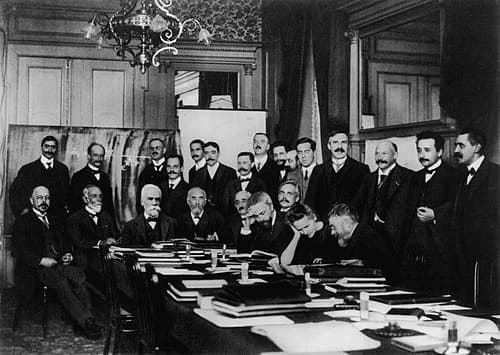
Benjamin S. Couprie
PERSON
Name reference in documents
BR
Bjorn Rerslett
PERSON
Name reference in documents
BG
Bogdan Giusca
PERSON
Name reference in documents

Brad Wechsler
PERSON
American business executive, former IMAX Corporation chairman and CEO, Managing Partner of Elysium LLC (Leon Black's family office)

Bridges
PERSON
Surname reference in Epstein-related documents
CK
Carol Kaelson/
PERSON
Name reference in documents
CB
Chris Butler
PERSON
British animator, storyboard artist, film director and screenwriter

Chris Christie
PERSON
55th Governor of New Jersey and former U.S. Attorney for the District of New Jersey
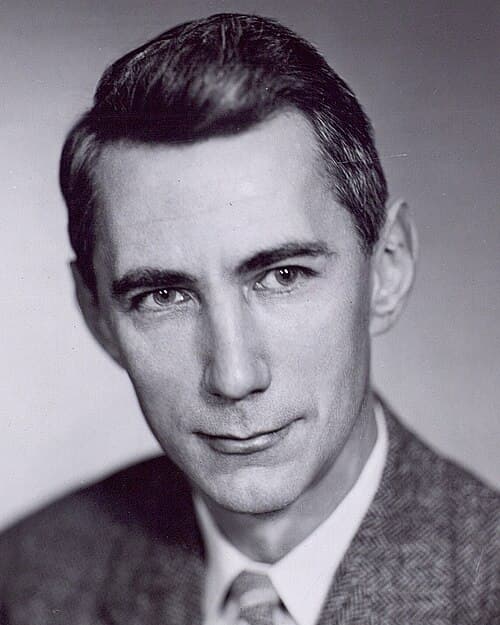
Claude Shannon
PERSON
American mathematician and information theorist (1916–2001)

Clayton Christensen
PERSON
American economist (1952-2020)
CT
Clemens Tesch-Rémer
PERSON
Name reference in documents
CM
Colin McGinn
PERSON
Name reference in documents

Conway
PERSON
Refers to Kellyanne Conway (White House advisor) in news coverage within Epstein-related DOJ documents
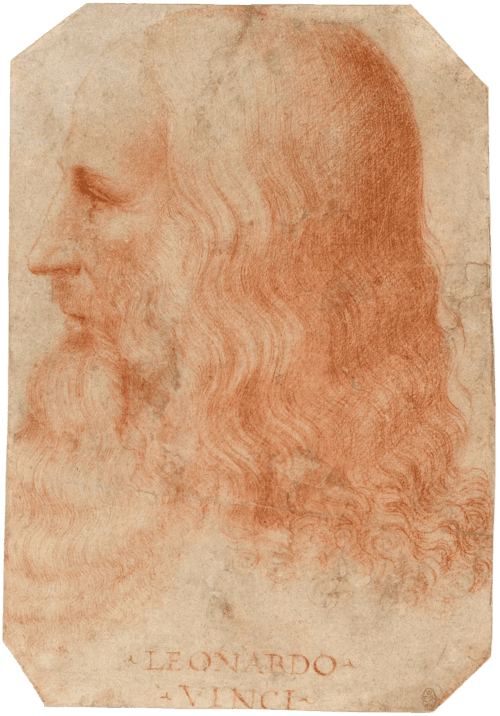
Da Vinci
PERSON
Person referenced in documents

Dan McLaughlin
PERSON
Name reference in documents
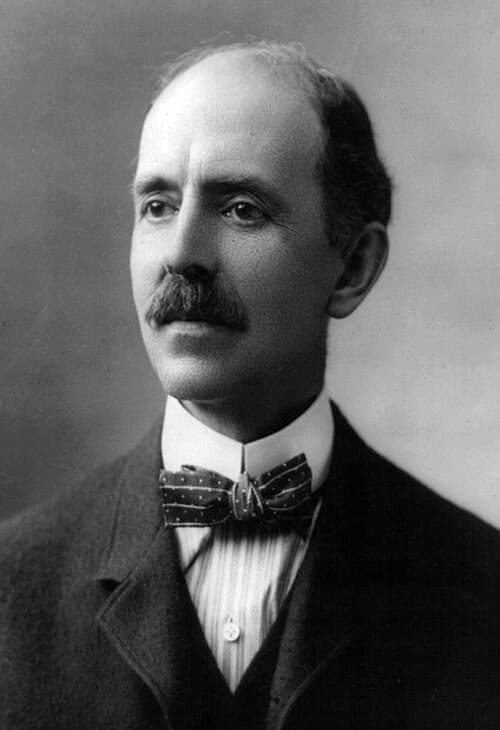
Daniel Chester
PERSON
Name reference in documents
Daniel Danziger
PERSON
Name reference in documents
Daniel Dennett
PERSON
American philosopher (1942–2024)
DS
Daniel Sego
PERSON
Name reference in documents
DS
Daniel Simons
PERSON
American cognitive psychologist
DC
David Cope
PERSON
American composer and scientist
David Deutsch
PERSON
British physicist

De Bono
PERSON • 2 mentions
Name reference in documents
DA
Denise Applewhite
PERSON
Name reference in documents

Donald Rumsfeld
PERSON • 2 mentions
American politician and diplomat (1932–2021)

Donald Trump
PERSON
President of the United States (2017–2021, 2025–present)
Douglas Adams’
PERSON
British science fiction writer and humorist (1952–2001)
Douglass Hofstadter
PERSON
Name reference in documents
Edison
PERSON
Reference to Thomas Edison or similar named individual
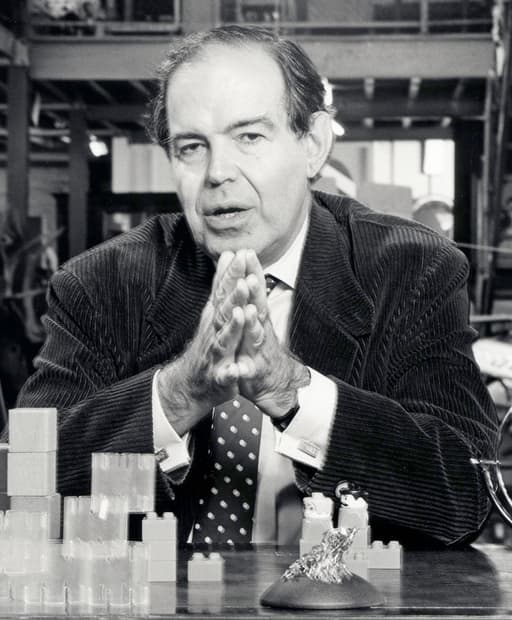
Edward de Bono’s
PERSON
Name reference in documents
Edward FitzGerald
PERSON
Name reference in documents
EH
Emily Howell
PERSON
Name reference in documents

Eric Schmidt
PERSON
Software engineer, businessman, former Google CEO

Eric Trump
PERSON
American businessman and reality television personality (born 1984)
EW
Eric W.
PERSON
Name reference in documents
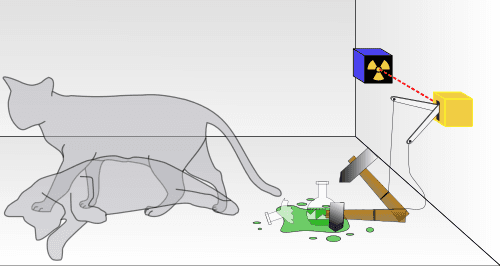
Erwin Schrédinger’s
PERSON
Name reference in documents
EP
Eugéne Pirou
PERSON
Name reference in documents

Eureka
PERSON • 2 mentions
Surname reference in documents
EZ
Ezrdr
PERSON
Name reference in documents
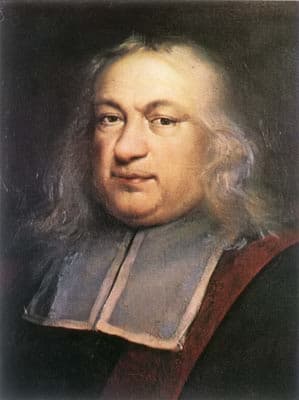
Fermat
PERSON
Surname reference in documents
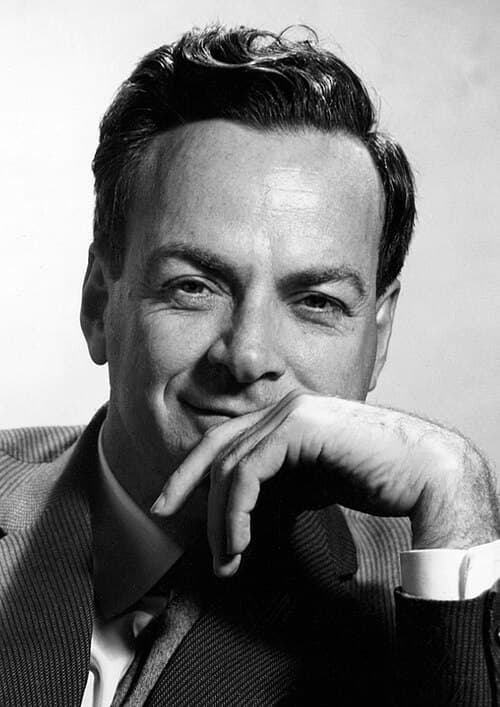
Feynman
PERSON
Surname reference in Epstein-related documents
FL
Fleming
PERSON
Ambiguous surname reference in Epstein documents
Fred Brooks
PERSON
American computer scientist (1931–2022)
GB
Gédel Escher Bach
PERSON
Name reference in documents
GE
Geiger
PERSON • 2 mentions
Surname reference in documents
Gennadii Makanin
PERSON
Name reference in documents
George Bernard Shaw
PERSON
Person referenced in documents

George W. Bush
PERSON
President of the United States from 2001 to 2009

Ghislaine Maxwell
PERSON
British socialite and sex trafficker, daughter of Robert Maxwell, accomplice of Jeffrey Epstein
GO
Goldilocks
PERSON
Name reference in documents
Gottfried Leibniz
PERSON
Name reference in documents
GR
Graeme Ritchie
PERSON
British motorcycle racer (1957–1997)
Graham Wallas
PERSON
Name reference in documents
Groucho Marx
PERSON
Name reference in documents
HC
Harold Cohen
PERSON
English painter and computer artist, active in the United States (1928–2016)

Harry Potter
PERSON
1997–2007 fantasy book series by J. K. Rowling
Harvey Weinstein
PERSON • 2 mentions
American film producer and sex offender (born 1952)
Heisenberg
PERSON
German theoretical physicist and nobel prize winner (1901–1976)

Helen Keller
PERSON
Swiss writer (1914-2012)

Hilbert
PERSON
Surname reference in Epstein-related documents
HE
Hugh Everett
PERSON
US physicist and discoverer of the relative-state interpretation of quantum mechanics
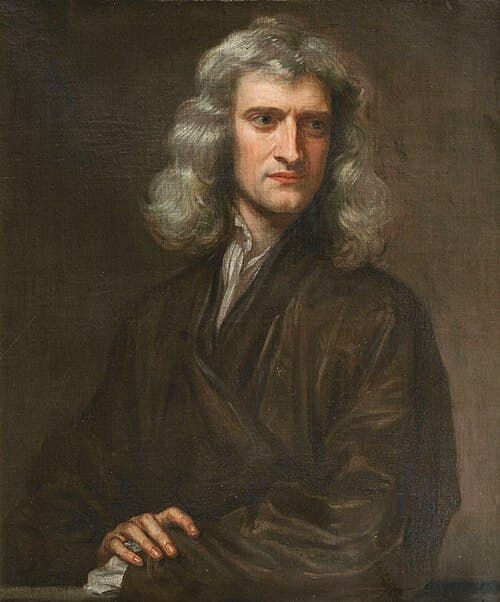
Isaac Newton
PERSON
English mathematician and physicist (1642–1727)

J.K. Rowling
PERSON
British author and philanthropist (born 1965)
JG
J.P. Guilford
PERSON
Name reference in documents
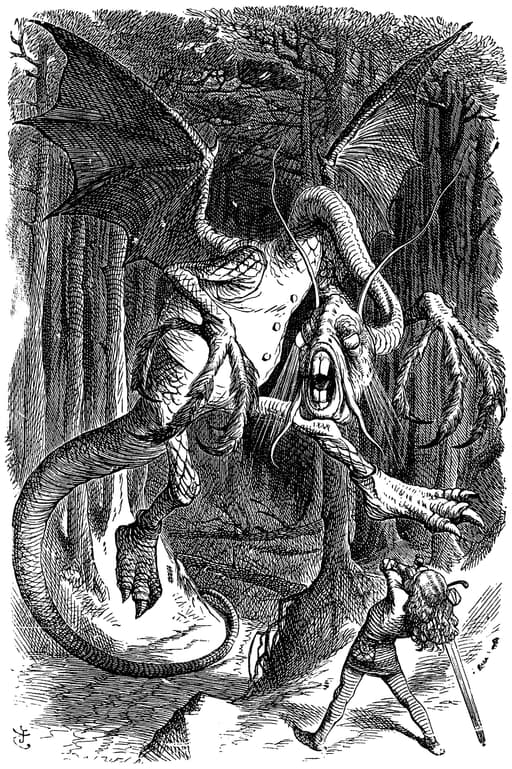
Jabberwocky
PERSON
Name reference in documents
JP
Jacob Podolsky
PERSON
Name reference in documents
JT
James Tagg
PERSON
Person referenced in documents
Jens Maus
PERSON
Name reference in documents
JZ
Jerrold H. Zar
PERSON
American biologist
JB
John Bell
PERSON
Name reference in documents
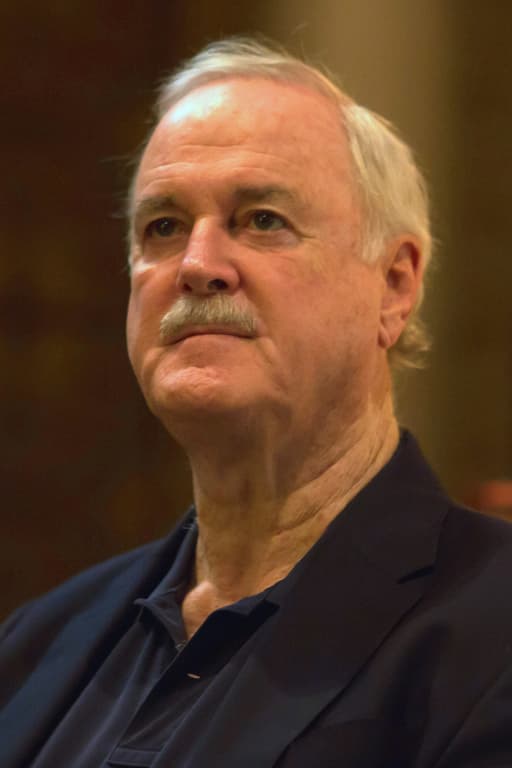
John Cleese
PERSON
English comedian and actor (born 1939)
John Conway
PERSON
Artist

John F. Kennedy
PERSON
President of the United States from 1961 to 1963 (1917–1963)
JG
John Graner
PERSON
Name reference in documents
John Harrison
PERSON
Name reference in documents
KA
K. Anders
PERSON
Name reference in documents
Katai Zoltan
PERSON
Hand gesture from the 'Dude, Where's My Car' film

Kawakami
PERSON
Name reference in documents

Ken Robinson
PERSON
UK writer (1950-2020)
KB
Kim Binsted
PERSON
American computer scientist
KO
Kochen
PERSON
Name reference in documents
Konigsberg
PERSON
Surname or name fragment in documents
KG
Kurt Gédel
PERSON
Name reference in documents
LA
Laplace
PERSON
Surname or name fragment in documents

Lava Lamp
PERSON
Decorative lamp with container of bolus in clear liquid, which heats up at the bottom and rises before cooling and falling back to the bottom
Leibniz
PERSON
Surname reference in documents
LB
Leon Black
PERSON
American billionaire businessman (born 1951)
Lewis Carroll
PERSON
Person referenced in documents
Louie Psihoyos
PERSON
American photographer and film director
M.C. Escher Company-
PERSON
Name reference in documents
M.C. Escher’s
PERSON
Name reference in documents
Marc Rich
PERSON
American commodities trader (1934–2013)
Mary Celeste
PERSON
Name reference in documents

Maryam Mirzakhani
PERSON
Iranian mathematician (1977–2017)
MR
Matt Riemann
PERSON
Person referenced in documents
MD
Maxim Dupliy
PERSON
Name reference in documents

Michael Cohen
PERSON
American former attorney and former Republican official

Michael Douglas
PERSON
American retired actor, producer and activist (born 1944)

Michael Flynn
PERSON
U.S. Army general and former U.S. National Security Advisor (born 1958)

Michael Jackson
PERSON
American singer, songwriter, record producer, and dancer (1958–2009)
MW
Michael Wise
PERSON
Researcher

Michiel de Wit
PERSON
Name reference in documents

Mikael Gorbachev
PERSON
Leader of the Soviet Union from 1985 to 1991 (1931–2022)
Monet Haystack
PERSON
Name reference in documents
MO
Morse
PERSON
Surname reference in Epstein-related documents
Mozart
PERSON
References to classical composer Wolfgang Amadeus Mozart in discussions about music
NG
Nicolas Giseng
PERSON
Name reference in documents
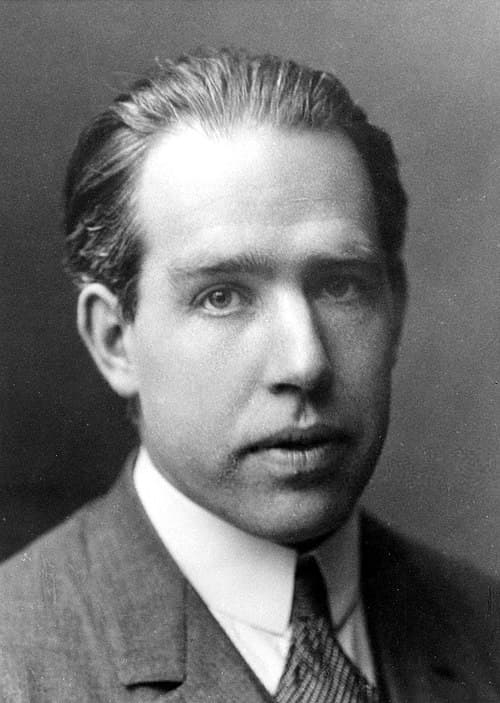
Niels Bohr
PERSON
Person referenced in documents
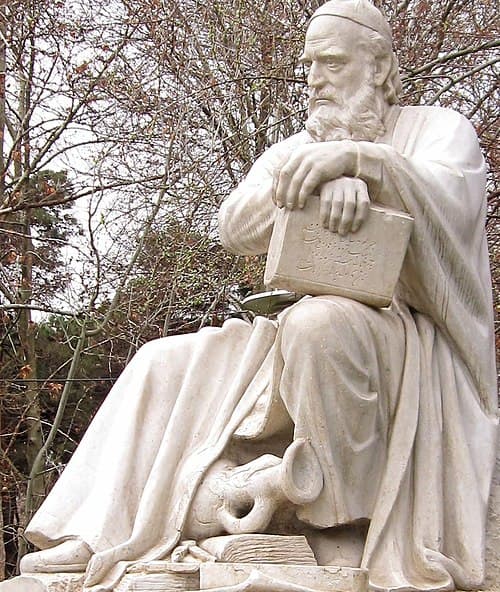
Omar Khayyam
PERSON
Name reference in documents
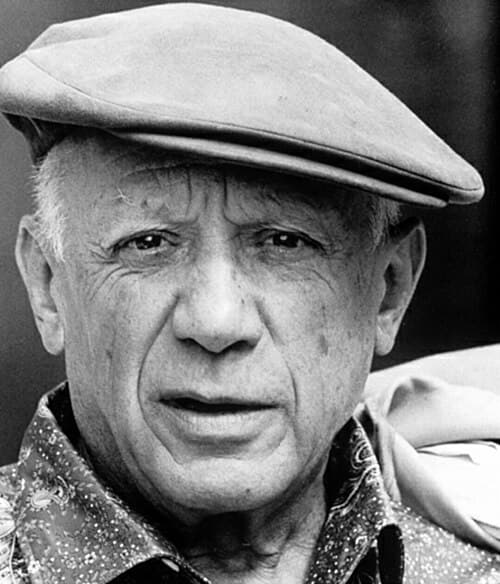
Pablo Picasso
PERSON
Spanish painter and sculptor (1881–1973)
PH
Paul Hermans
PERSON
Name reference in documents

Penrose
PERSON
Census-designated place in Fremont, Colorado, United States
PP
Permission Punch
PERSON
Name reference in documents
Peter Norvig
PERSON
American computer scientist
PT
Philippe Tarbouriech
PERSON
Name reference in documents

Prince Andrew
PERSON
Third child of Queen Elizabeth II and Prince Philip, Duke of Edinburgh (born 1960)

Prince Charles
PERSON
King of the United Kingdom and other Commonwealth realms since 2022 (born 1948)
Proust
PERSON
Surname reference in documents
RK
Ralf T. Krampe
PERSON
Researcher
Ray Kurzweil
PERSON
American computer scientist, author, entrepreneur, futurist and inventor (born 1948)

Richard Branson
PERSON • 2 mentions
British business magnate

Richard Dawkins
PERSON • 2 mentions
English ethologist, evolutionary biologist and author (born 1941)
Richard P. Feynman
PERSON
Name reference in documents

Richard Roeper
PERSON
American writer and film critic
Riemann Hypothesis
PERSON
Name reference in documents

Robert Fludd’s
PERSON
Name reference in documents
Robyn Mackenzie
PERSON
Name reference in documents
Roger Penrose
PERSON
English mathematical physicist, recreational mathematician and philosopher

Ronald Reagan
PERSON • 2 mentions
President of the United States from 1981 to 1989 and actor (1911–2004)

Rubaiyat
PERSON
Bangladeshi film director, writer and producer
Samuel Rosen
PERSON
Name reference in documents
Scott Adams
PERSON
American cartoonist and author (born 1957)
SE
Searle
PERSON
Surname reference in Epstein-related documents

Shelly Levy-Tzedek
PERSON
Researcher (ORCID 0000-0002-5853-3235)

Shimon Pérez
PERSON
Israeli politician (1923–2016) –Former President of Israel (2007–2014) and Prime Minister of Israel (1977, 1984–1986, 1995–1996)
SK
Simon Kochen
PERSON
American mathematician

Spike Milligan Enterprises
PERSON
Name reference in documents
SZ
Stefan Zachow
PERSON
Name reference in documents
SS
Steinn Sigurdsson
PERSON
Name reference in documents
Stephen Hawking
PERSON • 3 mentions
British theoretical physicist, cosmologist and author (1942–2018)
Stephen Wolfram’s
PERSON
Name reference in documents
SB
Steve Buckley
PERSON
Journalist
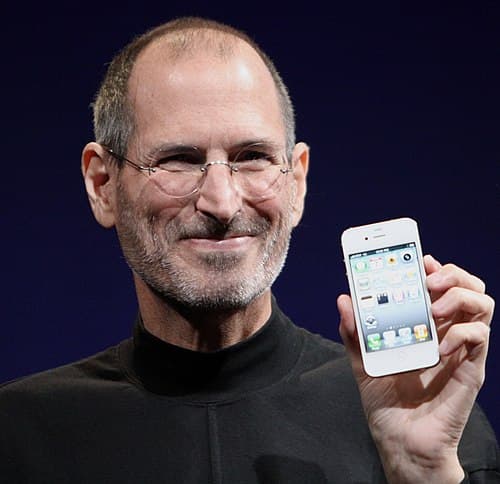
Steve Jobs
PERSON
American entrepreneur; co-founder of Apple Inc. (1955–2011)
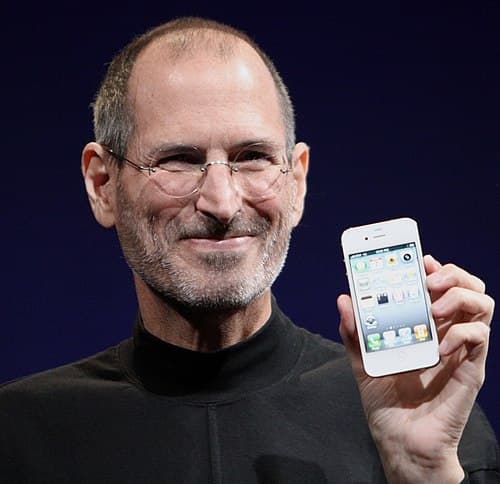
Steve Jobs Shows
PERSON
Name reference in documents

Steve Wozniak
PERSON
American computer pioneer, inventor, computer engineer and programmer; co-founder of Apple Inc.
The Naked Jape
PERSON
Name reference in documents
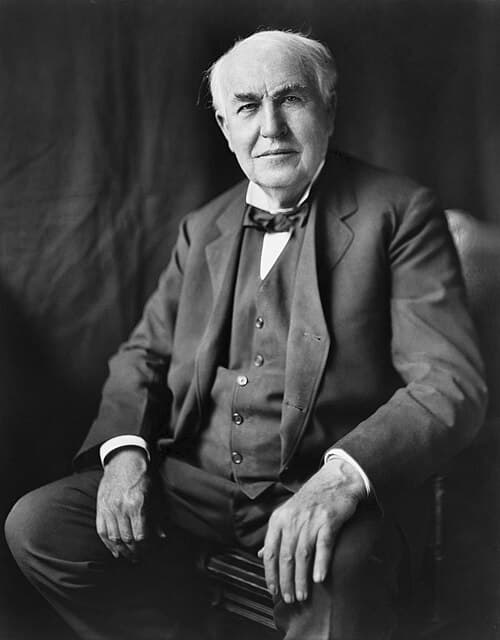
Thomas Edison
PERSON
American inventor and businessman (1847–1931)
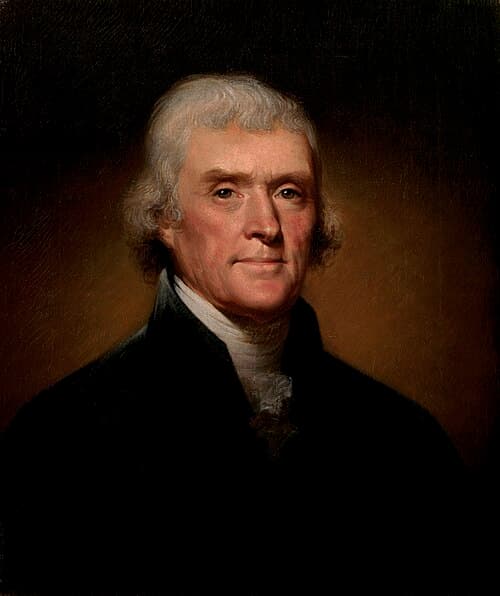
Thomas Jefferson
PERSON • 2 mentions
President of the United States from 1801 to 1809
Thomas Schultz
PERSON
Name reference in documents
TC
TIM CHONG/
PERSON
Name reference in documents

Tirgu Mures
PERSON
Name reference in documents

Travis Craddock
PERSON
Person referenced in documents
Turing
PERSON
English computer scientist (1912–1954)
WA
Wallas
PERSON
Sound effect imitating the murmur of a crowd in the background

Wiles
PERSON
Surname reference in Epstein-related documents
Wit Shall
PERSON
Name reference in documents

Yasser Arafat
PERSON
Palestinian political leader (1929–2004) and Former President of the Palestinian National Authority (1994-2004)
z. Hold
PERSON
Name reference in documents
ACDMM
ORGANIZATION
Organization referenced in documents

Activision
ORGANIZATION
American video game company
Albright-Knox Art Gallery/CORBIS
ORGANIZATION
Organization referenced in documents
Allied
ORGANIZATION
Organization referenced in documents
an Artificial Intelligence
ORGANIZATION
Organization referenced in documents
Bell Test
ORGANIZATION
Organization referenced in documents
Bloomsbury Publishing PLC
ORGANIZATION
Organization referenced in documents

Borders
ORGANIZATION
2018 film directed by Ali Abbasi
Cairns-Smith
ORGANIZATION
Organization referenced in documents

Cambridge University Press
ORGANIZATION
Publishing business of the University of Cambridge
Carcanet Press
ORGANIZATION
Organization referenced in documents
Centaur Records
ORGANIZATION
Organization referenced in documents
Christiansen
ORGANIZATION
Organization referenced in documents
Compaq
ORGANIZATION
Technology company
Computer Museum
ORGANIZATION
Organization referenced in documents
Computer Science
ORGANIZATION
Organization referenced in documents
Condé Nast Licensing
ORGANIZATION
Organization referenced in documents

Corbis
ORGANIZATION
Stock photo licensing company.
Credit NASA
ORGANIZATION
Organization referenced in documents
Dark Energy
ORGANIZATION
Organization referenced in documents
East-West
ORGANIZATION
Organization referenced in documents
Escher
ORGANIZATION
Organization referenced in documents
Evolve Creativity
ORGANIZATION
Organization referenced in documents
Fermilab
ORGANIZATION
Organization referenced in documents
Freedman and Clauser
ORGANIZATION
Organization referenced in documents
Geekherocomic
ORGANIZATION
Organization referenced in documents
Goldbach Conjecture
ORGANIZATION
Organization referenced in documents
Google Lunar XPRIZE
ORGANIZATION
Organization referenced in documents
Hampton Court
ORGANIZATION
Organization referenced in documents

Harvard Business School
ORGANIZATION
Business school in Boston, Massachusetts, USA
Heisenberg’s Uncertainty Principle
ORGANIZATION
Organization referenced in documents
Hodge Conjecture
ORGANIZATION
Organization referenced in documents
Home Page
ORGANIZATION
Organization referenced in documents
Hyper-Communication
ORGANIZATION
Organization referenced in documents
i Photon Photon
ORGANIZATION
Organization referenced in documents
Illustrated
ORGANIZATION
Organization referenced in documents
Illustration
ORGANIZATION
Organization referenced in documents
Institute of Advanced Study
ORGANIZATION
Organization referenced in documents
Joint Chiefs of Staff
ORGANIZATION
Organization referenced in documents

Katpatuka
ORGANIZATION
Organization referenced in documents
Kochen-Specker
ORGANIZATION
Organization referenced in documents
Kochen-Specker Cube
ORGANIZATION
Organization referenced in documents
Last Theorem
ORGANIZATION
Organization referenced in documents

Library of Congress
ORGANIZATION
(de facto) national library of the United States of America
Materialscientist
ORGANIZATION
Organization referenced in documents
MathWorld
ORGANIZATION
Organization referenced in documents
MEGS Fe
ORGANIZATION
Organization referenced in documents
Millennium Falcon
ORGANIZATION
Organization referenced in documents

Munduruku
ORGANIZATION
Organization referenced in documents
NASA Earth Observatory
ORGANIZATION
Organization referenced in documents

National Institute of Mental Health
ORGANIZATION
Hospital in Singapore
Navier-Stokes Equations
ORGANIZATION
Organization referenced in documents
Neuroimaging Department
ORGANIZATION
Organization referenced in documents
Opensource
ORGANIZATION
Organization referenced in documents
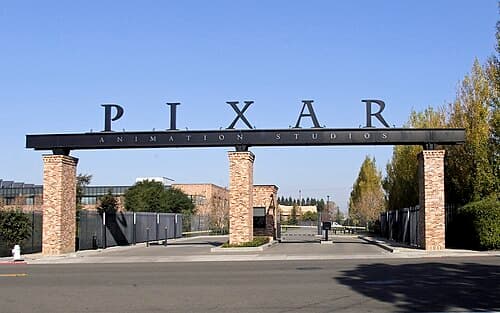
Pixar
ORGANIZATION
American computer animation studio
Planet Earth Goldman Prize
ORGANIZATION
Organization referenced in documents
Poincaré Conjecture
ORGANIZATION
Organization referenced in documents

Polaroid
ORGANIZATION
Company that manufactures instant photographic materials

Princeton University
ORGANIZATION
Private Ivy League research university in Princeton, New Jersey
PS ie eB
ORGANIZATION
Organization referenced in documents
Quantum
ORGANIZATION
Quantum Fund or entity referenced in documents
Renaissance
ORGANIZATION
Hotel chain or entity
Rubik
ORGANIZATION
Organization referenced in documents
Sapientia University
ORGANIZATION
Organization referenced in documents
SD&M
ORGANIZATION
Organization referenced in documents
Signalhead
ORGANIZATION
Organization referenced in documents
Sketchup
ORGANIZATION
Organization referenced in documents
Sketchup Model
ORGANIZATION
Organization referenced in documents
Sperling
ORGANIZATION
Organization referenced in documents
Stability/COIN Dynamics
ORGANIZATION
Organization referenced in documents
Swinnerton-Dyer Conjecture
ORGANIZATION
Organization referenced in documents
Swiss Telecom
ORGANIZATION
Organization referenced in documents

Swisscom
ORGANIZATION
Swiss telecommunication company
the Acquisition of Expert Performance
ORGANIZATION
Organization referenced in documents
the Advancement of Science
ORGANIZATION
Organization referenced in documents
The American Institute
ORGANIZATION
Organization referenced in documents
the Association of Computer Machinery
ORGANIZATION
Organization referenced in documents
the Atheist Tour Bus
ORGANIZATION
Organization referenced in documents
the Bandwidth of Life
ORGANIZATION
Organization referenced in documents
the British Museum
ORGANIZATION
Organization referenced in documents
the International Mathematical Union
ORGANIZATION
Organization referenced in documents
The Journal of Irreproducible
ORGANIZATION
Organization referenced in documents
The Loch Ness Monster's
ORGANIZATION
Organization referenced in documents
the London School of Economics
ORGANIZATION
University
The Longitude Prize
ORGANIZATION
Organization referenced in documents
the Niels Bohr Institute
ORGANIZATION
Organization referenced in documents
the Photo Electric Effect
ORGANIZATION
Organization referenced in documents
the Royal Swedish Academy of Sciences
ORGANIZATION
Organization referenced in documents
the Seven Wonders of the Ancient World
ORGANIZATION
Organization referenced in documents
the Study of Expert Performance
ORGANIZATION
Organization referenced in documents
the Turin Shroud
ORGANIZATION
Organization referenced in documents
the US Department of Energy’s
ORGANIZATION
Organization referenced in documents
The Wikimedia Creative Commons
ORGANIZATION
Organization referenced in documents
Turing Award
ORGANIZATION
Organization referenced in documents

US Government
ORGANIZATION
Government agency
Vasilius
ORGANIZATION
Organization referenced in documents
Volkswagen Polo
ORGANIZATION
Organization referenced in documents
Wikimedia
ORGANIZATION
Organization referenced in documents
Wolfram Web Resource
ORGANIZATION
Organization referenced in documents
Working Memory
ORGANIZATION
Organization referenced in documents
XPRIZE
ORGANIZATION
Organization referenced in documents
XPRIZE Award
ORGANIZATION
Organization referenced in documents
XPRIZE First Award Ceremony
ORGANIZATION
Organization referenced in documents
Yang-Mills Theory
ORGANIZATION
Organization referenced in documents

Yellow Pages
ORGANIZATION
Organization referenced in documents

Alexandria
LOCATION
City in Egypt
Bethesda
LOCATION
City in Maryland

Boston
LOCATION
Capital and largest city of Massachusetts, United States
Camelot
LOCATION
Mythical castle and court associated with King Arthur

Copenhagen
LOCATION
Capital and largest city of Denmark
Crete
LOCATION
Island of Greece
Dhatfield
LOCATION
Location referenced in documents
Earth
LOCATION
Third planet from the Sun in the Solar System
Easter Island
LOCATION
Polynesian island and special territory of Chile

El Dorado
LOCATION
South American myth
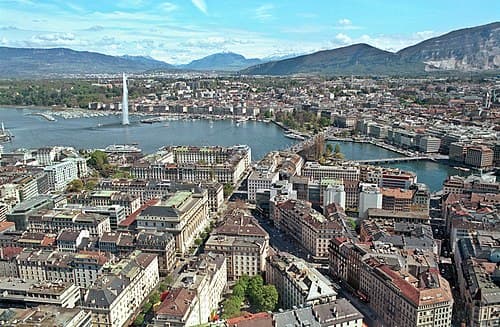
Geneva
LOCATION
City in Switzerland and capital of its canton
Glasgow
LOCATION
City in Scotland, United Kingdom

Kabul
LOCATION
Capital and the largest city of Afghanistan
Moon Base
LOCATION
Earth's only natural satellite
Numberland
LOCATION
Location referenced in documents
Nutshell
LOCATION
Location referenced in documents
Pioneer
LOCATION
Community in Amador County, California, United States
Reykjavik
LOCATION
Capital and largest city in Iceland

Romania
LOCATION
Country in Southeast Europe
Self Portrait
LOCATION
Location referenced in documents
Stonehenge
LOCATION
Neolithic henge monument in Amesbury, Wiltshire, England, UK
the Garden of Eden
LOCATION
Location referenced in documents
the Lost City
LOCATION
Location referenced in documents
Universes
LOCATION
Totality consisting of space, time, matter and energy

Venus
LOCATION
Location referenced in documents
Winchester
LOCATION
City and unparished area within the larger City of Winchester, Hampshire, England
Statistics
Pages:100
Entities:301
Avg. OCR:94.3%
Sponsored