Back to People & Entities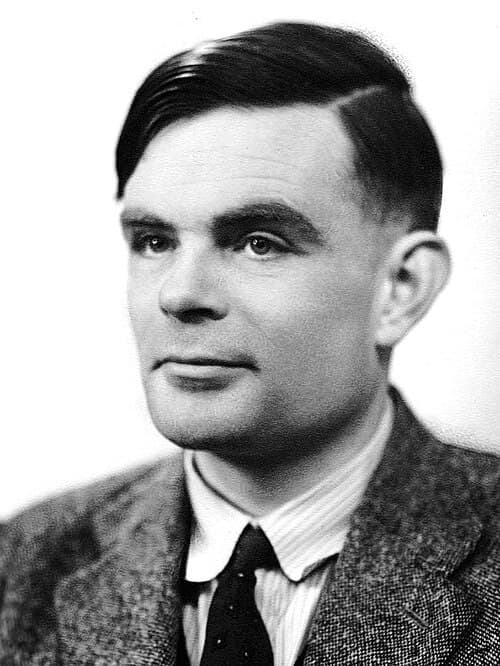





Turing
Person
68
Total Mentions
60
Documents
2,301
Connected Entities
English computer scientist (1912–1954)
Turing (Alan Turing, the English computer scientist) appears in the Epstein document set primarily as a historical reference in academic and government discussions about artificial intelligence, with no substantive evidence of a direct personal or professional relationship with Epstein.
The mentions are almost exclusively low-signal, appearing in automated educational emails from Stanford Online and in government oversight documents discussing AI theory, Turing machines, and computational limits. No personal correspondence, flight logs, or direct references to Epstein are present; Turing is cited as a foundational figure in computer science within broader discussions.
Key Highlights
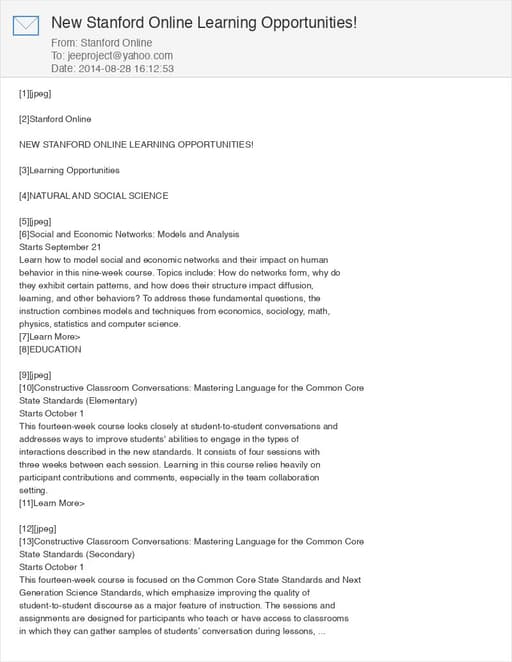
- •Turing is referenced in a 2014 Stanford Online email as part of a course on algorithms and decidability, indicating automated educational content.
- •Multiple government oversight documents mention Turing in the context of AI theory, such as the Turing Test and computational limitations, with no ties to Epstein.
- •The pattern shows Turing's name appears in academic or theoretical contexts, suggesting his inclusion is due to his historical significance in computing rather than any direct link to Epstein.
Frequently Asked Questions
Related Links
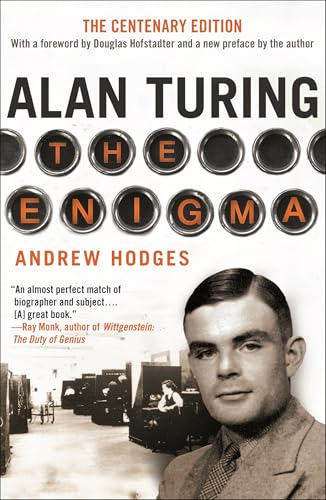
Books for Further Reading
Document Mentions (20 of 60)
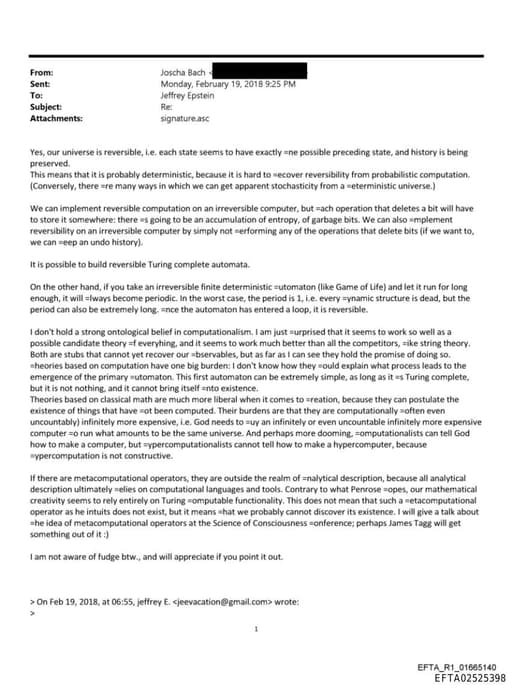
EFTA02525398.pdf
2 mentionsEFTA02525398
iption ultimately =elies on computational languages and tools. Contrary to what Penrose =opes, our mathematical creativity seems to rely entirely on Turing =omputable functionality. This does not mean that such a =etacomputational operator as he intuits does not exist, but it means =hat we probably cann
it is possible that the Church Turing thesis is also a =hysical law, i.e. it is impossible to build physical computer that can =alculate more than a Turing machine. However, that conflicts with the =raditional intuitions of most of physics: that the universe is =eometric, i.e. hypercomputational. The fa
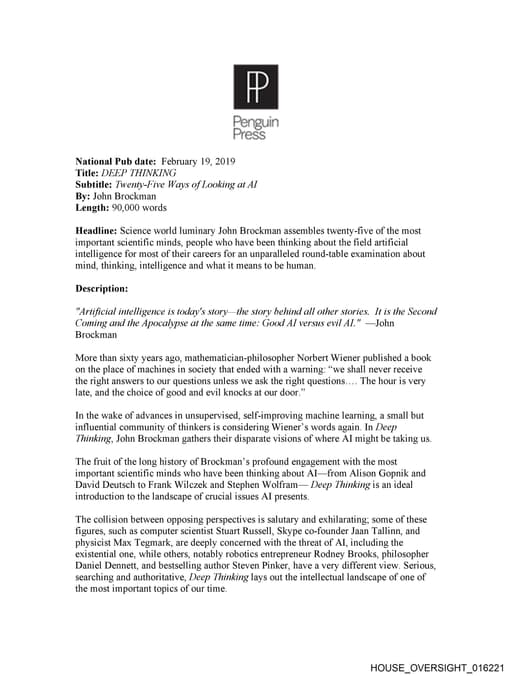
Brockman_DeepThinking.MS.pdf
2 mentionsHOUSE_OVERSIGHT_016221_sub_002 - HOUSE_OVERSIGHT_016412
Source: House Oversight Committee
a topic absent from a typical computer-science education: the physical configuration of a 118 HOUSE_OVERSIGHT_016338 computation. Von Neumann and Turing posed their questions as theoretical studies, because it was beyond the technology of their day to realize them. But with the convergence of communic
ce in terms of feedback, exploring the cultural rather than engineering uptake of this idea. She begins with primary readings by Wiener, Shannon, and Turing and then pivots from the scientists and engineers to the work and ideas of artists, feminists, postmodern theorists. Her goal: to come up with a new
Brockman_DeepThinking.MS.pdf
2 mentionsHOUSE_OVERSIGHT_016221_sub_001 - HOUSE_OVERSIGHT_016320
Source: House Oversight Committee
at they tend to favor or ignore. Surely (ding!)?, any man who could beat a woman at being perceived to be a woman would be an intelligent agent. What Turing did not foresee is the power of deep-learning AI to acquire this wealth of information in an exploitable form without having to understand it. Turing
the CIRL framework, one can formulate and solve the off-switch problem—that is, the problem of how to prevent a robot from disabling its off-switch. (Turing may rest easier.) A robot that’s uncertain about human preferences actually benefits from being switched off, because it understands that the human w
Sponsored
AreTheAndroids_James Tagg_small_p2.pdf
2 mentionsHOUSE_OVERSIGHT_015675_sub_003 - HOUSE_OVERSIGHT_015974
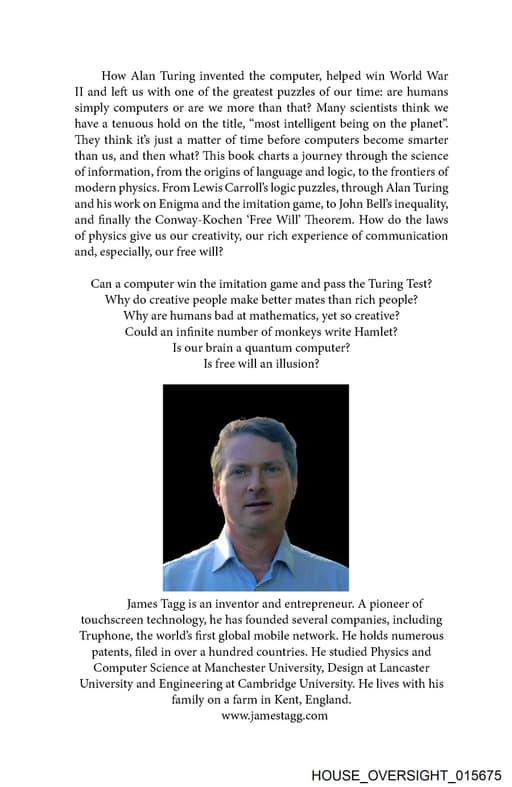
Source: House Oversight Committee
more complex than they first appear. They are infinite, yet there are different infinities, and they have meaning. The smallpox example above and the Turing numbers we will discover shortly suggest numbers do have meaning independent of culture and language. The next two chapters will show us what happens
away their secrets. The Enigma machine was an elegant compromise between a truly unbreakable code and a simple cipher. Unfortunately for the Germans, Turing was on the side of the Allies. In the 1930s almost all mathematics, accounting, and code-breaking were performed by humans using pencil and paper. I
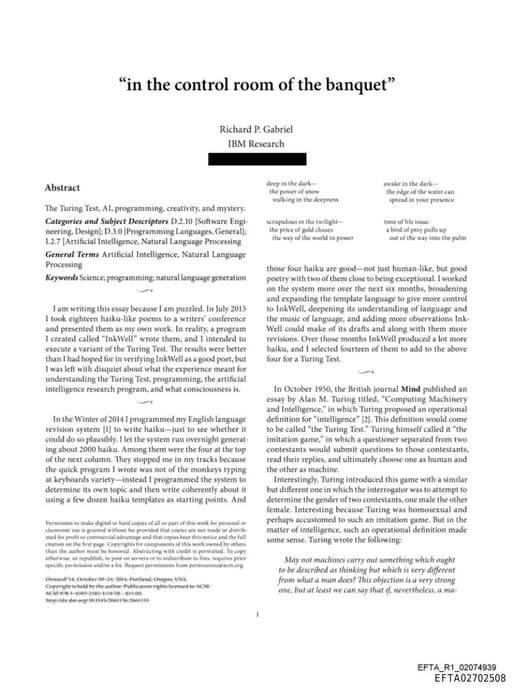
EFTA02702508.pdf
2 mentionsEFTA02702508
ring Test. In October 1950, the British journal Mind published an essay by Alan M. Turing titled, "Computing Machinery and Intelligence," in which Turing proposed an operational definition for "intelligence" [2]. This definition would come to be called "the Turing Test." Turing himself called it "the
t different one in which the interrogator was to attempt to determine the gender of two contestants, one male the other female. Interesting because Turing was homosexual and perhaps accustomed to such an imitation game. But in the matter of intelligence, such an operational definition made some sense
Brockman_DeepThinking.MS.pdf
2 mentionsHOUSE_OVERSIGHT_016804_sub_001 - HOUSE_OVERSIGHT_016903
Source: House Oversight Committee
at they tend to favor or ignore. Surely (ding!)?, any man who could beat a woman at being perceived to be a woman would be an intelligent agent. What Turing did not foresee is the power of deep-learning AI to acquire this wealth of information in an exploitable form without having to understand it. Turing
the CIRL framework, one can formulate and solve the off-switch problem—that is, the problem of how to prevent a robot from disabling its off-switch. (Turing may rest easier.) A robot that’s uncertain about human preferences actually benefits from being switched off, because it understands that the human w
Sponsored
AreTheAndroids_James Tagg_small_p2.pdf
2 mentionsHOUSE_OVERSIGHT_015675_sub_001 - HOUSE_OVERSIGHT_015774
Source: House Oversight Committee
abbage — but he was the first to fully understand its power. When we talk about computers today we mean machines, but it is worth noting computers in Turing’s time were more often humans using pencil and paper. The mechanical computers before Turing were elementary at best. Rudimentary calculating machi
not Turing complete and his Analytical Engine has never been built. 19" Century Calculators HOUSE_OVERSIGHT_015706 Mind over Computer 17 In 1935, Turing was made a Fellow of King’s College, Cambridge, and became interested in whether mathematical proofs could be found automatically. He wanted to know
Brockman_DeepThinking.MS.pdf
2 mentionsHOUSE_OVERSIGHT_016804_sub_002 - HOUSE_OVERSIGHT_016995
Source: House Oversight Committee
a topic absent from a typical computer-science education: the physical configuration of a 118 HOUSE_OVERSIGHT_016921 computation. Von Neumann and Turing posed their questions as theoretical studies, because it was beyond the technology of their day to realize them. But with the convergence of communic
ce in terms of feedback, exploring the cultural rather than engineering uptake of this idea. She begins with primary readings by Wiener, Shannon, and Turing and then pivots from the scientists and engineers to the work and ideas of artists, feminists, postmodern theorists. Her goal: to come up with a new
EFTA00821638.pdf
1 mentionEFTA00821638
y so. Kind regards Brad On Thu, Jul 21, 2016 at 5:37 AM, Soren Brier Dear Brad wrote: As a biologist I will deny that we are a computers in the Turing understanding of it. I know we try to imitate living neural networks in the dead computers we have now. It gives a few steps forward but does not r
Sponsored
EFTA00315128.pdf
1 mentionEFTA00315128
or and analogy. It moves from Boolean algebra through topics such as information theory, parallel computing, cryptography, algorithms, heuristics, Turing machines, and promising technologies such as quantum computing and emergent systems. EFTA00315144 BJARKE INGELS Bjarke Ingels started BIG Bjarke
EFTA00800134.pdf
1 mentionEFTA00800134
n humans are generally intelligent, because their basic operations encompass Turing complete computation, and they can externalize their results in Turing complete languages. Given enough time and resources, it seems inevitable that we will model the function of our minds as well, and universal artifi
EFTA00633796.pdf
1 mentionEFTA00633796
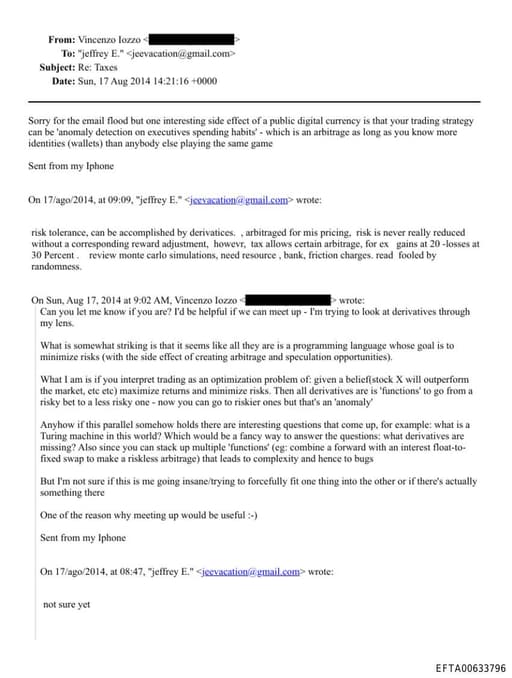
to riskier ones but that's an 'anomaly' Anyhow if this parallel somehow holds there are interesting questions that come up, for example: what is a Turing machine in this world? Which would be a fancy way to answer the questions: what derivatives are missing? Also since you can stack up multiple 'funct
Sponsored
EFTA00690548.pdf
1 mentionEFTA00690548
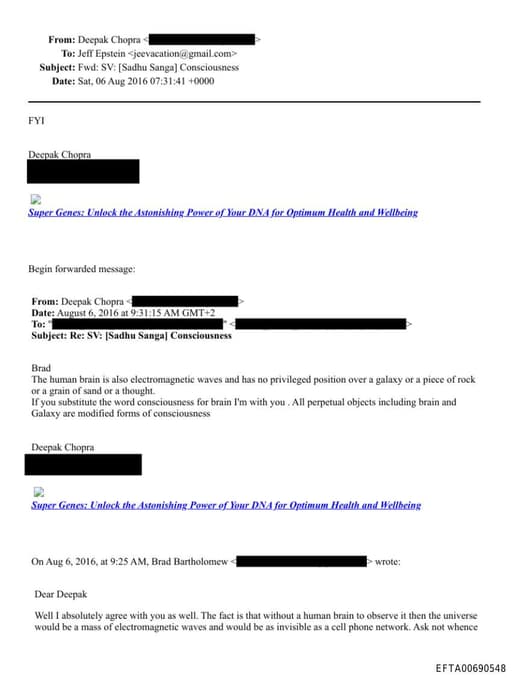
y so. Kind regards Brad On Thu, Jul 21. 2016 at 5:37 AM, Soren Brier Dear Brad wrote: As a biologist I will deny that we are a computers in the Turing understanding of it. I know we try to imitate living neural networks in the dead computers we have now. It gives a few steps forward but does not r
EFTA00693752.pdf
1 mentionEFTA00693752
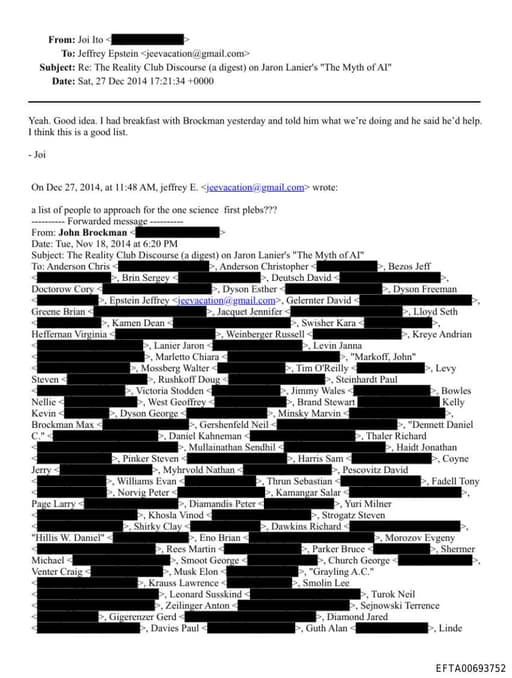
-of-ai#25990 Stuart A. Kauffman Professor of Biological Sciences, Physics, Astronomy, University of Calgary; Author; REINVENTING THE SACRED Since Turing and the explosive growth of algorithmic artificial intelligence, many of us think we are machines. I will argue we are surely not machines at all, b
New Stanford Online Learning Opportunities!
1 mentionYAHOO_008178
a and regular expressions, context-free grammars, Turing machines and decidability, and the theory of intr
Sponsored
EFTA00867752.pdf
1 mentionEFTA00867752
-of-ai#25990 Stuart A. Kauffman Professor of Biological Sciences, Physics, Astronomy, University of Calgary; Author; REINVENTING THE SACRED Since Turing and the explosive growth of algorithmic artificial intelligence, many of us think we are machines. I will argue we are surely not machines at all, b
EFTA01735494.pdf
1 mentionEFTA01735494
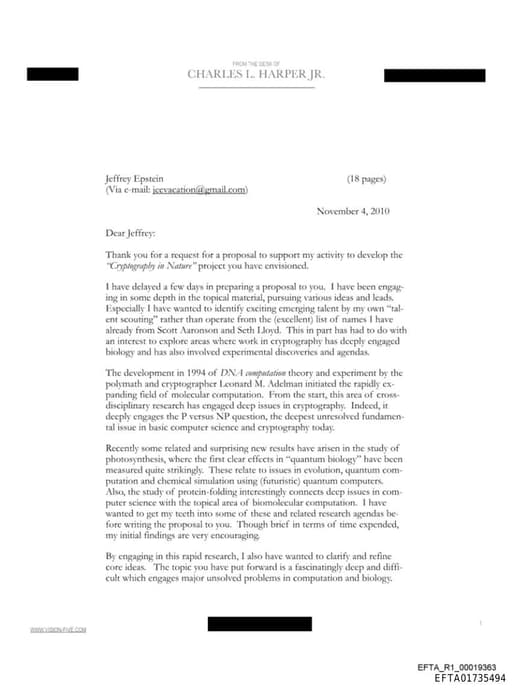
significant and variously appropriate scientific anniversaries for the project for a meeting in 2011. Field forming landmarks: i) 75 years since Turing's 1936 paper, "On computable numbers, with an application to the Entcheidungproblem." This paper was a key inspira- tion towards the future work of
EFTA00822671.pdf
1 mentionEFTA00822671
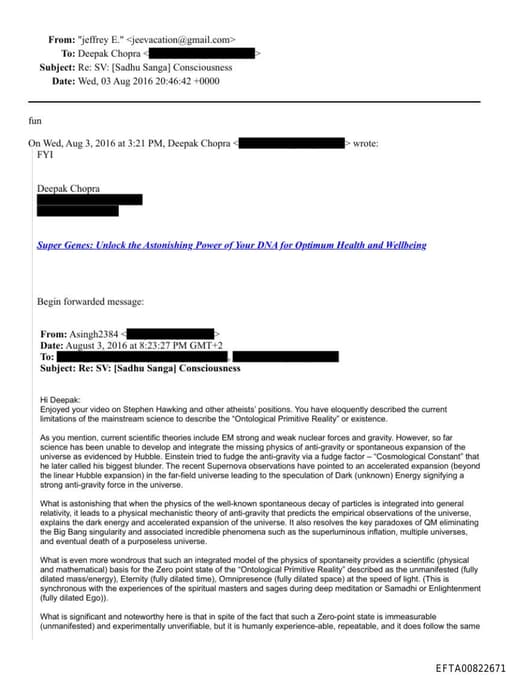
ards Brad On Thu, Jul 21, 2016 at 5:37 AM, Soren Brier <[email protected]> wrote: Dear Brad As a biologist I will deny that we are a computers in the Turing understanding of it. I know we try to imitate living neural networks in the dead computers we have now. It gives a few steps forward but does not re
Sponsored
EFTA00710448.pdf
1 mentionEFTA00710448
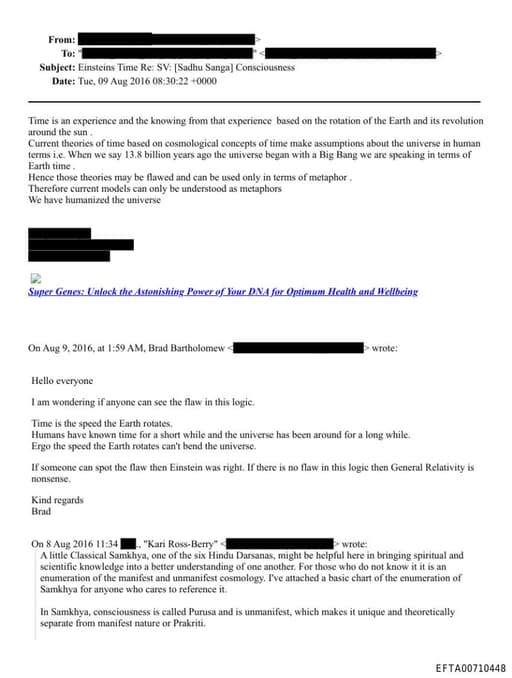
Brad EFTA00710457 On Thu, Jul 21, 2016 at 5:37 AM, Soren Brier <-> wrote: Dear Brad As a biologist I will deny that we are a computers in the Turing understanding of it. I know we try to imitate living neural networks in the dead computers we have now. It gives a few steps forward but does not r
EFTA00708972.pdf
1 mentionEFTA00708972
y so. Kind regards Brad On Thu, Jul 21, 2016 at 5:37 AM, Soren Brier Dear Brad wrote: As a biologist I will deny that we are a computers in the Turing understanding of it. I know we try to imitate living neural networks in the dead computers we have now. It gives a few steps forward but does not re
Sponsored
Connected Entities(20 of 2,301)
Jeffrey Epstein
PersonAmerican sex offender and financier (1953–2019)
44 docs44 co-mentions
Stephen Hawking
PersonBritish theoretical physicist, cosmologist and author (1942–2018)
29 docs29 co-mentions
Alan Dershowitz
PersonAmerican lawyer, author, and art collector (born 1938)
27 docs27 co-mentions
Samantha Power
PersonIrish-American academic, author and diplomat
19 docs19 co-mentions
Marvin Minsky
PersonAmerican cognitive scientist (1927-2016)
18 docs18 co-mentions
Seth Lloyd
PersonAmerican engineer
18 docs18 co-mentions
George W. Bush
PersonPresident of the United States from 2001 to 2009
18 docs18 co-mentions
Earth
LocationThird planet from the Sun in the Solar System
18 docs18 co-mentions
Alan Turing
PersonEnglish computer scientist (1912–1954)
17 docs17 co-mentions
Harvey Weinstein
PersonAmerican film producer and sex offender (born 1952)
17 docs17 co-mentions
Penrose
PersonCensus-designated place in Fremont, Colorado, United States
17 docs17 co-mentions
Marc Rich
PersonAmerican commodities trader (1934–2013)
16 docs16 co-mentions
Wilbur Ross
PersonUnited States 39th Secretary of Commerce
16 docs16 co-mentions
Prince Charles
PersonKing of the United Kingdom and other Commonwealth realms since 2022 (born 1948)
15 docs15 co-mentions
Bill Gates
PersonAmerican businessman, investor, and philanthropist (born 1955)
15 docs15 co-mentions
Richard Dawkins
PersonEnglish ethologist, evolutionary biologist and author (born 1941)
15 docs15 co-mentions
Crick
PersonSurname reference in Epstein-related documents
15 docs15 co-mentions
Daniel Dennett
PersonAmerican philosopher (1942–2024)
14 docs14 co-mentions
Joscha Bach
PersonCognitive scientist
14 docs14 co-mentions
Robert Gates
PersonCIA director, U.S. Secretary of Defense, and university president
14 docs14 co-mentions