EFTA00191587_sub_002 - EFTA00191587_200
Document Information
Bates Range
EFTA00191587_sub_002 - EFTA00191587_200
Pages
100
Original Filename
EFTA00191587.pdf (email 1, pages 1-658)
Document Content
Page 101 - EFTA00191587_101
Page 11 of 13 755 F.2d 969 755 F.2d 969 (Cite as: 755 F.2d 969) other person and the community in a case- "(1) upon motion of the attorney for the Government, that involves- "(A) a crime of violence; "(B) an offense for which the maxim- um sentence is life imprisonment or death; "(C) an offense for which a maximum term of imprisonment of ten years or more is prescribed in the Controlled Substances Act (21 U.S.C. 801 et seq.), the Controlled Substances Import and Export Act (21 U.S.C. 951 et seq.), or section 1 of the Act of September 15, 1980 (21 U.S.C. 955a); or "(D) any felony committed after the person had been convicted of two or more prior offenses described in sub- paragraphs (A) through (C), or two or more State or local offenses that would have been offenses described in sub- paragraphs (A) through (C) if a circum- stance giving rise to Federal jurisdic- tion had existed; or "(2) Upon motion of the attorney for the Government or upon the judicial of- ficer's own motion, that involves- "(A) a serious risk that the person will flee; "(B) a serious risk that the person will obstruct or attempt to obstruct justice, or threaten, injure, or intimidate, or at- tempt to threaten, injure, or intimidate, a prospective witness or juror. The hearing shall be held immediately upon the person's first appearance before the judicial officer unless that person, or the attorney for the Government, seeks a Page 11 continuance. Except for good cause, a con- tinuance on motion of the person may not exceed five days, and continance on mo- tion of the attorney for the Government may not exceed three days. During a con- tinuance, the person shall be detained, and the judicial officer, on motion of the attor- ney for the Government or on his own mo- tion, may order that, while in custody, a person who appears to be a narcotics addict receive a medical examination to determine whether he is an addict. At the hearing, the person has the right to be represented by counsel, and, if he is financially unable to obtain adequate representation, to have counsel appointed for him. The person shall be afforded an opportunity to testify, to present witnesses on his own behalf, to cross-examine witnesses who appear at the hearing, and to present information by proffer or otherwise. The rules concerning admissibility of evidence in criminal trials do not apply to the presentation and con- sideration of information at the hearing. The facts the judicial officer uses to sup- port a finding pursuant to subsection (e) that no condition or combination of condi- tions will reasonably assure the safety of any other person and the community shall be supported by clear and convincing evid- ence. The person may be detained pending completion of the hearing. "(g) Factors To Be Considered.-The judi- cial officer shall, in determining whether there are conditions of release that will reasonably assure the appearance of the person as required and the safety of any other person and the community, take into account the available information concern- ing- "(1) the nature and circumstances of the offense charged, including whether the offense is a crime of violence or involves (O 2008 Thomson/West. No Claim to Orig. U.S. Govt. Works. https://web2.westlaw.com/print/printstream.aspx?utid=VabFEDF5709-3AEA-4F74-8619-... 4/10/2008 EFTA00191687
Page 102 - EFTA00191587_102
Page 12 of 13 • ' 755 F.2d 969 755 F.2d 969 (Cite as: 755 F.2d 969) a narcotic drug; "(2) the weight of the evidence against the person; "(3) the history and characteristics of the person, including- "(A) his character, physical and men- tal condition, family ties, employment, financial resources, length of residence in the community, community ties, past conduct, history relating to drug or al- cohol abuse, criminal history, and re- cord concerning appearance at court proceedings; and *978 "(B) whether, at the time of the current offense or arrest, he was on pro- bation, or parole, or on other release pending trial, sentencing, appeal, or completion of sentence for an offense under Federal, State, or local law; and "(4) the nature and seriousness of the danger to any person or the community that would be posed by the person's re- lease. In considering the conditions of re- lease described in subsection (c)(2)(K) or (cX2)(L), the judicial officer may upon his own motion, or shall upon the motion of the Government, conduct an inquiry into the source of the property to be des- ignated for potential forfeiture or offered as collateral to secure a bond, and shall decline to accept the designation, or the use as collateral, of property that, be- cause of its source, will not reasonably assure the appearance of the person as re- quired. "(h) Contents of Release Order.-In a re- lease order issued pursuant to the provi- sions of subsection (b) or (c), the judicial officer shall- "(1) include a written statement that Page 12 sets forth all the conditions to which the release is subject, in a manner suffi- ciently clear and specific to serve as a guide for the person's conduct; and "(2) advise the person of- "(A) the penalties for violating a con- dition of release, including the penalties for committing an offense while on pre- trial release; "(B) the consequences of violating a condition of release, including the im- mediate issuance of a warrant for the person's arrest; and "(C) the provisions of sections 1503 of this title (relating to intimidation of witnesses, jurors, and officers of the court), 1510 (relating to obstruction of criminal investigations), 1512 (tampering with a witness, victim, or an informant), and 1513 (retaliating against a witness, victim, or an inform- ant). "(i) Contents of Detention Order.-In a detention order issued pursuant to the provisions of subsection (e), the judicial officer shall- "(I) include written findings of fact and a written statement of the reasons for the detention; "(2) direct that the person be commit- ted to the custody of the Attorney Gen- eral for confinement in a corrections fa- cility separate, to the extent practicable, from persons awaiting or serving sen- tences or being held in custody pending appeal; "(3) direct that the person be afforded reasonable opportunity for private con- sultation with his counsel; and O 2008 Thomson/West. No Claim to Orig. U.S. Govt. Works. https://web2.westlaw.com/print/printstream.aspx?utid=%7bFEDF5709-3AEA-4F74-8619-... 4/10/2008 EFTA00191688
Page 103 - EFTA00191587_103
Page 13 of 13 • 755 F.2d 969 755 F.2d 969 (Cite as: 755 F.2d 969) "(4) direct that, on order of a court of the United States or on request of an at- torney for the Government, the person in charge of the corrections facility in which the person is confined deliver the person to a United States marshal for the purpose of an appearance in con- nection with a court proceeding. The judicial officer may, by subsequent or- der, permit the temporary release of the person, in the custody of a United States marshal or another appropriate person, to the extent that the judicial officer determ- ines such release to be necessary for pre- paration of the person's defense or for an- other compelling reason. "(1) Presumption of Innocence.-Nothing in this section shall be construed as modify- ing or limiting the presumption of inno- cence. "§ 3145. Review and appeal of a release or detention order "(a) Review of a Release Order.-If a person is ordered released by a magistrate, or by a person other than a judge of a court having original jurisdiction over the offense and other than a Federal appellate court- "(1) the attorney for the Government may file with the court having original jurisdiction over the offense, a motion for revocation of the order or amendment of the conditions of release, and "(2) the person may file, with the court having original jurisdiction over the of- fense,*979 a motion for amendment of the conditions of release. The motion shall be determined promptly. "(b) Review of a Detention Order.-If a per- son is ordered detained by a magistrate, or Page 13 by a person other than a judge of a court having original jurisdiction over the of- fense and other than a Federal appellate court, the person may file, with the court having original jurisdiction over the of- fense, a motion for revocation or amend- ment of the order. The motion shall be de- termined promptly. "(c) Appeal From a Release or Detention Order.-An appeal from a release or deten- tion order, or from a decision denying re- vocation or amendment of such an order, is governed by the provisions of section 1291 of title 28 and section 3731 of this title. The appeal shall be determined promptly." C.A. y ass.,1985. U.S. . Angiulo 755 .2d 969 END OF DOCUMENT O 2008 Thomson/West. No Claim to Orig. U.S. Govt. Works. https://web2.westlaw.com/print/printstream.aspx?utid=%7bFEDF5709-3AEA-4F74-8619-... 4/10/2008 EFTA00191689
Sponsored
Page 104 - EFTA00191587_104
Page 1 of 10 w estlaw 761 F.2d 52 761 F.2d 52 (Cite as: 761 F.2d 52) H U.S. II. Zannino C.A. (Mass.),1985. United States Court of Appeals,First Cir- cuit. UNITED STATES of America, Plaintiff, Appellant, v. Ilario M.A. ZANNINO, Defendant, Ap- pellee. No. 85-1070. Argued March 8, 1985. Decided May 3, 1985. United States appealed from an order of the United States District Court for the District of Massachusetts, David S. Nelson, J., denying its motion to revoke bail of de- fendant and to detain him pursuant to the Bail Reform Act. The Court of Appeals, Torruella, Circuit Judge, held that provi- sions of Bail Reform Act on pretrial deten- tion and bail revocation were applicable to a defendant released on bail before effect- ive date of Act where defendant's expecta- tion of remaining free on bail was both minimal, in view of emphatic statement of magistrate, upon both granting motion for bail under earlier law and denying Govern- ments motion for revocation of bail, that he found defendant to be a danger to com- munity and that he would detain defendant if he had a legal mechanism by which to do so, and outweighed by public interest in protection from demonstrably dangerous defendants. Reversed. Breyer, Circuit Judge, dissented and filed an opinion. West Headnotes Page 1 Bail 49 C=39 49 Bail 49II In Criminal Prosecutions 49k39 k. Nature and Scope of Rem- edy. Most Cited Cases Provisions of Bail Reform Act on pretrial detention and bail revocation were applic- able to a defendant released on bail before effective date of Act where defendant's ex- pectation of remaining free on bail was both minimal, in view of emphatic state- ment of magistrate, upon both granting mo- tion for bail under earlier law and denying Government's motion for revocation of bail, that he found defendant to be a danger to community and that he would detain de- fendant if he had a legal mechanism by which to do so, and outweighed by public interest in protection from demonstrably dangerous defendants. 18 U.S.C.A. §§ 3142(e), 3148(b). *53 Diane M. Kottmyer, Boston, Mass., with whom Ernest S. Dinisco and Jane E. Serene, Sp. Attys., William F. Weld, U.S. Atty., and Jeremiah T. O'Sullivan, Sp. Atty., Boston, Mass., were on brief for plaintiff, appellant. Joseph J. Balliro, Boston, Mass., with whom James L. Sultan, Boston, Mass., was on brief for defendant, appellee. Before BREYER and TORRUELLA, Cir- cuit Judges, and SELYA,FN• District Judge. FN* Of the District of Rhode Is- land, sitting by designation. TORRUELLA, Circuit Judge. The matter is before us on appeal by the United States from a denial by the United States District Court for the District of O 2008 Thomson/West. No Claim to Orig. U.S. Govt. Works. https://web2.westlaw.com/print/printstream.aspx?utid=%7bFEDF5709-3AEA-4F74-8619-... 4/10/2008 EFTA00191690
Page 105 - EFTA00191587_105
761 F.2d 52 761 F.2d 52 (Cite as: 761 F.2d 52) Massachusetts of its motion to revoke the bail of defendant/appellee Ilario M.A. Zan- nino and to detain him, after hearing, pur- suant to the Bail Reform Act of 1984, spe- cifically 18 U.S.C. § 3142(e) and 3148(b).FN1 FNI. Section 18 U.S.C. § 3142(e) provides: DETENTION.-If, after a hearing pursuant to the provisions of sub- section (f), the judicial officer finds that no condition or combin- ation of conditions will reason- ably assure the appearance of the person as required and the safety of any other person and the com- munity, he shall order the deten- tion of the person prior to trial. In a case described in (t)(1), a rebut- table presumption arises that no condition or combination of con- ditions will reasonably assure the safety of any other person and the community if the judge finds that- 11) the person has been con- victed of a Federal offense that is described in subsection (f)(1), or of a State or local offense that would have been an offense de- scribed in subsection (f)(1) if a circumstance giving rise to Feder- al jurisdiction had existed; "(2) the offense described in para- graph (1) was committed while the person was on release pending trial for a Federal, State, or local offense; and "(3) a period of not more than five years has elapsed since the date of conviction, or the release of the person from imprisonment, for the Page 2 of 10 Page 2 offense described in paragraph (1), whichever is later. Subjject to rebuttal by the person, it shall be presumed that no condition or combination of conditions will reasonably assure the appearance of the person as required and the safety of the community if the ju- dicial officer finds that there is probable cause to believe that the person committed an offense for which a maximum term of impris- onment of ten years or more is prescribed in the Controlled Sub- stances Act (21 U.S.C. 801 et seq.), the Controlled Substances Import and Export Act (21 U.S.C. 951 et seq.), section 1 of the Act of September 15, 1980 (21 U.S.C. 955a), or an offense under section 924(c) of title 18 of the United States Code." Section 18 U.S.C. § 3148(6) provides: (b) REVOCATION OF RE- LEASE.-The attorney for the Government may initiate a pro- ceeding for revocation of an order of release by filing a motion with the district court. A judicial of- ficer may issue a warrant for the arrest of a person charged with vi- olating a condition of release, and the person shall be brought before a judicial officer in the district in which his arrest was ordered for a proceeding in accordance with this section. To the extent practic- able, a person charged with violat- ing the condition of his release that he not commit a Federal, State, or local crime during the period of release shall be brought C 2008 Thomson/West. No Claim to Orig. U.S. Govt. Works. https://web2.westlaw.com/print/printstream.aspx?utid=%7bFEDF5709-3AEA-4F74-8619-... 4/10/2008 EFTA00191691
Page 106 - EFTA00191587_106
Page 3 of 10 761 F.2d 52 761 F.2d 52 (Cite as: 761 F.2d 52) before the judicial officer who ordered the release and whose or- der is alleged to have been viol- ated. The judicial officer shall enter an order of revocation and detention if, after a hearing, the judicial officer- "(1) finds that there is- "(A) probable cause to believe that the person has committed a Federal, State, or local crime while on release; or "(B) clear and convincing evid- ence that the person has violated any other condition of his release; and "(2) fords that- "(A) based on the factors set forth in section 3142(g), there is no condition or combination of con- ditions of release that will assure that the person will not flee or pose a danger to the safety of any other person or the community; or "(B) the person is unlikely to abide by any condition or combin- ation of conditions of release. If there is probable cause to be- lieve that, while on release, the person committed a Federal, State, or local felony, a rebuttable presumption arises that no condi- tion or combination of conditions will assure that the person will not pose a danger to the safety of any other person or the community. If the judicial officer finds that there are conditions of release that will assure that the person will not flee or pose a danger to the safety of Page 3 any other person or the com- munity, and that the person will abide by such conditions, he shall treat the person in accordance with the provisions of section 3142 and may amend the condi- tions of release accordingly." *54 On September 19, 1983, a federal grand jury returned a twenty count indict- ment against Zannino and six others. The charges related to murders, gambling, and other illegal acts. When first brought be- fore the magistrate on September 20, 1983, Zannino was ordered held without bail on the grounds that no conditions of pretrial release would reasonably assure his ap- pearance at trial. Eventually, however, terms for release on bail were set. In his or- der dated December 23, 1983, the magis- trate expressly found that Zannino posed a serious and substantial threat to the safety of the community and that, were it not for the fact that he had no authority to detain the defendant under the 1966 Bail Reform Act on those grounds, he would unhesitat- ingly order Zannino held without bail pending trial. Zannino was, therefore, re- leased on bail in early January, 1984. Shortly after the passage of the Bail Re- form Act of 1984 in October of that year, the Government filed a motion to revoke bail as to Zannino and to hold a detention hearing, alleging, as grounds thereof, the previous findings of the magistrate con- cerning dangerousness to the community and the provision of the new 1984 Act which now provided for restrictive deten- tion without bail under those circum- stances. 18 U.S.C. § 3142(e) (1984). Addi- tionally, the Government submitted affi- davits to support a finding of probable cause that the defendant had committed a felony while on pretrial release, which un- O 2008 Thomson/West. No Claim to Orig. U.S. Govt. Works. https://web2.westlaw.com/print/printstream.aspx?utid=%76FEDF5709-3AEA-4F74-8619-... 4/10/2008 EFTA00191692
Sponsored
Page 107 - EFTA00191587_107
.761 F.2d 52 761 F.2d 52 (Cite as: 761 F.2d 52) der the 1984 Act was grounds for revoca- tion of bail. 18 U.S.C. § 3148(b) (1984). The magistrate denied the motion, finding that the 1984 Act did not apply to pending cases in which the defendant was already released on bail. In his order, however, he once again reiterated his conclusion that no condition or combination of conditions could reasonably assure the safety "of any other person" or the community in the ab- sence of Zannino's pretrial detention. The magistrate's denial was thereafter affirmed by the district court and the government appealed. Thus, the specific issue before us is whether Sections 3142(e), which provides for the pretrial detention, and 3148(b), which provides for bail revoca- tion, apply to a defendant released on bail prior to the effective date of the 1984 en- actmentsim FN2. Inasmuch as the constitution- ality of a retrospective application of the 1984 Act is not now being challenged, the case must turn on the intent of Congress. The Supreme Court has held that the feder- al courts must apply the law in effect at the time it renders its decision, unless doing so would result in manifest injustice *55 or where there is clear statutory direction or gislative history to the contrary. Bradley Richmond School Board, 416 U.S. 696, 11, 94 S.Ct. 2006, 2016, L.Ed.2d 476 (1974). See United States Gennaro J. Angiulo, 755 F.2d 969, 970 1st Cir.198 (Breyer, J.); New England ower Co. United States, 693 F.2d 239, 244 (1st Cir.1982). Furthermore, and more to the point, it is clear that the conditions under which a defendant is originally released on bail are subject to review when changed circumstances require that the release be reappraised. Page 4 of 10 Page 4 That the decision releasing Zannino was not unalterable and, even as originally is- sued, was subject to revision at any time prior to trial, is particularly, evidenced by the text of the section of the pre-1984 Act under which he was released: A judicial officer ordering the release of a person on any condition specified in this section may at any time amend his order to impose additional or different conditions of release. Provided that, if imposition of such additional or different conditions res- ults in the detention of the person as a res- ult of his inability to meet such conditions or in the release of the person on a condi- tion requiring him to return to custody, subsection (d) [requiring review] shall ap- ply- (Emphasis in original). Bail Reform Act of 1966, 18 U.S.C. § 3146(e), repealed by Bail Reform Act of 1984, 18 U.S.C. § 3142(c). Thus the decision regarding the terms of bail may be considered to have been an open matter, subject to post-bail release review, even before the 1984 Act was passed on October 12th. We thus look to the situation created by the passage of the 1984 Act, to ascertain whether an individual in Zannino's position should in effect receive a privilege vis- a-vis all defendants charged after October 12th, notwithstanding the pendency of all their proceedings. Since nothing in the new Act or its legislative history suggests that the new Act does not apply, Bradley re- quires that we look to the "justice" or "injustice" o the new Act's application. United States Angiulo, supra, at 970. In our opinion in Angiulo, for a point of comparison with the facts in that case, we stated that a defendant released on bail pri- or to enactment of the new Act might have O 2008 Thomson/West. No Claim to Orig. U.S. Govt. Works. https://web2.westlaw.com/print/printstream.aspx?utid=%7bFEDF5709-3AEA-4F74-8619-... 4/10/2008 EFTA00191693
Page 108 - EFTA00191587_108
Page 5 of 10 761 F.2d 52 761 F.2d 52 (Cite as: 761 F.2d 52) a stronger argument to support his conten- tion that the pretrial detention provisions did not apply to his case. Id. By positing this hypothetical, we were not creating a hard and fast rule. Closer examination, within the context of an actual case and controversy, does not support this excep- tion to the retroactivity of the new Act. Section 3146(e) of the 1966 Act clearly states that conditions of the release can be changed, and that the inability to meet such conditions could require the return to cus- tody. Thus the release on bail allowed un- der the 1966 Act was not an absolute grant; defendants were given notice that a change in conditions or terms could bring about the revocation of the release. That statute, furthermore, created no expectation that conditions would not change. What has actually occurred with the pas- sage of the pretrial detention provision may be considered a statutorily mandated change in those conditions. That is, under Section 3142(e) of the 1984 Act, for a de- fendant to be eligible for pretrial bail, he must be able in certain instances to rebut the presumption that no condition or com- bination of conditions will reasonably as- sure the safety of "any other person and the community." 18 U.S.C. § 3142(e). We hold that defendants released under the 1966 Bail Act must show their continued eligib- ility for bail by meeting the newly imposed conditions if this issue is affirmatively raised by the Government. Moreover, in the case at bar, Zannino had further indication of possible revocation of bail in that the magistrate, upon both grant- ing the motion for bail and denying the government's motion for revocation of bail, emphatically stated that he found the ap- pellee to be a danger to the community and that, had a legal mechanism by which he Page 5 could detain Zannino existed, he would have done so. This clearly constituted no- tice*56 to appellee that a change of condi- tion, such as has occurred by the passage of the 1984 Act allowing pretrial detention for dangerousness, would call for reevalu- ation of his release. Under the manifest injustice standard of Bradley, supra, the disappointment of private expectations that results from the implementation of a new rule must be bal- anced against public interest in the enforce- ment of that rule. New England Power Co., supra, 693 F.2d at 245; A s Nursing dr Home of Williamstown, Inc. Mathews, 548 F.2d 1077, 1080 (1st Ci , .1977). Im- portant public policy considerations dic- tated the enactment of a pretrial detention mechanism whereby the community could be safeguarded from the "alarming prob- lem" of crimes committed "by demon- strably dangerous defendants" while on pretrial release. See Report of the Commit- tee on the Judiciary, United States Senate, on 5.1762, S.Rep. No. 225, 98th Cong., 1st Sess. at 1, 5-7(1984), U.S.Code Cong. & Admin.News 1984, pp. 3182, 3184, 3187-3189. Logic and common sense, as well as the new Act's legislative history, dictate application of the new conditions to all dangerous defendants, including those previously released because of the lack of judicial power to prevent such a result. Congress could scarcely have been plainer in indicating the concerns which prompted passage of the 1984 Act. S.Rep. No. 225, for example, explicitly remarked the need to confer "authority to deny release to those defendants who pose an especially grave risk to the safety of the community." Id. at 5. Furthermore, "[fin the Committee's view, it is intolerable that the law denies judges the tools to make honest and appro- 2008 Thomson/West. No Claim to Orig. U.S. Govt. Works. https://web2.westlaw.com/print/printstream.aspx?utid=%7bFEDF5709-3AEA-4F74-8619-... 4/10/2008 EFTA00191694
Page 109 - EFTA00191587_109
761 F.2d 52 761 F.2d 52 ' (Cite as: 761 F.2d 52) priate decisions regarding the release of such defendants." This is strong talk, couched in a sense of legislative urgency. It is inconceivable to us that, in the face of such concerns, the Congress meant for the courts to temporize in the application of the pretrial release provisions of the 1984 Act by interdicting the use of such detention powers in any suitable case, whether or not the accused had previously been released under the more relaxed criteria of the 1966 Act. The legislative history, fairly read, represents a clear statutory directive favor- ing applicability of the new pretrial release scheme across the board. Indeed, the basic purposes of the new Act, as we delineated them in Angiulo, at 971-972, lead to the same conclusion. The statistics cited by our dissenting broth- er are similarly unconvincing. The small- ness of the potentially affected group is transmutable: it can be used just as power- fully to argue for, as against, the applicab- ility of the 1984 Act. Neither this conten- tion nor its corollary-ease in judicial ad- ministration-therefore cuts much ice. Even a single dangerous defendant left free to wreak havoc under circumstances where pretrial detention is constitutionally per- missible and legally appropriate is one menace too many; and, if the price of pro- tecting the public is more work for already overtaxed judges, it is a small price to pay for the wellbeing of the community. Finding that, under the circumstances of this case, the defendant's expectation to re- main free on bail is minimal, and is clearly outweighed by the public interest in protec- tion from demonstrably dangerous defend- ants and that his professed reliance on lim- itless future liberty up to the date of his tri- al was, in these circumstances, unjustified, we conclude that under the Bradley and Page 6 of 10 Page 6 New England Power Co. standards, Sec- tions 3142(e) and 3148(b) apply retroact- ively to Zannino, and that the government is entitled to a hearing before the magis- trate on the merits of the issues raised by its motion to revoke. We recognize that other courts have reach a et contrary conclusion, e.g., United States Ferncindez-Toledo, 749 F.2d 703, 705 (1 Cir.1985), and we do not lightly create a split among the circuits. Yet, mindful of the nature of the rights in- volved, the impact of the change in law upon those rights, the will of the Congress, and the substantial public interest which we perceive to be at stake, we must re- spectfully disagree with the rationale of the Eleventh Circuit. The Ferniindez-Toledo*S7 panel, without in- depth analysis of either the provisions of the 1966 Act or the legislative history of the 1984 Act, held under circumstances comparable to those at bar that the defend- ant's "rights to bail had already vested,"id., and therefore declined to give the new law retrospective effect in such a situation. We are not of a similar mind. To be "vested," a thing must be "fixed; ... settled; absolute ...; not contingent." H. Black, Black's Law Dictionary at 1401 (5th Ed.1979). The ces- sion of bail partakes of none of these char- acteristics; it is a privilege extended, as even the 1966 Act evidenced, on a contin- gent, nonabsolute basis, entirely. subject to the dynamics of change, consistent with applicable law and fundamental fairness. For the reasons which we have noted above, we do not view Zannino's right to release on bail as having been "vested" in any meaningful sense of that term and we see no sufficient reason why he should be immune from the provisions of the 1984 Act in this regard. 4D 2008 Thomson/West. No Claim to Orig. U.S. Govt. Works. https://web2.westlaw.com/print/printstream.aspx?utid=%7bFEDF5709-3AEA-4F74-8619-... 4/10/2008 EFTA00191695
Sponsored
Page 110 - EFTA00191587_110
Page 7 of 10 761 F.2d 52 761 F.2d 52 (Cite as: 761 F.2d 52) The decision of the district court is re- versed. BREYER, Circuit Judge (dissenting). The issue in this case is whether the provi- sion of the new Bail Act that provides for detention of "dangerous" persons, 18 U.S.C. § 3142(0, applies to a person already released on bail the day the new Act was passed (October 12, 1984). This court has previously suggested (though it did not expressly hold) that Congress did not intend this provision of the Act to sla ap- ply, in a sense "retr ctively," to those persons. United States Anguilo, 755 F.2d 969, 970 (1st Cir.198 . I believe the sug- gestion is correct for the following reasons. First, it is "manifestly unfair" to apply the new detention provision to those released b ore on bail b ore the new law was passed. See Bradley Richmond School Board, 416 U.S. 69 , 711, 94 S.Ct. 2006, 2016, 40 L.Ed.2d 476 (1974). Magistrates and judges specifically gave those defendants their provisional freedom. The defendants in all likelihood relied on the fact that (in the absence of misbehavior) they would re- main free to prepare their trial defense, to interview witnesses, to consult with their attorneys. Trials, for most members of this class, must be imminent. Application of the new standard to members of this class threatens to interfere severely with ongoing defense preparations, not only because it may place a defendant behind bars just be- fore trial, but also because even appearance at a bail revocation hearing, at this stage in the new Act's life, involves briefing and ar- guing a host of novel and difficult legal is- sues, threatening significantly to divert counsel's and client's attention and energies away from the trial on the merits nearly at hand. This burden, along with the likely surprise, adds up to a serious, adverse in- Page 7 I terference with a settled expec lion. That means "unfairness." See Myers Hawkins, 362 So.2d 926, 933 n. 25 ( a.1978) (" 'One of the fundamental considerations of fairness recognized in every legal system is that settled expectations honestly arrived at with respect to substantial interests ought not to be defeated.' ") (quoting 2 Sands, Sutherland Statutory Construction § 41.05 at 261 (4th ed. 1973)). Second, not to apply the detention provi- sion of the new Act to previously released defendants does not interfere significantly with Congress's objective: giving judges a way to deal with "dangerous" defendants. The number of persons already free on bail (as of October 12) is rapidly diminishing. The Director of the Administrative Office of the United States Courts reports that ap- proximately 18,000 indictments or charges are pending at any one time. The average length of time between charge and trial is 4.4 months. Thus even if all federal de- fendants facing charges on October 12 were on release (with an average time of 2.2 months remaining before trial), by now (April 1985) there must be only a handful of pre-October 12 defendants whose trials have not yet begun. Can one say that, in terms of Congressional purpose, it is of critical importance to apply the new Act to this small (and diminishing) class of per- sons,*58 when Congress itself considered adoption of this "dangerous person" provi- sion for almost twenty years? SeeS.Rep. No. 225, 98th Cong., 1st Sess. 7 & n. 19 (1983), reprinted in1984 U.S.Code Cong. 4Fc Ad.News 3182, 3189 & n. 19 (Supp. 9A). Third, the courts that have considered this question have held that the Act does not to this class of persons. United States Fernandez-Toledo, 749 F.2d 703, 705 @ 2008 Thomson/West. No Claim to Orig. U.S. Govt. Works. https://web2.westlaw.com/print/printstream.aspx?utid=VabFEDF5709-3AEA-4F74-8619-... 4/10/2008 EFTA00191696
Page 111 - EFTA00191587_111
Page 8 of 10 '761 F.2d 52 761 F.2d 52 (Cite as: 761 F.2d 52) (11th Cir.1985) (per curiam) (holding that such persons have rights that have "vested" and that "it would be manifestly unjust" to ply the new Act to them); United States Mitchell, 600 F.Supp. 164 .D.Ca1.1985) ("Congress apparently did not contemplate that individuals released pursuant to [the old Act] would be subject to sanctions gilder [the new Act]."); see United States I Payden, 759 F.2d 202 (2d Cir.1985) (reversing district court decision ordering detention, under provisions of the new Bail Act, of defendant whose release had been ordered pursuant to provisions of the old Bail Act). Even were I less con- vinced of the correctness of Anvil°, I would hesitate to create a split in the cir- cuits over this particular legal issue. Fourth, there is additional support in the language of the new Bail Act itself. The new Act does not contain a provision that allows the government to recall a defend- ant solely for the purpose of applying the new, stricter standard of release. The new Act (like the old) does provide for recon- sideration and modification of release con- ditions, see§ 3142(c) (allowing imposition of "additional or different conditions of re- lease"), but this provision does not author- ize a "modification" that changes a release order into an unconditional detention or- der. The new Act also permits the govern- ment to seek bail revocation, see§ 3148, but only if the government can show that the defendant has violated his release con- ditions. Of course, there is substantial au- thority for the proposition that courts have an "inherent power" to revoke bail when necessary to insure the defendant's appear- ance ' or to protect the integrity o he judi- cial process. See, e.g., Carbo United States, 82 S.Ct. 662, 667-69, 7 L. .2d 769 (Douglas, Circuit Justice) (prof tion of witnesses) (1962); Fernandez United Page 8 States, 81 S.Ct. 642, 5 L.Ed.2d 683 (1961) (Harlan, Circuit Judge) (protection of wit- nesses and "ollerly progress of the trial"); United States Abrahams, 575 F.2d 3 (1st Cir.) (risk of ight), cert. denied,439 U.S. 821, 99 S.Ct. 1 5, 58 L.Ed.2d 112 (1978); United States Melville, 306 F.Supp. 124, 127 (S.D.N.Y. 969) (same); United States Graewe, 689 F.2d 54 (6th Cir.1982) (per curiam) (protection of witn es and judi- cial process); United States I Gilbert, 425 F.2d 490 (D.C.Cir.1969) (per curi (protection of witnesses); United States Bentvena, 288 F.2d 442 (2d Cir.196 (integrity of judicial proceedings); cf United States Anguilo, supra, at 972. But there is no authority extending that "inher- ent " power to instances of defendant "dangerousness." Finally, the legislative history of the new Act, as the majority effectively concedes, proves little. Its language demonstrates congressional concern both for preventing crimes and for treating accused persons fairly. See, e.g., S.Rep., supra, at 22 (noting "the importance of the interests of the defendant which are implicated in a pretrial detention hearing" and the "due process" considerations in establishing the procedural requirements of the new Act). The arguments advanced in favor of apply- ing the new provision (in a sense) retro- actively to those previously released are unconvincing. The government says that, if the new Act does not apply in its entirety to these defendants, then no law applies to them, for Congress repealed the old 1966 Bail Reform Act as of October 12, 1984. This argument is incorrect. When, for some reason or other, a new provision in a new law does not (or cannot) apply to a particu- lar situation or person, courts typically hold that the former law survives and gov- C 2008 Thomson/West. No Claim to Orig. U.S. Govt. Works. https://web2.westlaw.com/print/printstream.asPx?utid=%.7bFEDF5709-3AEA-4F74-8619-... 4/10/2008 EFTA00191697
Page 112 - EFTA00191587_112
Page 9 of 10 761 F.2d 52 • 761 F.2d 52 (Cite as: 761 F.2d 52) erns that circumstance or person, whether or not the new law "expressly" repeals the old law as of a certain date. Thus, for ex- ample, Congress has repealed the Youth Corrections Act as of October 12, 1984, see*59Pub.L. No. 98473, Title II, § 218(a)(8), 98 Stat. 1837, 2027 (1984), but, as the Department of Justice has recog- nized, it may be unconstitutional under the ex post facto clause to apply certain por- tions of Congress's substitute to certain de- fendants who committed crimes prior to that date. See U.S. Dept. of Justice, Hand- book on the Comprehensive Crime Control Act of 1984 and Other Criminal Statutes Enacted by the 98th Congress 32 (1984). As to those persons, the Department says, 1 the old (repealed) law wi still apply. Id. See also United States Romero, 596 F.Supp. 446 (D.N.M.1984 . A similar ap- proach in this case is in accord with well established lel precedent. See, e.g., United States Payden, supra (holding that defendant's bail status should be de- termined under provisions of old Bail Act, even after its repeal, where bail application had first been considered under provisio of old Act); United States Gypsum Co. . Uhlhorn, 232 F.Supp. 994, 1 (E.D.Ark.1964), aff'd,366 F.2d 211 (8th Cir.I966), cert. denied,385 U.S. 1026, S.Ct. 753, 17 L.Ed.2d 674 (1967); State McMillin, 150 Cob. 23, 370 P.2d 435 1962) (en bane); In re Opinion of the Justices, 1 N.H. 563, 198 A. 249 (1938); Waddell Mamat, 271 Wis. 176, 72 N.W.2d 7 (1955); see generally82 C.J.S. Statutes § 435 at 1010-11 (1953). Thus, to hold that Congress did not intend to apply the "dangerous person" provision retroact- ively does not create a legal vacuum. The government also argues that it is not unfair to apply the new provision to this particular defendant because he did not in Page 9 fact rely upon guarantees of continued freedom. It does not make sense here, however, to apply an "unfairness" test on a case-by-case basis. The very act of doing so creates unfair burdens, for it injects a new, and potentially unresolvable, issue in- to each bail revocation proceeding. Rather, to prevent serious unfairness the Act must not apply to the class of persons already re- leased on bail on October 12, avoiding un- fairness by creating a bright, judicially ad- ministrable line. Further, the government argues that not to apply the new provision retroactively leaves it without a remedy against one (allegedly like the defendant here) who commits a crime while free on bail. This is not so. For one thing the government could indict the person for that crime (whether it was committed before or after October 12, 1984), at which point the government could seek his detention under the new law. For another thing, the new Bail Act al- lows the magistrate to attach a new condi- tion to a defendant's pre-October 12 bail order-the condition that he not commit new crimes while on release. To attach this con- dition to the bail of one previously released does not seem unfair. Indeed, the old Act provides magistrates and udges with the express authority to modi release condi- tions. Seel8 U.S.C. § 3 46(e) (repealed October 12, 1984). In this case, the magis- trate attached a condition on October 31, 1984, that Zannino not commit any crimes while on release. Thus, Zannino's release conditions currently (and lawfully) permit revocation if the government shows that he has committed crimes after October 31, 1984. See§ 3148(b). In addition, the gov- ernment is free to seek his indictment for any offense committed before that date, or to seek further modification of his release conditions, § 3142(c). O 2008 Thomson/West. No Claim to Orig. U.S. Govt. Works. https://web2.westlaw.com/print/printstream.asPx?utid=%7bFEDF5709-3AEA-4F74-8619-... 4/10/2008 EFTA00191698
Sponsored
Page 113 - EFTA00191587_113
Page 10 of 10 '761 F.2d 52 761 F.2d 52 (Cite as: 761 F.2d 52) Finally, the majority points to a provision in the former 1966 law that allows a magis- trate to impose "additional or different con- ditions of release" upon a person free on bail. Bail Reform Act of 1966, 18 U.S.C. § 3146(e), repealed by Bail Reform Act of 1984, 18 U.S.C. § 3142(c). The majority thinks the existence of this provision makes it more fair to apply the new law retroactively to those already free on bail. I disagree, basically because a new "release' condition seems to me very dif- ferent from an unconditional detention or- der. For the foregoing reasons, I believe Con- gress did not intend the "dangerous person detention" provision of the new Bail Act to apply to those already free on bail on October 12. And, I would affirm the judgment of the district court. C.A.).(Mass.),1985. U.S. Zannino 761 .2d 52 END OF DOCUMENT O 2008 Thomson/West. No Claim to Orig. U.S. Govt. Works. Page 10 https://web2.westlaw.com/print/printstream.aspx?utid=%7bFEDF5709-3AEA-4F74-8619-... 4/10/2008 EFTA00191699
Page 114 - EFTA00191587_114
Page 1 of 24 Westlaw. 765 F.2d 944 765 F.2d 944, 53 USLW 2628 (Cite as: 765 F.2d 944) U.S. It Affleck C.A. ,1985. United States Court of Appeals,Tenth Cir- cuit. UNITED STATES of America, Plaintiff- Appellee, v. Grant C. AFFLECK, Defendant-Appellant. UNITED STATES of America, Plaintiff- Appellee, v. Frank KOWALIK, Jr., Defendant-Appel- lant. Nos. 85-1009, 84-2600. May 24, 1985. Defendants challenged denial by the United States District Court for the District of Utah, David K. Winder, J., and the United States District Court for the District of Colorado, Zita L. Weinshienk, J., of mo- tions for bail pending appeal. After panel denied motions for release pending appeal, rehearing en banc was granted, with the Court of Appeals, Holloway, Chief Judge, holding that: (1) Bail Reform Act section setting forth standards governing release of defendants on bail pending appeal applied to defendants even though they were con- victed before effective date of the Act; (2) application of the new standards to defend- ants convicted before effective date of the Act did not disadvantage them in any way prohibited by the ex post facto clause; (3) two-step analysis for determining whether to grant bail pending appeal would be ad- opted, though with stricter interpretation of what constitutes "substantial" question of law or fact than that applied by the Third Circuit; and (4) need for a clear record at district court hearing warranted partial re- Page 1 mand. Cases partially remanded. McKay, Circuit Judge, dissented and filed opinion, in which Seymour, Circuit Judge, joined, also filing a separate dissenting opinion. West Headnotes Ill Bail 49 C=.44(1) 49 Bail 491I In Criminal Prosecutions 49k41 Right to Release on Bail 49k44 Pending Appeal or Other Proceeding for Review 49k44(1) k. In General; Con- ditions. Most Cited Cases There is no constitutional right to bail pending appeal. [2] Bail 49 C=39 49 Bail 4911 In Criminal Prosecutions 49k39 k. Nature and Scope of Rem- edy. Most Cited Cases Section of Bail Reform Act [18 U.S.C.A. § 3143(b)] setting forth standards governing release of defendants on bail pending ap- peal, became fully effective on October 12, 1984 and applied to defendants seeking bail pending appeal after that date, even though they were convicted before the Act's effective date. [3] Bail 49 €=.39 49 Bail 4911 In Criminal Prosecutions 49k39 k. Nature and Scope of Rem- edy. Most Cited Cases O 2008 Thomson/West. No Claim to Orig. U.S. Govt. Works. https://web2.westlaw.com/print/printstream.aspx?utid=%7bFEDF5709-3AEA-4F74-8619-... 4/10/2008 EFTA00191700
Page 115 - EFTA00191587_115
765 F.2d 944 765 F.2d 944, 53 USLW 2628 (Cite as: 765 F.2d 944) Constitutional Law 92 41:=2810 92 Constitutional Law 92XXIII Ex Post Facto Prohibitions 92XXIII(B) Particular Issues and Applications 92k2809 Criminal Proceedings 92k2810 k. In General. Most Cited Cases (Formerly 92k203) Application of new Bail Reform Act [18 U.S.C.A. § 3143(b)] standards governing release of defendants on bail pending ap- peal to defendants convicted before effect- ive date of the Act did not disadvantage de- fendants in any way prohibited by the ex post facto clause, though the sentences and the district court orders denying bail pending appeal were entered after that date; the Act introduced significant proced- ural change, disadvantageous to defend- ants, but it did not change the quantum of punishment attached to the crimes. U.S.C.A. Const. Art. 1, § 9, cl. 3. [4] Bail 49 C=44(4) 49 Bail 49II In Criminal Prosecutions 49k41 Right to Release on Bail 49k44 Pending Appeal or Other Proceeding for Review 49k44(3) Grounds for Grant or Denial 49k44(4) k. Substantiality of Grounds for Review; Delay. Most Cited Cases Two-s sis announced in United tsp States I for determining whether to grant bail pending appeal under the Bail Reform Act [18 U.S.C.A. § 3143(b)] would be adopted in the Tenth Circuit, with first inquiry being whether appeal raises "substantial" question of law or fact, and, secondly, whether resolution of that ques- tion in favor of defendant is likely to result Page 2 of 24 Page 2 in reversal or order for new trial of all counts on which imprisonment has been imposed; however, Tenth Circuit will apply stricter interpretation of what constitutes "substantiliestion of law or fact than applied in [5] Bail 49 4=.44(4) 49 Bail 49I1 In Criminal Prosecutions 49k41 Right to Release on Bail 49k44 Pending Appeal or Other Proceeding for Review 49k44(3) Grounds for Grant or Denial 49k44(4) k. Substantiality of Grounds for Review; Delay. Most Cited Cues For purposes of determining whether de- fendant seeking bail pending appeal under the Bail Reform Act [18 U.S.C.A. § 3143(b)] has raised a substantial question of law or fact, a "substantial" question is one of more substance than would be ne- cessary to a finding that it was not frivol- ous; it is a close question or one that very well could be decided the other way, but whether it has been treated by controlling precedent is not determinative; whether particular question is "substantial" must be determined on case-by-case basis. [6] Criminal Law 110 C=1181.5(3.1) 110 Criminal Law 110XXIV Review 110XXIV(11) Determination and Disposition of Cause 110k1181.5 Remand in General; Vacation 110k1181.5(3) Remand for Determination or Reconsideration of Par- ticular Matters 110k1181.5(3.1) k. In Gen- eral. Most Cited Cases C 2008 Thomson/West. No Claim to Orig. U.S. Govt. Works. https://web2.westlaw.com/print/printstream.aspx?utid=%7bFEDF5709-3AEA-4F74-8619-... 4/10/2008 EFTA00191701
Sponsored
Page 116 - EFTA00191587_116
Page 3 of 24 765 F.2d 944 765 F.2d 944, 53 USLW 2628 (Cite as: 765 F.2d 944) (Formerly 110k1181.5(3)) Need for a clear record at hearing in the district court in order to resolve question whether defendants were entitled to bail pending appeal under Bail Reform Act [18 IJ.S.C. U.S.C.A. § 3143(b)] standards warranted partial remand for such hearings and recon- sideration of denials of motions for bail pending appeal under standards adopted herein. *945 A. Brent Carruth, Carruth & Good- win, Van Nuys, Cal. (Eric A. Goodwin, Carruth & Goodwin, Van Nuys, Cal., with him on the briefs), for defendant-appellant Affleck. Brent D. Ward, U.S. Atty., Salt Lake City, Utah (David Schwendiman, Sp. Asst. U.S. Atty., Salt Lake City, Utah, with him on the brief), for plaintiff' appellee U.S. in No. 85-1009. Albert M. Pearson, University of Georgia School of Law, Athens, Ga., and Scott McLarty, Athens, Ga. (Cecil Hartman, Denver, Cob., with them on the brief), for defendant-appellant, Kowalik. Thomas M. O'Rourke, Asst. Atty., Denver, Colo. (Robert N. U.S. Atty., with him on the brief), 'ntiff- appellee U.S. in No. 84-2600. Michael L. Bender, Bender & Treece, and Jay P.K. Kenney, Denver, Cob., were on the brief in 84-2600 for amicus curiae Nat. Ass'n of Criminal Defense Lawyers. Before HOLLOWAY, Chief Judge, and SETH, BARRETT, DOYLE, McKAY, LO- GAN, and SEYMOUR, Circuit Judges rte. FN* Senior Circuit Judges Seth and Doyle, as members of the panel which initially ruled on defendants' motions for release pending appeal, are participating in this en banc de- Page 3 termination upon their election and designation. See28 U.S.C. § 46(c). HOLLOWAY, Chief Judge. OPINION ON REHEARING EN BANC These separate appeals from the District of Utah and the District of Colorado present important questions under the Bail Reform Act of 1984 ("Act"), enacted as part of the Comprehensive Crime Control Act of 1984, Title II of Pub.L. No. 98-473, 98 Stat. 1976, approved October 12, 1984. This court ordered rehearings en banc which were heard on March 12, 1985 in each case. This opinion disposes of the is- sues in both cases concerning bail pending appeal. I Facts A. Affleck Defendant Grant C. Affleck was convicted in the District of Utah on October 5, 1984 after a jury trial of six counts of security fraud,FNI one count of bankruptcy fraud,FN2 and one count of interstate transportation of a person to defraud."° On that date, the district court ordered Af- fleck released*946 on a $75,000 bond pending sentencing. The district court found that Affleck did not pose a danger to others or to the community, and that he was not likely to flee. FN1. 15 U.S.C. § 78j; 17 C.F.R. § 240-10b-5. FN2. 18 U.S.C. §§ 152, 2. FN3. 18 U.S.C. § 2314. C 2008 Thomson/West. No Claim to Orig. U.S. Govt. Works. https://web2.westlaw.com/print/printstream.aspx?utid=%7bFEDF5709-3AEA-4F74-8619-... 4/10/2008 EFTA00191702
Page 117 - EFTA00191587_117
765 F.2d 944 765 F.2d 944, 53 USLW 2628 (Cite as: 765 F.2d 944) On November 16, Affleck was sentenced to ten years' imprisonment and five years' probation. On November 19, Affleck filed a notice of appeal. On November 20 the district court, in response to Affleck's ex parte motion, stayed execution of the sen- tence upon filing of the same bond main- tained by Affleck during the trial. The dis- trict court found that Affleck posed "no im- mediate threat of fleeing during appeal and no immediate danger to society during that period." VIII R. 1438-39. On November 21, the Government filed a motion in the district court to reconsider its order staying execution of Affleck's sen- tence and ordering his release pending ap- peal, or in the alternative, to hold an exped- ited hearing and to make the findings to support such an order as required by 18 § 3143(b), as amended by the new Act. Section 203(a) of the Act changed the standards governing release of convicted defendants on bail pending appeal. Under former 18 U.S.C. §§ 3146 and 3148, convicted defendants were entitled to re- lease on bail pending appeal unless no one or more conditions of release would reas- onably assure that they would not flee or pose a danger to any other person or to the community, or unless their appeal was frivolous or taken for purpose of delay. The burden was on the Government under the former law to show that the appeal was frivolous and was taken for purpose of delay; the defendant bore the burden of showing he would not flee and was not a danger to any person or the community. See also former Fed.R.App.P. 9(c). The Act changed the criteria for release on bail pending appeal and placed the burden on the convicted defendant to prove that he meets all the new criteria. Current 18 U.S.C. § 3143(b) provides as follows: Page 4 of 24 Page 4 Release or Detention Pending Appeal by the Defendant.-The judicial officer shall order that a person who has been found guilty of an offense and sentenced to a term of imprisonment, and who has filed an appeal or a petition for a writ of certi- oran, be detained, unless the judicial of- ficer finds- (1) by clear and convincing evidence that the person is not likely to flee or pose a danger to the safety of any other person or the community if released pursuant to section 3142(b) or (c); and (2) that the appeal is not for purpose of delay and raises a substantial ques- tion of law or fact likely to result in re- versal or an order for a new trial. Act § 203(a), 98 Stat. 1981-82 (emphasis added); see alsoFed.R.App.P. 9(c), as amended by Act § 210, 98 Stat. 1987. Affleck principally argued below that he was entitled to bail pending appeal because the former law entitled him to that relief, and that application to him of the new Act would violate the a post facto clause. After a hearing, the district court on December 11 vacated its earlier order. The court held that Affleck had established by clear and convincing evidence under § 3143(b)(1) that he was not likely to flee or pose a danger to the safety of any other person or to the community if he were re- leased on a $75,000 bond pending appeal. The court also held that Affleck had estab- lished that his appeal was not taken for purpose of delay under § 3143(bX2). The court denied bail, however, because Af- fleck did not establish that his appeal raised a substantial question of law or fact likely to result in reversal or an order for a new trial under § 3143(bX2). VIII R. 1490. The court also held that application of the C 2008 Thomson/West. No Claim to Orig. U.S. Govt. Works. https://web2.westlaw.com/print/printstream.aspx?utid=%7bFEDF5709-3AEA-4F74-8619-... 4/10/2008 EFTA00191703
Page 118 - EFTA00191587_118
765 F.2d 944 765 F.2d 944, 53 USLW 2628 (Cite as: 765 F.2d 944) new criteria of § 3143(b) to deny Affleck bail pending appeal did not violate the ex post facto clause, even though he would have been entitled to bail under the law in effect when the offenses were committed and when the guilty verdicts were returned. Id. at 1491-95. B. Kowalik Defendant Frank Kowalik, Jr. was con- victed in the District of Colorado on September 19, 1984 after a jury trial of two *947 counts of willfully failing to file fed- eral income tax returns in violation of I.R.C. § 7203. On November 14 the district court sentenced Kowalik to one year of im- prisonment and a $10,000 fine on each count. The district court on that date also ordered Kowalik's release pending appeal upon filing of a $20,000 bond. The court found that Kowalik did not pose a danger to the community and was not likely to flee. I IL 123. Also on November 14 Kowalik filed a no- tice of appeal and sought release on the ap- peal bond, but the magistrate concluded that release was inappropriate absent find- ings by the district court under § 3143(b). Kowahk principally argued that he was en- titled to bail pending appeal under the former law. He also contended that he raised substantial questions likely to result in reversal or an order for a new trial under the new Act. He argued that the trial court erred in its instructions because they did not properly treat his defenses of not will- fully and knowingly intending a violation of the tax law, and that the instructions did not properly cover the effect of evidence from his character witnesses. After a hear- ing on November 15, the district court va- cated its earlier order permitting Kowalik to be released on bail pending appeal. The Page 5 of 24 Page 5 court found that Kowalik had established by clear and convincing evidence under § 3143(b)(2) that he was not a threat to any other person or to the community and was not likely to flee. IX R. 4-5. However, the court held that Kowalik's appeal did not raise a substantial question of law or fact likely to result in reversal or an order for a new trial under § 3143(bX2), and denied bail. Id. at 3. C. Proceedings in this court Both Affleck and Kowalik challenge the district courts' denial of their motions for release pending appeal. A panel of this court denied the motions for release pending appeal."" On its own motion this court, by order of a majority of its act- ive circuit judges on February 1, 1985, granted rehearing en banc of of the court's earlier orders denying the motions for re- lease pending appeal.nd We expedited these cases for argument at our March term of court and asked counsel to brief and ar- gue the effect of the new § 3143(b) stand- ards in these cases. We now address vari- ous issues concerning the application to these defendants of the new § 3143(b) cri- teria for release pending appeal. FN4. Kowalik's petition for a stay pending appeal was denied by order of a panel of this court on Decem- ber 4, 1984. Affleck's motion for re- lease pending appeal was denied by order of a panel of this court on December 27, 1984. FNS. Chief Judge Holloway and Judge Barrett voted to deny rehear- ing en banc. • II 2008 Thomson/West. No Claim to Orig. U.S. Govt. Works. https://web2.westlaw.com/print/printstream.aspx?utid=%7bFEDF5709-3AEA-4F74-8619-... 4/10/2008 EFTA00191704
Sponsored
Page 119 - EFTA00191587_119
765 F.2d 944 765 F.2d 944, 53 USLW 2628 (Cite as: 765 F.2d 944) Effective Date and the Ex Post Facto Clause A. Effective date Affleck asserts that Congress did not in- tend the Bail Reform Act to apply to those convicted of crimes before October 12, 1984. He relies on cases holding that other provisions of the Bail Reform Act do not apply to defendants released bail before gp that date. See United States I Fernandez- Toledo, 749 F.2d 703 (11th Cir.1985) (§ 3731, which permits the Government to real order granting bail); United States Mitchell, 600 F.Supp. 164 (N.D.Ca1.198 (§ 3142, which provides for retrial deten- tion). But see United States I Anguilo, 755 F.2d 969, 970-74 (1st Cir.1985) (application of pretrial detention provi- sions of new Act to a defendant incarcer- ated and seeking release r October 12). Affleck also cites Greene United States, 376 U.S. 149, 84 S.Ct. 615, 11 L.Ed.2d 576 (1964), and argues that criminal statutes like § 3143(b) should not be given retro- spective operation where to do so would interfere with antecedent rights. See also Fernandez-Toledo, 749 F.2d at 705 (defendant released on bail prior to effect- ive date of the Act had a vested, antecedent right to bail). *948 [1][2] We are not persuaded by these cases that the Act should not apply to a de- fendant like Affleck, convicted before Oc- tober 12, who seeks bail pending appeal after that date. There is no constitutional right to bail ending appeal. See, e.g., United States Provenzano, 602 F.Supp. 230, 232 (E.D a.1985); United States a rel. Cameron New York, 383 F.Supp. 182, 183 (E.D. .Y.1974).ms In these cir- cumstances, we hold that § 3143(b), in the Page 6 of 24 Page 6 absence of a showing of congressional in- tent to the contrary, became fully effective on October 12 when the President ap- proved the Act. Section 3143(b) therefore applies to Affleck even though he was con- victed before the effe 've date of the Act. See United States Cirrincione, 600 F.Supp. 1436, 1438 .D.I11.1985); see also United States Chiattello, 599 F.Supp. 970, 71- (N.D.Ind.1985); United States Hazzard, 598 F.Supp. 1442, j154 n. (N.D.I11.1984); United States I Kowa!, 596 F.Supp. 375, 37 (D.Conn.1984); see also United States Gavrilovic, 551 F.2d 099, 1103 (8 Cir.1977); United States Claret., l 464 F.2d 121, 123 n. 2 (9th Cir.i , cert. denied,409 U.S. 1080, 93 S.Ct. 67 , 34 L.Ed.2d 669 (1972). FN6. The legislative history of the Bail Reform Act notes that "there is clearly no constitutional right to bail once a person has been con- victed." S.Rep. No. 98-225, 98th Cong., 2d Sess. 26, reprinted in1984 U.S.Code Cong. & Ad.News 3182, 3209 (footnote omitted). B. The ex post facto clause [3] Affleck and Kowalik both argue that application to them of the new 3143(b)(2) standards governing bail pending appeal violates the ex post facto clause because they were convicted before the effective date of the Act. We disagree. The Constitution provides that no "ex post facto [1]aw shall be passed." U.S. Const. art. I, i 9, cl. 3.Fro The a post facto clauses forbid the enactment by Congress and the states of any law that "imposes a punishment for an act which was not pun- ishable at the time it was committed; or im- poses additional punishment to that then O 2008 Thomson/West. No Claim to Orig. U.S. Govt. Works. hups://web2.westlaw.com/print/printstream.aspx?utid=%7bFEDF5709-3AEA-4F74-8619-... 4/10/2008 EFTA00191705
Page 120 - EFTA00191587_120
765 F.2d 944 765 F.2d 944, 53 USLW 2628 (Cite as: 765 F.2d 9441 prescribed; or changes the rules of evid- ence by which less or different testimony is sufficient to convig than was then 1 re- quired." Cummins I Missouri, 71 U.S. (4 Wall.) 277, 325- , 18 L.Ed. 356 (1867); see also Weaver Graham, 450 U.S. 24, 28, 101 S.Ct. 9 , 963, 67 L.Ed.2d 17 (1981)." FN7. The Constitution also prohib- its the states from passing ex post facto laws. U.S. Const. art. I, § 10, cl. 1 ("No State shall ... pass any ... ex post facto Maw...."). FN8. The Court has emphasized that "[t]he mark of an ex post facto law is the imposition of what can ! fairly be designated unishment for past acts." De Veau Braisted, 363 U.S. 144, 160, 80 S. t. 1146, 1154, 4 L.Ed.2d 1109 (1960) (plurality 1 6 opinion) mphasis added). See also Beazell Ohio, 269 U.S. 167, 169-70, S.Ct. 68, 68-69, 70 L.Ed. 216 (1925) ("[A]ny statute which punishes as a crime an act previously committed, which was innocent when done; which makes more burdensome the punishment for a crime, after its commission, or which deprives one charged with crime of any defense available ac- cording to law at the time when the act was committed, is prollited as ex post facia"); Paschal Wain- wright, 738 F.2d 1173, 1 6 n. 4 (11th Cir.1984) (emphasis in origin- al) (For ex post facto violation to have occurred, "the legislature must provide punishment for past con- duct."). The Court has stated that "no ex post facto violation occurs if the change effected is merely procedural, and does `not increase Page 7 of 24 Page 7 the punishment[,] nor change the ingredi- ents of the offen[cJe or the ultimate facts necessary to establish guilt.' " Id. at 29 I. 12,101 S.Ct. at 964 n. 12 (quoting Hop . Utah, 110 U.S. 574, 590, 4 S.Ct. 202, 21 , 28 L.Ed. 262 (1884) (brackets added to conform to origll quotation in Hopt )); see also Dobbert ■ Florida, 432 U.S. 282, 293, 97 S.Ct. 22 , 2298, 53 L.Ed.2d 344 (1977) ("Even though it may work to the uri disadvantage of a defendant, a proced I change is not ex postfacia"); Beazell . Ohio, 269 U.S. 167, 171, 46 S.Ct. 68, 6 , 70 L.Ed. 216 (1925) (ex post facto clause not intended to "limit the legislative con- trol of remedies and modes of procedure which do not affect matters of substance"). The Court has held that "two critical ele- ments must be present for a *949 criminal or penal law to be ex post facto: it must be retrospective, that is, it must apply to events occurring before its enactment, and it must disadv ge the offender affected by it." Weaver Graham, 450 U.S. at 29, 101 S.Ct. at 964 footnotes omitted).tra FN9. See also Paschal Wain- wright, 738 F.2d 11g, 175-76 (11th Cir.1984); Artez Mulcrone, 673 F.2d 1169, 71 (10th Cir.I982); see generally J. Nowak, R. Rotunda & J. Young, Constitu- tional Law 477-78 (2d ed. 1983); L. Tribe American Constitutional Law 477-84 (1978). We hold that application of the new § 3143(b)(2) standards governing bail pending appeal to a defendant convicted before the effective date of the Act does not disadvantage the defendant in any way prohibited by the ex post facto clause. Sec- tion 3143(b)(2) represents a significant procedural change in the requirements that a convicted defendant must meet to obtain O 2008 Thomson/West. No Claim to Orig. U.S. Govt. Works. https://web2.westlaw.com/print/printstream.aspx?utid=VabFEDF5709-3AEA-4F74-8619-... 4/10/2008 EFTA00191706
Page 121 - EFTA00191587_121
765 F.2d 944 765 F.2d 944, 53 USLW 2628 (Cite as: 765 F.2d 944) bail pending appeal, one seriously disad- vantageous to him in that respect, but the statute does not change the "quantum of punishment attached to the crime." Dob- bert, 432 U.S. at 294, 97 S.Ct. at 2298. We agree with other cases, which have simil- arly held that § 3143(b) does not violate r ira post facto clause. See United States Powell, 761 F.2d 1227, 1234 (8th .1985) (en bane) (footnote omitted) ("Admission to bail pending appeal is, for Ex Post Facto Clause purposes, 'procedural'. It does not increase the pun- ishment for a crime already committed, but simply regulates the time at which impris- onment t for that crime w' begin after con- viction"); United States Molt, 758 F.2d 1198, 1200-01 (7th Cir. 85) ("We think the change in the standard for bail pending appeal is not an ex post facto law.... [T]he presumption is against construing a pro- cedural change as an ex post facto law, and must carry the day in the absence of a stronger showing than made in this case that the change works an increase in pun- ishment.... The change in the balance of ad- vantages against the defendant is too slight to bring the change within the scope of tT li t facto clause."); United States 753 F.2d 19, 21 (3d Cir.1985) ( e availability vel non of bail pending appeal, albeit extremely important to the individual involved, is a procedural issue rather than a type of punishment to which the Ex cirst Facto Clauses apply."); United States Crabtree, 754 F.2d 1200, 1201-02 (5th ir.1985) (opinion of Chief Judge Clark as a single circuit judge) ("[ (Section 3143(a)(I) ] is merely procedural and does not alter a substantive right. [It) does not increase the punishment nor change the in- g ients of the offense or the ultimate facts (nii:ssary to establish guilt."); United States Chiattello, 599 F.Supp. 970, 971 n. 1 . Ind.1985) ("The method govern- Page 8 of 24 Page 8 ing the release of a defendant on appeal following a conviction is a matter of * pro- cedure and does not bearylin live rights."); United States 598 F.Supp. 453, 468 (S.D.N. 9 mo- tion to revoke bail) ("[Defendant's] entitle- ment to bail, and the criteria by which that entitlement will be measured, constitute 'modes of procedure' falling outside the ex post facto rule, notwithstanding the fact that increased restrictions upon bail pending appeal may undoubtedly 'work to the disadvantage' of defendants."). In reaching this conclusion, we are mind of the Supreme Court's decision in Kring Missouri, 107 U.S. 221, 2 S.Ct. 443, L.Ed. 506 (1883). In Krin,g, the Court held that an ex post facto violation had occurred where the Missouri courts had imposed a death penalty by a second sentence in a murder case. A former plea of guilty to a second degree murder charge had resulted in a twenty-five year sentence; the defend- ant appealed and the judgment was re- versed. Under Missouri law in force when the homicide was committed, the first sen- tence constituted an acquittal of first de- gree murder. Before retrial, the state law was changed so that this effect of an ac- quittal of first degree murder no longer op- erated. The defendant refused to withdraw his plea of guilty to second degree murder or to reenter a not guilty plea to the first degree murder charge. The trial court ordered a general not guilty plea entered to the first degree murder charge. The retrial, guilty verdict and death sentence followed, which the Missouri courts *950 affirmed. The Supreme Court reversed. The Court upheld the ex post facto claim and rejected the contention that the change in state law was merely a change in criminal procedure. Id. at 232-36, 2 S.Ct. at 452-55. The troublesome discussion is as follows: O 2008 Thomson/West. No Claim to Orig. U.S. Govt. Works. hups://web2.westlaw.com/print/printstream.aspx?utid=VbFEDF5709-3AEA-4F74-8619-... 4/10/2008 EFTA00191707
Sponsored
Page 122 - EFTA00191587_122
765 F.2d 944 765 F.2d 944, 53 USLW 2628 (Cite as: 765 F.2d 944) But it cannot be sustained without des- troying the value of the constitutional provision, that a law, however it may in- vade or modify the rights of a party charged with crime, is not an ex post facto law, if it comes within either of these comprehensive branches of the law designated as Pleadings, Practice, and Evidence. Can the law with regard to bail, to in- dictments, to grand jury, to the trial jury, all be changed to the disadvantage of' the prisoner by State legislation after the of- fence was committed, and such legisla- tion not held to be ex post facto legisla- tion, because it relates to procedure, as it does according to [Bishop on Criminal Procedure]? And can any substantial right which the law gave the defendant at the time to which his guilt relates be taken away from him by a post facto legislation, be- cause, in the use of a modem phrase, it is called a law of procedure? We think it cannot. Id. at 232, 2 S.Ct. at 452 (emphasis added). We believe that Kring and its dictum re- specting bail must be read in light of later Supreme Court opinions on the ex post facto clause. In Beazell, for example, the Court stated that lepcpressions are to be found in earlier judicial opinions to the ef- fect that the [a post facto clause] may be transgressed by alterations in the rules of evidence or procedure." 269 U.S. at 170, 46 S.Ct. at 68 (citing Kraig, inter alia ). The Court conceded that there "may be procedural changes which operate to deny to the accused a defense available at the time of the commission of his offense, or which otherwise affect him in such a harsh and arbitrary manner as to fall within the Page 9 of 24 Page 9 constitutional prohibition." Id. The Court noted that "[j]ust what alterations of pro- cedure will be held to be of sufficient mo- ment to transgress the constitutional pro- hibition cannot be embraced within a for- mula or stated in a general proposition. The distinction is one of degree. But the consti- tutional provision was intended to secure substantial rights against arbitrary and op- pressive legislation."269 U.S. at 171, 46 S.Ct. at 69. In Kring, the Court explained that the ef- fect of the change in state law, which was denied application there as ex post facto, was that formerly conclusive evidence of innocence of the higher grade of murder could not be received at all, or was given no weight, and that the law on punishment was changed from a bar against the death penalty in such circumstances to a new law permitting such punishment. 107 U.S. at 228, 2 S.Ct. at 449. Although we are bound by that holding in Kring, we must view the statements concerning bail and procedural changes in Kring in light of the a post facto standards applied by the Court in sub- sequent cases. We are particularly per- suaded by the Court's more recent focus in ex post facto cases on the elements of the offense, the conditions and quantum of punishment, and the quantity and degree of proof nr , to establish guilt. See, e.g., Weaver Graham, 450 U.S. at 32-33, 101 S.Ct. at 6-967; Dobbert, 432 U.S. at 295, 97 S.Ct. at 2299. In light of these stand- ards, we conclude that there is no ex post facto violation here by application of the new restrictive rules goveming bail pending appeal, as now prescribed by § 3143(b)(2). ril We are unpe aded by the reasoning in United States Cirrincione, 600 F.Supp. 1436 (N.D.I11. 985). There the district O 2008 Thomson/West. No Claim to Orig. U.S. Govt. Works. https://web2.westlaw.coin/print/printstream.aspx?utid=%7bFEDF5709-3AEA-4F74-8619-... 4/10/2008 EFTA00191708
Page 123 - EFTA00191587_123
Page 10 of 24 765 F.2d 944 765 F.2d 944, 53 USLW 2628 (Cite as: 765 F.2d 944) court held that § 3143(b)(2) violates the ex post facto clause. The court reasoned that a sentence which begins immediately is more severe than a sentence which commences after an unsuccessful appeal. Id. at 1443-46. The court said that "[w]hile the Supreme Court has not always been clear on the underlying rationales for the ex post facto clause, certainly one rationale is that an individual who acts in reliance upon the known criminal penalties for his acts must be punished in accordance with that reli- ance." Id. at 1444. *951 Although we agree that the ex post facto clauses protect an individual who acts in reliance on the known criminal penalties for his conduct, we cannot accept the Cir- rincione court's view that § 3143(bX2) af- fects the punishment imposed for such con- duct. A convicted defendant may wish to postpone serving his sentence until his ap- peal is decided, and certainly the § 3143(b)(2) standards for granting bail pending appeal are "more onerous' than those under the former law. However, § 3143(b)(2) does not in any way alter the "quantum of punishment' imposed on cnminal defendants, or the elements and required proof of the offense, which are the main focus of the Supreme Court's more recent decisions. Dobbert illustrates the fact that significant changes, even in the procedure for imposition of the death pen- alty, do not necessarily violate the ex post facto clause. Our conclusion is also supported by state court decisions which have upheld changes in statutes governing bail pending appeal against ex post facto challenges. For ex- ample, the Indiana Supreme Court has held that a state statute denying bail pending ap- peal by a habitual criminal was not ex post facto as applied to a defendant who com- Page 10 mitted the offense and was convicted be- fore the effectiv date of the statute. State . ex rel. Dorton Circuit Court of Elkhart County, 274 Ind. 373, 412 N.E.2d 72 (1980).Ft The court explained that the superseding statute did "not make an act cnminal which was legal before the statute; nor [did] it 'provide a greater punishment therefor than was prescribed at the time of commission.' " Id. at 74 (quoting Hopt Utah, 110 U.S. 574, 579, 4 S.Q. 202, , 28 L.Ed. 262 (1884)). FN10. The court explained that "[t]he necessity to protect society against further criminal acts by a convicted, but unpunished, person [by denying bail pending appeal] outweighs society's interest in pro- tecting persons who may have a re- versible conviction." 412 N.E.2d at 74. Moreover, the Oklahoma Court of Criminal Appeals has held that a state statute prohib- iting .bail pending appeal if a defendant was convicted of rape or forcible sodomy, among other things, was not ex post facto as applied to a defendant who committed 1 the offense befo he effective date of the statute. Spitznas ■ State, 648 P.2d 1271 (Okla.Cnm.App.I 2). The court con- cluded that the statute was procedural and did not inflict greater .punishment than the law imposed at the time the offense was committed. Id. at 1275-76. In addition, the District of Columbia Court of Appeals has held that a statute providing for pretrial detention of defendants charged with first degree murder was not ex post facto as applied to a defendant who committed the crime before the ffective date of the statute. De Veau United States, 454 A.2d 1308 (D.C. p.1982), cert. denied,460 U.S. 1087, 1 3 S.Ct. O 2008 Thomson/West. No Claim to Orig. U.S. Govt. Works. https://web2.westlaw.corn/print/printstream.aspx?utid=%7bFEDF5709-3AEA-4F74-8619-... 4/10/2008 EFTA00191709
Page 124 - EFTA00191587_124
Pagc 11 of 24 765 F.2d 944 765 F.2d 944, 53 USLW 2628 (Cite as: 765 F.2d 944) 1781, 76 L.Ed.2d 351 (1983). The court emphasized that the statute did not "impose (or increase) punishment ... or [make] formerly legal conduct a crime." Id. at 1314.nm FN11. But see Greene' State, 238 So.2d 296, 300-01 (Fla.1970) (application of bail statute to deny bail pending appeal from conviction on second felony violated ex post facto clauses where bail statute be- came effective after commission second felony); Cunningham State, 423 So.2d 5 (Fla.Dist.Ct.App.1982) (per curiam) (a post facto clause prohibited ap- plication of statute denying bail pending appeal of drug trafficking conviction to defendant who com- mitted offense before active date of statute); cf. Parker State, 667 P.2d 1272 (Alaska t.Ap .1983) (right to bail pending appeal suffi- ciently accrued at time of offense under state statute so that statute passed after date of offense but be- fore conviction which eliminated bail for persons convicted of certain Ellis State, 544 S.W.2d 908, 911 felon' did not apply to defendant); (Tenn. rim.App.1976) (statute denying bail pending appeal to de- fendants convicted of possession of controlled substances with intent to sell had "ex post facto overtones" when applied to defendants who were arrested after effective date of statute). We therefore hold that the § 3143(6)(2) standards governing bail pending appeal are not ex post facto as applied to a defend- ant where the offenses charged and the res- ulting convictions occurred before the ef- Page 11 fective date of the Act, but the sentences and the order by the district court denying bail pending appeal were entered after that date. *952 III Interpretation of 18 U.S.C. § 3143(b)(2) [4] Section 3143(b)(2) as amended by the Bail Reform Act requires that bail pending appeal be denied unless the court finds that the appeal "raises a substantial question of law or fact likely to result in reversal or an order for a new trial." The parties in both the Afileck and Kowalik cases contend that we should interpret this requirement in light of the two-step analysis ann n the Third Circuit in United States I 753 F.2d 19 (3d Cir.1985). The overn- ment, however, argue stricter inter- pretation * than that of should be ap- plied to determine w a constitutes a "substantial" question of law or fact. In the Third Circuit held that the language quoted above requires the court to make two determinations in order to grant bail pending appeal. First, the court must decide that the appeal raises a "substantial" question of law or fact. Second, "if that substantial question is de- termined favorably to defendant on appeal, that decision is likely to result in reversal or an order for a new trial of all counts on which imprisonment has been imposed." Id. at 24. This approach has bee followed in other cases. See United States Powell, 761 F.2d 1227, 1230-1234 8th ir.1985) (en banc); United States Handy, 761 F.2d 1279, 1280 (91 Cir.1 5) (per curi- am); United States Giancola, 754 F.2d 898, 900-901 (lth Cir.1985); see also United States Polin, Nos. 85-5009, 0 2008 Thomson/West. No Claim to Orig. U.S. Govt. Works. https://web2.westlaw.com/print/printstream.aspx?utid=%7bFEDF5709-3AEA-4F74-8619-... 4/10/2008 EFTA00191710
Sponsored
Page 125 - EFTA00191587_125
Page 12 of 24 765 F.2d 944 765 F.2d 944, 53 USLW 2628 (Cite as: 765 F.2d 944) 85-5010, slip. op. at 2 (4th Cir. March 4, 1985) (opinion of Mumaghan, Circuit Jud single circuit judge). We adopt the two-step analysis for determin- ing w e er to grant bail pending appeal under § 3143(b), but we apply a somewhat stricter interpretation of what constitutes a "substantial' question of law or fact, which we believe the statute and its purpose re- quire. What constitutes a "substantial" question under the first prong of this test must be considered in light of congressional intent. Under former § 3148, bail pending appeal would be denied if the appeal was "frivolous." The new Act was mtended to reverse the presumption in favor of bail pending appeal under the former law and to make the standards for granting bail pending appeal more stnngent. SeeS.Rep.No. 225, 98th Cong., 1st Sess. 26-27, reprinted in1984 U.S.Code Cong. & Ad.News 3182. [5] Accordingly, we agree with the Elev- enth Circuit that "a `substantial question' is one of more substance than would be ne- cessary to a finding that it was not frivol- ous. It is a `close' question or one that very well could be decided the othe " Gi- ancola, 754 F.2d at 901. In the Third Circuit said that a "substan r ues- tion under § 3143(6)(2) is one white is either novel, which has not been decided by controllaedent, or which is fairly doubtful." 753 F.2d at 23.F*02 We agree with eventh Circuit, however, that a question "which has not been de- cided by controlling precedent" may not be "substantial" under § 3143(b)(2). For ex- ample, an issue may be "so patently without merit that it has not been found ne- cessary for it to have been resolved.... Sim- ilarly, there might be no precedent in this Pane 12 circuit, but there may also be no real reason to believe that this circuit would depart from unanimous resolution of the issue by other circuits." Giancola, 754 F.2d at 901.FN13 In the final analysis, we cannot define blanket categories for what will con- stitute "substantial" questions under § 3143(b)(2). Therefore, whether a particular question is "substantial" must be determ- ined on a case-by-case basis, under the general guidelines we adopt as quoted above. See Giancola, 754 F.2d at 901. FN12. See also Handy, 761 F.2d at 1281 ("substantial" question is one that is "fairly debatable). FN13. Of course, a "substantial" question must be one which can be properly raised on appeal. See Gi- anola, 754 F.2d at 901 n. 4. The second prong of the p ttjest poses less of a definitional pro em. nder this second prong, bail pending appeal is *953 appropriate if, assuming that the "substantial question is determined favor- ably to defendant on appeal, that decision is likely to result in reversal or an order for . . a new trial of all counts on w pns- onment has been imposed." 753 F.2d at 24. The Third Circuit er ex- plained that this language must be read as going to the significance of the substantial issue to the ultimate disposition of the appeal. A question of law or fact may be substantial but may, nonetheless, in the circumstances of a particular case, be considered harmless, to have no prejudicial effect, or to have been insufficiently preserved. A court may find that reversal or a new trial is "likely" only if it concludes that the question is so integral to the merits of the conviction on which defendant is to be O 2008 Thomson/West. No Claim to Orig. U.S. Govt. Works. https://web2.westlaw.com/print/printstream.aspx?utid=%7bFEDF5709-3AEA-4F74-8619-... 4/10/2008 EFTA00191711
Page 126 - EFTA00191587_126
Page 13 of 24 765 F.2d 944 765 F.2d 944, 53 USLW 2628 (Cite as: 765 F.2d 944) imprisoned that a contrary appellate hold- ing is likely to require reversal of the conviction or a new trial. Id. at 23.nm FN14. The Third Circuit rejected the view that § 3143(b)(2) requires the district court to grant bail pending appeal only upon finding that its own rulings were likely to be reversed on appeal for two reas- ons: In the first place, such a reading would render language in the stat- ute surplusage because every question that is likely to be re- versed must by definition be "substantial". In the second place, we are unwilling to attribute to Congress the cynicism that would underlie the provision were it to be read as requiring the district court to determine the likelihood of its own error. A district judge who, on reflection, concludes that s/he erred may rectify that error when ruling on post-trial motions. Judges do not knowingly leave substantial errors uncorrected, or deliberately misconstrue applic- able precedent. Thus, it would have been capricious of Congress to have conditioned bail only on the willingness of a trial judge to certify his or her own error. For a similar reason, the phrase "likely to result in reversal or an order for a new trial" cannot reas- onably be construed to require the district court to predict the prob- ability of reversal. The federal courts are not to be put in the pos- ition of "bookmakers" who trade Page 13 on the probability of ultimate out- come. 753 F.2d at 23; see also Po slap op. at 2 n 2; Handy, 761 F.2d at 1280; Giancola, 754 F.2d at 900. In sum, we hold that in order to grant bail pending appeal, a court must find that the defendant has met his burden of proving by clear and convincing evidence that he is not likely to flee or pose a danger to the safety of any other person or to the com- munity if released under § 3143(6)(1), and that he has established under § 3143(b)(2) FN15 that the appeal is not for purpose of delay, and: FNI5. We note that, unlike § 3143(b)(1), § 3143(b)(2) does not require that the showing be made by "clear and convincing evidence.' We therefore conclude that a de- fendant must only prove the § 3143(b)(2) criteria under the ordin- ary preponderance of the evidence standard. [1.] that the appeal raises a substantial question of law or fact; and [2.] that if that substantial question is de- termined favorably to defendant on ap- peal, that decision is likely to result in re- versal or an order for a new trial of all counts on which imprisonment has been imposed. Id. at 24. IV Disposition Ci 2008 Thomson/West. No Claim to Orig. U.S. Govt. Works. https://web2.westlaw.com/print/printstream.aspx?utid=%7bFEDF5709-3AEA-4F74-8619-... 4/10/2008 EFTA00191712
Page 127 - EFTA00191587_127
Page 14 of 24 765 F.2d 944 765 F.2d 944, 53 USLW 2628 (Cite as: 765 F.2d 944) [6] In Affieck both the defendant and the Government agree that we should remand the case to the district court to reconsider •• ue of bail pending appeal under the two-part standard, disagreeing only on now to determine a "substantial' ques- tion of law or fact, which we have re- solved. In Kowalik, however, both the de- fendant and the Government apparently agree that a remand is not appropriate. Kowalik argues that we should grant him bail pending appeal under the test he es- pouses, while the Government argues that we should deny bail under the standard it proposes. We conclude that the proper disposition is to remand both cases for the district court to make findings and conclusions under the standard for determining bail on appeal which we adopt today. The Third and Elev- enth .' Circuits made this ' sition in *954Miller and Giancola. 753 F.2d at 24; Giancola, 754 F. a 901 & n. 5.FNI6 This disposition comports with Fed.R.App.P. 9(b). Rule 9(b) requires that applications for bail pending appeal be made "in the first instance in the district court." Id. The rule also requires the dis- trict court to "state in writing the reasons" if the court denies release pending appeal or imposes conditions on release. Id. The rule contemplates that the district court is in a better position to evaluate, in the first instance, the propriety of granting bail pending appeal. The rule also aids our ap- pellate function by requiring the district court to make written findings and conclu- sions. FN16. In Polin, a single judge of ourth Circuit adopted the standard and agreed with the isstricci court's denial of bail pending appeal because the defend- Page 14 ant did not meet his burden of showing that his appeal raised a "substantial" question. Polin, slip op. at 3-4. In Hand inth Circuit adop- ted the standard and dis- agreed wi e district court's denial of bail pending appeal. The Ninth Circuit granted bail pending appeal and held that the defendant had met his burden of proving that his appeal raised a "substantial or 'fairly debatable' question of the type that calls into question the validity of the judgment." Handy, 761 F.2d at 1283. The Ninth Cir- cuit remanded to the district court for imposition of the appropriate conditions of release. These proceedings obviously present diffi- culties for the parties, as well as for the tri- al and appellate courts. We are convinced that those difficulties will be lessened if a clear record at a hearing is made in the trial court. As noted, the defendant bears the burden of making the showings outlined above on the facts and the law, and he must present sufficient portions of the record to support the questions he raises. If this is not done, as to evidentiary matters we must give considerable deference to the trial court's determination on the substantiality of questions of fact. We can, like the trial court, independently consider questions of law. Accordingly, we partially remand these cases to the district courts for hearings and reconsideration of the denials of the mo- tions for bail pending appeal under the standards we adopt today, and for the dis- trict courts to make new written findings, conclusions and orders under these stand- ards. This court otherwise retains jurisdic- @ 2008 Thomson/West. No Claim to Orig. U.S. Govt. Works. https://web2.westlaw.com/print/printstream.aspx?utid=%7bFEDF5709-3AEA-4F74-8619-... 4/10/2008 EFTA00191713
Sponsored
Page 128 - EFTA00191587_128
Page 15 of 24 765 F.2d 944 765 F.2d 944. 53 USLW 2628 (Cite as: 765 F.2d 944) tion of the principal appeals in these cases. The mandates for the partial remands shall issue forthwith. McKAY, Circuit Judge, dissenting: Since our country's inception, liberty has held a preeminent place in our pantheon of values. Our founding fathers took care to preserve it through a wealth of carefully crafted constitutional safeguards. Among them are the eighth amendment's proscrip- tion of excessive bail, the due process clause, and the ex post facto clause. In my view, the court has trivialized each of these safeguards in sustaining the constitutional- ity of the bail pending appeal provisions of the Bail Reform Act of 1984, and in ap- proving the application of these provisions to defendants who were convicted of crimes committed before the Act's passage. I believe that this is, in large measure, a consequence of the court's preoccupation with attempting to ameliorate the harsh ef- fects of these provisions. Had the court held fast to the actual intent of Congress, the constitutional infirmity of the statute would have been readily apparent. When the standard for release of a con- victed person pending appeal under 18 U.S.C. § 3143 was first considered by trial courts and by a panel of this court, they all concluded that Congress did indeed mean what it said-bail should be denied unless the trial court finds: that the appeal is not for purpose of delay and raises a substantial question of law or fact likely to result in reversal or an order for a new trial. 18 U.S.C. § 3143(b). These early decisions took the statute to mean that for all practical purposes Con- Page 15 gress intended to eliminate bail pending appeal in all but the most extraordinary cases. Subsequently, the Third Circuit fab- ricated from rules of judicial construction an intent that gives the appearance of signi- ficantly ameliorating the harshness of *955 the provision-even though there is no evid- ence that Congress had fiu nstruction in mind. United States 753 F.2d 19 (3rd Cir.1985). Other tuts quickly fell in line. United States Handy, 761 F.2d 1279 (9 Cir.1985) r curiam); United States Giancola, 4 F.2d 8 Pofin, Nos. 85-5009, 85-5010, slip op. at (11th Cir.1985 ; see also United States (4th Cir. March 4, 1985) (opinion of Mumaghan, C.J., as a single circuit judge). In this case the majority, adopting the reas- oning of both the nuird and Eleventh Cir- cuits, rewrites the statutory provision to read that bail may be granted by the trial court if: 1. the appeal raises a substantial question of law or fact; and 2. if that substantial question is determ- ined favorably to the defendant on ap- peal, the decision is likely to result in re- versal or an order for a new trial on all counts for which imprisonment has been imposed. Thus, under the majority's attempted emas- culation of the provisions of the Act, no de- termination need be made whether the sub- stantial question is likely to be determined favorably upon appeal; it need only be de- cided whether that substantial question would likely result in reversal if it is so re- solved on appeal. In my view, it is regrettable that the courts have not held fast to the actual intent of Congress. This supposed amelioration will O 2008 Thomson/West. No Claim to Orig. U.S. Govt. Works. https://web2.westlaw.corn/print/printstream.aspx?utid=%7bFEDF5709-3AEA-4F74-8619-... 4/10/2008 EFTA00191714
Page 129 - EFTA00191587_129
Page 16 of 24 765 F.2d 944 765 F.2d 944, 53 USLW 2628 (Cite as: 765 F.2d 944) likely prove to be no amelioration at all. I am fully satisfied that the result will be es- sentially the same as it would were the stat- ute interpreted literally-the denial of bail to the overwhelming majority of persons who previously would have received bail pending appeal. Such exceptions as may exist under the newly established standards will be at best quixotic.1N1 FN1. By my calculation, sixty-three percent of direct appeals handled by this court in the most recent report- ing period involved persons who were free on bail pending appeal. The new standards will not only eliminate bail in the overwhelming majority of those cases, but I am satisfied that it will be accident rather than design if even a substan- tial majority of those cases that we reverse coincide with the cases in which bail pending appeal is gran- ted. More important, in sorting through the the- oretical niceties of supposedly ameliorative standards the courts have lost sight of the fact that the statute both as written by Con- gress and as rewritten by them allows for the punishment of a substantial class of in- dividuals who have not yet been finally ad- judicated guilty. I am convinced that deny- mg bail under the test set forth in the pan- el's opinion is contrary to the Constitution of the United States. CONSTITUTIONAL RIGHTS ON AP- PEAL Until recently, it might have been argued that the constitutional rights that normally would attend preconviction proceedings do not ar mpany the appellate process. See Ross Moffitt, 417 U.S. 600, 94 S.Ct. Page 16 2437, 41 L.Ed.2d 341 (1974). Howevi the recent Supreme Court case of Evius Lum, 469 U.S. 387, 105 S.Ct. 830, L.Ed.2d 821 (1985), has drastically changed this analysis. In Evicts the Court found that, where a state provides for an appeal as a matter of right, "the procedures used in deciding appeals must comport with the demands of the Due Process and Equal Protection clauses of the Constitu- tion." 469 U.S. at ----, 105 S.Ct. at 834. In holding that a defendant has a due process right to effective assistance of counsel on appeal, the Court stated that "in establish- ing a system of appeal as of right, the state had implicitly determined that it was un- willing to curtail drastically a defendant's liberty unless a second judicial decision- maker, the appellate court, was convinced that the conviction was in accord with law." 469 U.S. at ----, 105 S.Ct. at 840. The state was thus found to have "made the appeal the final step in the adjudication of guilt or innocence of the individual." re Id. *956 Accordingly, in a system where a defendant has an appeal as of right, his guilt or innocence is not finally determined until the conclusion of his appeal. Under this rationale, all rights that apply to pro- tect a defendant at the trial stage also apply at the appellate level, provided the appeal is a matter of right. FN2. Justice Rehnquist, writing in dissent, vehemently objected to this characterization as "inconsistent with the general view of state app late review expressed ... in Ross Moffitt, supra, at 610-11 [, 94 S. at 2443-44]." 469 U.S. at ----, 105 S.Ct. at 844. Rays can be distin- guished, however, on the ground that the appeal involved in that case was discretionary rather than as of right. O 2008 Thomson/West. No Claim to Orig. U.S. Govt. Works. https://web2.westlaw.com/print/printstream.aspx?utid=%7bFEDF5709-3AEA-4F74-8619-... 4/10/2008 EFTA00191715
Page 130 - EFTA00191587_130
Page 17 of 24 765 F.2d 944 765 F.2d 944, 53 USLW 2628 (Cite as: 765 F.2d 944) As the Supreme Court has stated, "[p]resent federal law has made an appeal from a district court's judgment of convic- tion ' in a criminal case what is, ' effect, a matter of right." Coppedge United States, 369 U.S. 438, 441, 82 .Ct. 917, 918, 8 L.Ed.2d 21 (1962) (citing 28 U.S.C. H 1291, 1294; Fed.R.Crim.P. 37(a)). The federal courts have, therefore, made the ap- peal "the final step in the adjudication of guilt or innocence' and, under Evitts, the full panoply of constitutional rights applies until the conclusion of the appeal. THE EIGHTH AMENDMENT The traditional purpose of bail has been to ensure the presence of the defendant at tri- al. Higher bail than that amount reasonably calculated to fulfill this purpose is "excessive" in lation of the eighth amendment. Stack ■ Boyle, 342 U.S. 1, 5, 72 S.Ct. 1, 3, 96 L. . 1 (1951). It remains an open question, however, whether the eighth amendment provides a right to bail in cases where the defendant' not likely to flee. Compare Escandar Ferguson, 441 F.Supp. 53, 58 (S.D.Fla.1 7) (finding that likelihood of flight is the only r consti- tutionally permissible justificati for deni- al of bail) with United States Edwards, 430 A.2d 1321 (D.C.App.1 81), cert. denied,455 U.S. 1022, 102 S.Ct. 1721, 72 L.Ed.2d 141 (1982) (upholding the denial of bail for the purpose of protecting the community) T, The Supreme Court h expressly reserved the question. Bell Vol fish, 441 U.S. 520, 534 n. 15, 99 S. 1861, 1871 n. 15, 60 L.Ed.2d 447 (1979) (refusing to decide whether any objective other than ensuring the defendant's pres- ence at trial may constitutionally justify pretrial detention). Page 17 ally been allowed in all capital cases, but this exception falls within the traditional justification of p vention of flight. United States Kennedy, 618 F.2d 557, 559 (9 Cir.1980) ("It has been thought that most defendants facing a possible death penalty would likely flee re- gardless of what bail was set, but those facing only a possible prison sentence would not if bail were suf- ficiently high.") I would resolve the question left open in Wolfish by finding that prevention of flight is the only constitutionally permissible jus- tification for the denial of bail. In my view, to say that the eighth amendment does not prevent Congress from defining classes of cases in which bail shall not be allowed but only provides that bail shall not be excess- ive in those cases where it is allowed "is a classic case of the cart pulling the horse since the Congress could abrogate the right to bail altogether, making the eighth amendment absolutely meaningless." Ed- wards, 430 A.2d at 1365 adiack, J., dis- senting). See also Carlson I Landon, 342 U.S. 5₹4, 556, 72 S.Ct. 525, 542, 96 L.Ed. 547 (1951) (Black, J., dissenting). Regard- less of whether the English provision that provided the basis for the eighth amend- ment was more narrowly structured,FM the Bill of Rights "was written and adopted to guarantee Americans greater freedom than had been enjoyed by their ancestors who had been driven from Europe by per- secution." Edwards, 430 A.2d at 13 (Mack, J., dissenting) (quoting Carlson i Landon, 342 U.S. 524, 556, 72 S.Ct. 52 , 542, 96 L.Ed. 547reh. denied,343 U.S. 988, 72 S.Ct. 1069, 96 L.Ed. 1375 (1952)). See also Foote, The Coming Constitutional Crisis in Bail, 113 U.Pa.L.Rev. 959, 1125 (1965). FN3. The denial of bail has historic- O 2008 Thomson/West. No Claim to Orig. U.S. Govt. Works. https://web2.westlaw.com/print/printstream.aspx?utid=%7bFEDF5709-3AEA-4F74-8619-... 4/10/2008 EFTA00191716
Sponsored
Page 131 - EFTA00191587_131
Page 18 of 24 765 F.2d 944 765 F.2d 944, 53 USLW 2628 (Cite as: 765 F.2d 944) FN4. See Duker, The Right to Bail: An Historical Inquiry, 42 Alb.L.Rev. 33, 58-66 (1977) (finding that the English provision did not limit Parliament's ability to define offenses as nonbailable). Although there have been hints to the con- trary in recent Supreme Court opinions, see *957Carlson, 342 U.S. ft 545-46, 72 S.Ct. ein at 536-37, and Sch Martin, 467 U.S. 253, 104 S.C. 2403, 2 0, 81 L.Ed.2d 207 (1984), it would be a travesty if we glibly abandoned the *servations of the Supreme Court in Stack Boyle, 342 U.S. 1, 4, 72 S.Ct. 1, 3, 96 L. . 1 (1951): From the passage of the Judiciary Act of 1789, 1 Stat. 73, 91, to the present Feder- al Rules of Criminal Procedure, Rule 46(a)(1), federal law has unequivocally provided that a person attested for a non- capital offense shall be admitted to bail. This traditional right to freedom before conviction permits the unhampered pre- paration of a defense, and serves to pre- vent the infliction of punitment prior to conviction. See Hudson Parker, 156 U.S. 277, 285, 15 S.Ct. 450, 453, 39 Ltd. 424 (1895). Unless this right to bail before trial is preserved, the presump- tion of innocence, secured only after cen- turies of struggle, would lose its mean- ing. Thus, in my view, the Bail Reform Act vi- olates the eighth amendment by allowing the denial of bail on grounds unrelated to the defendant's likelihood of flight. Even if Congress is free to define nonbail- able offenses, certainly the allowable justi- fications are limited. Justice Black, sitting as a Circuit Justice, stated that "the com- mand of the eighth amendment that `excessive bail shall not be required * * * ' Page 18 at the very least obligates judges passing upon the right to bail to deny such relief y for the strongest of reasons." Sellers ■ Dinh Hung United States, 21 L.Ed.264 (1968). See also Truon United States, --- U.S. ----, 89 S.Ct. 36, 1326, 99 S.Ct. 6, 58 L.Ed.2d 33 Circuit Justice 1978); Harris nt eel States, 404 U.S. 1232, 92 S. 10, 30 L.Ed.2d 25 (1971) (Douglas, Circuit Justice 1971). At a minimum, the eighth amendment must prohibit unreasonable denial of bail. Carlson, 342 U.S. at 569, 72 S.Ct. at 51 (Burton, J., dissenting). See also Hunt Roth, 648 F.2d 114 1 th Cir.19 ), vacated as moot in .Ed.2d 353 (1982) ( "... Congress and the Hunt, 455 U.S. 478, 102 S.Ct. I , states may reasonably legislate as to the right to bail for certain offenses provided the power is exercised rationally, reason- ably, and without discrimination.") Surely we cannot condone the position that bail may be denied for the primary purpose of punishing a defendant prior to the final de- termination of his guilt, as defined in Evitts. The government has a compelling interest in safeguarding the integrity of the judicial system. Denial of bail on the ground that the defendant is likely to flee furthers this interest by ensuring the defendant's pres- ence at trial. Certainly, from the perspect- ive of the individual denied bail on this ground, the bars are just as cold and the cell is just as bleak as if he were being pun- ished. VThatever penal aspects are attendant to such incarceration, however, are incid- ental to the achievement of the state's prin- ciple purpose-the protection of the integrity of the judicial system. This justification is, however, inapplicable in the cases before us, since the district 0 2008 Thomson/West. No Claim to Orig. U.S. Govt. Works. https://web2.westlaw.com/print/printstream.aspx?utid=%7bFEDF5709-3AEA-4F74-8619-... 4/10/2008 EFTA00191717
Page 132 - EFTA00191587_132
Page 19 of 24 765 F.2d 944 765 F.2d 944, 53 USLW 2628 (Cite as: 765 F.2d 944) court found on a sufficient record that bail would ensure the presence of the defend- ants and that neither defendant is a danger to the community requiring immediate isol- ation. Thus, the only possible purpose for detaining them before the guilt &tenths- lion is complete, as defined by Evens, is punitive. While this conclusion is not diffi- cult to divine from the face of the statute, Congress has made our analytic task even easier by explicitly stating the intent of the statutory provisions governing bail pending appeal to be punitive. The legislative his- tory accompanying the Act indicates that Congress believed swifter punishment is a greater deterrent to criminal conduct: "release of a criminal defendant into the community after conviction may under- mine the deterrent effect of the criminal law, especially in those situations where the appeal of the conviction may drag on for many months or even years." Senate Report No. 98-225 at 26, 98th Cong., 2d Sess. (1984), U.S.Code Cong. & Ad- min.News 1984, p. 3209; Senate Report No. 98-147 at 562, 98th Cong., 1st Sess. (1983); Senate Report No. 97-317 at 15-56, 97th Cons., 2d Sess. (1982). As the court D( noted in its memorandu *958 opinion and order in United States Cirrincione, 600 F.Supp. 1436, 1443 (N. . 11.1985): By viewing the restrictions on release pending appeal to be a deterrent to crime, Congress must have concluded that a sen- tence that commences immediately upon conviction is somehow more severe than a sentence which commences only after appeal. Certainly a sentence which com- mences before, rather than after, appeal, is more certain to be served. Indeed, in the approximately ten percent of all criminal cases in which the appellate courts reverse convictionspo there is a Page 19 substantial likelihood that persons will serve time in prison who would not other- wise have served at all, since some of these reversals will result in dismissals and even retrial will not necessarily result in convic- tion. FNS. Annual Report of the Director of the Administrative Office of the United States Courts, Table B-1, p. 228 (1984). Denial of bail for the primary purpose of punishing the defendant is unreasonable, and therefore a violation of the eighth amendment. Accordingly, I can only con- clude that, because under the statute as written by Congress and as rewritten by our court and others the denial of post- conviction bail is principally a punitive act, the statute is unconstitutional under the eighth amendment. In addition, the punit- ive nature of the statute leads me to con- clude that the statute also violates the due process clause and the ex post facto clause. THE DUE PROCESS CLAUSE The liberty protected by the fifth amend- men includes freedom from punishment. Belli Wolfish, 441 U.S. 520, 535 n. 17, 99 S.Ct. 1861, 1871, n. 17, 60 L.Ed.2d 447 (1978). Thus, under the due process clause, a person may not be punished prior to an adjudication of guilt in accordance with due process of law. Wolfish, 441 U.S. at 535, 99 S.Ct. at 1871. Since a defendant is not finally adjudicated guilty until after the conclusion of his appeal, Evitts, 469 U.S. at ----, 105 S.Ct. 831, the prohibition against punishment is still applicable while the de- fendant is awaiting his appeal. The Supreme Court "has recognized a dis- tinction between punitive measures that C 2008 Thomson/West. No Claim to Orig. U.S. Govt. Works. https://web2.westlaw.com/print/printstream.aspx?utid=%7bFEDF5709-3AEA-4F74-8619-... 4/10/2008 EFTA00191718
Page 133 - EFTA00191587_133
765 F.2d 944 765 F.2d 944, 53 USLW 2628 (Cite as: 765 F.2d 944) may not constitutionally be imposed prior to a determination of guilt and regulatory measures that may." Wolfish, 441 U.S. at 537, 99 S.Ct. at 1873. Thus, in analyzing the denial of bail, "the court must decide whether the disability is imposed for the purpose of punishment or whether it is but an incident of some other legitimate gov- ernmental purpose." Id. at 538, 99 S.Ct. at 1873. As discussed, the legislative history makes clear that the statutory restrictions on bail pending appeal were "imposed for the purpose of punishment." Wolfish, 441 U.S. at 538, 99 S.Ct. at 1873. The statute thus violates the due process clause by im- posing punishment prior to a final adjudic- ation of guilt. The infirmity of the new statute has anoth- er dimension under the due process clause as well-one which stems from the critically overburdened state of our docket. In my view, the risk of erroneous deprivation of liberty under the new provisions will be great, for I am persuaded that in practice the substance of the legal issues raised in the petitions for bail pending appeal will receive only slight consideration. While I have been unable to make a precise calculation, such figures as are available suggest that approximately sixty-three per- cent of all direct criminal appeals to this circuit involve persons who have been granted bail pending appeal. Because of the Bail Reform Act, we have pending a large number of petitions to this court to grant bail pending appeal after denial by the trial court. It is quite possible that we would have little difficulty continuing to work in- to our calendar an examination of cases where the only test for denial of bail is frivolity. But the test that the majority im- poses ensures, as night to day, that if we take our duties under Rule 9 of the Rules of Page 20 of 24 Page 20 Appellate Procedure seriously, we have *959 just added a mini-appeal in a large percentage of direct criminal appeals to our already unmanageable docket. Even the majority admits that "[ijn the final analys- is, we cannot define blanket categories for what will constitute `substantial' questions under § 3143(6)(2)." Op. at p. 952. The court's self-injunction that such issues must be determined on a "case-by-case basis" is the administrative equivalent of handing a rock to a drowning man. Even in the cases in which we ultimately determine that the question is not "substantial," the effort re- quired to give conscientious judicial scru- tiny to the determination of that issue will be substantial. Notwithstanding the fact that the trial court makes the initial determination, the sub- stantiality of an issue of law is one that this court must determine and no presumption can properly be given to the trial court's predetermination of that issue. Once a question is found to be substantial, the court must also make a determination tan- tamount to a harmless error determination. At this point the mini-appeal is no longer a mini-appeal. We have a duty to find harm- lessness only in light of the entire record. One need say no more in order to suggest the damage we have done to our dockets, and the nsk that in our overburdened state the bail decisions will not be adequately re- viewed. In addition, the process impinges on the fundamental fairness of the review of the merits of each criminal appeal, for our final determination on the merits will inevitably be affected by the fact that we have already found that the legal issues raised lack substantiality. By this I do not intend even remotely to impugn either the ability or intent of the judges. The prob- lems are simply the inevitable product of the pressures of our dockets and the nature @ 2008 Thomson/West. No Claim to Orig. U.S. Govt. Works. https://web2.westlaw.com/print/printstream.aspx?utid=%7bFEDF5709-3AEA-4F74-8619-... 4/10/2008 EFTA00191719
Sponsored
Page 134 - EFTA00191587_134
765 F.2d 944 765 F.2d 944. 53 USLW 2628 (Cite as: 765 F.2d 944) of the human mind. EX POST FACTO The ex post facto clause was adopted, in part, to protect an individual's right to fair notice when the government "increases punishment beyond what was prescribed when cruse tie was consummated." Weaver Graham, 450 U.S. 24, 30, 101 S.Ct. 96 , 965, 67 L.Ed.2d 17 (1981). In Weaver the Court noted that two elements must be present for a criminal law to be held ex post facto: it must apply to acts oc- curring before its enactment into law, and it must function to the disadvantage of the offender affected by it. The Supreme Court has repeatedly recognized, however, that a purely procedural change in the law is not ex post facto, even if a defendant is di vantaged thereby. See, e.g., Dobbert Florida, 432 U.S. 282, 97 S.Ct. 2290, 53 L.Ed.2d 344 (1977), reh. denied,434 U.S. 882, 93.Ct. 246, 54 L.Ed.2d 166 (1977); Beate!! Ohio, 269 U.S. 16;:i46 S.Q. 68, 70 L. . 216 (1925); Hopt Utah, 110 U.S. 574, 4 S.Ct. 202, 28 L. 262 (1884). In other cases, however, the Court has noted that a procedural change may so af- fect substantial rights as to fall within tip s( ex post facto prohibition. See, e. ., Kring Missouri, 107 U.S. 221, 2 . 443, 27 L.Ed. 506 (1883); Thompson Utah, 170 U.S. 343, 18 S.Ct. 620, 42 .Ed. 1061 (1898). I need not linger long over the body of law addressed to the fine distinc- tions between those procedural changes that do affect substantial rights and those that do not, however, in light of the legis- lative history indicating that Congress in- tended the provision to b unitive. As the Court noted in Deveau Braisted, 363 U.S. 144, 160, 80 S.Ct. 1146, 1154, 4 L.Ed.2d 1109,reh. denied,364 U.S. 856, 81 S.Ct. 30, 5 L.Ed.2d 80 (1960): Page 21 of 24 Page 21 The mark of an ex post facto law is the imposition of what can fairly be desig- nated as punishment for past acts. The question in each case where unpleasant consequences are brought to bear upon an individual for prior conduct, is whether the legislative aim was to punish that in- dividual for past activity, or whether the restriction comes about as a relevant in- cident to a regulation of a present situ- ation.... As the court found in Cirrincione,"the post-conviction bail restrictions are not un- related to punishment nor merely incidental to regulation of a present situation." 600 F.Supp. at 1443. Rather, the provisions *960 impose on defendants what Congress viewed as the harsher punishment of a sen- tence that must be served immediately rather than after the conclusion of the ap- peal. Indeed, for those defendants whose convictions are reversed and who are not thereafter reconvicted, the statute imposes the punishment of imprisonment on those who would not otherwise be forced to bear it. To fall into the "procedure" versus "substance" trap is intolerable under the circumstances and trivializes the serious- ness of incarceration. Because the provi- sions are principally and fundamentally penal, they are irreconcilable with the no- tion that a person may be punished only to the extent that the law allowed at the time he committed the crime. PRE-TRIAL DETENTION Finally, I address the issue that alarms me most of all about the court's opinion-the implications for the concept of pretrial bail inherent in the method by which the court has reached its result. I think it likely that the trivialization of premature incarceration of convicted persons prior to appeal as C 2008 Thomson/West. No Claim to Orig. U.S. Govt. Works. https://web2.westlaw.com/print/printstream.aspx?utid=%7bFEDF5709-3AEA-4F74-8619-... 4/10/2008 EFTA00191720
Page 135 - EFTA00191587_135
Page 22 of 24 765 F.2d 944 765 F.2d 944, 53 USLW 2628 (Cite as: 765 F.2d 944) merely procedural will result in the same trivialization of premature incarceration of accused persons prior to trial. I hold with Justice Jackson who, sitting as a circuit justice, said: It is difficult to reconcile with traditional American law the jailing of persons by the courts because of anticipated but as yet uncommitted crimes. Imprisonment to protect society from predicted but un- consummated offenses is so unpreceden- ted in this country and so fraught with danger of excesses that I am loath to re- sort to it, even as a discretionary judicial technique.... Williams United States, 184 F.2d 280, 282-83 (2 Cir.1950). Professor Tribe has noted that this approach bears a striking similarity to the exchange in Lewis Car- roll's Through the Looking Glass: The Queen observes that the King's Mes- senger is "in prison now, being punished; and the trial doesn't even begin till next Wednesday; and of course the crime comes last of all." Perplexed, Alice asks, "Suppose he never commits the crime?" "That will be all the better, wouldn't it?" the Queen replies. Tribe, An Ounce of Detention: Preventive Justice in the World of John Mitchell, 56 Va.L.Rev. 371, 374 (19'70) (quoted in Ed- wards, 430 A.2d at 1368 (Mack, J., dis- senting)). What one thinks of the role of the eighth amendment and the due process clause in restraining unjustified detention prior to trial or pending appeal undoubtedly de- pends on one's experience. From our priv- ileged position it would be quite normal for us to assume that the spectre of unjustified detention looms only in such countries as Poland or South Africa. Perhaps we would Page 22 be more mindful of the past failings of our own country in this regard, and more in- clined to bolster the safeguards against fu- ture lapses, if wi were of Japanese origins. See Korematsu United States, 323 U.S. 214, 65 S.Ct. 1 3, 89 L.Ed. 194 (1944), reh. denied,324 U.S. 885, 65 S.Ct. 674, 89 L.Ed. 1435 (1945). Our sensitivity to the dangers of unjustified or discriminatory de- tention might be similarly heightened we were black or poor. See F'urman Georgia, 408 U.S. 238, 92 S.Ct. 2726, L.Ed.2d 346 (1972), reh. denied,409 U.S. 902, 93 S.Ct. 89, 34 L.Ed.2d 163 (1972) (Douglas, J., concurring) (in which the Su- preme Court chronicled our history of ra- cial and economic disparity in the execu- tion of accused persons). Crime is indeed one of the most serious of the problems that threaten our society, and the goal of enhancing the security of our citizenry is an important one. We should not seek to achieve it through the circum- vention of constitutional safeguards, however. To fall into the "procedure" versus "substance" trap is intolerable when human liberty hangs in the balance. To punish an individual before he has been fi- nally adjudicated guilty or to retroactively enhance the punishment for a crime is a perversion of our system of justice. In the end it will not bring either credit or *961 enhanced effectiveness to the criminal justice system. I would grant both petitions to admit to bail pending appeal. SEYMOUR, Circuit Judge, dissenting. I generally agree with most of what Judge McKay has written and I therefore join his dissent. I write separately to note two things. First, I am not convinced that likelihood of flight is the sole consideration that may be O 2008 Thomson/West. No Claim to Orig. U.S. Govt. Works. https://web2.westlaw.com/print/printstream.aspx?utid=%7bFEDF5709-3AEA-4F74-8619-... 4/10/2008 EFTA00191721
Page 136 - EFTA00191587_136
765 F.2d 944 765 F.2d 944, 53 USLW 2628 (Cite as: 765 F.2d 944) given to a bail decision pending appeal. I believe that circumstances could justify a denial of bail where the defendant has been convicted of a violent crime and has other- wise indicated that he is a danger to the community. Nonetheless, I fear that the language of the statute is sufficiently vague to encompass far more situations than I would consider constitutional. That is not the case here, however, and the proper con- tours of "likely to ... pose a danger to the safety of any other person or the corn- mumty,"18 U.S.C. § 3143(b)(1), must be left to the appropriate cases. Second, it is unfortunate that Congress has chosen to limit bail pending appeal as a re- action to the sad state of the circuit court dockets. In 1979, there were 1194 appeals filed in the Tenth Circuit; in 1984, there were 1922. Administrative Office of the United States Courts, Federal Court Man- agement Statistics 11 (1984). The average time it is currently taking this circuit to handle a criminal appeal from the date of the notice to oral argument is 368 days. In a bail opinion in 1956, Justice Frank- furter addressed the growing length of time of criminal appeals: "Nothing has disturbed me more during my years on the Court than the time span, in so many cases that come here, between the date of an indictment and the final ap- pellate disposition of a conviction. Such untoward delays seem to me inimical to the fair and effective administration of the criminal law. I see no reason whatever why we in this country cannot be as expeditious in dealing with criminal appeals as is true of England. Applica- tions for appeals are heard in the English Court of Criminal Appeal within eight weeks of conviction; in murder cases ap- peals `are generally before the Court not Page 23 of 24 Page 23 later than three weeks after the convic- tion.' " Ward 6United States, --- U.S. ----, 76 S.Ct. 3, 1066, 1 L.Ed.2d 25 (1956). When Justice Frankfurter expressed these concerns, the case before him had been pending on appeal for four months and he expected that it would not be heard on the merits for another two months. Given this time frame, which he viewed as far too lengthy, he said: "The Government should, I believe, be the active mover for an early hearing, thus putting upon the convicted defend- ant the responsibility for setting forth sound reasons for postponing such a hearing. I am not able to understand why it should not become the settled practice for the Government to move, after an ap- peal is taken from a conviction, for the hearing of the appeal on the stenographic minutes at the earliest possible moment that a Court of Appeals can accommodate its calendar to the disposition of business that has first call, namely, a criminal ap- peal. This is especially desirable in a case where bail has been denied." Id. 76 S.Ct. at 1067. I agree with Justice Frankfurter. I believe that Congress should have addressed its concern for the length of the appeal process by enacting some form of speedy appeals act rather than limiting bail. Judge McKay correctly envisions that the circuits soon will be mired in mini-appeals over the bail issues if we exercise our duty as Article III judges to review seriously the trial judge's determination that no "substantial" issue is presented. For this reason, I urge this court to expedite all criminal appeals where bail has been denied, to deny extensions of time to court reporters and brief writers, and to hear oral argument on the merits within 90 (O 2008 Thomson/West. No Claim to Orig. U.S. Govt. Works. https://web2.westlaw.com/print/printstream.aspx?utid=%7bFEDF5709-3AEA-4F74-8619-... 4/10/2008 EFTA00191722
Sponsored
Page 137 - EFTA00191587_137
765 F.2d 944 765 F.2d 944, 53 USLW 2628 (Cite as: 765 F.2d 944) days of conviction. If at the time of oral ar- gument the panel determines that an issue is in fact *962 substantial and likely to res- ult in reversal, it can immediately order that bail be set pending the final decision on appeal. In this manner, the court can ameliorate the deprivation of liberty in- volved where bail has been denied to a de- fendant whose conviction is thereafter overturned on appeal. C.A.)1,1985. U.S. . Affleck 765 .2d 944, 53 USLW 2628 END OF DOCUMENT C 2008 Thomson/West. No Claim to Orig. U.S. Govt. Works. Page 24 of 24 Page 24 https://web2.westlaw.com/print/printstream.aspx?utid=%7bFEDF5709-3AEA-4F74-8619-... 4/10/2008 EFTA00191723
Page 138 - EFTA00191587_138
UNITED STATES DISTRICT COURT SOUTHERN DISTRICT OF FLORIDA Case No: D 18 U.S.C. § 371 18 U.S.C. § 1591(a)(1) 18 U.S.C. § 1591(a)(2) 18 U.S.C. § 2422(b) 18 U.S.C. § 2423(e) 18 U.S.C. § 2423(d) 18 U.S.C. § 2423(b) UNITED STATES OF AMERICA vs. R JEFFREY EPSTEIN, SARAH KELLEN, ADRIANA ROSS, a/k/a "Adriana Mucinska," and NADIA MARCINKOVA, Defendants. INDICTMENT The Grand Jury charges that: BACKGROUND At all times relevant to this Indictment: 1. Defendant JEFFREY EPSTEIN employed defendants SARAH KELLEN, ADRIANA ROSS, a/k/a "Adriana Mucinska," and NADIA MARCINKOVA to perform, among other things, services as personal assistants. dl 4 EFTA00191724
Page 139 - EFTA00191587_139
2. Defendant JEFFREY EPSTEIN employed L.G. to perform, among other things, services as a personal assistant. 3. Defendants JEFFREY EPSTEIN and SARAH KELLEN paid T.M., H.R., and A.F. to pe orrn, among other things, recruiting services. 4. Defendant JEFFREY EPSTEIN owned a property located at 358 El Brillo Way, Palm Beach, Florida, in the Southern District of Florida (hereinafter referred to as "358 El Brillo Way"). 5. DefendRJEFFREY EPSTEIN owned a property located at 9 East 71st Street, New York, New York (hereinafter referred to as "the New York residence"). 6. Defendant JEFFREY EPSTEIN was the principal owner of JEGE, INC., a Delaware corporation. JEGE, INC.'s sole business activities related to the operation and ownership of a Boeing 727-31 aircr# bearing tail number N908JE. 7. Defendant JEFFREY EPSTEIN served as president, sole director, and sole shareholder of JEGE, INC., and had the power to direct all of its operations. 8. Defendant JEFFREY EPSTEIN was the principal owner of Hyperion Air, Inc., a Delaware corporation. Hyperion Air, Inc.'s soled, iness activities related to the operation and ownership of a Gulfstream G-1159B aircraft bearing tail number N909JE. 9. Defendant JEFFREY EPSTEIN served as president, sole director, and sole shareholder of Hyperion Air, Inc., and had the power to direct all of its operations. T 2 EFTA00191725
Sponsored
Page 140 - EFTA00191587_140
10. Pursuant to Florida Statutes Section 794.05, a "person 24 years of age or older who engages in sexual activity with a person 16 or 17 years of age commits a felony of the second degree." For purposes of "this section, `sexual activity' means oral, anal, or vaginal penetrabby, or union with, the sexual organ of another; however, sexual activity does not include an act done for a bona fide medical purpose." Florida Statutes Section 794.021 states that "ignorance of the age [of the victim] is no defense," and that neither "misrepresentation of age by [the victim] nor a bona fide belief that such person is over the specified age [shall] be a defense." R 11. Pursuant to Florida Statutes Sections 800.04(5)(a) and 800.04(5)(c)(2), an adult "who intentionally touches in a lewd or lascivious manner the breasts, genitals, genital area, or buttocks, or the clothing covering them, of a person less than 16 years of age, or forces or entices a person under 16 years of agpcso touch the perpetrator, commits lewd or lascivious molestation," which is a felony of the second degree if the victim is 12 years of age or older but less than 16 years of age. 12. Pursuant to Florida Statutes Sections 800.04(6)(a) and 800.04(6)(b), an adult "who [i]ntentionally touches a person under 16 yr of age in a lewd or lascivious manner or [s]olicits a person under 16 years of age to commit a lewd or lascivious act commits lewd or lascivious conduct," which is a felony of the second degree. 3 EFTA00191726
Page 141 - EFTA00191587_141
13. Pursuant to Florida Statutes Sections 800.04(7)(a) and 800.04(7)(c), an adult "who: (1) [i]ntentionally masturbates; (2) [i]ntentionally exposes the genitals in a lewd or lascivious manner; or (3) [i]ntentionally commits any other sexual act that does not involve actual eical or sexual contact with the victim, including, but not limited to . . . the simulation of any act involving sexual activity in the presence of a victim who is less than 16 years of age, commits lewd or lascivious exhibition," which is a felony of the second degree. 14. Pursuaitio Florida Statutes Section 800.04(2), "[n]either the victim's lack of chastity nor the victim's consent is a defense to the crimes proscribed by [Section 800.04]." 15. Pursuant to Florida Statutes Section 800.04(3), "[t]he perpetrator's ignorance of the victim's age, the victim's misrepresentation of his or her age, or the perpetrator's bona fide belief of the victim's age cannoVbe raised as a defense in a prosecution under [Section L 800.04]." 16. Pursuant to Florida Statutes Section 800.02, a "person who commits any unnatural and lascivious act with another person commits a misdemeanor of the second degree." 17. Defendant JEFFREY EPSTEIN was over the age of 24 and did not have any medical license. 4 EFTA00191727
Page 142 - EFTA00191587_142
18. During the period of her involvement with the Defendants, Jane Doe #4 attended Wellington High School and Palm Beach Central High School in Palm Beach County. D During the period of her involvement with the Defendants, Jane Doe #5 attended Wellington High School in Palm Beach County. 20. During the period of their involvement with the Defendants, Jane Does # 6, 8 and 12 attended Palm Beach Central High School in Palm Beach County. 21. During R period of her involvement with the Defendants, Jane Doe #7 attended William T. Dwyer High School in Palm Beach County. 22. During the periods of their involvement with the Defendants, Jane Does # 9, 14, 15, 16, 17, 18, and 19 attended Royal Palm Beach High School in Palm Beach County. 23. During the period of }fir involvement with the Defendants, Jane Doe #10 attended Lake Worth High School in Palm Beach County. 24. During the period of her involvement with the Defendants, Jane Doe #11 attended the Professional Performing Arts School, a public high school, located in New York, New York. F 25. During the period of her involvement with the Defendants, Jane Doe #13 attended John I. Leonard High School in Palm Beach County. 5 EFTA00191728
Sponsored
Page 143 - EFTA00191587_143
COUNT 1 (Conspiracy: 18 U.S.C. § 371) 26. Paragraphs 1 through 25 of this Indictment are re-alleged and incorporated by reference as though fully set forth herein. From at least as early as 2001, the exact date being unknown to the Grand Jury, through in or around October 2005, in Palm Beach County, in the Southern District of Florida, and elsewhere, the Defendants, JEFFREY EPSTEIN, SARAH KELLEN, RRIANA ROSS, a/k/a "Adriana Mucinska," and NADIA MARCINKOVA, did knowingly and willfully combine, conspire, confederate and agree with each other and with others known and unknown to commit an offense against the United States, that is, to use a facility or means of interstate Areign commerce to knowingly persuade, induce, and entice individuals who had not attained the age of 18 years to engage in prostitution, in violation of Title 18, United States Code, Section 2422(b). Purpose and Object of the Conspiracy 28. It was the purpose and object of thEonspiracy to procure females under the age of 18 to travel to 358 El Brillo Way and the New York residence so that JEFFREY EPSTEIN could, in exchange for money, engage in lewd conduct with those minor females in order to satisfy JEFFREY EPSTEIN's prurient interests. 6 EFTA00191729
Page 144 - EFTA00191587_144
Manner and Means 29. The manner and means by which the Defendants and other participants sought to accomplish the purpose and object of the conspiracy included the following: D (a) It was part of the conspiracy that Defendants SARAH KELLEN, ADRIANA ROSS, a/k/a "Adriana Mucinska," NADIA MARCINKOVA, and other participants would contact minor females via the use of cellular and other telephones to arrange appointments for minor females to travel to 358 El Brillo Way and the New York residence to allow Demme JEFFREY EPSTEIN to engage in lewd conduct with them. (b) It was further a part of the conspiracy that Defendants JEFFREY EPSTEIN, SARAH KELLEN, and ADRIANA ROSS, a/k/a "Adriana Mucinska," NADIA MARCINKOVA, and other participants would make payments to, or cause payments to be made to, minor females in exchanger engaging in lewd conduct. (c) It was further a part of the conspiracy that Defendants JEFFREY EPSTEIN, SARAH KELLEN, ADRIANA ROSS, a/k/a "Adriana Mucinska," and other participants would ask females to recruit other minor females to engage in lewd conduct with Defendant JEFFREY EPSTEIN. F (d) It was further a part of the conspiracy that Defendants JEFFREY EPSTEIN, SARAH KELLEN, ADRIANA ROSS, a/k/a "Adriana Mucinska," and other participants would make payments to, or cause payments to be made to, the recruiters for 7 EFTA00191730
Page 145 - EFTA00191587_145
bringing additional minor females to 358 El Brillo Way and the New York residence to engage in lewd conduct with Defendant JEFFREY EPSTEIN. (e) It was further a part of the conspiracy that Defendant JEFFREY EPSTEf vould pay minor females to engage in lewd conduct with Defendant NADIA MARCINKOVA to satisfy Defendant JEFFREY EPSTEIN's prurient interests. Overt Acts 30. In furtherance of this conspiracy and to effect the objects thereof, there was committed by at leastRe of the co-conspirators herein, at least one of the following overt acts, among others, in the Southern District of Florida, and elsewhere: Jane Does #1 and #2 (1) In or around the beginning of 2001, Defendant JEFFREY EPSTEIN engaged in sexual activity wane Doe #1, who was then a seventeen-year-old girl, in the presence of Jane Doe #2, who was then a fourteen-year-old girl. (2) In or around 2001, Defendant SARAH ICELLEN led Jane Doe #2 from the kitchen of 358 El Brillo Way upstairs to Defendant JEFFREY EPSTEIN's bedroom at 358 El Brillo Way. (3) In or around 2001, Defendan JEFFREY EPSTEIN masturbated in the presence of Jane Doe #2, who was then a fourteen-year-old girl. (4) In or around 2001, Defendant JEFFREY EPSTEIN asked Jane Doe #2, who was then fourteen years' old, to pinch his nipples while he masturbated. 8 EFTA00191731
Sponsored
Page 146 - EFTA00191587_146
(5) In or around 2001, Defendant JEFFREY EPSTEIN made a payment of $300 to Jane Doe #2. (6) In or around 2001, Defendant SARAH KELLEN placed a telephone call tpelephone used by Jane Doe #2 to make an appointment for Jane Doe #2 to travel to 358 El Brillo Way. (7) In or around 2001, JEFFREY EPSTEIN engaged in sexual intercourse with an unidentified female in the presence of Jane Doe #2, who was then a fourteen- year-old girl. 17 (8) In or around 2001, Defendant JEFFREY EPSTEIN paid $300 to Jane Doe #2, who was then a fourteen-year-old girl, for allowing an unidentified female to perform oral sex on Jane Doe #2 in EPSTEIN's presence. (9) On or about Mich 11, 2003, an employee of Defendant JEFFREY EPSTEIN prepared a written telephone message for Defendant JEFFREY EPSTEIN's review regarding a telephone call received from Jane Doe #2. (1 0) In or around 2003, Defendant JEFFREY EPSTEIN asked Jane Doe #2 if she had any younger friends who wof be interested in engaging in similar activities with him. (11) In or around 2003, Defendant SARAH KELLEN took nude photographs of Jane Doe #2, who was then a sixteen-year-old girl. 9 EFTA00191732
Page 147 - EFTA00191587_147
(12) In or around 2003, Defendant SARAH KELLEN made a payment of $500 to Jane Doe #2 in exchange for posing for nude photographs. (13) In or around 2003, Defendant SARAH KELLEN told Jane Doe #2 that auJant JEFFREY EPSTEIN had asked KELLEN to take nude photographs of Jane 1.J1 Doe #2. (14) In or around 2003, Defendant JEFFREY EPSTEIN masturbated in the presence of Jane Doe #2, who was then a sixteen-year-old girl. (15) Rr around 2003, Defendant JEFFREY EPSTEIN made a payment of $200 to Jane Doe #2, who was then a sixteen-year-old girl. (16) In or around 2003, Defendant SARAH KELLEN placed a telephone call to a telephone used by Jane Doe #2 to make an appointment for Jane Doe #2 to travel to 358 El Brillo Way. A. (17) On or about April 23, 2004, Defendant SARAH KELLEN placed a telephone call to a telephone used by Jane Doe #2. (18) On or about May 2, 2004, Defendant SARAH KELLEN placed a telephone call to a telephone used by Janere #2. Jane Doe #3 (19) In or around 2003, Defendant JEFFREY EPSTEIN masturbated in the presence of Jane Doe #3, who was then a fifteen-year-old girl. 10 EFTA00191733
Page 148 - EFTA00191587_148
(20) In or around 2003, Defendant JEFFREY EPSTEIN made a payment of $200 to Jane Doe #3. (21) On or about October 26, 2004, Defendant SARAH KELLEN placed a t le hone call to a telephone used by Jane Doe #3. (22) On or about October 30, 2004, Defendant SARAH KELLEN placed a telephone call to a telephone used by Jane Doe #3. (23) In or around 2004, Defendant JEFFREY EPSTEIN directed Jane Doe #3, who was thrt sixteen- or seventeen-year-old girl, to straddle an adult female and to touch the adult female's breasts. (24) In or around 2004, Defendant JEFFREY EPSTEIN placed a massaging device on the vagina of an adult female in the presence of Jane Doe #3, who was then a sixteen- or seventeen-year- girl. (25) In or around 2004, Defendant JEFFREY EPSTEIN made a payment of $200 to Jane Doe #3. (26) In or around 2004, Defendant JEFFREY EPSTEIN instructed Jane Doe #3 to rub his nipples. F (27) In or around 2004, Defendant JEFFREY EPSTEIN placed a massaging device on the vagina of Jane Doe #3, who was then a sixteen- or seventeen-year-old girl. 11 EFTA00191734
Sponsored
Page 149 - EFTA00191587_149
(28) In or around 2004, Defendant JEFFREY EPSTEIN asked Jane Doe #3 to recruit additional females to come to 358 El Brillo Way. (29) On or about November 8, 2004, one of Defendant JEFFREY EIN's employees prepared a written telephone message for Defendant JEFFREY EPSTEIN's review regarding a telephone call received from Jane Doe #3 that read: "I have a female for him." (30) On or about January 14, 2005, Defendant SARAH KELLEN placed a telephone call R telephone used by Jane Doe #3. (31) On or about January 29, 2005, one of Defendant JEFFREY EPSTEIN's employees prepared a written telephone message for Defendant JEFFREY EPSTEIN's review regarding a telephone call received from Jane Doe #3 that read: "I have a female for him." A Jane Does #4. #5. and #6 (32) In or around the first half of 2004, Defendant SARAH KELLEN led Jane Doe #4 and Jane Doe #5 to Defendant JEFFREY EPSTEIN's bedroom at 358 El Brillo Way. (33) In or around the first half of 2004, Defendant JEFFREY EPSTEIN asked Jane Doe #4 about her age, and Jane Doe #4 responded with her true age. 12 EFTA00191735
Page 150 - EFTA00191587_150
(34) In or around the first half of 2004, Defendant JEFFREY EPSTEIN masturbated in the presence of Jane Doe #4, who was then a seventeen-year-old-girl, and Jane Doe #5, who was then a seventeen-year-old girl. D (35) In or around the first half of 2004, Defendant JEFFREY EPSTEIN instructed Jane Doe #4, who was then a seventeen-year-old girl, to play with his nipples. (36) In or around the first half of 2004, Defendant JEFFREY EPSTEIN instructed Jan/Zoe #4, who was then a seventeen-year-old girl, to remove her clothing. (37) In or around the first half of 2004, Defendant JEFFREY EPSTEIN stroked the vagina of Jane Dos #L4. who was then a seventeen-year-old at. (38) In or around theAst half of 2004, Defendant JEFFREY EPSTEIN paid $200 to Jane Doe #4. (39) In or around the first half of 2004, Defendant JEFFREY EPSTEIN paid $200 to Jane Doe #5. (40) In or around the first half cF2004, Defendant JEFFREY EPSTEIN asked Jane Doe #6 what high school she attended. (41) In or around the first half of 2004, Defendant JEFFREY EPSTEIN instructed Jane Doe #4 to leave so that Jane Doe #6 could massage him alone. 13 EFTA00191736
Page 151 - EFTA00191587_151
(42) In or around the first half of 2004, Defendant JEFFREY EPSTEIN masturbated in the presence of Jane Doe #6, who was then a sixteen-year-old girl. (43) In or around the first half of 2004, Defendant JEFFREY EPSTEIN B ally penetrated Jane Doe #6, who was then a sixteen-year-old girl. (44) In or around the first half of 2004, Defendant JEFFREY EPSTEIN placed a large vibrating massager on the vagina of Jane Doe #6, who was then a sixteen-year-old girl. (45) ILr around the first half of 2004, Defendant JEFFREY EPSTEIN caused a payment of $200 to be paid to Jane Doe #6. Jane Does #7 and #8 (46) In or around July 2004, Defendant JEFFREY EPSTEIN led T.M., who was then a fifteen-year-old gikand Jane Doe #7, who was then a sixteen-years-old girl, from the kitchen of 358 El Brillo Way upstairs to Defendant JEFFREY EPSTEIN's bedroom at 358 El Brillo Way. (47) On or about July 4, 2004, Defendant SARAH KELLEN made one or more telephone calls to a telephone used bpane Doe #7. (48) On or about July 5, 2004, Defendant SARAH KELLEN placed a telephone call to a telephone used by T.M. 14 EFTA00191737
Sponsored
Page 152 - EFTA00191587_152
(49) In or around July 2004, Defendant JEFFREY EPSTEIN masturbated in the presence of Jane Doe #8, who was then a seventeen-year-old girl. (50) In or around July 2004, Defendant JEFFREY EPSTEIN stroked the sicitna of Jane Doe #8, who was then a seventeen-year-old girl. L (51) In or around July 2004, Defendant JEFFREY EPSTEIN paid approximately $200 to Jane Doe #8. (52) In or around July 2004, Defendant JEFFREY EPSTEIN paid $200 to T.M. for recruRg Jane Doe #8 to travel to 358 El Brillo Way. (53) In or around July 2004, Defendant SARAH KELLEN told Jane Doe #8 that Defendant JEFFREY EPSTEIN would pay Jane Doe #8 if she returned with a friend. (54) On or about JuIpt5, 2004, Defendant SARAH KELLEN placed one or more telephone calls to a telephone used by Jane Doe #7. (55) On or about July 15, 2004, Defendant SARAH KELLEN placed a telephone call to a telephone used by Jane Doe #8. (56) On or about July 15, 2004,Fefendant SARAH KELLEN placed a telephone call to a telephone used by T.M. (57) On or about July 16, 2004, Defendant SARAH KELLEN placed one or more telephone calls to a telephone used by Jane Doe #7. 15 EFTA00191738
Page 153 - EFTA00191587_153
(58) On or about July 16, 2004, Defendant SARAH KELLEN placed a telephone call to a telephone used by T.M. (59) On or about July 17, 2004, one of Defendant JEFFREY EPSTEIN's e loyees prepared a written telephone message for Defendant JEFFREY EPSTEIN's review regarding a telephone call received from T.M. that read: "Me & [Jane Doe #7] can come tomorrow any time or [T.M.] alone". (60) In or around July 2004, Defendant JEFFREY EPSTEIN masturbated in the presence oRie Doe #7, who was then a sixteen-year-old girl. (61) In or around July 2004, Defendant JEFFREY EPSTEIN instructed Jane Doe #7, who was then a sixteen-year-old girl, to rub his nipples. (62)...._liLaAroundiuly2444,DefendantJEFIBE vagina of Jane Doe #7, who Am then a sixteen-year-old girl. (63) In or around July 2004, Defendant JEFFREY EPSTEIN made a payment of $200 to Jane Doe #7. (64) In or around July 2004, Defendant JEFFREY EPSTEIN told Jane Doe #7 that if she reported to anyone whatp'ad occurred at Defendant JEFFREY EPSTEIN's home, bad things could happen to her. Cl. (65) On or about July 24, 2004, Defendant SARAH KELLEN placed telephone call to a telephone used by Jane Doe #8. T 16 EFTA00191739
Page 154 - EFTA00191587_154
Jane Does #9 and #10 (66) On or about July 15, 2004, Defendant SARAH KELLEN placed one or more telephone calls to a telephone used by Jane Doe #9. ID (67) On or about July 16, 2004, Defendant SARAH KELLEN caused Jane Doe #9 to make one or more telephone calls to a telephone used by Jane Doe #10. (68) On or about July 17, 2004, Defendant SARAH KELLEN placed a telephone call to a telephone used by Jane Doe #9. (69) Ror about July 18, 2004, Defendant SARAH KELLEN placed a telephone call to a telephone used by Jane Doe #9. (70) On or about July 22, 2004, Defendant SARAH KELLEN placed a telephone call to a telephone used by Jane Doe #9. (71) In or around JA2004, Defendant JEFFREY EPSTEIN fondled the breasts of Jane Doe #9, who was then a seventeen-year-old girl. (72) In or around July 2004, Defendant JEFFREY EPSTEIN masturbated in the presence of Jane Doe #9, who was then a seventeen-year-old girl. (73) In or around July 2004, Effendant JEFFREY EPSTEIN made a payment of $200 to Jane Doe #9. (74) On or about July 22, 2004, Defendant SARAH KELLEN placed a telephone call to a telephone used by Jane Doe #10. T 17 EFTA00191740
Sponsored
Page 155 - EFTA00191587_155
(75) In or around the last half of 2004, Defendants JEFFREY EPSTEIN and NADIA MARCINKOVA engaged in oral sex and sexual intercourse in the presence of Jane Doe #9, who was then a seventeen-year-old girl. D (76) In or around the last half of 2004, Defendant JEFFREY EPSTEIN forcibly inserted his penis into the vagina of Jane Doe #9, who was then a seventeen- year-old girl. (77) In or around the last half of2004, Defendant JEFFREY EPSTEIN made a payment of to Jane Doe #9. (78) In or around the last half of 2004, Defendant JEFFREY EPSTEIN rubbed the vagina of Jane Doe #10, who was then a seventeen-year-old girl. (79) In or around the last half of 2004, Defendant JEFFREY EPSTEIN made a payment of $200 to Jane DA/10. (80) On or about November 28, 2004, Defendant JEFFREY EPSTEIN arranged for one of his employees to provide an envelope filled with cash to Jane Doe #9. (81) On or about December 4, 20 efendant SARAH KELLEN provided a written message to Defendant JEFFREY EPSTEIN regarding Jane Does # 9 and 10, stating: "[Jane Doe #10] would like to work @ 4:00 pm if possible. [[Jane Doe #9] is scheduled for 5:00 today.] the movie is @ 7:30". (82) On or about December 29, 2004, Defendantr-ARAH KELLEN placed a telephone call to a telephone used by Jane Doe #9. 18 EFTA00191741
Page 156 - EFTA00191587_156
(83) On or about December 30, 2004, Defendants JEFFREY EPSTEIN and SARAH KELLEN caused the purchase of Broadway tickets as an eighteenth birthday gift for Jane Doe #9. D (84) In or around the last half of 2004 or January 2005, Defendant JEFFREY EPSTEIN masturbated in the presence of Jane Doe #10, who was then a seventeen- year-old girl. (85) In or around the last half of 2004 or January 2005, Defendant JEFFREY EPSTEIN fon girl. the breasts of Jane Doe #10, who was then a seventeen-year-old (86) On or about January 14, 2005, Defendant SARAH KELLEN placed one or more telephone calls to a telephone used byJane Doe #10. (87) On or about JAary 27, 2005, Defendant ADRIANA ROSS, a/k/a "Adriana Mucinska," placed one or more telephone calls to a telephone used by Jane Doe #10. (88) On or about January 28, 2005, Defendant SARAH KELLEN placed one or more telephone calls to a telephone use Jane Doe #10. (89) On or about February 1, 2005, Defendant NADIA MARCINKOVA placed one or more telephone calls to a telephone used by Jane Doe #10. (90) In or around February 2005, Defendant JEFFREY EPSTEIN caused a payment of $200 to be made to Jane Doe #9 for recruitinsrane Doe #16 to travel to 358 El Brillo Way. 19 EFTA00191742
Page 157 - EFTA00191587_157
Jane Doe #11 (91) In or around 2004, Defendant JEFFREY EPSTEIN told Jane Doe #11 that he would pay her to find and bring him more girls. D (92) In or around 2004, Defendant JEFFREY EPSTEIN paid $200 to Jane Doe #11 for recruiting a minor female to travel to his New York home. (93) In or around 2004, Defendant JEFFREY EPSTEIN asked Jane Doe #11 when she would be getting more girls. (94) Ror about April 5, 2005, one of Defendant JEFFREY EPSTEIN's employees prepared a written message for Defendant JEFFREY EPSTEIN's review regarding a telephone call received from Jane Doe #11 that read: "Re does she have any new friends you can meet — I was away over the weekend so I have not spoken to anyone new. But, [unidenWied Jane Doe] will be around later today and I know she really wants to work. The others should be back around Thursday. Let me know about [unidentified Jane Doe]." (95) On or about June 22, 2005, Defendant SARAH KELLEN placed a telephone call to a telephone used by Jane Jane Does #12 and #13 (96) On or about August 2, 2004, an employee of Defendant JEFFREY EPSTEIN prepared a written telephone message for Defendant JEFFREY EPSTEIN's review regarding a telephone call received from T.M. antane Doe #12 that stated: "They are available all weekend and maybe [Jane Doe #13] too". 20 EFTA00191743
Sponsored
Page 158 - EFTA00191587_158
(97) On or about August 21, 2004, Defendant SARAH KELLEN placed a telephone call to a telephone used by Jane Doe #13. (98) In or around the last half of 2004, Defendant JEFFREY EPSTEIN t ay rbated in the presence of Jane Doe #12, who was then a seventeen-year-old girl. (99) In or around the last half of 2004, Defendant JEFFREY EPSTEIN digitally penetrated Jane Doe #12, who was then a seventeen-year-old girl. (100) In or around the last half of 2004, Defendant JEFFREY EPSTEIN attempted to pR a massaging device on the vagina of Jane Doe #12, who was then a seventeen-year-old girl. (101) In or around the last half of 2004, Defendant JEFFREY EPSTEIN made a payment of $200 to Jane Doe #12. (102) In or around the Jest half of 2004, Defendant JEFFREY EPSTEIN asked Jane Doe #12, who was then a seventeen-year-old girl, about her age. (103) In or around the last half of 2004, Defendant JEFFREY EPSTEIN told Jane Doe #12 that he would take her to Los Angeles when she turned eighteen. (104) In or around the last half of 2r , Defendants JEFFREY EPSTEIN and SARAH KELLEN caused Jane Doe #12 to recruit Jane Doe #13 to travel to 358 El Brillo Way. (105) In or around the last half of 2004, Defendant JEFFREY EPSTEIN masturbated in the presence of Jane Doe #13, who was the seventeen-year-old girl. 21 EFTA00191744
Page 159 - EFTA00191587_159
(106) In or around the end of 2004, Defendant JEFFREY EPSTEIN placed a massaging device on the vagina of Jane Doe #13, who was then a seventeen-year- old girl. (107) In or around the last half of 2004, Defendant JEFFREY EPSTEIN made a payment of $200 to Jane Doe #13. (108) In or around the last half of 2004, Defendant JEFFREY EPSTEIN digitally penetrated Jane Doe #13, who was then a seventeen-year-old girl. (109) R around the last half of 2004, Defendant JEFFREY EPSTEIN asked Jane Doe #13, who was then a seventeen-year-old girl, about her age. (110) In or around the last half of 2004, Defendant JEFFREY EPSTEIN told Jane Doe #13 that he wanted to take her to Paris but he could not because Jane Doe #13 was not yet eighteen yeapcld. (111) In or around the last half of 2004, Defendant JEFFREY EPSTEIN asked Jane Doe #13 to bring her friends to his home, especially "girls who looked like [Jane Doe #13]." ane Doe (112) In or around the last half of 2004, Defendant SARAH KELLEN led Jane Doe #14 from the kitchen of 358 El Brillo Way upstairs to Defendant JEFFREY EPSTEIN's bedroom at 358 El Brillo Way. (113) In or around the last half of 2004, Defendantr FREY EPSTEIN asked Jane Doe #14 to provide her telephone number. 22 EFTA00191745
Page 160 - EFTA00191587_160
(114) In or around the last half of 2004, Defendant JEFFREY EPSTEIN instructed Jane Doe #14, who was then a seventeen-year-old girl, to pinch his nipples. (115) In or around the last half of 2004, Defendant JEFFREY EPSTEIN rbated in the presence of Jane Doe #14, who was then a seventeen-year old girl. (116) In or around the last half of 2004, Defendant JEFFREY EPSTEIN made a payment of $300 to Jane Doe #14. (117) In or around the end of 2004 and the beginning of 2005, Defendant JEFFREY EPRIN digitally penetrated Jane Doe #14, who was then a seventeen- year-old girl. (118) In or around the end of 2004 and the beginning of 2005, Defendant JEFFREY EPSTEIN asked Jane Doe #14. who was then a seventeen-year-old girl, whether she had any plans former eighteenth birthday and acknowledged that she had not yet turned eighteen. (119) On or about December 23, 2004, Defendant JEFFREY EPSTEIN caused a Western Union wire transfer order to be sent to Jane Doe #14. (120) In or around the first quarterr2005, Defendant JEFFREY EPSTEIN placed a massaging device on the vagina of Jane Doe #14, who was then a seventeen- year-old girl. (121) In or around the first quarter of 2005, Defendant JEFFREY EPSTEIN engaged in sexual intercourse with Jane Doe #14, who sten a seventeen-year-old girl. 23 EFTA00191746
Sponsored
Page 161 - EFTA00191587_161
(122) In or around the first quarter of 2005, Defendant JEFFREY EPSTEIN performed oral sex on Jane Doe #14, who was then a seventeen-year-old girl. (123) In or around the first quarter of 2005, Defendant JEFFREY EPSTEIN n e a payment of $600 to Jane Doe #14. (124) On or about January 8, 2005, Defendant SARAH KELLEN placed a telephone call to a telephone used by Jane Doe #14. (125) On or about January 9, 2005, Defendant ADRIANA ROSS, a/k/a "Adriana Muc " placed a telephone call to a telephone used by Jane Doe #14. (126) On or about January 26, 2005, one of Defendant JEFFREY EPSTEIN's employees prepared a written telephone message for Defendant ADRIANA ROSS's review regarding a call received from Jane Doe #14 that read: "She is confirming for 5:30". 4, (127) On or about January 26, 2005, Defendant ADRIANA ROSS, a/k/a "Adriana Mucinska," placed a telephone call to a telephone used by Jane Doe #14. (128) On or about February 1, 2005, Defendant SARAH KELLEN placed a telephone call to a telephone used by Jan #14. (129) On or about March 1, 2005, Defendant ADRIANA ROSS, a/k/a "Adriana Mucinska," placed a telephone call to a telephone used by Jane Doe #14. (130) On or about March 21, 2005, Defendant ADRIANA ROSS, a/k/a ir "Adriana Mucinska," placed a telephone calls to a telep used by Jane Doe #14. 24 EFTA00191747
Page 162 - EFTA00191587_162
(131) On or about March 29, 2005, Defendant SARAH KELLEN placed a telephone call to a telephone used by Jane Doe #14. Jane Doe #15 (132) On or about December 6, 2004, Defendant SARAH KELLEN placed a telephone call to a telephone used by Jane Doe #15. (133) On or about December 14, 2004, Defendant SARAH KELLEN placed a telephone call to a telephone used by Jane Doe #15. (134) IR around the first half of 2005, Defendant SARAH KELLEN led Jane Doe #15 from the kitchen of 358 El Brillo Way upstairs to Defendant JEFFREY EPSTEIN's bedroom at 358 El Brillo Way. (135) In or around the first half of 2005, Defendant JEFFREY EPSTEIN instructed Jane Doe #15, whoics then a seventeen-year-old girl, to pinch his nipples while he masturbated. (136) In or around the first half of 2005, Defendant JEFFREY EPSTEIN fondled the breasts of Jane Doe #15. (137) In or around the first half t2005, Defendant JEFFREY EPSTEIN made a payment of $200 to Jane Doe #15. (138) On or about January 7, 2005, Defendant ADRIANA ROSS, a/k/a "ADRIANA MUCINSKA," placed a telephone call to a telephone used by Jane Doe #15. 25 EFTA00191748
Page 163 - EFTA00191587_163
(139) On or about February 4, 2005, Defendant SARAH KELLEN placed a telephone call to a telephone used by Jane Doe #15. (140) On or about February 10, 2005, Defendant SARAH KELLEN placed afiephone call to a telephone used by Jane Doe #15. (141) On or about February 21, 2005, Defendant SARAH KELLEN placed a telephone call to a telephone used by Jane Doe #15. (142) On or about February 24, 2005, Defendant SARAH KELLEN placed a telephone caR a telephone used by Jane Doe #15. (143) On or about March 17, 2005, Defendant SARAH KELLEN placed a telephone call to a telephone used by Jane Doe #15. (144) On or about March 30, 2005, Defendant SARAH KELLEN placed a telephone call to a telephone used by Jane Doe #15. (145) On or about March 31, 2005, Defendant SARAH KELLEN placed a telephone call to a telephone used by Jane Doe #15. (146) On or about March 31, 2005, Defendant ADRIANA ROSS, a/k/a "Adrian Mucinska," placed a telephone to a telephone used by Jane Doe #15. (147) On or about April 1, 2005, one of Defendant JEFFREY EPSTEIN's employees prepared a note for Defendant JEFFREY EPSTEIN's review that read: "10:30 [Jane Doe #15]/[Jane Doe #10] on Fri around 2'Oclock". (148) In or around June 2005, Defendant JEFF PSTErN provided Jane Doe #15 with a gift of a Secret lingerie for her eighteenth birthday. 26 EFTA00191749
Sponsored
Page 164 - EFTA00191587_164
Jane Does #16 & #17 (149) In or around February 2005, Defendant JEFFREY EPSTEIN masturbated in the presence of Jane Doe #16, who was then a seventeen-year-old girl. (150) In or around the first quarter of 2005, Defendants JEFFREY EPSTEIN and SARAH KELLEN caused Jane Doe #16 to place a telephone call to Jane Doe #17 to ask her to travel to 358 El Brillo Way. (151) In or around the first quarter of 2005, Defendant JEFFREY EPSTEIN caused a pa to be made to Jane Doe #16 for recruiting Jane Doe #17 to travel to 358 El Brillo Way. (152) In or around the first quarter of 2005, Defendant JEFFREY EPSTEIN masturbated in the presence of Jane Doe #17, who was then a sixteen-year-old girl. (153) In or around the rst quarter of 2005, Defendant JEFFREY EPSTEIN instructed Jane Doe #17, who was then a sixteen-year-old girl, to remove all of her clothing. (154) In or around the first quarter of 2005, Defendant JEFFREY EPSTEIN placed a massaging device on the vagina Vane Doe #17, who was then a sixteen- year-old girl. (155) In or around the first quarter of 2005, Defendant JEFFREY EPSTEIN made a payment of $200 to Jane Doe #17, who was then a sixteen-year-old girl. T 27 EFTA00191750
Page 165 - EFTA00191587_165
(156) In or around the first nine months of 2005, Defendant JEFFREY EPSTEIN placed a massaging device on the vagina of Jane Doe #16, who was then a seventeen-year-old girl. D (157) In or around the first nine months of 2005, Defendant JEFFREY EPSTEIN asked Jane Doe #16, who was then a seventeen-year-old girl, how old she was, and she responded that she was seventeen years old. (158) In or around the first nine months of 2005, Defendant JEFFREY EPSTEIN eng in sexual activity with Defendant NADIA MARCINKOVA in the presence of Jane Doe #16, who was then a seventeen-year-old girl. (159) In or around the first nine months of 2005, Defendant JEFFREY EPSTEIN asked Jane Doe #16, who was then a seventeen-year-old girl, to touch the breast of Defendant NADIA NARCINKOVA. .41A. (160) On or about April 11, 2005, Defendant ADRIANA ROSS, afkla "Adriana Mucinska," placed a telephone call to a telephone used by Jane Doe #16. (161) On or about April 11, 2005, Defendant SARAH KELLEN placed a telephone call to a telephone used by Jan #16. (162) On or about April 11, 2005, Defendant SARAH KELLEN left a message for Defendant JEFFREY EPSTEIN stating: "[Jane Doe #16] can work tomorrow at 4pm." (163) On or about May 19, 2005, Defendant SARAH KELLEN placed a telephone call to a telephone used by Jane Doe #16. 28 EFTA00191751
Page 166 - EFTA00191587_166
(164) On or about June 30, 2005, Defendant SARAH KELLEN placed a telephone call to a telephone used by Jane Doe #16. (165) On or about July 2, 2005, Defendant SARAH KELLEN placed a rnhone call to a telephone used by Jane Doe #16. (166) On or about July 22, 2005, Defendant SARAH KELLEN placed a telephone call to a telephone used by Jane Doe #16. (167) On or about August 18, 2005, Defendant SARAH KELLEN placed a telephone call tz telephone used by Jane Doe #16. (168) On or about August 19, 2005, Defendant ADRIANA ROSS, a/k/a "Adriana Mucinska," placed a telephone call to a telephone used by Jane Doe #16. (169) On or about August 21, 2005, Defendant NADIA MARCINKOVA placed a telephone call to a telephone used by Jane Doe #16. (170) On or about September 3, 2005, Defendant ADRIANA ROSS, a/k/a "Adriana Mucinska," placed a telephone call to a telephone used by Jane Doe #16. (171) On or about September 18, 2005, Defendant SARAH KELLEN placed a telephone call to a telephone used by J oe #16. (172) On or about September 19, 2005, Defendant SARAH KELLEN sent a text message to a telephone used by Jane Doe #16. (173) On or about September 29, 2005, Defendant SARAH KELLEN placed a telephone call to a telephone used by Jane Doe #16 29 T EFTA00191752
Sponsored
Page 167 - EFTA00191587_167
(174) On or about September 30, 2005, Defendant ADRIANA ROSS, a/k/a "Adrian Mucinska," placed a telephone call to a telephone used by Jane Doe #16. (175) On or about October 1, 2005, Defendant SARAH KELLEN left a n one message for Defendant JEFFREY EPSTEIN stating: "[Jane Doe #15] confirmed at 11 AM and [Jane Doe #16] — 4PM". (176) On or about October 2, 2005, Defendant SARAH KELLEN placed a telephone call to a telephone used by Jane Doe #16. (177) or about October 3, 2005, Defendant SARAH KELLEN placed a telephone call to a telephone used by Jane Doe #16. (178) On or about October 3, 2005, Defendant SARAH KELLEN left a telephone message for Defendant JEFFREY EPSTEIN stating: "[Jane Doe #16] will be'/: hour late". A (179) In or around the first week of October, 2005, Defendant JEFFREY EPSTEIN engaged in sexual intercourse with Jane Doe #16, who was then a seventeen-year-old girl. (180) In or around the first weekr , October, 2005, Defendant JEFFREY EPSTEIN made a payment of $350.00 to Jane Doe #16, who was then a seventeen- year-old girl. (181) In or around the first week of October, 2005, Defendant JEFFREY EPSTEIN provided a gift of Secret lingerile Jane Doe #16 for her eighteenth birthday. 30 EFTA00191753
Page 168 - EFTA00191587_168
Jane Does #18 and #19 (182) In or around the last half of 2003, Jane Doe #18 was approached by A.F. and was asked whether she would be willing to provide a massage to Defendant rfREY EPSTEIN in exchange for $200. (183) In or around the last half of 2003, Defendant JEFFREY EPSTEIN asked Jane Doe #18 to provide her telephone number. (184) On or around August 27, 2003, Defendant SARAH KELLEN placed a telephone caR a telephone used by Jane Doe #18. (185) In or around the last half of 2003, Defendant JEFFREY EPSTEIN masturbated in the presence of Jane Doe #I8, who was then a seventeen-year-old-girl. (186) On or around November 16, 2003, Defendant SARAH KELLEN placed a telephone call to a telephonxed by Jane Doe #18. (187) In or around the last half of 2003, Defendant JEFFREY EPSTEIN digitally penetrated Jane Doe #18, who was then a seventeen-year-old-girl. (188) In or around the last half of 2003, Defendant JEFFREY EPSTEIN asked Jane Doe #18 to recruit other females to to 358 El Brillo Way. (189) On or about March 5, 2004, Defendant JEFFREY EPSTEIN asked Jane Doe #19, who was then a seventeen-year-old girl, to leave when she refused to remove her shirt. T 31 EFTA00191754
Page 169 - EFTA00191587_169
(190) On or about March 5, 2004, Defendant JEFFREY EPSTEIN verbally reprimanded Jane Doe #18 for bringing Jane Doe #19 to 358 El Brillo Way when she was not willing to undress for him. The Defendants' Travel (191) On or about March 11, 2004, Defendants JEFFREY EPSTEIN, SARAH KELLEN, and NADIA MARCINKOVA traveled from Teterboro, New Jersey, to Palm Beach County, Florida aboard the Gulfstream aircraft owned by Hyperion Air, Inc. R (192) On or about May 1, 2004, Defendants JEFFREY EPSTEIN, SARAH KELLEN, and NADIA MARCINKOVA traveled from New York, New York to Palm Beach County, Florida aboard the Boeing 727 aircraft owned by JEGE, INC. (193) On or about Max 14, 2004, Defendants JEFFREY EPSTEIN, SARAH KELLEN, and NADIA MARCINKOVA traveled from Canada to Palm Beach County, Florida aboard the Boeing 727 aircraft owned by JEGE, INC. (194) On or about June 11, 2004, Defendants JEFFREY EPSTEIN and SARAH KELLEN traveled from Chicag linois to Palm Beach County, Florida aboard the Gulfstream aircraft owned by Hyperion Air, Inc. (195) On or about June 20, 2004, Defendants JEFFREY EPSTEIN and NADIA MARCINKOVA traveled from the U.S. Virgin Islands to Palm Beach County, Florida aboard the Boeing 727 aircraft owned b GE, INC. 32 EFTA00191755
Sponsored
Page 170 - EFTA00191587_170
(196) On or about July 4, 2004, Defendants JEFFREY EPSTEIN, SARAH KELLEN, and NADIA MARCINKOVA traveled from Aspen, Colorado to Palm Beach County, Florida aboard the Gulfstream aircraft owned by Hyperion Air, Inc. D (197) On or about July 16, 2004, Defendants JEFFREY EPSTEIN, SARAH KELLEN, and NADIA MARCINKOVA traveled from Teterboro, New Jersey to Palm Beach County, Florida aboard the Gulfstream aircraft owned by Hyperion Air, Inc. (198) ir about July 22, 2004, Defendants JEFFREY EPSTEIN, SARAH KELLEN, and NADIA MARCINKOVA traveled from the U.S. Virgin Islands to Palm Beach County, Florida aboard the Boeing 727 aircraft owned by JEGE, INC. (199) On or about August 19, 2004, Defendants JEFFREY EPSTEIN and NADIA MARCINKOVA trasfilte_d from Van Nuys, California to Palm Beach County, Florida aboard the Boeing 727 aircraft owned by JEGE, INC. (200) On or about August 25, 2004, Defendants JEFFREY EPSTEIN, SARAH KELLEN, and NADIA MARCINKOVA traveled from Ecuador to Palm Beach County, Florida aboard the Boeing 727 aircraft owned by JEGE, INC. (201) On or about October 2, 2004, Defendants JEFFREY EPSTEIN, SARAH KELLEN, and NADIA MARCINKOVA traveled from the U.S. Virgin Islands to Palm Beach County, Florida aboard the Boeing 727 aircraft owned by JEGE, INC. T 33 EFTA00191756
Page 171 - EFTA00191587_171
(202) On or about October 29, 2004, Defendants JEFFREY EPSTEIN and NADIA MARCINKOVA traveled from Teterboro, New Jersey to Palm Beach County, Florida aboard the Gulfstream aircraft owned by Hyperion Air, Inc. D (203) On or about November 10, 2004, Defendants JEFFREY EPSTEIN and SARAH KELLEN traveled from Teterboro, New Jersey to Palm Beach County, Florida aboard the Gulfstream aircraft owned by Hyperion Air, Inc. (204) On or about November 18, 2004, Defendants JEFFREY EPSTEIN, SARAH KELRN, ADRIANA ROSS, a/k/a "Adriana Mucinska," and NADIA MARCINKOVA traveled from Teterboro, New Jersey to Palm Beach County, Florida aboard the Gulfstream aircraft owned by Hyperion Air, Inc. (205) On or about December 3, 2004, Defendants JEFFREY EPSTEIN, SARAH KELLEN, and ADRIANA ROSS, a/k/a "Adriana Mucinska," traveled from A New York, New York to Palm Beach County, Florida aboard the Boeing 727 aircraft owned by JEGE, INC. (206) On or about December 13, 2004, Defendant JEFFREY EPSTEIN traveled from the U.S. Virgin Islands to 1m Beach County, Florida, aboard the Gulfstream aircraft owned by Hyperion Air, Inc. (207) On or about December 17, 2004, Defendants JEFFREY EPSTEIN and NADIA MARCINKOVA traveled from Teterboro, New Jersey to Palm Beach County, Florida aboard the Gulfstream aircraft owned b perion Air, Inc. 34 EFTA00191757
Page 172 - EFTA00191587_172
(208) On or about January 1, 2005, Defendants JEFFREY EPSTEIN, SARAH KELLEN, and NADIA MARCINKOVA traveled from Anguilla, British West Indies to Palm Beach County, Florida aboard the Gulfstream aircraft owned by Hyperion Th ine. (209) On or about January 6, 2005, Defendant JEFFREY EPSTEIN traveled from Teterboro, New Jersey to Palm Beach County, Florida, aboard the Gulfstream aircraft owned by Hyperion Air, Inc. (210) (or about January 14, 2005, Defendants JEFFREY EPSTEIN, SARAH KELLEN, ADRIANA ROSS, a/k/a "Adriana Mucinska," and NADIA MARCINKOVA traveled from the U.S. Virgin Islands to Palm Beach County, Florida, aboard the Boeing 727 aircraft owned by JEGE, INC. (211) On or about wary 19, 2005, Defendants JEFFREY EPSTEIN, SARAH KELLEN, ADRIANA ROSS, a/k/a "Adriana Mucinska," and NADIA MARCINKOVA traveled from New York, New York to Palm Beach County, Florida aboard the Boeing 727 aircraft owned by JEGE, INC. (1 On or about February 3, t05, Defendants JEFFREY EPSTEIN, SARAH KELLEN, and NADIA MARCINKOVA traveled from Columbus, Ohio, to Palm Beach County, Florida, aboard the Boeing 727 aircraft owned by JEGE, INC. (213) On or about February 10, 2005, Defendants JEFFREY EPSTEIN, SARAH KELLEN, ADRIANA ROSS, a/k/a "Adriant ucinska," and NADIA 35 EFTA00191758
Sponsored
Page 173 - EFTA00191587_173
MARCINKOVA traveled from New York, New York to Palm Beach County, Florida, aboard the Boeing 727 aircraft owned by JEGE, (214) On or about February 21, 2005, Defendants JEFFREY EPSTEIN, n AH KELLEN, and NADIA MARCINKOVA traveled from the U.S. Virgin Islands to Palm Beach County, Florida, aboard the Boeing 727 aircraft owned by JEGE, INC. (215) On or about February 24, 2005, Defendants JEFFREY EPSTEIN, SARAH ICEL i, and NADIA MARCINKOVA traveled from Teterboro, New Jersey to Palm Beach County, Florida, aboard the Gulfstream aircraft owned by Hyperion Air, Inc. (216) On or about March 4, 2005, Defendants JEFFREY EPSTEIN, ADRIANA ROSS, a/k/a "Adrl@rta Mucinska," and NADIA MARCINKOVA traveled from New York, New York to Palm Beach County, Florida aboard the Boeing 727 aircraft owned by JEGE, INC. (217) On or about March 18, 2005, Defendant JEFFREY EPSTEIN traveled from New York, New York to Palm Beach ounty, Florida aboard the Boeing 727 aircraft owned by JEGE, INC. (218) On or about March 31, 2005, Defendant JEFFREY EPSTEIN traveled from New York, New York to Palm Beach County, Florida, aboard the Boeing 727 aircraft owned by JEGE, 36 EFTA00191759
Page 174 - EFTA00191587_174
(219) On or about May 19, 2005, Defendants JEFFREY EPSTEIN, SARAH KELLEN, and ADRIANA ROSS, a/k/a "Adriana Mucinska," traveled from Teterboro, New Jersey to Palm Beach County, Florida, aboard the Gulfstream aircraft r)e d by Hyperion Air, Inc. (220) On or about June 30, 2005, Defendants JEFFREY EPSTEIN and SARAH KELLEN traveled from Teterboro, New Jersey to Palm Beach County, Florida aboard the Gulfstream aircraft owned by Hyperion Air, Inc. (221) Rot . about July 22, 2005, Defendants JEFFREY EPSTEIN and SARAH KELLEN traveled from Teterboro, New Jersey to Palm Beach County, Florida aboard the Gulfstream aircraft owned by Hyperion Air, Inc. (222) On or about August 18, 2005, Defendants JEFFREY EPSTEIN, ADRIANA ROSS, a/k/a "A Mucinska," and NADIA MARCINKOVA traveled from Teterboro, New Jersey to Palm Beach County, Florida aboard the Gulfstream aircraft owned by Hyperion Air, Inc. (223) On or about September 3, 2005, Defendants JEFFREY EPSTEIN and ADRIANA ROSS, a/k/a "Adriana Mucinsr" traveled from the U.S. Virgin Islands to Palm Beach County, Florida aboard the Gulfstream aircraft owned by Hyperion Air, Inc. (224) On or about September 18, 2005, Defendants JEFFREY EPSTEIN, SARAH KELLEN, and ADRIANA ROSS, a/k/a "Adria ucinska," traveled from 37 EFTA00191760
Page 175 - EFTA00191587_175
Westchester County, New York to Palm Beach County, Florida aboard the Gulfstream aircraft owned by Hyperion Air, Inc. (225) On or about September 29, 2005, Defendants JEFFREY EPSTEIN, D IANA ROSS, a/k/a "Adriana Mucinska," and NADIA MARCINKOVA traveled from Teterboro, New Jersey to Palm Beach County, Florida aboard the Gulfstream aircraft owned by Hyperion Air, Inc. All in violation of Title 18, United States Code, Section 371. COUNTS 2 THROUGH 10 RSex Trafficking: 18 U.S.C. § 1591(a)(1)) 31. Paragraphs 1 through 25 of this Indictment are re-alleged and incorporated by reference as though fully set forth herein. 32. On or about the dates enumerated as to each count listed below, the exact dates being unknown to the Grand Jury, in m Beach County, in the Southern District of Florida, and elsewhere, the Defendants listed below did knowingly, in and affecting interstate and foreign commerce, recruit, entice, provide, and obtain by any means a person, that is, the person in each count listed below, knowing that the person had not attained the age of 18 years and would be caused to engage in a com+cial sex act as defined in 18 U.S.C. § 1591(c)(1): Count Date(s) Minor Involved Defendants) 2 2001 - 2004 Jane Doe #2 JEFFREY EPSTEIN *RAH KELLEN 38 EFTA00191761
Sponsored
Page 176 - EFTA00191587_176
Count Date(s) Minor Involved Defendant(s) 3 January 2004 through July 2004 Jane Doe #4 JEFFREY EPSTEIN SARAH KELLEN 4 ID through July 2004 December 29, 2004 Jane Doe #9 JEFFREY EPSTEIN SARAH KELLEN 5 July 2004 through January 31, 2005 Jane Doe #10 JEFFREY EPSTEIN SARAH KELLEN 6 Mi - 004 April 2, 2005 Jane Doe #12 JEFFREY EPSTEIN SARAH KELLEN 7 August 2004 through May 27, 2005 Jane Doe #13 JEFFREY EPSTEIN SARAH KELLEN November 2004 Janc Docdtl4 JEFFREY EPSTEIN 8 through March 2005 A SARAH KELLEN ADA,A.JA lass 9 December 2004 through June 5, 2005 Jane Doe #15 JEFFREY EPSTEIN SARAH KELLEN ADRIANA ROSS, a/k/a "Adriana Mucinska" 10 February 2005 through first week of October 2005 Jane Doe #16 F JEFFREY EPSTEIN SARAH KELLEN ADRIANA ROSS, a/k/a "Adriana Mucinska" NADIA MARCINKOVA All in violation of Title 18, United States Code, Sections 1591(a)(1) and 2. T 39 EFTA00191762
Page 177 - EFTA00191587_177
COUNT 11 (Sex Trafficking: 18 U.S.C. § 1591(a)(2)) 33. Paragraphs 1 through 25 of this Indictment are re-alleged and incorporated by reference as though fully set forth herein. D From at least as early as in or about 2001 through in or about October 2005, the exact dates being unknown to the Grand Jury, in Palm Beach County, in the Southern District of Florida, and elsewhere, the defendants, SARAH KELLEN, ITRIANA ROSS, a/k/a "Adriana Mucinska," and NADIA MARCINKOVA, did knowingly benefit, financially or by receiving anything of value, from participation in a venture, as defined in 18 U.S.C. § 1591(c)(3), which had engaged in an act described in violation of 18 U.S.C. § 1591(a)(1), that is, the recruiting, enticing, providing, and obtaining by any means a person, in or affecting interstate commerce, knowing that the person or persons had not attained the age of 18 years and would be caused to engage in a commercial sex act as defined in 18 U.S.C. § 1591(c)(1); in violation of Title 18, United States Code, Sections 1591(a)(2), 1591(b)(2), and 2. COUNT 12 (Enticement of a Minor: 18 U.S.C. § 2422(b)) 35. Paragraphs 1 through 25 of this Indictment are re-alleged and incorporated by reference as though fully set forth herein. 40 EFTA00191763
Page 178 - EFTA00191587_178
36. From in or around the spring of 2003 through on or about October 2, 2005, the exact dates being unknown to the Grand Jury, in Palm Beach County, in the Southern District of Florida, and elsewhere, the defendants, D JEFFREY EPSTEIN and SARAH KELLEN, did use a facility or means of interstate commerce, that is, the telephone, to knowingly persuade, induce and entice Jane Doe #3, who was a person who had not attained the age of 18 years, to engage ingstitution and in a sexual activity for which a person can be charged with a criminal offense, that is violations of Florida Statutes Sections 800.04(5)(a), 800.04(6)(a), and 800.04(7)(a); in violation of Title 18, United States Code, Sections 2422(b) and 2. A COUNT 13 (Enticement qfkMinor 18 U.S.C. § 2422(b)) 37. Paragraphs 1 through 25 of this Indictment are re-alleged and incorporated by reference as though fully set forth herein. 38. awn in or around Jameapy.20044ffetegh.inertnettediuly 2004, the exact dates being unknown to the Grand July, in Palm Beach Tiinty, in the Southern District of Florida, and elsewhere, the defendants, JEFFREY EPSTEIN and SARAH KELLEN, T 41 EFTA00191764
Sponsored
Page 179 - EFTA00191587_179
did use a facility or means of interstate commerce, that is, the telephone, to knowingly persuade, induce and entice Jane Doe MI who was a person who had not attained the age of 18 years, to engage in prostitution; in violation of Title 18, United States Code, Sections 2422(b)ranel 2. COUNT 14 (Enticement of a Minor: 18 U.S.C. § 2422(b)) 39. Paragraphs 1 through 25 of this Indictment are re-alleged and incorporated by reference as though fully set forth herein. Qty_, - 200-4 Con" 44,revr an or ArOUrOl 40. In or argd July 2004the exact dates being unknown to the Grand Jury, in Palm Beach County, in the Southern District of Florida, and elsewhere, the defendants, JEFFREY EPSTEIN and SARAH KELLEN, did use a facility or means of inteAse commerce, that is, the telephone, to knowingly persuade, induce and entice Jane Doe #a who was a person who had not attained the age of 18 years, to engage in prostitution; in violation of Title 18, United States Code, Sections 2422(b) and 2. COUNT I, (Enticement of a Minor: 18 U.S.C. § 2422(b)) 41. Paragraphs 1 through 25 of this Indictment are re-alleged and incorporated by reference as though fully set forth herein. T 42 EFTA00191765
Page 180 - EFTA00191587_180
42. From in or around July 2004 through on or around December 29, 2004, the exact dates being unknown to the Grand Jury, in Palm Beach County, in the Southern District of Florida, and elsewhere, the defendants, D JEFFREY EPSTEIN and SARAH KELLEN, did use a facility or means of interstate commerce, that is, the telephone, to knowingly persuade, induce and entice Jane Doe #9, who was a person who had not attained the age of 18 years, to engage institution and in a sexual activity for which a person can be charged with a criminal offense, that is a violation of Florida Statutes Section 794.05; in violation of Title 18, United States Code, Sections 2422(b) and 2. COUNT 16 (EirtWelifertilltlitinor: 18 U.S.C. § 2422(b)) 43. Paragraphs 1 through f this Indictment are re-alleged and incorporated by reference as though fully set forth herein. 44. From in or around July 2004 through on or about January 31, 2005, the exact dates being unknown to the Grand Jury, in Palm Beach County, in the Southern District of Florida, and elsewhere, the defendants, F JEFFREY EPSTEIN and SARAH KELLEN, did use a facility or means of interstate commerce, that is, the telephone, to knowingly persuade, induce and entice Jane Doe #10, who was a person wThad not attained the age 43 EFTA00191766
Page 181 - EFTA00191587_181
of 18 years, to engage in prostitution; in violation of Title 18, United States Code, Sections 2422(b) and 2. COUNT 17 (Enticement of a Minor: 18 U.S.C. § 2422(b)) D Paragraphs 1 through 25 of this Indictment are re-alleged and incorporated by reference as though fully set forth herein. 46. From in or around the middle of 2004 through on or about April 22, 2005, the exact dates being unknown to the Grand Jury, in Palm Beach County, in the Southern District of Florida, and elsewg, the defendants, JEFFREY EPSTEIN and SARAH ICELLEN, Ill LLJC a Iaidl I y GLJtate Ice, that is, the telephone, to knowingly persuade, induce and entice Jane DA12, who was a person who had not attained the age of 18 years, to engage in prostitution; in violation of Title 18, United States Code, Sections 2422(b) and 2. COUNT 18 (Enticement of a Minor: 1 .S.C. § 2422(b)) 47. Paragraphs 1 through 25 of this Indictment are re-alleged and incorporated by reference as though fully set forth herein. 48. From in or around August 2004 through on or about May 27, 2005, the exact dates being unknown to the Grand Jury, in Palm Beach Countyin.the Southern District of Florida, and elsewhere, the defendants, 44 EFTA00191767
Sponsored
Page 182 - EFTA00191587_182
JEFFREY EPSTEIN and SARAH KELLEN, did use a facility or means of interstate commerce, that is, the telephone, to knowingly persuaderuce and entice Jane Doe #13, who was a person who had not attained the age of 18 years, to engage in prostitution; in violation of Title 18, United States Code, Sections 2422(b) and 2. COUNT 19 (Enticement of a Minor: 18 U.S.C. § 2422(b)) 49. Paragrarit 1 through 25 of this Indictment are re-alleged and incorporated by reference as though fully set forth herein. 50. From in or around November 2004 through in or around March 2005, the exact es being un ry, in raim tseacwLounry, m the southernistncto Florida, and elsewhere, the defendaA JEFFREY EPSTEIN) end S ARA L I-14 EL EN, Abe Am geSS, did use a facility or means of interstate commerce, that is, the telephone, to knowingly persuade, induce and entice Jane Doe #14, who v.F a person who had not attained the age of 18 years, to engage in prostitution and in a sexual activity for which a person can be charged with a criminal offense, that is a violation of Florida Statutes Section 794.05; in violation of Title 18, United States Code, Sections 2422(b) and 2. T 45 EFTA00191768
Page 183 - EFTA00191587_183
COUNT 20 (Enticement of a Minor: 18 U.S.C. § 2422(b)) 51. Paragraphs 1 through 25 of this Indictment are re-alleged and incorporated by reference as though fully set forth herein. ID From in or around December 2004 through on or about June 5, 2005, the exact dates being unknown to the Grand Jury, in Palm Beach County, in the Southern District of Florida, and elsewhere, the defendants, JEFFREY EPSTEIN, SARAH KELLEN, and ADRIANA ROSS, a/k/a "Adriana Mucinska," did use a facility or means of interstate commerce, that is, the telephone, to knowingly persuade, induce and entice Jane Doe #15, who was a person who had not attained the age of 18 years, to engage in prostituti7it violation of Title 18, United States Code, Sections 2422(b) and 2. COUNT 21 (Enticement of a Minor: 18 U.S.C. § 2422(b)) 53. Paragraphs 1 through 25 of this Indictment are re-alleged and incorporated by reference as though fully set forth herein. 1U 54. From in or around February 2005 through in or around the first week of October 2005, the exact dates being unknown to the Grand Jury, in Palm Beach County, in the Southern District of Florida, and elsewhere, the defendants, 46 EFTA00191769
Page 184 - EFTA00191587_184
JEFFREY EPSTEIN, SARAH KELLEN, ADRIANA ROSS, a/k/a "Adriana Mucinska," and NADIA MARCINKOVA, did use a facility or means of interstate commerce, that is, the telephone, to knowingly persuadL induce or entice Jane Doe #16, who was a person who had not attained the age of 18 years, to engage in prostitution and in a sexual activity for which a person can be charged with a criminal offense, that is a violation of Florida Statutes Section 794.05; in violation of Title 18, United States Code, Sections 2422(b) and 2. R COUNT 22 (Enticement of a Minor: 18 U.S.C. § 2422(b)) 55. Paragraphs 1 through 25 of this Indictment are re-alleged and incorporated by reference as though fully set forth herein. 56. From in or around Feb ary 2005 through in or around April 2005, the exact dates being unknown to the Grand Jury, in Palm Beach County, in the Southern District of Florida, and elsewhere, the defendants, JEFFREY EPSTEIN, SARAH KELLEN, and ADRIANA ROSS, a/k/a " ana Mucinska," did use a facility or means of interstate commerce, that is, the telephone, to knowingly persuade, induce and entice Jane Doe #17, who was a person who had not attained the age of 18 years, to engage in prostitution; in violation of Title 18, United States Code, Sections 2422(b) and 2. 47 EFTA00191770
Sponsored
Page 185 - EFTA00191587_185
COUNT 23 (Enticement of a Minor: 18 U.S.C. § 2422(b)) 57. Paragraphs 1 through 25 of this Indictment are re-alleged and incorporated by reference as though fully set forth herein. D From in or around August 2003 through in or around February 2004, the exact dates being unknown to the Grand Jury, in Palm Beach County, in the Southern District of Florida, and elsewhere, the defendants, R JEFFREY EPSTEIN, and SARAH KELLEN, did use a facility or means of interstate commerce, that is, the telephone, to knowingly persuade, induce and entice Jane Doe #18, who was a person who had not attained the age o ➢Gars, tv sigag... iii proaattiau,l, m vrolatiuI uI , Um 2422(b) and 2. COUNT 24 (Conspiracy to Travel: 18 U.S.C. § 2423(e)) c, 8eetiuns 59. Paragraphs 1 through 25 of this indictment are re-alleged and incorporated by reference as fully set for the herein. 60. From at least as early as 2001 through in or around October 2005, the exact dates being unknown to the Grand Jury, the Defendants, JEFFREY EPSTEIN, SARAH KELLEN, ADRIANA ROSS, a/k/a "Adriana Mucii and NADIA MARCINKOVA, 48 EFTA00191771
Page 186 - EFTA00191587_186
did knowingly and willfully conspire with each other and with others known and unknown to travel in interstate commerce for the purpose of engaging in illicit sexual conduct, as defined in 18 U.S.C. § 2423(f), with another person, in violation of Title 18, United States Code, S on 2423(b); all in violation of Title 18, United States Code, Section 2423(e). COUNT 25 (Facilitation of Unlawful Travel of Another: 18 U.S.C. § 2423(d)) 61. Paragraphs 1 through 25 of this Indictment are re-alleged and incorporated by reference as though fully set forth herein. 62. From Mast as early as in or about 2001 through in or around October 2005, the exact dates being unknown to the Grand Jury, in Palm Beach County, in the Southern District of Florida, and elsewhere, the Defendant, did, for the purpose of commercial aAntage or private financial gain, arrange and facilitate the travel of a person, that is Defendant Jeffrey Epstein, knowing that such person was traveling in interstate commerce for the purpose of engaging in illicit sexual conduct, as defined in 18 U.S.C. § 2423(f); in violation of Title 18, United States Code, Section 2423(d). COUNTS 26 THRDUGH 29 (Travel to Engage in Illicit Sexual Conduct: 18 U.S.C. § 2423(b)) 63. Paragraphs 1 through 25 of this Indictment are re-alleged and incorporated by reference as though fully set forth herein. 64. On or about the dates enumerated as to each courted below, from a place outside the Southern District of Florida to a place inside the Southern District of Florida, the 49 EFTA00191772
Page 187 - EFTA00191587_187
Defendant(s) listed below traveled in interstate commerce for the purpose of engaging in illicit sexual conduct as defined in 18 U.S.C. § 2423(0, with a person under 18 years of age, that is, the person(s) listed in each count below: Coin Date(s) Minor( ) Involved Defendant(s) .._./- 26 7/16/2004 Jane Doe #7 Jane Doe #8 Jane Doe #9 Jane Doe #10 JEFFREY EPSTEIN SARAH KELLEN NADIA MARCINKOVA 27 3/31/2005 R Jane Doe #14 Jane Doe #15 Jane Doe #16 JEFFREY EPSTEIN SARAH KELLEN ADRIANA ROSS, a/k/a "Adriana Mucinska" 28 9/18/2005 Jane Doe #16 JEFFREY EPSTEIN SARAH KELLEN ADRIANA ROSS, a/k/a "Adriana Mucinska" .- 29 9/29/05 Jae Doe #16 A JEFFREY EPSTEIN SARAH KELLEN ADRIANA ROSS, a/k/a "Adriana Mucinska" NADIA MARCINKOVA All in violation of Title 18, United States Code, Sections 2423(b) and 2. Upon conviction of the violation alleged in ount 1 of this indictment, the defendants, JEFFREY EPSTEIN, SARAH KELLEN, ADRIANA ROSS, a/k/a "Adriana Mucinska," and NADIA MARCINKOVA, shall forfeit to the United States any property, real or personal, la which constitutes or is derived from proceeds traceable to the i • tion. 50 EFTA00191773
Sponsored
Page 188 - EFTA00191587_188
Pursuant to Title 28, United States Code, Section 2461; Title 18, United States Code, Section 981(a)(1)(C); and Title 21, United States Code, Section 853. If the property described above as being subject to forfeiture, as a result of any act or omission" the defendants, JEFFREY EPSTEIN, SARAH ICELLEN, ADRIANA ROSS, a/k/a "Adriana Mucinska," and NADIA MARCINKOVA, (1) cannot be located upon the exercise of due diligence; (2) has been transferred or sold to, or deposited with a third person; (3) has bee-Raced beyond the jurisdiction of the Court; (4) has been substantially diminished in value; or (5) has been commingled with other property which cannot be subdivided without difficulty; it is the intent of the United States, p uant to Title 21, United States Code, Section 853(p), to seek forfeiture of any other property of the defendants up to the value of the above forfeitable property. All pursuant to Title 28 United States Code, Section 2461; Title 18, United States Code, Section 981(a)(1)(C); and Title 21 United rues Code, Section 853. FORFEITURE 2 Upon conviction of any of the violations alleged in Counts 12-29 of this indictment, the defendants, JEFFREY EPSTEIN, SARAH KELLEN, ADRIANA ROSS, a/k/a "Adriana Mucinska," and NADIA MARCINKOVA, shall forfeit to the U States any property, real or personal, constituting or traceable to gross profits or other proceeds obtained from such 51 EFTA00191774
Page 189 - EFTA00191587_189
offense; and any property, real or personal, used or intended to be used to commit or to promote the commission of such offense, including but not limited to the following: a. A parcel of land located at 358 El Brillo Way, Palm Beach, Florida 33480, ding all buildings, improvements, fixtures, attachments, and easements found therein or thereon, and more particularly described as: Being all of Lot 40 and the West 24.3 feet of Lot 39, El Bravo Park, as recorded in Plat Book 9, Page 9, in the records of Palm Beach County, Florida and BEING that prlion lying West of Lot 40, El Bravo Park, in Section 27, Township 43 S%,111, Range 43 East, as recorded in Plat Book 9, Page 9, Public Records of Palm Beach County, Florida, being bounded on the West by the West side of an existing concrete seawall and the northerly extension thereof as shown on the Adair & Brady, Inc., drawing IS-1298, dated March 25, 1981, and bounded on the East by the shoreline as shown on the plat of El Bravo Park, and bounded on the North and South by the Westerly extensions of the North and South lines icspectively of Lot 40, containing 0.07 acres7more or less. A Pursuant to Title 18, United States Code, Section 2253. If any of the forfeitable property described in the forfeiture section of this indictment, as a result of any act or omission of the defendants JEFFREY EPSTEIN, SARAH KELLEN, ADRIANA ROSS, a/k/a "Adriana Mucinska," ADIA MARCINKOVA, (a) cannot be located upon the exercise of due diligence; (b) has been transferred or sold to, or deposited with, a third person; (c) has been placed beyond the jurisdiction of the Court; (d) has been substantially diminished in value; or 52 EFTA00191775
Page 190 - EFTA00191587_190
(e) has been commingled with other property which cannot be divided without difficulty; it is the intent of the United States, pursuant to Title 18, United States Code, Section 2253(o), to seekfojeiture of any other property of said defendant up to the value of the above forfeitable property. Pursuant to Title 18, United States Code, Section 2253. FORFEITURE 3 Upon convictire any of the violations alleged in Counts 2-11 of this indictment, the defendants, JEFFREY EPSTEIN, SARAH KELLEN, ADRIANA ROSS, a/k/a "Adriana Mucinska," and NADIA MARCINKOVA, shall forfeit to the United States any property, real or personal, that was used or intended to be used to commit or to facilitate the commission of such violation; and any property real or personal, constituting or derived from any proceeds that such person obtained, directly or indirectly, as a result of such violation, including but not limited to the following: a. A parcel of land located at 358 El Brillo Way, Palm Beach, Florida 33480, including all buildings, improvements, fi s, attachments, and easements found therein or thereon, and more particularly described as: Being all of Lot 40 and the West 24.3 feet of Lot 39, El Bravo Park, as recorded in Plat Book 9, Page 9, in the records of Palm Beach County, Florida and BEING that portion lying West of Lot 40, El Bravo , in Section 27, Township 43 South, Range 43 East, as recorded in Plat Bo k 9, Page 9, Public Records of Palm Beach County, Florida, being bounded on the West by the 53 EFTA00191776
Sponsored
Page 191 - EFTA00191587_191
West side of an existing concrete seawall and the northerly extension thereof as shown on the Adair & Brady, Inc., drawing IS-1298, dated March 25, 1981, and bounded on the East by the shoreline as shown on the plat of El Bravo Park, and bounded on the North and South by the Westerly extensions of the North and South lines respectively of Lot 40, containing 0.07 acres, more or less. Kant to Title 18, United States Code, Section 1594(b). A TRUE BILL. FOREPERSON R R. ALEXANDER ACOSTA UNITED STATES ATTORNEY A. MARIE VILLAFA&A ASSISTANT UNITED STATES ATTORNEY F T 54 EFTA00191777
Page 192 - EFTA00191587_192
U.S.1 HARVEY 1441 Clio as MO ►Mg (Irk Clf. 1989) 7201,' and one count of filing a false income tax return in April of 1981, a viola- tion of 26 U.S.C. § 7206(1).1 The govern- ment alleges that Harvey kept millions of dollars derived from his lucrative drug dealings in a bank account in the Cayman Islands. In his individual income tax re- turn for the year 1980, however, Haney denied that he had any proprietary interest in, or authority over, any bank account outside the United States" Harvey also failed to report the interest income he al- legedly earned on his Cayman Islands ac- count on his individual income tax returns for the years 1978 to 1982. Harvey filed a motion In the district court on June 2, 1986 in which he alleged that the government had informally grant. ed him use immunity in return for his coop- eration in a drug investigation in 1980. Harvey sought a pretrial hearing to require the government to prove that the evidence it proposed to use at trial was derived from a legitimate source independent of the im- munized testimony, as Kastigar p. United States, U.S. 441, 92 S.Ct. 1663, 82 LEd.2d (1972), required. The immuni- ty agreement was never reduced to writ- ing, but Harvey was able to point to a I. Title 26 U.S.C. 3 7201 provides in part as fol. lows: Any person who willfully attempts in any manna to evade or defeat any tax imposed by this title or the payment thereof shall, in addi- tion to other penalties provided by law, be guilty of a felony and, upon conviction there- of, shall be fined or imprisoned not more than 5 years, or both. together with the costs of prosecution. The fine for a violation of section 7201 commit• ted before September 3. 1982 is an amount not more than $10,000. For violations committed after that date, Congress has increased the po tential penalty to not more than 8100,000. Tax Equity and Fiscal Responsibility Act of 1982, Pub.L No. 97-248, § 329, 96 Stat 324, 617-18 (1982). 2. Title 26 US.C. § 7206(1) provides in pan: Any person who— (1) DECLARATION UNDER PENALTIES OF PERIURY.—Willfully makes and sub- scnlxs any return statement, or other doc- ument, which contains or is verified by a written declaration that it is made under the Ni es of perjury. and which he does not to be true and correct as to every matenal ratter; or • teLa3 letter from the United States Attorney for the Southern District of Alabama acknowl- edging that Harvey had reached an agree ment with the government in 1980. The government denied that Harvey had been granted any immunity other than a simple agreement not to prosecute him for certain charges pending in Alabama. Be cause it disputed the very existence of a grant of immunity, the government object- ed to the holding of a Kastigar hearing as unwarranted. Faced with this disputed claim of an un- written grant of immunity, the magistrate did not hold a traditional Kastigar hearing, as Harvey had requested. Instead, she held a series of "pre-Kastipar" hearings in order to determine (1) whether Harvey had been granted immunity in 1980, (2) if so, what kind of immunity the government had granted, and (3) what information Harvey had revealed to the government. The "pre-Kastigar" hearings revealed that in June of 1980 a grand jury sitting in the Southern District of Alabama had in- dicted Harvey and several others for the attempted importation of a large quantity of quaalude tablets. The government's case against Harvey was indefensible— shall be guilty of a felony and, upon convic• tion thereof, shall be fined not more than $100,000 (8503.000 in the case of a corpora- tion) or imprisoned not more than 3 year; or both, together with the costs of prosecution. As for violations of section 7201. the fine for a violation of section 7206(1) is an amount not more than 810,000 for violations committed be- fore September 3. 1982. 000.000 if committed after that date. Tax Equity and Fiscal Responsi- bility Act of 1982. Pohl- No. 97-248, § 329, 96 Stat. 324, 617-1S (1982). 3. Harvey answered "no" to the following ques- tion: 'At any time during the tax year, did you have an Interest in or a signature or other authority over a financial account in a foreign country (such as a bank account, or other finan- cial account)?" See US. Individual Income Tax Return 1980 (Form 1040). Schedule B. Part III (Foreign Accounts and Foreign Trans). See ago 31 C.F.R. ft+ 103.24, 103.26(c) (1980) and form TD-F 90-2L1 (requiring each person sub- ject to US. jurisdiction to report any Interest In a bank account in a foreign country). EFTA00191778
Page 193 - EFTA00191587_193
1442 889 FEDERAL REPORTER, 241 SERIES "slam dunk" to use the evocative words of Harvey's lawyer at the time. Making the best of the situation, Harvey decided to cooperate with the government. Although the United States Attorney in the Southern District of Alabama did not need any of the testimony Harvey offered, his counterpart in the Southern District of Florida did. Thus, Harvey was able to reach a three-sided agreement with the government Although there was some dispute at the "pre-Ka:tiger" hearings about the specific terms of the actual bar- gain struck between Harvey and the government, the witnesses agreed that the United States Attorney for the Southern District of Alabama offered to dismiss the indictment pending in that district in return for Harvey's cooperation with an investiga- tion that the United States Attorney for the Southern District of Florida was con- ducting. The United States Attorney for the Southern District of Florida sent sever- al Drug Enforcement Administration ("DEA") agents to Alabama where they interviewed Harvey. Apparently Harvey met his side of the bargain, and the United States Attorney dismissed the indictment against Harvey in the Alabama quaalude case. The testimony differed sharply as to any further elements of the agreement. After weighing all the evidence, the magistrate found that in addition to agreeing to drop the Alabama indictment, the government 4. Under the net worth method the government establishes the taxpayer's total assets and liabili. ties at the beginning ol the year and compares them with the taxpayer's assets and liabilities at the end of the year. If the excess of assets over liabilities increases during the year the increase is taxable unless the taxpayer can show that the increase represents nontaxable income. See, as.. Holland v. United Slates. 34$ U.S. 121. 75 S.Ct. 127, 99 LEd. 150 (1954) (approving net worth method of reconstructing taxable income under predecessor of current Internal Revenue Code section 446). 5. In a separate motion before the district court Harvey sought to have the court exclude these documents which the government had obtained through the "tinned Kingdom-United Stater Agreement Concerning Obtaining Evidence From Cayman Islands With Regard to Narcotics Activities." The gravamen of Harvey's argu- ment is that the United States may obtain evi. had granted Harvey both transactional im- munity and use immunity for any informa- tion he had revealed to the DEA officials in 1980. Because the DEA agents who inter- viewed Harvey had failed to keep any records whatsoever of their conversations with Harvey, the daunting task of recon- structing what Harvey disclosed to the DEA agents in 1980 now faced the magis- trate. The magistrate found that Harvey had told the agents about all of the drug deals in which he had been involved before and at the time of his arrest in 1980, and had also "divulged ... his financial deal- ings with respect to his illegal drug deals." This information included the identification of the funds in the Cayman Islands bank. Having thus determined what had hap- pened in 1980, the magistrate turned to the 1985 tax evasion indictment. Stephen Sny- der, the Justice Department's Criminal Tax Division attorney responsible for the inves- tigation of the government's case and its presentation to the grand jury appeared at the "pre-Kettiger" hearings. Snyder tes- tified that the government had used the net worth method of proving to the grand jury that Harvey had substantially underreport- ed his income in the prior years.' In addi- tion, the government also introduced doc- uments obtained from the Bank of Nova Scotia in the Cayman Islands showing pay- ment of interest to Harvey during the years in question.' Snyder further testi- dcncc from the Cayman Islands under the agreement only when it does so at pan of an investigation for narcotics violations. Because the government was investigating him solely for tax evasion, Harvey argues that it could not invoke the provisions of the agreement (even though the corpus of the money was derived from narcotics activity). The district court dis- missed the indictment against Harvey before addressing this question; therefore, because this question is not now before us. we do not ad- dress it. nor do we address Harvey's standing to raise it. During oral argument Harvey also suggested that the government must have used the tail. mony he gave under immunity when it certified to the government of the Cayman Islands—as it had to in order to obtain documentary evidence under the terms of the agreement—that Harvey was involved in narcotics activity. Because we conclude that the government is entitled to EFTA00191779
Sponsored
Page 194 - EFTA00191587_194
U.S.1 HARVEY 1443 atom 119 MI Matte Ha) fied that he told the grand jury that the For the purposes of this appeal the probable source of Harvey's income was his drug-related activities. The magistrate did not allow the govern- ment to show that it had derived the evi- dence it presented to the grand jury—or that it intended to introduce at trial—from legitimate independent sources. The hear- ing transcript, currently under seal, reveals conclusively that Snyder began to testify about the trail that led to Harvey's Cayman Islands bank account, but upon the objec- tion of Harvey's counsel, the magistrate stopped Snyder from testifying further. The magistrate considered such informa- tion irrelevant to the "pre-Kostipar" hear- ing; instead, the magistrate reasoned that whether the government derived the infor- mation leading to the indictment from inde- pendent sources was properly a matter only for a true Kastigar hearing. With the findings of fact set out, the magistrate then made a "Finding of Law" in which she concluded that the information concerning Harvey's drug activities and re- lated financial dealings formed the basis for the tax indictment and was "inextrica- bly tied" to the information that Harvey had revealed to the DEA agents in 1980. Even though she had refused the govern- ment the opportunity to demonstrate that the evidence against Harvey came from • source independent of the immunized testi- mony, the magistrate concluded that the evidence presented to the grand jury was "tainted." The magistrate further conclud- ed that the indictment violated the grant of immunity extended to Harvey and recom- mended that the district court dismiss the indictment. The district court reviewed the record de novo and agreed with the magistrate's fac- tual finding that the government had ex- tended both use and transactional immuni- ty to the appellee. The district court dis- missed the indictment with prejudice. l ye that It derived the evidence spina Her- from sources independent of the immunized imony. we need not address this. 6. Thus, the government at least implicitly has come to recognize that the 1980 immunity agreement bars any prosecution for tax evasion allegedly committed before September of 1980 government does not dispute the factual fmdlngs of the magistrate and district court that Harvey received transactional and use immunity in 1980 and that he told the DEA agents about his financial deal- ings, including the existence of the funds in the Cayman Islands. The government, however, vigorously disagrees with the le gal conclusion that such a grant of immuni- ty given in 1980 bars Harvey's prosecution for failure to report the existence of a foreign bank account or the interest earned on that account in years after that grant of immunity' iI. INFORMAL GRANTS OF IMMUNITY We note at the outset that this appeal would not be necessary had the United States Attorneys for the Southern Districts of Alabama and Florida reduced their agreement with Harvey to writing. The magistrate and district court have been put through the arduous task of reconstructing the terms of the agreement with the government, a task made still more diffi- cult by the astonishing failure of the DEA agents who interviewed Harvey to keep any written records of those interviews. Informal grants of immunity are by their very nature less certain than formal grants, and thus are much more likely to ante confusion for the government and for the courts in the future. As long as prosecutors continue the practice of unwrit- ten grants of immunity, they open the door for subsequent litigation such as this, and for adverse decisions as well. (II Due process requires the govern- ment to adhere to the terms of any plea bargain or immunity agreement it makes. Ste Mabry v. Johnson, 467 U.S. 504, 104 S.Ct. 2643, 81 L.Ed.2t1 437 (1984) (plea agreement); Santobetto v. New York, 404 (the date of the immunity agreement). or any other legal action, such as forfeiture. that might arias from violations that allegedly took place before the immunity agreement. Harvey got a fresh start in 1980. including his Cayman Is. money. EFTA00191780
Page 195 - EFTA00191587_195
1444 869 FEDERAL REPORTER, 2d SERIES U.S. 267, 92 S.Ct 496, 30 LEd.2d 427 (1971) (plea agreement); In re Arnett, 804 F.2d 1200 (1111 Cw.1986) (plea agreement); Rowe v. Griffin, 676 F.2d 624 (11th Cir. 1982) (immunity) United States v. Weiss, 599 F.2d 780, 737 (6th Cir.1979) (immunity) (Tuttle, J.) ('lle protect the voluntariness of a waiver of fifth amendment rights, where a plea, confession, or admission is based on a promise of a plea bargain or immunity, the government must keep its promise."). See also Plaster a. United States, 789 F2d 289 (4th Gir.1986) (Immunity); Johnson v. Luntpkin, 769 F.2d 630 (9th Cir.1985) (plea agreement); United States v. Carter, 454 F.2d 426, 427 (4th Cir.1972) (in bane) (immu- nity) ("if the promise was made to defen- dant as alleged and the defendant relied upon it in incriminating himself, the government should be held to abide by its terms"). This is true because by entering into a plea agreement the defendant for- goes his important constitutional right to a jury trial, or by testifying under a grant of immunity he forgoes his fifth amendment privilege. In either case courts will en- force the agreement when the defendant or witness has fulfilled his side of the bar- gain. 121 Although federal law no longer pro- vides for formal, statutory grants of trans- actional immunity' a prosecutor may, as in this case, informally grant transactional immunity to a witness in return for his cooperation in a criminal case. Similarly, although 18 U.S.C. H 6002-6003 provide for court-supervised grants of use immuni- ty, prosecutors may extend such immunity informally as well. Harvey did not receive a formal (statutory) grant of transactional or use immunity, yet because due process requires us to enforce the government's agreement with Harvey, we apply the same rules and method of analysis to an informal grant of use or transactional immunity as we would to a formal grant' E.g., United 7. As a part of the Organized Crime Control Act of 1970 Congress added the current scheme for statutory grants of use Immunity. currently co- III 13 U.S.C. §§ 6001.4005. and repealed other Immunity statutes. Including trap transactional immunity provisions, that had been scattered throughout the United States States v. Quatermain, 613 F.2d 88, 41 (3d Cr.), eert denied, 446 U.S. 954, 100 S.Ct. 2923, 64 L.Ed.2d 812 (1980). We will exam- ine each in turn. III. USE IMMUNITY The first issue we address is the effect the 1980 grant of use immunity has on the current prosecution for tax evasion. This question is essentially evidentiary in na- ture. As we discuss below, the govern- ment may not use, either directly or deriva- tively, any testimony Harvey gave under the 1980 grant of use immunity against him in a subsequent related prosecution. We discuss in a separate section the an- alytically distinct question of whether the government may ever prosecute Harvey for tax evasion. Resolution of that ques- tion depends on the scope of the 1980 grant of transactional immunity Harvey re- ceived. (3-6) Use immunity prohibits the use of compelled testimony, or any evidence de- rived directly or indirectly from that testi- mony, against the witness in a criminal prosecution. See generally Kastigar v. United Ste i 406 U.S. 441, 92 S.Ct 1653, 32 LEd2d (1972). In contrast to trans- actional immunity, use immunity does not prohibit the government from prosecuting the witness for crimes about which he testi- fied, provided the government proves that it has other evidence to support the prose- cution that "is derived from a legitimate source wholly independent of the compelled testimony." Id., 406 U.S. at 460, 92 S.Ct. at 1665. Pursuant to Title 18 U.S.C. §§ 60024003, a district court may formally grant use immunity to a witness who refus- es to testify on the basis of his fifth amend- ment privilege, or, as here, a prosecutor may informally grant use immunity to a witness in return for his cooperation in a criminal ease. When a defendant has dem- Code. Puha. No 91-432, H 201-260. 84 Sat 922 (1970). a. We note that the government has not alleged that Harvey in some way failed to meet his end of the bargain. "'Isadore, our task Is simply to enforce the agreement with Harvey. EFTA00191781
Page 196 - EFTA00191587_196
US... HARVEY 1445 ells QOM rid 1434 (Inbar. 1949) onstrated that he testified under a grant of IV. TRANSACTIONAL IMMUNITY use immunity, the burden shifts to the prosecution which then has "the affirma- tive duty to prove that the evidence it pro- poses to use is derived from a legitimate source wholly independent" of the testimo- ny given under the grant of immunity. See Braswell v. United States, — US. —, 108 S.Ct. 2284, 2295, 101 LEd.2d 98 (1988); Kastigar, 406 U.S. at 460, 92 S.Ct at 1666. See also Murphy v. Waterfront Comm.; 378 U.S. 52, 79 n. 18, 84 S.Ct. 1694, 1609 n. 18, 12 LEd.2d 678 (1964). The government contends that it derived the evidence it used to secure Harvey's indictment by the grand jury and the evi- dence it intended to use at trial, from an independent source. In essence, the government claims that while investigating someone else the Criminal Tax Division of the Justice Department came upon a trail of evidence that led to Harvey's bank ac- count in the Cayman Islands. As we noted above, the record reveals that the magistrate did not permit the government to show the independe sources of its evidence against flame The magistrate recommended that the i dictment be dismissed after having con- ducted only the "pre-iCastipar" hearing. Similarly, the district court dismissed the indictment in part because it believed that all of the government's evidence was given under the 1980 grant of immunity. Yet such a conclusion was premature without giving the government the opportunity to meet its burden under Kastigar of proving the independent source of its evidence. For the same reason, any conclusion that tainted evidence sufficient to justify dis- missing the indictment was presented to the grand jury was also premature because the government may have been able to demonstrate that the evidence was not tainted at all. 9. Transactional immunity statutes typically pro. aided that "no person shall be prosecuted or subjected to any penalty or forfeiture for or on account of any transaction, manor or thin& concerning which he may testify, or produce evidence, documentary or otherwise ....Masa- A. 161 The more difficult issue in this ap, peal is whether the transactional immunity Harvey received in 1980 prohibits the government from prosecuting him for tax violations committed after that grant of immunity. We conclude that it does not. (7) Transactional immunity "accords full immunity from prosecution for the of- fense to which the compelled testimony re- lates." Kastigar v. United States, 406 U.S. 441, 463, 92 S.Ct. 1653, 1661, 82 L.Ed. 2d 212 (1972).' The purpose of a grant of transactional (or use) immunity is to pre- clude a witness's reliance on his fifth amendment privilege against compelled self-incrimination: the government may compel a witness to testify by granting him immunity, provided that the scope of the immunity is at least as great as that of the fifth amendment privilege that the witness must forego. See Kastigar v. United States, 406 US. at 449, 92 S.Ct. at 1659; Counselman v. Hitchcock 142 U.S. 547, 564, 586-87, 12 S.Ct. 195, 198, 206, 95 LEd. 1110 (1892). As such, in deciding the scope of a grant of immunity the Supreme Court traditionally has referred to the scope of the fifth amendment privilege itself. For example, in Heike v. United States 227 U.S. 131, 33 S.Ct. 226, 67 L.Ed. 450 (1913) (Holmes, J.), the Court refused to construe broadly a transactional immunity statute that provided that "no person shall be prosecuted or be subjected to any penal- ty or forfeiture for or on account of any transaction, matter, or thing concerning which he may testify or produce evidence, documentary or otherwise, in any proceed. ing, suit, or prosecution under (the inter- state commerce and anti-trust acts]." Heike, 227 U.S. at 141, 33 S.Ct. at 227 (quoting Act of February 25, 1905, ch. 755, 82 Stat. 904). The Court saw "no reason for supposing that the act offered a gratui- gar v. United Stem 4011:441, 451, 92 S.Q. 1633. 1660.32 LEd.2d (1972)(9w:stint from Compulsory Testimony of 1893, which served as a model for numerous federal immu- nity statutes). EFTA00191782
Sponsored
Page 197 - EFTA00191587_197
1446 869 FEDERAL REPORTER, 2d SERIES ty to crime." Id. at 142, SS S.Ct. at 228. Instead, the Court reasoned that a grant of immunity "should be construed, so far as its words fairly allow the construction, as coterminous with what otherwise would have been the privilege of the person con- cerned." t, 33 S.Ct. at 228. See alto Shapiro United States, 335 U.S. 1, 19, 68 S.Ct. 6, 1385, 92 L.Ed. 1787 (1948) (following rule of construction of Mike). More recently, in Kastigar, the Court up- held the constitutionality of 18 U.S.C. 6002 on the ground that use immunity "is coextensive with the scope of the privi- lege against self-incrimination, and there- fore is sufficient to compel testimony over a claim of the privilege." 406 U.S. at 453, 92 S.D.. at 1661. The Court noted in Kastigar that trans- actional immunity is broader than the fifth amendment privilege because it provides for full immunity from future prosecution, while the fifth amendment privilege "has never been construed to mean that one who invokes it cannot subsequently be prose- cuted." Id. Yet the Court has never indi- cated that transactional immunity is in any other respect broader than the fifth amend- ment privilege. Thus, transactional immu- nity and use immunity are coterminous with the fifth amendment privilege in all respects other than their effect on the government in the future. A grant of use immunity prohibits the government from using evidence disclosed either directly or derivatively, while a grant of transactional immunity prohibits the government from prosecuting the witness at any time with respect to the incriminating matters the witness disclosed. Although Kastipar and Hake were cases in which the witness refused to testify, and thus the Court had to look to the scope of the fifth amendment privilege in order to determine whether the proffered immunity sufficed to displace that privilege, we be- lieve the same principles apply to the case to. We note that neither the magistrate nor the distria court found that the plea agreement included anything other than the dismissal of the Alabama indictment and the grant of use and transactional Immunity. Nor does Harvey suggest during this appeal that his agreement before us now. The magistrate found as a fact, and the district court affirmed her finding, that the government extended use and transactional immunity to Harvey in return for his cooperation, i.e., his testimo- ny. Absent any factual finding to the con- trary, we believe it proper to conclude that this grant of immunity was fully as broad as the fifth amendment privilege that Har- vey gave up when he disclosed his illegal activities to the DEA agents. By the same token, we believe that—absent any con- trary factual finding—we should not con- clude that the scope of the immunity Har- vey received was any greater than that of the fifth amendment privilege he gave up.10 Thus, Harvey received transactional and use immunity for any testimony as to which he could have invoked his fifth amendment privilege in September of 1980. With this in mind, we turn now to the issue of when may a witness invoke his fifth amendment privilege with respect to a crime he has not yet committed. B. (8) In general, the privilege against self-incrimination only prohibits compelled testimony that might incriminate a witness for crimes he had already committed, or was in the process of committing, at the time the testimony was given. See Conn- seintan, 142 U.S. at 662, 12 S.Ct. at 198 (purpose of privilege is "to insure that a person should not be compelled, when act- ing as a witness in any investigation, to give testimony which might tend to show that he himself had committed a crime") (emphasis added); United States v. Qua- terntain, 613 F.2d 88, 42 (3d Cir.), art. denied, 446 U.S. 954, 100 S.Ct. 2923, 64 L.Ed.2d 812 (1980). Twenty years ago, however, the Supreme Court rejected a rig- id chronological test under the fifth amend- ment privilege, focusing instead on the sub- stantiality of the risk the witness faced. involved anything more. Thus, we are working solely with the familiar categories of Venue. Ilona] and use immunity, and do not face any different "species of irrununity--e.g., an express agreement not to prosecute for future tax viola- tions with respect to the Cayman Islands funds. EFTA00191783
Page 198 - EFTA00191587_198
U.S. HARVEY Cas al Mr 1431 filth Cur. lass) In Marchetti v. United States, 390 U.S. the general rule that the fifth amendment 39, 88 S.Ct. 69'7, 19 L.Ed.20:1 889 (1968) the Supreme Court held that the fifth amend- ment privilege was not entirely inapplicable to prospective acts. The petitioner in Man chetti was convicted of violating provisions of a statute that required professional gamblers to register annually with the In- ternal Revenue Service and pay an occupa- tional tax. The Court, overruling a prior case that had upheld the very same statute, United Stain v. Kahriger, 345 U.S. 22, 73 S.Ct. 510, 97 LEd. 764 (1953), held that the petitioner's assertion of his fifth amend- ment privilege in refusing to comply with the statute provided a complete defense to his prosecution for failing to register and pay the occupational tax." Marchetti explicitly rejected the notion that the fifth amendment privilege offers protection only as to past and present acts. 390 U.S. at 53, 88 S.Ct at 705. Instead, the Court emphasized that "R)he central standard for the privilege's application has been whether the claimant is confronted by substantial and 'real,' and not merely tri- fling or imaginary, hazards of incrimina- tion." Id., 88 S.Ct. at 705. Relying on this standard, the Court held that the hazards of incrimination created by the registration and occupational tax provisions as to fu- ture acts were not "trifling or imaginary" because prospective registrants could rea- sonably expect that compliance with these provisions "may serve as decisive evidence that they have in fact subsequently violat- ed state gambling prohibitions." Id, 88 S.Ct. at 706. Although application of this standard proved favorable to the petitioner in Mar- chetti, the Court stressed that this would not usually be the case, as prospective acts "will doubtless ordinarily involve only spec- ulative and insubstantial risks of incrimina- tion." Id. at 54, 88 S.Ct. at 705. Thus, although Marchetti created an exception to It. Marchetti also overruled Lewin v. United Stein, 348 US. 419. 75 S.Ct. 415, 99 LEd. 475 (1955), which had held that the wagering tax provisions did not violate the fifth amendment privilege because they were not compulsory. According to the Lewis Court. Ube only corn. pulston under the Act Is that requiring the dart. 1447 privilege applies only to past and present criminal acts, the exception is a very nap row one. In United Stater v. Freed, 401 U.S. 601, 91 S.Ct. 1112, 28 L.Ed.241 366 (1971), the Court emphasized the narrowness of the fifth amendment privilege's application to future conduct. In Freed the Court reject- ed the argument that a registration re- quirement of the National Firearms Act violated the fifth amendment because the information disclosed could be used in con- nection with offenses that the transferee of the firearm might commit in the future. In so doing, the Court stated: Appellee's argument assumes the exist- ence of a periphery of the Self—Incrimi- nation Clause which protects a person against incrimination not only against past or present transgressions but which supplies insulation for a career of crime about to be launched. We cannot give the Self-Incrimination Clause such an ex- pansive interpretation. Id at 606-07, 91 S.Ct. at 1117. Thus, Mar- chetti and Freed teach that the focus of inquiry under the fifth amendment is whether the witness faces a substantial risk of incrimination. When the witness has not yet committed the crime, or is not in the process of committing it, his risk of incrimination is generally so speculative as to remove him from the aegis of the fifth amendment privilege. Lower court opinions also make clear that the fifth amendment privilege rarely will apply to future conduct. For example, in United States o. Quatermain, 613 F.2d 38, 42-43 (3d Cir.), cert. denied 446 US. 954, 100 S.Ct. 2923, 64 L.Ed.2d 812 (1980), the court noted that Marchetti did not sup- port the defendant's argument that the fifth amendment privilege applies to a wit- ness who refuses to testify because he asserts that his testimony somehow may be don which wouid•be gamblers mutt make at the threshold. They may have to give up gambling but there is no constitutional right to gamble. If they elect to wager. though it be unlawful, they must pay the tax," 3411 US. at 422-23. 75 5.0. at 418. EFTA00191784
Page 199 - EFTA00191587_199
1448 889 FEDERAL REPORTER, 2d SERIES used to incriminate him in a prosecution for a different type of criminal act that he may commit in the future. Accordingly, the court held that the defendant's testimony under an informal grant of use immunity about his involvement in a drug ring did not prevent the government from indicting him for subsequently manufacturing a gun silencer, even though the district court found that the defendant's immunized testi- mony had helped lead to the indictment on the gun charge. See also United States Gallo, 859 F.24 1078, 1088 (24 Cir.19 (Van Crasfeiland, J., concurring) ("Licens- ing and taxing statutes aside, the only haz- ards of incrimination that are likely to be considered substantial and real are those which relate to existing or pant misdeed or a continuing course of criminal activity."). C. When we apply these principles to the case at hand, we see that the information Harvey revealed to the DEA agents in Sep- tember of 1980 could not have created sub- stantial and real hazards that it would in- criminate him for tax crimes he later alleg- edly committed in April of 1981, 1982 and 1983. Counts three through five of the indictment charged Harvey with evasion of income taxes for the years 1980, 1981, and 1982, offenses that could not have occurred until April of 1981, 1982, and 1983, when Harvey filed his tax returns for the preced- ing years." Furthermore, the crime of willfully filing a false tax return for income earned in 1980, as charged in count six of the indictment, could not have occurred until April of 1981 when Harvey filed the allegedly fraudulent return." Thus, al- though the crimes charged in counts three and six of the indictment related to Har- vey's 1980 taxes, the immunity granted in 12. See Sansorrejl United States, 380 U.S 343, 351, 85 act. 1 1010, 13 LEd.2d 882 (1965) (violation of 26 U.S.C. 17201 does not occur until the defendant commits an affirmative act constituting an evasion or attempted evasion of the tax). 13. See United &WM v. Bishop, 412 US. 346. 357-58, 93 S-Ct. 2008, 2016. 36 1...F.d.2d 941 (1973). 1980 did not apply to these crimes, because they did not occur until April of 1981, well after immunity was granted. According to his testimony at the pre- Kasiigar hearing, Harvey had revealed to the DEA agents that be had deposited mil- lions of dollars, earned through illegal drug transactions, into his accounts at the Nova Scotia Bank in the Cayman Islands. He also told the agents how he set up corpora- tions in the Cayman Islands to launder drug money. In September of 1980, the defendant could not have had "substantial and real" fears that this information would incriminate him for evasion of taxes on interest income that either was not yet required to be reported or had not yet been earned, or for filing a false income tax return that was not due for months to come." Haney could not have asserted his fifth amendment privilege with respect to these matters, therefore they are outside the scope of the immunity he received in 1980. Put another way, each failure to report income and each failure to disclose the Cayman Islands account was • separate transaction, in the eyes of the law separa- ble from the transactions for which Haney received immunity. Harvey had a right by contract to receive the interest income on his money, a right he presum- ably could have enforced in a Cayman Is- lands court. Similarly, each year Harvey's failure to report the interest on the foreign account was a separate transaction. The duty to report the existence of the foreign bank account in April of 1981, was a sepa- rate transaction, unrelated to what had gone before. The mere fact that Harvey failed to disclose funds the existence of which he had disclosed under a grant of to. Even if Haney was certain that he intended cal the exigence of the Cayman Islands and the interest earned there from his acre tax returns. that would not suffice to make the threat of future prosecution "real and substantial." A witness may not say under a grant of immunity, I ant an inveterate tax cheat," and later claim Immunity from any fu. tune tax violations. The law will not deem his risk of incrimination substantial because the law expects him to be honest in the future. EFTA00191785
Sponsored
Page 200 - EFTA00191587_200
U.S. I HARVEY Duo sal* ?id 14.19 (11thClr. teem immunity does not alter the independent understanding it is possible to apply duty Harvey had to report his income accu- correct analysis to the case at hand. rately. We must reject Harvey's argument that the 1980 grant of transactional immunity somehow shielded the Cayman Islands funds themselves from the reach of the tax laws." There is no such thing as in rem immunity. Harvey became immune from prosecution for those transactions about which he testified, but the money he dis- closed did not somehow partake of this immunity. The grant of transactional im- munity the government extended to Har- vey in 1980 does not prohibit prosecution for tax violations he allegedly committed in the years following that grant of immunity. CONCLUSION For the reasons we have stated above, we REVERSE the decision of the district court and REMAND for proceedings con- sistent with this opinion. CLARK, Circuit Judge, dissenting: The majority has written a well reasoned opinion on the scope of formal statutory immunity. Insofar as the court holds that under a formal grant of immunity, an indi- vidual is shielded from prosecution only to the extent of his Fifth Amendment privi- lege, I believe it correctly states the law. Unfortunately, this case does not involve formal statutory• immunity. Instead, this case involves an agreement between the defendant and the prosecutor in which the prosecutor agreed not to prosecute the de- fendant in return for his cooperation. Not only does the majority fail to recognize the fundamental difference between the two forma of immunity, it assumes that the same rules apply to formal and informal immunity. Since the same principles do not apply, i dissent. To understand why the analysis of the majority is erroneous, it is necessary to understand the various forms of "immunity." Only with that IS. Whether Harvey himself reasonably believed this is a matter for the jury, which under 26 US.C. 1/2 7201 and 7206(1) must find that he wilfully violated the reporting requirements of I 1449 the In two key sections, the majority states that the same rules apply to formal and informal immunity. Supra at 1444, 1446. Specifically the majority holds that the scope of any grant of immunity is defined by the Fifth Amendment. Before explain- ing this error, it is necessary to understand the difference between transactional and use immunity as well as the difference between formal and informal immunity. Transactional immunity "accords full im- munity from prosecution for the offense to which the compelled testimony relates." Kastigar v. United States, 406 U.S. 441, 463, 92 S.Ct. 1653, 1661, 32 L.Ed.2d 212 (1972). Use immunity, on the other hand, is more limited; it protects the individual from prosecution through the use of the immunized testimony or evidence derived from that testimony. Therefore, while transactional immunity prohibits any fu- ture prosecution, use immunity only limits the government's manner of proof in a subsequent prosecution. This distinction is significant in this case because the magis- trate found that the government granted Harvey "transactional immunity" or full immunity from prosecution. As the majori- ty correctly states, the issue in this case is the scope of that "transactional immunity." The majority holds that the scope is coex- tensive with the Fifth Amendment privi- lege. To understand why the majority is incorrect, it is necessary to understand the distinction between formal and informal im- munity. Because the two forms of immu- nity come from different sources, the scope of each type of immunity differs. Formal or statutory immunity is set out in 18 U.S.C. § 6001 et seq. Immunity is granted by a court upon the U.S. Attor- ney's request when a witness refuses to testify before a grand jury or at trial based the tax code. See supra. notes I & 2. We need not address the reasonableness of Harvey's be- lief. EFTA00191786
Entities Mentioned
AA
A. Affleck
PERSON
Name reference in documents
AC
A. Brent Carruth
PERSON
Name reference in documents
AM
A. MARIE
PERSON
Person referenced in documents
AA
Abe Am
PERSON
Name reference in documents
AM
Adriana Mucii
PERSON
Name reference in documents

Adriana Ross
PERSON
Polish former model and Epstein associate, named as unindicted co-conspirator in 2007 plea deal, invoked Fifth Amendment in depositions

Affleck
PERSON
Surname reference in documents
AP
Albert M. Pearson
PERSON
Name reference in documents

Alexander Acosta
PERSON • 2 mentions
American attorney and politician, 27th U.S. Secretary of Labor (born 1969)

Alice
PERSON
First name reference to multiple individuals including Alice Walton (Walmart heiress), Alice (Ariane de Rothschild associate), and others
AM
Andrew A. Mathews
PERSON
Person referenced in documents
AR
Arnett
PERSON
Surname reference in documents
AR
Artez
PERSON
Name reference in documents
BE
Beate
PERSON
Surname or name fragment in documents
BW
Belli Wolfish
PERSON
Name reference in documents
Bradley Edwards
PERSON
American attorney who represented Epstein victims, author of Relentless Pursuit
BR
Braswell
PERSON
Surname reference in documents
BW
Brent D. Ward
PERSON
Name reference in documents
Breyer
PERSON
Surname reference in documents
BU
Burton
PERSON
Surname reference in Epstein-related documents
C.
C.J.
PERSON
First name reference to multiple individuals in Epstein-related documents
CA
Carbo
PERSON
Name reference in documents
CL
Carlson I Landon
PERSON
Name reference in documents
CH
Cecil Hartman
PERSON
Name reference in documents

Clark
PERSON
Surname reference in Epstein documents
CU
Cummins
PERSON
Surname reference in documents

David Cameron
PERSON
British politician (born 1966)
DW
David K. Winder
PERSON
Name reference in documents
DN
David S. Nelson
PERSON
Name reference in documents
DS
David Schwendiman
PERSON
Name reference in documents
DV
De Veau
PERSON
Name reference in documents
DK
Defendantr-ARAH KELLEN
PERSON
Name reference in documents
DK
Diane M. Kottmyer
PERSON
Name reference in documents
DO
Dobbert
PERSON
Name reference in documents
DU
Duker
PERSON
Name reference in documents
EE
Effendant JEFFREY EPSTEIN
PERSON
Name reference in documents
EG
Eric A. Goodwin
PERSON
Name reference in documents

Eric Trump
PERSON
American businessman and reality television personality (born 1984)
ED
Ernest S. Dinisco
PERSON
Name reference in documents
ES
Escandar
PERSON
Name reference in documents
EV
Evens
PERSON
Surname or name fragment in documents
EV
Evitts
PERSON
Name reference in documents
FO
Foote
PERSON
Surname reference in documents
FK
Frank KOWALIK
PERSON
Name reference in documents
FR
Frankfurter
PERSON
Surname or name fragment in documents
GA
Gallo
PERSON
Surname reference in Epstein-related documents
George Mitchell
PERSON
Former U.S. Senator from Maine and special envoy, connected to Epstein through flight logs and social events

Gilbert
PERSON
Ambiguous surname - refers to Daniel Gilbert and others in Epstein documents

Glass
PERSON
Surname reference in Epstein documents
GA
Grant C. AFFLECK
PERSON
Name reference in documents

Greene
PERSON
Ambiguous surname reference in Epstein documents

H.R.
PERSON
Vocalist for D.C. hardcore band Bad Brains
HA
Haney
PERSON
Surname reference in documents

Harvey Weinstein
PERSON • 2 mentions
American film producer and sex offender (born 1952)
HE
Heike
PERSON
Name reference in documents

Holloway
PERSON
Surname or name fragment in documents
HJ
Holmes, J.
PERSON
Name reference in documents
HO
Howevi
PERSON
Name reference in documents

Hudson
PERSON
Surname reference in Epstein documents
IM
Ilario M.A.
PERSON
Name reference in documents
IL
Ilona
PERSON
First name reference in Epstein documents
IR
ITRIANA ROSS
PERSON
Name reference in documents
JN
J. Nowak
PERSON
Name reference in documents
JS
James L. Sultan
PERSON
Name reference in documents
JD
Jane Doe
PERSON
Pseudonym for anonymous victims/witnesses in Epstein legal proceedings
JM
Jane Doe MI
PERSON
Name reference in documents
JK
Jay P.K. Kenney
PERSON
Name reference in documents

Jeffrey Epstein
PERSON • 4 mentions
American sex offender and financier (1953–2019)
JO
Jeremiah T. O'Sullivan
PERSON
Name reference in documents

Joe Biden
PERSON
46th President of the United States (2021–2025)
John F. Kennedy
PERSON
President of the United States from 1961 to 1963 (1917–1963)
John Mitchell
PERSON
English drummer (1946–2008)
JB
Joseph J. Balliro
PERSON
Name reference in documents
KS
k. Substantiality
PERSON
Name reference in documents
KA
Kastigar
PERSON • 2 mentions
Surname reference in Epstein-related documents
KP
Kastigar p.
PERSON
Name reference in documents
KO
Kowahk
PERSON
Name reference in documents
KO
Kowalik
PERSON • 2 mentions
Surname or name fragment in documents
KR
Kraig
PERSON
Surname or name fragment in documents
LB
Leon Black
PERSON
American billionaire businessman (born 1951)
Martin Nowak
PERSON
Austrian scientist

McKay
PERSON
Surname reference in Epstein-related documents
MC
McMillin
PERSON
Name reference in documents

Michael Douglas
PERSON
American retired actor, producer and activist (born 1944)
Michael Jackson
PERSON
American singer, songwriter, record producer, and dancer (1958–2009)
MB
Michael L. Bender
PERSON
Name reference in documents
MO
Moffitt
PERSON
American psychologist and criminologist (born 1955)

Mucinska
PERSON • 2 mentions
Protected area in Slovakia
MU
Mulcrone
PERSON
Name reference in documents

Murphy
PERSON
Ambiguous surname - refers to multiple people in Epstein documents
NM
Nadia Marcinkova
PERSON • 3 mentions
Commercial pilot and flying instructor
PS
Plaster a. United States
PERSON
Name reference in documents
QU
Quatermain
PERSON
Name reference in documents
RE
Rehnquist
PERSON
Surname or name fragment in documents
RN
Robert N.
PERSON
Name reference in documents
RO
Romero
PERSON
Surname reference in Epstein-related documents

Samantha Power
PERSON
Irish-American academic, author and diplomat
SA
Santobetto
PERSON
Name reference in documents

Sarah Ferguson
PERSON
British writer, charity patron, public speaker, film producer and television personality, and former duchess of York

Sarah Kellen
PERSON • 2 mentions
American assistant to Jeffrey Epstein, named as unindicted co-conspirator in 2008 non-prosecution agreement

Scarlett Johansson
PERSON
American actress (born 1984)
SM
Shelly Marchetti
PERSON • 2 mentions
Person referenced in documents

Shinzo Abe
PERSON
Prime Minister of Japan from 2006–2007 and 2012–2020 (1954–2022)
SN
Snyder
PERSON • 2 mentions
Ambiguous surname - includes Dick Snyder (Simon and Schuster CEO) and others in Epstein documents
Stephen Hawking
PERSON
British theoretical physicist, cosmologist and author (1942–2018)
T.
T.M.
PERSON • 3 mentions
NER artifact: Initials or abbreviation T.M.
TO
Thomas M. O'Rourke
PERSON
Name reference in documents

Tucker Carlson
PERSON • 2 mentions
American conservative political commentator (born 1969)
UA
U.S. Atty
PERSON
Person referenced in documents
VC
Van Crasfeiland
PERSON
Name reference in documents

Vicky Ward
PERSON
British investigative journalist

Virginia Giuffre
PERSON
Advocate for sex trafficking victims (1983–2025)
WE
Weiss
PERSON
American multinational white-shoe law firm headquartered in New York City

Wilbur Ross
PERSON
United States 39th Secretary of Commerce
WW
William F. Weld
PERSON
Name reference in documents
WD
William T. Dwyer
PERSON
Person referenced in documents
ZW
Zita L. Weinshienk
PERSON
Name reference in documents
aAntage
ORGANIZATION
Organization referenced in documents
Adair & Brady, Inc.
ORGANIZATION
Organization referenced in documents
App.1982
ORGANIZATION
Organization referenced in documents
bee-Raced
ORGANIZATION
Organization referenced in documents
Bender & Treece
ORGANIZATION
Organization referenced in documents
BREYER
ORGANIZATION
Organization referenced in documents
Carruth & Goodwin
ORGANIZATION
Organization referenced in documents
Chiattello
ORGANIZATION
Organization referenced in documents
Cirrincione
ORGANIZATION
Organization referenced in documents
CLARK
ORGANIZATION
Organization referenced in documents
Clause
ORGANIZATION
Organization referenced in documents
Counselman
ORGANIZATION
Organization referenced in documents
Criminal Defense Lawyers
ORGANIZATION
Organization referenced in documents
Department of Justice
ORGANIZATION
United States Department of Justice, federal executive department responsible for law enforcement
EirtWelifertilltlitinor
ORGANIZATION
Organization referenced in documents
El Bravo
ORGANIZATION
Organization referenced in documents
European Parliament
ORGANIZATION
American funk band most prominent during the 1970s
Evicts
ORGANIZATION
Organization referenced in documents
Ex Post Facto Prohibitions
ORGANIZATION
Organization referenced in documents
Facilitation of Unlawful Travel
ORGANIZATION
Organization referenced in documents
Federal Court
ORGANIZATION
Current federal Canadian trial court
Federal, State
ORGANIZATION
Organization referenced in documents
Gavrilovic
ORGANIZATION
Organization referenced in documents
generally82 C.J.S.
ORGANIZATION
Organization referenced in documents
Grounds for Review
ORGANIZATION
Organization referenced in documents
Harlan, Circuit
ORGANIZATION
Organization referenced in documents
Hyperion Air
ORGANIZATION
Hyperion Air LLC, Epstein-controlled aviation company named as defendant in USVI lawsuit against Epstein estate
I. Title
ORGANIZATION
Organization referenced in documents
Immunity
ORGANIZATION
Organization referenced in documents
Internal Revenue
ORGANIZATION
Organization referenced in documents
Jan/Zoe #4
ORGANIZATION
Organization referenced in documents
John I. Leonard High School
ORGANIZATION
Organization referenced in documents
Justice Frank-
ORGANIZATION
Organization referenced in documents
Kingdom-United Stater
ORGANIZATION
Organization referenced in documents
Kring
ORGANIZATION • 2 mentions
Organization referenced in documents
L.Ed.2t1
ORGANIZATION
Organization referenced in documents
McKay, Circuit
ORGANIZATION
Organization referenced in documents
N.D.Ind.1985
ORGANIZATION
Organization referenced in documents
New England Power Co.
ORGANIZATION
Organization referenced in documents
Nursing
ORGANIZATION
Organization referenced in documents
Okla.Cnm
ORGANIZATION
Organization referenced in documents
ower Co.
ORGANIZATION
Organization referenced in documents
Palm Beach Central High School
ORGANIZATION
Organization referenced in documents
Palm Beach Countyin.the Southern District
ORGANIZATION
Organization referenced in documents
Paragrarit
ORGANIZATION
Organization referenced in documents
Paschal
ORGANIZATION
Organization referenced in documents
Plat Bo k 9
ORGANIZATION
Organization referenced in documents
Polin
ORGANIZATION
Organization referenced in documents
Practice
ORGANIZATION
Organization referenced in documents
R. Rotunda & J. Young
ORGANIZATION
Organization referenced in documents
R.App
ORGANIZATION
Organization referenced in documents
Rowe v. Griffin
ORGANIZATION
Organization referenced in documents

Royal Palm Beach High School
ORGANIZATION
High school in Palm Beach County, Florida, United States
S-Ct
ORGANIZATION
Organization referenced in documents
SELYA
ORGANIZATION
Organization referenced in documents
Seymour, Circuit
ORGANIZATION
Organization referenced in documents

Southern District of New York
ORGANIZATION
Federal judicial district covering Manhattan and surrounding areas
Spitznas ■ State
ORGANIZATION
Organization referenced in documents
Stat 324
ORGANIZATION
Organization referenced in documents

Supreme Court
ORGANIZATION • 2 mentions
Highest court of jurisdiction in the US
Sutherland Statutory Construction
ORGANIZATION
Organization referenced in documents
TD-F
ORGANIZATION
Organization referenced in documents
the Administrative Office
ORGANIZATION
Organization referenced in documents
the Controlled Substances Import
ORGANIZATION
Organization referenced in documents
The Court of Appeals
ORGANIZATION
Federal appeals court
the Criminal Tax Division
ORGANIZATION
Organization referenced in documents
the Ex cirst Facto
ORGANIZATION
Organization referenced in documents
the Indiana Supreme Court
ORGANIZATION
Organization referenced in documents
the Lewis Court
ORGANIZATION
Organization referenced in documents
the National Firearms Act
ORGANIZATION
Organization referenced in documents
the Organized Crime Control Act
ORGANIZATION
Organization referenced in documents
the Professional Performing Arts School
ORGANIZATION
Organization referenced in documents
the Self-Incrimination Clause
ORGANIZATION
Organization referenced in documents
the United States Courts
ORGANIZATION
Organization referenced in documents
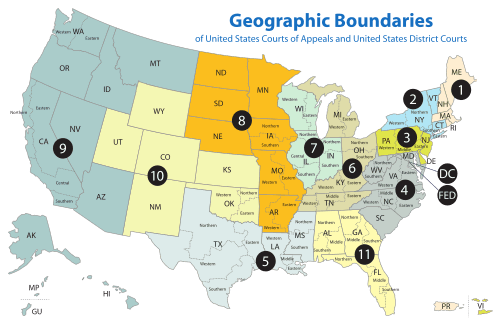
the United States District Court
ORGANIZATION
U.S. federal trial court with jurisdiction over federal cases
Third Circuit
ORGANIZATION
Organization referenced in documents
Torruella
ORGANIZATION
Organization referenced in documents
Transactional
ORGANIZATION
Organization referenced in documents
U.S. Govt
ORGANIZATION
Organization referenced in documents
U.S.C. 801 et
ORGANIZATION
Organization referenced in documents
United &WM
ORGANIZATION
Organization referenced in documents
United Stain
ORGANIZATION
Organization referenced in documents
United States Court of Appeals
ORGANIZATION
U.S. appeals court
United States Gypsum Co.
ORGANIZATION
Organization referenced in documents
Weaver the Court
ORGANIZATION
Organization referenced in documents
Wellington High School
ORGANIZATION
Organization referenced in documents
Western Union
ORGANIZATION
American financial services and communications company
Afileck
LOCATION
Location referenced in documents

Alaska
LOCATION
State of the United States of America
Angiulo
LOCATION
Location referenced in documents

Anguilla
LOCATION
British overseas territory in the Caribbean

Aspen
LOCATION
City in and county seat of Pitkin County, Colorado, United States

Athens
LOCATION
Capital and largest city of Greece
B. Kowalik
LOCATION
Location referenced in documents
Beach County
LOCATION
County in southeastern Florida
Beazell
LOCATION • 2 mentions
Location referenced in documents
Bentvena
LOCATION
Location referenced in documents
C.A.).(Mass.),1985
LOCATION
Location referenced in documents
Cayman
LOCATION
British Overseas Territory in the Caribbean
Cayman Islands With Regard
LOCATION
Location referenced in documents

Chicago
LOCATION
City and county seat of Cook County, and largest city in State of Illinois, United States of America

Colorado
LOCATION
State of the United States of America

Columbus
LOCATION
Capital city of Ohio, United States of America

Denver
LOCATION
Consolidated city-county and capital of Colorado, United States

Ecuador
LOCATION
Sovereign state in South America
Eleventh Cir-
LOCATION
Location referenced in documents
Giancola
LOCATION • 2 mentions
Location referenced in documents
Graewe
LOCATION
Location referenced in documents
Hitchcock
LOCATION
Location referenced in documents
HOLLOWAY
LOCATION
Location referenced in documents
Mass.),1985
LOCATION
Location referenced in documents
McKAY
LOCATION
Location referenced in documents
Mumaghan
LOCATION
Location referenced in documents

New England
LOCATION
Region of the northeasternmost United States

New Jersey
LOCATION
State of the United States of America

New York
LOCATION
Most populous city in the United States

North
LOCATION
1994 comedy film by Rob Reiner

Palm Beach County
LOCATION
County in Florida, United States of America
Palm Beach Tiinty
LOCATION
Location referenced in documents

Salt Lake City
LOCATION
City in and county seat of Salt Lake County, Utah, United States and the capital of Utah
Sansorrejl United States
LOCATION
Location referenced in documents

South
LOCATION
Directional region of the United States
Ste Mabry
LOCATION
Location referenced in documents

Teterboro
LOCATION
Borough in New Jersey, United States

the Cayman Islands
LOCATION
British Overseas Territory in the Caribbean
the District of Colorado
LOCATION
Location referenced in documents
the District of Columbia Court
LOCATION
Location referenced in documents
the District of Rhode
LOCATION
Location referenced in documents
the District of Utah
LOCATION
Location referenced in documents
the Southern District
LOCATION
Federal judicial district in New York City
the Southern District of Alabama
LOCATION
Location referenced in documents
Toledo
LOCATION
County seat of Lucas County, Ohio, United States
U.S. Congress
LOCATION
Bicameral legislature of the United States

U.S. Virgin Islands
LOCATION
Unincorporated territory of the United States of America
Uhlhorn
LOCATION
Location referenced in documents

United States
LOCATION • 4 mentions
Country located primarily in North America

Van Nuys
LOCATION • 2 mentions
Neighborhood in the San Fernando Valley in Los Angeles, California, United States
West Headnotes
LOCATION
Location referenced in documents

Westchester County
LOCATION
County in New York, United States
Westerly
LOCATION
City in Rhode Island
Zannino
LOCATION • 2 mentions
Location referenced in documents
Statistics
Pages:100
Entities:258
Sponsored