HOUSE_OVERSIGHT_024432 - HOUSE_OVERSIGHT_024591
Document HOUSE_OVERSIGHT_024432 is a Private Placement Memorandum from September 27, 2006, concerning Knowledge Universe Education L.P. (KUE).
This document outlines a confidential offering of investment units in Knowledge Universe Education L.P. (KUE), seeking to raise $1,000,000,000. The offering, managed by Goldman, Sachs & Co. and Credit Suisse, aims to expand KUE's operations through strategic acquisitions and to repay existing debt. KUE is the indirect controlling stockholder of Knowledge Learning Corporation (KLC), a large for-profit early childhood care and education company.
Key Highlights
- •Confidential private placement offering of $1,000,000,000 in investment units of Knowledge Universe Education L.P. (KUE)
- •Knowledge Universe Education L.P. (KUE) is the indirect controlling stockholder of Knowledge Learning Corporation (KLC)
- •Goldman, Sachs & Co. and Credit Suisse are acting as placement agents for the offering
Frequently Asked Questions



Document Information
Bates Range
HOUSE_OVERSIGHT_024432 - HOUSE_OVERSIGHT_024591
Pages
160
Source
House Oversight Committee
Date
March 1, 2013
Original Filename
img-301175525-0001.pdf
File Size
16.05 MB
Document Content
Page 1 - HOUSE_OVERSIGHT_024432
No. Copy: Recipient: Private Placement Memorandum Dated September 27, 2006 CONFIDENTIAL $1,000,000,000 KNOWLEDGE UNIVERSE EDUCATION L.P. KUE Management Inc. Investment Units consisting of Common Limited Partner Units of Knowledge Universe Education LP and Class A Ordinary Shares of KUE Management Inc. Knowledge Universe Education L.P. (“KUE," and, together with its subsidiaries, the “Company’) is a Cayman Islands exempted limited partnership. KUE Management Inc. is a Cayman Islands exempted company and the sole general partner of KUE (the “General Partner"). KUE is the indirect controlling stockholder of Knowledge Learning Corporation ("KLC"), the largest for-profit early childhood care and education company in the U.S., which operates approximately 2,500 locations in 39 states. We are offering investment units (the “Units’}, each comprised of one Cammon limited partner unit (“Common LP Unit’) in KUE and one Class A ordinary share of the General Partner (“Class A Share’), for $1,000 per Unit. We are offering the Units on a strictly confidential basis pursuant to a private placement with Goldman, Sachs & Co. and Credit Suisse acting as placement agents (the “Agents"), subject to various conditions, exclusively to accredited investors. We intend to use the net proceeds from the sale of the Units to expand operations, including through strategic acquisitions in the U.S. and internationally, to develop new products and services, to repay certain existing indebtedness and for other corporate purposes. We reserve the right to withdraw, cancel or modify the offer and to reject orders in whole or in part. The offering is expected to be completed in one or more closings on or prior to March 31, 2007. The Units and the underlying Common LP Units and Class A Shares have not been, nor will they be, registered under the U.S. Securities Act of 1933, as amended (the “Securities Act”), or qualified under any applicable U.S. state statutes or laws of any non-U.S. jurisdiction. The Units will be offered and sold under the exemption from registration provided by Section 4(2} of the Securities Act and Regulation D and Regulation S promulgated under the Securities Act, and other similar exemptions available pursuant to the laws of the states and other jurisdictions where the offering will be made. There is no public market for the Units and no such market is expected to develop in the future. There is no obligation on the part of any person to register the Units or the underlying Common LP Units or Class A Shares under the Securities Act or any state or nen-U.S. securities laws other than in the limited circumstances described in this Private Placement Memorandum. Investing in the Units involves risks. You should read the section entitled “Risk Factors” beginning on page 44 for a discussion of certain risk factors that you should consider before investing in the Units. Placement Agents Goldman, Sachs & Co. Credit Suisse Private Placement Memorandum dated September 27, 2006. HOUSE_OVERSIGHT_024432
Page 2 - HOUSE_OVERSIGHT_024433
Table of Contents 1. EXECUTIVE SUMMARY 19 2. SUMMARY TERMS OF THE TRANSACTION 27 3. USE OF PROCEEDS 39 4. CAPITALIZATION 40 5. SUMMARY FINANCIAL DATA ~ 42 6. RISK FACTORS 44 7. DISTRIBUTION POLICY 60 8. INDUSTRY OVERVIEW 61 9. KNOWLEDGE UNIVERSE EDUCATION (“KUE”) 73 10. MANAGEMENT’S DISCUSSION AND ANALYSIS OF KLC’s PRO FORMA RESULTS OF OPERATIONS 75 11. THE OPERATING COMPANY (“KLC OPCO”) 82 12. THE REAL ESTATE COMPANY (“KLC PROPCO”) 100 13. k12 INC. (“k12”) 106 14. THE STRUCTURE OF KUE AND THE GENERAL PARTNER 115 15. MANAGEMENT INCENTIVE PLANS AND EMPLOYMENT AGREEMENTS 131 16. RELATED PARTY TRANSACTIONS 133 17. ELIGIBLE INVESTORS 136 18. CERTAIN INCOME TAX CONSEQUENCES 140 19. APPENDICES 146 HOUSE_OVERSIGHT_024433
Page 3 - HOUSE_OVERSIGHT_024434
You should rely only on the information contained in this Private Placement Memorandum (this “Memorandum”) or to which we have referred you. We have not authorized anyone to provide you with information that is different. This Memorandum may only be used where it is legal to sell the Units. The information in this Memorandum may only be accurate on the date of this Memorandum. No person has any obligation to update the statements and information contained in this Memorandum. NOTICE TO INVESTORS THIS CONFIDENTIAL MEMORANDUM iS BEING FURNISHED ON A STRICTLY CONFIDENTIAL BASIS SOLELY TO A LIMITED NUMBER OF SOPHISTICATED PROSPECTIVE INVESTORS FOR THE PURPOSE OF PROVIDING CERTAIN INFORMATION REGARDING THE OFFERING OF THE UNITS. A PROSPECTIVE INVESTOR MAY NOT DISTRIBUTE OR REPRODUCE THIS MEMORANDUM, OR DISCLOSE ITS CONTENTS, TO ANY PERSON OTHER THAN PROFESSIONAL REPRESENTATIVES OF THE INVESTOR IN CONNECTION WITH ITS CONSIDERATION OF THIS INVESTMENT, AS CONTEMPLATED BY THE CONFIDENTIALITY AGREEMENTS BETWEEN THE INVESTORS AND KUE, THIS MEMORANDUM AND ANY INFORMATION FURNISHED IN CONNECTION HEREWITH (COLLECTIVELY, THE “COMPANY INFORMATION"), YOU ACKNOWLEDGE AND AGREE THAT (1) ALL COMPANY INFORMATION IS CONFIDENTIAL; (If) YOU WILL NOT DISTRIBUTE OR REPRODUCE THE COMPANY INFORMATION IN WHOLE OR IN PART AND WILL USE THE COMPANY INFORMATION SOLELY TO EVALUATE AN INVESTMENT IN THE UNITS AND NOT FOR ANY OTHER PURPOSE; (Ill) IN THE EVENT THAT YOU HAVE NO FURTHER INTEREST IN PARTICIPATING IN THIS OFFERING, OR IF AT ANY TIME THE COMPANY SO REQUESTS (AT ITS DISCRETION), YOU WILL PROMPTLY RETURN, DESTROY OR DELETE ALL COMPANY INFORMATION THAT YOU HAVE RECEIVED AT THE EARLIEST OPPORTUNITY AS REQUESTED BY THE COMPANY; AND (IV) YOU WILL NOT DISCLOSE TO ANY THIRD PARTY THE COMPANY INFORMATION THAT HAS BEEN PROVIDED TO YOU. EACH PROSPECTIVE INVESTOR IS RESPONSIBLE FOR THE FEES OF ITS OWN COUNSEL, ACCOUNTANTS AND OTHER ADVISORS. THE UNITS OFFERED HEREBY AND THE COMMON LP UNITS AND CLASS A SHARES REPRESENTED THEREBY ARE SUBJECT TO RESTRICTIONS ON TRANSFERABILITY AND RESALE AND MAY NOT BE TRANSFERRED OR RESOLD EXCEPT AS PERMITTED UNDER THE SECURITIES ACT AND THE APPLICABLE STATE AND NON-US. SECURITIES LAWS PURSUANT TO REGISTRATION OR AN EXEMPTION THEREFROM, AND THEN ONLY TO THE EXTENT PERMITTED BY THE LIMITED PARTNERSHIP AGREEMENT OF KUE AND THE GOVERNING DOCUMENTS AND AGREEMENT AMONG MEMBERS OF THE GENERAL PARTNER. ACCORDINGLY, INVESTORS SHOULD BE AWARE THAT THEY WILL BE REQUIRED TO BEAR THE FINANCIAL RISKS OF AN INVESTMENT IN THE UNITS OFFERED HEREBY FOR AN INDEFINITE PERIOD OF TIME. THE STATEMENTS AND INFORMATION CONTAINED IN THIS MEMORANDUM HAVE BEEN COMPILED AS OF THE DATE HEREOF (UNLESS OTHERWISE STATED HEREIN) FROM THE COMPANY AND FROM OTHER SOURCES. NEITHER THE DELIVERY OF THIS MEMORANDUM NOR ANY SALE MADE HEREUNDER SHALL UNDER ANY CIRCUMSTANCES IMPLY THAT THERE HAS BEEN NO CHANGE IN THE AFFAIRS OF THE COMPANY OR THAT THE INFORMATION SET FORTH HEREIN IS CORRECT AS OF ANY TIME SUBSEQUENT TO THE DATE HEREOF. NO PERSON HAS ANY OBLIGATION TO UPDATE THE STATEMENTS AND INFORMATION CONTAINED HEREIN, IN MAKING AN INVESTMENT DECISION, INVESTORS MUST RELY ON THEIR OWN EXAMINATION OF THE COMPANY, THE GENERAL PARTNER AND THE TERMS OF THE OFFERING, INCLUDING THE MERITS AND RISKS INVOLVED. YOU ACKNOWLEDGE THAT (A) YOU HAVE NOT RELIED ON THE AGENTS OR ANY PERSON AFFILIATED WITH THE AGENTS IN CONNECTION WITH YOUR INVESTIGATION OF THE ACCURACY OF THE INFORMATION PROVIDED HEREIN OR YOUR INVESTMENT DECISION AND (B) NO PERSON HAS BEEN AUTHORIZED TO GIVE ANY INFORMATION OR TO MAKE ANY REPRESENTATION CONCERNING THE COMPANY, THE GENERAL PARTNER OR THE OFFERING OTHER THAN AS CONTAINED IN THIS MEMORANDUM AND INFORMATION GIVEN BY DULY AUTHORIZED OFFICERS AND EMPLOYEES OF THE COMPANY IN CONNECTION WITH HOUSE_OVERSIGHT_024434
Sponsored
Page 4 - HOUSE_OVERSIGHT_024435
YOUR EXAMINATION OF THE COMPANY, THE GENERAL PARTNER AND THE TERMS OF THIS OFFERING, AND, IF GIVEN OR MADE, SUCH OTHER INFORMATION OR REPRESENTATIONS SHOULD NOT BE RELIED UPON AS HAVING BEEN AUTHORIZED BY THE COMPANY, THE GENERAL PARTNER OR THE AGENTS. THIS MEMORANDUM DOES NOT CONSTITUTE AN OFFER BY ANY PERSON TO SELL, OR A SOLICITATION OF AN OFFER TO BUY, ANY UNITS OR COMPONENTS THEREOF IN ANY JURISDICTION IN WHICH IT IS UNLAWFUL FOR SUCH PERSON TO MAKE SUCH AN OFFER OR SOLICITATION. THE UNITS AND COMPONENT SECURITIES OFFERED HEREBY HAVE NOT BEEN REGISTERED UNDER THE SECURITIES ACT OR THE SECURITIES LAWS OF THE STATES OR ANY NON-US. JURISDICTION AND ARE BEING OFFERED AND SOLD IN RELIANCE ON EXEMPTIONS FROM THE REGISTRATION REQUIREMENTS OF THE SECURITIES ACT AND SUCH STATE AND NON-US. LAWS. THE UNITS HAVE NOT BEEN RECOMMENDED, APPROVED OR DISAPPROVED BY THE U.S. SECURITIES AND EXCHANGE COMMISSION OR ANY OTHER FEDERAL, STATE OR NON-U.S. SECURITIES COMMISSION OR REGULATORY AUTHORITY, NOR HAVE ANY OF THE FOREGOING AUTHORITIES PASSED UPON OR ENDORSED THE MERITS OF THIS OFFERING OR THE ACCURACY OR ADEQUACY OF THIS MEMORANDUM. ANY REPRESENTATION TO THE CONTRARY IS A CRIMINAL OFFENSE. NEITHER THE GENERAL PARTNER NOR THE COMPANY IS REQUIRED TO REGISTER OR BE REGULATED AS A MUTUAL FUND UNDER THE MUTUAL FUNDS LAW (2003 REVISION) OF THE CAYMAN ISLANDS. NEITHER THE CAYMAN ISLANDS MONETARY AUTHORITY NOR ANY OTHER GOVERNMENTAL AUTHORITY IN THE CAYMAN ISLANDS HAS PASSED JUDGMENT UPON OR APPROVED THE TERMS OR MERITS OF THIS DOCUMENT. THERE IS NO INVESTMENT COMPENSATION SCHEME AVAILABLE TO INVESTORS IN THE CAYMAN ISLANDS. PROSPECTIVE INVESTORS SHOULD READ THIS ENTIRE MEMORANDUM CAREFULLY BEFORE DECIDING WHETHER TO PURCHASE THE UNITS, AND PROSPECTIVE INVESTORS SHOULD MAKE THEIR OWN INVESTIGATION OF THE INVESTMENT DESCRIBED HEREIN, INCLUDING THE MERITS AND RISKS INVOLVED AND THE LEGALITY AND TAX CONSEQUENCES OF SUCH AN INVESTMENT. PROSPECTIVE INVESTORS ARE NOT TO CONSTRUE THIS MEMORANDUM OR ITS CONTENTS AS LEGAL, TAX, INVESTMENT OR OTHER ADVICE. PROSPECTIVE INVESTORS WILL HAVE THE OPPORTUNITY TO ASK QUESTIONS AND RECEIVE ANSWERS AND ADDITIONAL INFORMATION ABOUT THE COMPANY, THE GENERAL PARTNER AND THE UNITS TO VERIFY THE INFORMATION CONTAINED HEREIN TO THE EXTENT REPRESENTATIVES OF THE COMPANY POSSESS SUCH INFORMATION. EACH INVESTOR SHOULD MAKE ITS OWN INQUIRIES AND CONSULT ITS OWN ADVISORS CONCERNING THE VARIOUS LEGAL, TAX AND ECONOMIC CONSIDERATIONS RELATING TO ITS INVESTMENT. THIS MEMORANDUM DOES NOT CONTAIN THE INFORMATION, INCLUDING FINANCIAL STATEMENTS, THAT WOULD BE INCLUDED IN A REGISTRATION STATEMENT FILED WITH THE U.S. SECURITIES AND EXCHANGE COMMISSION. THIS MEMORANDUM CONTAINS PROJECTIONS FOR KLC AND A?2 INC. THAT ARE BASED UPON A NUMBER OF ASSUMPTIONS AND ESTIMATES THAT, WHILE PRESENTED WITH NUMERICAL SPECIFICITY AND CONSIDERED REASONABLE BY MANAGEMENT WHEN TAKEN AS A WHOLE, INHERENTLY ARE SUBJECT TO SIGNIFICANT BUSINESS, ECONOMIC, COMPETITIVE AND OTHER RISKS, UNCERTAINTIES AND CONTINGENCIES, MANY OF WHICH ARE BEYOND THE CONTROL OF THE COMPANY, AND ARE BASED UPON SPECIFIC ASSUMPTIONS WITH RESPECT TO FUTURE BUSINESS DECISIONS, SOME OR ALL OF WHICH WILL CHANGE. PROJECTIONS ARE NECESSARILY SPECULATIVE IN NATURE AND IT CAN BE EXPECTED THAT ASSUMPTIONS UNDERLYING THE PROJECTIONS WILL NOT PROVE TO BE VALID OR WILL VARY FROM ACTUAL RESULTS. ACCORDINGLY, THE PROJECTIONS ARE ONLY AN ESTIMATE. ACTUAL RESULTS WILL VARY FROM THE PROJECTIONS AND THE VARIATIONS MAY BE MATERIAL. CONSEQUENTLY, YOUR RECEIPT OF THE PROJECTIONS SHOULD NOT BE REGARDED AS A REPRESENTATION BY HOUSE_OVERSIGHT_024435
Page 5 - HOUSE_OVERSIGHT_024436
THE COMPANY, ITS ADVISORS, THE AGENTS, OR ANY OTHER PERSON OF RESULTS THAT WILL ACTUALLY BE ACHIEVED. PROSPECTIVE PURCHASERS OF THE UNITS ARE CAUTIONED NOT TO PLACE UNDUE RELIANCE ON THESE PROJECTIONS. THE INFORMATION PRESENTED HEREIN WAS PREPARED OR OBTAINED BY KUE AND IS BEING FURNISHED SOLELY FOR USE BY PROSPECTIVE INVESTORS IN CONNECTION WITH THE OFFERING. THE AGENTS HAVE NOT ASSUMED ANY RESPONSIBILITY FOR INDEPENDENT VERIFICATION OF THE INFORMATION CONTAINED HEREIN OR OTHERWISE MADE AVAILABLE IN CONNECTION WITH THE OFFERING OF SECURITIES AND MAKE NOC REPRESENTATIONS OR WARRANTIES AS TO THE ACCURACY OR COMPLETENESS OF SUCH INFORMATION. NOTHING CONTAINED HEREIN IS, OR SHOULD BE RELIED ON AS, APROMISE OR REPRESENTATION AS TO THE FUTURE PERFORMANCE OF KUE. NOTICE TO NON-U.S. INVESTORS NOTICE TO RESIDENTS OF ARGENTINA THIS MEMORANDUM HAS NOT BEEN APPROVED BY ANY SECURITIES REGULATOR IN ARGENTINA AND DOES NOT ENABLE KUE, THE GENERAL PARTNER, OR ANY OTHER PARTY TO MAKE A PUBLIC OFFERING OF THE UNITS. THIS MEMORANDUM HAS ONLY BEEN ADDRESSED DIRECTLY TO THE PROSPECTIVE INVESTORS DESIGNATED AND IS INTENDED TO PROVIDE INFORMATION AT THEIR REQUEST. THIS MEMORANDUM SHOULD NOT BE CIRCULATED OR MADE PUBLIC IN ANY WAY. INVESTORS PARTICIPATING IN THIS ISSUANCE FULLY ACKNOWLEDGE THAT THEY HAVE BEEN INVITED PERSONALLY AND IN CONSIDERATION OF THEIR SPECIAL POSITION AS SOPHISTICATED INVESTORS AND THAT THEY HAVE HAD ALL PROPER AND DUE PERSONAL COUNSELING TO ADOPT ANY DECISION RELATED TO THIS ISSUANCE. THE UNITS ARE NOT AUTHORIZED TO BE OFFERED PUBLICLY IN THE ARGENTINEAN MARKET OR TO BE SOLD TO ANY INVESTOR IN ARGENTINA. NOTICE TO RESIDENTS OF AUSTRALIA THIS MEMORANDUM HAS NOT BEEN AND WILL NOT BE LODGED WITH THE AUSTRALIAN SECURITIES AND INVESTMENTS COMMISSION. THE OFFER [IS ONLY MADE TO THOSE PERSONS TO WHOM DISCLOSURE IS NOT REQUIRED UNDER DIVISION 2 OF PART 6D.2 OR PART 7.9 OF THE CORPORATIONS ACT 2001 AND DOES NOT PURPORT TO BE AN OFFER OF INTERESTS FOR WHICH DISCLOSURE IS REQUIRED. IN ADDITION, KUE IS NOT A REGISTERED SCHEME AS DEFINED IN THE CORPORATIONS ACT 2001. RESALE OF THE UNITS IN AUSTRALIA WITHIN 12 MONTHS OF THE DATE OF ISSUE MAY REQUIRE THE SELLER TO COMPLY WITH THE DISCLOSURE REQUIREMENTS OF DIVISION 2 OF PART 6D.2 OR PART 7.9 OF THE CORPORATIONS ACT 2001. NOTICE TO RESIDENTS OF BRAZIL KUE IS NOT A PUBLICLY-HELD CORPORATION AND IS NOT LISTED WITH ANY STOCK EXCHANGE, ORGANIZED OVER THE COUNTER MARKET OR ELECTRONIC SYSTEM OF SECURITIES TRADING. LIKEWISE, THE UNITS HAVE NOT BEEN AND WILL NOT BE REGISTERED WITH ANY SECURITIES EXCHANGE COMMISSION OR OTHER SIMILAR AUTHORITY, INCLUDING THE BRAZILIAN SECURITIES AND EXCHANGE COMMISSION (COMISSAO DE VALORES MOBILARIOS-"CVM"). ANY PUBLIC OFFERING, AS DEFINED UNDER BRAZILIAN LAWS AND REGULATIONS, OF THE UNITS IN BRAZIL IS NOT LEGAL WITHOUT SUCH PRIOR REGISTRATION UNDER LAW NR. 6.385/76. SUBSEQUENT TRADING OF THE UNITS IN BRAZIL IS ALLOWED ONLY BY MEANS OF PRIVATE TRANSACTIONS AND IS NOT SUBJECT TO REGISTRATION WITH THE CVM TO THE EXTENT THAT SUCH TRADING DOES NOT QUALIFY AS A PUBLIC OFFERING, IT SHOULD BE NOTED THAT A SELLER OF THE UNITS, HOWEVER, MAY BE ASKED BY THE PURCHASER TO COMPLY WITH PROCEDURAL REQUIREMENTS TO EVIDENCE PREVIOUS TITLE TO THE UNITS, AND MAY BE SUBJECT TO BRAZILIAN TAX ON CAPITAL GAINS WHICH MAY BE WITHHELD FROM THE SALE PRICE. PERSONS WISHING TO OFFER OR ACQUIRE THE UNITS HOUSE_OVERSIGHT_024436
Page 6 - HOUSE_OVERSIGHT_024437
WITHIN BRAZIL SHOULD CONSULT WITH THEIR OWN COUNSEL AS TO THE APPLICABILITY OF THESE REGISTRATION REQUIREMENTS OR ANY EXEMPTION THEREFROM, THIS MEMORANDUM IS CONFIDENTIAL AND INTENDED SOLELY FOR THE USE OF THE ADDRESSEE AND CANNOT BE DELIVERED OR DISCLOSED IN ANY MANNER WHATSOEVER TO ANY PERSON OR ENTITY OTHER THAN THE ADDRESSEE. NOTICE TO RESIDENTS OF CANADA THIS MEMORANDUM CONSTITUTES AN OFFERING OF THE UNITS DESCRIBED HEREIN ONLY IN THOSE JURISDICTIONS IN CANADA AND TO THOSE PERSONS WHERE AND TO WHOM THEY MAY BE LAWFULLY OFFERED FOR SALE AND THEREIN ONLY BY PERSONS PERMITTED TO SELL SUCH SECURITIES. THIS MEMORANDUM IS NOT, AND UNDER NO CIRCUMSTANCES IS TO BE CONSTRUED AS, AN ADVERTISEMENT OR A PUBLIC OFFERING OF THE UNITS IN CANADA. NO SECURITIES COMMISSION OR SIMILAR REGULATORY AUTHORITY IN CANADA HAS REVIEWED OR IN ANY WAY PASSED UPON THIS MEMORANDUM OR THE MERIT OF THE UNITS AND ANY REPRESENTATION TO THE CONTRARY IS AN OFFENCE UNDER APPLICABLE SECURITIES LAWS, No dealer, salespersons or other individual has been authorized to give any information or to make any representations not contained in this Memorandum in connection with the offer made by this Memorandum and, if given or made, such information or representations must not be relied upon as having been authorized by KUE or by the Generai Partner or by any placement agent. Neither fhe delivery of this Memorandum nor any sale made hereunder shall, under any circumstances, create an implication that there has not been any change in the facts as set forth in this Memorandum or in the affairs of KUE or the General Partner since the date hereof. Resale Restrictions in Canada. THE DISTRIBUTION OF THE UNITS IN CANADA IS BEING MADE ON A PRIVATE PLACEMENT BASIS. ACCORDINGLY, ANY RESALE OF THE UNITS MUST BE MADE IN ACCORDANCE WITH AN EXEMPTION FROM THE REGISTRATION AND PROSPECTUS REQUIREMENTS OF APPLICABLE SECURITIES LAWS. NEITHER KUE NOR THE GENERAL PARTNER iS A REPORTING ISSUER IN ANY PROVINCE OR TERRITORY OF CANADA. PURCHASERS OF THE UNITS ARE ADVISED TO SEEK LEGAL ADVICE PRIOR TO ANY RESALE OF THE UNITS. Enforcement of Legal Rights. THE GENERAL PARTNER IS A CAYMAN ISLANDS EXEMPTED COMPANY AND KUE IS A CAYMAN ISLANDS EXEMPTED LIMITED PARTNERSHIP, THE DIRECTORS, OFFICERS AND REPRESENTATIVES OF THE GENERAL PARTNER AND KUE MAY BE LOCATED OUTSIDE CANADA AND, AS A RESULT, IT MAY NOT BE POSSIBLE FOR CANADIAN PURCHASERS TO EFFECT SERVICE OF PROCESS WITHIN CANADA UPON THE GENERAL PARTNER, KUE, OR THEIR DIRECTORS, OFFICERS OR REPRESENTATIVES. ALL OR A SUBSTANTIAL PORTION OF THE ASSETS OF KUE, THE GENERAL PARTNER AND THEIR DIRECTORS, OFFICERS OR REPRESENTATIVES MAY BE LOCATED OUTSIDE OF CANADA AND, AS A RESULT, IT MAY NOT BE POSSIBLE TO SATISFY A JUDGMENT AGAINST SUCH PERSONS IN CANADA OR TO ENFORCE A JUDGMENT OBTAINED IN CANADIAN COURTS AGAINST SUCH PERSONS OUTSIDE OF CANADA. Right _of Action for Damages or Rescission. THE FOLLOWING SUMMARY IS SUBJECT TO THE EXPRESS PROVISIONS OF THE SECURITIES ACT (ONTARIO), THE SECURITIES ACT (NEW BRUNSWICK) AND THE SECURITIES ACT (NOVA SCOTIA) AND THE RULES AND REGULATIONS THEREUNDER AND REFERENCE IS MADE THERETO FOR THE COMPLETE TEXT OF SUCH PROVISIONS. THE SECURITIES ACT (ONTARIO) AND THE SECURITIES ACT (NEW BRUNSWICK) PROVIDE CERTAIN PURCHASERS IN ONTARIO AND NEW BRUNSWICK, RESPECTIVELY, WITH A STATUTORY RIGHT OF ACTION FOR DAMAGES OR RESCISSION AGAINST THE ISSUER WHERE AN OFFERING MEMORANDUM CONTAINS A MISREPRESENTATION, THE SECURITIES ACT (NOVA SCOTIA) PROVIDES PURCHASERS IN NOVA SCOTIA WITH A STATUTORY RIGHT OF ACTION FOR DAMAGES AGAINST EVERY SELLER, EVERY DIRECTOR OF THE SELLER AT THE DATE OF THiS HOUSE_OVERSIGHT_024437
Sponsored
Page 7 - HOUSE_OVERSIGHT_024438
MEMORANDUM AND EVERY PERSON WHO SIGNED THE OFFERING MEMORANDUM OR A RIGHT OF RESCISSION AGAINST EVERY SELLER WHERE AN OFFERING MEMORANDUM CONTAINS A MISREPRESENTATION. SUCH PURCHASERS WHO PURCHASE A SECURITY OFFERED BY THE OFFERING MEMORANDUM DURING THE PERIOD OF DISTRIBUTION ARE DEEMED TO HAVE RELIED ON SUCH MISREPRESENTATION IF IT WAS A MISREPRESENTATION AT THE TIME OF PURCHASE. FOR PURCHASERS IN ONTARIO AND NOVA SCOTIA, THESE STATUTORY RIGHTS ARE EXERCISABLE, IN THE CASE OF AN ACTION FOR RESCISSION, 180 DAYS AFTER THE DATE OF THE TRANSACTION THAT GAVE RISE TO THE CAUSE OF ACTION OR, IN THE CASE OF ANY ACTION, OTHER THAN AN ACTION FOR RESCISSION, THE EARLIER OF (1) 180 DAYS AFTER THE PLAINTIFF FIRST HAD KNOWLEDGE OF THE FACTS GIVING RISE TO THE CAUSE OF ACTION AND (I} THREE YEARS AFTER THE DATE OF THE TRANSACTION THAT GAVE RISE TO THE CAUSE OF ACTION. NOTWITHSTANDING THE FOREGOING, IN NOVA SCOTIA, NO ACTION MAY BE COMMENCED MORE THAN 120 DAYS AFTER THE DATE ON WHICH PAYMENT WAS MADE FOR THE SECURITIES OR AFTER THE DATE ON WHICH THE INITIAL PAYMENT FOR THE SECURITIES WAS MADE WHERE PAYMENTS SUBSEQUENT TO THE INITIAL PAYMENT ARE MADE PURSUANT TO A CONTRACTUAL COMMITMENT ASSUMED PRIOR TO, OR CONCURRENTLY WITH, THE INITIAL. PAYMENT. FOR PURCHASERS IN NEW BRUNSWICK, THESE STATUTORY RIGHTS ARE EXERCISABLE, IN THE CASE OF AN ACTION FOR RESCISSION, 180 DAYS AFTER THE DATE OF THE TRANSACTION THAT GAVE RISE TO THE CAUSE OF ACTION OR, IN THE CASE OF ANY ACTION, OTHER THAN AN ACTION FOR RESCISSION, THE EARLIER OF (I) ONE YEAR AFTER THE PLAINTIFF FIRST HAD KNOWLEDGE OF THE FACTS GIVING RISE TO THE CAUSE OF ACTION AND (II) 6 YEARS AFTER THE DATE OF THE TRANSACTION THAT GAVE RISE TO THE CAUSE OF THE ACTION. THE RIGHTS DISCUSSED ABOVE ARE IN ADDITION TO AND WITHOUT DEROGATION FROM ANY OTHER RIGHT OR REMEDY WHICH PURCHASERS MAY HAVE AT LAW AND ARE INTENDED TO CORRESPOND TO THE PROVISIONS OF THE RELEVANT SECURITIES LEGISLATION AND ARE SUBJECT TO THE DEFENCES CONTAINED THEREIN. Canadian Federal income Tax Considerations. THIS MEMORANDUM DOES NOT DISCUSS THE CANADIAN FEDERAL INCOME TAX CONSIDERATIONS RELEVANT TO A HOLDER OF THE UNITS RESIDENT IN CANADA FOR PURPOSES OF THE INCOME TAX ACT (CANADA) (THE “ITA"). THE RULES FOR THE TAXATION OF PARTNERS AND PARTNERSHIPS UNDER THE ITA ARE EXTREMELY COMPLEX AND, ACCORDINGLY, PROSPECTIVE PURCHASERS OF THE UNITS WHO ARE RESIDENT IN CANADA ARE STRONGLY ADVISED TO CONSULT WITH THEIR OWN TAX ADVISORS PRIOR TO PURCHASING ANY UNITS. Forward Looking Statements, CERTAIN STATEMENTS IN THIS MEMORANDUM CONSTITUTE “FORWARD-LOOKING STATEMENTS.” FORWARD-LOOKING STATEMENTS = INCLUDE STATEMENTS CONCERNING THE PLANS, OBJECTIVES, GOALS, STRATEGIES AND FUTURE OPERATIONS AND PERFORMANCE OF KUE AND THE GENERAL PARTNER AND THE ASSUMPTIONS UNDERLYING THESE FORWARD-LOOKING STATEMENTS. KUE AND THE GENERAL PARTNER USE THE WORDS “ANTICIPATES,” “ESTIMATES,” EXPECTS,” “BELIEVES,” “INTENDS,” "PLANS," “MAY,” “WILL,” “SHOULD,” AND ANY SIMILAR EXPRESSIONS TO IDENTIFY FORWARD-LOOKING STATEMENTS. THESE FORWARD-LOOKING STATEMENTS INVOLVE KNOWN AND UNKNOWN RISKS, UNCERTAINTIES AND OTHER IMPORTANT FACTORS THAT COULD CAUSE ACTUAL RESULTS, PERFORMANCE AND ACHIEVEMENTS FO BE MATERIALLY DIFFERENT FROM ANY FUTURE RESULTS, PERFORMANCE OR ACHIEVEMENTS EXPRESSED OR IMPLIED BY SUCH FORWARD-LOOKING STATEMENTS. SUCH FORWARD-LOOKING STATEMENTS ARE BASED ON NUMEROUS ASSUMPTIONS REGARDING PRESENT AND FUTURE BUSINESS STRATEGIES AND THE ENVIRONMENT IN WHICH KUE AND THE GENERAL PARTNER WILL OPERATE IN THE FUTURE. AS A RESULT OF THESE RISK, UNCERTAINTIES AND HOUSE_OVERSIGHT_024438
Page 8 - HOUSE_OVERSIGHT_024439
ASSUMPTIONS, A PROSPECTIVE INVESTOR SHOULD NOT PLACE UNDUE RELIANCE ON THESE FORWARD-LOOKING STATEMENTS. SEE "RISK FACTORS” IN THIS MEMORANDUM. THESE FORWARD-LOOKING STATEMENTS SPEAK ONLY AS OF THE DATE OF THIS MEMORANDUM. NEITHER KUE NOR THE GENERAL PARTNER |S OBLIGED, AND DOES NOT INTEND, TO UPDATE OR REVISE ANY FORWARD-LOOKING STATEMENTS, WHETHER AS A RESULT OF NEW INFORMATION, FUTURE EVENTS OR OTHERWISE. ALL SUBSEQUENT WRITTEN AND ORAL FORWARD-LOOKING STATEMENTS ATTRIBUTABLE TO KUE, THE GENERAL PARTNER, OR PERSONS ACTING ON THEIR BEHALF, ARE EXPRESSLY QUALIFIED IN THEIR ENTIRETY BY THE CAUTIONARY STATEMENTS CONTAINED THROUGHOUT THIS MEMORANDUM. Financial information. FINANCIAL INFORMATION CONTAINED IN THIS MEMORANDUM RAVE NOT BEEN PREPARED IN ACCORDANCE WITH U.S. GENERALLY ACCEPTED ACCOUNTING PRACTICES, AND MAY DIFFER IN CERTAIN RESPECTS FROM THOSE ACCOUNTING PRINCIPLES USED IN OTHER JURISDICTIONS, INCLUDING CANADA. PROSPECTIVE PURCHASERS SHOULD CONDUCT THEIR OWN INVESTIGATION AND ANALYSIS OF THE BUSINESS, DATA AND TRANSACTION DESCRIBED HEREIN AND CONSULT THEIR OWN FINANCIAL ADVISORS. SEE “NON-GAAP FINANCIAL MEASURES” BELOW IN THIS MEMORANDUM. Representations of Canadian Purchasers. EACH PURCHASER OF THE UNITS RESIDENT IN A CANADIAN JURISDICTION WILL BE DEEMED TO HAVE REPRESENTED TO KUE AND THE GENERAL PARTNER AND THE AGENTS WHO SELLS THE UNITS TO SUCH PURCHASER THAT: (A) THE OFFER AND SALE OF THE UNITS WAS MADE EXCLUSIVELY THROUGH THIS MEMORANDUM AND WAS NOT MADE THROUGH AN ADVERTISEMENT OF THE UNITS IN ANY PRINTED MEDIA OF GENERAL AND REGULAR PAID CIRCULATION, RADIO, TELEVISION OR TELECOMMUNICATIONS, INCLUDING ELECTRONIC DISPLAY, OR ANY OTHER FORM OF ADVERTISING IN CANADA; (B) SUCH PURCHASER HAS REVIEWED AND ACKNOWLEDGES THE TERMS REFERRED TO ABOVE UNDER “RESALE RESTRICTIONS IN CANADA"; (C}) WHERE REQUIRED BY LAW, SUCH PURCHASER IS PURCHASING AS PRINCIPAL FOR ITS OWN ACCOUNT AND NOT AS AGENT; AND (D)} SUCH PURCHASER OR ANY ULTIMATE PURCHASER FOR WHICH SUCH PURCHASER IS ACTING AS AGENT [IS ENTITLED UNDER APPLICABLE CANADIAN SECURITIES LAWS TO PURCHASE SUCH UNITS WITHOUT THE BENEFIT OF A PROSPECTUS QUALIFIED UNDER SUCH SECURITIES LAWS, AND WITHOUT LIMITING THE GENERALITY OF THE FOREGOING: (I) SUCH PURCHASER IS AN “ACCREDITED INVESTOR” AS DEFINED iN SECTION 1.1 OF NATIONAL INSTRUMENT 45-106 ("Ni 45-106"), OR FULFILLS THE REQUIREMENTS OF SECTION 2.10 OF NI 45- 106 (A “$150K PURCHASER”) AND (Il) IN THE CASE OF A PURCHASER RESIDENT IN ONTARIO, SUCH PURCHASER, OR ANY ULTIMATE PURCHASER FOR WHICH SUCH PURCHASER IS ACTING AS AGENT, IS AN “ACCREDITED INVESTOR’ AS DEFINED IN Ni 45-106, OR A $150K PURCHASER WHO IS PURCHASING THE UNITS FROM A REGISTERED INVESTMENT DEALER WITHIN THE MEANING OF SECTION 98 OF THE REGULATION TO THE SECURITIES ACT (ONTARIO}. IN ADDITION, EACH PURCHASER OF THE UNITS RESIDENT IN CANADA WILL BE DEEMED TO HAVE REPRESENTED TO KUE, THE GENERAL PARTNER AND THE AGENTS FROM WHOM A PURCHASE CONFIRMATION WAS RECEIVED, THAT SUCH PURCHASER: (A) HAS BEEN NOTIFIED BY KUE AND THE GENERAL PARTNER (|) THAT KUE AND THE GENERAL PARTNER ARE REQUIRED TO PROVIDE INFORMATION (“PERSONAL INFORMATION") PERTAINING TO THE PURCHASER AS REQUIRED TO BE DISCLOSED IN SCHEDULE ! OF FORM 45-106F1 UNDER NI 45- 106 (INCLUDING ITS NAME, ADDRESS, TELEPHONE NUMBER AND THE NUMBER AND VALUE OF ANY UNITS PURCHASED), WHICH FORM 45-106F1 IS REQUIRED TO BE FILED BY KUE AND THE GENERAL PARTNER UNDER NI 45-106; (II) THAT SUCH PERSONAL INFORMATION WILL BE DELIVERED TO THE ONTARIO SECURITIES COMMISSION (THE "OSC”) IN ACCORDANCE WITH NI 45-106; (lil) THAT SUCH PERSONAL INFORMATION IS BEING COLLECTED INDIRECTLY BY THE OSC UNDER THE AUTHORITY GRANTED TO iT UNDER THE SECURITIES LEGISLATION OF ONTARIO; (IV) THAT SUCH PERSONAL INFORMATION IS BEING COLLECTED FOR THE PURPOSES OF THE ADMINISTRATION AND ENFORCEMENT OF THE SECURITIES LEGISLATION OF ONTARIO; AND (V) THAT THE PUBLIC OFFICIAL IN ONTARIO WHO CAN ANSWER QUESTIONS HOUSE_OVERSIGHT_024439
Page 9 - HOUSE_OVERSIGHT_024440
ABOUT THE OSC'S INDIRECT COLLECTION OF SUCH PERSONAL INFORMATION IS THE ADMINISTRATIVE ASSISTANT TO THE DIRECTOR OF CORPORATE FINANCE AT THE OSC, SUITE 1903, BOX 5520 QUEEN STREET WEST, TORONTO, ONTARIO M5H 388, TELEPHONE: (416) 593- 8086; AND (B) HAS AUTHORIZED THE INDIRECT COLLECTION OF THE PERSONAL INFORMATION BY THE OSC. FURTHER, THE PURCHASER ACKNOWLEDGES THAT ITS NAME, ADDRESS, TELEPHONE NUMBER AND OTHER SPECIFIED INFORMATION, INCLUDING THE NUMBER OF UNITS IT HAS PURCHASED AND THE AGGREGATE PURCHASE PRICE PAID BY PURCHASER, MAY BE DISCLOSED TO OTHER CANADIAN SECURITIES REGULATORY AUTHORITIES AND MAY BECOME AVAILABLE TO THE PUBLIC IN ACCORDANCE WITH THE REQUIREMENTS OF APPLICABLE LAWS. BY PURCHASING UNITS, THE PURCHASER CONSENTS TO THE DISCLOSURE OF SUCH INFORMATION. Language of documents in Canada. UPON RECEIPT OF THIS MEMORANDUM, EACH INVESTOR IN CANADA HEREBY CONFIRMS THAT IT HAS EXPRESSLY REQUESTED THAT ALL DOCUMENTS EVIDENCING OR RELATING IN ANY WAY TO THE SALE OF THE UNITS (INCLUDING FOR GREATER CERTAINTY ANY PURCHASE CONFIRMATION OR ANY NOTICE) BE DRAWN UP IN THE ENGLISH LANGUAGE ONLY. PAR LA RECEPTION DE CE DOCUMENT, CHAQUE INVESTISSEUR CANADIEN CONFIRME PAR LES PRESENTES QU'L A EXPRESSEMENT EXIGE QUE TOUS LES DOCUMENTS FAISANT FOI OU SE RAPPORTANT DE QUELQUE MANIERE QUE CE SOIT A LA VENTE DES VALEURS MOBILIERES DECRITES AUX PRESENTES (INCLUANT, POUR PLUS DE CERTITUDE, TOUTE CONFIRMATION D'ACHAT OU TOUT AVIS) SOIENT REDIGES EN ANGLAIS SEULEMENT. NOTICE TO RESIDENTS OF THE CAYMAN ISLANDS CLASS A SHARES IN THE GENERAL PARTNER AND COMMON LP UNITS IN KUE MAY BE BENEFICIALLY OWNED BY PERSONS RESIDENT, DOMICILED, ESTABLISHED, INCORPORATED OR REGISTERED IN THE CAYMAN ISLANDS PURSUANT TO THE LAWS OF THE CAYMAN ISLANDS. THE GENERAL PARTNER AND KUE, HOWEVER, WILL NOT UNDERTAKE BUSINESS WITH THE PUBLIC IN THE CAYMAN ISLANDS OTHER THAN SO FAR AS MAY BE NECESSARY FOR THE CARRYING ON OF THE BUSINESS OF, AS APPLICABLE, THE GENERAL PARTNER OR KUE EXTERIOR TO THE ISLANDS. "PUBLIC" FOR THESE PURPOSES DOES NOT INCLUDE ANY EXEMPTED OR ORDINARY NON-RESIDENT COMPANY REGISTERED UNDER THE COMPANIES LAW OR A FOREIGN COMPANY REGISTERED PURSUANT TO PART IX OF THE COMPANIES LAW OR ANY SUCH COMPANY ACTING AS GENERAL PARTNER OF A PARTNERSHIP REGISTERED PURSUANT TO SECTION 9(1) OF THE EXEMPTED LIMITED PARTNERSHIP LAW (2003 REVISION) OR ANY DIRECTOR OR OFFICER OF SUCH PARTNERSHIP ACTING IN SUCH CAPACITY OR THE TRUSTEE OF ANY TRUST REGISTERED OR CAPABLE OF REGISTRATION PURSUANT TO SECTION 74 OF THE TRUSTS LAW (2001 REVISION). NOTICE TO RESIDENTS OF CHINA THE INFORMATION CONTAINED IN THIS MEMORANDUM WILL NOT CONSTITUTE AN OFFER TO SELL ANY SECURITIES WITHIN THE PEOPLE'S REPUBLIC OF CHINA (WHICH, FOR SUCH PURPOSES, DOES NOT INCLUDE THE HONG KONG OR MACAU SPECIAL ADMINISTRATIVE REGIONS OR TAIWAN) (THE “PRC"). THIS MEMORANDUM AND THE INFORMATION CONTAINED HEREIN HAVE NOT BEEN APPROVED BY ANY RELEVANT GOVERNMENTAL AUTHORITIES IN THE PRC AND THE UNITS MAY NOT BE OFFERED FOR SALE IN THE PRC. PRC INVESTORS ARE RESPONSIBLE FOR OBTAINING ALL RELEVANT GOVERNMENT REGULATORY APPROVALS/LICENSES THEMSELVES, INCLUDING, BUT NOT LIMITED TO, ANY WHICH MAY BE REQUIRED FROM THE STATE ADMINISTRATION OF FOREIGN EXCHANGE, THE CHINA BANKING REGULATORY COMMISSION, AND/OR THE CHINA SECURITIES REGULATORY COMMISSION, AND COMPLYING WITH ALL RELEVANT PRG REGULATIONS, INCLUDING, BUT NOT LIMITED TO, ANY RELEVANT FOREIGN EXCHANGE REGULATIONS AND/OR FOREIGN INVESTMENT REGULATIONS. HOUSE_OVERSIGHT_024440
Sponsored
Page 10 - HOUSE_OVERSIGHT_024441
NOTICE TO RESIDENTS OF FRANCE THE COMPANY AND THE AGENTS HAVE NOT OFFERED OR SOLD AND WILL NOT OFFER OR SELL, DIRECTLY OR INDIRECTLY, THE UNITS TO THE PUBLIC IN FRANCE, AND HAVE NOT DISTRIBUTED OR CAUSED TO BE DISTRIBUTED AND WILL NOT DISTRIBUTE OR CAUSE TO BE DISTRIBUTED TO THE PUBLIC IN FRANCE, THIS MEMORANDUM OR ANY OTHER OFFERING MATERIAL RELATING TO THE UNITS. SUCH OFFERS, SALES AND DISTRIBUTIONS HAVE BEEN AND SHALL ONLY BE MADE IN FRANCE TO {I} PROVIDERS OF INVESTMENT SERVICES RELATING TO PORTFOLIO MANAGEMENT FOR THE ACCOUNT OF THIRD PARTIES, AND/OR (11) QUALIFIED INVESTORS (INVESTISSEURS QUALIFIES), AND/OR (Ill) A RESTRICTED GROUP OF INVESTORS (CERCLE RESTREINT D'INVESTISSEURS), ALL AS DEFINED IN, AND IN ACCORDANCE WITH, ARTICLES L.471-1, L.411-2, D.411-1 AND D.411-2 OF THE FRENCH CODE MONETAIRE ET FINANCIER. NOTICE TO RESIDENTS OF GERMANY THE UNITS HAVE NOT BEEN AND WILL NOT BE REGISTERED OR APPROVED FOR PUBLIC OFFERING UNDER THE SECURITIES LAWS OF GERMANY. THIS MEMORANDUM HAS NOT BEEN AND WILL NOT BE SUBMITTED TO THE FEDERAL FINANCIAL SERVICES SUPERVISORY AUTHORITY (BUNDESANSTALT FUR FINANZDIENSTLEISTUNGSAUFSICHT) FOR APPROVAL AS A PROSPECTUS AND NO PROSPECTUS HAS BEEN OR WILL BE PUBLISHED IN GERMANY. THEREFORE, THE UNITS MAY BE OFFERED AND SOLD IN THE TERRITORY OF THE FEDERAL REPUBLIC OF GERMANY ONLY IF (1) LESS THAN 20 UNITS ARE OFFERED IN GERMANY, (Il) THE PRICE PER OFFERED UNIT IS AT LEAST €200,000 FOR EACH OFFEREE, (Ill) THE OFFER IS TO A "RESTRICTED CIRCLE OF PERSONS’ AS THIS TERM IS INTERPRETED BY THE BAFIN AND THE GERMAN COURTS, OR (IV) THE OFFER IS TO INVESTORS WHO PURCHASE OR SELL SECURITIES OR INVESTMENTS (VERMOGENSANLAGEN) AS DEFINED IN THE GERMAN SALES PROSPECTUS ACT (VERKAUFSPROSPEKTGESETZ) FOR THEIR OWN ACCOUNT OR THE ACCOUNT OF THIRD PARTIES AS PART OF THEIR PROFESSION OR TRADE. THIS MEMORANDUM AND ANY OTHER DOCUMENT RELATING TO THE UNITS, AS WELL AS INFORMATION CONTAINED THEREIN, MAY NOT BE SUPPLIED TO THE PUBLIC IN GERMANY OR USED IN CONNECTION WITH ANY OFFER FOR SUBSCRIPTION OR SALE OF THE UNITS TO THE PUBLIC IN GERMANY. TRIS MEMORANDUM AND OTHER OFFERING MATERIALS RELATING TO THE OFFER OF THE UNITS ARE STRICTLY CONFIDENTIAL AND MAY NOT BE DISTRIBUTED TO ANY PERSON OR ENTITY OTHER THAN THE RECIPIENTS HEREOF. NOTICE TO RESIDENTS OF HONG KONG WARNING THE CONTENTS GF THIS MEMORANDUM HAVE NOT BEEN REVIEWED BY ANY REGULATORY AUTHORITY IN HONG KONG. YOU ARE ADVISED TO EXERCISE CAUTION IN RELATION TO THE OFFER. IF YOU ARE IN ANY DOUBT ABOUT ANY OF THE CONTENTS OF THIS MEMORANDUM, YOU SHOULD OBTAIN INDEPENDENT PROFESSIONAL ADVICE. NOTICE TO RESIDENTS OF ICELAND THIS MEMORANDUM HAS BEEN ISSUED TG YOU FOR YOUR PERSONAL USE ONLY AND EXCLUSIVELY FOR THE PURPOSES OF THE INVESTMENT SCHEME. ACCORDINGLY, THIS MEMORANDUM MAY NOT BE USED FOR ANY OTHER PURPOSE NOR PASSED ON TO ANY OTHER PERSON IN ICELAND. THE SECURITIES OFFERING DESCRIBED IN THIS MEMORANDUM IS AN UNREGULATED INVESTMENT SCHEME. THE SECURITIES WHICH ARE THE OBJECT OF THIS MEMORANDUM ARE NOT REGISTERED FOR PUBLIC DISTRIBUTION IN ICELAND WITH THE FINANCIAL SUPERVISORY AUTHORITY PURSUANT TO THE ICELANDIC ACT ON SECURITIES TRANSACTIONS NO. 33/2003 OR THE ICELANDIC ACT ON UCITS-FUNDS AND OTHER INVESTMENT FUNDS NO. 30/2003 AND SUPPLEMENTARY REGULATIONS. THE UNITS MAY NOT BE OFFERED OR SOLD BY MEANS OF THIS MEMORANDUM OR ANYWAY LATER RESOLD TO HOUSE_OVERSIGHT_024441
Page 11 - HOUSE_OVERSIGHT_024442
OTHER THAN ENTITIES OR PERSONS DEFINED AS INSTITUTIONAL INVESTORS IN THE MEANING OF ITEM NO. 7. IN ARTICLE 2 OF THE ICELANDIC ACT ON SECURITIES TRANSACTIONS AND THE REGULATION OF THE TRANSACTIONS OF SECURITIES NO. 233/2003. ANY RESALE OF THE UNITS IN ICELAND WILL NEED TO TAKE PLACE IN ACCORDANCE WITH THE PROVISIONS OF THE ICELANDIC ACT ON SECURITIES TRANSACTIONS No. 33/2003 AS AMENDED AND ANY APPLICABLE LAWS OR REGULATIONS OF ICELAND. NOTICE TO RESIDENTS OF INDIA THE ISSUANCE OF THE UNITS IS BEING MADE STRICTLY ON A PRIVATE PLACEMENT BASIS. THIS MEMORANDUM IS NOT A PROSPECTUS OR A STATEMENT IN LIEU OF A PROSPECTUS. IT IS NOT, AND SHOULD NOT BE DEEMED TO CONSTITUTE AN OFFER TO THE PUBLIC IN GENERAL. THE INFORMATION CONTAINED IN THIS MEMORANDUM IS BELIEVED BY THE COMPANY TO BE ACCURATE IN ALL MATERIAL RESPECTS AS OF THE DATE HEREOF, THE COMPANY DOES NOT UNDERTAKE TO UPDATE THIS MEMORANDUM TO REFLECT SUBSEQUENT EVENTS. THIS MEMORANDUM HAS BEEN PREPARED TO PROVIDE GENERAL INFORMATION ON THE COMPANY TO POTENTIAL INVESTORS EVALUATING THE PROPOSAL TO SUBSCRIBE FOR THE UNITS COVERED BY THIS MEMORANDUM AND iT DOES NOT PURPORT TO CONTAIN ALL THE INFORMATION THAT ANY SUCH POTENTIAL INVESTOR MAY REQUIRE. POTENTIAL INVESTORS SHOULD CONDUCT THEIR OWN DUE DILIGENCE, INVESTIGATION AND ANALYSIS OF THE COMPANY. PRIOR TO APPLYING FOR THE UNITS, INVESTORS SHOULD VERIFY IF THEY HAVE THE NECESSARY POWER AND COMPETENCE TO APPLY FOR THE UNITS UNDER THEIR CONSTITUTIONAL DOCUMENTS AS WELL AS ALL RELEVANT LAWS AND REGULATIONS IN FORCE IN INDIA. THEY SHOULD ALSO CONSULT THEIR OWN TAX ADVISORS ON THE TAX IMPLICATIONS OF THE ACQUISITION, OWNERSHIP AND SALE OF THE UNITS, AND INCOME ARISING THEREON. ALTHOUGH THE INFORMATION CONTAINED HEREIN HAS BEEN OBTAINED FROM SOURCES THAT ARE RELIABLE TO THE BEST OF THE AGENTS’ KNOWLEDGE AND BELIEF, THE AGENTS MAKES NO REPRESENTATION AS TO THE ACCURACY OR COMPLETENESS OF ANY INFORMATION CONTAINED HEREIN OR OTHERWISE PROVIDED BY THE AGENT. NEITHER THE AGENTS NOR ANY OFFICER OR EMPLOYEE OF THE AGENTS ACCEPT ANY LIABILITY WHATSOEVER FOR ANY DIRECT OR CONSEQUENTIAL LOSS ARISING FROM ANY USE OF THIS MEMORANDUM OR ITS CONTENTS. NOTICE TO RESIDENTS OF ITALY THE OFFERING OF THE UNITS IN THE REPUBLIC OF ITALY (“ITALY”) HAS NOT BEEN AUTHORISED BY THE COMMISSIONE NAZIONALE PER LE SOCIETA E LA BORSA ("CONSOB”) PURSUANT TO THE ITALIAN SECURITIES LEGISLATION AND, ACCORDINGLY: (l) THE UNITS CANNOT BE OFFERED, SOLD OR DELIVERED IN ITALY IN AN INVESTMENT SOLICITATION (“SOLLECITAZIONE ALL'INVESTIMENTO”) WITHIN THE MEANING OF ARTICLE 1, PARAGRAPH 1, LETTER (T) OF LEGISLATIVE DECREE NO. 58 OF 24 FEBRUARY 1998, AS AMENDED (“DECREE 58/98”), (1) THE UNITS CANNOT BE OFFERED, SOLD AND/OR DELIVERED, NOR ANY DOCUMENT RELATING TO THE UNITS CAN BE DISTRIBUTED, EITHER IN THE PRIMARY OR SECONDARY MARKET, TO INDIVIDUALS RESIDENT IN ITALY, AND (Ill) ANY OFFER, SALE AND/OR DELIVERY OF THE UNITS AND DISTRIBUTION OF COPIES OF ANY DOCUMENT RELATING TO THE UNITS IN ITALY WILL ONLY BE: HOUSE_OVERSIGHT_024442
Page 12 - HOUSE_OVERSIGHT_024443
(A) MADE TO ITALIAN INSTITUTIONAL INVESTORS (INVESTITORI ISTITUZIONALP), AS DEFINED IN ARTICLE 100 OF DECREE 58/98 BY REFERENCE TO ARTICLE 31.2 OF CONSOB REGULATION NO. 11522 OF 71 JULY 1998, AS AMENDED (“REGULATION 11522/98"}; (B) MADE IN COMPLIANCE WITH ARTICLE 129 OF THE LEGISLATIVE DECREE NO. 385 OF 1 SEPTEMBER 1993, AS AMENDED ("DECREE 385/93”), AND THE IMPLEMENTING INSTRUCTIONS OF THE BANK OF ITALY, IF APPLICABLE, PURSUANT TO WHICH THE ISSUE OR PLACEMENT OF SECURITIES IN ITALY 1S SUBJECT TO PRIOR NOTIFICATION TO THE BANK OF ITALY, UNLESS AN EXEMPTION, DEPENDING, INTER ALIA, ON THE AMOUNT OF THE ISSUE AND THE CHARACTERISTICS OF THE SECURITIES, APPLIES; (C) MADE IN COMPLIANCE WITH ANY OTHER ITALIAN SECURITIES, TAX AND EXCHANGE CONTROL AND OTHER APPLICABLE LAWS AND REGULATIONS AND ANY OTHER APPLICABLE REQUIREMENT OR LIMITATION WHICH MAY BE IMPOSED BY CONSOB, THE BANK OF ITALY OR ANY OTHER COMPETENT ITALIAN AUTHORITY; AND (D) MADE BY AN INVESTMENT FIRM, BANK OR FINANCIAL INTERMEDIARY PERMITTED TO CONDUCT SUCH ACTIVITIES IN ITALY IN ACCORDANCE WITH DECREE 58/98, DECREE 385/83, REGULATION 11522/98 AND ANY OTHER APPLICABLE LAWS AND REGULATIONS. NOTICE TO RESIDENTS OF JAPAN THE OFFERING OF THE UNITS HEREUNDER HAS NOT BEEN AND WILL NOT BE REGISTERED UNDER THE SECURITIES AND EXCHANGE LAW OF JAPAN. CONSEQUENTLY, THE UNITS MAY NOT BE OFFERED, SOLD, RESOLD OR OTHERWISE TRANSFERRED, DIRECTLY OR INDIRECTLY, IN JAPAN OR TO OR FOR THE ACCOUNT OF ANY RESIDENT OF JAPAN, EXCEPT PURSUANT TO AND IN COMPLIANCE WITH APPLICABLE JAPANESE LAWS AND REGULATIONS. THE INVESTORS SHOULD FURTHER NOTE THAT PURSUANT TO THE PARTNERSHIP AGREEMENT THE UNITS MAY ONLY BE TRANSFERRED IN WHOLE AND NOT IN PART AND THAT ANY SUCH TRANSFER WILL REQUIRE A PRIOR WRITTEN CONSENT OF THE GENERAL PARTNER. NOTICE TO RESIDENTS OF JERSEY NOTHING IN THIS MEMORANDUM, NOR ANYTHING COMMUNICATED TO HOLDERS OR POTENTIAL HOLDERS OF SECURITIES BY THE COMPANY OR THE AGENTS [8 INTENDED TO CONSTITUTE OR SHOULD BE CONSTRUED AS ADVICE ON THE MERITS OF THE PURCHASE OF OR SUBSCRIPTION FOR THE UNITS OR THE EXERCISE OF ANY RIGHTS ATTACHED THERETO FOR THE PURPOSES OF THE FINANCIAL SERVICES (JERSEY) LAW 1998, AS AMENDED. NOTICE TO RESIDENTS OF KUWAIT THIS OFFERING HAS NOT BEEN APPROVED BY THE KUWAIT CENTRAL BANK OR THE KUWAIT MINISTRY OF COMMERCE AND INDUSTRY, NOR HAS THE COMPANY RECEIVED AUTHORIZATION OR LICENSING FROM THE KUWAIT CENTRAL BANK OR THE KUWAIT MINISTRY OF COMMERCE AND INDUSTRY TO MARKET OR SELL THE UNITS WITHIN KUWAIT. FURTHERMORE, THIS MEMORANDUM DOES NOT CONSTITUTE THE MARKETING OR OFFERING OF SECURITIES IN KUWAIT PURSUANT TO THE KUWAITI SECURITIES LAW (LAW NO. 31 OF 1990, AS AMENDED). NOTICE TO RESIDENTS OF MEXICO THE UNITS HAVE NOT BEEN REGISTERED WITH THE NATIONAL REGISTRY OF SECURITIES (REGISTRO NACIONAL DE VALORES) MAINTAINED BY THE MEXICAN NATIONAL BANKING AND SECURITIES COMMISSION (COMISION NACIONAL BANCARIA Y DE VALORES) AND MAY NOT BE OFFERED OR SOLD PUBLICLY IN MEXICO. THIS OFFER DOES NOT CONSTITUTE A PUBLIC OFFER UNDER THE MEXICAN SECURITIES MARKET LAW (LEY DEL MERCADO DE VALORES). THIS PRIVATE OFFER AND ALL OTHER INFORMATION AS CONTAINED IN THIS MEMORANDUM ARE EXCLUSIVELY FOR THE BENEFIT OF AND DISTRIBUTION TO INSTITUTIONAL OR HIGH NET 10 HOUSE_OVERSIGHT_024443
Sponsored
Page 13 - HOUSE_OVERSIGHT_024444
WORTH INVESTORS. THIS MEMORANDUM AND OTHER OFFERING MATERIALS MAY NOT BE PUBLICLY DISTRIBUTED IN MEXICO. NOTICE TO RESIDENTS OF MONACO NEITHER THIS MEMORANDUM NOR ANY OTHER OFFERING MATERIAL RELATING TO THE UNITS MAY BE AVAILABLE TO THE PUBLIC OR USED IN CONNECTION WITH ANY OTHER OFFER FOR SUBSCRIPTION OR SALE OF THE UNITS IN THE PRINCIPALITY OF MONACO, AND THE UNITS MAY NOT BE ISSUED, OFFERED OR OTHERWISE SOLD IN THE PRINCIPALITY OF MONACO. NOTICE TO RESIDENTS OF THE NETHERLANDS THE UNITS MAY ONLY BE OFFERED, DIRECTLY OR INDIRECTLY, IN THE NETHERLANDS TO ENTITIES WHICH (]} ARE PROFESSIONAL MARKET PARTIES AS DEFINED IN ARTICLE |-C, 1ST PARAGRAPH, UNDER A OF THE EXEMPTION REGULATION ISSUED PURSUANT TO ARTICLE 4 OF THE ACT ON THE SUPERVISION OF SECURITIES TRADE (WET TOEZICHT EFFECTENVERKEER 4995) AND (ii) WHICH TRADE OR INVEST IN INVESTMENT OBJECTS IN THE CONDUCT OF A PROFESSION OR BUSINESS WITHIN THE MEANING OF ARTICLE | OF THE EXEMPTION REGULATION OF 9 OCTOBER 1990 ISSUED PURSUANT TO ARTICLE 14 OF THE INVESTMENT INSTITUTION SUPERVISION ACT (WET TOEZICHT BELEGGINGSINSTELLINGEN OF JUNE 27, 1990). THE UNITS MAY NOT OTHERWISE BE OFFERED, DIRECTLY OR INDIRECTLY, IN THE NETHERLANDS. NOTICE TO RESIDENTS OF QATAR THE UNITS HAVE NOT BEEN OFFERED, SOLD OR DELIVERED, AND WILL NOT BE OFFERED, SOLD OR DELIVERED AT ANY TIME, DIRECTLY OR INDIRECTLY, IN THE STATE OF GATAR IN A MANNER THAT WOULD CONSTITUTE A PUBLIC OFFERING. THIS MEMORANDUM HAS NOT BEEN REVIEWED OR REGISTERED WITH QATARI GOVERNMENT AUTHORITIES, WHETHER UNDER LAW. NO. 25 (2002) CONCERNING INVESTMENT FUNDS, CENTRAL BANK RESOLUTION NO. 15 (1997), AS AMENDED, OR ANY ASSOCIATED REGULATIONS. THEREFORE, THIS MEMORANDUM IS STRICTLY PRIVATE AND CONFIDENTIAL, AND IS BEING ISSUED TO A LIMITED NUMBER OF ’ SOPHISTICATED INVESTORS, AND MAY NOT BE REPRODUCED OR USED FOR ANY OTHER PURPOSE, NOR PROVIDED TO ANY PERSON OTHER THAN RECIPIENT THEREOF. NOTICE TO RESIDENTS OF RUSSIA UNDER RUSSIAN LAW, THE UNITS ARE SECURITIES OF A FOREIGN ISSUER. NEITHER THE [ISSUE OF THE UNITS NOR A SECURITIES PROSPECTUS IN RESPECT OF THE UNITS HAS BEEN, OR IS INTENDED TO BE, REGISTERED WITH THE FEDERAL SERVICE FOR FINANCIAL MARKETS OF THE RUSSIAN FEDERATION, AND HENCE THE UNITS ARE NOT ELIGIBLE FOR [INITIAL OFFERING OR PUBLIC CIRCULATION IN THE RUSSIAN FEDERATION. THE INFORMATION PROVIDED IN THIS MEMORANDUM IS NCT AN OFFER, OR AN INVITATION TO MAKE OFFERS, TO SELL, EXCHANGE OR OTHERWISE TRANSFER THE UNITS IN THE RUSSIAN FEDERATION OR TO OR FOR THE BENEFIT OF ANY RUSSIAN PERSON OR ENTITY. EACH OF THE AGENTS HAS REPRESENTED AND AGREED THAT IT HAS NOT OFFERED OR SOLD AND WILL NOT OFFER OR SELL ANY UNITS TO OR FOR THE BENEFIT OF ANY PERSONS RESIDENT, INCORPORATED, ESTABLISHED OR HAVING THEIR USUAL RESIDENCE IN RUSSIA OR TO ANY PERSON LOCATED WITHIN THE TERRITORY OF RUSSIA UNLESS AND TO THE EXTENT OTHERWISE PERMITTED UNDER RUSSIAN LAW. NOTICE TO RESIDENTS OF SAUDI ARABIA THIS MEMORANDUM MAY NOT BE DISTRIBUTED IN THE KINGDOM EXCEPT TO THE EXTENT PERMITTED UNDER THE RULES GOVERNING EXEMPT OFFERS AS SET FORTH IN THE OFFERS HOUSE_OVERSIGHT_024444
Page 14 - HOUSE_OVERSIGHT_024445
OF SECURITIES REGULATIONS (THE "REGULATIONS’). IT SHOULD NOT BE DISTRIBUTED TO ANY OTHER PERSON, OR RELIED UPON BY ANY OTHER PERSON. THE CAPITAL MARKET AUTHORITY DOES NOT TAKE ANY RESPONSIBILITY FOR THE CONTENTS OF THIS MEMORANDUM, DOES NOT MAKE ANY REPRESENTATION AS TO ITS ACCURACY OR COMPLETENESS, AND EXPRESSLY DISCLAIMS ANY LIABILITY WHATSOEVER FOR ANY LOSS ARISING FROM, OR INCURRED IN RELIANCE UPON, ANY PART OF THIS MEMORANDUM. PROSPECTIVE PURCHASERS OF THE SECURITIES OFFERED HEREBY SHOULD CONDUCT THEIR OWN DUE DILIGENCE ON THE ACCURACY OF THE INFORMATION RELATING TO THE SECURITIES. IF YOU DO NOT UNDERSTAND THE CONTENTS OF THIS DOCUMENT YOU SHOULD CONSULT AN AUTHORIZED FINANCIAL ADVISER. NOTICE TO RESIDENTS OF SINGAPORE As io the Class A Shares THIS MEMORANDUM HAS NOT BEEN REGISTERED AS A PROSPECTUS WITH THE MONETARY AUTHORITY OF SINGAPORE. ACCORDINGLY, THIS MEMORANDUM AND ANY OTHER DOCUMENT OR MATERIAL IN CONNECTION WITH THE OFFER OR SALE, OR INVITATION FOR SUBSCRIPTION OR PURCHASE, OF CLASS A SHARES MAY NOT BE CIRCULATED OR DISTRIBUTED, NOR MAY SUCH CLASS A SHARES BE OFFERED OR SOLD, OR BE MADE THE SUBJECT OF AN INVITATION FOR SUBSCRIPTION OR PURCHASE, WHETHER DIRECTLY OR INDIRECTLY, TO PERSONS IN SINGAPORE OTHER THAN (1) TO AN INSTITUTIONAL INVESTOR UNDER SECTION 274 OF THE SECURITIES AND FUTURES ACT, CHAPTER 289 OF SINGAPORE (THE “SFA"), (II} TO A RELEVANT PERSON, OR ANY PERSON PURSUANT TO SECTION 275(1A}, AND IN ACCORDANCE WITH THE CONDITIONS, SPECIFIED IN SECTION 275 OF THE SFA OR (Ill) OTHERWISE PURSUANT TO, AND IN ACCORDANCE WITH THE CONDITIONS OF, ANY OTHER APPLICABLE PROVISION OF THE SFA, WHERE SUCH CLASS A SHARES ARE SUBSCRIBED OR PURCHASED UNDER SECTION 275 BYA RELEVANT PERSON WHICH IS: (A) A CORPORATION (WHICH IS NOT AN ACCREDITED INVESTOR (AS DEFINED IN SECTION 4A OF THE SFA)) THE SOLE BUSINESS OF WHICH IS TO HOLD INVESTMENTS AND THE ENTIRE SHARE CAPITAL OF WHICH IS OWNED BY ONE OR MORE INDIVIDUALS, EACH OF WHOM IS AN ACCREDITED INVESTOR; OR (B) A TRUST (WHERE THE TRUSTEE iS NOT AN ACCREDITED INVESTOR) WHOSE SOLE PURPOSE IS TO HOLD INVESTMENTS AND EACH BENEFICIARY OF THE TRUST IS AN INDIVIDUAL WHO IS AN ACCREDITED INVESTOR, SHARES, DEBENTURES AND UNITS OF SHARES AND DEBENTURES OF THAT CORPORATION OR THE BENEFICIARIES’ RIGHTS AND INTEREST (HOWSOEVER DESCRIBED) IN THAT TRUST SHALL NOT BE TRANSFERRED WITHIN 6 MONTHS AFTER THAT CORPORATION OR THAT TRUST HAS ACQUIRED SUCH CLASS A SHARES PURSUANT TO AN OFFER MADE UNDER SECTION 275 EXCEPT: {1} TO AN INSTITUTIONAL INVESTOR (FOR CORPORATIONS, UNDER SECTION 274 OF THE SFA) OR TO A RELEVANT PERSON DEFINED IN SECTION 275(2) OF THE SFA, OR TO ANY PERSON PURSUANT TO AN OFFER THAT IS MADE ON TERMS THAT SUCH SHARES, DEBENTURES AND UNITS OF SHARES AND DEBENTURES OF THAT CORPORATION OR SUCH RIGHTS AND INTEREST IN THAT TRUST ARE ACQUIRED AT A CONSIDERATION OF NOT LESS THAN $$200,000 {OR ITS EQUIVALENT IN A FOREIGN CURRENCY) FOR EACH TRANSACTION, WHETHER SUCH AMOUNT IS TO BE PAID FOR iN CASH OR BY EXCHANGE OF SECURITIES OR OTHER ASSETS, AND FURTHER FOR CORPORATIONS, IN ACCORDANCE WITH THE CONDITIONS SPECIFIED IN SECTION 275 OF THE SFA; (2) WHERE NO CONSIDERATION IS OR WILL BE GIVEN FOR THE TRANSFER; OR HOUSE_OVERSIGHT_024445
Page 15 - HOUSE_OVERSIGHT_024446
(3) WHERE THE TRANSFER IS BY OPERATION OF LAW. As fo fhe Common LP Units THIS MEMORANDUM HAS NOT BEEN REGISTERED AS A PROSPECTUS WITH THE MONETARY AUTHORITY OF SINGAPORE AND THIS OFFERING IS NOT REGULATED BY ANY FINANCIAL SUPERVISORY AUTHORITY PURSUANT TO ANY LEGISLATION IN SINGAPORE. YOU SHOULD ACCORDINGLY CONSIDER CAREFULLY WHETHER THE INVESTMENT IS SUITABLE FOR YOU. EACH INVESTOR AGREES THAT THIS MEMORANDUM AND ANY OTHER DOCUMENT OR MATERIAL IN CONNECTION WITH THE OFFER OR SALE, OR INVITATION FOR SUBSCRIPTION OR PURCHASE, OF COMMON LP UNITS MAY NOT BE CIRCULATED OR DISTRIBUTED, NOR MAY SUCH COMMON LP UNITS BE OFFERED OR SOLD, OR BE MADE THE SUBJECT OF AN INVITATION FOR SUBSCRIPTION OR PURCHASE, WHETHER DIRECTLY OR INDIRECTLY, TO PERSONS IN SINGAPORE OTHER THAN INSTITUTIONAL INVESTORS (AS DEFINED IN SECTION 4A OF THE SECURITIES AND FUTURES ACT, CHAPTER 289 OF SINGAPORE ('SFA’)), ACCREDITED INVESTORS (AS DEFINED IN SECTION 4A OF THE SFA) OR ANY PERSON PURSUANT TO AN OFFER THAT IS MADE ON TERMS THAT SUCH COMMON LP UNITS ARE ACQUIRED AT A CONSIDERATION OF NOT LESS THAN S$200,000 (OR ITS EQUIVALENT IN A FOREIGN CURRENCY) FOR EACH TRANSACTION, WHETHER SUCH AMOUNT IS TO BE PAID FOR IN CASH OR BY EXCHANGE OF SECURITIES OR OTHER ASSETS. NOTICE TO RESIDENTS OF SPAIN NO PUBLIC OFFERING OF THE COMMON LP UNITS WILL BE CARRIED OUT IN THE SPANISH TERRITORY, PURSUANT TO THE DEFINITION OF PUBLIC OFFER CONTAINED iN ARTICLE 30 BIS OF THE SECURITIES MARKET LAW 24/1988, OF JULY 28. CONSEQUENTLY, THIS MEMORANDUM HAS NOT BEEN AND WILL NOT BE VERIFIED OR REGISTERED WITH THE SPANISH SECURITIES MARKET COMMISSION (COMISION NACIONAL DEL MERCADO DE VALORES, “CNMV"). NOTICE TO RESIDENTS OF SWITZERLAND THE UNITS ARE BEING OFFERED BY WAY OF A PRIVATE PLACEMENT TO A LIMITED NUMBER OF INVESTORS WITHOUT ANY PUBLIC OFFERING IN OR FROM SWITZERLAND. THIS MEMORANDUM AND ANY OTHER OFFERING MATERIAL RELATING TO THE UNITS ARE INTENDED SOLELY FOR THE RECIPIENT, THE INFORMATION THEREIN !S STRICTLY CONFIDENTIAL AND THEREFORE MAY NOT BE DISTRIBUTED TO ANY THIRD PARTY OR THE PUBLIC IN GENERAL. NOTICE TO RESIDENTS OF THE UNITED ARAB EMIRATES (“UAE”) BY RECEIVING THIS MEMORANDUM, THE PERSON OR ENTITY TO WHOM IT HAS BEEN ISSUED UNDERSTANDS, ACKNOWLEDGES AND AGREES THAT THIS MEMORANDUM HAS NOT BEEN APPROVED BY THE UAE CENTRAL BANK, THE UAE MINISTRY OF ECONOMY OR ANY OTHER AUTHORITY IN THE UAE, NOR ARE THE AGENTS AUTHORIZED OR LICENSED BY THE UAE CENTRAL BANK, THE UAE MINISTRY OF ECONOMY OR ANY OTHER AUTHORITY IN THE UAE TO MARKET OR SELL THE UNITS IN THE COMPANY WITHIN THE UAE. NO MARKETING OF ANY FINANCIAL PRODUCTS OR SERVICES HAVE BEEN OR WILL BE MADE FROM WITHIN THE UAE AND NO SUBSCRIPTION TO ANY SECURITIES, PRODUCTS OR FINANCIAL SERVICES MAY OR WILL BE CONSUMMATED WITHIN THE UAE. THE AGENTS ARE NOT LICENSED BROKERS, DEALERS, FINANCIAL ADVISORS OR INVESTMENT ADVISORS UNDER THE LAWS APPLICABLE IN THE UAE, AND DO NOT ADVISE INDIVIDUALS RESIDENT IN THE UAE AS TO THE APPROPRIATENESS OF INVESTING IN OR PURCHASING OR SELLING SECURITIES OR OTHER FINANCIAL PRODUCTS. NOTHING CONTAINED IN THIS MEMORANDUM IS INTENDED TO CONSTITUTE INVESTMENT, LEGAL, TAX, ACCOUNTING OR OTHER PROFESSIONAL ADVICE IN, OR IN RESPECT OF, THE UAE, HOUSE_OVERSIGHT_024446
Sponsored
Page 16 - HOUSE_OVERSIGHT_024447
THIS MEMORANDUM IS FOR YOUR INFORMATION ONLY AND NOTHING IN THIS MEMORANDUM IS INTENDED TG ENDORSE OR RECOMMEND A PARTICULAR COURSE OF ACTION. YOU SHOULD CONSULT WITH AN APPROPRIATE PROFESSIONAL FOR SPECIFIC ADVICE RENDERED ON THE BASIS OF YOUR SITUATION. NOTICE TO RESIDENTS OF THE UNITED KINGDOM THE COMPANY IS AN UNREGULATED COLLECTIVE INVESTMENT SCHEME FOR THE PURPOSES OF THE FINANCIAL SERVICES AND MARKETS ACT 2000 ("FSMA"), THE PROMOTION OF WHICH IN THE UNITED KINGDOM IS RESTRICTED BY THE FSMA. IF MADE BY A PERSON WHO IS NOT AN AUTHORISED PERSON UNDER FSMA, THE ISSUE OR DISTRIBUTION OF THIS DOCUMENT IN THE UNITED KINGDOM MAY ONLY BE MADE TO AND DIRECTED AT PERSONS WHO {1} ARE INVESTMENT FROFESSIONALS FALLING WITHIN ARTICLE 19 OF THE FINANCIAL SERVICES AND MARKETS ACT 2000 (FINANCIAL PROMOTION) ORDER 2005; OR (Il) ARE PERSONS TO WHOM THE PROMOTION MAY OTHERWISE BE LAWFULLY MADE. IF MADE BY A PERSON WHO IS AN AUTHORISED PERSON UNDER FSMA, THE ISSUE OR DISTRIBUTION OF THIS DOCUMENT !N THE UNITED KINGDOM MAY ONLY BE MADE TO AND DIRECTED AT PERSONS WHO (lI) ARE INVESTMENT PROFESSIONALS WITHIN ARTICLE 14 OF THE FINANCIAL SERVICES AND MARKETS ACT 2000 (PROMOTION OF COLLECTIVE INVESTMENT SCHEMES) (EXEMPTIONS) ORDER 2001; OR (I}} ARE PERSONS TO WHOM THE PROMOTION MAY OTHERWISE BE LAWFULLY MADE. TRANSMISSION OF THIS DOCUMENT TO ANY OTHER PERSON IN THE UNITED KINGDOM iS UNAUTHORISED AND MAY CONTRAVENE THE FSMA. IN THE UNITED KINGDOM, PARTICIPATION IN THE COMPANY !S AVAILABLE ONLY TO SUCH PERSONS AND PERSONS OF ANY OTHER DESCRIPTION SHOULD NOT RELY ON THIS DOCUMENT. HOUSE_OVERSIGHT_024447
Page 17 - HOUSE_OVERSIGHT_024448
NON-GAAP FINANCIAL MEASURES EBITDA, Adjusted EBITDA and Adjusted EBITDAR (including pro forma presentations thereof) and the related ratios presented in this Memorandum are supplemental measures of our performance that are not required by, or presented in accordance with, generally accepted accounting principles in the U.S. (“GAAP”). EBITDA, Adjusted EBITDA and Adjusted EBITDAR are not measurements of our financial performance under GAAP and should not be considered as alternatives to net income, operating income or any other performance measures derived in accordance with GAAP, or as an alternative to cash flow from operating activities as a measure of our liquidity. EBITDA represents net income before net interest expense, income tax expense, depreciation (including impairment charges) and amortization. Pro forma presentations of EBITDA have also added back KinderCare Learning Centers, Inc.'s (“KinderCare”) discontinued operations, consistent with KLC’s treatment of center closures and sales and KinderCare’s historical presentation of EBITDA. Adjusted EBITDA represents EBITDA plus (i) expenses (minus gains) that we do not consider reflective of our ongoing operations after the KinderCare acquisition, as further described in this Memeorandum and (ii) management fees which are subordinated to our obligations on our 7%% senior subordinated notes (the “Notes") and which are added back in measuring our performance for purposes of our ability to incur debt under our indenture. Our actual and projected Adjusted EBITDA, where applicable, also exclude non- cash stock-based compensation expense, which is also excluded under our indenture; accruals under our stock appreciation rights (“SAR”) plan; and accruals under our long term incentive plan, which are non- cash at the time of award and vest and become payabie in three years subject to continued employment (with certain exceptions). Our pro forma Adjusted EBITDA for 2005 excludes restructuring and integration charges associated with the KinderCare acquisition and the cost of operating parallel organizations during the integration process, which management does not consider reflective of ongoing operations. Adjusted EBITDAR Is Adjusted EBITDA plus rent expense. We present EBITDA, Adjusted EBITDA and Adjusted EBITDAR because we consider them to be important supplemental measures of our perfermance and believe they are frequently used by securities analysts, investors and other interested parties in the evaluation of issuers, many of which present EBITDA and/or Adjusted EBITDA and/or Adjusted EBITDAR when reporting their results. We are basing our executive incentive compensation payments in part on our performance measured using Adjusted EBITDA including adjustments described herein. We also use financial measures similar to Adjusted EBITDA, though subject to certain different adjustments, in the senior credit facility that we entered into in connection with the KinderCare acquisition and the indenture governing the Notes to measure our compliance with covenants such as interest coverage and debt incurrence. Measures similar to Adjusted EBITDA are alsc widely used by us and others in our industry to evaluate and price potential acquisition candidates. For example, we evaluated the KinderCare acquisition and our 2003 acquisition of ARAMARK Educational Resources to a significant degree based on their historical and potential EBITDA, as adjusted for items we did not consider representative of post-acquisition operations. We believe EBITDA and Adjusted EBITDA facilitate operating performance comparisons from period to period and company to company by backing out potential differences caused by variations in capital structures (affecting relative interest expense), tax positions (such as the impact on periods or companies of changes in effective tax rates or net operating losses) and the age and beok depreciation of facilities and equipment (affecting relative depreciation expense}. We believe Adjusted EBITDAR is a useful measure of performance independent of occupancy costs. We calculate Adjusted EBITDA by adjusting EBITDA to eliminate the impact of a number of items we do not consider indicative of our ongoing operations and for the other reasons noted above. For the reasons indicated herein, you are encouraged to evaluate each adjustment and whether you consider it appropriate. In addition, in evaluating Adjusted EBITDA and Adjusted EBITDAR, you should be aware that in the future we may incur expenses similar to the adjustments in the presentation of Adjusted EBITDA and Adjusted EBITDAR. Our presentation of Adjusted EBITDA and Adjusted EBITDAR should not be construed as an inference that our future results will be unaffected by unusual or non-recurring items. HOUSE_OVERSIGHT_024448
Page 18 - HOUSE_OVERSIGHT_024449
EBITDA, Adjusted EBITDA and Adjusted EBITDAR have limitations as analytical tools, and you should not consider them in isolation, or as a substitute for analysis of our results as reported under GAAP. Some of these limitations are: @ they do not reflect our cash expenditures for capital expenditures or contractual commitments; @ they do not reflect the cost of our non-cash stock-based compensation or our SAR plan or long term incentive plan or the expense associated with allocating Profits Participation LP Units (as defined below) to employees; & they do not reflect changes in, or cash requirements for, our working capital; M@ they do not reflect the significant interest expense, or the cash requirements necessary to service interest or principal payments, on our indebtedness: B they do not reflect management fees; HB although depreciation and amortization are non-cash charges, the assets being depreciated and amortized will offen have to be replaced in the future, and our non-GAAP measures do not reflect cash requirements for such replacements or the related expense; @ they do not reflect the impact of earnings or charges resulting from the significant costs we have incurred in integrating KinderCare, and we are likely to incur significant integration costs in future acquisitions; @ other companies, including other companies in our industry, may calculate these measures differently than we do, limiting their usefulness as a comparative measure; and @ they do not comply with the requirements of Item 10(e) of Regulation S-K or Regulation G of the Securities and Exchange Commission (“SEC"). Because of these limitations, EBITDA, Adjusted EBITDA and Adjusted EBITDAR should not be considered as measures of discretionary cash available to us to invest in the growth of our business or reduce our indebtedness. We compensate for these limitations by relying on our GAAP results as well as these non-GAAP measures. For more information, see our consolidated financial statements and the notes io those statements included elsewhere in this Memorandum. FORWARD-LOOKING STATEMENTS This Memorandum contains forward-looking statements, which involve risks and uncertainties. You can identify forward-lcoking statements because they contain words such as “anticipates,” “expects,” "should," ‘intends,” “plans,” “believes,” “seeks,” “estimates,” "will," "may," “approximately" and similar expressions which concern, among other things, the Company's results of operations, financial condition, liquidity, prospects, growth, strategies and the industry in which the Company cperates. Examples include statements regarding anticipated growth in revenue, net income and EBITDA, expectations regarding the likelihood of recurrence of certain charges and gains, expectations regarding capital investments, and expectations regarding future cash generated from operations. These forward-looking statements are based on our management's current expectations, assumptions, estimates and projections about us and our industry. You are cautioned that actual results could differ from those 16 HOUSE_OVERSIGHT_024449
Sponsored
Page 19 - HOUSE_OVERSIGHT_024450
anticipated by the forward-looking statements. Investors are cautioned not to place undue reliance on the projections contained in this Memorandum or other models and forecasts they may receive or discuss in connection with this offering. Important factors that could cause our actual results, performance or achievements to be materially different from any future results, performance or achievements expressed or implied by those statements include, but are not limited to, those discussed under “Risk Factors,” elsewhere in this Memorandum. The following list represents some, but not necessarily all, of the factors that could cause actual results to differ from historical results or those anticipated or predicted by any forward-looking statements: E we may be unable to identify, consummate or obtain favorable terms on acquisitions of businesses or interests therein, which is a principal component of our growth strategy; @ our international expansion strategy is untested, and our acquisition and development of non-U.S. businesses may not be successful; @ the loss of any of our key management employees could adversely affect our business; @ we have a substantial level of indebtedness and plan to incur additional debt; H we face intense competition in the early childhood care and education services industry from numerous other types of providers; & we may acquire companies that are not well-established or experiencing financial difficulties; @ we rely on the management teams of our subsidiaries, who may not be able to operate them in accordance with our plans; @ we may acquire minority interests in various companies (such as k12 Inc. ("k12")) and we may not be able to protect our interests adequately in respect of such investments; @ we or our subsidiaries may be unable to raise additional financing which may be needed to satisfy certain of our subsidiaries’ working capital requirements; @ failure to comply with present or future applicable U.S. or foreign governmental regulation and licensing requirements could have a material adverse effect on our operations; @ activities of Knowledge Universe Learning Group LLC ("KULG”, the parent entity of the General Pariner and/or its Principals may be competitive with the Company; conflicts of interest may arise with the Principals and their affiliates; the Company may not engage in certain businesses; f litigation and adverse publicity concerning incidents at child care centers could hurt our reputation; @ our insurance policies may prove inadequate to cover claims, and we may be unable to maintain our existing coverage in the future at reasonable prices; @ factors beyond our control, such as economic conditions, could affect demand for our child care services; HOUSE_OVERSIGHT_024450
Page 20 - HOUSE_OVERSIGHT_024451
@ a loss or reduction of government funding for child care assistance programs or food reimbursement programs could adversely affect us; @ a termination or reduction of tax credits for child care could have a material adverse effect on our business; @ if we (or our subsidiaries) are unable to attract and retain sufficient qualified employees, if minimum wage rates increase or if our employees (cr our subsidiaries’ employees) unionize, our results of operations may be adversely affected; & our results of operations could be adversely affected if environmental contamination is discovered on any of our properties; and B material weaknesses in KLC’s internal controls discovered during KLC’s fiscal year 2005 audit. BACKGROUND DATA Industry and market data used throughout this Memorandum is based on independent industry publications, government publications, reports by market research firms and other published independent sources. Some data is also based on our good faith estimates, which are derived from our review of internal surveys and independent sources. Such information necessarily incorporates significant assumptions as to factual or other matters. Although we believe these sources are reliable, we have not independently verified the information from third party-sources or the assumptions on which such information is based and cannot guarantee its accuracy or completeness. Some of the industry data contained in this Memorandum has not been updated because we have been unable to obtain more recent data. Although we are not aware of trends contrary to those reflected in such data (except as otherwise stated), we cannot assure you that such data are indicative of current trends. TRADEMARKS The intellectual property portfolio of the Company includes registered and unregistered trademarks and service marks and collective trademarks that distinguish the services and products that it offers from those services and products offered by other companies. In addition, the Company has applied to register certain other trademarks, service marks and collective trademarks in the U.S. and other countries, and likely will seek to register additional marks in the future. A federal registration in the U.S. is effective for ten years and may be renewed for ten-year periods perpetually, subject only to required filings based on continued use of the mark by a registrant. It is possible that some of these applications to register additional marks will not result in registrations. KLC’s primary trademarks are “Knowledge Learning Corporation,” “Children's World,” “Knowledge Beginnings,” “Children's Discovery Centers” and “Medallion School Partnerships.” KinderCare owns and uses various registered and unregistered trademarks and service marks covering the name “KinderCare,” its schocihouse logo and a number of other names, siogans and designs, including “KinderCare at Work” and “Mulberry.” k12’s primary trademarks are the k12 star logo, the word mark and design, which are licensed from an entity controlled by the Principals. All other product and company names referred to in this Memorandum are trademarks and registered trademarks of their respective companies. HOUSE_OVERSIGHT_024451
Page 21 - HOUSE_OVERSIGHT_024452
1. EXECUTIVE SUMMARY The following summary is qualified in its entirety by the more detailed information appearing elsewhere in this Memorandum. You should carefully consider the information set forth under “Risk Factors”. The term “KUE” refers only to Knowledge Universe Education L.P, a Cayman Islands exempted limited partnership. The terms “Knowledge Universe Education”, the “Company”, “we”, “us” and “our” refer to KUE and, where applicable, its subsidiaries, and do not refer to the Agents. In November 2005, KLC separated its education operations (“KLC OpCo”) from its real estate assets (“KLC PropCo’). 1.1. Company Overview KUE is the third largest for-profit education company in the world and the largest for-profit education company in the pre-school to 12th grade segment (“pre-K-12”) in the world. While the Company's operations are currently based within the U.S., the proceeds from this transaction will be used primarily to expand KUE’s education platform both globally and across the pre-K-12 education continuum. KUE's existing portfolio of assets consists of: (i) KLC OpCo, the leading early childhood education (“ECE”) company with 2,507 locations in 39 states Knowledge Universe KUE Management Inc. and the District of Columbia and nearly two and a SCedo mae (General Partner) half times larger than its next closest competitor in 17.9% to 40.0%" terms of revenue; Knowledge Learning K42 Inc. (ii) KLC PropCo, one of the largest education based cool on tele real estate portfolios in the U.S. consisting of 845 early childhood centers located in 37 states; and (iii) A significant interest in k12, an online curriculum provider and kindergarten through 12th grade management company, currently serving over 25,000 students as the largest operator of online virtual schools in the U.S. The principal owners of KUE are Michael Milken, Lowell Milken and Steven Green (collectively the “Principals”). Michael Milken and Lowell Milken each has more than two decades of experience in the education sector through involvement in several for-profit and not-for-profit initiatives. Steven Green, former U.S. ambassador to Singapore, has more than two decades of experience as an international industrialist leading major corporate restructurings and expansions in manufacturing, housing, consumer products, retail and real estate enterprises. The Company represents the Principals’ sole vehicle for equity investment opportunities in the pre-K-12 sector going forward. The Principals founded the Company and its affiliated companies over the past decade based on their vision of a world where competition for human capital? is becoming the driving force of economic prosperity. To remain competitive in the world economy, countries will be forced to invest heavily in the development of their human capital. The Principals believe that an investment made in an individual's education, especially at a young age, is the most effective way to build human capital and thereby increase that individual’s lifelong productivity. As the largest for-profit provider of ECE in the world, the Company is well positioned to capitalize on these trends. ’ The 12.4% minority position is held by various investors. ? KUE’s ownership varies depending on the liquidation value or sale value of k12 and according to the preference of the various securities KUE owns, At higher valuations, KUE's percentage ownership is lower, See “k12 Inc, (k12) — k12 Equity.” * The economic theory of Human Capital Policy was first published by University of Chicago professor James Heckman in Human Capital Policy, dated August 2002, 19 HOUSE_OVERSIGHT_024452
Sponsored
Page 22 - HOUSE_OVERSIGHT_024453
Education is one of the largest sectors in the world, representing approximately 5% of global gross national income of $48 trillion.* In 2005 in the U.S. alone, education was a $1 trillion market.” Education is still predominantly provided by public / governmental eniities in most countries including the U.S. KUE believes that the industry will converge towards a more balanced public / private system, similar to the evolution observed in the 20th century in other major industries such as healthcare, infrastructure and telecommunications. The Company's strategy is to grow its existing platforms both damestically and internationally and to expand its assets globally across the pre-K-12 education continuum. In addition to its current investments in ECE and online curriculum, KUE will seek to expand by acquiring education companies offering services or products that can complement its current offering. KUE believes that owning a diversified porticlio of assets in the pre-K-12 education space will allow it to leverage content and best practices across multiple constituencies and to multiple markets. KUE’s strategy in U.S. ECE is to expand its existing platform through the opening of new centers, opportunistic acquisitions of smaller competitors and the sale of education-related products and services through existing channels. Internationally, KUE has identified several near-term opportunities fo expand into Europe, the Middle-East and Asia, with some of these opportunities in advanced stages of preparation. Management has a history of successfully growing through acquisitions. In May 2003, KLC acquired Aramark Educational Resources ("AER"), a company three times its size in terms of revenue. Management completed the integration of AER in approximately 12 months, realizing approximately $10 million in net annual synergies and improving operational performance. In January 2005, the Company acquired KinderCare, the largest provider of ECE services in the U.S. at the time. Management achieved approximately $25 million in net annualized synergies through the closing of under-performing centers and the rationalization cf corporate overhead. In November 2005, KLC separated its education operations (KLC OpCo) from its real estate assets (KLC PropCo}. Management believes this division allows KLC OpCo management fo focus on the core business of operating and growing the ECE business while the maximization of the valuable educational real estate portfolio is managed and expanded by a professional real estate firm, Greenstreet Real Estate Partners (formerly Greenstreet Realty Partners, L.P.}, and also represents management's view of KLC’s component businesses. Management believes that KUE presents an attractive financial profile with its combination of businesses: {i} KLC OpCo, which generated $1.48 billion in pro forma revenue and $150 million in pro forma Adjusted EBITDA’ in 2005, is projected to grow organically to $2.3 billion and $320 million by 2011, respectively and to generate operating cash flow growing from $72 million in 2005 to $214 million in 2011; (i) a real estate portfolio in KLC PropCo that generated an additional $88 million in pro forma EBITDA in 2005; and (iii) an investment in k12, which continues to deliver top line growth in excess of 25% and has seen its revenue grow at a 133% compounded annual growth rate over the last three fiscal years (from $6.7 million in 2002 to $85.1 million in 2005). 1.2. Investment Rationale 1.2.1 Attractive Industry Characteristics H The global for-profit education market is large and growing * Source: UNESCO institute for Statistics database. ® Source: US Department of Education National Center for Education Statistics and Training Magazine and Harris Nesbitt research. ° Pro forma for the acquisition of KinderCare and the separation of KLC into KLC OpCo and KLC PrapCo. 20 HOUSE_OVERSIGHT_024453
Page 23 - HOUSE_OVERSIGHT_024454
Education is one of the largest sectors in the world and represents a large portion of a country's investmenis — Represents approximately 5% of global gross national income of $48 trillion. In the U.S. alone, education represents a $1 trillion market with for-profit education accounting for approximately $81 billion or 7.8% of the overall market. — The pre-K-12 segment of the education market is approximately a $610 billion market, with for- profit pre-K-12 education accounting for approximately $37.4 billion, over 6.1% of the pre-K-12 market. The for-profit education secter is growing at an attractive rate — U.S. education spending has grown at a stable compound annual growth rate ("CAGR”) of 5.7% since 1993. The for-profit component of this industry (pre-K-12, post secondary and corporate training) is projected to grow faster than the overall historical industry growth rate, at a 7.4% annual rate, reflecting the increasing importance of for-profit operations in the sector, to reach a market size of $116 billion by 2010.’ — In addition, these estimates do not refiect the growing segment of direct to consumer educational materials such as supplemental tutoring, which represented an estimated $20 billion of additional spending in 2004. EZ Increasing competition for human capital To remain competitive in the global economy, countries are investing heavily in the development of their human capital, especially at young ages — According to the World Bank's Worid Education Indicators, worldwide enrollment rates in pre- primary education increased by 37% from 1995 to 2003." — KUE believes that education companies will become significantly more valuable as countries become increasingly aware of the competitive advantages afforded by education. Of the top 100 global companies by market cap, not a single education company is represented on the list. As globalization of the economy and improving technologies flatten the playing field, demand for more standardized education across regions increases — KUE believes that increasingly global education standards, enhanced workforce mobility and new technologies are catalysts of worid competition for human capital. mM Several international growth opportunities 1 The Company ts starting to execute on its international development strateqy — In the near term, the Company is focusing on opportunities identified in the United Kingdom, Saudi Arabia, the United Arab Emirates and China. Depending on the state and organization of each country’s education sector, KUE’s development will be executed through cooperation with government authorities, outright acquisitions and/or the establishment of partnerships with key local players. ” Source: Harris Nesbitt, Education and Training, September 20085. ® Source: Education Trends in Perspective: Analysis of the World Education Indicators, 2005. 21 HOUSE_OVERSIGHT_024454
Page 24 - HOUSE_OVERSIGHT_024455
— These initiatives could provide three key regional platiorms for further development and consolidation. In the medium term, numerous opportunities for KUE should be generated by the increasing demand for quality for-profit educational offerings by governments and citizens around the world — Competitive pressures for development of human capital, deficiencies of national education systems, growth of a middle-class in China, India and the Middle East, demand for English language offerings and changing demographics are some of the primary drivers of increased demand internationally. — In China alone, 274 million children are under the age of 15, and 100 million are single-children under the age of 25, as a result of the one-child policy. These demographics result in large demand for education and increased spending capacity per child. @ Favorable demographic trends and customer behavior in the U.S. Growing number of working mothers — According to the Bureau of Labor Statistics (BLS) estimates, women are expected to represent nearly 48% of the total U.S. workforce by 2012, up from 46.6% in 2002.9 — Inthe ULS., approximately 60% of mothers with children under the age of six are employed. Increasing birth rate -— There are approximately 24 million children under the age of five in the U.S. today. According to the U.S. Census Bureau, absolute birth rates are going to continue to increase, and the population of children in the U.S. five and under is expected to increase to approximately 27 million by 2015.° Essential nature of the service to fhe consumer — As with healthcare, parents are primarily focused on the quality of the service that their child receives and the proximity of the center to their home or work; price is typically a secondary consideration. By relieving parents of the requirement fo stay at home with their children, ECE allows both men and women to participate in the workforce and generate income for the household. 1.2.2 Compelling Business Prefile @ KUE presents an attractive financial profile For the fiscal year ended December 31, 2005, KLC OpCo had operations in 39 states and Washington D.C. and generated pro forma revenue of $1.48 billion — With organic growth projected to be in excess of 5% per annum through 2011, geographic diversity and double-digit Adjusted EBITDA margins, KLC OpCo can generate attractive returns. — KLC OpCo generates strong operating cash flow (48% of 2005 pro forma Adjusted EBITDA) which provides significant resources to fund Investment and support equity return-enhancing leverage, a * Source: Harris Nesbitt, Education and Training, September 2005, * Source: Population Projections Branch, U.S. Census Bureau, "U.S. interim Projections by Age, Sex, Race and Hispanic Origin,” May 2004. 22 HOUSE_OVERSIGHT_024455
Sponsored
Page 25 - HOUSE_OVERSIGHT_024456
capability that is expected to increase in line with the 13.5% Adjusted EBITDA CAGR projected until 2011. ki2 continues to grow at an impressive rate, with annual enrollment growth projected in excess of 25% over the next two years — Many of k12’s direct costs are semi-fixed in nature (e.g., school administration) creating strong economies of scale as this business continues to grow. — With $70 million invested in the development of the platform for kindergarten to 9th grade classes, extension of the offering into new states and schools is expected to be achieved at relatively low costs. @ Leading market position in early childhood education with significant brand equity Leading market positions in early childhood education and before and after school programs — Largest U.S. provider of ECE services (1,934 centers). KLC OpCo’s U.S. Market Position LTM Organization Capacity Revenue’ Centers Owner KLC OpCo 253,000 $1,477.7° 1,934 KUE La Petite Academy 89,000 411.1 649 JP Morgan Bright Horizons 66,350 625.3 616 Public ABC Learning® 69,000 220.7 460 Public "LTM revenue in millions. KLC OpCo and Bright Horizons LTM as of 12/31/05, La Petite LTM as of 2/28/06, ABC (Learning Care Group) LTM as of 10/14/05. * Pro forma for the effects of the acquisition of KinderCare in January 2005 and for the separation of KLC into KLC OpCo and KLC PropCo in November 2005, as if those transactions and related financing had occurred on January 1, 2004. ° Represents ABC's presence within the U.S. pro forma for the acquisition of the Learning Care Group. ABC has approximately 1,167 total centers (707 of which are located in Australia and New Zealand) and combined LTM revenue of $441.1 million using Learning Care Group LTM revenue of $220.7 million as of 10/14/05 and ABC LTM revenue of $292.7 million AUD as of 6/30/05, converted at an average exchange rate of .753 AUD/USD from 6/30/04 to 6/30/05. — Second largest U.S. provider of ECE to employers (122 centers). — Largest U.S. for-profit provider of before and after school programs (573 sites). High brand awareness and customer recognition — The programs are marketed primarily under the KinderCare, Children’s Discovery Centers, Knowledge Beginnings, and Children’s World brand names. KinderCare enjoyed 87% aided awareness as of November 2005." @ Superior competitive position of KLC OpCo as a result of proprietary curriculum, standards of excellence and experience and scale ™ Source: Parthenon Conjoint Survey. 23 HOUSE_OVERSIGHT_024456
Page 26 - HOUSE_OVERSIGHT_024457
KLC OpCo has leveraged its scale and operational expertise to roll out a proprietary curriculum and to provide enhanced corporate level services —- Curriculum has been developed, rolled out and refined over many years and provides a significant competitive advantage in an industry where smail independent players do not have the resources to develop comparable programs. — Operational leverage allows for enhanced marketing, back-office, legal and compliance functions, keeping KLC OpCo at the forefront of education standards. Controls that meet or exceed requirements established by licensing authorities, state and federal government and accrediting bodies — Controls include rigorous and stringent hiring procedures and uniform rules for conduct. -~» 43% of KLC OpCo's centers, over four times the indusiry average of 10%, are accredited by the National Association for the Education of Young Children (referred fo herein as "NAEYC"), the nation's leading accreditation body. Management believes that ali the Company’s centers’ operations and policies meet or are substantially compliant with NAEYC accreditation requirements. B# A compelling business model at 412 As the state of education across the U.S. is generating increasing concerns, k12 provides a compelling value proposition -- Children continue to perform poorly on assessment tests geared to measure reading, writing and math skills. The passing of legislation such as the "No Child Left Behind Act of 2001" which, among other things, provides for increased funding for education and implementation of achievement level standards, demonstrates the commitment of government to address the issue. Technology and content platform easily leverageable to provide results-driven curriculum and service —-- With $70 million invested in the development of the platform for kindergarten to 9th grade classes, extension of the offering into new states and schools is expected te be achieved at relatively low costs. — k12 benefits from stable demand for its curriculum and services which is reflected by current reenrollment rates of 65% to 70%. -. Many of the direct costs are semi-fixed in nature (e.g., school administration) creating strong economies of scale as this business continues to grow. H Valuable reai estate portfolio of centers providing solid asset base 845 owned centers recently appraised at approximately $1.25 billion” ~~ New organization separating management of real estate assets allows KLC OpCo education teams to focus on the core education business. ~- Long term partnership with Greenstreet Real Estate Partners ensuring state-of-the-art management of the real estate assets by a leader in this field. * Actual appraisal was for 713 out of 845 centers and the appraised value was $1.1 billion. The $1.25 billion is achieved by taking the independent appraisal valuation methodology and extrapolaiing it fo the remaining 132 centers. 24 HOUSE_OVERSIGHT_024457
Page 27 - HOUSE_OVERSIGHT_024458
@ Strong leadership teams KUE -—— Strong team of highly experienced professionais at the KUE level, led by CEO Lowell Milken, Chairman Michael Milken and Vice-Chairmen Steven Green and Ted Sanders. The team contributes an average of more than two decades of experience in their respective fields to KUE. ~~ Providing corporate headquarters support services in the areas of strategy and business development, acquisitions, recruiting of executives, communication and government relations. KLC OpCo — Highly experienced management team comprised of both experts in the field of education (COO Dr. Elanna Yalow has substantial experience operating for-profit ECE centers), as well as business professionals. ~~ Seasoned executive and middle management team with average Company tenure of ten years. 12 ~~ Chairman, Founder and acting CEO Ron Packard has extensive experience in the K-12 education space and was previously with KLC before founding «12. John Baule, Executive Vice President and CFO, served as CFO of Headstrong for five years before joining 412. 1.2.3. Value Creating Strategy @ Value is created by owning assets across the pre-K-12 education continuum Incremental value is expected to be created from strategic and financial synergies inherent in a global platform — The Company can exploit the similarities in various education markets by capitalizing on the assets it owns (e.g., using KLC's expertise to establish similar operations across geographies and across the pre-K-12 education continuum), — Sharing of best practices globally and ability to cross-sell products and services to the Company's customers. — Entry into less structured international markets early in their development cycle to establish attractive competitive positions. @ Multiple growth opportunities at KLC and k12 Top line organic growth at KLC OpCo is expected to be driven by several factors: — Historically the industry has demonstrated a pattern of price increases above inflation. Historical industry data shows an average tuition rate increase of 7% per annum. — Higher “Utitization’"* resulting from increased student enrollment, improved retention rates, further network rationalization to better align supply with demand, more favorable center build rate in the broader industry and favorable macro trends. * Source: The National Economic Impacts of the Child Care Sector 2002. 25 HOUSE_OVERSIGHT_024458
Sponsored
Page 28 - HOUSE_OVERSIGHT_024459
— The ECE industry generates approximately $54 billion in total spending in the U.S. and has grown at a compound annual growth rate of 10% since 1982. It is expected to grow at a 3.4% compounded annual rate through 2010 according to Harris Nesbitt research. The ECE industry’s growth has been driven by several favorable social and demographic trends including: the increase in working mothers and single-parent or dual-income families, historically high birth rates, and increase in popularity of center-based care. Net opening of new centers as the integration of KinderCare winds down and the number of center openings starts exceeding the number of closures. Leverage of KLC OpCo's footprint to market additional educational products and services to the more than 300,000 children KLC OpCo interacts with each year, their parents, grandparents and other child care providers. Selected incremental revenue opportunities include: foreign language or music lessons, educational materials and financial services (life insurance, health insurance, tuition financing, etc.). Growth through acquisitions and industry consolidation —- Consolidation strategy supported by the highly fragmented early childhood industry, with for-profit chains representing only approximately 5% of the market In aggregate, and small independent providers representing 60% of the market. — Management has demonstrated an ability to grow through acquisitions, as evidenced by the three networks acquired by KLC since inception, of sizes up to 1,000 centers. Multiple drivers of expected double-digit growth at k12 — Existing school enrollment rates at k12 expected to continue to increase at double digit rates for at least the next three years, as k12 further penetrates its existing markets through commercial and marketing push. — ki2 currently operates virtual public schools in 11 states and the District of Columbia. As legislatures in other states permit the formation of virtual public schools, k12 expects to have opportunities to expand into new states. "4 Utilization is calculated as the total actual child care revenues earned af centers that are open at the calcufation date divided by the total potential child care revenue (based upon the center’s undiscounted pre-school fuition rate and the center's fotal ficensed capacity) during the related ime eriod, " Source: Harris Nesbitf, Education and Training, September 2005. 26 HOUSE_OVERSIGHT_024459
Page 29 - HOUSE_OVERSIGHT_024460
2. SUMMARY TERMS OF THE TRANSACTION Certain of the key terms of the offering, which are subject to and qualified in their entirety by reference to the Limited Partnership Agreement of KUE, the organizational documents of the General Partner and applicabie Cayman Islands law, are outlined below. The terms summarized herein are sei forth in detail in the Limited Partnership Agreement of KUE, the Agreement Among Members of KUE Management, Inc. and the Amended and Restated Memorandum and Articles of Association of KUE Management, Inc., copies of which have been provided or are available upon request. Such summaries are qualified in their entirety by reference to such agreements. Issuers: Knowledge Universe Education L.P., a Cayman Islands exempted limited partnership ("KUE") and KUE Management Inc., a Cayman Islands exempted company, the general partner of KUE (the “General Partner’). Securities Offered: Up to 1,000,000 investment units (the “Units"), each comprised of one Common Limited Partner Unit (“Common LP Unit") in KUE and one Class A ordinary share (“Class A Share") of the General Partner at an offering price of U.S. $1,000 per Unit ($999 allocated te the Common LP Unit and $1 allocated to the Class A Share) (the "Purchase Price") for aggregate proceeds of U.S. $1 billion (subject to increase in the offering size by the General Partner at its sole discretion up to an aggregate of 1,500,000 Units to Investors, with aggregate proceeds of U.S. $1.5 billion). The offering is expected to be completed in one or more closings on or before March 31, 2007 (the “Offering Period”). Since the General Partner will have a nominal economic interest in KUE, the Class A Shares are expected to have nominal economic value. The Class A Shares are, however, intended to provide Unit holders with certain voting and other governance rights in the General Partner (as described further below) which, in turn, will control KUE. The Common LP Units and the Class A Shares comprising the Units owned by the investors (the “Investors”) will not be separately transferable unless otherwise approved by the Board of Directors of the General Partner and a committee of Independent Directors (as defined below) (the “Independent Committee”). Minimum and Maximum Investment: U.S. $25 million (subject to waiver by the General Partner at its sole discretion}. At any closing after the first closing of the offering of the Units, the maximum investment permitted will be U.S. $185.0 million. Closing: KUE may accept or reject subscriptions, in whole or in part, at its sole discretion. KUE will hold one or more closings in connection with the sale of the Units on dates specified by KUE to the Investors. The minimum amount of subscriptions to be accepted in the first closing of the offering {including the amount attributable to Knowledge Universe Education 27 HOUSE_OVERSIGHT_024460
Page 30 - HOUSE_OVERSIGHT_024461
LLC, a Delaware limited liability company (¢"KUE LLC”) through conversion of its preferred limited partner units, including accrued dividends at the option of KUE LLC, into Common LP Units} is U.S. $280.0 million. Subscriptions received will be promptly refunded if 280,000 Common LP Units are not issued for $1,000 per unit {in cash or preferred limited partner units) before the end of the Offering Period. Subscriptions paid in any closing will not otherwise be returned regardless of the size or occurrence of any subsequent closing. Investors admitted during the Offering Period after the first closing of this offering and after September 30, 2006 will pay an additional amount accruing at a rate of 0.67% per month calculated from the first closing date of the offering (pro- rated for partial periods) for each Common LP Unit purchased, which will be distributed promptly to the holders of Common LP Units outstanding prior to such admission in proportion to the number of Common LP Units held by such holders. Use of Proceeds: The proceeds of the offering described herein will be used: (i) to expand operations, including through — strategic acquisitions in the U.S. and internationally, (i) to develop new products and services, (iii) to repay, in whole or in part, $150 million of existing debt plus accrued interest (including through the application of a portion of the proceeds of the initial closing of the offering}, (iv) an estimated $50 million in fees and expenses (including amounts payable from July 1, 2006 under a Fixed Overhead Payment Agreement (the “Fixed Overhead Payment Agreement’)), {v) in the discretion of KUE LLC, payment at the initial closing of the offering of approximately $7.0 million of accrued preferred return on the preferred limited partner units of KUE being converted to Common LP Units if such accrued preferred return is not converted to Common LP Units and (vi) for other corporate purposes. Capital Structure: Assuming that 1,000,000 Units are sold to Investors by March 31, 2007, and that the accrued dividends on the preferred limited partner units are paid in cash, approximately 2,530,000 Units will be outstanding. The investors will own approximately 40% of KUE in the form of Common LP Units (excluding profits participation limited partner units of KUE, “Profits Participation LP Units") and approximately 40% of the General Partner in the form of Class A Shares. The General Pariner will be the sole general partner of KUE and will hold approximately 1,000 General Partner Units (“GP Units") in KUE, representing approximately 0.04% ownership in KUE. The economic interest in KUE represented by the Common 28 HOUSE_OVERSIGHT_024461
Sponsored
Page 31 - HOUSE_OVERSIGHT_024462
LF Units and the GP Units will be reduced by the Profits Participation LP Units as described below under “Distributions.” Assuming that 1,000,000 Units are sold to Investors by March 31, 2007, and that the accrued dividends on the preferred limited partner units are paid in cash, KUE LLC, controlled by the Principals, will hold approximately 1,530,000 Common LP Units representing approximately 60% ownership in KUE (excluding Profits Participation LP Units) and 1,530,000 Class A Shares. The Common LP Units owned by KUE LLC will not be transferable, except to (i) the Principals; (fi) to affiliates of the Principals; and/or (iii) to family members and/or charitable organizations in connection with the Principals' estate planning, unless combined with the corresponding percentage of Class A Shares to form Units and transferred in the form of Units in accordance with the Limited Partnership Agreement. Knowledge Universe Holdings LLC, a Delaware limited liability company ("KUH LLC”) controlled by the Principals, will hold 900 Class B ordinary shares of the General Partner (the "Class B Shares"). The Class B Shares held by the Principals and their affiliates will not be transferable, except to (i) the Principals; (ii) to the affiliates of the Principals; and/or (ili) to family members and/or charitable organizations in connection with the Principals’ estate planning. The Class B Shares will automatically convert to Class A Shares if the Principals’ aggregate direct and indirect economic interest in KUE is less than 15% of the outstanding Partnership Units (as defined below) of KUE. A limited liability company ("KULG LLC-1”), of which Knowledge Universe Learning Group LLC, a Delaware limited liability company that is controlled by the Principals ("KULG"), and certain other persons designated by KULG are members, will be the holder of the Profits Participation LP Units (the “Profits Participation Limited Partner’) with the economic rights as set forth in "— Distributions” below. At each closing of any sale of Units to Investors where the aggregate purchase price of all Units acquired by Investors to date is less than or equal to $1.5 billion (during the Offering Period or thereafter), the Profits Participation Limited Partner will be issued a number of Profits Participation LP Units such that the aggregate shall equal at least 9/11ths of the 11% of “Partnership Units” (Common LP Units, GP Units, and Profits Participation LP Units) that may be represented by Profits Participation LP Units. Additional Profits Participation LP Units will be issued to the Profits Participation Limited Partner, at such time and in such numbers as the Profits Participation Limited Partner will direct, based upon the issuance by the Profit Participation Limited Partner of interests to members of the Profits Participation Limited Partner (who may include employees, officers, directors, consultants and agents of KUE, its 29 HOUSE_OVERSIGHT_024462
Page 32 - HOUSE_OVERSIGHT_024463
subsidiaries and joint ventures as designated by KULG other than the Principals and their affiliates), the vesting schedule of such interests, and whether certain tax elections are made by the recipients of such interests; provided, however, the total number of Profits Participation LP Units shall not exceed a number equal to eleven percent (11%) of the aggregate number of Partnership Units. Any increase in the number of Profits Participation LP Units following the sale of the first $1.5 billion of Common LP Units fo Investors requires a majority vote of the Independent Committee. Subsequent to the completion of this offering, KUE may raise additional capital through the sale of equity or debt securities. KUE will not have any preferred limited partner units outstanding upon completion of this offering but KUE may issue limited partner units with preferences over the Common LP Units in the future and may amend the Limited Partnership Agreement accordingly. Distributions: First, to the Common Limited Partners and the General Partner in proportion te and to the extent of their unreturned Capital Contributions, but in no case may a distribution pursuant to this paragraph exceed a Partner’s positive adjusted capital account balance; Second, to the Common Limited Partners and the General Partner and the Profits Participation Limited Partner (with respect to Profits Participation Units theretofore allocated to persons other than the Principals and their Affiliates, if specified by the Profits Participation Limited Partner, but not with respect to more than 2/11ths of the Profits Participation Units) to the extent of an 8% preferred return; Third, to the Profits Participation Limited Partner in the additional amount the Profits Participation Limited Partner would have received pursuant to the prior paragraph if it had fully participated in the distribution of the 8% preferred return with respect to ail outstanding Profits Participation Units; and Fourth, to the Common Limited Partners, the Profits Participation Limited Partner, and the General Partner in proportion to the number of Units held by each such Partner. Distributions may be made in cash or in kind. Allocations of income, gains, profits and losses are described in “The Structure of KUE and the General Partner’ in this Private Placement Memorandum. The Limited Partnership Agreement gives the General Partner the authority to override the distribution provisions of the Limited Partnership Agreement described above in order to achieve the desired economic arrangement of KUE, which is: (i) first, to return the Partners’ Capital Contributions to them; (if) second, for the Common Limited Partners and the General Partner to receive their Preferred Return while the 30 HOUSE_OVERSIGHT_024463
Page 33 - HOUSE_OVERSIGHT_024464
Profits Participation Limited Partner concurrently receives an amount equal to a fraction of the amount the Common Limited Partners and the General Partner received pursuant to their Preferred Return (such fraction to be equal to the portion of the Units held by the Profits Participation Limited Partner attributable to members of the Profits Participation Limited Partner other than the Principals), multiplied by the number of Units held by the Profits Participation Limited Partner divided by the number of outstanding Units other than those Units held by the Profits Participation Limited Partner; (ii) third, for the Profits Participation Limited Partner to receive an amount equal to a fraction of the amount the Common Limited Partners and the General Partner received pursuant to their Preferred Return (such fraction to be equal to the portion of the Units held by the Profits Participation Limited Partner attributable to members of the Profits Participation Limited Partner who are Principals or their affiliates), multipled by the number of Units held by the Profits Participation Limited Partner divided by the number of outstanding Units other than those Units held by the Profits Participation Limited Partner; and (iv) finally, for all Partners (including the Profits Participation Limited Partner) to share in the profits of the Partnership in proportion to the number of Units held by them. Notwithstanding any contrary provisions below addressing equal merger consideration, in connection with any distribution of securities of a subsidiary entity which has high vote and low vote (or non-voting) securities with substantially equivalent economic rights, the Principals can receive the high-vote securities in such a distribution while the other holders of Common LP Units receive the low vote (or non- voting) securities, as long as the securities otherwise have substantially equivalent economic rights and the high-vote securities have mandatory conversion features equivalent to the mandatory conversion provision of the Class B Shares. Equal Merger Consideration Provision: The Principals (through KUE LLC) and the Investors will receive the same consideration per Common LP Unit and/or Class A/Class B Shares in connection with a sale, merger, recapitalization, share repurchase, dividend, or any other transaction where all holders of Common LP Units or shares in the General Partner receive consideration with respect to their Common LP Units or shares, other than with respect to corporate restructuring transactions, such as a holding company merger, conversion of KUE from an exempted limited partnership to a corporation or other entity, change of domicile, or any cther transaction that the Independent Committee determines fs a “corporate restructuring.” In any such corporate restructuring transaction, the Principals {through KUE LLC) may receive securities with high-voting rights and the Investors may receive securities with limited or no voting rights so long as the consideration received by the Principals (through KUE LLC) and the other Partners per 31 HOUSE_OVERSIGHT_024464
Sponsored
Page 34 - HOUSE_OVERSIGHT_024465
Common LP Unit have substantially equivalent economic provisions. Fixed Overhead Payment: KUE and/or one or more of its subsidiaries will pay $20 million annually to KULG in quarterly installments beginning July 7, 2006 pursuant to the Fixed Overhead Payment Agreement as an agreed upon payment to provide for the reimbursement of expenses and other costs incurred by KULG on behalf of KUE and its subsidiaries (including, but not limited to, salaries and bonuses of KULG employees providing services to KUE and its subsidiaries, fees and expenses relating to financing transactions and acquisitions, professional fees and other administrative expenses). To the extent that the U.S. $2,500,000 fee payable pursuant to an existing management services agreement with Knowledge Learning Corporation is paid to any person or entity other than a subsidiary of KUE, the amount payable to KULG by KUE will be reduced by the amount of such payment to such other person or entity. The $20 million annual fee will terminate upon the Initial Listing (as defined below) or the sale of KUE to a person or entity that is not a KUE LLC Entity. Voting Rights: The General Partner will manage and operate KUE. The Investors will have no voting rights on matters affecting Company business with respect to their Common LP Units in KUE because the Investors will be limited partners of KUE. Notwithstanding the foregoing, subject to certain exceptions, KUE must obtain the consent of (a) the holders of a majority of the Common LP Units unaffiliated with the Principals to amend the Limited Partnership Agreement in a manner that is adverse to the Common LP holders and (b) the holders of at least 90% of the Common LP Units unaffiliated with the Principals to amend the “Equal Merger Consideration Provision” described above. In addition, the General Partner ‘may not take any action fo (a) alter or add to its Articles or {b) alter or add to its Memorandum with respect to any objects, powers or other maiters specified therein that would adversely affect the rights of holders of Class A Shares without the affirmative vote of the holders of a majority of the Class A Shares. Holders of the Class A Shares of the General Partner will have one vote per share. The holders cof Class B Shares, will have in the aggregate one more vote than the requisite legal vote required to approve particular matters. In addition, the Investors will have the right to elect directors to the Board of Directors of the General Partner as set forth in “Board of Directors” below. The Class B Shares will automatically convert to Class A Shares if the Principals' aggregate direct and indirect economic interest in KUE is less than 15% of the 32 HOUSE_OVERSIGHT_024465
Page 35 - HOUSE_OVERSIGHT_024466
outstanding Partnership Units of KUE. Board of Directors: The General Partner will have a Board of Directors initially consisting of up to 13 persons. Following the first closing of the offering and prior to the “Initial Listing" (as defined below), the outside Investor (including its affiliates) holding the greatest number of shares in the General Partner at the first closing of the offering will appoint two directors of the General Partner and the holders of the Class B Shares will appoint the remaining directors. Following the fnitial appointment of the Board, the Board may, in its sole discretion, increase the number of directors, including to accommodate investors that invest subsequent to the initial closing of the offering of the Units, provided that the outside Investor appointing two directors pursuant to the paragraph above shall have the right to appoint additional directors as required to maintain a ratio of such Investor's designees to total Board members of not less than 2/15ths. “Independent Directors" of the Board of Directors of the General Partner shall be individuals who (a) are not (i) a Principal, (ii) a family member of a Principal, (iti) an employee of a Principal or any entity controlled by one or more cf the Principals, and (b) meet the definition of "independent director’ set forth in Rule 303A.02 of the New York Stock Exchange Listed Company Manual (as if the General Partner, the Partnership and each of its Subsidiaries were the “listed company’) , including any such individuals appointed by the Investors who otherwise satisfy the requirements of this definition. At the time of the final closing of this offering, the General Partner will have at least two Independent Directors. After the Initial Listing and so long as consistent with contractual, listing and licensing cbligations, a majority of the board of directors of the listed company will be Independent Directors. Initial Listing Process: "Initial Listing” means a listing on a recognized international securities exchange with a substantially concurrent underwritten offering generating gross proceeds of U.S. $200 million or more. “Initial Listing” refers to the Initial Listing of KUE or any successor or any subsidiary of KUE to which substantially all of KUE’s assets and liabilities have been transferred or are held. The General Partner may take and cause KUE to take such actions as the General Partner reasonably deems necessary to complete the initial Listing on the recognized internaiional securities exchange or exchanges selected by the General Partner, including without limitation a restructuring or reorganization or other transaction or asset transfer between or among KUE and any of its subsidiaries, and may require 33 HOUSE_OVERSIGHT_024466
Page 36 - HOUSE_OVERSIGHT_024467
Partners to exchange their interests in KUE and the General Partner for interests In a subsidiary of KUE. Related Party Transactions: Related party transactions include transactions between (1) any of the Principals or any of their affiliates or any entity controlled by any of the Principals, and (2) KUE or any direct or indirect subsidiary or joint venture of KUE involving more than $1 million (including, for the avoidance of doubt, any merger, acquisition, asset purchase or similar transaction between KUE, its subsidiaries or joint ventures, on the one hand, and any person of which fifteen percent (15%) or more of the voting stock (or similar voting interests) is owned by KUE LLC or its affiliates, on the other hand). Related party transactions do not include (a) any transaction solely between or among KUE and any of its direct or indirect subsidiaries or joint ventures in which the Principals do not have any direct or indirect ownership interest (ofher than as a result of their ownership in the General Partner and KUE), (b) reasonable and customary director, advisory board member, or consultant compensation and benefits (including, without limitation, retirement, health, stock option and other benefit plans) as approved by the Independent Committee, provided that any such compensation, benefits and arrangements to the Principals that do not exceed $1 million in the aggregate annually shall not be subject to such approval, and customary indemnification arrangements, (c) transactions and arrangements pursuant to or contemplated by express terms of the Limited Partnership Agreement of KUE, including the “Investment in Subsidiaries" and "Co- Invest Right" described below, and any payments pursuant thereto, and the Fixed Overhead Payment described above, (d) agreements, transactions and arrangements described in “Related Party Transactions” in this Private Placement Memorandum and any amendment thereto (so long as such amendment is not disadvantageous to the Investors as a whole in any material respect) or any transaction contemplated thereby and any payments pursuant thereto, and (e) admissions of any affiliate of the Principals to KUE as a Limited Partner on terms substantially equivalent to concurrent admissions of persons that are not affiliates of the Principals. lf the size of the related party transaction is greater than $1 million and equal to or less than $50 million, then either (a) the Independent Committee must approve the transaction or ‘(b) the transaction must be approved by the holders of a majority of the Common LP Units unaffiliated with the Principals. lf the size of the related party transaction is greater than $50 million, then the transaction must be approved by both (a) the Independent Committee and (b) the holders of a majority of the Common LP Units unaffiliated with the Principals. 34 HOUSE_OVERSIGHT_024467
Sponsored
Page 37 - HOUSE_OVERSIGHT_024468
Investment in Subsidiaries: Not in limitation of any commitments or restrictions the Principals may have entered into, prior to an Initial Listing, KUE may not permit any of its subsidiaries or controlled joint ventures (which shall not include, for the avoidance of doubt, certain exempt companies contemplated by the following paragraph) to issue or grant any equity interests in such subsidiaries or controlled joint ventures fo any of the Principals or any of their affillates (other than KUE, its subsidiaries and controlled joint ventures) unless (i) the Independent Committee approves and the Investors who are accredited investors (as such term is defined in Regulation D) or otherwise legally eligible to participate are offered the opportunity to participate on the same terms as the Principals and their affiliates and in proportion to their economic ownership of KUE or (ii) such subsidiary or joint venture of KUE has completed an initial listing on a recognized international securities exchange, subject to certain limited exceptions. The Principals intend that KUE will be their exclusive vehicle for equity investment opportunities in and acquisitions of for- profit companies engaged primarily in the business of pre-K through 12th grade education of children, subject to limited exceptions as set forth in "The Structure of KUE and the General Partner" in this Private Placement Memorandum. Transferability of Units: The Common LP Units and the Class A Shares comprising the Units owned by the Investors will not be separately transferable, and ihe Units are to be transferred as a whole unless otherwise approved by the Board of Directors of the General Partner and the Independent Committee (defined below). Units held by an Investor may not be sold, transferred or assigned without the prior written consent of the General Partner, not to be unreasonably withheld. The General Partner intends, during the first two years after the applicable closing of the offering, to approve transfers of the Units to an affiliate of the Investor, in compliance with applicable law. After such time, the General Partner intends to approve transfers of Units to an affiliate of the Investor or to another Investor (and affiliates thereof}, in each case in compliance with applicable jaw. The General Partner also intends to approve transfers pursuant to the Tag-Along Right and Drag- Along Right provisions described below. Tag-Along Right: Unless the Investors’ Units (or securities received in exchange for Units if the Initial Listing is of a Subsidiary of KUE) are freely tradable without volume restrictions on the exchange on which the Initial Listing occurred, with respect to any proposed transfer of the Common LP Units held by KUE LLC and its affiliates to a non-affiliate purchaser (and, unless otherwise approved by the Board of Directors and the Independent Committee of the General Partner, a 35 HOUSE_OVERSIGHT_024468
Page 38 - HOUSE_OVERSIGHT_024469
corresponding percentage of Class A Shares held by KUE LLC), the Investors may sell a pro rata portion of their Common LP Units and corresponding Class A Shares in the proposed transfer on the same terms and in exchange for the same consideration per Unit (and Class A Share) received by KUE LLC anzd its affiliates. Following the Initial Listing, the tag-along right will continue for certain Investors with respect to transfers for value of the Units (or units of the listed entity as the case may be) by the Principals or their affiliates to non-affiliates (excluding transfers on a recognized international securities exchange) above the following thresholds in one or more transactions: (i) 15% of the Principals’ original KUE holdings to any single buyer (or affiliates of that buyer) or (ii) 33% of the Principals' original KUE holdings in the aggregate. Drag-Along Right: Prior tc the Initial Listing, with respect to any proposed transfer of a majority of the Units held by KUE LLC to a, proposed non-affiliate purchaser (and, unless otherwise approved by the Board of Directors and the Independent Committee of the General Partner, a corresponding percentage of Class A Shares held by KUE LLC), the Investors may be required to sell a pro rata portion of their Units and corresponding Class A Shares in the proposed transfer on the same terms and in exchange for the same consideration received by KUE LLC. Co-Invest Right: Prior to the Initial Listing, if KUE proposes to issue for cash any Units or securities convertible into Units after the Offering Period (subject to certain exceptions), then KUE is required to offer to each Investor that is an accredited investor (as such term is defined in Regulation D) or otherwise legally eligible to participate in the offering, the right to purchase a pro rata portion of such securities. Prior to the Initial Listing, the Investors have substantially equivalent rights with respect to issuances of securities by the General Partner. Additional Listing of Investors’ Units: Beginning any time after six months after the Initial Listing, one or more holders holding an aggregate of $100 million of more of the Units may request KUE and the General Partner to take such action as may be necessary for their Units to be freely tradable and not subject to volume restrictions on the international securities exchange on which the Initial Listing occurred; provided that no more than one such action may be required in any 12 month period and customary cut-back and other provisions will apply in any such listing or underwritten transaction, as the case may be. KUE will use its commercially reasonable efforts to cause such action to cover such holders and the securities of any other holders legally eligible to participate in such action. 36 HOUSE_OVERSIGHT_024469
Page 39 - HOUSE_OVERSIGHT_024470
The term of KUE will be indefinite, unless terminated earlier in accordance with the Limited Partnership Agreement. IHiquidity Period: KUE will operate for a period of seven years from the date of the first closing of this offering. If there has not been an Initial Listing by the end of seven years from the date of the first closing of this offering, the Board of Directors of the General Partner will determine whether to pursue a sale of KUE or an Initial Listing (or a dual track process); provided, however, in the event that not less than 75% of the value of KUE at that time is represented by shares of securities listed on one or more recognized international securities exchanges and such shares have been or will be distributed as soon as reasonably practicable thereafter to the Investors and the Investors have received distributions of cash and/or such securities valued at amounts equal to or in excess of their original capital contributions, then there shall be two extensions of one year's duration each in order for KUE to complete either an Initial Listing or to have the remaining value of KUE represented by shares of securities listed on a recognized international securities exchange and to distribute such shares to the Investors. The Board of Directors shall approve the desired course of action. If the Board determines to pursue a sale of KUE (or an Initial Listing or a dual track process), then the Principals must determine at such time whether they intend to participate as a potential bidder in the sale process. If the Principals elect not to participate as a potential bidder in a sale process, then they will not be allowed to subsequently elect to participate as a potential bidder unless the sale process does not result in a buyer at a price the Independent Committee deems to be "fair." If the sale process results in a transaction that the Independent Committee deems to be "fair", the Principals will be required to sell their entire stake in KUE (Common LP Units and Profits Participation LP Units on an "as converted" basis} on the same terms as the Investors. if the Principals elect to participate as a potential bidder in a sale process, then the sale process will be managed by the Independent Committee and the Principals will be precluded from participating in Board deliberations regarding the sale process. In addition, the Principals will be required to sell iheir entire stake in KUE on the same terms as the Investors to the winning bidder in the event the Principals do not submit the most attractive bid. In the event that a sale of KUE or an Initial Listing has not occurred within nine years from the date the first Investors are admitted to KUE, the Independent Committee shall determine whether to pursue a sale of KUE (or an Initial Listing or a dual track process). A majority vote of the 37 HOUSE_OVERSIGHT_024470
Sponsored
Page 40 - HOUSE_OVERSIGHT_024471
Independent Committee on this issue shall be binding on the Board of Directors of the General Partner and will require the Board of Directors of the General Partner to pursue such action within ninety (90) days. Indemnification: KUE will indemnify the General Partner and its members, officers, directors, and employees, and at the General Pariner's discretion, any other person providing services to KUE, its subsidiaries or joint ventures. KUE has provided a customary indemnity to the Agents in connection with their services. Periodic Reporting: KUE will provide annual audited financial statements and semi-annual reports. The General Partner will provide such periodic reports if engaged in any business other than acting as general partner of KUE or if it owns any material assets other than an interest in KUE. Certain U.S. Federal Income Tax For a discussion of certain U.S. federal income tax Consequences: consequences ihat may be relevant to prospective investors, please read “Certain Income Tax Consequences” in this Private Placement Memorandum. 38 HOUSE_OVERSIGHT_024471
Page 41 - HOUSE_OVERSIGHT_024472
3. USE OF PROCEEDS The proceeds of this offering will be used: (i} to expand operations, including through strategic acquisitions in the U.S. and internationally, (ii) to develop new products and services, {iii} to repay, in whole or in part, $150 million of existing debt plus accrued interest (including through application of a portion of the proceeds of the initial closing of the offering after payment of expenses and preferred returns), which currently bears interest at either the reserve adjusted LIBOR rate plus 0.125% or the base rate (generally the applicable prime lending rate, as announced from time to time), (iv} to pay an estimated $50 million in fees and expenses (including amounts payable to the Agents and including amounts payable from July 1, 2006 under the Fixed Overhead Payment Agreement), (v) in the discretion of KUE LLC, payment at the initial closing of the offering of approximately $7.0 million of accrued return on the preferred limited partner units of KUE being converted to Common LP Units if such accrued return is not converted to Common LP Units and (vi) for other corporate purposes. Until the proceeds are used, KUE currently intends to invest the unapplied proceeds in cash-equivajents and short-term marketable securities. 39 HOUSE_OVERSIGHT_024472
Page 42 - HOUSE_OVERSIGHT_024473
4. CAPITALIZATION The following table sets forth KUE’s cash, cash equivalents and senior capitalization as of December 31, 2005: @ onan actual basis; and —® ona pro forma basis to give effect to the sale of $1 billion in Units in this offering by KUE after deducting estimated offering fees and estimated offering expenses payable by KUE. You should read this table together with “Management's Discussion and Analysis of KLC’s Pro Forma Results of Operations” and the audited and unaudited consolidated financial statements and the related notes appearing elsewhere in this Memorandum. See “Related Party Transactions” for more information on related party interests. KUE Senior Capitalization As of April 1, 2006 Actual _Adjustments' _ Pro Forma Cash KUE KUE Inc. KSI KLC OpCo KLC PropCo _ Total Cash Debt KUE” KUE Inc.® KLC OpCo — Sr. Sub. Notes KLC OpCo - Capital Leases KLC PropCo - CMBS KLC PropCo - Junior Mezzanine* Total Debt Preferred Equity KUE® Total Debt and Preferred Equity ' Assumes $50 million of fees and expenses. $9.4 5.4 3.0 115.4 31.8 $164.9 $150.0 183.9 260.0 16.2 697.7 147.9 $1,455.7 180.0 $1,635.7 $800.0 $800.0 ($150.0) (180.0) $809.4 5.4 3.0 115.4 31.8 $964.9 $0.0 183.9 260.0 16.2 697.7 147.9 $1,305.7 0.0 $1,305.7 ? Upon closing, KUE LLC will contribute all of its assets to KUE. In addition, upon contribution of assets to KUE by KUE LLC, KUE will become a co-borrower to the KUE LLC term Joan which will be repaid with the proceeds of the offering. 3 includes capitalized interest of $10.7 million. i Represents book value net of original issue discount plus capitalized interest. Original principal amount is $150 million. 5 Reflects the conversion of existing preferred limited partner units of KUE LLC into common limited partner units of KUE at the offering price. 40 HOUSE_OVERSIGHT_024473
Sponsored
Page 43 - HOUSE_OVERSIGHT_024474
Organizational Structure — Pro Forma for Funding of $7 Billion. All figures are rounded. Principals Knowledge Universe Holdings LLC, a Delaware limited lability company Knowledge Universe Learning Group LLC, a Delaware limited liability company “KULG” Investors 900 Class B Shares Knowledge Universe Education LLC, a Delaware limited liability company “KUE LLC” 1,000,000 Class A Shares 1,530,000 —— = ClassA UE Shares 11% Profits Participation Interest Limited Partner” 41,530,000 Common LP Units Approx. 1,000 General Partner Units 1,000,000 Common LP Units 17.9% to 40.0%" KU Education Inc “KUE Inc.” Knowledge Schools, Inc. Knowledge Learning Corporation “KLC” " KUE owns preferred stock that is convertible into 17.9% of k12's Common Stock. KUE’s ownership varies depending on the liquidation value or sale value of k12 and according to the preference of the various securities KUE owns. At higher valuations, KUE’s percentage ownership is lower. See “k12 Inc. (k12) — k12 Equity.” * Of those Profits Participation LP Units outstanding immediately after the offering, 2/11ths will be allocated or held for the benefit of persons other than the Principals or their affiliates. A HOUSE_OVERSIGHT_024474
Page 44 - HOUSE_OVERSIGHT_024475
5. SUMMARY FINANCIAL DATA The following summary historical pro forma and projected financial data should be read in conjunction with the financial statements and “Management's Discussion and Analysis of KLC’s Pro Forma Results of Operations” presented elsewhere in this Memorandum. See also “Non-GAAP Financial Measures” elsewhere in this Memorandum for a discussion of the derivation and limitations of EBITDA, Adjusted EBITDA and Adjusted EBITDAR. The historical information is pro forma for the effects of our acquisition of KinderCare in January 2005 and for the separation of our business into operating (KLC OpCo) and property (KLC PropCo) in November 2005, as if those transactions and related financing had occurred on January 1, 2004. The rental income received by KLC PropCo in all periods presented is primarily comprised of lease payments from KLC OpCo. Our pro forma results for KLC were not prepared in conformity with Article 11 of Regulation S-X of the SEC (which would not, among other limitations, permit a 2004 pro forma presentation after completion of our 2005 financial statements). In addition, by presenting a pro forma comparison, this section does not include a comparison of KLC’s historical GAAP consolidated operating results or segment information that would be required by Item 3-03 of Regulation S-X of the SEC. In addition, the non-GAAP financial information presented below does not comply with Item 10(e) of Regulation S-K or Regulation G of the SEC. For further information, please see KLC's GAAP financial statements and those of KinderCare included in this Memorandum. The pro forma presentation below is not shown with adjustments to historical financial statements. Instead, it is based on a “ground up” combination of corporate level expenditures (overhead and capital expenditures) and internal financial statements derived from a center-by-center build up of KLC’s results. The primary reasons for the presentation based on internal reports are different fiscal year ends and expense classification between KLC and KinderCare. Projected results presented below are based on assumptions management believes to be reasonable, but which are inherently uncertain and may not be realized. For a discussion of the assumptions, see “The Operating Company (KLC OpCo) — Summary Financial Information and Projections Discussion” and “The Real Estate Company (KLC PropCo) — Summary Financial Information and Projections Discussion.” Our ability to perform as projected depends on a number of variables that cannot be predicted with certainty and our performance could be adversely affected by a number of factors, including those described in “Risk Factors” elsewhere in this Memorandum. See also “Forward-Looking Statements.” KLC Consolidated Historical Pro Forma and Projected Financial Summary Fiscal Year Ended December 31, ($ in millions) 2004PF' 2005PF' 2006P 2007P OPERATIONAL DATA: Revenue $1,442.2 $1,477.7 $1,557.8 $1,661.0 Revenue Growth 2.5% 5.4% 6.6% Gross Profit $329.6 $340.7 $387.0 $421.4 Adjusted EBITDA’ $231.4 $238.0 $249.7 $272.6 Adjusted EBITDA Margin 16.0% 16.1% 16.0% 16.4% Adjusted EBITDAR $344.5 $359.1 $363.1 $387.7 Adjusted EBJTDAR Margin 23.9% 24.3% 23.3% 23.3% OTHER FINANCIAL DATA: Interest Expense 89.9 89.9 89.9 89.5 Capital Expenditures 70.6 83.1 69.9 60.2 42 HOUSE_OVERSIGHT_024475
Page 45 - HOUSE_OVERSIGHT_024476
KLC OpCo Historical Pro Forma and Projected Financial Summary ($ in millions, except for Fiscal Year Ended December 31, weekly tuition) 2004PF" 2005PF' 2006P 2007P OPERATIONAL DATA: Revenue $1,442.2 $1,477.7 $1,557.8 $1,656.5 Revenue Growth 2.5% 5.4% 6.3% Gross Profit $233.3 $244.4 $290.7 $320.6 Adjusted EBITDA? $143.3 $149.9 $161.7 $179.9 Adjusted EBITDA Margin 9.9% 10.1% 10.4% 10.9% Adjusted EBITDAR $352.8 $367.4 $371.4 $391.4 Adjusted EB/TDAR Margin 24,5% 24,9% 23.8% 23.6% OTHER FINANCIAL DATA: Interest Expense $23.5 $23.5 $23.6 $23.5 Capital Expenditures 70.6 83.1 69.9 60.2 # of Centers 2,021 1,934 1,894 1,878 Average Weekly Tuition $156.61 $167.35 $173.68 $179.99 Utilization 61.6% 61.2% 62.2% 63.0% KLC PropCo Historical Pro Forma and Projected Financial Summary Fiscal Year Ended December 31, ($ in millions) 2004PF' 2005PF" 2006P 2007P OPERATIONAL DATA® ee Rental Revenue From KLC OpCo $96.3 $96.3 $96.3 $96.3 Other Rental Revenue 0.0 0.0 0.0 Total Revenue $96.3 $96.3 $96.3 Operating Expenses $8.3 $8.3 $8.3 EBITDA $88.1 $88.1 $88.1 OTHER FINANCIAL DATA: Interest Expense $66.4 $66.4 $66.3 k12 Historical and Projected Financial Summary Fiscal Year Ended June 30, (§ in millions) 2004 2005 2006P 2007P OPERATIONAL DATA: Revenue’ $71.4 $85.3 $116.0 $132.2 Revenue Growth 19.5% 36.0% 14.0% EBITDA ($1.9) $2.2 $5.7 $12.3 EBITDA Margin (2.6)% 2.6% 4.9% 9.3% OTHER FINANCIAL DATA: Capital Expenditures $4.3 $4.9 $9.4 $15.0 # of States Served’ 1 11 12 # of Students 10,811 14,144 18,267 " Pro forma for the effects of the acquisition of KinderCare in January 2005 and the separation of KLC into KLC OpCo and KLC PropCo in November 2005, as if those transactions and related financing had occurred on January 1, 2004. ? EBITDA and EBITDAR are adjusted for restructuring charges, closed center costs, (gains) / losses on center sales, (gains) / losses on minority investment, dividend income, IDS expenses, estimated parallel organization costs, management fees, KLC OpCo’s long ferm incentive plan and Knowledge School Inc.'s SAR Plan-related costs allocated to KLC. See also “Management's Discussion and Analysis of KLC’s Pro Forma Results of Operations” and “The Real Estate Company (KLC PropCo) — KLC PropCo Summary Financial Information and Projections Discussion.” * Does not include the reinvestment of real estate revenues. Please refer fo “The Real Estate Company (KLC PropCo)” for this information. * includes only states in which virtual academies are operated. Includes Washington, D.C. 43 HOUSE_OVERSIGHT_024476
Sponsored
Page 46 - HOUSE_OVERSIGHT_024477
6. RISK FACTORS Investment in the Units involves a substantial degree of risk and should be regarded as speculative. Asa result, the purchase of the Units should be considered only by persons who can reasonably afford a loss of their entire investment. Prospective investors should carefully consider, in addition to matters set forth elsewhere in this Memorandum, the following factors relating to the business of the Company and this offering. The order in which risk factors appear is not intended as an indication of the relative weight or importance thereof. Prospective investors should carefully review all risk factors. Such information is presented as of the date hereof and is subject to change without notice. The discussion in this Memorandum contains forward-looking statements that involve risks and uncertainties. Actual results may differ significantly from the results discussed in the forward-locking statements. Factors that could cause or contribute to such differences include, but are not limited fo, those discussed below. The occurrence of any of these factors could materially and adversely affect the Company's results of operations or cash flow. Risks described herein that could affect KLC are also likely to be similar for other pre-K-12 businesses we may acquire or develop. Other businesses we acquire or develop in foreign countries or in different markets, may be subject to risks in addition to those discussed below. 6.4. Risks Related to Our Business 6.1.1 Risks associated with growth through acquisitions; potential inability to consummate transactions Aprincipal component of the Company's growth strategy is the acquisition of other businesses or interests therein that will complement and/or expand the Company's businesses and the products and services that they offer. The successful implementation of this strategy will depend upon a number of factors, including the ability to identify attractive acquisition opportunities, consummate such transactions on favorable terms and integrate the operations of the acquired businesses with those of the Company. Identifying, completing and realizing on attractive acquisitions are highly competitive and involves a high degree of uncertainty. The Company will be competing for acquisitions with other companies, private equity firms, as well as individuals and others, which often results in increased acquisition prices. There can be no assurance that the Company will be able to identify suitable acquisition opportunities or that if identified, the Company will be able to consummate such transactions on suitable terms, or that acquired businesses will perform as expected or generate returns. In addition to risks facing education companies similar to those facing KLC as described herein, acquisitions of businesses also involve special risks, including risks associated with unanticipated liabilities and contingencies, diversion of Company management attention and possible adverse effects on earnings resulting from increased amortization of goodwill, increased interest costs, the issuance of additional securities and difficulties related to the integration of the acquired business. No assurance can be given as to the success of the Company in executing and integrating acquisitions in the future. The Company's failure or inability to successfully implement and manage its acquisition strategy would have a material adverse effect on the Company's financial condition, results of operations and business. The Company may from time to time enter into negotiations in anticipation of consummating an acquisition transaction. However, there is no assurance that such negotiations will be successful and the diversion of management attention on such unsuccessful transactions may adversely affect management's ability to pursue other business opportunities. in addition, KLC PropCo intends to acquire diversified real estate interests, including investments in non- education related properties. The performance of this acquisition strategy in general, or of any particular property, cannot be predicted. 44 HOUSE_OVERSIGHT_024477
Page 47 - HOUSE_OVERSIGHT_024478
The initial closing of this offering will require a minimum investment (including the amount attributable to KUE LLC through conversion of its preferred limited partner units, including accrued dividends at the option of KUE LLC, into Common LP Units) of U.S. $280.0 million, There can be no assurance of additional closings after the tnitial closing of the offering, whether before the completion of the Offering Period on March 31, 2007 or thereafter. Unless there are subsequent closings or offerings, cash available for acquisitions and expansion would be limited to available cash of KLC and KUE and proceeds of future financings of KLC and KUE. 6.1.2 The Company plans to acquire or invest in non-U.S. companies. This international expansion strategy is untested, and may include acquisitions or developments in countries where for-profit education is not well established Foreign acquisitions involve certain risks not typically associated with U.S. acquisitions, including risks relating to (i) currency exchange matters, including fluctuations in the rate of exchange between the U.S. doilar and the various foreign currencies in which the Company’s non-U.S. interests are denominated, and costs associated with conversion from one currency into another; (ii) differences between the U.S. and foreign securities markets, including potential price volatility in and relative illiquidity of some foreign securities markets, the absence of uniform accounting and financial reporting standards and disclosure requirements and jess governmental supervision and regulation; (ffi) certain economic and political risks, including potential restrictions on foreign acquisition and repatriation of capital, and the risks of political, economic or social instability and the possibility of expropriation or confiscatory taxation; {iv) the possible imposition of foreign taxes on income and gains; and (v} differences in applicable legal systems, including the possibility that the Company may experience difficulty in asserting legal claims or obtaining legal remedies against sellers of businesses in foreign jurisdictions. The Company's prior operating history is limited to its U.S.-based businesses. Historical results may not be indicative of future performance outside the U.S. The Company's non-U.S. businesses may operate in countries in which the legal and regulatory frameworks, customary business models, education practices and philosophies and political and social norms are substantially different from those in the U.S. International expansion may also involve significant market risks, and opportunities to realize synergies may be limited. There can be no assurance that the Company will be successful in its international expansion strategy. In addition, the Company may acquire businesses or pursue business development opportunities in countries where for-profit education is not weil-estabiished, which may involve greater risks than those associated with similar U.S. acquisitions and developments. For example, the performance of a for-profit education company located in a country where for-profit education is in an embryonic stage may be volatile. Such a company also may be unable to achieve the growth or success achieved by education businesses in countries, such as the U.S., where for-profit education is more established. In addition, there can be no assurance that for-profit education will ever become well-established or maintain viability in any given country. If any of the above events occur, the Company may suffer a partial or tota! joss of capital invested in that business or development. 6.1.3. The Company's success depends on its ability to attract and retain skilled employees The success of the Company will depend in part on continued employment of senior management and other key personnel, particularly the Principals. See the discussion under the heading “The Company may not engage in certain businesses" below. If one or mare senior management or key personnel become unable or unwilling to continue in their present positions, the business and operations of the Company would be disrupted. The success of the Company also depends on attracting and retaining highly trained financial, marketing and other personnel. The Company will need to continue to hire additional personnel as its business grows. The market for hiring such personnel is competitive and hiring such personnel may require increased salaries and enhanced benefits under certain circumstances. A shortage in the number of 45 HOUSE_OVERSIGHT_024478
Page 48 - HOUSE_OVERSIGHT_024479
skilled personnel could limit the ability of the Company to increase sales of existing products and services and launch new product offerings. 6.1.4 The Company has significant leverage, and expects to incur additional debt, which could result in adverse effects on its financial condition The Company has significant leverage and expects to incur additional debt in connection with the acquisition and operation of its businesses. Although the Company intends to use leverage in a manner it believes to be prudent, the leveraged capital structure the Company plans to utilize may significantly increase the Company's exposure to adverse economic factors such as rising interest rates, downturns in the economy or deteriorations in the condition of the businesses or their respective industries. If a business cannot generate adequate cash flow to meet debt obligations, the Company may suffer a partial or total loss of capital invested in such business. The Company's ability to service its substantial indebtedness, and meet its other obligations depends on its future performance, which will be affected by financial, business, economic and other factors, many of which are outside the Company's conirol. The Company cannot be certain that its cash flow will be sufficient for such purposes. If the Company does not have enough liquidity, it may be required to refinance all or part of its existing debt, sell assets or borrow more money. The Company cannot guarantee that it will be able tc do so on favorable terms, if at all. In addition, the terms of existing or future debt agreements, may restrict the Company from pursuing any of these alternatives. The substantial level of indebtedness incurred by the Company may have the following consequences of potential concern to investors in the Company: e The Company must use a substantial portion of its cash flow from operations to pay interest and principal on its indebtedness, which reduces the funds available for other business purposes such as capital expenditures; e The Company's ability to obtain additional financing for working capital, capital expenditures, acquisitions or general corporate purposes may be impaired; « The Company may be limited in its ability to borrow additional funds; « The Company may have a higher level of indebtedness than some of its competitors, which may put it at a competitive disadvantage and reduce its flexibility in planning for, or responding to, changing conditions in its industry, including increased competition; and e The Company may be more vulnerable to economic downturns and adverse developments than it would without the leverage. Adverse developments in the Company's financial condition would have adverse effects upon the business and results of the Company as a whole. 6.1.5 The Company faces intense competition in the early childhood care and education services industry from numerous other types of providers The early childhood care and education services industry is competitive and highly fragmented. The most important competitive factors generally are quality, convenience and, to a lesser extent, price. The Company's, specifically KLC OpCo's, competition in this industry consists principally of: e other for-profit, center-based child care providers, including franchise organizations; e preschool, kindergarten and before and after school programs provided by public schools; 46 HOUSE_OVERSIGHT_024479
Sponsored
Page 49 - HOUSE_OVERSIGHT_024480
e focal nursery schools and child care centers, including church-affillated and other non-profit centers; e providers of child care services that operate out of homes; and « substitutes for group child care, such as relatives, nannies and stay-at-home parents. In many markets, the Company faces competition from preschool services and before and after schoo! programs offered by public schools that provide such services at little or no cost to parents. The number of school districts offering these services is growing, and we expect increased competition from such services in the future. In addition, local nursery schools, child care centers and in-home providers generally charge less for their services than the Company. Many denominational and other non-profit child care centers have lower operating expenses than the Company and may receive donations and/or other funding to subsidize operating expenses. Consequently, operators of such centers often charge lower tuition rates than us. Moreover, fees for home-based care are normally substantially Jower than fees for center-based care. 6.1.6 The Company may acquire companies that are not well-established or are experiencing financial difficulties The Company may acquire less established companies. Acquisitions of interests in such companies may involve greater risks than are generally associated with acquisitions of more established or stable companies. For example, such companies may have shorter operating histories on which to predict future performance and may have negative cash flow. Their performance may be more volatile and they may be unable to sustain the growth rates or success achieved by established companies. In the case of start-up enterprises, such companies may not have significant or any operating revenues. Such companies aiso may have a lower capitalization and fewer resources (including cash) and may be more vulnerable to failure, resulting in the loss of the Company's entire investment in such company. In addition, less mature companies could be more susceptible to irregular accounting or other fraudulent practices. In such event, the Company may suffer a partial or total loss of capital invested in that company. The Company has invested in troubled companies in the past, and may make future investments in companies that are experiencing, or are expected to experience, financial difficulties. !f such difficulties are not overcome, the Company may lose part or all of any equity investment in such companies. 6.1.7 KUE will rely on the management teams of its subsidiaries While KUE will retain overall contro! and set the strategic direction of the Company, day-to-day operations at the subsidiary level will be the responsibility of the management teams at the subsidiary level. There can be no assurance that the existing management teams, or any successor, of any acquired business will be able to operate such business in accordance with KUE’s plans and/or objectives. 6.1.8. The Company has a non-controlling interest in ki2 with limited rights as a shareholder and may acquire minority interests in other entities The Company holds a non-controlling interest in k12 and may in the future acquire minority interests in other companies. Holding a minority interest limits the Company's ability to protect its interests in and to influence management of k12. Any future investments in mincrity interests of other companies will likely involve similar limitations. In addition, the Company may co-acquire interests in businesses or develop businesses with third parties through joint ventures or other entities, which may have larger or controlling ownership interests in such companies. in such cases, the Company will rely significantly on the existing management and boards of directors of such companies, which may include representatives of other investors with whom the Company is not affiliated and whose interests may at times conflict with the interests of the Company. 47 HOUSE_OVERSIGHT_024480
Page 50 - HOUSE_OVERSIGHT_024481
Such interests may involve risks in connection with such third-party involvement, including the possibility that a third-party may be in a position to take (or block) action in a manner contrary to the Company’s objectives or may have financial difficulties resulting in a negative impact on such interest. Acquisitions made with third parties in joint ventures or other entities also may involve carried interests and/or other fees payable to such third party partners or co-venturers. There can be no assurance that desirable minority shareholder rights will be available or that such rights will provide sufficient protection of the Company’s interests. 6.1.9 Certain of the Company's businesses may require additional capital Certain of the Company’s businesses, especially those in development phases, may require additional financing to satisfy their working capital requirements. The amount of the additional financing needed will depend upon the maturity and objectives of the particular business. The Company may seek to raise any required capital from different sources, and subsidiaries in foreign countries may raise capital locally. The availability of capital is generally a function of capital market conditions that are beyond the control of the Company. There can be no assurance that the Company will be able to predict accurately the future capital requirements necessary for success or that additional funds will be available from any source as needed. An inability to timely raise capital may materially and adversely affect the Company and/or its business. 6.1.10 KUE’s subsidiaries operate in regulated industries; failure to comply with governmental regulation and licensing requirements could have a material adverse effect on operations The pre-K-12 education business is highly regulated and is often subsidized with government funding or reimbursement programs. In addition, KUE and its subsidiaries may require the consent or approval of applicable regulatory authorities in order to acquire or operate particular businesses, including in foreign jurisdictions where the Company has limited or no experience with the regulatory framework. Failure to comply with applicable laws or regulations, or failure or inability to obtain applicable approvals, could have a material adverse effect on the operations of KUE and/or its subsidiaries. For example, KLC's centers and school programs are subject to numerous state and local regulations and licensing requirements. KLC has policies and procedures in place to assist in complying with such regulations and requirements. Although these regulations vary from jurisdiction to jurisdiction, government agencies generally review, among ciher things, the fitness and adequacy of buildings and equipment, the ratio of staff personnel to enrolled children, staff training, record keeping, children's dietary program, the daily curriculum, and compliance with health and safety standards and transportation safety. In most jurisdictions, these agencies conduct scheduled and unscheduled inspections of the centers and licenses must be renewed periodically. Most jurisdictions establish requirements for background checks or other clearance procedures for new employees of child care centers and school programs. Repeated failures by any of KLC's centers to comply with applicable regulations may result in sanctions against that center or program and other centers or programs in the same jurisdiction, including probation or, in more serious cases, suspension or revocation of a center's or program's license to operate. In addition, this type of action could attract negative publicity extending beyond that jurisdiction. A licensing authority may determine that a particular center or program is in violation of applicable regulations and may take action against that center or program and possibly other centers or programs in the same jurisdiction, For more information, see "The Operating Company (KLC OpCo)} — Licensing and Government Regulation." 6.1.11 Future legislation or new regulations may place additional burdens on the Company and have a material adverse effect on operations Additional, different and/or more stringent regulations and licensing requirements may become applicable in the future due to changes in laws and regulations, judicial or administrative interpretations of existing laws and regulations, changes in the Company's business strategy or for other reasons. State authorities 48 HOUSE_OVERSIGHT_024481
Page 51 - HOUSE_OVERSIGHT_024482
routinely review the adequacy of regulatory and licensing requirements and may implement changes that significantly increase operating costs. For example, a change in the required ratio of child center staff personnel to enrolled children in a certain jurisdiction could increase KLC center or program staff operating expenses in that jurisdiction and therefore have a material adverse effect on KLC's operations. There can be no assurance that the Company will be able to (i) obtain all required regulatory approvals that it does not yet have or that it may require in the future; (ii) obtain any necessary modifications to existing regulatory approvals; or (iii) maintain required regulatory approvals. Delay in obtaining or failure to obtain and mainiain in full force and effect any regulatory approvals, or amendments thereto, or delay or failure to satisfy any regulatory conditions or other applicable requirements, could prevent operation of the facility or sales to third parties, or could result in additional costs to the Company. 6.1.12 Conflicts of interest may arise with the Principals and their affiliates The Principals will agree (on behalf of themselves and their affiliates) that KUE will be their exclusive vehicle for equity investment opportunities in and acquisitions of for-profit companies engaged primarily in the business of pre-K through 12th grade education of children (other than companies in which the Principals or their affiliates directly or indirectly owns fifteen percent (15%) or more of the voting stock (or similar voting interests) as of the date of the first closing of the offering, which are LeapFrog Enterprises, Inc. and Nobel Learning Communities, Inc.). The Principals will not acquire or make an equity investment in such companies unless such acquisition or investment opportunity has been first presented to the Independent Committee and subsequently declined by the Independent Committee or initially pursued but later abandoned by KUE. See “The Structure of KUE and the General Partner — Investment in Subsidiaries and Joint Ventures.” In addition, existing companies in which KULG and/or its principals are investors along with other unrelated investors may invest in or acquire companies involved in areas relating to education. Following the consummation of the offering, the Principals will control the General Partner other than with respect to certain actions requiring Investor approval as further described in “The Structure of KUE and the General Partner.” Conflicts could emerge between the Principals and the Company in the future, including conflicts due to the other business segments in which the Principals may have interests, separate from the Company. In addition, affiliates of the Principals will have certain financial interests in KUE and certain of its subsidiaries as described in “Related Party Transactions” following the consummation of the offering independent of their ownership of the Units, which may present conflicts of interest. Certain other potential conflicts of interest include: « Other activities of management — the Principals and other senior management personnel of the Company are subject to a variety of prior and continuing obligations unrelated to the Company. Accordingly, conflicts may arise in the allocation of management time and resources. « Lack of separate counsel for Investors — no separate counsel has been engaged by the Company to act on behalf of Investors in fhe Company. e For a description of existing arrangements between the Company and its affiliates, see “Related Party Transactions.” e For a description of certain restrictions on one of the Principals and the Company, see “The Company may not engage in certain businesses” below. By acquiring an interest in the Company, each Investor will be deemed to have acknowledged the existence of any such actual or potential conflicts of interest and to have waived any claim with respect to any liability arising from the existence of any such conflict of interest. 49 HOUSE_OVERSIGHT_024482
Sponsored
Page 52 - HOUSE_OVERSIGHT_024483
6.1.13 The Company may not engage in certain businesses On February 24, 1998, without admitting or denying liability, Michael R. Milken consented to the entry of a final judgment in the U.S. District Court for the Southern District of New York in Securities and Exchange Commission v. Michael R. Milken et al., which judgment was entered on February 26, 1998 restraining and enjoining Michael Milken from associating with any broker, dealer, investment advisor, investment company or municipal securities dealer, and from violating Section 15(a) of the Securities Exchange Act of 1934, as amended (the “Exchange Act"). On March 711, 1991, in the action entitled In the Matter of Michael R. Milken, the SEC instituted a proceeding pursuant to Section 15(b}(6) of the Exchange Act and ordered that Michael Milken be barred from association with any broker, dealer, investment advisor, investment company or municipal securities dealer. On April 24, 1990, concurrently with a plea agreement covering criminal violations of federal securities laws, Michael Milken also consented, without admitting or denying liability, to the entry of a final judgment in the U.S. District Court for the Southern District of New York in the civil action entitled Securities and Exchange Commission v. Drexel Burnham Lambert Incorporated, et al., restraining and enjoining Michael Milken from engaging in transactions, acts, practices and courses of business which constitute or would constitute viclations of, or which aid and abet or would aid and abet violations of, Sections 7(c), 7{f), 9(a)(2), 10(b), 13(d), 14(e}, 15(¢}(3) and 17(a)(1) of the Exchange Act, and Regulations T and X and Rules 10b-5, 10b-6, 13d-1, 13d-2, 148-3, 15c3-1, 17a-3 and 17a-4 promulgated thereunder, and Section 17(a) of the Securities Act. The Company cannot be in the business of or associated with a broker, dealer, investment company, investment advisor, or municipal securities dealer (collectively, “prohibited businesses’). As a result, the Company cannot pursue any acquisitions or investments that may have the effect of the Company being in any prohibited business. This could adversely affect the Company's ability to make and/or hold investments or acquisitions which may otherwise be consistent with its business objectives. 6.1.14 Litigation and adverse publicity concerning alleged incidents at KLC or other ‘child care centers could hurt KLC's reputation KLC is subject to claims and litigation arising in the ordinary course of business, including claims and litigation involving allegations of physical or sexual abuse of children. Any such allegations, claims or lawsuits, either individually or in the aggregate, may have a material adverse effect on KLC OpCo's financial position, operating results or cash flows. Personal trust and parent referrals play a key role in the child care business. KLC believes its success is directly related to its reputation and favorable brand identity. KLC is periodically subject to claims and litigation alleging negligence, inadequate supervision and other grounds for liability arising from injuries or other harm to children. in addition, claimants may seek damages from KLC for child abuse, sexual abuse or other criminal acts arising out of alleged incidents at KLC's centers. There are lengthy statute of limitations periods applicable to child abuse and personal injury claims. Such claims may typically be brought until a number of years after a claimant reaches the age of majority. Any adverse publicity concerning such incidents at one of KLC's child care centers, or child care centers generally, could greatly damage KLC's reputation and could have an adverse effect on occupancy levels at KLC's centers. 6.1.15 KLC's insurance policies may be inadequate to cover claims, and KLC may be unable to maintain existing coverage in the future at reasonable prices Some operators of child care centers have experienced difficulty obtaining general liability insurance or other liability insurance that covers child abuse. KLC maintains insurance policies to protect against relevant liability exposures in amounts KLC considers to be appropriate. In addition, KLC’s owned centers are covered by blanket insurance policies, including property insurance. Although KLC has not historically had to pay any claims exceeding its coverage, claims in excess of, or not included within, its coverage may be asserted. To the extent that any claims are not covered by insurance, KLC will be forced to cover the associated costs itself, which will reduce the amount of cash KLC has available for other business purposes. 50 HOUSE_OVERSIGHT_024483
Page 53 - HOUSE_OVERSIGHT_024484
Insurance premiums have increased significantly in the past and may increase in the future because of market conditions in the insurance business generally, conditions in the child care industry more particularly or KLC's situation specifically. KLC cannot be certain of the cost or coverage it will obtain with replacements of existing policies, which will depend on the factors described above. 6.1.16 Factors beyond the Company’s control, such as economic conditions, may adversely affect the demand for child care services Demand for child care services is subject to fluctuations in general econemic conditions, and the Company's revenues depend, in part, on the number of working mothers and working single parents who require child care services. Recessionary pressure on the economy, and a consequent reduction in the general labor force, may adversely impact the Company because out-of-work parents tend to stop using child care services. In addition, certain demographic trends which are favorable to the Company's business, including the increasing percentage of mothers in the workforce and the growth in population of children of the age needing child care, as well as trends in the preference of working parents and employers for center based child care, may not continue. Other factors beyond the Company's control could adversely affect demand, such as terrorism, natural disasters and epidemics. Children attending KLC’s facilities are generally enrolled on a weekly basis. Accordingly, any change in economic conditions or other external factors affecting demand will impact us more quickly than businesses with longer contractual periods. 6.1.17 Aloss or reduction of government funding for child care assistance programs or food reimbursement programs could adversely affect KLC Federal and state child care assistance programs accounted for approximately 20% of KLC's revenues during the one year period ended December 31, 2005. These funds are primarily from the Child Care and Development Block Grant and At Risk Programs, which are designed to assist low-income families with child care expenses and are administered through various state agencies. Although additional funding for child care may be available for low income families as part of welfare reform and the reauthorization of the Child Care and Development Block Grant and At Risk Programs, KLC may not benefit from any such additional funding. KLC is eligible to participate in the Child and Adult Care Food Program, or CACFP, which provides reimbursement for meals and snacks that meet certain USDA approved nutritional guidelines. Centers can qualify to participate in the CACFP by meeting one of two tests: 25% or more of the enrolled students receive child care assistance funding or 25% or more of the center's customers have household incomes that are at or below state specified Income levels. Reimbursement is calculated based on the percentage of the center's customers thai fall into a “free” or "reduced" income category established by the state. Federal or state child care assistance programs may not continue to be funded at current levels, particularly with large budget deficits putting pressure on discretionary spending programs. In addition, many states have recently experienced fiscal problems and have reduced or may in the future reduce spending on social services. A termination or reduction in funding of child care assistance programs could have a material adverse effect on KLC's business. Adverse changes to the national or local economies may result in an increase in the number of families eligible for child care assistance. In order to compensate for such increases, state or jocal governments have in the past, and may in the future, increased parent co-payments required under such programs or change the eligibility requirements to reduce the number of families eligible to participate in such programs. An increase in the required parent co-payments may discourage parents from sending their children to KLC's centers, An increase in required parent co-payments also increases KLC's exposure to the risk of non-payment by these parents. In addition, states which reduce funding for child care may be unable to qualify to receive funds under the Temporary Assistance for Needy Families, or TANF, program. Such states may utilize funds under the 51 HOUSE_OVERSIGHT_024484
Page 54 - HOUSE_OVERSIGHT_024485
Child Care and Development Block Grant to provide child care assistance to needy families in lieu of TANF funds, thereby reducing the amount of funds available to other families, including families that utilize KLC's child care centers. 6.1.18 A termination or reduction of tax credits for child care could have a material adverse effect on KLC's business KLC may enjoy heightened demand for its services because of tax incentives for child care programs. Section 21 of the Internal Revenue Code of 1986, as amended (referred to herein as the "Code"), provides a federal income tax credit ranging from 20% to 35% of specified child care expenses with maximum eligible expenses of $3,000 for one child and $6,000 for two or more children. The fees paid to KLC by eligible taxpayers for child care services qualify for these tax credits, subject to the limitations of Section 21 of the Code. However, these tax incentives are subject to change. Code Section 45F provides incentives to employers to offset costs related to employer provided child care facilities. Costs related to (a) acquiring or constructing property used as a qualified child care center, (b) operating an existing child care center, or (c) contracting with an independent child care operator io care for the children of the taxpayer's employees will qualify for the credit. The credit amount is 25% of the qualified costs. An additional credit of 10% of qualified expenses for child care resource and referral services has also been enacted. The maximum credit available for any taxpayer is $150,000 per tax year. Many states offer tax credits in addition to the federal credits discussed above. Credit programs vary by state and may apply fo both the individual taxpayer and the employer. A termination or reduction of such tax credits could have a material adverse effect on KLC's business. 6.1.19 Material weaknesses in KLC’s internal controls were discovered during KLC’s 2005 audit For a discussion of certain material weaknesses in KLC’s internal controls discovered in KLC’s 2005 audit, see “KLC: Management's Discussion and Analysis of Financial Condition and Results of Operations for the Fiscal Years Ended 2005, 2004 and 2003" in Appendix B. To address these issues, and as part of the Company’s growth plan, KLC is increasing expenditures on IT systems and accounting and IT personnel. 6.1.20 If KLC is unable to attract and retain sufficient numbers of qualified employees, if minimum wage rates increase or if KLC's employees unionize, KLC's results of operations may be adversely affected KLC believes that its success is largely dependent on its ability to attract and retain qualified employees. Many of KLC's child care center staff are entry level wage earning employees, and turnover in this industry has traditionally been significant. If KLC is unable to hire or retain sufficient numbers of qualified employees (particularly center directors and supervising employees) or are only able to hire or retain such employees by providing significantly greater salaries, wages and benefits than KLC currently does as a result of increases in the federal or state minimum wage rates or other market conditions, KLC’s operations may be adversely affected. Since early 1998, union organization efforts in the child care industry have received considerable publicity. While union officials associated with the American Federation of State, County and Municipal Employees and Service Employees international have repeatedly announced their intention to engage in a nation-wide effort to organize child care workers, organization efforts have been focused on government-funded providers. To date, efforts to organize employees of for-profit providers have been minimal. However, organizational efforts may occur and, if successful, could have an adverse effect on KLC's relationships with employees and KLC's labor costs. In addition, the general publicity surrounding such efforts, even if not focused on KLC's centers, could result in increased wages for child care workers and, as a result, increase KLC's labor costs. a2 HOUSE_OVERSIGHT_024485
Sponsored
Page 55 - HOUSE_OVERSIGHT_024486
6.1.21 Because KLC (through KLC PropCo) owns or leases a substantial number of real properties, and expects to invest in additional properties, results of operations could be adversely affected if environmental contamination is discovered on any of the properties KLC is subject to U.S. federal, state and local environmental laws, regulations and ordinances that may impose liability for damages resulting from past spills, disposals and other releases of hazardous substances as well as clean up costs. !n particular, under applicable environmental laws, KLC may be responsible for investigating and remediating environmental conditions and may be subject to associated liability, including lawsuits brought by private litigants, relating to KLC's properties. These obligations could arise whether KLC owns or leases the property at issue and regardless of whether the environmental conditions were created by KLC or by a prior owner or tenant. Environmental conditions unknown to KLC at this time relating to prior, existing or future properties may be discovered and may have a material adverse effect on KLC's results of operations. 6.1.22 KUE has a limited history While certain subsidiaries of KUE have a financial and an operating history, KUE has only recently been organized and has relatively little financial or operating history upon which prospective investors may evaluate Its performance, and has not prepared separate or consclidated financial statements. The prior performance of the subsidiaries of KUE described herein may not be indicative of the future results of the Company. 6.2. Tax Risks 6.2.1 Certain tax considerations generally applicable to Investors subject to U.S. tax liability KUE is expected to be treated as a parinership for U.S. federal income tax purposes. Each Investor that is subject to U.S. federal income tax liability will take into account its allocable share of items of income, gain, loss, deduction, and credit of KUE (as determined under the Limited Partnership Agreement), without regard to whether it has received distributions from KUE, As a result, the tax liability to an investor resulting from such allocation may exceed the cash distributions made by KUE to the Investor. Further, upon the sale of its Common LP Units, an investor may, depending on the amount of Company debt, if any, and the Investor’s adjusted tax basis, incur a tax liability in excess of the amount of cash received. The U.S. Internal Revenue Service (the “IRS"), or other taxing authority may challenge the manner in which income, gains, losses and deductions are allocated to holders of Common LP Units, the General Partner and holders of the Profits Participation LP Units under the Limited Partnership Agreement. For U.S. federal income tax purposes, allocation of any item of income, gain, loss or deduction fo a partner in a partnership will be given effect so long as the allocation has “substantial economic effect,” or is otherwise in accordance with the partner's interest in the partnership. {f an allocation of an item pursuant to the Limited Partnership Agreement does not satisfy this standard or is deemed not to satisfy this standard by the IRS, it will be reallocated by the IRS among the Partners on the basis of their respective interests in KUE (as determined by the IRS), taking into account all facts and circumstances. In such a case, Investors could have additional tax liabilities or suffer adverse tax consequences. An investment in KUE will give rise to a variety of complex U.S. federal income tax and other tax issues for Investors. Certain of those issues may relate to special rules applicable to certain types of Investors subject to U.S, tax, such as tax-exempt entities, foundations, life insurance companies, banks, dealers, in securities, U.S. persons who own 10% or more of KUE and non-U.S. persons and entities. Prospective Investors are urged to consult their tax advisors with specific reference to their situations concerning an investment in KUE. 53 HOUSE_OVERSIGHT_024486
Page 56 - HOUSE_OVERSIGHT_024487
6.2.2. Tax-Exempt and Non-U.5. Investors may become subject to U.S. Tax KUE business activities could generate income that will be taxable to certain otherwise tax-exernpt Investors as “unrelated business taxable income.” Although, under the Limited Partnership Agreement, the General Partner is required to use its reasonable best efforts not to engage in, or invest in (other than through an entity that is not a pass-through entity) a pass-through entity that engages in, any activity which constitutes the conduct of a trade or business in the United States and generates income which constitutes “effectively connected income" in the hands of the non-U.S. Investors that own Common LP Units, it is possible that some of KUE’'s business activities and acquisitions could generate income that is “effectively connected” with a U.S. trade or business which could create U.S. federal income tax reporting, tax liability, and tax withholding for non-U.S. Investors. Additionally, KUE believes that neither KUE nor its subsidiaries is currently a U.S. Real Property Holding Corporation (““USRPHC") for U.S. federal income tax purposes. However, no assurances can be given in this regard. Furthermore, itis possible that in the future KUE and/or its subsidiaries may become a USRPHC if, for example, the value of the U.S. real estate holdings of KUE or such subsidiary increases sufficiently. A disposition of an interest in a USRPHC could create gain for non-U.S. Investors which would be treated as if the non-U.S. Investor were engaged in a trade or business within the U.S. and as if such gain were effectively connected with such trade or business. This would create U.S. federal income tax reporting, tax liability and withholding for non-U.S. Investors. Investors that are non-U.S. persons are urged to consult their tax advisors regarding the potential application of the USRPHC rules to their investment in KUE. 6.2.3. Investors may become subject to taxation in non-U.S. jurisdictions KUE expects to make investments in jurisdictions outside of the U.S., and KUE, its subsidiaries and/or the Investors may be subject to income or other tax in these jurisdictions. in addition, local tax incurred in non-U.S. jurisdictions by KUE or subsidiaries through which it invests may not entitle Investors to either (i) a credit against tax that may be owed in the U.S. or their respective local tax jurisdictions, or (if) a deduction against income taxable in the U.S. or such local jurisdictions by the Investors. 6.2.4 Controlled Foreign Corporations KUE anticipates that it and/or its subsidiaries will invest in non-U.S. operations. Depending upon the percentage of ownership of such operations by KUE and its subsidiaries and the type of legal entity chosen for such operations, these non-U.S. operations could be classified as a Conirolled Foreign Corporation ("CFC") for U.S. federal income tax purposes. If an entity is classified as a CFC, certain types of income could be taxable to U.S. persons owning 10% or more cof KUE for U.S. income tax purposes, even if no distributions of cash are made from such entity, and gain from the disposition of such entity would be taxed as if it were a dividend to the extent of such entity's earnings and profits, rather than as a capital gain, for U.S. income tax purposes. 6.2.5 Treatment of KUE as a U.S. Entity Under the Code, certain non-U.S corporations may be treated as U.S. corporations for U.S. federal income tax purposes, thereby subjecting such non-U.S. corporations to U.S. federal income tax on their income, Recently enacted U.S. tax legislation includes one such provision. Under this legislation, referred to as the anti-inversion legislation, non-U.S. corporations that acquire interests in a U.S. corporation or partnership and meet certain ownership, operational and other tests may be treated as U.S. corporations for federal income tax purposes. The legislation grants broad regulatory authority to the U.S, Secretary of Treasury to provide such regulations as may be appropriate to determine whether a non-U.S. corporation is treated as a U.S. corporation or as are necessary to carry out the intent of the provision, including adjusting its application as necessary to prevent the avoidance of its purpose. Recently issued Treasury regulations provide that the anti-inversion legislation is applicable to a foreign partnership that is or becomes a “publicly traded partnership” within two years of the acquisition by it of a U.S. corporation. A “publicly traded partnership” is any partnership (i) interests in which are traded on an established securities market, or (if) interests in which are readily tradable on a secondary market (or the substantial equivalent thereof). KUE believes that it is not currently a publicly traded partnership and does not intend 54 HOUSE_OVERSIGHT_024487
Page 57 - HOUSE_OVERSIGHT_024488
to become a publicly traded partnership within two years of this offering or the acquisition of KLC and k12. As a result, KUE does not believe the anti-inversion legislation or any regulations promulgated within the scope of the legislation’s regulatory authority should apply to KUE although no assurance can be given in this regard or with respect to any new acquisitions of or investments in U.S. corporations. In addition, KUE does not believe that any other Code provision subjecting non-U.S. corporations to U.S. federal income tax should apply to KUE or its subsidiaries, although no assurance can be in this regards. The promuigation of contrary regulations or a successful challenge of either of these positions by the Internal Revenue Service could materially reduce a holder's after-tax return and, thus, could result in a substantial reduction of the value of the Units. 6.2.6 Currency Fluctuations An investment in KUE is a U.S. dollar denominated investment. Coniributions to and distributions from KUE will be made in U.S. dollars. Fluctuations in value between the U.S. dollar and the Investor's functional currency (if other than the U.S. dollar) may result in taxable income to the Investor. 6.2.7 Reporting Requirements Investors who are U.S. Persons will be required to file an IRS Form 8865 with the Investor's U.S. federal income tax return for the taxable year in which the Investor purchases the Common LP Units. Investors who are U.S. Persons may, depending upon the size of their investment in the General Partner, be required to file an IRS Form 5471 with the Investor’s U.S. federal income tax return for the taxable year in which the Investor purchases Class A ordinary shares in the General Partner. Additionally, depending on the type of non-U.S. investments KUE makes, Investors who are U.S. Persons may be required to file additional IRS Forms such as a Form 54771 in subsequent years. 6.3. Risks Related to Projections 6.3.1. The projections included in this Memorandum and otherwise provided to potential Investors are subject to a number of assumptions and uncertainties; potential Investors are cautioned not to place undue reliance on such projections The projections included in this Memorandum and other models and forecasts that may be presented to or discussed with Investors represent management's best estimates as of the date of this Memorandum of KLC’s, KLC OpCo's and KLC PropCoc’s projected results of operations for the years ended December 31, 2006 to 2011 (the “Projections"}. The Projections were not prepared with a view toward compliance with published guidelines of the SEC, the American Institute of Certified Public Accountants, or any regulatory or professional agency or body or generally accepted accounting principles of the U.S. or any other country. In addition, neither the Agents, Deloitte & Touche LLP, the Company’s independent auditors, nor any other independent expert, accountant or counsel has examined, reviewed or compiled the Projections and, consequently, assume no responsibility for them. The Projections should be read together with, and are qualified in their entirety by, the information contained in the rest of this “Risk Factors" section, “Management's Discussion and Analysis of KLC’s Pro Forma Results of Operations,” “Business” and the financial statements and the related notes thereto included in this Memorandum. The Projections do not include any expenses of any entity within the Company above the KLC level, including KUE expenses ($17.5 million of the $20.0 million payable pursuant to the Fixed Overhead Payment Agreement) that will be payable by KUE for administrative and other services. See “Related Party Transactions.” The Projections also do not include any projected expenses relating to grants of Profits Participation Units or other equity-related grants, including for the Stock Appreciation Rights Plan at Knowledge Schools, Inc. ("KSI’), pursuant to which payments may be made based on different valuations of KSI stock and are based on the same multiples of Adjusted EBITDA used in 2005; actual valuations are conducted annually and may be higher or lower. Finally, the Projections do not reflect projected interest expenses on KUE debt. 55 HOUSE_OVERSIGHT_024488
Sponsored
Page 58 - HOUSE_OVERSIGHT_024489
The Projections do not assume that the Company will make any future material acquisitions, even though the Company expects fo use the proceeds of the sale of the Units, among other purposes, for acquisitions, which will likely affect actual performance and cause it to differ from the Projections. The Projections assume the success of the Company's operating strategy, although no assurance can be given that the Company's strategy will be effective or that the anticipated benefits from the strategy will be realized in the periods for which the Projections have been prepared. The assumptions described herein are those that the Company believes are most significant to the Projections; however, not all assumptions used in preparing the Projections have been set forth herein. The Projections, in general, assume that: (i) the Company will not be negatively or positively impacted by any material legal proceedings; (ii} there will be no material change in any of the Company's existing contracts or leases; (ili) there will be no change in generally accepted accounting principles in the U.S. that will have a material effect on the financial results of ihe Company; (iv} there will be no labor disputes, natural disasters, acts of terrorism, epidemics (such as avian flu) or other disturbances that would materially affect the operations or revenues of the Company; and (v) that worldwide economic conditions and economic conditions in the U.S. remain generally favorable and consistent with those prevailing on the date of this Memorandum. The Projections are based upon a number of assumptions and estimates that, while considered reasonable by management, are inherently subject to significant business, economic and competitive risks, uncertainties and contingencies which are beyond the control of KLC, and upon assumptions with respect to future business decisions which are subject to change. Accordingly, the Projections are only an estimate, and actual results will vary from the Projections, and these variations may be material. Consequently, the inclusion of the Projections herein should not be regarded as a representation of the Company, its advisors, the Agents, or any other person of results that will actually be achieved. Projections are necessarily specuiative in nature, and it is usually the case that one or more of the assumptions in projections do not materialize. Prospective purchasers of the Units are cautioned not to place undue reliance on the Projections. The limited 412 projections contained in this Memorandum were received from k12 management and were not prepared by the Company or its management. The Company does not intend to update or otherwise revise the Projections to reflect circumstances existing after the date hereof or to reflect the occurrence of unanticipated events, even in the event that any or all of the underlying assumptions do not come to fruition. Furthermore, the Company does not intend to updaie or revise the Projections to reflect changes in general economic or industry conditions. 6.4. Risks Related to Investing in the Units 6.4.1. There will be significant unallocated net proceeds from the offering lf there are additional closings after the initial closing of the offering, after repayment of KUE’s debt, a significant amount of the anticipated net proceeds from the offering of the Units may not have been designated for specific uses. Therefore, the Company's management will have broad discretion within the business scope of the Company with respect to the use of the net proceeds of the offering. There can be no assurance that the uses of proceeds will benefit the Company or investors. 6.4.2 Investors will only have limited rights to receive ongoing information about the Company Other than as expressly provided in the Limited Partnership Agreement of KUE (the “Limited Partnership Agreement"), the Company does not expect fo provide ongoing detailed information regarding its business, financial condition or results of operations to Investors. The Limited Parinership Agreement provides that Investors shall receive yearly audited financial statements of the Company, as well as semi- 56 HOUSE_OVERSIGHT_024489
Page 59 - HOUSE_OVERSIGHT_024490
annual reports on the Company's operations. In addition, Investors have the right to access certain other information regarding the Company as provided for in the Limited Parinership Agreement. As long as the Units are not registered under the Exchange Act, the Company will not be subject to the reporting requirements thereunder. KLC’s 2005 audit was not completed until May 2006 due to systems conversion issues. 6.4.3 Investors may never receive cash distributions on their investment; there is no assurance of investment return There is no assurance that KUE will be able to generate returns for the Investors or that returns will be commensurate with the risks of investing in KUE. There may be limited or no cash flow available to KUE from its subsidiaries or to the Investors from KUE and there can be no assurance that KUE will make any distributions to Investors. KUE is not obligated tc declare cash distributions with respect to the Units other than certain distributions to meet tax obligations of the Investors. Public offerings, sales or other dispositions which may result in a return of capital or the realization of gains, if any, are not expected to occur for a number of years. An investment in KUE should only be considered by persons who can reasonably afford a loss of their entire investment. 6.4.4 KUE’s ability to make distributions is limited by its subsidiaries’ existing and future indebtedness KUE will not have any material assets other than its ownership of various subsidiaries (including KLC)} and investments in other companies, and will not have any material operations or revenues other than income derived from KUE’s interest in its subsidiaries and any proceeds arising from its investments in other companies. Therefore, KUE’s ability to make any distributions to investors will be completely dependent on the operations and business results of its subsidiaries and its investment holdings. KLC’s ability to make distributions or payments to KUE is restricted by the provisions of its various debt agreements, including without limitation, the Indenture, dated as of February 2, 2005, by and between KLC, the Guarantors, as defined therein, and Wells Fargo Bank, N.A., as trustee. Therefore, KLC may be prevented from making distributions or payments to KUE as and when needed by KUE. Such restrictions may adversely affect the business and operations of KUE as a whole and the value of any investment in KUE. Similar restrictions may apply to future indebtedness incurred by KLC and other subsidiaries of KUE. 6.4.5 There is no public market for, and Investors may be unable to sell, the Units There is no public trading market for the Units and one is not expected to develop. The economic risks of this investment must be borne for an indefinite period of time. Neither the Units nor the underlying Common LP Units or Class A Shares will be registered under the Securities Act or under any state securities laws (or the securities laws of any other jurisdiction). Each Investor will be required to represent that it is purchasing the Units for its own account for investment purposes and not with a view to resale or distribution. Although the General Partner intends to approve permitted transfers specified in the LPA, and not to unreasonably withhold consent to transfers, all transfers require the prior approval of the General Partner under Caymans Law, and no transfer of the Units may be made unless the transfer complies with the terms of the Limited Partnership Agreement. Although the Limited Partnership Agreement of KUE and the organizational documents of the General Partner permit the foregoing transfers and the General Partner has agreed with certain Investors to approve such transfers, applicable Cayman Islands law gives the General Partner full discretion to approve or disapprove transfers. Each transfer must be registered under the Securities Act and applicable state securities laws or an exemption must be available. These restrictions will be noted on a legend placed on each certificate, if any, representing the Units. As a precondition to the effectiveness of any transfer, the Company may require the transferor to provide an opinion of legal counsel stating that the transfer is in accordance with the Securities Act and to pay any costs the Company incurs in connection with the transfer. It is not currently contemplated that the Units will be registered under the Securities Act, the Exchange Act, or 57 HOUSE_OVERSIGHT_024490
Page 60 - HOUSE_OVERSIGHT_024491
other securities laws. In addition, certain provisions of Rule 144 under the Securities Act, which permit the resale, subject to various terms and conditions, of restricted securities affer they have been held for one year, do not apply to the Units because the Company is not required to file and does not file, current reports under the Exchange Act and does not, and does noi intend to, make comparable information publicly available. 6.4.6 Purchasers of the Units are subject to Dilution Although we have not prepared a consolidated balance sheet for KUE, prior to this offering and the conversion of $180 million of KUE’s preferred limited partner units currently held by the Principals and their affillates into Common LP Units at the per Common LP Unit issuance price, we expect that KUE would have negative or nominally positive common equity book value due to its historical capital structure, including its level of indebtedness. As a result, the book value per Unit acquired in this offering will be substantially less after this offering than the purchase price paid by the Investors. The Investors’ interests are also subject to future dilution if and to the extent the Company grants options, profits interest units or similar rights to officers, directors or employees of the Company, and will also be affected by any awards by the Company under the Long Term Incentive Plan and the Steck Appreciation Rights Plan described under "Management Incentive Plans and Employment Agreemenis.” Investors will have a Co-invest Right to purchase a pro-rata portion of certain issuances of Units by the Company for cash; however, such right is subject to customary exceptions. See “The Structure of KUE and the General Partner.” 6.4.7 KUE and the General Partner are not U.S. entities; disputes must be resolved by binding arbitration in the United Kingdom KUE will be a Cayman Islands exempted limited partnership. The General Partner is a Cayman Islands exempted company. The internal governance cf KUE will be pursuant to the Limited Parinership Agreement in compliance with applicable laws of the Cayman Islands. The internal governance of the General Partner will be pursuant to the Memorandum and Articles of Association and the agreement among members in compliance with applicable laws of the Cayman Islands. All dispufes under the applicable agreements or related to this offering must be resolved through binding arbitration conducted in the United Kingdom under the London Court of International Arbitration Rules. Such laws and Rules may offer less or different protections to Investors than laws applicable to comparable U.S. entities or laws of the investors’ home countries. 6.4.8 The Company will not be operated to optimize the investment, tax or other objectives of any individual Investor The Investors may have conflicting investment, tax and other interests with respect to their investments in the Company. The conflicting interests of individual Investors may relate to or arise from, among other things, the nature of investments made by the Company and the structuring or the acquisition of investments. As a consequence, conflicts of interest may arise in connection with decisions made by the General Partner, including with respect to the nature or structuring of investments, that may be more beneficial for one Investor than for another Investor, especially with respect to Investors’ individual tax situations. In selecting and structuring investments appropriate for the Company, the General Partner will consider the investment and tax objectives of the Company as a whole, not the investment, tax or other objectives of any individual Investor. Investors must seek their own investment, tax and other advice concerning an investment in the Units. 6.4.9 The Investors may not separately transfer the constituent securities underlying the Units The Investors may not separately transfer Common LP Units or Class A Shares (unless otherwise approved by the Board of Directors of the General Partner and the Independent Committee), and there may be less Investor interest in a security such as the Units than there would be in more traditional 58 HOUSE_OVERSIGHT_024491
Sponsored
Page 61 - HOUSE_OVERSIGHT_024492
corporate or partnership investments. This restriction may adversely affect an Investors’ ability to transfer the Units in the future. 6.4.10 Under certain circumstances, the General Partner may cause an Investor’s interest in KUE to be redeemed or transferred Under circumstances where the continuing participation in KUE by an Investor would have a material adverse effect on ihe Company, the General Partner may cause an Investor's interest in KUE to be redeemed cr transferred. See “Limitation of a Limited Partner's Participation” in Section 4.11 of the Limited Partnership Agreement of KUE. 59 HOUSE_OVERSIGHT_024492
Page 62 - HOUSE_OVERSIGHT_024493
7. DISTRIBUTION POLICY We intend to retain any future earnings to fund working capital, debt service, acquisitions and growth and do not expect to make distributions for the foreseeable future. Any determination to make distributions in the future will be at the discretion of the General Partner and will depend upon our results of operations, financial condition and other factors, as the General Partner, in its discretion, deems relevant. Limitations in the credit facility and indenture of KLC restrict distributions by KLC that could, in turn, be made available for future distributions by KUE to its partners. 60 HOUSE_OVERSIGHT_024493
Page 63 - HOUSE_OVERSIGHT_024494
8. INDUSTRY OVERVIEW 8.1. Human Capital Historically, the world economy has been viewed as being driven by an asset base of natural resources. This has shifted to an economy driven by industrial and financial resources. This perception is reinforced through the statistics and measurements used by governments, as seen in the Federal Reserve's representation of the U.S. balance sheet. However, it is KUE’s view that the real assets of a city, state, region or country are its people (human capital) and their productive capacity. KUE believes that national economies that fail to embrace this concept will be left behind. Nobel Prize winning economist Gary Becker estimates that in today’s service based economy, human capital accounts for 76% of the assets in the U.S. 2005 Human Capital - $238 Trillion Market 2005 U.S. Balance Sheet - $62 Trillion Market Other Francia © Other Tamale gq Human and US Financial Social Capital Assets 74% 26% Source: Gary Becker Source: U.S. Federal Reserve Importantly in today’s economy, the value of a company is increasingly driven by creativity, innovation and education. Companies are recognizing that human capital is their defining asset. With the value of education becoming apparent to government and businesses alike, the Principals believe that a significant opportunity exists to create an education company that will promote and cultivate human capital. Today, not a single education company ranks in the top 100 worldwide as measured by market capitalization. Within 20 years, KUE believes that the education space will contain some of the largest companies in the world. 8.1.1. Enhancing Human Capital through Education Education is a primary factor in improving an individual’s life-long productivity. Studies have shown that a higher level of education leads to increased lifetime earnings, and that this is increasingly true in the new, knowledge economy. 61 HOUSE_OVERSIGHT_024494
Sponsored
Page 64 - HOUSE_OVERSIGHT_024495
As shown below, an individual with a professional degree earns approximately 100% more than a college graduate and an individual with a bachelor’s degree earns approximately 70% more than a high school graduate in their lifetime. Education and Wage Disparity: Lifetime Earnings (Ages 18-64) (in millions) $6.0 $5.0 $4.0 $3.0 $2.0 $1.0 $0.0 1991 1995 1999 2003 =—— Professional Degree Bachelor's Degree ==" High School Diploma Source: U.S. Census Bureau. Despite the results of the study shown above, 35% of Americans over the age of 18 have not graduated high school. Only one-third of the 25% of Americans who have received a bachelor’s degree, or 8%, have received a graduate degree."® Studies by Nobel Prize winning economist James Heckman suggest that the highest rate of return within education is generated through an investment in early childhood programs. Heckman’s study asserts, “The rate of return to a dollar investment made while a person is young is higher than the rate of return to the same dollar made at a later age,” as illustrated below: Preschool “A Programs School Opportunity Return Cost of Funds "4 Job Training Preschool School Post School Age Source: August 2002 study, James Heckman, University of Chicago. Due to the high rate of return of investments in ECE and the principles underlying the theory of human capital, KUE has made its largest initial investment in KLC, the largest company serving the ECE market in the world. "6 Source: U.S. Census Bureau. 62 HOUSE_OVERSIGHT_024495
Page 65 - HOUSE_OVERSIGHT_024496
8.2. The Education Market Education is one of the largest sectors in the world, representing approximately 5% of global gross national income of $48 trillion.'’ In 2005 in the U.S. alone, education was a $1.0 trillion market with for- profit education accounting for $81 billion or 7.8% of this amount."® The for-profit component of this industry (pre-K-12, post secondary and corporate training) is projected to grow faster than the overall historical industry growth rate, at a 7.4% annual rate, reflecting the increasing importance of for-profit operations in the sector, to reach a market size of $116 billion by 2010.'® Education is still predominantly provided by public / governmental entities in most countries including the U.S. KUE believes that the industry will converge towards a more balanced public / private system, similar to the evolution observed in the 20th century in other major industries such as healthcare, infrastructure and telecommunications. US Education Industry: Revenues Generated by For-Profit Companies (1999—2010E) $150 10.0% os ~ HD 9.0% & 5 $90 8.0% 3 = $60 7.0% ¥ ~ $30 6.0% 2 $0 5.0% & 1999 2000 2001 2002 2003 2004 2005E 2006E 2007E 2008E 2009E 2010E mmm For-Profit Spending =illFor-Profit % Source: Harris Nesbitt estimates, U.S. Department of Education National Center for Education Statistics, Training Magazine and Eduventures. 8.3. The U.S. Early Childcare or “pre-K” Market The highly fragmented early childcare or “pre-K” market includes care based in homes and housed by community organizations (e.g., churches, synagogues, YMCAs) and center based facilities. Center- based childcare includes preschools (nurseries), workplace centers (located on-site at the company), lease-model centers (located in a real estate developer's office building), back-up centers (a variety of on- site and off-site back-up care programs) and family day-care facilities (located in someone’s home or center). Although childcare may evoke thoughts of a babysitting service, education has become an increasingly important element in services to pre-K children. However, the education-focused portion of the childcare market remains relatively small. Since the early 1980s, center-based ECE has become the care provider of choice for families. The U.S. ECE unit generated an estimated $54 billion in total spending in 2005, representing a 10% compound annual growth rate since 1982." Approximately five million or 60% of 3 to 5-year-olds with working mothers are enrolled in ECE centers.*° The following growth drivers are expected to continue to fuel growth in the early childcare market: growing importance of ECE, demographics (e.g., more children aged five and younger), increase in families with two working parents, more educated parents, corporations recognizing the benefits of childcare services and tax incentives and other positive legislation. The perception of ECE as a fundamental component of child development has contributed to average annual fee increases of roughly 7% amongst center-based facilities, reflecting the stable, relatively inelastic nature of the demand for higher quality care.*‘ The number of children receiving childcare ” Source: UNESCO Institute for Statistics Database. 7 Source: US Department of Education National Center for Education Statistics and Training Magazine and Harris Nesbitt research. ? Source: Harris Nesbitt, Education and Training, September 2005. *° Source: “Early Care and Education: Work Support for Families and Developmental Opportunity for Young Children,” Urban Institute, September 2001. 21 Source: The National Economic Impacts of the Child Care Sector, 2002. 63 HOUSE_OVERSIGHT_024496
Page 66 - HOUSE_OVERSIGHT_024497
outside the home grew from 10.6 million in 1999 to an estimated 12 million in 2003, an increase of 3.1% annually. 8.3.1. Early Childhood Education’s Role in the Economy ECE enables people to pursue income-generating activities by allowing parents to participate in the workforce and contribute to the economy. A recent study found that every dollar spent on the formal ECE sector generates approximately 15 dollars worth of additional earnings by parents. Furthermore, evidence suggests that regardless of family income, children who have participated in ECE programs do better in school than their peers who did not. ECE also reduces social and economic costs by lowering school dropout rates, and leads to decreased levels of criminal activity. These social and demographic forces have established ECE as a fundamental component of today’s economic ‘infrastructure’ and a source of economic growth. Given these and other supporting facts, education is an industry that is of growing importance to the economy. This growth is driven by the following factors: ™ Growing public_awareness of the importance of early childhood education. ECE has received increased media and government attention as scientific research highlights the importance of education during a child’s early developmental years. Children who attend high quality ECE centers demonstrate greater mathematical ability, thinking and attention skills, and fewer behavioral problems throughout their educational lives, when compared with children receiving no or lower quality care. These differences hold true for children from a range of family backgrounds.” ™ Favorable demographic trends. According to the National Center for Health Statistics, the annual number of live births in the U.S. was approximately 4.1 million in 2003, compared to approximately 3.6 million in 1980, and the U.S. Census Bureau projects the annual number of live births to increase to approximately 4.5 million in 2015.” The number of children aged five years or under grew from approximately 22.5 million in 1990 to approximately 23.4 million in 2002, according to the U.S. Census Bureau, and is projected to reach 26.8 million in 2015,” Number of Live Births in the U.S. 4,500 3 4,250 i= & 3 4,000 o = = 3,750 3,500 1985 1987 1989 1991 1993 1995 1997 1999 2001 2003 2005 2007E 2009E 2011E 2013E 2015E Source: U.S. Census Bureau. B Changing workforce composition. A rising percentage of women participate in the workforce due to an increasingly higher cost of living, a desire for financial independence and an elevated standard of living preference, which necessitates two full-time wage earners for most families. Of the nearly 65 million jobs created nationally between 1964 and 1997, 40 million were occupied by women. Today, more than 62% of mothers with children under the age of six work full-time compared to 19% in 1960. 22 Source; Harris Nesbitt, Education and Training, September 2005. 23 Source: The National Economic Impacts of the Child Care Sector, 2002. * Source: The Children of the Cost, Quality, and Outcomes Study Go To School, 1999. 2° Source: Population Projections Branch, U.S. Census Bureau, “U.S. Interim Projections by Age, Sex, Race and Hispanic Origin,” May 2004. 64 HOUSE_OVERSIGHT_024497
Sponsored
Page 67 - HOUSE_OVERSIGHT_024498
& Highly educated parents spend more on childcare. The increasing number of college graduates in the U.S. and abroad will support continued expenditures on ECE. In 2001, 70% of children with college- educated mothers attended childcare programs, while only 38% of children whose mothers had less than a high school degree attended childcare programs. A recent report by the U.S. Department of Commerce reveals that families with college degrees spent an average of $92.67 per week (per child) on childcare in 2000, whereas parents without a high school degree only spent an average of $59.70 per week per child. mM increasing demand for Employer-Sponsored Centers. With increased levels of employment, corporations are witnessing growing demand for ECE services. Companies benefit from offering childcare services to their employees as (i) it often reduces employee absenteeism; (ii) serves as a perquisite, which differentiates the employer's compensation package; and (iii) tends to Jower turnover rates. ECE services contribute to a stable and consistent workforce. H Favorable tax incentives. Certain tax incentives are available to parents utilizing childcare programs. Specifically, Section 21 of the Internal Revenue Code provides a federal income tax credit (Child and Dependent Care Credit) ranging from 20% to 35% {increased in 2003) of certain childcare expenses for “qualifying individuals.” The Economic Growth and Tax Relief Reconciliation Act of 2001 created a Federal Employer Tax Credit for certain childcare expenses beginning in 2002. Employers can receive a credit of 25% of their spending on the construction or rehabilitation of a child care facility or on contracts with a third party child care facility to provide child care services to employees. Corporations also benefit from tax incentives of up to $150,000 per year. 8.3.2 Industry Characteristics The ECE sector has a number of favorable operating characteristics. First, well-run school operators enjoy high returns on capital, predictable revenue streams and strong free cash flows, with students generally paying in advance of services delivered. Second, industry data shows that tuition rates have increased by approximately 7%, a rate which has exceeded inflation.” The current outlook suggests no change in this dynamic. Third, government regulation and licensing standards represent notable barriers to entry. Given that education is a universally accepted product, management believes that our business model is highly scalable. The basic center model is expected to be essentially repeatable and transferable to new markets and locations. With labor representing approximately 50% of the ictal operating cost structure, companies within this sector tend to benefit from a variable cost structure, which allows them to reduce costs as economic and market conditions change. Often the demanding requirements for the selection of school directors and teachers can limit the pool of qualified employees for the industry. Low pay also tends to result in high turnover rates of approximately 50% annually within the industry. 8.3.3. Competitive Landscape: Early Childhood Education The ECE sector is highly fragmented with the top six previders representing approximately 5% of all organized ECE centers. The Company’s primary competitors are (i) local nursery schools and child care centers, some of which are non-profit (including religious-affiliated centers), (ii) providers of services that operate out of their homes and (ill) other for-profit companies which may operate a number of centers, Local nursery schools and ECE centers generally charge less for their services. Many religious-affiliated and other non-profit child care centers have no or lower rental costs than for-profit chains, may receive donations or other funding to cover operating expenses and may utilize volunteers for staffing. Consequently, tuition rates at these centers are commonly tower than the Company’s rates. *8 Source: Harris Nesbitt Research, Education and Training, September 2005. ®? Source: The National Economic Impacts of the Child Care Sector, 2002. 65 HOUSE_OVERSIGHT_024498
Page 68 - HOUSE_OVERSIGHT_024499
There are also several national chains, such as Bright Horizons Family Solutions, La Petite Academy, Learning Care Group (ABC Learning) and Nobel Learning Communities, or regional for-profit companies with sizeable numbers of centers and similar economies of scale in curriculum development, marketing and site development. Competitive Landscape within Early Childhood Education Other 1% Churches, 5% Publis Sector Agencies 11% For-Profit Child Education 5% Family Day Care Providers 60% Non Profit Child Education 18% Source: Harris Nesbitt Research, Education and Training, September 2005 and The National Childcare Association. KLC OpCo successfully competes against these companies, with the following differentiating factors: (i) strong brand equity; (ii) a strong management team; (iii) grass roots level marketing; and (iv) a larger network of community centers. KLC also has a number of employer-sponsored centers that gives the Company greater breadth and depth. Finally, KLC is the only large competitor in the sector owned by an education company. Following is a brief description of each of several of the national competitors. @ ABC Learning (Public, traded on the ASX) The Learning Care Group, ABC Learning's U.S. operating segment, has over 30,000 children enrolled (full and part-time) nationwide. Under the Childtime and Tutor Time segments, Learning Care operates child care centers and under the Franchise segment it licenses and provides developmental and administrative support to franchises operating under the Tutor Time brand. As of October 14, 2005, Childtime generated LTM sales of $220.7 million across 460 childcare centers in the U.S. (328 of which are company owned and 132 of which are franchised locations). On January 11, ABC announced it had successfully completed the acquisition of the Learning Care Group, Inc. for $159 million in cash. In addition to the 460 centers located in the U.S., ABC operates 707 centers in Australia and New Zealand. @ Bright Horizons (Public) Founded in 1986, Bright Horizons Family Solutions is a leading provider of employer-sponsored child care services. Bright Horizons operates 616 childcare and early education centers for over 600 clients. The company serves more than 66,300 children in 39 states, the District of Columbia, Canada, Guam, Ireland and the United Kingdom. In September of 2005, the company acquired ChildrensFirst Inc. As of December 31, 2005, the company reported LTM sales and EBITDA of $625 million and $75 million, respectively. @ La Petite Academy (Private) La Petite is the third largest operator of for-profit pre-school centers in the U.S., currently serving more than 65,000 children in 649 centers located in 36 states and the District of Columbia. The company also 66 HOUSE_OVERSIGHT_024499
Page 69 - HOUSE_OVERSIGHT_024500
owns 68 (included in the 649 centers) Montessori schools which cater to K-12 students. LPA's residential Academies are typically located in residential, middle-income neighborhoods. As of February 28, 2006, the company reported LTM sales and EBITDA of $411 million and $33 million, respectively. The company has been owned by JP Morgan Capital since 1998. @ Nobe! Learning Communities (Public) Nobel is a for-profit provider of private pay education and services for education entities for the preschool through 12th grade market. The company’s programs are offered through a network of general education preschools, elementary and middle schools, programs for learning challenged students and special purpose high schools. Nobel operates 150 schools in 13 states across the U.S. As of December 31, 2005, the company reported LTM sales and EBITDA of $166 million and $15 million, respectively. Affiliates of the Principals are currenily significant shareholders of the company. 8.3.4 Government's Role in Early Childhood Education Approximately 83% of the estimated 554 billion spent on ECE is generated by private and independent non-profit services. The government provides the remaining 17% of services through Head Start and public schools. The government pays for public school and Head Start programs, but also subsidizes payments of low-income families to providers of their choice through the Child Care Development Block Grant and Temporary Assistance for Needy Families, which are blended with state dollars. About 25% of for-profit early childhood care revenue comes from these subsidy programs. The government is, at both the federal and state level, actively involved in expanding the availability of early childhood care services. Federal support is delivered at the state level through government- operated educational and financial assistance programs. Early childhood care services offered directly by states include training, licensing and regulation for early childhood care providers and resource and referral systems for parents seeking ECE. The increasing importance of education is further demonstrated by the “No Child Left Behind Act of 2001," signed into law in January 2002. This Act is the most sweeping reform of the Elementary and Secondary Education Act, or ESEA, since ESEA was enacted in 1965. To support this commitment, President Bush requested a $54.4 billion budget for the Department of Education for fiscal 2007, a 28.9% increase from the 2001 budget of $42.2 billion. Certain tax incentives exist for early childhood care programs. Section 21 of the Internal Revenue Code provides federal Income tax credits ranging from 20% to 35% of certain early childhood care expenses for qualified individuals. 8.4, The U.S, K-12 Education Market A fundamental change has occurred in the K-12 sector in recent years, as the desire to improve school quality has overtaken demographics as a key growth driver. Companies providing supplemental educational services (e.g., KLC) and several school alternatives, such as charter and contract schools (e.g., k12), are expected to be instrumental in improving K-12 student performance. The K-12 education market in the U.S. is comprised of over 15,000 school districts including mere than 90,000 K-12 public schools, approximately 3.5 million teachers, and about 54 million students according to the National Center for Education Statistics. Total K-12 expenditures, federal, state and local, are approximately $500 billion. Despite the growth in spending on public education over the last decade, student achievement has shown littie progress. According to the 2005 National Assessment of Educational Progress, 32% of eighth- graders performed below the Basic level in mathematics, and only 29% performed at or above the Proficient level. One-third of American fourth graders are functionally illiterate. KUE believes the following factors will present significant market opportunities in the coming years for for-profit K-12 67 HOUSE_OVERSIGHT_024500
Sponsored
Page 70 - HOUSE_OVERSIGHT_024501
education providers. According to Harris Nesbitt Research, industry experts estimate that the $21.8 billion in revenues generated by for-profit education providers in 2004 will increase to over $29.7 billion in 2010, 5.3% annual growth. 7° However, these estimates reflect only spending by institutions on educational material and do not reflect the growing segment of direct to consumer educational materials, which represented roughly an additional $20 billion in 2004. For-Profit K-12 Education (2004 — 2010E $30 $25 $20 $15 $10 $5 $0 (in billions) 2004 2005 2006E 2007E 2008E 2009E 2010E = Professional Development & Print Publishing © Supplemental Services © Technology = Assessment = School Management Source: Harris Nesbitt estinates based on Eduventures’ “The Education Industry: Learning Markets and Opportunities 2004” report (December 2004). Standards and Accountability. Due to the unsatisfactory performance of American students in grades K- 12, parents and lawmakers are demanding increased standards and accountability in schools. This demand has focused on establishing guidelines for every school and every subgroup of students and then holding the school (and its staff) accountable to students’ performance relative to those standards. The Company expects continued focus on academic standards, assessments, and accountability in the near future. Despite this increased attention on standards and accountability, many parents continue to remain concerned with the overall effectiveness of the public school system and are increasingly relying on for-profit education providers. Charter Schools and Virtual Academies. There has also been a significant rise in the number of charter schools in the U.S. in the past decade. Since Minnesota first enacted legislation in 1991, 40 states and the District of Columbia have passed charter school legislation. Under the typical charter school statute, an identified entity, such as the state, a state university or local school district board of education, is authorized to grant a specified number of charters to community groups or non-profit entities to create a public charter school. A growing number of charter boards, in turn, contract with private sector organizations to manage the schools. In return for a large measure of autonomy from normal public school regulation, the charter school is accountable for student academic performance. Currently, the Company estimates that there were nearly 2,700 charter schools in operation nationwide, as of January 2003, with an estimated enrollment of over 685,000 students. Moreover, the federal No Child Left Behind Act (“NCLB”) recognizes charter schools as a viable alternative for students who want to transfer from neighborhood schools that are failing. To capitalize upon the increasing number of parents who are willing to educate their children at home and still want to be part of the public system, there are a growing number of virtual schools, where much of the learning is home-based. Most current charter school legislation either explicitly authorizes virtual public schools or does not directly prohibit them. Because virtual schools usually offer a comprehensive curriculum, easy-to-use learning and performance evaluation technology assistance and instructional materials, the Company believes that a growing number of families will pursue virtual public schools as an attractive alternative to traditional schools and a more cost-effective, better organized approach to home schooling. The large and scalable platform that exists at k12 is designed to capitalize on this trend as the number of charter schools has grown on average nearly 13% annually, while charter school enrollment *8 Source: Harris Nesbitt, Education and Training, September 2005. 68 HOUSE_OVERSIGHT_024501
Page 71 - HOUSE_OVERSIGHT_024502
has increased 20% annually, outpacing the less than 1% average K-12 enrollment growth over the same period. K-12 Charter Schools and Enrollment (1995 to 2004) 4,000 1,000,000 w > 3,000 750,000 2 o 3 =i ® 2,000 500,000 & é = 1,000 250,000 oO 0 : 0 1995 1996 1997 1998 1999 2000 2001 2002 2003 2004 gee Schools == Students Note: Number of students in 1999-2000 school year was estimated. Source: Harris Nesbitt, Education and Training, September 2005 and Charter Schoo! Leadership Council and Center for Education Reform. Supplementary Education Market. For parents who continue to enroll their children in traditional public and private schools, there is a growing demand for supplemental education services. According to the U.S. Department of Education, 31% of elementary school children, or more than 10 million students nationwide, are enrolled in after-school programs. According to Eduventures, the U.S. supplementary education market was estimated to be approximately $8.1 billion in 2003. Additionally, under the No Child Left Behind (NCLB) Act, some children in poorly performing schools will be eligible for taxpayer- financed supplemental educational services. These supplemental educational services can be provided by state-approved non-profit or for-profit entities as well as private schools and public schools (including public charter schools). More parents want to spend educational time with their children, but lack access to high quality supplemental material that is effective and integrated into a comprehensive plan that is easy for a parent to deliver and manage. The virtual school market is a relatively new area within the broader K-12 education market. As a result, there is a growing need for a high quality, trusted, national education offering for this demographic. Furthermore, parents are seeking much more robust and comprehensive ongoing assessments than is currently offered in the public schools, in order to assess their children’s progress both on a relative and an absolute basis. 8.5. The International Education Industry The leading authority on the worldwide education industry, the United Nations Educational Scientific and Cultural Organization (“UNESCO”), estimates that average public expenditures on education across the world increased from 4.1% of GNP in 1990 to 4.5% in 2000. In developing countries the increased government focus on education is more pronounced as public education expenditures rose to 4.1% in 2000 from 3.5% in 1990. Based on global gross national income of $48 trillion, KUE estimates that the global education market opportunity is greater than $2.4 trillion driven by the following factors: @ Large population of school-aged children in parts of the world. The opportunity for pre-K-12 education is particularly strong in certain countries with high fertility rates. Examples of such opportunities include India, where mothers give birth to an average of 2.78 children. Increases in the population of children coupled with an increased awareness of the economic and social benefits of education are expected to lead to significant growth in the global ECE market. ° Source: Harris Nesbitt, Education and Training, September 2005 and Charter School Leadership Council and Center for Education Reform. 69 HOUSE_OVERSIGHT_024502
Page 72 - HOUSE_OVERSIGHT_024503
™@ Increased government focus on education. In many countries, per student public spending on education represents a larger portion of per capita GDP than in the U.S. For example, in Australia and the United Kingdom, the government has subsidized a large portion of ECE. Now, countries such as Saudi Arabia are developing similar programs. The opportunity for increased government spending on pre-K-12 education is particularly apparent in growing economies such as China and South Korea as those countries increase their share of world GDP. @ Potential opportunities in countries with declining populations. \|n countries that have had low fertility rates for several generations, such as Japan and Italy, there often exists a large family structure supporting a single child. KUE believes that this leads to several family members (e.g., both parents and grandparents) contributing to a single child’s schooling, resulting in higher education expenditures per child. In addition, the high cost and limited availability of quality ECE in countries such as Japan has been identified as a contributing factor to declining birth rates in the country. The following paragraphs provide a brief overview of some of the key markets around the world, which KUE views as attractive. These include China, Saudi Arabia and the United Kingdom. 8.5.1 China: Market Overview With a population of 274 million children under age 15, and a fertility rate of 1.73, China represents an attractive market for early education providers.” In China, mandatory education starts with primary schools, at which most children enroll by age six. Currently, 24 million Chinese children are attending kindergarten as a growing middle class and the one-child policy are driving multiple incomes to one child and increasing the amount of capital that can be dedicated to education. These socioeconomic factors are reflected in the increasing numbers of private kindergartens, which have grown at a rate of 13% over the past eight years.*" Public versus Private Pre-School Education 13.7% 17.7% 20.1% 19.7% 8.7% 14.7% 2! 0.7% 0.5% 181 182 479 1 1 180 187 3 181 181 476 50 150 142138 a a Ps Fl e | 112 2. 116 1 37 44 45 48 56 1995 1996 1997 1998 1999 2000 2001 2002 2003 1994 1995 1996 1997 1998 1999 2000 2001 2002 2003 gamma Private Schools === Total Schools “l= Private Growth mAllicindergantons is Pavate Kindergartens Note: Private kindergarten enrollment data unavailable before 1998. Source: Ministry of Education, China Education Industry Development Statistics Report, China Education and Research Network. Schools tend to be concentrated in larger cities with Beijing, Shanghai, Nanjing, Qingdao and Guangzhou being the largest pre-school markets. Kindergartens are divided into three categories: Bilingual, Foreign language and Mandarin. Bilingual kindergartens are typically joint ventures between Chinese and foreign entities or owned wholly by Chinese private or public entities. Tuitions for bilingual programs can reach $15,000 per year. Foreign language kindergartens are wholly owned foreign schools that recruit only foreign students and are typically backed by their embassies. These schools adhere to foreign educational standards with Mandarin being taught as a second language. The tuitions of foreign language schools range from $10,000 to $22,000 per year. Mandarin kindergartens are typically owned by Chinese public entities. * Source: Central Intelligence Agency, World Factbook 2006. * Source: Ministry of Education, China Education Industry Development Statistics Report, China Education and Research Network. 70 HOUSE_OVERSIGHT_024503
Sponsored
Page 73 - HOUSE_OVERSIGHT_024504
Kindergartens can be set up by the Ministry of Education, private enterprises, universities, communities and individuals. While local governments establish the minimum and maximum fees allowed to be charged by public kindergartens, private schools are allowed to dictate “reasonable” tuition levels. Tuition =a 1 | | | International | Overview of the Major Themes in Education Market in China Only accept non-PRC citizens Very high tuition (>US$10,000 per year) Free to use any curriculum Usually affiliated with overseas schools Examples: Shanghai American School, Yew Chung Shanghai International School, British International School Public schools with premium facilites and teaching resources Very difficult to enter (usually requires "guanxi"} > Tuition itself not necessarily high, but "sponsorship fee" can be | substantial Examples: Song Qing Lin Kindergarten, Dong Fang Kindergarten “Elite” Public | + Increasing in numbers over the past few years Mostly run by locals, but foreign participation is on the rise Quality and tuition vary considerably Examples: Elizabeth Kindergarten (local), Victoria Wah Kwong Kindergarten (Hong Kong), Kid's Castle (Taiwan) Private Essentially a public service provided by the government Typically low tuition {<US$500/yr), requiring substantial government subsidies Basic facilities and teaching resources Some are closing down or switching into private hands as government wants to reduce expenditure ‘Regular’ Public [ | No. of | Schools Source: Enspiren. 8.5.2 Saudi Arabia: Market Overview Saudi Arabia's nationwide public educational system comprises eight universities and more than 24,000 schools. Open to every citizen, the system provides students with free education, books and health services. The government allocates over 25% of the annual State budget to education. According to the Ministry of Education, Saudi Arabia prizes education because of its critical importance in developing the country's human potential. Education is a central aspect of family and community life. Parents are deeply involved in their children's education, and the close links between home and school serve to reinforce the structure of the community and the nation. The government plans to increase the enrollment of 4 to 6-year-olds to 40% by 2014. Additionally, by royal decree, education is now required for all 4-year-olds. New labor laws also necessitate that companies employing 50 or more women provide daycare centers. Despite this new series of laws, there still only exist 1,200 kindergarten schools in Saudi Arabia (42% private and 58% public) to support the legislative pronouncements. The Company anticipates that, additional capacity will be needed to meet these social objectives. These trends, as noted by the Ministry of Education in Saudi Arabia have led to private education facilities opening all over the Kingdom. 8.5.3. United Kingdom: Market Overview The United Kingdom stands out with consistent rises in its investment in education, not just in absolute terms, but also relative to national income: Spending on educational institutions increased from 4.3% of GDP in 1990 to 5.5% in 1995 and 5.9% in 2002. From 1995 to 2002, spending and enrollment in primary and secondary education has also increased by 36% and 21%, respectively.” Additionally, the country invests almost twice as much as any other country at the pre-primary level. The rate of participation of 4- * Source: Kingdom of Saudi Arabia Ministry of Education Deputy Ministry for Planning and Administrative Development General Directorate for Planning. “The Ministry of Education Ten-Year Plan” 2005. * Source: OECD, “Education at a Glance 2005.” FA HOUSE_OVERSIGHT_024504
Page 74 - HOUSE_OVERSIGHT_024505
year-olds and under as a percentage of the 3-to-4-year-old population has also increased from 51% in 1998 to 77% in 2002. The U.K. government is focused on the ECE industry and expects to spend $18 billion on child care schemes in the near future through “Sure Start’, an initiative designed to encourage additional participation in high quality childcare through extensive subsidies. The government's intention is to create 3,500 additional children’s centers in un-serviced, low-income communities. Comparison of per-child expenditure at Pre-Primary and Primary levels 2001 $200 = $150 = © $100 S e $50 $0 Sweden Japan France Mexico Norway United States United Kingdom Source: UNESCO Institute for Statistics database. Note: Calculations based on expenditure per child in U.S. dollars at purchase price parity, using full time equivalents. ' Public and private institutions only. 72 HOUSE_OVERSIGHT_024505
Page 75 - HOUSE_OVERSIGHT_024506
9. KNOWLEDGE UNIVERSE EDUCATION (“KUE”) KUE is the third largest for-profit education company in the world. KUE currently operates in the U.S. and is the indirect parent company (87.6% ownership**) of KLC and also a major shareholder (owns 17.9% to 40.0%"* of equity) cf k12. In November 2005, KLC divided its business, with substantially all of its real estate owned by special purpose subsidiaries (KLC PropCo) and all of its customer contracts and operations remaining at KLC and certain other subsidiaries (KLC OpCo). The controlling shareholders of the General Partner are Michael Milken, Lowell Milken and Steven Green (collectively the “Principals"). Michael Milken and Lowell Milken each has more than two decades of experience in the education sector through involvement in several for-profit and not-for-profit initiatives. Steven Green, a former U.S. ambassador to Singapore, has more than two decades of experience as an international industrialist leading major corporate restructurings and expansions in manufacturing, housing, consumer products, retail and real estate enterprises. The Principals founded KUE and its affiliated companies over the past decade based on their vision of a world where competition for human capital is becoming the driving force of economic prosperity. KUE represents the Principals’ sole vehicle for equity investment opportunities in the early education through secondary school sector going forward. The Company has an accomplished and internationally recognized leadership team. Led by the Principals, the Company has a prominent management team and advisory board with significant financial resources and substantial experience in the fields of education and real estate management. Additionally, through its past experiences at KLC, the Company has demonstrated the ability to acquire and integrate education assets. The Company's management consists of people with diverse backgrounds in operations, corporate finance, real estate, government relations and education. KUE’s role will be to oversee the portfolio of operating businesses, identify acquisition candidates, hire top level management of the operating businesses and help the portfolio companies navigate some of the legislative and regulatory matters that exist in K-12 education. These services will be performed for the Company by KULG, for which KUE will pay $20.0 million annually to KULG in quarterly installments beginning July 1, 2006 pursuant to the Fixed Overhead Payment Agreement. See “Related Party Transactions.” The General Partner plans to have a Board of Directors (the “Board") with representatives from some of the countries KUE plans to expand into, public policy experts and independent directors with complementary backgrounds. KUE expects to benefit from the breadth and depth of the knowledge, experience and expertise of the Board. At the final closing of this offering, at least fwo members of the Board will be Independent Directors. After the Initial Listing of the Units and so long as consistent with contractual and licensing obligations, the General Pariner will have a majority independent board. 9.1. KUE Management and Advisory Board Members The following table sets forth KUE’s management and current advisory board members. Detailed biographies can be found in Appendix A. “ The 12.4% minority position is held by various investors. * KUE's ownership varies depending on the liquidation value or sale value of k12 and according fo the preference of the various securities KUE owns. At higher valuations, KUE’s percentage ownership is lower. See “k12 Inc (ki2) —k12 Equity.” 73 HOUSE_OVERSIGHT_024506
Sponsored
Page 76 - HOUSE_OVERSIGHT_024507
Name Position Lowell Milken Co-Founder, President and Chief Executive Officer of KUE Michael Milken Co-Founder and Chairman of KUE Steven Green Vice Chairman of KUE, and Chairman and CEO of k1 Ventures and Greenstreet Real Estate Partners Ted Sanders Vice Chairman of KUE Stephen Goldsmith Senior Vice President of Strategic Planning and Worldwide Government Programs Nina Rees Senior Vice President, Strategic Initiatives Jeffrey Safchik Chief Financial Officer Richard Sandler General Counsel Adam Cohn Senior Vice President, Business Development Geoffrey Moore Senior Vice President, Corporate Communications Michael Neumann Vice President, Business Development Name Position Les Biller Retired Vice Chairman & Chief Operating Officer of Wells Fargo and Company Ted Mitchell CEO of the New Schools Venture Fund Tsvi Gal Chief Technology Officer for Deutsche Bank Asset Management 9.2. Note Payable to KULG by KU Education, Inc. On January 6, 2005, KU Education, Inc., a Delaware corporation and subsidiary of KUE ("KUE Inc.”) executed a promissory note in favor of KULG, an entity controlled by the Principals, in the amount of $200.0 million, the proceeds of which were used in connection with the acquisition of KinderCare by KLC. This note has a seven year maturity and accrues interest at the “reference rate” set by Bank of America plus 1.25% per annum. The note may be prepaid, in whole or in part, without any premium or penalty. As of April 1, 2006, KUE Inc. owes approximately $183.9 million under the note. 9.3. Term Loan Facility On March 29, 2006, Knowledge Universe Education LLC, a Delaware limited liability company (“KUE LLC”), entered into a six-month $150 million term loan facility with an affiliate of Credit Suisse, one of the Agents. The proceeds of the $150 million term loan were used to repay existing debt of KUE LLC to entities controlled by Michael Milken. The term loan facility is fully and unconditionally guaranteed by KUE LLC's direct and indirect parents and the parent guaranty is several. Upon contribution of assets to KUE by KUE LLC, KUE will become a co- borrower. It is expected that this Term Loan Facility will be repaid with the proceeds of this offering. The term loan bears interest at either the reserve adjusted LIBOR rate plus 0.125% or the base rate (generally the applicable prime lending rate, as announced from time to time), at KUE’s option and is secured by cash collateral. KUE is permitted to voluntarily prepay the term loan, in whole or in part, without premium or penalty, upon the giving of proper notice. 74 HOUSE_OVERSIGHT_024507
Page 77 - HOUSE_OVERSIGHT_024508
10. MANAGEMENT’S DISCUSSION AND ANALYSIS OF KLC’s PRO FORMA RESULTS OF OPERATIONS In January 2005, KLC acquired KinderCare and incurred $540 million of term debt (the “Acquisition Term Debt") and $250 million of subordinated bridge debt to finance the acquisition. At the time of the KinderCare acquisition, KinderCare had approximately $300 million of nonrecourse mortgage debt outstanding (the “KinderCare CMBS Debt"). KLC refinanced the bridge debt in February 2005 with $260 million of 7-3/4% senior subordinated notes due 2015 (the “Notes”). In November 2005, KLC completed a transaction (the “Real Estate Transaction") in which KLC divided its business, with substantially all of its real estate owned by special purpose subsidiaries (collectively, KLC PropCo)} and all of its customer contracts and operations remaining at KLC and certain other subsidiaries (collectively, KLC OpCo). Management believes that this division represents the best way to analyze the business going forward. In connection with the Real Estate Transaction, KLC PropCo entities incurred $650 million of mortgage debt, $50 million of senior mezzanine debt and $150 million of junior mezzanine debt, which indebtedness is nonrecourse to KLC OpCo, the proceeds of which were primarily used to repay the Acquisition Term Debt and the KinderCare CMBS Debt, and KLC PropCo leased its owned centers back to KLC OpCo. See “KLC: Management's Discussion and Analysis of Financial Condition and Results of Gperations for the Fiscal Years Ended 2005, 2004 and 2003” in Appendix B, “KLC: Management's Discussion and Analysis of Financial Condition and Results of Operations for the Quarterly Period Ended April 1, 2006” in Appendix C, "KLC: Management's Discussion and Analysis of Financial Condition and Results of Operations for the Quarterly Period Ended July 1, 2006" in Appendix D and Notes 11 and 21 to KLC's Financial Statements in Appendix E. The discussion below presents the pro forma results of consolidated KLC (KLC OpCo and KLC PropCo) as if the KinderCare acquisition and the Real Estate Transaction occurred on January 1, 2004. The pro forma results are not adjusted for the costs of operating KLC and KinderCare in parallel for a significant portion of 2005, or for restructuring costs incurred in combining the two businesses. These and other items are reflected as adjustments to EBITDA in our presentation of pro forma Adjusted EBITDA, Our pro forma results for KLC were not prepared in conformity with Article 11 of Regulation S-X of the SEC (which would not, among other limitations, permit a 2004 pro forma presentation after completion of our 2005 financial statements). In addition, by presenting a pro forma comparison, this discussion and analysis does not include a comparison of KLC's historical GAAP consolidated operating results or segment information that would be required by Item 3-03 of Regulation S-X of the SEC. The presentation of non-GAAP information herein does not purport to comply with Item 10(e) of Regulation S-K or Regulation G of the SEC. For further information see “KLC: Management's Discussion and Analysis of Financial Condition and Results of Operations for the Fiscal Years Ended 2005, 2004 and 2003" in Appendix B, “KLC: Management's Discussion and Analysis of Financial Condition and Results of Operations for the Quarterly Period Ended April 1, 2006” in Appendix C, "KLC: Management's Discussion and Analysis of Financial Condition and Results of Operations for the Quarterly Period Ended July 1, 2006" in Appendix D and the KLC and KinderCare GAAP financial statements in Appendix E. The pro forma presentation is not shown with adjustments to historical financial statements. Instead, it is based on a “ground up” combination of corporate level expenditures (overhead and capital expenditures) and internal financial statements derived from a center-by-center build up of KLC’s results. The primary reasons for the presentation based on internal reports instead of KLC and KinderCare financial statements are the different fiscal year ends and expense classifications between KLC and KinderCare. The “ground up” analysis presented is consistent with management's view of the business. Key Operating Variables Net Revenue Trends and Drivers 75 HOUSE_OVERSIGHT_024508
Page 78 - HOUSE_OVERSIGHT_024509
The vasi majority of KLC’s net revenues are derived from center operations. The trends and drivers discussed below relate to such center operations. KEC derives its net revenues primarily from the tuition it charges for attendance by children at its centers. KLC’s tuition rates and net revenues can be significantly impacted by the enrollment characteristics at its centers. Key factors include (1) geographic location, because KLC can command higher tuition rates in certain geographic areas; (2) the age mix of children enrolled, because tuition rates depend on the age of the child and are generally higher for younger children; (3) the mix between full- and part-time attendance, because KLC charges comparatively higher rates for part-time enrollment and (4) the level of participation in government subsidy and discount programs. KLC calculates its average weekly tuition rate as the actual tuition charged at centers that are open at the calculation date, net of discounts, for a specified time period, divided by average “full-time equivalents,” or "FTEs" for the related time period. KLC’s FTEs are calculated by dividing net revenue by the center's undiscounted average pre-schocl tuition rate. FTEs do not necessarily reflect the actual number of full- and part-time children enrolled, Tuition rates at KLC's centers are typically adjusted once per year to coincide with the back-to-school period. KLC typically collects tuition on a weekly basis in advance, the majority of which is paid by individual families. KLC provides discounts to government agencies, employees, families with multiple enrollments, referral sources and organizations KLC partners with for its employer-sponsored centers. In its employer-sponsored centers, tuition may be partly subsidized by such employers. Approximately 20% of KLC’s net revenues are derived from tuition paid at varying levels of subsidy by government agencies. KLC's revenues are therefore affected by changes in the levels of government support for education, which are negatively impacted by weak economic conditions and resulting budget pressure at federal, state and local governments. KLC reports comparable center revenue trends based on the centers (other than the employer-sponsored centers operated for a management fee) that were open in both periods. Comparable center net revenues do not include revenues generated from centers that have been closed or sold. Utilization is a measure of the utilization of center capacity. KLC calculates utilization as the total actual child care revenues earned at centers that are open at the calculation date divided by the total potential child care revenue (based upon the center’s undiscounted pre-school tuition rate and the center’s total licensed capacity) during the related time period. in addition to tuition charges, KLC records revenues from fees and other income in a majority of its centers. KLC charges a reservation fee, typically at half of the normal tuition charge, for any full week that an enrolled child is absent from its centers. KLC also collects registration fees and fees to cover educational supplies at the time of enroilment and annually thereafter. KLC offers tutorial programs on a supplemental fee basis in the majority of our centers in the areas of literacy and reading, foreign language, mathematics and music. KLC also offers field trips, predominantly during the summer months, for an additional charge. KLC’s centers earn other miscellaneous revenue from various sources, including management fees related to certain employer-sponsored centers. In addition to its child care operations, KLC’s subsidiary, KC Distance Learning, sells high school level courses via online and correspondence formats and provides related instructional services directly to private students, as well as to cyber and traditional schocls and school districts. Cost of Revenue -— Trends and Drivers KLC’s costs of revenue include the direct costs related to the operations of its centers. Labor related costs are the largest component of costs of revenue. KLC’s timé management and scheduling systems, which enable us to adjust staffing levels for peak and reduced attendance periods, allow KLC to manage its labor productivity without adversely impacting the quality of services within its centers. 76 HOUSE_OVERSIGHT_024509
Sponsored
Page 79 - HOUSE_OVERSIGHT_024510
Other costs recorded at the center level include rent, marketing, maintenance, utilities, transportation, classroom and office supplies, insurance and food. KLC’s management believes its large, combined nationwide center base gives it the ability to leverage the costs of programs and services, such as curriculum development, training programs and other management processes. During fiscal year 2005, KLC experienced a reduction in projected claims costs for its self-insurance programs. However, management anticipates that premium and claims costs will continue to refiect market forces, which are beyond KLC’s control. The Real Estate Transaction did not affect consolidated rent expense, but resulted in an increase of approximately $96.0 million in annual rent expense of KLC OpCo, which is leasing centers from KLC PropCo which now has title to substantially all of KLC's owned real property. Other Operating Expenses KLC’'s other operating expenses include the costs associated with the field management and corporate oversight and support of its centers and resiructuring related expenses. Labor related costs are the largest component of KLC's general and administrative expenses. Seasonality New enrollments are generally highest during the traditional fall “back to schocl” period and after the calendar year-end holidays. KLC attempts to focus its marketing efforts to support these periods of high reenrallments. Enrollment generally decreases somewhat during the summer months and the calendar year-end holidays. Resuits Discussion Revenue increased to $1.48 billion in 2005, which represents an increase of $35.6 million over 2004. Gross margin was $340.7 million during the 52 weeks ended December 31, 2005, an increase of $11.1 million, or 3.4%, compared to the same period last year. Adjusted EBITDA during the 52 weeks ended December 31, 2005, was $238.0 million which was $6.6 million, or 2.9%, above the same period in 2004. 77 HOUSE_OVERSIGHT_024510
Page 80 - HOUSE_OVERSIGHT_024511
KLC Consolidated 2004PF 2005PF Revenue $1,442.2 $1,477.7 Revenue Growth 2.5% Payroll and other $725.0 $734.9 Rent 113:2 121.1 Other Operating Expenses 274.4 281.0 Gross Profit $329.6 $340.7 Adjusted EBITDA $231.4 $238.0 Adjusted EBITDA Margin 16.0% 16.1% Adjusted EBITDAR $344.5 $359.1 Adjusted EBITDAR Margin 23.9% 24.3% Other Financial and Operating Data Depreciation and Amortization $97.1 $89.3 Interest Expense 89.9 89.9 Capital Expenditures 70.6 83.1 # of Centers (at year end) 2,021 1,934 Average Weekly Tuition $156.61 $167.35 (combined actual) Utilization 61.6% 61.2% Revenue. During the 52 weeks ended December 31, 2005, revenue increased $35.6 million, or 2.5%, over the same period in 2004. The increase was primarily due to tuition rate increases, which took effect in January 2005 and September 2005, offset by the impact of center closures and a slight decline in Utilization. However, during the third quarter of 2005 Utilization levels increased versus the same period in 2004, from 59.3% to 60.3%. This positive Utilization trend was repeated in the fourth quarter of 2005 as levels rose to 59.2% versus 58.9% in the comparable period of 2004. Management believes these improvements reflect stronger economic conditions, strong back-to-school enrollments, marketing efforts and other management initiatives and programs. ECE revenue increased $24.9 million, or 1.8%, in the 52 weeks ended December 31, 2005 compared to the same period of 2004. On a same center basis (centers opened for more than one year), revenue increased 4.4% from 2004 to 2005. KLC Consolidated Revenue 2004PF 2005PF ECE Centers $1,394.4 $1,419.3 School Partnerships 39.8 48.5 KCDL 8.0 10.0 Total $1,442.2 $1,477.7 Cost _of revenue and gross margin. Gross margin for the 52 weeks ended December 31, 2005 was $340.7 million, or 23.1% as a percentage of sales, compared to $329.6 million, or 22.9% in the prior year. Costs of revenue include the following: 78 HOUSE_OVERSIGHT_024511
Page 81 - HOUSE_OVERSIGHT_024512
H Salaries, wages and benefits. Salaries, wages and benefits were $734.9 million, or 49.7% as a percentage of sales, during the 52 weeks ended December 31, 2005, compared to $725.0 million or 50.3%, for the same period in 2004. B Rent. Rent increased by $8.0 million to $121.1 million during the 52 weeks ended December 31, 2005, compared to the same period in 2004. The increase in rent was largely due to a center sale- leaseback program conducted by KinderCare during 2004, prior to Its acquisition by KLC. Pro forma rent does not include $96.3 million of intercompany rent payable by KLC OpCo to KLC PropCo as a result of the Real Estate Transaction. m Other costs. Other costs include costs directly associated with the centers such as business insurance, food, marketing, maintenance, utilities, transportation and classroom and office supplies. Other costs were $281.0 million during the 52 weeks ended December 31, 2005, compared to $274.4 million in the same period last year. Other costs were 19.0% of revenue during both years. General_and_ administrative expenses. General and administrative expenses, which include costs associated with the field and corporate oversight and support of KLC’s centers, were $126.0 million during the 52 weeks ended December 31, 2005, compared to $126.4 million fer the same period in 2004. General and administrative expenses included the substantial majority of estimated temporary parallel organization costs of $28.1 million and $23.3 million in 2004 and 2005, respectively, as discussed below. Adjusted EBITDA, Adjusted EBITDA was $238.0 million during the 52 weeks ended December 31, 2005 compared to $231.4 million in 2004. The increase in Adjusted EBITDA was primarily a result of slightly higher revenue and gross margin improvements enhanced by lower general and administrative costs before non-cash SAR accruals, net of restructuring charges and parallel organization costs. The table summarizes KLC’s calculation of Adjusted EBITDA as defined in KLC’s existing revolving credit agreement. See “Non-GAAP Financial Measures” for a discussion of our use of performance measures and related limitations. 79 HOUSE_OVERSIGHT_024512
Sponsored
Page 82 - HOUSE_OVERSIGHT_024513
KLC Consolidated 2004PF 2005PF EBITDA $194.6 $174.7 Adjustments to EBITDA Restructuring Charge Addback’ 5.1 29.4 (Gains) / Losses on Sales* 2.1 (1.3) (Gain) / Loss on Minority Investment (2.1) 0.0 Dividend Income® (1.8) (0.5) SAR Plan* 0.0 9.9 IDS Expenses? 27 (0.0) Estimated Parallel Organization Costs® 28.1 23.3 Management Fee’ 2.5 2.5 Adjusted EBITDA $231.4 $238.0 ' Represents one-time, non-recurring costs of integrating the AER and KinderCare acquisitions in 2004 and 2005, respectively. ? Represents the non-cash impact of (gains) / losses on the sales of centers. 3 Income earned as a result of ownership in a minority investment. * Non-cash expenses related fo KSI’s Stock Appreciation Rights Plan attributed to KLC’s employees and payable by KSI in cash upon settlement. $7.8 million has been paid pursuant to SARs in connection with the departure of KLC’s chief executive officer in 2006. ® In 2004, KinderCare contemplated an offering of income deposit securities. Costs here reflect the costs incurred as a result of the contemplated offering. ® Result of the costs of operating duplicative infrastructure at KLC and KinderCare following the KinderCare acquisition. 7 Management fee paid to affiliate entities. Restructuring charges. Restructuring charges during the 52 weeks ended December 31, 2005, were $29.4 million. Included in the $29.4 million of non-recurring integration costs were $11.0 million of severance costs that resulted primarily from the closure of KLC’s former corporate offices at Golden, CO. Additional restructuring costs in 2005 were the result of consulting, temporary contract-based labor and other charges. Restructuring charges in 2004 were $5.1 million and were related to KLC’s acquisition of AER in May 2003. Parallel_Organization Costs. For much of 2005 KLC was burdened with the central operations and infrastructure of both KinderCare and KLC. KLC has defined parallel organization costs as the cost of maintaining these duplicative corporate functions during the overhead rationalization associated with the KinderCare acquisition. KLC believes that approximately 70% of parallel organization costs are related to salaries. Remaining parallel organization costs are related to upkeep, maintenance and utilities at corporate facilities. During the first month of 2006 parallel organization costs had been reduced to $174,042 (annualized run-rate of $2.1 million) compared to an estimated $23.3 million in 2005. Parallel organization costs for the 2004 fiscal year are estimated based on an annualized run-rate based on the costs incurred during the first month following the KinderCare acquisition. During that month (January 2005), KLC incurred approximately $2.3 million of parallel organization costs ($28.1 million on an annualized run-rate basis). Interest. Interest expense in 2004 and 2005 is almost identical because both years are pro forma for the financings associated with the Real Estate Transaction, which refinanced the indebtedness incurred to finance the KinderCare acquisition. In 2005 pro forma interest expense of $89.9 million includes $5.1 million of non-cash interest expense. Actual interest expense during the 2005 fiscal year was $80.7 million which did not include $32.2 million related to the early extinguishment of debt. 80 HOUSE_OVERSIGHT_024513
Page 83 - HOUSE_OVERSIGHT_024514
Capital Expenditures. The following table shows the breakdown in KLC's projected capital expenditures: KLC Consolidated 2004PF 2005PF Maintenance $34.4 $36.6 New Centers 26.4 32.4 IT Spending and Other Capex 9.8 14.0 Total Capital Expenditures $70.6 $83.1 In 2004 and 2005, KLC spent $34.4 million and $36.6 million, respectively on maintenance capital expenditures, which includes refurbishment of its existing centers and equipment and supplies replacement costs. In addition, KLC spent $9.8 million in 2004 on corporate infrastructure improvements, primarily IT spending compared to $14.0 million in 2005. The remainder of KLC’s capital expenditures was used to expand KLC’s center base through both purchases of furniture, fixtures and equipment and construction of new owned centers. 81 HOUSE_OVERSIGHT_024514
Page 84 - HOUSE_OVERSIGHT_024515
11. THE OPERATING COMPANY (“KLC OPCO”) KLC’s mission is to provide a quality education to children from birth to college. KLC was formed from the combination of KLC and AER which occurred in May 2003 and the subsequent acquisition of KinderCare in January of 2005. Based in Portland, Oregon, KLC consists of (i) KLC OpCo, a collection of operating companies and (ii) KLC PropCo, a collection of special purpose subsidiaries owning substantially all of KLC’s real estate. 11.1. KLC OpCo KLC OpCo is the largest for-profit provider of ECE and care services in the U.S., the second largest provider of employer-sponsored ECE to the corporate segment in the U.S. and the largest for-profit provider of before and after school programs in the U.S. Through one of its subsidiaries, KLC OpCo also operates accredited high school distance learning programs that have served over 200,000 students since 1975. On a pro forma basis for the fiscal year ended December 31, 2005, KLC OpCo generated revenue and Adjusted EBITDA of $1,477.7 million and $149.9 million, respectively. KLC OpCo Business Units KLC OpCo Early Childhood Education (“ECE”) School Partnerships Distance Learning (Community (Employer (Before and after school care) (Online Education) Centers) Sponsored Centers) 1,812 centers 122 centers 573 sites 90% of ProForma 6% of Pro Forma 3% of Pro Forma Revenue 1% of Pro Forma Revenue Revenue Revenue 11.2. Early Childhood Education Unit (96% of Pro Forma FYE December 31, 2005 Revenue) As of FYE December 31, 2005, KLC OpCo provided ECE services through its 1,812 company-operated community centers (90% of pro forma revenue) and 122 employer-sponsored centers (6% of pro forma revenue). In total the ECE Unit operated 1,934 centers in 39 states and Washington D.C., offering ECE programs primarily for children aged six weeks to five years. The programs are marketed primarily under the KinderCare, Children’s World, Children’s Discovery Centers, Knowledge Beginnings and Mulberry Child Care & Preschool brand names. KLC OpCo’s centers typically contain classrooms, recreational areas, kitchens and bathroom facilities. The centers usually accommodate the grouping of children according to age. The centers have outdoor playgrounds, often with separate areas designed for infants and toddlers, with the exception of some downtown urban centers that may utilize nearby parks. Each center is equipped with a variety of audio and visual aids, educational supplies, games, toys and indoor and outdoor play equipment. In addition, most of the centers are equipped with personal computers with programs specifically designed for both pre-school and school-age children. The typical center can serve between 120-140 students, although actual enrollments can be higher as some children are enrolled on a part-time basis. Children are usually enrolled on a weekly basis for either full-day or half-day sessions. Most centers provide enrolled children with meals and two snacks. 82 HOUSE_OVERSIGHT_024515
Sponsored
Page 85 - HOUSE_OVERSIGHT_024516
KLC OpCo provides a wide range of quality programs that are continuously updated to reflect current thinking and to meet the needs of individual children, Programs have been developed in conjunction with nationally recognized experts in ECE and various curricula reflect the latest research in brain development. Programs stimulate the social, emotional, intellectual and physical needs of children and each program is age appropriate. KLC OpCo's ECE facilities are generally open throughout the year, usually five days a week, from 6:30 a.m. to 6:30 p.m. New enrollments are most often highest in September and January, with the largest decrease in enrollment during holiday periods and summer months. Many centers offer summer day camp programs for children up to the age of 12. Additionally, many centers offer “back-up” care, which is offered in the event that the parent's primary child care arrangement is unavailable {e.g., when an in- home provider goes on vacation). The company will provide short-term child care until the parent's child care resumes. Community Centers The 1,812 community centers are located in diverse demographic locations. Newly built centers tend to be located in the targeted demographic market of newer upper-middle class to upper income suburban areas with high concentrations of dual income families. In a community center, the current weekly tuition rates for full-day service range from $90 to $400 per child, depending upon the center location and the age of the child. KLC OpCo also offers tutorial programs in areas such as literacy, reading, foreign languages and mathematics in many of its centers for a supplemental fee and is exploring offering additional supplemental fee programs. Tuition is generally paid in advance on a weekly basis and, to a lesser extent, on a monthly basis. The company typically sets tuition for half-day programs at a 20% to 40% premium compared with an equal number of hours for a full-day program. Approximately 20% of tuition is paid under state and federal subsidy programs. Employer-Sponsored Centers As of FYE December 31, 2005, KLC OpCo operated 122 corporate or employer-sponsored centers. These centers are typically free-standing, and are located at or near the premises or campus of the employer-sponsor. These sites are different from community centers in that they usually have more square footage per child and larger siaff areas. Generally, the corporate sponsor provides the constructed building. KLC OpCo currently has relationships with a diverse group of employers, including hospitals, health care facilities, government agencies, and private sector companies. Its corporate relationships include, but are not limited to, the following: AOL Time Warner, TRW, Lockheed Martin, the World Bank Group, Fox, Maytag, Northrop, TJ Maxx, the National Security Agency, the Mayo Clinic and Stanford University. Employer-sponsored centers are operated either on a fixed-fee basis (31 centers) or on a profit-and-loss basis (91 centers). Under the former, KLC OpCo receives a fixed fee per monih, typically irrespective of occupancy. In these contracts, the Company collects tuition on behalf of the employer sponsor. Under a profit-and-loss contract, KLC OpCo collects tuition for its own account, generally with no guaranteed fees from the employer. In some cases, Its operations are subsidized by the employer, typically in the form of tuition subsidies, free or reduced rent, the provision of certain services such as maintenance, landscaping and janitorial services or enrollment guarantees. This enables the company to utilize the subsidies for improved staff quality and teacher / child ratios. Contract terms typically average between one and five years. Normally the management centers are reserved for children of the corporations’ employees. Some contracts provide for accepting non- employee children, for which the company can often charge a higher tuition. 83 HOUSE_OVERSIGHT_024516
Page 86 - HOUSE_OVERSIGHT_024517
11.3. School Partnerships Unit (3% of Pro Forma FYE December 31, 2005 Revenue) Through the School Partnerships Unit, KLC OpCo provides customized before and after school educational enrichment and recreational programs for school age and preschool children in partnership with elementary schools. KLC OpCo provides these partnership services primarily through 573 sites in 20 states. Average tuition ranges from $35~$75 per week, payable in advance. Parents account for 94% of total tuition received, while state and grant subsidies account for the remaining 6%. These before and after school programs are typicaliy conducted in collaboration with public schools and located on-site at public school campuses. The success of the programs has led to the development of summer camps, remedial programs, and drop-in care. Programs are operated under the Champions name. Because each program is relatively small (approximately 40 children per program), operating costs associated with running each program are minimal. Little or no capital investment is required and the contracting school typically provides on-site space for the program. Contract tenures range from one year to evergreen. They often stipulate that KLC pays minimum fees to the elementary schools for use of facilities. KLC OpCo's November 2004 acquisition of EdSolutions, Inc. ("ESI") provided it entry into the Supplemental Education Services ("SES") tutoring business. The SES business is part of the federal No Child Left Behind Act's effort to improve the performance of students at failing schools. KLC OpCo operates 72 SES sites. ESI is approved to provide SES in 19 states and our plans call for ESI to serve as a platform for future growth for KLC. 11.4. Distance Learning (1% of Pro Forma FYE December 31, 2005 Revenue) Through its wholly owned subsidiary, KCDL, KLC OpCo also operates accredited high schocl distance learning programs that have served over 200,000 students since 1975. Based in Portland, Oregon, KCDL operates Keystone National High School and iQ Academies. Keystone National High School is one of the largest and most experienced accredited high school distance learning programs in the country. Keystone is a private, diploma granting school with parents or schools paying for individual courses and/or complete curriculum, Keystone served over 14,000 students in 2005 and offers more than 60 distance learning courses. iQ Academies develops and manages online charter schools. It currenily operates one school in Wisconsin, is working on the approval process for another charter in California, and has plans to begin several more charters in the next 12 months. iQ Academies provides support required to launch and operate an online high school including curriculum, instruction, technology, marketing and support. Though only 1% of KLC OpCo’s pro forma revenues, KCDL is highly profitable and accounts for almost 2% of KLC OpCo’s pro forma Adjusted EBITDA. 11.5. Business Strategy KLC OpCo's strategy is to drive revenue growth and enhance profitability through a combination of the following initiatives: @ Expansion of existing business lines. Management believes that the opportunity exists to significantiy expand the scope of its existing business lines: — Community centers. KLC OpCo has substantial experience in selecting and opening new community centers. Over the next six years KLC OpCo plans to open 195 new centers which are expected to generate approximately $200 million of gross revenue. — Employer-sponsored centers. KLC OpCo expects to continue the expansion of its employer- sponsored centers. Over the next six years KLC OpCo plans to open 124 new centers with gross revenue of approximately $120 million. 84 HOUSE_OVERSIGHT_024517
Page 87 - HOUSE_OVERSIGHT_024518
@ Rationalize centers to improve overall strategy and quality of network. Management closely monitors underperforming centers and looks to rationalization opportunities which generally lead to improved Utilization and higher EBITDA generaiion. — As part of its rationalization, KLC OpCo has identified 50 centers which it intends to close and will continue to evaluate underperforming centers. As a result, over the next six years KLC OpCo expects to close approximately 250 ceniers with a decrease in revenues of approximately $120 million. While the closure of underperforming centers decreases KLC OpCo’s revenue, rationalization is expected to increase both EBITDA and Adjusted EBITDA margins. mM Strategic acquisitions. The childcare market remains highly fragmented with for-profit chains comprising only 5% of the entire market. There are over 386,000 family-owned and operated centers, with each providing services to fewer than 13 children. KLC OpCo believes there are many opportunities to consolidate some of the family-run centers as well as some of the larger regional providers. BH Offer new products and services. KLC OpCo estimates that it services more than 200,000 families in a given year. KLC OpCo’s scope of operations makes it ideally positioned to market other products and services through its learning centers. KLC OpCo has already sold several additional lines of educational products and services at test locations including supplemental phonics, math, Spanish and music courses. KLC OpCo believes that product and service lines can be expanded to include additional educational and non-educational offerings such as medical insurance and student financing programs. & Initiation _of the Spirit of Service Program. The fundamental assumption of the Spirit of Service program is that sales are not separate from service—both are driven by relationships. To that end, the Spirit of Service program was designed to promote revenue growth by building a sales-oriented culture while increasing customer / parent engagement. Currently, KLC OpCo’s management team is working with consultants from Cypress Consulting and the Gallup Organization to: -— Understand and evaluate current practices and expectations regarding sales and service; —— Provide reliable data to help grow enrollments through a better understanding of families who have disenrolled and KLC OpCo’s current customers; — Develop the sales and coaching skill necessary to support requisite practices and behaviors; and —- Institutionalize practices, systems and incentive plans to ensure a sustainable focus and culture built around sales and customer service. 11.6. Sales and Marketing Early Childhood Care and Education Community Centers. KLC OpCo's target market is middle-class to affluent ($70,000+ household income), highly educated parents working or residing near the center. Target parents are white-collar workers and are usually dual-income families. KLC looks for sites where it believes the market for its services will support tuition rates higher than current average rates. Management believes KLC OpCo distinguishes its services by developing and introducing high quality curricula and programs that incorporate both learning and enjoyable activities held in a safe and child-friendly environment. KLC OpCo markets its services through online channels (including strategic click through advertisement placements), as well as traditional methods, such as display advertisements, listings in the yellow pages, newspaper advertisements, distribution of flyers at schools and community functions, and center open house events. KLC OpCo spends a large portion of its advertising budget during the summer months in anticipation of the fall enrollment period, with continued advertising throughout the year. The primary source of new enrollments is recommendations from customers in the communities in which KLC OpCo operates. Center directors are also involved in the marketing process 85 HOUSE_OVERSIGHT_024518
Sponsored
Page 88 - HOUSE_OVERSIGHT_024519
by encouraging parental involvement in the centers through monthly newsletters and reports, parent-teacher conferences and parental visits to, and inspections of, the centers. Although most of the marketing efforts are performed at the field level, corporate headquarters assists centers in developing marketing programs, designing campaigns, preparing marketing brochures, strengthening the brand name, identifying strategic partners, and providing advice on ways to advertise and market the programs at the local level. In addition, KLC OpCo is actively involved in teaching the staff and directors business enhancing skills, such as cost management, local marketing and customer relations. Employer-Sponsored Centers. Services that KLC OpCo provides to employers include onsite and near- site center operation, backup care, discount programs, holiday care and consulting services. KLC OpCo has dedicated sales personnel focused on expanding its presence in this market. It also markets its services through relationships with consultants, attendance and presentations with clients at trade shows, networking at conferences and through industry alliances and publications. KLC OpCo responds to requests for proposals, referrals from current clients and prospects to targeted mid-market centers for transition opportunities through mailings and networking. It also targets Fortune 1000 companies for its discount and nationwide backup care services which serve large distributed workforces. Marketing to employers or corporate sponsors largely takes place at the corporate level. KLC OpCo markets to parents through its employer sponsors and occasionally through contracted resource and referral agencies. KLC OpCo is finding that the preferred method is through electronic brochures and messages as well as dedicated websites for onsite centers and services. KLC OpCo provides hardcopy materials and promotional giveaways primarily through employer-sponsored benefit fairs and events on client campuses. The centers engage parents and potential parents through brown bag lunch seminars, open houses, and visibility tables in client cafeterias and common areas. School Partnerships Champions Programs. KLC OpCo positions its Champions school age, preschool and summer programs as exciting combinations of learning and fun. It relies primarily on a regional, direct sales force in effecting a two tiered sales and marketing approach. The first tier consists of selling the Champions service at the appropriate administrative level in the school. This selling generally occurs at the superintendent or principal level. Selling fo administrators is necessary since the majority of Champions’ programs rely solely on the use of existing schoo! infrastructure. The sales and marketing effort in this tier involves participation in trade shows, featured articles in trade journals, trade magazine advertising and news releases. KLC OpCo believes that these efforts have been successful in heightening brand awareness, and as such, has enabled its sales force to gain access to entire districts versus individual schools. Once a Champions program receives the endorsement of the appropriate decision-maker, the second tier of the sales and marketing effort begins, which targets the parents of children attending the sponsor school and, in some cases, nearby schools. Marketing is conducted primarily through flyers, open houses and school newsletters. Supplemental Education Services. The sales and marketing process for SES tutoring involves several steps. First, KLC OpCo must seek approval to provide services in a state through a request-for-proposal process. This process entails detailed descriptions of the curriculum provided and how it correlates with state standards, testing and accountability, the operational model to be provided and company background information. Once approval is obtained at the state level, KLC OpCo contacts districts it is interested in serving, and requests that it be added to the list of approved providers. Af the same time that it makes the initial contact with districts, it also contacts local schools, often through such schools’ SES coordinator, and subsequently with the parents at each school. Once KLC OpCo has been approved by the state, district and the schools, it competes with multiple SES providers selling to individual parents, who are the ultimate decision makers in terms of selecting a 86 HOUSE_OVERSIGHT_024519
Page 89 - HOUSE_OVERSIGHT_024520
provider. Many providers are currently offering incentives to children and families to enroll with them and some are offering incentives to schocls as well. The key challenge in marketing the SES programs to families is offering something that is appropriate and that will add educational value for families while enticing the children to participate. KLC OpCo believes there is a much larger number of children eligible for services than the number that attend programs and therefore an opportunity exists to improve marketing and outreach to families. identifying prospects involves targeting urban areas where there is a cluster of failing schools. Failing schools are schools that fail fo meet established NCLB requirements for three years in a row. After the second year of failure the schools have to offer several services in order to prevent being named a failing school. This enables KLC OpCo to project the approximate number of schools that will be considered failing in the next school year and help identify states to pursue and markets that warrant further attention. KLC OpCo is currently authorized to provide SES in 19 states and has already begun providing SES in five of them. KLC OpCo believes the SES business provides an opportunity for growth. On August 28, 2006, KLC acquired 100% of the membership interests in Education Station, LLC ("Education Station") from Catapult Learning LLC ("Catapult"), a subsidiary of Educate, Inc. (together with Catapult, "Educate”) Education Station is a private provider of supplemental educational services under the NCLB and other educational instruction and after school services. The purchase agreement provides for an aggregate purchase price of $6.0 million with $3.0 million paid into escrow at closing, and $1.0 million payable on each of the first three anniversaries of the closing date. The amount in escrow is payable to Educate on three specific dates during the period beginning ninety days from the closing date and ending on July 31, 2007 upon the renewal by Education Station of certain contracts which were in place applicable to the 2005-2006 school year. Also on August 29, 2006, KLC and Educate entered into a technology license agreement where Educate granted a license to KLC of certain proprietary software used in providing real-time online NCLB services. The term of the license agreement is four years and provides for a license fee of $10 million payable in three installments of $3.0 million within 30 days following each of the first three anniversaries of the closing date and 4 final installment of $1 million within 30 days following the fourth anniversary. KLC believes that the acquisition of Education Station makes it the largest for-profit provider of supplemental education services under the NCLB in the U.S. Distance Learning KLC OpCo markets its distance learning products to two distinct customer groups: the home school market and schools. Purchases made into the home schoo! market are driven by web-based marketing efforts and trade associations along with a direct mail campaign. Purchases made by schools are marketed fo counselors and administrators through direct mail and telemarketing efforts. 11.7. Curriculum KLC OpCo believes that it can increase enrollment in its centers by continuing to develop and introduce high quality curricula and programs that provide parenis with meaningful reasons to choose the centers for their children over other alternatives. It has designed research-based, proprietary curricula for age- specific educational and recreational programs to develop a child's social, intellectual and physical skills and distributed curriculum manuals for each age group to its centers. These programs are used as 4 framework, within which individual teachers have flexibility to create daily instruction opportunities that are tallored to the needs of each class. The curriculum covered by the "Early Foundations" program is carefully designed fo support school readiness. Activities are developed and implemented based on an expansive, research-based framework of educational objectives. These objectives mirror well documented early learning standards. Frequent assessment insures both program quality and desirable child outcomes. a7 HOUSE_OVERSIGHT_024520
Page 90 - HOUSE_OVERSIGHT_024521
The Early Foundations program focuses on providing individual learning opportunities that are flexible and appropriate to each child's development level. KLC OpCo believes that the Early Foundations program distinguishes the Company from other child care providers. 11.8. Management Team and Board of Directors KLC OpCo is led by a highly experienced management team comprised of experts in the field of education, as well as business professionals. This combination of talent is expected to drive continued success of KLC OpCo. These individuals are also supported by a seasoned executive and middle management team with average Company tenure of ten years. The following table sets forth KLC OpCo’s management team and the board of directors of its parent company, KSI. Detailed biographies can be found in Appendix A. Management of KLC Name Position Elanna Yalow Director, President and Chief Operating Officer Mark Moreland Executive Vice President & Chief Financial Officer Toni Jaffe Senior Vice President, Human Resources Eva Kripalani Senior Vice President, General Counsel and Corporate Secretary Marcy Suntken Senior Vice President, School Partnerships Dan Frechtling Senior Vice President, Marketing and Business Development Sharon Bergen Senior Vice President, Education and Training Stephen Brown President and Chief Executive Officer, KCDL Name Position Les Biller Retired Vice Chairman and Chief Operating Officer of Wells Fargo & Company. KUE Advisory Board Ralph Finerman President of RFG Financial Group, Inc. Stephen Goldsmith Professor of Government at Harvard University’s Kennedy School of Government. Senior Vice President of KUE Steven Green Chairman and CEO of ki Ventures and Greenstreet Real Estate Partners. Vice Chairman of KUE Stanley Maron Senior shareholder in the law firm Maron & Sandler Lowell Milken Chairman of KSI Board, President and Chief Executive Officer of KUE Wendi Murdoch Advisor to News Corporation Jeff Safchik Co-founder, Managing Director and Chief Financial Officer of Greenstreet Real Estate Partners. Chief Financial Officer of KUE Richard Sandler Shareholder in the law firm Maron & Sandler. General Counsel for KUE 88 HOUSE_OVERSIGHT_024521
Sponsored
Page 91 - HOUSE_OVERSIGHT_024522
11.9. Employees As of December 31, 2005, KLC OpCo employed approximately 40,000 non-unionized personnel. Of the total amount, 39,639 are employed at the field level (including teachers and center staff, center directors, facilities and field and regional staff) and 592 are employed at the corporate level. Given the seasonality of the child care business and the regulated teacher-student ratio that varies by age with each state, approximately 16.5% of the total field personnel are employed on a part-time basis. Teachers and teaching assistants, which account for 93% of the total employee pool, are paid on an hourly basis. Most of KLC OpCo's remaining employees, including District Managers as well as most corporate staff, are salaried. KLC believes that its relations with its employees are good. KLC OpCo’s management believes that its below-industry average turnover rates are a result of its hiring practices and closer involvement in center operations, a focus on treating teachers as educators and not just employees, and comprehensive training programs that are designed to ensure that teachers are successful. KLC OpCo believes that it has the opportunity to reduce employee turnover further through improved recruiting, training and management. The following table presents a breakdown of employees as of December 31, 2005: KLC Employee Breakdown Employee Type Number Teachers and Center Staff 37,440 Center Directors 1,874 Corporate 592 Facilities 218 Field / Regional Staff 107 Total 40,231 11.10. Accreditation KLC OpCo pursues accreditation of its centers by accrediting bodies, primarily the National Association for the Education of Young Children (referred to herein as "NAEYC"), the nation's leading child care accreditation body. NAEYC accreditation criteria cover a wide range of quantitative and qualitative factors, including, among others, faculty qualifications and development, staffing ratios, health and safety and physical environment. NAEYC criteria generally are more stringent than state regulatory requirements. As of December 31, 2005, KLC OpCo had 831 or approximately 43% of its total ECE centers that were accredited by NAEYC. Of the approximately 117,000 licensed centers in the U.S., approximately 10% are accredited by NAEYC. Management believes that substantially all of its centers’ operations and policies adhere to or are substantially compliant with NAEYC accreditation requirements. Since the accreditation process is expensive, KLC OpCo intends to seek accreditation only where it believes accreditation will provide meaningful local marketing benefits or competitive advantages. 11.11. Licensing and Government Regulation Each early childhood care and education center and most school programs must be licensed under applicable state or local licensing laws. Responsibility for licensing and compliance with government regulations is at the regional and local level. Licenses are held at the center level or by the school program and are typically good for a minimum of one year. Generally, the center or school program will 89 HOUSE_OVERSIGHT_024522
Page 92 - HOUSE_OVERSIGHT_024523
reapply for a license on an annual basis, and that process may include a visit from the applicable state regulator. Renewal of a license is generally a fairly routine process. In addition, each ECE center or school program is subject to a variety of state and local regulations. Although these regulations vary greatly from jurisdiction to jurisdiction, governmental agencies generally review the safety, staff qualifications, fitness and adequacy of the buildings and equipment; the ratio of staff to children; the dietary program; the daily curriculum and compliance with health and transportation standards. In most jurisdictions, these agencies conduct scheduled and unscheduled inspections of locations. Repeated failures by a location to comply with applicable regulations can subject it to sanctions that might include probation or, in more serious cases, suspension or revocation of the center's or program's license to operate and could also lead to sanctions against the Company's other centers or programs located in the same jurisdiction. In addition, this type of action could lead to negative publicity extending beyond that jurisdiction. KLC OpCo generally seeks to operate centers and school programs in states with strict regulations in order to avoid unexpected expense and market disruption that may be caused by compliance with regulations adopted in states that previously lacked such regulations. KLC OpCo believes that its operations are in substantial compliance with alt material regulations applicable to its business. However, a licensing authority may determine that a particular center or school program is in violation of applicable regulations and may take action against that center or program and possibly other centers in the same jurisdiction. In addition, there may be unforeseen changes in regulations and licensing requirements, such as changes in the required ratio of child center staff personnel to enrolled children, which could have a material adverse effect on KLC OpCo’'s operations. States in which KLC OpCo operates routinely review the adequacy of regulatory and licensing requirements and implement changes which may significantly increase its costs to operate in those states. The SES programs are operated in substantial compliance with the federal No Child Left Behind Act, as well as applicable state Department of Education regulations that vary from state to state, but generally regulate curriculum, staff qualifications, and program quality and effectiveness. KLC OpCo must receive approval from each state's Department of Education in order to qualify as an SES provider. The length of approval to be an SES provider varies, but is typically from one to five years. Repeated failure by an SES provider to comply with regulations or its request for proposal documentation may cause the provider to lose its approval. Federal regulations and licensing requirements require compliance with minimum standards in order to qualify for participation in federal assistance programs. Under the Social Security Act, the U.S. federal government has established programs fo assist low-income families with early childhood care and education expenses. These programs include the Childcare and Development Block Grant and At Risk Program. Funding is typically provided through block grants to states and counties, which then administer the programs through local agencies. The federal Americans with Disabilities Act, referred to as the ADA, and similar state laws prohibit discrimination on the basis of disability in public accommodations and employment. Compliance with the ADA requires that public accommodations reasonably accommodate individuals with disabilities and that new construction or alterations made to commercial facilities conform to accessibility guidelines unless structurally impracticable for new construction or technically infeasible for alterations. Non-compliance with the ADA could result in the imposition of injunctive relief, fines, an award of damages to private litigants and additional capital expenditures to remedy such noncompliance. KLC OpCo has not experienced any material adverse impact as a result of these laws. Section 21 of the U.S. Internal Revenue Code of 1986, as amended (the "Code"), provides for an income tax credit ranging from 20% to 35% of certain child care expenses subject to certain maximum limitations. The fees paid to KLC OpCo for early childhood care and educational services by eligible taxpayers qualify for the fax credit, subject to the limitations of the Code. In addition, Section 45F of the Code provides 96 HOUSE_OVERSIGHT_024523
Page 93 - HOUSE_OVERSIGHT_024524
incentives to families and employers to offset costs related to employer-provided child care facilities. However, these tax incentives are subject to change. KLC OpCo is also subject to the Fair Labor Standards Act, which governs such matters as minimum wages, overtime compensation and working conditions. All of KLC OpCo's employees are paid at rates equal to or higher than the federal minimum wage. KLC OpCo is also subject to laws regulating its transportation of children. In 1998, the National Highway Traffic Safety Administration, or NHTSA, issued interpretive letters stating that automobile dealers may no longer sell 12 to 15-passenger vans intended to be used for the transportation of children to and from school by child care providers and that any vehicle designed to transport 11 persons or more must meet federal school bus standards If it is likely to be used significantly to transport children to and from school or school-related events. These interpretations and related changes in state and federal transportation regulations have affected the type of vehicle that the company may purchase for use in transporting children between schools and its centers and, in effect, required KLC OpCo to replace its remaining fleet of vans with school buses over time. These changes have increased the company's costs to transport children because school buses are more expensive to purchase and maintain and, in some jurisdictions, require drivers with commercial licenses. 11.12. Insurance KLC OpCo’s insurance program currently includes the foliowing types of policies: workers’ compensation, commercial general liability, automobile liability, property, excess “umbrella” liability, directors' and officers’ liability and employment practices liability. These policies provide for a variety of coverages, which are subject to various limits, and include substantial deductibles or self-insured retentions. Special insurance is sometimes obtained with respect to specific hazards, if deemed appropriate and available at a reasonable cosi. Claims in excess of, or not included within, KLC's coverage may be asserted or coverage may not be available due to Insurance company failures or other reasons. KLC OpCo maintained either a self-insured retention or a deductible for a portion of its general liability, workers’ compensation, auto, property and employee medical insurance programs. it purchases stop loss coverage in order to mitigate its potential future losses. The nature of these liabilities, which may not fully manifest themselves for several years, requires significant judgment. KLC OpCo estimates the obligations for liabilities incurred but not yet reported or paid based on available claims data and historical trends and experience, as well as future projections of ultimate losses, expenses, premiums and administrative costs. While the company believes that the amounts accrued for these obligations are sufficient, any significant increase in the number of claims and/or costs associated with claims made under these programs could have a material adverse effect on the consolidated financial statements. 11.13. Legal Issues KLC OpCo does not believe that there are any pending or threatened legal proceedings that, if adversely determined, would have a material adverse effect on its business or operations. However, it is subject to claims and litigation arising in the ordinary course of business, including claims and litigation involving allegations of physical or sexual abuse of children. Although KLC OpCo cannot be assured of the ultimate outcome of the allegations, claims or lawsuits of which it is aware, it has not historically had to pay any claims exceeding its insurance coverage, and management believes that none of these allegations, claims or lawsuits, either individually or in the aggregate, will have a material adverse effect on the Company’s financial position, operating results or cash flows. In addition, it cannot predict the negative impact of publicity that may be associated with any such allegation, claim or lawsuit. 91 HOUSE_OVERSIGHT_024524
Sponsored
Page 94 - HOUSE_OVERSIGHT_024525
11.14. Real Estate As a result of a November 9, 2005 Real Estate Transaction, substantially all of the real estate owned by KLC OpCo was transferred to KLC PropCo. Although the expectation is that newly acquired real estate will be owned by KLC PropCo and leased back to KLC OpCo, KLC GpCo continues to be actively involved in new center design, development and management. In addition to development of new centers, the team is responsible for maintaining existing centers. The real estate group within KLC OpCo is headed by Wayne Pipes, Vice President. 11.15. Environmental KLC OpCo is not aware of any existing environmental conditions that currently or in the future could reasonably be expected to have a material adverse effect on its financial position, operating results or cash flows. It has not incurred material expenditures to address environmental conditions at any property. However, it has not undertaken an in-depth environmental review of ail of its owned and leased centers. Consequently, there may be material environmental liabilities of which it is unaware. In addition, future laws, ordinances or regulations may impose material environmental liability, and the current environmental condition of the centers may be adversely affected by conditions at locations in the vicinity of those centers (such as the presence of leaking underground storage tanks) or by third parties unrelated to the company. 11.16. Summary Financial Information and Projections Discussion The following summary historical and projected financial data should be read in conjunction with the financial statements and “Management's Discussion and Analysis of KLC'’s Pro Forma Results of Operations” presented elsewhere in this Memorandum. See also “Non-GAAP Financial Measures” elsewhere in this Memorandum for a discussion of the derivation and limitations of Adjusted EBITDA and Adjusted EBITDAR. The historical information is pro forma for the effects of the acquisition of KinderCare in January 2005 and the separation of KLC into KLC OpCo and KLC PropCo in November 2005, as if those transactions and related financing had occurred on January 1, 2004, KLC OpCo's pro forma resuits reflect KLC’s consolidated pro forma results adjusted to include $96.3 million of rent expense payable to KLC PrapCo. Projected results presented below are based on assumptions management believes to be reasonable, but which are inherently uncertain and may net be realized. KLC OpCo’s ability to perform as projected depends on a number of variables that cannot be predicted with certainty and actual performance could be adversely affected by a number of factors, including those described in "Risk Factors," particularly the risk factor related to projections elsewhere in this Memorandum. Also see “Forward-Looking Statements.” 92 HOUSE_OVERSIGHT_024525
Page 95 - HOUSE_OVERSIGHT_024526
KLC OpCo Summary Historical Pro Forma and Projected Financials Fiscal Year Ended December 31, ($ in millions) 2004PF OPERATIONAL DATA Revenue $1,442.2 Growth Gross Profit $233.3 Adjusted EBITDA $143.3 Margin 9.9% Adjusted EBITDAR $352.8 Margin 24,5% Operating Income Total Interest Expense Net Income’ BALANCE SHEET DATA Cash Accounts Receivable PP&E, Net Accounts Payable SELECTED CASH FLOW DATA Net Income (Loss)' + Depreciation + Amortization of Intangibles + Amortization of Deferred Financing Fees + Change in Working Capital? + Change in Accrued LTIP® + Change in Accrued SAR“ + Change in Other Assets = Operating Cash Flow - Capital Expenditures - Capitalized Lease Payments = Cash for Debt Service CAPITALIZATION Total Debt Shareholders’ Equity® Total Capitalization 2005PF $1,477.7 2.5% $244.4 $149.9 10.1% $367.4 24.9% $27.1 23.5 $1.6 $118.8 55.6 286.6 13.0 $1.6 47.9 11.6 0.8 0.0 0.0 9.9 0.0 $71.9 (83.1) (0.5) $(11.7) $276.4 254.1 $530.5 2006P $1,557.8 5.4% $290.7 $161.7 10.4% $371.4 23.8% $78.9 23.6 $31.1 $154.2 58.6 301.9 13.7 $34.1 54.6 12.8 0.8 2.8 2.6 24 (0.6) $106.0 (69.9) (0.8) $35.4 $275.6 283.1 $558.7 2007P $1,656.5 6.3% $320.6 $179.9 10.9% $391.4 23.6% $101.6 23.5 $46.0 $215.8 62.4 305.9 14.6 $46.0 56.2 10.0 0.8 3.4 4.0 3.1 (0.8) $122.7 (60.2) (0.9) $61.6 $274.7 330.1 $604.9 2008P $1,769.6 6.8% $354.0 $204.8 11.6% $419.6 23.7% $117.8 23.4 $56.9 $288.5 66.6 309.4 15.6 $56.9 61.5 8.8 0.8 3.9 45 3.2 (0.9) $138.7 (65.0) (1.0) $72.7 $273.7 390.7 $664.4 2009P $1,919.7 8.5% $396.2 $237.5 12.4% $459.7 23.9% $146.9 23.3 $77.4 $373.7 72.3 315.0 16.9 $77.4 67.3 3.6 0.8 5.2 24 3.7 (1.2) $159.3 (72.8) (1.3) $85.2 $272.5 474.8 $747.3 2010P $2,095.8 9.2% $448.2 $279.0 13.3% $510.8 24.4% $179.5 23.1 $98.3 $484.8 78.9 315.6 18.4 $98.3 74.2 3.5 0.8 6.1 14 47 (1.4) $187.4 (74.8) (1.5) $111.1 $271.0 583.6 $854.6 2011P $2,290.8 9.3% $501.3 $320.1 14.0% $568.6 24.8% $212.4 22.9 $117.9 $621.2 86.2 311.1 20.1 $117.9 80.9 3.5 0.8 6.8 0.6 5.6 (1.5) $214.5 (76.4) (1.7) $137.9 $269.3 721.1 $990.4 Excludes equity in earnings of unconsolidated subsidiary (KLC PropCo). * KLC has not divided change in working capital between KLC OpCo and KLC PropCo. Traditionally KLC OpCo operates with positive working capital. ° For additional detail, see the discussion below under the heading ‘“- Long Term Incentive Plan.” * Non-cash expenses related to KSI’s Stock Appreciation Rights Plan attributed to KLC’s employees and payable by KSI in cash upon settlement. ° Represents book value. Revenue Management projects revenue to increase at a 8.0% CAGR, from $1.6 billion in 2006 to $2.3 billion in 2011. Most of the projected growth stems from KLC OpCo’s ECE segment which currently accounts for approximately 96.0% of KLC OpCo’s pro forma revenue. The following table shows projected revenue by business segment: HOUSE_OVERSIGHT_024526
Page 96 - HOUSE_OVERSIGHT_024527
KLC OpCo ($ in millions) 2006P 2007P 2008P 2009P 2010P 2011P ECE Centers $1,488.7 $1,572.8 $1,668.4 $1,797.1 $1,947.4 $2,111.1 School Partnerships 55:5 66.6 79.9 95.9 1184 138.1 KC Distance Learning 13.6 17.1 21:3 26.7 BERS 41.6 Total Revenue $1,557.8 $1,656.5 $1,769.6 $1,919.7 $2,095.8 $2,290.8 Sales Growth From 2006 to 2011 KLC OpCo projects that revenue from the ECE centers will grow at a 7.2% CAGR. The growth forecast is based on the following assumptions: 2 Tuition growth. KLC OpCo projects that tuition rates at existing centers will grow at approximately 4% per year for the next five years. This growth is below recent experience (6.9% in 2005). Moreover, tuition rates in the industry have been growing at average rates of greater than 4%. = Utilization improvement. Management projects that recent improvements witnessed at KLC OpCo will continue. By 2011, KLC OpCo projects Utilization will have increased to 65.2%. Management believes these improvements in Utilization will be the result of expected favorable demographic trends (described elsewhere in this Memorandum), new sales training programs, re-branding efforts in selected markets combined with the opening of appropriately sized centers. » New centers. KLC OpCo expects a net reduction of centers in 2006 and 2007 as it completes its integration of KinderCare and the rationalization of its properties. Beginning in 2008, KLC OpCo projects to be adding net centers. KLC OpCo 2005PF 2006P 2007P 2008P 2009P 2010P 2011P Utilization 61.2% 62.2% 63.0% 63.5% 63.9% 645% 65.2% Average Weekly Tuition $167.35 $173.68 $179.99 $188.37 $197.47 $206.95 $216.52 % Growth - 3.7% 3.6% 4.7% 4.8% 4.8% 4.6% Center Count Beginning of Period 2,021 1,934 1,894 1,878 1,890 1,925 1,963 New Center Additions 10 10 24 52 75 78 80 Closures (97) (50) (40) (40) (40) (40) (40) End of Period 1,934 1,894 1,878 1,890 1,925 1,963 2,003 Additional Products and Services KLC OpCo plans to use its footprint of approximately 2,000 centers across the U.S. as a platform to sell additional educational (e.g., supplemental phonics, math, Spanish and music courses) and non- educational (e.g., health insurance, childcare financing) products and services. The sale of additional products and services is expected to generate approximately 2.2% of total revenue in 2011, which is included in the ECE center projections. 94 HOUSE_OVERSIGHT_024527
Sponsored
Page 97 - HOUSE_OVERSIGHT_024528
School Partnerships School Partnerships is projected to grow from $48.5 million in pro forma revenues in 2005 to $138.14 million in 2011. As a percentage of revenue, School Partnerships accounts for 3.3% of total pro forma revenue in 2005, and is projected to grow to 6.0% in 2011. KLC OpCo projects that growth in the School Partnerships business will be primarily driven by growth in the SES market (more school districts required to offer supplemental services), and an increase in the number of parent pay locations in the U.S. KC Distance Learning KCDL is projected to grow from $10.0 million in pro forma revenues in 2005 to $41.6 million in 2011, Asa percentage of revenue, KCDL accounts for 0.7% of total pro forma revenue in 2005, and is projected to grow to 1.8% in 2011. KLC OpCo projects that growth in this line will predaminantly come from the expansion of KCDL's direct to family business (which currently accounts for approximately 90% of pro forma revenue) and the expansion of states to digital high school courses (which KLC believes it is in a position to provide on an outsourced basis). Gross Margin KLC OpCo's pro forma gross profit is projected to increase from $244.4 million in 2005 to $501.3 million in 2011. The growth in gross profit is projected to be largely driven by increased center efficiency as a result of improved Utilization, continued tuition increases and the closure of underperforming centers and shift in the revenue mix to more profitable business lines (/.e., more employer-sponsored centers, KCDL, ancillary products and services). KLC OpCo's gross margin is projected to improve from approximately 16.5% of total revenues in fiscal year 2006 to 21.9% in fiscal year 2011 as a result of these factors. Selling, General and Administrative Expenses Due to the relatively fixed nature of KLC OpCo's selling, general and administrative (GG&A) expenses, KLC OpCo projects that SG&A will increase at a rate of 4.5% annually after 2006. Additionally, management estimates that there will be a one-time increase of $2.0 in SG&A related to the expansion of the SES business in 2007. Adjusted EBITDA and Adjusted EBITDA Margins KLC OpCo projects improving pro forma Adjusted EBITDA from $149.9 million in fiscal year 2005 to $320.1 million in fiscal year 2011. Pro forma Adjusted EBITDA margin is expected to improve from 10.1% in fiscal year 2005 to 14.0% in fiscal year 2011. This projected margin improvement reflects the combination of increasing sales and margin improvements outlined above. The table below shows the calculation of pro forma Adjusted EBITDA. 95 HOUSE_OVERSIGHT_024528
Page 98 - HOUSE_OVERSIGHT_024529
KLC OpCo 2005PF 2006P 2007P 2008P 2009P 2010P 2011P EBITDA $86.6 $146.3 $167.8 $188.1 $217.8 $257.1 $296.8 Adjustments to EBITDA Restructuring Charge Addback' $29.4 $6.3 $0.0 $0.0 $0.0 $0.0 $0.0 (Gains) / Losses on Sales* (4,3) 0.0 0.0 0.0 0.0 0.0 0.0 Dividend Income® (0.5) 0.0 0.0 0.0 0.0 0.0 0.0 SAR Plan* 9.9 2.1 3.1 3.2 3.7 4.7 5.6 Estimated Parallel Organization Costs® 23.3 2.0 0.0 0.0 0.0 0.0 0.0 Management Fee® 2.5 2.5 2.5 2.5 2.5 2.5 2.5 Long Term Incentive Plan’ 0.0 2.6 6.6 11.1 13:5 14.6 15.2 Adjusted EBITDA $149.9 $161.7 $179.9 $204.8 $237.5 $279.0 $320.1 ' Represents one-time non-recurring costs of integrating AER and KinderCare acquisitions in 2004 and 2005 respectively. ? Represents the non-cash impact of (gains) / losses on the sale of centers. 5 Income earned as a result of ownership in a minority investment. * Represents accruals related to KSI's SAR plan. Approximately $7.8 million has been paid pursuant to SARs in connection with the departure of KLC's chief executive officer in 2006. ° Result of the costs of operating duplicative infrastructure at KLC and KinderCare following the KinderCare acquisition. ® Management fee paid to affiliate entities. ? For more information, see the discussion below under the heading ‘“— Long Term Incentive Plan.” Long Term Incentive Plan Our Adjusted EBITDA projections do not include the effect of any payments that may be made pursuant to our Long Term Incentive Compensation Plan. Under this new plan, which provides performance-based incentive compensation awards beginning in 2006 based on our performance against specific Adjusted EBITDA targets, we will accrue expenses ranging from $2.6 million in 2006 to $15.2 million in 2011 if our Adjusted EBITDA meets the projections set forth in this Memorandum. Each award is payable at the end of three years based on performance and subject to continued employment (with certain exceptions). The accrued expenses associated with an award in each period are non-cash, subject to cash settlement when and if the award for that period is earned at the end of the third year. The actual expenses could be higher or lower depending on whether actual Adjusted EBITDA performance exceeds or is less than the amounts projected herein. Working Capital KLC OpCo does not expect revenue or expenses to have a meaningful impact on working capital ratios in the future. 96 HOUSE_OVERSIGHT_024529
Page 99 - HOUSE_OVERSIGHT_024530
Capital Expenditures The following table shows the breakdown in KLC OpCo's projected capital expenditures: KLC OpCo ($ in millions) 2006P 2007P 2008P 2009P 2010P 2011P Maintenance $41.1 $408 $41.0 $41.8 $426 $43.5 New Centers (Furniture, Fixtures &Equipment) 1021 4.2 15.6 22.5 23.4 24.0 IT Spending and Other Capex 18.6 12.2 8.4 8.6 8.8 9.0 Total Capital Expenditures $69.9 $60.2 $65.0 $72.8 $74.8 $76.4 Between 2006 and 2011, KLC OpCo projects to spend between $41 million and $44 million annually on maintenance capital expenditures (approximately $22,000 on a per center basis), which includes refurbishment of its existing centers and equipment and supplies replacement costs. In addition, KLC OpCo expects to spend approximately $19 million in 2006 on corporate infrastructure improvements, primarily IT spending. The remainder of KLC’s OpCo capital expenditures is projected to be used to expand KLC OpCo'’s center base. Beginning in 2007 KLC projects that it will only open leased centers; KLC OpCo believes that its cost of furnishing each center will be approximately $300,000 per center. 11.17. Debt Summary The table below shows KLC OpCo's outstanding debt as of December 31, 2005. KLC OpCo Debt Capitalization ($ in millions) 12/31/05 Cash $118.8 Revolver’ $0.0 Capital Leases 16.4 Senior Subordinated Notes 260.0 Total KLC OpCo Debt $276.4 Net Debt? $157.6 1 KLC OpCo has a $100 million revolver, primarily used to support outstanding letters of credit. ? Represents total debt less cash. 11.18. Terms of Revolving Credit Facility In November 2005, KLC entered into a revolving credit facility (the “Revolver’) with a syndicate of financial institutions consisting of a $100.0 million five-year revolving credit facility under which revolving and swingline loans may be made, and letters of credit may be issued in amounts up to $75.0 million. The Revolver is used for KLC’s working capital and general corporate requirements. At December 31, 2005, KLC had no revolving loans outstanding and approximately $46.6 million in letters of credit outstanding under the Revolver. KLC pays a commitment fee equal to 0.50% per annum on the undrawn portion available under the Revolver and a fee of 1.25% per annum of the daily amount available to be drawn under outstanding letters of credit. 97 HOUSE_OVERSIGHT_024530
Sponsored
Page 100 - HOUSE_OVERSIGHT_024531
Borrowings under the Revolver will generally bear interest based on a margin over, at KLC OpCo’s option, either the base rate (generally the applicable prime lending rate, as announced from time to time) or the reserve adjusted LIBOR rate. The applicable margin for revolving loans will be 0.25% for base rate loans and 1.25% for reserve adjusted LIBOR loans. KLC is permitted to voluntarily prepay principal amounts outstanding or reduce commitments under the Revolver at any time, in whole or in part, without premium or penalty. . The Revolver is fully and unconditionally guaranteed by KS! and on a joint and several basis by most of KLC’s direct and indirect domestic subsidiaries within KLC OpCo. The Revolver and guarantees are secured by first priority security interests in, and liens on, substantially all of KLC OpCo’s and the guarantors’ assets and first priority pledges of all the equity interests owned by KS! in KLC and owned by KLC in its direct and indirect domestic subsidiaries in KLC OpCo and 66% of the equity interests owned by KLC in its non-domestic subsidiaries. The revolving credit facility contains customary affirmative and negative covenants for financings of its type (with customary exceptions). The financial covenants include: a minimum fixed charge coverage ratio test; a minimum leverage ratic test; a minimum interest coverage ratio test; and a minimum EBITDA test. Operating covenants limit KLC’s and its restricted subsidiaries, and in certain cases, KSIs ability to (among others): incur additional debt; incur liens or other encumbrances; make investments; make acquisitions; incur certain contingent liabilities; make certain restricted junior payments and other similar distributions; enter into mergers, consolidations and similar combinations; sell assets or engage in similar transfers; open new learning centers; engage in transactions with affiliates; enter into sale-leaseback transactions; engage in businesses other than those in which KLC and its restricted subsidiaries and KSI were engaged at the time of the closing of the Revolver and other related or ancillary businesses; amend certain material agreements; prepay subordinated debt; sell or discount receivables; and dispose of any equity securities in its subsidiaries. 11.19. Terms of Senior Subordinated Notes In February 2005, KLC sold $260.0 million in aggregate principal amount of 7%4% Senior Subordinated Notes due February 1, 2015 (the “Notes”) in connection with the KinderCare acquisition and related financing transactions. The Notes bear interest at the rate of 734% per year, payable semi-annually, in arrears, on February 1 and August 1 of each year. KLCG may redeem the Notes, in whole or in part, on or after February 1, 2010 at certain pre-set redemption prices, plus any accrued and unpaid interest. On or prior to February 1, 2010 KLC may redeem the Notes in whole, but not in part, at a redemption price equal to 100% of the principal amount of the Notes to be redeemed plus an applicable premium, In addition, on or prior to February 1, 2008 KLC may redeem up to 35% of the aggregate principal amount of the Notes with the net proceeds of one or more qualified equity offerings. Subject to KLC’'s right to redeem the Notes, upon a change of control event, holders of the Notes may require KLC to repurchase all or a portion of the Notes at a purchase price of 101% of their principal amount, plus accrued and unpaid interest. KLC’s obligations under the Notes are fully and unconditionally, and jointly and severally, guaranteed on a senior subordinated basis by most of KLC’s domestic restricted subsidiaries within KLC OpCo. The indenture governing the Notes contains covenants that limit KLC and its restricted subsidiaries' ability to, among other things: (a) pay dividends, redeem capital stock and make other restricted payments and investments; (b) incur additional debt or issue preferred stock; (c) enter into agreements that restrict KLC subsidiaries fromm paying dividends or other distributions, making loans or otherwise transferring assets to 98 HOUSE_OVERSIGHT_024531
Page 101 - HOUSE_OVERSIGHT_024532
KLC or to any other subsidiaries; (d) create liens on assets; (e) engage in transactions with affiliates; (f) sell assets, including capital stock of subsidiaries, except permitted real estate transfers and other permitted transfers; and (g) merge, consolidate or sell all or substantially all of KLC’s assets and the assets of KLC’s subsidiaries except permitted real estate transfers and other permitted transfers. 11.20. Stockholders Agreement of Knowledge Schools, Inc. KLC is a wholly owned subsidiary of KSI, and KS! pursues no other businesses independent of holding KLC’s stock/equity. KSI entered into a Stockholders Agreement on May 9, 2003 with Knowledge Universe Learning Corp. (the “KSI Parent’) and its minority stockholders (the “Stockholders’). The Agreement provides (a) the KSI Parent (and/or any “Parent Entities" designated by the KSI Parent, which include the KSI Parent and/or certain of the Principals and certain affiliates of the KS! Parent and the Principals) with a right of first refusal over proposed transfers of other Stockholders’ shares, subject to certain exceptions; (b) Stockholders, to the extent they are accredited investors, with a right to invest in new issuances of KS! shares; (c) Stockholders with tag-along rights in connection with a transfer of KSI common stock by any of the Parent Entities resulting in the Parent Entities owning less than 60% of KSI common stock then outstanding, or a transfer of securities by any of the Parent Entities resulting in the Parent Entities owning less than a majority of KSI common stock then outstanding. Stockholders are also subject to a drag-along provision, pursuant to which they may be required to sell a pro rata portion of their shares in the event of a proposed transfer of a majority of KSI common stock then outstanding. Each Stockholder and the KSi Parent are entitled ico receive certain financial information from KSI. The Agreement terminates upon a public offering of KSI, at the option of the KSI Parent upen a sale of KSI, or by written agreement of the parties. Knowledge Universe Learning Corp. was liquidated on October 27, 2004 and the shares of KSI were distributed on that date to its sole stockholder, KUE Inc. 9g HOUSE_OVERSIGHT_024532
Page 102 - HOUSE_OVERSIGHT_024533
12. THE REAL ESTATE COMPANY (*“KLC PROPCO”) On November 9, 2005, KLC transferred ownership of 845 ECE centers into wholly owned, bankruptcy remote subsidiaries, which are referred to as KLC PropCo. In October 2005, 713 of the centers were independently appraised at approximately $1.1 billion.*© KLC PropCo then issued $700 million of CMBS debt secured by the 713 appraised centers and the stock of the CMBS borrower, and $150 million of junior mezzanine debt, the proceeds of which were used to repay KLC OpCo debt. The table below summarizes the revised corporate structure at KLC: $100.0 million Revolver $16.4 millian Capital Leases $260.0 million Sr. Subordinated Notes Operating Company Real Estate Company 845 Properties $699.4 million CMBS Debt KLC PropCo $150.0 rnillion Junior Mezzanine Debt" " Represents face value; book value is approximately $147.3 million. With 845 ECE ceniers in 37 states (as of December 31, 2005), KLC PropCo believes it is the largest private owner of education real estate asseis in the world. The real estate portfolio is geographically diversified without significant concentrations or ties to any single part of the U.S. KLC PropCo leases its centers to KLC OpCo for an aggregate annual rent of $96.3 million. The lease agreement, which was signed in November 2005, carries an initial term of 15 years with two extensions available for five years each and an escalation of rent by the lesser of 7% or the CPI every fifth year. All of the properties have been leased to KLC OpCo on a ‘triple-net” basis, requiring KLC OpCo to fund all property taxes, insurance expenses related to the properties and all maintenance capital expenditures. For the fiscal year ended December 31, 2005, KLC PropCo generated pro forma rental revenue of $96.3 million and EBITDA of $88.1 million. 12.1. KLC PropCo Strategy @ KLC PropCo was separated from KLC OpCo to create a flexible vehicle to address the growing opportunity in education related real estate. The ongoing need for facility-based education is driving increased demand for real estate assets that can accommodate the facilities. 38 Actual appraisal was for 713 centers and the appraised value was $1.1 billion. The $1.25 billion referred fo within this Memorandum is achieved by taking the independent appraisal valuation methodology and extrapoiating it to the remaining 132 centers. 100 HOUSE_OVERSIGHT_024533
Sponsored
Page 103 - HOUSE_OVERSIGHT_024534
H Leverage Greenstreet Real Estate Partners’ significant expertise: — KLC believes it is able to better maximize the potential of its real estate assets by having them managed by a dedicated and highly experienced team at Greenstreet Real Estate Partners rather than having them managed at the operating company level. m Cash generated will be reinvested in acquiring more assets. Diversify the real estate portiolio: — The Greenstreet Real Estate Partners team is actively looking at diversification and reinvestment opportunities for the real estate portfolio. The diversification strategy will include some opportunistic investments in non-education related real estate assets. 42.2. Management Team KLC PropCo is managed by Greensireet Real Estate Partners through a long-term agreement. Greenstreet Real Estate Partners has a highly experienced management team to guide the continued acquisition and diversification of the real estate portfolio. The management team includes Steven Green, Chairman and CEO of Greenstreet Real Estate Partners, Jeffrey Safchik, COO and CFO and Steven Cox, Executive Vice President Real Estate. Greenstreet Real Estate Partners controls a significant portfolio of owned and self-managed real estate and has extensive experience in corporate transactions involving owned real estate. Greenstreet Real Estate Partners operates a private real estate equity platform, having made in excess of $850 million in acquisitions and with assets currently under management (excluding KLC PropCo} of $540 million. It has owned and managed in excess of 10 million square feet of shopping centers with value in excess of $1 billion. The principals of Greensireet Real Estate Partners each have in excess of 20 years in real estate and capital markets. Their biographies can be found in Appendix A. 12.3. Description of the Real Estate Assets The highly diversified portfolio includes 845 properties in 37 states. The properties are primarily one story wood-framed buildings totaling 5,119,320 sq. ft. Some of the larger state concentrations include Texas, California, lIllincis and Virginia. No single state accounts for more than 11% of the total centers (see the Figure below for details on the geographic distribution}. The properties are single-tenanit stand-alone buildings. The average age of the properties is approximately 15 years with 22% of the portfolio built after 1991 and approximately 6% of the facilities being constructed prior to 1979. The centers’ trailing 12 month Utilization was 58.9% as of December 31, 2005. 161 HOUSE_OVERSIGHT_024534
Page 104 - HOUSE_OVERSIGHT_024535
— 845 Centers in 37 States 12.4. Summary Financial Information and Projections Discussion The table below shows KLC PropCo pro forma historical results for 2005 assuming the division of KLC OpCo and KLC PropCo in the series of transactions completed in November 2005 (the “Real Estate Transactions”) and related financing, together with the lease of KLC PropCo-owned centers to KLC OpCo, occurred on January 1, 2004. Projected results presented below are based on assumptions management believes to be reasonable, but which are inherently uncertain and may not be realized. KLC PropCo’s ability to perform as projected depends on a number of variables that cannot be predicted with certainty and actual performance could be adversely affected by a number of factors, including those described in “Risk Factors,” particularly the risk factor related to projected financial statements, elsewhere in this Memorandum. Also see “Forward Looking Statements.” 102 HOUSE_OVERSIGHT_024535
Page 105 - HOUSE_OVERSIGHT_024536
KLC PropCo Summary Historical Pro Forma and Projected Financials Fiscal Year Ended December 31, ($ in millions) 2005 PF 2006P 2007P 2008P 2009P 2010P 2011P Rental Revenue from KLC OpCo $96.3 $96.3 $96.3 $96.3 $96.3 $96.3 $103.0 Other Rental Revenue’ 0.0 0.0 4.6 7.0 9.4 12.1 15.0 Total Revenue $96.3 $96.3 $100.9 $103.3 $105.7 $108.4 $118.0 Operating Expenses 8.3 8.3 8.3 8.3 8.3 8.3 8.3 EBITDA $88.1 $88.1 $92.6 $95.0 $97.4 $100.1 $109.8 DEPRECIATION & AMORTIZATION Depreciation $29.8 $27.0 $26.1 $25.0 $23.8 $22.4 $22.4 Depreciation From New Real Estate 0.0 0.0 2.8 4.2 5.7 TAs 9.1 Operating Income $58.6 $61.1 $63.7 $65.8 $68.0 $70.4 $78.3 INTEREST EXPENSE KLC PropCo Debt $64.3 $64.3 $63.9 $63.5 $63.2 $62.8 $62.5 Deferred Financing Fees 2.1 24 24 24 2.1 24 2.1 Total Interest Expense $66.4 $66.3 $66.0 $65.6 $65.2 $64.9 $64.5 Interest Income 11 41 0.2 0.2 0.2 0.2 0.2 Net Income ($7.0) ($4.2) ($2.0) $0.4 $2.9 $5.8 $14.0 BALANCE SHEET DATA Cash and Equivalents $24.5 $5.0 $5.0 $5.0 $5.0 $5.0 $5.0 Total Debt? 849.4 844.7 839.9 835.3 830.6 826.0 815.8 Net PP&E 687.1 715.6 715.5 716.8 718.6 724.5 740.3 SELECTED CASH FLOW DATA Net Income (Loss) to Common ($7.0) ($4.2) ($2.0) $0.4 $2.9 $5.8 $14.0 + Depreciation 29.8 27.0 26.1 25.0 23.8 22.4 22.4 + Real Estate Reinvestment Depreciation 0.0 0.0 2.8 4.2 5.7 7a 9.1 + Amortization of Financing Fees 2.1 24 2.1 2.1 24 21 2.1 + Non-Cash Interest Expense 2.3 2.3 23 23 2.4 2.4 2.4 + Change in Working Capital NA 0.0 0.6 03 0.3 0.3 1.2 + Change in Other Assets Held for Sale NA 15.8 0.0 0.0 0.0 0.0 0.0 + Change in Other Assets NA 0.0 (0.7) (0.4) (0.4) (0.4) (1.5) + Change in Other Liabilities NA 0.0 48 2.5 2.5 28 10.1 = Operating Cash Flow $27.1 $43.0 $35.9 $36.4 $39.3 $42.6 $59.8 Cash Reinvested in New Real Estate’ $0.0 $55.5 $28.9 $29.4 $32.3 $35.6 $47.2 Assumes reinvestment of all excess cash above $5.0 million at an 8.25% cap rate. ? Junior Mezzanine debt is recorded at face value. Book value is approximately $147.3 million. Rental Revenue Management projects rental revenue to increase at a 4.2% CAGR, from $96.3 million (the annual rent payable pursuant to its leases with KLC OpCo) in 2006 to $118.0 million in 2011. The growth stems from KLC PropCo’s reinvestment of excess cash flow in additional real estate and rent increases in the properties leased to KLC OpCo as described below: Intercompany Rent. KLC PropCo currently leases 847 properties (845 childcare centers) to KLC for a total annual rent payment of $96.3 million. The rent on the properties is fixed for the first five years of the lease, at which point it increases by the lesser of the CPI growth over the five years or 7%. Additional Real Estate. KLC PropCo has projected that it will invest all excess cash (anything over $5.0 million) in additional real estate. The additional real estate may be comprised of either educational or non-educational assets, but will not be leased back to KLC OpCo. KLC PropCo has projected that it will invest its capital at an 8.25% cap rate. 103 HOUSE_OVERSIGHT_024536
Sponsored
Page 106 - HOUSE_OVERSIGHT_024537
Real Estate Company Operating Expenses Greenstreet Real Estate Partners will operate all of the real estate investment functions on behalf of KLC PropCo as detailed in the management agreement. See “Related Party Transactions.” 12.5. Debt Summary The table below shows KLC PropCo’s outstanding capitalization as of December 31, 2005. KLC PropCo Debt Capitalization ($ in millions) 12/31/05 Cash $24.5 CMBS Debt $699.4 Junior Mezzanine Debt' 150.0 Total KLC PropCo Debt $849.4 Net Debt” $824.9 ' Represents face value; book value is approximately $147.3 million. ? Represents total debt less cash. 12.6. Terms of the CMBS Debt KLC PropCo has $699.4 million of CMBS debt which was arranged in connection with the separation from KLC OpCo. KLC PropCo is required to pay interest in cash on a monthly basis at a rate of 5.62% and must meet scheduled amortization requirements on a monthly basis and maturing December 1, 2015. The CMBS debt consists of a $649.5 million mortgage loan and a $50.0 million senior mezzanine loan secured by 713 childhood education centers. The CMBS debt is nonrecourse KLC OpCo. Each of the centers securing the mortgage loan is leased to KLC OpCo pursuant to a master lease. KLC PropCo has entered into asset management agreements with Greenstreet Real Estate Partners (formerly Greenstreet Realty Partners, L.P.) pursuant to which Greenstreet Real Estate Partners provides asset management and consulting services for these centers to KLC PropCo. KLC PropCo has the right under certain circumstances to release, substitute, sell and/or reinvest in properties securing the mortgage loan. Prepayment of the CMBS debt is prohibited through January 1, 2007, after which prepayment is permitted’ in whole or in part, subject to a prepayment premium equal to the greater of 1% or an amount obtained based on a discount to treasury securities. After June 1, 2015, the CMBS debt may be prepaid in whole without premium or penalty. The CMBS debt contains provisions that require KLC PropCo to reserve with the lender of the CMBS debt 50% of excess cash flow generated from the CMBS centers if EBITDA (as adjusted) for KLC OpCo falls below certain levels and 100% if EBITDA (as adjusted) for KLC OpCo falls below certain other levels. 12.7. Terms of the Junior Mezzanine Debt The Junior Mezzanine debt has a face value of $150 million (and was purchased for approximately $147.0 million, reflecting a 2% discount to face value), substantially all of which was provided by the 104 HOUSE_OVERSIGHT_024537
Page 107 - HOUSE_OVERSIGHT_024538
Principals and their affiliates in connection with the Real Estate Transaction. The Junior Mezzanine debt is subordinated to the new CMBS debt. Cash interest is payable on the Junior Mezzanine debt at a rate of 15.13% and payable in kind at a rate of 1.50%. The Junior Mezzanine debt matures in May of 2016. Interest paid in kind may not be paid in cash until the CMBS debt is paid in full. The Junior Mezzanine debt is nonrecourse to KLC OpCo. Prepayment of the Junior Mezzanine debt is prohibited through November 9, 2010, after which prepayment is permitted in whole or in part, subject to a prepayment premium equal to 8.32% for prepayments in the first year, 6.66% for prepayments made in the second year, 4.99% for prepayments made in the third year, 3.33% for prepayments made in the fourth year and 1.66% for prepayments made in the fifth year. After November 9, 2015, the CMBS debt may be prepaid in whole without premium or penalty. 12.8. Terms of the Master Lease As part of the Real Estate Transactions, in November 2005, KLC refinanced its indebtedness and divided KUE into KLC OpCo and KLC PropCo, and KLC OpCo entered into a Master Lease with KLC PropCo for 713 centers. The term of the Master Lease is 15 years and annual rent under the Master Lease is $91 million per year, subject to increases every five years. The Master Lease is a triple net lease that requires KLC OpCo to pay all operational expenses, taxes, utilities, insurance and maintenance costs with respect to the leased centers, and the Master Lease may not be terminated by KLC OpCo. KLC OpCo is required to make certain deposits or to provide letters of credit for taxes, insurance and maintenance of the properties. KLC is also required to deposit rent payments into a segregated deposit account controlled by the CMBS debt lenders. KLC OpCo has the right under certain circumstances to release and substitute properties under the Master Lease. KLC OpCo has entered into separate, substantially smaller leases of KLC PropCo’s remaining properties. 105 HOUSE_OVERSIGHT_024538
Page 108 - HOUSE_OVERSIGHT_024539
13. 12 INC. (“412”) 12, headquartered in McLean, Virginia, is a curriculum company and management company for kindergarten through ninth grade (grades 10-12 currently in development). «712 is the largest operator of K-12 virtual schools in the world, &12’s mission is to enable delivery of world-class education for students in grades K-12, consisting of comprehensive online and offline curriculum that supports numerous applications. 12 has invested more than $70 million in building a state-of-the-art curriculum offering, integrated assessment and the supporting technology delivery systems. 13.1. History k12 was founded in December 1999, with the goal of leveraging technology to create the highest-quality curriculum. 12 launched its first offering in September 2001 for students in grades K-2. This offering was launched in conjunction with several of the world’s leading education experts and included interactive lessons in Language Arts, Math, Science, History, Art and Music. &12 launched grades 3-5 in the fall of 2002, grades 6 and 7 in the fall of 2003, grade 8 in the fall of 2004 and grade 9 in fall of 2005. k12 has continually improved its production process and is now producing courses that are of higher quality and at a lower cost per lesson than it originally produced. Building the service in this modular, roiling fashion allows k12 to capture students at an early stage and to build out its product offerings in alignment with student progress. 13.2. Current Operations k12 provides a world-class education for its students which combines a comprehensive online and offline curriculum with integrated assessments and supporting technology delivery systems. «12 currently provides its education to grades K-9 through more than 7,000 interactive lessons, and is in the process of developing content for grades 10-12. Today, k12 sells its curriculum through the following channels: & Virtual public schools (91% of 2006E Revenue) — k12 ts the largest curriculum and management provider to virtual public schools in the U.S. — k12 offers its curriculum directly to the rapidly growing virtual school market (projected to be offered to 24,000 students in 2007) ® District: managed virtual programs (3% of 2006E Revenue) — k12 sells the curriculum and technology directly to school districts who mange their own virtual schools — This is a fairly new initiative for 12 but is expected to be a larger part of total revenue over time H School districts for traditional classrooms (3% of 2006E Revenue) — k12's science curriculum has been piloted as the science curriculum in various school districts including Philadelphia — Initial results are promising B Direct to consumer (3% of Z006E Revenue) ~—- To parents who prefer home-schooling or want to augment or enhance their children’s public or private school education 106 HOUSE_OVERSIGHT_024539
Sponsored
Page 109 - HOUSE_OVERSIGHT_024540
k12 intends to expand the business to international markets and believes there is a significant worldwide demand for high-quality online curriculum. In the near-term it can do so by serving multinational corporations with large employee bases comprised of expatriates. ki2 generated $6 million of revenue in 2002, its first year of operations, growing to more than $116.0 million projected for FYE June 30, 2006. 13.3. Virtual Schools and District-Managed Virtual Programs (94% 2006E Revenue) The past decade has seen an increase in the number of contracts and charters awarded to Education Management Organizations (“EMOs”), which manage traditional K-12 public schools on behalf of a school district (“contract schools”) or manage charter schools either as the charter holder (“charter schoois”) or under contract with the charter holder (“contract charters"). In the early half of the 1990's, EMOs were mostly contract schools, managing traditional K-12 schools on behalf of schoo! districts. Later, as public money became available to charter schcols through the use of vouchers, these organizations moved toward charter schocl management and contract charter management. A movement toward alternatives to the public school system is expected to generate substantial growth in the for-profit EMO sector. Alternative schools and alternative management pregrams provide a significant opportunity to improve the current educational “product.” Furthermore, under the NCLB, growth in public school management is expected to continue as schcols that fail to achieve “Adequate Yearly Progress” ("AYP”) for four consecutive years are subject to one of the following sanctions: replacement of all or most staff including the principal, state takeover of the school, hiring an outside entity to manage the school, or becoming a charter school. 412 is well positioned to take advantage of these trends. To comply with NCLB, all states submitted a plan to the Department of Education indicating baseline achievements for the 2002-03 school year and how 100% "proficiency" would be achieved by 2013-14. The law mandates that student progress and achievement be measured (“assessed”) by math and reading tests that will be given to every child, every year, beginning in the 2005-06 school year. In addition, a science assessment will be added beginning with the 2006-07 school year. Under Bush administration proposals, by the 2009-10 school year, students will be tested every year from grades 3 to 11. These assessments are considered intermediate benchmarks that measure a school’s ability to demonstrate “Adequate Yearly Progress” (AYP) toward meeting its own goals. Contract Charters. Charter schocls are independent public schools, designed and operated by community groups or non-profit entities, but sponsored by designated local or state educational organizations that monitor their quality and integrity. In return for a large measure of autonomy and freedom from regulation, charter schools are accountable for student academic performance. The Genter for Education Reform estimates that, in the 2004-05 school year, there were 3,345 charter schools serving nearly 894,000 students, representing an estimated 1.6% of total K-12 students. Charter schools now operate in 40 states and the District of Columbia, up from 38 in the 2003-04 school year. In the 2004-05 school year, enrollment in charter schools represented 1.6% of total K-12 enrollment and annual spending on charter schools was $7 million or 1.4% of total spending on all K-12 schools. However, in the decade of 1995-2005 the number of charter schools had grown on average nearly 13% annually while charter school enrollment increased over 20%, clearly outpacing the less than 1% average K-12 enrollment growth over the same period.*” k12 participates In the charter school business by setting up virtual public schools that it manages through a partnership with a non-profit entity. After going through the legislative process at the local or state level and obtaining a charter for a school, k12 sets up a non-profit organization with a principal and the right administrative team to create the school. A12 then enters into a contract with the non-profit organization * Source: Harris Nesbitt, Education and Training, September 2005. 107 HOUSE_OVERSIGHT_024540
Page 110 - HOUSE_OVERSIGHT_024541
whereby 12 sets up and manages the "virtual public’ school. 12 offers an Internet-based curriculum (providing the computer hardware and all necessary materials) outside of the conventional brick-and- mortar setting of traditional public and charter schools. Where legislation has enabled such schools, state education dollars pay for children who enroll in them. Virtual schools generally generate substantially larger profits than conventional for-profit charter schools because they receive the same amount of per- student funding as their traditional public schocl counterparts despite not having to support a physical structure. Virtual schools enable students to receive a comprehensive curriculum along with technical assistance, teacher involvement, compufer equipment, Internet access, and instructional materials, without leaving the public education system. Virtual academies are serving a diverse mix of students. With the same curriculum, k12 is serving both highly gifted children and children with disabilities. The self-paced nature of k12’s curriculum and its interactivity allow k12 to serve a broad array of students. 12's students, currently in virtual schools, come from public or private schooling backgrounds, as well as home schooling backgrounds. A summary of k12's virtual schoo! business is as follows: B «12 manages virtual schools for students in grades K-9 in 11 states (Arizona, Arkansas, California, Colorado, Florida, Idaho, Minnesota, Ohio, Pennsylvania, Texas and Wisconsin) plus the District of Columbia. In the 2006 fiscal year, these schools had a combined enrollment of approximately 18,000 children. i &12 managed schools typically produce test score results which exceed or are equal to state averages at a cost fo the taxpayer that is approximately 70% less than what they would pay for traditional school. & Virtual schocls are funded primarily through local, state, and federal sources, which k12 expects to receive approximately $5,300 per student per school year on average. Therefore, the virtual schools provide access to k12’s world-ciass service and curriculum as well as certified teachers at no cost to the family. EB While many of 412’s virtual academies are charter schools, 412 has virtual schools that are not charter schools but are programs of school districts or other authorized schocl agencies, such as public universities and federal and state agencies. District-Managed Schools, kti2’s district-managed virtual programs operate under the contract schools model. Although somewhat similar to the virtual public schools, contract schools are public schools operated by private organizations based on management agreements with local school boards. Unlike charter schools, contract schools do not require specific statutory authority but are created through a contract between a school management company and a schoo! board in accordance with existing authority. k12 typically employs the district-managed virtual programs in states where the reimbursement rate is low. Two states where 412 currently has district-managed virtual programs are Kansas and Utah. The district-managed virtual programs unit is expected to grow revenue from $3 million in FY 2006 to $11 million in FY 2008. The Pennsylvania Department of Education commissioned KPMG Consulting to study virtual education in that state. The October 2001 study stated that the Pennsylvania Virtual Charter School (which uses the k12 curriculum and management services) “was considered to be the highest quality program based on the curriculum analysis.” 12 believes that the virtual school market has powerful growth prospects which are outlined below: ® Strong reenroilment rates. 412 benefits from stable demand for its curriculum and services which is reflected by current reenrollment rates of approximately 70%. @ Increasing existing school enrollment rates. Existing school enrollments continue to increase at double digit rates. BR Expansion into new states. 412 is currently evaluating opportunities to start new virtual schools in several additional states. 108 HOUSE_OVERSIGHT_024541
Page 111 - HOUSE_OVERSIGHT_024542
™ Grade expansion. 12 continues to expand its curriculum and services and plans to begin development of grades 10-12 in the fall of 2006. & ADA funding. The level of funding generally increases at approximately 2% per year. With four times the number of students of its next competitor, k12 is the largest for-profit manager of virtual schools. Virtual Schools Managed by For-Profit Educational Management Companies Public Schools under Number of which are Students in Virtual Company Location Management Virtual Schools Schools k12 McLean, VA 15 15 14,460 White Hat Management Akron, OH 38 2 3,508 Connections Academy Baltimore, MD 10 10 1,081 Pinnacle Education Tempe, AZ 9 1 212 Sequoia Charter Schools Mesa, AZ 11 1 160 Designs for Learning St. Paul, MN 10 1 50 Note: Schools ranked by students in 2004—05 school-year. Source: Harris Nesbitt based on information compiled by Education Policy Studies Research Unit at Arizona State University. 13.4. Curriculum to School Districts of Traditional Classrooms (3% 2006E Revenue) k12 piloted its core elementary school science program for several school districts, including Philadelphia. The initial results of this pilot program were promising. Case Study: William H. Hunter Elementary School Background, In the Spring of 2004 the School District of Philadelphia wished to give a rebirth to one of its lowest performing schools, the William H. Hunter Elementary School. k12 was selected as a partner to provide innovative curriculum and professional development to implement a learning environment that leverages the latest technology. As part of the k12 implementation, the District outfitted each room with high-speed internet access, a ceiling-mounted data projection system, and interactive whiteboards. The goal was to have Hunter become one of the District's, and the Commonwealth of Pennsylvania’s, first web-based public, traditional schools. Of Hunter's 600 students, 95% qualify for the federal Free and Reduced Lunch program and 25% study English as a Second Language (ESL). Therefore, the move and the District's initiative truly marked a tremendous opportunity for both Hunter's teachers and students alike. Scope of Services. The fall of 2004 marked the official launch of the program and the k12 curriculum was provided for all math, science, art and history courses. This included providing all curriculum components including text books, teacher guides, manipulatives, equipment, assessments, art supplies and all the online lessons and teaching tools for these subjects. The Hunter teaching staff did an impressive job of effectively implementing the program. k12 trainers worked closely with teachers to adopt the new curriculum and to share best methods on applying the technology. Throughout the year, k12 trainers were invited to attend and help present ongoing staff trainings. Additionally, grade level teams and school leaders worked regularly with k12 to develop coherent plans for boosting student achievement. Results / Conclusions: After the first full-year of implementing the k12 program, Hunter achieved impressive gains on the state math exams.” In third grade, there was a 46 percentage point increase (as *° The Pennsylvania Department of Education mandates all public schools in the Commonwealth implement its Pennsylvania System of State Assessment (PSSA). The PSSA is a standards-based exam for measuring specific skills in math and reading, and beginning in 2006-07 science. 109 HOUSE_OVERSIGHT_024542
Sponsored
Page 112 - HOUSE_OVERSIGHT_024543
compared to a 31 point increase for the District). This was a meaningful 86% performing at or above proficient compared to the District's 52% for 2005. In fifth grade, there was 22 percentage point gain (as compared to a 15 point gain for the District). As a result of these scores, the 3rd and 5th grade Year over Year PSSA Math Gains students met or exceeded the absolute AYP ig eee goals for math instruction - a first for the school. (2004 to 2005 % point increase) (Note: k12 did not supply the Reading curriculum, Third Grade therefore, only Math results are applicable to the k12 program). Hunter 46 These gains are an extraordinary achievement for District 31 a school and its district. They are also difficult to maintain over time, however this goal is shared Fifth Grade between the District and k12. The Hunter School accomplished these gains through the staff's hard Hunter 22 work, commitment to their students and — dedication to implementing the k12 program. District 15 New programs often take two to three years to generate similar results. While k12 and the Hunter staff are pleased with the first year’s results, it is only the beginning of a longer effort because, despite the gains, more than half of last year’s fifth graders still did not score at or above their grade level. Therefore, although there is pride in the progress, the overall scores demonstrate how much more is to be done. 13.5. Direct to Consumer (3% of 2006E Revenue) k12 sells its curriculum direct to consumers who either home school their children or use k12’s curriculum to supplement their child’s education. k12 believes that it offers children and their parents an education comparable to that offered in the nation’s best public and private schools, utilizing optimal multimedia methods and research-tested approaches to learning. In addition, integrated assessments allow a parent to test his or her child’s mastery of skills and enables the child to progress at the appropriate pace. Children can move faster through lessons and address more challenging problems, while other children can spend the additional time needed to master certain skills. With k12’s high standards and integrated assessments, a parent can be confident that his or her child has mastered the subject. k12 considers this market a growth area. Educating a child at home full time or part time is a time-consuming and daunting task for parents. Parents and caregivers spend a considerable amount of time searching for curriculum and trying to ensure they are teaching the material adequately to their children. k12 offers a solution to this challenge by offering a comprehensive curriculum for students in grades K-9, complete with specific daily lessons. Parents can purchase individual or multiple courses. Although small, the home-schooling market is growing at a healthy pace. Approximately 1.1 million students—roughly 2% of total K-12 enrollment— were home-schooled in spring 2003, according to the National Center for Education Statistics (NCES). This represents a roughly 30% increase from spring 1999. Most home school parents cited concerns about the school environment (31%), interest in providing religious instruction (30%) and_ overall dissatisfaction with academic instruction (16%) as their reasons for home schooling their children.*° The exam is also used in assessing performance toward No Child Left Behind guidelines for grades 3, 5, 9 and 11. The goal of the exam is for students to score at or above proficient levels. Student results are also used fo determine a school and district's performance in meeting pre- determined goals known as Adequate Yearly Progress (AYP). °° Source: Harris Nesbitt, Education and Training, September 2005. 110 HOUSE_OVERSIGHT_024543
Page 113 - HOUSE_OVERSIGHT_024544
13.6. Product Offering Comprehensive K-9 Curriculum. k12 offers a comprehensive curriculum for grades K-9 directly to the studenis in its virtual academies, directly to consumers and to school districts, summer schools and after- school programs. 12 is creating rich and challenging proprietary educational material based on existing best-of-breed content and traditional methods enhanced by technology. Unlike most computer-based education programs, which rely solely on computers and burden students with mechanical “point and click” exercises, k12 uses the computer as only one among many complementary tools to open children’s minds to the best books and educational material. 412's math, reading and writing curriculum involve a significant amount of off-line work in the form of books, audiotapes, science equipment, art supplies and more. 12 provides some of these materials and others will be recommended but not required. For example, k12’s comprehensive curriculum for students in grades K-9 includes lessons in the following subjects: @ Language Arts. Progresses from a focus in the primary grades on early mastery of reading using phonics-based curriculum reviewed and revised by a team of renowned experts, to, in later grades, a rich program of literature, composition, and language skills; & Math. A solid early foundation in basic math based on a highly respected math curriculum and rigorous math standards; B History. in grades K-4, a proprietary k12 program that offers a chronological overview of history, from the Stone Age to the Space Age, with integrated geography and civics; in middle school, an American History survey based on the celebrated History of the US series, and a World History survey based on a proprietary A12 textbook; Ei Science. A world-class science curriculum focused on hand-on activities and basic principles driven by some of the most ambitious state science standards in the country; M Visual Aris. A curriculum that combines appreciation of historical trends and masterpieces with specific skill building and many opportunities for creative work; and HB Music. In the elementary grades, a proprietary program that engages young children in singing, dancing and creative movement while introducing them to great works of music from around the world. k12’s curriculum and assessment are delivered, in part, through a series of proprietary course modules. k12 delivers material over the internet, but also through other forms of media, including traditional books, video and learning kits. «12’s course modules employ interactive text, audio, videos, CDs, and animated graphics. The Internet-based portion of k12’s courses contains the following features: @ Integration of a diverse mix of materials—visual images and concepts, audio, videos and animated sequences, as well as high-quality written material; Capabilities for users to see an overview of the whole module at a glance; Opportunity for parents to scan and preview modules before guiding students through work; Integrated assessment services; Ability for children, parents, and teachers fo follow students’ progress; Comprehensive teaching guides with “drill down” functionality for those parents requiring more detailed instruction; and @ Proven, standards-based, technologies that provide a satisfactory experience for the current Internet infrastructure. 111 HOUSE_OVERSIGHT_024544
Page 114 - HOUSE_OVERSIGHT_024545
k12 considers the majority of its entire curriculum proprietary, whether k12 is branding existing materials with its logo and modifying the associated lesson plans or creating the entire course from scratch. k12’s K-8 curriculum includes thousands of lessons that consist primarily of existing, high-quality materials that k12 has modified to better suit the needs of student, parent and teacher. 13.7. Management and Board of Directors The following table sets forth certain information regarding k12’s management and directors. For more detailed biographical information, see Appendix A. Name Position Ron Packard Chairman and Founder / acting Chief Executive Officer and member of the Board of Directors John Baule Executive Vice President and Chief Financial Officer Bror Saxberg Senior Vice President of Learning and Content Thomas Boysen Senior Vice President and Chief School Officer Charles Zogby Senior Vice President of Education Policy Peter Stewart Vice President of the Charter School Division Bryan Flood Vice President of Government Relations John Holdren Senior Vice President of Curriculum Name Position Arthur Bilger Managing Member of Shelter Capital Partners Steven B. Fink Chief Executive Officer of Lawrence Investments, LLC Chester Finn President of the Thomas B. Fordham Foundation Lowell J. Milken President and Chief Executive Officer of KUE Andrew H. Tisch Chairman of Executive Committee of Loews Corporation Thomas Wilford Chief Executive Officer of the J.A. and Kathryn Albertson Foundation, Inc. Liza Boyd Vice President Constellation Ventures / Bear Stearns Asset Management 13.8. Summary Financial Information and Projections Discussion The following summary historical financial data and the percentages of expected 2006 revenue presented in the headings above are based on historical financial statements. The following projected financial data presented below is based on assumptions management believes to be reasonable, but which are inherently uncertain and may not be realized. k12’s ability to perform as projected depends on a number of variables that cannot be predicted with certainty and actual performance could be adversely affected by a number of factors, including those described in “Risk Factors,” particularly the risk factor related to projections elsewhere in this Memorandum. Also see “Forward-Looking Statements.” 112 HOUSE_OVERSIGHT_024545
Sponsored
Page 115 - HOUSE_OVERSIGHT_024546
k12 Summary Historical and Projected Financial Information Fiscal Year Ended June 30, ($ in millions) 2002 2003 2004 2005 2006P 2007P Revenue $6.7 $30.9 $71.4 $85.3 $1160 $132.2 Growth 362.1% 131.0% 19.5% 36.0% 14.0% Operating Income ($30.4) ($28.0) ($6.9) ($3.3) $2.0 $6.4 Operating Income (454.3)% (90.4)% (9.7)% (3.8)% 1.7% 4.8% Margin EBITDA ($28.6) ($25.1) ($2.0) $2.2 $5.7 $12.3 EBITDA Margin (427.9)% (87.1)% (2.8) % 2.6% 4.9% 9.3% Net Income ($30.4) ($28.4) ($7.4) ($3.5) $1.3 $5.2 Net Margin (454.5) % (91.7)% (10.4)% (4.1)% 1.1% 3.9% Historically, the majority of k12’s revenue has been from virtual schools and district-managed virtual programs. Traditionally, k12’s revenue growth has been driven by three major factors; (i) the addition of grades, (ii) the addition of states and (iii) same-store growth in existing states. In 2002 k12 began operations in two states (Colorado and Pennsylvania). In 2003 revenue grew to $30.9 million from $6.7 million during the 2002 fiscal year end. Growth was due to the addition of four new states (Ohio, Idaho, California and Arkansas), three new grades and same store sales growth of approximately 40%. During 2004 revenue increased by 131.0% to $71.4 million. Revenue growth during the 2004 fiscal year was due to the addition of five new states (Minnesota, Arizona, Florida, Wisconsin and the District of Columbia) and two new grades. During the 2005 fiscal year k12 began to concentrate on leveraging its scale to achieve profitability by slowing down curriculum production and not aggressively pursuing new states. Revenue grew at a slower rate, but profitability increased as the growth in the existing states continued. Existing state growth is more profitable than new state growth because each new state requires a significant amount of fixed overhead to be added. The projections of financial results presented above are based on the development and expansion of k12’s operations in existing states and grades. Key growth drivers in the near term are expected to include high same-store growth rates and k12's ability to leverage its existing infrastructure for margin improvement. Future drivers of growth at k12 which are not included in the projections are expected to include the addition of new states. In 2006, k12 opened in Texas, Wyoming and Washington. More recently, the Chicago school board approved a virtual public school for the city of Chicago that will be managed by k12. k12 also received a charter in the Sacramento area of California that will allow it to serve a large area in California that it cannot currently serve. 12 is currently continuing to pursue opportunities in several other states. Under k12’s current revenue recognition policy, revenues are principally earned from contractual agreements to provide on-line curriculum, books, materials, computers and to manage and operate virtual charter schools. In most contracts, k12 is responsible to the charter schools for all aspects of the management of schools, including but not limited to the monitoring of the academic achievement of the students, training, and compensation of school personnel; and procurement of curriculum and equipment necessary for operations of the schools. The schools receive funding on a per student basis from the state in which the charter school or school district is located. Where k12 has determined that they are the primary obligor for substantially all expenses under these contracts, k12 records the associated per student revenue received by the school from its state funding school district up to the expenses incurred in accordance with Emerging Issues Task Force (EITF) 99-19, Reporting Revenue Gross as a Principal Versus Net as an Agent. k12 has generally agreed to fund any operating losses of the schools in a given school year; however, k12 is not entitled to any revenue in excess of expenses incurred on its contracts, 113 HOUSE_OVERSIGHT_024546
Page 116 - HOUSE_OVERSIGHT_024547
unless k12 incurred excess losses in prior years. For contracts in which 412 is not the primary obligor, k12 records revenue based on its net fees earned per the contractual agreement. Under k12’s current revenue recognition policy, 12 records revenue related to contracts with its virtual academies primarily on a gross basis. As a result, k12 has recorded certain expenses of these virtual academies in revenues and costs and expenses. These expenses were $25.4 million and $29.3 million for the fiscal years ended June 30, 2004 and 2005 respectively. 13.9. k12 Equity k12 has issued and outstanding approximately 45.1 million shares of Series C Preferred Stock, approximately 51.5 million shares of Series B Preferred Stock and approximately 10.0 million shares of Common Stock. The Series C Preferred Stock is senior to the Series B Preferred Stock and the Common Stock and has a liquidation preference equal to the greater of (a) two times the original cost of the Series C Preferred Stock (plus any accrued dividends} or (b) the amount which would be received upon conversion of the Series C Preferred Stock into Common Stock. KUE owns approximately 40.0% of the outstanding Series C Preferred Stock. The Series C Preferred Stock has a dividend rate of 10% per annum, compounded annually with such dividends being paid in the form of additional shares of Series C Preferred Stock. The Series B Preferred Stock is senior to the Common Stock and has a liquidation preference equal to the greater of (a) two times the original cost of the Series B Preferred Stock or (b) the amount which would be received upon conversion cf the Series B Preferred Stock into Common Stock. KUE owns approximately 7.5% of the outstanding Series B Preferred Stock. The holders of the Series B Preferred Stock do not receive dividends. KUE does not own any shares of Common Stock. However, both the Series B Preferred Stock and the Series C Preferred Stock are convertible into ki2 Common Stock, and on an as-if-converted, fully-diluted basis KUE owns approximately 17.9% of k12’s Common Stock. 114 HOUSE_OVERSIGHT_024547
Page 117 - HOUSE_OVERSIGHT_024548
14. THE STRUCTURE OF KUE AND THE GENERAL PARTNER The following information is a summary of the principal terms of the organizational documents of KUE and the General Partner. The information below is qualified in its entirety by reference to the Amended and Restated Limited Partnership Agreement of KUE and the organizational documents of the General Partner, including the Amended and Restated Memorandum and Articles of Association of the General Partner and the Agreement Among Members of the General Partner (the “Organizational Documents”), copies of which have been provided or are available upon request. in the event of any inconsistency between the terms herein and the terms of the Organizational Documents, the Organizational Documents shall control. 14.1. KUE KUE is constituted as a Cayman islands exempted limited partnership under the Exempted Limited Partnership Law (2003 Revision) (the “ELP Law’). A Cayman Islands exempted limited partnership is constituted by the signing of the relevant partnership agreement and its registration with the Registrar of Exempted Limited Partnerships in the Cayman Islands. Notwithstanding registration, an exempted limited partnership is not a separate legal person distinct from its partners. Under Cayman Islands law, any property of the exempted limited partnership shall be held or deemed to be held by the general partner, and if more than one then by the general partners jointly upon trust, as an asset of the partnership in accordance with the terms of the partnership agreement. Similarly, the general partner for and on behalf of the partnership incurs the debts or obligations of the exempted limited partnership. Registration under the ELP Law eniails that the partnership becomes subject to, and the limited partners therein are afforded the limited liability and other benefits of the ELP Law. The business of an exempted limited partnership will be conducted by its general partner(s) who will be liable for all debts and obligations of the exempted limited partnership to the extent the partnership has insufficient assets. As a general matter, a limited partner of an exempted limited partnership will not be liable for the debts and obligations of the exempied limited partnership save (i) as expressed in the partnership agreement, (ii) if such limited partner becomes involved in the conduct of the partnership's business or (iii) if such limited partner is obliged pursuant to Section 14(1) of the ELP Law to return a distribution made to it where the exempted limited partnership is insolvent, The Limited Partnership Agreement of KUE limits the liability and reduces the fiduciary duties of the General Partner to the Limited Partners of KUE (the "Limited Partners,” and, together with the General Partner, the “Partners”) to the full extent of applicable law. The Limited Partnership Agreement also restricts the remedies available to the Limited Partners for actions that might otherwise constitute a breach of the General Partner's fiduciary duties owed to the Limited Partners. By purchasing Units, Investors are treated as having consented to various actions contemplated in the Limited Partnership Agreement and conflicts of interest that might otherwise be considered a breach of fiduciary or other duties under applicable Cayman law. 14.2. The General Partner The General Partner is incorporated in the Cayman Islands as an exempted company with limited liability under the Companies Law (2004 Revision) (the “Companies Law’), The Memorandum and Articles of Association comprise the constitution of General Partner. The principal business purpose of the General Partner is to act as the general partner of KUE, tc own interests in KUE and to engage in activities related thereto (the "Business Purpose"), The General Partner will not engage in maierial activities (including holding any material assets or incurring any material liabilities) unrelated to the Business Purpose, The General Partner has no prior operating history or prior business and will not have any substantial assets or 115 HOUSE_OVERSIGHT_024548
Sponsored
Page 118 - HOUSE_OVERSIGHT_024549
jiabilities other than in connection with its acting as general partner of KUE and as described in this Memorandum. The day to day business of the General Partner will be generally be conducted by its directors, although certain matters require the approval of its shareholders pursuant to the Companies Law and the General Partner's Articles of Association. Under Cayman Islands law, a director of a Cayman Islands company is obliged to comply with a number of duties, breach of which may, in certain circumstances, result in personal liability on the part of the director. However, provided a director complies with the fiduciary duties and the requisite duties of care, diligence and skill, the fact that a decision turns out to be wrong, not beneficial, or causes loss, will not of itself necessarily establish personal liability. As a general rule, in the absence of a contractual arrangement to the contrary, the liability of a shareholder of a Cayman Islands exempted company which has been incorporated with limited liability is limited to the amount from time to time unpaid in respect of the par value of, together with the share premium payable on, the shares he holds; the company having a separate legal personality from that of its shareholders, and being separately liable for its own debts due to third parties, However, although there is no decided Cayman Islands authority on the issue, English common law authority (which would be regarded as persuasive, though technically not binding, in the courts of the Cayman Islands), supports the proposition that it in exceptional circumstances it is conceivable that the principle of the separate legal personality of a company could be ignored and the court will “pierce the corporate veil.” Examples might be a company acting as the agent or nominee of its shareholder, incorporation for an illegal or improper purpose, using a company or group of companies as a means of perpetrating a fraud, or using the separate personality of a company to circumvent a pre-existing obligation of its proprietor. 14.3. Classes of Units; Capital Contributions Assuming that 1,000,000 Units are sold to Investors by March 31, 2007, and that the accrued dividends on the preferred limited partner units are paid in cash, approximately 2,530,000 Units will be outstanding. The Investors will own approximately 40% of KUE in the form of Common LP Units and approximately 40% of the General Partner in the form of Class A Shares. The General Partner will be the sole general partner of KUE and will hold approximately 1,000 General Partner Units (“GP Units’) in KUE, representing approximately 0.04% ownership in KUE. The economic interest in KUE represenied by the Common LP Units and the GP Units will be reduced by the Profits Participation LP Units as described below under "Distributions." Assuming that 1,000,000 Units are sold to Investors by March 31, 2007, and that the accrued dividends on the preferred limited partner units are paid in cash, KUE LLC, controlled by the Principals, will hold approximately 1,530,000 Common LP Units representing approximately 60% ownership in KUE and 1,530,000 Class A Shares. The Common LP Units owned by KUE LLC will not be transferable, except (i) to the Principals; (ii) to affiliates of the Principals and/or (iii) to family members and/or charitable organizations in connection with the Principals’ estate planning, unless combined with the corresponding percentage of Class A Shares to form Units and transferred in the form of Units in accordance with the Limited Partnership Agreement. Knowledge Universe Holdings LLC, a Delaware limited liability company (“KUH LLC”) conirolled by the Principals, will hold 900 Class B ordinary shares of the General Partner (the “Class B Shares"). The Class B Shares held by the Principals and their affiliates will not be transferable, except to (i) the Principals; {ii) to the affiliates of the Principals; and/or (iii) to family members and/or charitable organizations in connection with the Principals’ estate planning. The Class B Shares will automatically convert to Class A Shares if the Principals’ aggregate direct and indirect economic interest in KUE is less than 15% of the outstanding Partnership Units (as defined below) of KUE. A limited liability company ("KULG LLC-1"), of which Knowledge Universe Learning Group LLC, a Delaware limited liability company that is controlled by the Principals ("KULG”), and certain other persons 116 HOUSE_OVERSIGHT_024549
Page 119 - HOUSE_OVERSIGHT_024550
designated by KULG are members, will be the holder of the Profits Participation LP Units (the “Profits Participation Limited Partner”) with the economic rights as set forth in “— Distributions” below. KULG LLC- 1 will undertake that no more than 9% of the KUE Partnership Interests outstanding immediately after the final closing of the offering or thereafter will be held directly or indirectly by or for the account of the Principals and their Affiliates through the Profits Participation LP Units of KUE. At least 2/t1ths of the Profits Participation LP Units outstanding will be issued to or reserved for the benefit of members of KULG LLC-1 that are not the Principals or their affiliates, and may include employees, officers, directors, consultants and agents of KUE, its subsidiaries and joint ventures as designated by KULG. At each closing of any sale of Units to investors where the aggregate purchase price of all Units acquired by Investors to date is less than or equal to $1.5 billion (during the Offering Period or thereafter), the Profits Participation Limited Partner will be issued a number of Profits Participation LP Units such that the aggregate shall equal at least 9/11ths of the 11% of “Partnership Units” (Common LP Units, GP Units, and Profits Participation LP Units) that may be represented by Profits Participation LP Units. Additional Profits Participation LP Units will be issued to the Profits Participation Limited Partner, at such time and in such numbers as the Profits Participation Limited Partner will direct, based upon the issuance by the Profit Participation Limited Partner of interests fo members of the Profits Participation Limited Partner (who may include employees, officers, directors, consultants and agents of KUE, its subsidiaries and joint ventures as designated by KULG other than the Principals and their affiliates), the vesting schedule of such interests, and whether certain tax elections are made by the recipients of such interests; provided, however, the total number of Profits Participation LP Units shall not exceed a number equal to eleven percent (11%} of the aggregate number of Partnership Units. Any increase in the number of Profits Participation LP Units following the sale of the first $1.5 billion of Common LP Units to Investors requires a majority vote of the Independent Committee. Subsequent to the completion of this offering, KUE may raise additional capital through the sale of equity or debt securities. KUE will not have any preferred limited partner units outstanding upon completion of this offering but KUE may issue limited partner units with preferences over the Common LP Units in the future and may amend the Limited Partnership Agreement accordingly. Since the General Partner will have a nominal economic interest in KUE, the Class A Shares are expected to have nominal economic value. The Class A Shares are, however, intended to provide Unit holders with certain voting and other governance rights in the General Partner (as described further below) which, in turn, will control KUE. 14.4. Admission of Partners to KUE The General Pariner may admit one or more Persons as additional Partners of KUE on such terms as the General Partner will determine. Upon the admission of additional Partners, the capital accounts of the Partners will be increased or decreased, as the case may be, to reflect the gross asset values of KUE's assets pursuant fo Regulation Section 1.704-1(b)(2){iviig). The amount of any such increase or decrease will be allocated among the Partners whe were Partners immediately prior to the admission of additional Partners as if such increase or decrease constituted income or loss, respectively, in accordance with the allocation provisions of the Limited Partnership Agreement. Not in limitation of the foregoing, Investors admitted during the Offering Period after the first closing of this offering and after September 30, 2006 will pay an additional amount accruing at a rate of 0.67% per month calculated from the first closing date of the offering (pro-rated for partial periods) for each Common LP Units purchased, which will be distributed promptly to the holders of Common LP Units outstanding prior to such admission in proportion to the number of Common LP Units heid by such holders. 117 HOUSE_OVERSIGHT_024550
Page 120 - HOUSE_OVERSIGHT_024551
14.5. Management of KUE and the General Partner; Voting Rights The General Partner will manage and operate KUE, Investors will have no voting rights on matters aifecting KUE business with respect to their Common LP Units in KUE because the Investors will be limited partners of KUE. Notwithstanding the foregoing, subject to certain exceptions set forth in the paragraph below, KUE must obtain the consent of (a) the holders of a majority of the Common LP Units unaffiliated with the Principals to amend the Limited Partnership Agreement in a manner that is adverse to the Common LP Unit holders and (b) the holders of at least 90% of the Common LP Units unaffiliated with the Principals to amend the "Equal Merger Consideration Provision" described herein. [In addition, the General Partner may not take any action to (a) alter or add fo its Articles or (b) alter or add to its Memorandum with respect to any objects, powers or other matters specified therein that would adversely affect the rights of holders of Class A Shares without the affirmative vote of the holders of a majority of the Class A Shares. Notwithstanding the foregoing, the General Partner, acting reasonably and in good faith, may amend the Limited Partnership Agreement without the consent of any Limited Partner (a) to correct any typographical or similar ministerial errors; (b) to delete or add any provision required to be so deleted or added by applicable law or any government official having jurisdiction over KUE; (c) to cure any mistake or ambiguity, to correct or supplement any provision herein which may be inconsistent with any other provision herein; (d) to take such actions as may be necessary (if any) to ensure that KUE will be treated as a partnership for U.S. federal income tax purposes; (e) to reflect the admission of any additional Limited Partner and otherwise to reflect such admission or an additional investment by a Limited Partner on the books and records of KUE pursuant to the General Partner's power of attorney; (f) to take such actions as may be necessary (if any) to ensure that neither of KUE or the General Partner (or any subsidiary of the foregoing) will be subject to regulation under ERISA or the Investment Company Act; (g) to take such actions as may be necessary (if any) to ensure that the General Partner (or any Subsidiary) will not be subject to the Investment Advisers Act; (h) to reflect any increase in the number of Profits Participation LP Units approved by the Independent Committee and related changes in allocation and distribution provision; (i) to make changes negotiated with Limited Partners admitted in any subsequent closing of the offering, so long as such changes do not, in the good faith determination of the General Partner and with the approval of the Independent Committee, adversely affect the rights, obligations and economic interests of the existing Limited Partners; and (j) to the extent necessary to give effect to partnership interests issued to additional Limited Partners after the Offering Period. The General Partner shall provide prompt written notice of any such amendments to the Limited Partners. Holders of Class A Shares of the General Partner will have one vote per share. The holders of Class B Shares will have, in the aggregate, one more vote than the requisite legal vote required to approve particular matters. {n addition, Investors will have the right to elect directors fo the Board of Directors of the General Partner as set forth in “- Board of Directors of the General Partner" below. 14.6. Board of Directors of the General Partner The General Partner will have a Board of Directors initially consisting of up to 13 persons. Following the first closing of the offering and prior to the “Initial Listing” (as defined below), the outside Investor (including its affiliates) holding the greatest number of shares in the General Partner at the first closing of the offering will appoint two directors of the General Partner and the holders of the Class B Shares will appoint the remaining Directors. Following the initial appointment of the Board, the Board may, in its sole discretion, increase the number of directors, including te accommodate investors that invest subsequent to the initial closing of the offering of the Units, provided that the outside Investor appointing two directors pursuant to the paragraph above shall have the right to appoint additional directors as required to maintain a ratio of such Investor's designees to total Board members of not less than 2/15ths. 118 HOUSE_OVERSIGHT_024551
Sponsored
Page 121 - HOUSE_OVERSIGHT_024552
“Independent Directors" of the Board of Directors of the General Partner shall be individuals who (a) are not (i) a Principal, (ii) a family member of a Principal, (iii} an employee of a Principal or any entity controlled by one or more of the Principals, and (b} meet the definition of “independent director’ set forth in Rule 303A.02 of the New York Stock Exchange Listed Company Manual (as if the General Partner, KUE and each of its Subsidiaries were the ‘listed company”) , including any such individuals appointed by the investors who otherwise satisfy the requirements of this definition. At the time of the final closing of this offering, the General Partner will have at least two Independent Directors. After the Initial Listing and sc long as consistent with contractual, listing and licensing obligations, a majority of the board of directors of the listed company will be Independent Directors. 14.7. Initial Listing; Initial Listing Process “Initial Listing” means a listing on a recognized international securities exchange with a substantially concurrent underwritten offering generating gross proceeds of U.S. $200 million or more. “Initial Listing’ refers to the Initial Listing of KUE or any successor or any subsidiary of KUE to which substantially all of KUE's assets and liabilities have been transferred or are held. The General Partner may take and cause KUE to take such actions as the General Partner reasonably deems necessary to complete the Initial Listing on the recognized international securities exchange or exchanges selected by the General Partner, including without limitation a restructuring or reorganization or other transaction or asset transfer between or among KUE and any of its subsidiaries. If the Initial Listing involves the listing of shares or other interests of a subsidiary of KUE, in the General Partner's discretion, KUE may (i} retain some or all of KUE’s interest in such subsidiary not sold in connection with the Initial Listing, (ii) distribute some or all of KUE’s interest in such subsidiary not sold in connection with the Initial Listing to the Partners, (iii) offer Partners the opportunity to exchange their Common LP Units and shares of the General Pariner for interests in such subsidiary, (iv) require Partners to exchange their Common LP Units and shares of the General Partner for interests in such subsidiary, or (v) any combination of the foregoing. Each Partner shall cooperate with the General Partner in connection with the foregoing, including, without limitation, (i) by providing any necessary approvals from such Partner for (a) any merger or consolidation of KUE or a subsidiary then permitted by law into an entity that is eligible to effect such Initial Listing and has no other material business, assets or liabilities, or (b) a transfer of all, substantially all or a portion of the assets and liabilities of KUE to one or more wholly-owned subsidiaries eligible to effect the Initial Listing; (ii} by exchanging such Partner's Common LP Units and shares of the General Partner for shares or other interests of the entity to be listed; (iii) by agreeing to customary “lock- up” (on terms no more restrictive than KUE LLC or its affiliates or any other Common Limited Partner which provides a “lock-up") and other agreements with underwriters; and (iv} by taking such other actions as may be reasonably requested by the General Partner, provided that, in connection with such Initial Listing, no Partner shall be required to contribute additional capital to KUE or the entity effecting the Initial Listing. The economic interests of the Profits Participation Limited Partner shall not be reduced as a result of any actions taken fo effect the Initial Listing. 14.8. Mandatory Conversion of Class B Ordinary Shares The Class B Shares will automatically convert to Class A Shares if the Principals' aggregate economic interest in KUE is less than 15% of the outstanding Partnership Units. 14.9. Distributions Cash and other property may be distributed from KUE after payment of ordinary expenses and all amounts currently due on KUE indebtedness, funding capital expenditures of subsidiaries and joint venture, funding operating and other expenses of KUE, its subsidiaries and joint ventures and after the 119 HOUSE_OVERSIGHT_024552
Page 122 - HOUSE_OVERSIGHT_024553
establishment of reasonably necessary reserves as determined by the General Partner. The General Partner will make distributions at such times as determined by the General Partner. Distributions will be made in the following priority: « First, to the Common Limited Partners and the General Partner in proportion to and to the extent of their unreturned capital contributions, but in no case may a distribution pursuant to this bullet exceed a Partner's positive adjusted capital account balance; « Second, pursuant to Subsections (a) and (b} in proportion as follows: (a) to the Common Limited Partners and the General Pariner in proportion to and to the extent of their undistributed Preferred Returns; and (b) to the Profits Participation Limited Partner in an amount equal to (i) the number of Units held by the Profits Participation Limited Partner, divided by the number of all outstanding Units other than Units held by the Profits Participation Limited Partner, multiplied by (ii) the amount distributed pursuant to Subsection (a) of this bullet, multiplied by (iii} a fraction to be provided by the Profits Participation Limited Partner; provided, however, that the fraction shall not exceed 2/Tiths (unless the Independent Committee has increased the number of Profits Participation LP Units beyond the number initially authorized, in which case the maximum fraction authorized for this purpose would be increased appropriately); e Third, to the Profits Participation Limited Partner in an amount equal to: (a) the number of Units held by the Profits Participation Limited Partner, divided by the number of all outstanding Units other than Units held by the Profits Participation Limited Partner, multiplied by (b) the amount distributed pursuant to Subsection (a) of the above bullet from the inception of KUE, multiplied by (c) a number (expressed as a fraction) equal to 1 minus the fraction used in clause (fii) of the prior bullet for the same distribution (unless the Independent Committee has increased the number of Profits Participation LP Units beyond the number initially authorized, in which case the maximum fraction for this purpose would be modified appropriately), less (d) all amounts previously distributed to the Profits Participation Limited Partner pursuant to this bullet; and « Fourth, to the Common Limited Partners, the Profits Participation Limited Partner, and the General Partner in proportion to the number of Units held by each such Partner. “Preferred Return” means (as to a Common Limited Partner and the General Partner) an amount equal to eight percent (8%) per annum, determined on the basis of a year of 365 or 366 days, as the case may be, for the actual number of days in the period for which the Preferred Return is being determined and be cumulative on the capital contributions of such Partners and shall be calculated from the date of such Pariner’s capital contribution; provided however that in the case of Common LP Units issued upon the conversion of preferred limited partner units at the initial closing of the offering, that the date of Capital Contribution shall be deemed to be the date of the initial closing of the offering solely for purposes of calculating the Preferred Return. To the extent, at the time of any distribution or income or loss allocation pursuant to the Partnership Agreement, the 2/11ths portion of the Profits Participation LP Units has not then been fully allocated by KULG LLC-1 to employees, officers, directors, consultants and agents of KUE, its subsidiaries or joint ventures, then the distribution or income or loss allocation that would otherwise be attributable to such unallocated portion of the Profits Participation LP Units shall be reallocated among the Common Limited Partners and the General Partner in proportion fo their Units for purposes of such distribution or income or loss allocation (including in connection with their Preferred Return). Notwithstanding the foregoing, the Limited Partnership Agreement gives the General Partner the authority to override the distribution provisions of the Limitation Partnership Agreement described above in order to achieve the desired economic arrangement of KUE, which is: (i) first, to return the Partners’ Capital Contributions to them; (ii) second, for the Common Limited Partners and the General Partner to receive their Preferred Return while the Profits Participation Limited Partner concurrently receives an amount equal to a fraction of the amount the Common Limited Partners and the General Partner received 126 HOUSE_OVERSIGHT_024553
Page 123 - HOUSE_OVERSIGHT_024554
pursuant to their Preferred Return (such fraction to be equal to the portion of the Units held by the Profits Participation Limited Partner attributable to members of the Profits Participation Limited Partner other than the Principals), multiplied by the number of Units held by the Profits Participation Limited Partner divided by the number of outstanding Units other than those Units held by the Profits Participation Limited Partner; (iii) third, for the Profits Participation Limited Partner to receive an amount equal to a fraction of the amount the Common Limited Partners and the Genera! Partner received pursuant to their Preferred Return (such fraction fo be equal to the portion of the Units held by the Profits Participation Limited Partner attributable to members of the Profits Participation Limited Partner who are Principals or their affiliates), multiplied by the number of Units held by the Profits Participation Limited Partner divided by the number of outstanding Units other than those Units held by the Profits Participation Limited Partner; and (iv) finally, for all Partners (including the Profits Participation Limited Partner} to share in the profits of the Partnership in proportion to the number of Units held by them. The General Partner may, in its discretion, when establishing the capital structure of subsidiaries or joint ventures, provide for a capital structure which provides for high-vote and low-vote (or non-voting) securities with substantially equivalent economic rights intended to correspond to the voting and economic structure of KUE (taking into account differences in legal form, such that corporate subsidiaries do not have specified distribution or liquidation rights with respect fo common stock). Notwithstanding any contrary provisions below addressing equal merger consideration, to the extent securities of an entity corresponding to the voting structure of KUE are to be distributed tc the Partners, the high-vote securities shall be distributed to KUE LLC for purposes of maintaining the voting structure subsequent to such distribution, as long as the securities otherwise have substantially equivalent economic rights and the high-vote securities have mandatory conversion features equivalent to the mandatory conversion features of the Class B Shares of the General Partner (as discussed below), it being understood that securities with high-voting rights shall not be deemed to have a higher economic value than securities with limited or no voting rights solely by reason of the disparity in voting rights. 14.10. Allocations of Income and Losses In general (and subject to certain special tax and regulatory allocations), income and gains of KUE will be allocated to the Partners in the following priority: ¢ First, to the General Partner in an amount equal to the losses previously allocated to the General Partner pursuant fo the third bullet in the losses allocation from the inception of KUE, fess ail income previously allocated to the General Partner pursuant to this bullet; *« Second, to the Common Limited Pariners and the General Partner in proportion fo and to the extent of the excess of their unreturned capital contributions over their adjusted capital account balances: e Third, pursuant to subsections (a) and (b) in proportion as follows: (a) to the Common Limited Partners and the General Partner in proportion to and to the extent of the excess of: (i} the sum of their unreturned capital contributions and their undistributed Preferred Returns; over (i) their adjusted capital account balances; and (b) to the Profits Participation Limited Partner an amount of income such that the amount of Income allocated pursuant to Subsections (a) and (b) of this bullet are in the same proportions as the distributions pursuant to Subsections (a) and (b) of the second bullet of 14.9 above would be in if cash, in the same amount as the income, were being distributed pursuant to the second bullet of 14.9 above: e Fourth, to the Profits Participation Limited Partner in the amount necessary to ensure, as promptly as possible and to the extent feasible, that the cumulative net income of KUE for all periods since its inception shall have been allocated to the Common Limited Partners, the Profits Participation Limited Partner, and the General Partner in proportion to the number of Units held by each such Partner; and 121 HOUSE_OVERSIGHT_024554
Sponsored
Page 124 - HOUSE_OVERSIGHT_024555
e Fifth, to the Common Limited Partners, the Profits Participation Limited Partner, and the General Partner in proportion to the number of Units held by each such Partner. In general (and subject to ceriain special tax and regulatory allocations), losses and deductions of KUE will be allocated to the Pariners in the following priority: « First, to the Common Limited Partners, the Profits Participation Limited Partner, and the General Pariner in proportion to and to the extent of their positive adjusted capital account balances; e Second, to the Common Limited Partners, the Profits Participation Limited Partner, and the General Partner in proportion to the number of Units held by each such Partner; and « Third, to the General Partner. To the extent, at the time of any distribution or income or loss allocation pursuant to the Partnership Agreement, the 2/1iths portion of the Profits Participation LP Units has not then been fully allocated by KULG LLC-1 to employees, officers, directors, consultants and agents of KUE, its subsidiaries or joint ventures, then the distribution or income or loss allocation that would otherwise be attributable to such unallocated portion of the Profits Participation LP Units shall be reallocated among the Common Limited Partners and the General Partner in proportion to their Units for purposes of such distribution or income or loss allocation (including in connection with their Preferred Return). Notwithstanding the foregoing, the Limited Partnership Agreement gives the General Partner the authority to override the distribution provisions of the Limitation Partnership Agreement described above in order to achieve the desired economic arrangement of KUE, which is: (i) first, to return the Partners’ Capital Contributions to them; (li} second, for the Common Limited Partners and the General Partner to receive their Preferred Return while the Profits Participation Limited Partner concurrently receives an amount equal to a fraction of the amount the Common Limited Partners and the General Pariner received pursuant to their Preferred Return (such fraction to be equal to the portion of the Units held by the Profits Participation Limited Partner attributable to members of the Profits Participation Limited Partner other than the Principals), multiplied by the number of Units held by the Profits Participation Limited Partner divided by the number of outstanding Units other than those Units held by the Profits Participation Limited Partner; (iii) third, for the Profits Participation Limited Partner to receive an amount equal to a fraction of the amount the Common Limited Partners and the General Partner received pursuant to their Preferred Return (such fraction to be equal to the portion of the Units held by the Profits Participation Limited Partner attributable to members of the Profits Participation Limited Partner who are Principals), multiplied by the number of Units held by the Profits Participation Limited Partner divided by the number of outstanding Units other than those Units held by the Profits Participation Limited Partner; and (iv) finally, for all Partners (including the Profits Participation Limited Partner) to share in the profits of the Partnership in proportion to the number of Units held by therm. 14.11. Tax Distributions The General Partner may decide to make a tax distribution from KUE on or before April 1st of any year following a taxable year in which net taxable income was allocated to any Partner. If the General Partner decides to make a tax distribution, then KUE will distribute cash available for distribution, if any, to those Partners receiving an allocation of net taxable income, regardless of whether such net taxable income is actually subject to tax. The amount of net taxable income upon which such a tax distribution will be made will be based on cumulative calculation of net taxable income and net taxable loss which have been allocated to each such Partner from the inception of KUE. Any tax distributions received by a Pariner will be treated as an advance and will offset against any other distributions such Partner is entitled to receive from KUE. 122 HOUSE_OVERSIGHT_024555
Page 125 - HOUSE_OVERSIGHT_024556
Certain Partners contributed appreciated property to KUE in exchange for their interests in KUE. Under the Limited Partnership Agreement, and in accordance with Section 704(c) of the Code and the Treasury regulations thereunder, income, gain, loss, and deduction with respect to any property contributed to KUE must be allocated for tax purposes among the Partners in a manner that takes into account the variation between the adjusted basis of such property to KUE and its fair market value at the time the property was contributed to KUE. As a result of this requirement, it is possible the Partners who contributed appreciated property to KUE will be allocated more income and gains, and therefore be entitled to receive larger tax distributions under the Limited Partnership Agreement, than Partners who acquired their interests in KUE pursuant to this offering. 14.12. Fixed Overhead Payment KUE, and/or one or more of its subsidiaries will pay $20 million annually ta KULG in quarterly installments beginning July 1, 2006 pursuant fo the Fixed Overhead Payment Agreement as an agreed upon payment to provide for the reimbursement of expenses and other costs incurred by KULG on behalf of KUE and its subsidiaries (including, but not limited to, salaries and bonuses of KULG employees providing services to KUE and its subsidiaries, fees and expenses relating te financing transactions and acquisitions, professional fees and other administrative expenses). To the extent that the U.S. $2,500,000 fee payable pursuant to an existing management services agreement with Knowledge Learning Corporation is paid to any person or entity other than a subsidiary of KUE, the amount payable to KULG by KUE will be reduced by the amount of such payment to such other person or entity. The $20 million annual fee will terminate upon the Initial Listing or the sale of KUE to a person or entity that is not a KUE LLC Entity. 14.13. liquidity Period KUE will operate for a period of seven years from the date of the first closing of this offering. If there has not been an Initial Listing by the end of seven years from the date of the first closing of this offering, the Board of Directors of the General Partner will determine whether to pursue a sale of KUE or an Initial Listing (or a dual track process); provided, however, in the event that not less than 75% of the value of KUE at that time is represented by shares of securities listed on one or more recognized international securities exchanges and such shares have been or will be distributed as soon as reasonably practicable thereafter to the Investors and the Investors have received distributions of cash and/or such securities valued at amounts equal fo or in excess of their original capital contributions, then there will be two extensions of one year's duration each (as determined by the Board of Directors of the General Partner) in order for KUE to complete either an Initial Listing or to have the remaining value of KUE represented by shares of securities listed on a recognized international securities exchange and to distribute such shares to the Investors. If the Board determines to pursue a sale of KUE (or an Initial Listing or a dual track process), then the Principals must determine at such time whether they intend to participate as a potential bidder in the sale process. If the Principals elect not to participate as a potential bidder in a sale process, then they will not be allowed to subsequently elect to participate as a potential bidder unless the sale process does not result in a buyer at a price the Independent Committee deems to be "fair." If the sale process results in a transaction that the Independent Committee deems to be "fair", the Principals will be required to sell their entire stake in KUE (Common LP Units and Profits Participation LP Units on an "as converted" basis) on the same terms as the Investors. If the Principals elect to participate as a potential bidder in a sale process, then the sale process will be managed by the Independent Committee and the Principals will be precluded from participating in Board deliberations regarding the sale process. In addition, the Principals will be required to sell their entire stake in KUE on the same terms as the Investors to the winning bidder in the event the Principals do not submit the most attractive bid. 123 HOUSE_OVERSIGHT_024556
Page 126 - HOUSE_OVERSIGHT_024557
In the event that a sale of KUE or an initial Listing has not occurred within nine years from the date the first Investors are admitted to KUE, the Independent Committee shall determine whether to pursue a sale of KUE {or an Initial Listing or a dual track process). A majority vote of the Independent Committee on this issue shall be binding on the Board of Directors of the General Partner and will require the Board of Directors of the General Partner to pursue such action within ninety (90) days. 14.14, Equal Merger Consideration Provision The Principals (through KUE LLC) and the Investors will receive the same consideration per Common LP Unit and/or Class A/Class B Shares in connection with a sale, merger, recapitalization, share repurchase, dividend, or any other transaction where all holders of Common LP Units or shares in the General Partner receive consideration with respect to their Common LP Units or shares, other than with respect to corporate restructuring transactions, such as a holding company merger, conversion of KUE from an exempted limited partnership to a corporation or other entity, change of domicile, or any other transaction that the Independent Committee determines is a “corporate restructuring.” In any such corporate restructuring transaction, the Principals (through KUE LLC) may receive securities with high-voting rights and the Investors may receive securities with limited or no voting rights so long as the consideration received by the Principals (through KUE LLC) and the other Partners per Common LP Unit have substantially equivalent economic provisions, it being understood that securities with high-voting rights shall not be deemed to have a higher economic value than securities with limited or no voting righis solely by reason of the disparity in voting rights. 14.15. Related Party Transactions Related party transactions include transactions between (1) any of the Principals or any affiliates or any entity controlled by any of the Principals, and (2) KUE or any direct or indirect subsidiary or joint venture of KUE involving more than $1 million (including, for the avoidance of doubt, any merger, acquisition, asset purchase or similar transaction between KUE, its subsidiaries or joint ventures, on the one hand, and any person of which fifteen percent (15%) or more of the voting stock (or similar voting interests) is owned by KUE LLC or its affiliates, on the other hand). Related party transactions do not include (a} any transaction solely between or among KUE and any of its direct or indirect subsidiaries or joint ventures in which the Principals do not have any direct or indirect ownership interest (other than as a result of their ownership in the General Partner and KUE), (b) reasonable and customary director, advisory board member, or consultant compensation and benefits (including, without limitation, retirement, health, stock option and other benefit plans) as approved by the Independent Committee, provided that any such compensation, benefits and arrangements to the Principals that do not exceed $1 million in the aggregate annually shall not be subject to such approval and customary indemnification arrangements, (c) transactions and arrangements pursuant to or contemplated by express terms of the Limited Partnership Agreement of KUE, including the "Investment in Subsidiaries" and "“Co-Invest Right" described below, and any payments pursuant thereto, (d) agreements, transactions and arrangements described in “Related Party Transactions” in this Private Placement Memorandum {including any indemnification arrangements, the Fixed Overhead Payment described above and other arrangements and transactions described therein) and any amendment thereto (so long as such amendment is not disadvantageous to the investors as a whole in any material respect) or any transaction contemplated thereby and any payments pursuant thereto, and (e) admissions of any affiliate of the Principals te KUE as a Limited Partner on terms substantially equivalent to concurrent admissions of persons that are not affiliates of the Principals. If the size of the related party transaction is greater than $1 million and equal to or less than $50 million, then either (a) the Independent Committee must approve the transaction or (b) the transaction must be approved by the holders of a majority of the Common LP Units unaffiliated with the Principals. If the size of the related party transaction is greater than $50 million, then the transaction must be approved by both (a} the Independent Committee and (b) the holders of a majority of the Common LP Units unaffiliated with the Principals. 124 HOUSE_OVERSIGHT_024557
Sponsored
Page 127 - HOUSE_OVERSIGHT_024558
14.16. Investment in Subsidiaries and Joint Ventures The Principals will agree (on behalf of themselves and their affiliates) that KUE will be their exclusive vehicle for equity investment opportunities in and acquisitions of for-profit companies engaged primarily in the business of pre-K through 12th grade education of children (other than companies in which the Principals or their affiliates directly or indirectly owns fifteen percent (15%) or more of the voting stock (or similar voting interests) as of the date of the first closing of the offering, which are LeapFrog Enterprises, Inc. and Nobel Learning Communities, Inc.). The Principals will not acquire or make an equity investment in such companies unless such acquisition or investment opportunity has been first presented to the Independent Committee and subsequently declined by the Independent Committee or initially pursued but later abandoned by KUE. For purposes of the foregoing limitation on investment, an equity investment shall not include equity securities that are (a) issued in respect of debt securities in connection with a restructuring, reorganization, sale or other similar transaction in respect of a company; (b) issued in connection with an exchange offer for debt securities; or (c) indirectly owned through a fund or other investment vehicle managed by a person other than any Principal or affiliate of a Principal. The Principals may co-invest with KUE in such companies, subject to the approval of the Independent Committee and the co-investment rights of Investors in the Limifed Partnership Agreement. Not in limitation of any commitments or restrictions the Principals may have entered into, prior to an Initial Listing, KUE may not permit any of its subsidiaries or controlled joint ventures (which shall not include, for the avoidance of doubt, certain exempt companies contempiated by the above paragraph) to issue or grant any equity interests in such subsidiaries or controlled joint ventures to any of the Principals or any of their affiliates (other than KUE, its subsidiaries and controlled joint ventures) unless (i) the Independent Committee has approved and the Investors who are accredited investors (as such term is defined in Regulation D) or otherwise legally eligible to participate are offered the opportunity to participate on the same terms as the Principals and their affiliates and in proportion to their economic ownership of KUE or {if} such subsidiary or joint venture of KUE has completed an initial listing on a recognized international securities exchange. The foregoing restrictions will not apply to the Principals and/or their affiliates: (a) exercising co-investment, purchase or other similar rights in respect of securities of K12 Inc. (including warrants and options) held by them on the first closing of this offering and in respect of securities of K12 Inc. acquired pursuant to co-investment, purchase or other similar rights exercised in accordance with this clause (a); (b) receiving securities of K12 Inc. (including warrants and options) as compensation for services in their capacity as directors (or advisory board members) of K12 Inc.; or (c) exercising or converting any warrants or options (or other securities) held as of the first closing of this offering or acquired pursuant to clause (a) or (b). The General Partner may offer co-investment opportunities to any person (except for the Principals and their affiliates other than KUE’s subsidiaries and joint ventures} to invest with KUE or to invest in a subsidiary or joint venture of KUE. 14.17. Transferability The Common LP Units and the Class A Shares comprising the Units owned by the Investors will not be separately transferable, and the Units are to be transferred as a whole unless otherwise approved by the Board of Directors of the General Partner and the Independent Committee. Units held by an Investor may not be sold, transferred or assigned without the prior written consent of the General Partner, not to be unreasonably withheld. During the first two years after the applicable closing of the offering, the General Partner intends to approve transfers of Units to an affiliate of the Investor in compliance with applicable law. After such time, the General Partner intends to approve transfers of the Units to an affiliate of the Investor or to another Investor (and affiliates thereof), in each case in compliance with applicable law. The General Partner also intends to approve transfers pursuant to the Tag-Along Right and Drag-Along Right provisions described below. 125 HOUSE_OVERSIGHT_024558
Page 128 - HOUSE_OVERSIGHT_024559
Although the Limited Partnership Agreement of KUE and the organizational documents of the General Partner permit the foregoing transfers and the General Partner has agreed with certain investors to approve such transfers, applicable Caymans Island law gives the General Partner full discretion to approve or disapprove transfers of Units in KUE. Nevertheless, if the General Partner does not approve a permitted transfer, the parties seeking tc effect such transfer may have a claim against the General Partner and KUE. 14.18. Co-Invest Right Prior to the Initial Listing, if KUE proposes to issue for cash any Units or securities convertible into Units, then KUE is required to offer to each Investor that is an accredited investor (as such term is defined in Regulation D) or is otherwise legally eligible to participate in the offering the right to purchase a pro rata portion of such securities. This purchase right does not apply to (i) the first 1.5 miilion Units (including such number of Units issued at the first closing of this offering) issued by KUE to Investors through March 31, 2007, (ii) any public offering of Units or other securities by KUE; (ii} any issuance of Units in connection with a merger, consolidation, transfer of assets or other business combination involving KUE {or its subsidiaries or joint ventures); {iv) any issuance of Units pursuant to any unit option plan, restricted unit plan or other benefit plan, the terms of which are approved by the General Partner, provided that the aggregate amount cf all Units issued pursuant to this clause (iv) (which does not include any Profits Participation LP Units) shall not exceed 10% of all Units outstanding on a fully diluted basis on the date of such issuance without the approval of the Independent Committee and shall in no event exceed 20% of all Units outstanding on a fully diluted basis on the date of such issuance; (v) any issuance of Units in connection with any loan transaction and/or equipment lease, the terms of which are approved by the General Partner; (vi) any issuance of Units pursuant to any transactions, the terms of which are approved by the General Partner primarily for the purpose of (a) joint veniures or strategic alliances, (b) development, production or distribution of the products or services of KUE, its subsidiaries or joint ventures, (c} purchase or licensing of technology, or (d) any other transactions that are primarily for purposes other than raising capital, or (vii) any issuance of Units upon conversion or exercise of any Units issued in compliance with this co-invest right provision; or (viii) any issuance of Units in connection with Unit splits or Unit dividends or reclassifications. Prior to the initial Listing, Investors have substantially equivalent rights with respect to issuances of securities by the General Partner (with the additional exemption on the issuance of up to 10,000 additional Class B Shares to the Principals or any of their Affiliates). 14.19. Tag-Along Right A “Tag-Along Transfer” means a sale or other transfer for economic value of the Common LP Units held by KUE LLC and its affiliates (and, unless otherwise approved by the Board of Directors and the Independent Committee of the General Partner, a corresponding percentage of Class A Shares held by KUE LLC) to a Person that is not KUE LLC or an affiliate ("KUE LLC Entity”). Unless an Initial Listing occurred, a Tag-Along Transfer may not be consummated unless the proposed purchaser offers to each Investor the opportunity fo include a pro rata portion of such Investor’s Units in the Tag-Along Transfer (at the same consideration per Unit received by the KUE LLC Entity}. If the total number of Units and corresponding Class A Shares proposed to be sold to the proposed purchaser exceeds the number of Units and corresponding Class A Shares which the proposed purchaser is willing to purchase, the number of Units and corresponding Class A Shares to be sold will be reduced pro rata based on the total number of Units held by the transferor{s} initiating the Tag-Along Transfer and each participating Investor. Following the Initial Listing, the tag-along right will continue for certain Investors with respect to transfers for value of the Units (or units of the listed entity as the case may be) by the Principals or their affiliates to non-affiliates (excluding transfers on a recognized international securities exchange) above the following 426 HOUSE_OVERSIGHT_024559
Page 129 - HOUSE_OVERSIGHT_024560
thresholds in one or more transactions: {i} 15% of the Principals’ original KUE holdings to any single buyer (or affiliates of that buyer) or (ii) 33% of the Principals’ original KUE holdings in the aggregate. 14.20. Drag-Along Right A "Drag-Along Transfer’ means a sale or other transfer for economic value of a majority of the Common LP Units held by KUE LLC or its affiliates (and, uniess otherwise approved by the Board of Directors and ihe independent Committee of the General Partner, a corresponding percentage of Class A Shares held by KUE LLC), Prior to the Initial Listing, in the event of a Drag-Along Transfer of Common LP Units and corresponding Class A Shares to a proposed purchaser that is not a KUE LLC Entity (a “Proposed Drag- Along Transfer"), KUE LLC may require Investors to sell a pro rata portion (based on the percentage of Units held by KUE LLC being sold in the Proposed Drag-Along Transfer) of their Units and Class A Shares in the Proposed Drag-Along Transfer to the proposed purchaser on the same terms and conditions as KUE LLC in the Proposed Drag-Along Transfer. 14.21. Additional Listing of Investors’ Units Beginning any time after six months after the initial Listing, one or more holders holding an aggregate of $100 million of more of the Units (calculated based on the issue price) may request KUE and the General Partner to take such action as may be necessary (including regulatory and legal actions) for their Units to be freely tradable and not subject to volume restrictions on the international securities exchange on which the Initial Listing occurred; provided that no more than one such action may be required in any 12 month period and customary cut-back and other provisions will apply in any such listing or underwritten transaction, as the case may be. KUE will use its commercially reasonable efforts to cause such action toe cover such holders and the securities of any other holders legally eligible to participate in such action. 14.22. Subsequent Capital Raising Activities Subsequent to the completion of this offering, KUE may raise additional capital through the sale of equity or debt securities. KUE will not have any preferred limited partner units outstanding upon completion of this offering but KUE may issue limited partner units with preferences over the Common LP Units in the future and may amend the Limited Partnership Agreement accordingly. 14.23. Periodic Reporting; Books and Records As soon as practicable after the end of each fiscal year but in no event more than 180 days thereafter, each Partner will be sent audited financial statements of KUE for the prior year. These financial! statements will include: (i} profit and loss statements and (ii) a balance sheet showing KUE's financial position as of the end of that fiscal year. KUE will also provide to each Partner on a semi-annual basis a report concerning KUE’s operations. As soon as practicable after the end of each fiscal year, each Partner will be furnished with all information necessary for the preparation of each Partner's U.S. Federal income tax return and a copy of KUE's federal, state, and local tax or information returns for the year. KUE will maintain at its principal place of business full and complete books and records for KUE including the following: (1) a current list of the full name and last known business or residence address of each Pariner set forth in alphabetical order, together with the capital contribution and share of income and iosses of each Partner; (2) a copy of the Statement filed under to Section 9 of the ELP Law and all amendments thereto; (3) copies of KUE’s federal, state, and local income tax returns and reports, if any, for the six most recent taxable years, to the extent that such exist; (4) copies of the Limited Partnership Agreement and all amendments thereto; and (5) any other information required to be maintained by the ELP Law. Upon the request of a Partner, the General Partner will promptly deliver fo the requesting Partner, at the expense of KUE, a copy of the information listed in the foregoing sentence. 127 HOUSE_OVERSIGHT_024560
Sponsored
Page 130 - HOUSE_OVERSIGHT_024561
The Generai Partner will provide such periodic reports if engaged in any business other than acting as General Partner of KUE or if it owns any material assets other than an interest in KUE. 14.24. Indemnification KUE will indemnify, to the fullest extent permitted by applicable law, the General Partner, and its members, officers, directors, and employees, and at the General Partner's discretion, any other person providing services to KUE, its subsidiaries or joint ventures, ("Indemnified Persons") from and against loss because of any action performed by them on behalf of KUE or of the failure to take any action on behalf of KUE, unless such loss resulted from the indemnified Person acting in bad faith or the willful misconduct, fraud or gross negligence of such Indemnified Person, or a material breach of the Limited Partnership Agreement by such Indemnified Person. Indemnified persons may receive advances or be reimbursed for their expenses. 14,25. Amendment of the Limited Partnership Agreement Generally, the Limited Partnership Agreement may be amended with the consent of the General Partner. Subject to the exceptions specified in the Limited Partnership Agreement, amendments adversely affecting the Common LP Units may not be effected without a majority of the votes represented by Units held by investors. Notwithstanding the foregoing, the General Partner, acting reasonably and in good faith, may amend the Limited Partnership Agreement without the consent of any Limited Partner (a) to correct any typographical or similar ministerial errors; (b) to delete or add any provision required to be so deleted or added by applicable law or any government official having jurisdiction over KUE; (c) to cure any mistake or ambiguity, to correct or supplement any provision herein which may be inconsistent with any other provision herein; (d) to fake such actions as may be necessary (if any} to ensure that KUE will be treated as a partnership for U.S. federal income tax purposes; (e) to reflect the admission of any additional Limited Partner and otherwise to reflect such admission or an additional investment by a Limited Partner on the books and records of KUE pursuant to the General Partner’s power of attorney; (f) to take such actions as may be necessary (if any) to ensure that neither of KUE or the General Partner (or any subsidiary of the foregoing) will be subject to regulation under ERISA or the Investment Company Act; (g) to take such actions as may be necessary (if any) to ensure that the General Partner (or any Subsidiary} will not be subject to the Investment Advisers Act; (h) to reflect any increase in the number of Profits Participation LP Units approved by the Independent Commitiee and related changes in allocation and distribution provision; (i) to make changes negotiated with Limited Partners admitted in any subsequent closing of the offering, so long as such changes do not, in the good faith determination of the General Partner and with the approval of the Independent Committee, adversely affect the rights, obligations and economic interests of the existing Limited Partners: and (j) to the extent necessary to give effect to partnership interests issued to additional Limited Partners after the Offering Period. The General Partner shall provide prompt written notice of any such amendments to the Limited Partners. 14.26. Confidentiality Each Investor is subject to an obligation to keep KUE related information confidential, subject to limited exceptions. KUE or the General Partner will be entitled to enforce such obligations and take such actions to maintain the confidentiality of KUE related information, including without limitation withholding any periodic or financial reports (with the approval of the Independent Committee} from an Investor that has violated its confidentiality obligations. 128 HOUSE_OVERSIGHT_024561
Page 131 - HOUSE_OVERSIGHT_024562
14.27. Jurisdiction Any actions or proceedings under the Limited Partnership Agreement or with respect to the General Partners or this offering and the related agreements are subject to binding arbitration in London, United Kingdom. 14.28. Limitation of Participation Under circumstances where the continuing participation in KUE by an Investor would have a material adverse effect on KUE or a subsidiary, the General Partner may cause an Investor's interest in KUE to be redeemed or transferred. 1 4.29. United States Trade or Business The General Partner will use its reasonable best efforts not to cause or allow KUE to engage in or invest (other than through an entity that is not a pass-through entity} in a pass-through entity (for U.S. federal income tax purposes) that engages in: (i) any commercial activities within the meaning of Section 892(a)(2) of the Code, or (ii) any activity which constitutes the conduct of a trade or business in the United States and generates income which constitutes "effectively connected income” in the hands of a non-U.S. Limited Partner. KUE will not take a position in any United States federal or state income tax return that KUE is engaged in a trade or business in the United States that causes the non-U.S. Limited Partners to have income which constitutes “effectively connected income’ in the hands of non-U.S. Limited Partners. In addition, the General Partner will use its reasonable best efforts to cause KUE not to invest in a U.S. real property interest described in Section 897(c}(1)(A)(i) or the Code, The General Partner may, in its discretion, form a separate investment entity to pursue any investment opportunity that is unavailable to KUE by reason of the foregoing, and may offer co-investment opportunities to the Partners eligible to participate in such opportunities in proportion to their Units or on such other reasonable basis as the General Partner may determine. EACH PROSPECTIVE NON-U.S, LIMITED PARTNER SHOULD REVIEW THE SECTION ENTITLED "CERTAIN INCOME TAX CONSEQUENCES” AND CONSULT ITS TAX AND OTHER ADVISORS IN DETERMINING THE POSSIBLE TAX, EXCHANGE CONTROL OR OTHER CONSEQUENCES TO IT UNDER THE LAWS OF THE U.S. AND OTHER JURISDICTIONS OF WHICH IT IS A CITIZEN, RESIDENT OR DOMICILIARY, IN WHICH IT CONDUCTS BUSINESS OR IN WHICH IT OTHERWISE MAY BE SUBJECT TO TAX, OF THE PURCHASE AND OWNERSHIP OF UNITS. 14.30. Term of KUE; Term of the General Partner The term of KUE will be indefinite, unless terminated earlier as provided for below. The term of the General Partner will be indefinite, unless terminated earlier in accordance with the Organizational Documents. The following events will cause the dissolution of KUE: « The withdrawal, dissolution, bankruptcy, or resignation of a General Partner, unless the business of KUE is continued by the election of a new General Partner by the vote of a majority in number of the Units held by Common Limited Partners within 90 days of the happening of such event; 129 HOUSE_OVERSIGHT_024562
Page 132 - HOUSE_OVERSIGHT_024563
e The agreement of the General Partner and the holders of a majority of the Units held by the Limited Partners holding Common LP Units; e The sale or distribution of all or substantially all of KUE’s assets; or e =©As otherwise provided by law. lf KUE is dissolved and not reconstituted and continued, the General Partner is then required to wind up the affairs of KUE and to liquidate and sell its assets in an orderly manner. Upon the winding up and termination of the business and affairs of KUE, its assets (other than cash) will be sold, its liabilities and obligations to creditors and all expenses incurred in its liquidation will be paid. The net proceeds from such sales (after deducting all selling costs and expenses in connection therewith) and any released reserves will then be distributed to the Partners in accordance with “— Distributions” by the later of the end of the taxable year of KUE which includes the liquidation date or the 90th day following the liquidation date. KUE property will not be distributed in kind to the Partners upon the dissolution and termination of KUE unless otherwise agreed by the General Partner. 130 HOUSE_OVERSIGHT_024563
Sponsored
Page 133 - HOUSE_OVERSIGHT_024564
15. MANAGEMENT INCENTIVE PLANS AND EMPLOYMENT AGREEMENTS Certain key terms of the following incentive plans and employment agreements of the Company, which are subject to and qualified in their entirety by reference to any underlying documentation as applicable, are outlined below. Copies of such documentation have been provided or are available upon request and the summaries below are quajified in their entirety by reference to such documentation. 15.4. Long Term Incentive Plan and Agreements of Knowledge Learning Corporation Effective as of December 6, 2005, KLC put in place a long term incentive plan ("LTIP") for officers, employees or consultants, providing for incentive compensation payments based upon the achievement of certain performance criteria determined by KLC’s Compensation Committee. Under the terms of the long term incentive award agreements entered into with eligible recipients pursuant to the LTIP, if the recipient is terminated by KLC without cause after the first year of any 3-year performance cycle, the first of which begins in 2006, or upon death, permanent disability or retirement after the first 6 months of any performance cycle, the recipient is eligible to receive a pro rata portion of any incentive award earned. The recipient is also eligible to receive a pro rata portion of any incentive award earned in the event of a sale of KLC or a termination of the LTIP. 15.2. Profits Interest Grants KUE expects to grant profits interests in KUE to its (or its subsidiary’s) present and future officers, directors, employees and consultants, aggregating up to 2% of KUE's aggregate profits, subject to increases approved by the Independent Committee. Such grants would be dilutive to the holders of Units. 15.3. Stock Appreciation Rights Plan of Knowledge Schools, inc. KSI established a stock appreciation rights (“SAR") plan for directors, officers, employees or consultants of KS! and its subsidiaries on April 25, 2004, pursuant to which a maximum number of 18,410 phantom shares (which may be converted to options) may be granted and an equivalent of 4,353.860 phantom shares are issued and outstanding. SARs may be granted under the plan until April 24, 2014 and shall vest and become exercisable as set forth in the holder's SAR agreement. These phantom shares will provide the holders with the appreciation in value of the equivalent of 1.6% of KSI's equity (after payment of $7.8 million to KLC’s departing chief executive officer in settlement of his SARs, and based on 273,904.89884 shares as of April 28, 2006). Beginning in 2006, incentive compensation at the KLC level to management will be made through the LTIP described above, while directors of KSI may continue to be granted SAR. 15.4. Stock Option Grants by Knowledge Schools, Inc. Les Biller and Stephen Goldsmith have been granted options to purchase an aggregate of 3,412.6 shares of common stock of KSI. Les Biller is on the Advisory Board of KUE and a director of KSI. Stephen Goldsmith is the Senior Vice President of Strategic Planning & Worldwide Government Programs for KUE and a director of KSI. KSI may issue similar options from time to time. 15.5. Employment Agreements With one exception, the Company's executives do not have long-term employment agreements. KLC entered into an employment agreement with Elanna Yalow as of August 1, 2004 with an employment term 134 HOUSE_OVERSIGHT_024564
Page 134 - HOUSE_OVERSIGHT_024565
of three years, unless terminated earlier, She serves as KLC’s President and COO with a fixed annual base salary of $300,000 plus bonuses, as well as stock appreciation rights. If KLC terminates Ms. Yalow’s employment at any time, other than for death, disability or cause, KLC is required to pay as severance, Ms. Yalow's base compensation for the balance of the severance period. In case of termination after expiration of the employment term, KLC is required to pay, in addition to the severance pay, unpaid base compensation earned as of the date of termination. In connection with employment arrangements for newly hired officers {including Peter Maslen, Derek Feng and Kal Raman), the Company is providing equity-based compensation in amounts to be agreed, which will be subject to customary terms and conditions. 15.6. KULG Arrangements Certain of the executives providing services to KUE and its subsidiaries are employees and officers of, or consultants to, KULG. Stephen Goldsmith, Senior Vice President of KULG, has a three-year employment agreement beginning February 1, 2005, terminable at will by KULG or Mr. Goldsmith, subject to severance benefits in certain circumstances and death and disability benefits. The agreement provides for a $500,000 annual salary and targeted $250,000 discretionary bonus. Nina Rees, Vice President of Strategic initiatives of KULG, has an employment agreement terminable by her or KULG with 90 days’ notice and providing an annuai salary of $180,000 plus a discretionary bonus. Ted Sanders has a 24- month consulting agreement with KULG beginning March 1, 2005 pursuant fo which he receives consulting fees at a $25,000 annual rate for the first 12 months and a $35,000 annual rate for the second 12 months. All of these amounts, together with the compensation of other KULG employees providing services to KUE will be paid from the annual overhead expense payment KUE will pay to KULG, as described in “Related Party Transactions.” 132 HOUSE_OVERSIGHT_024565
Page 135 - HOUSE_OVERSIGHT_024566
16. RELATED PARTY TRANSACTIONS Certain key terms of the following related party transactions of the Company, which are subject to and qualified in their entirety by reference to their respective underlying documentation as applicable, are outlined below. Copies of such documentation have been provided or are available upon request, and the summaries below are qualified in their entirety by reference to such documentation. 16.1. Real Estate Support Management Agreement of Knowledge Learning Corporation KLC entered into a Real Estate Support Management Agreement with Greenstreet Real Estate Partners (formerly Greenstreet Realty Partners, L.P.}, an entity controlled by the Principals, on January 4, 2006, pursuant to which KLC obtains certain real property support services from Greenstreet Real Estate Partners. The Agreement is non-exclusive and the Company may consider and solicit proposals from other entities. Payment obligations are to be provided for in separate agreernents, none of which have been entered into as of the date of this Memorandum. The initial term of the Agreement expires on December 31, 2016 (with automatic one-year extensions unless notice is given to the other party). The Agreement can be terminated by either party for convenience on December 31 in any year or for breach with prior written notice. 16.2. Fixed Overhead Payment Agreement As reimbursement of expenses incurred by KULG, an affiliate of the Company controlled by the Principals, on behalf of KUE and its subsidiaries (including salaries and bonuses of KULG employees providing services to KUE and its subsidiaries, fees and expenses relating to financing transactions and acquisitions, professional fees and other administrative expenses), KUE has an obligation to pay $20 million annually to KULG in quarterly installments beginning July 1, 2006 pursuant to the Fixed Overhead Payment Agreement. Of this amount, $2.5 million will be paid to KUE by KLC pursuant to the existing Management Services Agreement described below. 16.3. Note Payable to KULG by KU Education, Inc. On January 6, 2005, KUE Inc. executed a promissory note in favor cf KULG, an entity controlled by the Principals, in the amount of $200.0 million, the proceeds of which were used in connection with the acquisition of KinderCare by KLC. This note has a seven year maturity and accrues interest at the "reference rate" set by Bank of America plus 1.25% per annum. The note may be prepaid, in whole or in part, without any premium or penalty. KUE Inc. currently owes approximately $183.9 million under the note. 16.4. Asset Management Agreements with Greenstreet Real Estate Partners (formerly Greenstreet Realty Partners, L.P.) Greenstreet Real Estate Partners (formerly Greenstreet Realty Partners, L.P.), an entity controlled by the Principals, entered into asset management agreements dated as of November 9, 2005 with each of KC PropCo Holding | LLC (“PropCo Holding”), KC PropCo, LLC (“PropCo”) and Mini-Skools Limited (“MSL”), each an indirect wholly owned subsidiary of KLC, pursuant to which Greenstreet Real Estate Partners provides asset management and consulting services to PropCo Holding, PropCo and MSL with respect fo the reai property each company respectively owns, in return for a total annuai fee of $8,250,000 payable in 12 equal monthly installments starting December 1, 2005. The initial term expires on December 31, 2016 (with automatic one-year extensions unless notice is given to the other party}, and the Agreement can be terminated for breach with prior written notice. 133 HOUSE_OVERSIGHT_024566
Sponsored
Page 136 - HOUSE_OVERSIGHT_024567
16.5. Management Services Agreement KLC is a party to a management services agreement with Knowledge Universe Limited LLC, one of our affiliates controlled by the Principals, pursuant to which Knowledge Universe Limited LLC has agreed to provide management, consulting and financial planning services on an ongoing basis to KLC and its subsidiaries. In consideration of these services, KLC is obligated te pay Knowledge Universe Limited LLC an annual management fee of $2.5 million payable in equal quarterly installments on the first day of each calendar quarter in advance, effective January 1, 2005. However, in the event of a payment default under KLC’s senior credit agreement or the indenture governing the notes, or a bankruptcy, liquidation or winding-up of KLC, the payment of all accrued and unpaid management fees is subordinated to the prior payment in full of all amounts due and owing under KLC's senior credit facility and the indenture governing the Senior Subordinated Notes. The management services agreement has a ten-year term which extends automatically on each anniversary of the agreement for one additional year unless either party gives prior notice that the term will not be extended. In addition, the management services agreement provides for the payment to Knowledge Universe Limited LLC of customary fees for services provided in connection with extraordinary services and reimbursement of reasonable out-of-pocket expenses, with limited exceptions. 16.6. KinderCare Acquisition Financing Affiliates purchased a majority of the $250.0 million of senior subordinated bridge notes that we issued as part of the financing of the KinderCare acquisition, which were repaid with the net proceeds of the Senior Subordinated Notes. In connection with the KinderCare merger and related transactions, KLC paid affiliates of KULG commitment fees, expense reimbursements and other amounts totaling approximately $15.9 million. 16.7. Maron & Sandler The law firm of Maron & Sandler serves as outside general counsel to us and our affiliates. Messrs. Maron and Sandler are shareholders of Maron & Sandler. Mr. Sandler is a member of the board of directors of KSI and is the General Counsel of KUE. Mr. Maron is a member of the board of directors of both KLC and its parent, KSI. In addition, Mr. Maron holds an interest in an entity that holds common stock of KSI. These shares of common stock amount to a less than 0.1% economic interest in KSI. 16.8. RFG Financial Group, Inc. RFG Financial Group, inc., an entity controlled by Ralph Finerman, a member of the boards of directors of KLC and Nextera Enterprises, Inc. and an officer or director of other privately-held affiliates of KLC and Krest LLC, periodically provides financial consulting services to KULG and its affiliates. In addition, Mr. Finerman holds an interest in an entity that holds common stock of KSI. These shares of common stock amount to a less than 0.1% economic interest in KSI. 16.9. Purchase of EdSolutions, Inc. In November 2004, one of KSI's affiliates acquired ES! in a cash merger transaction for $5.5 million, of which $2.2 million was paid to another of our affiliates in respect of its preferred stock ownership in ESI. Following the closing, the buyer contributed the stock of ESI to KSI in exchange for $5.5 million of preferred stock of KSI, and KSI contributed ESI to KLC. In connection with the KinderCare acquisition, KSI redeemed the preferred stock (including accrued dividends) for $5.6 million. 134 HOUSE_OVERSIGHT_024567
Page 137 - HOUSE_OVERSIGHT_024568
16.10. Indebtedness of KUE with affiliates The proceeds of the $150 million term loan facility that KUE entered into on March 29, 2006 with an affiliate of Credit Suisse, one of the Agents (as described in “Knowledge Universe Education (KUE) — Term Loan Facility”), were used to repay existing debt of KUE to entities controlled by Michael Miiken. 16.11. A12 An affiliate of Michael Milken and Lowell Milken owns the &72 trademark and related domain names, and licenses them to k72 for $25,000 annually pursuant to a perpetual license. An affiliate of Michael Milken and Lowell Milken owns (i) 3,106,774 shares of common stock of 72, (ii) warrants to purchase 53,364 shares of k12 common stock at $1.60 per share and (iii) warrants to purchase 1,164,179 shares of k12 Series B Preferred Stock at $1.34 per share. 16.12. Condors LLC Condors LLC, substantially all of which is owned by the Principals, is the lender under the Junior Mezzanine Loan entered into in connection with the new CMBS financing. HOUSE_OVERSIGHT_024568
Page 138 - HOUSE_OVERSIGHT_024569
17. ELIGIBLE INVESTORS 17.1. UNITED STATES SECURITIES ACT OF 1933 The Units will not be registered under the Securities Act, in reliance upon the exemption from registration provided by Section 4({2) of the Securities Act and will not be registered under the securities laws of any jurisdiction. Accordingly, the Units are initially being offered and sold only to “accredited investors.” Each investor is required to enter into a Subscription Agreement to purchase the Units. In the Subscription Agreement, it will be required to represent, among other customary private placement representations, as follows: « that it is an “accredited investor” (as such term is defined in Regulation D under the Securities Act); « that it has carefully read and understood this Memorandum and the organizational documents of KUE in their entirety and that it has relied on such documents in making its investment decision; e that it has had an opportunity to receive answers from KUE to its questions regarding the Units and other matters pertaining to its investment, and it has obtained all additional information it has requested from KUE to verify the accuracy of the information furnished to it; « that it is capable of evaluating the merits and risks of purchasing the Units and of making an informed investment decision with respect thereto; e that its financial situation is such that it can afford to bear the economic risk of holding the Units as an illiquid investment for an indefinite period of time, and it can afford to suffer the complete loss of its investment; s that itis acquiring the Units for its own account for investment purposes only and not with a view to resale or distribution; and « that if understands that it must bear the economic risk of an investment in the Units for an indefinite period of time. In the Subscription Agreement, each investor will be required to represent whether or not it is a U.S. Person or non-U.S. Person (as such terms are defined in Regulation S under the Securities Act). Each non-U.S. Person will be required to represent: « whether it is purchasing the Units in an offshore transaction within the meaning of Regulation S; and * thatitis eligible to purchase the Units under the laws applicable to it. 136 HOUSE_OVERSIGHT_024569
Sponsored
Page 139 - HOUSE_OVERSIGHT_024570
A copy of the form of the Subscription Agreement will be provided. Each investor should carefully read the Subscription Agreement in its entirety so as to fully understand the representations and warranties it is required to make pursuant to the Subscription Agreement. The Units cannot be resold or otherwise transferred unless they are subsequently registered under the Securities Act and other applicable securities laws, or exemptions from such registration requirements are available. It is not contemplated that registration of the Units under the Securities Act or other securities laws will ever be effected. There is no public market for the Units, and none is expected to develop. Therefore, an investor that purchases the Units may be required to hold the Units for an indefinite period of time. The Units, if certificated, will bear a legend describing such transfer limitations. 17.2. United States Employment Retirement Income Security Act of 1974 An investment in the Units and the underlying Common LP Units and Class A Shares by certain U.S. employee benefit plans is subject to additional considerations because the investments of such plans are subject to the fiduciary responsibility and prohibited transaction provisions of the U.S. Employee Retirement Income Security Act of 1974, as amended (“ERISA”), and restrictions imposed by Section 4975 of the U.S. Internal Revenue Code of 1986, as amended (the “IRC”). For these purposes the term “employee benefit plan” includes, but is not limited to, qualified pension, profit-sharing and stock bonus plans, Keogh plans, simplified employee pension plans and tax deferred annuities or IRAs established or maintained by an employer or employee organization. Among other things, such employee benefit plans should give consideration to: « whether the investment is prudent under ERISA. e whether in making the investmeni, that plan will satisfy the diversification requirements of ERISA; and « whether the investment will result in recognition of unrelated business taxable income by the pian and, if so, the potential after-tax investment return. The person with investment discretion with respect to the assets of an employee benefit plan, often called a fiduciary, should also determine whether an investment in the Units and the underlying Common LP Units and Class A Shares is authorized by the appropriate governing instrument and is a proper investment for the plan. Section 406 of ERISA and Section 4975 of the IRC also prohibit employee benefit plans, and also [RAs that are not considered part of an employee benefit plan, from engaging in specified transactions involving “plan assets" with parties that are “parties in interest” under ERISA or “disqualified persons” under the IRC with respect to the plan. In addition to considering whether the purchase of Units and the Common LP Units and Class A Shares is a prohibited transaction, a fiduciary of an employee benefit plan should consider whether the plan will, by making such an investment, be deemed to own an undivided interest in the assets of KUE or the General Partner, with the result that KUE or the General Partner would be subject to the regulatory restrictions of ERISA, including its prohibited transaction rules, as well as the prohibited transaction rules of the IRC. The U.S. Department of Labor regulations under ERISA provide guidance with respect to whether the assets of an entity in which employee benefit plans acquire equity interests would be deemed “plan assets” under some circumstances. Under these regulations, an entity's assets would not be considered to be “plan assets” if, among other things: {a} the equity interests acquired by employee benefit plans are publicly offered securities, Le., the equity interests are widely held by 100 or more investors independent of the 137 HOUSE_OVERSIGHT_024570
Page 140 - HOUSE_OVERSIGHT_024571
issuer and each other, freely transferable and registered under some provisions of the federal securities laws; (b) the entity is an “operating company," meaning it is primarily engaged in the production or sale of a product or service other than the investment of capital either directly or through a majority-owned subsidiary or subsidiaries; or (c) the entity is a “venture capital operating company,” meaning that at least 50% of its assets, determined on certain testing dates, are invested in operating companies with respect to which the entity has contractual management rights which the entity actually exercises in the ordinary course of its business; or (d) there is no significant investment by benefit plan investors, which is defined to mean that less than 25% of the value of each class of equity interest is held by the employee benefit plans referred to above, IRAs and other employee benefit plans not subject to ERISA, including U.S. and non-U.S. governmental plans. The General Partner intends to operate the General Partner and KUE in such fashion that, for purposes of the plan asset regulations, the assets of KUE and the General Partner will not be considered assets of any plan investing in KUE and the General Partner. The Limited Partnership Agreement (and the organizational documents of the General Partner) will confer on the General Partner (and the Principals) the authority to take any action necessary or desirable in order to prevent Company assets and General Partner assets from being considered to be plan assets, including the authority to restructure any aspects of KUE and the authority to cause the redemption or sale of Units held by some or ail plan investors. KUE is considering whether and to what extent to permit plan investors to invest in the Units. Due to the complexity of the applicable rules and the penalties imposed upon persons involved in prohibited transactions, it is particularly important that potential purchasers that are plans consult with their counsel regarding the consequences under ERISA of their acquisition and ownership of the Units. Employee benefit plans that are governmental pians (as defined in Section 3(32) of ERISA) and certain church plans (as defined in Section 3(33) of ERISA) are not subject to ERISA requirements but may be subject to analogous provisions under applicable state, local or non-U.5. law. 17.3. Anti-Money Laundering — Cayman Islands In order to comply with regulations aimed at the prevention of money laundering in any applicable jurisdictions, the General Partner and KUE are required to adopt and maintain anti-money laundering procedures, and may require prospective investors to provide evidence to verify their identity. Accordingly, the General Partner (and its directors) reserve the right to request such information as they consider necessary to verify the identity of a prospective investor. Where permitted, and subject to certain conditions, the General Partner and KUE may also delegate the maintenance of its anti-money laundering procedures (Including the acquisition of due diligence information) to a suitable person. The General Partner (and Its directors} may refuse to accept any subscription application if a prospective investor delays in producing or fails to produce any information required by the General Partner (and its directors) for the purpose of verification and, in that event, any funds received will be returned without interest to the account from which the moneys were originally debited. The General Partner and KUE also reserve the right to refuse to make any redemption payment to a shareholder of the General Partner or a partner of KUE, as applicable, if hey suspect or are advised that the payment of redemption proceeds to such person might result in a breach of applicable anti-money laundering or other laws or regulations by any person in any relevant jurisdiction, or if such refusal is considered necessary or appropriate to ensure the compliance by the General Partner and KUE with any such laws or regulations in any applicable jurisdiction. 138 HOUSE_OVERSIGHT_024571
Page 141 - HOUSE_OVERSIGHT_024572
If any person resident In the Cayman Islands knows or suspects that another person is engaged in money laundering or is involved with terrorism or terrorist property and the information for that knowledge or suspicion came to their attention in the course of their business the person will be required to report such belief or suspicion to either the Financial Reporting Authority of the Cayman Islands, pursuant to the Proceeds of Criminal Conduct Law (2005 Revision) if the disclosure relates to money laundering or to a police officer of the rank of constable or higher if the disclosure relates to involvement with terrorism or terrorist property, pursuant to the Terrorism Law. Such a report shall not be treated as a breach of confidence or of any restriction upon the disclosure of information imposed by any enactment or otherwise. 17.4. Foreign Corrupt Practices Act The General Partner, KUE, its subsidiaries and joint ventures intend to comply with applicable provisions of the Foreign Corrupt Practices Act (“ECPA”) in connection with their business activities worldwide. The FCPA prohibits corrupt payments to foreign officials (including any officer or employee of a foreign government, a public international organization, or any department or agency thereof, or any person acting in an official capacity, regardless of rank or position}, parties or candidates to obtain or retain business or securing any improper advantage and the FCPA prohibits paying, offering, promising to pay, directly or indirectly, money or anything of value in connection therewith. investors will be required to provide information on whether they are foreign officials, and confirm that they have not paid, offered to pay or promised to pay and do not intend to pay, offer to pay or promise to pay, directly or indirectly, money or anything of value to any foreign official, party or candidate to obtain or retain business (whether with a government or agency or instrumentality thereof or otherwise) for or on behalf of KUE, its subsidiaries or joint ventures or to secure an improper advantage for KUE or its subsidiaries or joint ventures in any country. 139 HOUSE_OVERSIGHT_024572
Sponsored
Page 142 - HOUSE_OVERSIGHT_024573
18. CERTAIN INCOME TAX CONSEQUENCES The following summary of the taxation of KUE and the taxation of the Partners of KUE is based upon current law and does not purport to be a comprehensive discussion of all the tax considerations that may be relevant to a decision to purchase Units. Legislative, judicial or administrative changes may be forthcoming that could affect this summary. TO ENSURE COMPLIANCE WITH U.S. TREASURY DEPARTMENT REGULATIONS, WE ADVISE YOU THAT: (i) ANY DISCUSSION OF U.S. FEDERAL TAX ISSUES CONTAINED HEREIN IS NOT INTENDED OR WRITTEN TO BE RELIED UPON, AND CANNOT BE RELIED UPON, BY INVESTORS FOR THE PURPOSE OF AVOIDING TAX-RELATED PENALTIES UNDER THE U.S. INTERNAL REVENUE CODE OR APPLICABLE STATE OR LOCAL TAX LAW PROVISIONS; (ii) SUCH DISCUSSION IS BEING USED IN CONNECTION WITH THE PROMOTION OR MARKETING (WITHIN THE MEANING OF TREASURY REGULATIONS) BY THE COMPANY OF THE TRANSACTIONS OR MATTERS ADDRESSED HEREIN; (iii) INVESTORS SHOULD SEEK ADVICE BASED ON THEIR PARTICULAR CIRCUMSTANCES FROM AN INDEPENDENT TAX ADVISOR. PROSPECTIVE INVESTORS (INCLUDING ALL NON-U.S. PERSONS AS DEFINED BELOW) SHOULD CONSULT THEIR TAX ADVISORS CONCERNING THE U.S. FEDERAL, STATE, LOCAL, AND FOREIGN TAX CONSEQUENCES OF OWNING COMMON LP UNITS UNDER THE LAWS OF THEIR COUNTRIES OF CITIZENSHIP, RESIDENCE, ORDINARY RESIDENCE, OR DOMICILE. 18.1. Cayman Taxation There is, at present, no direct taxation in the Cayman Islands. The Government of the Cayman Islands, will not, under existing legislation, impose any income, corporate or capital gains tax, estate duty, inheritance tax, gift tax, or withholding tax upon KUE, its partners, the General Partner, or its shareholders. Similarly interest, dividends and gains payable to KUE and all distributions by KUE to its partners will be received free of any Cayman Islands income or withholding taxes. KUE has registered as an exempted limited partnership under Cayman Islands law and KUE has received an undertaking from the Governcr-in-Cabinet of the Cayman Islands to the effect that, for a period of 50 years fram the date of the undertaking, no law which is enacted in the Cayman Islands imposing any tax to be levied on profits or income or gains or appreciations shall apply to KUE or to any partner of KUE in respect of the operations or assets of KUE or the interest of a partner in KUE; and may further provide that any such taxes or any tax in the nature of estate duty or inheritance tax shall not be payable in respect of the obligations of KUE or the interests of the partners in KUE. The General Partner of KUE has registered as an exempted company under Cayman [slands law and the General Partner has received an undertaking from the Governor-in-Cabinet of the Cayman Islands that, in accordance with section 6 of the Tax Concessions Law (1999 Revision) of the Cayman Islands, for a pericd of 20 years from the date of the undertaking, no law which is enacted in the Cayman Islands imposing any tax to be levied cn profits, income, gains or appreciations or which is in the nature of estate duty or inheritance tax shall be payable (i) on the shares of the General Partner or (ii} by way of the withholding in whole or in part of a payment of dividend or other distribution of income or capital by the General Partner to its shareholders. The Cayman Islands does not have a double tax treaty with the United States or any other country. 140 HOUSE_OVERSIGHT_024573
Page 143 - HOUSE_OVERSIGHT_024574
18.2. United States Federal Income Taxation The following summary sets forth the material U.S. federal income tax considerations related to the purchase, ownership, and disposition of Common LP Units. Unless otherwise stated, this summary deals only with partners that are U.S. Persons (as defined below) who purchase their Common LP Units in this offering and who hold their Common LP Units as capital assets within the meaning of Section 1221 of the Code. The following discussion is only a discussion of the material U.S. federal income tax matters as described herein and does not purport to address ail of the U.S. federal income tax consequences that may be relevant to a particular Limited Pariner of KUE (“Limited Partner’) in light of such Limited Partner's specific circumstances. In addition, except as expressly stated, the following summary does not address the U.S. federal income tax consequences that may be relevant to special classes of Limited Partners who may be subject to special rules or treatment under the Code, such as financial institutions, insurance companies, regulated investment companies, real estate investment trusts, partnerships, or other pass- through entities, dealers or traders in securities, tax-exempt organizations, expatriates, any person who owns or is deemed to own, for U.S. federal income tax purpose, 10% or more of the total combined voting power of all classes of voting stock of the corporate subsidiaries of KUE, persons that have a "functional currency" other than the United States dollar, and any individual who is a non-U.S. Person (as defined below} and who is present in the U.S. for 183 days or more in a taxable year. This discussion does not include any description of the tax laws of any state or local governments within the U.S. No ruling has been or will be sought from the IRS regarding any matter discussed herein. Counsel to KUE has not rendered any legal opinion regarding any tax consequences relating to KUE or an investment in KUE. No assurance can be given that the IRS would not assert, or that a court would not sustain, a position contrary to any of the positions taken by KUE as set forth below. For purposes of this discussion, the term “U.S. Person" means (1) a citizen or resident of the U.S., (2) a corporation created or organized in or under the laws of any Stafe of the U.S. (including the District of Columbia}, (3) an estate the income of which is subject to U.S. federal income taxation regardless of its source, (4) a trust if either (a) a court within the U.S. is able to exercise primary supervision over the administration of such trust and one cr more U.S, Persons have the authority to control all substantial decisions of such trust or (b) the trust has a valid election in effect to be treated as a U.S. Person for U.S. federal income tax purposes, or (5) any other person or entity that is treated for U.S. federal income tax purposes as if it were one of the foregoing. The term "“non-U.S. Person” means any person other than a U.S. Person. 18.2.1 United States Federal Income Taxation of KUE and its Subsidiaries Partnership Status of KUE. KUE believes that it should be classified as a partnership for United States federal income tax purposes. Accordingly, KUE fs not a taxable entity and incurs no U.S. federal income tax liability. Instead, each Partner will be allocated its share of KUE’s income or loss, as the case may be, for United States federal income tax purposes as set forth in the Limited Partnership Agreement. [n addition, each U.S. Partner's share of income or loss from KUE generaily will be required to be includable in income for state and local tax purposes in the jurisdiction in which the investor is a resident and in the jurisdictions in which KUE operates. Each U.S. Partner will be responsible for paying the income tax on that portion of KUE’s income allocated to such investor. No assurances can be given that any cash distribution will be made from KUE to the partners to pay such income tax liabilities. Under the Code, certain non-U.S corporations may be treated as U.S. corporations for U.S. federal income tax purposes, thereby subjecting such non-U.S. corporations to U.S. federal income tax on their income. Recently enacted U.S. tax legislation includes one such provision. Under this legislation, referred to as the anti-inversion legislation, non-U.S. corporations that acquire interests in a U.S. corporation or partnership and meet certain ownership, operational and other tests may be treated as U.S. corporations for federal income tax purposes. The legislation grants broad regulatory authority to the U.S. Secretary of Treasury to provide such regulations as may be appropriate to determine whether a non-US. corporation is treated as a U.S. corporation or as are necessary to carry out the intent of the provision, including adjusting its application as necessary to prevent the avoidance of its purpose. Recently issued 141 HOUSE_OVERSIGHT_024574
Page 144 - HOUSE_OVERSIGHT_024575
Treasury regulations provide that the anti-inversion legislation is applicable to a foreign partnership that is or becomes a “publicly traded partnership” within two years of the acquisition by it of a U.S. corporation. A “publicly traded partnership” is any partnership (i) interests in which are traded on an established securities market, or (if) interests in which are readily tradabie on a secondary market (or the substantial equivalent thereof). KUE believes that it is not currently a publicly traded partnership and does not intend to become a publicly traded partnership within two years of this offering or the acquisition of KLC and 412, AS a result, KUE does not believe the anti-inversion legislation or any regulations promulgated within the scope of the legislation’s regulatory authority should apply to KUE although no assurance can be given in this regard or with respect to any new acquisitions of or investment in U.S. corporations. In addition, KUE does not believe that any other Code provision subjecting non-U.S. corporations to U.S. federal income tax should apply to KUE or its subsidiaries, although no assurance can be given in this regards. The promulgation of contrary regulations or a successful challenge of either of these positions by the Internal Revenue Service could materially reduce a holder's after-tax return and, thus, could result in a substantial reduction of the value of the Units. The remainder of this section assumes that KUE will be treated as a partnership for U.S. federal income tax purposes. 18.2.2 United States Federal Income Taxation of Partners U.S. Persons Allocation of Purchase Price. You will be treated as purchasing a Unit consisting of two components, one Common LP Unit and one GP Share. Your purchase price for each Unit will be allocated between one Common LP Unit and one GP Share in proportion to their relative fair market values at the time of your purchase, and this allocation will establish your initial tax basis in both your ownership interest in the Common LP Unit and your GP Share. We will treat the fair market value of each Common LP Share at $999 and the fair market value of each GP Share as $1. Flow-Through of Taxable Income. KUE will not pay any U.S. federal income tax. Instead, each Partner will be required to report on its income tax return its allocable share (as determined pursuant fo the Limited Partnership Agreement) of KUE's income, gains, losses, and deductions without regard to whether corresponding cash distributions are made. The Limited Partnership Agreement authorizes the General Partner to override the allocation provisions of the Limited Partnership Agreement and allocate income, gains, losses and deductions of KUE to the Partners in a manner that achieves the desired economic arrangement of KUE, which is to return each Pariner's capital contribution and then for all Partners (including the holder of Profits Participation LP Units) to share in the profits of KUE in proportion to the number of Units held by them. The IRS may challenge the manner in which income, gains, losses and deductions are allocated to holders of Common LP Units, the General Partner and holders of the Profits Participation LP Units under the Limited Partnership Agreement. For U.S. federal income tax purposes, allocation of any item of income, gain, loss or deduction io a partner in a partnership will be given effect so long as the allocation has “substantial economic effect,” or is otherwise in accordance with the partner's interest in the partnership. If an allocation of an item pursuant to the Limited Partnership Agreement does not satisfy this standard or is deemed not to satisfy this standard by the IRS, it will be reallocated by the IRS among the Partners on the basis of their respective interests in KUE (as determined by the IRS), taking into account all facts and circumstances. In such a case, holders of Common LP Units could have additional tax liabilities or suffer adverse tax consequences. Treatment of Cash Distributions, WKUE's distributions to a Partner generally will not be taxable to the Partner for U.S. federal income tax purposes to the extent of such Partner’s adjusted tax basis in its Common LP Units immediately before the distribution, Cash distributions in excess of a Limited Partner's adjusted tax basis generally will be considered to be gain from the sale or exchange of the Common LP Units. Any reduction in a Limited Partner's share of KUE's liabilities, if any, for which no Partner bears the 142 HOUSE_OVERSIGHT_024575
Sponsored
Page 145 - HOUSE_OVERSIGHT_024576
economic risk of loss, known as “nonrecourse liabilities,” will be treated as a deemed distribution of cash to that Partner. A decrease in a Partner's percentage interest in KUE because of KUE’s issuance of additional limited partner units (“Limited Partner Units"} would decrease such Partner's share of Company nonreccurse liabilities, if any, and thus would resuit in a corresponding deemed distribution of cash. Treatment of In-Kind Distributions. KUE's distribution of property (other than cash) to a Partner generally will not be taxable to the Partner unless the property is a “marketable security” and the exceptions to the requirement for recognition of gain upon distributions of marketable securities do not apply. Marketable securities, for these purposes, include actively traded securities or equity interests in another entity that are readily convertible into or exchangeable for cash or other marketable securities. If the distributed property constitutes a marketable security, the property would be treated as cash and the Partner would recognize gain, but not loss, to the extent described above. Basis of Common LP Units. A Limited Partner will have an initial tax basis for its Common LP Units equal to the amount it paid for the Common LP Units plus its share of Company nonrecourse liabilities, if any. That basis will be increased by the Limited Partner’s share of Company income and by any increases in its share of Company nonrecourse liabilities, if any. That basis will be decreased, but not below zero, by distributions from KUE, by the Limited Partner’s share of KUE losses, by any decrease in its share of Company nonrecourse liabilities, if any, and by its share of Company expenditures that are not deductible in computing KUE’s taxable income and are not required to be capitalized. Limitations on Deductibility of Company Losses. The deduction by a Limited Partner of its share of Company lasses will be limited to the adjusted tax basis in its Common LP Units. Limited Partners should be aware that they could be subject to various other limitations on their ability to deduct their allocable shares of Company losses (or items of deductions). Such limitations include, but are not limited to, those relating to "investment interest" expense under Section 163(d) of the Code, "miscellaneous itemized deductions" under Section 67 of the Code, certain other itemized deductions of high income individuals under Section 68 of the Code, the “at risk” rules under Section 485 of the Code, and the deductibility of capital losses under the Code. Prospective investors should consult their tax advisors with respect to the potential application of such rules to their particular situation. Allocation of income, Gain, Loss, and Deduction. If KUE has a net profit or net loss, its items of income, gain, loss, and deduction will be allocated among the Partners in accordance with the provisions of the Limited Partnership Agreement. Dispositions of Common LP Units — Recognition of Gain or Loss. A Limited Partner will recognize gain or loss on a sale of Common LP Units equal to the difference between the amount realized and the Limited Partner's adjusted tax basis for the Common LP Units sold. A Limited Partner's amount realized will be measured by the sum of cash or the fair market value of other property received plus its share of Company nonrecourse liabilities, if any. Generally, gain or loss recognized by a Limited Partner on the sale or exchange of Common LP Units will be taxable as capital gain or loss and as long-term capital gain or loss if the Common LP Units were held for more than twelve months. Non-U.S. Persons Withholding. Ownership of Common LP Units by non-U.S. Persons raises special U.S. federal income tax considerations. To the extent that KUE receives dividends from a U.S. subsidiary, distributions of such dividend income to Limited Partners who are non-US. Persons will be subject to U.S. withholding at a rate of 30%, Certain countries have tax treaties with the U.S. that reduce or eliminate the withholding requirement. To fhe extent that KUE receives dividends from a non-U.S. subsidiary, distributions of such dividend income to Limited Partners who are non-U.S. Persons will not be subject to U.S. tax, unless such income were deemed to be effectively connected with a trade or business conducted by KUE in the U.S. KUE will be required to pay withholding tax with respect to the portion of KUE’s income that is “effectively connected” with the conduct of a U.S. trade or business and which is allocable to non-U.S. Persons. Any amounts KUE is required to remit to taxing authorities will be treated as a distribution to the Partner on whose behalf the withholding is being paid and will be charged against current and/or future 143 HOUSE_OVERSIGHT_024576
Page 146 - HOUSE_OVERSIGHT_024577
distributions such Pariner would otherwise be entitled fo. If KUE is required to withhold on amounts in excess of cash distributions, Partners shall be required to contribute to KUE cash in an amount by which such required withholding exceeds any such distributions. Gain on Sale. A Limited Partner that is a non-U.S. Person will be subject to U.S. federal income tax upon the sale or exchange of its Common LP Units to the extent that such Limited Partner recognizes gain Upon such sale or exchange and such gain is effectively connected with a U.S. trade or business. U.S. Real Property Holding Corporation. lf a direct U.S. subsidiary of KUE is or were to become a "United States Real Property Holding Corporation," or "USRPHC" (as defined below), certain disposition of Common LP Units by a Limited Partner that is a non-U.S. Person would result in such Limited Partner being subject to U.S. federal income tax in respect of the portion of the gain recognized on such disposition that is attributable to such subsidiary. in addition, if a direct U.S. subsidiary of KUE is or were to become a USRPHC, certain dispositions of such subsidiary by KUE would result in Limited Partners who are non-U.S. Persons being subject to U.S. federal income tax in respect of their allocable share of the gain recognized by KUE on such disposition. Generally, a corporation is a USRPHC if the fair market value of its "U.S. real property interests" equals or exceeds 50% of the sum of the fair market value of its worldwide real property interests and its other assets used or held for use in a trade or business. KUE believes that each of its direct U.S. subsidiaries is not currently a USRPHC for U.S. federal income tax purposes. However, no assurances can be given in this regard. Furthermore, it is possible that in the future one of KUE’s subsidiaries may become a USRPHC if, for example, the value of the U.S. real estate holdings of such subsidiary increases sufficiently. Limited Partners that are non-U.S. Parsons are urged to consult their tax advisors regarding the potential application of the USRPHC rules to their investment in KUE. Administrative Matters Backup Withholding. For each calendar year, KUE will report to its U.S. Partners and to the Internal Revenue Service the amount of distributions that it pays, and the amount of tax (if any) that it withholds on these distributions. Under the backup withholding rules, a U.S. Limited Partner may be subject to backup withholding tax with respect to distributions uniess a Limited Partner: (i) is a corporation or comes within another exempt category and demonstrates this fact when required or (ii} provides a taxpayer identification number, certifies as to no loss of exemption from backup withholding tax and otherwise complies with the applicable requirements of the backup withholding tax rules. Exempt Limited Partners who are U.S. Persons should indicate their exempt status on a properly completed IRS Form W-8BEN. Backup withholding is not an additional tax, the amount of any backup withholding from a payment to a Limited Partner will be allowed as a credit against such Limited Partner's U.S. federal income tax liability. Nominee Reporting. Persons who hold an interest in KUE as a nominee for another Person are required to furnish to KUE: (a) the name, address, and taxpayer identification number of the beneficial owner and the nominee, (b) whether the beneficial owner is: (4} a person thatis nota U.S. Person, (2) a foreign government, an international organization, or any wholly-owned agency or instrumentality of either of the foregcing, or (3) a tax-exempt entity; (c) the amount and description of the Limited Partner Units held, acquired, or transferred for the beneficial owner, and 144 HOUSE_OVERSIGHT_024577
Page 147 - HOUSE_OVERSIGHT_024578
(d) specific information including the dates of acquisitions and transfers, means of acquisitions and transfers, and acquisition cost for purchases, as well as the amount of net proceeds from sales. Filing Requirements. Limited Pariners who are U.S. Persons will be required to fite an IRS Form 8865 with the Partner's U.S. Federal Income tax return for the taxable year in which the Limited Partner purchases the Common LP Units. Investors who are U.S. Persons may, depending upon the size of their invesiment in the General Partner, be required to file an IRS Form 5471 with the investor's U.S. federal income tax return for the taxable year in which the investor purchases Common LP ordinary shares in the General Partner. Additionally, depending on the type of non-U.S. investments KUE makes, investors who are U.S, Persons may be required to file additional IRS Forms such as a Form 54771 in subsequent years. This discussion of tax Consequences and tax withholding is a general discussion and is not intended to be all inclusive nor a substitute for careful tax planning. Accordingly, each prospective purchaser of Common LP Units is urged to consult with their own tax advisors with specific reference to their own tax situation. 145 HOUSE_OVERSIGHT_024578
Sponsored
Page 148 - HOUSE_OVERSIGHT_024579
19. APPENDICES INDEX TO THE APPENDICES 19.1. APPENDIX A: DETAILED BIOGRAPHIES KUE MANAGEMENT 148 KUE ADVISORY BOARD 152 KLC MANAGEMENT 153 REAL ESTATE MANAGEMENT TEAM / GREENSTREET REAL ESTATE PARTNERS 155 KSI BOARD OF DIRECTORS 156 k12 MANAGEMENT 157 19.2 APPENDIX B: KLC MD&A FOR 2005, 2004 AND 2003 MANAGEMENT'S DISCUSSION AND ANALYSIS OF FINANCIAL CONDITION AND 158 RESULTS OF OPERATIONS FOR THE FISCAL YEARS ENDED DECEMBER 31, 2005, 2004 AND 2003 19.3 APPENDIX C: KLC MD&A FOR FIRST QUARTER 2006 MANAGEMENT'S DISCUSSION AND ANALYSIS OF FINANCIAL CONDITION AND 179 RESULTS OF OPERATIONS FOR THE QUARTERLY PERIOD ENDED APRIL 1, 2006 19.4 APPENDIX D: KLC MD&A FOR SECOND QUARTER 2006 MANAGEMENT'S DISCUSSION AND ANALYSIS OF FINANCIAL CONDITION AND 197 RESULTS OF OPERATIONS FOR THE QUARTERLY PERIOD ENDED JULY 1, 2006 19.5 APPENDIX E: FINANCIAL STATEMENTS INDEX TO CONSOLIDATED FINANCIAL STATEMENTS 222 146 HOUSE_OVERSIGHT_024579
Page 149 - HOUSE_OVERSIGHT_024580
19.1. Appendix A: Detailed Biographies 147 HOUSE_OVERSIGHT_024580
Page 150 - HOUSE_OVERSIGHT_024581
KUE Management At the conclusion of this offering, the KUE management team will consist of the following individuals. Principals Michael Mifken, Co-Founder and Chairman Mr. Milken is Co-Founder and Chairman of KUE. One cf America’s leading philanthropists, he was called “The Man Who Changed Medicine’ in a Fortune magazine cover story that chronicled his three decades of efforts to accelerate medical solutions. He Co-Founded the Milken Family Foundation in 1982 to advance programs in medical research and education. In 1993, Mr. Milken expanded his medical philanthropy by launching the Prosiate Cancer Foundation, the world's largest private source of funding for research on that disease. A decade later, he concluded that progress wasn’t coming fast enough, so he founded FasterCures, which seeks to shorten the path to breakthroughs for all deadly diseases. Mr. Milken also chairs the Milken Institute, a think tank who conferences feature opinion leaders and government officials from around the world. Among the many awards Mr. Milken has received is the Marcus Garvey Award for major contributions to the formation and inspiration of African-American businesses. He earned his bachelor’s degree at the University of California at Berkeley, and his MBA from the University of Pennsylvania’s Wharton School, Steven Green, Vice Chairman Steven Green, who served as the 12th U.S. Ambassador to the Republic of Singapore from 1997 to 2001, is Vice Chairman of KUE and Chairman and CEO of Greenstreet Real Estate Partners, a professional real estate firm. Ambassador Green previously served as Chairman and CEO of Samsonite Corporation, which was the major operating subsidiary of Astrum International Corporation. As Chairman of Astrum, Ambassador Green spearheaded the operating company’s expansion into emerging markets in Eastern Europe, the CIS, Asia and the Middle East. In 1992, he opened the first American retailing center on Red Square. In 1995, President Clinton appointed him to the President's Export Council, where he served on the Executive Committee and chaired the Strategic Communications Committee. Ambassador Green is also Chairman and Chief Executive Officer of K1 Ventures Limited, a publicly traded investment company in Singapore, and is a board member of Greensireet Realty, a company that manages a large portfolio of education-related real estate. [In addition to his corporate responsibilities, he has been active in U.S. civic affairs, serving as a contributing trustee and director for a number of community and national organizations, including the University of Miami, the U.S. Chamber of Commerce and serves as Honorary Consul General of Singapore in Miami, Florida. The Green Family Foundation endows special projects in community and national service. Lowell Milken, Co-Founder, President and Chief Executive Officer Lowell Milken is President and Chief Executive Officer of KUE. He is also Chairman of London-based Heron International, a worldwide leader in property development and investment; Chairman of KU Education, Inc., a leading company in ECE and K-9 educational programs and services; and Chairman and Co-Founder of the Milken Family Foundation. Under his leadership, the Milken Family Foundation has become one of the most innovative private foundations in the U.S., developing groundbreaking programs in K-12 education. Mr. Milken created the Foundation’s National Educator Award program, which today is the largest teacher-recognition program in the U.S. Dubbed the “Oscars of Teaching” by Teacher Magazine, it has awarded more than $50 million to honor more than 2,100 K-12 teachers and principals. Mr. Milken also launched the Teacher Advancement Program ("TAP") in 1999 as a comprehensive school reform to attract, develop, motivate and retain high quality teachers for America’s schools. Today TAP schools are operating in 12 states impacting thousands of teachers and ten of thousands of students. Mr. Milken serves as Chairman of the Institute for Excellence in Teaching which among its many activities is the operation of the Teacher Advancement Program. Widely known as an educational pioneer and innovator, Mr. Milken has been recognized by numerous awards from such 148 HOUSE_OVERSIGHT_024581
Sponsored
Page 151 - HOUSE_OVERSIGHT_024582
organizations as the National Association of State Boards of Education, the Horace Mann League, and the National Association of Secondary School Principals. Mr. Milken earned his bachelor’s degree from the University of California at Berkeley, and his law degree from the University of California, Los Angeles. Other Executives Ted Sanders, Viee Chairman Ted Sanders is Vice Chairman of KUE, as well as the Executive Chairman of Cardean Learning Group, which develops online post-secondary education and degree programs. Mr. Sanders previously served as the President of the Education Commission of the States and as Deputy U.S. Secretary of Education under President George H.W. Bush. He has been the Chief State School Officer in three U.S. states (Nevada, Illinois and Ohio} and University President at Southern Illinois University. He serves as an advisor to the School Evaluation Services Division of Standard and Poor’s, the PDK Gallup Poll, MetaMetrics Inc., and the Government Accountability Office. He holds a doctor of education degree in educational administration and higher education from the University of Nevada at Reno. Stephen Goldsmith, Senior Vice President, Strategic Planning and Worldwide Government Programs Stephen Goldsmith is the Senior Vice President of Strategic Planning & Worldwide Government Programs for KUE. Mr. Goldsmith is also a Milken Institute Senior Fellow and the Dan Paul Professor of Government at Harvard University’s Kennedy School of Government, is a nationally recognized expert on government management, reform and innovation. He is the author of several books, most recently, Governing by Network: The New Face of the Public Sector, and his columns have frequently been published in such papers as The Wall Street Journal and The New York Times. While serving two terms as Mayor of Indianapolis, he earned a national reputation for innovations in government as he reduced the city’s bureaucracy, taxes, and counter-preductive regulations, ail while identifying more than $400 miilion in savings, which he then reinvested in a transformation of downtown indianapolis and its urban neighborhoods. His work in Indianapolis has been cited as a national model. Prior to his two terms as Mayor, he was Marion County District Attorney for 12 years. Mr. Goldsmith formerly served as Special Advisor to President Bush, and Chief Domestic Policy advisor to President Bush in the 2000 presidential campaign. Nina Shokraii Rees, Senior Vice President, Strategic Initiatives Nina Rees is Senior Vice President of Strategic Initiatives for KUE, where she is responsible for furthering the company’s goals of providing the highest-quality and most effective early childhood education and on finding innovative ways to improve K-12 educational outcomes. Before jaining KUE, Ms. Rees had nearly 15 years of relevant experience in Washington, D.C., most recently as the Assistant Deputy Secretary for Innovation and Improvement at the U.S. Department of Education. In this post, she oversaw the administration of 28 grant programs and coordinated the implementation of several provisions of the No Child Leff Behind Act. Prior to joining the Education Department, Ms. Rees served as a Domestic-Policy Adviser to Vice President Dick Cheney, and was involved in the effort to enact No Child Left Behind. She also served as the Senior Education Analyst at the Heritage Foundation. Ms. Rees spent two years on the staff of Rep. Porter Goss, R-Florida., while earning her master’s degree in international transactions from George Mason University, and received her bachelor's degree in psychology from Virginia Polytechnic Institute and State University. Ms. Rees is fluent in French and Persian. 149 HOUSE_OVERSIGHT_024582
Page 152 - HOUSE_OVERSIGHT_024583
Jeffrey Safchik, Chief Financial Officer Jeffrey Safchik is the Chief Financial Officer of KUE. Mr. Safchik is also Managing Director and Chief Financial Officer of Greenstreet Real Estate Partners and also is one of its founders. He serves in a similar capacity for all the Greenstreet financial companies. Mr. Safchik is also Chief Operating Officer and Chief Financial Officer of k1Ventures, a publicly traded Singapore-based investment company. Previously, Mr. Safchik was CFO of a real-estate company that managed more than 11 million square feet of retail and commercial property across the U.S. He has served as CFO for a billion-dollar retailer, where he managed the company's financial affairs and was directly involved in its restructuring and strategic planning. Mr. Safchik graduated from Pace University in New York, received his master's degree in taxation from St. John’s University, and has attended advanced finance and real estate courses at the Massachusetts Institute of Technology and New York University. He serves as a Trustee for the Green Family Foundation, is Chairman of the University of Miami Department of Pediatrics Children’s Council and is active in a number of charities including the Marian Center for Under-privileged Children and the United Way. Richard Sandler, General Counsel Richard Sandler is General Counsel for KUE. Mr. Sandler is also Executive Vice President of the Milken Family Foundation and has been involved with the Foundation since its inception. A shareholder in the law firm of Maron & Sandler, he has practiced law since 1973, and specializes in real estate transactions and general securities and business law. He has aiso been involved since 1983 in consulting with respect to business acquisitions. Mr. Sandler is a member of the State Bar of California and has served on various boards of educational and philanthropic institutions, including the Executive Board of Heal L.A., as a Trustee of Brentwood Schcol, and on the Board of the Foundations of the Milken Families. Mr. Sandler received a bachelor’s degree from the University of California, Berkeley, and his juris doctorate degree from the UCLA School of Law. Adam Cohn, Senior Vice President, Business Development Adam Cohn is Senior Vice President of Business Development at KUE where he is responsible for investments, financings and business development for Knowledge Universe and its portfolio companies. Mr. Cohn has been at KUE, or related entities, since March of 2000. He has overseen the acquisitions and related financings of KinderCare Learning Centers Inc. and Aramark Educational Resources by Knowledge Learning Corporation. Previously, Mr. Cohn was with Whitney & Co., a leading private equity firm. Prior to Whitney & Co., Mr. Cohn was an investment banker in the Financial Sponsors Group at Bankers Trust Company and Deutsche Bank. Mr. Cohn serves on several private and public company board of directors. Mr. Gohn has a BS in Business from Skidmore College and a MBA from Columbia University. Geoffrey Moore, Senior Vice President, Corporate Communications Geoffrey Moore is Senior Vice President of Communications at KUE. He has also provided communications counsel to FasterCures, the Milken Institute, the Prostate Cancer Foundation and related organizations for several years. Prior to joining Knowledge Universe in 1998, Mr. Moore was Senior Vice President of Strategic Communications for Dow Jones Markets, a unit of Dow Jones, publisher of The Wall Street Journal. We served for 22 years in a wide range of communications management and speechwriting positions for IBM in the U.S. and Japan. Earlier, he was an Assistant to New York Governor Nelson Rockefeller, Press Secretary to U.S. Senate Minority Leader Hugh Scott, and Director of Public Information for the U.S. Equal Employment Opportunity Commission. His opinion articles have been published in The New York Times and other major publications. He graduated with a degree in political science from the University of Pennsylvania and studied law and public policy at that university's law school. Michael Neumann, Vice President, Business Development Michael Neumann ts a Vice President of Business Development at KUE, where he works on investments, financings and business development for Knowledge Universe and its portfolio companies. Mr. Neumann has been at KUE, or related entities, since 2002. He has worked on the acquisitions and related financings of KinderCare Learning Centers Inc. and Aramark Educational Resources by Knowledge 150 HOUSE_OVERSIGHT_024583
Page 153 - HOUSE_OVERSIGHT_024584
Learning Corporation. Previously, Mr. Neumann was with TCW / Crescent Mezzanine where he completed mezzanine financings primarily for leveraged buyout transactions. Prior thereto, Mr. Neumann worked in the investment banking division of Deutsche Bank (Bankers Trust) in the Financial Sponsors Group. Mr. Neumann earned a Bachelors of Business Administration from the University of Notre Dame. 151 HOUSE_OVERSIGHT_024584
Sponsored
Page 154 - HOUSE_OVERSIGHT_024585
KUE Advisory Board Les Bilfer Leslie Biller is retired Vice Chairman & Chief Operating Officer of Wells Fargo & Company. Mr. Biller joined Wells Fargo in 1998, when it merged with Norwest Corporation. Prior to that, he spent nearly 11 years at Norwest, where he held various executive positions including Executive Vice President and head of Strategic Planning and Acquisitions, Executive Vice President and head of the company’s South Central Community Banking operations, and President and Chief Operating Officer. Before joining Norwest, he was Executive Vice President and head of Consumer Markets at Bank of America, based in San Francisco. Mr. Biller joined Bank of America in 1985 as the Senior Vice President of International Consumer Markets. Prior to that, he was with Citicorp for 12 years, where he was a Regional Business Manager, U.K. Region; and Vice President and Business Manager, Italy. Mr. Biller serves on the Board of Directors of Ecolab Inc., and is a director of the Los Angeles Urban League, the Auiry Museum of Western Heritage, and is a Founders Circle member of the Fulfillment Fund. He earned his MBA from Xavier University in Cincinnati, Ohio, and holds a bachelor’s degree in chemical engineering from City College of New York. Ted Mitchell Ted Mitchell was recently named CEO of the New Schools Venture Fund after having served on the New Schools Board of Directors for seven years. Mr. Mitchell previously served as president of Occidental College for six years. Immediately prior to Occidental, he served as Vice President for Education and Strategic Initiatives of the J. Paul Getty Trust. He was also the Deputy to the President at Stanford University, Vice Chancellor at UCLA, and a Professor of Education at Dartmouth. Mr. Mitchell is an Education Advisor to California Senator Dianne Feinstein and served as a Senior Education Advisor to Los Angeles Mayor Richard Riordan. Tsvi Gal As Chief Technology Officer for Deutsche Bank Asset Management ("Deutsche Bank”), Tsvi Gal is responsible for constructing an industry leading, state of the art, evolutionary architecture which has competitively positioned Deutsche Bank for future growth through innovation, processing scale and efficiency. Prior to joining Deutsche Bank, Mr. Gal was responsible for overseeing global IT operations at Warner Music Group ("WMG"), formerly part of the Time Warner family of operations and now a privately- held multinational music and publishing company. He lent his considerable global technical expertise to the task of integrating WMG's global systems and exploring technological synergies, as well as maximizing the opportunities presented by new technologies. Prior to joining WMG, Mr. Gal held the role of president of AT&T's ATT.COM from 2000 to 2002, where he was responsible for AT&T’s E*Business and E*commerce activities. In this position, he oversaw the revitalization of AT&T's presence in the market ensuring its transition into a modern era electronic business market leader. Earlier, Mr. Gai was the Chief Technology Officer for Enterprise Technology services at Merrill Lynch & Company, where he helped build the electronic trading system. From 1996 to 1999, he was Executive Vice President and CIO of North America Applications ABN AMRO Bank, one of the world’s largest global banks. Mr. Gal is a computer-science graduate of Rutgers University, and holds an MBA from Golden Gate University. 452 HOUSE_OVERSIGHT_024585
Page 155 - HOUSE_OVERSIGHT_024586
KLC Management KLC Key Management Years with Industry Name Position Company Exp. Elanna Yalow President and COO 16 19 Dan Jackson CFO 9 9 Toni Jaffe SVP of Human Resources 1 1 Eva Kripalani SVP & General Counsel 9 9 Marcy Suntken SVP of School Partnerships 14 20 Dan Frechiling SVP of Business Development 1 1 Sharon Bergen SVP of Education and Training 18 18 Steve Brown President, KCDL 1 1 Total 69 78 Average 8.6 9.7 Elanna Yalow, Ph.D., President and Chief Operating Officer Dr. Yalow has been President and Chief Operating Officer of KLC since January 1996, having joined the company in 1989 to initiate development of the employer-sponsored services division. Currently, Dr. Yalow is responsible for supervising all center operations and support functions. Her educational degrees include a Ph.D. in educational psychology from Stanford University School of Education in 1980 with an emphasis on the design and evaluation of educational programs for children as well as an M.B.A. from Stanford University’s Graduate School of Business in 1989. With a background in educational research and development, Dr. Yalow contributed to numerous statewide and national curriculum development and assessment projects. Dr. Yalow has written extensively on matters related to the education of young children. Mark Moreland, Executive Vice President, Finance and Chief Financial Officer Mr. Moreland is Executive Vice President and Chief Financial Officer of Knowledge Learning Corporation (KLC). Mr. Moreland joined KLC during 2006. Prior to joining KLC, Mr. Moreland was Interim CFO with Movie Gallery, Inc.; the $2.6 billion holding company of the Movie Gallery and Hollywood Video movie rental stores with 4,700 stores nationwide. Before being appointed interim CFO, Mr. Moreland served as Senior Vice President, Finance and Treasurer. Before joining Movie Gallery, he was with Kmart Corporation in both merchandising finance and treasury capacities, last holding the role of Divisional Vice President, Assistant Treasurer. Mr. Moreland has also worked with Deloitte Consulting, Blue Shield of California and the U.S. General Accounting Office. Mr. Moreland earned an MBA from the University of Michigan and a B.S. in Economics from the University of Texas at Arlington. Eva Kripalani, Senior Vice President and General Counsel Ms. Kripalani became KLC’s Senior Vice President and General Counsel in January 2005. Prior to that, Ms. Kripalani served as Senior Vice President, General Counsel and Secretary of KinderCare since July 2001. She joined KinderCare in July 1997 as Vice President, General Counsel and Secretary. Prior to joining KinderCare, Ms. Kripalani was a partner in the law firm of Stoel Rives LLP in Portland, Oregon, where she had worked since 1987. Ms. Kripalani received her J.D., magna cum laude, from the 153 HOUSE_OVERSIGHT_024586
Page 156 - HOUSE_OVERSIGHT_024587
Willamette University College of Law in 1986 and her B.S. in Finance-Law, magna cum laude, from Portland State University in #983. Dan Frechtling, Senior Vice President, Marketing and Business Development Mr. Frechtling was named Senior Vice President, Marketing and Business Development in 2005. Prior to joining KLC, Mr. Frechtling served as Vice President, Strategy and Business Development and Director, Marketing at Mattel. He was Vice President, Corporate Development at Stamps.com and Senior Associate at McKinsey & Company. He serves on the board for the Portland-Suzhou Sister City Association. Mr. Frechtling graduated from Northwestern University in 1893 and earned his MBA from Harvard Business School in 1997. Sharon Bergen, Senior Vice President, Education and Training Ms. Bergen joined KLC in 1997 and has held several progressively responsible positions in the Education and Training Department uniil her promotion to Vice President in 2002 and her current position in 2005. As Senior Vice President of Education and Training, Ms. Bergen oversees company-wide curriculum program development, implementation and training activities. Ms. Bergen earned a B.S. in Child Development from Minnesota State University and an M.A. in Early Childhood Education from Concordia University. Her career includes a rich variety of professional experiences in the early childhocd field including prior work with several child care companies and non-profit agencies. She is a member of numerous educational organizations, including the National Association for the Education of Young Children (NAEYC) and the American Society of Training and Development (ASTD), and serves on a variety of advisory councils, task forces and committees within the early childhood profession. 154 HOUSE_OVERSIGHT_024587
Sponsored
Page 157 - HOUSE_OVERSIGHT_024588
Real Estate Management Team / Greenstreet Real Estate Partners Steven Green, Chairman and Chief Executive Officer See KUE Advisory Board section for complete biography Jeffrey Safchik, Chief Operating Officer and Chief Financial Officer See KUE Advisory Board section for complete biography Steven Cox, Executive Vice President, Real Estate Mr. Cox has over 25 years of real estate development, investment, and asset management experience. Prior to joining Greenstreet, Mr. Cox was Managing Principal of Tishman Heskin Partners. Tishman Heskin is a national real estate investment and asset management firm focused upon opportunistic acquisitions of real estate and loan assets. At Tishman Heskin, Mr. Cox's activities included all aspects of strategic direction, market analysis, acquisition, positioning / re-positioning, leasing, and disposition of over $245 million of real estate nationwide. Since 1992, during Mr. Cox's term at Tishman Heskin Partners, the company consistently delivered above average returns to its investors, many of whom were offshore private clients. His experience in co-investing as a principal with globally oriented private clients provides Mr. Cox with a firm understanding of his primary role of investment origination on behalf of GCP. Prior associations include the Heskin Group, Towle Heskin Partners, Heskin Signet Partners and TCF Service and Mortgage Corporation. In 1986, as a founding member and principal of the Heskin Group (the managing member of the Towle Heskin Partners and Heskin Signet Partners), Mr. Cox oversaw the asset management direction and disposition of over $1 billion in real estate and loan assets together with financial and sale advisory assignments covering assets in excess of $2 billion in book value. Mr. Cox holds a B.S.B. in Finance with additional studies in Economics from the University of Minnesota, 155 HOUSE_OVERSIGHT_024588
Page 158 - HOUSE_OVERSIGHT_024589
KSI Board of Directors Les Biller, Director See KUE Advisory Board section for complete biography. Ralph Finerman, Director Mr. Finerman became a director of KLC in 1999. Mr. Finerman is the President of RFG Financial Group, Inc., a position he has held since 1994. Mr. Finerman is a CPA and an attorney and practiced in New York prior to forming RFG Financial Group, Inc. in 1994. Mr. Finerman also serves as a director of Nextera Enterprises, Inc. and as an officer or director of other privately-held affiliates of KLC and Krest LLC. Stephen Goldsmith, Director See KUE Management section for complete biography. Steven Green, Director See KUE Management section for complete biography. Stanley E. Maron, Director Mr. Maron became a director of KLC in 2004. Mr. Maron is a senior shareholder in the law firm of Maron & Sandler, a position he has held since September 1994. Mr. Maron is also a director of LeapFrog Enterprises, Inc. and Nextera Enterprises, Inc., and serves as an officer or director of various other privately-held affiliates of KLC and Krest LLC. Loweil Milken, Director See KUE Management section for complete biography. Wendi Murdoch, Director Wendi Murdoch is currently an advisor to News Corporation on its business development in the Asia Pacific region. Mrs. Murdoch is responsible for identifying and evaluating business opportunities in new media and the Internet, managing relationships with government organizations and officials, recruiting personnel and locating local partners. Previously, she served as the Vice President of News Corporation's Asian satellite network, the Hong Kong based Star TV. In that capacity she was instrumental in formulating STAR Sports and ESPN Asia. Mrs, Murdoch holds a Bachelors degree in economics from California State University at Northridge and an MBA from Yale University. Jeff Safchik, Director See KUE Management section for complete biography. Richard Sandler, Director See KUE Management section for complete biography. 156 HOUSE_OVERSIGHT_024589
Page 159 - HOUSE_OVERSIGHT_024590
k12 Management Ron Packard, Chairman and Founder Mr. Packard serves as Chairman of the Executive Committee of k12 and as acting Chief Executive Officer. Prior to co-founding k12 and since 1997, Mr. Packard has been an executive officer of KU Schools, whose subsidiaries and business ventures include early childhood education, charter school education, and after school programs. From 1994 to 1997, Mr. Packard served as President of Forestal Trillium Limitada, a South American company. Mr. Packard also has worked as a consultant for McKinsey & Company and a mergers and acquisitions specialist at Goldman Sachs. Mr. Packard also serves on the Advisory Board for Department of Defense Schocls. Mr. Packard holds a B.S. and B.A. from the University of California at Berkeley and an M.B.A. from the University of Chicago. He is also a Chartered Financial Analyst. John Baule, Executive Vice President of Operations and Chief Financial Officer Mr. Baule previously served as CFO for Headstrong, a global consultancy based in Fairfax, Virginia, from 1999 to 2004. At Headstrong he was responsible for activities ranging from raising funds, to strategy, to daily process improvement on a global basis. Mr. Baule acted as Mead-Johnson's CFO in their international office in Hong Kong. Prior to Headstrong, Mr. Baule spent nine years at Bristol Myers-Squibb in a variety of international accounting and finance roles. Mr. Baule began his career at KPMG. He holds a B.B.A, in accounting from the College of William and Mary in Williamsburg, VA. Bror Saxberg, Senior Vice President, Learning and Content Bror Saxberg serves as Senior Vice President of Learning and Content of k12. From 1998 to 2000, Dr. Saxberg served as Vice President of Operations at Knowledge Testing Enterprises, a developer of Web- based assessments for IT skills, where he was responsible for technology, testing and operations. From 1995 to 1997, Dr. Saxberg served as Publisher and General Manager of DK Multimedia, and he has also worked as a consultant for McKinsey & Co. Dr. Saxberg holds a B.S. from the University of Washington, an M.A. from Oxford University, a Ph.D. from MIT and an M.D. from Harvard University. Thomas Boysen, Senior Vice President, Chief School Officer Mr. Boysen serves as Senior Vice President and Chief School Officer of k12. Previously, ha was COO of the Los Angeles Unified School District. Prior to this, Mr. Boysen was State Commissioner of Education in the State of Kentucky. He has aiso served as superintendent of schools for the San Diego Unified and Conejo Valley Unified school districts. Charles Zogby, Senior Vice President, Education Policy Mr. Zogby, serves as Senior Vice President of Education Policy. Previously, he served as Secretary of Education for the Commonwealth of Pennsylvania, where he helped craft one of the most successful and comprehensive education reform agendas in modern Pennsylvania history and lead the state’s development and legislative passage of the U.S.’ first comprehensive cyber charter school law. Prior to his appointment, Mr. Zogby served as Pennsylvania Gov. Ridge’s policy director, where he was responsible for coordinating policy development and initiatives across 18 executive branch agencies, Mr. Zogby earned a bachelor’s degree in economics from St. Lawrence University and his law degree, with distinction, from George Mason University School of Law. John Holdren, Senior Vice President, Curriculum Mr. Holdren serves as Senior Vice President of Curriculum of k12. From 1997 to 2000, Mr. Holdren served as Vice President and Director of Research and Publications at Core Knowledge Foundation. While at Core Knowledge Foundation, Mr. Holdren oversaw the development of the Core Knowledge Sequence: Content Guidelines for Grades K-8 and co-edited the Core Knowledge Series resource books. Mr. Holdren also has taught literature and writing at the University of Virginia and Harvard University. Mr. Holdren holds a B.A. from The Johns Hopkins University and an M.A. from the University of Virginia. 157 HOUSE_OVERSIGHT_024590
Sponsored
Page 160 - HOUSE_OVERSIGHT_024591
19.2. Appendix B: Knowledge Learning Corporation: Management’s Discussion & Analysis of Financial Condition and Results of Operations for the Fiscal Years Ended December 31, 2005, 2004 and 2003 158 HOUSE_OVERSIGHT_024591
Entities Mentioned

Adam Cohn
PERSON
Researcher ORCID ID = 0000-0002-4723-749X

Adam Sandler
PERSON
American actor and comedian

Andrew H. Tisch
PERSON
American businessperson and board member, Chair, Loews Corporation
Anthony Hopkins
PERSON
Welsh–American actor and director (born 1937)
AB
Arthur Bilger
PERSON
Founder and CEO, WorkingNation

Baule
PERSON
BE
Becker
PERSON
American sitcom television series (1998-2004)

Bergen
PERSON
Bill Clinton
PERSON • 2 mentions
President of the United States from 1993 to 2001 (born 1946)
BI
Biller
PERSON
BO
Boysen
PERSON

Bror Saxberg
PERSON
American business executive
BF
Bryan Flood
PERSON
Charles Zogby
PERSON

Chester Finn
PERSON
DF
Dan Frechtling
PERSON
DJ
Dan Jackson
PERSON
Costa Rican association football player
DP
Dan Paul
PERSON
American lawyer
DE
Derek
PERSON
British television comedy-drama created by Ricky Gervais
Dianne Feinstein
PERSON
American politician (1933–2023)
Dick Cheney
PERSON • 2 mentions
Vice President of the United States from 2001 to 2009

Elanna Yalow
PERSON
Eric Holder
PERSON
United States Attorney General from 2009 to 2015
EK
Eva Kripalani
PERSON

Finerman
PERSON
American film producer
FR
Frechtling
PERSON

Gary Becker
PERSON
American economist (1930-2014)
Geoffrey Moore
PERSON
American business writer (b. 1946)
George H.W. Bush
PERSON
President of the United States from 1989 to 1993 (1924–2018)

George W. Bush
PERSON • 2 mentions
President of the United States from 2001 to 2009

Goldsmith
PERSON
HN
Harris Nesbitt
PERSON • 2 mentions
HE
Heckman
PERSON
HO
Holdren
PERSON
Hugh Scott
PERSON
American politician (1900–1994)

Hunter
PERSON • 2 mentions
James Heckman
PERSON
American economist

Jeff Sessions
PERSON
American politician and lawyer (born 1946)
JS
Jeffrey Safchik
PERSON

John Baule
PERSON
American politician
John F. Kennedy
PERSON
President of the United States from 1961 to 1963 (1917–1963)

John Holdren
PERSON
American scientist and presidential advisor
KR
Kal Raman
PERSON
KR
Kripalani
PERSON

Leslie Biller
PERSON
LB
Liza Boyd
PERSON

Lowell Milken
PERSON
MR
Marc Rich
PERSON
American commodities trader (1934–2013)
MS
Marcy Suntken
PERSON
MM
Mark Moreland
PERSON

Maron
PERSON

McLean
PERSON
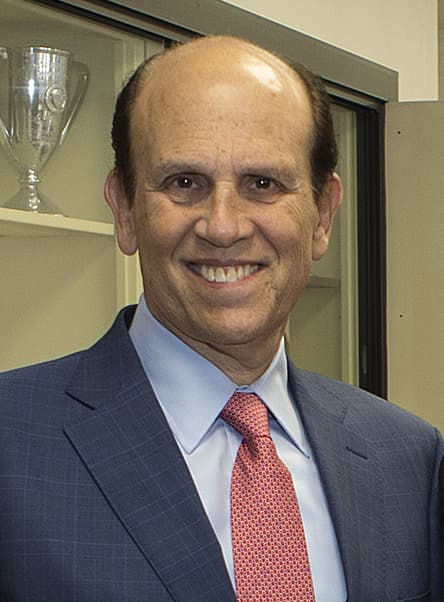
Michael Milken
PERSON • 2 mentions
American investor
MN
Michael Neumann
PERSON
Canadian philosopher

Moreland
PERSON
American actor (1902–1973)

Nelson Rockefeller
PERSON
Vice President of the United States from 1974 to 1977
Neumann
PERSON
NR
Nina Rees
PERSON
President and CEO, National Alliance for Public Charter Schools
Nina Shokraii Rees
PERSON

Nobel
PERSON
Packard
PERSON
Peter Maslen
PERSON
PS
Peter Stewart
PERSON
British athletics competitor
Porter Goss
PERSON
American politician and first Director of the Central Intelligence Agency

Ralph Finerman
PERSON
Richard Riordan
PERSON
American businessman and politician

Richard Sandler
PERSON

Ridge
PERSON
Ron Packard
PERSON
American politician

Rupert Murdoch
PERSON
Australian-American business magnate (born 1931)
SA
Safchik
PERSON

Samantha Power
PERSON
Irish-American academic, author and diplomat
SA
Saxberg
PERSON
Sharon Bergen
PERSON

Stanley E. Maron
PERSON
SB
Stephen Brown
PERSON
Judge, President of the Family Division of the High Court of England and Wales

Stephen Goldsmith
PERSON
Former Indianapolis and former New York deputy mayor

Stephen Hawking
PERSON
British theoretical physicist, cosmologist and author (1942–2018)
SB
Steve Brown
PERSON
British Wheelchair Rugby athlete
SF
Steven B. Fink
PERSON
SC
Steven Cox
PERSON
SG
Steven Green
PERSON
Cricketer (born 1996)

Ted Mitchell
PERSON

Ted Sanders
PERSON
American writer
TC
The Man Who Changed
PERSON

Thomas Boysen
PERSON
Classical theorbist
Thomas Wilford
PERSON

Toni Jaffe
PERSON

Tsvi Gal
PERSON
Wayne Pipes
PERSON

Wendi Murdoch
PERSON
Chinese-American businesswoman (1968-)

Yalow
PERSON
ZO
Zogby
PERSON
Affiliates of the Principals
ORGANIZATION
Agents
ORGANIZATION

AOL Time Warner
ORGANIZATION
ARAMARK Educational Resources
ORGANIZATION
Aramark Educational Resources by
ORGANIZATION
Astrum
ORGANIZATION
Astrum International Corporation
ORGANIZATION
Bank o
ORGANIZATION

Bankers Trust
ORGANIZATION
Banking organization
Bankers Trust Company
ORGANIZATION
Bear Stearns Asset
ORGANIZATION
Board of
ORGANIZATION
Brentwood Schcol
ORGANIZATION
Bright Horizons
ORGANIZATION
Bright Horizons Family Solutions
ORGANIZATION
Bristol Myers-Squibb
ORGANIZATION
British International School
ORGANIZATION
BUNDESANSTALT FUR FINANZDIENSTLEISTUNGSAUFSICHT
ORGANIZATION

Bureau of Labor Statistics
ORGANIZATION
US government agency
Business Development +1
ORGANIZATION
Business Strategy
ORGANIZATION

Businessweek
ORGANIZATION
American weekly business magazine based in New York City
California State University at Northridge
ORGANIZATION
Cammon
ORGANIZATION
Capital
ORGANIZATION
Cardean Learning Group
ORGANIZATION
Catapult
ORGANIZATION
Catapult Learning LLC
ORGANIZATION

Centers
ORGANIZATION
City in and county seat of Shelby County, Texas, United States

Central Bank
ORGANIZATION
Public institution that manages a state's currency, money supply, and interest rates
Central Banks
ORGANIZATION
Public institution that manages a state's currency, money supply, and interest rates

Champions
ORGANIZATION
American manufacturer of clothing, specializing in sportswear
Charter Schools
ORGANIZATION
Children's Discovery Centers
ORGANIZATION
Children's World
ORGANIZATION
Childtime
ORGANIZATION
China Education and Research Network
ORGANIZATION
China Education Industry Development Statistics Report
ORGANIZATION
Citicorp
ORGANIZATION
American investment bank and financial services corporation
City College of New York
ORGANIZATION
Senior college of the City University of New York

College
ORGANIZATION
Episode of The Sopranos (S1 E5)
Comision Nacional del Mercado De Valores
ORGANIZATION

Comissao de Valores Mobiliarios
ORGANIZATION
Fund under the custody of the Brazilian National Archives
Committee of the General Partner
ORGANIZATION
Common Limited Partner Unit
ORGANIZATION
Common LP
ORGANIZATION
Common LP Units
ORGANIZATION

Commonwealth
ORGANIZATION
Political association of mostly former British Empire territories
Compensation Committee
ORGANIZATION
Concordia
ORGANIZATION
Condors LLC
ORGANIZATION
Conejo Valley Unified
ORGANIZATION
Connections Academy
ORGANIZATION
Consob
ORGANIZATION
Constellation Ventures
ORGANIZATION
Consumer Markets
ORGANIZATION
Core Knowledge Foundation
ORGANIZATION
Corporate Communications
ORGANIZATION

Corporation
ORGANIZATION
Credit Suisse
ORGANIZATION
Swiss multinational banking institution
Current Operations
ORGANIZATION
Curriculum
ORGANIZATION
Educational plan
Cypress Consulting
ORGANIZATION

Dartmouth
ORGANIZATION
Private university in Hanover, New Hampshire, US
Deloitte & Touche LLP
ORGANIZATION
Deloitte Consulting
ORGANIZATION
Department of Defense Schocls
ORGANIZATION
Designs for Learning
ORGANIZATION

Deutsche Bank
ORGANIZATION
German global banking and financial services company
Deutsche Bank Asset Management
ORGANIZATION
District Court for the Southern District of New York
ORGANIZATION
DK Multimedia
ORGANIZATION
Dong Fang Kindergarten
ORGANIZATION
Dow Jones
ORGANIZATION
American publishing and financial information company
Dow Jones Markets
ORGANIZATION

Drexel Burnham Lambert
ORGANIZATION
Financial services company (1935 - 1994)
Early Childhood Education Unit
ORGANIZATION
ECE Centers
ORGANIZATION
Educate
ORGANIZATION
Education and Training
ORGANIZATION
Education Policy
ORGANIZATION
Education Policy Studies Research Unit
ORGANIZATION
Education Station, LLC
ORGANIZATION
Eduventures
ORGANIZATION
Elizabeth Kindergarten
ORGANIZATION
Employer-Sponsored Centers
ORGANIZATION
Enterprise Technology
ORGANIZATION
Environmental
ORGANIZATION
ESPN Asia
ORGANIZATION
Export Council
ORGANIZATION

Fargo
ORGANIZATION

Federal Reserve
ORGANIZATION • 2 mentions
Central banking system of the United States
Fifth Grade
ORGANIZATION
Forestal Trillium
ORGANIZATION

Fortune
ORGANIZATION
American business magazine
Foundations
ORGANIZATION
Founders Circle
ORGANIZATION
Franchise
ORGANIZATION
Free and Reduced Lunch
ORGANIZATION
General Directorate for External
ORGANIZATION
Generali
ORGANIZATION

George Mason University
ORGANIZATION
Public liberal arts and research university in Fairfax, Virginia
George Mason University School of Law
ORGANIZATION
Golden Gate University
ORGANIZATION
Goldman, Sachs & Co.
ORGANIZATION
Graduate School of Business
ORGANIZATION
Greensireet Realty
ORGANIZATION

Greenstreet
ORGANIZATION
Greenstreet Real Estate
ORGANIZATION
Harris Nesbitt Research
ORGANIZATION
Harris Nesbitt Research, Education and Training
ORGANIZATION

Harvard Business School
ORGANIZATION
Business school in Boston, Massachusetts, USA

Harvard University
ORGANIZATION
American university publishing house
Head Start
ORGANIZATION
Headstrong
ORGANIZATION
Heron International
ORGANIZATION
Heskin
ORGANIZATION
Heskin Signet Partners
ORGANIZATION

History
ORGANIZATION
Hollywood Video
ORGANIZATION

Independent
ORGANIZATION
Individual not affiliated to any political party

Investors
ORGANIZATION

Johns Hopkins University
ORGANIZATION
Private university in Baltimore, Maryland, USA
JP Morgan Capital
ORGANIZATION
Junior Mezzanine
ORGANIZATION
KC Distance Learning
ORGANIZATION
Kennedy School of Government
ORGANIZATION
Former school, now hotel and movie theater, in Portland, Oregon
Keogh
ORGANIZATION

Keystone
ORGANIZATION
American film studio (Los Angeles; 1912–1935)
Keystone National High School
ORGANIZATION
Kid's Castle
ORGANIZATION
KLC center
ORGANIZATION
KLC Consolidated
ORGANIZATION
KLC Consolidated Revenue
ORGANIZATION
KLC PROPCO
ORGANIZATION

Kmart
ORGANIZATION
American big box department store chain

Knowledge
ORGANIZATION
Knowledge Learning
ORGANIZATION
Knowledge Learning Corporation
ORGANIZATION
Knowledge Learning K42 Inc.
ORGANIZATION
Knowledge Schools, Inc.
ORGANIZATION
Knowledge Testing Enterprises
ORGANIZATION
Knowledge Universe
ORGANIZATION
Knowledge Universe Education L.P.
ORGANIZATION
Knowledge Universe Holdings LLC
ORGANIZATION
Knowledge Universe KUE Management Inc.
ORGANIZATION
Knowledge Universe Learning Group LLC
ORGANIZATION
Knowledge Universe Limited LLC
ORGANIZATION
KPMG Consulting
ORGANIZATION
Krest LLC
ORGANIZATION
KSI Board
ORGANIZATION
KU Schools
ORGANIZATION
KUE Advisory Board
ORGANIZATION
KUE as
ORGANIZATION
KUE Management
ORGANIZATION
KUE Management and Advisory Board
ORGANIZATION
KULG LLC-1 that
ORGANIZATION
KULG LLC-1”
ORGANIZATION
La Petite
ORGANIZATION
Lawrence Investments, LLC
ORGANIZATION
LE SOCIETA E LA BORSA
ORGANIZATION
Learning and Content
ORGANIZATION
Leverage Greenstreet Real Estate Partners’
ORGANIZATION

Limite
ORGANIZATION
Location Management
ORGANIZATION

Lockheed Martin
ORGANIZATION
US aerospace and defense manufacturer
Management and Board of Directors
ORGANIZATION
Management Services Agreement
ORGANIZATION
Management Team
ORGANIZATION
Maron & Sandler
ORGANIZATION

Mattel
ORGANIZATION
American multinational toy and entertainment company
Maytag
ORGANIZATION
MC Square
ORGANIZATION

McKinsey
ORGANIZATION

McKinsey & Co.
ORGANIZATION

McKinsey & Company
ORGANIZATION
Medallion School Partnerships
ORGANIZATION
Merrill Lynch KSA Company
ORGANIZATION
Mini-Skools Limited
ORGANIZATION
Ministry for Planning and Administrative Development
ORGANIZATION
Ministry of Education
ORGANIZATION
Brazilian ministry responsible for education

Minnesota State University
ORGANIZATION
Public comprehensive university in Mankato, Minnesota

MIT
ORGANIZATION
Private university in Cambridge, Massachusetts, USA, founded 1861

Mulberry
ORGANIZATION
Mulberry Child Care & Preschool
ORGANIZATION

National Highway Traffic Safety Administration
ORGANIZATION
Networks
ORGANIZATION
New Centers
ORGANIZATION
News Corporation
ORGANIZATION
American multinational mass media company (2013-)
Nextera Enterprises, Inc.
ORGANIZATION
Nobel Learning Communities, Inc.
ORGANIZATION
North America Applications ABN AMRO Bank
ORGANIZATION
Northrop
ORGANIZATION

Northwestern University
ORGANIZATION
Private university in Evanston, Illinois, U.S.
Norwest
ORGANIZATION
Norwest Corporation
ORGANIZATION
Occidental
ORGANIZATION

Organization
ORGANIZATION
Overview
ORGANIZATION
Pariners
ORGANIZATION
Parsons
ORGANIZATION
Parthenon Conjoint Survey
ORGANIZATION

Partners
ORGANIZATION
Partners per
ORGANIZATION
Partners per Common LP Unit
ORGANIZATION

Partnerships
ORGANIZATION
Pavate Kindergartens
ORGANIZATION
Pennsylvania System of State
ORGANIZATION
Pinnacle Education
ORGANIZATION
Placement Agents
ORGANIZATION
Population Projections Branch
ORGANIZATION
Portland State University
ORGANIZATION
Preschool
ORGANIZATION

Principals
ORGANIZATION • 2 mentions
Pro Forma
ORGANIZATION
Pro Forma FYE
ORGANIZATION
Professional Development & Print Publishing
ORGANIZATION
Profits
ORGANIZATION
Public Information
ORGANIZATION

Publicis
ORGANIZATION
French multinational advertising and public relations company
Publis Sector
ORGANIZATION
Rand Institute
ORGANIZATION

Real Estate
ORGANIZATION
American indie rock band
Rental Revenue
ORGANIZATION
Research and Publications
ORGANIZATION
Revolver
ORGANIZATION
RFG Financial Group, Inc.
ORGANIZATION

Rutgers University
ORGANIZATION
Multi-campus public research university in New Jersey, United States
Sales and Marketing
ORGANIZATION
Samsonite Corporation
ORGANIZATION
Sequoia Charter Schools
ORGANIZATION
Service Employees
ORGANIZATION
North American trade union which represents 2 millions worker from USA, Canada, Puerto Rico & focused on healthcare, public services, property service
Shanghai American School
ORGANIZATION
Shares
ORGANIZATION
Shelter Capital Partners
ORGANIZATION
Skidmore College
ORGANIZATION
Song Qing Lin Kindergarten
ORGANIZATION
South Central Community Banking
ORGANIZATION

Southern Illinois University
ORGANIZATION
State university system based in Carbondale, Illinois, United States

Spectator
ORGANIZATION
British weekly magazine
St Mar Enterprises, Inc.
ORGANIZATION
St. John’s University
ORGANIZATION
St. Lawrence University
ORGANIZATION
Stanford University School of Education
ORGANIZATION
STAR Sports
ORGANIZATION
Star TV
ORGANIZATION
State University
ORGANIZATION
States Served
ORGANIZATION
Stoel Rives LLP
ORGANIZATION
Strategic Communications
ORGANIZATION
Strategic Initiatives
ORGANIZATION

Strategic Planning
ORGANIZATION
An organization's process of defining its strategy, direction, and making decisions on allocating its resources to pursue this strategy
Strategic Planning & Worldwide Government Programs
ORGANIZATION
Strategic Planning and Acquisitions
ORGANIZATION
Tamale gq
ORGANIZATION

Target
ORGANIZATION
Teacher Magazine
ORGANIZATION
the American Institute of Certified Public Accountants
ORGANIZATION
the Australian Securities and Investments Commission
ORGANIZATION
the Bank of Italy
ORGANIZATION

the Board of Directors
ORGANIZATION
The Board of Directors of the Company
ORGANIZATION
the Board of Directors’
ORGANIZATION
the Capital Market Authority
ORGANIZATION

the Central Intelligence Agency
ORGANIZATION
THE CHINA SECURITIES REGULATORY COMMISSION
ORGANIZATION
THE COMMISSIONE NAZIONALE
ORGANIZATION

the Education Department
ORGANIZATION
The Education Market
ORGANIZATION
the Executive Committee
ORGANIZATION
the General Partner
ORGANIZATION
The Genter for Education Reform
ORGANIZATION
the Government Accountability Office
ORGANIZATION
The Government of the Cayman Islands
ORGANIZATION

the Heritage Foundation
ORGANIZATION
The Hunter School
ORGANIZATION

the Internal Revenue Service
ORGANIZATION
The International Education Industry
ORGANIZATION
THE KUWAIT CENTRAL BANK
ORGANIZATION
the Leadership Council
ORGANIZATION
the Mayo Clinic
ORGANIZATION

the Milken Institute
ORGANIZATION
The Ministry of Commerce and Industry
ORGANIZATION
the National Banking and Securities Commission
ORGANIZATION
the National Center for Health Statistics
ORGANIZATION
The National Childcare Association
ORGANIZATION
The National Economic Impacts of the Child Care Sector
ORGANIZATION
THE NATIONAL REGISTRY OF SECURITIES
ORGANIZATION

the National Security Agency
ORGANIZATION
THE ONTARIO SECURITIES COMMISSION
ORGANIZATION
The Pennsylvania Department of Education
ORGANIZATION
the Profits Participation LP Units
ORGANIZATION • 2 mentions
the Saudi Capital Markets Authority
ORGANIZATION
the School Partnerships Unit
ORGANIZATION • 2 mentions
the Securities and Exchange
ORGANIZATION
the Securities Commission
ORGANIZATION
the Standard and Poor
ORGANIZATION
the U.S Securities and Exchange Commission
ORGANIZATION
the U.S. Census
ORGANIZATION
the U.S. Chamber of Commerce
ORGANIZATION

the U.S. Department of Education
ORGANIZATION
the U.S. Department of Labor
ORGANIZATION
the U.S. Department of State
ORGANIZATION
THE U.S. INTERNAL REVENUE SERVICE
ORGANIZATION
the U.S. Securities and Exchange Commission
ORGANIZATION • 2 mentions

the University of California at Berkeley
ORGANIZATION

the University of California, Los Angeles
ORGANIZATION

the University of Chicago
ORGANIZATION
the University of Miami
ORGANIZATION

the University of Michigan
ORGANIZATION
the University of Notre Dame
ORGANIZATION
the University of Pennsylvania
ORGANIZATION

the University of Virginia
ORGANIZATION

the University of Washington
ORGANIZATION

The Urban Institute
ORGANIZATION
the US Census Bureau
ORGANIZATION
The Wall Street Journal
ORGANIZATION
American business-focused daily newspaper

the World Bank Group
ORGANIZATION
Time Warner
ORGANIZATION
Former American cable telecommunications company
Tishman
ORGANIZATION
Tishman Heskin
ORGANIZATION
Tishman Heskin Partners
ORGANIZATION
TJ Maxx
ORGANIZATION
American department store chain
Training Magazine
ORGANIZATION
Tutor Time
ORGANIZATION

U.S. Census Bureau
ORGANIZATION
U.S. agency responsible for the census and related statistics
U.S. District Court
ORGANIZATION
U.S. Federal Income
ORGANIZATION
U.S. Tax
ORGANIZATION

Unesco
ORGANIZATION
UNESCO Institute for Statistics
ORGANIZATION
United States Trade
ORGANIZATION
Universe Education
ORGANIZATION

University of Minnesota
ORGANIZATION
Public research university in Minneapolis and Saint Paul, Minnesota, United States
USA Education
ORGANIZATION
Utilization
ORGANIZATION
Victoria Wah Kwong
ORGANIZATION

Warner Music Group
ORGANIZATION
American multinational entertainment and record label conglomerate

Wells
ORGANIZATION

Wells Fargo
ORGANIZATION
American multinational banking and financial services company
Wells Fargo & Company
ORGANIZATION
American multinational banking and financial services company
Wells Fargo Bank, N.A.
ORGANIZATION
White Hat Management
ORGANIZATION
Willamette University College of Law
ORGANIZATION
Working Capital
ORGANIZATION

World Bank
ORGANIZATION • 2 mentions
International financial institution
Worldwide
ORGANIZATION
Xavier University
ORGANIZATION

Yale University
ORGANIZATION
Private university in New Haven, Connecticut
Yew Chung Shanghai
ORGANIZATION
Akron
LOCATION
City and the county seat of Summit County, Ohio, United States

Arabia
LOCATION
Country in West Asia

Argentina
LOCATION
Country in South America

Arkansas
LOCATION
State of the United States of America

Asia
LOCATION
Biggest continent in the world

Baltimore
LOCATION
City in Maryland, United States
Brunswick
LOCATION
City in Glynn County, Georgia, United States

Cayman Island
LOCATION
British overseas territory in the Caribbean

Cincinnati
LOCATION
City in Ohio, United States; county seat of Hamilton County

Colorado
LOCATION
State of the United States of America

Delaware
LOCATION
State of the United States of America
EM Asia
LOCATION
Biggest continent in the world

Fairfax
LOCATION
County in Virginia, United States

Florida
LOCATION
State of the United States of America
Golden
LOCATION

Guangzhou
LOCATION
Capital city of Guangdong Province, China

Iceland
LOCATION

Idaho
LOCATION
State of the United States of America

Illinois
LOCATION
State of the United States of America

Indianapolis
LOCATION
Capital city of the U.S. state of Indiana and the seat of Marion County

Ireland
LOCATION

Kentucky
LOCATION
State of the United States of America

Kuwait
LOCATION
Sovereign state in Western Asia
Marion County
LOCATION
County in Indiana, United States

Middle East
LOCATION
Geopolitical region encompassing Egypt and most of Western Asia, including Iran

Minnesota
LOCATION
State of the United States of America

Monaco
LOCATION
Microstate in Western Europe

Nanjing
LOCATION
Capital city of Jiangsu Province, China, former capital of the Republic of China and China's Ming dynasty

Nevada
LOCATION
State of the United States of America
New Brunswick
LOCATION
Province of Canada

New Zealand
LOCATION
Island country in the southwest Pacific Ocean
non-U.S.
LOCATION
non-U.S. Investor
LOCATION
non-US
LOCATION
Status indicator of a vaccine that available outside the US only

Norway
LOCATION
Country in Northern Europe

Nova Scotia
LOCATION
Province of Canada

Ontario
LOCATION
Province of Canada

Oregon
LOCATION
State of the United States of America
Philadelphia
LOCATION
1993 film by Jonathan Demme

Poland
LOCATION
Country in Central Europe

Portland
LOCATION
Seat of Multnomah County, and largest city in state of Oregon, United States
Qingdao
LOCATION
Prefecture-level city in Shandong, China

Sacramento
LOCATION
Capital city of the U.S. state of California and seat of Sacramento County

San Diego
LOCATION
Seat of San Diego County, California, United States; second-largest city in California
Saudi Arabia
LOCATION • 3 mentions
Country in West Asia

Shanghai
LOCATION
Provincial-level municipality in China

St. Paul
LOCATION
THE CAYMAN
LOCATION
the Cayman Islands
LOCATION
the Commonwealth of Pennsylvania
LOCATION
THE HONG KONG
LOCATION
the Los Angeles Unified School District
LOCATION
THE PEOPLE'S REPUBLIC
LOCATION
the Republic of Singapore
LOCATION
the School District of Philadelphia
LOCATION

Toronto
LOCATION
Capital and largest city of the province of Ontario, Canada
U.S.-based
LOCATION

United Arab Emirates
LOCATION
Country in Western Asia

United Kingdom
LOCATION
Country in north-west Europe

United States
LOCATION • 2 mentions
Country located primarily in North America
US States
LOCATION

Washington, D.C.
LOCATION • 2 mentions
Capital city of the United States of America
Williamsburg
LOCATION
Independent city in Virginia, United States

Wisconsin
LOCATION
State of the United States of America

Wyoming
LOCATION
State of the United States of America

Zealand
LOCATION
Island in Denmark
Statistics
Pages:160
Entities:509
Avg. OCR:93.7%
Sponsored