DOJ-COURT-552
DOJ-COURT-552 is a legal document filed in the United States District Court for the Southern District of Florida pertaining to the case of Jane Doe No. 2 versus Jeffrey Epstein.
The document is a memorandum filed by the plaintiffs, Jane Does 2-8, in response to Jeffrey Epstein's appeal regarding the production of his income tax returns. The plaintiffs argue that the tax returns are relevant to the case, particularly concerning punitive damages, and that Epstein's blanket invocation of the Fifth Amendment necessitates this discovery. The document outlines legal arguments supporting the Magistrate Judge's order to compel Epstein to produce his tax returns.
Key Highlights
- •The document concerns Jeffrey Epstein's appeal against producing his income tax returns.
- •Plaintiffs argue the tax returns are relevant for punitive damages claims.
- •The document references multiple related cases with case numbers.
- •The plaintiffs cite the Fifth Amendment privilege and the 'required records' exception.
Frequently Asked Questions

Document Information
Bates Range
DOJ-COURT-552
Pages
10
Source
DOJ First Production
Original Filename
552.pdf
Document Content
Page 1 - DOJ-COURT-552_p1
UNITED STATES DISTRICT COURT SOUTHERN DISTRICT OF FLORIDA CASE NO.: 08-CV-80119-MARRA/JOHNSON JANE DOE NO. 2, Plaintiff, vs. JEFFREY EPSTEIN, Defendant. ____________________________________/ Related Cases: 08-80232, 08-80380, 08-80381, 08-80994, 08-80993, 08-80811, 08-80893, 09-80469, 09-80591, 09-80656, 09-80802, 09-81092, ____________________________________/ PLAINTIFFS JANE DOES 2-8’ MEMORANDUM IN RESPONSE TO DEFENDANT’S RULE 4 APPEAL Plaintiffs, Jane Does 2-8 (“Plaintiffs”), by and through undersigned counsel, file this Memorandum in Response to Defendant’s Rule 4 Appeal of the Magistrate Judge’s Orders (DE 480 and DE 513) directing Defendant to produce his income tax returns, as follows: Introduction Defendant appeals the Magistrate Judge’s Orders (DE 480 and DE 513) compelling Defendant to produce income tax returns and related forms and schedules. He fails, however, to demonstrate that the Magistrate Judge’s decision as to tax returns is clearly erroneous or contrary to law. The applicable case law establishes that the tax returns are not protected from discovery by the Fifth Amendment privilege under the act of production doctrine, or alternatively, that they fall within the “required records” exception to the Fifth Amendment privilege. The tax returns are indisputably relevant in these cases, particularly as to Plaintiff’s claims for punitive damages, and given the Defendant’s invocation of the Fifth Amendment in Case 9:08-cv-80119-KAM Document 552 Entered on FLSD Docket 05/28/2010
Page 2 - DOJ-COURT-552_p2
Page 1 of 10 2 blanket fashion to all requests for net worth discovery, there is a compelling need for this discovery. Even if Plaintiffs could not demonstrate a compelling need for the tax returns in discovery, under applicable Eleventh Circuit precedent and reported cases in this District, Plaintiffs would be entitled to this discovery under the broad relevance standard of Fed. R. Civ. P. 26(b). Finally, there is no basis to delay this discovery, as the tax returns are relevant to punitive damages, which is an important, current issue in these cases. For the reasons set forth herein, Plaintiff’s request that the Magistrate Judge’s Orders as to Defendant’s tax returns be affirmed and that Defendant be ordered to produce the tax return discovery requested by Plaintiffs. Argument I. DEFENDANT HAS BURDEN TO SHOW THAT MAGISTRATE JUDGE’S ORDER IS CLEARLY ERRONEOUS OR CONTRARY TO LAW In seeking reversal of the Magistrate Judge’s Order as to discovery of tax returns, it is the Defendant’s burden to show that the order is “clearly erroneous or contrary to law”. 28 U.S.C. §636(b)(1). Absent such a showing, the Magistrate Judge’s decision “shall not be disturbed.” Emmisive Energy Corp. v. Novatac, Inc., 2009 WL 2834841 *1 (S.D. Fla. 2009). In the instant appeal, Defendant has not shown that the Magistrate Judge’s Order to produce tax returns is clearly erroneous or contrary to law. II. THE ACT OF PRODUCTION OF TAX RETURNS IS NOT PROTECTED BY THE FIFTH AMENDMENT PRIVILEGE The Plaintiffs served the following document request in discovery, to which Defendant asserted the Fifth Amendment privilege: Request No. 1: All Federal and State income tax returns, including all W-2 forms, 1099 forms and schedules, for tax years 2003-2008. The Magistrate Judge rejected the Defendant’s privilege assertion as to tax returns. (De 480, pp. 8-9). In so holding, the Magistrate Judge applied the act of production doctrine set forth in Case 9:08-cv-80119-KAM Document 552 Entered on FLSD Docket 05/28/2010
Page 3 - DOJ-COURT-552_p3
Page 2 of 10 3 Fisher v. United States, 425 U.S. 391, 410 (1976) and United States v. Hubbell, 530 U.S. 27, 35- 36 (2000). As noted by the Magistrate Judge, “Defendant cannot reasonably and in good faith argue that in producing these documents to Plaintiff he will somehow be incriminating himself.” (Order, p. 9). Yet, Defendant argues just that. In Hubbell, the Supreme Court made express reference to tax returns in discussing documents that cannot be protected by the Fifth Amendment privilege under the act of production doctrine: [T]he fact that incriminating evidence may be the byproduct of obedience to a regulatory requirement, such as filing an income tax return, maintaining required records, or reporting an accident, does not clothe such required conduct with the testimonial privilege. 120 U.S. at 2043, 530 U.S. at 35 (footnotes omitted) (emphasis supplied). Accord United States v. Hammes, 3 F.3d 1081, 1083 (7th Cir. 1993) (“[w]e reject [defendant’s] compulsory self- incrimination claim because the government may use voluntarily filed tax returns against a defendant without violating the Fifth Amendment”). See also Garner v. United States, 96 S.Ct. 1178, 424 U.S. 648 (1976) (holding that disclosures in tax returns are not compelled incriminations and may be used as evidence in criminal prosecution); Ebay, Inc. v. Digital Point Solutions, Inc., 2010 WL 147967 *8 (N.D. Cal. 2010) (holding that a person cannot incriminate himself by turning over a document already in the government’s possession); Federal Savings and Loan Ins. Corp. v. Hardee, 686 F. Supp 885 (N.D. Fla. 1988) (holding that personal income tax returns and supporting schedules are not protected by the “act of production” doctrine under Fisher). As an alternative to finding that the Fifth Amendment privilege does not apply because the act of producing documents is not testimonial and communicative, courts have invoked the “required records” exception to the act of production doctrine. See Federal Saving & Loan Ins. Corp. v. Rodrigues, 717 F. Supp. 1424, 1427 (N.D. Cal 1988) (“required records” exception is a Case 9:08-cv-80119-KAM Document 552 Entered on FLSD Docket 05/28/2010
Sponsored
Page 4 - DOJ-COURT-552_p4
Page 3 of 10 4 distinct basis to deny Fifth Amendment privilege alternative to the “foregone conclusion” rationale under Fisher). The “required records” exception defeats the Fifth Amendment privilege where: “(1) because of the public aspect of the required records the individual admits little of significance by their production; and (2) by doing business in an area where the government requires record keeping, an individual may be deemed to have waived the Fifth Amendment privilege as to the production of those records.” In re Grand Jury Subpoena, 21 F.3d 226, 229 (8th Cir. 1994). Defendant contends that the “required records” exception does not apply to tax returns because they cannot be accessed by the public. This is wrong, however, as the “required records” exception requires only that there be “public aspects” to the documents at issue. Id. Numerous courts that have addressed this precise issue have found that tax returns have “public aspects”. See Rodrigues, 717 F. Supp. at 1426-27 (citing cases); accord Doe v. United States, 711 F.2d 1187, 1191 (2d Cir. 1983).1 Accordingly, the “required records” exception applies to the production of tax returns. In Rodrigues, the Court denied the Fifth Amendment privilege for the act of producing tax returns under the “required records” exception, noting that “records filed with a public body pursuant to a valid regulatory scheme have been held to have public aspects.” Id. at 1427. Accordingly, the fact that federal tax returns cannot be accessed by the general public does not aid the Defendant. Accord Resolution Trust Corp. v. Lopez, 794 F. Supp. 1, 3 (D.D.C. 1992). Thus, there are two alternative grounds for holding that Defendant’s assertion of the Fifth Amendment privilege to production of tax returns is invalid: (1) the tax returns are in the 1 Defendant further appears to argue that the “required records” exception should be limited to “highly regulated business (e.g., physicians)”, citing In re Dr. John Doe, 97 F.R.D. 640, 641-643 (S.D.N.Y. 1982). In Dr. John Doe, however, the Court held contrary to Defendant’s assertion and consistent with the case law cited herein stating, “[w]e agree that some of these records (e.g. W-2 and other tax forms) may indeed fall within the required records exception.” Id. at 644 (ordering that Dr. Doe comply with subpoena for W-2 forms). Case 9:08-cv-80119-KAM Document 552 Entered on FLSD Docket 05/28/2010
Page 5 - DOJ-COURT-552_p5
Page 4 of 10 5 possession of the government, their existence is a foregone conclusion, and there is no risk of “implicit authentication” by Defendant’s production of these documents; or (2) tax returns fall within the “required records” exception to the act of production doctrine, and are thus not protected by the Fifth Amendment. Under either of these grounds, the Defendant’s tax returns are not privileged and must be produced in discovery. II. THERE IS NO HEIGHTENED BURDEN FOR DISCOVERY OF TAX RETURNS Defendant asserts that there is a heightened burden on a party seeking discovery of tax returns, requiring that party to show not only relevance, but also that “a compelling need for the tax returns exists because the information contained therein is not otherwise available.” (Appeal, p. 24). However, in the Eleventh Circuit this heightened burden has been rejected. “[T]he Eleventh Circuit does not require a showing of compelling need before tax information may be obtained by a party in discovery.” Bellosa v. Universal Tile Restoration, Inc., 2008 WL 2620735 (S.D. Fla. 2008) (citing Maddow v. Procter & Gamble Co., 107 F.3d 846 (11th Cir. 1997)); accord U.S. v. Certain Real Property, 444 F.Supp. 2d 1258 (S.D.Fla. 2006); Platypus Wear, Inc. v. Clarke Modet & Co., 2008 W.L. 728540 (S.D. Fla. 2008); Preferred Care Partners Holding Corp. v. Humana, Inc., 2008 WL 4500258 (S.D. Fla. 2008); Ruskin Co. v. Greenheck Fan Corp., 2009 WL 383349 (S.D. Fla. 2009). Significantly, in both Preferred Care and Ruskin the Court affirmed the decision of a Magistrate Judge rejecting a higher standard for production of tax returns, holding that, despite an arguable split of authority, 2 the Magistrate Judge’s decision was not “contrary to law.” Id. Likewise, the Magistrate Judge’s decision in this case compelling 2 Defendant relies upon Pendlebury v. Starbucks Coffee Co., 2008 WL 2105024 (S.D. Fla. 2005) and Dunkin Donuts, Inc. v. Mary’s Donuts, Inc., 2001 WL 34079319 (S.D. Fla. 2001), in which the Court applied the higher standard. These cases do not consider the Eleventh Circuit’s opinion in Maddow, and the federal judges in this District over the past five years since Pendlebury have consistently rejected the “compelling need” standard for production of tax returns. See cases cited above. Case 9:08-cv-80119-KAM Document 552 Entered on FLSD Docket 05/28/2010
Page 6 - DOJ-COURT-552_p6
Page 5 of 10 6 production of tax returns is consistent with authority in this District and the Eleventh Circuit, and thus should be affirmed. III. EVIDENCE OF DEFENDANT’S FINANCIAL STATUS AND HISTORY IS RELEVANT TO PUNITIVE DAMAGES, AMONG OTHER ISSUES Defendant does not go so far as to contend that the discovery of his tax returns is not relevant under Fed.R.Civ.P. 26. Defendant only argues that the Magistrate Judge did not address the relevancy standard in her Order. (Appeal, p. 25). As a result, Defendant does nothing to show that the Magistrate Judge’s Order as to tax returns is clearly erroneous or contrary to law. In any event, it is abundantly clear that Defendant’s financial status and history are relevant to punitive damages, among other issues in these cases, and in this regard the Defendant’s tax returns are pertinent and discoverable. Tennant v. Charlton, 377 So.2d 1169 (Fla. 1979) (holding that party may obtain tax returns for purposes of net worth discovery on issue of punitive damages). See also State v. O’Malley, 53 S.W. 3d 623 (Mo. App. 2001) (“[i]t is well settled that when a plaintiff seeks punitive damages against a defendant, evidence of the defendant’s financial status is both relevant and admissible”); Interstate Narrow Fabrics, Inc. v. Century USA, Inc., 2004 WL 444570 (M.D. N.C. 2004) (holding that tax returns are relevant to the jury’s determination of the amount of punitive damages to award); E.J. Lavino & Co. v. Universal Health Services, Inc., 1991 WL 275767 (E.D. Pa. 1991) (“[m]ost courts that have considered this issue have held that a plaintiff seeking punitive damages may discovery information pertaining to a defendant’s net worth”). Defendant further argues that he should not have to produce his tax returns until “it becomes apparent” that “punitive damages will be an issue.” (Appeal, p. 26). This argument ignores Florida law on punitive damages. It is well established that “punitive damages are always recoverable in intentional tort cases where malice is one of the essential elements of the Case 9:08-cv-80119-KAM Document 552 Entered on FLSD Docket 05/28/2010
Sponsored
Page 7 - DOJ-COURT-552_p7
Page 6 of 10 7 tort.” Ciamar Marcay, Inc. v. Monteiro Da Costa, 508 So.2d 1282 (Fla. 3d DCA 1987) (emphasis supplied). “In Florida it is clear that an act of intentional assault and battery committed without legal justification supplies proof of malice.” Joab, Inc. v. Thrall, 245 So.2d 291 (Fla. 3d DCA 1971). Therefore, it is clear in this intentional tort case that punitive damages are an issue. As this Court knows, Defendant Epstein is alleged to have perpetrated a plan and scheme to sexually molest dozens of underage teenage girls.3 Even assuming that the “compelling need” standard were applicable for discovery of tax returns, clearly in this case there is a compelling need. Defendant has provided no net worth discovery, asserting a blanket Fifth Amendment privilege.4 Defendant nonetheless contends that there exists an “alternative” - not to discovery of the necessary information, but through his offer to “stipulate” to a net worth in the nine figures. Of course, a stipulation requires the consent of the parties and there is no agreement in this case on the Defendant’s net worth. Defendant cannot unilaterally by fiat claim a certain net worth for purposes of trial.5 The law is well established that a jury may determine punitive damages “by exacting from [the defendant’s] pocketbook a sum of money which, according to his financial ability, will hurt, but not 3 Defendant’s reliance on Gallina v. Commerce and Industry Ins., 2008 WL 3895918 (M.D. Fla. 2008) is misplaced. Gallina is an insurance bad faith case and does not involve a claim of punitive damages against an intentional tortfeasor. Moreover, in the present case it would make no sense to have a different “stage” for punitive damages discovery or trial. 4 “[T]he burden to identify an alternative source of the information lies with the resisting party.” Interstate Narrow Fabrics, 2004 WL 444570 at *2. Here, Epstein’s blanket Fifth Amendment privilege assertion to all net worth discovery makes it clear that there is a compelling need for any net worth discovery not protected by the Fifth Amendment privilege. 5 Defendant relies upon Myers v. Central Florida Investment, Inc., 592 F.3d 1201 (11th Cir. 2010) for its “stipulation” argument. In Myers, however, the district court heard testimony regarding each of the defendant’s net worth. There was no unilateral statement of net worth in Myers as Defendant wishes to create in the instant case. To the extent that Defendant relies upon the Court’s holding in Myers regarding the reasonableness of the trial court’s award of punitive damages, the issue of reasonableness is determined by the particular facts and circumstances of the case and the discussion in Myers of this issue has no relevance here. Id. Case 9:08-cv-80119-KAM Document 552 Entered on FLSD Docket 05/28/2010
Page 8 - DOJ-COURT-552_p8
Page 7 of 10 8 bankrupt.” Joab, Inc. v. Thrall, 245 So.2d 291 (Fla. 3d DCA 1971) (emphasis supplied). Plaintiffs are therefore entitled to discovery on the Defendant’s real net worth so that the jury will be in a position to make an award that “will hurt”. In any event, it seems beyond dispute that Defendant’s tax returns are relevant and discoverable, either under a straight relevance test under Fed.R.Civ.P. 26 or a heightened “compelling need” standard. Conclusion Based on the foregoing, the Magistrate Judge’s Orders as to Defendant’s production of tax returns in response to Plaintiffs’ document request no. 1 are not clearly erroneous and not contrary to law. As a result, the Magistrate Judge’s Orders as to production of tax returns should be affirmed. Plaintiffs respectfully request that the documents responsive to Plaintiffs’ document request no. 1 be ordered to be produced forthwith. Dated: May 28, 2010. Respectfully submitted, By: s/ Stuart S. Mermelstein Stuart S. Mermelstein (FL Bar No. 947245) [email protected] Adam D. Horowitz (FL Bar No. 376980) [email protected] MERMELSTEIN & HOROWITZ, P.A. Attorneys for Plaintiffs 18205 Biscayne Blvd., Suite 2218 Miami, Florida 33160 Tel: (305) 931-2200 Fax: (305) 931-0877 Case 9:08-cv-80119-KAM Document 552 Entered on FLSD Docket 05/28/2010
Page 9 - DOJ-COURT-552_p9
Page 8 of 10 9 CERTIFICATE OF SERVICE I hereby certify that on May 28, 2010, I electronically filed the foregoing document with the Clerk of the Court using CM/ECF. I also certify that the foregoing document is being served this day to all parties on the attached Service List in the manner specified, either via transmission of Notices of Electronic Filing generated by CM/ECF or in some other authorized manner for those parties who are not authorized to receive electronically Notices of Electronic Filing. /s/ Stuart S. Mermelstein Case 9:08-cv-80119-KAM Document 552 Entered on FLSD Docket 05/28/2010
Sponsored
Page 10 - DOJ-COURT-552_p10
Page 9 of 10 10 SERVICE LIST DOE vs. JEFFREY EPSTEIN United States District Court, Southern District of Florida Jack Alan Goldberger, Esq. [email protected] Robert D. Critton, Esq. [email protected] Bradley James Edwards [email protected] Isidro Manuel Garcia [email protected] Jack Patrick Hill [email protected] Katherine Warthen Ezell [email protected] Michael James Pike [email protected] Paul G. Cassell [email protected] Richard Horace Willits [email protected] Robert C. Josefsberg [email protected] Case 9:08-cv-80119-KAM Document 552 Entered on FLSD Docket 05/28/2010
Entities Mentioned

Adam D. Horowitz
PERSON
American attorney specializing in sexual abuse cases, represented multiple Epstein victims

Alfredo Rodriguez
PERSON
Jeffrey Epstein's former butler and house manager (2004-2005), convicted of obstruction of justice for attempting to sell Epstein's contact book, died 2014
BE
Bellosa
PERSON
Name reference in documents

Bradley Edwards
PERSON
American attorney who represented Epstein victims, author of Relentless Pursuit

Charlton
PERSON
American actor (1923–2008)
GA
Gallina
PERSON
1050-1300 culture of the American Southwest

Garner
PERSON
Surname reference in Epstein-related documents
HA
Hammes
PERSON
Surname or name fragment in documents
HA
Hardee
PERSON
Surname or name fragment in documents
HU
Hubbell
PERSON
Surname reference in Epstein-related documents
IG
Isidro Manuel Garcia
PERSON
Person referenced in documents
JG
Jack Goldberger
PERSON • 2 mentions
American criminal defense attorney who represented Jeffrey Epstein, partner at Goldberger Weiss P.A. in West Palm Beach, Florida
JH
Jack Patrick Hill
PERSON
Attorney at Searcy Denney law firm, appeared in Epstein-related legal proceedings
JD
Jane Doe
PERSON
Pseudonym for anonymous victims/witnesses in Epstein legal proceedings

Jeffrey Epstein
PERSON • 3 mentions
American sex offender and financier (1953–2019)

Jennifer Lopez
PERSON
American singer and actress (born 1969)
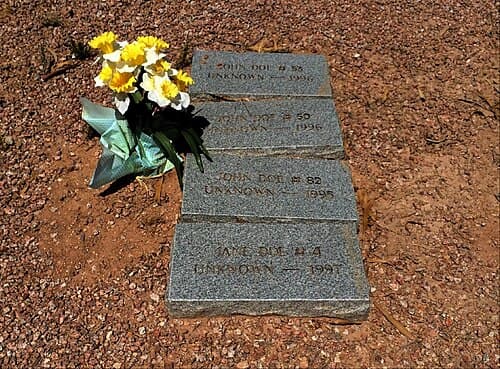
John Doe
PERSON
John Doe legal placeholder in Epstein-related court proceedings
KE
Katherine W. Ezell
PERSON
Person referenced in documents
MA
Maddow
PERSON • 2 mentions
Surname reference in documents
MP
Michael J. Pike
PERSON
Person referenced in Epstein-related documents
MC
Monteiro Da Costa
PERSON
Footballer
MY
Myers
PERSON • 2 mentions
NER artifact - company or organization name misclassified as person

Paul Cassell
PERSON • 2 mentions
United States federal judge
RW
Richard Horace Willits
PERSON
Lawyer and former federal prosecutor, represented Epstein in NPA negotiations
RJ
Robert C. Josefsberg
PERSON
Florida criminal defense attorney, appeared in Epstein legal proceedings
RC
Robert D. Critton
PERSON
Individual referenced in Epstein legal documents
SM
Stuart S. Mermelstein
PERSON
Attorney involved in Jeffrey Epstein legal matters.
TE
Tennant
PERSON
Name reference in documents
TH
Thrall
PERSON
Slaves in Viking society
Accord Resolution Trust Corp.
ORGANIZATION
Organization referenced in documents
Central Florida Investment, Inc.
ORGANIZATION
Organization referenced in documents
Certain Real Property
ORGANIZATION
Organization referenced in documents
Ciamar Marcay, Inc.
ORGANIZATION
Organization referenced in documents
Clarke Modet & Co.
ORGANIZATION
Organization referenced in documents
Commerce and Industry Ins.
ORGANIZATION
Organization referenced in documents
Dunkin Donuts, Inc.
ORGANIZATION
Organization referenced in documents
E.J. Lavino & Co.
ORGANIZATION
Organization referenced in documents
Ebay, Inc.
ORGANIZATION
Organization referenced in documents
FL Bar No.
ORGANIZATION
Organization referenced in documents
Greenheck Fan Corp.
ORGANIZATION
Organization referenced in documents
Humana, Inc.
ORGANIZATION
Organization referenced in documents
Interstate Narrow Fabrics, Inc.
ORGANIZATION
Organization referenced in documents
Joab, Inc.
ORGANIZATION
Organization referenced in documents
Mary’s Donuts, Inc.
ORGANIZATION
Organization referenced in documents
Mermelstein & Horowitz
ORGANIZATION
Law firm (Mermelstein & Horowitz)
Novatac, Inc.
ORGANIZATION
Organization referenced in documents
Pendlebury
ORGANIZATION • 2 mentions
Organization referenced in documents
Platypus Wear, Inc.
ORGANIZATION
Organization referenced in documents
Preferred Care
ORGANIZATION
Organization referenced in documents
Preferred Care Partners Holding
ORGANIZATION
Organization referenced in documents
Procter & Gamble Co.
ORGANIZATION
Organization referenced in documents
Ruskin
ORGANIZATION
Organization referenced in documents
Ruskin Co.
ORGANIZATION
Organization referenced in documents
Second Circuit
ORGANIZATION
U.S. Court of Appeals for the Second Circuit
Starbucks Coffee Co.
ORGANIZATION
Organization referenced in documents
the Eleventh Circuit
ORGANIZATION
U.S. Court of Appeals for the Eleventh Circuit
the Eleventh Circuit’s
ORGANIZATION
Organization referenced in documents
Universal Tile Restoration, Inc.
ORGANIZATION
Organization referenced in documents
S.D. Fla. 2008
LOCATION
Location referenced in documents
Statistics
Pages:10
Entities:59
Sponsored