Back to Network



















10
Shared Docs
9
Same-Page
13 / 10
Mentions
Document Mentions (10 shared documents)
3 mentions1 same-page
Page ?Same page
our position was that, assuming all our own negotiating concerns were addressed, we accepted that peace with Syria would include withdrawing from the Golan. The formula was agreed in a meeting in Israel between Rabin and the Clinton Administration’s Middle East negotiator, Dennis Ross. Rabin didn’t tell
or the promise, or maybe only the hope, of peace. It was the same problem Yitzhak had faced over the Americans’ misuse of our “pocket deposit” on the Golan. I realized that, having come this far with Oslo, neither he nor the government was likely to back away from approving the Gaza-Jericho accord. But h
uld stay put. On that, I thought Ank was probably right. Other Israeli generals with far more experience, and weight, also seemed to agree. Notably, Yitzhak Rabin. He was no longer in government, nor even in charge of Labor. But he had always had a soft spot for Arik, as did Sharon for him. With uneasiness, que
3 mentions1 same-page
Page ?Same page
Bibi what successive Israeli leaders had learned: a deal might be possible, but only if Israel was willing to commit in advance to pulling out of the Golan. Assad told Lauder to come back to him with a detailed map setting out Bibi’s view on delineating the Israeli-Syrian border under a peace agreement.
outbursts, and they won’t do you any good.” He challenged Bibi to just “look me in the eye” and admit what he really thought about the future of the Golan. The media verdict was unanimous. Mordechai had won. Which meant I had won. Though my American and British brains’ trust had little input into our d
share Labor’s vision of a socially just and democratic Israel. Especially after seeing far-right rabbis egg on the fanaticism that ultimately killed Yitzhak Rabin, I felt strongly that we needed to separate organized religion from our day-to-day politics. But I’d been raised with a deeper respect for our Jewish
3 mentions1 same-page
Page ?Same page
our position was that, assuming all our own negotiating concerns were addressed, we accepted that peace with Syria would include withdrawing from the Golan. The formula was agreed in a meeting in Israel between Rabin and the Clinton Administration's Middle East negotiator, Dennis Ross. Rabin didn't tell
or the promise, or maybe only the hope, of peace. It was the same problem Yitzhak had faced over the Americans' misuse of our "pocket deposit" on the Golan. I realized that, having come this far with Oslo, neither he nor the government was likely to back away from approving the Gaza-Jericho accord But he
uld stay put. On that, I thought Arik was probably right. Other Israeli generals with far more experience, and weight, also seemed to agree. Notably, Yitzhak Rabin. He was no longer in government, nor even in charge of Labor. But he had always had a soft spot for Arik, as did Sharon for him. With uneasiness, que
Sponsored
2 mentions1 same-page
Page ?Same page
v Kochavi last month told the Knesset that unnamed `global jihad' groups (Israeli code for al-Qaeda) had begun operating on the Syrian side of the Golan, from which the Assad regime had pulled thousands of troops for deployment against the rebellion. "The EFTA_R1_00537937 EFTA02029056 Golan area
inistration admittedly had a rocky relationship with Israeli Prime Minister Yitzhak Shamir, though it had a better relationship with his successor Yitzhak Rabin. But good progress was made during that period, he said, even though the Bush administration often took stances on issues that the Israeli leaders
2 mentions1 same-page
Page ?Same page
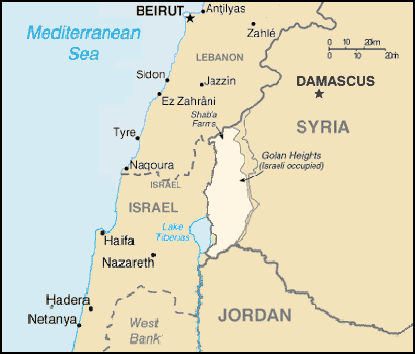
ld necessarily be a clean break in those relationships: an end to the Syrian alliance with Hezbollah and Iran. Otherwise Israel would be giving the Golan, in effect, to Iran—a suicidal act. No Israeli government would do it, which suggests that negotiations with Assad would have no purpose. Assad ma
ael Hamid Alkifaey One could reasonably argue that the golden opportunity for peace in the Middle East was blown away when Israeli Prime Minister Yitzhak Rabin was assassinated on Nov. 4, 1995. He was the only Israeli leader capable of making peace with the Palestinians, and was about to do so had it not b
2 mentions1 same-page
Page ?Same page
Syria. The special technology unit attached to military intelligence had developed a bugging device designed to be placed on a telephone pole on the Golan. The task of installing it was given to the most decorated, and respected, commando unit in the army: Company A in Sharon’s paratroop battalion, led
a motorcycle. It would be nearly three decades before the two of us actually met — shortly after the assassination of my longtime comrade and friend Yitzhak Rabin, when I had become Foreign Minister under Shimon Peres. But in the intervening years, Arafat was rarely off of my radar. By the early 1970s, he and h
Sponsored
2 mentions1 same-page
Page ?Same page
the 1967 war, before going off to university. He’d taken a bullet in the elbow while helping to rescue one of his soldiers behind Syrian lines on the Golan. “He wants to return to the army, and he’s exactly the kind of officer you want,” Bibi said. I brought Yoni in for a chat. Over the next several yea
ing replacements who were sufficiently experienced, but did not bear responsibility for the errors of the war. For Prime Minister, the choice fell on Yitzhak Rabin. He had strong military credentials, of course. But he had left the army and entered politics, and had been out of Israel for several years as Israel
2 mentions1 same-page
Page ?Same page
Syria. The special technology unit attached to military intelligence had developed a bugging device designed to be placed on a telephone pole on the Golan. The task of installing it was given to the most decorated, and respected, commando unit in the army: Company A in Sharon’s paratroop battalion, led
a motorcycle. It would be nearly three decades before the two of us actually met — shortly after the assassination of my longtime comrade and friend Yitzhak Rabin, when I had become Foreign Minister under Shimon Peres. But in the intervening years, Arafat was rarely off of my radar. By the early 1970s, he and h
2 mentions1 same-page
Page ?Same page
the 1967 war, before going off to university. He'd taken a bullet in the elbow while helping to rescue one of his soldiers behind Syrian lines on the Golan. "He wants to return to the army, and he's exactly the kind of officer you want," Bibi said. I brought Yoni in for a chat. Over the next several year
ing replacements who were sufficiently experienced, but did not bear responsibility for the errors of the war. For Prime Minister, the choice fell on Yitzhak Rabin. He had strong military credentials, of course. But he had left the army and entered politics, and had been out of Israel for several years as Israel
Sponsored
Page HOUSE_OVERSIGHT_031837
ould necessarily be a clean break in those relationships: an end to the Syrian alliance with Hezbollah and Iran. Otherwise Israel would be giving the Golan, in effect, to Iran—a suicidal act. No Israeli government would do it, which suggests that negotiations with Assad would have no purpose. Assad may i
Page: HOUSE_OVERSIGHT_031837 →Page HOUSE_OVERSIGHT_031839
Israel Hamid Alkifaey One could reasonably argue that the golden opportunity for peace in the Middle East was blown away when Israeli Prime Minister Yitzhak Rabin was assassinated on Nov. 4, 1995. He was the only Israeli leader capable of making peace with the Palestinians, and was about to do so had it not bee
Page: HOUSE_OVERSIGHT_031839 →Sponsored
Mutual Connections (944)
Entities connected to both Golan and Yitzhak Rabin
Bill Clinton
PERSON31 w/ Golan·23 w/ Yitzhak
Benjamin Netanyahu
PERSON15 w/ Golan·32 w/ Yitzhak
Lebanon
LOCATION19 w/ Golan·25 w/ Yitzhak
George W. Bush
PERSON22 w/ Golan·20 w/ Yitzhak
Bashar al-Assad
PERSON18 w/ Golan·24 w/ Yitzhak
Barack Obama
PERSON15 w/ Golan·25 w/ Yitzhak
Jerusalem
LOCATION14 w/ Golan·26 w/ Yitzhak
Damascus
LOCATION15 w/ Golan·22 w/ Yitzhak
United States
LOCATION14 w/ Golan·22 w/ Yitzhak
Yasser Arafat
PERSON12 w/ Golan·23 w/ Yitzhak
Fatah
ORGANIZATION12 w/ Golan·22 w/ Yitzhak
Jeffrey Epstein
PERSON22 w/ Golan·11 w/ Yitzhak
Hosni Mubarak
PERSON12 w/ Golan·20 w/ Yitzhak
the Golan Heights
LOCATION16 w/ Golan·16 w/ Yitzhak
Saddam Hussein
PERSON12 w/ Golan·20 w/ Yitzhak
Ehud Barak
PERSON12 w/ Golan·19 w/ Yitzhak
Sinai
LOCATION13 w/ Golan·16 w/ Yitzhak
Rabin
PERSON7 w/ Golan·22 w/ Yitzhak
Shimon Peres
PERSON8 w/ Golan·20 w/ Yitzhak
Tehran
LOCATION11 w/ Golan·17 w/ Yitzhak