Back to Network

















9
Shared Docs
9
Same-Page
9 / 9
Mentions
Document Mentions (9 shared documents)
2 mentions1 same-page
Page ?Same page
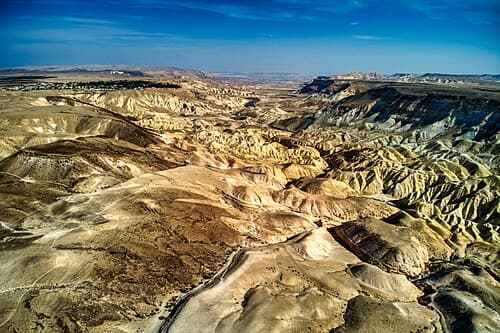
told their allies that they needed cheap nuclear energy for seawater EFTA00712602 desalination, and that they planned to use the water to make the Negev Desert fertile. The German government was also left in the dark at first -- with Strauss being the likely exception. The CSU politician was appare
ses and the Deal for Submarine Number Six In August 2009, Netanyahu, who had recently been re-elected as prime minister as head of the conservative Likud party, came to Berlin. Netanyahu explained to Merkel how important the submarines were for Israel; that wherever an Israeli looks, to the north, so
2 mentions1 same-page
Page ?Same page
iving a tractor. I woke up early and accompanied him into the fields of wheat, barley or rye. We also made a series of trips 130 miles south into the Negev to a moshav called Patish. It had been set up by newly arrived Moroccan Jews. Since they didn’t have the equipment or know-how to cultivate all their
not to do so, I decided to return to government in 2007 as Defence Minister. I remained in that role for six years: mostly in the current, right-wing Likud government of my onetime Sayeret Matkal charge, Bibi Netanyahu. Much of what I say in this book about war and peace, security and Israel’s future ch
2 mentions1 same-page
Page ?Same page
cross the Jordan River, in a town called Karameh. From early 1968, they had been launching hit- and-run raids, not just on the West Bank but into the Negev. Eshkol’s cabinet was initially divided on whether to attack his base in Jordan, in both an act of retaliation and a signal to King Hussein that if h
vernment, they must lose power. They wi// lose power.” He was right. Only twice in the four decades that followed would a Labor leader defeat Begin’s Likud party: Rabin’s election victory in 1992, and mine over Bibi Netanyahu in 1999. During the first two years of Begin’s rule, however, I was 7,000 mile
Sponsored
2 mentions1 same-page
Page ?Same page
found themselves in a similar situation, mentioned as possible chiefs of staff but never chosen: Arik and Ezer Weizman. I saw Arik on his farm in the Negev. He was obviously enjoying his extraordinary political rehabilitation since the Lebanon war. His expanding girth was settled into a sofa in the livin
losing their jobs. Israel’s next election, the first since the Lebanon war, was due in July. Just as the trauma of the 1973 war had helped Begin end Likud’s three decades in opposition, the polls and the pundits were now suggesting that Shimon Peres might bring Labor back to power. There was no prospect
2 mentions1 same-page
Page ?Same page
rrowest of margins, might determine the outcome. After the 1996 election, I’d learned of cases where Peres volunteers outside polling stations in the Negev or the north of the country had left early, in order to make sure they’d be back to Tel Aviv in time for the “moment of victory.” Now, I sent out wor
he left. Right after Yitzhak’s murder, I’d gone to see Zevulun Hammer, the leader of the National Religious Party. It had been part of both Labor and Likud governments ever since 1948, though not Rabin’s. The NRP, too, had been drifting steadily rightward. But it still basically subscribed the idea of a
2 mentions1 same-page
Page ?Same page
iving a tractor. I woke up early and accompanied him into the fields of wheat, barley or rye. We also made a series of trips 130 miles south into the Negev to a moshav called Patish. It had been set up by newly arrived Moroccan Jews. Since they didn’t have the equipment or know-how to cultivate all their
not to do so, I decided to return to government in 2007 as Defence Minister. I remained in that role for six years: mostly in the current, right-wing Likud government of my onetime Sayeret Matkal charge, Bibi Netanyahu. Much of what I say in this book about war and peace, security and Israel’s future ch
Sponsored
2 mentions1 same-page
Page ?Same page
cross the Jordan River, in a town called Karameh. From early 1968, they had been launching hit- and-run raids, not just on the West Bank but into the Negev. Eshkol's cabinet was initially divided on whether to attack his base in Jordan, in both an act of retaliation and a signal to King Hussein that if h
vernment, they must lose power. They will lose power." He was right. Only twice in the four decades that followed would a Labor leader defeat Begin's Likud party: Rabin's election victory in 1992, and mine over Bibi Netanyahu in 1999. During the first two years of Begin's rule, however, I was 7,000 miles
2 mentions1 same-page
Page ?Same page
found themselves in a similar situation, mentioned as possible chiefs of staff but never chosen: Arik and Ezer Weizman. I saw Arik on his farm in the Negev. He was obviously enjoying his extraordinary political rehabilitation since the Lebanon war. His expanding girth was settled into a sofa in the livin
losing their jobs. Israel's next election, the first since the Lebanon war, was due in July. Just as the trauma of the 1973 war had helped Begin end Likud's three decades in opposition, the polls and the pundits were now suggesting that Shimon Peres might bring Labor back to power. There was no prospect
2 mentions1 same-page
Page ?Same page
rrowest of margins, might determine the outcome. After the 1996 election, I'd learned of cases where Peres volunteers outside polling stations in the Negev or the north of the country had left early, in order to make sure they'd be back to Tel Aviv in time for the "moment of victory." Now, I sent out wor
he left. Right after Yitzhak's murder, I'd gone to see Zevulun Hammer, the leader of the National Religious Party. It had been part of both Labor and Likud governments ever since 1948, though not Rabin's. The NRP, too, had been drifting steadily rightward. But it still basically subscribed the idea of a
Sponsored
Mutual Connections (1,000)
Entities connected to both Negev and Likud
Benjamin Netanyahu
PERSON15 w/ Negev·43 w/ Likud
George W. Bush
PERSON17 w/ Negev·35 w/ Likud
Barack Obama
PERSON14 w/ Negev·36 w/ Likud
Jerusalem
LOCATION16 w/ Negev·29 w/ Likud
Lebanon
LOCATION16 w/ Negev·26 w/ Likud
Bashar al-Assad
PERSON12 w/ Negev·27 w/ Likud
Bill Clinton
PERSON14 w/ Negev·25 w/ Likud
Knesset
ORGANIZATION12 w/ Negev·27 w/ Likud
United States
LOCATION12 w/ Negev·23 w/ Likud
Ehud Barak
PERSON11 w/ Negev·24 w/ Likud
Damascus
LOCATION13 w/ Negev·21 w/ Likud
Hosni Mubarak
PERSON13 w/ Negev·20 w/ Likud
West Bank
LOCATION12 w/ Negev·21 w/ Likud
Fatah
ORGANIZATION14 w/ Negev·18 w/ Likud
the West Bank
LOCATION14 w/ Negev·16 w/ Likud
Yasser Arafat
PERSON13 w/ Negev·17 w/ Likud
Saddam Hussein
PERSON11 w/ Negev·18 w/ Likud
Shimon Peres
PERSON9 w/ Negev·20 w/ Likud
Tehran
LOCATION5 w/ Negev·24 w/ Likud
Mossad
ORGANIZATION10 w/ Negev·18 w/ Likud