Back to Network

















6
Shared Docs
6
Same-Page
12 / 10
Mentions
Document Mentions (6 shared documents)
5 mentions1 same-page
Page ?Same page
Amir Drori, the head of the northern command. They had set up a rooftop observation post just a few hundred yards in from where I had landed with my Sayeret Matkal team a decade earlier for the Rue Verdun operation. It overlooked a pair of Palestinian refugee camps: Sabra and, a couple of hundred yards closer to
tment to the values of an open, tolerant democracy. But in at least one important way, I approached my new role as if it was one of our operations in Sayeret Matkal, or the need to reshape our armed forces when I was chief-of-staff. My first priority was to put in place the practical foundations for a successful
ion about our enemies, and make sure it got to the commanders and field units that needed it. And while the details of many operations I approved for Sayeret Matkal and other units remain classified, we did succeed in doing that — to take just one example, by finding an entirely new way to get intelligence from i
briefed me on the questions I could expect, not just about the Achille Lauro but the wider issue of Palestinian attacks, as well as Syrian President Hafez al- Assad’s efforts to re-equip his air force after his losses in Lebanon. So I came to the interview prepared. I brought audio tapes of the hijacker
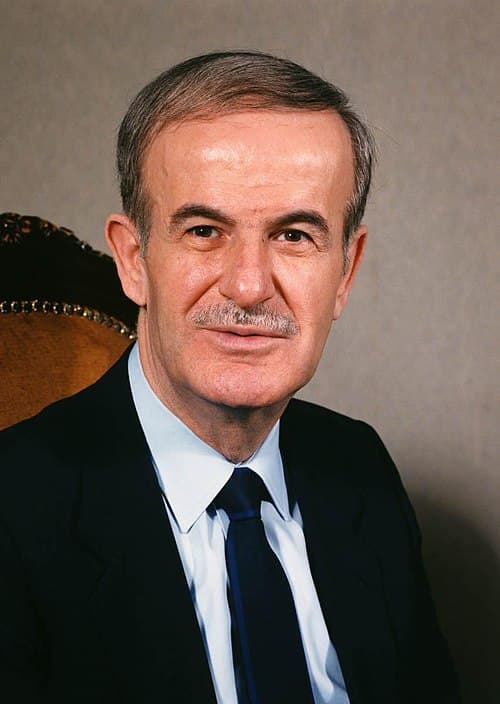
r time, we might manage to extricate ourselves from the escalating violence with Hizbollah; reach a land- for-peace deal with the enigmatic President Hafez al-Assad in Syria; and find some form of coexistence with the Palestinians. He also spoke about international politics. I remember one afternoon in the summe
5 mentions1 same-page
Page ?Same page
Amir Drori, the head of the northern command. They had set up a rooftop observation post just a few hundred yards in from where I had landed with my Sayeret Matkal team a decade earlier for the Rue Verdun operation. It overlooked a pair of Palestinian refugee camps: Sabra and, a couple of hundred yards closer to
tment to the values of an open, tolerant democracy. But in at least one important way, I approached my new role as if it was one of our operations in Sayeret Matkal, or the need to reshape our armed forces when I was chief-of-staff. My first priority was to put in place the practical foundations for a successful
ion about our enemies, and make sure it got to the commanders and field units that needed it. And while the details of many operations I approved for Sayeret Matkal and other units remain classified, we did succeed in doing that - to take just one example, by finding an entirely new way to get intelligence from i
briefed me on the questions I could expect, not just about the Achille Lauro but the wider issue of Palestinian attacks, as well as Syrian President Hafez al- Assad's efforts to re-equip his air force after his losses in Lebanon. So I came to the interview prepared. I brought audio tapes of the hijacker
r time, we might manage to extricate ourselves from the escalating violence with Hizbollah; reach a land- for-peace deal with the enigmatic President Hafez al-Assad in Syria; and find some form of coexistence with the Palestinians. He also spoke about international politics. I remember one afternoon in the summer
4 mentions1 same-page
Page ?Same page
he summit’s collapse. My main concern was the possibility of violence. Even before returning home, I’d phoned Shaul Mofaz and Avi Dichter, the former Sayeret Matkal officer who was now head of the Shin Bet. “Let’s hope the violence doesn’t come,” I told them. “But if it does, make sure we are ready.” Though there
eer by training, he was a reserve army general who, when I was chief of staff, had been in charge of the logistics branch of the military. I gave him Sayeret Matkal backup as well, in the person of Danny Yatom, my longtime friend and former sayeret deputy. But all that was process. Winning or losing would come d
effective end of the peace process. Even though Arik assured me privately that he understood my determination to reopen peace efforts with Arafat and Hafez al- Assad, I knew Arik. The path toward peace agreements, assuming they were even possible, would be tough. Sooner or later — and certainly if we fac
giously motivated ideologues, were Labor supporters. And almost no Israel, of any political stripe, 331 HOUSE_OVERSIGHT_011802 / BARAK / 46 viewed Hafez al-Assad as a natural partner for peace. For years, he’d been a constant, sneering presence on our northern border, denouncing not only Sadat but any Arab lea
Sponsored
4 mentions1 same-page
Page ?Same page
he summit's collapse. My main concern was the possibility of violence. Even before returning home, I'd phoned Shaul Mofaz and Avi Dichter, the former Sayeret Matkal officer who was now head of the Shin Bet. "Let's hope the violence doesn't come," I told them. "But if it does, make sure we are ready." Though there
eer by training, he was a reserve army general who, when I was chief of staff, had been in charge of the logistics branch of the military. I gave him Sayeret Matkal backup as well, in the person of Danny Yatom, my longtime friend and former sayeret deputy. *** But all that was process. Winning or losing would com
effective end of the peace process. Even though Arik assured me privately that he understood my determination to reopen peace efforts with Arafat and Hafez al- Assad, I knew Arik. The path toward peace agreements, assuming they were even possible, would be tough. Sooner or later - and certainly if we fac
igiously motivated ideologues, were Labor supporters. And almost no Israel, of any political stripe, 331 HOUSE _OVERSIGHT_028179 / BARAK / 46 viewed Hafez al-Assad as a natural partner for peace. For years, he'd been a constant, sneering presence on our northern border, denouncing not only Sadat but any Arab lea
2 mentions1 same-page
Page ?Same page
awn in Private Benjamin. The main misunderstanding, however, went deeper. The assumption appeared to be that my military achievements, especially in Sayeret Matkal, were down to a mix of brute force and raw courage. Courage, of course, was a requirement: the willingness to take risks, if the rewards for success,
ed us. I knew the drill: the same thing had happened when I had come tantalizingly close to finalizing a peace deal with Syria’s then-dying dictator, Hafez al-Assad, a few months earlier. Yet these three dedicated men — Gili, who was by training a lawyer; Shlomo, an academic; and Danny, a former Mossad chief — ha
2 mentions1 same-page
Page ?Same page
awn in Private Benjamin. The main misunderstanding, however, went deeper. The assumption appeared to be that my military achievements, especially in Sayeret Matkal, were down to a mix of brute force and raw courage. Courage, of course, was a requirement: the willingness to take risks, if the rewards for success,
ed us. I knew the drill: the same thing had happened when I had come tantalizingly close to finalizing a peace deal with Syria’s then-dying dictator, Hafez al-Assad, a few months earlier. Yet these three dedicated men — Gili, who was by training a lawyer; Shlomo, an academic; and Danny, a former Mossad chief — ha
Sponsored
Mutual Connections (748)
Entities connected to both Sayeret Matkal and Hafez al-Assad
Lebanon
LOCATION11 w/ Sayeret·32 w/ Hafez
Bashar al-Assad
PERSON9 w/ Sayeret·33 w/ Hafez
Damascus
LOCATION10 w/ Sayeret·29 w/ Hafez
Barack Obama
PERSON7 w/ Sayeret·29 w/ Hafez
George W. Bush
PERSON9 w/ Sayeret·27 w/ Hafez
Bill Clinton
PERSON9 w/ Sayeret·25 w/ Hafez
Benjamin Netanyahu
PERSON11 w/ Sayeret·21 w/ Hafez
Saddam Hussein
PERSON8 w/ Sayeret·21 w/ Hafez
Hosni Mubarak
PERSON6 w/ Sayeret·22 w/ Hafez
Tunisia
LOCATION4 w/ Sayeret·23 w/ Hafez
Jerusalem
LOCATION11 w/ Sayeret·15 w/ Hafez
United States
LOCATION6 w/ Sayeret·18 w/ Hafez
Yasser Arafat
PERSON11 w/ Sayeret·12 w/ Hafez
Fatah
ORGANIZATION10 w/ Sayeret·13 w/ Hafez
Knesset
ORGANIZATION11 w/ Sayeret·11 w/ Hafez
Ehud Barak
PERSON11 w/ Sayeret·11 w/ Hafez
Tehran
LOCATION3 w/ Sayeret·19 w/ Hafez
West Bank
LOCATION9 w/ Sayeret·12 w/ Hafez
Beirut
LOCATION6 w/ Sayeret·15 w/ Hafez
Michael Cohen
PERSON8 w/ Sayeret·13 w/ Hafez